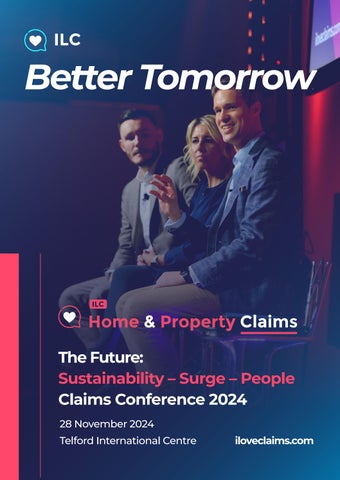
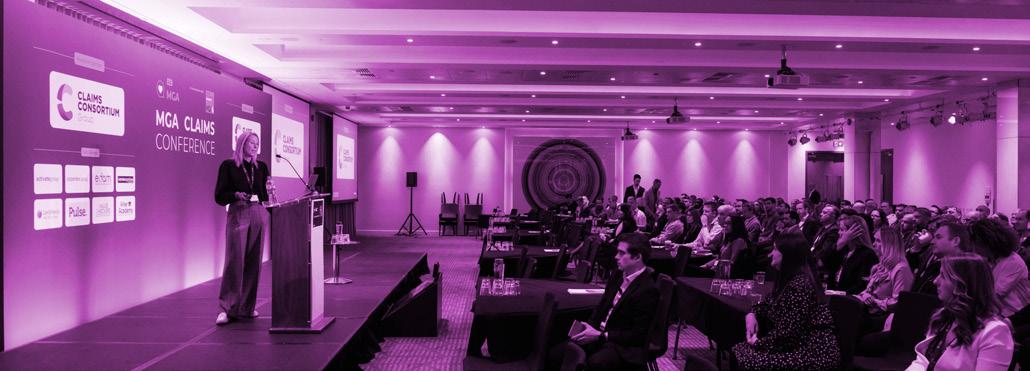
ILC Better Tomorrow - Home & Property Claims Conference 2024
DISCLAIMER
Contributors
The views and opinions expressed within Better Tomorrow are reported from live events and are those of the individual contributor/s. They do not necessarily reflect the official policy or position of the contributor’s employer, organisation, committee or other group or individual.
ILC
While every effort has been made to ensure the accuracy of information, ILC will not accept responsibility for errors or omissions or for consequences arising from reliance on information published. The opinions expressed in Better Tomorrow are not necessarily the opinions of, or endorsed by ILC unless otherwise stated.
COPYRIGHT
All rights reserved. No part of the material contained within this publication may be reproduced or copied in any form or by any means without written permission from ILC.
Shaping the future through sustainability, surge, and people
Welcome
to
this issue of Better
Tomorrow providing an overview of ILC’s Home & Property Claims Conference 2024.
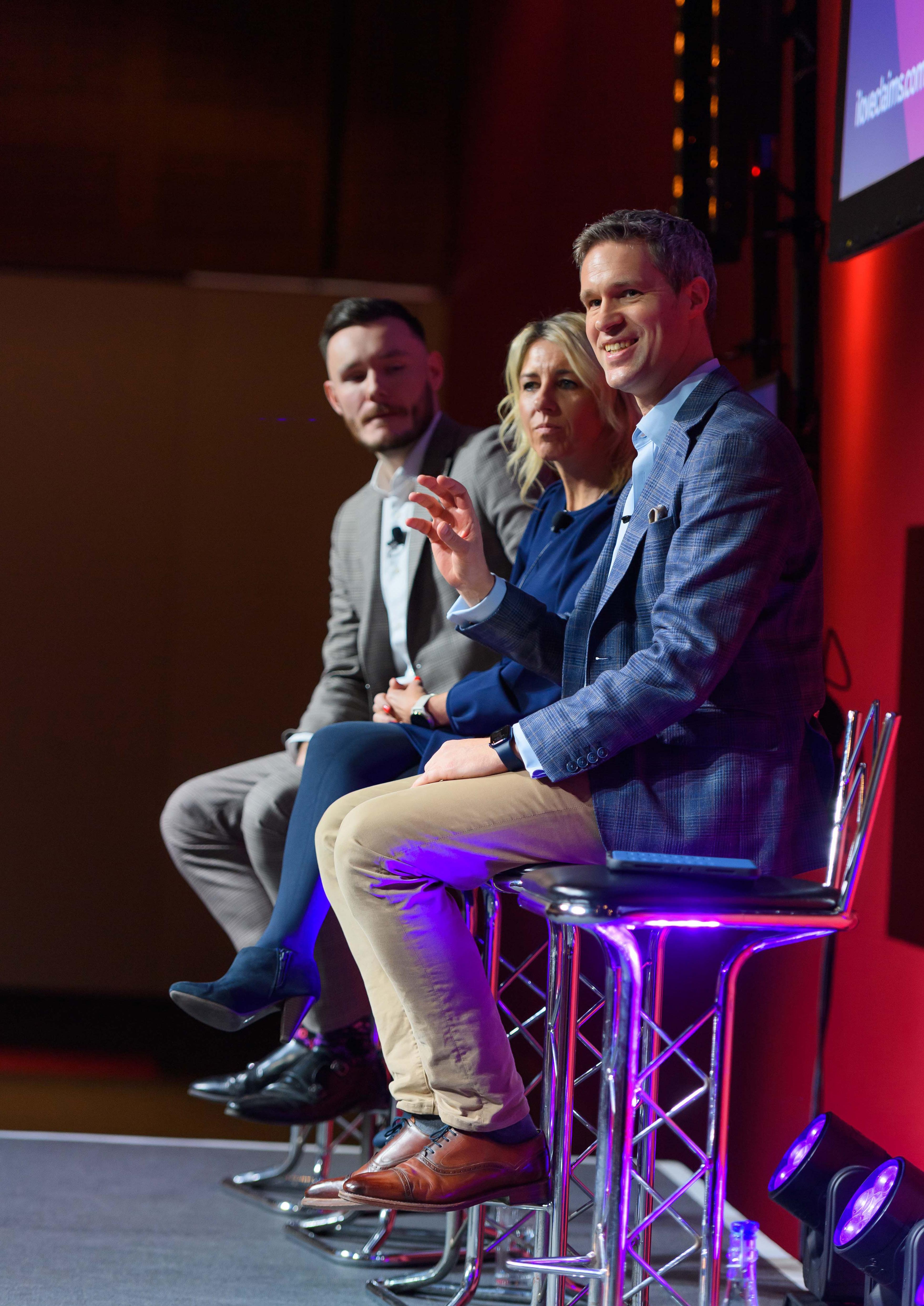
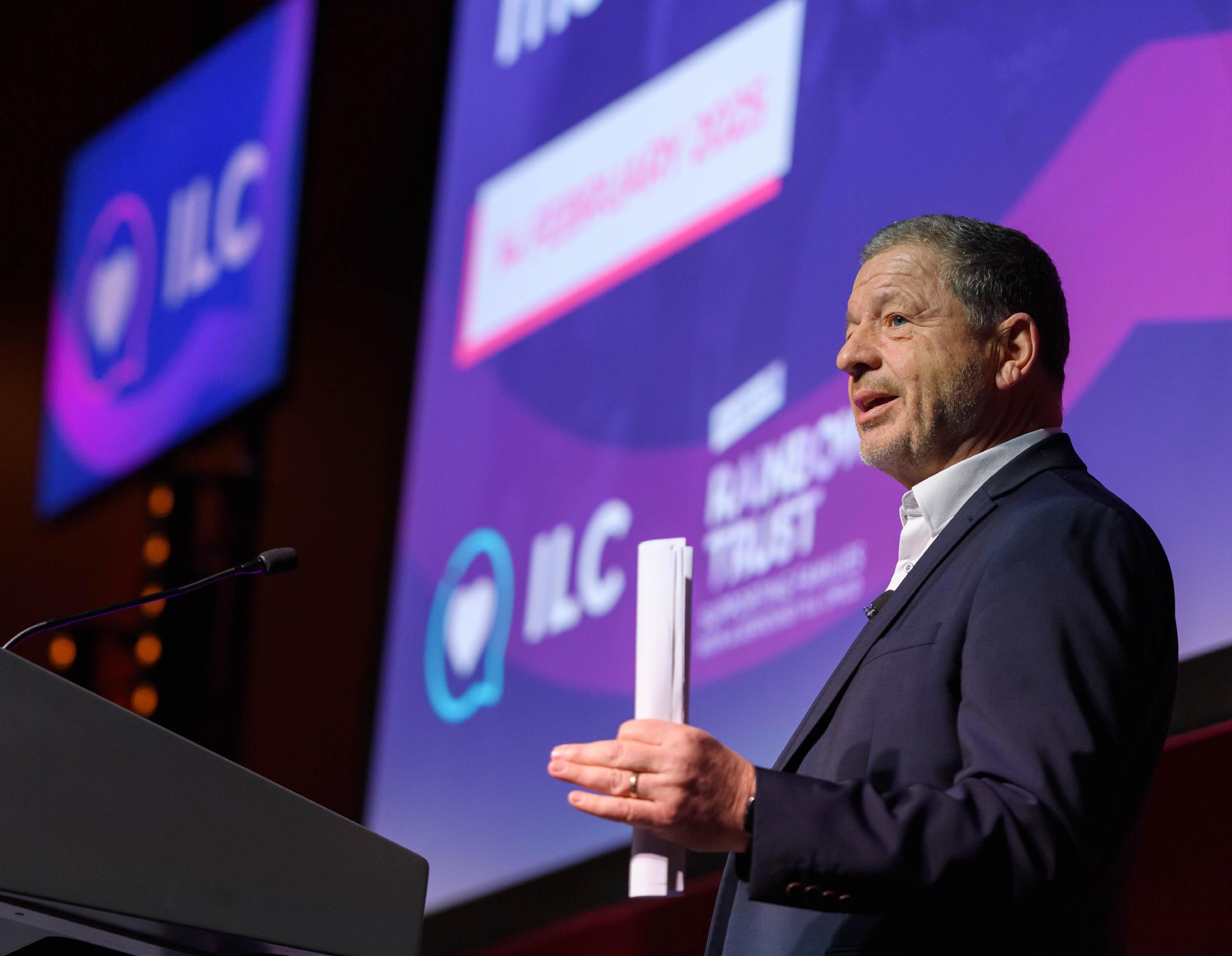
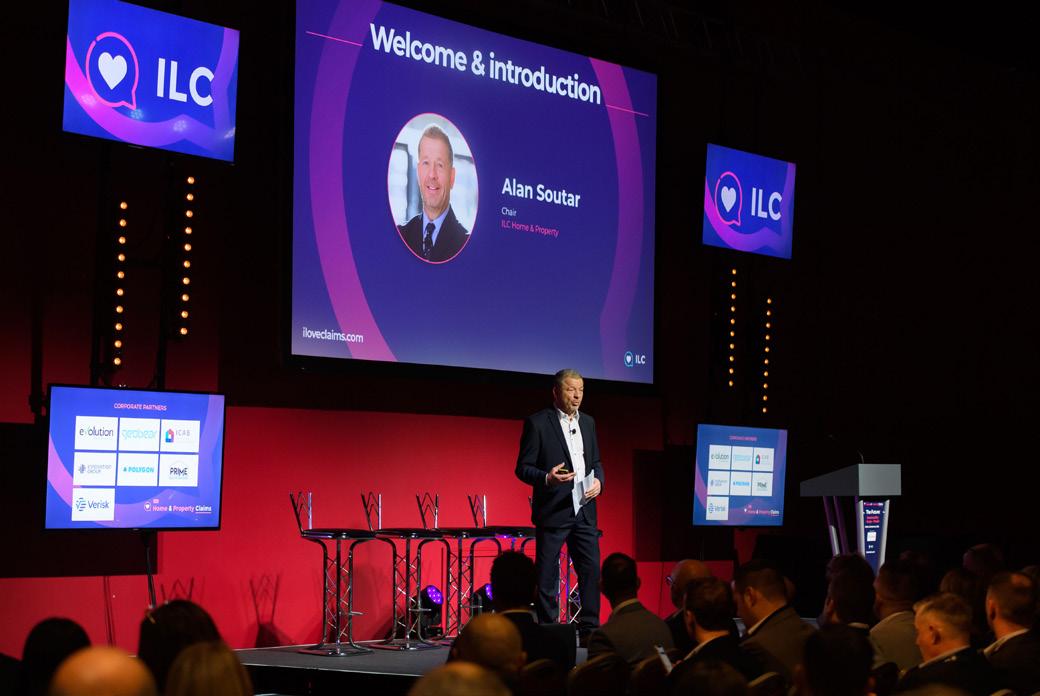
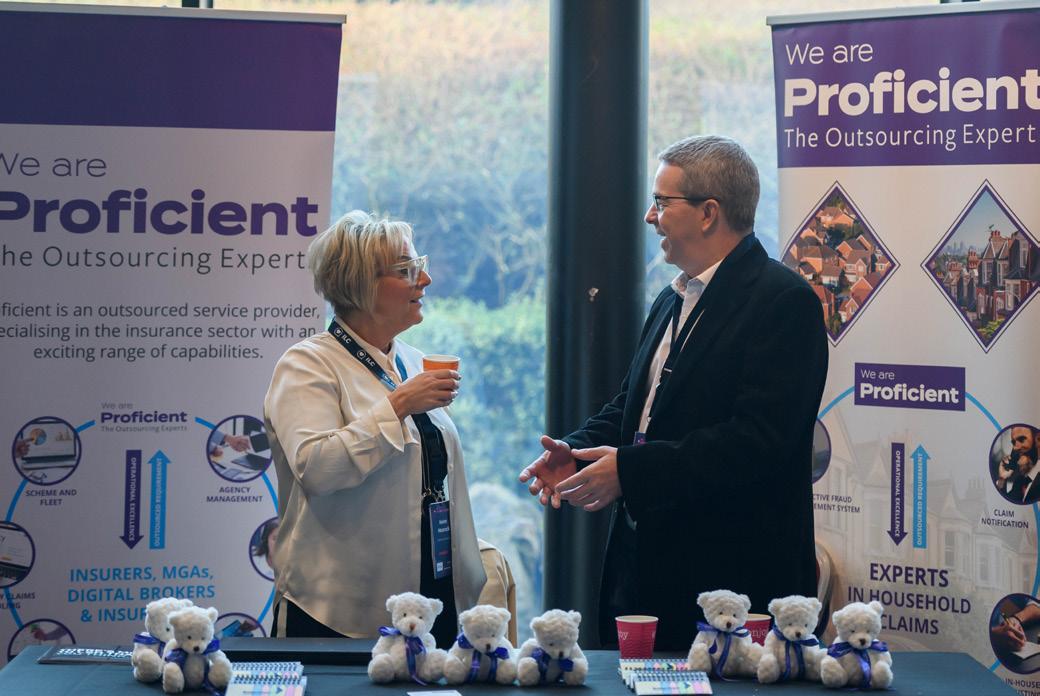
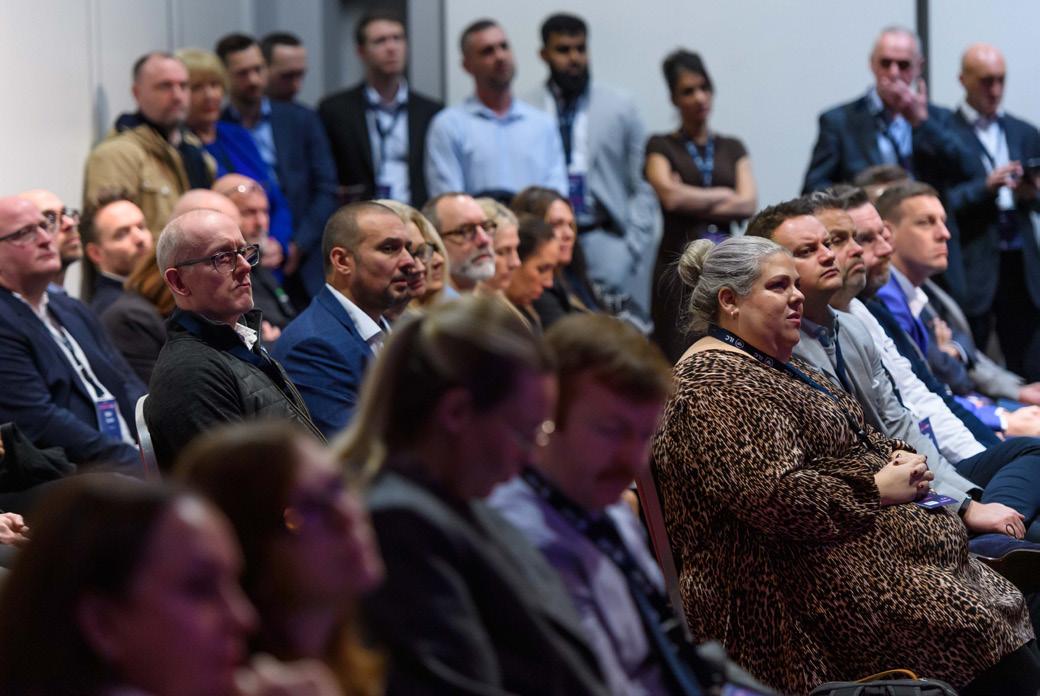
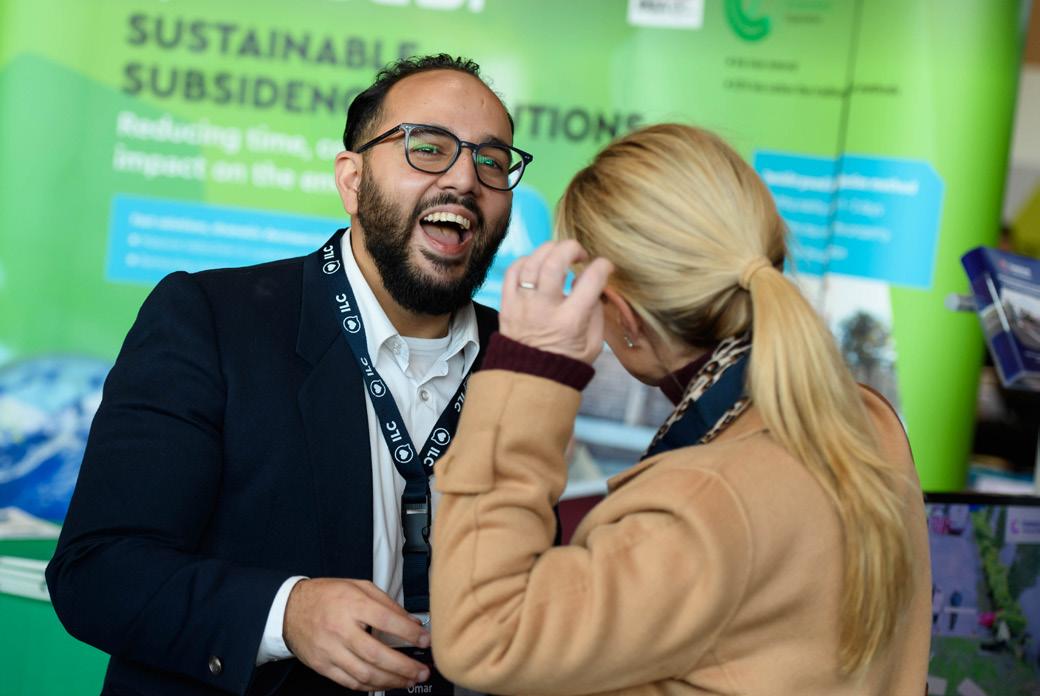
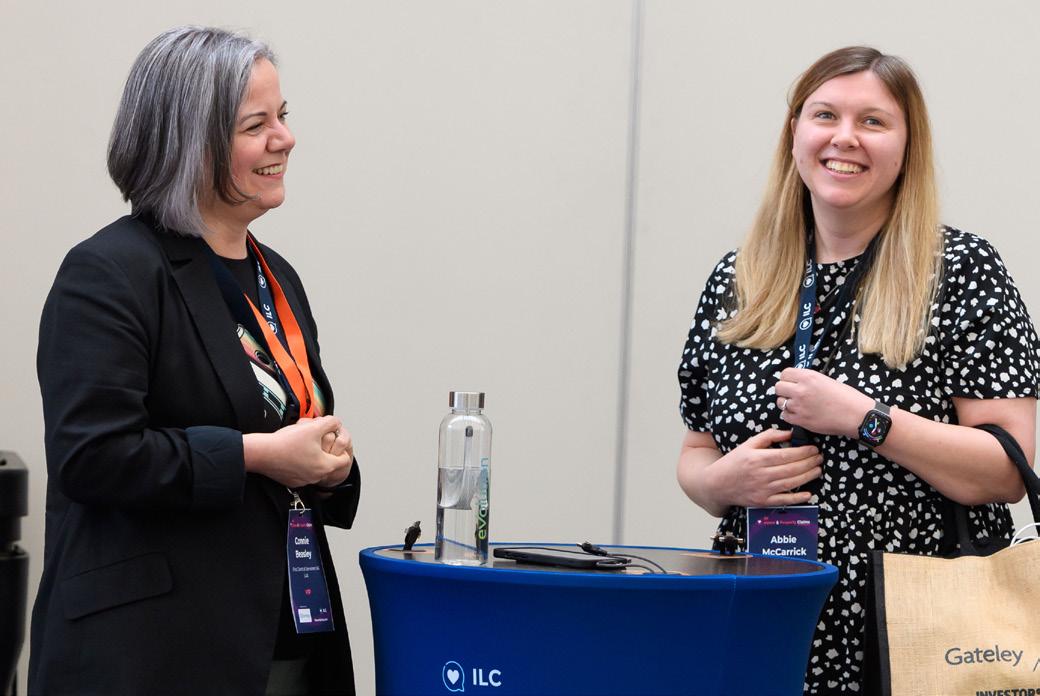
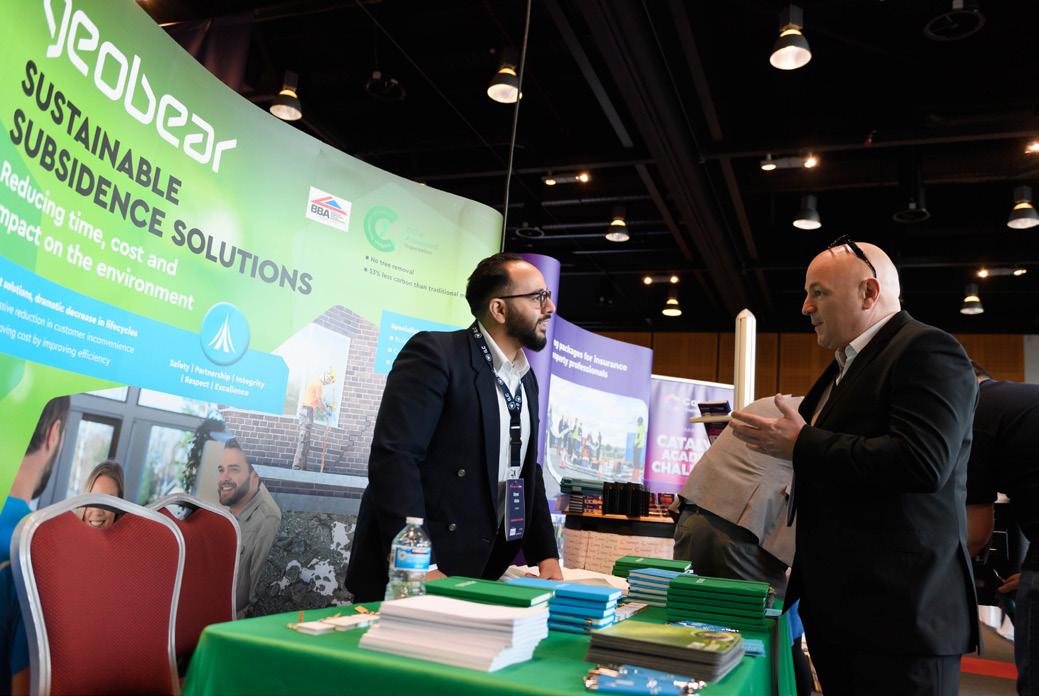
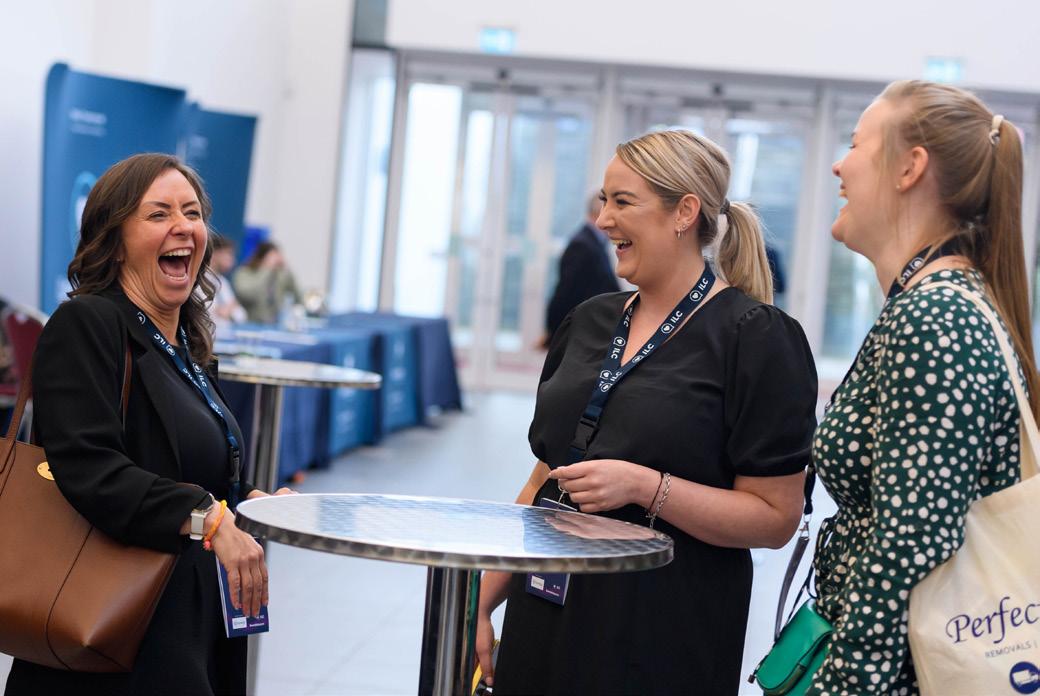
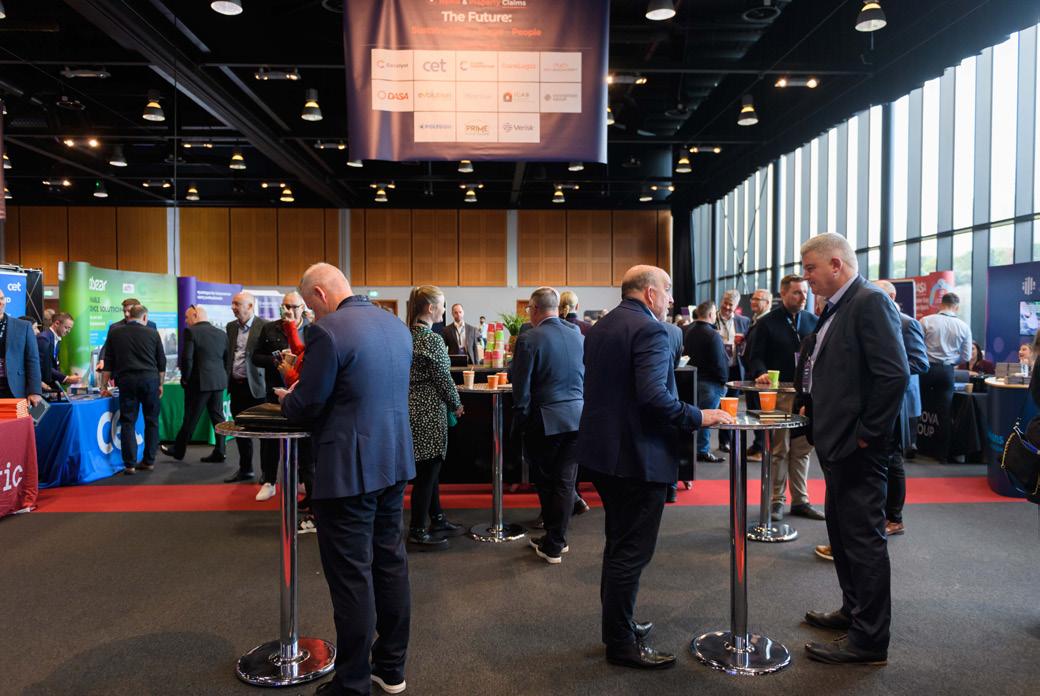
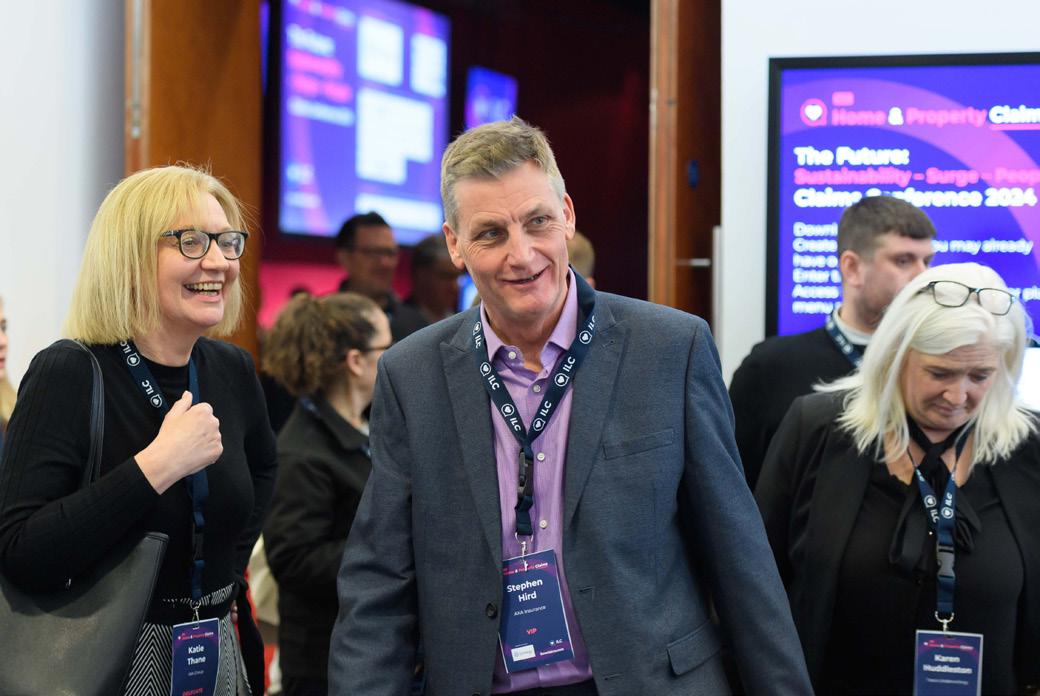
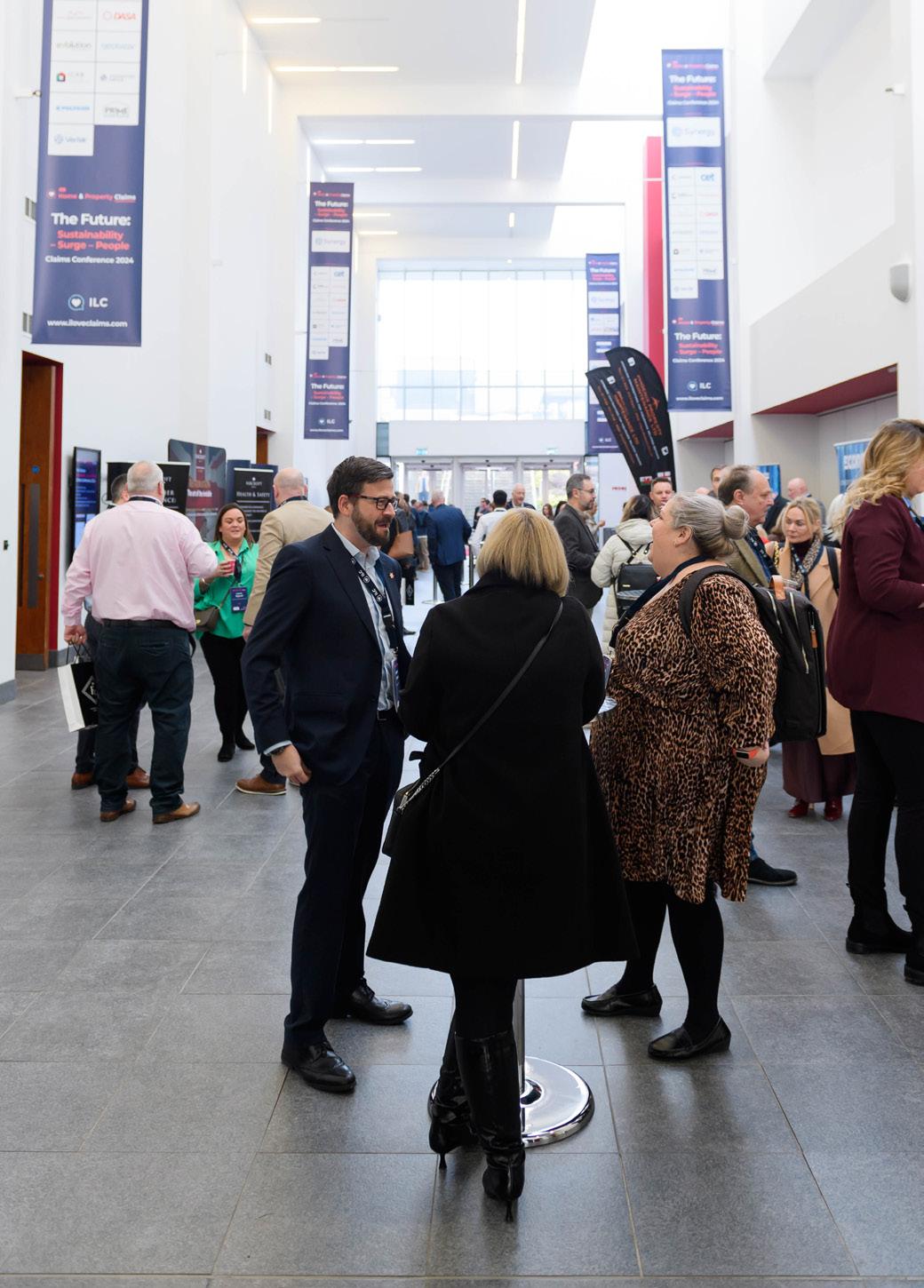
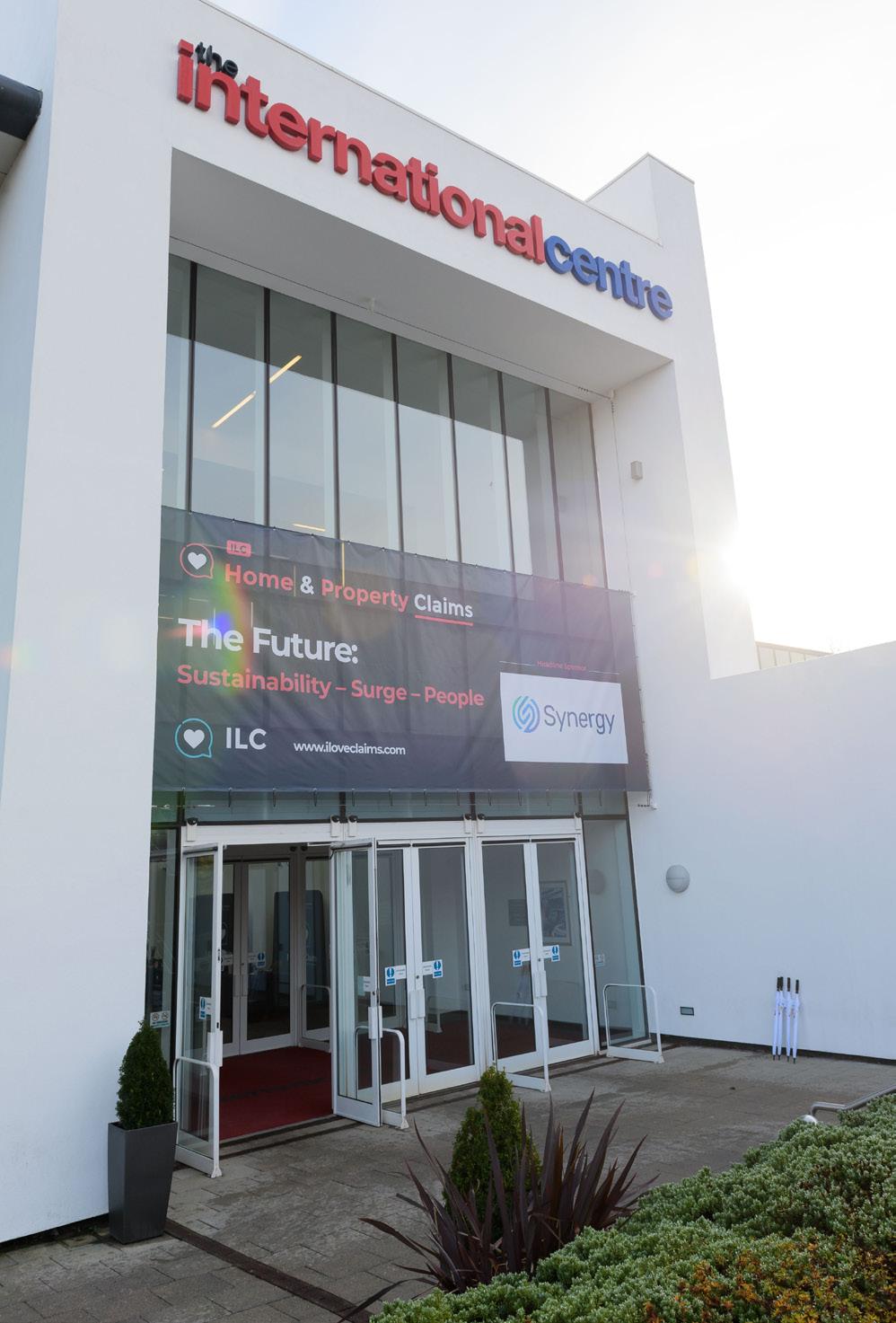
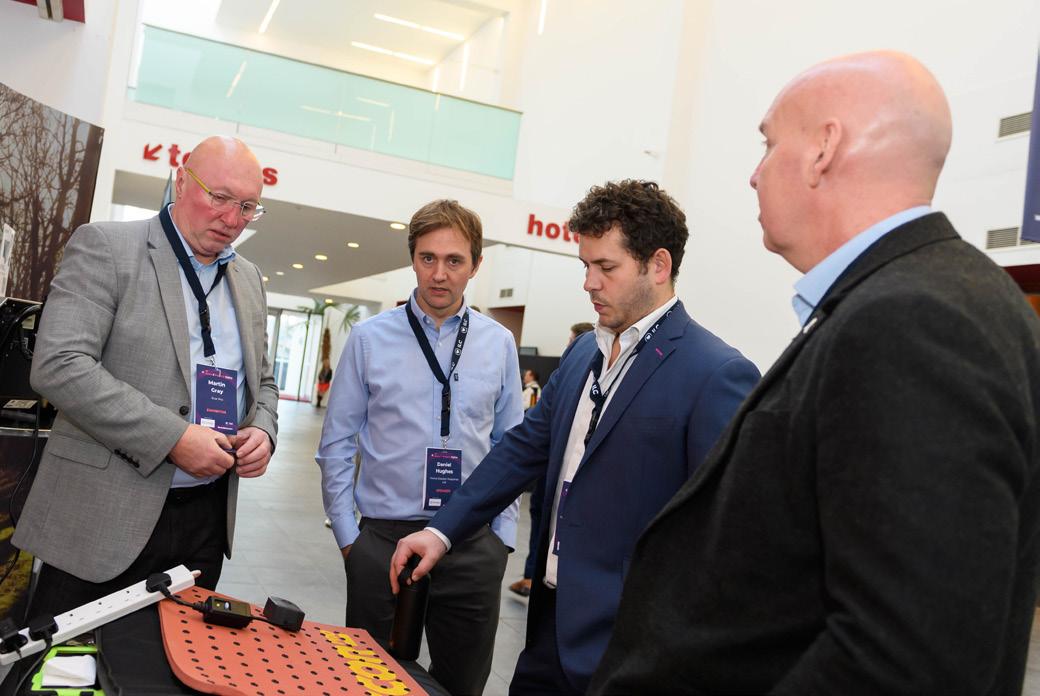
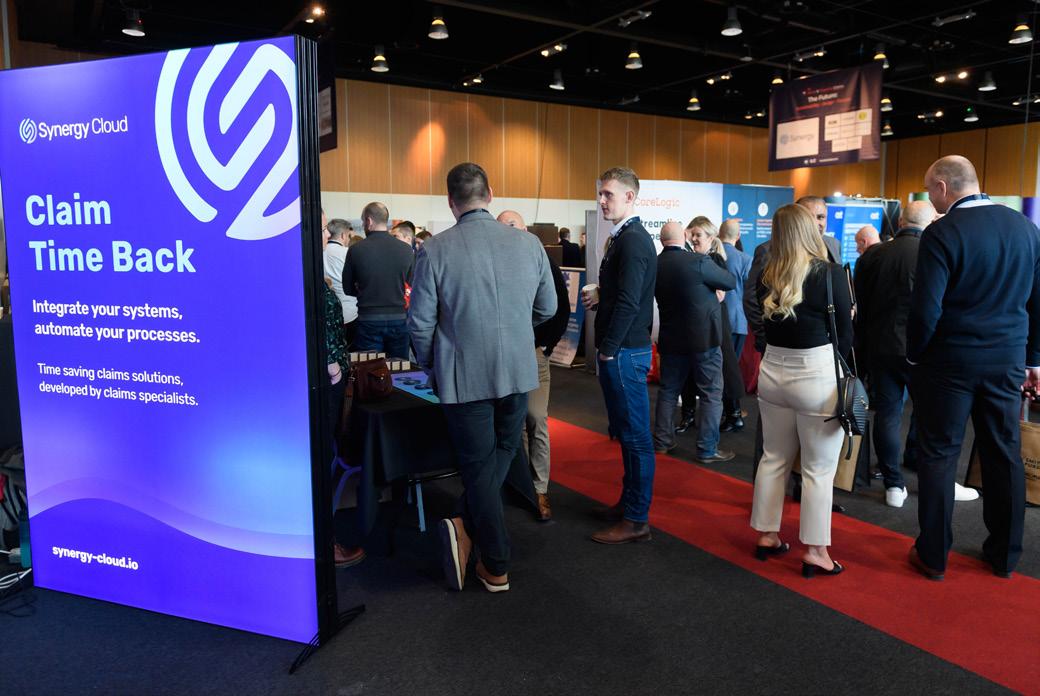
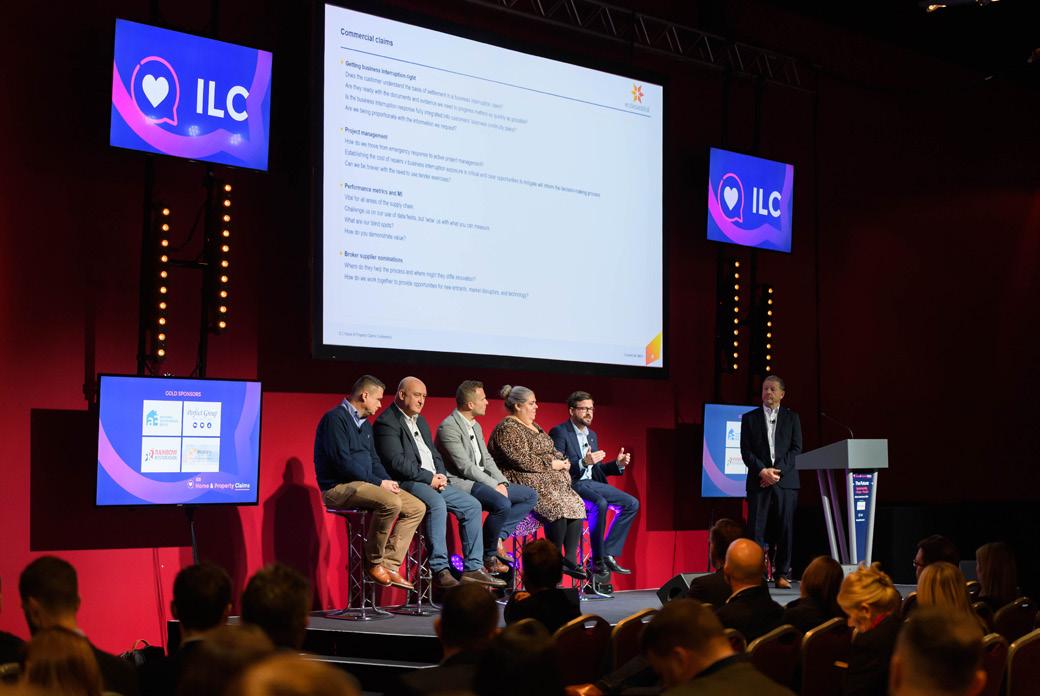
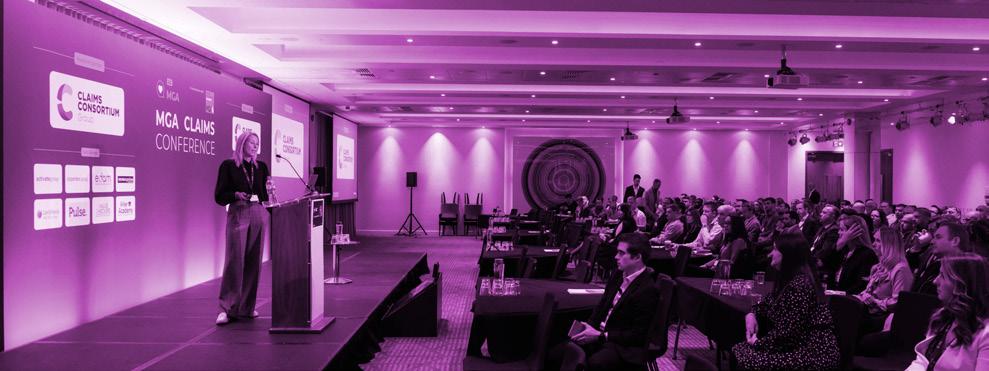
Held at the Telford International Centre the event – which featured a bustling expo hall, main conference setting, along with specialist Eco and Partner Shocase stages – brought together 400 attendees, from senior executives to operational staff, all united in discussing the future of home and property claims.
A huge thank you goes to ILC Home & Property Corporate Partners and event sponsors for supporting the event: Headline Sponsor Synergy Cloud, and Corporate Partners: Catalyst, CET, Claims Consortium Group (Synergy Cloud), Corelogic, DAC Beachcroft, DASA, Evolution Claims Management, Geobear, ICAB, Innovation Group, Polygon, Prime Disaster Response, Verisk and Claims Essentials Fraud Specialist Partner Robertsons, along with Gold Sponsors: A3 – Alternative Accommodation Agency; Perfect Group, Rainbow Restoration, and Westone Housing; and Silver Sponsors: AIM Building & Maintenance, Auger, Courtesy Kitchens & Bathrooms, Davies Group, EcoClaim Solutions Ltd, Gateley Smithers Purslow, ICEYE, and Vivre Stays Ltd.
A big thank you also goes to all those exhibitors who joined on the day, our cohort of key speakers throughout the event and all those who took time out of their busy schedules to join us.
There were three key topics of the event: Surge, Sustainability and People – significant challenges faced throughout the industry but areas that unite the sector and drive collaborative thinking.
1. Sustainability in focus
The environmental impact of the claims process took centre stage. Sessions covered tools for measuring carbon emissions, including advanced CO2 tracking software and sustainability-focused supply chain strategies.
2. Managing surge events
Climate-driven surges and unpredictable weather patterns present challenges requiring innovative solutions. The event examined how artificial intelligence (AI) could revolutionise claims forecasting, enabling insurers to respond more effectively to surge events.
3. People and future talent
The industry’s future hinges on attracting and retaining new talent. With a focus on the next generation, the conference included sessions where young professionals shared insights into their experiences and expectations.
The following pages of this publication provide you with a recap of events which we hope continue to drive the ILC’s ‘better tomorrow’ ethos.
Enjoy the issue...
Alan Soutar
ILC Chairman
- Home & Property
ILC
Surge management reinvented with AI and datadriven insights
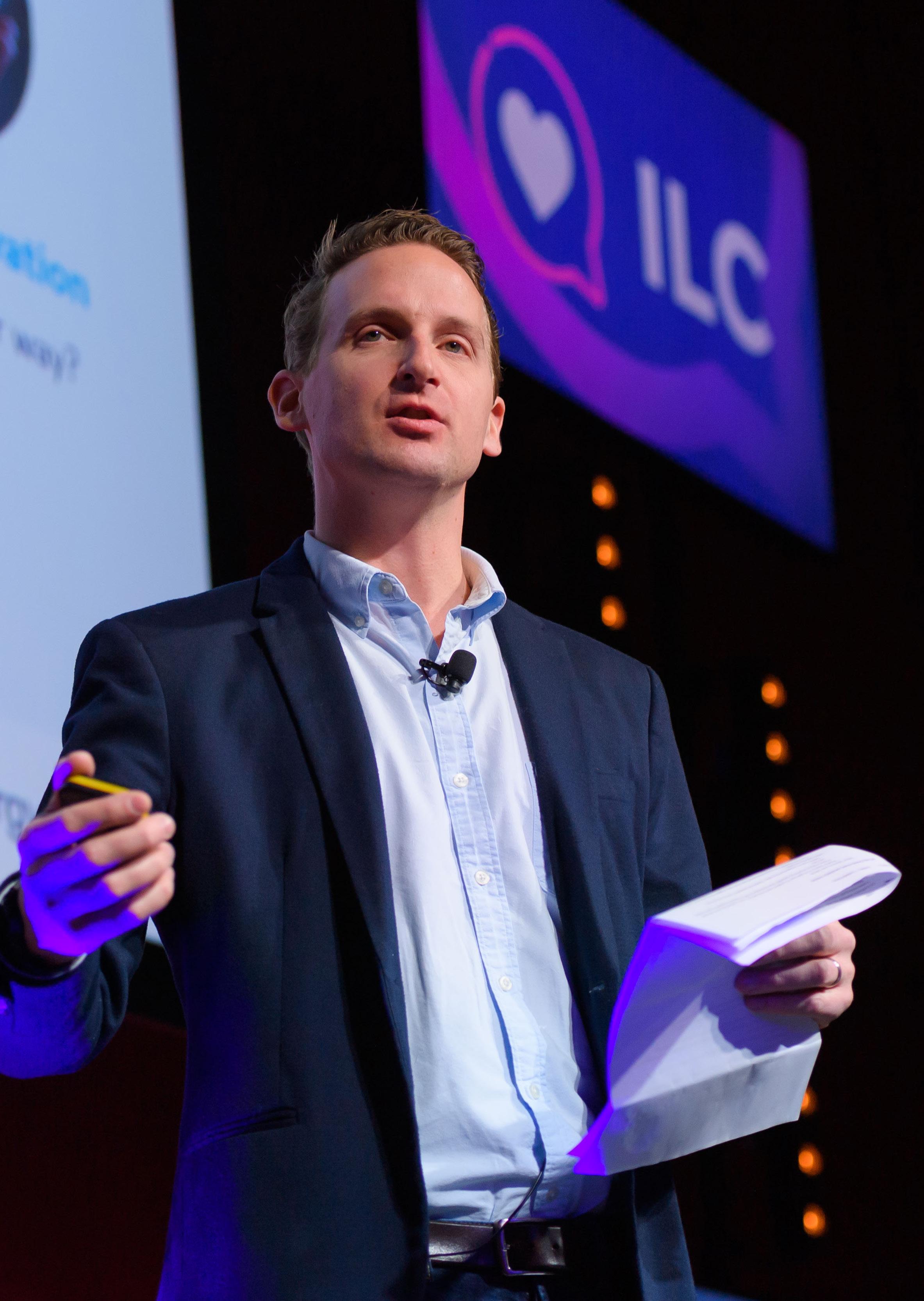
The session ‘Surge 2.0,’ led by Tom Burroughs, CTO of Synergy Cloud explored how modern technology, data insights, and innovative processes can redefine surge management in the insurance claims sector amid increasing environmental pressures and unpredictable weather events.
Tom Burroughs CTO Synergy Cloud
Opening the session, Tom framed surge events as ‘pressure tests’ for the claims industry.
“Surges expose the weak points in a highly complex claims system, from insurers and suppliers to boots-on-the-ground responders. These tests should inform how we strengthen the system—not just for surges but for everyday claims handling,” he explained.
Challenges
He then highlighted several challenges facing the claims sector:
Weather volatility: Climate change has led to more frequent and severe weather events. "We now see weather patterns and damage scenarios that would have seemed implausible 20 years ago,” Tom said.
Economic instability: Rising inflation in material and labour costs has complicated claims settlements.
Diverse housing stock: The UK’s varied housing stock, with differing construction standards and materials, makes standardised responses difficult.
Tom said, “These variables make surge management more than just a logistical exercise—it’s a dynamic, real-time response that demands precise decision-making.”
“Surges expose the weak points in a highly complex claims system—we must learn and adapt.”
“AI should support— not replace—human expertise in claims management.”
AI and data
He also emphasised that data-driven insights can reshape how the industry predicts, responds to, and resolves surge events. He outlined how combining weather forecasting data with policyholder databases can create proactive response plans.
“We can overlay weather models on property datasets to predict potential claims—down to the exact neighbourhood,” he said. “This lets us pre-position suppliers and issue pre-emptive alerts to customers.”
He also described how companies like Fixzy and Sprout AI use image and video analysis to assess damage remotely, saving time and reducing onsite inspection needs.
“By interpreting property images in real time, we can identify damage and authorise initial repairs far faster,” he explained.
Automation
Beyond predictive analytics, Tom explored the potential of process automation.
“AI can handle unstructured data like emails, invoices, and inspection reports, removing bottlenecks caused by manual admin work,” he noted.
However, he stressed that automation should support rather than replace human expertise.
“No algorithm can match a claims adjuster’s ability to reassure a distressed homeowner. The goal is to free experts from routine tasks so they can focus on critical decisionmaking,” he said.
He also advocated for rethinking home insurance products to align better with modern customer expectations and operational realities. He drew comparisons to parametric insurance models used in flood insurance, where payouts are triggered by predefined conditions like water levels.
“We could adopt similar models, using pre-verified weather data to trigger initial payouts, helping customers recover faster,” he suggested.
Further, he proposed home maintenance incentives, akin to wellness programmes in health insurance.
“Imagine if homeowners were rewarded for regular property inspections. This data could speed up claims decisions while reducing long-term risks.”
Collaboration
Tom concluded by underscoring how technology, when paired with operational insight and customercentric processes, can transform surge management into a proactive, efficient, and responsive system.
He said, "We can’t control the economy or the weather, but we can reshape how we respond. That requires tech innovation, industry partnerships, and a customer-first mindset.”
“Predictive data allows us to pre-position suppliers and alert customers before storms hit.”
“We must rethink home insurance as a proactive, datadriven product—not just a safety net.”
AI and resilience in surge management
The conference featured a critical session titled ‘Surge – AI, Frequency, Process, and Resourcing,’ during which experts explored how technology and strategic planning can reshape surge response in the insurance sector.
Tom
Burroughs CTO
Synergy Cloud
Steven Knight
Claims Supply Chain Manager – Property & Casualty
AXA UK
Ciaran O’Grady Director
Prime Disaster Response
Tim Goodman
Managing Director ICAB
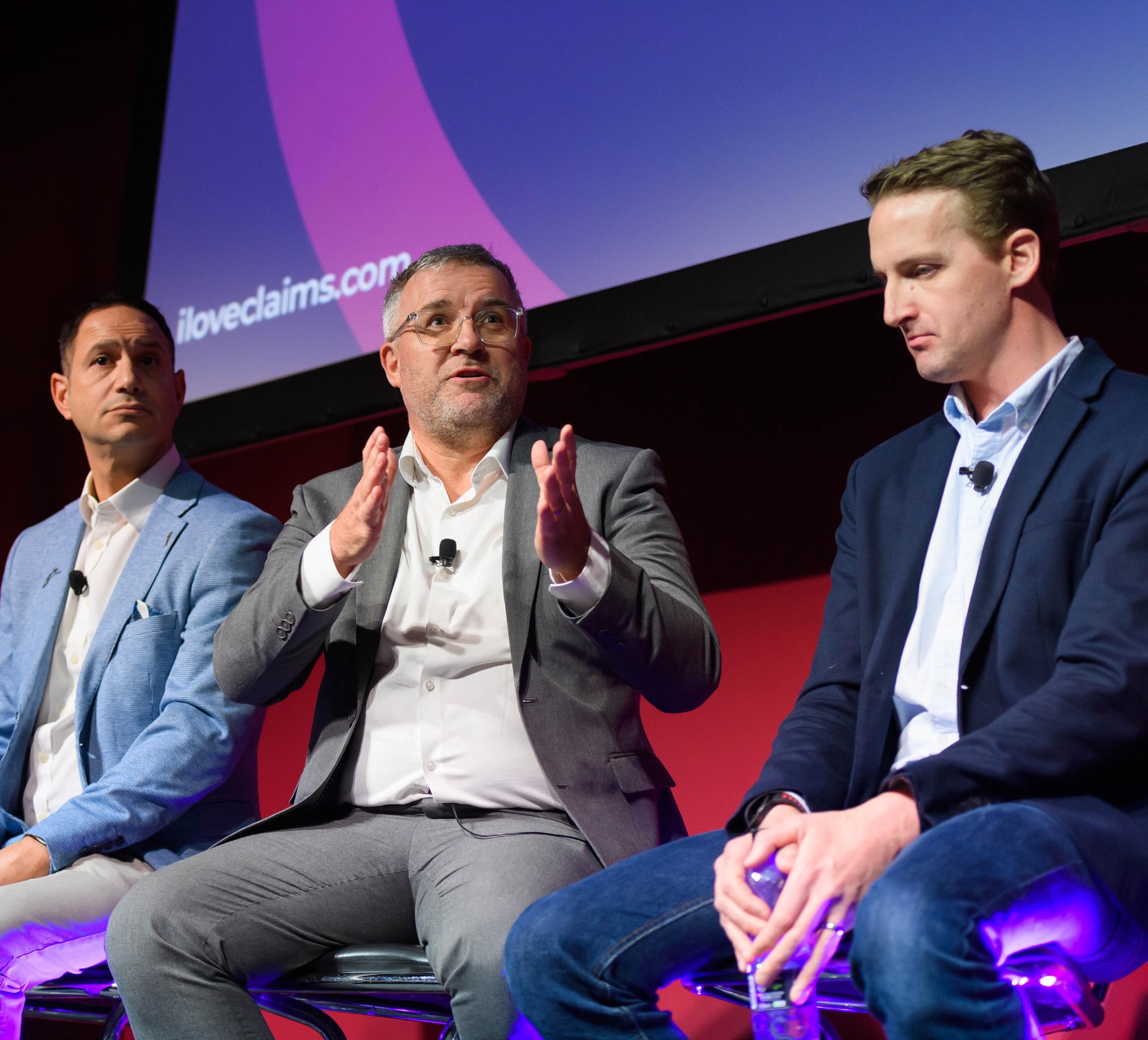
The panel, moderated by Alan Soutar, Chair of ILC Home & Property, included leading voices from across the industry including Steven Knight, Claims Supply Chain Manager – Property & Casualty, AXA UK; Tim Goodman, Managing Director, ICAB; Ciaran O’Grady, Director, Prime Disaster Response; and Tom Burroughs, Chief Technology Officer, Synergy Cloud.
Setting the scene, Steven outlined the increasing frequency of mini-surges, describing last winter as a “perma-surge.”
He emphasised the strain on supply chains unable to recover fully between events.
“The industry must evolve from reactive to proactive planning, ensuring capacity for surges that now feel constant,” he noted.
He also highlighted the role of resilient repairs in mitigating future damage, saying, “We need to rethink building standards, from elevated electrics in flood zones to using water-resistant materials as default.”
“The industry must evolve from reactive to proactive planning, ensuring capacity for surges that now feel constant.”
Steven Knight
“AI allows us to warn customers, prepare suppliers, and reduce overall claims impact.”
Tom Burroughs
AI and analytics
Meanwhile, Tom shared how AI and predictive analytics are enabling insurers to preempt surge events. By overlaying weather data with policyholder information, insurers can identify high-risk areas and deploy resources in advance.
“We’re moving from reactive response to predictive intervention,” he explained. “AI allows us to warn customers, prepare suppliers, and make data-backed decisions that reduce overall claims impact.”
He also stressed the importance of continuous improvement: “AI is a learning tool. Every event helps refine predictions, improving accuracy and readiness for the next surge.”
But despite the promise of automation, the panel agreed on the continued necessity of human expertise.
“AI can identify risks, but empathetic support is irreplaceable during crisis moments,” said Tim, who stressed the importance of balancing automation with customer care, particularly when dealing with vulnerable policyholders.
Ciaran echoed this sentiment, highlighting how transparency and communication set realistic expectations during surges.
“Customers don’t get upset when you’re honest. Problems arise when expectations are mismanaged,” he noted.
Challenges
Effective resourcing remains a challenge, with panellists citing inconsistencies in capacity planning. Steven said that double-counting surge resources across insurers is a recurring issue and called for a collaborative frameworks to prevent overpromising and underdelivering, while Ciaran stressed the importance of specialised teams for complex claims, such as high-net-worth properties.
“Surges often involve unique challenges—multi-level properties with swimming pools require expertise to mitigate damage effectively,” he explained.
Consumer Duty
The panel concluded by exploring how Consumer Duty regulations demand personalised responses, even during high-volume events. Tom suggested using AI to identify distressed customers based on sentiment analysis, ensuring priority service for those most in need.
“We must deliver individualised support while maintaining consistency and fairness across claims,” Tom said.
“Empathetic support is irreplaceable during crisis moments.”
Tim Goodman
“Transparency with customers prevents frustration during surge events.”
Ciaran O’Grady
Bridging the gap in commercial property claims
The evolving complexities of commercial property claims management was the topic of a far-reaching panel discussion.
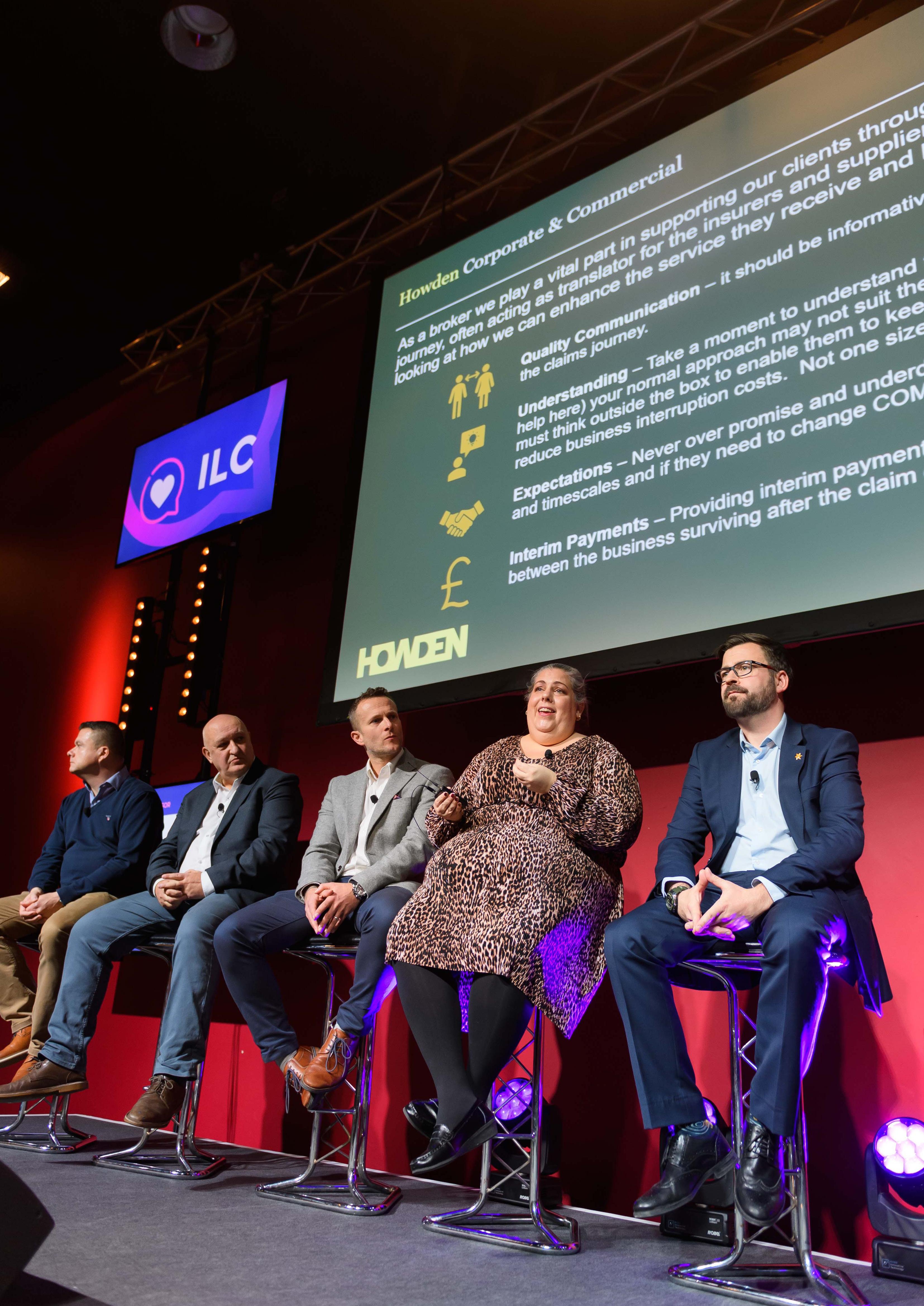
Taking part in the discussion, which explored operational challenges, innovative solutions, and collaborative strategies in handling claims across the insurance supply chain, were Andrew Henner, Head of Technical Property, Ecclesiastical Insurance; Victoria Sutton, Head of Claims Operations, Howden; Andrew Vincent, Senior Operations Manager, Rainbow Restoration; Ian Hogarth, Managing Director, Home Repair Network; and David Homer, Major Loss Director, QuestGates.
Introducing the session, Alan Soutar, Chair of ILC Home & Property, said, “We’re here to break down silos. This is a forum where suppliers, brokers, and insurers share openly—not just about successes but about real challenges.”
“Suppliers must know each insurer’s claims philosophies— aligned thinking drives results.”
Ian Hogarth
“We’re not roadblocks— we translate complex processes for clients.”
Victoria Sutton
Challenges
Andrew Henner began by highlighting the inherent complexity in commercial claims, noting the frequent involvement of multiple stakeholders.
“Business interruption isn’t just about damage—it’s about keeping a business operational while navigating insurance policy nuances,” he explained.
Victoria reinforced this, emphasising that insurers must engage early with brokers to create claims strategies that align with specific business models.
“Businesses aren’t just buildings— they’re living operations,” she said.
“We need tailored solutions that match their commercial realities.”
Speed
Andrew Vincent then underlined the need for early supplier engagement. He said that the faster disaster recovery teams are on site, the more damage can be prevented.
“But we need clear, timely instructions,” he asserted.
David added that incomplete or unclear instructions can stall progress, saying, “Suppliers can’t deliver if they’re not properly briefed. Every hour lost due to unclear roles can compound business losses.”
Partnerships
The session also emphasised shared responsibility, highlighting how industry collaboration can reduce complexity, accelerate recovery, and create better customer outcomes.
Highlighting the benefits of closer supplier partnerships, Ian said, “Suppliers need to understand each insurer’s claims philosophy—if we’re aligned from the start, it’s easier to deliver seamless service.”
The panel also stressed the value of integrated claims platforms, automated processes, and direct communication channels to expedite claims resolution.
“Business continuity is more than policy terms—it’s about keeping operations alive.”
Andrew Henner
New approach
The discussion further called for fresh thinking, especially around legacy practices in claims management, with Victoria challenging industry assumptions about brokers slowing claims.
She said, “We’re not roadblocks— we translate complex processes for clients. But we need to be part of the claims conversation earlier.”
The session closed with a unified call for deeper collaboration, data transparency, and shared innovation across the insurance ecosystem.
“This industry can’t thrive on transactional relationships,” Alan concluded. “We need longterm partnerships driven by mutual understanding and a shared commitment to customer outcomes.”
Customer outcomes in focus with Consumer Duty
David Dagger Director of Communications & Corporate Affairs
The Institute of Customer Service
David Dagger, Director of Communications & Corporate Affairs at the Institute of Customer Service, delivered a compelling session on ‘Consumer Duty & the benefits of focusing on customer outcomes.’
He explained how the evolving role of Consumer Duty is driving better customer service within the insurance sector, and emphasised how regulatory frameworks can align with superior business performance.
Opening his address, David stressed the practical role of the Institute of Customer Service in influencing policy and guiding businesses.
“We’re not about soft and fluffy customer experience—we exist to help businesses improve their financial performance through better customer service,” he stated.
He highlighted the Institute’s collaboration with the Financial Conduct Authority (FCA) on Consumer Duty consultations, ensuring that policies reflect real business challenges.
“Our goal is regulation that works for businesses while still protecting consumers,” he said.
“Good service isn’t just a moral responsibility— it’s a business imperative.”
“Consumer Duty requires businesses to define and demonstrate good customer outcomes— not just meet minimum standards.”
Challenges
However, he painted a realistic picture of the current business environment, saying the industry faces a perfect storm of rising costs, technological disruptions, and shifting customer expectations.
He pointed out that while technology offers efficiency, human touchpoints remain essential for complex claims, adding that climate-driven events such as floods and heatwaves further strain the insurance industry, necessitating resilient claimshandling processes that prioritise customer needs while maintaining operational efficiency.
The business case
Drawing on the UK Customer Satisfaction Index (UKCSI), David highlighted the financial value of customer service excellence. He explained that businesses outperforming in customer service reported:
• 10% higher earnings before interest, tax, depreciation, and amortisation (EBITDA)
• 7% higher revenue growth
Double the productivity per employee
“Good service isn’t just a moral responsibility—it’s a business imperative,” he stressed.
And with the insurance sector ranked only mid-level in UKCSI ratings, he argued that there’s significant room for improvement.
“The best-performing companies are those that seamlessly blend customer service into their strategic goals,” he observed.
He also pointed to evolving customer expectations as a motivation for improved service.
“Customers now expect personalised, flexible service. They trust brands that demonstrate genuine care,” he explained, referencing customer ethos and emotional connection as top drivers of customer satisfaction.
Culture
David called on insurers to embed Consumer Duty beyond compliance. He stressed that businesses should integrate customer service metrics into annual reports and board-level discussions.
“Consumer Duty requires businesses to define and demonstrate good customer outcomes—not just meet minimum standards,” he remarked.
David closed the session, which underscored the strategic value of customer-focused service in the insurance industry, with a call for continuous improvement.
“Consumer Duty isn’t a one-off project—it’s a journey of cultural change,” he concluded.
“Customers expect personalised, flexible service. They trust brands that demonstrate genuine care.”
“We’re facing a perfect storm of rising costs, technological disruptions, and shifting customer expectations.”
Rising to the demands of customer service and Consumer Duty
David Dagger Director of Communications & Corporate Affairs
The
Institute of Customer Service
Joe Grafton Chief Commercial Officer Perfect Group
Dawn Marsden Head of Claims Supplier Management and Engineering Services esure
A pivotal session focused on ‘Rising to the demands – customer service and Consumer Duty’ brought together industry leaders to explore the evolving dynamics of customer service, regulatory obligations, and operational effectiveness in the home and property claims industry.
Alan Soutar, Chair of ILC Home & Property, opened the session by emphasising the critical shift toward customer-centric claims management driven by the UK’s Consumer Duty regulations.
He said, “The key to success is understanding what the customer really needs—not just ticking compliance boxes.”
Joining Alan on stage were David Dagger, Director of Communications & Corporate Affairs, The Institute of Customer Service; Dawn Marsden, Head of Claims Supplier Management & Engineering Services, esure; and Joe Grafton, Chief Commercial Officer, Perfect Group.
Each shared industry insights on balancing regulatory requirements with meaningful customer service improvements.
Consumer Duty
David began by explaining the purpose of Consumer Duty as a framework designed to prioritise customer outcomes over internal targets.
“Consumer Duty isn’t just about resolving complaints; it’s about ensuring customers are supported throughout their claims journey,” he said.
He stressed that companies must integrate customer service strategies across all business levels, adding that most businesses are realising they must capture insights from their frontline staff, who directly engage with customers, to ensure policies are practical and responsive.
Personalisation
Dawn then addressed the challenge of managing claims for diverse customer demographics, from tech-savvy young adults to elderly clients who prefer phone support.
“We must avoid making assumptions about customers based on age or technology use,” she stressed, calling for adaptable service models that allow customers to choose how they engage.
“Someone might handle all their online shopping digitally but still prefer to discuss an insurance claim by phone—it’s about recognising personal comfort zones,” she explained.
“The key to success is understanding what the customer really needs— not just ticking compliance boxes.”
Alan Soutar
Suppliers
Joe then highlighted the role of suppliers in delivering exceptional service, especially when faced with unexpected challenges. He said that suppliers often act as the insurer’s public face, stepping in when emotions run high, and shared a case where a Perfect Group team member swiftly adapted to a vulnerable customer’s needs, reallocating personnel to provide tailored support.
“This industry requires suppliers to be prepared for the unknown,” he noted. “When communication breaks down, suppliers must take initiative to ensure the best outcomes.”
Better service
The discussion also explored how insurers can leverage data analytics to improve claims handling. Dawn shared how esure uses voice analytics to identify vulnerable customers based on conversations, even when vulnerabilities aren’t explicitly mentioned.
“We’re constantly training our teams to spot signs of vulnerability through data-backed insights,” she said. “It’s about ensuring no one falls through the cracks.”
But while technological advancements like automated claims processing were celebrated, the panel cautioned against over-reliance on speed, with David saying the priority should be clear communication from the outset even if claims take time to resolve.
He said, “Customers value prompt acknowledgment of their issues more than fast resolutions.”
Conclusion
The panel concluded with a call for deeper cross-industry collaboration and shared learning.
“This industry can’t succeed on transactional relationships,” Alan remarked. “It requires integrated partnerships, mutual understanding, and a shared commitment to the customer.”
“Most businesses are realising they must capture insights from their frontline staff.”
David Dagger
“Suppliers must be prepared for the unknown and take initiative.”
Joe Grafton
“We can’t let data replace empathy— we need both.”
Dawn Marsden
Unlocking future talent for claims
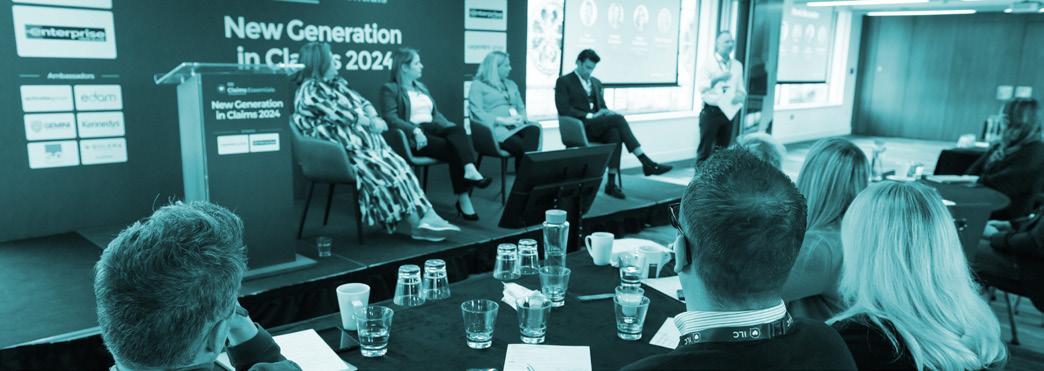
A panel discussion on ‘New Generation – attracting future talent for claims’ explored the persistent challenges in recruiting young professionals into the insurance industry, potential solutions, and the cultural changes required to ensure the sector remains competitive and appealing.
Gary de Groot
Director of Growth Innovation Group
Sarah
Cameron Ross
General
Axa
Ben Mear
Head of Administration, Triage and Validation
Claims
Consortium Group
Alan Soutar, Chair of ILC Home & Property, framed the session’s context by emphasising the pressing need for skilled professionals in the claims sector.
“The common concern we hear at every conference is: ‘We’re losing skills and struggling to attract young talent.’ This discussion isn’t just relevant—it’s critical to our industry’s future,” he asserted.
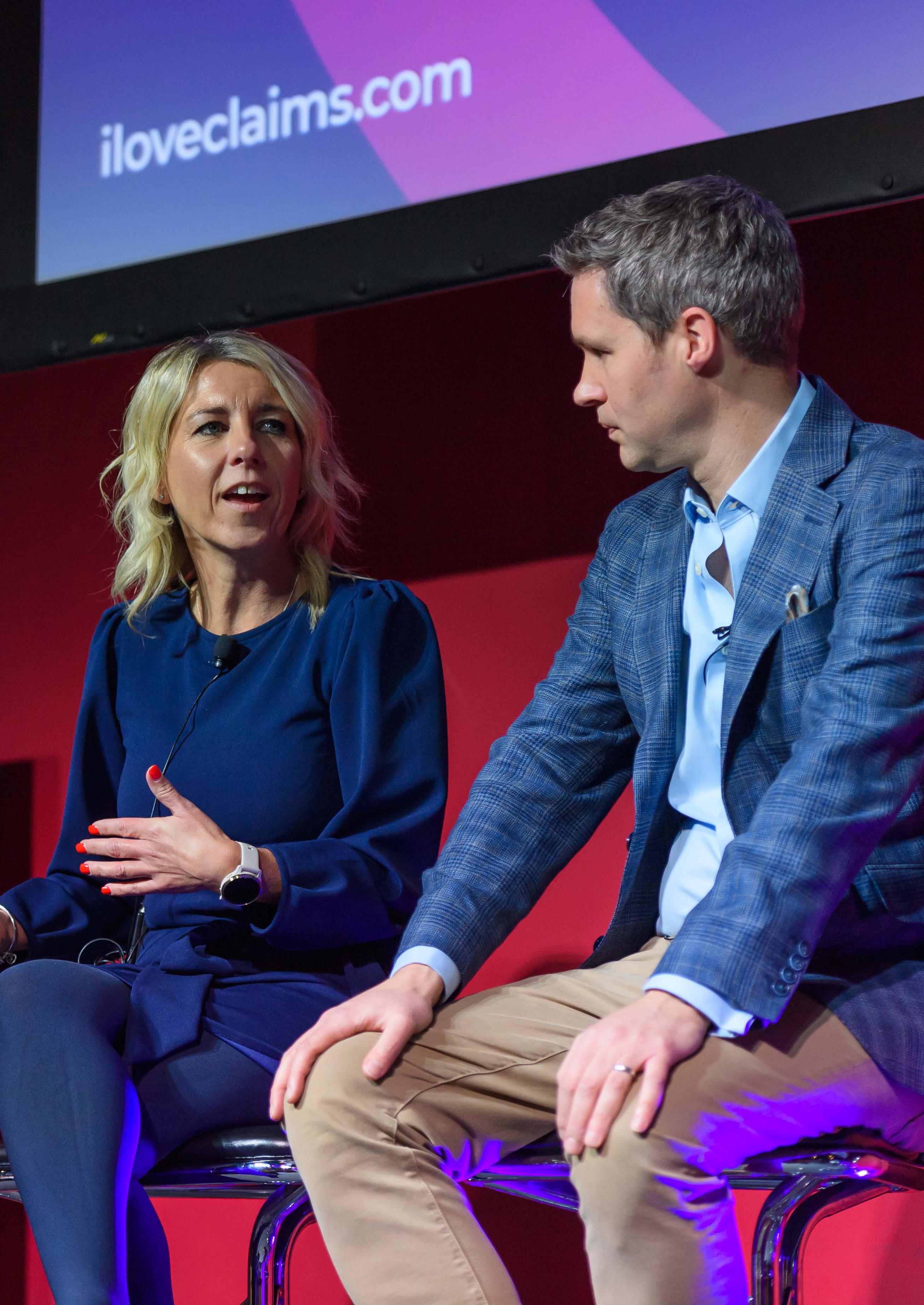
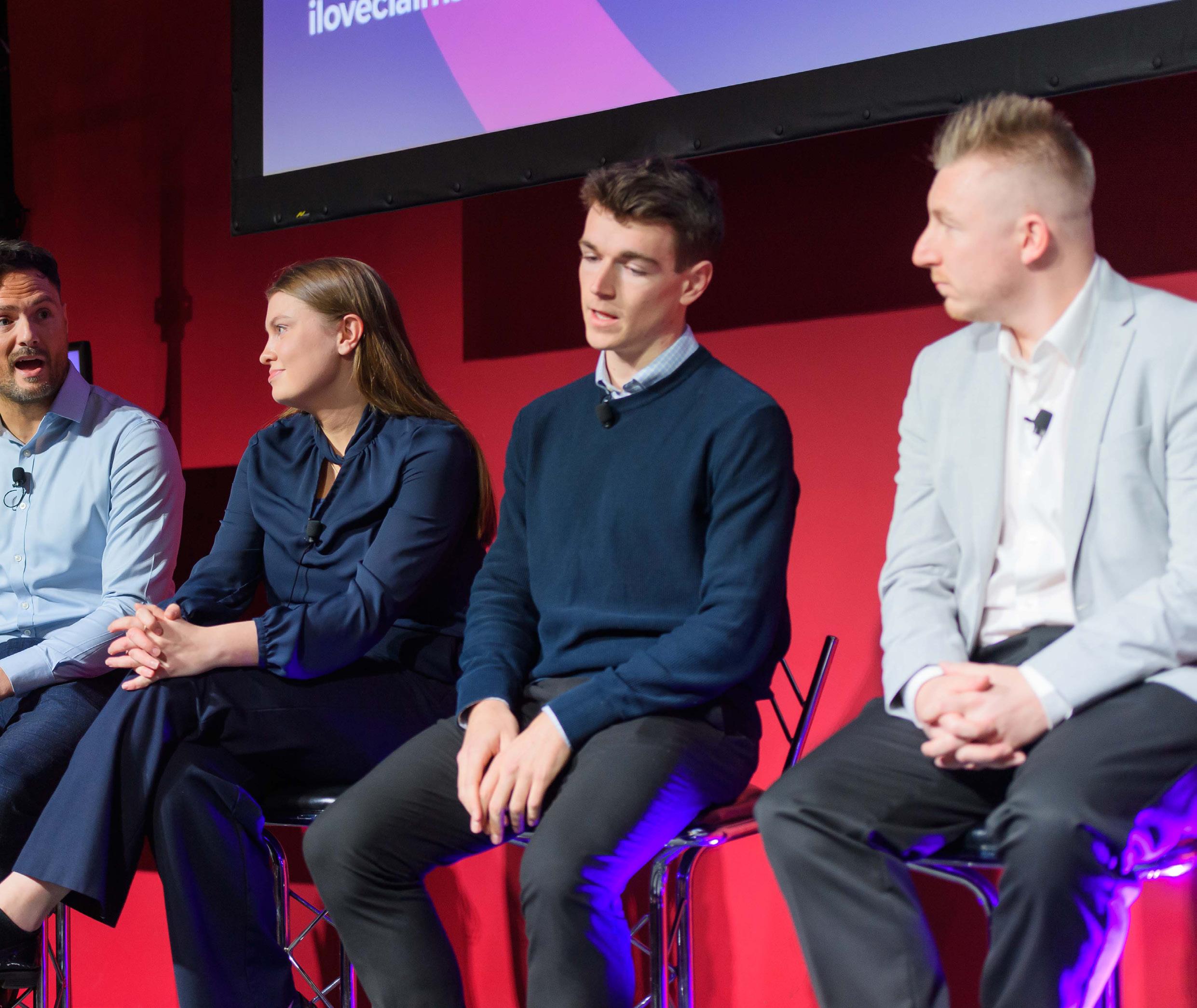
The diverse panel included industry leaders and rising professionals including Sarah Kerr, Talent Development Manager, Evolution Claims; Gary De Groot, Director of Growth, Innovation Group; Maddy Shearman, General Insurance Graduate, Ecclesiastical Insurance; Cameron Ross, Graduate Scheme, AXA; and Ben Mear, Head of Administration, Claims Consortium Group.
Accident
The discussion kicked off with personal stories from young professionals about how they entered the insurance industry—most by accident rather than design.
Maddy said, “I studied psychology and never thought about insurance until I applied for graduate programmes. It was only after joining that I realised how dynamic and rewarding this industry is.”
Similarly, Cameron admitted, “Insurance wasn’t on my radar until a recommendation from someone in the industry. It’s only after working here that I discovered the breadth of roles available.”
Their reflections pointed to a significant industry-wide issue: a lack of visibility and proactive promotion of insurance as a desirable career path.
Perception
Gary highlighted insurance’s long-standing image problem, saying, “Insurance has a PR issue. Young people see it as boring, technical,
“Insurance has a PR issue—we must showcase its diversity and societal impact.”
Gary De Groot
and bureaucratic. They don’t realise the vast array of roles, from marketing and data science to customer service and innovation.”
He suggested collaborating with educational organisations like UCAS and leveraging industry bodies to promote diverse career paths.
“We need to better explain what we do and why it matters—especially how we help families recover after disasters,” he stressed.
Digital outreach
Meanwhile, Sarah advocated for using social media platforms such as Instagram, TikTok, and LinkedIn to reach potential recruits.
“The new generation is online, so we need to be there too, showcasing the variety and purpose-driven nature of insurance careers,” she said.
She also highlighted the importance of storytelling: “Personal success stories resonate. We must showcase how people have built fulfilling careers in insurance, overcoming traditional stereotypes.”
Pathways
The panel further stressed that fostering career growth within the industry is as critical as recruitment.
“AI will support— not replace—claims professionals.”
Cameron Ross
Ben, who unexpectedly built a decade-long career in claims, observed, “We need structured career development and clear talent pathways. It’s easy for young professionals to leave if they don’t see growth opportunities.”
He added that companies must also identify hidden talent but said today’s working environment makes it more challenging.
He said, “With remote working, it’s harder to spot rising stars. Businesses must be proactive in recognising and nurturing potential, even from a distance.”
The future
Looking ahead, the panel predicted that emerging technologies like AI and automation will reshape roles in claims management. However, they were unanimous in asserting that human empathy and decision-making will remain essential.
“AI will support—not replace—claims professionals,” Cameron stated. “It can handle repetitive tasks, allowing human experts to focus on complex, high-touch cases that require empathy and nuanced judgment.”
Gary added, “The next generation of claims professionals will need both data literacy and emotional intelligence. AI might process data, but it can’t offer compassion or comfort in times of crisis.”
“We need structured career development and clear talent pathways.”
Ben Mear
“Our next generation needs data literacy and emotional intelligence.”
Sarah Kerr
Change
The session closed with a call for urgent industrywide change, with the panel recommending immediate steps:
• Improved branding: Clearer, more dynamic marketing of insurance careers.
• Educational partnerships: Collaborations with universities, colleges, and career services.
• Leadership buy-in: Board-level commitment to talent development and cultural change.
Alan concluded, “We can’t wait five years to fix this. If we’re still discussing the same issues in two years, we’ll lose our competitive edge.”
ECO STAGE
Driving environmental progress through ESG
Lucy Thomas Group Chief Scientist and Regional Operations Director, Africa
RSK
Group
Ross Huartt Founder EcoClaim
Luke Johnson
Operational
Account Manager
Home
Repair Network Ltd
With a line-up of industry leaders, the session - ‘The environmental challenge and progression against ESG’ - explored how the insurance industry can align with Environmental, Social, and Governance (ESG) goals while adapting to global sustainability demands.
Mark Hadaway, Content Director at ILC, opened the session by emphasising the urgency of environmental sustainability in both business and personal contexts.
“This is not just about meeting industry standards— it’s about creating a future where business and environmental sustainability coexist,” he said.
ESG progress
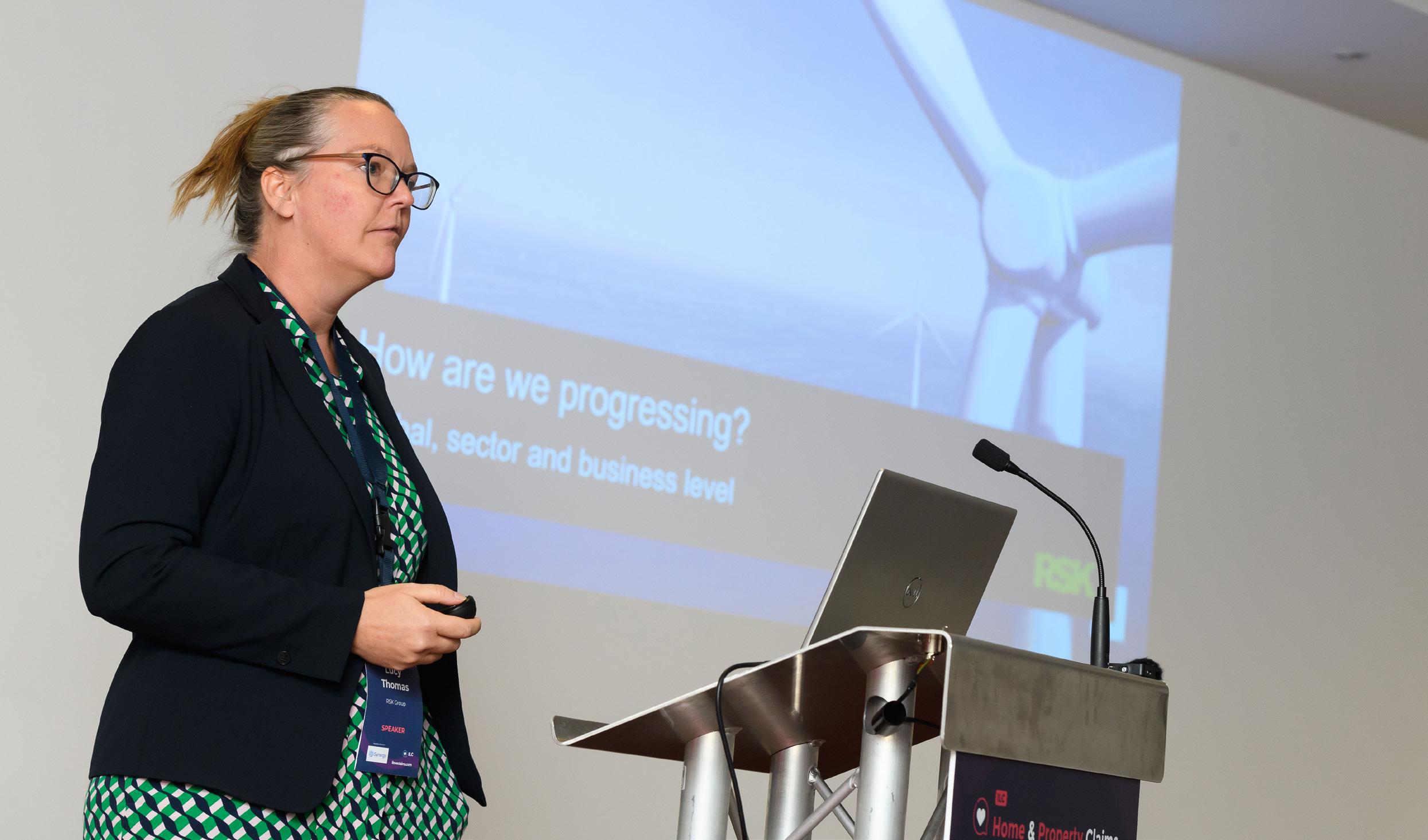
Lucy Thomas, Group Chief Scientist at RSK Group – a global leader in the delivery of sustainable solutions with a family of more than 200 environmental, engineering and technical services businesses and 15,000 employees - then provided a detailed overview of global ESG progress, sector-specific achievements, and business-level actions. Using data from the UN Sustainable Development Goals (SDGs), she highlighted mixed regional results, noting specific challenges such as water scarcity, biodiversity loss, and climate resilience.
“We’re seeing some progress,” Lucy stated, “but not at the speed we need. Targets around climate action, water management, and peace remain off track.”
Comparing sectors, she revealed that while the insurance industry is making strides, there is room for improvement.
“The insurance sector isn’t at the bottom of the sustainability rankings, but it’s not leading either. The bigger the company, the more reporting they do—but often, the smaller firms are the ones driving action,” she added.
Innovation
Ross Huartt, Founder of EcoClaim, then shared how his company has developed a system of software plus training and certification that helps insurers and contractors measure, manage and reduce Scope 3 emissions.
“Insurance touches every other industry,” he noted. “We have a unique responsibility to push sustainability forward through supply chains and incentivise greener practices.”
Ross also stressed that tracking Scope 3 emissions—those generated by supply chains—remains the industry’s biggest challenge. He suggested that insurers adopt a unified approach to mobilising the supply chain for tracking and reducing emissions.
Luke Johnson, Operational Account Manager at Home Repair Network, echoed the need for streamlined data sharing.
“Our biggest challenge is gathering accurate emissions data from contractors. Many small businesses don’t have the tools to track their environmental impact effectively,” he said.
“Insurance touches every industry— we have a unique responsibility to push sustainability forward.”
Ross Huartt
Opportunity
A recurring theme was the perception of ESG as a financial burden rather than a business opportunity. Lucy argued that sustainability-linked investments are increasingly shaping the insurance sector, offering long-term profitability.
“We’re seeing financing linked directly to sustainability performance metrics,” she said. “Interest rates can drop when ESG targets are met.”
However, Luke warned that financial pressures still dominate.
“The reality is, many contractors prioritise immediate cost savings over sustainability because that’s what policyholders expect,” he explained. “We need better incentives and clearer ESG standards to make sustainability the default option.”
Pathways
The panel also discussed structural barriers, including inconsistent ESG policies, lack of enforcement, and limited government mandates.
“Governments need to set clear sustainability goals,” Lucy urged. “But businesses shouldn’t wait for regulation— they must act proactively.”
Ross then suggested creating carbon credit incentives for insurers meeting sustainability targets.
“Rewarding carbon reductions through verified credits could push ESG from a ‘nice to have’ to a core business driver,” he argued.
“Sustainability is becoming the new business license to operate.”
Lucy Thomas
Call to Action
Closing the session, the panel emphasised the need for a cultural shift within the insurance industry.
“We need to embed sustainability into everyday business operations,” Lucy said. “It can’t just be a job for one department—it must be part of the company culture.”
Luke highlighted the role of younger professionals in driving change: “The next generation is already sustainabilityminded. We need to harness that energy to reshape the industry from the inside out.”
The session concluded with a clear call for action: sustainability must move from concept to practice, and as the insurance industry grapples with rising environmental challenges, collaboration, innovation, and leadership will be key to driving meaningful change.
“Start small, but start now— waiting is no longer an option.”
Luke Johnson
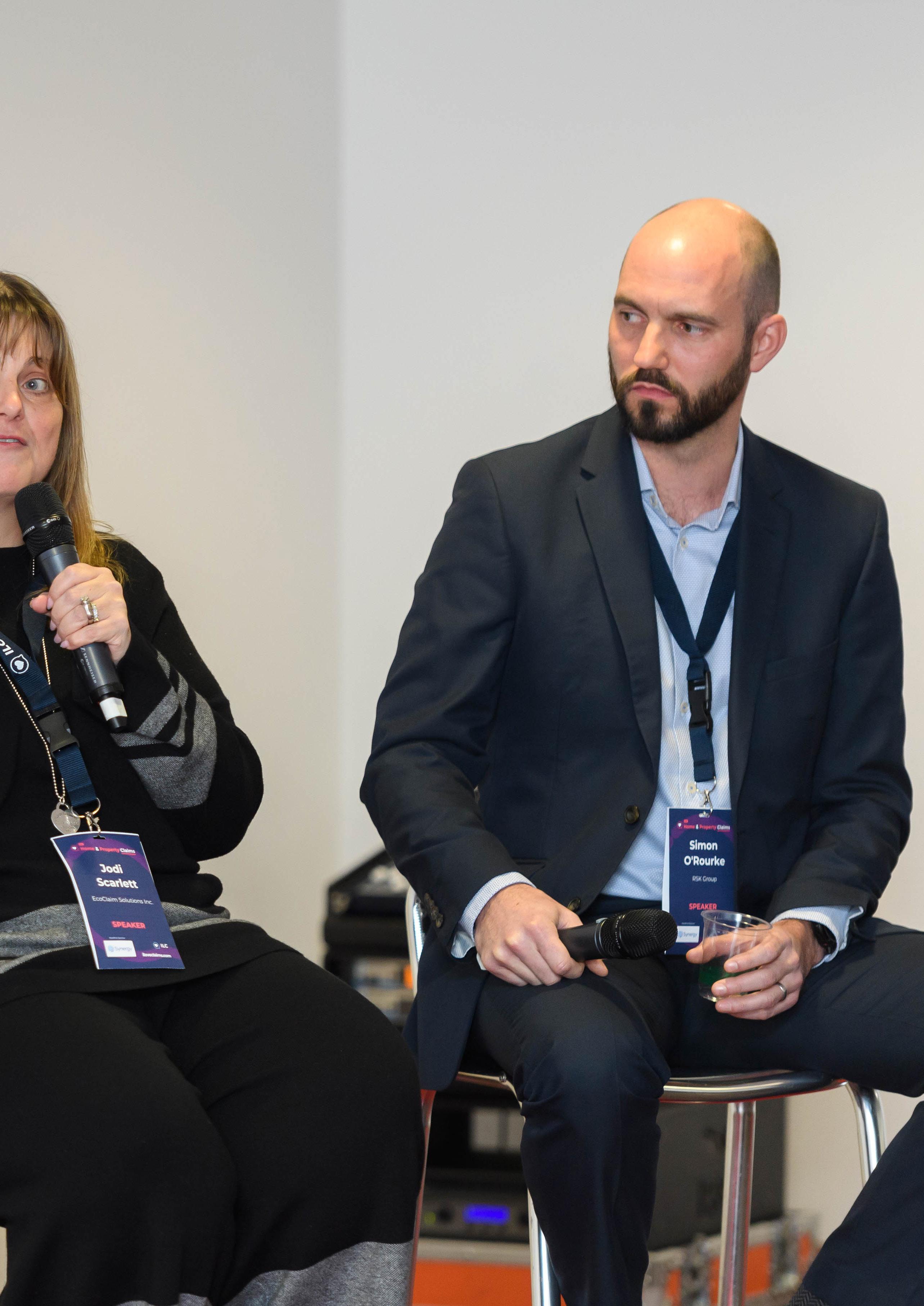
Carbon measurement and the insurance supply chain
Simon O’Rourke Business Manager
Jodi Scarlett CEO
Sarah Dodd Director
The conference delved into the evolving role of carbon measurement in the insurance supply chain.
Under the session, ‘Carbon measurement –the supply chain,’ industry leaders explored innovative solutions, operational challenges, and the future of sustainability in claims management.
Hosted by ILC Content Director Mark Hadaway, the session featured insights from panellists Sarah Dodd, Director of Tree Law; Jodi Scarlett, CEO of EcoClaim; and Simon O’Rourke, Business Manager at RSK Raw.
Mark set the stage by highlighting the necessity of environmental responsibility across the insurance sector.
“This isn’t just about compliance—it’s about leadership and accountability,” he stated.
The panel then shared expertise on integrating carbon measurement into claims handling, emphasising collaborative responsibility.
Scope 3 emissions
Sarah provided clarity on the complexities of carbon emissions classifications, specifically Scope 3 emissions—indirect emissions resulting from an organisation’s supply chain activities.
“Scope 3 accounts for up to 90% of an insurer’s carbon footprint,” she noted. “It’s the area where the real work must be done.”
She also unveiled her subsidence carbon calculator, the first of its kind, designed to assess the carbon impact of subsidence repairs versus tree removal.
“I built it because the data didn’t exist. Now insurers can make decisions based on carbon output, not just cost,” she explained.
“What gets measured gets managed.”
Jodi Scarlett
Carbon tracking
Jodi then introduced EcoClaim’s emissions tracking platform, which quantifies emissions from multiple supply chain layers in real time.
“Think of the supply chain as a spine,” she said. “Every vertebra matters.”
She shared success stories from EcoClaim’s Canadian operations, where over 900,000kg of carbon emissions were avoided in 12 months through supplier engagement and wastediversion strategies.
“We saw incredible results just by making carbon tracking mandatory in supplier contracts,” she revealed.
Tools and training
Simon then discussed RSK Raw’s carbon measurement tools and the importance of early design-stage carbon assessments.
“We’re asked for data after jobs are done, but we need to shift that to the project planning stage,” he asserted.
He highlighted how claims are often routed down a potentially less sustainable, more cost conscious route due to commercial constraints, emphasising the need for a long-term industry shift toward sustainable design.
“We must create alignment from boardroom strategy to contractor implementation,” he urged.
Barriers
The panel also discussed systemic barriers, including inconsistent sustainability standards, lack of regulation, and limited incentives for insurers to invest in greener claims solutions.
“We need policy wording that supports sustainability,” Sarah stressed, “otherwise climate commitments made by executives won’t trickle down to claims handling.”
Jodi suggested that insurers adjust policy premiums based on environmental performance.
“Premium adjustments linked to carbon reductions could reshape the industry,” she proposed.
The session concluded by underscoring the industry’s collective responsibility to measure, manage, and reduce carbon emissions, but said that with innovative tools and strategic collaboration, the sector has a clear path toward a sustainable future—one claim at a time.
“Scope 3 emissions are the real challenge— and the biggest opportunity.”
Sarah Dodd
“Sustainability must be designed into claims handling, not added afterward.”
Simon O’Rourke
SHOWCASE STAGE Evolution of the loss adjuster’s role in a changing industry
Gavin Rowell Director of Loss Adjusting & TPA Services Innovation Group
Gavin Rowell, Director of Loss Adjusting & TPA Services at Innovation Group,
delivered a thought-provoking session on how the role of the loss adjuster is transforming in response to industry changes and customer expectations.
With over three decades of experience, Gavin offered valuable insights into the evolving demands placed on adjusters and how they can adapt to remain relevant and effective.
He began by outlining the traditional responsibilities of a loss adjuster—assessing damage and investigating policy responses.
However, he emphasised how the role has expanded dramatically.
“We’re now expected to be surveyors, investigators, customer service representatives, and even guidance counsellors,” he explained.
He highlighted key areas of responsibility that have grown over time:
Policy Expertise: Understanding and interpreting complex policy wordings and underwriting criteria.
Financial Forensics: Conducting background checks, credit referencing, and value-at-risk assessments.
Technical Knowledge: Evaluating construction costs, material replacements, and advanced repair techniques.
Risk Management: Offering actionable insights to underwriters based on on-site observations.
Consumer Duty
Meanwhile, with the introduction of Consumer Duty regulations, Gavin stressed the shift toward customer-focused claims handling.
“We’re no longer just adjusters; we’re guidance counsellors for policyholders navigating a challenging process,” he noted.
Addressing vulnerable customers has become a critical part of the adjuster’s role.
“It’s essential to identify when a policyholder might be vulnerable and adapt our approach accordingly. But this requires consent, clear communication, and empathy,” he said.
Technology
While technology has streamlined administrative tasks, Gavin argued that human expertise remains irreplaceable.
“AI can handle data processing, but it can’t replicate the nuanced decision-making and emotional intelligence required in highstakes claims,” he stated.
He advocated for greater collaboration between adjusters and insurers to ensure seamless communication and improve outcomes. He said the majority of complaints stem from communication failures and that better alignment between adjusters, claims handlers, and insurers is crucial.”
Challenges
He concluded by expressing concerns about the industry’s aging workforce and the difficulty in attracting younger professionals.
“We’re seeing fewer young people enter the field, and those who do often move on within a few years. This lack of long-term retention threatens the industry’s knowledge base,” he cautioned.
“The majority of complaints stem from communication failures— better collaboration is key.”
SHOWCASE STAGE Synergy Cloud showcases claims automation with AI-driven tech
Tom Burroughs CTO
Synergy Cloud and Claims Consortium Group
Tom Burroughs, CTO of Synergy Cloud, showcased the company’s latest advancements in claims management automation through its Synergy platform.
With an emphasis on AI-driven decision-making, seamless data integration, and process automation, he demonstrated how insurers can transform claims handling into a fast, customer-focused experience.
Tom kicked off the session by highlighting the pressing need for automated, scalable claims processes, especially during surge events.
“It’s not about replacing people—it’s about giving claims handlers more time to focus on what really matters: complex cases and customer care,” he explained.
Automation in action
He then demonstrated how Synergy Cloud’s platform streamlines the entire claims lifecycle, from first notification of loss (FNOL) to supplier assignment:
Automated Claims Validation: The system crossreferences data such as policy details, weather reports, and customer inputs, ensuring claims meet coverage criteria instantly.
Dynamic Questionnaires: Based on AI-powered triage, customers answer only the most relevant questions, cutting down on unnecessary data entry.
Integrated Messaging and Alerts: Real-time notifications keep customers, insurers, and suppliers aligned through every claims stage.
“We can verify a customer’s eligibility, validate damage reports, and even deploy contractors within minutes,” he said.
“AI doesn’t replace people—it frees them to focus on what really matters: complex cases and customer care.”
Claims insights
One of the platform’s standout features is its ability to flag high-risk claims using natural language processing (NLP).
"Our system can scan customer messages and score risks based on urgency and severity,” Tom explained. “This allows insurers to prioritise cases that need immediate attention.”
But while emphasising tech-driven efficiency, he stressed that the platform supports—not replaces— human expertise.
"AI can manage data, but empathy and customer trust require human interaction,” Tom concluded.
SHOWCASE STAGE Prime Disaster Response tackles complex high-net-worth claims
Dan Hughes Senior Technical Manager Prime Disaster
Dan Hughes, Senior Technical Manager at Prime Disaster Response, delivered a compelling session on managing complex high-net-worth property claims during surge events.
Drawing from real-life cases, including the catastrophic flash floods that hit West London in 2021, he detailed how Prime’s team effectively handled a surge of over 100 high-value claims in just five days.
Dan recounted how the 2021 West London floods devastated properties with tens of millions of pounds in value, many featuring double basements, home cinemas, and commercial-grade systems.
“These aren’t just homes—they’re complex ecosystems requiring tailored restoration,” he explained.
Super-net-worth
He emphasised that handling super-net-worth properties goes beyond standard water damage protocols due to:
Complex Architectures: Including swimming pools, advanced HVAC systems, and multi-level basements.
Multiple Stakeholders: Requiring collaboration with contractors, surveyors, and facilities managers.
High Expectations: Owners expect rapid response times and continuous communication.
Prime’s approach focuses on resource reallocation, real-time decision-making, and data-driven reporting, enabling swift, scalable action.
“These aren’t just homes—they’re complex ecosystems requiring tailored restoration.”
“Real-time decisionmaking and technical expertise turn chaos into control.”
Dan explained key strategies:
Skilled leadership deployment: Senior technical managers conducted initial site assessments and coordinated mitigation efforts, allowing rapid, precise decision-making.
Clear reporting: Policyholders received damage reports within 24 hours, outlining action plans and expected timelines.
Advanced technology use: Digital inventories, moisture monitoring, and high-definition imaging streamlined claims validation.
Surge performance metrics
Dan emphasised how Prime’s operational speed set a high industry benchmark:
18-minute average contact time: Policyholders were contacted within minutes of claims submission.
Same-day action: 55% of claims had mitigation equipment installed on the same day.
Cost transparency: Costed reports were delivered within 10 days and achieved accuracy rates within 10%.
SHOWCASE STAGE Polygon showcases smart water damage prevention
Dave Strickland
Business Development Manager
Polygon
James
Bloom
Regional Development Director
Polygon
Polygon’s James Bloom, Regional Development Director, and Dave Strickland, Business Development Manager, unveiled the company’s latest digital water damage prevention solutions, emphasising the power of IoTdriven leak detection and environmental monitoring.
The session showcased how early detection technology can significantly reduce claim durations, costs, and property damage caused by water leaks.
Dave set the stage by recalling the costly aftermath of the Beast from the East, a weather event that caused millions of pounds in water damage claims.
“Homeowners returning from holiday found water pouring out of their front doors due to burst pipes,” he said. “The financial and emotional toll was immense. We need better preventive measures.”
Smart tech
Polygon’s leak detection platform ties together sensors, valves, and data analytics to alert property managers and insurers about water leaks in real time.
Dave demonstrated the system’s multi-layered approach:
IoT sensors: Devices the size of a Scrabble tile detect water, temperature, and even humidity levels.
Clamp on devices: Using pipe vibration accurately detect water usage to highlight a leak without a plumbing install.
Automatic water shut-off valves: These can stop water flow immediately after detecting a significant leak.
Data Integration: Alerts are routed through a centralised digital platform, enabling instant notifications and coordinated responses.
“By capturing data as early as possible, we can prevent claims from ever happening,” Dave explained. “Some policyholders fix minor leaks themselves after
“We can prevent claims before they even happen—eliminating secondary damage entirely.”
Dave Strickland
receiving alerts, eliminating claims entirely.”
Minimising claims and costs
He then highlighted how Polygon’s system predicts drying times and tracks environmental factors like air quality, humidity, and wood moisture levels. This data-driven insight streamlines remediation efforts, preventing costly secondary damage.
“Less time on site means fewer intrusive visits for policyholders, creating a more customer-friendly claims experience,” he said.
Shaping the future
The session also explored future applications, including integrating the system into high-net-worth properties and commercial insurance portfolios.
“Digital water damage prevention could cut burst pipe surges by up to 80%,” Dave predicted.
“Less time on site means fewer disruptions for policyholders and faster resolutions.”
James Bloom
SHOWCASE STAGE ICAB’s vision for surge readiness and customer care
Tim Goodman Managing Director ICAB
“You can’t replace empathy with tech— people need human support when they lose their homes.”
Tim Goodman, Managing Director of ICAB, considered how climatedriven surges will transform claims management during his session, ‘Getting ready for 2048’.
Tim underscored the necessity of operational readiness, tech-driven planning, and empathetic customer service in times of crisis.
He began by highlighting how extreme weather and rising populations are driving more frequent and costly surge events. Referencing historical floods in 1928, 1968, and 2007, he predicted even larger surges by 2048, stressing that insurers must prepare now to minimise future disruptions.
Response framework
To combat this, ICAB’s five-pillar approach to surge management includes:
Speed of service: Offering same-day accommodation with a one-hour SLA to prevent policyholders from being stranded.
Resource readiness: Maintaining 24/7 availability through a well-trained and scalable workforce.
Process efficiency: Pre-booking accommodations and deploying real-time data monitoring to prevent delays.
Empathy-driven service: Recognising that policyholders may face their first-ever claim, requiring personal attention and support.
Continuous improvement: Conducting post-surge reviews to enhance future performance.
Human touch
But he insisted that while predictive technology aids surge forecasting, customer-facing services still require a human touch.
“Technology can guide logistics, but people in crisis need real-time support from empathetic professionals,” he concluded.
“A one-hour SLA for accommodations ensures no policyholder is left without a roof over their head.”
SHOWCASE STAGE CET highlights importance of climatedriven surge planning
Toby Mitchell Chief Revenue Officer
Stephen Hague Distribution and Product Development Director
CET UK’s Chief Revenue Officer, Toby Mitchell and Distribution & Product Development Director, Stephen Hague offered a session which explored CET’s climate-driven surge planning strategies in home emergency insurance, highlighting the importance of innovation, technology, and operations.
Frequency
Toby introduced the session by emphasising the growing impact of extreme weather events on UK households, recalling the 12 named storms that occurred last winter and the operational pressure on insurers and suppliers which resulted.
He said, “The last few years have seen intense weather patterns— subsidence, flash floods, dramatic swings in temperatures and nationwide escape of water claims—putting tremendous strain on our industry.”
Stephen then outlined CET’s approach to operating to maximum efficiency during surges, supported by their bespoke claims management platform SIMPLIFi. The platform streamlines real-time claim tracking, communication, and automated updates between insurers, customers, and contractors to provide a seamless claims journey.
He said, “Our tech-first approach allows us to resolve claims faster while delivering an exceptional customer experience.”
The integration extends to CET’s Home Assistance Robotic Interface, an AI-driven voice bot that automates claim triage and routing.
Stephen added, “By reducing call handling times, the robotic interface ensures claims reach the correct department and resolution quickly and efficiently.”
Training
The session then went on to discuss how home emergencies can be highly stressful and emotive situations and ongoing training and development for frontline agents is critical, especially in preparation for times of surge.
CET’s training framework focuses on equipping agents with the skills to support policyholders in home emergency scenarios adhering to Consumer Duty compliance, with Stephen stressing that skilled personnel ensure every customer receives precise and empathetic service throughout the seasons.
Partnerships
Meanwhile, with a robust multitrade contractor network and over 1,600 engineers providing nationwide coverage, CET ensures rapid response through technology-driven autodeployment within seconds of claim approval.
“We’ve revamped supplier agreements, improved communication channels, and implemented clearer and more stringent KPIs to align performance with customer expectations,” Toby concluded.
“Extreme weather events are the new normal—we must innovate to meet growing claims demands.”
Toby Mitchell
“The right tech and the right people ensure service excellence at every stage.”
Stephen Hague
SHOWCASE STAGE Geobear champions sustainability in ground stabilisation
Simon Hughes Managing Director Geobear UK
An enlightening session led by
Simon Hughes, Managing Director of Geobear
UK outlined Geobear’s sustainabilitydriven approach in ground stabilisation and its commitment to reducing environmental impact through innovative technologies and supply chain engagement.
Simon began by describing Geobear’s core service— injecting geopolymer resins into the ground to combat subsidence—as a low-carbon alternative to traditional concrete underpinning.
“Our approach generates 53% less carbon than conventional methods,” he explained.
However, he stressed that carbon reduction is only part of the sustainability puzzle. He said that carbon offsetting and planting trees are easy wins, but sustainability requires wider systemic change across operations and the supply chain.
Sustainability
He revealed that Geobear’s sustainability strategy revolves around four key pillars:
Health and wellbeing: Improving workplace conditions and supporting employees to enhance productivity and job satisfaction.
Environmental impact reduction: Modernising fleet vehicles, optimising logistics, and reducing waste through recycling.
“Carbon offsetting is easy—real sustainability comes from changing how we operate.”
“Our method reduces carbon emissions by 53% compared to traditional ground stabilisation.”
Supply chain collaboration: Creating sustainability charters with suppliers to align environmental goals.
Operational efficiency: Planning projects proactively to minimise last-minute adjustments, reducing carbon emissions from travel and resource use.
Real-world challenges
Simon acknowledged operational constraints like the difficulty of adopting fully electric vehicles in a business reliant on national mobility.
“We can’t switch entirely to electric yet, but we’re modernising our fleet and improving fuel efficiency,” he stated.
He also highlighted the need for mutual accountability in sustainability efforts, saying that winning the sustainability challenge requires industry-wide collaboration.
“We must share best practices rather than guarding them as competitive secrets,” he concluded.
CoreLogic’s Product Consultant, Conall Bolton unveiled the company’s new contractor job management platform - CoreLogic Contractor Workspace – which officially launched on 6 January 2025.
Conference attendees were given an early look at the platform’s strategic framework and main features. This solution, developed through CoreLogic’s acquisition of Prime Ecosystem, is designed to improve contractor operations within the insurance industry and beyond.
The platform addresses operational inefficiencies in the insurance supply chain by focusing on process automation, data-driven insights, and enhanced communication. It aims to improve claims outcomes and deliver benefits to policyholders, insurers, and contractors alike.
Challenges in contractor management
Conall opened by outlining common contractor pain points, including waste in processes, lack of visibility, and manual workarounds due to fragmented systems.
“Multiple systems that don’t communicate create data silos and inconsistent service levels,” he explained. “Our goal is to create a more seamless, integrated experience.”
He said that to overcome this, CoreLogic’s platform focuses on five core areas:
Efficiency: Automation and integration eliminate repetitive tasks, allowing contractors to focus on value-added services.
Consistency: Standardised processes and guided workflows reduce errors and ensure quality.
Data quality: Real-time data dashboards offer comprehensive views of jobs, helping businesses track profitability.
Resource Optimisation: Postcode-level job grouping minimises travel time and emissions.
Flexibility: Custom workflows enable contractors to adapt processes based on client-specific needs.
Conall stressed that these innovations could reshape contractor management in the UK insurance sector.
“We’ve proven this model in North America, where thousands of contractors rely on CoreLogic’s contractor solutions for operational efficiency,” Conall explained. “Our goal is to bring that same level of success to the UK market. This is why CoreLogic has acquired Prime Ecosystem—to introduce a new contractor platform that is specifically designed to meet the unique needs of the UK contractor industry.”
Customer Experience
During a Q&A session, Conall then emphasised how streamlined processes reduce customer complaints by ensuring better communication and real-time updates.
He said, “Most complaints stem from communication breakdowns or missing information. Our platform knits together the entire claims journey, closing gaps and ensuring transparency from start to finish.”
“Automation allows contractors to focus on delivering quality service—not administrative tasks.”
Feedback
“I thought yesterday’s event was the best yet. What really made the difference for me was focussed sessions in ‘Eco’ and ‘Showcase’.”
“I think the event was superb! A real success.”
“It was a great day with some interesting conversations and useful networking.”
“It was fantastic to catch up with lots of familiar faces and build new connections in such a vibrant and engaging setting.”
“ Thank you for organising such a great event.”
“Another great event - my new company now know the benefits of the ILC, so I look forward to attending more in future.”
“Another brilliant ILC event. Well done to the ILC team.”
Upcoming events: 2025 ILC
Contact us
TEAM Home & Property Claims
LET'S GET STARTED
To discuss these opportunities, as well as other ways that we can help in the marketing and brand awareness of your company at an ILC event, please contact: