ILC Better Tomorrow - Exclusive Motor Claims Conferece 2024
DISCLAIMER
Contributors
The views and opinions expressed within Better Tomorrow are reported from live events and are those of the individual contributor/s. They do not necessarily reflect the official policy or position of the contributor’s employer, organisation, committee or other group or individual.
ILC
While every effort has been made to ensure the accuracy of information, ILC will not accept responsibility for errors or omissions or for consequences arising from reliance on information published. The opinions expressed in Better Tomorrow are not necessarily the opinions of, or endorsed by ILC unless otherwise stated.
COPYRIGHT
All rights reserved. No part of the material contained within this publication may be reproduced or copied in any form or by any means without written permission from ILC.
Motor Claims
Sponsor
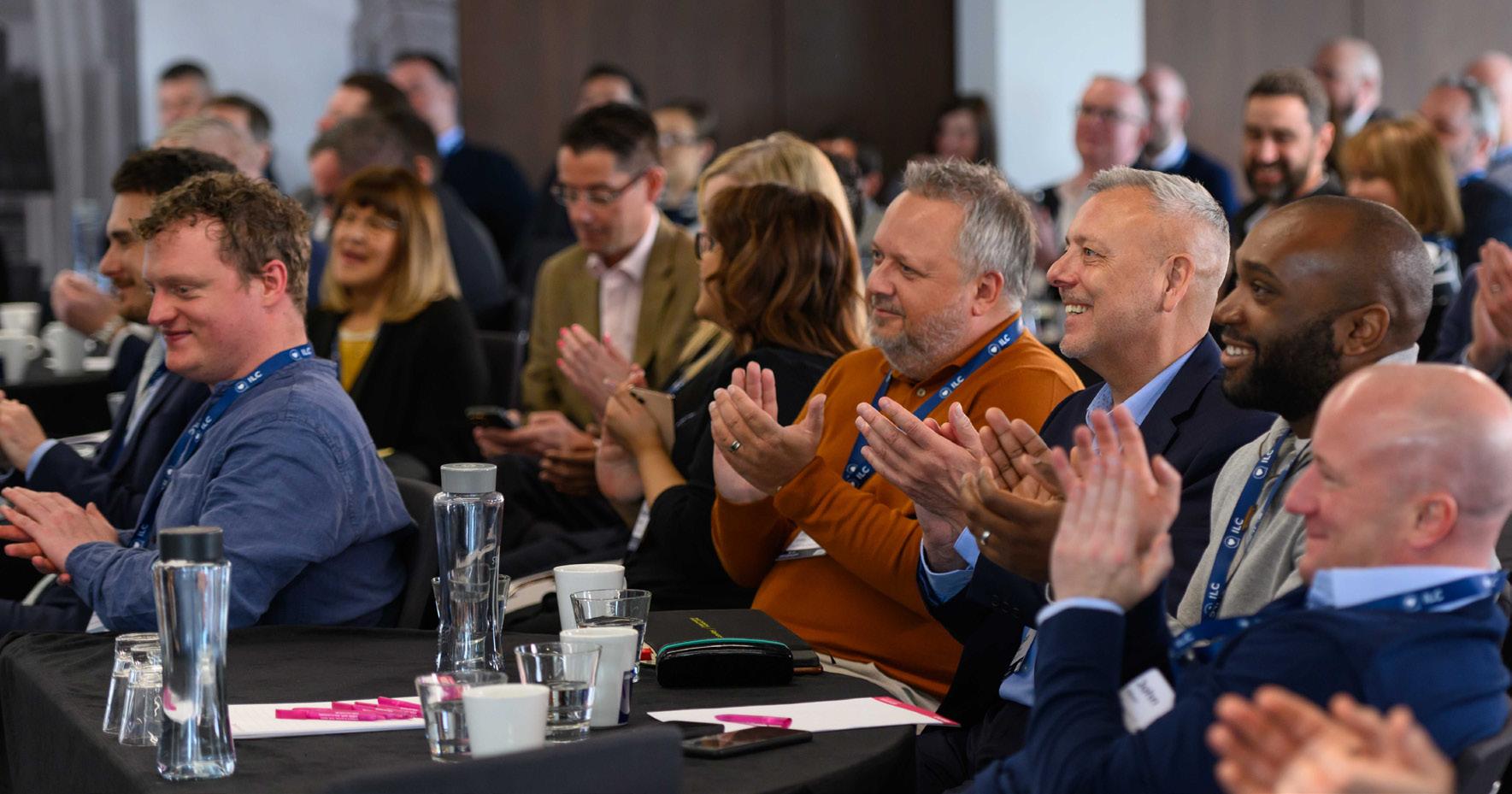
Exclusive views at premiere event
ILC’s Exclusive Motor Claims Conference delivered on its promise of providing the highest calibre of attendees, contributors and debate in the UK motor claims industry calendar.
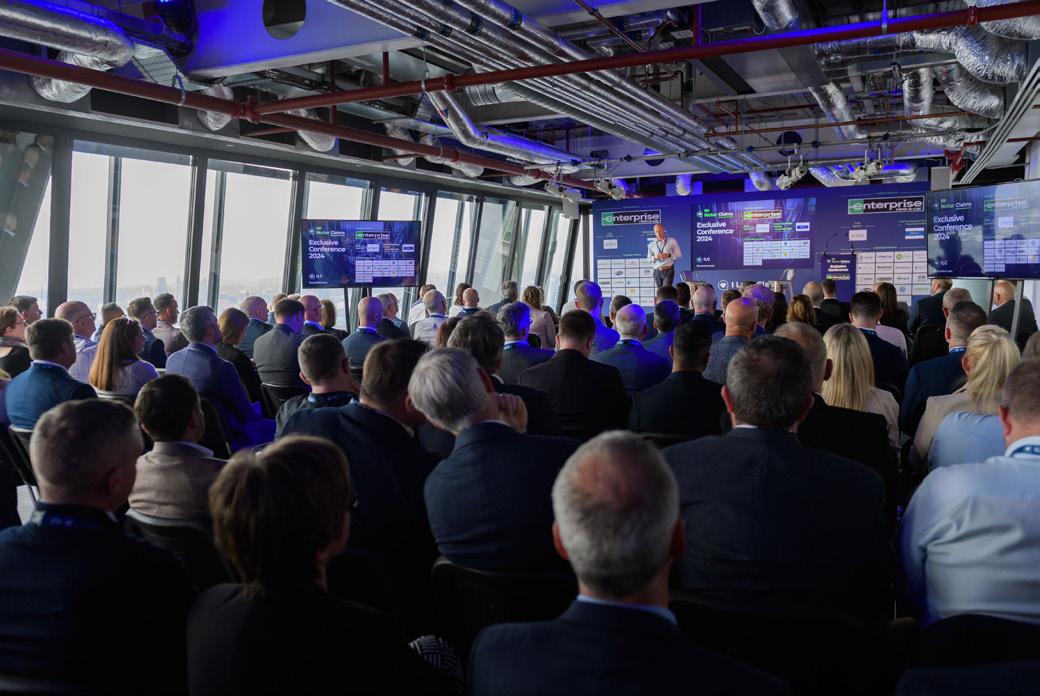
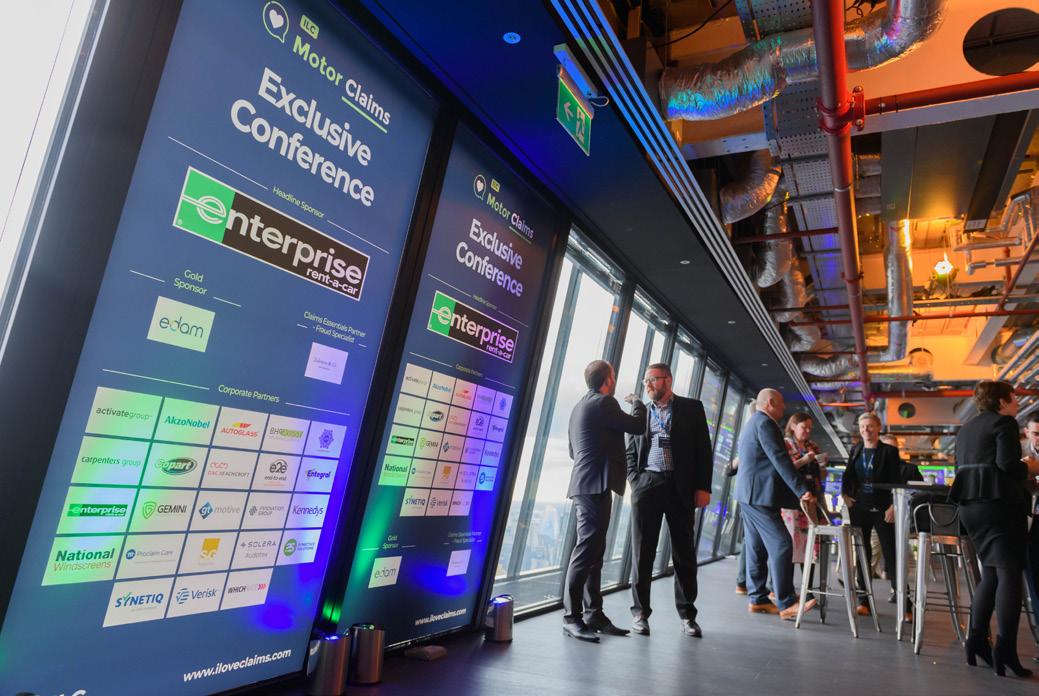
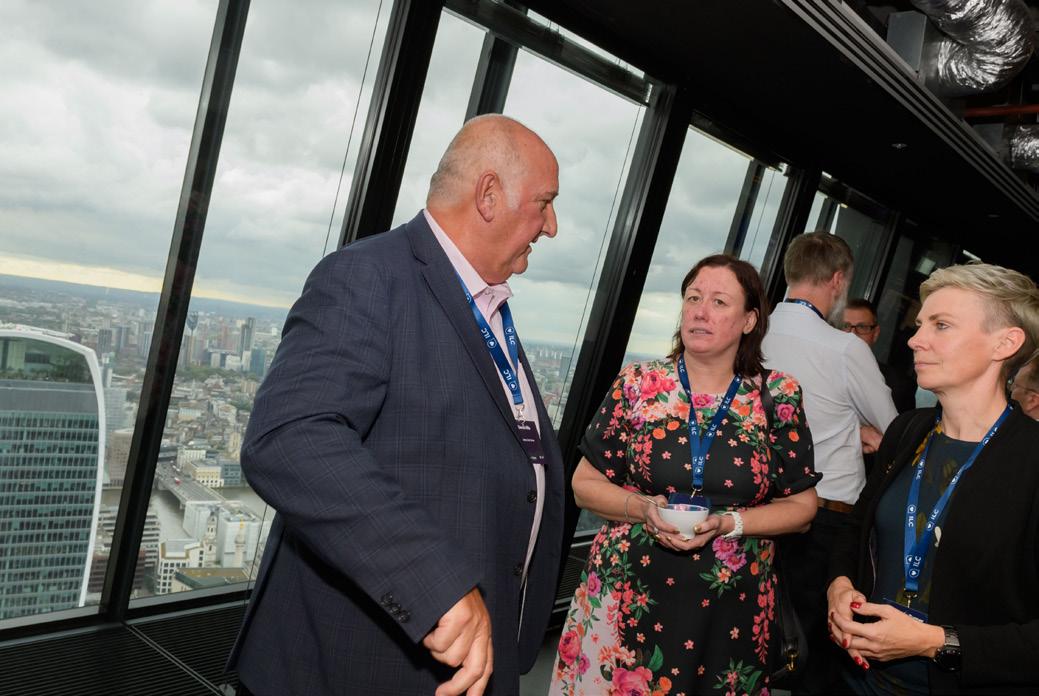
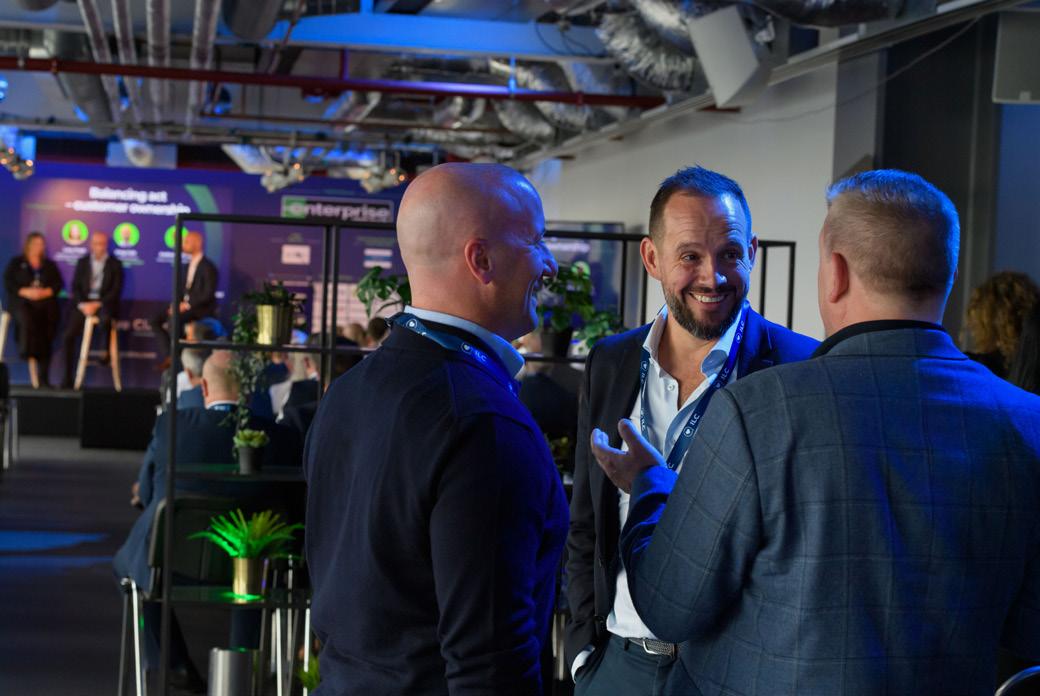
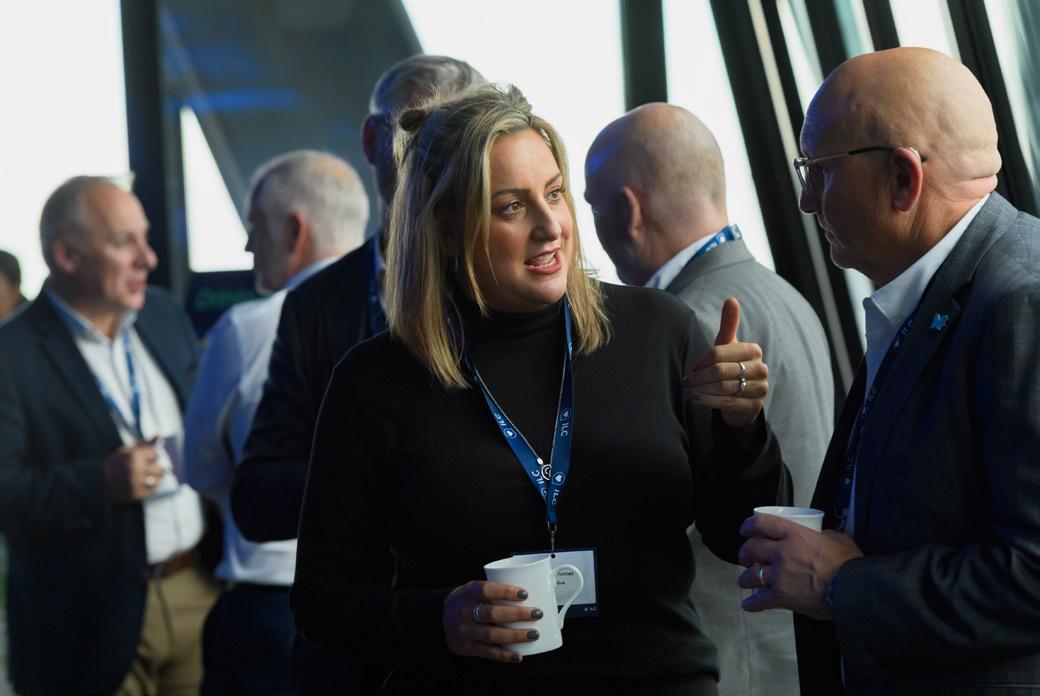
Themed ‘Preparing for a better tomorrow’, the event took place on Thursday 3 October, once again, at the UK’s highest event space - Landing Forty-Two in the Leadenhall Building, London - providing motor claims leaders with access to the best insights from across the industry, as well as the opportunity to meet the most senior executives to talk business – all in one place.
The conference was supported by Headline Partner Enterprise Mobility along with ILC Motor Corporate Partners: Activate Group; AkzoNobel; Autoglass; BHR Assist; CAPS; Carpenters group; Copart; DAC Beachcroft; e2e; Entegral; Enterprise Mobility; Gemini ARC; GT Motive; Innovation Group; Kennedys; National Windscreens; Proclaim Care; S&G Response; Solera Audatex; Synectics Solutions; Synetiq; Verisk; and Whichrate; as well as Claims Essentials Fraud Specialist Partner Robertsons; Sponsor Edam Group; and post-event reception sponsor Hawkins.
A huge thank you to all of those supporting organisations who helped the make the event the success it was.
With an agenda full of insightful sessions –including the now well-established Market Intelligence snapshots from ILC’s expert partners – the day covered the key topics impacting the sector today with valuable takeaways as to what the future direction of travel might be.
I would like to say a sincere thankyou to all those who contributed towards the day’s agenda – our hope is this publication goes someway to capturing the truly valuable content shared during the occasion.
All of the sessions, insights and more are highlighted within this issue of Better Tomorrow.
We are also hugely grateful to all those who took time out from busy schedules to attend the event – the level of knowledge, experience and seniority of guests at this event is truly inspiring.
Of course, it would be remiss of me to not look to the future and ‘prepare for a better tomorrow’ by highlighting two significant new additions and opportunities for the ILC motor insurance claims community for next year: The CEO Report and the EU Event.
Both of these innovations are set to add even more value to market.
To find out more about the opportunities available contact me: chris@iloveclaims. com or our sales & account manager, Liane: liane@iloveclaims.com
Many thanks to you all once again for making the 2024 Exclusive Motor Claims Conference another great experience and learning curve for all.
Kind regards
Chris Ashworth Founder ILC
Making claims the differentiator
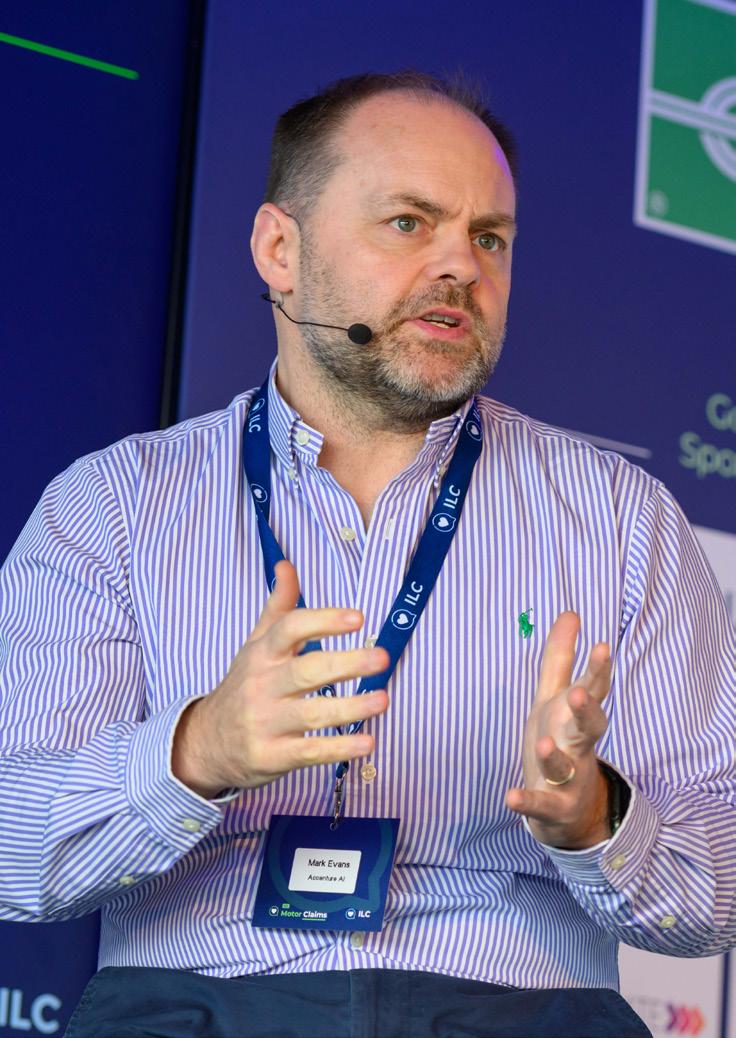
Mark Evans
Executive Level Marketer
The Direct Line insurance brand revival, spearheaded by the iconic ‘Winston Wolf’ campaign, was a pivotal moment in the insurance sector, according to a keynote session.
Delivered by Mark Evans, Executive Level Marketer, the session, ‘Making claims the differentiator’, highlighted how the Winston Wolf campaign elevated Direct Line Group’s (DLG) status as an industry leader, driving growth, reinvigorating culture, and reshaping marketing norms within the sector.
“We knew we had to do something quite bold to reinvigorate the brand and, to some extent, the company culture.”
“Some really doubted it... but standing firm was the best decision we made.”
The challenge
Mark set the stage by detailing Direct Line’s precarious position prior to the launch of the campaign.
He said, “Acquisitions were falling off a cliff, and online quotes had halved in three years. We knew we had to do something bold to reinvigorate the brand. People had been bruised by a few difficult years around the IPO process.”
The centerpiece of the turnaround strategy was the launch of the ‘Winston Wolf’ campaign, a nod to the iconic character from Quentin Tarantino’s Pulp Fiction, portrayed by Harvey Keitel. Mark revealed the internal debates leading up to the campaign’s launch. There were mixed views within the company about leveraging such a polarising character, but extensive research indicated the campaign had the potential to resonate strongly with the audience.
Mark continued, “Fixing is really what insurance is all about. A gangster who cleans up messes — it may have been Marvin’s brains on the back of the Chevy - but it was still a great metaphor for our intent.”
Securing buy-in
Mark described a critical moment when then-CEO Paul Geddes expressed concerns just weeks before the campaign’s launch. Paul was concerned about the obvious risks of celebrity endorsements given that the company had faced issues previously in that regard.
Mark reiterated the thorough research and planning underpinning the campaign. This proved pivotal, as the CEO ultimately backed the strategy.
Mark said, “It was possibly one of the best decisions he made as CEO because otherwise, the woes of Direct Line as a brand would have continued unabated.”
Results
The campaign was an overwhelming success, driving a significant turnaround for the brand. Direct Line saw an 85% growth in motor insurance acquisitions and a 38% rise in home insurance business.
Mark said, “We went from decline to trending on social media; the impact was instant.”
Beyond financial growth, the campaign also revitalised employee morale, with employees showing renewed pride in their roles as being fixers of problems and able to solve customer issues.
Partnership
The campaign’s success also hinged on an innovative collaboration between marketing and claims departments, traditionally seen as disparate functions. By focusing on customer experience and outcomes rather than just policy sales, the company was able to redefine industry expectations.
Mark said, “Insurance is not about the point of purchase; it’s about the point of use.”
“We went from decline to trending on social media; the impact was instant.”
Insights
Mark acknowledged that while the world has changed significantly since the campaign’s peak between 2014 and 2020, the core insight remains relevant.
“Change is coming, and it might come from unusual places,” he said, noting the sector’s increasing commoditisation and the growing role of technology, including the potential impact of generative AI.
“But insurance will always be about what happens when things go wrong, and the most successful advertising still has a hero idea brought to life on TV.”
“Insurance is not about the point of purchase; it’s about the point of use.”
“Insurance will always be about what happens when things go wrong, and the most successful advertising still has a hero idea brought to life on TV.”
UK motor insurance
Alexander Evans
Equity Research Vice President | Insurance Citi
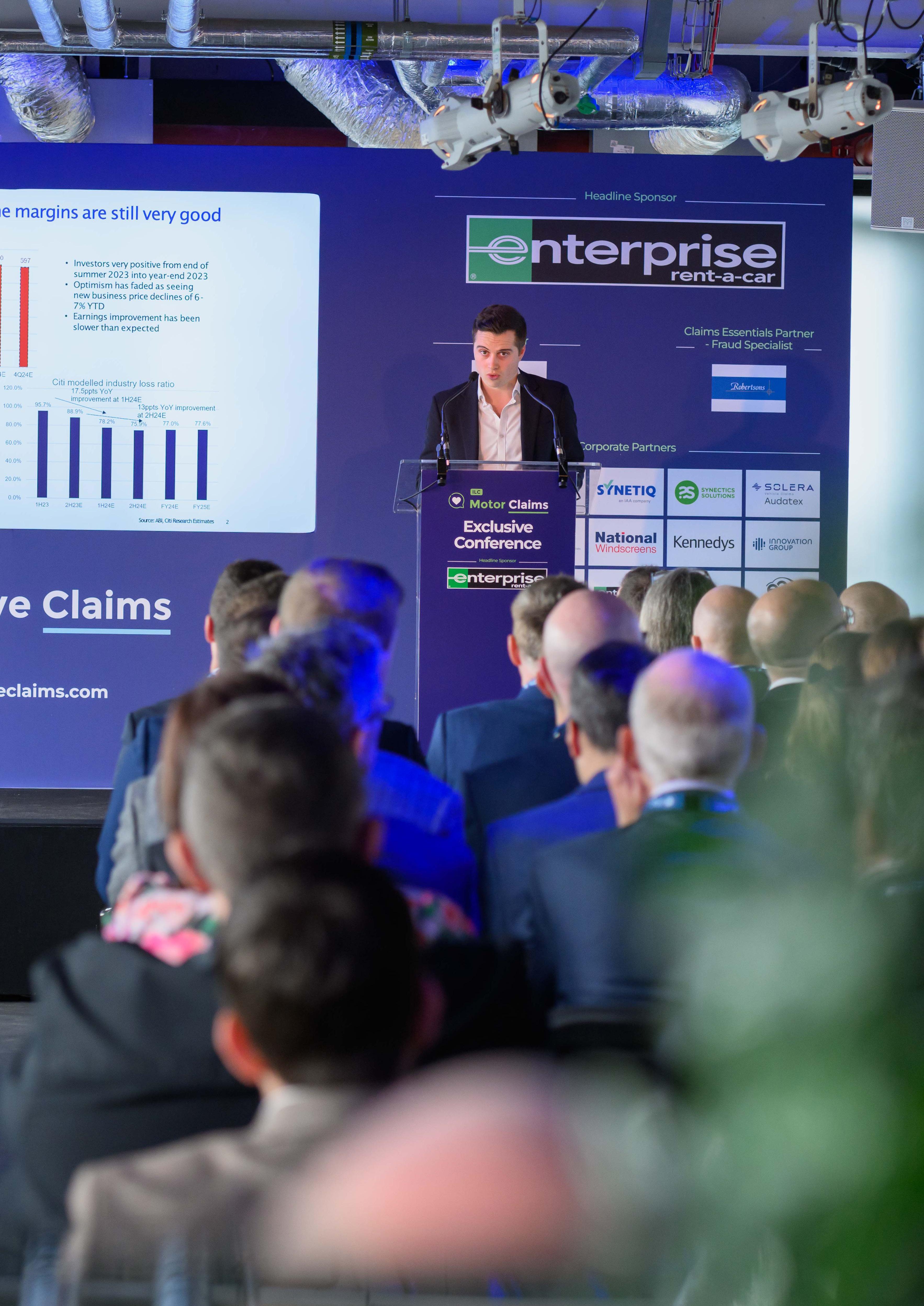
In his session, Alex Evans, Equity Research Vice President for Insurance at Citi, provided a comprehensive overview of recent trends and investor sentiment in the UK motor insurance market.
He cited a 30% surge in motor pricing during the third quarter of 2023, which helped to boost the share prices of major players like Direct Line Group and Admiral.
However, he said that the mood has shifted in 2024 as new business pricing has seen a decline of six to seven per cent.
Alex attributed this to “an over-hardening of the market in 2023” and “a better-than-expected claims frequency and an improving outlook for claims inflation.”
As such, while written margins appear stable, there are concerns regarding their long-term sustainability.
Alex said, “It takes 12 to 18 months for these margins to fully earn through.”
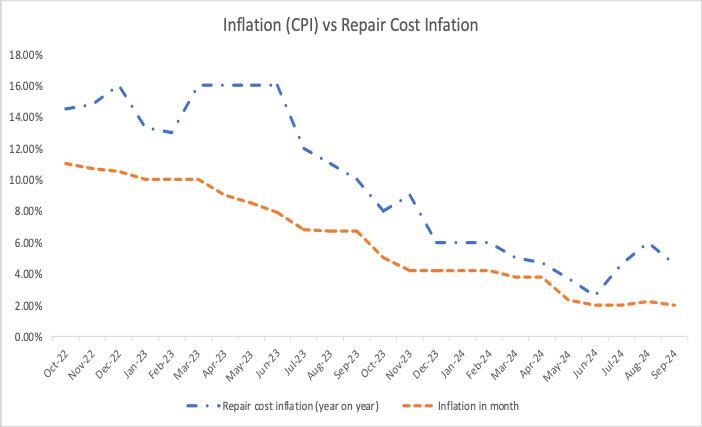
“Used car prices are down 10% year over year, contributing about -3% to claims inflation.”
Claims inflation
Alex delved into the mechanics of claims inflation, noting how several factors influence this key metric.
“Used car prices are down 10% year-on-year, contributing to a three per cent reduction in claims inflation,” he explained.
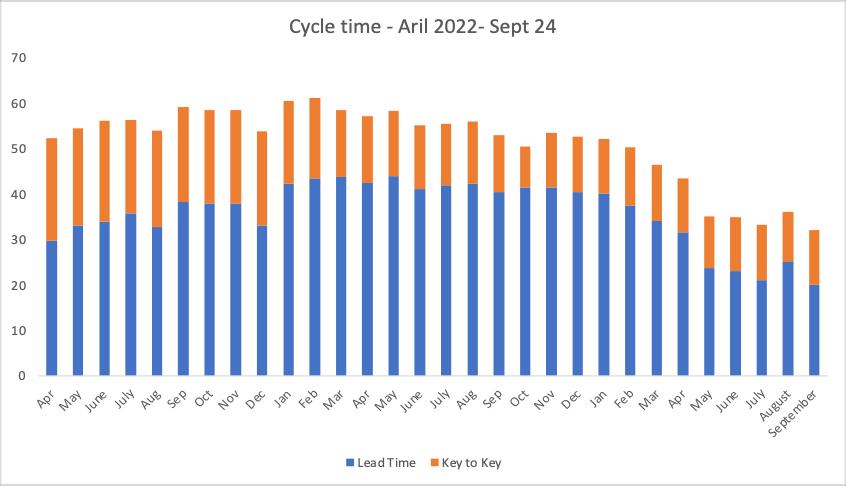
Additional improvements in repair cycle times - now 35% faster than the previous year - have further eased inflation pressures, enhancing insurer margins.
Despite these improvements, Alex highlighted the caution insurers are exercising. He said that claims inflation is now in the high single digits to around 10%, with insurers’ caution enhanced by the volatility of recent years. This conservative approach, however, could position companies favourably if inflation continues its downward trend.
Frequency and severity of claims
An interesting dynamic revealed during the conference was the disparity between miles driven and claims frequency. While traffic levels have returned to pre-pandemic levels, claims frequency has remained lower than expected.
“Insurers had anticipated a three to five per cent rise in claims frequency year-on-year, but this hasn’t materialised,” Alex revealed, pointing out that lighter rush-hour traffic and improved vehicle safety features are likely contributing factors.
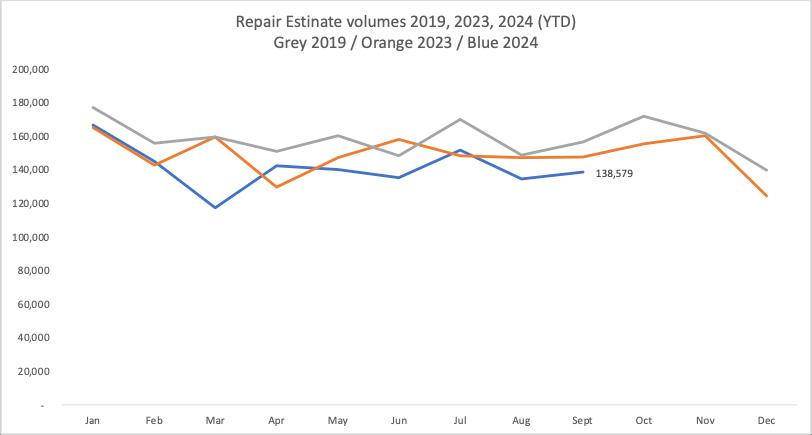
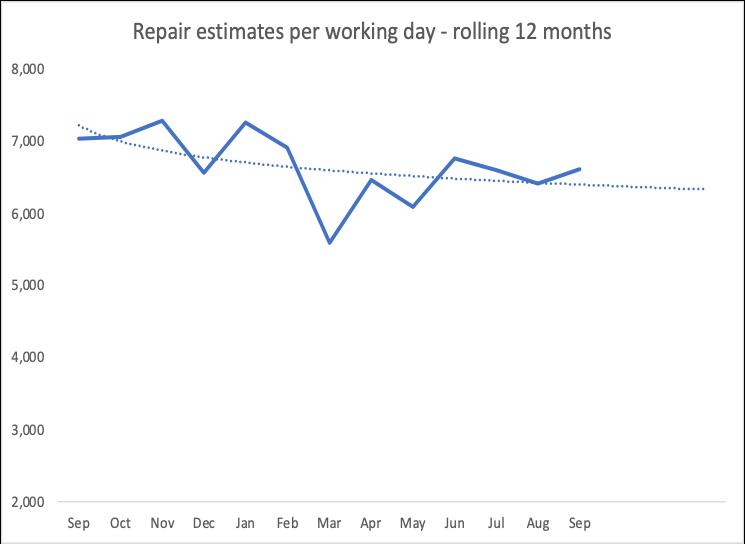
This trend, coupled with a reduction in repair volumes has led to stable claims frequency, which has eased some pricing pressures.
Alex said, “The six to seven percentage point drop in new business pricing can be directly linked to these factors.”
Competition
Competition remains intense, with Admiral and other key players battling for marketshare. Alex highlighted Admiral’s aggressive pricing strategy in the first quarter, where the company cut prices by three per cent, resulting in a significant surge in app downloads and a 76% year-on-year increase in the first half of 2024. This translated into an additional half a million policyholders, capturing nearly two per cent of the market.
However, other insurers like Direct Line Group faced challenges, with an eight per cent drop in policy count during the same period.
“Quarter two was more competitive,” Alex continued, “with Hastings and other smaller players regaining some ground. But Admiral is expected to maintain its marketshare growth trajectory, albeit at a slower pace for the rest of the year.”
“Admiral saw a significant spike, with app downloads up 76% year over year in the first half of 2024.”
External pressures
The session also addressed looming regulatory concerns that could reshape the industry. Key among these is the Ogden rate review, expected to finalise in January 2025. While Alex noted that rates have slightly declined, he remained optimistic of “a positive outcome for insurers.”
The Financial Conduct Authority (FCA) has also intensified its scrutiny of premium finance and total motor loss claims. Alex said that there’s limited risk for larger players with data showing most major insurers are charging competitive annual percentage rates (APRs), but he did point out that smaller insurers charging significantly higher APRs could face regulatory pushback.
Outlook
Alex wrapped up his presentation by discussing the potential impacts of these market dynamics on profitability and long-term strategy.
He predicted continued underlying profitability, but emphasised the importance of cautious pricing in the face of regulatory uncertainties and evolving customer expectations.
“We see underlying profitability as strong but caution insurers to be mindful of the evolving regulatory landscape.”
“The FCA is scrutinising premium finance, but there’s limited risk for larger players.”
Mobility
Stuart Sandell Assistant Vice President Enterprise Holdings
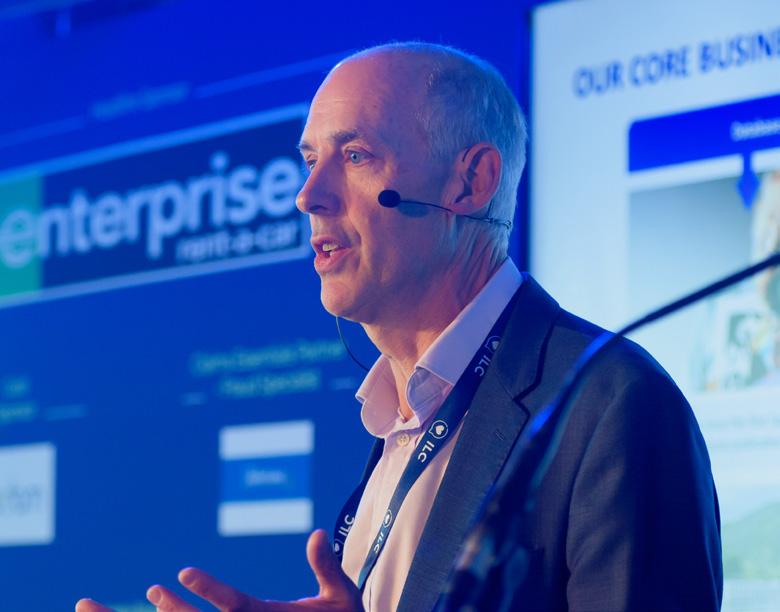
Enterprise Mobility shared its insights on the evolving market and highlighted key trends within the sector at ILC’s Exclusive Motor Claims Conference.
In his session, Stuart Sandell, Assistant Vice President of Enterprise Mobility, examined the factors impacting the market and their impact on claims processes.
Reflecting on the grim state of claims inflation last year, he provided a more optimistic update, revealing that cycle times have significantly improved this year.
He said, “The good news is that fleet repairs are now down significantly on where they were last year. If we look at our customer repair, some of the metrics there are also pointing to some really positive signs.
“Fleet repair durations are now down significantly compared to last year, signalling positive signs.”
“We’ve seen average rental lengths decrease significantly faster than forecasted.”
A key marker for us is how quickly we pick up an immobile vehicle. This is now also improved which helps everyone in the value chain, as it helps to deliver better outcomes for both customers and the bottom line.”
Electric vehicles
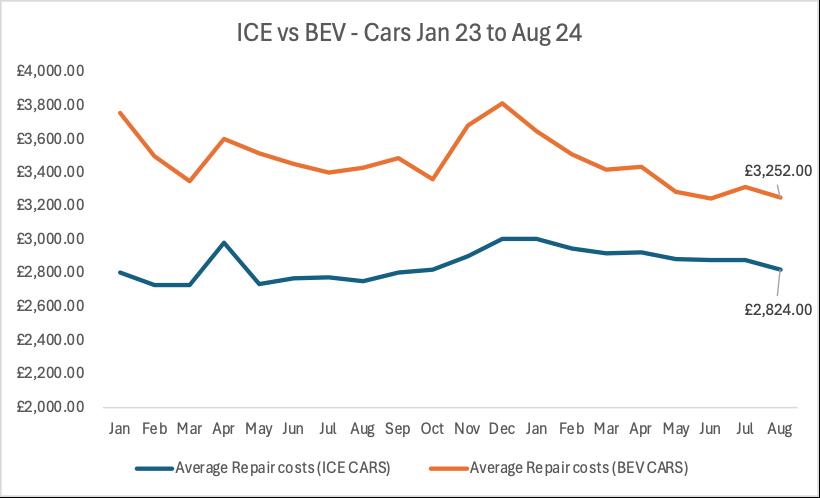
Meanwhile, electric vehicles (EVs) were a prominent focus of the session, and as new vehicle supply returns to post-Covid levels – again altering Enterprise’s fleet make-up – there is a growing influence of EV adoption on insurance and claims services.
“The transition to EVs is inevitable given government mandates,” Stuart said. Despite this, he highlighted challenges such as grid capacity and public charging infrastructure, which remain critical concerns for the widespread adoption of EVs.
He pointed out that while insurance companies and assistance providers are increasingly integrating EVs into their service offerings, there is still a cautious approach from mobility providers.
“Residual values, repair costs, and utilisation challenges have hit some players hard,” he noted, underscoring the complexities of the shift toward electric mobility.
Cycle times
The conference emphasised a key positive trend: a reduction in repair cycle times. Stuart shared Enterprise’s internal data, showing a marked improvement in the time taken to service and repair vehicles. He said Enterprise has seen average rental lengths decrease significantly faster than forecast, and attributed this progress to enhanced repair capacity and a more stable parts supply chain.
However, he cautioned that the industry remains vulnerable.
“Skilled labour shortages, particularly for advanced vehicles, could easily reverse these gains,” he said, advising the sector to prepare for potential challenges during the winter months when demand spikes.
Political pressures
Regulation was another central theme of his presentation, with discussions on the scrutiny facing the motor claims sector.
Stuart pointed out that the industry could be subject to increased regulatory review, especially concerning credit hire and subrogated repair services.
“With the cost-of-living crisis, motor claims inflation remains a focal point when discussing insurance premiums,” he said, predicting that the government may intervene to address these concerns.
He also criticised the current model for courtesy cars provided within insurance policies, calling it outdated. He said that only 20% of policies cover a replacement vehicle if the car is written off and, highlighting consumer dissatisfaction, he urged insurers to reevaluate their offerings, ensuring they meet the expectations and needs of today’s policyholders.
Collaboration
The theme of collaboration resonated strongly throughout the event. Stuart emphasised that partnerships between insurers, repair centres, and mobility providers are crucial for addressing the evolving demands of the market.
“The best part of this industry is its ability to collaborate and innovate,” he said.
Looking ahead, he called on stakeholders to remain customer-focused and committed to delivering on promises.
Stuart concluded, “We must stay laser-focused on the policyholder and delivering the promises we make.”
“The best part of this industry is its ability to collaborate and innovate.”
Credit hireGTA2 update
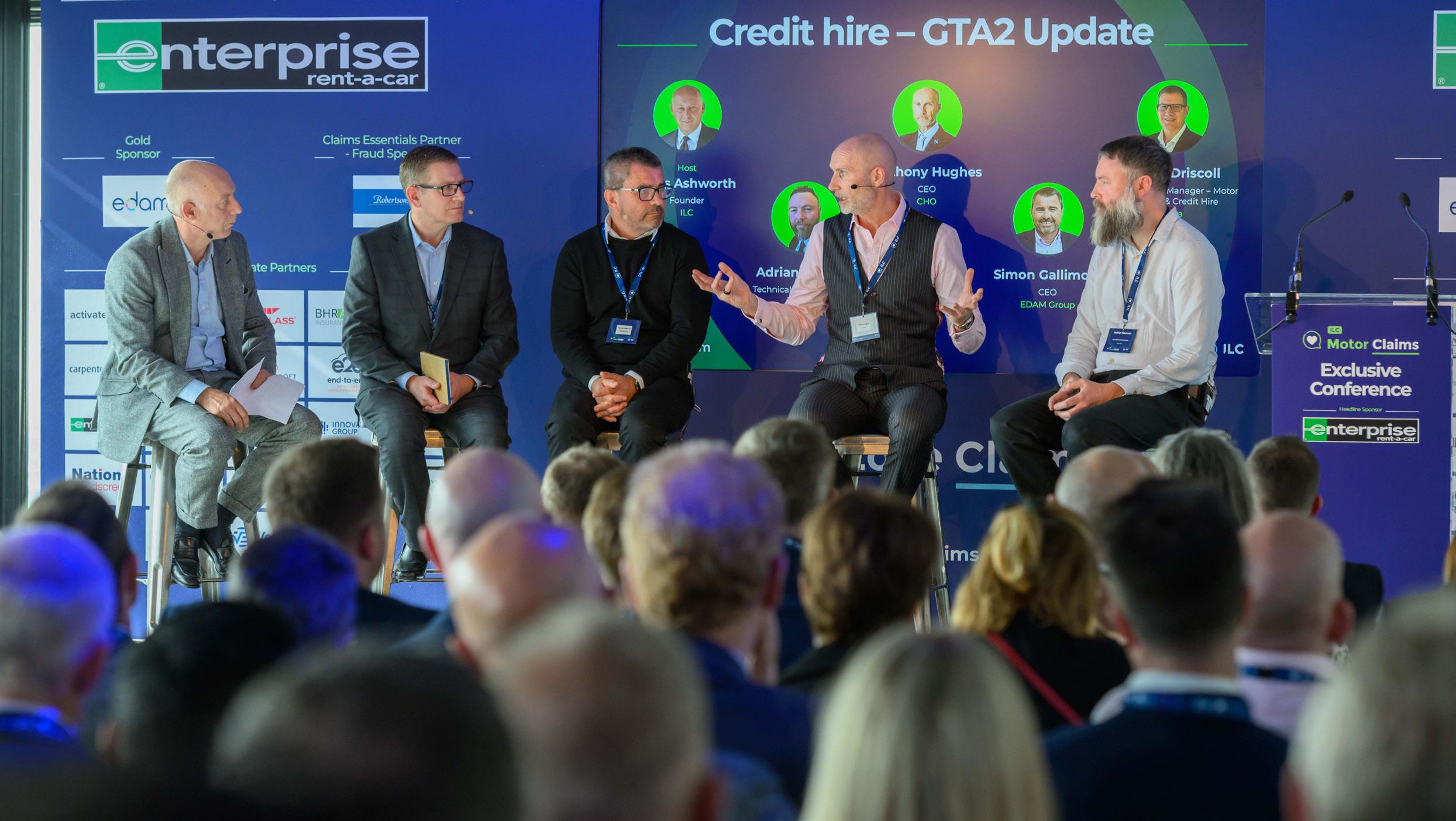
Host: Chris Ashworth Founder ILC Anthony Hughes CEO CHO James Driscoll Senior Claims Manager – Motor Damage & Credit Hire
Aviva Adrian Norman Technical Claims Strategy Manager Allianz Personal Insurance Simon Gallimore CEO EDAM Group
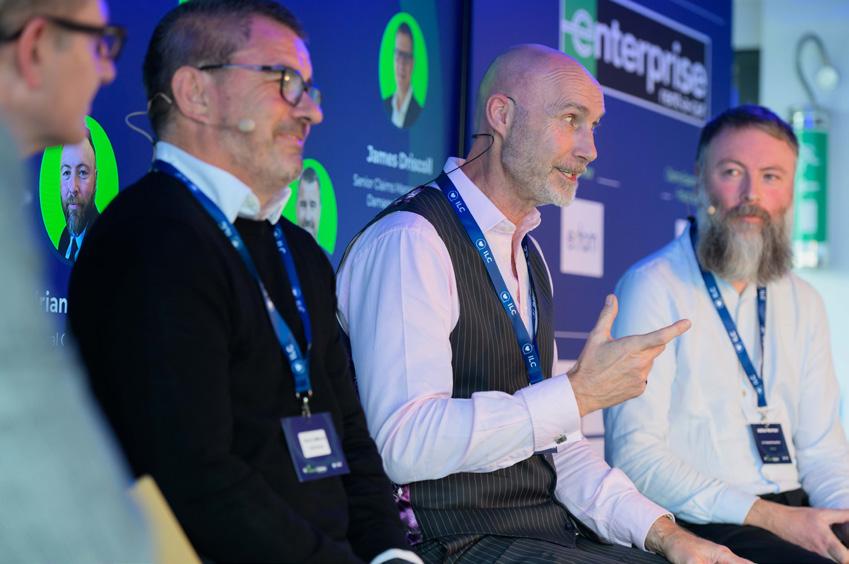
ILC’s Exclusive Motor Claims Conference provided a valuable update on the progress being made with the credit hire General Terms of Agreement (GTA2), which is being revamped to make it fit for purpose in today’s much evolved market.
Hosted by ILC Founder Chris Ashworth, a panel comprising Anthony Hughes, CEO, CHO; Adrian Norman, Technical Claims Strategy Manager, Allianz Personal Insurance; James Driscoll, Senior Claims Manager – Motor Damage & Credit Hire, Aviva; and Simon Gallimore, CEO, EDAM Group discussed the progress that has been made in developing a solution that reduces both costs and friction.
“There has probably been more focus on credit hire over the past 12 months within insurers than there has ever been”
Regulation
“The GTA should be a badge of honour, a standard that insurers and CHOs aspire to be part of.”
Opening the session, Chris underlined the importance of credit hire reform as a critical issue for insurers and credit hire organisations (CHOs).
“It’s a mature industry approaching nearly a billion pounds a year,” he said, adding that the objective remains to reduce costs and customer friction while aligning industry players. The ongoing work around reforming the GTA was central to the discussion, aiming to balance the interests of both insurers and credit hire companies.
Simon added, “The customer experience can be so unfriendly; the friction and costs involved make it an expensive process.”
He emphasised the importance of keeping customers at the heart of any changes, pushing for an evolution that removes unnecessary barriers and costs.
James echoed this sentiment, suggesting the GTA should be ‘a standard that insurers and CHOs aspire to be part of’. He acknowledged that progress has been made over the last two years – more than perhaps the previous 25 years - but insisted the industry needs to adapt further and said more updates to the system could make it more appealing and efficient.
“It’s our opportunity to rebalance – the GTA should be a badge of honour where people want to operate,” said James.
A recurring theme at the conference was the increasing scrutiny from regulators and the Ministry of Justice (MoJ).
Simon went on to say that the MoJ is monitoring the industry closely and warned that industry-driven solutions must be a priority to prevent further regulatory interference.
The event also highlighted the impact of Consumer Duty, which has compelled insurers and credit hire companies to work collaboratively to reform practices that do not align with consumer best interests. The panel stressed that aligning the interests of all parties under this new regulatory framework is essential to avoid government intervention and ensure industry sustainability.
Progress
In response to the clear recognition of the need for reform, the discussion revealed progress on several key initiatives.
One major step was the appointment of an independent chairperson to oversee the GTA strategy, a role Stuart McCulloch –appointed in November 2023 - has played effectively.
James said, “Stuart has been fundamental in keeping us on track, ensuring that meetings result in actionable outcomes.”
Meanwhile, Anthony pointed to the importance of the rate review process in achieving fairness. He said that two rate reviews have been conducted in the last two years, which he said was ‘a significant step considering the industry’s previous inertia’, and explained that moving forward, the GTA will adopt a mechanism based on independent data, with the aim to finalise this by summer 2025.
A common challenge associated with bringing large organisations together in agreement is ensuring structured governance is in place and James highlighted how the new Strategy Board (five insurers) has proved key in ensuring progress, helping generate greater engagement with insurers.
“We’ve gone out to market and invited feedback,” explained James, “There has probably been more focus on credit hire over the last 12 months within insurers than there has ever been which is allowing us to drive it forward with the right people.”
Highlighting the pro-active collaboration now prevalent across various associated committees in GTA developments, Adrian explained, “We now seem to be making some real progress, and I think more insurers will be keen to be part of it.”
Collaboration and ADR
The session also focused on reducing operational friction and enhancing efficiency through new approaches such as Alternative Dispute Resolution (ADR). James described ADR as a mechanism aimed at resolving disputes swiftly, particularly when claims extend beyond 90 days.
He said, “It’s not about pushing claims through ADR but changing behaviour up front to ensure claims are settled cleanly and quickly.”
Chris suggested there has been ‘remarkable progress’ already made on both sides in simple areas such as claims notification forms – “we’ve completely rebuilt the form in a very pragmatic way, for the benefit of both CHOs and insurers”.
The initiative has garnered support from both insurers and CHOs, as the intent is to promote more straightforward and cooperative claims processing. Simon affirmed that ADR could transform the landscape by shifting the focus from litigation to settlement.
“There’s no reason this couldn’t become one big protocol. The USP is incentivising quick settlement rather than focusing on penalties,” he said.
“The MOJ’s watching brief is clear: if you guys don’t sort this out, we will.”
Relationships
Meanwhile, a key focus of conversation was the changing dynamics within the motor claims industry, with a strong emphasis on collaboration.
Reflecting on the progress over the last 10 months, Simon said, “We’ve found common ground with insurers, and this collaboration has accelerated significantly. It’s about reducing operational costs and ensuring that payments are processed efficiently.”
Anthony agreed, adding that putting the customer at the centre of the process remains the focal point. He also revealed that there has already been support from outside players, indicating that the current reforms could attract additional industry members to join the GTA framework.
He said, “We’ve talked about this for years, but now we’re finally making it happen.”
Vision
As the session concluded, the focus shifted to future objectives and the importance of maintaining momentum and continuing collaborative efforts between insurers and CHOs. The panel emphasised the need to preserve an open exchange of information to ensure that both sides benefit from efficient and transparent processes.
Anthony said, “If we can implement ADR and finalise the new rate mechanism by the first quarter of next year it will pave the way for further enhancements, enabling us to streamline the system to the point where joining the GTA becomes a logical and beneficial choice for all major players.”
“The most important aspect is to keep the collaboration going,” said Adrian. “Credit hire has always been such a decisive argument, but everyone wants fairness, transparency and, ultimately, what is right for the customer.”
Chris concluded, “If we get this right, the revised GTA should be such that it would look odd if you weren’t part of it.”
Repair
Martyn Rowley
Executive Director
Executive Director of the NBRA, Martyn Rowley underlined the challenges facing the repair sector posed by electric vehicles, a widening skills gap exacerbated by new technologies, and rising costs.
Martyn reiterated the need for greater collaboration within the industry to tackle these growing concerns and ensure the safe repair of vehicles.
Addressing rising costs first, Martyn said, “Employed labour costs have jumped from £16 per hour to £23 in just two years. To just employ someone is a significant cost especially when some labour rates are at £33.00 an hour.”
He said that coupled with this widening gap between rising repair costs and insurer reimbursement rates, this is posing a significant challenge for repair shops trying to remain viable with numerous closures over the last six months despite the NBRA’s efforts to support its growing membership.
“I receive daily calls from repairers who have no work lined up for the coming weeks.”
“It’s frightening when you see a prestige EV’s quarter panel being cut out without disarming the vehicle.”
He also pointed to a drastic reduction in repair volumes, with some repair shops reporting a drop of 20-35%.
“I receive daily calls from repairers who have no work lined up for the coming weeks,” he revealed, emphasising the urgent need for action as cash flow issues drive repairers out of business.
Skills
Meanwhile, the growing prevalence of electric vehicles (EVs) and the need for specialised training also emerged as a critical theme. Martyn expressed concern about the lack of qualified technicians in the field, sharing alarming examples of improper and unsafe repair practices.
He said, “It’s frightening when you see a prestige EV’s quarter panel being cut out without disarming the vehicle.”
To combat this, the NBRA has launched training programmes up to NVQ level 4 to bridge this skills gap, but the challenge remains significant. As insurers increasingly demand sustainable practices, Martyn called for a standardised approach to EV training across the supply chain.
“Your supply chain is your sustainability model,” he said, urging a more collaborative approach to make advanced training more accessible and standardised.
Costs
During his presentation he also highlighted the impact of rising parts prices and supply chain disruptions, pointing out that the cost of vehicle parts has surged by up to 50% in some cases.
He said that this, alongside the growing complexity of vehicle technology which requires repairers to adapt rapidly and invest in further training and equipment, is driving up overall repair costs.
The repair challenge is particularly acute with Chinese models, which are often launched into European markets without approved repair methods.
He said, “There are no methods of repair for these vehicles, and this poses a significant challenge for both insurers and repairers.”
Collaboration
Martyn then underscored the importance of collaboration between insurers and repair networks, especially when it comes to handling non-network repairs. He highlighted the ongoing efforts to develop a charter that streamlines these repairs, allowing quicker authorisations and reducing cash flow delays for repairers.
Highlighting the mutual benefits, he said, “We’re putting together a charter to make nonnetwork repairs faster and less troublesome for both sides.”
“We’re putting together a charter to make non-network repairs faster and less troublesome for both sides.”
The path forward
Looking ahead, Martyn stressed the importance of aligning industry practices with emerging regulatory standards and the broader sustainability agenda. He said the NBRA is working with various stakeholders to establish affordable, standardised repair solutions that meet insurer sustainability criteria.
“We need to ensure that repairers are equipped to handle sustainability standards like PAS 2060,” he explained.
Martyn concluded by outlining new strategies for addressing the industry’s labour shortage, including partnerships with educational institutions and the Ministry of Justice to train new talent, including skilled workers from nontraditional backgrounds.
He called for greater innovation in both thinking and practices to bridge the skills gap.
He said, “I recently visited a prison where many highly qualified individuals could be trained to meet our industry’s needs.”
“There are no methods of repair for these vehicles, and this poses a significant challenge for both insurers and repairers.”
Recycle
Eddie Longworth
Chief Marketing Officer
e2e Total Loss Vehicle Management
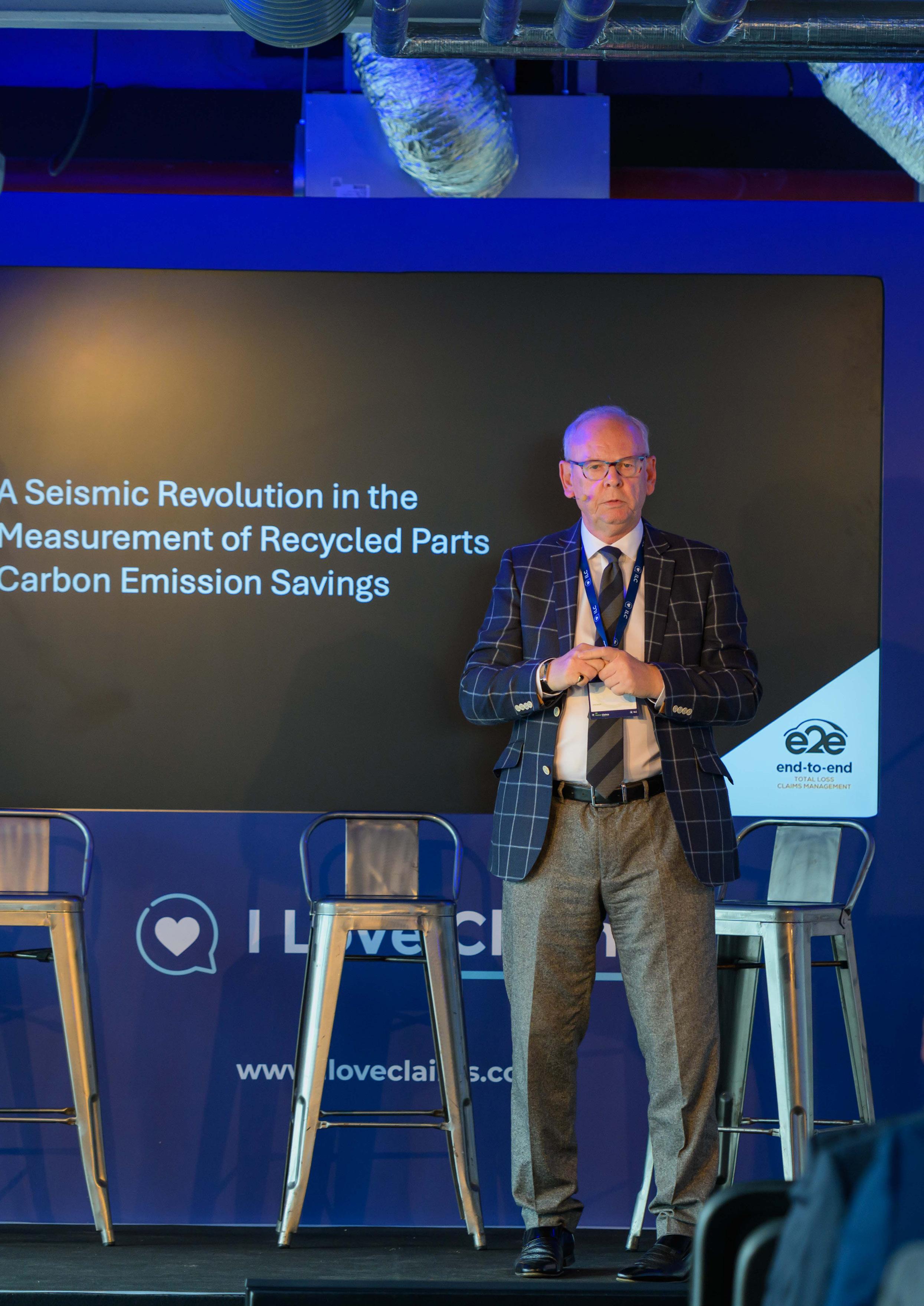
Eddie Longworth, Chief Marketing Officer, e2e Total Loss Vehicle Management, championed the use of recycled parts in repair, highlighting the benefits to repairers, insurers and customers.
Eddie discussed advancing environmental initiatives, the integration of recycled parts, and the evolving role of technology in streamlining claims and repair processes.
He began his session by highlighting the transformation within the insurance sector over the last few decades –observing a significant shift from insurers traditionally aiming to minimise claim payouts to now prioritising efficiency and customer satisfaction.
“Insurers are constantly looking for ways to pay claims legitimately, quickly, and at lower operational costs.”
He said, “Insurers are constantly looking for ways to pay claims legitimately, quickly, and at lower operational costs.”
This evolution, he noted, is driven by the adoption of artificial intelligence (AI) technologies designed to reduce costs and enhance consistency.
He emphasised the increasing focus on Environmental, Social, and Governance (ESG) frameworks within the sector, and said that while societal pressure has accelerated environmental protection efforts, the motor claims industry has lagged in embracing these changes.
“We’ve been slow in adopting environmental protections, and as a result, missed several opportunities,” he said, pointing specifically to the potential of recycled or green parts, which he sees as both an economic and ecological opportunity.
He said that recycled parts can be purchased at a 40-60% discount compared to manufacturer retail prices, and highlighted the dual benefits of cost savings and reduced environmental impact.
But despite the availability of these parts, the industry has been slow in the uptake, with recycled parts currently accounting for less than two per cent of all parts used in repairs.
“We’ve been slow in adopting environmental protections, and as a result, missed several opportunities.”
A new approach
Meanwhile, Eddie discussed a new and free report from the Vehicle Recyclers Association (VRA), developed over 18 months, that has provided a sophisticated system for measuring the carbon emissions savings from using recycled parts.
Highlighting the value of this transparency, he continued, “For the first time, any insurer or supplier can accurately measure the carbon savings from recycled parts, eliminating any ambiguity.”
He believes this initiative could be the catalyst needed to increase the penetration of recycled parts in the sector.
Challenges
But despite the push for green initiatives, Eddie acknowledged the industry's reluctance to fully embrace recycled parts, citing a need for cultural and operational shifts.
“The penetration of recycled parts remains under two per cent, but with access to precise data on carbon savings, there is now no excuse for insurers or suppliers not to adopt them,” he said, before urging attendees to take advantage of the VRA’s free resources, emphasising that this could lead to significant cost reductions and environmental benefits.
Supply chain
Eddie also addressed the broader changes within the motor claims supply chain. He identified the trend towards consolidation over the past 20-30 years, which is leading to a more professional and collaborative environment between insurers and suppliers.
“We’re seeing equal conversations now between the insurer community and the supplier community,” he observed.
With AI and other technologies becoming increasingly prevalent, he also highlighted the potential for automation to further streamline the claims process. However, he also emphasised that technological integration must be balanced with sustainable practices, such as incorporating recycled parts, to meet both operational and environmental goals.
Call to action
Concluding his session, he called for immediate action from insurers and repair networks to integrate recycled parts into their operations, and encouraged attendees to leverage the newly available data from the VRA report to justify and measure the environmental impact of using green parts.
“It’s a win-win situation—cost savings and environmental benefits—so there’s no reason not to act,” he said.
“It’s a win-win situation—cost savings and environmental benefits—so there’s no reason not to act.”
“For the first time, any insurer or supplier can accurately measure the carbon savings from recycled parts, eliminating any ambiguity.”
Fireside chat
Caroline Johnson Director of Claims Allianz
The importance of diversity and developing fulfilling career paths in insurance was underscored during an interview with Caroline Johnson, Director of Claims, Allianz Insurance.
Caroline shared her journey in the insurance sector, which began with an unexpected shift from law into claims. She said that she had fallen into insurance, like many colleagues, but then emphasised the rewarding aspects of her career in claims, particularly the satisfaction of helping people through challenging situations.
“What we do is about helping people - whether it’s getting someone back on the road or providing a safe place after a home emergency,” she said.
Caroline then highlighted the shift from when she first joined the sector, noting a time when she was one of only two women in a room of 100.
“But it’s not just about gender anymore,” she explained, “it’s about bringing diversity in all forms, from different life experiences to diverse ways of thinking.”
“What we do is about helping people— whether it’s getting someone back on the road or providing a safe place after a home emergency.”
Overcoming stereotypes
A key theme of the discussion with ILC CEO Sue Whyte was the perception of insurance as an unappealing career choice, a notion Caroline challenged directly. She recounted how, even today, she encounters misunderstandings about the profession - whether it’s someone questioning premiums in a pub or her teenage son unsure of what she actually does.
She said, “Insurance often gets a bad rep, largely when things go wrong. But when we succeed, it’s often taken for granted.”
To shift this perception, she argued that industry professionals need to be vocal advocates of their work, championing the positive impact they make.
She also stressed the importance of reaching out to young people through schools and community initiatives to showcase the diversity of roles available in the sector.
“There are so many different careers within insurance—data science, sustainability, customer service, and technology,” she said, arguing that by promoting these varied paths, the sector can attract a broader range of talent, including those who may not have considered insurance as a career.
Technology
The discussion moved to the growing influence of technology, particularly artificial intelligence (AI), in the insurance claims process. Caroline highlighted the balance between automation and human touch, emphasising that while technology can streamline processes, the human element remains critical.
She explained, “AI can handle repetitive tasks, but when someone is in distress, like after a major car accident, it’s essential to have a person there to offer reassurance.”
This hybrid approach ensures efficiency without sacrificing the personal touch that customers expect.
Caroline further underscored the need for flexibility in meeting customer preferences, noting that some people prefer digital self-service options, while others, particularly older customers, may need human interaction.
“We must give customers the choice,” she insisted, “whether they want to engage digitally or speak to a person.”
Diversity
The benefits of a diverse workforce are well-established. However, to truly support inclusivity it must be ingrained in the company culture rather than simply driven by procedural changes.
“A process can only take you so far. It’s culture that will sustain diversity and inclusion over the long term,” Caroline said.
To foster this environment, she advocated for a broad view of talent that goes beyond traditional criteria. She said that talent isn’t just about having a degree from a top university or technical skills; it’s about diverse experiences and a passion for making a difference. By expanding the definition of talent, insurers can create a more inclusive and innovative workforce.
“Talent isn’t just about having a degree from a top university or technical skills. It’s about diverse experiences and a passion for making a difference.”
Hybrid working
Meanwhile, with the industry still adjusting to post-Covid realities, Caroline revealed Allianz’s approach to hybrid working models. She noted that while flexibility is vital for employee satisfaction, it must be balanced with the need to maintain company culture.
“Flexibility is key, but when we are together in the office, it’s about building culture, fostering innovation, and developing ideas,” she explained, insisting that this balanced approach aims to accommodate diverse needs while ensuring the business remains cohesive and collaborative.
Next generation
Caroline concluded her discussion with a call for industry professionals to take an active role in shaping the future of insurance.
Supporting this, ILC announced developments to its New Generation in Claims initiative in partnership with Consumer Intelligence and UCAS. The collaboration launched with a series of online feedback sessions between ILC’s New Generation in Claims Ambassadors to shape questions and outcomes for one of the largest surveys of its kind.
Sue said, “It’s about understanding how people perceive a career in insurance and what we can do to change that.”
The results of the survey, set to be unveiled in May 2025, are expected to provide actionable insights into how the industry can better communicate its value and opportunities to the next generation.
“AI can handle repetitive tasks, but when someone is in distress, like after a major car accident, it’s essential to have a person there to offer reassurance.”
“Insurance often gets a bad rep, largely when things go wrong. But when we succeed, it’s often taken for granted.”
Global horizon scanning
John Gibson
Client Relationship Director Kennedys
The UK motor insurance industry has been and continues to be buffeted by a range of global and geopolitical factors.
John Gibson, Client Relationship Director at Kennedys, provided insights into how international developments and economic pressures are reshaping the claims landscape.
His presentation, titled ‘Global Horizon Scanning’, highlighted the significance of understanding global geopolitical dynamics and their direct impact on the motor insurance sector.
John pointed to the escalating conflict in the Middle East, particularly in the Red Sea, where Houthi rebels have been disrupting shipping routes essential for global trade.
“Shipping in the region is down by 50-70% on any given day due to attacks,” he noted, explaining how this forces ships to take longer and more expensive routes around the Horn of Africa, adding weeks to delivery times and inflating costs.
“Shipping in the region is down by 50-70% on any given day due to attacks.”
“The government had stated it would direct regulatory bodies like the FCA and CMA to scrutinise the insurance market again.”
He warned that these disruptions are not just localised issues but have far-reaching effects on the availability and cost of essential goods, including automotive parts.
“These ships carry everything from electronics to car components, and any delay or increase in transportation costs has a direct knock-on effect on the prices we and our policyholders face,” he said, explaining that this, combined with broader inflationary pressures, has intensified the challenge for insurers to keep premiums manageable while covering rising repair costs.
Deglobalisation
John also discussed the trend towards deglobalisation, noting how countries are increasingly prioritising their domestic economies over international cooperation. He highlighted that this shift, especially influenced by major powers like the United States and China, has a significant impact on trade policies and the availability of resources essential to the UK insurance sector.
He cited the example of US foreign policy, referencing statements by former President Donald Trump on potentially withdrawing funding from NATO and its implications for international stability.
“It’s crucial for the insurance industry to understand how such political shifts could disrupt global alliances and trade flows,” he said.
Chinese influence
John also discussed China’s growing dominance in the global automotive sector, revealing that China has now surpassed Japan as the world’s largest vehicle exporter, with over six million vehicles shipped annually.
“Chinese vehicles, priced under £20,000 brand new, are flooding Western markets,” he explained, underscoring the potential implications for the UK market as these affordable vehicles begin to arrive in larger numbers.
He highlighted the importance of insurers and repair networks preparing for this influx, as the vehicles may come with their own set of challenges, citing the concerns raised by Thatcham Research regarding the safety and repair standards of these vehicles.
John warned that without adequate preparation, the sector could face increased write-offs and repair difficulties.
“Chinese vehicles, priced under £20,000 brand new, are flooding Western markets.”
Regulations
Turning to the UK’s domestic market, John outlined potential regulatory challenges that insurers could face under the new Labour government. He noted that the “new government had previously cited it would direct regulatory bodies like the FCA and CMA to scrutinise the insurance market again”.
However, at this stage Transport Secretary, Louise Haigh, and Economic Secretary to the Treasury, Tulip Siddiq have introduced a cross-government motor insurance taskforce, supported by industry experts.
Additionally, John highlighted the government’s commitment of £300m to tackle potholes, which have been identified as a significant factor in rising insurance claims. However, he cautioned that while such measures might reduce some costs, insurers must remain vigilant to broader regulatory scrutiny, particularly around valuation models and compliance with Consumer Duty regulations.
Claims
Meanwhile, John also addressed the growing importance of Alternative Dispute Resolution (ADR) and the role technology plays in evolving claims processes. Kennedys has trained 30 mediators in anticipation of ADR becoming a more prominent method for settling disputes.
“We’re preparing for this shift as the judiciary moves towards a greater emphasis on mediation and online portals,” he explained, adding that these technological and procedural developments align with broader efforts to make the claims process more efficient and transparent, which is essential for insurers aiming to manage costs and meet regulatory requirements.
“We’re preparing for this shift as the judiciary moves towards a greater emphasis on mediation and online portals.”
Fraud
David Eldridge Director of Client Services and Innovation Robertsons
Insurers and fraudsters are locked in a technological arms race, according to David Eldridge, Director of Client Services and Innovation, Robertsons.
He told delegates that the landscape of motor claims fraud is changing due to new technologies, but said that technology can also be the solution to fighting fraudsters.
David opened his presentation by highlighting the increasing sophistication of fraud facilitated by technologies such artificial intelligence (AI) and generative AI (Gen AI).
“Technology is a double-edged sword,” he said. “We can expect fraudsters to use AI to manipulate documents and images at an unprecedented scale, making detection increasingly challenging,” he warned.
He pointed to recent statistics showing that exaggerated loss claims in the UK amount to £407m annually in attempted fraud, underscoring the financial stakes involved.
“Technology is a double-edged sword... fraudsters are moving from individual or batch events to enterprise-level attacks.”
“With the speed at which new threats emerge, fraudsters are moving from individual or batch events to enterprise-level attacks,” he said, cautioning that this shift means even smaller, opportunistic fraudsters could launch largescale attacks using accessible AI tools.
Collaboration
Meanwhile, the session stressed the importance of collaboration between insurers, vendors, and technology providers to effectively counter emerging threats, with David advocating for closer cooperation to enhance document authenticity and traceability.
“Insurers and their partners need to work together on document provenance—whether through watermarks, metadata, or other means—to ensure authenticity,” he advised.
He also highlighted Robertson’s role as a full-service third-party administrator (TPA) specialising in fraud detection and vulnerability testing. He said that while technology offers solutions, no single method is foolproof and urged companies to implement a multi-layered defence strategy.
He encouraged insurers to utilise the technological tools available to them but warned that reliance on technology alone could be inadequate in the face of rapidly evolving fraud tactics.
“Insurers and their partners need to work together on document provenance—whether through watermarks, metadata, or other means.”
Strategies
David also issued a call to action for insurers to re-evaluate their fraud strategies, particularly in the context of emerging AI capabilities. He noted that many in the claims space have become complacent, expecting technology to provide a catch-all solution.
“There is no magic bullet,” he said, “we need to actively readdress our strategies and involve the right people from across our organisations.”
He outlined the importance of developing robust fraud vulnerability strategies, suggesting that insurers must not only focus on postidentification processes but also on proactively identifying and assessing new threats. He encouraged insurers to ‘anticipate how these technologies could be weaponised’ and suggested they reverse-engineer potential threats using their own expertise and data.
Skills
Meanwhile, David stressed the importance of integrating diverse teams to effectively tackle fraud. He pointed out that fraud risk is not limited to claims but extends across all business areas, including policy validation, ICT, and even HR, which will be faced with CV and qualification fraud.
He said, “Don’t silo your teams; bring together expertise from all parts of your organisation.”
He argued that by pooling knowledge and leveraging the talents of different departments, insurers could build a more comprehensive defence against fraud, creating a unified approach that maximises existing resources and technology.
Support
David also emphasised the need for executive sponsorship of fraud strategies, noting that support from the top is crucial for implementing effective measures.
“Fraud strategies should not only be owned by the claims or fraud teams but should have executivelevel backing to ensure organisation-wide integration,” he said.
To illustrate the importance of testing defences, he encouraged insurers to simulate attacks on their own systems. He advocated for creating controlled, simulated attacks to identify vulnerabilities and improve existing protocols, urging companies to continually assess and refine their strategies.
“We pat ourselves on the back for the frauds we catch, but how often do we test for the ones we don’t see?” he concluded.
“There is no magic bullet; we need to actively readdress our strategies and involve the right people from across our organisations.”
“Don’t silo your teams; bring together expertise from all parts of your organisation.”
Balancing act – customer ownership
Lucy Frost
Regional Claims Manager, South & East, Claims Division Howden
Greg Cole UK Claims Director Aioi Nissay Dowa Insurance Europe
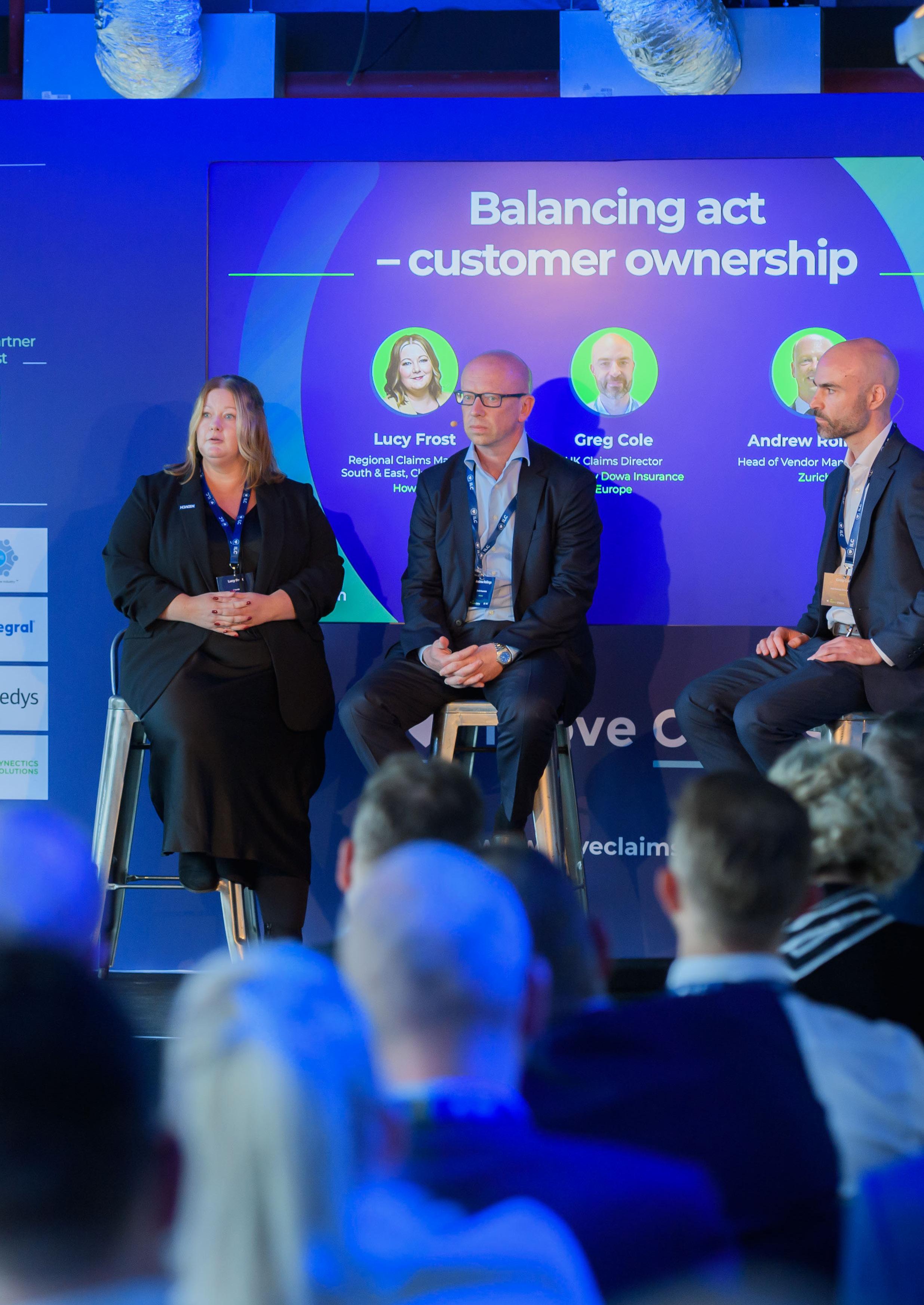
The conference hosted an insightful panel discussion about how brokers, insurers, and vendors must manage and engage with customers throughout the claims process.
Titled ‘Balancing Act – Customer Ownership,’ the panel included Lucy Frost, Regional Claims Manager, South and East, Claims Division, Howden; Greg Cole, UK Claims Director, Aioi Nissay Dowa Insurance, Europe; and Andrew Rollings, Head of Vendor Management, Zurich Insurance.
Lucy began by sharing insights on the evolving role of brokers in the motor claims process. She said that in the commercial space, brokers make up around 80% of gross written premiums, highlighting the critical role they play, especially for corporate clients with complex needs.
Andrew Rollings Head of Vendor Management Zurich
She emphasised that these clients rely on brokers for personalised service and advocacy.
“A broker’s job is not just transactional,” she explained, “it involves managing relationships and acting as a project manager for claims.”
She also pointed to the resurgence of physical broker offices on the high street, driven by customer demand for face-to-face interaction.
“Customers are coming back for that personal touch, which underscores the value brokers bring beyond online aggregators,” she said.
Collaboration
Meanwhile, Andrew discussed the varying degrees of broker involvement in the claims process and how insurers manage these dynamics. He noted that while some brokers prefer to be deeply involved in every aspect of the claim, others allow insurers to handle the process directly.
“It’s about understanding when to engage brokers and when to manage claims independently,” he said, adding that the art lies in balancing these relationships to optimise customer satisfaction.
He acknowledged the unique challenges brokers face in managing information flow, stressing that collaboration is key to reducing customer frustration.
Andrew said, “Customers don’t want to repeat their story multiple times; they want seamless, coordinated service. That’s why we need greater integration and consistency across service touchpoints.”
“It’s about understanding when to engage brokers and when to manage claims independently.”
Control
Greg then explored the advantages of a direct insurance model, emphasising the control insurers have over claims processes when customers engage directly.
“Control allows us to manage the customer experience more effectively, ensuring that every touchpoint meets our standards,” he noted. “However, this model comes with its own set of challenges, particularly when it comes to integrating technology and telematics for connected vehicles.”
He highlighted the connected car technology offered through Toyota’s insurance solutions, revealing that the company provides accident management support regardless of fault or the insurer.
“Our aim is to offer a superior customer experience by ensuring that Toyota owners receive immediate assistance, repair support, and genuine parts, no matter who insures their vehicle,” he said, pointing out that this is redefining customer expectations and the role of vehicle manufacturers in the claims process.
Connected vehicles
The session then delved into the transformative impact of telematics and connected vehicles on the motor claims sector. Greg pointed out that connected technology allows insurers and manufacturers to detect accidents before anyone else, providing an opportunity to take immediate action and support customers at the critical moment.
He said, “We’ve launched a connected accident management solution for Toyota vehicles, which uses telematics to alert us of incidents and offer immediate support.”
“Our aim is to offer a superior customer experience by ensuring that Toyota owners receive immediate assistance, repair support, and genuine parts.”
The implications of these advancements are significant, particularly as they challenge the traditional broker and insurer relationship.
“We’re moving towards a model where the vehicle manufacturer has a direct role in the claims process,” Greg suggested, “which could alter the dynamics of customer ownership and insurance distribution.”
Ownership
The panel also addressed the regulatory landscape, particularly the implementation of the Consumer Duty regulations that mandate insurers and service providers to prioritise customer needs and transparency.
Andrew stressed the importance of this regulation, highlighting that it requires insurers and brokers to align their processes and communication strategies.
“Consumer Duty regulations compel us to be transparent and ensure that the customer experience is consistent, regardless of the touchpoint,” he said.
The discussion concluded with a consensus that the motor claims sector must adapt to an increasingly complex environment where technology, customer expectations, and regulatory requirements converge, with Lucy emphasising the importance of ongoing communication and collaboration across all parties involved in a claim to meet these challenges.
She concluded, “Whether it’s brokers, insurers, or third-party administrators, the key is to work together to provide a seamless experience for customers.”
“Consumer Duty regulations compel us to be transparent and ensure that the customer experience is consistent, regardless of the touchpoint.”
Legaldefendent
Emma Fuller Partner - Head of motor and casualty market strategy DAC Beachcroft LLP
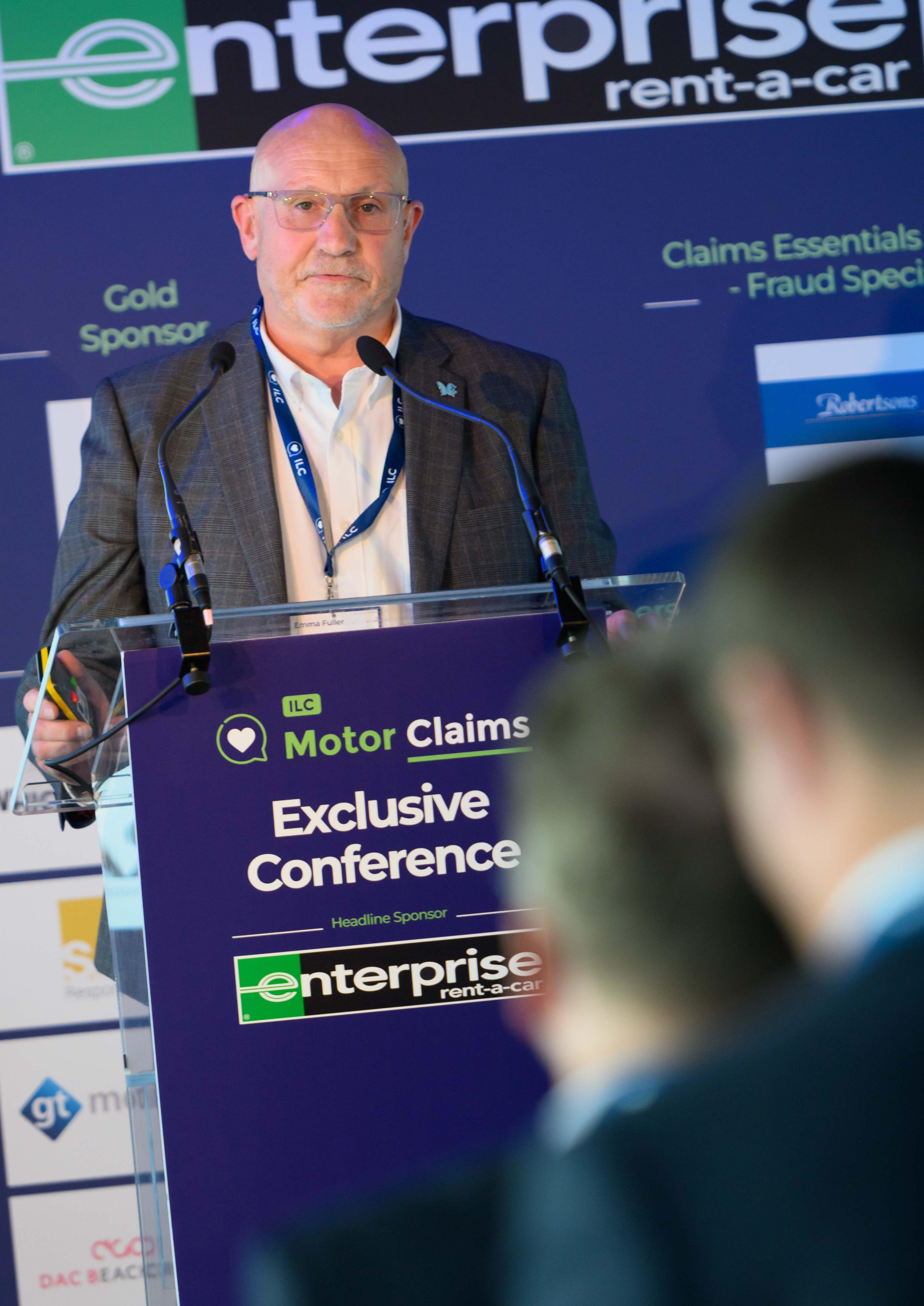
Claims inflation, fraud and growing regulatory pressures were the key topics addressed during a presentation by Emma Fuller, Partner and Head of Motor & Casualty Market Strategy at DAC Beachcroft LLP, at the Exclusive Motor Claims Conference.
Emma considered how good use of data and effective strategies can go some way to managing both escalating costs and fraudulent activities in the sector.
She began by outlining the current state of claims inflation, noting its rapid increase despite decreasing claim volumes.
“ADR is not just a tool for the future; it’s becoming a necessary part of our toolkit today.”
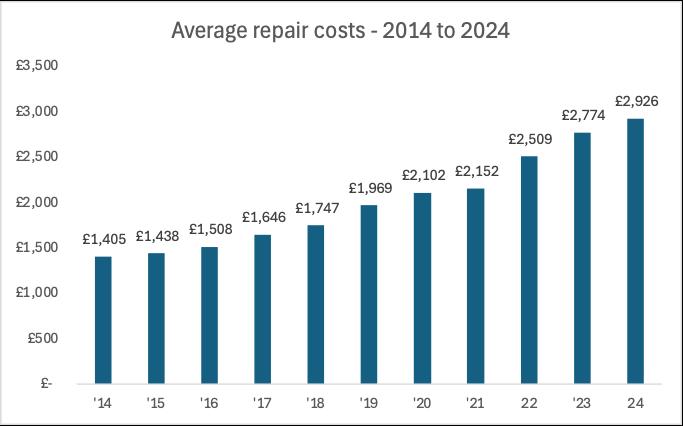
“Instances are falling,” she said, “but the values continue to rise — up 21% since 2017 and a staggering 31% increase in repair costs in the last 12 months alone.”
Efforts to control personal injury costs have shown positive results, but inflation in noninjury claims remains a significant challenge, while external factors such as supply chain disruptions, the rising cost of parts, and labour shortages are also key drivers of this inflation.
To offset this, Emma stressed the importance of innovative strategies and collaboration between insurers and repair networks.
Regulations
She also highlighted the regulatory landscape and the ongoing governmental focus on reducing insurance premiums, noting that while the government has shown interest in investigating premium pricing, there remains uncertainty around the specific measures they will implement.
Emma said, “The direction of travel remains unclear, and while there is pressure to lower premiums, the complexity of motor insurance pricing must be understood.”
The government has recently launched a new taskforce to identify the causes of rising motor insurance costs, but Emma warned of the potential implications if the focus is on the cost reduction and suggested that vehicle repair could be a primary target.
She said, “If the government aims to reduce premiums, they may look at the damage element, as it presents a significant opportunity for cost savings. It will be really interesting to see what any investigation ultimately looks like.”
“Instances are falling, but the values continue to rise — up 21% since 2017 and a staggering 31% increase in repair costs in the last 12 months alone.”
Fraud
The session moved on to the growing concern of fraud within the motor claims industry, with Emma describing it as an evolving threat that requires constant vigilance.
“The use of technology in fraud is a doubleedged sword — while it can enhance efficiency, it also creates new vulnerabilities,” she said, pointing out that AI and document manipulation tools are increasingly used by fraudsters to exploit the system.
She urged insurers to adopt a proactive stance to combating this, emphasising the need for robust fraud detection technologies and strategies that go beyond simple automation.
“The fraud landscape is evolving,” she warned, “and so must our strategies. Insurers need to invest in advanced fraud detection tools and develop comprehensive vulnerability assessment programs to stay ahead.”
“The direction of travel remains unclear, and while there is pressure to lower premiums, the complexity of motor insurance pricing must be understood.”
ADR
Addressing the rise of Alternative Dispute Resolution (ADR) in the sector, Emma highlighted its growing importance as a means to reduce costs and improve efficiency. She noted that ADR is increasingly being integrated into motor claims processes, particularly in response to regulatory pressures and the broader industry push for quicker, more streamlined resolutions.
“ADR offers a pathway to resolving disputes without litigation, which could significantly reduce costs and improve the customer experience,” she explained.
She also referenced recent developments, including the Civil Justice Council (CJC) report and the Ministry of Justice’s support for ADR expansion, as indicators of its growing role in the industry.
“ADR is not just a tool for the future; it’s becoming a necessary part of our toolkit today,” she added.
Green initiatives
The session concluded with a focus on the impact of electric vehicles (EVs) and sustainability initiatives on the motor claims landscape.
Emma said that while the push towards EVs aligns with broader environmental goals, it introduces new complexities into the claims process, particularly concerning repair and safety standards, and urged insurers and repair networks alike to adapt quickly to ensure safety standards are met.
She concluded by encouraging insurers to leverage the use of green parts as a strategy to reduce costs and support sustainability, citing successful examples where insurers have effectively integrated recycled parts into their operations.
“Green parts not only help reduce costs but also align with the industry’s sustainability goals,” she said.
“Green parts not only help reduce costs but also align with the industry’s sustainability goals.”
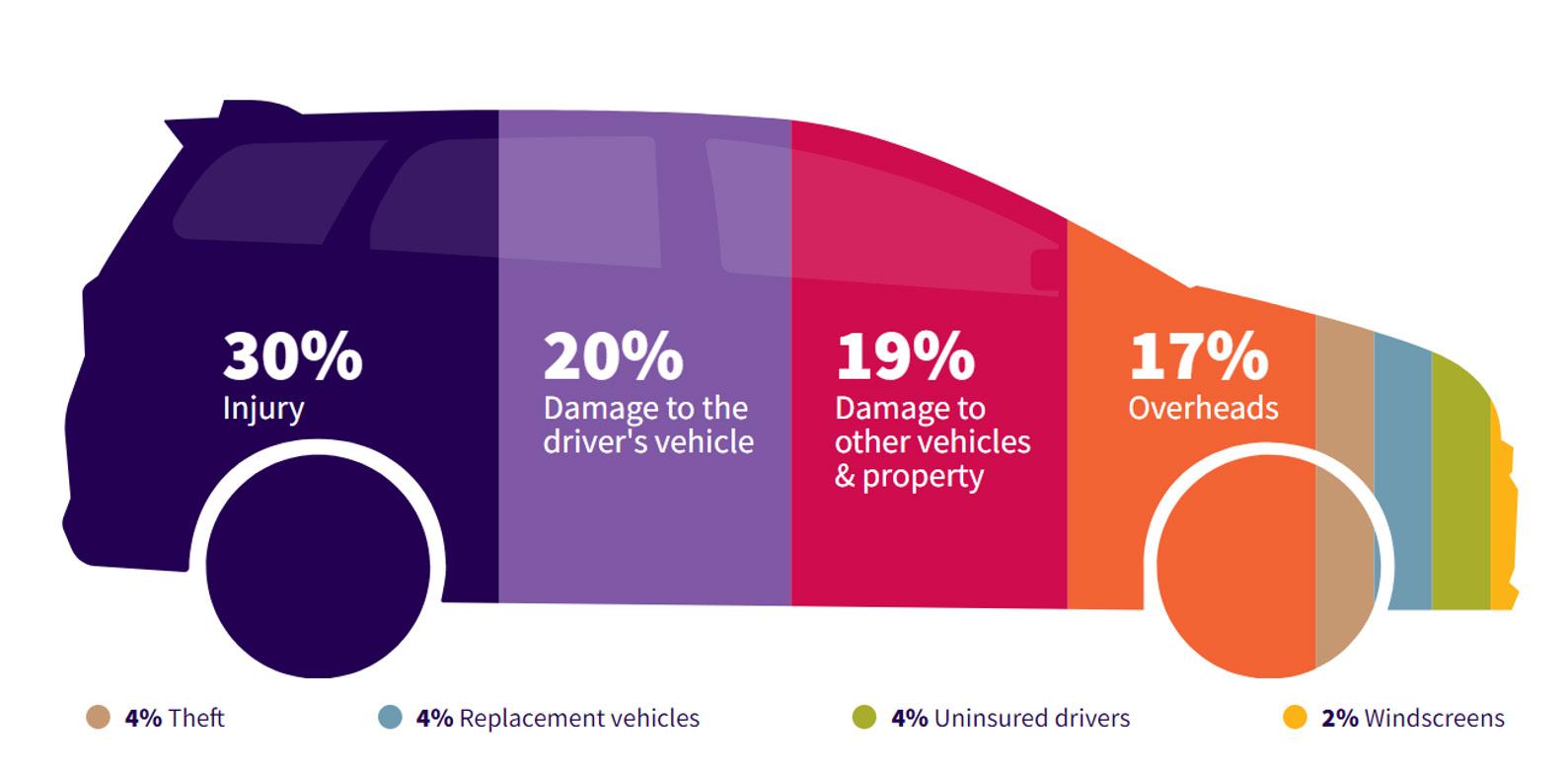
Source: ABI
Legalclaimant
Donna Scully Director/Owner Carpenters Group
Donna Scully, Director and Owner of Carpenters Group, discussed the current and future legal complexities for claimants, insurers, and regulatory bodies at the event.
She began by outlining the implications of the new Labour government’s approach to civil justice, highlighting the significance of key appointments.
She said, “We have a new Lord Chancellor who is a lawyer and a new head of the Justice Select Committee, Andy Slaughter, also a legal professional. “This suggests that the government is placing knowledgeable individuals in critical roles, which could shape the direction of ongoing reforms.”
“Have they really done the work, or will the new government start from scratch?”
The appointments were cause for cautious optimism, she said, but noted the uncertainty regarding whether the new government would prioritise civil justice reforms, given other pressing issues such as criminal justice and prison management.
She said the issue may be ‘far down the pecking order,’ despite the sector still dealing with the backlog left by the previous administration, particularly in areas like whiplash reforms and the Official Injury Claim (OIC) portal.
Whiplash tariff review
A key point of discussion was the whiplash tariff review, which was due just as the election was called. Donna questioned whether any substantial work had been completed by the outgoing government and whether Labour would build upon or restart these efforts.
She said, “We know the tariff review was supposed to be published, but the election intervened”. “Have they really done the work, or will the new government start from scratch?”
She also pointed out the upcoming discount rate review, which the Lord Chancellor has now commenced and will determine the rate no later than 11 January 2025, drawing parallels with recent changes in Northern Ireland and Scotland and speculating that if the UK follows a similar path it could bring stability and predictability to the market.
This, she said, would be welcomed by the industry, especially given the current ‘economic volatility’.
Court backlogs
Meanwhile, addressing the issue of court backlogs, Donna highlighted the significant delays affecting the resolution of small claims. She explained how these delays create a ripple effect, impacting policyholders and insurance companies alike.
“Currently, small claims are taking over a year to reach a hearing,” she said, “This not only affects customers but also impacts insurers’ ability to reserve appropriately and manage premium renewals.”
She criticised the current system’s inefficiencies, particularly the reliance on centralised processing, which delays the issuance of notices and prolongs the litigation timeline, and called for a concerted industry effort to lobby for improvements in civil court processing.
The OIC portal
Donna also reflected on the three-year anniversary of the OIC portal, describing it as a project that has seen significant investment but remains fraught with challenges.
“We’ve invested millions into making it work, and while it has improved, life cycles are still increasing, and the system remains burdensome for users,” she admitted.
Despite these issues, she acknowledged the progress made and stressed the importance of ongoing collaboration with the Ministry of Justice (MoJ) to refine the system. She said the end goal had to be shorter claims life cycles and a smoother process for all users, highlighting the importance of legal expense insurance as a key element in supporting claimants through the complexities of the portal.
“Currently, small claims are taking over a year to reach a hearing. This not only affects customers but also impacts insurers’ ability to reserve appropriately.”
AI and fraud
Looking ahead, Donna predicted further consolidation within the motor claims market, driven by the pressures of compliance, regulation, and economic constraints.
She added that AI would also play a significant role in shaping future processes, and while she acknowledged its potential to streamline operations, she also expressed concern about its misuse.
She said, “AI is a double-edged sword — it can enhance efficiency, but it can also be exploited by bad actors, particularly in fraud cases.”
To manage these risks, Donna emphasised the need for combining human expertise with technological advancements.
She concluded, “We need great people and technology working together. Technology can handle the routine tasks, but it’s people who make the critical decisions and create value.”
“AI is a double-edged sword — it can enhance efficiency, but it can also be exploited by bad actors, particularly in fraud cases.”
WHAT
WAS SAID
“Fantastic location, diverse and relevant topics, brilliant speakers, and an excellent networking opportunity! ”
“As always, a really good and insightful day. Your events just keep getting better…”
“ Very welcoming and informative, good opportunity to network with other related industries”
“Really good selection of speakers and topics”
“ The agenda and content were excellent.”
“Really good sessions and mix of topics, the bitesize market intelligence sessions were really interesting”
“Great chance to network with suppliers and peers”
“Amazing event as always”
“An excellent day and delighted to be part of it ”
An insurer perspective
Graham Hughes Claims Director Saga
Graham Hughes, Claims Director at Saga Insurance, provided delegates with an in-depth look at how insurers are responding to claims inflation, regulatory pressures, and customer service challenges.
He began his session by highlighting Saga’s long-standing focus on the over-50s market, emphasising the importance of tailoring products and services to meet the specific needs of an aging customer base.
Saga’s history is rooted in understanding and delivering what its customers want, he said, whether it’s holiday packages or motor insurance policies. He explained how Saga’s business model, which spans cruise, travel, insurance, and financial services, has evolved to provide consistent, high-quality service tailored to the needs of their demographic.
“Consistency is key. Whether they’re booking a boutique cruise or making a motor claim, our customers expect a seamless, supportive experience.”
“It’s about being there when customers need us most,” he explained, “whether that’s handling a claim or offering support.”
Graham went on to say that customer satisfaction remains a core value at Saga, which permeates all aspects of its operations.
“Consistency is key he insisted. Whether they’re booking a boutique cruise or making a motor claim, our customers expect a seamless, supportive experience”
“And our efforts to maintain this high standard of service have become increasingly important as regulatory expectations and customer demands continue to grow.”
Claims inflation
Graham also addressed the issue of claims inflation, a challenge impacting the entire industry. He noted the rise in repair costs—up by 31% (ABI data) over the past 24 months—and the implications for premium pricing.
“Our customers are asking why, after already facing higher costs for essentials like food and energy, their insurance premiums are increasing by 30%. It’s a tough conversation,” he admitted.
He acknowledged that the insurance market had been slow to adjust prices in response to inflationary pressures compared to other sectors.
Graham said, “We all waited too long, and when we finally adjusted, it was a significant jump for our customers.”
To combat this, he stressed the need for advanced data analysis and machine learning models that can predict and adjust for inflation trends more accurately. He said the days of over relying on historic data models are over. Instead, insurers need to update their claims strategies continuously, using real-time data and advanced algorithms and machine learning to stay ahead.
The regulatory landscape
Meanwhile, the session also covered the intensifying regulatory environment, with Graham outlining the growing impact of Consumer Duty regulations and the focus on vulnerable customers. He noted that as insurers navigate this landscape, they must prioritise transparency and fairness in their practices.
“Consumer Duty regulations are reshaping the industry, it’s no longer just about compliance; it’s about demonstrating that we genuinely act in the best interests of our customers.”
He explained Saga’s initiatives to meet these new requirements, particularly its efforts to identify and support vulnerable customers more effectively. He revealed how Saga has redesigned its customer journey to ensure the company can identify those who may need extra support and guide them through the claims process. He also stressed the importance of integrating these practices into everyday operations to maintain compliance and customer trust.
Technology
Another issue under the spotlight in the market is technology, Graham highlighted its dual role in improving efficiency while maintaining a personal touch, particularly important for Saga’s older clientele who may prefer traditional methods of communication.
He said, “Digitalisation is vital in the industry, but it must be balanced with human interaction. Not all our customers want to use an App; some need that reassuring voice on the other end of the phone.”
It is important to balance using digital platforms to handle straightforward claims efficiently while reserving personal support for more complex cases. Speed of notification is also critical to manage costs for the customers.
Graham explained how connected vehicles are beginning to challenge traditional operating models with motor manufacturers being able to direct vehicles to their dealer repair facilities following an accident as they are the first to know if an accident has happened.
Talent
Another critical aspect of the presentation was the challenge of attracting and retaining talent and, more specifically, the industry needs to appeal to a younger, tech-savvy workforce while serving an older customer demographic.
Graham said, “It’s a balancing act; how do you attract young people into a business focused on serving older customers?”
He explained that Saga has focused on creating clear career paths and offering diverse opportunities within the organisation to retain young talent, with the intention of showing new entrants that there’s variety and excitement in the insurance sector.
“It’s not just about answering phones, it’s about solving complex problems and making a real impact.”
He also emphasised the importance of storytelling in talent retention, using reallife examples to show new hires the tangible difference they can make in customers’ lives. He said that these stories resonate with new team members and need to be told.
Future
Looking ahead, Graham urged the industry to prepare for continued scrutiny from both the government and regulatory bodies. He predicted that the next few years would bring even more attention to pricing and claims processes, particularly in the context of affordability and fairness.
He called for greater collaboration, particularly in addressing the complexities of the credit hire and repair processes.
Graham concluded, “It’s not just about meeting regulatory requirements; we must also demonstrate that our practices are transparent and fair. Our suppliers play a critical role in the customer journey, and we need to work closely with them to ensure a consistent, high-quality service from start to finish.”
“We need to show new entrants that there’s variety and excitement in the insurance sector. It’s not just about answering phones; it’s about solving complex problems and making a real impact.”
Claims inflation trends
Insurers paid 18% more in 2023
£9.9bn up from £8.4bn
Cost of repairs jumped 31%
£4.7bn to £6.1bn in 2023
The House Rebuilding Cost Index saw 21% increase over two years to Jan 2024
Source: ABI
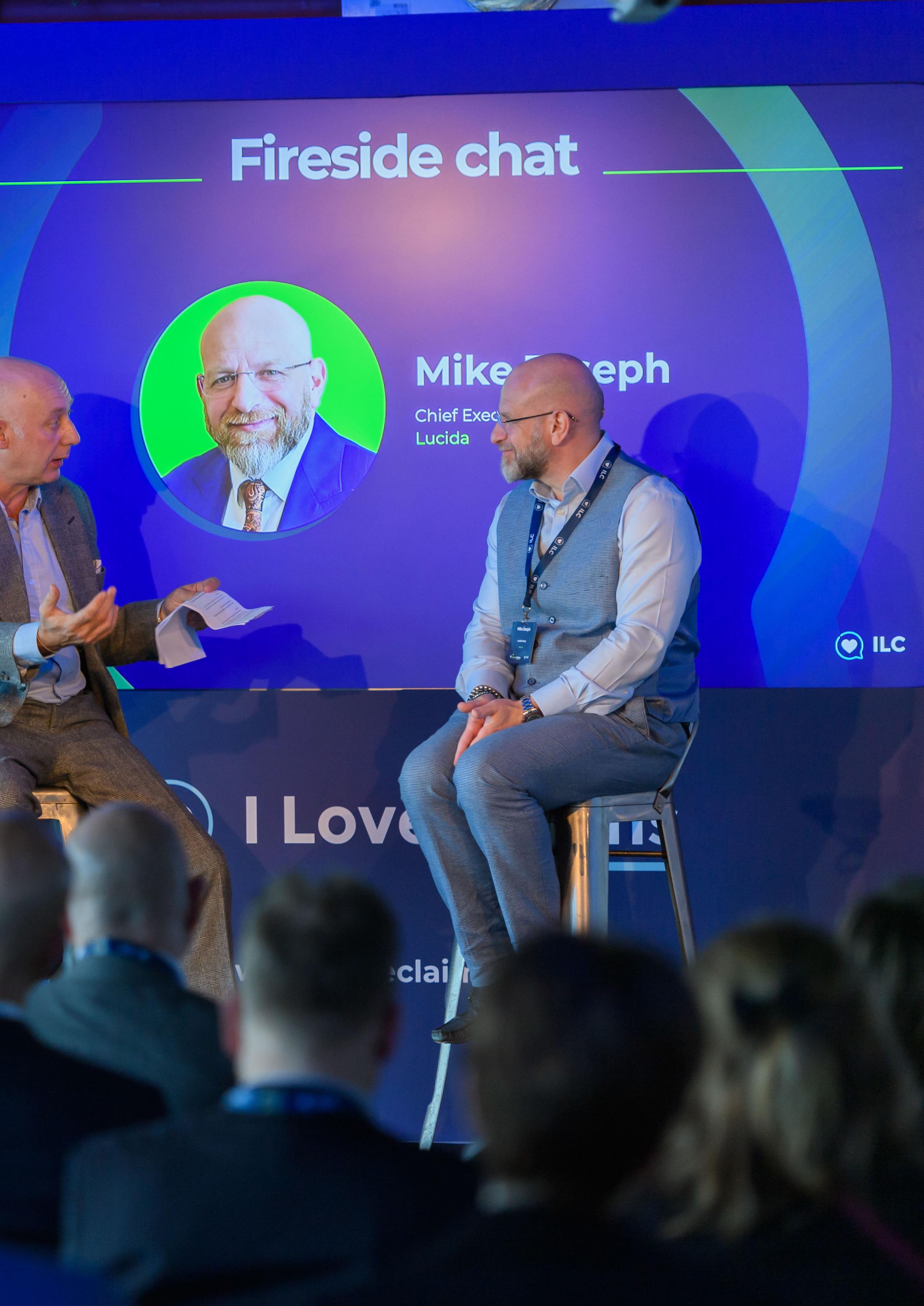
Fireside chat
Mike Joseph Chief Executive Lucida
The conference was brought to a close when Mike Joseph, CEO of Lucida Group, shared his experiences and insights into the state of the motor insurance industry in the UK.
Speaking to ILC Founder, Chris Ashworth, the conversation covered everything from market consolidation to technological advancements and the value of personal connections in the sector.
Addressing consolidation trends first, particularly in the broker space, Mike pointed out how the industry has seen a significant recent shift, with major players acquiring smaller entities and technology increasingly playing a critical role.
“There’s going to be a continued reduction in the number of brokers as the bigger players get bigger, and technology will determine who survives,” he predicted.
Mike then considered how technological advancements, including artificial intelligence (AI), are reshaping the sector. He suggested that those who fail to adopt and integrate advanced technology into their business models risk falling behind.
“Modern technology and data analytics are no longer just advantages; they are necessities. Companies that do not embrace these changes will struggle to keep up,” he warned.
Innovation
He also emphasised the need for insurers and brokers to adapt their models in response to customer demands and market pressures, explaining how Lucida has diversified its portfolio through acquisitions, such as the purchase of Bennett’s, the UK’s largest motorbike broker, and the establishment of an insurance company in Guernsey for ancillary products.
He said, “We’ve expanded our business model to include everything from commercial insurance to specialised motorbike coverage, adapting to what the market needs.”
Mike also highlighted the significance of direct partnerships with insurers and the strategic value these relationships bring. He said that unlike the traditional broker model where products are simply pushed to market, Lucida works closely with insurers to manage risk and add value, from underwriting through to claims, adding that this approach involves advanced risk assessment methods, such as proprietary validation systems and voice stress analysis technology, which help in screening and managing claims more effectively.
Consumer expectations
A recurring theme of the discussion was the evolving expectations of consumers and the need for the insurance sector to provide personalised services amidst growing digital transformation.
Mike said that despite the push towards automation, many customers still seek personal connections, especially in the more complex areas of motor claims.
“There’s a big difference between simply processing a claim and managing a customer’s experience,” he stated. “We are focusing on making every interaction count, ensuring that we provide the human touch where it matters. Consistency in service is vital, and there’s still a significant portion of customers who value speaking to someone directly, especially when it comes to resolving complex issues.”
Regulations
Mike also touched on the regulatory environment and the pressures it places on motor claims and insurance businesses, noting the impact of the Financial Conduct Authority (FCA) and the Consumer Duty regulations.
He stressed that firms must be proactive rather than reactive in their compliance strategies, and urged insurers and brokers alike to demonstrate that they’re acting in the best interests of their customers.
For example, Lucida has integrated these regulatory changes into its operational model, ensuring that the company not only meets but exceeds these standards.
Mike said, “This is no longer a choice but an obligation. We’ve taken steps to make our processes as transparent as possible and to align them with customer needs, which has helped us stay ahead in this challenging environment.”
“Insurers and brokers alike need to demonstrate that they’re acting in the best interests of their customers. This is no longer a choice but an obligation.”
Opportunities
Looking to the future, Mike predicted that the insurance market would continue to see a shift towards fewer, but more robust, brokerage firms, explaining that consolidation will not only affect smaller players but also push mid-sized firms to innovate or face acquisition.
He said, “The barrier for new entrants is now much higher, and those who are not adding value through technology or specialised services will struggle to compete. The brokers who survive and thrive will be those who can prove their value beyond just price—those who can offer insights, advanced technology, and a personal touch that customers still crave.”
Collaboration
To achieve this and overcome market challenges, he said collaboration between insurers, brokers, and suppliers was critical. He advocated for greater alignment and transparency across the sector to ensure a fair and efficient process for all parties involved.
Mike concluded, “The only way forward is through genuine collaboration. We need to align our interests and work together to streamline operations and reduce costs. GTA2 is a great example of how we can work together to establish standards that benefit the entire industry. It’s about finding common ground and ensuring that every player, from insurers to suppliers, works towards a shared goal.”
“The only way forward is through genuine collaboration. We need to align our interests and work together to streamline operations and reduce costs.”
Motor market reports growing losses as claims surge
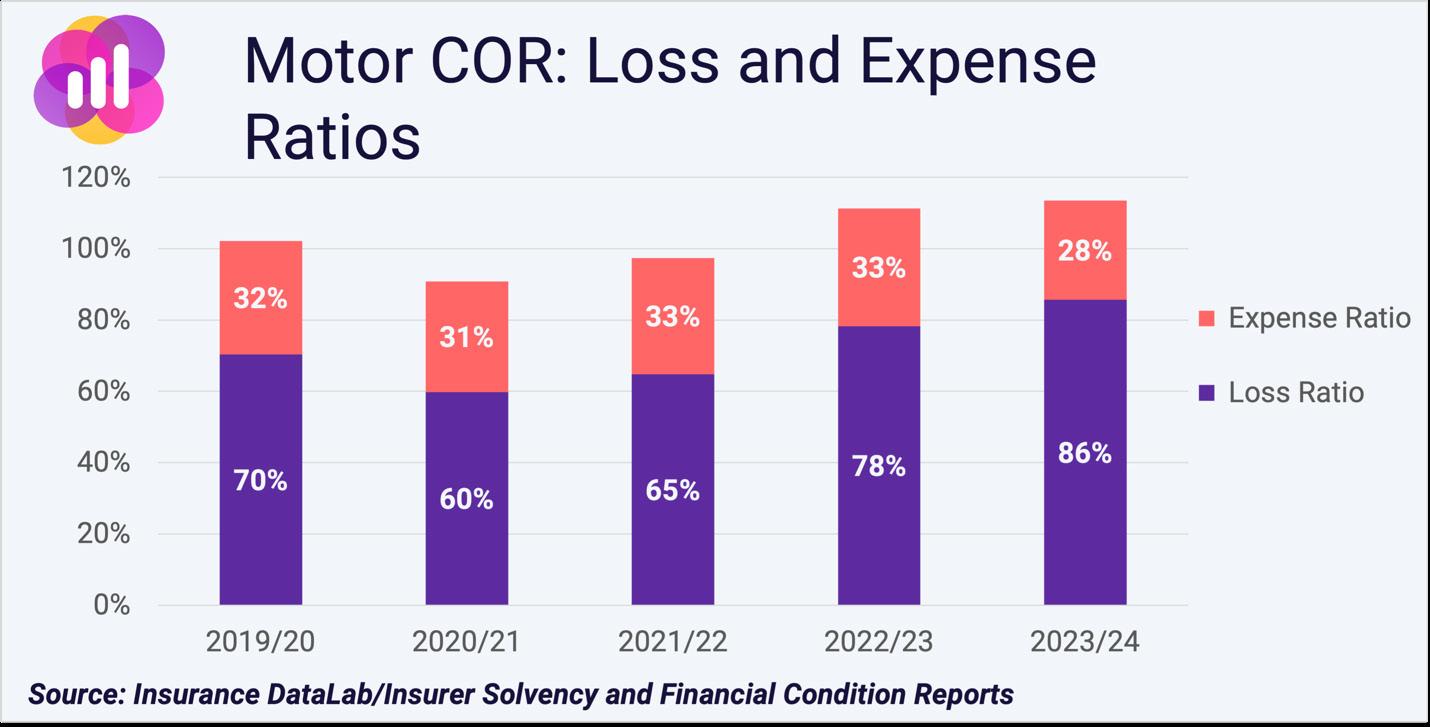
The motor insurance market fell to an underwriting loss for 2023/24, according to the latest analysis of insurer Solvency and Financial Condition Reports by market intelligence firm Insurance DataLab, as the market continues to suffer from rampant claims inflation.
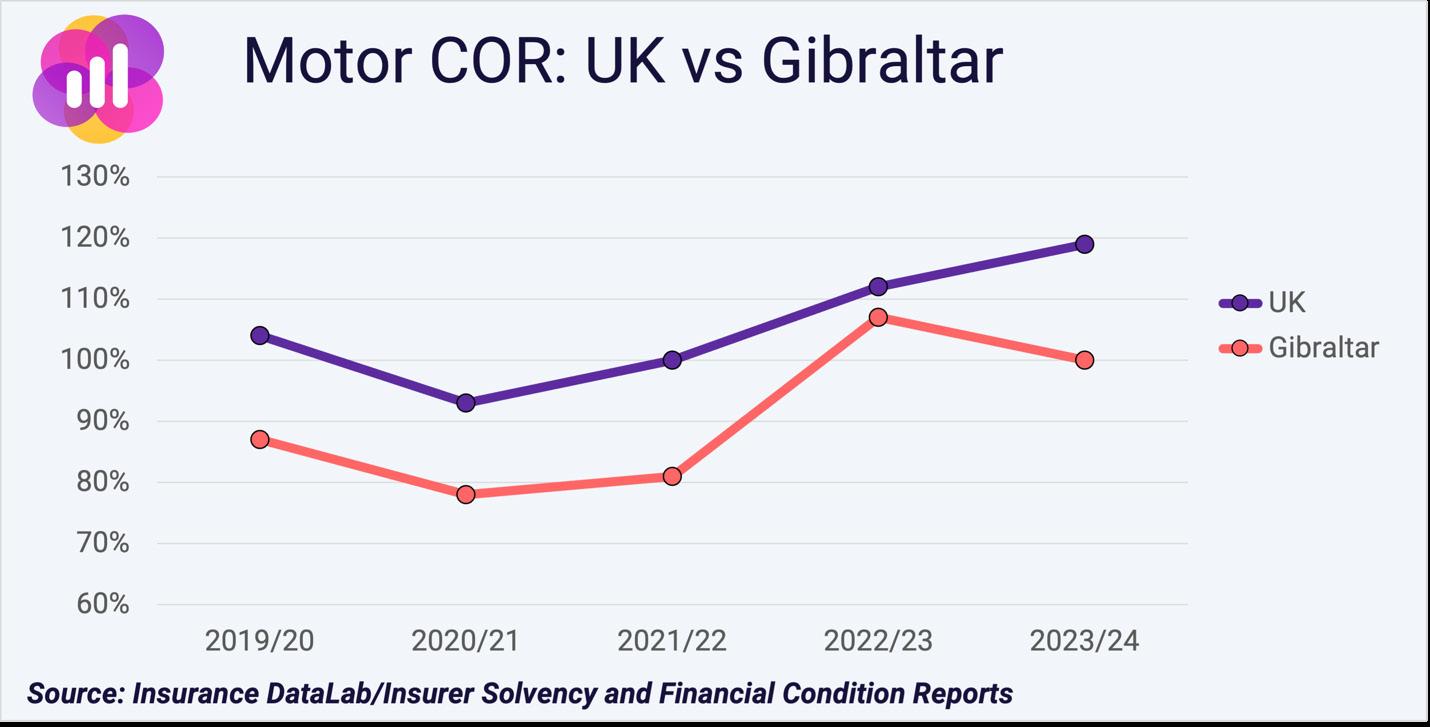
Motor insurers across the UK and Gibraltar reported an aggregate combined operating ratio (COR) of 113.5% in their latest set of results, an increase of 2.2 percentage points on the previous year.
This marks the second consecutive year that the market has fallen to an underwriting loss, with motor insurers failing to turn an underwriting profit in three of the last five years.
This poor performance has been driven by the rising cost of claims that added more than 7.4 percentage points to the loss ratio as it climbed to 85.7% – the highest loss ratio across the five years of this analysis.
The impact of this increase in the loss ratio was partially offset by an improving expense base, which improved by 5.2 percentage points to 27.8%. This is comfortably the best expense ratio of the last five years, with every other year that makes up this analysis reporting an aggregate expense ratio in excess of 30%.
Gibraltar leading the way
As in previous years, Gibraltarian motor insurers reported a significantly better loss ratio than their peers in the UK, although this was not enough to prevent them from falling to an underwriting loss in each of the last two years.
Gibraltar-regulated motor insurers reported an aggregate COR of 100.2%, some 18.7 percentage points ahead of the 118.9% reported by UK-based insurers.
Indeed, Gibraltar-based insurers have fared better than their UK peers in each of the last five years, reporting a positive underwriting result over the three years from 2019/20 to 2022/23.
Repair market insight
Paul Sell Director Trend Tracker
Following several fantastic presentations at the event, exploring the motor insurance market, these pages go a little deeper into the topics of vehicle repair demand, market capacity, repair costs, and trends to consider.
The annual, comprehensive Trend Tracker report (out now) explores many of these trends and data insights further.
From our latest monthly market report we provided the following summary:
‘A downward trend through 2024, with an average of 138,000 repair estimates a month over the last six months, the number per working day falling 500 over the same period, down to below 6,500 repair estimates per working day.
There is much discussion in the market (much of which was during the ILC event) of falling volumes – whether falling claims volumes or repair volumes – impacted by differing factors:
Claims Frequency: Various factors exist including changes in consumer behaviour; increased ADAS penetration; a changing vehicle parc age profile (reduced frequency from older vehicles and increased write-off likelihood of BEVs); general cost of insurance; and amount of excess factors too.
Repair Volumes: Various factors, in addition to claims frequency impacts, largely depending on the insurer total loss decisions and routing decisions relating to network strategy.
Volumes have been falling but capacity increasing with lowest cycle times for several years (circa 20 days better than start of year) recent acquisitions and new sites opening from continued investment into the sector. Depending on location and work mix, some repairers will be feeling a situation far worse than we are reporting – a critical time for those controlling both supply and demand.
Repair costs have become more predictable, which will be pleasing for underwriters, but continue to rise at a rate higher than CPI. Further research is being undertaken to understand this trend. Electric vehicles continue to track higher than ICE vehicles (irrespective of vehicle age groups) something we have already started to research further in the annual report.
Vehicles on the road
Department of Transport data confirms there are more cars on the road and more families with two or more cars too.
Average age of vehicles in the car parc has increased again which statistically have a lower claims frequency.
Commuting patterns and frequency have fallen but average number of trips are almost back to pre-pandemic levels – four per cent lower, but another note is the average distance of trips taken remains eight per cent down. So, a combination of less trips, less distance travelled and less commuting (although all of these show growth in the last two years).
Indications of trends for investigation for the Annual Trend Tracker report:
• Impact of New car sales fall in 2020 and 2022
• ADAS impact
• Total loss decisions by insurers
• Retail demand from consumers
Repair volumes
Repair estimate volumes slightly up in September over August, still only 94% of Sept 2023 and 89% of Sept 2019.
Repairs per working day slightly up, to be expected after the ‘holiday’ month of August.
A predicting falling trend with an estimated overall five per cent less insurance directed repairs at the end of 2024 Vs 2023, notwithstanding 2023 was six per cent down Vs 2019.
BEV element remains at six per cent of the monthly volume as it has been for the last three months, also remaining circa £400 higher on average repair cost. Regional analysis shows some regions increasing against the backdrop of decreasing insurance work.
Repair costs
Insurance repair costs have increased over time, now double what they were in 2014.
Particularly after the pandemic and during the energy crisis when labour rates were increased to help repairers deal with rising overheads. Some may suggest this reset in rates was overdue and required. Post the energy crisis these rates have not come back down.
Repair costs are rising higher than CPI, September at 4.6% (Sept 2024 Vs Sept 2023). Further investigation into the drivers of this being undertaken for the annual report.
BEVs remain circa £400 higher, this gap has reduced over time. The difference is being investigated in detail for the annual report but the lack of an established nonOE/green market for BEVs will be having an impact.
Repair Capacity
Insurance repair cycle times have declined over time, efficiency driven through changes of process in the repair sector, particularly the use of triage to bring the vehicles in when capacity and parts are available. This has created capacity with cycle time being at its best level since 2021.
At the same time investment into the sector has created new sites, acquisitions and therefore further capacity. The pie chart is a simple summary of industry news mentions throughout 2024 of those involved in new sites, acquisitions and expansions showing the growth in the repair market (for Fix Auto it could mean sites joining the franchise) – dominated by Steer Group (which included the acquisitions of major groups including Gemini ARC, Rye Street Group, MG Cannon, Komoo and many more).
Changes in Repair demand
Considerations for research into changing demand:
Vehicle technology
Increasing volumes of BEVs on road which present different driving style challenges and distance travelled impact with charge range.
Increasing ADAS in vehicles aimed at preventing minor collisions will be having an impact, various research on this.
Cars on roads
Commuting patterns and peak time traffic on the rise, not quite at pre-pandemic level though and both number of journeys and distance travelled lower.
Car parc
New car market now bouncing back after both Covid and supply chain issues but the fall in new car sales in 2020 and 2022 flowing through the car parc. Research shows the older the vehicle, the lower the claims frequency (see full Trend Tracker report).
Average age of vehicle up, now 10 years old and number of cars in household up too which relates to less distances and distance travelled.
Vehicle technology
Cars on road at peak times
Collisions resulting in insurance directed repairs
Cars sold, adding to car parc
Considerations for research into changing demand:
Total loss decisions
Until recently an increasing trend, influenced by a combination of lack of repair capacity, high repair costs, healthy used market and a growth in AI based decision making.
Potential for decisions and processes to be reviewed to create more repairs?
BEVs
Previously reported that BEVs are written off at an average age of four to five years old - half of the ICE equivalent – particularly if suspected battery damage.
Potential to investigate this further via improved education and repair greater numbers?
Capacity Vs demand
The repair market had little capacity post-pandemic but various factors drove up repair rates and attracted new investment generating greater capacity. At the same time, cycle times improved to the best level in three years.
Potential to work together with insurer partners on creative commercial opportunities eg save borderline total losses and repair over replace to find mutually beneficial outcomes?
Total Loss decisions
Capacity vs Demand
The full Trend Tracker annual report is available now.
To find out more contact Paul Sell on Paul@industryinsights.co.uk
The UK Motor Claims and Body Repair Report 2024-25
Featuring contributions from a range of Industry Experts
T Thatcham
ABP
Carpenters
Consumer Intelligence cap hpi
I Love Claims
NBRA Solera Verisk ZapMap and S Steve Thompson, Industry Insights on the future of the body repair market
Report price £775+VAT ...or subscribe for £900+VAT per year for access to this and all other reports Visit www.trendtracker.co.uk to buy or subscribe