Royalty in Britain THE ILLUSTRATED
BY ROYAL APPOINTMENT In collaboration with the Royal Warrant Holders Association
ROYAL SCHOOL DAYS



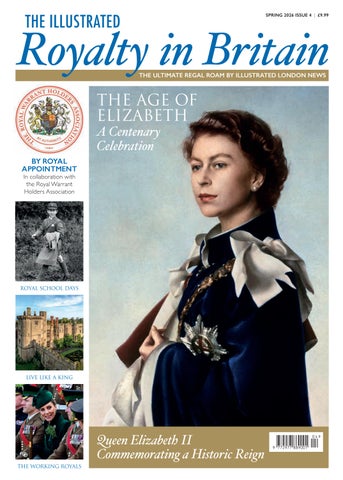
BY ROYAL APPOINTMENT In collaboration with the Royal Warrant Holders Association
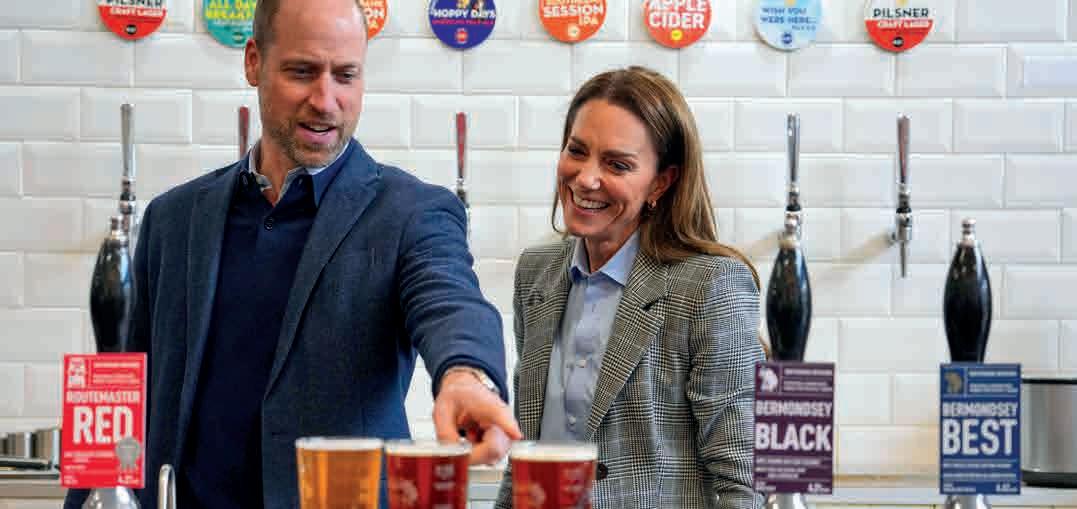
Welcome to the spring issue of The Illustrated Royalty in Britain. The oyal Family ha e been particularly busy of late, crisscrossing the country, meeting and greeting, posing for sel es and gamely having a go. We’ve seen The King try his hand at DJ mixing in Manchester, The Prince and Princess of Wales pulling pints on the ‘Bermondsey Beer Mile’ and Queen Camilla shaking hands with Paddington Bear. In this issue, Joe Little discusses the challenges faced by a family rm that has had its workforce considerably reduced over the past decade and explains just what is involved in being a ‘working royal’.
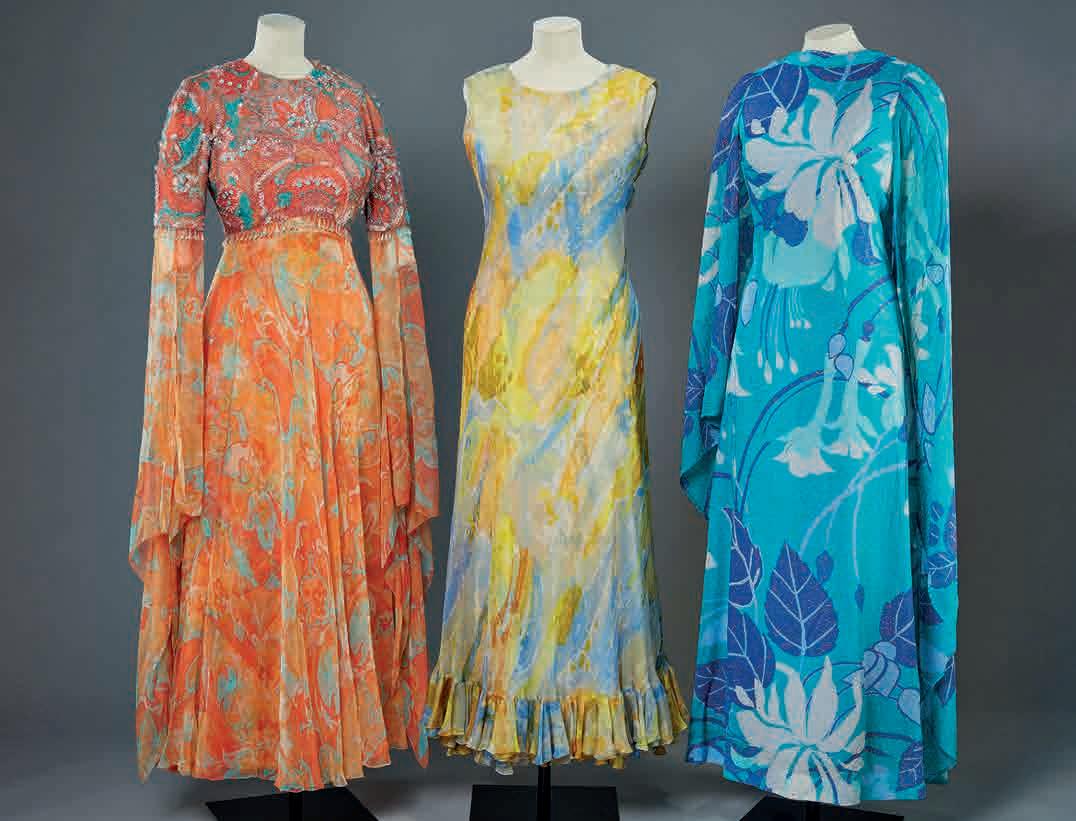
The late Duke of Edinburgh had the distinction of being the hardest-working royal at least when his annual tally of engagements wasn’t beaten by his daughter Princess nne . This year marks the 70th anniversary of arguably his greatest legacy, the Duke of Edinburgh’s Award, the history of which is told on page 42. Speaking of anniversaries, a century on from her birth in April 1926, The late Queen Elizabeth II is remembered with a major exhibition about her incredible wardrobe of clothes. We pay our own tribute to her timeless style with contributions from three experts on royal fashion, while Robert Hardman considers her place in history three years on from her passing.
Planning a royal road trip in the coming months? Then do consult our guide to historic places to stay with or without royal ghosts or seek out the oyal Warrant olders upholding uality and tradition in some of the most far- ung outposts of the ritish sles. We also nd out how makers and craftspeople who have been supported by the Queen Elizabeth Scholarship Trust have found the inspiration to thrive on their home territory. And do put a date in your diary to visit the inaugural RHS Sandringham Flower Show in Norfolk. To whet your appetite, the story of Sandringham’s famous gardens can be found on page 106.
Finally, if you’re a royal fan, then it’s likely you have one or two commemorative collectibles about the house. We meet some royal collectors who take their hobby very seriously indeed. Prepare to be regally amazed.
Lucinda Gosling Editor
Perfect pints The Prince and Princess of Wales visit the Southwark Brewing Company on the ‘Bermondsey Beer Mile’ in south London in March
The Illustrated Royalty in Britain is published by Illustrated London News Limited, Soho Works, The Tea Building 4th Floor, 56 Shoreditch High Street, London E1 6JJ, UK. hello@iln.co.uk. iln.co.uk
Editor
Lucinda Gosling
Production Director
David Gyseman
Art Direction & Design
Dominic Bell
Jo Murray-Bell
Lorna Wilson (Colour Retouching)
MADE
Contributors
Simon Brooke, Adam Dant, Lucinda Gosling,Robert Hardman, Joe Little, Harry Mount, Aurora Pfaff, Justine Picardie, Michael Pick, Izzy Schaw-Miller, Kate Strasdin, Clara Taylor
Sub-Editor
Simon Barker
Chief Executive
Lisa Barnard tel: +44 (0)7887 823116 email: lisa.barnard@iln.co.uk
Group Advertising Director
Jane Washbourn tel: +44 (0)7920 821577 email: jane.washbourn@iln.co.uk
Luxury Sales Manager
Dylan O’Connor tel: +44 (0)7345 532 796 email: dylan.oconnor@iln.co.uk

Pictures www.maryevans.com
tel: +44 (0)208 318 0034
All images are from The Illustrated London News archive (and other sources) at Mary Evans Picture Library, Getty and Alamy unless otherwise stated.
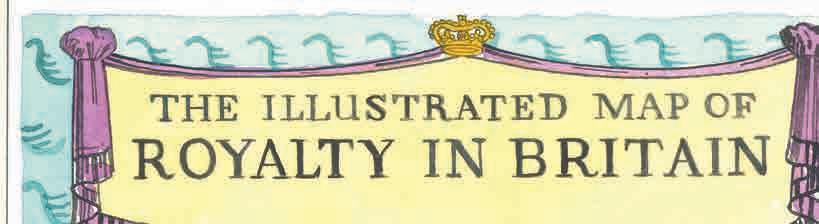
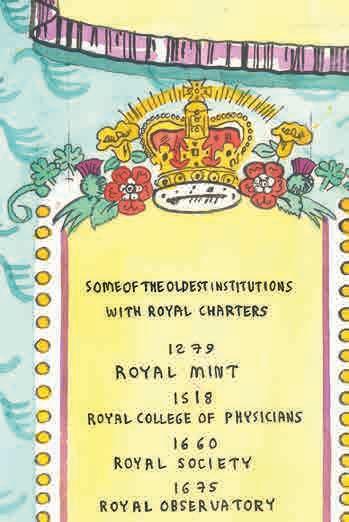
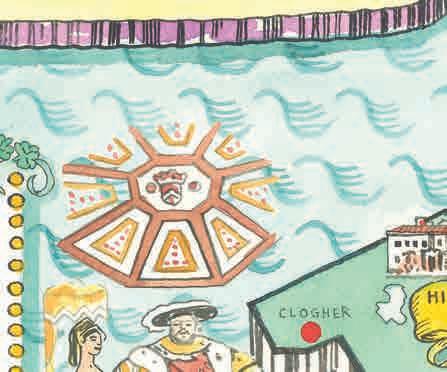
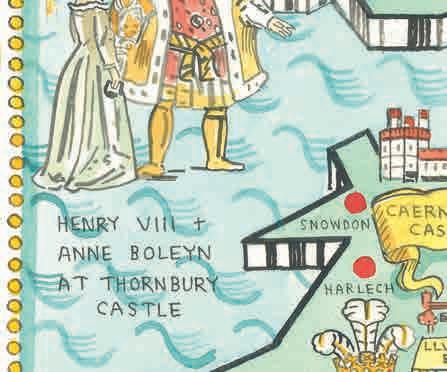
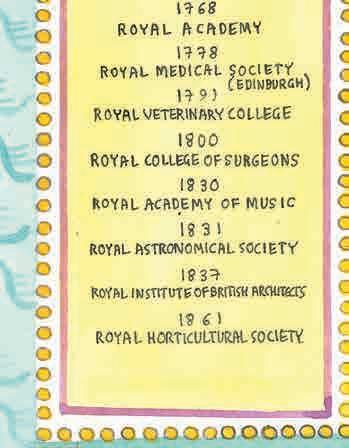
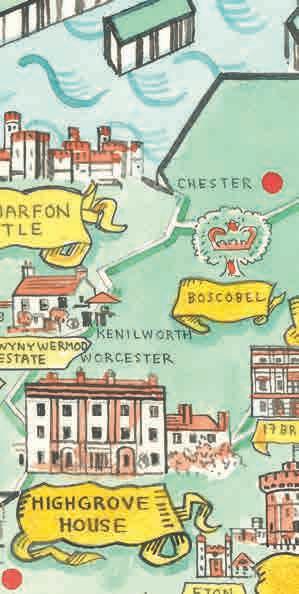
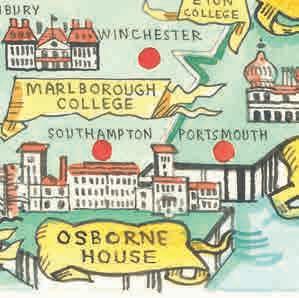
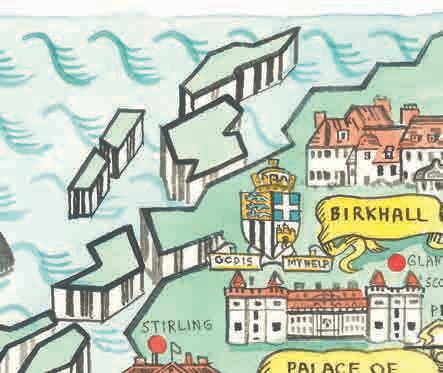
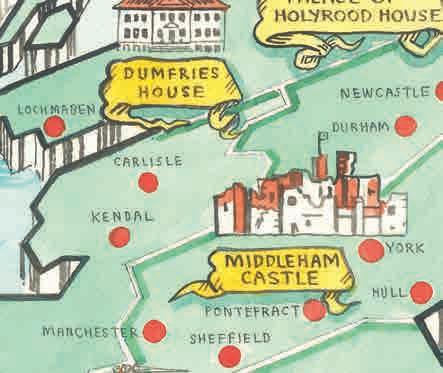
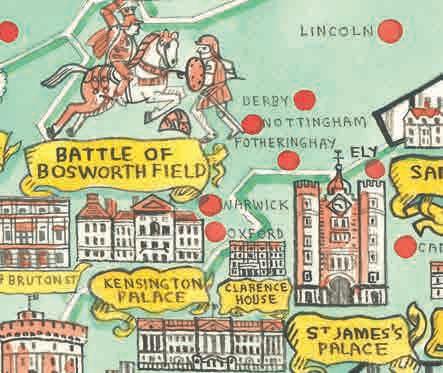
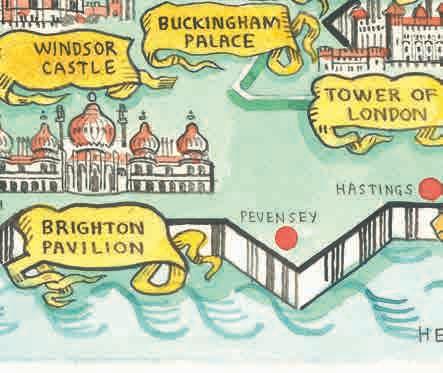
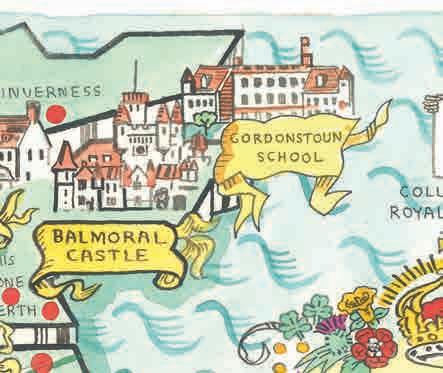
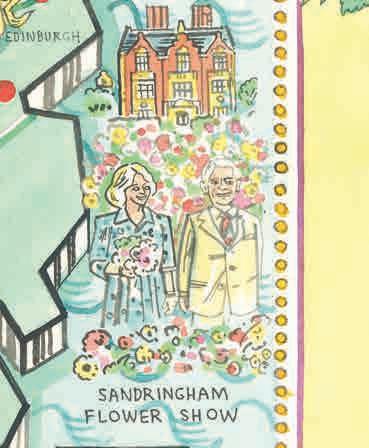
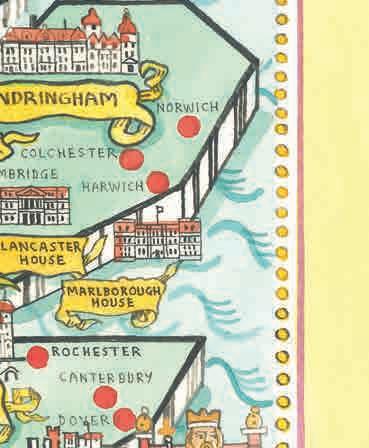
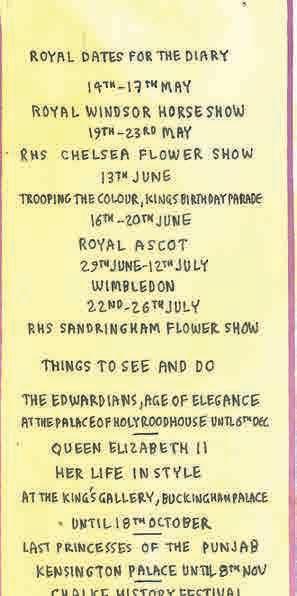
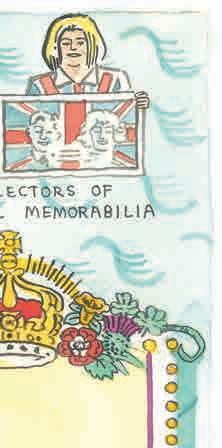
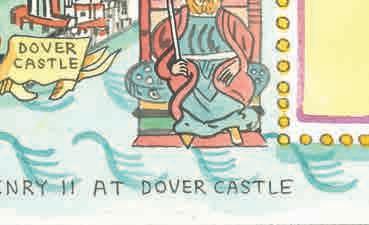
12 THE ILLUSTRATED MAP OF ROYAL BRITAIN
Artist Adam Dant lends his unique Hogarthian style to a specially commissioned map of royal Britain in spring.
14 OUT AND ABOUT
The Royal Family at work, around Britain and beyond.
18 LONG TO REIGN OVER US
As we celebrate 100 years since the birth of Queen Elizabeth II, Robert Hardman looks back at a monarch who presided over extraordinary changes.
26 A FIRM LIKE NO OTHER
Joe Little assesses how the monarchy’s support structure has changed from the large team under The late Queen to the slimmed-down working royals’ of today.
32 ROCK OF AGES
Queen li abeth was a front-row witness to 10 decades of history. Lucinda Gosling charts the ups and downs of her long and eventful reign.
42 AWARD SEASON
Prince Philip’s greatest legacy, the Duke of Edinburgh’s Award, marks its 70th anniversary this year. Lucinda osling re ects on the ision and commitment of its royal patrons and how the new uke is sustaining and developing his father’s scheme.
46 DISTINCTION FAR AND WIDE
From artisan paper-makers to whisky distillers and Highland tailors, Simon Brooke meets Royal Warrant Holders who are keeping craftsmanship, quality and tradition alive all over the British Isles.
52 BY ROYAL APPOINTMENT
Seven Royal Warrant Holders share their passion and e pertise, and re ect on the uni ue position they hold within their respective industries.
60 ROYALTY IN BRITAIN RECOMMENDS
Cultural highlights for spring, from Schiaparelli at the V&A to Princesses of the Punjab.

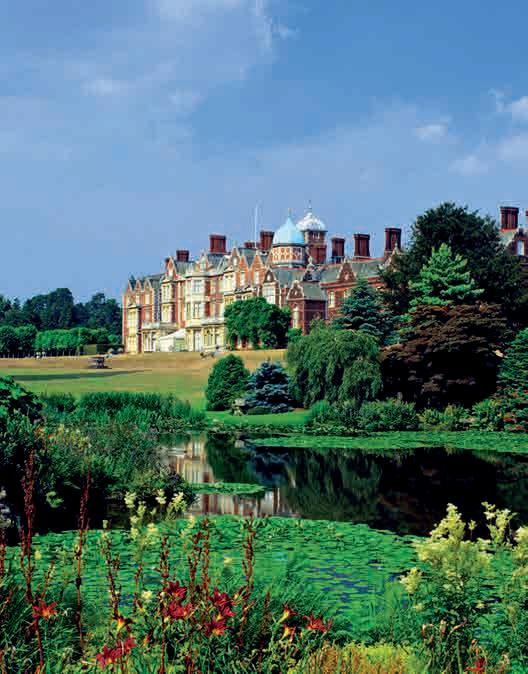
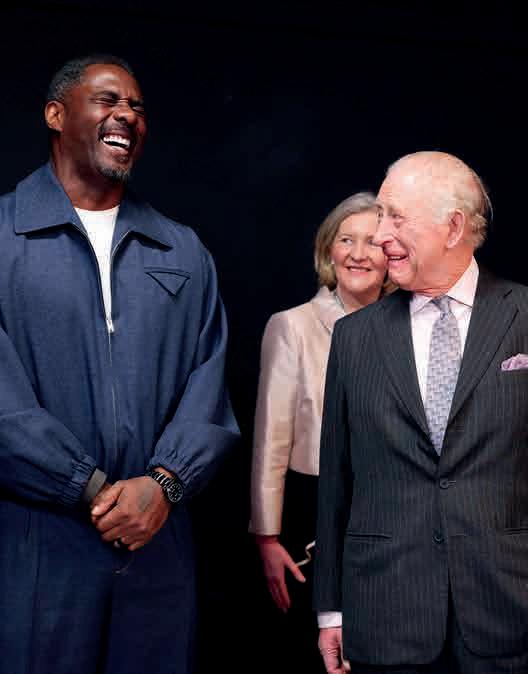
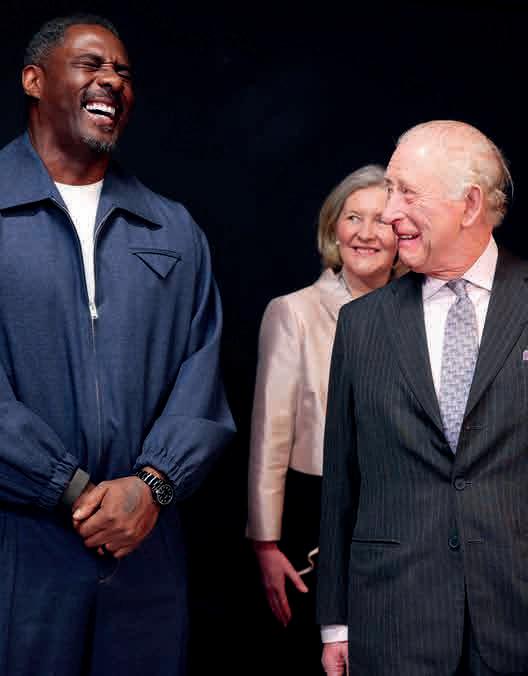
s Sandringham hosts its first RHS ower show we loo at its horticultural history and we also e lore the many engagements carried out by the wor ing’ Royal Family – including The King meeting actor dris lba
64 STYLE OF THE CENTURY
Lucinda Gosling explores a major new exhibition that covers The late Queen’s life in fashion, with the chance to see around 200 pieces from her remarkable wardrobe. Plus, insights from royal fashion experts Kate Strasdin and Michael Pick, and an extract from Justine Picardie’s new book on The late Queen’s fashion archive.
74 A CLASS OF THEIR OWN
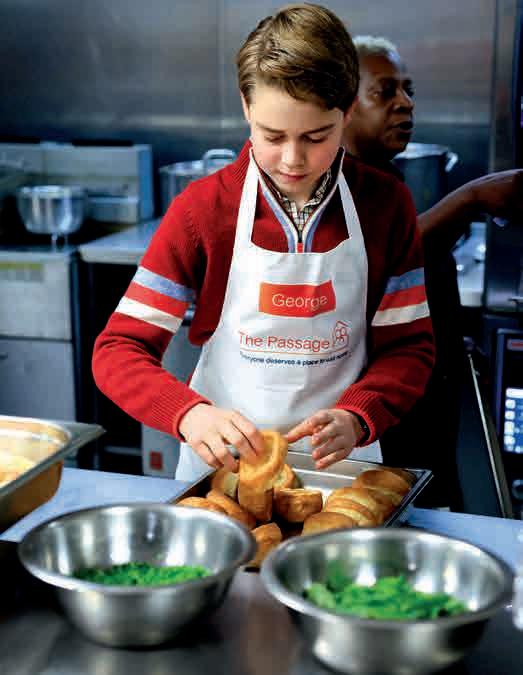
Educating royalty is a teaching job like no other, as Lucinda Gosling discovers, from governesses of old to the more supportive education that Prince George is likely to enjoy when he starts secondary school this year.
80 LIVE LIKE A KING
Fancy a stay in a medieval fortress built by Henry II, or a night in Henry VIII and Anne Boleyn’s bedchamber? y chaw- iller has some royal-themed ritish breaks to gi e your holidays a regal a our.
86 SHELF PORTRAITS
round-up of the latest royal reads for your bookshelf, from a romantic gesture by a grieving king to a new history of women and power.
88 CRAFTING SUCCESS ACROSS THESE ISLES
Thanks to the work and support of the Queen Elizabeth
cholarship Trust Q T , the craft mo ement across the UK is taking inspiration from regional settings, as Clara Taylor discovers.
94 A REGAL SEAL OF APPROVAL
What’s in a name? Quite a lot in terms of the prestige and power that can come with a royal’ pre . arry Mount reveals how it was once a way of boosting the rown’s power, but now is a re ection of the monarch’s passions and interests.
100 COLLECTIVE MEMORY
From Coronation mugs to Jubilee torches, royal memorabilia can come in all shapes and sizes. Lucinda Gosling meets some royal fans with majestic collections.
106 GARDEN OF DELIGHTS
With this year seeing the inaugural RHS Sandringham Flower how, urora Pfa e plores how the horticultural history of the Royal Family’s Norfolk estate has changed over the years.
114 TAILORED TO PERFECTION
el ing into the archi es, we nd some sketches from the royal couturier Hardy Amies, whose designs for The late Queen combined dignity and style.




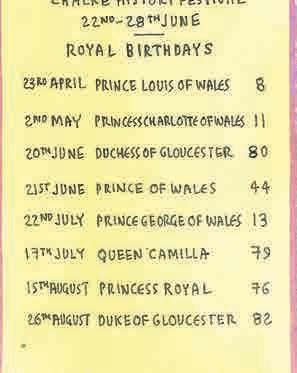

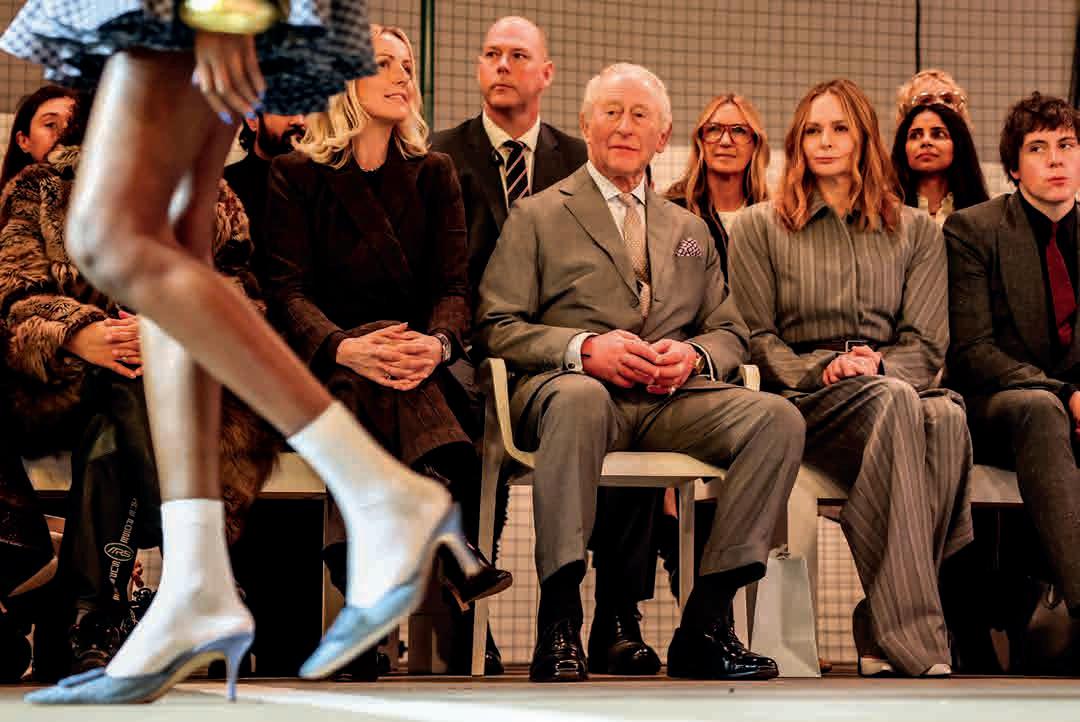
A round-up of recent royal visits and travels, around Britain and beyond
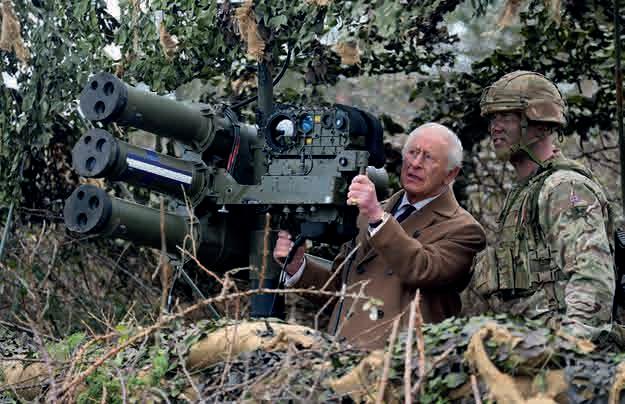
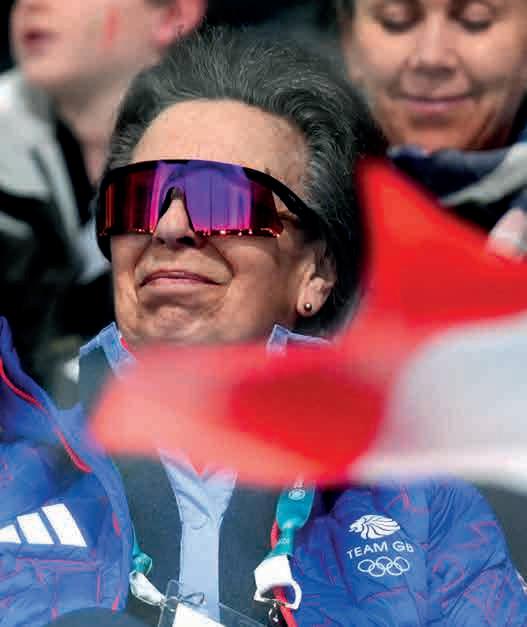
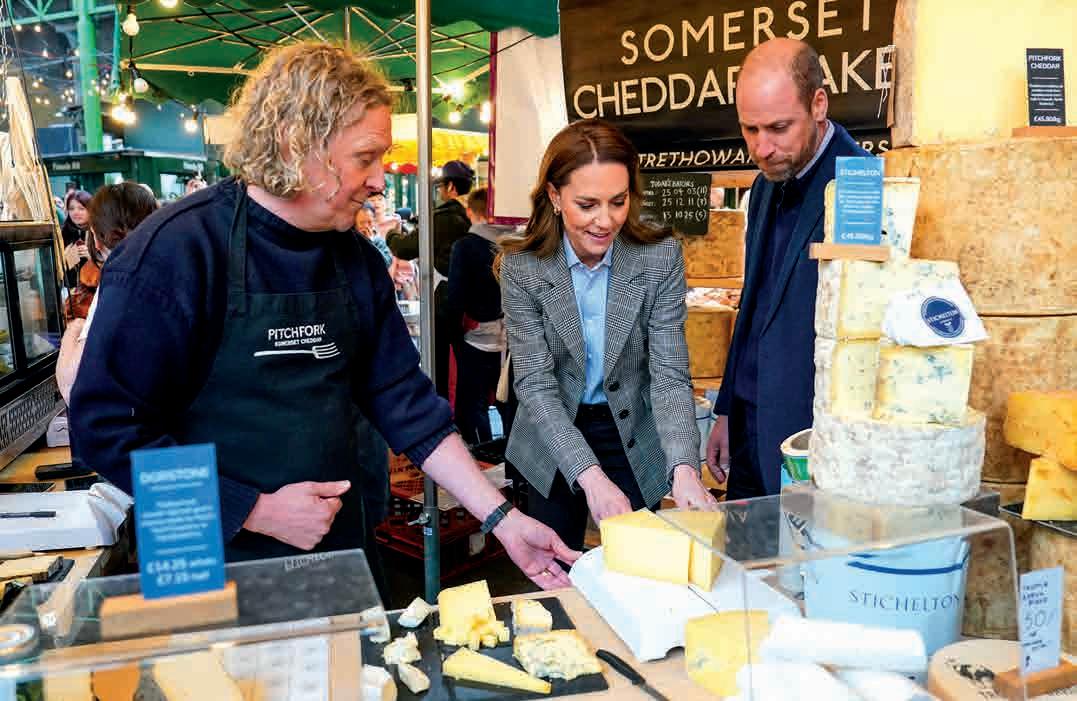
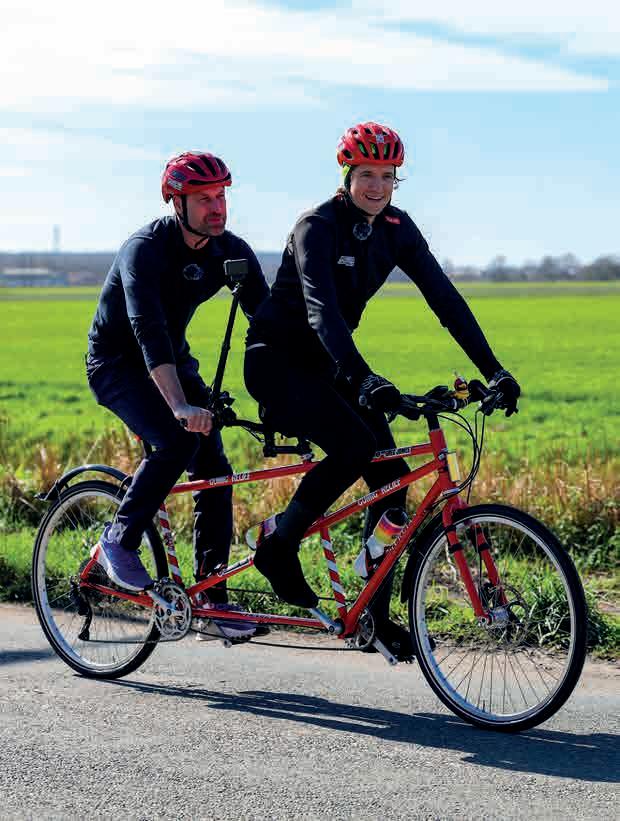
Above: The Prince and Princess of Wales meet artisan cheesemaker Todd Trethowan at London’s Borough Market
Left: Prince William joins BBC Radio 1 breakfast show host Greg James on his 1,000km tandem ride for Comic Relief
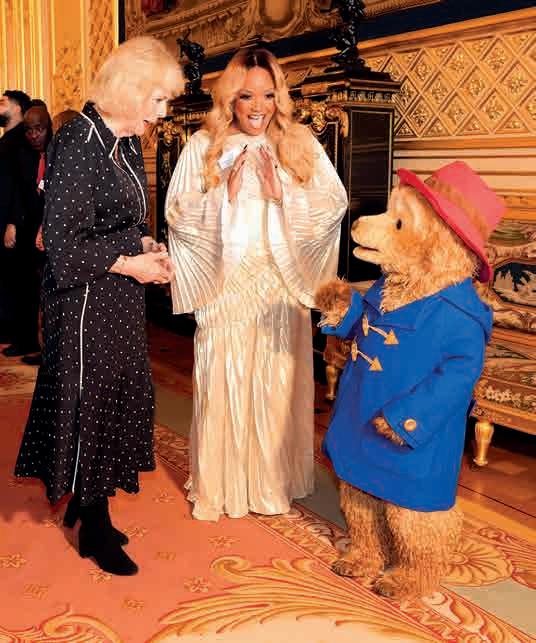
Below: No hard stares as The Queen meets Paddington Bear and West End star Marisha Wallace at a Windsor Castle reception for the 500 Words story-writing competition
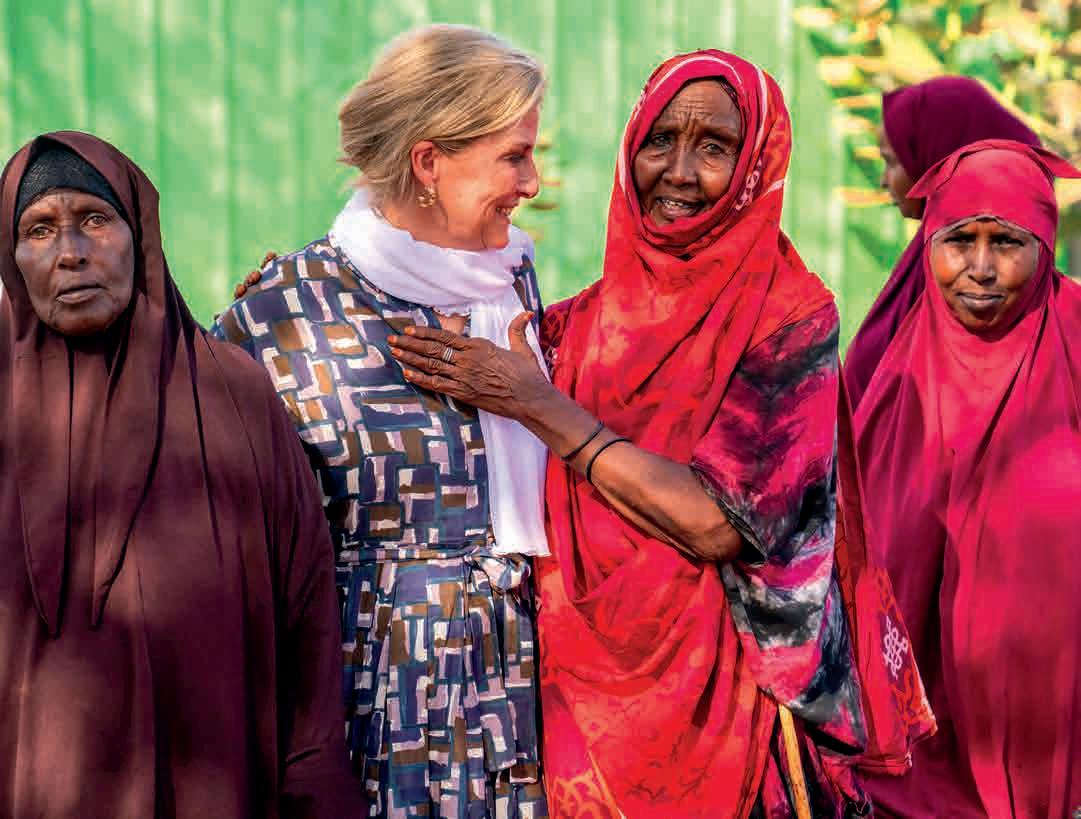
Above: The Duchess of Edinburgh meets wives of Somali soldiers in Lower Shabelle village, to discuss the dangers posed by al-Shabaab militants, and the challenges the women ace while their husbands are away fighting
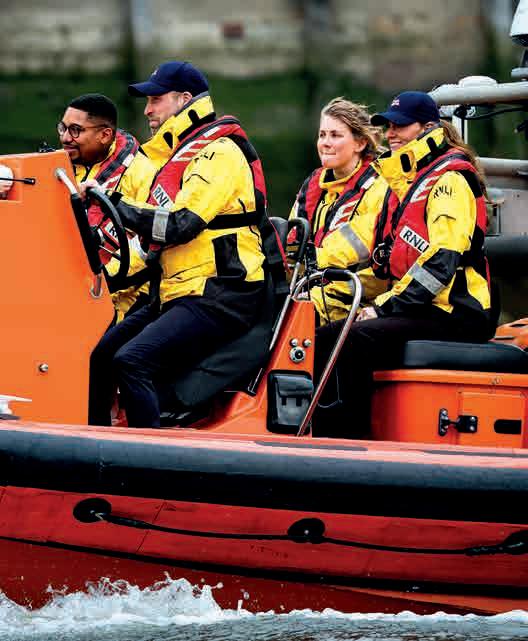
Right: Prince William takes the helm – with the Princess of Wales as a passenger – during a visit to the RNLI’s Tower lifeboat station in London
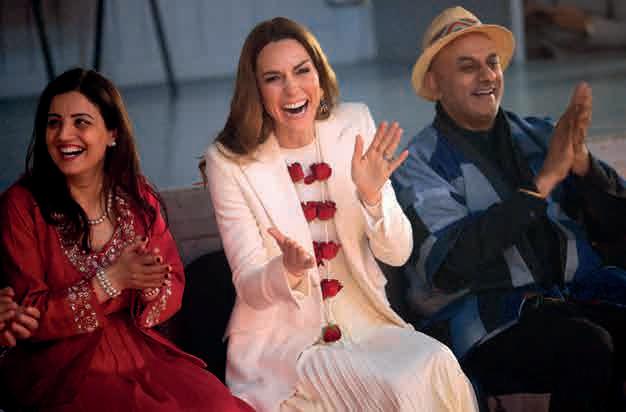
Below: The Princess of Wales during a visit to Leicester in March, where she met dancers from the Aakash Odedra Company and spent time on the city’s ‘Golden Mile’, renowned for its Indian shops and restaurants
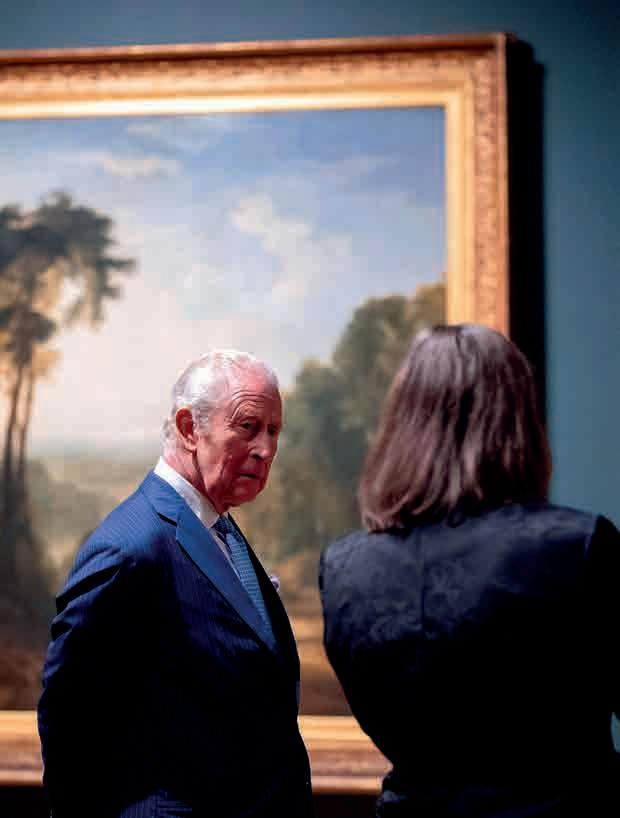
Left: The King visits Tate Britain’s Turner & Constable: Rivals and Originals exhibition in March
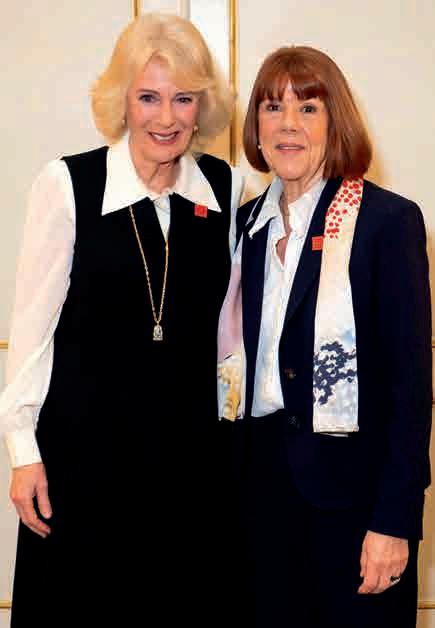
Below: The Queen meets Gisèle Pelicot at Clarence House. Pelicot has been praised for her courage after waiving her anonymity to shame the men who raped her
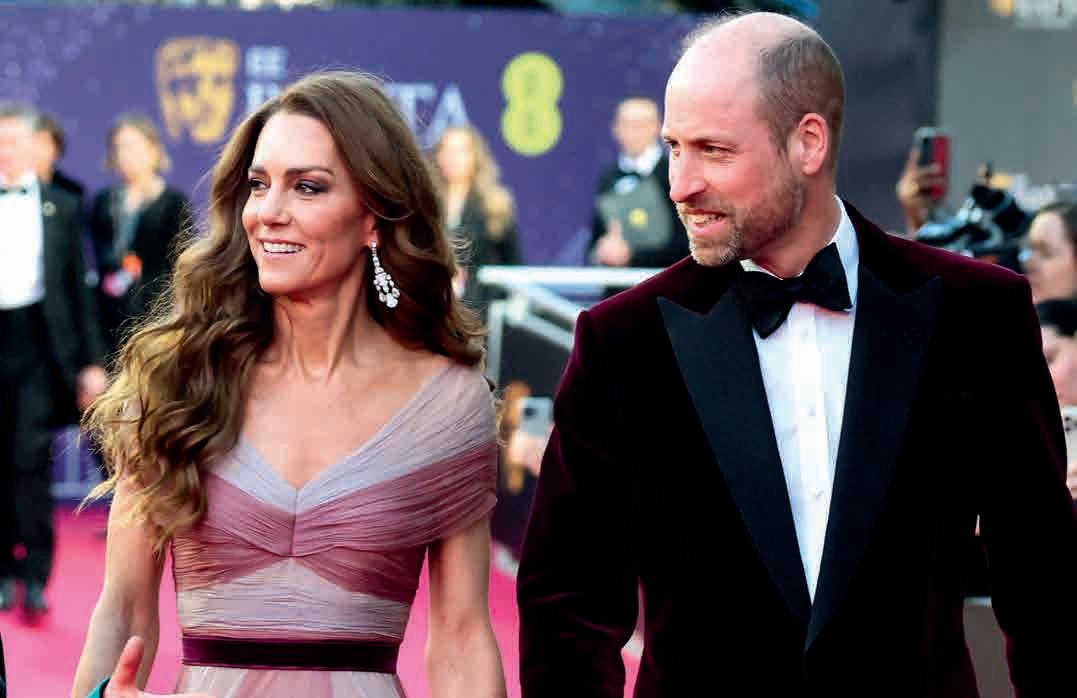
Bottom: The Prince and Princess of Wales attend the Bafta Film Awards at the Royal Festival Hall in London
As we mark the centenary of Queen Elizabeth II, Robert Hardman looks back over the life of an unprecedented monarch who presided over extraordinary change
She was not born to reign. Princess Elizabeth came into this world exactly 100 years ago as the daughter of King George V’s second son, Bertie, Duke of York. Known as ‘Lilibet’, she was widely expected to drop down the line of succession over time. Except that Fate would decree otherwise.
Her childless uncle David would reign less than a year as Edward VIII before her father came to the throne as George VI. Though the Duchess of York had produced a younger sister, Margaret, there had been no brother to supersede Lilibet as heir. Her father’s untimely death in 1952, meant that she was just 25, still adjusting to life as a naval wife and a
mother of two, when she became Queen Elizabeth II. Yet the world would never know another monarch quite like her.
No sovereign would travel further or command more a ection and admiration from nations around the globe. Queen li abeth ’s remarkable 0-year reign had a seismic impact both on those who met her and on the many, many others who felt a special bond with a woman whose life was truly extraordinary. Her dedication to a role unexpectedly thrust upon her, performed with such dignity and purpose, e en during the most challenging periods, made her a gure of great reassurance.
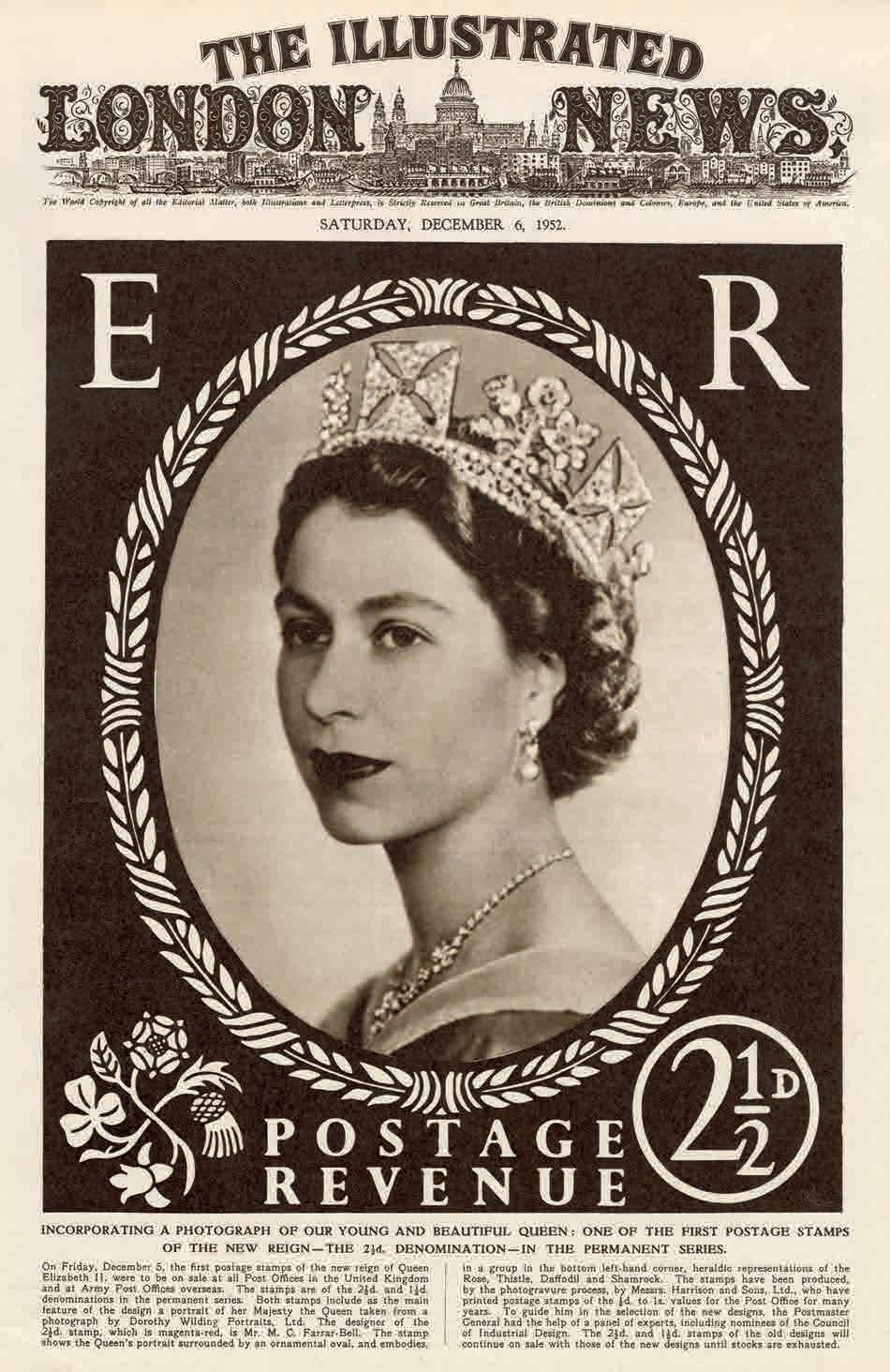
he claimed almost e ery rst in the royal record book the rst monarch to make a tele ision broadcast, to isit ussia and hina, to y in a helicopter and e en to change a tyre. er -year marriage to Prince Philip was unsurpassed in royal history. li abeth would become ritain’s longest-reigning monarch and second only to France’s boy king, ouis V. t is an achie ement that meant far more to her sub ects than to The Queen herself. Famously modest this was the monarch who once said can’t wear beige because people won’t know who am , she was ne er remotely competiti e with her ancestors. f she had e er kept an eye on any family record it is probably the one en oyed by dward V the only monarch to win the erby. er passion for the races has left us with some of the most enduring images of her est for li ing, beaming and cheering as the horses streaked towards the winning post.
Talk to any of The Queen’s family or sta and they will say how much pleasure she took in all aspects of her life, both personal and public. a ing en oyed pri ileged access to the oyal ousehold while writing a portrait of The Queen, was struck by her cheerful reluctance to scale back any of her duties. ntil the frailty of her nal years became increasingly apparent, did anyone e er suggest she might slow down We all do, Prince William told me during my research. y father and her children say it a lot to her. For the grandchildren, it’s a bit di cult for us to say Take it easy’ when she’s so much older than us and has done so much more.
We do hint at taking some things o her, but she won’t ha e anything of it
ence the fact that, ust two days before her death, The Queen was saying farewell to one prime minister, oris Johnson, and appointing another, i Truss. en then, a day later, she was still keeping abreast of the news. istory will record that her last o cial statement was to send a message to the people of anada following a terrorist atrocity.
We now look back o er a reign that, whether we realise it or not, is embedded in our consciousness. Today, few can recall a time when there was someone else on our coins and stamps or leading the nation at the enotaph on emembrance unday. ndeed, the ritish people became so used to seeing their imperturbable so ereign on her tra els, or speaking to the nation at pm on hristmas ay, or appearing on the Palace balcony e ery June, that somehow we felt impossible though we knew it to be in our hearts that she would be with us for e er.
ost ritons held her in great a ection, as did her sub ects in her many realms of which 1 remained at the time of her death, including anada and ustralia. he was, therefore head of state of more of the arth’s surface than anyone else. er face was on so many currencies that it became one of the most reproduced images in history. For the rest of the world she was often regarded with ama ement not merely a person but a phenomenon. he was easily the most famous woman on the planet, despite ha ing no interest in celebrity. n ermany, for instance, she was no longer described in the con entional way as die K nigin’, but simply as die Queen’. n her death, the French president, mmanuel acron, memorably declared To you, she was your Queen. To us, she was The Queen. When she came to the throne on 6 February 19 2, more than half the countries on earth did not e ist in their present form. he was a head of state who predated their ags, their anthems, and often their national boundaries.
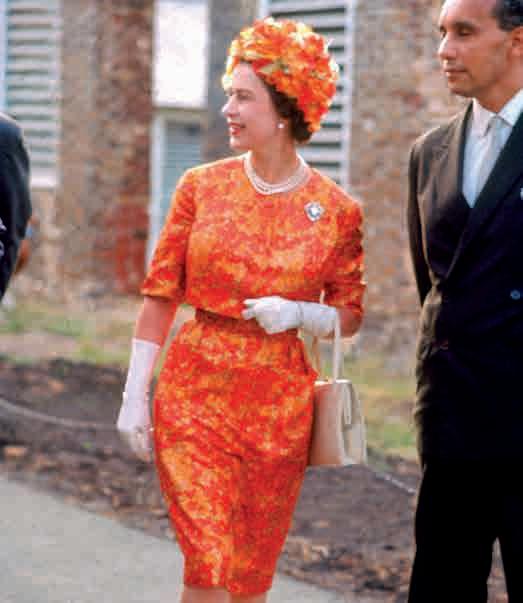
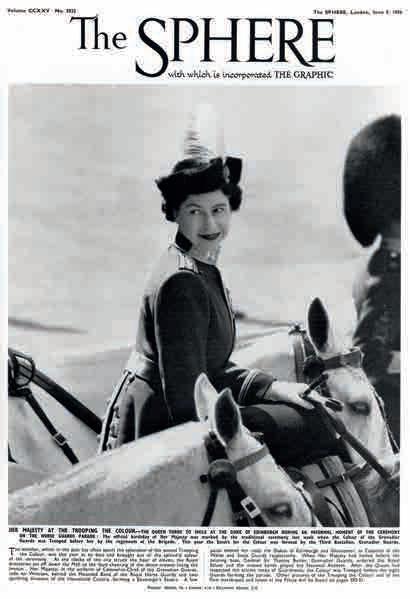
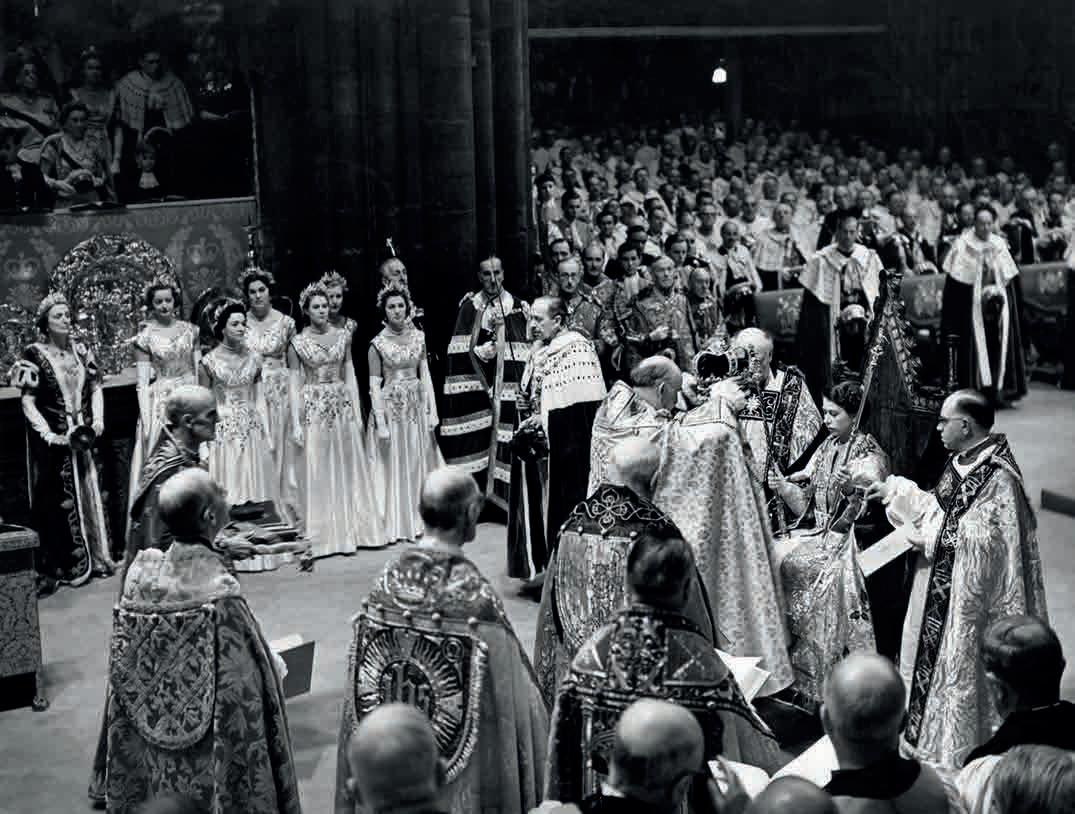
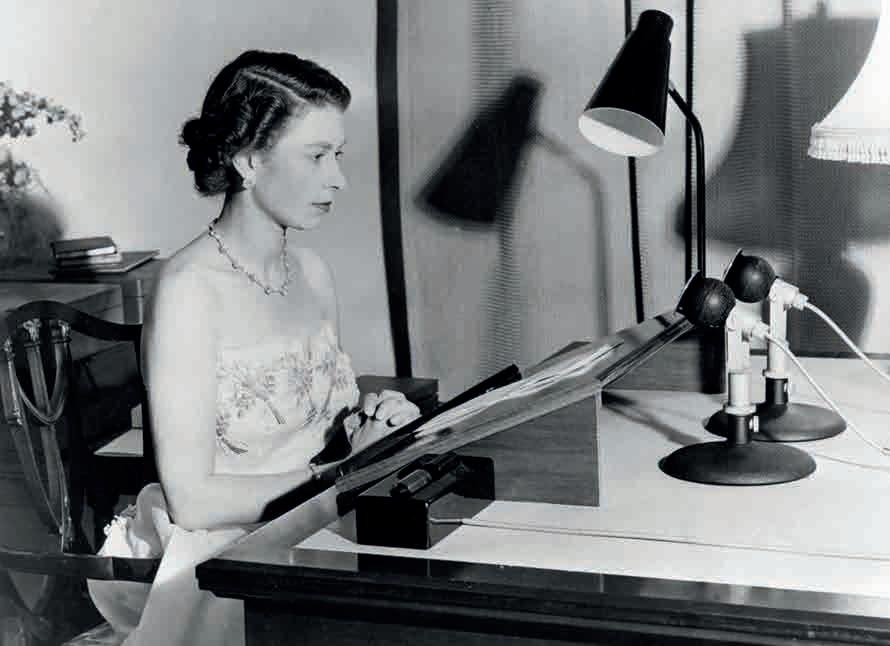
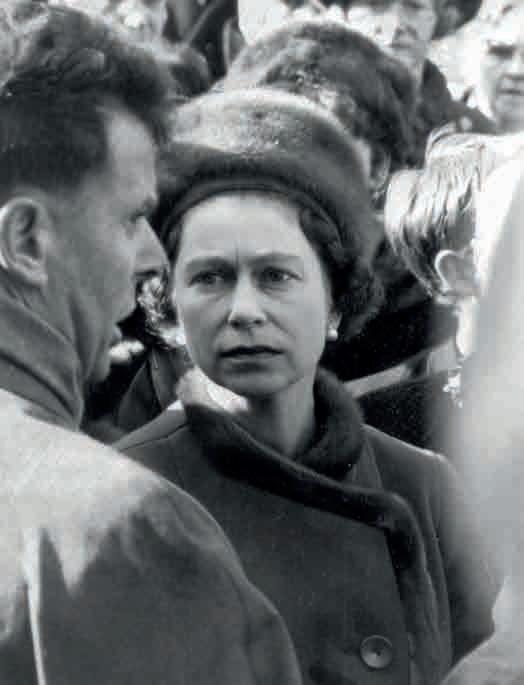
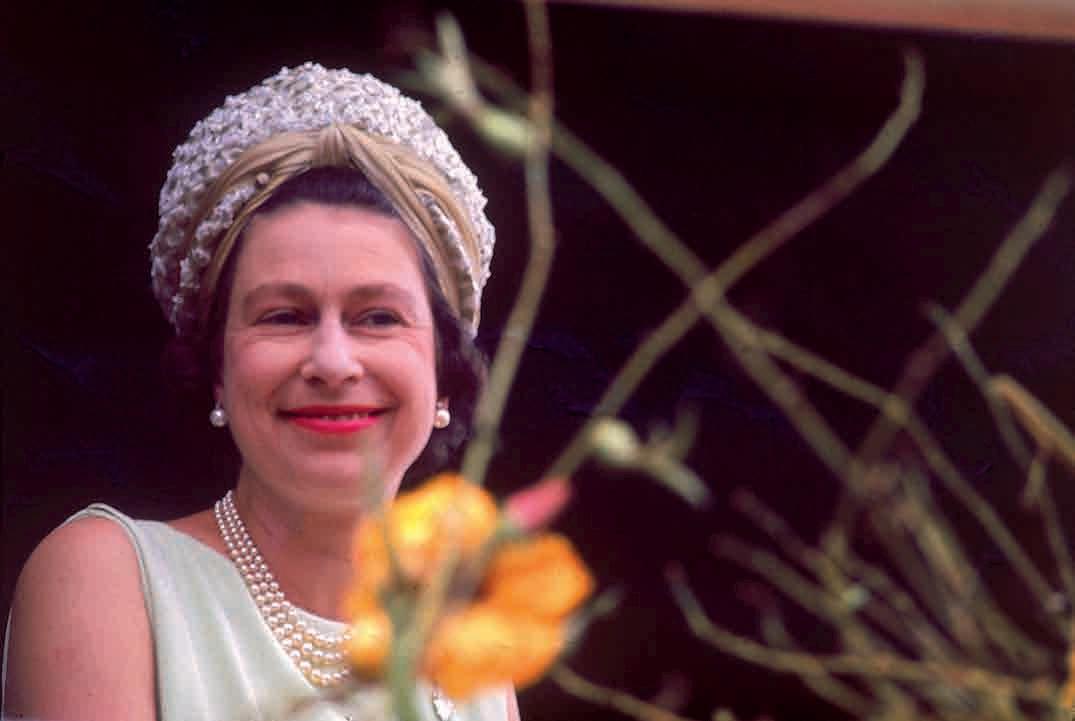
Above, from left: The Queen in Antigua during her West Indies tour in 1966; The Sphere shows The Queen during Trooping the Colour in 1956 Facing page, from top: The Archbishop of Canterbury places St Edward’s Crown on the head of The Queen at the Coronation service in 1953; The Queen makes her Christmas broadcast from Government House in Auckland, New Zealand, in 1953, at the start of a Commonwealth tour
While, throughout most of the 19th century, Queen Victoria oversaw the expansion of the British Empire to the point where it covered more than a quarter of the planet, she never visited her imperial possessions. Her children sailed the oceans on her behalf but, throughout her 6 -year reign, Spain and Germany were the extremities of Victoria’s travels. Queen li abeth was uite di erent. s air tra el opened up the world, she presided over the decline of empire and the emergence of the Commonwealth “family” of independent nations. She visited most and took a keen and genuine interest in them all, from top-table negotiations to the work of myriad small, self-supporting organisations. he attended all but three of the ommonwealth summits that were staged in di erent continents from their inception in 1971 until her death. Perhaps the reason The Queen was so proud of the Commonwealth is that it was a project of her own making. ll her other roles the rown, the udiciary, the church were inherited the ommonwealth was her own work. Commonwealth politicians and diplomats readily concede that without The Queen’s personal involvement, the organisation might ha e folded by now, either through in ghting or inertia. Instead, countries were queuing up to join, including several which had never been part of the former British Empire. When she came to the throne, the organisation had eight member states. By the time of her death, there were 56.
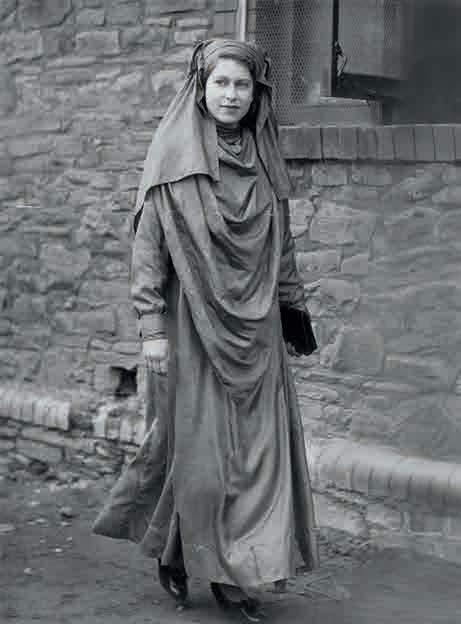
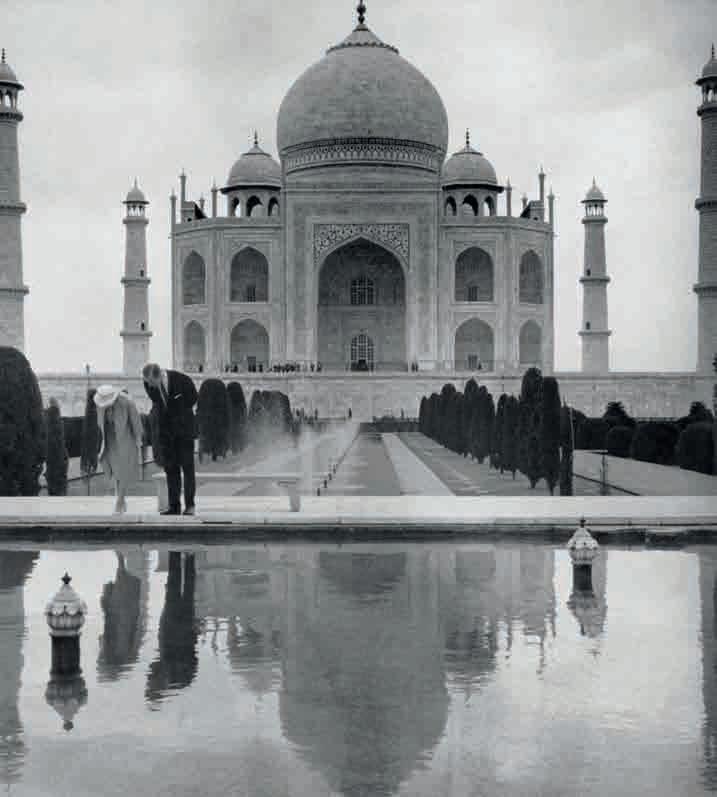
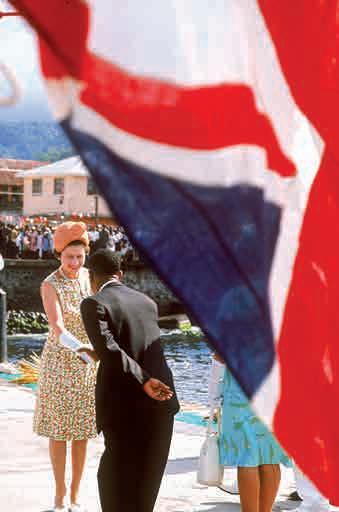
This page, from top: Princess Elizabeth wears a bardic robe at the National Eisteddfod in Mountain Ash, Glamorgan, in 1946; The Queen arrives in St Kitts during her 1966 West Indies tour; and The Queen and Prince Philip at the Taj Mahal during the 1961 tour of India and Pakistan
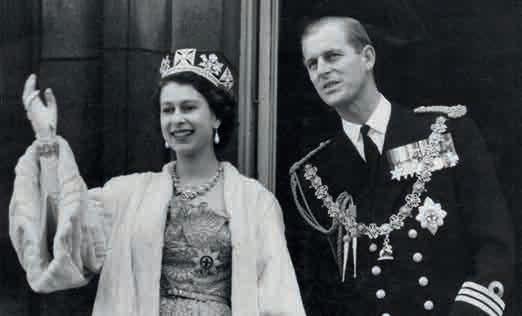
In so many ways, we can trace and track the way the new li abethan age’ de nes our times. n her rst year on the throne, The Queen sent out 2 birthday telegrams congratulating sub ects who had reached their 100th birthday. y 19 , that number had risen to 9 . n 1990, the gure was , 1 and, by 2020, the total was 16,2 .
Whichever yardstick we choose, we see that the pace of change during Queen li abeth ’s reign was e traordinary. e it fashion, transport, technology or taste in food ritain was still on rations when she came to the throne , the gap between then and now is all the more striking when we think that it all occurred under this one monarch. nd it helps to illustrate a de ning characteristic of her reign she constantly adapted to the changing times. he has so often been described as a constant’, but that could not ha e happened without an acute sense of the need to adapt. he was ne er worried about being ahead of the times. er concern was that the monarchy should not be left behind. n her watch, it seldom was.
nd yet, through it all, she stayed true to herself. en at the age of 96, we saw the ery same character digni ed, de oted to her nation, but lea ened with an acute sense of humour as the one who appeared in the plummy-toned 19 0s newsreels.
clear barometer of change is popular music. The Queen reigned through Perry omo, l is, the eatles, bba, lton John, the pice irls and ady aga. he met most of them, too. They may not all ha e matched her taste in music but, as in so many other areas of her life, she kept her own preferences pri ate. f these were the artists the nation liked, then they were more than welcome to perform at the Royal Variety Performance.
Whatever the celebrations, she was delighted to welcome artists who were not necessarily to her own tastes. The Queen was thrilled when she was awarded a gold disc for sales of the album of her olden Jubilee concert. er Platinum Jubilee celebrations culminated in an emotional recital by d heeran of his song Perfect o er a montage of clips of er a esty.
Few would ha e imagined, in the early years of her reign, that there would one day be rock bands performing at the Palace. ut then, e en at the turn of the millennium, it would ha e been inconcei able to think of The Queen taking part in a sketch with James ond for the 2012 lympics opening ceremony or sharing her marmalade sandwich secrets with Paddington ear at the Platinum Jubilee. The ond and Paddington ideos were not without risk. et her decision to take part pro ed pitch perfect. s those who knew her well can testify, she always listened receptively to an idea, however unorthodo , as long as it was well-argued.
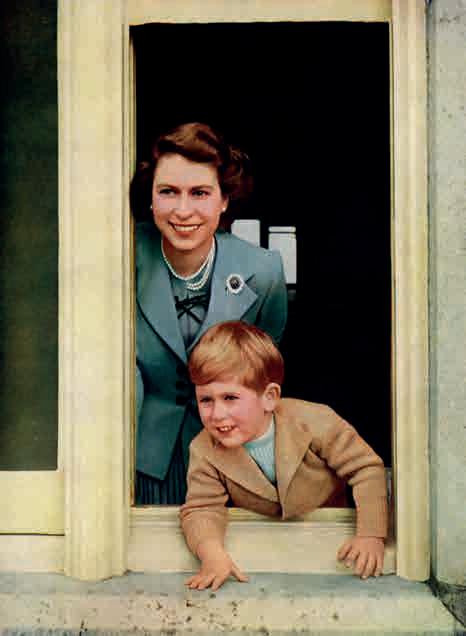
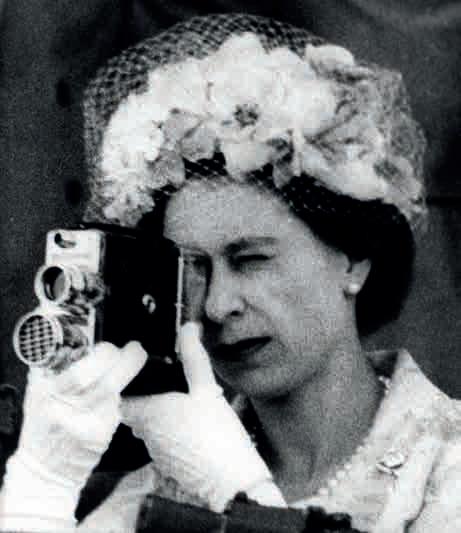
One of The Queen’s roles was Head of the Armed Forces. The Windsors have always been a Forces family. The Queen was extremely proud to be the daughter, wife, mother and grandmother of ser icemen. he saw all the Forces and, in particular, the Household Division, which guards the royal palaces and performs Trooping the olour , as an e tension of the family. And so it was to be expected that The Queen would follow the example of monarchs who went before her by introducing her own decoration, the Elizabeth Cross, in 2009. t is a most unwanted decoration yet, once awarded, it is deeply cherished. For it is only presented to the families of service personnel killed in the line of duty.
Television was in its infancy when she came to the throne. Indeed, it was her 1953 Coronation that did more to extend the reach and ownership of televisions than any other event in British history. This historic occasion was the greatest splash of badly needed glamour since the Second World War. For the rst decade of her reign, media co erage of the monarchy was almost entirely benign and respectful. Yet The Queen would see all that deference disappear in the social maelstrom of the 1960s. Her response was to embrace this change. The rst royal tele ision documentary, the ’s Royal Family, broke viewing records when it was screened in 1969. nd the in estiture of The Prince of Wales amid a nationalist bombing campaign was the rst ceremonial e ent designed entirely around the cameras.
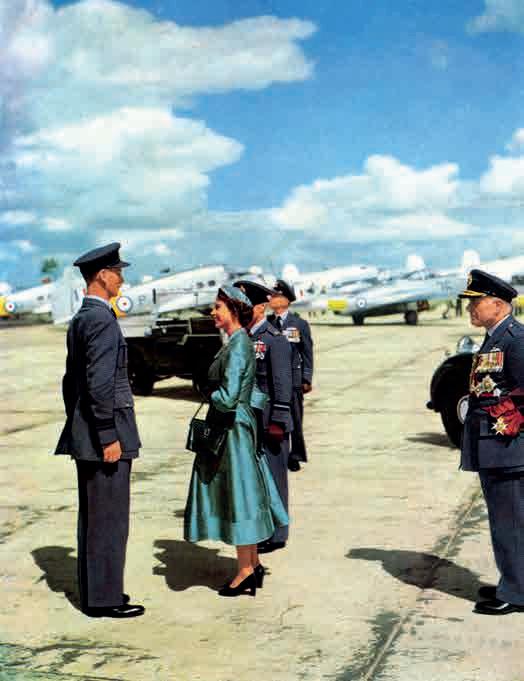
Below: The Queen on her tour of inspection during the RAF Coronation Review at Odiham, Hampshire in July 1953
Below right: Visiting the people of Aberfan after the spoil heap disaster in 1966 which killed 144 people, including 116 children
A year later, on a street in New Zealand, the Queen and Prince Philip quietly tried out an idea which would prove so popular that it has shaped every royal engagement since. Instead of waiting to be introduced to lines of dignitaries, they started to make polite conversation with complete strangers in the crowd. The ‘royal walkabout’ was born. Since then, it has become the staple of royal engagement with the public. King Charles III has never needed any encouragement to plunge into a crowd. In the days following The Queen’s death, one of the most signi cant sights was that of Princes William and arry and their wi es performing a oint walkabout at Windsor.
By the 1990s, the monarchy would be under sustained media attack as royal marriages and royal nances became a tabloid staple diet. With the ad ent of 2 -hour tele ision, followed by the digital revolution, today’s media landscape would have seemed incomprehensible in 1952. The same could be said of The Crown, the la ish et i drama purporting to tell the story of The Queen’s life. Though many plotlines are entirely ctitious, millions still regard it as broadly factual.
Yet The Queen was never averse to innovation. Not only did she welcome television cameras into her homes but she also had her own website and Twitter/X feed, and was often heard remarking to Prince Philip: “You should Google that.” The o id-19 pandemic showed how she was more than ready to embrace new forms of video communication.
And, while the ‘age of deference’ may be long past, the Queen’s personal standing and media ratings barely moved between her accession in 1952 and her death in 2022.
Of course there were hurdles along the way. The 1990s saw a reversal of fortunes, but The Queen refused to retreat or retrench, carrying on as usual. As she often remarked: “I have to be seen to be believed.” At home, she pushed through the most radical reforms of the Royal Household for a century. The era of the gentleman amateur was over. Unisex professionalism transformed the culture of the Palace. The cost of the monarchy was hal ed and the a erage age of the sta went through a similar reduction .
Beyond the Palace walls, these were historic times. As a new world order took shape following the collapse of the o iet nion and apartheid-era outh frica, The Queen was soon extending the hand of friendship to a new generation of leaders such as Nelson Mandela, Boris Yeltsin and Václav Havel. As those leaders themselves entered the history books, the monarch who started out with Winston Churchill just kept on going, sharing her wisdom and worries with prime ministers who were closer in age to her grandsons than herself.
The Queen was well into her 10th decade when the nation faced its greatest peacetime challenge. Yet it was her reassuring, calming tones which comforted millions in the darkest depths of the o id-19 pandemic. Precisely 0 years on from her rst broadcast to e acuees at the height of the Blitz at the age of 14, here she was performing the same crucial role o ering reassurance. er closing remark We will meet again was more uplifting than anything her politicians had to o er.
The Queen’s position as an assiduous Supreme Governor of the Church of England was a great comfort to many of Britain’s religious minorities, for whom today’s increasingly secular society can be a source of concern. It is territory where
no politician would dare to tread. And it helps to explain why every one of The Queen’s prime ministers was grateful for the weekly audiences that form the bedrock of Britain’s constitutional democracy.
Through it all, she had to cope with personal challenges and sadness, most notably the loss of Prince Philip in 2021. Thereafter, in tandem with her heir, she showed a sure hand in laying the ground for the new reign of King Charles III. Between them, they would ensure a transition far smoother than most predicted.
Historians will debate her legacy for years to come. They will, of course, point to shortcomings, notably the o erindulgence of her second son, Prince Andrew, who was later drummed out of public life and went on to heap disgrace upon the family. These, however, were far outweighed by the way in which she guided her thousand-year-old institution during times of unprecedented social, technological and geopolitical change. She inherited the throne of Britain and her other realms at the dawn of the Cold War and the Jet Age, a woman in what was still seen very much as a man’s world. While other world leaders came and went, she remained rmly in charge all through the Swinging Sixties, the Space Age, the rise of a new world order and into a new millennium and the Digital Age. From start to nish, she consistently retained the respect, lo e and a ection of her ery proud peoples. To ha e maintained the monarchy’s position at the apex of society through so much upheaval, while remaining constant and true to herself, is not just remarkable. It is the hallmark of greatness.
Robert Hardman writes for the Daily Mail and is the bestselling author of ‘Elizabeth II. In Private. In Public. The Inside Story’ (published by acmillan)
From the multitudinous team under Queen Elizabeth II to the slimmed-down number of ‘working royals’ today, the monarchy had always had the support of family members to ulfil its busy annual calendar o visits and events y oe ittle
Charles III was 73 when he acceded to the throne in September 2022, seven years past the age at which many of his British subjects put their feet up. His 96-year-old mother worked until two days before she died. Retirement remains an alien concept in that family. Today’s royal workforce, when compared with that of say 30 years ago, is considerably diminished and players have an average age of 77: HM The King and HM The Queen, The Prince and Princess of Wales, The uke and uchess of dinburgh, The Princess oyal, The uke and uchess of
loucester and The uke of Kent. nd Princess le andra, who will be 90 this year, though ill health keeps her out of the ourt ircular the o cial record of royal engagements . n the mid-1990s, Queen li abeth was backed up by a much larger family team Prince Philip, Queen li abeth, The Queen other, the Waleses harles and iana , ndrew and arah ork, Prince dward, The Princess oyal, Princess argaret, The uke and uchess of loucester, Princess lice, uchess of loucester, The uke and uchess of Kent, and Princess le andra.
The term ‘working royals’ came into everyday use around the time The Duke and Duchess of Sussex ceased to undertake o cial engagements in 2020 and mo ed to alifornia. s far as sections of the media were concerned, it was necessary to di erentiate between arry and eghan, and the former Duke of York and his daughters Beatrice and Eugenie, and the fully operating members of the House of Windsor.
The premise is that the monarch enjoys the support of the other working members of ‘The Firm’ and, in theory, royal diaries are synchronised months in ad ance so that the o cial work of His Majesty is never eclipsed by the activities of another member of his family. It doesn’t always go according to plan, of course, and occasionally a breaking news story the ndrew ountbatten-Windsor allegations and arrest, for e ample will o ershadow engagements at home and abroad. ord-lieutenants is a esty’s representati es in each nglish, Welsh and orthern rish county and the lord provosts in Scotland have an important role to play. Informed by the relevant Royal Household that a member of the Royal Family is to visit an organisation in their county, they are often asked to recommend additional places and people to make it into a full away-day’ and ustify the e penditure of a helicopter or other mode of royal transport.
The planning process strictly con dential until announced o cially is detailed and in ol es meetings with the host
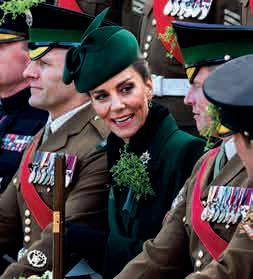
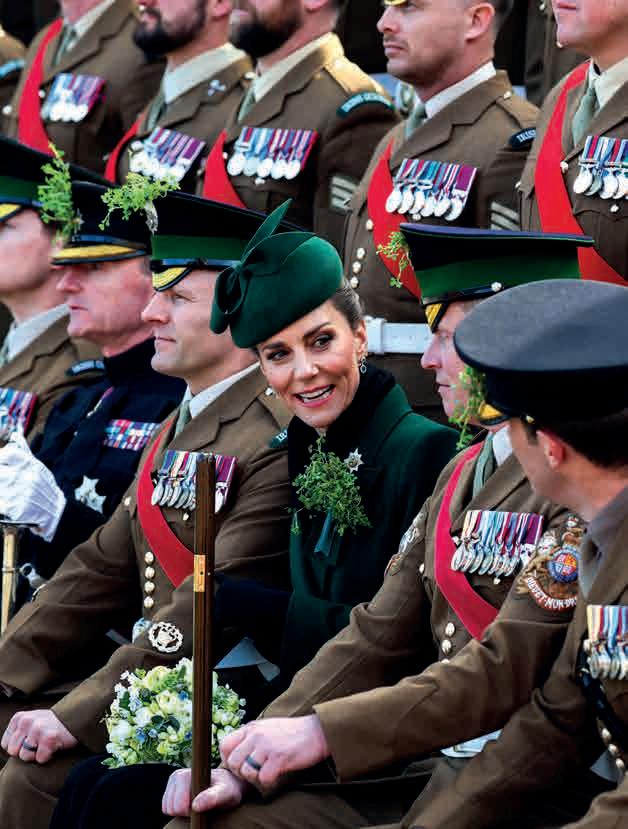
Left: The Princess of Wales, who is Colonel of the Irish Guards, marks St Patrick’s Day with the regiment. She presented sprigs of shamrock to guardsmen at Mons Barracks in Aldershot – and even had one for the regimental mascot, an Irish wolfhound called Turlough Mór
organisation to work on a draft programme and the police for all security aspects.
Having a royal patron or president provides vital publicity for the work of an organisation and allows their achievements and contributions to society to be recognised and promoted. ach member of the working oyal Family has speci c areas of interest and expertise. The King has championed for decades causes relating to the environment, rural communities, the built environment, the arts, healthcare and education.
The Prince’s Trust renamed The King’s Trust following is a esty’s accession was established by him when he was The Prince of Wales in 1976 with his Royal Navy severance pay to help disadvantaged your people overcome challenging circumstances, get into employment or launch their own businesses. Fifty years later, it is one of the UK’s leading youth organisations and to date has helped more than 1.3million young people.
“As you can perhaps imagine, I am so very pleased, and proud, that the Trust’s work continues to go from strength to strength,” The King said recently in acknowledgement of the half-century. e will take part in the 0th anni ersary celebrations this year.
The Queen, a member of the oyal Family since 200 , has ac uired more than 100 patronages and presidencies. ealth and well-being, promoting literacy, the arts, animal welfare, and supporting survivors of rape, sexual assault and domestic violence feature regularly in her working agenda. The Queen’s Reading Room, for instance, launched as an online book club when er a esty was The uchess of ornwall in 2021, goes from strength to strength.
When engaging with the public, Charles III’s approach is one of informal formality, in sharp contrast to that of his late mother and earlier royal generations. It was never Queen Elizabeth II’s style to shake hands with members of the public during a walkabout or be hugged and kissed by them in the way that her eldest son and heir seems to enjoy and at times encourage.
The Prince and Princess of Wales do likewise and usually are happy to pose for the ubi uitous sel e’. atherine’s o cial engagements, halted abruptly in 202 when she announced that she had been diagnosed with an undisclosed form of cancer, have gradually increased since she revealed she was in remission, though there have been challenges.
“You put on a sort of brave face, stoicism through treatment, treatment’s done then it’s like can crack on, get back to normal’,” she told patients while visiting an Essex hospital in the summer of 202 . ut actually, the phase afterwards is really di cult, you’re not necessarily under the clinical team any longer, but you’re not able to function normally at home as you perhaps once used to,” The Princess admitted.
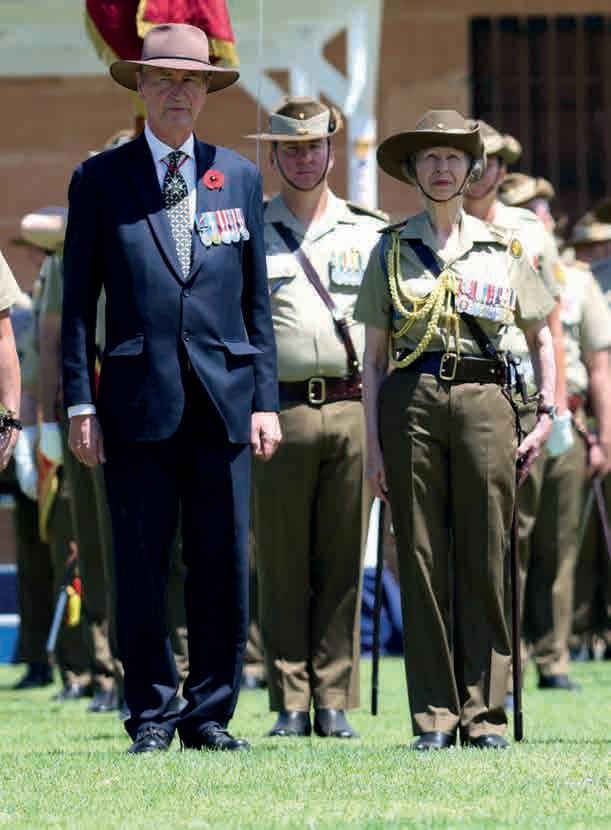
The Princess oyal, for many years one of the hardestworking members of The Firm, continues to play a pivotal role at the age of , as do her brother and sister-in-law, The uke and Duchess of Edinburgh. Edward and Sophie’s contribution to royal life is acknowledged much more by press and public since the change of reign.
The Duke and Duchess of Gloucester, now in their eighties, and the nonagenarian Duke of Kent continue to support the monarch in their typically understated way; their presence at high-pro le royal e ents is e idence, were it needed, that The King and Queen alue their contributions.
harles , when The Prince of Wales, was said to ha e been a proponent of a slimmed-down monarchy, but back then he could not ha e foreseen Prince arry’s withdrawal from the royal fold or the former uke of ork’s public life coming to an abrupt and ignominious end. The goal was to lower royal e penses a perennially contentious topic that, in the light of recent unprecedented de elopments, is once again the sub ect of heated debate. The Public ccounts ommittee is currently scrutinising the rown state’s arrangements for royal residential leases, leading elsewhere to calls for e en greater transparency and accountability in royal nances.
The ouse of Windsor has taken uite a battering in the international media of late, yet people still turn out in force to see The King and members of his family when they undertake o cial engagements around the nited Kingdom. Flags utter, a brass band sometimes plays and the hosts take great pride in welcoming the distinguished guest s to their establishment. nd although the number of isits may ha e decreased because there are fewer working royals these days, the reception remains cordial and enthusiastic.
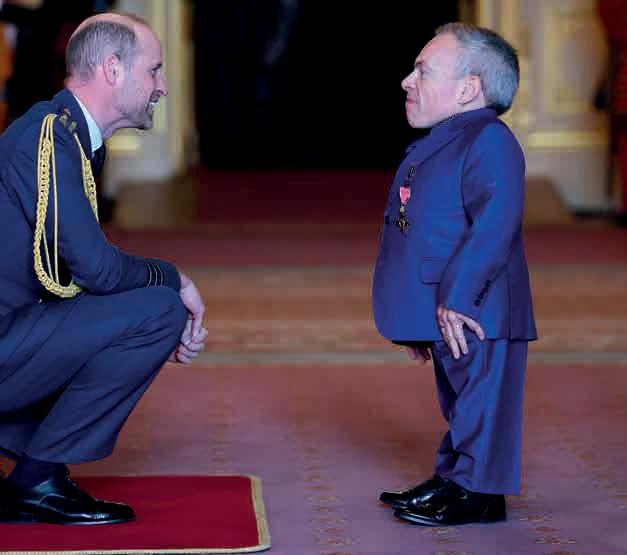
Above: The
and Harry Potter star was appointed OBE for his services to drama and charity
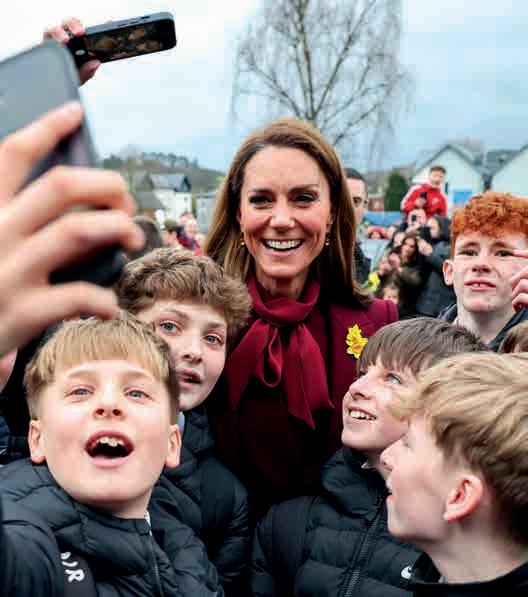
Below: The rincess o ales oses or a selfie with children in Llanidloes in Powys, Wales, where she and Prince William visited the Hanging Gardens community hub to see their preparations for St David’s Day
Who’s who in ‘The Firm’: Working royals and the organisations they support
Charles Philip Arthur George, born 14 November, 1948
Accession to the throne: 8 September, 2022
Address: Clarence House; Windsor Castle; Highgrove House; Sandringham House; Birkhall
As The Prince of Wales, King Charles III was affiliated ith organisations ollo ing a ma or revie , is a esty continues his long standing support for military veterans as patron of the oyal British egion he ing, as ead of the ommon ealth, succeeded his mother as patron of the ommon ealth arliamentary ssociation, the ommon ealth orestry ssociation and the oyal ommon ealth ociety
THE QUEEN
Camilla Rosemary Shand, born 17 July, 1947
Address: Ray Mill House; Birkhall ursing has long been associated ith the oyal amily and he Queen is no the si th royal patron of he Queen’s ursing Institute s he uchess of orn all, she too on the presidency of the oyal steoporosis ociety because both her mother and grandmother died as a result of the brittle bone disease
THE PRINCE OF WALES
Prince William Arthur Philip Louis, born 21 June, 1982
Address: Forest Lodge, Windsor Great Park; Anmer Hall, Norfolk; Kensington Palace i e his father, he ing, protecting the environment is a ey priority for rince illiam, hich is hy he launched he Earthshot rize in e is a passionate advocate for the homeless and numbers entrepoint and he assage among his patronages ental health is another topic that occupies much of he rince’s time
THE PRINCESS OF WALES
Catherine Elizabeth Middleton, born 9 January, 1982
Address: Forest Lodge, Windsor Great Park; Anmer Hall, Norfolk; Kensington Palace Early childhood support has been a feature of he rincess’s or ing life for more than a decade, and she places great emphasis on the importance of sport and the outdoors he is royal patron of several sport related institutions, including he ll England a n ennis and ro uet lub imbledon , he a n ennis ssociation and ugby ootball eague and nion
Prince Edward Antony Richard Louis, born 10 March, 1964
Address: Bagshot Park, Surrey
he u e of Edinburgh’s ard, founded by rince hilip in , has been a focus of his youngest son’s life for the past years Ed ard gives much of his time to organisations hich allo young people to develop their s ills through theatre and music, among them the ational outh heatre of reat Britain, orthern Ballet and the ational outh rchestras of cotland port is another of his interests and he is patron of the British aralympic ssociation
THE DUCHESS OF EDINBURGH
Sophie Helen Rhys-Jones, born 20 January, 1965
Address: Bagshot Park, Surrey
he uchess of Edinburgh concentrates much of her or on supporting omen and championing gender e uality and inclusion in the or place through her involvement ith omen in inance and he u e of Edinburgh ard’s omen in Business ommittee s lobal mbassador for the International gency for the revention of Blindness, ophie supports organisations ith the no ledge, e perience and funding to ma e sight a reality for as many people as possible around the orld
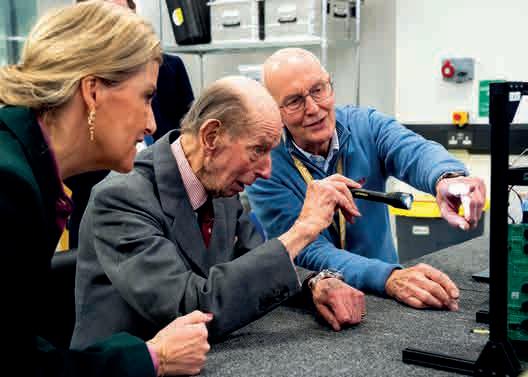
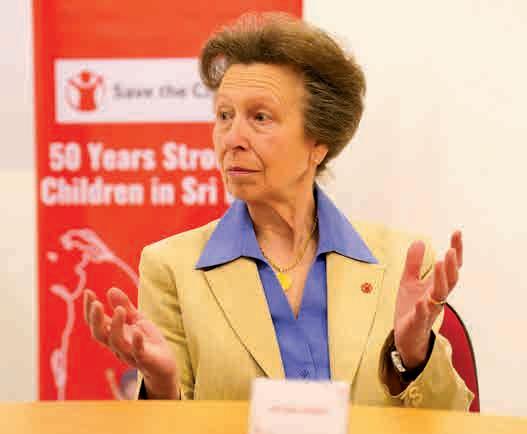
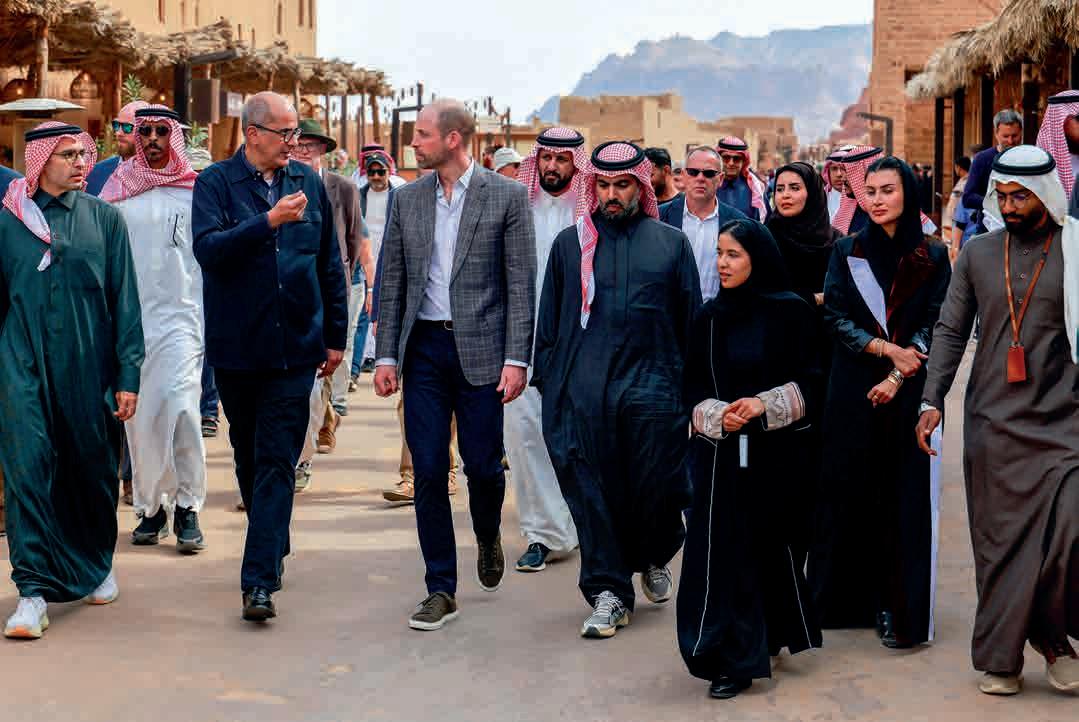
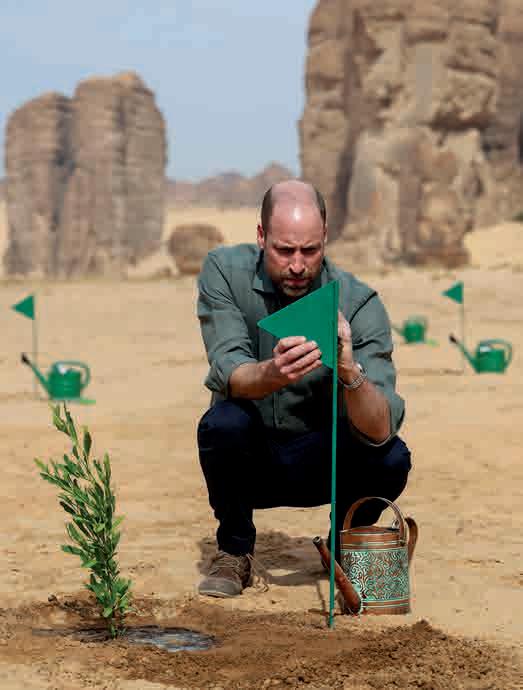
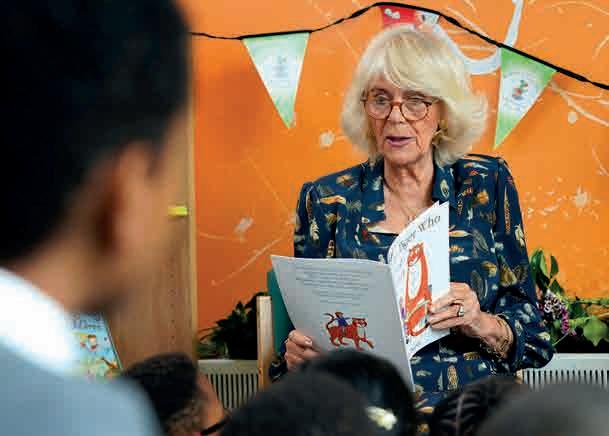
This page, from top: The Duchess of Edinburgh and The Duke of Kent watch a demonstration of space technology at the Surrey Space Centre in Guildford; The Princess Royal at Save the Children’s HQ in Colombo during a visit to mark 75 years of diplomatic relations between the UK and Sri Lanka; and The Queen, when she was The Duchess of Cornwall, reading The Tiger Who Came To Tea to children at ri fin rimary School in ine lms London. Her Majesty is the Patron of BookTrust Facing page: A passionate advocate for the environment, Prince William lants an acacia tree at the Sharaan ature Reserve in l la Saudi rabia
THE PRINCESS ROYAL
Princess Anne Elizabeth Alice Louise, born 15 August, 1950
Address: Gatcombe Park, Gloucestershire; St James’s Palace
The Princess Royal is probably best known for her work with Save the Children, of which she has been President since 1970. She is involved with more than 300 charities, organisations and military regiments in the UK and Commonwealth.
THE DUKE OF GLOUCESTER
Prince Richard Alexander Walter George, born 26 August, 1944
Address: The Old Stables, Kensington Palace
As a trained architect, The Duke’s patronages reflect his professional interests, including heritage and the built environment. He is patron or president of many charities and organisations, ranging from Ash (Action on Smoking and Health) to the British Association of Friends of Museums, St Bartholomew’s Hospital and The Japan Society.
THE DUCHESS OF GLOUCESTER
Birgitte Eva van Deurs Henriksen, born 20 June, 1946
Address: The Old Stables, Kensington Palace
The many charities and organisations supported by The Duchess range from The Lawn Tennis Association and The Children’s Society to The Friends of St Paul’s Cathedral and Parkinson’s UK.
THE DUKE OF KENT
Prince Edward George Nicholas Paul Patrick, born 9 October, 1935
Address: Wren Cottage, Kensington Palace
The Duke’s involvement with more than 140 different charities, organisations and professional bodies covers a wide range of issues, from commemorating the war dead to fostering the development of British technology and industry. He has been President of the Royal National Lifeboat Institution since 1969, and of the Stroke Association since 1977.
PRINCESS ALEXANDRA
Princess Alexandra Helen Elizabeth Olga Christabel, born 25 December, 1936
Address: Thatched House Lodge, Richmond Park; St James’s Palace
Mental health care, palliative care and international aid are among The Princess’s interests, as are classical music and opera. She was Chancellor of the University of Lancaster for 40 years and has been royal patron of the Florence Nightingale Foundation since 1957.
Through 10 decades Queen Elizabeth II was a front-row witness to history, and a frequent participant in moments that mattered. Lucinda Gosling charts the ups and downs of her long and eventful reign.
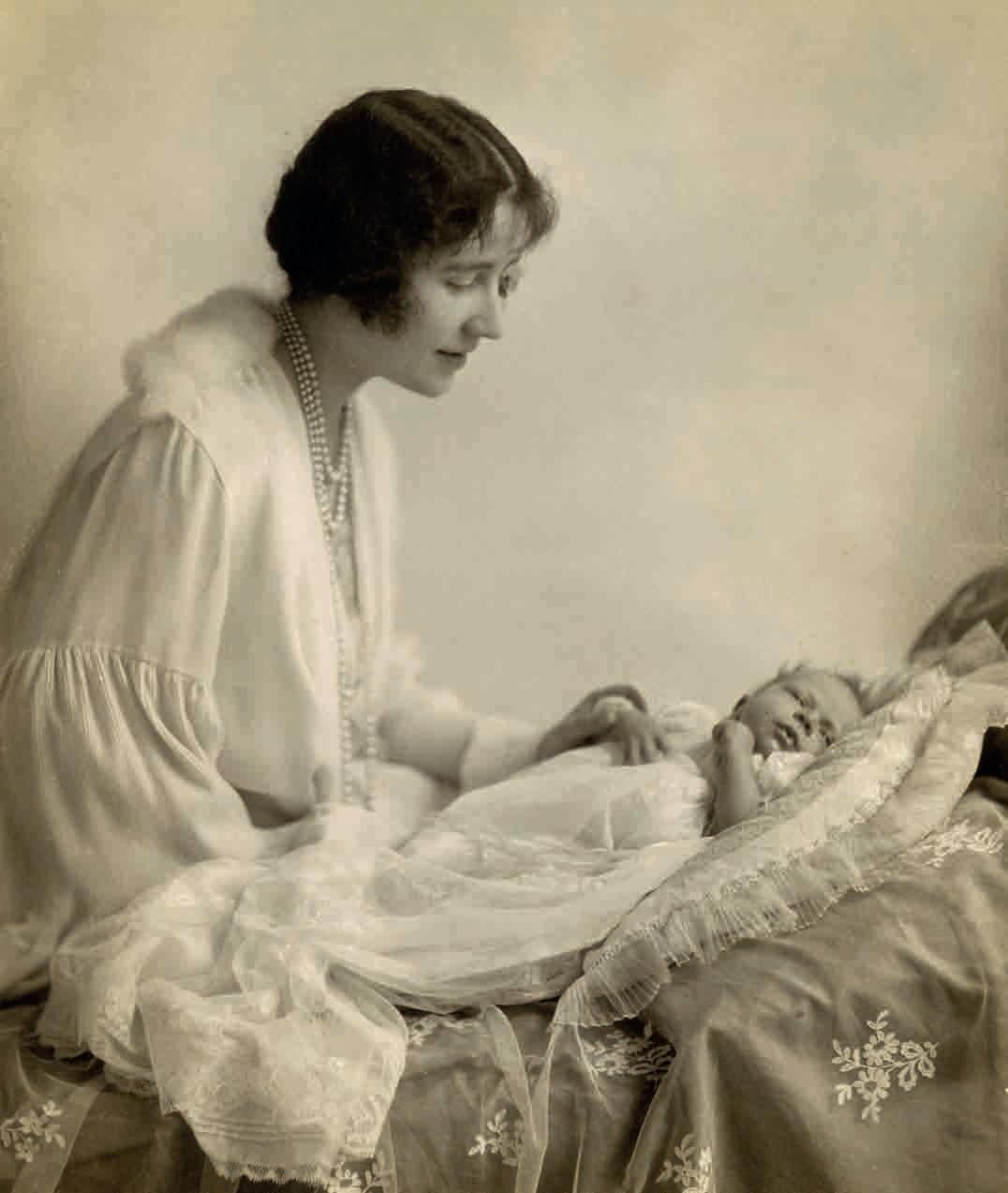
Princess Elizabeth of York is born on 21 April 1926, at 17 Bruton Street, the London home of her maternal grandparents, the Earl and Countess of Strathmore. The Duke and Duchess of York stay there for three weeks with their newborn baby and are therefore in the heart of London when a General Strike is called across Britain on 4 May. An estimated 2.5million workers in transport, gas, electricity, building, engineering, iron, steel and printing come out in support of the country’s coal miners, who are protesting against reduced wages and longer working hours. According to Winston Churchill, then Chancellor of the Exchequer, the country loses an estimated million in re enue due to the shutdown, but after eight days, with little public support, the strike is called o . King eorge V, while sympathising with the strikers, noted the peaceful outcome of the crisis in his diary: “Our dear old country can be proud of itself,” he wrote with relief. “It shows what a wonderful people we are.”
When Princess li abeth is ust eight months old, her parents depart on a si -month tour of ustralia and ew ealand, lea ing her in the care of both sets of grandparents and her nanny, lara llah’ Knight. fter bidding farewell to her daughter, the uchess of ork writes to her mother-inlaw, Queen ary, admitting she felt ery much lea ing on Thursday, and the baby was so sweet playing with the buttons on Bertie’s uniform that it quite broke me up”. But it was not unusual for children in aristocratic circles to be left in this way, and in the case of Princess Elizabeth’s parents, who had been in ited to open the ommonwealth Parliament in the new ustralian capital of anberra, duty to the King and the mpire, comes rst.
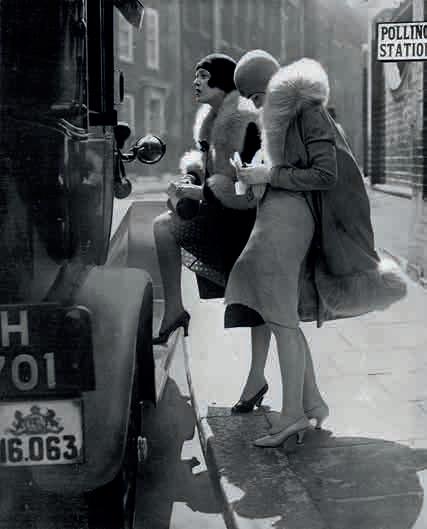
n the eneral lection, all women o er 21 can ote for the rst time following the epresentation of the People ct the pre ious year. t is known as the apper ote’. King eorge V, recei es ritain’s abour Prime inister, Ramsay MacDonald in his bedroom at Windsor as he is reco ering from an operation for a pleural abscess. uring The King’s long con alescence, Princess li abeth oins her grandparents in the seaside town of Bognor where her presence greatly lifts the spirits of her randpa ngland’. “G. delighted to see her,” writes Queen Mary in her diary.
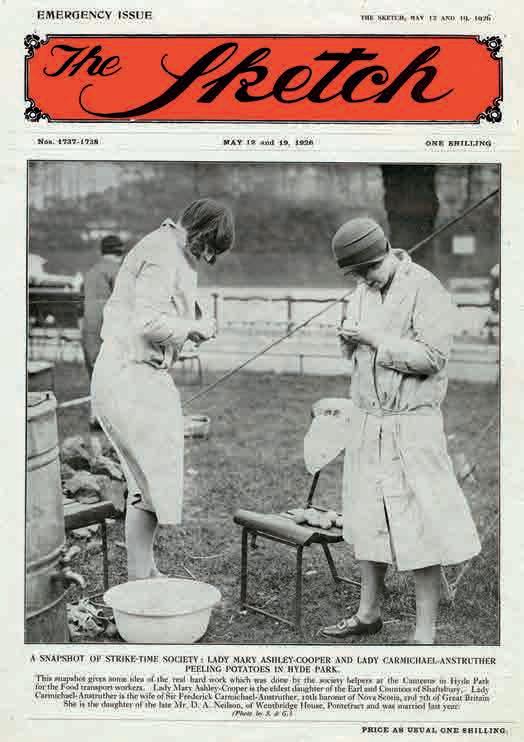
This page: Lady Mary Ashley-Cooper and Lady Carmichael-Anstruther peeling potatoes in Hyde Park, above, from an emergency edition of The Sketch produced during the General Strike of May 1926. Three years later, in 1929, women over 21 were able to vote for the first time le t
Facing page: The Duchess of York with the baby Princess Elizabeth, pictured in The Sphere in May 1926
Repercussions of the Wall Street Crash are felt in Britain as the pound is devalued by 30 per cent. King George V urges his family to economise in line with the rest of the country, and decrees that Civil List payments to himself and his sons be cut by half. The Duke and Duchess of York, used to renting winter homes, now use Royal Lodge in Windsor as their country home. Y Bwthyn Bach, a miniature cottage built and given to Princess Elizabeth by the people of Wales, stands in its grounds.
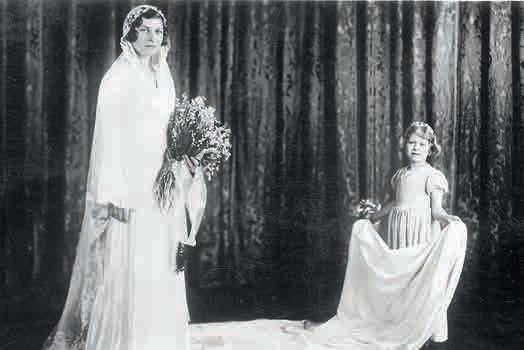
Princess li abeth, aged e, undertakes what is considered to be her rst public engagement when she is a bridesmaid at the wedding of Lady May Cambridge to Captain Henry Abel Smith at St Mary’s Church in the village of Balcombe in West Sussex.
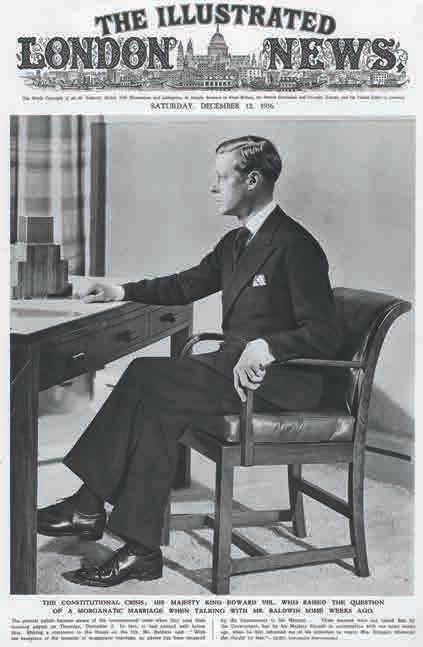
After several years of ill health, King George V dies at Sandringham on 20 January 1936 and Princess Elizabeth’s Uncle David becomes King Edward VIII. The new King is viewed as a modernising man of the people, a culmination of his high-pro le world tours and his isits to depri ed areas during the years of economic depression. Adept at public gestures, he is a monarch with air widely popular and seen to have the common touch. But behind the scenes, his intensifying lo e a air with merican di orc e Wallis
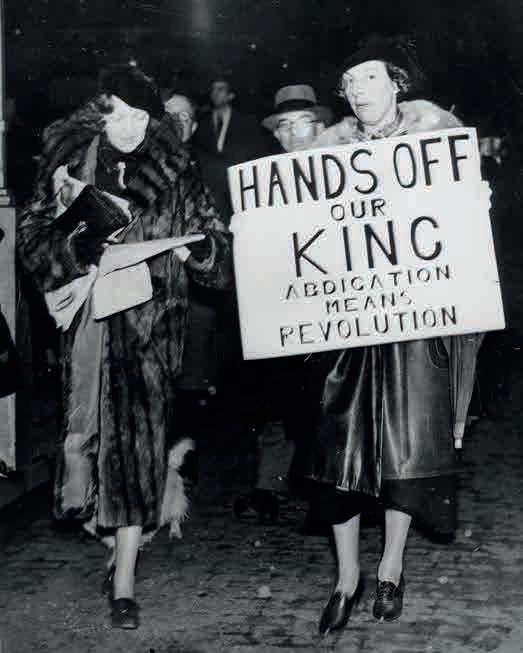
Simpson causes concern. On 9 December 1936, after a reign of less than a year, King Edward VIII abdicates in order to marry Wallis. His younger brother Bertie reluctantly becomes King George VI. On hearing the news, Princess Margaret famously remarks to her older sister, “Does this mean you’re going to become Queen?” Princess Elizabeth replies, “Yes, I suppose it does”, a typically phlegmatic response from a young girl who would go on to be admired for her unwavering sense of duty.
The Coronation of King George VI takes place on 12 May. Princess Elizabeth watches the ceremony beside her grandmother, Queen Mary.
1939
On 3 September, Britain declares war on Nazi Germany.
On 12 May 1940, Princess Elizabeth and Princess Margaret move to Windsor Castle with their governess, Marion Crawford, and a changing cohort of Grenadier Guards as protection. The exact location of their whereabouts remains undisclosed. Buckingham Palace is bombed in September 1940 when The King and Queen are in residence.
The Royal Family plays a pivotal part in maintaining national morale through the war years, with Princess Elizabeth being no e ception. n ctober 19 0, she makes her rst radio broadcast aimed at British children sent overseas saying: “We know from experience what it means to be away from those we love most of all.” She and her sister are depicted in the press bearing their isolation with stoicism, knitting and sewing, or learning useful skills as Girl Guides.
It is made known that the privations of war extend to royalty too, with reports that dresses are being altered and birthday cakes made from the simplest ingredients. The Royal Family’s perceived ‘ordinariness’ and their own wartime experiences, while distinct from those of most of the population, are nevertheless totemic of the family values and decency for which the armed forces are ghting.
In the spring of 1945, Princess Elizabeth joins the Auxiliary Territorial er ice T and takes a dri ing and ehicle maintenance course at Camberley, Surrey. On 8 May, as the nation celebrates VE Day, she appears in uniform on the balcony of Buckingham Palace alongside her mother, father and sister, to acknowledge the cheering crowds gathered below. Later that day, she and Princess Margaret mingle, mostly unrecognised, with the revellers celebrating the end of the war in Europe.
The ational ealth er ice is established by the post-war Labour government, promising healthcare for all, from cradle to grave. In July 2022, 75 years later, Queen Elizabeth II would award the George Cross to representatives of the NHS in recognition of its outstanding work.
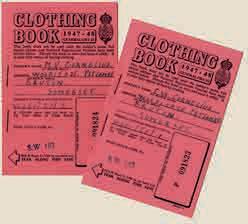
Princess li abeth embarks on her rst royal tour, accompanying her parents and sister to South Africa. In July of that year, her engagement to Lieutenant Philip Mountbatten is announced. The wedding takes place at Westminster Abbey on 20 November, an event described by Sir Winston hurchill as a ash of colour on the hard road we tra el . Rationing is still in place and Princess Elizabeth is given 200 clothing coupons towards her Norman Hartnell dress, while ingredients for the wedding cake are donated from around the world, including our from anada and rum from Jamaica.
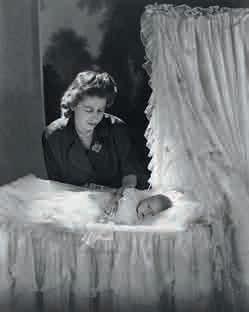
Princess Elizabeth gives birth to a baby boy on 14 November 1948 at Buckingham Palace. The future King Charles III is the rst of her four children. n celebration of the new arri al, gun salutes are red and the fountains in nearby Trafalgar Square are illuminated in blue.
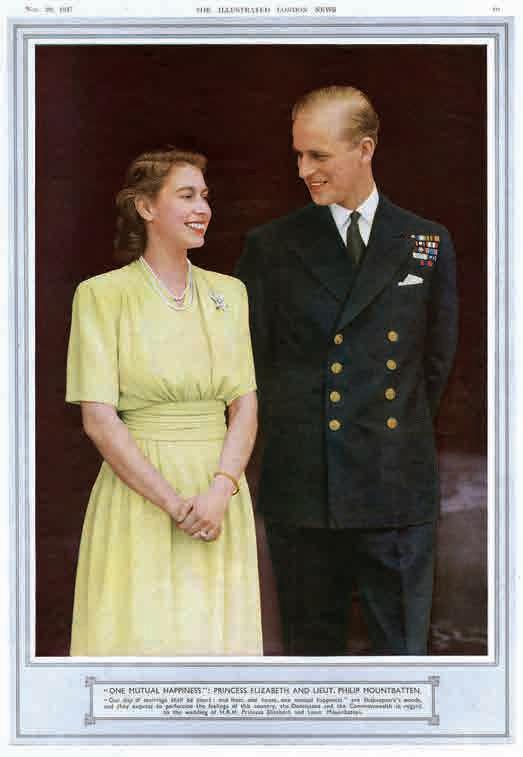
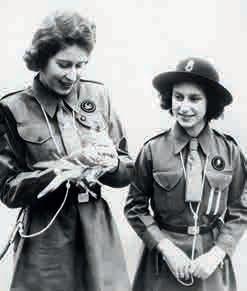
From top: Princess Elizabeth and Lieutenant Philip Mountbatten in the Royal Wedding Number of The Illustrated London News in 1947; Girl Guides Elizabeth and Margaret send a message by courier pigeon in 1943; clothing coupons issued during rationing – Princess Elizabeth received 200 towards her wedding dress and the first o fical ortrait of the Princess with Prince Charles, taken by Cecil Beaton in 1948
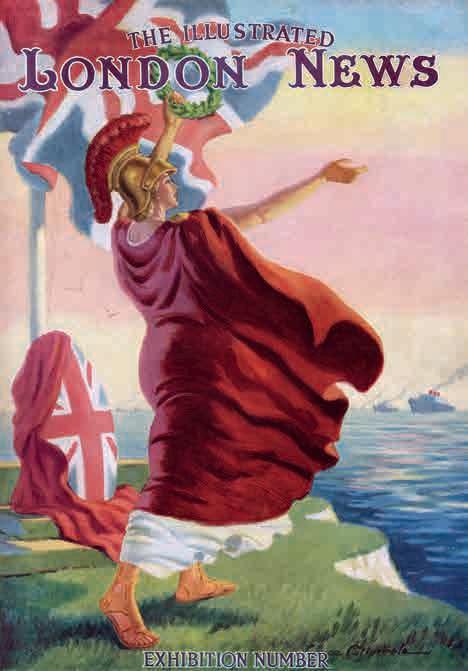
The Festival of Britain takes place between May and September, marking the centenary of the Great Exhibition organised by Prince lbert, and o ering an optimistic celebration of British art, design, science and industry in the austere post-war years. The festi al is o cially opened by King George VI from the steps of St Paul’s Cathedral on 3 May and the Royal Family visits the festival site on London’s South ank the following day. Princess li abeth isits festi al e ents in other cities, including lasgow and orwich. Together with The uke of dinburgh, she departs the K on ctober for a successful e-week tour of anada, a trip that con rms her role as a fully edged working royal.
n 6 February, King eorge V dies in his sleep at andringham. lthough his health has been deteriorating for some time, it is unexpected, and his daughter is on holiday in Kenya ahead of a tour of ustralasia. The news is broken to her by her husband who had been informed by their aide, a or artin harteris. The latter tells a press conference that she recei ed the news ra ely, like a ueen . The following day, she disembarks from a plane at London Airport, pale but composed, and is met by the Prime Minister, Winston hurchill. The Illustrated London News, reporting on The King’s death, writes We take this opportunity of voicing our deep sorrow and loyal sympathy with The Queen and all the Royal Family, and most particularly with Princess li abeth, who now takes up the hea y responsibilities to which her destiny has called her.
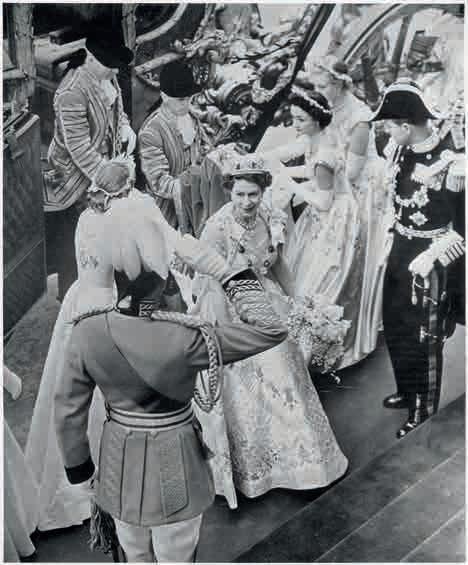
The oronation of Queen li abeth takes place on 2 June, heralding a new li abethan ge.
fter gypt nationalises the ue anal, srael in ades, followed by Britain and France, who do so on the pretence of peacekeeping. s constitutional monarch, The Queen is at the centre of the deepening ue risis. he is pri y to more information than some Cabinet ministers, but must remain neutral in her opinions, upholding the monarch’s role, to ad ise and warn’ her Prime inister. The Queen’s iews on ue remain pri ate, although one courtier later suggests she may have asked the Prime Minister, Anthony Eden, “Are you sure you are being wise The ue risis lea es ritain’s relationship with its ally, the United States, strained and its status on the world stage considerably diminished.
Television ownership has been increasing across the United Kingdom, initially spurred by The oronation. n hristmas ay, The Queen deli ers her rst tele ised hristmas message li e from andringham.
The wedding of Princess argaret to ntony rmstrongJones takes place on 6 May at Westminster Abbey.
The Queen makes a state visit to Ghana, which had gained independence from the United Kingdom in 1957 but is a member of the modern Commonwealth of Nations. Now a republic under the leadership of President Kwame Nkrumah, it is a country where there is single-party rule and anti- ritish sentiment is high. There are fears among government advisers and the Prime Minister, Harold Macmillan, over The Queen’s safety, but as Head of the Commonwealth, to which she is wholeheartedly committed, she insists on going ahead ha ing cancelled a proposed trip in 19 9 because of pregnancy . The visit passes without incident and the Ghanaian press calls her “the greatest socialist monarch in the world”.
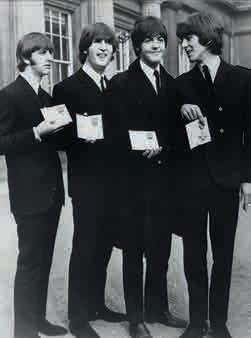
On 26 October, The Beatles collect their MBEs from The Queen at Buckingham Palace. Some former recipients are so incensed that they return their own awards, and one war veteran sends back his medals. When the Fab Four meet The
Queen she asks them, “Have you been together long?” Paul McCartney replies, “Yes, many years” and Ringo Starr adds, “Forty years” causing her to laugh. Recognition of The Beatles and their contribution to British music is instigated by the Prime Minister, Harold Wilson. It is seen as part of a wider e ort to mo e with the times. n 1969, John ennon would post his MBE back in protest at Britain’s involvement in the igeria iafra con ict and its support of the Vietnam War.
The Welsh mining illage of berfan su ers an unimaginable tragedy on 21 ctober when a spoil heap collapses, engul ng a primary school and killing 116 children and 28 adults. The Queen delays visiting Aberfan for six days, expressing concern that her presence may hamper rescue e orts. t is a misjudgement in a situation calling for a more instinctive, instantaneous response. When she does visit, she is visibly moved by what the Aberfan community has endured.
On 30 July, England win the World Cup, beating West ermany -2 after e tra time in the nal at Wembley. The Queen presents the trophy to England captain, Bobby Moore.
The oyal Family stars in a y-on-the-wall documentary. Transmitted on BBC1 on 21 June, Royal Family is watched by an estimated 68 per cent of the British population, who tune in to see private moments like The Queen buying Prince Edward an ice cream, or the Royals preparing for a family barbecue. Intended to present a positive portrait of a modern monarchy, some argue that Royal Family damages their mystique, fuels a less reverential attitude and encourages future intrusion.
The Investiture of The Prince of Wales takes place at Caernarfon Castle on 1 July, in a ceremony that has its roots in the medieval era but is beamed into the country’s living rooms through modern technology.
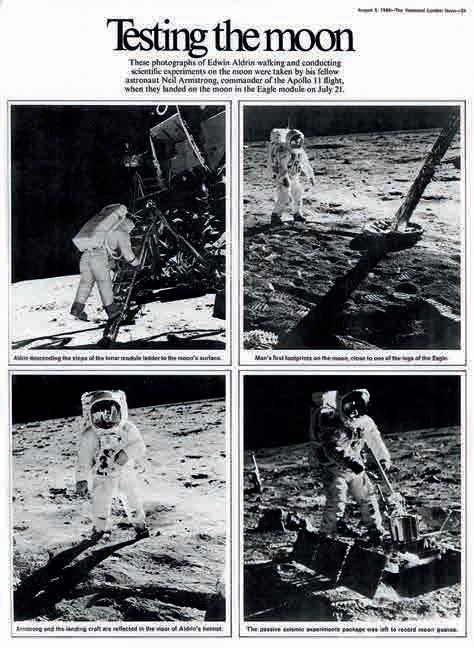
The Queen sends a message to the Apollo 11 astronauts after the rst moon landing, stating salute the skills and courage which have brought man to the moon. May this endeavour increase the knowledge and well-being of mankind. n 1 October, the astronauts are invited to Buckingham Palace. eil rmstrong, su ering from a bad cold, has the mortifying experience of accidentally coughing in The Queen’s face.
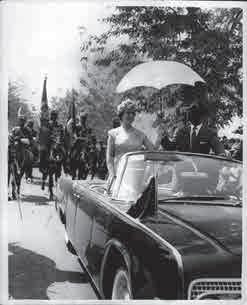
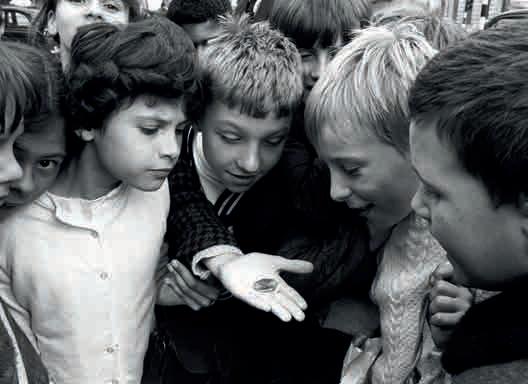
The K mo es to decimal currency on 1 February pictured below . new pro le portrait of The Queen by rnold achin appears on the decimal coinage.
Princess nne marries aptain ark Phillips at Westminster bbey on 1 o ember.
The country celebrates the il er Jubilee of Queen li abeth , with street parties fostering a feel-good atmosphere across the nation. The Queen and Prince Philip tra el a total of 6,000 miles, touring the K and ommonwealth countries to mark her 2 years on the throne. This includes a isit to orthern reland during the Troubles. n a speech to the people of lster, she appeals for them to put aside old fears and attitudes born of history and to turn into reality our hopes for a peaceful and stable future . There is further cause for celebration this year with the birth of er a esty’s rst grandchild, Peter Phillips, on 1 o ember.
n ay, onser ati e leader argaret Thatcher becomes ritain’s rst female Prime inister, and for the rst time in ritish history, the two highest constitutional positions are occupied by women.
n 2 ugust, while on holiday at lassiebawn astle, ullaghmore in reland, arl ountbatten of urma, cousin of The Queen and uncle to The uke of dinburgh, is killed by an bomb planted on his shing boat, Shadow V. is 1 -year-old grandson, icholas Knatchbull, a local boy Paul a well and his daughter’s mother-in-law, ady rabourne, are also killed. n the wake of the murder, The Queen in ites icholas’s twin brother Timothy who sur i ed the blast to stay at almoral while his parents reco er in hospital. rri ing in the middle of the night, The Queen and Prince harles are there to greet him and his sister. e recalls The Queen’s concern felt like a mother duck gathering up her lost young .
With the continued threat of attacks, there are increasing concerns about The Queen’s safety, and when shots ring out across orse uards Parade during Trooping the olour on 1 June, witnesses immediately think the worst. owe er, the shots are blanks, and the perpetrator is an unemployed 1 -year-old with mental health issues who is swiftly apprehended by police and soldiers. The Queen courageously calms her horse, urmese, and continues with her re iew of the troops. ut she is shaken, afterwards admitting she did not know what was happening behind her and feared for The uke of dinburgh, Prince harles and the accompanying escort.
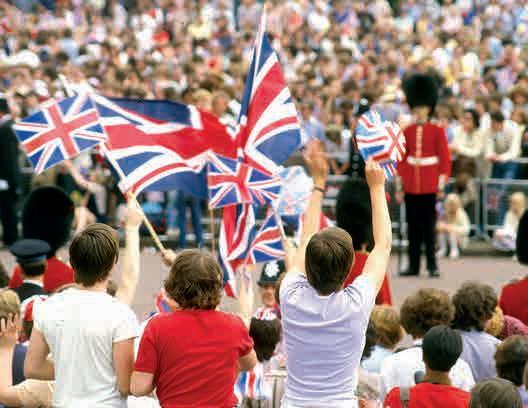
The fairy-tale wedding of Prince harles and ady iana pencer takes place on 29 July 19 1 at t Paul’s athedral. t a time when ritain is su ering from high unemployment and in ation, crowds line the wedding route pictured abo e and the spectacle is embraced with relish by the public.
The issue of The Queen’s security is once again headline news when it is re ealed that an intruder, ichael Fagan, had climbed o er the railings of uckingham Palace and found his way to The Queen’s bedroom. The Queen remains unru ed during the encounter and is able to raise the alert when she lea es the room after Fagan asks her for a cigarette.
Prince William of Wales is born on 21 June, becoming second in line to the throne.
The Queen and Prince Philip arri e in hina on the rst isit to the country by a ritish monarch. The trip follows the ino- ritish eclaration, signed by argaret Thatcher in 19 , agreeing for the transfer of ong Kong to hinese so ereignty in 199 . The couple isit the reat Wall of hina and at the end of their tour, The Queen indulges in her fa ourite pastime with a day at ong Kong’s new ha Tin racecourse.
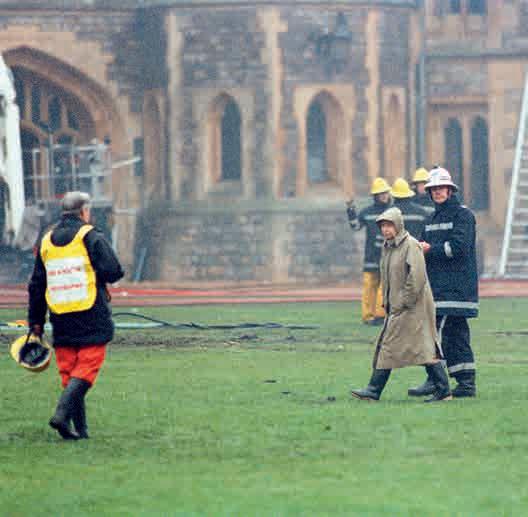
On 24 November, at a dinner to mark 40 years since her ccession at uildhall, The Queen re ects on the e ents of 1992, admitting, “it is not a year on which I shall look back with undiluted pleasure. n the words of one of my more sympathetic correspondents, it has turned out to be an ‘Annus orribilis’ . The year has seen the marital breakdowns of The Prince and Princess of Wales, Princess nne and ark Phillips, and The uke and uchess of ork in rapid succession. iana, Princess of Wales breaks long-held codes of pri acy among the Royal Family when she apparently collaborates on a tell-all book, iana Her True Story by ndrew orton, and on 20 o ember, a re, caused by a faulty spotlight, breaks out at Windsor astle pictured below . t takes 1 hours to e tinguish, and 100 rooms su er damage.
As a new tax year dawns on 6 April, The Queen embarks on her rst year as a K ta payer. ttuned to public opinion, she had put forward the suggestion the pre ious o ember after criticism surrounding the 6. million cost of restoring Windsor astle and if it was to come from the public purse. To help fund the repairs, uckingham Palace’s state rooms are opened to the public for the rst time.
On 1 September, Britain wakes to the shocking news that iana, Princess of Wales has died in a car crash in Paris, alongside her boyfriend odi Fayed. The Queen chooses to remain at almoral to care for her grie ing grandsons. er decision to act in their best interests does not endear her to a public who grow critical of her continued absence and silence.
The Queen, ne er one for emoti e displays, ne ertheless makes concessions to public demands. oing against age-old protocol, she orders that the nion ag be own at half-mast o er uckingham Palace, meets crowds outside Kensington Palace and e plains in a tele ised speech on the e e of iana’s funeral that e eryone was trying to cope in their di erent ways. he adds, for one belie e that there are lessons to be learned from her life and from the e traordinary and mo ing reaction to her death.”
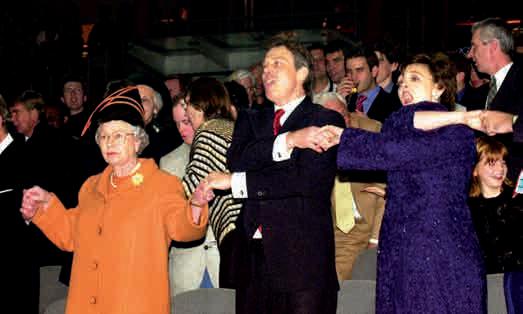
The Queen attends ew ear celebrations at the illennium Dome in Greenwich, and the nation watches through gritted teeth as she awkwardly holds hands with Prime inister Tony lair during a refrain of Auld ang Syne pictured abo e .
Two days after the 9 11 terrorist attacks in the , The Queen orders The Star-Spangled anner to be played by the oldstream uards at the hanging of the uard, as a mark of respect to the 2,9 ictims and in support of their families.
fter su ering a series of strokes, Princess argaret dies on 9 February. e en weeks later, on 0 arch, Queen li abeth, The Queen other passes away at the age of 101. The Queen, coming out to iew the oral tributes at Windsor, tells the crowds her mother had a wonderful life .
espite the loss of her mother and sister, The Queen’s Golden Jubilee celebrations go ahead, and she and Prince Philip clock up 40,000 miles this year travelling around the K and ommonwealth. n June, after a ational er ice of Thanksgi ing at t Paul’s athedral, she speaks at a lunch at London’s Guildhall, saying, “Gratitude, respect and pride, these words sum up how feel about the people of this country and the ommonwealth and what this olden Jubilee means to me”.
The Prince of Wales marries amilla Parker owles at the Windsor uildhall on 9 pril the rst member of the oyal Family to be married in a ci il ceremony . The wedding was originally planned for pril but is postponed by 2 hours after the death of Pope John Paul as Prince harles and the rchbishop of anterbury are e pected to attend the funeral. The Queen and the rest of the oyal Family are present at the marriage blessing at t eorge’s hapel afterwards.
The oyal Family oins the social media age on 2 pril with an account on Twitter. t rst, their handle’ is ritish onarchy but is later changed to oyalFamily. The Queen sends her rst tweet on 2 ctober 201 .
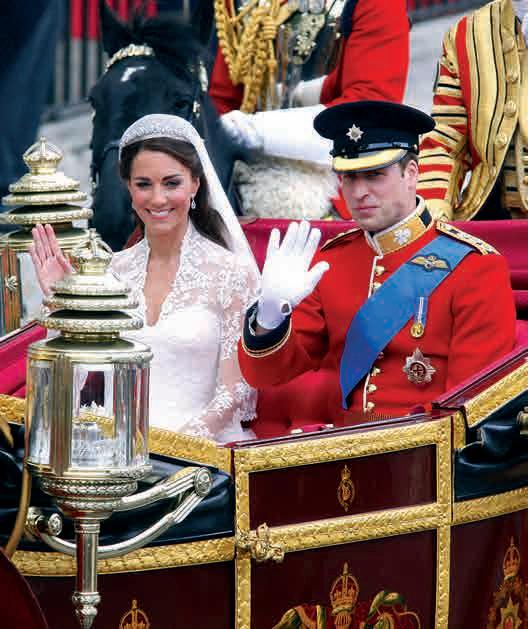
Prince William marries Catherine Middleton at Westminster Abbey on 29 April.
The Queen makes a historic four-day isit to ublin, the rst since the creation of the rish epublic in 1921.
i ty years since she acceded the throne, Queen li abeth celebrates her Diamond Jubilee. Although the Jubilee weekend is marred by bad weather, there is genuine a ection for the octogenarian monarch. er scene-stealing appearance at the opening ceremony of the lympic ames in ondon, in the company of James ond, further boosts her popularity. f 1992 was her nnus orribilis, perhaps 2012 is the Queen’s Annus Mirabilis?
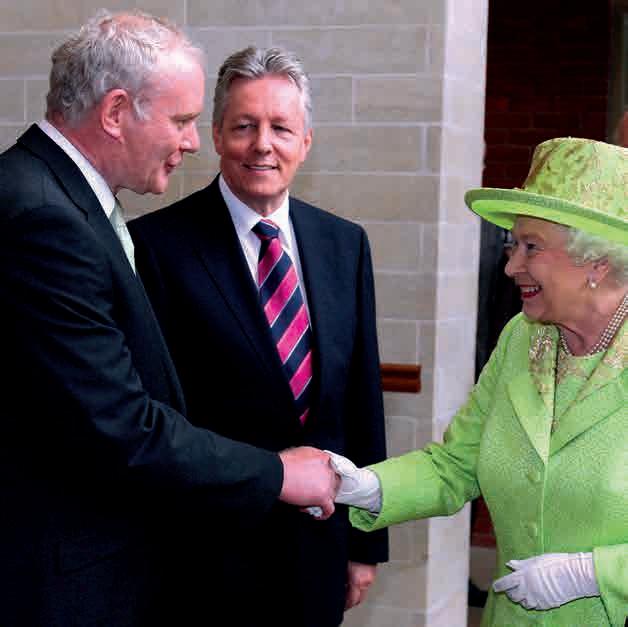
The Queen pays a iamond Jubilee isit to elfast, where at the Lyric Theatre she shakes hands with Deputy First inster and former commander, artin c uinness. The moment of reconciliation symbolises the cementing of the long peace process in Northern Ireland.
The uccession of the rown ct recei es royal assent, meaning the eldest child inherits the throne regardless of gender. n the e ent, the uke and uchess of ambridge’s rst baby, born 22 July, is a boy Prince eorge.
The Queen celebrates her 90th birthday and among the guests at Windsor are US President Barack Obama and First Lady ichelle bama, who are in ondon for a four-day isit. er Majesty has a soft spot for the Obamas and despite protests from the ecret er ice responsible for the President’s security, insists that she goes out to pick them up on their arri al by helicopter. The bamas are conse uently ferried to Windsor astle in a ange o er dri en by Prince Philip.
The nited Kingdom otes in a referendum on whether or not to remain in the uropean nion. n the poll, 2 per cent of oters opt to lea e, with re it’ causing political turmoil and endless debate about how it can be implemented. lthough The Queen must, as e er, remain politically neutral, it is thought by a number of insiders and royal experts that she was pri ately supporti e of remaining in the . s the Prime inister, a id ameron, later comments ou always sensed that, like most of her sub ects, she thought that uropean cooperation was necessary and important, but the institutions of the EU sometimes can be infuriating.”
Prince Philip, uke of dinburgh, retires from royal duties at the age of 96. e has carried out 22,219 engagements since 19 2.
Prince arry marries eghan arkle at t eorge’s hapel, Windsor on 19 ay. They become The uke and uchess of usse but step down as working royals in January 2020, following media intrusion and disagreements about their role. Mary
s the o id-19 irus causes a global pandemic, the K goes into lockdown and social distancing, face masks and oom calls become a way of life. ubble’ is formed at Windsor astle as The Queen and Prince Philip isolate there together with corgis uick and andy, dorgi andy and a reduced retinue of sta . oyal e ents and engagements are cancelled or postponed, but The Queen gi es two tele ised speeches, the rst of which, on pril, in okes a wartime spirit, when she reassures the nation, We will meet again .
The Palace announces that The Queen and Prince Philip had recei ed their o id accines on 9 January.
Following heart surgery, Prince Philip, uke of dinburgh, dies at Windsor astle on 9 pril ust two months short of his 100th birthday. t the time funerals are restricted to a ma imum of 0 guests, and The Queen attends the funeral of her husband of years sitting socially distanced from the rest of her family in t eorge’s hapel, Windsor. This poignant image of her is in marked contrast to the actions of Prime inister oris Johnson and his sta , who it is later re ealed outed o id restrictions with a series of social gatherings at o 10 and onser ati e Party Q throughout 2020.
The Queen celebrates her Platinum Jubilee, the rst ritish monarch e er to do so. The 96-year-old so ereign is su ering from mobility issues, and her public appearances are limited.
he goes to the opening of the new li abeth line in ay and attends Trooping the olour on 2 June, afterwards appearing on the balcony of uckingham Palace. t the Platinum Party at the Palace, a lm is shown in which er a esty takes tea with Paddington ear, much to e eryone’s delight. eaders from around the world send messages of congratulations and pay tribute to her years of ser ice. n her ccession ay message on 6 February she acknowledges the changing times through which she has li ed s look ahead with a sense of hope and optimism to the year of my Platinum Jubilee, am reminded of how much we can be thankful for. These last se en decades ha e seen e traordinary progress socially, technologically and culturally that ha e bene ted us all and am con dent that the future will o er similar opportunities to us and especially to the younger generations in the nited Kingdom and throughout the ommonwealth.
n eptember, it is announced that Queen li abeth has died peacefully at almoral. Just two days earlier, working to the ery end of her life, she had appointed i Truss as Prime inister. etween 1 and 19 eptember, an estimated 2 0,000 people ueue to le past her co n as she lies in state in Westminster all, ondon.
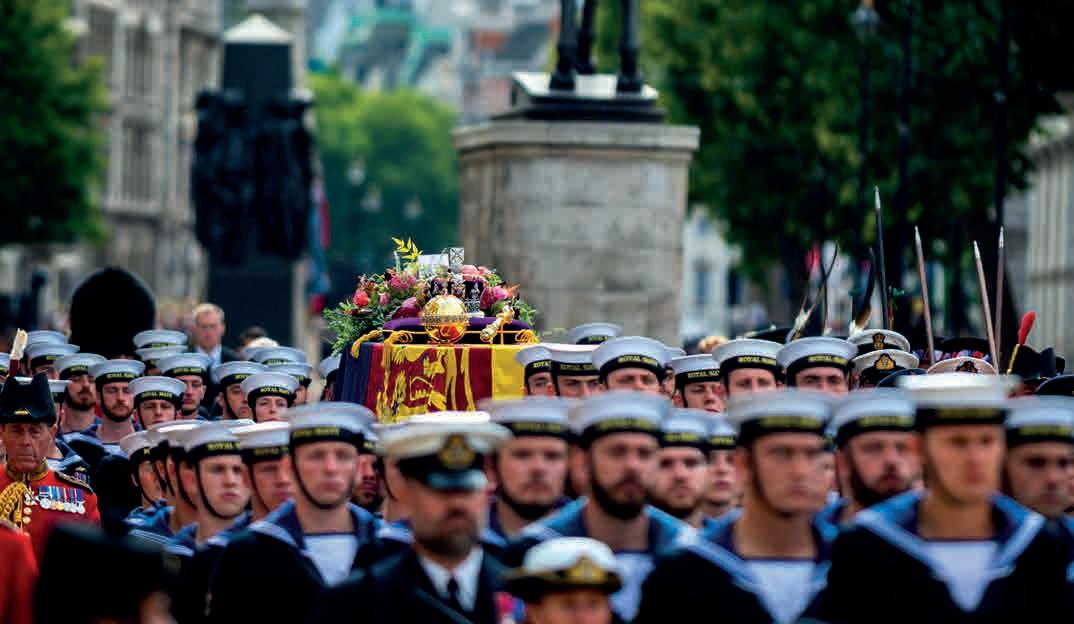
n 19 eptember, a state funeral the rst since Winston hurchill in 196 includes a ser ice at Westminster bbey, followed by a gun carriage procession to Wellington rch, from where the state hearse takes The Queen to Windsor and her nal resting place alongside her husband.
As The Duke of Edinburgh’s Award celebrates its 70th anniversary this year, Lucinda Gosling reflects on the vision and commitment of its royal patrons
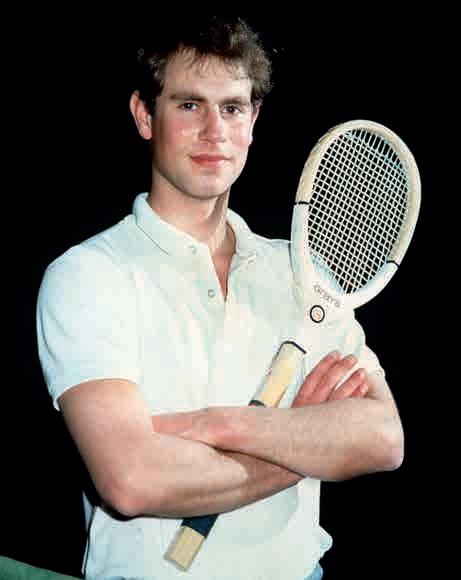
In 1986, The Duke of Edinburgh presented his youngest son, Prince Edward, aged 22, with his Duke of Edinburgh’s Gold Award certificate. Forty years on, Prince Edward has not only inherited his late father’s title, but he is now Patron of the Duke of Edinburgh’s Award, which this year celebrates 70 years since its foundation.
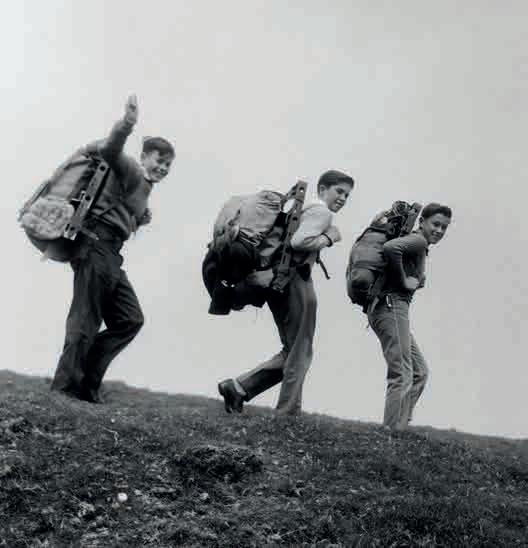
As Edward, now The Duke of Edinburgh himself, admits, the DofE Award is in his DNA. Shortly after completing his own award, which he began while at school at Gordonstoun and completed while at Cambridge University, the Prince devised, wrote and presented a BBC documentary, The Duke’s Award, which was broadcast on 19 April 1987. In the opening scenes, he was seen playing Real Tennis at Hampton Court Palace, his, “slightly eccentric” choice for the Physical section of the Award. Some years later he admitted: “Few, if any, of the trials, tribulations, frustrations and surprises I have encountered in my work with the DofE compare with the five years of sporting injuries as I struggled to complete the last section, finally resorting to the most gentlemanly game I could find – Royal Tennis.” Setting out to explain exactly what the Award was, he told viewers that while going on expeditions was an integral part, it wasn’t all “hairy knees and rucksacks”. Nor was it, he emphasised “some sort of middle-class club”, and his film pays special attention to the inclusive nature of the DofE Award. He was filmed talking to a group of young
black people from inner-city Birmingham, who told him, candidly, that they felt seeing more black and brown faces in anything promoting the scheme would help. “Do you ever see a black hiker?” asked one person, who added: “If I see a Sikh guy walking, I’d think, ‘If he can do it, I can do it’.” Other young people interviewed included a group of Asian girls from Peterborough who explained the difficulties encountered by some girls in their community in persuading strict parents to allow them to take part, and two boys from Liverpool, one of whom felt that doing the award “made me think about other people” and that, without it to occupy him, he reckoned “I’d be on the street, taking drugs”. When those two young Liverpudlians are then shown helping disabled children learn to swim, it’s a moving example of how the DofE scheme can truly make a difference.
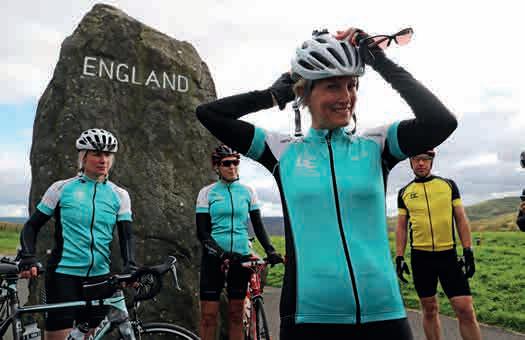
The Prince was (and remains) evangelical about the benefits of the Award and ensuring that it is an opportunity open to everyone. In 1988, he became a Trustee of The Duke of Edinburgh’s International Award, and then a Trustee of the DofE charity. Through the years he has been actively involved in fundraising via the Special Projects Group of the DofE. His father expressed the hope that DofE participants would continue to enjoy the skills and pastimes they learnt through the scheme and his son has been a good example. In September 1993, Prince Edward took part in a 20-hour Real Tennis marathon as part of the Summer Challenge (“It’s a heck of a long time,” he told Jessica Davies in the Daily Mail, “but I’m hoping to have a lot of fun.”). Then in 2018, he raised more than £2 million by playing on every Real Tennis court worldwide. Since 2015, he has been Chair of the International Award Foundation, heading the global family of organisations which continue to deliver on his father’s vision. Now, as Patron, he continues to work tirelessly to support and promote the scheme in the UK and beyond.
His father first had the idea for a national programme to support young people’s development in 1954. In the post-war era, he wanted to help boys (and at first, it was just boys) bridge the gap between leaving school at 15 and starting National Service at 18. A man of great resilience and energy himself, The Duke’s vision was to create a scheme that would build confidence, foster a sense of purpose and support young people into their future. It would not only benefit the participants, but the Award would have a positive trickledown effect because of the valuable contributions they would make to their communities and society; volunteering is one of the four main areas of the Award.
The Duke himself was inspired to create the scheme by Dr Kurt Hahn, headmaster of his alma mater, Gordonstoun School. Hahn believed that education should develop the Alamy
individual, and that learning was achieved by doing. As Prince Edward pointed out in his documentary, the idea was not only to hone one’s strengths, but also to improve any weaknesses. The Duke, interviewed by his son, explained Hahn’s belief that getting a young person to succeed in a physical skill or outdoor pursuit could give them the confidence to also achieve their best academically, adding that, “in the modern world, young people living in cities are so constrained by school, qualifications, occupations, professions”. He felt the Award gave individuals space to go beyond those constraints and discover latent skills, and that giving equal prominence to ‘right-brain activities’ helped to create a well-rounded individual. The opportunities to ‘try something out’ were endless; participants in the film were shown cheerleading, horse racing and skydiving, though Prince Philip joked that they had to draw the line when one girl suggested she would like to have a go at bullfighting. Some pupils from St Vincent’s School for the Blind were taking up photography as a skill and going on an expedition. The message was clear; everyone has potential, and the purpose of the DofE Award was to find it.
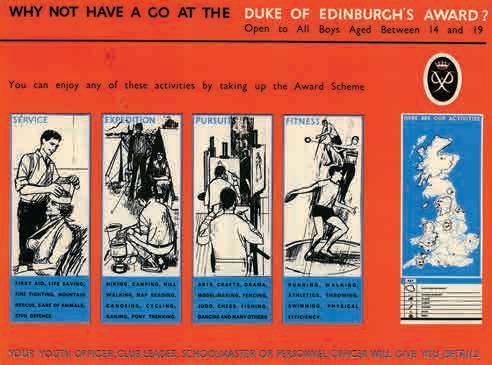
The pilot scheme, for boys aged 14 to 18, was launched in September 1956, with ex-army officer Sir John Hunt, who had led the 1953 Everest exhibition, appointed Secretary (later Director). The programme was divided into four sections: Rescue and Public Service Training, The Expedition, Pursuits and Fitness and in its first year, 7,000 boys, drawn from voluntary youth organisations, local education authorities, army cadets and some schools took part, with 1,000 achieving the Award. The Duke of Edinburgh’s Award for Girls followed in 1958, open to girls aged 14 to 20 with different programmes biased towards accepted female interests: Design for Living, Interests, Adventure and Giving Service. By 1980, a new programme format meant all young people, boys and girls, completed the same four sections: Service, Expedition, Skills and Physical Recreation – and an additional Residential Project at Gold. Since then, the DofE scheme has gone from strength to strength, and increased its reach. The Diamond Challenge, launched on its 60th anniversary, raised enough to fund 68,774 young people from disadvantaged backgrounds, enabling them to start their DofE Award in 2018/19. During the Covid pandemic of 2020, 330,000 DofE volunteers stepped up, dedicating 1.8 million hours to helping in their communities. And this decade’s ‘Diamond Challenge’ – with a target to reach one million participants by 2026 – was achieved two years earlier than projected.
Celebrating this landmark anniversary is a series of challenging events throughout the summer, from marathons and skydives to the gentler pace of Trek Together at Windsor on 11 July. To date, in the UK, more than 8,539,000 young
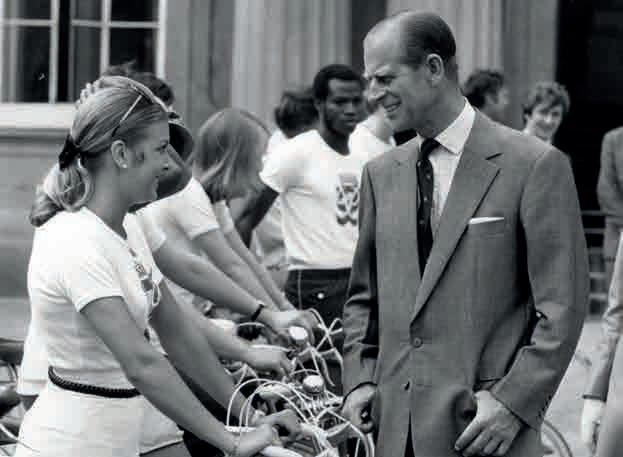
Above: Prince Philip talks to 19-year-old Kim Turner in the quadrangle at Buckingham Palace before she sets off with eight others – several of them Duke of Edinburgh Gold Award winners – for a sponsored cycle ride to Windsor Castle to kick off the scheme’s fundraising event of 1975
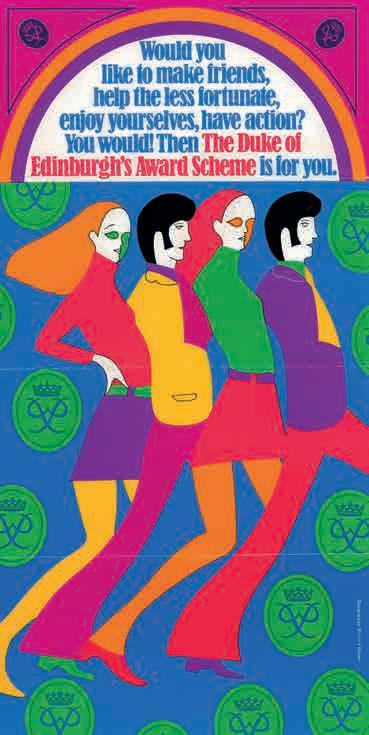
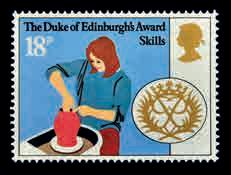
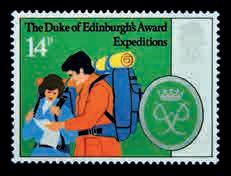
Below right: Postage stamps issued to mark the DofE’s 25th anniversary in and a ublicity lea et or the boys’ scheme
people ha e started a of ward enough people to ll Wembley tadium 9 times. When The late uke of dinburgh, e er reticent about his achie ements, spoke to his friend and biographer yles randreth about the ward, he was more an ious to gi e credit for its success to ir John unt. ut his son, The present uke, knows that his late father deser es recognition. n arch 202 , he e pressed in a statement what it meant to take on the patronage of the of scheme ustaining and enhancing what is arguably his greatest legacy around the world matters a great deal to me, as does pursuing the ward’s long-term ambition of uni ersal access so that e ery eligible young person has the opportunity to participate. n 19 , Prince Philip took part in a lm to promote the of scheme called The Way Ahead. n it, he told iewers it could, show how you can spend your leisure time, how you can help your fellow citi ens and, abo e all, what you can achie e it you set your mind to it . er se en decades, 1 million people around the world ha e disco ered what they can achie e, and that is uite a legacy. Perhaps the last word should go to -year-old John reen, who was one of the rst boys to achie e his of , after he took part in the pilot programme in the 19 0s and was also among the rst to recei e their old ward from Prince Philip at uckingham Palace, on June 19
John, who grew up in il ertown in east ondon, was introduced to the of at Fairbairn all oys’ lub, where he went to bo . oing straight to his il er of , where he did photography, rst aid and athletics for his acti ities, and e plored the outh owns for his e pedition, he saw it as an opportunity to escape post-war east ondon and to build a better life for himself. t was important to do The uke of dinburgh’s ward because it ga e young people like myself the opportunity to do something we weren’t encouraged to do at home or school. o one can imagine what life was like then. Thanks to The uke of dinburgh’s ward, turned out okay and didn’t do too badly it was all down to that.
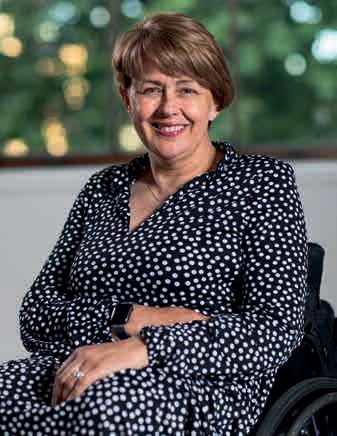
Olympian Dame Kelly Holmes, rugby player Alun Wyn Jones OBE, broadcaster Alice Beer, Paralympian Hannah Cockcroft and TV chef Matt Tebbutt are just some of the names to have achieved The Duke of Edinburgh’s Award. Another is The Princess of Wales, who started hers while a student at Marlborough College, and completed her Gold Award in sixth form. Of the experience she says, “DofE programmes are such a great way for young people to gro in confidence, learn ne s ills, or as part of a team and have great fun along the way”. Paralympian and Chair of DofE Trustees, Baroness Grey-Thompson DBE (above) – whose daughter, Carys, achieved her Gold Award last year – said: “In seven decades of the DofE charity, we’ve learnt that there’s no limit to what young people can achieve when they are given the right opportunities; even when external circumstances are tough. Our founder HRH Prince Philip once said, ‘There is more in you than you might think’ and the DofE helps young people realise this.”
The system of Royal Warrants granted by HM The King celebrates the diverse array of craft and expertise across the British Isles. For Warrant Holders it is often the crowning glory of many years of work and dedication to quality in their chosen field Simon roo e searches out a ew ar ung rantees
One of the strengths of the British monarchy is its reach across the country. Every region of the British Isles will receive a visit from working members of the Royal Family on a regular basis as they speak to doctors, nurses and teachers, meet charities and voluntary workers, and tour town centres, factories and building sites.
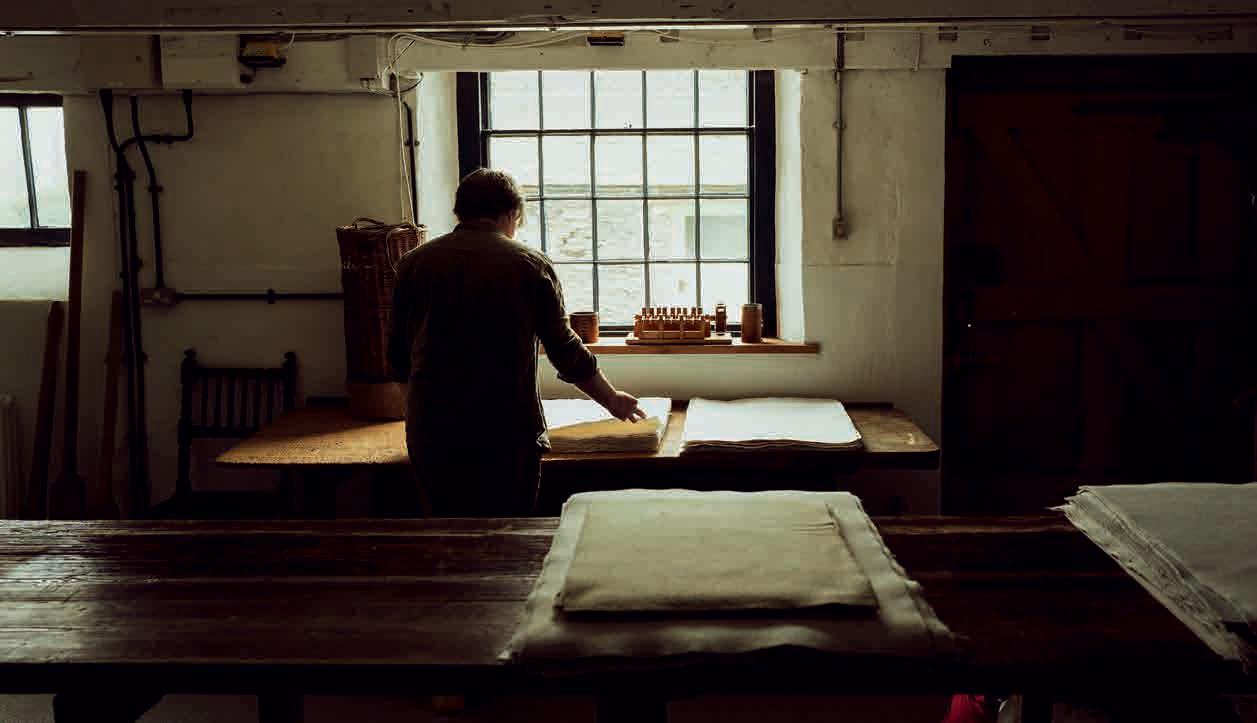
The system of Royal Warrants celebrates this regional inclusivity with owners of businesses large and small, all over the country proudly displaying Royal Crests denoting their appointment to HM The King or HM The Queen. ark ropper is the si th generation to lead 1 0-year-old family paper-making business James ropper. Ten years ago, he set up a charity, the Paper Foundation, to preserve paper arts and heritage and breathe new life into his local community, the ancient Cumbrian mill village of Burneside, set on the edge of the Lake District.
“Paper is one of the world’s most remarkable materials,” he explains, “underpinning centuries of arts and culture. Yet I realised that very little was being done to celebrate and preserve its legacy. I started rescuing all manner of archives and artefacts, not least the equipment needed to make paper by hand. Subsequently I realised that what was most at risk was the craft of making paper by hand.”
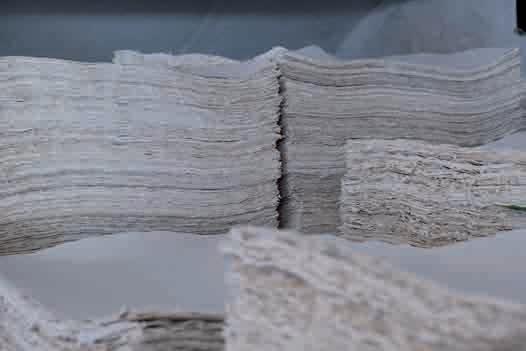
This led him to contact ri en ill, a traditional papermaker. After years of collaboration, its owner died and Cropper took over its work, creating apprenticeships and selling beautiful, handmade paper around the world.
“We were thrilled to receive a Royal Warrant from HM The King in December 2024,” he says. “To have the Royal Coat of Arms at our workshop, a former cowshed with views over the Lakeland fells, is amazing. It’s an award and a reward and a huge credit to our team.”
Across the water, in Northern Ireland, is Botanica International, manufacturers of natural herbal creams, washes and sprays that can be used to treat all skin conditions. “I’ve always been so grateful to HM The King because he supported our work for years before it became widely accepted,” says managing director Sean Cooney. “Now, having the Royal Warrant is a huge honour and privilege. As a Northern Ireland business, it’s hugely valuable to my team and to the people who use our products.”
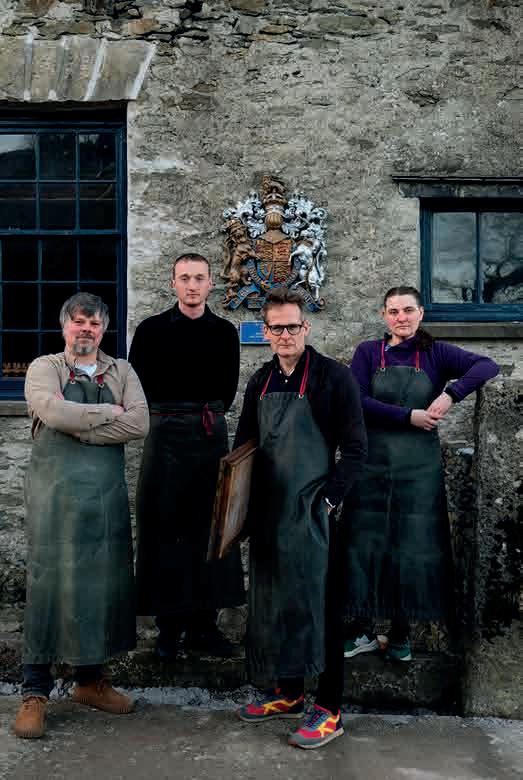
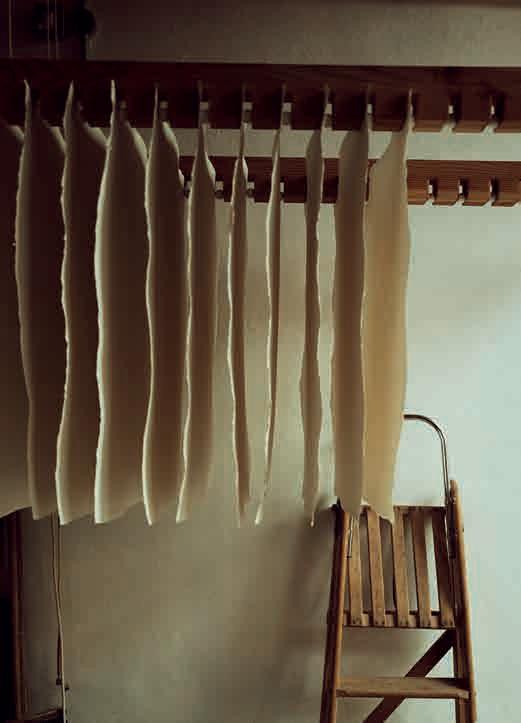
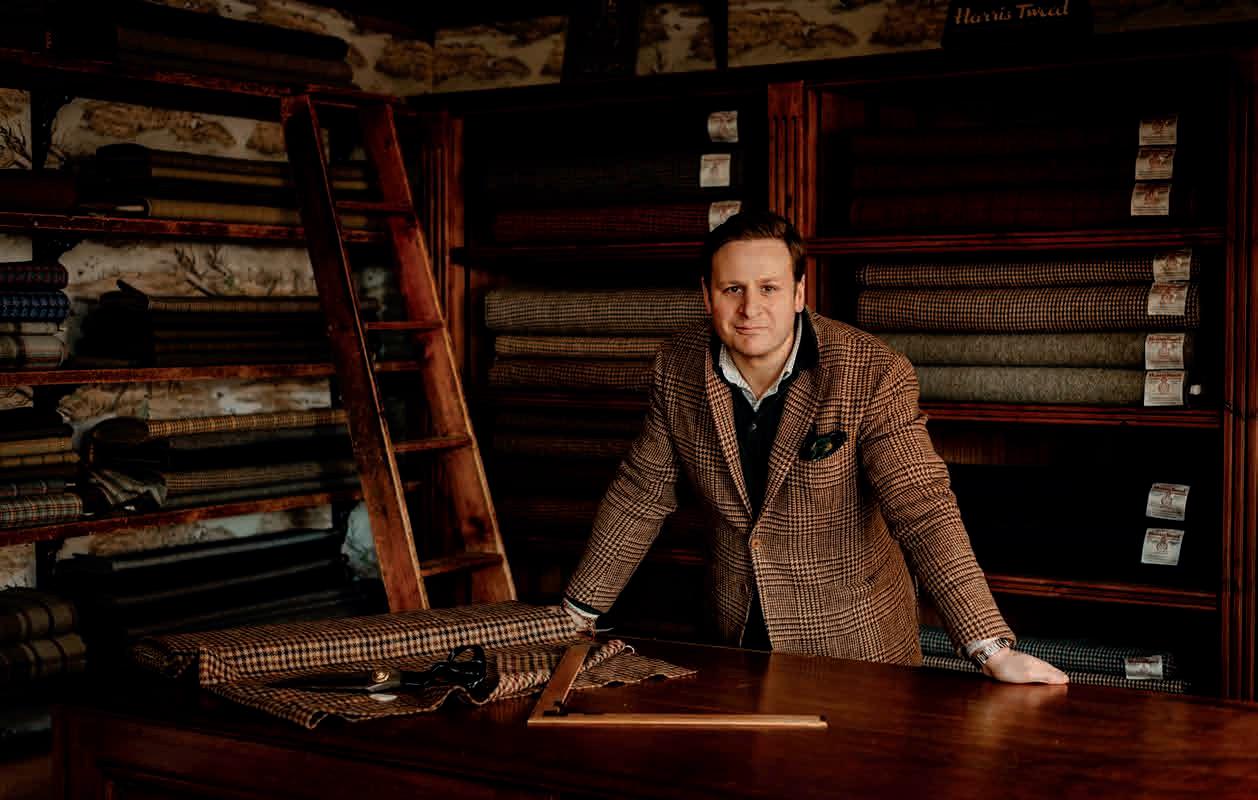
The Royal Warrant gives the business a competitive edge in marketing and branding, symbolising excellence, tradition and reliability, he says. “The business has adopted a stronger commitment to excellence and tradition, reinforcing corporate culture and brand values. It shapes how the business iews itself more heritage-focused, uality-dri en and ser ice-oriented.
Another Royal Warrant Holder based in Northern Ireland is Ulster Carpets, which manufactures some of the world’s most luxurious Axminster and Wilton carpets, and was one of the nal recipients of a oyal Warrant from The late Queen Elizabeth. This was a special way for the company to mark its th anni ersary and it became one of the rst to recei e the honour from The King, for whose Coronation it designed and manufactured bespoke carpets in 2023.
There’s de nitely an element of local pride, says ick oburn, , the company’s roup hief ecuti e cer, of its Royal Warrants. “While we have worked for a host of prestigious clients o er the years, the historical signi cance of The Coronation is unparalleled. When my grandfather established Ulster Carpets in 1938, I’m sure he could never have envisaged that his company would be selected for such an honour. We also proudly share His Majesty’s support for ritish manufacturing, farming and sustainability.
Founded in 1858, Campbell’s of Beauly describes itself as a proudly independent country tailor and out tters, rooted in the ighlands and re ered far beyond them . The King o cially opened the company’s tailoring workshop in 2019 when he was The Prince of Wales.
Being based in the Highlands is central to Campbell’s identity, according to John Sugden who continues the family
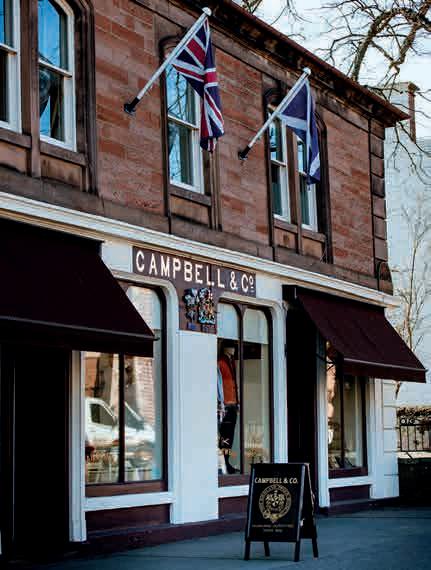
This page: John Sugden of Campbell’s of Beauly is continuing a family tradition of tailoring
Facing page: Laphroaig has been distilling whisky for more than 200 years, while Ulster Carpets crafted bespoke carpets for The King’s Coronation in 2023
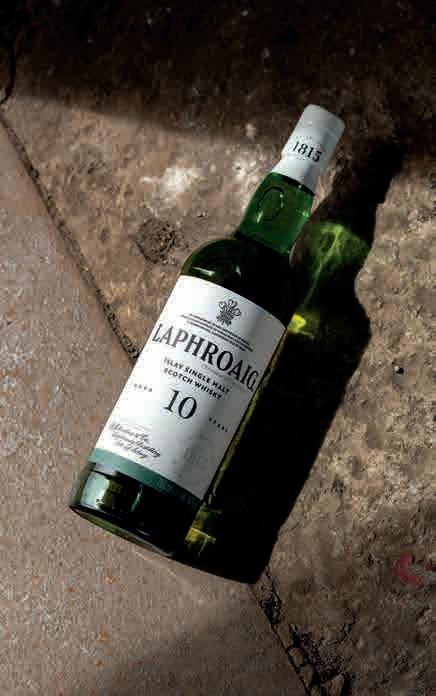
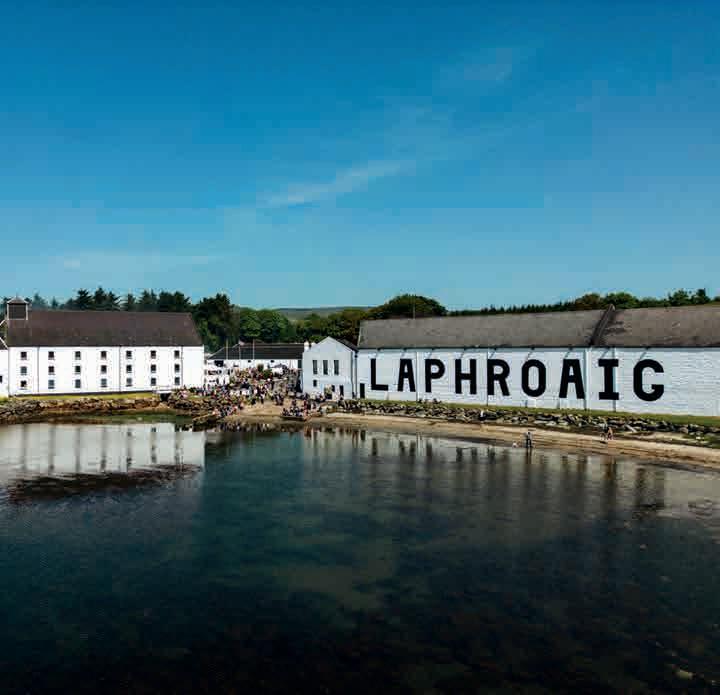

tradition. “There are very few tailoring and craftsmanship businesses of our kind in this part of the country,” he says. “We’re fortunate to be located in Beauly, directly on the NC500 tourist route, which brings visitors from all over the world through our doors. We’re often described as a destination in our own right, a hidden gem, and the Royal Warrant adds another layer of interest and reassurance for people making that journey.”
For more than 200 years, Laphroaig has been making whisky at its distillery on slay’s south-eastern coast and it is the native Islay peat that gives Laphroaig its distinctive taste smoke, salt and a surprising sweetness. We see the oyal Warrant as a guarantee of quality and craftsmanship, and a mark of distinction recognised across the world,” says Rod Gillies, Brand Director at Laphroaig.
The commitment to peatland restoration, alongside other en ironmental initiati es around water use and closed-loop cooling, played a key part in Laphroaig securing a renewal of its Royal Warrant. Meanwhile, the Friends of Laphroaig programme has more than 750,000 members, one of whom is The King. “In 2015 he visited the distillery to celebrate the programme’s 30th anniversary,” explains Gillies.
The King’s love of the countryside is evident with at least one Scottish Royal Warrant Grantee. Brian Wilson has been a dyker and thatcher for about 30 years and has met both The King and The Queen at Birkhall, the royal couple’s favoured residence on the Balmoral estate.
unning a craft-based business, situated in the remote north-west ighlands of cotland for o er 0 years has had its constant challenges from the costs of materials to the extremes of the weather and the seasonality of our work,”
he e plains. The oyal Warrant pro ides a re ection of con dence and a form of uality assurance , Wilson belie es, adding nything at all that gi es a business an edge, a recognition, a bit of patronage or encouragement helps to make it that bit more likely to sur i e. t’s all about craft, tradition, sustainability and nature.
The same is true of a rantee at the other end of the ritish sles. s its name suggests, uernsey lematis produces a wide range of clematis culti ars at its uernsey nursery in the hannel slands. The mild climate enables aymond ison, and his team to grow appro imately two million plants e ery year. early half go to orth merica and carry the oyal oat of rms.
ison has known Their a esties for many years through the supply of clematis to the gardens at irkhall, ighgro e and almoral.
We’ e recei ed many compliments from customers around the world and, of course, the people of uernsey who feel it’s something that the ailiwick of uernsey has been granted, not ust uernsey lematis, he says of the oyal Warrant. t’s mar ellous for our sta to know that it is their work that has been acknowledged.
t was a mysterious phone call that led the way for Welsh Farmhouse to recei e its oyal Warrant from The King. The business, which a id orris now runs with his wife, mma, was established by his father and mother and continues to handcraft organic uices in the heart of rural Wales.
n 2010 my father was telephoned and asked if he would identify and uice some apples, e plains orris. efore long, we disco ered the re uest had come from lwynywermod, in armarthenshire, the primary Welsh estate of the former
Prince of Wales. s the relationship de eloped and in recognition of the uality of the uices produced by Welsh Farmhouse, orris’s father was awarded a oyal Warrant an honour orris retained following The King’s accession to the throne.
ike The King, orris is a passionate ad ocate for conser ation. We are committed to preser ing heritage apples and pears, many of which are uni ue and many people ne er get to en oy, he e plains. y pressing fruit from heritage orchards, we ensure these uni ue arieties can still be en oyed today. To be recognised in this way is an e traordinary honour, especially for a small, family-run business rooted in rural Wales.
nother rantee in the food business with a strong regional identity is llens Farm obnuts. lthough proudly based in Kent, its products are en oyed around the ritish sles. We ha e a lady who li es on the sle of kye who eats 12 of our cobnuts e ery day for health bene ts, e plains aniel Webb, who runs the farm with his twin brothers. They’re used by other people in cotland to feed red s uirrels.
obnuts are a wet nut, Webb e plains. They’re not roasted like most of the nuts that many of us are used to. ou eat them straight o the tree, when they’re still moist and green.
a ing a oyal Warrant is important for llens as a local business. t’s about a perception of uality and it keeps us up to the mark, he adds. We had a Warrant from Queen li abeth , but applying for The King’s Warrant encouraged us to focus e en more on sustainability for e ample, by using recycled packaging. ustainability is important for us as a business based in the Kent countryside.
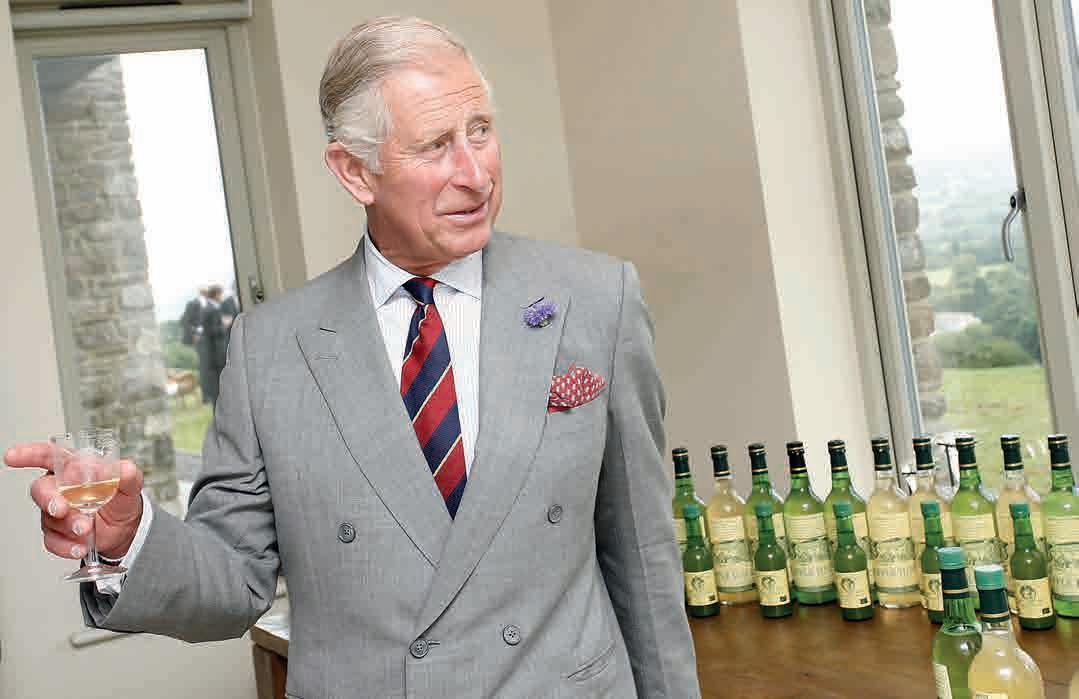
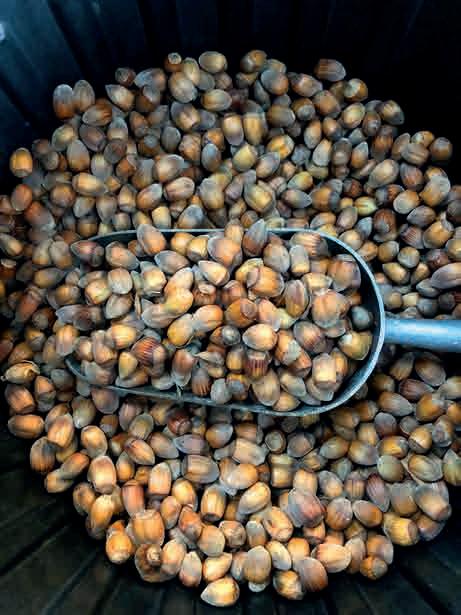
Julian and Isabel Bannerman have been designing gardens and garden buildings together since 1983 and I&J Bannerman is another Warrant- olding business with strong local roots.
“Julian has spent most of his life in Somerset and more recently so ha e , so we’re ery much West ountry people and ercely proud of omerset, says sabel.
We ha e a lot of great people we work with all around here, from reclamation to stonemasons and oiners and thatchers. omerset is ery strong on craft, and we work a lot with traditional building skills.
The couple have met Their Majesties frequently and ha e worked on the gardens at ighgro e and as well as having an input into those at Dumfries House, the historic 1 th-century house and 2,000-acre estate, sa ed for the nation by The King in 200 .
Locality is also important for Royal Warrant Holder Simon idgway. n ga has a special place in e ery owner’s home and idgway has been mending them for 9 years, mainly around the andringham state a uni ue community. People will sometimes lea e their door open for me to pop in and their ga while they’re out, e plains idgway. thers will e en use them to warm up lambs in the winter.
A Royal Warrant Grantee to The late Queen, he applied for The King’s Warrant. When he opened the letter, says idgway’s wife, lison, he had a smile on his face like a kid who’s been let loose in a sweetie shop it’s so important to him. nd local people really appreciate it too, it’s a source of pride and it demonstrates the uality of his workmanship.
The sectors in which they operate, and the geographical spread of Royal Warrant Holders might be varied and diverse, but this is one thing that they all ha e in common.

Royal Warrants of Appointment are a mark of recognition for the high standards of goods and services supplied to the Royal Household, as part of an ongoing trading relationship. Becoming a Royal Warrant Holder is the crowning achievement for any company and a great honour. The Royal Warrant Holders Association represents those companies, and over the following pages we ‘Spotlight’ a selection of Members of the Association who share the stories of their heritage and the secrets of their success.
www.royalwarrant.org
ong before endicks became synonymous with re ned chocolate and royal recognition, it was de ned by a simple ambition to create something e ceptional. That ambition took shape in ondon in 19 0, when scar enson and olonel ickson began producing chocolates in a modest basement on Church Street in Kensington, guided by a belief that true indulgence comes from craftsmanship and care. n 19 1, the brand’s most iconic creation followed, when ucia enson, r. enson’s sister-in-law, created the signature ittermint an intense mint fondant enrobed in indulgent dark chocolate made from 9 per cent cocoa solids. old, distincti e and unmistakably re ned, it marked the beginning of an enduring classic. endicks’ reputation for uality grew, and a store opened in ondon’s ayfair in 19 , cementing the brand’s place at the heart of the capital and establishing a legacy that continues more than 9 years on.

This commitment to excellence was formally recognised in 1962, when endicks was granted a oyal Warrant by er a esty Queen li abeth . ore than si decades later, that proud association continues, with the oyal Warrant granted by is a esty King harles in 202 a mark that re ects not only uality, but consistency across generations.
Though the world has changed, endicks’ approach has remained reassuringly constant. The iconic ittermint is still made using the same original recipe rst created in 19 1, made with carefully selected ingredients and a respect for traditional methods passed down o er time.
With deep roots in ritish heritage and a history recognised by two oyal Warrants, endicks continues to o er a moment of re ned indulgence. t is a tradition shaped over generations, made to be enjoyed today and treasured for years to come.



Samsung’s mission is to devote its talent and technology to creating superior products and services that contribute to a better global society. The company’s ision is re ected in its core values: innovation, excellence and people.
Our commitment to excellence is at the heart of what we do. We are proud this is recognised, in a relationship with the oyal ousehold that has spanned decades testament to our unwavering commitment to quality, craftsmanship and service. lending cutting-edge inno ation with timeless elegance, Samsung has always been at the forefront of technological advancement. We want to create products that inspire and elevate the lives of those who use them, from the sleek, intelligent design of our Galaxy smartphones to the immersive brilliance of our QLED televisions and the intuitive intelligence of our smart home ecosystems. We’re not only creating technology. We craft experiences that enrich and transform.
As a proud holder of a Royal Warrant since 2012, Samsung
continues to foster innovation and embrace the future as well as uphold and respect the traditions of the past. Our products are not just tools; they are instruments of progress, designed to empower individuals and communities alike. Equally, the Royal Warrant is not merely an honour; it is a symbol of our dedication to delivering products that meet the highest standards of quality and reliability.
Whether it’s through our groundbreaking advancements in semiconductor technology or our sustainable initiatives that shape a better tomorrow, Samsung remains steadfast in its mission to make a meaningful impact.
We in ite you to e perience the amsung di erence, where every product is a testament to our integrity, ambition and commitment to excellence, and our purpose is to serve those who alue the nest things in life.
In 2024, Samsung was awarded a new Royal Warrant from His Majesty The King, and looks forward to building on its relationship with the Royal Household for many years ahead.
For more than 130 years, the name GP&J Baker has been synonymous with exceptional design. From its founding in 1884 by brothers George Percival and James Baker, the brand has evolved into a global leader in the interior design world.
While the company has proudly held a Royal Warrant since 1982, a momentous new chapter was etched into its history in late 2024, when GP&J Baker was granted The King’s Royal Warrant. This prestigious accolade from His Majesty King Charles III not only recognises the brand’s unwavering commitment to excellence, but also its alignment with a contemporary royal vision that prizes sustainability, environmental awareness, craftsmanship and heritage.
The rm’s tra ectory remains resolutely forward-looking.
Its recent ‘Royal Court’ collaboration with Historic Royal Palaces successfully translated centuries of architectural and botanical history into a second vibrant collection of fabrics and wallpapers. This partnership serves as a bridge between the storied past of the British monarchy and the aesthetic demands of the modern home. By skilfully adapting its world-renowned archi e of te tiles for today’s palettes, GP&J Baker proves that history is not static, but a living, breathing in uence and the company remains the quintessential custodian of British elegance.
GP&J Baker’s London showroom, located at the Design entre, helsea arbour, o ers interior designers one con enient resource for their pro ects, o ering a wide range of exceptional fabrics and wallcoverings to suit a variety of di erent decorating styles. gpjbaker.com

all ystems Technology began as a family-run business in the early 1990s, setting out to make communication e ortless. With our roots rmly in the K, our technology now supports clients and organisations internationally across urope, the iddle ast, sia and orth merica.
er the past three decades, T has grown into a trusted supplier of wireless messaging and critical alert systems. ur portfolio includes products designed and manufactured in the nited Kingdom, re ecting commitment to engineering uality, durability and long-term performance.
t the heart of this o ering is the ris ollection, a range of lu ury er ice all buttons designed for re ned en ironments such as elite enues, pri ate members’ clubs, residences and superyachts.
T’s discreet buttons pro ide an instant alert ser ice at the touch of a button’ supporting an attenti e response. The range includes our bestselling designs through to customisable fabrication, including multi-button options, engra ing and bespoke nishes. The ris ollection buttons
can be tailored to complement interior decor and integrate seamlessly into elegant surroundings.
From our early days in hospitality, we ha e e ol ed to support organisations across sectors including retail, manufacturing, leisure, corporate o ces, healthcare, education and heritage estates. ur accreditations include internationally recognised standards for uality management and regulatory compliance. ustainable supply demonstrates T’s commitment to uality, the en ironment and responsible business practices.
ecei ing a oyal Warrant of ppointment to is a esty King harles for the upply of ommunication ystems was a ery proud moment. t re ects the dedication, e pertise and commitment of our team, as well as the con dence and reliance placed on the solutions we ha e pro ided o er many years.
This prestigious mark of recognition is granted only to companies consistently upholding the highest standards of uality, reliability and ser ice. We are honoured that our company has been trusted at this le el, strengthening our dedication to e cellence. cstluxury.com


Joseph Walker rst red up the o ens of our family bakery in 1 9 with a simple ambition to bake the ery best. ince then, our family has celebrated Joseph’s ambition, baking shortbread, biscuits, cakes and oatcakes, staying true to our original family recipes.
Walker’s hortbread is still baked as it always has been, using ust four ingredients butter, our, sugar and salt. We use only all-butter and ne er add arti cial a ourings, colours or preser ati es. This uncompromising commitment to uality ensures the distincti e taste that has made Walker’s a global fa ourite.
n 202 , Walker’s hortbread was ery proud to be granted a oyal Warrant of ppointment from is a esty The King for the supply of shortbread and oatcakes to the oyal ousehold, following the granting of the oyal Warrant of ppointment by The late Queen li abeth and Queen li abeth, The Queen other.
For more than 12 years, we’ e proudly been sharing the ery best of cotland with families around the world. rawing on e generations of family baking e pertise, we continue to craft recipes that bring people together whether for those e eryday moments or special occasions.

Whether eaten on a mother-of-pearl spoon or delicately piled on to the back of a hand, there’s no doubting the ritualistic lu ury of eating ca iar. Few understand the intricacies of these small ceremonies more than aura King , aka ritain’s a iar Queen.
With decades of e pertise, she has helped shape ritain’s appreciation of ne ca iar, educating chefs and pri ate clients alike in the art of sourcing, ser ing and sa ouring the world’s most e uisite roe.
aura has cemented her position as the K’s leading authority on ca iar, bringing to market the nest arietals, including eluga, scietra and rarer selections. King’s Fine Food is a oyal Warrant holder by ppointment to is a esty The King. testament to both the product uality and ser ice to the oyal ousehold, King’s Fine Food has rmly established itself as one of ritain’s pre-eminent artisans. t’s for this reason that King’s is the supplier of
choice for airlines, prestigious restaurants, high-end retailers, hotels and discerning pri ate clients across the K. King’s is and always has been a family-run business. aura works alongside her daughter, olly, who plays a pi otal role in leading tastings and educational e ents. They are committed to ensuring the family ethos stays at the heart of the company by honouring John King, olly’s father and aura’s husband, who they tragically lost to a glioblastoma brain tumour.
t is in his memory that they continue a legacy of both culinary e cellence John was one of the industry’s most respected chefs who worked at The it lub, The orchester, The onnaught, e aprice and of philanthropy. Ten per cent of all net pro ts are donated annually to the John King rain Tumour Foundation, which they established in tribute to him. t is for her fundraising that aura recei ed an in 2021.


Jen Jones Welsh Quilts and Blankets began by chance. Jen, an American actress, married a Welsh writer in London, and they decided to return to his homeland. They settled in a remote farmhouse in west Wales, where Jen started attending local auctions in search of items to furnish their home.
At the end of many auctions, as the crowds thinned, she noticed the auctioneer pushing bundles out from under tables, often labelled simply as “linen”. These bundles typically contained bedding from house clearances among them uilts and blankets, many of which were hidden treasures. The auctioneer would casually ask, “Who will give me a pound?”
n the , uilts were often treasured family heirlooms. n Wales, uilting had been more of a cottage industry, and uilts were usually bought rather than passed down. By the 1960s, they were seen as heavy, outdated bedding and often discarded or repurposed used on egetable patches, wrapped around water tanks or even covering sick livestock.
Jen uickly recognised their beauty and alue. any were in excellent condition, rich in colour, craftsmanship and design.
Inspired, she began rescuing as many as she could. She soon set up a market stall, always displaying her “Quilts Wanted” sign, and gained a reputation as the woman who bought old bedcovers and paid good money for them.
er time, Jen began taking uilts to the , selling them in New York, and building a loyal clientele in London and overseas through major fairs.
Forty years ago, she opened her cottage shop, Pontbrendu, in Llanybydder, Ceredigion. The shop is in a charming, listed building dating back to 1 1, full of uni ue and characterful features, and today it attracts visitors from around the world.
In 2007, Jen was honoured to supply Welsh textiles for the restoration of Llwynywermod, a historic farmhouse, by HRH Prince Charles and HRH Camilla, Duchess of Cornwall, transforming it into a Welsh home.
In 2016, Jen Jones Welsh Quilts and Blankets was awarded a oyal Warrant a distinction recei ed with great pride. Then in 202 , The King granted a oyal Warrant, another proud milestone in the company’s history. en- ones.com

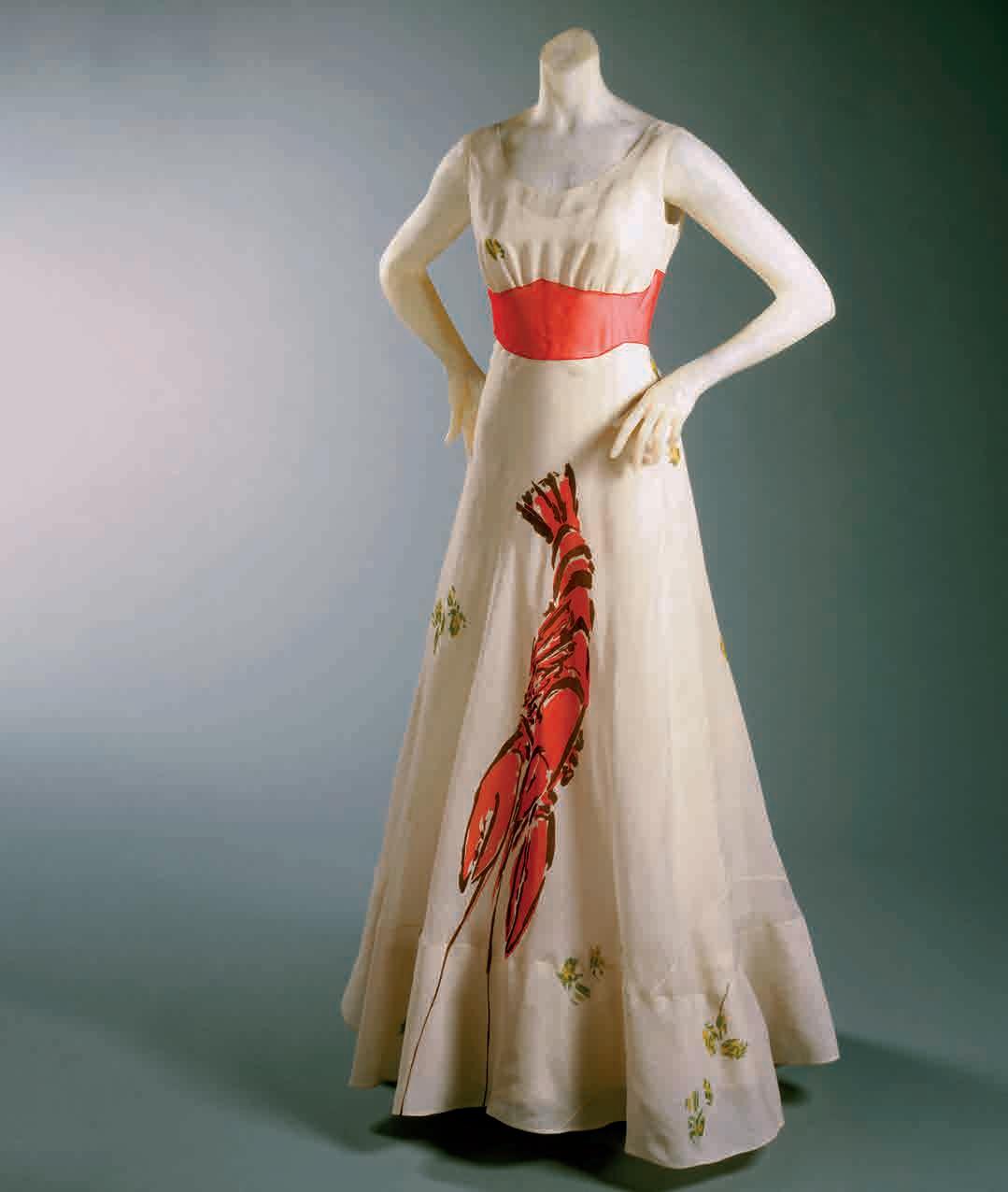
The V&A Museum can be relied upon to deliver a blockbuster fashion exhibition, and its latest show, devoted to that daring disciple of the surreal, Elsa Schiaparelli, is no exception. Schiap’s inventive, witty clothes, many designed in collaboration with Salvador Dalí, were the height of radical chic and a ant-garde dressing in the 1930s. Perhaps it is no surprise that she was a favourite designer of the Duchess of Windsor, who ordered 1 couture out ts from Schiaparelli for her wedding trousseau in 1937, a marked contrast to the fussy, full-skirted, fairy-tale gowns orman Hartnell was designing for her estranged sister-in-law, Queen li abeth. The exhibition will include several Schiaparelli pieces from Wallis’s collection, including the white organ a lobster dress that she wore for a 1937 photographic shoot with Cecil Beaton. vam.ac.uk
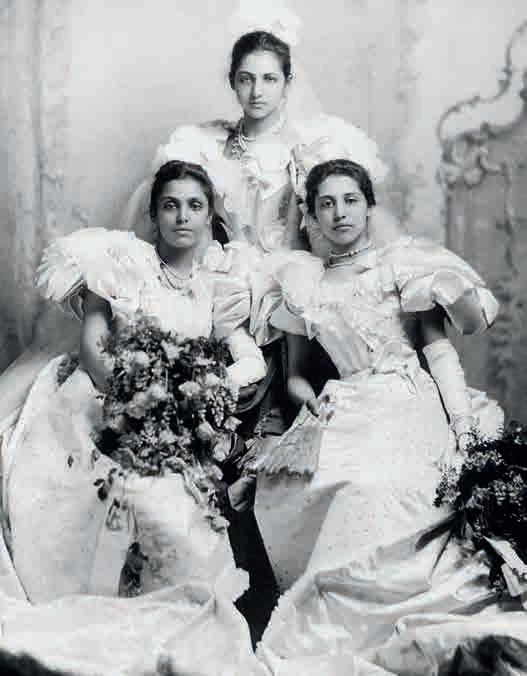
CENTENARY CHINA AT THE ROYAL COLLECTION
n o ficial range o royal chinaware has been released by Royal ollection Trust to celebrate the centenary o H Queen li abeth ’s birth ach iece o fine bone china is handcra ted by s illed artisans in Sto e on Trent and finished in carat gold The design in resh astel colours is ins ired by the embroidery and oral moti s embellishing some o the memorable dresses in her iconic wardrobe including her oronation gown on dis lay at this year’s e hibition Queen Elizabeth II: Her Life in Style Roses shamroc s and thistles along with lee s were a ocal oint o orman Hartnell’s design and mugs and side lates re rise these moti s The attern can also be seen on com lementary items including embossed teas oons a tea towel and velvet tree decorations The o ficial Queen li abeth entenary range can be urchased online at royalcollectionsho co u or rom Royal ollection Trust sho s in ondon dinburgh and indsor
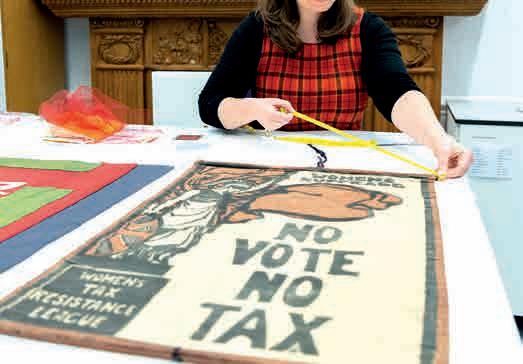
A major new exhibition at Kensington Palace, Last Princesses of the Punjab, marks the 150th birthday of Princess Sophia Duleep ingh Queen Victoria’s goddaughter, a leading gure in the ght for women’s su rage and an ndian princess. The e hibition will e plore Princess ophia’s acti ism and the stories of in uential women in her family, re ealing an intimate iew of li es shaped by the ritish mpire. The oices of ritish outh sian people will o er contemporary responses throughout the exhibition, which features personal letters, rare family photographs and ob ects from the su ragette mo ement. To o ember. hrp.org.uk
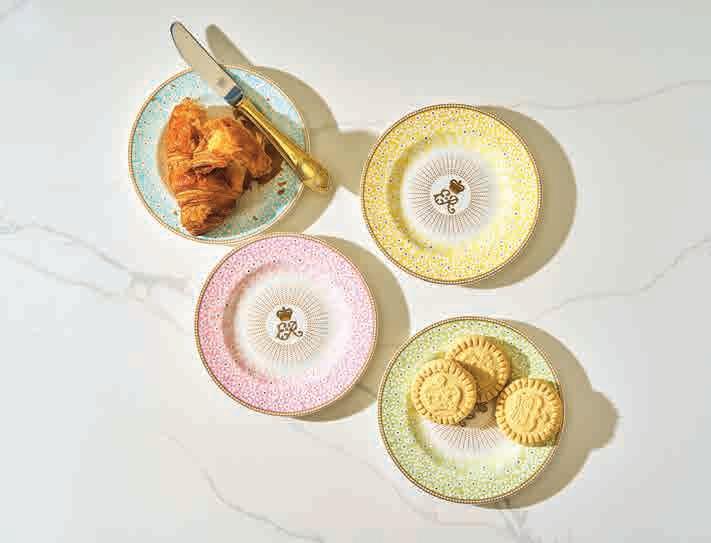
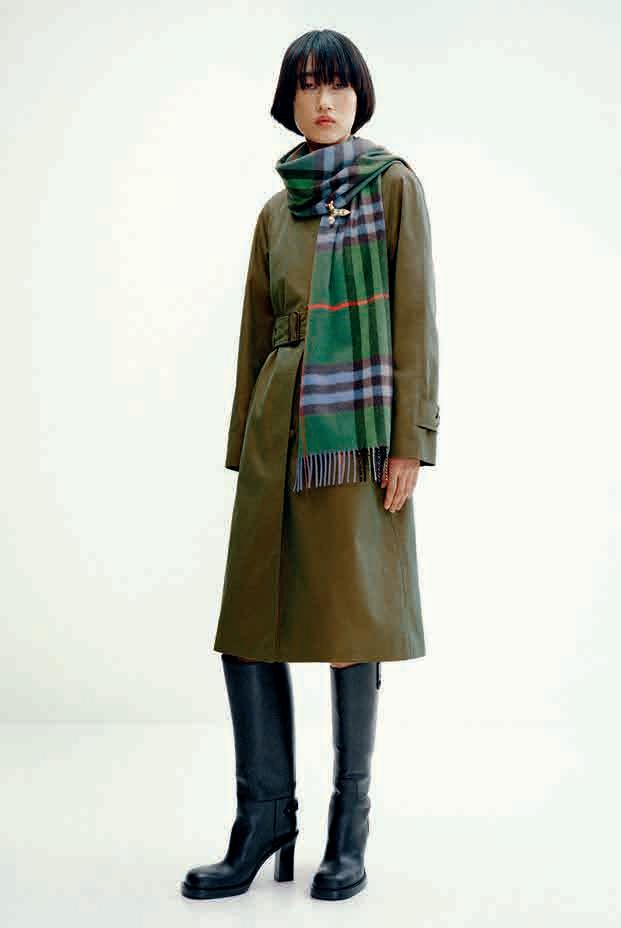
With The late Queen’s wardrobe rmly in the spotlight this year, her style legacy has pro ided inspiration at uintessential ritish brand urberry, where a new capsule collection has been created in collaboration with oyal ollection Trust. urberry was worn by Queen li abeth throughout her reign and was awarded a oyal Warrant in 19 . e eral urberry designs feature in the e hibition at The King’s allery, uckingham Palace this year.
The collaboration includes a belted car coat the preferred style of The Queen , crafted in astleford, West orkshire in holly green gabardine. new colourway of the iconic urberry ouse heck has been created, inspired by the ld tewart Tartan often worn by The Queen. t features on the silk lining of the car coat, on a cottish-wo en cashmere scarf and at the border of a silk twill scarf printed with a hand-painted depiction of almoral astle. ompleting the collection is a gold-plated brooch in the shape of a corgi wearing an enamelled check coat adorned with the urberry Knight motif on a freshwater pearl. These are serious in estment pieces, but they’ll last a lifetime and, of course, come with a royal seal of appro al. The collaboration is a ailable at burberry.com and selected stores. t will also be sold through oyal ollection Trust hops in dinburgh, ondon and Windsor and online at royalcollectionshop.co.uk
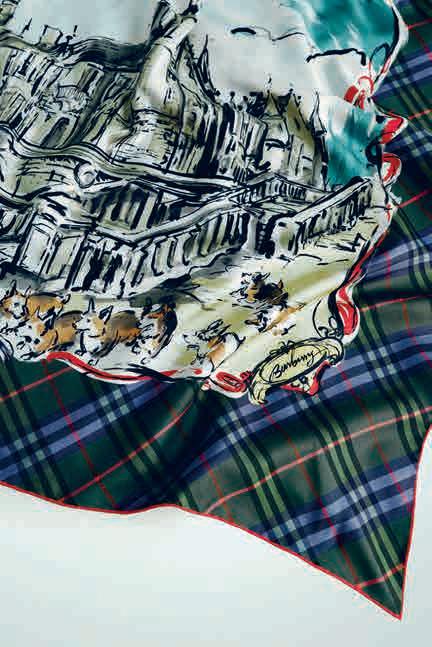
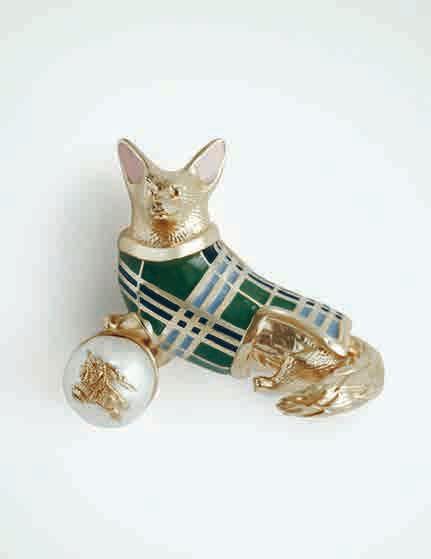
Last year, London fell under the glamorous spell of the Edwardians. Now it’s Edinburgh’s turn as, The Edwardians: Age of Elegance comes to the Palace of Holyroodhouse this spring. Exploring the glitzy world of Britain’s most fashionable royal couple, King Edward VII and Queen Alexandra (and their successors, King George V and Queen Mary), the exhibition brings together more than 150 items including fashion, paintings, books, jewellery, photographs and chinaware, half of which are on show in Scotland or the first time isitors will see works from the Royal Collection by many of the period’s most celebrated names, including Fabergé, Tiffany & Co, Laurits Tuxen and Edward Burne-Jones. The exhibition includes a never-before-exhibited portrait of Queen Mary by Welsh painter Sir Samuel Henry William Llewellyn, and a rock crystal paperweight in the form of a miniature sleigh (right) made by Scottish-born goldsmith, Robert Colquhon.
The Edwardians: Age of Elegance is at The King’s Gallery, Palace of Holyroodhouse, 24 April-6 December. royalcollectionshop.co.uk
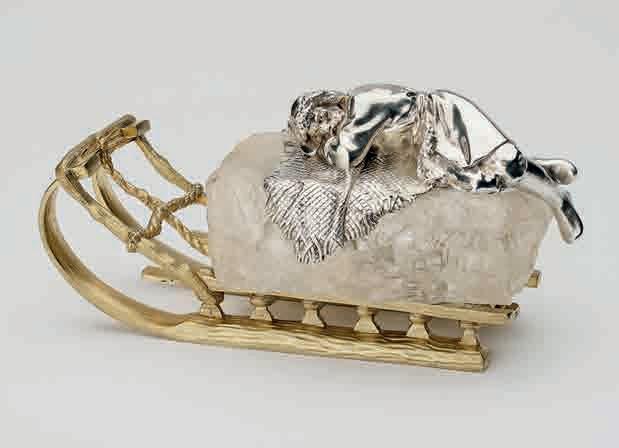
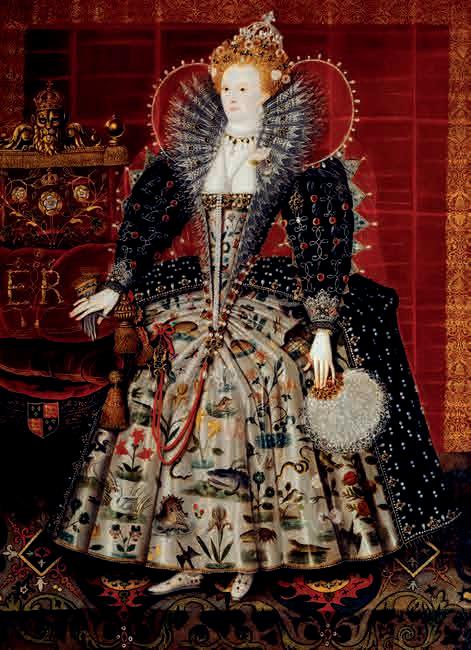
Did you know the average museum or art gallery visitor spends just eight seconds looking at a piece of art? The ‘slow looking’ movement is aiming to change that. It’s the art of looking at art, but properly and doing so can ha e all sorts of bene ts, from reducing stress to re-stretching our attention spans. The idea is gaining traction among many galleries, and at the National Trust where visitors are encouraged to linger over some of its key works of art. Meet Rembrandt: A slow looking experience is at Dunham Massey in Cheshire until 12 July before moving to Upton House in Warwickshire from 17 July to 8 November. If you’d like to pore over a royal portrait, visit Hardwick in Derbyshire to see a life-si e portrait of li abeth abo e and mar el at her jewels and embroidered gown. nationaltrust.org.uk
The BBC’s Antiques Roadshow will be marking Queen li abeth ’s centenary with a special edition dedicated to objects and art with a connection to Her late Majesty. Over the years, the show has featured some fascinating royal items, including a Fabergé brooch gifted by Tsar Nicholas II and a voluminous pair of Queen Victoria’s drawers. Expect more surprises and stories to emerge from the nation’s attics for this episode, hosted by Fiona Bruce.
‘Antiques Roadshow QEII Centenary Special’ airs on BBC1 at 7pm on 19 April and is available on iPlayer.
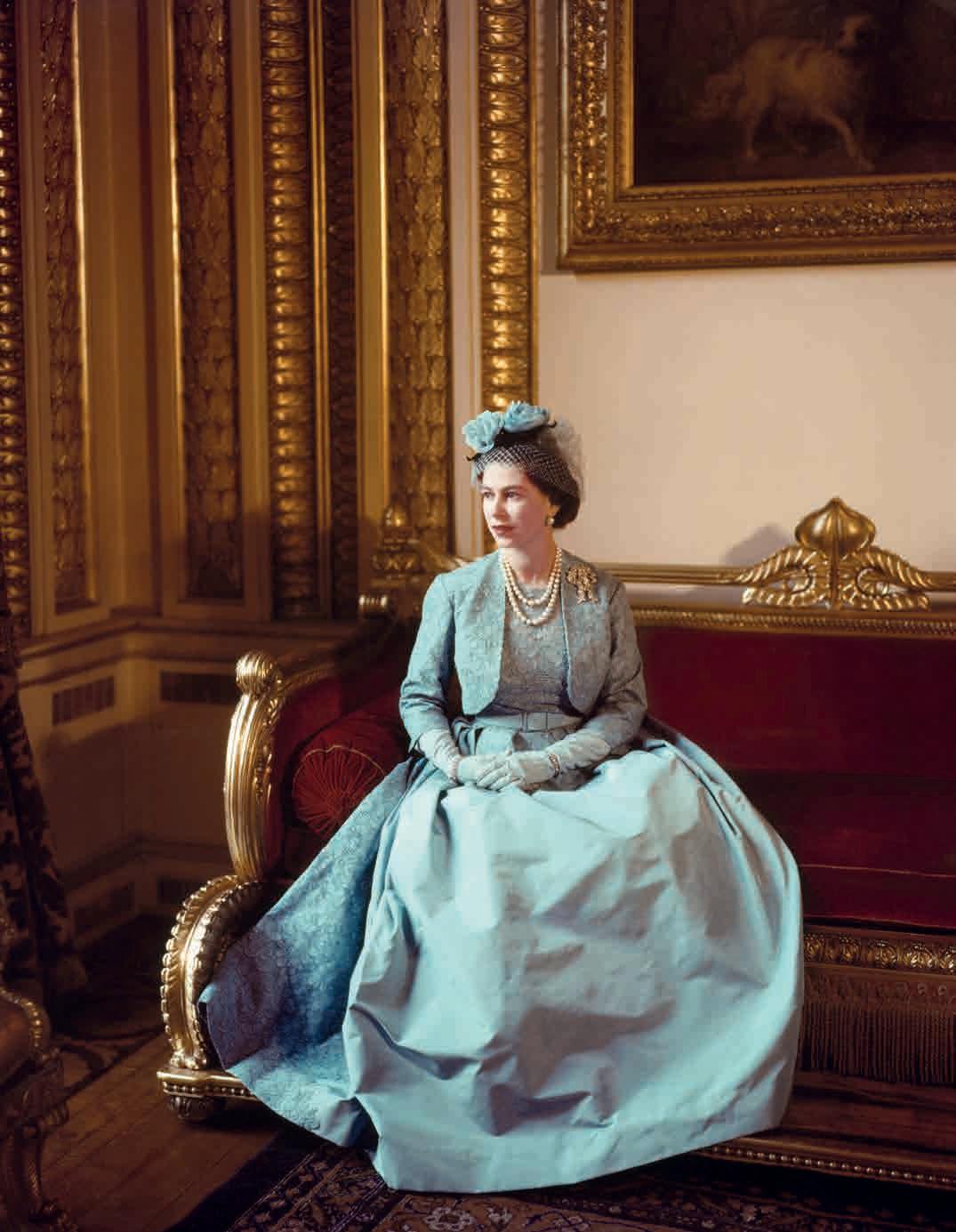
A new exhibition, covering 10 decades of The late Queen’s life in fashion, reveals how the sovereign developed a signature look, while still moving with the times. By Lucinda Gosling
Over her 96 years, Queen Elizabeth II, amassed a wardrobe unlike any other. Her fashion archive, part of the Royal Collection, consists of more than 4,000 items and ranges from childhood cotton dresses to sumptuous ballgowns, tailored hacking jackets to Hermès headscarves. It’s not everything she owned and wore making its scale e en more staggering , but ne ertheless it represents the single largest clothing archive of any British monarch in history, and serves as a lasting reminder of the essential and integral role clothes played in The late Queen’s life. This spring, fashion fans and royal enthusiasts alike will have the opportunity to see around 200 pieces from this collection, on show at The King’s Gallery at Buckingham Palace in what is without doubt, the ultimate feast for regal fashion fans.
There is a common misconception that Queen Elizabeth II took an entirely businesslike approach to fashion. That she did not particularly love fashion. Perhaps that misconception stems from Marion Crawford, the Princess’s former governess who recorded in her memoirs that as a little girl, she simply wore what she was told to, and remarked, “Lilibet never took the keen interest in clothes that Margaret does”. She certainly did not consume fashion in the way most of us do. For Queen Elizabeth II, there would be no regular visits to a favourite department store, and it’s doubtful she ever scrolled through the delectable o erings of netaporter.com in her later years. er singular role re uired an entirely di erent approach to clothes. She selected a small number of favoured couturiers, at rst those who had worked with her mother Queen li abeth, and even her grandmother, Queen Mary. They would visit The Queen, usually twice a year, and together would discuss and select designs suitable for upcoming engagements and tours. Some sketches in the exhibition bear annotations by The Queen about colour and cut. Clearly, she was no passive clothes-horse, and through a mutual understanding with her couturiers, she achieved a look, a royal image, that set her apart from the rest of us. Quite simply, she dressed like The Queen.
Yet she was never entirely divorced from fashion. There is evidence of this throughout the exhibition. We see it in the angel sleeves of the Molyneux bridesmaid dress she wore to the 1934 wedding of the Duke and Duchess of Kent, or the cinched waist and crinoline skirt of the apple green evening gown by Norman Hartnell, worn to a state dinner given for President Eisenhower at the British Embassy in Washington
in 19 it’s re ealed that hristian ior, acknowledged originator of the ew ook, greatly admired artnell . t’s visible in the shorter hemlines and simpler cuts of her 1960s out ts, especially in the space-age cool of a transparent ardy Amies raincoat, or the romantic kaftan shapes and psychedelic patterns of her 1970s Ian Thomas evening dresses. The Queen wore shoulder pads during the 1980s, just like every other fashionista worth her salt. But it was all done in the best possible taste, with subtlety and class, and without ever forgetting that her clothes had to send out unspoken signals; to be isible, diplomatic, memorable, symbolic and patriotic all with a restrained nod to current trends.
This is an exhibition that pays tribute to her unique look, but also to the designers and makers, largely British, who helped her achieve that. Norman Hartnell, who employed a cohort of expert seamstresses and embroiderers to realise his designs, features heavily. The Coronation gown, his masterpiece, is quite rightly one of the centrepieces of the exhibition, as is its forerunner, the 1947 wedding dress. But the beauty of this exhibition is its surprising depth and breadth. If you think you know all there is to know about The Queen’s clothes, think again. More than half of the items in the exhibition have never been displayed before. Visitors can ga e upon the u enile dresses in ditsy orals that once belonged to The late Queen, so familiar from photographs. The exhibition’s catalogue tells us that most of Princess
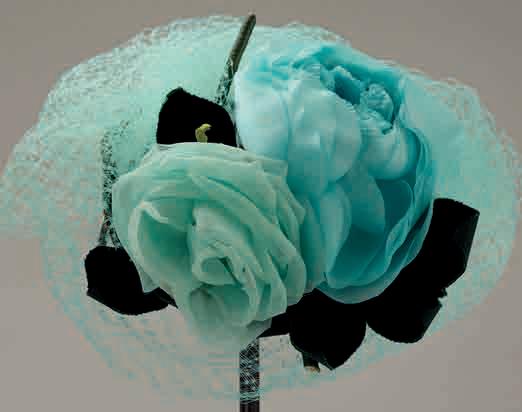
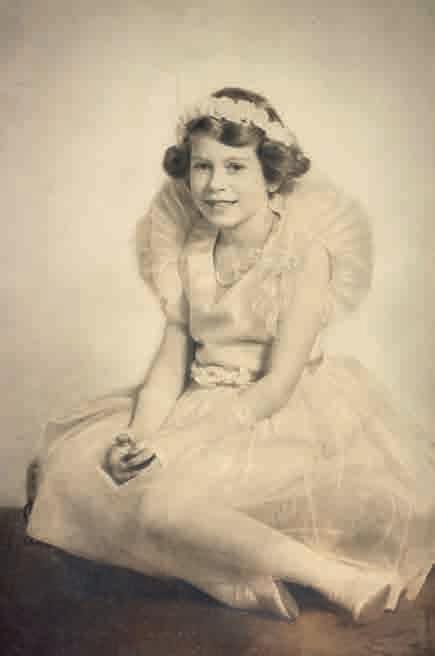
Elizabeth’s early clothes were purchased from mith o, of 19 loane treet later o1 2 , with Woollands a fashionable clothing store in loane uare , iberty and arrods also pro iding garments. pair of ballet shoes by ayne are a rare footwear sur i al from her early years. Smith & Co supplied the white rabbit fur coat with pompom buttons worn for the 19 1 wedding of ady ay ambridge to aptain enry bel mith, the e-year-old Princess’s rst public appearance. The store e en made miniature ersions of some out ts for Princess li abeth’s fa ourite doll, Pamela. lso from this era, is a fulllength gold lam e ening dress by Jeanne an in, clearly well-lo ed and re-worn se eral times, as e idenced by the band of lam sewn along the hemline to allow for e tra inches.
esides the charming childhood fashions, those from the late 19 0s, when Princess li abeth was nding her fashion feet, re ect signi cant moments in her own life, such as the natty white yachting skirt suit with gold na al buttons by artnell, worn during the royal tour of outh frica in 19 , or the blue el et gown from 19 , let out at the waist to accommodate a growing pregnancy bump. When The Queen then Princess li abeth toured anada in 19 1 she attended a s uare-dancing party gi en by the o ernoreneral of anada in ttowa. The photographs of that dance are famous, but it’s a delightful surprise to nd that the poodle’ skirt she wore, a design by former ew ork actress Juli ynne harlot, is still e tant. lso on display is the crinoline-skirted gown and matching bolero acket in pale cerulean
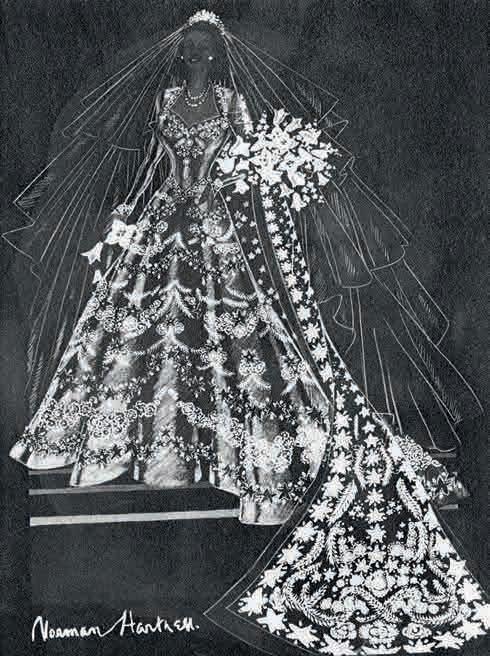
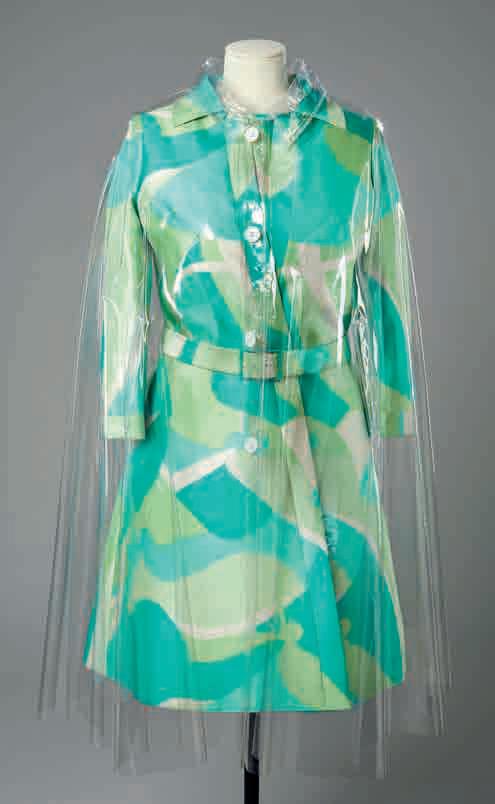
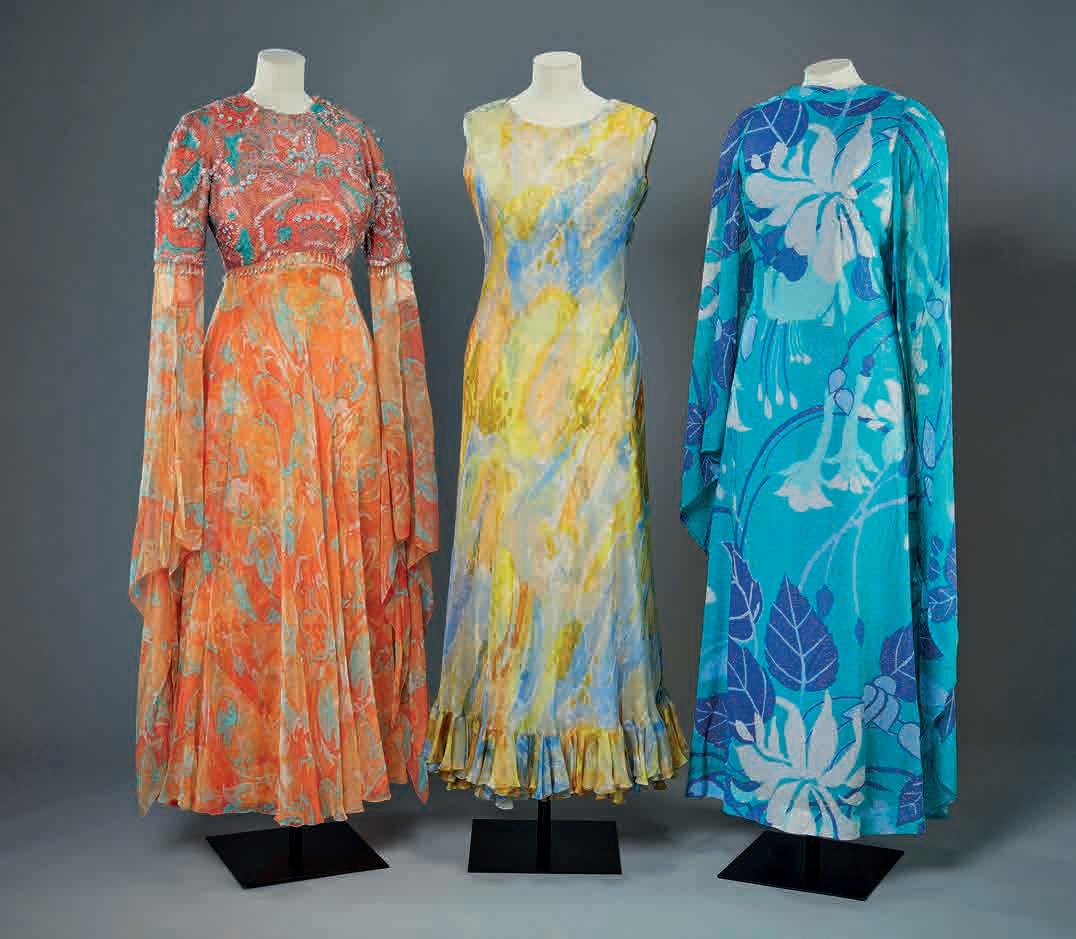
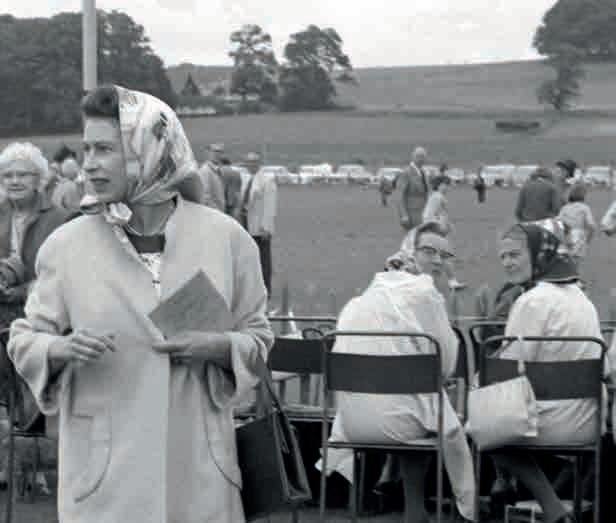
This page, clockwise from above: Vibrant Ian Thomas evening gowns from the 1970s; The Queen in the instantly recognisable style of her later years; and in her trademark headscarf in 1966; Facing page, clockwise from top left: Princess Elizabeth in the Edward Molyneux bridesmaid’s dress for The Duke of Kent’s wedding in 1934; a Norman Hartnell sketch for her own wedding dress; and a 1970s transparent raincoat, worn over a day dress, both by Hardy Amies
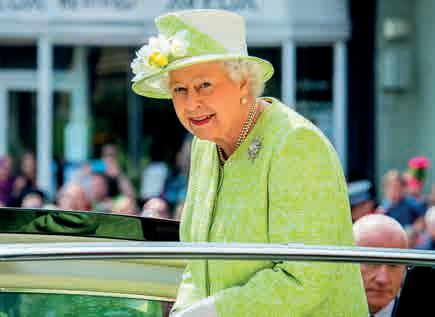
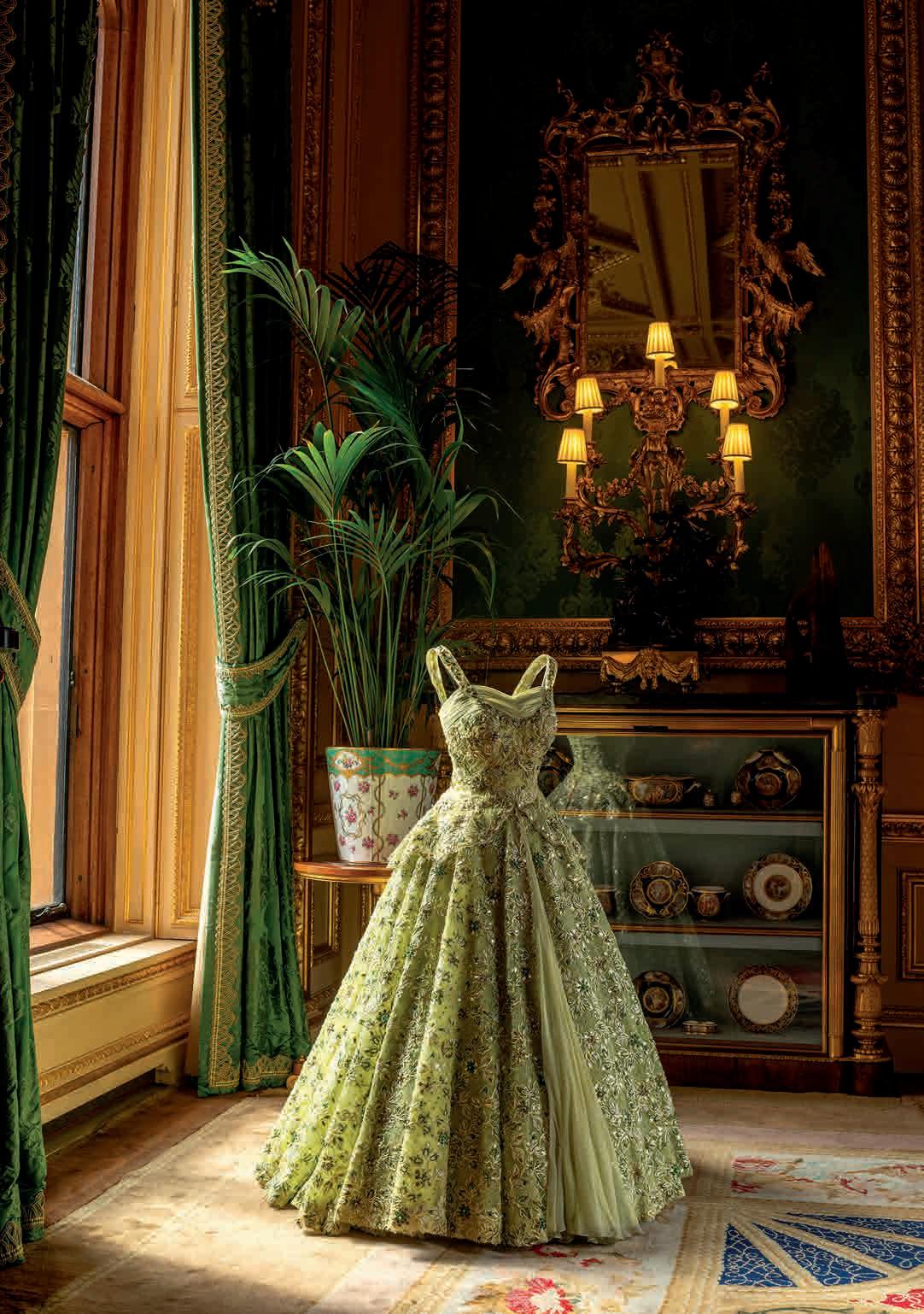
blue, worn for her sister Princess Margaret’s wedding in 1960; the last time full-length dress was worn for a royal wedding in ngland. The Queen’s dress echoed the bride’s silhouette both were artnell creations and was complemented by a laude t- yr hat adorned with three large blue silk roses. longside the showstopping ta eta and satin gowns are e amples from The Queen’s pri ate, o -duty wardrobe. countrywoman at heart, her belo ed tweed suits, riding clothes, practical macs and the e er-present headscarf constituted a look that was unmistakeably hers and has pro ided inspiration to more than one designer of the future. We might immediately think of Vi ienne Westwood’s sub ersi e homage to regalia and traditional tailoring, but countri ed ackets, kilts and pleated skirts ha e been seen in high-street stores in recent seasons, proof, if any were needed, that The late Queen’s classic style endures. epresenting her tweedier tastes will be a acket and kilt by orman artnell, a hacking acket by ernard Weatherill the rm held a oyal Warrant from 19 2 to 2022 and, the oden’ raincoat in dinburgh green, designed by ngela Kelly and worn by the Queen for her nal birthday portrait where she stood anked by two white fell ponies at Windsor astle in arch 2022.
This, after all, is an e hibition that co ers all 10 decades of her life in style. t’s a chance to get close up to the clothes of the world’s most famous woman. Someone who didn’t follow fashion but instead rose abo e it. ’m watching with interest to see what trends are sparked by this ery special show. y money’s on the headscarf making a comeback.
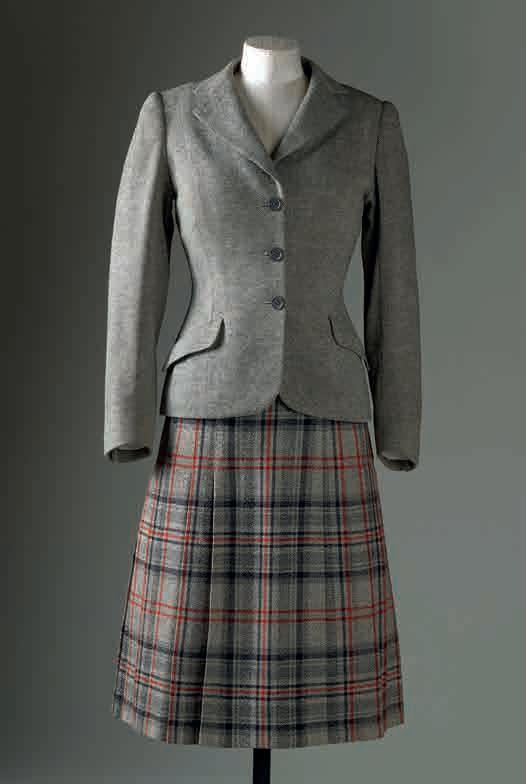
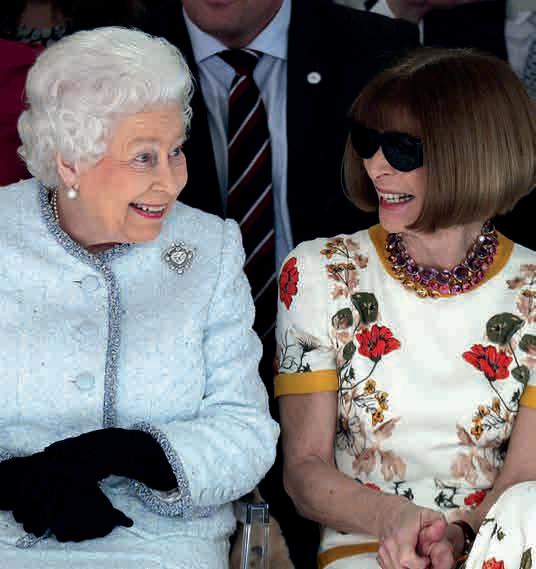
Below:
Facing page: The
state
Who can forget those images of The late Queen seated on the front row at Richard Quinn’s 2018 catwalk show, chatting to American Vogue editor, Anna Wintour? The sight of them together may have seemed incongruous but in fact, they were two fashion powerhouses, and Queen Elizabeth II was no stranger to catwalk shows, having attended many and, as she told Wintour, even taken part in one some time back in her youth. She would have approved, therefore, of the decision that this should be a show that looks forward as well as back, fully supporting the idea that Queen Elizabeth II’s style legacy carries on. Quinn was the winner of the inaugural Queen Elizabeth II Award for British Design. Together with two more successful British designers, Erdem Moralioglu and Christopher Kane, he has contributed a piece to the exhibition chosen from a past collection and influenced by Queen Elizabeth II’s distinctive style. Each modern piece is being displayed alongside a related item from The late Queen’s fashion archive. Quinn is in no doubt about her influence, calling her promotion of British fashion over the years, “the ultimate stamp of approval” while Anderson describes her wardrobe as “one of the most significant living archives in modern fashion history”, placing her at the very fulcrum of Britain’s textile, design and tailoring heritage. “Her garments tell the story of Britain,” he believes, “and its changing identity through fashion. For designers and students, it offers a masterclass in silhouette, construction, repetition, symbolism and, perhaps most importantly, restraint.”
Kate Strasdin pays tribute to the makers and craftspeople whose skill was woven into every one of The late Queen’s outfits
There are few among us who cannot recall at least some element of Queen Elizabeth II’s public wardrobe, whether it be a sparkling ceremonial occasion gown or an eye-catching ensemble at one of the many civic functions that she attended through the course of her long life. She recognised the soft power of dress, commenting “I have to be seen to be believed” and thus ensured she struck the appropriate sartorial note for any given occasion.
Not only does this year’s exhibition of The Queen’s clothes at The King’s Gallery in Buckingham Palace acknowledge the central role dress played in the public life of The Queen. By extension, it is also a celebration of the artisans whose work it was to design and make the many and various items worn by her. Makers such as Cornelia James, the glovers who have long held a Royal Warrant of Appointment and who kept The Queen amply supplied with the soft white jersey gloves that became part of her daily public wardrobe. The company was founded in the 1940s by a young Austrian glovemaker who came to Britain in 1939 as a refugee from the Nazi regime. Her colourful glo es lled a oid in post-war ritain and she started to recei e attention from high-end dressmakers and appeared in Vogue. She was commissioned by Norman Hartnell to make the gloves for Princess Elizabeth’s going-away out t in 19 , and so began a long working relationship that would see her awarded the Royal Warrant of ppointment in 19 9. Today, the rm is run by Cornelia’s daughter Genevieve and her husband Andrew, the gloves made by a small team of seamstresses from start to nish by hand.
If the gloves were so recognisable a component of The Queen’s wardrobe, so too were her hats, which became more and more distinctive and colourful as the years passed. The Queen awarded her warrant to a host of milliners over the course of her life including Danish designer Aage Thaarup. In her later years, howe er, she relied increasingly on her own in-house milliner, Stella McLaren. Stella had undertaken a millinery apprenticeship in 1967 before eventually nding work with royal milliners Frederick Fo and Philip Somerville. After Somerville’s retirement, The Queen’s dresser, ngela Kelly, o ered tella her own workroom at Buckingham Palace and here she would fashion many of The Queen’s most memorable hats. Stella described to me the shape of her working week, recalling, “I worked on forward planning with Angela, trips that were coming up and so on. We often went out and bought fabrics and sorted the blocks out and the shapes. nd then we would go downstairs and t it on The Queen. Such a wonderful job.”
Stella’s hats were often made in conjunction with the designer Stewart Parvin who was awarded his own Royal Warrant of Appointment in 2007 after several years of creating memorable out ts for The Queen. e remembers the day that ngela Kelly rst approached him in the basement workroom of his premises at 14 Motcomb Street in Knightsbridge. She indicated only that she had a VIP client looking for some original pieces. Par in o ered to cut some fabric swatches and provide sketches for the client to inspect. “I did three or four alternatives for each fabric and she came back and collected them. About a week later she rang back and said she had good news. The client had actually chosen a sketch from each of the fabrics.”
It was at this point that Kelly revealed the client’s identity and so a new working relationship began to ourish. tewart would isit the Palace with his seamstress arbara for the ttings, ust a part of the collaborative process that accompanied his work for the Royal Household involving frequent exchanges of sketches as well as conversations about style and colour. After decades of similar interactions with designers, The Queen knew how she wished the world to see her.
There are hundreds of similar recollections that makers to the royal wardrobe might o er. From The Queen’s favourite shoemaker, Rayne, to the embroiderers at Norman Hartnell and the tailors at Hardy Amies, these are the lives of ordinary people, far from the palaces. Many are the workers at Corgi socks in the small town of Ammanford, South Wales, and the tartan weavers of Kinloch Anderson in Edinburgh. ehind the e er-distincti e gure of Queen li abeth II, countless makers wove, knitted, embroidered and stitched in studios and workshops around the United Kingdom. Their names may not always be known, but their legacy survives in every royal garment.
Professor Kate Strasdin is author of Dressing the Queen , published by Chatto & Windus
Comfort and practicality was as important to Queen Elizabeth II as elegance. Michael Pick reveals some of her designers’ solutions.
In an age of continually expanding media scrutiny, public image is everything. In the case of a monarch, their clothes are a ital asset in de ning their personality as head of state. Arguably, maintaining that image is less complicated for a king, as uniforms, formal clothes and suits vary little in design. The late Queen epitomised her role as a young 2 -year-old sovereign, responding to changes in fashion, while never compromising on comfort or practicality.
‘Wardrobe malfunctions’ were considered and avoided.
For The Queen, such complications also relied upon her own acute dress sense and a few experienced advisers. In 1952, following the Festival of Britain, she was regarded as the harbinger of a New Elizabethan Age, so her own taste and style were critical. She took a keen interest in her own appearance, understanding its signi cance in emphasising her position at the centre of a strong monarchy.
While conforming in silhouette to current trends, she was not ultra-fashionable. nstead, from childhood onwards, she dressed appropriately for each occasion, with every aspect of her appearance carefully considered. ltimately the nal touches were hers she applied her own make-up and could e en put her tiara in place while walking fully dressed.
ardy mies 1909-200 , her second ressmaker by oyal ppointment, e empli ed e cellent ritish cut and construction, his daywear particularly referred to by The Queen as clothes for “going about my business”. After approving a sketch and fabrics, comfort was achie ed during three ttings. Jon oore, the last Amies designer, achieved perfection after fabric was deliberately cut too large, altered after the rst tting and then tested by The Queen while walking, sitting and moving.
an Thomas 1929-199 third ressmaker by ppointment, formerly assistant to her rst oyal ppointment, orman artnell 1901-19 9 later e ol ed a series of less- tted, owing, chi on e ening dresses for The Queen, even worn on state visits. The Queen’s dresser, iss ac onald, initially telephoned him for sketches. What will r artnell say he asked. r Thomas, T Q wants to submit designs. is easy-to-wear designs, and instinctive colour sense resulted in the gift of a dog.
Wearing the tate rown was a precarious business one false movement might result in a dislocated neck, as The Queen stressed, dresses were always a foil. Hats were the usual substitute of her status in a crowd, usually o the face for isibility and weatherproof, they were integral to daywear designs made by milliners such as Amies stalwart, Frederick Fox or Aage Thaarup and Kate Day, a childhood friend of Hartnell.
Hartnell was famous for glamour and innovation; patronised by Queen ary, he rein ented the crinoline
for Queen li abeth, the Queen other and was admired by Christian Dior. Princess Elizabeth’s rst wartime e ening dresses were created from her mother’s 19 0s gowns, altered to conform to clothes rationing. Later, he designed her 1947 wedding dress.
The 19 oronation ress pro ed stressful for artnell and his sta . ery detail of that iconic dress was discussed with The Queen, especially the embroideries, a Hartnell speciality, representing her realms and dominions. The embellishment added considerably to the weight of the heavy silk fabric and on a trial run in Westminster Abbey, Hartnell witnessed it listing to one side “like a stricken galleon”. His experienced workforce eventually lined and backed it with cream ta eta, reinforced with three layers of horsehair crinoline so it could swing with the correct balance , for the nal tting.
The Queen sat, walked, checked the balance and swing. Finally, her erdict lorious .
Coronation Day was chilly and damp, but if The Queen felt the great weight of the gown, she did not show it. The dress was worn in Australia and New ealand during the royal tour of 19 -19 . The Queen later remarked it felt like “being encased in a radiator”.
Comfortable shoes were an essential component of er a esty’s wardrobe. er wedding and oronation sandals were designed by Hartnell and made by ayne. n oronation ay she chose another Rayne design, later replicated for wear with heavily embroidered dresses until the 1960s.The rm of ayne closed in 200 , and other rms were used, ngela Kelly often breaking shoes in to ensure full comfort .
n 201 ick ayne, great-grandson of the founders, was asked to supply shoes again, usually in black, and of soft calf, nappa or patent for daywear and black satin or silver for evening and state occasions.
Commenting to the Queen that he knew how pleased his late father would have been with the renewed arrangement, she smilingly replied, “Well, we are ery pleased too, r ayne.
Michael Pick FRSA is the author of Norman Hartnell , Be Dazzled: Norman Hartnell , Hardy Amies and Rayne: Shoes for Stars . He is currently researching the life of designer Edward Molyneux.
In an extract from her new book, Fashioning the Crown, Justine Picardie goes behind the scenes in The Queen’s fashion archive at Windsor and encounters a dress that brings the past vividly to life.
Many of the monarchy’s greatest works of art can be viewed at Windsor: portraits by Anthony van Dyck including a monumental one of harles astride a white horse, and his famous painting showing the same king from three iewpoints masterpieces by ubens, Titian, ruegel and olbein. agni cence and wealth are e erywhere superb sil er and gilded furniture, uantities of aluable porcelain, countless marble busts, umpteen golden candelabra and crystal chandeliers. ut aside from these isible e hibitions of power and pri ilege, dating back to the time when the rown claimed its di ine right to rule, a hidden history is kept safe at Windsor astle, in the form of the ast oyal rchi es amassed within its walls. few records lie deep in the network of basements that form an underground labyrinth the ast ma ority are stored high up in the 12th-century ound Tower.
The Queen’s clothes, howe er, are now preser ed in the care of a te tile conser ator, who works with a small team in a modern building in Windsor reat Park. t took some months after The Queen’s death for her sur i ing clothing to be assembled there, alongside her mother’s, and e en longer for the process of cataloguing to commence. y re uest to see the most signi cant of The Queen’s gowns designed for her by Hardy Amies has therefore taken a year to be granted. ut at last am returning to Windsor on a rainy day in February, when the grey skies are dour and glowering, and the morning is as dark as twilight. The security is strict two di erent forms of are re uired, following a pre ious online screening process, and must enter ia a gate guarded by armed police. Their gra e faces seem to re ect the sense of occasion heightening my own, slightly uneasy feeling that in coming here, am disobeying Walter agehot’s warning against poking around and destroying the mysti ue of the monarchy.
The surroundings are not in the least magical the building is utilitarian and anonymous, in a small comple of workshops and warehouses. The contents, howe er, are remarkable on my way to the te tile studio, pass a restorer at work on a red satin-co ered chair that looks ery much like the one saw The Queen sitting on when encountered her, more than a decade ago, in the rimson rawing oom of the nearby castle. There is a treasure tro e of royal clothes, too, forming as compelling a historical collection as
the annals contained within the ound Tower. ike a handwritten letter or diary that sur i es long after the death of its author, these corporeal garments are testaments to a past life.
The Amies dresses that I am here to see today are stored in grey bo es, like co ns, to keep them safe from daylight, uctuations in temperature, and the fatal depredations of clothes moths whose lar ae spin tunnels of silk and feed o the materials that they inhabit, and e entually destroy . The conser ator and one of her colleagues open the rst bo , remo ing the layers of tissue paper that shroud the garment, and then they don special glo es to lift it onto a display table. t is a strapless red el et e ening gown, with a tiny waist only 2 inches and identi ed by the curators as ha ing been worn by Princess li abeth in the late 19 0s.
ardy mies opened his couture house in January 19 6. This gown appears to be strikingly similar in style to hristian ior’s debut ew ook collection, launched in February 19 , which introduced long, e tra agantly full skirts, in marked contrast to wartime rationing and austerity. small yet distincti e label consisting of mies’s own handwritten signature and address 1 a ile ow is neatly stitched inside a seam within the black satin lining, hidden by the folds of the oor-length skirt. The crimson is an undeniably regal colour, but this is a party dress for a princess to dance in, rather than stand to attention in her formal regalia. The el et feels soft to the touch, almost warm in its intimacy, as if it has only ust been shrugged o by ilibet, the laughing girl who wore it in her youth.
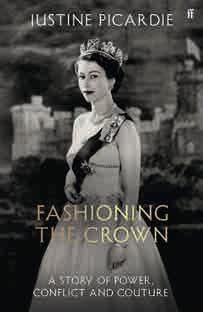
Educating royalty – and especially the heir to the throne – is a teaching job like no other. Lucinda Gosling explores how lessons were given, from Queen Elizabeth II’s much-loved governess, through The King’s days at Gordonstoun to the more modern approach to regal schooling
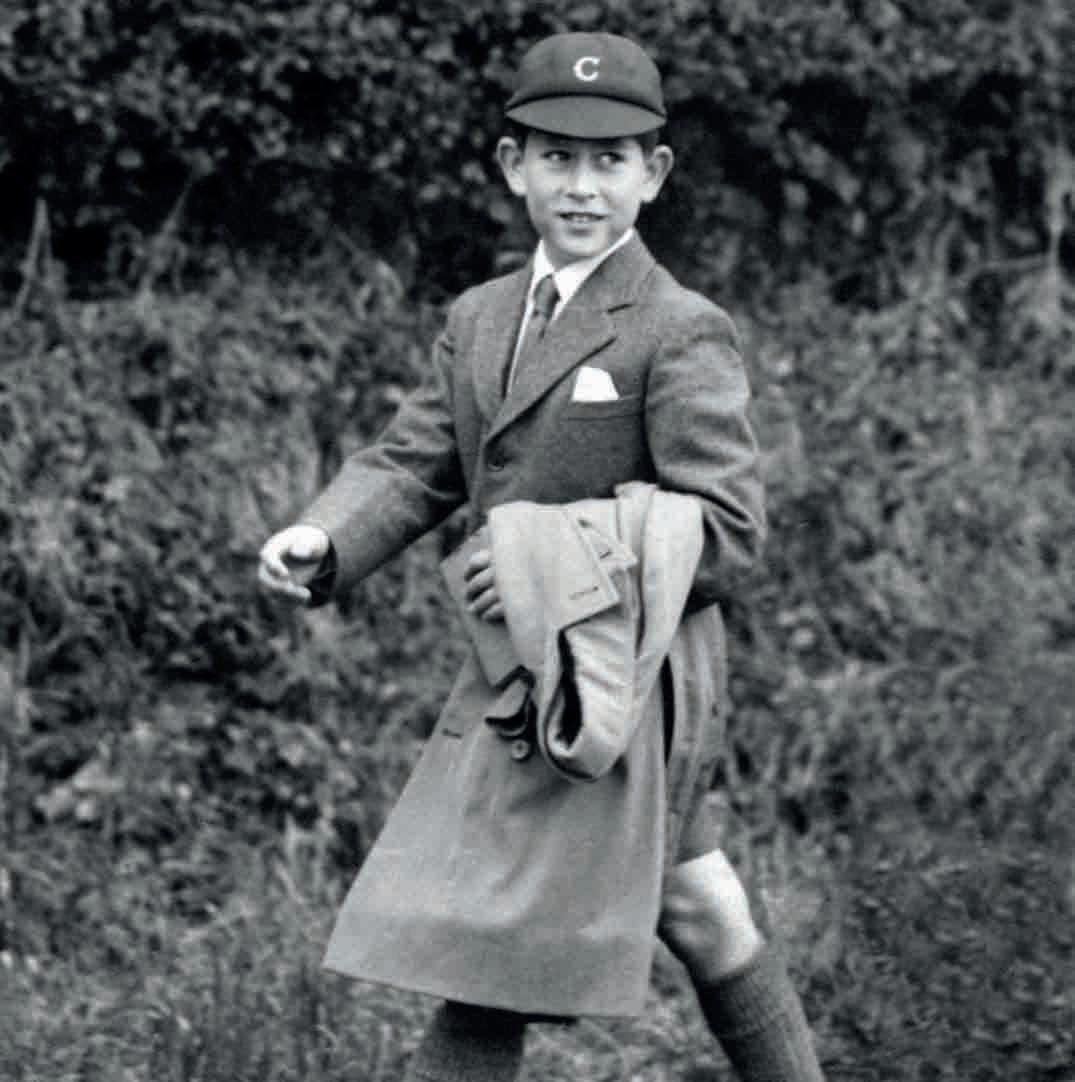
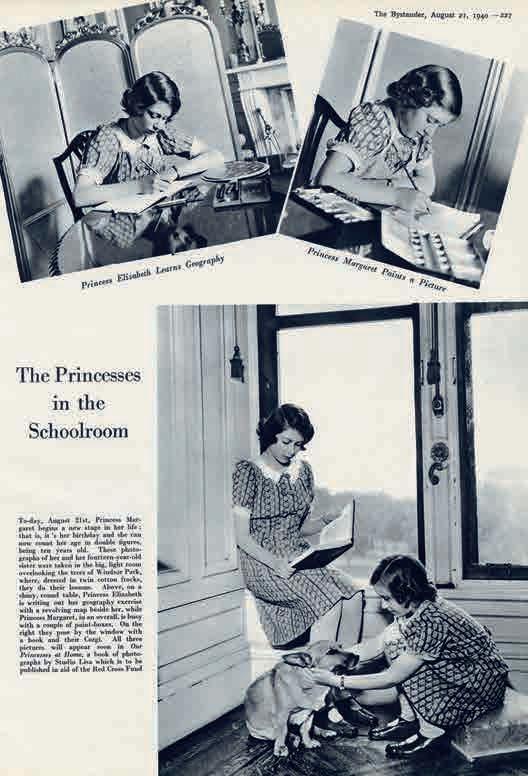
How do you educate someone who is destined to take a job that nobody else in the country does?
This was the question the historian Sir Charles Petrie asked in 1966, when he wrote about the future King Charles III for The Illustrated London News. The Prince of Wales had then just finished school, and Petrie was ruminating on his future pathway, remarking: “There is only one young man who is being trained to be king of England.”
This July, Prince George of Wales will turn 13 and so a similar question will already have been discussed at length. He is in his final year at Lambrook School in Berkshire, which is also attended by his two younger siblings. Kensington Palace will delay any announcement of which school has been chosen until as late as possible to avoid the inevitable press scrum, but royal pundits are already predicting that it may well be his mother’s alma mater, Marlborough College, that is favoured over prestigious Eton College, his father’s old school.
What is certain is that The Prince and Princess of Wales will want their son to experience as normal an education as is possible for a teenage boy who just happens to be second in line to the throne. ‘Normal’ is, of course, subjective; arlborough ollege, costing more than 20, 00 a term for boarders, may not be the local secondary school but it is co-educational for a start, and it is thought William and Catherine will want Princess Charlotte and Prince Louis to join their brother e entually. owe er, with its spread-out campus, security may be an issue. Eton, of course, might argue that it has experience in this area, having educated not only Princes William and Harry, but also The Duke of Kent and his brother,
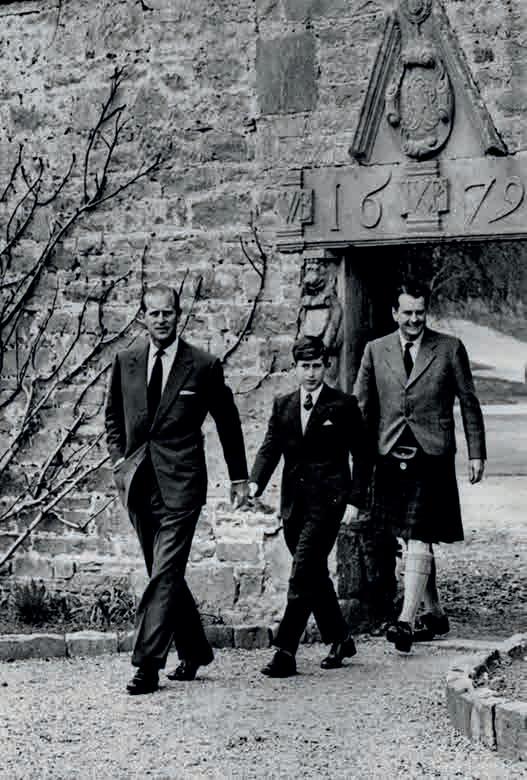
as well as The uke of loucester and his father before him . But nothing is yet confirmed and St Edward’s in Oxford, Oundle School and University College School in Hampstead have also been suggested as being in the running.
Wherever he goes, it’s interesting to consider Prince George will only be the third heir to the British throne actually to go to school. HM The King was the first, when he attended Hill ouse Pre-Preparatory chool, and afterwards followed in his father’s footsteps by going to Cheam and Gordonstoun. Before that, the majority of royal children were privately educated at home by tutors and governesses. The future Queen Elizabeth II was taught, along with her sister, Princess Margaret, by their Scottish governess, Marion Crawford. ‘Crawfie’, as the Princesses affectionately called her, had trained in child psychology at Moray House Training College in Edinburgh and, after teaching history to the children of the 10th arl of lgin, was recommended to The uchess of ork by her sister, ose e eson- ower, whose daughter ary had also benefited from lessons. She began with the Yorks in 1933, devising a varied weekly timetable for her charges. Mornings were devoted to arithmetic, grammar, geography, literature, poetry and composition, with three history lessons a week at the instigation of Queen Mary who, according to Crawfie, asked: “Was arithmetic really more valuable anyhow to them than history? These two would never probably have to do even their own household books but history Princess li abeth’s future career? Would it be worthwhile robbing a period or two of arithmetic to add to history?’.
There was a visiting French teacher, and afternoons were
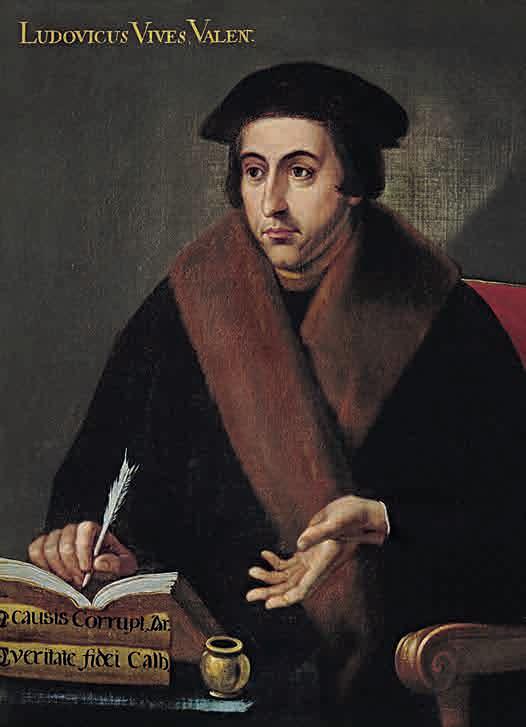
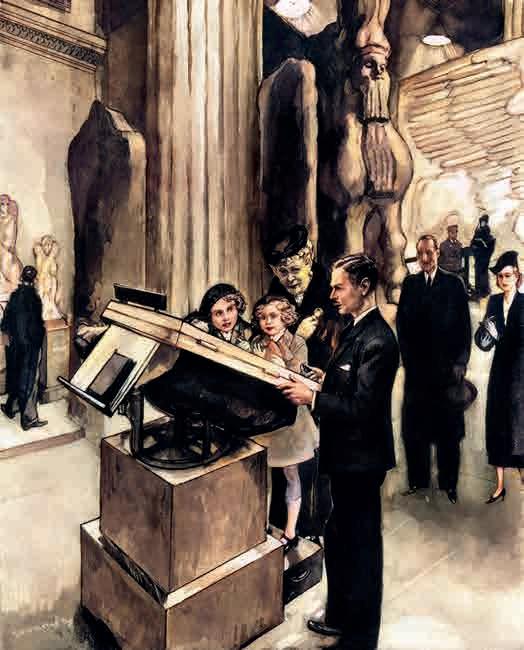
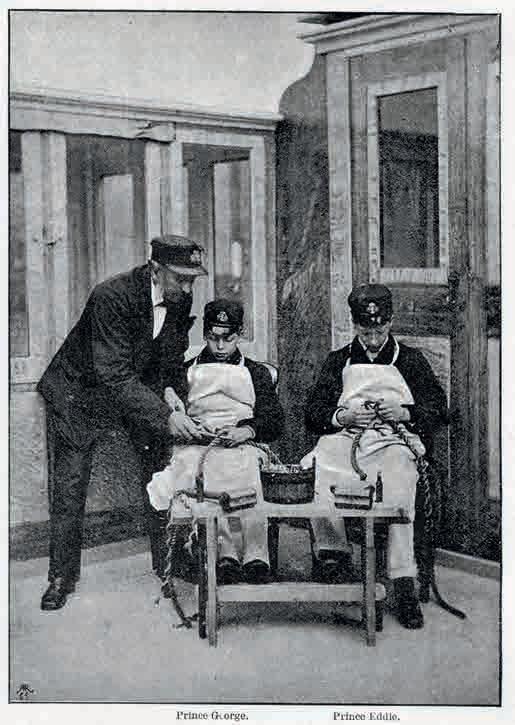
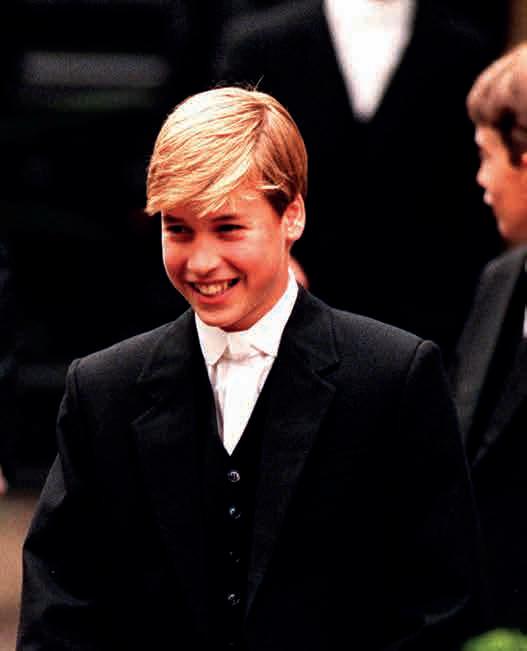
This page: Clockwise from top left, Spanish humanist Juan Luis Vives; a photograph of Prince Albert Victor, right, and Prince George (later George V) being taught to splice ropes aboard HMS Bacchante rince illiam on his first day at ton ollege in and an illustration in The Illustrated London News rom ecember showing rincess li abeth and rincess argaret visiting the ritish useum with their grandmother Queen ary
Facing page: The rincesses with ady Helen raham and their governess arion raw ord a ter their first ride on the ondon nderground in
spent on dancing, singing and music lessons or occasional cultural visits with Queen Mary to somewhere like the British Museum or Royal Mint. All this was mixed with plenty of time for fresh air, play, rest and reading. It is to Crawfie’s credit that she also acted to minimise the insular effects of being taught at home by organising other activities that would give the Princesses opportunities to socialise and become accustomed to the wider world. She suggested swimming lessons at the Bath Club, the formation of a Girl Guide unit at Buckingham Palace in 1937 and masterminded their first excursion on the Underground in 1939. By the time she was 13, it was becoming increasingly clear Princess Elizabeth was likely to become Queen one day, so it was arranged that she would have lessons twice a week in constitutional history given by Sir Henry arten, scholar and ice-pro ost of ton ollege.
Hers was an education without qualifications, and arguably there was no tangible way to measure its success. The Labour minister, Barbara Castle, recalled a conversation she had with The Queen at a state banquet in 1964 on the eve of Prince harles’s -le els. fter being called away to speak to her son on the phone, The Queen discussed how awful exams were, saying to Princess Margaret, “You and I would never have got into university”. Despite this, she spoke French fluently, and successive prime ministers remarked on her astute knowledge of politics and current affairs.
The wholesomeness of Crawfie’s regime stands in stark contrast to the rigour applied to royal children of the past. Henry VIII’s offspring grew up in a Renaissance court where humanism was a permeating influence, and learning considered of equal importance to prowess on the battlefield. The Spanish humanist, Juan Luis Vives, one of the great intellectual giants of his age, was engaged by Catherine of Aragon to advise on the education of her only daughter and even wrote a treatise on the education of girls, De Institutione Feminae Christianae. Princess Mary was able to play the virginals at the age of four and by nine was reading and writing Latin fluently. Her half-siblings, Princess li abeth and Prince dward were equally precocious. John Cheke, another humanist scholar, became tutor to Edward in 1544 and taught the little boy to read Cicero and Livy; Elizabeth under the tutelage of William rindal both he and heke came from t John’s ollege, ambridge , could speak atin, French, talian and reek. n cotland, the education of James V later James of ngland consisted of Greek and Latin from an early age and he could translate the Bible into French by the age of eight. Author Morris Marples, who discussed the education of royalty in his 1965 book, Princes in the Making, believed, “Edward VI, Elizabeth I, Lady Jane Grey and James I would all have won open classical scholarships to Oxford or Cambridge”. While the Tudor age may have marked the pinnacle of learning for royal children, the 19th century may well have been its nadir, at least as far as Queen Victoria’s heir was concerned. er eldest son, lbert dward ertie’ grew up in the shadow of his brilliant elder sister, Vicky. While Vicky took after her father Prince lbert, ertie much to his mother’s disappointment seemed to e hibit the lessfavourable traits of his Hanoverian forebears. “Bertie is my caricature,” she wrote to Vicky. “That is the misfortune, and, in a man, this is so much worse.” Anxious to ensure the most advantageous education for their son and heir, Victoria and Albert sought the counsel of others, including the couple’s influential adviser, Baron Stockmar, and the Bishop of Oxford, who pompously stated, “the great object in view is to make him the most perfect man”. Unfortunately for all, their great
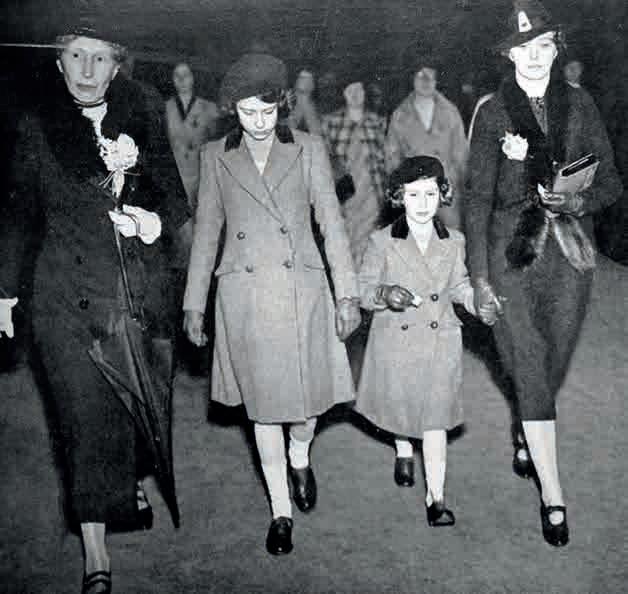
hope turned out to be a truculent boy who could be loving and warm-hearted, yet also, according to his go erness ady Lyttelton, “uncommonly adverse to learning”. It was a bitter disappointment to Victoria that her son was not a carbon copy of his intellectual, hard-working, diligent father. The royal parents even engaged a phrenologist to examine Bertie. They must have been dismayed at his report which found, “the organs of ombati eness, estructi eness, elf- steem, Concentrativeness and Firmness are all large. The intellectual organs are only modestly developed…”.
Bertie’s unwillingness to apply himself to his studies cannot have been helped by a relentless schedule of lessons under his tutors, first Henry Birch, and then Frederick Gibbs. At the age of seven, Bertie was spending six days a week on lessons, from 8am to 5pm, with an hour of dancing after that. One letter from his German teacher, Dr Ernst Becker, to the Prince Consort, voiced concern over such an intense timetable: “To anyone who knows the functions performed by the nerves in the human body, it is quite superfluous to demonstrate that these outbreaks of passion, especially with so tender a child as the Prince of Wales in his moments of greatest mental exhaustion, must be destructive to the child.”
Looking at all the evidence, he was exhibiting the kind of behaviour typical of a little boy under the strain of an intolerable learning schedule. Perhaps it’s even possible the future King Edward VII suffered from some form of ADHD? Whatever the causes, instead of tailoring a school regime to suit his needs, the academic treadmill continued. All the while Queen Victoria repeatedly highlighted the deficiencies of her son by comparing him with his father.
The result of his unhappy experience was a determination in Bertie that his own children should not endure the same. He didn’t look far for a tutor for his own sons, selecting the Reverend John Neale Dalton, curate of St Mildred’s Church at Whippingham, near to Osborne House. Dalton, who held a first-class degree in theology from ambridge, was engaged to ensure a bespoke educational programme intended to help and
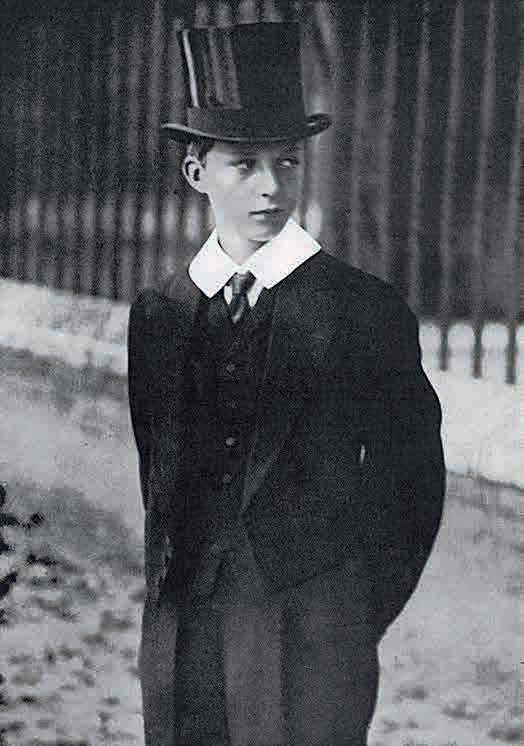
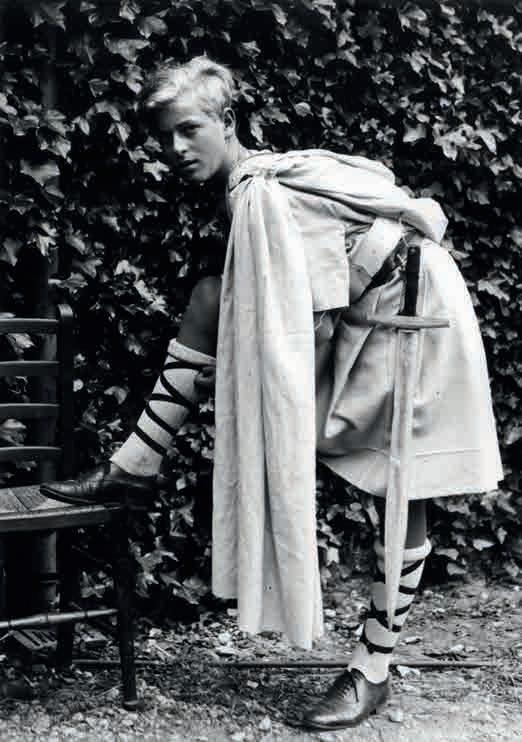
encourage the une ceptional Prince lbert Victor ddie’ and his li elier younger brother, Prince eorge eorgie’ . alton assumed complete responsibility, and while a boarding school might ha e offered a more well-rounded education, ddie’s shortcomings would ha e been e en more pronounced among other pupils. nstead, the boys laboured at a full day of lessons, with alton fre uently describing eorge as showing fretfulness of temper or noting he was inclined to be la y and silly this week . is beha iour may well ha e been a result of the growing frustration at being taught alongside his listless and slow elder brother. ut the boy who became eorge V found his m tier in 1 when he oined the training ship, Britannia, as a cadet. e en oyed learning nautical skills and found he had an aptitude for maths, a fundamental element of a na al education. The pattern would be repeated with his own sons, the future dward V and eorge V , who, after being taught at home, were sent to the oyal a al ollege at sborne, and afterwards to continue training at artmouth. Their younger brothers, Prince enry, later uke of loucester, and Prince eorge, later uke of Kent, were the first sons of the monarch to attend preparatory school t Peter’s in roadstairs , and while eorge followed his brothers to sborne and artmouth, enry instead attended ton, where he was oined by the uke of rabant, eldest son of the King of elgium, who had been sent to the relati e of safety of ngland during the First World War. ritish education was considered desirable for royal children from o erseas. King ussein of Jordan went to arrow in the 19 0s, as did his cousin, King Faisal of ra . n 19 , Princess argrethe now Queen of enmark spent a year at orth Foreland odge, a girl’s boarding school near asingstoke. n ermany, Prince Philip of reece had been a pupil at the school of progressi e educator Kurt ahn, and when ahn left a i
ermany and set up a school on the oray Firth he was one of its first pupils. t ordonstoun, boys were encouraged to de elop character, courage and self-confidence . longside traditional lessons, pupils learnt a ariety of outdoor skills forestry, coast-watching, sailing and firefighting. They were e en responsible for training the school’s bloodhounds. Prince Philip tough, resilient, self-reliant thri ed at ordonstoun and belie ed it was also the best place for his son. For Prince harles, who was sensiti e and artistic, the spartan regime came as a shock. e called it oldit in kilts . ut he adapted and by the end of his time there he had taken the lead role in Macbeth his father had only played onalbain 0 years earlier and was chosen as ead oy. ad ordonstoun been coeducational at that time, it might ha e suited Princess nne. t became one of the first public schools to take girls and boys in 19 2, and the Princess oyal’s own children, Peter and ara Phillips both attended. For their mother, enenden in Kent was chosen. n a 2020 inter iew with Vanity Fair, talked about the e perience positi ely was ready to go to school. had a go erness and two friends and that was ne er going to be enough, really, so was only too pleased to be sent off somewhere else. think boarding school has been demonised by some, when in fact it’s a ery important aspect to ha e a ailable and many children actually thri e on it. ducational choices are a minefield for any parent, but for the oyal Family, those choices and mistakes are magnified under the microscope of public scrutiny. nd starting a new school is scary for any 1 -year-old, so for Prince eorge, who will ha e the world watching, it must be particularly ner eracking. ut this is the 21st century and eorge has parents who know how important it is for their son to feel safe, secure and content. Where er he goes, it is likely to be somewhere that puts its pupils’ happiness first.
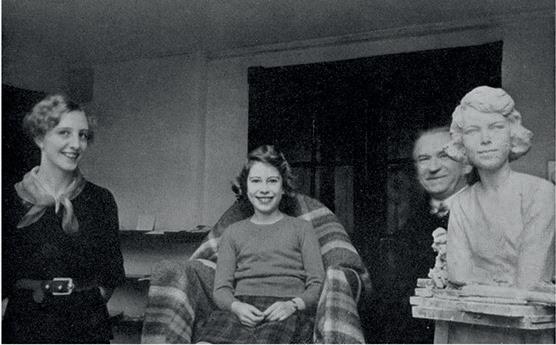
This page: Princess Elizabeth, above, with her governess Marion Crawford, above left, in a picture from Crawford’s memoir, The Little Princesses ; and, below, the Duke and Duchess of Cambridge arrive with Prince George, Prince Louis and Princess Charlotte for a settling-in afternoon at Lambrook School in 2022
Facing page: The Duke of Brabant, later King Leopold III of Belgium, pictured at Eton College in The Sketch in 1915; and Prince Philip preparing to play the role of Donalbain in a production of Macbeth at Gordonstoun in July 1935 – Prince Charles would play the title role when he was at the school
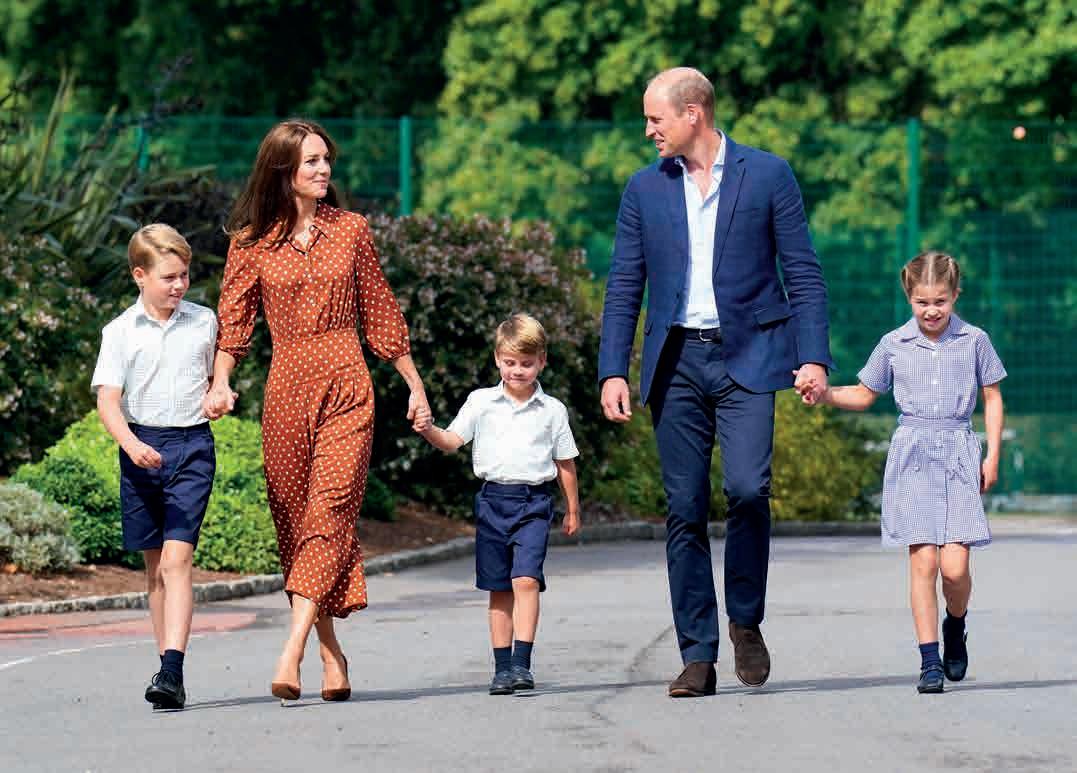
From a medieval coastal fortress to the childhood London home of Queen Victoria, Izzy Schaw Miller reveals how you can give your ne t ritish holiday that regal avour
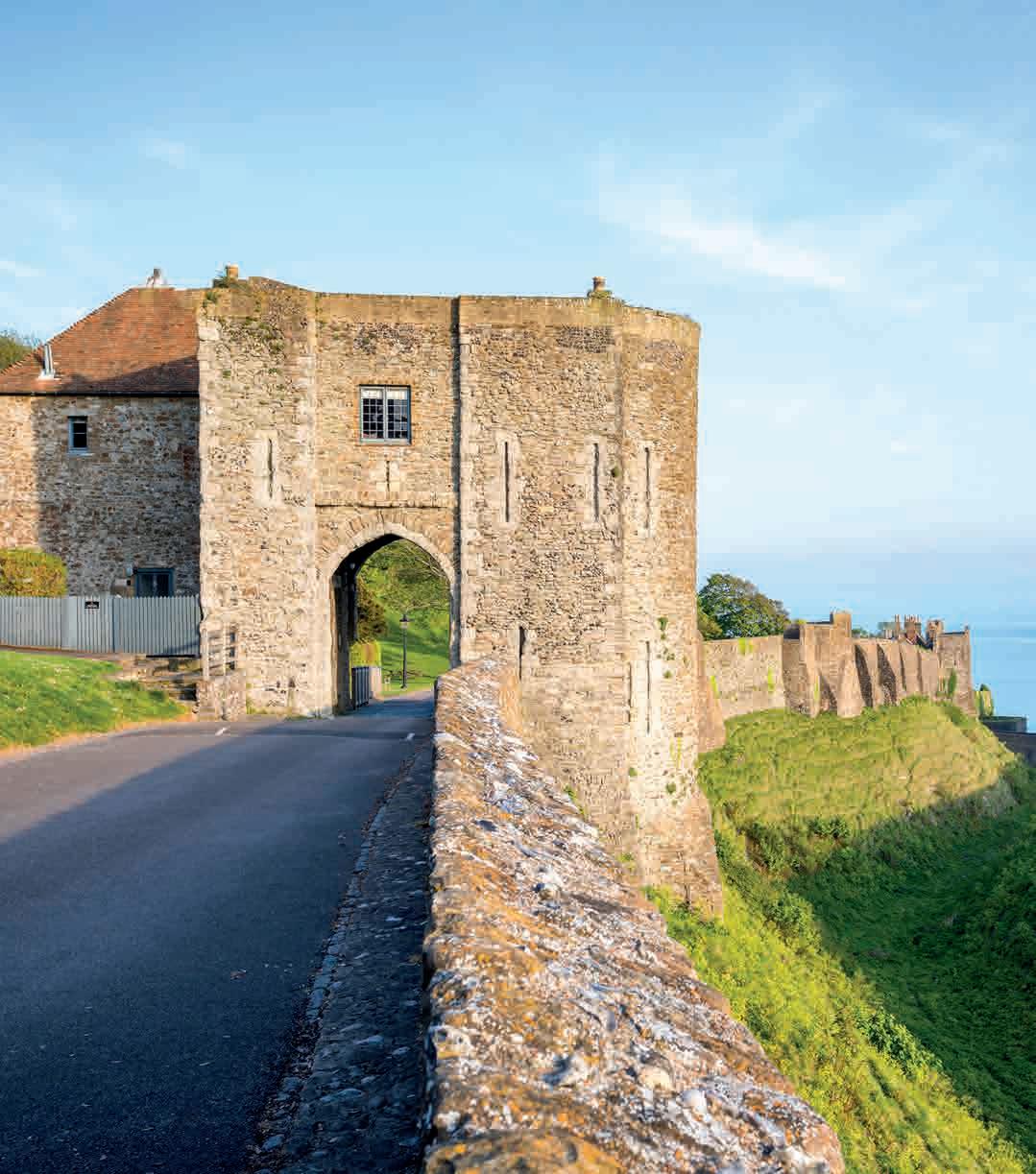
To li e like a King or Queen might seem like a pipe dream for most of us. ut a taste of the royal lifestyle is within reach. Dotted around the country are rooms, suites and cottages with a regal connection, some at the present Royal Family’s homes as well others with an intriguing historical past. Whether sleeping within the castle that was home to enry V , or the palace where Queen Victoria spent her childhood, we suggest a special selection of well-appointed and royally appro ed places to stay. Valet not included.
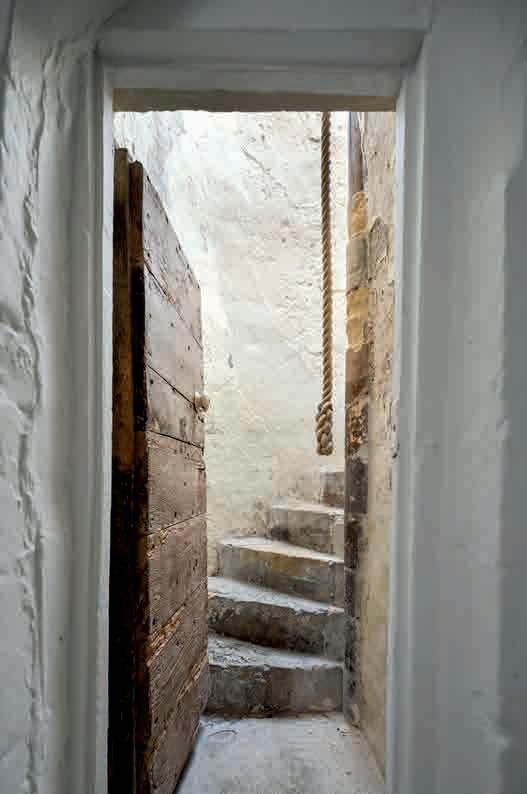
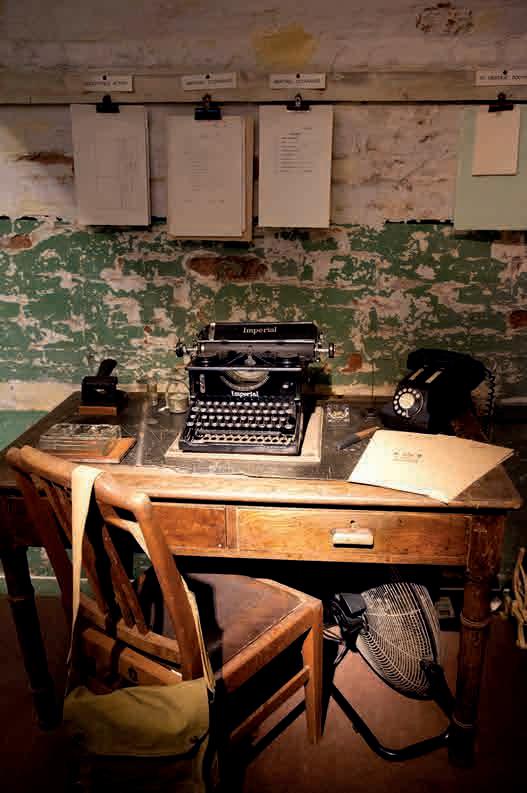
The mighty Dover Castle on the Kent coast was built on the orders of William the Conqueror shortly after his victory at the Battle of Hastings. In the intervening thousand years, it has been a formidable and strategic defensive fortress, positioned as it is at the narrowest point of the English Channel. The castle’s most impressive feature are its intricate winding tunnels, which were used through the Second World War and up until the Cold War as a shelter, a defensive network and even as a hospital for troops.
The inner and outer baileys and the great keep were built by Henry II, fashioned with the intention of impressing distinguished isitors from abroad and deterring in aders. Today, the castle features recreations of his resplendent interiors, including his throne and bed.
ow, it is open for stays in both its three-bedroom cottage, The Sergeant Major’s House, with captivating views over Dover town and out towards France, or the romantic, 1 th-century one-bedroomed turret, Pe erell’s Tower, accessed via a winding stone staircase and with a private rooftop terrace. Both can be booked through Dover Castle’s custodian, English Heritage. english-heritage.org.uk
Above: The sweep of history awaits at Dover Castle, from medieval stairwells to tunnels used during the Second World War Facing page: The Castle has occupied a commanding position on the Kent coast since the 11th century
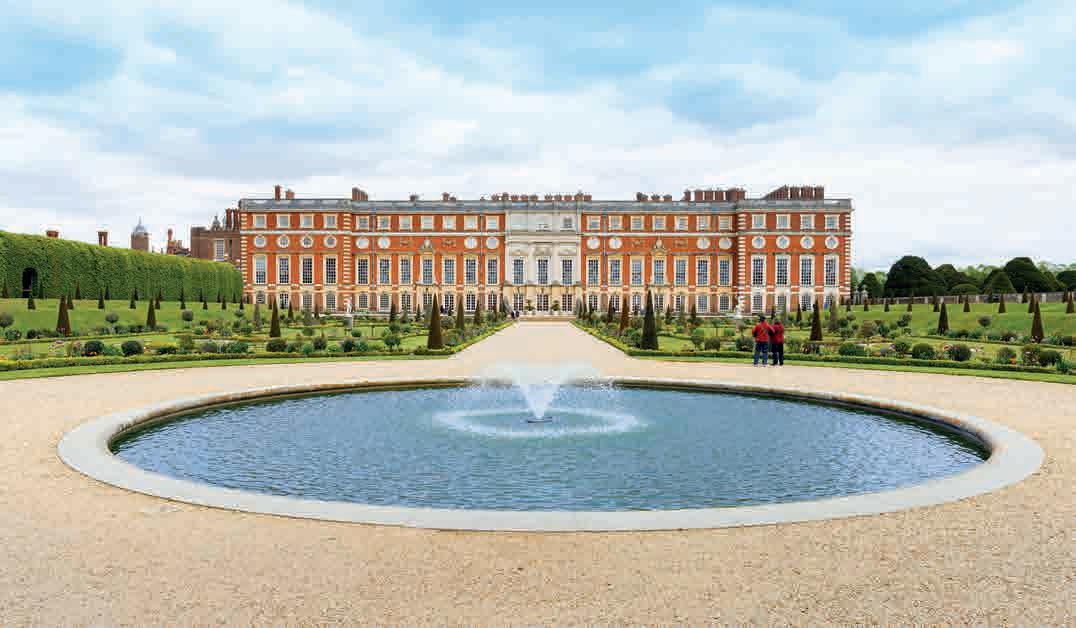
Hampton Court Palace, London enry V was one of the most proli c of royal builders. y the end of his reign in 1 , he had built or amassed more than 0 di erent residences, so it is perhaps unsurprising that our ne t regal stay is one of his former homes. nd what a home it is. ampton ourt Palace at ast olesey, to the south-west of ondon, originally belonged to enry’s right-hand man, ardinal Wolsey, who transformed it from a modest manor house into a magni cent comple in a fashionable enaissance style. n 1 29, with Wolsey’s star waning due to his inability to resol e enry’s reat atter’ his di orce from atherine of ragon , he surrendered ampton ourt to The King. t became enry’s great pleasure palace, but its e istence is down to Wolsey’s original in estment and energy. With the transfer of wealth from church to the crown’s co ers during the nglish eformation, ampton ourt was the chief recipient of enry V ’s spending splurges, and the palace is as la ish as you can e pect from a monarch who couldn’t resist showing o . From the ra ishing reat all, where car ed heads ea esdrop from the ceilings, to the delightful ittle an ueting ouse amid the palace gardens, where only the nest of food was ser ed, this is a place where opulence reigns. umptuous remnants from The King’s reign still e ist in the form of magni cent tapestries, wo en with silk and gold thread, or the daintily car ed, entwined initials of nne oleyn and enry in the reat all’s ceiling, a reminder of happier times for the ill-fated Queen. ecreti e machinations took place within the walls of ampton ourt. The palace’s chapel with its deep blue and gold ceilings bore witness to rchbishop Thomas ranmer oicing his suspicions of in delity against enry V ’s new wife, atherine oward. t was these whispers that led to oward’s downfall and subse uent e ecution, and legend has it his fth wife haunts the palace’s corridors. o such ghosts ha e been reported at The eorgian ouse, an elegant 1 th-
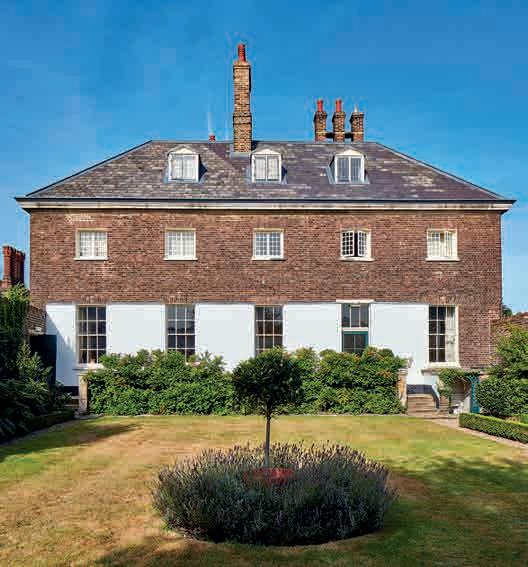
century building on the alley leading to enry’s eal Tennis ourt, which is a ailable for bookings of up to eight people. uilt in 1 19, the house was originally kitchens for eorge, Prince of Wales and later two houses, for the lerk of Works and the ardener. The eastern one is now cared for by the andmark Trust and boasts a pri ate walled garden draped with wisteria, a kitchen fashioned from the original enormous royal cooking arch and a iew of the palace’s roofs and famous decorati e chimneys from the attic rooms. landmarktrust.org.uk
Thornbury Castle, South Gloucestershire Standing majestically in the serene Gloucestershire hills, Thornbury Castle was built as an audacious symbol of wealth and power by dward ta ord, uke of uckingham. ta ord was ngland’s second-richest man after King enry V , and Thornbury Castle can be considered an unashamed example of one-upmanship on his part. enry, of course, was not a man to be crossed, and not long after Thornbury’s construction, he e ecuted ta ord for treason. onse uently, ta ord’s grand creation, the glory of which he did not get the chance to bask in, was left in enry’s bloody hands. Thornbury was the choice of bolthole when Henry and his second wife, Anne Boleyn withdrew here to escape from plague ravaging nearby ristol. ow operating as a hotel, you can sleep in their ery bedchamber.
Thornbury certainly li es up to ta ord’s ostentatious intentions. n oy grandiose rooms awash with plush sofas, satin sheets, elaborately patterned carpets and bold fourposter beds. long with the swish interiors, the castle retains its Tudor ruggedness with stone walls and wooden beams, and its regal dining room serves up feasts inspired by those that satis ed the notoriously ra enous King. thornburycastle.co.uk
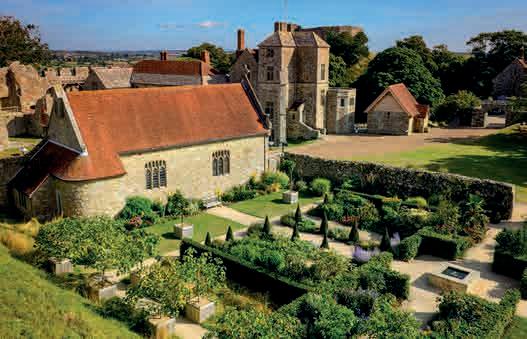
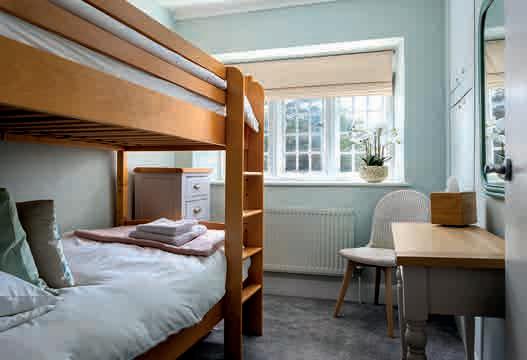
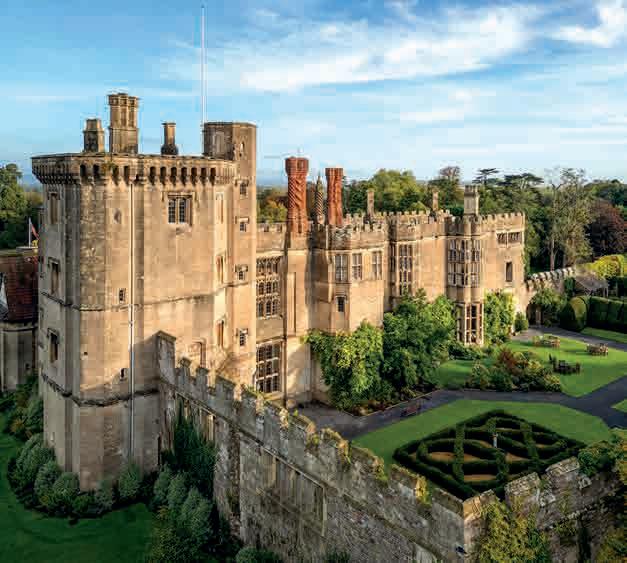
Carisbrooke Castle, Isle of Wight Osborne House, the sprawling Italianate mansion on the Isle of Wight with its own pri ate beach, was Queen Victoria’s refuge. he died there in January 1901, after which it was gifted to the nation by her son, King dward V . Tourists ock to sborne each year, but less well-known is the grey-stone fortress a short hop away arisbrooke astle. riginally a defensi e earthwork built by the nglo- a ons to ward o Viking raids, the current structure is a motte-andbailey castle built by the ormans in the 11th century. Queen Victoria’s youngest daughter, Princess eatrice, spent her summers here while Governor of the Isle of Wight, and particularly enjoyed the gardens with its neatly pruned hedges and fragrant swathes of la ender. harles was arisbrooke’s most signi cant resident when he was imprisoned here following his defeat in the nglish i il War. The King en oyed a comfortable capti ity in keeping with this royal status, and The owling reen partment, which o erlooks the lawn he once used for games, is now open for guests. far cry from prison conditions, the apartment is ideal for a family of four, with children’s bunk beds in one of the two bedrooms the ideal blend of contemporary lu ury and ad enture. While you’ll be li ing in ma estic territory, the real kings of the castle are the donkeys, who ha e been gallantly plodding the grounds and keeping the grass trimmed since medie al times. english-heritage.org.uk
This page, from top: You can sleep in Henry VIII and Anne Boleyn’s bedchamber at Thornbury Castle, while the Bowling Green Apartment at Carisbrooke Castle is perfect for a family stay
Facing page: Cared for by the Landmark Trust, the elegant Georgian House at Hampton Court Palace boasts a private walled garden
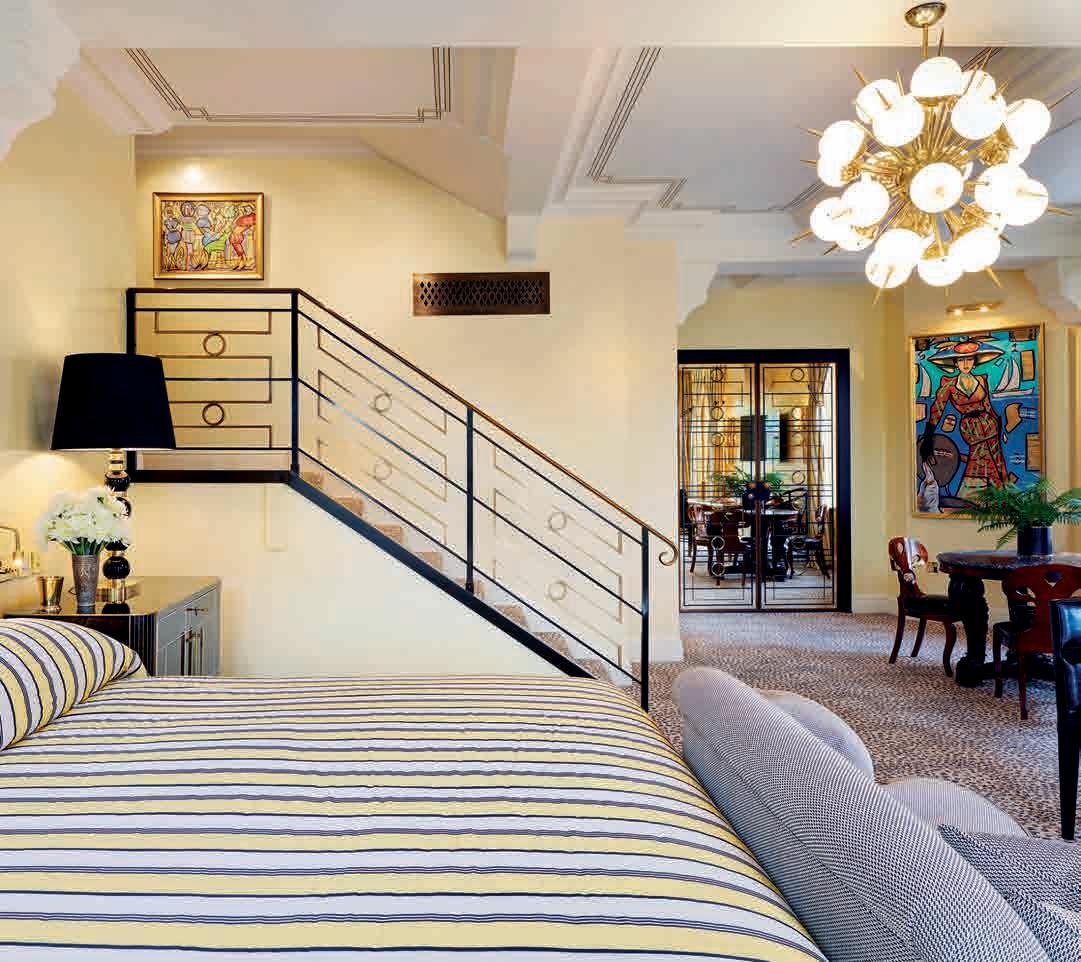
Kensington Palace, London
In 1689, King William III and Queen Mary II made history as the rst King and Queen to be crowned together as oint rulers. oncerned about William’s health, the couple set their sights on a restful refuge to escape the city, mo ing to Kensington, a uaint illage on ondon’s western outskirts at the time. t was there that they had ottingham ouse e tended and impro ed to create Kensington Palace. t became a fa ourite residence of successi e monarchs until the death of eorge in 1 60. Queen nne de eloped The rangery in the gardens, where she entertained guests al fresco. t’s a delightful spot where, weather permitting, afternoon tea can be taken on its patio or diners can en oy a bite to eat in the restaurant with its airy, high ceilings. Kensington Palace KP’ remains a working royal residence containing the o ces and ondon residences of The Prince and Princess of Wales, The uke and uchess of loucester, The uke of Kent and Prince and Princess ichael of Kent. t was also the home of iana, Princess of Wales, who li ed here during and after her marriage. he was particularly fond of the
unken arden and this space now houses a statue of her by an ank- roadley, commissioned by her sons and un eiled on what would ha e been her 60th birthday, on 1 July 2021. Queen Victoria spent her oppressi e and lonely childhood here, enduring the Kensington ystem’ under the beady eye of her mother, The uchess of Kent, and ir John onroy. t is also where she rst learnt she had become Queen in 1 . f you feel like soaking up KP’s storied past, then The ilestone otel and esidences is directly opposite, with e ceptional iews across the gardens towards the palace. rammed with precious heirlooms, rit y chandeliers and original artworks, it’s a destination in the heart of one of ondon’s most bu y areas, with museums and shopping to en oy in between e ploring the palace. The Kensington Palace esidence is a three-bedroom apartment, peppered with all the ne touches you can e pect from a palace, including ast windows framed by fringed, draping curtains, a grand replace and carpets so thick you could be walking on a cloud. milestonehotel.com
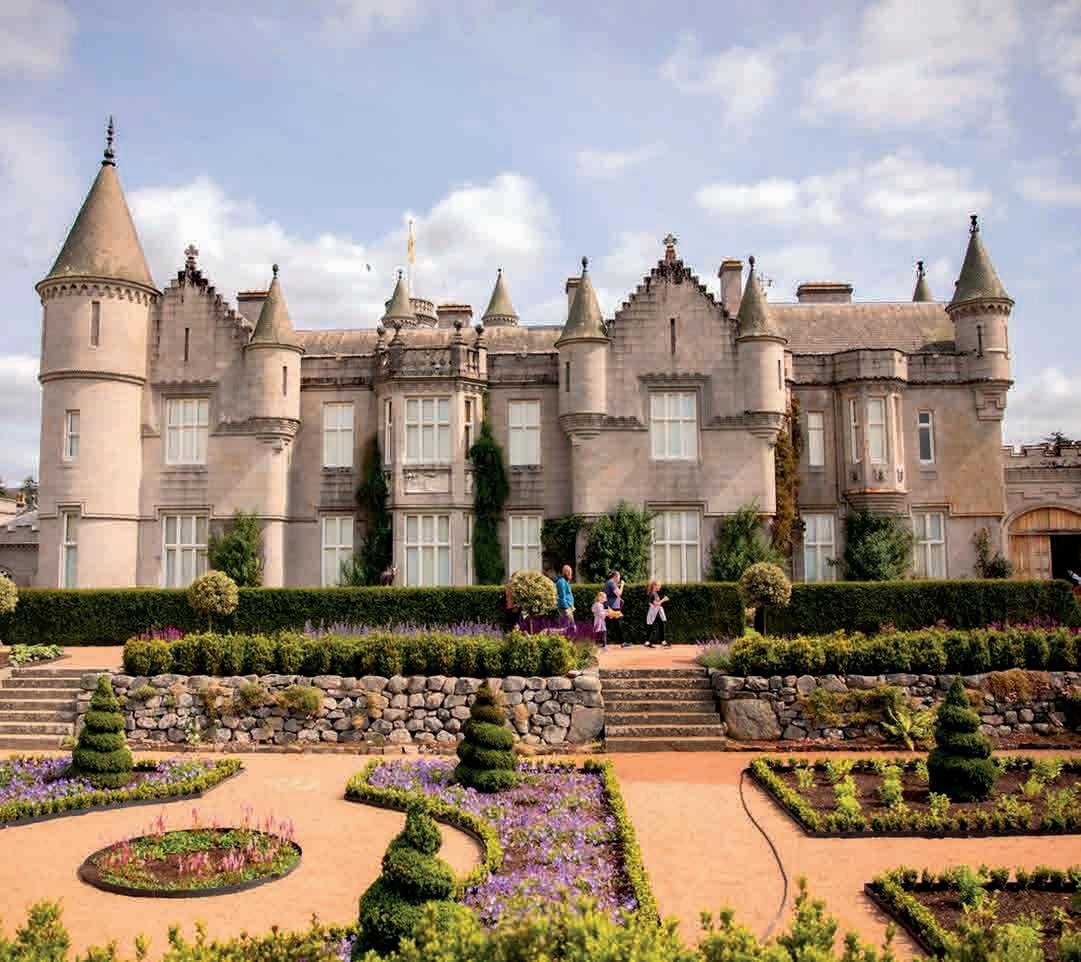
Queen Victoria and Prince Albert’s visits to Scotland early in their marriage saw them fall in love with the Highlands and led to the purchase of Balmoral Castle, near Braemar, in 1852. Disappointed at the modest size of the original residence, the couple commissioned architect William Smith of Aberdeen to transform it into the striking 2-bedroom castle we see today. With its conical and pepperpot turrets, crow-stepped gables and asymmetrical nish, it’s a typical e ample of romantic Scottish baronial style. And although its design gives a nod to the defensive towers of the medieval era, Balmoral’s purpose is to be a comfortable, countryside retreat in a glorious setting; deer, ighland cattle, sheep and ponies all roam the ,000acre estate.
Queen Victoria adored its peace and serenity, and the rugged, mountainous landscape most of all home to se en unros cottish mountains more than ,000ft high, rst listed by climber ir ugh unro in 1 91 . t also reminded her beloved Albert of the beautiful, mountainous area of Thuringia in his nati e ermany. Victoria felt a deep a nity
with Scotland and promoted Highland culture at every opportunity from ceilidh dancing to sporting a specially designed Balmoral tartan, with historian Michael Lynch noting how Balmoral gave “the monarchy a truly British dimension for the rst time .
A collection of simple, rustic cottages on site, built in the traditional style of Scottish lodges, are used by Prince William and his family as a retreat when staying north of the border. When the royals are away, several properties including hebreck odge, Tigh a araidh ottage, terinbeg ottage or ilton of raichlie Farmhouse welcome public bookings.
These Victorian-inspired retreats, tted with deer antler chandeliers and snug country bedrooms, are, according to the Balmoral website, “a unique blend of historical charm and modern comforts a testament to how li ing like a royal, particularly today, can be best e perienced in the most understated of ways. balmoralcastle.com/stay
Recommendations for the discerning and regally inclined reader
From
a lavish look at The late
fashion
Queen’s
history to a romp through the maddest and baddest monarchs, here are some of the best new and recent royal reads
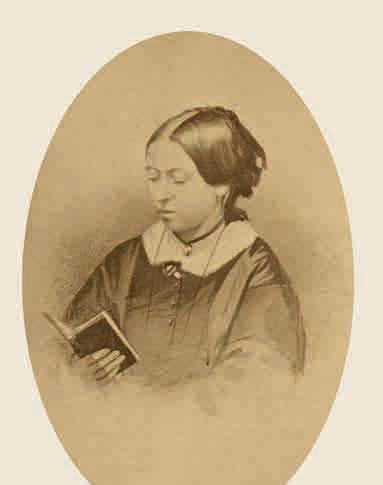



QUEEN ELIZABETH II – Fashion and Style by Caroline de Guitaut (Royal Collection Trust) £40
This year’s exhibition on The late ueen Eli abeth ’s clothes at The ing’s allery, uc ingham Palace, promises to be the most comprehensive ever. Matching the show in size and scope is this accompanying book, written by aroline de uitaut, Surveyor of The ing’s Wor s of Art, with a foreword by ame Anna Wintour. A fascinating rummage into every corner of The ueen’s extensive wardrobe, this is a generous and richly illustrated volume with previously unseen sketches, fabric swatches and historic photographs stitching together her fashion life over the course of 10 decades. What is revealed is the een interest and enjoyment Her ajesty too in planning her image, and how her style continues to influence fashion today designers hristopher ane, Erdem oralioglu and ichard uinn all give interviews. With chapters on her early relationship with fashion, off-duty style, evening wear, foreign tours, accessories and profiles of her most important designers, this is a glorious tribute to The late ueen on the centenary of her birth and an important record of the one of the most significant wardrobes in modern British history.

ELEANOR – A 200-Mile Walk in Search of England’s Lost Queen by Alice Loxton (Macmillan) £22
As one of the bright young stars in the world of history presenting, Alice Loxton knows how to tell a good story. With 1.8 million followers on Instagram, her social media channels see her out and about around the country, delivering bite-size history lessons to her followers. It seems natural then that her latest book has her lacing up her walking boots and retracing the final journey of Eleanor of astile, ueen of Edward I, who died in the village of Harby in the Midlands in 1290. Eleanor’s funeral cort ge made the long journey from Lincoln to London, resting at several towns along the way. It was at these stopping-off places that her bereft husband of 36 years, in what must be one of history’s most romantic gestures, ordered monuments to be built in her memory, with a total of 12 Eleanor rosses’ erected, three of which survive today see our llustrated ap of oyal ritain on p12 13 . Loxton’s boo relates her own journey in the winter of 202 at the same time of year as the medieval cort ge was making its progress), in which she weaves the story of Eleanor’s life and death with the present day, and reveals the fate of those symbolic crosses.

WILLIE, WILLIE, HARRY, STEE – An Epically Short
History of our Kings and Queens by Charlie Higson (Harper Collins) £22
Comedian, actor and writer Charlie Higson turns his hand to history in his first non fiction boo , which is illustrated with typical

HOLBEIN – Renaissance
Master By Elizabeth Goldring (Paul Mellon Centre) £40
British Art can be divided into two eras: before Holbein, and after Holbein. When the German-Swiss painter rolled up at Henry VIII’s court in 1526, his painstaking detail and breathtaking realism changed portraiture forever. But his ability to maintain his position at the court of this most volatile of monarchs, and through the fluctuating fortunes of many of his sitters, is testament to his genius. Elizabeth Goldring’s
irreverence by his friend and sometime collaborator Jim Moir. Taking its title from the famous rhyme designed to help children remember kings and queens in chronological order (at least in the pre-internet age), it’s a witty yet informative journey through the mad, bad and colourful monarchs of Britain, from the bastardly to the benevolent, the brilliant to the brutal. Higson’s plunge into the storied history of this sceptred isle’s marvellous (and sometimes murky) monarchy is what the publisher describes as both “utterly engrossing and grossly entertaining”. A fun read for all the family, Willie, Willie, Harry, Stee is for those who like to take their royal history with a side order of mirth.
scholarly biography of Hans Holbein the Younger is the first in more than a century. From his early days in Augsburg and Basel to his lasting impact on the art and culture of this country, this lavishly illustrated book breathes new life into Holbein’s story and sheds light on an artist whose paintings shaped our perceptions of the Tudor court, and whose own life could be as messy and bawdy as those he painted.
Holbein’s greatest hits are all here, including portraits of Henry VIII, his wives, high-ranking courtiers and the ever-intriguing The Ambassadors , but there are also rarely seen paintings from private collections and even examples of his metalwork designs, as Goldring argues for his pivotal role in triggering the connoisseurship of art in 16th-century Britain. Deeply researched, with something astonishing on every page, this sumptuous volume will be the definitive wor on Holbein for years to come.

– The Intimate Inside Story by Russell Myers (Ebury Spotlight) £22
From the royal editor of the Daily Mirror and ITV’s Lorraine show comes the first joint biography of William and Catherine in more than a
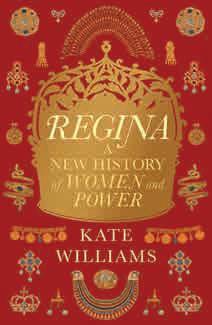

REGINA by Kate Williams (Orion) £25
In Regina , celebrated historian Kate Williams leads us deep into the world of queens, empresses, princesses, mistresses and ladies-in-waiting, uncovering how their ambitions were shaped, celebrated and often thwarted. From the
decade, which claims to draw on exclusive access to palace insiders. There has certainly been a lot to unpack for the Waleses in recent years, from the relentless media scrutiny and controversies of their 2022 Caribbean tour to the cancer diagnoses of both The Princess of Wales and The King, the departure of The Duke and Duchess of Sussex and the death of Queen Elizabeth II. Myers covers all this in a book that traces the story of William and Catherine’s relationship from their earliest meeting at St Andrews University to the present day. What the book makes clear is the couple’s resilience and dedication in the face of adversity, and how recent events might ultimately shape their vision for a modern monarchy.
ancient civilisations of Egypt and Mesopotamia to the opulent courts of the premedieval world, Williams delves into the lives of these remarkable women, revealing both their trials and triumphs as they navigate political intrigue, family rivalries and personal sacrifices. Williams’s subjects range from Hatshepsut and Cleopatra, through to Tudor queens Catherine of Aragon and Lady Jane Grey, via Queen Victoria’s contemporaries Yaa Asentewaa of Ghana and Queen Lili‘uokalani of Hawaii, and right up to Diana, Princess of Wales. This is an unmissable history that unlocks why we think about women, politics and power in the ways that we do.
Published 4 June 2026
These and many other royal books are available at booksellers and at Royal Warrant Holder, Hatchards, at its London shops in Piccadilly and St Pancras, and in Cheltenham, or by visiting hatchards.com
Proving that creativity can be found in every part of the UK, QEST has helped a new generation of craftspeople to forge careers in all corners, with their regional setting often inspiring their practice. By Clara Taylor

ow, more than e er, the art of hand-creation is becoming e er more aluable. o organisation is as aware of this as Q T the Queen li abeth cholarship Trust . Founded in 1990 by the oyal Warrant olders ssociation on The Queen other’s 90th birthday, Q T champions the full breadth of craft disciplines, from traditional to contemporary, as well as inno ati e techni ues. Through cholarships, merging aker rants and pprenticeships, it enables craftspeople to re ne their skills and push their practice further. With nearly 900 lumni supported by more than . million in funding, Q T continues to support indi iduals at pi otal moments in their careers, while empowering the ne t generation of makers. any crafts are rooted in the regions with deep connections to material and place, and Q T encourages these traditions to e ol e and grow. y in esting in talent where er it is found, Q T is de oted to ensuring that opportunity is not a postcode lottery. nspiration, after all, can be drawn from the natural surroundings, local histories and distinct identities of these places, and the K craft landscape is all the richer for it.
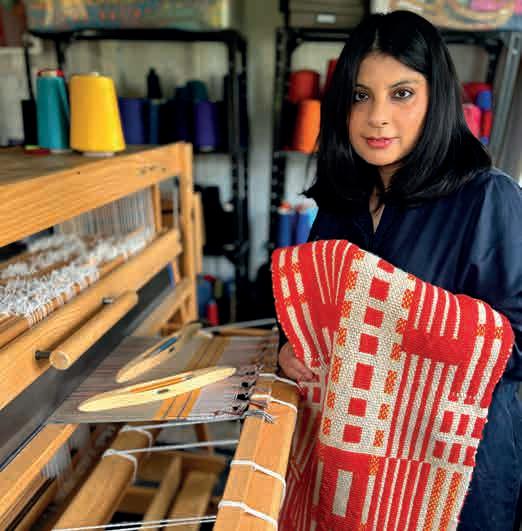
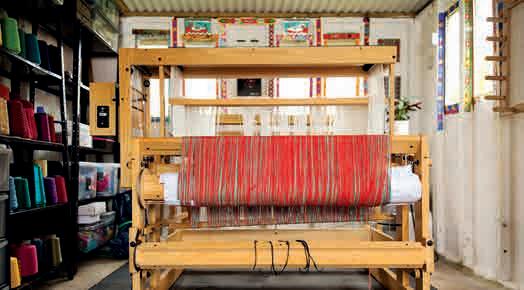
MARIAM SYED
2021 QEST Anthony and Elizabeth Mellows Charitable Settlement Scholar Te tile esign, anarkshire
For ariam, international di ersity is as integral as regional di ersity. er work ser es as a prime e ample of the beauty that can be achie ed when inspired by multiple places. a ing studied and worked in both Pakistan and cotland, her practice is informed by di erse material cultures and te tile histories. er interest in wea ing emerged through an une pected route mathematics. was fascinated by patterns and numbers, and wea ing felt like a perfect combination of analytical thinking and creati e e pression. The loom o ered a way to translate mathematical structure into something tactile and material, ariam says.
The bene ts of ariam’s cholarship, awarded to support a aster of esearch at the lasgow chool of rt, alongside an slamic pattern course in pain, continue e years on. Q T has pro ided a sustained platform for growth and isibility through access to e hibitions, showcases, networking opportunities and collaborations with companies, she says.
With both components of her cholarship focused in di erent locations, ariam understands ust how meaningful creati e careers are when not con ned to one place, city or e en country, stating that it has allowed her to both physically and mentally, de elop a distincti e oice without constant comparison or pressure .
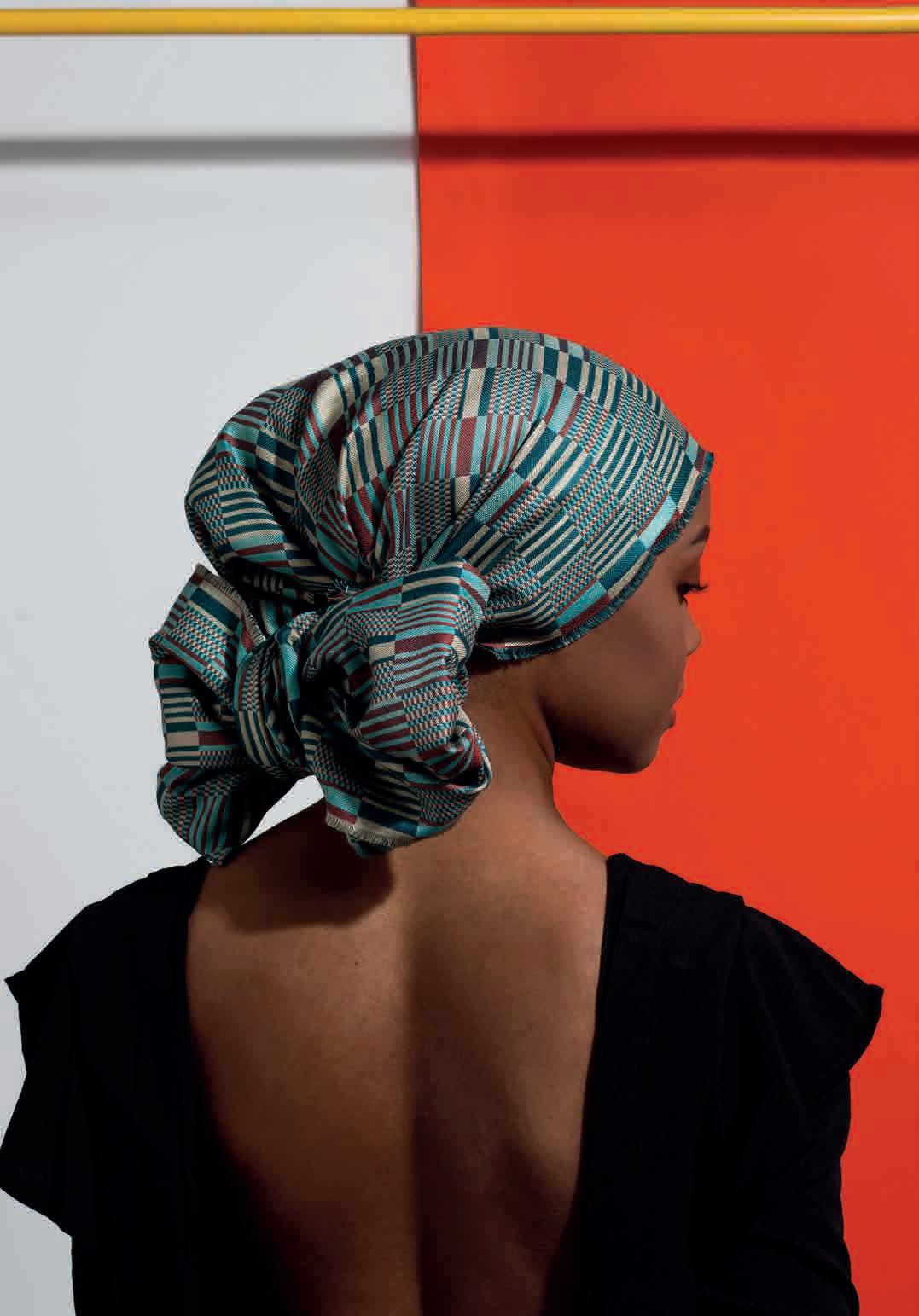
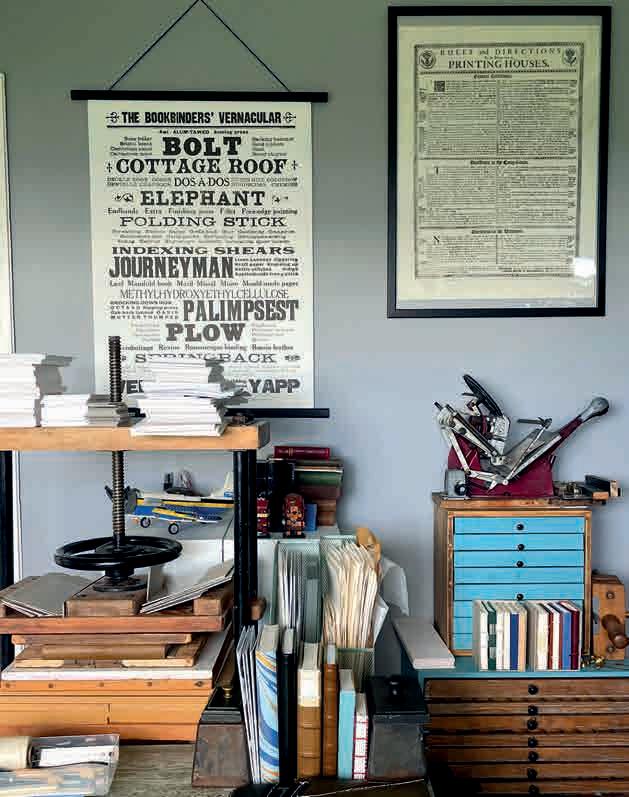
SARAH SHANAHAN
2022 ST ar eld eston Foundation Scholar Gold and Silversmithing, Northamptonshire
“Location doesn’t mean you’re out of touch,” silversmith Sarah insists. Social media may have its drawbacks, but it has granted artists, regardless of where they’re from, the visibility they need to succeed. As has the QEST Scholarship, which brought her into the fold of a supportive network of mentors and peers, and which allowed her to transfer her skills from metal to glass a medium she long dreamed of working with.
The transition has its frustrations. She describes adapting the wax cast for glass as a “tricky, uncooperative, lovely material . ar ing a single piece can take months, but arah for whom nature is a constant inspiration feels that this ery ancient and man-made hand work must be preser ed .
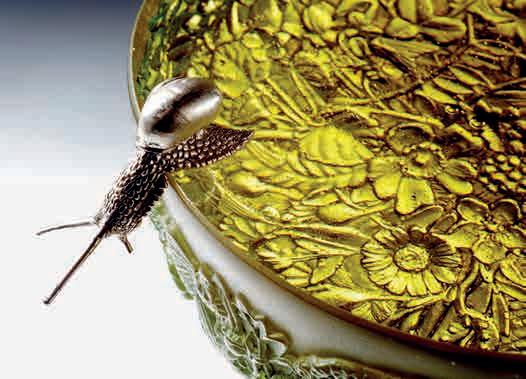
TOBEN LEWIS
2019 QEST Howdens Scholar Bookbinding, Argyll & Bute
Bookbinding was never meant to be a career for Toben, after he discovered the practice through an online tutorial: “I thought it would be a creative outlet and stress release from my job.” Very quickly, his side interest became his full focus. At the time of receiving his QEST Scholarship, there were no bookbinding programmes in the UK, so he was entirely self-taught. The cholarship allowed him to construct his own curriculum and train with some incredible bookbinders. Toben describes this as the “stepping stone that took me from keen hobbyist to full-time professional .
Based in Argyll and Bute, Toben’s bindery looks across the Sound of Iona to the neighbouring islands of Mull and Erraid. t’s hard not to be in uenced by that palette, by the sea and the changing light,” Toben explains.
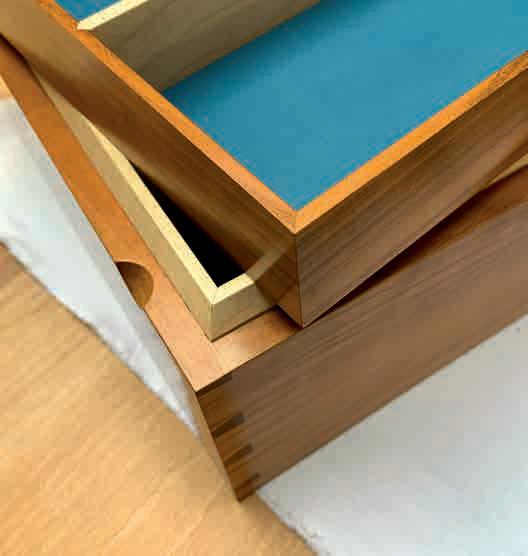
JAMES GILBERT
2023 QEST Jasper Weldon Scholar Furniture- aking, ounty ntrim
James’s passion for making began at a young age on the family farm in ounty ntrim, where he rst learned to work with his hands. Thanks to his meticulous eye for detail and a love of precision, furniture-making became a natural t. espite his natural talent, James didn’t grow up believing success was predetermined, especially given his background: “I used to see being Northern Irish as a disadvantage, but I’ve come to realise that people are drawn to uniqueness.”
As he is just 20 years old, his QEST Scholarship not only drastically improved his skills and helped him to a position at one of the UK’s top furniture companies, but it also gave him con dence in his ability. The cholarship helps demonstrate that I am serious about what I do,” James explains. It also showed him how talent, regardless of where it is found, can thrive: “Seeing others pursue what they love, regardless of money, time or struggle, reinforces my own commitment.”
2015 QEST Leathersellers’ Company Scholar
Saddlery Carmarthenshire
Helen’s introduction to saddlery came aged six when she visited the local Master Saddler, David Young, to repair the seat of her pony’s old saddle. Amazed by the other repairs and bespoke items he made, she later sought work experience with him, cementing her interest in the career. Today, she makes and ts saddles and bridles in armarthenshire, as well as leather goods including bags, cases, dog collars and belts.
Saddlery is, of course, an artform that has been around for centuries. But it was her QEST Scholarship, awarded for the restoration and manufacture of side saddles, that truly enhanced her understanding and appreciation for the age-old craft. “Most side saddles are about a hundred years old and it is important to be able to restore them safely, so they can continue to be used,” Helen explains.
And while the new workstream for Helen is welcome, it is the QEST network that she’s a part of that has been just as transformati e a nationwide community that connects rural makers to expertise, funding and peers they might otherwise struggle to access.
n a full-circle moment, elen herself is now a skills assessor for the Scholarship process, nurturing the next generation of makers. “It’s broadened my appreciation for many other crafts and I’m very grateful for the opportunity to give something back to QEST,” she says.
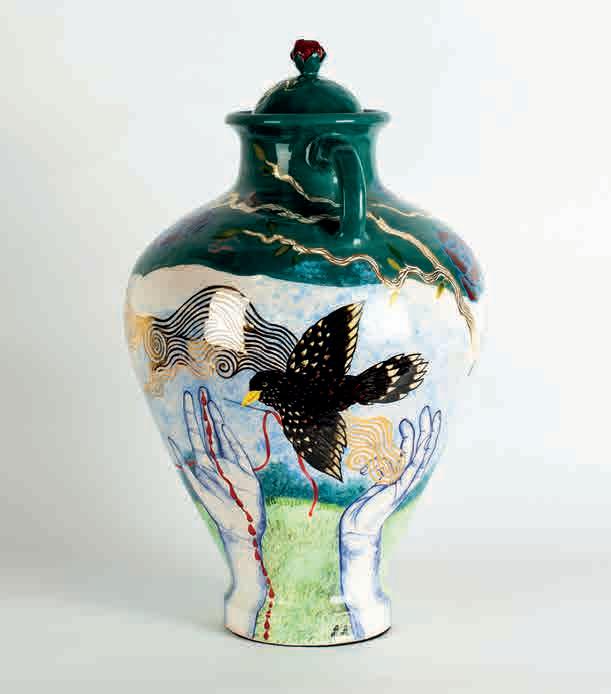
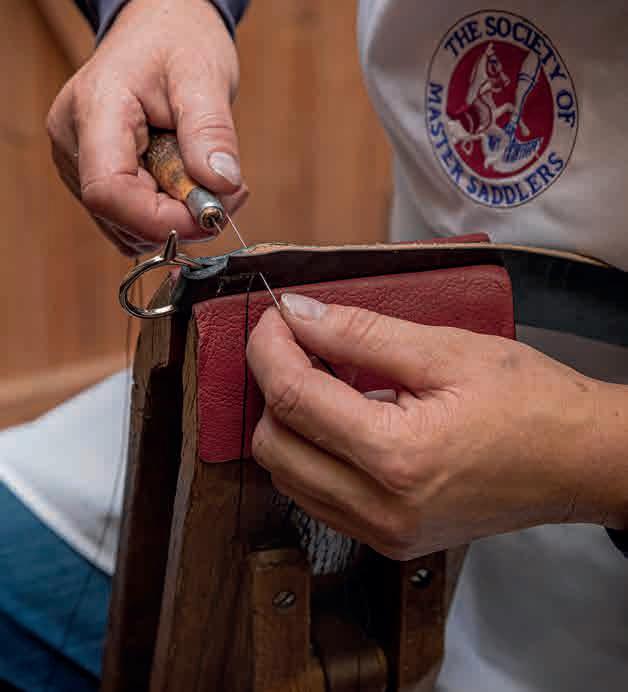
2024
Ceramics Cornwall
a ing li ed in ondon for eight years, nne has seen rsthand how challenging the art world is right now. Faced with rising costs, skilled makers are having to turn to alternative sources of funding in order to succeed today.
For Anne, it wasn’t until she attended a residency with ceramicist Michel François in Cornwall that things really opened up for her. Describing the Scholarship as a “gift”, she proclaims that she “would have never had the same opportunities without it”.
ere, she e panded the gurati e possibilities in her work by learning how to throw large vessels, where before, she was hand-building them.
Originally trained as a painter, Anne has long been dedicated to translating complex expressions through painting onto clay. For years, she’s collected di erent symbols, which now make up an integral part of the intricately layered decoration her ceramics are known for.
n uenced by the likes of Kurt Weiser and Frida Kahlo, her work explores various disciplines such as psychology and, of course, symbolism. The development of Anne’s practice is proof that meaningful artistic growth need not be con ned to a speci c area. With the right regional opportunities, sustaining both craft and career can be a reality wherever one may be based.
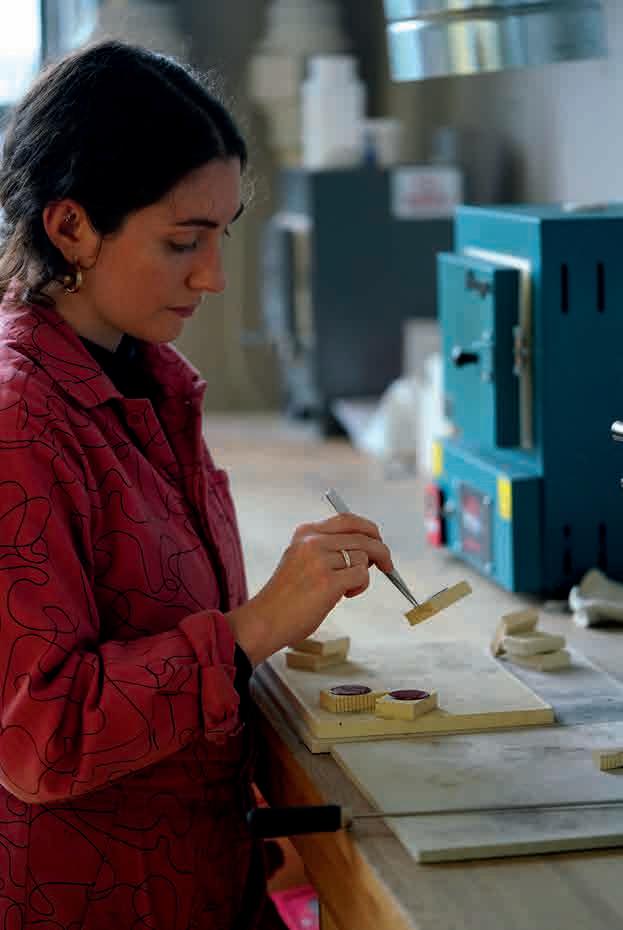
2025 QEST Ernest Cook Trust Apprentice Rural Craft, Thatching, Nuneaton, Warwickshire
ngland is famed for its chocolate-bo illages, made all the uainter by thatched-roofed buildings. n the case of euben, a thatcher from the Midlands, he came to the profession out of simple necessity: “I needed the work and wanted to help my uncle.” It wasn’t until he undertook his QEST Apprenticeship that Reuben was able to slow down and appreciate the craft.
“I have more time to spend learning on site instead of focusing on speed and e ciency. can spend more energy on mastering and understanding what I am doing to the highest standard,” he outlines.
Through his studies, Reuben now revels in the responsibility of “being a custodian in what is essentially a minor historical site . Thatched roo ng has a rich history in the K, dating all the way back to the ron e ge, with modern-day e amples seen across the country, as well as famously with the replica of Shakespeare’s Globe in London. “I am doing important work in preserving British heritage,” Reuben says.
SALLY MORRISON
2025 QEST Scholar Horology, Watch Dial Enamelling, Glasgow
Sally is one of very few horologists specialising in watch dial enamelling. The standard of perfection of nish and the small tolerances re uired in watchmaking is di cult to reconcile with the challenges of working in glass, a material with a propensity to crack, warp and develop inclusions,” she explains.
It was her time studying this past year, thanks to her QEST Scholarship, that allowed Sally to immerse herself in the craft’s intricacies. Part of this education included studying cloisonné, a process in which cells are created by bending and forming wires as thin as a human hair, which are then lled with enamel to create an ornate, decorative image. Speaking about her time as a Q T cholar, ally a rms that learning the fundamentals of these skills will eventually enable me to make dials which are small works of art in themselves”.
Beyond the technical skills, Sally values the wider lessons of her craft. She believes in the importance of building and sustaining creative communities all over the UK.
“I’m really supportive of the idea of craftspeople, wherever possible, staying to foster and enrich the community in their own regions.”
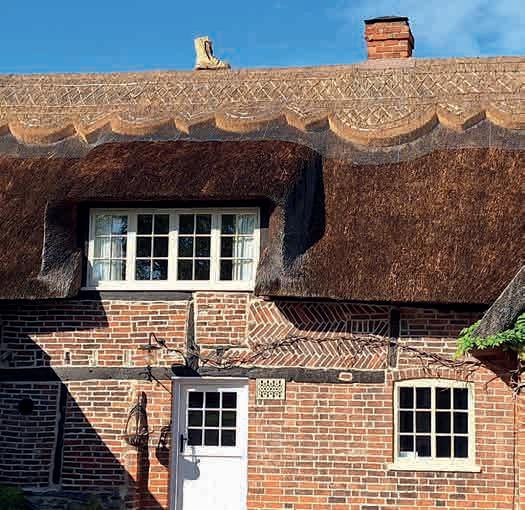
A royal charter can confer the highest prestige to a professional body or institution. Originally a way of bolstering the Crown’s ower charters are now more li ely to re ect the a ections and interests of the monarch. Harry Mount delves into their history
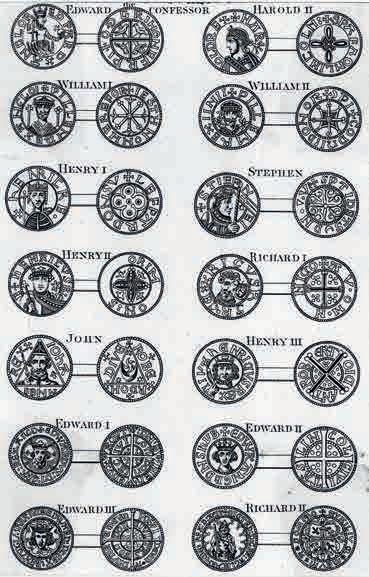
This page: a rint de icting the fi rst meeting o the Royal Society in and an engraving o coins minted under medieval monarchs
Facing page: n engraving rom showing the new Royal int building on Tower Hill
What does it mean for an institution to be granted royal status? Well, not surprisingly, given the Royal Family has been around for 1,000 years or so, that meaning has changed an awful lot over the centuries.
To begin with, when the monarchy was trying to assert itself, it took over institutions and made them royal to bolster its power. n more recent centuries, it’s the other way round an institution boosts its importance by acquiring royal status. Prestige travels in both directions.
The same variety applies to how often the monarch will visit a royal institution sometimes not for decades sometimes annually, depending on how close it is to their heart.
So, how does it actually work?
Well, royal charters are entirely di erent from oyal Warrants whereby an o cial supplier to the oyal Family can claim a hallowed Warrant. New Warrants for HM King Charles III have only been recently sorted out.
Instead, with royal charters, a monarch makes a formal grant under royal prerogative as letters patent.
harters were once used for public laws not least the 121 Magna Carta, which literally means ‘Great Charter’. Since the 14th century, they’ve been applied to grant a royal right to indi iduals and body corporates that includes companies, universities and learned societies. Of the 1,000 or so royal charters granted, around 750 survive.
One of the mightiest and oldest is the Royal Mint, founded in 12 9. The right to manufacture money is crucial to a sovereign state. And so it’s no surprise that British sovereigns asserted that right early on.
oins had been around in ritain before the omans as early as the second century . The rst ondon mint opened in , not long before the collapse of oman rule in ritain in 10. n the absence of central rule, mints proliferated. There were around 0 mints until, in 12 9, enry set up a central system under the newly named oyal int at his main ondon palace, the Tower of ondon.
The early royal charters encompass the most crucial functions of a royal go ernment which is essentially what it was until the rst prime minister, ir obert Walpole, in 1 21.
n the absence of an , the oyal ollege of Physicians was the closest thing to a national health agency, when it was gi en its royal charter in 1 1 and incorporated as the President and ollege or ommonalty of the Faculty of Physic in ondon .
ike the oyal int, the oyal ollege of Physicians was founded in the ity of ondon, near t Paul’s athedral. ondon then largely consisted of the ities of ondon and Westminster.
Then, as the city e panded to the west, and the royal palaces also e panded, from the Tower of ondon, Whitehall Palace and the Palace of Westminster to uckingham Palace and Kensington Palace, so some of the royal institutions mo ed, too. The oyal ollege of Physicians migrated rst to Pall all ast, near Trafalgar uare, and then to its current site in egent’s Park.
Through the growth in royal institutions, you can see the growth of ritish intellectual life. The oyal ociety originally The oyal ociety of ondon for mpro ing atural
Knowledge was founded in 1660 and gi en a royal charter by harles . This was the year of the estoration when harles became king after the i il War.
The con dence and security pro ided by his return ga e a boost to the study of science the oyal ociety is the oldest continuous scienti c academy in the world.
efore its royal foundation, the oyal ociety was known as the n isible ollege, with obert oyle 162 -91 , ritain’s rst great chemist and the formulator of oyle’s aw, at its heart. fter the oyal ociety’s foundation, ritish intellectual and artistic life mushroomed. ir hristopher Wren built t Paul’s athedral and 1 city churches after the reat Fire of ondon in 1666.
n 16 , harles commissioned the oyal bser atory at reenwich, a site chosen by Wren. The increasing understanding of astronomy led to harles appointing the rst stronomer oyal, the great John Flamsteed. oyal foundations attracted money as well as prestige and ne scientists such as Flamsteed were powerfully drawn to such institutions. stronomy recei ed another royal boost in 1 1, with the foundation of the oyal stronomical ociety, gi en its charter by William V.
s in the sciences, so in the arts. n 1 6 , the oyal cademy of rts was founded. f course, there had been ritish artistic bodies before. ut the royal superpower superseded those that came before such as the ociety for the ncouragement of rts, anufactures and ommerce 1 . The oyal cademy was founded by architect ir William hambers who built omerset ouse, the pagoda
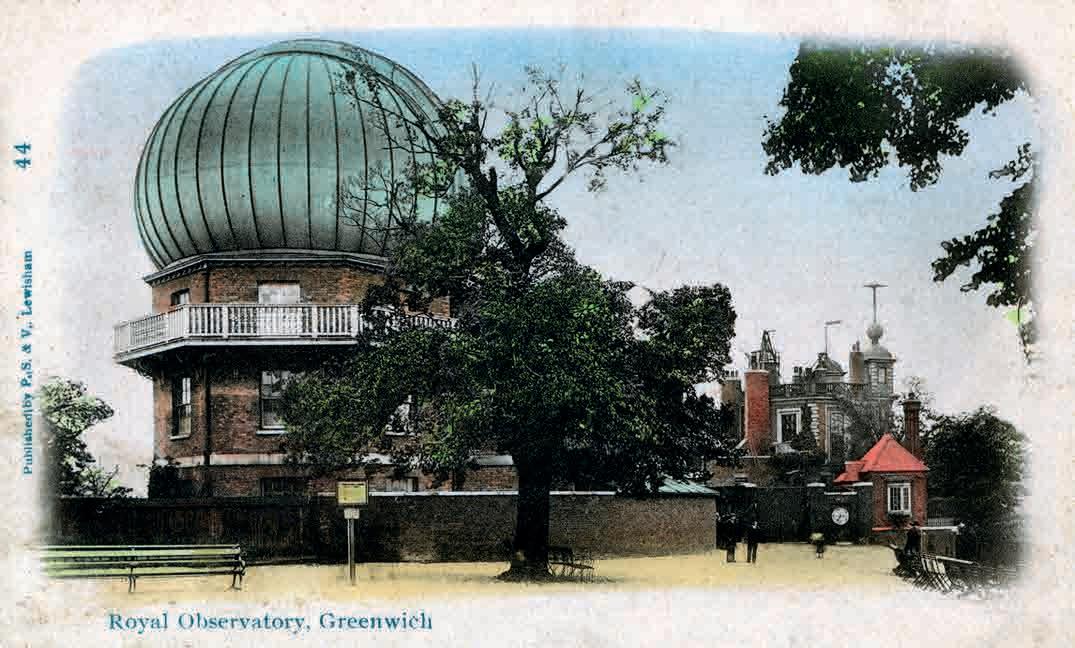
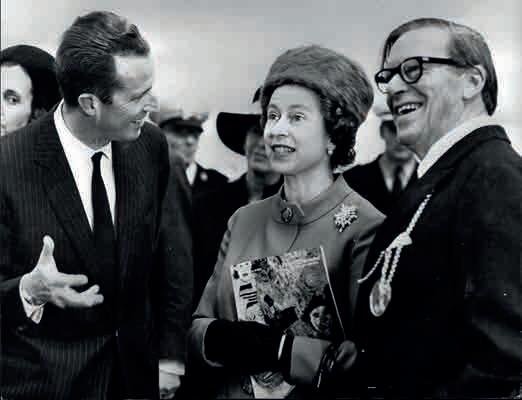
at Kew and the old tate oach for eorge . The rst president of the was the painter ir Joshua eynolds.
n 1 6 , eorge said of the new oyal cademy that it would establish a school or academy of design for the use of students in the arts , with an annual e hibition that continues today. s a keen artist himself, The King remains an enthusiastic isitor to the oyal cademy today.
n 1 91, a new royal artistic body was formed the oyal ociety of Portrait Painters, concerned that the wasn’t re ecting the taste for portrait-painting. t shows how the demand for royal appro al was accelerating that there were demands for specialisations of royal charters within the same artistic eld.
n the 1 th century, ritain was booming and that included cotland after the ct of nion in 1 0 . The oyal edical ociety was gi en its royal charter in dinburgh in 1 . efore that, it had been the edical ociety, set up in 1 by students specialising in anatomy.
n ondon, too, surgery was taking o , with the foundation of the oyal ollege of urgeons in 1 00. The uild of urgeons with the ity of ondon had been founded as early as 1 6 but its royal incarnation ga e the practice of surgery a nancial and intellectual boost.
t wasn’t ust humans who were getting royal medical attention. n 1 91, the oyal Veterinary ollege was founded. howing how the metropolis was spreading north at the time, the college was set up in the elds of north ondon. t remains there today, in amden no longer elds but now considered part of central ondon.
n the 19th century, ritain was the richest country in the world and, as the ritish mpire e panded, the greatest international power. The monarchy had grown e en more enchanting for budding professional bodies. nd, by 1 00, royal tentacles were threaded through the leading institutions, as they began their e istence.
When the oyal orticultural ociety had its rst meeting in 1 0 , at atchards bookshop on Piccadilly, it was already deeply attached to royally connected gures. f the se en men at that meeting, four had strong royal attachments William Townsend iton, uperintendent of Kew ardens, home to Kew Palace, a royal seat ir Joseph anks, President of the oyal ociety William Forsyth, uperintendent of the gardens at t James’s Palace and Kensington Palace and harles re ille, a ord of the dmiralty. ardening has long been a ritish obsession but music
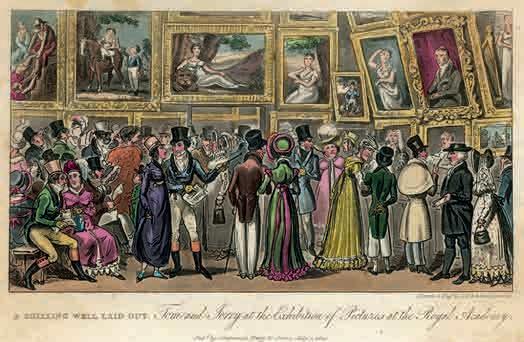
This page, clockwise from top left: Queen Elizabeth II at the Royal Academy in 1971; fashionable visitors to the RA’s annual exhibition in the 1820s; portraits of the young Prince Charles and Princess Anne by AK Lawrence, shown at a Royal Society of Portrait Painters exhibition in 1957
Facing page: The Royal Observatory in Greenwich, commissioned by Charles II in 1685

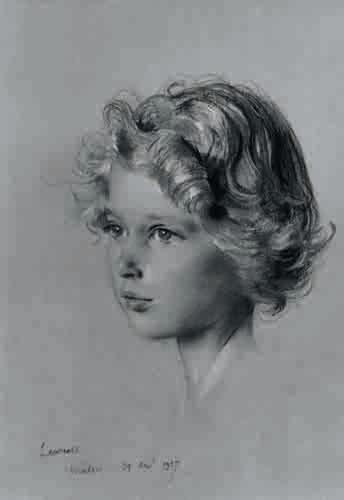
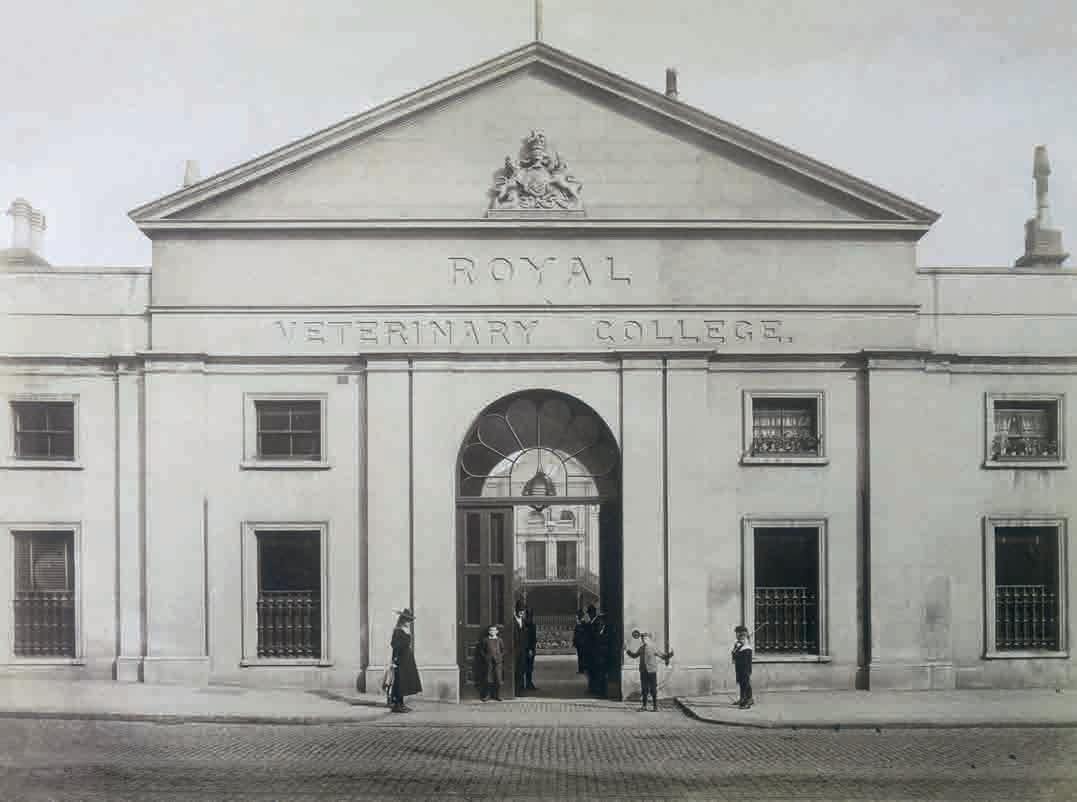
ot so much. ritain was called as and ohne usik the land without music by skar dolf ermann chmit , a erman scholar, in 190 . es, we had no o art or Verdi, but royal appro al came with the foundation of the oyal cademy of usic, granted its royal charter by eorge V in 1 0. t helped that the uke of Wellington, Prime inister from 1 2 to 1 0, was a keen iolinist.
Wellington’s ictory at Waterloo in 1 1 had ensured a new prosperous age for ritain and ensured peace, too. Peace and prosperity mean a country can concentrate its mind on artistic pursuits. Thus the foundation of the oyal nstitute of ritish rchitects in 1 by William V.
That came at a turning point for ritish architecture. For the pre ious 200 years or so, classicism had been the order of the day. ut, in 1 , re swept through the ouses of Parliament and it was decreed that its replacement should be othic, like the pre ious building and the enry V hapel in Westminster bbey. Thus sprang up the new Parliament, built by Pugin and arry. nd thus was born the othic e i al, the predominant architectural style of the remainder of the 19th century, backed by Queen Victoria. We were particularly late on the scene when it came to
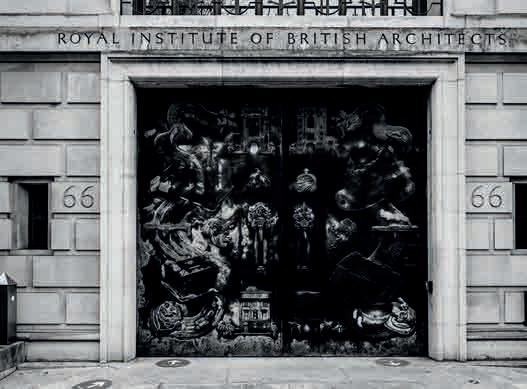
Below: The Royal Academy of Music in Marylebone
Bottom: Queen Elizabeth, The Queen Mother meets dancers from the Royal Ballet in Covent Garden in 1980, at a gala to celebrate her 80th birthday
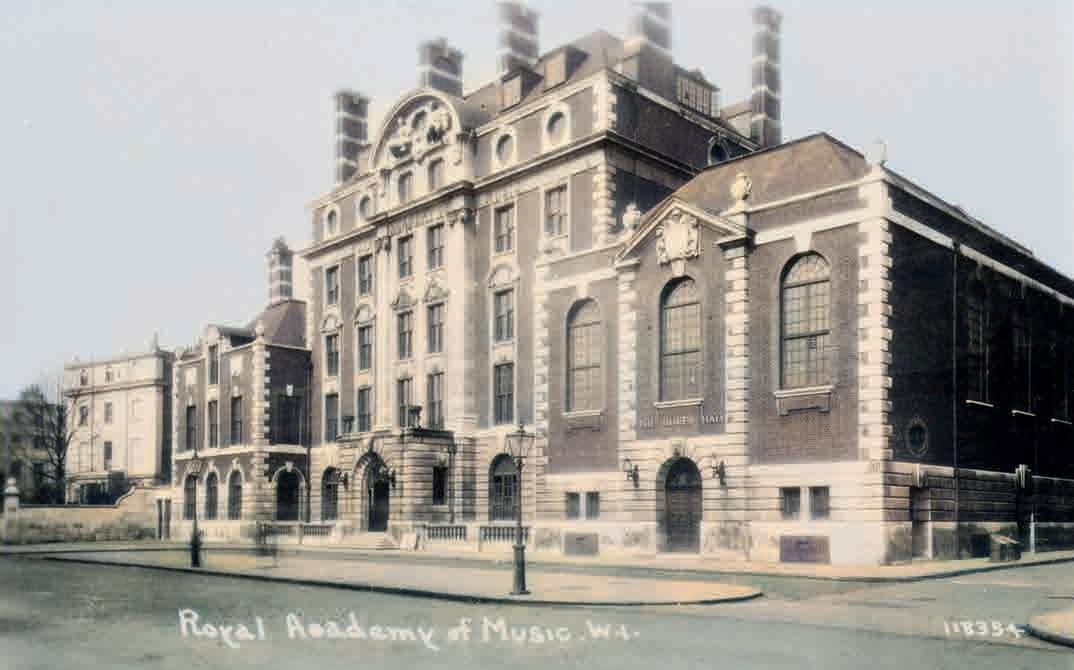
dancing. The Royal Ballet was founded as late as 1931, thanks to the inspiration of Ninette de Valois, who had set up a girls’ dance school, the Academy of Choreographic Art, in 1926.
en then, it took another half-century for the oyal allet to attract real royal star power in the shape of Diana, Princess of Wales, a devoted dancer and fan of the company.
The addition of the word ‘royal’ to your institution still provides a mighty boost, even decades after it has been founded. The Kennel Club was set up in 1873. As the oldest kennel club on the planet, it already had plenty of kudos. But it was still delighted to receive the monarch’s imprimatur on its 150th anniversary in 2023, when The King endowed it with the name, the Royal Kennel Club.
The King and Queen are keen dog-lo ers. nd The Queen is the patron of the Battersea Dogs & Cats Home. Almost 750 years after Henry III created the Royal Mint, monarchs still bestow royal patronage on institutions but out of a ection, not ambition. There is little political or power advantage for The King in granting the Royal Kennel Club its new name.
Harry Mount is editor of ‘The Oldie’ magazine and the author of How ngland ade the nglish ( enguin)
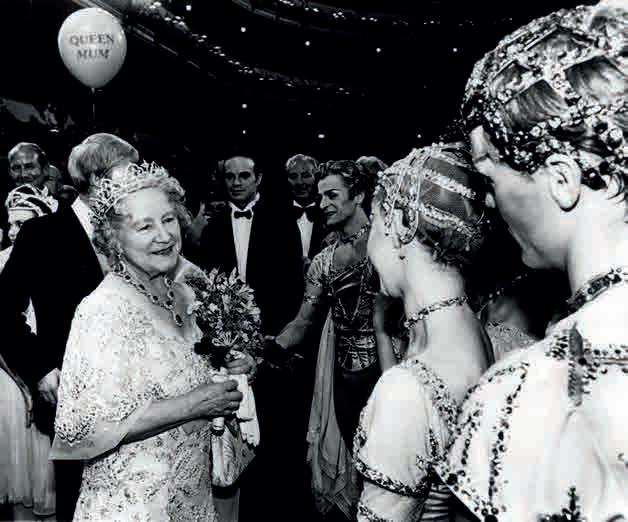
From a humble Coronation mug to a historic Jubilee torch, royal memorabilia can come in all shapes, sizes – and prices. Lucinda Gosling meets some devotees who have assembled collections of majestic proportions
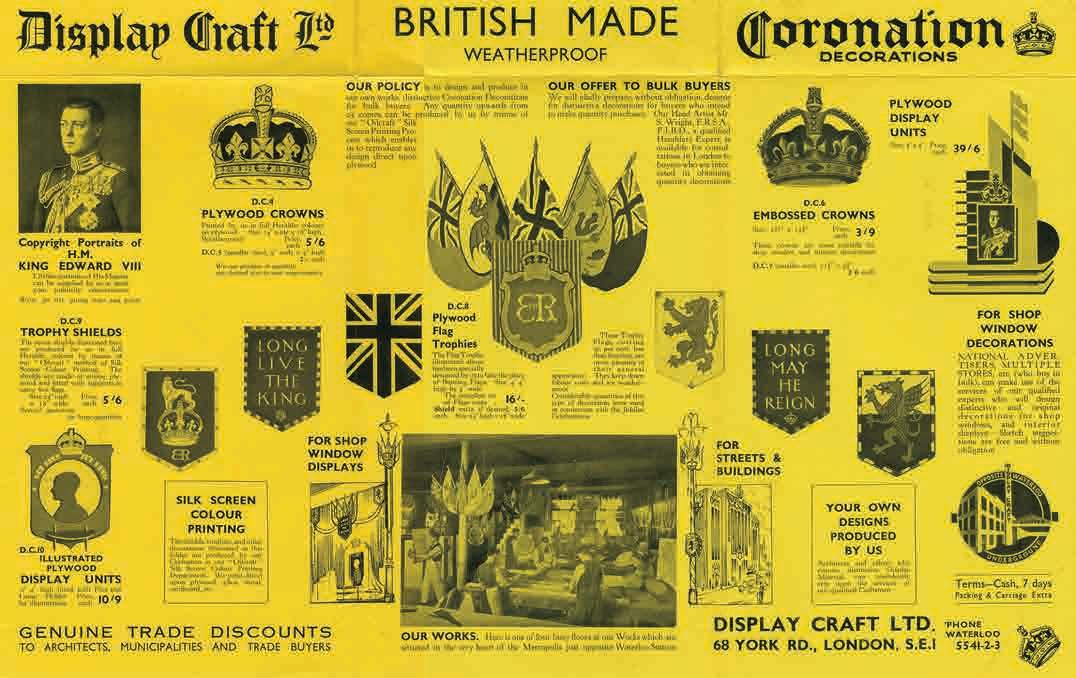
On 11 December 1936, King Edward VIII informed a stunned nation via a wireless broadcast that he had abdicated the throne in favour of his brother. The shockwaves of his decision were felt far and wide, not least by companies who over the past year had been busily manufacturing pieces to commemorate his planned coronation in May 1937. Countless pieces of merchandise, emblazoned with his name and likeness, were already produced, ready to be distributed to retailers around the UK and beyond. It was an unmitigated disaster. “So many businesses went bust,” says Richard Lobel, who owns a number of the original catalogues from that time, listing the chinaware and other goods made to mark the coronation
that never was. Richard has what is probably the world’s nest collection of items relating to the uke of Windsor as dward V became , second only to that in the oyal ollection. t’s a collection of such historical signi cance that two archival consultants with doctorates are currently tasked with cataloguing it, the result of which is expected to run to e olumes. When asked how many pieces he owns, he can only say, “thousands”.
Now 82, he arrived in London from America 58 years ago and began to collect items relating to the e -King, because he was “young, and a romantic”, and was charmed by the notion of Edward giving up the throne for the woman he lo ed. These days he has a more clear-eyed iew of the
Duke’s character, but the subject, one of the biggest bumps in the road travelled by the British monarchy, continues to fascinate. “No other British monarch ever abdicated before,” he explains. He started with inexpensive items, easy to come by at that time, and through the years, his collection expanded in scope and ambition. Among his acquisitions has been the archi e of h teau de and the enue for the Windsors’ wedding in June 19 , which includes 6 handwritten letters from the uchess of Windsor. There are locks of hair from childhood, thought to have been preserved by Prince Edward’s nanny, a unique photograph showing him with his mistress Freda udley Ward and her husband a letter from Freda too , and a daybook belonging to the uke’s alet, listing his engagements and activities. The entries end abruptly the day before the Abdication. One of the most ephemeral but intriguing items is an envelope addressed to ‘Mrs E Simpson, Bryanston Court’ with a note scrawled over it in crayon to Wallis from dward, left for her after he dropped by her ondon at. e also possesses the only known award medal struck during the King’s reign: the Royal Navy Long Service and Good Conduct Medal. As the owner of Coincraft, one of the biggest coin businesses in the UK, Richard has a particular interest in anything numismatic he has personally struck 00 dward V coins o er his years in the business . ne of his regrets and all collectors ha e them is selling e actual dward V coins many years ago both proof and circulation strikes of Edward VIII’s coinage are extremely rare and thus highly desirable . e would also lo e to get back the Prince’s induction papers into the Army in 1914, amusingly, but truthfully, lled in with the ne t of kin as . . The King’ and address as ‘Buckingham Palace’. I asked him what compelled him and others to collect, and to keep on collecting. i ing a familiar analogy, he cites a series of cardboard folders issued by Whitman in the 19 0s, designed with holes to be lled with coins. The idea of not completing those folders was unthinkable. Once a collection has been started, the urge to expand and hopefully complete it, tends to take over. Michael Tidbury from Carshalton, Surrey, empathises with this. His collection of around 1,500 British royal commemorative beakers spans the reigns of Queen Victoria up to HM King Charles III. In addition to this, he has some 800 other items. “I have always been a collector of coins and other items, even in my teens,” he says, “I liked the e ercise of cataloguing and inde ing my rst career was as a librarian.” He and his husband began to visit antiques fairs in the 1990s where he began to buy beakers, rather than mugs and cups, “because they took up less room; I have always been a pragmatist”. One dealer described his beaker collection as probably the largest in the world, but there are still several Royal Doulton coloured examples he’d like to add to those he already has. His collection is catalogued extensively via a website brcb.org.uk which has the dual purpose of sharing his collection with others, and as a personal reminder of what he does and doesn’t ha e. e also ags up any pieces he is still looking for via a ‘wanted’ section, although dealers now approach him if they have something they think he will like. rowsing the site, you can linger o er a delightful William V owerpot, beakers from the 1 96 oly oronation’ of Tsar Nicholas II by MC Kuznetzov or one of his favourite items, a pink Queen Victoria Jubilee beaker with an acrostic down the side, which he loves for its “homeliness”. He estimates about 30 per cent is on display at home with the rest in secure storage and hopes that one day his collection can be donated as a whole to somewhere the public can enjoy it. Richard
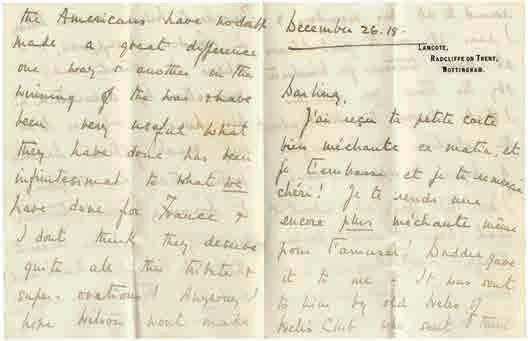
Below:
Facing
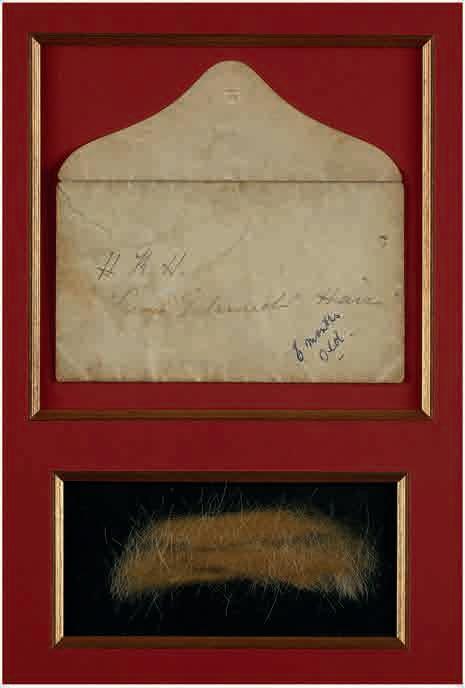
Lobel feels the same. He stresses that he has never bought items as an investment. The opportunity to, “own a piece of history” is the driving force, and the knowledge that he is assembling a historically important collection. He considers it essential that it remains together after he is gone.
Autographs have long been a magnet for collectors and Alan Broughton has one of the largest collections of its kind, amassing more than 10,000 in the last 9 years. With every inch of the walls in his house taken up with framed autographs, there isn’t much point in having wallpaper, he admits. While he collects photographs, letters, hristmas cards and documents signed by all kinds of famous people, royal autographs form the largest proportion with signatures
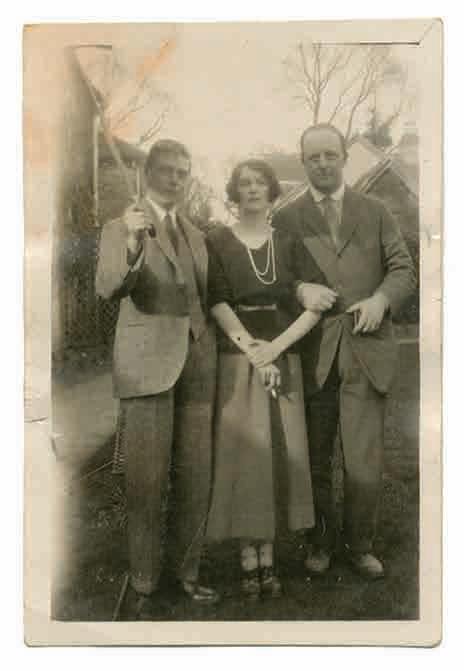
going back to Queen Victoria. Described by the late Norris McWhirter, editor of The Guinness Book of Records as, “the most persistent collector”, Andrew is undaunted by initial refusals for an autograph and simply keeps on trying until he’s successful. His most cherished items are signed photographs of Queen Elizabeth II from 1993, and Diana, Princess of Wales from 1996; one item still eluding him, which he hopes one day to possess, is a signed Christmas card from The Prince and Princess of Wales. He is particularly fond of Queen amilla, who he rst wrote to in 1996, the year of harles and Diana’s divorce when she was widely blamed for her role in the break-up. n her reply she told him, touchingly, that he had “restored my faith in humanity”. He met The Queen at her 2005 wedding after getting an invitation to Windsor Castle, later appearing on The Richard and Judy Show to talk about the experience. Collecting it seems, can lead to all kinds of places.
Whereas some royal collectors have a particular focus, others take a more eclectic approach. Connor DeMerchant lives in Rothesay, New Brunswick, Canada. He has pulled together his ast collection of royal memorabilia 2,160 items at last count from thrift stores, yard sales and anti ue stores”, and feels that “part of the fun of collecting is never knowing what item you will nd when out looking . e recently discovered an authentic, framed signature of King eorge V at a local second-hand store for 1 , which he describes as de nitely the nd of a lifetime so far . mong his most cherished items is an enormous scrapbook picked up in Kingston, Ontario, where he attended Queen’s University. The scrapbook, a re-purposed wallpaper sample book, was kept during the 1939 royal visit to Canada and the United States by King George VI and Queen Elizabeth and is crammed with newspaper clippings documenting every leg of the visit. He also rather likes three unusual lithophane cups, two from the 1902 Coronation of Edward VII, and another
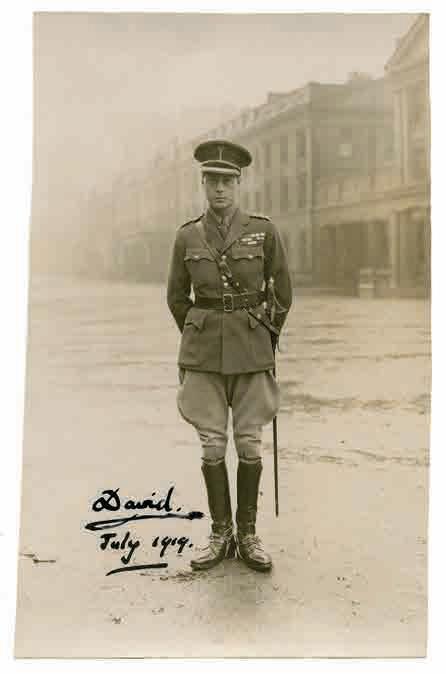
Above: A photograph of the young Prince Edward, then Prince of Wales, in military uniform in July 1919
Below: The letter from Richard Lobel’s collection, addressed to Wallis Simpson, but with a crayon scrawl from Edward
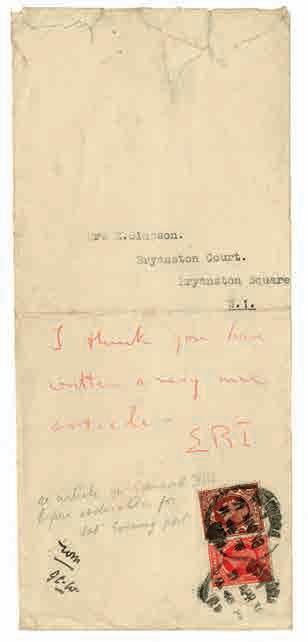
from the 1911 Coronation of George V. If each cup is held up to strong light, the pro le of the monarch appears in the bottom of the cup. Another treasure is a Buckingham Palace concert programme from 1869; a gift from his parents after he completed his master’s thesis, which, ttingly, was on Queen Victoria’s interest in and impact on music. He still thinks about a missed opportunity during a trip to ondon in 202 when he saw a collection of soaps in their original display bo , produced at the time of the 1937 Coronation. With no room in his suitcase to get them home to Canada, he debated the whole trip over whether he should go back for them. “I regret not e en taking a picture of those soaps, he adds ruefully.
Vincent sposito, who li es in umberland, aryland, in the , has been collecting for the last 20 years and was rst encouraged by his grandmother argaret. he had sent a message to The Queen other, congratulating her on her
100th birthday and recei ed a response. nspired by this, Vincent then sent a birthday message to The Queen and was delighted when he recei ed a reply. e continued to send messages e ery year to her and other members of the oyal Family. The replies he recei ed to date he has had 6 are collated into a scrapbook which remains one of his most treasured possessions. is collecting picked up pace in 2012, when his Spanish teacher took a group of students to the UK and, although Vincent was unable to go, he gave her all his high-school graduation money 200 and a wish-list of items he wanted. he returned with an enormous bag of royal swag, including a ft by ft ag of the oyal tandard which has hung on the wall of his bedroom ever since. Most of his collection is in there he okingly refers to it as The oyal ritish useum of umberland although there is o erspill into other parts of the home he shares with his mother.
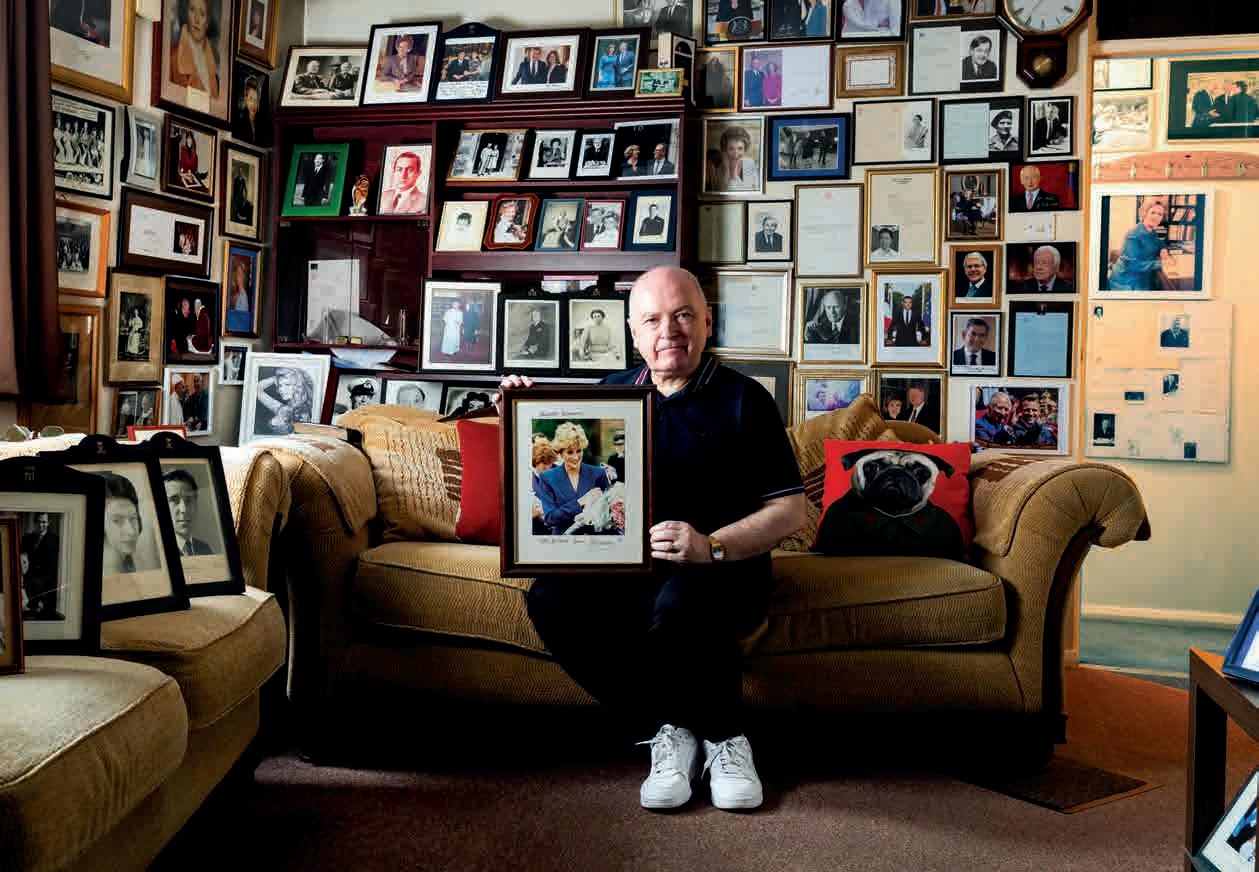
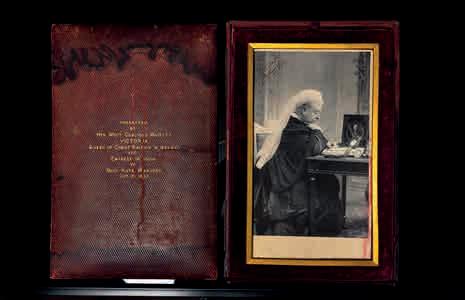
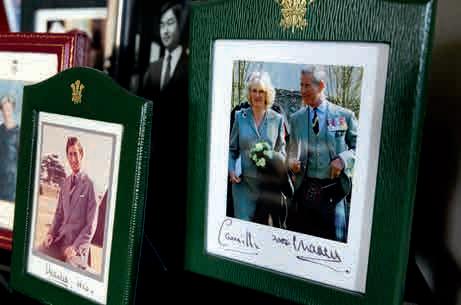
“She is not particularly interested in the royals as such,” he says, “but she loves that I have a hobby that brings me joy. Every Christmas I have her sit with me and watch the annual Christmas broadcast.” He has a huge admiration for The late Queen Elizabeth II, and was so moved by her death in 2022, he decided to pay his own tribute by having her cypher tattooed onto his chest, close to his heart. “People may think it’s silly to be devoted to someone you have never met, but she was a sense of real stability for me personally. In rough times, I would read about her life and all the great events she had been witness to and it made me feel better.”
He’s not sure what might happen to his collection. He likes to think it could end up in a museum but admits it’s a niche interest. onnor is similarly sceptical about the long-term alue of his collection, re ecting that he doesn’t know anyone else of his age 29 who is remotely interested.
Nevertheless, the market for royal memorabilia remains buoyant, with rare and unique items often making headline news. In February this year, a letter said to have been written by the 10-year-old Princess li abeth to eatrice tillman, head housemaid at oyal odge sold for 2 ,000 at ansons Auctioneers, with interest from bidders around the world. While some royal experts are sceptical about its authorship, neither the handwriting, signature nor details of the holiday tally with what we know about The late Queen at this point in her life the sale is ne ertheless an e ample of the potent power of the ‘royal touch’. The winning bidder, a man from Essex who bought the letter to inspire his own daughter, did so in “a moment of madness”. In March, Bonhams was holding an auction of objects designed by and belonging to former Pageantmaster Bruno Peek and all used by The late Queen Elizabeth II at landmark events. The Millennium Torch, Golden Jubilee Torch, Trafalgar Weekend Torch, iamond Jubilee iamond’, 90th irthday Torch and the Platinum Jubilee ommonwealth ational lobe used at
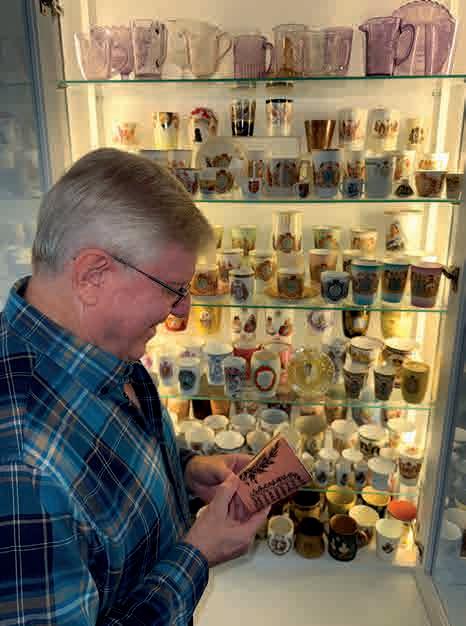
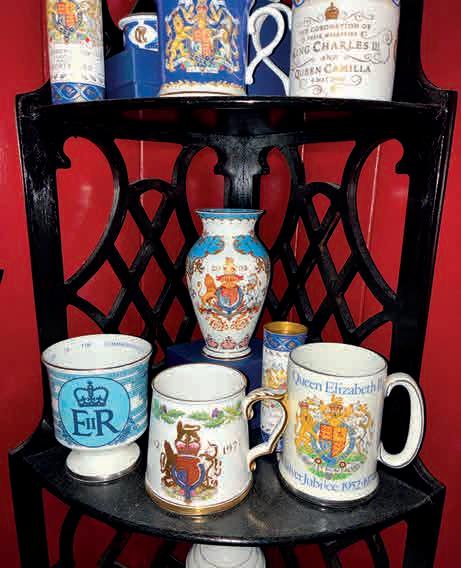
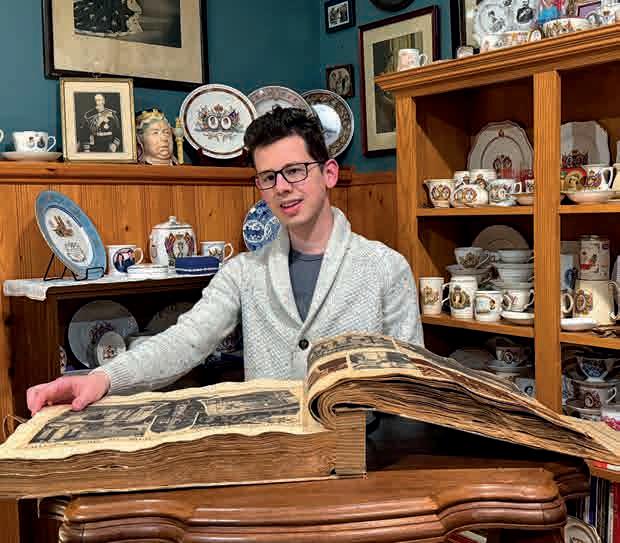
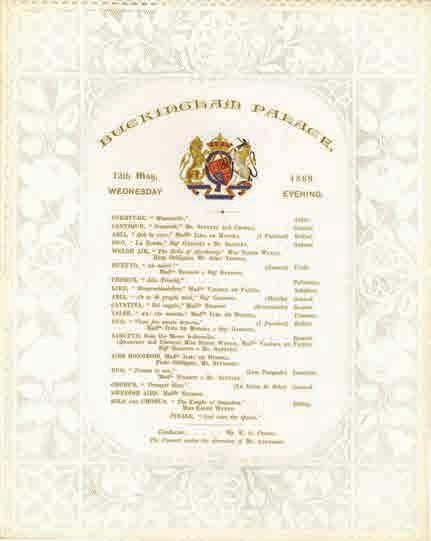
Windsor astle in June 2022 , each ha e estimates of 20,000 to 0,000, with all proceeds going towards ancer esearch
K. Peek, who has recently been diagnosed with cancer himself, hopes the items go to, people who lo e the oyal Family and the fact The Queen has used them . olden Jubilee torch is beyond the budget of most, but the beauty of collecting royal sou enirs is that there is an entry point for e eryone. Where there has been a royal occasion, there ha e been decorati e wares to commemorate it, with items catering to all tastes from the elegantly re ned to the cheerfully ulgar. any people nd themsel es drawn to the nostalgic aesthetic of royal collectibles. mong the umble of intage china in my own kitchen are coronation mugs, plates and beakers. There is a 19 oronation tri e dish, as well as a oyal oulton lo ing cup designed by ilner ray for the brewers, ourage o, an e ample of which is in the V ’s collection. picked it up in my local fam shop for 2 . ha e se eral dward V pieces, though nothing to ri al ichard obel’s collection, and a faded fabric ag from the 19 oronation, a family heirloom, hung in the window on recent ubilees and coronations. Vintage and retro enthusiasts ll their homes with such knick-knackery, not necessarily as a symbol of monarchist sympathies but perhaps because we simply like their design, their olly optimism and their role in reminding us of simpler times.
f you’re looking to begin your own royal collection, then the 19 oronation is a great place to start. That year, shops were ooded with merchandise tea caddies, to ee tins, igsaws, parasols, handkerchiefs, headscar es, toys, ags, calendars, busts, teapots, money bo es, spoons and bottle openers. There was e en a special oronation light bulb with the element twisted into the shape of the royal cypher and crown. Keep an eye out at anti ues fairs, car boot sales, charity shops and on e ay, but beware. s this article pro es, collecting royalty can become seriously addicti e.
Above: Canadian collector Connor DeMerchant has more than 2,000 items of royal memorabilia. His treasures include a Buckingham Palace concert programme from 1869
Below: Commemorative hairpins on a display card, made for the 1953 Coronation of Queen Elizabeth II
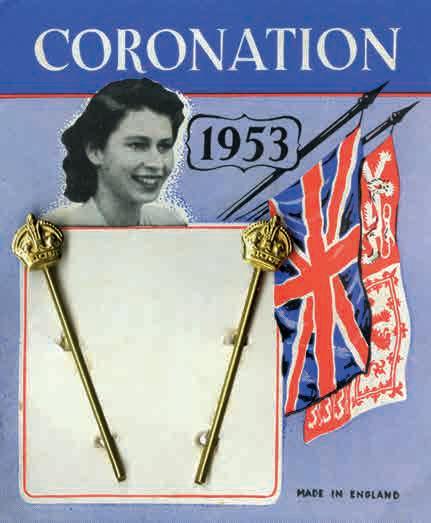
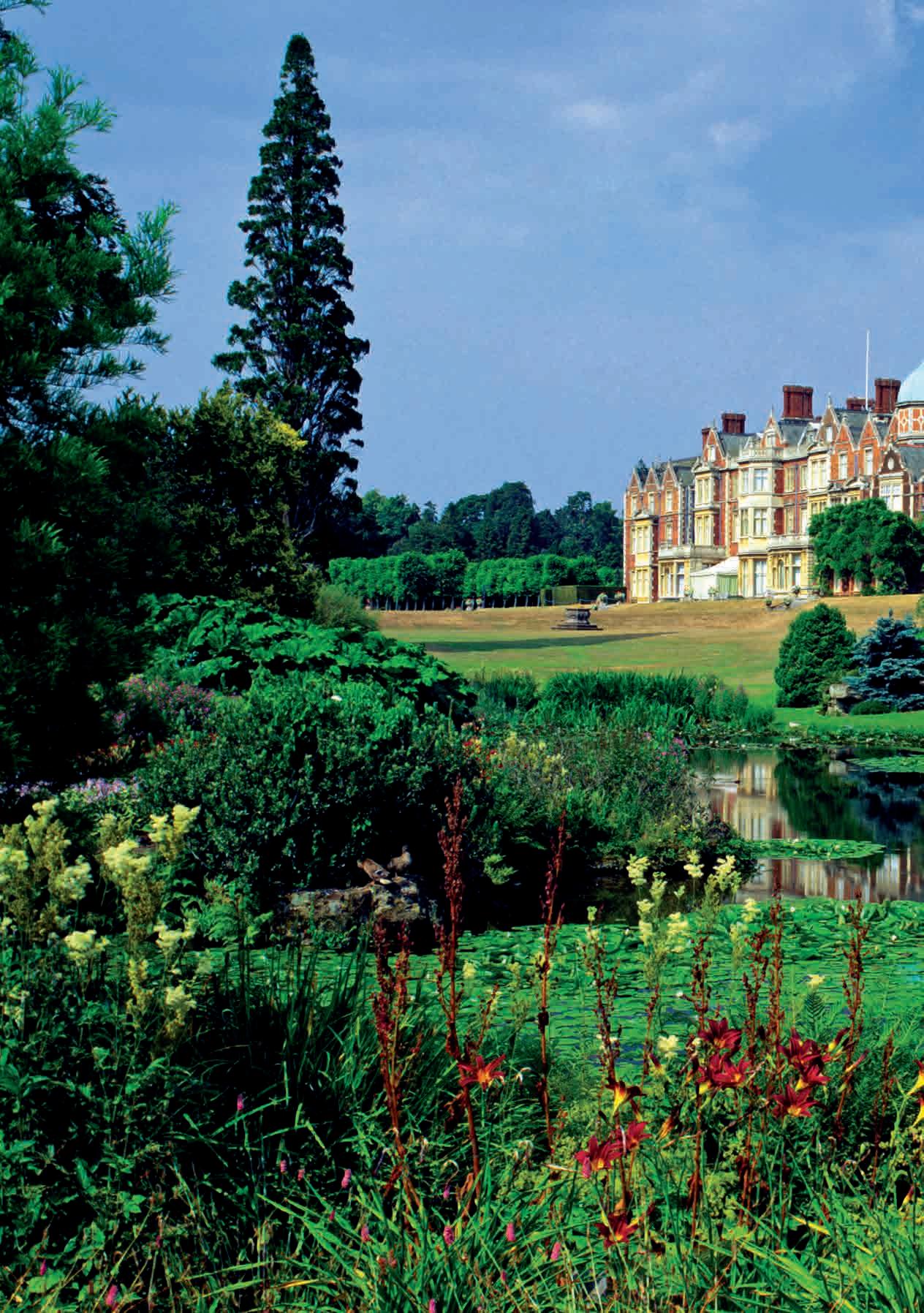
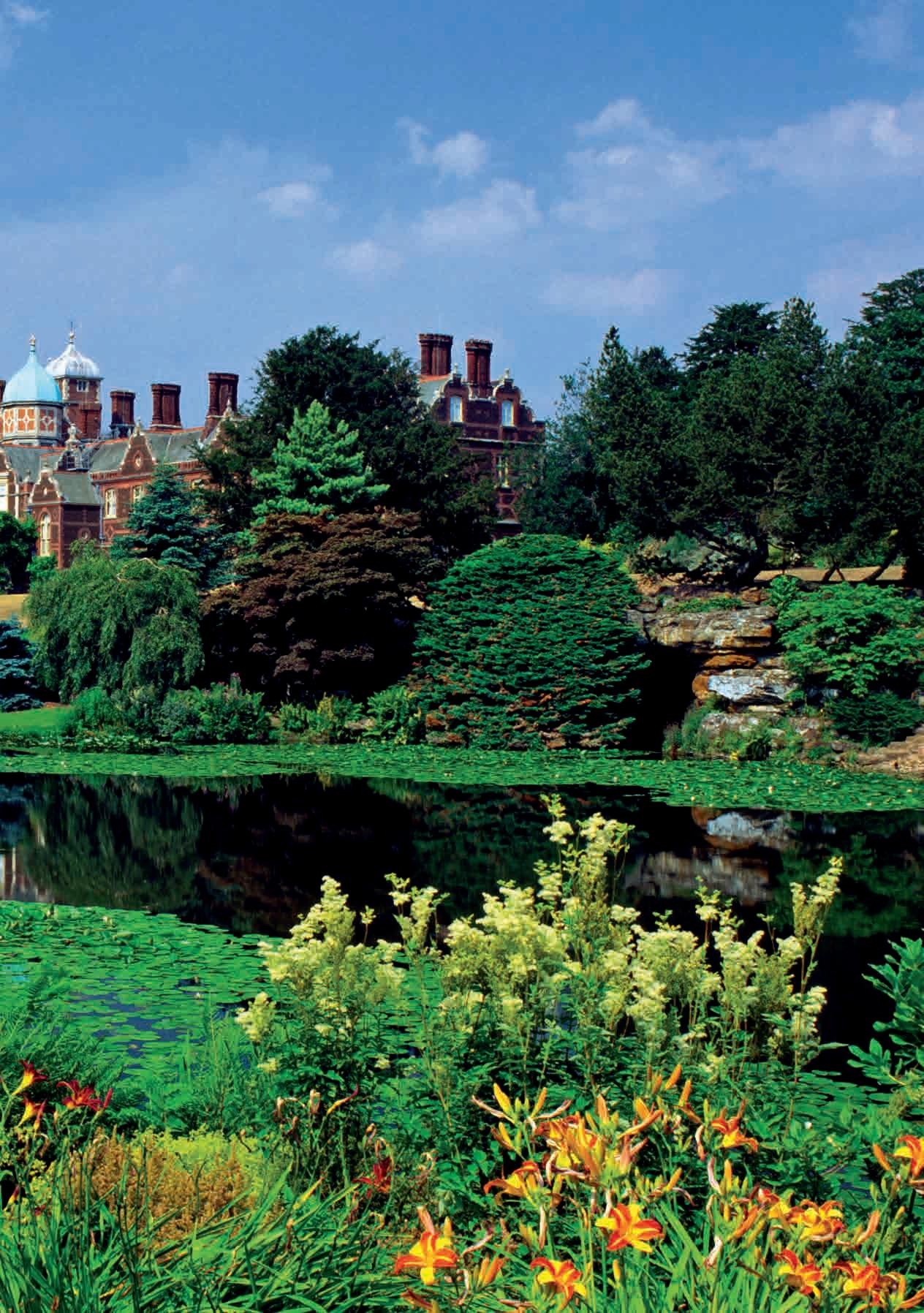
From its beginnings as a suitable Edwardian estate for shooting to a modern-day tourist magnet, Sandringham has had a horticultural history that has seen many changes writes urora a Today the grounds re ect The King’s hiloso hy o finding harmony between man and nature
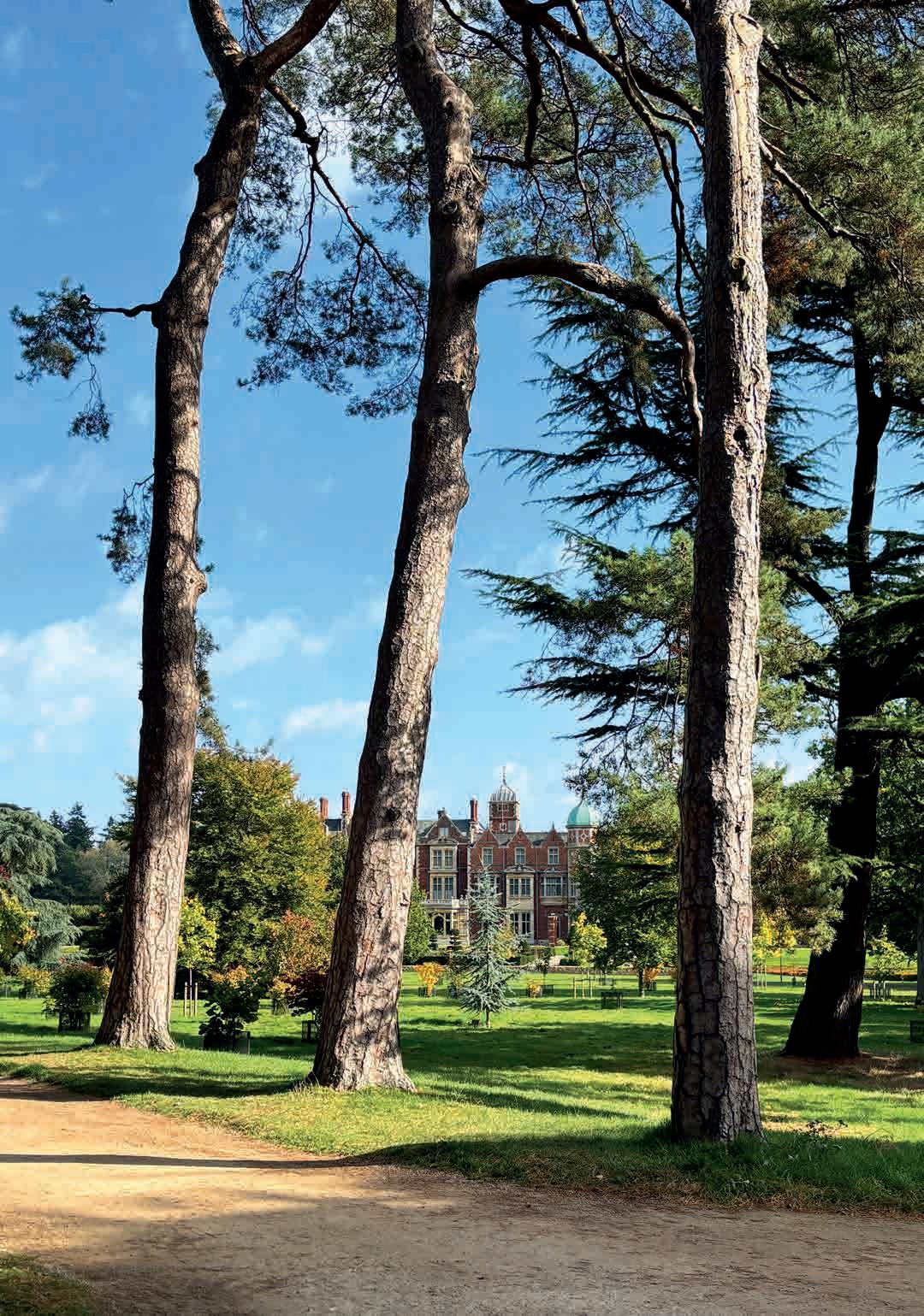
This page: a postcard of the Model Dairy, originally built by King Edward VII for Queen Alexandra Facing page: The estate’s woodlands comprise nearly 1,335 acres of hardwood and softwood trees, including these Scots pine, framing the house
In 1862, the remote Sandringham Hall was purchased by Prince Albert on behalf of his eldest son, Albert Edward, Prince of Wales. ‘Bertie’, whose engagement to Princess Alexandra of Denmark took place in September that year, needed a country home that was comfortable and well-appointed, somewhere to raise a family, entertain guests and from his point of iew where the shooting was good. Purchased for 220,000 out of the Prince’s uchy of ornwall re enues, the old house was demolished and a new mansion completed in 1870. Although secluded, the wilds of Norfolk would pro ide generations of the oyal Family with a cherished retreat. ocated amid rich, low-lying farmland and sandy heathland, the estate has flourished in its 164 years of royal ownership. s well as a much-lo ed home, it also boasts e pansi e parkland with carefully planned and maintained gardens. They are a delight not only for the oyal Family, but for members of the public, who ha e been able to isit them since 1908. The house itself was opened to the public in 1977 to mark Queen li abeth ’s il er Jubilee.
Back in the 1860s, as well as a sprawling new house, The Prince and Princess of Wales were keen to transform Sandringham’s grounds into a true showpiece. Although the gardens were already handsome with, an a enue of lime, firs and other forest trees”, Bertie and Alix were keen to reflect their own fashionable tastes through landscaping, horticulture and a ariety of charming outdoor structures.
ertie engaged the ser ices of landscape gardener James Pulham, whose established family business had recently enjoyed success after showing at the International Exhibition of 1862. One of Pulham’s changes was a repositioning of the lake, which he mo ed south-west of the house. t remains a highlight of the gardens today, occupying the foreground in what is the most famous iew of the royal residence. Pulham was particularly renowned for creating rockeries, and andringham’s own Pulham rockery e okes a romantic wilderness, with cur ing paths winding around the lake, rustic stone arrangements and informal planting.
Buildings added to the estate, such as the model dairy and the gardeners’ bothies, were designed to harmonise with the rural landscape, a gardening philosophy maintained with enthusiasm today by His Majesty The King. In 1913, a small
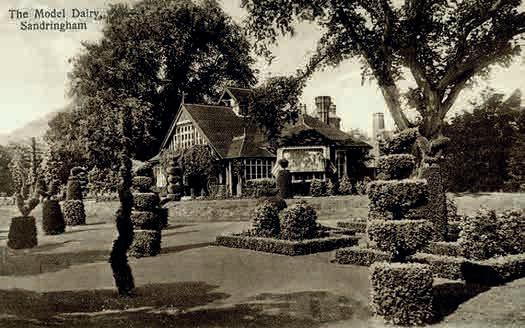
stone summer house was added, built for Queen Alexandra by her close friend and gardening enthusiast, General Sir Dighton Probyn who was also Keeper of the Pri y Purse . Perched at the top of a rocky cascade, amid ferns, moss and pink wiegela, Queen le andra’s est still looks out o er the lake, offering a cool, tranquil refuge.
For ertie, as both Prince of Wales, and later King dward V , andringham ser ed as not only a happy family home, but as a bustling centre of social e ents, notably the weekend house parties and shoots that were to characterise the Edwardian era. Dozens of gardeners were employed and housed at the estate, with numbers ranging from 60 to 100. The head gardener li ed in a handsome red-brick house, now a peaceful holiday let. With the house hosting frequent guests, there was plenty to keep an army of gardeners busy across the thousands of acres of gardens and parkland. e en glasshouses, each 100ft long, were filled with flowers, fruit and egetables.
gardener’s diary from the period, now in the oyal rchi es at Windsor astle, lists numerous types of plants in his care, among them a ‘banana house’, beds of melons, orchids and palms. The diary also sheds light on the jobs the gardener was tasked with, including decorating for hristmas, watering, filling flower ases for guest rooms and bedding down plants. Martin Woods, head gardener for more than 25 years until his retirement in 2022, noted that the gardens o er se eral
This page: The topiary labyrinth in the Lower Maze Garden, which has been restored by The King Facing page: Delphiniums, which His Majesty has described as holding ‘pride of place in my botanical affections’
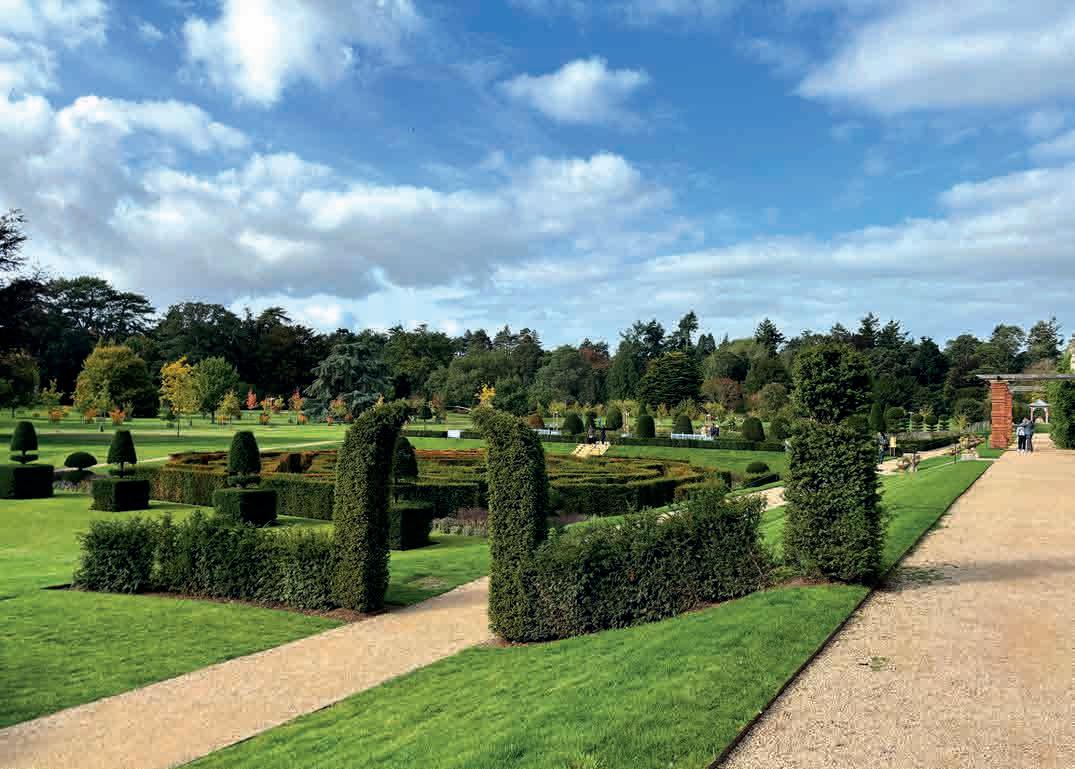
generations have been modified by each monarch to suit the requirement of the time”, with personal touches, styles and favourite plants. In 1947, George VI brought landscape designer Geoffrey Jellicoe to Sandringham, where he created the orth arden, a more intimate cottage-style space. George VI’s daughter, Queen Elizabeth II, had a number of woody plants added, including camellia, magnolia and rhododendron, which were transported to Norfolk from Windsor in the 1960s.
In 2017, Prince Charles, then Prince of Wales, took up the role of leading the Sandringham gardens scheme, beginning a restoration project that is still in development today. In a relatively short time, the grounds have been greatly enhanced by the addition of the topiary garden, the maze and the sundial garden.
Although the gardens at Sandringham cannot be said to have been neglected, their size and composition have ebbed and flowed over the years. The current garden shows an attentiveness to the whole, incorporating and giving equal prominence to plants large and small, with delicate cyclamen nodding their heads within sight of soaring redwood trees. There is a kind of cultivated wildness in the Sandringham gardens today, that speaks to His Majesty’s beliefs in finding harmony between man and nature and the vitality of the rural environment.
Walking the grounds of Sandringham today, the house seems to peek from behind numerous vistas, with elements of the house framed by the wide variety of maple, pine and numerous redwoods, some of which reach more than 100ft in height.
Although Queen Victoria only made two visits to Sandringham in her lifetime, she did mark one of the occasions with the planting of an oak tree, which still stands. Over the past few years, His Majesty has added more trees, particularly maple, in locations where both the trees and the house are shown to advantage.
The Topiary Garden, which replaced a swathe of lawn, is fashioned from one-and-a-half miles of yew, functioning as a border and frame for perennials, including deep-pink roses. From the ground, the garden is a mass of greenery, with bursts of colour from the perennials. Ascending to the terrace, the view shifts, and offers a better look at the garden’s thoughtful geometry. Added by His Majesty in 2023, great care has been taken to include plants that can withstand the changing climate and weather patterns. They include The King’s favourite flower, the delphinium, about which he has said: “For me, the magnificent, gloriously apparelled delphinium, with its impeccable bearing and massed in platoons, holds pride of place in my botanical affections.”
The maze, which invites both quiet contemplation and the frolics of children, recalls the Edwardian era, when a topiary garden was in vogue and Edward VII and Queen Alexandra’s children and grandchildren rode bicycles through the garden. When the present king was a boy, some of that old topiary still remained and made a strong impression, one that His Majesty has tried to honour and emulate today.
Since 1881, the annual Sandringham Flower Show has been a beloved local tradition. Organised by the Sandringham Estate Cottage Horticultural Society Trust, with involvement from
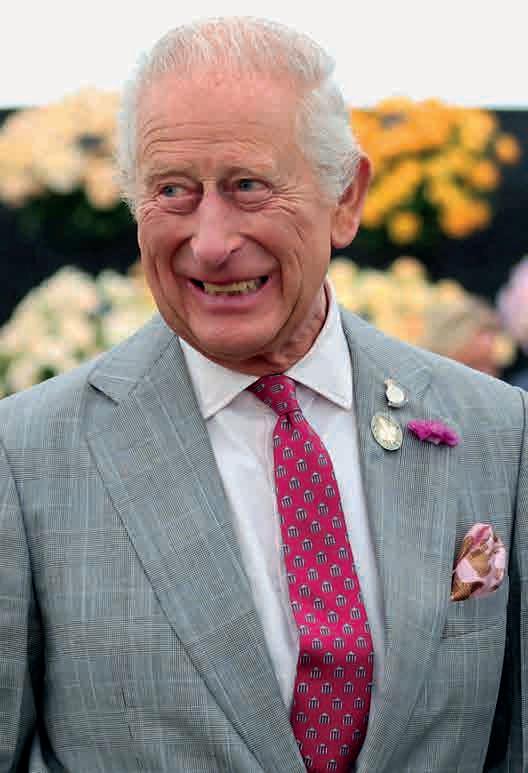
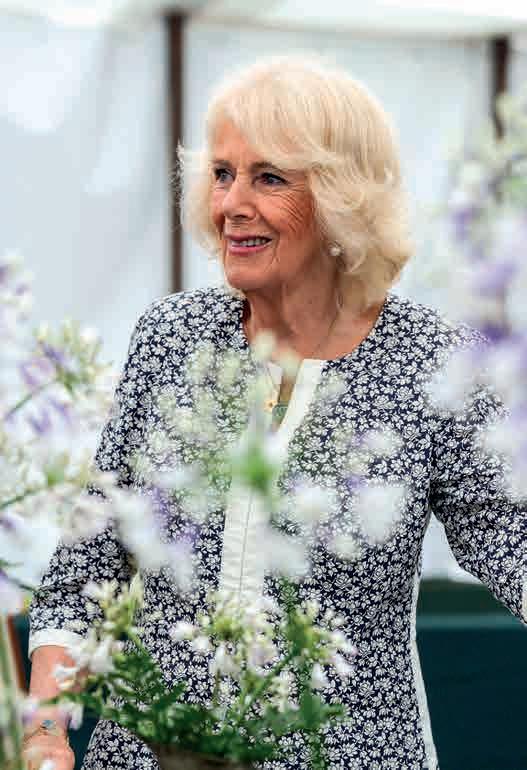
the Sandringham Association of Royal Warrant Holders, the event has long combined display gardens, horticultural competition and fundraising to benefit charity. Members of the Royal Family have made regular appearances at the show, presenting prizes.
This year will see something of an upshift to this annual tradition with the inaugural RHS Sandringham Flower Show taking place, after which it will be presented every three years. From 22-26 July, the grounds of the estate will host a wealth of horticultural wonders and diverse activities, including the opportunity to ‘glamp’ on the estate’s grounds. It is the first time the RHS has held a show at any royal residence, lending this year’s event a particular glamour and excitement.
RHS Sandringham Flower Show will include Show Gardens, the centrepiece Floral Marquee and RHS show staples such as the Flower School, where budding florists can learn from expert floral artists. Anyone peckish can enjoy a regal repast, courtesy of picnic hampers from Royal Warrant Holder, Fortnum & Mason. Show gardens will include displays that are particularly relevant to Norfolk’s climate. The Grow Forward category, which is new, emphasises how innovation and technology in garden design can help create more resilient gardens and landscapes.
One of the most noteworthy displays will be that of The King, who is collaborating with Catherine MacDonald on the show’s RHS Royal Legacy Garden. The display will include Norfolk materials and some of The King’s favourite plants, as well as emphasising the importance of increased biodiversity, another area of particular interest for His Majesty. The
Sandringham gardens and overall estate should provide a unique backdrop, as recent plantings undertaken by The King, the head gardener and his staff of 15, have been selected in many instances for how they may strengthen the estate’s ecosystems and natural habitats.
Biodiversity is of such importance to The King that it will feature in one of the show’s new awards, for which His Majesty will select his favourite display. Her Majesty The Queen, meanwhile, will select her favourite ‘Upcycled Container’ to promote enterprising recycling. In the late 1920s, The King’s great-great-aunt, Princess Victoria of Wales, reused Queen Victoria’s tin bath as a planter in her own garden at Coppins in Buckinghamshire.
Like all RHS shows, the Sandringham event will provide visitors the opportunity to see rare and fascinating plants up close, to speak to master gardeners and to find inspiration for their own patch of paradise, all while savouring the history and breadth of the estate’s gardens. Visitors may still walk through the avenues of limes, pass the large Buddha given to The Prince and Princess of Wales as a housewarming gift, and rest a moment in Queen Alexandra’s Nest, finding peaceful contemplation in an extraordinary English garden.
Sandringham House and Gardens are open from 28 March to 9 October (except for closures between 19-28 July and 20-23 August).
Visit sandringhamestate.co.uk for further information.
The RHS Sandringham Flower Show takes place from 22-26 July 2026; rhs.org.uk
Alamy
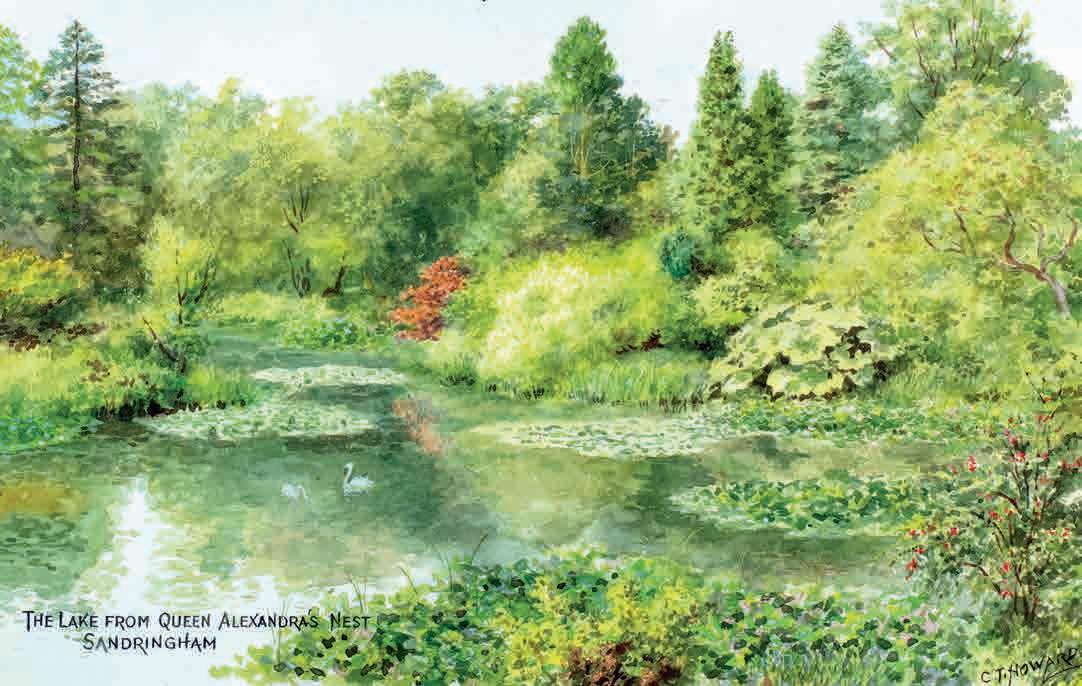
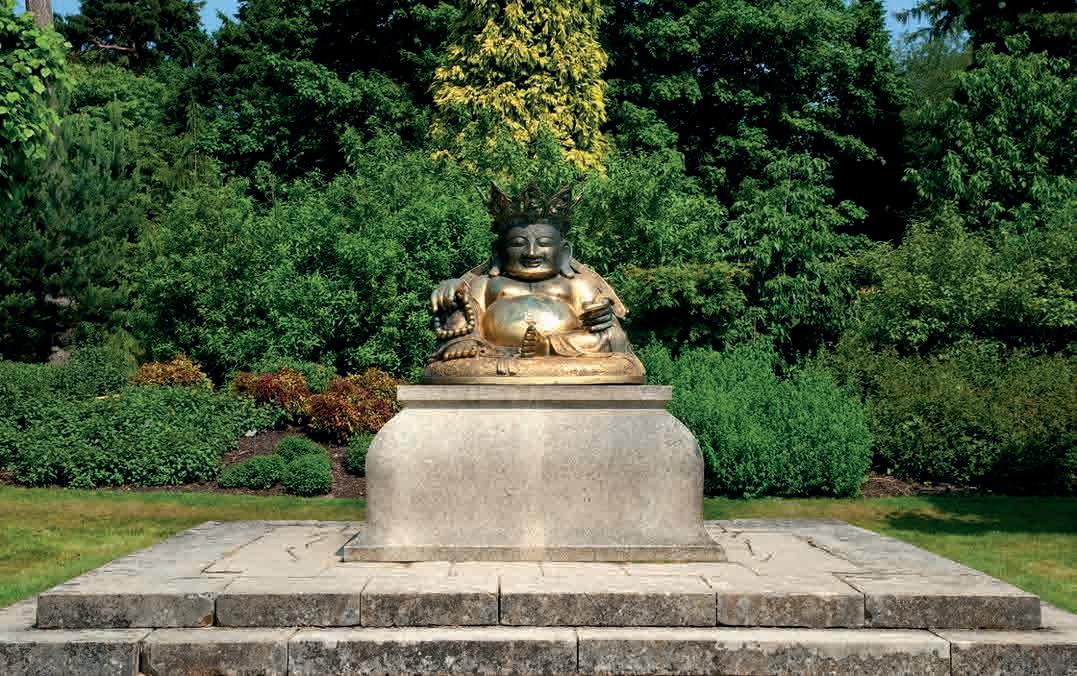
Facing
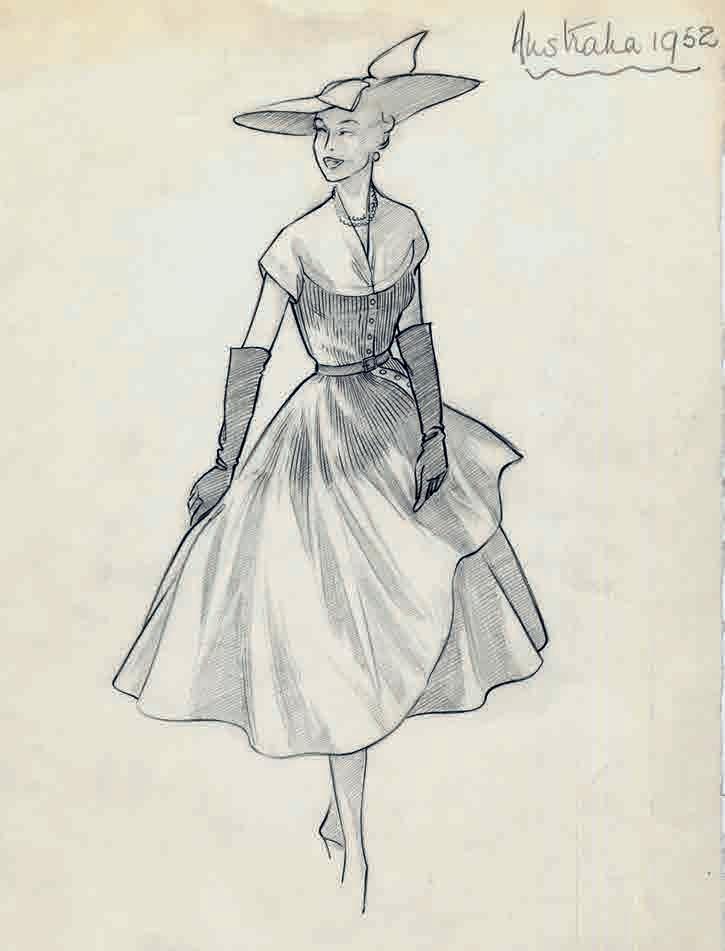
Born in Maida Vale, London, in 1909, Edwin Hardy Amies had an early introduction to fashion, as his mother worked as vendeuse at a court dressmaker. He began his career in 1934, working at Lachasse under the designer Digby Morton. Lachasse was renowned for its smart tailoring and this grounding would inform the immaculate cut and fit that would become the Hardy Amies signature style. He established his own couture house at 14 Savile Row in 1946 after serving in the Special Operations Executive during the Second World War. He first designed outfits for Princess Elizabeth to wear for her Canadian tour of 1951, and his innate ability to combine dignity and style for his royal customer led to further orders, with Amies and his team of four regularly visiting Buckingham Palace to present designs and attend fittings. Amies understood the importance of selecting the right fabric, to achieve the perfect fit and drape. Although he is chiefly associated with providing daywear for The
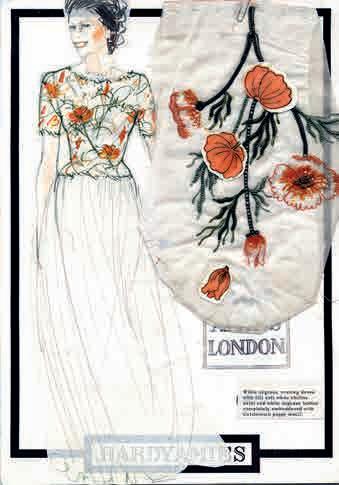
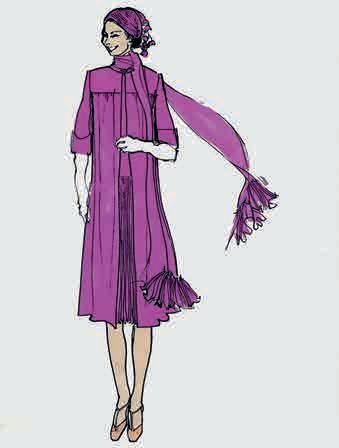
Queen, he also designed evening dresses with spectacular effect, preferring to concentrate on shape and cut above embellishments. He was no fashion artist and instead employed several, including Ken Fleetwood, who joined the firm in 1952, eventually becoming its design director and Amies’s life partner until Fleetwood’s death in 1996. Amies was awarded a Royal Warrant in 1955, was made a Commander of the Royal Victorian Order in 1977 and was knighted in 1989. By the time of his death in 2003, he was London’s oldest surviving couturier.
Clockwise from above left: A sketch for a day dress for the 1952 tour of Australia. The tour was cancelled after the death of King George VI; a poppy dress and swatch worn for a reception in California during the 1983 tour of the US and Mexico; a pink ensemble with hat by Frederick Fox, worn for a City of London walkabout during the 1977 Silver Jubilee