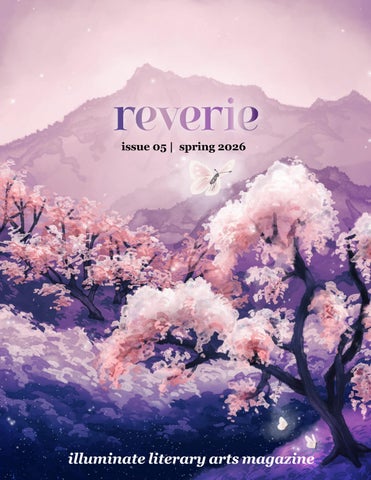
issue 05 | spring 2026 literary arts magazine special thanks to: Andrea Szeto published 5.31.26
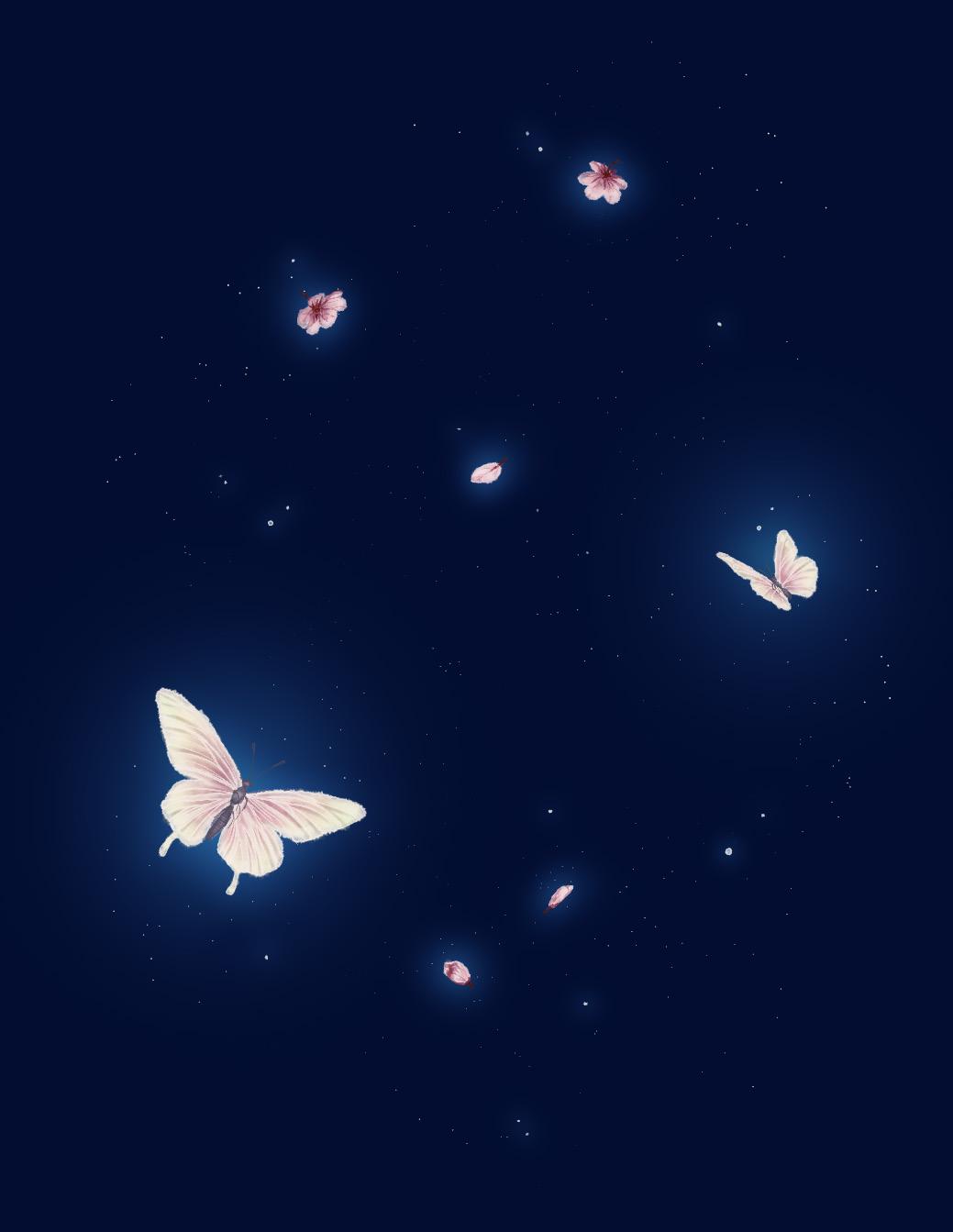
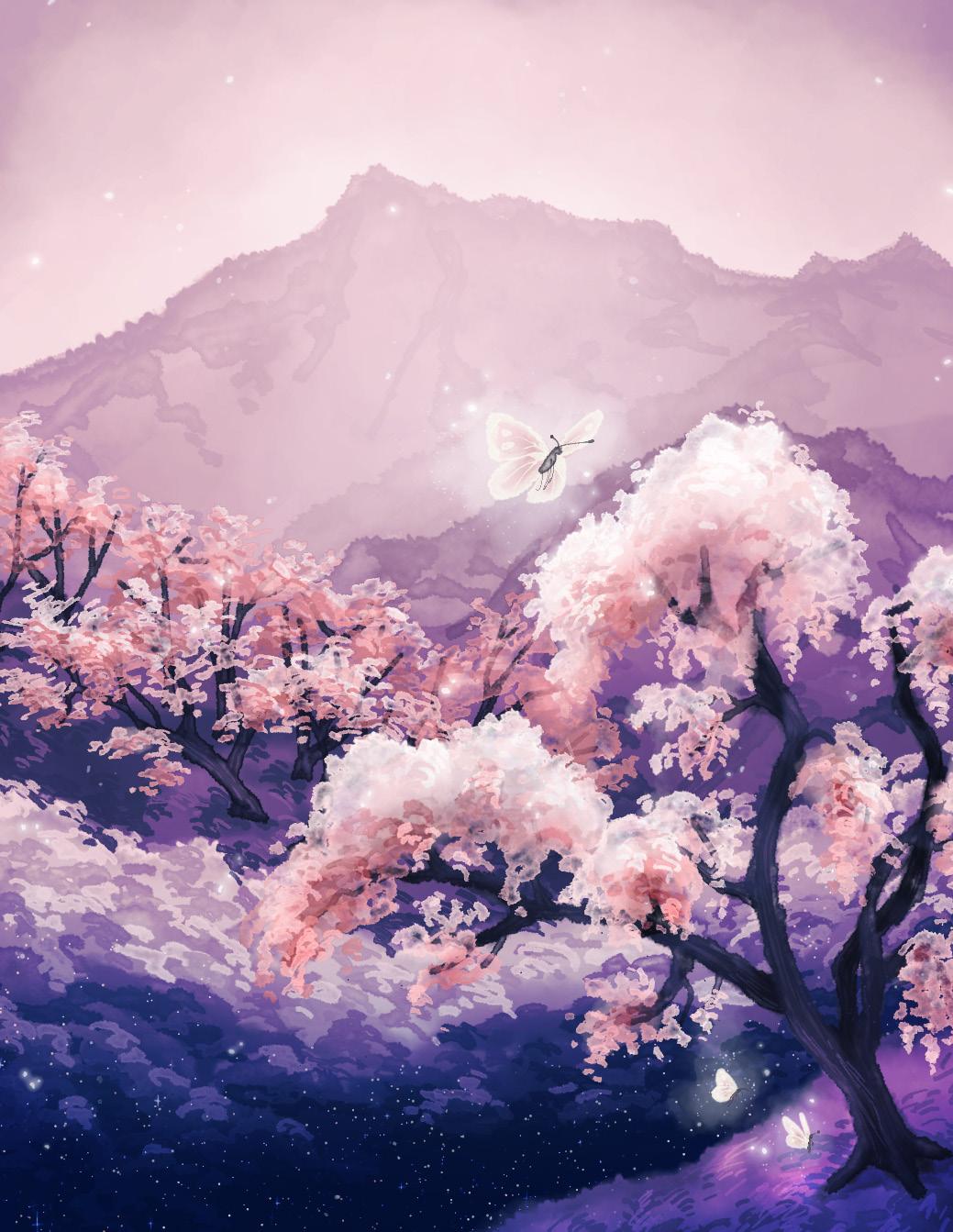
cover and table of contents art by: Violet Arima
Dear Reader,
Thank you for reading the fifth edition of illuminate literary arts magazine! The theme of this issue, reverie, explores the many sides of dreaming: the light and the dark, the hopeful and the haunting, the worlds we escape to, and the realities we sometimes try to avoid. Reverie exists somewhere between imagination and memory, comfort and fear, clarity and uncertainty. Through the art, photography, and writing in this issue, we hope readers can explore the emotions and experiences that shape us.
Dreaming can be comforting, but sometimes unsettling. It gives us a way to imagine better futures and escape beyond everyday life, but dreams can also reveal anxieties, loneliness, and fears we do not always talk about openly. A lot of the pieces in this issue explore that contrast between fantasy and fear, hope and uncertainty. Especially now, when so many young people are dealing with pressure, change, and constant noise from the world around us, reverie becomes both an escape and a way to better understand ourselves. Creativity gives people the chance to process emotions that can otherwise feel overwhelming or difficult to explain. The works in this issue reflect that honesty and emotional complexity in really meaningful ways.
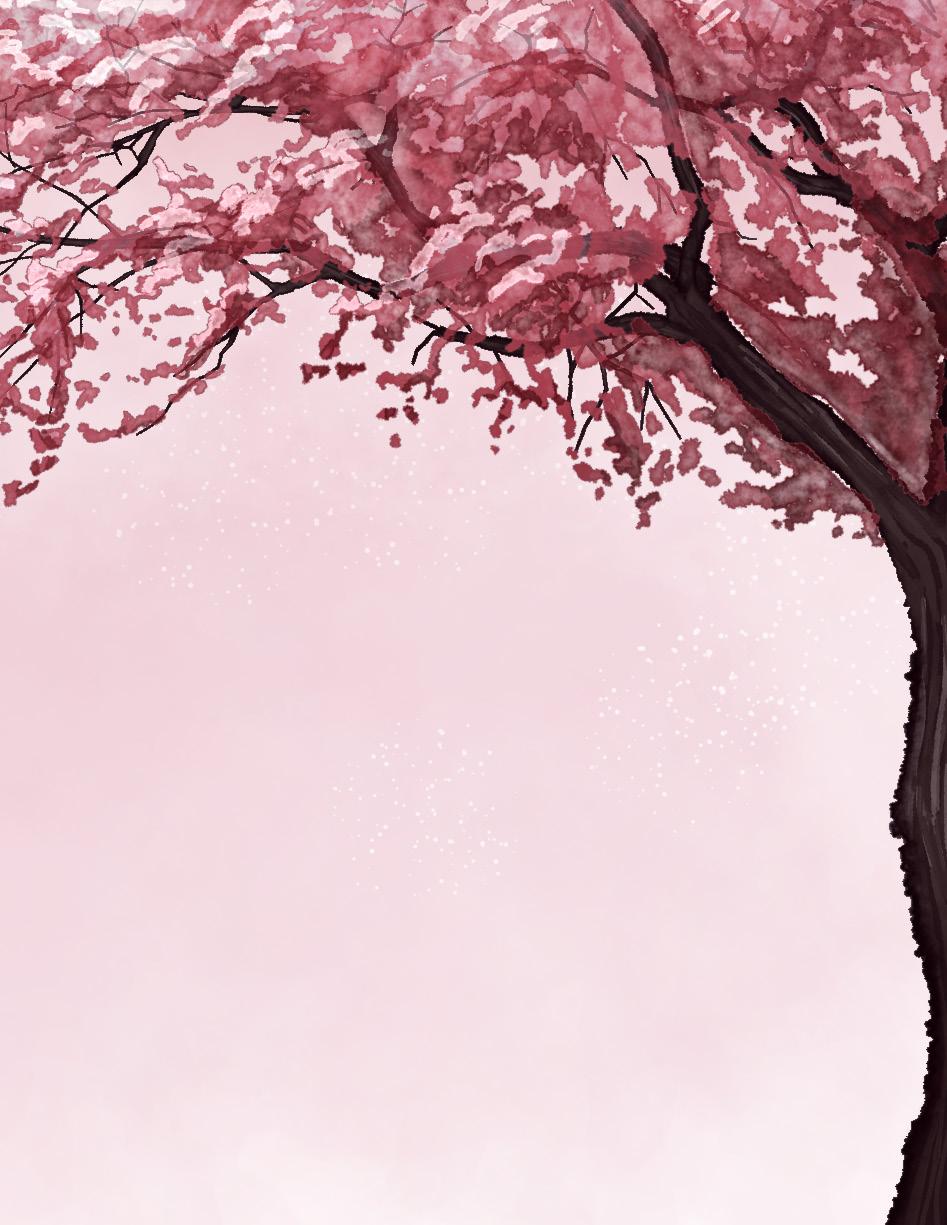
As you turn these pages, you will encounter student voices that are vulnerable, imaginative, and deeply personal. The cover, which transitions from a dark night sky into soft clouds and blooming cherry blossom trees, represents the idea of overcoming fear and finding light during difficult times. Like a dream balanced between darkness and possibility, we hope this issue reflects the creativity and individuality of student voices.
While each past issue of illuminate has been meaningful in its own way, reverie stands out because of its two distinct tables of contents, which guide readers through both nightmares and dreams. We are also excited that this issue marks our Bay Area-wide expansion, featuring work from eight schools: Alameda High School, Encinal High School, Alameda Science and Technology Institute, Saint Joseph Notre Dame, The College Preparatory School, Oakland School for the Arts, Legacy Magnet Academy, and James Logan High School.
To everyone who contributed to this issue of illuminate, whether as a writer, artist, photographer, or staff member, thank you. Your creativity, passion, and dedication brought this vision to life. We are so grateful for the stories, perspectives, and emotions you chose to share. We hope you enjoy reading this special edition of illuminate
Olivia Vu Editor-in-Chief
Genevieve Yuen Managing Editor
“ gives us the world of a soul.”
— Gaston Bachelard
(20th-century French philosopher) Reverie
Aurelius
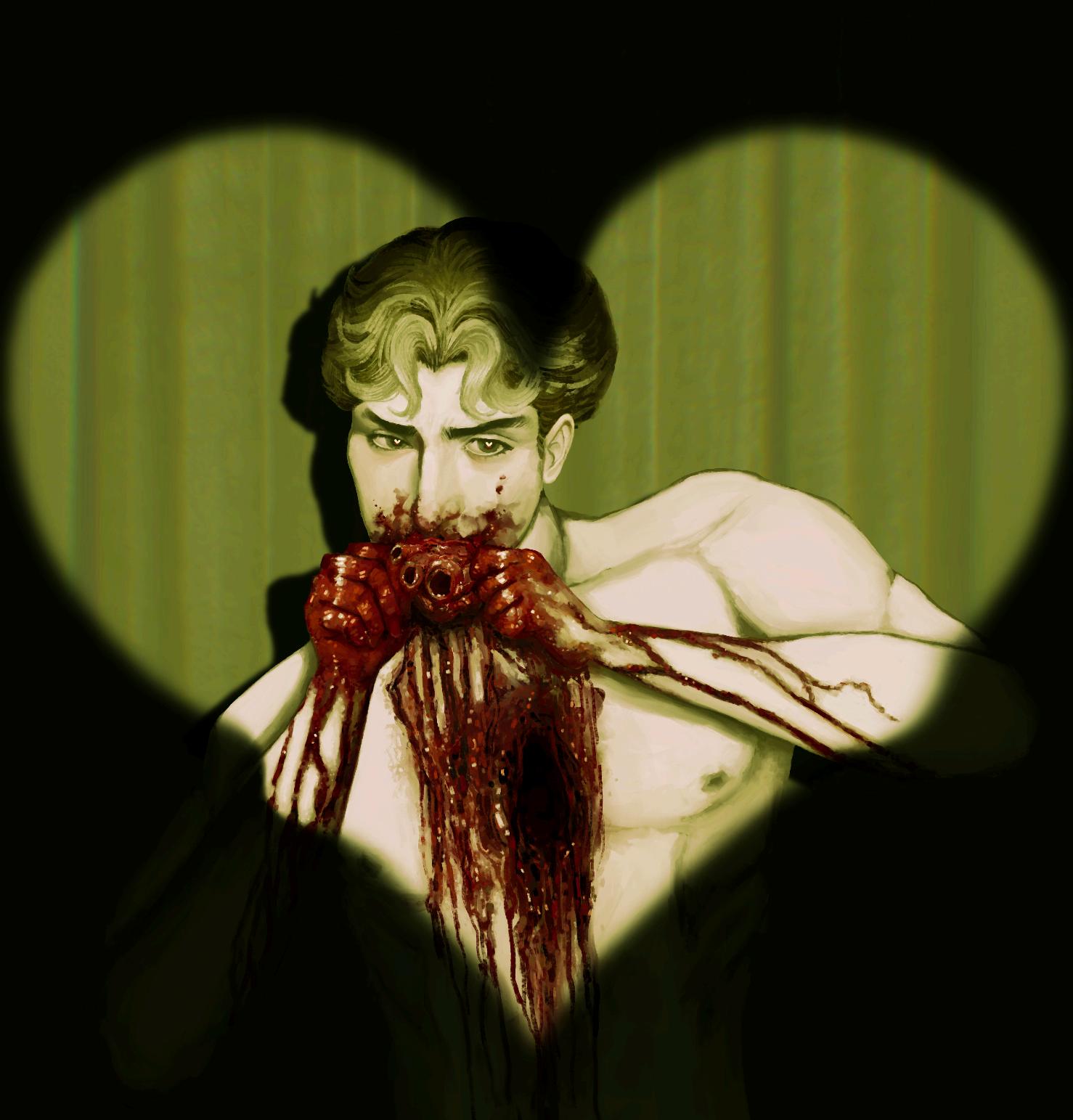
Luna Witherell︱digital art
senior ● AHS
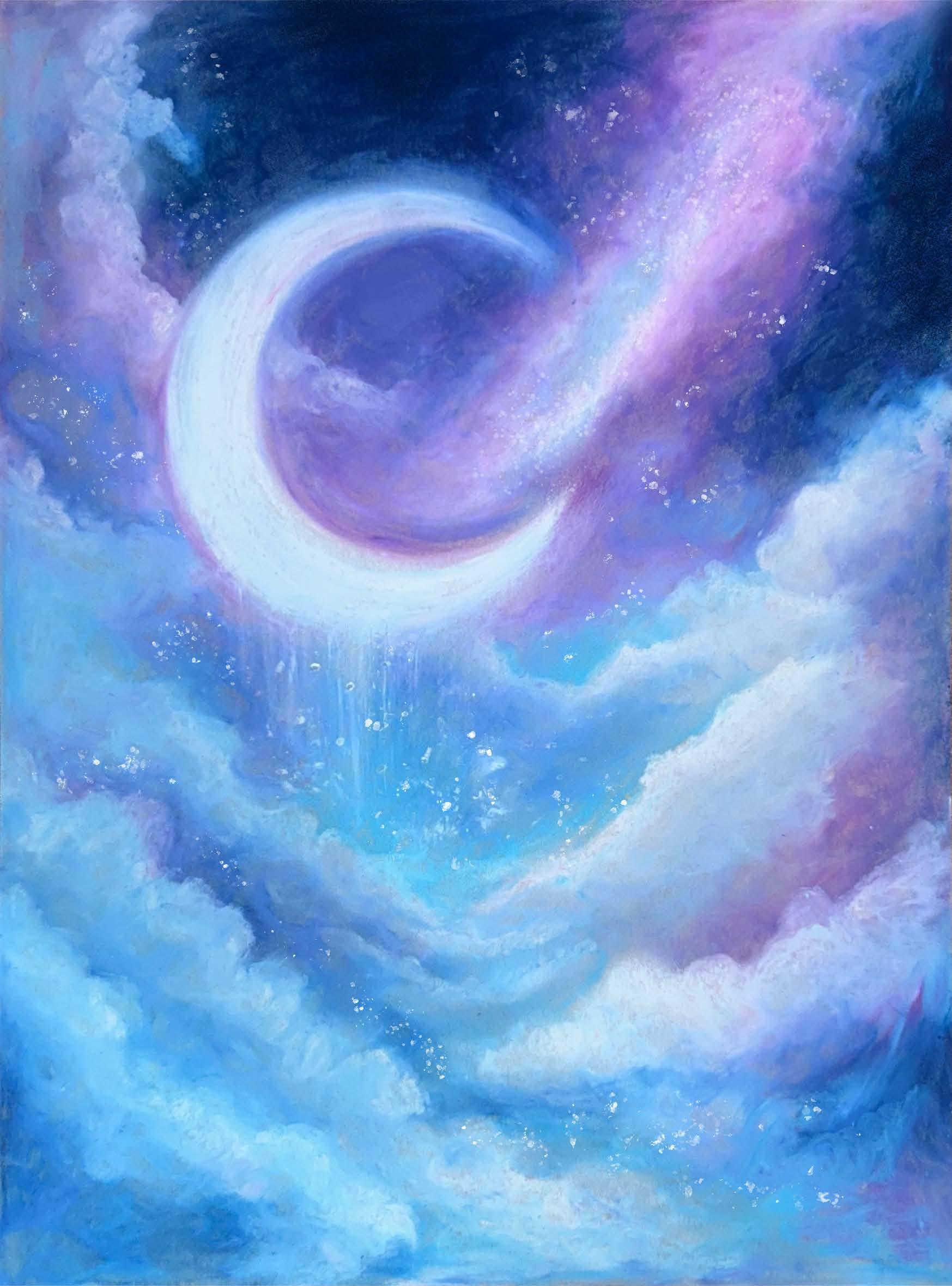
junior ● AHS Genevieve Yuen︱short story
The stream of moonlight crystalizes, a delicate beacon of light trailing through the open window into the deep expanse of the midnight room. The cascading light casts amorphous shadows against the far end of the bedroom wall.
Is it a midnight mirage—the way the light hits the bridge of their nose, the sharp corners of their mouth, and the gentle silhouette of their billowing hair? Or is it a reality that in the darkness, the figure stares back, the coolness of their icy blue eyes piercing the air between us.
In every lifetime they disappear—shrouded by the cloak of midnight. In every lifetime they leave me behind—their defined figure slowly dissipating into the expanse of midnight, as I cry out—half in sorrow and half in relief—to the deaf ears of darkness. Perhaps the moonlight plays tricks in the darkness, intermingling to form the hallucinations with which cloud the judgement of my muddy mind. Or perhaps they reveal the truth.
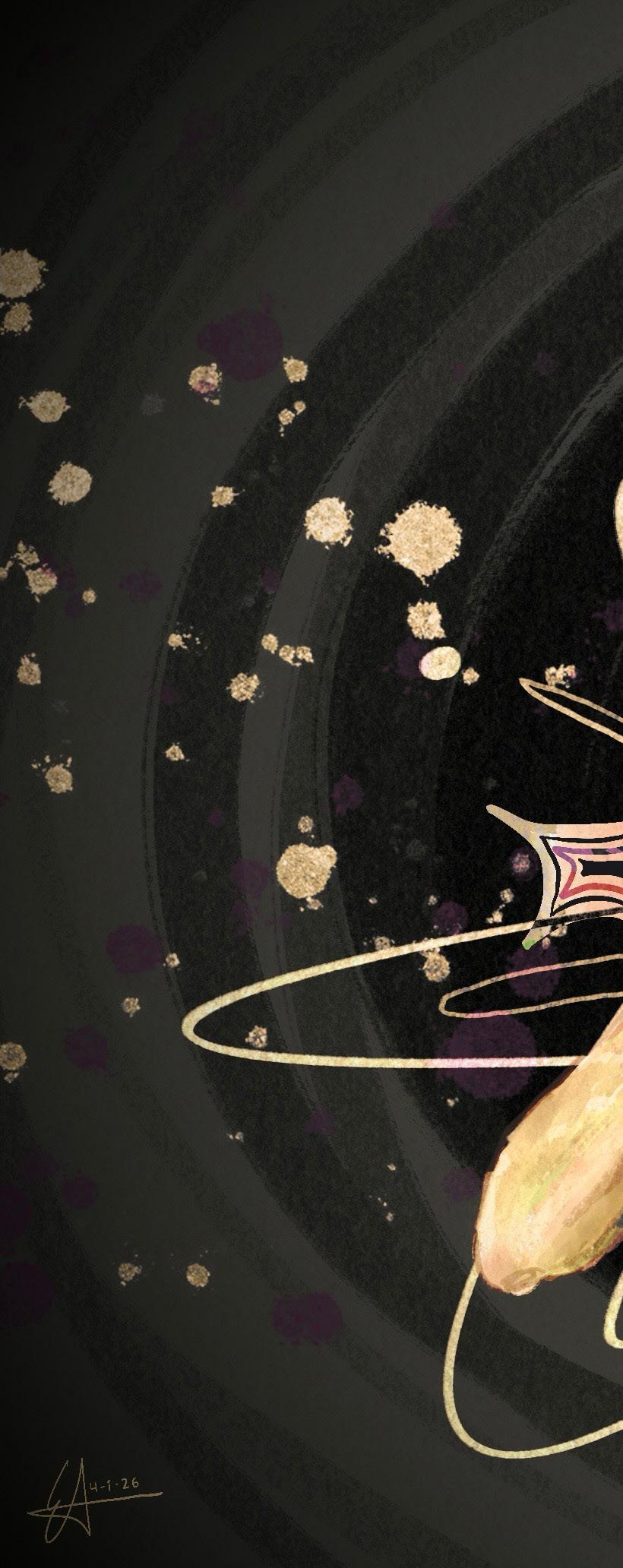
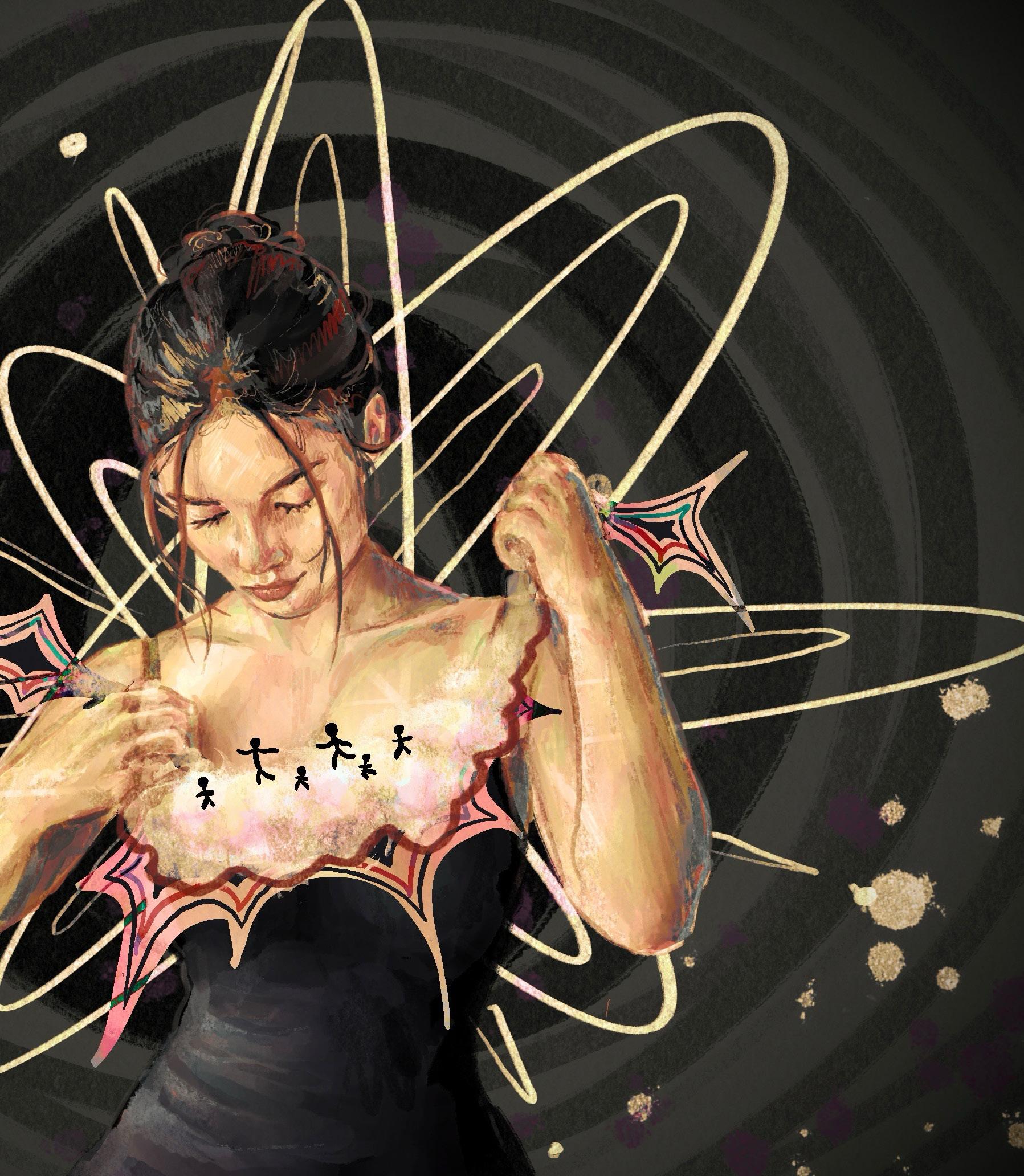
Alvin Do︱multimedia art
Eva McCants︱digital art
junior ● AHS
Deep night lies down for sleep.
Darkness, until suddenly, moonlight.
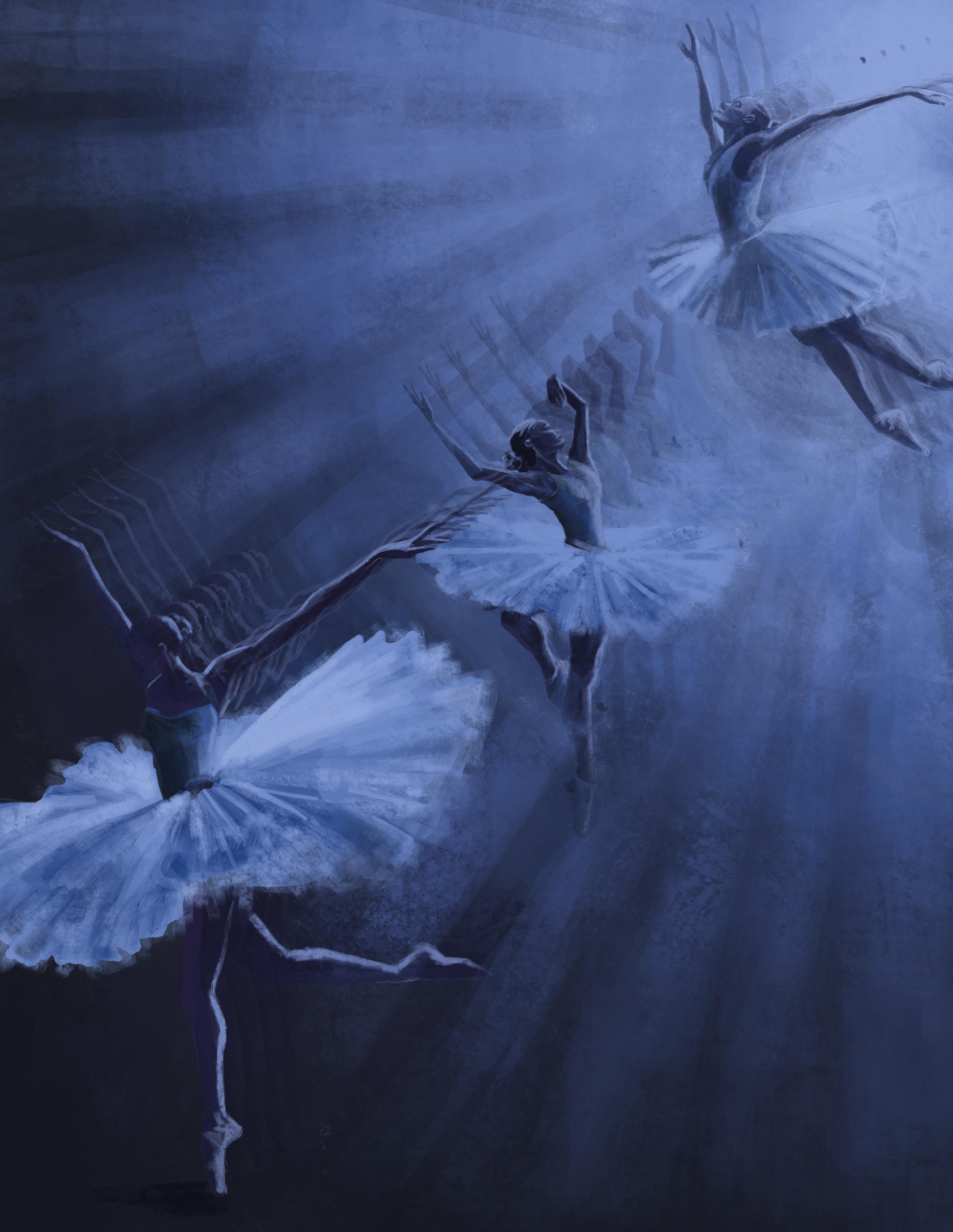
Swan Ballerinas ruffled feather wings embrace wind.
Silver spotlight dances on dark blue horizons pool. Imperial rocks surround the stage of twilight.
Crickets chirping song begins.
She twirls with arms outstretched, Wings begin to move,
Flow like waves on her midnight beach.
Pirouettes and angels weep.
Flowing silk follows her every move, whispering soft songs of sleep.
Time’s ancient clock chimes and Ballerina quivers. Moment no longer frozen, movement stalled.
Silhouette of pure moon and shadow tethering nothing but sanity, and so. She begins to spin.
Faster and faster still she goes.
Wings crack and rip, feathers tear and swirl,
Her wings tuck close, in twisting motion, Now spidery broken bone and splintering. Rapid whirlwind, Contorted mouth in silent scream.
Endless wanting, waiting, screaming.
She spins with life’s true meanings.
Crescendo crash as Ballerina takes flight, Upward movement with all her might, And,
Deep night opens its eyes and yawns. calm lagoon turned whirlpool, now settled. packing to leave for home, quickly no time to lose, without one look back.
Nothing ever does. Stillness covers every surface. as dawns voice hums softly, new light peaks over waters edge Sees smiles empty sparkles.
Forever in silent applause, For Ballerinas performance. Shattered tea cups, next to poppy fields. for some moments stay frozen. and even the moon is afraid.
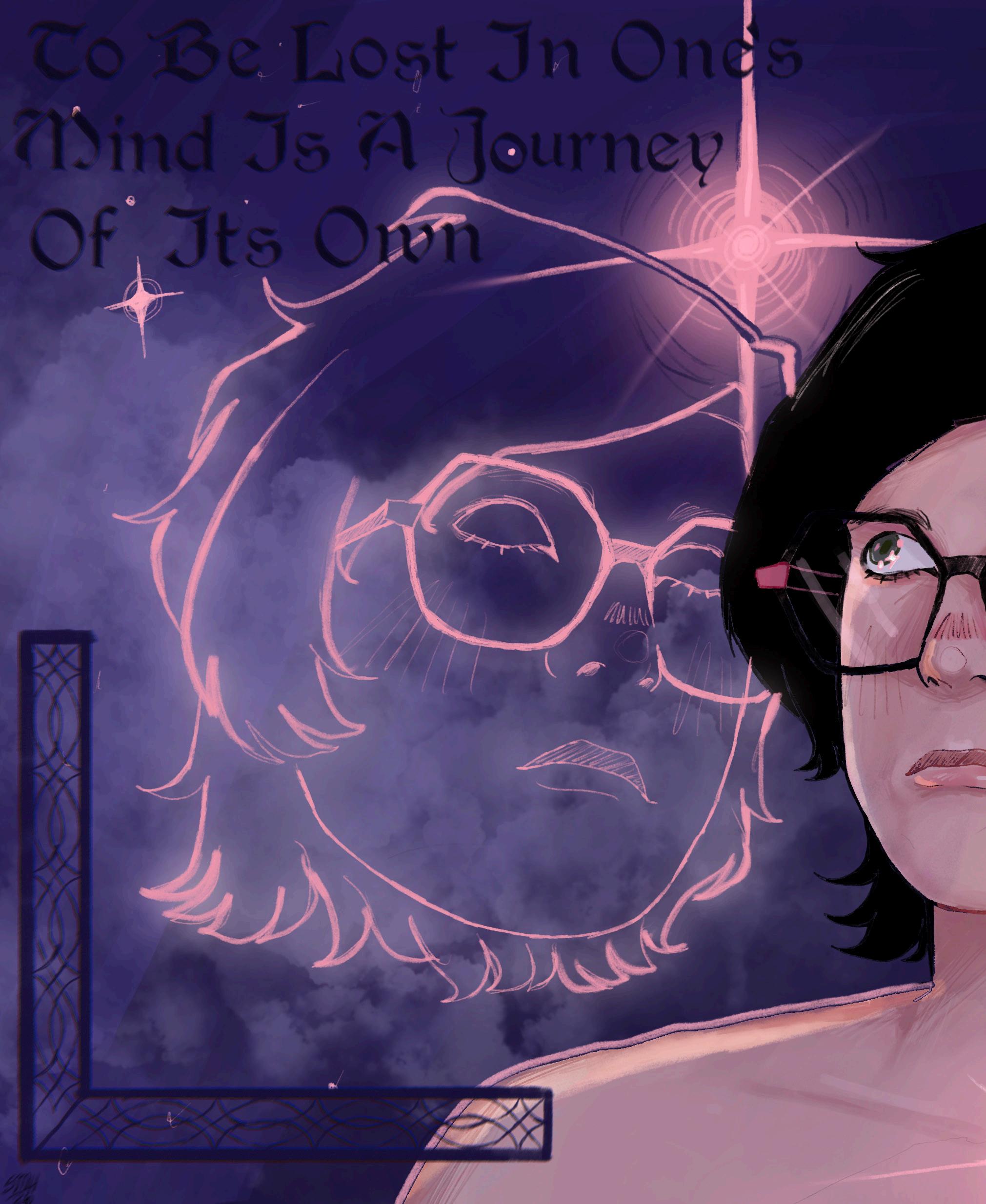
Where Did You Go?
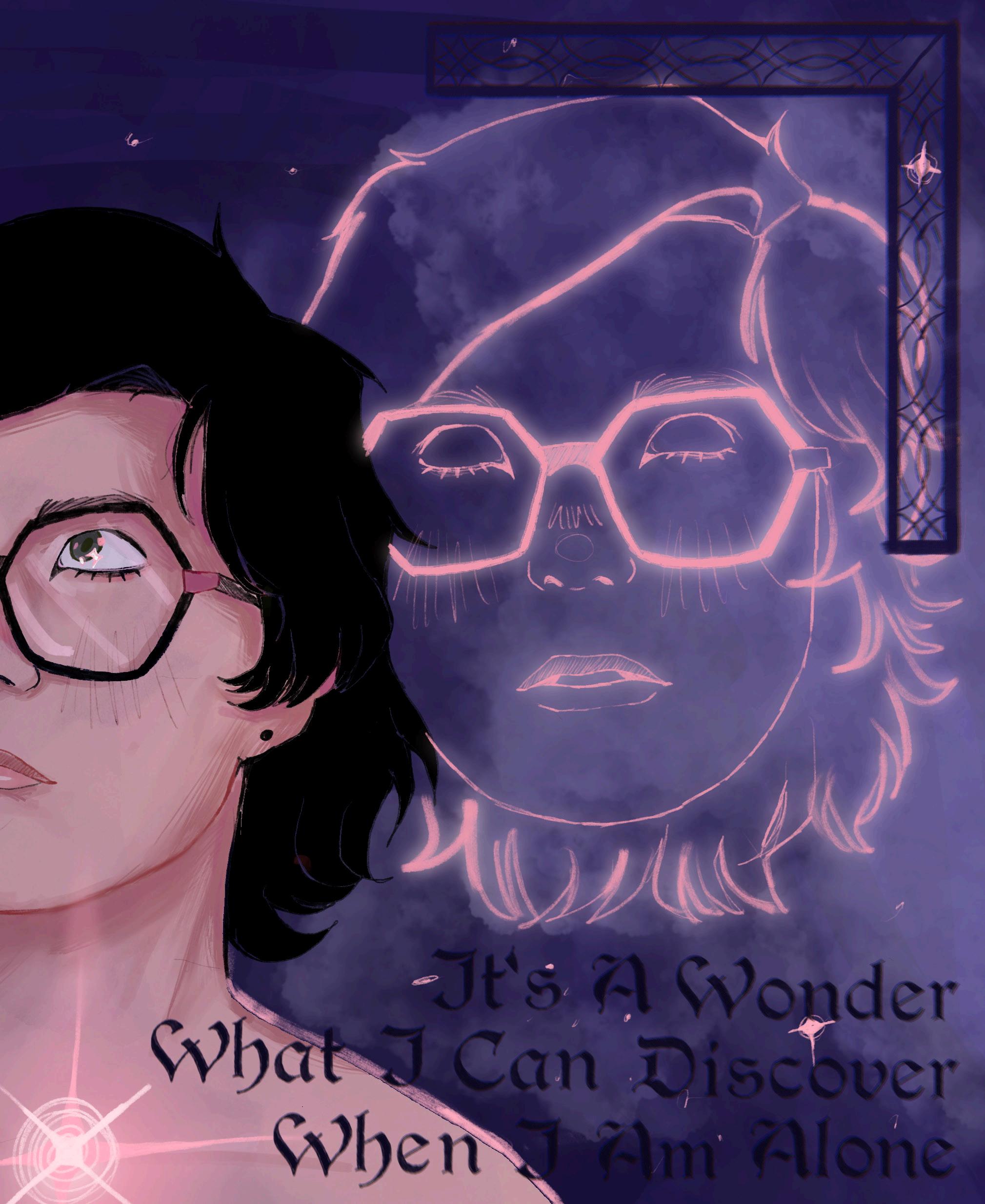
senior ● AHS Zoe Liao︱multimedia art
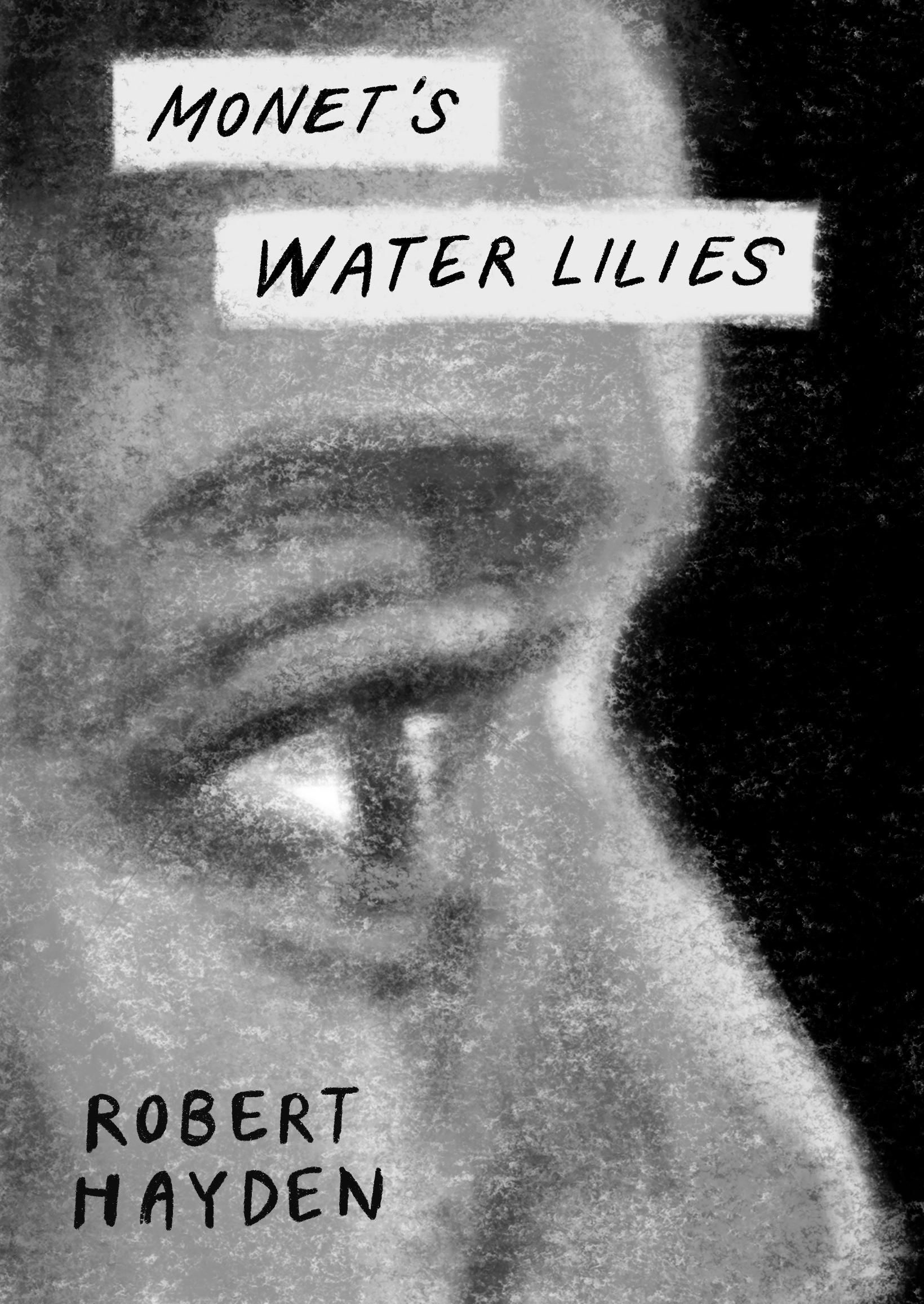
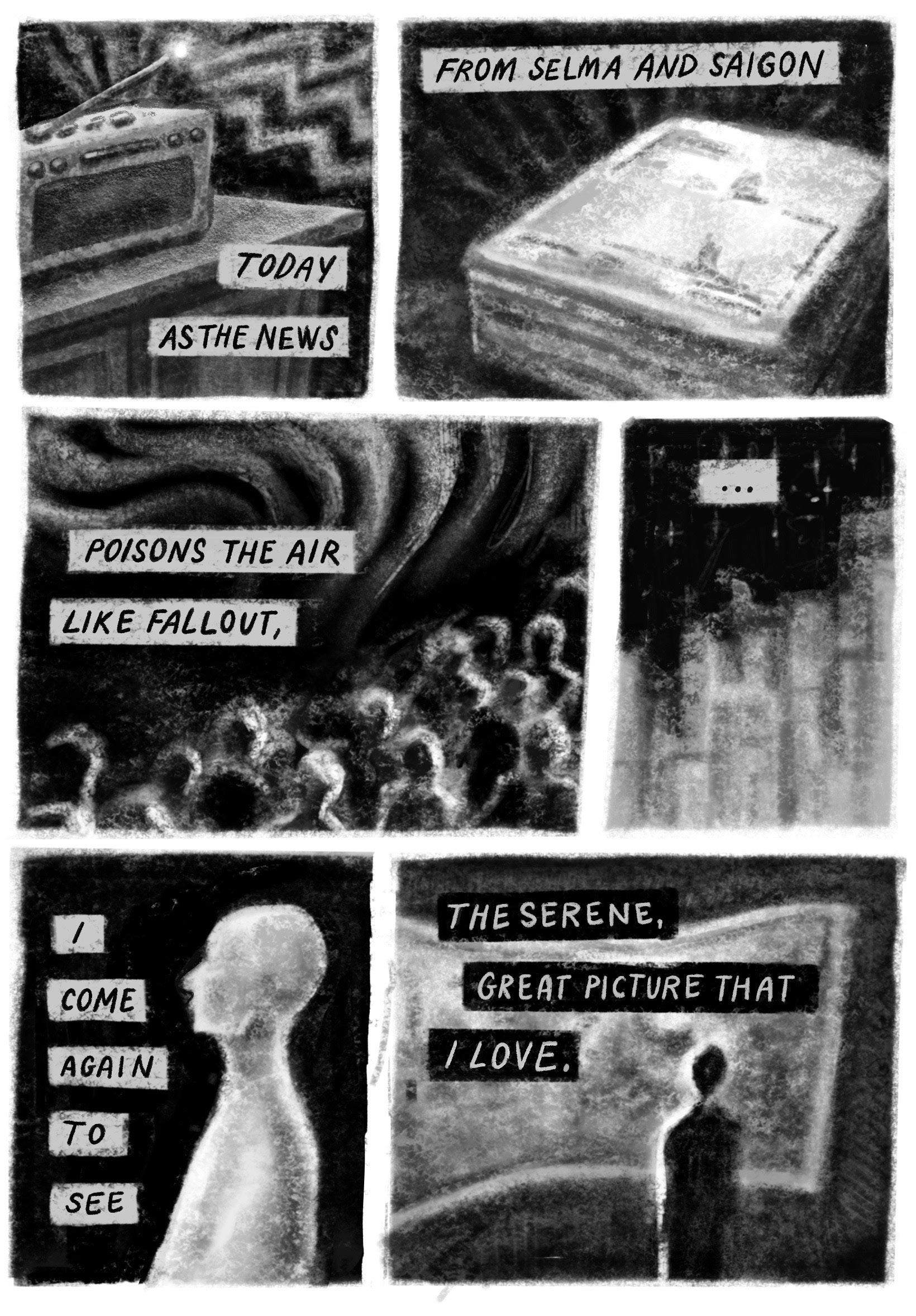
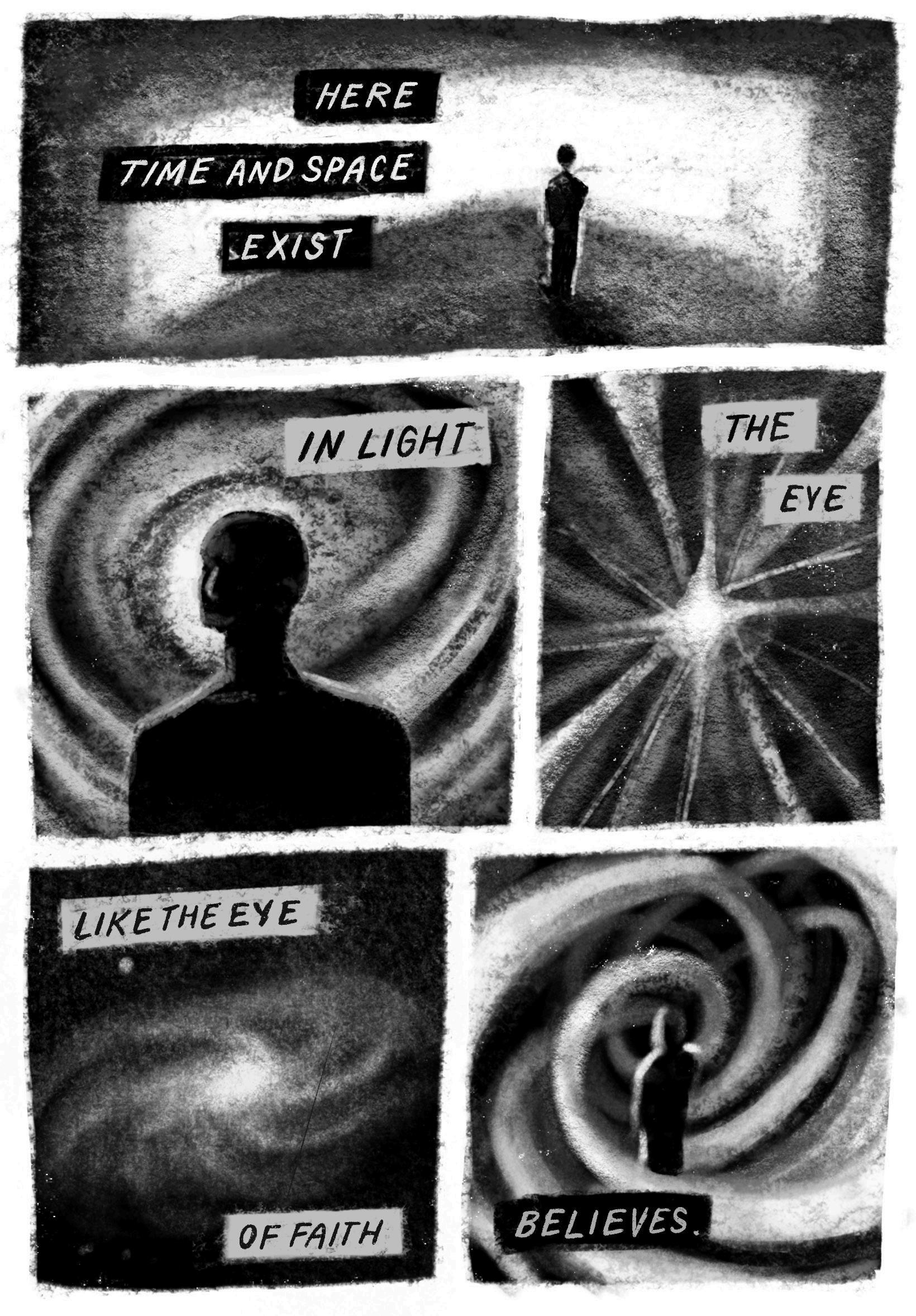
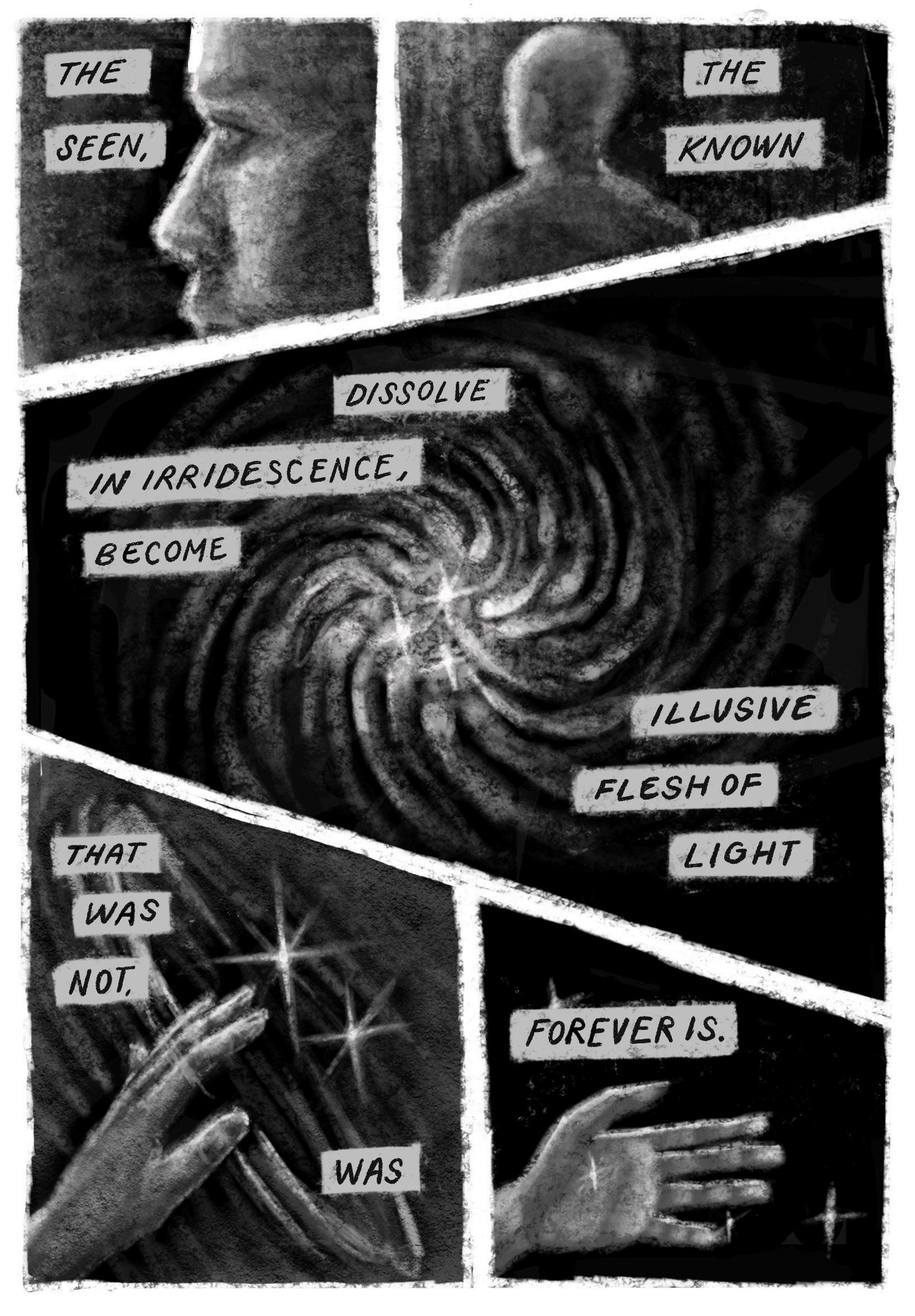
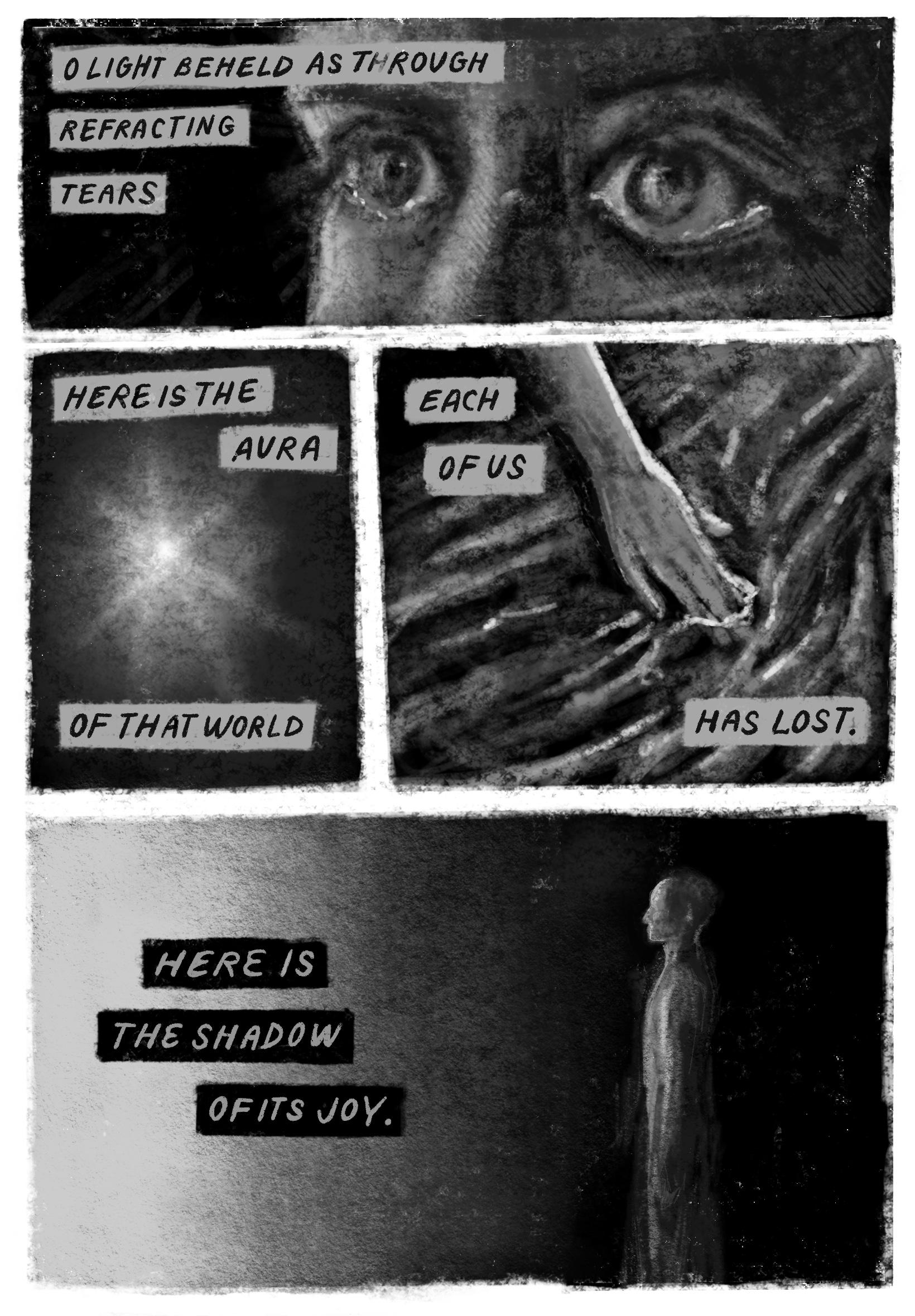
The following collection of pieces is Zoe’s interpretation of Monet’s Water Lilies by Robert Hayden.
Yu Jie Lee︱short story
senior ● AHS
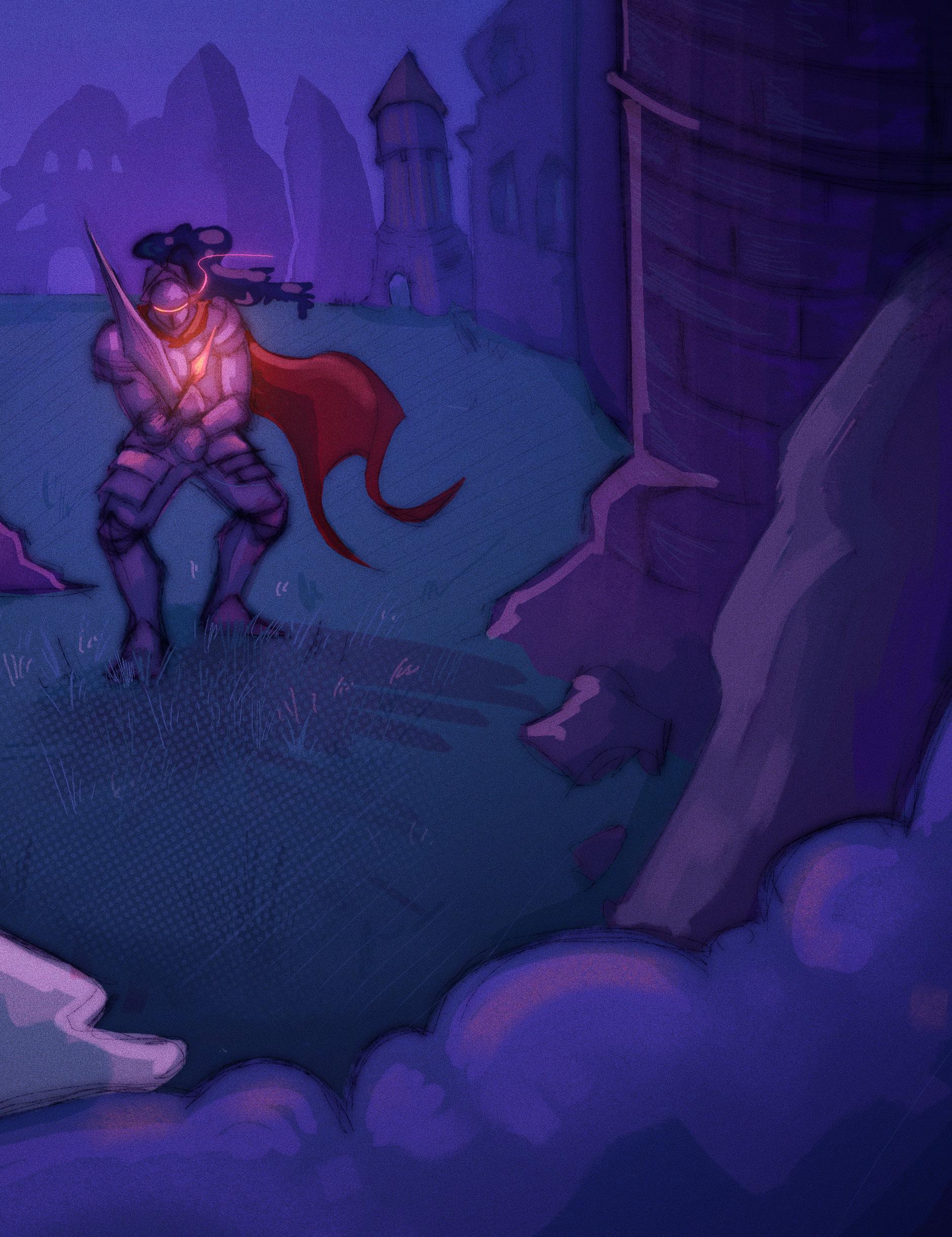
The flames of war relentlessly pressed up against the Hero’s face.
Bodies of soldiers littered the apathetic earth. Rising pillars of smoke, accompanied by noxious fumes that seeped into every breath, blotted out the Kingdom from the face of the map. Far off, the Hero could make out the hazy outline of the Royal Castle, whose flags that once stood proudly atop imposing spires of stone were now charred to black and razed to the ground. After letting the scene sink in, he walked back towards the small hut—a pitiful structure of splintered wooden frames and dirty broken glass—that he had protected.
Slowly pushing the door open, he carefully entered the dim building. To his dismay, none were present except the scraped-up body of a man who had been curled up and tucked into an unlit corner of the room. He had been a peasant, evidenced by the weathered and torn rags that limply donned his large frame. The Hero decided to lay him on the empty bed as a proper final resting place. When he turned the body to face away from the wall, however, he was taken aback to find the peasant’s eyes still blankly open. A few seconds later, the Hero calmly spoke.
“You seem to be alive after all.”
The peasant didn’t move, and a silence hung between the two of them. Faint crackles churned from afar. Finally, a quiet sentence escaped his mouth.
“And what good is that?” He did not give the Hero a chance to reply. “What good is it that we’re still here, when nothing good can happen in this hell?” His voice began to regain its volume. “They’ll send out another wave of their army to capture the last of us. In the end, it’s all going to be the same!” At this point, the Hero realized that the wear and tear of the peasant’s clothes and body was not from war, but from the lashes of an overseer’s whip.
The peasant shakily pointed a finger upwards at him. “Hero, if you were smart, you would’ve saved yourself and left this place. Even the Royal Family fled the Kingdom the very second they heard noise about the invasion!”
Suddenly, he sat up and scrambled on all fours to the other side of the room where the glow from the fire intruded through the shattered windows. Unsteadily, he reached for something on the floor.
“Ah, please ignore what I just said. I’ve found the key. Look.” What he held up was not a key at all, but a jagged glass shard. The Hero did not interrupt, and so he pointed the tip directly at his own throat, staring hard into the Hero’s eyes.
“I’m going to be free from this hellhole.” He chuckled to himself. Something crumbled in the distance. The Hero still did not move. Seeing his inaction, the peasant clasped both hands together on the “key” so tightly that his fingertips turned white, and, shutting his eyes tight, he drove it inwards towards himself with one tortured thrust, except for the fact that his grip had loosened at the last instant and the fragment had harmlessly bounced off his skin. He opened his eyes wide in astonishment, as if some external force had been the one to make him drop it. He picked it up and repeated the action, again, again, again, but his arms continued to lose their commitment at the very last moment. He did not pick back up the glass.
The Hero stepped forward and retrieved the shard. “If you truly wanted to die, you would have walked straight into the open warzone instead of hiding in this building to begin with. Your subconscious betrays your words. You still want to live.”
The peasant flinched. Staring at his feet, he finally asked, “What is there to live for?”
The Hero tossed the shard to the side and paused thoughtfully. “That answer is something you will find out for yourself. After all, when all of this is over and matters are settled, you will surely chastise yourself for volunteering up your life.”
Uneasily, the peasant looked back up. “You’re an idiot. ‘When all of this is over’? Do you seriously think your childish, naive pipe dream will come true just because you say it will?”
The Hero gave a good laugh. “You may very well be correct in that I am a dreaming fool, but this ‘pipe dream’ of mine is no product of naivety. I know it not as a desperate fantasy, but rather an ironclad declaration. It is what lifts my sword and moves my feet— it is what makes me the Hero. So, even if the smoke of disaster suffocates and blinds you where you stand, foolishly believe in the future you cannot yet see.”
Lily Anderson︱poem
sophomore ● AHS
You see, dear cricket, I did love that hill. I love that hill for if I don’t it will dust away, that is how I used to think. My philosophy was, things that aren’t loved enough crumble and blow away in the wind like ash. It decided if it is not loved what purpose does it have any longer? Perhaps it crumbled away because you didn’t love it enough, if only you could love it enough. Although I see things differently now. Now it is if you love something too much, that is what causes those hills to weep and burn away. The earth sees how powerful your love has grown, the dust is to remind us that we are only human; that our love is temporary just as we are. So maybe I did love that hill, little cricket, I loved it so deeply that it nearly spoke to me. My unsaid words gifting it legs and limbs and lips. Though in truth, once the hill has legs it will walk, and once it walks it will live, and once it lives it will die. I know now that it is a trade, to know you will experience so much love is to know one day it will become dust.
Zoe Liao︱painting
senior ● AHS
Ivy’s sixteenth birthday was perfect.
Charlotte Cove had its number of tourist attractions, being a surfing and skating hotspot, but the diner wasn’t one of them. That was reserved for the locals, and Ivy’s favorite people. Zachary and Colette.
Together, in their secluded booth in the back, they talked, laughed, and ate their favorite type of cake: red velvet.
It was sort of a tradition for them to get all sappy and nostalgic on their birthdays. It was a unanimous decision that it’s the one time a year they can all talk about their feelings, and let it all out. None of them were ever the touchy-feely type, even when they were little. So every birthday, they reminisced, and this time, Colette took them all out for a drive along the beach. Technically, she wasn’t supposed to have more than one minor in her car at a time, since she had only had her license for a few months. But really, who actually followed those rules?
There, they watched the sunset. They watched as reds and pinks and oranges stained the last few clouds left in the sky. It was almost poetic. In other words, it was perfect.
The way Zach felt when he woke up was far from perfect. He’d had problems with migraines before, but never this bad. It felt like his head was exploding, but the walls can’t even explode to let out the pressure. It sucked.
Not to mention, it didn’t even make sense. They didn’t even drink last night. He swung his legs over the side of the bed and stood up without opening his eyes. There was an intense amount of light in the room, which did not help the current situation, and probably meant he slept through his alarm. It was also insanely cold. Zach didn’t do well with the cold.
There was another thing. As far as he could tell, there was something on his face. It was crusted, but felt like it was liquid at one point. He was almost positive he washed his face last night. When he opened his eyes to look in the mirror above his dresser, he almost screamed. His once handsome (as he liked to believe) face was covered in dried up blood. Only then does he really look around his room, and realize it’s a mess. The walls were crushed, bookshelves were broken, papers were everywhere, his bats were sprawled out across the floor, and the ceiling was probably 10 pounds away from collapsing right on top of him.
Zach dug through the pile of crap on the floor, desperately trying to find his phone. When he does, the screen is cracked, and when he tries to turn it on, it doesn’t.
Getting downstairs without stepping on any debris was a challenging task, but he did it anyway. “Mom! Dad!” he shouted. No answer. He checks their bedroom. It’s the exact same. Debris everywhere. Books, glass, furniture. “Desi!” He had to be here. Desmond, but everyone knew him as Desi, was Zach’s younger brother, at a whopping 6 and a half years old.
He could be annoying at some times, but at others, he was Zach’s best friend. “Zach!”
Oh thank God.
Desi practically waddled out, clutching the book he’d been reading, Harry Potter and the Half-Blood Prince. It was pretty advanced for a 6 year old, but then again, Desi was special.
Zach crouched down to his level and held his arms out, where his little brother gladly accepted the sudden embrace. “What happened?” Desi asked. “Where’s mom and dad? And what the heck happened to your face?”
“I don’t know. I don’t know what happened,” Zach paused. “We should find Ivy, Colette and Court. They’ve gotta be around here somewhere. Then we can find our parents.”
When they stepped outside, the once somewhat calm street was filled with more and more debris than they saw in their house. They found Ivy pretty quick. She was standing right outside her house, looking at the destruction that filled the streets.
When Colette woke up, the first thing she did was grab her phone. It turned on, but couldn’t call anyone. Not her parents, not even 911. Courtney was alive and safe, asleep in her top bunk. Colette didn’t want to wake her, not yet.
There were no signs of life. No one outside, no one in the house. No dogs barking, no cats roaming the streets. It was eerily quiet. Too quiet.
She needed to get prepared, and she needed to find a radio.
“The number of confirmed deaths in Charlotte Cove, California, has just passed 400. The governor has called a state of emergency.” Because of the rise of social media, it became hard to grasp how large numbers actually were. Sure, 400 views didn’t seem like a lot, or 400 likes. But all Colette needed to do was walk outside, and she would see at least 400 dead bodies, all doing nothing but lying in the streets.
“Citizens are not to go past Highway 1 until we can get the radiation under control. If you and others around you start feeling the effects of radiation, please seek refuge farther inland.”
As she scanned her surroundings more thoroughly, only then did Colette realize the severity of the situation. There were bodies everywhere.
Pools of blood surrounded them, but anyone could tell they had been dead for a while. This didn’t happen overnight. She originally thought it might’ve been a terrible earthquake, and it was dumb luck that they slept through it. But that made no sense. It was a bomb. Radiation, the broadcaster said. That made some sense. But why would anyone want to bomb Charlotte Cove?
Their town wasn’t small per-say. Charlotte Cove was a beach town, with a population of 11,000 people. That being said, it was also kind of in the middle of nowhere. One had to drive at least 45 minutes in any direction to find another town. Nothing happened there. Where did everyone go? How long has it been since Ivy’s birthday party?
And a better question, how did she survive? (click here to read more)
Luna Witherell︱digital art
senior ● AHS
Mikayla Wong︱poem
junior ● AHS
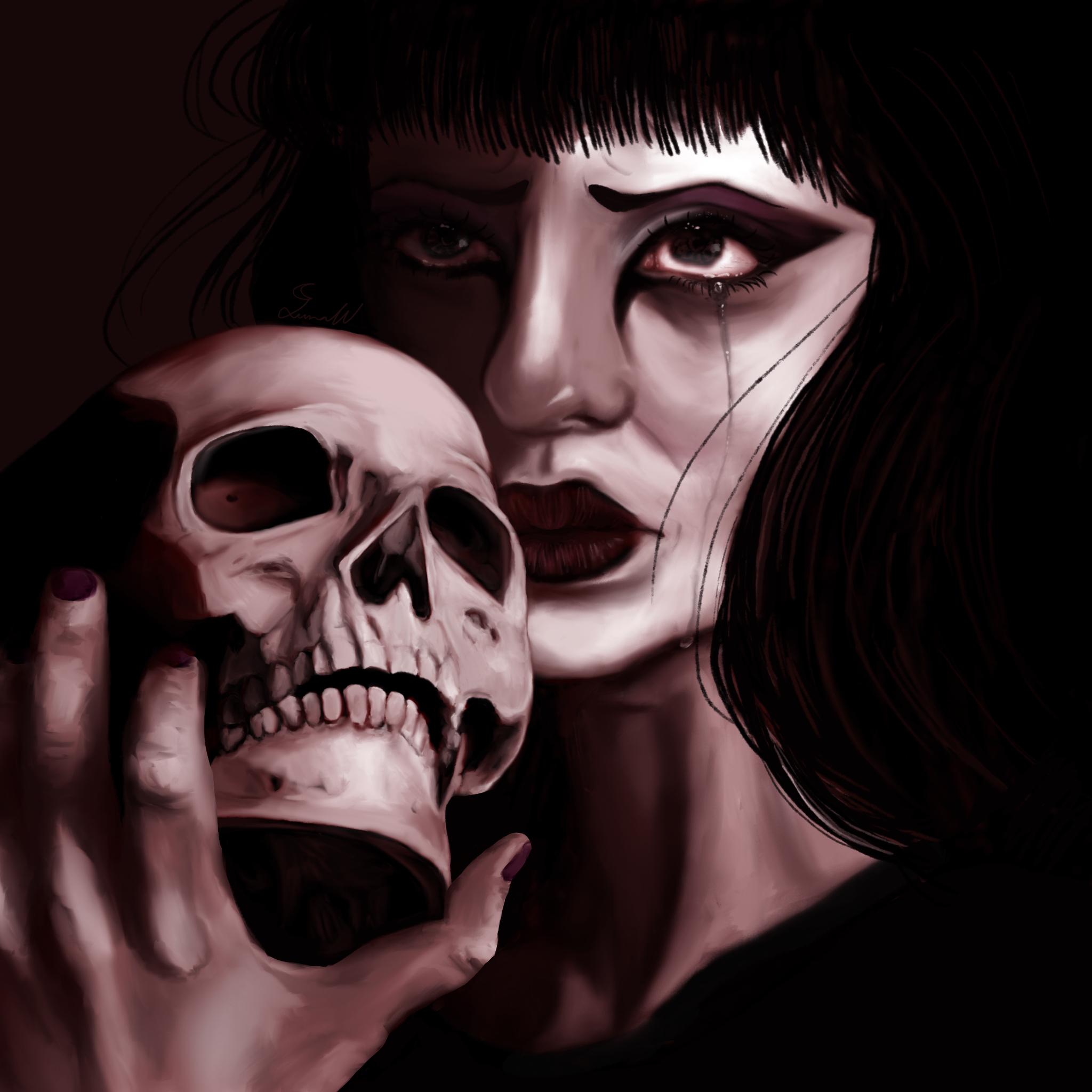
I recall the face of a woman. Smoke barred her features, yet ripped through and she was only strength. Who whispered back to the enemy, who kneeled atop the field, carrying dusted golden artillery on the tips of her fingers.
She was the commander, and I, the one who laid in her ashen palms, circling swollen scars and admiring your essence like the soldier waits for their general.
I’ll be your devotee paying my fealty to you while every man’s machete chafes your thigh
If you’ll be only yourself, splintered, wretched, a glare potent of vigor as if lightning struck a dandelion clock Then I’d ask her, “What does intimacy mean to you?”
Tangled pale seeds and knotted turf that she’ll wish upon for security, while I prayed for passion.
Amelia Kirk︱poem sophomore ● AHS
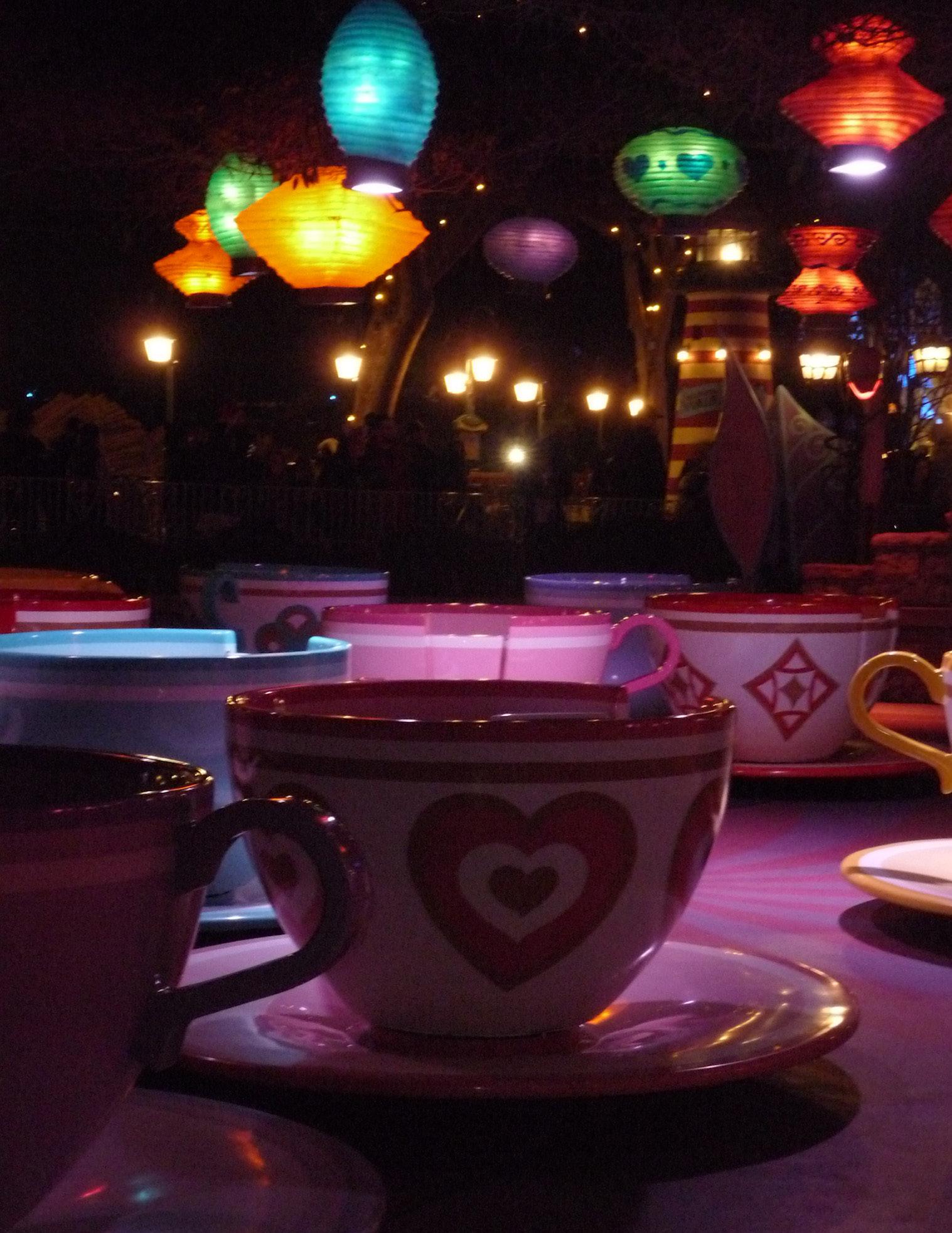
Riddles tell my ears behind sparks of discontent: Rooms that spin, on cracked lenses. hope can trust porcelain but can it trust you? silky pale and shining like the core of the moon’s apple my heart sings prismatic bursts like warm lights blinking on and off lazily in deep emotion
contented blues and sleepy reds mix with resting pinks and yellows the radiance of simple life comes back to me when i sleep or when i sip a magic elegance surrounds my cup builds me up a dreamlike land of wonder that’s really just the imagined prestige of royalty, we’re all mad here.
For reasons the girl couldn’t fully understand, her parents were both more protective and more distant from her. They were letting her stay home from school for a few days even though she didn’t have a cold, which meant that she was spending extra time with them. Normally, this would mean walks to the park where one of them would push the swing for her, or languid afternoons spent having a backyard picnic on a blanket.
This time, they rarely left the house. Mom and Dad whispered in their room with the door closed, and ages would pass before they emerged. Often her parents would spend the rest of the day separate, watching TV or reading pictureless books even though their eyes looked so sunken in and hollow, like rotting holes in trees, that the girl was surprised they could still see through them. Sometimes, however, one of them would smile, and scoop her up in their arms, and they would go get ice cream or watch a movie. The sporadic quality of these instances gave life a fuzzy gray tint at the edges, but at five years old the girl knew that unhappy phases would eventually be left behind like loose teeth, and so she tried to carry on as normal.
The best way to pass the time was by drawing. The refrigerator used to be covered in the drawings she’d meticulously crafted, depicting herself, Mom, Dad, and her brother, who was away at a school for grown-ups. However, Mom had removed those, so she wanted to make more. She started by doodling in her room, her crayons occasionally stabbing holes through the paper and into the plush depths of her pink rug. But soon she grew tired of the comforts of her room, and the boring white walls felt like they were closing in on her. So she dragged her crayons and papers to the kitchen, where she sat on the cold tiles and drew the black-and-white pattern underneath her.
She went to the dining room and sketched the salt shaker.
She went to the living room and scribbled the TV.
Eventually, she ended up at the grandfather clock. It sat in the hallway between her room and her parents’ room, looking like an ancient heavy creature gone to sleep. It must have been a very deep sleep, because the clock was not ticking. It surprised the girl to realize that she had lived with the grandfather clock her whole life, yet she could not be certain if the clock had stopped today or weeks ago. She couldn’t tell if this thought disturbed or fascinated her.
It was made from a sturdy, dark brown wood, with a shiny coating on top. Etched all over in intricate squiggles were the outlines of tree branches, creeping up from the bottom and sprawling around the ivory clock face in a leafless elegance. On the clock face, both hands were pointing upwards at the twelve, and although she couldn’t read time, she knew the clock was wrong because those hands didn’t move. On her last sheet of paper, she used a waxy black crayon to draw the clock, an uneven rectangle with a thick, wobbly circle in the upper half. She drew another rectangle inside of the first, the door underneath the clock face. When she was finished with the drawing, she put it down and leaned against the side of the grandfather clock. Something about it intrigued her. She turned and pressed her ear to the wood, listening for any hint of a ticking trapped deep inside of it.
“Hello.” The voice, a soft yet clear whisper, came through her left ear, which was pressed against the body of the clock. It did not seem to come from the wood itself but from deeper inside, as if there was a great amount of space within. The voice did not sound like Mom, or Dad, or any of her friends, and yet it was as familiar as her stuffed animals. Perhaps this was why she didn’t recoil, and simply took a moment to regard the voice with a mellow curiosity.
“Hi,” she whispered back. “How long have you been here?”
“I’ve been here since the clock froze,” the depths answered. That didn’t fully answer her question, but the voice sounded somewhat plaintive in mentioning this, so she moved on.
“Are there lots of people in there?” She imagined a village of fairies, removing the gears of the clock and building tiny houses as the population multiplied by the day.
There was a pause, and then the voice sighed, “No. There’s no one else in here.”
Somehow, in just hearing the voice utter those words, she could feel the impossible vastness of the inside of the clock; she could feel the eternity of loneliness where two days could be two years and then time folds in on itself and restarts and stretches out again. It felt big and lonely; it felt like a thought too sad and tired to fit under her skull, so it bulged out and gave her a headache. “I can try to get you out,” she said. “You won’t be lonely out here.”
“Oh, sweetie, thank you. I’d only want to come out if you wanted me to as well. All you need to do is open the door right in front.” The relief in its voice sounded so sad and genuine and familiar.
She grasped the side of the door and dug her fingers into the crevice of the door. The door swung open and she noticed two things. First, the inside of the grandfather clock was unexpectedly small and ordinary.
Secondly, she saw her brother step out of the clock, unfolding from the shadows.
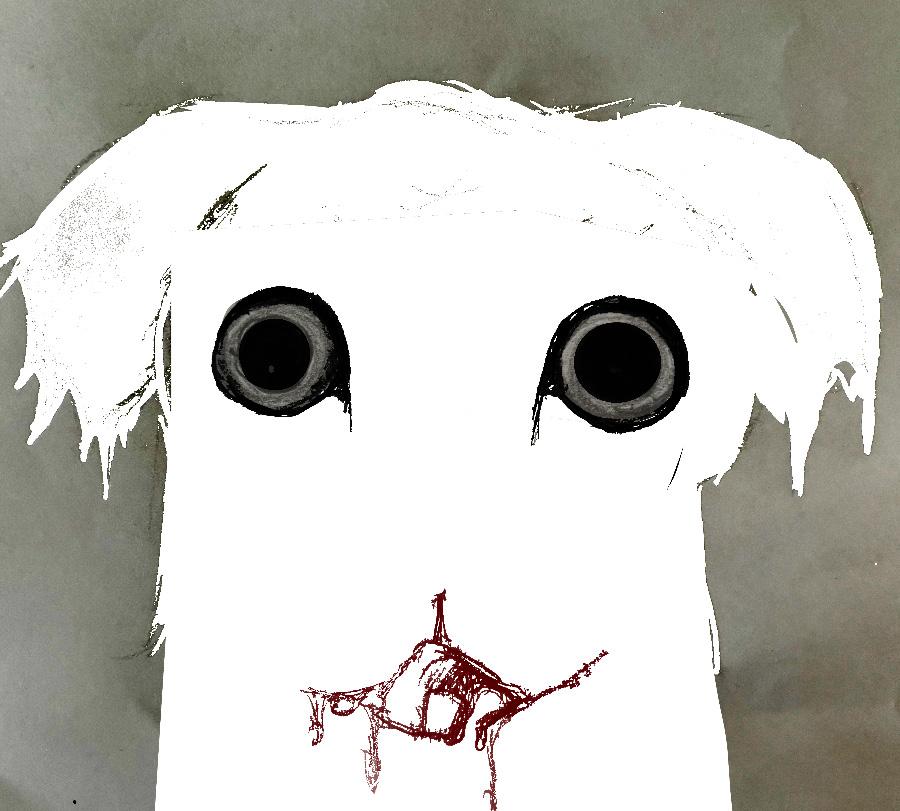
Scarlett Wagner︱short story freshman ● AHS
Under here, the light shines through the cracks like little pinstripes. When the performers come, I cannot see them, but they cast shadows and shake the ground. Yesterday, a cast performed their closing show. I don’t know what the name was. When the audience clapped, I could feel my hands itching to do the same. But I knew I couldn’t.
After the audience and most of the crew leave, a few people always stay behind to clean up. This is the only time when I cannot relax. Pressed up against a corner, barely breathing, barely blinking. As if the air is so quiet in the presence of such few people that the slightest movement on my part will shatter the room. I can never pay attention to what they say.
Finally, when no one is there, I climb out. There is a little door on one side of the stage, long unnoticed by anyone but me, that I used to exit out of. Now I simply slip between the wood slats; I feel so shadowlike and insignificant that I can probably fit anywhere at this point. Here, I crawl about the room to feel the floor and ceiling. There are two doors that I never even touch, and I have memorized where they are so that I will never have to. Then I climb onstage. Onstage there is always a tiny light, just barely illuminating the dust as it makes its meandering journey downward. The color behind my eyes faded ages ago, but I remember the curtain is red. Here I’ll sit for a long while, thinking of the last performance and what it must have looked like; if I could ever be a part of it.
Then I crawl back under the stage.
Author Unknown
Translated into English by P.A.
The following text, written entirely in Latin, was found etched into the marble altar in the Church of Immanuel, submerged with the underwater ruins of the coast of Malta. Although the church was abandoned in 1839, due to the condition of the etchings in the marble, historians estimate that the writing has been there for over 700 years. This is perplexing to historians, given the hedonistic nature of the text and the fact that the institution certainly had enough funds to replace the soiled altar in the estimated 500 years preceding its abandonment.
Much mystery still remains around the church. Unlike all other Christian places of worship in the Maltan Islands, its existence is not mentioned in the records of the Cathedral of Assumption. More confusingly, its little recovered records are often contradictory of events and times, and riddled with nonsensical strings of indecipherable characters that have confounded both linguists and historians alike.
Forgive me God, I have pledged piety to something new
The suppleness of woman
Has enraptured my good soul
I know she is your creation
Yet I still worship her as if (undecipherable)
Her voice, whispers such sweetings into my ears
Her eyes, dark masses, shaded by the bristle of her lash
Her skin, the white ivory of heaven
O’ forgive me,
How I wish to kiss her ankles
In the most reverent and (undecipherable) position
Unbeknownst to even the most devout
Please forgive me
This woman (undecipherable)
Only I should worship her
(Etched on the other side of the altar, assumed to be written at a later time.)
How horrid have you created man’s companion;
If she truly be of my rib, I should have thrown her to the field dogs.
What wretched insolence the creature of woman is, I show her the most divine worship
Yet she exists only to beguile and break a good man’s soul
(The next 7 lines are undecipherable by modern means.)
My soul may have calmed yet No fire stirs in me
Yet my words of yore stand sick and true, (Undecipherable, assumed to say her name.)
Do not dare pretend you are of that prophecy*
“God is with us” aye he maybe, but you are not (name)
I would have felled the whole armies of Rome for you,
(The next two lines are undecipherable by modern means.)
And God, I am back in your good grace again
The woman is gone
She never asked to be worshiped as (Undecipherable, note that “Deus/Divus” the Latin words for “god” are not used here.)
Perhaps you share the same ailment?
Yet you assume the position for our mortal sakes?
How great and humble are you! God!
*see Isaiah 7:14
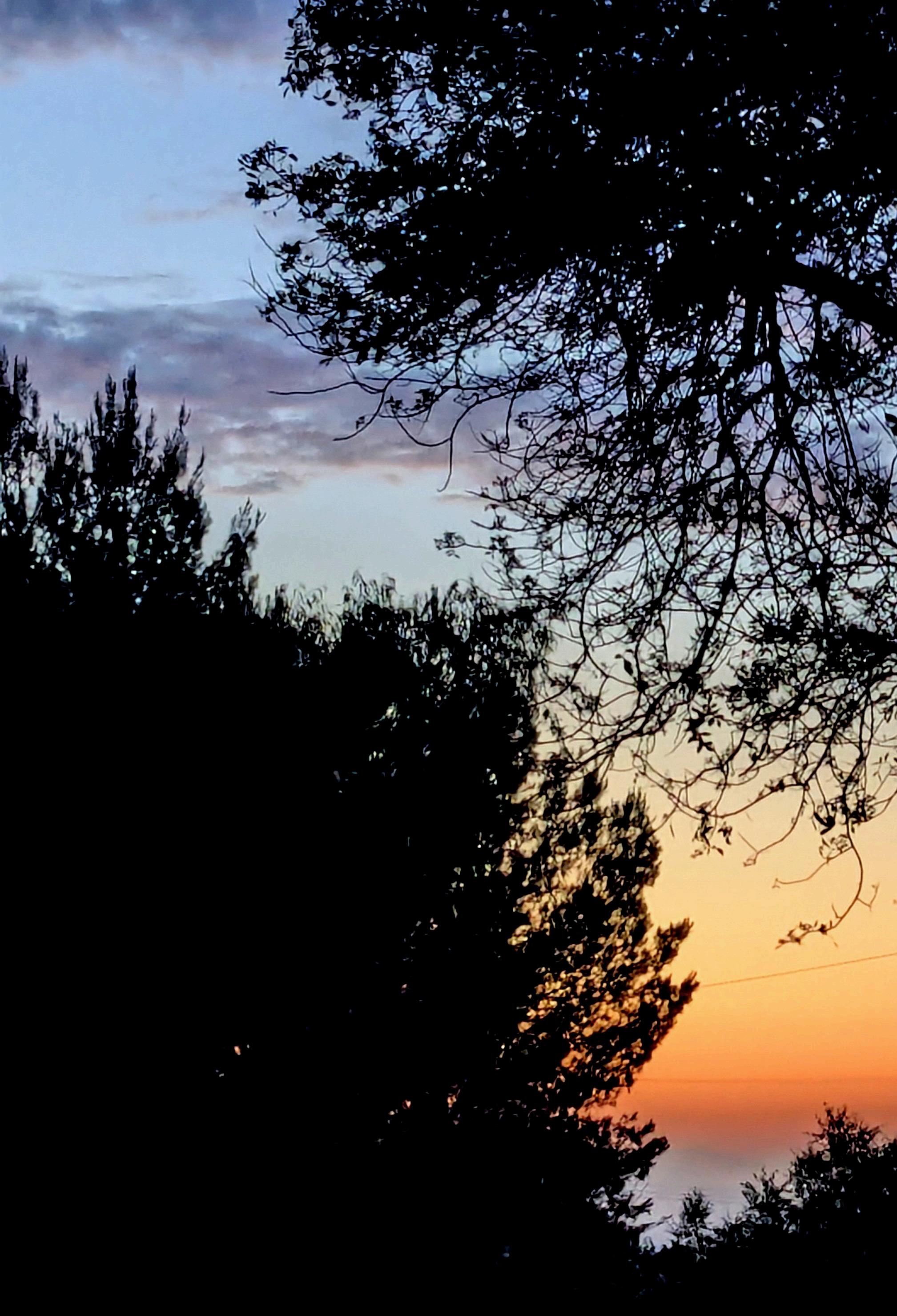
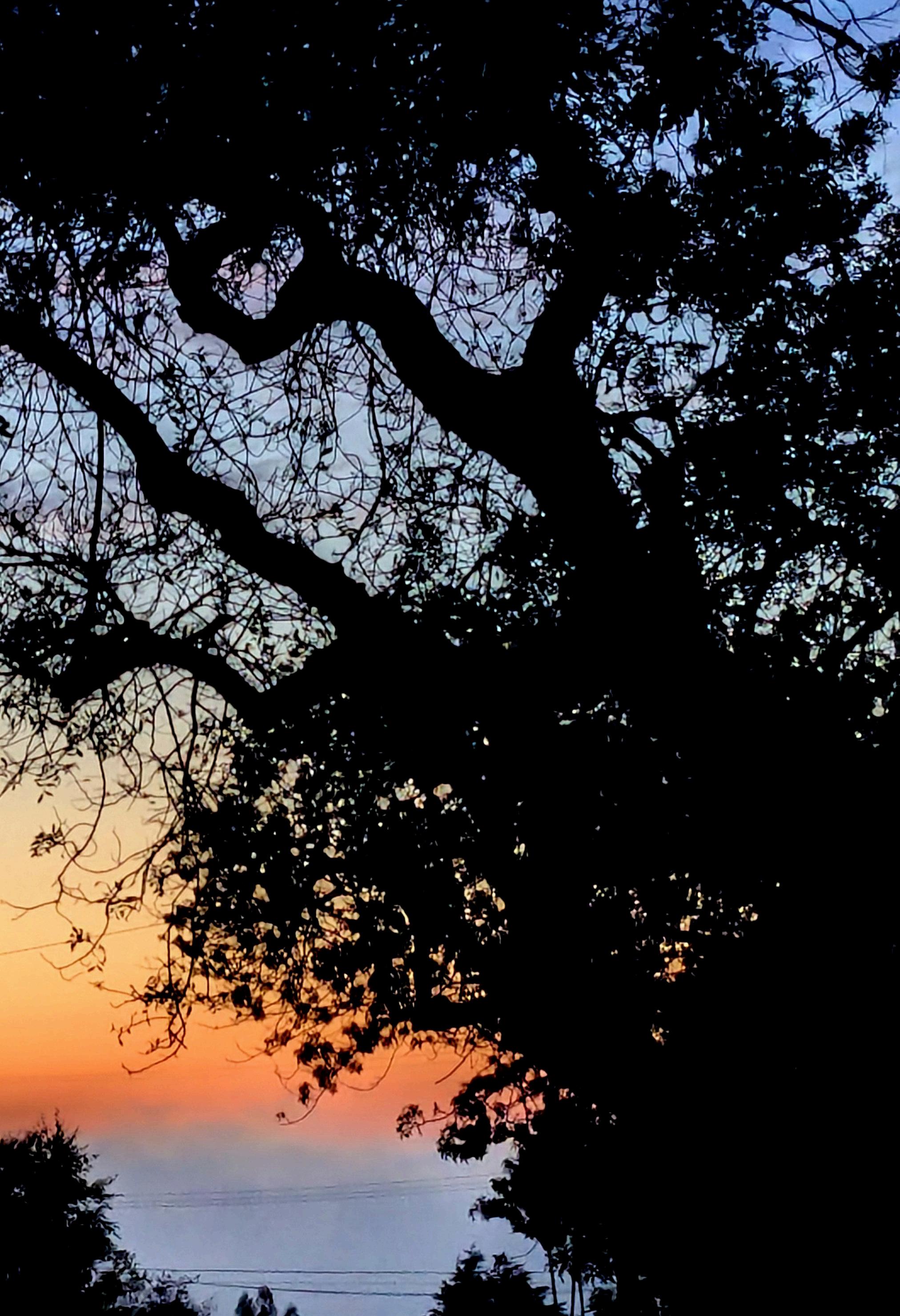
Joshua Chu︱photography
freshman ● Legacy Magnet Academy
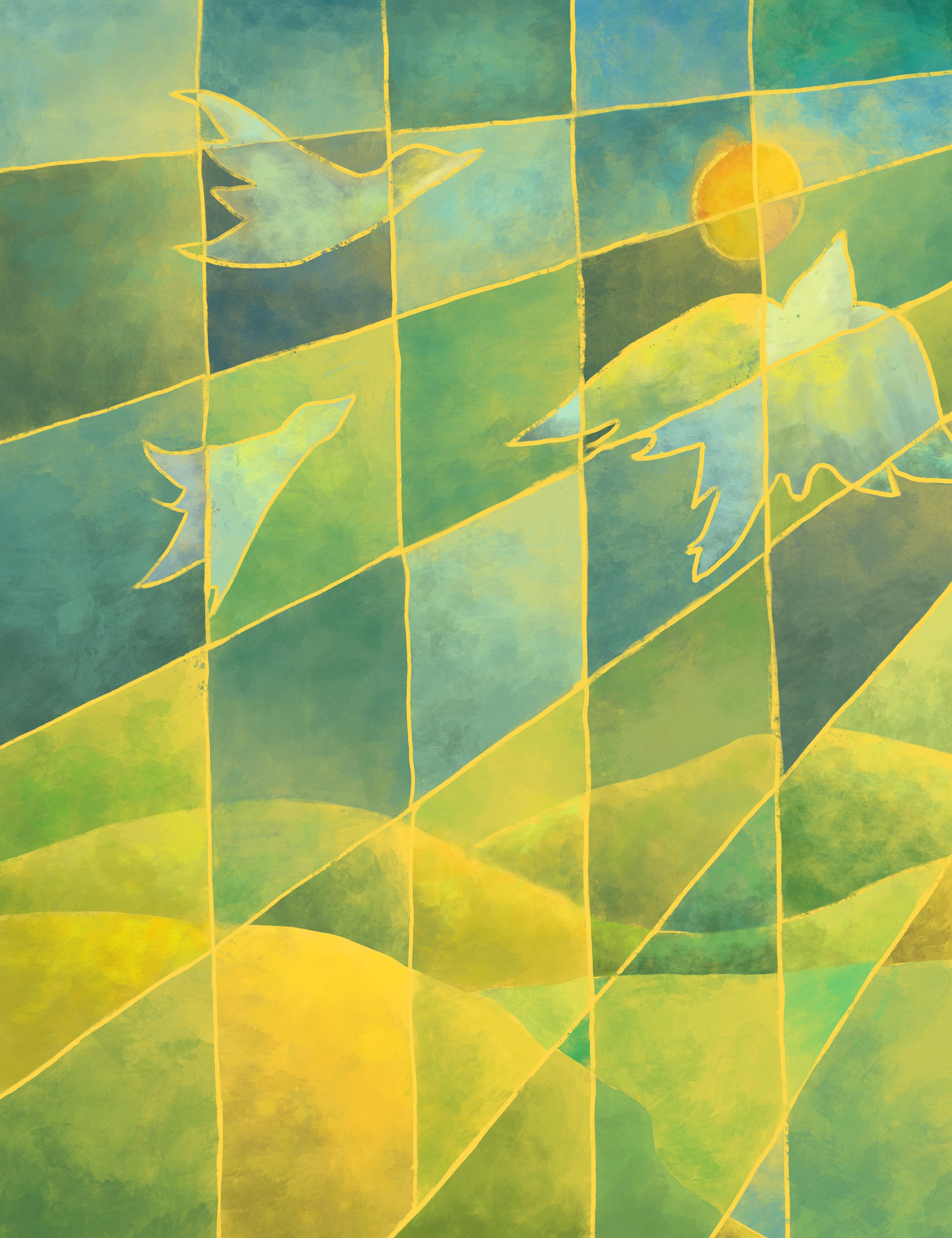
Axel Lindgren ︱ poem
Why have bars on the windows?
Open and vent with the days!
The wind dips and flies
And flutters through the leaves
Of the bushes green. Caressing walls. Chip piece off, One by one, Until We all Die. And Nothing Remains.
You can retry Again and again
But you will never win Since nature has lost
To the depth of space and time. So just live in the present now. Do not groan for what you’ll never see.
Zoe Liao ︱ digital art senior ● AHS
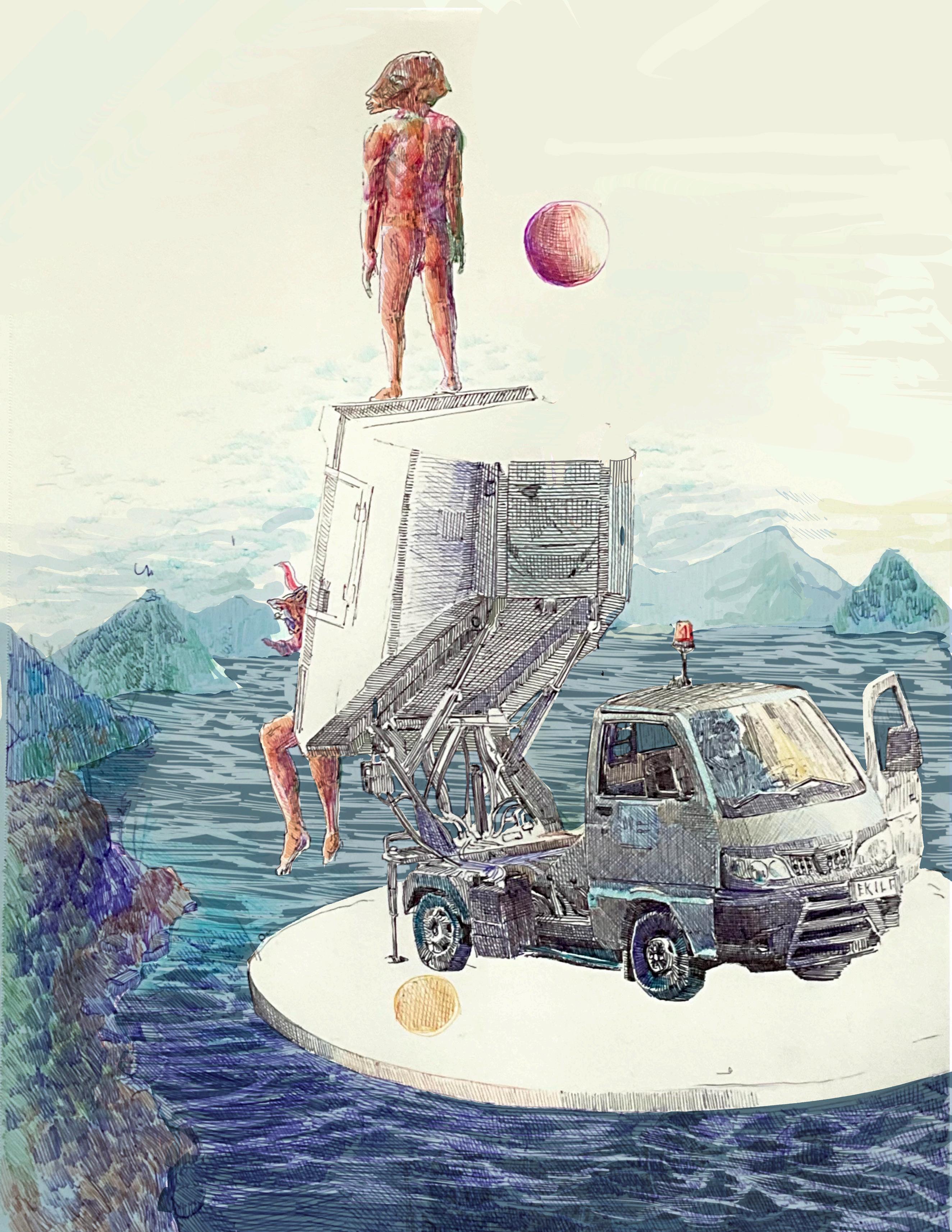
There, on the precipice of all that is known
Is a road. Actually, it’s more akin to a highway 3 lanes going either direction. They even have a fast lane for carpoolers
Behind you is home; The sea, the bricks you kissed When the sun was out. In front of you;
The wind whips your stinging hair
Cars rush by you without care
Assume they are going somewhere Apparently Or nowhere.
The road intersects the edge of the world orthogonally.
There is nothing past it, Just more endless expanse. You have to get on the road.
Pulled over the shoulder is a white jaguar
The car, of course.
No life is present here
It’s door is ajar
It is waiting for you
No comfort can be derived by the sterile green logo plastered on its side
Nor the bulbous sensors dotting its corners But you get in
You figure it would be rude not to 5 years ago It was an Uber 15 A bright yellow taxi 100 A groaning steamship
Now it is a Waymo No one on the road seems to care They, —now including you— Drive forward into oblivion.
junior ● AHS
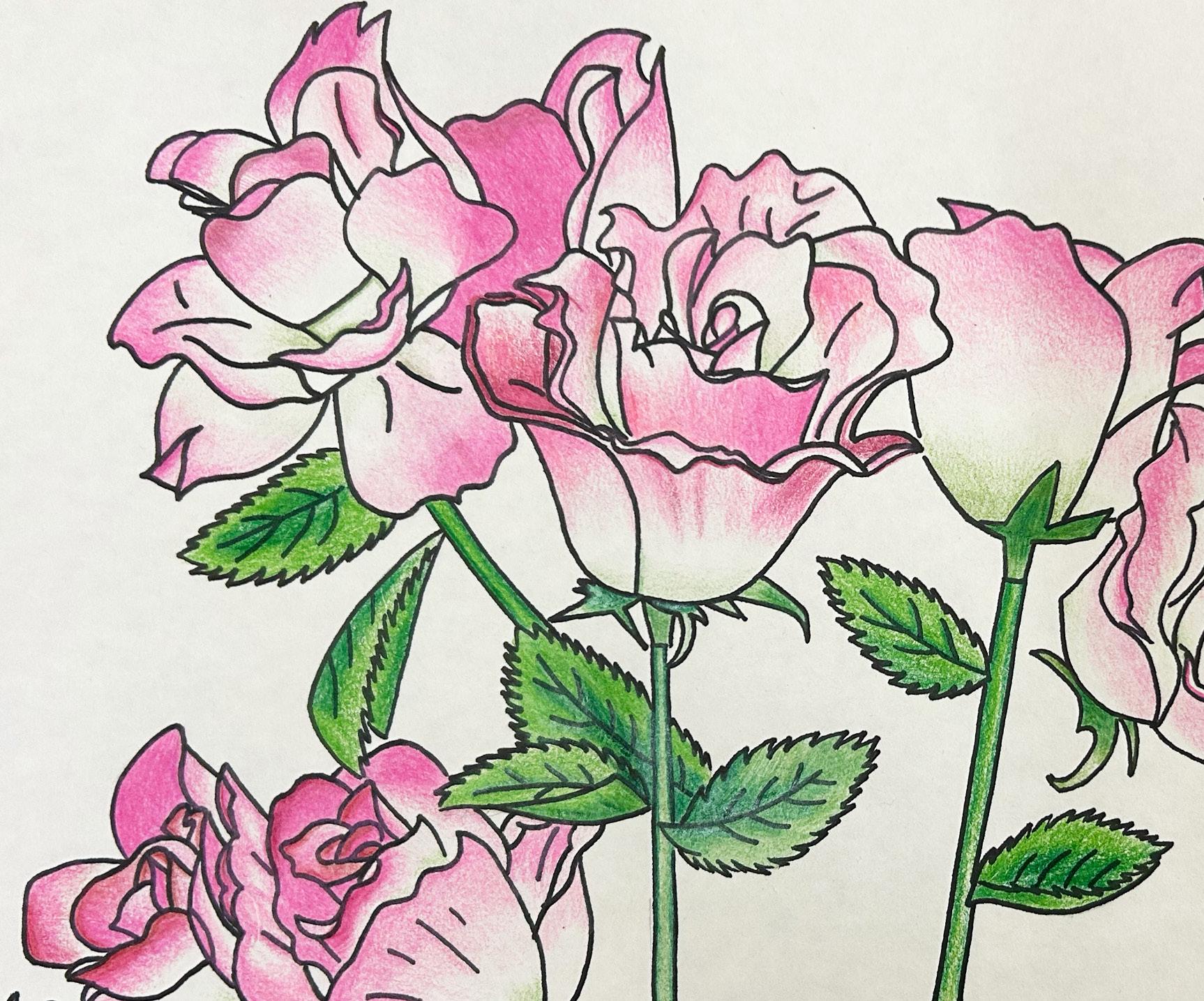
In little details
The tiny patterns of life’s movements
The invisible heart that pulses
Powering the spiraling colors
Taken in by the windowsill.
In hidden corners
Veins of life in green and gold
Reaching up to kiss the sun
Opening to breathe in a new afternoon
Taking in a beginning for change.
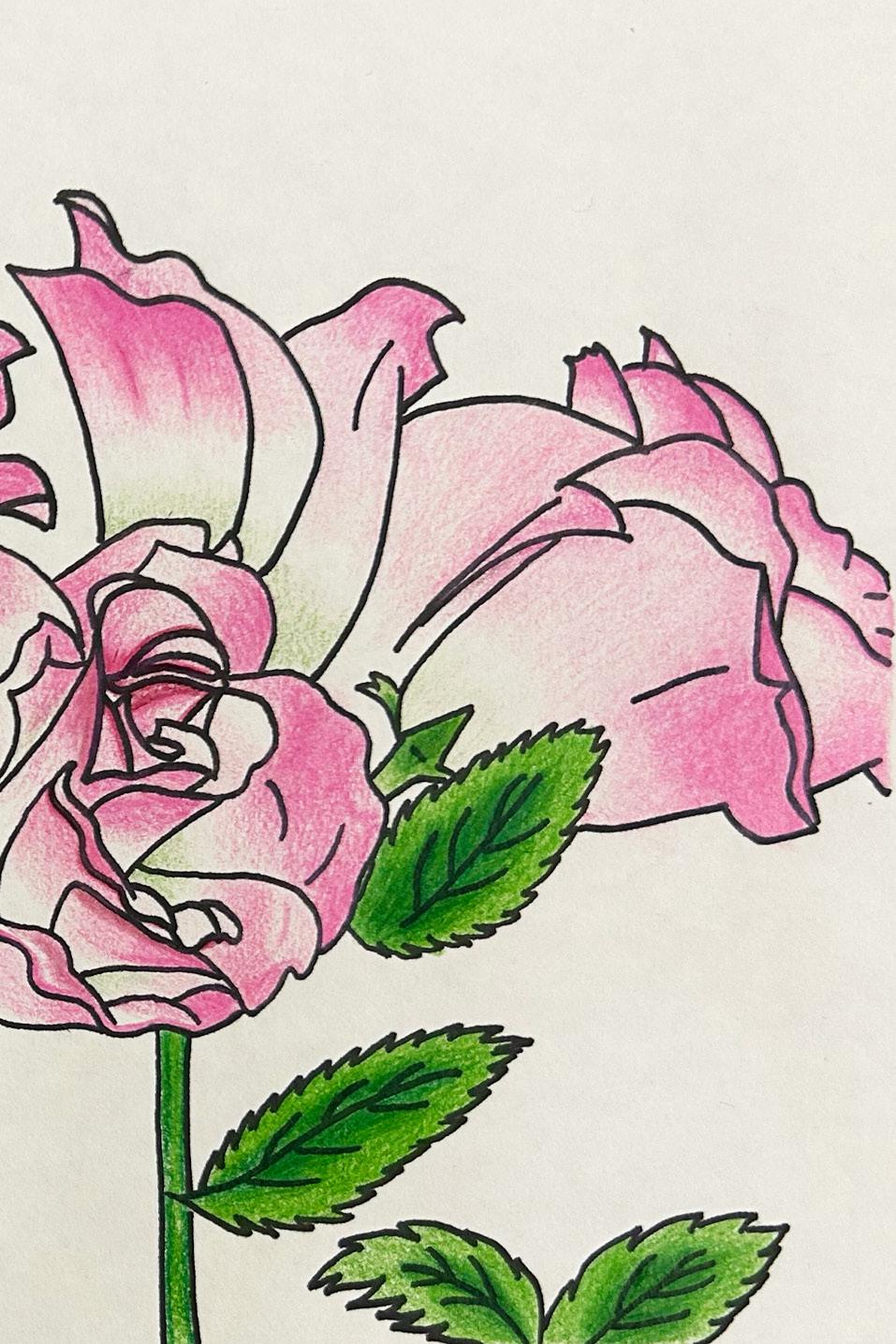
In stolen moments
Subtle changes in your hue
A vitality wrought from time’s embrace
I see the little details
Loving you for them all.
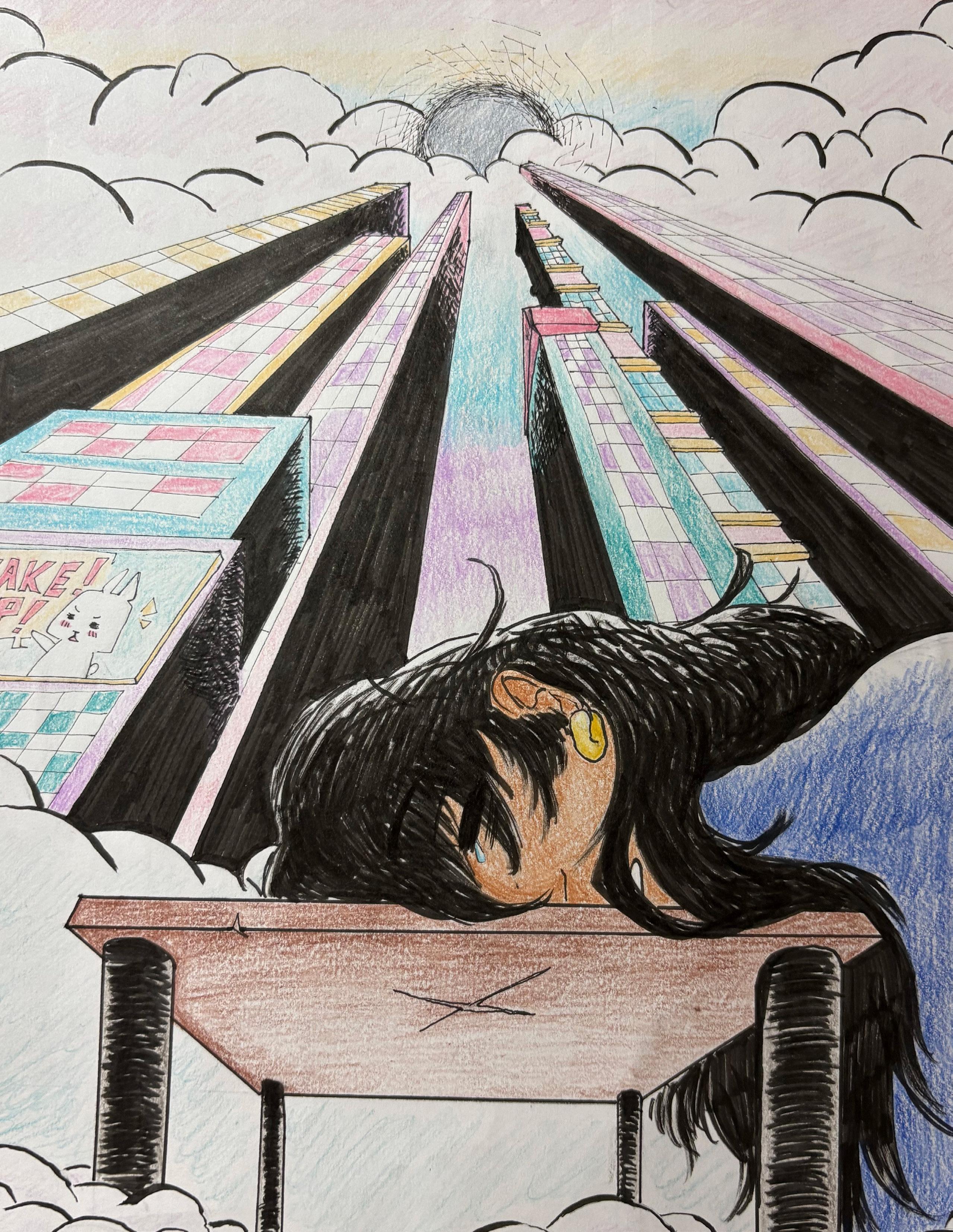
“This is all of me, sprawled out in livid color.”
“This is what I hid away, but now we’re face to face.”
“This is everything I am.”
You picked apart my swirling secrets,
Spilling sunsets, chasing clouds.
I’d ask you what you found up there,
Amid the winding whims of my imagination,
But my secrets stay unshared.
What have you seen up there,
In the furthest reaches of those skies?
“This is the world I hid away.”
“This is my inspiration, dressed in golden sun.”
“This is everything I am.”
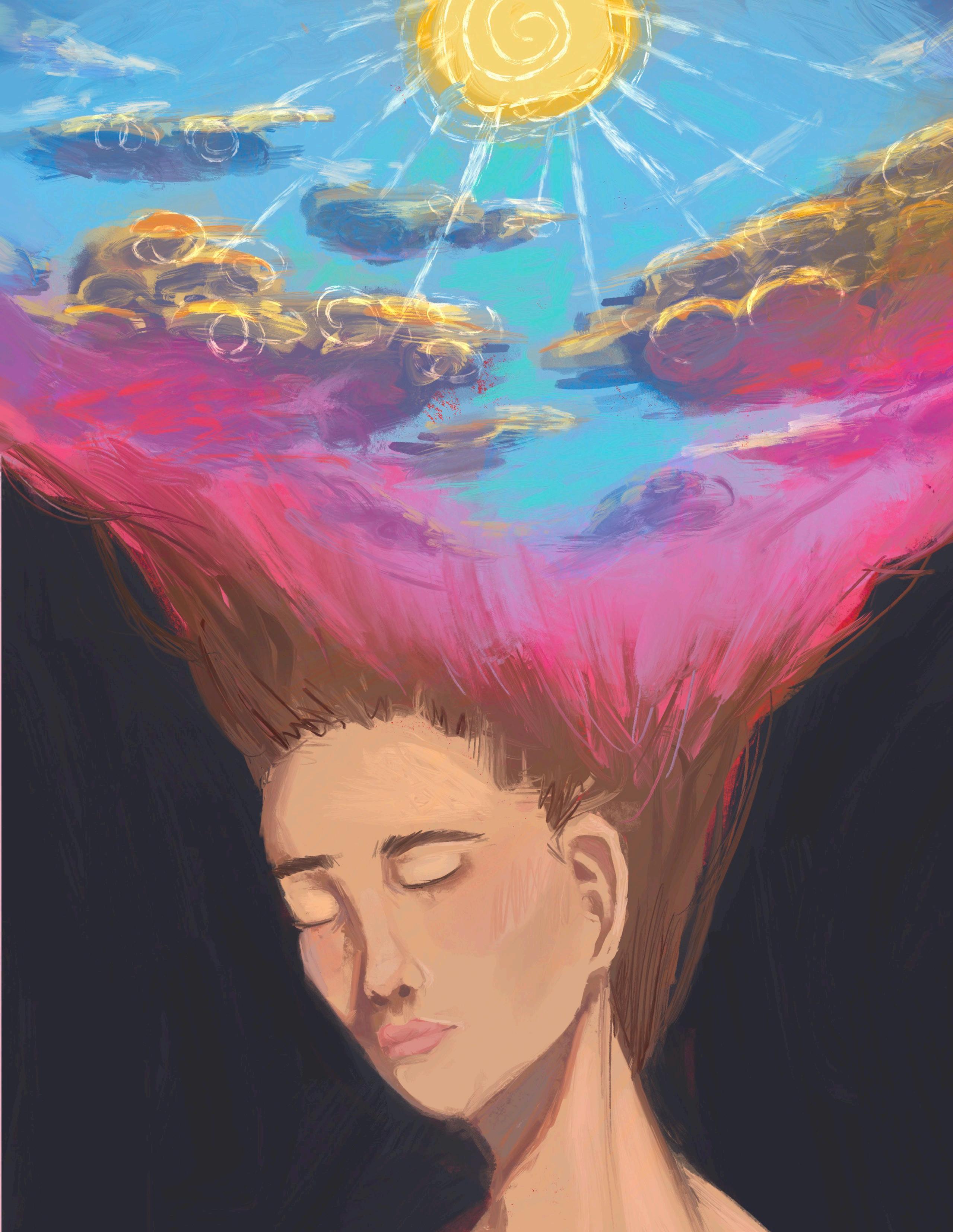
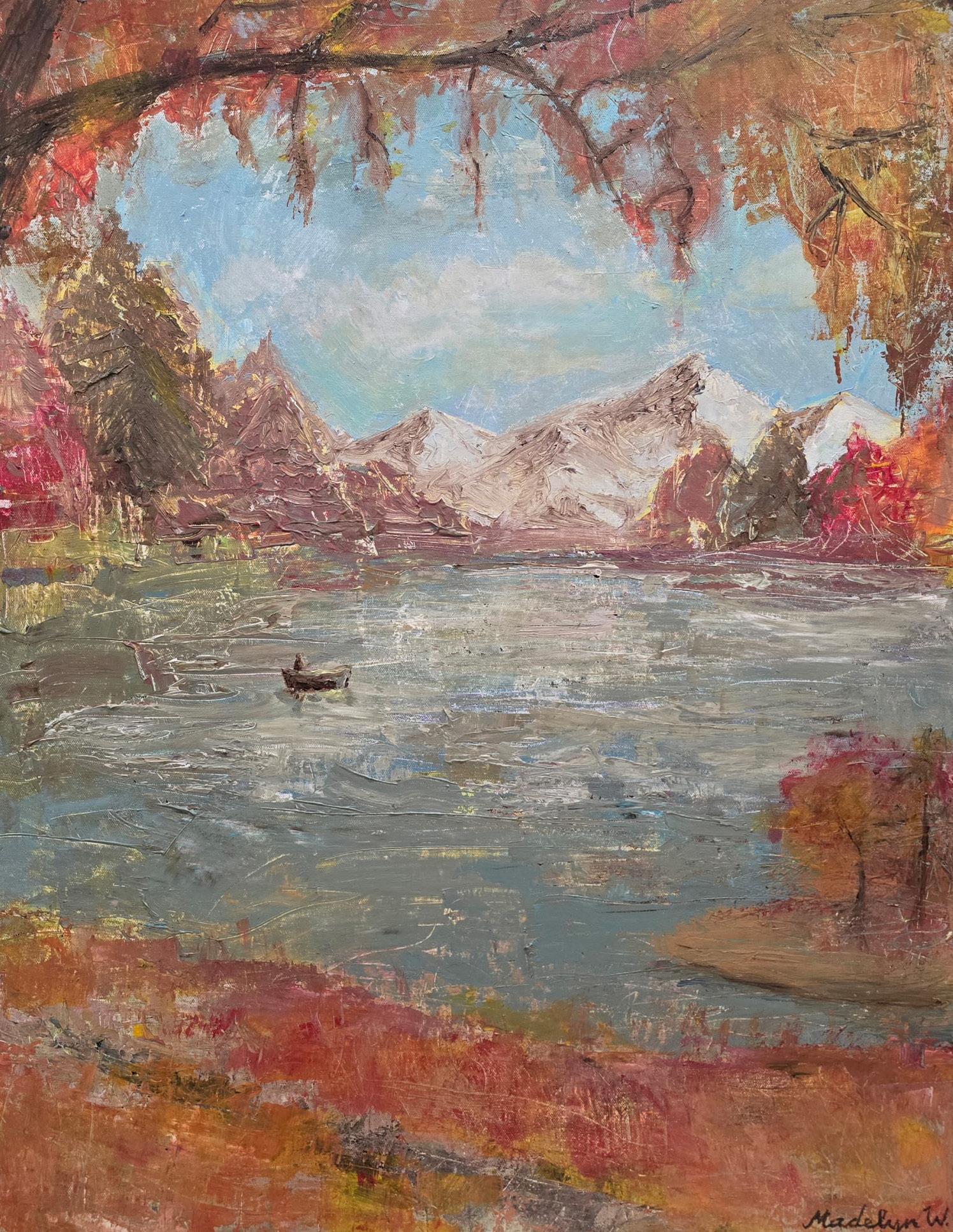
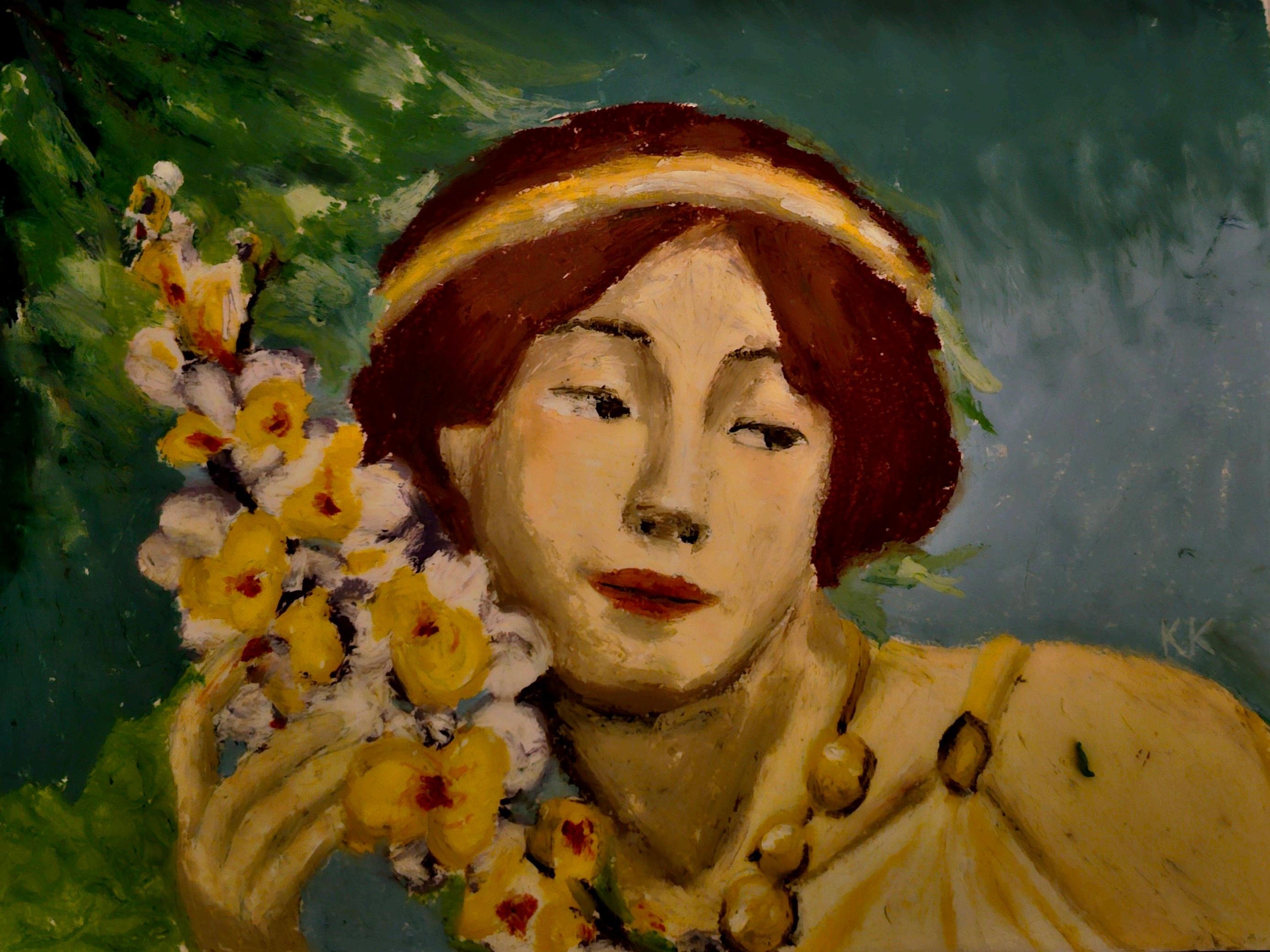

junior ● AHS
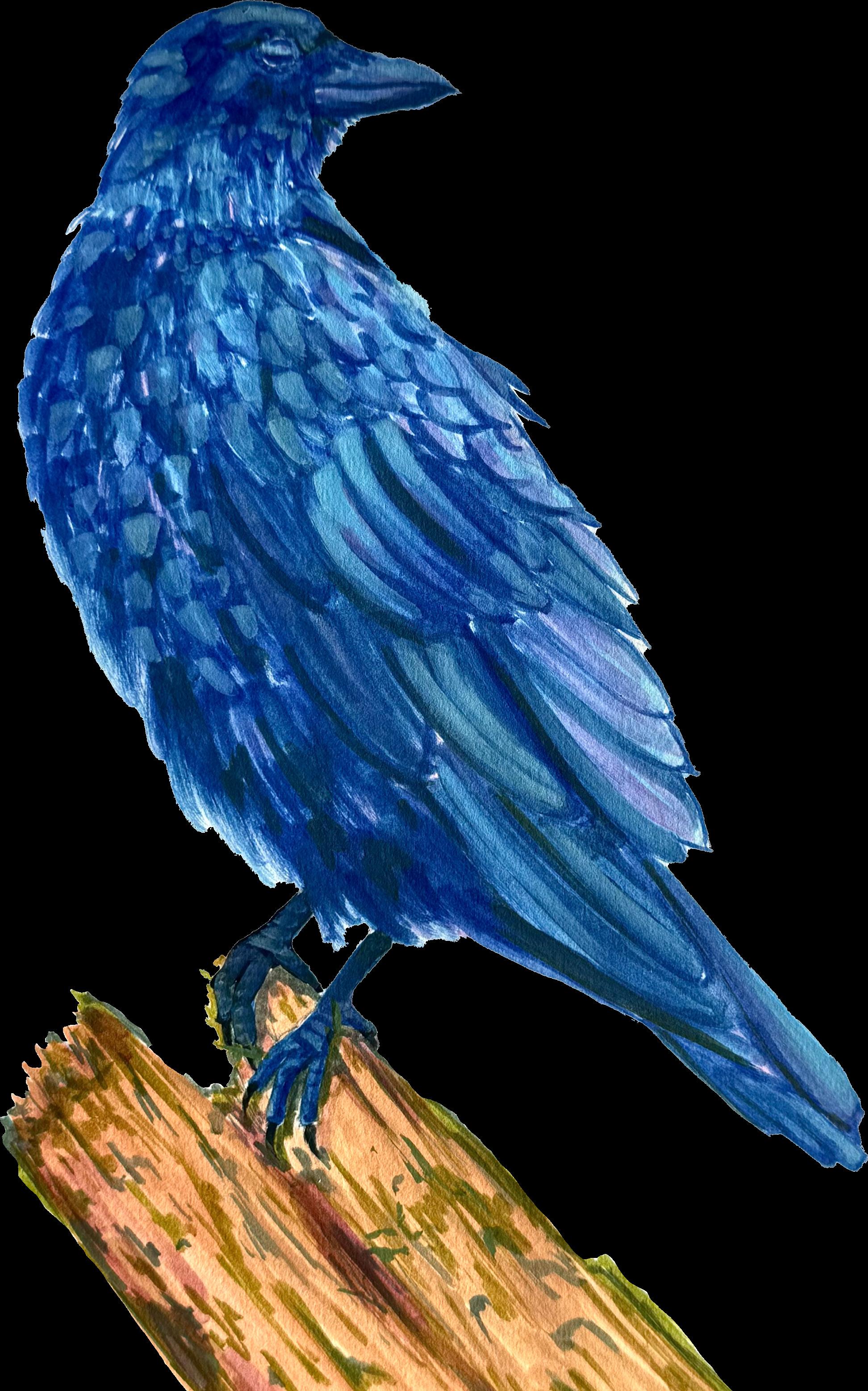
What if I wasn’t blue?
Would you still care?
What if I looked like a normal crow, feathers black as the midnight sky?
Would you still care?
I know you wouldn’t care.
You hardly care now as it is
Because even a blue crow can’t keep your attention anymore
Now a crow cannot simply be a unique color, rather the crow must be many different colors
Now a crow cannot simply fly, rather the crow must have taught others to fly as well
Now a crow cannot simply eat, rather the crow must feed others around it
I used to be so special, so different
Now I simply fade into the black feathered masses as you gaze upon me from my ivory tower
Yet I am still a blue crow
And if you met me in the forest, under the dappled lights and between the old gnarled trees
You would stop and stare in wonder
I was looking at her face through the mirror. I’m still not quite sure what it was, but it beat reading the New York Times. Her eyes were on the book she was reading. I saw her glance at me, then back at the book, then back at me. I smiled back. She walked over.
“Hi.”
“Hi.”
“How’s it going?”
“Well, it’s okay.”
“Yeah. What’s that book called?”
“Oh, I forgot. It’s something in Japanese. There’s this cute boy in it.”
“That’s cool.”
“…”
“...You wanna see a movie later?”
“Sure.”
“...”
She walked back to her spot at the wall and picked up the book again. After a minute she came back.
“Like what movie?”
“Oh, whatever’s playing.”
“Sure.”
“Do you like the book?”
“Not really. The boy dies. What time?”
“Seven?”
“Seven.”
Our lips pressed together, sitting on a park bench on the beach, watching the sun set. I never really thought it could happen like this. We pulled ourselves apart and broke our gazes for a moment. When I looked back there were tears in her eyes. “I don’t want them to find out.” I didn’t say anything. “I want to keep doing this.” She looked away.
We took our shoes off and walked over to the water. Our jeans rolled up to our knees, we waded a few feet in. The sun was really going now. She gave me her hand and I took it. We stood in the cold water as the last light faded into twilight. We saw the lights of a plane taking off over the bay. Not knowing where to look, I stared at the plane, then her, then the surface of the water. I met her gaze below, and then we knew that it wouldn’t make a difference, for now.
We walked back up and sat down to put our shoes back on. Our feet were cold and sandy and it was hard to get the socks on right. She laughed. I did too. On the bus back, she rested her head on my shoulder. I looked at her face through the dark reflection. She got off two stops before me. I gave her a kiss, and she said goodbye and I said goodbye. I watched her walk down the street until the bus turned the corner. All I had to look at was myself now. I lay in bed and looked at the ceiling. I’d never met a girl like her before. A car playing music drove by outside. It was nice to be liked by someone, and it was nice to like someone, I thought. I fell asleep with my shoes still on.
Genevieve Yuen︱poem
In the center of the table, the lazy susan spins—
The warm aroma of xiu mai, char siu bao, and har gao. Silverware clanks noisily on plates and the distinct musicality of Cantonese blends together to culminate a symphony of chaos, harmony, heartbreak, and laughter all in one.
Waiters, like penguins, in black and white attire shout the names of familiar dishes I know: xiu mai, char siu bao, and har gao. Wheeling their carts, Stacked to the brim with food.
In the center of the table, the lazy susan spins— as our family exchanges stories snippets of our lives that come together to form one; a unified whole around a circular table where everyone is equal.
In the center of the table the lazy susan spins—
Eat more, “sik duo di” the elders would say as frail fingers, but nimble chopsticks delicately stack our favorite dishes atop our plates.
In the center of the table the lazy susan spins— as voices rise in unison, hands grasping for the flimsy paper; the bill is their prize.
The children watch in wonder as if training for this someday.
Someday you will be gone.
Yet, in the center of the table, the lazy susan will still spin. Its cyclic movement a reminder of a thousand generations, forever spinning, forever turning, into eternity.
Zoe Liao︱painting
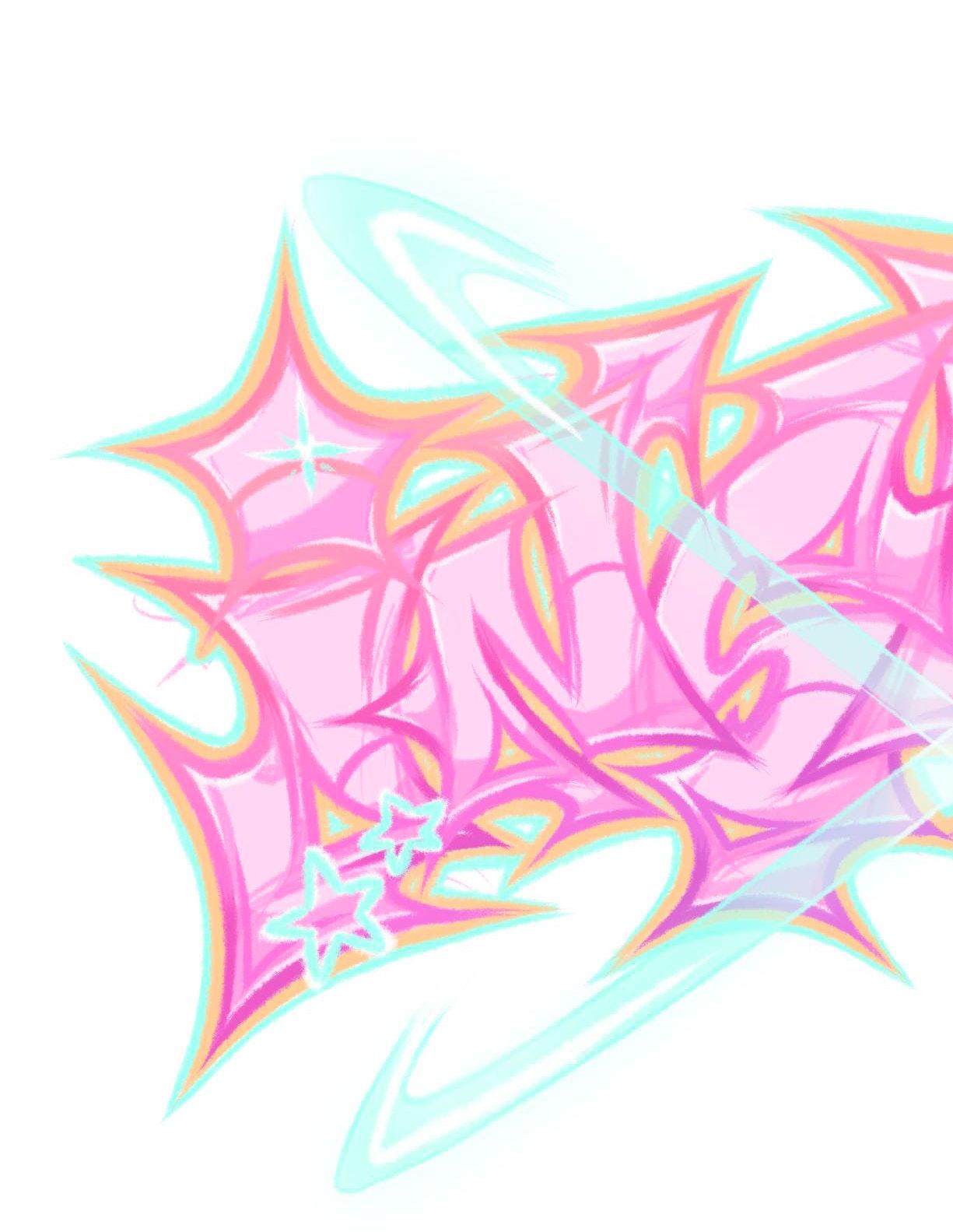
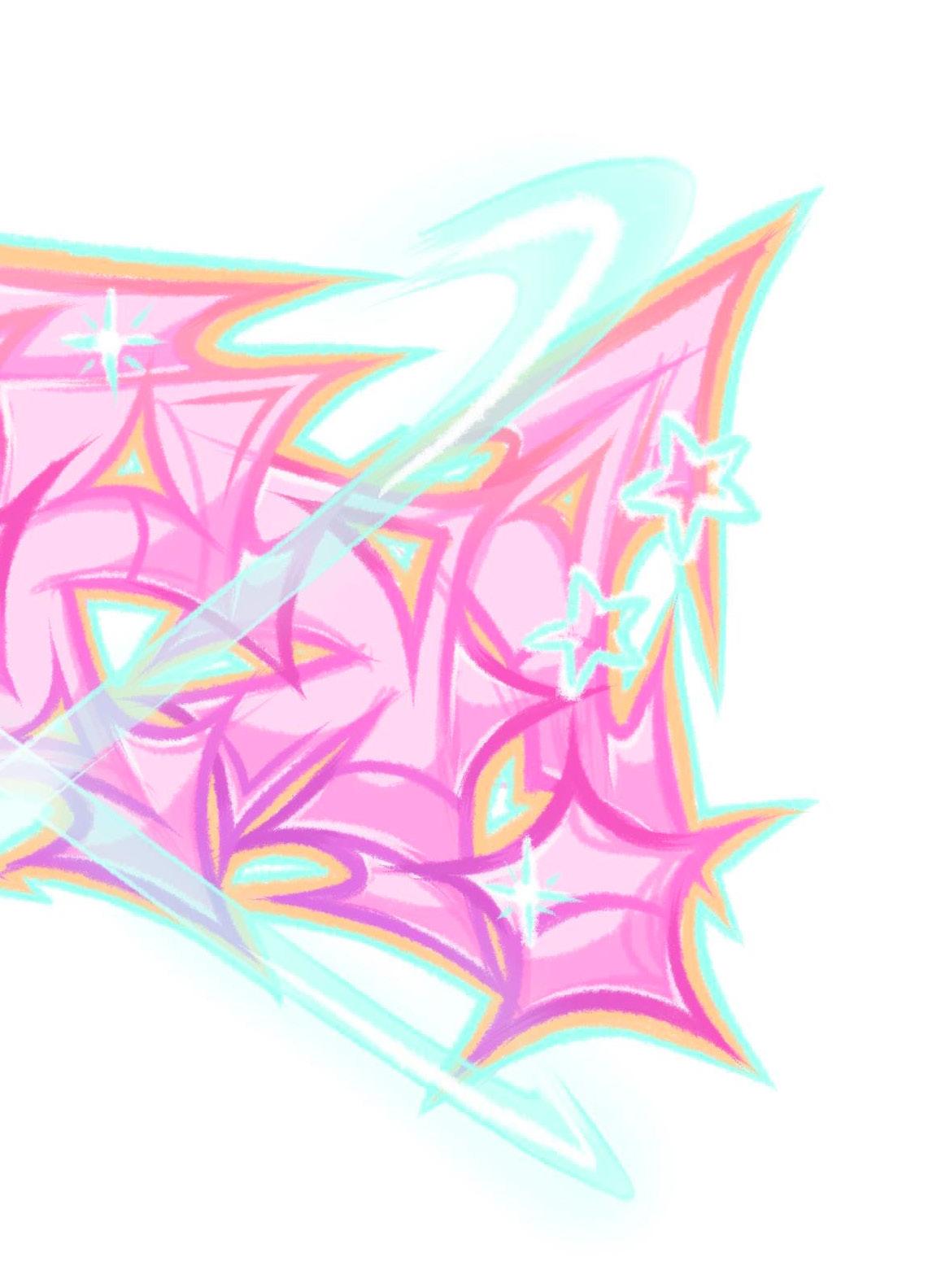
Isabella Fong︱short story
junior ● AHS
The garden is buzzing with the many insects that have made it its home as I prune my tomato bush; soft red bulbs already apparent even though it is only mid-spring. The sun is high over my head and my scalp grows hot through my floppy sunhat. What was a once bright yellow trim now a light cream, the fraying along the edges are thanks to its thirty plus years of service. I gather the severed pieces of dead leaves that lay discarded beneath the tomato plant and place them into my dirty rubber bin and slowly rise to move onto the next bed. My back aches with the effort, my arms weak with the newly added weight of the bin, legs stiff as I walk.
A sound of a woman from the street grabs my attention, leading me to turn my head at a distressing angle. I gasp as my knee gives out and the ground from under me falls away. The dirt of the ground puffs up around me on impact; the smell of my newly set fertilizer fills my nose.
“Oh my god! Are you OK?” the voice of a young woman on the other side of my low fence asks. I open my mouth to speak before hearing another voice say, “Yes, I’m okay darling, thank you. I fear these joints are just not what they used to be. Why don’t we go back inside now and I’ll start up dinner.”
I look up just in time to see them leave down the street. Two women walking hand in hand, their brunette hair gleaming in the sun.
The street is quiet once more, the insects in my garden the only sound.
Flourish Helen Wajler︱photography
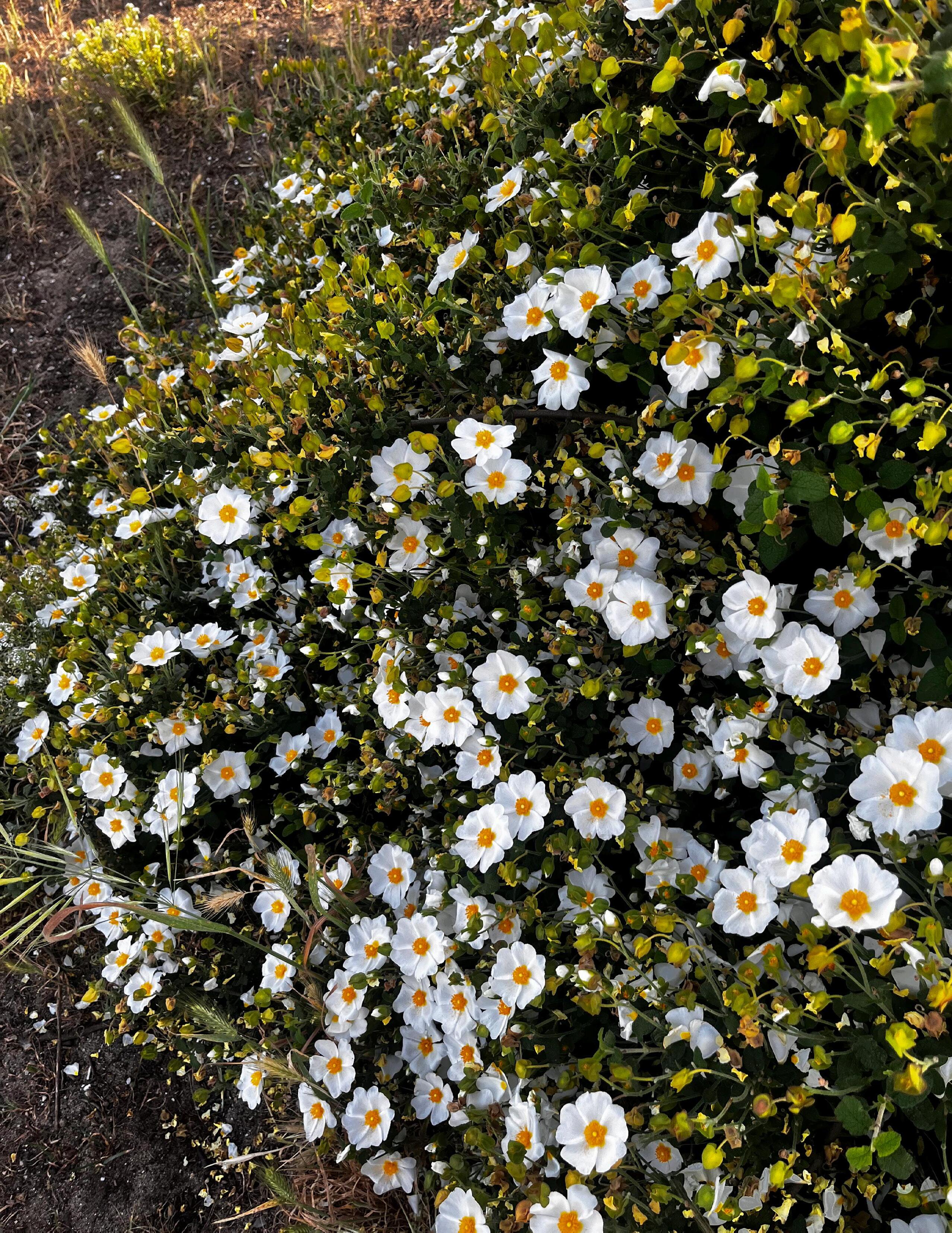
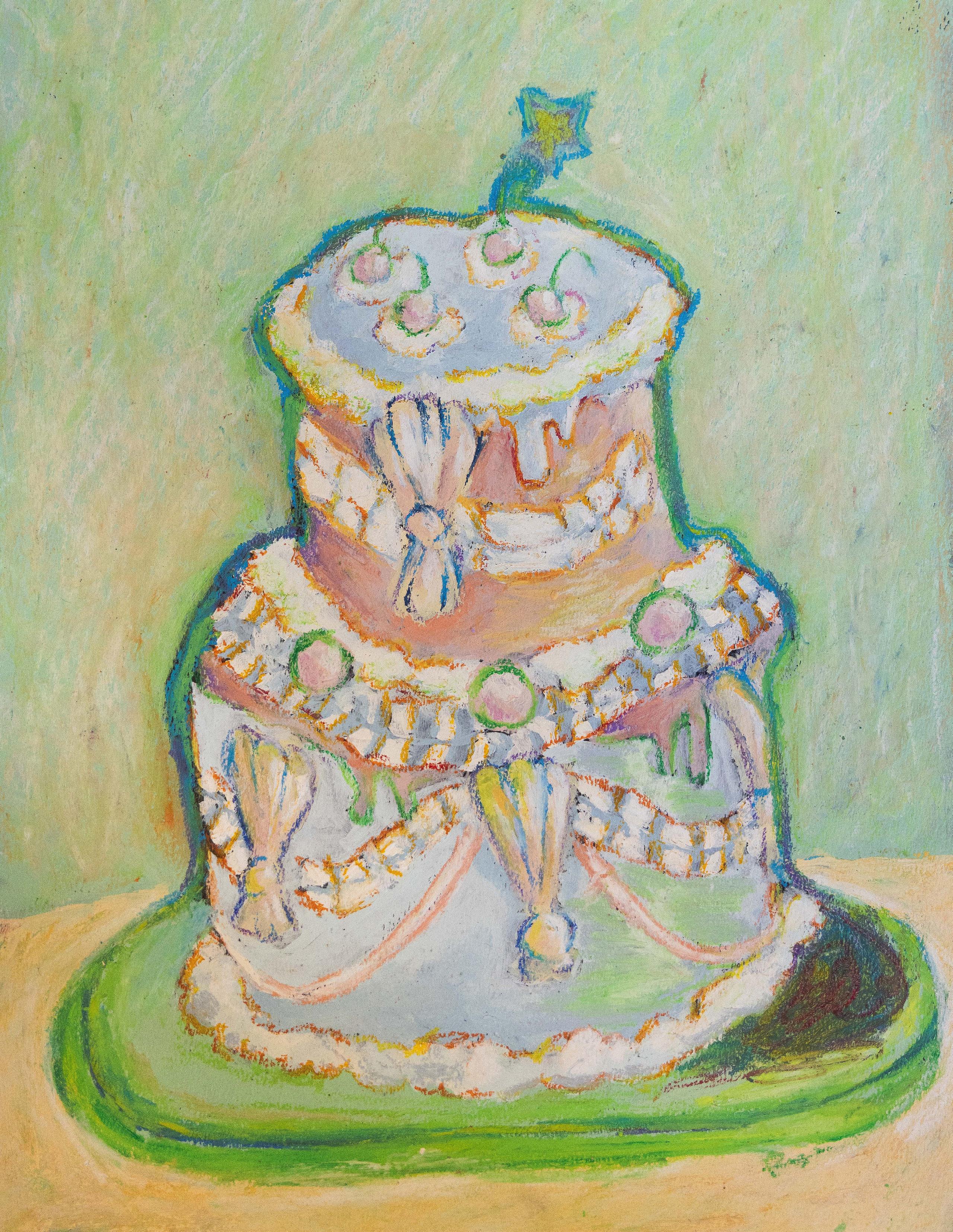

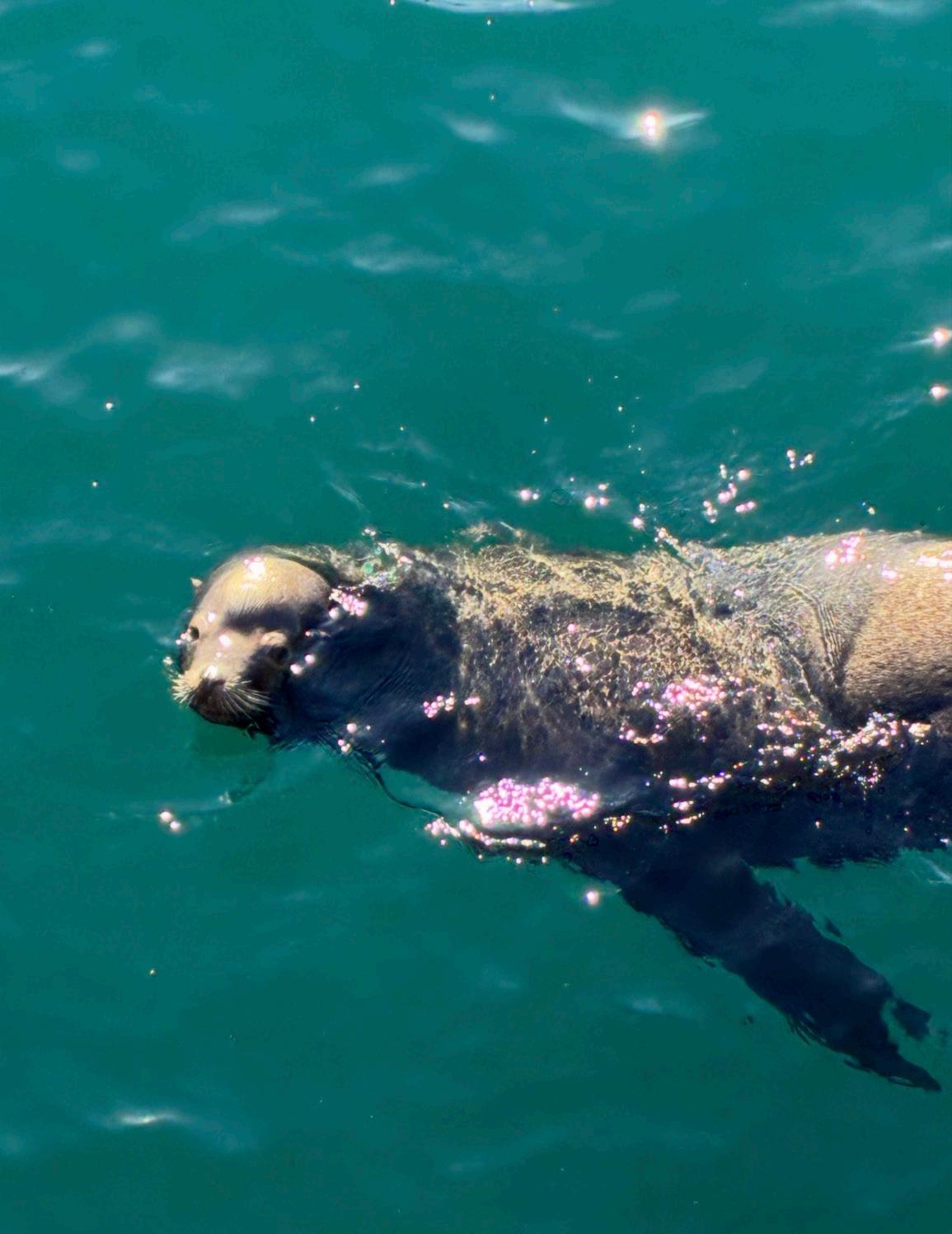
Lidia Pivovarova︱photography
sophomore ● AHS
Amelia Kirk︱poem
sophomore ● AHS
The ocean has all the answers.
Inspiration and love fall within the curtains of silky blue. Rise and fall the waves like life itself. Mini mountains more powerful than man. Nature’s essence in rain or shine.
Showers through flowers and grace of pure.
Salty reefs sandy homes, marshy mainland.
Only eternal flowing.
Breathe life exhale wind.
Sweeping sails partner for seconds of air.
Swimming knowledge before sunshines hues. Tell me mother what are born of the sea?
We Know only one percent, And yet fish are constricted by plastic petulance.
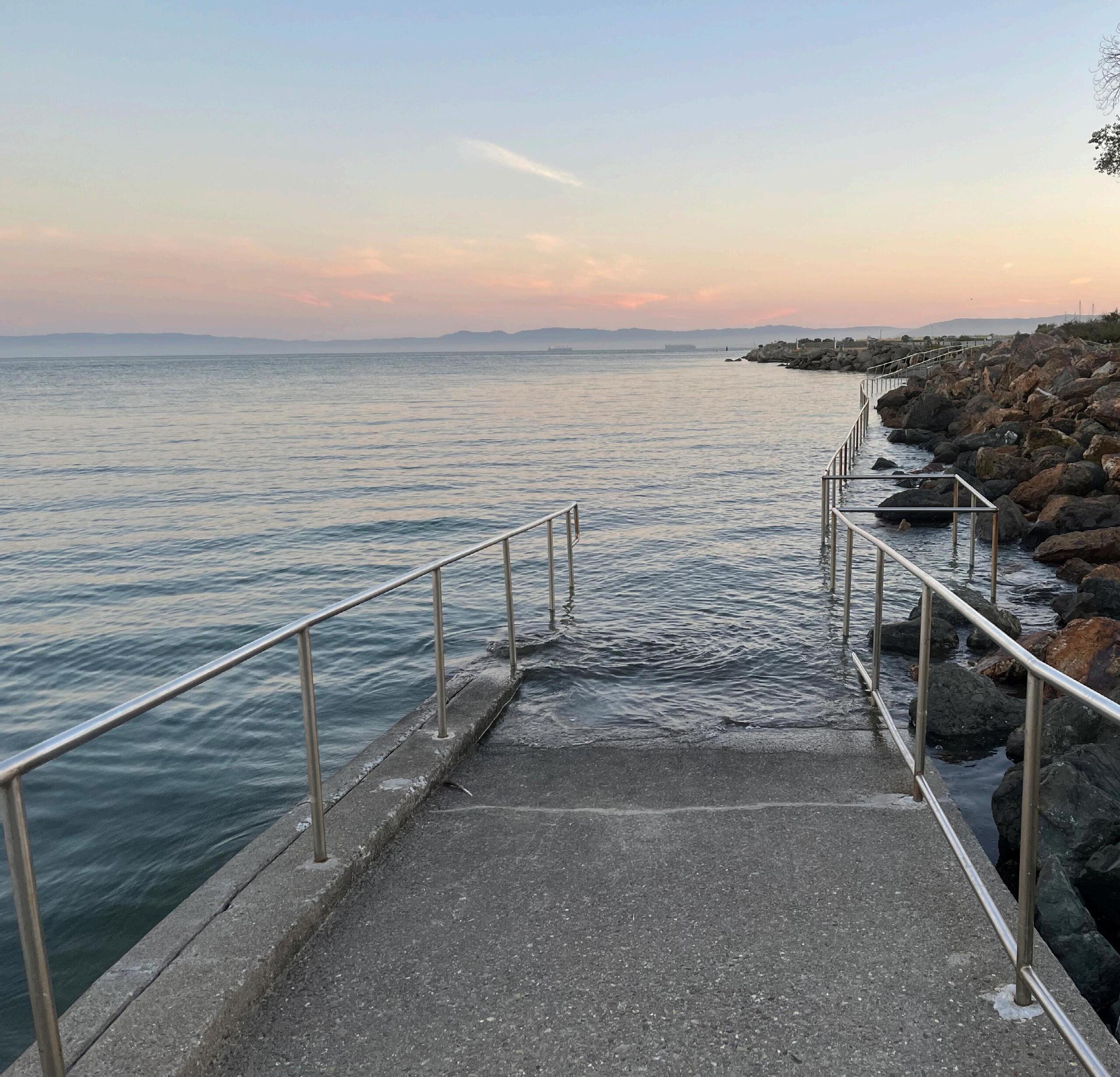
Zi Yao Yuan︱photography senior ● ASTI
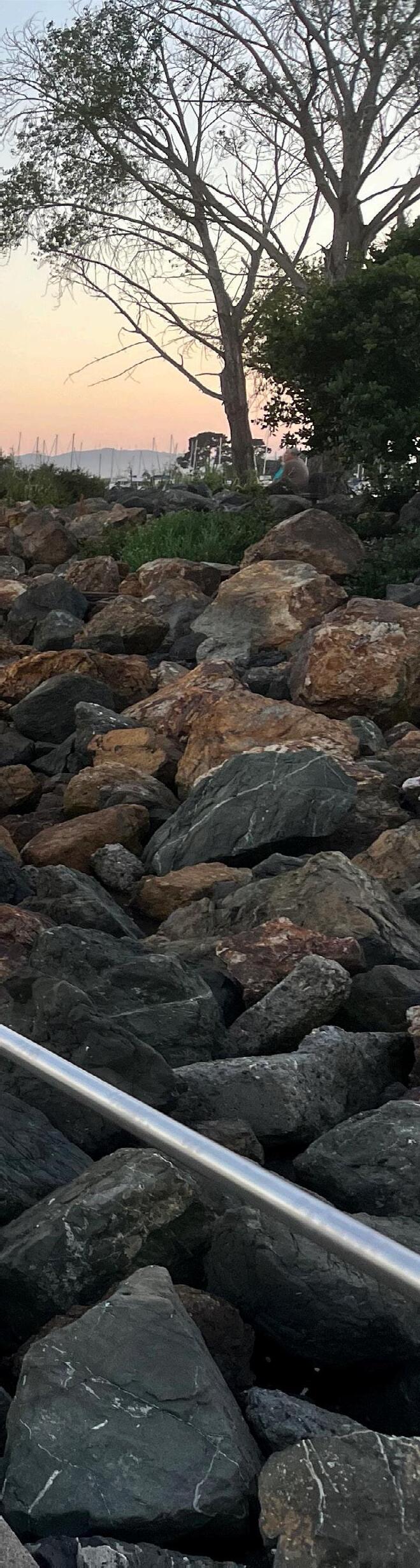
Jacob Rozenek︱prose junior ● AHS
I can no longer see ahead. The future that lies before me is like no future I have had before. When I stare ahead at this future, I find a familiar face staring back, no less confused or worried than myself. This future is cold, alien, and terrifyingly unknowable. How can 18 years be enough? How can any amount of time be enough; to dull the cold, to lessen the pain? Why can it not come as a crashing wave, one instantaneous moment where one world is washed away by another. I just wish I could go back, if only a step or two. Delay the cold for just a little while longer, bask in that glorious light which so illuminates youth. But as I sit here, cold water creeping up my body, I can see the necessity of what approaches. I must seek to live, not simply to avoid death. If this should be the way to live, so be it I shall wait. I simply hope that in the future, when I look up to the light I once knew, the face looking back at me is as bright and joyous as the light dancing on the surface.
Olivia Vu managing editor
editor-in-chief
head designer publicist
Genevieve Yuen
writer designer designer Eli Davies
writer
writer
Zoey Jalleh
August Welter
Jacob Rozenek
Madelyn Falk
writer Amelia Kirk
artist
artist
artist
freshman rep.
sophomore rep. & copy editor
sophomore rep. & copy editor
Violet Arima
Zoe Liao
Dylan Mehra
Avery Brantley
Louisa Varner
Katherine McNab
Juna Rose-Koeberl junior rep.
community outreach
Esther Huang head writer
Akhil Mummidi head of finance
secretary Ella Randecker
Alameda Student Representatives
EHS rep.
ASTI rep.
SJND rep.
Miki Harris
Melisa Yilmaz
Violet Wu
illuminate literary arts magazine is a platform devoted to empowering student voices through the publication of youth-based literature and art. Students are encouraged to submit a variety of mediums from poetry to drawings, and our editorial board will select submissions to be published in our magazine. In our ever-changing world, many struggle to find the right space to express themselves and feel connected. However, this magazine is dedicated to changing that, by shining a light on those eager to be seen and heard, one publication at a time.
when & where?
contact @illuminatemag illuminate staff meets every other week in room A107 at AHS. Contact us for more information!