
Exploring the issues that shape today’s business world.
Exploring the issues that shape today’s business world.
How Mid-Sized Firms Can Compete in a Consolidating Market
Practical Steps for Joining a Board
Making Mental Health a Shared Priority
Does Non-GAAP Reporting Pay Off?
Pricing Strategic Value in a CAS Model
Managing CPA Mobility Changes And More!
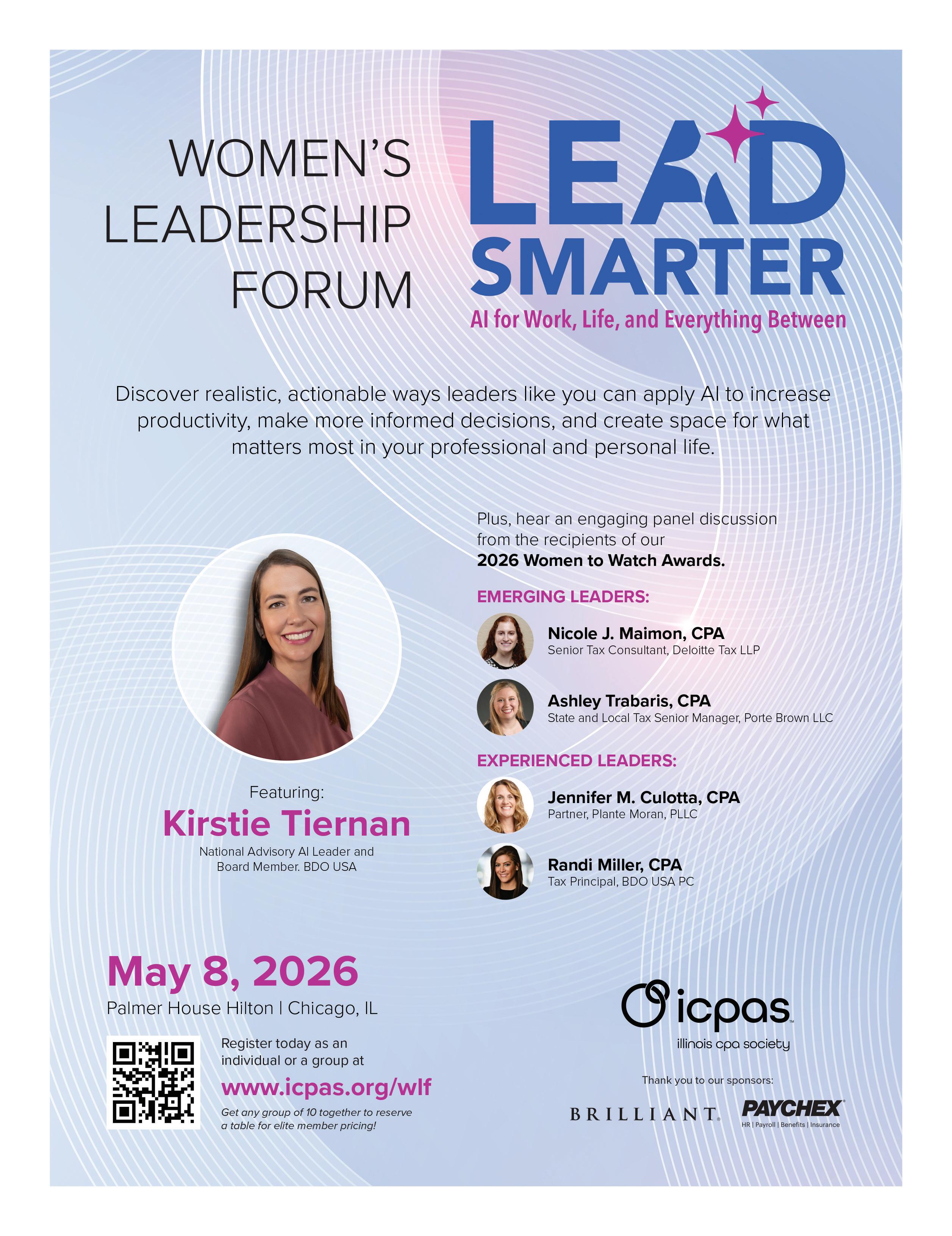





Geoffrey Brown, CAE President and CEO, Illinois CPA Society
Volunteer service is an invaluable vehicle for gaining skills, connecting with like-minded people, and advancing yourself alongside a cause you care about.
Throughout my life, I’ve sought opportunities to share my time and talents with organizations and causes near and dear to my heart. Whether it was serving on a board, providing episodic volunteer support, or participating in the founding of an organization, I’ve always found meaning and purpose in volunteer service.
As I’ve progressed in my career, volunteerism has emerged as one of the most meaningful aspects of my professional experience. I’ve had opportunities to serve on, and lead, boards of directors, committees, and task forces for organizations that touch both my personal and professional communities, including leading the board of a large social service agency in Illinois. Each of these experiences has elevated my leadership skills, expanded my network, and shaped the future of my career—all while affording me the influence to help shape the future of those entities.
At times, my volunteer experiences have been deeply personal, impacting my worldview and shifting my perspectives on various issues. Other times, serving as a volunteer across varying levels has simply further shaped my perspective on the value of volunteerism. Every time, volunteering enhances my ability to collaborate with the diverse board members and communities I work with every day.
In short, I’m a strong advocate for volunteer service. In fact, I think it’s an important and invaluable part of anyone’s career journey. By serving as a volunteer, you’ll share your expertise, collaborate with others, help shape organizations you care about, and play an active role in advancing a cause or community with meaning to you.
Of course, as an Illinois CPA Society member, you have access to a variety of volunteer opportunities that directly impact both the Society and the accounting and finance profession you’re already a part of. You can:
• Sharpen your leadership skills and deepen your engagement through opportunities that fit any stage of your career.
• Share your expertise and perspectives, and contribute your strategic thinking, to critical initiatives shaping the Society and how it responds to issues impacting the profession.
• Grow your personal and professional networks by meeting and working with other like-minded individuals, connecting with mentors, and supporting others seeking to do the same.
• Help influence and make a lasting impact on the direction of the profession.
• Give back to an organization and profession that has given to you.
EXPLORE
www.icpas.org/ volunteer
In other words, volunteerism with the Society (like any organization of your choice) can help you grow in many ways that’ll undoubtedly touch other aspects of your life. At the very least, the new skills and experience gained while volunteering will build your resume and better prepare you for your next career step. But, if your experiences are anything like mine, the service you undertake now will lay the groundwork for increased opportunities later in life.
And while much of my message here has focused on how volunteer service will benefit you, the truth is, it’s not just about you. In the end, volunteerism is ultimately about raising awareness, addressing important issues, and creating stronger, more vibrant communities and organizations. Now, will you join me in being a volunteer leader and a champion for change that inspires others to do the same?

ILLINOIS CPA SOCIETY
550 W. Jackson Boulevard, Suite 900, Chicago, IL 60661 www.icpas.org
Publisher | President and CEO
Geoffrey Brown, CAE
Editor Derrick Lilly
Assistant Editor
Amy Sanchez
Senior Creative Director
Gene Levitan
Proofreaders
Kari Natale, CAE | Mari Watts
Photography Derrick Lilly | iStock
Circulation
Jeff Okamura
Chairperson
Mark W. Wolfgram, CPA | Bel Brands USA Inc.
Vice Chairperson
Jennifer L. Cavanaugh, CPA | Grant Thornton LLP
Treasurer
Lindy R. Ellis, CPA | Ernst & Young LLP
Secretary
Richard C. Tarapchak, CPA | Verano Holdings Corp.
Immediate Past Chairperson
Brian J. Blaha, CPA | Winding River Consulting
Amy M. Chamoun, CPA | Cherry Bekaert Advisory LLC
Pedro A. Diaz de Leon, CPA, CFE, CIA | Sikich LLP
Kimi L. Ellen, CPA | Benford Brown & Associates LLC
Jessica L. Freiburg, CPA, PFS | Sassetti LLC
Mark S. Gallegos, CPA | Porte Brown LLC
Monica N. Harrison, CPA | Tinuiti
Joshua Herbold, Ph.D., CPA | University of Illinois
Jeffery R. Livesay, CPA, CGMA | MH CPA PLLC
Kimberly D. Meyer, CPA | Meyer & Associates CPA LLC
Girlie A. O’Donoghue, CPA | Portillo’s Inc.
Matthew D. Panzica, CPA | BDO USA PC
Jennifer L. Rada, CPA | PwC LLP
Andrea Wright, CPA | Johnson Lambert LLP
Stephanie M. Zaleski-Braatz, CPA | Miller Cooper & Co. Ltd.
BACK ISSUES + REPRINTS
Back issues may be available. Articles may be reproduced with permission.
Please send requests to lillyd@icpas.org.
Advertising in Insight and with the Illinois CPA Society gives you access to 20,000+ accounting and finance professionals. Contact Mike Walker at mike@rwwcompany.com.
Insight is the magazine of the Illinois CPA Society. Statements or articles of opinion appearing in Insight are not necessarily the views of the Illinois CPA Society. The materials and information contained within Insight are offered as information only and not as practice, financial, accounting, legal or other professional advice. Readers are strongly encouraged to consult with an appropriate professional advisor before acting on the information contained in this publication. It is Insight’s policy not to knowingly accept advertising that discriminates on the basis of race, religion, sex, age or origin. The Illinois CPA Society reserves the right to reject paid advertising that does not meet Insight’s qualifications or that may detract from its professional and ethical standards. The Illinois CPA Society does not necessarily endorse the non-Society resources, services or products that may appear or be referenced within Insight, and makes no representation or warranties about the products or services they may provide or their accuracy or claims. The Illinois CPA Society does not guarantee delivery dates for Insight. The Society disclaims all warranties, express or implied, and assumes no responsibility whatsoever for damages incurred as a result of delays in delivering Insight. Insight (ISSN-1053-8542) is published four times a year, in spring, summer, fall, and winter, by the Illinois CPA Society, 550 W. Jackson, Suite 900, Chicago, IL 60661, USA, 312.993.0407. Copyright © 2026. No part of the contents may be reproduced by any means without the written consent of Insight. Send requests to the address above. Periodicals postage paid at Chicago, IL and at additional mailing offices. POSTMASTER: Send address changes to: Insight, Illinois CPA Society, 550 W. Jackson, Suite 900, Chicago, IL 60661, USA.
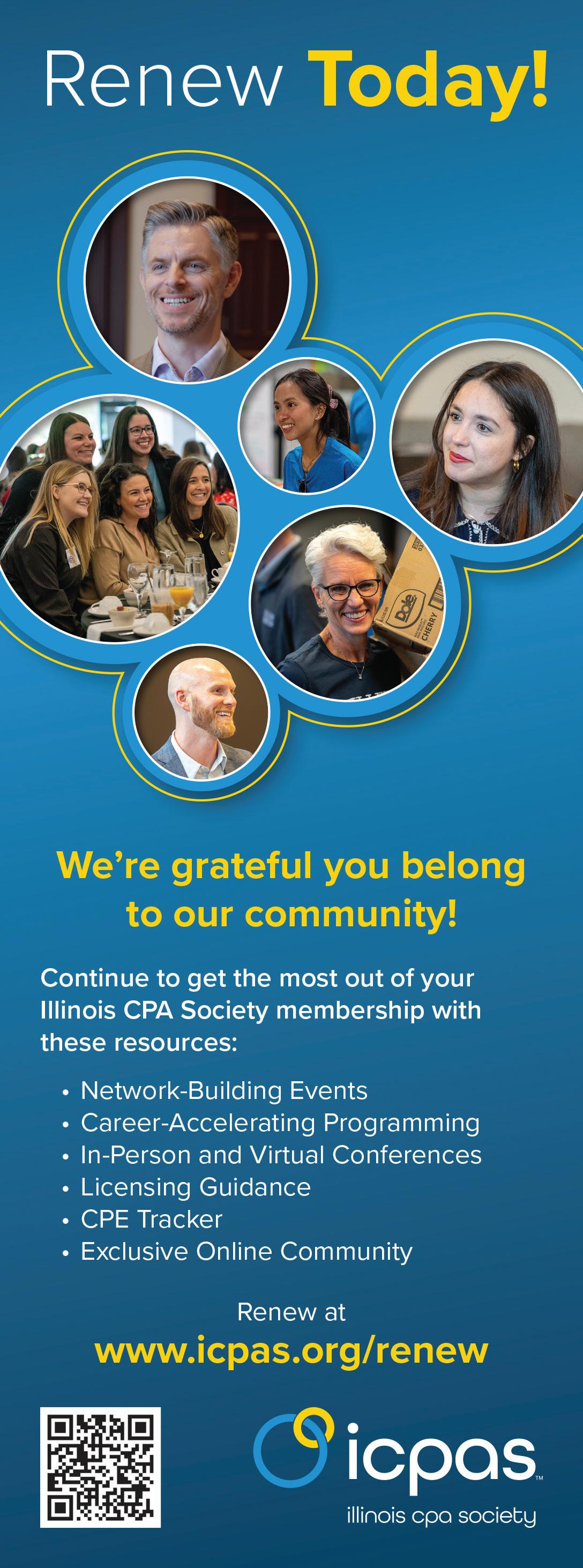
Mark W. Wolfgram, CPA Chairperson, Illinois CPA Society Tax Director, Bel Brands USA Inc.
By working together, we can keep moving this organization and our profession forward.
Two quotes from former Illinois CPA Society (ICPAS) leaders, Todd Shapiro and Mary Fuller, resonate deeply with me: “The rate of change is never going to be slower than it is today.” “The future of the profession is people.”
One of the greatest benefits of serving as a volunteer leader within ICPAS is the opportunity to learn from the thought leaders and respected professionals this organization attracts into its ranks. And while I’ve heard these quotes many times during my tenure as an ICPAS member, volunteer, and board director, they continue to ring true now more than ever. Our profession faces ever-growing change driven by artificial intelligence (AI), workforce shifts, regulatory actions, politics, burnout, and more.
Change brings challenges. But as certified public accountants (CPAs), I like to think we’re pretty smart, creative in our own ways, adaptable, and definitely not dull. (I may have started a Facebook group called “Accountants Aren’t Lame” back in college!) We can handle change and help our clients, customers, and organizations do the same.
However, the demographics of the CPA profession are creating a different challenge. The dual issues of aging CPAs retiring and fewer accounting graduates and young professionals pursuing the CPA credential threaten to make our jobs more difficult, to say the least. After all, the future of the profession is people—regardless of how potent AI proves to be.
Thanks to our efforts working with our elected officials in Springfield, new pathways to CPA licensure in Illinois can be utilized starting in 2027; it’s a positive step toward growing the CPA pipeline, but bringing more CPAs into the profession is really just the beginning—retaining them is equally critical. (I suggest reading the 2023 Insight Special Feature, “Righting Retention,” if you haven’t already.) Point being, if we continue to lose CPAs at all stages of their careers, we’ll still end up right back where we started regardless of how many pathways to licensure we have. So how do we provide our people with experiences that keep them in the profession long after we’re gone?
It depends. (Very specific advice, Mark. I’m sure a future ICPAS chairperson will put that quote in their letter.)
While there’s no single solution, I believe it’s up to all of us who lead others to foster positive experiences that make our profession worth staying in. The ways we identified and developed talent five, 10, and 15 years ago don’t suit everyone today. More than ever, we must try

to understand each of our people instead of viewing them all as just some homogeneous human capital source ready to be deployed.
Just consider ICPAS’ findings reported in the 2025 Insight Special Feature, “The Readiness Divide: How Next-Gen Accounting Talent Measures Up.” I was shocked to learn early careerists overestimate their readiness, while managers say their expectations of early careerists often go unmet. Shocked! OK, I wasn’t actually shocked. I’ve heard about how “kids these days” don’t know anything and don’t want to work hard since I was one of those “kids these days.” But the results made it clear to me that we need to “connect the disconnect” to ensure we retain and advance our people in their careers so they can fill the big shoes retiring professionals are leaving behind.
Leaders, ask your people this: What motivates you?
Is it money? The ability to drive the soccer team carpool? Making partner? Unlimited cheese from the office refrigerator? Volunteerism? Don’t assume. Actually ask. Understanding these drivers is the first step in connecting the disconnects. We can then help our people work toward those goals and extend them the experiences that keep them in the profession.
Admittedly, this is work many of us aren’t used to, but it’s necessary to keep people at the center of the profession.
Young professionals also have a responsibility to connect the disconnect. Hard work, learning from mistakes, critical thinking, and being a positive team member remain essential. Early careerists should seek feedback, identify their professional interests, and share those interests to connect with mentors and managers.
My goal as this year’s chairperson is to help highlight the issues our profession faces and to work toward connecting the disconnects, and I invite all of you, from current leaders to the student members that are our future leaders, to join me in working together to move our profession in a direction where people never want to leave it.
I look forward to working together to keep moving this organization and our great profession forward in these strange times we live in.


Martin Green, Esq. Senior Vice President and Legislative Counsel, Illinois CPA Society @GreenMarty

As local government audits face persistent challenges and structural hurdles, sustainable improvement hinges on stakeholder collaboration and solutions built to last.
With budget uncertainties and anticipated cutbacks of federal revenues and reimbursements for ongoing programs, the state’s financial gaps are front and center at this year’s spring legislative session. Despite Gov. J.B. Pritzker and the Illinois General Assembly being able to pass state operating budgets without general tax increases, areas of tinkering have narrowed, and tough choices remain ahead.
Because of these fiscal pressures, members in the General Assembly and Chicago Mayor Brandon Johnson have again called for a millionaire’s tax to fund programmatic and governmental options. While these calls aren’t new, the Illinois CPA Society (ICPAS) takes these rumblings seriously and remains poised to aggressively respond to any efforts to extend the sales tax base to professional services.
Beyond a potential professional services tax, ICPAS has also been focused on improving the structural framework of local government audits.
For the past three years, ICPAS has been working with the Illinois Comptroller Local Government Division, Township Officials of Illinois (TOI), and the Illinois Municipal League to address systemic challenges facing local government financial compliance reporting.
of local government, lack of financial training for local government officials, increasing complexity of government audit standards, and the limited pool of certified public accountants (CPAs) providing government audit services.
Aside from educational purposes, the report was intended to facilitate discussions by policymakers and inspire legislation to consolidate the state’s multitude of layered audit statutes into one statute. At the request of ICPAS and TOI, Rep. Natalie Manley, CPA (D-98), introduced House Bill (HB) 5391, the Government Reporting Enhancement and Transparency Act, which does just that. The bill will consolidate the Government Account Audit Act and other layered audit acts into one statute with consistent requirements for financial accountability of taxpayers’ funds.
The central premise of HB 5391 is based on local governments’ financial transactions and compliance. The financial piece is premised on annual revenues with scaled reporting requirements. The compliance piece is satisfied by reporting on the Open Meetings Act, Freedom of Information Act, local government records retention requirements, capital asset recordkeeping, and compensation of officials. The legislation also directs the comptroller to adopt administrative rules tailored to the needs of the state’s many different types of local governments, including fire protection districts, library districts, and other special districts.
EXPLORE
www.icpas.org/ govaudits
As part of this effort, ICPAS and TOI funded a research project that included field work and extensive analysis of small, mediumsized, and large units of local governments’ compliance rates. From this research, ICPAS produced “Examining the Sustainability of Local Government Audits: Special Report to the Illinois General Assembly,” to educate lawmakers and stakeholder organizations on the challenges shaping the current local government audit landscape, including Illinois’ large number of units
Overall, HB 5391 aims to modernize the state’s local government audit processes and make them more efficient by matching the level of review to the size and complexity of each government unit. For example, smaller units of local government may only need an independent elector audit committee inspection reported to the comptroller, while the next category of slightly larger units of local government may need to adhere to more stringent agreedupon procedures that still alleviate the need for a full financial statement audit.
Importantly, these changes could provide some relief to units of local government while still holding them accountable and increasing transparency to taxpayers. This also encourages CPAs and CPA firms to provide these services without having to undergo a rigorous peer review. Instead, those resources can be focused on the government units with greater risks who still must undergo a financial statement audit following the AICPA’s Codification of Statements on Auditing Standards and the Government Accountability Office’s Yellow Book.
While previously introduced legislation brought remedial relief to local governments, including raising audit thresholds and other tweaks, these efforts merely assuage symptoms and don’t solve the root problem of the outdated basis of local government audits. That’s why ICPAS is trying to facilitate larger discussions on a comprehensive long-term strategy and highlighting the downstream unintended consequences and disruption caused by the current state of government audits, including non-staggered filing deadlines, compressed auditor workloads, and resource and knowledge retention strain.
Aside from the legislative piece, ICPAS has made significant outreach to governmental stakeholder organizations, including the Illinois County Treasurers’ Association, Government Finance Officers Association, and Illinois Association of Park Districts, to name a few, along with 2026 Illinois comptroller candidates, seeking cooperation and buy-in for a long-term solution.
Of note, the aforementioned field work and research also revealed the need for financial and audit preparation training for local government officials beyond what’s currently provided. Discussions on addressing this have even raised reinstituting statewide annual regional training, which could be essential to aiding CPA firms and governments in completing their compliance filings.
As with anything involving the General Assembly, coming to a resolution on this big issue isn’t going to be an easy sprint but rather a marathon. ICPAS is steadfast in believing a realignment of statutory audit requirements is necessary for the sustainability of local government audits. The enormity of the issue, and the resetting of legacy practices, will require an enterprise perspective by the profession. Evading the issue only puts the profession at risk of a disagreeable legislative solution—or worse, losing the franchise on audits all together.


The CPA Endowment Fund of Illinois, the charitable partner of the Illinois CPA Society, graciously thanks our generous donors for their contributions.
These individuals and organizations help make a significant, life-changing impact on the lives of the most deserving accounting students and aspiring CPAs across the state.
Special thank you to the Dempsey J. Travis Foundation for their generous donation of $235,600.
(April 1, 2025 - March 31, 2026)
$20,000 - $25,000
The Estate of Lee Gould
Joan Moore
$10,000 - $15,000
Debicki Foundation
Deloitte Services LP
Forvis Mazars LLP
Illinois CPA Society
Kenton Klaus
$5,000 - $9,999
Baker Tilly
Citrin Cooperman
Mardel Graffy
Miller Cooper
Charitable Foundation
Jason Parish
Topel Forman LLC
The Villinski Family
Wipfli
$2,000 - $4,999
Anonymous
Alverin M. Cornell Foundation
Brian Blaha
Jennifer Cavanaugh
Cameron Clark
Surendra & Shanta Daga
Mark Glochowsky
Geoff & Ginny Harlow
Scott Hurwitz & Kelly Austin
Illinois CPA Society Women’s Committee
David & Darlene Landsittel
Sara Mikuta
Thomas Murtagh
Beth Pagnotta
Belverd Needles Jr. & Marian Powers
Charlene Rhinehart
Jeffery & Julie Watson
Thank you to the following firms for their leadership and generosity in expanding access, awareness, and opportunity for future CPAs.
Baker Tilly | Citrin Cooperman
Forvis Mazars LLP | Miller Cooper & Co., Ltd.
Topel Forman LLC | Wipfli
$1,000 - $1,999
Jonathan Acevedo
Brent Baccus
Wayne Barbier
Geoffrey Brown
Martrice Caldwell
Rose Cammarata
Amy Chamoun
Cherry Bekaert Advisory LLC
CNA Insurance
Jan & Wayne Ebersberger
Lindy Ellis
Mary Fuller
Sandra Gentry
Lawrence Gill & Christine Albright
Jonathan Hauser
Sheldon Holzman
Jeffery & Stacy Janiak
Arla Lach
Damien Martin
Lester McKeever, Jr.
Dorri McWhorter
Elizabeth Murphy
Prado & Renteria Foundation
Jennifer Roan
Deborah Rood
Walter Dane Roush
Scott Steffens
Myra Swick
Richard Tarapchak
Leslie Van Wolvelear
Kimberley Waite
Lawrence & Nancy Wojcik
Donna & Phillip Zarcone
IN MEMORIAM Lee A. Gould, CPA, JD 1958-2025
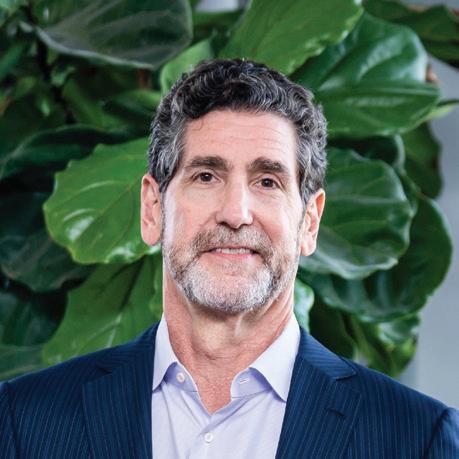
We honor the memory of Lee Gould, a generous leader, trusted advisor, and truly kind person whose impact on our organization and the CPA profession cannot be overstated.
Through the enduring generosity of a $25,000 legacy gift from the Gould Family Charitable Fund, his commitment to supporting scholarships and programs that open doors for future CPAs will continue to change lives for generations to come.
$500 - $999
Anonymous
Michael Amoroso
Gary Anetsberger
Kimi Ellen
Anthony Fuller
Maggie Hein
JFB Tax Consulting LLC
Lisa & Mike Kelly
Wendy Kelly
Kenneth & Kathleen Naatz
Laura Naples
Girlie O’Donoghue
Gilda & Jeffrey Priebe
Elizabeth Roghair
Warren Stippich
Marites Sy
Michael Wenzel
Mark Wolfgram
Andrea Wright
$250 - $499
Anonymous (3)
Brian Amoroso
Jon & Katie Assell
Owen Bailitz
BDO USA LLP
George Boyle
Nancy Cash
Jerry Catalano
Brian Chapin
Christopher Daugherty
James Dolinar
Gary Genenbacher
Bill Graf
Gary & Carol Hart
Joshua Herbold
Bernard Hicks
Kirkland & Ellis LLP
Jason Klein
Harry & Lisa Kramer
Jeffrey Krol
Lopez & Company
CPAs Ltd.
Meyer & Associates
CPA LLC
Paul Oetter
William O’Malley
Matthew Panzica
Amanda Pictor
Elizabeth Pittelkow Kittner
Jennifer Rada
Elizabeth Rosenthal
Richard Shapiro
Laurence Sophian
Claire Stevens
Jerry Turner
Richard Walden
Catherine Wasylenko
Stephanie Zaleski-Braatz
$100 - $249
Anonymous (11)
Rose Ann Abraham
Paul Alpern
Dawn Andrey
Gus Antonopoulos
Sanford Bokor
Basil Booton
Mark Broutman & Sandra Simon
Michelle Carrothers
Margaret Cartier
Danielle Ciechanski
Kristi Corpin
Thomas Daniels
Peter & Barbara DeBerge
Pedro Diaz de Leon
Jim Dickey
Sharon Ferrin
Gary Fish
Zack Fortsch
Leslie Galiano-Sanchez
Judith Garber
Kathryn Garlow
Robert Gibson
Robert Grecco
Richard Gullang
Robert Hannigan
Monica Nicole Harrison
Gregory Hodits
Melvin Houston
Krista Kapsa
Thomas Kelly
Leynette Kuniej
Kathleen Lakowski
Kathy Larson Horton
Cheryl Laska
Margaret Lawlis
Anthony & Sara Leone
Glinda LoVerde
William Malsch
Randy & Hadrian Markowitz
Andrea McDermott
Joseph McDonnell
Terry Michaels
Nichole Miksa
David Murphy
John Norton
William O’Neill
Marianne Phelan
Ivory Pineda
Hugo Portales
Ernest Potter
Richard Rizzo
Laura Rodriguez
Jimmy Santor
Lissa Savage
Jeffrey Schroeder
Todd Shapiro
Christine Smith
Diane Sotiros
Matthew Spering
Marcy & Harry Steindler
Carl Swanson
Michael Tadla
Harlan Ten Pas
Robert Tuider
John Vant Hoff
James Winikates
DeLeon Wright
Kenneth Yu
Chan-Yu Wang
Julie Zielke
Becoming a CPA is something I’m working hard for. I know what it takes to succeed, but I don’t have the budget. Your generosity makes it accessible for students like me and inspires me to carry forward the values of integrity, diligence, and service throughout my career.
Ashley F.
Anonymous (6)
Timothy Abbott
Deborah Aboudara
Philip Achusim
Cameron Ackbury
Sandra Adam
John Adams
Kazeem Adedamola
Beatrice Adelakun
Keshav Agrawal
Naveed Ahmed
Jude Alagna
Omar Alaskari
John Albrecht
Mohammad Al-Dahleh
Michael Aleckson
Karin Alfors
Allin Alibegovic
Alonzo Allen
Terri Allen
Constantine Anagnostopoulos
Brett Anderson
Susan Anderson
Valerie Anderson-Jones
Telemahos Andrianopoulos
Sandra Anglin-Caldwell
Ronnie Archie
Gregory Arnold
Sherry Ashcraft
Elaine Atristain
Robert Aument
Daniel Austin
Phillip Austin
Richard Ave Maria
Donna Babarskis
Bolanle Babatunde
Janet Babbitt
Sarah Badamo
David Balderson
Maria Balita
Michael Bansley
Eugene Barinholtz
Gerardo Barron
Robert Barrows
Amarinder Bartkoske
Cynthia Bass
Teresa Baumgartner
Derrick Bay
Terence Bay
Charles Baygood
David Becker
Karl Becker
Michael Beesley
Sharon Behme
Bashir Bello
Curtis Bennett
Barbara Bereskin
John Berge
David Bergman
Paul Berley
Heather Birkett
Terry Bishop
Jonathan Blake
Carla Blanchard
Anna Bluhm
Howard Blumstein
Sarah Ann Bohnsack
Christopher Bokhart
Steven Bokiess
Ronald Borden
Kelly Borgardt
Gary Bowen
Vanessa Boykin
Thomas Breecher
James Brennan
Dominic Brisson
William Brock
David Broutman
Barbara Brown
Christopher Brown
Gregory Brown
Marcia Brown
Dale Brubaker
Victoria Bruno
William Bruno
Bryan Bruns
Matthew Bruns
Karla Bryk
Albert Buabeng
Lauren Buccola
Kymberly Buchanan
Elizabeth Buffardi
Tricia Buhrfiend
Loren Bult

Theresa Busker
Velma Butler
Claire Byrne
Nicholas Caccamo
Christopher Calabria
Mitzi Calhoon Moore
Patrick Callan
Charla Calmer
Christian Camarillo
Russell Cannizzo
Paul Caponigri
Dawn Carlson
Joseph Carroll
Theresa Carroll
Patrick Carter
Dominic Cascino
Joseph Castriano
Harry Cendrowski
Melissa Chankin
Daniel Charleston
Joseph Charneske
Harpreet Chawla
Jasdeep Chawla
Theresa Chen
Robert Chicoine
Hsia-Yu Chu
Marcel Chudoba
Marc Chudy
David Ciasto
Ted Cirals
Ryan Cislo
Susan Clarke
Ayala Clinkman
Douglas Close
Bridgett Coleman
Julian Coleman
Mary Collins
Richard Colombik
Kevin Conarchy
Patrick Condon
Bret Conklin
Joy Coombes
Jason Coon
Christian Cops
David Corradino
Louis Cosentine
David Costabile
Kenneth Coulter

Sheila Coyle
CPAfaye
Randall Crabtree
Paul Cronin
Thomas Cronin
Joann Cross
Sandra Crowe
Gerald Cukierski
Alan Cunningham
Kevin Currid
Harold Cutler
Andrew Dahle
Richard Dale
Angie Dallam
Christopher D’Andrea
Brian Daniell
Donald Danner
Lucy D’Avanzo
Brian Davidson
Mark Davis
Pablo de Leon
Ronald Dearman
Dennis Deeke
Charles Delahunt
Alicia Derrah
Patrick Desch
Wendy Diamond
Diehl & Co. LLC
Scot Dobbs
Deidra Doerr
Bruce Domash
Nancy Dombrowski
Brenda Douglass
Angela Dowell
Benjamin Drizin
Jeremy Dubin
Douglas Duffy
Gregory Dunham
Donald Duszynski
Donald Dvorak
Daniel Dwyer
Roger Dykstra
Ann Dzuranin
Joseph Dzurinko
William Eagan
Susan Eby
Terumi Echols
Jennifer Eddy
Norman Edelcup
Jonathan Eessalu
Rolf Eilhauer
Barton Eilts
Robert Eisenstadt
Timothy Elafros
Joe Elberts
Christopher Elder
Working multiple jobs kept my debt low, but grad school and CPA exam costs were overwhelming. Your generosity eased that pressure and helped me stay focused on becoming a CPA. I’ll be proud to pay it forward!
Brock K.
Michael Emmert
Robert Engstrom
Susan Esa
Elizabeth Estrada
Gloria Evans-Melton
Wanda Evison
Cheryl Fabis-Allemand
Maurice Falcon
Ayodele Famewo
Teck Hwa Fang Yen
Michael Fehlen
Bradley Feitl
Thom Feldhacker
Sarah Ference
Megan Fergus
John Ferrentino
Cole Fisher
Stan Fisher
Robert Fitzjarrald
Sara Flaherty
Graciano Flores
Jacqueline Flores
Jere Fluno
Patrick Flynn
Jennifer Foley
Michael Fontana
Vincent Forgione
Linda Forman
Suzzanne Franz
Jacqueline Freeman
Martin Freeman
Jake Friedenfeld
Juan Fuentes Sierra
Richard Fugiel
Annette Fulcher
Vivian Funches
Robert Galante
Michael Gallimore
Norma Gamalinda
Maria Garcia
Lynda Garrison-Carlton
James Gavin
Jana Gehrke
Steve Gerol
Aaron Gertzen
Cali Geschke
Jason Ghera
Tracey Gibbons
Sidney Gilberg
Faye Gisi
Ben Golden
Matthew Golland
Alexa Gonzalez
Elva Gonzalez
Craig Gordon
Marla Gordon
Dennis Gorman
Ekaterina Gorzheltson
Phillip Goslawski
Ryan Goulding
David Govert
Susan Gray
Brad Greenberg
Jack Greenberg
Daniel Greenman
Gurinderpal Grewal
Michael Griffin
Jayda Grissett
Chad Grosam
Anita Grzebien
Andrew Gund
Michael Gurgone
Lucas Haase
Margaret Hacus
Harold Hale
Pauline Halgas
Kathleen Hamilton
James Hamlin
Georgann Hanna
Rebecca Hannan
Roger Hannan
Paul Hansen
Richard Hanson
Melissa Harden
Laura Hardy
James Hare
Dawn Harrelson
Norris Harstad
Patrick Hart
William Hartwig
Patsy Hasty
James Hatch
Larry Hau
James Haugh
Paul Hayden
Kevin Hayes
Paul Hecimovich
Joseph Heidbreder
Richard Heinz
Colleen Heitzler
Curtis Helwig
Gwendolyn Henry
Elizabeth Herbst
Michael Herman
Jessy Hernandez
Cheryl Hild
Joshua Hill
Keishee Hill
Alan Ho
Man Kit Ho
Rexesha Hollis
Eleonora Holmes
Russell Holmgren
Bradley Homan
Harold Hooks
John Hopkins
Michael Horst
Shawn Horwitz
Eric Hott
Forrest Howse
Robert Hriszko
Yongyi Huang
Joseph Hubbard
Vicki Hudson
David Hughes
Joseph Hughes
Ernest Huling
Melanie Hummer
Richard Hunt
David Hutchison
Robert Iannotta
Lois Iseminger
Kenneth Iwanicki
Kenyetta Jackson
Robert Jacobson
Stacey Jahnke
James Japczyk
Donna Jaslinska
Barbara Javorcic
Michael Jefvert
Mark Jewell
Saul Jimenez
Lori Johnson
James Johnston
Arpit Joshi
Paul Julien
David Jurcenko
Kaori Kameya
Trudie Kanter
Howard Kaplan
Edward Karasek
Robert Kavanaugh
Karl Keane
Brian Kearns
John Kellen
Timothy Kelly
Michael Kennelly
Chakyah Kessouagni
Martin Kicki
Danny Kiedaisch
Ross Kimmey
Jeffrey King
John Kintner
David Kipp
Thomas Kirn
Scott Klamm
Gary Kleinrichert
Diane Klocke
Donald Knorr
David Knutsen
Melissa Koehler
Chester Kolodziej
Lester Koryczan
James Kostrewa
Christina Kottoor
Judith Kreher
Michael Krol
Joseph Kula
William Kulanda
John Kulczewski
John Kustes
Phillip Labak
Radojka Lalich
Sarah Landeros
James Lang
Tina Langston-Andersen
Alexander Laskowski
Paul Lau
Steven Lavenda
Judy Lazik
Ciara Leahy
Alan Lee
Gilbert Lee
Shelly Lee
John LeMay
Arthur Lemke
William Lemna
Cindy Lepoudre
Debra Lessin
Stuart Levin
Fan Li
Michael Liccar
David Lilek
James Limna
Juiyuan Lin
Lin Lin
Caroline Linton
Ira Lipkin
Joel Litman
Mary Little
Brendan Loftus
Daniel Lorenty
Aerica Love
Robert Lowe
Hong Lu
Marian Luchechko
Eric Lundstrom
Hi Choi Ma
Brian Magnavite
Louis Mago
Linda Mahler
Michael Mahoney
Lauren Maier
Nicole Maimon
Daniel Maloney
Lawrence Manelis
Gregory Mannie
Daniel Marchetti
Norman Mareci
Jennifer Mark
Margaret Martin
Alexandro Martinez
Judy Mason
Kenneth Mason
Anthony Massaro
Stephen Mathias
Alan Maty
Philip Maughan
Catherine May
Adam Mayster
Joan Mazurek
William McAllister
Michael McCarthy
Steven McCoin
Andrew McCormick
Betty McCormick
Jeffrey McCutcheon
Rachael McEniry
Jessika McGarvey
Michael McGeever
Kyle McGinnis
Kathryn McIntyre
David McKeand
Danielle McMahon
Terence McMahon
James McPhedran
Nicholas Mechales
John Meister
Bruce Melling
Richard Meltzer
Kevin Merkell
Rebecca Mesplay
Kevin Metke
Leonard Metzl
Emmanuel Mijares
Glenn Mikell
Paul Millis
Charleen Mills
James Mitchell
Matt Mitzen
Ericka Mixon
Omar Mohammed
Bethaney Mojsoski
Robert Monahan
Cynthia Moody
Donna Moore
Sabrina Moore
Sydney Moore
Brian Moreth
Lyle Morris
Richard Morris
Robert Muange
Gregory Mudd
Carmen Mugnolo
Anne Mullen
Edward Nadler
Jeffrey Narcisi
Peggy Nasti
Kari Natale
John Naughton
Michael Nawrocki
Lawrence Neal
Leonardus Neggers
Roger Nelson
Brad Neuman
Gary Neumayer
William Newkirk
Jordan Nianick
Andrew Nichols
Matt Niemiec
Michelle Notini
Jerome Novotny
Armando Nuricumbo
Robert O’Brien
Isaiah Olmos
Olsen Accounting & Business Service Inc.
Karen Olson
Walter Olson
Wendi Olson Ramsay
Suet Ching Ong
Kirk Openchowski
Gerard Oprins
Vincent Osaghae
Barton Osher
James Osiol
Thomas Ottenhoff
Thomas Ouseph
David Paczak
Marline Pagan
Deborah Palmer
Martin Paltzer
Bruce Paradise
Kevin Parker
Thomas Parker
Jay Parsons
Wayne Parsons
Karl Pasker
Rob Pasquesi
Amy Patton
Whitey Patton
Dominic Pedota
Jonathon Peek
Lilia Pereira
Eduardo Perez
Floyd Perkins
Anthony Pescatore
Kenneth Peterson
Kurt Peterson
Laura Peterson
Sarah Peterson
Mary Pettey
Benjamin Pettie
Richard Pfleeger
Luke Phelan
Dana Phillips
David Piazza
Catherine Pickhardt
Samuel Pincich
William Pittman
Jason Pizza
Megan Pogue
Bruce Pollock
Martin Pomrehn
Rebecca Porth
David Post
Joshua Poucher Bellas
Rebecca Powell
Richard Powell
Lawrence Prazak
Lyle Prempas
Cheryl Presswood
David Pritsker
Clyde Proctor
Steve Ptasinski
Kyle Putnam
Joseph Quillin
Patricia Quinlan
Connor Quinn
Thomas Quinn
Farooq Rahman
Mohamed Razaq
Donna Rebeck
Richard Reck
Harvey Redfern
Jean Regan
Michael Regan
Philip Reid
Walter Rein
Marvin Reinglass
Hilda Renteria
Michael Rheintgen
Kathryn Rice
Robert Rich
Sherry Richard
Catherine Riddick
Rochelle Riffer
John Ritt
Elliott Robbins
Terry Robbins
Alan Robertson
Jack Robertson
Dennis Robin
Tyler Roesler
Bert Rosenberg
Nancy Ross
Linda Rossi
Michael Rubin
William Ruddy
William Rudolphsen
Lilla Runco
Robert Rush
Mark Rusiewski
Cliford Sakutukwa
Michael Saltzman
Alan Sanchez
J. David Sanner
J. Bradley Sargent
Milan Saric
Everett Sather
Mark Sauser
John Scanlan
Marvin Schaar
Michelle Scheffki
William Schirmang
Laurie Schmidgall
Martin Schmidt
Kurt Schneider
Mendel Schneider
Gregory Schroeder
Robert Schroeder
Kristin Schultz
John Schwager
Francine Schwartz
Robert Schwartzers
Victor Sciborski
John Seaman
Jeff Seda
Allen Sered
Howard Serlin
Manal Shalabi
Becky Sheehan
Mustafa Sherwani
Marvin Siegel
John Simcoe
JoAnna Simek
Helene Simmons
Arlen Simon
Beth Smetana
Mark Smetana
Paul Smit
Dayton Smith
Mark Smith
Laura Smock
Nick Snopek
Andre Sosa
Robert Soule
Vincent Sparrow
Michael Spoden
Joseph Spokas
Matthew Spokas
Diane Spolar
Zachary Sprague
Kurt Starovich
Linda Stawicki
Joseph Steck
James Stern
Christina Stevens
Deborah Stevens
Jeff Stojak
Thomas Story
Gregory Stover
Robert Stumpf
Raymond Sullivan
Steven Swan
Rhonda Swanson
Raymond Swapa
David Sweas
Tamra Sweeney
Barry Swenson
Kimberley Szalkus
Steven Szymanski
Donna Tam-Perez
James Taylor
Charles Teel
Joel Teglia
Roland Thoma
Kenneth Thomalla
Hubert Thomas
Jeffrey Thomas
Sandra Thomas
Cynthia Timmerman
Iliana Trifonova-Ingram
Lisa Trotter
Paul Trotter
Olha Tymochko
Brian Unger
Ron Van Epps
Mathew Vanderkloot
Patricia Vardalos
Downey Varey
Kenneth Veach
John Verchota
Daniel Vincenti
Maxwell Vinik
Joseph Vladislav
Frederick Vogel
Raymond Voros
Mark Vottero
James Vourvoulias
Nicholas Vourvoulias
Julie Vuotto
Anthony Waelter
Jacqueline Wagner
Shavonne Wagner
Ernest Walker
Kendall Walker
Regina Walker
Bradley Walton
Matthew Wangard
Sean Ward
Jeffrey Waters
James Watson
Timothy Watson
Daniel Weidenbenner
Sheila Weinberg
Michael Weisberg
James Welge
Nicole Wells
Gary Wencel
Jonathan Wernick
Mary Wesche
Ronald Whaley
Maureen Wheeler
William White
Colin Whitford
Robert Wilcoxen
David Williams
Jennifer Williams
Jerald Williams
Robert Willmschen
Dawn Winkelmann
Brian Wold
Adam Wolf
Charles Wolf
Cheryl Wolfersberger
Steven Wood
Gregg Woodruff
Scott Woodward
William Woolf
Scott Worthem
Jeffrey Wunderlich
Hang Xie
Leiyang Xin
Suleyman Yacoub
Jon Yarusso
Heather Yevcak
John Yu
Jonathan Yu
Carl Yudell
Kwok Kwong Yuk
Yu Zeng
Zijian Zeng
Lucinda Zink
William Zink
Howard Zodikoff
Catherine Zurek
Donors with a multiyear pledge are recognized for the full amount of their pledge in the first year and for their pledge installment amount paid in the remaining years of the pledge. Every attempt was made to acknowledge all donors who have given during this period. If you see a discrepancy, please call 312.517.7656.




From identifying the right organization to understanding expectations, here are some key steps CPAs can take to join a not-for-profit board with confidence.
BY GARIMA ARORA, CPA

NOT-FOR-PROFIT (NFP) BOARD SERVICE is one of the most impactful ways certified public accountants (CPAs) can leverage their professional skill sets while making meaningful contributions to their communities. Whether you’re looking to advance a cause you care about, expand your network, build leadership skills, or amplify your organization’s community presence, joining an NFP board offers a powerful avenue for making a difference.
NFPs rely on board members to provide strategic direction, safeguard financial stability, and support initiatives that drive social change. These needs align naturally with a CPA’s core professional strengths, which are rooted in financial stewardship, governance, and integrity.
Despite this clear alignment, the pathway to board service can feel intimidating for many CPAs, especially for those new to the NFP sector or unsure of how their skills translate beyond traditional business settings. However, this hesitation often overlooks a critical reality: NFPs commonly operate with lean teams, making CPAs’ specialized financial oversight invaluable. As CPAs, our financial acumen and strategic thinking can be truly transformative for mission-driven organizations. In fact, Tristan Slemmons, senior manager of Social Impact Activation at Deloitte Services LP, says there’s a consistent, high demand for specific financial skills within the NFP sector.
Beyond technical experience, NFPs value the professional networks that CPAs can bring to the table. Slemmons, who also serves as a board member for The Gray Matter Experience, emphasizes that organizations gain “new introductions and deeper connections” when board members serve as ambassadors. In this capacity, a CPA can act as a key link between the NFP and new resources.
While passion for an NFP’s mission should remain the driving force for wanting to join its board, serving can also offer substantial opportunities for personal and professional growth. Here are a few potential benefits:
• Expanded professional networks: Board service can introduce you to an array of civic leaders, executives, and peers across industries who share common values. The collaborative and problemsolving environment of a board fosters high-level networking and can help CPAs build deep, trust-based relationships.
• Leadership and skill development: Board service offers a practical training ground for leadership, offering opportunities to fine-tune skills that may not be part of your daily job description. Speaking from her perspective as a founding member of the WOW Council for Youth Guidance, Slemmons explains: “It’s important not to limit yourself by only serving in areas tied to your day job. You can also use board service as a chance to learn in new areas—it rounds you out as a professional.”
• Visibility: Board involvement can elevate the visibility of both you and your organization. For instance, if you contribute to a successful NFP initiative, it can reinforce your reputation, and the reputation of your employer, as a community-minded leader. This increased presence can strengthen brand trust and demonstrate a commitment to social responsibility.
• Personal fulfillment and purpose: Beyond the career advantages, there’s a strong sense of purpose that comes from witnessing an organization’s impact firsthand. “It creates a greater sense of empathy and understanding of what others are going through, expanding your mind and heart,” Slemmons highlights. This fulfillment can provide a meaningful counterweight to the pressures of a traditional career.
It’s important to consider that not all boards are the same, and NFP organizations offer multiple entry points that vary in responsibility, time commitment, and fiduciary obligation. Understanding these differences can help you identify opportunities that align with your experience, availability, and interests.
While specific titles may vary across the sector, here’s a breakdown of the most common forms of NFP board service:
• Associate or young professional boards: These boards primarily consist of early-career professionals (often under age 40) who serve as support to the board of directors and take lead in organizing fundraising events. They may also be tasked with managing mentoring programs and community outreach, especially through social media. These boards can serve as an entry point for emerging leaders who want to support an NFP, build their skills, and expand their professional networks. The financial contribution requirement is minimal, and the members have no fiduciary or governing power.
• Advisory boards, councils, or committees: These groups provide guidance and specialist knowledge to the main board and NFP leadership. They may be formed to tap into the experience of subject matter experts, influential community members, or other valuable networks to provide perspective on strategy and help expand the organization’s reach. Similar to junior boards, these groups generally don’t have any fiduciary or governing power—although they may offer recommendations.
• Governing board of directors: This board is the ultimate authority in the organization and sets the overall strategy as a decision-making body. Members are elected or appointed according to the NFP’s bylaws and typically represent a range of skill sets, including finance, legal, sector expertise, fundraising, and governance. The main responsibilities of these board members include providing oversight, setting strategy, and securing resources (which typically entails a personal financial contribution or a commitment to fundraising). This board bears both legal and fiduciary responsibility for the organization’s actions and finances, especially in the form of approving the NFP’s budget and key policies, as well as ensuring compliance with laws. This board meets regularly and typically votes on major decisions.
Beyond determining what type of board to serve on, the next challenge becomes finding an NFP that’s the right fit for you. Here are five steps for finding and securing a seat at the table:
1. Identify causes that matter to you: Consider the issues you care most about, such as education, conservation, health, housing, arts, social justice, or economic development, and identify organizations whose missions resonate with you. Exploring the NFPs your organization already supports is another good place to start, as these relationships can provide a natural introduction to board opportunities. Formal board-matching services or professional social media platforms are also common avenues to connect with NFPs.
2. Conduct due diligence: Before raising your hand for service, take time to understand the organization’s mission, programs, leadership, and impact. Review their website, recent news coverage, and public communications to assess effectiveness, transparency, and reputation. Of course, for CPAs, performing a deep dive into an organization’s financial health should also be part of this process. Make sure to review the NFP’s annual report, IRS Form 990, and audited financial statements. Many NFPs publish these documents online, and there are platforms that provide centralized access to financial and governance information. Understanding the diversity of the board and sources of funding is also recommended. Slemmons advises caution regarding board size and expectations: “Don’t assume a small board means less governance. Even large organizations
might have financial issues or require a lot of fundraising by board members—do your homework.” Additionally, Slemmons reminds CPAs to understand their own organization’s rules regarding outside service: “Even though board service is in your personal name, it’s important to clear it with your company.”
3. Understand expectations and fit: Clarify expectations up front, including time commitments, term limits, meeting schedules, committee work, and fundraising obligations. Prospective members should also inquire about “give/get” policies, which represent the amount a board member is expected to personally donate or raise from their network. “Go to events, volunteer, meet program staff or leadership, and see if the culture fits you,” Slemmons advises.
4. Build relationships: Not all NFPs publicly advertise board openings. Often, the best path is to build a relationship first through volunteering, committee service, or financial support before raising interest in board service. Demonstrating commitment and alignment with the mission is generally a baseline expectation for board consideration.
5. Apply and interview: This process can range from very formal to fairly casual depending on the NFP. “There’s often a nominating committee. You might have to send a resume, interview, meet other members, and wait for a vote. Conversely, I’ve seen introductions lead to placement in two weeks. It really depends on the NFP’s size and governance needs,” Slemmons explains.
If a seat isn’t currently available, you can ask to be placed on a candidate list for future vacancies as board members reach their term limits. The overall application process should be used to ask thoughtful questions, speak with current board members, and confirm mutual expectations.
As the NFP sector evolves, those who choose to serve on a board must be prepared to navigate a shifting strategic landscape. Beyond day-to-day governance, forward-looking boards are increasingly focused on the diversification of funding portfolios, ensuring financial stability across both governmental and private sources. Innovation also remains top of mind as NFPs figure out how to thoughtfully use artificial intelligence and other technologies to support their needs and the needs of the people they serve.
Additionally, as the NFP landscape remains highly competitive, Slemmons emphasizes that board members should be thoughtful of other organizations doing similar work. This awareness will allow you to advise, guide, and lead the organization toward a prosperous future. In some cases, this could mean recommending mergers or helping identify collaborative partnerships to maximize resources.
Given the NFP sector’s growing complexity, the demand for CPAs’ expertise will only continue to grow. Therefore, the most meaningful step you can take is to move from interest to action: Do the homework, find the right fit, and raise your hand to help shape the future of your community.
Garima Arora, CPA, is licensed in the state of Illinois.
This publication contains general information only and Deloitte is not, by means of this publication, rendering accounting, business, financial, investment, legal, tax, or other professional advice or services. This publication is not a substitute for such professional advice or services, nor should it be used as a basis for any decision or action that may affect your business. Before making any decision or taking any action that may affect your business, you should consult a qualified professional advisor. Deloitte shall not be responsible for any loss sustained by any person who relies on this publication.
Prioritizing mental health is a shared commitment that must be embraced by both CPAs and firm leaders.
BY RANDY CRABTREE, CPA

professional efficacy, increased mental distance from one’s job, or feelings of negativism or cynicism of one’s job, according to the World Health Organization.
Have you become more apathetic and cynical about your career, relationships, or life in general? Do you find yourself increasingly impatient, anxious, or prone to anger? If so, you’re not alone. These are common symptoms of chronic stress and burnout, which are increasingly impacting white-collar workers, especially those in the accounting profession.
If left unchecked, chronic stress and burnout can also lead to physical symptoms, including brain fog, constant fatigue (no matter how much sleep you get), difficulty falling or staying asleep, frequent headaches, migraines, muscle tension, jaw clenching, digestive issues, loss of appetite, and more.
To properly address these issues, it’s important to recognize that chronic stress and burnout aren’t the same. While stress often involves feeling overwhelmed by many pressures simultaneously, burnout is characterized by feelings of depleted energy, reduced
As an example, my former Big Four supervisor shared his experience with burnout before starting his own firm. Like many certified public accountants (CPAs), he worked a ton of overtime, often logging over 80 hours per week and 3,500 hours per year.
“I remember many times coming home just long enough to take a shower and get fresh clothes on before going back to the office,” he confides. “Other times I’d come home after a long day and would just sit in my room and watch TV until my family would find me passed out on the bed still in my work clothes.”
Numerous studies give insight into my former supervisor’s experience of working in public accounting. A 2023 study by the AICPA, in collaboration with PwC, found 51% of accounting and finance team leaders feel symptoms of professional burnout. Additionally, a 2022 study by FloQast and the University of Georgia found nearly all (99%) surveyed accountants are suffering from
burnout, with more than half (53%) experiencing those symptoms at or above the average level. In fact, 24% of respondents from that survey admitted to medium-high or high levels of burnout. As CPAs, we must juggle tight deadlines, complex financial regulations, and intense scrutiny from clients and authorities. The pressure to be precise and error-free is immense, since even small mistakes can have serious financial or legal consequences. Further, many of us are drawn to the profession because we want to help people and always be available for them. That often means sacrificing our own welfare.
What’s more disturbing is that these chronic overwork conditions are pretty much accepted by our colleagues. According to my firm’s—Tri-Merit Specialty Tax Professionals—annual career satisfaction survey, nearly one-third (30%) of respondents routinely work 60-plus hours per week during busy season. Yet, only 7% believe they’re working longer hours than their peers and only 14% think their jobs are more stressful than the average CPA’s. Ouch!
I too have suffered from the burnout culture that persists in the profession.
When I co-founded Tri-Merit in 2007, it was exhilarating to watch our firm grow so quickly. It was rewarding to see how word got out about our flexible hours, work-from-anywhere culture, and “no a-holes” hiring policy. But I was burning the candle at both ends trying to be the firm’s managing partner and chief rainmaker. For years, I toughed it out. That was until I had two strokes four days apart in 2014. I was 51 years old.
Physically, I recovered quickly, but I suffered from post-traumatic stress disorder, panic attacks, depression, and feelings of hopelessness for the next five years. Eventually, I got the help I needed, and I stepped aside from the firm’s day-to-day operations to focus on being an “industry evangelizer” about specialty tax credits and mental health.
One of the upsides of addressing my mental health challenges is that I’ve gained so much knowledge about the tools that can help others.
The best thing firm leaders can do, no matter the firm’s size, is make mental health resources readily available to all employees— and remove the stigma around accessing them. Resources could include employee assistance programs, access to counseling services, or allowing employees to take “mental health days” without fear of judgment or loss of vacation days.
Every year, our firm’s career satisfaction survey finds that CPAs who work at firms with readily available mental health resources are significantly more likely (most recently, at least 8 percentage points higher) to feel highly satisfied in their careers compared to CPAs working at firms without access to those resources.
In addition to resources, applying these simple stress-reduction techniques can help:
• Disconnect at the end of the day. As Brian Kush, CPA, recommended on my podcast, “The Unique CPA,” accounting professionals should “bookmark” their work at the end of the day rather than rushing to get it all done before heading home. Instead, he suggested creating an “instead plan,” which means intentionally planning activities that have nothing to do with work to avoid getting sucked into work during off hours.
• Set clear boundaries between work and personal time. This is especially important for remote workers. Don’t respond to emails, text messages, or voicemails during your personal time— doing so sets the precedent that you’re always on call. Tri-Merit’s career satisfaction survey found that nearly 70% of CPAs who’ve clearly defined boundaries between work and personal time are highly satisfied in their careers compared to just 31% of CPAs whose work and personal boundaries are blurred.
• Improve your time management. Don’t try to tackle everything on your to-do list. Instead, identify three top priorities for the day to focus on. Let everything else go until you’ve tackled your top three priorities.
• Take frequent breaks. Various research suggests your ability to “focus” may be limited to no more than four to five hours per day. Your brain needs frequent rest.
• Improve self-care. Don’t sit at your desk all day (and that includes for meals). Eat right, get plenty of exercise, rest, meditate, and go for walks (leaving the phone behind).
• Celebrate hobbies and passions outside of work. Make sure each team member’s hobbies and passions are widely known to colleagues (consider including them in their bios on the firm’s website). Tri-Merit’s career satisfaction survey found that nearly two-thirds (65%) of respondents who work at firms where their outside passions and interests are widely known to colleagues are highly satisfied in their careers compared to less than onethird (31%) of respondents working at firms where few details about their outside interests are shared.
Another tactic is to track self-care activities versus mental health liabilities, thinking of them from a positive and negative perspective. For example:
• Self-care activities are the things you’re doing right—the positives (i.e., exercising, unplugging after work, taking breaks during the workday, and enjoying personal hobbies).
• Mental health liabilities are the things that need improvement— the negatives (i.e., taking calls during weekends, not spending enough time outdoors, and dealing with stressful clients).
Create a balance sheet that separates both into two separate columns. Next, add up your self-care activities and your mental health liabilities. From there, subtract self-care activities from mental health liabilities to determine your net retained energy score. If you or someone on your team has a negative net retained energy score, especially a deficit of three or more, they may be at risk of burnout and mental health challenges. Don’t let this go ignored.
Despite the long hours and occasional high stress, the accounting profession has always been a supportive community—someone is always a phone call, text message, or email away.
As a profession, it’s important that we—CPAs and CPA firm leaders— share the responsibility of prioritizing a culture that encourages employees to ask for help. From my experience, doing so creates happier, healthier employees that are more likely to stay, be highly productive, and refer others to your firm—and your clients will notice too.
Randy Crabtree, CPA, is the co-founder and partner of Tri-Merit Specialty Tax Professionals. He’s also an author, lecturer, and host of “The Unique CPA” podcast.
New research examines whether disciplined, transparent non-GAAP reporting can strengthen valuations and dealmaking.
BY JOSHUA HERBOLD, PH.D., CPA

IN THE HIGH-STAKES WORLD of mergers and acquisitions (M&As), better information can mean billions in value gained or lost for companies.
A new accounting study by Ciao-Wei Chen, associate professor of accountancy at the University of Illinois Urbana-Champaign, and co-authors Frank Heflin (University of Georgia), Patrick W. Ryu (University of Manchester), and Jasmine Wang (University of Virginia), finds that companies that regularly report high-quality non-generally accepted accounting principles (GAAP) information attract more informed bidders and close more successful deals. Their findings also show that voluntary financial disclosures create real economic value—a message with significant implications for certified public accountants (CPAs) who are responsible for, or advise clients on, financial reporting strategies.
M&As represent some of the most consequential decisions corporate executives make. As the researchers note in their study, “Right on Target: Is Public Disclosure of Non-GAAP Earnings Associated With M&A Efficiency?” these transactions “reallocate massive amounts of corporate resources and shareholder wealth amid high information asymmetry and agency conflicts.”
To illustrate the amount of resources spent by companies in the past couple of years, global M&A deal value was $3.4 trillion in 2024 and increased to nearly $5 trillion by the end of 2025, according to McKinsey & Company.
Non-GAAP disclosures have become ubiquitous in corporate financial reporting. More than half of all publicly traded firms and approximately 90% of S&P 500 companies now voluntarily report earnings that go beyond what GAAP requires. These disclosures take many forms:
• Adjusted earnings that exclude one-time charges.
• Operating earnings that strip out non-core items.
• Earnings before interest, taxes, depreciation, and amortization.
• Free cash flow calculations.
• Various key performance indicators tailored to specific industries.
But why would potential acquirers care about a target’s public disclosures when they eventually gain access to confidential due diligence materials?
The researchers’ literature provides a clear answer: Prior studies have shown that acquirers download target firms’ United States Securities and Exchange Commission (SEC) filings from the EDGAR database several months before announcing deals. This download activity spikes around their announcement date and continues for months afterward, which demonstrates that bidders actively use publicly available accounting information throughout the acquisition process—from initial target screenings through final valuation and integration planning.
As Chen writes in a January 2026 Accounting Today article, “In M&A, information is everything, and much of it is asymmetric. Before signing confidentiality agreements, bidders rely on public data to screen targets and estimate synergies. Non-GAAP disclosures, when credible, give bidders an early glimpse of ‘core earnings,’ making valuations more precise and negotiations more grounded.”
Of course, not everyone views the proliferation of non-GAAP reporting favorably. The SEC has long worried that these voluntary disclosures could mislead investors, and the agency has issued regulations and interpretive guidance addressing non-GAAP reporting practices. In recent years, non-GAAP disclosures have also ranked among the most frequent topics in SEC comment letters to public companies.
The concern is straightforward: Because non-GAAP disclosures face less regulatory and auditor scrutiny than GAAP financial statements, companies might use them to paint an overly “rosy” picture of their performance.
To address this risk, the SEC requires firms to:
• Reconcile non-GAAP earnings to GAAP earnings.
• Explain the usefulness of the non-GAAP measures.
• Provide rationale for each item excluded in the non-GAAP disclosure.
These requirements make it harder to opportunistically exclude items that acquirers might not anticipate or fully understand.
But as Chen notes in Accounting Today, the study reinforces the point that regulators have long emphasized: “Non-GAAP reporting isn’t inherently problematic; poor non-GAAP reporting is.”
To examine whether non-GAAP disclosures affect M&A outcomes, Chen and his co-authors analyzed 669 completed deals announced between 2005-2016, each involving transactions exceeding $1 million. The average transaction value in their sample was $1.7 billion, and aggregate deal value in their sample totaled approximately $1.14 trillion, representing a substantial cross section of the M&A market.
The researchers measured M&A efficiency primarily through the bidder’s five-day cumulative abnormal return (CAR), a frequently used measure in accounting and finance research, capturing how a company’s stock performs relative to expected returns based on overall market movements. When an acquiring firm announces a deal that investors perceive as value-creating, the bidder’s stock typically rises at the announcement date, producing a positive CAR. On the other hand, deals viewed as overpayments or poor strategic fits generate negative CAR. By examining stock prices in a narrow five-day window around the announcement, researchers can isolate the market’s assessment of deal quality from other factors affecting those prices.
The researchers measured how often target firms made non-GAAP disclosures in earnings announcements during the eight quarters before the deal. As part of this, they controlled for numerous factors that prior research says could influence deal outcomes, including bidder and target size, profitability, leverage, and other deal characteristics such as payment method and whether the transaction was a tender offer.
The findings strongly support the value of non-GAAP disclosures. As Chen explains in Accounting Today, “[A]cquirers’ stock prices react more positively at deal announcements when the target is a regular non-GAAP discloser. A one-standard-deviation increase in disclosure frequency correlates with a 0.68 to 1.02 percentagepoint rise in bidder announcement returns—an economically meaningful bump in shareholder value.”
So, why do non-GAAP disclosures help? To understand this, the researchers conducted additional tests and found weak evidence that recurring exclusions (items like amortization and stock-based compensation that appear each year) drive the positive relationship more than one-time special items. This makes intuitive sense: Recurring exclusions are often not separately disclosed elsewhere in financial statements, making them harder for acquirers to identify and adjust for without the firm-specific knowledge that non-GAAP disclosures provide.
The benefits also extended beyond short-term market reactions. Increased non-GAAP disclosure frequency was associated with greater deal synergies and fewer post-acquisition goodwill impairments. This is a meaningful finding given that goodwill writedowns often signal acquisition failures.
Additionally, the researchers found weaker but supportive evidence linking target non-GAAP disclosures to better operating performances in the first three years following an acquisition.
Perhaps the most intriguing finding was that firms who disclosed non-GAAP earnings more frequently were also more likely to become acquisition targets in the first place. This suggests that nonGAAP disclosures reduce information uncertainty, making firms more attractive candidates during acquirers’ initial screening processes.
Finally, cross-sectional analyses revealed that non-GAAP disclosures mattered most when targets were harder to value— for example, when they exhibited high return volatility or used more uncertainty-related language in their 10-K filings. Similarly, the disclosures proved more valuable when targets had weaker information environments, such as limited analyst coverage or lower stock liquidity. These patterns show that non-GAAP reporting could serve to fill genuine information gaps.
For CPAs in industry or advising corporate clients, this research carries practical implications. First, it provides evidence-based support for investing in high-quality non-GAAP disclosures. Companies contemplating eventual sales or those simply wanting to maximize their appeal to potential acquirers should view thoughtful non-GAAP reporting as more than a communication exercise. These disclosures can directly influence deal opportunities, outcomes, and valuations.
Second, the researchers’ findings highlight that quality matters. Higher-quality non-GAAP disclosures (i.e., those aligned with analyst expectations and not flagged in SEC comment letters) created genuine value and drove stronger results.
Further, this study contributes to the broader debate about nonGAAP regulation. While concerns about potential misuse are legitimate, this research demonstrates that non-GAAP disclosures can facilitate efficient capital allocation in one of the economy’s most important markets. That evidence should factor into any regulatory cost-benefit analysis.
In an era when voluntary disclosure decisions increasingly shape how companies are perceived and valued, this research confirms what many practitioners have long suspected: clear, informative financial communication pays dividends—sometimes quite literally.
Joshua Herbold, Ph.D., CPA, is a teaching professor of accountancy and associate head in the Gies College of Business at the University of Illinois Urbana-Champaign and sits on the Illinois CPA Society Board of Directors.
A firm’s approach to pricing its CAS engagements reveals more about its strategic positioning than any service description ever will.
BY CHUCK TEEL, CPA

time on work that doesn’t bill cleanly. The firm earns more only when it works more—a structure that rewards activity, not positioning.
HOURLY BILLING in client accounting services (CAS) engagements creates a set of conditions that most firms recognize but rarely examine: The client watches the clock, the team tracks increments, and the conversations that would build a deeper relationship shorten or disappear altogether. Every interaction carries an implicit cost, and both sides (the firm and the client) behave accordingly.
Under this pricing model, scope becomes the central governing mechanism. The engagement is defined not by what the firm owns but by what’s been authorized in measurable units. For instance, when a client calls with a question outside the original estimate, the firm must decide whether to absorb the time, bill for it, or avoid the conversation. Of course, each of these decisions shape the relationship differently, and none of them build toward embedded trust.
Also with hourly billing, the financial behavior is predictable— revenue fluctuates with volume, and margin compresses as complexity increases without proportional rate adjustment. Realization rates decline when experienced professionals spend
What hourly billing produces most reliably is distance. The firm remains external, the client remains guarded, and the engagement operates inside a transactional frame regardless of the advisory intent behind it.
Most firm leaders recognize the limitations of hourly billing in CAS. Yet the model persists because it solves problems that matter inside the firm, even as it creates problems within the engagement itself.
Hourly billing offers predictable scoping. It provides a defensible basis for fees when clients question cost. It fits the infrastructure most firms already operate under: timekeeping systems, utilization targets, and realization benchmarks. Abandoning it means abandoning the management architecture built around it, and that architecture governs compensation, performance evaluation, and partner economics.
There’s also less risk involved with hourly billing. Fixed-fee models expose the firm to scope variability. If the engagement requires more hours than anticipated, the firm absorbs the cost. Under hourly billing, however, that risk transfers to the client. For firms that
haven’t defined how scope is governed before the engagement begins, that transfer feels like protection.
Overall, the result in maintaining the hourly billing model is that it serves internal operations while constraining external positioning. Both sides operate rationally inside a structure that limits what the relationship can become. The firm organizes around measurability and risk transfer, and the client receives reporting without access to the reasoning behind it.
A CAS engagement that’s priced by the hour compensates the firm for activity. However, a monthly fixed-fee engagement tied to process ownership compensates the firm for its position inside the client’s operation.
Under hourly pricing, the client decides how much access to purchase. Under monthly fixed-fee pricing, access is embedded in the structure. In this case, neither side weighs whether a conversation justifies the cost, and communication becomes operational rather than transactional.
Scope governance also changes under a monthly fix-fee structure. In an hourly model, scope is managed through authorization and estimates. In a monthly fixed-fee model tied to defined process ownership, scope is managed through boundaries. The conversation shifts from “Is this billable?” to “Is this ours?”
Additionally, client expectations shift in parallel. When a firm prices for embedded positioning, the client begins treating the team as an internal function rather than an outside provider. Meetings include the finance team by default, decisions wait for financial interpretation, and the relationship operates inside the client’s structure rather than alongside it.
The professional debate over hourly billing versus fixed-fee billing often frames the question as preference. In practice, the question is really about application.
Monthly fixed-fee billing works well in process-centric, functionspecific engagements—accounting, accounts payable, payroll, and HR administration—where the time spent on work and communication is predictable. The firm knows what it owns, the client knows what to expect, and both sides operate inside a defined rhythm.
Hourly billing works well in complex, issue-driven engagements involving external actors—tax controversies, regulatory responses, and transaction-related diligence—where time spent on work can’t be reasonably estimated. These engagements resist the assumptions that monthly fixed-fee structures depend on.
Notably, a firm that relies solely on either model exposes itself to risks on both sides. For instance, the firm takes on financial risk when it applies monthly fixed-fee pricing to engagements that lack predictable scope. When hourly billing governs an engagement that would function better under a defined operating relationship, the client absorbs unnecessary costs.
At my firm, the majority of billings come from monthly fixed-fee engagements. Every client engagement is also accompanied by a separate hourly billing statement of work—with explicit client consent—for matters that fall outside the scope of monthly fixedfee services. The two structures operate in parallel because the conditions they serve are different.
At my firm, every monthly fixed-fee engagement is structured around process ownership. There are no time entries governing what the client receives. The fee reflects what the firm owns inside the client’s operation.
Our baseline is controllership—month-end close, financial reporting, and the accounting infrastructure that supports both. My firm treats that ownership as a prerequisite. If the firm doesn’t control the close process, it can’t govern the reliability of anything built on top of it.
Beyond controllership, my firm’s engagements are also scoped by function. Some clients require us to manage payroll administration, accounts payable, or cash management. Others require participation in executive planning, board reporting, or departmental budgeting. Each function carries a defined scope boundary. What the firm owns is specified and what falls outside that ownership is equally specified and governed by the separate hourly statement of work.
Additionally, our fees are set based on three factors: the complexity of the client’s operations, the number of functions the firm owns, and the level of access required. A client with a single-entity structure and straightforward reporting pays less than a client with multi-entity consolidation, intercompany transactions, and boardlevel reporting requirements. The fee isn’t renegotiated monthly— it’s reviewed periodically as the scope of ownership changes. That review is the mechanism that protects our margin—it ensures the fee reflects what the firm actually owns, not what it owned when the engagement began.
When packaging is built around process ownership and fees are tied to defined scope, three conditions emerge that hourly billing doesn’t reliably produce:
• Margin becomes governable. The firm knows what it owns, what that ownership costs to deliver, and where the boundary sits. Profitability depends not on utilization rates or realization percentages but on how accurately the scope of ownership reflects the operational complexity underneath it. When scope changes, the fee is renegotiated—not absorbed.
• Scope discipline becomes structural rather than conversational. Under monthly fixed-fee pricing with a parallel hourly statement of work, the boundary between what’s included and what’s not is defined before the engagement begins. When a client request falls outside the defined scope, both sides already know where it lands.
• Executive trust follows from both. When a client’s leadership team sees a firm that owns processes, governs its own scope, and prices with transparency, the relationship moves from vendor oversight to operational reliance. The firm earns a seat in the room where decisions are made because its pricing structure already communicates that it operates as an internal function—they’re not an outside service provider billing for time.
Overall, what determines the CAS engagement isn’t the billing method but the architecture underneath—what the firm owns, how scope is governed, and how the fee reflects that ownership—and that’s the foundation for packaging CAS in a way that delivers real strategic value.
Chuck Teel, CPA, is the founder and CEO of Teel+Co Strategists and CPAs.
As CPA licensure mobility rules shift across the country, here’s how licensees and firms can stay compliant as things evolve.
BY NATALIE ROONEY

CPA mobility is intended to reflect the modern realities of accounting practice where firms, clients, and engagement teams frequently operate across multiple jurisdictions.
The CPA mobility system was built on the concept of substantial equivalency, allowing states to recognize each other’s licensure requirements as comparable. CPAs can serve clients across state lines without obtaining additional licenses provided they meet uniform education, examination, and experience standards.
“CPAs enjoy an incredible amount of cross-border practice privileges—much more so than other licensed professions like lawyers and doctors,” says Julia Woislaw, vice president of strategic partnerships and regulatory affairs at CPA QualityPro, a cloudbased software solution that automates and streamlines CPA firm license registrations, renewals, and mobility compliance tracking.
IN 2025, GOV. J.B. PRITZKER SIGNED House Bill 2459 into law, amending the Illinois Public Accounting Act to establish two additional certified public accountant (CPA) licensure pathways. Beginning Jan. 1, 2027, candidates may qualify for licensure by:
• Earning a bachelor’s degree with an accounting concentration, completing at least two years of relevant work experience, and passing the CPA exam.
• Earning a master’s degree with an accounting concentration, completing at least one year of relevant work experience, and passing the CPA exam.
The legislation also preserves Illinois’ existing pathway requiring 150 credit hours of qualifying education, one year of relevant work experience, and passing the CPA exam.
While this change opens exciting opportunities for future CPAs in Illinois, it adds a new layer of complexity and uncertainty for licensees and CPA firms. Nearly half the states across the country have adopted similar alternative pathways, while others are still evaluating changes to their licensure models. This uneven adoption has implications for CPA mobility and interstate practice.
“We’re in a time of transition,” acknowledges James Cox, vice president of state advocacy and state society relations at the AICPA and CIMA. Because of this, he encourages CPAs and CPA firms to take a long-term perspective as state legislatures continue evaluating licensure reforms.
Yet, despite these privileges, Woislaw says there are challenges and risks to mobility at play: “It’s tricky right now because some states have changed their licensure laws while others haven’t. As a result, state boards could begin questioning whether certain licenses remain substantially equivalent, which could disrupt interstate practice.”
Marty Green, Esq., senior vice president and legislative counsel at the Illinois CPA Society, adds that legislative activity has added to the uncertainty: “CPAs have become comfortable with mobility, and many don’t realize how much has changed across jurisdictions in the last year.”
As regulatory frameworks shift, understanding the difference between mobility and reciprocity is important.
• Mobility: Allows CPAs to temporarily practice across state lines using their home state license without obtaining an additional license.
• Reciprocity: Requires CPAs to apply for and obtain licensure in another state, typically when establishing a physical presence, opening an office, or permanently practicing there.
The two terms are often used interchangeably, but Cox stresses they shouldn’t be: “Those are two different concepts. Mobility was designed to reduce the burden of maintaining multiple licenses, which is why maintaining it is so important.”
As new pathways legislation evolves across the country, mobility eligibility will increasingly depend on how a CPA originally qualified for licensure. CPAs licensed under the traditional 150 credithour education model are expected to maintain broad mobility
privileges. However, CPAs licensed under newer pathways may encounter challenges when practicing in states that haven’t yet adopted similar licensure changes.
“If states don’t adopt comparable pathways, CPAs and CPA firms could run into issues,” Cox explains. “That’s where practitioners need to be especially cautious.”
Woislaw adds that state boards of accountancy may begin taking a closer look at licensure qualifications during reviews or investigations: “Questions that never surfaced before may now become part of regulatory oversight. Will an audit report be called into question, or will a firm have a deficiency on a peer review, because suddenly a CPA didn’t meet the rules in another state? These are questions we don’t know the answer to yet.”
Of course, as these uncertainties play out, Woislaw cautions that failure to comply with these licensure requirements could expose CPAs and CPA firms to disciplinary actions, fines, or complications during their peer review or audit oversight.
CPA MOBILITY TRANSITION CHECKLIST: PRACTICAL STEPS
During this period of regulatory change, proactive compliance planning is essential. Experts recommend implementing the following steps to evaluate mobility eligibility and reduce risk.
Before performing work in another jurisdiction, CPAs should confirm that their home state license satisfies the destination state’s mobility requirements. This includes reviewing each state’s accountancy laws and regulations, particularly provisions related to:
• Individual licensure requirements.
• Firm ownership rules.
• Firm registration obligations.
• Peer review standards.
“CPAs know how to perform due diligence,” Green says. “They should apply that same discipline to their professional licensure requirements.”
Firms should track and maintain detailed licensure records for all CPAs, including:
• Education pathway completed (i.e., 120 or 150 credit hours).
• Degree earned and accounting concentration.
• Length and type of qualifying experience.
• Verification or supervision of experience.
“These are the guardrails states use to determine mobility eligibility,” Woislaw explains.
State laws, state boards of accountancy rules, policy statements, and regulatory guidance will happen in stages. Therefore, firms should regularly review:
• Administrative rulemaking updates.
• State boards of accountancy newsletters and announcements.
• State CPA society updates.
“Monitor not only formal rule changes, but also watch for other ways state boards might communicate the information,” Woislaw suggests. “Firms sometimes forget they can contact state boards of accountancy directly, so if questions arise, reach out and ask them.”
While many states are adopting safe harbor provisions to protect CPAs licensed under previous standards and preserve interstate
practice rights during regulatory transitions, experts emphasize that mobility compliance should become part of routine client and engagement planning to reduce the likelihood of unintended compliance violations.
“When evaluating new engagements, firms should consider where clients are located and how licensing requirements affect service delivery,” Cox says.
Firms must also recognize that mobility requirements may vary based on service type. For example, signing audit opinions often triggers stricter compliance standards than performing supporting engagement work.
Mobility compliance can involve a complex decision tree that varies by firm, individual, and service type. To manage this growing regulatory complexity, firms are increasingly turning to compliance software designed to track licensure data and mobility eligibility across jurisdictions. These platforms can:
• Track firm registrations across states.
• Compare individual licensure qualifications against state mobility standards.
• Identify jurisdictions requiring additional registrations or licensing.
• Provide mobility determinations at both firm and individual levels.
“Technology solutions [like CPA QualityPro] allow firms to analyze mobility from a firmwide perspective while also evaluating individual practitioners,” Woislaw explains.
Despite increased complexity, CPA mobility remains a significant professional advantage.
“CPAs have benefited from mobility for many years,” Green says. “It’s worked in Illinois since 2007 for individual CPAs and since 2017 for firms. There’s no reason to panic because things are changing, but there’s reason to prepare.”
Cox encourages firms to treat regulatory change as an opportunity to strengthen compliance infrastructure and better understand their operational footprint: “Evaluate where your firm has clients or physical presence and take stock of your compliance status. This is a valuable opportunity to understand the regulatory environment in which you operate.”
Woislaw agrees and stresses that firms should begin preparing now, particularly as new CPA licensees begin to enter the profession under the new pathways this year.
“This is a confusing time, but the information is available in state statutes and regulatory guidance,” Woislaw says. “Firms should feel empowered to learn the requirements across jurisdictions and develop systems to capture licensure pathway information from the start.”
As CPA licensure rapidly evolves across the country, Woislaw stresses this is the year to get serious about licensure compliance: “Firms that build strong compliance systems now will be better positioned to protect their mobility privileges and continue serving clients wherever they operate.”
Natalie Rooney is a freelance writer based in Eagle, Colo. A former vice president of communications for the Ohio Society of CPAs, she has been writing for state CPA societies for more than 20 years.

How Mid-Sized Firms Can Compete in a Consolidating Market

Accounting firm tie-ups are reshaping the profession, but experts say strategy instead of size will determine who thrives.
BY CHRIS CAMARA
For years, conventional wisdom has warned that consolidation in the profession is hollowing out the middle tier of certified public accounting (CPA) firms, limiting options for clients and accounting careers. But experts say the reality is more nuanced: The middle isn’t disappearing—it’s being reshaped.
“There’s pressure on the middle, but the pressure just means that the middle needs to ensure it’s remaining relevant,” says Lisa Simpson, CPA, CGMA, vice president of firm services at the AICPA. That relevance, she says, comes down to quality, strategic focus, and a willingness to operate differently than in the past.
There’s no doubt consolidation is transforming big firms into behemoths. Hardly a week goes by without news of multiple mergers and acquisitions (M&As) or private equity (PE) deals.
Allan Koltin, CPA, CGMA, founder of Chicago-based Koltin Consulting Group, who’s advised on more than 300 M&A deals, claims that more than half the top 300 firms have merged up or transformed in the last decade, and the number of billion-dollar firms has grown from seven to 16 in the same period.
INSIDE Public Accounting (IPA) data backs Koltin’s claim. The minimum revenue to make it on the IPA 100 list has doubled since 2010—up from $29.7 million to $60.2 million today.
However, IPA—which collects survey data from more than 600 firms annually—reports that the number of mid-sized firms isn’t decreasing.
According to Chelsea Summers, IPA’s executive director, M&A activity between 2022-2025 hasn’t changed substantially: “It’s not like we’re seeing a big uptick in the number of mergers right now that are consolidating the middle as opposed to previous years—I think it just feels like a panic.”
Between 2020-2025, IPA data shows all firms saw a revenue increase. Koltin says some of that increase is likely due to higher fees, but 93% of it likely has nothing to do with it.
“I call it ‘The Circle of Business Life,’” Koltin explains. “Small local firms become large local firms, large local firms become regional firms, regional firms become mega-regional firms, mega-regional firms become national firms, and national firms become global firms.”
As Koltin notes, CPA firms don’t have a choice in being profitable— it’s necessary to their survival: “It’s the one fact that none of us debate—profitable growth isn’t an opt-in or opt-out choice.”
But consolidation at the top doesn’t mean fewer opportunities in the middle.
Brian Blaha, CPA, managing director at Winding River Consulting and immediate past chairperson of the Illinois CPA Society (ICPAS) Board of Directors, says mid-sized firms aren’t just being acquired and growing—many are actively examining options. He describes the current environment as one of “strategic optionality,” where firm leaders are taking a pause to decide the path that makes the most sense for their future. Mid-sized firms can still control which path they take—whether taking PE capital or staying independent—but

Blaha notes they’ll need to be more intentional about the path they choose if they want to remain relevant.
Simpson says that intention shows up in several key areas: governance, capital, talent, service offerings, and overall firm strategy. She explains that governance structures built for consensus can slow a firm down, and those may need to evolve so leadership can move quickly in a fast-moving market environment. Additionally, capital conversations—once unnecessary in high-growth years— are now essential to fund technology, acquisitions, or experienced hires. Firms must also define what services they’ll offer, how they’ll price them, and which clients best fit their strategic goals.
While some leaders feel intense pressure from consolidation, others, in effect, are saying “bring it on” because their firms are moving ahead with clarity.
There are plenty of opportunities for firms to stay in the middle, Simpson stresses, but leaders can’t assume what worked before will carry them forward: “Running a growing firm isn’t as simple as it was five years ago when clients were beating down their doors.”
Firms must understand how the nature of accounting work itself is evolving.
Blaha points to the “smile curve” concept, where most client value resides at the beginning and end of an engagement (planning and insights) rather than in the technical work that makes up the middle of an engagement.
At one time, the act of preparing a tax return or conducting an audit carried perceived value; today, however, human strategic insights have become more valuable in the eyes of clients as automation and artificial intelligence (AI) reshape tax and audit processes.
Ultimately, mid-sized firms wishing to compete in the marketplace should determine how to infuse more value into each engagement, especially since automation is speeding up processes, Blaha notes. Of course, that speed could bring fee pressures, and because of that, Blaha foresees firms replacing lost revenue with new, more innovative and specialized services that may come down the road in three, five, or 10 years as things evolve.

Firms already well known for offering in-demand services within industries or across the spectrum will have an easier time differentiating themselves in a crowded marketplace, whereas generalist firms may struggle to compete. “It’s becoming increasingly challenging to be everything to everybody,” Blaha cautions.
In fact, with the demand for advisory services continuing to grow, Simpson stresses that mid-sized firms who want to remain competitive are going to need to build out their advisory capabilities, particularly the firms lacking an existing specialization or niche.
Of course, one of the keys to building out advisory services is embracing the power of AI, as the technology is largely expected to reduce manual work, free up time, improve productivity, and create a more fulfilling work environment—all of which allows human advice and guidance to take center stage.
In addition to adapting and evolving their service lines, mid-sized firms are well-positioned to pursue niche opportunities that larger firms simply won’t invest their time in anymore.
Blaha points to one service line where demand is outpacing supply: local government audits. Many large firms have moved away from the work because audits of local governmental entities are often less profitable, while smaller firms often lack the staff or infrastructure to take on these specialized engagements. The result is a growing shortage of providers.
According to ICPAS’ 2025 Government Report, “Examining the Sustainability of Local Government Audits: Special Report to the Illinois General Assembly,” there were 8,505 units of local government across Illinois—one of the highest in the nation—as of January 2025, but the supply of CPAs available to perform audits for them is nowhere near to scale. To further illustrate the shortage in Illinois, just 290 unique CPAs signed off on local government audits in 2020, and that number dropped to 202 unique CPAs in 2024, according to the report. This is largely driven by consolidation across the profession, retirements of CPAs
serving government entities, and the deterrence of complex and burdensome government audit standards.
As a result, municipalities are facing rising fees and limited options. Policymakers are beginning to consider whether certain entities could move from full audits to reviews or other agreedupon procedures.
For mid-sized firms with the right capabilities and an advisory mindset, the gap represents a clear opportunity.
However, the issue isn’t just staffing, Simpson explains. It’s whether clients are willing to pay for quality. This creates an opening for niche firms to build efficient, high-quality practices. Governmental work may concentrate among firms that prioritize specialization, which is seen as an important avenue to success for mid-sized firms.
Among the criticisms of larger PE-backed firms is the impact on work culture.
According to findings from Accounting Today’s “State of PE in Accounting 2025” survey, just under half of respondents from firms that had taken PE deals reported that their cultures had suffered. The respondents commonly complained that financial results now matter more than the familial, collaborative culture that many firms have prided themselves on.
“Firms that are staying independent are finding a strategic advantage: the ability to attract employees that don’t want to work in a PE environment,” Blaha says.
Further, Simpson says mid-sized firms often have the advantages of more mentorship opportunities and closer access to leadership. But even with these human capital perks, mid-sized firms still need a clear value proposition to offer talent.
“We can’t just hold up our hand and say, ‘Hey, come work for us. We’re cool.’ We must be strategic about why they would want to work for us,” Simpson continues. “We have to make sure that our recruits know we’re going to invest in their learning and development, mentor them, and coach them—mid-sized firms can do that.”
Beyond talent and strategy, mid-sized firms still hold a clearcut advantage: relationships. While large firms often organize around service lines, mid-sized firms can still center their model on the client.
Simpson sees no evidence that clients are avoiding mid-sized firms. Accounting is a relationship business, and clients are attracted to firms they already know: “The Main Street America client is still looking for a firm that’s right there in the community.”
Simpson adds, “I don’t think the future is bleak for mid-size firms in any way. There’s opportunity, it just all comes down to strategy and moving forward with a clear vision of where you want to go, what you want to do, and what’s going to provide the most value to your clients.”
Ultimately, the future of the middle may depend less on size and more on clarity. Firms that define their strategy and act decisively may find opportunities where others see pressure.
Chris Camara is a Rhode Island-based freelance writer who has covered the accounting profession for more than 20 years.

A
Zahra Abbas
Margaret Abbs
Diana Abdel Rahman
Hannah Abegg
Ashna Abraham
Maria Adelman
Rahul Agarwal
Rita Aguirre
William Ahern
Anthony Ahlfeld
Muhammad Ahmad
Auwais Ahmed
Hyunji Ahn
Taehyun Ahn
Luqmaan Ajmeri
Zoe Akers
Ayman Aksikas
Salam Al Qudah
Nicholas Alahi
Rance Albert
Stacey Alexakos
Lani Alfano
Sara Alshamri
Katherine Ambre
James Ambrose
Ethan Ament
Thaddea Ampadu
Guillermo Anaya Solorio
Asher Anderson
Ava Anderson
Evan Anderson
Taylor Andrews
Joan Angeles
Sarwat Anwer
Molly Appel
Kanokporn Areepak
Amber Armendariz
Andrew Arnautu
David Arndorfer
Riley Arnold
Kashish Arora
Anthony Asani
Muhammad Ashar
Marcus Astorga
Hunter Atkins
Jack Aubry
Stephen Auw
Zayna Awan
Gerald Ayash B
Tuuljargal Baatar
Nicholas Babic
Kathleen Bachert
Christopher BachledaKubanski
Ellie Bacich
Elizabeth Bahena
Jacob Bailey
Michael Baker
Mia Bakke
Rashad Bandealy
Thomas Barcelona
Oscar Barchick
Tyler Bare
Brian Barnas
Nicholas Barnhill
Sophia Barreca
Brennan Barrett
Myles Barry
Jackson Barsley
Asad Bashir
Alexander Batuello
Katelyn Baumbusch
Madelyn Baxter
Alaina Bay
Quinn Beall
Mya Beaty
Connor Beaugureau
Emmarentia Beckmann
Sarina Behmanesh
Nicholas Bell
Beatrice Belmonte
Juan Benitez Quintana
Matthew Berg
Melisa Bermudez Toro
Henry Bernhart
Michael Biagioni
Christopher Bishop
Wiland Bisschoff
Morgan Black
George Blaskett
Nicole Blaze
Jack Blazevich
Zbigniew Bobak
Samantha Boettjer
Andrew Bogren
Dalton Bohan
Samuel Bohnstedt
Meghan Bolinger
Connor Bonino
Nicholas BonneauGauthier
Samuel Booras
Devin Borchsenius
Madeline Borkowski
Laura Borys
Bo Bourlard
Matthew Boyle
Christopher Bragado
Allison Bragg
Edward Brancato
Matthew Breig
Angelina Brennan
Shea Brennan
Kennedy Brinson
Francois Broca
Adam Brokke
Meredith Brown
Max Brumer
Nathan Brummel
Jack Brunette
Joseph Bryant
Maxwell Buchalski
Jennifer Buchanan
Samuel Buckley
Hongli Budisana
Nicholas Buenvenida
Brandon Bujdei
Kayla Burchett
Jenna Burkey
Christopher Burns
Austin Burt
Brayden Butler
James Butler
C
Roberto Cabrera Castro
Jennaka Cain
Rebecca Calloway
David Camaganacan
Daniel Camarena
Noah Campbell
Michelle Candotti
Ryan Cann
Emma Canniff
Huisi Cao
Arriane Jodee Capati
Eugenio Caporale
Nicholas Caputo
Nicole Carli
Nicholas Carlson
Ashley Carollo
Nicholas Carperos
Patrick Caruso
Clarisa Casas
Brooke Cash
Corina Castaneda
Logan Cekada
Jesus Cervantes
Karan Chadda
Kevin Chan
Ronith Chandy
Joy Chang
Sonali Chaturvedi
Brendan Chaudoir
Mark Chemello
Baoyi Chen
Jenny Chen
Min Zhen Chen
Yixia Chen
Dustin Cheney
Yi-Han Cheng
Yuqi Cheng
Lewis Cherry
Matthew Cheverton
Eugene Chia
Susan Chiesa
Emily Chikahisa
Bailey Chinn
Jeffrey Chiu
Jane Chong
Nimesh Chopda
Rachel Chouinard
Paulina Chowaniec
Hunter Christian
Cynthia Chukwukelu
Matthew Cid
Wilson Ciecko
Nick Cipriani
Thomas Cirrincione
Matthew Ciserella
Emma Clark
Denise Clarke
Tyler Clarke
Shane Classen
Maya Claveau
Joseph Cleary
Daniel Clough
Kadel Coakley
Nicholas Cohoon
Salvatore Cohoon
Kyle Coley
Leah Collins
Sean Collins
Justina Colon
Miles Colwell
Madeline Conlon
Joseph Considine
Jackson Cook
Landon Cook
Nicholas Cooney
Nicholas Cooper
Andrew Cornwall
Gabriella Coronado
Tyler Correnti
Geraldine Cosano
De La Cruz
Evan Cosgrove
Mackenzie Cotner
Simon Coughlin
Christina Coulter
Joanna Coveyou
Luke Cowan
Leah Cox
Jackson Coyle
Leo Crites
Stana Crnomarkovic
Gabriella Croll
Sabria Croom
Jack Crouch
Martin Crowe
Eduardo Cruz
Julie Cubit
Terrence Cullerton
David Czaplewski
Calvin Czyzewski D
Ethan Dabareiner
Alexander Dahl
Jason Dallege
Abigail Dalton
Matthew Daly
Mandakhsaran
Damdintseren
Caroline Damico
Sakshi Dangi
Casey Daniel
Noah Davis
Alexander Daw
Emily Day
Kathleen Day
Miguel De La Torre
Anna De Vito
Danielle Dee
Adriel Del Valle Vargas
Mark DeLaughter
Alexis Delgado
Eleanor DeNunzio
Arian Dervina
Patrick Desch
Keegan DeShon
Kyle DeYoung
Vibhuti Dhawan Sehgal
Francesco Di Stefano
Alberto Diaz
Wael Dib
Zackary Dichtel
Cole Diesen
Sophia Dillon
Stella Dimarzio
Lauren DiMatteo
Jiani Ding
Zachary Dinkel
Madison Dockter
Daniel Doczi
Lawrence Dolan
Matthew Domke
Moksha Dommasandra Bhuvanesh
Anthony Domzalski
Madelyn Donnelly
Bridget Donoghue
Parvaneh Dorestani
Erin Doruska
Sarah Dowdall
Kathleen Doyle
Matthew Dragilev
Julie Drennan
Alison Dry
Yu Du
Marta Dudenko
Madeline Duffield
Cameron Duffy
Charles Duffy
Sanja Dukic
Trevor Dunbar
Sean Dungan
Jacob Dunlap
Katherine Durbin
Matthew Durfee
Zbigniew Dusza
Jonathan DuVal
Jack DuVall
Kamil Dziedzic E
Nicholas Economos
Leshia Edmonds
Gina Edwards
John Edwards
Michael Edwards
Sophia Elbrecht
Tyler Eldridge
Ryan Ellsworth
Blake Elmore
Blaine Elson
Dylan Engelmeyer
John Enghauser
Eunice Enriquez
Cassandra Eraci
Battulga Erdenebat
Brooke Ersoy
Henrick August Esguerra
Carla Estrada
Yazmin Eudave Anguiano
Joshua Evans
Owen Evans
Sarah Evans F
Domenic Fabe
Gabriel Fanelle
Thomas Farmer
Jack Faron
Clayton Fee
Macy Feger
Ashley Fehr
Kathryn Feskorn
Dominick Ficarella
Nina Filipek
Connor Finn
Joshua Finn
Jamie Fisher
Emilia Flores
Ryan Fogel
Timothy Folliard
Trevis Fong
Kurtis Fontinha
Andrew Forgue
Alexa Forte
Christina Fortsas
Madelyn Fowle
The Illinois CPA Society congratulates the following individuals who earned their CPA certificate through the Illinois Board of Examiners in 2025.

Megan Fowler
Luke Fox
Tiffany Frankel
Jack Freel
Sarah Freeman
Leah French
Samantha Fritz
Tyler Fronk
Vicky Fry
Sylwia Fryz
Jie Fu
Xiangrong Fu
Karim Fuentes
Cameron Fugger
Jonathan Furlong
John Fusch G
Madeleine Gaca
Deborah Gallizo
Batchimeg Ganbaatar
Jonathan Gancarczyk
Chu Gao
Huijie Gao
Yutong Gao
Grey Garcia
Brittany Gardner
Mrinalini Garg
Jacob Garrone
Peyton Gartner
Jaime Garza
Brent Gasparich
Mattathie Gatse
Aaron Gertzen
Victoria Gheorghe
Thomas Gibney
Donald Giebel
Kevin Gierek
Shane Gilligan
Andrew Goble
Mary Godley
Matthew Goldbach
Monica Gonzalez
Alan Gould
Sean Gould
Georgios Gountanis
Alexander Grabill
Joshua Graham
Daniel Gran
Ashley Grapenthien
Taylor Greaves
Annabelle Green
Michael Green
Ami Greenberg
Lindsay Greenberg
Andrew Gregory
Abby Greskoviak
Rebecca Gross
Frederic Groulx
Ethan Grover
Stephen Groves
Benjamin Grundman
Matthew Grundman
Jieyu Gui
Anthony Guo
Bingquin Guo
Zane Guon
Akshit Gupta
Emily Guse
Kyle Guttosch
Wiktoria Guzy
Matthew Haake
Nikole Haberkorn
Rileigh Hackman
Natalia Haddad
Jessica Hagen
Nicole Haim
Cody Hajduk
Lauren Hall
Zachary Halpin
Olivia Hamilton
Henri Hammari
Nicholas Hammond
Daitong Han
Sumin Han
Yong Han
Nader Hanna
Kelsey Hanson
Leigh Hanson
Joseph Harrington
Elena Harris
Carson Hart
Sarah Hartman
Eva Hartung
Matthew Harvey
Chase Hase
Ian Hattermann
Alexander Haug
Margaret Haugh
Cole Haupt
George Hawkes
Amanda Hayes
Emma Hayes
Kaitlin Heigl
Calvin Heise
Samantha Heitzman
Evelyn Hemler
Adrianne Henderson
Brian Henson
Justin Hepburn
Aaron Heppner
Haley Herkey
Kevin Hermiller
Angelica Hernandez
Omar Hernandez
Richard Hertogs
Olivia Hesse
Janson Hicks
Abigail Hillman
Jack Hinkle
Annabelle Hioemawan
Mary Hoefer
Tristan Hoff
Peter Hohman
Masahiro Hokazono
Eoin Holohan
Sean Honan
Viktoriia Honcharuk
Seokjun Hong
Jack Hopson
Hannah Horas
Raymond Horn
Bryan Horvat
Yunhan Hou
Michael Housey
Amara Howell
Abigail Hower
Chih-Ling Hsu
Yen En Jui Hsu
Xin Ting Hu
Chao-Jung Huang
Chien Jung Huang
Hui-Chun Huang
Jiapeng Huang
Yu Chu Huang
Kayla Hubbard
Rhonda Huff
Kaleb Hughes
Conor Huie
Cody Huppenthal I
Mariia Iakhvan
Ethan Ille
Hitomi Imai
Lucas Ingram
Abeer Iqbal
Eli Irwin
Saifali Ismaili
Omer Israel J
Mateusz Jacher
Lauren Jacobs
Rian Jacquat
Jillian Jagoda
Jessica Janek
Alexa Jankuski
Jacob Jarecki
Luke Jareczek
Bradley Jarosz
Mia Jensen
Yizhe Jian
Haoyue Jiang
Sophia Jiang
Bo Jin
Lachlan John
AnnMarie Johnson
Caleb Johnson
Nicholas Jones
Samuel Jordan
Remy Joseph
Suzana Jukic
Robin Jung
Kaelyn Justus K
Ivan Kachin
Audra Kaczmarek
Jad Kadah
Lauren Kadlic
Jozef Kadlub
Leonard Kagbo
Zachary Kailer
Samantha Kalinka
Nikitha Kamath
Alexander Karabinus
Andrew Karnig
Victoria Kaszuba
Wesam Kattom
Sandeep Kaur
Carel Kawele Kuzona
Baxter Kawula
Christopher Kazantzis
Isabella Kazluski
Lenny Kaznachey
Michael Keating
Vladlens Keberis
Isabel Keidan
Brian Kelley
Keenan Kelly
Nathan Kelly
Matthew Kennedy
Courtney Kernich
Eamon Kerrigan-Krodel
Thomas Kesteleyn
Karen Ketay
Tiffani Keys
Angie Khazzoun
John Kight
Conor Kim
Ha Jeong Kim
Jayson Kim
Jiyoon Kim
Meghan Kimberly
Madeline Kinard
Samuel King
Konstantine Kinnas
William Kinsella
Jaclyn Kirk
Adriana Klemensiewicz
Christian Kleronomos
Jared Klingensmith
Josef Klingler
Kelly Klish
Hannah Klopper
Joseph Knanishu
Brooke Knapp
Samuel Knauss
Chloe Koag
Jacob Koefelda
Tara Kofmehl
Ethan Kolesky
Helen Kolossov
Bryce Kolweier
Margaret Kolyvas
Wanvisa Kongsuea
Jacob Konieczka
Matthew Konke
Endri Kono
Serhii Konovalov
Allison Kopac
Bailey Korhorn
Dawid Korzeniowski
Lillian Kouki
Viktor Kovalenko
Julia Kovesdi
Julia Kozar
Katelyn Krahn
Josephine Krajewski
Andrew Krauklis
Joshua Kritzer
Collin Kroeger
Hannah Kruczynski
Wei Kuang
Jeffrey Kubiak
Zachary Kubicek
Kelly Kuei
Arunkumar Kumararaj
Jordan Kutash
Karolina Kwasniak
Sean Kwon L
Tony La
Olivia Lageschulte
Sean Laherty
Katharine Lahsin
Sam Laist
Thomas Lambke
Sugar LanCret
Evan Landmann
Kelly Lanham
Isabella Lapera
David Larbi
Brett Larson
Christopher Latvys
Jessica Laughlin
Maxwell Lawlor
Eric Lawrence
Andrew Layden
Camille Lechner
Christine Lee
Hoyeon Lee
Matthew Lee
Meredith Lee
Olivia Lee
Blake Leeper
Henry Lehman
Lucas Lemberg
Katherine Lemkau
John Lenz
Gorge Leon
Maureen Leonard
Clayton Letourneau
Anna Leus
Jeffrey Levin
Blake Lewis
Ryan Lezak
Haohao Li
Huili Li
Jiahua Li
Jianing Li
Jiayi Li
Wenhao Li
Yuchen Li
Chenzi Liang
Jena Liddle
Eve Light
Dong Hwan Lim
Crystal Lin
Han Lin
Lesley Lin
Megan Lin
Matthew Lindaman
Ethan Liou
Yu-Tin Liou
Matthew Lisowski
Lixia Liu
Michelle Liu
Xiaoyu Liu
Xingyu Liu
Xueqing Liu
Yu Tung Liu
Yuan Liu
Zhuangyi Liu
Henry Livingston
Prajwal Lobo
Kathryn Long
Andrew Longval
Sarah Loos
Fabian Lopez
Leticia Lopez
Yarel Lopez
Hillary Love
Rachel Low
David Lowry
Yuriy Lozynsky
JiaQi Lu
Alexander Luka
Phillip Lullo
Leslie Lynch
Matthew Lynch

M
Kevin Ma
Robert Macie
Kevin Maciel
Nicole Madaisky
Mick Magee
Jacob Mahon
Taylor Mahoney
Quentin Maiwald
Julie Majcher
Adam Major
Perizat Maksot
Adrian Malbaes Rojas
Camelia Malki
Jeffrey Manning
Kathryn Mans
Mohammad Manzoor
Olivia Mary Maranan
Tyler Marcelletti
Jacob Marchand
Anne Margalith
Braden Marier
Justyn Maroon
Dawn Marshall
Knox Marshall
Hannah Martin
Ashley Martinez
Jenny Martinez
Jose Martinez
Ramon Martinez
Pablo Martinez-Enriquez
Nolan Martini
Javad Marzban
Joseph Marzillo
Chad Masing
Georgia Maskalunas
Joseph Massabki
Adam Mather
Dennis Matott
Andrea Matovic
Zachary Mattes
Josue Maya
Curtis Mayer
Justin Mayeri
Mitchell Mazander
Dmytro Mazur
Natalie McAvoy
Erin McClinton
Hailey McCormick
John McDevitt
Benjamin McDonald
Molly McEneany
Jason McGhee
Colin McGinn
Brendan McGinnis
Jessica McGlynn
Jacob McKinney
Mia McLoughlin
Gina McMullan-Jeong
Jenna McNally
Tyler McWilliams
Keyi Mei
Connor Melvin
Aneeza Memon
Catherine Meredith
Lucas Meyer
Matthew Meyer
Katherine Meyers
Hao Miao
Zhihou Miao
Tracy Micah
Nicholas Michels
Brandon Mikes
Gary Millichip
Joshua Millmore
Jennifer Mines
Gabrielle Mintrup
Leighton Miotke
Ali Abrar Mirza
Tyler Misch
Will Misicko
Suhasini Mohan
McKenzie Mohring
Daniel Mojica
Leah Molenda
Sarah Molengraft
Erica Molina
Skylar Moloney
Michael Mondus
Spencer Monen
Joshua Monier
Matthew Montrose
Conner Monyek
Chloe Moore
Madeline Moore
Molly Moore
Joao Vitor Moraes Barreto
Matthew Moran
Ryan Morfoot
Kazuyo Morishita
Karen Moy
Yiran Mu
Amanda Muchmore
Emily Muchmore
Nazym Mukhametgalym
Haley Mulcrone
Anthony Mullan
Scott Mullen
Aidan Mulshine
Alfonso Munaco
Cristian Munarriz
Jon Josef Munoz
Maripaz Munoz
Brian Munro
Kenji Murakami
William Murphy
Justin Murray
Marni Myers
Krzysztof Myrda N
Adam Nabielec
Abigail Nass
Neha Nath
Cole Nau
Alec Nauman
Arushi Negi
Megann Nelson
Hunter Ness
Alexander Newman
Luan Ngo Phong
Anh Nguyen
Hieu Nguyen
Trang Nguyen
Daniel Nicholas
Alexandra Nickolas
Devin Niederbrach
Olivia Niemerg
Layani Noham
Quentin Noland
Abigail Norbury
Megan Nowak
Ariel Nudman
Arystan Nurlanov O
Brittney Oakley
Kevin O’Boyle
Emily OBrien
Gabriela Obrochta
Alex Ochoa Lucero
Emma O’Connell
Kirstin O’Connor
Sarah Odeh
Ethan Oder
Mariya Oishi
Saul Ojeda
Simon Ok
Vanessa Olandese
Samuel Olanrewaju
Michael Olbrantz
Mathew Olinger
Alexander Olson
Seth Olson
Taylor O’Malley
Thomas O’Malley
Jide Omojola
Ryan Ondrula
Celia O’Neil
Elizabeth Orozco
Olivia Orr
Amanda Oshana
Katharine Ottesen
Joshua Ouellette
Andrew Ovalle
Matthew Overton P
Nicolas Pacheco
George Paetow
Jill Palagi
Kristina Palermo
Yunjie Pan
Xinyue Pang
Mauricio Paredes
Heta Parekh
Chanhwi Park
Allegra Parker
Angela Parker
Catherine Parks
Nathan Parmer
Emily Passalacqua
Peyton Paszkiewicz
Archi Patel
Jay Patel
Keya Patel
Parth Patel
Ronak Patel
Vrushik Patel
Grant Patterson
Melanie Patterson
Patrick Patton
Denys Pavlyk
Rebecca Payne
Alexander Paz
Katherine Pearson
Noel Pearson
Tyler Pederson
Amir Pelinkovic
Ayomide Pelumi
Riley Pemstein
Diana Pence
Yuqi Peng
Elizabeth Pennington
Joseph Peraino
Gerardo Perez
Conrad Persowski
Abigail Petersen
Kaitlyn Peterson
Olivia Peterson
Kamile Petraityte
Andrew Petroff
Jacob Peugh
Logan Pflederer
Vinh Pham
Natalie Philipp
Emma Phillips
Anna Piacente
Jackson Piazza
Bryan Piento
Kaleb Pierce
Rose Pilakowski
Zoe Pinamonti
Victoria Pineda Ortiz
Guy Pinguino
Keegan Pinto
Alexander Pizov
Weronika Plewa
Caleb Poe
Matthew Poggi
Sally Jane Pohlman
Kenneth Polit
Nabeela Polly
Ryan Pomeroy
Nathan Pop
Gina Portschy
Stefan Postman
Andrew Potter
James Potter
Matthew Prawica
Sophia Preys
Eric Prior
Kevin Pritt
Benjamin Prostic
Adam Pruett
Garrett Prybell
Amit Puri Q
Duy Phuong Quach
Joshua Quaye
Clayton Quinn R
Kamila Rafacz
Andrew Raffety
Aidan Raftery
Jameel Raihani
Nishesh Rajbhandari
Akshya Ramakrishnan
Vandana Ramaswamy
Vincent Rambaux
Rishi Ramchandani
Eshwar Ramesh
Mario Ramirez
Hunain Rana
Carter Randolfi
Alana Raper
Jason Ray
Kameron Ray
Zoe Ray
Jude Rayburn
Ethan Reattoir
Lawrence Redell
Matthew Reese
Daniel Regel
McKenzie Reichardt
Pierce Reiling
Sean Rein
Carson Reinwald
Jia Ren
Shuning Ren
Joseph Resis
Marisa Rethman
Meghan Rettig
Egle Reyes
Matthew Richardson
Zachary Richter
Christian Riggs
Justin Rightley
Amanda Rizzo
Abigail Roberts
Jasmine Robinson
Jenna Robinson
Richard Robinson
Angelie Rodriguez
Bridget Rolla
Nicole Rooks
Morgan Rosenberg
Matthew Rosenbloom
Evan Ross
Alyson Rossmiller
Amanda Rostenbach
Thomas Rouse
Anwesha Roy
Ayano Royale
Karolina Rozanski
Jason Rubin
Michael Rudibaugh
Carissa Ruiz
Andrew Rushton
Ryan Russmann
Zachary Russo
Anna Rutkowski
S
Kevin Sachtleben
Sermsiri Saeku
Gurpreet Saini
Caroline Salvas
Benjamin Sandberg
Quinn Sandelski
Tyler Sandretto
Robert Patrick Santiago
Asra Sasmaz
Matthew Sauser
Patrick Savage
Alyssa Sayre
Kaylyn Scalley
Caroline Schapmann
Alexander Scheppke
Michael Schloss
Robert Schloss
Alec Schmidt
Emily Schmidt
Drew Schneider
Erin Schneider
Jared Schoo
Bryce Schreiner
Kelly Schuck Consolo
Alex Schusterman
Payton Schweiger
Kellie Sciurba
Jakob Seaman
Adnan Seferovic
Mako Sekine
Yeon Seo
Erika Sesler
John Setnicar
Thomas Sforza
Ansub Shafique
Aayush Shah
Sila Shahab
Aarushi Shankar
Ishaan Sharma
Ryan Shaughnessy
Scout Shaw
Ahmed Shebl
Luke Sheehan
Oleksandr Sheremeta
Mia Shiakallis
Gina Shin
Noah Shipman
Grace Shissler
Clint Shive
Ortal Shpindler
Alena Shurpita
Saad Siddiq
Logan Sides
Tavin Siegel
Max Sieger
Gregory Sierra
Lucas Simic
Derek Simon
Satpal Singh
Nikola Skidmore
Oyana Skies
Hunter Slaats
Stephen Slamar
Thomas Sloan
Ethan Smallberger
Michael Smigielski
Andrew Smith
Jamie Smith
Logan Smith
Katarzyna Smolibowska
Dorota Sobocinska

Cameron Soltz
George Someris
Seth Somers
Kevin Sony
Christopher Sotos
Nonnie Sous
Rachel Sowa
Abigail Sowske
Jack Spalding
Anthony Spallone
Bridget Spilkin
Alicia Spoehr
Hunter Spohnholtz
Ella Springer
Maryam Squillace
Benjamin St.Clair
Drew Staniak
Samuel Stapleton
Natalie Starkey
Sabrina Statkiewicz
Steven Staubus
Paul Steger
Samuel Steigenberger
Joseph Stellato
Sara Stelter
Stephanie Stenger
Mark Stetson
Carson Stipe
Chloe Stoler
Sydney Stoll
Madeline Stolper
Joi Strickland
Adam Strzelczyk
Kevin Stump
Delbert Su
Kristen Sullivan
Lauren Sullivan
Lauren Sweder
Alex Sweeney
Jeremy Swenson
Gregory Szelung
Alexis Szweda
Haley Szymczak
John Tabaczynski
Mark Bloomarie Tabasan
Shannon Tagler
Yiyi Tan
Lloyd Tar
Collin Taylor
Lauren Taylor
Sophia Tchakanakis
Emma Teed
Jacob Tencza
Danny Tenezaca
Nghi Thai
Krish Thakkar
Pooja Thakrar
Aarti Thirkateh
Jack Thoma
Makayla Thomalla
Robert Thomas
Tony Thomas
William Thomas
Emma Thompson
Boning Tian
Kacey Tillery
Katelyn Timble
Richard Tinsley
Benjamin Tjandra
Nicole Tonkin
Anna Toohill
Julia Torieda
Mauricio Torres Gonzalez
Amanda Tournillon
Valeriia Tovkach
Dylan Tracy
Terry Tran
Megan Travia
Luke Trimberger
Ian Troester
Joseph Troyer
Jamir
Truman
Chad Tucker
Eliza Tumbas
Brandon Turner
Takuhiro Uesugi
Paul Ufir
Viktoria Ulman
Muhamad Parama Umbara
Olivia Urganus
Anna Urosev
Emily Uthell
Cinthia Valencia
Kaitlyn Valencik
Raissa Van Diepen
Leon Van Every
Lucas Van Poucke
Abby Vanderwall
Breanna Vanek
Luis Vargas
Adam Varghese
Ekaterini Vaselopulos
Darya Vaskiyeva
Bryan Velazquez
Raajaganapathy
Vengatesan
Michael Venit
Erin Verni
Kenneth Villacorta
Miguel Villarreal
Colby Vinisky
Claire Vinyard
Joseph Vitone
Stephanie Vrablik
Jennifer Wagner
Carl Wahlstrom
Thomas Wakefield
Brenna Walker
Graham Wall
Rachael Wall
Abigail Walling
Yaxiu Wan
Yuhan Wan
Chang Wang
Guan Wang
He Yi Wang
Honghuan Wang
Jing Wang
Rachel Wang
Rui Wang
Yanjiao Wang
Jerrico Ware
Dickson Wasake
Alan Watson
Blake Watt
Janine Wazni
Liam Wealleans
Anna Webber
Emma Webber
Nicole Webber
Lily Weber
Alyssa Weede
Marissa Weeks
Paula Wehbe
Benjamin Weibel
Colton Weidner
Georgia Wells
Emma Welter
Nicholas Werth
Collin Wessel
Hunter West
Nora Whelton
Samantha White
Staci Whiteside
Colin Whitford
Ella Wicklund
Samuel Wienstroer
Elizabeth Will
Noah Willard
Andrew Williams
Danae Williams
Emma Williams
Thomas Williams
Tiffani Williams
Felicia Wilsen
Magdaline Wilson
Samuel Wilson
Seth Winchell
Robert Wis
John Wiser
Christine Witek
Christopher Wittich
Gabriella Wojnowski
Lori Wojtysiak
Anita Woloszyn
Riley Worley
Cole Wright
Rongyuxian Wu
Terrence Wu
Ya-Han Wu
Yingyi Wu
Aaron Wubbena
Arkadiusz Wyrzykowski
Mira Xenos
Leon Xia
Shoya Yamazaki
Justine Yan
Andy Yang
Cody Yang
Payten Yates
Spencer Yauch
Joanna Yeh
Amanda Yong
Clifton Young
Joseph Young
Megan Young
Ya-Man Yu Z
Nicholas Zagurski
Natalie Zampillo
Jakub Zareba
Linh Zawacki
Xiaoshan Zhan
Haowen Zhang
Huanhuan Zhang
Kaifeng Zhang
Lianbi Zhang
Longdan Zhang
Yifei Zhao
Yuxi Zhao
Velina Zhelyazkova
Danyu Zheng
Qian Zheng
Yan Zheng
Liping Zhou
Quan Zhou
Ryan Zhu
Wenqing Zhu
Yaxuan Zhuo
Cameron Ziegler
Filip Zigic
Kylie Zimdars
Theresa Zinn
Wantong Zou
Livia Zuesi
Maria Zuleta Estrada
Matthew Zywicki
Every attempt was made to acknowledge all eligible individuals. If you note a discrepancy, please contact us at 800.993.0407, option 2.
These awards recognize individuals who achieved the highest total average scores on the CPA exam among those earning their Illinois CPA certificate in 2025.
GOLD MEDAL RECIPIENT
Eleanor T. DeNunzio, CPA University of Kansas Ernst & Young LLP
SILVER MEDAL RECIPIENT
Matthew J. Berg, CPA University of Wisconsin-Madison Legacy Professionals LLP
BRONZE MEDAL RECIPIENT
Drew T. Staniak, CPA University of Notre Dame Deloitte LLP

Jon Lokhorst, CPA, CSP, PCC
Executive Leadership Coach, Your Best Leadership LLC jon@yourbestleadership.com
Here’s how you can further your ability to anticipate change, seize new opportunities, and stay ahead.
Strategic thinking and innovation skills continue to gain ground as essential capabilities for leaders across levels. In Russell Reynolds Associates’ Global Leadership Monitor H2 2025 survey, strategic thinking was the top critical skill for leaders, selected by 58% of the 2,500 global business leaders surveyed. Other highly ranked skills included decision making (33%); change management (32%); and innovation, creativity, and resilience (28%).
Technical skills remain table stakes, but your long-term value as a business leader comes from how well you monitor marketplace trends, anticipate change, clarify the real problems to be solved for customers, and design better solutions (i.e., being a strategic, innovative leader).
Strategic thinking is one of those “squishy” leadership terms often thrown around but not well understood. Here are a few definitions that offer some insight.
In her book, “Strategic Thinking and the New Science: Planning in the Midst of Chaos, Complexity, and Change,” author T. Irene Sanders writes, “Strategic thinking has two major components: insight about the present and foresight about the future.”
Aaron K. Olson and B. Keith Simerson, co-authors of “Leading With Strategic Thinking: Four Ways Effective Leaders Gain Insight, Drive Change, and Get Results,” state, “Strategic thinking is like constructing a mental map that connects the current ‘here and now’ to something, somewhere, or sometime in the future.”
My working definition focuses on the endgame and beneficiaries of these activities: Strategic thinking is the process of exploring new and improved approaches to meet customer needs. By “customer,” I mean internal as well as external customers, and other commonly used stakeholder terms like client, member, student, constituent, etc. Together, these definitions help connect today’s reality to tomorrow’s choices with the customer in mind.
Future-oriented leaders don’t predict the future, they anticipate and prepare for it. Strategic thinking starts with scanning the horizon for signals that could reshape your work and your customers’ businesses, including:
• Globalization and geopolitical concerns.
• Technological advances and disruptions, including artificial intelligence (AI).
• Economic movement and volatility.
• Demographic shifts and generational differences.
• Workplace and workforce changes.
• Regulatory changes.
To strengthen this capability, acclaimed futurist and strategic consultant Scott Steinberg suggests learning to “think like a futurist.” To become a more future-oriented leader, actively contemplate future events and trends and determine how they’ll impact your business and customers. You should also create action plans for varying scenarios to address challenges you may face before they arrive.
Beyond being future oriented, strategic leaders are also customer oriented. By observing behavior in your target market, you’re better positioned to respond to changing customer needs and preferences. Strategic thinking opens the door to innovation as you discover ways to serve both existing and new customers. The best innovative thinkers open new frontiers; consider the late Apple founder Steve Jobs and the iPhone as a prime example.
One of the best lenses for customer-focused innovation is the Jobs to Be Done (JTBD) theory created by the late Harvard Business School professor and author Clayton Christensen. In his book, “The Innovator’s Dilemma,” Christensen explained his theory like this: “When we buy a product, we essentially ‘hire’ something to get a job done. If it does the job well … we hire that same product again. And if the product does a crummy job, we ‘fire’ it and look around for something else we might hire to solve the problem.”
A more layperson-friendly approach to the JTBD theory is to ask, “What is the problem to be solved?” With that question front of mind, keep your eyes continually open for new and improved approaches to meet customer needs.
As an example, one of my high school classmates came up with the idea for MinuteClinic after spending an excruciating three hours in an urgent care waiting room for a simple antibiotic prescription for his young son’s ear infection. After later selling MinuteClinic to CVS, he described the experience as a simple, novel solution to a common problem: “We saw a need and wanted to meet that need. We wanted easier access for items that parents need to survive.”
Leaders with strategic planning experience are familiar with the SWOT analysis—the assessment of an organization’s “strengths, weaknesses, opportunities, and threats.” Strategy professor and consultant Stanley Abraham suggests building on that foundation as a step toward developing these skills.
Abraham offers six questions to go beyond the SWOT analysis and cultivate deeper strategic thinking:
1. What other type of customer could benefit from our product (or service), even if used in a different way?
2. What other products (or services) could we produce for the same customer?
3. What other products (or services) could we produce—for any customers—that use the skills, techniques, technologies, and know-how that we have?
4. Is there a way of reinventing our business model that would give us a competitive edge?
5. What unmet needs do people or companies have that we could meet, even if it means acquiring the necessary know-how and expertise?
6. What are the highest growth industries now and in the foreseeable future?
AI can add real value here to help you brainstorm responses to these questions. For example, you can ask ChatGPT or Microsoft Copilot to generate plausible new customer segments, adjacent service ideas, or potential business model shifts. Then use your market knowledge to refine, validate, and prioritize the best options. As always, protect confidential information and verify AI’s outputs before acting on them.
Regularly asking these questions and others will stretch your thinking to generate new approaches to meet customer needs and grow your organization in the process.
The typical pattern in this deadline-driven profession is to run from one thing to the next without pausing to think about the future viability of the business itself. It’s easy to work in the business and never work on it—or to become reactive, rather than proactive.
Here are a few tips to build strategic thinking and innovation into your routines:
• Set aside time: LinkedIn Executive Chairman Jeff Weiner calls this “the importance of scheduling nothing.” While leading LinkedIn through a season of rapid growth, Weiner was known to block out 90 to 120 minutes each day for high-level activities, such as strategic thinking and innovation. Schedule a recurring appointment with yourself for these activities every week, if not daily. Guard that time as the most important meeting of your week or day.
• Find a place: Get away from your office and the day-to-day operational duties that reside there. My best strategic and innovative thinking happens in coffee shops, hotel lobbies, and libraries. The white noise and a great cup of coffee add to the pleasure of knowing I’m doing what’s most important for my business.
• Get offline: You may need to be online for reading and research, including your AI use, but spend time offline to do your best, undistracted thinking. A pen and notebook are often the only tools I need.
• Engage your team: Assign each team member one of Abraham’s six questions. Gather periodically as a team to discuss what you’re thinking and explore new opportunities together.
By embracing these habits, you’ll not only sharpen your strategic and innovative mindset, you’ll multiply your value as a leader— furthering your ability to anticipate change, seize new opportunities, and stay ahead in today’s rapidly evolving business landscape.
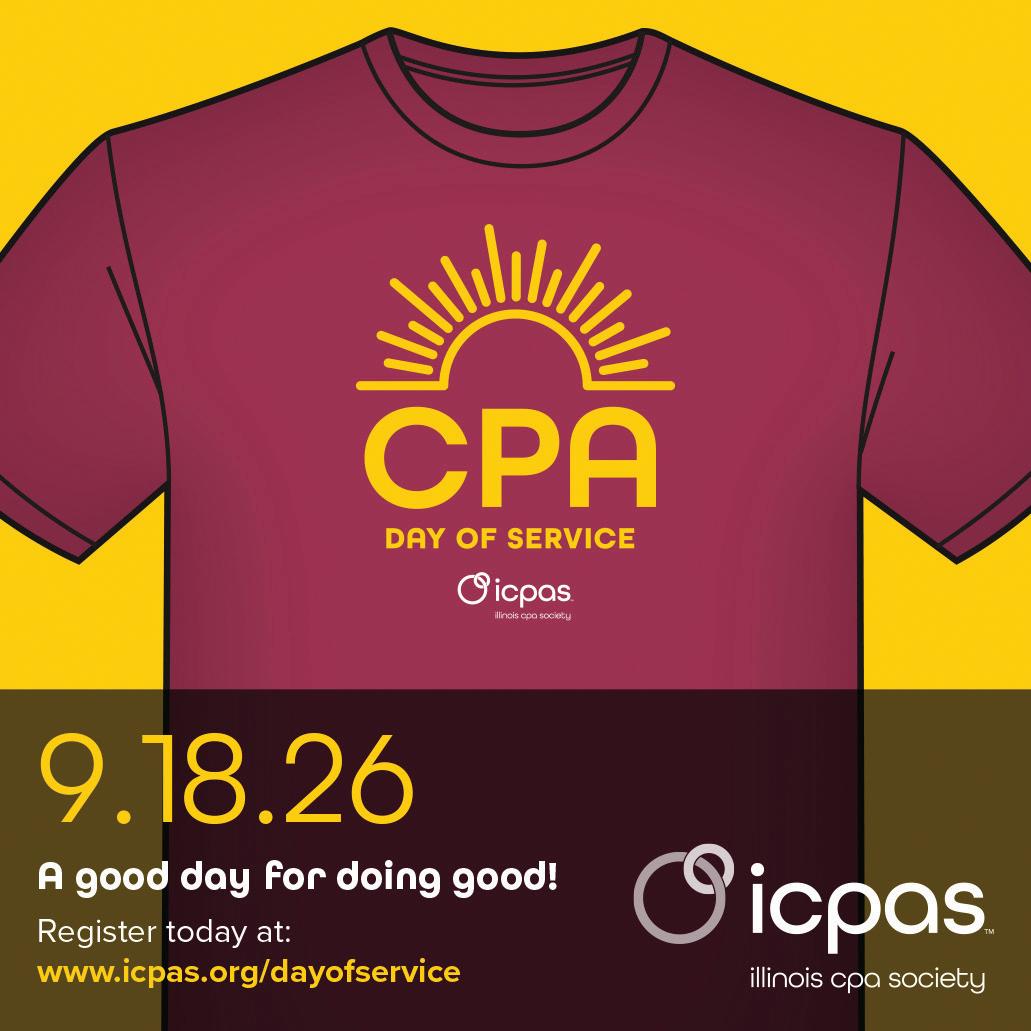

Deanna M. Kanosky, CPA
Vice President, Corporate Controller, The Planet Group deanna.kanosky@theplanetgroup.com
ICPAS member since 1998
As treasury management evolves, corporate controllers will play a critical role in shaping and nurturing an organization’s relationship with its banking partner.
Traditionally, treasury management was viewed as a back-office function, primarily focused on safeguarding cash. Today, that’s no longer the case—treasury management has become a dynamic driver of resilience, liquidity, and enterprise value.
As this transformation unfolds, the corporate controller’s role and influence has also become more critical than ever, especially in shaping and maintaining the organization’s relationship with its banking partner.
Since corporate controllers are responsible for financial accuracy and transparency, operational discipline, and strategic foresight, they’re well-positioned to evaluate and nurture this unique relationship for current and future needs. As such, I recently had the opportunity to sit down with Kelly Prete, treasury sales group manager, and Kelsey Phillips, relationship executive, at J.P. Morgan Commercial Banking, to discuss this working relationship and how to navigate it through the changing business landscape.
Over the past five years, companies have significantly improved how they leverage their enterprise resource planning systems in partnership with their banks. According to Prete and Phillips, this stronger alignment is enabling greater automation across accounts receivable (AR) and accounts payable (AP), driving meaningful efficiency gains for customers and internal teams.
Many companies are also gaining firsthand experience in managing geopolitical risk, particularly in periods of heightened uncertainty and complexity that we’ve seen in recent years. Tapping your banker or another advisor to help navigate these risks can be helpful. For example, JPMorganChase recently launched a dedicated Center for Geopolitics, reflecting the reality that global political dynamics increasingly influence financial operations, liquidity planning, supply chains, and overall business strategy. Their goal is to help clients navigate these complexities with more precision and preparedness.
Looking ahead, artificial intelligence (AI) is expected to reshape the banking industry and the treasury function. For instance, AI is being explored as a tool to support associates in their day-to-day responsibilities, with the idea that AI-enabled assistants could soon become standard. The goal is to free up capacity so teams can focus more deeply on enhancing the client experience.
AI-driven chatbots are already in use today to help customers answer common questions. Although, the experience has been mixed. While convenient, customers often express
frustration when they can’t easily reach a human during more complex or urgent situations. That said, the future of value creation will ultimately lie in effectively blending AI capabilities with human connection.
Additionally, AI is poised to play a major role in cybersecurity, an area of escalating concern as cybercrime continues to rise. Other AI applications are also being explored to improve forecasting, fraud detection, risk scoring, and cash visibility.
Given this rapidly changing landscape, how should organizations choose the “right” banking partner? Having recently gone through this process myself, here are some steps that worked for my organization.
First, conduct an inventory of existing processes and meet with key stakeholders in your organization, including executive leadership, treasury, corporate finance, financial planning and analysis, accounting, collections and AR, AP, internal audit and compliance, and IT. Their collective input should form the foundation of your request for proposal (RFP).
Of course, this isn’t a one-size-fits-all exercise. RFP requirements will vary depending on your organization’s makeup (e.g., size, public versus private ownership, domestic versus multinational operations, and growth strategy).
I recommend securing three to five RFPs; anything more becomes burdensome and dilutes focus. The stakeholders involved early in the process should also participate in evaluating the proposals within their areas of expertise. This typically includes meeting with each bank’s service team and completing scorecards to objectively assess each institution.
Other considerations when assessing a potential banking partner may include looking at an institution’s:
• Cost and pricing transparency.
• Customer service and relationship model.
• Technology and integration capability.
• Geographic and global coverage.
• Credit capacity and flexibility.
• Cultural alignment and values.
Once all inputs are collected, it’s time to select your strategic banking partner—an exciting milestone marking the start of a longterm relationship. Take a moment to celebrate the decision, then move directly into planning the implementation.
This phase sets the foundation for the partnership and defines what, when, and how it’ll be implemented. Organizations must determine whether to adopt all solutions at once or take a phased approach. For instance, my team opted for a phased rollout due to resource constraints, which proved to be the right choice.
Putting your new banking partnership into action requires work beyond your usual responsibilities, so resourcing must be carefully considered. Underestimating this effort will almost certainly cause timeline delays. Since technology system integration is often required, IT should be engaged from the very beginning to ensure a smooth transition.
Depending on scope, implementing a new banking partner typically takes three to six months, though durations can vary. To keep the project on track, regular check-ins with both the
bank’s team and your internal teams are essential. This ensures alignment, transparency, and consistent communication across all stakeholders.
Once the implementation is complete and new solutions are in place, ongoing communication is key. Regular check-ins with your relationship managers provide an opportunity to share feedback and stay informed about new product offerings that may enhance efficiency or security.
Overall, effective communication—both internally among key stakeholders and externally with your banking team—is the foundation of a successful treasury partnership.
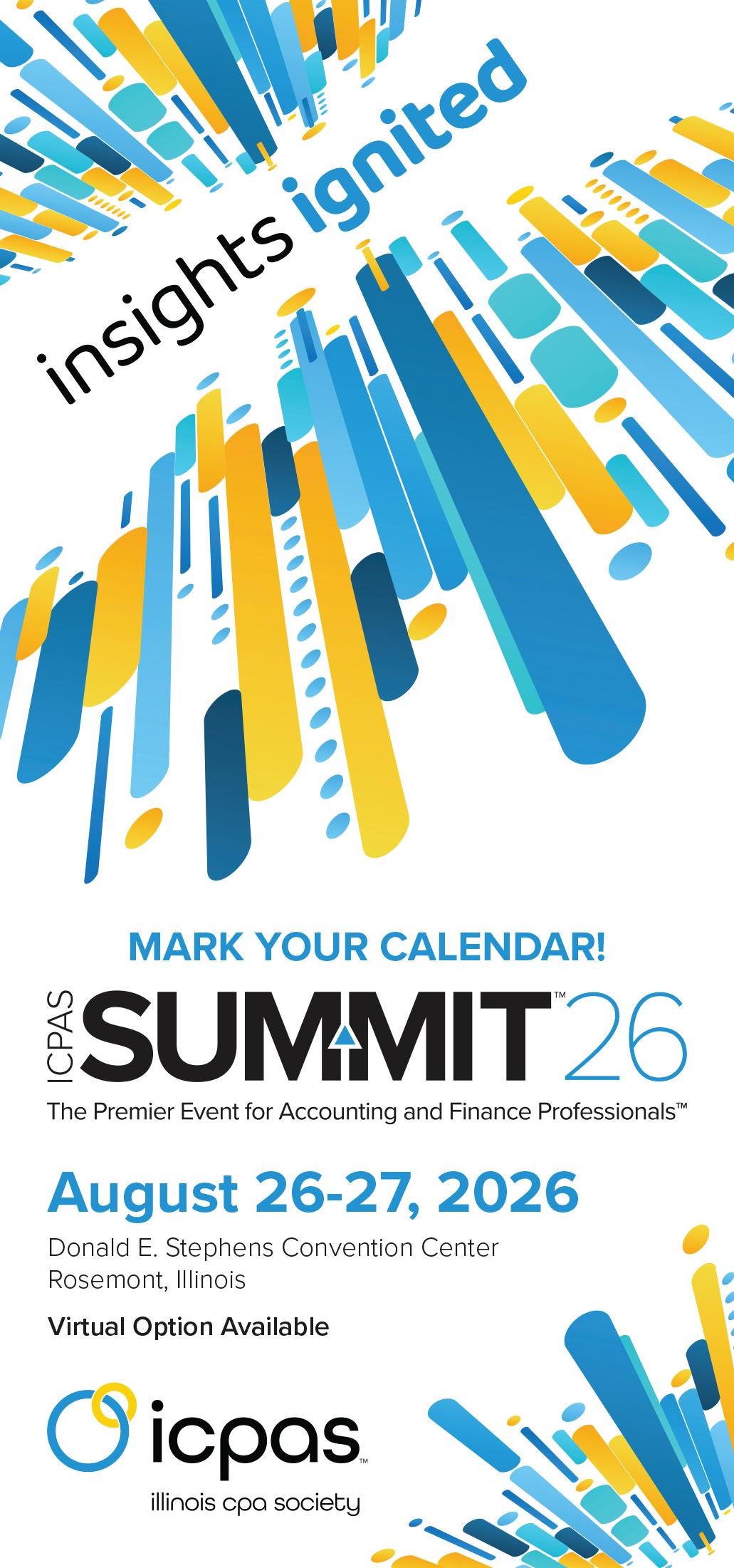

Brian J. Blaha, CPA Managing Director, Winding River Consulting LLC
bblaha@windingriverconsulting.com
ICPAS member since 2011
The profession’s future won’t be defined by a single ownership model—it’ll be defined by whether firm leaders shape their own paths or allow circumstances to dictate which ones they’ll take.
One thing is unmistakable to today’s certified public accounting (CPA) firm leaders: The ground beneath the accounting profession is shifting. Private equity (PE) capital is accelerating into the industry; firm valuations are being discussed in ways that were unthinkable a decade ago; and all at once, technology, talent shortages, regulatory pressures, and rising client expectations are colliding.
For many firm leaders, the conversation feels increasingly binary—sell or don’t sell, take capital or stay independent, modernize or risk falling behind.
But framing the future as a forced choice misses a more fundamental issue. The real question firm leaders should be asking isn’t which path to take but whether they’re intentionally building the ability to choose a path at all. That question sits at the heart of what I’ve come to call “strategic optionality.”
Strategic optionality isn’t a buzzword or an argument against PE. At its core, strategic optionality is a firm’s ability to maintain meaningful choices about its future—choices aligned with its strategy, values, and long-term vision.
Firms with strategic optionality can choose whether to remain independent, pursue a merger, accept minority investment, or accept PE capital. Firms without strategic optionality often feel forced into decisions by circumstances they no longer control: unfunded retirements, underinvested technology platforms, leadership gaps, or an inability to compete for talent.
Over the past several years, I’ve paired this concept with an enterprise value lens when working with firms that have declared—clearly and sincerely—that they want to stay independent. However, in our profession now, independence can no longer be a passive state. It has to be designed, funded, and governed with intention.
The influx of PE investments in professional services firms has fundamentally altered how firms think about themselves. Historically, most CPA firms operated as cash-flow businesses, with profits distributed annually, deferred compensation plans providing modest retirement security, and ownership primarily about income over appreciation.
PE has introduced a different paradigm: Firms are now operating as multifaceted financial services enterprises built to maximize enterprise value. While this shift has understandably created anxiety, I view it as largely positive. Running our firms as businesses—real businesses—shouldn’t be controversial. In many ways, it’s overdue.
This evolution has also exposed an uncomfortable tension. As firms chase enterprise value, questions arise about who that value is ultimately created for—and at what cost. In
some models, shareholder value becomes the primary objective, while clients, people, and even the profession itself risk becoming secondary considerations.
This then leads to a harder, but necessary, question: Is the accounting profession still a profession?
It’s no secret that the accounting profession feels under pressure from multiple directions. Some argue we’re no longer a profession at all—we’ve simply become another segment of the broader financial services industry.
By regulation, a licensed CPA firm is required only for attest work. Advisory, consulting, technology, and many other services increasingly operate outside the traditional CPA firm structure. As alternative practice structures proliferate, the distinction between “the firm” and “the profession” continues to blur.
Even the concept of “partner” is evolving. The partnership model has long served as both an ownership mechanism and a motivator, but in many modern structures—particularly those involving PE— partners have effectively become shareholders. Partnerships will persist, but “making partner” no longer carries the same meaning it once did in many firms as ownership, control, and long-term economics vary widely depending on structure, governance, and capital strategy.
One of the most fascinating (and troubling) patterns I see in boardrooms is how much speculation exists about what nextgeneration firm leaders want despite how rarely those assumptions are tested.
There’s no shortage of commentary about this group: their work ethic, desire for balance, or appetite for ownership. Yet, when leadership teams are asked, “Have you asked them?” the answer is often no.
Well, my consulting team did ask this question at one firm we worked with, and the answers were revealing. For many emerging leaders, the desire to be an owner hasn’t disappeared. What’s changed is the context: They want transparency, a clearer line of sight to value creation, and ownership economics that don’t require waiting decades to realize the benefits.
At Accounting Today’s Private Equity Summit in November 2025, I heard two CEOs of recently PE-backed firms describe their transactions as a “one-time unlock of value.” This phrase has stuck with me. It’s accurate—and that’s precisely the issue.
For current senior partners, that “one-time unlock” can be transformative. But it also concentrates the majority of value realization at a single point in time. Has anyone truly modeled what the second bite of the apple looks like for the next generation? If a firm sells a majority stake, future value creation largely accrues to the PE sponsor. Yet, the firm still depends on its next generation of leaders to grow, innovate, and execute the strategy required to deliver the sponsor’s returns.
Without the traditional partnership “carrot,” firms must rethink what ownership actually means.
Consider a well-run firm with $50 million in revenue and a 15% earnings before interest, taxes, depreciation, and amortization (EBITDA) margin that sells a 70% stake to a PE firm. To deliver an
attractive return—often four to five times invested capital over five years—the firm must materially grow EBITDA. In an industry growing at roughly 6-8% annually, that requires consistent outperformance, meaningful margin expansion, and often inorganic growth.
Yet, the pool of attractive acquisition targets is shrinking as firms with and without PE backing compete aggressively for growth. The math becomes tight, execution risk increases, and the burden of delivering that growth falls disproportionately on the next generation of leaders.
We haven’t yet seen many second exits in this industry, but when we do, they’ll offer important lessons—for better or worse.
For partnership groups evaluating their future, the goal should be preserving choice rather than avoiding change.
Strategic optionality requires understanding where each partner sits in their career and balancing individual financial realities with collective fiduciary responsibility. It demands honest conversations about capital retention, governance, ownership pathways, and the firm’s role in upholding public trust.
Firms that intentionally design enterprise value—by separating compensation from ownership, reinvesting strategically, modernizing governance, and creating real ownership pathways for future leaders—expand their options rather than constrain them. Independence becomes a choice supported by discipline, not nostalgia. External capital becomes a strategic option, not a last resort.
To me, strategic optionality is how firms stay in control of their destiny in a profession that’s changing whether we like it or not.


Elizabeth Pittelkow Kittner CPA, CGMA, CITP, DTM CFO and Managing Director, Leelyn Smith LLC ethicscpa@gmail.com
ICPAS member since 2005
Here is how to balance professional integrity in high-value relationships amid everyday ethical pressures.
Ethical pressures within professional relationships, whether inside or outside the organization, rarely look unethical on the surface. In some cases, ethical pressures may be masked with words like efficiency, agreement, or trust. Even common phrases like “easy to work with” can dilute one’s ability to apply independent judgment and decision making over time.
Knowing how to respond to ethical dilemmas is sometimes straightforward, especially when a client or colleague asks for something that is clearly wrong. In those situations, the requests can be refused, and the relationship can end. However, many situations are more complex. For instance, if a leader or supervisor asks for something that feels off, or if a long-standing, profitable client pushes the ethical edges of what is acceptable, knowing how to respond may not be as clear.
Whether internal colleague pressures or external client pressures, the underlying issues are similar. Ethical pressures often show up when avoiding tension feels easier than continuing the conversation. Here are a few examples of what these ethical pressures may look like.
Colleagues may apply pressure with statements like:
• “We have always done it this way.”
• “We do not want to create a bottleneck in the process.”
• “We have never had anyone push back on this approach before.”
Clients may apply pressure with statements like:
• “Is there any flexibility on how this code section is applied?”
• “What is the likelihood I will be audited if I want to take this action?”
• “Would another organization be willing to apply different thinking on this matter?”
Professional standards, including Treasury Department Circular No. 230 and guidance issued by the AICPA, emphasize independent judgment. However, independent judgment is more difficult to execute when the disagreement feels like it is more about the relationship rather than the technical application of the rules.
Pushing back can feel like undermining trust, slowing progress, or being perceived as difficult. Over time, small accommodations for either colleagues or clients can become easier to justify, and ethics could gradually erode. It is important to remember that the discomfort felt when pushing back is a signal that professional judgment is being tested.
Organizations that manage ethical pressures well treat them as a shared responsibility in addition to holding individuals accountable for their behaviors. Organizations can make it clear that questioning assumptions is part of exercising professional integrity and is more important than maintaining unethical relationships. Annual assessments of client and internal relationships can create a dialogue and help identify issues before they escalate.
In situations where ethics are challenged, guardrails matter. When ethical pressures present themselves, professionals often sense them before they can fully articulate or communicate them.
Here are questions to ask yourself when faced with situations that feel unethical:
• “Am I applying the same judgment I would apply to a similar situation?”
• “Would I reach the same conclusion if the relationship was not important?”
• “Would I be comfortable explaining my judgment to a regulator, leader, or successor?”
Whether the conversation involves a client or colleague, the right language can help inspire courage in tough situations. Organizations could provide training on how to approach ethical dilemmas. Additionally, organizations should be mindful of how their compensation and incentive structures communicate organizational values. If retention and harmony are rewarded without enough emphasis dedicated to ethical risks, ethics can get murky.
The London Interbank Offered Rate (LIBOR) manipulation scandal is an example of how relationship-driven behaviors can undercut ethics. For many years, several global banks submitted daily estimates used to set the LIBOR, a benchmark that affects trillions of dollars in financial transactions and contracts worldwide. The banks’ submissions were intended to reflect each bank’s independent assessment of its borrowing costs, but they were instead affected by peer expectations, trader relationships, and market norms. Small adjustments to estimates were viewed as favors instead of fabrications, and ethical risks were not prioritized. This unethical behavior persisted from the mid-2000s until regulators exposed it in 2012, which is an example of how easily independent judgment can erode when relationships become the most important priority.
The LIBOR scandal also highlights the concept of groupthink, which can lead individuals to participate in unethical behaviors because others are and no one in the group is strongly objecting to them.
A way to safeguard against groupthink is to encourage differing opinions as part of the organization’s decision-making processes. Consider asking someone to serve as the counterarguments person to intentionally think through reasons to not take a particular course of action. Depending on the project, it could be effective to rotate the counterarguments person so others get a chance to practice and develop this skill. This rotation ensures ongoing decisions are not biased by similar thinking. It is also a powerful practice for leaders to encourage others to speak their opinions first, only sharing their opinion later to reduce their influence on others’ thinking.
When considering safeguards against groupthink, choice of language is important and can help professionals raise concerns in a way that indicates thoughtfulness instead of opposition. Phrases may include:
• “Before we make a decision, let’s pressure-test it.”
• “This idea warrants another look at the current facts.”
• “I would like a colleague to look at the situation with a fresh set of eyes.”
Another important safeguard against ethical pressures for organizations to be mindful of is their follow-through once an ethical concern is raised. When professionals see that raising ethical concerns leads to discussion and review instead of retaliation, they are more likely to speak up again, which elevates the integrity of both the organization and its people.
While it is natural to want to preserve relationships with colleagues and clients, professional ethics and integrity must remain at the center because they are the foundation of healthy relationships over time.
Professional relationships work best when they are grounded in integrity and supported by healthy, respectful discussion. Those conversations should allow room for well-intentioned pushback and professional judgment, even when it slows the decisionmaking process. Colleagues and clients may not always agree with you, but when they respect you and your organization, they are more inclined to interact with you in ethical ways.


Art Kuesel President, Kuesel Consulting art@kueselconsulting.com
While many in the accounting profession chase size and capital in a consolidating market, the hidden benefits of independence offer firms a different kind of edge.
Many certified public accounting (CPA) firm leaders today feel like they’re missing out if they don’t merge up, take a private equity (PE) investment, or join a PE platform. Others, however, are rejecting that path and declaring their intention to stay independent.
There’s no question that merger and PE mania has swept through the profession. In the last five years alone, we can count hundreds of these types of transactions swallowing up big firms and making them even bigger, all with the goal of funding rapid growth, geographic expansion, and a breadth of capabilities.
But the strategic question for firm leaders isn’t simply whether consolidation is happening— it’s what independence still offers. While PE brings capital and larger firms bring scale, independence offers something harder to quantify—advantages for leadership, staff, and clients that are less obvious and often overlooked.
One of the biggest advantages of independence emerges in the area where accounting firms have traditionally built their value: relationships. The roots of a local firm generally run deep with considerable ties to clients and a solid connection to the business community in which they serve. With that comes longevity, depth, and a strong reputation.
A typical “main street” business doesn’t set out to work with a top 100 firm in the country— they’re looking for one they know, like, and trust. Also, clients typically don’t like surprises. Clients appreciate knowing their service team will remain consistent.
That relationship-driven expectation can look different inside larger firms that may focus less on the relationship and more on compliance, process, and risk management. For instance, a firm built to serve a large company like Boeing is far different than one serving the small local boba tea cafe. Independent firms have the freedom to choose which clients they serve and what services they offer, giving them the control to preserve the clientfocused approach valued by their clients.
Independence shapes how firms serve clients and how quickly they feel pressured to change. The rate of change is often slower inside independent firms compared to PEbacked ones, which are more focused on the accelerated use of technology and rapid growth to meet strategic targets or investor expectations.
Metrics are also likely different within PE-backed firms, possibly with an increased emphasis on performance (e.g., billable hours), top-line growth, profitability, or requirements to leverage offshore resources. These priorities may not be attractive to professionals accustomed to the operational routine at smaller firms.
Beyond client relationships and pace, independence can produce these additional advantages inside the firm itself:
• A closer proximity to leaders: Professionals who are closer to decision makers often enjoy stronger mentorship, broader skill development, and a quicker path to advancement. The larger the firm, the more steps there are between the high performers and leadership.
• A demonstrated difference in focus that can attract talent: Independent firms often offer professionals less volatility and a deeper focus on client relationships. As a result, this can pull in talented professionals who aren’t suited for a larger environment with clients they’re unaccustomed to serving. Additionally, independence can provide differentiation when many larger firms appear similar.
• A commitment to culture that sparks loyalty: Remaining independent means the culture you built is the culture you alone preserve and refine. With their own leadership styles and commitments to service, independent firms can engender a loyal following among staff and clients alike. They can also position themselves as stable, partner-led, and relationshipcentric firms.
• Agility through a simpler ownership structure: Being nimble is easier when ownership and control sit in the same room. For




example, smaller firms can restructure leadership or rethink compensation within the partner group, while larger firms often introduce boards, reporting requirements, or performance metrics tied to investor oversight. Independence allows governance to be redesigned around the firm’s strategic needs instead of its capital structure.
Of course, independence isn’t automatically an advantage. Firms that choose independence should do so intentionally, understanding that it comes with its own challenges. It’s not the free and easy path—and there will still be the need for change. In fact, to compete in this evolving landscape, independent firms must update their governance structures, pressure-test succession plans, invest in new technology, and ensure an attractive buy-in and buy-out for their partners exists.
Importantly, independence isn’t inherently superior. Poorly governed independent firms can struggle just as much as poorly integrated larger ones. But what may be the greatest—and most overlooked—advantage of independence is the permission to preserve structural simplicity, economic sovereignty, and cultural continuity. By remaining independent, firms retain the freedom to define their own success, and that autonomy may be the greatest strategic advantage of all.



















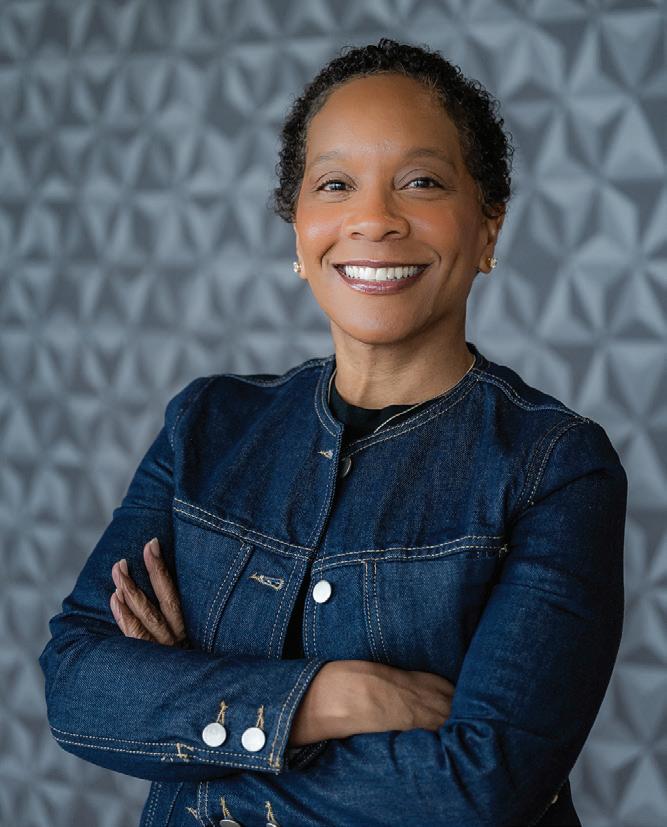
Andrea Wright, CPA Partner, Johnson Lambert LLP awright@johnsonlambert.com
ICPAS member since 2010
Here’s how not-for-profit organizations can ethically and effectively adopt AI to strengthen their mission.
The unique challenges not-for-profits (NFPs) face—limited resources, high demand for services, and a constant need for compelling communication—make them particularly well-suited to benefit from generative artificial intelligence (AI). However, successful AI integration requires more than just selecting a tool; it demands a comprehensive strategy to ensure the technology serves the NFP’s mission and not the other way around.
NFP leaders looking to ethically and effectively adopt generative AI across their organization should build their AI foundation on these four pillars.
Generative AI has the potential to free up limited resources and amplify mission delivery. Here are a few ways NFPs can leverage AI’s benefits:
• Enhance fundraising and communication efforts: Generative AI can automate and personalize donor outreach at scale, drafting compelling, tailored emails and solicitations. Further, AI excels at summarizing research for grant proposals, drafting powerful narratives, and generating engaging, on-brand social media content and press releases.
• Streamline administrative and operational efficiencies: AI can significantly mitigate administrative burdens by automating report generation, summarizing complex meeting minutes and documents, improving data entry accuracy, and optimizing scheduling across teams.
• Boost program impact: AI can analyze large, complex data sets to identify emerging demographic trends, refine service delivery models for maximum efficacy, and more accurately predict community needs than traditional methods.
Many generative AI tools function successfully as “off-the-shelf” creative partners without accessing your confidential database. With these tools, employees can immediately leverage them for drafting content, brainstorming, and summarizing public information without waiting for a massive data cleanup. But to eventually use AI for analyzing donor trends or predicting program outcomes, the quality of your internal data becomes paramount.
For advanced applications where AI interacts with your records, organizations must prioritize data hygiene, which involves standardizing formats and purging obsolete records. As part of this data cleanup, NFPs should consider:
• Ethical data sourcing: Because NFPs handle sensitive constituent data, it’s crucial to have a clear discussion on the legal and ethical considerations of using the data for AI training. This includes ensuring all data is anonymized where appropriate, consent is explicitly secured for its use, and data usage strictly adheres to the organization’s privacy principles.
• Assessing technological readiness: Successful AI solutions often require significant computational resources. Therefore, NFPs must evaluate their current IT infrastructure, including cloud storage capabilities, network bandwidth, and existing security measures to identify the steps needed to support scalable and secure AI solutions.
AI’s success depends on the people using it. Cultivating an AIready operational culture through comprehensive training and organizational buy-in is vital to ensuring enthusiastic and effective adoption across all departments.
Before diving into training, it’s important to define the goal. For most NFPs, the goal is to move employees beyond basic AI literacy to AI fluency.
Employees with high AI fluency understand these core concepts:
• Prompting as delegation: They know that to get a good result, they must brief the AI agent just as they would a human intern— providing context, role, constraints, and examples.
• Capability discernment: They instinctively know which prompts are high value for AI (e.g., “Summarize these meeting notes”) and which are high risk (e.g., “Fact-check this news event”), saving time by avoiding dead ends.
• Iterative collaboration: They understand the first output is rarely the final product. They know how to “reply” to the AI agent to refine, edit, and polish the work, treating the tool as a thought partner rather than a search engine.
Importantly, a one-size-fits-all approach to training is insufficient. Organizations need to develop specialized training pathways tailored for different departments to ensure effective and relevant adoption. For example, development teams should be focused on prompt engineering for fundraising letters, program delivery teams should be focused on data analysis tools, and finance teams should be focused on automated reporting.
While training is a start, true AI fluency comes from continued usage. Leadership should encourage a culture of experimentation where employees feel safe testing these tools on small, low-risk tasks every day. To do so, consider these tips:
• Measure usage to improve: Adoption should be tracked not just by who has a license but by daily active usage. There’s a direct correlation between frequency of use and fluency.
• Foster a continuous learning environment: The more employees interact with large language models, the faster they learn to distinguish between what the models excel at (summarization, ideation, and drafting) and where they struggle (nuanced judgment and factual recall of obscure events). High-frequency users quickly learn how to “guide” the AI by customizing the context they provide to get the best responses.
• Leadership sponsorship: The sustained success of any major organizational change requires executive support. The role of executive leadership is to champion AI initiatives, allocate necessary financial and human resources for implementation and ongoing maintenance, and visibly model the responsible use of AI tools.
As AI tools become deeply integrated into an NFP’s operations, robust governance is nonnegotiable in protecting the organization and constituents. A good start is establishing essential AI safeguards and policy frameworks:
• Identify and address bias: AI algorithms can perpetuate and even amplify existing societal biases if not carefully monitored. NFPs need to adopt strategies for identifying and addressing algorithmic bias to ensure equitable outcomes for all populations they serve. This includes regular auditing of AI outputs and ensuring diverse voices are involved in the development and review of AI-driven processes.
• Ensure data privacy compliance: NFPs should establish clear, stringent policies that adhere to relevant state and federal privacy regulations. This is particularly critical when using AI tools for constituent data analysis or direct communication.
• Maintain transparency and accountability: Defining clear lines of responsibility for AI-driven decisions is paramount. Employees must understand when a decision was influenced or made by an AI action and who’s ultimately accountable for the outcome. Further, organizations must ensure audit trails are maintained for all critical AI applications, allowing for review and correction.
• Follow risk management best practices: Identifying potential security vulnerabilities is a continuous process. This involves establishing protocols for responsible AI deployment, monitoring for unauthorized data leakages through generative tools, and continuously training employees on secure AI practices to protect sensitive information from both internal and external threats.
It’s vital for leadership to recognize that generative AI models are probabilistic engines, not deterministic databases. They’re designed for creativity and pattern matching rather than factual retrieval. That’s why these safeguards are necessary to ensure they’re used for generating drafts and ideas, not for making final, unverified decisions (i.e., policies should dictate that AI is the drafter, but the human is always the editor and publisher).
Overall, generative AI is a rapidly expanding technology that’s creating new opportunities for NFPs to work smarter and further amplify their missions. However, as with any emerging tool, constant vigilance is necessary to mitigate potential risks. By building on these four pillars, NFPs can harness AI’s benefits while safeguarding the integrity of their work.
This column was co-authored with Johnson Lambert LLP’s David Fuge, chief innovation officer, and Paul Preziotti, CPA, partner.

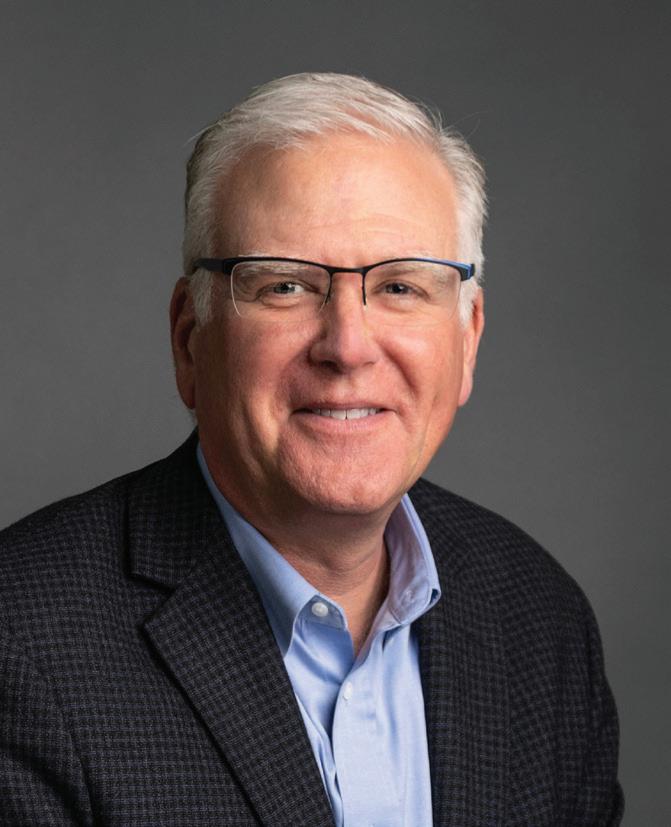
Brian Kearns, CPA, CFP, RIA Founder, Haddam Road Advisors brian@haddamroad.com
ICPAS member since 1989
Now isn’t the time for personal financial planners to run away from AI—this our profession’s window of opportunity.
Twenty-one years ago, in 2005, New York Times columnist Thomas Friedman described the coming of a new world order in his book, “The World Is Flat: A Brief History of the Twenty-First Century.” In it, he describes the 10 “flatteners” that were changing the world at that time, creating an environment of revolutionary change in the global economy that would allow people around the globe to connect, collaborate, and accelerate commerce.
Among the great forces of change he mentioned were the internet and web browsers; software like Microsoft Office; and the idea of constant connectivity, including technologies like Voice over Internet Protocol and mobile phones. To give some perspective on the prescience of this book: It was published two years before the launch of the first Apple smartphone.
Fast forward to today, many of Friedman’s predictions have come to fruition. The technology he described has connected us all and has fundamentally changed the way we work, creating new products and services seemingly out of thin air while destroying certain industries. Think about it this way: When’s the last time you flagged down a taxi?
While these changes benefited many, they unfortunately left others without the requisite skills needed to survive the evolving “K-shaped” economy. For example, a friend of mine owned a cab company; they now drive for Uber.
Throughout this economic and social turning, one moat has persistently prevented even faster and more effective change: the ability to turn an idea or service into reality through software development. Unless you’re a coder, you can’t speak Python, Java, or C++. You’re either bidding for expertise or searching for it to get your project completed.
In the last six months, a techno-superhighway has been paved over that moat. Yes, it’s artificial intelligence (AI), and your business won’t look the same in five years. But that’s not something to fear—it’s offering you the single greatest opportunity to build a service model that you can create, manage, and control.
Despite the imagery often used to convey AI, the general population won’t be relying on robots for all analysis and guidance—that time isn’t yet upon us. While it’s true that the current landscape demands business builders and owners to rely on technical solutions to analyze, interpret, and recommend a cogent strategy, we’re still organic beings with a desire for human guidance and advice. Keep in mind that George Jetson (yes, the legendary TV cartoon dad from “The Jetsons”) was born on July 31, 2022. He’s just learning to walk.
LEARNING TO SPEAK AI
So, what’s next? I don’t know your path, but I’ll tell you my experience thus far in hopes that it may spark your imagination and motivation to build for the next phase of how we do commerce.
Two years ago, I hired a marketing firm to help build my practice, Haddam Road Advisors. I spent tens of thousands of dollars and generated zero activity (literally zero). In hindsight, I’ve realized that the traditional marketing model in financial services was already obsolete.
Recognizing this, I wanted to deepen my understanding of the new AI landscape I kept hearing about, so I signed up for an online AI course. It was a lot of work, but I gained an understanding of large language models (LLMs), computer vision, few-shot prompting, and a whole bunch of other things I’d never heard of before. Building a basic chatbot was the final project of the course—and that was cool. However, despite earning the Microsoft AI 900 qualification, I still found a fundamental limitation to my learning: I’m not a coder, and I’m not fluent in the language of AI.
Still, I kept tabs on the AI space. I joined an online community of accountants to keep up with changes. Through this community, I learned about a certain tax software that uses AI to scrape document data and upload it directly into prep software. I checked it out and bought a license after one demo. It changed the operational side of tax prep (both in time and cost), and it improved my service model.
But I was still trying to build a marketing framework for Haddam Road Advisors. So, I kept poking around in cyberspace and happened upon another community focused on using AI to create autonomous business applications—it’s been a game changer!
I’m also making fast friends with Claude, which is an LLM designed with the emphasis of being helpful, harmless, and honest. It’s an astounding technology and a productivity supernova. In fact, I need to install a cushioned floor in my office because in the last two months my jaw has kept hitting it.
Just to give you an example on its capabilities, I recently asked Claude for some help on research related to the “Oracle of Omaha,” aka the legendary investor and chairperson of Berkshire Hathaway, Warren Buffett.
Before he retired as CEO in December 2025, Buffett used to write an annual letter to his shareholders, which became one of the most anticipated financial documents every year. I asked Claude to help me generate a list of these letters from the last 50 years. My AI group showed me how to upload this information into NotebookLM (a new Google AI platform) and process this information. It generated a mind map, a five-minute video, and a 17-minute podcast (with AI voices) titled, “Trading Cigar Butts for Beautiful Businesses.” And there it was: 50 years of Buffett’s wisdom distilled in a way that I could use to gain a better perspective on how he invests. Admittedly, it wasn’t super in-depth or detailed, but if I’m ever looking for a better understanding of any subject in the future, I’m using this technique first.
So, how do I apply this to my business? I honestly have no idea, and here’s the silent truth: no one else does either. This evolution is an ongoing process and something I’m happy to share (drop me a line and we can chat).
For now, here’s a basic framework to build on:
• Gain skills: Invest in yourself. Take a course, find resources, and ask AI to explain them.
• Join communities: Find people who know more than you do, learn from them, and share the knowledge you’ve gained from
your experience. Younger, older—it doesn’t matter. No one knows the whole answer, and it seems now more than ever people are willing to help everyone move forward.
• Learn by doing: Expertise equals knowledge plus mistakes— and wisdom is expertise applied over time, just ask Buffett. Knowing what not to do is almost as important as knowing what to do—perfection is the enemy of progress. Remember, Roger Federer, one of the greatest professional tennis players of his generation, lost 46% of his points during his career. That’s a lot of failure on the way to success.
As you move forward, consider this bit of wisdom from American record producer Rick Rubin: “Beware of the assumption that the way you work is the best way simply because it’s the way you’ve done it before.”
When it comes to AI, I’d encourage you to keep this in mind and realize the more you participate, the more you’ll benefit in this great flattening wave.
“We come to you!”

Provide your staff with the professional and personal development training they need, from the convenience of your own office.
Schedule your Tailored Team Training session today by contacting Gayle Floresca at 312.517.7618 or florescag@icpas.org

Keith Staats, JD President, Taxpayers’ Federation of Illinois kstaats@illinoistax.org ICPAS member since 2001
Numerous homestead exemptions are available for homeowners, seniors, and veterans in Illinois. Here’s an overview of some of them—and how your clients can qualify.
The Illinois General Assembly returned to Springfield, Ill., for the spring legislative session, where there’s been the usual flood of newly introduced legislation. Many of these bills would impose new or expanded property tax exemptions—some of which are homestead exemptions.
A homestead exemption is a type of property tax exemption that reduces the assessed value of residential property. The ways in which these exemptions are claimed vary from exemption to exemption and from county to county.
Notably, the Illinois Constitution and Property Tax Code outline the rules for full or partial property tax exemptions, including homestead exemptions. However, the constitution specifically limits the nature and extent of property tax exemptions that may be granted. According to Article IX, Section 6 of the constitution:
“The General Assembly by law may exempt from taxation only the property of the state, units of local government and school districts and property used exclusively for agricultural and horticultural societies, and for school, religious, cemetery and charitable purposes. The General Assembly by law may grant homestead exemptions or rent credits.”
Many of your clients may be unaware of how many homestead exemptions are available in Illinois—there’s quite a few. With the General Assembly convening on legislation that may increase income limits or create new exemptions, it may be a good time to brush up on what’s currently available to taxpayers.
Here’s an overview of some of the homestead exemptions available and the requirements needed to obtain them.
• General Homestead Exemption: May be claimed by an owner who occupies a residential property as their principal residence. It may also be claimed if there’s a leasehold interest in which a single-family residence is situated. In this case, the residence must be occupied by a person who has a legal or equitable ownership interest in the property or if they’re the lessee of the property, and the person is liable for the payment of property taxes. The exemption amount can be claimed up to $10,000 in Cook County, $8,000 in counties contiguous to Cook County, and $6,000 in all other counties.
• Homestead Improvement Exemption: May be claimed in an amount of up to $25,000 of assessed value that was added to a homestead property by any new improvement or rebuild after a catastrophic event. Additionally, the exemption continues for four years from the date the improvement or rebuild is completed and occupied.
• Natural Disaster Homestead Exemption: This exemption is for a rebuild of a residential structure following a natural disaster. The exemption amount is determined by comparing the equalized assessed valuation (EAV) of the residence in the first year the property owner applies for the exemption and the EAV of the residence in the year prior to the disaster occurring.
• Longtime Occupant Homestead Exemption: Applies to a very small subset of property owners who are in a county that’s elected to be subject to the provisions of the alternative general homestead exemption. According to the Cook County Assessor’s Office, only approximately 11,000 homes in Cook County qualify for this exemption. To qualify, individuals must have a household income of $100,000 or less. They must also have occupied the same homestead property as a principal residence or domicile for at least 10 continuous years or five years if they occupied the same homestead property and received assistance in the acquisition of the property under certain government or nonprofit programs. Additionally, the exemption amount is based on the greater of the EAV of the homestead property for the current tax year minus the adjusted homestead value or general homestead deduction.
• Persons With Disabilities Homestead Exemption: This exemption is a reduction of EAV of $2,000 on a primary residence occupied by a person with a disability. That person must be liable for the payment of the property taxes and be the owner or have a legal or equitable interest in the property. Leasehold interests are limited to single-family residences.
• Senior Citizens Homestead Exemption: Available to people age 65 or older. The person must be the property owner or have a legal or equitable interest in the property, and they must be liable for paying real estate taxes on the property. This would include only leasehold interests on which a single-family residence is located. The maximum exemption amount is $5,000 ($8,000 in Cook County).
• Low-Income Senior Citizens Assessment Freeze Homestead Exemption: This exemption freezes the property’s EAV beginning with the year a senior citizen qualifies for the freeze. The maximum household income that qualifies is $75,000 for 2026, $77,000 for 2027, and $79,000 for 2028 and after.
• Senior Citizens Real Estate Tax Deferral Program: This isn’t a homestead exemption—it’s a deferral of property taxes. Eligibility for the program consists of persons age 65 and older who have owned and occupied a property as their residence for the last three years and whose maximum household income is $77,000 for 2026 or $79,000 for 2027 and after. An eligible taxpayer may defer all or part of the property taxes on their principal residence. With this program, the state pays the property taxes and places a lien on the property for the taxes, and the state recovers the money plus interest upon sale of the property.
• Returning Veterans Homestead Exemption: Consists of a $5,000 reduction in the EAV of a veteran’s principal residence upon returning from active duty in armed conflict. The reduction is good for two years—the tax year the veteran returns from active duty and the following year.
• Standard Homestead Exemption for Veterans With Disabilities: This exemption is a reduction of the EAV on the primary residence owned or leased by a veteran with a disability. The
veteran must be liable for the payment of property taxes. The amount of the reduction of the EAV depends on the extent of the veteran’s service-connected disability. A veteran with a disability of 30% but less than 50% receives a $2,500 reduction, 50% but less than 70% receives a $5,000 reduction, and 70% or more receives a $250,000 reduction. The reduction may also be received by an unmarried surviving spouse of a deceased veteran who received the exemption.
• Veterans With Disabilities Exemption for Specially Adapted Housing: Provides eligible disabled veterans with a reduction of up to $100,000 in EAV of their home. Specifically, this exemption is for veterans with a disability requiring specially adapted housing. The exemption is valid for as long as the veteran, spouse, or unmarried surviving spouse occupies the property.
• Veterans of World War II: For taxable years on or after 2004, veterans who were members of the armed forces during World War II receive a complete exemption from property taxes.
Beyond all these, other special homestead exemptions are available through affordable housing special assessment programs; a community stabilization assessment freeze pilot program (beginning Jan. 1, 2015, and ending June 30, 2029); and homes built in certain qualifying municipalities.
Overall, taking the time to understand the multitude of homestead exemptions can help secure the tax benefits your clients deserve and support their financial well-being.
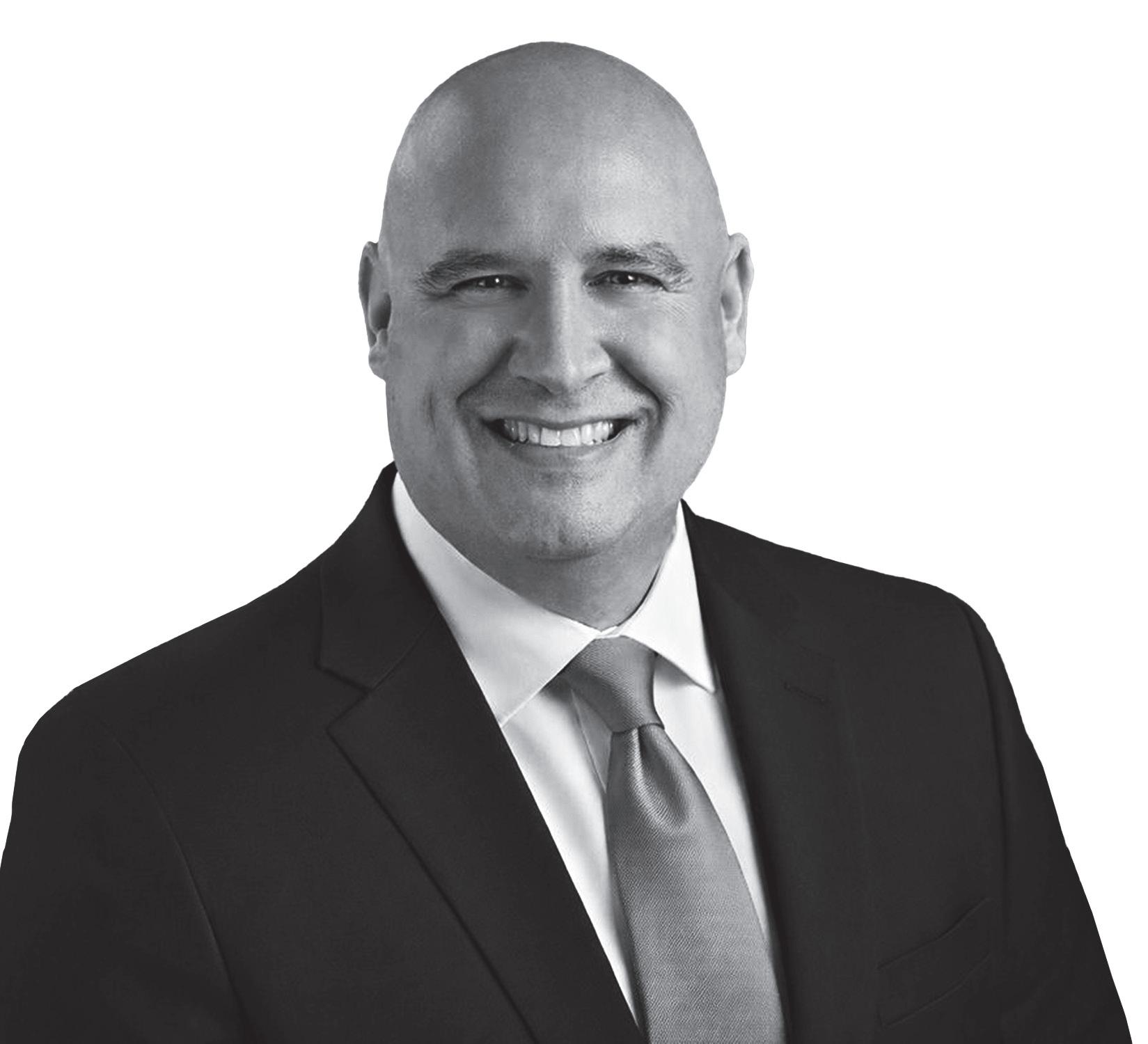
Guided by a forward-thinking mindset, this leading tax expert channels his passion for knowledge sharing to teach, connect, and elevate the profession.
BY AMY SANCHEZ
Tax season just ended, and a 20-something Mark Gallegos, CPA, MST, was celebrating with a week of surfing with friends in North Carolina’s Outer Banks. One morning on the trip, he paddled into the Atlantic where he would encounter a trauma only a small percentage of the world’s population ever experiences: a shark attack.
“I felt something hit the board, and it dragged me under, thrashing me around,” Gallegos recalls. “It felt like it was happening forever, but it was really just a matter of seconds—then, all of a sudden, it let go.”
Fortunately, Gallegos’ board got the brunt of the attack, and he only ended up with stitches on both sides of his hand (the scars are still present to this day). Interestingly, the most shocking part of Gallegos’ story isn’t the shark attack itself, but what happened next: He went back out in the water the next day.
“I knew if I didn’t, I’d never go back,” Gallegos says. “I couldn’t let that fear stop me—I had to keep moving forward.”
That mindset has long guided Gallegos’ personal and professional life, helping him stay positive and come up with the best solutions for whatever challenge was at hand. It’s a trait that’s served Gallegos well in his 20-plus-year tax career: “Tax is really about
people making decisions under uncertainty—it sits right at the intersection of business, law, timing, and human behavior.”
Gallegos, who currently serves as a tax partner at Porte Brown LLC, believes his career is less about calculations and more about judgment, perspective, reading the room, and emotional intelligence—all skills that have transferred into what he describes as the core part of his professional purpose: knowledge sharing.
“For me, knowledge sharing is the most powerful thing that’s out there,” Gallegos says. “As tax professionals, we’re involved with someone who’s building or selling something, or maybe navigating a very stressful transition—being invited into those moments is a big responsibility that I’ve always taken very seriously.”
His commitment to knowledge sharing has led Gallegos to become a sought-after public speaker at tax and accounting conferences across the country and positioned him to serve as a trusted media expert, where he regularly shares his expertise with various news outlets, including Bloomberg, USA Today, The Wall Street Journal, and others.
Though, despite his prevalence in the media and numerous public speaking engagements, it didn’t always come easy to him: “When I’d speak publicly in college, I was nervous, like where your heart feels like it’s going to jump out of your chest. Even after college, I’d do these lunch and learns at my firm that felt nerve-racking.”
Over time, Gallegos found the key to overcoming his nerves was to always be well prepared. He recalls a time when he was asked to do a “small talk” in Las Vegas: “It wasn’t a small talk, it was a big talk; I was really, really nervous, but I came prepared.”
In that moment, Gallegos realized that by sharing his expertise with an audience, he had the opportunity to teach, connect, and make an impact: “I had the platform, the microphone, and people were listening—whether they agreed or not. When I was done, I realized it wasn’t that bad, and I really enjoyed it.”
What began as a challenge has evolved into a passion, fueling his drive to share knowledge and connect with audiences wherever he goes: “It’s almost like a craft where I just want to keep practicing it. No matter who’s in the room, I get fired up to go and speak. I’m always hoping there’s a chance to inspire someone or give them something to walk away with.”
For others looking to be seen as thought leaders in the profession— whether on stage or in the media—Gallegos says the best place to start is by writing and getting more involved: “No one’s going to take you seriously if they don’t think or know you have a message that’s relevant and coherent.”
Being a longtime active member of the AICPA and the Illinois CPA Society (ICPAS), Gallegos is no stranger to professional involvement. In fact, he’s been a dedicated ICPAS media expert for several years now and is beginning his first year on the ICPAS Board of Directors this spring. For him, it’s a chance to give back to a profession that’s given him so much: “It gives me a voice to say how we should keep moving this profession forward. We’ve all benefited from it, we all continue to benefit from it, so how do we inspire others to want to come into it and do the same thing but even bigger and better?”
As Gallegos embarks on his new leadership role, his commitment to advancing the profession echoes back his belief in facing fears head on and moving forward: “My hope is that people will continue to walk away believing that a meaningful career in accounting isn’t about a perfectly planned path—it’s about curiosity, courage, generosity, and being willing to grow even when it’s uncomfortable.”
targeted
job listings
800+
average views per job




When I started in the tax department of Plante Moran in fall 2018, I imagined a traditional path: busy seasons in the office, steady in-person collaboration, and a clear sense of professional identity. What I got was … not that. Instead, I found a field reshaped by global disruption.
The obvious trigger for this was the COVID-19 pandemic, which overturned the norms I thought were permanent. Our physical offices shut down, and what began as a temporary remote-work solution evolved into a “new normal” hybrid work model.
While this flexibility benefited me, and many certified public accountants (CPAs), it also introduced challenges that young professionals like me didn’t anticipate. Isolation made it harder to learn organically from others. The sudden lack of structure blurred boundaries between our identities inside and outside of work. The mental health struggles that followed raised deeper questions about purpose and direction: Am I doing the right things with my life? Is this the place where I want to be?
Rising trends, like “quiet quitting,” show a generation reflecting on those questions and trying to redefine how work fits into their lives. The traditional public accounting approach maintains that professional growth requires significant sacrifice and “pay your dues” commitments. Younger generations, however, are asking whether that sacrifice is meaningful or even necessary. This trend has long been identified by the Illinois CPA Society through their numerous Insight Special Features, highlighting its impact on talent retention and the pipeline of CPAs entering the profession.
As young staff keep moving the profession toward a work style that’s further away from the traditional public accounting standard, meaningful dialogue needs to move with it and be more intentional, which has left the profession searching for solutions. From my experience, one solution stands out: overemphasize relationships and lean into the people around you.
Public accounting is uniquely positioned to capitalize on this solution—it brings together large cohorts of bright and driven people. New hires are typically organized into start classes, which act as support systems for their members. These relationships transform the nature of work—they create belonging, camaraderie, shared accomplishments, and a sense of purpose far deeper than ticking and tying or preparing returns. They turn moments of esoteric discussions of the Internal Revenue Code into fun times bantering about shared hobbies and experiences. Over time, these moments turn into real friendship. For example, one member of my start class cohort is my weekend running partner. Another is my go-to for reading recommendations, and another is the person I call when I need to be humbled at the bowling alley.
So, my advice is this: Build friendships, seek out mentors, ask questions, share your struggles, find common interests, and celebrate wins together, especially during busy season when the workload feels overwhelming. When one invests in relationships, public accounting becomes more than just technical work—it becomes meaningful work.
The Illinois CPA Society thanks its volunteer leaders for their service and contributions. They play an essential role in helping to achieve our core mission of enhancing the value of the CPA profession. Their leadership term runs from April 1, 2026 to March 31, 2027.

Board of Directors
CHAIRPERSON
Mark W. Wolfgram, CPA Bel Brands USA Inc.
VICE CHAIRPERSON
Jennifer L. Cavanaugh, CPA Grant Thornton LLP
TREASURER
Lindy R. Ellis, CPA Ernst & Young LLP
SECRETARY
Richard C. Tarapchak, CPA Verano Holdings Corp.
IMMEDIATE PAST CHAIRPERSON
Brian J. Blaha, CPA Winding River Consulting
DIRECTORS
Amy M. Chamoun, CPA Cherry Bekaert Advisory LLC
Pedro A. Diaz de Leon, CPA, CFE, CIA Sikich LLP
Kimi L. Ellen, CPA Benford Brown & Associates LLC
Jessica L. Freiburg, CPA, PFS Sassetti LLC
Mark S. Gallegos, CPA Porte Brown LLC
Monica N. Harrison, CPA Tinuiti
Joshua Herbold, Ph.D., CPA University of Illinois
Jeffery R. Livesay, CPA, CGMA MH CPA PLLC
Kimberly D. Meyer, CPA Meyer & Associates CPA LLC
Girlie A. O’Donoghue, CPA Portillo’s Inc.
Matthew D. Panzica, CPA BDO USA PC
Jennifer L. Rada, CPA PwC LLP
Andrea Wright, CPA Johnson Lambert LLP
Stephanie M. Zaleski-Braatz, CPA Miller Cooper & Co. Ltd.
Committee Chairpersons
ACCOUNTING PRINCIPLES
Kelly H. Buchheit, CPA Citrin Cooperman Advisors LLC
AUDIT & ASSURANCE SERVICES
Jon Roberts, CPA BDO USA LLP
AWARDS SELECTION
Christopher P. Daugherty, CPA, CIA, CGMA Kirkland & Ellis LLP
CPA EXAM AWARD SELECTION
Pawel J. Szeliski, CPA Aprio LLP
ETHICS
Mark S. Glochowsky, CBM Schuler Shook Inc.
GOVERNMENTAL EXECUTIVE
James R. Savio, CPA Sikich LLC
GOVERNMENTAL REPORT REVIEW
Lauren Pflugradt
John Kasperek Co. Inc.
ILLINOIS CPAS FOR POLITICAL ACTION
Edward J. Hannon, CPA, JD, LLM Polsinelli
NOT-FOR-PROFIT ORGANIZATIONS
Marcy L. Steindler, CPA Mann Weitz & Associates LLC
PEER REVIEW REPORT ACCEPTANCE
Joseph S. Beck II, CPA, CITP Jones, Pounder & Associates PC
SCHOLARSHIP SELECTION
Kimberley A. Waite, CPA CBIZ CPAs PC
TAX ADVISORY GROUP
James W. Sansone, CPA RSM US LLP
TAXATION ESTATE, GIFT & TRUSTS
Eliana Penafiel
Mathieson, Moyski, Austin & Co. LLP
TAXATION EXECUTIVE
Charlene D. Rhinehart, CPA CEO Unlimited LLC
TAXATION FLOW-THROUGH ENTITIES
Jay M. Levine, JD, CPA Retired
TAXATION INDIVIDUAL
Paul R. Todoric, CPA
Michael J. Singer & Co. PC
TAXATION INTERNATIONAL
Kate M. Russell, CPA KSM CPAs & Advisors
TAXATION PRACTICE & PROCEDURES
Phillip A. Levsky, CPA Prosperity Partners LLC
TAXATION STATE & LOCAL
Carrie A. Merickel, JD Miller Cooper & Co. Ltd.
WOMEN’S
Niki L. Miksa, CPA BDO USA LLP
YOUNG LEADERS
Andrew M. Guerrero, CPA Adelfia LLC
ILLINOIS CPA SOCIETY

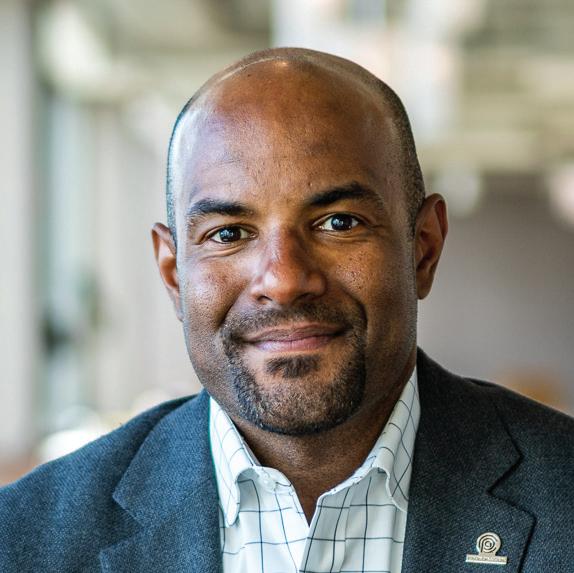
Geoffrey Brown, CAE
ICPAS
President and CEO

Mark Wolfgram, CPA
ICPAS
Board Chair
Please join us as we share our inside insights on ICPAS initiatives, discuss key professional issues, and preview what lies ahead.

To register or for more information visit: www.icpas.org/townhall
Help develop the future of our profession by inviting a young professional colleague to join you.
December 10, 2026 Virtual *1 CPE will be provided at this event. FEATURING:
Enjoy breakfast or lunch while you network with colleagues and earn 1.5 hours of FREE CPE!
May 28, 2026 Virtual
July 28, 2026 Peoria
August 5, 2026 Collinsville*
October 1, 2026 Rockford
October 28, 2026 Springfield
October 29, 2026 Champaign
November 5, 2026 Orland Park
November 10, 2026 Wheeling
December 2, 2026 Oak Brook
December 3, 2026 Chicago