Illinois Baptist

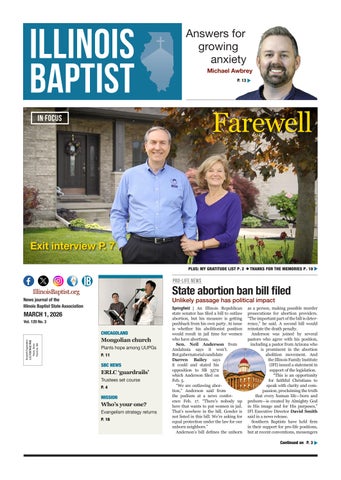




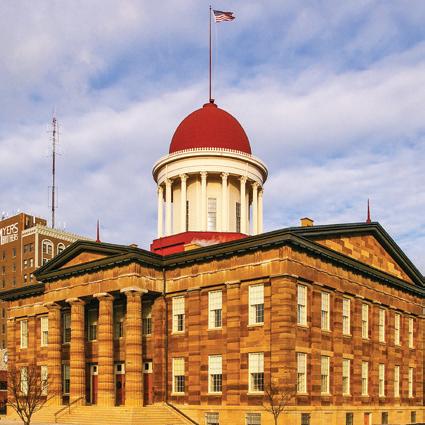
Springfield | An Illinois Republican state senator has filed a bill to outlaw abortion, but his measure is getting pushback from his own party. At issue is whether his abolitionist position would result in jail time for women who have abortions.
Sen. Neil Anderson from Andalusia says it won’t. But gubernatorial candidate Darren Bailey says it could and stated his opposition to SB 3572 which Anderson filed on Feb. 5.
“We are outlawing abortion,” Anderson said from the podium at a news conference Feb. 17. “There’s nobody up here that wants to put women in jail. That’s nowhere in the bill. Gender is not listed in this bill. We’re asking for equal protection under the law for our unborn neighbors.”
as a person, making possible murder prosecutions for abortion providers.
“The important part of the bill is deterrence,” he said. A second bill would reinstate the death penalty.
Anderson was joined by several pastors who agree with his position, including a pastor from Arizona who is prominent in the abortion abolition movement. And the Illinois Family Institute (IFI) issued a statement in support of the legislation.
“This is an opportunity for faithful Christians to speak with clarity and compassion, proclaiming the truth that every human life—born and preborn—is created by Almighty God in His image and for His purposes,”
IFI Executive Director David Smith said in a news release.
Anderson’s bill defines the unborn
Southern Baptists have held firm in their support for pro-life positions, but at recent conventions, messengers

The Illinois Baptist staff
Editor - Eric Reed
Contributing Editor - Lisa Misner
Graphics & Production Manager - Nic Cook
Team Leader - Ben Jones
Administrative Assistant - Kayla Houchin
The general telephone number for IBSA is (217) 786-2600. For questions about subscriptions, articles, or upcoming events, contact the Illinois Baptist at (217) 391-3127 or IllinoisBaptist@IBSA.org
The Illinois Baptist is seeking news from IBSA churches. E-mail us at IllinoisBaptist@IBSA.org to tell us about special events and new ministry staff.
POSTMASTER: The Illinois Baptist is owned and published every month by the Illinois Baptist State Association, 3085 Stevenson Drive, Springfield, Illinois 62703-4440. Subscriptions are free to Illinois Baptists. Subscribe online at IBSA.org.
Total giving by IBSA churches as of 1/31/26 $434,068 2026 Budget

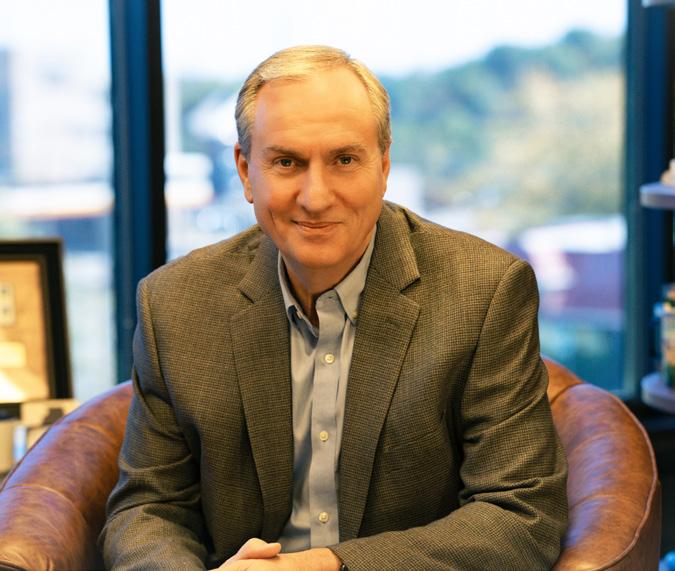
These are the final few paragraphs I will write to my Illinois Baptist family as IBSA’s Executive Director, and I want to express gratitude for so many things.
Thank you for welcoming my family and me back to Illinois after almost nine years at the North American Mission Board in Georgia. As I’ve written and said many times, I felt trust and partnership from the beginning, thanks in part to my dad’s reputation and relationships, and his 34 years writing practical, biblical counsel here in the Illinois Baptist.
Thank you for your support and friendship, Illinois Baptists, and thank you again, Dad.
I also want to express appreciation for the ten men who preceded me in this role, including Noel Taylor and IBSA’s first Executive Director B.F. Rodman, both of whom served more than 19 years. While I didn’t know either man personally, I now have a much deeper respect and understanding of what it takes to stay.
I want to thank the devoted IBSA staff, especially those with whom I have served personally, but also the many retired and former staff who have been so supportive and encouraging. We all stand on the shoulders of those who came before us.
Pastors and associational leaders, thank you for inviting me to your part of the state for so many wonderful church or associational anniversaries. These have ranged from five years to more than 200 years. Each one gave me an appreciation of your unique ministry setting and history, and an up-close view of your current challenges.
Illinois Baptist church members, thank you for sharing with me not only your churches’ victories and advances with the gospel, but also your tragedies and disasters, your sometimes difficult leadership transitions, and even your grief. It’s during those times that we draw close and remember that our Baptist family is much larger than we realize.
Thank you also for your continuing faithfulness to both God’s Word and to our cooperative mission of taking the gospel to our Acts 1:8 mission fields together. My season with you has not been easy, as we’ve walked through a great recession, a worldwide pandemic, a culture that runs counter to many of our biblical beliefs, and many distractions even within our Baptist family.
In fact, Gallup recently reported that Americans in general have been getting “grumpier” for the past two decades. Their regular monthly survey series has shown that public satisfaction with “the way things are going” was over 70% at the turn of the Millennium, then dropped below 50% in 2004 and is now down another 20 points to only 23%. And I thought it was just me!
for
Yet, we haven’t grown weary, or grumpy, in well doing. Through it all, the Lord has provided for our shared mission through the generosity and missional engagement of his faithful churches. Thousands have been baptized and discipled. Hundreds of new churches have been started. Countless pastors and leaders have been equipped. Thank you for helping make that possible.
Our hundreds of churches are spread over a vast and diverse state. Yet, over the past 20 years, we’ve celebrated the 100th Anniversary of IBSA, the 300th anniversary of the Baptist Association in America (both in 2007), the 50th Anniversary of the IBSA Building in Springfield (in 2021), and the 100th anniversaries of both the Baptist Faith & Message and Cooperative Program (in 2025).
So, thank you. These are signposts of lasting and resilient faith, shared by a wonderful Illinois Baptist family that this state desperately needs. You will continue to be my family, and I love you. Dad told me I would.
Nate Adams is executive director of the Illinois Baptist State Association. Respond at IllinoisBaptist@IBSA.org.
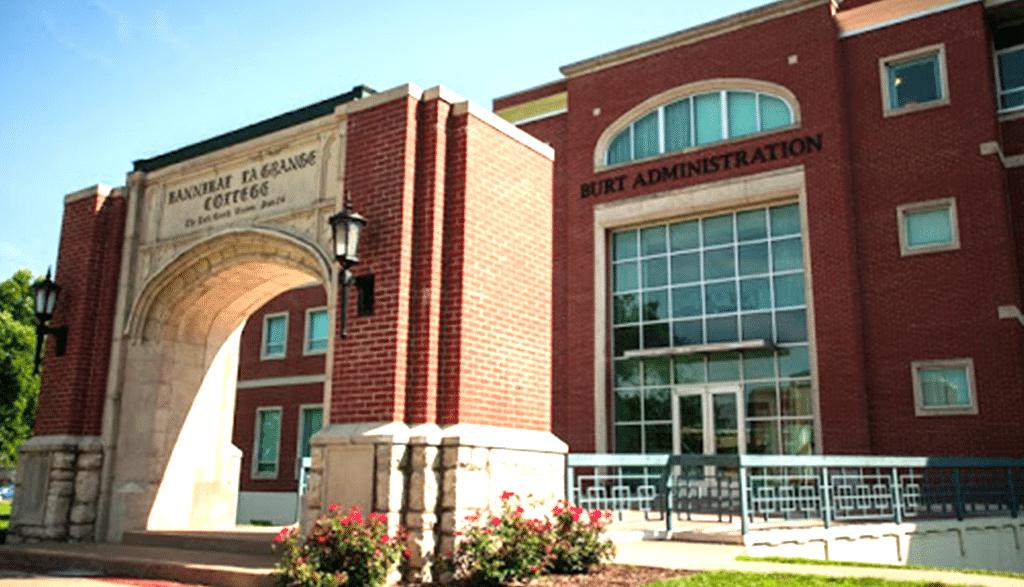
HANNIBAL-LAGRANGE UNIVERSITY
Hannibal, Mo. | With volunteer labor scheduled for late April and building materials estimated at $110,000 needed right away, Hannibal-LaGrange University (HLGU) launched a short-term fundraising campaign Feb. 4. The short deadline is due to housing needs for summer camps and an expected increase in fall enrollment.
HLGU continues its rejuvenation after a navigating a financial storm four years ago. This campaign follows Phase 1 of “Bring Back the Legacy,” which included renovation of Crouch Hall and initial work on Pulliam Hall. Phase 2 will complete that work, with additional renovations to the Becky Thatcher and Mary Wiehe apartment buildings.
Thanks to a generous commitment from Campers on Missions, a volunteer building group, HLGU
will receive approximately $90,000 in skilled labor at no cost.
The renovation is “more than a building project— it is an investment in the students God has entrusted to us,” said HLGU President Robert Matz. “By renovating these residence halls, we are preserving the rich heritage of Hannibal-LaGrange while ensuring that future generations have a safe, welcoming, and spiritually supportive place to grow.”
Pulliam Hall has long been an iconic part of the Hannibal-LaGrange student experience, and Phase 2 continues the university’s commitment to preserving its legacy while preparing for the future. Naming opportunities are available for donors who wish to make a lasting impact.
“We are deeply grateful for the friends, alumni, and partners who make this mission possible,” Matz said, “and we invite our entire HLGU family to join us in shaping the future of our campus.”
Matz called on alumni and supporters to give monetary gifts or in-kind donations of building supplies and services. Financial gifts may be made online at www.hlg.edu/giving.
For more information, contact HLGU at (573) 629-3124 or giving@hlg.edu.
HLGU is a four-year Christian university fully accredited by the Higher Learning Commission.
Hannibal, Mo. | The settlement of a suit filed by Hannibal-LaGrange University (HLGU) against the Department of Education prevents the federal government from applying regulations on for-profit schools to non-profit faithbased schools. In HLGU’s estimation, that protects the constitutional right of Baptists to establish and maintain schools that reflect their faith, doctrine, and values.
“This regulation didn’t just misunderstand Baptist polity, it attacked it,” said HLGU President Robert Matz
Under the Biden administration, federal regulators forced Christian schools to sever ties with churches or lose federal financial aid for their students. HLGU negotiated for seven months, but ultimately filed a lawsuit against the Department of Education. HLGU students in a prison education program lost Pell Grants, and the
school had to make up a $700,000 aid deficit.
“The regulation treated churches like corporate owners and assumed that spiritual oversight must come with financial liability,” Matz said.
“That’s foreign to Scripture, to Baptist life, and to the First Amendment.”
The settlement removes the unconstitutional burden on HLGU, but students who were denied or delayed aid won’t see those funds recovered.
“This settlement is a necessary victory, not a complete one. Students were harmed. Churches were put at risk. The fact that the University had to sue at all is a reminder that religious freedom requires constant vigilance,” Matz said.
The agreement clarifies that the Missouri Baptist Convention will not be forced to provide financial guarantees for HLGU, Missouri Baptist Uni-


from the front: abortion bill filed
Continued from page 1
have refrained from abolitionist statements that might allow for prosecution of women who have abortions.
It appears unlikely that the bill, dubbed informally “abolish abortion-define person,” will make it out of committee. Republican leader John Curran removed Anderson from two leadership committees after he defied Curran’s order to withdraw the bills. Curran said the legislation is a definite “no” for the party.
Facing three candidates in the Republican primary election March 17, and hoping for another face-off with Democratic incumbent JB Pritzker, Bailey held his party’s position.
“Criminalizing women in these situations doesn’t solve problems, it deepens hurt and pushes people away from the alternatives and support that could help them,” Bailey said. “I am pro-life, but I believe we also have to face reality. Approaches like this pull people away and make it harder to move Illinois forward.”
Anderson, meanwhile, characterized his stance in religious terms. “I’m called to do God’s will and stand for justice, nothing more and nothing less,” Anderson said. “I’m going to pick up my cross every day and follow.”
─IB staff, with additional reporting by Capitol News Illinois and WAND-TV
versity, or Southwest Baptist University simply because it appoints their trustees. The case was dismissed on Jan. 16, the same day the Department issued new guidance to all schools as result of the lawsuit.
While this agreement is specific to HLGU, the principle it secures is broader, a University statement said. “Churches can remain churches, and Christian universities can remain Christian—without forced separation. Governance structures across Southern Baptist life are similar.”
“This case was never about paperwork,” Matz said. “It was about whether Christians would be free to educate the next generation in faithfulness— without the government forcing them to cut ties with the very churches that make the University’s mission possible. HLGU stood because standing was required.”
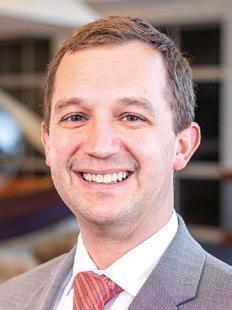
(Ed. Note: For IBSA churches, this case serves as a reminder of the need for vigilance in protecting religious freedoms and First Amendment rights. While HGLU had ready legal representation in what could have been an expensive court battle, most churches do not.
That’s why IBSA partners with Alliance Defending Freedom, a legal group specializing in religious liberty cases. For a church that enrolls, ADF will review its legal documents and provide access to ministry-specific legal resources, including ADF attorneys. The cost is based on average church attendance, and IBSA pays 50% of year-one membership fees for cooperating churches. See more at adfchurchalliance.org/partner/Illinois.)
SBC briefing
With the Orlando Convention only three months off and Clint Pressley concluding his final one-year term, two pastors have declared their intentions to be nominated for SBC President.
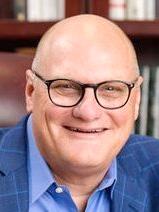
Florida pastor Willy Rice returns to the ring after a short stint in the 2024 race. Rice quickly withdrew at that time after criticism emerged for his church’s support for a man who had spousal abuse in his background. He had since repented and been restored with his wife, it was explained. Rice has since been a leading voice in both codifying maleonly pastorate in the SBC constitution, and discussions to defund the ERLC. Rice said after the failed 2025 attempt to abolish the ERLC that his intention was to get the attention of trustees. Rice, declared in October.
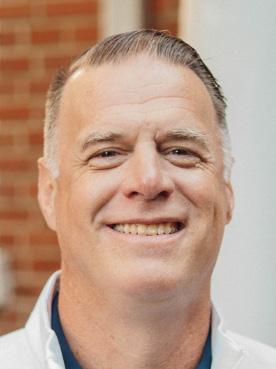
South Carolina pastor Josh Powell, announced his intention to seek the office in February. Powell is a third-generation Southern Baptist pastor. He has received public support from former SBC President JD Greear.
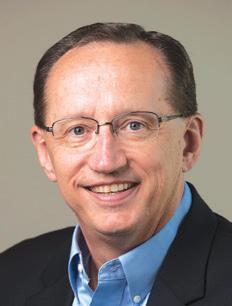
The SBC Executive Committee adjusted its own funding downward slightly to guarantee that the International Mission Board will receive 51% of Cooperative Program giving. While the convention’s goal for international missions has long been half of CP, annual shifts in giving and designated receipts have made it possible for actuals to dip a sliver below 50%. This adjustment prevents that. The EC took a $632,400 cut in its operating budget in the reallocation.
The EC will ask messengers in Orlando to approve a Disability Ministry Task Force. Tom Stolle, executive director of the Baptist Convention of Maryland/Delaware and the father of an adult son with special needs, chaired a task force that is calling for special needs ministry at all levels of SBC life.
The EC also removed two churches from fellowship. Both listed women in pastoral leadership on their websites. Zion Temple Baptist Church in O’Fallon was removed from fellowship with IBSA in 2015 for lack of cooperation, and from Metro East Baptist Association in 2022. The other church removed from the SBC was The Crossing Church in Tampa.
– from Baptist Press
Nashville, Tenn. | The SBC’s Ethics and Religious Liberty Commission (ERLC) approved a statement January 30 that will help guide the work of the public policy entity’s next president. Meantime, the presidential search committee reported progress in their effort to bring a nominee, with hope that a new leader will be in place by the SBC Annual Meeting in Orlando in June.
“We wanted to send another signal to Southern Baptists that we love them, we want to serve them,” Trustee Chair Scott Foshie said as the statement was adopted. “The ERLC is committed to keeping the best interests of Southern Baptist churches at heart.”
The statement offers recommitment to robust relationships at every level of the SBC, rebuilding trust, and representing Southern Baptists well. It outlines a two-prong approach to the ERLC’s work going forward that elevates its responsibility to the churches.
“This is the message we’re communicating to presidential candidates,” search committee chair Mitch Kimbrell said. “We want presidential candidates to be on board with these commitments.”
Now, with this statement in place, the next round of interviews begins with eight candidates, the list recently trimmed by more than half. Pointing to the number of highly qualified candidates interested in the position, Kimbrell said, “that’s a good problem to have” in contrast to the 2021 search when few people wanted the job. The SBC’s wrangling with sexual abuse and the fallout at several entities was at its peak at the time.
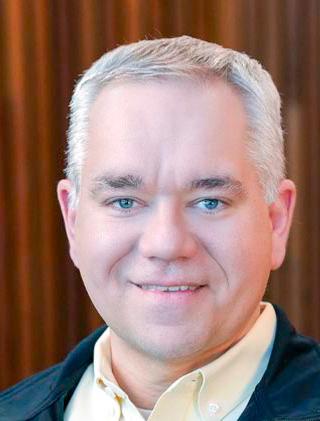
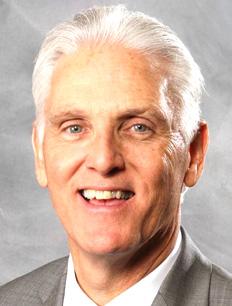

The statement may address concerns raised by those who wanted to abolish the ERLC in two previous conventions. It identifies clear dependence on the Bible, the Baptist Faith and Message (2000, amended in 2023), and resolutions approved by convention messengers to identify issues and positions the ERLC will address. It seeks to steer away from controversial issues without broad agreement. For Foshie, the key word is consensus.
“The motion signals the kind of posture the trustees want the next president to have, and that he is deeply rooted in healthy relationships with Southern Baptist churches,” Foshie said.
The trustees hope to rebuild trust with those who felt distanced from the political positions of former president Russell Moore and his successor, Brent Leatherwood. The lesson learned in Leatherwood’s controversial social media posting during the 2024 U.S. presidential campaign will be beneficial to the next leader: don’t act alone.
“If you look over the last decade, particularly the last five years,” Foshie said, “the ERLC board has been striving to improve governing documents, to create milestone moments where the full board has to make decisions about key matters.”
Foshie is the incoming Executive Director of the Illinois Baptist State Association; his ERLC tenure concludes with the June convention. Foshie has spent much of his eight years as an ERLC trustee developing board policies to create greater transparency and strengthen accountability of the ERLC
president to the trustees.
The next president won’t speak for himself, Kimbrell said. He speaks “from” Southern Baptists. “The ERLC is not the new president’s branding platform; it is a trust that belongs to Southern Baptists.”
“With the profile for presidential candidates, the advocacy guidelines adopted in 2024, and this motion, the stage is set for the board to be effective encouragers, but also effective governors,” Foshie said.
After Leatherwood’s resignation following the 2025 campaign to abolish the SBC’s public voice, interim president Gary Hollingworth has sought to focus ERLC content, stabilize the staff, and rebuild relationships with churches. Hollingsworth is a long-time pastor from Alabama who was widely respected for his tenure as Executive Director of the South Carolina Baptist Convention.
Hollingsworth has been “a grace gift to the ERLC,” Kimbrell said. “When 43% of the convention votes to abolish your entity, that’s unacceptable. We know we’ve got trust rebuilding to do,” and the interim president has made good inroads.
This statement will deepen the spadework Hollingsworth has been doing since September. The trustees clarified two prongs: resourcing and equipping churches, and representing Southern Baptist values in the public square. Trustees hope that future research work will be strengthened by deepening church relationships and expertise provided through SBC pastors and professors.
“These two ministries are most effective when the ERLC is deeply engaged with churches, partnering with local associations, state conventions, and national entities and providing trusted research on cultural issues important to Southern Baptists,” the statement said.
The two-prong approach producing a presidency with clearer guardrails may give the ERLC time to rebuild trust, and to prove again its value for SBC churches and their members.
“We don’t think to do those things well is to chase two rabbits and risk getting none,” said Kimbrell, a Georgia native who pastors in Vermont. “The better we resource our churches, the better voice we will have in the public square. The more our resources are trusted and respected, the more our advocacy will be trusted.”
The board requested Southern Baptists “to pray for the ERLC’s ministry, staff, and trustees, that we will serve in an effective and trustworthy manner.”
In January Atlanta pastor Jason Dees wrote an open letter to ERLC trustees that called for the entity’s dissolution. He wanted the trustees to shutter the ERLC voluntarily. Dees wrote that today’s political landscape creates an environment where effective representation of Southern Baptists even among “core moral convictions” is “simply impossible.”
“I don’t sense that has been something the trustees have brought up,” Foshie told the Georgia Christian Index, which published the letter. “If anything, there’s more need for the ERLC than ever.
‘We have an administration that is extremely open to input from Southern Baptists. And whether an administration is open or not, Southern Baptists need and want an entity that can represent them in the public square.”
─Eric Reed
And a few dips
When King George III takes the stage in Hamilton, he sings a lilting ballad which, oddly, has the music moving in opposite directions from some of the phrases. “Oceans rise,” he sings, and the tune goes down; “empires fall” and the tune goes up.
The 2025 summary of Annual Church Profiles sort of feels the same way: Some ups and a few downs that even-out to a mostly steady year, which solidifies recovery from Covid losses after five upward years.
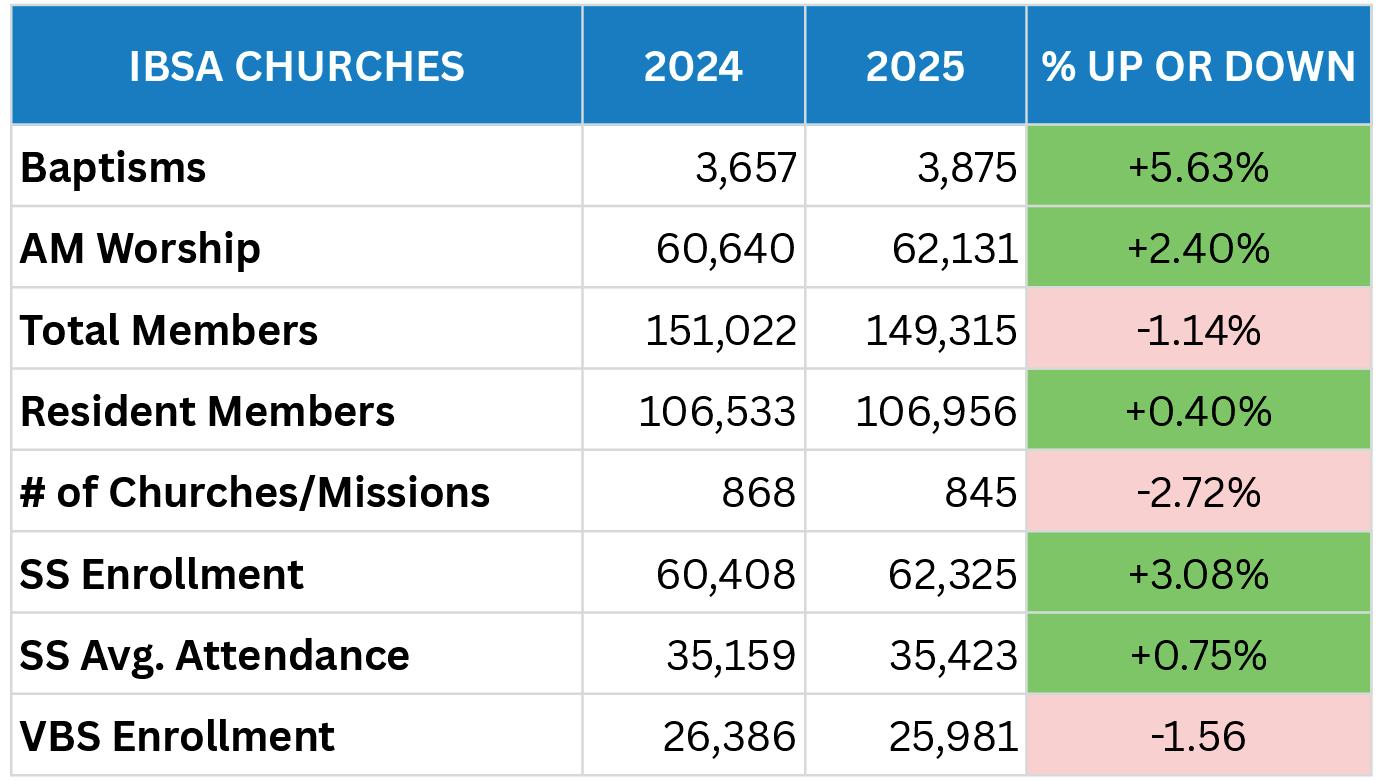
The best news in a sea of numbers? Baptisms are up again, with IBSA churches bringing 222 more to the waters last year than the year before. That’s a 5.63% increase that builds on the 8.81% the year before. At 3,875, the baptism total surpasses the 2019 pre-Covid number of 3,553.
In Illinois, 475 IBSA congregations reported at least one baptism last year. Churches that reported baptisms are doing well, with eight on average per baptizing church.
Baptists baptize. It’s who we are, it’s what we do.
Sunday morning worship, on the other hand, still has not returned to 2019 levels. While up 2.40% from 2024, the 62,131 Illinois Baptists in worship on the average Sunday morning are still 8.4% below 2016. And churches are smaller. Average attendance is 80, but the median is 40—meaning half of all IBSA churches have more than 40 on Sundays, while half have less.
10% or more, while 59.2% say attendance declined by 10% or more in that period.
(Do you feel the musical “rise-andfall” dichotomy? A church’s perception of the state of Christendom likely depends which wave it’s riding.)
Two other attendance figures demonstrate the wave: Sunday School Enrollment is up 3.08% year-over-year, but Sunday School attendance is up only 0.75%.
Membership numbers reveal the same fluctuation: Total membership is down 1.14% for loss of 1,707 people. Resident membership, however, is up 423 people for a 0.40% gain.
There are 149,315 total Illinois Baptists in 845 churches.
What we now call the “normative” church size in Illinois is 40 members (the median). In 2025, 25% of churches had 20 or fewer members; 50% had 40 or below; and 75% had 74 or below in 2025. That last number has dropped from 82 members or below 2019.

The conclusion here is that while most churches have stabilized after Covid, they are mostly a little bit smaller. And with 23 fewer congregations than last year (866), and 96 fewer congregations than 2019 (941), the network is leaner as churches learn to do more with fewer people.
Giving ups and downs
Attendance has grown in many churches in the period after Covid: 21.6% of churches report growth of
Overall, churches received less in offerings in 2025: $97,784,716 in undesignated giving was a 6.48% drop from 2024’s $104,123,056.
The 2024 number was a terrific peak in the five-year chart. And even with a year-over-year decline of more than $6 million, the 2025 undesignated gifts dropped in the plate (or given online) is still almost $5 million higher than it was in 2019. That’s good news. Whether the drop this year is due to fewer congregations in the ACP report, or givers’ uncertainty about the economy would be speculation. Despite the decline, giving to the local church is still strong.
The impact on Cooperative Program giving is noteworthy.
At $5,226,214, 2025 CP giving in Illinois giving is down 3.17% from the previous year, and far below the budgeted $6 million. With careful spending, several unfilled staff positions, and watchful income over expense, IBSA finished the year in the black, relatively speaking—but CP receipts $773,786 below projection should be reported.
Illinois churches have historically given to CP at least one percentage point higher of their undesignated receipts than the average of all SBC churches. That national average has recently dipped below 5% for the first time since CP was instituted in 1925.
Some Illinois churches report as high as 15% or more of their undesignated offerings contributed to missions through the Cooperative Program. On the other tidal end, the
number is low single digits. Thus, enthusiastic support of global SBC missions by many churches appears blunted by the financial struggles of other congregations in trying times. Still, we are better together. Our churches accomplish so much more as a cohesive body giving regularly than any one church could alone.
What it all means
Here are a few conclusions from the ACP summary.
Covid recovery seems stabilized now, although it is lower in several categories than 2019 levels, with baptisms and total giving being the notable receptions.
Small churches are smaller, but large churches are trending larger— again, fall/rise point/counterpoint. Almost 100 churches grew more than 10% since the pandemic shuttered buildings. “These span every region, population base, and style,” the report states. That growth is happening all over the state in all kinds of churches is evidence it can happen everywhere. Churches may have lost a couple families after Covid. With 75% of IBSA churches having fewer than 75 in worship, IBSA is a network of smaller “normative” churches. But this report shows the valid conclusion that “other churches are growing, so our church can grow.”
─Eric Reed and Ben Jones
O’Fallon First, O Fallon 252,824.98
Logan Street, Mount Vernon 104,462.19
Woodland, Peoria 103,732.72
Marion Second, Marion 98,981.10
Marion First, Marion 97,500.00
Immanuel, Benton 96,095.04
Metro Community, Edwardsville 96,032.02
Maryville First, Maryville 88,339.01
Lincoln Avenue, Jacksonville 84,939.00
Harrisburg First, Harrisburg 83,501.07
Tabernacle, Decatur 77,242.02
Dorrisville, Harrisburg
Chatham, Chatham
Du Quoin First, Du Quoin
Casey First, Casey
Calvary, Monticello
Columbia First, Columbia
Marshall, Marshall
Anna Heights, Anna
Carterville First, Carterville
Beaucoup, Pinckneyville
Metropolis First, Metropolis 46,647.13
Bethel, Vandalia 45,831.38 Salem First, Salem
Elm Street, Murphysboro
Bethalto First, Bethalto 37,418.48 Carmi First, Carmi 36,000.00
Pinckneyville First, Pinckneyville 35,323.39
Eldorado First, Eldorado 34,643.29 Unity, Vandalia 31,568.11
West Frankfort First, West Frankfort 23,039.27
Fairview Heights First, Fairview Heights 22,894.52
New Hope, Belknap 21,933.34 Wayne City, Wayne City 21,563.63 Charleston, Charleston 21,076.96
Ullin First, Ullin 20,473.00 Meadow Heights, Collinsville 20,342.92 Liberty, Harrisburg 19,705.49 Cornerstone, Savoy 18,493.70 Redemption City, Rockford 18,429.00
Arthur Southern, Arthur 18,320.00
Quincy First Southern, Quincy 18,148.94 Nashville First, Nashville 18,000.00 Altamont First, Altamont 17,924.81 Whitelaw Avenue, Wood River 17,614.55 Pleasant Hill First, Pleasant Hill 17,551.87 Eastview, Springfield
Northside Missionary, Grayville
Emmanuel, Carlinville
Together on North Grand, Springfield
Calvary of Elgin, Elgin
Heartland, Alton
Ditney Ridge, Norris City
The Top 100 list published last month was from 2024. This is the corrected list. The Illinois Baptist apologizes for the error.
He’s on a listening tour all over Illinois
Waldo has nothing on Scott Foshie. The IBSA Executive Director Elect is traveling Illinois, wedging listening sessions with pastors and associational leaders into a busy onboarding schedule.
“At every meeting, I have been humbled by the love and support for our Illinois Baptist Team,” Foshie said. The incoming leader is well known after eight years leading church revitalization for Illinois. Since his election, he has met with leaders in the Quad Cities, Metro East, Macoupin, Three Rivers, and Saline Associations—so far.
“I am deeply encouraged by the hunger for revival and desire to im pact people’s lives with the gospel that I’m hearing about everywhere I go,” Foshie said. “Illinois Baptists are seeking God to bring a new season of thriving in Jesus through our church es and shared missions efforts.”
He also shares openly about the challenges the network faces. “When I share that Cooperative Program giving has declined 20% since 2019 and needs to make a comeback, I’ve
had multiple pastors and laypeople tell me that they want to be a part of a new season of growing gospel impact through Illinois Baptists.”
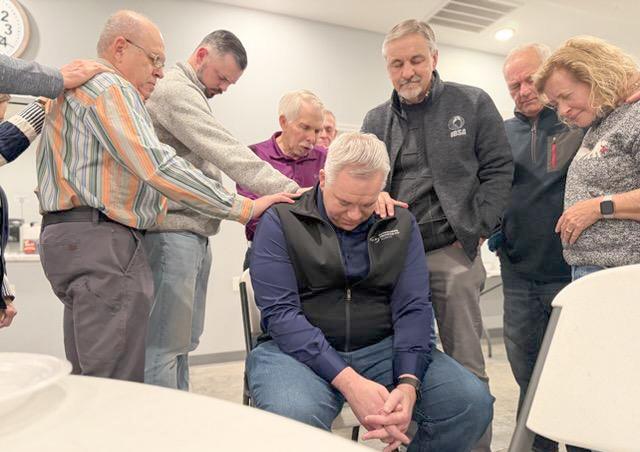
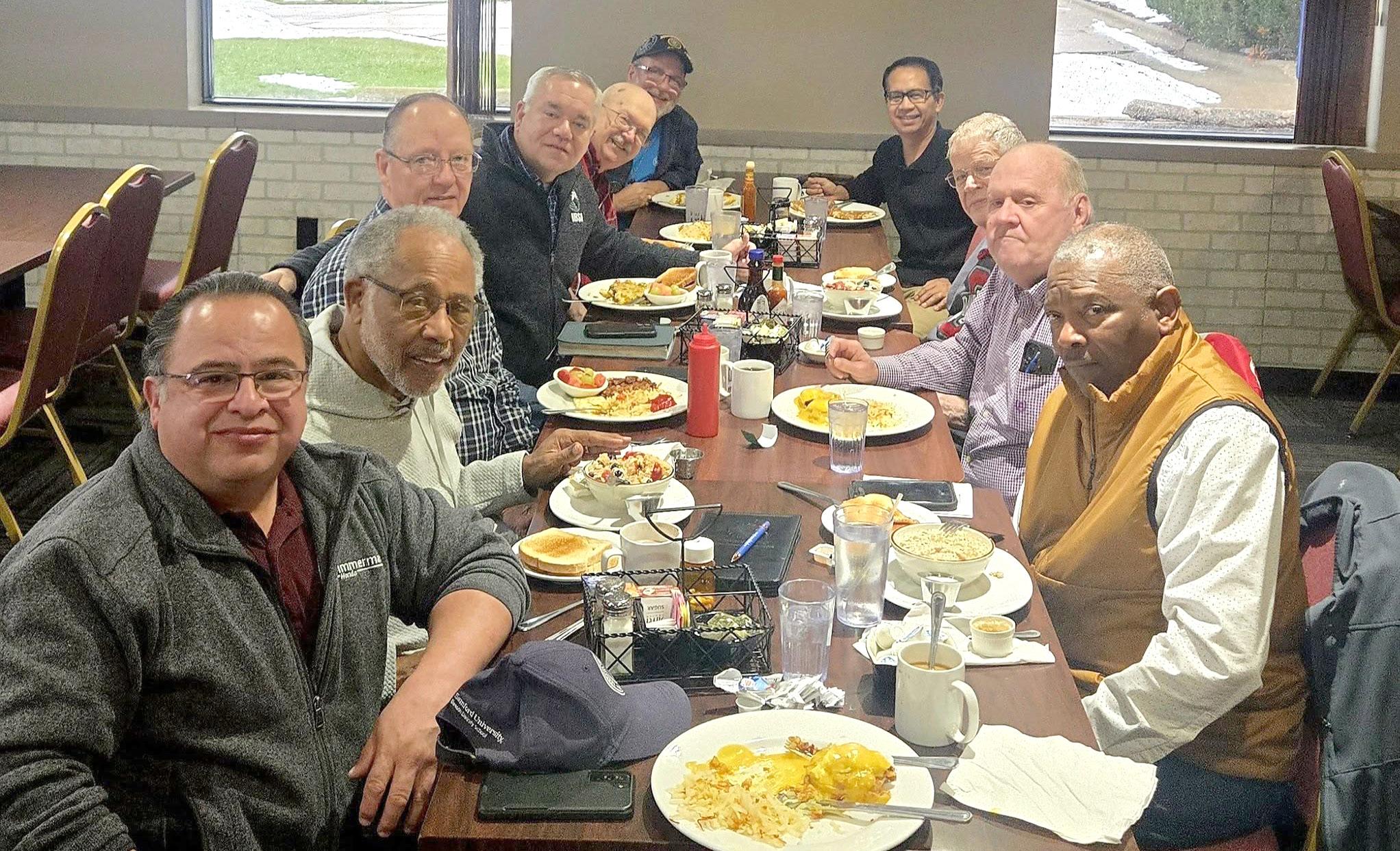
Foshie joined pastors from Quad Cities Area Baptist Association for lunch in December. In February he met Saline Baptist Association leaders who surrounded him with prayer. The team at Macoupin Baptist Association also surrounded him with prayer during a listening meeting in Carlinville and they discussed a new evangelism strategy. (See page 16.)
Foshie is engaged with strategic planning and establishing new ministry plans. He will assume the office


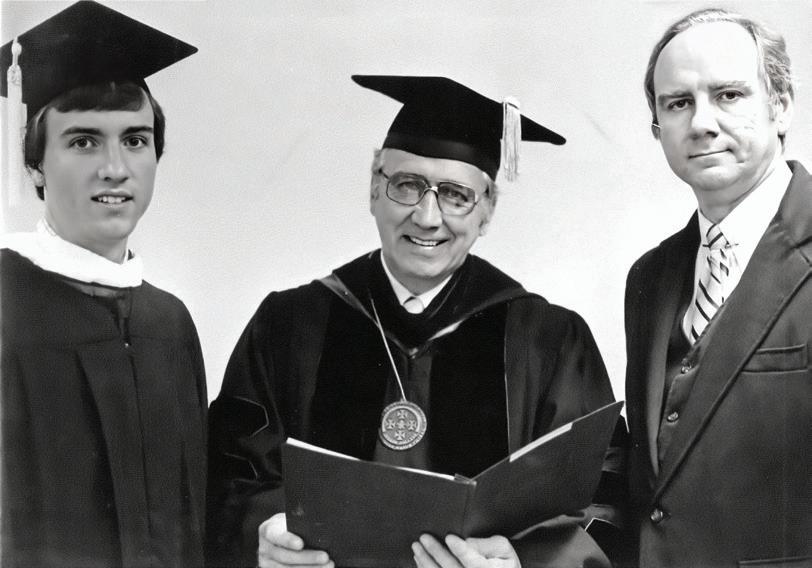
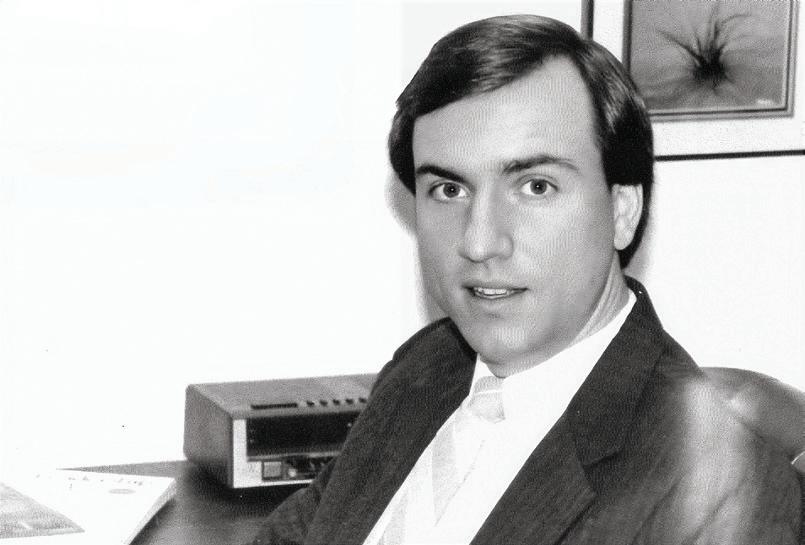
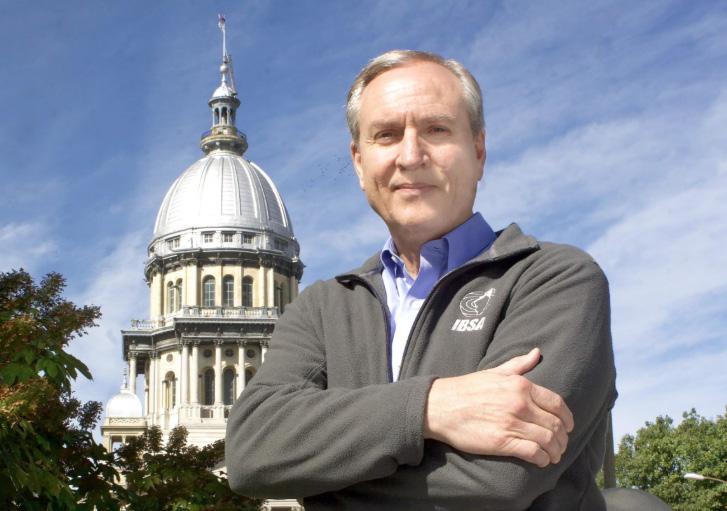
IBSA’s longest-tenured leader assesses his journey
BY ERIC REED
Nate Adams’s superpower may be stubbornness. Or said more graciously, persistence. Or spiritually, perseverance.
The tenacity to stick to a daunting task long after others would have surrendered has served him well across these two decades. And as longevity often fuels legacy, it seems appropriate to ask how he weathered 20 years as head of the state’s broad and varied network of Baptist churches.
Adams tells how Pastor Jerry Ford, a member of the search committee that brought him to Illinois in 2006, honed in on the issue: “What I want to know is, do you see yourself with gray hair in Illinois?”
Adams said yes.
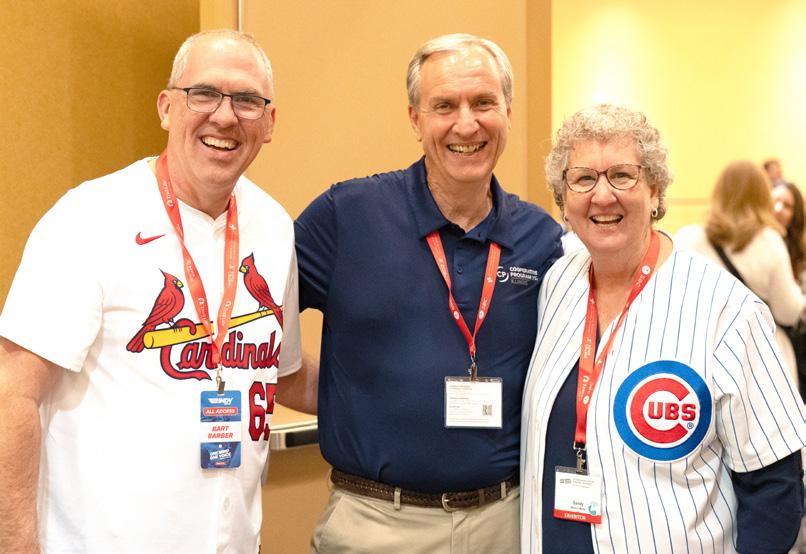
A lot has happened in Southern Baptist life and with the network of Illinois Baptist churches in his tenure, and Adams has earned those gray hairs.
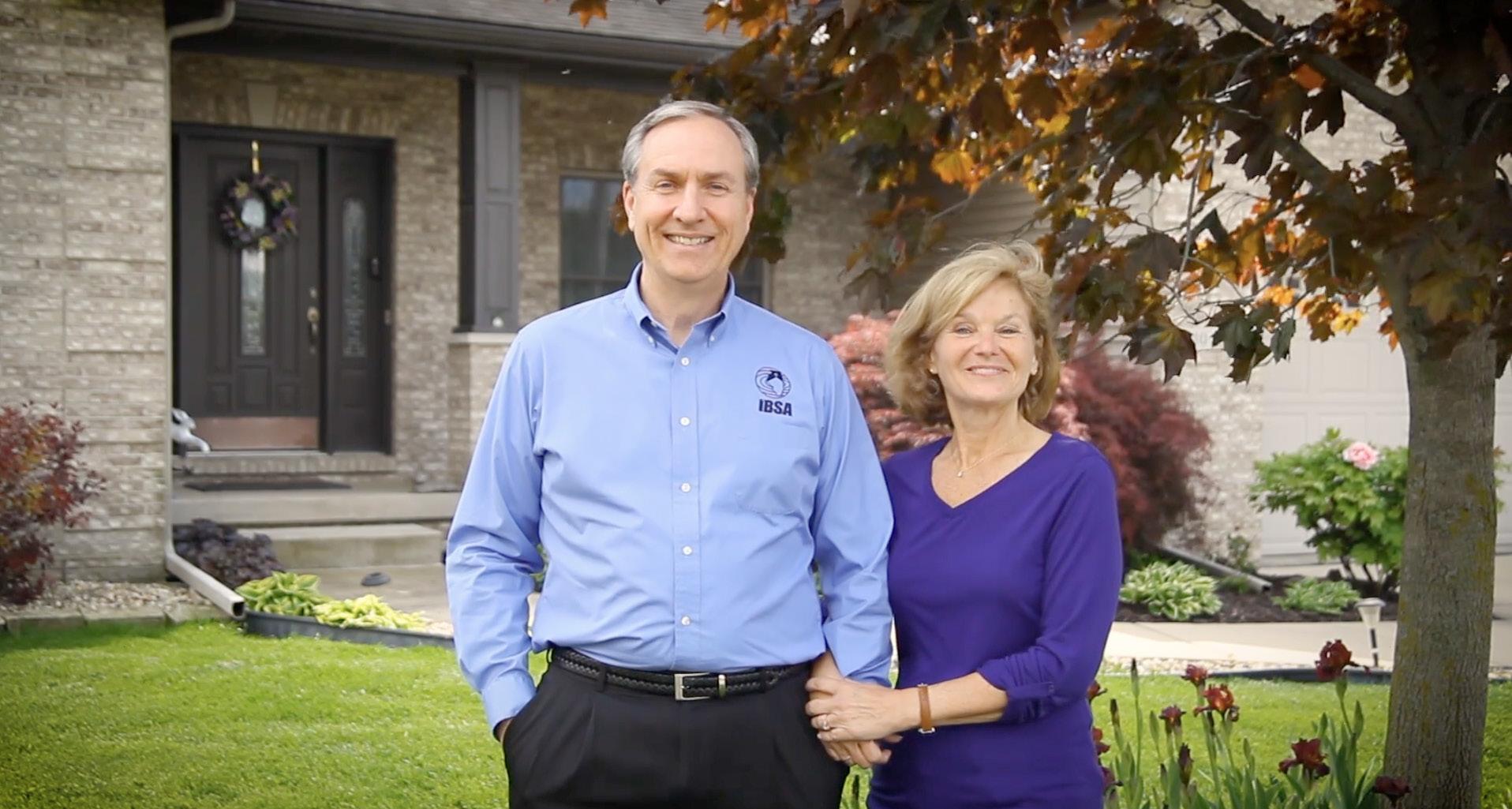
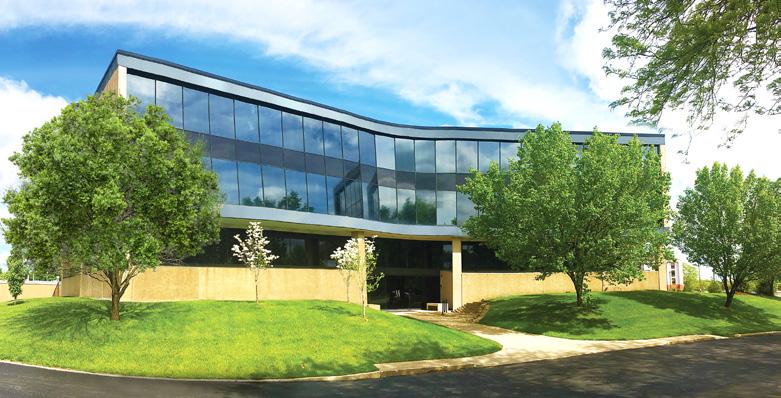
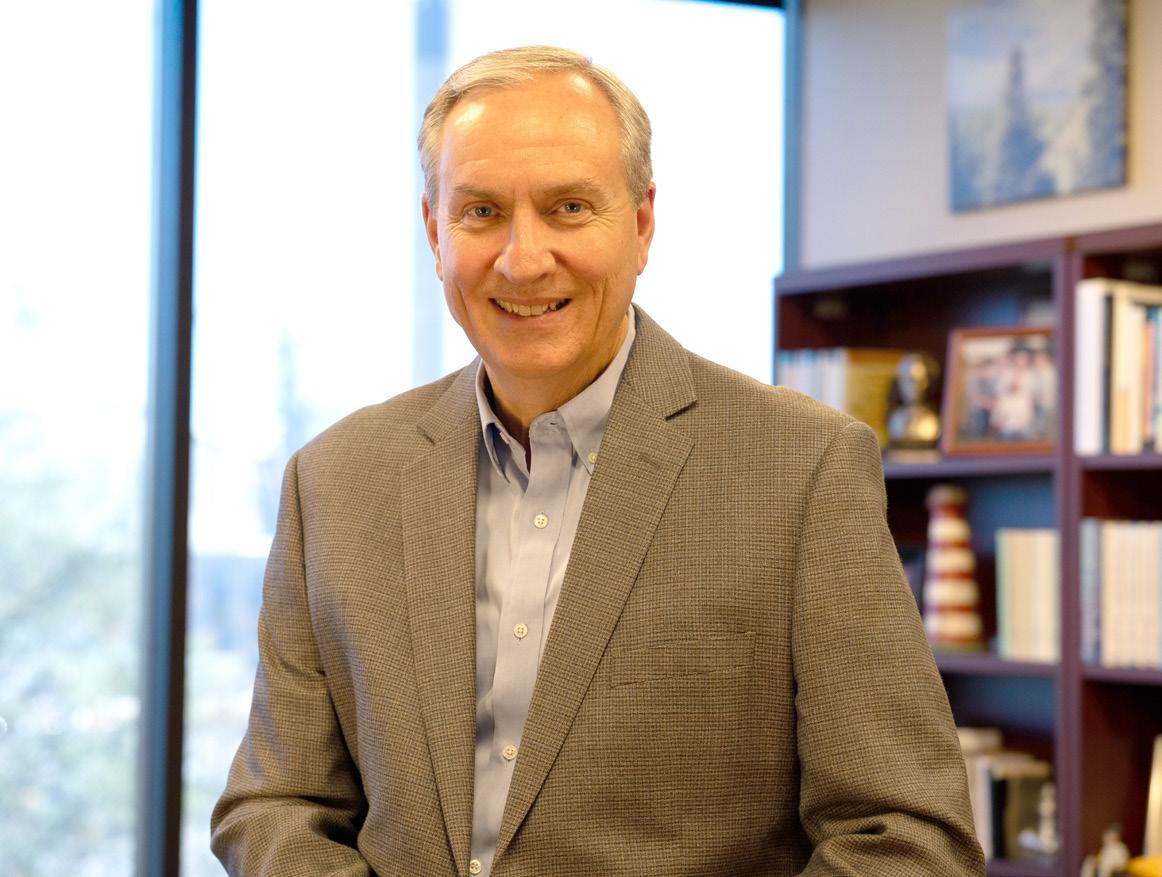
As Adams leans into his April 1 retirement as Executive Director of the Illinois Baptist State Association, it’s a good time for an exit interview. We met in his glass-front office at the IBSA Building, where the shelves are suddenly bare of a lifetime’s keepsakes from Christian publishing, missions advancement, and state convention leadership.
To grow up as a son of Illinois Baptists and later lead that same state in ministry is something beautiful and sacred. Nate has championed the Kingdom of God with courage, integrity, accountability, and passion while earning and maintaining our trust and admiration.
Sandy Wisdom-Martin
WMU Executive Director
Continued from page 7
Q: I remember a conversation at a coffee shop in Wheaton about 15 years ago where we talked about being Southern Baptists in the North, and Illinois Baptists in particular. We identified some challenges, but we acknowledged advantages. How do you feel about this unique vantage point today?
A: Well, I’m proud of being a Southern Baptist. I do think there are some cultural stereotypes that go with it. When I worked at Christianity Today in Northern Illinois, they would tease me and ask why I didn’t have on my leisure suit and my boots. (I didn’t own a pair of boots, and I had long since gotten rid of my last leisure suit.)
My son Noah pastored in Elgin and is now pastoring in Colorado. He said, I don’t want to pastor where most people and where the big churches are. He said, I want to be on the edge. I want to be out where I’m needed. I agree with him.
Being a Baptist in Illinois ought to remind us that we’re missionaries, and that we’re here to join Jesus in his mission to seek and to save the lost.
Q: You talk about Illinois Baptists with great fondness.
A: It’s a small world, but a big Baptist family. That’s the phrase I use to describe when I go to a gas station in Mt. Vernon, and I’m in my shorts and T-shirt on vacation, and an elderly lady from one of the churches walks in and says, “Aren’t you the executive director of IBSA?”
The idea that I would run into another Southern Baptist from one of our churches in a state of 13 million people in means it’s a small world.
Q: You’ve been cleaning out your office for several months. What is the trip down memory lane been like?
“Nate brought much needed stability to IBSA. He served IBSA with both joy and compassion. In his messages to IBSA he often laughed and wept. He clearly loved the churches of IBSA and wanted them to be effective in the work of the Kingdom.”
Doug Munton
Pastor
and IBSA President
A: It’s been fun and sentimental at the same time. It started a year ago, cleaning out my mother’s house after she died. The basement was like the IBSA archives.
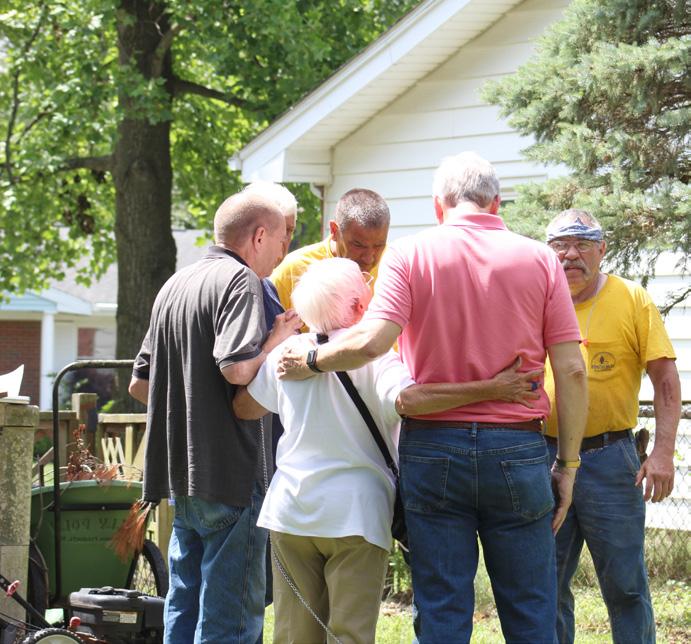
After that, Beth told me don’t bring home the memorabilia. Especially books. I gave away coffee mugs from church anniversaries and pens and medallions. I had a frisbee from a 200th anniversary of a church. Before you let it go, you remember that church—or Disaster Relief or Campers on Mission. Those things remind me of when I was there, and are probably what Paul had in mind when he said, “I thank God for every remembrance of you.”
Q: I’m seeing Paul with a cup he picked up in Ephesus.
A: There’s a map in my closet here that I haven’t taken down yet. One of the search committee members, Roger Marshall, asked me to pray about moving my family back to Illinois 20 years ago. He sent me that map and invited me to pray over it. So once here, I had it framed nicely, and it’s been in my office ever since. It is a reminder every time I step before it.
Q: Your service with IBSA has been a family affair in a lot of ways.
A: My dad’s a big part of the reason that I’m here and felt called here. I joked that some people get to stay in the family business. Some people inherit the family farm. For me, it was Illinois Baptists. Dad moved our family here from Kentucky when I was five, he became an Illinois Baptist, and stayed one from that point on. He had a unique relationship because of writing the newspaper column for 34 years.
With his reputation and integrity, and the rela-
Nate restructured the staff to focus on the needs of churches and their revitalization. He led renovation of facilities, including camps, to expand leadership development and discipling students. And he led above the drama of the SBC.
Mark Emerson Associate Executive Director
tionships that he had here, the people said, “Let’s give Nate a shot because he’s Tom’s boy.” I felt like my work has been a continuation of our family’s commitment—Dad’s and Mom’s—for more than 50 years.
Q: With his death at the same time you arrived at IBSA, you’ve said you wished you could have turned to him for advice in your ministry here.
A: Yes. I would have. When I was going to the North American Mission Board, he actually was a little bit cautionary. His warning was, I hope the politics of the SBC don’t chew you up. And I remember thinking naively at the time, That’s Baptist. How political can it be?
Certainly, Illinois has not had that acrimony that you sometimes see in the National SBC. I’ve often said, I can count on two hands the number of non-unanimous votes our messengers have had in the annual meeting. There’s a wonderful unity and diversity here that is unique to Illinois, and I’m glad we’ve been able to sustain that.
Q: How has creating a hub of ministry training and leadership development been important to your ministry?
A: There’s a phrase they use in real estate called pride of ownership. When you’re seeking to sell a house, does it demonstrate pride of ownership? To me, this—the Baptist Building—is a symbol of who Illinois Baptists are to some degree.
I came to this building as a teenager and then as a youth minister bringing people to Youth Encounter here. I remember this building, really for most of its life. And so it’s one of those symbols of stewardship for the previous generation.
Many national SBC leaders that come to our building say, “Wow, this is Illinois!” One of the things they say is “I didn’t realize that you had such a nice facility here.” And they comment on the quality of the fellowship.
That’s partly why renovating the Springfield
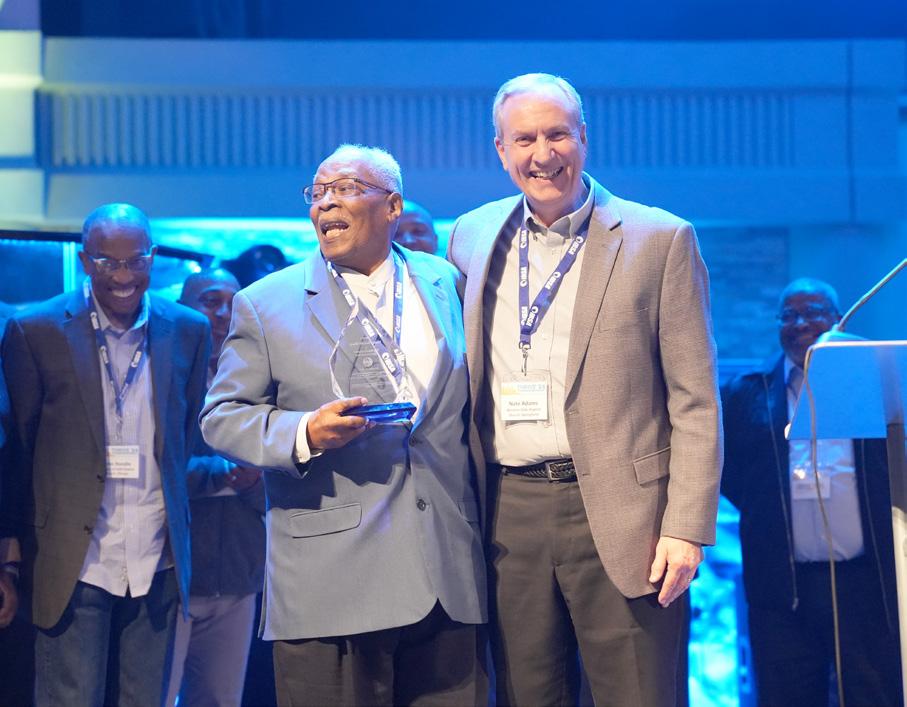
“Nate was a pastor to pastors. You could always count on Nate to listen, give wise counsel, and to pray. It was evident to all who paid attention that Nate was called by God to Illinois for such a time as this.”
Bob Dickerson Pastor, Regional Consultant
facility, and developing both camps, and expanding our leadership training across the state has been important.
Q: And they built a Starbucks across the street.
A: Yeah. I have a postcard I found in my parents’ house, the building when it was brand new. The back of the postcard says, Illinois Baptist and about 900 churches or whatever, and that was back in the 1970s. It’s about the same number of churches now.
I certainly wish the mission had made more progress.
We’ve faced some hard things, from the recession of 2008 to the so-called Great Commission Resurgence shortly after that, then Covid, and then five, six years of coming out of that.
All the while, the culture has been atrophying and turning much less conservative, just generally, in Illinois. So there’s been a lot of uphill climb to what we do.
Sometimes holding fast and not losing ground is victory.
Q: Take your victories where you find them.
A: As I’ve said to the board, it’s like we’re piloting a plane. For certain conditions, you have to fly at a lower altitude for a while until you can take corrective actions, or land and fix it and take off again. Flying at a slightly lower altitude than I would have wished probably describes the last 20 years.
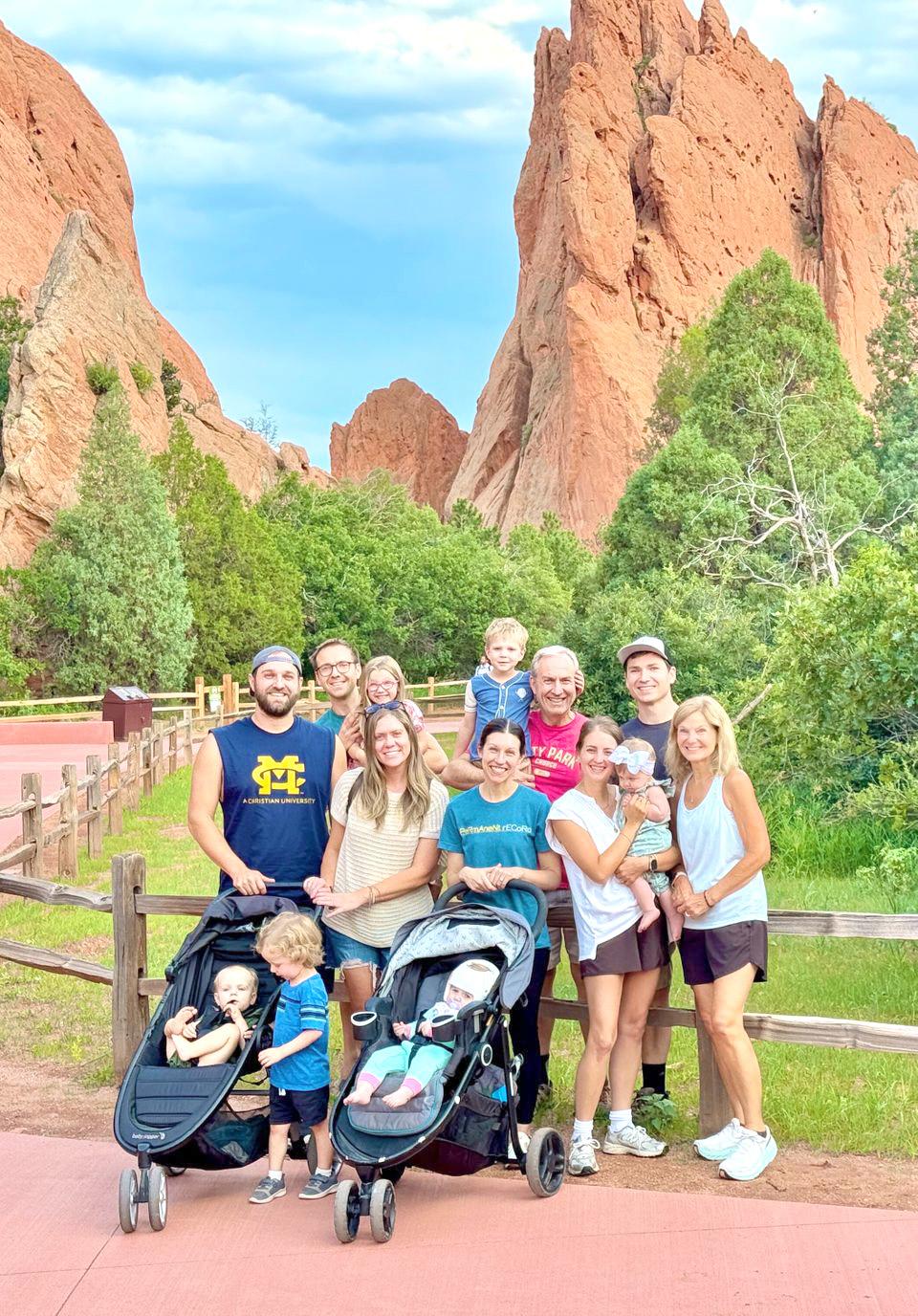
Q: You and Beth have leaned into several life changes ahead of retirement. What has grandparenting taught you?
A: Grandparenting is great. We went from three to six in one year. It’s everything that everybody always said when you just thought it was silly, until you got there.
I don’t know that you have a deeper impact than you have with the stewardship of your family. These kids are reminding me of that.
Q: What’s your favorite grandparenting activity?
A: The boys play Nerf basketball in our basement with a game we saved from their fathers’ childhood. They shoot all the time, and I get to rebound. But for the girls, we play school. When our oldest granddaughter comes over, we gather all the toys in the house, and the basement becomes a school setting, where those toys get organized into groups, and where those toys are disciplined, and where those toys say silly things.
Q: So you’re taking direction these days?
A: Absolutely. That little girl likes to command me around. And I do what she says.
Q: Finish this sentence: If not for Beth…
A: If not for Beth, I’d go off the rails far more often. She’s stabilizing, directing, perspective keeping,
One of Nate’s greatest contributions to our diverse church family has been his ability to protect the unity of the state association. His unwavering commitment to transparency has fostered a strong sense of unity among our churches.
Sylvan Knobloch
38-year IBSA ministry director
corrective, doesn’t let me take myself or what’s happening to me too seriously. She inspires me with her spiritual life and prayer commitment. She was a teacher until we had kids. Since then, being a wife and mom and helping me do what I do has been her job, as she states it. I’m healthier, spiritually and physically and emotionally, because she’s who I come home to.
Q: As you move into the next season, how are you reflecting on these 20 years?
A: I’m grateful for a long tenure. I hope I haven’t stayed too long. I hope I stayed long enough. I hope it was just right.
There was rapid leadership change before me, with five shorter term executive directors. There was a season when IBSA did not have stability. Like with pastors in churches, a long, healthy pastorate is typically good for the people. I feel gratitude to have done what Jerry asked me to do—turn gray in Illinois.
What I feel like I’m leaving behind is good organizational health, good practices, good finances, good foundation for what God (and Scott) have next. I’m glad someone is coming in after me who knows Illinois and loves our churches.
Q: What do you hope for in your next season?
A: More and more I want my identity in Christ and not in myself. I think the work of your hands can become your identity. Whatever God has planned in the future, without the expectation or encumbrance of a job to tempt me into that, I hope to be more fully who I am in Christ. I’d like to prepare for Jesus’ return more intentionally than the demands of this last season have maybe allowed.
Wayne Watson used to sing a song, “I want to get so close to him that it’s no big change on that day when Jesus calls my name.”
“Nate encouraged and challenged pastors and leaders to innovate in order to reach future generations. He built good relationships with pastors of all size churches across the state.”
Paul Westbrook
Pastor, Associate Executive Director
Nate Adams has provided visionary leadership with a passionate focus on God’s eternal mission. His integrity and focus have been an asset in both state and national leadership roles. We honor him for a lifetime of effective leadership.
Jeff Iorg SBC Executive Committee
honor is due
These memories have been turning in my mind since I heard Nate’s retiring
Most of us only have a handful of people who have known us in more than one season of life. These are the few friends who can remember our awkward adolescent years, as well as milestones like weddings and birth announcements. I’m thankful Nate and Beth Adams are in that category for me.
I knew them first as dear friends of my parents after we all relocated to Georgia—my family from Tennessee and the Adamses from Illinois. I babysat their three sons, each so
kind and bright even as kids. Their family gave ours a sense of steadiness as we all learned a new city together.
Later, they encouraged me as a college student, sending care packages full of my favorite things. I interned for two summers in Nate’s ministry area at the North American Mission Board, learning about communications from people who were learning from him.
Then, in 2009, I interviewed for a position at the Illinois Baptist State Association, and the Adamses’ home state became my own. Again, they were a steady presence in a time of transition. They showed me around Springfield, including my first trip to the Illinois State Fair. Before I moved in, Beth went to my first apartment to make sure it passed the smell test. (It did!) And at work, Nate’s consistency and integrity were instantly noticeable, even to someone young enough then that quieter leadership qualities could have easily gone unnoticed.
His steadiness grounded IBSA, and my place in it. From the beginning, I was proud to be an Illinois Baptist because the direction we were headed as an association of churches was clear. Our mission was
to shine a gospel light throughout Illinois. And Nate’s love for IBSA churches was always evident. I have rarely heard him talk about Illinois pastors and churches without his voice breaking a bit as he considered how God has moved and is still moving here.
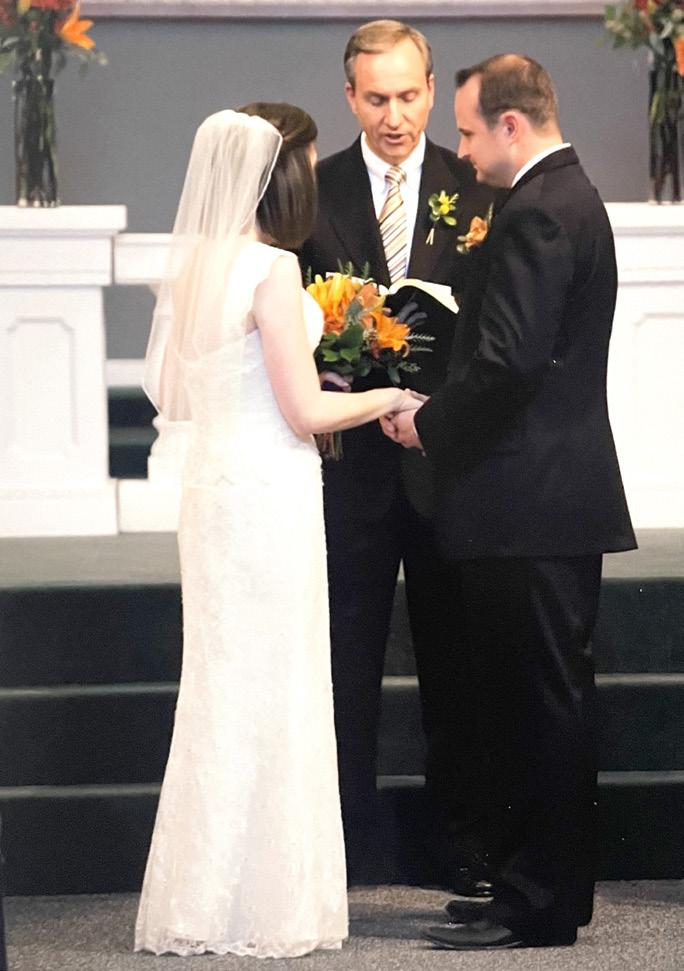
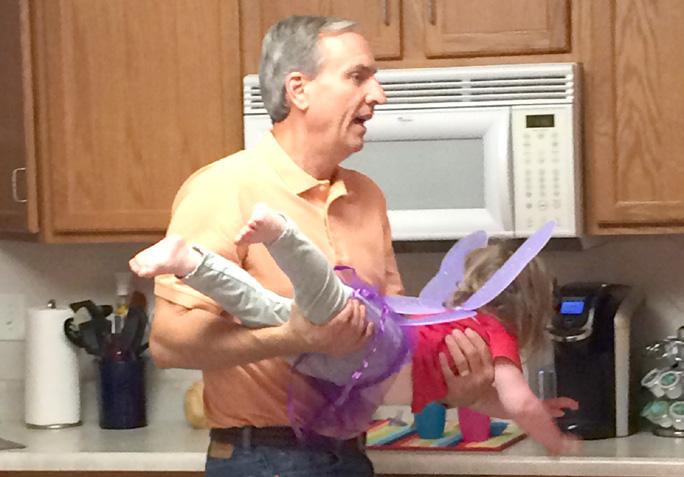
I benefited from that clear-sightedness in my non-work life too. Nate and Beth both generously shared their wisdom as I approached several milestones, caring for me in some very big moments. A few years after I moved to Springfield, Nate was one of the officiants at my wedding. Around their dinner table a few years after that, my husband and I shared the news that we were expecting our first daughter. Several times over the past 10 years, they have returned the babysitting favor. I have a photo of Nate zooming our Lucy, then 2, around the kitchen. (She’s wearing fairy wings Beth brought her, so it’s only appropriate that she’s flying.)
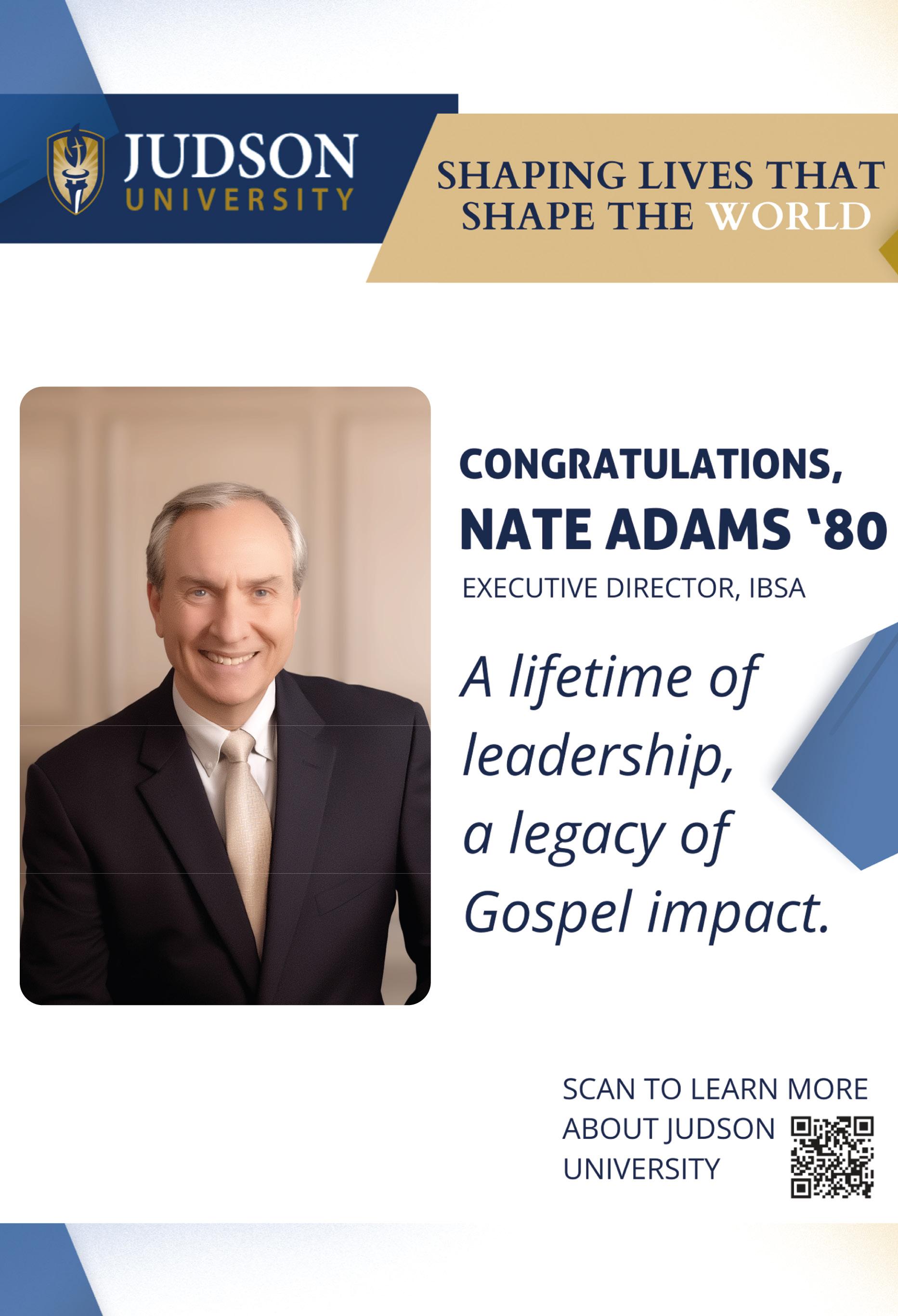
These memories have been turning in my mind ever since I heard Nate would be retiring after 20 years as IBSA Executive Director. I’m so glad Illinois Baptists, me included, have an opportunity to honor Nate, Beth, and their family with words of
encouragement and so many shared memories.
If you’ve been an Illinois Baptist for any length of time, I’m sure you have been blessed by their sacrificial, servant-hearted leadership and love for the Lord and his church. Now, we have the chance to give honor where honor is due, and it is indeed due here. We can join with the apostle Paul, who wrote to the church at Philippi that he thanked God every time he remembered them, because of their partnership in the gospel (Phil. 1:3).
I’m thankful to God for enabling Nate and Beth to care well for my family and so many others. I’m thankful God equipped them for years of steady, faithful leadership, and for their commitment to bring others along in pursuit of our cooperative mission in Illinois.
Meredith Day Flynn is a wife and mother living in Springfield.

March 1-8 is the Annie Armstrong Easter Offering and Week of Prayer for North American Missions. The national goal is $80 million to support church planting and compassion ministries such as the Send Center in Chicago. One of the featured stories in the prayer guide is a couple serving at Purdue University in West Layfayette, Indiana.
“I’m seeing things I’ve never seen before.”
That’s what Jordan Adams said the morning after a three-hour, standing-roomonly worship service where his chuch plant baptized 38 college students. “Seeing church auditoriums overflow and students get baptized—this has been way more than we ever imagined,” he said.
“When we came in 2023, I knew God was going to work,” the young planter said. “But I never imagined auditoriums overflowing, all these people getting baptized— this is more than anything we ever could’ve dreamed up.”
Jordan and his wife, Jessamy, are church planting missionaries in West Lafayette, Ind., the home of Purdue University. “There are 41,000 students here,” Jessamy said, “and most of them are at that stage of life where they’re looking for something to live for. That makes this a perfect place to plant a church.”
Now, students can leave Purdue with something more valuable than a college degree. “We have students meeting Christ, getting discipled, then graduating saying, ‘Where’s the next church plant? I want to move there,’” Jordan said. “We’re sending them out as ambassadors for Christ. Now, I’m certain God’s going to change our world, and he’s going to do it through college students.”
Meet Jordan and some of the students they’re reaching at Purdue University in the video at AnnieArmstrong.com.

The annual offering is named for the Woman’s Missionary Union leader who spearheaded support for Southern Baptist Missions, starting with renowned missionary to China, Lottie Moon, over a century ago.
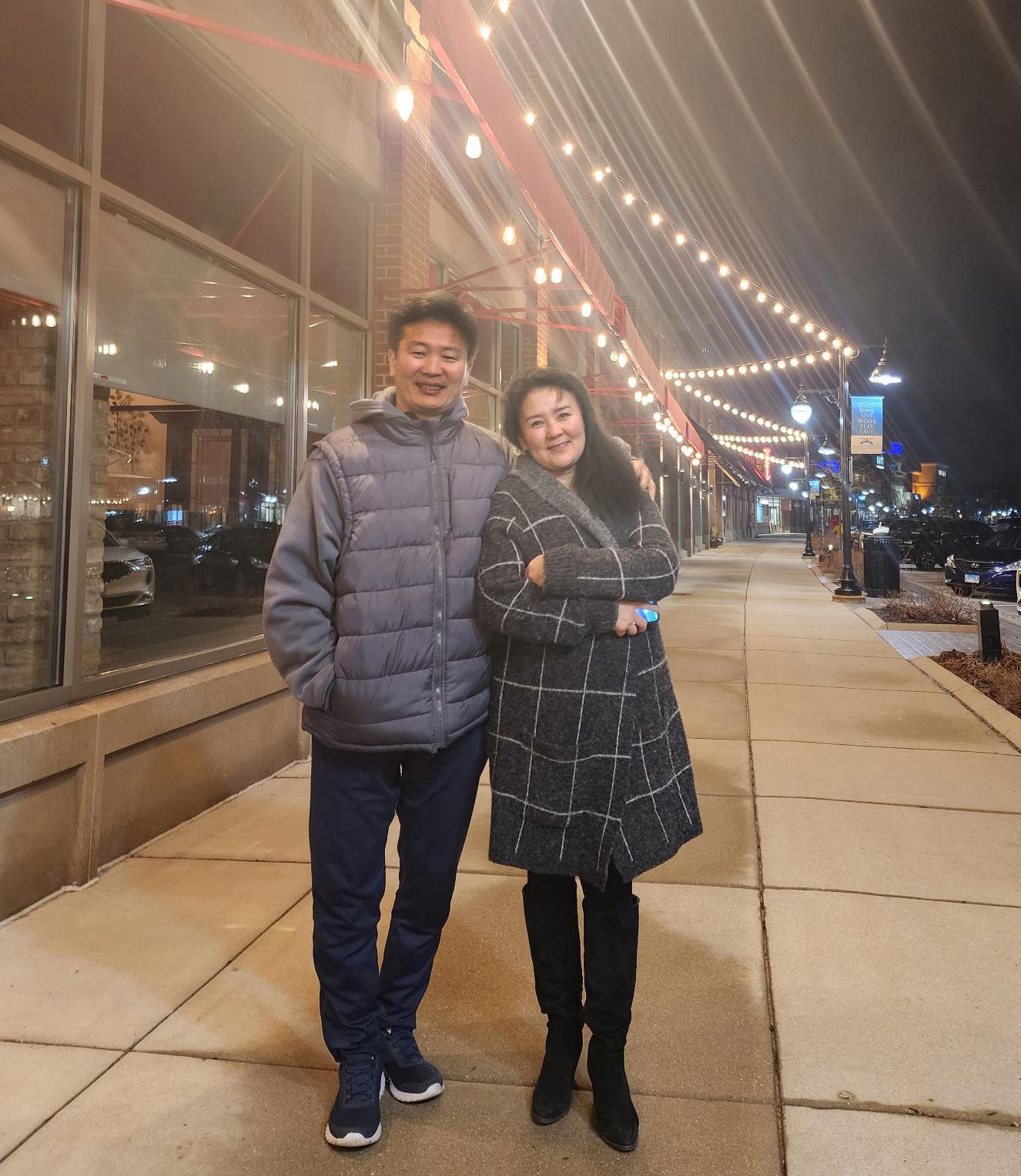
Mongolian pastor brings gospel to unreached people in Chicagoland
BY JOHN YI
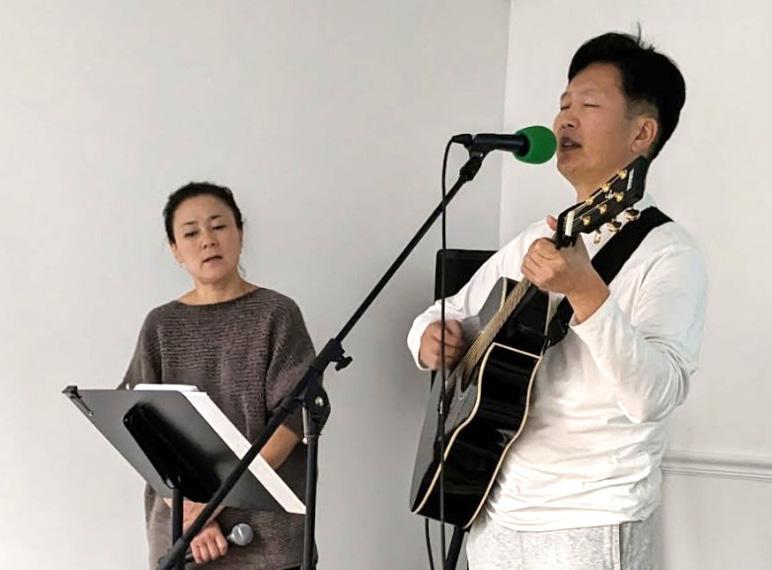
rdenekhuyag Vandan is the lead planter and pastor of Messenger Mongolian Christian Church in Glenview. His journey to faith and to Chicagoland started more than 30 years ago, with prayer to a God he didn’t know.
In 1994 when Eegi (as friends and family call him) was 25-years-old, his elder sister, Chimgee, put her faith in Jesus as her Lord and Savior. With that decision, Chimgee became the first Christ-follower in the countless generations of her family.
When she shared the news of her radical decision, Eegi who previously had been indifferent, now rejected Christ. He said he hated Christianity and wanted nothing to do with it. He saw Christianity as a religion of foreigners, not the religion of Mongolians. Although he was himself a nominal Buddhist, his family’s ancestral faith was Buddhism. In addition, the Christian faith was an affront to his lifelong Communist indoctrination. But God was not far from him.
About a year after his sister’s salvation, Eegi was at home when a couple of students came to visit with Chimgee. Eavesdropping, he heard them conversing about someone they called the “Lord of the Universe.”
‘Lord of the Universe’
What Paul told the Athenians about their ‘unknown god’ resonated with Eegi, a lost man in Mongolia:
“The God who made the world and everything in it is the Lord of heaven and earth and does not live in temples built by human hands. And he is not served by human hands, as if he needed anything. Rather, he himself gives everyone life and breath and everything else” (Acts 17:24-25).
Continued from page 11
The Lord of the Universe? Who’s that? Eegi was intrigued.
Over the next several years, whenever Eegi found himself in a jam, he would pray to this God, known only to him as “The Lord of the Universe.” When he prayed, everything seemed to work out. And so it went for the next 11 years.
By 2006, Eegi had immigrated to the United States, to Washington D.C where the Mongolian immigrant population was growing. It was there he met a Korean Christian couple who had previously served as missionaries in his native Mongolia. As Paul did when he found an altar to
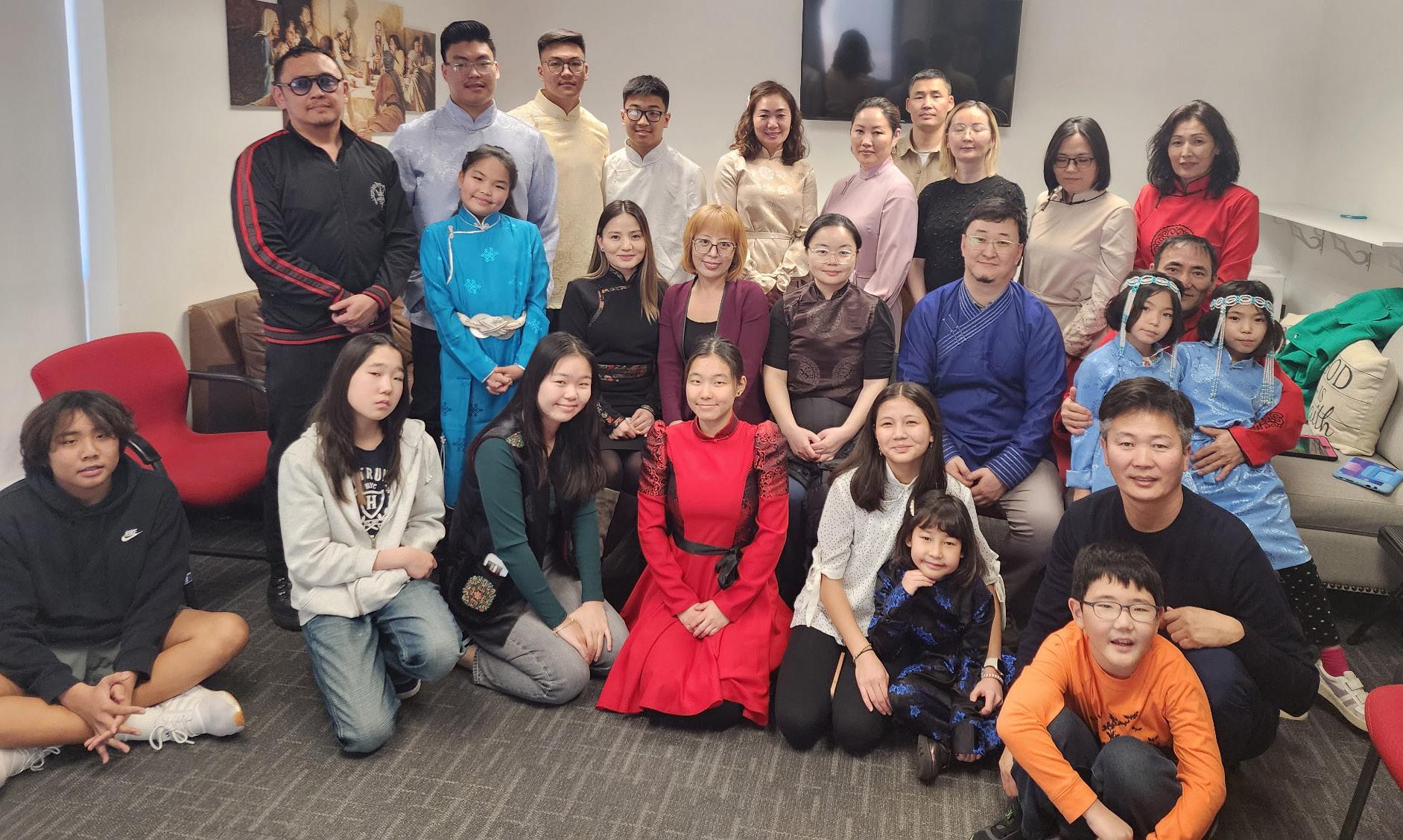
POPULATION BOOM – The Messenger Church in Chicago is one of three congregations serving the Mongolian people. At nearly 20,000 today, the UUPG’s population has more than tripled in a decade.
‘the unknown god’ at the Areopagus in Athens, the couple explained to Eegi the identity of this God, the Lord of the Universe.
“His name is Jesus,” they told Eegi, “and he wants people to know him!” Eegi committed his life to Jesus Christ, and this missionary couple discipled him so that he matured in knowledge, affections, and faith. In 2008, Eegi began formal training for gospel ministry in Bible college.
By 2018, Chicago had North America’s largest Mongolian population of over 5,000 people. Knowing that Christ is the only hope for Mongolians, Eegi answered God’s call to make disciples and relocated from D.C. to a new city where his people had been concentrating. Eegi knew that a miniscule portion of the population believed in Jesus. Over 50% of Mongolians are Tibetan Buddhists; almost 40% identify as “nones.”
Less than 1.5% report as Christians (including “Christian” cults).
In 2019, Eegi began his evangelistic efforts in Chicagoland. He gathered Mongolians in his apartment for weekly Bible studies, prayer, and worship. At the same time, after almost 13 years of God sending faithful witnesses her way, Eegi’s wife, Odnoo, surrendered her life to Jesus.
Unreached ‘opportunities’ Today, there are approximately 18,000 to 20,000 Mongolians in Chicagoland—over 200% population increase in less than 10 years. However, there are only three Mongolian churches in the region, with combined weekly attendance of 200. Mongolians remain an unreached, unengaged people group (UUPG) with only 1% of the population engaged in a local church.
In 2024, by the grace of God and the support of their sending church, the Korean congregation in Des Plaines, Bethel SBC, Eegi led his team to plant a Southern Baptist church, the Messenger Mongolian Christian Church in Glenview.
Messenger Church became the first Mongolian SBC church in Illinois. It also became the only SBC church currently in Glenview, an ethnically diverse suburb of over 47,000 residents with the vast majority who do not know the Lord of the Universe. About 30-40 people gather for weekly worship and cell groups with more than half of these being saved there. Eegi pleads with Illinois Baptists to join him in praying for a great spirit-
Birmingham, Ala. | A young woman from Illinois has been named to the 2026 National Acteens Panel, a group of four who will serve with the national WMU at the Southern Baptist Convention in Orlando. Abigail Howard of Casey First Baptist Church has been active in missions service through Acteens for seven years.
“We’re thrilled to see Illinois represented nationally!” said IBSA Leadership Director Carmen Halsey-Menghini. “Through WMU, women of all ages are equipped for missions and leadership, whether they serve individually or as part of a group.”
“Being named a National Acteens Panelist means these young women are the cream of the crop,” said Heather Keller, ministry consultant for Woman’s Missionary Union (WMU). “Their missions resumes reflect all areas of missions discipleship: learning about missions, praying for missions, supporting missions, doing missions, and telling others about Jesus,” Keller said.
Howard’s father is Brent Howard, pastor of Casey FBC. Her brother was a competitor in the Royal Ambassadors’ Pinewood Derby at the Southern Baptist Convention Annual Meeting in Dallas.
Howard said Acteens has enabled her to live a missional life and has provided opportunities to serve in her church as well as on mission trips where she learned to share her faith.
One experience included helping a church plant in Ohio. The church was meeting in the planter’s home, so her team prayer walked the surrounding neighborhood that was primarily Turkish.
“God has commanded is to take the gospel to all nations, but that does not always mean we have to go to another country to share Jesus,” Howard said. “He is bringing the nations to us and placing them in our path here and so now we can share with them. Acteens has shown me how, as believers, we need to look at the world through Jesus’ eyes. This way of viewing the world has led me most often to see
ual awakening among Mongolians.
“I am grateful to God for the generous partnerships of Southern Baptists, for Chris Kim and Bethel SBC Church, the IBSA and Send Network teams, my wife and children, Missionaries Kwan Phil Nam and Mal Re Kim, and the Messenger Mongolian Christian Church,” Pastor Eegi shared. “All these remind me that the Lord of the Universe has not sent me out to labor alone for the sake of Jesus’ name, but with a supportive family.”
He asked for prayer that Mongolian families would experience Christ’s deliverance from idolatry, false teachers, superstitious fears, and alcohol and drug abuse. “Pray for disciples to be made,” he asked Illinois Baptists.
As a church planting catalyst serving in Chicagoland, I am blessed to call Pastor Erdenekhuyag Vandan my friend and co-laborer in the Kingdom. I’m overjoyed by the Lord’s faithfulness to build a Baptist church for Mongolians in Chicagoland.
In faith, we wait for Jesus to plant even more gospel-proclaiming churches for unreached immigrants such as the Rohingya, a refugee people fleeing persecution in Myanmar with up to 2,000 people now living in Rogers Park and West Ridge, for those from Central and South Asian countries, and for those who arrive from Muslim majority places.
John Yi is a NAMB Church Planting Catalyst serving in Illinois.
people with compassion.”
Howard also credits Acteens with helping her grow in her walk with Christ by teaching her how to worship and challenging her to dig deeper and study God’s Word.
Acteens is the WMU-sponsored missions group for girls in grades 7–12. Illinois’ own Evelyn Tully helped launch Acteens in 1972 and served as its first national consultant.
Keller and many others have contin-
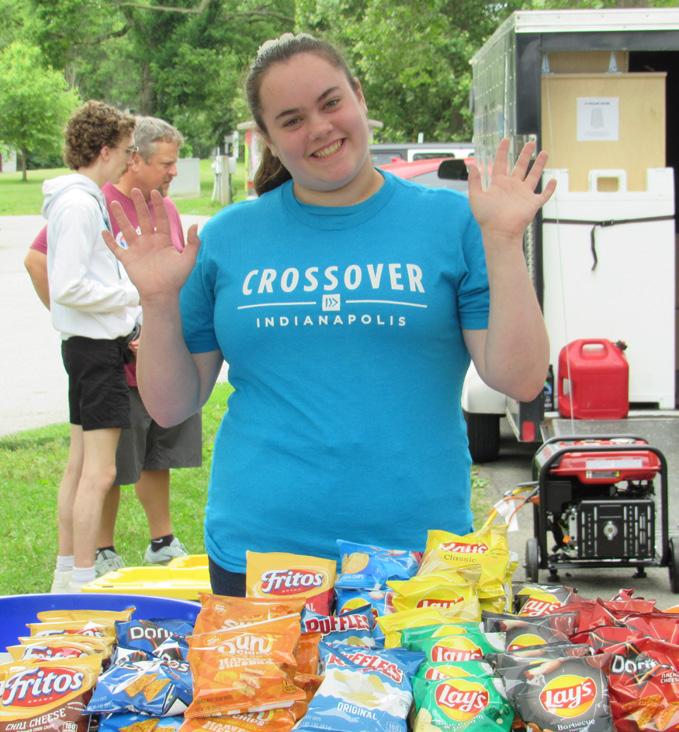
AHOY! – National Acteens Panelist Abbie Howard frequently serves on mission trips. She served at a block party with Send Relief at Crossover Indianapolis 2024.
ued the work with teen women, on the national level and in thousands of SBC churches. “These young women are not the ‘next’ generation, they are the ‘now’ generation of missions!” Keller said. “I am excited to work with them and learn from them this year and know we will all be blessed by hearing about their passion for missions.”
Joining Howard on the panel are Acteens from Georgia, New Mexico, and Texas. The panelists will serve through 2026. Each will receive a grant from the Jessica Powell Loftis Endowment through the WMU Foundation. They will help lead in the WMU Missions Celebration and Annual Meeting in Orlando in June, prior to the Southern Baptist Convention annual meeting. with reporting from Julie Walters, WMU

Daniel Good College Ministry Catalyst
Home(s): I was born in Des Moines, but grew up in the mountains just west of Denver, and I live in Champaign now.
Family Google: My incredible wife, Hope, is my dream come true. A dietitian, she has a powerful ministry, and is really involved in our collegiate and young adults ministry. I serve as lead pastor of Cornerstone Church in Savoy.
Education: BA in Social Studies from U of Wyoming, M.Div. in Preaching/Pastoral Ministry from Midwestern Seminary, and working on a D. Min. in Church Revitalization, equipping churches for intergenerational discipleship.
Journey: After reading Titus while on a mission trip in Trinidad and Tobago, I knew God was calling me to pastor a local church and to reach college students!
Verse I quote often: Psalm 34:1-6. (My church and I are memorizing Psalm 34 this year.)
Illinois fave: I’ve quickly become a committed U of I sports fan. We have football season tickets!
Discoveries: Ice cream at Sidney Dairy Barn, Smith Burger Company, chicken at Watson’s Shack and Rail
My last costume party outfit: Ted Lasso
Reality show I’d like to appear on: Hard Knocks: Pastor Edition
You have probably heard some of the troubling statistics about teens and young adults. The data points are piling up like symptoms for a very ill patient. Since 2010,
• Anxiety is up 139% among 18–25-year-olds.
• Depression is up 145% among girls and 161% among boys.
• Self-harm emergency room visits are up almost 200% for girls and 50% for boys.
• Suicide rates have climbed by 167% for girls and 91% for boys.
Jonathan Haidt offers an initial diagnosis in his book The Anxious Generation. He points to the radical change in the nature of childhood. What was once shaped by physical play and in person socializing is now dominated by individual screens and addictive digital media.
Haidt calls this shift “The Great Rewiring,” noting the dramatic rise in mental health indicators tracks closely with the widespread adoption of smartphones. He lays the fault at the feet of “social media companies, which inflicted their greatest damage on girls, and video game companies and pornography sites, which sank their hooks deepest into boys.” These companies designed “a firehose of addictive content.”
Haidt’s work has already spurred some U.S. states to restrict phone use in schools and led several European countries to hold social media companies accountable for their impact on kids.
More simply, we could look at the lyrics of 23-year-old artist Josiah Queen’s hit Dusty Bibles. “With dust on our Bibles, brand-new iPhones, no wonder why we feel this way.”
If The Great Rewiring represents the acute condition young people face, we should also consider the cultural air they breathe. This is the world of expressive individualism— the belief that fulfillment comes not from shared institutions like family or church, but from looking inward, identifying our desires, and expressing them outwardly.
In such a culture, institutions are seen as limiting or even oppressive, because they place responsibilities and expectations on the individual. But a society filled with people looking only to themselves inevitably becomes more isolated and more lonely. This only compounds the symptoms of anxiety and depression.
tianity at all,” he said, “just the social and emotional benefits of church are undeniable.”
In a world disconnected by a self-focused spirit and individualized screens, the church gathers diverse people. It is inherently communal, offering personal relationships where people are not only known but shaped through regular rhythms of worship, prayer, Scripture, and mutual encouragement and fellowship.
So, what is the solution? I believe the church is strategically positioned to reach and minister to this generation. Here are two ways.
1. The church offers belonging and embodied formation.
Matt Von Swol, former nuclear scientist and photographer for brands like Apple, United Airlines, and Hyatt Hotels, recently shared that after being out of church for over seven years, he was awed to discover how church was that one rare place where multiple generations interact face-to-face.
“Even if you don’t believe in Chris-
“It may take him a while to adjust to retirement.”
Von Swol said he likes watching his kids stumble awkwardly through conversations with people they don’t know—at church.
“You can’t hide behind your phone, and I love that,” he said. “You can’t scroll your way through it.”
2. The church provides identity and purpose.
Endless inward self discovery and self reinvention is not only exhausting—it is isolating. For those who are always searching yet never finding, the church offers a far more grounded identity: we are God’s image bearers, redeemed by grace, and sent with purpose. Instead of leaving people to construct themselves alone, the church places identity within God’s larger story and invites each person to join him in his mission.
Younger believers grow in their Christian identity as they watch older saints embody the simple graces of patience, forgiveness, love, and sacrifice. They see people committed to God’s work in the world.
To echo the insight of St. Augustine, the restless hearts of our world remain restless until they find rest in the Lord. And it is the church—my church and your church—that God has positioned as a living instrument of his peace, displaying and declaring hope to an anxious generation.
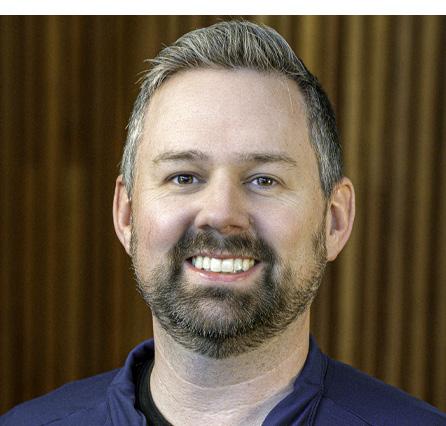
IBSA Leadership Director Michael Awbrey led a breakout on this topic at the Illinois Leadership Summit.
RECOMMENDED RESOURCE: The Anxious Generation Goes to Church by Thom Rainer (Tyndale, 2025)
February 28-March 6
IBW Mission Trip
Where: Laredo, Texas
What: By partnering with the Texas Baptist River Ministry, Send Relief’s ministry center in Laredo provides displaced families along the U.S. Mexico border with food, clothes, hygiene kits, and the hope of new life in the gospel. Limited spots available.
Info: ibsa.org/events/laredo-trip/ Contact: Jillmac664@gmail.com
March 1-8
Annie Armstrong Week of Prayer and Offering
What: This Easter season offering is for church planting and compassion ministries in North America, through NAMB.
Where: Your Church Info: anniearmstrong.com
Recharge Pastors Retreat
March 13-14 Streator
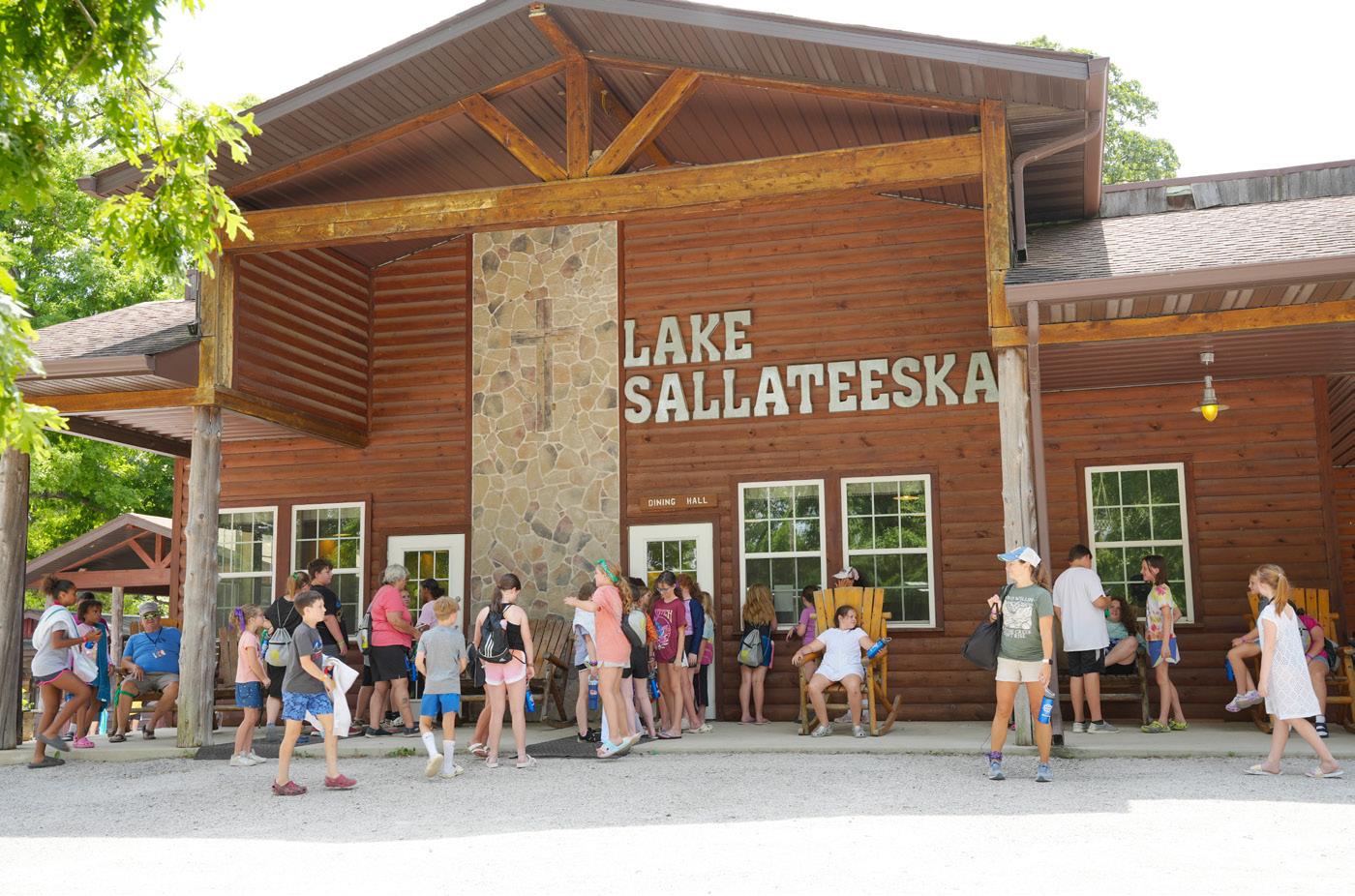
March 27-28 Lake Sallateeska
What: Rustic, slow-paced retreat to build community with other pastors.
Cost: Free
Info: ibsa.org/events/recharge-streator ibsa.org/events/recharge-lake-sallateeska
April 17-18
Student Discipleship Retreat
Where: Streator Baptist Camp
Cost: $25 per person
Contact: MichaelAwbrey@IBSA.org
Disaster Relief Training
4/10-11 Emmanuel BC, Carlinville
8/28-29 Lake Sallateeska Camp
What: Courses vary but may include childcare and chaplaincy, flood recovery, chainsaw, and incident management.
Cost: Current members, free. New members or expired badges, $50.
Info: IBSA.org/events
Contact: JanetSheley@IBSA.org
June 7-10
SBC Annual Meeting & Pastors’ Conference
What: Four days of worship, preaching, missions, and SBC business. 200 gatherings during the week.
Where: Convention Center, Orlando Info: sbcannualmeeting.net/
June 16-20
Super Summer
What: Camp to help students grow toward their fullest potential as Christians. This year’s theme, One Body. One Mission., is based on Ephesians 4:15-16.
Where: Greenville College, Greenville
Cost: Students: $250 (add $20 after May 25).
Adults: $150 (add $20 after May 25).
Info: IBSA.org/supersummer
Contact: TammyButler@IBSA.org
July 20-26
Go Chicago
What: Student missions in the Windy City. Where: Ashburn Baptist Church, Orland Park Who: Students 12-18
Info: Watch for more details coming soon!
August 3-4
Associational Roundtable
What: Two-day gathering for local assn. leaders.
Where: IBSA Building, Springfield Info: Coming soon!
August 21-22
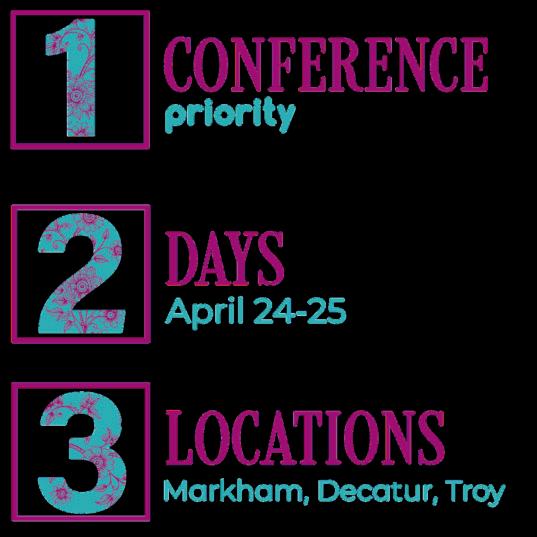
Priority: Hispanic Women’s Conference
What: Leadership development
Where: Lake Geneva, Wis.
Contact: CarmenHalsey-Menghnini@IBSA. org
August 22
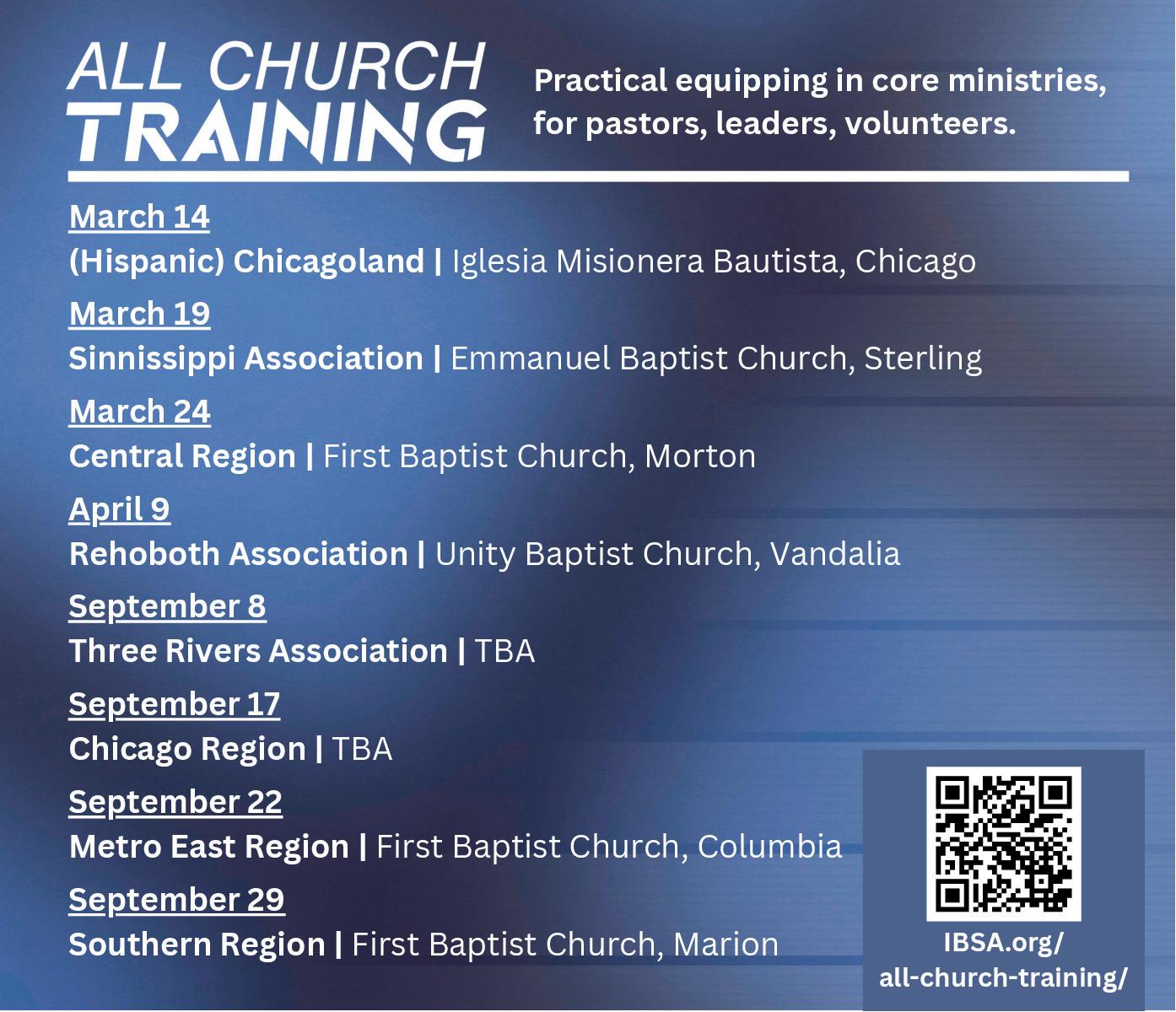
Tech Conference: All Regions
What: Specialized training for pastors, tech/ worship leaders, volunteers.
Where: TBD
Contact: CarmenHalsey-Menghnini@IBSA. org

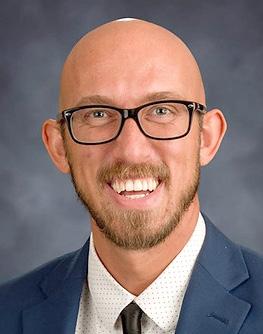
Clay Hilton was called as pastor at Unity Baptist Church in Vandalia. He and his wife, Cinnamon, served with the North American Mission Board in Alberta, Canada. They return to the States after 17 years as church planters. The Hiltons have four adult children. He is a graduate of Southwestern Baptist Theological Seminary. While in Canada, he also served as a high school special needs educational assistant.
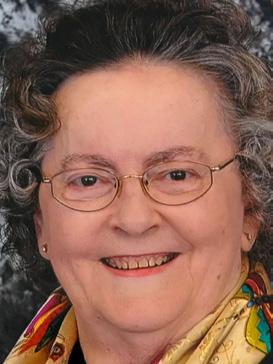
Avah Louise Phillips Shelby, 87, died Jan. 17 after a brief illness. She and her husband Jack, who died in 2023, served as SBC missionaries in Malaysia and India, and later in Germany and Russia. The Harrisburg native held nursing degrees from St. Luke’s Hospital School of Nursing and Southern Illinois University-Carbondale.
After 31 years of missionary service, the couple retired from the International Mission Board and returned to Illinois, where Avah continued her nursing career by providing services to staff at the Illinois State Capitol Building. She is survived by three children, nine grandchildren, and 17 great-grandchildren.
Memorials may be made to the Lottie Moon Offering for International Missions through Lakeland Baptist Church in Carbondale.
Author and teacher Elizabeth Woodson will speak March 2 at First Baptist Church of O’Fallon. Her new book Habits of Resistance identifies detrimental ways the culture is shaping Christians that they may not recognize.

“Something about life is not as it should be,” Woodson writes. “Even though we don’t have the words to fully describe it, we just want what feels ‘off’ to be made right.” That, she says, is the biblical concept of shalom And she offers seven habits to restore this wholeness.
Woodson is a graduate of Dallas Theological Seminary and a regular contributor to Lifeway Women Academy. The 7 p.m. event is free of charge. Register at fbcofallon.churchcenter. com/home.
Send NetworkiNg items to IllinoisBaptist@IBSA.org
Marshall Baptist Church seeks a fulltime Executive Pastor to serve alongside the Lead Pastor in our mission of “helping people follow Jesus.” This role will provide leadership to staff and ministry teams, oversee systems and processes, leads small groups, assist in preaching and service planning, and serve as an Elder. For info or to submit a resume, contact marshallbaptist@ gmail.com.




See the website for speakers, breakouts, and details for each site.
Search more church openings at IBSA. org/pastor-search or scan this code.

(Joel Vancil earned a Masters degree from Midwestrern Seminary and returned to his Southern Illinois home to plant a church in Ashley. He’s a teacher and a farmer too. On the church’s first anniversary, which was the first Sunday of Advent, he preached a sermon on Genesis 3. This excerpt is the third portion, where he focused in on verse 15, when God speaks to the serpent:
“I will put hostility between you and the woman, and between your offspring and her offspring. He will strike your head, and you will strike his heel” (CSB). After the cause of the fall, and the curse of the fall, there’s the cure for the fall—The Protoevangelium.)
Up until this point, you need to know that as man walked with God in the Garden, we were in perfect fellowship with God, and God fed man from the tree of life. Adam didn’t get sick. Adam and Eve didn’t fight. They were to live forever. With no sickness, no cancer, and no decaying in old age, they would have lived forever, in perfect harmony and fellowship with God and each other.
And whenever Adam worked the
earth, everything worked. Droughts and floods did not plague his crops. He didn’t get fatigued or tired.
Let me tell you, I may never understand the curse of pain in childbearing that resulted from the fall, but as a farmer, I certainly do understand the curse on the land. Every time the tractor breaks down, I’m tempted to think, “Why can’t life just be easy?” It’s because of the fall.
Every bad weather system that floods the crops, or hailstorm that pummels the corn, I’m tempted to think, “Why can’t life just be easy?” It’s because of the fall.
Teachers in the classroom, every time a student pushes back on your authority, or talks back to you, or hits another student, and you’re tempted to think, “Why can’t life just be easy?” It’s because of the fall.
We don’t have to look far to see that the world around us is broken. And interestingly enough, we feel this the most at Christmastime.
According to the National Institutes of Health, Christmas is the time of year when people experience the highest rate of depression—45% according to one survey.
Yet we know the world wasn’t meant to be this way. There is a seed of hope in Genesis 3.
God promises the serpent that he may strike and bruise and even crush our heels, but his head will ultimately be crushed by the seed of the very woman he has cursed. Who is the seed of the woman? Jesus Christ, fully God, fully man.
Genesis 3:15 may be a small verse sandwiched in a bleak chapter full of devastating news, but I can’t overstate its weight. In fact, this one verse has often been called the “protoevangelium.”
That’s a Latin word that literally means “first gospel,” and “gospel” literally means “good news”—so quite literally, “protoevangelium” means “first good news.”
The first good news is our hope; and it was the only hope that was given to Adam and Eve and their initial descendants, that a Savior would come and undo the effects of the fall, of their sin and rebellion. You could call it a seed of hope.
Right now, the world is broken, and sinful, and fallen. Evil people
and imposters are going on from bad to worse, deceiving and being deceived. Marriages and families are broken. Relationships are stressed. Crops fail. Childbirth is painful and difficult; and sometimes babies die. We are riddled with reports of sickness and death all around us. Satan is striking us at our heels, and the very ground we walk on is cursed— but God will not leave the humanity he created in his own image without a Savior.
Jesus is coming. The seed of the woman will crush the head of the serpent.
Because of the work of the seed of the woman, Jesus Christ of Nazareth, “the dwelling place of God will again be with man. He will dwell with them, and they will be his people, and God himself will be with them as their God. He will wipe away every tear from their eyes, and death shall be no more, neither shall there be mourning, nor crying, nor pain anymore, for the former things have passed away. And he who was seated on the throne said, ‘Behold, I am making all things new’” (Rev. 21:3-5).
Jesus is the seed of hope, and that’s the first good news.

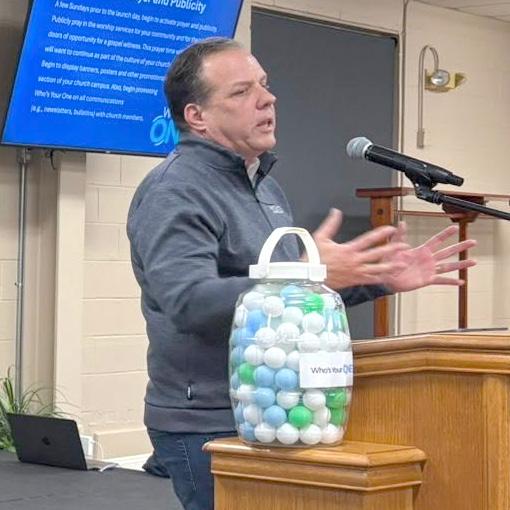
The SBC’s evangelism strategy has been updated and will launch on Easter Sunday. Churches can sign up online for the campaign to identify one-million people who do not know Jesus as Savior. Participants can mark their commitments on a map and receive a Who’s Your One T-shirt. IBSA Associate Executive Director Mark Emerson hailed the plan that was first revealed at a listening session with Macoupin Association pastors. “This was the SBC’s most effective evangelism strategy in recent years,” he said. “I’m glad NAMB is bringing it back!”
The big jar of Ping-Pong balls was used by many churches to report the “ones” who came to Christ during the 2018 version.
VIDEO to help churches engage the prayer and share strategy is posted at IBSA.org.


cups
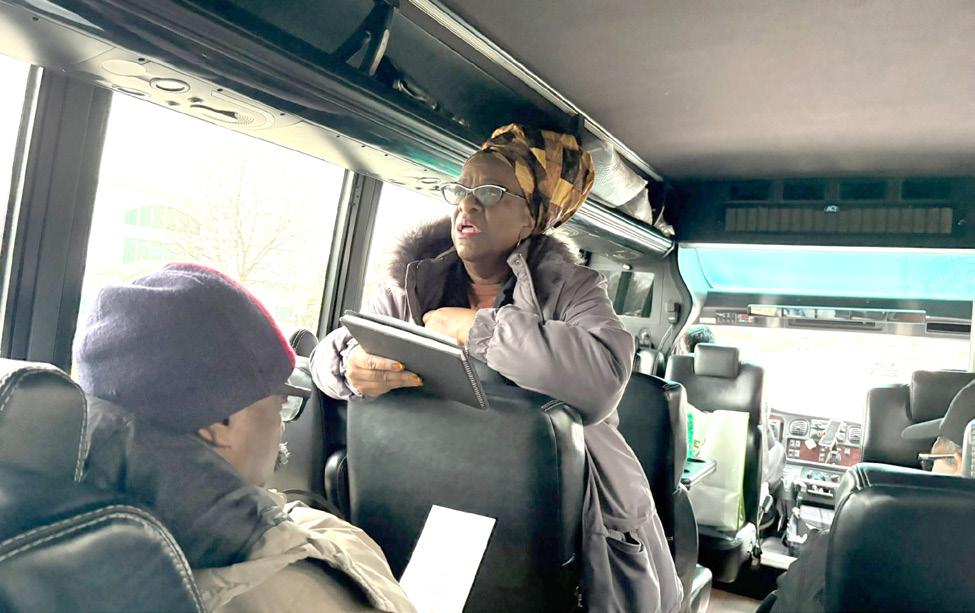
Wheels on the bus went round and round Chicago on the annual prayer tour. Led by Chicagoland Baptist Association Prayer Coordinator Cheryl Dorsey, the bus load prayed for GospeLife Church and Pastor Scott Nichols, Hungarian Baptist Church and Pastor Janos Lukács, St. John Baptist Temple and Pastor Ben Davis, and Garden City Church and Planter Sam Copeland.


“It was amazing to praise and prayerwalk with these churches and to serve with such faithful saints,” said IBSA Executive Director Elect Scott Foshie, who was joined on the tour by his son, Levi.
We’ve had a wonderful day of prayer. God is working in Chicagoland!
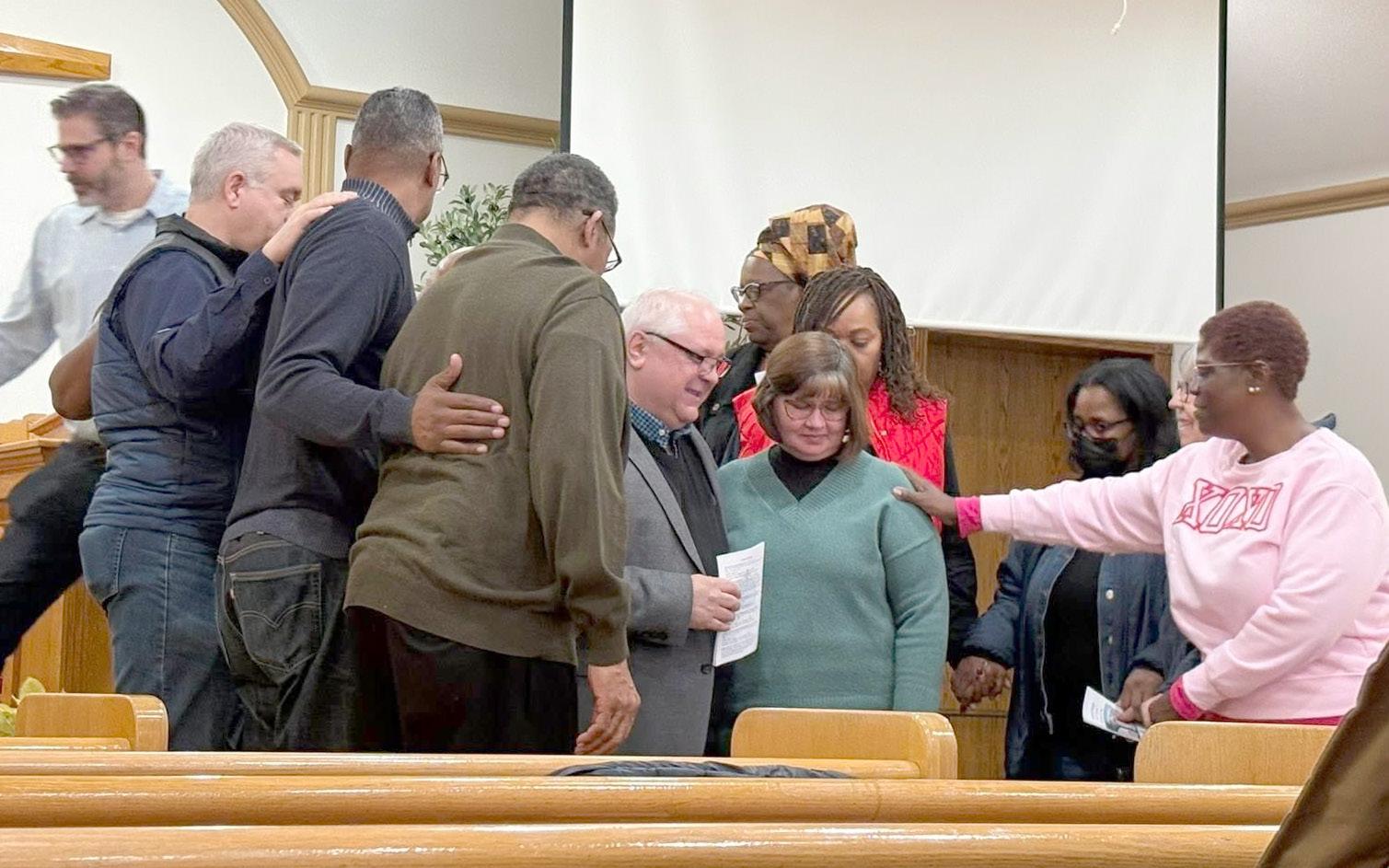
Steaming hot chocolate was a welcome outreach to students at the University of Illinois in Chicago. Immanuel Baptist Church partnered with the Send Relief Ministry Center to provide 250 cups— and to engage in gospel conversations.
A Hindu student “became especially interested in how Christians reach heaven not by being a good person, but by God’s grace alone... It was exciting to see how God is working in this young man’s life!”