
ILE MAISON MAGAZINE ISSUE 23

Page 1


Editor: Ilona Lee

Publisher: ILA LEE LLC

Cover Photo: F Taylor Colantonio

Contact:

phone: + 1 917 291 9491

Email: info@ilonalee.com

www.ilemaison.com

NYC - Europe

The Art of Legacy

The Art of Time: In Conversation with Alain Cartier 005

The Shapes of Cartier - Sotheby's 007

Family Office Winter Forum 2026: Where Capital Meets Vision 008

The Legacy of Robert Mnuchin: From Wall Street to the Art World 012

Uffizzi Splendor Gala - Palm Beach. 016

The Legacy of the Arena: Inside Wellington International MIPIM 2026: 020

Redefining the Global Real Estate Landscape 023

Maison & Objet: Women Shaping the Future of Design 029

Landmark Selection of Design and Modern & Contemporary Art - Sotheby's 030

A Villa Between Sea & Cliffs in Malta 040

Yacht Financing Options - UNICO Yachting 042

Malta - US Tax Treaty: Structuring Transatlantic Companies. 047

Malta - Europe’s Best-Kept Secret 050

The New Era of Hospitality: Redefining Value and Experience 053

KUNUK - A Heritage House of Art, Nature, and Timeless Detail 056

ORIUNDO - A Private Retreat in the Yucatán Jungle 064

KAHAL: A Living Memory in the Heart of Mérida 069

CIGNO Mérida: A Private World Within the City 076

The Future of Hospitality: From the Heart of Mexico. 081

CC Forum, London 084

Architecture of Reinvention - BOX CONCEPT Studio 086

COSMIA by F Taylor by Colantonio at Salon94, Palais-Royal, Paris 090

Letter from Editor

The Art of Legacy

There are moments in time when the world feels uncertain, divided, and fragile. And yet, it is precisely in these moments that we are reminded of what truly endures.

On the cover of this issue, two doves come together to form a heart—an image that, in its simplicity, carries a profound message. A symbol of connection, unity, and love, it transcends borders and differences, reminding us of what we share.

In a time marked by conflict and change, this symbol feels more relevant than ever.

ÎLE MAISON, Issue 23 is a reflection of a way of living—a way of seeing the world through the lens of legacy, culture, and intentional creation. It is about what we choose to preserve, what we choose to build, and what we choose to pass forward.

Editor Ilona Lee

Contact phone: +1 917 291 9491

e-mail: info0ilonalee.com www.ilemaison.com

Throughout these pages, you will find stories of individuals, places, and organizations that embody this spirit. From the timeless elegance of Cartier to the cultural patronage of the Uffizi, from global gatherings of capital and vision to intimate expressions of design and hospitality—each story is, in its own way, an expression of legacy in motion.

At the heart of ÎLE MAISON is The Great IM—a philosophy and a journey. It is the idea that legacy is not something we inherit alone, but something we actively shape—and ultimately, become. It is about aligning who we are with what we create in the world: our homes, our investments, our relationships, and our impact.

This issue brings together a global circle of visionaries—collectors, founders, investors, and creators —who are not only building for today, but for generations to come. They are shaping a world where beauty, purpose, and prosperity are not separate, but deeply interconnected. In many ways, this magazine is a reflection of the PRIVÉ circle.

And perhaps, also, an invitation. An invitation to pause, to reflect, and to consider the legacy we are each creating—quietly, intentionally, every day. Because in the end, legacy is defined by who we become.

With Love,

F.Taylor Colantonio
Salon 94’, 30 Galerie de Montpensier, Palais-Royal, PARIS.
Photo: Giorgio Benni

The Art of Time

— Ilona Lee in an exclusive conversation with Alain Cartier.

Alain Cartier, a fifth-generation heir to the Cartier legacy, is one of the world’s foremost authorities on vintage Cartier —where heritage, design, and timeless value converge.

In a year when Sotheby’s unveils The Shapes of Cartier—the most comprehensive collection of vintage Cartier watches ever presented—timing feels almost poetic. More than 300 pieces spanning a century of design will travel from Hong Kong to Geneva to New York, reaffirming what collectors have always known:

Cartier is not simply a maison, but a language of form, identity, and enduring value.

In conversation with Alain Cartier, a fifth-generation heir of the Cartier family, we explored the world of vintage objects, design, and the essence of Cartier—timeless insights that feel more relevant today than ever.

Ilona: What is it that makes a Cartier piece a forever classic today?

Alain: A Cartier piece has style —and style is not simply about aesthetics, but about identity. Cartier has always evolved by drawing inspiration from different artistic movements while maintaining a sense of restraint and clarity.

What makes it timeless is this balance: innovation without excess. Whether it was Art Deco, the Belle Époque, or the more experimental London period, Cartier never followed trends—it translated them into something enduring.

Today, that is exactly what collectors are rediscovering: pieces that belong to a moment, yet never feel confined by it.

Ilona: Jewelry and watches are increasingly seen as investment assets. Should they be collected as assets—or as objects of love?

Alain: The two are no longer separate. The most important collections are built from passion—because passion leads to knowledge, and knowledge leads to discernment.

That is ultimately what creates value. Yes, the market has matured, and today we see record-level auctions and global demand. But the pieces that perform best are still those chosen with emotion and understanding—not speculation alone.

“The most important collections are built from passion—because passion leads to knowledge, and knowledge leads to discernment.”

Alain Cartier, Paris.
The Shapes of Cartier, Sotheby's

Ilona: Do you believe provenance matters more today than before?

Alain: Provenance has always mattered—but perhaps differently than people assume. For me, where a piece has been exhibited and how it has been recognized is more important than who owned it. Public exhibitions validate significance.

Ownership can add intrigue, but true value comes from the object itself—its design, rarity, and place within Cartier’s history.

Ilona: What are the most soughtafter Cartier vintage pieces today?

Alain: There has been a clear shift toward design-driven collecting. Collectors are increasingly drawn to pieces that express something bold—objects that challenge traditional forms. The so-called “mystery clocks,” for example, continue to fascinate because they combine technical ingenuity with visual poetry.

In watches, we now see a renewed appreciation for unconventional shapes—pieces that were once considered unusual are now recognized as visionary.

Ilona:

What defines something as “very Cartier” in today’s world?

Alain:

Restraint. Proportion. And a deep understanding of culture.

Cartier has always drawn from global influences—India, Persia, China—translating them into a refined and coherent design language.

It is this synthesis that defines Cartier: the ability to bring together different worlds into a single, harmonious object.

Ilona: Cartier has seen remarkable auction results recently. What has surprised you most?

Alain: What is striking is the depth of appreciation. It is no longer just about iconic models—it is about nuances, variations, and periods of production. Collectors are educating themselves more deeply, and that changes the market.

We are also seeing a stronger recognition of Cartier London pieces, which were once overlooked. Their experimental nature now feels incredibly modern.

Ilona: If someone were starting a collection today, where would you guide them?

Alain: The 1920s remain a remarkable decade—rich in creativity and craftsmanship. But I would also encourage collectors to look beyond the obvious. The post-war years and the London period offer exceptional opportunities. These pieces are often more accessible, yet equally expressive. The key is to develop an eye—not to follow the market, but to understand it.

Ilona: You co-authored a book featuring over a thousand Cartier objects. What was your vision?

"To show the breadth of Cartier —not only high jewelry, but everyday objects elevated to art. From clocks to accessories, Cartier approached every object with the same philosophy: that beauty and function should coexist. Today, I believe that philosophy resonates more than ever. People are not just collecting objects—they are collecting meaning."

CARTIER Book

The Return of the Object

What feels different today is not just the scale of the market—but its intention.

Collectors are no longer chasing status alone. They are seeking identity, narrative, and legacy— objects that reflect who they are and what they value. In that sense, Cartier’s resurgence is not surprising. It has always existed at the intersection of art and life, form and feeling. And perhaps that is the true definition of timeless luxury: not what endures in value— but what endures in meaning.

Auction Schedule:

Important Watches:

Hong Kong, 24 April

Geneva, 10 May

New York, 15 June

A SHAPE OF CARTIER

In 2026, Sotheby’s unveils what may be the most significant moment in the history of Cartier collecting: The Shapes of Cartier— the largest and most comprehensive collection of vintage Cartier watches ever brought to auction.

Spanning more than a century of design and over 300 exceptional timepieces, the collection will travel across Hong Kong, Geneva, and New York —three global capitals of taste, culture, and capital—reaffirming Cartier’s enduring influence at the intersection of art and horology.

A Century of Form & Freedom

From the architectural purity of the Tank to the surreal distortion of the Crash, Cartier has never simply told time —it has redefined how time is expressed.

What Sotheby’s presents here is not a sequence of watches, but a study in form: a visual language that evolved through Parisian elegance, New York refinement, and, perhaps most daringly, the experimental spirit of London.

It is within this London period— particularly between the late 1960s and early 1970s—that Cartier broke its own codes, producing some of the most radical designs in modern watchmaking.

Pieces such as the Crash, Pebble, and Asymétrique now stand as icons of creative rebellion—objects once unconventional, now revered.

The Rise of the Design Collector

Today’s collector is no longer driven solely by rarity, but by meaning.

This shift is reflected in the growing demand for Cartier’s most expressive creations— watches that blur the line between function and sculpture. The Cartier Crash, for example, with its melted silhouette and surreal presence, embodies a moment in cultural history while remaining strikingly contemporary.

As Sotheby’s Global Head of Watches notes, the appeal of vintage Cartier lies in its ability to capture a moment in design history while remaining entirely timeless.

This duality—anchored in heritage yet free in expression —is precisely what defines the new era of collecting.

Beyond Time: Objects of Identity

With estimates exceeding $15 million for the full collection, the market signals strong confidence. Yet beyond numbers, something more profound is unfolding.

Collectors today are not simply acquiring watches—they are curating identity. Each piece becomes a reflection of personal taste, cultural awareness, and a deeper alignment with design philosophy.

Cartier, perhaps more than any other maison, offers this possibility: to wear not just a timepiece, but a point of view.

Photos: Sotheby's

FAMILY OFFICE WINTER FORUM - NEW YORK

— Inside the Rooms Where Generational Capital is Allocated

ÎLE MAISON joined the Family Office Winter Forum in New York at a pivotal moment—alongside a concentrated circle of family offices, institutional allocators, and advisors navigating a new era of capital.

At Family Office Winter Forum 2026, the tone was unmistakably different from previous cycles. This was not a market driven by exuberance or easy capital, but one defined by recalibration.

Bringing together a concentrated group of family offices, institutional allocators, and advisors, the forum reflected a moment where capital is being reassessed not only in terms of opportunity, but in terms of responsibility, structure, and long-term intent.

Diversification, a long-standing principle of portfolio construction, is also being redefined. Rather than simply balancing asset classes, family offices are increasingly positioning themselves around structural transformations shaping the global economy.

private

and identity-driven asset strategy.

Media Partner:

Capital is being allocated with greater scrutiny, longer time horizons, and a sharper focus on downside protection.

In this context, liquidity, governance, and operational depth are no longer secondary considerations—they are central to investment strategy.

There is a clear movement toward strategies that offer both resilience and relevance, whether through private credit, which continues to benefit from the retrenchment of traditional banking, or through sectors such as energy, infrastructure, and advanced technologies that are directly linked to long-term global shifts.

The emphasis is not on following trends, but on identifying durable themes with the capacity to sustain value over time.

What emerged most clearly is that family offices are operating with a renewed sense of discipline. The environment has shifted from expansion to selectivity, where deployment is no longer dictated by momentum but by conviction.

~Ilona Lee

Ilona Lee, Family Office Forum, March 10th, Times Sq. NYC
Ilona Lee, Founder of ÎLE MAISON, New York-EU based, working across global capital environments,
networks,

Real estate, historically a cornerstone of family office portfolios, is being approached with a notably different lens. The speculative phase has largely subsided, replaced by a preference for assets that offer income stability, operational strength, and intrinsic value. Investors are prioritizing quality over scale, focusing on assets that are defensible, welllocated, and aligned with enduring demand drivers. In an environment shaped by uncertainty, tangible assets that can be actively managed and repositioned are regaining strategic importance.

Equally significant is the human dimension shaping family office strategy. Generational transition is no longer a distant consideration but an active force influencing decision-making. Younger principals are bringing a broader perspective that integrates financial performance with purpose, innovation, and global awareness. This shift is prompting a more sophisticated approach to governance, with increased emphasis on education, alignment, and long-term stewardship. Capital is no longer viewed solely as a resource to preserve, but as a platform through which values and vision are expressed across generations.

Technology and geopolitical dynamics are further redefining the investment landscape. Artificial intelligence, biotech, and digital infrastructure are seen not only as areas of opportunity, but as forces that will reshape entire industries. At the same time, geopolitical fragmentation, energy security concerns, and macroeconomic uncertainty are reinforcing the need for a more nuanced and globally aware allocation strategy. Family offices are increasingly operating with a dual lens—balancing innovation with risk management, and opportunity with resilience.

Marriott Marquis, Times Sq. New York. March 10th, 2026, Family Office Winter Forum

From ÎLE MAISON perspective, what stands out is the underlying shift in how capital is being perceived. The conversations in New York reflected a transition from accumulation to intention.

Wealth is being redefined not simply by performance, but by its ability to create lasting relevance—through assets that endure, environments that inspire, and strategies that align with a deeper sense of purpose.

In this evolving landscape, investment becomes more than a financial exercise; it becomes an extension of identity and a vehicle for legacy.

The Legacy of Robert Mnuchin

Unveiled at Sotheby’s NYC.

In the rarefied intersection of finance, art, and legacy, few figures have embodied all three worlds with the same quiet authority as Robert E. Mnuchin.

This May, Sotheby's unveils a deeply personal selection of works from the Mnuchin collection—an offering estimated to exceed $130 million and one that transcends the notion of an auction to become something far more intimate: a portrait of a life lived through art.

Titled Collector at Heart, the sale brings together 24 works acquired over decades by Robert and Adriana Mnuchin—each piece chosen not for speculation, but for love.

“I love to be around art… I really believe I have the heart of a collector.”

Photography by Stefan Ruiz, Courtesy of Sotheby’s

From Wall Street to the Art World

Born in New York, Mnuchin began his career at Goldman Sachs, rising to leadership over three decades and earning the nickname “Coach.” Yet, at 56, he made a decisive and unconventional pivot—leaving finance to pursue art full-time.

This transition was not a reinvention, but a return to something essential. Together with his wife Adriana, he had long immersed himself in galleries and museums, cultivating a refined eye and a profound appreciation for abstraction.

What began as curiosity evolved into connoisseurship—and ultimately, into one of the most respected careers in the art world.

“On the subject of art, trees, and real estate he always gave the same advice. Look in the mirror and ask yourself. Do you love it? Is the quality there? Can you afford it? He was a man who believed that the right decision—in all of life—begins with honesty about what you love, what has worth, and what you can truly sustain.”

A Philosophy Rooted in Love, Not Acquisition

At the core of Mnuchin’s legacy lies a philosophy that feels increasingly rare in today’s market-driven art world: collecting as a deeply personal act.

“They spoke of collecting as a passionate and almost obsessive way of life. They only bought what they both loved. It had to be a mutual and personal choice that came from wanting to live with beauty and adventure. They tended towards complex and rigorous paintings that kept involving the viewer. They sought to acquire ‘A’ paintings as they called them—works that represented the finest work by the artist. Most of all they just couldn’t stop wanting and adoring pictures.”

Mark Rothko, Brown and Blacks in Reds, 1957

1986

A Collection of Conviction

The works in this sale reflect a singular vision —one grounded in rigor, instinct, and intellectual depth. Anchored by artists such as Mark Rothko, Willem de Kooning, and Franz Kline, the collection captures defining moments in postwar art.

Leading the sale is Rothko’s monumental Brown and Blacks in Reds (1957), a commanding canvas from the artist’s most celebrated period, estimated at $70–100 million. Alongside it, other masterworks reflect Mnuchin’s commitment to acquiring only the most significant expressions of an artist’s practice.

“Robert Mnuchin occupies a singular place in the story of postwar and contemporary art. Few individuals moved so seamlessly between the worlds of finance, collecting, and art dealing, and in each sphere he brought to bear the same remarkable eye and intellectual curiosity.

The works Robert and Adriana chose to live with reflect a deep understanding of the artists who defined their era—including the Abstract Expressionists Mark Rothko, Willem de Kooning, and Franz Kline, as well as artists who challenged convention such as Jeff Koons and David Hammons. What emerges from this group is a portrait of Mnuchin at his most discerning: a collector guided by instinct, knowledge, and an enduring belief in the power of truly great artworks.”

Lisa Dennison, Chairman, Sotheby’s Americas

Jeff Koons, Louis XIV,
Willem de Kooning, Untitled XLII, 1983

The Thrill of the Hunt.

Beyond collecting, Mnuchin was equally defined by his presence in the auction room —where his passion came alive in real time.

“I love going to auctions. All the people in the room love it, too—otherwise they would just call in their bids.”

— Robert Mnuchin

His approach was not passive. It was visceral, energetic, and deeply human—an extension of the same instinct that guided his collecting.

A Legacy on View

Before the auction in New York this May, the collection is being presented in a rare public exhibition at Mnuchin Gallery, offering a glimpse into the environment where many of these artists were championed.

Franz Kline, Harleman, 1960
Rothko’s 1949 No.1

"We are proud to celebrate this anniversary, knowing that, across the Atlantic Ocean, we have a community of friends who consistently dedicate their affection, their culture, and their civic commitment to us. This is a chapter in our shared history in which we are very happy to be protagonists together"

Dr. Simone Verde, Uffizi Gallery Director. ~

“Reaching our 20th anniversary is both a moment of pride and gratitude. Thanks to the generosity of our members, patrons and partners we have helped advance the mission of the Uffizi Galleries while deepening cultural ties between Italy and the United States.”

- Lisa Marie Conte Browne, President of the Friends of the Uffizi Gallery. ~

Media Partner:

UffiziSplendorGala

February 2, 2026, Collette Club, Palm Beach, Florida

Friends of the Uffizi Gallery marked its 20th anniversary with Uffizi Splendor, a memorable Palm Beach Gala at Club Collette, honoring two decades of philanthropy in support of the Uffizi Galleries in Florence, Italy.

Founded in 2006, the organization has united Palm Beach patrons and art lovers dedicated to preserving one of the world’s most important collections of Renaissance art. Its support has helped fund important conservation projects, over 95 restorations, and scholarly initiatives at the Uffizi Gallery, home to masterpieces by Botticelli, Leonardo da Vinci, Michelangelo, and Caravaggio.

Lisa Marie Conte Browne, Daniela Di Lorenzo Scott, Dame Mara New, Ilona Lee

The milestone evening was chaired by William Blind and Meredith Townsend and Master of Ceremonies, art historian, Rocky Ruggiero honored the visionaries who helped found the organization and the community of supporters who continue to champion the arts while cherishing the organization’s legacy and looking forward to its future.

Set against the timeless beauty of Palm Beach, the evening unfolded as a celebration of art, heritage, and cultural legacy at the Uffizi Splendor Gala.

Gathering an international circle of patrons, collectors, and cultural leaders, the gala reflected a shared commitment to preserving and elevating one of the world’s most treasured artistic institutions.

Splendor Uffizi Gala was a reminder that art is not only to be admired, but to be protected, sustained, and carried forward across generations.

More than a gala, it was a living expression of legacy—where culture, philanthropy, and beauty converged.

The Art of Mastery at Rolex Finale Week

- Kent Farrington Triumphs & 17th Annual Great Charity Challenge

Under the golden light of Florida’s winter season, the Winter Equestrian Festival once again affirmed its place as one of the most prestigious gatherings in global sport and society— a stage where performance, heritage, and refined living converge.

For weeks, Wellington becomes more than a destination; it transforms into a seasonal capital of international equestrian culture, drawing elite riders, collectors, investors, and patrons from across the world. It is here that sport transcends competition, evolving into a language of discipline, precision, and legacy.

The season reached its crescendo during RolexFinaleWeek, culminating in the $1,000,000GrandPrix—an event that embodies the pinnacle of excellence within the RolexSeries. In a field defined by the world’s most accomplished riders, it was Kent Farrington who delivered a defining performance.

“The best riders come out [for these events], so we always have the highest level of sport, great prize money, and the prestige of a Rolex event puts us on the map,” said Farrington,

Kent Farrington & Greya. Photo ©Sportfot

Riding his exceptional mare Greya, Farrington secured victory in a breathtaking jump-off, finishing in 42.99 seconds before a sold-out audience of over 10,000 spectators—marking the first American win in this class in seven years.

Yet beyond the statistics, the moment carried a deeper resonance. It was a return to national triumph on home soil, but also a testament to the enduring relationship between rider and horse—an expression of trust, intuition, and mastery refined over time.

The Legacy of the Arena

As the final rails were cleared and the lights dimmed on another remarkable season, the true significance of Wellington became clear.

It is not only a celebration of victory—but of continuity. A place where tradition is preserved, where excellence is demanded, and where the next generation of riders, patrons, and visionaries are quietly shaped.

Ben Maher & Enjeu de Grisien. Photo ©Sportfot
Kent Farrington, Ben Maher, and Richard Vogel are presented on the podium by Anne Pradal, Rolex SA Communication & Image – Sponsoring (left) and Tom O’Mara, US Equestrian President (right). Photo ©Sportfot
Denise Moriarty is was awarded the Double H Farms Grooms Award for her care and preparation of Greya. Photo ©Sportfot
Richard Vogel & Gangster Montdesir. Photo ©Sportfot

"Grateful to have been part of this meaningful evening — and to everyone who joined us at the Blue Ribbon Club to continue the conversations around philanthropy, community, and connection. Congratulations to all riders, organizers, volunteers, sponsors, and nonprofit partners who made this night possible.

In early February at Wellington International, we had a pleasure of attending the 17th Annual Great Charity Challenge sponsored by Fidelity Investments® during Saturday Night Lights — a powerful reminder of how sport, philanthropy, and community can come together to create lasting impact.

Held under the lights of the WEFWinter Equestrian Festival, the evening united Olympians, rising riders, partners, and supporters around a shared purpose: giving back.

This year’s event raised more than $2.3 million, benefiting 90 Palm Beach County nonprofit organizations — with every participating charity receiving meaningful support and the top grant of $100,000 awarded to Make-A-Wish Foundation of Southern Florida.

Since its founding in 2009 by Mark and Paige Bellissimo, the Great Charity Challenge has distributed over $24 million to 370 local nonprofits, reinforcing what makes the equestrian community so special: generosity, collaboration, and heart.

Ilona Lee with Shanti Ammar. Blue Ribbon Club.

Real Estate Market Redefined - MIPIM 2026, Cannes

Each March, Cannes transforms into the global capital of real estate — where the world’s most influential investors, developers, and visionaries converge along the shimmering edge of the French Riviera. In 2026, this iconic gathering unfolded with a renewed sense of purpose, as the industry collectively stepped into a more refined, disciplined, and forward-looking era.

MIPIM 2026 revealed a market no longer driven by expansion alone, but by precision.

Capital remains active, yet far more selective, prioritizing assets defined by operational strength, long-term income, and strategic positioning.

The language of growth has evolved into the language of performance — where execution, resilience, and adaptability define value.

The strongest momentum continues to center around hospitality and living sectors, where the boundaries between residential, hotel, and wellness concepts are dissolving. Branded residences, hybrid hospitality models, and experience-led developments are setting a new standard, reflecting a shift toward real estate that is not only functional, but deeply experiential.

Europe, particularly the Mediterranean region, has re-emerged as a focal point for global capital. Lifestyle-driven demand, combined with relative pricing opportunities and strong tourism fundamentals, is positioning countries such as France, Italy, and Southern Europe as key destinations for long-term investment strategies. These markets offer something increasingly sought after: a convergence of culture, quality of life, and enduring value.

At the same time, real estate is being redefined as an operating platform rather than a static asset class. Success now depends on brand, management, and the ability to create meaningful user experiences. Family offices and private investors are playing an increasingly influential role, often guided by long-term, legacy-oriented perspectives that extend beyond immediate returns.

MIPIM 2026 in Cannes ultimately signaled a transition from scale to substance. It marked the rise of a more mature real estate landscape — one defined not only by capital and construction, but by vision, experience, and the enduring impact of place.

MIPIM 2026, CANNES, France.

"At MIPIM 2026, it became clear that real estate is no longer just an asset class — it is a reflection of identity and a vehicle for legacy, shaping not only where we live, but who we become.”

MIPIM Awards 2026 (Cannes)

WINNERS

Best Conversion Project

BPM, Rue de Rivoli Paris (Redevco)

Best Mixed-Use Project

La Fondation, Rue Legendre Paris (Galia)

Best Workplace Experience

25 Avenue Matignon

Paris (AXA IM Alts)

Paris was the most awarded city, confirming its leadership in adaptive reuse and prime repositioning.

BPM on Rue de Rivoli stands as a defining expression of the new era of real estate — where heritage is not preserved as a static memory, but reactivated as a living ecosystem.

Developed by Redevco, the project transforms a historic Parisian landmark into a dynamic hybrid destination, seamlessly integrating retail, hospitality, workspace, and culture. More than a mixed-use development, BPM introduces a new operational model based on synergy, where each component contributes to a shared experience and collective value. Recognized at the MIPIM Awards 2026 as Best Conversion Project, it reflects a broader shift in the industry toward regeneration, identity, and long-term relevance.

BPM on Rue de Rivoli, PARIS 026

The MIPIM Awards reinforced this direction, highlighting projects grounded in sustainability, regeneration, and integration within their communities. These developments reflect a broader industry shift — one where relevance, responsibility, and longevity are becoming the true measures of success.

DESIGN RECONNECTS WITH ITS ROOTS, EXCELLENCE TAKES

CENTRE STAGE IN PARIS.

At MAISON&OBJET, a place where emotion fuels meaning, and meaning fuels business opportunities.

Ateliers d’Art de France. This deliberate return to fundamentals was embodied by the prominent role of the Fine Craftmétiers d’art sector - at the core of its overall offering. For this edition, the fair drew on its roots to shape the story of Past Reveals Future, the theme that inspired this edition.

In January, the world gathered in Paris for a Maison&Objet edition unanimously acclaimed for its ambitious programme, immersive scenographies and rich offering, bringing together 2,294 brands, including 543 new exhibitors. A 360° panorama of creativity, with 148 countries represented.

Maison&Objet has returned to its roots: exceptional craftsmanship and contemporary design, at the heart of its DNA for over thirty years; a story built alongside its long-standing shareholder,

“What struck me most during this January session was the resurgence of a powerful sense of emotion from the moment you entered the fair, driven by ambitious and unapologetic scenography, faithful to Maison&Objet’s DNA.

This energy is owed as much to the commitment of our teams as to that of the exhibitors, who chose to fully invest in their stands to create genuine experiences. Many visitors spoke to me about this rediscovered “wow” effect, which encourages visitors to slow down, observe, and let themselves be surprised.

This January 2026 edition confirms that Maison&Objet remains a place where emotion gives meaning, and where meaning fuels business opportunities.”

Delhomme,

the Executive Board of SAFI, organizer of Maison&Objet)

Philippe Delhomme - Say who ©Jean Picon

Women&Design by Maison&Objet brought its community together for an exclusive dinner at the Hôtel de Crillon, Paris. The evening gathered key figures from the industry, alongside male allies committed to supporting and elevating women- led projects.

Women&Design is a community of creators, authors and leaders from the creative industries dedicated to highlighting the boldest and most innovative female visions in design. This network, driven by an open and inclusive spirit, also brings together men who actively support female-led projects and stand alongside women in shaping the future of design.

Launched in September 2024, Women&Design is structured around three key objectives: identifying impactful projects led by women, amplifying female talent, and fostering meaningful connections.

Sotheby’s to Present a Landmark Selection of Design and Modern and Contemporary Art from the Esteemed de Gunzburg Collection.

Anchored by the Most Valuable Single-Owner Design Sale in Sotheby's History in April 2026.

Led by the Extraordinary Ensemble of Mirrors by ClaudeLalanne for the SalondeMusiqueofYvesSaintLaurent andPierreBergé

Followed by a Selection of Modern and Contemporary Art Masterworks in Sotheby's Marquee Sales in May 2026.

Landmark Selection of Design and Modern & Contemporary Art

Images: Annie Schlechter, Courtesy of Sotheby's

New York on the outside, Paris on the inside.

In April and May 2026, Sotheby’s will present a landmark selection from the Collection of Jean&Terryde Gunzburg, an offering of approximately 135works with a combined estimateof$67–99 million, led by Collection of Jean & Terry de Gunzburg – Design Masters, a dedicated single-owner auction on 22 April 2026 estimated in the region of $30–44 million.

Comprising 123 works that together embody a truly once-in-a-generation moment for the design market, the sale represents the most valuable single-owner design sale in Sotheby’s history, and the first standalone singleowner design sale to be staged at Sotheby’snewhomeatthehistoric Breuerbuilding.

For more than four decades, Jean and Terry de Gunzburg have assembled one of the most seminal and dynamic private collections of 20th century art and design, the result of a shared endeavor guided by instinct, curiosity, and a profound sensitivity to form.

Shaped largely within their New York home—which they describe as “NewYorkontheoutside,Parisontheinside”—the collection reflects a way of living in which objects were not merely acquired, but discovered: a dynamic mix of artists and designers whose works introduced new visual languages of line, color, texture and ornament, arranged by their friend, the renowned decorator Jacques Grange.

Jean Michel Frank Pair of Armchairs Circa 1928, Patinated wrought iron, leather upholstery Estimate: $250,000 - 350,000

This collection reflects the vision of two titans of their respective fields.

Terry de Gunzburg is widely regarded as one of the most influential creative figures in modern beauty, having spent fifteen years at Yves Saint Laurent Beauté, including a number of years as Creative Director, where she translated the couturier's artistic vision into groundbreaking cosmetics and created the iconic Touche Éclat concealer—one of the most enduring innovations in the industry.

After working in close collaboration with leading photographers including Helmut Newton and Guy Bourdin, shaping the visual language of fashion imagery, she went on to found her own brand, By Terry, in 1998. Her sensitivity to color, refined through decades of creative work, became one of the defining instincts guiding the couple’s collecting.

Jean de Gunzburg, a molecular and cell biologist of international distinction, pursued a career at the forefront of scientific research, trained at the Pasteur and Whitehead Institutes, then holding a senior role at INSERM and the Institut Curie, where his work advanced understanding in molecular biology and oncology, before applying his expertise to the biotechnology sector.

Together, Jean and Terry approached collecting with the same intellectual curiosity and instinct for discovery that defined their professional lives, assembling a dynamic and deeply personal collection distinguished by seminal artists and designers whose importance they often recognized well before the broader market.

Jean Royère, Pair of Sideboards
Circa 1950 Ash, walnut, ebony
Estimate: $700,000–1 million
Pablo Picasso, Buste de femme, 1955 oil on canvas,
Estimate: $3–5 million
Jean Royère “Ours Polaire” Sofa and Pair of Armchairs, Circa 1950 Oak, mohair upholstery, Estimate (sofa): $600,000–800,00, pair of armchairs: $600,000 - 800,000

"Collecting has been one of the great privileges of our lives, a journey guided entirely by instinct, curiosity, and the pleasure of living with works that moved us deeply. Each piece we chose became part of our daily environment and shaped the way we experienced our home and our lives together.

Over time, the collection came to reflect not only the artists and designers we admired, but the values that guided us— freedom of thought, creativity, and discovery. We are proud to share it now through our partnership with Sotheby’s, and hope it will continue to inspire new custodians, including our children, to follow their own paths of looking, learning, and collecting."

“Over time, Jean and Terry de Gunzburg have shaped one of the most intellectually rigorous and aesthetically coherent design collections of our time, guided by an extraordinary eye and an exceptional freedom of taste. Their approach to collecting reflects a profound sensitivity not only to individual masterpieces, but to the dialogue that emerges between works when they are lived with over decades.

Their New York home became a complete artistic environment, where seminal creations by the greatest artists and designers of the twentieth century exist in remarkable harmony. It is a privilege to present a collection of such clarity, conviction, and lasting significance.”

ALEXANDER CALDER, MOBILE BLANC

- 1973

The Future, Rooted in the Past

At the heart of Collection of Jean & Terry de Gunzburg – Design Masters lies an extraordinary concentration of works by the critical figures who defined the most avant-garde movements in 20th century design.

The collection traces a lineage of radical creativity, from the refinement of Art Deco to the expressive freedom of postwar organic modernism, showcasing the artists and designers who reshaped the language of form in their respective eras.

Jean Dunand_Vase_circa 1925

The collection displays a strong concentration of works by French artists and designers, reflecting Jean and Terry’s enduring affinity for Parisian modernity and the intellectual rigor of French decorative arts. The collection brings together iconic works by Claude and François-Xavier Lalanne, Jean Royère, Alberto Giacometti, Jean-Michel Frank, Alexandre Noll, André Groult, Eugène Printz, Paul Dupré-Lafon, Pierre Chareau, Marc du Plantier, Jean Dunand, ÉmileJacques Ruhlmann, and Armand-Albert Rateau, among others. Together, these masters chart the evolution of modern design as both sculpture and environment. Each work was selected not in isolation, but as part of a larger dialogue that unfolds throughout the de Gunzburg’s homes and their collection.

PABLO PICASSO 1881
“FOOTBALLEUR” (A.R. 538)
PABLO PICASSO, BUSTE DE FEMME.

At the center of the de Gunzburg collection is an extraordinary ensemble of fifteen mirrors by Claude Lalanne, commissioned for the Salon de Musique of Yves Saint Laurent and Pierre Bergé’s Paris residence one of the most iconic interiors of the 20th century.

This landmark commission stands as a masterwork within Claude Lalanne’s oeuvre and a defining achievement in the history of design.

For Terry de Gunzburg, who first encountered the mirrors while working alongside Saint Laurent, the ensemble held deep personal resonance, embodying both her and Jean’s instinct for recognizing seminal works that transcend function to become fully realized environments.

1974

1985,

Estimate:

Claude Lalanne
An Important Ensemble of Fifteen Mirrors, from the Salon de Musique of Yves Saint Laurent and Pierre Bergé’s Apartment, Paris
-
Gilt bronze, galvanized copper, mirrored glass
$10–15 million

2026 Auction & Exhibition Calendar

10-21 April 2026

Collection of Jean & Terry de Gunzburg – Design Masters preview exhibition

22 April 2026

Collection of Jean & Terry de Gunzburg – Design Masters

May 2026

The New York Sales

While design forms the aesthetic foundation of the de Gunzburg Collection, it exists in profound dialogue with masterworks of contemporary and modern art that share the same essential concerns with form, structure, and spatial presence.

Artworks by Mark Rothko, Robert Ryman, Agnes Martin, Alexander Calder, Pablo Picasso, and Paul Klee introduce parallel investigations into abstraction and the expressive potential of line and color.

Whether through Rothko’s immersive fields of luminosity, Martin’s disciplined geometries, Ryman’s subtle material investigations, or the pictorial innovations of Picasso and Klee, these works extend the collection’s central exploration of how visual language can shape emotional and physical space.

Within Jean and Terry’s home, art and design were experienced as part of a unified environment, each deepening the presence of the other and reinforcing their shared belief that living with such works reveals their meaning over time

André Groult Cabinet Circa 1926 Shagreen, amazonite, ebony, bronze, Estimate: $600,000 - 800,000
Mark Rothko, Untitled, Alexandre Noll, Sculpture.

Modern

— Collection Inspired by Legacy of Frédéric

Featuring
Chopin Vision by Natalia Ślizowska
Chopin.

Meet Ilona Lee

Ilona Lee is a curator of identity, capital, and legacy, operating at the intersection of real estate, investment, art, and global lifestyle.

As the Founder of ÎLE MAISON — Art of Legacy, she brings together exceptional properties, yachts, collectible assets, and cultural experiences into cohesive portfolios shaped by vision, intention, and long-term direction.

A Global Real Estate Advisor with Sotheby’s International Realty, Ilona works with an international clientele across New York, Florida, the Mediterranean, and Europe—guiding acquisitions in luxury residences, coastal estates, hospitality ventures, and legacy properties, while offering access to discreet, off-market opportunities and the world of yachting.

Her work is guided by a clear philosophy: what we choose to own, build, and invest in is an expression of who we are becoming.

Through her signature framework, The Great IM, Ilona works closely with clients to define their identity and align their assets, environments, and investments accordingly—creating portfolios that reflect both personal vision and enduring legacy.

Certified through the Tony Robbins Training Center, she combines strategic advisory with a refined understanding of clarity, direction, and long-term positioning.

Today, she is building ÎLE MAISON as a global platform and private circle—connecting visionary individuals to a curated world of opportunity, access, and influence across the most soughtafter destinations.

“By integrating legacy advisory, asset curation, and inner transformation, I support my clients in building lives—and portfolios—that are not only successful, but deeply aligned, resilient, and meaningful.”

— Ilona Lee

A Villa Between Sea & Cliff

Set within the sought-after Santa Maria Estate, this detached villa unfolds through a composed sequence of arrival and landscape.

A gated entrance opens onto manicured gardens, where vibrant greenery frames the architecture with a sense of calm and balance.

Price upon request

Contact: Ilona Lee info@ilonalee.com

At its center, a raised swimming pool serves as both focal point and vantage point, offering uninterrupted views across Mellieħa toward the Red Tower, Gozo, and the open Mediterranean.

Behind the property, a dramatic cliff rises, creating a striking contrast between shelter and openness.

This dialogue between sea and stone defines the atmosphere of the home from day to night.

Inside, expansive open-plan living spaces are filled with natural light through floor-to-ceiling windows, extending seamlessly onto a generous terrace designed for outdoor living— whether for long, relaxed meals or quiet moments overlooking the landscape.

A discreet catering kitchen is seamlessly integrated behind concealed panels, complemented by a spacious guest bathroom with a rainfall shower.

Upstairs, the private quarters unfold with a sense of warmth and comfort, offering five bedrooms and four bathrooms, each positioned to capture either expansive sea views or the more intimate perspective of gardens and the surrounding cliff.

The principal suite is conceived as a private retreat, featuring its own lounge with fireplace and access to a generous terrace overlooking the landscape below. Light-filled and thoughtfully proportioned, it offers a quiet space for rest, reflection, and retreat.

Designed as a personal residence, the home carries a sense of intention and care— expressed not through excess, but through balance, atmosphere, and a clear connection to its setting.

Price upon request.

Ilona Lee, info@ilonalee.com, +1 917 291 9491

Princess 72’ 2014

– Motor Yacht

Refined 2014 Princess Yachts

Princess 72, offering exceptional comfort, performance, and timeless British craftsmanship. Wellmaintained and turnkey, ready for immediate ownership.

Powered by twin diesel engines, she delivers smooth cruising and confident handling, complemented by advanced on board systems for relaxed Mediterranean yachting.

Features a spacious flybridge ideal for entertaining, generous sunbathing areas, and a beautifully appointed interior finished to Princess’ renowned standards.

8 guests | 4 cabins | Master, VIP & 2 twin guest cabins with en-suite facilities

Commercially viable under 24m

A proven flybridge yacht combining luxury, reliability, and strong resale appeal.

Price upon request

Contact: Ilona Lee.

Princess 72’ 2014 – Motor Yacht

Yacht Financing Options: Traditional Banks vs. Luxury Asset Financing Institutions

Purchasing a yacht is a significant investment, often associated with ultrahigh-net-worth (UHNW) individuals who also own other luxury assets such as private jets and classic cars.

While many buyers have the means to purchase outright, financing a yacht can offer strategic benefits - from liquidity preservation to tax efficiency. However, choosing the right financing partner is critical.

Let's compare two popular approaches: working with traditional banks versus financing institutions that specialize in luxury assets.

The Two Main Players in Yacht Financing:

TraditionalBanks

Traditional banks offer yacht loans under their private banking or wealth management divisions. Their financing terms are often structured similarly to real estate or automotive loans, although less common.

Pros:

Lowerinterestrates:

Generally offer competitive rates, especially for long-standing clients.

Reputationandsecurity:

Trusted financial institutions with robust compliance and regulatory standards. Integratedservices: Some banks offer bundled services for private banking, estate planning, and asset management.

Cons:

Longerapprovalprocess: Due diligence and internal procedures can result in delays. Stringentrequirements:

Banks often request full documentation, personal guarantees, and high collateral coverage. Limitedflexibility:

Less adaptability to unique asset classes or unconventional ownership structures such as offshore entities or yacht leasing setups.

Princess 72’ 2014 – Motor Yacht

Luxury Asset Financing Institutions

These are boutique lenders or specialized finance companies focusing on high-value assets. They often work exclusively with UHNW clients and their advisors, offering tailored lending solutions for yachts, aircraft, art, and classic cars.

Pros:

Faster approval times:

These firms often understand the urgency of closing luxury transactions and can respond quickly.

Flexible terms:

Willing to accommodate complex ownership structures, including SPVs, offshore entities, or charter revenue models.

Multi-asset leverage:

Some allow cross-collateralisation of other luxury assets to secure better terms or higher loan values.

Relationship-based:

Operate with a more personalized approach, less rigid than institutional banks.

Cons:

Higher interest rates:

Flexibility and speed come at a premium.

Limited regulation:

Some may lack the institutional safety net or reputational backing of major banks.

Smaller scale:

Fewer financing products or long-term fixed-rate structures may be available.

Princess 72’ 2014 – Motor Yacht

Key Considerations When Choosing a Yacht Finance Partner

Speed vs Cost:

If time-to-close is critical (e.g., securing a limited-availability build slot or seasonal charter opportunity), a luxury finance institution may be more suitable despite higher rates.

Ownership Structure:

If your yacht will be registered under a corporate or offshore structure — for tax or operational reasons - not all traditional banks may support this setup.

Relationship Depth:

For clients with an existing private banking relationship, banks may be more flexible on terms. Conversely, first-time yacht buyers may find luxury finance firms more welcoming.

Asset Diversity:

Some financing institutions can bundle all luxury assets into a single credit line, offering portfolio-based leverage for liquidity flexibility.

Final Thoughts: Tailoring the Finance to the Lifestyle

Whether you're acquiring a 30m motor yacht or a 50m super yacht, the ideal financing partner should understand both the asset and the lifestyle it supports.

Traditional banks remain a solid option for those prioritizing rate and regulatory strength. Meanwhile, financing institutions tailored to UHNW clientele offer unmatched agility and personalized service -particularly valuable for those with varied luxury portfolios.

Disclaimer: The information provided in this article is for general guidance only and does not constitute financial advice. We recommend consulting with a qualified professional to assess your specific situation.

A Long-Term Partner at Sea

Considering a yacht purchase or refinancing?

Our team at UNICO Yachting collaborates with a trusted network of both global banks and luxury finance specialists to secure optimal financing terms tailored to your needs.

Beyond the purchase, UNICO Yachting remains by your side — supporting due diligence, resale strategy, and charter optimization. Our approach is not transactional, but relational, built on trust and long-term vision.

Contact us today for a confidential consultation.

UNICO USA: Ilona Lee, info@ilonalee.com +1 917 291 9491

Princess 72’ 2014 – Motor Yacht

Malta–US Tax Treaty: Structuring Transatlantic Companies for Efficiency and Compliance

For decades, US businesses viewed tax treaties primarily as technical instruments and mechanisms to reduce withholding tax or avoid double taxation on cross-border income. Today, that perspective is shifting. Increasingly, American investors establishing European operations are analyzing the Malta–US Double Tax Treaty not simply as a relief mechanism, but as a structural foundation for company formation, governance, and long-term expansion within the European Union.

Malta’s appeal in this context lies in a combination of elements rarely aligned within a single EU jurisdiction: a 35% corporate tax system supported by a statutory shareholder refund mechanism, no general withholding tax on outbound dividends, access to EU directives, a fiscal unity regime for group consolidation, and a comprehensive double taxation treaty with the United States.

For US entrepreneurs, private equity sponsors, and internationally active groups, Malta represents a technically robust platform through which transatlantic structures can be designed.

A Treaty That Influences Structure;

The Double Tax Treaty between Malta and the United States does more than reduce tax at source. It determines how taxing rights are allocated, when a permanent establishment arises, and how residence conflicts are resolved.

For US shareholders incorporating a Maltese company under the Companies Act, several questions arise immediately:

-How are dividends taxed when distributed to the United States?

-Are interest and royalty payments subject to withholding tax?

-When does business activity create a taxable presence in the other jurisdiction?

Malta taxes corporate profits at 35%. However, under its full imputation system, shareholders may claim a refund of Maltese tax upon distribution of profits. In many trading structures, a 6/7ths refund applies, potentially reducing the effective tax rate to approximately 5%, subject to statutory conditions. Malta does not impose withholding tax on outbound dividends.

The treaty may limit source-state taxation on certain payments, while US shareholders may rely on foreign tax credits, subject to US domestic limitations. The result is not automatic tax reduction, but a framework within which cross-border profit flows can be structured lawfully and efficiently, provided anti-abuse provisions are satisfied.

Cross-Border Flows, IP Structures and Fiscal Unity

For multinational groups, the treatment of interest and royalties is often central to structuring decisions. The Malta–US treaty limits source-state taxation on qualifying payments, which is particularly relevant where Malta is used to centralize intellectual property, financing functions, or regional management services.

Such structures are common in sectors including:

-Digital services and software development;

-Fintech and payment platforms;

-IP holding and licensing businesses;

-Aviation, maritime and asset management groups;

-Investment holding companies with EU subsidiaries.

Beyond treaty relief, Malta offers a fiscal unity regime allowing a parent company to form a tax group with qualifying subsidiaries. Under this system:

-The parent becomes the principal taxpayer;

-Intra-group transactions are disregarded for income tax purposes;

-A consolidated tax payment is made.

For US groups operating multiple Maltese entities, fiscal unity can improve cash-flow management and eliminate timing mismatches between subsidiaries. The regime does not reduce statutory tax rates, but it enhances administrative and operational efficiency within a compliant framework.

Permanent Establishment and Governance: The Operational Dimension

A frequent oversight in cross-border structuring is the concept of permanent establishment (PE).

Under the treaty, a PE may arise where there is:

-A fixed place of business;

-A dependent agent habitually concluding contracts;

-Construction or installation projects exceeding specified time thresholds.

For US companies expanding into Europe, or Maltese entities entering the US market, early PE analysis is essential. Once a taxable presence is triggered, profits attributable to that activity become taxable in that jurisdiction. Corporate residency also requires careful consideration. Where management functions are split between Malta and the United States, dual residency questions may arise. The treaty’s tie-breaker rules focus on place of effective management and mutual agreement between authorities.

Board composition, location of strategic decision-making, and documented governance procedures therefore have direct tax consequences. Substance and control are no longer peripheral considerations; they are central to treaty access.

For inquiries related to Malta opportunities, contact Ilona Lee: info@ilonalee.com or +1 917 291 9491.

Sacha J. Farrugia, Senior Manager - Business Development, CSB Group.

Compliance for US Shareholders: CFC and GILTI Implications

While the treaty mitigates double taxation, it does not override US anti-deferral regimes.

If US persons own more than 50% of a Maltese company, Controlled Foreign Corporation (CFC) rules may apply.

A structure that appears efficient under Maltese law may produce unintended US tax consequences if modeling is not performed in parallel. Coordination between Maltese advisors and US CPAs is therefore a structural necessity, not a supplementary service.

Additionally, access to treaty benefits is restricted by the Limitation on Benefits (LOB) article. Companies must satisfy ownership and activity tests to qualify. Malta’s implementation of the EU Anti-Tax Avoidance Directive (ATAD), including interest limitation rules and general anti-abuse provisions, further shapes structuring decisions. Economic substance requirements reinforce this framework. Maltese companies seeking treaty benefits are expected to demonstrate:

-Real decision-making in Malta;

-Board meetings held locally;

-Adequate premises and personnel;

-Core income-generating activities aligned with declared functions.

A European Platform with Transatlantic Reach

In practical terms, the Malta–US Double Tax Treaty positions Malta as a credible EU platform for American investors seeking expansion, consolidation, or longterm European presence.

The alignment between legal form and operational reality is increasingly scrutinized by tax authorities on both sides.

Malta offers:

-A statutory 35% corporate tax system with a shareholder refund mechanism; -No general withholding tax on outbound dividends;

-Access to EU directives and single market rights;

-A fiscal unity regime for group consolidation;

-A defined treaty relationship with the United States.

For US entrepreneurs, private investors, and multinational groups, the opportunity lies not in aggressive tax positioning, but in designing structures that align treaty provisions, domestic law, and operational substance.

In a regulatory environment shaped by transparency, ATAD compliance, and increasing cross-border scrutiny, Malta’s value lies in its clarity. The treaty provides the legal architecture. The outcome depends on how that architecture is implemented.

For inquiries related to Malta opportunities, contact Ilona Lee

info@ilonalee.com or

Malta - Europe's best-kept secret is now just a direct flight away.

The Mediterranean island nation is quietly becoming one of the world's most compelling destinations for American entrepreneurs, investors, and forward-thinkers and starting this June, getting there will get a whole lot easier.

There's a moment, somewhere between your second espresso and your first glimpse of the turquoise harbor at Valletta, when Malta stops feeling like a vacation and starts feeling like an opportunity.

The island is ancient Knights of St. John, limestone fortresses, 7,000 years of civilization, but its economic ambition is unmistakably modern.

Malta is reinventing itself as one of Europe's most dynamic business hubs, and starting this June, American travelers will have direct access three times a week on nonstop flights from the U.S. For entrepreneurial Americans watching Europe's startup scene from across the Atlantic, this island is worth paying attention to.

Small Island. Big ambitions.

Malta is roughly the size of Philadelphia, with a population of around 550,000. But what the island lacks in square footage, it compensates for in strategic positioning. Sitting at the crossroads of the Mediterranean 93 kilometers from Sicily, 290 from the Libyan coast, it is the geographic gateway between Europe and Africa, with short flights to virtually every major European capital.

For American investors and founders looking to plant a flag in Europe without navigating Berlin's bureaucracy or London's post-Brexit ambiguity,

Malta offers something rare: a fully English-speaking EU member state (including Euro as the currency) with a legal system rooted in British common law, a highly educated workforce, and a government that has made attracting international business a central pillar of its national strategy.

A Government

That Actually Wants Your Business.

The Maltese government has spent the last decade building one of Europe's most businessfriendly regulatory environments.

The gaming and fintech sectors figured this out early. Today, Malta is home to some of the world's largest iGaming companies and has become a globally recognized jurisdiction for cryptocurrency and blockchain the first country in the world to establish a comprehensive legal framework for distributed ledger technology.

For American entrepreneurs, this matters enormously.

Setting up a Maltese holding structure provides a legitimate, EU-compliant base with access to the entire European single market and a corporate tax rate that, under the Maltese refund system, can be reduced to as low as five percent for foreign shareholders.

The setup process is streamlined, English is the official language of business and law, and Malta Enterprise, the government's dedicated agency, offers grants, co-investment funds, and fast-track licensing to get international businesses operational in days rather than months.

~Maike & Lilli

Lilli Rohde & Maike Benner, Malish, Malta.

The Startup Scene: the festival putting Malta on the map

Ask anyone in the European startup ecosystem about Malta's momentum and they'll likely mention one thing first: the Malta Startup Festival.

This annual gathering has become one of the Mediterranean's most energizing entrepreneurial events, drawing founders, venture capitalists, angel investors, and innovation executives from across Europe, the Middle East, and North Africa, an extraordinary density of deal-making in a remarkably compact setting.

That's one of Malta's most underrated advantages: its size. On a small island, everyone is reachable.

The CEO of a major fintech, the minister responsible for innovation policy, the partner at a European VC fund, and the founder of a fast-growing MedTech startup might all be at the same rooftop dinner in Valletta on a Tuesday evening. In London or Berlin, building that kind of network takes years of grinding through gatekeepers.

In Malta, it can happen in a weekend, maybe even during a visit to the Polo Club. The ecosystem is open, internationally minded, and genuinely hungry for American energy, capital, and ideas. This accessibility extends to government.

Meetings with ministers, regulators, and senior officials that would take months to arrange in larger European capitals are often scheduled within days in Malta.

For American entrepreneurs accustomed to complex regulatory environments, this directness is both refreshing and strategically valuable.

Your on-the-groun partner: navigating Malta with expert support

Knowing that Malta is an opportunity is one thing. Knowing how to actually enter the market, build the right relationships, and structure a commercial operation from scratch — that's another matter entirely. This is where having the right partner on the ground makes all the difference.

Malish Consulting (malish.global) is a strategic business advisory firm with deep roots in Malta's international business community. Founded by Maike Benner and Lilli Rohde — two experienced business strategists who combine German analytical precision with hands-on international advisory experience, Malish specializes in helping ambitious companies build structured, scalable commercial operations in Malta's dynamic market.

For American entrepreneurs, executives and investors arriving in Malta for the first time, Malish acts as a structured entry partner The firm's methodology follows a clear four-step framework — Strategic Assessment, Growth Blueprint, Implementation & Alignment, and Performance Optimization, ensuring that every engagement produces not just strategic clarity but working commercial systems.

As Malish says: "Growth should not depend on coincidence. It should be built on structure."

Where the investment opportunities actually are:

Malta's innovation ecosystem has real depth across sectors that align well with where American investors are already focused.

In EdTech, Malta has positioned itself as a regional hub for digital education and professional training. Companies building scalable learning platforms have found it an ideal base to serve both EU and North African markets simultaneously.

In MedTech and life sciences, EU regulatory access, a qualified healthcare workforce, and lower operating costs than Western European capitals have attracted a growing cluster of medical device, digital health, and biotech companies.

Whether you're a founder exploring an EU base, an investor observing Mediterranean markets, an executive planning expansion into Europe or Africa, or simply a curious American who wants to understand what the rest of the world's business community already knows, a trip to Malta this summer is one of the most efficient investments of time and energy you can make.

Malta isn't waiting to be discovered. It's been building something remarkable for years. The direct flights just mean Americans are finally running out of excuses to miss it.

- Maike & Lilli, Malish

The New Era of Hospitality Value

-International Hospitality Investment Forum 2026, EMEA, Berlin.

ÎLE MAISON joined a distinguished circle of International Leaders in Berlinto explore the next chapter of Hospitality Investments.

At International Hospitality Investment Forum EMEA 2026, the global hospitality investment community gathered at a defining moment for the industry.

With over $581 billion in assets under management represented, IHIF EMEA 2026 was not simply a forum - it was a signal.

A signal that hospitality has entered a new investment cycle, shaped not only by capital flows, but by a profound redefinition of value itself.

As an attendee and observer, one thing became clear: the industry is no longer asking how to recover but it is deciding what to become.

The hospitality industry is evolving into a more integrated, experience-led ecosystem where the boundaries between hotel, residence, and lifestyle platform are dissolving. Hospitality is no longer defined by duration of stay, but by depth of experience, continuity of engagement, and its ability to anchor a broader way of living.

A defining trend is the rise of hybrid models—particularly branded residences and mixed-use concepts—which are increasingly seen as more resilient and profitable than traditional hotel formats. These structures allow investors to diversify income streams while creating stronger emotional and lifestyle alignment with end users.

Ownership, in this context, is no longer purely financial; it becomes participatory, experiential, and identity-driven.

At the same time, across Europe, there is a clear acceleration toward adaptive reuse and heritage-led development. Investors are prioritizing assets with history, character, and cultural significance— properties that cannot be replicated. In a market where new supply is constrained and differentiation is critical, these assets offer both scarcity value and storytelling potential, positioning them as long-term holds rather than short-term trades.

Another shift redefining the sector is the growing importance of experience as a core driver of value. Design, wellness integration, cultural programming, and personalization are no longer secondary—they are central to pricing power and performance. Hospitality is increasingly understood as “experience capital,” where emotional resonance translates directly into financial return.

However, this evolution is unfolding within a more complex and uneven geopolitical landscape. While Europe continues to act as a stabilizing anchor for capital, other parts of the EMEA region require a far more selective and risk-adjusted approach. Investors are becoming more disciplined, focusing on operational strength, location resilience, and longterm fundamentals rather than speculative growth. This marks a broader shift toward precision—where conviction is built not on momentum, but on clarity, strategy, and depth of understanding.

Ultimately, what is taking shape is a more mature and intentional hospitality investment environment —one that values not only performance, but relevance. Assets are no longer evaluated solely on returns, but on their ability to remain meaningful, differentiated, and aligned with the evolving expectations of a new generation of global investors.

Ilona Lee, IHIF, Berlin

IHIF EMEA 2026 brought together the world’s leading hospitality investors, operators, and visionaries at a pivotal moment for the industry, marking a shift from recovery to reinvention.

With over $581 billion in assets represented, the forum highlighted a new era where hospitality is no longer just an asset class, but a platform for lifestyle, experience, and long-term value—shaped by selective capital, evolving guest expectations, and a more intentional approach to investment across the EMEA region.

WELCOME TO KUNUK

~A Heritage House of Art, Nature, and Timeless Detail

Last March, ÎLE MAISON had the pleasure of discovering Kunuk Hotel as part of our curated journey through Yucatan Peninsula most distinctive boutique hotels.

In Mérida, where colonial history meets contemporary Mexico, Kunuk presents a different interpretation of hospitality —one that feels less like a hotel and more like a private maison shaped over time.

It is not defined by a single design language, but by a layered composition of art, antiques, and living spaces that carry a sense of continuity and character.

Kunuk was originally a private home, and that identity remains central to its experience.

Walking through the property feels like entering the home of a collector: original artworks, antique details, stained glass and European touches, handcrafted elements from across Mexico.

Each space carries its own narrative, yet the overall atmosphere remains cohesive— intimate, personal, and quietly elegant.

Kunuk Hotel, Merida, Mexico

Quiet Richnessthe Meaning of Kunuk

The name Kunuk finds its roots in the Mayan language, where it is associated with gold—not in the literal sense of opulence, but as something precious, enduring, and deeply connected to the earth.

This idea of gold is not expressed through excess, but through warmth of materials, richness of textures and the quiet value of things made with intention.

Throughout the property, subtle golden tones appear in light, objects, and details—never dominant, yet always present.

At Kunuk, gold is a feeling of quiet richness.

Collected,

Organic, Rooted in Heritage

Kunuk’s interiors are shaped by a deep respect for heritage and cultural continuity.

Rather than following a strict aesthetic, the hotel brings together antiques and vintage elements, contemporary Mexican design, artisan-made textiles and objects, along with references to regional materials such as henequen.

Each piece feels intentionally selected —carrying traces of history while remaining relevant in a modern context.

This layered approach gives the space depth. Nothing feels staged or overly controlled, but rather inherited, collected, and lived over time.

Experience — Intimate, Personal,

and Rooted in Place

With only a small number of rooms, the Kunuk experience allows for a highly personalized level of service and atmosphere.

Guests are welcomed into a setting where spaces feel both shared and private, service remains attentive yet unobtrusive, and the pace unfolds naturally at a slower rhythm.

There is also a strong connection to locality, expressed through ingredients sourced from the garden, collaborations with regional artisans, and cultural elements thoughtfully integrated into the experience.

Vivienne Lee, Ile Maison

The Garden as the Heart

At the center of Kunuk is its garden—lush, layered, and immersive.

Palms, ferns, and tropical vegetation surround the pool, creating a setting that feels both cultivated and organic.

The elegant pool is part of the landscape— integrated into greenery, softened by natural textures, and experienced as a place to pause and restore.

This relationship between architecture and garden defines the rhythm of the property.

Ilona Lee, Kunuk Hotel Garden.

Legacy House

Kunuk’s strength lies in the richness of its identity. It holds long-term relevance because it is authentic rather than trend-driven, reflecting a lived-in, residential model of hospitality while integrating art, craft, and landscape into a cohesive experience.

It feels collected, personal, and enduring.

This property reflects the values of Artful Living, Well-being, and Cultural Identity.

Shortlisted for the IM Collection by ÎLE MAISON.

WELCOME TO ORIUNDO, ~ Private Luxury Retreat in the Heart of Yucatán Jungle

As part of our editorial curation for ÎLE MAISON, we experienced Oriundo firsthand — staying within the property to fully understand not only its design, but the way it lives, breathes, and feels over time.

Tucked away in the Yucatán Jungle, Oriundo offers a rare kind of luxury — one defined by privacy, biophilic architecture, and a deep connection to nature.

Positioned as an exclusive private retreat, Oriundo is designed for those seeking space, stillness, and a more intentional way of experiencing their surroundings — without compromising on comfort or design.

Vivienne Lee, Ile Maison

Architecture Rooted in Place

Oriundo’s design is grounded in local materials and traditional techniques, elevated through a contemporary architectural approach.

Natural stone walls, open-air structures, and carefully framed views create a seamless dialogue between the built environment and the surrounding jungle. The architecture does not compete with nature — it integrates with it.

Every space is designed to maximize light, airflow, and perspective, offering a constant sense of openness while maintaining complete privacy.

Design That Prioritizes Experience

What distinguishes Oriundo is not only its aesthetic, but the way design enhances the overall experience.

Outdoor living areas, intimate lounge spaces, and thoughtfully positioned elements invite guests to slow down and engage with their environment. The transition between interior and exterior is fluid, encouraging a lifestyle that feels both grounded and elevated.

Experiencing the property in this way reveals its true intention — not just to be seen, but to be felt. The result is a property that feels curated, yet effortless.

A Private Nature Villa Experience

At its core, Oriundo functions as a private villa retreat, offering a highly personalized and secluded stay.

It is ideal for restoration and rejuvenation, peaceful private getaways, retreats, or creative residencies.

During our stay, what stood out most was how naturally time begins to slow — shaped by light, nature, and moments of stillness. We experienced a level of exclusivity that is increasingly rare — where time, space, and attention are fully their own. Vivienne & Ilona Lee

What makes the experience particularly unique is the presence of a private cenote within the property — a natural sanctuary that becomes part of the daily rhythm of the stay.

It adds a layer of immersion that cannot be replicated, grounding the experience in the land itself.

Ilona Lee, Oriundo Villa
Saamal Cenote & Melipona Sanctuary - a deeply immersive experience.

A defining element of the Oriundo experience is its direct connection to the land — most notably through the Saamal cenote, located within the property.

This natural limestone pool offers a deeply immersive encounter with the Yucatán’s geological and cultural heritage, becoming a central part of the stay rather than a distant excursion.

Complementing this is the presence of Meliponabees, a native, stingless species revered in Mayan tradition for their medicinal and ecological significance. Their quiet presence reflects Oriundo’s respect for biodiversity and ancestral knowledge, adding another layer of authenticity and meaning to the experience.

Together, these elements elevate Oriundo beyond a private retreat — grounding it in a living ecosystem where nature, heritage, and well-being are intrinsically connected.

Saamal Cenote, Photo: Ile Maison.

ORIUNDO, MEXICO.

The IM

Collection

Oriundo has been shortlisted for the ÎLE MAISON IM Collection for its clarity of vision, architectural integrity, and deeply rooted connection to place. It represents a new standard of luxury — one that is intentional, experience-driven, and aligned with a more conscious way of living.

More than a destination, Oriundo embodies what we seek to curate within the Collection: properties with a distinct identity, a sense of purpose, and the ability to offer something that goes beyond aesthetics — a lasting, meaningful experience. ~ Ilona Lee

KAHAL

HOTEL

A Living Legacy: The Story, The Space,

The Soul of Kahal.

Merida, Mexico

Ilona Lee in an exclusive conversation with Karla and Georgina, founders of Kahal, exploring the vision, heritage, and soul behind a house restored into legacy.

Ilona

After eight years immersed in Dubai’s hospitality world, what called you back to Mérida - and how did that journey shape the vision you and your sister brought to life with Kahal?

K&G

After eight years immersed in Dubai’s hospitality landscape, returning to Mérida felt like a natural evolution. Dubai shaped my understanding of precision, scale, and the art of curated luxury, while exposing me to an incredibly dynamic and diverse hospitality culture.

At the same time, this project had been in our minds for a long time. It was a shared dream between my sister, my parents, and myself — something we had envisioned as a family long before it became tangible. When the opportunity arose to bring Kahal to life within such a beautiful and meaningful property, it felt like the right moment to return and fully commit to making that vision a reality.

Coming back to Yucatán alongside my sister, we felt a responsibility to create something deeply rooted yet globally refined. Kahal was born from that dialogue — a space where international standards meet cultural intimacy, and where every detail is intentional, but never overwhelming.

Ilona

Kahal is set on Paseo Montejooften called the Champs-Élysées of Mérida. How did this iconic location influence your concept, and what does it mean for you to be part of the cultural rhythm of this historic avenue?

K&G

Paseo Montejo carries a quiet grandeur — a sense of history that doesn’t demand attention, but commands respect. Being part of this iconic avenue meant embracing its rhythm rather than redefining it.

The location is one of our greatest strengths. It is truly an honor to be at the foot of such an iconic avenue, where every step carries years of history. Kahal was conceived as a continuation of that narrative: an intimate sanctuary that reflects the elegance of its surroundings while offering a more contemporary, introspective take on luxury.

Ilona Lee & Karla Flota at KAHAL Hotel.

"Building Kahal together has been both instinctive and transformative. As sisters, there is an inherent trust — but also a constant process of refinement, of learning how to challenge each other constructively.

Our strengths are complementary in a way that feels natural. I bring an international perspective shaped by global hospitality, while Georgina grounds the project in a deep, intuitive understanding of the region. That duality is at the core of Kahal — a balance between the global and the local, the polished and the authentic."

-Karla & Georgina

Restoring this colonial mansion was clearly a labor of love. How did you approach preserving its original soul while reimagining it into a refined, contemporary experience?

K&G

Restoring the mansion was a deeply thoughtful and intentional process, led by my mother, who oversaw the entire design, in collaboration with the architecture studio AJ. My father was responsible for the engineering and construction of the project, making this a truly family-driven effort.

As the house is a protected property under INAH — Mexico’s National Institute of Anthropology and History — we approached the restoration with a strong commitment to preservation. We made a conscious effort to respect the integrity of the original architecture, maintaining its proportions, materials, textures, and overall essence.

At the same time, we incorporated materials deeply rooted in the region, such as dzalam wood, chukum finishes, and limestone, allowing the space to remain connected to its local context. Whenever restoration was required, it was carried out in alignment with the home’s original design, ensuring that nothing felt imposed or out of place. Rather than transforming the space, our intention was to highlight and elevate what was already there.

At the same time, we complemented this heritage with the amenities that a 21st-century traveler expects, creating a balance between historical authenticity and contemporary comfort.

Karla & Georgina

"The name Kahal — a composition of Mayan-rooted words that evoke the idea of remembering and returning — became our emotional anchor. It is, in many ways, an ode to Yucatán’s cultural richness. From the beginning, we were not interested in creating a hotel that simply looks beautiful, but one that feels deeply personal and connected to its place.

This philosophy shaped everything, from spatial design to service rituals. Every element — architecture, interiors, materials, food, and beverages — is thoughtfully curated to evoke Yucatán’s essence and the depth of Mayan culture. There is an intention behind every gesture: to create moments that feel intimate, almost familiar, even to first-time guests. Kahal is designed to evoke a sense of place — not just geographically, but emotionally."

Ilona: The photographic exhibition

‘My Memories of Yucatán’ adds a powerful storytelling layer to the hotel. What inspired you to integrate this visual journey into the space, and how does it deepen the guest’s connection to Mérida’s heritage and culture?

K&G: “My Memories of Yucatán” was conceived as an extension of the hotel’s narrative — a way to translate the region’s identity into a visual and emotional language.

It was also inspired by a desire to offer travelers a deeper understanding of Yucatán beyond their stay. Many guests visit for a short period of time, and there is so much to discover within the region. Through this exhibition, we wanted to give them a glimpse into what lies beyond Mérida — offering both inspiration and a sense of direction.

The exhibition is complemented by a digital travel diary, accessible through QR codes placed alongside each photograph. Each image connects to a chapter of a traveler’s journey through Yucatán over ten days, with every day dedicated to a different destination. The photographs and narratives work together to bring these places to life — sharing not only visual beauty, but also cultural context, insights into Mayan heritage, and recommendations of towns and experiences worth exploring.

In this way, the exhibition becomes more than a visual element — it transforms into a guide, a learning tool, and an invitation for guests to engage more deeply with the region, even from within the hotel’s own corridors.

On the rooftop, a terrace offers a panoramic view where the horizon merges the sky with the greenery of the tree-filled Historic Center. With jacuzzis and a solarium, it is a perfect refuge to enjoy the warm weather throughout the day and, at sunset, to hear the birds singing.

Kahal has twelve rooms in different categories: Deluxe, Junior Suite, Superior Suite, Master Suite and Superior Master Suite—the latter with private terrace and pool—all designed to offer maximum comfort. Amenities include products made with organic, sustainable and animal cruelty-free ingredients.

The interior design favors a neutral chromatic palette inspired by the tones of henequen and complemented with endemic materials such as tzalam wood, worked by expert cabinetmakers to create unique pieces.

Decorative elements such as embroidered cushions and ancestral finishes such as chukum, which is made from a natural resin of the Metopium brownei tree, together make for a handcrafted stamp of local communities.

The hotel experience is complemented with wellness services such as in-room massages and personalized tours to cenotes, archaeological sites, and haciendas.

Kahal is, in essence, an encounter with the hospitality of the peninsula, a refuge where contemporary travelers can feel at home in the heart of the White City

CIGNO Mejorada, Mérida, Mexico

- A Private World Within the City.

CIGNO reveals itself with quiet discretion. From the street, it offers only a subtle presence — almost intentionally elusive. But once inside, it unfolds into a sequence of intimate spaces — courtyards, pools, and shaded terraces — creating a world set apart from the city beyond its walls. In the heart of Mérida, it offers something increasingly rare: a private, hidden world within the city.

CIGNO Mejorada, the newer property, expands this vision into a more contemporary architectural language — where modern design meets the essence of Yucatán.

Set within a restored 19th-century residence, the project preserves its original structure while introducing new volumes and garden spaces that extend the experience outward.

Large windows, geometric wood frames, artisan tiles, and natural materials create a dialogue between past and present. Interiors feel clean and modern, yet unmistakably Mexican — grounded in texture, craftsmanship, and warmth.

The architecture invites you to slow down to let light, air, and material define the rhythm of your stay.

Spaces Designed to Be Lived.

Mejorada represents a new direction in Mexican hospitality — one where design, comfort, and authenticity come together without excess, allowing the experience to speak for itself.

Rooms are generous, calm, and deeply comfortable — opening onto private terraces, garden courtyards, or plunge pools.

Some are set within the original house, preserving historical details, while others are integrated into newly built garden structures — offering a more private, residential feel.

The experience is fluid: indoor becomes outdoor, architecture blends with landscape, privacy coexists with openness

It feels less like a hotel — and more like a modern Mexican home, reimagined at a higher level of comfort.

A Garden Within the City

At the center of the property, courtyards filled with greenery, water, and filtered light create a soft, almost tropical microclimate.

Pools are integrated into the architecture — not as features, but as part of the living environment.

Daybeds, shaded corners, and open terraces become places to pause, read, or simply exist. Here, the city feels distant — even though it is just beyond the walls.

CIGNO

Where CIGNO Comes Alive - The Table

At Cocina Vidente at CIGNO Ermita is more than a restaurant; it is the hotel’s most expressive form. Under Chef Daniel Ron, the Yucatán is translated into flavor, rhythm, and experience — grounded in respect for the ingredient, time, and tradition.

We spoke with Chef Daniel Ron about his approach, his inspiration, and the role of the heart in everything he creates — while experiencing his dishes paired with local drinks.

IM: Yucatán’s culinary heritage is deeply rooted in tradition and cultural identity. How do you honor its origins while allowing it to evolve through your own creative expression?

Daniel: I have always had a deep respect for Mayan culture — it’s one of the reasons I chose to be here. I’m inspired by traditional cooking methods: underground techniques, fire, wood, charcoal, ashes. And of course, the local ingredients — achiote, chiles, spices.

I honor these elements by working with them in my own way — respecting their origins, while exploring how they can be expressed differently.

IM: Your philosophy speaks to the beauty of simplicity - with patience, slow cooking, and respect for the ingredient at the center. In a world that often seeks complexity, how do you define true refinement in your cuisine?

Daniel: For me, refinement begins with understanding — knowing the origin of what we create and the history behind it.

There is actually a lot of complexity in what we do, especially in the sauces and preparations. But that work happens before the dish reaches the table. When plating, I aim for clarity and simplicity — something that feels approachable, not overwhelming.

True refinement is when complexity is present, but not imposed.

IM: Your tasting menu unfolds with a certain rhythm - almost like a sequence of sensations. How do you approach composing this journey, from the first impression to the final note?

Daniel: I usually begin with a central idea — the main dish — and then build around it. From there, it’s about balance: something fresh, something vegetal, contrasts in flavor. I like to play with the tension between salty, sweet, and acidic elements.

The goal is to create a natural progression — something that surprises, but still feels harmonious.

"Outstanding and worth the visit alone, the culinary experience becomes the anchor of the stay — reflecting Mérida itself, where gastronomy defines the essence of place." ~ Vivienne & Ilona Lee

Vivienne Lee & Daniel Ron, Cocina Vidente

“When I create a dish, everything begins from the heart —a memory, a flavor, a color. It’s a way of sharing who I am. I want it to feel like a warm hug.

I’m a very emotional person, and I think that helps me connect with people. For me, it’s not only about pairing food and wine — it’s about creating something meaningful.

I like to listen to guests, to understand their stories. When people travel, they want to disconnect from their everyday world — even if just for a few days.

If we can create that feeling — something special, something personal — then we’ve done our job."

~ Daniel Ron in conversation with Ilona& Vivienne Lee at VIDENTE, Cigno Hotel, Merida

Building the Future of Hospitality from the Heart of Mexico.

Ilona Lee in conversation with Rocco Bova on Purpose, People, Redefining Hospitality in a Digital Age. Merida, Mexico.

Ilona: The Mexican Hospitality Summit was born from your vision — what deeper shift in the industry were you responding to when you created SMH?

Rocco: After attending many industry events, I realized that none were truly focused on hospitality—especially not with content entirely in Spanish. That gap became very clear to me. So I decided to launch the first edition in 2025, and it was an immediate success.

There were several reasons for that success: the quality of the content, the caliber of the speakers, and above all, the format.

The purpose of the summit was— and still is—to educate hospitality leaders in Mexico, bringing them up to speed with the latest trends, technologies, and best practices. At the same time, it serves as a platform for meaningful networking and connection.

Ilona: You speak about hospitality as something human-centered — how do you define the future of hospitality beyond service, and into experience, identity, and transformation?

Rocco:

In my opinion, the increasing use of AI is not necessarily helping hospitality remain human.

I feel that the more we rely on AI in our daily lives, the less we use our own minds to create genuine, meaningful interactions.

If everyone begins to rely on AI, it may become difficult to distinguish whether a service or gesture is truly heartfelt or simply suggested by technology. That, for me, is a concern.

Rocco Bova & Ilona Lee, Kahal Hotel, Merida, Mexico.
Merida.
"I feel profoundly committed to contributing to Mexico’s growth."

Ilona: Mexico is emerging as a global benchmark in hospitality — what makes its approach unique, and why is this moment so important for the country on the world stage?

Rocco: I arrived in Mexico— specifically Mérida—about ten years ago, and I immediately felt a deep sense of welcome. The people made me feel part of the community, as if I truly belonged.

It’s something difficult to describe, but it created a lasting connection. That is why I feel profoundly committed to contributing to Mexico’s growth.

The country offers everything: natural beauty, rich culture, history, gastronomy, and folklore. I am proud to be an ambassador for Mexico and to continue both my professional and personal journey here.

Over the past decade, the luxury market has grown exponentially. Now is the moment for Mexico to redefine its global perception—from an all-inclusive destination to a truly world-class hospitality leader.

Ilona: SMH 2026 brings together global brands and visionary leaders — what conversations is the industry ready to have now that it wasn’t ready for five years ago?

Rocco: That was precisely the intention: to bring together the best hospitality minds in Mexico in one place, so they could share experiences and best practices. In our first edition, we hosted 20 speakers. This year, we have nearly tripled that number and expanded the event to two days.

We will explore topics such as robotics, wellness, sales and marketing, and new hotel openings, with leaders from companies like Accor, Chablé Hotels, Expedia, STR, Virtuoso, and Forbes, among others.

We are receiving incredible feedback from the industry, and we will continue building this into a must-attend event.

Ilona: Many developments today focus on scale and returns — how can hospitality projects become vehicles for culture, community, and long-term legacy?

There is no single answer, but I often say: profit is the consequence of purpose. I sometimes wish more people shared that mindset.

With globalization, so much has become driven purely by profit, often with little regard for long-term vision.

This is also, in part, a consequence of technology and social media, which —if not managed consciously—can shape our behaviors in ways that move us away from deeper purpose.

Ilona: From design and wellness to AI and sustainability, the summit spans a wide spectrum — how do you personally integrate innovation with soul in hospitality?

Rocco: I dedicate three to four hours each day to research and learning, to ensure that when I speak, I speak with depth and clarity. At the same time, my vision remains rooted in the nostalgia of true, genuine hospitality— the kind I learned from some of the best leaders and brands, such as Four Seasons and Aman Resorts, as well as from more humble beginnings early in my career.

Every experience across my 30-year journey has shaped me—both personally and professionally—and contributed to who I am today.

Ilona: Mérida is not just a host city, but part of the experience — how important is place in shaping the future of hospitality and guest connection?

Rocco: Mérida is nearly 500 years old and, in my opinion, one of the best cities to live in Mexico and Latin America.

Its infrastructure, quality of life, and services are exceptional —I say this having lived in 11 countries.

Yucatán is also one of the fastestgrowing regions economically, which has attracted major international luxury brands. Chablé Yucatán—where I had the privilege of serving as General Manager for four years—set a new benchmark in luxury, with rates exceeding $1,000 per night.

This success has drawn brands like Six Senses, Belmond, Nayara, Banyan Group, and Minor to the region. And I believe this is only the beginning.

Ilona: You are actively shaping a new generation of leaders — what qualities define the next wave of hospitality visionaries?

Rocco: Following the summit, we launched the Academia de la Hospitalidad. Just like the event, there is currently no institution offering executive hospitality education entirely in Spanish across Latin America.

So I decided to create one. Mexico holds incredible talent, and now we have the opportunity to cultivate a new generation of leaders—individuals who can meet and exceed the expectations of the modern traveler.

Ilona: As hospitality evolves into a hybrid of real estate, lifestyle, and wellbeing, how do you see its role influencing how people live — not just how they travel?

Rocco: We are witnessing remarkable growth in wellness, branded residences, and co-living concepts worldwide.

I believe the future of living will shift toward communitydriven environments—smaller, self-sufficient “cities” built around shared purpose, technology, and learning. We are already seeing this in places like Tulum, which evolved from a small fishing village into a global hub for wellness, arts, and conscious living. The question is: where will the next community emerge?

Ilona: Looking ahead to 2030, what is your vision of a truly iconic hospitality concept — one that reflects both innovation and timelessness?

Rocco: Perhaps I am a bit of a traditionalist, but I see a return to “old-school” hospitality as a major trend. We have seen cycles before— from Nouvelle Cuisine to wholesome food, from Michelin-star dining to zero-waste and farm-to-table movements.

I don’t claim to know exactly what the future holds, but I am convinced of one thing: true hospitality must come from the heart. It must be genuine, and it must be delivered by passionate people.

CC Forum 2026, Mayfair, London

From March 19–21, 2026, CC Forum London 2026 convened global leaders across finance, policy, and innovation in Mayfair to address one defining question: how to mobilize capital at scale for a rapidly changing world.

A Defining Moment:

The Seabed Curtain Project

At the center of the Forum was the unveiling of the Seabed Curtain Project, presented by Marianne Hagen.

The initiative proposes a multi-billion-dollar engineering solution to stabilize Antarctica’s Thwaites Glacier—often referred to as the “Doomsday Glacier.” More than a scientific breakthrough, the project signals a new era of investable climate infrastructure, where bold planetary interventions are positioned as viable assets for institutional capital.

Capital, Geopolitics, and the Future of Net Zero

The opening at the House of Lords, hosted by Lord Marland of Odstock, set the tone with a keynote on geopolitics and sustainability investing.

Across the main program, discussions moved beyond ambition into friction points:

-Can Net Zero remain financially attractive in a shifting geopolitical landscape?

-Will the SDGs withstand global instability?

-Is AI accelerating or complicating sustainable transformation?

Speakers including Dr. Gunter Pauli and Professor Michael Mainelli emphasized the need for systems-level thinking, bridging finance, nature, and technology.

Indigenous Wisdom & Emerging Voices

A powerful counterbalance to institutional capital came from voices like Flora Dutra and Phil Lane Jr., calling for alignment between investment strategies and indigenous knowledge systems.

This theme underscored a growing realization: the future of impact capital is not only technological —but cultural and ancestral.

The Rise of Fem Capital

The Forum concluded with the Fem Capital Salon, spotlighting women investors and founders shaping the next wave of capital allocation. This closing moment reinforced a broader shift toward diversity as a driver of performance and perspective in investment ecosystems.

The Takeaway

CC Forum London 2026 made one thing clear: impact is no longer a niche —it is a capital strategy. From large-scale climate engineering to regenerative finance and inclusive investment models, the Forum positioned itself as a catalyst for the next generation of visionary capital—where returns are measured not only in profit, but in planetary resilience.

Architecture of Reinvention

Reflecting on influential individuals, it becomes difficult to separate the impact of their words from that of their actions. Words enact; actions articulate a position. Similarly, buildings are to be understood as operating simultaneously both through their physical presence as well as their cultural significance.

Historic architecture stands as a witness to a culture’s enduring achievements. In Malta, urban landscapes rise from the very limestone that forms the island. Walls, terraces and villages appear less constructed than carved. Architecture here has long been inseparable from landscape, climate and craft, their longstanding engagement tacitly restraining the very notion of contemporary exploration.

Yet the Malta experienced today often speaks in contradiction to its monomateric legacy. Over recent decades, rapid development has propagated a fragmented landscape where remarkable heritage coexists with development that altogether lacks a coherent identity.

Yet this condition is not only an experiential challenge. It is an experiential lacuna engendering a growing and felt need for meaningful architectural engagement.

For architects and investors looking toward Europe, Malta offers something increasingly rare: a dense territory of historic structures whose spatial potential remains far from exhausted.

Here, fortifications, palazzos, vernacular dwellings and industrial buildings often stand suspended between preservation and decay. At once contested and celebrated, their reinvention is immediately legible against the background of the mundane, revealing an act capable of generating both significant cultural as well as economic value.

Unlike cities where architectural discourse has settled into established patterns, Malta’s contemporary language is still emerging. The relationship between heritage and innovation remains open, allowing interpretation to play a central role.

At box concept studio, a boutique architecture practice founded by Peter Brincat and JingYao Xu, this unfinished condition becomes fertile ground for architectural inquiry. The studio approaches each project through a rigorous, sitespecific strategic inquiryidentifying and mapping out market realities, spatial constraints and fragments of cultural memory as a preceding stage to formalistic ideation.

*This storyt was born in collaboration with Julian Vassallo, Malta-based architect and photographer whose work explores the intersection between the built environment and human interaction.

Peter Brincat is a founding partner and Director at Box Concept Studio, a Maltabased boutique design practice rooted in dialogue, research, and process. His work - ranging from civic landmarks to private residences - translates context, material, and scale into spaces that carry cultural resonance and communicative clarity.

Alongside studio leadership, Peter is a Visiting Lecturer at the University of Malta, where he mentors undergraduate and postgraduate studios and contributes to conversations that bridge architecture with wider cultural discourse. At once a thinker and a maker, he remains focused on strategic leadership, legibility and future-ready place making.

About Perit Peter Brincat
All Photos by Julian Vasallo

This relevancy-led approach does not constrain the output of the studio, recognised internationally for its creativity; it establishes a framework through which architecture can engage with complexity.

Indeed, once this groundwork is established, the spatial idea is discussed together with the client within a shared context that allows the necessary friction to propose renewed meaning. Architecture here is understood not only as spatial practice but also as a socio-symbolic and economic act. In this sense, architecture becomes a form of grafting.

New interventions attach themselves to existing structures, a condition especially legible in historic contexts. Like a cinematic narrative twist that at once feels both disruptive and inevitable, precise architectural intervention can transform a building into something that engenders both belonging and wonder.

Globally, some of the most compelling transformations emerge from reinterpreting existing structures. From the Louvre Pyramid in Paris to Fondazione Prada in Milan, and closer to home with MICAS and the St. John’s Co Cathedral, Valletta, these projects demonstrate that heritage is not simply to be preserved but reactivated as a framework for future ambition.

Box Concept Project in Rabat.

Aligned with this position, box concept studio approaches historic conversion as renewal rather than preservation. Existing structures are understood as host spatial conditions into which contemporary energy, materials and geometries are inserted. The studio describes this condition as “(Frankenstein’s) Adam”: a living assemblage where contrasting temporalities coexist, generating renewed engagement.

In Rabat, the conversion of a layered dwelling explores precisely this idea. The original vernacular limestone structure -defined by thick walls, an introverted courtyard and layered domestic spaces - is not treated as a static artefact. Instead, newspatial sequences amplify its latent qualities.

The courtyard is enlarged and dramatized, overlooked by geometrically precise contemporary insertions. Staircases slice through volumes, acting as a dynamic datum that exposes multiple levels, while circulation is reimagined through unexpected alignments, introducing dynamism and an intensified awareness of the historic limestone container.

The structure remains legible, yet the experience becomes distinctly contemporary - a choreography of compression, light and movement that could not have existed within the original spatial logic. What emerges is not restoration, but a renewed inhabitation.

A parallel dialogue unfolds in their villa extension in Mellieħa, where a contemporary addition reframes an existing residence against Malta’s northern coastline. The intervention extends the house upward through a geometry derived from planning constraints governing detached dwellings. The sloped roof proposed as a direct reaction to the terraced terrain is folded back to contain internal spaces, forming a controlled yet dynamic volume aligned with the original structure. Glass, concrete and rubble walls mediate between interior and landscape, opening the architecture toward views that were always present but never fully engaged.

Here, extension is not simply additive but activating - intensifying the site’s relationship with its context while enhancing both lived experience and market outlook.

In Sliema, townhouses and palazzos entrusted to the studio are approached with this same focus. Abandoning previous plans for the development of an apartment block, Villa deGiorgio has been extended upwards and outwards creating a protected garden enclave that re-ignites the generative intention of the dethatched art deco building.

Villino Zammitello, once slated for conversion into a boutique hotel, is being stripped of accretions that currently obscure its Palladian lineage. In parallel, its surrounding gardens are reimagined entirely, with the introduction of a guesthouse, pool complex, and a watchtower set deliberately off the central axis of the historic dwelling, proposing a sprawling picturesque backdrop in dialogue with the unfolding linearity of the neoclassical villa.

"Box concept studio approaches historic conversion as renewal rather than preservation. Existing structures are understood as host spatial conditions into which contemporary energy, materials and geometries are inserted. The studio describes this condition as “(Frankenstein’s) Adam”: a living assemblage where contrasting temporalities coexist, generating renewed engagement."

- Peter Brincat

Emboldened in both outlook and amenity, these properties propose a new model of luxury at the heart of the island’s most valuable seaside district, suggestive of a novel emergent residential typology.

Underlying these works is a broader philosophy: architecture as catalyst. Rather than engendering a static object, the act of building becomes recognized as a mechanism capable of influencing the economic, social and cultural resilience of a site.

This perspective also reframes sustainability. The studio maintains that superseding notions of materiality, the most enduring form of sustainability lies in continued relevance. Buildings that remain adaptable and meaningful are not abandoned or demolished. Longevity, in this sense, becomes a primary design strategy.

Project by Box Concept Studio,

COSMIA by F Taylor Colantonio at Salon94, Palais-Royal, PARIS

F Taylor Colantonio (b. 1988, Boston) lives and works in Rome. His first name is legally just the letter F, a clerical error on his birth certificate, and a happy accident for an artist drawn to the gap between naming and meaning.

He received an MFA in Furniture Design from the Rhode Island School of Art and Design in 2013 and trained with a master of papier-mâché at the southern tip of Puglia.

Colantonio works primarily in polished cartapesta, a material of his own invention, unique to his practice since 2012. He also works prolifically in bronze and fused glass, sometimes integrating all three materials into a single work. His work sits at the intersection of mythology, outer space, and geology, frequently incorporating functional or participatory elements.

Colantonio has exhibited internationally and created a suite of bronze furniture works permanently installed in the Schiaparelli salons at Place Vendôme, Paris. In 2022, he presented 53 Miles West of Venus with Salon 94 in Paris.

COSMIA is his first solo exhibition with the gallery, accompanied by a text by Rosa Lyster.

Photos: Giorgio Benni

The Seraphim, 2025

Polished cartapesta, bronze, mirror

COSMIA

- Trace to Surrealist Paris

A moth does not announce itself. It arrives by night, navigating by starlight, drawn to flame —a creature of wings and darkness and longing, a master of disguise. COSMIA takes its name from one such moth, and from a song of the same name by the artist’s friend Joanna Newsom, in which moths carry the weight of grief for a lost beloved. It is a title that has earned its mystery.

Salon 94 is proud to present COSMIA, a solo exhibition by F Taylor Colantonio at 30 Galerie de Montpensier, Palais-Royal, Paris, on view 7 April through 9 May 2026, bringing together a new body of work in polished cartapesta, bronze, and fused glass.

The roots of COSMIA trace to Surrealist Paris: to Meret Oppenheim, who transfigured natural forms into objects of dream, and Leonor Fini, who conjured a world of ritual and mystery. Colantonio’s tradition is that of Diego Giacometti, who dissolved the boundary between furniture and sculpture, ancient form and modern hand, the earthly and the otherworldly.

Palais-Royal, Paris

Where the butterfly has long dominated the cultural iconography of transformation, the moth operates in its shadow, surviving through mimicry and camouflage.

Colantonio treats the moth as a symbolic vehicle, a guide, a recurring formal and philosophical obsession. Bronze hinges of varying sizes and functionality—the creation of each one a small act of devotion— are integrated as crucial components of the works, some becoming standalone handheld sculptures themselves, one forming a gold crown.

Titles of works are drawn from the taxonomy of Lepidoptera, species whose common English names ripple with mythology.

Vulcanalia, 2025
Polished cartapesta, bronze, mirror
Vulcanalia, 2025
Polished cartapesta, bronze, mirror
F. Taylor Colantonio Salon 94’, 30 Galerie de Montpensier, Palais-Royal, PARIS.
Photo: Giorgio Benni

Turn static files into dynamic content formats.
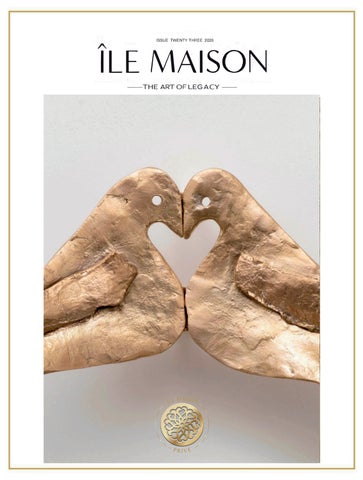
Create a flipbook