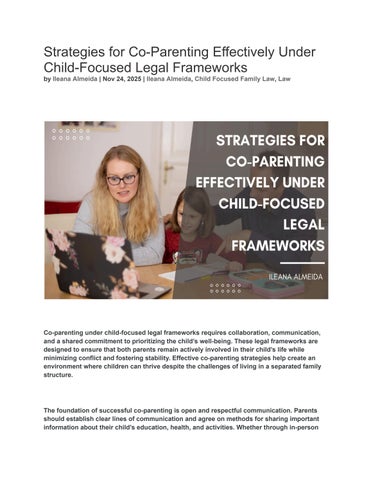
Strategies for Co-Parenting Effectively Under Child-Focused Legal Frameworks
by Ileana Almeida | Nov 24, 2025 | Ileana Almeida, Child Focused Family Law, Law
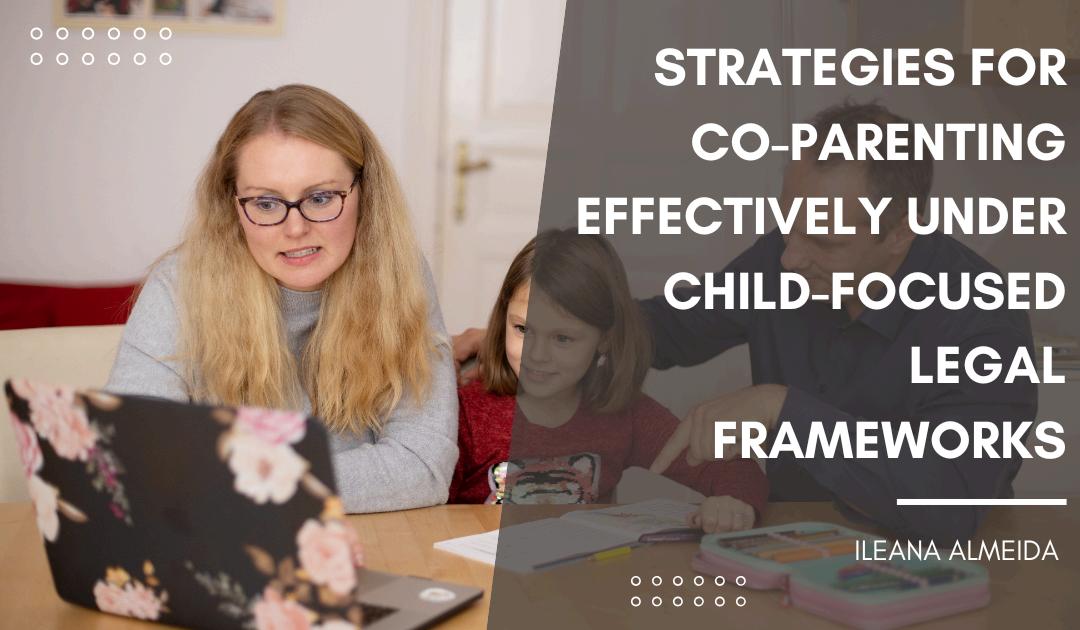
Co-parenting under child-focused legal frameworks requires collaboration, communication, and a shared commitment to prioritizing the child’s well-being. These legal frameworks are designed to ensure that both parents remain actively involved in their child’s life while minimizing conflict and fostering stability. Effective co-parenting strategies help create an environment where children can thrive despite the challenges of living in a separated family structure.
The foundation of successful co-parenting is open and respectful communication. Parents should establish clear lines of communication and agree on methods for sharing important information about their child’s education, health, and activities. Whether through in-person
meetings, phone calls, or digital platforms, maintaining a consistent and constructive dialogue helps reduce misunderstandings and ensures that both parents stay informed.
Setting boundaries and expectations is another essential strategy. Parents should establish clear guidelines regarding schedules, responsibilities, and decision-making. For example, a detailed parenting plan can outline custody arrangements, visitation schedules, and procedures for handling special occasions or emergencies. By addressing potential areas of conflict in advance, a parenting plan provides a roadmap for smoother interactions.
Child-focused legal frameworks emphasize the importance of consistency and routine in a child’s life. Parents should work together to maintain similar rules and expectations across both households, such as bedtime routines, homework schedules, and discipline methods. Consistency provides children with a sense of security and stability, helping them adapt to the changes brought about by their parents’ separation.
Flexibility is also critical in co-parenting. Life is unpredictable, and parents must be willing to adapt to changes in schedules or unforeseen circumstances. Flexibility demonstrates a willingness to cooperate and puts the child’s needs above personal grievances. For example, accommodating a parent’s work schedule or a child’s extracurricular activities shows a commitment to fostering a positive co-parenting relationship.
Conflict resolution skills are vital in managing disagreements constructively. Parents should avoid exposing their child to disputes and strive to address conflicts privately and respectfully. Mediation or counseling services can provide valuable tools for resolving disputes and improving communication. By focusing on problem-solving rather than assigning blame, parents can work toward solutions that benefit their child.
Involving the child’s perspective in co-parenting decisions can also enhance the effectiveness of the arrangement. Depending on the child’s age and maturity, parents can seek their input on certain matters, such as extracurricular activities or special events. This approach helps children feel valued and included while ensuring that decisions align with their preferences and needs.
Child-focused legal frameworks encourage parents to prioritize their child’s emotional well-being. This includes refraining from speaking negatively about the other parent in the child’s presence and supporting the child’s relationship with both parents. Demonstrating respect for each other’s role in the child’s life fosters a healthy co-parenting dynamic and reduces the child’s exposure to stress.
Parents should also seek support when needed. Co-parenting can be challenging, and accessing resources such as parenting classes, support groups, or family therapy can provide valuable guidance. These resources offer strategies for managing stress, improving communication, and navigating complex family dynamics.
By embracing these strategies, parents can create a co-parenting arrangement that prioritizes their child’s well-being and promotes a positive family environment. Child-focused legal frameworks provide the structure and support needed to navigate co-parenting successfully, ensuring that children receive the care and stability they deserve.