ABOUT THE EDITORIAL BOARD
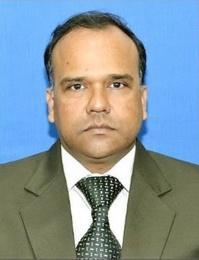
Dr. Hari Shanker Srivastava is a senior scientist and faculty member at the Indian Institute of Remote Sensing (IIRS/ISRO), Dehradun, India. He is currently serving there as the Group Head, Programme Planning & Evaluation Group (PPEG). He is also a faculty member of Agriculture & Soils Departmentand ISRO’s EDUSAT-baseddistancelearning program. Dr. Srivastava received his M.Sc. degree (Gold medalist) in Physics from Kanpur University, Kanpur, India, and his Ph.D. degree in Physics from the CSJM University, Kanpur, India with a focus on Synthetic Aperture Radar (SAR). He started his research and academic career with the Space Applications Centre (SAC), Indian Space Research Organization (ISRO), Ahmedabad, India, in 1991.
Over the past 34 years, he has contributed significantly in various microwave remote sensing projects on soil moisture estimation, agricultural studies, crop yield estimation, wetlands, ecology, forestry, human settlement, InSAR, PolSAR, PolInSAR, and absolute radiometric calibration/validation of ERS-1, ERS-2, and RISAT-1 SARusingmulti-parametric microwavedatafromgroundbased scatterometers, ISRO airborne SAR, ERS-1 SAR, ERS-1/2 tandem mission, L-band JERS-1 SAR, X-C-L SIR-C/X-SAR,RADARSAT-1SAR,ENVISAT-1ASAR, RADARSAT-2 PolSAR, C-L-P fullypolarimetric DLRESAR, hybrid polarimetric RISAT-1 SAR, Sentinel-1 and passive AMSR-E and SMOS. He was a Co-Principal Investigator for the European Space Agency’s SMOS Cal/Val Announcement of Opportunity (AO) Project and the CanadianSpace Agency’s RADARSAT-2(SOAR)AO project.
He has authored over 150 research publications. Dr. Srivastava is a reviewer for various journals, including the IEEE Transactions on Geoscience and Remote Sensing, theIEEEGeoscienceandRemoteSensingLetters,Remote Sensing of Environment, International Journal of Remote Sensing, PloS, JARS, JISRS, IGARSS, InGARSS etc. He has mentored numerous M. Tech., M. Sc. And B. Tech. students in microwave remote sensing applications and is currently supervising three Ph.D. students registered with IIT Roorkee, India, IIT Dhanbad, India. Dhanbad, India.
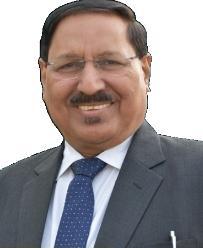
Prof. (Dr.) Trilok Nath Singh is a distinguished academician and researcher specializing in Rock Mechanics, Engineering Geology, Slope Stability, Blasting Technology, Underground Space Technology, Waste Dump and Rock Environment, Ground Control, and CO2 Sequestration. His expertise has been instrumental in advancing applied geosciences, notably by integrating artificial intelligence and soft computing techniques into
geotechnical engineering to predict blast-induced ground vibrations, slope stability, and rock behaviour under diverse environmental conditions. He has successfully completed several funded projects from leading national agencies, significantly contributing to mining safety, infrastructure development, and sustainable resource management in India.
Withmorethan470publicationsinpeer-reviewedjournals and conference proceedings, his scholarly output has been extensive, amassing over 22,000 citations, an h-index of 74,andani10-indexof354.Hehasplayedacrucialrolein academicmentorship,havingguidedmorethan35doctoral theses on critical topics, including landslide hazard assessment, tunnelling in weak rock masses, shale gas reservoircharacterization,andslopestabilityinHimalayan terrains. In addition, he has supervised 5 post-doctoral researchers, 65 postgraduate theses and 68 undergraduate dissertations.
Prof. T.N. Singh currently serves as the Director of IIT Patna, bringing over three decades of experience in teaching, research, and administration to the institute. Earlier, he served as the National Vice-President of ISRMTT, Vice-Chancellor of Mahatma Gandhi Kashi Vidyapeeth, Varanasi, and as the Institute Geoscience ChairProfessoratIITBombay.Hisadministrativeacumen is demonstrated through his leadership in institutional growth, academic governance, and fostering international collaborations. While his teaching contributions are complemented byassociation with universities such as the Institute of Technology, B.H.U., Varanasi, and the Department of Earth Sciences, IIT-B, V.B.S. University, Jaunpur, U.P.
Hisprofessionalrecognitionis equallynoteworthy. He has been the recipient of the Young Scientist Award (1990), the National Mineral Award (2009), the John C. Gammon Prize (2017), the Shiv Prasad Gupta Samman (2021), and multiple Lifetime Achievement Awards from organizations like ISRMTT, the NEEM International Foundation, and the Himalayan Geoscience Association. In 2025, he was conferred the title of ‘Academic Legend’ by the Indian Institutional Ranking Framework (IIRF), in recognition of his groundbreaking contributions to Earth Sciences. He is also a Fellow of the National Academy of Sciences, India (NASI). Beyond awards, he has served on academic panels, advisory committees, and professional bodies, reflecting his sustained engagement with the scientific community. He is a distinguished member of the International Society of Rock Mechanics (ISRM), the Mining Geological and Metallurgical Society of India (MMGI), the Indian Science Congress Association, the Mining Society, IIT-BHU Varanasi, the Indian Societyfor Rock Mechanics & Tunnelling Technologies (ISRMTT), the Mining Engineering Association of India and the Indian Institute of Mineral Engineers, and the Indian Society for Environment and Culture.
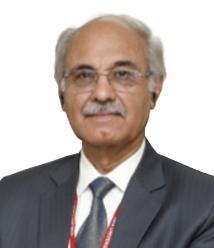
Prof.(Dr.)J.Kumar isanacclaimed plant pathologist with over four decades of distinguished contributions in research, education, and academic leadership.
He earned his M.Sc. and Ph.D. from G.B.PantUniversityofAgriculture& Technology (GBPUAT), Pantnagar (1975–1983), followed by postdoctoral research and Project Scientist roles at the International Rice Research Institute (IRRI), Philippines (1993–1996). He served as Professor & Head, Director of the Centre of Advanced Faculty Training in Plant Pathology, Dean (Agriculture), and Vice-Chancellor at GBPUAT, Pantnagar; Director (Research) at Uttaranchal University of Horticulture & Forestry, Ranichauri;Vice-Chancellor&Pro-Chancellor ofGraphic Era Hill University, Dehradun; and currently ViceChancellor of Sardar Bhagwan Singh University, Dehradun.
An internationally recognized scientist, Dr. Kumar was a Visiting Scientist at IRRI (1997, 1998, 2001, 2002), Cornell University, USA (1999, 2000), and INRA, France (2004). He successfully led ~20 national and international competitiveresearchprojects,includingmulti-institutional programmes. His pioneering research on mango malformation, apple scab, and rice blast pathogen population mapping using DNA markers is widely cited. He developed an innovative seed biopriming technology usingTrichodermaharzianum,contributedtothereleaseof four small millet varieties, and holds nine patents.
Dr.Kumarhaspublished over120refereedpapersinhighimpactinternationalandnationaljournalsandmentored24 M.Sc.andPh.D.students,manyofwhomreceivednational awards. His exemplary contributions have been honoured with prestigious awards including the Prof. M. J. Narasimhan Academic Merit Award, Jawaharlal Nehru Award (ICAR), Pesticide India Award, Rockefeller Foundation Biotechnology Career Fellowship, Plant Pathology Leadership Award, K. C. Mehta & Manoranjan Mitra Award, Dr. T. S. Thind Lifetime Achievement Award, Uttarakhand Ratan Award, Uttarakhand Ratan Shri, and Fellowship of the National Academy of Agricultural Sciences (NAAS).
Dr. Kumar continues to serve on several governing bodies and professional societies as advisor and member, shaping the future of agricultural sciences in India.
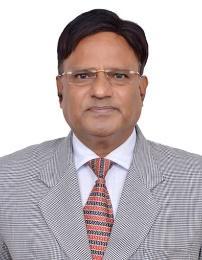
Prof. (Dr.) P. K. Garg is currently serving as an Emeritus Fellow in the Geomatics Engineering Group, Civil Engineering Department at the Indian Institute of Technology (IIT) Roorkee, Uttarakhand. He holds a B.Tech. and an M.Tech. in Civil Engineering, both from the University of Roorkee. He wasaGoldmedallistatIITRoorkeeduringhisM.Tech.He was awarded a Commonwealth Scholarship for his Ph.D. at the University of Bristol (UK) and a Commonwealth
Fellowship to conduct post-doctoral research at the University of Reading (UK). He joined the Department of CivilEngineeringatIITRoorkeein1982,servedbrieflyas Head of the Civil Engineering Department in 2015, and was the Vice Chancellor of Uttarakhand Technical University, Dehradun, from2015 to 2018.
Prof. Garg's research areas include geospatial tools and techniques. He has published over 300 technical papers in nationalandinternationalconferencesandjournals.Hehas undertaken 27 research projects and 94 consultancy projects, guidingabout73 M.Tech. and 30Ph.D. theseson various aspects of geospatial tools and techniques. He holds two patents and has authored textbooks on (i) Remote Sensing, (ii) Geoinformatics, (iii) Introduction to UAVs, (iv) Digital Land Surveying, (v) Digital Mapping ofSoil,(vi)RemoteSensingandItsApplications,and(vii) Surveying and Geomatics, as well as edited seven books. He has guided around 71 M.Tech. and 29 Ph.D. theses. He has played a key role in prestigious MHRD-funded projects on e-learning, development of virtual labs, pedagogy, and courses under NPTEL.
Prof. Garg has reviewed numerous papers for national and international journals. He has successfully organized 42 programmes in advanced areas, along with 10 conferences and workshops. He is a life member of 24 professional societies, of which he is a Fellow member of 8. For his academic work, Prof. Garg has travelled extensively both nationallyand internationally.
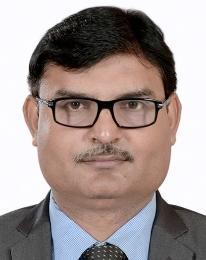
Prof. (Dr.) Dheeraj Kumar is an accomplished academic and research leader, currently serving as Professor (HAG Scale) and Deputy Director at the Department of Mining Engineering, IIT (ISM) Dhanbad. He is also the Project Director of the Mining Technology Innovation Hub (TEXMiN) under the DST, Government of India, and the Director of TEXMiN Foundation, a Section 8 company dedicated to advancing mining technology development and incubation. Additionally, he serves as Director at ACIC IIT (ISM) Foundation, a Section 8 company established by NITI Aayog, which focuses on fostering community innovation and startup ecosystems.
With over 22 years of experience spanning academia, research,consultancy,andadministration,Prof.Kumarhas made seminal contributions to the fields of mining engineeringandearthsciences.Heisthefoundingarchitect of TEXMiN, a Technology Innovation Hub that has catalysed innovation and startup growth in mining technology through active collaboration between government agencies and industry stakeholders. Under his guidance, TEXMiN has incubated more than 20 start-up companies in the mining technology domain, providing substantial financial and mentoring support and nurturing founders from top institutions, including the IITs. Furthermore, Prof. Kumar leads a cohort of more than 25 engineering entrepreneurs engaged in technology development, innovation, and entrepreneurial activities
within TEXMiN. He has overseen over 40 technology development projects at TEXMiN, with ten technologies successfullycommercializedandadoptedincoalandmetal mines. His leadership in research and development has attracted funding exceeding ₹400 million from prominent agencies, including Coal India Ltd. (CIL), the Ministry of Mines (MoM), the Ministry of Coal (MoC), DST, the Department of Space (DoS), the Ministry of Water Resources(MoWR),andtheMinistryofEducation(MoE). His innovations include the development and commercialization of three indigenous mining technologies aimed at enhancing operational safety, intelligence, and sustainability.
As a dedicated academic mentor, Prof. Kumar has guided 22 PhD scholars in the fields of mine digitization, automation, remote sensing, and GIS. His scholarlyoutput includes over 50 peer-reviewed articles published in SCIindexed journals recognized by the WOS. He has also completed over 80 industrial projects, valued at approximatelyRs.350 million,coveringminedigitization, monitoring,anddigitalization, andhasplayedakey rolein major engineering projects, including the orientation and alignment of the Chenani–Nasri Road Tunnel, which connects Jammu and Srinagar. Prof. Kumar is committed to professional development and training, having organized over 50 Professional Development Programmes (PDPs)rangingfromonetofourteenweeks,throughwhich he hastrained more than700miningexecutivesincuttingedge digital technologies for the mining sector. He also launched the M. Tech Geomatics program at IIT (ISM) Dhanbad, emphasizing LIDAR, AI-based image processing, drones, and optical and microwave remote sensing. Additionally, he has promoted international relations and alumni engagement, innovation centers, societal mission initiatives, and media/branding activities at IIT (ISM) Dhanbad.
He is a key member of several government and industry advisory panels, serving as a coordinator and member of national initiatives such as the Satellite-Based IIRS OutreachProgrammeonGIS/GPS/RemoteSensing(IIRS), GIS Academia Council of India, National Geodetic and Geospatial Consortium (DST, GoI), and the RESPOND programof SAC, ISRO.
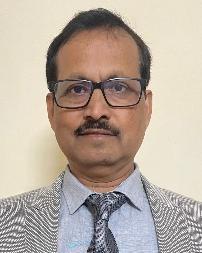
Prof. (Dr.) Rajendra Prasad is a distinguished academic and accomplished researcher, currently serving as Professor (HAG) and Head of the Department of Physics at the Indian Institute of Technology (BHU), Varanasi.Renownedforhispioneering contributions to geospatial science, particularly in remote sensing and advanced SAR satellite data analysis, he has significantly enhanced scientific understanding and precision monitoring of soil moisture dynamics and crop biophysical parameters at high spatial and temporal resolutions.
Dr. Prasad has pioneered advanced geospatial instrumentation by designing novel Bistatic and Mobile
Monostatic Radar Scatterometer, enabling precise estimation of soil moisture, crop biophysical parameters, and detection of buried objects. His research on full polarimetric SAR theory has led to the development of innovative algorithms that address limitations of earlier studies, providing powerful tools for crop monitoring in heterogeneous fields. These innovations hold significant potential for stakeholders in agriculture, government, industry, and academia.
Dr. Prasad has led and contributed to numerous highimpact national and international research projects funded by premier agencies, including ISRO and DST as well as through prestigious collaborative programs such as the ICSSR (India)–JSPS (Japan) Joint Research Programme. His research findings have been extensively published in some of the most reputed national and international journals, reflecting his significant contributions to scientific innovation and knowledge dissemination in the fields of SAR data analysis for soil moisture and crop biophysical parameters retrieval.
In recognition of his outstanding contributions to geospatial science and remote sensing technology, Dr. Prasad has been conferred the National Geospatial Faculty Fellow Award 2025.
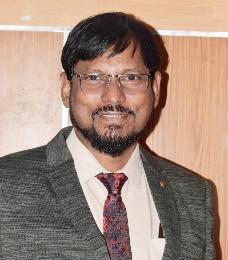
Prof.(Dr.)VazeerMahammood,a distinguished academician and researcher, is currently serving as Professor of Civil Engineering Department and Dean, Career Planning & Development Centre, Andhra University He also heads the Hydraulics Division and coordinates the Smart Factory, a Ministry of Heavy Industries initiative. With nearly four decades of teaching, research, and consultancy experience, he has profoundly influencedcivilengineeringandgeospatialtechnologiesin India and abroad. He has held several administrative positions, including Independent Director of Greater Visakhapatnam Smart City Corporation Ltd.
An accomplished scholar with five advanced degrees, includinga Ph.D. inCivilEngineering, Prof. Mahammood pioneered the integration of Remote Sensing and GIS into Civil Engineering education. He has mentored over 100 M.Tech and 15 Ph.D. scholars in cutting-edge fields such as flood forecasting, groundwater assessment, crop yield prediction using AI/ML, and urban water resource management. He currently mentors 10 doctoral scholars, has completed several funded major research projects, and continuestoleadresearchprojects,includingcollaborative efforts with national organizations like NRSC. As Dean of Engineering Works (2017–2024), he modernized infrastructure and research facilities by establishing highend laboratories with TEQIP, RUSA, and MHRD support. He developed cutting-edge labs in Geomatics, Remote Sensing, GIS, and Photogrammetry, and facilitated visits from prominent figures of India and abroad. His strategic leadership secured national and international MoUs, notably with GAIT-Singapore and GARUDALYTICS.
He has delivered high-value consultancy services to the Central and state governments, as well as abroad, in civil engineering and geospatial technologies, benefiting various government and private agencies. His accolades include the Best Research Award (2021), National Geospatial Faculty Fellow Award 2025, and patents in sustainable construction and geospatial farming techniques.
Prof. Mahammood is actively involved in national and international forums, including UN-affiliated educational programs, and has represented India in academic missions to Oman, Singapore, and Dubai. A prolific trainer and speaker, he is currently authoring a book on Remote Sensing & GIS for Environmental Sustainability, continuing his lifelong commitment to innovation, education, and public service.
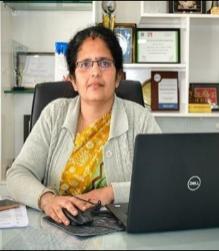
Prof.(Dr.)GowriR. isadistinguished academician and researcher specializing in Microwaves and Antennas, with her research primarily focused on microwave propagation, computational electromagnetics, planar transmission lines, and phased arrays.Herexpertisehasbeencrucialinadvancingapplied research, notably serving as a key resource person in securing a grant of Rs. 1.3 crores under the DST-FIST Scheme in February 2022, which facilitated the establishmentofareliable5Gmicrowavelinkbetweentwo campuses of the University of Petroleum and Energy Studies(UPES).Moreover,shehassuccessfullycompleted several funded projects from leading national agencies, including AICTE, DRDO, and ISRO, significantly contributing to the development of microwave communicationtechnologiesinIndia.Herscholarlyoutput is extensive, with more than 70 publications in peerreviewed journals and conference proceedings. She has also played a crucial role in academic mentorship, having successfully guided seven research scholars to complete their doctoral work, as well as supervising numerous postgraduate and undergraduate dissertations and project theses.
Dr. Gowri currently serves as Professor and Director of Research, Accreditation, and Ranking at the Nehru Group of Institutions, Kerala, bringing in 28 years of extensive teachingandresearchexperience.Heracademicleadership is complemented by her strong knowledge base in Outcome-Based Education (OBE), implementation of the National Education Policy (NEP), NAAC Accreditation processes, and NIRF ranking frameworks. Her administrative acumen is demonstrated through her roles as Founder-Director of Graphic Era Hill University, Dehradun Campus, as well as Pro Vice-Chancellor, Dean ofAcademics,andOfficiatingVice-ChancellorofGraphic Era Hill University. Prior to these roles, she worked as an R&D Engineer for three years, gaining valuable industry insights. She is proficientinadvanced designtools suchas ADS and MATLAB, which she has employed to design and develop microwave components and antennas.
Throughout her career, she has held several key administrative positions, including Dean of Engineering, Dean of Research, and Director of Accreditation, highlighting her versatility as both an academician and an administrator.
Her professional recognition is equally noteworthy. She has served as a panel member for projectevaluations as an academicexpertinDRDOlaboratories,specificallyDEAL (Dehradun)andIRDE(Dehradun),fortwo yearseach.She hasalsocontributedtoacademicgovernancebyservingon the interview panel for the selection board of lecturers and assistant professors under the Uttarakhand Public Service Commission. Her expertise has been sought as a BOS and RDC expert at Uttarakhand Technical University, and she hasactivelyparticipatedintechnicalandadvisoryprogram committees for various IEEE conferences. Furthermore, she was a member of the IEEE UP Section Executive Council for a period of four years, reflecting her sustained engagement with the global professional community.
Dr. R. Gowri thus embodies the rare combination of a seasoned researcher, accomplished academic leader, and skilled technologist, whose contributions span research, teaching, mentorship, and institutional development, making her a valuable member of anyeditorial board.
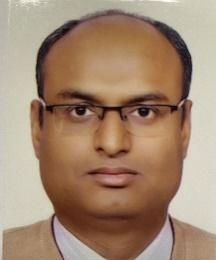
Dr. Prashant K. Srivastava is currently working at IESD, Banaras Hindu University, as a faculty member. He was affiliated with Hydrological Sciences at NASA Goddard Space Flight Center, focusing on SMAP satellite soil moisture retrieval algorithm development, instrumentation, and simulation for various applications. He received his PhD degree from the Department of Civil Engineering at the University of Bristol, UK. Prashant has received several awards, including a NASA Fellowship (USA), a University of Maryland Fellowship (USA), and a Commonwealth Fellowship (UK). He is leading numerous projects funded by reputable agencies in India and around the world. He also collaborated with NASA JPL on SMAP soil moisture calibration and validation, as well as with the Indian missions Scatsat-1 1, NISAR, and AVIRIS-NG. He is a visiting faculty member at the University of the Sunshine Coast, Australia. Additionally, he is featured among the world's top 2% scientists according to a list byScopus and Stanford University.
Dr. Prashant has published over 230 research papers in peer-reviewed journals and 15 books with respected publishers such as Springer, Taylor and Francis, AGUWiley, and Elsevier, along with several book chapters. He holds editorial responsibilities in several reputed national and international journals. He serves as Regional Editor (Asia)forGeocartoInternational(Taylor&Francis)andas an Associate Editor for several esteemed journals: Journal of Hydrology (Elsevier), GIScience and Remote Sensing (Taylor &Francis), Remote SensingApplications:Society and Environment (Elsevier), Journal of Indian Society of
Remote Sensing (JISRS) (Springer), Water Resources Management (Springer), Sustainable Water Advances and Management (SWAM) (Cell Press), Frontiers in Remote Sensing, Remote Sensing (MDPI), Environment, Development, and Sustainability (Springer), Environmental Processes (Springer), and Bulletin of Environmental and Scientific Research
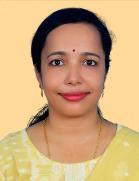
Dr. Sarmistha Singh is an Associate Professor in the Department of Civil Engineeringandacorefacultymember of the Environmental Sciences and Sustainable Engineering Centre (ESSENCE) at the Indian Institute of Technology Palakkad, India. She completed her Ph.D. in Biosystems Engineering from Auburn University, USA, and subsequently pursued a Postdoctoral Research Fellowship at Purdue University, where she worked on hydroclimatic modelling and water-resources applications. Her research focuses on hydroclimatology and satellite-based environmentalmonitoring,withanemphasisonintegrating multisource earth observation datasets such as SAR, microwave radiometry, optical sensors, and reanalysis products to characterize hydroclimatic extremes. She develops modelling frameworks to assess drought onset andpropagation,soilmoisturevariability,land-atmosphere feedbacks, and long-term climate risks across diverse landscapes. Her recent work integrates AI/ML with satellite observations such as SMAP, Sentinel, and NISAR-type SAR products to understand soil moisture dynamics and flash droughts. Dr. Singh has led and collaborated on interdisciplinary research projects supported bynational agencies such as CSIR, DST, ISRO, SERB, and multiple state departments, addressing challenges in water resources, climate resilience, flood forecasting, and environmental monitoring. She has publishedinleadinginternationaljournalsincludingWater Resources Research, Climate Dynamics, International Journal of Climatology, Atmospheric Research, and JournalofHydrology,andhaspresentedher workat major scientific conferences such as American Geophysical Union (AGU), European Geosciences Union (EGU), and Asia Oceania Geosciences Society (AOGS). She also contributes extensively to academic and professional service as a reviewer for high impact journals and as a member of scientific societies including AGU, EGU, and the Indian Society of Agricultural Engineers. Her research interests continue to focus on integrating space-based observations with physics-guided modelling to enhance understanding, monitoring, and prediction of earth system processes
Prof. (Dr.) Rashmi Sharma, Dean and Head of the School of Earth Sciences at Banasthali Vidyapith, is a seasoned academician with over 20 years of experience in higher education. She holds an M.Sc. and Ph.D. in Geography from the University of Rajasthan, along with an LL.B. and a
Postgraduate Diploma in Disaster Management (PGDDM), reflecting her interdisciplinary expertise. She has made significant contributions to teaching, research, and academic leadership. She has delivered keynote addresses and invited lectures at leading platforms such as the International Conference on Sustainable Development (ICECSDEC 2025, MGSU Bikaner) and institutions including Dayanand College, Hisar; GDC Memorial College, Bhiwani; and Banasthali Vidyapith. She has supervised sevenPh.D. scholars, with two thesescurrently submitted.
Her academic leadership includes chairing technical sessions at major conferences like the 45th Indian Geography Congress (2023) and serving on Boards of Studies and faculty selection committees at institutions such as MS University of Baroda and Jain Vishva Bharati Institute. She has also served as a judge for the Dr. Saminderjit Singh Young Geographer Award (2022) and participated as a panelist and guest of honor at various forums. As the Nodal Officer of IUINDRR at Banasthali Vidyapith, Dr. Sharma has led numerous outreach programs focused on Disaster Risk Reduction (DRR).
She has organized national conferences, faculty development programs, and hands-on technical workshops. Her efforts in environmental education are reflected in student activities like drawing competitions and awareness campaigns. From 2017 to 2019, she was a Special Invitee to the Executive Council of the Institute of Indian Geographers. Dr. Sharma’s career is defined by her commitment to sustainability, community engagement, and the advancement of geographic education and research.
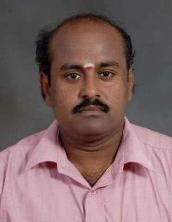
Prof. (Dr.) M. Umashankar is a Professor (Grade 1) at the School of Civil Engineering, VIT University, Vellore, India. He holds a Ph.D. in Geoenvironmental Engineering from VIT University, with research focusing on the efficacy of fly ash-stabilized expansive clay liners. With over 20 years of academic experience, Dr. Umashankar has served in various capacities, including Head of the Department, and hastaughta wide range of subjectssuch as hydrology, fluid mechanics, and water resources engineering.
Hisprimaryresearchinterests include landfillliner design, numerical groundwater modelling, contaminant transport, andsurface water modelling. Hehaspublishedextensively inreputableinternationaljournalsandconferences,andhas guided several M.Tech and Ph.D. theses. He has led projects funded by DST-SERB and collaborated with industry partners such as Renault Nissan. He is an active reviewer for several international journals and a life member of professional societies, including the Indian Geotechnical Society, IAHS (UK), and the ISRS
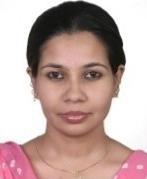
Dr. Chilka Sharma is currently working as an associate professor at Banasthali Vidyapeeth, teaching postgraduate and undergraduate students in the domain of Geospatial Technology. She holds a PhD in Remote Sensing and Geoinformatics. Her academic qualifications are in the specialized field of Remote Sensing and GIS, with a background in Master's in Information Technology. She has conducted a few seminars and lectures on remote sensingtechnologyandapplications.Shehasguided5PhD to date, and a few research scholars are working under her supervision.
Dr. Chilka has published a number of research papers and articlesinhighlyreputablejournalsandbookchapters.She is a reviewer with a reputable journal. She has technical skills with programming languages and GIS software. Her researchinterestsincludeGeospatialApplicationsinWater Resources, Agriculture, Urban; Spatial Programming; Remote Sensing; GIS; Water Demand and Supply; Water Utilization; and Prediction Modelling.
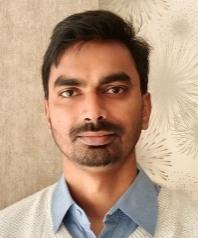
Dr. Thota Sivasankar is currently serving as Assistant Professor (Selection Grade) in the School of Computer Science at UPES, Dehradun. He holds a Ph.D. in Geomatics from IIT (ISM) Dhanbad, where his doctoral research focused on retrieving vegetation biophysical parameters using RISAT-1 hybrid polarimetric SAR data. Prior to this, he completed his M.Tech. inRemote Sensing from Andhra University and earned his B.Tech. in Electronics and Communication Engineering.
Dr. Sivasankar brings a unique blend of academic and applied research experience, having worked as a Research Scientist at the North Eastern Space Applications Centre (NESAC), ISRO, and as a Research Scholar at the Indian InstituteofRemoteSensing(IIRS),Dehradun.Hisprimary research focuses on the use of geospatial intelligence for natural resource management and disaster management applications. He is a prolific author with over 10 peerreviewed journal articles, several conference proceedings, and book chapters to his credit. Dr. Sivasankar has delivered invited talks and training sessions for national andinternationalorganizations,andheactivelycontributes as a reviewer to several reputed scientific journals.

Dr. Gaurav Shukla is an Assistant Professor in the Department of Civil Engineering at Maharishi University of Information Technology, Lucknow, India. He completed his Ph.D. in Geomatics at the Indian Institute of Technology Roorkee in 2018. He also holds an M.Tech. degree in Geomatics from the Indian Institute of Technology (Indian School of Mines), Dhanbad. His main research interests include
geospatial approaches for retrieving Earth’s parameters, remote sensing, and GIS applications. His work further extends to digital soil mapping, climate–soil interactions, GIS-based emergency response systems, geospatial applicationsinsmartcities, and construction management. He was nominated by the Department of Science and Technology (DST), India, to be part of the Indian delegation at the 3rd BRICS Young Scientist Forum, held in Durban, South Africa, in June 2018. This international forum brought together young scientists from Brazil, Russia, India, China, and South Africa to promote collaboration and innovation.
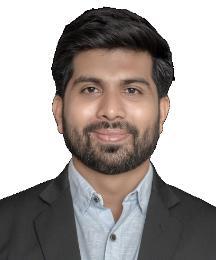
Dr. Ram Narayan Singh is a Scientist (Agricultural Meteorology) at the ICAR–National Institute of Abiotic Stress Management (NIASM), Baramati, Pune, India. His research integrates Earth observation data, satellite-based remote sensing, and advanced geospatial analytics to address challenges in climate variability, crop stress monitoring, and sustainable agri-environmental systems. He received his Ph.D. in Agricultural Physics from the ICAR – Indian Agricultural Research Institute (IARI), New Delhi, where he was awarded the IARI Merit (Gold) Medal and multiple national best doctoral thesis awards. He also secured All India Rank 1 in the Agricultural Research Service (ARS) in Agricultural Meteorology. His academic training includes an M.Sc. in Agricultural PhysicsfromIARIandaB.Sc.inAgriculturefromBanaras Hindu University. Dr. Singh’s expertise spans satellite remotesensing,thermalandopticalimaging,digitalimage processing, GIS, and machine learning for crop yield prediction, plant disease and abiotic stress detection, and land - atmosphere interaction studies. He has extensively worked with long-term climate datasets, remote sensing derived vegetation indices, and Earth system indicators to quantify climate trends, extremes, and teleconnections with direct implications for food security and environmental resilience. His research record is distinguished by award-winning master’s and doctoral research, multiple national-level academic honors, and a strong portfolio of peer-reviewed publications and scholarly book chapters. He has led and contributed to several interdisciplinary projects integrating remote sensing products, long-term climate data, and advanced statistical and machine learning frameworks, addressing climate services, environmental monitoring, and sustainable resource management. His work is recognized for advancing the application of space-based Earth observation and analytical tools to inform climate adaptation strategies, enhance agricultural productivity, and support data driven decision making in complex agroenvironmental systems.