A Publication by the International Homicide Investigators Association (IHIA)
PRESIDENT’S MESSAGE
Chief Deputy Frank Losat
Hillsborough County Sheriff's Office
Dear IHIA Members,
Letter from President Frank Losat
As we move into the spring season, I want to take a moment to highlight one of the most important events on our calendar the 2026 IHIA Annual Symposium. This year’s symposium is shaping up to be an exceptional opportunity for professional development, collaboration, and innovation within the homicide investigation community
Our team has been working diligently to build a program that delivers meaningful, real-world value to investigators at every level. From cuttingedge case presentations to emerging trends in digital forensics and investigative strategies, the symposium will provide practical knowledge that you can take back to your agencies and apply immediately.
Beyond the classroom, the symposium remains one of the most valuable opportunities to connect with fellow investigators, share experiences, and strengthen the professional relationships that are critical to our success. The exchange of ideas and lessons learned is what continues to make IHIA a leader in our field.
I strongly encourage each of you to attend and take full advantage of everything the symposium has to offer Your participation is what drives the continued growth and impact of this organization.
Thank you for your continued commitment to IHIA and to the pursuit of justice for victims and their families.
Respectfully,
Frank Losat
Frank Losat President International Homicide Investigators Association
Updates from the Desk of the IHIA Executive Director Steve Lewis
Join us in New Orleans for the Annual Symposium
Women in HomicideWomen’s History Month Feature
Article: Go Sit on the Pot - Considerations for Emotional Wellness
Article: Deadly connections: Exploring body disposal patterns in homicides through victimoffender relationships
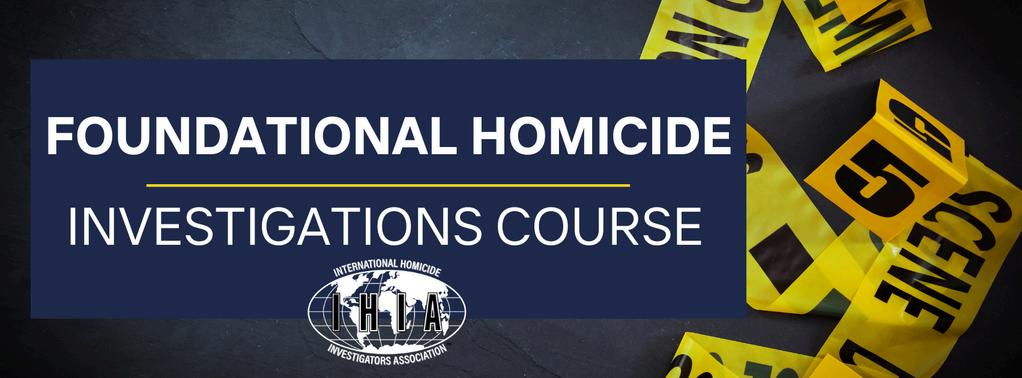
Article: Too Sedated to Commit Violent Crime? Upcoming Regional Training Opportunities Foundational Homicide Investigations Course Feature Marketing Opportunities
FROM THE DESK OF THE IHIA EXECUTIVE DIRECTOR STEVE LEWIS
Dear IHIA Members,
As we move through 2026, I want to take a moment to sincerely thank each of you for your continued dedication and commitment to this profession. The work you do every day in support of victims and their families is not only important, it is truly impactful, and it does not go unnoticed.
The IHIA has had a strong start to the year, with a continued focus on expanding our training opportunities and strengthening partnerships that benefit our membership Our priority remains delivering practical, real-world training that investigators can immediately apply in the field. At the same time, we are working closely with industry partners to bring forward new technologies and resources that support your work.
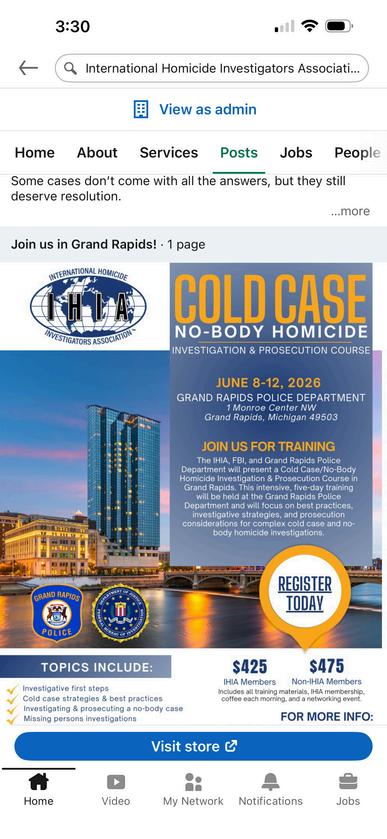
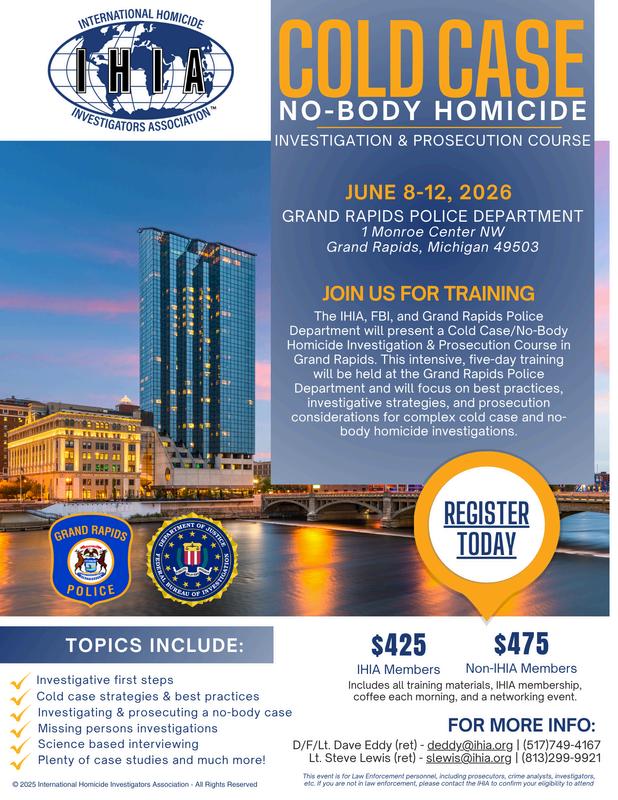
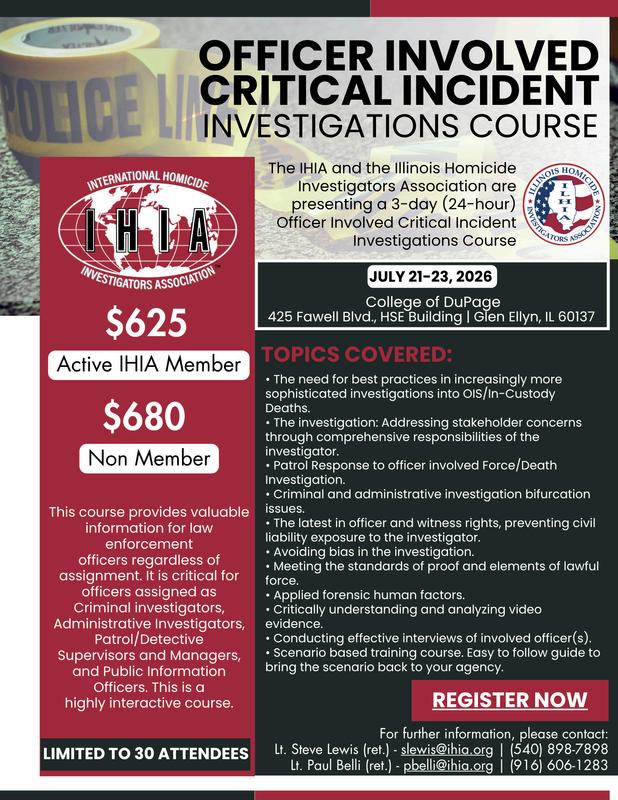
Our training calendar is already well underway, with courses covering Advanced Homicide Investigations, Cold Case methodologies, and multiple Officer-Involved Critical Incident Investigations (OICII) programs across the country. We are proud to offer these opportunities and appreciate the strong participation we continue to see.
Looking ahead, we are excited about the 32nd Annual IHIA Training Symposium, scheduled for August 9–13, 2026, in New Orleans This event continues to be a cornerstone of our organization bringing together professionals from across the country and around the world to share knowledge, collaborate, and learn from one another.
Thank you again for your ongoing support of the IHIA and for the work yo are making a difference, one case at a time
With appreciation,
Steve Lewis Executive Director International Homicide Investigators Association
WOMEN IN HOMICIDE
HONORING LEADERSHIP, DEDICATION, AND IMPACT
This Women’s History Month, we recognize and honor the women who serve in homicide and death investigations—professionals whose work demands precision, resilience, and an unwavering commitment to justice.
Across agencies, disciplines, and borders, women continue to play a critical role in advancing investigations, supporting victims and their families, and strengthening the field through leadership and collaboration. Their contributions are essential to moving cases forward and delivering answers when they matter most.
Since 2022, I have been in my current role as Manager of Operational Programs in the Criminal Investigation Branch of the O P P This includes the development and leadership of the O P P ’s Historic Homicide Unit and FIGG Implementation Team Since 2009, I’ve had the privilege of working on major criminal investigations, including homicide cases, across a range of specialized roles.
My career has taken me from serving as a Detective Constable investigating major crime within federal penitentiaries, to leading electronic surveillance and Part VI (Title III) operations as a Detective Sergeant, to helping establish and lead the High-Risk Offender Unit, the Historic Homicide Unit and the FIGG Implementation Team as a Detective Staff Sergeant with the O.P.P.
For those investigators stepping into the demanding yet deeply rewarding world of criminal investigation, my advice is to be persistent. The work is complex, often challenging, and always meaningful.
For supervisors and managers, I cannot overstate the importance of collaboration - within your units, across your organization, and with external partners Equally crucial is prioritizing the wellness and development of your members When we invest in healthy, resilient teams, we strengthen our collective ability to meet the evolving demands of public safety.
Southern Regional Director, Detective Caitlin Jewel Chairman of the Corporate Council, Jessica Koong
Public Information Officer & Operations Manager, Amber Lagace
IHIA Event Planner, Jennifer Thornton
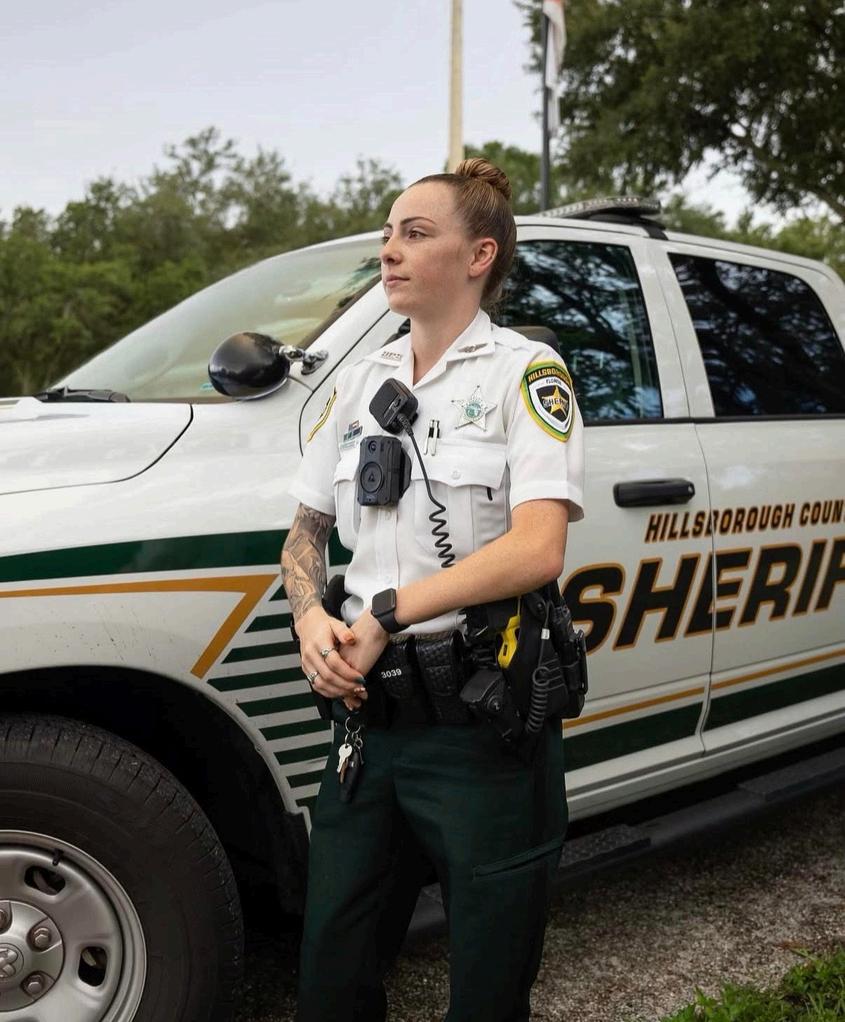
DETECTIVE SHYANNE MILEY
Homicide Detective
Hillsborough County Sheriff’s Office
4 years in Investigations
SHARE A MEMORABLE CASE, INVESTIGATIVE LESSON, OR MOMENT THAT HAS STAYED WITH YOU:
Honestly all the cases are memorable and I feel like with each one I learn something new, but the one I feel most proud of is my involvement in helping bring closure and justice to the victim of a brutal, 1997 cold case homicide
The victim had been stabbed numerous times, had suffered blunt force trauma, and the word “Greed” was written in blood on the wall. I first became involved in the case when I first came to the Homicide Section I worked alongside Senior Special Investigator Dan Bendig and together we found new investigative leads with items of evidence that had never been tested.
Through the testing of that evidence we obtained a DNA profile for a potential suspect. We located that suspect in Tampa, interviewed him, and ultimately obtained a post Miranda confession
Being able to tell the victim’s brother we had made an arrest was a wholesome and rewarding feeling, especially knowing the brother had waited 28 long years for that day.
YOUR “WHY” WILL CARRY YOU THROUGH THE HARD DAYS.
ADVICE FOR THOSE ENTERING THE FIELD:
My advice for someone entering law enforcement would be to ensure this is your passion. Your “why” will carry you through the hard days. Whether it’s helping people, serving your community, or making a difference, write it down and come back to it.
The job will test that purpose don’t let routine or negativity erase it. Passion isn’t loud, it’s consistent. Consistency equates to your impact. Every call matters. Do the right thing, even when nobody is looking, when it’s harder, and even when others don’t. Be respectful, even when it’s not reciprocated. Nothing kills passion faster than compromising your values. Your reputation will follow you your entire career.
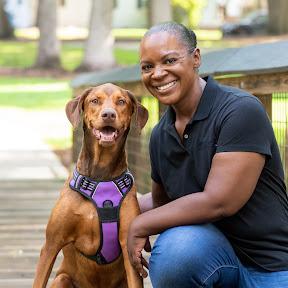
JONESTA NOLAN, MS, CSCSA
Forensic Analyst, ASPCA Veterinary Forensic Science Center
Board of Directors, International Association for Identification
20+ Years in Forensic Investigations
SHARE A MEMORABLE CASE, INVESTIGATIVE LESSON, OR MOMENT THAT HAS STAYED WITH YOU:
One of the most memorable cases for me happened early in my career in Nashville in 2007.
A 70-year-old grandmother, Classie Wilson, was shot and killed in a small neighborhood store As the rookie CSI, I was assigned to process the front door for latent prints. At the time, I was just eager to do my part and contribute
Looking back, I can laugh a little and say I may have been given that task to stay out of the way. But that assignment ended up mattering.
I developed dozens of prints from that door Most of them belonged to customers and first responders, exactly what you would expect. But one print stood out. It was later linked to a 14-year-old who lived nearby When detectives spoke with him, he denied ever being at the store The prints told a different story
Confronted with that evidence, he ultimately confessed to shooting and killing Ms. Wilson in broad daylight.
That case stayed with me, not because of the outcome alone, but because of what it taught me early on Every detail matters Every assignment matters Even the tasks that feel small or routine can carry weight you don’t fully understand in the moment.
It also shaped how I see this work Every investigation, whether it is a homicide, a burglary, or an animal cruelty case, represents one of the worst days in someone’s life. The responsibility we carry in documenting and preserving those details is not something I take lightly
After over two decades in this field, that perspective has never changed.
ADVICE FOR THOSE ENTERING THE FIELD:
The work matters, but you matter just as much.
Technology is evolving quickly. Tools like AI and advanced systems can support what we do, and they will continue to improve But they are not a substitute for the person doing the work
This field requires integrity, discipline, and a level of commitment that cannot be automated. You have to care about the details You have to be willing to put in the time, even when no one is watching And you have to approach every case with the same level of effort, regardless of how big or small it may seem.
At the same time, you have to take care of yourself This work can be heavy, and if you do not make space to process it, it will catch up with you Taking care of your mental health is not a weakness. It is part of doing this job well. You cannot consistently show up for others if you are running on empty
There is no shortcut for any of this
If you bring that mindset to this work, you will make an impact. The communities we serve are absolutely worth it.
To the women working in homicide and violent crime investigations, whether in the field, the lab, the courtroom, or behind the scenes - thank you.
This month and every month, we recognize the impact you make.
GO SIT ON THE POT
CONSIDERATIONS FOR EMOTIONAL WELLNESS
BY: DAVE EDDY DIRECTOR OF TRAINING OPERATIONS
Comedian Tim Hawkins is hands-down one of the funniest and most entertaining comedians I've seen. If you ever get the chance, I encourage you to rent one of his videos, Google 'Tim Hawkins Yoga Pants' or 'marriage GPS', or watch some of his stuff on YouTube One of his many relatable bits involves Mom's answer to many of life's problems: you probably just need to go sit on the pot. Funny? Absolutely. And relevant. After all, laughter is good medicine. The uncontrollable laughter of adolescent boys everywhere confirms the hilarity of poo and toot related conversations And there's certainly a case to be made about the relationship between regularity and wellness
Not just physical wellness.
Constipation: a condition in which there is difficulty emptying the bowels, usually associated with hardened feces
Emotional Constipation: a buildup of unprocessed emotions, or an inability or unwillingness to express such, *often associated with hardened feelings (*added by author)
I first heard the term emotional constipation in Tantor and Terk's fiery interchange watching Disney's classic animated film 'Tarzan' with my kids.
Tantor: That sounded like Tarzan It sounded like - like he was in trouble
Terk: Yeah? Well, why doesn't he get his new friends to help him? I don't care.
Tantor: Thaaaaat's IT! I've had it with you and your emotional constipation! Tarzan needs us, and we're gonna help him! You got that? 1
Twenty-five years later, emotional hangups are still ubiquitous to daily life and relationships, yet I was surprised just how much information there is available to help explain this concept of emotional constipation
One counseling center's website explains that people suffer from emotional constipation when experiencing "many more feelings than he or she has the skills to express or identify " 2
Another describes that it may involve one " unconsciously using selfprotection as a way to limit yourself, your growth, and your happiness."
The National Missing and Unidentified Persons System lists over 54,000 active missing persons cases in the United States in 2023. Some of these are probably homicides
Unfortunately, the longer it takes law enforcement to locate a body, the greater the risk of losing valuable evidence and information. Locating the body disposal site is a crucial element in a murder investigation
In homicide investigations, there is a lack of research in this area and scholars have stressed its importance because: (1) body disposal sites may be the first scene discovered by law enforcement and typically have the most physical evidence, (2) the manner and circumstances of the body disposal may provide logical clues to the nature of the crime, (3) different body disposal scenarios may reflect an offender’s criminal experience level, and (4) the manner in which the body is disposed of can shed light on the relationship between the victim and the offender.
Body disposal sites are often given less attention in homicide research For example, in typological studies, body disposal methods were often associated with offender “type.” In other studies, body disposal sites have been examined in conjunction with other aspects of the crime, such as body concealment, body transportation, and mutilation or dismemberment However, geographic factors, such as distance, time, and spatial characteristics of body disposal sites, are often overlooked.
Victimology is another critical consideration in homicide investigations. Investigators seek to understand the nature of the victim offender relationship by gathering information about the victim’s personal connections, such as friendships, relationships, and dating history. This relationship plays an important role in shaping the offender’s motivation, body disposal strategies, and other aspects of the crime, including the weapon used and the nature of injuries inflicted Understanding these relational dynamics provides critical insights into offender behavior, supporting the development of more effective investigative strategies.
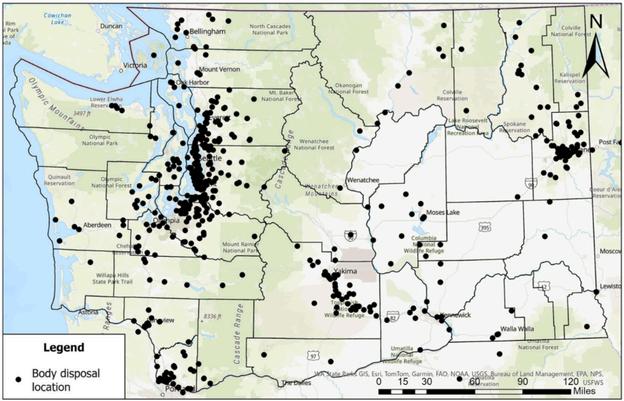
To address the gap in body disposal patterns literature, this study explored the spatial distribution of known body disposal sites in relation to victimoffender relationships using data from Washington State By identifying patterns in disposal behavior, the aim of this research was to provide actionable insights that can enhance investigative strategies and support police efforts in solving homicide cases more effectively.
Studies of body disposal patterns have primarily been a sub-category in sexual and serial homicide research (e.g., typological studies). These studies typically approach the subject from the perspective of the identified offender, with a particular focus on factors such as development, upbringing, familial relationships, and history of physical, sexual, and emotional abuse.
Spatial distribution of body disposal locations by county in Washington state
THE POTENTIAL EFFECTS OF YOUNG MALE ISOLATION ON POLICE OPERATIONS
By: Matt Dolan, J.D. & Richard R. Johnson, PH.D.
In our last article, we addressed plausible explanations for why several jurisdictions in the U.S. have reported declines in violent crime over the last two to three years These news stories tout the declines in violent crime (but not necessarily other types of crimes) in large and small cities from coast to coast. While many mayors have credited their local public safety initiatives for these declines, we offered several potential explanations that seem to be more plausible, including the impact, in an aging U S population, of the decrease in the number of young men in the population on violent crime rates.
The declining U.S. birth rate, which has plummeted below the replacement level (enough births to “replace” the two parents) since 2008, means we are likely entering an era with an ever-smaller population of people in the age category most prone to engage in violent crime. The people not born in 2008 would be turning 17 years old in 2025. Fewer and fewer teens and twenty-somethings in the population means fewer and fewer persons most statistically likely to be potential perpetrators or victims of violent crime.
However, there is another important and historic demographic shift that has occurred in the last few years that might also be contributing to the decline in violent crime the unprecedented disengagement of millions of young men from society, or what has been described as the male sedation hypothesis The male sedation hypothesis suggests that modern society passively sedates young men through comfort, distraction, and low expectations. This phenomenon is perhaps most clearly seen in the millions of working age men who are neither employed nor
pursuing educational attainment at levels unseen since at least the tail end of the Great Depression
As we will explain, this new social phenomenon may reduce the likelihood of young men engaging in violent behavior, contributing to new problems that will require law enforcement involvement, and reshaping how we traditionally think of crime and disorder in our communities.
Young Men and Risky Behavior
For many decades, the fields of criminology and social psychology have confirmed what cultures throughout history have recognized: that adolescent and early-adulthood men are the segment of the population most engaged in risky behaviors Sometimes these risky behaviors are socially discouraged, such as substance abuse, violence, property crime, sexual promiscuity, and reckless driving This is why most criminal offenders are males between the ages of 13 and 40 Other risky behaviors have traditionally been encouraged by society, such as risky and physically demanding sports, military service, hazardous occupations (including the law enforcement occupation), and physically defending one’s family and friends
Social psychologists and sociologists have argued that risky male behavior is driven by conscious and unconscious desires to achieve higher status within one’s society and among one’s peers. In a stable society, properly sanctioned risky behavior is rewarded with money, status, or admiration. Oil rig workers without any education beyond high school, for example, have a more dangerous job than most, and are therefore paid more money than those employed in restaurants or hospitality with similar educational attainment. Combat veterans are widely admired for their contributions to American life, which entailed uniquely dangerous endeavors Law enforcement officers and firefighters who are injured in the line of duty are generally the subjects of public outpourings of support and admiration.
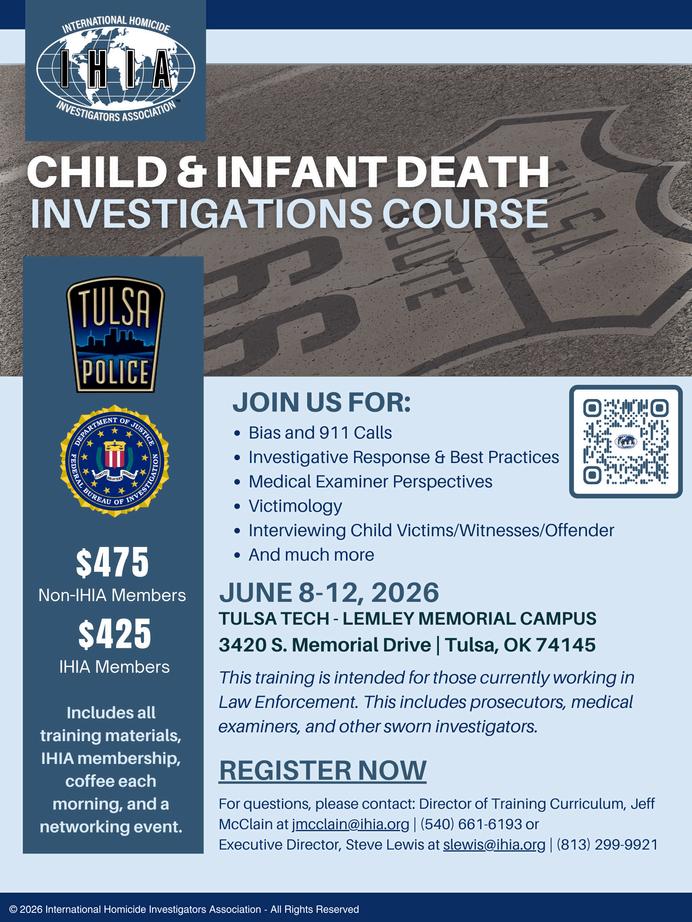
UPCOMING REGIONAL TRAINING OPPORTUNITIES
BUILDING THE NEXT GENERATION OF INVESTIGATORS
WHAT YOU’LL GAIN:
A comprehensive understanding of homicide investigations from start to finish. Practical techniques for evidence handling and crime scene processing. Science-based interviewing strategies. Strong case management and documentation practices. Insight into collaboration with prosecutors, lab personnel, and media.
UPCOMING COURSE OFFERINGS:
June 22–26, 2026
Lloyd B. Johnson Law Enforcement Training Center | LaPlace, Louisiana
Spokane County Sheriff Regional Training Center | Spokane, Washington
The International Homicide Investigators Association is excited to announce the launch of a new series of FREE training webinars available exclusively to IHIA members.
These upcoming sessions are designed to keep investigators at the forefront of modern casework, featuring timely and impactful topics such as Forensic Genetic Genealogy, Digital Forensics, DNA advancements, and Science-Based Interviewing (SBI) strategies, member-focused case study presentations. Each webinar will highlight real-world applications, emerging technologies, and proven techniques that are shaping the future of homicide and violent crime investigations.
As investigative methods continue to evolve, IHIA remains committed to delivering cutting-edge training that enhances case clearance rates and supports justice for victims and their families.
Stay tuned for upcoming announcements and registration details—these are opportunities you won’t want to miss.
As a sponsor or exhibitor, you'll have the opportunity to engage directly with homicide investigators from across the world Strengthen relationships with both individuals and departments while increasing your company's visibility within the law enforcement community Please contact Steve Lewis at slewis@ihia org or 540-898-7898
SPONSORSHIP RECEPTION $2,000
($2,000 exclusive, sponsorship will be shared with non-competing companies if exclusive is not secured)
SPONSORED COFFEE OR SPONSORED BREAKFAST $500/EACH DAY
SPONSOR DAY $500/EACH
DAY
Be the exclusive sponsor for a day network with attendees, join them for lunch, and take a few minutes to introduce yourself and share materials A great way to connect directly with investigators from around the world
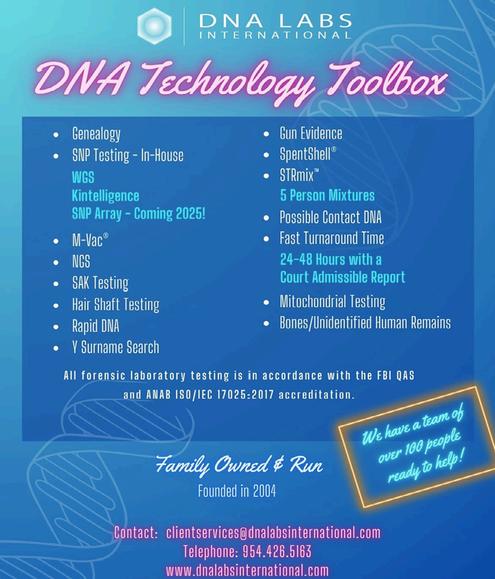
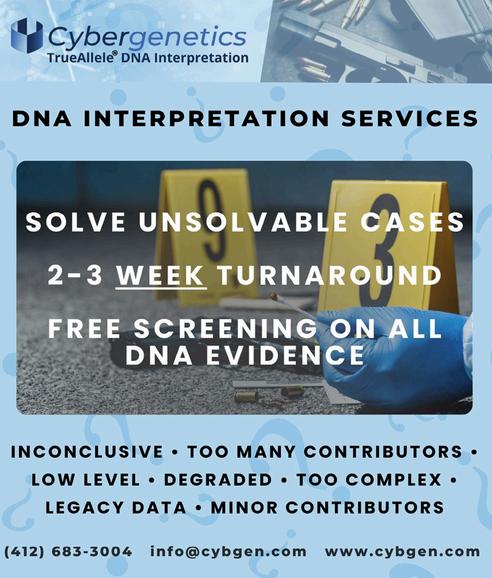
INVESTIGATIVE QUARTERLY NEWSLETTER ADS
The IHIA e-Newsletter is sent quarterly to 10,000+ readers and posted on our members-only website Advertising space is available in each issue; an ideal way for companies to connect with IHIA members and showcase their products or services.
Trim Size: 519 wide x 200 high (in pixels) Static Only
Rates:
$350 | Premium Position #1
$300 | Premium Position #2
$250 | ALL Other Positions
Due Date for Reservations and Materials: June 2026 Issue | Due May 20th September 2026 Issue | Due August 20th