


Opinion Disclaimer:


Opinion Disclaimer:

Lana Thompson - Editor
Special Edition of the LGC in London
their belief in this event and showing that conferences do not have to be just an add-on to an exhibition.
Now with the LGC concluding we move excitedly forward to the Women in Gaming (WIG) Diversity Awards where already hundreds of companies and individuals have nominated and there is still 2 weeks to go before we close the nominations, so please do not wait, entries are free and is always a celebration of diversity and inclusion within our industry.
We could not do this without our wonderful sponsors, so thank you to Digitain, Gamomat, Entain, Relax Gaming, Betsson Group, Spribe and Grentube.
The ceremony will be held on the 12th June and once more at the stunning Savoy Hotel in London.
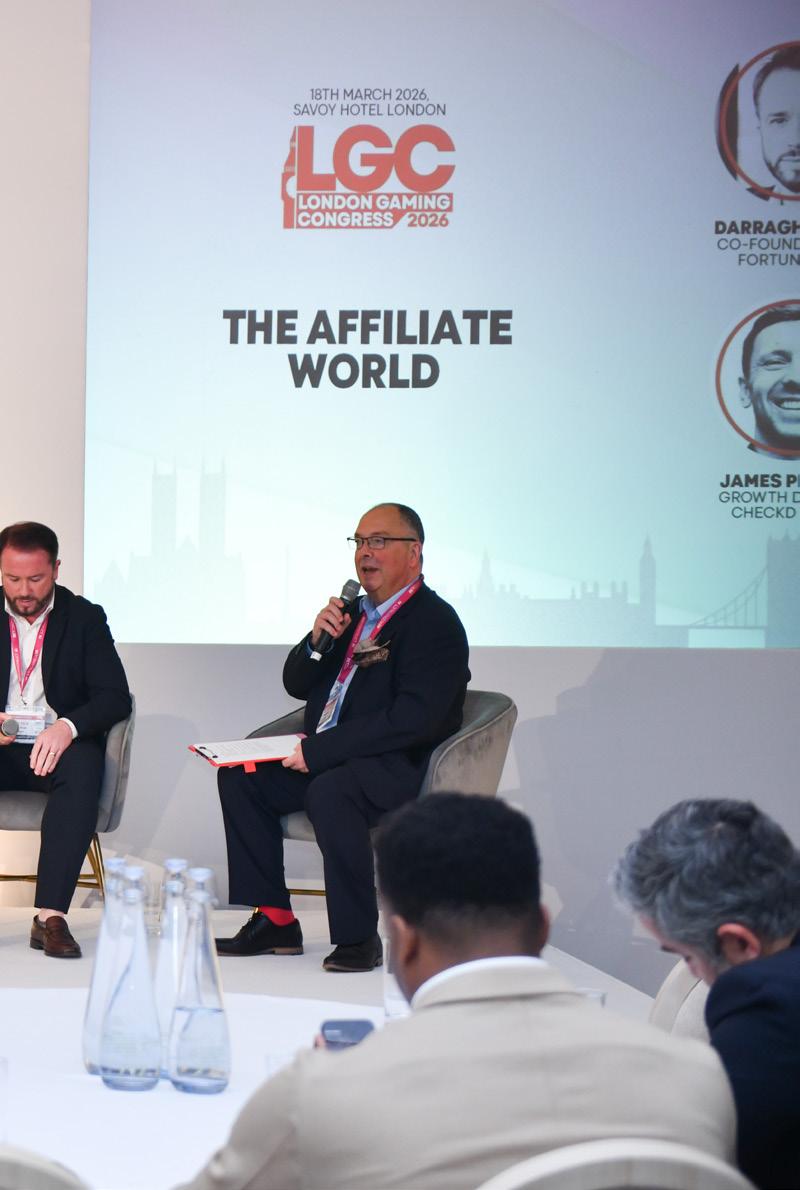
Welcome to the latest edition of the Infinity Gaming Magazine and wanted to thank everyone who made the London Gaming Congress (LGC) such a great event and more importantly a superb talking place.
Now in its second year the UK has attracted bad publicity over increased taxes and more regulation but we have to remember that it is still one of the world’s oldest, most mature and largest gambling jurisdictions on the world.
And that showed by the amazing speakers and companies that took part in the amazing venue the Savoy Hotel in the heart of London.
We want to thank our wonderful sponsors, Betconstruct, Continenet 8 Technologies, IGT and Thoughtworks for
On to the magazine and we have exclusive coverage from the LGC, some superb articles and always the very latest news from the land based and online gambling industry.
CONTACT US
Clever Duck Media
Centrix@Keys
Keys Park Road
Staffordshire WS12 2HA UK
+44(0)1543 478 889
PRODUCTION
Clever Duck Media
Centrix@Keys
Keys Park Road
Staffordshire WS12 2HA UK
PUBLISHING
Infinity Gaming Magazine is operated by © Clever Duck Media Ltd ® Company Reg. No. 687 1018 (Registered in England) V.A.T reg. no 972 6372 91
Sponsorship Opportunities Colin@cleverduckmedia.com
Business Partnerships
Svetlana@gaming-awards.com
Marketing & Advertising claire@cleverduckmedia.com
Editorial Content & PR media@cleverduckmedia.com
Enjoy the magazine and until next time.
“To Infinity and Beyond!”
Regards, Lana The
Editor



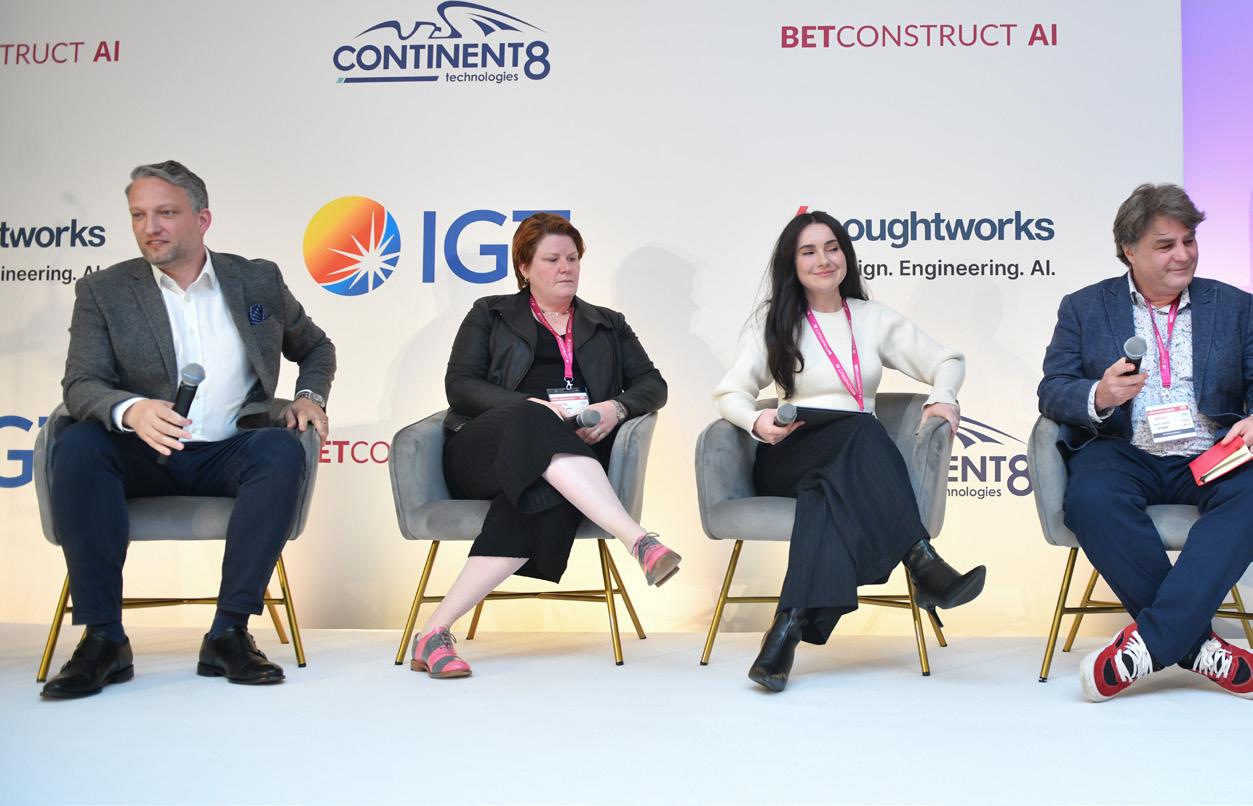
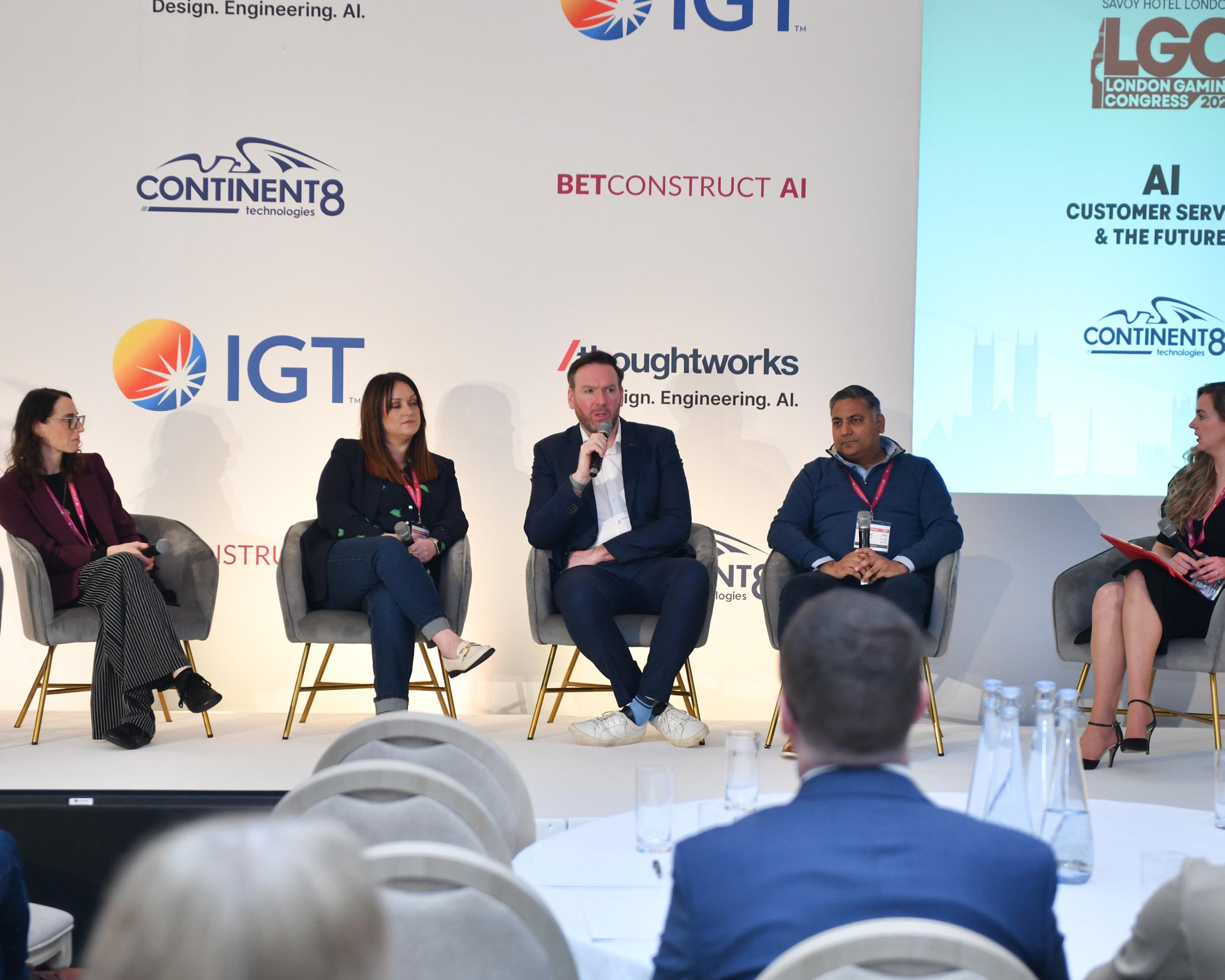
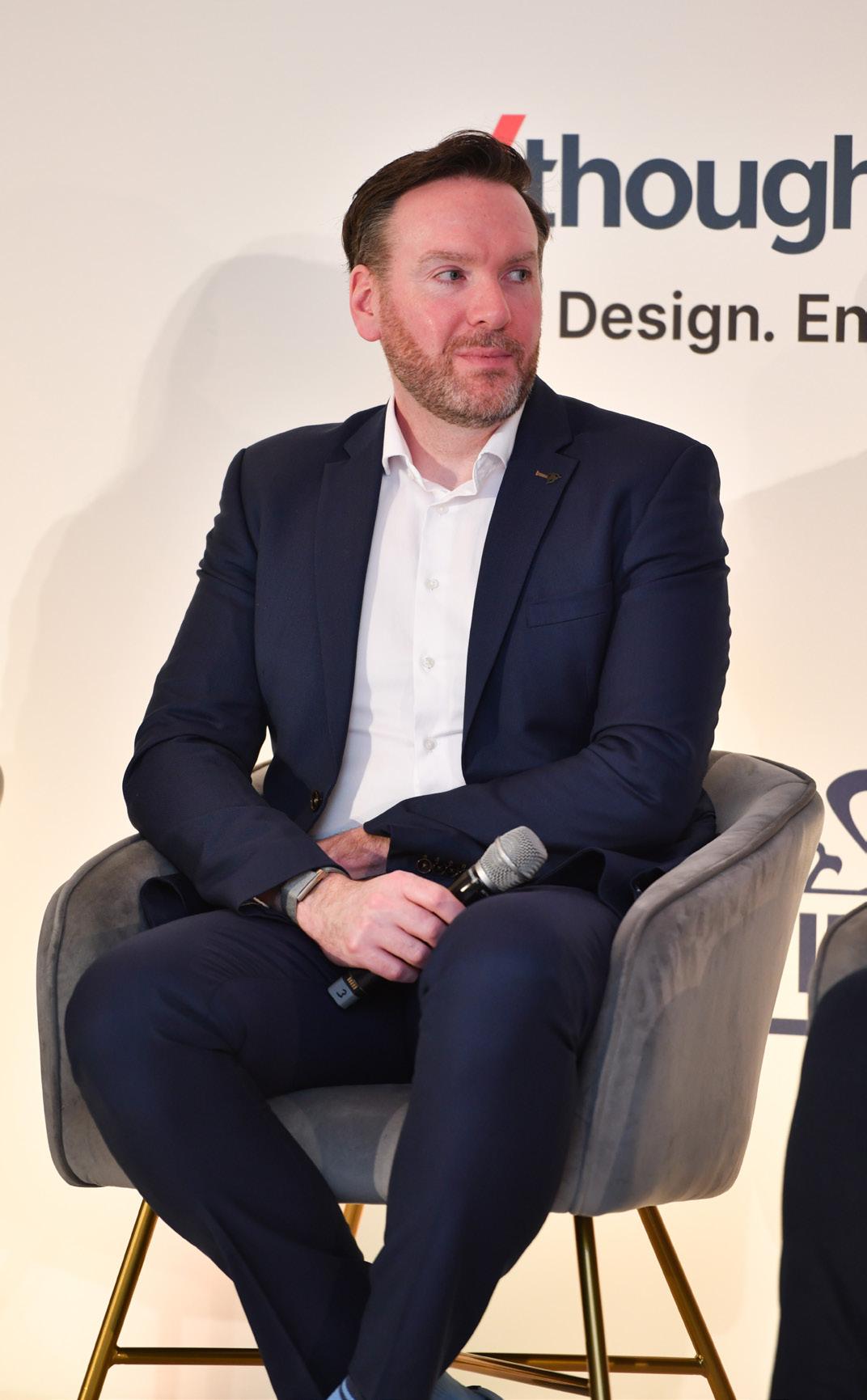
The London Gaming Congress (LGC) 2026 heard from leading figures within the AI World, taking part was Ashish Umre, Global Head AI for Entain, Arlene Griffin, Director of Customer Service UKI Flutter Entertainment, David Brace, Chielf Alliance & Partnership at Continent 8 Technologies & Yardena Almagor, Customer Sucess Manager at Mindway AI.
Below is the transcript from the panel discussion covering some amazing insights.
The London Gaming Congress (LGC) 2026 took place at the iconic Savoy Hotel on the 18th March and featured some amazing panel discussions, not least the AI panel session. Here is the transcript to that session exclusively revealed offering some amazing words from our esteemed panel:
Moderator : “ How i mportant AI actually is, the role it plays within your businesses, and how much you rely on it. We’ll start with yourself, Ashish.
Ashish Umre (AU): “ H i, nice to be here. I’m Ashish, global head of AI at Entain. I’ve been with the company for about a year and also in the industry for just over a year now.
David Brace (DB): “ I ’m feeling severely under-qualified and severely undertitled right now. So you heard me talking about AI earlier. I wear two hats, so we also have a group security company.
T he way we think about AI at Entain is that it’s really the enabler for our strategy, w hich is to try and ensure that we are making our business faster, more efficient, at the same time providing great customer experiences through personalization and other ways of designing better products for our customers, and also trying to create a safe and trustworthy experience overall in every interaction. And all of that is underpinned by how we create the right governance, the guardrails,
and apply AI in a responsible way.”
David Brace (DB) “ S o I’ve got a difficult job. So for those of you that were here last year, I start off by saying AI doesn’t exist. I remember that. I screwed myself over on this paneL that time, but y eah, AI, still of the opinion, we’re not quite there yet. But yeah, it’s critical to our business in w e’re in a difficult situation. A lot of our business is people, and they’re the ones that are going to be most affected by AI. So it’s critical for our business in making us leaner, faster, more efficient, and better serving our customers.”
Arlene Griffin (AG) “ Yeah, so I agree with my colleagues there. I think
additionally, just to build on some of their points, one of the things that we’re doing in Flutter that’s quite important to us last year and into this year is we’re really investing in people, right? Because you can have the right tools and you can give people access, but if there isn’t kind of a literacy around AI, then that work isn’t going to add any value. So for us, big investment in the people globally. So we’ve got a global infrastructure. We’re looking to execute locally. But yeah, that’s probably the next key point for us that I would add.”
Yardene Almagor (YA) “Okay, so well for us it’s a bit different, it’s more of what David thinks about AI that we just plugged in AI under our
name and that’s it and now we’re in a company. But well AI is the core functionality of our solution so we provide early detection of problem gambling and different behaviors through AI. There’s no other way to do this in such scale but what we don’t do is leave the decision for the AI so we only bring all the necessary information for the operators to make an informed decision as much as possible.”
Moderator: “Arlene, obviously your company is involved in customer service. We’d love to hear a bit more about how AI, specifically within that customer service sphere, the role that it plays and how it’s been received with the customers.
AG: “Yeah, so I think... Look, AI is the next evolution of tech. So in customer service, you’re probably familiar with, we’ve had RPA, we’ve had processes. And for us in Flutter, we’ve got quite high containment rates around those journeys as it stands. Now, what AI will unlock is better journeys. We’ll be able to adapt quicker to processes because it’s kind of adaptive technology rather than based on those three decision models that you see with RPA. But I think ultimately, The value add is around AI’s ability to surface signals or kind of predict patterns with our customers and surface those to agents. So for me, the AI and agent interaction is key and what will be the kind of significant driver of value. I think when AI was lauded, first of all, a lot of people were focused on the efficiencies that it can bring.”
AG: “And actually now we do see that mindset change to where the value will be added. So when I look at our interactions, enabling our people to have those better conversations that human touch, particularly around safer gambling, I don’t think you can, as it stands today, people may disagree, but you can’t replace human empathy and human decision making. And those conversations are really, really important.
AI in service, yes, similar to RPA around those quick journeys, password resets, where we know customers love convenience and speed, but I think it complements our human offering around safer gambling.”
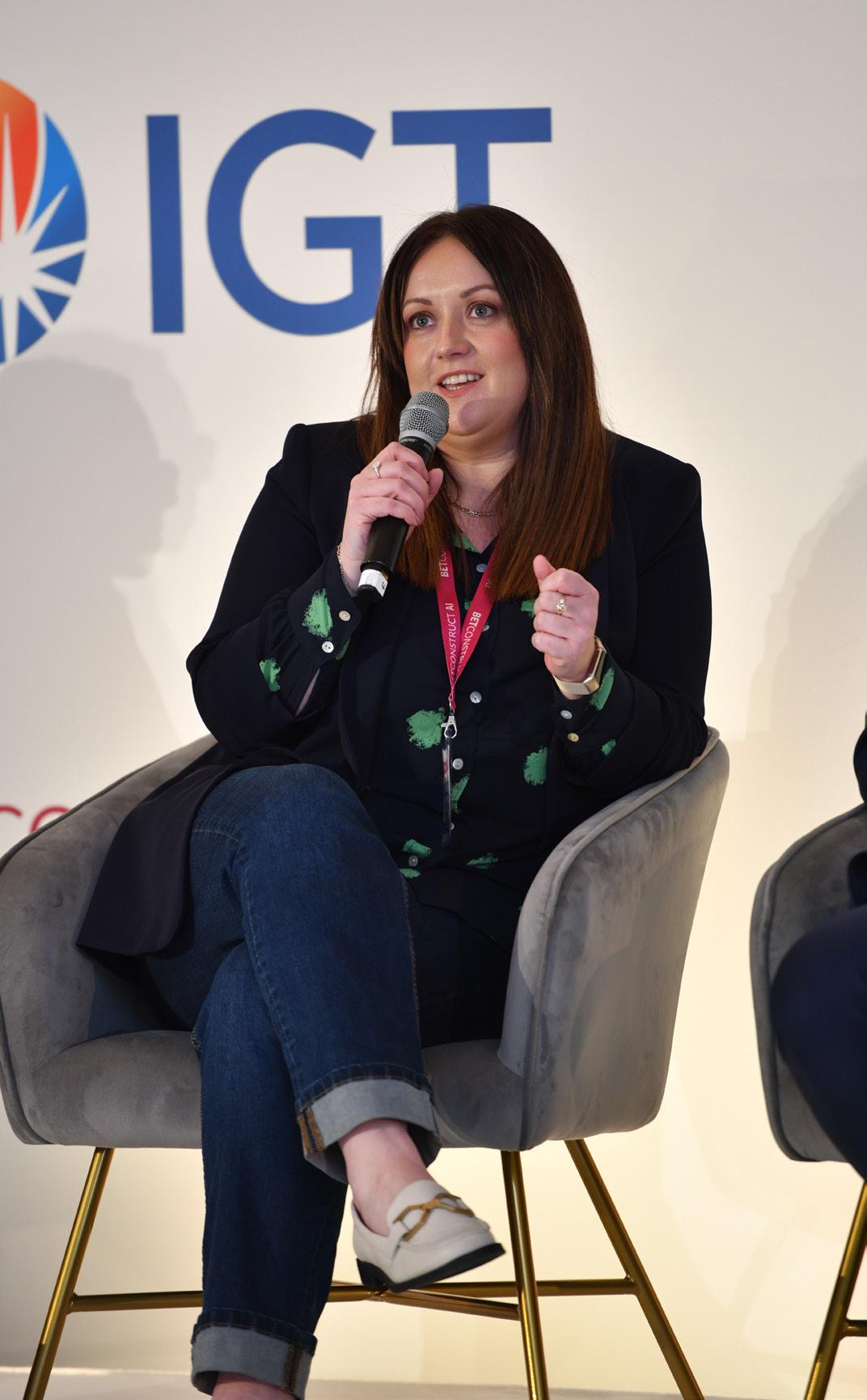
Moderator: “do the customers know they’re speaking to AI? And how has that been received? I’m just thinking from all of our perspectives in the room, I’m sure we’ve all had one of those calls where we’re like, we just want to speak to a human being. But what’s the general feedback been over at Flutter?”
AG: “Yeah, I think transparency is key to this, right? I think people want to know who they’re speaking with. So for us, as I say, those convenient journeys, we found customers prefer that in some cases. We’re a digital contact center and have been for a number of years. And that has gone very well with our customers. From a safer gambling piece then, you’re dealing with vulnerable
customers, complex conversations, and that for me is when those human conversations come into it. But I think being transparent, Trust in this industry has never been more important and people need to trust the experience that they’re getting and who they’re talking to. So transparency for me is key.”
Moderator: “Can AI replace humans? Where does that human touch come in?
AU: “I’ll just build on what Arlene was saying. I think it’s really important, once you have all that insight and information or patent discovery, you need to contextualize it, right? So every interaction has a context. And if you don’t understand the
context, you could be having a very different conversation, which you’re interpreting or translating what you hear. And that’s really important.
And that’s where the human being comes, right? The empathy side, being able to really connect with what the need is there in that particular interaction. And rather than generalize or try to take it in a very different direction, I think it’s really important. And then measuring that over time, saying, how did we interact? What are the feedback loops that we are incorporating to optimize, improve that process? And are we seeing customers actually be satisfied through that interaction? Are we able to achieve the success, the outcomes that we were expecting or the customers were expecting from that?”
DB: “Yeah, it’s going to affect pretty much everything right from a people point of view. Every single task that your staff undertake to at some point can be replicated by an AI agent. Now, whether it does it better, cheaper, or faster is a different question, right?”
I saw a great keynote a couple of weeks ago where somebody basically explained that AI is a hammer, but not everything in business is a nail. Not everything needs to be solved by an agent. And that’s where I think we’re taking a slightly different approach in what we do is we’re being very selective with the agents. And we’re almost looking at it from a business process point of view. What are you trying to solve with this technology? Will it make it better, faster, cheaper? If yes, proceed. If not, then let’s reevaluate. So CX, customer experience, I’ve
been in that space for 20 odd years doing call center, contact centers. And I’ve been through this cycle three times. I outsourced my own job when I worked from BT to India, and then two years later, re-insourced it back again. And we’re seeing the same thing with some of the agentic contact centers that our partner supports is some of our clients went full agentic, got rid of all the humans on their contact center. They’re now rolling that back within like three or four months of deploying it because people still need a human touch at the end of the day.
So what we’ve done is they’ve taken that technology and flipped it to, instead of totally replacing the agents, The agents are now effectively a co-pilot, so they listen to all the calls, they make suggestions, they undertake admin tasks that you don’t necessarily want your agents to be doing. Updating a call record, actually doing the password reset, all that kind of thing. So we brought the humans back in and we’re kind of blending the agents with the humans to make things faster, better, and cheaper.”
YA: “Well, again, so what we do with our AI is that we don’t provide a black box. So that’s one key feature of Water Solutions. So we don’t just say, this customer is high risk, that’s it, block it, do whatever you need to do with it. What we do is give the agents real context to what happened with this customer. This is the different behavior. These are the 16 markers of harm that we’ve observed and the changes through time and where it spikes. So we just give all of this information on a plate basically for the agent. And this is exactly for what you are saying, David.”
I think jobs are going to be more interesting, right? I save them the effort of digging through the information, trying to find the trends. I give them all of this and I make their job more interesting and more meaningful because they focus on the right customers and the right journeys.
Where are the problems in the journey that caused this spike in a few players and not just one? What games caused this spike? We just help them. We’re just a helping hand in this case.
No one can replace. I’ve seen it. I’ve been working on operator side for many, many years before joining Mindway. And I’ve seen stories. I’ve sat in a shop all day. I’ve seen the same man sitting in the shop all day long. He hasn’t spent much. This is a social life, right? But if a bot would look at it, if AI would monitor him, he would flag him up and won’t allow him back to the shop. And that’s his social life gone, right?
And the same for old ladies playing bingo all day because they’re waiting for someone to come. It’s not always a problem, right? You need to speak to them, hear the story, understand the context, and then apply.
DB: I think the other thing was we focus a lot on the negativity of what the implementation of all these new tools is going to do to our staff, but maybe we should focus on the positives and it can unleash, unbelievable creativity in your staff.
If you implement the right tool sets within your organization, every single one of your employees is now a developer. They can build their own app within your sandbox, within
guard rails.
We do a lot of work in, like I said, business process automation and that kind of thing. But the people that know how to improve their jobs best are the people undertaking the jobs. Us coming in from outside looking at what you do on a day-to-day, we won’t know the thing that will make you twice as productive. Whereas if we give you the tools to build your own co-pilot agent that automatically replies to messages or creates you a podcast at the beginning of every day with the industry news, your staff can develop the tools that will help your business excel if you give them the underpinnings and the guardrails to do it. So that’s I think where we should focus more is not always the negative, it’s what we can enable our staff to do.”
Moderator: “Ashish are there any particular business verticals or parts of the business that are really hyperfocused on AI in comparison to other areas of the business?”
AU: “I thought you might ask that. But the varying degrees of maturity. I think it’s really important. There was a point raised around literacy, and I think it’s a really important part of as roles evolve and we see people embracing AI, we will also see, well, we already see a really important need to upskill and help people make that informed differentiation between What tools am I using? Where do they work best? Where should I not be using AI tools? And it’s not the right solution. And just be more informed and also cognizant that if you are using certain types of data or creating apps or products which are great as a prototype,
to really understand how do we measure that on a continual basis. So observability and just measuring whether it is doing what it says or you designed it as it was intended to in the beginning, because that changes over time. As data changes, you see that drift in the behavior of the way the model or the product is behaving. And if those things are not in place, and people don’t know that they need to do that, it can very easily diverge from what the intention was in the beginning. So that literacy kind of works hand in hand, because what we want is people to be change makers, not change receivers. Giving them the tools and not the education actually is, you know, we’re doing a disservice to them being more proactively adopting, because then they will get disillusioned when things don’t work. They say, well, I tried it. It didn’t work.
maybe it’s not for me or maybe I’m not educated, but actually it’s just providing them the framework in which they can build things and sustain them and actually be excited about that. I’ve done something which I’m going to be quite proud of. It’s not perfect, but it’s a learning phase for us.”
Moderator: “So is it customer AI used on a customer focus level, but also internally?
AU: “So creative teams, for example, are using things like Nana Banana or you know, Gemini models to do content generation, video generation and, you know, short form videos, for example, for campaigns trying to bring in live data from the market data. And, you know, so creating things where creativity, the creative process actually starts to.
It’s also quite efficient because where you would have otherwise gone on and, you know, had to spend a lot of money to create these big creative campaigns, people are now reusing assets that were created before and actually generating new forms of creativity. you know, assets or that could be used in campaigns.
Code generation is another place. I think migration work where you can actually do quick migrations understanding that, you know, you have a very well-defined problem. You want to do code migration from one version to another.
Just being able to do that and create hundreds of different test scenarios and keep checking that allows people also to start to see the benefits of that. So there’s a whole range of different areas. And I haven’t touched on personalization, but that’s another. Creating relevant experiences for customers at the right moment, the right time, in the right way is very much about understanding the signals and then responding with that experience.
DB: “You made a great point there, and it’s one of the things we find a lot when you’re implementing AI technologies into an organization, is that education is such a critical bit. But the best piece of advice we give individual end users is whatever tool we’re implementing for you, just ask it. If you implement Gemini, Copilot, Claude, ChatGPT, or whatever, literally sit there, tell it what you do every day, and it will tell you how it can make your job easier and faster. And that’s the number one thing. And you’d be amazed at the things people come up with. But just ask it. Whatever tool your organization has implemented, tell it what you
do every day, top 10 things, all of that kind of thing. And it will tell you how it can help to make those better and faster.
There is a slight risk. I did this with myself. And it basically said, the only thing I’ll be good for in six months is taking people out to dinner. So there’s positive things. Brutal. Yeah, yeah. It’s savage. But step by step, go through what you do every day, your common tasks, and it will tell you how they can automate them to make you more efficient.”
MODERATOR: “What are the limitations with AI, like any of the dangers or where AI obviously is learning all the time?”
YA: “I think, well, a few limits with AI. A is that AI constantly tries to optimize things, right? This is where people implement them. And then I think Gareth raised a comment just earlier about how the game positioning on all of this are getting
optimized, but we’re reaching a risk where AI will optimize and optimize and push people. In the revenue path and against the safer gambling path, right? So we need to make sure that there’s plenty of guardrails around it. So that’s for me key, finding that balance between good and bad use of AI.
And also I think you raised earlier localization is an issue, right? There are nuances that the models don’t know and need to learn.
If it’s a country-based habits, the Brazilian players play very differently from the UK ones or the South African ones. The models need to adjust and learn all of these different behaviors. Again, context is a big thing. This is something I think we’ll find very difficult to teach and this is only the human touch.
These are the areas where I find the issues. So we try to optimize our models for some of the needs, but
they’re very, very niche. So operator A will need a model that looks at this type of player because, I don’t know, they have, let’s take lottery subscriptions, for example. This is a very different business model than just gaming. So we need to teach the model to look at it differently and these subscriptions differently and weigh them differently compared to other players. So lots of these nuances are really key to implementing the solutions. This was a partial transcription from the recent London Gaming Congress on the 18th March. To catch the full panel session email our team:
maria@cleverduckmedia.com
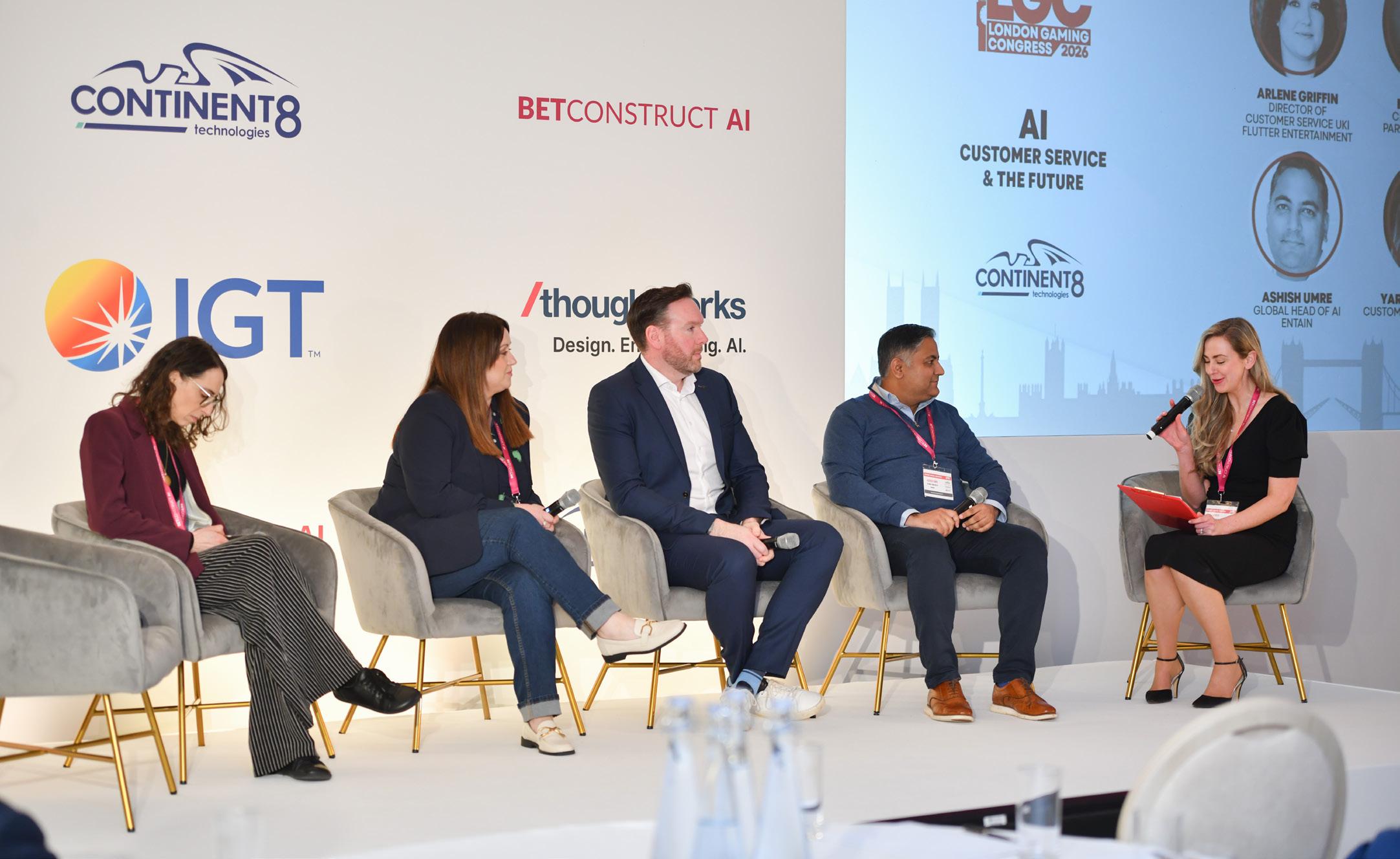



20+ High-Performing, Innovative Games
Hand-Crafted, Signature Game Designs




Advanced, Dynamic Game Mechanics
World-Class Visuals & Design Quality
Certified RNG and Fair Play Standards
7 Industry Award Nominations in 2026











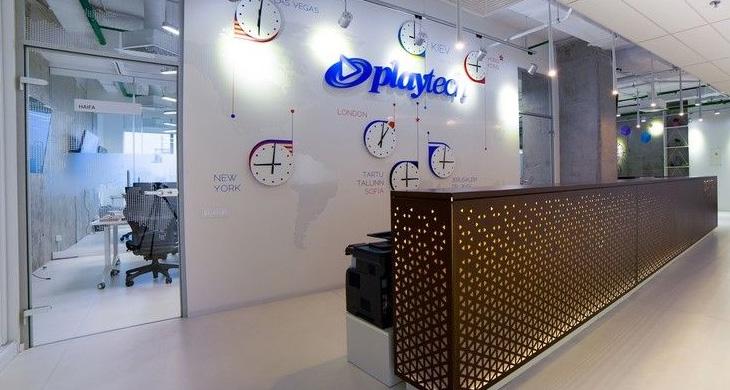
Playtech reported a 10% revenue decline for fiscal year 2025, marking a transition period following significant business restructuring. The gaming technology provider’s revenue from continuing operations fell to €763.60 million, missing the analyst consensus estimate of €792.02 million. Adjusted EBITDA declined 37% to €135.20 million, below the forecasted €175.13 million. However, the company delivered strong regional growth, with US revenue nearly doubling during the period. The performance reflects the impact of the Snaitech sale and regulatory adjustments across markets. Playtech has accordingly lifted its profit outlook for 2026, citing an excellent start to the year and expanded partnership momentum that positions the company for recovery.
The company completed the sale of Snaitech to Flutter Entertainment for €2.30 billion in 2024, delivering a threefold return on its initial €846 million investment from 2018. Playtech distributed a special dividend
between £1.7 billion and £1.8 billion to shareholders, equating to £4.56 to £4.83 per share. The transaction allowed Playtech to refocus on technology-led offerings in business-tobusiness gambling markets.
In addition to divesting Snaitech, Playtech sold HappyBet to NetX Betting on May 28, 2025. The disposal formed part of the supplier’s strategic pivot toward becoming a pure-play B2B provider. Consequently, B2C revenue totaled €41 million in the first half, down 17% year-on-year.
Playtech resolved a prolonged dispute with Caliplay through a revised strategic agreement. The Mexicofacing operator resumed paying disputed software and services fees, with more than €150 million received, representing approximately 80% of unpaid amounts. Under the new arrangement, Playtech will hold a 30.8% equity interest in Caliente Interactive and receive £111.18 million in cash over four years. The parties initiated a revised eight-year
B2B software license and services agreement, pending Mexican antitrust approval.
CEO Mor Weizer described 2025 as a landmark year, emphasizing the transformation enabled Playtech to concentrate on core strengths as a B2B business.
Strong second-half trading prompted Playtech to raise its 2026 adjusted EBITDA forecast to at least €195 million, significantly above the analyst consensus of €177 million. The revised guidance reflects accelerating returns from multi-year investments across American markets, despite several headwinds affecting the business.
Notably, the 2025 EBITDA projection excludes contributions from Snaitech during the ownership period and accounts for reduced revenue from the Caliplay joint venture in the first half. The company achieved this improved outlook while navigating these structural changes.










Caesars Entertainment has become the target of a $7 billion acquisition proposal from billionaire Tilman Fertitta, according to reports in the Wall Street Journal. Fertitta Entertainment has been in exclusive talks to purchase the gaming company for approximately $34 per share, representing a 17% premium over Caesars’ Wednesday closing price of $29.07. Notably, the casino operator also received a competing all-cash offer of around $33 per share from Icahn Enterprises. The potential acquisition comes as Caesars Entertainment Corporation faces financial headwinds, having reported net losses for four consecutive quarters. The company’s struggles stem from declining visitor numbers in Las Vegas, which dropped significantly in 2025. This developing deal could reshape ownership in the gaming industry.
Fertitta Entertainment has entered exclusive discussions with Caesars Entertainment Corporation following weeks of competitive bidding. The Wall Street Journal reported that Fertitta’s offer values each share at approximately $34, surpassing the rival proposal submitted by Icahn Enterprises. Carl Icahn, who currently holds shares in Caesars, presented an all-cash bid valued at roughly $33 per share through his publicly traded investment vehicle. Caesars has not formally dismissed Icahn’s proposal, according to sources familiar with the negotiations.
The acquisition would substantially expand Fertitta Entertainment’s existing holdings, which encompass over 600 hospitality venues globally. His portfolio includes the Golden Nugget casino chain, restaurant giant Landry’s with brands such
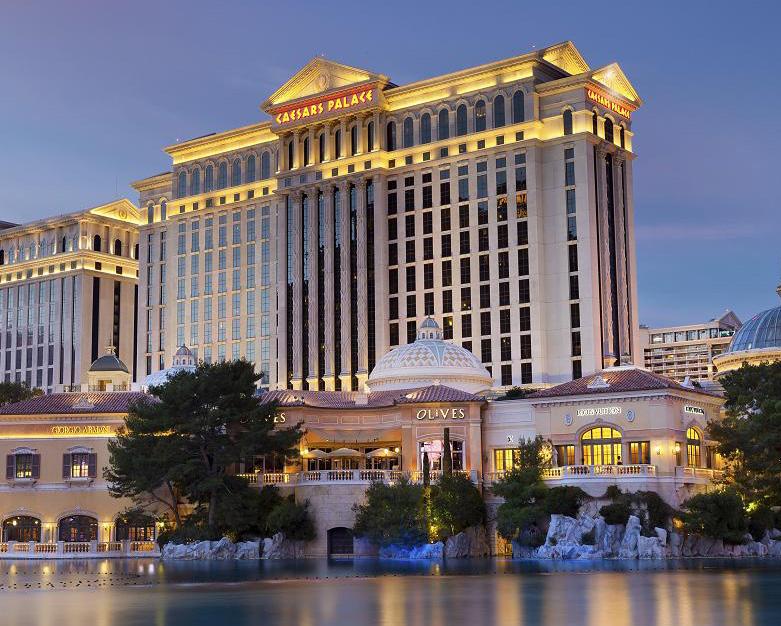
as Morton’s The Steakhouse and Saltgrass Steak House, plus the NBA’s Houston Rockets. A successful transaction would integrate Caesars’ dozens of gaming resorts into one of the nation’s largest privately controlled hospitality platforms.
Both bidders have structured their proposals to circumvent the need for consent from VICI Properties, which owns many of Caesars’ physical properties. However, sources caution that no announcement appears imminent between the parties, and negotiations could ultimately collapse without reaching an agreement.
Entertainment Corporation deteriorated across 2025, with the company posting losses in each quarter. The second quarter produced a net loss of £65.12 million. Given that trend continued, the third quarter widened to £43.68 million from £7.15 million in the same period a year earlier. By the time the fourth
quarter concluded, Caesars Entertainment reported a GAAP net loss of £198.54 million compared to net income of £8.74 million in the comparable prior-year period.
For the full year 2025, the casino operator recorded a GAAP net loss of £398.67 million versus a net loss of £220.78 million in 2024. Current trailing twelve-month metrics show earnings per share at -2.42 and net income available to common shareholders at -502 million. Revenue reached £11.49 billion, yet the company carries £9.45 billion in aggregate principal debt against cash reserves of £704.42 million.
Las Vegas operations bore responsibility for much of the decline.
Adjusted EBITDA fell 11% year-onyear to £702.04 million, with the Las Vegas division down nearly 19% to £300.99 million. The company attributed this to reduced visitation, as Las Vegas posted a 7.5% drop in annual visitors during 2025.
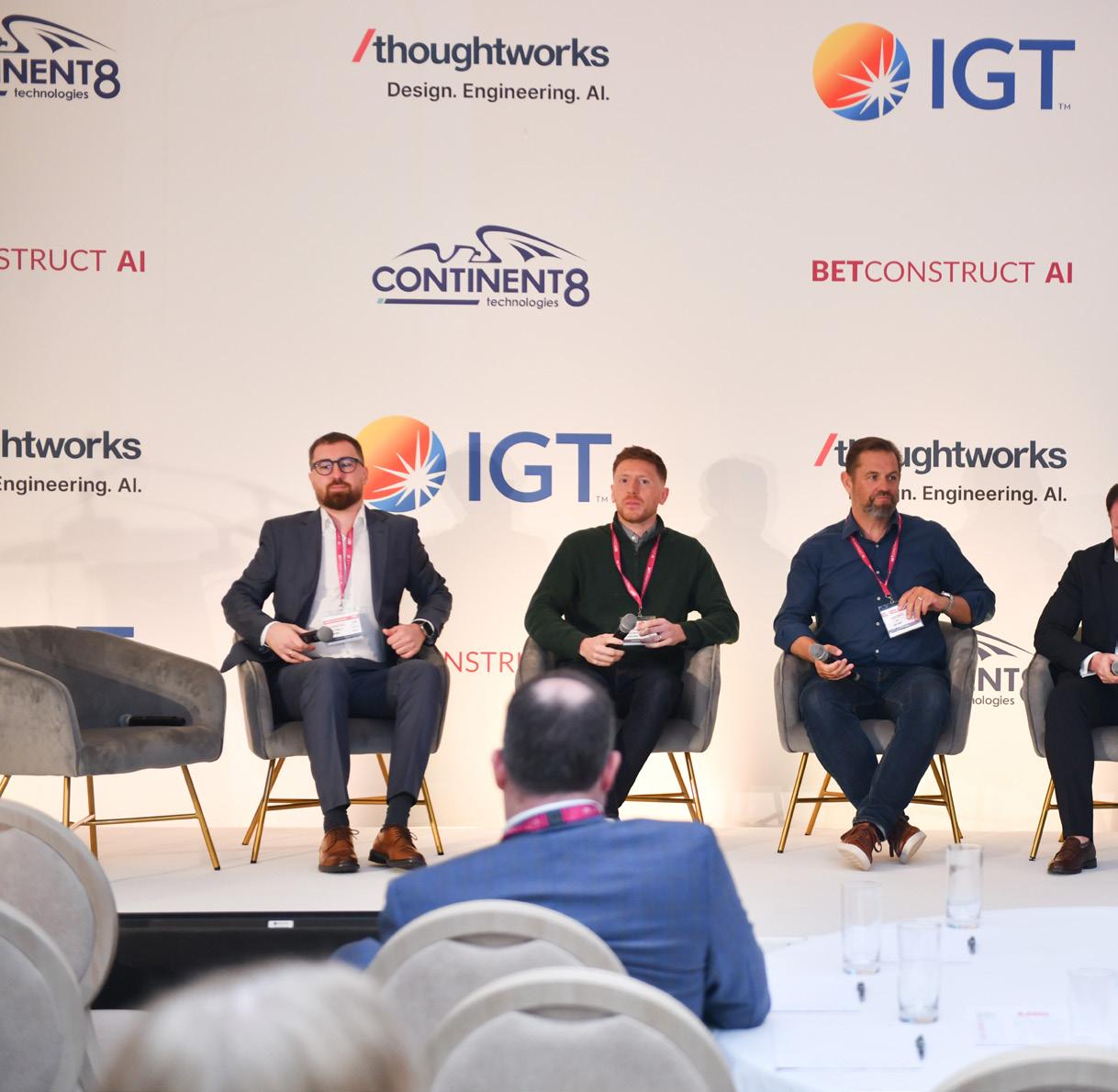
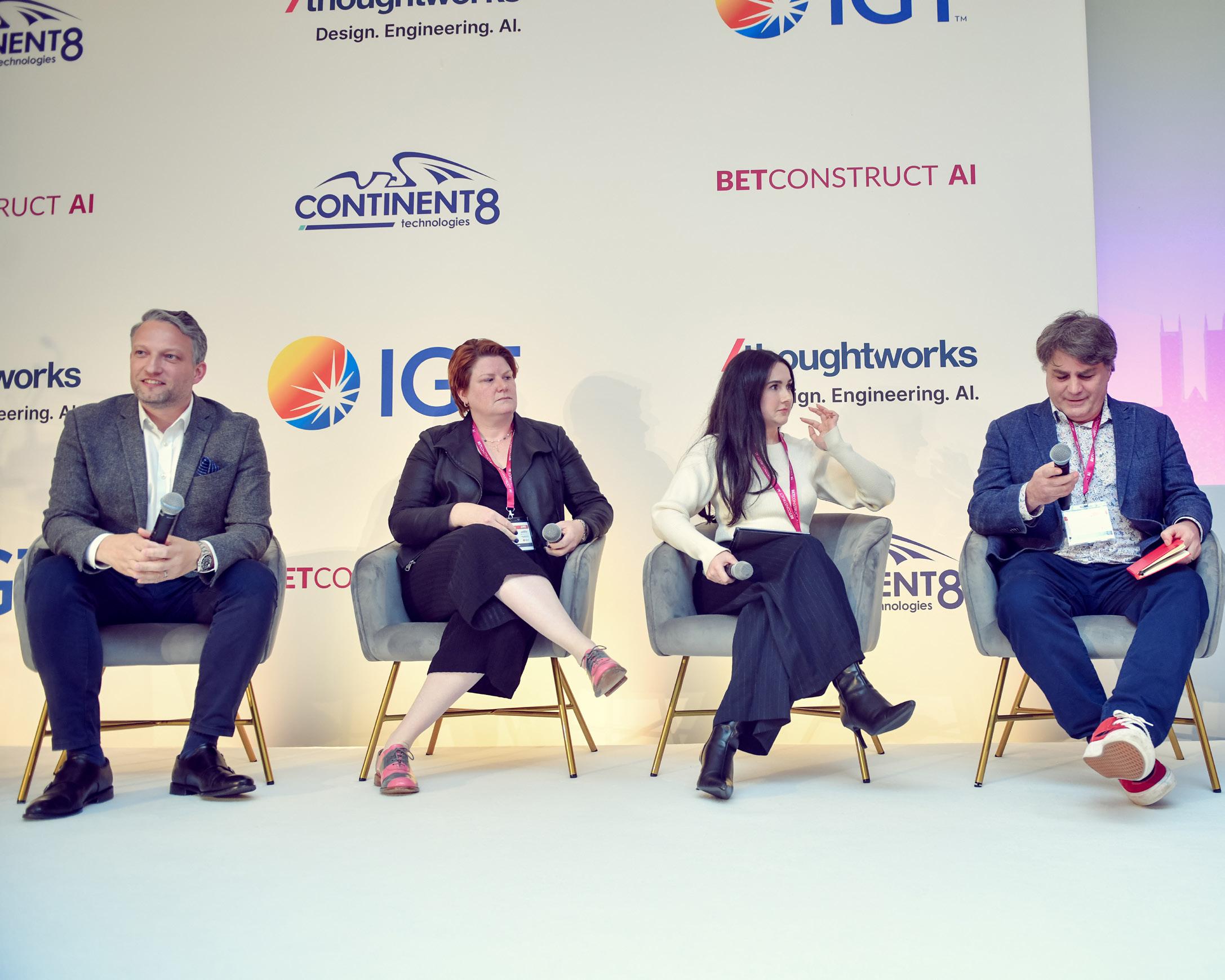
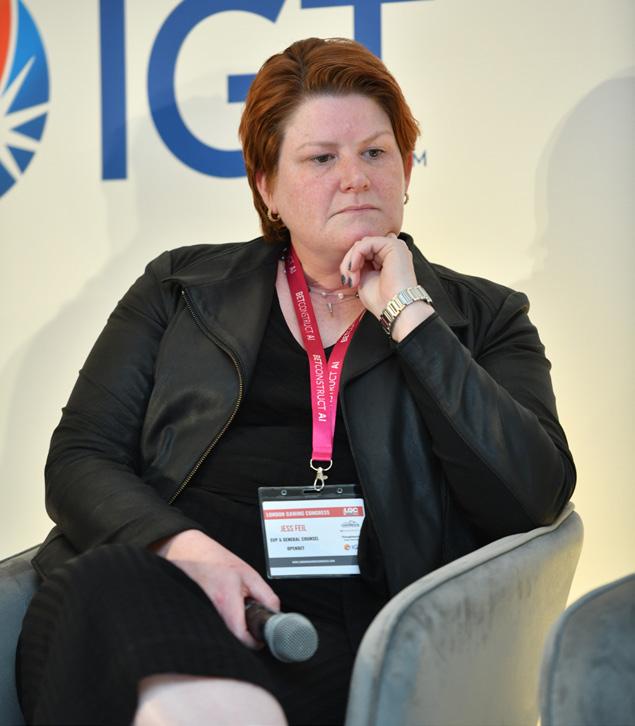
The London Gaming Congress (LGC) 2026 heard from leading figures within the sports betting & prediction markets both in the UK and US. On the panel were, Karen Lockwood, Sports Trading Director from Flutter Entertainment, Jess Feil the SVP & General Counsel from OpenBet, Jesse May Head of Strategy at Matchbook and Andrew Cochrane the CCO from Soft2Bet.
The London Gaming Congress (LGC) 2026 took place at the iconic Savoy Hotel on the 18th March and featured some amazing panel discussions, which included the Sports Betting & Preidiction Markets.
Moderator : “s o we’ll start with the World Cup. Of course, everybody knows it’s coming in just a few months’ time. So it’s a World Cup on US soil, evening kick-offs for UK gamblers and a customer base that goes beyond the typical sports betting audience. I s this the biggest commercial opportunity the industry has seen and what does it actually take to capitalise on it?
Jess May: “ Yes, No, like at Matchbook,
I think we’ve all seen how big a World Cup is in the UK. That’s pretty well documented. But for me, and I think for a lot of people in the industry, this could be a watershed moment for Brazil and for Latin America in terms of what the World Cup is.
People who I’ve talked to from down in Brazil have said, you know, give us your most optimistic projections and add a zero. And it’ll be interesting to see what happens. Certainly what we’ve seen at Matchbook, being now in Brazil and Mexico, is that...
T he Latin American bettors have a different sort of attitude and behavior, and the World Cup plays very into that. It could be a month-long holiday
for some of them.
A nd at Matchbook, we have a B2C and a B2B arm. We’re looking forward to seeing what kind of operator interest there is on the B2B side with things like hedging.
T here’s probably a robust discussion about some of the local operators in Brazil, what is going to happen to them if Brazil win the World Cup, because they’re going to see 90% of their bets on Brazil.
A nd I think that idea of Latin America and them getting excited about the World Cup is definitely an exciting thing.
Karen Lockwood: “Hi, everyone. I’m Karen. I’m the Football Trading Director for Flutter, so I cover all of the UK and I brands as well as the non-UK brands, so FanDuel, Seasal, Sportsbet in Australia.
Everyone keeps saying that the World Cup is going to be the biggest betting event in history, and it absolutely will be until the next World Cup in four years’ time. But there’s so much for us to capitalize on. There’s more games. than there’s ever been in any of the World Cups. And more teams will qualify after the group stages as well. So there’s more content for customers to bet on, more entertainment, hopefully more drama.
But especially at the beginning of
the tournament, there’s going to be more games on after 10 p.m. So the challenge for me and my team is to think about how we can give customers the best experience, no matter if it is England playing Croatia at 9 p.m. or it’s Brazil versus Haiti at 2 a.m. or it’s Brazil versus Scotland at 4 a.m.
And I think when you have the right betting proposition with the right player markets available that customers want to bet into at any of those key moments, You are having a customer’s bet settled on time, no matter what time of day that it’s on. You’re not waiting for the trader to come back in on shift at 8 a.m. to settle your bet from the night before to making sure that your prices are up and customers can actually get a
bet on and what they want to bet on. So for me, it’s making sure that that whole experience connects together.
and every single second will count. I think someone said at one of the previous panels, every single moment will matter across the World Cup.
And for me, it doesn’t matter what game it is and what jurisdiction it’s in. We’ll be making sure we’re giving customers a really seamless experience throughout it.
Moderator: Jesse, from an Openbet perspective...
Jess Feil: Sure. Thanks for having me. I’m coming at this from a slightly different perspective than my colleagues up here, both with my

Jess Feill: “legal background, but also as the B2B supplier to tier one sports books all over the world.
And we work in a variety, we work on every continent except Antarctica, which gives us a really interesting sort of perspective on both the global impact and power of the World Cup, but also the real importance of localization in this process as well.
We’ve heard a variety of the other panelists talk about understanding the markets you’re serving. And so we work really closely hand-in-hand with our operators to know what is going to attract their players to their platform. So that might be singlegame parlays. That might be crossselling other services while they’re

watching games. It might be certain events, certain matches. And that’s really essential to us to work with our operators so we can get them teed up and ready to go. I think the other thing too is because we are doing trading sort of similar to what Karen was saying is, you know, making sure we’re ready for prime time, right? It has to work.
It has to work. The traders have to be ready and everything has to be flawless. And so we really focus on stress testing the products and the services in advance of the events themselves. so that our customers know that when it’s really on the line and it’s the middle of the night maybe in Croatia or the UK and games are on, that they can trust that their customers are going to be
happy.
Moderator: Andrew, the same question to you from your company’s perspective.
Andrew Cochrane: Yeah, I think I’ll give my sort of personal perspective as opposed to soft a bit. I mean, we’re regulated in about seven different markets, just launched in New Jersey, in Canada. So my take on it is from an event perspective, I absolutely agree. This is a huge opportunity. That’s number one.
Number two, the fact the time zone is going to be evening for UK European players is huge. I think it lends itself to more recreational players. It lends itself to
second screen device time, also more social time, more pub time, more community time. And I think that lends itself to a lot of the innovations you’re seeing in sports betting, particularly in the UK around social betting.
So I think that’s really important. I think slight caveat here and having been in B2B a long time as well, you’ve got to be careful what you wish for a little bit. And I think some of the smaller operators which don’t have huge ability to swallow, huge liability, have to be a little bit careful. The amount of operators that push platform providers, you’ll know this, to get me live before the World Cup, you hear this a lot, or get me live before Cheltenham, and then of course have a negative tournament, that can be very dangerous to these operators. I think the larger the tier ones are going to be in very good standing because they can they can sustain that kind of position.
But I think my biggest point here is actually about what’s happened in the industry the last 10 years, this kind of race for acquisition. Everything’s always about acquisition. We’ve seen acquisition costs rising in most jurisdictions, right? And I think what’s going to happen in the World Cup, we’re going to see a huge spike in acquisition.
You’re seeing brand ambassador announcements almost on a weekly basis now with big operators that have got big budgets to kind of spread globally across their various brands and jurisdictions.
And I think for me, that continual
overspend on acquisition and underspend perhaps on retention through product is the area where smart operators are starting to focus. So they’re saying, okay, this is a great opportunity, the World Cup, we’re going to bring in lots of players, but how do we actually
keep them? How do we actually drive lifetime value with these players? And actually, it’s about keeping them on device, keeping them on brand, turning it into the convergence towards an entertainment zone, moving them to casino as quickly as possible, and really using Sportsbook during the World Cup as an acquisition platform as opposed to a kind of a profit center.
Moderator: You’ve recently come back from New York and you’ve been talking over there. Is the excitement in US space about the World Cup like it is in the UK?
Andrew Cochrane: I didn’t feel the same vibe, I’ll be honest. But having spent about four years at DraftKings, it’s actually astonishing the size of the revenue coming from, say, the Premier League as an individual competition if you were to rank. All competitions, obviously, NFL is streets ahead, right? But it’s very significant betting, and it’s very important to the organization, so they will absolutely have a plan.
Moderator: Karen, just before we move on from the World Cup, I mean, obviously, the U.S. has had the World Cup before, years ago. Was there any comparisons? Did the company look at comparisons then? Was there spikes? Or is this expected to be a different type of U.S. World Cup?
Karen Lockwood: We’re all in on the
World Cup in the US.
We’ve been having some conversations in the break about this and we’re not treating it any differently to how we would any of our brands in the UK. Yeah.
Soccer, football, isn’t one of the biggest sports for FanDuel, but it’s going to be a cultural moment. And I think if it has the talkability and the drama and the entertainment and the players that show up that they will recognize from the Premier League and from the Champions League, and that starts to take on then, I hope it does reach a mass audience in the US and customers who’ve maybe never had a football bet before but definitely we’ll be you know we’ll be trying to get as much market share as we can from the soccer players who do bet on football in the us and then hopefully it does kick on from a recreational based perspective just before we leave the world cup in in the leaders panel Danielle from Betfred said she mentioned about Cheltenham being.
Moderator: Bigger as in betting than probably the World Cup. From your perspective, Jesse, is that true? And if that is true, that Cheltenham is bigger than the World Cup, what kind of percentage are we talking? It’s 50% bigger, 20% bigger, Cheltenham Festival.
Jesse May: If you’re looking at UK only, yes, I think Cheltenham is probably bigger than the World Cup. It’s just the biggest cultural event in the UK. Horse racing has so much historical cachet.
But I think in terms of where the industry is heading and where the industry is heading is much
more globalization. If you look two years ago at the European Championship or even four years ago at the World Cup, feel like the UK was still kind of the center of it and I don’t think you’re gonna see that as much now you’re gonna see that this maybe is one of the first events that is really totally global and so for that reason I think it’s going to be bigger although from the UK perspective it’s all about how deep England go isn’t it.
Moderator: Right. So we’ll move on from the World Cup. We’ve got that in a few months’ time to look forward to. So next question about tax increases. By this time next year, the UK online sports betting tax burden will have increased significantly, and the industry is already working out how to absorb that. What does that planning window look like for operators, and are they using it? So tax increases, Jesse. Where are you with this when it comes in soon?
Jesse May: What I think it’s going to be more of a focus on profitability versus investment, certainly from Matchbook’s point of view, being a betting exchange, we’ve always thought that we could operate in a very tough market and I think one of the big changes that hasn’t been mentioned yet is that there’ll be a bigger drive among sportsbooks to monetize the customers that they let go of their own decision, right? Customers who they decided they were not able to monetize or maybe not fit for purpose, that there’s going to be a reach to bring them back in to make their products as operators available to the most number of people possible.
Moderator: Is that why you’ve seen smaller sports betting operators
come through to the UK? They still believe that there’s business here, don’t they?
Jesse May: Well, you know, there’s a robust, enthusiastic gambling community and nation, and obviously regulations aside, taxes aside, you know, people want to bet. And it’s a very comfortable atmosphere in terms of being able to reach gamblers and things like that. Now, getting them onto your product, dealing with the regulations, the NML, the safer gambling, the affordability, and then, you know, all that goes with it, it’s not as profitable an enterprise as going into a new market. But that doesn’t mean that gambling is going to go away. Certainly not regulated gambling.
Karen Lockwood: I’m not going to say anything different to what anybody has said today on the tax increases and the impact that’s going to have on the business, on the industry, on our customers. I think what I would say is that you could see it from Cheltenham last week.

You know, we were talking at the break about five, six years ago and all of the acquisition offers that you used to see around Cheltenham.
I think that spend just isn’t there
anymore and we’re being a lot more intentional about how we are using our spend. And questions around ROI are increasing. So, you know, if the money isn’t working hard enough in terms of the marketing spend or pricing or, you know, our generosity, then everything is on the table in terms of how that’s going to impact customers ultimately, which is a shame.
And I think you can already see it happen from, play out from last week at Cheltenham.
Moderator: There was quite a few press releases about some of the betting companies pulling their sponsorships from horse racing. Do you think that, Karen, is going to happen even further?
Karen Lockwood: I think horse racing, like probably there’s no winners in the tax conversations. And I think horse racing didn’t see as much of a tax increase as the sports and gaming. But that doesn’t mean that racing is protected. We don’t look at our budgets in isolation of sports. We look at them holistically as a business and look at what the return is on them. So everything is on the table in terms of spend and how businesses use their spend, and that’s going to impact football, horse racing, other sports.
Moderator: How does Openbet think about going forward with tax increases in the UK?
Jess Feil: OpenBet is a British company and work with some of the largest brands here in the UK, including Flutter. And I have to say, this tax rise is coming on the heels of the white paper regulatory reforms as well. And all of these things have
things have culminated in what is going to be some very seismic shifts in this industry.
But I’ve been reflecting on a conversation I had with an American lawmaker years ago in the wake of PASPA falling and legalization. I had an industry group in with the lawmaker, and we were complaining to them about them implementing what was about to be the highest tax rate on sports betting an online casino anywhere in the world and they looked at me and said Where there’s a will there’s a way and I said, I think this meeting is done here but I’ve been reflecting on that because I do think that is sort of the attitude that a lot of our Regulators and lawmakers are taking to this industry right now and something we have to be sensitive about So with that in mind as a b2b and working with our customers in this market. We’ve been thinking really hard about how can we do more with less?
We’re not going to have the ability to add more resources, add more investment or anything of that nature, but there’s ways we can innovate. There’s ways we can be more forward thinking. And I think it’s come up several times already today, but AI is really the most obvious one. We’re looking at
ways to do that to improve trading, improve odds predictions, improve marketing, improve customer outreach, what are these things that we can do to make our operators’ lives easier in this even more constrained market when they know they have more pressure on them than ever before?
This is a very real concern in the UK. This is also going to continue to happen elsewhere in the world.
When the UK does this, the rest of the world watches. And I think that’s something as an industry we need to be very thoughtful about because We’re already seeing tax rises go up in the US on sports betting. It’s only been live there for five to eight years, depending on where you’re talking about.
They’re going to get ideas. So if you’re looking to go into that gold rush, especially with everything else going on, know that the UK is going to have a lot of influence elsewhere.
Andrew Cochrane: Yeah, I think having spending a lot of time the last few months running models with my team, looking at different regulated markets for market entry and there’s a few constants, right? You’ve got your acquisition costs, and as I mentioned earlier, they’re increasing. You’ve got your operational costs, and I think there needs to be a bit more focus there in streamlining that. You’re seeing that in the UK now.
And thirdly, you’ve got your tax, right? And these three things are absolutely key to understanding the profitability long-term of a market for us.

Certainly what I’m seeing in the UK, we’re not in the UK today and we’ve evaluated it, but there’s going to be market exits, some very notable market exits. There’s lots of conversations, lots of M&A discussions going on right now. So we can expect to see some operators pulling out of the territory as a result.
We can expect huge focus on acquisition costs. I think the comment about racing sponsorships I think is very poignant. I think you’re starting to see some of the football betting partnerships being reduced.
I’ve seen operators trying to put out because I’ve been offered some of these partnerships by clubs and by organizations because betting companies want out early. So that’s happening. So I think the big above the line spends are going to come down. more focused on performance marketing, more focused on programmatic, super targeted with short-term ROI.
And then I think when you get to the tax, it’s about margin, isn’t it, ultimately? So I think on the casino side, it’s a bit more straightforward, and I work quite heavily with ITV on an RTP mitigation strategy for their new casino to understand well actually how do we combat this increased tax but actually on sports betting i mean we’re i’m saying great company with you know open bear who owns sportcast bet builder and and flutter and virtually

everything’s proprietary these days in terms of their their functionality very focused on sports betting products that drive recreational players and they drive higher margins ultimately for the bookmaker and i think That’s the trend that has to continue. I think you’ve seen people like Skybet trial, Squadbet, a new feature that I saw recently, and there’s a few other innovative features being trialed, and I think you’ll start to see more and more of these type of features focusing on A, the recreational player, and B, higher margin products for the bookmaker.
Moderator: The UK Government is saying that they’re looking to take out offshore gambling company sponsorships that aren’t licensed in the UK. especially for football, football shirt sponsors and advertising footballs. What do you think about that? Is that a good idea for licensed companies in the UK, Jesse, that offshore gambling companies that aren’t licensed in the UK can stop advertising them?
Jesse May: Yeah, I mean, look, I think as operators in the regulated industry, we do have to fight for that turf. Now, there is a big difference, and it’s been mentioned here. I think if you are a customer who goes to the black market a lot and you haven’t been burnt yet, sometimes it’s only a matter of time, you know, that’s... the protections that regulations should provide. It’s really
about protections for the customer, fairness, and that kind of thing. But in terms of spend, I think, you know, what Karen said with the sign-up offers, I mean, in some ways, you know, things like sign-up bonuses and a lot of that top-of-the-line spend maybe was a crutch, and now when things are tighter, people will focus more on product differentiation and servicing the customer.
It’s not terrible, but in terms of the offshore, yes, I think that it needs to be more clearly defined to the customer the dangers or the problems with going offshore and the reasons that regulation, to some extent, are quite good for the consumer.
Moderator: We’ve got to cover prediction markets, of course. It is the new thing. So prediction markets have gone from a niche conversation to front-page news in the US with Kelsey and Polymarket. How is the regulatory landscape playing out over there currently? And what can we expect in this space this year? Jessie, I think that’s a good question for you as you guys are looking to move in there.
Jesse May: Yeah, I mean, I think it was obviously I’ve been a sort of a passionate proponent of exchanges for a long time. Now we call them prediction markets. I think we’ve seen earlier was talking about Betfair and, you know, more than 20 years ago, I remember thinking or being convinced that the betting exchange and Betfair were going to take over the world. It was an exciting time.
It didn’t exactly happen like that, but now seeing exchanges more in the conversation again with the prediction markets is exciting. And I think personally that some of what’s going on in the US is a bit of a mirage in terms of some of the operators. It’s more of a route to market access rather than they’re not looking at as a new prod-
uct.
What I believe and what we believe at Matchbook is actually that this is now a time when exchanges and prediction markets are actually gonna be talked about not as a competitive or cannibalistic product for sportsbooks, but more as a complimentary product similar to your bet builder or your casino, that there’s a lot of reasons to

have that as part of your product offering. And that’s what’s exciting to me is kind of that conversation And I think we’re going to see it not just in the US but in a lot of the regulated markets that there’s going to start to be demand for this prediction market kind of product. Karen.
This was a partial transcription from the recent London Gaming Congress on the 18th March. To catch the full panel session email our team: maria@cleverduckmedia.com




The Betsson acquisition deal with Rhino Entertainment marks a significant expansion move, with a total purchase price of EUR 64.5 million for Canadian B2C business operations and B2B technology assets. The transaction corresponds to approximately 4.7x EV/EBITDA based on proforma results for 2025[-2]. On a proforma basis, the acquired assets generated an estimated EUR 13.7 million in EBITDA during 2025[-2]. This strategic move addresses the acquisition vs retention challenge by adding economies of scale and strengthening profitability across Betsson’s operations. Details announced through Betsson AB investor relations indicate the deal remains subject to regulatory approvals, with closure expected in the second or third quarter of 2026. The agreement positions Betsson to expand growth opportunities in both B2C and B2B segments.
Betsson AB investor relations announced the agreement encompasses several Rhino Entertainment Group entities that collectively hold operational infrastructure tied to consumer-facing activities across Ontario and the broader Canadian market. The acquisition scope includes licenses, personnel, and operational capabilities associated with Rhino’s B2C operations serving Canadian customers. The business maintains positioning to expand into additional Canadian provinces as local regulatory frameworks continue to evolve.
Alongside the B2C operations, the betsson acquisition includes Rhino’s proprietary front-end and middleware technology. According to the company, this technology strength

ens Betsson’s B2B offering and drives incremental licensing revenue within its platform business. The technology assets support partnerships with operators using Betsson’s igaming platform.
The transaction addresses operational expansion through multiple channels. Betsson expects the deal to add economies of scale, strengthen profitability, and expand growth opportunities across both B2C and B2B segments. This acquisition vs retention strategy balances market entry with technological enhancement.
Betsson confirmed financing through existing cash resources. The payment structure divides the total consideration into an upfront payment of EUR 51.25 million at closing, with the remaining balance due six months thereafter.
The acquisition targets Canada’s evolving regulatory landscape. As additional Canadian provinces introduce regulated igaming frameworks, the acquired business stands positioned for further expansion. This approach reflects Betsson’s broader strategy of investing in both B2C igaming markets and B2B technology services to increase operational scale.
Betsson’s proprietary sportsbook has operational leverage, with further economies of scale realized by offering it to other operators as a B2B solution. The Rhino acquisition strengthens this capability through enhanced technology assets that expand the reach of Betsson’s igaming platform and services.
The betsson acquisition aligns with the company’s established growth framework centered on four strategic areas: existing markets, new markets, B2B opportunities, and acquisitions. This transaction addresses multiple strategic objectives within that structure. The deal positions Betsson to strengthen its North American presence by combining Rhino Entertainment Group’s Canadian igaming business with additional technology capabilities.
Interview with with Alexander Kamenetskyi, Head of Operations at SOFTSWISS Sportsbook
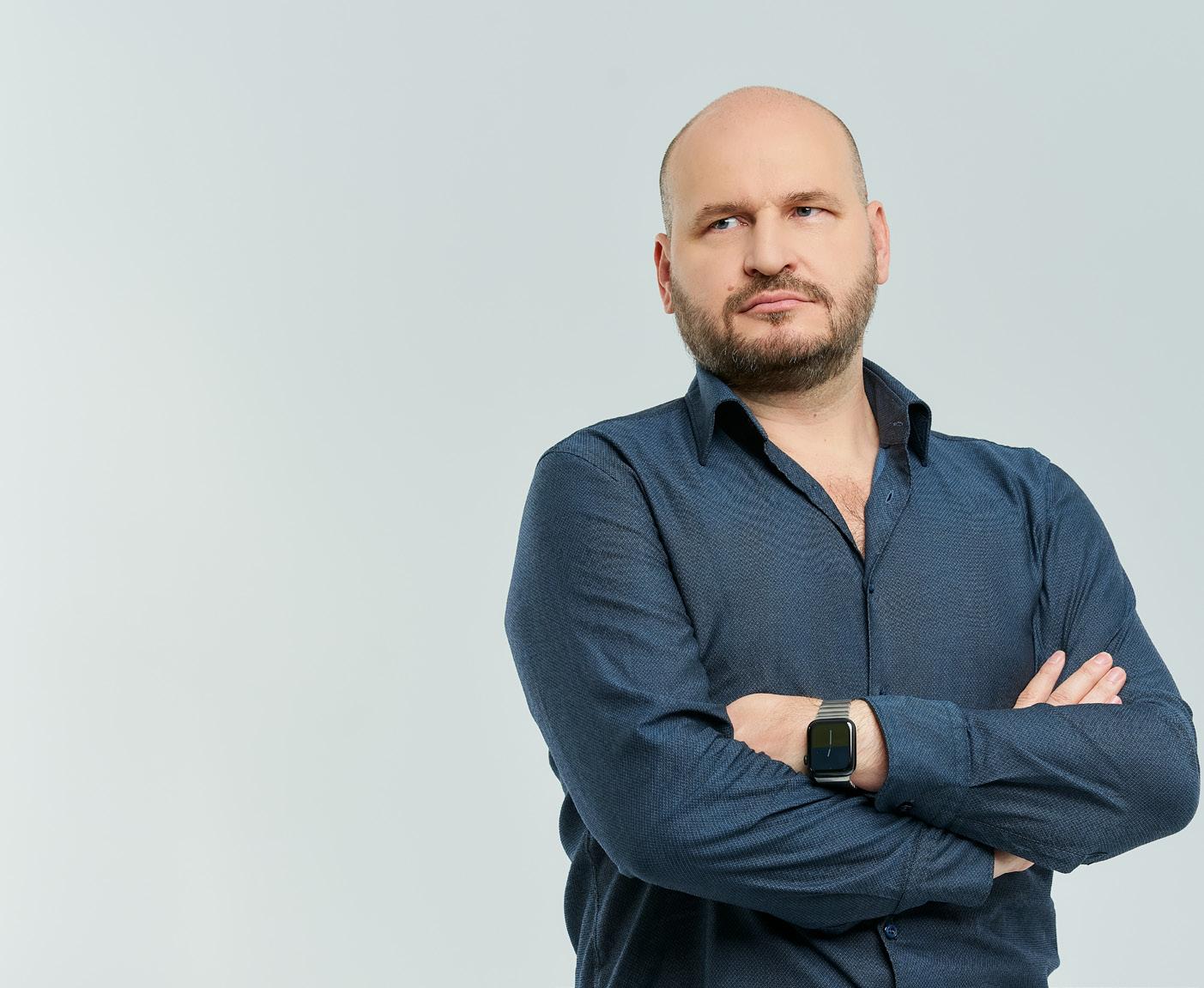
Alexander Kamenetskyi
The sports betting industry has entered a phase where scale alone no longer guarantees success. While established metrics such as Gross Gaming Revenue (GGR) and Net Gaming Revenue (NGR) remain essential, they no longer provide a complete picture when analysed in isolation. To address this challenge, SOFTSWISS has released the Sportsbook KPI Glossary, a structured framework designed to help operators move beyond surface-level reporting and adopt a more strategic approach to KPI interpretation.
Q : Alexander, the glossary opens with a strong statement: scale alone no longer guarantees success. What has changed in the betting industry?
AK : From my experience, the betting
environment has become significantly more complex. Scale on its own no longer guarantees success. Acquisition costs are rising, players are more informed and selective, regulatory requirements are stricter, and competition across markets is intense.
What I see very often is that growth is rarely linear. While performance moves with sports calendars and major tournaments, player behaviour can diverge from what most teams expect. And what looks like momentum can actually mask underlying pressure if the data is not interpreted carefully.
Q : Traditional metrics like GGR and NGR are still widely used. Why are they no longer enough on their own?
AK : GGR and NGR remain essential metrics. However, on their own they only describe outcomes – not the underlying drivers. They show what happened, but not why it happened, whether it is sustainable, or what corrective action may be required.
A typical scenario is a turnover spike during a major tournament. At first glance, this looks like a strong performance. In reality, without analysing bonus pressure, margin quality, conversion efficiency, and early churn signals, it is impossible to determine whether the result creates sustainable value or simply reflects a calendardriven peak.
“A strong month does not necessarily mean a healthy business”
Q: One of the most striking statements in the glossary is that a strong month does not necessarily mean a healthy business. What does this distinction come down to?
AK: From what I see in practice, a strong month doesn’t automatically mean the business is healthy. The real difference shows in margin quality, bonus efficiency, and in how player behaviour evolves over time.
Short-term spikes can be driven by promotions or calendar effects. That’s why I think it’s important to track KPI dynamics and analyse deviations in both directions – positive and negative – instead of simply celebrating the numbers themselves.
“Sportsbook KPIs must be read as a connected system”
Q: The glossary repeatedly stresses that KPIs should be understood as a system, not a list. Why is this so important?
Compliance has been a big trend this year. Which regulatory changes in 2025 most influenced your roadmap and how did you respond without harming conversion?
AK: I strongly believe that sportsbook KPIs only make sense when you look at them as a connected system, not as a checklist. Financial results are always linked to how efficiently you acquire players, how they behave, how deeply they engage, and how well you retain them over time.
When you start seeing those connections, decisions become much clearer. For example, an increase in bonuses might look like growth at first glance, but in reality it represents a cost that must demonstrate long-term value.
“Problems appear before revenue declines”
Q: You also emphasise recognising early warning signs. What role do KPIs play here?
AK: What I often see is that problems become visible in engagement and operational signals long before revenue or retention begin to decline.
If you only look at isolated financial metrics, you usually notice issues too late. A connected KPI system helps teams identify changes in player behaviour early, before they turn into churn or margin pressure.
Q: Alexander, can you share an example from real operations where KPI signals were misleading or not fully under control?
AK: Yes, this happens quite often in practice.
Before a major tournament, one operator decided to prioritise market share and aimed to deliver a very strong reporting month. To achieve that, they reduced margin from around 7% to 5%, increased limits on top markets, launched aggressive bonus campaigns, and relaxed certain risk controls.
On the surface, the results looked great: turnover grew by about 30% and GGR increased by roughly 25%.
But the underlying economics told a different story. Because the margin was lower and volatility during the tournament was high, the actual margin fell below expectations. At the same time, three high-stakes players won around €500,000 within a few days, while bonus costs more than doubled.
In the end, NGR was only about 6% higher than in a regular month, and by the end of the quarter total profit was roughly 8–10% below forecast. So the tournament delivered volume, but not

sustainable profitability. Large events tend to amplify not only growth, but also weaknesses in risk models and KPI control.
Q: How should sportsbook teams use this KPI glossary in practice?
AK: I see this glossary as particularly useful for sportsbook operators, leadership teams, and anyone involved in operations or product development.
If you’re responsible for interpreting performance and making decisions, having a shared KPI framework and a common analytical language makes a real difference.
Q: If you had to summarise the core idea of the glossary in one thought, what would it be?
AK: I’d say that sportsbook operators need a coherent and holistic KPI system to support informed decisionmaking.
From my experience, the sportsbooks that last are not the ones that chase every spike, but the ones that spot risk early, protect value, and clearly understand what actually drives their numbers.

Alea is the partner that gives operators clarity, control, and performance without limits.
Our banking-grade API powers your growth while keeping your operations seamless and secure. Grow with an ally. Grow with a true partner.

21,000 TRANSACTIONS PER SECOND 160+ GAMES








Star Entertainment refinancing efforts have reached a critical milestone with the company securing $390 million from funds associated with WhiteHawk Capital Partners. The three-year facility will fully refinance its existing group debt and deliver incremental liquidity to support ordinary course operations. Star Entertainment refinancing WhiteHawk negotiations come as the casino operator has been battling high debt levels and prolonged regulatory pressure after multiple inquiries found widespread serious compliance failures at its casinos. Additionally, the deal requires the cash-strapped firm to maintain minimum liquidity of A$50 million ($34.3 million) in the first year, rising to A$100 million over time. This refinancing package represents a crucial step in stabilizing the company’s financial position amid ongoing operational challenges.
The casino operator entered into a binding commitment letter with WhiteHawk on 27 March 2026, following a non-binding term sheet agreement reached on 26 February
2026. The Star Entertainment refinancing WhiteHawk deal progressed after senior executives from the U.S.-based private credit investment manager, including Managing Director Alex Zuckerman, toured the company’s three Australian integrated resorts in mid-March.
The binding agreement establishes quarterly amortization payments beginning 31 March 2027, with an interest reserve account funded by the first 12 months of interest. The financing structure includes an annual interest rate based on Term SOFR plus a margin materially consistent with the company’s recent facility agreements.
Star Entertainment must satisfy a minimum asset coverage ratio starting 31 December 2026 and maintain a minimum EBITDA covenant from 31 March 2027. The agreement includes customary covenants, representations, events of default and review events, along with standard financial covenants and reporting obligations.
The company faces a 15 May 2026 deadline to complete the Star Entertainment refinancing in order to satisfy conditions of the waiver granted by existing senior lenders on 27 February 2026. Star Entertainment reportedly paid up to A$15.88 million (US$11.12 million) in waiver fees to avoid covenant breaches with current lenders.
Multiple regulatory inquiries into anti-money laundering and counterterrorism law breaches pushed the casino operator toward financial collapse. Following investigations, New South Wales authorities found Star unfit to hold a casino license in September 2022, with the company’s Sydney casino license remaining suspended. A second inquiry in early 2024 again determined the operator unsuitable after failing to improve governance satisfactorily.
The regulatory crackdowns devastated financial performance. Star reported a statutory loss after tax of £1.34 billion for 2023-24, including a non-cash asset impairment charge of £1.14 billion.
with JJ Williams, CEO
Founder & Managing Partner, Gamomat Development GmbH

Infinity Gaming Magazine sits down with the founder of Devilfish to discuss why the traditional poker model is “reaching the river” and how AI is architecting a highspeed future for the game.
Q : JJ, you stated the online poker and recent industry announcements’ paints a fairly bleak picture for the industry’s “old guard.” You’ve suggested that legacy giants are no longer steering the ship but merely managing the wreckage. Why is the traditional online poker narrative undergoing such a painful correction right now?
JJ Williams : It’s a structural issue. For twenty years plus, the industry leaned on a linear growth model fuelled by televised “boom” aesthetics and a steady stream of recreational players. Now that well has appeared to run dry. In 2026, the primary threat to poker is not a lack of interest, but a deficit of time of the recreational player. We are operating in an “At -
tention Economy” where the modern digital native has zero appetite for a four-hour tournament grind.
The data is uncompromising. When a flagship series like the SCOOP sees its prize pool collapse from a $150 million peak to a $52 million reality recently announced on Poker News, we aren’t seeing a market dip; we’re seeing the systematic erosion of a brand’s relevance to today’s digital player. The message for the C-Suite is clear: the “liquidity-at-all-costs” model is reaching a point of diminishing returns and has been so some time with extremely high CAC’s (Customer Acquisitions Costs). People aren’t just bored; they’re too busy. If you ask a 25-year-old to sit still for six hours to maybe, and just maybe win a prize, they’ll laugh and open TikTok. We are fighting for a player’s attention in minutes now, not hours.
Q : In this climate of online poker stagnation, you’ve decided to revive the
Devilfish poker brand. Dave “Devilfish” Ulliott was arguably the industry’s first true influencer. How does his “rock-star” ethos fit into a 2026 tech strategy?
JJ Williams : Dave was built on a foundation of panache, swagger, and accessibility. He didn’t just play the cards; he “played the man”. He brought a sense of theatre that modern, sterile, maths-heavy poker platforms have completely lost. He made the game look like fun, not a homework assignment.
Our goal is to bring that Ulliott “cool” back to the digital game, but formatted for a mobile phone. We don’t need more grinders; we need more characters. Today, the brand acts as a Free-to-Play (F2P) gateway to learning poker at the grassroots level. This is where a 200-year-old game meets 2026 technology. We’re using that legacy to remind us that poker should be an event and a life experience.
Q: You’ve been vocal about using AI as a “digital croupier.” Many in the industry still view AI with suspicion regarding game integrity. How are you using it to “save” the experience rather than compromise it?
JJ Williams: The emergence of native AI in poker is not about “botting” which has been going on for a long time; it is about removing friction. Our approach to AI is to figure out how we can manage game intensity and to automate the tedious “dead-time” that usually drives casual players toward slots or sportsbooks. By using AI workflows and automations to deliver hyper-personalised journeys within a F2P framework, we are challenging the “rake-trap” status quo.
The objective is to build a high-LTV (Lifetime Value) database through engagement and education rather than predatory financial and bonus-led extraction. We use AI to smooth out the rough edges of the game. The goal is no longer to extract a bankroll in one
session, but to engineer an immersive entertainment environment that matches the velocity of a today’s social media feeds. This “Frictionless Poker” model is the ultimate grassroots tool.
Q: How does this digital evolution help land-based casino executives? Is there a symbiotic relationship between a 45-second mobile hit and a physical card room?
JJ Williams: Absolutely. Poker has always been the “social glue” of the casino floor. If the online experience remains a tedious, 4-hour slow-burn relic, the pipeline of new players to physical card rooms will simply dry up. If the Generation Z aren’t playing online, they aren’t walking through your casino lobby to play the Friday night deep stack tournament.
The solution is a transition to “Hybrid” poker. The successful operator of 2026 will sell a 45-second adrenaline hit that happens to be played with a deck of cards. It’s about the vibe, the speed,
and the theatre. We need to teach people to love the game again before we ask them to bet the house.
Q: Looking at “The River”—the final reality of the market—where does poker go from here? Is the decline inevitable?
JJ Williams: The “managed decline” we see in the headlines is a choice, not an inevitability. The market isn’t mature; it’s just stale. Poker is not dying, but the legacy business models that sustain it are becoming obsolete. They are no longer relevant to today’s modern, attention-deficit digital player.
The industry’s survival depends on whether it views AI as a threat or as the primary architect of a high-velocity player centric experience future. We must return to the principles of informing and entertaining. We’ve spent too long worrying about the rake and not enough time worrying about the player. If we embrace the tech and the talent, we can turn the tide.

Codere has been reported to be up for sale, the gambling group which is Spain’s second-largest gambling operator values the business at more than $2.3 billion. The company has hired Jefferies and Macquarie Capital to advise on the imminent sale. Currently owned by approximately 84 investment funds following a 2024 debt-for-equity deal, the Codere gambling company represents a significant consolidation opportunity in the European and Latin American markets. Davidson Kempner holds the largest stake at 13.3%. The potential deal includes both the group’s land-based operations across seven regulated markets and its Nasdaq-listed digital unit, Codere Online.
The advisory mandate represents a strategic move by the Spanish gambling operator to explore acquisition opportunities from potential buyers
across global markets. Jefferies and Macquarie Capital will guide Codere through a structured sale process designed to maximize shareholder value.
According to market sources familiar with the transaction, the deal remains at an early stage with a clear timeline established for interested parties. Indicative bids are due by mid-May, allowing prospective buyers approximately six weeks to conduct preliminary due diligence and submit non-binding proposals. The process then advances to binding offers expected around early July.
Codere has set an ambitious completion target before the August summer break. This compressed timeline reflects the company’s determination to finalize negotiations during a period of heightened interest in the European and Latin American gaming sectors.
Expansion newspaper reported the transaction details, citing several market sources with direct knowledge of the proceedings. The valuation exceeds 2 billion euros, translating to approximately GBP 1.83 billion at current exchange rates. The figure positions Codere among the larger gaming sector transactions in the region, attracting attention from private equity firms and strategic buyers seeking expansion in regulated markets.
Codere ranks 77th among Spain’s most valuable brands, the only gaming brand on the list. Partnerships with Real Madrid and C.F. Monterrey bolster brand recognition. The competitive landscape shifted notably when two major Mexican competitors shut down for regulatory reasons before the World Cup.
Savoy Hotel London 12th June 2026



Japan IR bidding enters its second phase as the government confirms May 6 to November 5, 2027, as the official application window for local governments seeking casino licenses. Following the first round of applications, only Osaka secured approval out of two prefectures that applied, with the JPY1.51-trillion (US$9.56-billion)
MGM Osaka project currently under construction. Japan casino integrated resorts face a maximum cap of three nationwide locations under current legislation. The Osaka development, situated on Yumeshima Island, is scheduled to open in late 2030. This second bidding round represents a crucial opportunity for additional prefectures to participate in the nation’s casino liberalization initiative.
The Cabinet approved the second application window through an amendment to a Cabinet Order
under the IR Implementation Act on March 10, according to the Japan Tourism Agency. The revised order takes effect on March 13.
Local authorities will submit applications during a six-month period beginning May 6, 2027, and closing November 5, 2027. The Japan Tourism Agency, operating under the Ministry of Land, Infrastructure, Transport and Tourism, coordinates the application process.
Prefectures or ordinance-designated cities seeking to host an integrated resort must jointly prepare a district development plan with a privatesector partner. These plans require submission to the national government for approval by the Minister of Land, Infrastructure, Transport and Tourism.
Shigeki Murata, Commissioner of the Japan Tourism Agency, stated that
“the development and promotion of IRs will contribute to the promotion of stay-based tourism” and represents “an important measure toward realizing a tourism-oriented nation”.
The IR Development Act stipulates a maximum of three locations nationwide. With MGM’s Osaka project already approved, the government can issue up to two more licenses in this second round. The draft order underwent a public comment period from December 17 to January 16 before final adoption.
Several regions are conducting feasibility studies for Japan IR bidding. Hokkaido allocated approximately JPY10 million for such reviews, while Aichi Prefecture allocated JPY277 million. Hokkaido’s population stands at 5.2 million, whereas Aichi ranks as Japan’s fourth-most populous prefecture with 7.5 million residents.
By John Cookson, Head of Client Services, CurrencyMe
Malta has long positioned itself as a hub for international business — a Mediterranean gateway between Europe and the wider world. Yet, behind the glossy branding and investment summits, there’s an uncomfortable truth: too many companies are still unable to open a basic bank account, let alone access competitive foreign exchange services.
For a country trying to attract highvalue industries — from iGaming and fintech to aviation and family offices — this is more than an inconvenience. It’s a structural weakness that risks undermining Malta’s competitiveness.
Over the past decade, Malta’s banks have become synonymous with cautiousness. The fear of regulatory backlash, reputational risk, and the ever-tightening demands of antimoney-laundering compliance have
led to what some call “de-risking by default.” Instead of assessing businesses on merit, banks are rejecting or delaying applications en masse.
Even well-established companies with clean histories face months of waiting and endless documentation requests. Small wonder, then, that some investors now avoid setting up here altogether — or use foreign intermediaries just to access simple banking services.
It’s a paradox. Malta wants innovation and growth, yet the very system meant to support commerce is keeping it locked out.
The foreign exchange (FX) market tells a similar story. In theory, it’s the world’s most liquid marketplace. In practice, small and mid-sized businesses are routinely overcharged, underserved, and left without access to tools that could protect them from

currency volatility.
The biggest banks dominate FX pricing, and competition is scarce. For a company trading in multiple currencies, the difference between a competitive rate and a padded spread can mean tens of thousands of euros a year. Yet many Maltese businesses simply accept whatever their bank offers — or worse, don’t even realise they’re being short-changed.
Malta’s caution is understandable. The country has endured years of scrutiny from European regulators and watchdogs. But there’s a difference between responsible compliance and regulatory paralysis.
At some point, the system must start distinguishing between genuine risk and bureaucratic overkill. The current “one-size-fits-none” model discourages legitimate interna -

legitimate international business, making Malta appear closed for business at the very moment it’s trying to attract global players.
Other jurisdictions — notably the Isle of Man and the Channel Islands — have found more pragmatic ways to balance compliance with commerce. Their regulators work hand-in-hand with specialist consultancies and fintech providers to bridge the gap between clients and Tier-1 banks, ensuring businesses can operate safely but efficiently.
Fintech and Advisory Firms Step In
Where traditional banking infrastructure falls short, specialist FX and banking advisory firms are stepping in. They help clients navigate compliance, open international accounts,
and secure competitive FX solutions without the bureaucracy and inflated costs that have become the norm.
Craig Wolstencroft, founder of CurrencyMe, recently described the situation bluntly: “Businesses are not looking for loopholes — they’re looking for logic. If a legitimate company can’t open a bank account in Malta within a reasonable timeframe, the system is broken.”
Firms like CurrencyMe don’t replace banks — they complement them. They act as facilitators, connecting businesses with appropriate financial partners, improving transparency, and ensuring that currency management isn’t an afterthought.
Malta doesn’t need more slogans about being “open for business.” It needs a financial ecosystem that actually is. That means:
Clearer guidance from regulators to banks on risk appetite and onboarding expectations.
Greater competition in FX and treasury services to reduce costs for SMEs.
Encouragement for fintech partnerships and trusted intermediaries who can streamline compliance.
If Malta wants to remain a credible international centre, it must fix its banking bottleneck and embrace competition in FX and payments. Otherwise, it risks pricing itself out of the very markets it hopes to lead.

Bally’s Corp has emerged as the frontrunner in the acquisition to acquire William Hill owner Evoke according to reports in the US. Evoke presently manages a significantly challenging debt position, with net debt estimated at approximately £1.8 billion, equating to roughly five times its EBITDA. Market analysts indicate that the actual valuation of Evoke’s assets might realistically range between £1.4 billion and £1.6 billion, creating a substantial gap between debt obligations and asset value. Bally’s potential acquisition of Evoke represents a strategic expansion into European gaming markets, particularly as the UK faces tightened gambling regulations. This development follows Evoke’s announced intention to
seek buyers late last year.
Bally’s Reportedly Considering to Acquire Evoke plc: Deal Details Emerge
Evoke initiated a strategic review in December 2025 to examine options for maximizing shareholder value, including potential sale of the group or selected assets and business units. Sources indicate that Bally’s Corporation has positioned itself as the most credible bidder, primarily due to its willingness to acquire the entire Evoke group rather than individual components.
The board’s preference centers on simplifying the transaction structure. One source familiar with the discus -
sions stated that Evoke seeks “the easiest structure, so to sell everything to one buyer. That’s their number one priority”. Multiple entities expressed interest in Evoke’s assets since the strategic review began, yet Bally’s potential acquisition Evoke scenario aligns most closely with board objectives.
Final offers are expected to be submitted imminently, with the board weighing whether to proceed with a transaction or extend the process if valuations prove insufficient. Meanwhile, industry speculation intensified on March 18, 2026, following Evoke’s decision to postpone its fiscal year 2025 results to April 29, 2026.
Any transaction will prioritize deleveraging given Evoke’s financial position. Accordingly, should no deal materialize, debt holders may seek greater board control, potentially initiating an alternative restructuring or sale process.
What Does Bally’s Potential Acquisition of Evoke Mean for European Gaming?
The Evoke acquisition would instantly position the US operator as a major European B2C gambling entity. William Hill carries substantial brand equity across the British high street, while the Gamesys portfolio, namely Jackpotjoy and Virgin Games, provides an established digital presence. This marks a significant shift for Bally’s, historically recognized for acquiring distressed assets rather than operating them at scale.
Timing presents both opportunity and risk. Bally’s flagged in its Q4 results that it aimed to capture UK market share ahead of the Remote Gaming Duty increase to 40% for online casino from April 1. Deutsche Bank cut Evoke EBITDA forecasts for 2026 and 2027 by 12% and 18% respectively following the UK tax changes. EBITDA margins are projected to fall to 13% in 2027 from 23% in 2023.
Portfolio quality varies considerably. Mr Green has experienced material value erosion since its 2019 acquisition. Conversely, Evoke’s Italian operations represent a strategic entry point into a tightly regulated market where advertising restrictions limit new competition.
The deal carries execution risk, given that Bally’s would inherit legacy infrastructure, a fragmented tech stack, and significant debt in a market facing higher operating costs. Deutsche Bank noted that consolidation remains a defining theme in European gaming, driven by regulatory shocks

and the need for scale to manage volatility.
Bally’s strategic positioning stems from significant momentum built throughout 2025. CEO Robeson Reeves described the year as “truly transformational” for the company, highlighting progress across multiple fronts. Domestically, Bally’s advanced development on its Chicago property, the only casino within city limits and Illinois’s largest gaming facility, while securing a gaming license for a £3.18 billion Bronx project. The company continued work on Bally’s Las Vegas, sharing a 35-acre campus with Major League Baseball’s Las Vegas Athletics.
International expansion accelerated simultaneously. Bally’s acquired a 38% controlling stake in Australia’s The Star Entertainment Group, applying
its expertise in revitalizing underperforming businesses. The company became majority shareholder of Bally’s Intralot, creating what it termed a “global iGaming and lottery champion” with enhanced scale and diversification.
Operational performance supports the expansion rationale. UK online revenue rose 6.3% in constant currency during Q4 2025, driven by substantial increases in new player volumes. Bally’s specifically noted that its UK iGaming revenue growth outpaced closest competitors. Accordingly, the company positioned itself to capture market share following the April 2026 tax increases, citing high margins and operational strength as competitive advantages.
Executive compensation structures reflect long-term commitment, with CEO options vesting through 2029 based on performance criteria.
Rob Fell, the CEO of Risk Cherry Founder & Managing Partner, Gamomat Development GmbH
Infinity Gaming Magazine sat down with Rob Fell, the CEO of Risk Cherry, a Certification company with a unique approach to discuss how being an AI Native company accelerates outputs and disrupts the current norms to understand
QRisk Cherry describes itself as ‘AI-native.’ What does that mean in practice for you as a business, and how is it different from simply using AI as a tool?
Rob Fell: Being “AI-native” means automation and machine intelligence
are foundational to our operating model—not an afterthought. Our certification workflows, client portal, and decision logic are architected so that AI and automation handle the majority of analysis, evidence handling, and reporting. Human expertise is reserved for regulatory nuance and
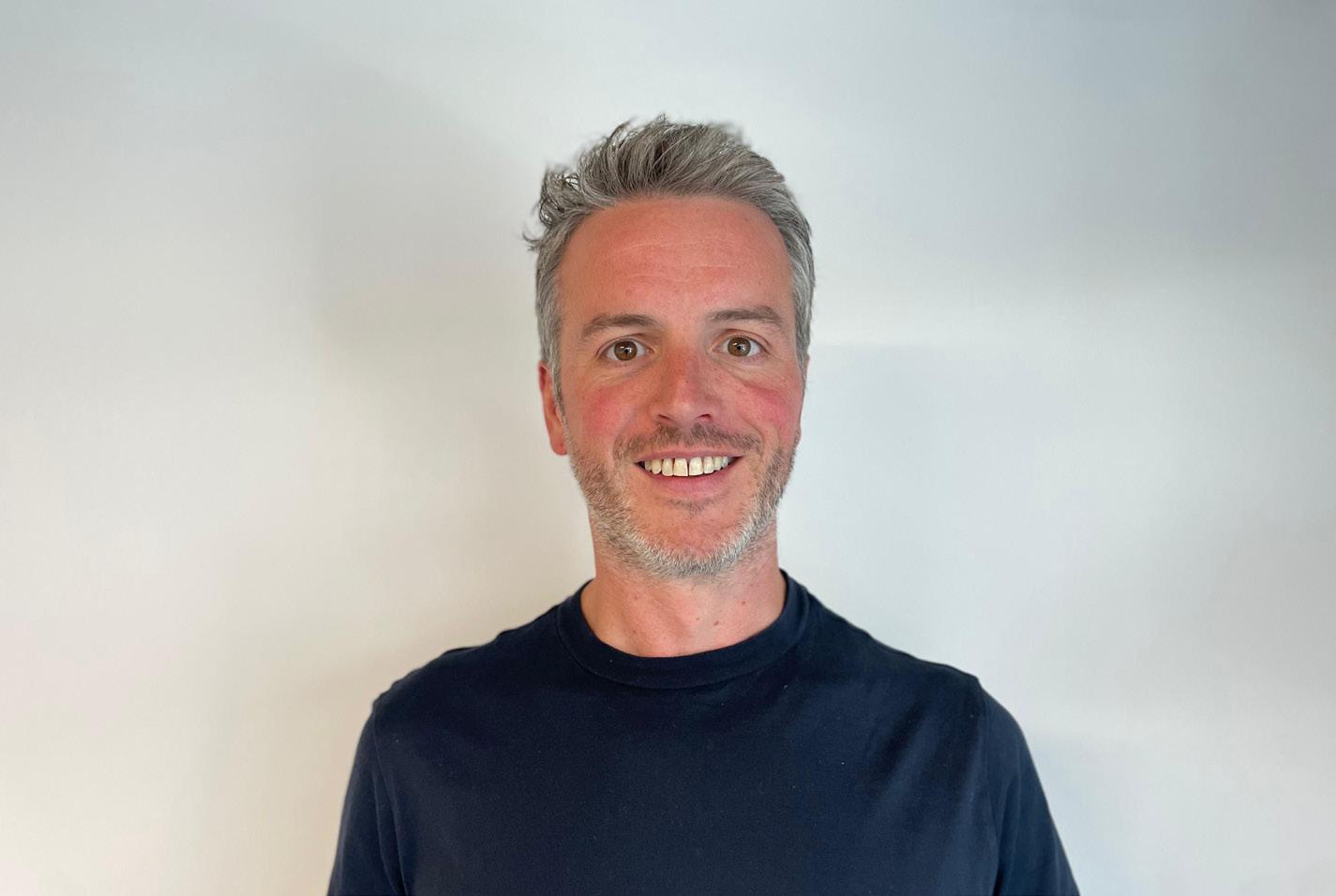
Rob Fell
client partnership. This is fundamentally different from simply bolting AI onto legacy processes; it’s a groundup redesign that enables us to deliver certification at the speed and scale of code, not committees.
Q: You position Risk Cherry as ‘certification as a product, not a service,’ delivered through AI. What strategic opportunities did you see in the market that led you to this model?
Rob Fell: The market was dominated by manual, consultancy-style certification which meant very slow, opaque and unpredictable. Studios needed speed, transparency and increasingly integration with their own development pipelines. By productising certification, we have standardised scope, automated execution and enabled fixed pricing and system integrations. This shift unlocked operational leverage,

allowing us to scale delivery without linear headcount growth and to serve many clients launching in multiple jurisdictions simultaneously.
Q: How material is AI to making certification a product rather than a service? What does this change in terms of speed, scalability, resourcing, output quality, and customer experience?
Rob Fell: AI is essential. It enables us to deliver certification cycles in under 10 days (often less), with consistent quality and minimal manual interven-
tion. Automation means we can handle more volume with a lean team, maintain high margins, and provide clients with real-time status and fewer surprises. The result is a transparent, trackable, and fast client experience— backed by regulator-trusted outputs.
Q: It’s often said that AI is ‘garbage in, garbage out.’ How do you define and quantify objectives before building agents to make sure they’re solving the right problems?
Rob Fell: We start with measurable
business outcomes such cycle time, error rates, client friction or regulatory compliance. Each agent is tied to a specific metric and tasks and therefore has clear input/output definitions, confidence thresholds and escalation rules. If we can’t measure the impact, we don’t automate. This ensures every agent is solving a real, quantifiable problem.
Q: Can you share some of the key use cases where AI is already driving the most value within Risk Cherry?



Rob Fell: Automated game logic and RNG analysis. Evidence extraction and structuring for multi-jurisdictional reports. Consistency checks and bug/ non conformity drafting Internal decision support for compliance and rapid delivery
These are high-volume, high-friction areas where automation compounds value rapidly.
Q: “What is the process of turning an idea into a fully functioning AI agent inside your business?”
Rob Fell: We begin with problem definition and data mapping. Prototyping is rapid often in days, not weeks. Agents are tested against historical and edge cases, then embedded into production workflows with versioning and audit trails. They must fit seamlessly into our system, not operate as isolated tools.
Q: “How do you test agents before deployment, and how do you monitor and refine them afterward to ensure accuracy, compliance, and effectiveness?”
Rob Fell: Agents are versioned with audit trails and defined confidence limits. Outputs are initially 100% matched with a person completing the same work, then sampling is done. Exceptions are logged and real-world feedback drives retraining. Compliance and explainability are non-negotiable, especially given our regulated and ISO environment.
Q: “What does this AI-first approach mean for the bottom line, and how has 2025 performed for Risk Cherry as a result?”
Rob Fell: Overheads remained stable and delivery capacity scaled faster

than personnel costs. The shift to recurring, portfolio-wide engagements increased revenue predictability and client lifetime value, validating the AInative, productised model.
Q: “As a CEO, how do you personally use AI to maximize your productivity, decision-making, and task management?”
Rob Fell: AI supports decision prep, scenario modelling and prioritisation. Communications from systems, tools, email etc all get fired into a central AI tool. It handles first-pass analysis, summarises complex data and reduces context switching, freeing me to focus on judgement, direction and high-leverage activities.
Q: “What does your AI stack look like today? And where does the ‘AI CMO’ fit into that ecosystem?”
Rob Fell: Our stack includes proprietary Python-based assistants, a vector store for knowledge management and orchestration layers - all of our poli-
cies, process, real time data from order & testing systems can be leveraged in the in-house tool without any sensitive data being exposed to the outside world or open source LLMs. NOAN is a core part of the commercial & legal side of the business being a single source of truth with all the Facts about the business.
Of course we use The AI CMO for marketing ideation like the Risk Cherry socks that were quite the talking point at ICE.
Q: “2025 has been a very strong year for Risk Cherry. Looking ahead, what does 2026 look like for certification companies in terms of goals, growth opportunities, regulatory milestones, and potential headwinds?”
Rob Fell: 2026 will see deeper automation, more direct integration with client systems along with rising expectations from both regulators and studios. The winners will be those who can productise certification, deliver at scale and maintain regulatory trust. Headwinds may come from regulatory lag but the opportunity is with those already built for speed, transparency and operational leverage.
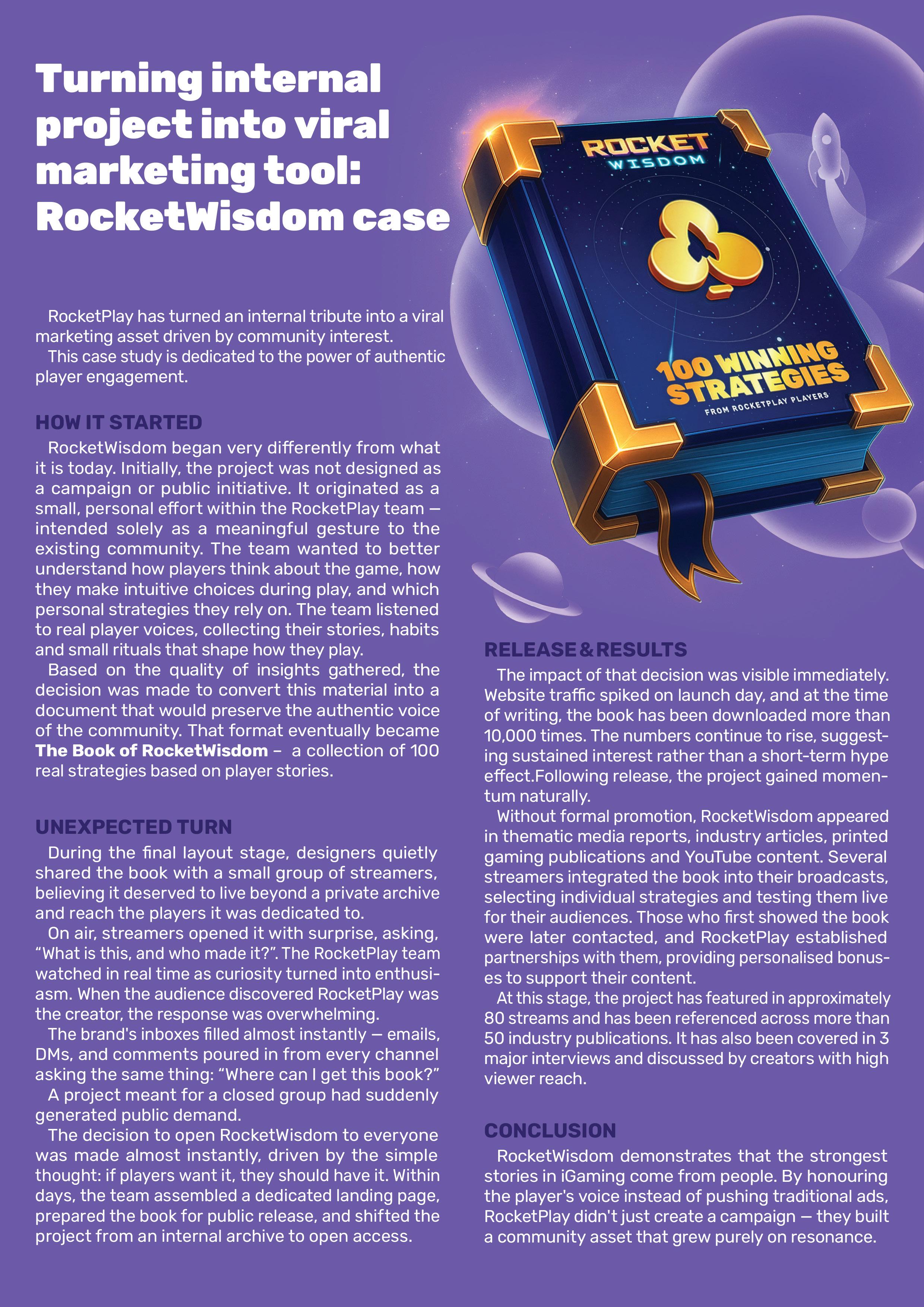



Kalshi operations in Nevada came to an abrupt halt on Saturday (21st March) after a state court issued a temporary restraining order against the prediction market operator. Nevada regulators successfully restricted Kalshi from offering sports, election, and entertainment event contracts in the state, arguing the platform was operating as an unlicensed sports betting service. The restraining order represents a significant development in an ongoing legal dispute between Kalshi betting operations and Nevada gaming authorities. The Nevada Gaming Control Board stated it has successfully restricted all unlicensed prediction markets known to be doing business in the state. This action directly challenges Kalshi’s repeated claims that its operations are legal across all 50 states. A hearing regarding the order is scheduled for April 3.
Carson City District Judge Jason
Woodbury issued the temporary restraining order on Friday, blocking Kalshi betting operations for 14 days until the scheduled preliminary injunction hearing. The judge determined that the Nevada Gaming Control Board “has a reasonable likelihood of success on the merits” in its case against the prediction market operator.
Woodbury ruled that injuries to Nevada are “irreparable and non-compensable” because the Board cannot protect underage individuals from wagering or ensure competition integrity as licensed sportsbooks currently do. The judge rejected Kalshi’s argument that its event contracts fall under the Commodity Futures Trading Commission’s exclusive jurisdiction. By offering contracts related to college basketball, professional football games, and elections, Kalshi was operating a “sports pool” under Nevada gaming law, Woodbury wrote.
The ruling followed a turbulent path through federal courts. Kalshi had attempted to move the case from state to federal court, but the U.S. District Court in Nevada rejected this argument and remanded the case back to state court. The 9th U.S. Circuit Court of Appeals then denied Kalshi’s emergency motion to block Nevada from enforcing its gaming regulations.
The legal battle began over a year ago when Nevada regulators sent Kalshi a cease-and-desist letter in early March 2025.
The Nevada Gaming Control Board filed a lawsuit in February seeking to block Kalshi from offering event contracts that would allow residents to bet on sports including football and basketball games. The board contends that offering sports event contracts constitutes wagering activity under Nevada state law and requires licensing.
Savoy Hotel London 12th June 2026

Mississippi online sports betting remains out of reach after the Senate blocked expansion efforts for the third straight year. The House advanced two separate Mississippi online sports betting bill proposals with strong bipartisan support, including HB 1581, which passed 85-31, and HB 4074, the Mississippi Mobile Sports Wagering Act, which advanced 100-11. Both bills died in the Senate despite including provisions to reduce the casino tax rate to 6% from 8%, a change that would have resulted in tax savings of approximately $48 million annually for casinos. The legislative defeat means Mississippi bettors will wait until at least 2027 for any potential online expansion, as the state’s lawmaking calendar prevents new consideration until the next session.
Rep. Casey Eure, chair of the House gaming committee, sponsored both mississippi online sports betting bill
proposals during the 2026 session. HB 1581 moved through the chamber earlier in the year, proposing that casinos could partner with up to two online sportsbook operators. Thereafter, Eure introduced HB 4074 as an appropriations bill, which passed with an even stronger 10011 vote and restricted casinos to partnering with just one operator.
The appropriations designation gave Eure two extra weeks to secure Senate support. HB 1581 featured a progressive tax structure, with rates of 4% on the first $50,000 of monthly revenue, 6% on revenue between $50,000 and $134,000, and 8% on amounts exceeding that threshold. In contrast, HB 4074 imposed a flat 22% tax rate on mobile sportsbooks while cutting the brick-and-mortar casino tax from 8% to 6%.
Both bills directed revenue toward the Public Employees’ Retirement System, which carries unfunded lia -
bilities of approximately $26 billion. Despite these provisions, Senate Gaming Committee chairman David Blount declined to vote on either measure. HB 1581 died on the March 3 committee deadline, followed by HB 4074 on March 17. This marked the third consecutive year the House advanced online sports betting legislation only to watch it fail in the Senate.
Eure estimated the state loses between $31.77 million and $63.53 million annually in tax revenue by maintaining the prohibition. The repeated stalemate leaves Mississippi’s gambling framework unchanged, though passage of mobile betting bills by the House in multiple sessions shows continued legislative interest. Lawmakers will likely need to resolve the divide between chambers before any proposal can advance in future sessions.