Bloomington Police restricts using Flock data
By Grace Fridy gfridy@iu.edu
The Bloomington Police Department updated its policies for Flock Safety license plate reader data to prohibit departmental use or sharing of data for immigration and reproductive healthcare investigations.
BPD Flock policies, originally created in July 2025, were updated March 26 to officially prohibit data use for these situations, according to documents obtained by the B Square Bulletin.
In June 2025, a federal court ruling in Texas made it possible for states with abortion bans to issue subpoenas regarding reproductive healthcare obtained legally in a different state. Some lawmakers, such as State Rep. Carey Hamilton, D-Indianapolis, expressed concern that Indiana Attorney General Todd Rokita could use this ruling to prosecute people who travel to other states to receive an abortion prohibited under Indiana law.
Activists, protesters and public officials have called on the city to end its contract with Flock due to allegations from the American Civil Liberties Union and other organizations that the company’s camera data can be accessed by U.S. Immigration and Customs Enforcement or other federal agencies. Flock is involved in multiple ongoing lawsuits regarding privacy, including a recent federal ruling in Norfolk, Virginia.
Monroe County Sheriff Ruben Marté filed a lawsuit April 8 against Rokita, the most recent in a series of lawsuits between the two parties over immigration detainment. The lawsuit argues that a state law signed by Gov. Mike Braun in March requiring law enforcement agencies to comply with ICE detainer requests is unconstitutional. City of Bloomington Communications Director Desiree DeMolina said in an email BPD owns and operates 11 Flock cameras, but the number of cameras throughout the city could

be higher due to Flock systems owned by Indiana University and the Monroe County Sheriff’s Office.
BPD’s policy change comes in the wake of 400 demonstrators protesting the city’s use of Flock cameras on Jan. 30 at City Hall.
DeMolina also wrote BPD’s new policy is part of city efforts that began in February to evaluate policies, use and oversight for Flock cameras.
“So far, that work includes explicitly codifying practices that were already in place—such as explicitly prohibiting searches related to reproductive healthcare and immigration status, and clarifying audit standards—so expectations are clear and enforceable,” DeMolina wrote. At its March 5 meeting, the Bloomington City Council voted unanimously to pass a resolution calling for more oversight of city Flock cameras and specifically requested a report from BPD detailing which officers and agencies can access Flock data.
The city administration will send the council a written briefing of its findings from the report on April 8 and will share a public report of its full findings on April 22. The city council will have a regular meeting at 6:30 p.m. April 22.
Family of IU student settles lawsuit with Kilroy's Sports
The family of Nate Stratton filed the suit in March 2023
By Jonathan Frey jonafrey@iu.edu | @byjonathanfrey
Kilroy’s Sports Bar and its parent company Intrepid LLC settled a wrongful death lawsuit with Nate Stratton’s family late last month after a nearly three-year legal process.
Brad and Elizabeth Stratton, whose son Nate was killed by a drunk driver Sept. 18, 2022, were the plaintiffs in the civil suit that alleged Kilroy’s Sports recklessly overserved the driver, Madelyn Howard.
As part of the settlement, Kilroy’s Sports pledged to donate $60,000 per year to a program preventing drunk driving deaths in Bloomington, according to a statement to the Indiana Daily Student by law firm Green and Schultz, which represents the Strattons. The agreement does not specify which program will receive the money, but Kilroy’s and the Stratton family are working to determine which
cause to donate to.
“There are no winners in the case because Nate is gone. We will be working with Kilroy’s Sports, MADD and others to build an advocacy campaign to honor Nate’s memory and prevent this tragedy from happening again.”
Family of Nate Stratton
“The Stratton Family will work with Kilroy's Sports, the Indiana chapter of Mothers Against Drunk Driving (MADD), and other constituents in Bloomington to raise awareness of the dangers of drunk driving, and build a prevention program in the community,” the law firm's statement said.
Further details of the settlement are unavailable due to a confidentiality agree-
ment, attorney Fred Schultz told the IDS.
“There are no winners in the case because Nate is gone,” the family said in their statement. “We will be working with Kilroy’s Sports, MADD and others to build an advocacy campaign to honor Nate’s memory and prevent this tragedy from happening again.”
Howard worked at Kilroy’s, where she celebrated a friend’s birthday the night she swerved into a bike lane on Walnut Street and struck Nate. She was not working on the night of the incident.
A breathalyzer test later determined her blood-alcohol content was 0.226, nearly three times the legal limit.
An appellate decision said Howard took shots of hard liquor, and she was described as having liquor poured into her mouth.
A wrongful death lawsuit initially filed against Howard was amended in May 2023 to include Kilroy’s, in which the family’s legal team alleged
the bar continued to serve her when she was visibly intoxicated.
Howard pleaded guilty to level 3 felony leaving the scene of an accident and level 4 felony operating a vehicle while intoxicated in March 2024. She was sentenced to 10 years in prison plus two years of probation that May. She appealed the judge’s ruling shortly after, but her appeal was denied last July.
“Howard’s argument regarding the nature of her offense does not persuade us that her sentence is inappropriate,” the appellate decision read. “In fact, the circumstances of this case might even justify a lengthier sentence, but we choose to affirm the trial court who was in the best position to consider the evidence and credibility of those who testified.”
Howard is currently serving her sentence at Indiana Women’s Prison in Indianapolis.
Monroe County seeks extension to address jail conditions
By Natalie Chan nkchan@iu.edu
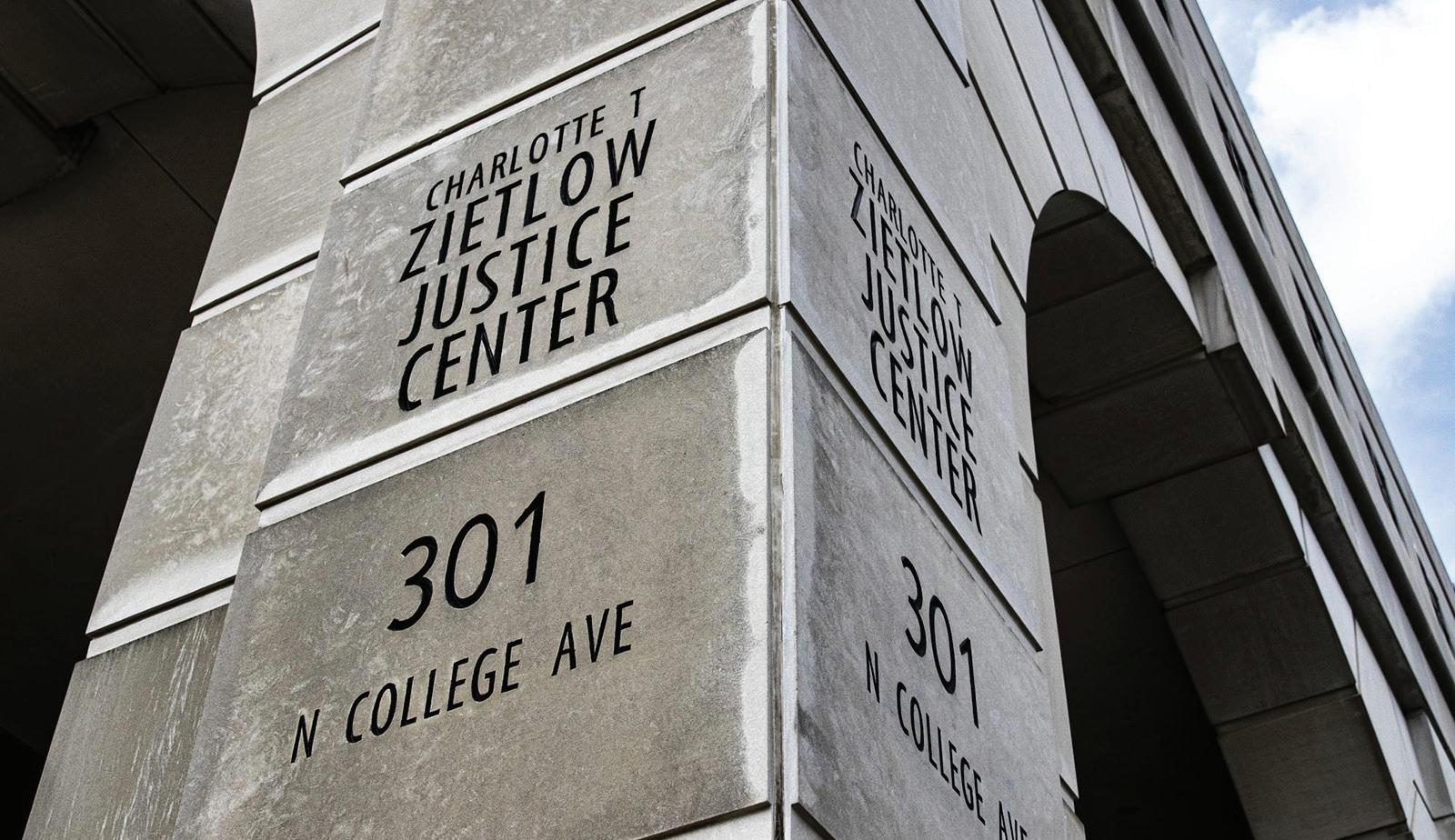
Monroe County Commissioners are seeking more time to address alleged unconstitutional conditions at the county jail through a joint motion to extend a longstanding private settlement until May 29. The most recent extension was set to expire April 15. The extension delays further litigation from the American Civil Liberties Union of Indiana, which first brought legal action against the Monroe County Jail in 2008 for claims of overcrowding, lack of sanitation and dangerous living conditions. The jail is housed in the Charlotte Zietlow Justice Center on North College Avenue. According to the April 13 motion, the ACLU alleged in a Jan. 7 notice to the court that “no progress had been made towards resolving the problems in the Monroe County Jail” since the private settlement agreement was reached nearly 15 years ago. The purchase agreement will be presented to the Monroe County Council for approval during its meeting May 12 or May 26. Approval of the agreement will grant an extension of the private settlement until the new jail is built and approved by the
Indiana Department of Correction for prisoners to live in. If the purchase agreement is rejected, the ACLU plans to dismiss the private settlement agreement, allowing for potential new legal action regarding the jail’s conditions.
The county jail was built in 1984 with an initial bed count of 128, though renovations over several years raised the bed count to about 298.
“The North Park site is the only site that Commissioners unanimously support as it provides the most cost-effective and timely solution with the least amount of risk of further delays or confronting unknown site and/or design issues.”
Monroe County Commissioners
A private settlement agreement in 2009 limited capacity to 278 while the county worked to address overcrowding concerns.
In October, the Monroe County Council unanimously voted against funding the $11.375 million purchase of the North Park site that
would build a justice complex including a county jail, court spaces and prosecutor’s office, citing high costs and reduced accessibility.
In a Dec. 29 letter to the county legal department, ACLU of Indiana Director Kenneth Falk did not agree to extend the 2009 settlement on the basis that efforts were not made to improve the jail’s conditions. However, the ACLU and Monroe
County later agreed to extend the private settlement by 90 days until April 15, according to a Jan. 7 filing.
A Feb. 24 resolution later stated “The Monroe County Council no longer wishes to consider the ‘North Park’ property for the location of the new facility.”
However, a March 26 resolution by the county commissioners wrote “the North Park site is the only site that
Commissioners unanimously support as it provides the most cost-effective and timely solution with the least amount of risk of further delays or confronting unknown site and/or design issues.”
As of the filing April 13, the Monroe County Commissioners have determined only a jail will be built and selected a property for where the structure will be
located. It is not specified where the property will be. During a Board of Commissioner’s meeting last April 15, a motion granting board president Julie Thomas authority to pursue an extension on the private settlement passed unanimously. The county commissioners plan to approve a purchase agreement for the jail’s property before the end of this month.
JONATHAN FREY | IDS
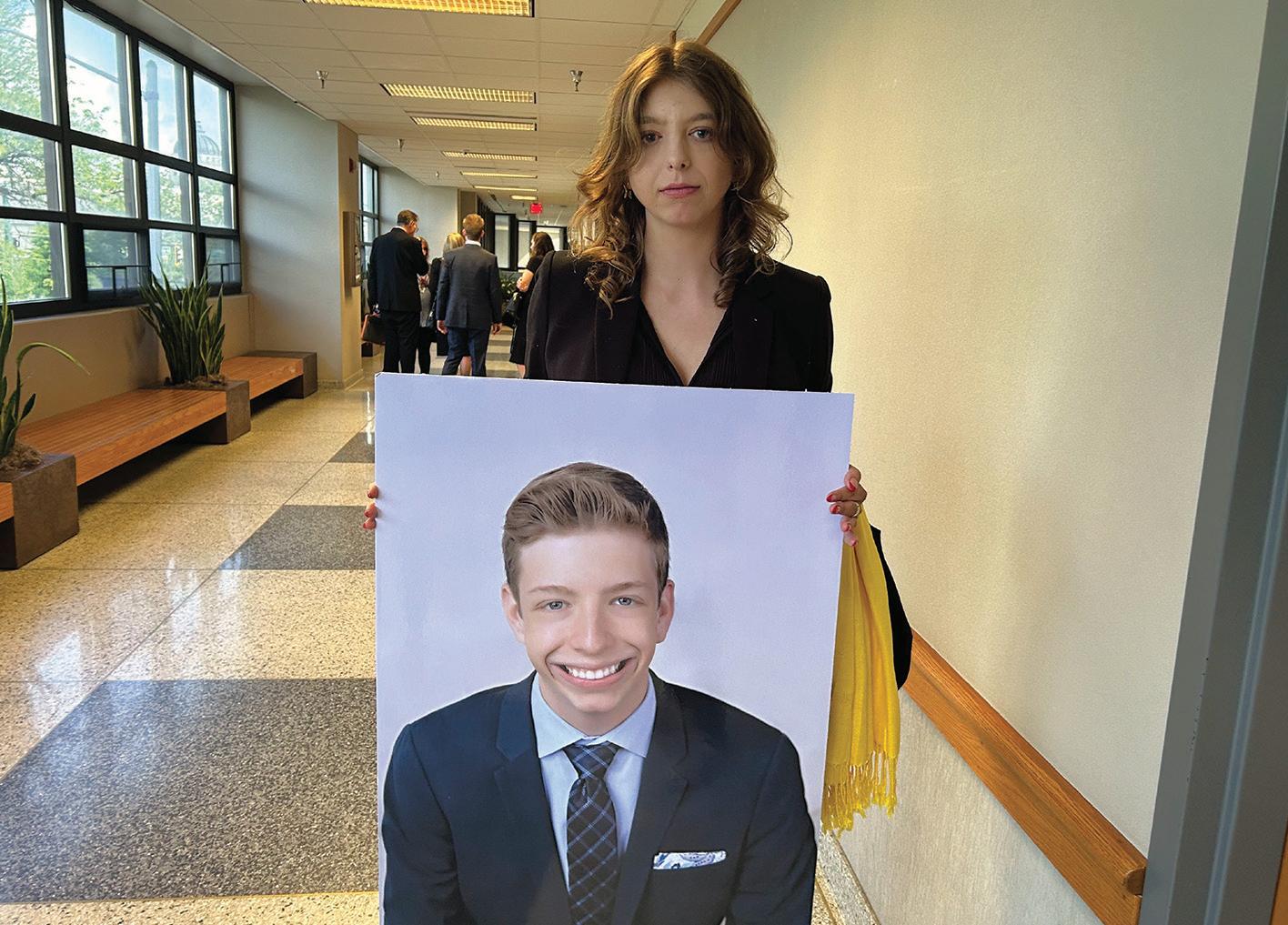
Ceci Stratton holds a photo of Nate Stratton on May 6, 2024,
IDS FILE PHOTO
The Charlotte Zietlow Justice Center is located at 301 N. College Ave. in Bloomington. The American Civil Liberties Union of Indiana first brought legal action against the Monroe County Jail in 2008.
District 9 candidates discuss costs and data
By Elizabeth Schuth ekschuth@iu.edu
Hosted by Concerned Scientists at IU, candidates took questions from the public
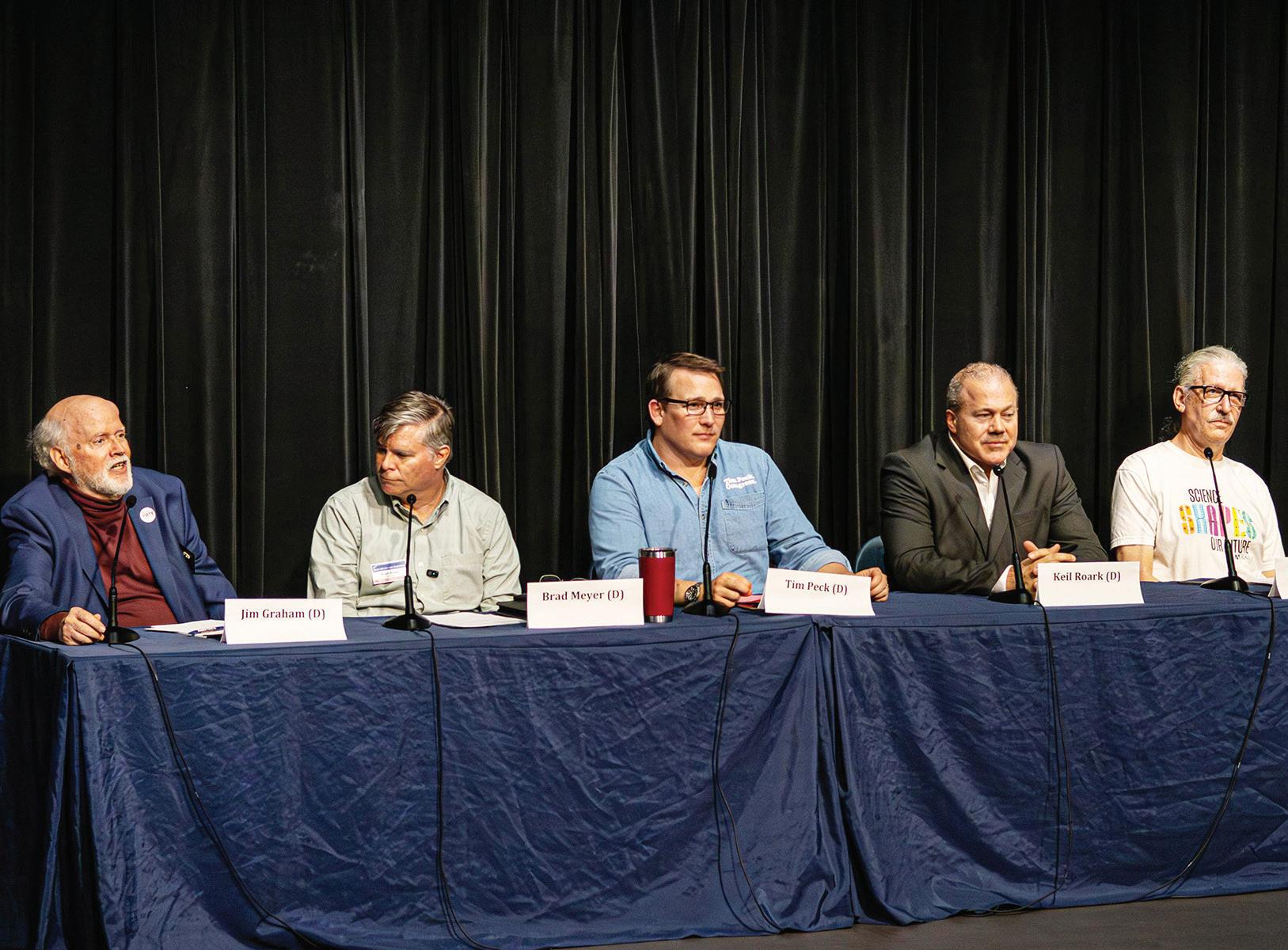
Five out of six candidates for Indiana’s 9th Congressional District discussed federal funding cuts, healthcare costs and data centers at a Concerned Scientists at IU forum April 14 at the Monroe County Public Library.
Democratic primary candidates Jim Graham, Brad Meyer, Tim Peck, Keil Roark and independent candidate Floyd Taylor participated. Incumbent representative Republican Erin Houchin was also invited but unable to attend, according to the Concerned Scientists website.
Indiana’s 9th Congressional District includes southeastern Indiana, reaching the Kentucky border and across to as far north as Franklin County on the eastern border. Houchin currently represents this area.
The event was moderated by sophomore Emma Broach and senior Tyler Morris, members of Advocates for Science at IU. Advocates for Science is a student affiliated organization of Concerned Scientists at IU.
Candidates were asked to respond to three questions from CSIU, which covered federal research funding cuts, healthcare, environmental regulation and climate change.
Federal funding for research cuts
Since 2025, the federal government canceled or suspended 5,844 National Institute of Health grants and 1,996 National Science Foundation grants. In the proposed 2027 budget, President Donald Trump suggested a 23% or $5.6 billion decrease in funding for NASA.
All candidates agreed funding research was important and wanted it to be re-instated by reversing previous budget cuts.
Graham said research was an important tool in funding the economy. He said removing funding from
scientific research was like “killing the golden goose.”
Roark also mentioned the importance of continuing to fund patent offices to encourage innovation.
Taylor said one of his goals, if elected, would be to protect scientific research funds from changing political views so that funding would not change based on the elections.
Healthcare Broach asked the candidates what congressional actions they would support to strengthen public health in the United States. She cited changes to Medicaid and vaccine policies.
The One Big Beautiful Bill Act of 2025 reduces federal funding for Medicaid by an estimated $863 billion, according to the Commonwealth Fund. The bill also changes eligibility requirements, including barring
O’Neill Dean Siân Mooney plans to step down
By Sofía Rodríguez
sr73@iu.edu
Siân Mooney, dean of the O’Neill School of Public and Environmental Affairs, said she plans to step down from her position June 30 after almost seven years.
Mooney started as dean in 2019 and previously worked as a professor in Arizona State University’s School of Public Affairs and as an associate dean at the school’s Watts College of Public Service and Community Solutions.
“It was a decision that I had been thinking about for, you know, a couple of months,” Mooney said. After stepping down, Mooney said she will take a sabbatical to get back up to speed on literature and research.
“I think I can spend a little bit of time thinking about what I’d like to do to re-engage in scholarship,” Mooney said.
Mooney, who has a background in resource and environmental economics, said she will begin teaching at the O’Neill School in about a year, getting assigned classes like other faculty members
“I felt that this was just a really good moment to step away because I felt I’d accomplished a lot,” Mooney said.
The O’Neill School is bigger and more successful than it has ever been, Mooney said.
In this year’s U.S. News & World Report rankings, the O’Neill School Master of Public Affairs is tied with the Maxwell School at Syracuse University for first.
“I think for me this has
“John Graham, the prior dean, had already done a lot of really excellent work, so I inherited something from him and everybody. (It) already was good, and I think that we’ve managed to advance that even further and I feel very proud of giving that over.”
Siân Mooney, dean of the O’Neill School of Public and Environmental Affairs
been a really good seven years,” Mooney said. “I mean, I will honestly say it was very tough at the start because when I came in 2019, it was right before the pandemic.”
O’Neill is a core school, meaning Mooney is the dean at IU’s Bloomington and Indianapolis campuses and has to commute back and forth multiple times a week.
Making sure that there is a smooth transition out of office is her top priority, Mooney said.
The search for the next dean will begin in the fall, IU Bloomington Chancellor David Reingold said during the 2026 State of the Campus address on April 7.
“John Graham, the prior dean, had already done a lot of really excellent work, so I inherited something from him and everybody,” Mooney said. “(It) already was good, and I think that we’ve managed to advance that even further and I feel very proud of giving that over.”
non-citizens including refugees and asylees and requiring some recipients to work at least 80 hours a month or attend school at least halftime.
Roark advocated for the Affordable Care Act subsidies, which make health insurance available to more people by providing consumers with subsidies that lower costs for low-income households. It also works to expand Medicaid coverage to more adults.
On the other hand, Meyer said to strengthen public health, Medicare needs to be accessible for all. He also said that the current changes to healthcare could cause more than just a lack of accessibility for people.
“We need to stabilize hospitals, and we need to make sure that people don’t go bankrupt,” Meyer said.
Peck emphasized the importance of restoring
trust in healthcare institutions through transparency and investment into local healthcare. He also suggested implementing federal programs to pay off student loans for doctors who work in rural hospitals.
Climate change Broach asked the candidates what their goals for climate change policies are, following the Trump administration pulling the United States out of the Paris Agreement in 2025 for the second time.
The Paris Agreement was originally signed by 195 parties in 2015 and is an international agreement to limit global warming.
Peck said he hoped to see more federal involvement with efforts for clean energy sources, including placing solar panels on federally owned land like highway medians or brownfields,
which are abandoned locations facing hazardous contamination like a chemical spill.
“We need action now, and we have an addiction to fossil fuels that we need to rid ourselves from,” Peck said.
Roark also encouraged greater use of renewable energy and, like Peck, wants to push for less fossil fuel use. He said he wants a “shoot to the moon style” push away from fossil fuels in the next five to 10 years, referencing John F. Kennedy’s challenge to the United States when he was president to make it to the moon before the end of the 1960s. Roark also mentioned increasing the use of concrete.
According to the MIT Concrete Sustainability Hub, cement, which is an element in concrete, takes in 6.5 million metric tons of carbon dioxide annually from the earth’s
atmosphere in the United States.
Data centers In a series of lightning questions, candidates also addressed data center construction in Indiana.
Traditional data centers are used to store servers and network equipment needed to access data on the internet. Now, companies are building data centers specifically to support artificial intelligence computing. According to the Data Center Map, there are over 100 centers across Indiana.
Data center construction is facing criticism across the state because of the large amounts of energy and water they require. In 2023, data centers used 176 terawatt-hours of electricity or approximately 4.4% of total U.S. electricity use that year, according to the Lincoln Institute of Land Policy. A 2024 United States Data Center Energy Usage Report predicts data center energy use will double or triple by the end of 2028. Both Meyer and Peck called for greater levels of transparency when building data centers in communities. Peck also suggested data centers should be built to responsibly use energy and water by doing things like building their own transformers for energy. Taylor also mentioned his general distrust of AI because of its tendencies to make mistakes and encouraged legislation to protect children’s access to online chatbots. Roark said there should be stricter regulations on data centers, but encouraged building them for national security. Data centers are an important part of keeping pace with China and Russia’s technological advancements, he said. The Indiana primary election is May 5 and early voting began April 7. Information for voter registration can be found on Indiana’s Voter Portal, along with poll locations and candidate information.
Community honors IU students, staff who passed during ceremony
By Grace Fridy gfridy@iu.edu
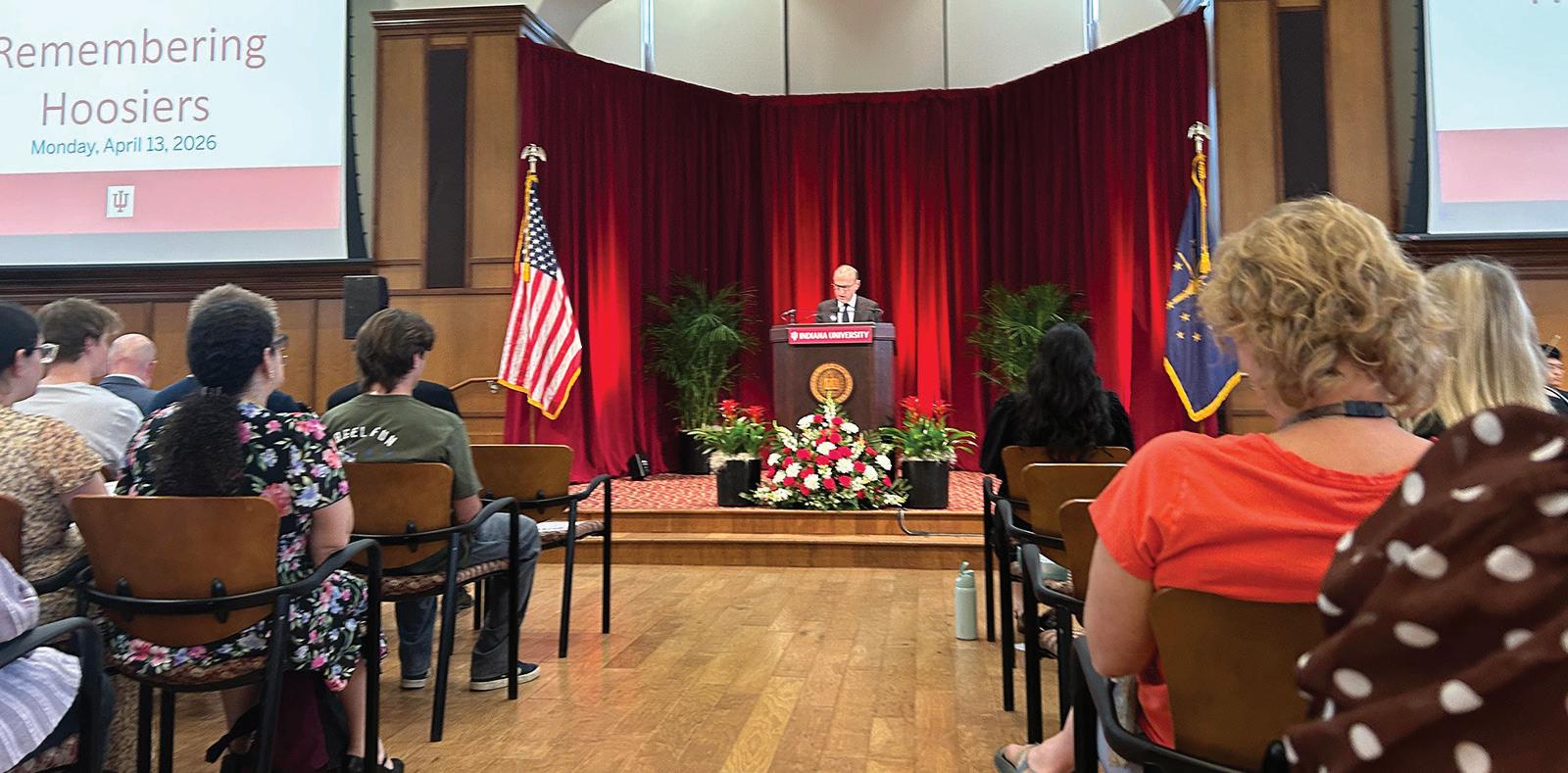
More than 100 members of the Indiana University Bloomington community gathered Monday for the annual Remembering Hoosiers Ceremony to commemorate the lives of 10 students and 12 employees who died since the last ceremony in March 2025.
IU holds the ceremony, which began in 2024, every spring. The inaugural event was planned to replace a similar ceremony that specifically honored students, to now honoring IU faculty and staff.
The event, hosted in Presidents Hall, began with live instrumental music played by the Kuttner Quartet, a group made up of Jacobs School of Music students. Following the music, IU Bloomington Chancellor David Reingold spoke to the attendees, and discussed the contributions that the
students, staff and faculty brought to the IU community.
“The loss of these individuals leaves a void in our community,” Reingold said during his four-minute-long remarks. “However, their presence remains with us and the memories we hold, and the legacies they leave behind.”
Reingold invoked the words of U.S. President Abraham Lincoln’s Gettysburg Address to illustrate the impact each honored individual left on campus, saying “the world will little note, or long remember what we say here, but it can never forget what they did.”
Interim IU Bloomington Provost John Ciorciari and Director of Counseling and Psychological Services Kodee Walls spoke after Reingold’s remarks. Ciorciari thanked the attendees for traveling to the event, and thanked the Remembering Hoosiers work group that
planned the event.
In her remarks, Walls asked those present to take a moment and acknowledge the people around them and remember the shared purpose and connections between everyone present.
“We find strength not by avoiding pain, but by facing it together,” Walls said. According to 2023 Indiana Public Media reporting, IU does not track student death or causes of student deaths. Police generally notify the Office of Student Life when a death occurs, and the office then works with the family to handle matters like tuition, housing and issuing families refunds. It is the family’s decision whether to release information about the student’s death.
“I think it’s super important because we really don’t have another mechanism by which we can sort of acknowledge that someone has passed,” Associate Dean of Students DeeDee Dayhoff
said. Dayhoff said there is a cutoff ahead of the event that decides who will be honored that year, partially for planning reasons, but also to allow family and friends time to process.
IU student Sarisa Kongduang, who was killed by a speeding car in Miami Beach on March 17 alongside 2024 IU graduate Greathomon Laowatdhanasapya, was one of three IU students who died in the last year and was not included in the ceremony, Dayhoff said.
“It can feel too soon to come back to campus and do the things, and so those folks will be included in next year’s ceremony.” Dayhoff said. The event concluded with an informal time for food, drink and conversation. Those present, from family members to friends to coworkers, gathered to talk and remember the individuals honored.
CARLOS DRANE | IDS
Candidates for Indiana’s 9th Congressional District field questions at a town hall April 14, 2026, at the Monroe County Public Library in
Bloomington. All candidates used their background in STEM to answer questions regarding their policies and beliefs.
GRACE FRIDY | IDS
Indiana University Bloomington Chancellor David Reingold addresses attendees during the Remembering Hoosiers Ceremony on April 13, 2026, at Franklin Hall in Bloomington. Reingold spoke about the impact of the event’s honorees on the IU community.



3 8 6 5 2 4



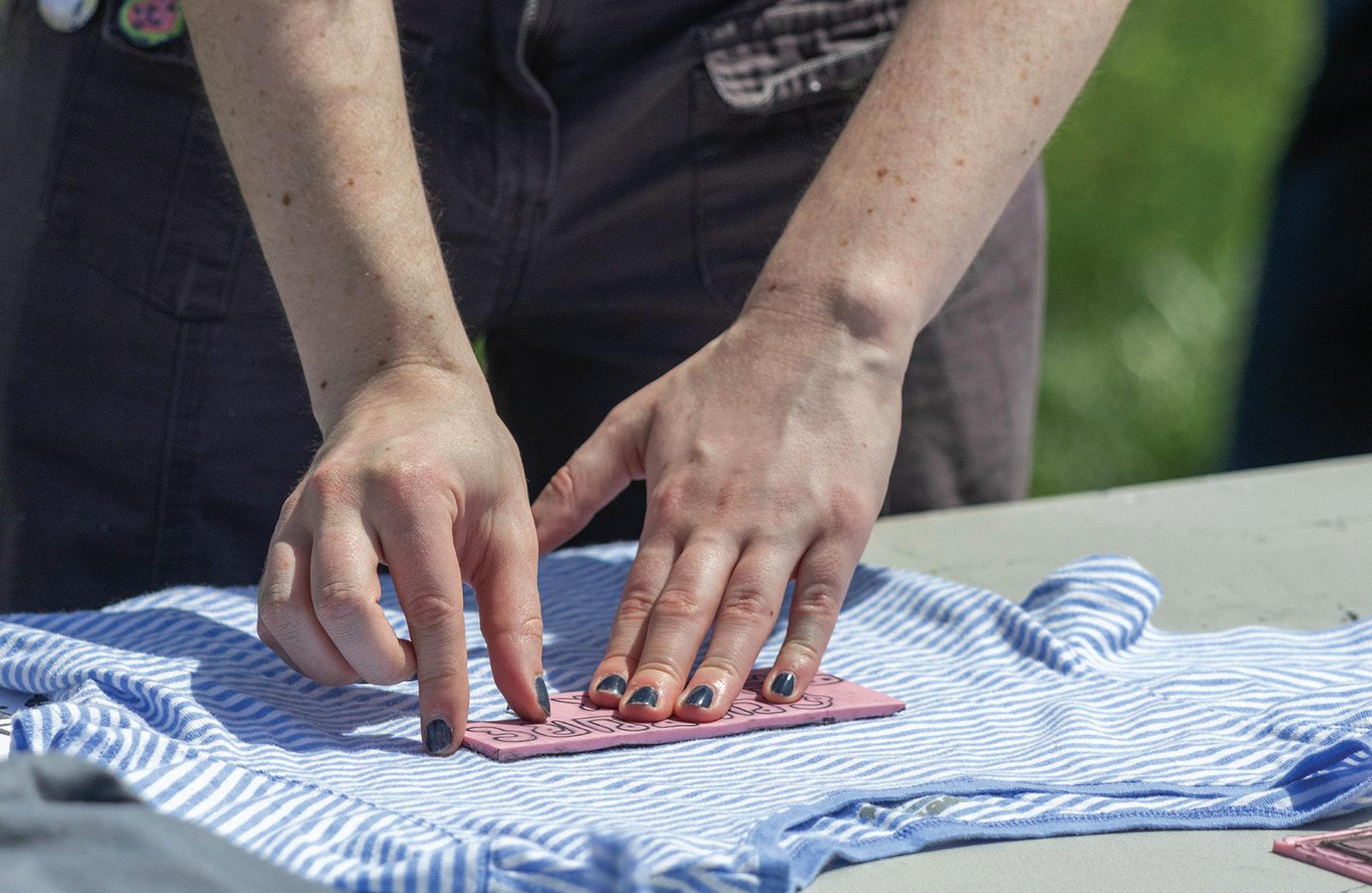
PHOTOS BY CHLOE LAVELLE | IDS 1. Attendees of Culture Shock get a polaroid taken April 11, 2026, at Dunn Meadow in Bloomington. Several attendees took photos throughout the day.
2. Nina Pitchkites, guitarist and singer for the band Wishy, performs during Culture Shock on April 11, 2026, at Dunn Meadow in Bloomington. According to WIUX’s website, Wishy played dreamy jangle pop music.
3. Attendees dance during Culture Shock on April 11, 2026, at Dunn Meadow in Bloomington. Many attendees danced, clapped or bobbed their heads to the music.
4. Attendees of Culture Shock listen to music from a DJ during Culture Shock on April 11, 2026, at Dunn Meadow in Bloomington. This was the 40th anniversary of Culture Shock.
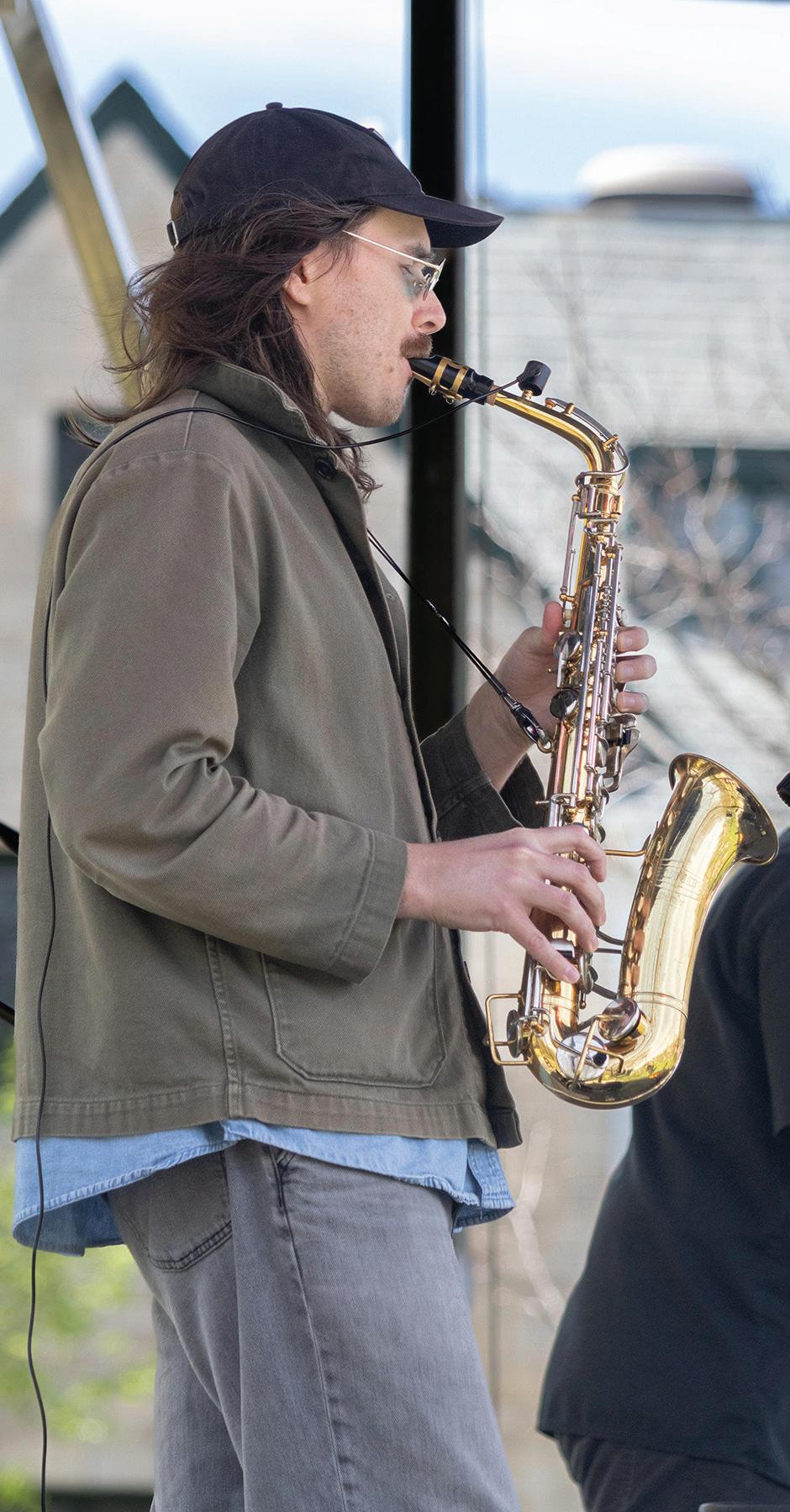
7. Saxophonist for the band Tile Tom Lageveen plays during their set at Culture Shock on April 11, 2026, at Dunn Meadow in Bloomington. The band was formed in Indianapolis. 8. An attendee of

We deserve proper wording around sexual violence from our media
Emma Howard (she/her) is a sophomore studying journalism.
Editor’s note: This story includes mention of sexual violence. All opinions, columns and letters reflect the views of the individual writer and not necessarily those of the IDS or its staffers.
“Consent can be withdrawn at any time as long as it is clearly communicated.”
These words are featured on the anti-sexual assault “It’s On Us” signs in almost every bathroom on Indiana University’s campus. The quote really bothered me upon first notice. It felt so cut and dry. In an actual sexual situation, psychological factors like fear and confusion often prevent such clear communication. When a poster tasked with providing support for sexual assault victims fails to acknowledge the complexity of trying to withdraw consent, it’s easy to feel like not saying “no” means an attack was these victims’ fault. It wasn’t.
Fortunately, Sharpiewielding students have sought to correct these posters’ problematic narrative. Many flyers see the “as long as” portion of the sentence crossed out. One sign I saw even offered its own maxim:
“Consent can be withdrawn at any time for any reason at all.”
Eric Cannon (he/him)
is a sophomore studying philosophy and political science and currently serves as a member of IU Student Government.
Satire need not be funny. Sometimes, it should not be.
“The Handmaid’s Tale” and “1984,” both accepted by academics as satirical works, both dystopian tales, are categorically unfunny. The first is a novel that describes a future right-wing theocracy that oppresses women; the other warns against the world that a centralized economy could create. That makes satire an unideal genre to publish on April Fool’s Day.
The Daily Tar Heel, the University of North Carolina’s student-run newspaper, ran a satirical April Fool’s edition with fictitious stories many readers, including students and university administrators, found not merely unfunny, but “highly inappropriate and offensive.” Among them was: “Satire: Trump orders ALE in Chapel Hill to be replaced with ICE agents.” ALE is North Carolina’s Alcohol Law Enforcement. The Tar Heel has since deleted this story, though stories that made it into print remain available on its print archive.
“You cannot take a real, active, politically charged issue that is affecting people’s safety and turn it into a campus wide prank,” Mary Esposito, a UNC student said in a video she posted on Instagram, which now has nearly 9,000 likes and 300
That sounds much better. Students who have survived sexual assault don’t need an extra source of doubt about their experience, wondering if they “clearly communicated” their discomfort. The language we use to discuss sexual violence molds our culture around it. Our media often falls short, shifting the blame from perpetrator to victim. In response, groups like The Right Words Project are setting out to change how we portray abuse cases in the media. When I found out about the project via Instagram, it reminded me of our campus’s own student signchangers. The Right Words is a UK-based nonprofit that prompts journalists to use an active voice when reporting on abuse. According to the organization’s manifesto, too many media organizations use a passive voice when reporting cases of sexual assault, abuse and violence. By omitting perpetrators from headlines, culpability falls on the victim. Take the following BBC headline from March, for example: “Woman raped on university campus after night out.”
Here, the victim — and her activities leading up to her assault — is the subject of the sentence, while the perpetrator is completely unacknowledged. By using
passive wording, this headline fails to place responsibility on the proper party. Furthermore, by emphasizing the woman’s behavior, the headline hints to the reader that her trauma may be the product of her own actions. The archaic narrative that women should regulate their habits to avoid violence perpetuates a culture of victim blaming. Now take The Right Words’ rewrite of the same headline, and notice the use of active language: “Man rapes woman on university campus.”
In this correction, the perpetrator is the subject of the sentence, rather than the victim. He is framed as directly responsible for the action, and unnecessary details on the woman’s conduct are eliminated. Like the corrections made to IU’s bathroom signage, The Right Words places responsibility squarely on the perpetrator’s shoulders.
According to a 2001 study published by the British Journal of Social Psychology, a direct relationship links the language we use around sexual violence and victim-blaming ideology. Researchers tasked a group of university students with writing short descriptions of two different video segments of rape from fiction film and television, one containing
few details that perpetuate common rape myths, and the other with many.
In one clip, strangers attack an “inconspicuously” dressed woman in an alleyway. When describing this clip, participants were more likely to use an active voice, placing more blame on the perpetrator. In the other, featuring common stereotypes about rape, the attacker and the woman show mutual interest in one another at a bar before he rapes her. Students shown this video were more likely to describe the events using passive language, showing a positive correlation between passive voice and perceived responsibility of the victim.
Passive wording isn’t the only linguistic issue with how sexual violence is framed in the media. A guideline created by the Virginia Sexual and Domestic Action Alliance lists several terms journalists should avoid using when discussing sexual assault. For example, the Alliance advises against using words and phrases like “sex,” “intercourse,” “perform” and “engage in” to describe criminal behaviors like rape, as they imply mutual consent between two parties. By employing terminology that would typically describe a consensual experience, the violence of sexual assault is minimized.
ERRANT ERIC
comments.
The story, unfunny as it is, sits comfortably inside satire’s traditional limits.
The parables of Jesus often use satirical, and frequently sensitive, elements, as “The Handmaid’s Tale” or “1984” do, while staying dry, such as in the story of the “blind leading the blind.”
Politically charged issues should not become pranks. But it is important that opinion writers remain able to satirize them. At issue is not the Tar Heel’s running satire over these topics; it is their doing so in the wrong context, on a day meant for pranks and lighter-hearted jokes.
I worry the Tar Heel confused satire with humor, as have its critics, including Esposito and columnists at The Miami Hurricane, the University of Miami’s student-run newspaper. The Hurricane’s columnists said “jokes should never have to end in unsettling fear and uncomfortable punchlines,” which is correct, but satire is not all jokes.
Before being funny, the aim of satire is to shine light on the tensions in our ideas through exaggeration. Hence, “The Handmaid’s Tale” and “1984” portray worst-case-scenario futures to stress the problems the authors saw in the Moral Majority and command economies.
While satirists often use humor because it is easy to exaggerate to the point of comedy, humor is just one tool in a box that holds many
others. A “wide gamut of satiric emotions” exists, Robert Corum, a Kansas State University professor, wrote in a 2002 essay discussing the genre. These include “grimaces and cringing” besides “gleeful laughter.”
Pointing out tension is the reason newspapers include satirical stories, and it is why these stories belong in the realm of opinion. If they sought solely to entertain, as comedy does, they would not appear alongside current events and commentary. There is a reason you find comedy in The Harvard Lampoon, but not in Harvard’s student-run newspaper, The Harvard Crimson. The two are notably separate. Satire, unlike comedy, makes a point, and often a serious one.
Indeed, satire can better acquaint readers with current events than pure news. A study the Annenberg Public Policy Center at the University of Pennsylvania conducted during the 2004 election showed audiences who followed satirical news sources were better informed about the Bush and Kerry campaigns than those who did not, even when controlling for other factors, like following politics in general.
Yet after something goes awry, it’s natural to want to toss it. On April 8, The Tar Heels’ editors issued an apology. They said their opinion desk would not produce any more satire — and potentially no more opinion — for
Similarly, Clare McGlynn, a law professor and expert on gender-based violence at the UK’s Durham University, has developed the phrase “image-based sexual abuse” to replace the more sensationalized term “revenge porn.” By focusing on the aspect of a “vengeful” ex-partner, McGlynn claims that the phrase does not account for all cases of sharing explicit images without consent. Using a broader term, like “image-based abuse,” prompts media and lawmakers to take such cases more seriously.
In addition, Advocates for Youth, a youth activist organization primarily focused on sexual and reproductive health, urges journalists to respect survivors’ narratives by avoiding the word “allegedly” or “alleged.” However, publications typically require these terms for reporting on any crime until an official verdict has been reached, due to the risk of libel and defamation lawsuits. That said, it is essential that the validity of a victim’s account does not come into question unnecessarily. For more ethical journalism, Advocates for Youth suggests using direct quotes as much as possible, allowing survivors more control over their stories. Letting survivors speak for themselves gives them the ability to include
the details they feel are most important, that paraphrasing, for example, might omit.
Despite the work of academics and activists to curb harmful language around sexual violence, the poorly worded headlines are still pouring in.
In January, CBS News reported “Florida Memorial University student raped on campus, suspect still at large,” using a passive voice rather than an active one.
A local news outlet in Louisiana following the trial of Misty Roberts, who was found guilty of raping a 16 year old, ran the headline, “Former DeRidder mayor Misty Roberts’ underage sex sentencing delayed,” implying the consent of a victim who could not legally give it.
Just last week, the BBC wrote, “Woman’s ordeal after abduction and rape by fake taxi driver,” placing the victim as the subject, letting the perpetrator fade into the background.
Words are powerful. When you’re discussing sexual violence, remember to be mindful of the language you’re using. Describing traumatic crimes with the wrong phrasing can invalidate victims’ experiences. This Sexual Assault Awareness Month, find the right words.
emhowa@iu.edu
the remainder of the semester. It would be unsurprising if the Tar Heel did not publish a satirical edition next April Fool’s Day. For a newspaper, readership is key. When audiences become unhappy with journalists’ work, they stop reading and subscribing — and soon, there is no longer a newspaper. In October, The Washington Post lost a quarter-million subscribers after it said it would not endorse any candidates in this fall’s election cycle. More left after its new owner Jeff Bezos excluded “non-libertarian” perspectives from the opinion section.
In an age that constantly threatens college newspapers nationwide, the Tar Heel would risk more than it could hope to gain by running satire next April. When it’s a good thing that sits on the chopping block, however, don’t be so quick to cut it. I encourage the paper to take the risk — cautiously, ensuring stories are marked as satire, but not fearing to tread into sensitive topics. Satire is a historied genre that boasts many of the world’s greatest works, encompassing “Pride and Prejudice,” “Don Quixote” and “Ulysses.” When done right, satirizing controversial top-
ics has driven public discourse and shaped our ways of thinking for the better. That’s why bringing back satire at the Indiana Daily Student has been an important project. Satire is a medium that makes points about serious subjects in a way people can ponder over more deeply because, being creative, it has the potential to dig more deeply into current events than news or opinion. The Daily Tar Heel has had the gift of satire. It should take care in using it, not abandon it. ericcann@iu.edu
TRIBUNE NEWS SERVICE
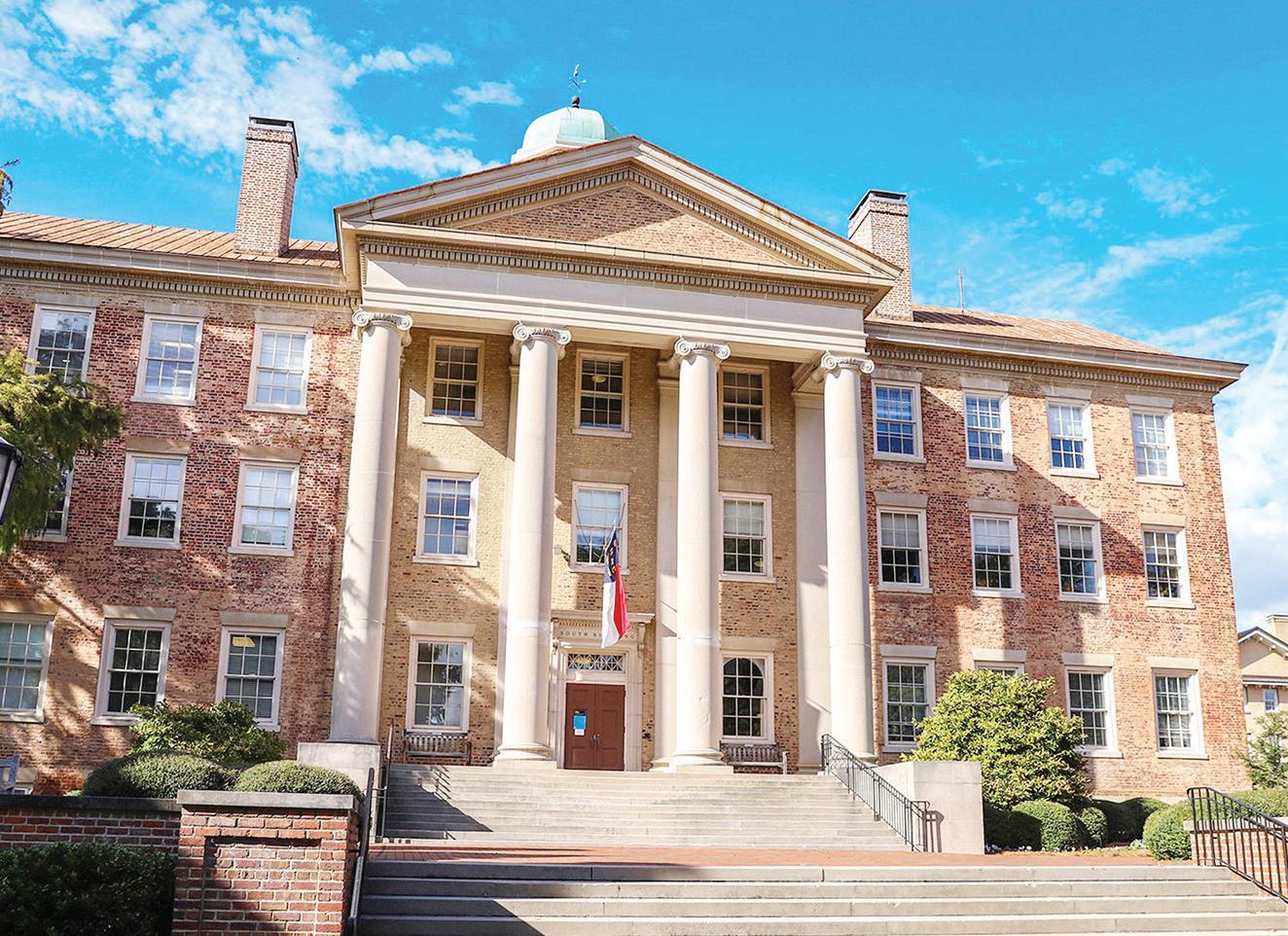
The South Building on the campus of the University of North Carolina at Chapel Hill sits Oct. 21, 2020, in Chapel Hill, North Carolina. On April 1, the Daily Tar Heel, UNC’s student-run newsroom, published a satirical edition of its newspaper.
COLUMN: Bailey and Page carry the weight in ‘You, Me & Tuscany’
By Josh Baskin joshbask@iu.edu
As someone who loves film, I’m open to all genres and can appreciate their differences. While romantic comedies may not be my favorite type of film due to their more formulaic structure, I would be lying if I said I didn’t have a fun time watching them.
“You, Me & Tuscany” is led by actors Halle Bailey and Regé-Jean Page, both of whom I hadn’t seen in their previous films. It’s very refreshing to be able to watch a movie these days without knowing much about the main actors, since major film studios tend to prefer widely known actors in their films for the audience to recognize.
“You, Me & Tuscany” follows Anna (Bailey), a young woman struggling to make ends meet, who flies to Italy to stay at a stranger’s villa without permission. When Anna arrives at the villa, she realizes his family is living there and convinces them she is the man’s fiancée. Anna soon realizes she’s in over her head when she starts to develop feelings for the man’s cousin, Michael (Page).
From the little time spent in Anna’s hometown, New York, it’s immediately clear she does not have her life together. The film cleverly tricks the audience with an opening montage of Anna flaunting around the city in designer clothes, only to lat-

er reveal the clothes actually belonged to a woman whose house Anna was supposed to be looking after. Anna meets the stranger, Matteo (Lorenzo de Moor), soon after this incident. He tells her about his family villa, which he left out of refusal to join the family business, and she books a flight to Tuscany to stay in the villa, assuming Matteo was the only person living there. Admittedly, I would have liked to spend more time with Anna in New York, since her struggles are mentioned throughout the film,
yet we only get to see a quick glimpse of this past life. While I wished we had more time in New York, the transition to Italy was one of my favorite parts of the entire film. Fittingly accompanied by Olivia Dean’s “So Easy (To Fall In Love),” the entire montage of Anna’s travel is filled with gorgeous shots of the Italian landscape with a gentle, warm color grading. I’m not always keen on inserting relatively new pop songs in films, as they typically feel forced, but this song’s romantic tone elevated the
scene tremendously.
But I could only be blinded by the beauty for so long, and a couple of moments later, I was reminded of one of my biggest gripes with this film: the pacing.
The screenplay was written by Ryan Engle, more commonly known for his action films like “Rampage” and “Beast.” Although action is a genre that is meant to move at a rapid pace to prevent the viewer from getting bored, this nonstop energy doesn’t translate to rom-coms. I felt like Anna’s character never had time
to breathe and was being thrown into one stressful situation after another. Thankfully, the film slows down a little once Anna encounters Michael at the villa.
The film’s saving grace was easily the performances from Bailey and Page. Their shared screentime was oozing with chemistry, and their friendly banter was fun to watch. While Bailey played her part well, it was Page who truly captivated me. Page mastered the charismatic nature of Michael, and his emotional range was surprisingly strong for a ro-
mantic comedy, balancing both affection and distance.
The dialogue was far from perfect, but when it came to these two actors, it was clear they were trying their hardest to make it work.
One particular moment that stood out to me was when Michael offered Anna a wine-tasting at his vineyard. What began as a charming romantic scene quickly turned sour, as the two began to share their backstories with cringeworthy banter. This should have been one of the most romantic moments of the film, but the cheesy dialogue made the scene come across slightly awkward. Outside of this sequence, there are surprisingly very few scenes with just Anna and Michael, making their relationship feel more casual than intimate. This is the unfortunate result of Engle’s rapid pacing, with little time allotted for developing the love between these two characters. This romance is supposed to be the heart of the film, but it felt muddled with too much focus on other side plots like Matteo’s desire for approval from his family.
Regardless, I still had a good time with this film once I stopped taking it so seriously. The gorgeous visuals of Italy paired with charming performances by Bailey and Page were enough to keep me engaged throughout the film’s runtime.
Bloomington ‘Junk in the Trunk’ hosts first ever spring event
By Lexi Bunting lexbunti@iu.edu
April 12’s ‘Junk in the Trunk’ event drew crowds, secondhand vendors and food trucks
Amanda Lawson came to Switchyard Park on April 12 from rural Monroe County, hoping to sell more than she could at her rural home.
By the end of “Junk in the Trunk,” a massive lawn sale organized by the City of Bloomington, she had sold most of the items she brought.
“Well, things are really expensive right now, so getting stuff secondhand is more important than ever and it’s more sustainable,” she said. “A lot of these items, if people don’t buy them, they are probably going to get thrown away. So, it’s good to give them a second or third life.”
The city’s Parks and Recreation Department hosted “Junk in the Trunk” for its first spring event this year, drawing a record-breaking number of booths, expanding the long-running sale into a biannual event.
It featured 99 vendor booths, drawing more than 1,000 attendees. Typically held in August, the department added a spring event after noticing an increased interest from vendors looking for additional opportunities to sell.
The department has host-
ed “Junk in the Trunk” for about 20 years.
Community events specialist Tara Brooke, who has helped coordinate the event for the past four years, said adding a spring event reflected years of vendor interest and community enthusiasm.
“This is the first spring version we’ve done,” Brooke said. “We’ve had vendors asking for a second date for years. Some of them are really passionate about junking, antiquing, thrifting, they know this world.”
Brooke also highlighted the event’s emphasis on sustainability. She said the sales benefit vendors and customers, allowing sellers to make a profit from items, they no longer want while giving buyers the opportunity to reuse secondhand goods.
“I mean, anytime you are repurposing, reusing or rethinking something, giving it to a new home, anything that keeps something from going to the landfill, that’s helping,” she said.
The event included booths in and outside the Switchyard Park Pavilion, giving attendees space to browse an array of items ranging from home goods and clothing to handmade crafts, vinyl records, jewelry
and other secondhand treasures.
Visitors also had access to a variety of food trucks, including Uno Más Taco Truck and Planted, with outdoor seating available for attendees to sit back and relax between booths.
Zane Phelps, an administrative assistant with the city’s Parks and Recreation Department, said he enjoys the atmosphere created by Switchyard Park’s outdoor spaces and the chance to simply be around people.
“I like to be outside and in nature, I think Bloomington has so many outdoor spaces to offer,” Phelps said. “So, I think it’s just about being outside, being with people and people watching too.”
For some members of the community, the event also served as an introduction to the range of programming offered by the city. Attendee and Bloomington resident Haley Sheets, who moved to the city a few months ago, discovered the event through Facebook and said it provided an opportunity to explore and engage with her new surroundings.
“I come from a super small town, so there wasn’t anything like this,” Sheets said. “Getting everybody
together in one place is just pretty great.”
For Phelps, the event was not only about sale, but also about connecting with the people and items that filled the space.
“When people bring out, you know, their possessions, they kind of let
you see a little bit into their lives and things that they’ve held onto for various different reasons,” he said. “If you have an interest in that kind of thing, I think it’s definitely an event for you.”
For many attendees and vendors, the event offered both an opportunity to support secondhand shopping and a chance to enjoy the spring weather while connecting with others. With
COLUMN: ‘The Super Mario Galaxy Movie’ is a visually beautiful mess
By Jospeh Ellis ellijoda@iu.edu
SPOILER: This column contains potential spoilers for “The Super Mario Galaxy Movie.”
“The Super Mario Galaxy Movie” works as an adaptation of the game it’s based on. As a film, it’s messy, plotless and all over the place.
The movie is a sequel to Illumination’s “The Super Mario Bros. Movie,” which narrowly beat out the sequel’s global opening, though both have been massively successful. To start out with the positives, the movie shines in its action scenes and visuals. The animation team at Illumination brought each character to life beautifully, animating each one in a very expressive way. Every new location the characters travel to is vibrant, elaborate and colorful. My favorite was the casino that Princess Peach (Anya Taylor-Joy) and Toad (Keegan-Michael Key) travel to near the beginning of
the movie. The exterior of the building is themed like a question block from the games, and on the inside, gravity is warped in a way where the characters can walk on the walls and on the ceiling. The characters that run the casino, such as King Wart (Luis Guzmán) and Birdo, are directly pulled from the game “Super Mario Bros. 2.” Also heard inside the casino are jazzy renditions of iconic Mario tunes, such as “Jump Up, Super Star” from “Super Mario Odyssey.” Another noticeable improvement over the first movie was its music. A common complaint of Illumination’s first Mario movie was its reliance on licensed music. Fans wanted to hear more orchestral renditions of Mario’s iconic songs instead of ‘80s pop hits. In this most recent film, I only noticed licensed music used once for a cutaway gag. The rest of the soundtrack for this film is comprised of beautiful renditions of music from the games.
While the movie succeeds as a showcase of all things Mario, it falls short in
its plot. The movie fails fundamentally in this regard, as the events of the film don’t play out in a coherent way. Halfway through, it becomes noticeable that the objective of the script isn’t to tell a story, it’s to see how many references to the Mario games they can cram into its 90-minute runtime.
The writers blocked out little to no time to flesh out any of the characters or their motivations. It feels a little absurd that the main character, Mario (Chris Pratt), had no defined character arc for this story; he starts and ends the film in the exact same state. With the sole exception of Bowser (Jack Black), every single character in the movie is static.
A common rebuttal to these arguments is to say something along the lines of “It’s a kids movie!” or “It’s a Mario movie, what did you expect?” However, the fact that a movie is both made for kids and is an adaptation of an intellectual property is not an excuse for bad writing.
“The Lego Movie,” for example, is a movie made

MOVIE STILLS DATABASE
Halle Bailey (left) and Regé-Jean Page (right) act during filming of “You, Me & Tuscany.” The film was directed by Kat Coiro.
MOVIE STILLS DATABASE
From left to right, Luigi, Yoshi, Mario and Toad from “The Super Mario Galaxy Movie” are pictured. The film released in theaters April 1.
“Junk in the Trunk” moving to a biannual schedule, the event is expected to continue as part of the city’s seasonal programming at Switchyard Park.
ALISSA ANGEL | IDS
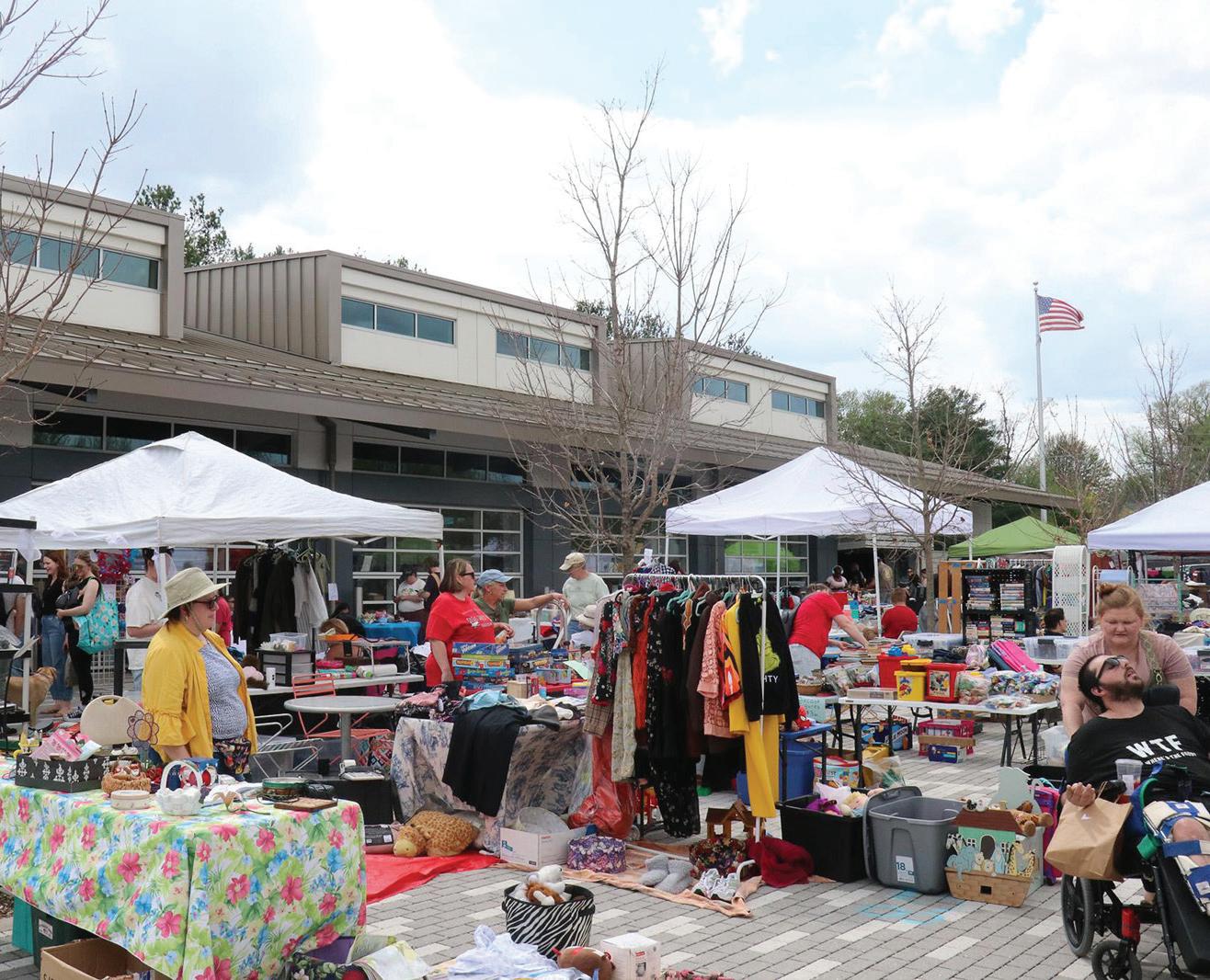
Booths at the Junk in the Trunk event are seen April 12, 2026, at Switchyard Park in Bloomington. The event
featured local vendors and booths.
WIUX hosts Culture Shock music festival’s 40th anniversary
By Stella Klaus ssklaus@iu.edu
Music lovers gathered at Dunn Meadow throughout the day April 11 for the 40th anniversary of the Culture Shock music festival. With the 60-to-70-degree temperatures, around 400 people attended the outdoor music festival. Blankets scattered the meadow as people settled in for the full day of music.
Hosted by WIUX student radio, the annual event has been a staple of the Bloomington music scene for 40 years, providing the community with opportunities to get outside and hear music from local musicians. This year’s lineup, which spanned from noon to 9 p.m., included eight different musicians, including one singer from Australia.
Hatchie, the Australian alternative and indie musician, headlined the show with an energetic final set as the sun went down. She played a mix of slower and fast paced songs, with many tracks coming from her most recent album, “Liquorice,” which was released in 2025.

everyone,” Mooney said. “Everyone in WIUX was like ‘Listen to Hatchie, get to know her music,’ so that’s what we did.”
Another student who came to the event for the first time this year was sophomore Leah Mercho. She was encouraged to attend through her boyfriend who is also a part of WIUX. Mercho said that with everything she has going on in school, it is sometimes easy to feel isolated, but events like Culture Shock help her find time to see her friends and feel the community around her.
“Sometimes it can feel like there’s really one brand of person at IU, but this showed me how there’s so many communities here with so many different passions and things that they like to do,” Mercho said. “It was just really nice to see all these different people coming together for this.”
IU senior Daisy Spalding, who attended Culture Shock for the first time, was one of Hatchie’s longtime fans in the audience. She said she’s been listening to her for around five years now.
“I saw that Hatchie was performing, or headlining I guess, and I’ve enjoyed her music for a while, so that was definitely the draw to get me to come out,” Spalding said. She said she was impressed with all the organizations and vendors like
Although the musician came a long way for the show, she drew a large crowd up in front of the stage. Within her Culture Shock set, some of the fan favorite songs were “Carousel” from her most recent album and “The Key” from her second album, “Giving the World Away.” The songs drew a loud applause from the audience and prompted many to move toward the front and dance.
IU Cinema, which Spalding volunteers with, that came to the event too.
In addition to the eight performers that took the stage, Culture Shock included booths surrounding the area for guests to browse. Many of the booths featured secondhand clothes or jewelry, but there were also merch booths for Culture Shock, WIUX and some of the festival’s musicians.
With WIUX hosting the event, many members of the student organization were in attendance and have been a part of the preparations.
Sophomore Erin Mooney, who has been part of WIUX for two years now, said although she didn’t help organize the event, her and other members of the organization helped with tasks like creating the banners hung around the event. She said they started planning this year’s Culture Shock right after last year’s ended. There is a lot of little work that goes into it, she said, which is why it takes so long to plan.
Mooney was at the event all day and heard all eight of the musicians. Two stand-
outs for her were Wishy, an indie alternative band based out of Indianapolis, and Hatchie. She said during Wishy’s set, which was two sets before Hatchie’s, people even began moshing, which is high energy dancing where participants jump around and against eachother.
Mooney said being part of WIUX meant listening to Hatchie on repeat in order to prepare for the event.
“We’ve known that Hatchie was the headliner for a few months now, so we’ve been pushing that on
The various artists, ranging from local Bloomington groups to Hatchie all the way from Australia, gave audiences a diverse selection of music and with free admission, the event drew more than just IU students to Dunn Meadow. Many families attended Culture Shock as well.
“I think music should be accessible to everyone,” Mooney said. “People can come and spend as little time as they want or as much time, and it’s free, and I think everyone should be able to go and see live music.”
COLUMN: ‘The Testaments’ delivers a strong start in first 3 episodes
By Ripra Gunta riprgupt@iu.edu
For fans of “The Handmaid’s Tale,” its highly anticipated sequel “The Testaments” premiered its first three episodes on Hulu April 8. Like its predecessor, the series is based on Margaret Atwood’s novel of the same name. Despite not reading either series and only seeing part of “The Handmaid’s Tale,” I decided to check out the show because its focus on teenagers appealed to me.
From its first three episodes, I found “The Testaments” to be a compelling and easy-to-follow continuation of “The Handmaid’s Tale” that offers a different perspective.
“The Testaments” builds on the story established in “The Handmaid’s Tale,” which is set in the Republic of Gilead, a dystopian patriarchal theocracy ruled by an authoritarian regime of commanders.
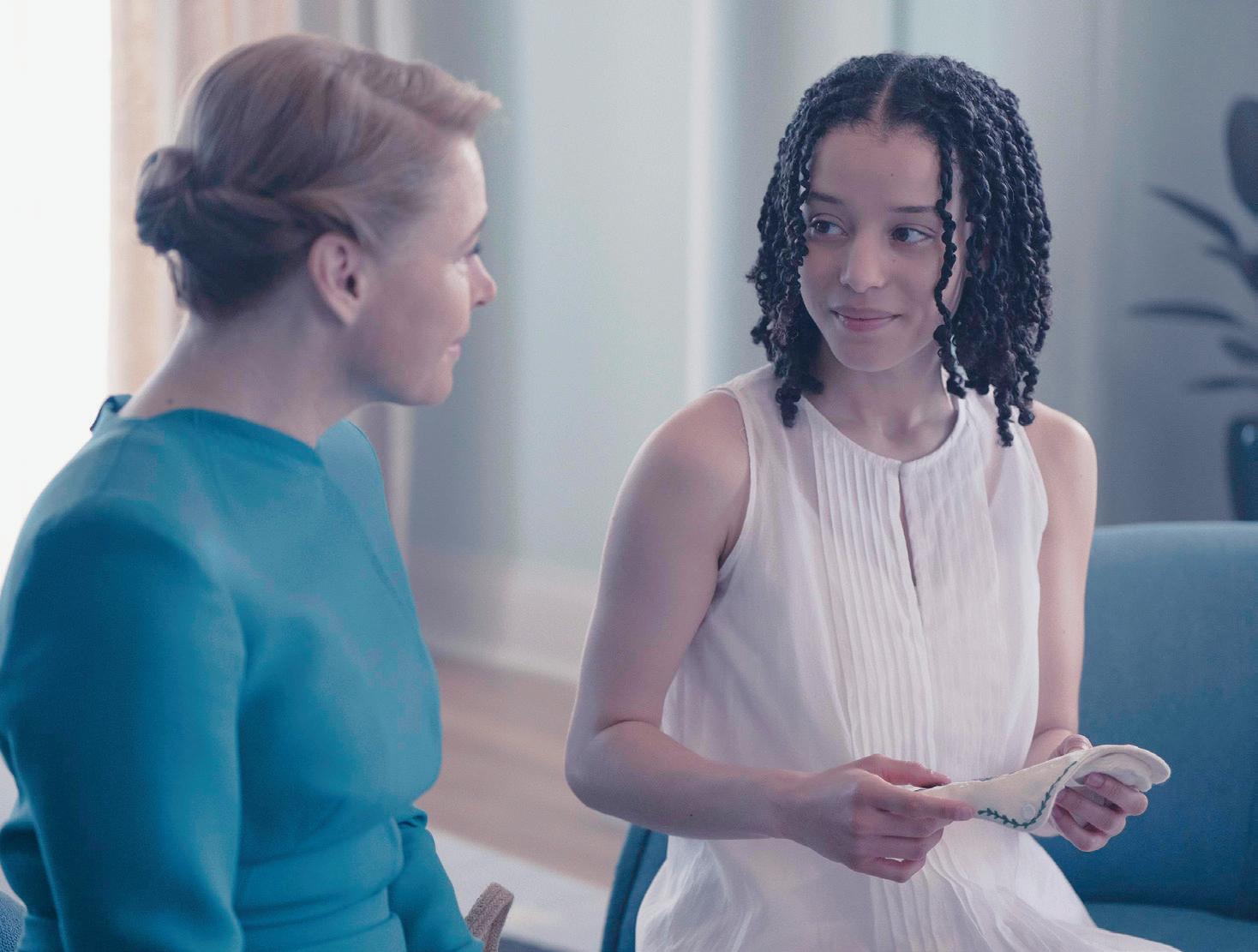
Episode 1 opens with an internal monologue by Agnes (Chase Infiniti), a privileged young girl and the daughter of a commander. Alongside Agnes and Shunammite (Rowan Blanchard), viewers also meet Daisy, (Lucy Halliday), who is a recent convert from Canada. The 44-minute-long episode provides some helpful context for the series. For viewers like me who do not have much
context for the series, Episode 1 is easy to follow and draws you into the show right away.
The first episode also includes two notable cameos. The first is more obvious, with Elisabeth Moss continuing the story of “The Handmaid’s Tale,” and the other is more subtle with Stephen Colbert in a voice cameo. I found Episode 1 to be an effective and relatively light introduction back into the world of Gilead, especially because it eases new viewers into the story.
Episode 2 further explores Agnes’ friendships with her peers and shows that even in a restrictive and unconventional society like Gilead, young girls still share familiar experiences, which makes the show more relatable. At the same time, the darker side of Gilead remains, as two scenes with the commanders and Agnes alone in particular are extremely uncomfortable to watch and underscore just how restrictive and deeply patriarchal the society is.
The episode also continues to build Agnes’ character by giving viewers more insight into her inner thoughts. I found this episode to be the most interesting of the three because it features a twist and several moments that make Gilead’s darkness impossible to ignore.
Episode 3 shifts the perspective from Agnes to Dai-
sy, giving viewers more insight into Daisy’s backstory and how she ended up in Gilead. It is also where the action starts to build, and the show’s tone moves from a lighter teenage story into a darker, more political drama. At the same time, the episode functions largely as a backstory, revealing Daisy’s purpose in Gilead. Some of the flashback scenes drag a bit in my opinion. I prefer when a show keeps viewers a little in the dark because it creates a more anxious feeling as it builds toward a larger reveal.
The acting in this show is incredibly strong, especially Halliday’s performance, which portrays the teenage experience both outside Gilead and within it in a believable way. She moves effortlessly between playing a carefree teenager and a restrained, rule-following girl. Each actor portraying a teenager fully inhabits her character, making the relationships feel convincing and the girls feel true to their age.
At the same time, the actors portraying the adults in Gilead bring a sense of intimidation and unease that heightens the contrast with the young girls and makes the society even more disturbing.
The soundtrack is another aspect of the show that stood out to me. The creators clearly chose it with care as it matches the tone
of key moments and feels well suited to a younger audience, with many of the songs being popular with Gen Z. The soundtrack also carries a somewhat nostalgic quality, with older tracks such as “Dreams” by The Cranberries and a cover of “California Dreamin” by Scala & Kolacny Brothers drawing viewers into a false sense of safety about Gilead. At the same time, the soundtrack adds a lighter, more fun element to the show with newer artists such as Tabitha Meeks and
her song “Cherry on Top” and Remy Bond with “Summer Song.” Lastly, I found the fashion in Gilead visually appealing and similar to what I remember from “The Handmaid’s Tale.” The sleek jackets, especially those worn by the Aunts, stand out, as do the headbands worn by the young girls. In contrast, the fashion outside Gilead in Canada feels more modern and closer to everyday life.
So far, the first three episodes have delivered a captivating start. From my limited experience with “The Handmaid’s Tale,” “The Testaments” appears to carry the same level of detail and thoughtfulness while offering a different perspective to continue the story and, hopefully, provide a satisfying ending. I am looking forward to seeing where the story goes as the action continues to build.
The first three episodes of “The Testaments” are now streaming on Hulu, with the remaining seven episodes set to roll out weekly on Wednesdays.
COLUMN: ‘Age of Attraction’ is less about love and more the mess it creates
By Ursula Stickelmaier
ustickel@iu.edu | @urose_18
SPOILER: This column contains potential spoilers for “Age of Attraction.”
What happens when you ask a group of strangers to date without knowing each other’s ages? According to Netflix, the answer is true love. But in reality, it’s roughly eight hours of complete chaos and nearly unwatchable content that doesn’t just beg the question of whether Netflix should have been filming these moments, but if they should have even made the show at all.
Netflix’s latest reality dating show, “Age of Attraction,” follows 40 single men and women, ages 22 to 60, as they try dating without knowing how old their partner is. After a short period of time mingling at a resort in Whistler, British Columbia, the couples gradually reveal their ages and the rest of the series focuses on the six pairs with the largest age gaps, the largest being a 33 year difference.
In typical Netflix reality dating show fashion, “Age of Attraction” takes itself far too seriously for what it really is and in doing so creates a space where toxic behavior can be mistaken for a normal relationship.
The show is hosted by Nick Viall, former star of “The Bachelor” and host of “The Viall Files” podcast, and his wife, social media influencer Natalie Joy. The pair constantly refers to the show as an “experiment” instead of what it actually is: an overly dramatic cash grab for Netflix.
This isn’t the first time Netflix has painted one of their dating shows in such a light. Nick and Vanessa Lachey, hosts of “Love is Blind” and “The Ultimatum: Marry or Move,” have often treated their own shows as more of a scientific social experiment than a reality series. It’s a shallow attempt at making their shows seem more important but really only succeeds at making them all that much more ridiculous.
Most of the viewers
watching understand the show has almost no genuine intention of helping people find true love and instead was really only made to farm at least eight episodes of potentially viral content.
And it’s hard to blame Netflix when time and time again the viewership numbers prove that these shows appeal to audiences in a big way.
In March 2025, “Love is Blind” raked in 1.2 billion minutes viewed from Feb. 24 to March 2 that year and came in at number three on streaming charts. It set a Nielsen streaming record, which measures viewership milestones on streaming platforms, for an unscripted series.
“Age of Attraction” seems to be going down the same path. The show reached 3.8 million views in its first five days after releasing March 11, and Netflix renewed the show for a second season shortly after the finale aired. The reunion episode, which aired on “The Viall Files” podcast April 1, also garnered popularity, reaching
1.9 million views in just one week.
Unfortunately, the drama that makes shows like “Age of Attraction” so successful is often entirely engineered and incredibly problematic. Despite being introduced to many characters in the first few episodes of the show, “Age of Attraction” spends a majority of the series specifically focusing on the couples with the biggest age gaps. After revealing their ages in the “promise room” – a ridiculously low stakes space compared to other shows where the couples don’t get engaged or even define the relationship, but simply promise to spend the rest of their time on the show together – they move to Miami to figure out if their relationship can really withstand being from entirely different generations. But with some of these couples, it quickly becomes clear that age is the least of their problems.
The most apparent example of this is Jorge Sanchez and Vanelle Femnou, a couple with a 33 year age
gap who becomes so toxic that the two break up halfway into the show. While the age difference is the largest gap on the show, their drama extends far past how old they are. Instead, what causes most of their issues is Sanchez’s continuous habit of lying to Femnou and invalidating her feelings every time she brings up an issue she is having.
Not only does Sanchez lie and tell her he does not have children when he actually has two, but despite initially saying he respects her choosing not to have sex until marriage, he immediately turns around and criticizes her for this choice. They discuss these problems later on in the reunion, where the two reveal that they are now good friends, but it still felt like they were talking around the subject to make Sanchez’s actions appear justified.
It moved past the point of drama for the sake of interesting television and into a whole separate, but unfortunately not surprising, territory of Netflix normalizing manipulation and toxic re-
lationship dynamics. Reality television typically comes with the understanding that what you are watching isn’t actually reality, but when Netflix continuously puts these unhealthy narratives out into the world it risks reinforcing harmful behavior as normal.
Unfortunately, while “Age of Attraction” is one of the most recent examples, it isn’t the only show where this is a problem. Studies have shown that reality television, dating shows in particular, can influence people’s perceptions of love and perpetuate sexist attitudes toward women. It’s a dissapointing reality that, with the popularity of reality dating shows, probably won’t end anytime soon, but it’s important that fans are aware of it. While telling someone to not watch “Age of Attraction” would be entirely hypocritical of me, I can reassure you that even with my very low standards of what makes a Netflix reality show watchable, this show still takes the cake as the biggest waste of my time.
MOVIE STILLS DATABASE
Amy Seimetz and Chase Infiniti (left to right) act in “The Testaments.” The show premiered its first three episodes April 8, 2026, on Hulu.
CHLOE LAVELLE | IDS
Wishy performs for the attendees of Culture Shock on April 11, 2026, at Dunn Meadow in Bloomington. The band played music it had recently released.

By Natalia Nelson nelsonnb@iu.edu
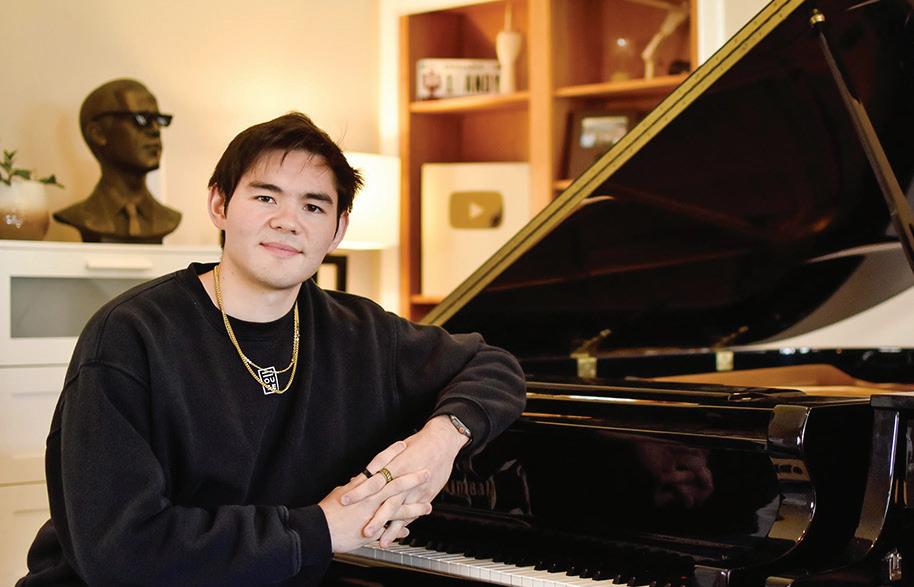
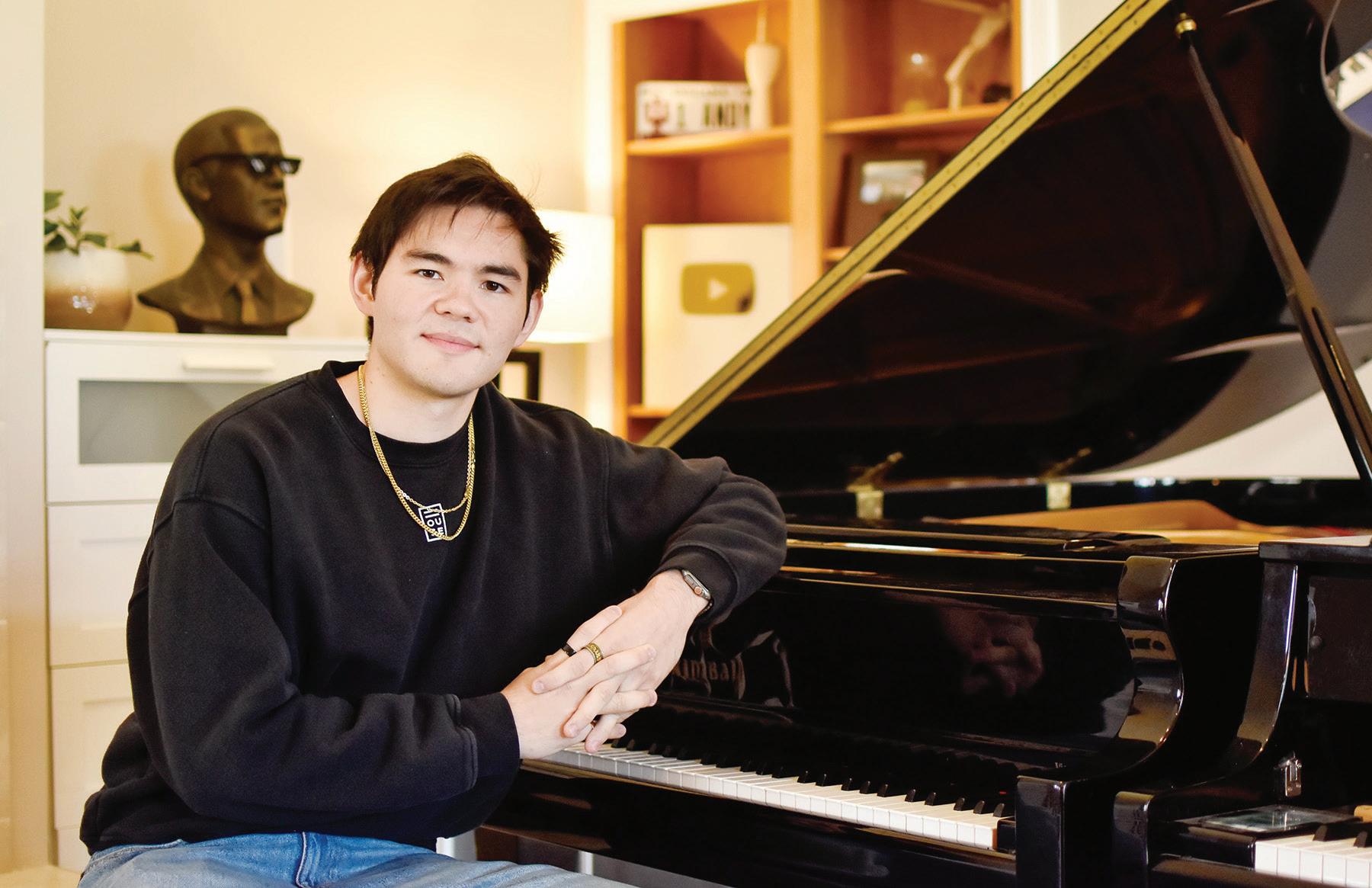
Andy Morris, 27, sits on the piano bench in Wright Quadrangle’s dining hall, a gray Indiana hoodie pulled over his head. His fingers begin to flutter across the keys, teasing out “Golden Hour” by JVKE.
Around him, students turn to find the music’s source. A video captures their shocked expressions that blossom into smiles.
People pull out their phones to record or twist to watch him play. Two employees holding trash bags stop to listen.
The shots change quickly. That’s how Andy keeps viewers engaged. And it works — the video is his most popular on TikTok with nearly 90 million views.
From the way his hands connect with the black and ivory keys as he rocks back and forth with the music, it’s difficult to guess he hated playing as a kid.
Andy’s come a long way from crying at the piano bench.
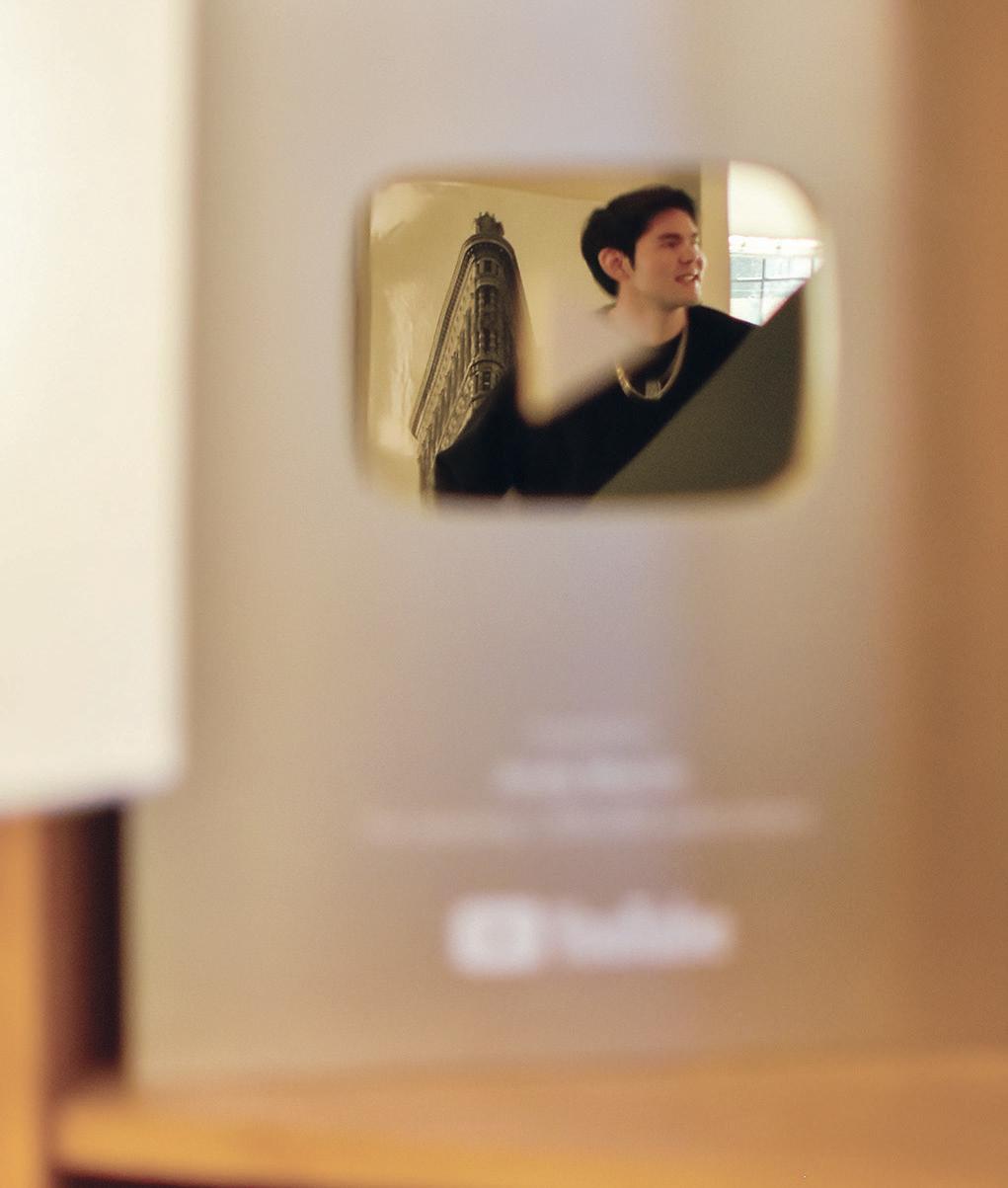
The Bloomington native touts two shiny YouTube play buttons and nearly 9 million followers across TikTok, Instagram and YouTube. He makes a living, and then some, from making and posting piano-based content.
But he didn’t always see this path for himself.
Andy’s brother, Roger Jr., was the one who begged their parents for lessons. His parents, Roger Sr. and Jianing Morris, decided to sign Andy up too when he was 5. Playing piano proved hard for him, Jianing said. He would cry when his teacher pointed out a mistake.
So, she told Andy he could quit and start back up when he was 7, the same age as Roger Jr. when he started piano.
“He ruined my life,” Andy joked about his brother.
Every Saturday, he said, his piano teacher would come to his house and stay for four hours, sometimes longer, to teach him and his brother. Only when they played a piece perfectly would they switch to a different one. His teacher would have dinner with Andy’s family, too.
Andy’s brother was very serious about piano, Jian-

He hated playing piano
ing said. But Andy did the bare minimum. He did state fair piano competitions, National Federation of Music Clubs, the Young Pianists Program at Indiana University’s Jacobs School of Music and performed in recitals every semester.
Andy didn’t care to win piano competitions, he said. That would mean he would advance to the next level and have to play more piano.
“He was happier when he lost,” Roger Sr. said.
Andy had stage fright. The pressure and stress were too much. To this day, he hates playing in front of people.
But by his junior or senior year of high school, he started enjoying piano. After over a decade of “pain and hard work,” he finally nailed the fundamentals, so he could have fun playing his favorite music.
Still, when Andy moved out to study information systems at IU, he stopped taking lessons. He’d play at least once a week on the Teter Quadrangle pianos, but that was all.
“I was just focusing on college, so it’s like, there’s not really reason to make me play piano anymore,” he said.
Andy was free.
Andy was 21, taking classes in Budapest in March 2020 when the IU Education Abroad office told him and his classmates they had five days to get back home. He booked his flight as fast as he could, unsure if he’d even be let back into the country due to the COVID-19 pandemic.
His senior year was online. He was holed up in his apartment for months with nothing but a piano.
Then, he did something he never thought he would do. He downloaded TikTok.
“At the time, everyone was making fun of it,” Andy said. “But when I downloaded it, I kind of got addicted to it.” Since there was so much cringe content on TikTok, he said, it didn’t matter what he posted. It was the first time he felt like he could put himself out there without care.
For six months, he said, his videos were “flopping,” or performing poorly online. But even when he got 100 likes on a post, he read every nice comment. He loved engaging with the comment
Now, that’s how he earns a living
section and making new videos from the audience’s suggestions.
Andy’s first TikTok video was of him playing bits of a few different songs, comparing what different people in his life wanted him to play.
Then, on Feb. 19, 2021, he posted a video titled “Playing bops that my boomer parents have never heard” featuring a Dr. Dre medley.
In it, Andy sits at a piano in a black striped beanie with the house still covered in Christmas decorations and hammers away at the keys as the camera pans to his dad’s furrowed brow.
It got 2.7 million views.
“That moment, I was kind of inspired to make more videos like that,” Andy said. “Where I was playing for people instead of just alone.”
He played in IU’s dining halls and the Indianapolis International Airport, capturing surprised reactions as he played popular songs like “As it Was” by Harry Styles, “The Winner Takes It All” by ABBA and Coldplay’s “Viva la Vida.” He made collaborations, sold merch, did brand deals.
It all snowballed from there.
Andy graduated from IU in 2021 with a degree in information systems, but he decided to go back to graduate school at IU for the same thing. He wanted a better job, to make more money. Something in technology was what he envisioned for his whole college career.
And it was going smoothly, until close to the end of his first semester of grad school.
He was taking a break from working late on a group project one day at McDonald’s. Andy had just had a whole cup of black coffee. He thinks that’s what made him start having a heart episode and panic attack — he’s still not sure what his heart condition is called.
“It felt like nothing I’ve ever felt before,” Andy said.
He collapsed to the ground. Someone called an ambulance. They put a defibrillator to his chest and shocked him. It was the most painful thing he had ever experienced. He had to get heart surgery afterward, which took him out of school for two semesters.
That’s when he started having enough time to make
content more seriously.
“It was such a blessing in disguise, even though my life sucked for a while after that,” Andy said. “It was definitely the universe telling me to focus on piano instead.”
That same year, Andy filmed a video with another creator for Halloween where they dressed up as Michael Myers and started playing the “Halloween” theme song. The other creator creeped up behind him and started dancing, and the video blew up.
“That’s when I got a message from ‘America’s Got Talent’ producers to basically do that whole thing on stage,” Andy said.
He never had to audition. There was one big problem, though — all the songs he played in the video were copyrighted, and AGT could only get the rights to one song. So, he couldn’t do a medley like in the original skit.
After five months, AGT was able to snag the rights to “A Thousand Miles” by Vanessa Carlton. That’s what Andy would play instead.
In April 2023, AGT flew Andy out to Los Angeles. He told his professors why he’d miss class.
They gave him an excused absence.
The producers wanted him to go up on stage without a word. He said they told him not to take his mask off.
“Everything is actually real, the judges have no idea what’s going to happen and the audience has no idea,” Andy said. “Except for the acts are all, like, very planned out.”
He said he was nervous, standing there waiting for the judges to tell him to start.
“Simon (Cowell) just kept asking me questions, like over and over again,” Andy said. “And I can’t say anything, I just like, shook my head.”
But it helped, having a mask on. He whipped a tarp off the piano on stage, sat down and began to play. And he messed up the notes.
The episode was shortened, he said, so his mistakes were cut out. But it’s clear they didn’t faze him from the way he confidently strikes each key and flourishes his arms during each pause. In the video, the cam-
era cuts to the audience’s shocked expressions. Then, the other performer, a dancer from LA, pops up behind the judges’ table.
“Spooked the shit out of them,” Andy said. He came up on the stage, also dressed as Myers. Andy switches from playing Bach’s Toccata and Fuge in D minor and jumps to “A Thousand Miles.” Terry Crews’ surprised face appears as the other performer starts dancing across the stage and the audience cheers.
In the end, the duo only got a “yes” from Sofía Vergara. Howie Mandel, Heidi Klum and Cowell all gave him “no’s.” Andy didn’t expect to advance to the next round — he was doing it for exposure and content. The video he posted on YouTube about it got 11 million views.
“That was a fun time,” he said. “I’m so glad we didn’t make it.”
In 2023, Andy started looking for jobs. His first offer was a tech consulting role in Ohio. It would have been 60-hour weeks with a salary of around $74,000: or, in other words, really, really unappealing. He had a few other interviews. After that, he stopped looking completely.
“I kind of had a moment where I was like, ‘I really don’t want to do this,’” Andy said.
He knew it was the right thing to do but said his decision was tough for his parents. His dad was “chill,” but his mom wanted him to get a job. She saw content creation and piano as his hobby, and she never wanted her boys to pursue piano as a career. But by that point, he was already making money from brand deals.
Brands started to reach out to Andy, asking him to play their music. Lots of video games asked him to play their theme music — a “Genshin Impact” deal earned him $50,000; “Clash of Clans” gave him $18,000 and “Raid: Shadow Legends” paid $12,000. He was also making money from YouTube AdSense. In 2023, he said, he earned $155,000 from social media.
He started making money per stream from Spotify, around $5,000 a month. He released piano covers of
popular songs, looking up sheet music to make his own arrangements. Occasionally, he’d have a violinist or a singer hop on the track.
“They, were, like, recorded on my iPhone speaker,” Andy said. “But people still listen to them.”
In 2025, he had over 22.4 million streams on the platform. His most listened-to song is a piano cover of “Cornfield Chase” from “Interstellar” with 21 million streams.
His parents came around to the idea of him being a content creator when he showed them how much money he was making. Jianing started to realize he could support himself when he bought his first car. Roger Sr. saw the amount of work he put into editing and planning the videos.
“See, mom, I can afford health insurance,” Andy said.
Jianing now checks his account almost every day. Andy doesn’t tell his parents when he posts, but Jianing finds out so she can send the videos to the family group chat. She likes to read the overwhelmingly positive comments.
“His music, for some reason, just touches you,” Jianing said.
Jianing recalled Andy turning to piano as a kid when he was angry or sad or emotional in any way. Andy said it doesn’t necessarily make him feel better, but it lets himself simply exist in that emotional state, like when crying or meditating. When he went through a breakup in 2023, he played a lot of sad music — but he hasn’t had to escape through piano since then. Despite the success of his social media, Andy acknowledges anything could happen.
“This can all just go away at any point,” Andy said. “Especially with AI, the TikTok ban, or just like, if I fall off really hard or people get tired of the concept. It would be over.” Brand deals are like the weather, Andy said. Recently, it’s been a lot slower. He’s cognizant of that and trying to gain more traction on Spotify.
He’s thinking about moving to LA to make content. For now, he’s just rolling with it.
And he’s grateful his parents didn’t
let him quit playing piano.
EMERSON ELLEDGE | IDS
Morris stands next to his desk where he edits his videos and other social media content March 29, 2026, inside his Bloomington home. His most popular TikTok video has almost 90 million views.
EMERSON ELLEDGE | IDS Morris plays the piano March 29, 2026, inside his Bloomington home. Though Morris posts his videos to millions of people, he said he doesn’t typically like performing for a live audience.
EMERSON ELLEDGE | IDS
Andy Morris sits at his piano March 29, 2026, inside his Bloomington home. Morris has nearly 9 million cumulative social media followers across three platforms.
EMERSON ELLEDGE | IDS Morris’s reflection is seen through his YouTube play button, commemorating 1 million subscribers, March 29, 2026, inside his Bloomington home. He now has more than 2 million subscribers on the platform.
SOFTBALL
Indiana’s offensive depth delivers series sweep
By Conor Banks conbanks@iu.edu | @conorbanks06
For much of this season, the top of Indiana softball’s batting order has carried the burden at the plate. Junior utility players Aly VanBrandt and Alex Cooper headline the Hoosiers’ lineup as their first two batters — a duo that ranks first and second on the team in hits, respectively.
Meanwhile, senior catcher Avery Parker, who typically bats third, is tied with VanBrandt for a team-leading 11 home runs.
But Indiana’s lineup depth showed against Purdue from April 10-12, with 10 different Hoosiers collecting a hit across the series. Indiana’s offense combined for 18 runs across three games, powering the Cream and Crimson to a series sweep over the Boilermakers at Andy Mohr Field in Bloomington.
In its weekend opener April 10, Indiana faced junior Julia Gossett in the circle. Entering the series, Gossett owned a team-low 2.68 ERA and earned back-to-back Big Ten Pitcher of the Week honors earlier in the season.
Gossett held the Hoosiers scoreless in the first, before senior outfielder Ellie Goins launched a solo home run — her sixth of the season — in the second inning. After
Goins brought in the game’s first run, the Boilermakers responded with a score of their own two innings later, knotting the game at one.
VanBrandt — Indiana’s leader in RBIs — pushed Indiana back in front by a score in the fifth with a solo home run to right field. However, it was freshman utility player Josie White who helped clinch the victory April 10.
White entered the game in the sixth inning, pinchhitting for senior outfielder Cassidy Kettleman.
Entering the game April 10, White had just four hits on the season. But the freshman delivered, lining a twoRBI single as the Hoosiers claimed a 4-1 victory.
After hitting two home runs April 10, the Cream and Crimson did not rely on the long ball April 11. Instead, the Hoosiers tallied 12 hits, prioritizing quality contact.
“The conviction’s always about team, right?” Indiana head coach Shonda Stanton said April 10. “Like what are we doing to help the team win? And it’s about hitting the ball hard and then how to hit the ball hard.”
After allowing a run to Purdue in the opening frame, sophomore catcher and infielder Josie Bird roped an RBI single in the bottom of the first to even the game. The following inning, Van-
Brandt hit a two-RBI single to extend the Hoosiers lead to 3-1. Like White did in the series opener, Kettleman contributed from the bottom of the lineup April 11. The senior picked up two hits and was hit by a pitch with the bases loaded in the third to bring in Indiana’s fourth run of the game.
“I just know I have to do my job, especially being towards the bottom of the lineup,” Kettleman said April 11. “I just want to try to get AVB (Alex VanBrandt) especially back up top, just because she’s one of our main batters right now.”
With Kettleman getting on base in the third inning, VanBrandt stepped into the batter’s box with the bases loaded. VanBrandt hit a sacrifice fly-out to left field to secure another run en route to a 5-1 win.
Looking to close the series sweep April 12, Indiana notched its highest run-output of the weekend. Sophomore infielder Madalyn Strader hit a solo home run to right center in the second frame to begin the scoring.
After going hitless in the first two games of the series, Parker earned a shot at redemption with a bases loaded situation in the third inning April 12.
“And I knew I was due,”

Parker said Sunday. “I’ve been working hard all weekend to get back in my groove.”
Parker tied the program’s career home run record with 45 against Butler University on April 8. On a pitch in the third inning Sunday, Parker hit a ball that ended up just left of the left field pole. While she did not get her anticipated record-breaking homer, Parker roped a bas-
es-clearing double to right center field. This extended the Cream and Crimson’s advantage to 4-0.
“That was a game changer there,” Stanton said of Parker’s double. Parker’s hit set the tone for the remainder of the game. Bird and sophomore outfielder Hannah Haberstroh each homered, while VanBrandt and Strader picked up RBIs to lead Indiana to a 9-0 victory. Indiana’s offensive outburst against Purdue — powered by contributions up and down the lineup — underscored a common trait in 2026.
“That’s our identity,” Stanton said April 12. “Hitter’s hit.” Following its 3-0 weekend, Indiana sits at 31-10 overall and 10-5 in Big Ten play.
Indiana’s offensive explosion erases 5-run deficit
By Will Kwiatkowski
wdkwiatk@iu.edu | @wkwiatkowski_15
Indiana baseball record-
ed a 17-12 win over Indiana State University on April 14 in Terre Haute. The Sycamores jumped out to a 5-0 lead in the first inning, but the Hoosiers flipped the game over the final eight frames.
After a walk and a single to open the bottom of the first, the Sycamores broke the game open with back-toback home runs. A three-run home run from junior first baseman Caden Miller was followed by a solo home run from senior infielder Nick Sutherlin to push its lead to four. After a strikeout, senior infielder Caleb Niehaus added a home run of his own, extending the lead to 5-0 before Indiana could settle in.
The early deficit could have buried the Hoosiers.
Instead, Indiana responded immediately in the sec-
ond inning, and the offensive explosion did not stop.
Sophomore shortstop Cooper Malamazian started the comeback with a solo home run in the second inning. Moments later, sophomore infielder Will Moore launched a two-run home run that cut the deficit to 5-3.
The Hoosiers continued to chip away in the third.
Sophomore outfielder Cole Decker added a solo home run, bringing Indiana within one score.
Indiana completed the turnaround in the fourth inning. Redshirt junior outfielder Ayden Crouse and sophomore outfielder Caleb Koskie each hit solo home runs, flipping a 5-0 deficit into a 7-5 lead. Still, Indiana’s bats were not done.
After the home runs, the Hoosiers kept the pressure on. Redshirt freshman catcher Brayden Ricketts and Decker followed with
MEN’S BASKETBALL
Markus Burton commits to Indiana
By Nathan Shriberg naashri@iu.edu | @nshriberg
Former University of Notre Dame guard Markus Burton committed to Indiana men’s basketball in the transfer portal April 13, per On3’s Joe Tipton. The 6-foot junior guard played just 10 games in 2025-26 due to an ankle injury suffered against Texas Christian University on Dec. 5. Prior to his injury, Burton was Notre Dame’s leading scorer with 19.9 points per game. He scored 20 or more points in five of the Fighting Irish’s first nine games of the season.
Burton was a three-star recruit coming out of Penn High School in Mishawaka, Indiana, as the state’s 2023 Mr. Basketball. Once he arrived in South Bend, he had an immediate impact. He started 33 games in his freshman season and led all ACC freshmen with 17.5 points per game. Burton’s stellar debut season earned him Third Team All-Atlantic Coast Conference honors and ACC Rookie of the Year over then-Duke University guard Jared McCain. As a sophomore, Burton’s scoring continued to progress. He upped his output to 21.3 points per game, which led the ACC. Additionally, his 3-point shooting percentage
jumped from 30% to 37.5% on 4.9 attempts per contest. Burton’s sophomore campaign was highlighted by a career-high 43 points in a quadruple overtime matchup against the University of California, Berkeley, in March 2025. He was named Second Team All-ACC following the career year. Coming off injury, Burton will add a dynamic scoring presence to the Hoosiers’ back court that has been depleted by departures this offseason. Fifth-year senior guard Lamar Wilkerson led the team with 20.9 points per game but will depart along with five other senior players. Additionally, six Hoosiers have entered the transfer portal, leaving freshman forward Trent Sisley as the only returning scholarship player. Burton is the Hoosiers’ third transfer commit and will headline a new look Indiana roster. He’ll be joined at his position by sophomore guards Jaeden Mustaf and Darren Harris in addition to incoming freshman guard PrinceAlexander Moody. Forwards Vaughn Karvala and Trevor Manhertz will also arrive as part of second-year Indiana head coach Darian DeVries’ first true freshman recruiting class.
singles to extend the inning. After Moore was walked to load the bases, freshman catcher Owen ten Oever delivered a two-RBI single up the middle. An Indiana State throwing error in the outfield allowed Moore to score, capping a five-run inning that gave Indiana a 9-5 lead.
Indiana continued to build on its advantage, adding three runs in the fifth inning and three more in the sixth to stretch the lead to 15-5, completing a dominant stretch of 15 unanswered runs.
Indiana State put together a response of its own beginning in the sixth inning.
The Sycamores scored four runs in the sixth inning and added a run in each of the seventh, eighth and ninth innings. Despite the late push, it wasn’t enough to match Indiana’s offensive explosion.
By Sean McAvoy semcavoy@iu.edu | @sean_mc07
As picks went by with other names called, former Indiana women’s basketball guard Shay Ciezki waited through all 45 picks to not be selected during April 13 night’s WNBA Draft. However, Ciezki will continue her basketball career after signing with the Phoenix Mercury on April 14, according to an X post from The Daily Hoosier. The 5-foot-7 Ciezki finished her senior season in Bloomington averaging 22.8 points, 3.8 rebounds and 3.1 assists per game. Ciezki shot 52.6% from the field, 44.6% behind the 3-point arc and 90.8% from the free throw line.
She was one of two players this season to join the 50-40-90 club — along with Nebraska sophomore guard Britt Prince — and became the second player in NCAA women’s history to shoot those percentages and average over 20 points per game.
The historic season earned Ciezki an honorable mention on the 2025-26 U.S. Basketball Writers Association Women’s All-America Teams. The Buffalo, New York, native was selected to the All-Big Ten First Team by the media and the AllBig Ten Second Team by the league’s coaches. Ciezki also compiled two Big Ten Player of the Week awards during the season.
The Hoosiers answered again in the seventh, continuing their stretch of scoring in each inning after the scoreless first frame.
Indiana added one more in the eighth. Malamazian led off with a triple and later scored on an RBI double from junior catcher T.J. Schuyler, pushing the lead to 17-10.
Indiana State responded in the bottom half, scoring once on an RBI single from senior outfielder Emil Estrella to cut the deficit to 17-11. With runners on and momentum building, redshirt junior right-hander Jacob Vogel worked out of the jam with a strikeout to strand three runners and keep Indiana in control.
The Sycamores added one more run in the ninth to make it 17-12, but the Hoosiers closed the contest to secure the victory.
The Hoosiers finished 21
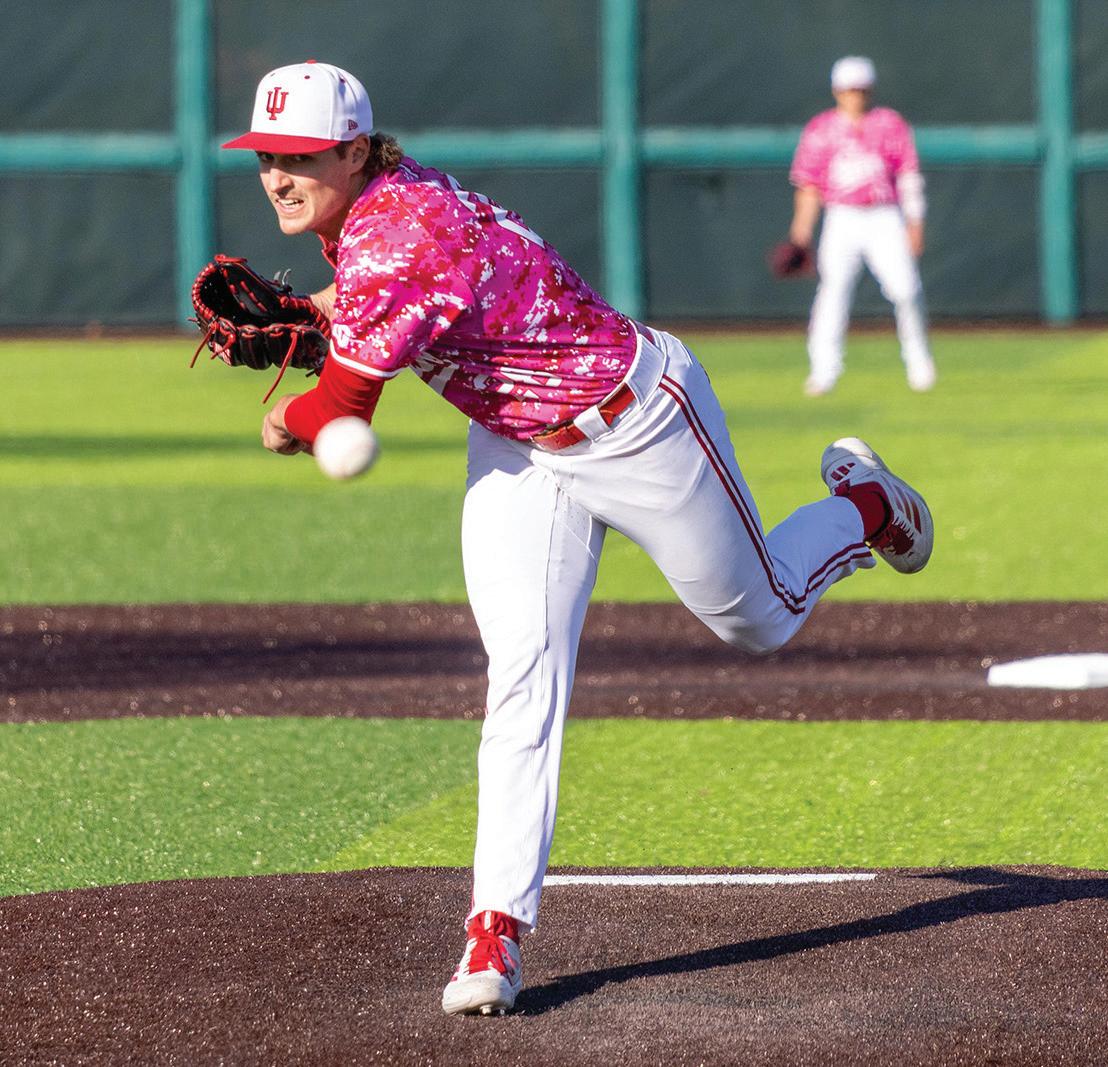
Ciezki joined Indiana after playing her first two collegiate seasons at Penn State. During the 2022-23 season, Ciezki started 29 games for the Lady Lions, averaging 11.8 points per game. She then played 35 games during her sophomore year, averaging 11.5 points per contest.
Throughout her first season in Bloomington, Ciezki played and started in all 33 games for the Hoosiers, averaging a then-careerhigh 34 minutes per game. She averaged 11.8 points per game and improved her field goal percentage to 46.3%.
Entering the 2025-26 season, Indiana saw nine players leave the team in the offseason via the transfer portal or graduation. One such player was Yarden Garzon, who transferred to Maryland. Garzon also did not hear her name called during the WNBA Draft, but was signed with the Mercury on April 14. She averaged 12.5 points, four rebounds and three assists per game during her lone season in College Park, Maryland.
As the focal point for Indiana’s offense this season, Ciezki’s usage percentage — an estimate of the percentage of team plays a player was involved in — jumped to 30.9% after an 18.9% mark her junior year.
Now, Ciezki begins the next chapter of her basketball journey. The Mercury
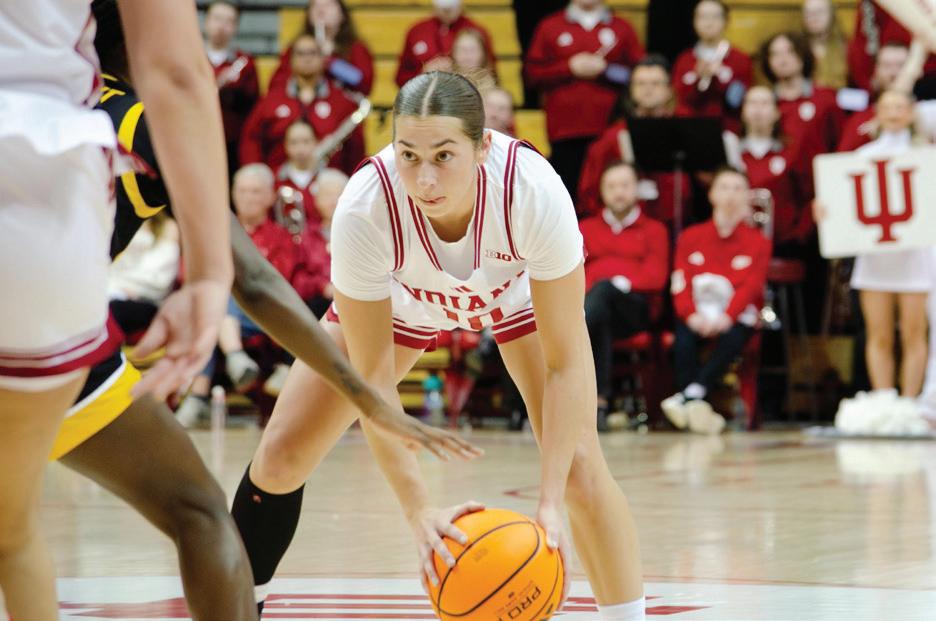
finished the 2025 WNBA season 27-17, gaining the No. 4 seed during the league’s playoffs. Phoenix then advanced past the New York Liberty in the first round and the No. 1-seeded Minnesota Lynx in the semi-finals. However, the Las Vegas Aces swept the Mercury in the WNBA Finals. After finishing the 202526 campaign with an 18-14 overall and a 6-12 record in Big Ten play, Indiana now looks to the transfer portal and its incoming freshmen class to help fill any gaps left by outgoing players. The Hoosiers lost freshman guard Nevaeh Caffey after she committed to the University of Missouri on April 12. Sophomore forward Faith Wiseman, sophomore guards Phoenix Stotijn and Chloe Spreen
plus junior forwards Edessa Noyan and Jade Ondineme also entered the portal. Indiana has picked up two players from the transfer portal: forwards Alisa Williams and Jessica Petrie. Williams will have one year of eligibility remaining after playing in all 32 games for Iowa State University last season. Petrie committed to the Hoosiers on April 13 after starting 23 games for Nebraska last season, averaging 11.3 points per game. The NCAA transfer portal will remain open until April 20. The Hoosiers will also bring in ESPN’s No. 8 recruiting class with four new players. The
for 45 (.467) at the plate and were especially effective in key moments, going 7 for 15 (.467) with two outs.
BRIANA PACE | IDS
Graduate student left-handed pitcher Conner Linn throws the ball during the game against Ball State University on April 7, 2026, at Bart Kaufman Field in Bloomington. The Hoosiers defeated Indiana State University 17-12 on April 14.
Phoenix Mercury sign star Shay Ciezki
Indiana softball wins series against Purdue

1 2 3
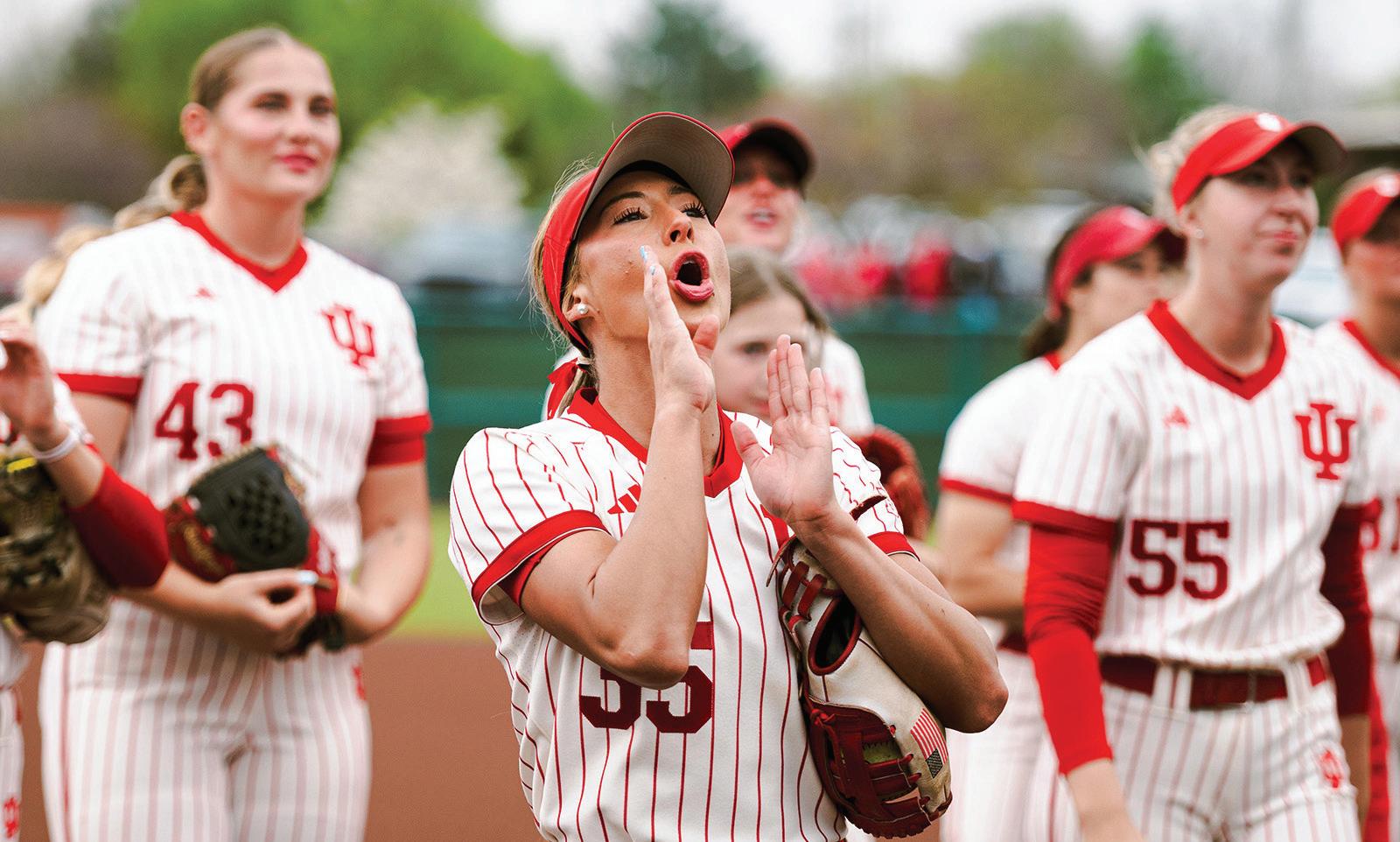
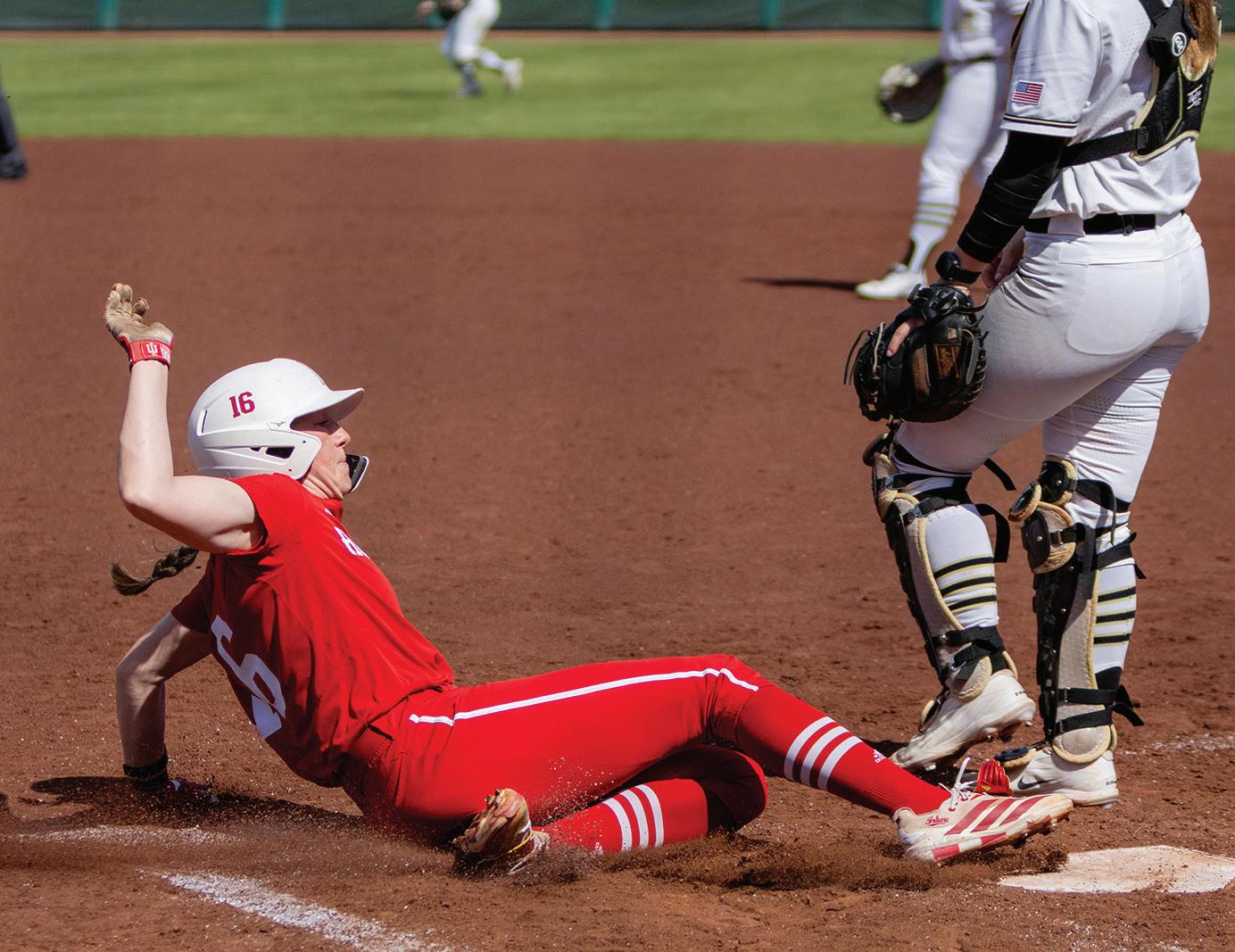
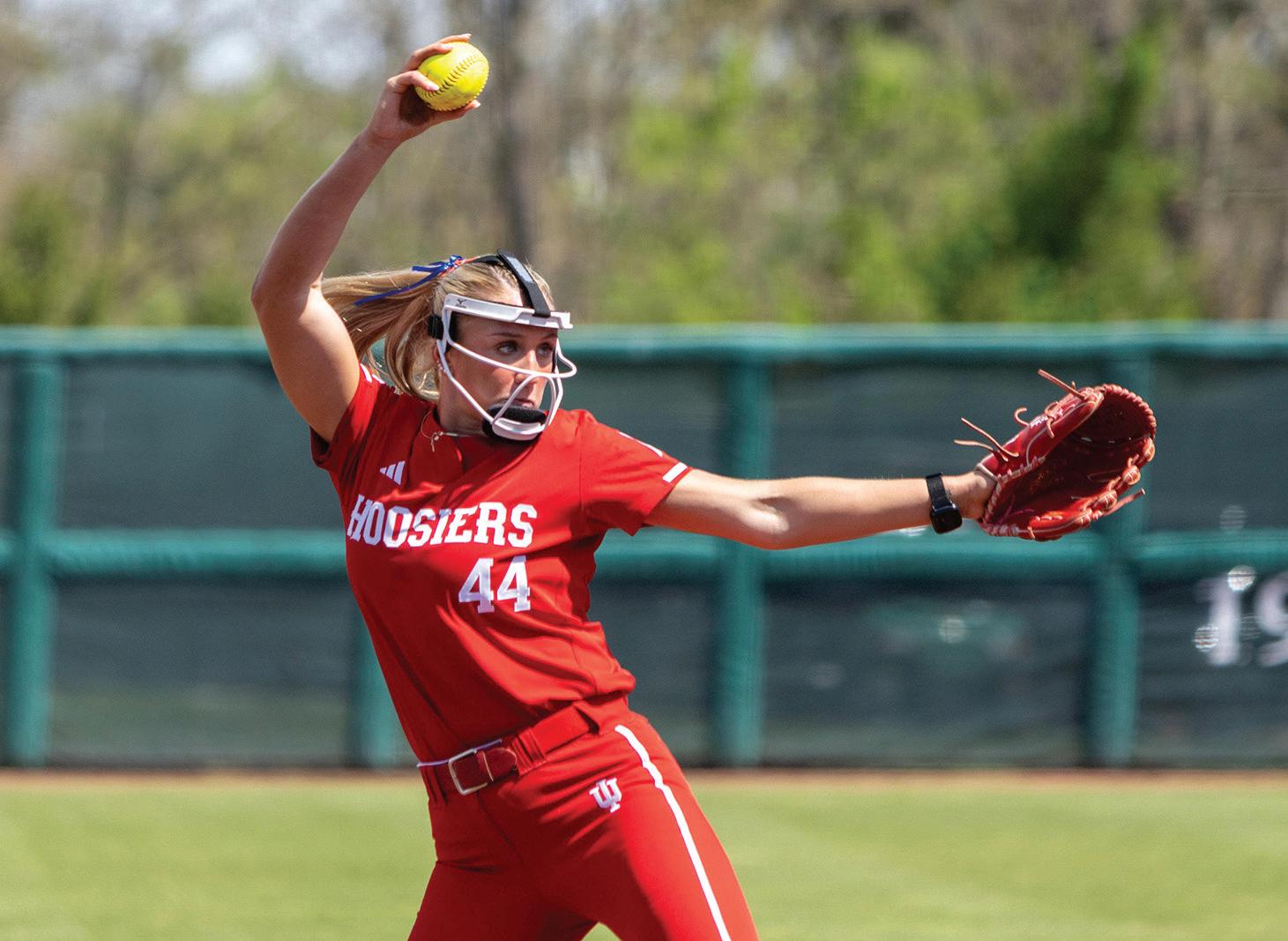
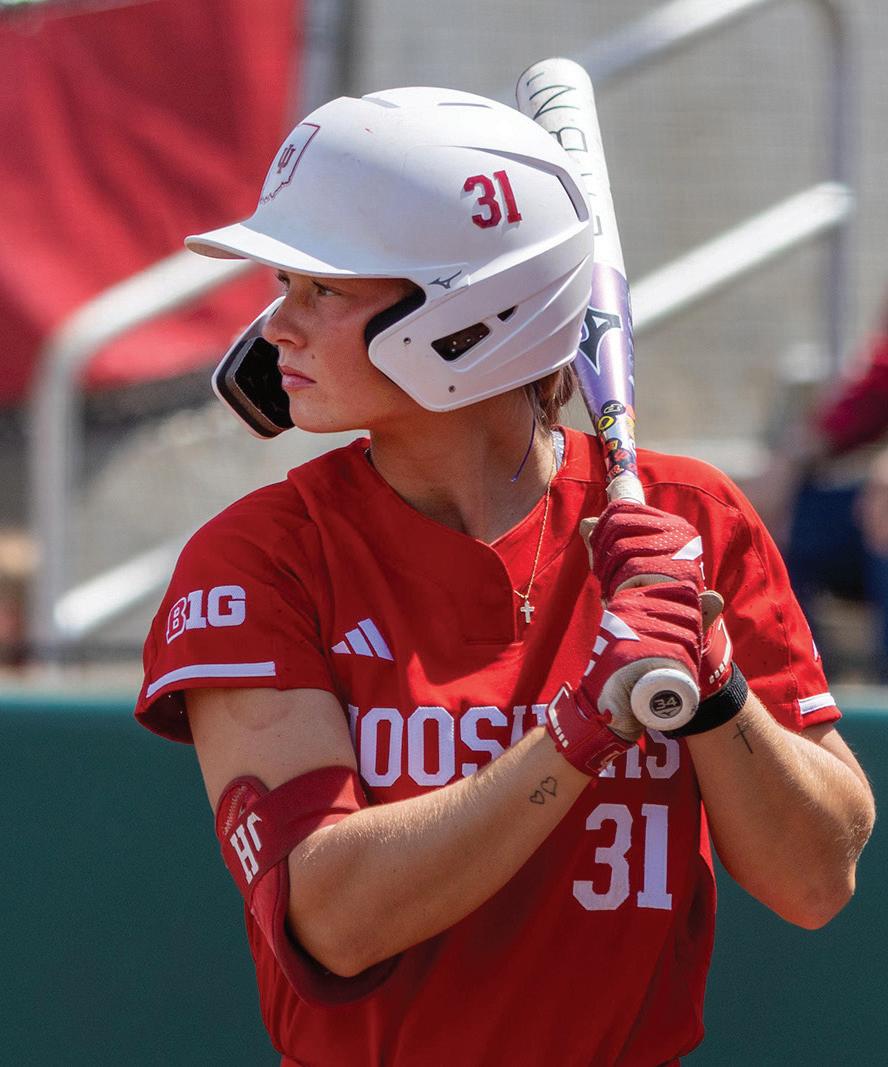
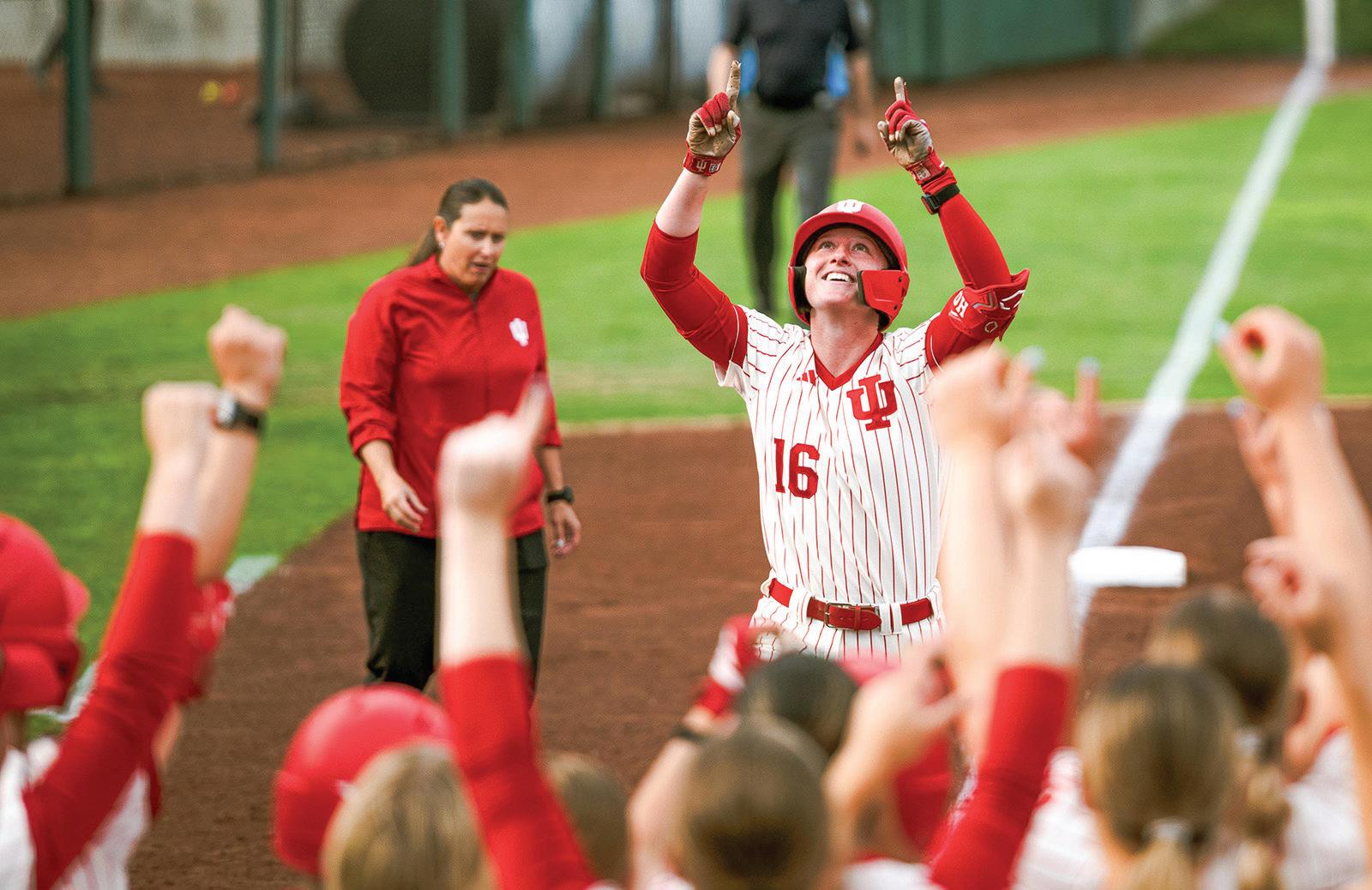

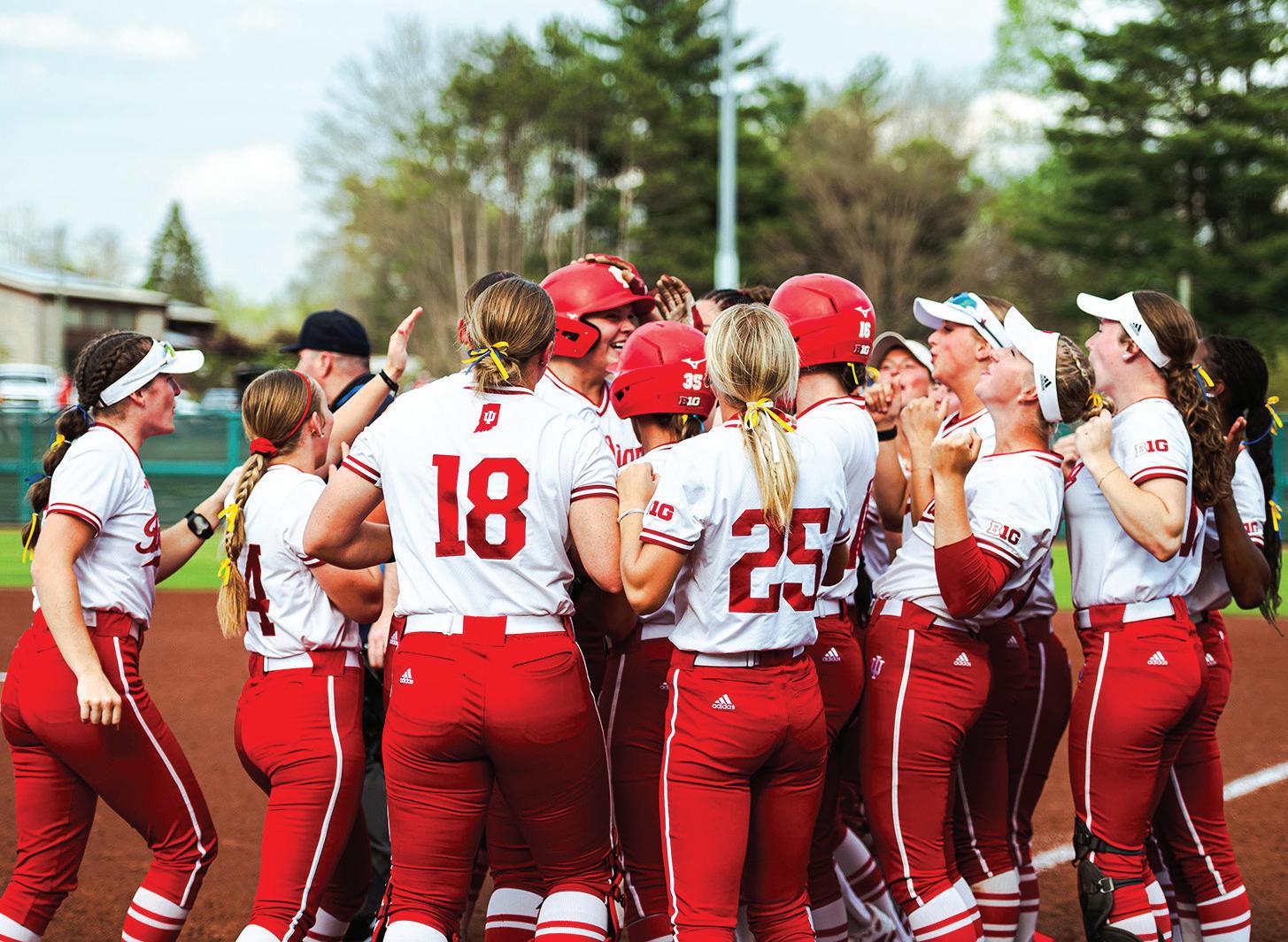

Women’s tennis loses to Ohio State on senior day