IDS
By Molly Gregory mogrego@iu.edu | @mollygregory22
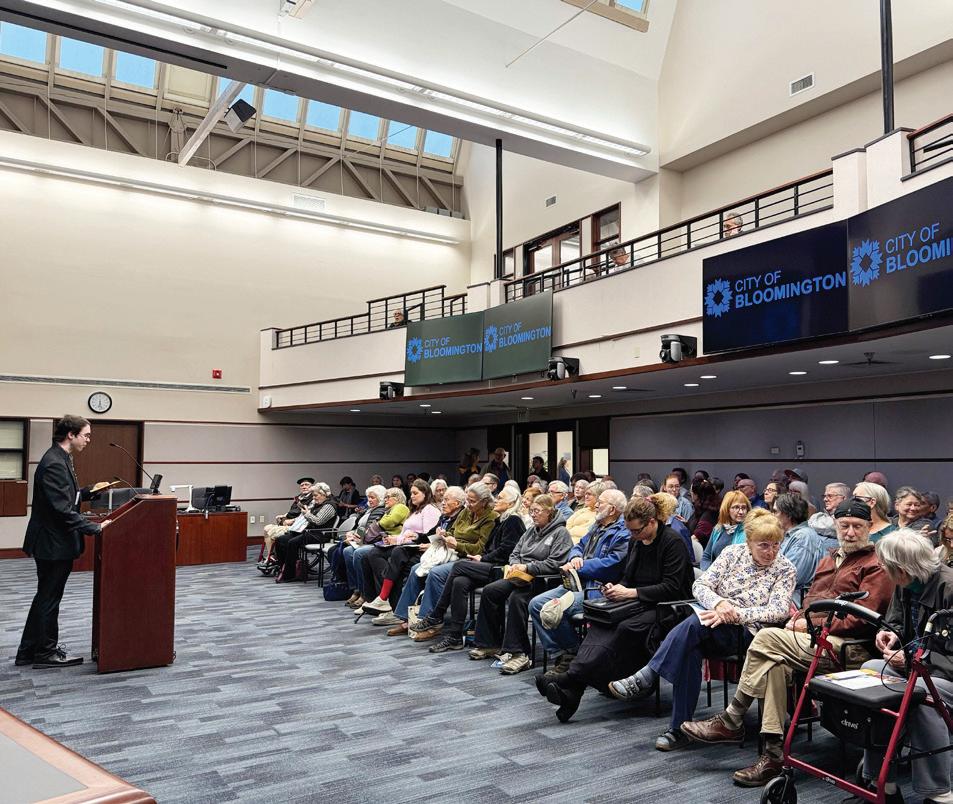
It was standing room only at Rep. Matt Pierce’s town hall Oct. 27 at City Hall in Bloomington.
Pierce, the democrat who represents Bloomington in the Indiana State House, held the town hall to invite constituents to discuss redistricting.
Indiana Gov. Mike Braun announced earlier that day state legislators will be called to a special session Nov. 3 to redraw Indiana’s congressional map five years early. Pierce scheduled the town hall prior to the announcement, but Braun’s summons sharpened the event’s focus.
Redistricting is the process of redrawing electoral district boundaries after the U.S. census every 10 years. The districts are drawn by the state legislature, but if both chambers of the legislature cannot agree on a new map, a backup commission must approve the new districts.
Indiana was not due to redistrict until after the 2030 census, but President Donald Trump’s administration has pushed Indiana Republicans to ask for a middecade redo to give Republicans more power over the House of Representatives.
Pierce opened the town hall by saying he does not believe many Indiana Republicans truly support redistricting.
“I don’t think they really want to do it,” Pierce said. “I think they know it’s wrong.”
Vice President JD Vance has visited Indianapolis twice to discuss redrawing the districts. Earlier this summer, Vance invited Republican leaders from Indiana to attend the State Leadership Conference in Washington, D.C., where they discussed party strategy and key issues including redistricting.
Pierce said some representatives may be hesitant to defy Vance because they are afraid of losing the White House's support ahead of Indiana House primary races in 2026.
“There are a lot of people who are like, ‘I don't want to do it. Maybe I won't vote for it, but I don’t want to get out there and make myself a target and have all the stuff coming at me,’” Pierce said.
After his opening statement, Pierce fielded questions from an audience of around 100 people. An attendee asked him why Indiana Republicans are unable to resist “a bribe” from Trump, and Pierce said it was “a mystery.”
“Do you think the Republicans realize they are annihilating democracy?”
another attendee asked.
In response, Pierce said he thinks Republicans are concerned about “the look,” and that they do not have a resolute way to justify redis-
By Ian Collier icollier@iu.edu
The U.S. Department of Agriculture announced last weekend that Supplemental Nutrition Assistance Program benefits will not be distributed in November, according to a banner published on its website.
For the 7,697 Monroe County residents who rely on SNAP, the lack of benefits could mean an increased reliance on food banks.
tricting.
“I think that they're conflicted because they can't think of a good way to explain what they're doing, other than just, you know, a sheer, naked power grab,” Pierce said.
The special session Pierce said the special session could last up to 30 days, but if the legislature is able to bypass the required three separate reading days with a two-thirds vote, the new maps could be voted on during the first day. Republicans have the super majority in the state House, so the day-of vote is a possibility.
"2025 is not an election year. To see so many people paying attention to something that’s going to be this pivotal is really exciting, and it makes me cautiously optimistic for higher engagement next year in 2026."
Chrissie Geels, Monroe County Democratic party chair
Normally, the governor would not call for a special session unless he knew he had the votes to pass the redraw, Pierce said. However, Reports from the morning of Oct. 27 said the push for redistricting still does not have enough votes to pass.
“I really think that they're probably a few votes short in the Senate of what they really need,” Pierce said. “And they're hoping that once they get into session and the focus gets on it, that essentially, that kind of MAGA base of primary voters will really start pressuring the people.”
Pierce said he thinks calling for a special session is a strategy from the White House.
“They’ve concluded that the best way to pressure the Republicans who said they don't want to vote for it is to get them into a session where the hot lights are on them and force them to put votes up on the board, because then they will be on record,” Pierce said.
Chrissie Geels, Chair of the Monroe County Democratic Party, said Oct. 27 that MCDP would host a phone banking and letter writing “party” from 5-8 p.m. Oct. 28. to encourage state legislators to vote against redistricting.
“I was heartened to see so many people turn out,” Geels said. “2025 is not an election year. To see so many people paying attention to something that’s going to be this pivotal is really exciting, and it makes me cautiously optimistic for higher engagement next year in 2026.”
The government shut down Oct. 1 after Congress couldn’t agree on a new federal budget bill. As a result, funding to the USDA, which handles SNAP benefits, has been halted. An Oct. 10 letter from the USDA directed state agencies that distribute SNAP benefits to not transfer November benefits to users’ electronic benefit transfer cards, which they use to spend SNAP funds.
The USDA won’t receive new funds to provide SNAP benefits until the shutdown ends. The department used carryover funds from the previous fiscal year to fund SNAP through October.
According to the monthly management report from Indiana Family Social Services, which manages SNAP funding, 571,594 Hoosiers received SNAP benefits in September, for a total of $111,460,740 in benefits issued across 273,867 Indiana households.
Feeding Indiana’s Hungry, a non-profit that connects a large network of food banks, is bracing for the change in November.
Executive director Emily Weikert-Bryant said the government shutdown has deregulated some federal employees' paychecks, as well as people who receive SNAP benefits.
“Our folks are able to adapt quickly to meet the moment, but during a prolonged shutdown, food
banks and meal programs will face increased demand as families navigate paycheck disruptions and high food prices and now likely not having SNAP benefits to help with their grocery budget,” Weikert-Bryant said. Weikert-Bryant said food banks were already in need of more resources before the shutdown.
“We are pushing through resources that we have,” Weikert-Bryant said. “We are looking for more resources, and we're doing all that we can to ensure that our neighbors have what they need.”
The Bloomington Township Trustee, which manages a food pantry for eligible residents, is also expecting a larger workload due to the loss of SNAP benefits.
Trustee Efrat Rosser said the township was already under strain with Bloomington residents losing SNAP benefits under the One Big Beautiful Bill Act, signed by President Donald Trump on July 4.
“We were already seeing more people coming to us in recent months, anyone like refugees and certain
immigrants have lost their SNAP benefits,” Rosser said.
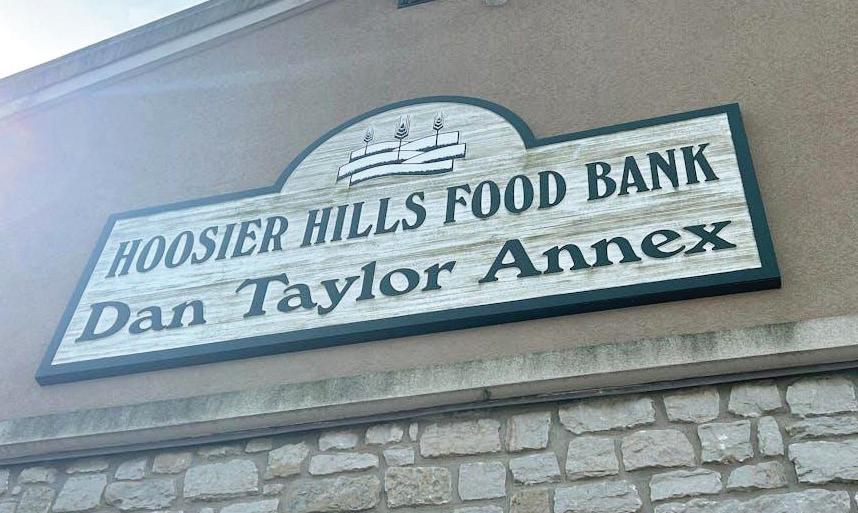
Hoosier Hills Food Bank, an organization that gathers and distributes food to nonprofits in Brown, Lawrence, Orange, Owen, Martin and Monroe counties, is bracing itself for a larger workload, as over 16,000 people in their jurisdiction will be without SNAP benefits.
“The government shutdown is placing an extreme burden on food-insecure Hoosiers and on the charitable food assistance system,” HHFB CEO Julio Alonso said in a statement Oct. 28. “We are facing a potential crisis that will change the dynamics of our discussion from food insecurity to actual, literal hunger.”
According to the statement, HHFB plans to spend nearly a quarter-million dollars on food purchases in November to counter the effects of the government shutdown, which amounts to about 275,000 meals. Alonso says their aid is not a sustainable fix to food insecurity, as SNAP benefits provide nine meals for every one HHFB provides.
“Only as a community
can we get through this, and we still need help to do so, but make no mistake – we will get through this,” Alonso said in HHFB’s statement. A coalition of 25 states including California, Washington, and Massachusetts filed a lawsuit Oct. 28 against the USDA and the Trump administration over the interruption of benefits and the refusal to use SNAP’s contingency fund to cover the loss.
“USDA’s claim that the SNAP contingency funds cannot be used to fund SNAP benefits during an appropriation lapse is contrary to the plain text of the congressional appropriations law, which states that the reserves are for use ‘in such amounts and at such times as may become necessary to carry out program operations’ under the Food and Nutrition Act of 2008,” the lawsuit reads. The lawsuit requests a temporary restraining order that allows the budget from the contingency plan to pay out SNAP benefits and block the USDA’s withholding of benefits.
Students organized a faculty debate Tuesday on technological advancement
By Ella Curlin elcurlin@iu.edu
Two deans debated the effects of technology on world peace to a crowd of about 90 people Oct. 28 during "The Great Faculty Debate,” an event organized by student leaders at the Hamilton Lugar School of Global and International Studies.
Executive Associate Dean of the HLS David Bosco and Isak Nti Asare, assistant dean for undergraduate education and student affairs, discussed whether technological advancements including AI, surveillance technology, social media and satellites would contribute to world peace.
Student ambassador Makenzie Smerud said the event was a test run for HLS student leadership, who hope to hold more faculty debates in the future.
Attendees lined up along the hall of the Global and International Studies Building 30 minutes before the event for a buffet dinner. Katherine Ntiamoah, HLS director of policy engagement and strategic partnerships, brought her 3-yearold son and 5-year-old daughters.
HLS senior Faith Shands, who interns with Asare, said colleges everywhere should strive to bring debates back to campuses.
“It is so important for
college campuses and just students in general, to be able to openly debate both sides of an issue without it resulting in polarization,” Shands said.
During the debate, Asare and Bosco took turns answering questions posed by the HLS student ambassadors, who acted as moderators. Bosco took the side against technology, arguing that technology will fail to bring world peace. Asare argued that if humans use technology carefully, it will bring advancements to help improve society.
The questions included an initial response of a minute and a half for each speaker and a 30-second rebuttal period for one speaker per question.
Asare and Bosco discussed topics related to technology’s impact on world peace, including the threat of cyberattacks, the use of warfare technology in Ukraine and Gaza, the International Criminal Court’s use of satellite data or video and the destabilizing impact of political polarization and privacy on social media.
“It was awesome, it was so educational,” said Teagan Tingley, a cybersecurity and global policy major, said.
“I actually have a class with Isak, and so, like, a lot of the concepts that were talked about in that class, I saw used in the debate to-
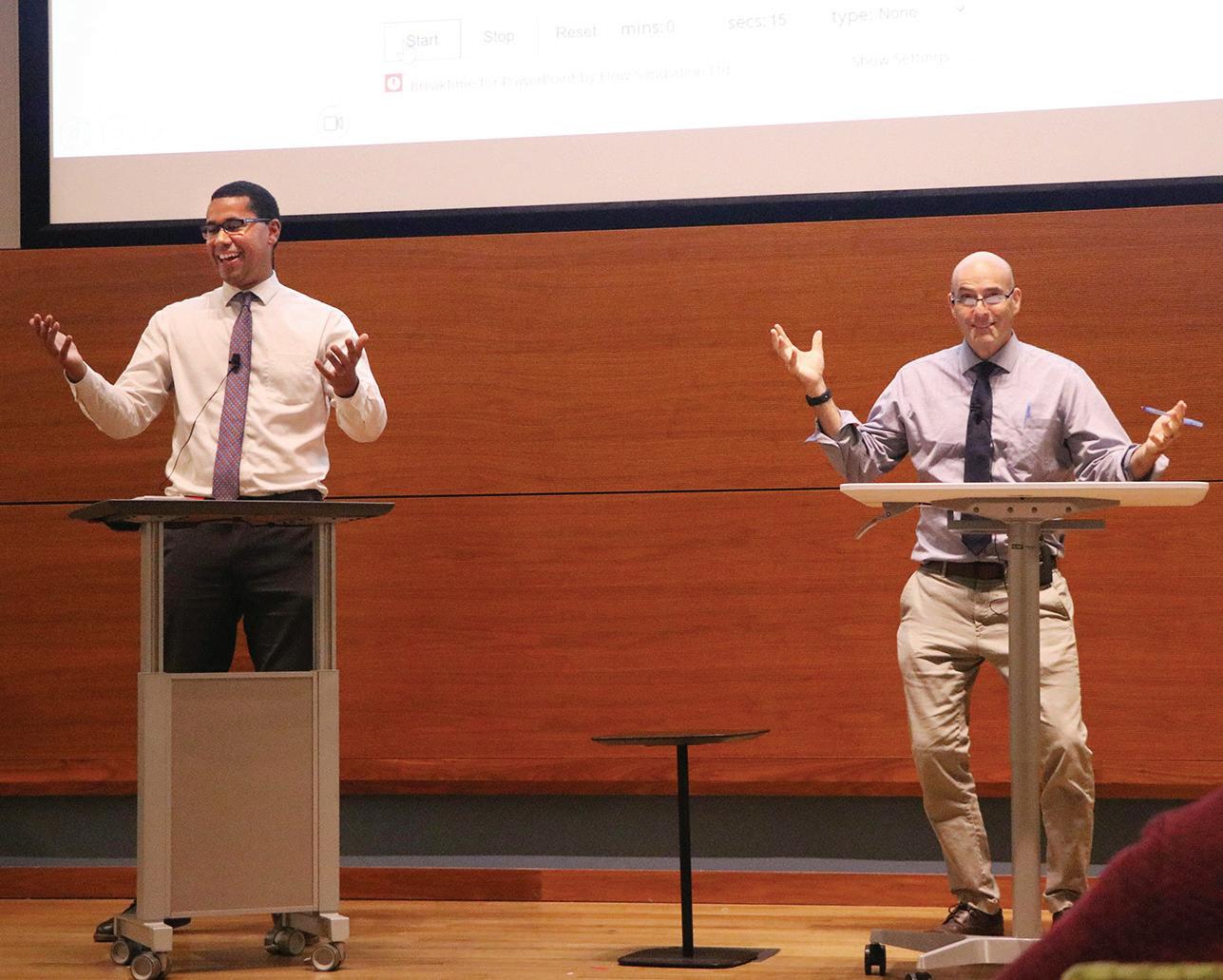
day.” Throughout the debate, Bosco and Asare frequently agreed with each other, conceded on key points or joked with each other and moderators.
Bosco said the debate was a great opportunity to demonstrate healthy civic engagement.
“We were able to show like, how do you have good conversation, you know, about things where you might have some agreement, might have some disagreement,” Bosco said.
“And I think it was a really good model, for, you know, just intellectual engagement on something of huge importance, right?”
After a round of questions from attendees, the moderators wrapped up the debate with a "lightning round" of quick questions about casual topics like children’s television, cornbread and Taylor Swift. HLS senior Chase Nattkemper said the debate was a valuable opportunity for students to learn about critical topics like the AI industry’s influence on politics from some of IU’s most intelligent faculty.
“I think it helps students think critically about this, and I think it motivates
dents go out make sure that there's change, especially
By Elizabeth Schuth ekschuth@iu.edu
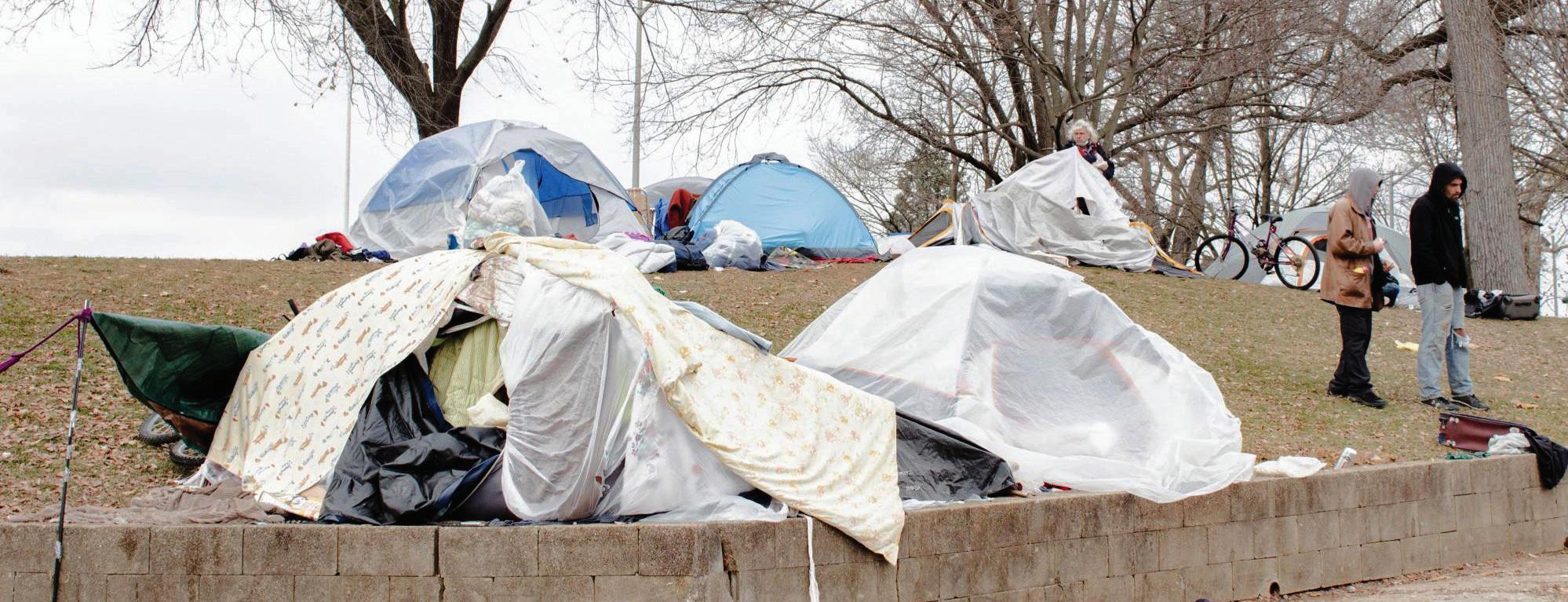
As colder weather creeps in, local shelters and resources for the homeless community across the city become more strained. There are currently around 300 homeless people in Bloomington, according to a 2025 Point-in-Time Count report. Here are a few ways to support the local homeless population in the upcoming winter months.
Local events and drives
For those with extra winter supplies looking to donate, there are several supply drives happening this season in Bloomington. Trinity Episcopalian Church is collecting donations alongside St. Thomas Lutheran and First Christian Church. The churches are collecting coats, sweaters, hats, gloves,
scarves and socks, which will be available for free from 8 a.m. to 1 p.m. Nov. 8, Trinity Episcopalian volunteer Millie Moran said. Throughout the winter, the National Union of the Homeless is hosting a drive for the following items: - Tents - Tarps
- Tent stakes
- Clean plastic sheeting or cardboard
- Tent flooring, yoga mats or foam
- Clean rugs, 5-by-5-feet or larger preferred
- Sleeping bags, blankets and bedding, especially outdoor and winter-rated
- Coats, winter overalls, boots, gloves, hats and scarves
- Long-sleeve shirts, pants, underwear, socks and shoes
- Heaters, propane, firewood and hand sanitizer
- Camping toilets and powder
- First aid supplies - Hot cocoa, coffee and tea
- Old prescription and reading glasses
- Can openers
Donations can be arranged by direct messaging the organization on its social media on Instagram @INUnionOfTheHomeless.
Food banks and kitchens
Community Kitchen of Monroe County provides a sit-down dinner and cold carryout meals from 4-6 p.m. Monday through Saturday. The organization also partners with local schools to provide low-income and food-insecure schoolchildren with nutritious food over the weekend.
About 11% of people served in the kitchen are homeless, Vicki Pierce, ex-
ecutive director of Community Kitchen of Monroe County, said. The kitchen relies on about 16 volunteers daily to operate, and it collects monetary and food donations. Those interested in volunteering should call 812-332-0999. More information on food and financial donations can be found on its website.
“When you support Community Kitchen, you’re actually supporting the community’s most vulnerable populations,” Pierce said.
The Salvation Army of Bloomington has a community food pantry for canned goods and non-perishables. The pantry is open from 12:30-3:30 p.m. Tuesdays and 12:30-6:30 p.m, Thursdays at 111 N. Rogers St. To support Salvation Army, monetary donations can be given on its website. The group is also looking for
volunteers to be bell ringers during the Christmas season or to help run the thrift store and food pantry. Volunteers can sign up on its website.
Local shelters Beacon has a variety of services, including a daytime shelter called the Shalom Center and a kitchen serving breakfast from 8-9 a.m. and lunch from noon to 1 p.m. The Shalom Center also has bathroom facilities, toiletries, clothing and bus tickets available for guests.
The Center is located at 620 S. Walnut St. For overnights, Beacon has an additional shelter called Friend’s Place, which opens daily at 5:15 p.m. Beacon is seeking volunteers looking to work in the kitchen, hospitality, picking up and delivering items for the center and a variety of other positions listed on its
website. The organization is also accepting monetary donations and various items from its wish list.
“We work hard to make sure people struggling with extreme poverty can get back on their feet,” Forrest Gilmore, executive director of Beacon, said. “Every gift of service towards that, helps that happen.” Wheeler Mission is another shelter providing both short and long-term stays. Support for the shelter can be shown through a variety of donations, including monetary, clothing, household appliances, food and items off its wish list, which can be shipped directly to the center. Those looking to volunteer with the center can find more information on specific roles on Wheeler Mission’s website. The shelter is located at 215 S. Westplex Ave.
By Will Tallackson wdtallac@iu.edu
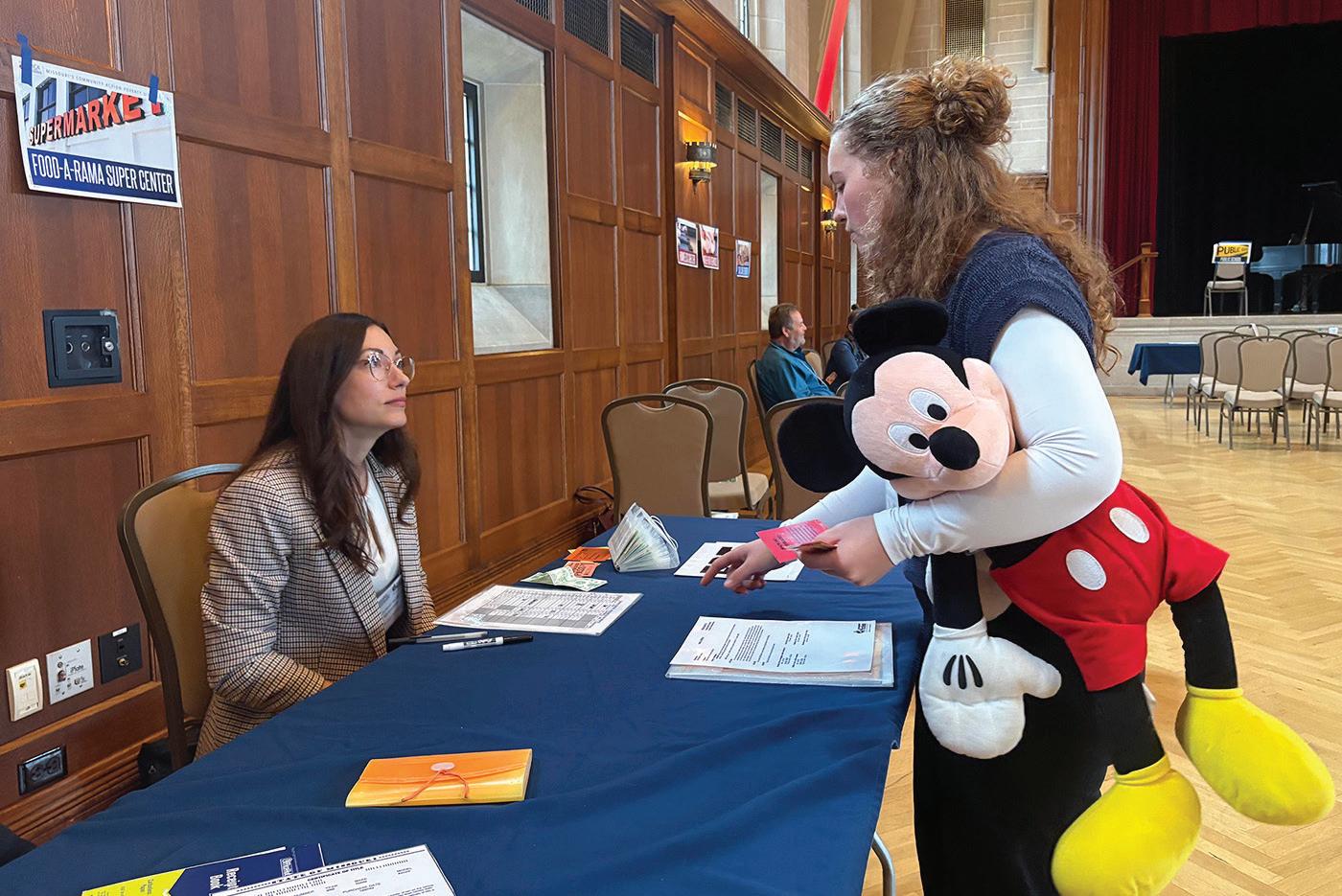
For three hours Oct. 28, Alumni Hall in the Indiana Memorial Union became a town built from tables, signs and volunteers. Each station represented a business or social service — a bank, a childcare center, a grocery store and a pawn shop. Inside, participants hurried between lines, trading tokens, paying bills and struggling to keep their fictional families afloat.
The mock community was for the IU School of Public Health–Bloomington’s second annual Poverty Simulation. The school partnered with South Central Indiana Area Health Education Center and Circles Indianapolis, a communitybased poverty-reduction organization, to give IU students firsthand experience of living in poverty.
The event encouraged students to think critically about the decisions families must make when money, time and resources run short. Kathleen Sobiech, director of Public Health Practice, Accreditation, and the Master’s in Public Health
program at the School of Public Health, worked alongside both partner organizations to help facilitate the event. She said in an email that organizers wanted the simulation to expose students to the realities faced by people in poverty.
“For anyone working in public health, understanding the obstacles people face, the decisions they make and the consequences that affect their families is essential,” Sobiech wrote. Around 20 participants worked through four 15-minute rounds, each representing a week in the life of a low-income family below the poverty line.
Many quickly discovered that basic tasks — getting to work, paying rent and buying food — required difficult trade-offs.
IU nursing junior Emily Kelly said the experience quickly became overwhelming due to time constraints.
“I’m overwhelmed about all the things I have to do, and the little money, and especially transportation passes right now. It’s a lot,” Kelly said.
Midway through the exercise, she said she grew
frustrated when the simulated cash card she’d received at the beginning of the simulation was shredded at the fictional supermarket after she couldn’t show any proof of how she spent her funds.
“I would say I’m frustrated and a little bit angry that, like, they didn’t say that I had to get a receipt, and then they took my money when it was my money,” Kelly said.
Across the room, other students faced similar pressure as they tried to balance bills, transportation and family needs. Senior Tori Spencer said juggling family responsibilities — like getting groceries, co-parenting and managing finances — made it hard to understand and stay on top of everything happening around her.
As students scrambled to keep their households afloat, volunteers from Circles Indianapolis stood behind the tables that brought the simulation to life — playing employers, landlords and even law enforcement officers.
Volunteer Tommie Howard returned to playing sheriff, a role he had previ-
ously played at past simulations. He maintained order by sending participants to a fictional jail if they had overdue fees or evictions.
“I have a very strong impact on the community and also a very strong impact on some of the citizens,” Howard said. “But I’m here to help keep craziness down to a minimum.”
Those volunteers worked under the direction of Marie Wiese, executive director of Circles Indianapolis. Wiese said the organization has been active in Indianapolis for nearly 15 years, helping households in poverty by building financial and social stability through community and relationship building.
According to the U.S. Census Bureau, about 12.2% of Indiana residents — more than 820,000 people — lived below the poverty line in 2024. That includes about 17.7% of Monroe County residents in 2023.
For Wiese, the numbers underscore the importance of poverty education and community connection.
“So, we’re not your traditional charity where you give money or clothing or
food, we give community, we give encouragement, we give social capital,” Wiese said. “Social capital is lending your power in the community to somebody else to help them, get a job or find somebody that’s going to help them meet a need.”
The Poverty Simulation was originally created by the Missouri Community Action Network, which developed the materials from the real experiences of lowincome clients. Circles Indianapolis uses those tools for both education and recruitment. Wiese said she hoped the simulation would challenge participants to rethink assumptions about poverty and leave with greater compassion, sympathy and empathy.
“Really, people just want a home,” Wiese said. “They want enough food to feed their families, a rewarding job. I mean, it’s not asking for millions of bucks or a lavish lifestyle. They’re just wanting the basics. It’s what they’re working for.”
By Grace Fridy gfridy@iu.edu
The Bloomington Planning and Transportation Department hosted the first of two public meetings Oct. 28 to gather input on the College Avenue and Walnut Street corridor. Community members gathered at City Hall to provide feedback on two new design proposals for the corridor of southbound College Avenue and northbound Walnut Street, both oneways, from State Road 45/46 Bypass to Allen Street. The council chambers and the hallway outside were occupied by folding tables covered with the printed proposals. Attendees were provided with feedback slips, pens and sticky notes to label specific areas of the corridor with feedback.
Many of the notes expressed disapproval at the addition of reverse-angle parking, especially along the Courthouse Square. Other notes suggested turn lanes and roundabouts. The feedback, both general and location-specific, will be used to finalize proposals for the corridor, Ryan Robling, planning services manager for the City’s Planning and Transportation Department, said.
“This will help us in determining which design alternative ultimately we go forward with that’ll get amended into the transportation plan,” Robling said. The proposals were made by the Toole Design Group and were selected after the city sent out a request for information for a consulting group in 2022. One proposal would leave both streets
one-way, while the other would turn both into twoways. The one-way configuration would keep the current traffic pattern along the corridor and focus on adding safety infrastructure. The other option would turn both College Avenue and Walnut Street into two-ways, improve safety infrastructure and create additional parking and loading zones downtown.
There are around 150 crashes a year in the area of road included in the project, according to presentations from meetings held in June. Robling said since January of 2019, there have been three fatal crashes along the corridor. The city has identified issues such as speeding, narrow sidewalks and inadequate pedestrian networks as major safety issues.
One of the key purposes of the corridor study, identified in the city’s 2019 Transportation Plan, is to make the roads safer for motor vehicle occupants, pedestrians and bikers alike. Attendees could speak with city employees about the different proposals for the corridor and provide feedback.
Proposed changes to the corridor would include the square, where the two oneway roads and parking options would be altered and bike paths would be added.
There are currently 404 metered parking spaces along the corridor with 143 spaces between Third and Seventh streets downtown, Robling said in an email.
“While the current corridor includes a larger number of parking spaces, many are un- or under-utilized,” Ro-
bling said in an email. “Onstreet parking is one of our best traffic calming tools, but ample unused parking can actually have the opposite effect, as drivers feel more comfortable traveling at higher speeds when there’s additional space.”
With the one-way proposal, there would be 186 metered parking spaces, with 82 downtown. The twoway proposal would have 253 metered parking spaces, with 144 downtown. Some attendees, such as Kathy Aiken, a Bloomington resident of over 50 years, raised concerns about how the different proposals would impact parking and traffic. Aiken works in a store on the square downtown and expressed concerns about traffic congestion.
“Their alleys aren’t sufficient for big semis to get
into with deliveries and stuff,” Aiken said. “And most of the businesses around the square get deliveries. So to me, that is, that’s the biggest problem as far as congestion that would result from this.”
Two public meetings were also held in mid-June, and Robling said more public feedback initiatives are in the works.
“We’re also going to do some other outreach popups on the street to capture people on the street, talk to businesses along the corridor, other stakeholders,” Robling said.
City staff will host these pop-up events from Oct. 29 to Nov. 4. An online feedback form will also be available until Dec. 1.
By Samantha Camire scamire@iu.edu
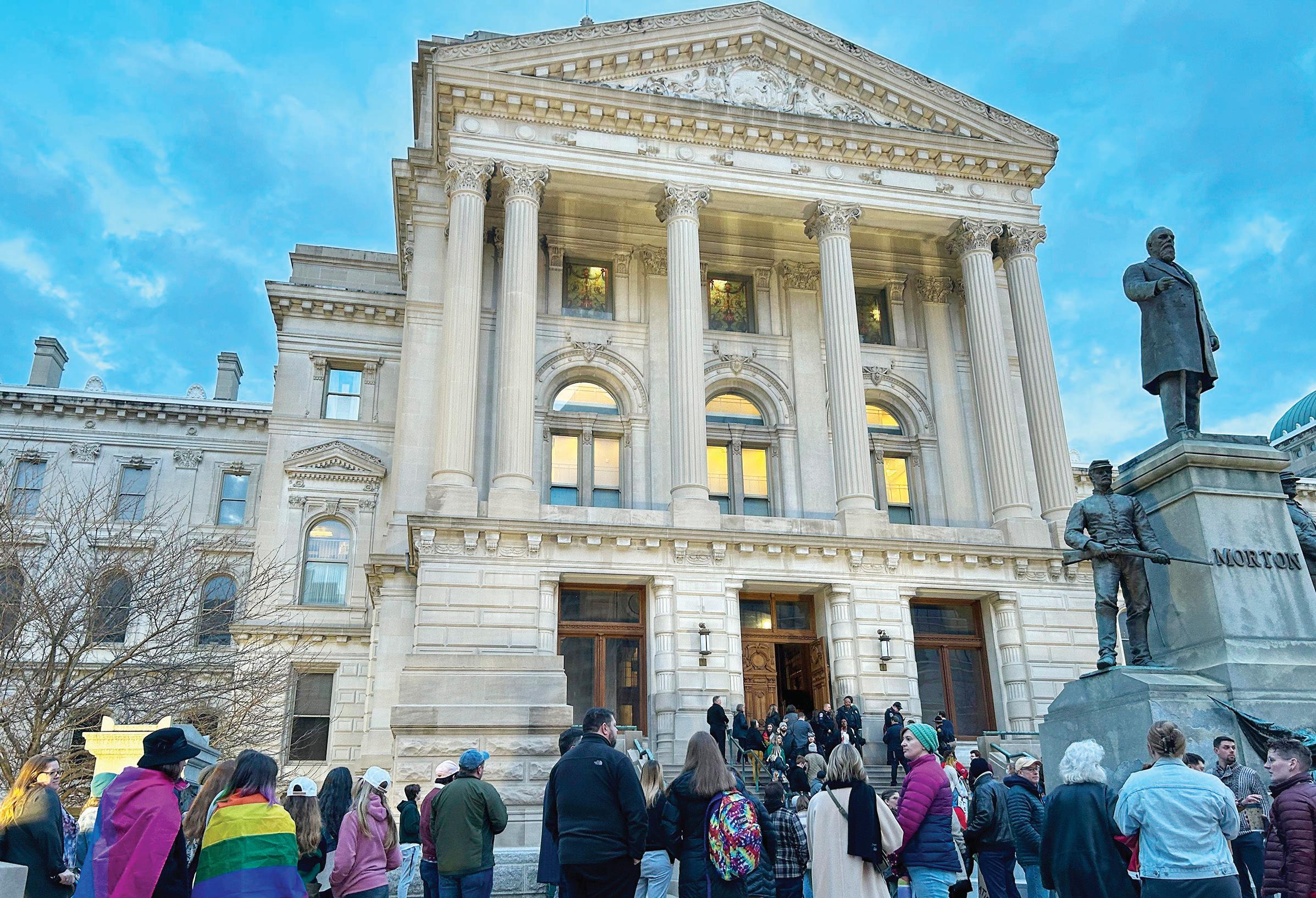
Indiana Gov. Mike Braun called a special legislative session on redistricting Oct. 27, a move that could help Republicans gain more seats in the House of Representatives. The session will convene Nov. 3.
The special session follows weeks of pressure from the White House to draw more Republican-friendly maps. Indiana Republican leaders met privately with Donald Trump in late August to discuss redistricting and Vice President JD Vance has visited Indianapolis twice, once in August and once in early October. Dur-
ing his October visit, Vance met with Braun and several Republican leaders. Republican Rodric Bray, president pro tempore of the Indiana Senate, told reporters that Vance’s meeting with lawmakers included a discussion of the “pros and cons” of redistricting. Indiana has nine seats in the U.S. House of Representatives. Seven are currently held by Republicans. The new maps could break up districts held by Democrats, increasing the number of seats controlled by Republicans to eight or nine. Some of Indiana’s Republican leaders have expressed hesitation surrounding redistricting. On Oct. 27, a
spokesperson for Bray said “the votes still aren’t there for redistricting.”
Here’s how local politicians reacted to the news:
Shelli Yoder
Shelli Yoder, Indiana Senate Democratic Leader and Bloomington senator, decried the special session in a statement Oct. 27 on behalf of the Indiana Senate Democratic Caucus. She called it a “national disgrace.”
“This is not democracy. This is desperation,” Yoder said in the statement Oct. 27. “Governor Braun’s announcement confirms what we have feared all along. Indiana’s government has
been hijacked by national operatives willing to shred every democratic norm to serve one man — Donald Trump.”
Yoder vowed to fight the redistricting and criticized the cost the special session will have on taxpayers. The last special session, called in 2022, cost taxpayers $240,000 in per-diem and travel costs.
Matt Pierce Democrat Matt Pierce, a state representative for Bloomington, also opposes the redistricting efforts. In an August statement, he called redistricting efforts a “power grab.”
“President Trump and
Vice President Vance are so desperate that they are scraping for every seat they can get through gerrymandering,” he said in the statement. “You have to be pretty desperate to decide that having seven of the nine seats in Indiana held by Republicans is not enough.”
Pierce said during a town hall Oct. 27 in Bloomington that he does not believe Indiana Senate Republicans truly support redistricting, but they fear retribution from the presidential administration.
“I don’t think they really want to do it,” he said. “I think they know it’s wrong.”
He said that it is possible some Republicans are hesitant to defy Vance’s wishes
to redistrict the state because they are afraid of losing the White House’s support ahead of primary races in November.
“You have to be pretty desperate to decide that having seven of the nine seats in Indiana held by Republicans is not enough.”
Matt Pierce, State Representative
State Representatives Bob Heaton, Dave Hall and Peggy Mayfield did not respond to requests for comment by time of publication.
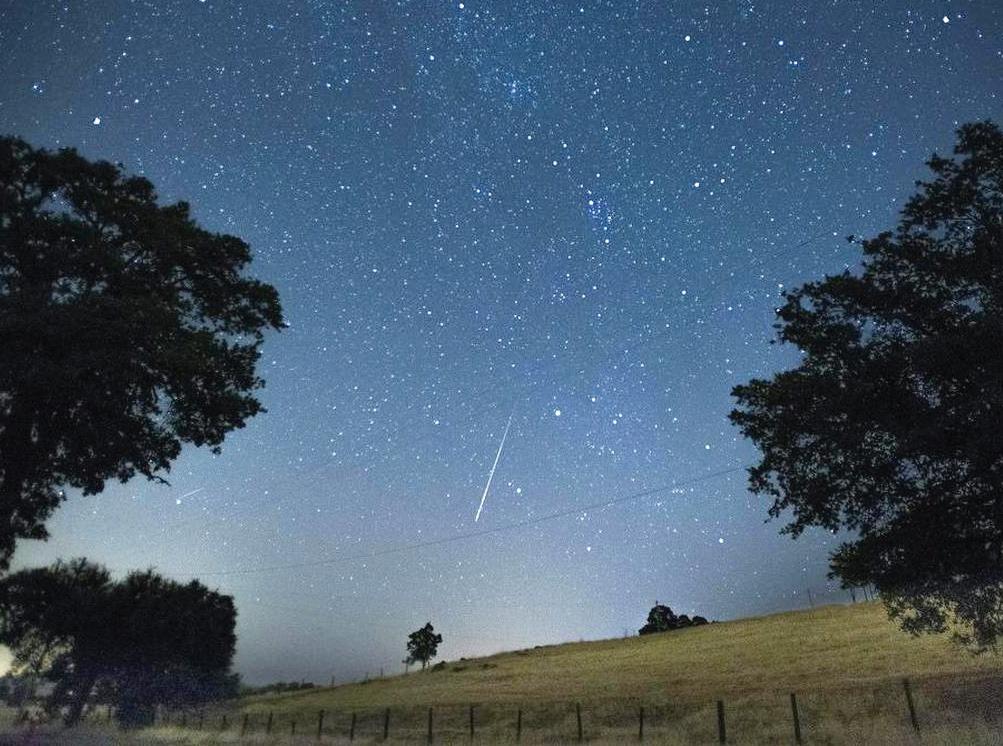
Video, social media and astronomical reports point to a sonic boom caused by a meteor
French Lick.
By Andrew Miller
ami3@iu.edu @andrew_mmiller
When Bloomingtonians hear a boom, they’ll usually turn their heads south toward the military base by Crane, Indiana. The base does explode munitions every now and then.
But it appears the morning of Oct. 25 was not the time to look south. It was time to look up.
That’s because it was very likely the sonic boom of a meteor that shook homes in Bloomington and around the Midwest just after 6 a.m. that morning.
The first piece of evidence: a litany of sightings on the American Meteor Society’s pending reports page. There’s no official meteor event report yet on the site, which might take some time. The last official report was from Oct. 23, also observed in Indiana and surrounding states.
The sightings are spread across a large area, from Indiana to Michigan, to Ohio, to Kentucky. The closest observation to Bloomington was at 6 a.m. in West Baden Springs, right next to
The wide area of observation, IU astronomy professor Catherine Pilachowski said, means the event was probably high up in the atmosphere.
The second piece of evidence: it wasn’t Crane. While exploding munitions at the base can cause booms to ripple up to Bloomington, a public affairs officer for Crane Army Ammunition Activity said there was “no activity” Oct. 25 after checking with the “demo team.” And point three: social media reports. One Reddit thread points to widespread observation in and around Bloomington. Multiple commenters said the boom shook their homes. One said they saw the meteor in Indianapolis.
“Don’t know what it was, but I heard and felt it. I can confirm you’re not crazy,” another commenter said.
“It wasn’t like the blasting booms from the quarries.”
Amy Reese taped a fireball on her dashcam in New Albany, Ohio, and told the Indiana Daily Student she recorded it between 6 and 6:05 a.m.
By Molly Gregory mogrego@iu.edu | @mollygregory22
A new specialized unit will investigate serious car accidents in Monroe County, according to a Monroe County Sheriff’s Office Oct. 25. The Major Crash Investigation team consists of four officers specially trained in crash reconstruction, evidence collection, impaired driving enforcement and technical analysis. Funding for the team’s
There were over 3,700 crashes in Monroe County in 2024
training and equipment came as a $123,636 grant from the Indiana Criminal Justice Institute, an administrative entity that oversees Indiana law enforcement. The team’s new equipment consists of crash analysis gear, which can help determine how a crash occurred and how the vehicles involved were moving prior to the crash. Jeffrey Brown, the county’s Public Information Officer, said in an email the county’s past method of
investigating crashes would take over four hours and sometimes resulted in deputies working overtime. The new unit aims to improve efficiency and lessen the deputies’ workload, he said.
In addition to reducing workload, Monroe County Sheriff Ruben Marté said in the Saturday news release the Major Crash Investigation team will help the sheriff’s office gather details about crashes faster. The unit consists of a team commander, two crash re-
construction specialists and a drug recognition expert.
“When tragedies occur on our roadways, the public deserves a thorough, professional investigation,” Marté said. “Thanks to the support of the Indiana Criminal Justice Institute, our Major Crash Investigation Team will have the specialized equipment and training needed to provide answers to families, ensure accountability, and enhance roadway safety in
Monroe County.” Brown said other “larger” agencies also use specialized reconstruction teams to investigate crashes. Columbus Police Department and Noblesville Police Department have teams that work specifically in crash reconstruction, with their Accident Investigation Unit and Crash Reconstruction Unit respectively. There were over 3,700 car accidents in Monroe County in 2024, according to a crash data dashboard, including 10 fatalities. The news release said the new Major Crash Investigation unit will work closely with local, state and federal partners to “promote roadway safety initiatives.” Concern for public safety prompted Bloomington to begin participating in the Federal Highway Administration’s Safe Streets for All initiative in 2023, which prioritizes eliminating roadway fatalities and serious injuries.
Odessa Lyon (she/her)
is a (senior) studying biology and English, pursuing a minor in European studies.
If you scroll through your Instagram feed or TikTok “For You” page, celebrities and influencers spout the same rhetoric.
“I’ve tried everything. It’s just the science for me. Calories in versus calories out. Ozempic works because you eat less food,” singer Lizzo said to Trisha Paytas in a June 19 episode of the “Just Trish” podcast. “It makes you feel full. So, if you can just do that on your own and get mind over matter, it’s the same.”
When everyone — myself included — gets fed news on our daily scroll, the word of these famous faces on our screens starts sounding like gospel. But what do these people really know about GLP-1 agonists, other than the fact that they’re shelling out in pursuit of these common calorie myths?
All the while this forces Americans to manage their diabetes with “gray-market” FDA-unapproved drugs like semaglutide and tirzepatide, further normalizing drugs with increasingly common, unusual side effects.
Houston, we have a problem; portion sizes are decreasing, mirroring the shrinking stomachs and bodies of the ruling class. It comes at a time when there’s rising national hunger, which may be further exacerbated among the almost 600,000 Hoosiers at risk of losing SNAP benefits they rely on as Trump fumbles another federal government shutdown.
There are many roots to
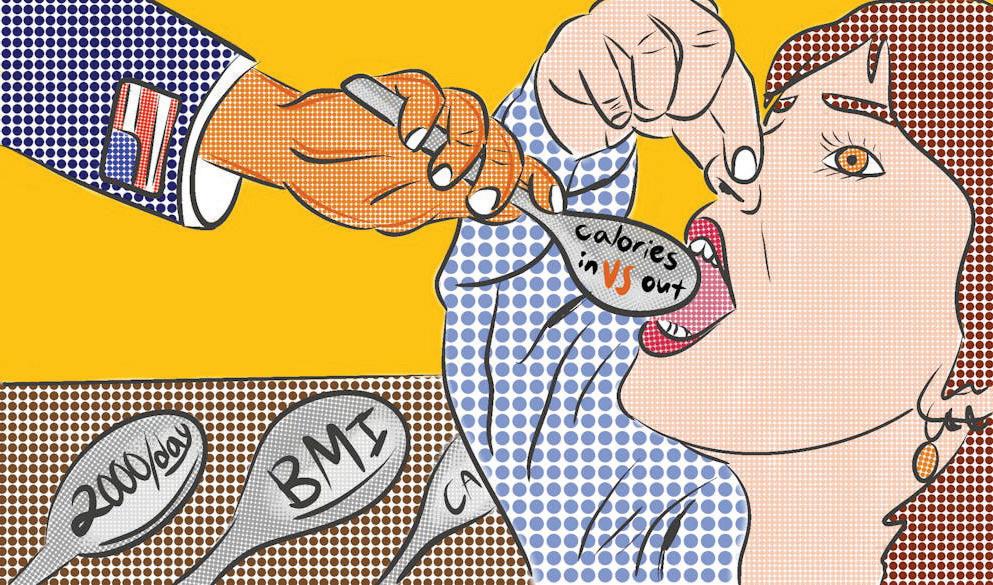
this Marxist problem — body positivity and neutrality are gone, heroin chic and lowrise jeans are back and even the Kardashians reversed their BBLs — but America’s confusion about calories lies at the center. Let’s debunk some pervasive myths. The truth is we don’t understand what calories are. Contrary to public belief and Wikipedia, the food calorie, or kilocalorie, was not always the definition we’ve now settled on: the energy used in heating one kilogram of water by one degree Celsius. The original system was developed by American chemist Wilbur Olin Atwater in 1896 — calculating the average number of calories in one gram of fat, protein and carbohydrate — but ignored important differences
between human digestion, calorimeters and individuals’ bodies.
Nevertheless, government officials exploited this simplistic, incorrect measure to justify low wages and predatory, commercial marketing tricks; now, this junk science contributes to incorrect calorie labelling because, no, all food calories aren’t made the same. They cannot be equated, and don’t correctly measure what they purport. Sadly, this pattern continues with the U.S. Department of Agriculture’s attempts to do the impossible and create population-wide nutrition prescriptions based on unsubstantiated metrics.
The BMI was created in the 1830s by Adolphe Quetelet, a Belgian mathematician and non-physician, as
a population statistic to find “l’homme moyen” or the “average man” — emphasis on man and the unspoken white — while ignoring that strong bones and muscle mass are denser than fat. A further 1970 study by American physiologist and dietitian Ancel Keys also only sampled “healthy” men.
Yet in the 1950s, Louis I. Dublin, a statistician and vice president of Metropolitan Life Insurance Company, used this inequitable formula to determine “normal” weights for clients: my oh my, isn’t it convenient that one decimal place allows insurance companies to charge higher premiums, let alone to racialize fat phobia?
Finally, in 1997, the World Health Organization announced a global epidemic
of obesity, a term that means squat, scientifically, and ironically ignores most of the globe: women and people of color. So, what’s the point of comparing everyone to white men post-WWII, again?
Unsurprisingly, similar slip-ups explain the Federal Drug Administration’s 2,000 calories-a-day-rule, and the story is maddeningly simple. The USDA sent out self-reported caloric intake studies — notoriously underreported — and found averages for males and females of 1,785 calories, 1,839 and 2,002 (from studies 19871988, 1989-1991 and 19941996, respectively). Then, the FDA requested a public comment. Because of course they did, nutrition educators worried anything over
2,000 would encourage overconsumption — despite the dearth of studies supporting such a claim — so that’s what stuck. With calories, it’s a broken record. Like the calorie unit, food labels, BMI and daily calorie rules, the idea of “calories in versus calories out” — that journalists, friends, doctors and even celebrities like Lizzo tout — is false. It would be impossible to account for “interindividual differences in metabolic rates and the size of internal organs,” according to a 2017 American Journal of Physiology paper, let alone exercise toward calories out. Similarly, the gym bro’s favorite fact — that by burning off or restricting 3,500 calories, you lose a pound — is misleading. This myth is based on medical researcher Max Wishnofsky’s 1950s study but mistakenly assumes only fat tissue is lost when losing weight and that weight loss is linear. Further studies have debunked this weight loss myth, but it never seems to stick. Ignoring what the wellness economy directs us to believe, one 2020 Nutrition study rings true: “to date, no optimally effective weight loss diet exists for all individuals.” The human body is a miracle and a mind-boggle. So, whenever you guiltily open MyFitnessPal, you step on the fraught bathroom scale or a lazy doctor denies you or a loved one rightful health care, remind yourself of one truth about calories: the discourse is thick with heedlessly-accepted myths and junk science, so do what feels right for your body.
oolyon@iu.edu
Jacob Fry (he/him) is a junior studying political science.
Artificial intelligence is becoming a daily occurrence, its rapid advancement over the last couple of years has significantly impacted education, entertainment, and the environment. Despite this knowledge, AI has experienced a large uptick in use. Some use it for art, some for cheating and some to cut costs. The large rise has caused a plague of sorts, with the use infiltrating our access to information, media, and our ways of living becoming augmented or reliant on AI.
The quick evolution of AI has caused occupational issues. Media companies are using it for ads or marketing, such as Marvel Studios using AI for the opening titles for their show, “Secret Invasion.” The NFL openly admitted to using AI in its “Ride the Float” ad for the 2025 season. While it does reduce the budget and avoids time constraints, it remains a significant envi-
Guest Writer
ronmental issue and results in job losses.
A study conducted by Stanford economists reveals individuals affected by AI’s job replacements are predominantly younger people, particularly in fields such as finance, sales and software engineering. The reason for this is that companies would rather have a robot perform a task than train a young person to do it. Research has already proven AI’s impact on the job industry, which is strange given how new this version of AI seems to be.
AI videos are also tricking the masses. The new Sora video app from OpenAI is remarkable. It can make anything from your favorite celebrities singing popular songs to bunnies jumping on a trampoline; however, the worst part is how realistic it seems to be. The line between robots and reality is becoming blurred. Videos go viral without people, even me, realizing they’re AI-generated. Even documentaries have been caught using AI images. It seems to
be getting so realistic that it could become an issue in the future with how media is shown and presented as what’s real doesn’t seem to matter.
While AI might seem fun, it’s seeping into things as human as journalism. Some media companies and countries are experimenting with using AI-generated reporters to read the news. While it hasn’t reached the United States yet, it’s not impossible. Genuine journalism cannot be generated by AI. It requires real experiences, real opinions; and genuine passion. Using AI as a shortcut, whether for articles, coverage or interviews, undermines the human aspect of both journalism and everything beyond it. Using AI to present news cuts costs and corners, but it can lead to a larger distrust of media than we already have. If we let AI become the face of our media, we forget why information is important. AI is flawed in how it gives information already, as seen with Google’s AI
overview. It’s been reported to give incorrect answers to hilarious results. If we move forward with how AI gives information to the masses, we can’t guarantee it will be correct without having to use humans to ensure the truth.
The reason why people use AI is simple: it’s easy. Instead of doing the research yourself or taking years to learn the skill; you ask a robot to do it. Sounds easy enough, right? Yes, it is. However, what are you gaining from it? You’re not learning anything, you’re only seeing the result. There’s no trial and error, just an end.

We’re in such a hurry to replace what humans have spent years forging that we’re forgetting the satisfaction of learning. It saves money and makes it too, but companies forget the human element is what makes it work. I’d rather a real human tell me the news than a robot because if they’re wrong, it’s human error instead of what’s supposed to be top-of-the-line programming. The human aspect is what makes things feel real; the connection with a robot isn’t there. Everything you’ve watched, every song you’ve listened to and everything you’ve used was the result of countless hours of trial and error. While I get that it’s tempting to use AI as a shortcut when time constraints are at play, you don’t really learn from it. AI is unavoidable; it’s encroaching in every field possible for better or for worse. The best thing we can do is think for ourselves and learn for ourselves. If it takes you 10 minutes or 10 years to do something, the time will pass anyway, so what’s the rush?
fryjf@iu.edu
President Whitten, Provost Shrivastav, Chancellor Reingold and Dean Tolchinsky:
We, a group of hundreds of Indiana Daily Student alumni as far back as the class of 1966, are writing to condemn the firing of student media director Jim Rodenbush and the subsequent cancellation of IDS print operations. In 2017, 123 alumni wrote to your predecessors after the abrupt firing of IDS newsroom director Ron Johnson — a decision that followed IU’s controversial move to dissolve the independent School of Journalism into the newly formed Media School. At the time, we warned: “We fear this decision will do further harm to the relationship between the university and its graduates.”
We were right.
On Oct. 14, headlines read, “IU fires student media director after he refused to
censor the IDS.” Less than 24 hours later: “IU has now fully cut IDS print. What more is there to say?”
We have long understood the financial challenges facing student media. Many of us faced them as students and have worked as alumni to support sustainable solutions. Through donations and mentorship, we hoped the IDS would continue to operate as the irreplaceable learning lab that launched our careers. Instead, we’ve watched with growing alarm as university leaders repeatedly undermined the independent journalism that once made IU a national leader, a training ground for America’s most respected news organizations. The founding dean of the Media School lacked real-world journalism experience. His successor has even less.
We were dismayed when the 2025 FIRE Campus Free Speech Rankings report placed IU at No. 255 of 257 U.S. colleges and universi-
ties, citing a litany of First Amendment violations.
The IDS reported on these rankings. And from there, things seem to have escalated.
According to the Indianapolis Star, it wasn’t until the IDS published its Sept. 4 and Sept. 10 print editions — covering IU’s suspension of the Palestine Solidarity Committee and its dismal free speech ranking — that administrators met with Rodenbush to discuss “expectations” for future special editions.
In an Oct. 7 email obtained by the IndyStar, Rodenbush passed on to IDS leaders guidance from the Media School advising that the IDS print publication should focus solely on a special theme, “such as homecoming or fall sports,” and contain “no other news at all, and particularly no traditional front-page news.”
Days later, Rodenbush was fired. Hours after that, print was dead — a direct contradiction to a promise
Dean Tolchinsky made last year.
In fall 2024, an alumna raised concerns about the reduction of IDS print to only special editions. Dean Tolchinsky told the alumna in a Nov. 4, 2024, email that the news would remain in print. Furthermore, he wrote, students would be encouraged to rethink special editions to include more opportunities for “hard news.”
Tolchinsky’s defenders characterize this policy change as a “business decision.”
Yet IDS editors report that three print editions this year have netted nearly $11,000 in profit.
On Oct. 15, we learned that Mark Cuban, B.S., 1981, quietly donated $250,000 to the IDS this summer to help offset costs. Many of us regularly donate to the IDS Legacy Fund to directly support student operations.
For decades, high school seniors across the country paid out-of-state tuition to attend IU — just to work at
the IDS. For decades, the newspaper was a top contender for national college journalism awards. Often, we won. IDS alumni have landed internships and jobs at toptier media outlets; you will see where past IDSers work below. Local residents have relied on the IDS as a primary news source, especially as The Herald-Times declined under corporate ownership. The list of distinguished IDS alumni is long, but we’ll name one: Ernie Pyle, the WWII war correspondent whose statue greets visitors at Sample Gates. Whether we stayed in journalism or pursued other careers, we credit the IDS as the most formative part of our IU experience. It taught us to question critically, think logically, communicate clearly, act creatively and live ethically — values we hope IU still prizes among its graduates. The most important lesson we took from our time at the IDS was simple: Without a free and independent press, democracy cannot exist. The IDS was once a crown jewel of Indiana University. Now, the Media School seeks to dull it beyond recognition.
On Oct. 15, the Indiana University Student Publications Alumni Association Board sent Dean Tolchinsky a letter seeking productive dialogue. This Board represents the best of the best of us. We thank the dean for meeting with the board this week. We urge him to continue engaging in productive dialogue with this board, who speak on behalf of the thousands of student media alumni who still hope to remain proud of their alma mater. This letter was first sent on Friday, Oct. 17 with 243 signatures. As of 5 p.m. ET, Thursday, Oct. 23, the letter has 392 signatures from alumni between the graduating classes of 1966 and 2025. Signatories include 58 former IDS Editors-in-Chief and five winners of the Pulitzer Prize.
By Lexi Bunting lexbunti@iu.edu
With Halloween just around the corner, many people are scrolling the internet for last-minute costume ideas or making quick trips to Spirit Halloween in preparation for the spooky holiday. For college students, Halloween has become more than a single day of celebration. The holiday is now often spread out over an entire week, which means, for some, multiple events and costumes. While it’s fun to dress up, that can take a toll on both your wallet and the environment, especially for an outfit you’ll most likely only wear once.
Though websites such as Shein and Amazon, as well as stores like Spirit Halloween, offer fast and sometimes cheap options, they can be wasteful. Roughly 83% of Halloween costumes are made from non-recyclable, oil-based plastics, which contributes to 2,000 tons of plastic waste that end up in landfills.
Halloween is also an expensive holiday. Americans spend an estimated $10.6 billion a year on costumes, candy and decorations. For many college students, that cost is out of reach, but celebrating sustainably can be both affordable and creative.
So, what makes a Halloween costume sustainable? In short, your intentions.
Choosing materials, sources and items that lower waste and promote reuse can help the holiday be less environmentally damaging.
Here are some tips for

making more sustainable costume choices.
Shop in your own closet
While it might not be as exciting as buying something new, your own closet often holds hidden treasures full of potential. With a bit of creativity, you can put together unique and personal costumes with items you already own. Even just a few pieces from your own wardrobe can bring down the overall cost of a costume.
Upcycle old clothing
Upcycling and thrifting are great ways to repurpose old items into something new. A thrifted white blouse can fit into a pirate costume,
an old dress can be cut into the perfect fairy costume and scraps of fabric can be turned into one-of-a-kind accessories such as hair bands. The possibilities are endless, and each upcycled piece helps reduce textile waste.
Thrift stores such as Goodwill and Plato’s Closet are great places to start when looking for costume basics. For more unique vintag finds, Bloomington offers some more specific stores such as The Cat’s Closet, and the Bloomington Antique Mall.
Borrow from friends
Swapping and borrowing costumes among friends is a great way to share creativ-

By Sydney Weber syaweber@iu.edu
Phoenix the horse thrust her head into a water-filled tub in search of an apple, chomping away once she found it. She was dressed up in NASCAR attire, as was her human assistant, Whitney St. John.
“They do love apples,” St. John said. “It’s pretty entertaining for them. And also, it just engages them and gives them, like, a stimulus and everything.” St. John, a barn assistant at People and Animals Learning Services, was one of the people welcoming community members to PALS’ “Halloween with the Horses” event Oct. 25. PALS is a Bloomington equine therapy organization that hosts horsemanship and adaptive riding programs.
Much of PALS’ campus was damaged in the EF2 tornado that hit Bloomington on May 16, and executive director Christine Herring said the team even considered canceling or relocating the event.
“And we all just pretty much said, ‘Nope, we’re doing it here, and we’re going to bring everybody to PALS so that they can see, you know, that we are coming back,’” Herring said. The rebuild is going well, Herring said, and PALS’ grand re-opening is slated for spring 2026. Herring said they expect to have double the arena space compared to what there was before the
tornado. St. John, who said she’s been volunteering at PALS for three years, celebrated the reconstruction.
“I never would have thought we would come this far throughout the journey of healing and rebuilding,” St. John said. “It’s been a very tough process, but we, we’ve built such an amazing community and I’m very fortunate to be a part of it.”
Devin Coryell, PALS’ director of development and marketing, said the PALS team reimagined “Halloween with the Horses” as a festival so it would be a way to celebrate after a difficult summer.
Music filled the air near a barn where children played life-sized Jenga and got their faces painted. Food trucks and vendors provided entertainment for adults as well. Community members of all ages sported Halloween costumes including animals, princesses and knights. Jeff and Molly Pridemore’s daughter, Karlee, dressed up as a monarch butterfly, brushed one of the PALS horses as her parents watched. Jeff said the family came to the event to support PALS’ therapeutic mission.
“I love programs that support anything or anybody that, you know, like I said, vets with PTSD or any kind of programs that help build up the community,” Jeff said. Lake House Farm own-
ers Ewa Schopp and Sydney Sills said Coryell invited them to be vendors at the event. Schopp and Sills sold pre-made arrangements and build-your-own flower bouquets, with a portion of their proceeds going to further support PALS.
“I think it’s great to give back,” Schopp said. “This is a really great place. It’s really helped a lot of people.”
Herring said people seemed to be enjoying this year’s “Halloween with the Horses” even more than in previous years because there were more activities.
“It’s more of a festival,” Herring said. “And we just planned it that way. We wanted people to be able to come here, see that we’re still here and explore everything that we have. So, it’s really turning out to be a great event, probably the best we’ve ever had.”
Community members who want to get involved with PALS can apply to volunteer or donate to support either ordinary operations or ongoing disaster recovery efforts.
St. John encouraged members of the Bloomington community to engage with PALS even after Halloween.
“This place is truly a gift,” St. John said. “And I think everybody should, like, anybody should come and visit and see some horses and possibly get into it. It’s truly amazing. And it changes lives every day.”
ity and cut down on waste. A borrowed hat, skirt or pair of shoes might be just what you need to elevate your outfit into the perfect costume, and it saves money and resources in the process. There are plenty of costumes you can make using all the different tips listed above. Here are some examples.
1. “Challengers” (2024) The 2024 sports romance “Challengers” explores a toxic love triangle between three tennis players. Josh O’Connor’s character Patrick Zweig wears a gray T-shirt with “I told ya” written on it and black shorts, while Mike Faist’s Art Donaldson sports
a red tennis outfit. With Zendaya’s character Tashi Duncan in a white tennis dress, these looks can easily be recreated from everyday clothing.
2. Charli XCX (“Brat” era) The Grammy-winning British singer-songwriter Charli XCX and the face of “Brat Summer,” offers an effortless iconic costume. In her “360” music video, she wears black tights, black shorts and a white tank top, simple pieces that can be borrowed, thrifted or easily found in your closet.
3. Bill from “Schoolhouse Rock!” Going old-school with the
way most of us learned how a bill becomes law, the famous song, “I’m Just a Bill,” from “Schoolhouse Rock!,” makes a great costume. This look is nostalgic, easy and affordable. All you need is a white outfit, and a simple red, white and blue button, and you too can become a bill.
4. Clark Kent (“Superman”) A timeless staple costume is newly relevant once more, with the 2025 “Superman” remake bringing back the popularity of the beloved superhero. A simple Superman t-shirt with a white button down and glasses creates an easily recognizable classic that you can thrift ahead of time or make at the last minute.
5. Fancy Nancy A childhood classic, “Fancy Nancy” is the perfect choice for those who prefer sparkles over spooky. Layering dresses, tutus, boas and jewelry for a maximalist, quirky look is all you need to make the costume work. Most can be found thrifted, borrowed or repurposed since there really is no specific piece you need. Not only will this costume help you connect with your inner child, but also with your inner environmentalist. Halloween is about creativity and self-expression, and that doesn’t have to come at the planet’s expense. Whether you’re borrowing from your friends, thrifting or crafting from what you already have, choosing a sustainable costume may seem like a minor decision, but it adds up.

COLUMN: The Springsteen
fails to leave a mark
By Mateo Fuentes-Rohwer matfuent@iu.edu | @mateo_frohwer
Bruce Springsteen has always been a part of my life.
I remember listening to his first two albums — “Greetings from Asbury Park, N.J.” and “The Wild, the Innocent & the E Street Shuffle” — in the back of my dad’s 2001 white Chevy Prizm at 3 years old. “Born to Run” lodged itself into my brain as soon as Springsteen played the 2009 Super Bowl Halftime Show, and soon the rest of the album was part of the music rotation that blared from the CD player under my TV.
Musical artists would come and go, but the Boss always stayed. When “Springsteen: Deliver Me from Nowhere” received the green light and Jeremy Allen White was tapped to play the titular star, my excitement was palpable.
I wanted this movie to be phenomenal, more so than any musician biopic — and possibly any movie — of the past decade.
But it just wasn’t.
“Springsteen: Deliver Me from Nowhere” focuses on the early 1980s, a period of Springsteen’s life that featured the albums “The River,” “Nebraska” and “Born in the U.S.A.” The film delves into the creation of “Nebraska,” an introspective album recorded in one of the rooms of Springsteen’s home in New Jersey.
White stars as Springsteen in a performance that is well-deserving of Oscar buzz. Alongside him is Jeremy Strong as Jon Landau, Springsteen’s manager, Odessa Young as Springsteen’s love interest, Faye, and Stephen Graham as Springsteen’s father.
Though White and the rest of the cast drove the movie with their perfor-
mances, they couldn’t entirely overcome the fatigue that now accompanies musician biopics. “A Complete Unknown” released in December last year, centered on Bob Dylan. “Bohemian Rhapsody” hit theaters in 2018, showcasing the story of Queen. “Elvis” came out in 2022, and an Elton John film titled “Rocketman” released in 2019. To its credit, “Springsteen: Deliver Me from Nowhere” attempted to be something different. Just like the Dylan biopic, this film focused on a period of Springsteen’s life, one not centered on his stardom but rather his personal trauma and mental health struggles.
Frequent cuts to blackand-white scenes with a young Springsteen and his father hammered home his childhood trauma. Other issues Springsteen dealt with throughout the film included relationship struggles, personified through Young’s character, and his inability to address any of his own problems.
That’s what stands out in this film, one that doesn’t focus much on the music other than a few key areas. And without White’s performance, it wouldn’t have been nearly as effective.
White’s own voice often seeped into his speech, and he didn’t undergo a large physical transformation, but the portrayal was still impressive. Springsteen — and for that matter, White — is muted for much of the film, barring a few outbursts involving the creation of “Nebraska.”
But White truly excels on the stage — and director Scott Cooper clearly knew that.
One of the first shots of the film is Springsteen on stage performing “Born to Run.” This scene isn’t a ne-
cessity for the plot, but it lets White showcase his singing voice, one nearly identical to the Boss himself, and his uncanny mannerisms. Moments like these are what had me truly buying into this film, whether it was Springsteen playing “Born in the U.S.A.” in the studio or any of the compositions of his “Nebraska” tracks. I appreciated a film documenting the emotional and mental obstacles a rock star faces rather than simply his widespread transformation, but at the end of the day, I really stayed to see White play Springsteen. Little can detract from White’s performance, but what will ultimately hinder the spread of his recognition is how dull the film is. The movie struggles to keep the audience interested throughout, which may not be a critique of Cooper’s filmmaking choices but rather the moment he is documenting. Springsteen’s character arc throughout the film is almost entirely internal, so depicting this change challenged my short attention span. The release of “Springsteen: Deliver Me from Nowhere” brought a new fourdisc “Nebraska” album, featuring many of the electric versions of the tracks from the album as well as some of the concept tapes for songs on “Born in the U.S.A.” So, regardless of the box office numbers, we can thank the film for this new addition to Springsteen’s discography. But the success of the film ultimately won’t matter to me. Yes, it sometimes failed to keep me interested, and I would have appreciated a more nuanced look into Springsteen’s issues. Yet, nothing will beat seeing Springsteen on the big screen singing his music. As a
By Steven Leatherwood sjleathe@iu.edu
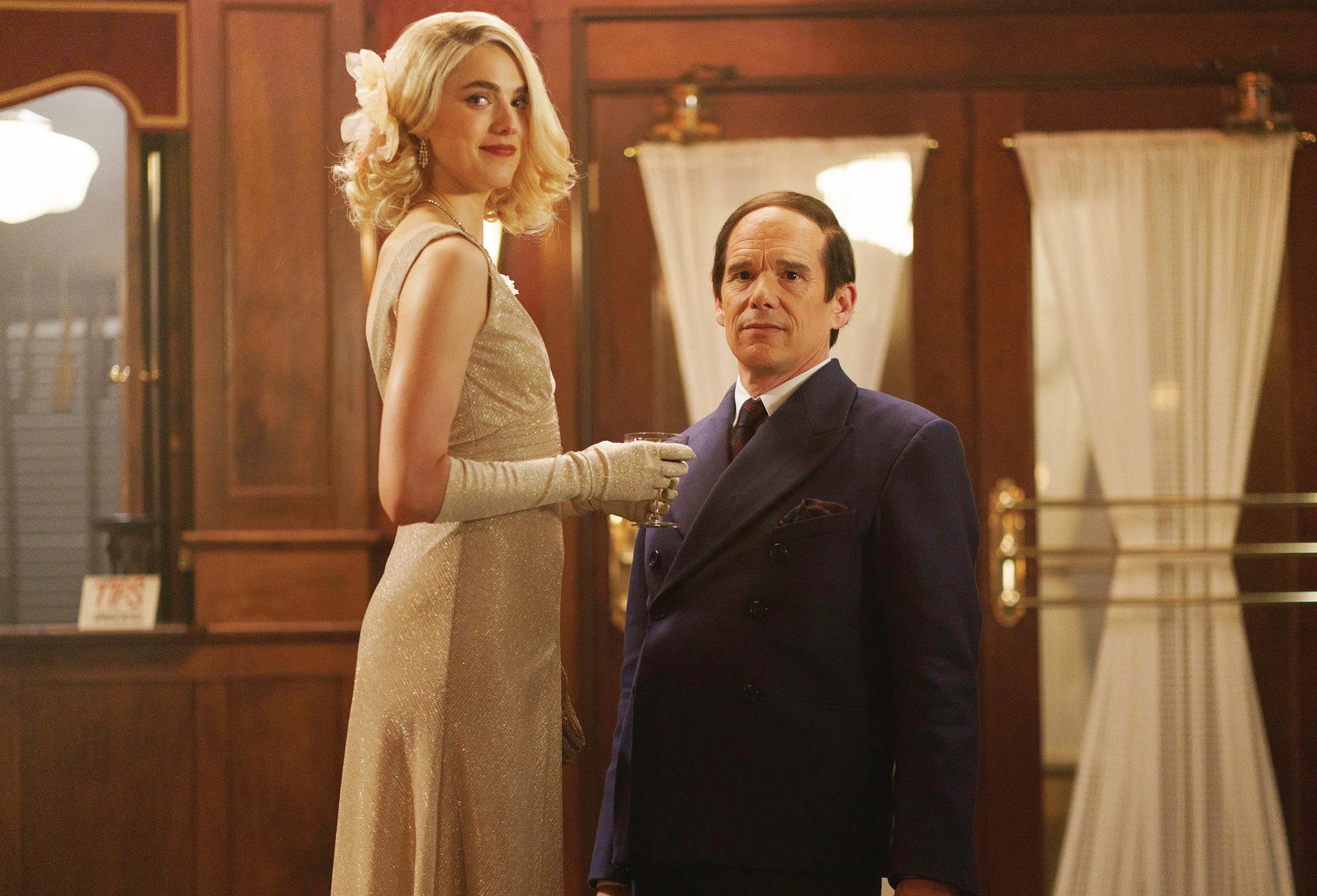
I’m sure we all know that person you avoid at a party. The one you try to escape during a conversation, who everyone internally cringes at when they open their mouths. I would like to think that Richard Linklater, the director of “Blue Moon,” took the attributes of that person, bottled them up and put them in this movie as the diminutive and detestable Lorenz “Larry” Hart. I don’t know that much about old Broadway or the story of Larry Hart, so I’m not entirely sure if he was as much of an annoying creep as the movie portrayed him. History aside, I simply wonder why a person would make a movie about someone who is so unlikable.
Many movies have vexing or awkward main characters. My mind immediately jumps to “Napoleon Dynamite.” Yes, Napoleon is socially awkward and sometimes hard to watch, but he is also innocently charming and someone who changes by the end of the movie. But in “Blue Moon,” there’s
nothing innocently charming about a 47-year-old man obsessing over a 20-year-old college student. And there is no room for character development in the one evening this film takes place. “Blue Moon” tells the story of Lorenz Hart (Ethan Hawke) when he attends a restaurant party the night of the opening of the show, “Oklahoma!” We follow Hart and his obsessions with a college girl, Elizabeth (Margaret Qualley), and several awkward conversations with those present. Throughout the night, Hart gets the cold shoulder by his previous writing partner, Richard Rodgers (Andrew Scott), and given a foreseeable rejection by his “irreplaceable Elizabeth.”
I would like to praise Hawke’s performance. He unfortunately does a terrific job portraying someone I am endlessly infuriated with. I had several physical reactions in the theater watching him interact with the other characters. When he pestered Richard Rodgers about writing a Marco Polo musical, I put my face in my hands waiting for it
to end. When he rambles to the pianist in the bathroom, I laughed when the pianist suddenly left the room with Hart mid-sentence — I was jealous because I wanted to leave the room, too. If the filmmakers’ objective for this movie was to make the audience cringe for an hour and 40 minutes, they certainly succeeded. However, I don’t give grace to films that are purposefully difficult to watch. If the intent was to be annoying, I don’t praise the film for fulfilling its intent; I criticize the intent itself.
And what a runtime, too. For a movie already under two hours, it seems to need even less. The film is mainly one character talking at another. While you might think that sounds like normal dialogue, it unfortunately wasn’t.
I am a huge fan of dialogue-heavy films. I am, however, not a fan of monologue-heavy films. And whether it be Larry Hart talking the ear off of another character, or Elizabeth telling a lengthy story about her birthday, hearing a single person ramble is hardly ever

COLUMN: Canceled shows still worth a watch
By Sophie Albert soalbert@iu.edu
a good recipe for emotional conversations between characters.
The last thing I want to mention was the film’s laughable attempts at easter eggs. The inclusion of E.B. White in the story, because apparently the screenwriter thought we needed an origin for the idea of “Stuart Little,” is a prime example. Hart talks to White about a mouse, whom he’s named Stuart, that he often finds in his apartment. White then looks intrigued and writes this decidedly novel idea down before leaving the bar. I even looked this up to see if this interaction actually happened, and it almost certainly didn’t. This moment added nothing to the already flimsy story and just seemed to depict E.B. White as someone less creative than he actually was.
I love watching movies that make me cry, but I understand that some people purposefully avoid movies for that reason. In the same vein, I purposefully avoid movies that annoy me. However, if you enjoy movies that annoy you, “Blue Moon” is the perfect film for you.
By Abby Whited abwhited@iu.edu
The musician attended a screening of “Breaking Silence” at the Buskirk-Chumley Theater
Excitement filled the Buskirk-Chumley Theater on Oct. 23, as fans of musician Janis Ian flocked to see a screening of “Breaking Silence,” a documentary about her life and artistic career.
Backstage during the screening was Ian herself.
At noon, Ian sat for a moderated conversation at Maxwell Hall, hosted by the IU Arts and Humanities Council. Before a crowd of about 30 people, Ian answered questions posed by IU law student Kayla Behforouz, discussing the transformative power of art, the evolution of the music industry and the link between politics and folk music.
The conversation continued for about 40 minutes before Behforouz opened the discussion to the room, inviting audience members to ask Ian any questions they wished.
“Usually as a writer, wherever you don’t want to go, that’s where you’re supposed to go, and when you don’t go there, you do your talent a disservice,” she said in response to a question about her creative process. “Your talent knows better than you do. So you follow the talent.”
In an interview with the Indiana Daily Student, Ian gave advice to aspiring writers and creatives. She spoke about how inspiration doesn’t always strike when convenient, and artists must be able to work with their talents and artistry.
“Inspiration is great, but you have to be able to write regardless,” she said, “so you call it up. You call it
up, and then you work with what you’ve got..” At 7 p.m. Oct. 23, about 350 spectators gathered at the Buskirk-Chumley Theater for the screening of Ian’s documentary “Breaking Silence,” directed by Varda Bar-Kar. Featuring on-screen testimonials from Ian’s folk music peers including Arlo Guthrie and Joan Baez, the film premiered at Doc NYC in November last year. Since then, Ian has made appearances at various institutions around the country to accompany screenings of the film.
The screening event was sponsored by Bloomington Roots and the Stone Age Institute. Nick Toth and Kathy Schick, co-founders of the latter organization, both came across Ian’s music when she first debuted in the 1960s with “Society’s Child,” which was controversial for its time as it was about an interracial relationship. They both resonated with the explicit social consciousness Ian displayed in its lyrics.
After following her career for decades, Toth and Schick now maintain a personal friendship with Ian. Schick said her personality and values are reflected in her music.
“She’s a very natural, honest human being. So I think that’s layered into the music and lyrics and what she chooses to write about, and the perspective she takes,” Schick said. “I feel she’s a very compelling artist.”
The documentary opened with a clip from Ian’s 1967 performance of her hit song “Society’s Child” on composer Leon-
ard Bernstein’s show, “Inside Pop: The Rock Revolution.” At age 15, the performance was her first appearance on television.
Ian’s voice then spoke over the footage, and she began telling her story: “Music is about telling stories. This is mine.”
The beginning of the film detailed Ian’s upbringing by Jewish activist parents, which shaped her sense of social and political awareness. Her break into the music business came when she received the opportunity to record “Society’s Child,” which released amidst the Civil Rights Movement in 1966. The song catapulted Ian into both success and controversy.
The song’s lyrical content caused Ian to be blacklisted from several radio stations and harassed by audience members when she performed it live. This insight into Ian’s early career set her up within the film as an outspoken protagonist, determined to speak for what she believed was right.
The documentary then explored each creative era in her life, with each one often framed through album release cycles, relationships and moving to different cities. Audience members were also provided insight into the writing and recording processes of several of Ian’s most beloved hits, including “Stars,” “At Seventeen” and “Fly Too High.” As she underwent various personal and mental struggles throughout each time period, Ian remained committed to improving her musical artistry.
The film also emphasized was her gradual status
as a queer icon and outspoken proponent of LGBTQ+ rights, another central aspect of Ian’s story. She came out as gay in 1993 with the release of her album “Breaking Silence,” which was groundbreaking during a time that lacked queer female representation in media.
The film concluded with a look into Ian’s current life, as well as her struggle to adjust after losing her singing voice due to vocal cord scarring. Despite this, the documentary ends on a hopeful note, with Ian committed to living a fruitful life as a writer and creative.
After the screening, Ian sat for a Q&A session hosted by Amy Oelsner, a local musician and founder of Bloomington’s Girls Rock chapter. Ian answered questions about songwriting advice, advice for young musicians and her experience recording her final album from home amid the COVID-19 pandemic. Audience members were then provided a chance to ask Ian their own questions.
Two microphones were set up in front of each side of the stage. Members of the audience quickly formed lines behind each one, eager to pose their questions. Some attendees explained that they had traveled for hours out of state to see Ian, while others said they had grown up listening to her music. One man shared an anecdote about attending summer camp with Ian 62 years ago.
“Thank you so much for coming, we appreciate you so much,” one attendee said. “I feel like we’ve aged together, because I was listening to you in college.”
If you’re like me, some of your favorite shows have gotten canceled. It’s something I’ve experienced repeatedly, and each time another cancellation is announced, I’m still flung into the five stages of grief. I think these shows are still worth watching, despite getting cut short. So, here’s a list of four shows that got canceled, but still make for great watches.
“Our Flag Means Death” (2022-23)
“Our Flag Means Death” is a historical fiction comedy that follows Stede Bonnet (Rhys Darby), “the Gentleman Pirate,” as he learns the ways of piracy and sparks a romance with the dread pirate Blackbeard (Taika Waititi).
The cancelation of this show is essentially my villain origin story. I started watching the show when the first season came out and instantly fell in love with the characters, comedy and wholesomeness of the show. Despite the second season performing pretty well, HBO Max canceled the show at the beginning of 2024. Thankfully, the creator, David Jenkins, ensured fans would get to see a happy ending for the characters by giving season two a conclusive ending. I was heartbroken when the cancelation was announced. This is my favorite series of all time, and I think fans of the show can all agree that there is something magical about it. It created a safe space for so many individuals, especially within the queer community, that still exists today despite the cancelation.
If you are looking for a fun, heartfelt series, this would be a great show to watch. Plus, Jenkins has stated he would love to bring the show back if another streaming service picked it up, so there may still be hope for the show’s future. At least that’s what my delusion lets me believe.
“Dead Boy Detectives” (2024)
This supernatural show, set in the same world as “The Sandman,” follows two ghost detectives, Charles Rowland (Jayden Revri) and Edwin Payne (George Rexstrew), as they solve paranormal cases. I started watching this show because I had seen “The Sandman” and enjoyed it, but I ended up liking this show a lot more. It has some dark elements within it, but is also lighthearted with lively and infectious characters. I love the concept of ghosts solving murders, and this paired with the amazing dynamic between Charles and Edwin made this a really fun watch. After the show was released, many fans flooded Netflix’s Instagram comments with “renew ‘Dead Boy Detectives,’” but their efforts were in vain when Netflix announced the cancelation in August 2024. I was once again heartbroken by this turn of events just as I was falling in love with the characters and their dynamics. I wanted to see more from them, but their story got cut short. I was especially devastated because the romantic relationship between Charles and Edwin only just started being explored at the end of the season, and now we’ll never get to see what could have come from it.
Besides this plot line, the season’s arc is pretty conclusive, so I would still recommend watching this show as it’s a fun time and a good watch for the spooky season.
“Kaos” (2024) A modern retelling of Greek mythology, “Kaos” tells the story of intersecting Greek myths including Orpheus and Eurydice, Caeneus and Prometheus as Zeus (Jeff Goldblum) scrambles to retain his autocratic rule. I honestly wasn’t expecting much from this series, but it blew me away. Greek mythology has been around for centuries and as such has been adapted hundreds of times. It’s pretty hard to find adaptations of Greek mythology that manage to reinvent the stories creatively and successfully, but this show does it all.
The way “Kaos” is able to transform classic myths into something new and modern, while also staying true to the original stories, is very impressive. I’m someone who’s always been fascinated by Greek mythology, so I loved getting to see many stories I was familiar with in a new light while getting exposed to new myths I didn’t previously know. I was so sad to hear this show got canceled because the first season built such a strong world for the show to live in. I was excited to see where they would go with it. However, I still think the first season makes a great watch, especially if you’re a lover of Greek mythology.
“Julie and the Phantoms” (2020) This show follows Julie (Madison Reyes), a teenage girl who starts a band with three ghosts. Again, I didn’t go into this show expecting much, especially since it’s more geared toward kids, but it instantly won me over. While it has some cringey moments, it’s also grounded in a sincerity that adds so much heart to the series. Plus, the original songs in it are all bangers. This was my first experience with a show I really cared about getting canceled, so it was tragic when the announcement of its cancelation came out in December 2021. While this show may not be for everyone as it leans into a campy, silly vibe, I would really recommend giving it a chance because it’s fun, wholesome and has so much heart.
Why are these shows getting canceled?
All of these shows were canceled for the same reason: lack of viewership. This is essentially the only thing that drives renewals of shows today.
However, the standards of what a streaming service considers enough viewership for a renewal is starting to get out of hand. It seems like unless a show is a global phenomenon, like “Stranger Things,” “The Bear” or “The White Lotus,” fans need to watch a show as many times as possible to actually get it renewed.
Additionally, it’s important to note that every show in this list includes a significant queer storyline. While many shows continue to get canceled left and right, it seems shows with more queer representation seem to be the first ones on the chopping block. This could be because these shows inherently have smaller audiences since they target more marginalized communities, but this goes to show that cancelations of shows should not solely be based on viewership numbers. While the viewership may be lower than more popular shows, many of these series have a stronger fanbase than bigger shows, and I think that’s maybe even more important than a simple viewership count.
1

COURTESY PHOTOS
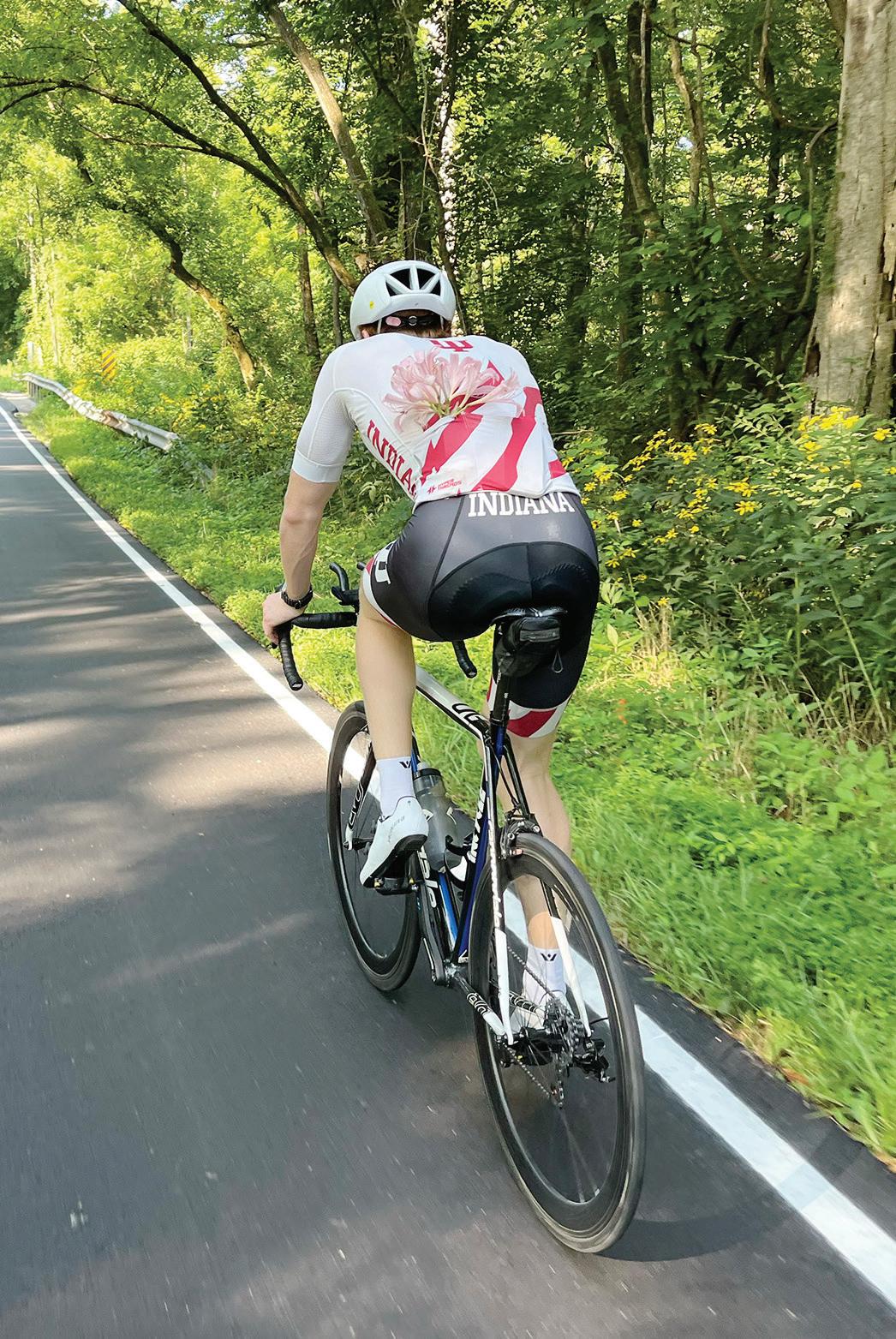
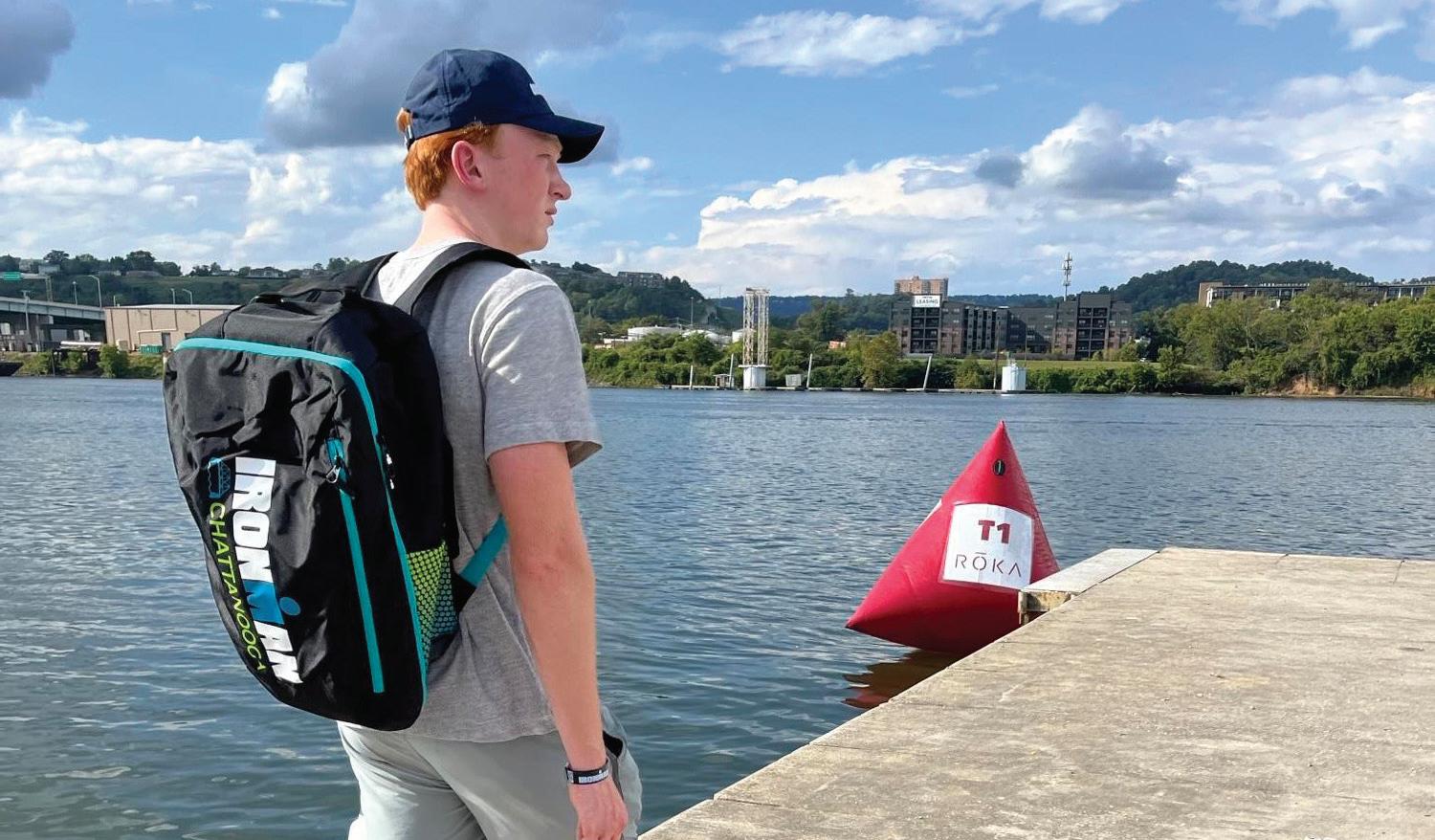
1. Liam Collins runs the marathon portion of the Ironman on Sept. 28, 2025, in Chattanooga, Tennessee.He finished the run in 4 hours and 12 minutes.
2.
3.
4.

3
2
4
By Natalia Nelson nelsonnb@iu.edu
Four bicycles whizzed around the track at Bill Armstrong Stadium. The stands were nearly empty, but around 100 onlookers hooted and clapped as they leaned against the gray chain-link fence to watch.
Riders in multicolored kits warmed up on rollers that kept their bikes suspended in place as they pumped their legs.
“Bib 21, you have been eliminated,” a voice called over the loudspeaker. “Please exit the track at turn 3 and dechip.”
Heat 14 of Miss N Out on Oct. 7 had started with around 10 riders, but numbers dwindled as the last person to cross the finish line each lap was eliminated. The final three raced for first place.
Only a week and a half ago, senior Liam Collins biked 112 miles in five-anda-half hours in the searing Chattanooga, Tennessee, sun. Now, bent over his bike in a plum Alpha Kappa Lambda kit, Liam sped into the last lap of the race.
Liam loves to suffer. He embraces it.
When he’s doing something difficult, he said his brain goes silent and into autopilot. He lets his body take over. After he ran a marathon the summer after his freshman year in 2023, he knew he would race an Ironman. The event takes contestants through 2.4 miles of swimming, 112 miles of biking and a marathon, totaling 140.6 miles.
He wanted to challenge himself, to test his limits, but it didn’t cross his mind to do one so soon until he realized that it would be difficult to train for later in life with a full-time job and a family.
Liam’s dad, Darren Collins, said his son called him in March and told him he wanted to sign up for an Ironman in July.
“This is a pretty big deal,” Darren remembered telling him. “You’re gonna need some time to train.”
Darren told Liam he would cover the fees for an Ironman in Chattanooga. In March, while simultaneously training to compete for Alpha Kappa Lambda in the 2025 Little 500, Liam signed up for a full Ironman. Two days after
140.6 miles He had six months to train
the race, Liam started training for the Ironman. Its sign-up fees reached $950.
“These are wealthy people who do these things,” Darren said. “They have $20,000 bikes, they have trainers, they have tri suits, fancy shoes, fancy gear.”
Liam used his $3,000 bike that he bought in his senior year of high school. He didn’t have a coach and built his own training plan. His girlfriend of two years, IU senior Tori Donato, said he found all his training online.
“He watched a bunch of videos,” Donato said. “He made all of his own plans, all of his nutrition plans. He had no coaching besides his own knowledge.”
Over 40% of athletes in full and half Ironmans hire a coach or use a training plan, according to the Ironman website. The sweet spot for training is around nine months, but varies depending on experience.
Liam trained for six months. He did so while interning in Atlanta over the summer, working 40 hours a week at SK Commercial Realty — a commercial real estate company.
“I’d be up at the ass-crack of dawn, early, get one workout and go to work,” Liam said. “Come back at four and then get another workout in.”
He’d run Mondays, Wednesdays and Fridays in the morning before the summer heat set in. He would swim Tuesday and Thursday mornings and bike in the afternoons, plus lift weights twice a week. On Saturdays, he woke up around 6 a.m. for more than 80 miles of biking. He exercised for around three hours, six days a week.
Liam and his dad spent the summer in Atlanta together — just the two of them. Darren cooked for Liam, catering to his dietary needs for carb and proteinheavy meals to support his training.
Donato said watching Liam prepare to compete motivated her, making her eventually want to do an Ironman herself. She’s also a Little 500 rider, so they would sometimes train together on the bike.
“If he was having a bad day, I’d like, try to play a playlist on a ride, or make a joke,” Donato said. “It was certainly inspiring to watch someone deal with so many things, new priorities, and just get work done every day.”
The first five or six weeks
of training, Liam said, were the most difficult. His body wasn’t accustomed to the training and stress because he had never pushed it so hard and long before. After around two months, he got into a rhythm and everything clicked.
Since he swam in high school and for the IU club swimming team during his freshman and sophomore years — and trained for the Little 500 — Liam’s goal for the Ironman was to finish in under 11 hours. The average Ironman finish time for Liam’s age group is around 12 and a half hours.
Donato joined Liam and his parents in Chattanooga to support him during the race. The day before the race, Donato and Liam went to Rembrandt’s Coffee House. Liam ordered a hot cappuccino and a chocolate croissant. Donato chose an iced vanilla latte and an almond cookie. Going to coffee shops is what they do when they’re stressed, Donato said. Liam said it keeps him level-headed and gives him a sense of normalcy.
The couple walked part of the course and the transition areas. Donato made sure he had food every second of the day to carb load. She hung balloons in Liam’s room with pictures she took of him biking, running or photos she thought were silly. They were little snapshots that Donato used to try and remind Liam of all the progress that he had made. She wrote him a letter about how proud she was of him.
“It was like, ‘This is how I see you training,’” Donato said. “’You work so hard and you don’t see yourself this way. But I want you to see yourself this way.’”
On the morning of Sept. 28, Liam and his family woke up at 4:30 a.m. He ate four eggs, two pieces of toast and drank a black cold brew coffee. Darren played Eminem’s “Without Me” on the car ride to the race.
Liam got to the transition point — a parking lot corralled into three different sections — to check in his bike. He then took a shuttle two and a half miles up the Tennessee River. He put his gray-and-red Indiana hoodie, shoes and socks in a bag, which was returned to the central common area for his next transition. There was a tracker
around his ankle that connected to a mobile app Liam’s family could use to see where he was on the track. Liam’s 85-year-old grandmother, whom he calls “Nana,” downloaded the app on her iPad. His family was watching his progress from all over the country. His brother and brother’s girlfriend watched from New York City, his cousin in Texas and his uncle in Kansas. Liam used an elastic band to stretch before the race and stay loose. Donato said she stepped back before the race to let Darren give him a pep talk.
“It was kind of like, ‘You got this, let’s fucking go!’” Liam recalled Darren saying. Liam said Darren helped him the most out of anyone to prepare for the Ironman.
“I just know there was a little moment there, because they had a hug,” Donato said. “And they don’t hug a lot.”
Then, it was just Liam, his pink swim cap and his goggles against 2.4 miles of open water. He was at the front of the start line, barefoot on a wobbly dock. Every three seconds, four people on the dock jumped into the water. Liam felt the dock shake every time. The water was the perfect temperature, Liam said. Seventy-six degrees.
The beep sounded, and Liam jumped in. He said he blacked out and his body took over as he was just trying to get through each segment of the race. He could look up and see the bridges overhead and the required turns. He transitioned from the swim to the bike in six minutes. Liam raced loops on US-27. He counted the laps he had left on the bike. The bike course consisted of over 4,000 feet of elevation gain.
After a 46-minute swim and a five-and-a-half-hour bike ride, only a marathon separated Liam from the finish line.
Darren was concerned about Liam finishing, but he saw him during the transition.
“We saw him on the bike, ‘Dude, he’s ripping it up on the road,’” Darren said. “And then was like, ‘Can he do the run?’”
For Liam, the run was the most daunting part. It’s what the race would come down to.
Liam’s skin was blistered and reddened from the unrelenting sun. Salt, leftover from dried sweat, crusted the underarms of his black and gray tri-suit. He didn’t carry
headphones, his phone or a water bottle. Liam dismounted his bike — a road bike with aero handlebars that he uses to train for the Little 500 — and traded it for his run bag. He changed into his Nike Alpha Fly 3 running shoes, switched out his socks and grabbed his navy hat. The front of it, printed proudly in white-and-red lettering, read “Ironman.”
He still had 26.2 miles to run.
Aid stations were scattered about every mile and a half along the course. Liam got his energy from gels, electrolytes, protein drinks and four granola bars. He put ice from the aid stations in his hat to stay cool.
The last few miles were brutal in the 85-degree heat.
Darren said some marathoners called the marathon a 20mile warmup and a six-mile race.
Liam knew on the bike that he would reach his goal of finishing in under 11 hours if he didn’t lag behind during the marathon. By the first loop Liam ran, Darren was sure his son would finish. The tracker told the story.
“I was like, ‘Look, he’s got this thing,’” Darren said. “‘I think this is pretty much in the bag.’” At 10 hours, 40 minutes and six seconds, Liam crossed the finish line fourth of 48 in the 18-24 age group and 162nd overall out of over 1,500 competitors.
“The first thing I asked, like ‘Where can I sit’?” he said. “Then I walked out, and then laid on the grass, and you could see the sweat and shit all over me. Kind of gross.”
He stayed on the ground for around five minutes. When he finally got up, his mom was worried about him collapsing. She held onto him to make sure he didn’t fall.
Darren said despite Liam being unable to walk, he looked happy. He hobbled back to the car.
Liam got a greasy burger with bacon, tomato and pickles after the race with his family and Donato at the Tremont Tavern in Chattanooga. He slept for eight hours, but sunburn made it difficult for him to sleep. He had to stay in one position. In the days after, his legs were so sore he had to skateboard and take the bus to class.
“I knew I would finish,” Liam said. “No doubt.”
By Conor Banks conbanks@iu.edu
As Indiana football’s defense took the field late in the first quarter of its matchup against UCLA on Oct. 25, senior linebacker Aiden Fisher paced along the sideline without a helmet. Fisher sported a left-knee brace and draped a white towel around his neck, while redshirt junior linebacker Isaiah Jones had a communication system installed into his helmet.
On the game’s second play from the line of scrimmage, Fisher intercepted UCLA redshirt sophomore quarterback Nico Iamaleava and took the ball into the end zone to push the Hoosiers out in front 7-0 early.
Heading into the Oct. 25 game, Fisher tied the team lead with 48 tackles this season. But the Hoosiers played most of the game without their All-American linebacker and needed others to step up in his absence.
Indiana did just that.
The Cream and Crimson forced three turnovers and generated seven tackles for loss Oct. 25. This defensive outing cumulated into a dominant 56-6 Indiana victory over UCLA at Memorial Stadium in Bloomington.
“Bryant (Haines) does a great job,” Indiana head coach Curt Cignetti said postgame. “The kids respond. They have a lot of pride.”
UCLA entered the matchup scoring 100 points across
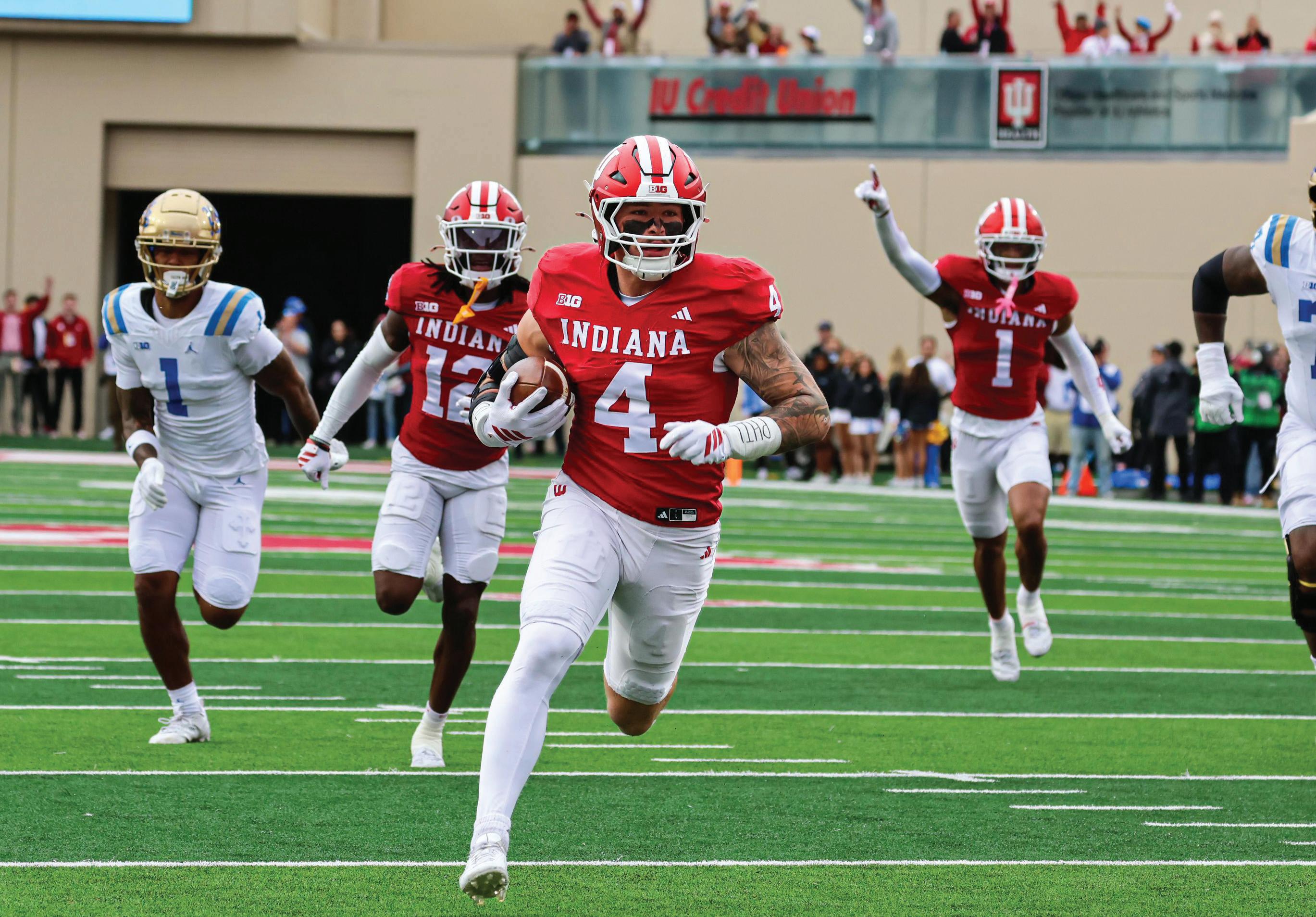
its last three games, including a 42-point performance on the road against Penn State on Oct. 4. The scoring outbursts came after the program promoted Jerry Neuheisel from tight ends coach to offensive play-caller ahead of its showdown in University Park, Pennsylvania.
After taking over signaling duties on the field, Jones and defensive coordinator
Bryant Haines helped rally the Indiana defense against a red-hot UCLA offense with Fisher sidelined.
“It’s something that you know, you want to prepare for but you hope never happens,” Jones said.
Jones emphasized the importance of a next-manup mentality. He set the tone by leading Indiana with eight tackles and forced a fumble on a third and one in the
second quarter to set the Hoosiers’ offense up at the UCLA 29-yard line — the first of his collegiate career. The London, Ohio, native added a half-sack and a pass break up. In addition to missing Fisher, Indiana senior defensive lineman Kellan Wyatt suffered a “long term” knee injury in the Hoosiers’ 38-13 victory over Michigan State on Oct. 18. In Wyatt’s first full
game missed, redshirt junior defensive lineman Tyrique Tucker rose to the moment.
Tucker led the team with 1.5 sacks and a season-high 2.5 tackles for loss, while collecting four total tackles against the Bruins.
“Yes, I had a lot of confidence going into the year,” Tucker said. “Prepping, prepping, prepping, like I said. You know, me and Mikail (Kamara), we craft all sum-
mer and we work for these moments. So you know, it’s just something that we knew could happen and we just had to show everybody else.”
But it was not just the defensive front and linebacker unit that stepped up. The Indiana secondary helped limit Iamaleava to 113 passing yards and a completion percentage of 48% — both season-lows for Iamaleava. The Bruins’ longest play through the air went for 18 yards, as the Hoosiers consistently disrupted passes.
Sixth-year redshirt senior defensive back Devan Boykin logged a season-high seven tackles for the Hoosiers and his first interception of the 2025 season.
Collectively, the Indiana defense held UCLA to just a one for 11 third down conversion rate, while zero of the Bruins’ drives lasted over four minutes.
“Well, you know, preparation,” Cignetti said. “It’s good preparation and execution. But, you know, to me it’s all the same; you know, it starts up front. You’ve got to win the line of scrimmage. You’ve got to put heat on the quarterback on defense.”
Following their collective defensive effort against UCLA and a two-game homestand, the Hoosiers head back onto the road when they take on Maryland at 3:30 p.m. Nov. 1. Indiana will hope to have Fisher back for that contest to build off its dominant defensive effort Oct. 25.
By Max Schneider maxschn@iu.edu
It’s not common to see a 100-point outing in college basketball, even in exhibition matches against lower divisional opposition. It’s even less common to see one team score more than triple the points of the other team.
However, Indiana women’s basketball accomplished both feats Oct. 27 with a commanding victory over Missouri University of Science and Technology 100-32.
For the second year in a row, the Hoosiers picked up a dominant 68-point victory in their lone exhibition game, as Indiana defeated Maryville University 95-27 Oct. 30, 2024, to start the 2024-25 season. Here are the main takeaways from Oct. 27’s action:
Caffey is the real deal
Heads turned inside Simon Skjodt Assembly Hall on Oct. 27 as true freshman guard Nevaeh Caffey found her name in the Indiana starting lineup.
While head coach Teri Moren heaped praise on Caffey in a press conference Sept. 30, beginning the season in the starting lineup showed a trust Moren holds in Caffey that is rarely seen with true freshmen.
Caffey started off hot,
The Hoosiers defeated the Miners by 100-32 on Oct.27
going 3 for 3 from the field until a missed shot just before halftime. In her 23 minutes of action, Caffey contributed 9 points, five assists and two rebounds. Her 23 minutes of action was tied for the most amount of minutes played, alongside senior guard Shay Ciezki and redshirt sophomore guard Lenée Beaumont.
If Caffey continues to play like she did and maintain the trust of coach Moren, her name could be a permanent fixture in the starting lineup.
Socka-Nguemen is a presence... while not in foul trouble
Sophomore forward Zania Socka-Nguemen was a strong force in the paint for the Hoosiers on Oct. 27, playing with her back to goal and initiating contact with strong drives. In 13 minutes of play, SockaNguemen collected nine rebounds and two blocks.
However, after committing her fourth foul midway through the third quarter, Socka-Nguemen did not play another minute. Whilst her physicality against Missouri S&T was beneficial, unnecessary fouls could keep her off the floor if they are not cleaned up heading into the season. If she can limit the fouls, Socka-Nguemen has
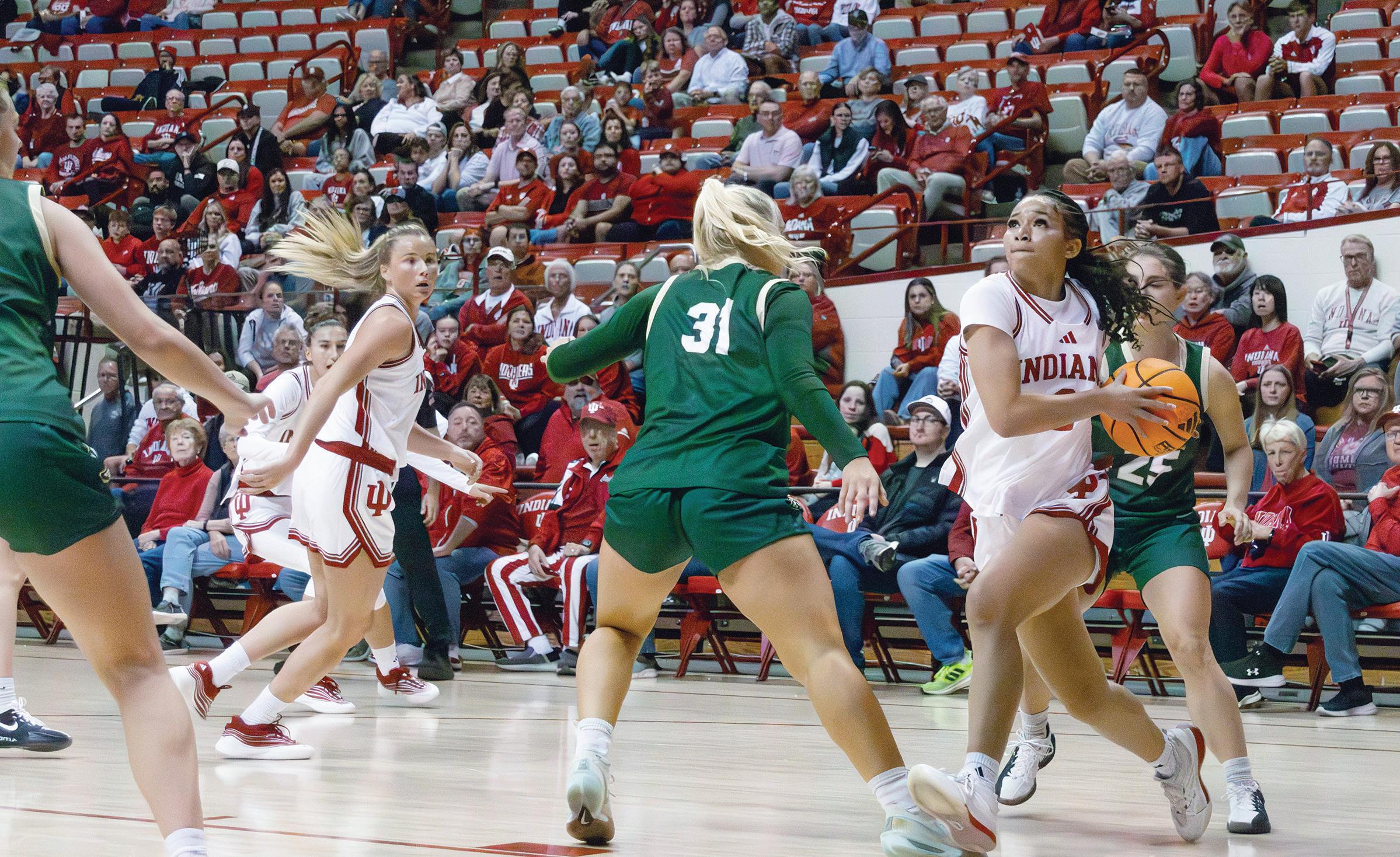
the strength to be a gamechanger inside the paint for the Hoosiers.
Three is the key
Over half of Indiana’s attempted shots were three-point attempts. The Hoosiers shot 15 for 35 from behind the arc, adding up to be a 42.9% make rate. Overall, Indiana shot 36 for 69 from the field for 52.2%. Comparatively, Mis-
souri S&T shot 18.5% from the field and failed to hit a single three-point shot, going 0 for 13.
Ciezki and sophomore guard Phoenix Stotijn both attempted eight three-point attempts, with sophomore guard Valentyna Kadlecova and freshman forward Maya Makalusky attempting seven and six, respectively.
Ciezki struck 5 from 8
outside the arc, alongside Beaumont hitting both of her attempts. Kadlecova went 3 from 7, respectively. Especially after SockaNguemen found herself in foul trouble, Indiana often chose the outside shot rather than driving inside. This resulted in only 19 free throw attempts for the Hoosiers, one less than Missouri S&T’s 20 attempts.
Indiana’s three-point
shot went in early and often this game. However, in games where the shot doesn’t fall in the future, the Hoosiers will have to become much more physical to create points. Indiana plays its first regular season game against Lipscomb University at 7 p.m. Nov. 4 at Simon Skjodt Assembly Hall in Bloomington. It will also be streamed on Big Ten+.
By Sean McAvoy semcavoy@iu.edu | @sean_mc07
Although it was an exhibition game against a Division II opponent, Indiana women’s basketball has a problem that must be addressed: the fouls. The Hoosiers finished their commanding 100-32 victory over Missouri University of Science and Technology with 25 team fouls. Both bigs, sophomore Zania Socka-Nguemen and junior Edessa Noyan, produced four fouls in their time on the court. That is a big problem for Indiana, especially if SockaNguemen finds herself in foul trouble during the Hoosiers’ biggest games of the season. “We got to keep ‘Z’ (Soc-
ka-Nguemen) out of foul trouble,” Indiana head coach Teri Moren said postgame. “We know how important she is on the floor.” The 6-foot-3 transfer from UCLA was able to beat the Missouri S&T bigs in 6-foot2 freshman Ava McCulla and redshirt-sophomore Megan Aulbert early in the game. Socka-Nguemen hit a baseline jumper before a spin and a contested layup to produce the first four points of the game for Indiana.
“She gets up and down the floor really fast,” Moren said. “She’s going to beat most fives down the floor. There’s no question. And so, we got to reward her for that.”
Her first foul came with 4:44 remaining in the first quarter after her shot contest hit sophomore forward
Anna Gilbertson. Socka-Nguemen rebounded in the second quarter mentally and physically. She picked up two boards with seven minutes remaining in the frame after producing two blocks. However, that momentum changed only a minute later, as Socka-Nguemen had two reckless fouls that forced Moren to keep her out of the game until after halftime.
In her absence, Noyan and sophomore Faith Wiseman picked up the slack. However, the Hoosiers lacked the offensive aggressiveness from inside the paint that they showed in the first quarter.
After starting the third quarter, Socka-Nguemen finished her game with 5:29 remaining in the frame fol-
lowing her fourth foul of the contest. In 13 minutes of action, she went 4-4 from the field and hauled in nine rebounds. However, only being on the court for that short amount of time is not something Moren will want to see when the games count.
“’Z’ has to stay on the floor for us,” Moren said. “She thought she had six fouls. It was so funny. She said ‘Do I get six fouls?’ Maybe they told her that at UCLA.”
Socka-Nguemen was only on the court for 5.3 minutes per game last season in Los Angeles. Now, she has the ability to start for the Hoosiers, but her impact will only be seen if she is actually in the game.
Noyan also finished the game with four fouls in her
17 minutes on the Simon Skojdt Assembly Hall floor, while Wiseman had three while only playing nine minutes. With Moren keeping the four-out offense from last season, whoever is playing in the paint will need to keep defensive eyes off players in 3-point range. The Hoosiers went 15 for 35 for 42.9% from behind the arc, and if that shooting continues — especially a 5 for 8 performance from Shay Ciezki — Moren will be wanting to play Socka-Nguemen for most of the game. Along with the bigs, three other Hoosiers finished the game in foul trouble. Sophomore Valentyna Kadlecova started the game, but her third foul came with 8:49 remaining in the third quarter
with Indiana up 52-19. Sophomore Chloe Spreen and senior Jerni Kiaku were the other two Hoosiers with three fouls. They both mostly played in the fourth quarter when the starters exited the game. With the rotation trimming down by the start of the season, will Moren be able to trust the pieces further down the bench to stay clean? The win was a great start to the 2025-26 campaign, even if it does not count in the official standings. With eight new players joining the team, Moren must trust her players to play clean against bigger, stronger and better competition later this season. “The confidence can only come from your work,” Moren said.


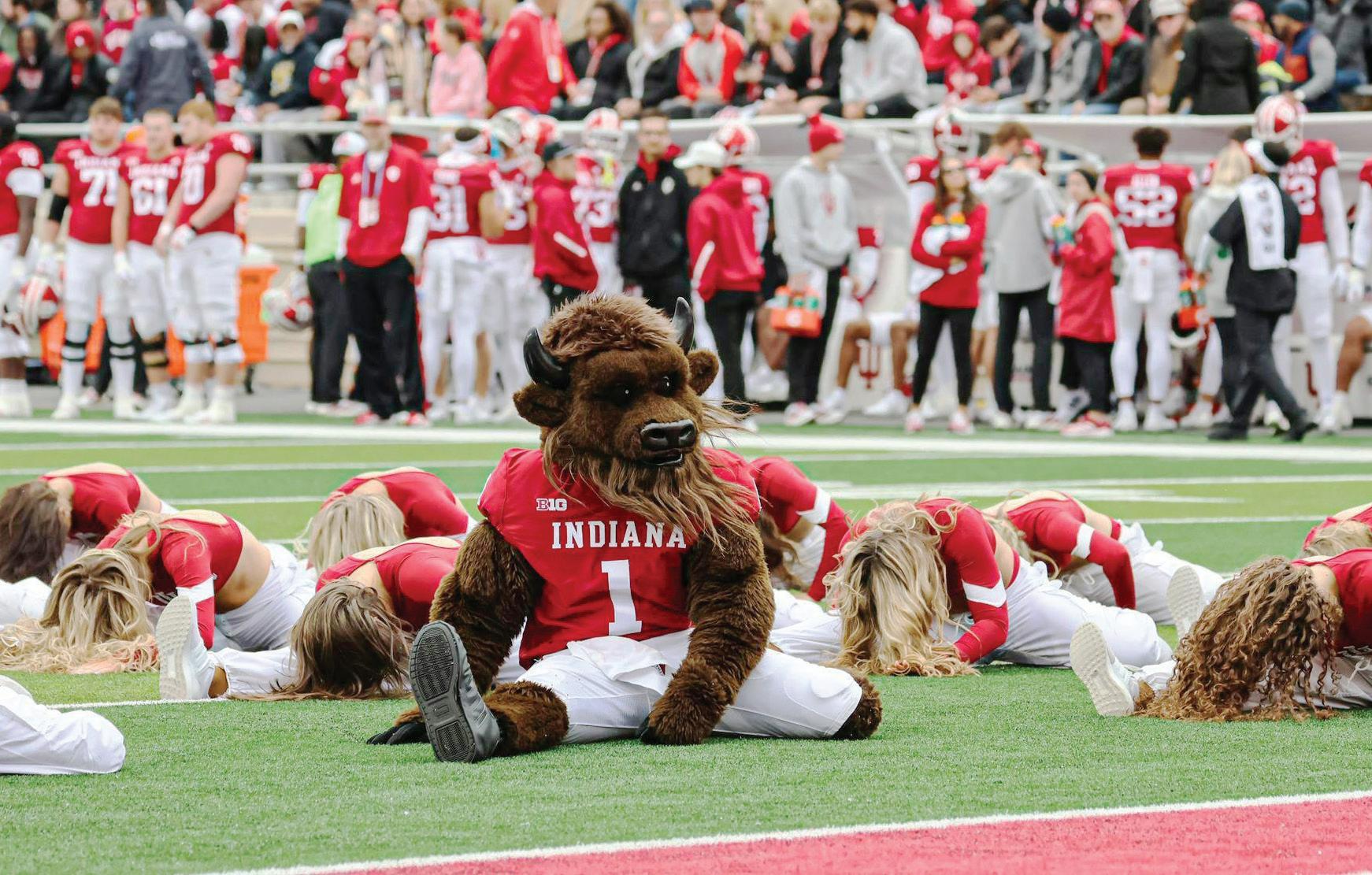
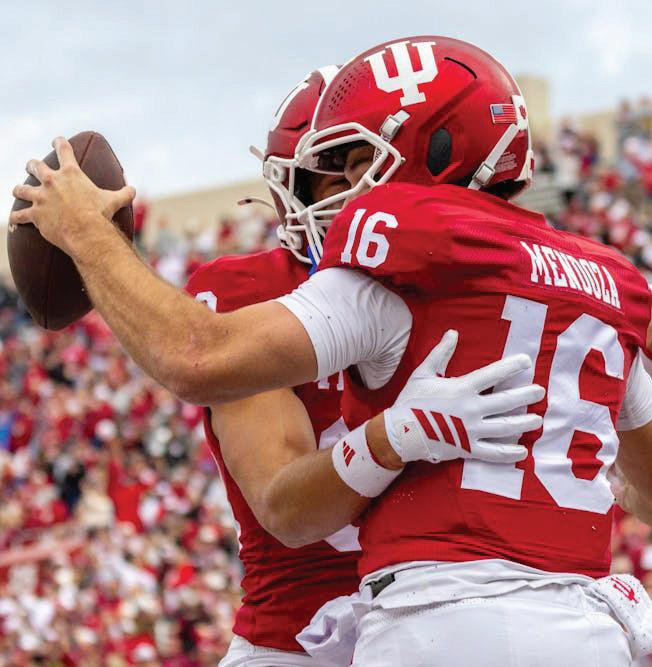
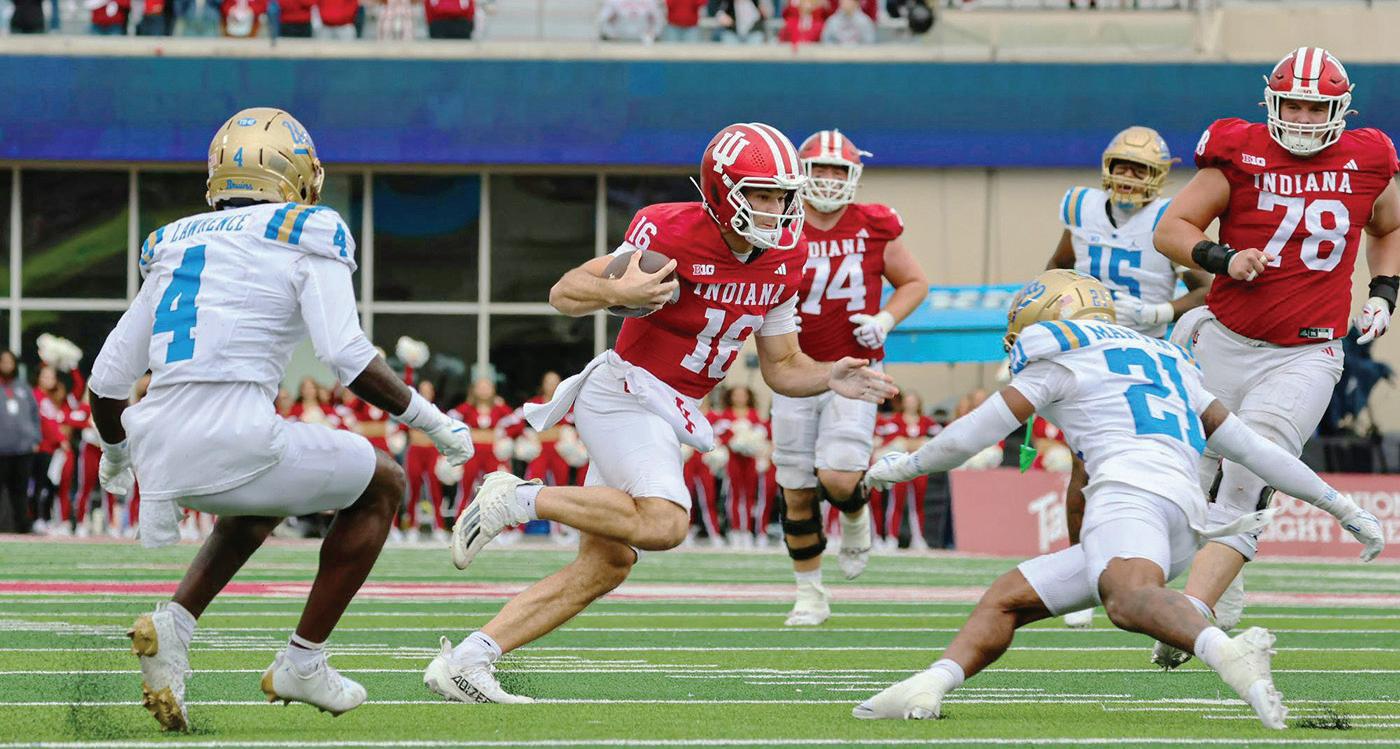
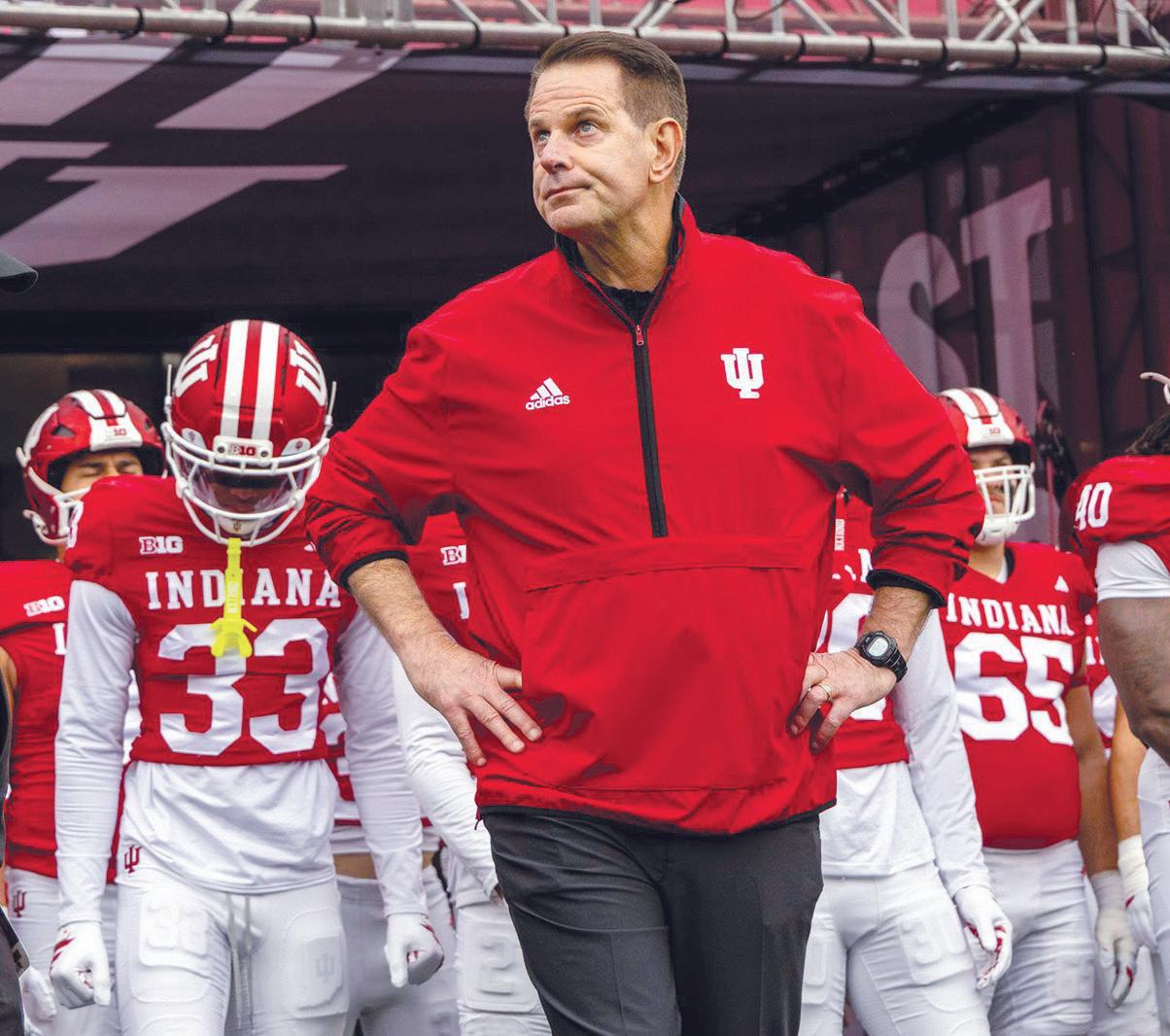

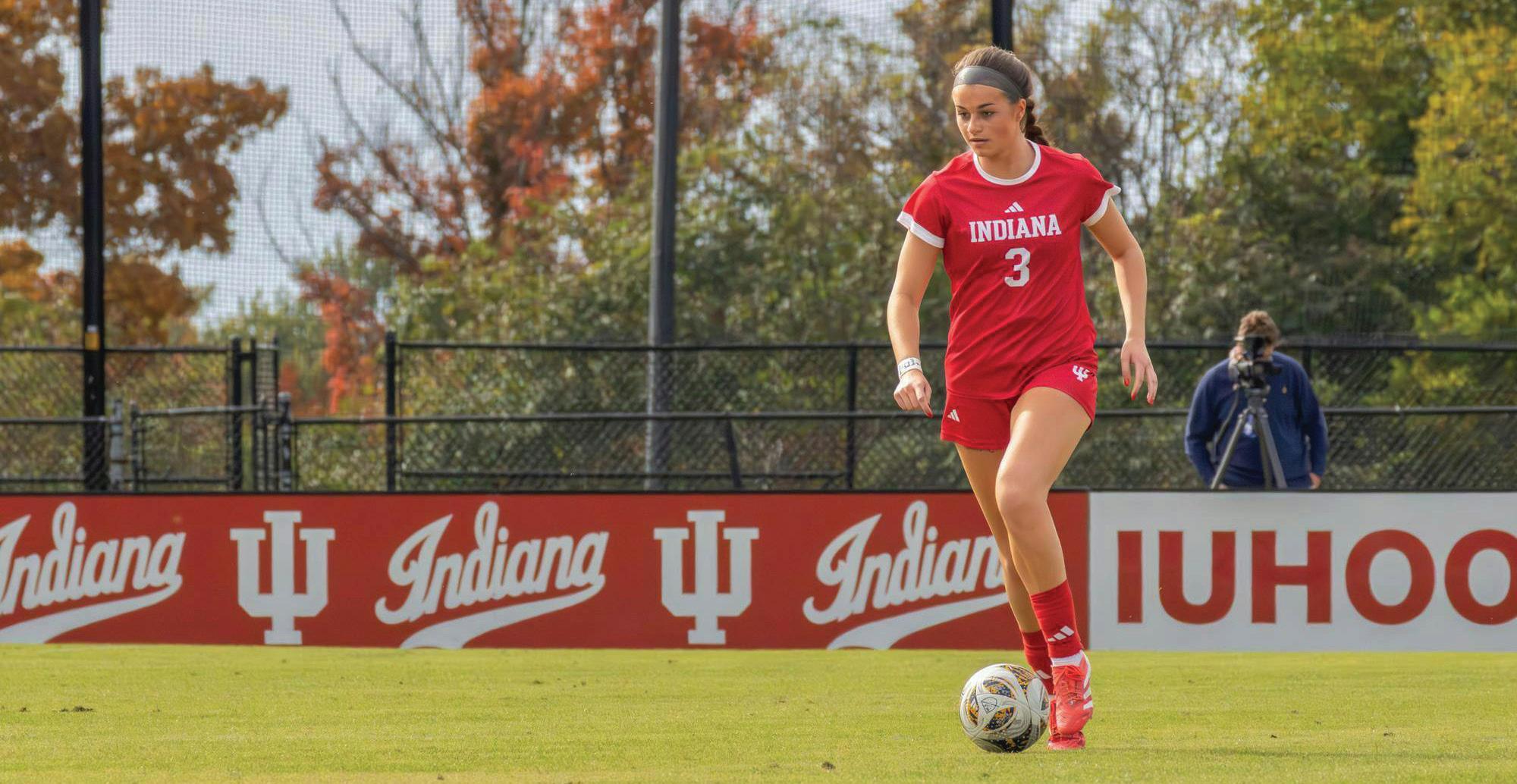

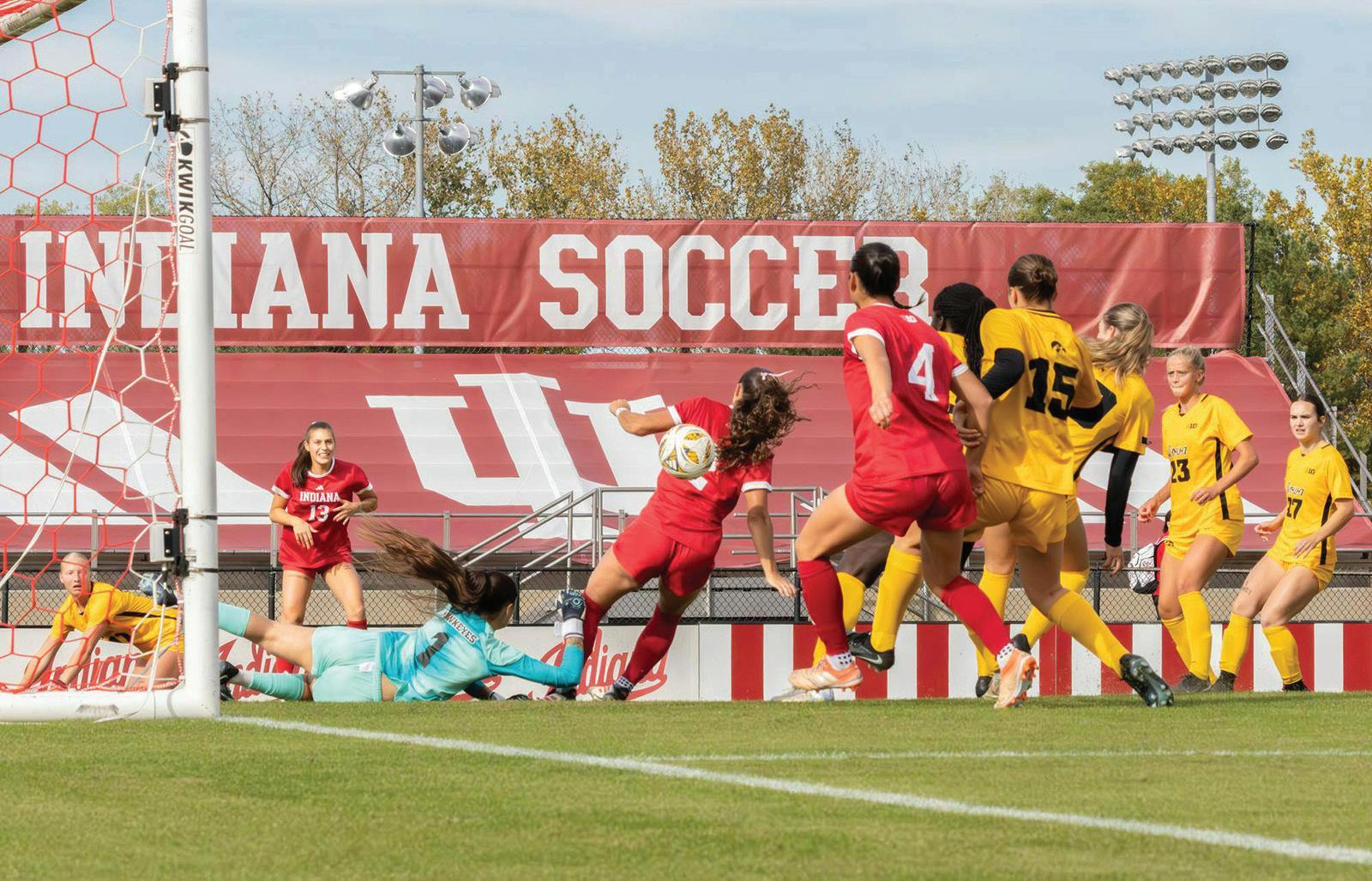
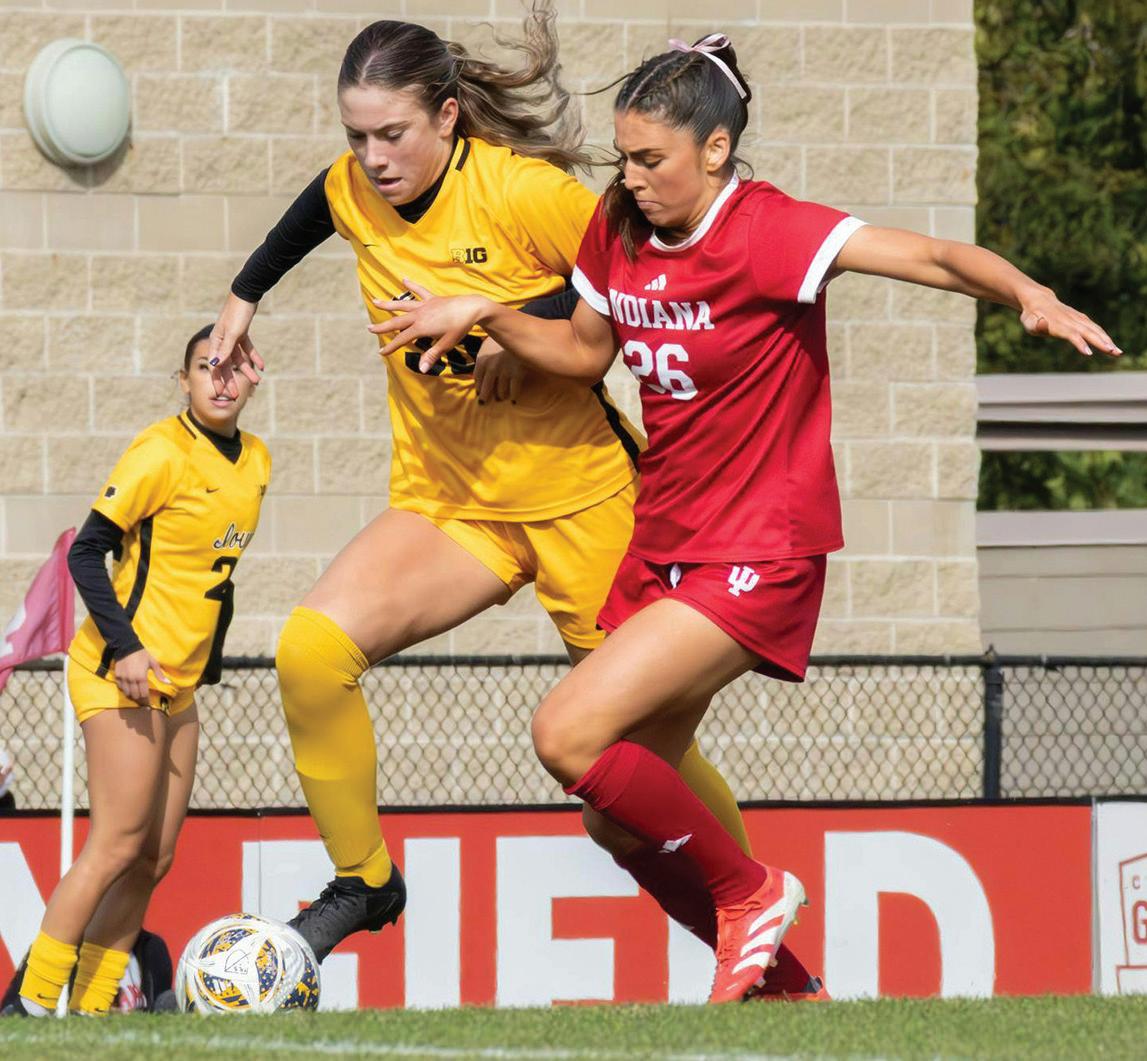
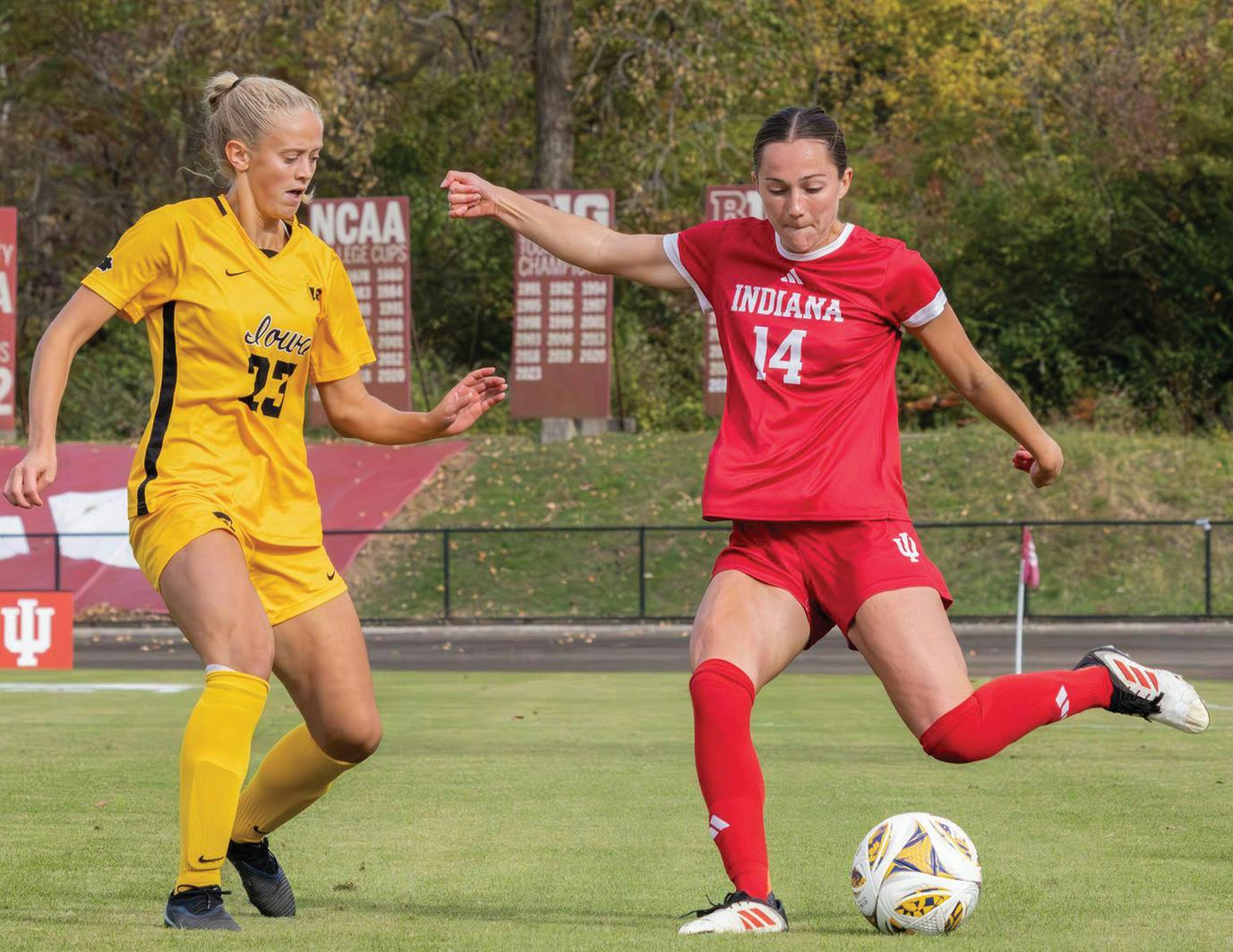
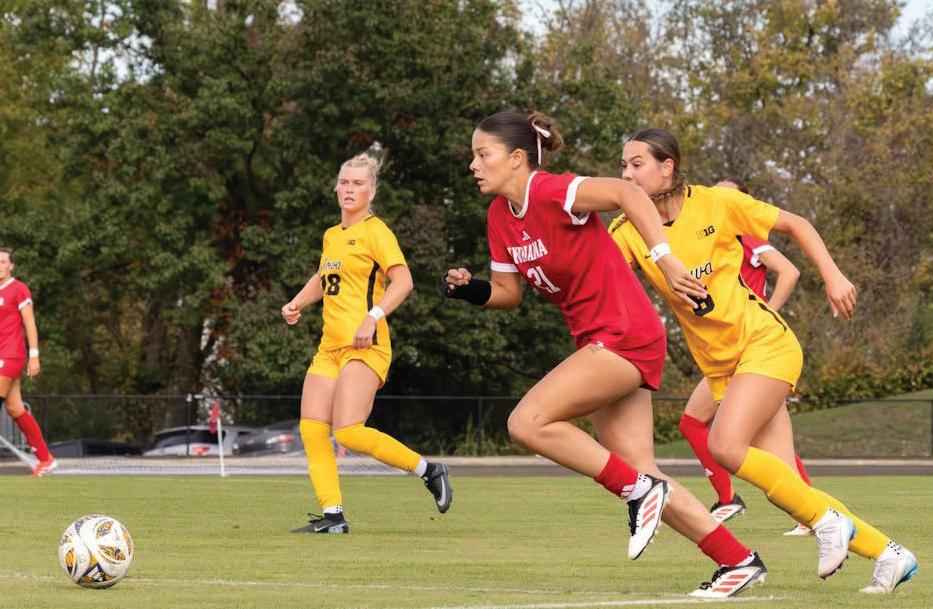
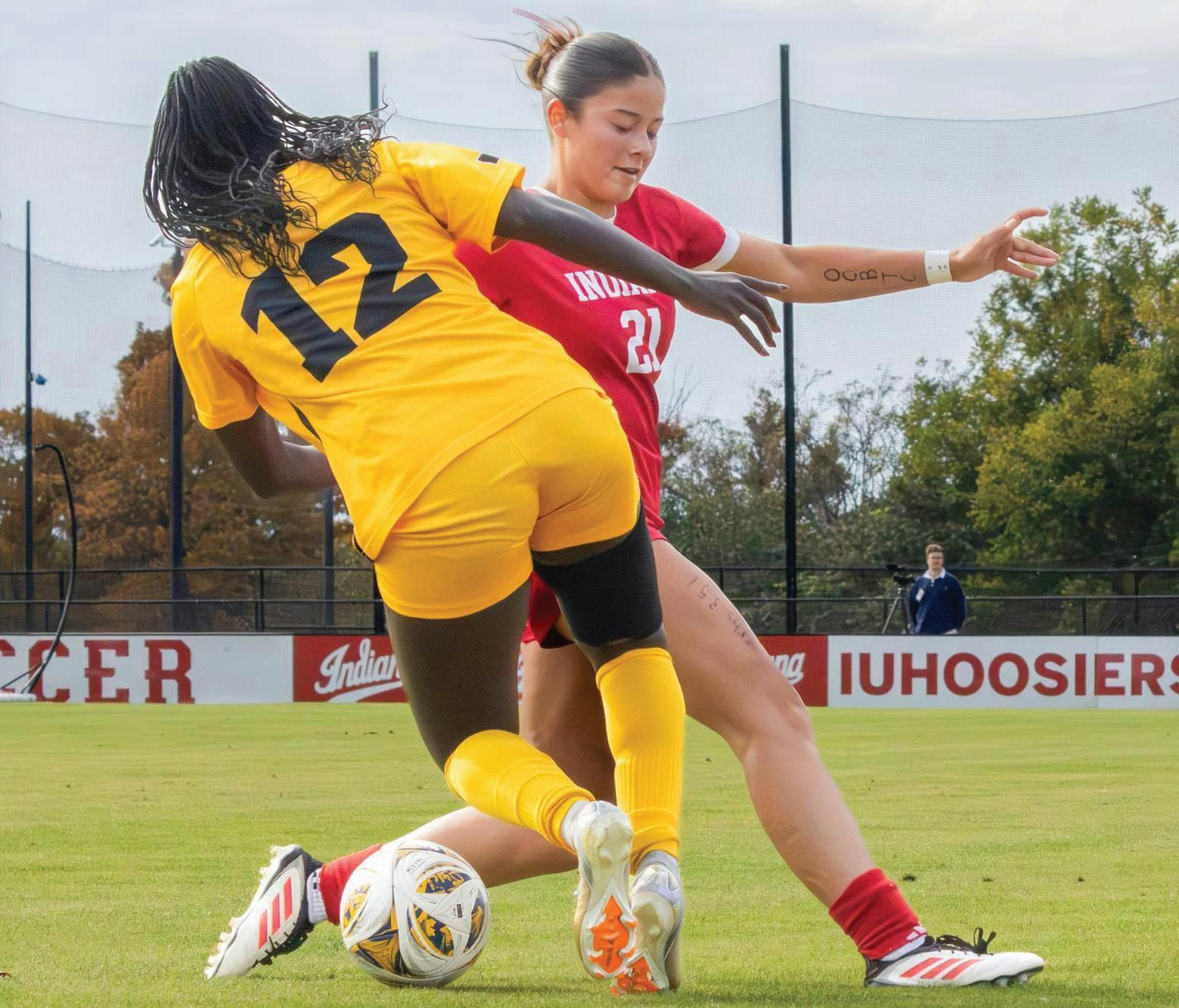
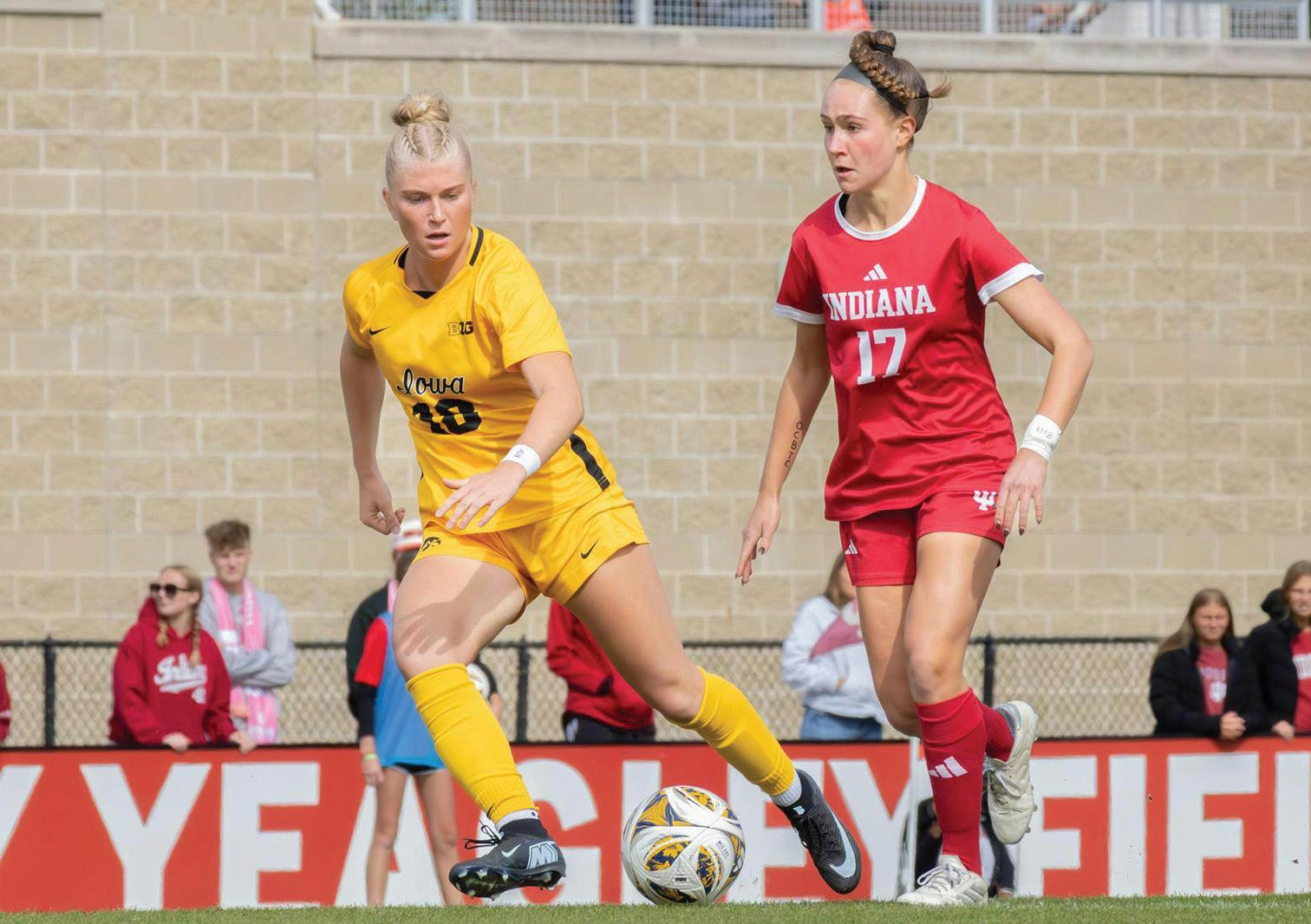
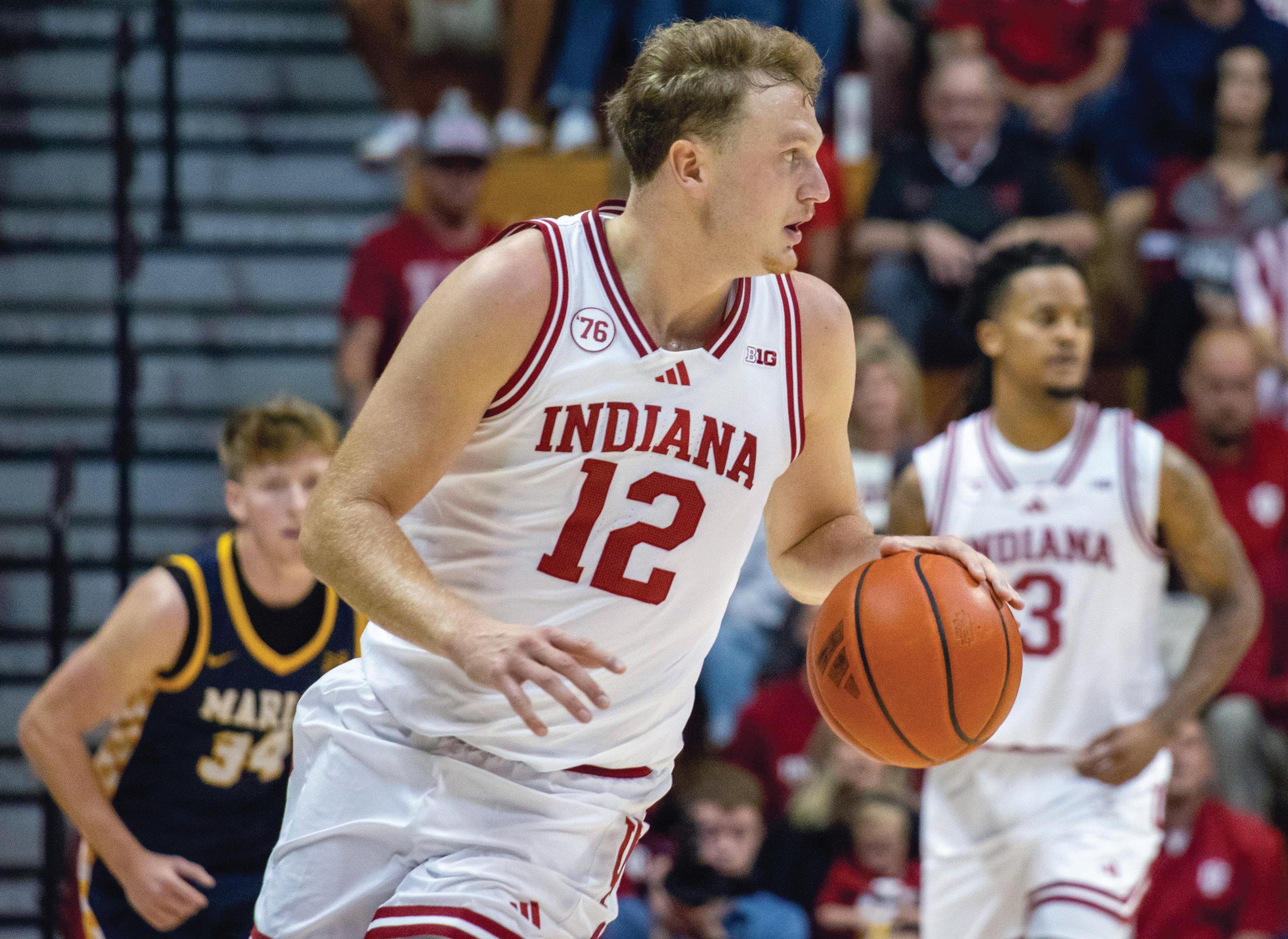
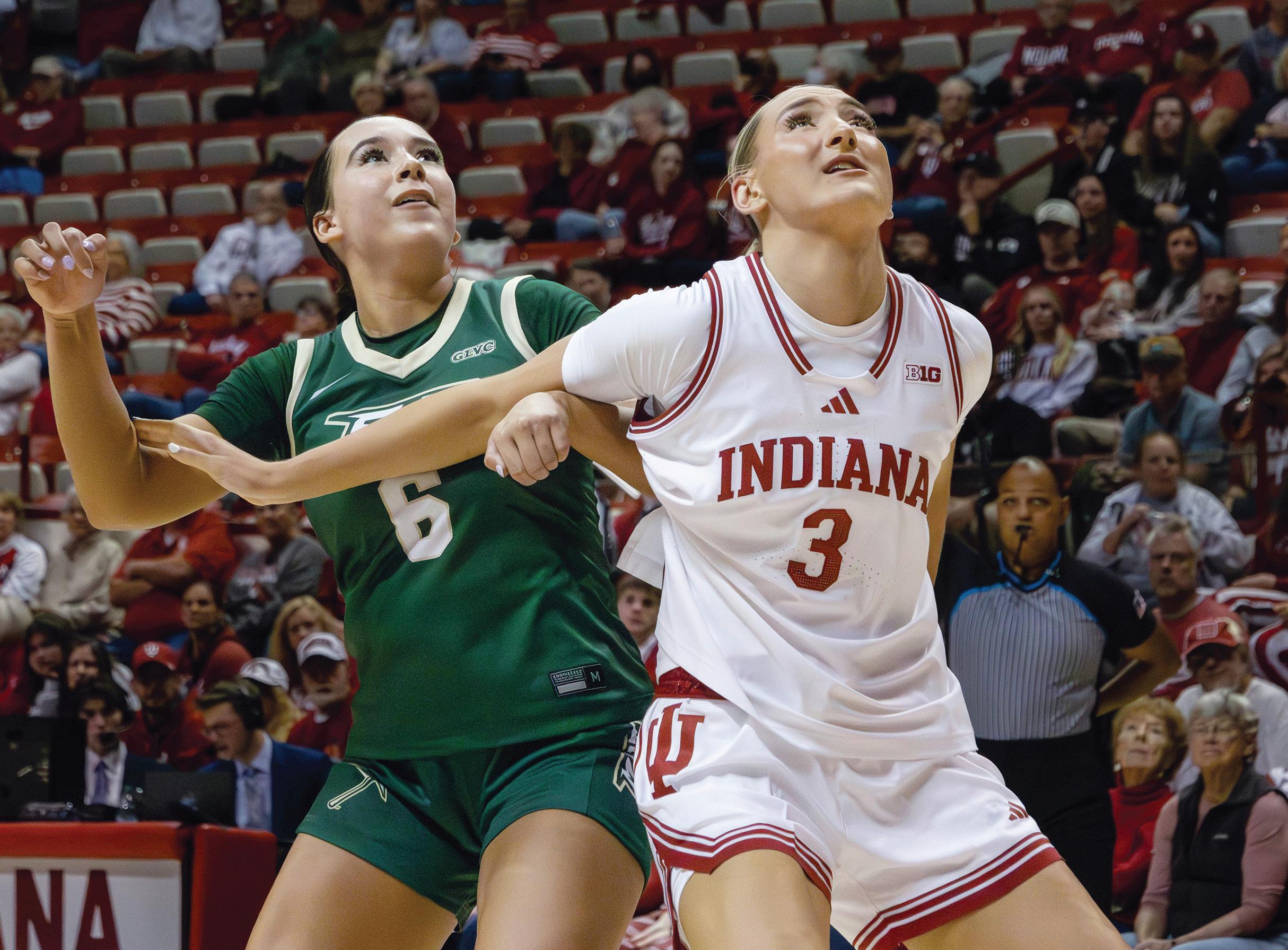
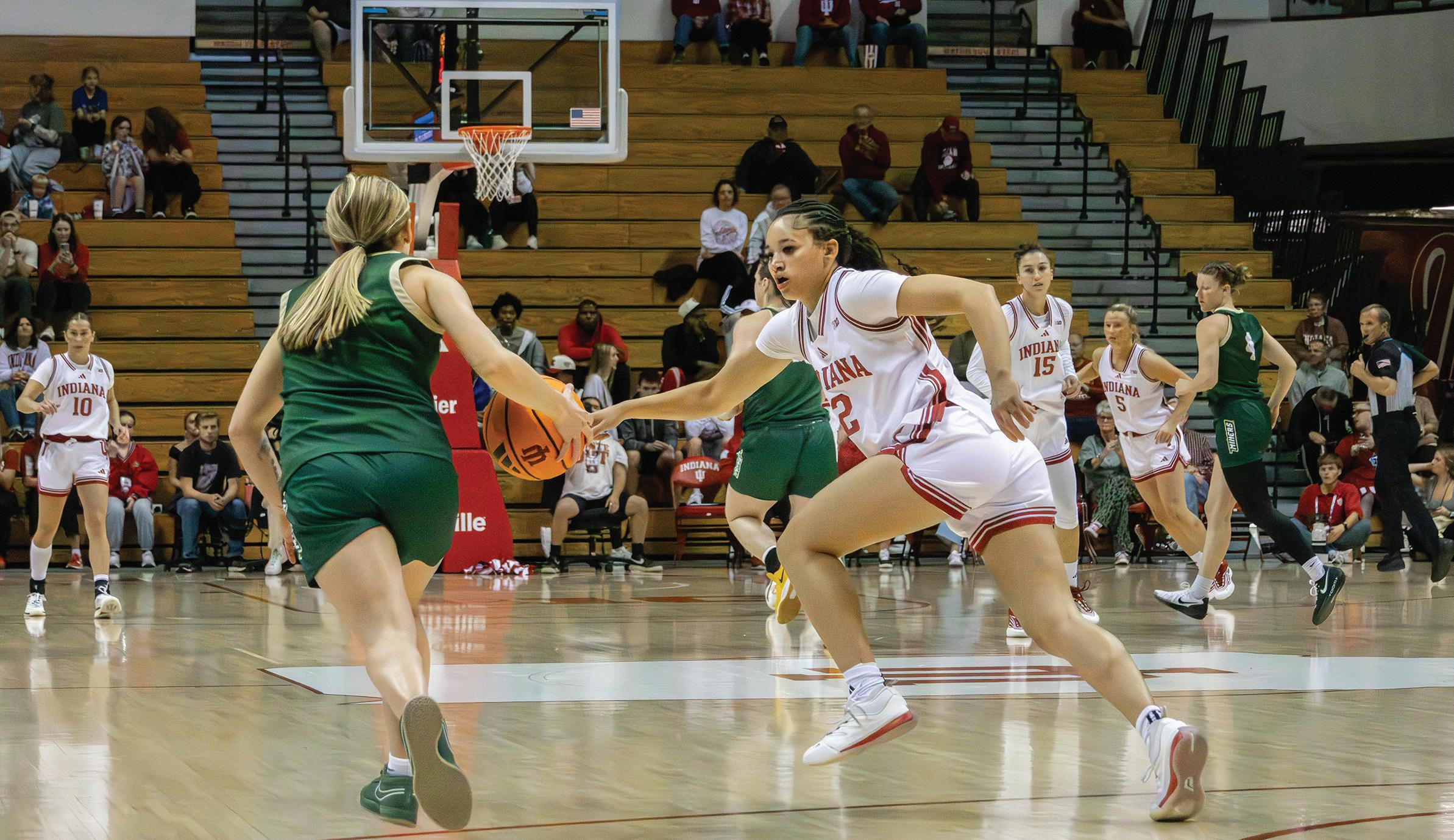
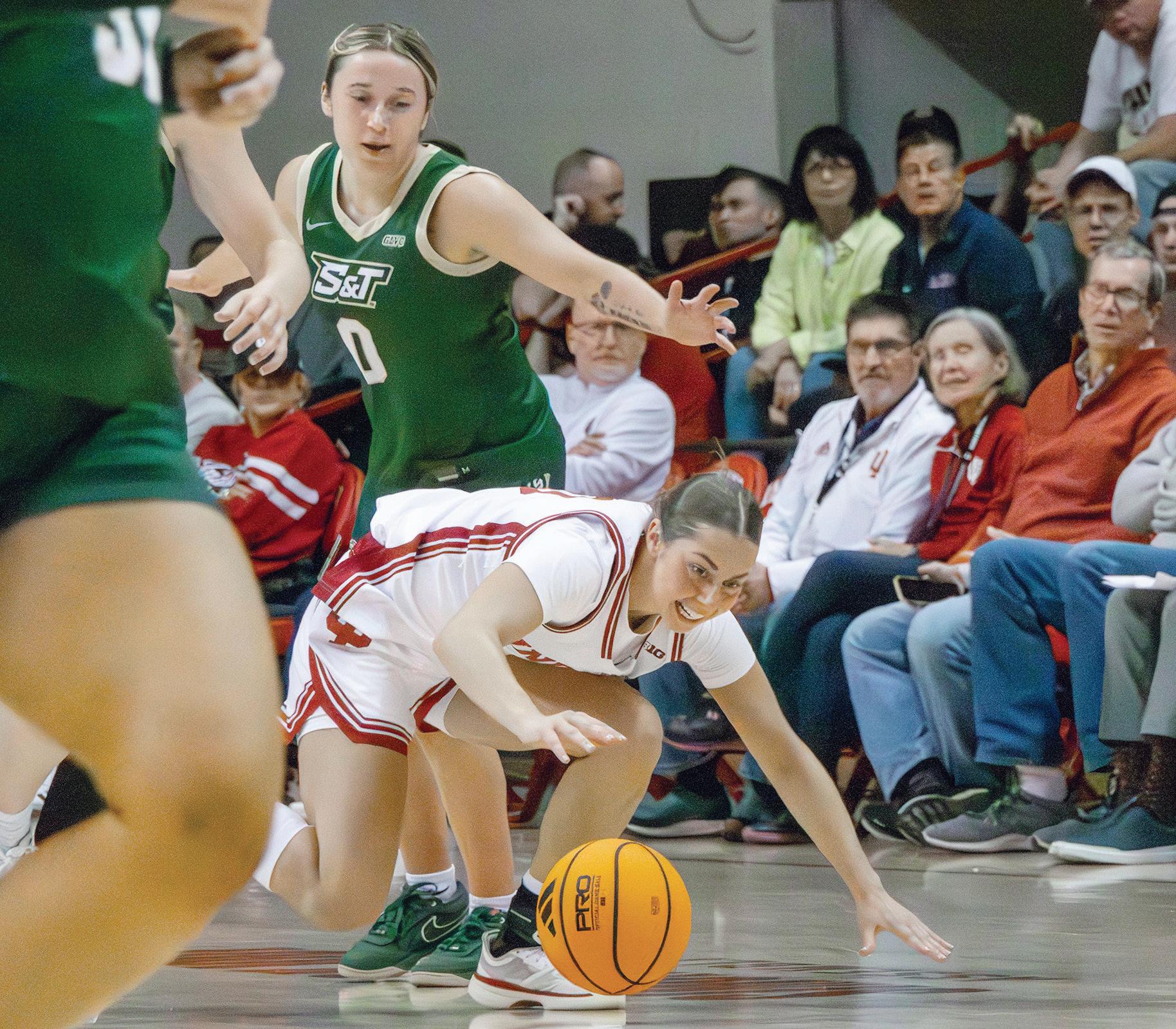
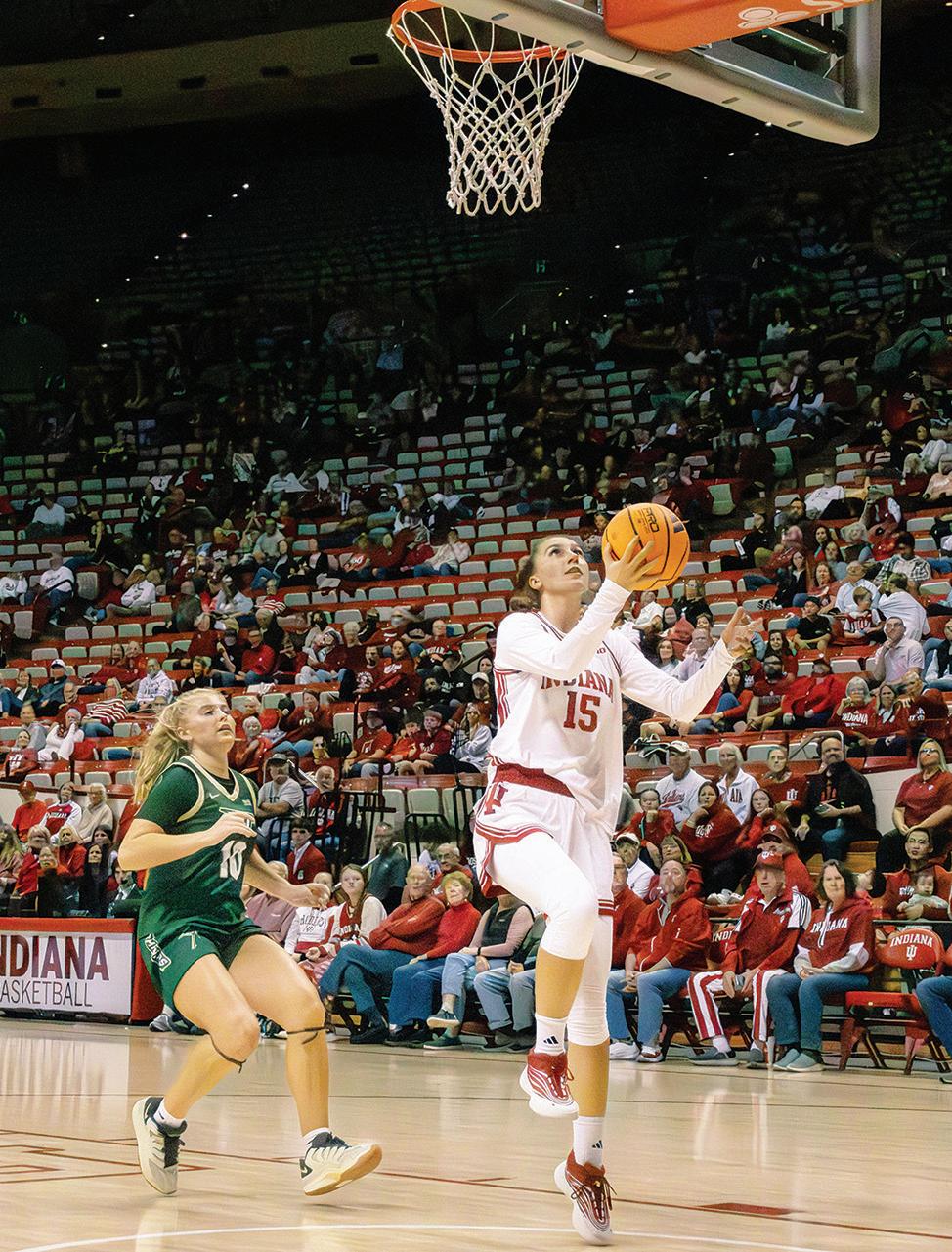
By Savannah Slone, Max Schneider and Sean McAvoy sports@idsnews.com
Indiana women’s basketball has transformed its roster compared to a season ago. Following their loss to the University of South Carolina in the NCAA Tournament Round of 32, the Hoosiers lost nine of the 14 players on their roster via the transfer portal or graduation.
The new roster now consists of five returning members, two true freshmen and six transfers. Senior guard Shay Ciezki is the Hoosiers’ only returning starter from the 2024-25 season.
The Hoosiers begin regular-season play against Lipscomb University at 7 p.m. Nov. 4 at Simon Skjodt Assembly Hall in Bloomington. Before then, the Indiana Daily Student’s women’s basketball reporters and columnist shared their predictions for the season:
Most valuable player
SAVANNAH SLONE:
Not only is senior guard Shay Ciezki Indiana’s only returning starter from the 2024-25 season, but she’s the only one to average more than four minutes per contest last season. While Ciezki transferred to Indiana before last season, she is still one of the most veteran players on head coach Teri Moren’s roster. Ciezki was behind guard Yarden Garzon, who transferred to Maryland, with 11.8 points per game with a 39.2% 3-point percentage last season. As the only remaining starter, Ciezki will need to be the Hoosiers’ main source of offensive production, especially at the beginning of the season and start of the Big Ten schedule as newcomers get adjusted to the program. MAX SCHNEIDER: Sophomore forward Zania Socka-Nguemen transferred from UCLA off the back of averaging 5.2 minutes per game in 16 appearances for the Bruins. She faced heavy competition for minutes at
UCLA, which made the 2025 NCAA Tournament Final Four as a No. 1 seed. Despite limited playing time, she was a part of the 2025 USA Basketball U19 Women’s Team and helped them to a gold medal finish at the FIBA U19 Women’s World Cup. She is poised for a breakout campaign with the Hoosiers this season in a team full of new players.
SEAN MCAVOY: Shay Ciezki was pushed into being the face of Indiana women’s basketball this offseason after the Hoosiers replaced nine players. Starting her career at Penn State, the three-year starter will add another Big Ten season to her resume. Ciezki has been a consistent 11-point, twoassist and two-rebound contributor in college, but this season can be a jumping-off point into an All-Big Ten caliber season. She has also shown up in big games for the Hoosiers after 16 points and a 6-of-8 field goal performance last season against University of Utah in the NCAA Tournament. Head coach Teri Moren said in her opening press conference Sept. 30 that the offense will remain in the same four-out style from last year. With Ciezki being locked in at the two, her scoring ability will be seen on and off the stat sheet.
Breakout player of the year
SLONE: With so many unknowns surrounding the Hoosiers’ roster, there are a number of possibilities for a breakout player. In a press conference Sept. 30, Teri Moren repeatedly complimented freshman guard Nevaeh Caffey’s athleticism, noting she “jumps off the paper” and highlighted her defensive efforts during practice. The 5-foot-10 Caffey played her four seasons of high school basketball at Incarnate Word Academy, where her program set a national record for 139 consecutive wins.
The Warrenton, Missouri, native averaged 16.9 points, 3.4 rebounds and 2.4 assists in her senior season. Caffey
was slotted into the Hoosiers’ starting lineup for their lone exhibition contest Oct. 27.
SCHNEIDER: One of the few remaining players from previous Hoosier teams, redshirt sophomore guard Lenée Beaumont will finally get her time to shine after missing the entirety of last season after knee surgery. In the 2023-24 season, she played in 30 games, averaging 9.6 minutes per game off the bench as a freshman. She shot 51.6% from the field and 70% from the free throw line, scoring 3 points per game. Teri Moren spoke about her leadership in the locker room Sept. 30, with her impact on the team mostly behind the scenes. Now, she has the chance to be center stage.
MCAVOY: The last Hoosier who came from Hamilton Southeastern was guard Sydney Parrish. Now, Maya Makalusky looks to continue that legacy in Bloomington. The freshman forward had a proven ability to score in high school after becoming the alltime leading scorer for the Royals with 1,913 points. Makalusky averaged 22.1 points, 6.8 rebounds and 1.3 assists per game during her senior year in high school. The 6-foot-3 Makalusky had a 49% field goal percentage and shot 40% from 3-point range. Her shooting ability can help space the floor with the starters, but it could also make her a dangerous option for opponents off the bench. Newcomer of the year
SLONE: I think sophomore Zania SockaNguemen has the potential to lead Indiana as a powerful force for Indiana at the forward position. The Hoosiers struggled at times last season with forwards Karoline Striplin and Lilly Meister, but SockaNguemen can develop a strong presence. The 6-foot3 Socka-Nguemen played for Teri Moren on the USA Basketball Women’s U19 team over the summer, giving her familiarity with the Hoosiers’ 12th-year head
coach. Socka-Nguemen was recruited by Indiana out of high school but played her first season of college basketball at UCLA. She won a Big Ten Tournament title with the Bruins before transferring to play for the Hoosiers during the offseason.
SCHNEIDER: Named both 2025 Indiana Miss Basketball as well as the 2025 Gatorade Player of the Year from Indiana, Maya Makalusky came in as the number one recruit from Indiana in the 2025 recruiting class. The freshman forward comes with a four-star tag as the 35th best recruit in the country out of Hamilton Southeastern High School in Fishers, Indiana. She joins the Cream and Crimson with fluid movement and a good outside shot coming out of high school. She is expected to contribute immediately as a true freshman this season. If her shot can fall consistently, her minutes should increase as the season goes on.
MCAVOY: Duquesne University transfer Jerni Kiaku comes into Bloomington with 97 games of experience already under her belt. The 5-foot-7 Kiaku averaged 13.2 points per game and was the leading scorer in five games for the Dukes last season. She has proven her ability to efficiently score the ball after being ranked fifth in the Atlantic 10 Conference with 47.1% field goal percentage. She started her collegiate career at North Carolina Central University, winning Mid-Eastern Athletic Conference Rookie of the Year after producing 10.7 points per game. With a guard group that bolsters only Ciezki and Kiaku having more than one year of collegiate experience, Kiaku could see more playing time than younger players. Game of the year
SLONE: The Hoosiers’ contest against Maryland is intriguing for a few reasons but none bigger than Yarden Garzon. The now-senior
guard started every single game during her three seasons at Indiana and set the Hoosiers’ record for 3-pointers made with 216. Garzon entered the transfer portal on March 31, just eight days after the Hoosiers’ loss to South Carolina in the NCAA Tournament, and committed to Maryland on April 7. Maryland dominated Indiana by 14 points last season, and with so many new additions to the Hoosiers’ squad, I could see a similar outcome, but I am interested in the reunion between Garzon and the Hoosiers.
SCHNEIDER: Traveling to Los Angeles to play USC on Feb. 12 and UCLA on Feb. 15 will be a grueling test, especially if both teams are ranked come mid-February. Both Los Angeles schools were No.1 seeds in the 2025 NCAA Tournament. The Hoosiers played both teams at home last season, losing to UCLA 73-62 on Jan. 4 and USC 73-66 on Jan. 19. Indiana also played USC in the Big Ten Tournament, losing 84-79 in the second round on March 7. If Indiana could win at least one of these back-to-back games, it would prove great progress for this Hoosier team.
MCAVOY: Before a daunting Big Ten schedule, Indiana travels to Florida in late November. The Hoosiers face an interesting Florida Gulf Coast University team that went 18-0 in the Atlantic Sun Conference and won 30 games total last season. However, a Nov. 16 showdown in Tallahassee intrigues me. Florida State University has made 12 consecutive NCAA appearances and fell in the second round to Louisiana State University last year. Yes, the Seminoles lost the nation’s leading scorer in Ta’Niya Latson to South Carolina, but the transfer class head coach Brooke Wyckoff brought in should perform. A high major opponent can give insight into how Indiana might fare against conference competition this season.
Postseason predictions
SLONE: If all the pieces click for this Hoosiers squad, I don’t doubt they could get a bid to the NCAA Tournament, but it will be a challenge. They have high potential with all the new additions, especially with Teri Moren at the head of the program. Moren has coached Indiana to seven NCAA Tournaments during her 12year tenure in Bloomington. But, again, I think it will be hard for the Hoosiers to get to the tournament, especially in the difficult Big Ten. If Indiana does make it to the tournament, I think it will be an early exit.
SCHNEIDER: Expectations for Indiana’s 2025-26 season are at the lowest they’ve been in years as those outside the confines of Simon Skjodt Assembly Hall truly do not know how well these transfer portal players will click, if at all. However, low expectations can also be a good thing. If the Hoosiers can get off to a fast start, I think this team may be better than people realize. This is all just talk about potential, however, and on paper, it would be a successful season to make the NCAA Tournament. I predict that they do make the tournament but suffer a first weekend exit.
MCAVOY: With the number of questions this team has, and a lackluster transfer portal class brought in, Indiana is not sniffing the NCAA Tournament. It has been a decade since Indiana has not won at least 20 games, plus the Hoosiers have made six straight “Big Dance” appearances. However, those streaks will end this season. Barttorvik. com predicts the Hoosiers have a projected record of 15-14 and 6-12 in the Big Ten, which I fall in line with. With many other teams improving in
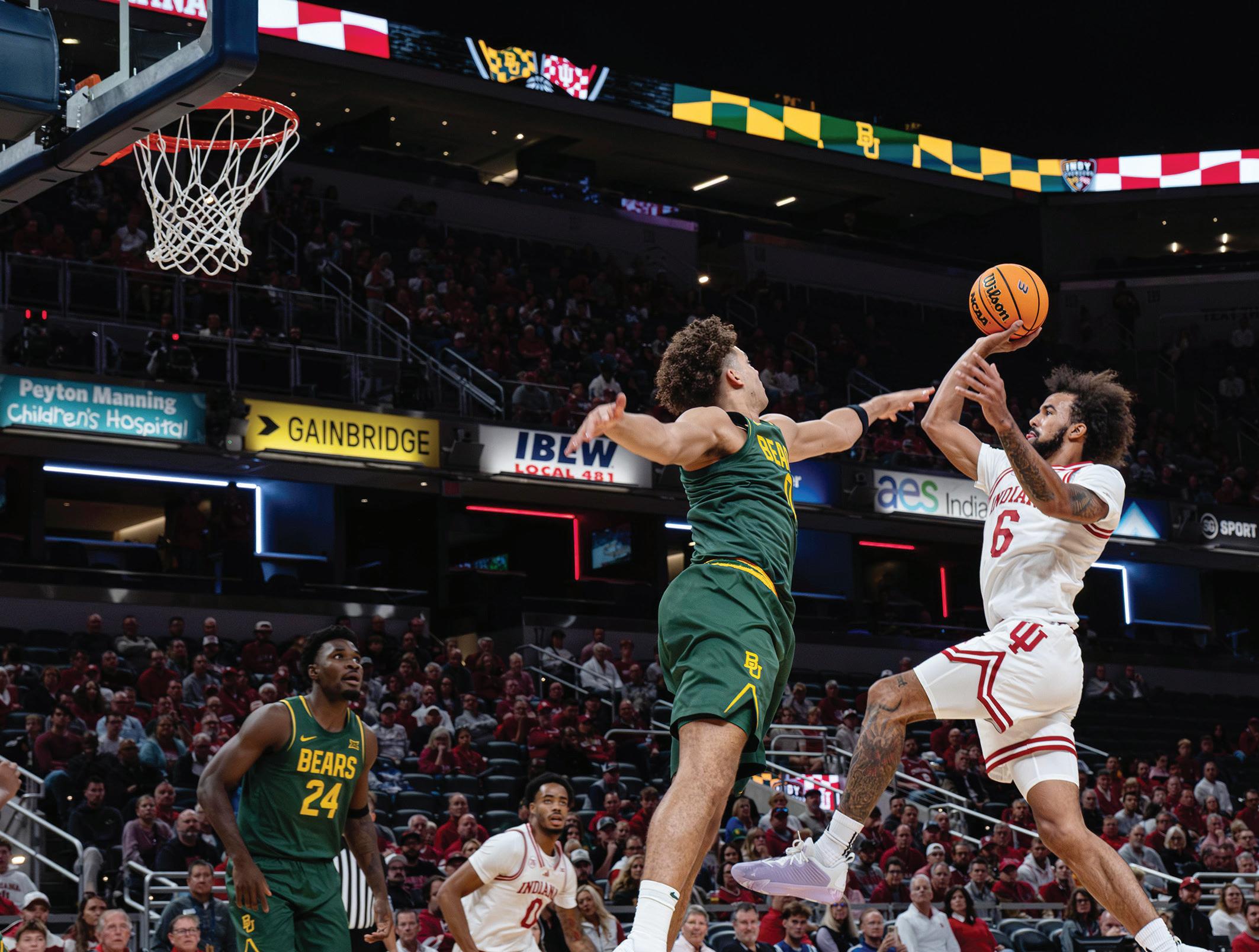
BY
| IDS 1. Redshirt senior guard Tayton Conerway shoots a shot during the exhibition game against Baylor Oct. 26, 2025, at Gainbridge Fieldhouse in Indianapolis. Conerway scored 17 points against the Baylor Bears.
2. Indiana redshirt senior forward Tucker DeVries blocks the ball from the basket during the Hoosiers’ exhibition against Baylor on Oct. 26, 2025, at Gainbridge Fieldhouse in Indianapolis. DeVries had two 3-pointers during the game and 18 points overall.
3. Indiana fifth-year senior guard Lamar Wilkerson’s teammates help him up during an exhibition game against Baylor on Oct. 26, 2025, at Gainbridge Fieldhouse in Indianapolis. Wilkerson had 26 points during the game.
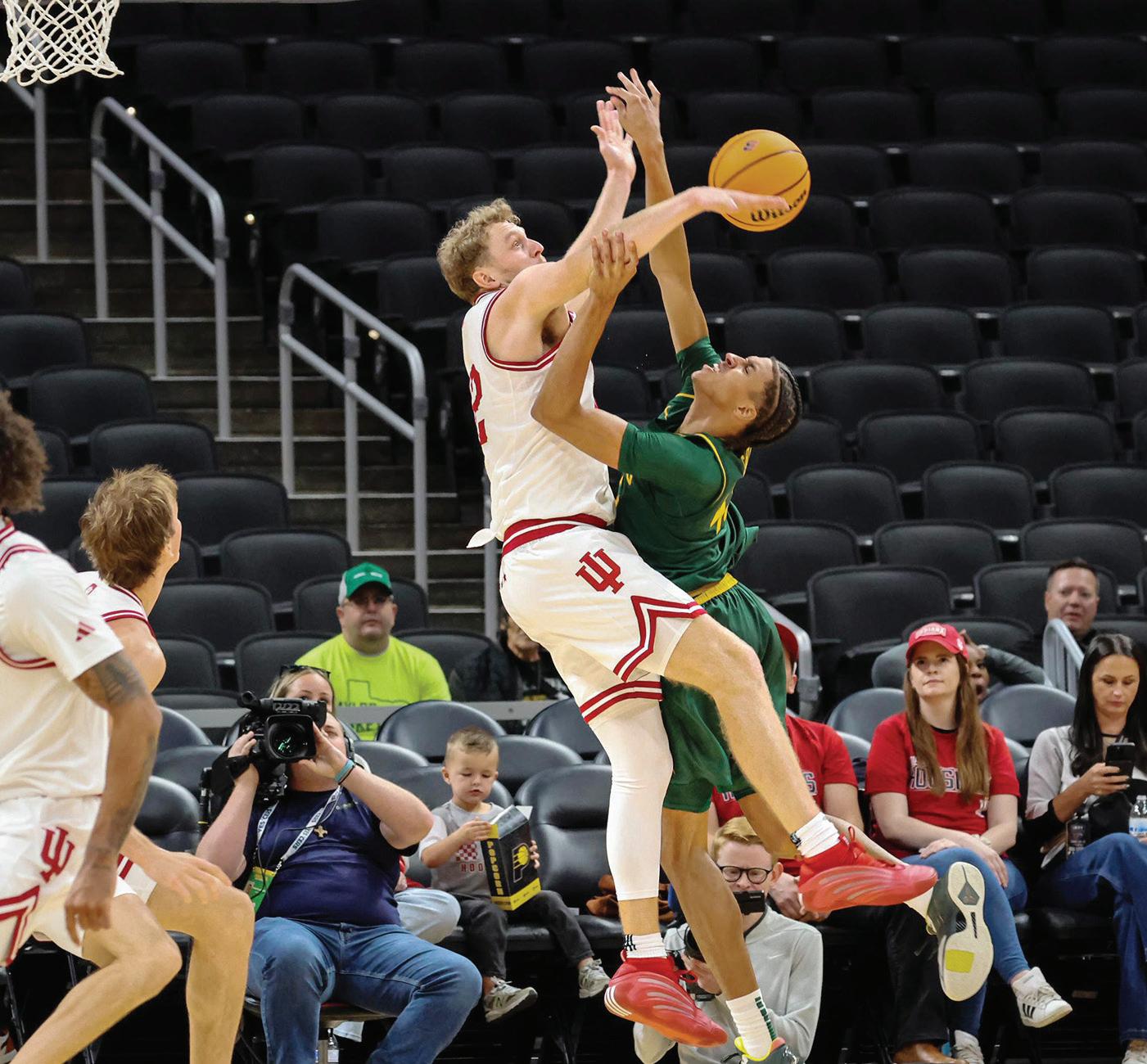
By Dalton James, Nathan Shriberg and Kasey Watkins sports@idsnews.com
Indiana men’s basketball ushers in a new era this season with Darian DeVries entering his first season at the helm of the program. He composed an all-new staff, while adding 10 transfers and three freshmen to make up his first roster in Bloomington.
The Hoosiers missed the NCAA Tournament the last two seasons, finishing a combined 38-27 under former head coach Mike Woodson. Now, the newlook Cream and Crimson look to return to the Big Dance.
DeVries’ Indiana went 3-0 during an August trip to Puerto Rico, with two of its exhibition wins being comebacks over Serbian professional squad Mega Superbet. The Hoosiers earned victories in October against Marian University and Baylor University in their exhibition slate.
Here are the Indiana Daily Student basketball reporters’ and columnist’s predictions for the 2025-26 season: Most valuable player
DALTON JAMES: Tucker DeVries played just eight games last season at West Virginia University before undergoing season-ending shoulder surgery. After following his father, Darian, to Bloomington, Tucker — a redshirt senior forward — will be Indiana’s most valuable player. Several Hoosiers have described the career 36.7% 3-point shooter as a coach on the floor who knows each player’s responsibilities. Come important games down the stretch, Tucker’s knowledge of Darian’s system will prove
valuable for the Hoosiers.
NATHAN SHRIBERG: Fifth-year senior guard Lamar Wilkerson is a crafty scorer with a penchant for the long ball. Coming off a year in which he shot 44.5% from deep on over seven attempts per game, Wilkerson brings the fireworks that Indiana has sorely missed. Beyond the 3-point shooting, he’s also shown an ability to score on the drive and get to the free throw line — he made all 13 free throws against Baylor. Wilkerson’s dynamic scoring ability gives him the potential to put the Hoosiers on his back.
KASEY WATKINS: In his time at Sam Houston State University, Wilkerson was a two-time All-Conference USA first team selection and scored in double figures in 66 career games. Wilkerson’s game showed him to be an impactful player in his career at Sam Houston, and it has already begun to translate in his short time at Indiana. In a close exhibition game with Baylor, Wilkerson showed his playmaking ability, as he led all scorers with 28 points and hit game-tying free throws in the final two minutes. His leadership qualities and playmaking ability will prove him to be the MVP this season.
Biggest X factor
JAMES: Tayton Conerway spent three seasons at the junior college level before two years at Troy University. Now, the sixth-year senior is tasked with being the Hoosiers’ point guard. He recognizes he must be another coach on the court, saying he knows he must understand Darian DeVries’ thought process and scheme. Conerway’s tenacious nature on defense will frustrate opponents come conference play. The Hoosiers’ success
largely depends on how far their point guard will take them.
SHRIBERG: Reed Bailey is a 6-foot-10 forward who doesn’t quite play to his size. Without a true center in the rotation — the extent of freshman Andrej Acimovic’s minutes remains to be seen through two exhibitions — Bailey will need to step up as a paint presence for the Hoosiers. Without topend height on the roster, Darian DeVries will look to get more out of Bailey in the rebounding department than he’s produced in years past. If Bailey is up for the challenge, Indiana will be competitive in the Big Ten.
WATKINS: Bench production will be a key X factor as the season progresses. Injuries to freshman guard Aleksa Ristic, sophomore forward Josh Harris and junior guards Nick Dorn and Jason Drake have limited Indiana’s depth in the preseason. While the return of all of the players is unclear, it is certain that Indiana will need to find production from all facets of the roster. In Indiana’s exhibition game against Baylor on Oct. 26, two starters picked up five fouls, and the bench only produced 9 points — all of which came from senior forward Sam Alexis. As the season progresses, it will be important for Indiana to get bench contributions that take some weight off the starters.
One bold prediction
JAMES: For much of the past two seasons, Indiana fans haven’t had much to cheer about. The Hoosiers failed to live up to their lofty preseason expectations, missing the NCAA Tournament both years. The disgruntled nature of
2
1
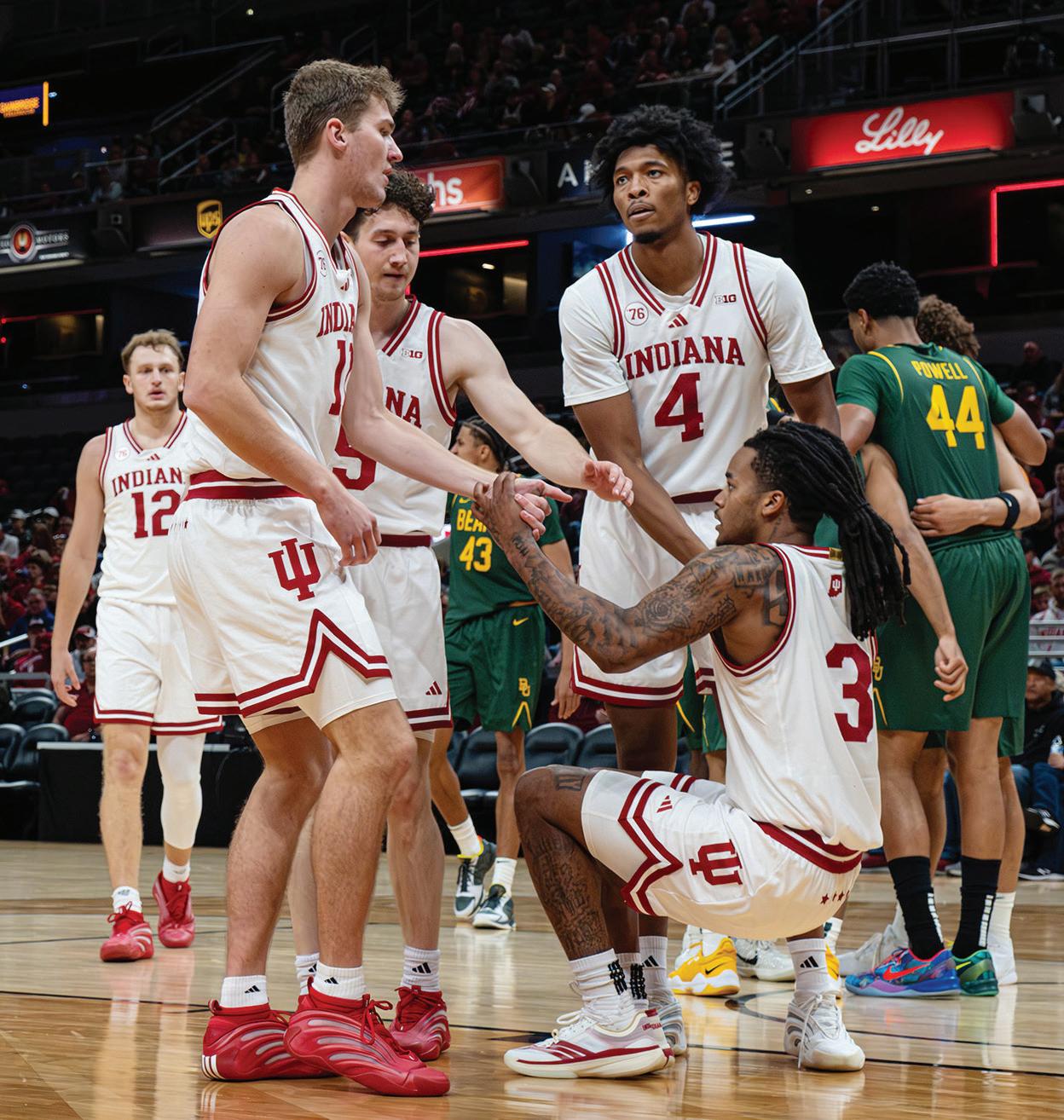
the fanbase reared itself in a mid-January 25-point loss to Illinois inside Simon Skjodt Assembly Hall. Now, the Hoosier faithful have a squad that’ll consistently play its hardest. No matter Indiana’s record, it’ll put a product on the floor that fans can be proud of.
SHRIBERG: Lamar
Wilkerson will finish top five in 3-pointers in the Big Ten. Across his career, Wilkerson has averaged over five 3-point attempts per game. In Darian DeVries’ system, there will be no shortage of opportunities from distance. Wilkerson’s 109 makes from deep in the 2024-25 season ranked 13th in the country and would’ve led the Big Ten by a wide margin. With a higher level of both the quality of competition and quantity of scorers around him, expect that total to drop, but with Wilkerson’s talent, it may not be by much.
WATKINS: The Hoosiers are going to need a signature win if they want to make a case for the NCAA Tournament in March. I think that signature win comes from the Hoosiers’ February trip to West Lafayette to face their instate rival and preseason No. 1 ranked Purdue. The game will be played in late February and will serve as the perfect opportunity for the Hoosiers to boost their resume.
Game of the year
JAMES: It’s a renewed rivalry: Indiana vs. Kentucky. The two squads will face off at 7:30 p.m. Dec. 13 at Rupp Arena in Lexington, Kentucky, in the first of a four-game series over as many seasons. Lamar Wilkerson chose Indiana over Kentucky out of the transfer portal. Darian DeVries said he’s “really
excited” to resume the series, and so is his squad. At an open summer practice in July, Wilkerson said the Hoosiers are looking forward to the matchup — the first in the regular season since December 2011.
SHRIBERG: As it approaches the midpoint of its Big Ten schedule, Indiana will take a trip to Ann Arbor, Michigan, to take on the preseason No. 7 Michigan Wolverines on Jan. 20. Michigan brought in the top-ranked transfer portal player in graduate forward Yaxel Lendeborg. Also on the Wolverines’ roster is 7-foot-3 junior center Aday Mara. A matchup against a Big Ten championship contender in the middle of the conference slate is a prime opportunity for the Hoosiers to show what they’re made of. Additionally, taking down a team of Michigan’s size would put the nation on notice that Indiana isn’t outmatched by anyone.
WATKINS: Mark your calendars for a Dec. 6 matchup against preseason ranked No. 11 University of Louisville inside Gainbridge Fieldhouse in Indianapolis. The game will be a test for the Hoosiers, as it will likely be the first ranked opponent they’ll face. Last season, the Hoosiers fell to the Cardinals 89-61 early in the season, which set the tone for the remainder of the year. Now, this season, the Hoosiers will have the chance at a statement performance that can rewrite the narrative of last season.
Postseason predictions
JAMES: Indiana hasn’t reached the NCAA Tournament the last two seasons. During Archie Miller and Mike Woodson’s tenures, the Hoosiers made March Madness just
3
twice out of seven total tournaments. With Indiana’s brand-new roster this season, I see DeVries’ squad finishing in the top half of the Big Ten. Although most Hoosiers are playing in a power conference for the first time, I think they’ll find a way to sneak into the Big Dance no higher than an eight seed.
SHRIBERG: With an all-new roster, the biggest question mark this season is how long it will take for the Cream and Crimson to jell. Injuries to rotational players means the Hoosiers won’t have their complete roster together until after the season starts. However, once Indiana settles into Big Ten play, I believe its offensive firepower will take over multiple games and keep them in contention with the conference’s best. While the Hoosiers won’t be regular season conference title contenders, they’ll make enough of a splash to sneak into the NCAA tournament as a 10 seed.
WATKINS: Indiana brought in a whole new squad comprising 10 transfers and three freshmen under firstyear head coach Darian DeVries. However, just two of the 10 transfers came from a power four program. I think DeVries has a lot of talented players, but some of them have yet to face a schedule like the Big Ten conference holds. I think this team has a lot of good pieces but will ultimately serve as more of a building block season. With that in mind, I think Indiana will put up a fight all season, winning some good ones, but falling short at times, too. At the end of the year, Indiana will find itself on the bubble and end up with an 11 seed play-in game for the NCAA Tournament.
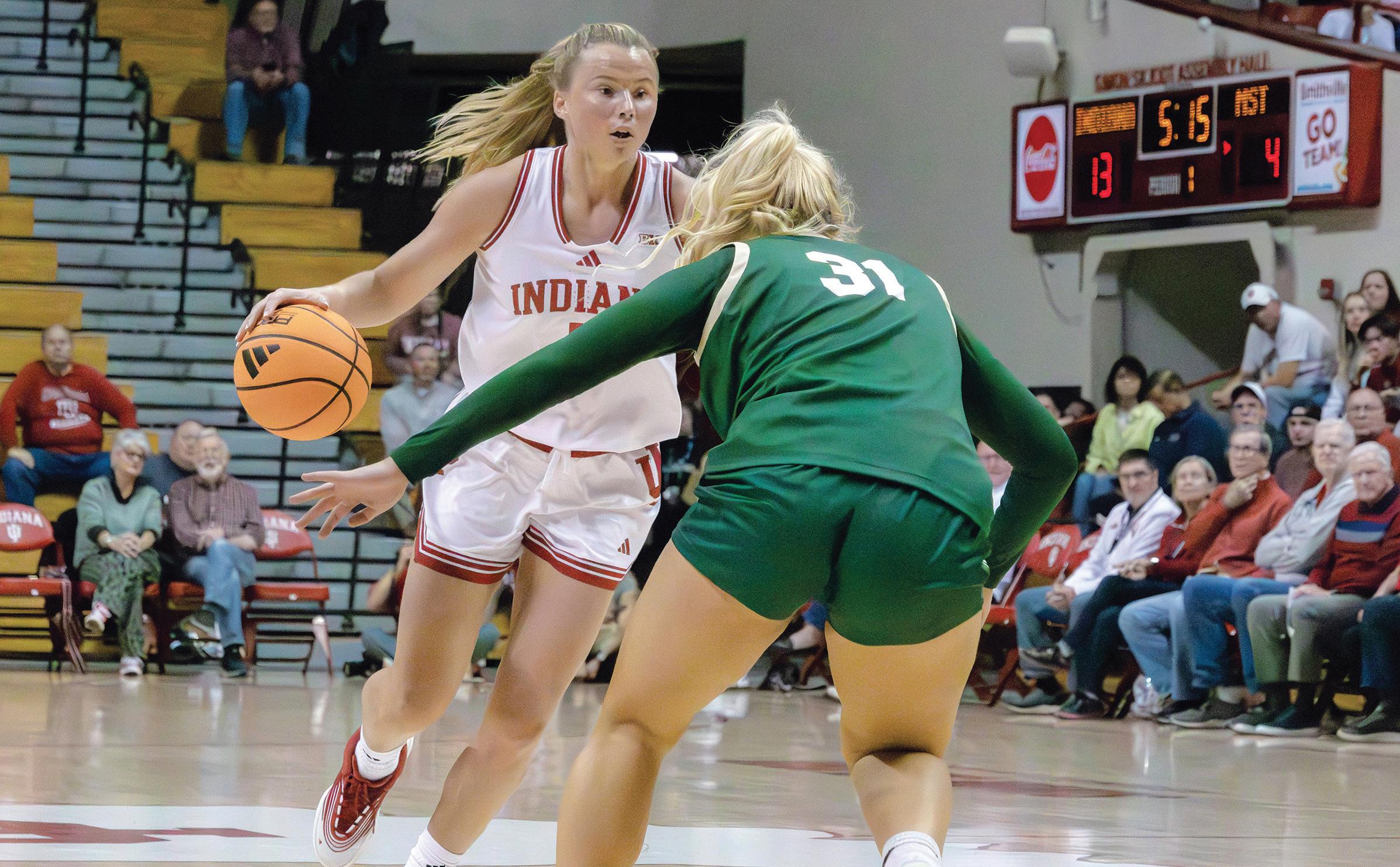
By Savannah Slone
srslone@iu.edu | @savrivers06
The last time Lenée Beaumont took the court for Indiana women’s basketball was March 23, 2024.
The then-freshman guard contributed 3 points in her five minutes played during the Hoosiers’ NCAA Tournament Round of 64 victory over Fairfield University. Beaumont didn’t record minutes in the Hoosiers’ next two games — a win over the University of Oklahoma and a loss to the University of South Carolina — to end Indiana’s season.
With the graduation of key players, like guard Sara Scalia and forward Mackenzie Holmes, Beaumont was in a position to make an impact for Indiana off the bench the following year.
However, when Indiana took the court for its first contest of the 2024-25 season inside Simon Skjodt Assembly Hall, Beaumont sat on the bench with her team-
mates sporting a black Indiana T-shirt and sweatpants. It was an exhibition against Maryville University on Oct. 30, and Indiana head coach Teri Moren said after the match Beaumont was out with a “nagging knee” injury she suffered toward the end of the summer. Moren expected her to return to the court that season.
But as each game passed, the 6-foot-1 Beaumont was not on the floor competing with the Hoosiers. She warmed up with her teammates before Indiana’s season-opening contest against Brown University but did not play. Beaumont did not step onto the court in the next seven games before Moren announced Dec. 1 that Beaumont would have surgery on her knee.
The then-sophomore took a redshirt year and missed the entirety of last season when the Hoosiers went 20-13 with a trip to the NCAA Tournament Round of 32. Now, despite only one
season on the court with Indiana, Beaumont is one of the Cream and Crimson’s most experienced players and core leaders.
After the 2024-25 season ended, over half of Indiana’s roster was gone, either via graduation or transfer portal. The only remaining players were Beaumont, senior guard Shay Ciezki, sophomore forward Faith Wiseman, sophomore guard Valentyna Kadlecova and redshirt sophomore forward Sydney Fenn.
Ciezki is the only returning player to average more than five minutes per game last season, and she’s entering just her second year with the program after transferring from Penn State in April 2024
Although Beaumont couldn’t play in contests, it didn’t stop her from working with and around her teammates. She sat with her teammates on the bench wearing street clothes and talked to them during warmups.
Beaumont said working back from the injury has been both physically and mentally challenging. When she slowly started to get back to practice, it was a harsh reality check as to where she was physically.
“I think the hardest part for me, honestly, was finally getting the opportunity to come back and realizing very quickly, like, you’re out of shape. You’re rusty. You don’t trust yourself. You don’t know what you’re doing out there on the court,” Beaumont said in an interview with the Indiana Daily Student on Sept. 30. “I know that’s, like, a lot of digging myself in a hole, but, truthfully, I would leave some practices, kind of emotional, talking with Ali (Patberg) and Ben (Tate), my athletic trainer, and just, like, ‘What has happened to me?’”
Through that process, Beaumont relied on her optimism. She admitted it might not always be “realistic,” but for her, it’s better to under-
stand the positive side of a situation, especially when fighting through adversity.
Moren praised Beaumont for showing up when she could, whether that was “religiously” trying to get better in whatever way she was allowed or being at every team meeting.
In a press conference Sept. 30, Moren said last season’s locker room was “not in good shape,” but now, it’s improved because of Beaumont, who has embraced her new leadership role. Outside of Moren’s staff, Beaumont was one of Indiana’s biggest recruiters, Moren said, communicating with potential recruits to fill roster spots.
“She was willing to communicate with anybody, to try to find and help us find her teammates,” Moren said.
“And so, you know, she is invested in this program. And one of the things about Beau is that, you know, Beau is passionate. She loves this place. She loves this game.”
Beaumont understands
her experience compared to the newcomers and knows she can be the person to communicate the program’s values and expectations to them. She wants them to know she’s been through the good and bad with the Hoosiers, but she’s someone to rely on — which is part of the culture they’re trying to establish.
Moren has asked Beaumont to be that leader — to communicate expectations and create a “healthy environment” in the locker room. She sees Beaumont as the player to hold her teammates accountable, set the standards and make sure each player is aligned with one another.
“And she and I talk a lot just about how one goes about that, what that leadership looks like,” Moren said. “But in terms of her being able to handle that, there’s nobody better right now that I would love to lead our team more than Lenée Beaumont.”
By Max Schneider maxschn@iu.edu
Two top-100 national high school recruits are saddling up for their first Indiana women’s basketball season alongside numerous transfer portal additions and returners. Forward Maya Makalusky and guard Nevaeh Caffey were both four-star recruits out of Indiana and Missouri, respectively. Both players logged significant minutes in Indiana’s exhibition victory Oct. 27 over Missouri University of Science and Technology.
Despite the many new faces inside Simon Skjodt Assembly Hall, both freshmen have made an early impact on the team and each other.
“She’s (Caffey) great to live with; she’s a great teammate to have,” Makalusky said in an interview Sept. 30. “Obviously, you know, we’re trying to figure it out together, day in and day out. I think it’s good to have somebody who understands the moment — just talking about practices, going over film, talking about plays, like ‘Is this the right play?’ And it’s nice to have somebody that can relate to you in actual time rather than like a vet that’s been here.”
For more on the Hoosiers’ two true freshmen:
Maya Makalusky Makalusky was the topranked 2025 recruit from
Indiana and ranked 35th in the country, according to ESPN. The Fishers, Indiana, native won both 2025 Indiana Miss Basketball and 2025 Gatorade Player of the Year in the state.
The 6-foot-3 Makalusky started four years at Hamilton Southeastern High School where she became the program’s alltime leading scorer with 1,913 points. She follows in guard Sydney Parrish’s footsteps as a Hamilton Southeastern graduate coming to Bloomington.
Parrish, who transferred to Indiana in her junior season after two years at Oregon, became the face of Indiana women’s basketball while averaging 11.6 points and 5.5 rebounds per game during her final season with the Hoosiers. Parrish graduated after the 2024-25 season. In Indiana’s lone exhibition match against Missouri S&T, Makalusky played 20 minutes, snatching 11 points and nine rebounds. While she shot 2 for 6 from beyond the arc, her willingness to get physical and contest rebounds on both ends was noted by head coach Teri Moren.
“Maya came in and did a lot of really good things,” Moren said post-game. “She was a rebound away from a double-double, just really great energy, was physical. It’s great to see. She heard my message because I thought she came out from the jump and was really focused in defensively.”
When dealing with the mental aspect of the game, Makalusky relied on her sister. Riley Makalusky, her older sister and a junior forward for West Virginia University, transferred from Butler University after the 2024-25 season.
“At the end of the day, we’re humans,” Makalusky said. “Mental health does matter, so if that’s not okay then you’re not gonna achieve what you want on the court. And also just the effort. She’s always showed me how to work hard to get what you want.”
Nevaeh Caffey
Caffey, who stands at 5-foot-10, was the second ranked recruit out of Missouri and No. 42 nationally. The Warrenton, Missouri, native won fourstraight Missouri Class 6 State Championships in four years at Incarnate Word Academy where she earned third team AllAmerican honors, Class 6A All-State Player of the Year nomination and Class 6 first team All-State.
Caffey and her high school teammates set a national record with 139 straight wins, and she was named Miss ShowMe Basketball 2025 for Missouri. She averaged 16.9 points and 2.4 assists per game in her senior season.
Caffey was one of the first players Moren talked about in a press conference Sept. 30, highlighting the impact the freshman guard had produced early on. Moren claimed Caffey “jumped
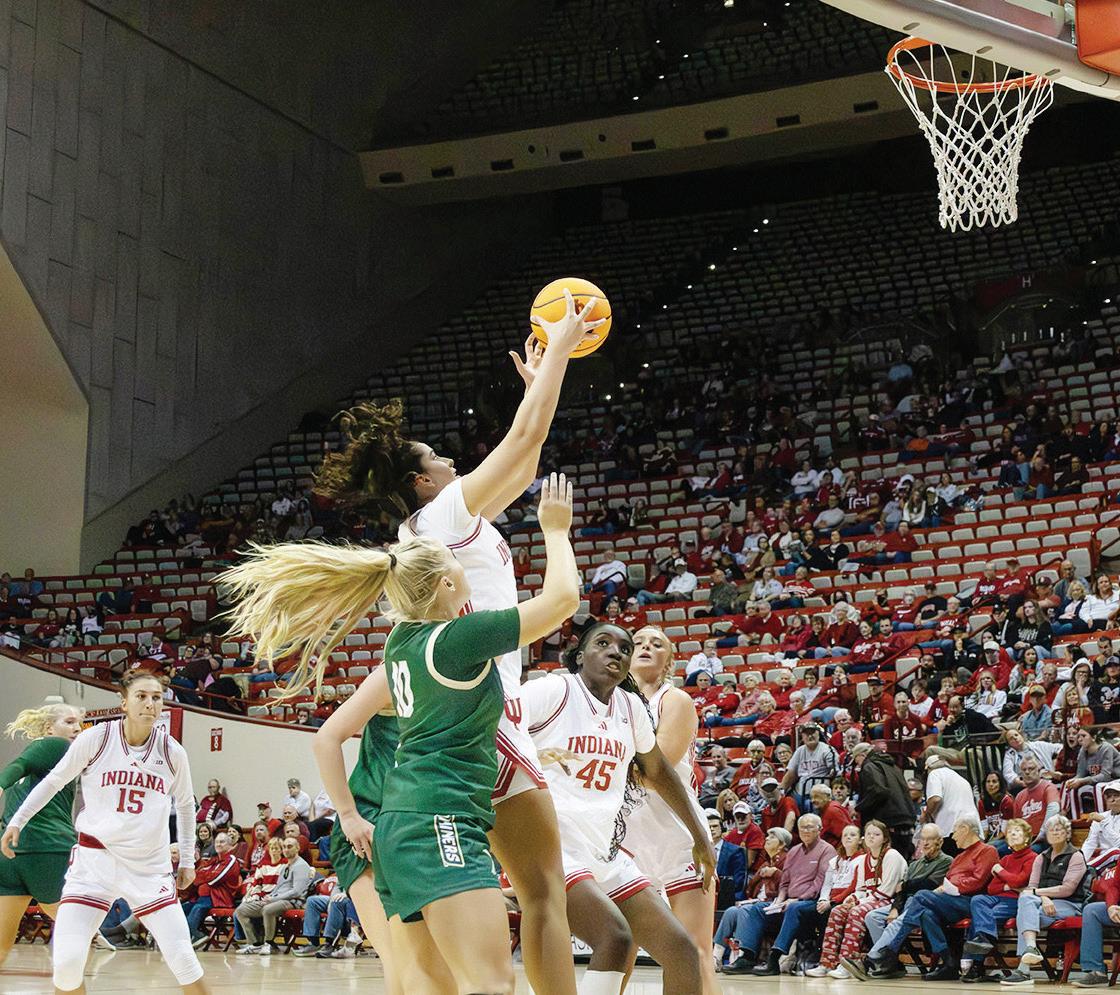
off the paper,” impressed with her athleticism and defensive prowess.
She took her time to acclimate after moving from Missouri to Indiana and worked on trusting herself instead of doubting.
Caffey said she worked on her mental health in the offseason during a Sept. 30 interview. “I feel like just staying focused, being confident and not being in my head,” Caffey said in an interview. “Being in the offseason,
just knowing every position I’m going to win, and giving everything I can.”
In the Missouri S&T exhibition, Moren slotted Caffey into the starting lineup — a sign of trust not commonly seen with freshmen.
Caffey played 23 minutes, tied for the most on the team with senior guard Shay Ciezki and redshirt sophomore guard Lenée Beaumont. She logged nine points, five assists and two steals.
Experienced players including Ciezki and Beaumont have high hopes for Caffey, who was praised in a postgame press conference Oct. 27. They’re confident she’ll be a difference-maker this season. “I believe she is our best on-ball defender, hands down,” Ciezki said. “If you’re a great defender, you’re gonna find time. And that’s exactly what she did, and she’s gonna prove it all year long.”
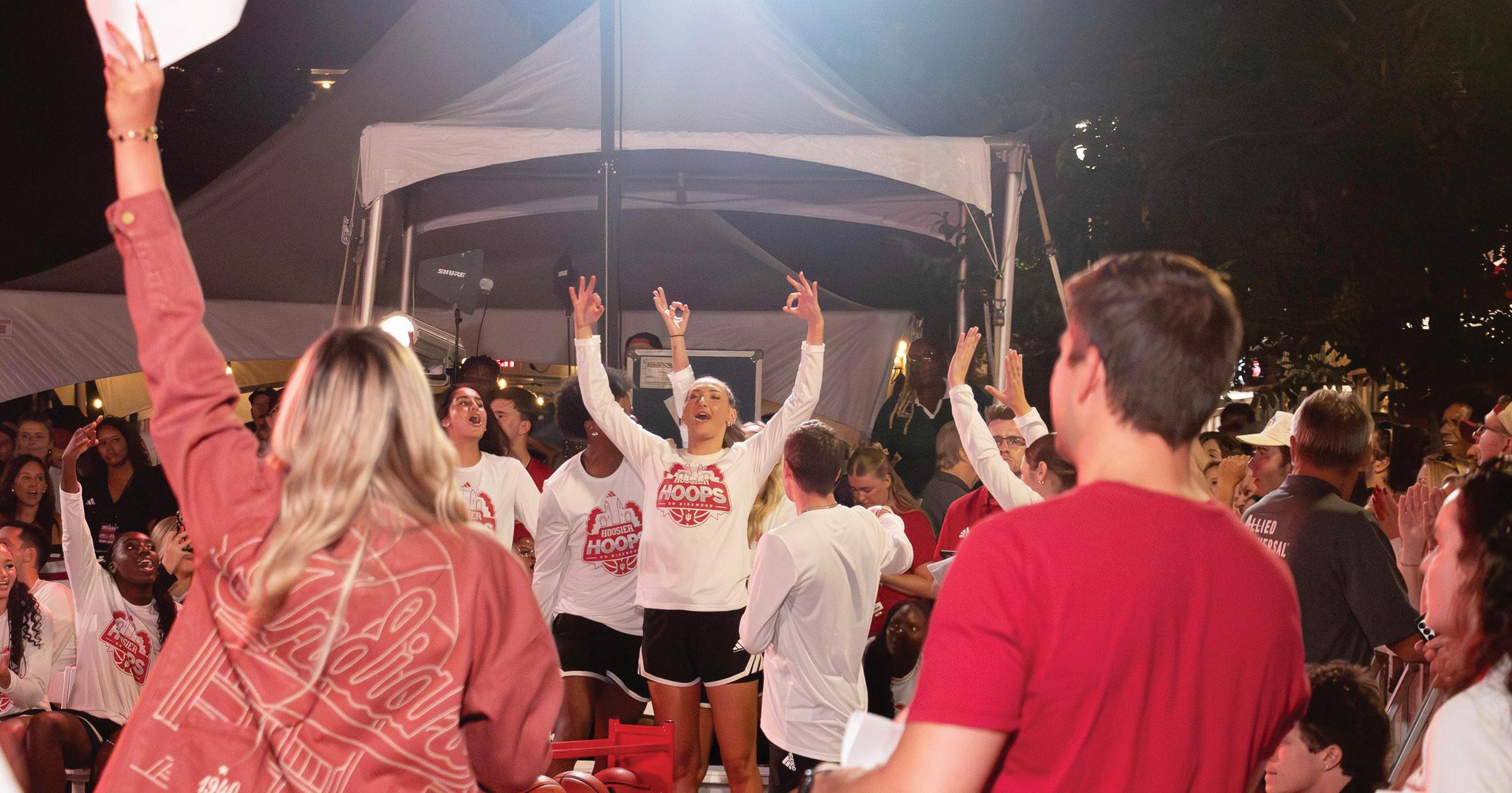
By Sean McAvoy
semcavoy@iu.edu | @sean_mc07
After Indiana women’s basketball lost nine players this offseason due to graduation and the transfer portal, 12-year head coach Teri Moren had to rebuild the program. Moren tapped into the portal to bring in players with varying amounts of experience and on-court backgrounds.
“I do think we have some interesting pieces of how we’ll all gel together and when that’ll happen,” Moren said during the team’s opening press conference Sept. 30. “I do think we’re more athletic than we were a year ago.”
Last season, Indiana lost to the University of South Carolina 64-53 in the second round of the NCAA Tournament as a nine seed. Now, Moren’s six transfer portal recruits will try to continue the Hoosiers’ streak of making six consecutive postseason appearances.
Zania Socka-Nguemen
Socka-Nguemen joins the Hoosiers for her first season in Bloomington, however, she had known about the program years before. Coming out of Sidwell Friends School in Washington, D.C., Moren and her staff heavily recruited Socka-Nguemen. Despite the coaching staff’s efforts, the 6-foot-3 forward ultimately chose UCLA over the Hoosiers on Oct. 27,
2023. The sophomore’s decision to join the Bruins proved unsuccessful, only leading her to appear in 16 games during her freshman season. Socka-Nguemen averaged 1.5 points and 1.5 rebounds in 5.1 minutes per game. Her strongest performance came against Wisconsin on Feb. 26. Socka-Nguemen went 4 for 5 from the field for eight points in her seven minutes of action.
Playing behind Lauren Betts — who was the 2025 Naismith Women’s Defensive Player of the Year — Socka-Nguemen did not see much playing time in her future and entered the transfer portal on April 9. Her familiarity with the Indiana program brought Socka-Nguemen to the Cream and Crimson after only three days in the portal. She also worked with Moren this summer, as a member of the USA Women’s Basketball U19 team. Socka-Nguemen finished the gold medal campaign averaging 3.1 points and 3.0 rebounds in Czechia.
Chloe Spreen
The 2024 Indiana Ms. Basketball returns to the “Hoosier State” after taking a one-year detour to the University of Alabama. The Bedford, Indiana, native played in 20 games for the Crimson Tide last season. Spreen averaged 1.1 points 0.5 rebounds, and 0.5 assists
per game. She saw most of her action in decisive wins on the Alabama schedule. Spreen’s only double-digit minute performance against Southeastern Conference competition came in the fourth quarter of an 88-49 dominant win over Texas A&M University on Feb. 17. Her highest scoring game last season came in a 98-49 win over Georgia State University on Dec. 2, 2024. Spreen finished the contest with 5 points on 2 of 5 field goal attempts. She only made 26.9% of her shots, but Spreen showed potential during her fouryear stint at Bedford North Lawrence High School. The 5-foot-10 guard scored 1,869 points — averaging 20.9 points per game in her senior year — and earned first-team All-Hoosier Hills Conference selections all four years for the Stars.
Phoenix Stotijn
Moren also brought in Stotijn from the SEC during the offseason, after she spent two seasons in Fayetteville, Arkansas. She played in 21 games and started in 12 for the University of Arkansas in the 2024-25 campaign. Stotijn finished her redshirt freshman season, averaging 7.2 points, 1.5 rebounds and 2.2 assists.
The 5-foot-9 guard saw over 30 minutes of action in seven games last season. Stotijn exploded for a season-high 23 points on 7-of-
13 shooting in an 80-71 win over Texas A&M on March 3. However, that hot shooting was not there for much of the season. Stotijn tallied 31.7% from the field and 26.0% on 4.6 attempts per game from 3-point range.
The Amsterdam, Netherlands, native has seen action for her national team in the past. In the 2024 Division B FIBA women’s U20 Eurobasket, Stotijn averaged 10.2 points plus 1.7 steals per game.
After entering the transfer portal on March 26, Stotijn committed to the Hoosiers on April 6. She will try to help produce a better record than a 10-22 campaign for the Razorbacks last season, as Stotijn looks to find playing time in a crowded guard group of new and returning faces.
Edessa Noyan Noyan was the fourth transfer portal player to commit to Indiana this offseason. After spending two seasons with the University of Virginia, she declared her intention to play for the Hoosiers on April 15.
Noyan played in 28 and started in three contests during her freshman season. During her sophomore year in Charlottesville, Virginia, Noyan’s minutes jumped from 13.7 to 25.3 per game. Starting in 23 out of 26 games she appeared in last season, Noyan averaged 5.7 points, 4.3 rebounds and 1.1 assists
per game. The 6-foot-3 forward had season-high scoring performances of 16 points against the University of North Carolina and Coppin State University. Noyan only averaged 0.9 blocks per game but did produce four block stat lines against solid opponents in North Carolina State University and Duke University. The Botkyrka, Sweden, native has also seen action for her national team. As a member of the Swedish U18 Junior National Team at the 2022 Nordic Championships, Noyan averaged 18.8 points per game.
Jerni Kiaku Kiaku was the most experienced transfer portal addition for Indiana this offseason. The senior will use her final year of collegiate eligibility after spending the 2022-23 campaign at North Carolina Central University and the last two years at Duquesne University.
At North Carolina Central, the 5-foot-7 guard averaged 10.7 points, 2.1 assists and 1.4 steals on her way to earning Mid-Eastern Athletic Conference Rookie of the Year. Kiaku entered the transfer portal and found her way to Pittsburgh.
In her sophomore season, she appeared in all 34 games for the Dukes, averaging 6.6 points in 19.1 minutes per game. Her patience paid off last season, as she started in all 33 games for Duquesne
and saw her minutes jump up to 27.1 per contest. The Garner, North Carolina, native finished the season averaging 13.2 points, 3.4 rebounds and 1.7 assists on 47.1% of her field goals. The mark ranked fifth in the Atlantic 10 Conference in field goal percentage for the season.
Jade Ondineme Ondineme will take a step up in competition this season after spending the last two years at Northwest Florida State College. The Lady Raiders won the National Junior College Athletic Association Division I championship last season. Ondineme contributed 6 points, 1.1 assists and 4.5 rebounds per game for the title-winning squad in her sophomore season. She started in 29 out of 35 games last year, shooting 51.1% on her field goal attempts. Ondineme was the last portal addition for Moren this offseason after she announced her commitment to Bloomington on May 4. The Orleans, France, native played for Toulouse Métropole Basket, a professional team in the southwest of France, before coming to America. The new look Hoosiers start their 2025 campaign against Lipscomb University on Nov. 4. Tipoff is set for 7 p.m. at Simon Skjodt Assembly Hall, and the game will be streamed on Big Ten+.
By Kasey Watkins
kaslwatk@iu.edu | kaseywatki87731
College basketball is in a new era. It used to be common to build a team from the time they are freshmen to the time they are seniors. However, the new college basketball landscape has proven this concept to be rare. This modern age is marked by name, image and likeness and the transfer portal. Instead, players now transfer from school to school, rarely staying in one spot for too long. Indiana men’s basketball is a product of that. After losing eight scholarship players to the transfer portal and the rest to graduation, the fully new roster under first-year head coach Darian DeVries is comprised of 10 new transfers and just three freshmen.
These are the three transfers who I think will make the biggest impact for the Hoosiers this season:
Lamar Wilkerson Lamar Wilkerson has already proven to be an impactful player, and I expect that to translate to his game at Indiana. The fifth-year senior guard spent his first four seasons at Sam Houston State University before transferring to Indiana ahead of this season.
In his time at Sam Houston State, Wilkerson was a
two-time All-Conference USA first team selection and scored in double figures in 66 career games. During his senior season, Wilkerson started in all 32 games and averaged 20.5 points, four rebounds and two assists per game. The Ashdown, Arkansas, native was just one of three players in Division I men’s basketball to make at least 100 3-pointers and shoot over 44% from behind the arc. In addition to his proven successes over his career, Hoosier fans have already gotten a brief look at what Wilkerson can bring to the table. In an exhibition matchup with Marian University on Oct. 17, Wilkerson put up 8 points, two 3-pointers and five rebounds with no turnovers in 19 minutes of play. This performance was followed by an impressive 28-point game against Baylor on Oct. 26. Wilkerson’s ability to get a basket when the Hoosiers needed it was critical in their 76-74 victory over the Bears. Down the stretch, Wilkerson went 13 for 13 from the free-throw line, including game-tying free throws in the last two minutes of the contest.
“What I love about Lamar may not even be like what he does as a player,” Darian DeVries said Oct. 9 at Big Ten Media day. “I love his energy, his enthusiasm, the way he plays the game. For a long
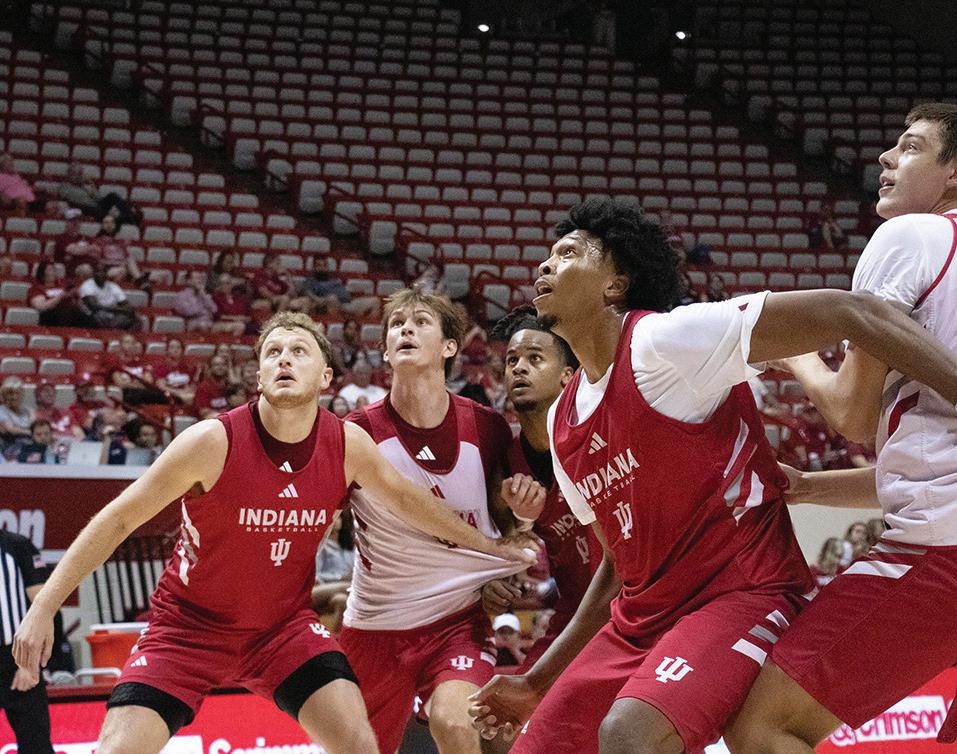
season, you’ve got to have guys like that — some energy guys in your locker room. He’s one of those guys that has a great mindset, great attitude about how he approaches every day.”
“Now, I do love the fact that he makes threes too,” he added.
Tucker DeVries Redshirt senior forward
Tucker DeVries is entering a comeback season with the Hoosiers after transferring from West Virginia University. Tucker DeVries only played eight games last season with the Mountaineers after undergoing seasonending shoulder surgery.
Throughout his college career, Tucker DeVries has
shot 43.5% from the floor and 36.7% from the 3-point line. He scored double figures in 101 of his 112 career games. In Indiana’s two exhibition matches, DeVries scored in double figures and hit at least two 3-pointers in each. Against Marian, DeVries made seven of his nine field goals attempts and five of his seven three-point attempts to finish the contest with 23 points in just 22 minutes of action. Against Baylor, DeVries put up five assists and 18 points off 7 of 15 shooting from the field and 2 of 8 3-point attempts.
With Tucker DeVries being the son of Darian DeVries and having played under his coaching style before, Tucker DeVries is the only player to
really know the system. Darian highlighted this point and complimented his son’s leadership qualities over the years in a postgame conference on Oct. 17.
“He’s always been a really good leader,” Darian said. “As he’s gotten older, he’s become more vocal with it as well. For this group, especially when everybody’s new, and he’s the one guy that understands everything we’re running, whether it’s drills or players or whatever.”
His leadership qualities and experience playing under his dad’s system will be key to his impact this season for the Hoosiers.
“He plays like a vet on the court,” Wilkerson said Oct. 9 at Big Ten Media Day. “He has that leadership that every team needs.”
Sam Alexis Senior forward Sam Alexis spent his first two seasons at The University of Tennessee at Chattanooga before transferring to University of Florida in 2024 and Indiana in 2025.
In his time with Florida, Alexis played in 24 games and averaged 4.7 points, 3.5 rebounds and picked up 15 blocks en route to the Gators’ 2025 NCAA Tournament championship victory. Alexis has seen what it takes to win games and win a championship and can bring that knowledge and experience to the Hoosiers.
“Sam’s been great as far as just bringing that SEC physicality and just us showing us how a championship team practices every day as far as intensity wise,” Wilkerson said Oct. 9. In the Hoosiers’ recent exhibition matches, Alexis has already made an impact on the interior. Against Marian, Alexis made six of his nine field goals to score 13 total points. Alexis also picked up three blocks and 10 rebounds to cap off his double-double performance. Against Baylor, Alexis provided the only spark off the bench as he scored all the Hoosiers’ 9 bench points. In the contest, Alexis finished going 4 for 5 from the floor, grabbed seven rebounds and picked up three blocks.
“Sam gives us that physicality. And we don’t have a lot of big, girthy guys, especially on the interior,” Darian DeVries said. “He’s one of the guys that does bring some of that physical presence, some of that shot blocking.”
The 6-foot-9 forward will provide length and size to the Hoosiers’ smaller roster makeup.
Indiana will look to keep this winning pattern alive in games that count when they face Alabama Agricultural and Mechanical University at 8 p.m. Nov. 5 at Simon Skjodt Assembly Hall for its season opener. Streaming will be available on the Big Ten Network.
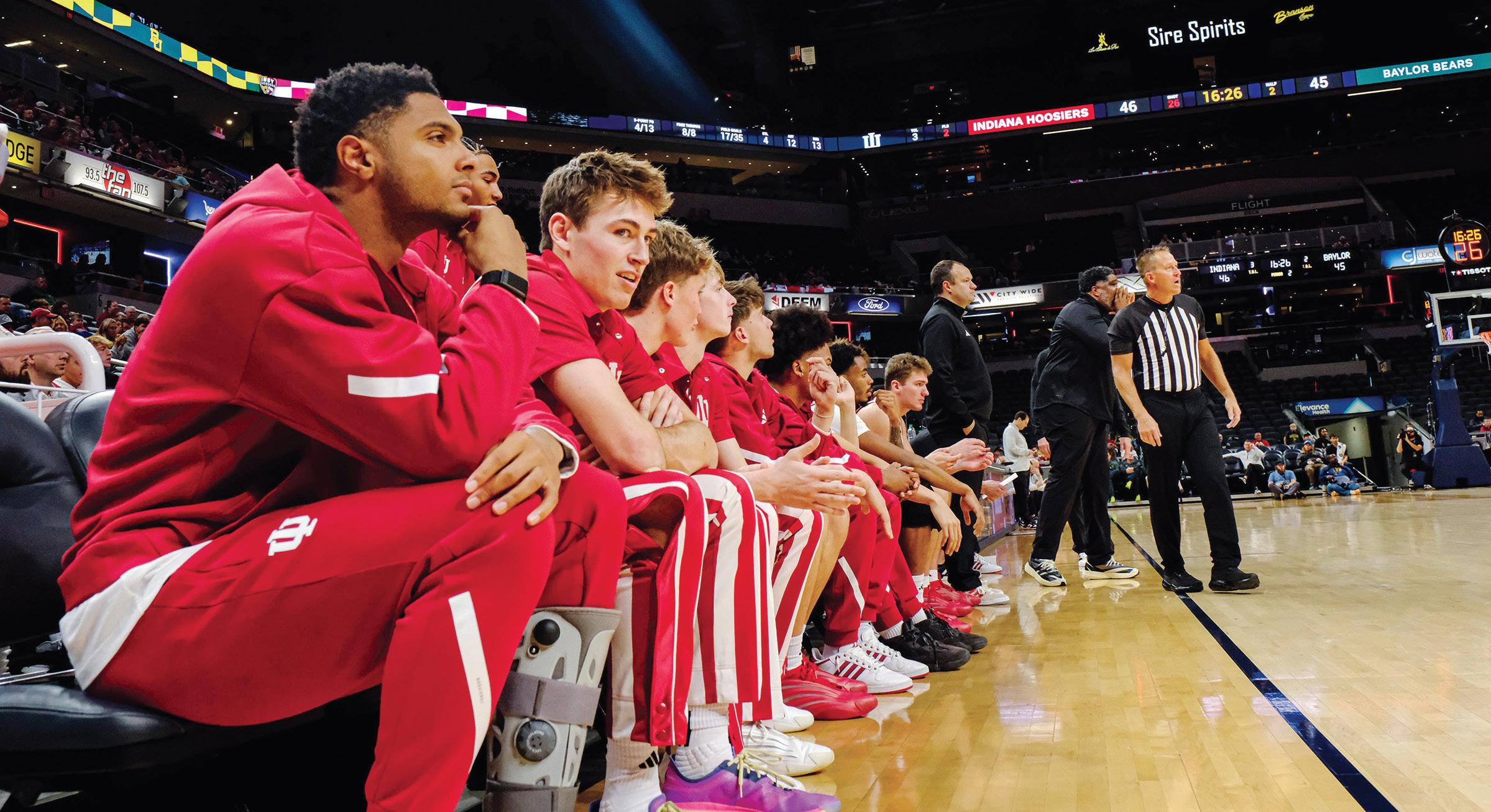
By Nathan Shriberg
naashri@iu.edu @nshriberg
Indiana men’s basketball is not at full strength to begin the 2025-26 season.
With injuries to freshman guard Aleksa Ristic, sophomore forward Josh Harris and junior guards Jason Drake and Nick Dorn, the Hoosiers’ lack of depth will make it difficult to get off to a strong start.
In the Hoosiers’ 76-74 exhibition victory over Baylor University, four of the five starters played 32 or more minutes, with redshirt senior forward Tucker DeVries logging a teamhigh 38 minutes.
But the starters can’t play all 40 minutes, and the down-to-the-wire exhibition gave some insight into who first-year head coach Darian DeVries trusts off the bench.
Sam Alexis Standing at 6-foot-9, the senior forward is one of the taller Hoosiers. On a team without a trusted true center, Alexis may prove vital in the Hoosiers’ rotation.
Coming off a national championship season at the University of Florida, Alexis brings a veteran toughness that only comes with experience in the biggest moments.
“Sam’s been great as far as just bringing that SEC (Southeastern Conference) physicality, just showing us how a championship team practices every day as far as intensity-wise,” fifth-year senior guard Lamar Wilkerson said of Alexis at Big Ten Basketball Media Days on Oct. 9. “He comes in with the same energy every day.
You know what you’re gonna get out of Sam.”
When Indiana was struggling on the defensive glass against Baylor, DeVries turned to Alexis to play a bigger role. He grabbed a team-high seven rebounds off the bench, stepping into a larger role as senior forward Reed Bailey struggled to make an impact on the boards.
“He comes in with the same energy every day. You just know what you’re gonna get out of Sam.”
Lamar Wilkerson, Fifth-year senior guard
Against teams with a more post-heavy offense, Alexis’ role could expand to prevent easy scoring in the
paint. He tallied six blocks across the two exhibition games.
Trent Sisley
As the lone Mike Woodson recruit to crossover into the DeVries era, Sisley is a highly—touted true freshman out of Montverde Academy — the same high school as former Hoosier guard Jalen Hood-Schifino and forward Malik Reneau.
A versatile 6-foot-8 forward, Sisley’s preseason performance has indicated that he can hang with more experienced players. In the Hoosiers’ first exhibition game against Marian University, Sisley’s 23 points tied DeVries for a team high, and he didn’t miss an attempt from the field until the final six minutes of the game.
Sisley is a capable scorer
at all three levels, and his combination of length and size enables him to guard multiple positions on the defensive end.
Nobody else
Alexis and Sisley were the only subs to play substantial minutes against Baylor — junior guard Jasai Miles checked in for one minute. As the team struggled to secure defensive rebounds, that could signal a lack of faith in freshman center Andrej Acimovic. At 6-foot-10, the Bosnian big man has the size to alleviate rebounding troubles. However, DeVries leaving him on the bench shows that Acimovic might not be ready yet.
As Indiana awaits the return of its backcourt depth, DeVries anticipates a “seven to eight” man rotation, and
Miles will likely be number eight. The junior scored 15 points per game at the University of North Florida and possesses the scoring talent to be a sparkplug off the bench.
Miles, a shifty ball handler, can score from inside and out. In his sophomore season, Miles averaged 2.4 3-pointers per game on high volume, but with the total shots likely to decrease, expect his career 32.5% mark from distance to improve throughout the season.
While DeVries may not have a full arsenal of weapons at his disposal to begin the season, there’s plenty of talent at the top end of the roster for him to utilize in the rotation. And after the Indy Showdown, DeVries remained optimistic. “I think we’re getting better.”
By Dalton James jamesdm@iu.edu | @daltonmjames
INDIANAPOLIS — In-
diana men’s basketball hasn’t played a regular-season game. It’s yet to tip off the Darian DeVries era in Bloomington.
But with three exhibition games in Puerto Rico in August and two in their home state in late October, the Hoosiers have earned five wins. In three of them, the Cream and Crimson faced double-digit deficits.
Indiana trailed Baylor University by 13 points with just over seven and a half minutes left in the first half of the Oct. 26 exhibition inside Gainbridge Fieldhouse in Indianapolis. A late firsthalf surge allowed the Hoosiers to hold an advantage for much of the second period.
However, the Bears marched back in the final minutes to regain the lead. Once more, Indiana responded to secure the 76-74 victory.
Each time the Hoosiers faced adversity in their preseason contests, they answered. Three victories followed.
“What a great learning opportunity for us to have this.”
Lamar Wilkerson, Fifth-year senior guard
“I think it’s a great quality and hopefully it continues when it goes in the win-loss column, but it is something that matters,” Indiana head coach Darian DeVries said postgame. “You get three opportunities out of four that we’ve had so far where we had to come from behind and figure out a way to make some adjustments and come back to find a way to win.”
Both squads opened the first seven and a half minutes of the contest by largely trading buckets. Fifth-year senior guard Lamar Wilkerson had 7 of the Hoosiers’ 13 points
with 5 coming from the charity stripe.
After redshirt senior forward Tucker DeVries scored consecutive layups, the Bears then went on a 14-2 run to lead by 13. DeVries followed with a 3-pointer, becoming the first Hoosier to connect from 3-point range as they missed their first five attempts.
But Baylor responded with a longball of its own. Tayton Conerway then notched his first points of the contest, as the sixth-year senior guard layed the ball into the basket. The under-eight media timeout ensued 37 seconds later.
With his squad trailing by 11, Darian DeVries understood the game could turn in several ways. A run to tighten the gap ahead of halftime could pave the way for a victory. Or the Hoosiers could find themselves down by 20 as they were against Serbian professional squad Mega Superbet on Aug. 11. So, DeVries delivered a message to his squad in the huddle.
“I challenged the guys in the timeout of, ‘Don’t let this get to 20,’” DeVries said. “’This can’t be what we just do all the time.’”
Indiana heard DeVries. It outscored Baylor by 6 points throughout the rest of the first half to enter the locker room behind by 5, which gave the first-year head coach’s all-new squad a “much more manageable” final 20 minutes ahead.
The Hoosiers came out of the break and took the lead via Wilkerson’s third 3-pointer of the game. Now, it was time for the Cream and Crimson to match the physicality the Bears displayed in the opening half. DeVries said the matchup was a “great opportunity” to experience a contest against a collegiate foe with speed, athleticism and playmaking. And it was clear the Hoosiers weren’t quite used to such an opponent.
“I thought the first half, you could see struggle with that at times, and I thought at halftime when they came back out, they kind of readjusted and I thought we were much more aggressive the second half, defensively especially,” DeVries said. “So, I thought they did a nice job of kind of taking what they saw in the first half, changing it and flipping it in the second half.”
Indiana led by as many as 9 points in the second half. However, Baylor went on a quick 8-0 spurt to lead by 2 with just over two minutes left. The Hoosiers, who largely collapsed in late-game situations under former head coach Mike Woodson’s fouryear tenure, now had their first such moment under DeVries.
However, the Cream and Crimson weren’t running their new-look DeVries offense. Instead, they were “pretty vanilla” on that end, DeVries said. The Hoosiers still regained the lead as Wilkerson made backto-back trips to the charity stripe and converted both shots.
But when the Bears regained the lead with 1:16 left and eventually tied the contest with 12 seconds remaining, DeVries said he would’ve normally called a timeout to allow his squad to regroup and draw up plays. Not Oct. 26 — he wanted to see how his squad would respond.
Conerway bounced back with a drive to the bucket with eight seconds left, where he got his 13th and final field goal attempt of the day to drop. Although Conerway didn’t convert the 3-point play at the line, the Bears missed a game-winning 3-pointer and a gametying layup.
The Hoosiers escaped.
“What a great learning opportunity for us to have this,” DeVries said, “have the game come down to the wire.”
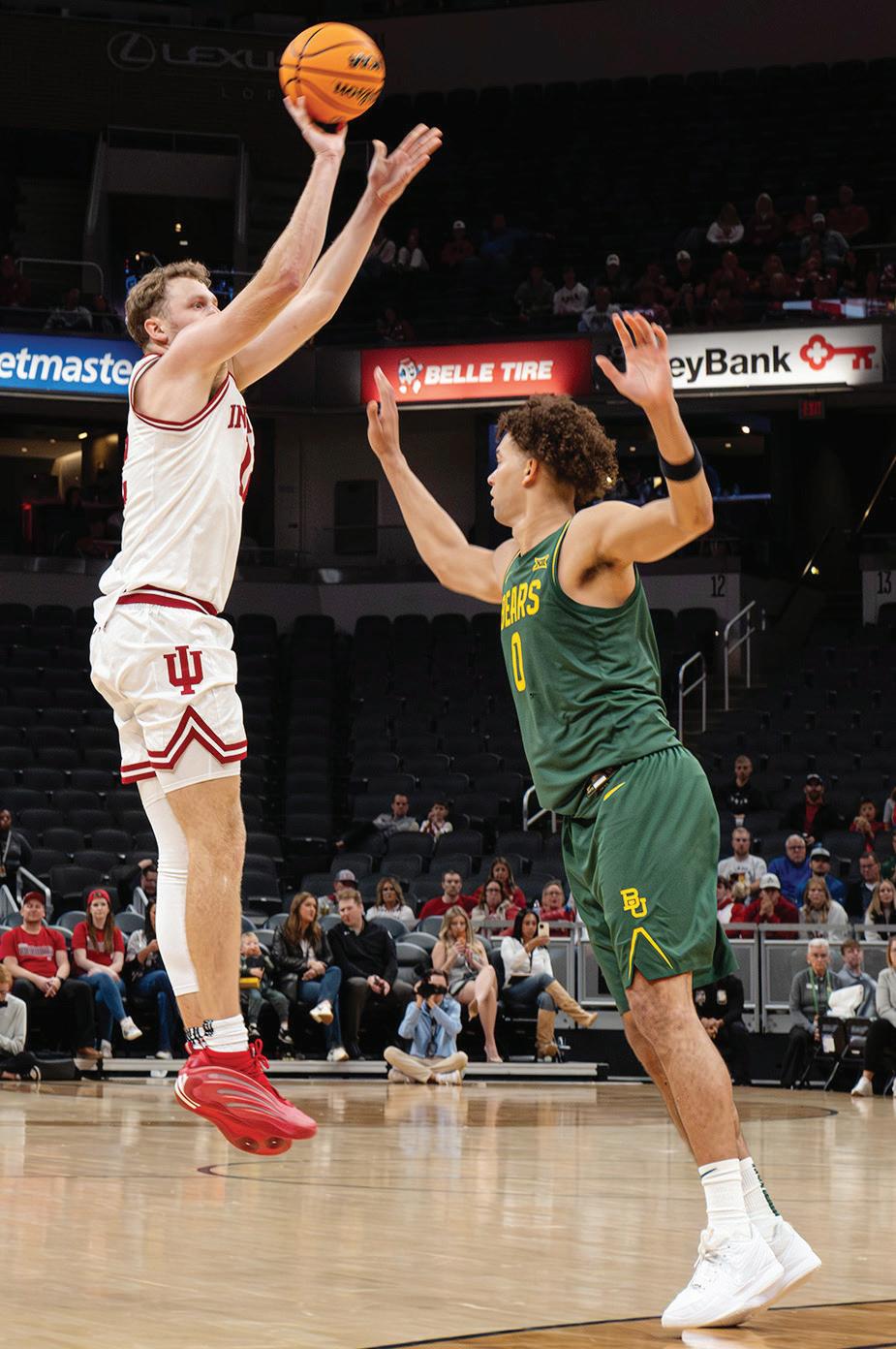
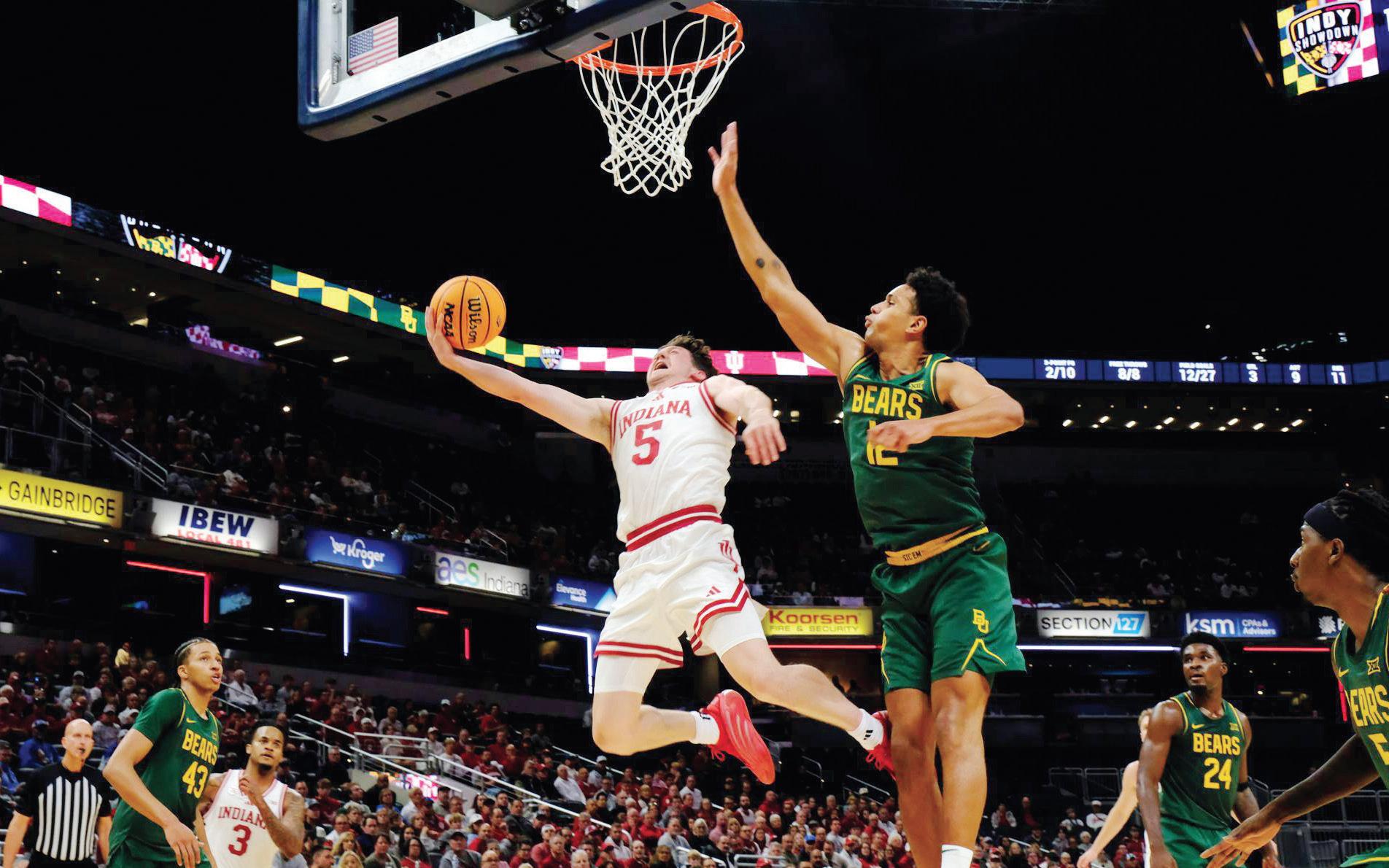
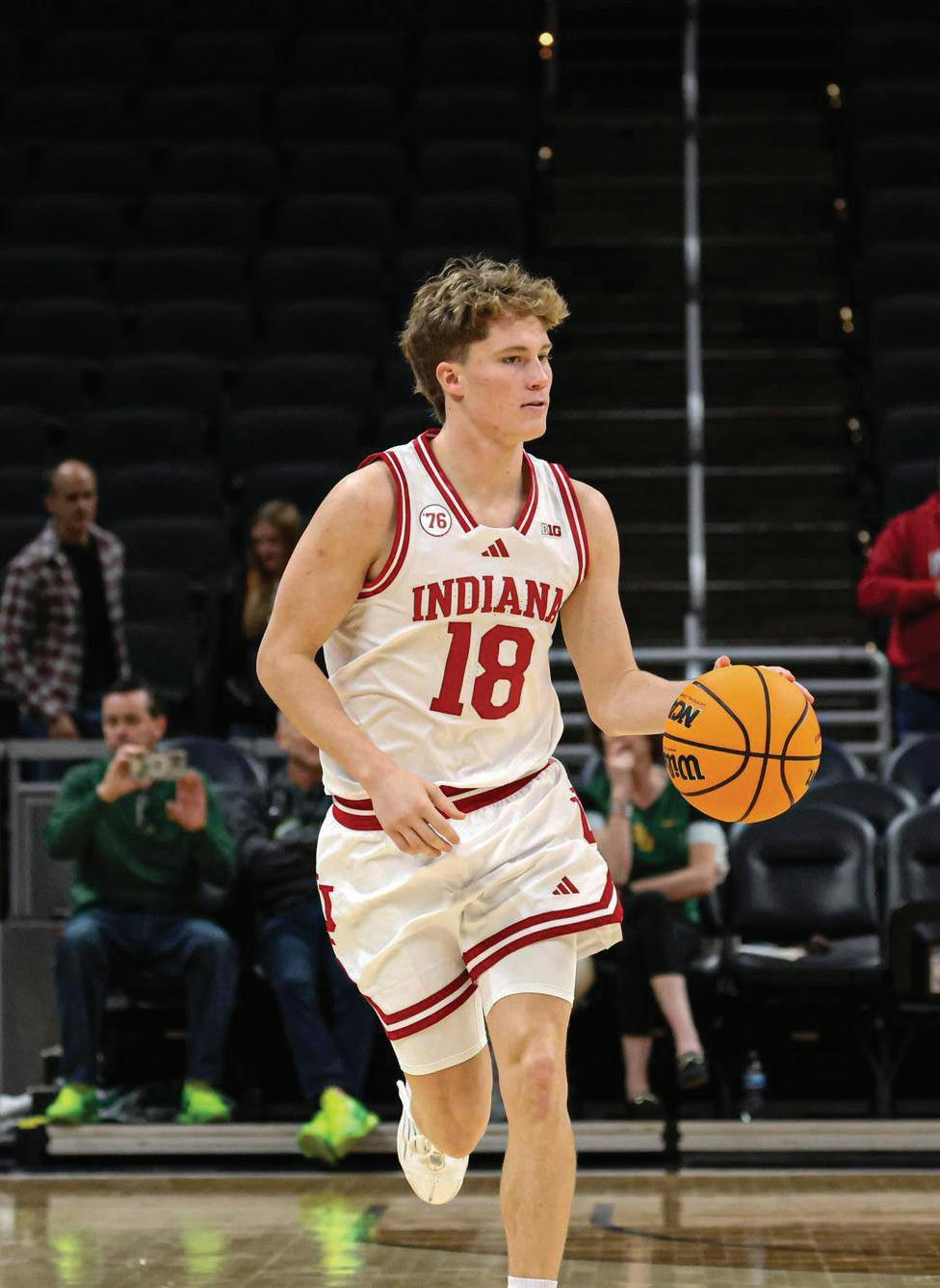
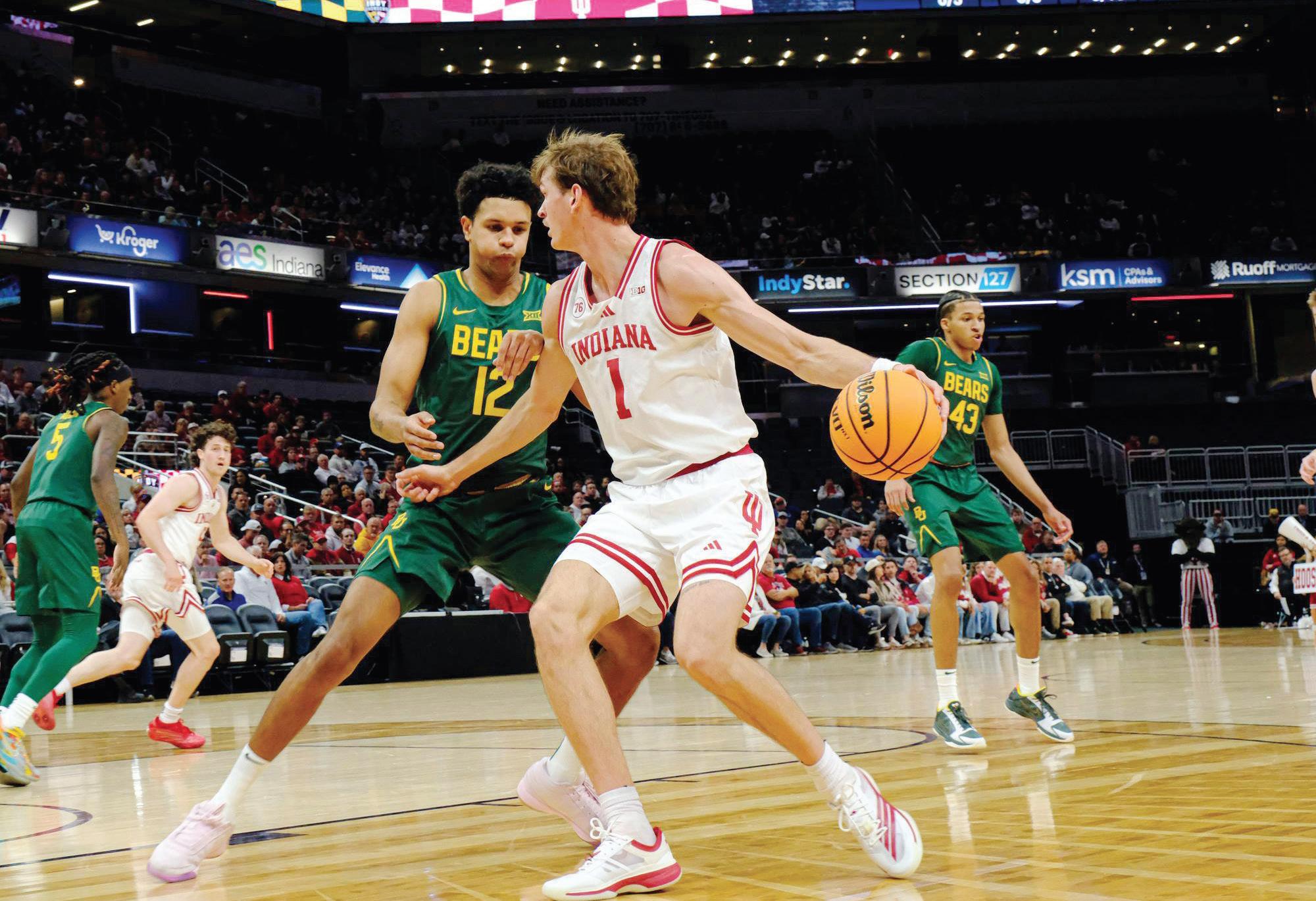
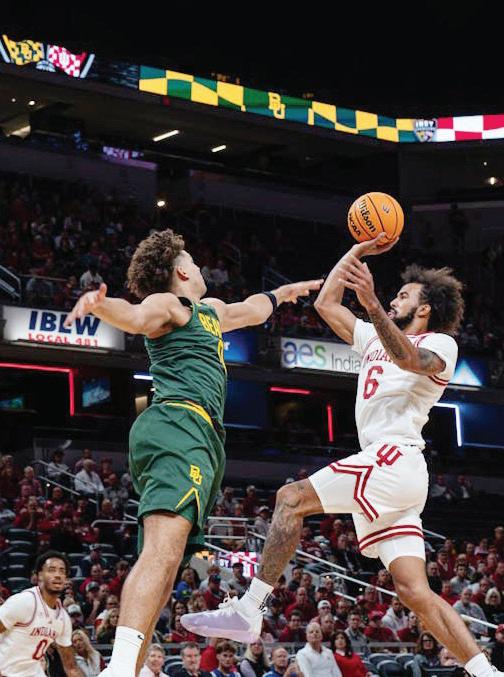
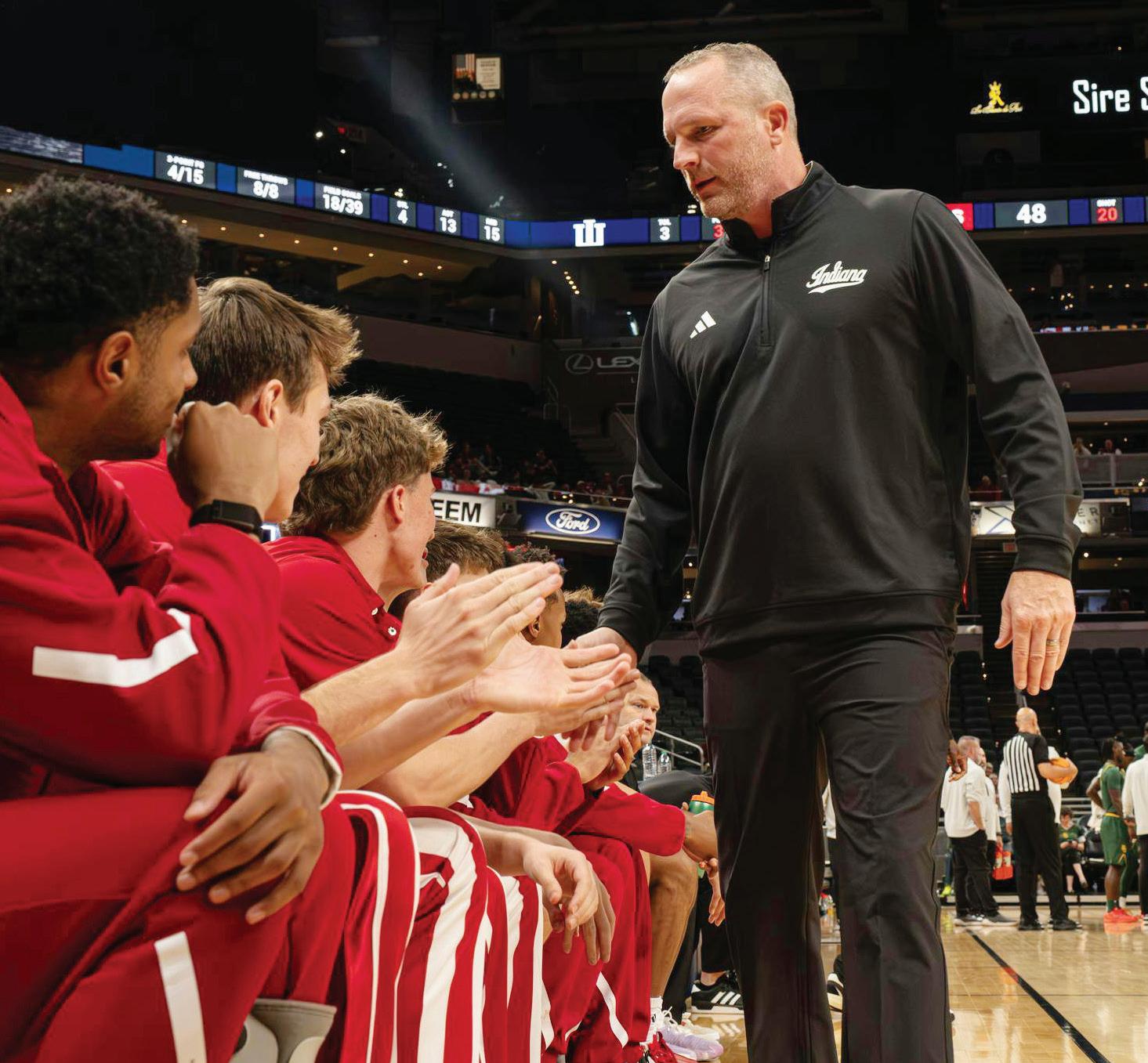
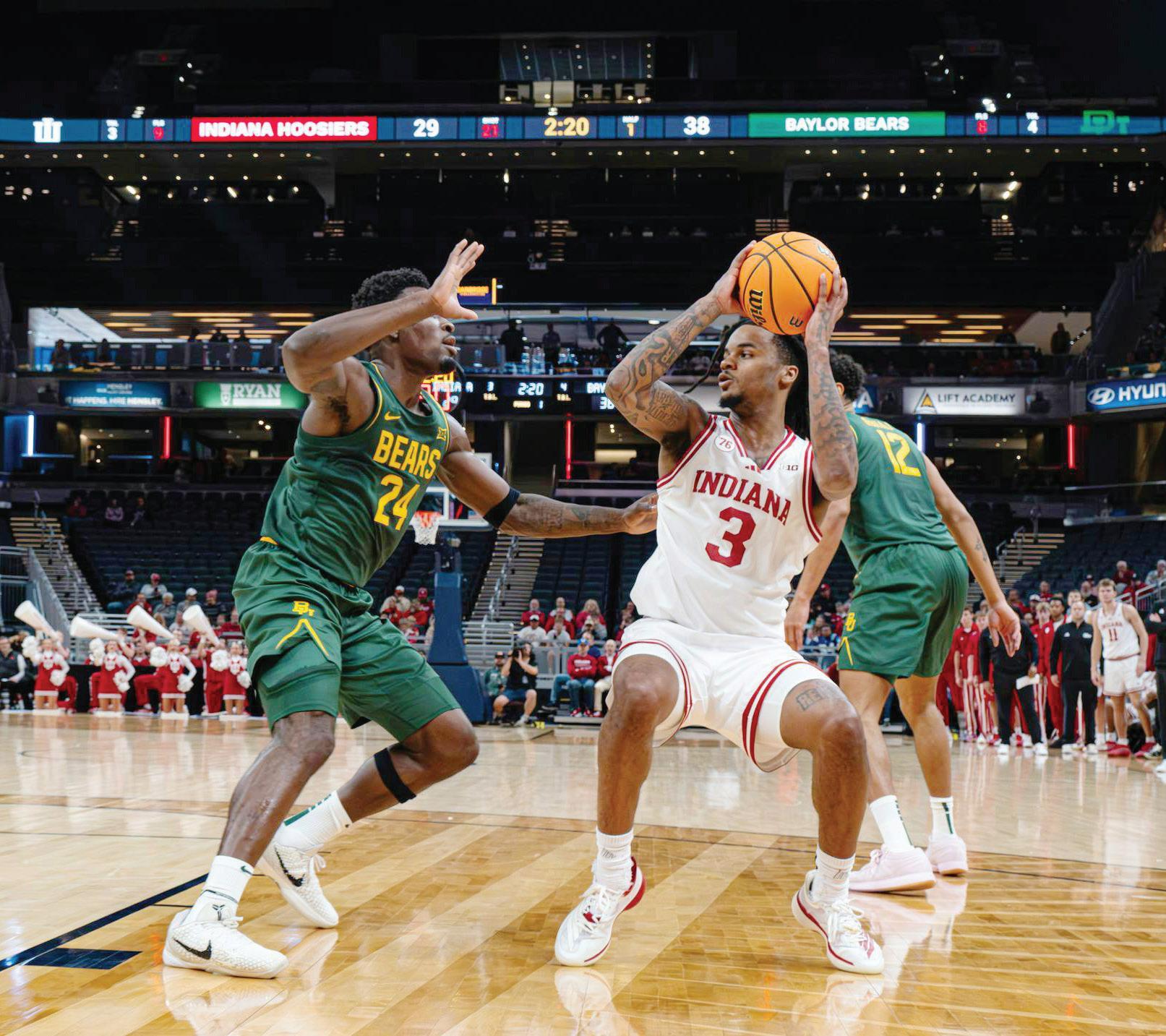
6