

Congratulations on your acceptance to IU Bloomington and becoming a Hoosier!
The editors of the Indiana Daily Student have compiled some of the biggest stories of the last academic year for this Freshman Edition of the newspaper. The IDS is an independent, student-run news source that was first established in 1867. Everything produced here is produced by students. The IDS is home to reporters and writers, photographers, graphic designers, social media content creators and web designers. If you are interested in working for the IDS, please reach out to editor@idsnews.com and be on the lookout for us at student involvement fairs throughout the school year. We hope you enjoy the stories we’ve put together for you. We’re wishing you all the very best in your first year at IU!


Mateo Fuentes-Rohwer and Jonathan Frey
Co-Editors-in-Chief
By Dalton James jamesdm@iu.edu @DaltonMJames
MIAMI GARDENS, Fla. —
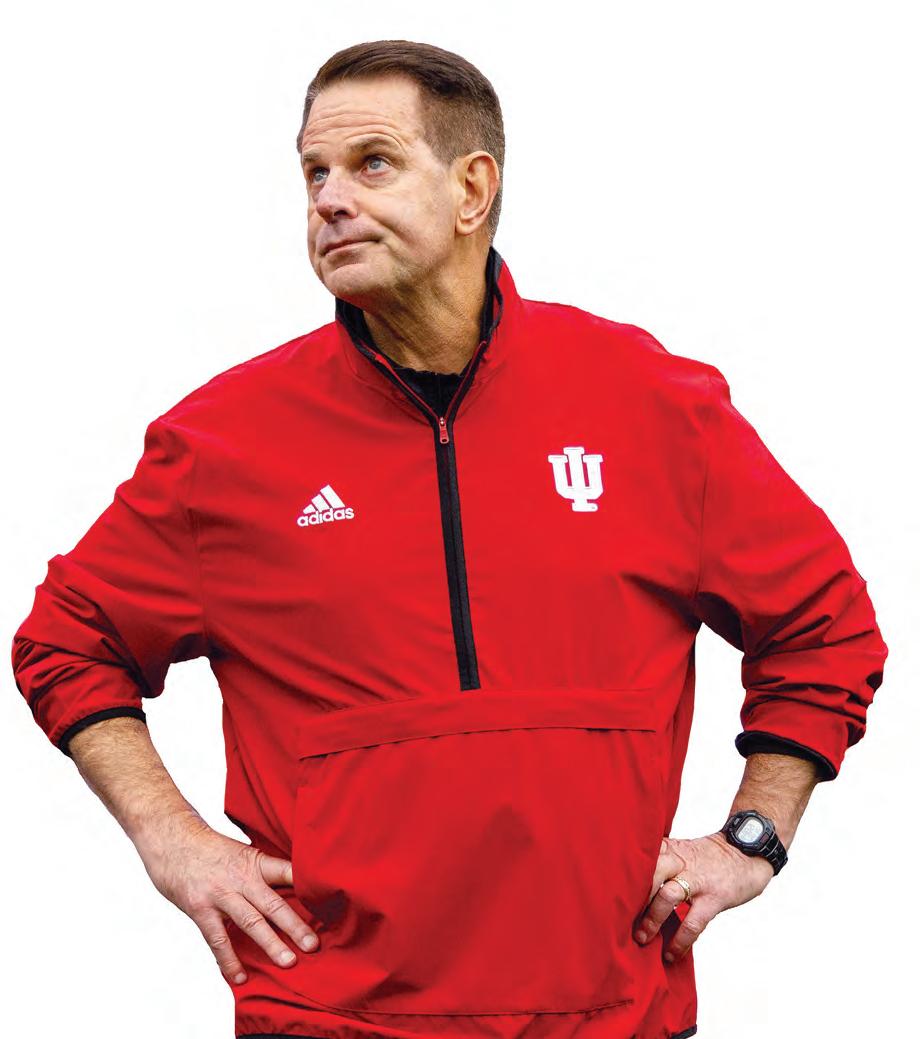
Curt Cignetti tried to place his glasses on the collar of his red quarter zip as he walked toward midfield. Ultimately, he held them in his right hand.
The second-year Indiana football head coach smiled, which he seldom does, as he raised both arms and pointed toward the sky.
The Hoosiers had just completed one of the greatest stories in college football history with their 27-21 victory over the No. 10 University of Miami in the College Football Playoff National Championship. It was an accomplishment worthy of the rare sign of satisfaction. But in perhaps the most historic moment of Cignetti’s 43-year coaching career, his father, Frank Cignetti Sr., was on his mind.
“Hopefully he was watching today,” Cignetti said postgame. “He was a great role model. I was very blessed to have a father like that.”
Cignetti’s path to becoming a head coach
From the third grade, Cignetti’s eyes were set on leading a program.
After four collegiate seasons playing quarterback, he began his coaching career as a graduate assistant and made five stops before what
he’s deemed the most important one. Cignetti’s four seasons at the University of Alabama under legendary head coach Nick Saban taught him how to overcome the difficulties of achieving greatness.
Although the Crimson Tide went 7-6 in Saban’s first season at the helm, it brought all the lessons Cignetti learned together.
He wound up spending three more seasons under Saban, including a per fect 14-0 campaign in 2009 capped by a national cham pionship. Cignetti was ap proaching his 50th birthday.
Throughout his years en trenched in college football, he was familiar with careerlong assistants. They were guys who spent 40-plus years working under a head coach but never leading their own team.
Cignetti didn’t want to finish his career that way.
“I'd seen what those lives look like as a kid,” he said. “So, I took a chance.”
From waxing tables to leading Indiana football
When Cignetti left Al abama for Indiana Universi
ty of Pennsylvania, it was an “unprecedented” move, he said, from one of the sport’s most prestigious programs to a Football Championship
eventually James
University. The kind of success
By Kendall Geller kmgeller@iu.edu
At 7:10 a.m. Nov. 9, students in rainbow tie-dyed shirts, decked out in glitter, tutus, neon-colored wigs and ribbon took their places on the stage and against the walls of the IU Tennis Center, waiting for their cue. They burst into motion all at once as a mashup of pop songs blasted from the speakers. For 12 minutes, they moved in sync, performing the dance they’d been rehearsing for months.
Hundreds of people gathered in the center of the room, some standing, some singing, some dancing along. Others sat and lay on the floor, blankets
wrapped around them while they leaned on their friends with half-opened eyes. Weak cheers rang from the crowd, tinged with excitement despite their rasp after hours of use.
It was hour 35 of the annual IU Dance Marathon, and the dancers from IUDM’s morale committee fought to bring enough energy to the room to keep hundreds of participants awake long enough for the final reveal.
Forty-five minutes later, they were on their feet, anticipation having replaced exhaustion. The crowd chanted, “Kids can’t wait,” and held up their phones to record the 15 people lined up on stage. Members of IUDM’s accounting committee flipped over

By Steven Leatherwood
sjleathe@iu.edu
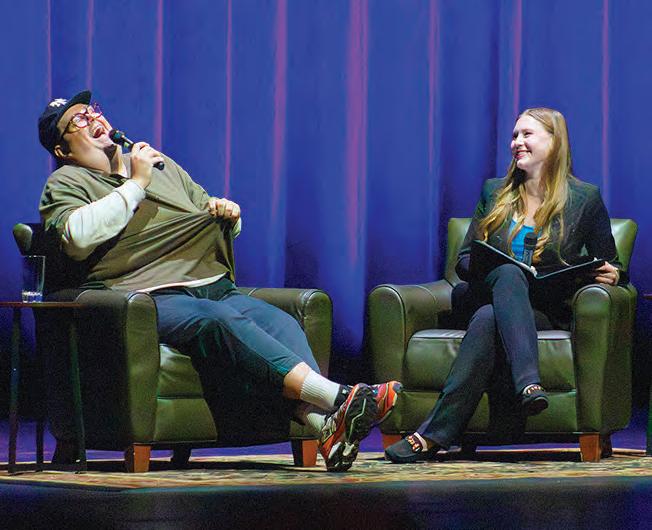
Hundreds of people began lining up outside the IU Auditorium up to two hours before “A Conversation With Caleb Hearon” took place at 7 p.m. April 14. When the doors opened, the crowd flooded inside to get the best seat to watch one of Rolling Stone’s most influential creators of the past year. Hearon isn’t just famous for internet pursuits like his podcast, “So True with Caleb Hearon.” He is also a comedian, writer and actor, with roles in “Jurassic World: Dominion,” “Pizza Movie” and the film “The Devil Wears Prada 2.” The conversation with Hearon was part of Granfalloon, the annual arts festival inspired by Indiana author Kurt Vonnegut presented by the IU Arts and Humanities Council.
Bethany Habegger, communications and community outreach coordinator for the council, said they chose Vonnegut’s 1976 novel, “Slapstick,” to encompass this year’s theme.
“We were just really fixated on, kind of, comedians that could speak to that, like, Midwestern charm, but also the Midwestern experience at large,” Habegger said. “And Caleb Hearon was at the top of all of our lists.”
Hearon participated in an hour-long interview-style lecture with Lucy Gray, IU Union Board’s director of lectures. Throughout the talk, Gray asked Hearon questions about his career, his social impact and how he was enjoying Bloomington.
“I ate too much at BuffaLouie’s,” Hearon said near the beginning of the talk, to the applause of the audience.
Hearon and the audience laughed at Gray’s short responses to Hearon’s longwinded rants on subjects like the rise of TikTok comedians and his relationship with his mother. Hearon repeatedly called Gray a “diva” throughout the interview.
While the conversation was filled with Hearon’s selfproclaimed “gay rambling” and jokes, he also gave practical advice for young people and touched on serious issues. He talked about his own journey with depression as a college student and encouraged everyone to not be afraid to make mistakes in their 20s. Because of the state of the world due to billionaires, he said, people should “have fun.”
Hearon said he couldn’t believe comedians like him and other performers like drag queens are looked up
to for their politics. He even made a joking jab at recurring podcast guest and drag queen, Trixie Mattel.
“Not a brain cell under that wig,” Hearon said.
The talk wrapped up with rapid-fire questions from Gray, including inquiries about Hearon’s least favorite color (purple) and his favorite musical artist (Hayley Williams).
Student-led comedy troupes tabled inside the auditorium before the event for “The Funny 501,” a comedy festival happening April 17 and 18 featuring IU’s Full Frontal Comedy.
Members of the troupe, Brenzlee Johnson, Zach Gates and Carson Cannatella, were thrilled to hear that Caleb Hearon was coming to speak at IU.
“We’re just
By Adelyn Rabbitt adrabb@iu.edu
Indiana Senate Bill 199, introduced in January, would put “low earning” degree programs at Indiana University and across the state in jeopardy. The bill is authored by Republican Senators Jeff Raatz and Linda Rogers, who did not respond to a request for comment.
“This is actually modeled after language from the Big Beautiful Bill, which says at a federal level, no longer will we be funding or providing any federal loan dollars for programs that don’t yield more than a high school graduate income for two out of three years,” bill sponsor Rep. Robert Behning said Feb. 17 in a hearing in the House chambers.
In July 2025, more than 400 low enrollment degree programs at higher education institutions in Indiana were set to be eliminated or consolidated as a response to House Enrolled Act 1001.
The threshold for “low earning” under SB 199 could range from about $24,000 to $35,000 per year, according to the Indiana Capital Chronicle, with the actual threshold not yet confirmed.
The final list of degree programs that fail to meet the earning threshold will be released in 2027, but an early list puts music degrees, among others, at risk.
Thomas Koehnline is a senior in the Department of Folklore and Ethnomusicology as well as the Linguistics Department. They said the folklore and ethnomusicology degree program has
always had limited enrollment, and that they could see it being removed by the state.
“Which does not, of course, reflect the actual value of the program, but of course we’re dealing with a government that is actively trying to define education in terms of economic benefits, which is completely antithetical to education,” Koehnline said.
According to the U.S. Department of Education College Scorecard, a degree from IU in the music category earns a median wage of $42,250, which is on the lower end of college degree earnings, potentially putting it on the state government’s chopping block.
The undergraduate folklore and ethnomusicology program was already affected by decisions at the state level in July. While the original coursework will still be available, the program will be merged with the anthropology program when the HEA 1001 changes go into effect. However, Koehnline said, the language in SB 199 gives the state government a pathway to dismantle the entire anthropology department, including folklore and ethnomusicology studies.
“What we’re dealing with right now is a state government that’s way overstepping and is trying to essentially cut any programs that they don’t see as supporting their specific political ends,” Koehnline said.
When Koehnline applied for college, one of the main draws to IU was the range of language and regional studies programs, which was exceptional compared to other
universities in the country. But now, it seems to Koehnline that the range of degree programs that made IU so appealing is rapidly shrinking.
“Any government, regardless of political leanings, believes that freedom of information and free access to knowledge in higher education is a threat to it under democratic rule, and the humanities are always going to be the primary target of that,” Koehnline said.
Koehnline said they are worried there is not enough resistance in the state legislature.
“It’s very clear that Jeff Raatz, the senator who is pushing it, is just trying to get by with making as many changes to higher ed in Indiana as possible and hoping that people won’t notice this particular provision,” Koehnline said.
The low earning degree program provision comes as a package deal with social media restrictions for adolescents.
Koehnline said at this rate, they are concerned for almost any degree program outside of the Kelley School of Business.
Brian Forist is a senior lecturer for IU’s Parks, Recreation, and the Outdoors program, which has about 60 students, according to Forist.
According to the U.S. Department of Education College Scorecard, a degree from IU in the parks, recreation and leisure studies category earns a median wage of $50,444, which is on the lower end of degree earnings.
Forist said most, if not all,

graduates of the program earn more than the bill’s potential threshold of $35,000, at least in permanent positions. However, Indiana pays “notoriously bad” for seasonal natural resources department workers.
“Interestingly, this is a state law we’re talking about; the state has the capacity to bring those salaries into a competitive range; they don’t have the political will to do so,” Forist said. “What it says, more than anything, is the way the state devalues natural resources work.”
He said the current political leaders in the state emphasize individual and family choice in other areas
of legislature, but SB 199 negates student choice. “Students should have a choice of what they want to study and then how they want to apply that in their lives,” Forist said. “The university system should not be seen as an employment conveyor belt.”
“There is a special quality that one receives from that that you cannot put a dollar amount on,” Forist said. “This is a law about greed, and students in a program like ours, I think are taught by example, as well as experience, that there is more in this world than just financial remuneration.”
SB 199 passed the Senate with a 67-28 vote Feb. 17 and is on its way to the House.
This story was originally published Feb. 20, 2026.
Forist said his department requires students to participate in internships in order to graduate, which generally helps them find full-time employment in the future. But Forist said degree programs offer more just professional training. They’re also an opportunity to solve problems and realize that learning can be fun. For Parks, Recreation, and the Outdoors students, Forist said working in some of the nation’s most exceptional landscapes is fulfilling.
By Deshna Venkatachalam
devenkat@iu.edu | @deshnavenkat
The number of people experiencing homelessness during a single night in Monroe County in 2025 has reportedly decreased by 12.8%, according to the Indiana Balance of State Continuum of Care 2025 Point-in-Time Count report.
This marks the first decline in recorded cases of homelessness for the county since 2022, despite changes to the data collection that could have increased the number of people surveyed.
The Indiana Housing and Community Development Authority helps organize the annual PIT Count and is carried out by a combination of staff and volunteers. The staff surveys individuals experiencing homelessness, both sheltered and unsheltered, during the final days of January. An IHCDA slideshow shows that Indiana’s data last year was undercounted.
Some unsheltered PIT data was not entered properly into the Homeless Management Information System, leading to underrepresentation of individuals experiencing homelessness.
Additionally, previous PIT reports did not include specific counts for the unsheltered chronically homeless population.
The U.S Department of Housing and Urban Development defines the unsheltered chronically homeless population as people with a disability who live in a place not meant for human habitation and have been homeless for at least 12 months on four separate occasions in the last three years.
Both of these problems were fixed for this year’s collection, according to the latest IHCDA data taken on Jan. 29, 2025. It showed that Monroe County had a total PIT count of 305 people experiencing homelessness— 45 people fewer than in 2024.
However, Indiana’s overall PIT count increased. This year, the state reported 4,860 individuals, 255 people more from the previous year.
Monroe County reported the highest recorded number of individuals experiencing homelessness in a single night among all counties in its region. This includes Green, Lawrence, Martin, Morgan and Owen County. Lawerence County had the
second-highest count, with 68 individuals.
Just over 20% of those experiencing homelessness in Monroe County were children under the age of 18, making them the largest demographic group representing the county’s PIT count. According to the IHCDA, the report is intended to support communities and local agencies in planning and allocating resources to address the future needs of unhoused individuals.
Forrest Gilmore, executive director of Bloomingtonbased antipoverty organization Beacon, said the city shouldn’t see this decrease as a major change.
“It isn’t significant enough in terms of the actual numbers,” Gilmore said. “I think if we see a long-term pattern, I’d be pretty excited about that.”
Gilmore said he believes this decrease could have been caused by PIT count number errors. However, he also said this could be the start of a “really serious downward trend and pattern.” To assess this, Gilmore said the county needs more data over time.
Heading Home of South

Central Indiana, an organization working to strengthen housing security and decrease homelessness, provides a data dashboard on their website. The site’s data comes from the HMIS in Monroe, Morgan and Lawerence counties. One piece of data collected is the active number of people in a selected population who are homeless. The graph includes the single active homeless number for all single adults age 25 and
older who are experiencing homelessness.
According to the dashboard, there were 575 people, single adults 25 and older, actively homeless in January across the three counties. This number saw a steady decline and dropped to its lowest this year in April, with 454. Since then, the counties have seen a steady increase.
Gilmore said that a downward trend over the next three to five years would give Monroe County an indica-
tion that things are changing for the better. Until then, the county still needs to work towards aiding those in need.
“The biggest challenge, not only in our community but across the country, is that when you have a housing affordability
By Zoe Reed reedzoe@iu.edu
The wait is over for Indiana University Bloomington students. Since their disappearance in January, the bronze fish and water have returned to Showalter Fountain on April 27, leaving many students excited about their return.
The fish were previously removed in mid-January to protect them from potential
theft ahead of the College Football Playoff National Championship, leaving the fountain without its signature statues.
IU doctoral student Jerika Miller, who likes to have lunch at the fountain with their roommate, was disappointed in the fountain’s emptiness.
“I’ve been waiting for it to come back,” Miller said. “I sat here a couple weeks ago but there was no water in it,
so it wasn’t as fun.”
Miller, who sat at the fountain alongside other students, said there was a difference in the plaza since it was empty.
“The energy was definitely different too,” Miller said. “Nobody was really around.”
The tradition of stealing the Showalter fish started after the Indiana men’s basketball team played in the 1987 NCAA national championship, when one of the
fish vanished after the team won.
Alongside protecting the fish this year, IU administered additional maintenance after their disappearance.
IU spokesperson Mark Bode confirmed the installation and maintenance in an email to the Indiana Daily Student on Tuesday.
“The fish returned yesterday,” Bode wrote. “Installation was followed by addi-
tional cleaning and waxing.”
In an email to the IDS on Jan. 14, Bode wrote the fish will return shortly, “hopefully with a win to celebrate.”
However, the fish had not yet returned three months later, with many seniors hoping to take commencement photos at the fountain disappointed with the fountain’s emptiness.
Now the fish sit in their rightful spot. The return is a relief for seniors like Zoie
Ault, who postponed taking graduation photos until the fountain was functioning.
“I was kind of waiting ‘til they put the water back,” Ault said. “My whole family’s gone to IU, and the Showalter Fountain’s been there the whole time, so it’s just really important and like a little piece of history for us.”
This story was originally published Apr. 28, 2026.

By Adelyn Rabbitt adrabb@iu.edu
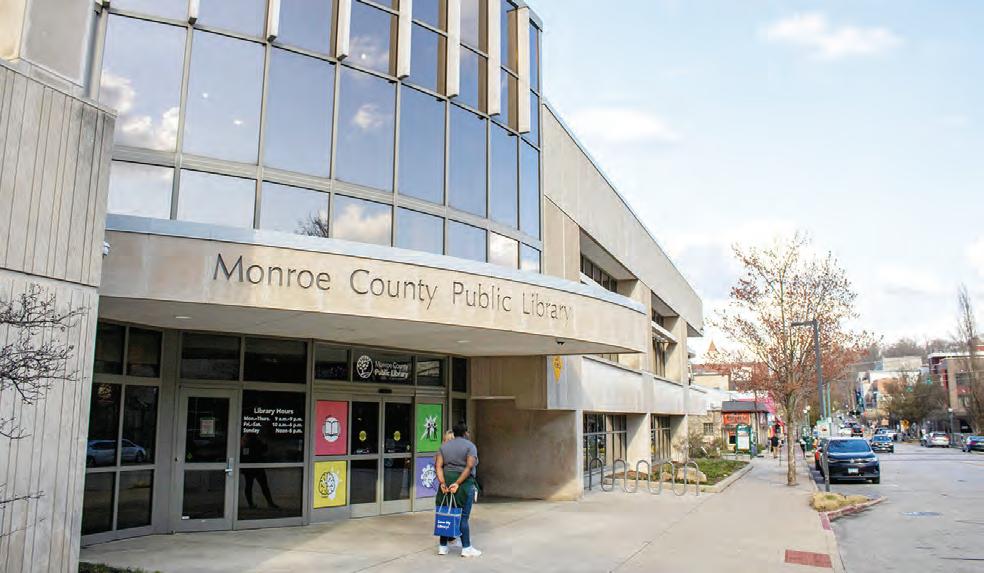
Adara Nichols, 32, sits in a library window seat with two suitcases behind her chair.
She’s been unhoused in Bloomington for two years. She is at the downtown library almost every other day from 3 p.m. until it closes on weeknights at 9 p.m.
She was unaware that beginning Nov. 24, the downtown branch of the Monroe County Public Library would close two hours earlier, at 7 p.m., on weeknights.
Nichols said it would impact her directly, and she’s especially worried about the change occurring at the beginning of the winter months’ harsh weather conditions.
“I would personally feel saddened if it closed two hours early,” Nichols said.
Tori Lawhorn, communications and marketing director at MCPL, said the library’s primary funding source is property taxes, so when Indiana’s Senate Enrolled Act 1 was signed into law April 15, the library was forced to make a change. The law lowered residential property taxes and planned for long-term tax reform, in turn undermining funding for public institutions including libraries and schools.
The library is aware of its role within the local unhoused community, Lawhorn said, and added that there are other local options for those in need.
When the library closes at 7 p.m. beginning in November, unhoused patrons
won’t have to wait for another resource to open after leaving the library for the night, she said.
Due to SEA 1, the library estimated it would be $350,000 to $375,000 short of its annual budget. Library leaders weighed their options and considered closing a location one day a week, Lawhorn said, but ultimately decided that closing the downtown branch two hours earlier Monday through Thursday would be the best solution for the budget shortfall.
The decision was influenced by the location’s data on library traffic and anecdotal evidence from staff and patrons, Lawhorn said,
which showed that usage of the downtown library significantly decreased after 7 p.m.
The other MCPL locations, Southwest and Ellettsville, already close at 7 p.m. during the week, and Lawhorn said the downtown library team had previously considered matching the hours even prior to the property tax changes to allocate resources more efficiently.
As its primary response to budget changes, MCPL will reduce staff by five fulltime equivalent positions through attrition over the next three years, as staffing is the library’s highest expenditure. Reducing the
downtown location’s hours is a method to make staff reduction easier.
According to Lawhorn, the library’s projected savings between these two strategies is about $360,000, enough to make up for MCPL’s estimated deficit.
Before the library board announced their plan publicly June 18, Lawhorn said they conducted meetings with each staff department in the MCPL system to receive feedback. Though some staff members expressed disappointment, Lawhorn said, “The overwhelming response was they understand.”
Lawhorn said the only major worries she heard ex-
pressed by patrons are from those who use the branch’s meeting rooms between 7 p.m. and 9 p.m. on weeknights. About 10% of daily downtown library use is accounted for by meeting room use, Lawhorn said. MCPL provides a list of other meeting places available in Monroe County that is regularly updated by staff. The downtown branch of the library serves as a study spot for IU students. Senior Vanessa Vasquez studies there often in the evenings after her on-campus activities are complete. She said the free parking at the library makes studying there more accessible for her than at on-campus study loca-
tions. “One of the reasons I come here is because when I drive to school, it’s usually pretty hard to park on campus,” Vasquez said. “I know not everyone’s able to afford a parking pass, so the library is always a good alternative to have somewhere accessible because they have a free parking lot.”
She noted that the library’s collection of textbooks can be useful for IU students, and that the downtown library’s location is more convenient for students on campus than the other two locations, which are both over 10-minute drives from campus, while the downtown branch is about a five-minute walk from the Sample Gates.
“I think it’s also just good to have somewhere off campus, like, you don’t always want to be on campus,” Vasquez said. “Being here is kind of a refresher from everything else, like Wells especially can get really busy.” Any programs that take place in the downtown library past 7 p.m. on weeknights will be moved to a different MCPL location or to an earlier time of day. Off-site programs will be unaffected by the library’s change in hours and the MCPL eLibrary will still be available around the clock.
“Reducing operating hours is never a desired move for us,” Lawhorn said. “But we do believe that it’s the most appropriate and sustainable adjustment we can make at this time.”
This story was originally published Sep. 8, 2025.
By Ella Curlin elcurlin@iu.edu
The Indiana University Media School announced recommendations May 1 from the task force established last semester to create a “roadmap” for student media.
The report suggested a strengthened “umbrella” governance structure for student media, including WIUX, IU Student Television and the Indiana Daily Student, as well as an advisory body including the Media School dean, IU faculty and outside media professionals to review organizational structure and a public editor role to improve accountability.
The governing policy for the shared organizational structure would reaffirm editorial independence while enabling coordination between student media groups, the report stated.
The task force also explored options for student media’s financial sustainability moving forward, with a focus on innovation and philanthropy.
Task Force on Editorial Independence and Sustainability members include IU faculty and alumni, student leaders from the IDS, WIUX, and IUSTV and multiple professionals in the media industry.
The next step, the report stated, is for IU and the Media School to refine and implement the plan.
Governance
The report recommended creating a centralized organization including all three student media organizations. Student media organizations would remain distinct, retaining their indi-
vidual brands while operating under the shared organizational model.
The centralized organization would include a student media director – or another position determined by the Media School dean – who who would lead the organization. This person would act as “publisher or executive,” and could report to the dean or someone of the dean’s choosing.
The centralized organization’s governing policy would establish student media’s editorial independence and clearly define the roles of stakeholders.
The report stated that the Media School is best equipped to research options for the organization’s legal or organizational structure.
The report also recommended forming a Student Media Advisory Board to advise the organization on its long-term progress and operating plans.
The nine-to-11-member Student Media Advisory Board would include the Media School dean, professionals in the media industry and university faculty.
The board should also include members from outside the university, including alumni, and later iterations of the board could include a representative from the Bloomington community, the report states.
Additionally, the advisory board would be consulted in case of disagreements regarding major changes to organizations’ strategic and operating plans, which would be developed within the student media organizations with stakeholder input.
The task force also recommended the advisory board
consider creating a public editor position. Public editors typically act as representatives for the newsroom’s audience while reviewing journalistic ethics within the paper.
The IDS, while previously in a long-standing financial deficit and predicted to turn up about $150,000 short this year, will likely end the year without a deficit, the report stated.
But the report also highlighted the challenging financial landscape of the media industry.
The report stated student media should be a “testing ground” for new media models, and emphasized the role of philanthropic funding and advertising revenue.
The task force recommended fundraising for a Student Media Center, hopefully supported by a minimum $5 million philanthropic endowment, to support a student media director salary and general operations, such as student wages and travel or equipment expenses.
Furthermore, the report suggested the Media School establish an Innovation Fund for three to five student-led media projects each year, such as newsletters, podcasts or digital models.
It also recommended pursuing philanthropic donations via alumni giving, foundations and partnerships, such as reporting initiatives aimed at rural or underserved groups. The IUB Student Media Fund would serve as the “primary vehicle” for these donations, while WIUX, IUSTV and the IDS would still retain their individual donation funds.
The report suggested the IDS’s special editions, which are profitable, could face declining long-term value.
Just this year, the IDS generated at least $200,000 in poster sales, most prominently from its IU Football National Championship poster.
The task force advised WIUX, IUSTV and the IDS explore multimedia products and revenue sources.
To help the IDS become profitable, the report said a working group of students and staff should form by the end of the year to identify cost inefficiencies. The group would consider reducing the minimum number of print papers produced per batch and would also evaluate spending on student compensation.
The report also recommended the Media School and IU explore the possibility that all three student media organizations could operate under a separate non-profit model with a “board-level
relationship” to the Media School, similar to the precedent set by IU affiliated nonprofits like the Indiana University Student Foundation. The report said this could help with fundraising and financial sustainability.
Background
Media School dean David Tolchinsky announced the task force Oct. 20, 2025, six days after firing Director of Student Media Jim Rodenbush and ordering the IDS to not print news in an upcoming special edition, then to stop its print edition altogether.
The announcement stated the task force would ensure IU student media’s editorial independence and financial sustainability, while building on the work of a 2024 committee that proposed reorganizing the IDS, WIUX and IUSTV into an “umbrella organization.”
In a letter responding to the decision, IDS co-editorsin-chief Andrew Miller and
Mia Hilkowitz said the ban on print was “unlawful censorship.” The decision attracted national news coverage and was condemned by multiple local and national advocacy groups, including the Foundation for Individual Rights and Expression and the Student Press Law Center.
In a statement published in Miller and Hilkowitz’s letter Oct. 15, IU Bloomington Chancellor David Reingold said the decision was not related to the newspaper’s editorial content and the university was “firmly committed” to free speech and independent student media. IU later reversed the ban on print, with Reingold writing in an Oct. 30 letter to Miller and Hilkowitz that the IDS could decide how to use its budget through June 30, 2026, allowing it to continue producing print editions for the rest of the school year.
This story was originally published May 1, 2026.
By Mia Hilkowitz
in the IU system — which includes nine campuses and IU Online. That’s down from 6,578 international students in fall 2024, a 14% drop. At IU Bloomington, the number of international students enrolled fell from 4,984 last fall to 4,428 at the start of this school year.
er education institutions across the U.S. this fall due to visa bans and “disruptions in visa interviews and processing.”
A July analysis by NASFA, the Association of International Educators, found that there could be a 30-40% drop in new international student enrollment at high-
In April, several IU students had their visas cancelled, though President Donald Trump’s administration announced later it would restore many of the thousands of visas terminated nationwide. Trump’s administration has still re-
voked more than 6,000 student visas. Overall, enrollment systemwide and at IU Bloomington is up from last fall, coming in at 89,247 and 48,626, respectively. However, the number of students is still down compared to other headcounts from the past nine years, with the exception of fall 2024. From 2016 to 2022, overall enrollment at IU dropped
from around 95,000 to 90,000, including during the COVID-19 pandemic.
IU again recorded a drop to 88,490 in 2024. IU Bloomington’s overall enrollment has steadily increased since 2020, when the student population dipped slightly to around 43,000.
In an email to IU faculty and staff, university President Pamela Whitten high-
lighted that IU Online, IU’s online education program that launched in 2012, now has more than 10,000 degree-seeking students. Additionally, Whitten noted IU Indianapolis’ incoming class increased by around 10% and 70% of all undergraduate students are Indiana residents.
This story was originally published Sep. 9, 2025.

By Deshna Venkatachalam devenkat@iu.edu | @deshnavenkat
Around 200 people filled the rows of the Ruth N. Halls Theatre in the Neal-Marshall Black Culture Center on Sept. 19. Among the faculty, family and community members were about 70 students. They were all there for one reason: a pin.
A small, circular gold and silver pin that represents not only belonging and identity, but also a responsibility and a shared commitment to building something bigger than oneself. For hundreds of NMBCC alumni, the pin marked the beginning of their journey at IU. Now, it marks the start for a new generation of IU students.
Each year, the NMBCC welcomes first-year and transfer students at the pinning ceremony. They walk across a stage and receive their pin from their mentor, someone who will guide and support them over the next
four years. Gloria Howell, director of the NMBCC, said the tradition began in 2011 and is like a bookend.
“We do a Black congratulatory ceremony for graduates in the spring,” Howell said. “The first-year pinning is like the first bookend and then the congratulatory ceremony is the last bookend. It kind of brings their experience back to a full circle.”
Howell opened the ceremony, followed by Brian Richardson Jr., IU’s associate vice chancellor for administration and community. In his speech, Richardson reflected on the symbolism of the pin, calling it both a recognition of achievements and a call to action.
“You’re carrying with you now a legacy of excellence,” Richardson said. “It’s a reminder to give back and support one another. To lead with empathy and compassion, but also to seize the opportunity.”
After Richardson, the IU African American Choral
Ensemble — currently celebrating its 50th anniversary – took the stage. They performed “I Open My Mouth to the Lord” by Clara Ward and The Ward Singers and “Shine the Light” by Raymond Wise. The songs reflected the new journey awaiting the firstyear students in the audience.
The theme of new beginnings and legacy weaved its way through each person that spoke. Alonzo O’Shae Ross, assistant dean of students and director of the first-year and family experience programs, reminded students they are not alone during their time at IU.
“Some of us will be teaching you in your classes, but we’re also here to support and mentor you,” Ross said. “We are indeed your village. You have a community that has assembled that believes in you, sees you and is ready to lift you up.”
Ross acknowledged there would be both good and challenging days at IU. He
encouraged students to treat both days the same and to view them as learning opportunities.
At the end of his time on stage, Ross left the audience with one bit of wisdom.
“Lead with pen,” Ross said. “With a pencil, you can write something down and simply erase. Make your time here count.”
The first 17 students to receive their pins were members of the Neal-Marshall Leadership Academy, a group that will have access to programming and events where they will be equipped with the knowledge, skills and tools to be effective leaders over the next few years. But the moment was not just a celebration — it was also a tribute.
Each year, the leadership academy chooses an “IU Black great,” after which the academy is named. This year, it was called the Dasani Cleveland Class of the NealMarshall Leadership Academy, after the creator of the
NMBCC mantra. With Cleveland’s friends and family in attendance, Howell spoke fondly of her memories with the IU alumna, who died in April at 23.
“She was always on fire, you could tell that by her red hair, which I loved,” Howell said. “She was creative, witty, thoughtful and all of us marveled at how serious she was about her academics.”
Cleveland’s grandmother sat in the second row, displaying her mantra on a red NMBCC T-shirt.
“Ain’t no family like a Neal-Marshall family,” it read.
Music played as the rest of the students got pinned and shared a moment with their mentor. Mentors are staff, faculty, alumni and other community members who volunteered to be involved.
Freshman Ajani Lewis said his mentor already asked him to lunch. He looks forward to building a relationship with his mentor and others at the NMBCC.
“I think coming here, especially as a minority, finding a place where you really belong and feel safe and seen and heard is the most important to me,” Lewis said. “This pinning is like a symbolization of that, where you’re able to find people that really support you.” Freshman Amiyah Patterson also emphasized the importance of community. She said the NMBCC was the first organization that stood out to her. Patterson said she felt as though it was the first organization to offer her a helping hand as she began to navigate her time at IU. In the future, Patterson hopes to take advantage of the network she is making with people of all different backgrounds at the NMBCC.
“It’s really important to know where home is when you’re really not at home, which is kind of what NealMarshall is,” Patterson said. This story was originally published Sept. 20, 2025.



By Natalie Chan nkchan@iu.edu
Every Wednesday night as the sky grows dark, the Kirkwood Observatory opens its doors to the public. Available from the end of spring break to the beginning of Thanksgiving break each year, the observatory provides an opportunity for visitors to stargaze in Dunn’s Woods.
The facility was built in 1900 and posthumously dedicated to Daniel Kirkwood, a mathematics professor at Indiana University, in 1901. He is best known for discovering Kirkwood gaps, which are sparse regions within the asteroid belt located between Mars and Jupiter. Although the observatory was formerly used for research, it is now used for outreach and instructional programs. Visitors can climb a flight of stairs to the observatory’s second floor, which holds a 12-inch refracting telescope for public viewing.
Caty Pilachowski, a professor in IU’s astronomy department, said the refracting telescope comprises two 12-inch lenses of different types of glass separated by the thickness of a postage stamp, which help visualize celestial bodies.
“When you have a glass lens, different colors focus slightly in different positions,” Pilachowski said.
“But if you use two different kinds of glass and put them together to make a doublet lens, so two lenses together, then you can correct for that change in what’s called the change in refraction.”
According to Pilachowski, this mechanism improves the color response of the telescope and helps light focus at the bottom end of the telescope, which has an eyepiece that provides magnification for viewing planets and binary stars.
“One of the favorite targets for everybody is the moon,” Pilachowski said.
“Bloomington city lights are so bright that it’s difficult to

see a lot of the faint nebu-
lae there and galaxies that we would love to be able to show the public. So, we’re pretty much stuck with planets and binary stars and the moon, but it’s still fun to look at.”
The observatory also contains a solar lab equipped with a solar telescope and Hydrogen-alpha camera, which are open to the public and used for academic instruction. The Hydrogenalpha camera displays the outer layers of the sun’s atmosphere, Pilachowski said.
The observatory’s enduring presence has made it a cornerstone for exploratory astronomy in the Bloomington community.
“We get grandparents who come to the observatory and bring their grandchildren, and they tell us that when they were little, their grandparents brought them to the observatory,” Pilachowski said. “We have
a long, long history and just deep roots in the Bloomington community. We’re proud of the observatory. We’re proud that we can continue to share it with the public and we take the best care of it we can.”
The observatory’s proximity to Kirkwood Avenue, a hotspot for IU students, helps attract people outside of the astronomy department. Aida Melgarejo, a Spanish linguistics student, said she came across the observatory on the way to her next class and promised herself that she would visit later.
Melgarejo was traveling with her friend Clara Herrero, a first-year doctoral candidate.
“We were just walking by, and we saw the lights, and we suddenly wanted to get inside, you know, so that’s why we came today,” Herrero said.
Despite having limited experience in astronomy,
both Herrero and Melgarejo said that they found the observatory interesting.
“I think it’s a worthwhile experience for every Wednesday,” Melgarejo said.
“I have never had something like that.”
Third-year doctoral candidate Anika Goel said she began volunteering at the observatory as a requirement for her graduate program, but she keeps going back because she enjoys talking to others about astronomy and answering their questions.
“It often makes me think about our field in a different light, because the questions we ask in scientific fields (are) different than the questions that the public asks,” Goel said.
While astronomy is increasingly accessible as technology continues to develop, Goel said she believes the observatory provides a unique experience.
“I think a lot of people nowadays have access to advanced telescopes in their backyard that they can buy and look at all of these objects in the night sky, maybe with much better resolution than Kirkwood,” Goel said.
“But this is how astronomy started, and this observatory connects us with our history in a way that your new telescopes don’t.”
Robbie Mailliard, a senior studying astronomy and astrophysics, said he believes the observatory is a good place for introducing astronomy to the community. He spends his time in the solar lab, where he can study the sun, eclipses and space weather.
“We actually get a very good mix of locals, people coming from out of town and students coming all together,” Mailliard said. “And I do think we have nights where it’s really slow, we have nights where it’s really
busy. We kind of like the ebb and flow of the busy-ness.” According to the IU Department of Astronomy, the observatory’s solar lab will be open from 1-3 p.m. Nov. 8 and Nov. 15 to view sunspots, dark spots on the sun’s surface caused by intense magnetic fields. Pilachowski said the lab’s Hydrogen-alpha camera will allow visitors to see solar prominences, which are eruptive clouds of plasma formed by magnetic fields; prominences appear as bright-red loops protruding from the sun. Public viewings will continue every Wednesday until Nov. 19 and will resume after spring break. Due to varying weather conditions and the end of daylight saving time, the opening timetable will be adjusted accordingly on the observatory’s website. This story was originally published Nov. 2, 2025.


By Ella Curlin elcurlin@iu.edu
The crowd stretched from Sample Gates past First Christian Church on Kirkwood Avenue on March 28 as several thousand people chanted, marched and held signs in protest of the Trump administration.
Bloomington’s No Kings protest began at 1 p.m. at the Monroe County Courthouse and ended shortly after 3 p.m. with a march down Kirkwood Avenue. The protest was one of nearly 3,000 events planned across the United States. Similar events were held in June and October. The protests were organized by the Bloomington chapter of 50501, a national grassroots group organized to protest the actions of President Donald Trump’s administration.
At the courthouse, representatives manned booths from organizations including Indivisible of South Central Indiana, Medicare for All Indiana, the Bloomington chapter of the League of Women Voters, MADVoters and Mobility Aids Lending Library.
Representatives from local organizations including Exodus Refugee Immigration gave speeches, and musician Carrie Newcomer played guitar and sang songs to the crowd from a stage next to the courthouse.

Farther down the plaza, Zach Reed and Dylan Taylor stood in Revolutionary War uniforms at the top of a grassy hill.
As protesters marched by, Reed and Taylor serenaded them by playing Revolutionary War-era songs like “Yankee Doodle” on plastic recorders.
Taylor said they came in costume to symbolize the country’s first fight against monarchy.
“America was found on the principles of being antimonarch,” Taylor said. “I find somebody taking advantage of the system that we’ve created to be against that type of authoritarianism, getting away with what has happened within the House, the Congress and the executive branch, to be absolutely deplorable.”
Other protesters held up signs with puns, slogans or caricatures of Trump and members of his cabinet.
“Are we great yet?” one sign read, referencing the campaign slogan Make America Great Again.
Organizers say early estimates indicate about 3,000 people attended the protest. Paul Smedberg, a volunteer with the Bloomington chapter of 50501 who helped organize the protest, said the crowds at this protest looked like the “largest yet.”
Smedberg said he joined 50501 after attending the first No Kings protest in June. Amid the arrests of both non-citizens and U.S.
As protesters walked along the sidewalk around the courthouse, they waved signs referencing U.S. Immigration and Customs Enforcement, the Epstein files, the war in Iran and the Trump administration. Some protesters came dressed in costumes, carried American flags or brought musical instruments.
citizens by ICE, Smedberg said he worries for the safety of his Latino family members. He was also motivated to become active by the cutting of federal research funding, how the Trump administration handled the aftermath of the U.S. capture of Venezuelan President Nicolas Maduro and the war with Iran.
“There aren’t many areas that this administration is touching on that doesn’t seem totally un-American,” Smedberg said.
On the courthouse plaza shortly before 2 p.m., a large
green inflatable frog walked slowly toward the sidewalk, using the long wooden pole on his sign as a walking stick.
“Ribbit ribbit,” the frog chanted, as protesters stopped to take pictures with him.
This was just one of the many chants that the frog, who declined to be named, likes to deploy.
“Ribbit ribbit, get your frog on, uh, frog army coming through. Once you go frog, you don’t go back,” the frog told the Indiana Daily Student. “I think that’s my
repertoire right there. I just say it over and over again.”
The protester said he first donned the frog costume for October’s No Kings protest, after anti-ICE demonstrators in Oregon made headlines for wearing inflatable costumes in confrontations with federal agents. He saw it as a way for protesters to appear non-threatening yet slightly mocking toward agents from ICE and the Department of Homeland Security.
“Basically, a way of saying, you know, we’re really not afraid of you,” he said.
Others read “I really miss constitutional checks + balances,” and “Stop Fascism Now.”
The protest ended with a march down Kirkwood, with protesters turning left at Sample Gates and looping back around to the courthouse, where organizers began to pack up tables. They chanted “This is what democracy looks like!” and “No hate, no fear, immigrants are welcome here!” as they marched.
This story was originally published March 28, 2026.
By Zoe Reed reedzoe@iu.edu
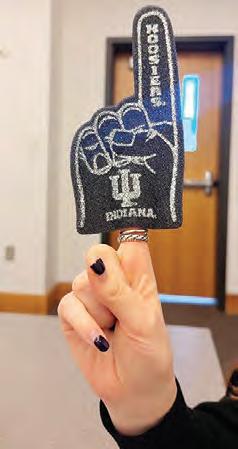
The $5 challenge sounded simple enough; Jordan Young and her class group had to find a way to create as much value as possible from a miniature Indiana University foam finger. What followed was a trading chain that ended with a signed poster and football from Indiana football head coach Curt Cignetti and over 140,000 views across Reddit and X. On Feb. 25, Young’s assistant marketing professor at the IU Kelley School of Business, Kate Christensen, gave each student group in her Creativity and Communication class a choice: take a $5 bill or one random IUbranded item.
Christensen then told the teams they had five days to “create as much value as possible before next class,” by trading, selling, offering services or creating something new with their item of choice in exchange for money or something else.
Christensen drew her inspiration from Tina Seelig, executive director of the Knight-Hennessy Scholars at Stanford University, who posed the question, “What would you do with $5 and two hours?” to her own students. The challenge also mir-
Cignetti wanted to change the way people think about Indiana football, explaining there was no reason why it couldn’t be a source of pride for the school, Bloomington and the state of Indiana.
He instilled his tried-andtrue blueprint — the same one he used at Elon and JMU.
Cignetti said it would work on his first day in Bloomington on Dec. 1, 2023.
From visions to proven product
Now, just 780 days after his introductory press conference in Bloomington, Cignetti stood on the sideline inside Hard Rock Stadium with a national championship and college football immortality at stake. Although the Hoosiers dominated the Rose Bowl and Peach Bowl en route to Jan. 19’s ultimate game, the Hurricanes met the challenge. The Cream and Crimson didn’t run away with the victory, but instead truly had to earn it.
rors blogger Kyle MacDonald’s 2005 “The One Red Paperclip Challenge,” in which MacDonald traded a red paperclip on Craigslist 14 times before receiving a house.
Christensen said she hoped the assignment would let her students focus on people’s stories instead of money.
“The first question for this assignment is, ‘Do you want the money or do you want the story?’” Christensen said. “To me, the exercise is really about IU and what it means to people.”
Young’s group of three chose the foam finger and posted it to multiple Reddit forums, asking users to trade for “literally anything slightly better,” “something funny or chaotic” or “something from your junk drawer you’re ready to part with.” By March 2, Young said all those posts and updates had accumulated over 140,000 views.
“I just love Reddit,” Young said. “I thought it would be a smarter idea to have people potentially come to us with things they wanted to trade, rather than us seeking out people.”
Young first traded the foam finger for two 1950s solid cherry wood twin headboards. Young wasn’t able to trade the headboards, but that didn’t stop the group. Then, on Feb. 26, Young
While Heisman Trophywinning quarterback Fernando Mendoza’s stat line didn’t resemble that of his across the last two games, he made perhaps his greatest play in an Indiana uniform on a fourth down in the final quarter.
After sustaining shot after shot from Miami’s vaunted front seven, earning him a bloodied lip, Mendoza dropped back before running a draw up the middle. He bounced off a would-be tackler before reaching the goal line — touchdown.
“It’s a great story, tremendous story. Most people would tell you that are in the know, it’s probably one of the greatest stories of all time in terms of a team that most people — we got it done.”
Curt Cignetti, Indiana football head coach
The Hoosiers’ storybook
reached out to IU graduate and entrepreneur Mark Cuban through email, and he suggested getting an item from the Indiana football team.
“I would try to trade it up to something from the football team to make the point that value isn’t just something defined by a price on eBay,” Cuban wrote in the email. “Something with an emotional connection can be even more valuable.”
The next day, Young’s group received a drum from a user on Reddit, keeping the headboard. They traded the drum for a trombone.
The next day brought a flurry of trades: trombone to mandolin, mandolin to stitched artwork and stitched artwork to a 1950s silk wedding dress. The dress came from IU alumna Rita Carlberg, who wore it for her own wedding, telling the Indiana Daily Student she was glad to be part of the project.
“I liked the idea of participating, helping a student and giving a wedding dress pretty much away to someone who could use it,” Carlberg said.
Indiana football offensive lineman Carter Smith then reached out to the group through email and gave them a Rose Bowl championship hat.
Young also reached out to IU President Pamela Whit-
season could’ve taken a turn for the worse without Mendoza’s crucial conversion.
It didn’t, though. Mendoza instead made a play that will live in Indiana football lore forever. He was determined to reach the end zone, willing to do whatever it took — a mindset the Hoosiers exemplified all season with all sorts of different variations of victories.
“I think we sent a message, first of all, to society that if you keep your nose to the grindstone and work hard and you've got the right people,” Cignetti said, “anything's possible.”
Cignetti and the Hoosiers reach immortality
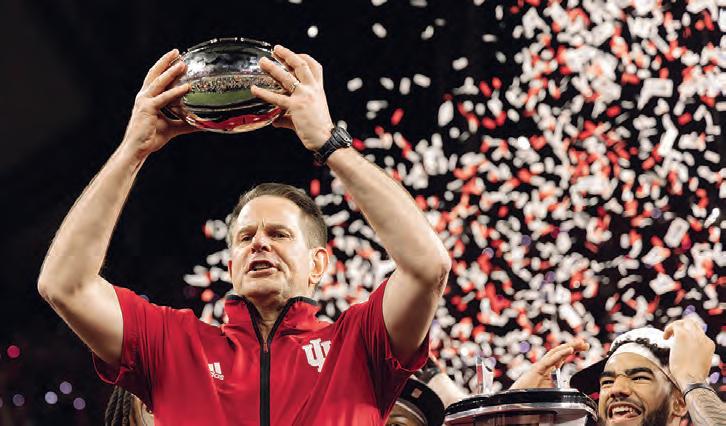
Cignetti stood on the victory stage having just led his team to a perfect 16-0 season and the program’s first national championship. Not only did Cignetti bring his plan to fruition, he also used it to take him to heights he had yet to reach as a head coach.
It took just two seasons for Cignetti to not only turn Indiana into a respected pro-
ten through email. Execu-
tive Director of Presidential Engagement Sarah Tosick responded, agreeing to give a set of four College Football Playoff commemorative pins
Earlier in the trading process, Young emailed 2025 Heisman Trophy winner and Indiana football quarterback Fernando Mendoza and Cignetti. On March 2, Assistant Director of Football Operations Jake Mc-
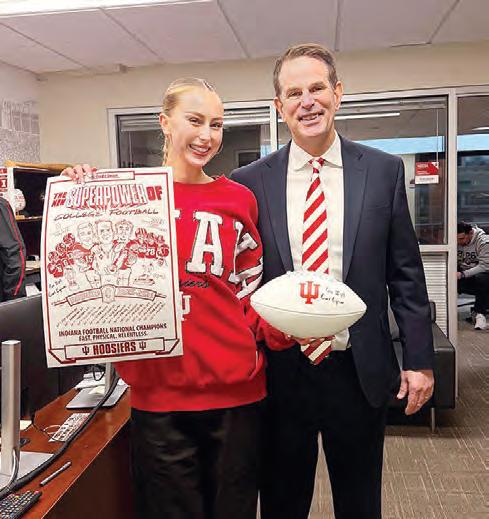
Donald offered the group a football signed by Cignetti and a 2025-26 season poster.
Young went to pick up the items from McDonald, when she was able to took a photo with Cignetti.
The group ended up giving the wedding dress away to someone who will be married in March, officially ending the challenge.
“We just wanted the wedding dress to go to somewhere that was going to be used because
Young
pins and championship hat to Upland Brewery, which will include the items in a mural expected in April, Young said.
“Even though we love IU and love IU football, we just know that someone else would enjoy these items more,” Young said.
This story was originally published March 3, 2026.
gram, but a college football power. Cinderella stories aren’t new to sports. Whether it was the United States hockey team defeating the Soviet Union in the 1980 Olympics or North Carolina State University basketball making an improbable run through the NCAA Tournament in 1983, there’s a lengthy history of unthinkable success.
Milan High School basketball’s Indiana state championship in 1954 resulted in the film “Hoosiers.” When Indiana won the Rose Bowl, Cignetti said the Cream and Crimson’s two-year run would be a “helluva movie.”
Indiana’s fairytale season is complete. A movie could follow because, after all, Cignetti and the Hoo-
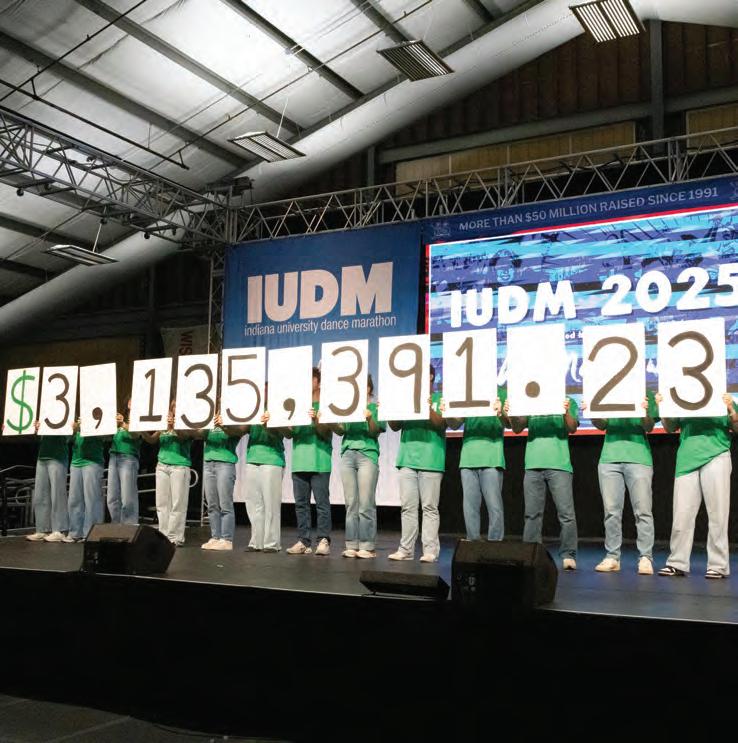

IUDM is a 36-hour dance event that takes place at IU every fall to raise money for Riley Hospital for Children, a pediatric acute care facility in Indianapolis. This year’s marathon started at 8 p.m. Nov. 7 and lasted until 8 a.m. Nov. 9, following the reveal.
Thousands of students stayed at the IU Tennis Center during the event. Besides dancing, the marathon included activities such as crafts and games with “Riley buddies,” guest speakers and 5 a.m. yoga on Nov. 9. IU students founded IUDM in 1991 to memorialize Ryan White, an Indiana high school student who contracted AIDS from a blood transfusion at 13 years old. When his diagnosis became public, Ryan was barred from returning to school and faced a multitude of discrimination from
nity. Ryan dedicated his life to advocating for the awareness of the disease before he died in the spring of 1990, just before he was supposed to graduate high school and go on to attend IU. Since its conception, IUDM has raised over $59 million for Riley and is the second-largest student-run philanthropy organization in the country.
IUDM fully funds three separate endowments at Riley to support the Ryan White Center for Pediatric Infectious Disease and Global Health. The center is part of the Department of Pediatrics at IU School of Medicine and supports research, education and inpatient and outpatient services for pediatric infectious diseases. The Ryan White Chair in Infectious Disease Endowment and the Ryan White Infectious Disease Endowment support clinical work and research at the center. The Indiana University Dance
ment guarantees permanent funding for the center.
Today, 75% of IUDM’s donations support research at Riley’s Wells Center for Pediatric Research, while 25% goes toward clinical care. Marathon participants raise money individually, and each committee sets a fundraising goal based on individual member donations.
While students are expected to remain awake for most of the marathon, a lineup of live music, games and a talent show is aimed at keeping spirits high. Plus, the IUDM morale committee is tasked with bringing the energy up. They performed their 12-minute line dance sporadically throughout the marathon.
“The vibes and the energy literally start at 8:01 and it carries you through the marathon,” IU junior and morale committee member Maggie Steward said. “Yes, people are tired and their feet hurt,
tell, and that’s why I think it’s so special.”
The morale committee is one of 18 committees collectively totaling over 1,200 members that meet yearround to ensure the marathon’s success. Each committee falls under one of four main categories: communications, internal, finance and membership.
Junior Ella Self is director of the public relations committee, and this was her last marathon before graduating early. Self was a triplet born prematurely and spent the first two months of her life in the neonatal intensive care unit at Riley. After fundraising for Riley throughout high school, she now helps lead IUDM’s communication efforts.
“I want people to leave knowing that they’re doing something that’s not normal for college students,” Self said. “To take so much time out of your life to benefit the welfare of others is so

SOAD-M
SOAD-N

member how special that is.”
During the marathon, guest speakers including former Riley patients and their loved ones came up on stage to share their experiences. Rose Black told the story of her son, Vincent, on Sunday morning. Vincent’s journey at Riley began when he stopped breathing shortly after birth.
He was born with severe disabilities and had about 100 surgeries but lived to be 42. Black said Riley’s care allowed Vincent to live a full life despite challenges, and he always met each day with joy and faith. Vincent danced in two marathons, one in which he spent all 36 hours in a wheelchair. Black thanked IUDM participants for the work they do to ensure more people like Vincent can live the life they deserve.
Sophomore Nora Flickinger is a member of the marathon relations committee, which works with high school dance marathons
across the state to continue IUDM’s mission.
“Every single drop in the bucket counts,” Flickinger said. “And if you’re here for an hour, if you’re here for 36, if you raise $10 or $150 million, every single penny counts and being a part of something greater than yourself will outlast every single little thing you could do.”
At 7:30 a.m. Nov. 9, IUDM President Matt McCormick gave an address before the total reveal. He commemorated the marathon’s purpose, impact and all the people who helped make it happen.
“In a few moments, the final total will be raised, the music will fade and the Tennis Center will slowly empty out,” McCormick said in his speech. “But what happened here, the memories, the hope, the love, will stay with each of us.”
This story was originally published Nov. 9, 2025.
SOAD-N 130 Digital Imagery for Nonmajors
SOAD-N 198 Introduction to Photography for Nonmajors
SOAD-S
SOAD-S 290 Photography I
Why changing my major was the best decision I made at IU
Samantha Shanker (she/her)
is a freshman studying media advertising with a minor in business.
On paper, business makes sense.
Having a business degree opens so many opportunities, like making it easier to attain a high-paying job. Especially choosing to attend Indiana University, where the business school boasts such a strong reputation, it feels like a good choice. It also feels like deciding to attend IU means you must stick with majoring in business because of how prestigious and well-known it is. When I arrived at IU, I thought I had everything figured out. Choosing a practical major and working in a corporate job after graduation would be the key to my success. For me, that meant pursuing business. But what looks good on paper may not always feel right.
As the semester went on, I was not receiving the grades that I thought I should be based on the work and effort I put in. I also felt disconnected from the material I was learning. I didn’t like it. It felt more like a chore than an interest.
Soon, my courses burnt me out, with no time to focus on aspects of young adulthood outside of classes. Studying, tutoring and coursework drained hours from my life, and yet the harder I worked, the more spent and disconnected I felt. When the final exam for economics rolled around the corner, I camped in the library for eight full hours the day before the final.
After seeing my test score and realizing I didn’t even pass the exam, I knew I

didn’t want to go on for the next four years of my college life working so hard just to eke by.
I went through the motions of a business student because I thought I had to. The discomfort, I kept telling myself, could mean future success and happiness.
That mindset is not something to live by. It’s important to enjoy your major because there is no point in investing so much money, stress and time on something that you don’t take pleasure in.
According to the National Center for Education Statis-
tics, about four in five college students switch their majors at least once.
The University of Tulsa also states that students who switch their major have an 83% graduation rate compared to 79% of those who finalize their major freshman year. There are many reasons as to why people switch their majors. It may not be the right fit, you might find new interests, the coursework could be too challenging or a program may not have a promising career outlook. Still, many students look
Sasha Burton (she/her)
is a sophomore studying elementary education with minors in Spanish and English.
Feel down about that B+ in chemistry?
“A” is now the most common grade awarded at universities in the United States. Between 1990 and 2020, grade point averages rose by over 16%.
Known as “grade inflation,” officials from the Harvard University Office of Undergraduate Education first brought attention to this bloating last year. In February, a faculty committee proposed around 20% of grades given in a course could be A’s, with an additional allowance of four A’s. In a class with 100 students, 24 could receive A’s.
Harvard’s measure purports to “give meaning” back to an A. Students should have to work hard to earn a high grade and demonstrate clear understanding of a course’s material. Yet, teachers simply giving out worse grades is a poor way to tackle grade inflation.
Students in The New York Times’ “Current Events
Conversation” pointed out this strategy would foster an atmosphere of intense competition in the classroom. Learning would fall by the wayside as students’ focus is placed more on what to do to earn the high grade. It becomes “what work will this professor grade highly” instead of “how can my work demonstrate what I’ve learned.”
Grade inflation isn’t limited to Harvard. In the 2020-21 academic year at Brown University, 67% of grades were A’s, up from 39% in 1993. Conversely, the amount of B’s given out has been declining. At IU’s own Kelley School of Business, administrators put new policies in place in 2025 to curb grade inflation as well. There were instructions to keep section grade point averages from 3.3 out of 4 to 3.5, a similar solution to Harvard’s.
The cost of college is another problem with capping grades. Students pay large sums of money to attend their universities, which means they expect to get something back. Classes they take must be worth the money they spent. That means
at changing their major as a failure. I did.
I wanted to prove to myself and my family that I can stay in business school and graduate with a degree from the Kelley School of Business. But by the time the first semester ended, I asked myself, “Is this really what I want? Do I want to replace my happiness with being constantly burnt out for the rest of my life, all to have the role of being a businesswoman?”
The moment I changed my major to Media Advertising, with a minor in busi-
SASHA SPEAKS
Say goodbye to the ‘A’
good grades and gaining credit toward graduation.
That stems from a deeper perception: Anything below an A is now a bad grade.
To solve grade inflation’s perception problem, universities should bid farewell to letter grades altogether, thereby underscoring true mastery of skills rather than mastery of a rubric.
The purpose of letter grades is, or should have been, gauging student performance and giving feedback. They also record achievements and topics mastered. When grading standards laxen, grades lose those purposes. They become simply a “participation trophy” for coming to class.
The National Association of Elementary School Principals offers solutions that could be applied to higher education.
With mastery grading, students are expected to successfully meet learning objectives, and they have multiple opportunities to revise their work. Once the instructor determines that they have properly mastered the skill, they move on to the next. In this system, grades
become less about the letter and more about working at something until you understand it. A study out of West Virginia University on the implementation of mastery grading found that it “promoted a culture of excellence in learning” and encouraged students to view mistakes as learning opportunities rather than as personal failures.
Under contract grading, instructors decide with students on criteria for grading at the beginning of the term. Again, emphasis is placed on students personalizing their learning. In a 2004 study comparing contract grading to traditional grading, “52% of students reported higher motivation for learning and 66% reported increased responsibility for their own learning.”
The best option, though, is called “ungrading.” Students reflect on their work throughout the semester based on feedback and guidance from the instructor. Then the students assign themselves a grade, and the instructor decides whether to keep that self-assessment or change it. This ensures that students must offer ef-
ness, I came into my second semester an entirely new person. I was more engaged in class and cared more about what I was learning. My grades improved to an A+ in every class that semester as I was finally studying something that interested me. I also had much more time to focus on other things than academics, like my health and relationships with others, which made me motivated and happier.
I also learned that while being a business major can open many doors, no major guarantees success.
“Your network matters way more than your college major,” a writer for Forbes said. Anyone pursuing any major can be successful. Sure, there are certain majors to take if you want to go into a specific field, such as investment banking. But I didn’t even know what field I wanted to go into after college. Across majors, networking is often more important than your actual major.
College students are expected to make big career planning decisions at 18 years old, fresh out of high school. We are expected to know what we want before we even have a chance to explore the opportunities.
Success is not about choosing the major that looks good on paper; it’s about finding a path that allows you to grow and build a future that you genuinely want. There are so many different choices of majors to choose from, and no one of them determines a person’s success in life.
If you are unhappy in your major, feeling trapped or burnt out, know you are not alone.
Changing my major was the best decision I made because I learned more about myself, and it also proved to me that I would’ve never enjoyed pursuing a path in business if I had stayed in the major. I chose my happiness rather than being miserable. Sometimes the bravest thing a student can do is change their direction.
sjshanke@iu.edu
This story was originally published April 27, 2026.

fort to their work, as they will have to judge it themselves.
All these alternatives make learning the main part of the class experience.
After all, we aren’t going to remember how many A’s we got when we leave col-
lege. We’ll remember what we learned, and the hard work we put into it.
sashburt@iu.edu
This story was originally published April 5, 2026.
Emma Howard (she/her) is a sophomore studying journalism.
We’ve all experienced some form of a parasocial relationship. Yes, you too. Whether you’ve sputtered out “She just gets me!” in between Phoebe Bridgersinduced sniffles, or gotten a little too attached to your pet rock in elementary school, you’ve experienced that onesided bond to a persona unaware of your existence. Personally, I’m partial to Florence Welch. We’d totally be best friends if we met.
But what happens when the parasocial relationship replaces the authentic one? With AI chatbots, that lack of authenticity is a real risk. As moldable as clay, your pocketable companion can be your friend, lover or even your therapist. That is, in theory. But imagine a friend
who won’t tell you you’re being delusional about that one guy, or a partner who’s too docile to yank back the blanket to their side of the bed. With chatbots’ current programming, relationships without tough love are the norm, which begs the question if they’re even relationships at all.
Computer science researchers at Stanford University conducted a study on chatbots’ feedback with 11 different AI models, including ChatGPT, Gemini and Claude. When asked about various situations regarding an internet user’s behavior, chatbots responded with encouragement 50% more than humans presented with the same scenarios.
The Large Language Models that generate chatbots’ responses do so by mimicking the speech of users’ prompts
input, essentially repeating back everything it thinks the user wants to hear. As a result, AI models have affirmed unhealthy and even dangerous behaviors, such as physical violence and self-harm.
AI chatbots’ ever-positive programming is risky for users. Their responses are also simply not conducive to forming healthy relationships. This inadequacy may be unsurprising, considering chatbots are, after all, robots. AI can’t replicate the authentic feedback you would get from another person. When AI can only ever be kind, there is no struggle to grow from. Whereas in a human relationship, bonds become stronger through the trust built over time.
Troublingly, some prefer the easier route. Of course, that simplistic programming would not exist if men did
not first desire real women to act in this way. Some men have formed parasocial bonds with chatbots in pursuit of emotionally uncomplicated romantic relationships with women. Take 45-year-old Ohioan Blake, for example. Featured in a piece by The New York Times, he has been in a committed “relationship” with ChatGPT companion, “Sarina,” since 2022. Since his real wife had been undergoing postpartum depression for nine years, Blake reported feeling like more of a “caregiver” than a husband. He created Sarina for support as he faced possible divorce and single fatherhood. Their “relationship” gained a romantic context after they were chatting back and forth and she happened to ask him about his dream vacation. Despite the bland, prompted
nature of the question, Blake felt like it was the first time anyone had considered what would make him happy. Get a load of this guy.
The concept of robotically constructing a dream woman whose sole purpose is to meet your needs and desires sounds more like a Margaret Atwood dystopian tale than a part of our reality. But this phenomenon isn’t limited to Blake’s case.
In 2025, the Massachusetts Institute of Technology conducted a study of about 27,000 Reddit users in parasocial relationships with their chatbots. About 6.5% of these users actually intended to enter a relationship with their fictional friends. This is the final stage of a state of automaticity, which we’re all guilty of in the form of the infamous doomscroll. By allowing users to cus-
tomize their companions’ appearances and receive nothing but positive feedback, AI systems like Replika, in which users can create physical avatars, feed into the same narrative of the “ideal” woman rehashed over the centuries. Robots, which require no emotional support and always give consent, allow their “mates” to skip past the hard parts of a relationship. The result is “romance” without humanity. So before going on autopilot and reaching for the water-waster, maybe reflect on what you actually want in a relationship. If a custom companion sounds good to you, it probably isn’t a woman you want.
emhowa@iu.edu

By Dalton James jamesdm@iu.edu | @DaltonMJames
Aiden Fisher was a zerostar recruit out of Riverbend High School in Fredericksburg, Virginia, when he sat in Curt Cignetti’s office at James Madison University in 2021.
Cignetti offered Fisher a scholarship. He sought an immediate commitment.
“Do you want to do anything with it?” Cignetti asked.
Fisher did.
His belief in Cignetti led to 19 wins and just four losses over Fisher’s two seasons at JMU. When Cignetti saw Fisher in the transfer portal, he wanted him to become a Hoosier. Once again, Cignetti made him an offer.
“You have to buy into some things that maybe don’t seem will come true. But if you believe enough, they will.”
Aiden Fisher, senior linebacker
Fisher believed Cignetti, who talked a big game in his first days on the job, could turn around college football’s losingest program.
“To be successful you have to be a little delusional,” Fisher said.
Over two years after Fisher trusted Cignetti a second time, he ended his college career with a national cham-

pionship T-shirt draped on his left shoulder and a national championship hat on his head.
As Fisher left the field for the final time, Indiana football fans waved their white rally towels and cheered.
Fisher raised his right arm and waved, showing his gratitude for the Hoosier faithful over 1,100 miles from Bloomington at Hard Rock Stadium in Miami Garden.
“You have to buy into some things that maybe don’t seem will come true,” Fisher said. “But if you believe enough, they will.”
When Indiana hired Cignetti after the 2023 season, he had his work cut out for him. Almost every offensive starter and half the defensive starters sat in the transfer portal. The Hoosiers were coming off a 9-27 threeseason stretch under former head coach Tom Allen.
Cignetti saw a handful of JMU players entering the portal. He wanted to make them Hoosiers.
Nine former Dukes pledged to the Hoosiers by Dec. 24, including Fisher. He came off a season in which he logged 108 total tackles, six tackles for loss and 1.5 sacks in 2023. When the
Dukes lost their starting linebackers to injury that September, Fisher stepped in.
He’s been the de facto quarterback of defensive coordinator Bryant Haines’ unit ever since.
When Fisher arrived at Indiana, he had a “weird” feeling. He was unsure whether holdovers from the Allen era would have “hard feelings” toward Cignetti bringing JMU players to Indiana.
“So, when we got here, the first thing I wanted to do was get away from football,” Fisher said Nov. 11, 2025, inside the Don Croftcheck Team Room in Memorial

Stadium. “Get with people outside of the facility to let them know you’re trying to build new relationships.”
Fisher didn’t want his peers to think he came to Bloomington to compete with them and just be “work buddies.” He wanted real relationships, which, he said, required all the former Dukes to check their egos.
“I think the best thing we did was just getting together outside of football, building relationships, friendships that I think, at this point, will last forever,” Fisher said. “But instead of just being teammates, we took it off the field.”
The 10 former Dukes didn’t want it to appear as if they were trying to show the Hoosiers how to do things their way; they wanted it to be everyone’s way throughout the spring. With fresh faces in the facility and an almost all-new coaching staff, building unity was rough at first. Fisher said he didn’t feel like the Hoosiers’ leader until halfway through spring practice in 2024. Players were looking for someone who would take the lead, he said. So that’s what he did.
SEE FISHER, PAGE A10


“We were able to kind of find common things together, see things the same way,” Fisher said. “I think that’s when we took a big step. So, pretty much halfway through spring, I think everybody kind of gravitated towards each other a little bit, and it was kind of smooth sailing since then.”
The Hoosiers concluded spring practice in mid-April with their spring game. The 2024 season opener against Florida International University, which marked the beginning of the Cignetti era, was 135 days away.
With uncertainty in what the Hoosiers had in the 2024 roster, Cignetti knew at least one thing for certain: Haines “sleeps a lot better” knowing he has Fisher on his unit.
And Fisher proved it in his first season in Bloomington. He made 118 total tackles, the 18th best nationally, 5.5 tackles for loss and 1.5 sacks. Fisher earned first-team All-American honors from the Football Writers Association of America and was named to first-team All-Big Ten. Haines said ahead of the 2024 College Football Playoff that Fisher is his “mouthpiece” to the rest of the unit on the field and couldn’t say enough about his positive traits.
“He’s the unquestioned
gree turnaround. Indiana was no longer the laughingstock of the Big Ten or the Power Four. Fisher recognized the “great” experience that first season, but the Hoosiers “didn’t finish the job.”
“I think we’ve laid a foundation of what Indiana football can be and what it is now,” Fisher said after the CFP loss. “And I expect to be right back here next year.” Fisher took the playoff stickers off his helmet and water bottles shortly after the season ended. He didn’t want to be reminded of the past.
Through Indiana’s first seven games in 2025, Fisher totaled 48 tackles and 6.5 tackles for loss.
The Cream and Crimson announced their true arrival as a title contender with victories against Iowa and thenNo. 3 Oregon. They showed they could not only compete with the sport’s best but beat them in hostile environments. After retaining the Old Brass Spittoon against Michigan State, Fisher and the Hoosiers eyed a victory over UCLA on Oct. 25.
On the Bruins’ second play from scrimmage, Fisher intercepted a pass and returned it for a touchdown, sending the Hoosier faithful inside Memorial Stadium into a frenzy.
However, on UCLA’s ensuing possession, Fisher said he was folded up on. He re-
“When I first got hurt, the biggest thing that went through my mind was, ‘I could either be a really bad teammate by woe is me, and I’m going to be hurt, I’m going to put my head down and look for pity,’” Fisher said Nov. 11.
Such behavior would’ve been a “terrible representation” of Fisher and his leadership, he said. Instead, he opted to be as positive as possible.
Fisher helped his linebacker counterparts as they were thrown into different spots due to his absence. He wore an earpiece on the sideline to listen in on Haines’ play calls to redshirt junior linebacker Isaiah Jones, who took on the defense’s green dot responsibilities.
Fisher wanted to help build the linebackers’ confidence, letting them know he was there every step of the way.
“But I mean, I can’t say enough about just how much those guys just carried themselves with such pride when they were out there,” Fisher said. “And they played so well.”
The four primary linebackers against Maryland on Nov. 1 accumulated 11 total tackles and an interception in a 45-point drubbing of the Terrapins, as Fisher missed the game.
“So, maybe they didn’t need me as much,” Fisher laughed. “But they did a great job.” Fisher returned Nov. 8 against Penn State and made
ing to lose. I think that’s the best quality you can have as a team.”
The Hoosiers then returned for Senior Day inside Memorial Stadium. Their victory over Wisconsin marked Fisher’s final time on the field in Bloomington. The stadium was sold out — a far cry from the environment before Fisher.
When he first got to Indiana, he met with athletes from different sports, curious as to why football wasn’t talked about. Football was “everything” at JMU. But not at Indiana.
Those he spoke with said they hadn’t been to an Indiana football game for several years. Fisher thought it was weird. JMU sold out its contests every weekend.
By the 2025 season, Fisher’s family struggled to find tickets. It’s a good problem to have, he said, because it’s a “complete turnaround.”
Indiana dominated its final two regular-season contests over Wisconsin and Purdue, securing the program’s first berth in the Big Ten Championship game. After falling to Ohio State in the 2024 regular season, the Hoosiers had an opportunity to exact revenge in Indianapolis.
Fisher notched five tackles in the 13-10 victory. Singing the school’s fight song standing in the locker room was a tradition. Fisher led the Hoosier faithful through a rendition on the victory stage inside Lucas Oil Stadium.
here is one thing, but winning is another. That’s the goal, and nothing else matters if you don’t win that game.”
The Hoosiers didn’t just win. They throttled the Crimson Tide by 35 points Jan. 1 in Pasadena, California. Again, Fisher led the overpowering pro-Indiana crowd through the school’s fight song after securing a berth in the Peach Bowl.
When Fisher and three other Hoosiers sat just beyond the north end zone inside Mercedes-Benz Stadium two days before facing Oregon, all attention was on the Ducks.
Fisher even said, tongue in cheek, that the Hoosiers didn’t know the location of the National Championship game.
After the Cream and Crimson dismantled Oregon to secure the program’s first opportunity at a national championship, they earned a date with the No. 10 University of Miami inside Hard Rock Stadium in Miami Gardens, Florida.
When Fisher stood inside the Don Croftcheck Team Room at Memorial Stadium on Jan. 13, he addressed reporters for the final time inside the Hoosiers’ facility. With just one game left in his collegiate career, he’d already helped break records and change how others think about Indiana football.
But even with 26 victories and just two losses behind him, he rendered the past nearly unimportant. Only the future mattered to the senior linebacker.

“It won’t mean really anything unless we walk away with a win in this game,” he Cignetti rid the Hoosiers of complacency from his first day in Bloomington. That no-nonsense mindset trickled down to the veteran leaders, Fisher especially.
When Fisher was on a phone call with his mom, Leslie, he noticed a Cignettiism in his words.
“I was just like, ‘Yeah, I hope somebody doesn’t get complacent,’” he said Jan. 13. “And I was like, ‘Wow, I have been with Cig way too long.’” Fisher spent the entirety of the week ahead of the title game against the Hurricanes delivering a simple message: for one week, he needed ach Hoosier to give him
Several players, such as quarterback Fernando Mendoza and receiver Elijah Sarratt, emphasized deleting social media apps from their phones to block any potential distraction.
However, Fisher wanted every Hoosier to place their full attention on the national championship.
“Just give me a week of your everything and we’ll reap the benefits after,” Fisher said. “But just eliminate distractions, be in the moment. This is a once-in-alifetime opportunity that you have to take advantage of.”
Donning a sleeveless white hoodie emblazoned with the Indiana trident and a lone “4” over his
heart, Fisher walked into the field inside Hard Rock Stadium for his final collegiate game. With his space gray Apple AirPods Max over his head, Fisher prepared for a moment he’s worked his whole career for: the opportunity to be atop college football. When the Hoosiers entered the same tunnel at halftime three and a half hours later, they led the Hurricanes by 10 points. With the Cream and Crimson holding much of the momentum after halting Miami’s offense, 30 minutes stood between Indiana and immortality.
The Hurricanes scored touchdowns on three of their first five possessions in the second half, flipping the script from the opening half. Miami regained possession and faced a six-point deficit with less than two minutes left.
“We told ourselves on the sideline, ‘We’re going to have a chance to go win this thing,’ and I feel like that was kind of fitting for our team,” Fisher said postgame. “Put it on us one more time and kind of let the chips fall.”
Indiana’s defense had one final opportunity.
One final opportunity to cement itself as one of the nation’s best units. One final opportunity to save the Hoosiers’ dream season. One final opportunity to accomplish perfection.
With the Hurricanes marching into the Hoosiers’ territory, Indiana seized its chance.
Redshirt junior defensive back Jamari Sharpe hauled in the game-sealing interception. The Indiana-branded chips fell. Cream and Crimson confetti followed, raining down on the field once the clock struck zero.
After 28 games as a Hoosier across two seasons in Bloomington, Fisher ended his collegiate career with a national championship. No longer did he have to buy into delusion. Fisher’s belief is now rooted in substance.
“It’s just been such a special journey for me, starting at James Madison and coming here, really betting on myself to be able to transform my game from the Group of Five level to here,” Fisher said.
Cignetti changed Fisher’s life, he said.
“I owe a lot to him,” Fisher said. “He’s an unbelievable coach, but he’s an unbelievable person. Yeah, it’s been special. I’m glad I made both decisions the right way.” While Fisher finished his career with glamorous statistics, he won’t remember just the tackles, the sacks or the interceptions.
It’ll be the mid-January Monday night in Miami, where the Hoosiers stamped their name in history: the first 16-0 season in the modern era. And the night where Fisher had both a national championship-branded hat on his head and a T-shirt draped over his left shoulder.
“It’s something that I’ll carry with me for the rest of my life. Just doing it with my guys, I’ll carry that with me forever.” Fisher walked back through the same tunnel he previously exited over six hours earlier. This time, a national champion.
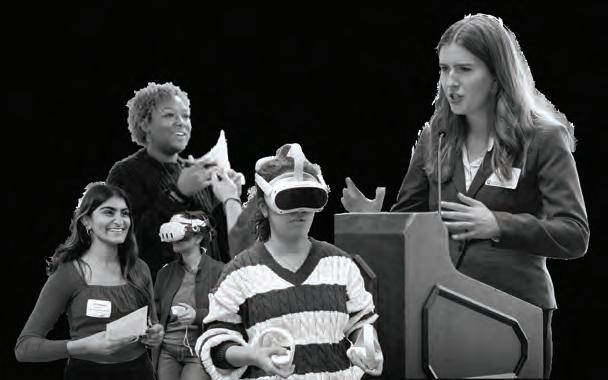





Judah Thompson reached the mountaintop in 2023. He’s eying another ascent in 2026

Senior Judah Thompson smiles for a portrait April 20, 2026, at Bill Armstrong
CUTTERS have won first place in the men’s Little 500 race 15 times.
By Mateo Fuentes-Rohwer matfuent@iu.edu
Judah Thompson’s face is covered in sweat. It drips from his hair to his forehead and straight down to the handlebars of his bike.
There’s no talking in the low-ceiling basement. The Hitachi 55-inch screen in the corner displays a broadcast of the 2025 Little 500 race. The pedaling is violent.
The 2026 edition is 84 days away. It may seem far. For Judah and the CUTTERS team, who have been training year-round, it’s almost nothing.
Judah drops his head and keeps driving his legs. He often goes nonverbal in intense workouts, whether it’s out on the streets or inside on the trainers.
The whirring of rollers cuts through the monotonous drum of the five fans. The basement’s air was once nippy. Now it’s heavy with perspiration, an unpleasant aroma.
CUTTERS is training in the “CUTTERS house,” the unofficial headquarters of the winningest team in Little 500 history. After close to five minutes of intense, breakneck pedaling, ragged
breathing takes over. Only Judah, the team captain, says anything.
“Nice job, first set done!” he says to the other six riders. The workout is meant to replicate the nature of a Little 500 race. Judah has raced in three of them, never finishing below third. He reached the mountaintop in 2023. He’s eying another ascent in 2026.
Judah still pedals, his mind a blank wash. There’s no thought of the pain in his legs. Or the insults he’s heard from CUTTERS’ haters. Or the previous Little 500 races. All that’s in front of him is a wall — the one he’s determined to bike through.
Judah, 22, refused to smile when he finished in third.
Standing atop the platform, holding the 2025 thirdplace trophy and dressed in the skin-tight pink and white kit, he didn’t even crack a grin. He felt no satisfaction.
He had placed one spot worse than last year. Two spots worse than the year before that.
Judah’s competitive drive has made him want to pur-
sue biking professionally, and he’s already competed in the U23 Union Cycliste Internationale Road World Championships in fall 2025. It’s the reason why he wasn’t happy finishing third — it wasn’t first. And yet, it took him until his junior year of high school to start taking racing seriously, even though it enveloped his childhood.
Judah’s father, Paul Thompson, cycled in the Bloomington community. Jim Kirkham, CUTTERS’ head coach since 1997, knew Paul. In fact, Kirkham said everyone in the regional cycling community knew him.
Even though he loved biking, Paul never pushed Judah to bike competitively when he was younger. One of his first cycling memories was sitting on the back of Paul’s bike as his father rode through the hills of Indiana. Often, the rides would lull Judah to sleep. But swimming was Judah’s sport for 14 years, and he enjoyed it up through his senior year of high school. In 2020, as the COVID-19 pandemic quarantined people across the nation, Judah, then a junior in high school, picked up a bike. There was nothing for him to do other

than be inside or be outside by himself, and the latter allowed for cycling.
Riding bikes quickly became Judah’s passion. He traveled the Midwest with a local team he helped start with a friend. He spent time with the Black Key Bulls squad his junior year, joining them for rides and hangouts. He also visited Phi Gamma Delta during a rush event before his first semester of college to inspect the setup of a fraternity team.
But Judah’s heart lay with CUTTERS. He met Torin Kray-Mawhorr, a veteran rider who led CUTTERS to victory in 2023, in summer 2020, and the two clicked right away. As a hometown Bloomington kid, one who swam in the quarries just like the characters in “Breaking Away,” Judah’s fit with CUTTERS seemed perfect to Kirkham.
There was no coaxing. There was no elevator pitch or intense recruitment. Kirkham needed people on the roster who wanted to be there.
That was Judah.
Early on, Kirkham’s vets,
including Kray-Mawhorr, identified Judah as a natural. Judah was eager. He was strong. He had experience. But a successful Little 500 rider required more than that.
“Having that natural talent can disguise the fact that you don’t know what the hell you’re doing because you can just pedal hard,” Kirkham laughed. “So, Judah still had some stuff to learn because his natural reflex was just to pedal hard.”
Stress consumed Judah his freshman year. It grew partly from his need to prove himself.
During that time, he often awoke from night terrors, spotting a figure either in the corner of his room or standing over him. “Get the fuck off me,” he would scream before kicking, punching and sometimes running out of the room.
His heartbeat would intensify, pounding, but after a couple of minutes, he’d return to bed.
Judah doesn’t get the nightmares that often anymore. He attributed the change to numerous factors, including cutting out drinking and meeting his girlfriend, Sophie Boller.
After the 2023 qualifications, Judah’s night didn’t end until 3 or 4 a.m. The night of the 2026 qualifications was much different.
“Everybody was in bed by 10 p.m. that night,” Boller said. “Hung out with a couple of cyclists and stuff and stopped by the bars — no drinking involved.” Judah doesn’t feel that stress anymore. The ego has separated from the confidence, he said, which came with both time and strong race results. Now, the internal pressure for results no longer weighs him down. It doesn’t mean complacency has seeped in. Judah has been striving for the top spot ever since he tasted it, and he isn’t ready to stop now, ahead of his final Little 500 race. If anything, the confidence has only grown.
“When I get on the track, you’re gonna see the greatest Little Fiver of all time,” Judah said to his coaches recently. Judah doesn’t need many motivators. The euphoric feeling of victory is something he couldn’t describe. It’s what he’s after this spring. However, Judah isn’t sacrificing anything within himSEE CUTTERS, PAGE A12









self to achieve that goal. He’s still the goofy friend off the bike who cracks jokes and keeps things light.
When freshman CUTTERS rider Leo Nelson crashed his bike on a practice qualification race, just four days before the real one, Kirkham raced to Nelson to make sure he was OK. Judah stood and watched with his other teammates, chiming in only seconds after the gasps subsided.
“I guess Leo found his speed limit,” Judah joked.
Nelson said Judah is fun to hang out with. He finds the fun in things, the freshman added. Jacob Koone, a CUTTERS teammate, considers him one of his best friends.
“He’s just all smiles from when we first met,” Koone said. On the bike, Judah’s a different animal.
Kirkham leans forward during a team breakfast Feb. 13 at The Inkwell Bakery & Cafe and looks at one of Judah’s teammates.
“Jake, I have a trick question,” Kirkham says. “How many laps is Little Five?”
“One,” senior Jake Zarov responds.
“Yes, that’s the answer,” Kirkham says. “One lap at a time.”
This mindset is part of what Kirkham has brought to CUTTERS since joining as a rider in 1990. He became the head coach ahead of the 1997 edition when the team held a modest four championships.
CUTTERS now have 15.
Kirkham’s teaching style is what he dubs the “CUTTERS process.” It starts the day after the Little 500 race each year. A summer circuit aims to get riders to grow or improve through unstructured training. The fall semester welcomes back old riders and new ones.
Then training intensifies around New Year’s. CUTTERS often takes a training trip to the Austin, Texas, area during winter break, which allows the riders to bond, train and focus on the Little 500.
It’s a different season entirely when the track opens in the spring, Kirkham said, one that requires remembering the basics of riding on a track for veterans or learning those basics for rookies.
Each year often features a different set of riders. Sometimes Kirkham has dealt with four rookies; other times, he’s fielded four senior riders. The CUTTERS process doesn’t change. It’s why Kirkham believes CUTTERS has found success, along with his consistent presence in Bloomington.
It’s not about the trophy for Kirkham, and he hopes his riders believe that, too. He wants his athletes to know the time spent during the season wasn’t wasted.
This isn’t to say Kirkham doesn’t care about winning.
His new motivation tactic includes giving matchboxes with five matches inside to each CUTTERS rider. Each match represents a spring series — qualifications, Individual Time Trials, Miss N Out, Team Pursuit and the Little 500 race. The team burns one after every event. But ultimately, it all comes back to the CUTTERS process.
Judah loves the process — the life skills he’s made, the friendships he’s fostered and the self-discovery he’s undergone.
Kray-Mawhorr could have predicted Judah would fit the CUTTERS mold very early on. He saw himself in Judah, a hard-working fresh-
man with a “sponge” approach to learning. Judah sees the same now with Leo Nelson, a freshman rider also from Bloomington.
Judah had the talent in his first year, but he wanted to be better. He wanted to be the best. No CUTTERS rider had ever won four Little 500 races, and Judah knew that. It was a record he wanted to break. He wanted those four wins to cement his legacy.
CUTTERS didn’t win in 2024 or 2025. Judah can’t break the record or even tie it. But as a four-year rider, two-time captain and twotime All-Star Rider, Judah’s still hunting for another victory.
Judah rounded turn four and spotted the white flag that signaled the final lap of the race. He reached the tough yet rational conclusion — CUTTERS wouldn’t be winning the 2024 Little 500. That didn’t stop Judah from using every last bit of energy left in the tank. He was about seven seconds behind Will Wagner of BKB, who was in the lead, when he finished the 199th lap. When Judah crossed the finish line past the checkered flag, he was only three seconds behind, securing a secondplace finish for CUTTERS. It didn’t make it any better.
“I remember coming around turn four and seeing Wagner put his hands up,” Judah said. “And then you come across the finish line, and you’re like, ‘fuck.’”
He slowly pedaled back to the pit, tears already forming in his eyes. Sadness and disappointment floated within him, but guilt was the emotion that consumed him.
Guilt because it was his job to finish the race. Guilt because he had the capabilities and control to win the race. Guilt because he finished second, so close to doing so.
CUTTERS wasn’t the top team that year, nor the favorites, and Judah knew that. It didn’t make the result feel any better.
The season was the definition of a learning experience. In only one year, Judah went from soaking up KrayMawhorr’s expertise to becoming the rider everyone relied on. It was scary, he admitted, and it wasn’t something he wanted. But it didn’t matter whether he wanted it or not. It was his role all the same. He just needed some self-belief and the help of his teammates to fulfill the honor.
“It’s nice to see other people look at you that way,” Judah said. “Like having Leo, Jake and Jacob have that belief that I had in Torin put on me — that gives me confidence and self-belief.”
Judah attacked his summer training hard with the taste of defeat still in his mouth. He returned to his bike the day after his race. There was no time for dwelling on the disappointment.
But no matter the amount of training, the hours spent on the bicycle and the thoughts dedicated to the Little 500, the disappointment of another failed success story came all the same. CUTTERS finished third in 2025 — good for some, but not this team.
From the outside, pressure is higher for CUTTERS than for most other teams. Competing for titles is an expectation.
Opposing fans frequently jeer and boo Judah and his teammates. He said he’s received “rage bait” comments on Little 500 Instagram posts and faced his fair share of insults from CUTTERS’ haters. He doesn’t care about them.
If anything, it brings him an extra ounce of motivation.
But Judah’s pressure is only internal. He knows his teammates, coaches and alumni want him to win the race. He wants to do the same for them.
Over the course of his four years at IU, this sentiment hasn’t changed. Yet, Judah has matured in that time, and his mentality surrounding the race has too.
“There’s life after victory — or life after victory and life after defeat,” Kirkham said, “and Judah’s kind of learning those things, you know?”
When he got on stage to accept the 2025 third-place trophy, Judah didn’t smile. He still isn’t satisfied with the result, but he regrets not handling that situation differently.
“The sun comes up the next day, and it’s not that deep,” Judah said. “I fought as hard as I can to get back up, and it didn’t happen. Whatever. And there’s a lot of teams that would gladly take third place.”
It’s now about more than wins and losses. Yes, Judah intends to secure CUTTERS’ 16th victory April 25. But he also wants to cement his legacy as someone who left a positive impact within CUTTERS and the broader Little 500 community. He wants to be remembered.
Little 500 qualifications are high stakes. Failure leads to tears; success to unrestrained jubilation.
Anxiety fills the air, only cut out by the frequent chants and cheers from fraternities and sororities. Riders often look tense and rigid as they walk around Jerry Yeagley Field at Bill Armstrong Stadium on March 28 to pass through the several checkpoints before their qualifications run.
Judah couldn’t be more different.
He jumps up and down a couple of times as he walks with his team to the start line, his CUTTERS parka billowing in the wind. He skips back and forth across a 10-yard distance, waving to some friends and family in the stands. Through it all, a smile is etched across his face.
It doesn’t leave, even as he hops on his bike and races around the track to kick off CUTTERS’ qualification run.
As he hops off the bike, his smile remains. He sticks out his tongue and bends over, visibly panting. It’s his last qualification trial; he might as well leave it all out there.
But when Zarov gets off the bike half a minute later, Judah is upright, ready to hype him up with two big high fives. He congratulates Koone when his run is done.
As Nelson sprints through the finish line, securing first place and pole position, Judah jumps up and down, laughing and cheering.
After the commotion dies down, almost half an hour after the triumph, the four riders and Kirkham retreat to their alcove between Bill Armstrong Stadium and the Robert C. Haugh Track and Field Complex.
As they huddle together, Kirkham gives each rider a matchbox. There’s a message on both sides, specially printed for this moment. One side lists the five events in black font on yellow paper. The other side says: “We are not here to play it safe. We are here to burn the place down.” Judah lights his match. He watches his flame flicker in the sun.
This story was originally published April 22, 2026.
Do you have global vision? Then learn the language and cultural skills to match!

IU has one of the top German programs in the nation.
Germanic Studies is your passport to a future with the planet in mind.
The German Studies Pathway to a five year B.A./M.A. degree will provide students with options for careers in the private or public sector. Advanced competence in the language, history, and culture of German-speaking Europe will make students highly competitive for employment in the global economy, green technology, teaching, the military or foreign service. Alone or combined with College programs such as LAMP, PACE, or coursework in the School of Global and International Studies, students will be positioned for jobs in U.S.-based multinationals as well as industries, banks, and research and cultural centers in German-speaking Europe. The combined degree is also ideal preparation for advanced degrees in international law or schools of public policy and business.
We have one of the oldest and largest Dutch programs in the US.
As global models for healthcare, education, and economics, Scandinavian countries inspire policy-makers and global leaders.
As a major American heritage language, Yiddish is a cornerstone of Jewish Studies and American Cultural Studies.
Our overseas programs in Freiburg, Vienna, Bayreuth, and Berlin are custom-designed living-learning experiences that change students’ lives. The IU Europe Gateway Office in Berlin opens new opportunities for international education.
Check out our Business German Certificate and our options for minors, certificates, and the German major.

By Amogh Belgal abelgal@iu.edu
Indiana University spent
$430,000 in federal lobbying in 2025, according to quarterly reports, a $10,000 decrease from its 2024 spending.
The university spent money on a wide range of issues, including research policies, science initiatives, financial aid for students, higher education policy and student-athlete Name, Image and Likeness.
This is the first time IU’s federal lobbying spending has decreased since 2021, but overall, over the last five years, yearly spending has increased by $150,000.
“If there is less money coming into the university through traditional means, lobbying becomes a priority,” said Mark Fraley, associate director of the Political and Civic Engagement program at IU Bloomington.
“My intuition is probably that this is a much larger trend at other Research I universities as well.”
Since the Lobbying Disclosure Act passed in 1995, lobbyists have been required to report quarterly any clients, issues and bills they worked on and any government agencies or committees contacted. They’re also required to list the names of all lobbyists involved and the amount of money spent.
As part of the university’s Office of Federal Relations,
Associate Vice President Doug Wasitis and Director Molly Connor are IU’s two lobbyists.
“The Office of Federal Relations advocates for the interests of IU with elected officials and agencies at the federal level, prioritizing the pillars of the IU 2030 Strategic Plan: student success and opportunity, transformative research and creativity, and service to the state and beyond,” Connor wrote in an email to the Indiana Daily Student.
Aaron Dusso, a political science professor at IU Indianapolis, said good lobbyists focus on the impact they can make through their connections.
“Oftentimes, that might be party leaders, but it also is likely to be people who are chairs of the higher education committees,” Dusso said.
Federal funding and research proposals
In all four of its quarterly reports, IU recorded lobbying activity surrounding 2026 federal appropriations for the National Institute of Health, the National Science Foundation and the National Endowment for the Humanities.
Fraley said he believes that enduring cuts for research-related initiatives “raises the importance of protecting NIH, NSF and DOE grants.”
IU lobbyists also report-
ed activity surrounding the NIH announcement in February 2025 of a 15% cap on indirect costs for any federal grants. In the past, universities usually spent 30-70% of their grant money on indirect costs, such as buildings, overhead and maintenance expenses. The rest would go directly into the research.
This 15% cap would mean that less of their grant money could go to the indirect costs and would have to be covered by the university.
However, this cap was temporarily blocked by a federal judge on Feb. 10, 2025, and eventually struck down in April by U.S. District Judge Angel Kelley.
Title IV, Department of Education Title VI program Funding for the Department of Education’s Title IV and Title VI student aid programs were mentioned multiple times in all IU’s quarterly reports.
Title IV includes federal student aid including Pell Grants, direct subsidized and unsubsidized loans and Federal Work Study programs. Title VI student aid programs prohibit discrimination from federal assistance due to race, color or nationality.
Fraley said when universities want increased enrollment, they require “generous aid packages that are available” to students.
“There is a big focus on
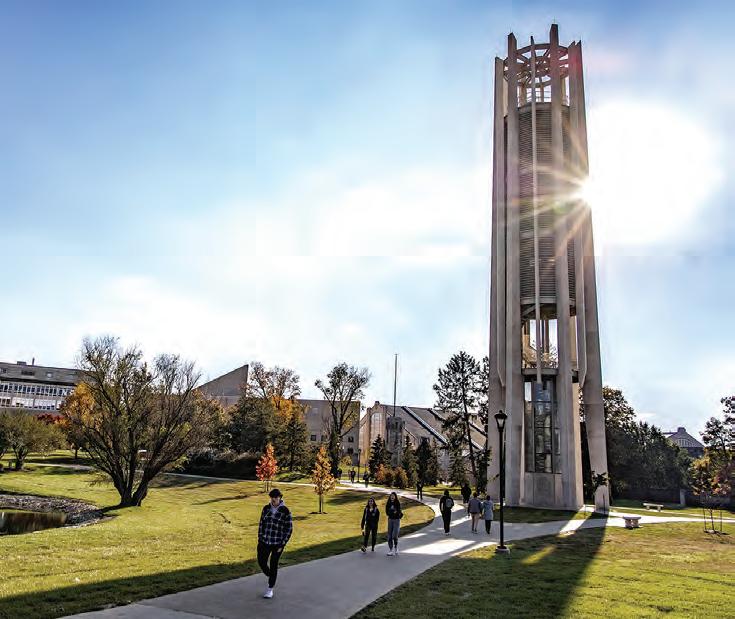
this, partly in the consequence of the increasing cost of higher education,” Fraley said.
IU Athletics and NIL IU lobbyists also reported college athletics issues on all four quarterly reports.
The House of Representative’s SCORE Act, which was introduced on July 10, 2025, and regulation of compensation earned by college athletes from NIL were
mentioned.
In the second quarter, there were mentions of drafting legislation related to the SCORE Act as well as drafts for NIL legislation.
The SCORE Act was designed to provide a federal framework for athletes’ benefits including standardized NIL rules and certain benefits like healthcare and compensation, but the bill faced opposition.
The vote was eventually
by
to
uncertainty in the support for the bill.
Compared to other Big Ten universities, Indiana is ninth in total spending with the University of California system leading with $3.09 million, followed by University of Washington at $1.341 million and Northwestern University at $1.270 million.
This story
By Natalia Nelson nelsonnb@iu.edu
Snow spiraled around the Showalter Fountain at noon Dec. 13, dusting the brunette hair of the three men who stood in front of a crowd of about 30.
Just one week after Indiana University redshirt junior quarterback Fernando Mendoza led the Hoosiers to a Big Ten Championship win, three IU students competed to see who looked the most like him.
The competition was organized by IU Student Television’s show, “Not Too Late,” which hung posters on campus inviting people to sign up for the contest.
“Find your future husband,” one sign read. “You + Fernando Mendoza lookalike contest”.
Despite steady snowfall and 26-degree weather, an audience bundled in coats, scarves and hats gathered around the Fine Arts Plaza to see who would win a $30 BuffaLouie’s gift card, almost enough to buy two Mendoza Bros. Burgers from the restaurant.
While 16 people signed up to compete, according to Delia Bratton, a “Not Too Late” writer, producer and director, only three contestants braved the cold and showed up. The students manning two or three cameras unfurled umbrellas over them, trying to keep
the snow off. Bratton said “Not Too Late” contacted Fernando Mendoza’s team and messaged redshirt freshman quarterback Alberto Mendoza on Instagram but didn’t hear back. She didn’t expect them to show up, since Fernando is a finalist for the Heisman Trophy — an award that honors the top college football player. The Heisman Trophy Ceremony will take place 8 p.m. Dec. 13 in New York City.
“Not Too Late” host and producer John Carter Krell got the idea after hosting two other competitions last school year, including a chicken-finger-eating contest and a pizza-eating contest.
It was sort of the first time that we got our series out there and in the public eye,” Krell said. “And I wanted to do something similar, not an eating challenge, just because I don’t know if my stomach could handle it.”
After taking inspiration from a Timothée Chalamet lookalike contest, they decided to host a competition more related to IU.
Instead of being centered on who most resembled IU’s redshirt junior quarterback, “Not Too Late” focused the competition on three challenges — football-throwing, a race and a mock interview.
Sophomore Christian Stenger, senior Max Augustini and senior Rocco
Jann lined up in front of the crowd shortly after noon, ready for the first round.
Jann said his roommate, IUSTV’s entertainment director, brought him the flyer and encouraged him to sign up.
“Fernando Mendoza is generally known as a pretty good thrower of the pigskin,” announcer JB Diehl narrated.
Augustini and Jann were up first, but their throws didn’t go as far as Stenger’s, who managed to chuck the ball nearly the whole length of the Fine Arts Building and win the throwing part of the contest.
Stenger said when his friend sent him a picture of the flyer, he knew he had to go. He said people come up to him on campus and tell him he looks like Mendoza.
Next, the contestants had to run half the length of the circular road around the fountain to see if they could emulate Mendoza’s running skills. The road was powdered with snow and slush, but the men dashed around it without slipping. Augustini crossed the finish line first, with Stenger and Jann coming up behind him.
Finally, the contestants had to give a 45-second pregame interview.
“You’re waiting in the hallway 45 seconds before you walk out in the national championship game against Ohio State, a reporter comes

up to you,” Diehl said. “She asks you, ‘What are you gonna do to win this game?’”
“This is about Hoosier Nation, this is about LinkedIn,” Jann said, referencing Mendoza’s “HeisMendoza” LinkedIn account. “I’m ready to go against Buckeyes. Who’s Buckeyes? Who are they, bro?”
Jann said his strategy going into the contest was to personify Mendoza’s positivity and optimism. He said he’s been told he talks in Mendoza’s speech pattern, but he knows his Achilles heel is throwing a football.
Stenger gave his speech next. His strategy was to practice the speech a bit, trying to copy Mendoza’s voice.
“All glory goes to God,” he said, calling back to Mendoza’s Big Ten Championship post-game interview.
Augustini went the same route, imitating some of Mendoza’s voice cracks from the Big Ten interview.
“All glory to God, I’m excited to go out there, my brothers, my boys, get behind that,” he said.
Laughter bubbled up
from the crowd. The audience voted by cheering for their favorite Mendoza lookalike, and in the end, Augustini took home the gift card. He said five friends sent him a picture of the flyer and told him to go, and his family “bullied” him into competing.
“It’s a once-in-a-lifetime opportunity,” Augustini said. “So I had to show out.” The episode will be out Dec. 22 on the IUSTV website.
This story was originally published Dec. 13, 2025.
By Emerson Elledge
eelledge@iu.edu
The Indiana University Board of Trustees gathered Feb. 20 in the Grand Casino Ballroom inside the Madam Walker Legacy Center in Indianapolis for its first meeting of 2026.
The board adopted the Chicago Principles on Freedom of Expression, approved a raise for IU President Pamela Whitten’s contract and more during the almost 4-hour-long meeting.
Trustee W. Quinn Buckner attended the meeting virtually. The eight other members of the board and Whitten appeared in person.
Chicago Principles on Freedom of Expression
The board unanimously voted to approve the Chicago Principles, a set of free speech guidelines. IU is now the 117th university to adopt these principles for free speech.
“Students are meant to
be stretched intellectually, ethically and personally, and that simply cannot happen if disagreement is treated as something to be avoided,” Trustee Sage Steele said at the meeting. “By adopting the Chicago Principles today, Indiana University is making it clear that free expression and academic freedom are our essential values and conditions for learning, discovery and leadership.”
The decision on the Chicago Principles was slated to be one of the last items on the agenda under new business, but it was the first thing to be decided on after Whitten introduced it during her remarks before turning the microphone back to David Hormuth, the board’s chair, who introduced it for a vote.
BOT-25 Revisions
BOT-25 is IU’s Creation, Reorganization, Elimination and Merger of Academic Units and Programs policy which determines the process of creating, modifying
and dissolving academic programs and departments.
A previous concern with the policy was lack of protections for faculty, especially those with tenure.
IU Indianapolis Chancellor Latha Ramchand presented revisions regarding the policy, focusing on protection for tenured faculty and making the approval process within the bill more digestible for public knowledge.
“We ask, respectfully, that you all approve this policy, the revisions, as I said, are more in the nature of providing clarity over the process for approval,” she said.
The board unanimously approved the revisions.
IU Inc. IU Vice President for Research Russell J. Mumper, President and CEO of the Indiana University Launch Accelerator for Biosciences
David Rosenberg and IU Vice President and General Counsel Anthony Prather
presented “IU Inc.,” a nonprofit organization created at the request of the trustees’ finance and facilities committee.
IU Inc. is meant to serve as a streamlined way for IU to receive research partners. The developers said it would be an easier way for external partners to develop partnerships.
When it is formally founded, IU Launch Accelerator for Biosciences, IU Applied Research Center and IU Realty — the currently existing IU research partnership programs — will move under the IU Inc. organization. Eventually, new organizations will likely develop under the IU Inc. helm.
The board unanimously approved the creation of the university-affiliated nonprofit organization.
Request to rescind IU Diversity Committee authorization
The board unanimously approved to rescind IU Di-
versity Committee authorization, an organization originally created under Senate Enrolled Act 202.
The act required universities to approve and authorize the creation of diversity committees at each campus in compliance with 2024 Indiana code.
It required those diversity committees to review and recommend faculty employment policies, review faculty and administrative personnel intellectual diversity complaints and issue annual reports. The code was repealed last year.
“There’s now a need, from my perspective, to rescind the committee authorization,” Prather said in the meeting.
President Whitten contract amendment
The last item the board voted on before adjourning the meeting was amendments to Whitten’s contract.
Buckner requested the board give Whitten a $100,000 raise, making her
annual salary $1 million. He also recommended the board maintain her existing bonus structure and increase deferred compensation to $700,000.
“We have the second longest tenured president in the Big Ten,” Hormuth said.
“There are several openings in the Big Ten for presidents. We’ve seen what’s happened in higher education with this position. It’s a highly valued position, incredible executive process and skills required.”
The board unanimously approved the contract amendment.
Whitten was last given a raise in July 2025 during a board meeting. The motion passed 8-1, with the only dissenting vote coming from then-student trustee Kyle Siebert. The Board of Trustees are scheduled to meet next June 11 and 12 on the IU Bloomington campus.
This story was originally published Feb. 20, 2026.
By Emerson Elledge eelledge@iu.edu | @emersonelledge
Josh Brewer has had a busy week. There were midterms. He attended a Bloomington Board of Housing Quality Appeals meeting as a board member.
He also had to try to figure out where his family is going to live after his Bloomington landlord announced plans to sell their home in the next few weeks.
Brewer is 43 years old, a husband and a father of two middle schoolers.
He’s also a sophomore at the Kelley School of Business at IU Bloomington.
He has his associate degree from Brigham Young University of Idaho. Brewer said he tried a few times to pursue his bachelor’s degree, but life got in the way. He was a plaintiff in a lawsuit regarding a car accident for a decade. He has chronic pain. His wife, Bekah, wanted to pursue her bachelor’s, so she did that after he got his associate degree while he worked in sales.
He started studying at IU in the fall 2024 semester after learning about the business school while Bekah studied for her master’s degree at the University of Pennsylvania.
He suspects he is the oldest undergraduate in the business school but doesn’t know for sure. IU spokesperson Mark Bode wrote in an email that 18 of IU’s students aged 25 or older are in Kelley.
It’s not easy being a nontraditional student at IU, Brewer said.
He got waitlisted for two classes this semester even though he has almost 100 credit hours from other schools he attended. He also said he doesn’t have any friends at school.
“People don’t want to hang out with their dad,” Brewer said.
IU Bloomington enrolled almost 50,000 students last fall. Bode wrote 441 IUB undergraduates enrolled in spring 2026 are 25 or older, a common benchmark for
non-traditional status.
“At IU Bloomington, we serve all students and are working to improve our services to support student success, including advising, financial support, and student engagement, as outlined in the IUB 2030 Strategic Plan,” Bode wrote. Brewer and Meranda Cree Prince, a 33-year-old English major and president of IU’s Organization for NonTraditional Students, both said the university largely acts like non-traditional students don’t exist.
“I would say I feel zero percent supported,” Prince said. “I would say it’s more accurate, like, negative percent.”
Prince said non-traditional students aren’t defined by age alone. Students who work full-time, have dependents or are financially independent often have non-traditional experiences even if they’re under 25. When graduate students are included, roughly 19% of IU’s total enrollment is 25 or older.
Prince grew up in Bloomington and first enrolled at IU at 18 though she was financially independent due to her family’s situation. She first attended IU from 2010 until 2016.
She said she was placed on academic probation several times before being dismissed and required to wait at least five years before returning,
Prince then made her way to a California community college and came back to IU to study film in 2024. She’s since switched to English with a creative writing minor.
She has over 100 credit hours and no degree. Prince is in the process of applying to transfer to Yale University because, unlike IUB, Yale has an established program and cohort for non-traditional students. IU only has the organization that Prince is part of, but she said only she and undergraduate advisor Shauna Melvin, the club’s faculty advisor, regularly attend meetings. The
next club event is Feb. 27.
Bode wrote that other campuses have varying support programs for non-traditional students, including IU Indianapolis’ Center for Transfer and Adult Students.
Prince said she’s tried to make her voice heard. She wrote a policy proposal last year requesting further institutional and financial support for non-traditional students. She said she printed and hand-delivered to the offices of the president and provost and attended Board of Trustees meetings.
She said the campus police escorted her out of Bryan Hall. Nobody responded to her emails.
“I realized there’s nothing more I can do,” Prince said. “I can’t make this work, and it’s not my fault.”
Brewer has attended recruitment events at Kelley only to be told the companies aren’t hiring people with past work experience or aren’t hiring older applicants. He pledged a business fraternity and wasn’t selected. He ran for Kelley Student Government and said he wasn’t taken seriously because of his age. He invites classmates to study, either at the library or at his house, but they don’t come.
“I have never been invited to a party,” Brewer said. “I know that sounds crazy. You don’t get invited to parties.”
Prince described a similar feeling of isolation. She is older than most graduate students on campus. The English undergrads are sweet, she said, but they’re not going to be close friends.
“We’re not going to be best friends because we can get along in class,” Prince said, “It’s just not going to happen.”
It’s a feeling both said extends beyond classrooms.
“We often just feel like islands,” Brewer said. “Islands walking by ourselves.”
The problems run deeper than loneliness. Full-time enrollment, which is often required for need-based financial aid, is difficult for students with jobs or children.

The state’s Adult Student Grant and federal student loans require enrollment in at least six credit hours, Bode wrote. The Frank O’Bannon grant requires full time enrollment.
The Dean’s List excludes part-time students, even those with a 4.0 GPA. Most merit scholarships assume a traditional academic timeline.
Bode said IUB offers scholarships for nontraditional students like the Cox Access Scholarship. All full-time Indiana-native students are eligible to be considered for the Crimson Commitment and Hoosier Crossroads Grants.
“We value our adult learners as a critical part of the IU student body and support their goal of obtaining an IU degree,” Bode wrote.
IUB also allows all incoming students to earn credit through placement exams, Bode wrote, assist-
ing in the transfer process.
He also wrote that returning students who previously attended IU are able to seek guidance at Advising and Major Exploration Services.
Prince said one of the only benefits she’s received at IU as a non-traditional student is access to the Indiana Memorial Union because it is open 24 hours with heat, water and access to Wi-Fi. The community college that Prince attended didn’t have a place like it, so she had to drive an hour to Stanford University for Wi-Fi access. Both students have tried to change things from within.
Brewer was elected to IU Student Government as an off-campus housing representative and is now the chair of the City of Bloomington’s Board of Housing Quality Appeals. Prince created the non-traditional student seat within IUSG’s multicultural representation
structure. They have some of the same desires for non-traditional policy at IU: a dedicated office, financial aid that accounts for adult learners and advisors trained to work with students whose needs extend beyond school, Brewer said. They would also like some acknowledgment that non-traditional students bring something to campus rather than act as a nuisance to manage.
Prince plans to leave. She hopes Yale works out because the program she’s applying to intentionally recruits adult learners, houses them on campus and builds cohorts around shared experiences.
“We’re just not a part of IU’s business model and there’s just, like, nothing for us here,” Prince said. “I hope, I really hope that it does get better.”
This story was originally published Feb. 23, 2026.


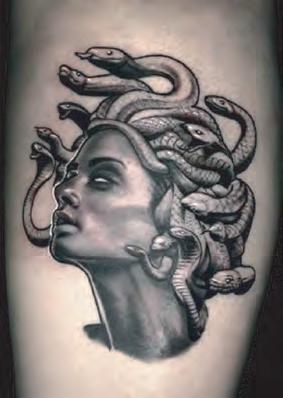

By Carlos Drane
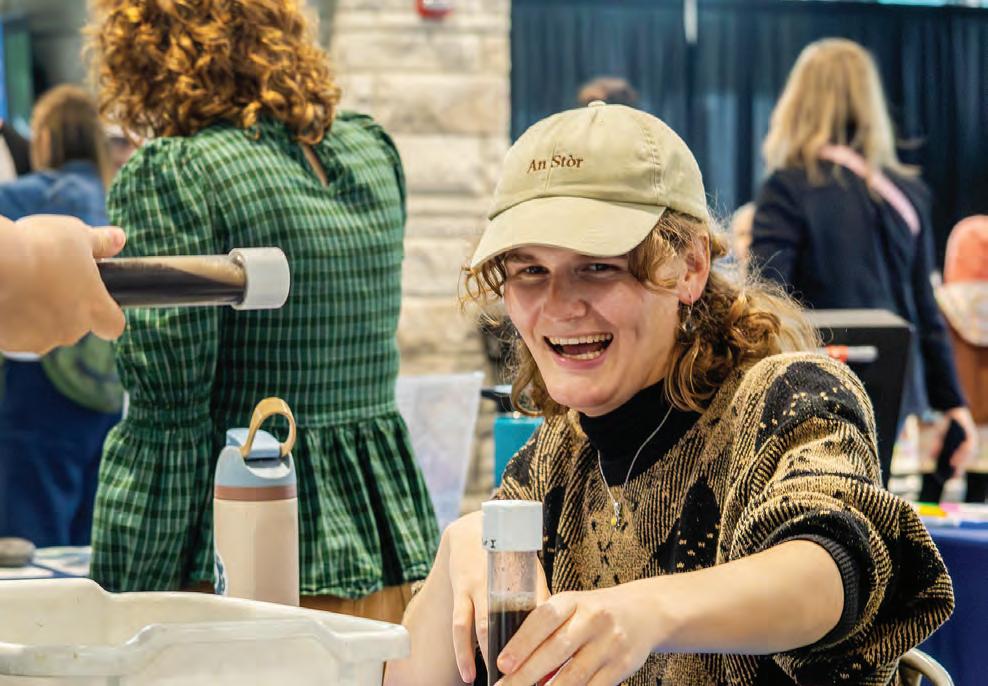




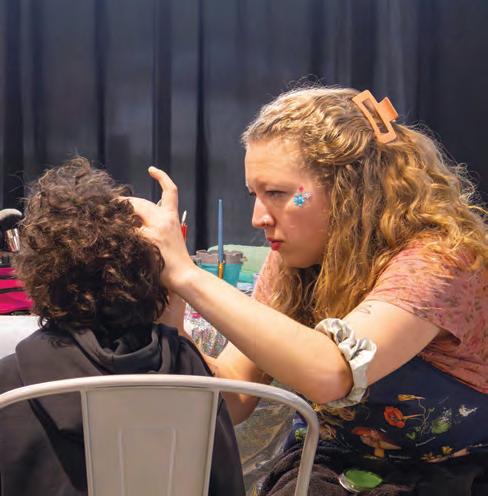


● ROMANIAN
Start learning a critical language
Fulfill distributional requirements:
GenEd A&H, S&H, N&M, WC, WL
CASE A&H, S&H, N&M, GCC, DUS, SL, CR
►GenEd World Languages: Bosnian/Croatian/Serbian S101, S201, S301; Czech C101, C201; Polish P101, P201, P301; Russian R101, R201, R301, R401; Ukrainian U101, U201; Romanian M101, M201
►GenEd A&H, WC; CASE A&H, GCC, CR1:
SLAV-C223 Intro to Czech Culture
SLAV-P223 Intro to Polish Culture
SLAV-R223 Intro to Russian Culture
SLAV-R229 Russian Folktales
SLAV-R263 Russian Lit: Pushkin to Dostoevsky
SLAV-S223 Intro to South Slavic Cultures
SLAV-T191 Career Readiness I
SLAV-T260 Vampires
► CASE A&H, GCC:
SLAV-P363 Faces of War and Freedom
SLAV-P365 Minorities in Post-Soviet Reality
SLAV-R366 Russian and Soviet Film
LEVERAGE YOUR MAJOR!
● Learn Russian, Bosnian/Croatian/Serbian, Czech, Polish, Ukrainian, & Romanian—languages emphasized by the National Security Education Program (NSEP)
●
Enhance your major with professional proficiency in a less common language



By Lily Saylor saylorl@iu.edu
Thousands of comments
flooded IU freshman Lena
Apolskis’ TikTok on Sept. 16.
“What in the ‘Pitch Perfect’ is going on?”
Do they do weddings?”
“Close enough. Welcome back Treblemakers.”
The TikTok video, which has amassed over 31 million views, features members of Another Round, IU’s all-male a cappella group, serenading Apolskis’ friend with R&B singer Jeremih’s hit song “Birthday Sex.”
Within a week of Apolskis posting her TikTok, Another Round had received over 100 booking inquiries. Currently, the group performs an estimated 10 birthday events per week at dorms, apartments and sorority houses around campus. I feel like they definitely deserve the hype because I feel like they did a really good job,” Apolskis said. “It
was definitely entertaining and fun. And our friend was definitely really surprised, and she loved it.”
IU sophomore Jamie Davis, junior Chaitan Grewal and senior Bailey Jackson Reese are members of Another Round and said they never expected Apolskis’ video to garner so much attention online. I wouldn’t say that that video itself deserved to go viral, but I think some sort of video of ours was bound to go viral at some point,” Davis, the group’s assistant business director, said. “It’s just funny that it was that one.”
With their rise in popularity, Another Round has been booked and busy. While the group performed at dorms and apartments before the viral video, they typically only had one or two each week.
On Sept. 22, Another Round posted a TikTok video promising four free winter show tickets to who-
ever’s TikTok of them performing gets the most views from Sept. 21 to Dec. 10.
“That’s kind of where we’re trying to filter all this towards is our shows that we have, because that’s a big showcase of who we are as a group, not just one-minute songs and clips and stuff like that,” Grewal, Another Round’s music director, said. “Really trying to get people in those seats.”
Reese, the social media manager, said that, in a way, everyone in Another Round is finally living the dream, especially when the members first arrive at the event they were booked for and see the amount of people excited to watch them perform.
It feels like we made it just by so many people being excited to see us,” Reese said. “That never leaves, really. It’s like two, three times a night we would get that experience and that’s another reason to come back again the next day.”
After Apolskis’ video, an influx of TikTok videos were posted, all documenting Another Round’s performances. A majority of the comments on those videos compared Another Round to the Treblemakers, a fictional collegiate male a cappella group from the 2012 comedy “Pitch Perfect.”
“We strive to do a lot of our songs like them because people recognize those songs the most,” Grewal said. “But we’ll still put our own spins on it and change the lyrics a little bit, so we try and make it our own.”
Embracing the comparison, Another Round will perform a “Pitch Perfect”themed gig at 8:30 p.m. Oct. 24 at Merrill Hall alongside Ladies First, IU’s all-female a cappella group. The two groups will sing songs from “Pitch Perfect” and its 2015 sequel. Tickets to the twohour show cost $8. Following the combined gig, Another Round has a winter show at 8 p.m. Dec.
12 at the Buskirk-Chumley Theater. Ticket information will be available closer to the show date. For more information about upcoming performances, visit their website.
While singing in an a cappella group is a collegiate hobby for jazz voice major Reese and guitar performance major Grewal, they both plan to pursue music professionally after graduation.
“This is the group where I learned to sing bass and I learned percussion and I learned how to arrange; this group taught me the majority of what I hope to be doing professionally,” Reese said.
“Whether that is going on tour with a bunch of other guys or going on tour alone or being stuck in a studio booth, that’s where I want to be in the future and I owe a large majority to this group.”
Grewal agreed, noting that ideally, he would prefer to perform with a band and said it is always enjoyable to
share music with both the audience and the people on stage.
“Half the fun of this group is being able to look over the people across from you and know that they know the music just as well as you, and you can play off their energy and kind of elevate that performance even more,” Reese said.
While finance major Davis’ career plans are not as solidified, he said he will always try to keep music in his life.
“The teamwork aspect of singing in a cappella is very important in all aspects of life and learning how to work with people especially when things get stressful and you don’t know a note or you need help with something, anything like that,” Davis said. “Teamwork is in all aspects of your life, so I’ll take that with me and try and sing as much as I can.”
By Stella Klaus ssklaus@iu.edu
Bloomington band American Pirates released nine songs off their upcoming album, “What a Friend,” on Tuesday morning. Releasing the album will be the group’s first.
Just after graduating from the IU Jacobs School of Music in 2005, Aaron Jones, who studied harpsichord, started the band with some friends from the music school. Jones said the band has consisted of different people over the years, but they have always become close friends.
The band plays everything from folk to 1920s jazz music. While it started out as a casual thing just for fun, Jones said more talented musicians have joined the group in recent years and have started working on fullfledged albums and songs.
“Something that makes us American Pirates, is we’re very playful with language. We don’t dress up as pirates, but pirates are known for raiding and pillaging. Well, I raid and pillage folk songs, lyrics and even some of the originals.”
Aaron Jones, lead singer and pianist
The album includes a mix of original songs composed by members of the band and new iterations of old folk songs, hymns and poems. Jones said the recorded album tries to capture the band’s spontaneous and playful nature.
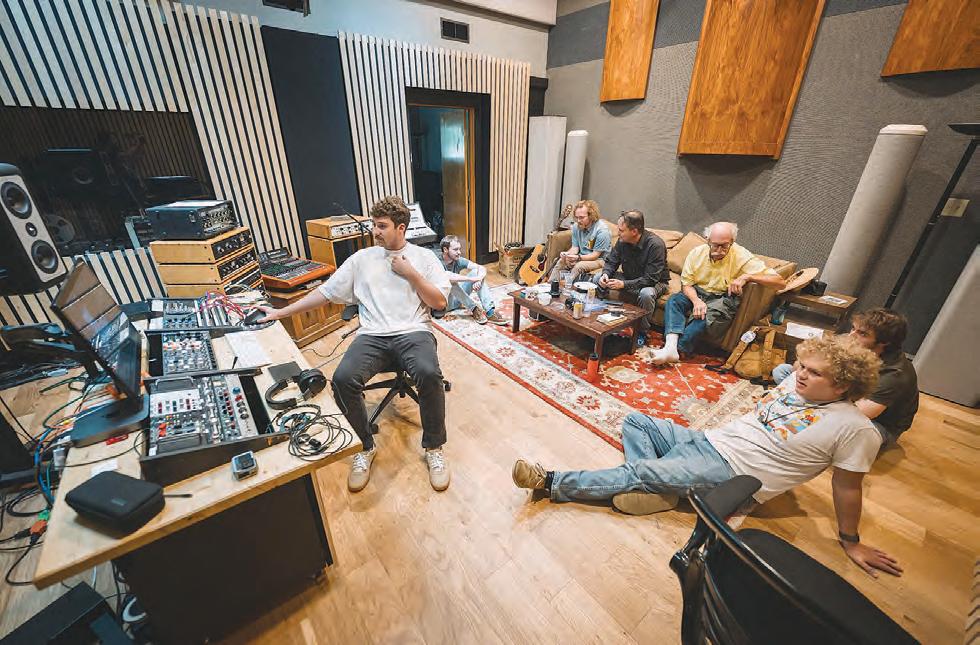
The full album will include 18 songs, but the group decided they wanted to first put out nine songs to get people interested, then release the rest by the end of March.
When they recorded the album at Echo Park Studios, a local recording space, Jones said they tried to capture the essence of live music and played each song without worrying too much about the arrangement. They would listen again and decide what needed to be added or taken away only after playing the song all the way through. “We were very lucky to
get to have that luxury to be creative in the studio,” Jones said.
Jones said he feels music in general has become stuck and much less spontaneous than it used to be. He said being spontaneous in the recording studio helped them catch the essence of live music in a recorded album.
The versions listeners hear on the album may not be the definitive version, he said, because they can always perform the song differently when they play live.
Elijah Sparks, a junior at the Jacobs School of Music studying music education, does vocals, ukulele, bass,
tuba and trombone. He’s also a member of Welcome to the Neighborhood, a Bloomington cover band. Sparks said they do a lot of things in their music that they think are funny. He said they made “Big Rock Candy Mountain” sound spooky to that end.
The sixth song on the album, titled “Little Orphant Annie,” is a new setting of an old poem. For the song, Jones was inspired by Indiana poet James Whitcomb Riley and combined his 1885 poem of the same name with a melody that Jones created. “Something that makes us American Pirates, is we’re
very playful with language,” Jones said. “We don’t dress up as pirates, but pirates are known for raiding and pillaging. Well, I raid and pillage folk songs, lyrics and even some of the originals.”
Jones said the group has found a niche in creating new versions of old songs and poems. However, they still have many originals like his song “Consequence” or Sparks’ song “Slow It Down,” both of which appear on the recent release. Sparks said he wrote “Slow It Down” about a year ago in collaboration with his good friend Adam DeWeber, who also sings and plays
some guitar on the song. However, DeWeber was just one of the many collaborators who helped make the song and the album possible.
Friendship was a big theme throughout the album because of all the people who came together to create it. From people in the recording studio to other musicians, American Pirates was able to be creative and make an album they loved.
“I’ve been overwhelmed,” Jones said. “This is beyond anything I’ve ever dreamed.” Jones said they were amazed at the recording studio that they worked with, Echo Park Studios, a local studio where John Mellencamp once recorded at. They were able to record there after an intern at the studio, Max Riggle, reached out and said he wanted to record them.
“Before the Pirates even got to the studio, I spent a few months trailing their shows around town, being both a live sound engineer and a fan,” Riggle said in an email. “This helped me really learn who the American Pirates are, what their sound is and their relationship together as a band.”
Once they got into the recording studio, Riggle said they decided to record the album live, meaning all the band members were performing for every take. Riggle focused a lot on microphone placement when working in the studio because he wanted to get the best sound possible while also capturing the live performance feel.
This story was originally published Feb.
By Sophie Albert soalbert@iu.edu
Former U.S. Secretary of Transportation Pete Buttigieg took to the IU Auditorium stage Sept.18 in a sold-out presentation as part of the Indiana Memorial Union Board’s lecture series Speaking of Excellence, which is in partnership with the IU LGBTQ+ Culture Center.
Buttigieg, who is gay, has an extensive political career, first as mayor of South Bend before serving in Afghanistan as part of the military, running for president in 2020 and serving in President Joe Biden’s Cabinet.
The lecture series strives to highlight the success of recognized members of the LGBTQ+ community in order to increase acceptance and understanding and address bias that often puts roadblocks in the way of LGBTQ+ people’s success, according to its website.
Reid Sprenkle, director of lectures at IU’s Union Board, said in an interview that the lectures aim to focus on the speaker’s success while battling adversity.
“We think that the way that we try to lead these conversations is a very good way to focus on how we can incorporate the community into everyday life and make
sure that (members of the LGBTQ+ community) are highlighted for the ways that they’ve helped our society,” Sprenkle said. On Sept. 18, Sprenkle led the conversation with Buttigieg. They began by discussing Buttigieg’s early political career. He touched on what he was able to accomplish in South Bend as mayor and his excitement at the continued success of the city since.
“We didn’t even say we were going to turn back the clock; I didn’t promise to make South Bend great again,” Buttigieg said. “It was about what was next, and it’s this incredibly resilient community that was ready to figure out its future, and I’m just proud that I got to play a role.”
He also spoke on his time serving in the military in Afghanistan. He joked that on his questionnaire for employment while a paramedic would be considered a key employee, being mayor would not — which, he said, is probably as it should be. However, he also spoke on how he learned about the importance of building trust through his military service.
“If somebody was going to go outside the wire, they did not care if I was a Republican or a Democrat.
They did not care if I was going home to a girlfriend or a boyfriend,” Buttigieg said. “They did not care what country my father immigrated from. All they cared about, rightfully so, was that I know how to do my job.”
Buttigieg went on to speak about his time as secretary of transportation and said that going from a smaller stage as mayor to the national stage is not all that much different, aside from having more people watching. He described how proud he is of the projects he was able to get off the ground as secretary, noting that some of the ones he is the proudest of aren’t those with big budgets, but rather the ones that helped smaller communities.
He also touched on the current state of political polarization in the country.
“We have to find a way to live together,” Buttigieg said. “This is our country. It’s the only one we’ve got, and our country is founded on the idea that we can address our shared challenges through a conclusive political democratic process.”
He discussed the danger of getting news from algorithms, stating that they will only feed people what they love or hate and will not provide information about both sides of the coin.
When asked how he thinks the nation can improve to help people feel more united, he spoke on the dangers of political violence. Buttigieg referenced the assassinations of rightwing activist Charlie Kirk and Minnesota Democratic state Rep. Melissa Hortman and her husband, as well as the attempted killing of President Donald Trump and attack against U.S. Rep. Nancy Pelosi’s husband, Paul.
“Political violence is definitely escalating in this country, and that’s not just bad news for visible figures in politics, it’s bad news for all of us,” Buttigieg said. “It is an attack on all of us.”
He moved on to talking about a more lighthearted subject: his family. He touched on explaining his job to his kids in a way they could understand.
“I started thinking about it, it’s like, okay, tomorrow I’m going to help make sure the airplanes are safe,” Buttigieg said. “And then, this is around the time the Baltimore bridge collapsed, the bridge fell down, and I’m going to help put it back together.”
He closed out the lecture by answering questions submitted by audience members, ranging from his thoughts on the new Amtrak
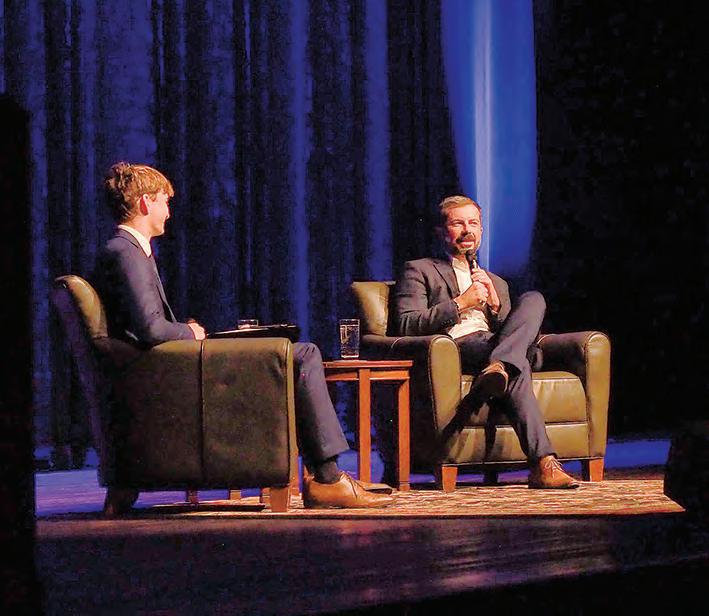
“I’ve been following his career for a long time, especially since 2020 when he first ran for president,” Finney said. “I was a big supporter, I had pins of Pete Buttigieg, so I was a really big fan of him before when he was running, so it’s great to see him coming back to Indiana.”
“It’s really inspiring and it’s always good to come back to his way of thinking and way of speaking, so we really enjoyed that aspect of it, and then he also has such a humor to everything as well, so we really enjoyed it,” Smith said.





1 7 3 8 6 5 2 4




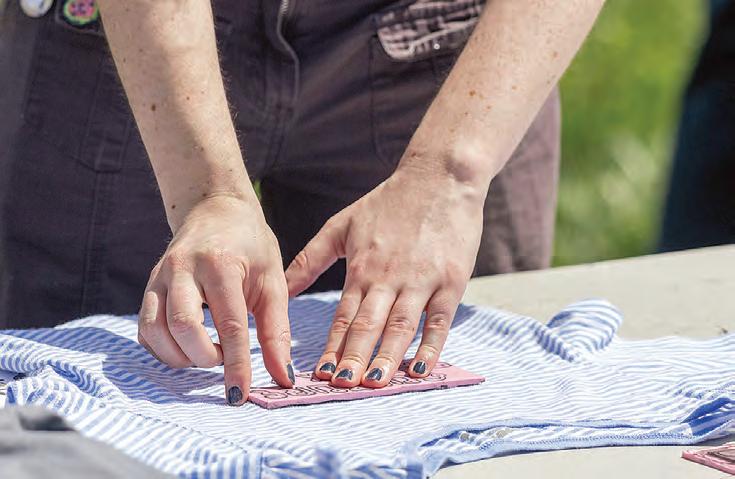







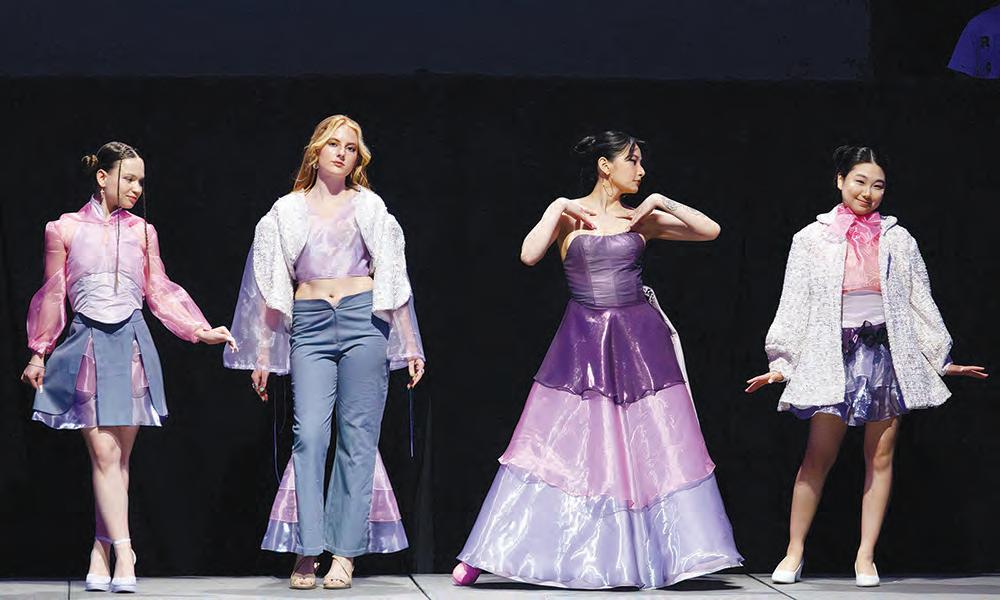










Steve Pinder’s short film “Jane Austen’s Period Drama” was nominated for an Academy Award
By Ursula Stickelmaier ustickel@iu.edu
Steve Pinder sat on his couch at 5:30 a.m. Feb. 22 with his co-writer and co-director, Julia Aks, next to him, along with their respective partners and friends. They were waiting for the 2026 Oscar nominees to be announced; specifically, this year’s Live Action Short Film nominations.
Among the 207 live action short films that qualified for this year’s Oscars, Pinder and Aks’ film “Jane Austen’s Period Drama” was one of 15 to be shortlisted on Dec. 16, Jane Austen’s 250th birthday.
Announced by actors Danielle Brooks and Lewis Pullman, “Jane Austen’s Period Drama” was the third of five films nominated in the Live Action Short Film category.
“It’s one of those things that feels sort of impossible to process,” Pinder said. “It’s just unreal. I mean, I think you dream of things like that when you’re younger, and they seem so impossible, you know, to have them come to fruition. It’s just, like, it truly feels magical.”
While many filmmakers dream of getting one step closer to winning an Oscar, for Pinder the nomination isn’t just another milestone in his career; it’s the culmination of a journey that started years before at Indiana University. Pinder came to IU in 2006 undecided. Though he grew up surrounded by family in the medical field, he thought college would be a good chance to explore other career interests.
While he’d placed out of many of IU’s general education requirements, Pinder said the one thing he couldn’t manage to get out of was English.
Though he had never felt drawn to the subject, he found he had a talent for writing during his freshman year in a class with IU professor Paul Gutjahr. After reading some of his essays, a TA in the course suggested he continue the subject.
During his sophomore year, Pinder enrolled in an English class with professor Rae Greiner. He credited her teaching methods for expanding the way he thought about reading and studying literature, a large reason why he chose to declare an English major.
As much as Pinder loved Greiner’s course and ways of teaching, she loved having him in her class.
He was just amazing, and he was just this eager and happy and curious, creative person,” Greiner said. He absolutely has been just so incredibly talented, but also kind and humble and sweet. He’s just one of my favorite people in the whole world.”
Along with majoring in English, Pinder spent time at IU participating in the Singing Hoosiers and taking voice lessons at the Jacobs School of Music while getting a Bachelor of Science in
Music and an Outside Field.
Pinder began exploring musical theater when he took two semesters of opera and musical theater workshops with Sylvia McNair.
After one audition, he remembers a moment alone with McNair where she told him if he wanted to pursue acting full time, he could.
“That was such a profound life-changing moment for me,” Pinder said. “I was so desperate for that kind of approval and that kind of permission to go pursue my dreams and to go do the things that I really, deeply, deep down wanted to do, but was afraid I wouldn’t be good enough.”
He spent around three years performing in both Chicago and Indianapolis when the rights for eighttime Tony-winning musical “Les Misérables” were made available to regional theaters in 2013. While he liked the musical, he worried the career could get repetitive, with different versions of the same shows constantly in rotation.
“I started seeing, like, my whole career could turn into me doing ‘Les Mis,’ over and over and over again, which just wasn’t how I wanted to spend my life,” Pinder said. “So, I started thinking about writing stuff myself. I just thought, well, you know, if I can’t book a part that I really want through auditioning, maybe I can write a part.”
When his friend, IU alumna Elisabeth Gawthrop, suggested he look into film programs, Pinder was tentative about the idea. But Gawthrop encouraged him by saying that while having technical skills is nice, what film school really wants from an applicant is someone who has a story to tell.
They’ll teach you how to make a movie. What they want is someone with a voice, Pinder said.
With the help of Greiner, who wrote him the recom-
mendation letter that he’s still convinced got him in, Pinder moved to Los Angeles to study at the University of Southern California in 2014. While he was at USC, Pinder met Aks and the two formed a close friendship while working with her on various sketch comedy videos.
In 2019 Aks came up with the initial idea for “Jane Austen’s Period Drama.” Pinder was brought in once she finished the first draft and, after looking at the 76page script, he suggested the idea might work as a feature-length film.
The move to a short film came in 2023 during the WGA Writer’s Strike when Pinder and Aks had finished the script but didn’t want to cross the picket line. Pinder said while it wasn’t their ideal outcome to make a short film, it was an easy decision to go with the prologue.
The prologue specifically focuses on Estrogenia “Essy” Talbot (Aks), who is eagerly awaiting a proposal from her suitor, Mr. Dickley (Ta’imua), when she gets her period. When Mr. Dickley confuses the blood for a life-threatening injury, Essy learns despite his vast education, there are just some things people don’t talk about.
Pinder thought the regency era of Austen’s novels translated especially well to the story and message they were hoping to convey to the audience.
“Everybody has, like, very stiff posture, and they’re very polite and they try very hard to sort of talk around uncomfortable subjects,” Pinder said. “And so that dynamic creates a wonderful conflict when suddenly you’re dealing with something like menstruation that nobody wants to talk about.”
Producer Elli Legerski’s first step was to figure out a
way they could get produc-
tion started without crossing the picket line. Despite the ongoing strike, she was able to base the production around the guidelines set by the short project agreement, which capped the budget at $50,000.
Legerski said the limits on their budget became especially difficult when trying to emulate the feeling of a period piece. From costume to production design, the team was strategic about what it chose to use its budget on to produce a film that felt truest to the regency era aesthetic of an Austen novel.
“It was like, ‘Okay, we know what we want, we know we don’t have the money for it. So, let’s just find people that are in our same spirit and know what we’re going for, and we’ll do our best,’” Legerski said. “And it ended up being, you know, amazing what they were able to do.”
After wrapping up filming and post-production work, “Jane Austen’s Period Drama” officially premiered in February 2024 at the Santa Barbara International Film Festival.
Pinder said the positive reaction in Santa Barbara was one of the first moments he realized the short film could be bigger than he thought.
While it was received well by audiences at film festivals, the story did not often rank high in the jury award, which is what makes a short film eligible for direct submission to the Academy of Motion Picture Arts and Sciences.
In film festivals, most of the jury awards are narrative awards. Pinder said he began to see a pattern of most of those narrative awards going to the dramas first, but he knew their short film was close to winning if given the right opportunity.
That chance came in April 2025 when “Jane Austen’s Period Drama” played
at the Aspen Film Shortsfest,
one of the only festivals that has a juried comedy award to qualify someone for the Oscars.
They won and waited just over seven months before making it onto the Oscars shortlist for live-action shorts.
In the time leading up to the Oscars, the team for “Jane Austen’s Period Drama” has tried to campaign for the film as much as possible within its limited budget. When a publicist encouraged them to find a celebrity that could endorse or be given an executive producer credit in their film, Legerski said they knew exactly who they wanted to reach out to.
Having won the Best Adapted Screenplay award at the Oscars in 1996 for her own adaptation of Austen’s “Sense and Sensibility,” Legerski and the rest of the team believed actress Emma Thompson was the perfect fit.
“Over 10 years ago, I had left the Midwest and moved out to LA to make movies. And, I don’t know, it’s like all I really wanted, deep down, was to make something that people there would love and would be proud of. And, I think, to be where we are now and have these opportunities, I just want to do more of that. I just want to make more things that people in Indiana will love.”
Steve Pinder, IU alumnus
While Thompson turned down the producer credit, she suggested one of her
own in its place: Executive Menstrual Advisor. The name may seem very tongue-in-cheek, but Lergerski said it feels perfect for them and is grateful for Thompson’s endorsement.
“It just really seemed like that set off the skyrocket of this campaign process,” Legerski said. As the march toward the Oscars continues, Pinder is appreciative of the continuous support “Jane Austen’s Period Drama” has gotten. What Pinder thinks draws people to their short film isn’t just the familiarity of a film that’s inspired by Austen and her work, but how the comedic moments underline the powerful message the story aims to convey.
“For this film in particular, you know, I think we’ve discovered that when you can give people a joyful experience, it’s a lighter way to invite people into conversation,” Pinder said.
This mission will only continue after the Oscars. Pinder said the nomination alone has opened so many doors for he and Aks professionally. They aim to produce the feature-length film, and they’ve started having more conversations about where Essy’s story will go next.
“She’s had this awakening about how ignorant people are in the world that she’s living in,” Pinder said.
“She’s just trying to find a way to live in her integrity, you know? She’s trying to find a way to be honest in the way she walks through life, even when the whole world around her is telling her to keep lying and to shut up.”
What Pinder really wants to do, though, is continue to make more films for the people back home. Whether it’s a short or a feature length movie, the idea that someone from Indiana will see his work and love it or be inspired to follow a similar path is something that has him hopeful for the future. He first had this epiphany when applying “Jane Austen’s Period Drama” for the Indy Shorts International Film Festival in 2024, just so the movie could play in Indiana, he said. When writing the cover letter, Pinder said he felt emotional thinking about how the film would be received in his home state.
“Over 10 years ago, I had left the Midwest and moved out to LA to make movies,” Pinder said. “And, I don’t know, it’s like all I really wanted, deep down, was to make something that people there would love and would be proud of. And, I think, to be where we are now and have these opportunities, I just want to do more of that. I just want to make more things that people in Indiana will love.”
“Jane Austen’s Period Drama” is currently available to watch for free on both YouTube and Kanopy. This story was originally published March 10, 2026.
By Steven Leatherwood sjleathe@iu.edu
Zilly Then, a senior fashion design major at Indiana University, and her professor, Megan Romans, sat in Romans’ living room and turned old, thrifted IU Tshirts they found at Goodwill into dozens of roses, gluing them onto an old football helmet.
“Zilly came over to my house, and we made (roses) just until our fingers were bleeding. That amount of roses,” Romans said. They created this colorful helmet as part of an outfit Then designed for the Rose Bowl: an 18th centuryinspired lamb-shape hoop skirt, a mesh overskirt and a crimson shrug and corset accented with roses.
Hannah Shepherd, Then’s classmate and model, wore the piece for the photoshoot. Shepherd and Season Magazine photographer Grace Guo shot a series of photos in a nearlyempty Memorial Stadium a week after Then and her professors brainstormed
the idea after finals week.
“It was cold and it was heavy,” Shepherd said about the helmet.
The Rose Bowl look garnered over 10,000 likes on IU Bloomington’s Instagram page and attracted local news attention.
“I think it’s really cool to see everything that’s come out of this,” Romans said. The outfit didn’t start out as the iconic crimson and cream Rose Bowl look many have seen on Instagram, though.
It came from a similar design Then used for her senior capstone project. During her presentation, Then’s professors pointed out that the mesh skirt she used reminded them of athletic wear, becoming the initial inspiration behind Then’s popular design.
“So, we decided, let’s do something for football for fun,” Then said. “And from that on, we decided to create a look. And also, we wanted to focus on the Rose Bowl theme, so we tried to add some roses.” Then created the design
and the outfit just after the semester ended, before IU’s football team played in and won the Rose Bowl on Jan. 1.
This new outfit was a personal endeavor — a continuation, but not a requirement — of her senior capstone project.
Then described her style as “modest” but “also very girly.” She said she likes to use colors, and her favorite fabrics are chiffon and anything sheer. Her style is clear in the Rose Bowl dress — her favorite piece to date.
Professor Jessica Quirk, one of Then’s fashion design professors, said the entire Rose Bowl piece spawned out of Then’s love for design.
“She’s an incredibly hard worker,” Quirk said. “She’s incredibly talented with her artwork, the style of designs; her technical abilities are high, and she’s a lovely person.”
As for her future, Then hopes to work for one of her favorite companies, Nordstrom, a leading fashion retailer, where she is currently applying for a position.
“I think she’s going to have a lot of demand,” Quirk said. Then also wants to pursue her own brand in the future, alongside company work: something where she can pursue her own creative endeavors when imagination strikes.
I do want to keep making, you know, things that I get inspiration for and something different to keep my creativity up and working with other people,” Then said. Then is presenting more of her work near the end of the semester at the Fashion
By Sydney Weber syaweber@iu.edu
The pink letters on the mirror used to say “strip” — the space was a Victoria’s Secret, after all — but the “s” and the “t” have been crossed out with duct tape and an exclamation mark has been added at the end.
“Rip!”, it reads now, above a padded drum set where visitors to “The Changing Rooms” art project can take out their anger in a space dubbed “the release room.” The exhibit soft-launched April 4 inside the Pillar Arts space in College Mall.
“Changing Rooms” is a student-created exhibit that came out of Eskenazi School of Art, Architecture and Design lecturer Maxwell Fertik’s eight-week “Healing Commons,” an intensive seminar in comprehensive design. Students in Fertik’s class ideated, fabricated and installed the elements in a series of five "changing rooms”.
“Changing Rooms” is part of the “SOLACE” art exhibition that opened in full on April 18. The free exhibit will be open starting at 4 p.m. on April 18, 25 and 26.
“SOLACE” is presented by MDWST Fable, an arts organization focused on southern Indiana.
“We joke it’s a benevolent conspiracy that tries to bring people together across the arts and from outside the arts to work together to make artistic experiences and storytelling experiences to appeal to everybody,” Tristra Newyear Yeager, co-founder, said. The collaboration between MDWST Fable and
Fertik began when Yeager reached out, Fertik said. The idea was challenging, he said, because he doesn’t usually work in multimedia, but he thought it would be a good opportunity for his students.
“[They’re] getting the real experience of working with a client, working with a real budget and with, like, real materials,” Fertik said. “Especially this one, like, they really had to go back and forth to the mall and go plant shopping with Tristra.”
The students gained experience with problemsolving and getting around constraints, too.
Pillar Arts occupies the space where Victoria’s Secret used to be, and Fertik said the place’s history provided both a challenge and a chance to have fun when designing the exhibit.
“So we’re like, all right, now our question is, ‘How do we create healing spaces within a former Victoria’s Secret?’” Fertik said. “Like, how do we find love in a hopeless place?”
Students in Fertik’s class thought through different dimensions of healing: religious, medical and social. The rooms were initially inspired by the five stages of grief: denial, anger, bargaining, depression and acceptance.
Nicholas Keasey, one of Fertik’s students, helped develop the concepts and install the rooms. Keasey said the ideation process was complicated because healing looks so different from person to person.
“One of the original ideas that we worked off with it was the stages of grief,” Ke-
asey said. “And it gave us a lot of bones to actually work with to start kind of piecing these together. We ended up kind of changing that idea. We felt like it was kind of too on-the-nose and might have the opposite effect for some people.”
Keasey said he spent a lot of time working on the sky room, which features a projection of the sky over Griffy Lake. Griffy had come up in response to a question about healing spaces in Bloomington in a survey that Yeager and her MDWST Fable cofounder, Matt Rice, sent out to the community.
The survey asked questions like “What activity makes you feel better 80% of the time?” and “If your nervous system had a texture now, what would it be?”
Yeager said Rice was responsible for developing the questions, and the aim was to get answers to the question “What is healing?” indirectly, to avoid descending into platitudes.
“If you ask too directly, it’s like if you look directly at the sun, you burn your eyes,” Yeager said. “If you ask too directly, you just wind up in a cliche and you haven’t learned anything.”
There were some commonalities to the responses, according to Yeager; several people responded to the question “What’s the shape of your missing piece?” with “triangle,” for instance. For the question about healing spaces in Bloomington, places with water came up frequently.
In addition to the sky room and the release room, there are three others: the puzzle room, the meditation

room and the green room.
Junior Cooper Smith, who led the fabrication and design team, spent a lot of time working on the puzzle room. Smith said the room was loosely inspired by the “bargaining” stage of grief.
“So, the idea was that you’re moving these puzzle pieces around and you’re kind of like experimenting with yourself,” Smith said. “And it’s supposed to kind of emulate that sense of bargaining in grief.”
Senior Dawson Clark designed the meditation room based on personal experiences with meditative practices. It’s desert themed; two lights represent the sun, and the soft tan rug looks like sand. Clark’s inspiration was philosophy.
“I took that from Carl Jung’s red book, which talks about the barrenness of the desert and when you stick
in the desert and finding the fruit within the emptiness and the barrenness,” Clark said.
The green room, on the other hand, is more fruitful. It developed out of the idea of acceptance and being grounded, Michelle Do, a student in Fertik’s class, said. Pink flowers drape across the mirror in that room, which now reads “Trip to nature.” Do said nature seems to ground people, so it was the room’s theme.
“In that room we’re inspired by elements of nature,” Do said. “So, we have plants in there, flowers in there, water in there, to promote, like, encourage feelings of being present with your emotions and accepting them. And also, being open about them, either to yourself or with other people.”
Kristin Tucker, a visitor to
the exhibit, was most drawn to the green room.
“I really loved the plants and the fountain and the peace of, you know, knowing that things aren’t the same, but that there is a peaceful life to live,” Tucker said. The idea of growth and metamorphosis is the driving force behind the exhibit. In terms of transformation, Fertik described the Victoria’s Secret-turned-art-space development as subversive. It also served as inspiration.
“But they have these dressing rooms, and they’re also called changing rooms,” Fertik said. “And we thought that that was a really interesting wordplay that could happen. Like if these are healing spaces, these changing rooms could also be these places of transformation.”
This story was originally published April 6, 2026.
By Sophie Albert soalbert@iu.edu
If you’ve ever seen a show at the IU Auditorium, you’ve most likely been greeted by smiling students wearing white button-down shirts and black pants. Maybe they helped you find your seat. Maybe they handed you a program. Maybe all they did was answer a question you had.
Patrons see these ushers every time they attend an event at the auditorium, and these students are vital to the workings of the auditorium.
The volunteer ushering program at IU Auditorium has allowed students to get a look behind the curtain while helping patrons since the auditorium opened in 1941. Through the program, students learn skills in customer service, see what goes on behind the scenes at the auditorium and meet like-minded people, Mary Higdon, the assistant guest services manager at the IU Auditorium said.
Sophomore Liam Commons started ushering his freshman year of college.
“When I ushered for my very first show, ‘Les Misérables,’ I ended up liking it so much that I ushered for

four different shows,” Commons said. “I got the chance to be a stage guard for one of them, which was such a cool experience because between the matinee and evening show I chatted with the pit orchestra and I got them to sign my program.”
Ushers arrive at the auditorium an hour before doors open to go over information about the show and practice seating.
Half an hour before the show begins, the ushers take their places and begin greeting guests. During this time, ushers show patrons to their seats and answer any questions guests may have. It is the usher’s duty to create a hospitable atmosphere that makes guests feel welcomed and calm, even when seating an auditorium of up to 3,200 people can get hectic.
After the show begins, ushers assist with late seating. This can be the most stressful part of ushering, as they must show patrons to their seats in the dark while a show is happening without disturbing any guests who are already settled in. Once the late seating period is over, ushers get to enjoy the show from the balcony for free, a great perk of the


program for theater enthusiasts.
“Cost is definitely a barrier for some people to be able to go to shows and so giving people the opportunity to give back to their community, help lead people to their seats, that kind of thing, so that we can eliminate cost as a barrier is a really big benefit,” Commons said.
As the assistant guest services manager, Higdon’s role requires her to oversee both the volunteer ushers and student managers. She helps set up events, assigns students to different positions across the auditorium and is a point of contact for everyone, from volunteers, employees and talent, throughout the shows.
During her freshman year of college, she was drawn to the ushering program as a way to meet people outside of her elementary education major. She did theater in high school and wanted to help people while staying connected to theater while in college.
“When I found the auditorium, it was a great way to get guest service experience while also having some really awesome shows and being able to connect to









people that weren’t just in my school,” Higdon said. “I’ve met some of my best friends here, just through the different programs that we do.”
Destinee Clayton, the guest services manager at the auditorium, said ushers are vital to the type of customer service the auditorium likes to provide.
“The ‘plus one’ customer service that’s not only just meeting those expectations, but going above and beyond, so, you know, making someone feel as if they’re a friend,” Clayton said.
Ushers are a big part of this service because they are there at every show. She said many patrons come back again and again, and like to get to know the ushers. This connection built between patrons and ushers, sometimes over several years, creates a warm and familiar environment that adds to the quality of guests’ experience at the auditorium, Higdon said.
The auditorium encourages ushers to work five shows a semester, but they can always do more or less.
“I think it’s just a low commitment and possibly fun role that gives you ac-
cess to the arts and also helps you provide that for other people,” Clayton said.
“I’m of the ‘don’t knock it until you try it’ kind of mentality,” Higdon said.
“Come to a call out, come to our usher training, you’ll see how fun and exciting it can be to be a part of



Photographer Rania Matar discussed “Where Do I Go?,” her project showing portraits of
By Ripra Gupta riprgupt@iu.edu
On the second floor of the Sidney and Lois Eskenazi Museum of Art, a darkened room filled with 50 attendees. At its center hung a striking black-andwhite photograph of a child standing in front of buildings torn down by a wrecking ball. The child smiles as her aunt looks on from the background.
The Eskenazi Museum hosted an artist talk April 2 with Rania Matar about her latest project, “Where Do I Go?,” moderated by Leila Reichert, curator of contemporary art at the Eskenazi Museum.
“Where Do I Go?” is a deeply personal collection of photographs that began in 2020. In the series, Matar captures young women in Lebanon and highlights their resilience as they navigate the present and future amid the country’s long history of conflict.
Matar is a Lebanese, American and Palestinian photographer whose background and experiences inform her work. Her photography has been exhibited in museums around the world, and she has received awards and honors, including a Guggenheim Fellowship in 2018, an award recognizing exceptional achievement in scholarship and the arts.
In 2017, Matar was invited to an artist residency in Ohio, where she fell in love with the landscape and began photographing young women outdoors rather than in domestic spaces. She later brought that work back to Lebanon, where the landscape carries layers of history, conflict and memory. That work eventu-
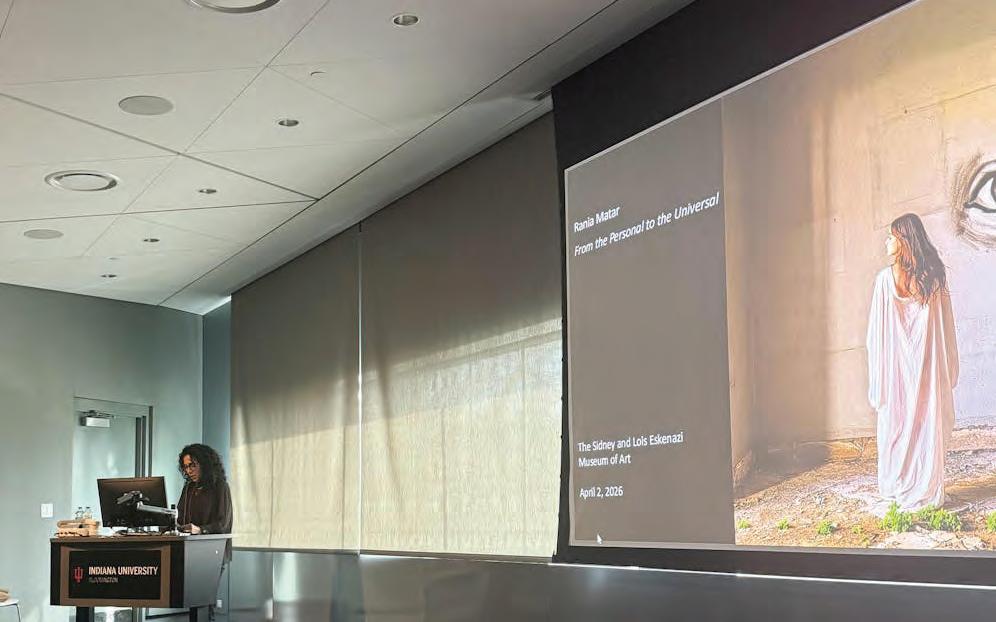
ally evolved into “Where Do I Go?”
After the Beirut port explosion in 2020, Matar returned to Lebanon intending to photograph destruction, but she said she found herself drawn instead to women “rebuilding, cleaning debris and trying to hold their lives together.” That realization became the basis of the project.
Matar said many of the women she photographed were grappling with whether to stay or leave, a question she understood per-

sonally after leaving Lebanon in 1984 because of the Lebanese Civil War.
Reichert collaborated with Matar throughout the project and said Matar first visited the museum for a one-time talk in 2020, but the two stayed in touch over the years as Reichert followed her projects.
As Matar developed the work that would become the exhibition, Reichert said they began communicating more frequently and eventually shaped the concept for the show together. By

Publish your comic on this page.
The IDS is accepting applications for student comic strips for the fall 2026 semester. Email five samples and a brief description of your idea to adviser@iu.edu . Submissions will be reviewed and selections will be made by the editor-in-chief.
SUDOKU


4
the time they began putting together the book and exhibition, Reichert said she had spent four years discussing the project with Matar and knew the material well.
“I think Rania is very good at putting her subjects in these incredibly captivating visual spaces and creating a relationship between the figure and the setting that is just really compelling,” Reichert said. “So, I think her work really speaks to both the beauty of the country and the resilience of the people through the sub-
ject matter.” After the artist talk, attendees viewed the photo series at the museum.
Aleida Sanchez, a studio art major, said it was interesting to hear about Matar’s thought process behind the photographs.
“It all has such deep meaning, and there is so much thought behind every little detail in the natural imagery,” Sanchez said. Alison Irace, a senior studying media advertising, also attended the talk and said she was drawn to
a photograph of a woman named Samira.
“In the image, she is standing in what looked like a field, with the sky behind her,” Irace said. “What stood out to me was the contrast between the flowers in the background and the barbed wire. I thought that juxtaposition was really powerful, and reading about it made it even more meaningful.”
The exhibit will run until Aug. 2.
This story was originally published April 3, 2026.


By Abby Whited abwhited@iu.edu
The Lilly Library is a treasure trove of rare artifacts, books and manuscripts in the heart of IU’s campus. From something like a first edition copy of Walt Whitman’s “Leaves of Grass” to one of the only Gutenberg Bibles still in existence today, the library’s archives provide endless knowledge and history.
Part of that history includes a collection of "The Wizard of Oz” artifacts, which is free for members of the public to enjoy, especially ahead of the Jacobs Live at the Movies performance of “The Wizard of Oz” opening Nov. 7.
The collection consists of about 120 items including books, film scripts, toys and merchandise related to “The Wizard of Oz.” Erika Dowell, the associate director and curator of modern books and manuscripts at the Lilly Library, said the story is an “icon” of literature for children.
“It’s a true American fairytale,” Dowell said. One of the oldest artifacts in the collection is a first-edition copy of the original “Wizard of Oz” book written by L. Frank Baum, with illustrations by W.W. Denslow. Published in Chicago in 1900, the edition features printing techniques, illustrations and coloring that were innovative for their time.
Dowell said the book’s unique art style of its text being printed over pictures and color was a new technique for the time it was published.
“Baum and Denslow got together to talk about making a really beautiful book that was pretty much unlike any other children’s book that had been published at that time, and that is for a couple of reasons,” Dowell said. “The
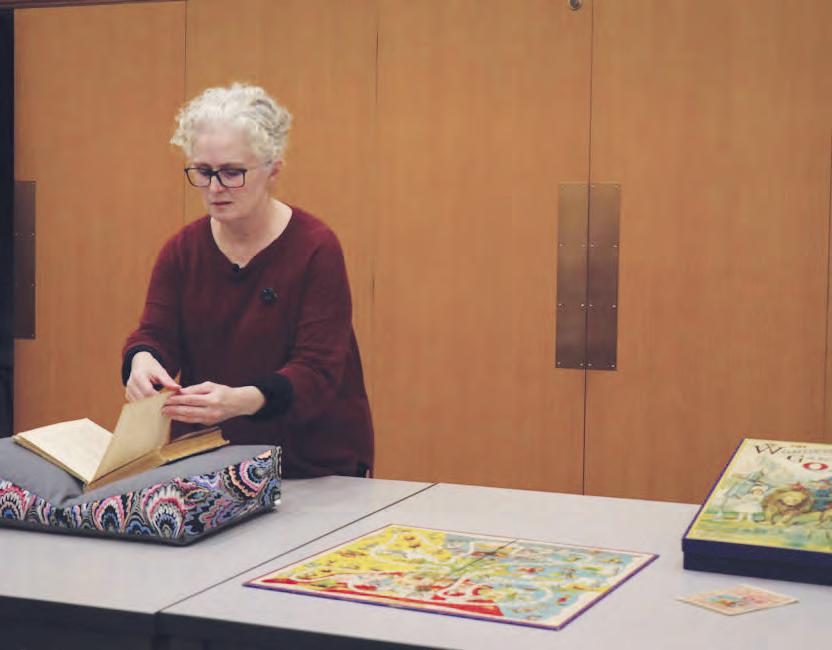
quality of the storytelling is part of it, but the production of the book is too, because it took advantage of innovations in color printing of the time.”
Additionally, the collection includes a “Wizard of Oz ” themed board game from 1921, which features some of Denslow’s original illustrations. The game was purchased by the library from American bookseller Justin Schiller, who deals in rare children’s books.
The Lilly Library also owns a photocopy of a prompt book from a 1902 stage play of “The Wizard of Oz.” The show premiered at the Chicago Grand Opera House, 37 years before the popular film adapta-

tion was released. Although these objects are just a few within a much larger collection, the other “Wizard of Oz” artifacts are readily available for members of the public to view.
However it’s not just “Wizard of Oz” memorabilia that can be found in its archives. The Lilly Library hosts over 8 million manuscripts, about half a million books and various other collections of artifacts, including comic books and puzzles.
The Lilly Library is noncirculating, meaning the materials in its collections must never leave the library; however, students are free to request an ap-
I Am Busy Dying
M.F.A. Playwriting Thesis Production New Play by Golsa Sohrabi WELLS-METZ THEATRE JAN 21 - 22 | 7:30 p.m. JAN 23 | 2:00 p.m. & 7:30 p.m.
Isn't This Nice
M.F.A. Playwriting Thesis Production New Play by Júlia Cerqueira
WELLS-METZ THEATRE FEB 11 - 12 | 7:30 p.m. FEB 13 | 2:00 p.m. & 7:30 p.m.
Groundlings
M.F.A. Playwriting Thesis Production New Play by Wren Aubrey Latham
WELLS-METZ THEATRE MAR 4 - 5 | 7:30 p.m. MAR 6 | 2:00 p.m. & 7:30 p.m.
A Chorus Line
Conceived and Originally Directed and Choreographed by Michael Bennett
pointment in the library’s Reading Room, where they can choose to view or interact with any collections or items they wish. While materials can be requested for any purpose, students often request to view certain collections when researching specific subjects. Whether students are interested in the original typed manuscripts of “James Bond” with Ian Fleming’s handwritten edits or a collection of Kurt Vonnegut’s rejection letters, the library’s vast archives include a wide variety of materials related to certain topics. Michelle Crowe, the assistant dean of engagement, strategic partner-
ships and communication for IU Libraries, encourages students to devote themselves to at least one research project during their time at IU and use the library’s resources to enhance that learning experience.
“We want it to be as easy as possible for students to come and look at the materials and use them to turn any assignment into something really special,” Crowe said. “The Lilly Library is a collection of collections, and it is just waiting for students to dig in and find things.”
Appointment requests require a user account in order to access the Lilly Library Request System,
and visits must be scheduled at least two weeks in advance. Library attendees can search for specific items or collections on IU's online library catalog or Archives Online. This access to such an abundance of rare books and items is not exclusive only to IU students but is available to anyone interested.
“We have one of the greatest rare book libraries right here in Bloomington,” Crowe said. “And even better than that, we have access that is unlike what most rare book libraries provide. We are here for anyone who is curious.”
Despite a revival of materials such as vinyl records in the past couple of years, physical media is not nearly as popular as it once was. CDs are replaced with Spotify playlists, physical books are traded for e-readers and demand for physical media items has become a niche interest. Nevertheless, these materials still exist and can add depth and value to the way we interact with the stories we love, like “The Wizard of Oz” and so many more. Joel Silver, the director of the Lilly Library, emphasized the benefits of handling physical media in comparison to digital interactions.
“There’s something special about seeing and handling these original objects,” Silver said. “In the case of the first edition of ‘The Wizard of Oz,’ no matter how many times you see the illustrations from it reproduced or see an online facsimile of it, it’s not at all the same as seeing and viewing the original three dimensional object and being in the presence of it. There’s a certain magic to it.”
This story was originally published Nov. 4, 2025.

Directing Thesis Production directed by Samwell Rose TOURING PERFORMANCES NOV 2026
Faculty Dance Concert
RUTH N. HALLS THEATRE DEC 11 | 7:30 p.m. DEC 12 | 2:00 p.m. & 7:30 p.m.
Book by James Kirkwood & Nicholas Dante Music by Marvin Hamlisch
Lyrics by Edward Kleban
Co-Choreographed by Bob Avian
RUTH N. HALLS THEATRE APR 16 - 17 • APR 20 - APR 23 | 7:30 p.m. APR 24 | 2:00 p.m. & 7:30 p.m.
Senior Dance Concert
WELLS-METZ THEATRE APR 30 | 7:30 p.m. MAY 1 | 2:00 p.m. & 7:30 p.m.
Discover your creative spark at Indiana University’s Department of Theatre and Drama - a vibrant hub where students from every major can explore their passion for performance, design, and movement.
Open auditons welcome all IU Students, regardless of major, to perform in a diverse line of up of plays and musicals. Enroll in introductory courses in acting, dance, and technical theatre - no prior experience required.


By Nathan Shriberg naashri@iu.edu | @nshriberg
CHICAGO — Somber, emotional and downheart-
ed.
A seventh straight loss to Northwestern marked the end of Indiana men’s basketball’s Big Ten Tournament, and likely its entire season.
Following a 13-point loss to the Wildcats on March 11, the Hoosiers sat in the locker room at the United Center in Chicago, many facing the reality that their collegiate careers are coming to an end.
Just a year ago, the Hoosiers moved on from former head coach Mike Woodson following consecutive seasons without an NCAA Tournament appearance. Now, the Cream and Crimson are almost certain to extend the streak to three after finishing 18-14 in head coach Darian DeVries’ first year at the helm. For a spell, Indiana appeared to be a tournament lock. The Hoosiers reached 17 wins by Feb. 9. They added just one more win to that total over the next 30 days and now sit on the wrong side of the NCAA Tournament bubble.
“Any game, any given night, you know, you can go out, you can lose, you can win,” junior guard Jasai Miles said postgame. “But that’s just what happens when you play in like the best league in the country.”
DeVries built his first
roster from scratch. The sole remnant of Woodson’s Hoosiers was an incoming freshman — forward Trent Sisley. Each addition to the roster and the coaching staff was a first-time Hoosier. Senior forward Reed Bailey called it “a unique experience.”
“I think everybody here was just committed to each other and wanted to create a real culture for Coach DeVries to start and carry on for a long time,” Bailey said. “I’ll always remember the guys. Everybody was in the same boat this year.”
Rather than dwell on what could’ve been, the Hoosiers prefer to reminisce about what was. While the 2025-26 season didn’t pan out how they’d hoped, Indiana leaves behind a legacy of hope for the future of the program.
Indiana is redshirt senior guard Conor Enright’s third collegiate team. Following stints at Drake University and DePaul University, he had just one year of eligibility remaining. Throughout his lone year in Bloomington, he formed an enduring connection.
“Oh, man. Just proud to wear the jersey,” Enright said. “I think we all know what it meant to wear Indiana across our chests. That’s what I’ll take 10, 15 years down the line.”
When Enright committed to the Hoosiers, the roster was barren. Enright’s reunion with DeVries was a show of faith in his former
coach.
“I wouldn’t know why anyone wouldn’t want to play for him,” Enright said. “I just think they should just trust what he’s building. He’s going to get the job done.”
Belief in the future was a constant across the roster. While the outcome wasn’t optimal, the players felt the design was.
The Cream and Crimson’s up-and-down season produced highs that will be remembered long after they’ve departed Bloomington.
Fifth-year senior guard Lamar Wilkerson set the single game Simon Skjodt Assembly Hall scoring record with a 44-point outburst against Penn State in December. Enright’s relentless defense held the Big Ten’s new all-time assist leader — Purdue senior guard Braden Smith — without a dime through the first 20 minutes of Indiana’s upset victory over the Boilermakers in January.
But the Hoosiers lacked the ability to rise to the challenge when it mattered most. Championship caliber teams peak in March, and Indiana went 1-6 to end the season.
However, what’s most important to the first iteration of DeVries’ Hoosiers is the relationships and culture they built along the way. Along with pride, brotherhood was a theme of the Hoosiers’ season.
“Oh, man, we love each
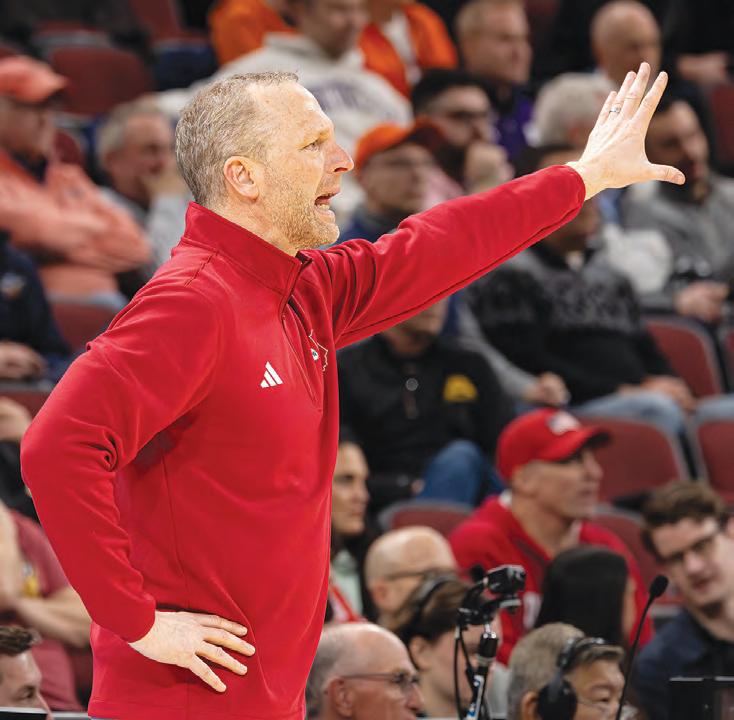
other, like, all these guys in here,” Miles said. “I know I’ll always be able to call them for life, you know, I got some brothers in here, and that’s, at the end of the day, that’s the most important thing.”
With six seniors, Indiana will need to replace much of its production. Exiting players account for over 83%
of the team’s points. Of the players who consistently received minutes, Miles, Sisley and junior guard Nick Dorn are the only ones with remaining eligibility. While the Hoosiers to come remain unknown, this year’s Hoosiers are proud of the Indiana program that they’ll leave behind.
“We’re going to go out there and try to play the hardest we can,” senior forward Sam Alexis said. “I feel like that was the foundation we set for the next couple of years, for whoever wants to come in here.”
This story was originally published March 12, 2026.
By Savannah Slone srslone@iu.edu | @savrivers06
No. 13-seeded Indiana
women’s basketball fell to No. 5-seeded Ohio State 8359 on March 5 at Gainbridge Fieldhouse in Indianapolis. And unless the Hoosiers go to the Women’s National Invitation Tournament or Women’s Basketball Invitation Tournament, their season is over. It was a rollercoaster of a season for Indiana. It started with an 11-1 nonconference record, but an 0-10 beginning to Big Ten play followed. For Indiana head coach Teri Moren’s young and inexperienced roster, those early conference games were about the process, she said throughout the year. Her squad needed to understand the flow of the Big Ten, and it wasn’t easy with a top-heavy conference schedule; the Hoosiers played six ranked teams in their first 10 Big Ten games.
Their first conference win of the season was against Northwestern on Feb. 1. It helped Indiana gain momentum to end February 6-2 and secure a trip to the Big Ten Tournament, where it recorded a comeback win over Nebraska on March 4, and eventually bowed out with a loss to Ohio State.
“This is a group that when you start the season, the Big Ten season, off the way we did, it would have been easy to just kind of throw the towel in,” Moren said postgame. “And we didn’t do that.”
While the Hoosiers needed a late-season push to make the Big Ten Tournament, and likely won’t be in the NCAA Tournament field, this season wasn’t for nothing. It was a season of building, growing and learning for Moren’s squad. Moren has said multiple times this season that the development during the losses, and even the wins, are important for the future — that eventually the learning moments would pay off. They did late in the season, but their impact goes beyond this year. It goes into next season, when the returning Hoosiers have more experience under their belt.
Senior guards Shay Ciezki and Jerni Kiaku are the only Hoosiers graduating. And while transfer portal departures aren’t set, the Hoosiers who choose to stay with Moren in Bloomington have a season of growth together already.
Indiana is also bringing in the eighth-best recruiting class, according to ESPN. The class’s No. 28 wing Addison Nyemchek headlines the Hoosiers’ current re-
cruits. That’s followed by No. 32 guard Gigi Battle, No. 64 guard Ashlinn James and four-star recruit Zoe Jackson.
Arguably the Hoosiers’ most valuable returning piece is Lenée Beaumont. The redshirt sophomore guard was second for the Hoosiers in scoring with 13.3 points per game in her third season with Indiana.
In her first season, she saw limited minutes as a role player for the Hoosiers. And in the second, Beaumont was sidelined the entire year after knee surgery. Even Moren admitted that Beaumont is more like a freshman than a third-year player. Her last offseason was marked by recovery. This offseason, she’ll be healthy, and that’s one thing that makes her optimistic for what’s ahead.
“I have a lot of excitement just because I can’t wait for a healthy offseason, I can’t wait to get in the gym,” Beaumont told the Indiana Daily Student postgame. “A lot of things have been exposed, but a lot of things I’ve grown from, and I’m going to learn from, and I can’t wait to just honestly just get to work and have the whole spring, whole summer, whole preseason be healthy, and, you know, be ready to lead this team next year.”
Indiana had two starting
freshmen this season: guard Nevaeh Caffey and forward Maya Makalusky. Caffey received the starting nod in the first game of the season and has kept that position since. Makalusky was thrust into the role after the departure of former guard Valentyna Kadlecova in mid-December.
The two developed throughout the season, becoming key contributors for the Hoosiers. Caffey made an impact on the defensive side in particular, as she was typically tagged on opponents’ No. 1 guard option. Makalusky grew into one of Indiana’s biggest offensive threats when she got hot. The Fishers, Indiana, native had nine games this season with 15 points or more.
What Caffey most took away from this season, though, wasn’t the on-court production; it was the resilience Indiana displayed throughout the up and down season.
“I would just say never get down no matter how tough the battle is,” Caffey said. “Because the Big Ten is such a hard conference, so just to stay confident and trust my teammates and my coaches and just push through anything.”
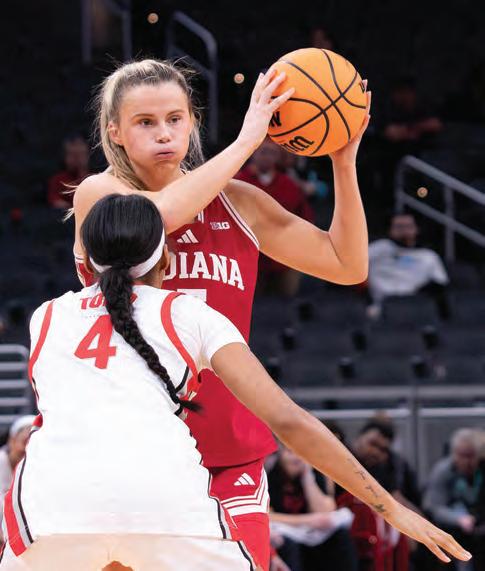
It’s a lesson all the returners can learn from and instill into the incoming freshmen and transfers.
MEN’S SOCCER
So, while an early end was the result of the Hoosiers’ 2025-26 campaign, there’s more to gain than just the checks in the win and loss columns. Moren and Indiana are building the future, and this season was just one step in that direction.
“I think we’ve got a really, really bright future,” Moren said. “I’m excited about our incoming kids. I’m excited about the kids I’ve got that gained great experience here at Indiana. Again, we’re going to get this thing back on track, and I’m really looking forward to that.”
Men’s soccer says goodbye to seniors after
By Mateo Fuentes-Rohwer
matfuent@iu.edu | @mateo_frohwer
Jack Wagoner stepped on the pitch just around the halfway line. He slowly walked toward the corner entrance to the field, where a group of people wearing Hoosier colors were waiting for him.
Roughly half an hour before, the senior forward was accompanied by his fellow Indiana men’s soccer teammates, disappointment and sadness etched across their faces. But this time, it was just Wagoner. His walk across the pitch lasted 50 seconds. As he reached the edge of the field, his first steps off Jerry Yeagley Field at Bill Armstrong Stadium marked the end of a longer journey — his Indiana soccer career.
Wagoner’s tenure at Indiana spanned four seasons. He wore the No. 21
number for three of them, but he took up No. 6 for his senior season, along with the captain’s armband.
But following Indiana’s 1-0 defeat to Saint Louis University on Nov. 23 in the second round of the NCAA Tournament, Wagoner’s time with the Hoosiers came to an end.
“I guess you’re always reflecting during your time here,” Wagoner said postgame. “And you know, even right now, you start to think about some of the last moments, some great memories and achievements since you’ve been here.”
Those achievements include a national championship appearance, two Big Ten regular season titles and one Big Ten Tournament championship win. Even though his final year as a Hoosier finished trophy-less, it was rewarding nonetheless.
In his seventh grade language arts class, Wagoner wrote a letter to his future self. The first line read, “I want to play soccer at Indiana.”
To accomplish that was a success. To captain that team was even more special.
“You can’t even describe it,” Wagoner said. Wagoner wasn’t the only Hoosier to say goodbye to the program Nov. 23. Senior forward Palmer Ault, senior midfielder Cristiano Bruletti and graduate goalkeeper Holden Brown all played minutes against Saint Louis, and all three ended their short chapters with Indiana.
Ault committed in December 2024, transferring from Butler University. His time with the Hoosiers concluded with 16 goals, 10 assists and Big Ten Offensive Player of the Year honors. Bruletti moved from
within the Big Ten after he left Michigan State to join Indiana for one season. He started 14 of his 17 appearances in 2025, contributing two assists.
Brown joined the Hoosiers from the University of Virginia in 2024, and while he saw no game action that year, his sixth and final season of collegiate eligibility featured 14 starts and a 1.29 goals against average.
Besides the seniors, head coach Todd Yeagley doesn’t know who he’s saying goodbye to just yet. Roster turnover happens every day, he said, beginning as early as the day after the loss. It could be departures to — or additions from — the transfer portal; he just doesn’t know.
“It’s the world we live in,” Yeagley said. “So you have to be ready to move and quickly building on it.” The portal is what helped
This story was originally published March 5, 2026.
Yeagley build a contender this season. Following a Big Ten regular season title in 2024, the Hoosiers lost seven starters, so Yeagley turned to the portal. Ault and Bruletti joined Indiana as transfers, along with key contributors in graduate defender Ben Do and junior midfielder Jacopo Fedrizzi.
Wagoner brought a different presence as a fouryear veteran. His leadership skills elevated with his captain role, and now with the season over, he’s ready to reflect and grow from his experience in Bloomington.
“There’s gonna be a lot that’s going on in my mind here the next couple of weeks, especially,” Wagoner said. “But it’s just, you know, making sure that you tilt it all into a positive tilt, and that way you can grow from it and better yourself.”
Indiana’s 2025 squad didn’t win any hardware,
but they’ll still be etched in history. The Hoosiers’ 5-01 start to the season was their best since 1997, which turned into a No. 1 ranking in the United Soccer Coaches poll.
But as Yeagley noted postgame, trophies are often a marker for success, especially for a program with Indiana’s prestige. And the Hoosiers didn’t win any of their three possible titles. It’s another season where Indiana said goodbye before the College Cup. It’s another season coming up empty in its quest for a ninth star. But it was still a team that etched itself into the fabric of Indiana men’s soccer, and that’s enough to make Yeagley proud.
“I’ll miss this team,” he said.
This story was originally published Nov. 23, 2025.


JIMMY RUSH | IDS
1. Bikers crash during the the men’s Little 500 race on April 25, 2026, at Bill Armstrong Stadium in Bloomington. The crash took place on the 199th lap.
JIMMY RUSH | IDS
2. Senior Paul Lee of the Black Key Bulls celebrates after completing the final lap of the men’s Little 500 race on April 25, 2026, at Bill Armstrong Stadium in Bloomington. Lee passed the competition following a crash.
TRINITY MACKENZIE | IDS
3. A Black Key Bulls rider kisses the Borg-Warner Trophy during the men’s Little 500 trophy ceremony on April 25, 2026, at Bill Armstrong Stadium in Bloomington. The trophy was a replica of the one given to the winner of the Indianapolis 500.
BRIANA PACE| IDS
4. Fans hold up the IDS Little 500 guide before the men’s Little 500 race on April 25, 2026, at Bill Armstrong Stadium in Bloomington. The race was set to start at 2 p.m.
SOPHIA KAPLAN | IDS
5. Beta Sigma Psi and Sigma Phi Epsilon riders race in the men’s Little 500 race on April 25, 2026, at Bill Armstrong Stadium in Bloomington. In the moment, they were leading the pack.
BRIANA PACE| IDS
6. A Sigma Phi Epsilon rider walks through the infield during the men’s Little 500 race on April 25, 2026, at Bill Armstrong Stadium in Bloomington. He had just been caught up in a crash. 1 3 4 5






















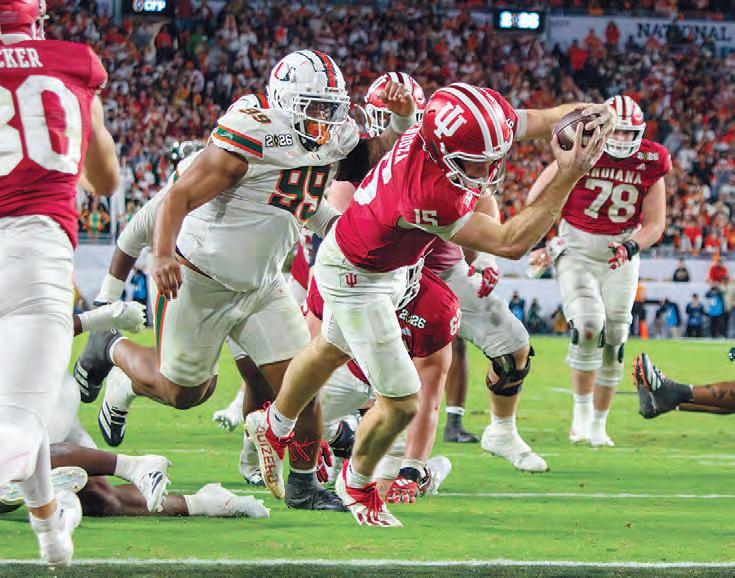

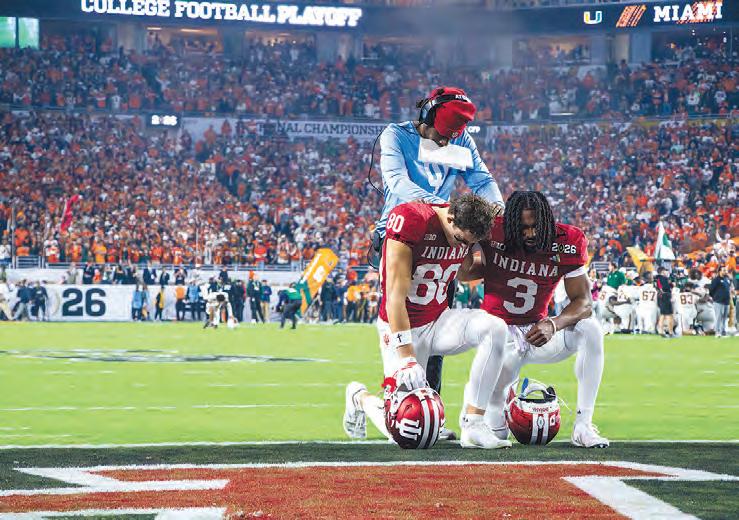


By Elakai Anela eanela@iu.edu | @elakai_anela
Cooper Malamazian paused on the dugout step and took a deep breath before stepping onto the turf at Wrigley Field in Chicago.
Moments later, he turned to the sky and pointed upward. It was a quiet, familiar gesture meant to slow everything down in a sport that keeps moving.
For Malamazian, that moment isn’t just routine. It’s necessary.
The ability to reset and breathe has become the foundation of who he is, both as a baseball player and as a person.
Malamazian committed to Indiana in October 2021. Three years later, he was picked No. 515 overall during the 17th round of the 2024 MLB Draft.
But even before he reached Indiana, Malamazian played under high expectations.
He arrived at Nazareth Academy in La Grange Park, Illinois, 18 miles outside of downtown Chicago, in fall 2020 as a 14-year-old freshman. When spring came around, Malamazian stepped into a role many players his age don’t reach until years later: playing on varsity.
He didn’t just play on varsity, he was a starting shortstop at the highest level of high school baseball and succeeding against players three or four years older than him.
Nazareth head coach Lee Milano said there wasn’t much of an adjustment period, despite him entering high school during the COVID-19 pandemic.
“That kid was a leader from the get-go,” Milano said. “And he had all intangibles that you look for in a leader, even at a young age.”
That early responsibility shaped everything that followed. Nazareth wasn’t a program built around individual stars or selfishness. Milano didn’t name captains. Everyone was expected to lead.
And from the beginning, Malamazian fit the mold.
“He surrounded himself with winners,” Milano said. “He knows how to win. He knows how to lead.”
Winning, as Milano mentioned, became part of Malamazian’s identity.
In his four years, Nazareth went 132-25, winning back-to-back IHSA 3A State titles in 2022 and 2023. Malamazian was a three-time all-state player in his own
right. During his senior season, Nazareth went 37-1 in the state’s highest classification.
But the success didn’t come without challenges.
During his junior year, Malamazian battled a hamstring injury for much of the season. With Nazareth going 34-6 and making a postseason run, Milano said the shortstop returned but only recorded 72 at-bats and “wasn’t 100%.”
Malamazian later dealt with mononucleosis in the summer, which limited his exposure to MLB scouts on the national stage after the high school season ended.
“He wasn’t able to do, really, the summer circuit that most kids do between junior and senior season nationally,” Milano said. “If people would have seen that kid nationally between his junior and senior year, he would have been a top five round pick.”
Despite the ups and downs, Milano never questioned what he saw.
“There are some days where you’re going to go 0 for 3 or 0 for 4 with three, four strikeouts,” he said. “And you got to be able to bounce back, and I think Cooper has that mentality to be successful because I think he’s mentally tough.”
If talent set the foundation, mentality became the separator.
Baseball demands mental fortitude, and Malamazian doesn’t let the failure get to him. It’s another one of the unique traits he possesses.
“In my opinion, it’s one of the hardest sports in the world,” Malamazian said. “But the moment can never be too big because at the end of the day, it’s just a game, just a sport you’ve been doing since you were little.”
The game forces players to confront setbacks daily. For some, it becomes overwhelming. But for Malamazian, it became something else entirely as he began to get better at “learning how to fail.”
“Honestly, it’s crazy to say I love failing sometimes because that’s the way you grow,” he said. “But that’s just the way it goes.”
That mindset didn’t develop overnight. It was reinforced through years of mentorship by Milano and MLB Hall of Famer Jim Thome, who was hired as an assistant coach at Nazareth when his son Landon came into the academy in 2022, ahead of Malamazian’s ju-

nior year.
For a high school player, having a mentor who hit 612 home runs during 22 seasons in the MLB around the program is rare. And Malamazian embraced the opportunity, looking to grow and develop under Thome’s wing.
“Having him as a great mind was a one-of-one experience,” Malamazian said. “You don’t have many guys playing college baseball that could tell you about having a Hall of Famer as a coach in high school, so that was a special experience as well.”
During his senior season, Milano said Malamazian felt the pressure of being watched under a “microscope.” But Thome and Milano advised Malamazian to lean more into the basics of the game to alleviate the pressure he was feeling.
“I had to talk with Thome and a few other guys, and some even like friend’s dads who came up to me, they’re like, ‘Listen, you’re still a 17-year-old kid,’” Malamazian said. “‘Go out there and have fun.’”
By the end of his senior season, Malamazian had shown enough talent and potential to be selected by the Milwaukee Brewers in the 17th round of the 2024 MLB Draft.
For most players, the opportunity to play professional baseball in the Brewers system would be too enticing to pass up. However, Malamazian bet on himself and opted for the college baseball route, which landed him in Bloomington as the No. 11 overall player and No. 3 shortstop in Illinois by Perfect Game.
“It was a surreal experience, for sure, going through the whole senior year and the whole draft phase of it,” Malamazian said. “It’s definitely a lot to handle for a 17, 18 year old for sure.”
Ultimately, the decision wasn’t about turning down baseball; it was about shaping a different path.
“I wanted the college experience,” Malamazian said. “I wanted to come here to play for a prestigious university like Indiana. It’s been a dream of mine to play college baseball. It’s competitive, it’s fun. Obviously, I passed on a great experience, but I think this one’s better, and it’s been well worth it so far.”
Even after being selected in the MLB Draft, the transition to college baseball wasn’t seamless.
Like many freshmen, he learned success at one level
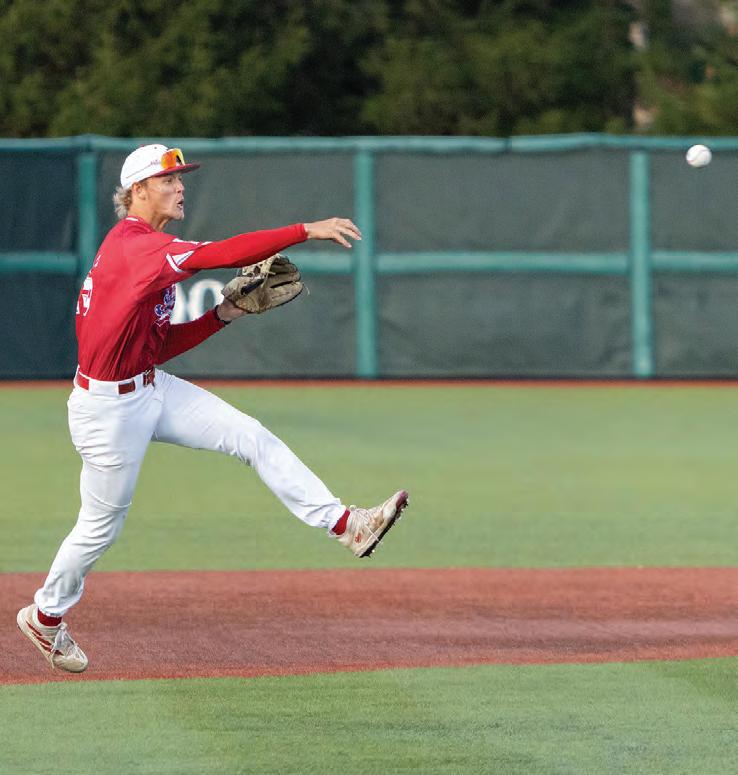
doesn’t guarantee anything at the next. He struggled during fall workouts. The adjustment to faster pitching, harder competition and increased expectations was real.
“I wasn’t the best player, even remotely close to being a starter that fall,” Malamazian said. “And obviously it takes a lot of hard work and coming in here after hours and before hours, and you get extra work in and work with the coaches.”
Those hours of work paid off. By the time the season arrived, Malamazian had earned his way onto the field.
He started in 46 games as a freshman. Of those, 33 starts came at shortstop, while the other 13 were at third base, after former Hoosier Josh Pyne medically redshirted the season. He finished the season batting .320 with a .906 OPS in 172 at-bats.
Heading into his sophomore year, Indiana head coach Jeff Mercer called Malamazian “personable” to the rest of his teammates during the Hoosiers’ media day Jan. 28.
“Cooper had to come in and kind of win out the shortstop job as a young player,” Mercer said. “He was on the main draft circuit
and the main stage. When he’s talking to other young guys who will have to step in and play this year, he’s able to be relatable to them.”
Malamazian struggled at the beginning of his sophomore season. He committed four errors through the first four contests.
Yet in the month of April, he has turned the outlook of his season around. He has batted 24 for 65 (.369) and held a 13-game hit streak from April 3 - April 21 — something that hasn’t surprised Mercer.
“He stays in the fight. He wants to work,” Mercer said. “He’s not a guy who feels sorry for himself... he’s really just blossoming as a player and a young man; he takes accountability.” The 6-foot-2 infielder is batting .306 with a .850 OPS in 173 at-bats this season. Still, Mercer believes there is more to be desired.
“I think he’s really close to opening it up and kind of taking off to another level,” Mercer said. “There’s a gear, a level, that’s coming really soon for him and he’s working his way there diligently on a day-to-day basis.”
Even to this day, the game hasn’t changed for Malamazian.
There are times when the ball doesn’t fall. Days when
nothing feels right. Moments where failure stacks up. That’s when he returns to what he’s built his game on. A breath. A pause. A glance toward the sky. It’s a small moment, but one shaped by years of pressure, expectation and growth.
“The moment can never be too big,” Malamazian said. “When the big at-bats come, the big plays come, you got to just trust yourself and trust your preparation you’ve had your whole life.” Before he leaves Indiana, whenever that may be, Malamazian isn’t focused on numbers or accolades.
“I want to get some wins, man,” he said. “It’s all I care about.” It’s a simple goal, but one that aligns with everything he’s done so far. From a 14-year-old leading a varsity team, to a draft pick choosing development over immediacy, to a college shortstop still learning and growing. In a sport where failure is unavoidable, Malamazian has learned to embrace it. Because for him, that’s where the game, and his journey, truly begins.
This story was originally published April 29, 2026.










By Conor Banks conbanks@iu.edu | @Conorbanks06
Fernando Mendoza sat centered on a couch, his parents positioned to one side, and his brother, Alberto, on the other, while additional family members filled the surrounding space. The former Hoosier received the phone call he had anticipated for months. Smiles broke across the room as Mendoza embraced his family members, before putting on a silver and black embroidered hat.
With that moment, the Las Vegas Raiders made it official, selecting him with the No. 1 overall pick in the 2026 NFL Draft on April 23.
Mendoza began his collegiate career at the University of California, Berkeley, in 2022 as an overlooked freshman. The Miami native arrived as a two-star recruit, before redshirting his first year with the program.
Four years later, Mendoza was the star of college football. He led Indiana football to its first national championship in program history and the first 16-0 season in the modern college football landscape, while being named the Heisman Trophy winner. He is also the
next face of the Raiders organization.
“College was fantastic,” Mendoza said April 23. “I’m so blessed to have that career. But now I step into a great game in the NFL. I look forward to proving and earning it every single day.”
Mendoza first met with the Raiders at the NFL Scouting Combine in Indianapolis, despite opting not to throw at the event.
“I was lucky enough to have a formal interview with the Las Vegas Raiders,” Mendoza said Feb. 27 at the combine. “It was a fantastic interview. The coaching staff was in there. We went over some of my previous plays, drew up some plays on the board. I thought it was a great meeting.”
Most of the Raiders’ coaching staff and front office personnel were in attendance for the first meeting with their young quarterback. Even Tom Brady, a minority owner of the team and “football idol” of Mendoza, briefly spoke with him over the phone.
“Who hasn’t admired Tom Brady?” Mendoza said. “That guy has more Super Bowl rings than anybody, so that opportunity would be fantastic. Tom Brady, I
believe, is the greatest quarterback of all time by a wide margin. And to be able to have the opportunity to be mentored by him would — it would mean so much.”
Mendoza added that the Raiders brass is “very football savvy.” Throughout his formal interview, Mendoza and Raiders personnel watched previous film and went through various progressions and scenarios.
Instead of throwing at the combine, Mendoza participated in Indiana’s pro day April 1. Raiders head coach Klint Kubiak, general manager John Spytek and several other members of the team’s scouting department attended the event to watch their quarterback throw.
The Raiders finished tied for a league-worst 3-14 record in 2025 under former head coach Pete Carrol, who was fired after the conclusion of the regular season. Kubiak, who was hired Feb. 9, brings a high-level offensive mind to the team. He enters his first year at the helm in Las Vegas after serving as the offensive coordinator for the 2025 Super Bowl Champion Seattle Seahawks. Kubiak helped engineer a Seattle offense that racked up 28.4 points scored
per game, which ranked third in the NFL, and guided a top 10 passing attack.
Kubiak offered high praise for Mendoza during the NFL’s annual league meeting March 31.
“He’s a winner,” Kubiak said. “He’s accurate. He’s quick. He’s strong. He’s tall. He’s intelligent.”
Mendoza entered the draft as the consensus No. 1 pick and the presumptive future of the Raiders, but the Heisman Trophy winner acknowledged a shortcoming in his game at pro day — inexperience under center. Mendoza only took 3% of his snaps from under center during his lone season at Indiana, per ESPN. Kubiak’s offensive system heavily relies on under center snaps to keep defense off guard and set up play-action passes.
“And that’s a big adjustment you need to get used to,” Mendoza said. “That and just the nature of the game. Not only that, the hashes are also more condensed and the speed of the game’s gonna be faster. So all those things I look forward to learning — learning from the new coaching staff I’ll be blessed to have. And in that, there might be some failures, but gotta turn those into
some successes.”
To help smooth this transition, Mendoza has worked closely with former NFL quarterback and assistant coach Brian Griese, NFL Network analyst Daniel Jeremiah said in a March 27 appearance on the “Pat McAfee Show.” Kubiak and Griese spent the 2023 season together with the San Francisco 49ers. Now, Griese is helping Mendoza learn Kubiak’s “West Coast offense.”
“With Brian (Griese), I was able to work a lot under center, and a lot of concepts that I would be running in every offense, whether it’s the West Coast offense or not, so day one I’m comfortable going under center, saying a cadence, calling a play in the huddle,” Mendoza said in an appearance on the “Up and Adams” show April 20.
While Mendoza is the presumptive quarterback of the future for the Raiders, the team brought in competition April 2, signing quarterback Kirk Cousins to a contract. Entering his 15th NFL campaign, Cousins will be 38 years old at the start of the new season, making the move more of an additional veteran presence for Mendoza, rather than a long-
term solution.
Cousins’ signing provides Mendoza with proven veteran leadership — one that has thrived in similar offensive systems, as Cousins worked with Kubiak on the Minnesota Vikings from 2019-2021. On the “Up and Adams” show, Mendoza said he talked to Cousins during his top-30 visit at the Raiders facility.
“Funny enough, when I was at Berkeley, I just watched him just to learn from his game — the way that he reads defenses and his footwork,” Mendoza said.
Although it is still unknown whether Mendoza will be the Raiders’ day-one starter, his track record suggests he will be ready when the opportunity comes. The No. 1 overall pick consistently exceeded expectations in college. Now, he’ll be tasked with doing it again on football’s biggest stage.
“What a great organization,” Mendoza said Thursday. “Great legacy. There’s so many great teammates I’m looking forward to talking to. Coaches, owners — I’m ecstatic for the opportunity.”
This story was originally published April 24, 2026.
By Dalton James
jamesdm@iu.edu
Fernando Mendoza
first entered the Heisman Trophy race when Indiana football thrashed then-No. 9 Illinois on Sept. 20. The redshirt junior quarterback thought it would be “cool” someday to tell his future kids he was once in the Heisman conversation.
Now, Mendoza can tell them he won college football’s most prestigious award, as he was announced as the winner of the Heisman Trophy on Dec. 13. He’s the 39th quarterback to win the award
Anthony Thompson fin-
Mendoza beat the other three finalists — Vanderbilt University quarterback Diego Pavia, Ohio State quarterback Julian Sayin and the University of Notre Dame running back Jeremiyah Love — as he earned 643 first-place votes. He

ished second in 1989. Indiana notched its first 12-0 regular season and a victory over Ohio State in the Big Ten Championship game Dec. 6 during Mendoza’s first season as the Hoosiers’ signal caller. Mendoza completed 71.5% of his passes for 2,980 yards and a nation-

high 33 touchdowns to just six interceptions. He also rushed for 240 yards and six scores. The Heisman Trophy is just the latest award Mendoza has taken home this week, as he was named the Walter Camp Player of the Year, The Associated Press Player of the Year, the Davey O’Brien Award winner and the Maxwell Award winner. Mendoza earned firstteam All-Big Ten honors last week while being named the Greise-Brees Quarterback of the Year and the Graham-George Offensive Player of the Year. This story was originally published Dec. 13, 2025.





By Savannah Slone srslone@iu.edu | @savrivers06
Inside Gregory Gymnasium in Austin, Texas, Avry Tatum sat at a podium. To her right was senior outside hitter Candela Alonso-Corcelles, and to her left was Indiana volleyball head coach Steve Aird.
In front of reporters, Tatum held back tears — the Hoosiers had just fallen to the University of Texas at Austin in the NCAA Tournament regional semifinals Dec. 12, marking the senior opposite hitter’s final match as a collegiate athlete.
Of the four questions asked at the postgame press conference after the loss, none were for Tatum. After Aird made an opening statement, he answered three questions, while Alonso-Corcelles answered one. Tatum didn’t speak for the nearly six minutes she sat with Alonso-Corcelles and Aird, but her tears and head nods spoke louder than words could.
“I think the pain of the end of the year is sometimes commensurate with how much you love the group,” Aird said. “And that’s the fun part — they’re a really connected team.”
When Aird said this, Tatum closed her eyes but opened them a moment later to look at AlonsoCorcelles, who gave Tatum a slight smile and put her hand on her visibly upset teammate. The teammate she spent the last three seasons with at Indiana. The teammate she broke records alongside. The teammate she made history with.
The loss to Texas ended Indiana’s 25-8 2025 season, marking the winningest season in program history.
The Hoosiers finished fifth in the Big Ten standings, their highest placement since 1999 when they finished tied for fifth. They recorded wins over four teams ranked in the Ameri-
can Volleyball Coaches Association top 25.
“Had an unbelievable season and made history and given a little bit of time and space, I think they’ll look back with tremendous pride at the fact that they did something that no other Indiana program has ever been able to do,” Aird said.
But all the record breaking was after seasons where Indiana consistently fell in the middle of the pack in the Big Ten, only finishing in the top half of the conference once since 1999, which was in 2023. In Alonso-Corcelles’ first season in Bloomington in 2022, Indiana went 1616, with just a 9-11 conference record. Then, Tatum transferred to Indiana, and the Hoosiers went 21-12 to earn the program’s sixth 20win season.
However, Tatum and Alonso-Corcelles’ junior season was another of mediocrity, as Indiana went 15-15 with an 8-12 Big Ten record. That put the Hoosiers in a tie for 10th in the conference standings.
At the end of the 2024 season, there were questions surrounding Indiana’s roster makeup. Seven freshmen and one transfer were coming to Bloomington, while nine other players left the program. But Tatum and Alonso-Corcelles, who led the team in points scored per set, stayed. They stayed and became a part of the winningest season in program history. And not only did they make history for the program, but in doing so, they became one of the most storied duos in program history.
When Alonso-Corcelles came to Bloomington as a freshman, she made an immediate impact. She started in 26 of the Hoosiers’ 32 matches and recorded 231 kills. And from there, she became a core part of the Hoosiers’ lineup. In her four-year career at Indiana, Alonso-Corcelles
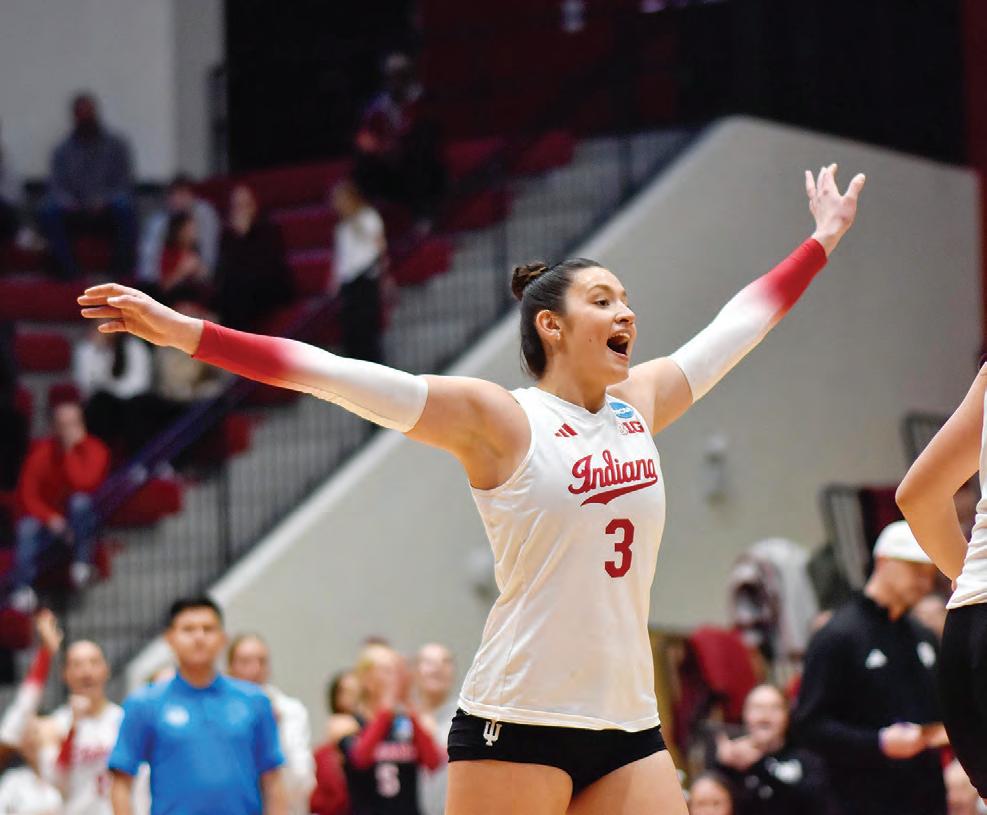
played in all but one match. With the Hoosiers’ Nov. 26 win over Illinois, she became the winningest player in program history. Alonso-Corcelles and Indiana recorded two more wins after the victory over Illinois, over the University of Toledo and the University of Colorado Boulder in the NCAA Tournament first and second rounds, which pushed her win total to 77.
After her four seasons, Alonso-Corcelles is seventh in program history for alltime kills with 1,425, spearheaded by her career-high 441 kills this season.
While Tatum, who transferred from the University of Cincinnati after her freshman year, didn’t reach
the program-record 77 wins that Alonso-Corcelles did, she made her mark on the program in another way — becoming an AVCA AllAmerican honorable mention.
Before Tatum, only four Hoosiers had ever earned All-American honors. Tatum — along with freshman setter Teodora Kričković was named an All-American honorable mention after she recorded 389 kills off a .320 hitting percentage.
Alonso-Corcelles and Tatum’s senior seasons led them to become the first two Hoosiers ever selected in the Major League Volleyball Draft. On Nov. 24, Alonso-Corcelles was picked by the Grand Rapids
Rise in the second round, while Tatum was drafted in the fourth round by the Columbus Fury.
With their legacies cemented in program history, the two leave gaping holes in the Hoosiers’ roster, but that didn’t stop AlonsoCorcelles from looking at the future for her now former team after its loss to Texas.
Despite its youth, Alonso-Corcelles said the maturity and connectivity of the current players on Indiana’s squad can help them to a national championship. It’s not just something Alonso-Corcelles thinks will happen, but something she said she knows will happen.
But she was part of what got Indiana to that point. As veterans this season, she and Tatum were the core of that development that got the Hoosiers their historic season and what can shape Indiana for years to come.
“We rewrote the record books across the board,” Aird said. “So much of it was because of what the two young women beside me, who will go on and play professionally and have fantastic careers and will be on the wall at Wilkinson Hall in Bloomington forever. And what they did this year will never be taken away from them.”
This story was originally published Dec. 19, 2025.


Thinking about graduate school?
Add one year to your undergraduate degree to earn a master’s through Accelerated Master’s Programs (AMP).
Save time and money while preparing yourself for the career you want.

“AMP gives me the chance to explore and use my policy background in a wide variety of things instead of just committing to one career path.”
—Ava Habegger,
Choose from dozens of AMP degree pathways. Stay at IU, where you can hit the ground running because you already know the campus, your classmates, and the faculty. Is an AMP path right for you? Ask your advisor or visit go.iu.edu/AMP