IDS


A look at IU’s $440k in federal lobbying last year


By Mia Hilkowitz
mhilkowi@iu.edu | @MiaHilkowitz
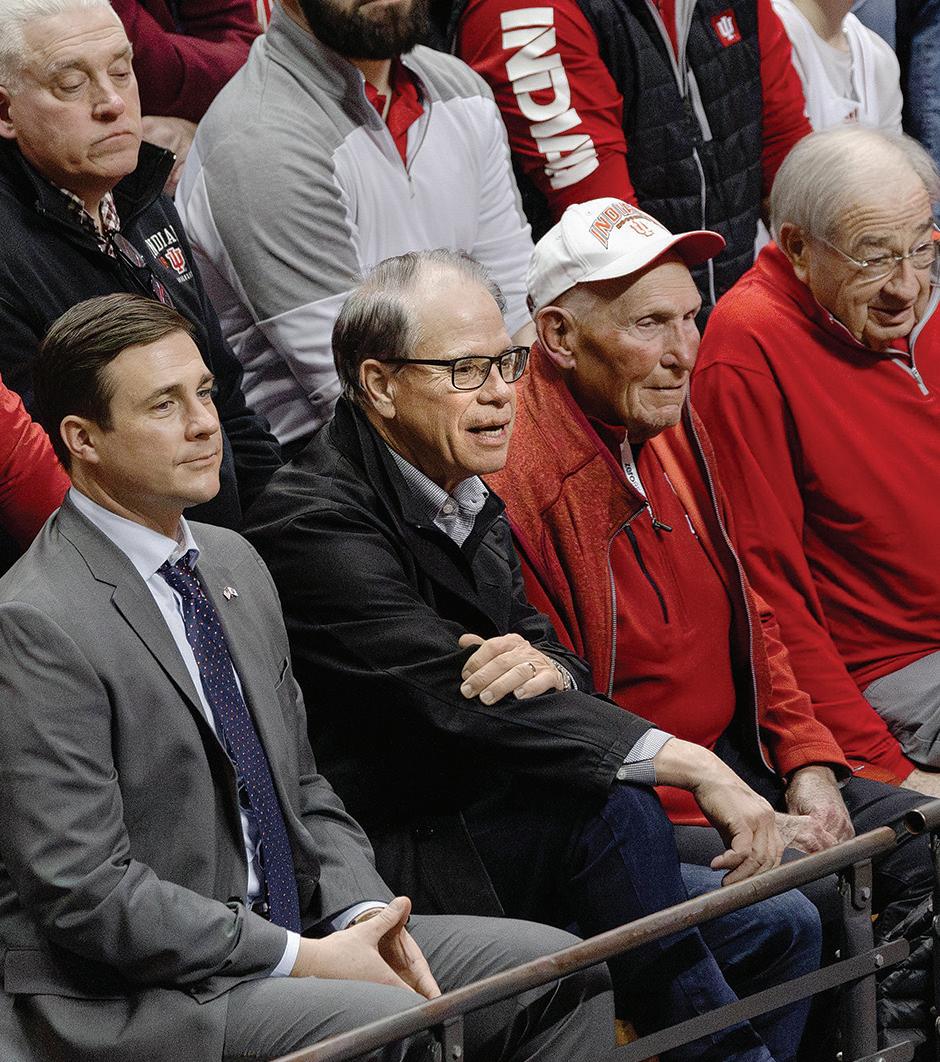
Indiana University spent around $440,000 last year lobbying the federal government on issues ranging from its defense partnerships to artificial intelligence research to campus hazing legislation, among a wide range of other topics.
The lobbying expenses, reported through quarterly disclosures, reflect a slight increase from the $410,000 the university spent in 2023. IU was the third-highest spending university in Indiana last year, following Purdue University ($620,000) and University of Notre Dame ($540,000).
Ball State University was the only other Indiana college to record federal lobbying activity, spending $60,000.
Still, IU’s federal lobbying spending is mild compared to many other Big Ten schools. The University of California system, which includes the Big Ten’s UCLA, spent by far the highest on lobbying, almost $2.2 million last year.
IU’s spending on federal lobbying efforts has steadily increased over the last five years — except for 2021, when the university spent $20,000 less than the year before. Aaron Dusso, associate professor of political science at IU Indianapolis, said this is a trend common with most universities across the country over the past decades.
















That’s because state and federal support of universities has dwindled year after year, he said.
“There’s a smaller pot of money available, and so once you have that smaller pot becoming available, there’s a lot more competition for it,” Dusso said.
“You’re a player in this industry, and of course you want to keep that industry’s money flowing into higher education.”
Aaron Dusso associate professor of political science, IU Indianapolis
Colleges and universities can lobby Congress and federal agencies in several ways. First, they might hire their own lobbyists to work in Washington. According to IU’s disclosures, the university employed two in-house lobbyists last year, Doug Wasitis and Molly Connor, who work for the IU Office of Federal Relations. Wasitis has worked for IU Federal Relations since 2005, and Connor served as an appointed student member of the IU Board of Trustees from 2019-2021.
Universities can also hire already existing lobbying firms to lobby on their behalf — Notre Dame, for instance, employed two outside lobbying firms last year. Many institutions also join associations that lobby Congress on behalf of a group of institutions, like the Association of American Universities and the American Council on Education.
However, lobbying activity doesn’t always mean taking a stance on legislation or advocating for specific government action. Lobbying activity could also mean providing expertise to members of Congress on higher education issues or updating federal agencies on the university’s initiatives.
“There’s this kind of reciprocal relationship that happens between members of Congress, their staff and the lobbying organizations,” Dusso said, “no matter what industry they’re in.”
SEE LOBBYING, PAGE 9
Government Relations LLC.

By Jack Forrest jhforres@iu.edu | @byjackforrest
Editor’s note: The IDS received a tip about potential plagiarism in President Whitten’s 1996 dissertation and 2006 article in September. IDS staff verified examples and interviewed experts but decided it did not have enough evidence to break a story with allegations of this nature. Following publication of The Chronicle of Higher Education’s article, the IDS has decided to publish the expert interviews to add to the public discourse about what does or does not constitute plagiarism.
Does copied language in IU President Pamela Whitten’s doctoral dissertation constitute plagiarism?
The Chronicle of Higher Education first reported Jan. 22 it received documents including examples of writing from Whitten’s 1996 doctoral dissertation about telemedicine and a 2006 article alongside the source text.
In September, the Indiana Daily Student received the same examples and more in multiple spreadsheets, which it was able to verify with both the original text source and the dissertation. The sources of the documents requested anonymi-
ty due to fear of repercussion for sharing them. It also received tips about seven examples of potential plagiarism unique from the Chronicle’s, including a 52word example of language taken from an article Whitten co-wrote in Telemedicine Journal. That example was attributed to herself and her co-author but was not in quotations. In a statement to the Chronicle, an IU spokesperson claimed an independent law firm investigated and found the “assertions” to be meritless in August last year. SEE WHITTEN, PAGE 8
By Adelyn Rabbitt adrabb@iu.edu
Eliza Brader was cut off from Indiana’s Medicaid expansion program, the Healthy Indiana Plan, once.
Brader, 27, moved to Bloomington from New Mexico in 2019 to start her master's degree in public affairs at IU. She also moved to be closer to the national clinic for her rare genetic disease, Hypermobile Ehlers-Danlos Syndrome, which had just relocated to Indianapolis.
As a master's student, she didn’t qualify for university sponsored health insurance, so she got on HIP.
In 2019, Brader’s ability to walk began to deteriorate, forcing her to pursue getting a wheelchair — often a long process that can take several months. Hurdles include approval from a doctor, approval from a physical therapist and getting insurance to cover the cost.
However, during this process, her HIP status went under review. That was when she found out her work study program didn’t count under then-HIP work requirements. At the time, Brader was working 15 hours a week in work study and going to school full time.
The state cut her from the plan in October 2019.
Indiana Senate Republicans have made reforming HIP one of their top priorities, a move that could effectively cut nearly 200,000 Hoosiers off the plan, and constrict its benefits.
Proponents say reform is needed to save money.
HIP is an expansion of Indiana’s traditional Medicaid program, providing low-income adults from ages 19-64 without disabilities with accessible health insurance. To be eligible for HIP, someone's income must be no more than 138% of the federal poverty level.
State Sen. Ryan Mishler,

vice-chairperson of the Medicaid Oversight Committee and chair of the Indiana Senate Appropriations Committee, proposed Senate Bill 2 on Jan. 14, which would cap enrollment in HIP at 500,000, with all remaining users put on a waitlist.
“I just think it immediately becomes unaffordable for a lot of people.”
Adam Nuñez Monroe County resident
As of December 2024, almost 2 million Hoosiers are enrolled in Medicaid. 686,364 of those Medicaid recipients are enrolled in HIP. In Monroe County, 25,628 people are enrolled in Medicaid, 10,449 of whom are enrolled in HIP. Mishler was not able to do an interview within the Indiana Daily Student’s twoweek deadline. Adam Nuñez, a 55-yearold Monroe County resident, got onto HIP when he faced chronic back issues and had to reduce his work hours at his physical labor-intensive job in 2017. He was removed from the plan after having Medicare for a year but is now on the Qualified Medicare Beneficiary program. He said the proposed cap could be devastating for current HIP users, as they often require prescriptions and consistent doctor’s appointments.
He said that without HIP, he does not know how much healthcare would cost him or if it would be affordable. Nuñez added that it is dangerous to push people into the private healthcare system by removing or waitlisting them from HIP.
“There’s going to be procedures that are going to be rejected. There’s going to be doctors’ visits that are going to be refused,” he said. “I just think it immediately becomes unaffordable for a lot of people.”
Mishler’s proposed bill would also limit individual coverage to only 36 months of one’s lifetime.
Tracey Hutchings-Goetz is the communications and policy director for Hoosier Action, a grassroots organization dedicated to “improving the everyday lives of Hoosiers.” She testified during the Senate Appropriations Committee Hearing of SB 2 on Jan. 16. The bill is set to proceed to a committee vote. After testimonies, Mishler announced he would hold the bill for adjustments, but it would ultimately return for further votes.
“At 36 months, people don’t magically stop needing healthcare,” HutchingsGoetz said, referencing diabetics who rely on HIP for insulin and cancer patients who need HIP for their chemotherapy. “The idea that those care needs disappear in 36 months is absurd.”
By Safin Khatri safkhat@iu.edu
On a cold and snowy Sat-
urday in Bloomington, Book Corner buzzes with life, providing an escape from the elements. College students browse the shelves, stopping to read the back covers. A few blocks away, Cherry Canary Vintage Clothing hums with the sounds of hangers sliding across the racks, as colorful garments from past decades surround shoppers in the search for the perfect retro piece. These scenes are increasingly common in Bloomington as many members of Gen Z find comfort in retro and vintage lifestyles.
Edward Hirt, a professor of social psychology at IU, said in an email that nostalgia through stories, movies and depictions of events can give people a sense of meaningfulness in their lives, even if they have not physically lived it themselves.
“When things are chaotic or unpredictable, it is nice to reminisce about times in the past where you had good times, experiences, felt loved,” he said, “for it gives us a sense of continuity with our past, a sense that we can get through changes, and that is reassuring and comforting.”
Cassie Sloan, owner of Cherry Canary Vintage Clothing, said she has seen more interest from young people in vintage and retro clothing during the last few years. In 2023, the U.S. secondhand clothing market grew by 11%, seven times faster than the collective retail clothing market, according to ThredUp, an online consignment and thrift store.
“It does seem people are a lot more into sustainability and vintage,” she said. “And there’s definitely been an uptick in ‘80s and ‘90s stuff being popular, so I would
By Adelyn Rabbitt
adrabb@iu.edu
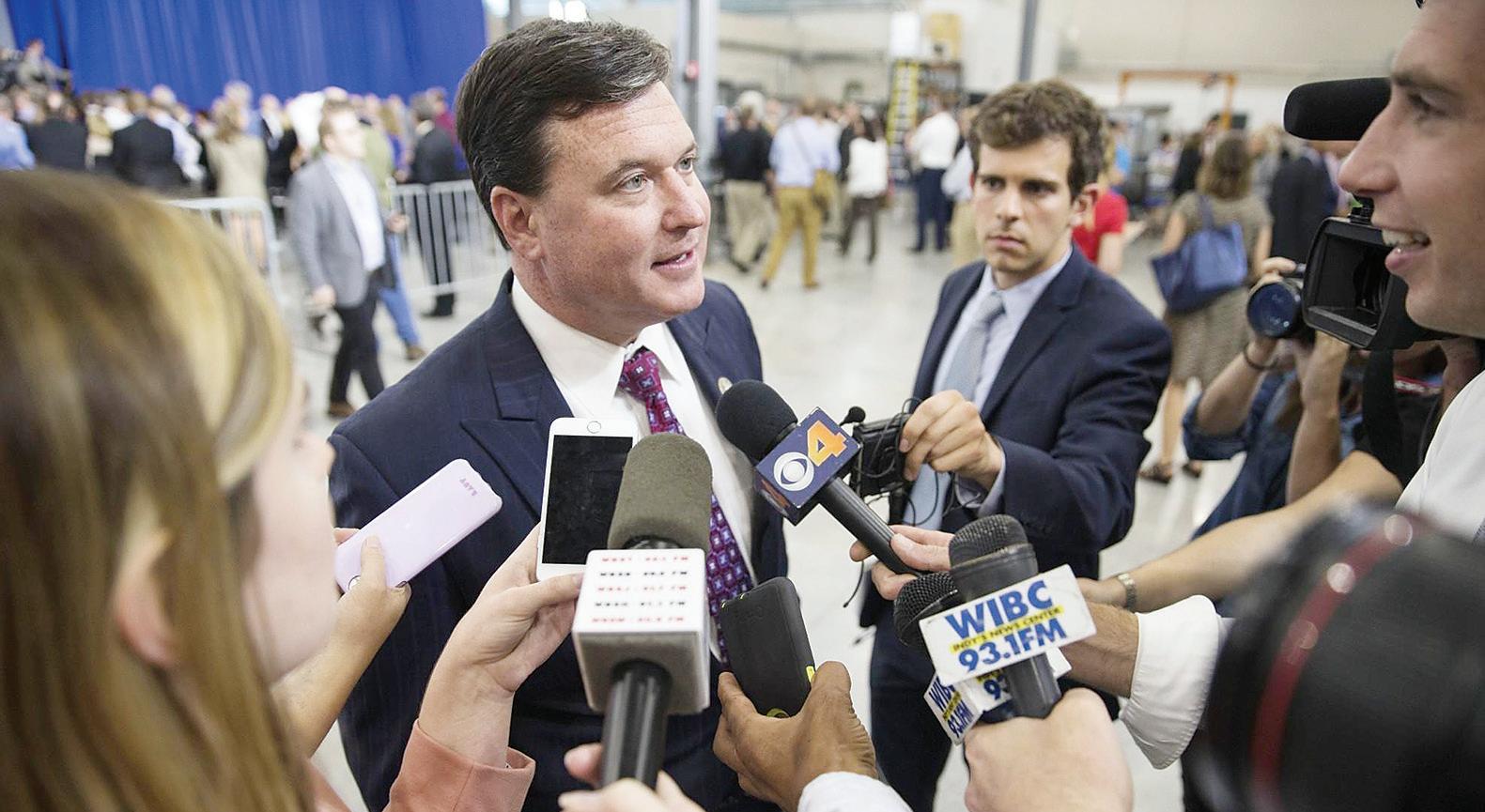
Indiana Attorney Gen-
eral Todd Rokita filed an amended complaint against the Monroe County Sheriff’s Office on Jan. 9 after a court order found his original suit insufficient, according to recently uploaded court documents.
Rokita filed a lawsuit against the sheriff’s office and Monroe County Sheriff Ruben Marté on July 11, 2024, challenging the sheriff’s office policy on federal immigration detention. The lawsuit claimed MCSO’s policy failed to comply with Indiana law.
Indiana code disallows local policies from limiting the enforcement of federal immigration laws or preventing local officials’ cooperation with federal officials in situations related to immigration. Rokita is allowed to file this lawsuit as attorney general due to Indiana Senate Enrolled Act 181. The sheriff’s office policy
assume that that’s the nostalgia part.”
Sloan also said social media has helped her store gain attention and customers, with apps such as TikTok driving engagement.
A survey by Bain & Company found customers who engage with business on social media, such as liking posts or following companies, spend up to 40% more compared to other customers.
“Somebody did a TikTok story on my shop a year ago, and I saw a huge uptick in followers,” Sloan said. “But I don’t do a lot of (social media), so I am sure it would help. And I think that that did help get some more people into the shop for a while.”
Similarly, Connor Kilander, an employee at Book Corner, said a lot of Gen Z customers come from “BookTok,” a subculture of people who discuss books on the social media app.
“I’ve seen many people coming in asking about whether we have some books that were on BookTok,” he said. “And sometimes we do, sometimes we don’t, more times than not we do, and I find that it keeps a lot more younger people coming in.”
Kilander also said the appeal for a physical copy of a book keeps bookstores such as Book Corner relevant.
Since 2009, independent bookstores in the U.S. have grown by 49%, in addition to sales for printed books increasing annually since 2013.
“I find that people still like to have a hard copy of something in their hands,” he said. “Whether it’s for materialistic purpose or just enjoy having a book, it’s good to say so many people are aged younger, still wanting to read and have copies of books rather than listening to an audiobook or buy-
Rokita challenged, MCSO12, states that its employees can’t detain or hold people beyond their scheduled release date solely based on a non-criminal U.S. Immigration and Customs Enforcement detainer. An immigration detainer is a request from ICE that asks a federal, state or local law enforcement branch to notify ICE before releasing a noncitizen and hold the noncitizen for up to an additional 48 hours.
However, Rokita wanted the policy changed to state that MCSO’s employees should detain any individual in custody upon receipt of an Immigration Detainer Notice of Action and abide by any applicable federal or state laws on immigration detainers while the individual is in custody. His lawsuit states that the original policy made by MCSO did not align with state law.
State law requires that government bodies do not inhibit officials from “communicating or cooperating


ing a copy online.”
Christopher Emge, senior director of government and community relations for the Greater Bloomington Chamber of Commerce, said due to the rise of ecommerce, customers appreciate the experience of shopping for physical goods, which Morgenstern Books and Cafe have done.
“It’s not just the books they have; it’s going in there and having an atmosphere that goes, ‘Oh, I want to hang out here for 45 minutes to an hour, I’m going to get a cup of coffee.’ So, it’s the experience with the physical goods,” he said.
Hirt said engaging with trends, music or clothes that evoke nostalgia helps members of Gen Z find their identity.
“We think that people want to feel continuity in their sense of self and their identity,” Hirt said. “This is who I am, these events and memories help define me and make me the person I am today, so remembering those formative experiences and times can give us a feeling of authenticity and knowing ourselves.”
Emge said local businesses should understand the nature of ongoing trends, such as the reemergence of retro but should also be aware of how trends change.
“One thing the businesses have to do is sort of realize that the market for this winner isn’t the winner three years ago, it’s kind of like music tastes a little bit,” he said. “A hit today is not necessarily a hit from five years ago, and a hit five years ago is not necessarily a hit today. So those tastes and everything are constantly evolving.”
Hirt said Gen Z commonly experiences historical nostalgia, a form of nostalgia where an individual may not
with federal officials,” “sending to or receiving information from the United States Department of Homeland Security,” “maintaining information” or “exchanging information with another federal, state, or local government entity.”
Marté filed a motion to dismiss the lawsuit Sept. 4, 2024, calling Rokita’s complaint “baseless” and contending that MCSO-12 is fully in compliance with Indiana state law.
Monroe County Circuit Court released an order on Marté’s motion to dismiss the lawsuit Dec. 19, 2024. The court found Rokita’s complaint unable to adequately prove MCSO-12 violates Indiana law and allowed Rokita a chance to amend his complaint.
The amended version of the lawsuit is lengthier than the first draft and includes multiple clarifying points to its argument that the MCSO policy violates Indiana state law.
It notes that the policy



have personally experienced a moment firsthand, but experienced it through media, or even through other people, such as parents or community members.
Philosopher and sociologist Maurice Halbwachs identified this phenomenon through the Collective Memory Theory — a memory that is shared and constructed by modern society of a past event or idea that leads individuals to feel like they understand what it was like to be a part of it.
Kilander believes the history of a place or building such as Book Corner creates a connection with nostalgia from the past and today.
“This bookstore, for example, is 60, 70 years old, and when people come in here, I hear many people every day go ‘Wow this is amazing,’” Kilander said. “The store has such a
grounding and it’s a wel-
coming atmosphere. It both feels older and new at the same time, but welcoming, for sure.”
Emge believes that college students appreciate the uniqueness and history of local businesses in Bloomington.
“It’s fun to go in these smaller, unique shops that are very Bloomington and very different from where they came from,” he said.
Sloan also said that the history and timelessness of the clothing in her store creates an appeal for Gen Z.
“It was fascinating to me how a dress from the 1940s and ‘50s was in better condition than something I could go buy new and would last longer, and it was more timeless,” Sloan said.
Although there are positive aspects to nostalgia, Hirt warns against over-
looking and glamorizing life in the past.
“If you have ever seen the movie ‘Pleasantville,’ it really does an amazing job of depicting this, for the main protagonist longs for life in the 1950s like a favorite TV show depicted life then, only to have the chance to actually go there and see what it is like more fully, for its drawbacks as well as its strengths,” Hirt said.
Despite the negative aspects to nostalgia, Hirt believes nostalgia can create connections and reconnect us to the past.
“We learn from the past,” Hirt said. “We also often do this with others, so it is done consensually and in the presence of/along with others to collectively recall past experiences, and it can bridge connections to others by sharing these nostalgic memories together.”
bars MCSO officials from requesting information about an individual’s citizenship and immigration status from ICE. The policy also limits officials’ ability to access such information at the request of ICE unless “required to do so by law.” The lawsuit al-
leges these restrictions violate the statute that requires local government to allow law enforcement officers to cooperate with federal immigration law enforcement.
The amended lawsuit also alleges MCSO’s restrictions on entering agreements with ICE regarding immigration or citizenship violations are unlawful. Although local authorities are not required by Indiana law to enter agreements with ICE, the suit argues their ability to enter into such agreements cannot be inhibited.
The restriction of MCSO employees’ communication and cooperation with federal immigration
authorities is also referenced as illegal. The lawsuit claims the policy is a violation because it limits employees from being able to enforce federal immigration laws to “the full extent permitted by federal law.”
Finally, in the “cause of action” portion of the amended lawsuit, the wording of the original lawsuit switches from claiming MCSO-12 violates Indiana law “in whole or in part” to claiming MCSO-12 violates Indiana law “including but not limited to for the reasons explained above.” This wording clarifies that the central ways in which MCSO-12 has violated the state law are listed in the document.
By Nadia Suben nadsuben@iu.edu
Marni Blair was a se-
nior at Upper St. Clair High School in Pittsburgh, on the cusp of adulthood and ready to apply to college. The only problem? She didn’t know what to study.
When she started looking into IU, the Office of Admissions helped her feel right at home.
“Senior year, when I was looking at IU, I felt like I had a connection with several members of this office,” Blair said. “I felt like I was more than a number, I felt like they cared, even though it was a large institution.”
Blair ended up applying to IU, excited by the school’s exploratory major program.
She said that since the admissions office had personally connected with her over the phone and by personalized emails, she felt significant.
“The director, when I came to visit, kind of took me under his wing,” Blair said.
Nearly 30 years later, Blair is now an associate director at the Office of Admissions. She’s been working with them since her freshman year when the director of admissions at the time offered her an internship. As a student intern, Blair
interviewed hundreds of students about factors influencing their decisions to come to IU. She was hired full-time in 2001 after graduating with a dual degree in psychology and sociology. Her experience with IU admissions has translated into her desire to help students as an admissions director.
“We do get a lot of applications,” Blair said. “I want to do what I can, because I was afforded that when I was looking to IU. I wanted to have that experience for those that I get to communicate with.”
Blair said she does her best to communicate with applicants, having conversations about ways to transfer for students who were not admitted and helping parents and students navigate the application process.
Though the regular decision deadline to apply to IU isn’t until Feb. 1, Blair said the office has already received over 65,000 applications. Blair said admissions looks at everything students send them. The office takes into account rigor of classes, GPA, AP or dual enrollment courses, activities and letters of recommendation. She specified that the essay was especially important for counselors to be able to fill in the blanks and get to know students. It also provides an
opportunity for students to share their leadership, cultural and social experiences.
“In cases in which a student might be around where we want to admit, but are potentially just below, we may ask for additional information,” Blair said.
Information could include senior grades, additional statements to talk about academic and career interests or challenges applicants may have faced academically, she said.
“At the end of the day, we’re looking at, will a student be successful at IU,” Blair said. “There’s only so many that we can certainly admit.”
Blair said that the most difficult aspect of her job was having to let students know that they were not being offered admission for that application cycle, though she never wanted to close the door for a student if IU is their goal.
“Having those conversations is challenging, but at the end of the day, I will do everything that I can to support a student,” Blair said.
She said IU admissions will be busy in the coming months before decisions are released, processing and updating students, communicating via email and planning events like Red Carpet Days. From mid-February
through April, the university hosts these programs, where admits come and visit the campus.
Blair said this year the Office of Admissions rolled out IU Portal, a way for freshman applicants to check for updates on their admission.
“There is a tremendous
amount of information and resources, ways to update their application,” Blair said.
“If we are missing anything, they can include, or we can include, that there.”
Regular decision applicants for 2025 will receive word of their admissions decision on or before March
15, according to the office’s website. Early action applicants received their decisions mid-January.
“I feel like this office is a family,” Blair said. “This is a really special place, and we want to do what we can to help support students, make the best decision for them.”
By Nadia Suben nadsuben@iu.edu
When many people think of natural extremes associated with Indiana — tornadoes and frigid or scorching temperatures — landslides rarely come to mind. But thanks to Victoria Leffel and her team on an Indiana Geological and Water Survey project to identify, map and address landslide risks throughout the state, that might change.
Leffel’s particular interest in Indiana landslides dates to her previous work with the Indiana Department of Transportation.
“Coming from INDOT, I knew that there were landslides within the state, but this hasn’t been an area that has a great amount of research for Indiana,” Leffel, the project’s lead researcher, said. To raise this issue’s visibility, Leffel has used elevation data collected by the state to make 3-D models into slope maps that give strong indications of landslide risk areas. This information is all visible
through a computer, making the landslide risk identification process, in Leffel’s words, “quick and easy.”
The data collected by the survey is being used to create an inventory of landslide risk areas, focusing on southeast Indiana — including the Bloomington area — which sees a much higher landslide density than the northern regions of the state.
Once Leffel’s team has compiled this inventory, they will enter the field to verify their data. However, this verification can only take place at particular times of year.
“Field work is pretty seasonal: when trees have all their leaves on them, it’s hard to get good pictures of all the landslide features, and we need to document them properly,” Nick Angelos, a geospatial analyst at the survey, said. “This spring, we’ll be going out in the field again for a series of months before going back into the inventorying and publishing side of things.”
Because landslides tend to take place in areas where
they have already occurred, the survey’s research could prove critical to the safety of Indiana residents.
“Once we get our inventory finished, we could further derive products, like landslide risk maps, and add more social data to our analysis,” Angelos said.
By better informing the public of landslide risk, especially given that insurance rarely covers damage incurred from landslides, Leffel believes more robust steps toward landslide safety will be possible.
“People are drawn to the hills with the scenic view, but if that scenic view comes with a maintenance hazard or lower property values, this information could have an impact on where people decide to live,” Leffel said. “It could potentially be incorporated into zoning, too.”
Outside of field work, Angelos ensures that the survey’s data meets publishable standards, secures the quality of the project’s metadata and “packages” the information for universal, easily-
digestible use.
From there, the data are passed along to Sara Clifford, who, having 20 years of experience as a journalist before joining the survey, helps facilitate the research publication process. Clifford’s work entails relaying the survey’s findings to qualified reviewers, returning those reviewers’ feedback for revision and finally, sending the researchers’ revised work to publishers. This multi-step journey toward publication ensures that Leffel’s team delivers the highest-quality information possible to the public.
“My job is to pass these findings through multiple hands and make sure that there’s some agreement before it goes out to the public,” Clifford said. “We definitely want to increase transparency around this data — it’s not something that’s really known about Indiana — so we want to make sure that it’s verifiable and has truth behind it.”
Ultimately, the survey’s goal is to increase awareness surrounding the issue of

landslides in Indiana. Delivering accessible information about landslide risk into the hands of the public is central to this project’s mission.
“Some of the signs of landslides can be subtle,” Clifford said. “Even the
public with a non-science background can go through our data and understand that there are signs that they can notice and understand their roles in avoiding landslides without having to be scientists.”
By Chloe Oden chloden@iu.edu | @chloeoden0
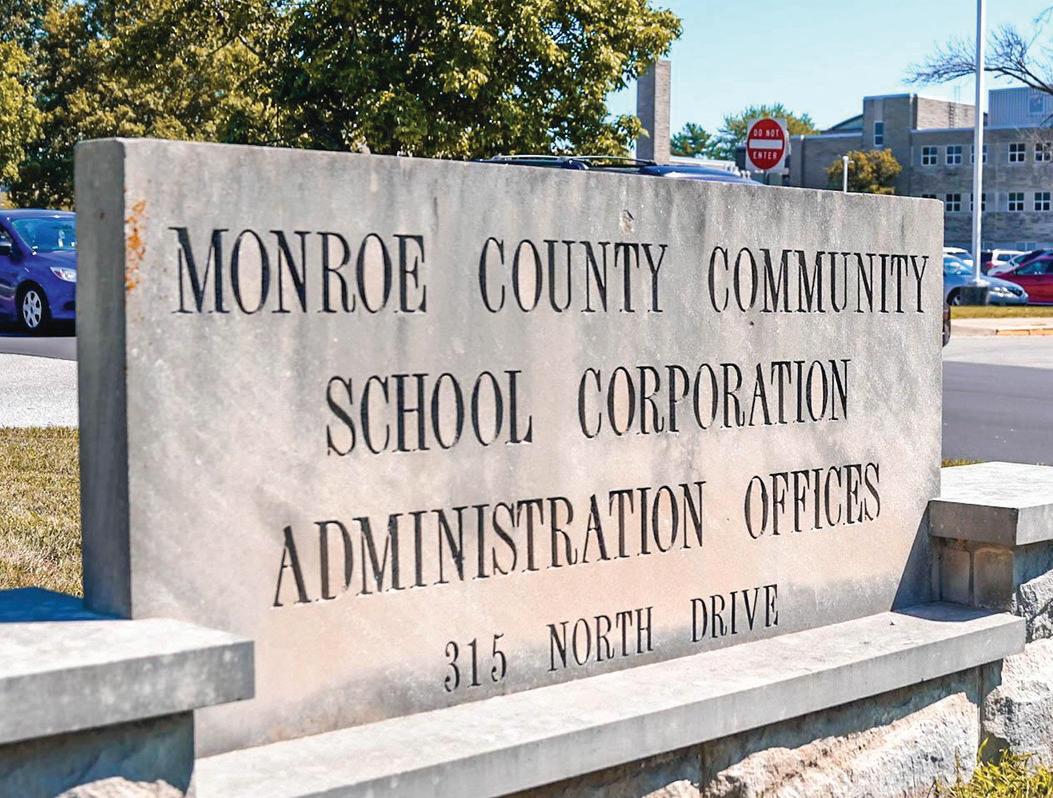
Rebekah Frazer, a school counseling specialist for the Indiana Department of Education, introduced Indiana’s new high school diploma requirements for Monroe County Community School Corporation students Jan. 23 at Jackson Creek Middle School.
The new Indiana diplomas offer students across the state the chance to complete one of three main readiness seals: enrollment, employment or enlistment and service. Fulfilling the requirements for one of these seals satisfies the Indiana Graduation Pathways requirements. The new diploma takes effect with current eighth-grade students and will continue for following classes.
According to Frazer, the altered requirements for each of these paths are meant to provide students with more flexibility while creating their high school schedules and allow them a greater range of choices to prepare for their post-graduation plans.
The State added additional courses to the basic diploma requirements such as a computer science course, communication focused course and a personal financial responsibility course.
The Indiana Department of Education is replacing the previous Indiana diploma, the Core 40 diploma, with these different readiness seals. According to a State Board of Education presentation, “readiness seals are designed to be permeable, allowing students to update their graduation plan and pivot, if their original
interests and goals change.”
At the MCCSC event Jan. 23, some parents expressed concerns about their children having to decide their career plans so early. Frazer said the similarities between the three main seals give students enough flexibility to change their minds.
Along with this, Bloomington High School North Principal Matthew Stark encouraged parents to talk to their students about their plans consistently throughout high school.
For each of the three main readiness seals, students have the option to try and complete the requirements for the Honors Seal or Honors Plus Seal on top of the basic requirements for each seal.
The honors seals create the “opportunity for students to push themselves,” Frazer said. All seals emphasize communication, collaboration and work ethic — skills that Frazer said employers are seeking.
Students who do not complete one of the possible seals still must complete Graduation Pathway Requirements 2 and 3. Graduation Pathway Requirement 2 requires students to learn and demonstrate employability skills through either a project-based, service-based or work-based learning experience. Graduation Pathway Requirement 3 requires students to show post-secondary ready competency. This can include:
SAT benchmark: reading/ writing = 480, math = 530
ACT benchmarks: English =
18, reading = 22, math = 22, science = 23
Armed Services Vocational
Aptitude Battery (ASVAB) score: minimum of 31
• State and industryrecognized credential or certification Federally recognized apprenticeship Career technical education concentrator
AP/IB/Dual Credit/Cambridge International courses or CLEP
Exams
Locally created pathway: a competency or assessment that demonstrates a student has the needed knowledge and skills to be successful post-graduation
For the enrollment honors seal, one requirement is earning a C or higher in all courses and earning a cumulative B average. For the honors plus seal, requirements include 75 hours of work-based learning, demonstrating skill development in communication, collaboration and work ethic and earning a credential of value. That can include:
Obtaining an associate degree
Becoming an AP Scholar with Distinction
Obtaining a technical certificate
Completing Indiana College
Core
Obtaining a Cambridge AICE
diploma
Acquiring an IB diploma
The employment honors seals include meeting an unspecified attendance goal, work-based learning hours or earning a market-driven credential of value, which could be an associate degree, tech-
nical certificate, Indiana College Core or Advanced industry certificate. According to Frazer’s presentation, the attendance goal requirements are meant to combat the “chronic absenteeism” that 19-32% of Indiana high school students experienced during the 2023-24 school year.
The enlistment and service honors seals include requirements such as taking an Introduction to Public Service course, completing a year of JROTC, meeting an unspecified attendance goal, achieving certain ASVAB goal requirements and connecting with military personnel early on.
Frazer said that the new Indiana diploma has garnered letters of support from many Indiana universities, including IU, Purdue University and Indiana State University.
In March 2024, the State proposed its initial new diploma. According to the IndyStar, this diploma received considerable negative feedback from teachers and community members who said the new diploma requirements would disadvantage students going to college and make Indiana students less well-rounded.
Purdue President Mung Chiang wrote a letter to Indiana Education Secretary Katie Jenner and the Indiana Commission for Higher Education, stating that the proposed diplomas did not meet Purdue’s admission requirements. Several other Indiana universities sent similar letters expressing their intent to collaborate with the State in creating the new diplomas, some sharing what
would be required for admission. In response, the State requested more feedback and developed the second draft of the diploma, which was released in August. This version received the support of all previously dissenting public Indiana universities. In December, the final diploma rule was released, remediating many of the past diploma’s concerns. While creating the diploma, the Indiana Department of Education collaborated with employers and universities in the state to find potential areas of improvement for students. Frazer said employers noted that students are struggling with communication with each other and with their employers.
One focus of the diploma changes is ensuring that students know how their current activities carry over to their
post-high-school plans. Frazer said they wanted to focus on preparing students who plan to enlist after graduation. According to her presentation, about 77% of students find out they are disqualified from military enlistment when it is “too late.” Along with this, Frazer noted that it is the State’s goal to ensure that students are made more aware of what dual-credit classes are pre-approved to transfer to Indiana public universities. Stark said that in order to successfully fulfill these new requirements, students need to “come to school, be prepared and try.” If they do this, he said, students can get to where they want to be. The next Parent University event hosted by MCCSC is “College Planning 101”
The bill would also bring back most Medicaid work requirements, which a federal lawsuit prompted Indiana to suspend in late 2019. Biden’s administration revoked the work requirements in 2021 in response to worries that the requirements would lead to substantial loss of coverage during the pandemic.
These requirements previously necessitated some Hoosiers on HIP to work no less than 20 hours per week in order to remain beneficiaries. The current proposed bill would require federal approval to reinstate work requirements and would likely create another waitlist for those unable to work.
“People need that care to be able to work,” HutchingsGoetz said. “The idea that you somehow will earn or deserve healthcare by working is exactly backwards.”
Mishler told Indiana Public Broadcasting that those removed from the program
should not lose coverage completely, since they can find and access insurance through the federal health insurance marketplace. However, for many people qualified for HIP, insurance outside of HIP is unaffordable.
“Having the HIP when I wasn’t on Medicare, I mean, it was amazing,” Nuñez said. “I couldn’t believe the state had such a good system.” ***
Mishler pointed to Medicaid budget shortfalls as a reason for implementing SB 2, saying, “We can only spend what we have.”
However, capping or end-
ing HIP is unlikely to save the state money. The program is 90% funded by the federal government, and the remaining 10% paid by Indiana is covered by cigarette tax revenue and hospital assessment fees. Though the cigarette tax revenue, equaling about $97 million in 2024, could be used to cover another state cost, cutting HIP users off would

Mon. - Thu.: 8 a.m. - 5 p.m. Fri.: 8 a.m. - 4 p.m.
473 S. Landmark Ave. 812-318-1023 starroralsurgery.com
Austin C. Starr, D.D.S


Baron D Hall, DDS, MSD
Jake Willhite, DDS, MSD Orthodentists
Erica Hall, Hannah Elliott, Kaitlyn Jacobs, Marilyn Lee, Adrian Price
With modern techniques and a fun style, B-town Orthodontics is the most up-and-coming orthodontics office in the Bloomington area! We offer the latest technologies including invisalign, gold brackets, laser treatments, and even mini implants that can help restore missing teeth and even eliminate the need for surgery. B-town Orthodontics offers FREE consultations and don’t forget to download The Braces App, the hottest free app designed by B-town Orthodontics’ Dr. Baron Hall.
Tue. - Thu.: 8:30 a.m. - 4:30 p.m. Lunch 12:30 p.m. - 1:30 p.m. Mon. & Fri.: Appointments Only 1320 W. Bloomfield Rd., Suite B 812-287-8851 btownorthodontics.com
create new costs, HutchingsGoetz said.
Hutchings-Goetz said those costs could include the re-enrollment and re-verification processes of those who are kicked off. She said money from the plan, mostly from the federal government, would stop going to healthcare workers and subsequently the state’s economy.
“That money goes towards the jobs of the people who work at the insurance companies that run HIP, it goes to your health care provider,” she said. “We’re pulling $3.5 billion out of our economy and from probably tens of thousands of jobs that HIP pays for, like good health care jobs.”
She said the reform would also hit people who are only part-time workers or independent contractors, who often do not receive insurance benefits from their workplaces.
“Down the line, in terms of public health, you’re looking at not only an increase in death, but people get sicker,”
she said. “And when they get sicker earlier, their care and treatment becomes more expensive down the line. So, there’s absolutely no cost savings to this proposal.”
Hutchings-Goetz said the bill must still go through multiple hurdles before it is passed, and suggested people email or call any of the 13 members of the Senate Appropriations Committee to make their voices heard in the decision.
“It is cruel, it is dangerous, it is a job killer, it is a people killer and it will hurt our economy,” she said. “Even if you think that this bill is not going to affect you, you will experience its impacts.”
The proposed reform is also concerning to some that consider HIP benefits vital. Brader said the plan saved her life.
Brader got back onto HIP in April 2020 after the federal lawsuit prompted work requirements for HIP to be
HOOSIER ORAL SURGEON?
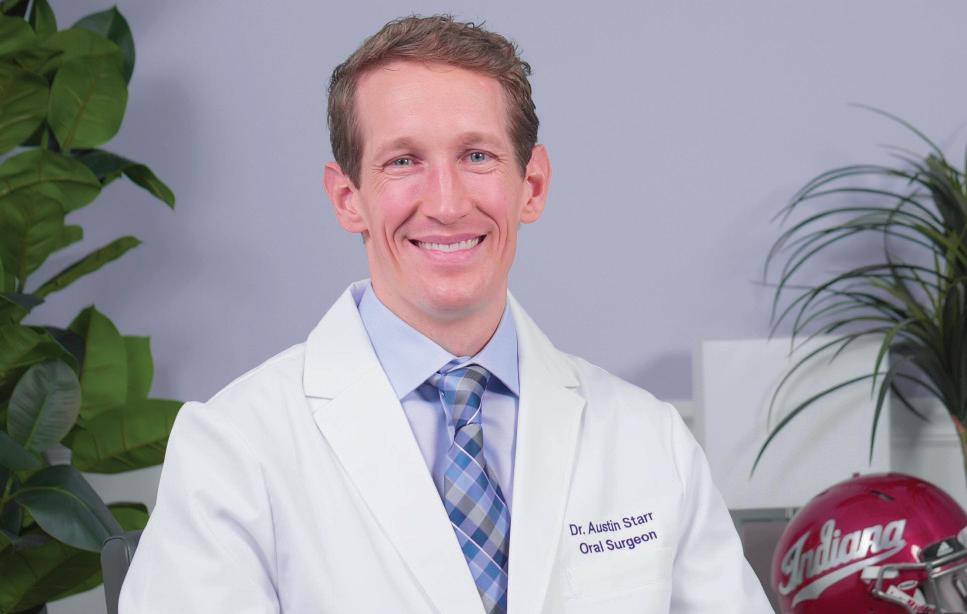
Dr. Starr is an Indiana University Football Alum who provides pain-free experiences for all Hoosiers with IV sedation. He performs specialized oral surgery services including Wisdom Teeth Extractions, Dental Implants, Bone Grafting, and Plasma Therapy. Equipped with modern 3-D technology, he has the most up-to-date surgical skills and techniques to accomplish beautiful results with his patients. He looks forward to accomplishing beautiful results with his patients, enhancing confidence and satisfaction for all he serves. Go Hoosiers! We look forward to taking care of you!

Ryan D. Tschetter, DDS
Lauren R. Hoye, DDS
Jackson Creek Dental is conveniently located on South College Mall Road. Most insurances accepted, including the Indiana University Cigna Insurance plans as well as the IU Fellowship Anthem. Dr. Tschetter and Dr. Hoye offer state of the art dental technology such as Zoom whitening, same day crown appointments, and Invisalign. We also provide restorative, cosmetic and emergency care. We pride ourselves in giving the best care to our patients while offering a pleasant yet professional atmosphere.
Mon. - Thu.: 7 a.m. - 5 p.m. Fri.: 7 a.m. - 3 p.m. 1124 S. College Mall Rd. 812-336-5520 jcdsmiles.com
Austin C. Starr, D.D.S HOOSIER ORAL SURGEON?
Dr. Andrew Pitcher, D.C.
Dr. Crystal Gray, D.C.
A Way of Wellness Chiropractic specializes in comprehensive spinal care. We offer treatment for many different spinal conditions and problems, while also addressing the body as a whole. We provide effective chiropractic care helping patients reduce stress, improve mobility and spinal health. The quality treatment we provide is always fit to your individual needs and goals. Let us help you achieve and maintain good spinal health. We look forward to meeting you!
Mon. - Thu.: 8 a.m. - 6 p.m. 1121 W. Second St. 812-336-2225 bloomingtonchiropractor.com
dropped, allowing her to finish the wheelchair-acquirement process. During the process, her condition worsened to the point where she could often not stand up without blacking out.
Getting her wheelchair took seven months.
In 2021, she was diagnosed with a rare spinal injury, Craniocervical Instability, after hitting her head in a car accident. This turned out to be the cause of her inability to walk without fainting. She had to get spinal fusion surgery, which cost about $100,000 for a one-week inpatient stay. Luckily, the surgery was successful, and HIP was able to cover its costs.
After surgery, a month of recovery and attending a rehab hospital for three weeks, Brader relearned how to walk.
Though she could potentially access regular Medicaid due to her genetic disease, she is not considered eligible due to Indiana’s monetary and income-based requirements. A single adult must

make no more than $1,255 a month and have no more than $2,000 in saved assets. Brader said, like many others, she does not quite quality for disability, but finding a full-time job is incredibly difficult due to her health.
“Disability (as considered by the state) is essentially just surviving barely, and I want to do more than that,” Brader said. “I went to a lot of trouble to relearn to walk, I finished this master’s degree, I want to work. I came from a very lowincome household, so for me, the idea of continuing to live in poverty for the rest of my life is just not appealing.”
Brader said the 36-month lifetime limit could be “lifelimiting” for those who have lifelong disabilities or even disabilities that last more than three years.
“I wouldn’t be able to survive without it,” Brader said. “But at the same time, it is so stressful, living in the constant fear of the state just deciding one day that I don’t deserve this medical care that I need to survive.”

Our eye care clinics serve patients in Bloomington-Atwater Eye Care Center and Indianapolis Eye Care Center, with faculty doctors and student interns who work together to provide the most comprehensive eye care available. Our many services include primary care, pediatrics, low vision, dry eye, disease,
Dr. Andrew Jones, Dr. Marzia Zamani, Cheyenne Brown, Megan Sipes, Milli Nally, Kenzy Hawkins, Christina Thompson
Dr. Tavel Family Eyecare is your partner in your personal eyecare journey. Since 1940, the company has believed that every Hoosier deserves quality eyecare and vision solutions at an affordable price. Dr. Tavel offers comprehensive eye exams, special testing, management of eye diseases, glasses, contact lenses and much more, all backed by an insurance acceptance guarantee. The company is committed to advancing eye health by investing in the latest technology and providing treatments that are right for every patient’s unique needs.
Mon.: 7:30 a.m. - 6 p.m. Tue.: Closed Wed.: 7:30 a.m. - 6 p.m. Thu.: 9 a.m. - 7:30 p.m. Fri.: 7:30 a.m. - 6 p.m. Sat.: 7:30 a.m. - 1:30 p.m. Sun.: Closed
2552 E. Third St. 812-233-2343 drtavel.com/locations/bloomington

the art technology and cutting edge treatment options. We offer clear braces and Invisalign. Chapman Orthodontics is a privately owned orthodontic practice. Dr. Josh Chapman attended IU Bloomington for undergraduate and received his Doctor in Dental Surgery (DDS) and Masters (MSD) in Orthodontics at IU school of Dentistry in Indy. Go Hoosiers!
Mon. - Thu.: 8 a.m. - 5 p.m.
3925 E. Hagan St., Suite 201 812-822-2489 bloomingtonbraces.com
Dr. Starr is an Indiana University Football Alum who provides pain-free experiences for all Hoosiers with IV sedation. He performs specialized oral surgery services including Wisdom Teeth Extractions, Dental Implants, Bone Grafting, and Plasma Therapy. Equipped with modern 3-D technology, he has the most up-todate surgical skills and techniques to accomplish beautiful results with his patients. He looks forward to accomplishing beautiful results with his patients, enhancing confidence and satisfaction for all he serves. Go Hoosiers! We look forward to taking care of you!
Mon. - Thu.: 8 a.m. - 5 p.m. Fri.: 8 a.m. - 4 p.m. 473 S. Landmark Ave. 812-318-1023 starroralsurgery.com Ricardo Vasquez MD Mon. - Fri.: 8 a.m. - 5 p.m. 815 W. Second St. 812-336-6008 vascularcenterandveinclinic.com
General Health

Eating Disorder Brent Mezger, FNP-C Alyssa Van Duzer, PA-C

Jan Taylor-Schultz
I have been an eating disorder specialist since 1995, treating people with Anorexia, Bulimia, and Binge

Dr. Zachary Short, O.D.
Dr. Madison Witthoft, O.D.
Welcome to Insights Optical, where quality eye care is our number one priority. Our dedicated team is ready to learn all about you and your vision needs while using innovative technology and a comprehensive care approach to take care of your eye health.
client strengths and solutions. I also work with local physicians and dietitians.
Mon. - Fri.: 9 a.m. - 5 p.m. 3925 Hagan St., Suite 203 812-334-0001 JanTaylorSchultz.com
Mon.: 10 a.m. - 6 p.m. Wed.: 9 a.m. - 4 p.m. Tue., Thu., Fri.: 9 a.m. - 5 p.m. 415 S. Clarizz Blvd. 812-333-1911 insightsoptical.com
Our board certified nurse practitioners and physician assistants provide primary care, acute care, physicals, vaccines, weight management and more to patients 12 months and older. Appointments and walk ins welcome. We accept most commercial insurance, Medicare and several Medicaid plans. We offer transparent pricing for the uninsured.
1175 S. College Mall Rd. 812-323-4301 kroger.com/health/clinic

Dr. Philip Clark Brittain Jenna Kelly, RN
Vibrant Life specializes in hormone replacement therapy and medical aesthetics. Vibrant Life is pleased to offer personalized care, employing the latest medical technology. Services include: hormone therapy, neuromodulators (botox, dysport), dermafillers, microneedling, laser hair removal, age spot reduction, blue light acne treatment, treatment for urinary incontinence and much more. Come visit us and start living a more Vibrant Life today!
Mon. - Thu.: 8 a.m.
Editor’s Note: This story includes mention of sexual harassment.
Indiana State Senator Greg Taylor (D-Indianapolis) has finally faced consequences for his multiple sexual harassment allegations after being ousted as Senate Minority Leader on Dec. 18. Although Taylor’s release from his position of power is ultimately something to be celebrated, the process it took to reach this place is a reminder that just because Democrats claim to support women does not mean they do.
On Nov. 18, the same day IndyStar published accounts from three of Taylor’s accusers, most of Taylor’s colleagues voted to reelect him as their leader.
The three accusations published Nov. 18 span eight years and involve two instances of unwanted physical contact and one example of a sustained romantic pursuit of an intern.
In response to those allegations, Taylor released a statement Nov. 22
“There have been times when I may have blurred the lines and behaved in a manner that potentially made my colleagues or those who witnessed my ac-
Meghana Rachamadugu (she/her)
is a senior studying marketing and business analytics and pursuing a minor in French.
It’s almost the end of January, meaning T-4 months until graduation. The prospect of a new landscape and challenges feels equally enticing and elusive against wrapping up my degree and battling the s-word (senioritis, of course).
Some days are easy and other days are harder — that’s just the nature of school. However, I realize I often appreciate my time at IU when I engage with my mentees in various Kelley School of Business programs. Each student is unique in their interests, background and impressions of college. But one question I always get asked: How do you stay motivated throughout the years and especially during stressful times?
tions uncomfortable. While it was never my intent to cause harm, I acknowledge that I have fallen short, and for this, I apologize,” the statement read.
That following Wednesday, however, Taylor distanced himself from that accountability, claiming “that statement was not from me,” and blaming it on the public relations firm he was using.
Less than a month after the initial accusations were published, IndyStar released another story Dec. 17 with accounts from three additional women who suffered from Taylor’s harassment, making a total of six women who had stepped forward. The new allegations included claims that Taylor touched women without their permission, including one woman who claimed he forcibly kissed her.
Several of Taylor’s accusers said prior to IndyStar publishing their stories, they had made members of the statehouse aware of Taylor’s treatment toward them. At least one of the accusers made a formal complaint with legislative leaders, and several of the other women say legislative leaders or top staffers knew about their concerns but took little action.
On Dec. 18, the day after the accounts of three more women were released, the
Indiana State Democratic Caucus announced Taylor would be replaced by Senator Shelli Yoder of Bloomington as Minority Leader.
Although I am incredibly grateful we’ve progressed to a place in our society where women’s stories can be told and heard in order to make real change — such as Taylor being removed from his position of power — I cannot help but think about the other women who have been victims of a man’s abuse of power and were shamed rather than heard.
One of my most vivid memories from my childhood is the night of the 2016 election. Growing up in a moderately liberal household in Portland, Oregon, I had been surrounded by fear over the possibility of Donald Trump becoming president — much of which was fear for women in America. I witnessed my mom attend the national women’s rally in Washington D.C. and heard millions of women speaking out against Trump’s presidency.
Since then, I have always been aware of the various ways Republicans have acted and continue to act against women.
Trump’s misogyny has always been so blatant that even my 10-year-old self did not struggle to understand the widespread concern
with Trump and other Republicans with similar records being in office.
On the contrary, I had grown up to believe that because Democrats are often outspoken in their support for women’s rights and equality, that meant the Democratic Party is the protector of women in America, while the Republican Party is the biggest threat to us.
Learning about Bill Clinton’s affair with Monica Lewinsky and the way esteemed Democrats treated her throughout the scandal was the first time my eyes opened to the fact that both political parties have disrespected and harmed women in America — just in different ways. Lewinsky was just 21–years-old when she first started working as an intern at the White House in 1995 and was 22 when she began having a sexual relationship with Clinton —the 49-year-old, married President of the United States. The affair lasted 18 months, ending in 1997.
News of the scandal first broke Jan. 17, 1998, and was followed by months of Clinton, and his wife Hillary, denying the affair nationally, labelling it as purely rightwing propaganda.
Clinton finally admitted to the affair in a taped grand jury testimony Aug. 17, 1998, after the FBI tested a piece of
Lewinsky’s clothing that had semen on it and confirmed it was a match to Clinton.
Learning about the affair itself was not shocking for me. What was shocking, however, was discovering the way Democrats let Lewinsky be treated throughout the scandal. It is glaringly obvious when looking at the affair that Clinton took advantage of his position of power to have a relationship with a young woman who was trying to get her start in the political world — yet this was not the way the media framed it.
While Clinton got to resume his presidency and marriage following the affair, Lewinsky got labeled by the media and so-called feminists as “predatory” and “ditzy.” Although Lewinsky was able to escape the public spotlight after the scandal, she often struggled to find a stable income due to potential employers worrying about her “history.”
Not to mention the biggest hypocrisy of it all: Hillary Clinton (who I considered one of my biggest feminist inspirations growing up), standing by her husband and letting a 22-yearold girl be brutally attacked, slut-shamed and bullied by the political world, even though Hillary’s husband was the man who held the
helps shape character in a complex world

To this I say, it’s not easy and it wasn’t automatic. But I strive to work on what I can control and have faith in the rest. Trust your abilities and do what you want to achieve out of your task. If it’s a toxic group project or is out of your hands, before you start playing “mad woman” by Taylor Swift, think about what you can do to support your people and ensure they know you’re committed to this. It’s not all on your shoulders, but you can sleep well knowing you did everything you could. And that’s enough. Make sure that is enough. Because even if things don’t work out, you don’t deserve the increased levels of cortisol and anxiety caused by thinking about it. There’s a common saying: the best revenge is a life well lived.
Hey, isn’t that expression just karma? It feels oversimplified. Yes and no. This mentality is karma, but it is also deeply tied to religion and philosophy. It is also not easy to adhere to, but it emphasizes what you should strive to control: personal happiness and growth. It doesn’t cost anything, and no one is intentionally
hurting anyone. You’re just working on your goals, letting go of negativity and never giving people the satisfaction of their actions defining your life. It’s your story and plot twists from here on out. I’m fascinated by karma as an ethical dilemma because of the ties to moral responsibility, justice and repentance. And there is definitely a strong correla-
tion. If our situation is based on past decisions, does free will exist, or is it driven by karma? What if I’m just trying to avoid a fire and get a pass on chaos? Maybe that’s not truly healthy. How fair is any of our systems if the consequences are to be determined? Patience isn’t my strong suit. And, if I believe in this, then when people are struggling, should I feel sym-
power. He was President of the United States, he was 27 years older than Lewinsky, he was the married one.
Yet, shocking, I know, the woman received the blame! I cannot help but wonder how Lewinsky’s story may have differed had this situation taken place in 2025 rather than 1998. Perhaps she would have been given an opportunity to share her story like Taylor’s accusers were able to.
This is not all to say that Greg Taylor and Bill Clinton are the same people, or even that their situations are the same. The two different scandals serve as reminders both of how far we have come and how much work the Democratic Party still must do before being able to fully defend their claims of being the party for women.
Regardless of how much progress we have made for women in America, one thing has remained consistent: there is a problem with men in positions of political power using their status to form relationships with young women, and there is an even bigger problem with Democrats not acknowledging the role they have played in women being ignored.
gsvannes@iu.edu
pathetic, or was it deserved? It says a lot about who we choose to be kind to, doesn’t it?
I’ve thought about karma from both sides, but I find value in seeing it as a source of motivation and encourage others to consider its potential too. As a senior, I find comfort in the fact that I can just stay in my lane and do my best. But it’s more than that. Even on social media and in communities, karma can foster positive behavior and cultivate compassion and support. Ultimately, karma serves as a reminder to consider the long-term effects of our choices on ourselves and others. It compels us to live our lives more actively and intentionally. In fact, according to an article published in the Journal of Consumer Research, studies found a correlation between karmic beliefs and a higher likelihood of prosocial choices, like benevolence, instead of self-gains. If these reasons aren’t compelling, consider Elton John’s perspective in “Goodbye Yellow Brick Road.” The lyrics, “Oh, I’ve finally decided my future lies / Beyond the yellow brick road,” convey a realization and a wish to travel on another path — even if it means letting go of something else.
megracha@iu.edu











In the statement to the Chronicle, the spokesperson did not identify the law firm employed or detail why the university asked for the investigation.
An IU spokesperson did not respond to the IDS’ request for clarification.
Further, some of the original works’ authors had conflicting opinions on the examples.
Telemedicine researchers Douglas Perednia and Ace Allen are the authors of a paper who Whitten cited from extensively. Whitten and Allen also co-wrote a 1995 article in “Telemedicine Today” and a 2001 book, “E-Health, Telehealth & Telemedicine,” according to her curriculum vitae.
Perednia told the Chronicle that Whitten’s use of his paper did not constitute plagiarism; Allen, though, told the publication that the language appeared to be copied.
Indiana Public Media reported Monday that the Journal of Telemedicine and Telecare, which published Whitten’s 2006 paper, is investigating it for plagiarism.
Since the publication of the Chronicle’s story, a change.org petition calling for the University of Kansas to rescind Whitten’s 1996 doctoral degree has received over 120 signatures.
“Students get reprimanded harshly for plagiarism,” one comment on the petition read. “It's a part of the syllabus of every single class. It's been ingrained since I started school that cheating, copying, and plagiarism is never okay. Yet, we're going to let our university president walk away scott free? I don't think so.” Universities' definitions of plagiarism can vary.
Kansas’ 1996 university senate rules and regulations considered plagiarism as both academic and scientific/scholarly misconduct. It doesn’t define what’s considered plagiarism. The university did not respond to the Chronicle’s request for
comment, but its current rules state research misconduct claims older than six years old won’t be investigated, with some exceptions:
• If circumstances indicate the misconduct couldn’t be identified earlier
• If the original author continues to republish, cite or otherwise use the work in question
• If the work would have an adverse effect on public health
An IU website says seven or more words in a row lifted from a source without quotation marks, a full intext citation with a locator or reference would be classed “word-for-word plagiarism.”
One plagiarism expert told the IDS that seven words is “really a short amount.” But another said the chances of two people repeating the same seven-word sequence multiple times are small.
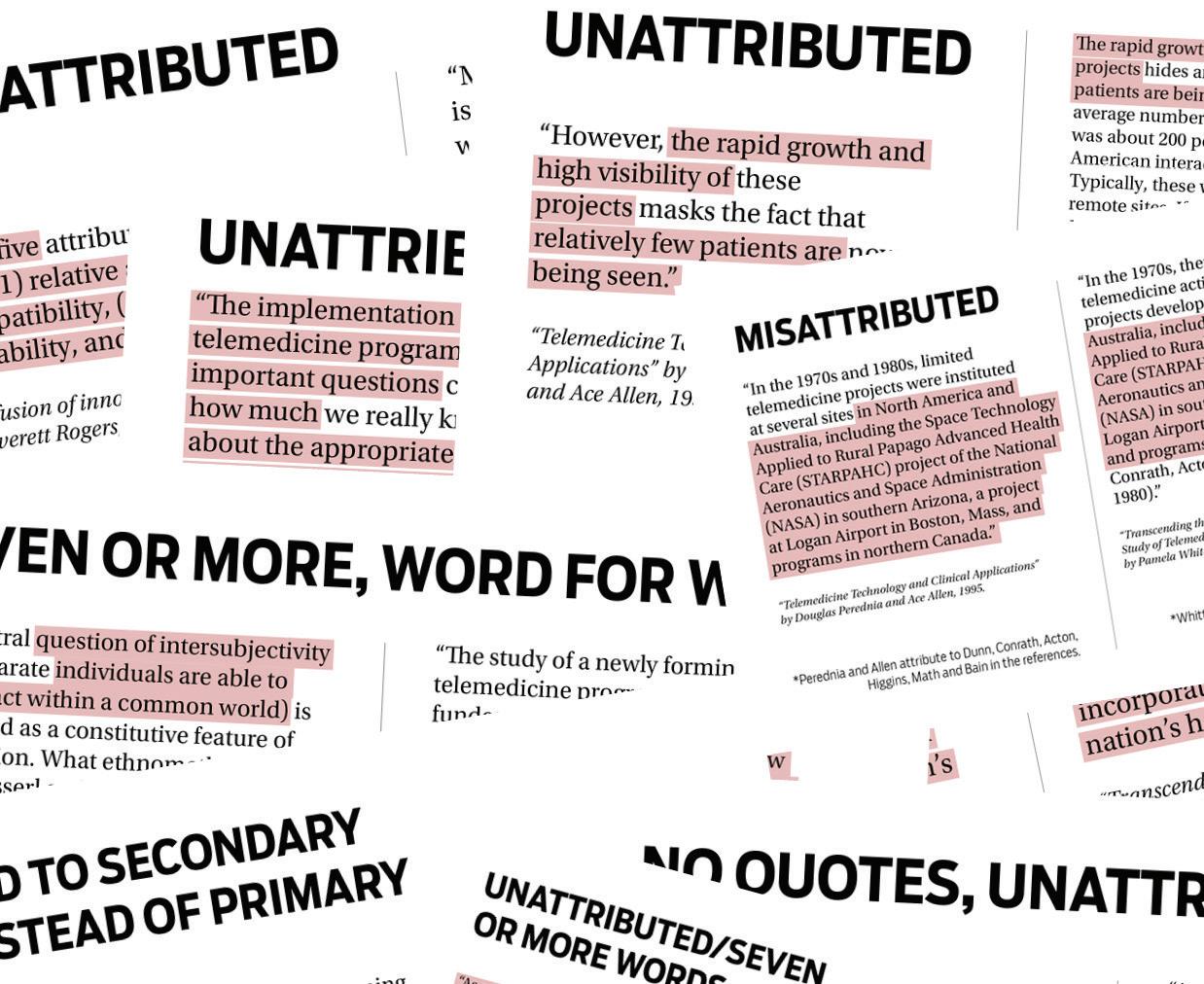
The IDS sorted the more than 50 instances of potential plagiarism between the dissertation and paper — from 25 individual sources — into six informal categories: Seven or more words, word for word, in line with IU’s policy
• An attributed quote immediately followed by a quote without quotations or attribution
Misattribution, which is attributing to a primary source but using language from the secondary source
• Self-plagiarism, which is taking text from the author’s past work and not attributing it properly
• Attribution to a secondary source instead of primary source
• Unattributed The IDS provided examples from these categories to three plagiarism experts over the course of several months.
This is what they had to say:
A ‘gray area’ Jonathan Bailey is a plagiarism expert who runs the website Plagiarism
anthropologist and professor at the University of Notre Dame. She wrote the 2009 book, “My Word! Plagiarism and College Culture.”
In October, Blum told the IDS she was concerned with “weaponizing plagiarism accusations for political reasons,” regardless of the political affiliation of the target or accuser.
Many plagiarism accusations in academia have been levied at Black faculty and administrators, including former Harvard University President Claudine Gay. A conservative media organization, the Daily Wire, alleged in September that Maryland President Darryll Pines plagiarized two papers he co-authored. Both Gay and Pines are their universities’ first Black presidents.
a German university. She said she’s been researching plagiarism since 2002 when her students submitted papers in English — too good of English. About a third of those papers were plagiarized, she said.
Weber-Wulff wrote an e-learning unit on detecting plagiarism in journalism and published her book, “False Feathers: A Perspective on Academic Plagiarism,” in 2014. She documents plagiarism online with the German group, “VroniPlag Wiki.”
Today and has provided commentary on multiple high profile plagiarism allegations in academia.
In a September interview with the IDS, Bailey said two instances were not particularly compelling examples of plagiarism. In one, Whitten pulled seven or more words, word for word, from a book by Charles Goodwin and Alessandro Duranti.
In another, she quoted a section from Robert Yin’s “Case study research: design and methods,” attributed the quote to him, then followed that with more text from Yin but without quotes or attribution. Bailey said the latter example appeared “sloppy,” rather than like a deliberate shortcut.
In two examples the IDS categorized as “misattribution,” Whitten attributed to sources that Perednia and Allen used but copied the two authors’ language. One section repeats over 90 words from Perednia and Allen, attributing to them for part of the paragraph near the end but not all of it. The IU plagiarism website says more than seven words word for word without quotation marks, even with an attribution, is word-forword plagiarism.
Bailey said these were a “fairly serious issue” he’d expect to be corrected at the very least, though someone
would have to determine if it had an impact on the dissertation research before making a decision. In Kansas’ most recent university senate rules and regulations, it outlines a process for adjudicating both academic and research misconduct.
The citation attributed to a secondary source rather than a primary source seemed accidental rather than intentional or reckless, Bailey said. He said the era Whitten wrote the dissertation in, prior to digital research being common, added to the challenge of writing academic work.
“That said, the author of a dissertation still has a responsibility to make sure their citations are correct and in line,” Bailey said.
He said what is considered plagiarism or not is dependent on the space it’s written in — journalistic attribution, for example, has a different standard than academic writing.
“So many cases exist in a gray area where two reasonable people can look at the same facts and draw different conclusions, including experts in the same field,” Bailey said.
Expert warns of ‘weaponization’ of plagiarism
Susan Blum is a cultural, linguistic and psychological
“I think that academic leaders should be exemplary in every way, but they are also human,” Blum said. “Unless we are subjecting everybody to the same scrutiny, I don’t think it’s good practice to raise this selectively.”
She said she questioned why people would be looking at the author, Whitten, in this particular moment. If it’s for a political reason, it would be an easy way to “score points” against a figure they don’t like. These people, Blum said, don’t actually care about academic integrity.
Whitten has garnered criticism in the past year for the university’s cancellation of a Palestinian painter’s art exhibit, its decision to call Indiana State Police to arrest pro-Palestinian protesters in April and its enforcement of the new Expressive Activity Policy, among other reasons. A faculty vote of no-confidence passed with 93.1% of the vote and multiple rallies have since called for Whitten’s resignation or termination.
Blum said she’s a “stickler for precision and honesty.” But that, she said, involves addressing the circumstances in which the accusations are raised.
Whitten’s dissertation ‘hard on the borderline’
Debora Weber-Wulff is a retired media and computing professor at the HTW Berlin,
Weber-Wulff favors a plagiarism definition from Teddi Fishman, former director of the International Center for Academic Integrity. Fishman defines plagiarism as when someone “uses words, ideas, or work products” without attributing to its source when there is a legitimate expectation of original work. This is done so the authors of the new work can gain some benefit that’s not necessarily monetary.
In November, WeberWulff compared identifying plagiarism to identifying if a man is bald.
“It’s very clear when he is, and it’s very clear when he’s not, but there’s not a question of ‘one more hair and now he’s bald,’” WeberWulff said. Unlike Blum, WeberWulff does not care where the plagiarism accusation originates from or why.
“If it’s plagiarism, it’s plagiarism,” she said. She said misattributed quotes happen all the time and are wrong. In the case of a doctoral dissertation, more than two examples may warrant an investigation. A doctoral dissertation as opposed to a master’s thesis, Weber-Wulff said, should be original research.
She said the unattributed examples of plagiarism were “beginning to be problematic” but no university would withdraw a doctorate for them alone.
Based on the examples provided by the IDS, WeberWulff said “they’re hard on the borderline.” But she said if there were similar examples found across Whitten’s work, then it would be more difficult to call them




By Molly Gregory mogrego@iu.edu | @mollygregory22
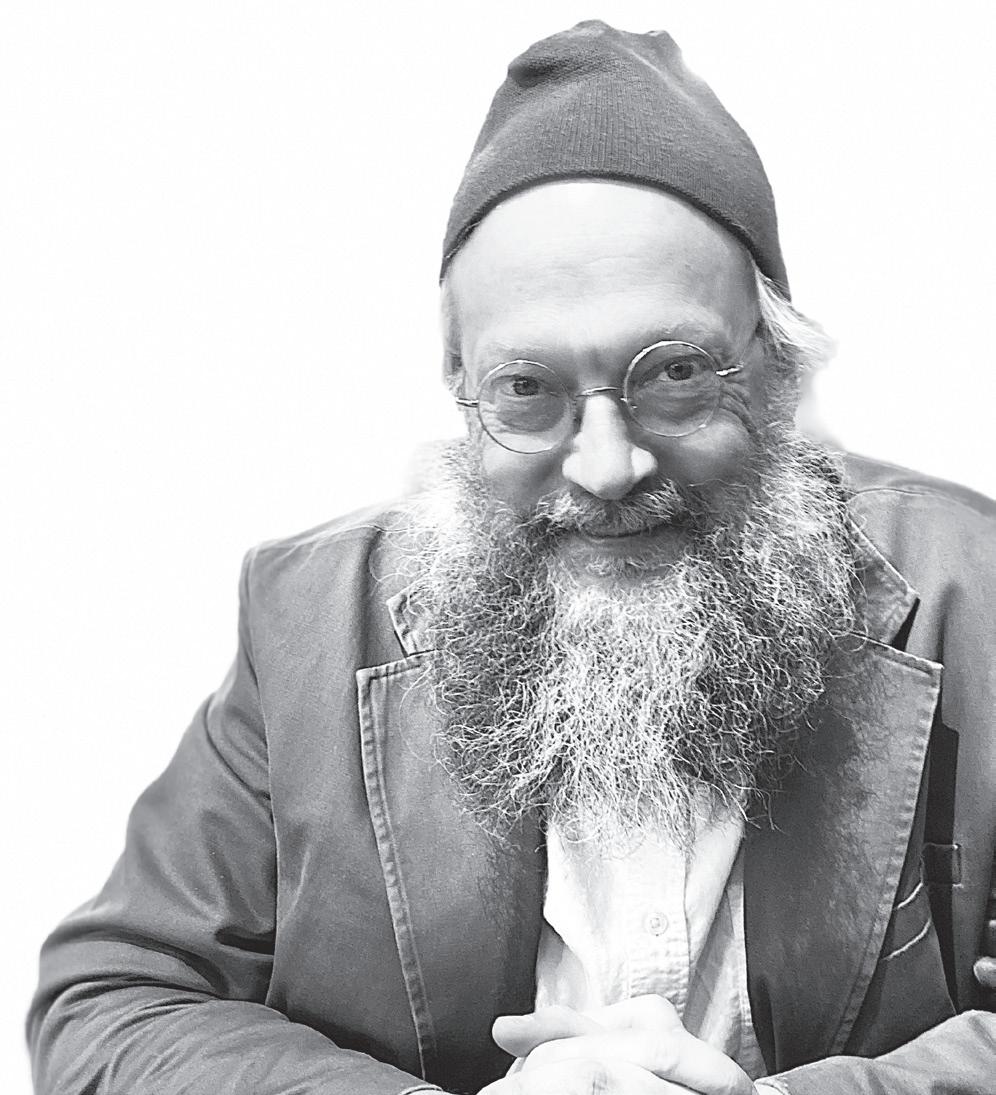
Dave Askins, 60, is a bespectacled man with a wizard-like beard, a keen interest in bird photography and a penchant for local civics. He also ran the B Square Bulletin for over 5 years.
B Square was a primary source of Bloomington news, especially for city and county government affairs. Dave published his last report for the site Dec. 20, 2024, after the half-decade of stories, 90-hour workweeks and seemingly endless committee, council and board meetings. It all became too much. He said he didn’t believe that his journalism would help improve Bloomington local government, an institution he deemed dysfunctional.
He found himself with his head in his hands during its meetings — long meetings. The longest Dave ever sat through clocked in at more than nine hours.
“It was all-consuming,” he said. “No weekends. No holidays.”
Still, local government leaders have lamented his
The Lobbying Disclosure Act requires all lobbyists to report their clients, contracts with federal agencies, the pieces of legislation or issues lobbyists discussed and expenditures related to this activity. Lobbyists are not required to disclose specific stances or other details beyond stating the topic or legislation.
The Indiana Daily Student reached out to both IU lobbyists for interviews, who directed the request to IU spokesperson Mark Bode. He provided a two-sentence statement affirming the IU Office of Federal Relations advises federal lawmakers and agencies on higher education issues.
When asked if lobbyists took stances or provided expertise for two pieces of legislation — the Stop Campus Hazing Act and the Fourth Amendment is Not For Sale Act — Bode referred back to this original statement.
Defense, microelectronics and AI lobbying
IU listed topics related to defense and AI research on all four of its quarterly lobbying reports. Its lobbyists spoke with lawmakers about IU’s partnership with the Naval Surface Warfare Center Crane Division. Lobbyists also updated members of the U.S. House and Senate on IU’s partnership with the Department of Defense’s Trusted and Assured Microelectronics Program and ME Commons regional innovation hub.
IU’s research on AI and quantum science was also
loss. It’s unclear what Dave will do next, or what the county will do now the burden is off his shoulders. ***
Dave came to Bloomington in 2018 to reunite with his wife, Mary Morgan. He had been in Pierre, South Dakota, working for a newsroom there, but realized he didn’t want to be so far from her — when he left, she was still in Ann Arbor, Michigan.
They made a geographical compromise and met in Bloomington, where they had met in graduate school in the 1990’s.
His job search proved difficult. Dave knew his resumé was that of a wayward man, unfocused and uncertain. He applied for a job at the Herald Times, but was passed over. So, he took matters into his own hands and made his own website.
B Square Bulletin got its name from the downtown square, with the ‘B’ standing for Bloomington. Dave said he liked that name because it was “whimsical.”
mentioned throughout the reports. Big Ten universities as a whole lobbied around defense partnerships, AI and microelectronics.
Dusso said universities are “lobbying where the money is” — the AI in defense market is projected to be worth more than $18.5 billion by 2029. While providing expertise in these issues might not directly result in universities like IU receiving federal research contracts, there are still benefits.
“What lobbying does is it keeps your name there,” Dusso said. “You’re a player in this industry, and of course you want to keep that industry’s money flowing into higher education.”
Financial aid and federal grants, College Costs Reduction Act
The cost of college and loans for students was also a heavily discussed topic for IU lobbyists, according to the quarterly reports.
IU lobbyists recorded activity surrounding federal appropriations for the Pell Grant program, a federal financial aid program for undergraduate students, and Title IV financial aid programs.
IU also weighed in on legislation impacting the cost of higher education, including the College Cost Reduction Act, a bill that would expand Pell Grant funding for college juniors and seniors but eliminate other loan and grant programs. Proponents argue the changes would reduce the federal government’s deficit, but others believe it would increase student loan repayments. The bill has been referred to two U.S.
He has experience with the whimsical. When he lived in Ann Arbor, he started a blog called Teeter Talk, where he interviewed locals. The catch? He would only agree to interview people if they sat on the teeter totter he constructed in his backyard. He’d take a picture of his subject from down the plank.
Dave brought in all kinds of people. Many would ask to be exceptions to the rule, to be interviewed on solid ground, but he said no. Not even councilmen were spared from the teeter totter.
Teeter Talk gained enough popularity that Dave began selling advertisements to put on its site. He didn’t enjoy the business side of things. That said, he did secure an ad for the very lumber company from which he had bought a plank to build his teeter totter.
He also ran a website called the Ann Arbor Chronicle with Morgan. He took a hands-off approach to advertising for that site, opting to let her handle it.
“I just hated that task,” Dave said.
That’s why B Square Bul-
House committees.
Lobbyists also reported activity surrounding the Free Application for Federal Student Aid (FASFA) Deadline Act. Introduced by U.S. Rep. Erin Houchin, who represents Bloomington, the law requires the U.S. Department of Education to release the FASFA on Oct. 1.
Lobbyists also discussed federal appropriations for National Institutes of Health and National Science Foundation — which can be used to fund research, training, conferences and other resources at universities. Donald Trump’s administration cancelled meetings for NIH grant reviews last week and halted external communication for the agency.
Bills on hazing, purchasing data
One notable piece of legislation listed on IU’s activity reports is the Stop Campus Hazing Act, which former President Joe Biden signed in late December. The law requires universities to disclose all hazing incidents reported to the university in its annual security reports and make hazing transparency reports publicly available.
The Fourth Amendment is Not for Sale Act, which passed the House but has seen no further action, also appeared on IU’s lobbying reports. The bipartisan legislation would prohibit law enforcement and government intelligence agencies from purchasing data on users from thirdparty brokers.
The deadline for IU to file its lobbying activity for the first quarter of 2025 is April 21.
letin ran on a donationsbased model. He said the work brought in about $3,000 per month from an average of 462 donors.
Though he cares for Bloomington and its people, he said he is “old and tired.”
While his goodbye post said there was no “particular symbolic value” to the time of his departure, there is a definite finality to it. He does not plan to return.
Among the “dysfunctional” operations of local government and his 90-hour work weeks, he would find himself wondering aloud to Morgan what the point of it all was.
“Are these people nuts?” he would say.
“There are assholes everywhere,” she would reply.
Dave concedes that there are issues with every local government, but he’s seen enough of this one.
***
With B Square meeting its end, some wonder about the fate of local government coverage. Some local leaders lament his loss.
However, the years of re-
By Madelyn Hanes mrhanes@iu.edu
Gov. Mike Braun
signed an executive order directing Indiana law enforcement agencies and the Indiana National Guard to fully cooperate with U.S. Immigration and Customs Enforcement on Jan. 28. The Indiana Daily Student reached out to the Monroe County Sheriff’s Office and the Bloomington Police Department for clarity on what the order means for them going forward.
MCSO sent the following statement to the IDS: “Issuing executive orders is certainly within the authority of the Governor of the State of Indiana. The Monroe County Sheriff’s Office will continue to function in accordance with Federal and State statutes and the Constitutions of the United States and the State of Indiana."
BPD has not yet responded.
This order comes after President Donald Trump’s new federal immigration policies have started to take effect. On Inauguration Day, Trump signed an Executive order titled “Securing Our Borders” to address the effects of “unlawful mass migration.” The order states that the federal government would work with state and local law enforcement to ensure federal immigration policy is implemented.
Nebraska also signed
porting won’t vanish. Monroe County Public Library is looking into archiving all of Dave’s articles. That process may be complicated, but he said he doesn’t mind covering the website’s fees until its preservation is guaranteed.
And it’s worth noting: Dave isn’t retired, B Square is.
Dave intends to stay in Bloomington and find a job reporting – though he doesn’t know where. He doesn’t have concrete plans.
For now, he’s enjoying his free time and is trying to override
a similar executive order to support federal immigration policies.
The order will also allow law enforcement agencies to “perform the functions of immigration officers” to investigate and detain individuals who are illegally in the United States.
It also mandates law enforcement agencies around Indiana to report to the Indiana Intelligence Fusion Center with evidence of undocumented immigrants with a prior criminal history or suspicion of committing a felony, engaging in terror or espionage or who present a threat to national
security.
The order also requires state vendors — a business or individual that sells goods or services to the state government —to verify that their workforce is lawfully permitted to work in the United States. Indiana Attorney General Todd Rokita filed an amended complaint against the Monroe County Sheriff’s Office on Jan. 6 due to its policy on federal immigration detention. Prior to that, Rokita sued the sheriff’s office and Monroe County Sheriff Ruben Marté on July 11, 2024. A circuit court judge found Rokita’s original complaint insufficient.




By Daniel Flick danflick@iu.edu | @bydanielflick
As the clock hit zero Jan. 26, Maryland fifth-year senior guard Selton Miguel sent the orange Adidas basketball soaring high into the Simon Skjodt Assembly Hall rafters.
The ball landed with a thud on Branch McCracken Court — a fall from grace similar to that of Indiana men’s basketball, which squandered a 4-point lead in the final 30 seconds en route to a 79-78 loss to Maryland.
Indiana (14-7, 5-5 Big Ten) has lost four of its last five games. The Jan. 26 defeat may sting more than the others.
The Hoosiers had the Terrapins (16-5, 6-4 Big Ten) down 75-70 with two and a half minutes remaining. Maryland trimmed its deficit to 75-74 with backto-back buckets, but after an and-one layup from Indiana fifth-year senior guard Anthony Leal, the Hoosiers led 78-74 with 38 seconds left.
Indiana appeared headed for its third Quad 1 victory, one that included a 10-point second-half comeback in front of a loud, energized crowd. Then, it fell apart.
Maryland junior guard Ja’Kobi Gillespie made a floater in the lane, pulling the Terrapins within 2 points with 28 seconds remaining. Indiana successfully inbounded the ball and moved past halfcourt before fifth-year senior guard Trey Galloway drew a foul.
The Hoosiers hadn’t faltered yet. Then, Galloway missed the front end of a one-and-one — the start of a domino effect that ultimately buried Indiana.
Maryland called timeout with 18 seconds remaining. Galloway, a 65.5% free throw shooter entering the day, briefly put his hands on his head as he walked back to the Hoosiers’ huddle.
In the timeout, Indiana head coach Mike Woodson
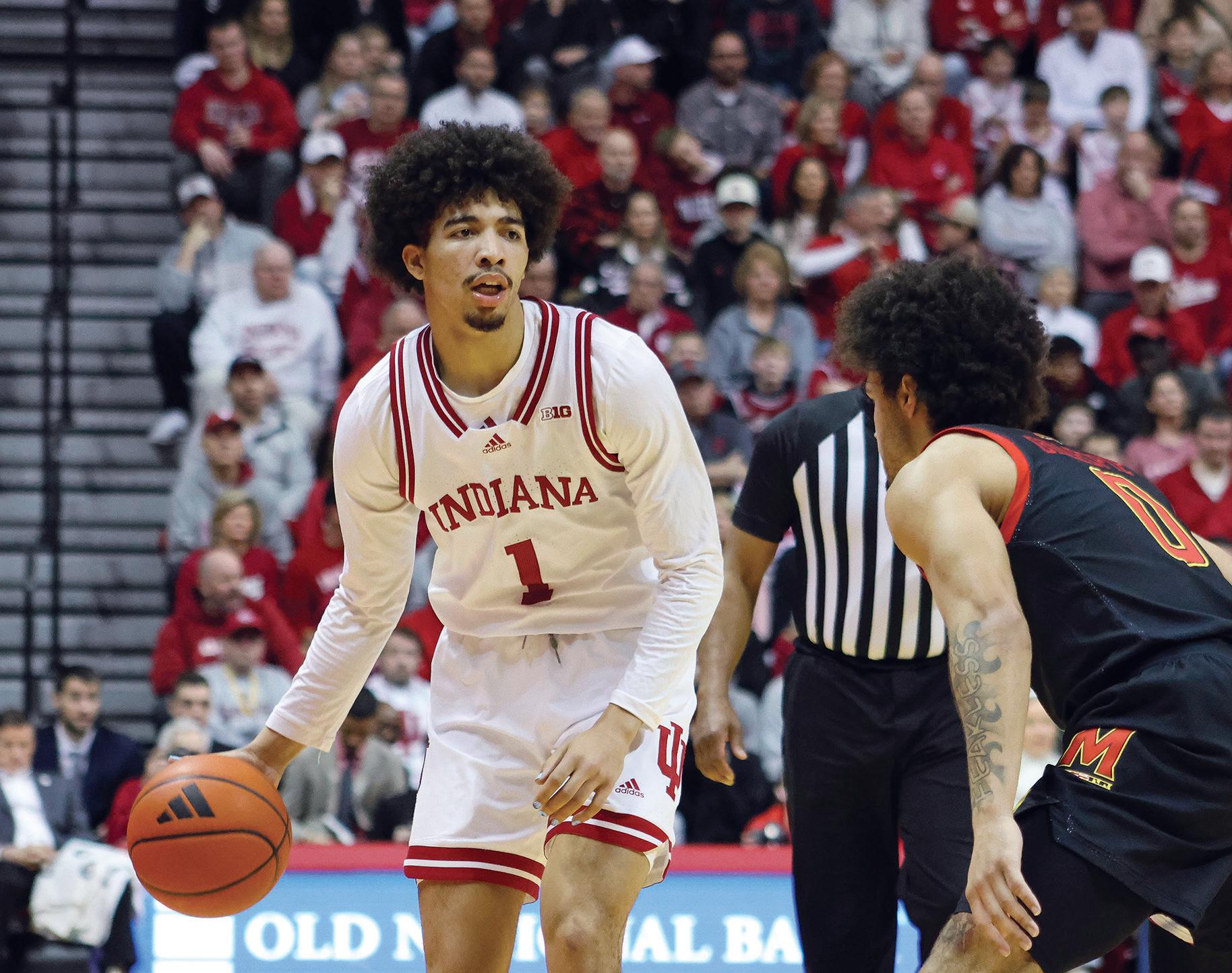
and his assistants told their players they had a foul to give on Maryland’s ensuing possession.
The Hoosiers didn’t use it. Maryland attacked the lane but lost the ball before it ended in the hands of Terrapins sophomore guard Rodney Rice, who buried a go-ahead triple with seven seconds left, stunning the Hoosier faithful. Woodson liked the start of Indiana’s possession defensively until the play broke structure, resulting in what Woodson later described as a “huge” mistake.
“We just didn’t get a key stop with a foul to give,” Woodson said postgame. “The ball scrambled out. The initial thrust of their offense, I thought we played it well. Then when the ball kind
of spurted around, we just didn’t get up and take the foul like we should have.”
Leal, who finished with 6 points and five rebounds, confirmed postgame the Hoosiers discussed fouling in their huddle, but the players failed to do it.
“It’s on us as players to go out there and execute what’s told us to do,” Leal said. “We didn’t do it right there, but that’s not the reason we lost the game. There’s plays and plays that add up and lead up to that. Sure, yes, we were under the impression we were supposed to foul, and unfortunately, we didn’t.”
Still, Indiana had a chance.
Redshirt sophomore guard Myles Rice sprinted across the timeline, and the Hoosiers called timeout
with five seconds remaining.
Out of the timeout, Maryland threw a curveball at Indiana, running zone defense. Galloway inbounded the ball to junior forward Malik Reneau, who had scored 8 points in the second half and found himself in a one-on-one against Maryland freshman center Derek Queen.
But as Reneau tried to drive on the baseline, Queen knocked it out of bounds. Woodson said Reneau was trying to draw a foul. No matter, Indiana retained possession with three seconds left.
Then, chaos struck.
Woodson went to his bench, inserting sophomore forward Mackenzie Mgbako and senior forward Luke
Goode into the lineup for Leal and sixth-year senior center Oumar Ballo. Fans cheered at Goode’s entrance and Ballo’s exit, but cheers turned to boos when Leal left the court. The fans’ split reaction mirrored the similarly confused attitudes of the Hoosiers’ players on the court.
“I think we were trying to run a play, but then the substitutions kind of got everybody confused a little bit, trying to put everybody in their right spots,” Rice said postgame. “Then we didn’t have a timeout, so we were trying to fix everything on the fly a little bit in such a heated moment. We’ve got to be better as players.”
Indiana’s baseline out of bounds play was designed for Rice, who started in the
corner, to come off a screen from Reneau. Woodson said the Hoosiers knew Maryland wanted to switch everything, so Rice would have ideally had a one-on-one with Queen on the perimeter and enough time to attack the rim.
But Rice didn’t use the screen. He remained in the corner, turned around and launched a contested 3-pointer, which didn’t hit the rim. Galloway tipped the ball outside, where it landed in Miguel’s hands before being sent toward the ceiling.
“I’ll just start by saying this: I know they’re not going to want me to say it, but that’s on me as the point guard,” Rice said. “No matter what lineup we’re in, we have to make sure we all know what we’re doing, and I’ll take some of the heat on that. It’s just a heated moment. You can’t really put it into words sometimes. Everything happens so fast.” Woodson said the play came down to a lack of execution.
“Myles didn’t come off, and he stayed there in the corner,” Woodson said. “We didn’t get much out of it.” Leal stood on the bench, his arms sitting atop his head. Reneau did the same. Goode threw his arms in front of him, palms face up as if he was asking the bench a simple — yet loaded — question: what happened?
“It’s on us as players to go out there and execute what’s told us to do.”
Senior guard Anthony Leal Rice cited composure in key moments. Leal referenced handling punches and fighting better than the other team. Woodson added the failure to execute little details. But there may not be a one-size-fits-all answer for a collapse that took the air out of a once vibrant arena.
By Savannah Slone srslone@iu.edu | @savrivers06
Two of Indiana women’s basketball’s last three defeats have occurred because of late fourth quarter collapses.
On Jan. 19 against No. 4 USC, Indiana held a 4-point lead in the final quarter, but its inefficient offense and defense allowed the Trojans to put together a 12-0 run. The Cream and Crimson lost by 7. Just five days later, the Hoosiers blew a 10-point fourth quarter lead to Oregon. They were plagued with turnovers, which the Ducks capitalized on to come away with a 54-47 win inside Matthew Knight Arena in Eugene, Oregon.
And Indiana was in the same position Jan. 27.
The Hoosiers went on a 7-0 run to end the third quarter and entered the fourth with a 13-point advantage over the Huskies. But if they learned anything from their previous two games, it was that their lead wasn’t safe. Indiana needed to stay focused to walk out of Alaska Airlines Arena with a win.
“This is a team that realized we let one slip away at Oregon,” head coach Teri Moren said postgame.
“Because we had the lead, we should have been able to keep the lead. So, we got to
own that, and we did.”
But even with the Oregon game in mind, Indiana began to slip. Its shots weren’t falling like 53.8% of them had through three quarters, and a pair of turnovers allowed Washington to go on an 11-0 run and a 7-0 run to make it a tie game.
The Hoosiers, desperate to snap their losing skid, realized they couldn’t blow their fourth-quarter lead again.
“I think we all just said ‘We can’t do it again. We can’t have this lead and lose it again,’” junior guard Yarden Garzon said. “We just wanted to be really focused on what we are doing and execute, not just like go rogue and have like sloppy turnovers. I feel like we just wanted each other to be focused and do our best to stay locked in into the game.”
And that’s what Indiana did. Garzon and graduate student guard Sydney Parrish each hit a 3-pointer within the final two minutes of the game to give the Hoosiers the advantage.
While Washington still has time to get a final shot up, Moren said her team’s defense played the final possession “perfectly.”
“(Junior guard Hannah Stines) still had to shoot a pretty tough shot,” Moren said. “Chloe was on her side a little bit, defending her. I
think it was rushed, and she got a good look out of it. But we played it as well as we wanted to.”
Indiana defeated Washington 73-70 for its first win since Jan. 12, when the Hoosiers beat Iowa. The Jan. 27 win over the Huskies was essential in getting Indiana back on track after a tough stretch of games, which Moren acknowledged after Oregon. She knew Washington would pose a test for Indiana coming out of its third-straight loss — and the Hoosiers passed.
“And so, give our kids credit,” Moren said. “I said we’ll see what we’re made of. And I thought our kids showed up in the right way. It was a hard, hard-fought win and, and so I’m really proud of them.”
The need to win was felt by Garzon, who finished the game with a career-high 35 points and surpassed 1,000 career points with a 3-pointer in the third quarter.
“I feel like right now we are just desperate to win,” Garzon said. “Doesn’t matter how, doesn’t matter who is good, just really desperate to win. We need these wins.”
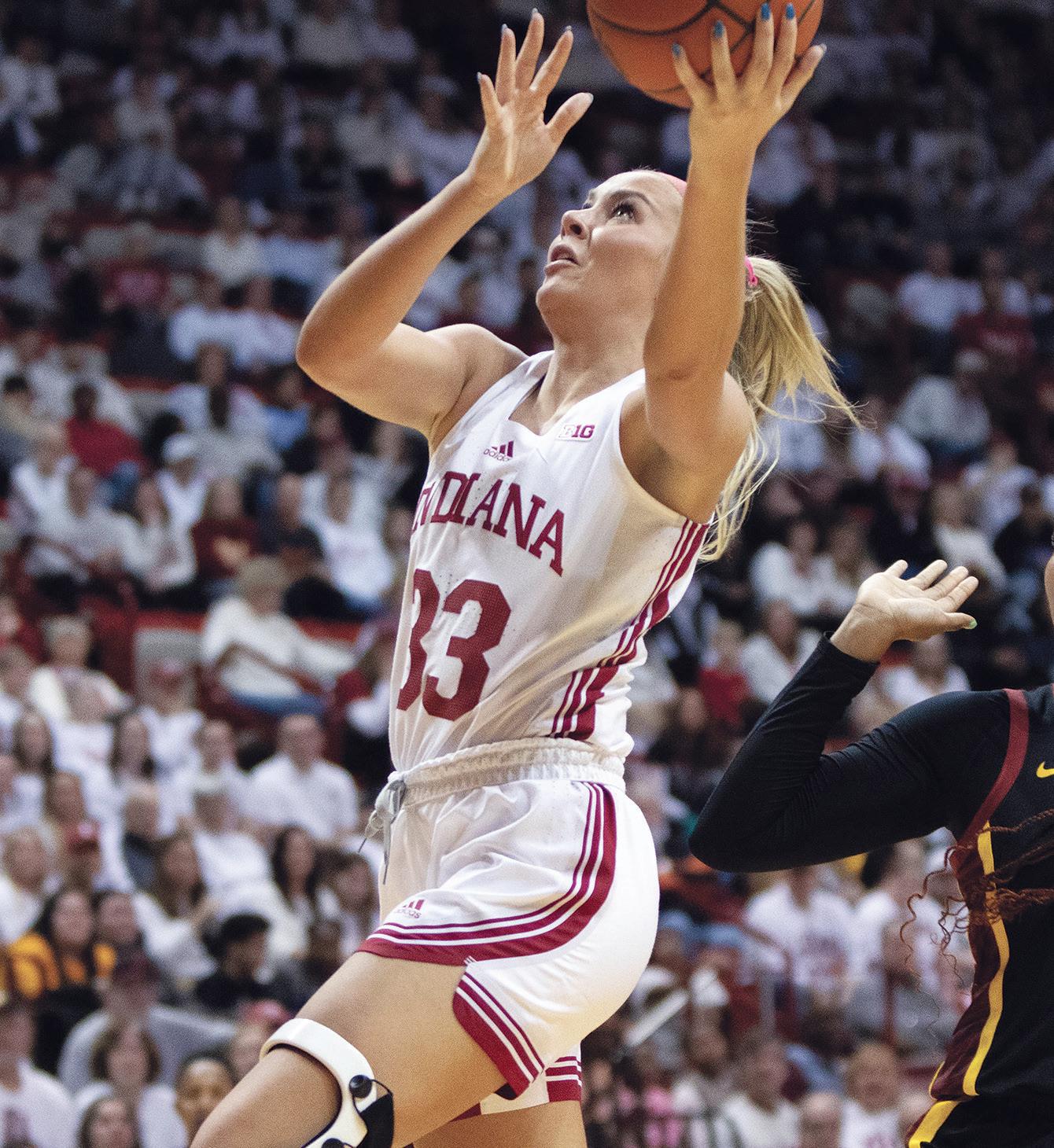
A loss would have given the Hoosiers a losing Big Ten record heading into February with three currently ranked opponents on their schedule. But now, Indiana will look to build momentum when they return to Bloomington for its next match up against Nebraska

By Dalton James jamesdm@iu.edu | @daltonmjames
Indiana football checked
in at No. 10 in The Associated Press’ final top 25 poll of the 2024 season released Jan. 21. The Hoosiers were ranked in 12 of the 17 polls released throughout the 2024 season and peaked at No. 5. In his first season at the helm, head coach Curt Cignetti guided Indiana to a program-record 11 wins, including blowout victories over Michigan State and Purdue to recapture the Old Brass Spittoon and the Old Oaken Bucket. The Hoosiers backed up Cignetti, who dazzled with confidence throughout last offseason, on the gridiron immediately. The Cream and Crimson began the season with nine consecutive double-digit victories, including blowout wins over UCLA on Sept. 14 and Nebraska on Oct. 19.
Indiana’s lone regular season loss came to Ohio State — the eventual national champions — on Nov. 23. The Hoosiers then defeated the Boilermakers, finishing 11-2 to secure their first College Football Playoff berth. In the CFP First Round, Indiana faced off against the University of Notre Dame at Notre Dame Stadium in South Bend, Indiana. Despite trailing by 24 points in the fourth quarter, the Hoosiers scored a pair of lategame touchdowns as they fell by 10 to the eventual runners-up. Indiana fans sold out Memorial Stadium the final four home games — the most since 1969 — which matched the total from 2016-23. Tuesday marks just the seventh time the Hoosiers have been ranked in the AP Top 25 at the end of the season. At No. 10, Indiana finished at its highest since it was No. 4 in 1967. So far this offseason, Cignetti and the Hoosiers have added


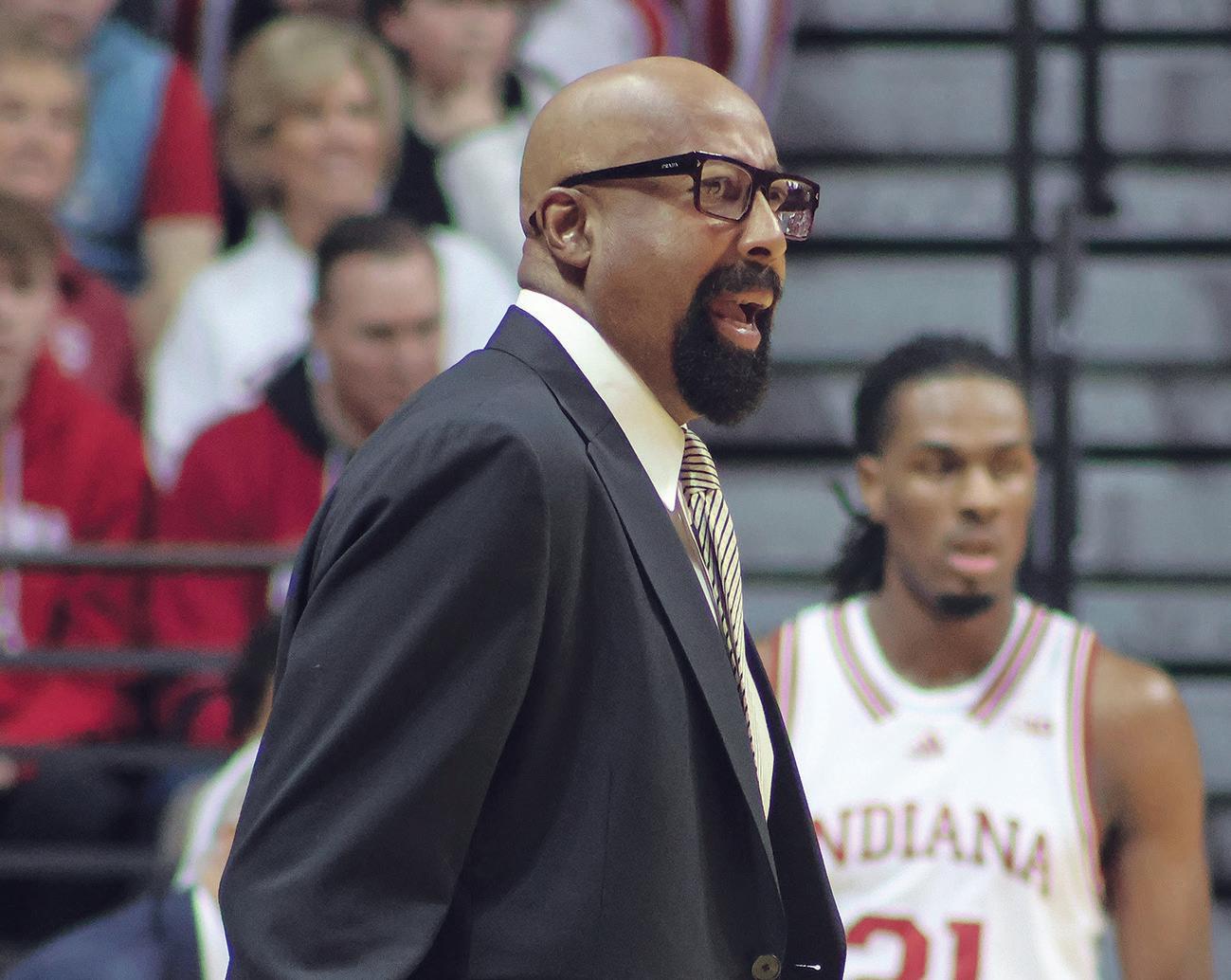
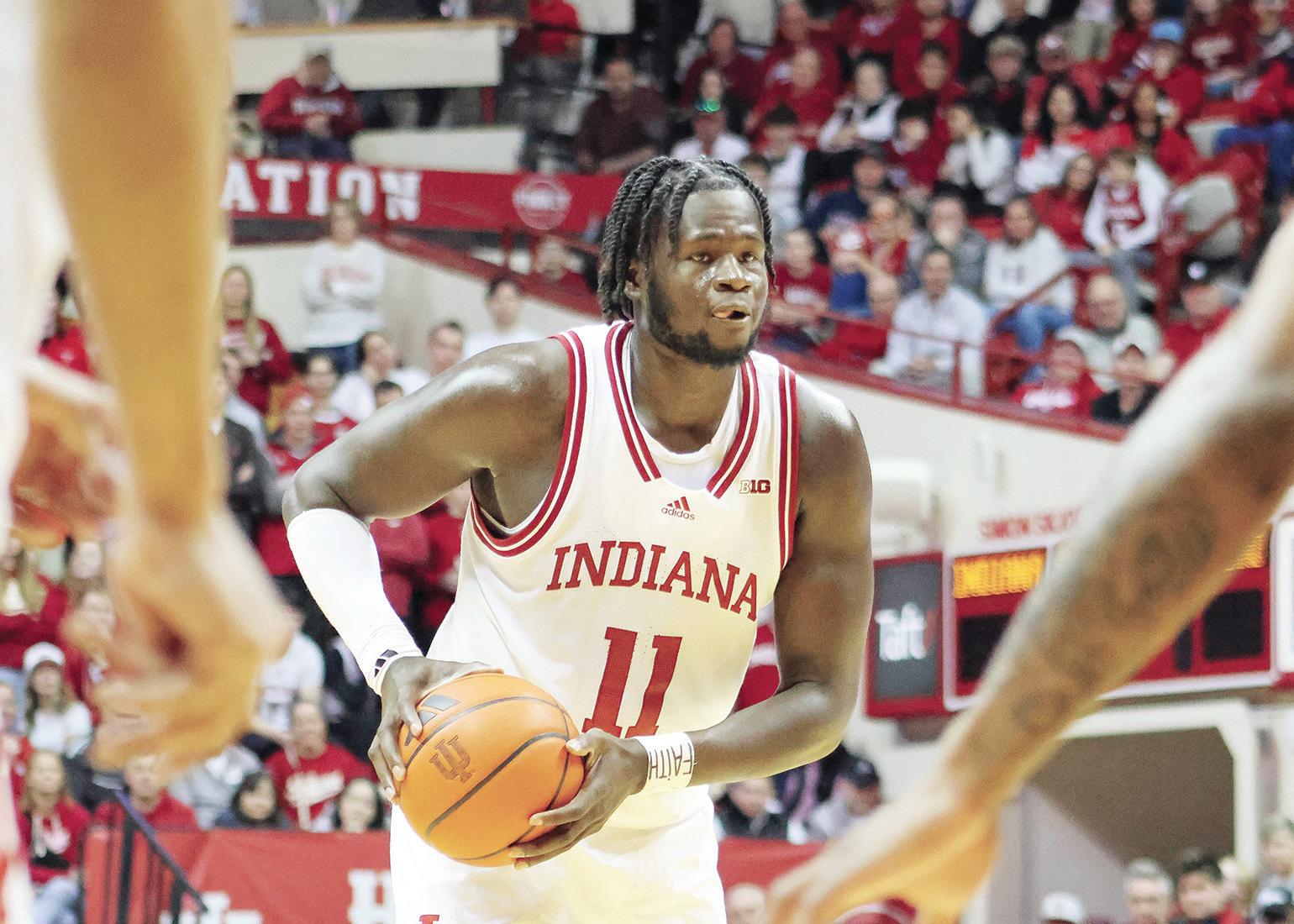
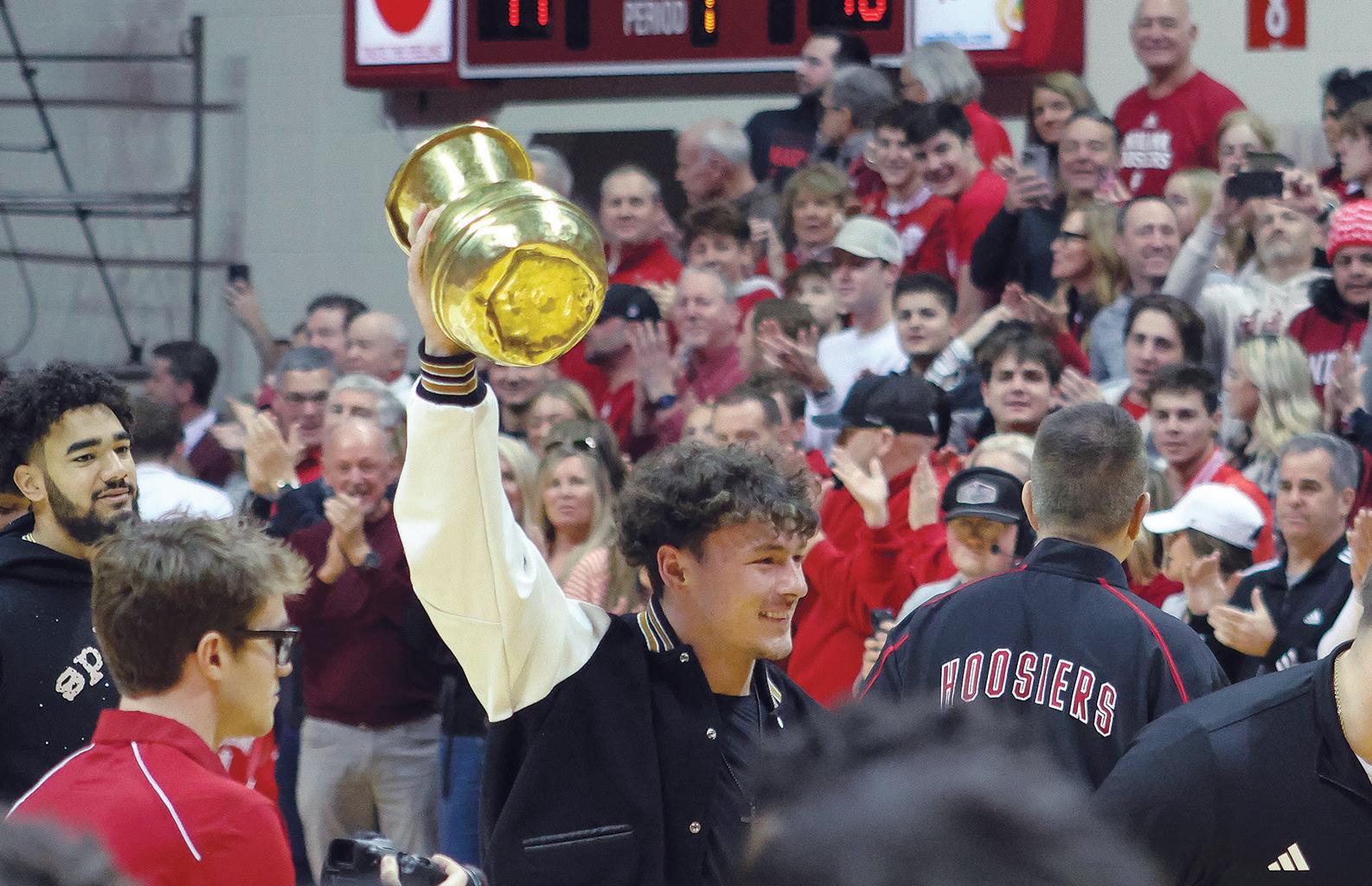
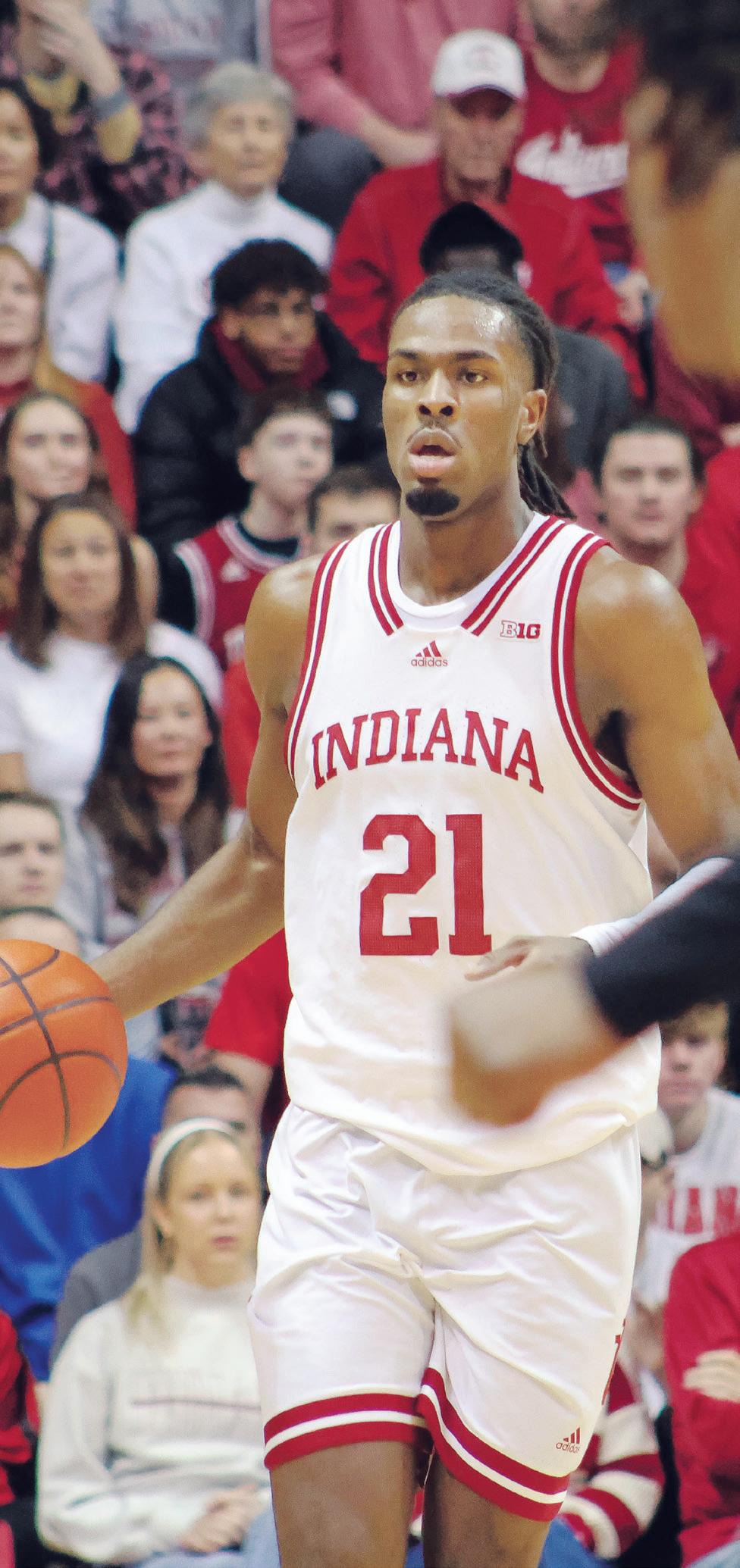

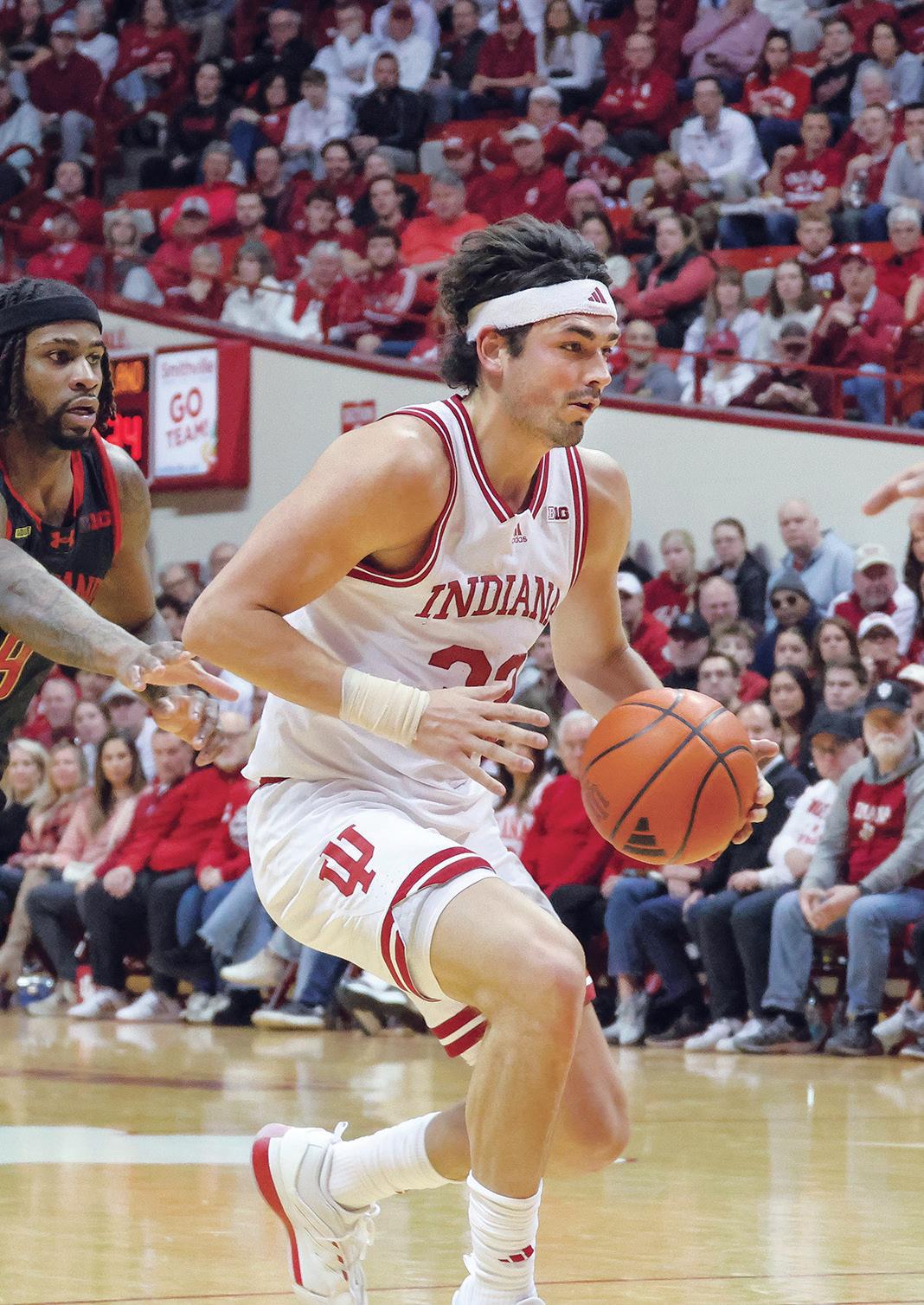

Defensive coordinator Bryan Haines re-signed with the Hoosiers on Jan. 26 with a new contact extension
By Daniel Flick danflick@iu.edu | @bydanielflick
Indiana football defensive coordinator Bryant Haines will officially return to the program this fall.
Haines signed a new contract extension with Indiana on Jan. 26, an Indiana Athletics spokesperson confirmed to the Indiana Daily Student. 247 Sports and CBS Sports national reporter Matt Zenitz first reported the news. Terms of the contract were not disclosed.
Haines is one of five finalists for the Broyles Award, which will be announced Feb. 13 and is given annually to the nation’s top assistant.
Out of 133 teams in the Football Bowl Subdivision, the Hoosiers’ defense
ranked No. 2 with 256.3 yards allowed per game and No. 6 in scoring, giving up only 15.6 points per game. Indiana’s defense finished 12th in the country and second in the Big Ten with 95 tackles for loss.
Haines initially agreed to a contract that paid $1.8 million annually over three years. But amid defensive coordinator openings at both of the teams in the College Football Playoff National Championship — Ohio State and the University of Notre Dame — the Hoosiers evidently felt the need to secure Haines moving forward.
Indiana head coach Curt Cignetti, who has an offensive background, said during the season he gives Haines free rein on the defense.
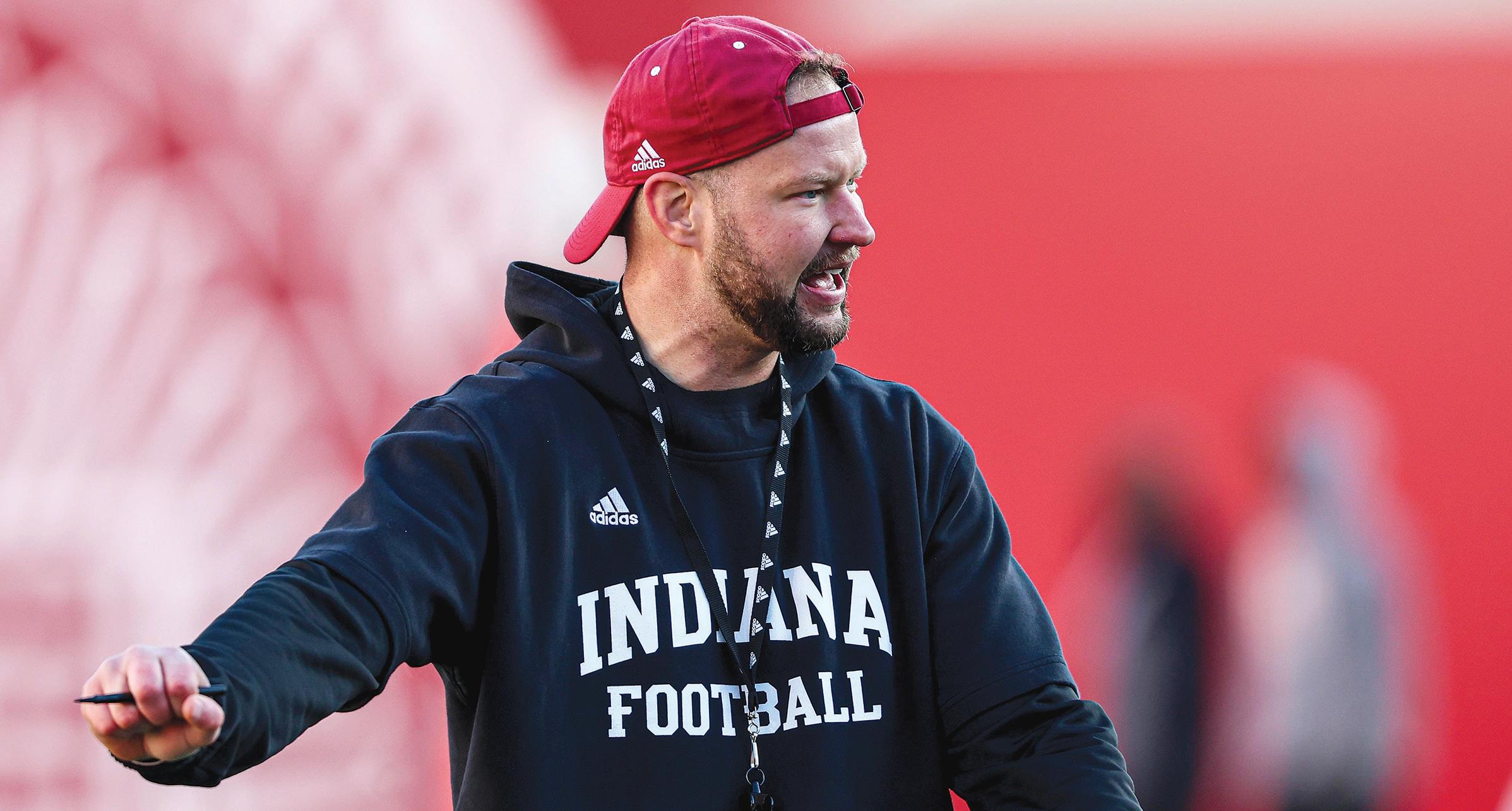
By Matt Press
Before winter break, AJ Shepard approached Indiana baseball head coach Jeff Mercer with a tough truth: his body wasn’t recovering the way he had wanted it to.
The Hoosiers’ redshirt freshman catcher missed the entire 2023 season rehabbing from his second Tommy John surgery, and just three games into last year, Shepard sustained a season-ending hand injury.
Indiana Athletics announced Jan. 24 he elected to take a medical waiver and will not return to the program ahead of the 2025 season.
“I have a ton of respect for AJ,” Mercer said during a media availability Jan. 24. “He’s going to graduate from Indiana, come back and get
his degree and be a tremendous success ... We wanted to make sure that we honored him and thanked him and had a moment to really celebrate him. He’ll always be a Hoosier.”
A Manassas, Virginia, native, Shepard ranked as the nation’s No. 23 overall catcher in the high school class of 2022. He was the state’s No. 13 ranked prospect and committed to Indiana as a freshman in high school.
After redshirting his freshman season, Shepard flashed his power during last season’s “Baseball at the Beach” opening series. Shepard knocked two homers and four RBIs in three games, but he suffered his hand injury while playing first base in the weekend finale.
While Shepard was never able to fully display his ca-
pabilities as a Hoosier, his teammates offered high praise for his work ethic.
“I think he was one of the best players I’ve ever played with,” junior outfielder Devin Taylor said. “He’s played three career games, but no one saw what he was doing behind the scenes.”
Mercer said Shepard is continuing to undergo procedures to treat both last season’s injury and an elbow injury he suffered in high school. He stopped by the Jan. 24 practice to catch up with the team and will continue to take classes.
Without Shepard in the fold, Indiana’s catching room is headlined by redshirt senior Jake Stadler and sophomore TJ Schuyler. Freshman Hogan Denny — the No. 1 ranked catcher in Indiana for the class of 2024 — was named Baseball
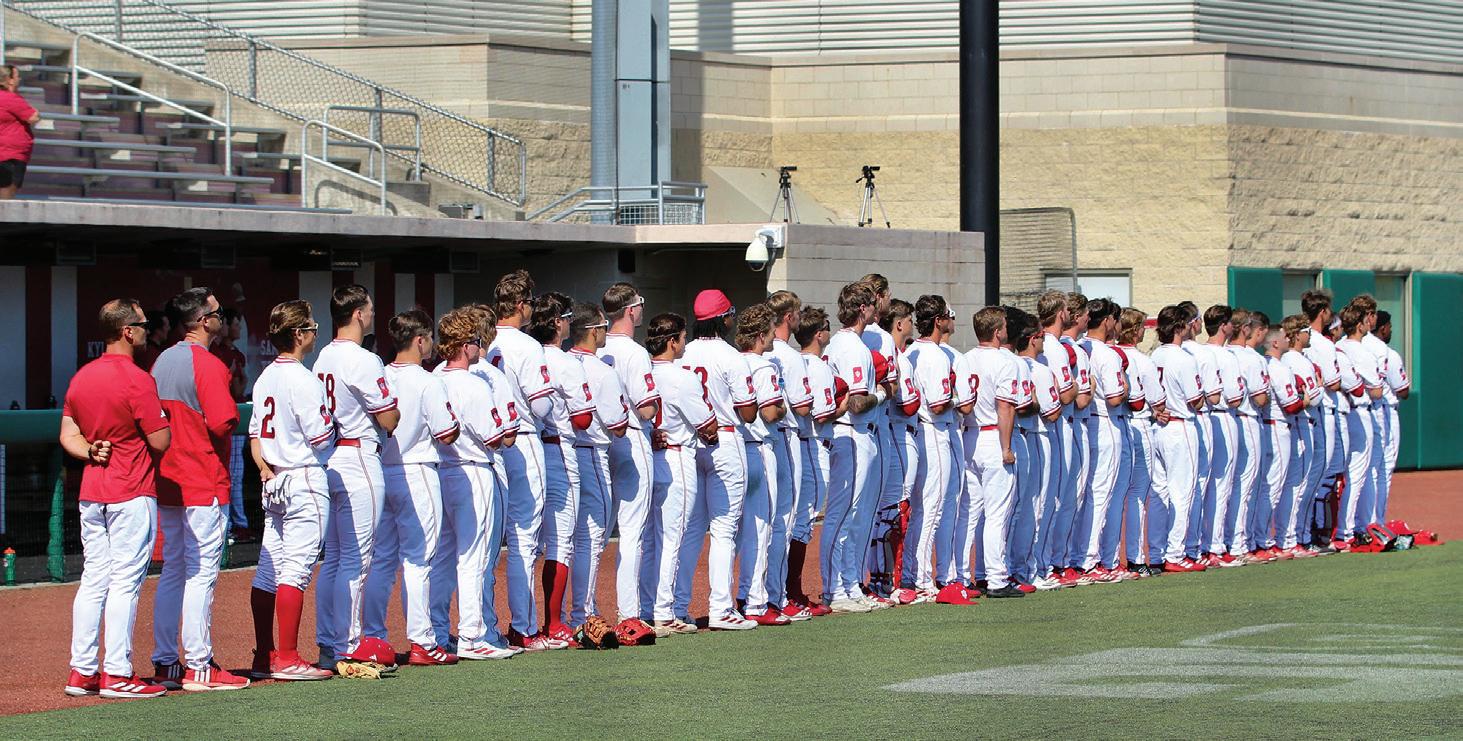
America’s Big Ten Preseason Freshman of the Year and figures to carve out a role in the lineup, as well. Stadler took over as the team’s starting catcher last
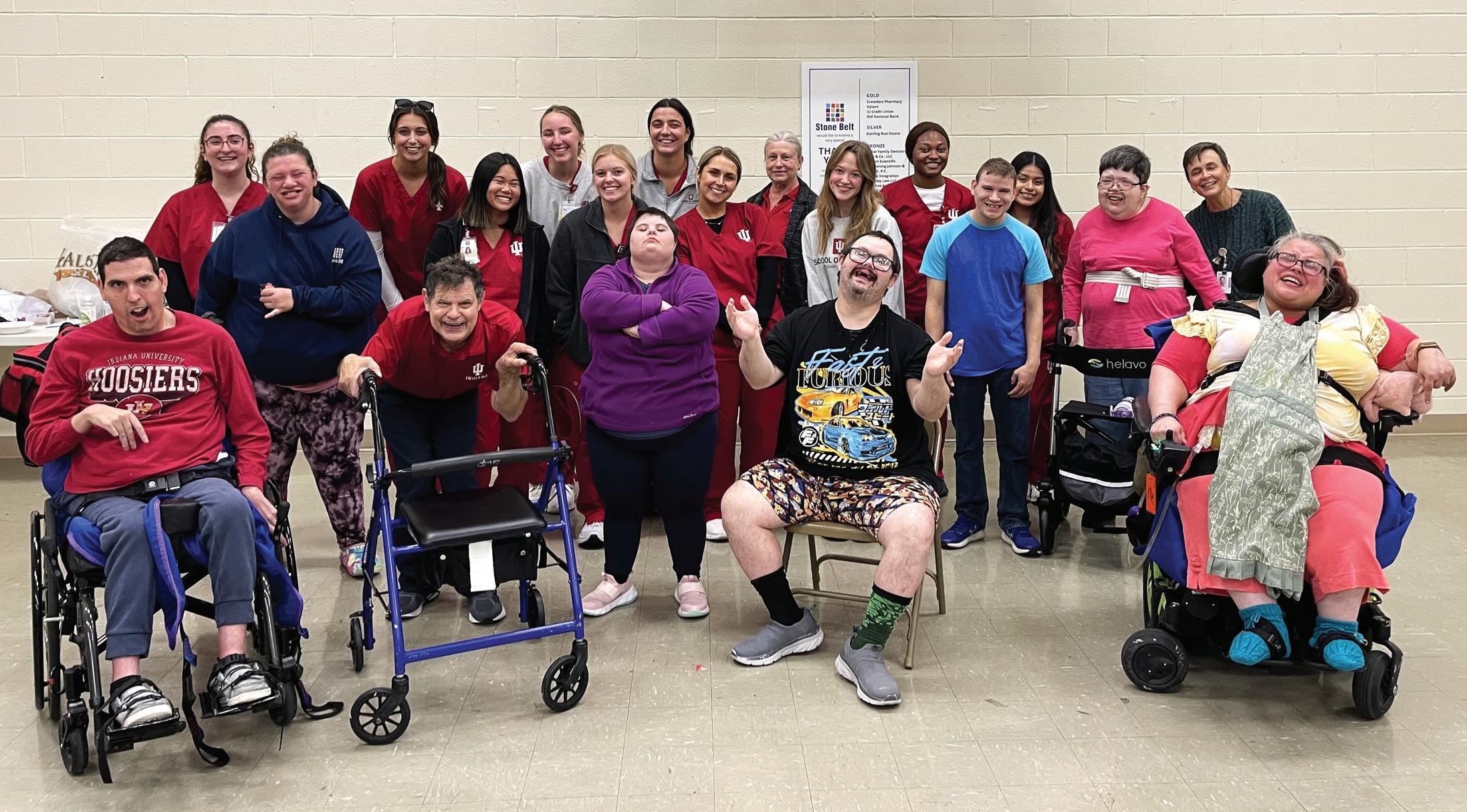



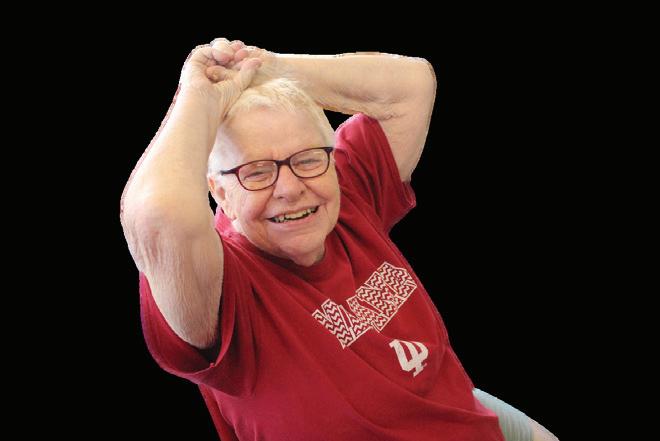
season and made 42 starts behind the dish, finishing the year batting .278 to go along with 42 hits and 27 RBIs. He figures to be the team’s opening day catch-
er when Indiana takes on the University of
Las
on


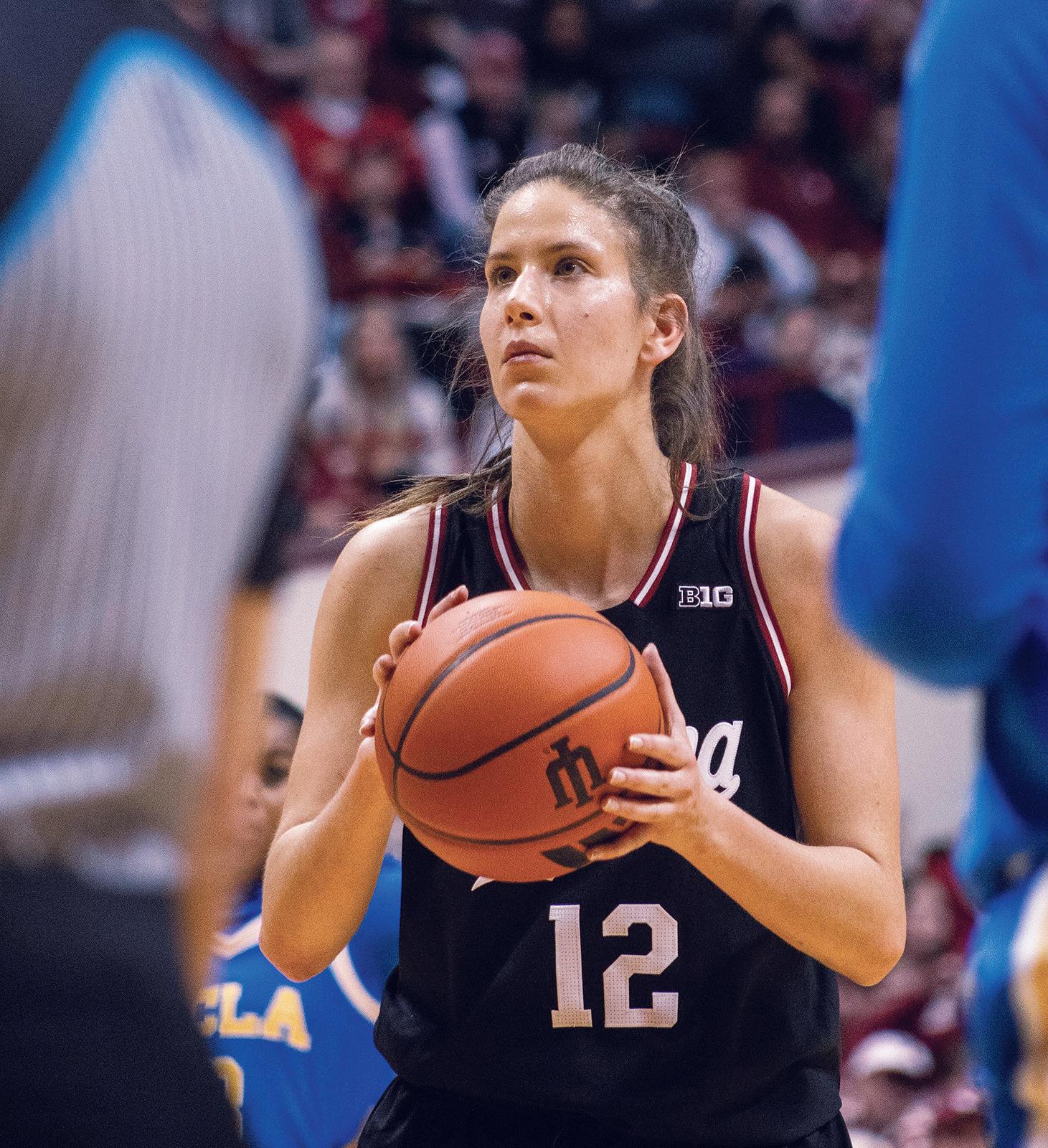
By Dalton James jamesdm@iu.edu | @daltonmjames
It started just over two minutes into the game.
Indiana women’s basketball junior guard Shay Ciezki fired a pass to Yarden Garzon on the right wing. The junior forward drained the 3-pointer as the Hoosiers got out to a quick start against Washington. It wasn’t Garzon’s last bucket of the game as her first 3-pointer against Illinois on Jan. 16 was. Instead, the Israel native connected on seven more long balls.
Despite Garzon’s scoring prominence and the Hoosiers leading by as many as 14 in the final quarter, they collapsed as the Huskies tied the game with less than two minutes remaining. But Indiana responded with a pair of 3-pointers — one from Garzon — to secure the 7370 victory over Washington at Alaska Airlines Arena in Seattle.
“Obviously we’re excited that we’re getting out of here with the win tonight,” Indiana head coach Teri Moren said postgame. “I’m happy for the entire team, though, because this has been a long road trip for us. Super disappointed we couldn’t pull it off at Oregon, we just didn’t play well enough, and so we felt like we needed this one tonight to get back on track.”
Indiana entered the matchup on a three-game losing streak. In their losses to Illinois, No. 4 USC and Oregon, the Hoosiers averaged just 55.7 points per game. Over that stretch, Garzon averaged just 7 points, shot 26.4% from the field and 22.7% from long range per
game.
After falling to the Ducks on Jan. 24, Moren described Garzon’s struggles as “certainly concerning.”
Even with Garzon in perhaps the roughest slump of her three-year career in Bloomington, she didn’t do anything different against the Huskies.
“I feel like I didn’t change a thing,” Garzon said. “I tried to take my shots before the game like usual. I’m trying to be as consistent as I can — this night it fell in, and I hope it will continue.”
The shots certainly fell for Garzon, who finished with a career-high 35 points as she went 13 for 18 from the field and 8 for 10 from beyond the arc.
While Garzon didn’t change a thing, neither did Moren. The 11th-year head coach said she wants her shooters to have short-term memory and doesn’t talk with them about their struggles.
The Hoosiers continue to run sets to get the ball into their shooter’s hands, Moren said, no matter how they’ve played over previous games. So, when Garzon’s shots continuously fell Jan. 27, the offense ran through her.
“When we run things for them, we feel like they can come through for us,” Moren said. “And so, some of that happened for Yarden tonight, some of it was just organic in transition. She felt it. On nights like that, you just try to figure out, ‘Okay, what else do I have on this play sheet that I can just keep giving her the ball?’”
Despite the fourth-quarter collapse that could have resulted in a disastrous loss,
Garzon’s brilliance allowed the Hoosiers to secure the victory — their 13th of the season and first since Jan. 12.
Since Moren called out her squad after losing to Illinois on Jan. 16 for a lack of energy in the practice the day before the game, there’s been no issues. And the Hoosiers are starting to reap the benefits.
“They have been so good in terms of the focus, them understanding game plans, them being about the scouting report, how we’re going to stop teams,” Moren said. “Energy, I haven’t had to coach. Like I said, this is a team that realized we let one slip away at Oregon, because we had the lead, we should have been able to keep the lead. So, we got to own that, and we did.”
Indiana now returns home to face off with Nebraska on Feb. 2 at Simon Skjodt Assembly Hall in Bloomington. The noon matchup is the Hoosiers’ second consecutive Quad 2 matchup before a Quad 4 matchup with Rutgers on Feb. 6.
Then, the gauntlet begins.
The Cream and Crimson finish their season with five Quad 1 matchups alongside two rivalry contests with Purdue.
The Hoosiers’ NCAA Tournament hopes hang in the balance. If they notch wins over the upcoming high-quality opponents, a fifth-consecutive March Madness berth will almost certainly come to fruition.
But all Indiana wants is to win, Garzon said. It doesn’t matter how nor who they come against; they are “desperate to win.”
By Dalton James jamesdm@iu.edu | @daltonmjames
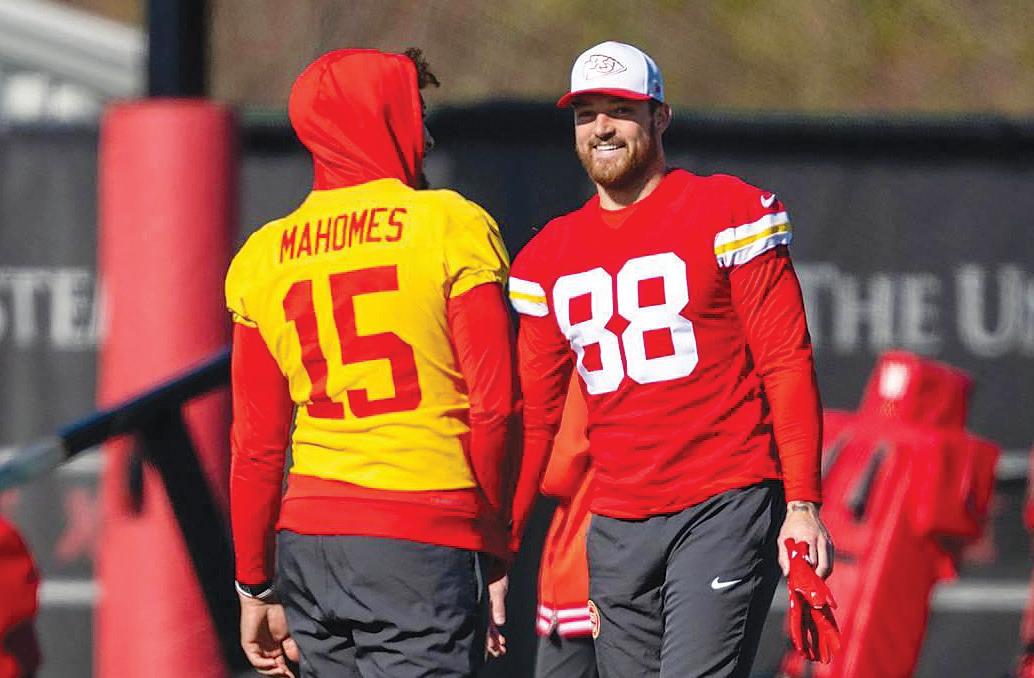

4TH aNNUAL sTUDIO gHIBLI fILM fESTIVAL
Celebrate the Wondrous Films of Hayao Miyazaki in a 4-Film Series
Spirited Away - 1/17
Howl’s Moving Castle - 1/24
Kiki’s Delivery Service - 1/31
Porco Rosso - 2/7
Sleeping Trees & David Woodruff’s moonscreen: Live at Buskirk-Chumley Theater - 1/29
Presented by 91.3 WFHB
Kinsey (2004) - 1/30
A Science on Screen® Initiative
Ani difranco documentary: 1-800-on-her-own - 2/1
Documentary Following the Groundbreaking Indie
Musician/Feminist Ani DiFranco
Magic of Motown - 2/2
A Journey Through Motown’s Best Moms Unhinged standup comedy show (18+) - 2/4
Featuring Janae Burris, Andrea Marie, Jan Slavin, and Lindsay Porter
The String Queens - 2/6
Authentic and Soulful String Trio Based in Washington D C.
La La Land (2016) - 2/14
A Valentine’s Day Special
Bloomington Winter Blues Festival - 2/15
Featuring King Bee & The Stingers, Mike Milligan and Steam Shovel, and the Gordon Bonham Blues Band
Born Innocent: The Redd Kross Story - 2/16
Redd Kross Documentary Presented by 91.3 WFHB
Billy Fortune, Prairie Scout, & Brick Lancaster: Live at Buskirk-Chumley Theater - 2/19
Presented by 91.3 WFHB
Music for mushrooms (2024) - 2/20
A Science on Screen® Initiative
IU Sing A cappella - 2/22
Student Showcase Presented by the IU Student Foundation
Live! On stage: Jonathan Richman (16+) - 2/26 Featuring Tommy Larkins on the Drums
kEVIN jAMES tHORNTON - 3/1
Comedy Show Featuring Mat Alano-Martin
The Legendary life of tom Petty - 3/8
Featuring Juno Award Winning Artist Clayton Bellamy
American Voices for all Times - 3/9
Bloomington Symphony Orchestra Spring Performance
On The Lash - 3/14
In Celebration of St. Patrick’s Day - Honoring Irish Traditional Music
I Laugh at myself: an evening with justin Furstenfeld of blue october (16+) - 3/20
Featuring Furstenfeld’s One-Man Show: “An Open Book”
Hoosier Country jam: Collin Raye - 3/23
Presented by Camp Broadcast
Bruce Cockburn - 5/12
Presented by Bloomington Roots
Past, Present, and Future - 5/18
Bloomington Symphony Orchestra’s 55th Season Finale


By Finley Bisch fbisch@iu.edu
Bloomington’s Freezefest 2025 kicked off with an exciting day of ice carving and a chili cook-off Jan. 23.
The annual celebration started in the morning with ice carving, including sculptures of various Bloomington icons proudly on display.
Bloomington has been hosting Freezefest for the past five years, sponsored by local staples like
Morgenstern Books and Café and Upland Brewing Company. Both residents and people hired by event management alike create the intricate sculptures. One of the out-of-town carvers was Arby Russell.
“I’ve always been kind of a hands-on person, making stuff with my hands,” Russell said. “I went to culinary school and that was my first taste of sculpting.” Russell spent part of the day carving a grand piano, the purpose being to pay
homage to Bloomington’s musical scene. Each sculpture had some connection to Bloomington, its IU campus or downtown hotspots like the Sample Gates and icons like IU football coach Curt Cignetti.
“Bloomington as a community is great,” Russell said. “The people around are very awesome.”
The event draws in tourists from all across Indiana.
Two of these visitors were LuAnn Tanzilli and
Dorthy Surface, hailing from Indianapolis and Kokomo, respectively. The two friends met in Bloomington to enjoy a day full of winter festivities.
“We’ve never been to the ice sculptures before,” Tanzilli said. “I think any special event encourages community as well as tourists.”
Surface was looking forward to spending time in Bloomington, where she does not often find herself.
“It’s a nice little day trip,
very interesting,” Surface said. The two planned to look at the ice sculptures then eat lunch at Upland Brewing just across the street from The Mill, where the sculptures were on display. Freezefest draws people from out of town to try local spots, boosting Bloomington’s tourist business and helping the town grow an identity outside of the campus, according to The Mill Venue and Booking Manager, Nick Faulkenberg.
Freezefest also draws in local residents, like Patty and Mark Slovinski. This is their second year attending, and said they looked forward to the rest of the weekend
“It’s just one of the many things that makes Bloomington unique,” Mark said.
Besides the ice sculptures on display Jan. 23-25, there was also a chili cooking contest and a popup ice cream shop by The Chocolate Moose at the Mill Cafe.
By Lily Saylor saylorl@iu.edu
What do Indiana head
football coach Curt Cignetti, a cat on a ball of yarn and a piece of watermelon have in common?
They are all ice sculptures on display at Bloomington’s fifth annual Freezefest, a three-day event featuring live ice carvings, a “Chilly Cook-Off” and plenty of family-friendly fun.
The winter festivities concluded Jan. 25 on North Madison Street with Family Fun Day, featuring free ice cream from The Chocolate Moose, a kid’s ice slide and games including pickleball and checkers made of ice.
Before noon, the street was bustling with people admiring the boulevard of ice sculptures. Children raced up the hill for a chance to glide down the ice slide while families posed for photos next to ice sculptures depicting well known IU locations like Sample Gates to more arbitrary designs like a throne and a swan.
Jordan Smith, leisure marketing manager of Visit Bloomington, began planning Freezefest last fall.
“Family Fun Day is of course the big grand finale all-day Saturday,” Smith said. “We truly wanted to make it for everybody, not anything specific to a certain age group.”
Attendee Emily McMurray-Walsh, who visited Freezefest with her family, said they have frequented the event in recent years
“I love free community events,” she said. “I like seeing all the different sculptures and what people do artistically with them.”
For attendees wishing to get out of the cold, The Mill offered a heated escape with free cookies to decorate and a coloring contest. Dozens of coloring pages were displayed on the back wall, each depicting a wintery scene of cheerful snowmen,
alongside a screen listing the 25 winners of the contest.
A booth downstairs featured a prize wheel from Family Success Martial Arts, which was promoting its business at a pop-up table in The Mill. The prize wheel offered two available prizes: two weeks or a full month of free karate lessons.
Upstairs, a long line of children and parents awaited free ice cream while another line waited to order hotdogs from the Orbit Room, which had set up shop inside The Mill. More food was available outside from food trucks Slop Shop and Pili’s Party Taco.
Also outside was ice carver Dean DeMarais, who began his ice carving career in 1988.
“I was studying to be a chef, and we did this one day in class, and I never looked back,” he said. “I work out of Dallas, Texas. I have a fulltime business there, where I do parties, banquets, events and weddings.”
Every few minutes, DeMarais would take a step away from the ice and bob his head to the music playing in his bright green earbuds: songs from Rihanna and the Pitch Perfect soundtrack.
As DeMarais began to cut into the block of ice, a crowd quickly formed around him.
Attendees stopped in their tracks to record him as he worked, whispering in awe.
“What could he possibly be making?” an onlooker said.
The crowd’s guesses ranged from an ocean wave to a dinosaur, and within minutes, nearly 100 people surrounded DeMarais and his nearly 6-foot-tall ice block. The finished product, an abstract shape, left the crowd confused. While he shook the snow off his coat, a little girl approached DeMarais and asked what he made.
“It’s art for the sake of art,” he said. “Something you can look at and hopefully appreciate.”

By Emerson Elledge eelledge@iu.edu
After climbing two flights of stairs, around 40 people waited in the hallway outside of Auer Hall about 20 minutes before the show, hearing the faint smattering of distant noises as musicians finished their tuning and snuck in one last rehearsal.
Inside Auer Hall itself, the room hummed with greetings between audience members making their way into the space and students and faculty catching up.
By the time the concert started, the hall was filled with about 300 audience members for “Voices and Video Games,” the first collaboration between the Music in Games Society and the Jacobs School of Music’s contemporary vocal ensemble, NOTUS.
The concert was directed by Dominick DiOrio, who also conducted six of the eight compositions performed. Music school directing doctoral students Gabriel Fanelli and Benjamin Wegner each got to conduct a piece as well.
After welcoming the audience, DiOrio invited music school senior and concert producer Sy Anderson to speak. Anderson is the president of the Music in Games Society and had the original idea for the concert 10 months ago.
“It’s been a lot of work,” Anderson said. “It’s been a lot of fun getting in contact with the original composers of these works.”
Anderson walked to the back of the stage and joined NOTUS. Anderson would perform both vocally as a bass and as a featured arranger. After Anderson’s exit, DiOrio continued to preview the concert, highlighting the novelty of a performance dedicated to video game scores.
“For me, the legitimacy of this music is what’s really important to me about this concert,” DiOrio said. “It’s so easy to think about this music as less important than say, Beethoven, or any of the other composers that we have come here to study. This music is just as deserving of studying, of performance and of
Aquarius (Jan. 20-Feb. 18)
Today is an 8 — Unleash your creativity at home. Over the next seven months, make domestic upgrades by listening for what’s wanted and needed. Apply your special touch.
Pisces (Feb. 19-March 20)
Today is a 9 — Communications gush, with Uranus direct now. A transmission blockage dissolves. The truth gets revealed. New creative opportunities develop. Discover amazing

our attention as any other music that we study.
The first piece of the night was “Antarctic Oscillation” from “Risk of Rain 2.” The piece was originally composed by Chris Christodoulou and was arranged for “Voices and Video Games” by master’s student Michael Eaton. Eaton described the game as a “cycle” where the main character is taken on a journey only to end up where they had first started.
“That sense of triumph when we arrive back where we started, energized and ready to go again is one of the reasons I liked this piece so much,” Eaton said. “It’s similar to the feeling of triumph that video games as a whole are known for.”
“Antarctic Oscillation” was led by oscillating percussion elements, introducing the cyclical nature of the piece. While conducting one of the more energetic portions of the composition, DiOrio bounced on the balls of his feet to best convey the emotions of the song, even hopping on one foot for a moment.
The second piece, “Ever Come to an End” from “Xenoblade Chronicles 2,” was an acapella choral performance originally composed by Yasunori Mitsuda and was arranged by Anderson. Sophomore Catherine Browne sang a baritone solo during the piece, receiving a 15-second applause from the audience
news and insights.
Aries (March 21-April 19)
Today is an 8 — An unexpected bounty could surprise. Windfall apples drop at your feet, with Uranus stationing direct today. Discover rising cash flow as traffic, long delayed, gushes.
Taurus (April 20-May 20)
Today is a 9 — A barrier to personal advancement fades, with Uranus direct in your sign. Succeed through innovation. Take action,
at the composition’s conclusion.
“The Song of the Sea” from “Rime,” originally composed by David García Díaz, was arranged by master’s student Jamey Guzman. It was performed third in the show.
The plot of “Rime” is ultimately revealed to be a representation of the stages of grief, with “The Song of the Sea” representing a lost lullaby sung by the parents of a deceased child. While conducting the piece, DiOrio crouched down, as if coaxing the melody out of the parents’ lips.
Music school senior Erin Blake arranged “Confronting Myself,” which was composed by Lena Raine. “Confronting Myself” from “Celeste” was the sixth piece of the night. The game follows Madeline as she climbs a mountain while confronting the antagonist, a manifestation of her self-doubt, Part of You, but is commonly referred to as “Badeline” by fans of the game.
“Badeline is not your enemy, she’s a part of you, and so your job during this part of the game is to get her to see that,” Blake said. “During this fight, you’re reaching out to her, she’s trying to push you away. The reason that I chose ‘Confronting Myself’ to arrange for this concert is because not only is there a choir, but it’s the part of the track that musically represents
stand up and speak out. Shine your light.
Gemini (May 21-June 20)
Today is an 8 — Your intuition grows stronger, with Uranus direct. Dreams and visions guide you. Creative muses provide beautiful inspiration. Listen to the mood. Notice the unspoken.
Cancer (June 21-July 22)
Today is a 9 — Creative collaborations come easier now that Uranus is direct. The social arena sparks
By Arnaav Anand arnanand@iu.edu
Limestone Comedy Festival collaborated with the Cardinal Spirits distillery 7 p.m. Jan. 26 to host the eighth season of its annual live comedy series, High Proof Laughs. The soldout bar venue featured headliner Zach Wycuff, along with Allison Stapp, Kejal Macdonald, Wyatt McKinley and emcee Mat AlanoMartin.
The tickets for the event benefitted Exodus Refugee, an Indiana-based organization committed to aiding the resettlement of refugees and other displaced people fleeing persecution, injustice and war by welcoming them to Indiana.
what’s happening in the game. As you’re fighting her, as you’re making more progress…the choir starts to get more glitchy and it sort of fragments as her resolve starts to break down until finally, you’re able to reconcile. You’re able to join forces and finish the climb.”
The final piece of the night was “Chakalaka” from “Cook, Serve, Delicious! 3?!” a lighthearted game about operating a food truck in a war-torn, futuristic United States. Composed by Jonathan Geer, the performance was arranged by recently graduated Jacobs School of Music doctoral student Isaac Smith and current doctoral student Drake Eshleman, who introduced the piece.
“Chakalaka is an infectiously upbeat and exciting vocal tune, and its seemingly nonsense lyrics bear no reference to the South African vegetable, that is just its name,” Eshleman said. “It’s sort of a Pig Latin on Spanish lyrics, so the first word, ‘cocino’ or ‘cook,’ is transformed to ‘copo-ce-no-po.’”
After the conclusion of “Chakalaka,” the crowd gave the performers, the arrangers and conductors a standing ovation.
The Music in Games Society said it hopes to host another event this semester. NOTUS will perform next on March 11, 2025, in “Reflections and Meditations.”
inspiration, motivation and solutions. Work together for what you love.
Leo (July 23-Aug. 22)
Today is a 9 — Changes benefit your career, with Uranus direct. Elusive puzzles reveal their solutions. Surge forward professionally over the next seven months. Harness innovation, inspiration and intuition.
Virgo (Aug. 23-Sept. 22)
Today is an 8 — Travel and educational journeys flow with greater ease now that Uranus is direct. Philosophical insights and intellectual discoveries reveal exciting
Mat Alano-Martin, codirector of the Limestone Comedy Festival and emcee for the night, is responsible for choosing the lineups for High Proof Laughs.
“(We) try to have representation,” he said. “A lot of comedy shows, it’s just a bunch of straight white dudes, and that can be funny, but there’s just not a lot of different perspectives. With this show and every show that we book, we try to just have different life experiences, different perspectives.”
Alano-Martin kicked off the event with an introduction and a brief routine before calling to stage the opening comedian, Kejal Macdonald.
Macdonald runs her own marketing and branding agency, Zuzu Digital. She said she started venturing into stand-up comedy about six months ago. Having attended a workshop at The Comedy Attic, she reached the final round of the 16th Bloomington Comedy Festival in 2024.
“There’s something very magical about the Bloomington comedy scene,” she said. “I have seen a lot of comedy in big cities, but this is the only thing that I’ve experienced from inside. It’s just so positive and supportive and there’s room for everyone and for a lot of different opinions and perspectives as long as they’re not hateful.”
Wyatt McKinley, an LGBTQ+ feature comedian for the event, followed up with his routine. McKinley
breakthroughs. Creativity abounds.
Libra (Sept. 23-Oct. 22)
Today is a 9 — It’s easier to grow shared financial accounts, with Uranus direct. Collaborations grow more lucrative. Motivate each other to quick action for new opportunities.
Scorpio (Oct. 23-Nov. 21)
Today is a 9 — Creative collaboration surges, with Uranus direct now. A project that was stalled now advances. Discover fresh inspiration. Take advantage of beneficial changes and opportunities.
was also a finalist of the 16th Bloomington Comedy Festival in 2024.
“I did the Bloomington Comedy Festival with Kejal,” he said. “It’s just great. I love the community. There’s so many different backgrounds of people, sexualities, genders that you don’t really find.” Allison Stapp, another feature comedian for the event and winner of the 2023 Cincinnati Funniest Person of the Year contest, went up next on stage. She said she has been doing comedy for almost three years.
“It’s a big creative challenge,” Stapp said. “I really enjoy the writing aspect of it, which is great. A lot of comedians can agree that just feeling the growth over time as a comedian is just one of the most satisfying feelings in the world and really keeps you going.”
The headliner, Zach Wycuff, capped off the show with an uproarious routine, talking about topics such as his Catholic upbringing and being single. Wycuff has been named the Funniest Person in Columbus and twice named the Funniest Person in Cincinnati.
“I’ve been doing this around 10 years,” Wycuff said. “I wanna brag on Mat and the Limestone because it truly is an incredible festival. People come from all over the country to apply to it. And it was a huge deal for me when I finally got accepted this past year.”
Wycuff recently released his debut special “Homeschooled Energy” with Dry Bar Comedy.
“It’s interesting growing a comedy career living in the Midwest and not like a New York or an LA thing,” he said. “What I’m working on now is, can I make a career, while still living here? And getting to do stuff like a charity show for something that is super important, super timely, feels great.”
The comedians stayed in the venue for a while after the show to chat with the audience.
Cardinal Spirits plans to host High Proof Laughs again Feb. 23 and March 30, warming up the community for the 12th annual Limestone Comedy Festival in Bloomington May 29-31.
Sagittarius (Nov. 22-Dec. 21)
Today is an 8 — Barriers with your work, health and fitness dissolve as energy gushes forth, with Uranus direct. Discover physical, mental and spiritual inspiration. Get your heart pumping.
Capricorn (Dec. 22-Jan. 19) Today is a 9 — Love blossoms. Fun and romance come intuitively, with Uranus direct. Let your creative impulses run wild and unfettered. A door, seemingly locked, now opens.
©2025 Nancy Black. All rights reserved. Distributed by Tribune Content Agency.
By Sydney Weber syaweber@iu.edu
Bloomington may be covered in snow and ice, but that doesn’t mean there’s no fresh, local produce available. The Bloomington Winter Farmers’ Market offers a variety of local foods from 9 a.m. to 12:30 p.m. on Saturdays during November through March at the Switchyard Park Pavilion.
Right now, offerings include cruciferous vegetables such as arugula, kale and chard from vendors including Meadowlark Farm, and daikon radishes from stands such as Wilderlove Farm. Root vegetables available now from market sellers like Meadowlark and Wilderlove are garlic, various types of potatoes, purple beets and celery root.
Furthermore, leafy greens and herbs such as lettuce, spinach, multiple kinds of microgreens, cilantro and parsley can be found on
tables in the market.
Barnhouse Farms is one of the stands selling microgreens, and vendor Sean McKinney said that different kinds have different flavors. Microgreens are the young seedlings of vegetables and herbs.
“So, the radish (microgreens) is really spicy — peppery, like a radish,” McKinney said. “Broccoli has got that brassica flavor, but it’s insanely healthy. It’s like 40 times the nutrient density of actual broccoli. The pea shoots are kind of sweet and crunchy, like a peapod.”
FirstLite Farms sells mushroom varieties such as blue oyster, lion’s mane and shiitake. Mushrooms can be sauteed, added to soups and pastas or used as a vegan meat substitute.
Winter produce can be incorporated into a variety of dishes, such as salads, soups and sides.
“Personally, I love putting
the radish (microgreens) on my tacos or eggs — anywhere you put a green thing,” McKinney said. “So like, sandwiches, wraps. We like the pea shoots in our ramen; (we) make a lot of ramen. My kids just eat them by the handful. They love them.”
Prepared foods can also be found on many market tables. Metta Gardens sells seven kinds of sauerkraut, five types of kimchi as well as sourdough bread and fermented pickles, vendor Kathy Shrum said.
The team at Segovia, Jose Escaobar and Samia Mancheno, offer Ecuadorian and Spanish foods, including ceviche, paella and a glutenfree cake called “tarta Santiago.” Other goods could be called Spanish-American fusion, like their scones.
“We have a different (style) of scones,” Escaobar said. “One with Manchego cheese and the other one with figs. We like to call
1503 W. That Rd. 812-824-2768 Emmanuelbloom.com Instagram & Facebook: @EmmanuelBloomington
Sunday: 9:15 a.m., Fellowship Sunday: 10 a.m., Worship Groups: Various times
Emmanuel is a multigenerational church of all types of people. Whether you are questioning faith or have followed Jesus for years, we exist to help fuel a passion for following Jesus as we gather together, grow in community, and go make disciples.
John Winders - Lead Pastor
The Church of Jesus Christ of Latter-day Saints
Bloomington Young Single Adult Branch
2411 E. Second St.
To Contact: Send message from website maps.churchofjesuschrist.org/ wards/237973
Sunday: 12:30 p.m.
The Church of Jesus Christ of Latter-day Saints has four congregations in Bloomington—Three family wards and our young single adult branch for college students. This info is for the YSA Branch. Weekday religious classes at 333 S. Highland Ave, Bloomington IN 47401, next to campus.
More info at churchofjesuschrist.org.
United Methodist
Jubilee
219 E. Fourth St. 812-332-6396 jubileebloomington.org
Facebook: First United Methodist Church of Bloomington, IN Instagram: @jubileebloomington
Sunday: 9:30 a.m., Classic Worship 11:45 a.m., Contemporary Worship Wednesday: 7:30 p.m., College & Young Adult Dinner

them Spanish-style scones, because we try to keep the same recipe as a normal American scone but (also) try to give it like a little twist.”
Seasonal offerings at the Winter Farmers’ Market extend beyond food. Winter Blooms grows flowers in a greenhouse from December until May, meaning blossoms such as tulips, anemone and ranunculus are available even in January.
“It took about a year of research on my end (to grow flowers in winter),” Emily Winter, owner of Winter Blooms, said. She grows her flowers in a structure called a high tunnel, which is a covered half-cylinder that helps to protect crops.
Winter’s solution was to put a heater in her high tunnel that turns on when the temperature falls below 40 degrees.
Year-round products at the market, such as honey, yogurt and eggs, can be used to augment winter produce. Vegetables can be roasted in honey and glazed with vinegar, or leafy greens mixed in a salad with yogurt dressing.
For more details on the Bloomington Winter Farmers’ Market and a complete list of vendors, visit its website.
American Restoration Movement
Lutheran - Missouri Synod Orthodox All Saints Orthodox Christian Church
University Lutheran Church and LCMS U Student Center
607 E. Seventh St. 812-336-5387 indianalutheran.com facebook.com/ULutheranIU instagram.com/uluindiana
Sunday: 9:15 a.m.: Sunday Bible Class
10:30 a.m.: Sunday Divine Service
Wednesday: 7 p.m.: Wednesday Evening Service
Student Center open daily: 9 a.m. - 10 p.m.
The LCMS home of campus ministry at IU, our mission is to serve all college students with the saving Gospel of Jesus Christ, located across from Dunn Meadow and the IMU. The Student Center is open daily for study, recreation, and prayer. For full schedule, visit our website.
Rev. Timothy Winterstein - Campus Pastor
Jubilee is a Christ-centered community open and affirming to all. We gather on Wednesdays at First United Methodist (219 E. 4th St.) for free food, honest discussion, worship, and hanging out. Small groups, service projects, social events (bonfires, game nights, book clubs, etc.), outreach retreats, and leadership opportunities all play a significant role in our rhythm of doing life together.
Markus Dickinson - jubilee@fumcb.org
Inter-Denominational
Redeemer Community Church
111 S. Kimble Dr. 812-269-8975
redeemerbloomington.org facebook.com/RedeemerBtown
Instagram & Twitter: @RedeemerBtown
Sunday: 9 a.m., 11 a.m.
Redeemer is a gospel-centered community on mission. Our vision is to see the gospel of Jesus Christ transform everything: our lives, our church, our city, and our world. We want to be instruments of gospel change in Bloomington and beyond.
Chris Jones - Lead Pastor
North Central Church of Christ
2121 N. Dunn St. 812-332-2248 nc3family.org Facebook.com/nc3family
Sunday: 10 a.m., Worship 11 a.m., College Class
Come learn about historic Christian teaching on theology, ethics, and culture. We offer an alternative to the post-modern ideologies and teachings you often see in your lives today.
Shane Himes, PHD - Senior Minister
6004 S. Fairfax Rd. 812-824-3600 allsaintsbloomington.org webbrk1@gmail.com
Father Peter Jon Gillquist Thomas Przybyla - Pastoral Assistant
Christian Science Church
2425 E. Third St. 812-332-0536 bloomingtonchristianscience.com facebook.com/e3rdStreet
spiritually and experience healing. Knowing God loves, guides and cares for each one gives a sense of peace and joy. We appreciate the Christian Science Monitor news magazine for its integrity, fairness and compassion.
(Christian Science Monitor) csmonitor.com Christian Science
Bloomington Bahá'í Community and Bahá’í IU Association
424 S. College Mall Rd. 812-331-1863 bloomingtoninbahais.org facebook.com/Baháí-Community-ofBloomington-Indiana-146343332130574
Instagram: @bloomingtonbahai
Sunday: 10:40
Karen Pollock Dan Enslow Bahá'í Faith
the Peace and Harmony of the Planet through advancing the "security, prosperity, wealth and tranquility of all peoples."
By Joey Sills sillisj@iu.edu
Steven Soderbergh’s “Presence” almost manages to succeed purely because of its style. It’s shot entirely in the first-person, from the perspective of a poltergeist — it doesn’t sound like it should work, but somehow the experiment in form is successfully captivating. From a technical perspective, “Presence” is genuinely fantastic. Nevertheless, while it triumphs visually, it almost totally fails to present an engaging, well-written story. I was looking forward to this film. It’s been getting fairly decent reviews from critics, the concept sounded immensely fascinating and both Soderbergh’s name and the Neon brand being attached were promising. There is a great film here somewhere, buried deep within its DNA, but I was just never emotionally engaged in the way the film
so desperately wanted me to be. More a movie about grief than anything, it really only felt like a middling attempt at emulating the vibes and themes of Ari Aster’s work — unfortunately though for Soderbergh, “Hereditary” and “Beau Is Afraid” are simply much better projects. “Presence” follows a family of four who have recently moved into a new home. Chloe (Callina Liang), who is probably the closest to being the main character, is beset with sorrow at the death of her best friend. She doesn’t get along with her brother, Tyler (Eddy Maday), very well, and neither does she with her mother, Rebecca (Lucy Liu). In fact, Rebecca doesn’t really care much for Chloe anyway; she spends most of her time obsessing over Tyler and relegating her daughter to the sidelines. Thankfully, Chloe’s father, Chris (Chris Sullivan), is there for her and effectively acts as her protector.
Society of Friends (Quaker)
Bloomington Friends Meeting
3820 E. Moores Pike
812-336-4581
bloomingtonfriendsmeeting.org
Facebook: Bloomington Friends Meeting
Sunday (in person & Zoom) :
9:45 a.m., Hymn singing
10:30 a.m., Meeting for Worship
10:45 a.m., Sunday School
(Children join worship 10:30-10:45)
11:30 a.m., Refreshments and Fellowship
12:30 p.m., Events (see website)
Wednesday (Zoom Only) :
7 p.m., Meeting for worship for Peace
Friday (Zoom Only) :
9 a.m., Meeting for worship
We practice traditional Quaker worship, gathering in silence with occasional Spirit-led vocal ministry by fellow worshipers. We are an inclusive community with a rich variety of belief and no prescribed creed. We are actively involved in peace action, social justice causes, and environmental concerns.
Peter Burkholder - Clerk burkhold@indiana.edu
Non-Denominational
Christ Community Church
503 S. High St. 812-332-0502 cccbloomington.org
facebook.com/christcommunitybtown
Instagram: @christcommunitybtown
Sunday: 9:15 a.m., Educational Hour
10:30 a.m., Worship Service
We are a diverse community of Christ-followers, including many IU students, faculty and staff. Together we are committed to sharing the redeeming grace and transforming truth of Jesus Christ in this college town.
Bob Whitaker - Senior Pastor Adam deWeber - Worship Pastor Dan Waugh - Adult Ministry Pastor
Christian Student Fellowship
1968 N. David Baker Ave. 812-332-8972 csfindiana.org
Instagram: @csfindiana
Monday - Friday: 9 a.m. - 5 p.m.
Christian Student Fellowship (CSF) exists as a Christ-centered community focused on helping students truly know Jesus Christ. Our ministry operates from an on-campus house where students can live. Reach out to schedule a tour of the house or a visit to our Thursday night worship service!
Ben Geiger - Lead Campus Minister
Stephanie Michael - Campus Minister
Joe Durnil - Associate Campus Minister
Hailee Lutz - Office Manager
This is the simple basis from which the story’s central conflict sprouts: as the plot moves along, the family slowly comes to realize that a spirit is haunting their house, and whether that spirit is at all related to their past tragedy becomes the crucial question. I don’t think this story is inherently bad; I think, actually, that it could be really very interesting! But, for some reason, Soderbergh tapped David Koepp — whose recent works include the scripts for poorly received films like “Indiana Jones and the Dial of Destiny,” the 2017 reboot of “The Mummy” and “Jack Ryan: Shadow Recruit” — to write the film. It’s an understatement to call the screenplay a total mess: the dialogue is almost embarrassingly bad at points, there’s an amalgam of side plots that are often completely forgotten and the twists and turns are totally out of the blue and only work
City Church 1200 N. Russell Rd.
812-336-5958
citychurchbloomington.org
tiktok: @citychurchbtown
Instagram: @citychurchbtown
Sunday Service: 8:30 a.m., 10 a.m., 11:45 a.m.
City Church is a multicultural church on the east side of Bloomington. We provide transportation from campus. Our college and young adult ministry meets on Tuesday nights.
David Norris - Pastor
Sacred Heart Church
615 N. Fairview St. 812-345-5239 sacredheartbloomington.org facebook.com/sacredheartbloomington
Sunday: 10:30 a.m.: Refreshments and Fellowship 10:45 a.m.: Worship Service Tue., Wed., Thu.: Midweek Meals (Check Facebook)
Sacred Heart is a nondenominational church that seeks to follow Jesus by acting justly, loving mercy and walking humbly with God. We strive to be a safe, inclusive community where you can bring your doubts, questions, struggles, and joys before a loving God and find true belonging. All are welcome!
Dan Caldwell
Episcopal (Anglican)
Canterbury Mission
719 E. Seventh St. 812-822-1335 IUCanterbury.org facebook.com/ECMatIU
Instagram & Twitter: @ECMatIU Youtube: @canterburyhouseatiu9094
Sunday: 3 p.m. - 7 p.m.
Mon., Wed., Thu.: 10 a.m. - 6 p.m. Tuesday: Noon - 8 p.m. Fri., Sat.: By Appointment
Canterbury: Assertively open & affirming; unapologetically Christian, we proclaim the gospel of Jesus Christ by promoting justice, equality, peace, love and striving to be the change God wants to see in our world.
Ed Bird - Chaplain/Priest
Independent Baptist
Lifeway Baptist Church
7821 W. State Road 46 812-876-6072 lifewaybaptistchurch.org facebook.com/lifewayellettsville
Sunday: 9 a.m., Bible Study Classes
10 a.m., Morning Service
5 p.m., Evening Service
*Free transportation provided. Please call if you need a ride to church.
Student Ministry: Meeting for Bible study throughout the month. Contact Rosh Dhanawade at bluhenrosh@gmail.com for more information.
Steven VonBokern - Senior Pastor Rosh Dhanawade - IU Coordinator 302-561-0108 bluhenrosh@gmail.com
to muddle the plot. While the actors are, admittedly, working with very little — even the best actors can only do so much with a terrible script — the performances here are hardly anything to praise. Sullivan is probably the best overall, but it’s also possible that his supporting actors’ mediocre performances only worked to his benefit. It’s also worth mentioning that Julia Fox — who, by virtue of being the biggest name attached, has been a major part of the picture’s marketing — has maybe five minutes of screentime total. And she uses those five minutes to give a totally uninterested, detached performance that is almost instantly forgettable.
Which is really just the problem with the film overall, if we’re being completely honest: its formal experimentation is great, as I’ve said, but, ultimately, I’m going to forget almost everything else
about “Presence” by the end of the week. It’s very likely I’ll never think of this movie again. And that’s really a shame, because it should’ve been so much more.
I admire Soderbergh as a filmmaker, I admire his commitment to independent cinema and his prolificity. I’m still (though now cautiously) looking forward to his upcoming film “Black Bag,” which is set to be released in March.
But “Presence” feels like the work of a filmmaker who’s too scared to go over the edge, who’s worried to really push boundaries and make something truly compelling. I wouldn’t call the 85 minutes or so I spent watching this movie a total waste of time, but I spent most of it just thinking about other, better horror and thriller films when I should’ve been thinking about the one in front of me. And that should really tell you everything you need to know.
United Church of Christ and American Baptist Churches-USA
First United Church
2420 E. Third St. 812-332-4439 firstuc.org facebook.com/firstuc
Sunday: 10:30 a.m., Worship
Monday: 10 a.m. via Zoom, Bible Study
We are an Open, Welcoming, and Affirming community of love and acceptance dedicated to welcoming the diversity of God’s beloved. We exist to empower, challenge, and encourage one another to live out Jesus’ ways (compassion, truth, and justice) authentically as human beings in community to create a better world.
Rev. Jessica Petersen-Mutai Senior Minister
Baptist
Emmanuel Church 1503 W. That Rd. 812-824-2768 Emmanuelbloom.com Instagram & Facebook: @EmmanuelBloomington
Sunday: 9:15 a.m., Fellowship
Sunday: 10 a.m., Worship Groups: Various times
Emmanuel is a multigenerational church of all types of people. Whether you are questioning faith or have followed Jesus for years, we exist to help fuel a passion for following Jesus as we gather together, grow in community, and go make disciples.
John Winders - Lead Pastor
Second Baptist Church
321 N. Rogers St. 812-327-1467 sbcbloomington.org facebook.com/2ndbaptistbloomington youtube.com/@secondbaptist churchbloomington
Sunday Service: 10 a.m., In house and on Facebook/YouTube Sunday School: 8:45 - 9:45 a.m. Bible Study: Available In House and on Zoom Wednesdays, 6:30 p.m., Thursdays, Noon
Please come and worship with us. We are in training for reigning with Christ! Need a ride? Call our Church bus at 812-3271467 before 8 a.m. on Sunday
Rev. Dr. Bruce R. Rose - Pastor Tallie Schroeder - Secretary
Unitarian Universalist Unitarian Universalist Church of Bloomington
2120 N. Fee Ln. 812-332-3695 uubloomington.org facebook.com/uubloomington
Sunday: 10:15 a.m., via in person or livestream We’re a multi dynamic congregation actively working towards a more just and loving world. We draw inspiration from world religions and diverse spiritual traditions. Our vision is “Seeking the Spirit, Building Community, Changing the World.” A LGBTQA+, Dementia Friendly, Welcoming Congregation to all ages and groups and a Certified Green Sanctuary. Rev. Susan Frederick-Gray

Evangelical Lutheran Church in America
Rose House LuMin & St. Thomas Lutheran Church
3800 E. Third St. 812-332-5252 Stlconline.org lcmiu.net
Instagram: @hoosierlumin facebook.com/LCMIU facebook.com/StThomasBloomington
Sunday: 8:30 a.m. & 11 a.m. @ St. Thomas Lutheran Church 3800 E. Third St. Tuesday: 6:30 p.m. Dinner & Devotions @ Rose House LuMin 314
and love boldly. Rev. Adrianne Meier Rev. Lecia Beck Rev. Amanda Ghaffarian - Campus Pastor
Unity Worldwide
Unity of Bloomington A Center for Spiritual Growth
4001 S. Rogers St. text/call: 812-333-2484 unityofbloomington.org
IG: @unityofbloomington facebook@UnityofBloomington
Sunday Celebration: 10:30 a.m.
Discover a vibrant, welcoming community at Unity of Bloomington – “a positive path for spiritual living”. Our center offers a space for spiritual growth; embracing all with open arms. We proudly affirm and welcome the LGBTQ+ community, fostering love, acceptance, and inclusion. Join our loving congregation, where everyone is valued and encouraged to explore their spiritual journey. At Unity of Bloomington, all are welcome and together we thrive!
Minnassa Gabon - Spiritual Leader Phyllis Wickliff - Music Director Reformed Protestant
Trinity Reformed Church 2401 S. Endwright Rd. 812-825-2684 trinityreformed.org lucas@trinityreformed.org facebook.com/trinitychurchbloom
Sunday: 10:30 a.m., Sunday Morning Services 7 p.m., Bible Study at the IMU
We are a Reformed Protestant church on the west side of Bloomington with lively worship on Sunday mornings and regular lunches for students after church. We love God and His Word. Please get in touch if you’d like a ride!
Jody Killingsworth - Senior Pastor Lucas Weeks - College Pastor