An Exploratory Study of Organizational Change for Gender Equality and Inclusion
Aurelia Munene
Alice Kainda Kilonzo
EXECUTIVE SUMMARY
Commissioned by the International Development Research Centre (IDRC), the Sparking Change study examined whether and how funding, engagement and technical support from IDRC and other research for development (R4D) funders influenced gender equality and inclusion (GEI)-related change processes within partner institutions�
Case studies
This study produced 10 case studies representing research institutions, civil society organizations (CSOs) and umbrella networks across different geographies and sectors The case studies were selected based on:
• evidence of organizational-level GEI change
• potential to generate transferable learning
• diversity in institutional context and experience
The analysis examined how GEI-related changes are initiated, experienced and sustained across these settings The study used an exploratory qualitative design integrating a feminist research approach, which recognizes that organizational change in GEI is
influenced by power relations, institutional dynamics and socio-cultural contexts
Findings
Partner organizations make sense of GEI organizational change in different ways In some cases, change began as a response to external requirements, but over time it became increasingly linked to program effectiveness and the need to address gaps in reaching diverse groups� The effects of these changes are observed at multiple levels, including:
• greater integration into organizational systems and processes
• gradual shifts in norms and workplace interactions
• changes in individual awareness and engagement
The findings suggest that the nature of GEI organizational change:
• is multi-pathway, non-linear and context dependent
The study also examines factors that drive and shape GEI-related changes, finding that:
• Organizational culture change is gradual and often informal
• Gender expertise plays a catalytic but insufficient role on its own
• External environment and funding ecosystems strongly shape GEI priorities
• Global funding priorities and instability can directly affect GEI gains
• Gaps often arise from weak contextualization
Across case studies, we found that GEI organizational change may be more sustained when integrated within organizational structures, routines and decisionmaking processes, rather than remaining projectbased or dependent on individuals The findings point to the importance of cultural and behavioural change unfolding gradually through ongoing engagement and dialogue
Implications for funders
These observations suggest that potential best practices for enabling the conditions for research partners to make positive GEI changes at the organizational level include:
• supporting long-term, flexible engagement
• encouraging the integration of GEI within organizational systems
• enabling context-sensitive adaptation
• strengthening data, learning and reflection
The study contributes to understanding GEI organizational change as an ongoing process shaped by multiple influences Its sustained transformation appears to depend on the extent to which GEI is integrated within organizational practices, systems and norms
ACRONYMS
CSO Civil society organization
GEI Gender, equality and inclusion
GEDSI Gender, equality, disability and social inclusion
GESI Gender, equality and social inclusion
HR Human resources
IDRC International Development Research Centre
LGBTQ Lesbian, gay, bisexual, transgender and queer
MEL Monitoring, evaluation and learning
NGO Non-governmental organization
R4D Research for development
SME Small and medium enterprise
SOPs Standard operating procedures
STEM Science, technology, engineering and mathematics
INTRODUCTION
Background and context
There is growing recognition that integrating gender, equality and inclusion (GEI) within research for development (R4D) institutions is critical to ensuring both the relevance and impact of research outcomes� While considerable progress has been made in incorporating GEI into project design and implementation, less attention has been given to how these efforts translate into deeper, organization-wide transformation
Emerging anecdotal evidence suggests that some of IDRC’s partners have undergone significant shifts in how they translate, prioritize and operationalize GEI These changes extend beyond individual projects to influence institutional policies, cultures and practices However, there is limited systematic evidence on how these transformations occur, what drives them and how they are sustained
Purpose
The purpose of the Sparking Change study was to:
• understand how organizational change related to GEI occurs within IDRC’s research partners
• explore the extent that IDRC’s funding and accompaniment has contributed to these processes
• generate actionable insights to support an enabling environment for such transformations across the R4D ecosystem
Objectives
The study was guided by three objectives:
• analyze instances of GEI-related organizational changes among IDRC’s research partners, and identify how these changes occurred
• contribute to the existing knowledge base on GEI by highlighting the role funding organizations can play in strengthening GEI organizational capacity and commitments in the R4D ecosystem through their funding models
• generate guidance and recommendations for R4D funders, including good practices to support organizations to increase their GEI capacity and commitment
Gaps
While many R4D funders, such as IDRC, have prioritized the mainstreaming of GEI in development programming, their monitoring and evaluation processes are designed to capture GEI integration at the programmatic level with project-by-project outcomes Organizational-level changes and transformation processes occur within a longer timeframe and may be shaped by a variety of factors These changes and impacts are not systematically captured or documented, and funders’ understanding of how they may support these processes remains limited
METHODOLOGY
Research design
This exploratory study applies a qualitative case study approach to explore organizational-level GEI transformation across diverse institutional contexts The research design allows for an in-depth examination of processes, experiences and contextual factors shaping organization change based on the perspectives and experiences of organizational staff and management It enables the possibility to capture dimensions of change, including shifts in norms, behaviours and power relations
The study adopts a feminist research approach, recognizing that organizational change in GEI is not purely technical but deeply influenced by power relations, institutional dynamics and socio-cultural contexts
Ethical considerations
The study adhered to key ethical principles, including:
• Voluntary participation and informed consent: All participants were invited to participate voluntarily from selected organizations They were asked to complete a consent form after reviewing introduction letter
• Clear communication of study purpose and processes: We communicated by email and held online meetings Guidance was clear and we addressed all feedback
• Confidentiality: We protected the anonymity of participants and organizations who wished not to be named in the report to ensure confidentiality
• Sensitivity to power dynamics and potential risks: We organized for participants to be interviewed separately, interviewing them together only when this was both parties’ preference, and asked them to validate the findings
What is a feminist research approach?
This feminist approach applied here is guided by the following principles:
Meaningful participation, which involves centring the voices and experiences of 19 (16 female, 3 male) diverse participants across IDRC-supported institutions They were deliberately selected to reflect different perspectives within the same organization The study emphasized the co-creative nature of the validated case studies alongside the intentional selection of participatory methods like the River of Change (see Annex 3) to support inclusive and reflective engagement
Contextual sensitivity, which recognizes that GEI change is shaped by institutional and socio-cultural contexts
Care and safety, which ensures ethical and respectful engagement, given the potential sensitivity of GEI issues
Evidence-informed and user-centred analysis to produce insights that are grounded in data and relevant for practical application� This approach expands conventional notions of data and knowledge to value the diverse forms of knowledge participants bring, including lived experience
Case study selection
IDRC program staff identified a list of potential cases of partner organizations undergoing significant GEIrelated change since first engaging with IDRC The aim was to collect a sample of cases that reflected a diversity of programming areas, timeframes, institution types and types of change� Individual case studies were identified by program officers, who were asked to provide basic information, including the organization, the timeframe in which the change took place, the type of GEI impact, a brief description of the story of change, relevant project number and supporting documentation Ten case studies were selected from a longer list of 22 cases
The selection criteria had four components, weighted as follows:
• Demonstrates organizational-level GEI change (40%): Prioritized cases showing organization-wide change in culture, structures or power dynamics, rather than isolated project- or individual-level efforts
• Potential for transferable learning and insights (30%): Selected cases that demonstrate clear, organization-wide shifts in GEI commitment, offering practical, transferable lessons, including reflective accounts of both successes and challenges, and not reliant on single individuals or initiatives
• Demonstrates evidence of transformative impact (20%): Compiled cases that indicate structural transformation such as shifts in organizational culture, mission and commitment to sustaining GEI gains
• Diversity across geographies, sectors and institutional types (10%): Considered variation across geographies, sectors, organizational structures, timing and nature of relationship with IDRC
Participating organizations
Below is a summary of the anonymized participating organizations, their mandates and a brief description of their relationship with IDRC
1
2
Quasi-government agricultural advisory agency focused on professionalizing farmers and rural organizations to improve rural livelihoods; works in advisory services, planning, training and mechanization nationwide
Global health institute addressing health inequities in the Global South through research, innovation and community-based engagement with vulnerable groups
No direct funding relationship: engagement is indirect through an organization with whom IDRC has a direct granting relationship Collaboration spans gender equality and agriculture
Long-standing research partner� IDRC provides funding plus technical engagement (seminars, conferences, knowledge sharing) Collaboration has been catalytic in embedding GEI across research, systems and organizational practice
3
4
Non-profit focused on sustainable landscapes/ seascapes supporting smallholders, forestdependent communities, women and youth through applied research and policy translation�
5
Governance and anti-corruption NGO promoting democratic systems and inclusion through programming with government and civil society
IDRC research partner since early 2020s for climate mitigation/adaptation� Beyond funding, partnership also strengthened organizational systems (standard operating procedures [SOPs], capacity building) and shaped emerging GEI approaches through catalytic support
Research partner through an IDRC-funded initiative since 2021, which resulted in strengthened GEI integration via capacity building, systems strengthening and gender-responsive programming requirements, supported by technical tools and frameworks
6
Global multilateral platform with membership spanning governments, subnational governments and CSOs Co-creating governance reforms across gender, justice, digital governance and civic space
International cooperative development organization supporting cooperatives and mutual enterprises across sectors, focusing on inclusive economic development and marginalized groups
7 Think tank within a global network producing research and tools on sustainable development linking environment and equity�
IDRC research partner over multiple funding phases (2018–2025), which supported GEI research, implementation and scaling
Lead implementer on IDRC-funded GEI projects since late 2010s Support strengthened, structured GEI approaches, institutional reflection and capacity building alongside other funding sources
Long-standing IDRC research partner
Collaboration includes funding, joint research and technical support through researcher platforms and partnerships�
8
Medium-sized NGO working on climate-resilient development through policy engagement, knowledge brokering, capacity building and governance across Global South regions
IDRC research partner since 2018 across multiple funding phases Includes co-development of research, joint learning and capacity strengthening in GEI integration and policy influence
9
10
National institution coordinating research, innovation and funding across STEM and social sciences with emphasis on inclusion and impact
Global member-owned financial network advancing financial inclusion through policy coordination, technical cooperation and peer learning across 83 countries
Data collection
Data collection combined semi-structured interviews (conducted virtually) and the River of Change participatory methodology1 used to facilitate reflection on organizational change processes over time� Each organization was represented by two members of staff as participants, one at the management level and one at the project or technical level, to capture perspectives across different layers of the institution
Validation
Draft case studies were shared with participating organizations for validation Participants reviewed the content, provided feedback and suggested revisions, including on issues of representation and anonymization The final case studies were shared with IDRC’s internal project advisory committee for feedback and input into revisions� This process
Direct partnership since the mid-2010s including grants and non-financial support IDRC contributes capacity building, peer learning and knowledge exchange shaping GEI integration and institutional learning
Evolved from regional to global collaboration� IDRC played a catalytic role through funding, research-policy linkages and ecosystem building on gender-inclusive finance and related themes (green finance, small and medium enterprises [SMEs], inclusion-stability linkages)
ensured that the case studies accurately reflected organizational perspectives Additional detail on the research process can be found in Annex 3: Transparency and accountability throughout the research process
Limitations
The analysis is primarily based on specific participant perspectives and self-reported organizational experiences� As such, findings may reflect subjective interpretations of change and may not capture all dimensions of institutional transformation Although participants were selected and approved by their organizations, their perspectives are shaped by their specific roles and experiences Including two participants per organization helped bring in different viewpoints, but these should not be seen as representing everyone in the organization
1 Adapted from the River of Life methodology for an institutional context: https://www.ids.ac.uk/publications/practical-guides-forparticipatory-methods-rivers-of-life/
FINDINGS AND ANALYSIS
Drivers of GEI organizational change
Evidence across the case studies suggests that GEI change is driven by a combination of factors, rather than a single factor Advances in GEI within organizations tend to emerge through the interaction of external pressures, leadership commitment, culture change, and political and contextual sensitivities
External pressures
• Funder decisions and expectations: In case study 4, staff advocated for a gender policy to guide implementation, particularly in response to funder expectations GEI was also described as initially introduced as a requirement, rather than arising from a shared understanding across staff In case study 1, change was described as largely influenced by external funding and strategic organizational decisions These factors appear to have created entry points for GEI, alongside the integration of gender indicators into planning and alignment with national policies and donor requirements
• National policies: In case study 9, GEI integration appears to have been largely shaped by national policies and affirmative action frameworks rather than internal drivers External frameworks are described as playing a complementary role
• Political and global shifts: In case study 5, flexibility and responsiveness to politically sensitive environments appear to influence how GEI is framed and implemented Case study 8 suggests that broader global shifts, alongside funder expectations, contributed to increased attention to gender, particularly as gender became more prominent in global policy spaces
Leadership and organizational practices
• Leadership commitment: Senior management commitment and a supportive policy environment both contribute to reinforcing progress on GEI In case study 6, political will and management commitment helped enable
the allocation of resources and support the institutionalization of GEI through policies and systems
• Organizational practices: GEI change can manifest at multiple levels, including organizational practices and individual perspectives� In case study 4, GEI became more central to processes such as decision-making and hiring� There was an increased openness and normalization of discussions around gender Case study 5 suggests that organizational changes may occur alongside personal shifts; increased exposure to GEI through organizational processes influences staff perspectives and practices
Culture change
• Shifts in everyday practice: In case study 7, GEI engagement appears to have begun through practice rather than formal structures Early project-based experiences provide a learning space, and over time, these experiences have informed broader organizational approaches�
• Gradual changes in attitude: Case study 4 saw changes in workplace culture over time Gender equality was previously not prioritized in discussions among staff It now appears to be more openly addressed across teams, including male colleagues� Initial engagement was sometimes marked by resistance or humour, but there are signs that sustained exposure, training and ongoing conversations contributed to increased sensitivity and acceptance Informal discussions and safe spaces can support this gradual shift, together with improved awareness and reduced defensiveness when addressing gender-related issues
Political sensitivities
• Alignment with political realities: In case study 5, the GEI approach was adapted to political and contextual sensitivities, in some cases framing it as inclusion where gender is more controversial�
• Timing and openness: The political environment can influence when and how issues such as those related to GEI are advanced Shifts in attitudes and behaviours take time In case study 10, social and cultural norms slowed the pace of change
While policies and technical systems provide structure, sustained change seems to depend on how norms evolve over time, how organizations adapt to contextual constraints and how space is created for learning and engagement�
Gaps in understanding and resistance to GEI efforts
Building awareness of GEI is an important factor in supporting GEI organizational change It can generate both engagement and pushback, which can constrain collaboration and slow institutional integration
• Gaps in understanding: In case study 1, gaps in gender awareness and skills, together with inconsistencies in training, limited implementation In case study 9, GEI was at times framed narrowly, which can constrain a team’s understanding of inequalities Similarly, in case study 10, the organization started
off approaching financial inclusion through a gender-neutral lens, as there was limited recognition of the structural and socio-economic barriers affecting women� In addition, limited use of sex-disaggregated data constrained the organization’s ability to identify gaps and design targeted responses
• Perceptions of GEI: In case study 1, gender equality was at times perceived by some organizational staff as “replacing men with women,” which contributed to resistance and limited early uptake
• Prioritizing GEI: In case study 4, despite the presence of tools and systems to monitor GEI activities and some reported progress, GEI was not consistently seen as a priority across teams Data from the case study suggests that GEI is sometimes deferred in favour of other program demands, with ongoing debates among organization departments about its relevance
These cases suggest that resistance forms part of the process through which GEI change unfolds While increased awareness may support gradual integration into organizational systems, perceptions of relevance and the availability of resources shape the extent to which awareness translates into practice�
Factors that shape GEI organizational change
Programs and projects
Programs and projects introduce new GEI concepts, tools and areas of focus New ways of working that were developed for specific purposes, and resulting learnings, can then create a ripple effect across the organization, supporting learning over time
• Gender mainstreaming: In case study 4, GEI materials strengthened gender mainstreaming efforts and introduced a disability component� This marked a shift towards an emerging Gender Equality, Disability and Social Inclusion (GEDSI) focus within the organization
• Evolving GEI practice: The program in case study 8 was considered a flagship initiative As a result, it helped shape the organization’s broader thinking and practice on gender equality and social inclusion GEI practice within the program evolved from an initial focus on gender-sensitive approaches to more structured, rights-based and context-responsive frameworks The program introduced tools such as inclusive monitoring and evaluation, gender analyses and practicebased learning, whose use expanded across the organization�
These examples suggest that programs/ projects can act as entry points for advancing GEI organizational change, supporting learning, introducing new areas such as disability inclusion, and contributing to gradual shifts in understanding while highlighting that broader organizational change is iterative and shaped by multiple influences�
Gender expertise
Evidence from several case studies suggests that partner organizations are increasingly engaging gender experts, either as external consultants or as staff However, sustained support is sometimes limited
• Value of gender specialists: Gender specialists play a catalytic role in developing tools and supporting early GEI efforts� Case study 8 noted
that the appointment of a gender specialist was a key driver of progress They developed training materials and tools, and led communitybased research, which contributed to a shift towards a more structured gender, equality and social inclusion (GESI) approach In case study 4, external gender expertise advanced a gender policy that was not being implemented toward practical application They also introduced GEI e-learning for staff�
• Dedicated in-house expertise: The organization in case study 1 appointed gender focal points and established a central unit that had access to decision-makers Similarly, in case study 7, a dedicated unit was driving some progress through GEI trainings and cross-project engagement
Case study 9 highlights that limited access to gender expertise can constrain implementation and accountability, even where broader policy frameworks exist� These examples of sustained change depend on how (and how much) gender expertise is integrated into organizational structures and practice�
Community and lived experience
Broader engagement with equity-seeking communities appears to influence organizational approaches to GEI
• Engagement with equity-seeking groups: The work of the organization in case study 4 addressed issues of marginalized groups, including persons with disabilities and LGBTQ communities, but social inclusion approaches remained fragmented and treated as compliance issues� Stronger engagement and partnerships with grassroots NGOs, and increased use of participatory approaches, strengthened and shaped the organization’s approach to GEI in program delivery Meanwhile, more women and people living with disabilities were represented in decision-making roles within the organization
• Lived experiences ripple into organizational change: Having received support from her (male) manager to work a flexible schedule to
accommodate care duties in pregnancy and early parenthood, a study participant from case study 2 in a leadership position was motivated to advocate for similar accommodations for other women These changes were formalized into a policy that allows women to bring children to work, and women employees can access flexible or remote working arrangements after childbirth� This has led to an increase in female leadership in the organization
Financial resources
Evidence from some of the case studies indicates the importance of resourcing GEI to advance and sustain organizational change
• Resources for internal GEI expertise: In case study 6, the partner organization highlighted how financial resource mobilization, combined with a commitment from the organization’s leadership to commit these resources to GEI, supported the recruitment of staff with deep expertise in gender equality Conversely, case study 7 shows how a lack of dedicated budget restricts progress on GEI initiatives such as GEDSI 101, the GEDSI retreat and mandatory certification One staff member mentioned that “we rely on the respective project budgets” and this limits sustainability of GEDSI
• Resources for external GEI expertise: Case study 4 illustrated that having a dedicated budget for GEI supported the organization to recruit a gender expert to help advise on gender implementation
Member-driven change in membership organizations
Three of the case studies (5, 6 and 10) feature membership organizations, and their GEI organizational change path differed from that of other types of organizations
• Distributed authority and member-driven change: In case study 5, GEI gained traction when a member country with a feminist foreign assistance policy co-chaired the organization and made GEI a key focus� Through this process, which was supported through external
funding, peer-learning spaces were created where partners could share experiences and common challenges using new tools and by developing gender-responsive action plans These approaches rendered progress visible and comparable among members, establishing legitimacy and increasing buy-in In case study 10, strong commitments to GEI across member organizations have guarded GEI commitments and progress against global gender backlash
• Strength in numbers for membership organizations: In case study 10, the push to address persistent gender disparities in financing came in large part from member organizations The organization’s shift to an independent, member-owned organization further supported members’ ability to drive this agenda, resulting in the integration of GEI into the membership organization’s core organizational mandate Member advocacy complemented other enabling factors, including a push from central leadership, partnerships with aligned development agencies and global policy shifts
Global policy environment
The global policy environment plays a role in shaping how organizations prioritize GEI and may influence the extent to which they pursue internal organizational change
• Seizing momentum to strengthen internal change processes: Case study 8 shows that growing global emphasis on gender equality and social inclusion in climate action led to the organization integrating GEI more deliberately into its work, reinforcing internal efforts
• Connecting organizational change to global change: In case study 10, a partner organization launched the first global policy model on genderinclusive finance, equipping developing countries with practical tools while highlighting that key barriers extend beyond financial institutions’ mandates This has contributed to a shift in how some financial institutions perceive their role, signalling a shift towards using their influence and policy tools to guide private sector actors in advancing gender-inclusive finance�
Sustaining GEI organizational changes
Across the case studies, sustainable change most notably took place where GEI was meaningfully integrated into organizational mandates, structures and policies, including strategic planning, human resources (HR) and hiring practices, MEL frameworks and governance
• Integrating GEI into operational processes: Case study 1 highlights how donor-driven GEI requirements became an operational norm This meant GEI was a way of doing things rather than a response to external requirements
• Positive feedback loops: Case study 10 demonstrates that what began as an exercise to align with the GEI elements within a national development plan led to an increase in external investment This created a positive reinforcement loop where GEI continued to be prioritized�
• Multiple factors contribute to positive organizational culture: Case study 6 demonstrates that as GEI becomes core to an organization’s mandate, backed up by trainings, resources and senior leadership commitments, GEI becomes rooted in the organizational culture
ROLE OF IDRC AND OTHER FUNDERS
This section highlights evidence from the case studies on the link between funding relationships and GEI organizational change processes The study’s findings show that:
• Funding and the nature of funding relationships can shape how partner organizations conceptualize GEI and what they prioritize
• Funding relationships can shape GEI organizational change by jumpstarting the focus on GEI and supporting training and capacity building, creating the right conditions for partner organizations to integrate and institutionalize GEI
• Partner organizations must at times navigate tensions between funder requirements, organizational interests and contextual realities
IDRC’s role in advancing GEI priorities
The case studies cited IDRC as a funder that has made a substantial contribution to GEI organizational change and its work is catalytic, meaning it enables, sustains and legitimizes GEI priorities�
IDRC’s role in GEI priorities
IDRC played a catalytic role in initiating and shaping GEI organizational changes In case study 2, engagement with IDRC, coupled with the organization’s strong focus on equity and inclusion, led to the formalization and institutionalization of GEI beyond projects and into the full organizational strategy This was achievable because the organization believed its values were compatible with those of funding partners like IDRC
In case study 3, a grassroots NGO received IDRC funding for a project on climate mitigation and adaptation, which included a strong GEI focus After implementing the project, the partner organization gained some insights on how to raise women’s representation and participation in the organization They went on to build a standard operating procedure to codify the process
Financial support and specialized expertise provided by IDRC fostered conditions for organizational GEI changes In case study 5, IDRC’s sustained funding facilitated the development of practical tools such as gender-responsive action plans and toolkits, while promoting long-term gender coalition building that improved data collection and enhanced organizational capacity to empower stakeholders to make more robust commitments
Enabling
In case study 8, IDRC supported collaborative learning, the co - development of research and policy approaches and ongoing peer exchanges This enabled organizational capacity growth in areas such as applied research, gender and social inclusion integration, and evidence -informed policy influence The partner organization describes the relationship with IDRC as mutually reinforcing, enabling both the organization and IDRC to deepen practices, strengthen networks and enhance impacts across shared climate and development priorities
Catalytic
IDRC’s role in GEI priorities
Sustaining
Legitimizing
IDRC has helped partner organizations sustain or deepen change over time� The researchers in case study 9, which received funding from IDRC since the mid-2010s, described the relationship as a “funding marriage” that sustained mutual accountability and long-term commitment to GEI integration into organizational systems and everyday practice�
Another example is the partner organization in case study 10, which worked with IDRC to advance gender-inclusive finance by combining research and policy, investing in targeted incountry initiatives, scaling up successful efforts and strengthening its global positioning
IDRC has played a key role in legitimizing GEI as an institutional priority For example, the organization in case study 5 received multiple grants from IDRC over time� This relationship contributed to elevating gender and inclusion as a priority issue through the development of high-profile initiatives, such as establishing a gender- and inclusion-focused coalition, hosting a global summit and coordinating with government actors and international partners Efforts have also led to greater incorporation of gender-related commitments into the partner organizations’ action plans, implying that IDRC’s assistance has contributed to establishing GEI as a key topic of focus in government initiatives
The role of other funders in advancing GEI
Evidence from some case studies indicates that partner organizations collaborate with funders who are shaping how GEI is framed and operationalized within their organizations In case study 4, engagement with a funder resulted in the organization shifting from using a GESI to a GEDSI framework and expanding their focus to include disability and broader social inclusion
This change was reflected in organizational work plans and programming
In case study 10, a member-led organization described its most significant funding relationships as those characterized by close alignment The organization works with like-minded funding partners who share
its vision, with both parties intentionally collaborating in ways that respond to the needs of developing and emerging economies�
In case study 7, funder requirements shaped the timing and direction of the partner organization’s GEI change One study participant noted that “many donors are now requiring each organization or project to have a GEDSI focus” and that GEDSI gains at the partner organization are likely to be sustained by consistent funders who prioritize gender They noted, for example, “If a donor did not ask for GEI compliance, it wouldn’t be a priority�” This means that where such requirements are absent, GEI may receive less attention Funder requirements appear to interact with the partner organization’s own efforts to advance GEDSI This suggests that GEI-related change is shaped by both external funding requirements and internal organizational initiatives�
Navigating tensions and changing funding priorities
While funding relationships may have an impact on GEI-related organizational change, this influence appears to be mediated by alignment, negotiation and organizational agency� Partners actively navigate tensions between external funding environments and internal priorities The tensions include:
Changes in funding priorities
• In case study 4, the partner organization engages in continued communication and discussion with their funders to reach a common understanding of what GEI priorities they will focus on, and they often aim to maintain their own methodologies to ensure context relevance
• In case study 9, a state institution is tailoring funder requirements on GEI to align with national GEI priorities This indicates that GEI approaches are continuously negotiated between funders and partner organizations; the outcomes of these negotiations shape their relationships and how GEI organizational changes happen�
Funding instability
• In case study 4, unanticipated financing disruptions resulted in project halts, the loss of
GESI trained staff and increased organizational strain, forcing the organization to apply measures to adjust and create resilience to future shocks
Aligning expectations with organizational realities
• In case study 5, the partner organization is concerned that mainstreaming gender as a requirement for funding could lead to a decrease in specialized or targeted funding, which might limit attention to critical issues such as genderbased violence
• In case study 10, broader global pushback on gender is shaping how GEI is framed� Some funders are shifting away from specific terminology about gender and diversity in favour of broader phrases like resilience or vulnerable groups�
How funding shapes GEI
GEI-related organizational change appears to be shaped by the degree of alignment between funders and partner organizations, particularly where there is already a shared orientation toward gender, equity, inclusion or related development priorities In such contexts, GEI may be more readily integrated into organizational processes, with funder influence expressed through consistent emphasis on GEI and through non-financial support such as collaborative learning and co-development of tools and approaches
At the same time, partner organizations demonstrate agency in how they interpret, adapt and sustain GEI priorities within their own contexts, including through internal strategies, negotiation with funders and integration into organizational systems�
The findings also suggest that broader shifts in the global funding environment, including backlash or reduced emphasis on explicit gender and inclusion language in some contexts, may influence the visibility, framing and momentum of GEI-related gains� Overall, both financial and relational forms of engagement, alongside organizational agency and wider funding dynamics, appear to shape how GEI is understood and operationalized within organizations, with the nature and extent of this influence varying across contexts�
INSIGHTS AND LESSONS LEARNED
This section highlights key insights and lessons learned for R4D funders, research partners, policymakers and practitioners
Advancing GEI in organizations
GEI organizational change is multi-pathway, nonlinear and context dependent.
GEI-related organizational change does not follow a single or linear pathway� Instead, it emerges through a combination of:
• external policy frameworks and donor requirements
• internal problem-solving and practice-based learning
• leadership commitment and institutional decisions
• broader global shifts in GEI agendas
In some cases, change is externally initiated and compliance-driven, while in others, it emerges organically from implementation gaps or project experience Often these drivers interact over time rather than operating independently�
R4D funders can support iterative GEI change that is emergent and non-linear through longterm engagement characterized by flexibility to adapt approaches across contexts and space for experimentation and learning within projects This type of funding relationship appears to be more effective compared to one-off interventions for supporting organizational GEI transformation
Change is better sustained when integrated into systems.
GEI progress is more likely to be sustained when responsibility moves beyond individual gender experts or champions and becomes embedded in:
• organizational structures
• decision-making systems
• policies and accountability mechanisms
• routine tools (e�g�, monitoring and evaluation systems, action training and hiring processes)
GEI organizational change is both institutional and personal.
Change occurs simultaneously at multiple levels including:
• organizational systems and structures that evolve over time
• shifting individual staff perspectives and behaviours
• exposure to GEI tools, training and practice contributing to mindset change
This suggests that institutional transformation and personal learning reinforce each other
Organizational culture change is gradual and often informal.
GEI change is not only technical or structural, but also cultural� Case studies demonstrate that characteristics of the change process include:
• gradual shifts in norms and attitudes over time
• an increase in openness to discussing gender and inclusion
• a reduced resistance through repeated exposure and dialogue
• uneven but observable changes in everyday workplace behaviour
These shifts are sometimes incremental, relational and reinforced through continued engagement, rather than formal policy alone
Gender expertise
Gender expertise plays a catalytic but insufficient role on its own.
Gender experts (internal or external) are important in:
• initiating GEI frameworks and tools
• supporting early conceptual and technical development
• strengthening staff understanding and capacity
Gender experts’ influence is most effective when combined with institutional uptake� Without integration into organizational systems, their impact tends to remain limited or project bound
Funding priorities
External environment and funding ecosystems strongly shape GEI priorities.
Funder requirements, national policy frameworks and global gender agendas shape GEI organizational change, depending on:
• whether GEI is prioritized
• how it is framed (e g , gender equality versus broader inclusion)
External alignment alone does not guarantee contextual relevance or effective implementation, particularly when tools and frameworks are not adapted to organizational realities
Funding relationships influence how GEI is conceptualized and integrated into systems.
Where there is stronger alignment between funders and research partner organizations, GEI may be more easily integrated into organizational systems and strategies
The study found that funding relationships can shift how GEI is conceptualized, noting shifts such as the inclusion of disability or intersectionality in GEI planning or using resilience language to position GEI in order to address funding requirements However, these shifts do not appear to take place due to direct influence or imposition Instead, GEI organizational change appears to be shaped by alignment and negotiation between funders and organizations
Global funding priorities and instability can directly affect GEI gains.
As global funding priorities change, and cuts or shifts in funding take place, the advances made in GEI organizational change are at risk of losing traction and visibility This can directly influence the continuity of GEI work Embedding GEI within corporate mandates and organizational policies can help safeguard against risks of backsliding
Implementation gaps
Gaps often arise from weak contextualization.
A recurring challenge is the gap between formal GEI commitments and practical application This is often linked to:
• lack of sex-disaggregated or context-specific data
• limited tailoring of external frameworks to organizational realities
• uneven capacity across departments
• narrow framings of GEI (e g , as HR compliance or numerical parity)
RECOMMENDATIONS
For IDRC and R4D funders →
• Design funding approaches that recognize GEI change as a co-produced and relational process, shaped through ongoing interaction between funders and partner organizations rather than as a linear transfer of priorities
• Prioritize alignment-building at the start and throughout partnerships, as alignment between funder and organizational priorities appears to influence how GEI is interpreted, integrated and sustained�
• Avoid primarily compliance-based approaches in favour of adaptive and learning-oriented funding models, combining accountability requirements with flexibility and iterative learning
• Provide long-term, flexible funding that supports organization transformation processes rather than focusing only on short-term, project-based outputs
• Support institutionalization of GEI across organizational systems, including governance, budgeting, HR, MEL and strategic planning, to strengthen durability beyond individual projects�
• Complement financial support with non-financial accompaniment, including technical assistance, collaborative learning, co-development of tools and peer exchange platforms
• Recognize and actively support organizational agency, allowing partner organizations space to contextualize and adapt GEI approaches within national, sectoral and institutional realities
• Encourage partner organizations to anticipate and plan for funding volatility and global shifts, including changes in GEI terminology and priorities by supporting organizational resilience and continuity mechanisms
• Encourage continuous dialogue and negotiation between funders and partners to ensure GEI remains relevant in evolving political, institutional and funding environments
• Ensure that shifts in GEI framing (e g , GESI, GEDSI, intersectionality, resilience) do not unintentionally weaken attention to structural inequalities but instead reflect contextual adaptation�
For R4D organizations and research partners →
• Strengthen internal ownership of GEI by distributing responsibility across leadership, management and technical teams rather than concentrating it within specialized units
• Embed GEI into core organizational systems, including performance management, budgeting, human resources, procurement and strategic planning, to support integration into everyday decision-making
• Move beyond project-based GEI approaches toward organizationwide institutionalization, ensuring GEI is not dependent on individual projects or donor requirements
• Invest in GEI capacity of organizational leaders, ensuring executive leadership is engaged on GEI
• Complement training and capacity building with mentoring, peer learning and organizational development approaches that strengthen accountability and internal learning systems
• Build systems that support continuous learning and reflection, enabling organizations to adapt GEI approaches over time rather than treating them as fixed interventions�
• Strengthen cross-departmental integration of GEI, particularly in areas where integration may remain weaker (e g , finance, budgeting, procurement)
• Develop organizational strategies that allow for negotiation and adaptation of external GEI frameworks, ensuring relevance to local and institutional contexts
ANNEXES
Annex 1:
Statement of Use of Generative AI
The researchers made use of generative AI tools to improve coherence in an early draft of the report� These AI tools were also used for brainstorming and sense-checking ideas although this was limited In line with a feminist and ethical research approach, only anonymized, data were used on AI platforms such as Gemini and ChatGPT QuillBot was used to enhance fluency in some aspects� Care was taken to preserve the authenticity of participants’ experiences and hence the quality of data, with direct examples from the study retained to ensure their perspectives remain accurately represented
Annex 2: Transparency and accountability throughout the research process
Multilingual data collection and transcription
For French-speaking participants, a trained bilingual facilitator conducted interviews and provided realtime interpretation during introductory sessions The facilitator was oriented on the study design and research ethics prior to engagement All interviews were transcribed verbatim French interviews were first transcribed in French and subsequently translated into English, ensuring accuracy while minimizing interpretive bias The English-speaking participants were interviewed by the two consultants, and each interview was approximately one hour long and one hour and half for the joint interviews
Case study development
Case studies were drafted from the stories of change as told by the various organizations� Each case study
followed a standardized semi-structured guide to ensure consistency and comparability across diverse organizational contexts The structure captured key elements, including organizational background, the nature of engagement with IDRC and other partners, and a story of change outlining the starting point, evolution and status of GEI integration� Additionally, the case studies examined key drivers of change, challenges encountered and practical lessons and recommendations This approach enabled a structured yet flexible analysis of organizational GEI transformation across cases
Anonymization
Anonymization was an important ethical consideration in the development of the case studies, particularly for organizations sharing sensitive experiences or operating in contexts where identification could pose risks It enabled more open and candid participation
At the same time, anonymization had to be balanced with the benefits of visibility, as some organizations preferred to be identified to showcase their learning and achievements As a result, decisions on anonymization were made on a case-by-case basis, guided by participant preferences and contextual risks
Over the course of the project, the understanding of anonymization evolved� While identities were initially protected from external audiences and limited within IDRC, it became clear that some organizations could still be identified by those familiar with the context This led to more careful handling of identifying details while maintaining the integrity of the case studies Overall, anonymization was treated as a flexible, context-driven process, shaped by ethical considerations, participant agency and the practical realities of knowledge sharing
Annex 3:
River of Change Tool
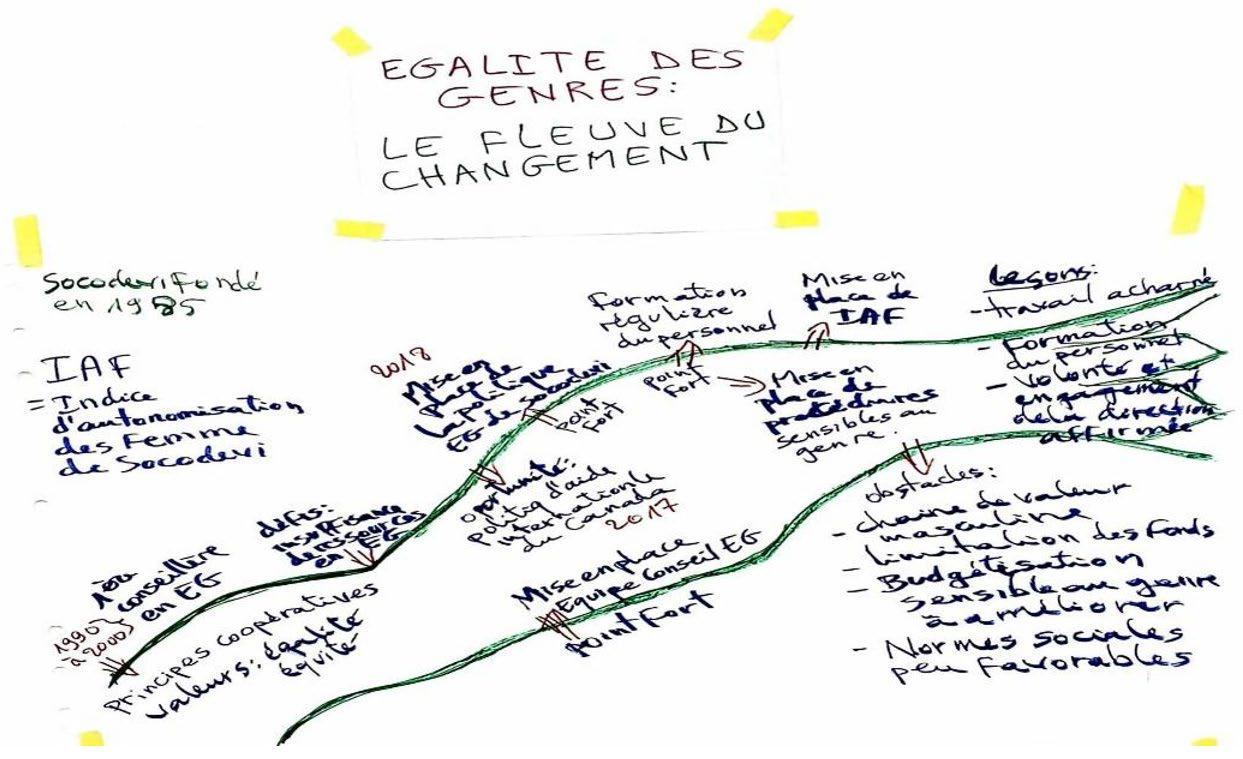
The River of Change is a participatory visualization tool used to support reflection on organizational change processes over time� In this study, it was used to help participants map and narrate their organization’s GEI journey using a river as a metaphor
Participants were invited to depict their organizational change as a river flowing over time, identifying key events, turning points, challenges (e g , “rapids” or “obstacles”), and enabling factors (e g “streams” or “tributaries”) that influenced the direction and pace of change The exercise encouraged participants to reflect on both internal and external drivers of change, as well as moments of progress, stagnation, or reversal�
The tool supported a shared and structured reflection process, helping participants articulate complex and often non-linear change trajectories in a visual and narrative form� It also facilitated deeper discussion during interviews by grounding conversations in concrete experiences and timelines, and by enabling participants to collectively make sense of their organizational GEI journey�
The reflections were guided by a few open-ended questions focusing on:
• The organization’s GEI journey and experiences
• Key drivers and barriers to GEI-related change
• Impacts and lessons learned
• Reflections on the sustainability of GEI within the organization
Example of a River of Change developed by one Participant:
(This is an illustration from an organization that gave explicit consent for their full identification)
Sparking Change:
Exploring organizational change around GEI among IDRC’s research partners
Learn more at idrc-crdi.ca
La version française du présent rapport est disponible ici : https://issuu.com/idrc_crdi/docs/declencherlechangement_rapport_fr_