This report is commissioned by the International Development Research Centre as part of the Scaling Care Innovations initiative, seeking to address one of the greatest barriers to gender equality: the disproportionate share of responsibility for unpaid care work that falls on women.
Co-funded by Global Affairs Canada and IDRC, the five-year initiative invests in solutions to redress gender inequalities in unpaid care through changes in policies and programs, including the adoption of new models and technologies that improve the lives of many sub-Saharan African women. The Africa Care Community of Practice is supported by the Hewlett Foundation through a partnership with IDRC, under the Scaling Care Innovations for Africa (SCIA) initiative, a five-year partnership between IDRC and Global Affairs Canada.
About the Lead Author
Lyn Ossome is Associate Professor and Director of the Makerere Institute of Social Research (MISR), Makerere University and has also held faculty positions at Wits University and Yale University. Her specializations are in the fields of feminist political economy and feminist political theory, with research interests in gendered labour, land and agrarian questions, the modern state, and the political economy of gendered violence. Her books include Gender, Ethnicity and Violence in Kenya’s Transitions to Democracy: States of Violence (2018), the coedited volume Labour Questions in the Global South (2021), and a forthcoming monograph titled Democracy’s Subjections: Colonial Modernity and the Gendered Subject of Violence. She is the current president of the Council for the Development of Social Science Research in Africa (CODESRIA).
Authors’Acknowledgements
The author acknowledges the contributions of the IDRC Scaling Care Innovations team as well as the feedback and insights received from reviewers and subject matter experts.
About IDRC
As part of Canada’s foreign affairs and development efforts, the International Development Research Centre (IDRC) champions and funds research and innovation within and alongside developing regions to drive global change.
Contact
International Development Research Centre
PO Box 8500, Ottawa, ON Canada K1G 3H9
Tel: (+1) 613-236-6163
Email: info@idrc.ca
www.idrc.ca
Photo credits
The photos in this report were sourced from Panos Images
Abstract
Scholarly and policy concern with the care economy has surged in the wake of the COVID-19 pandemic, thrusting questions of care and social reproduction out of the silo of feminist economics into wider debates on social and economic policymaking and theory, thus raising the political question of redistribution. But while this broader focus is welcome, the debate still tends to theorize the care economy from the dominant vantage point of global north experiences and structures. The risk of this “universalization” of care thinking is that global south contexts and experiences of care become marginalized in the body of literature on and approaches to the care economy. The risk of universal discourses of care is a one-size-fits-all approach, where resultant policies, frameworks, and strategies being proposed for developing care economies don’t adequately reflect existing realities in the countries where they are to be implemented. In this regard, it is possible to draw a contextual and conceptual distinction in the global care and social reproduction literature and aim for a more nuanced conceptualization of the nature of social reproduction between the global south and north.
This research paper has three goals: explore the nature of this tension between universalist theories and grounded theories/practices of care in the African context; elaborate a conceptual shift; and propose frameworks of care that can concretely account for the realities of social reproduction in African/global south contexts. The paper argues for the importance of examining the care economy in relation to the kinds of power and responses that manifest from below, and therefore the need to give more attention to “economies of care” ‒ i.e. the structures, conditions, and institutions ‒ that support processes of care and social reproduction. The aim is to provide a base and preliminary framework for reimagining care economies that are context-specific, relevant, and responsive to the needs of working people.
Introduction: contemporary structure of care in Africa
A brief overview of the care economy in Africa highlights some key areas related to the structure, institutions, and practices of care that distinguish it from the global north trajectory. The first is the market, specifically the legacy of economic liberalization implemented through Structural Adjustment Programs (SAPs)1 in Africa from the early 1980s, These programs fundamentally altered the role and capacity of the state in social provisioning and care. SAPs involved the removal of subsidies on food staples, the widespread retrenchment of workers, high cost of social services and goods and low wages of workers, high interest rates, and the deregulation of imports (Tsikata 1995; Simutanyi 1996). Expectations of job creation, foreign exchange earnings, and expanded markets that were to wean the economy from aid and expand industrialization were not realized. Trade liberalization, high interest rates, and the full removal of subsidies severely weakened both agricultural and domestic industries (Tsikata 1995). Agriculture, especially food production, was adversely affected by interest rates and the high price of inputs.
SAPs also had a negative impact on the environment, in part because export promotion increased extractive activities such as logging and mining, leading to deforestation, mining pollution, and the reduction in and degradation of land that could be used for the livelihood of ordinary people.
1 SAPs in Africa combined an IMF stabilization loan with conditionalities for a longer-term Structural Adjustment Program overseen by both the WB and the IMF. The stabilization package that addresses monetary and fiscal issues typically attempts to address inflation, reduce the government’s budget deficit and balance-of-payments problems. This is done with measures to reduce domestic demand, both government and private. The longer-term Structural Adjustment Program aims to promote production and resource mobilization through the promotion of commodity exports, public sector reform, market liberalization and institutional reform. The program seeks to limit the role of government in the economy, promote private sector operations, remove restrictions in the economy, and ensure market determined prices. The freeing of prices does not, however, extend to labour with wages tightly controlled, leading to dramatic drop in real wages in some cases.
SAPs’ effects were adverse and far-reaching as they either created or worsened poverty levels or, at the very least, ignored the adverse effects of the program on the poor (ibid).
The long-term effect of structural adjustment on Africa is that many working-class households have had to take on the burden of care and social reproduction2 as the capacity of the state and market to bear this burden has been severely weakened amid ongoing austerity measures prescribed for African governments. The current reality is that most households now can’t depend on wages alone for their survival and must depend on a combination of livelihood strategies to survive. As such, the focus in the scholarship and policymaking spheres on the market component that supports care work (wages) needs to be rethought. The scope of thinking about the care economy in relation to the market must be expanded to also include incomes derived from other sources, such as petty commodity production3 and food crops, because high unemployment rates and commodification of social services increase the strain on already meagre wages.
The third factor is related the institution of the family/household, in particular, the significant role of kinship relations and communal structures in care economy. In much of Africa, the extended family system still bears the greatest burden of caring for children despite governments’ obligation to provide alternative care for children without parental care4. Historically and traditionally, organized kinship networks served as central organizing structures in the absence of a formal government. The colonial mode of indirect rule bifurcated the state and society into two realms: rural and urban; traditional and modern. This structure has remained resilient as many care arrangements in postcolonial Africa follow
kinship norms conveyed through traditional institutions. Kinship in Africa goes beyond personal relationships to having broader social and political significance for the distribution of power and resources. In addition to kinship relations, the role of the not-for-profit sector and civil society in care provisioning have both social and political implications for the democratization of care and achievement of gender equality in Africa.
The capacity of the state and market in Africa to provide adequate support for care work is limited by the historical factors cited above and in what follows. These limitations suggest the importance of considering the care economy through a lens that extends from those who perform care work (a focus on care workers), to the structures, conditions, and institutions that enable women (and men) to perform care work. This suggested shift in thinking is particularly relevant in the African and global south contexts where the (social) state and economy are structurally constrained for many reasons.
First, the historically uneven structural relationship between advanced capitalist countries of the global north and the global south means that the capacity of states, markets, and households to bridge the “care gap”5 should be understood as context-specific with varied social, economic, and political capabilities and resources available for care. The reality is that a care economy is always active regardless of available resources. Therefore, in developing countries where a disproportionate burden of care is undertaken within the family/ household because of the weak capacity of state and market intervention into care, more attention should be directed toward understanding the actual, existing resources that support care where state (through policies) and market (wages) support is weak.
2 In Tanzania, for instance, 71 mothers died in the first 13 weeks of 1988 when economic reforms were in force - four times the maternal death rate of previous years. The deaths were attributed to poor hospital conditions as well as a shortage of blood, drugs, and transport facilities. More tellingly, they were an indication of the deteriorating physical conditions in which women carried out their reproductive roles (Sadisavam 1997: 638, cited in Campbell 2010: 9).
3 Petty commodity production refers to simply to small scale commodity production.
4 The care of children who have become deprived of parental care by other relatives/family members or family friends is generally described as kinship care. Kinship “refers to formal systems of relationships with regard to alliances of marriage and lines of descent” or “the web of relationships woven by family and marriage.” Although the concept of kinship cannot be strictly defined in a manner that cuts across all cultural arrangements and belief systems, it is “an important point of reference for analysing the conceptual framework that supports family organisation from an African perspective.” The social institution of kinship greatly underscores the definition and understanding of the concept of family in Africa.
5 This refers to the discrepancy between recommended best practices of care and the care that is provided. See, for instance, The Africa Care Economy Index (Valiani 2022) that measures “social recognition and state support for the care economy through a ten-index metrics and includes highlights from country-specific data and key questions for in depth, policy-oriented research” (2022: vi).
For instance, in Africa, Asia, and Latin America, incomplete agrarian transitions6 mean that large parts of society still rely on small-scale agriculture or peasant modes of production for social reproduction, suggesting the continued relevance of land as a source of care and survival. Global south theorizations of care/social reproduction also take seriously the capacity of the state to intervene in the reproduction of working people (Hassim 2008). In accounting for varied histories, structures, conditions of development in postcolonial societies, the literature (e.g. Li 2010; Yeni 2024; Ossome, forthcoming 2025) also urges a focus on the surplus labour populations in the global south - those whose social reproduction can no longer be guaranteed through capitalist production. Even if they are not seen as productive labour, someone still has to bear the burden of reproducing them and keeping them alive. In Africa and among marginalized people everywhere, this responsibility of care is both cultural and political, a reality that is hardly mentioned in the dominant literature on the care economy, as suggested earlier in relation to kinship structures.
Another aspect of social reproduction in Africa not given adequate attention in the global north literature concerns the informal economy (or petty commodity production) that constitutes a core basis of livelihoods in much of the global south. The extent to which working-class households rely on incomes from the informal economy remains relatively underappreciated in existing data. Work in both the informal and care economies in Africa disproportionately relies on women’s labour, which suggests a correlation between the neglect of these two sectors and their undervaluation in national income statistics as well as policy. As Kassa (2020) has shown, consideration of the informal economy would help us understand the value created in spaces that indirectly benefit capital by subsidizing it. The same can be said about the care economy. Other studies also show that the overrepresentation of women in the informal economy may be because they are expected to perform the lion’s share of unpaid care work (Cassirer and Addati 2007).
6 An agrarian transition, often undertaken by the state, is incomplete when agricultural societies don’ undergo rapid transformation and a portion of customary land, common lands, and other agrarian resources (e.g. forests, rivers) remain contested realms of survival vs. economic development.
Conceptualizing the care economy: approaches,
complementarities, and tensions from an African feminist perspective
In countries across the world, the economic fallout from total lockdowns during the COVID-19 pandemic devastated historically marginalized groups. Poorer nations bore the brunt of weak public and social infrastructure as governments struggled to cope with surging demands for health care, income, sanitation, food, shelter, child care and elder care. These demands are core to the care economy and constitute what may be termed as infrastructures of social reproduction and care.8 Care work, borrowing from Fraser (2016), may be defined as labour comprised of both affective and material labour, often performed without pay. It is indispensable to society. Care work is gendered to the extent that it is mainly (although not exclusively) women who perform tasks specific to the acquisition of goods and services that support care. This means that women bear the burden of acquiring these goods and services in the absence of adequate state support or wages to close the care deficit.
Μay be defined as labour comprised of both affective and material labour, often performed without pay
Care work relies on a key set of social capacities: those available for birthing and raising children, caring for friends and family members, maintaining households and broader communities, and sustaining direct and indirect connections more generally between households, state, and market.9 While the concept of care work is often used interchangeably with social reproduction, social reproduction more accurately refers to the structural relationships that make care visible in social, political, and economic institutions as labour.10 A crisis of care is generated when the social capacities needed for providing care are depleted or are unsupported. For instance, under neoliberal governance, many of these goods and services are commoditized and priced out of reach of the majority, thereby deepening gender, racial, and class inequalities as these groups bear a disproportionate burden of care.
Together, the state, family/ household, and market constitute the major institutions of the care economy. A fourth component, the not-for-profit sector, is often also considered in what is termed as the ”care diamond” (Razavi 2008).11 These four institutions and their balance in actual provisioning differ between global north and south in their strength and capacity to provide financing as well as and the role of social norms in the acceptability of sharing responsibility between these spheres. A universal theory of care that
8 This paper adopts a basic definition of social reproduction related to the daily reproduction of working-class households through the acquisition and provision of such basic needs as food, shelter, clothing and health care (Katz 2001). In contemporary capitalist economies, social reproduction hinges on the interplay between three major institutions: households, markets, and the state (Antonopolous & Hirway 2010; Dickinson & Russell 1985).
9 Nancy Fraser (2016), “Contradictions of Capital and Care,” New Left Review, 100: 99-117.
10 For instance, referring specifically to domestic workers, Premilla Nadasen (2016), argues that, while centering care is a critical component of rethinking domestic work, it can also be limiting. Much of the work of social reproduction is not based on care but includes other household activities like cleaning and cooking. Moreover, the language of care pivots around the needs of consumers, rather than the rights of workers. For these reasons, a movement for domestic workers’ rights cannot be built primarily on care and mutual dependence but must instead be rooted in the notion of entitlement ‒ that workers should be guaranteed basic rights and protections (https://www.dissentmagazine.org/article/caredeficit-hta-domestic-worker-organizing-history/).
11 The care diamond includes the family/household (where a lot of care is provided on an unpaid basis), markets (which may be formal or informal and which provide care in return for a fee or wage), the public sector (which may provide different forms of care directly through a government hospital or crèche employing public sector workers, or indirectly by subsidizing others to do so), and the not-for-profit sector (this category could include different types of care provision by charities, NGOs, or through voluntary and “community” provision) (Razavi 2008: 4).
Non-profit sector And Civil Society
The State
Care
Families & Households Markets
assumes uniform access to care resources ignores these historical differences and risks deepening existing social inequalities in care provisioning. This is fundamentally a critique of the assumption that a uniform set of care principles can yield successful policies for all countries, regardless of their social and historical differences. This is this paper’s primary argument/rationale for localizing the care economy.
In this regard, the paper departs from mainstream approaches that largely reflect global north realities, vantage points, and assumptions. Global north theorizations have focused mainly on productivist,12 wage-centric arguments and considerations about how economic growth can accommodate social reproduction. This thinking links structures of economic growth and development with those of social reproduction, with analyses primarily focusing on the economic structure of countries, their “level of development, and structure of social welfare provisioning to determine where they fall among regimes of growth and social reproduction” (e.g., Braunstein 2015: i). Concerned with macroeconomic effects of gender equality, the more mainstream feminist economics focus on how more equal labour market outcomes affect larger processes of growth, and on the kinds of limits the structure of social reproduction places on the potential for development and growth (ibid, ii).
Other perspectives seeking to account for the organization of social reproduction and care in high income societies examine these processes through the lens of the state. These accounts critique the dominance of the heterosexual nuclear family, the norm of the family wage, and the privileging of the “rational economic man” that dominated Keynesian
capitalism13 - that is, liberal and corporatist welfare states that offered little assistance in terms of reproductive labour and relied heavily on traditional family structures. From the postwar years, the social democratic regimes became a feature of all advanced capitalist countries and, with some variation, organized (labour) power through politics and legislation. They also consolidated the role of national governments around the protection and promotion of the economic and social well-being of citizens. The focus on citizenship, however, deepened the social and economic exclusion of those at the margins of the citizenry - racialized communities, lower castes, gender, ethnic, and sexual minorities - thus undermining pluralist ideas of democracy.14 Social welfare shifted elements of reproductive labour into the public sphere and entailed the partial socialization of non-commodified services such as child care and education, thus freeing up more women to enter the workforce. Yet, historically, many working-class women - particularly racialized women - had long been obliged to engage in wage work outside of the home.15
The point is that, to address the care economy in specific and practical ways, critical feminist research on care should privilege the social and political conditions specific to the global south as its starting point. Furthermore, while analyses of social reproduction and care in mainstream theories of care generally assume the social role of the state (the state as a social institution concerned with human wellbeing and redistribution), the state in much of the postcolonial world has at best tended toward development trajectories that don’t necessarily support women because they don’t recognize the value of care in sustaining economies and families.
12 Productivism refers to a social, economic, and political ideology that emphasizes production, productivity, and economic growth as the primary purpose of human organization.
13 Under this model, the reproductive labour burden was expected to fall on a full-time, financially dependent wife.
14 For critiques of social welfare states, see Esping-Andersen 1990; Mkandawire 2016.
15 The literature also shows how war economies affected women’s employment in the west, such as during the 1940s which marked a turning point in married women’s labour-force participation, leading many to credit World War II with spurring economic and social change. Goldin (1991) uses retrospective surveys to show that from 1944 and 1951, half of all married women employed in 1950 had been working in 1940, and more than half of the decade’s new entrants joined after the war. Of all wartime entrants, the majority left after 1944 but before 1950. On the demand side, Goldin shows that the war led to increased labour requirements across the economy and to higher wages in general, specifically for women and other low-wage workers (Goldin 1991: 741-2).
In addition, the neoliberalism that has characterized the west’s approach to weak economies from the late 1970s onward tends to almost completely negate a social state, making the idea of a care economy an oxymoron. Visible here are limitations of orthodox approaches to social provisioning and ethical questions that neoliberal approaches to care raise, and the ways in which these questions tend to manifest politically in power struggles over the institutional design of the economy and, as such, in its legaleconomic nexus. The foregoing suggests the need to examine the care economy in light of the kinds of power and responses that manifest from below and therefore to give more attention to the “economies of care” - the structures, conditions, and institutions that support processes of care and social reproduction This means reimagining care economies that are context-specific and relevant to the needs of working people.
and social services have historically not been well developed in the global south, hence the need to pay attention to other realms that support livelihoods, health, and survival in the absence of the state (public spending) and adequate wages - an investment in economies that support care rather than thinking of it as an investment in care itself.
expand its scope of intervention in the care economy
Last, we need to reflect on how we might reconsider this care/social reproduction nexus in the global south given the limitations of framing the reproductive crisis as mainly related to a lack of public spending. That framing is derived from social and political contexts where the social state historically incurred a large public expenditure. The crisis in the global south arises mainly from the systematic destruction and dispossession of the infrastructures and resources that support social reproduction. Those resources include land, nature, decent affordable housing, water sources, primary health care, and so on. Care institutions
This is not a proposal to altogether abandon the state but rather develop approaches to the state that expand its scope of intervention in the care economy. That is, strengthen the capacity of the state to respond to care demands by investing in structures/ activities that support care but are ordinarily overlooked in mainstream policy. The vignettes in section 4 of this paper attempt to show, in empirical ways, how we might understand such structures/activities of care. Similarly, some of the projects being supported through IDRC’s Scaling Care Innovations in Africa initiative that seeks to place care at the forefront of development interventions, might be considered as interventions into economies of care with the capacity to influence state responses.
This paper’s contribution is partly to lend greater conceptual and methodological coherence to such initiatives, as well as to propose ways of mainstreaming care investments through interventions in care-adjacent areas, such as investments in accessible transport, potable water, and safer cities. In short, to think of the care economy more expansively by considering the existing material and social conditions of reproduction in the African context.
institution within the care economy responsible for overseeing the resources, structures and activities that support care demands and social reproduction
The State Families & Households
The Care Economy
Care Gap
the uneven social, economic, and political capabilities of states, markets, and households to provide the necessary resources and supports for care
The Market
formal or informal institution within the care economy shaped by the legacy of economic liberalization in the 1980s, fundamentally altering the role and capacity of the state in social provisioning and care.
the site of unpaid care and social reproduction. In developing countries families and households disproportionately carry the burden of care because of the weak capacity of state and market intervention.
Unpaid Care
the structures, conditions, and institutions that enable women (and men) to perform both paid and unpaid care work, supporting human development, well-being, and productivity in society.
Not-for-profit Sector
Formation of “voluntary” and “community” based organizations and initiatives where labour costs are absorbed, by care workers who may perform the work for less or no pay.
Knowledge and policy gaps on care in relation to Africa
This subtheme explores literature on the extent to which existing policy responds to the major demands for care in Africa. Much of the policy focus on the care economy in Africa covers at least three key areas that are formally recognized. They have, therefore, received the most attention in literature and/or policy analysis of both the state and civil society. Those areas include: i) health care; ii) child care; and iii) elder care. This paper highlights one further domain that has not received any policy attention but should: surplus labour populations, particularly unemployed youth.
Below are four major knowledge and policy gaps identified from the existing literature, although this list is not exhaustive.
16 Elder care in Africa has received significant attention in the literature (for a bibliography, see Mussie et al. 2022). In practice, however, formal or institutionalized care for older persons remains scant outside South Africa.
3.1. Public expenditures on health care are patient-centric: focus on “clients” at the expense of care labourers deepens underfunding and care inequalities.
The data show that the proportion of public expenditure allocated to health reflects the priority given the health sector in Africa. In 2019, Africa was ranked fifth out of six World Health Organisation (WHO) regions, with only 5.3% of its GDP spent on health. The average expenditure in sub-Saharan Africa tripled from US$27 to US$90 between 2002 and 2011, then began to decline around 2014-2016 (WHO, 2022: 15). Indices around delivery of healthcare services – the extent to which patients receive the treatment and medical supplies they are entitled to – is still poor. According to WHO (2022), this poor quality care leads to more than 15% of deaths each year in low-and middle-income countries, compared to 60% attributable to the conditions under which care is undertaken. The remainder is due to non-use of the health system. In other words, more lives are lost because of the neglect of those who determine the social conditions under which care is provided – including the care workers themselves and the conditions under which they perform their labour. The issue of patients and care labour, however, is not a zero-sum game.
Health-care systems that pay attention to care workers (i.e. that reward17 them as valuable labour) are likely to anticipate and correct for global inequalities in the health-care regime. For instance, the literature shows that the re-allocation of resources away from care, both globally and locally, exacerbates strained care systems that are central to social reproduction but have been critically underfunded as a result of privatization encouraged by the International Financial Institutions (O’Laughlin, 2016; Simeoni, 2020, cited in Stevano 2021: 4). The neoliberal restructuring of health-care systems entailed the deterioration of working conditions for health-care workers and led to the migration of these
workers to richer countries in the global north (Stevano 2021; Valiani 2012).18 Women’s (nurses) migration away from their households and communities poses a challenge for their own care responsibilities toward dependent children and elderly relatives. This is especially the case in the context of the privatization of social reproduction where the state is substantially absent from public provisioning (Bakker, 2007; Razavi, 2011).
In Africa and the global south more broadly, where client/ patients can barely afford health care, the data suggest a need for policies that support the full constellation of care infrastructure, which in reality upholds the public health system, including traditional medicine, homebased care, and support for care workers both inside and outside the hospital health-care system. Policies toward health-care workers also need to properly account for their formal under-remuneration and the fact that many of them need to engage in other activities (including care work elsewhere) to earn a decent living. This ultimately compromises the quality of public health care. These studies suggest the need to direct attention toward the entire infrastructure of care, rather than policy attention to select sectors.
This point is supported by studies in other global south contexts. For instance, in their examination of Brazil’s Bolsa Família program (PBF), 19 Chaves and Yeros (2024) argue that “the provision of universal public services in the field of care, health, and education is fundamental for the effectiveness of conditional income transfer policies. These policies are, in this sense, severely weakened in contexts of economic crisis and the dismantling of public policies,” that increase the costs of social reproduction (2004: 204, added emphasis). This suggests an infrastructure of care provisioning in which the state is always implicated. The reality and irony of neoliberal restructuring is that its mathematics of privatization and sectoral individualization has necessitated an evergreater dependency between various sectors of the economy as no one sector is now sufficiently funded to be self-sufficient. This suggests the necessity of a multisectoral and structural approach in our analyses of the health(care) economy.
17 Here, the author is drawing from the “5R Framework for Decent Care Work,” that advocates for policies that Recognize, Reduce, Redistribute (SDG 5.4), as well as that Reward and Represent care workers (UN Women). The framework calls for actions to go beyond merely increasing the visibility of unpaid work as a policy issue to also include policies to alleviate the care burden and divide it between women and men, and families and public/ market services in a more balanced and equitable manner, as well as provide better and more visible employment to care workers (decent work). See UN Women: https://africa.unwomen.org/sites/default/files/2022-11/The%205Rs.pdf
18 Stevano et al. (2021) emphasize the need to think of the capacity of the health-care infrastructure in relation both to reproductive crisis that is precipitated where the system is weak, as well as the crisis of capitalism (underemployment, unemployment, and massive immiseration), that places existing public resources under immense strain during ordinary times, and places extreme stress on care labour within households during times of crisis. In other words, it is not possible to understand the health sector crisis without understanding the migration of healthc-are workers from developing to advanced capitalist countries. Hassim (2008) argues that gender inequality underwrites the global care chain, such that its sustenance would not be possible “without intensifying the global inequality in care provision” (2008: 397). Valiani (2012) has also shown the flow of a predominantly female, caring (nursing) labour from the periphery to the core of the world systems as deepening a historical structure of unequal exchange between countries of the global north and south.
19 The Bolsa Família program (PBF) is a direct cash transfer program with conditionalities aimed at families in extreme poverty across the country. As a rule, the PBF pays the benefit preferentially to women. To qualify for Bolsa Família, the family’s maximum per capita monthly income must not exceed BRL 218 per month.6 The purpose of this regulation, according to the Ministry of Social Development, is to “contribute to the expansion of family well-being and, at the same time, female autonomy in the domestic space and in local communities” (MSD 2018, p. 10). The PBF allows beneficiaries to use the resources received as they need, without any conditions imposed on how the benefit is spent (Chaves and Yeros 2024: 199).
3.2. The policy paradox of higher use of paid child care among lowincome households compared to middle and high-income households.
Africa’s, rapid urbanization, mostly to slums, is radically changing early childhood care. A number of linked drivers seem to be leading to an increase in the use of child care of low and unknown quality. As urbanization occurs, family structures change, with a growing tendency toward smaller families. In addition, urban living relies on paid formal or informal work for most parents, including mothers. This is especially the case for the growing proportion of Africa’s urban population that lives in slums or informal settlements. The absence of widespread paid maternity leaves and effective social protection systems in urban informal settlements in subSaharan Africa means that many working mothers need to return to work soon after childbirth. This is particularly the case for the many parents who work in the informal economy, who are likely to have low and irregular earnings, and few if any labour rights.
for child care to provide early learning opportunities and prepare children for school. Together, these factors – despite user-fees and a concern with quality20 and trust presenting a barrier to access to child care for many of the poorest families – seem to be driving a growing supply of paid child care.
42.9% increase in day care use between mothers who receive subsidies and those who don’t
In sub-Saharan Africa specifically, studies suggest that paid child care – especially in slums – is widely used. The exact form this takes and the level of formality vary widely. One recent estimate suggests that 46% of employed and 23% of unemployed parents in the Korogocho slum of Nairobi use paid child care as their primary child-care strategy (Samman et al. 2016). In one peri-urban area of Nairobi, more than 80% of children aged 3 to 6 years were enrolled in Early Childhood Development (ECD) centres (Bidwell and Watine 2014). Nearly all these children (94%) attended private ECD centres that charged a user fee. Although these fees are often not very large, previous studies have suggested that these costs prohibit at least some parents from sending their child to daycare centres (Lokshin et al. 2000; Murungi 2013) or, when they do, severely stretch their earnings.
In addition, welcome growth in primary and secondary school enrolment means that sibling-provided early child care (ECC) – which itself may not be in the best interests of either the carer or the cared-for child – is less frequently an option for families, at least during the school term. The assumption that traditional kinship and family structures support working mothers no longer holds in the face of the growing impoverishment of working people. Indeed, recent studies show that support from kin has potentially weakened (Clark et al. 2017; Foster 2000) and that all adults in resource-poor settings may be required to participate in incomegenerating activities (Cassirer and Addati 2007). Combined with social support networks being limited for some people in urban areas, these factors seem to be driving the increasing need for paid child care. It is important to also note that, alongside these drivers of “need,” there appears to be a growing parental demand
In another study of the Korogocho slum, Clark et al. (2019) estimate that child-care costs would consume about 17% of working mothers’ income. It also shows a nearly 25 percentage point difference (or 42.9% increase) in day care use between mothers who receive subsidies and those who don’t (Clark et al. 2019: 1259-60). Their study also links access to early child care to women’s economic empowerment (WEE), finding that women who had access to subsidized ECC were 6.8 percentage points more likely to make decisions about their children’s health. Mothers who used day care were also 27.4 percentage points more likely than non-users to be involved in such decisions (ibid, 1265).
The structure that is unfolding in Africa, where lowincome earners are most dependent on paid child care, has some important implications for how we think about the care economy in poor and developing countries, especially in relation to policy that has continued to push for paid child care without adequate attention to
20 The evidence that exists suggests that the quality of child care, especially in informal urban areas, is frequently poor across all domains of the Nurturing Care Framework. Staffing ratios are high, training is minimal, and learning resources are poor or absent, undermining the potential for early stimulation, responsive care, and early learning. Conditions are often unsanitary and unsafe. Providers’ first aid skills have been found to be poor, risking the health and safety of children. Nutrition in informal paid child care provision has been found to be poor where it has been studied (poor diets, little support provided to even young infants). Little is known about safeguarding risks in these settings, but numerous reports ‒including media reports of deaths in care ‒ suggest that systems are absent or weak. This apparently poor quality in many cases reflects the wider context, where children growing up in informal urban areas face numerous adversities. See also Hojman and Boo (2019).
the social costs and effects. The fact that ECC centres and crèches are managed almost entirely by women reflects the general feminization that the world of work underwent under neoliberalization, as well as the explicit and implicit deregulation of labour from the 1980s. It also suggests the need to include decent pay for care workers in our conceptualization of care. The types of work, labour relations, incomes, and insecurity associated with “women’s work” are spreading with the rise in female labour force participation (FLFP), fall in men’s employment, and feminization of many jobs traditionally done by men. Standing (1989) identified a “cult of insecurity” ushered by structural adjustments where labour flexibilization, informalization, deregulation, labour casualization, homeworking, and subcontracting is the norm.
The high demand for child care among poor women, read in tandem with the high concentration of women in ECD work, suggests a mere market connection between two different worlds of women’s work. In other words, predominantly economic rather than social relations connect women.
The jobs available to women are labour-intensive, lower paid, and more informal. These are also extended to women workers who are not recorded in the workforce, resulting in modern forms of (social) reproduction
relying on premodern, informal labour relations. The disappearance of low wage jobs at the bottom have also tended to hit vulnerable (impoverished, uneducated) women the most, leading to crowding and further wage depression. The high demand for child care among poor women, read in tandem with the high concentration of women in ECD work, suggests a mere market connection between two different worlds of women’s work. In other words, predominantly economic rather than social relations connect women. The risk of this economic emphasis is that it ultimately paves the way for states to neglect care, continue to incorporate women workers into the lowest rungs of the macroeconomy, and leave them vulnerable to the vicissitudes of market forces. It also ultimately undermines the social and solidarity aspects that should be emphasized in policies targeting the care economy. In short, care policies where women’s work is governed entirely by market relations tend to undermine the question of care itself. concern with quality 21
21 The conditions under which paid care workers undertake their tasks highlight the significance of this social and solidarity aspect. For instance, Jayati Ghosh (2022) argues that a dominant proportion of care workers already face adverse labour market conditions, as well as other forms of inequality or discrimination as women or migrants or less educated workers from lower-income households. This means that their bargaining power tends to be weak. Simple requirements such as a written contract, minimum wages, clear provision of weekly and annual holidays, restricted time of work and payment of overtime, social security coverage, maternity protection, and so on, are mostly simply not met. This is strongly the case in countries where much of the workforce is already informal. Furthermore, for other forms of care work, notably indirect care, the implicit social denigration of such activities that results from so much of it being performed in unpaid labour within families and communities leads to a broader prevalence of the combination of low wages and poor working conditions, with little or no worker protection or social protection of the kind normally accorded to other workers. This may also be true of direct care work, which is also typically treated as something that can be relied upon to be delivered within families and therefore not deserving of much remuneration or social valuation These tendencies are aggravated by the gender dimension that tends to ascribe most such work to women and undervalue it in a self-reinforcing swirl (Ghosh 2022: 7).
3.3. Existing elder-care infrastructure in Africa upholds a narrow definition of care required for older
persons and thus creates policy blind spots.
National efforts to develop long-term care systems exist in only three nations with established middle-income economies: Mauritius, Seychelles, and South Africa (World Bank, 2017). These countries have established residential facilities for frail older people and provide them with some financial assistance. In other African countries, there are only piecemeal efforts to provide community supports. These are often aimed at specific groups and not all older people. For instance, some organizations tied to specific professions offer social support to retirees. Access to health insurance also provides some older adults with health services, but this is far from universal. In Ghana, the registration fees and the annual premium charges paid by beneficiaries of the National Health Insurance Scheme have been waived for persons aged 70 years and over, but not all medical
problems are covered by the scheme. Further, residents of rural areas are left to pay their own health expenses, which is particularly difficult when it comes to seeking treatment for severe medical cases (Agyemang, 2014; Dake & Van der Wielen, 2020).
Four basic questions are at the heart of the debate on LTC in Kenya and more widely in Africa:
1. What kinds of systems for LTC provision do societies require for the future?
2. What should the relative roles and responsibilities of families, the state, market, and third sectors be?
3. How should such systems be configured?
4. What implications arise for public policy responses and investments today?
Four parallel concerns fuel the focus on these questions (Aboderin and Ossome, forthcoming):
First, the continent’s combined demographic and epidemiological trends. While Africa’s population will remain the youngest globally, with the proportion of persons aged 60 years and above expected to stay below 15% over the coming five decades, the absolute number of older persons in the continent is projected to rise extraordinarily rapidly – faster than in any other part of the globe (He, Aboderin and Adjaye-Gbewonyo, 2020) - from 75 million in 2020 to 457 million by 2075.
Significant shares of older people report functional limitations, resulting from chronic non-communicable conditions such as sense organ, musculo-skeletal, or cardiovascular diseases, as well as diabetes and mental disorders (He, Aboderin and Adjaye-Gbewonyo, 2020; GBD, 2019). Notwithstanding indications of slight declines in age-specific disability rates (GBD, 2019), the rising prevalence of such conditions in Africa (WHO AFRO, 2023), combined with the expanding size of its older population, points to growing levels of LTC over coming decades.
Second, drawing on limited evidence of deficits in the adequacy or availability of LTC provided by kin (Mkhonto & Hanssen, 2018; Hindley et al., 2017), the assumed erosion of customary family support systems (Aboderin and Hoffman, 2015). Modernization theory-inspired perspectives view such decline as a consequence of forces of urbanization, industrialization, and associated normative change, which leave families less inclined or positioned to care for older relatives (Aboderin and Hoffman, 2015). Critical perspectives, in contrast, locate the causes of weakened family care on the pervasive economic strain and depletion experienced by households within contexts of widespread un- and under-employment, poor remuneration, and a growing global demand for domestic and nursing labour. In such circumstances, families become unable to meet the competing demands of support for older and younger generations (Ossome, 2022; Aboderin, 2006; Valiani 2012).
Third, the possible negative impacts of family-based LTC arrangements on the individuals who provide care, a large majority of whom are women. Building on findings from a small body of research, attention is focused on repercussions for family carers’ financial, mental, or physical well-being (Faronbi & Olaogun, 2017).
Fourth, shortcomings in the evolving landscape of formal LTC service provisioning. Highlighted are queries about the quality of the care provided (Epping-Jordan and Aboderin, 2017), unfavourable conditions for care workers, and limitations in service access because of financial or geographic barriers or dementia-related needs (Epping-Jordan and Aboderin, 2017). In recent years, the perceived challenges of LTC have been thrown into sharper relief amid a wider estimate –propelled by the COVID-19 crisis 2020-22 – of the fragilities and longstanding underinvestment in extant care systems, as well as the need for transformative responses to redress impacts of the pandemic and ensure resilience against future shocks.
National efforts to develop long-term care systems exist in only three nations with established middleincome economies: Mauritius, Seychelles, and South Africa
The significance of paying attention to these assessments is that “they exemplify a recognition of age as a potentially important axis of inequalities in health and access to care” (Aboderin 2014). What such knowledge promises is, among others:
• the ability to determine the varying priorities and nature of the major reproductive and sexual health care needs of older women and men in different parts of the world;
• an assessment of barriers older persons face in accessing care and the development of policy tailored to addressing those barriers;
• a serious consideration of intersectionality in the assessment of reproductive health needs of older persons, e.g. how elder care may mirror and/or intersect with the childcare, care for people with disabilities, care for terminally ill patients, all of which are generally more targeted by state policy. Policy blind-spots in one group of care receivers are likely to have a boomerang effect on the capacity to provide care to other groups.
3.4. Surplus populations and their demand for care challenges market-oriented care policy and poses care as a political question to the state.
An understudied population, yet one that is bound to exert more significant pressure on the care economy over the coming decade than the three categories above are “surplus” labour populations – the existing and growing population, notably of young people, who are educated but are no longer being absorbed into the labour market because of the decline in industrial, manufacturing jobs across subSaharan Africa. The youth bulge, a common phenomenon in many developing countries, is often attributed to a stage of development where a country’s success in reducing infant mortality inadequately compensates for its persistently high fertility rate (Lin 2012). Without adequate development and job opportunities, the youth bulge results in high unemployment among youth who constitute a large percentage of the population (Gidley and Inayatullah 2002).
Consequently, young workers are more likely than adults to be underemployed and living in poverty (ILO 2011b).
Youth unemployment potentially leads to despair, nonproductive labour-market trajectories, and stunted economic growth (Gidley and Inayatullah 2002). The dire youth unemployment situation in less-developed countries (LDCs) is particularly troubling, especially in sub-Saharan Africa that faces the highest level (70%) of youth working poverty rate globally (ILO 2011a). On average, only 3.1 million jobs are created annually for the 10 to 12 million youth entering the workforce, leaving the vast majority unemployed (Adelaja and George 2020: 41).
For example, in Nigeria and Ghana, respectively, 43 and 48% of youth aged 15-24 are unemployed or underemployed. Youth unemployment may fuel youth out-migration from Africa, dependencies and stresses on adults, unrealized growth opportunities, and youth restiveness, leading to greater potential for radicalization and conflict (ibid; Mains 2011). In the absence of jobs and wages to support social reproduction, this population is reconstituted as a group that requires care and becomes an additional category
of care receivers. Much like older people and children, they require food, shelter, health care, and other forms of care/reproduction to survive and sustain their active participation in the labour force. How should we then understand the conditions of survival and sustenance of impoverished populations for whom wages and state support are now inadequate or altogether absent? What becomes the basis for survival for this large unemployed and easily discarded (surplus) labour force when the state and market abdicate their social reproductive responsibility? (Ossome, 2025). Most likely, the household becomes their major source of sustenance and the site of care and social reproduction.
This points to the fact that the state has a stake in the social reproduction of its political base but has scant regard for the social needs of that base. Instead, it relies on a range of supports provided by unpaid and undervalued labour. This suggests that the political project of stabilizing and legitimizing the postcolonial state amid massive economic dispossession and impoverishment depends greatly on the survival of the surplus population. This survival is ensured through various processes of social reproduction that, in agrarian societies, still depend on some kind of access to land (both private land and common lands) and other informal economies. These economies of care support the survival of large sections of the population but ordinarily evade due attention in policies on “care.”
Access to state-provisioned social grants and good social policies are also central to this process of political stabilization, although our investigation should consider the conditions that make the welfare state or welfarist regimes possible. These should be considered in the context of the global political economy. Citing the limitations of universalizing the care/ welfare model of advanced capitalist countries (“utopias”), Hassim (2008) has argued that “a lack of political forces with sufficient power to implement [welfare policies], as well as the necessity for radical changes in the economic and institutional landscapes of these countries” set the parameters of the possibility of social
welfare in poor countries (2008: 390). Hassim also rightly considers uneven development and the historically exploitative relationship between richer and poorer nations to be a serious limitation, arguing that “[t]he possibility exists that these utopias in the wealthy countries may well depend upon global inequalities and the continuing poverty of the poor countries…[citing a concern as such] with the possibility that the viability of the real utopia proposed is dependent upon global injustice” (Hassim 2008: 390).
Except for South Africa, welfarist regimes have been little implemented in Africa. In the rest of the continent, and in the enduringly agrarian societies of the global south, land, nature, and the commons retain significance as crucial resources for the reproduction and care of growing masses of surplus labour, whose relevance to capitalist accumulation is diminished but who don’t lose their salience as political subjects of the state. The political question that surplus populations raise can be leveraged to the benefit of good care policies in the global south.
No state, even the most neoliberal of states, can afford to completely abandon its impoverished populations. In the absence of targeted policy, the state tends to presume a “care economy” of the kind witnessed during the pandemic –comprised of women’s/gendered labour in the household, some kind of access to subsistence agriculture, and petty trade – to keep these populations alive. In the global south, the realms that sustain the “wretched of the earth,” such as subsistence agriculture, should be understood as constituting the care economy, and should be assigned due weight in the formulation of care policies. Furthermore, when the focus on policy remains solely on clearly defined categories of those in need of care – children, older persons, persons with disabilities – and neglects those who can no longer fend for themselves through the market/wages or state/social grants, then emergent care policies become akin to “digging holes and filling them in again” as the burden of care continues to be distributed unevenly and deepens gender inequalities.
Proposed analytical framework: Economies of Care approach through vignettes
From the foregoing, the conceptual significance of thinking of economies of care, rather than presuming what the nature/form of a “care economy” in the global south context is, should be clear. This is that the notion of “economies” decentres the state and the macroeconomy in analyses of the resources, labour, and time that go into care work and daily processes of social reproduction more broadly. Instead, an “economies of care” approach begins with the structures, conditions, and institutions that support the daily and generational reproduction of working people. The conceptual turn to economies of care allows for the temporary disarticulation of care from the macroeconomy and for the rearticulation of care work to different social, cultural, and political resources that support social reproduction in the absence of adequate state support. Such a conceptual shift also allows for a more historically nuanced representation of care in the global south context, where the welfare state has never
existed and where non-traditional family forms, kinship structures, and other forms of communal organizing and resources play a much more significant role in social reproduction.
This conceptual shift serves to destabilize the notion of a “care economy” as an existing structure – an approach to care that takes for granted the responsiveness of the (neoliberal) state to the peoples of the global south – and privileges a vantage point from below that is concerned with the existing structures, conditions, and institutions that support the daily survival of working people. Given long histories of market and state dispossession, the intervention of the state and market (wages) in care provisioning is weak in most of Africa. It is therefore important to keep asking how people survive and receive care amidst this state/market inadequacy – under what conditions are working people being sustained and reproduced; who performs this labour; and what resources do they depend on?22
This approach will be illustrated in five vignettes to ensure that researchers think about concrete scenarios rather than draw on imaginary concepts imported from elsewhere.23 This section constitutes the major contribution of this paper.
22 Such economies might include access to land, access to clean water, decent housing, non-market childcare arrangements, kinship structures, and so on. These should not be pre-empted in theory but rather gleaned from empirical data.
23 Ang’s (2020) conceptualization of the Unbundled Corruption Index model of measuring corruption using vignettes that represent a broader set of cases is useful here (see Yuen Yuen Ang (2020), China’s Gilded Age: The Paradox of Economic Boom and Vast Corruption, Cambridge: Cambridge University Press.
Vignette 1: The setting is crèches in a low-income, high-density settlement
in Nairobi
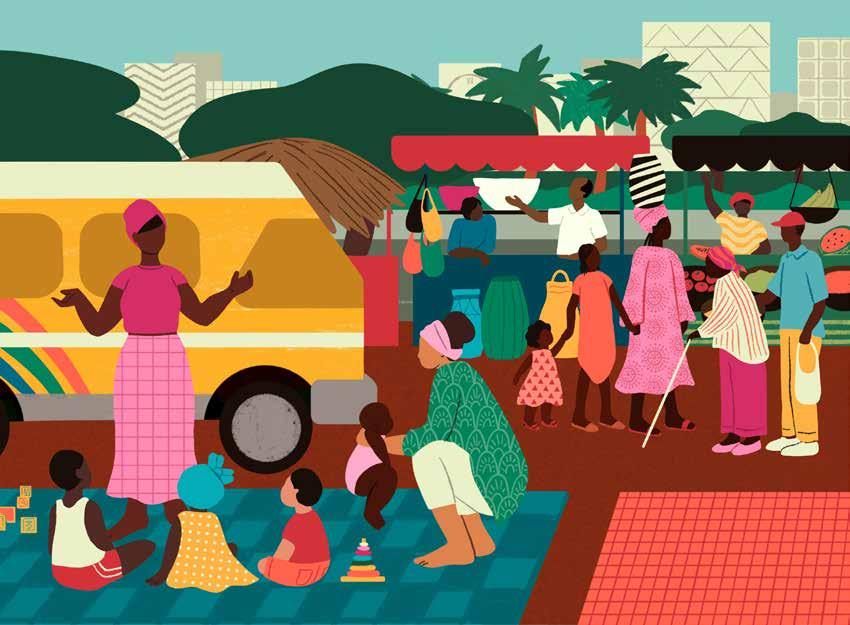
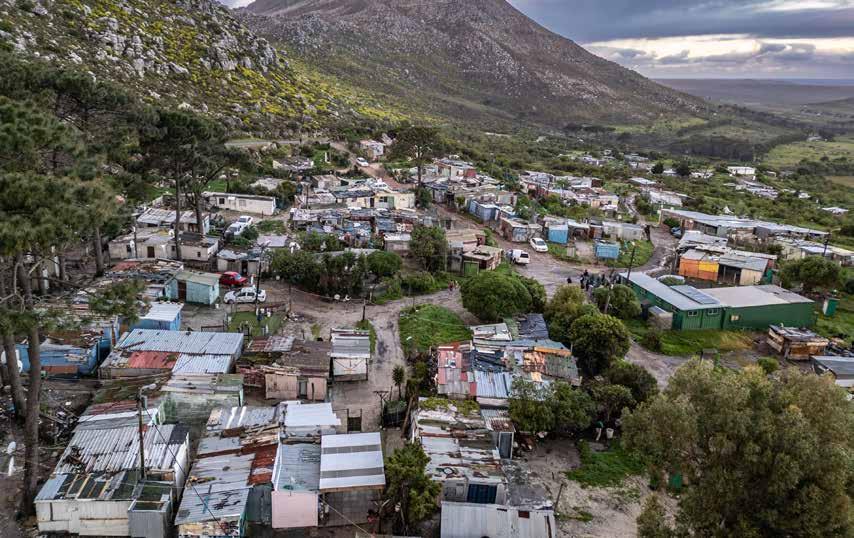
About 2.5 million people in Nairobi, Kenya’s capital, live in and around informal settlements –marginalized neighbourhoods that occupy just 6% of the city land. An estimated 300,000 four-year old and under children live in these crammed, deprived areas.24 Informal child-care centres are mushrooming to meet the rapidly growing populations and growing demand for day care resulting from the increase in women engaging in employment outside the home in a context where traditional care models
are eroding, particularly diminishing kinship support for child care (APHRC 2023). Child-care centres in poor urban neighborhoods and slums in Nairobi are substandard, unregulated, informal, often run by women in their own homes without training in child health, safety, or early childhood development (ibid). APHRC’s Community of Practice25 study found that only 12 of 129 child-care centres (9%) have received any support or training, although Nairobi County has a Day Care Act and process for regulating child-care centres. Community health volunteers (CHVs) routinely support child health and nutrition programs in these communities through household visits but are not trained to support ECD (ibid).
25 With child-care centre providers, county officials and other non-governmental organizations in the childcare space, the community of practice (CoP) project aimed to co-design (Kidogo) and test the feasibility of a system for supportive assessment and skills building of community health volunteers, with the long-term vision of improving the quality of paid child-care services for children in poor urban settings.
Studies on child-care facilities predominantly focus on the skills of service providers as well as health and safety issues. They don’t question why the delivery of child-care services is so difficult among low-income earners and to poor people. What redistributive mechanism exist, or might be identified, to support the survival of poor people and their children? What is the cost of isolating children for special attention/care while ignoring their daily living conditions? Scholars have shown that efforts have been ongoing, since as early as the 1900s, to transform Kenyans into gendered, modern subjects through welfare and development programs (Seeley 1987). The focus on children and not their carers (women) suggests a new (gendered) subject of the state, thus raising the question of how we might understand the relationship between childhood and the state. To what extent does the attention to child care enable social redistribution, and what does it mean to reframe child care using the language of social redistribution, especially in the age of neoliberal austerity?
If an economy of care suggests a linkage between the state, market, and household, how might we think of state interventions in the care of children, especially given broader macroeconomic questions of unemployment, debt, and public health infrastructure? The implication is that not enough attention is being paid to the broader economies that might support women in providing better care for children. This requires a lens of intersectionality that might enable us to better understand the relationship between gender, class, age, and care.
Vignette 2: The setting is the market economy in Kampala during the COVID-19 pandemic
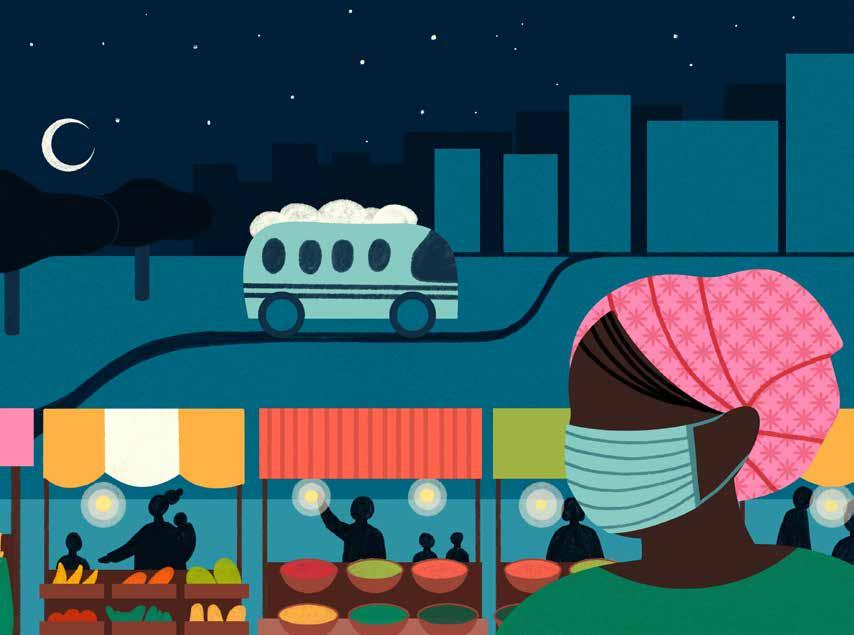
In early 2020, at the peak of the COVID-19 pandemic, lockdown protocols in Uganda exempted the informal economy, specifically the predominantly female food sellers who were allowed to continue trading inside markets under quarantine conditions. Uganda’s urban markets are dominated by women and youth who largely deal in perishable produce like fruits and vegetables (UNDP 2020).26 The condition under which these
food sellers were allowed to trade was that they could not move outside market locations and were required to sleep there (Ossome 2021: 73).
On March 25, 2020, the government banned public transport and non-food markets.27 The staple food sector was the only one authorized to operate throughout the lockdown period. Food distribution between rural and urban areas was sustained through the transportation network. Throughout the night, truckloads of fresh produce were delivered to Nakasero from across Uganda.28
26 The markets are the main outlets for farm produce; they play an important role in connecting rural farmers with the urban market, keeping the supply chain for agricultural produce active (UNDP 2020).
27 Human Rights Watch (2020), “Uganda: Respect Rights in COVID-19 Response,” https://www.hrw.org/news/2020/04/02/uganda-respect-rightsCOVID-19-response
The social reproduction link between the transport ban and operations in the staple food market is easy to miss. In Kampala’s major markets, including Nakasero and Namuwongo, ordinary Ugandans, especially women who work in the market, were “directed by the president” to sleep in the market,29 supposedly because of restrictions placed on transport and fear that their movements could spread the COVID-19 virus.30 The government and the Red Cross provided market women with safety facilities, including washing points, mosquito nets, and mattresses. Nursing mothers stayed in the market with their children. It is striking how unremarked this government directive went, even among feminist organizations.
There were some technological innovations in this care economy. UNDP Accelerator Lab Uganda launched a partnership with Jumia Food Uganda, a leading e-commerce company, on May 8, 2020. The markets were connected to Jumia’s e-commerce platform as an experiment to sustain supply chains for micro, small and medium enterprises (MSMEs) and connect them with consumers. The aim was to enable market vendors to sell their produce through the Jumia digital platform, initially launched in five markets: Nakasero, Nakawa, Wandegeya, Bugolobi, and Kalerwe. It was later extended to two more markets, Naalya and Kibuye.
Various articulations of the benefits of this initiative emphasized the interests of the state and the market, not households:
• it “promotes the growth of the ICT industry and usage and contributes to the decongestion and transformation of Kampala into a smart city;”
• it deployed “digital solutions for business continuity through e-governance and e-commerce;”
• “E-commerce digital platforms like Jumia are at the forefront of providing the informal sector and SMEs solutions to keep running and reaching customers during the COVID-19 crisis.”31
The major insight this example provides is how the care economy functions primarily through the logics of the market in contexts where care workers have not yet been recognized by state institutions and, for that reason, are not properly accounted for in policy and law. Market women in Kampala were forcibly quarantined in markets, sometimes with their young children, to keep the supply chain of staple foods moving during the pandemic. It is important to reflect on what could have been done differently had there been an existing structure of care that sees the lived spaces of the market itself as a fundamental economy of care – as is suggested by the necessity on the part of the government to keep food markets open during the lockdown – and not merely as a trading site. The significance of recognizing various structures and sites as “economies of care” is that they can formally be accounted for in the framework of rights, entitlements, and policies that states (in collaboration with non-state actors) target.
29 UNDP (2020), “Connecting informal market vendors to e-commerce to reach consumers in the wake of COVID-19 and beyond,” https://www.undp. org/uganda/blog/connecting-informal-market-vendors-e-commerce-reach-consumers-wake-COVID-19-and-beyond
30 Alon Mwesiga (2021), “Photo essay: How lockdown affected lives in Uganda’s capital Kampala,” EPRC: https://eprcug.org/eprc-in-the-news/photoessay-how-lockdown-affected-lives-in-ugandas-capital-kampala/
31 UNDP (2020), “Connecting informal market vendors to e-commerce to reach consumers in the wake of COVID-19 and beyond,” https://www.undp. org/uganda/blog/connecting-informal-market-vendors-e-commerce-reach-consumers-wake-COVID-19-and-beyond
Vignette 3: The setting is a sexual and gender-based violence (SGBV) one-stop centre in Wau, South Sudan
Contexts of war or post-conflict raise very specific demands around care that range from housing and sanitation infrastructure to food, education, and health care. From a gender perspective, the need for care and rehabilitation of rape survivors deeply marks such contexts. In Wau, South Sudan, the cost of war has been the sexualized and gendered targeting of women and girls by warring parties, severe food shortages due to mass displacement, the inability to cultivate crops because of insecurity, and the blockage of roads supplying the town, preventing free trade and movement of goods (SIHA 2019).32 The result
is a high cost of living, especially for foodstuff, forcing many families to engage in riskier coping mechanisms, including early and forced marriages. Many women and girls have also engaged in survival sex to meet their families’ basic care needs (Ibid).
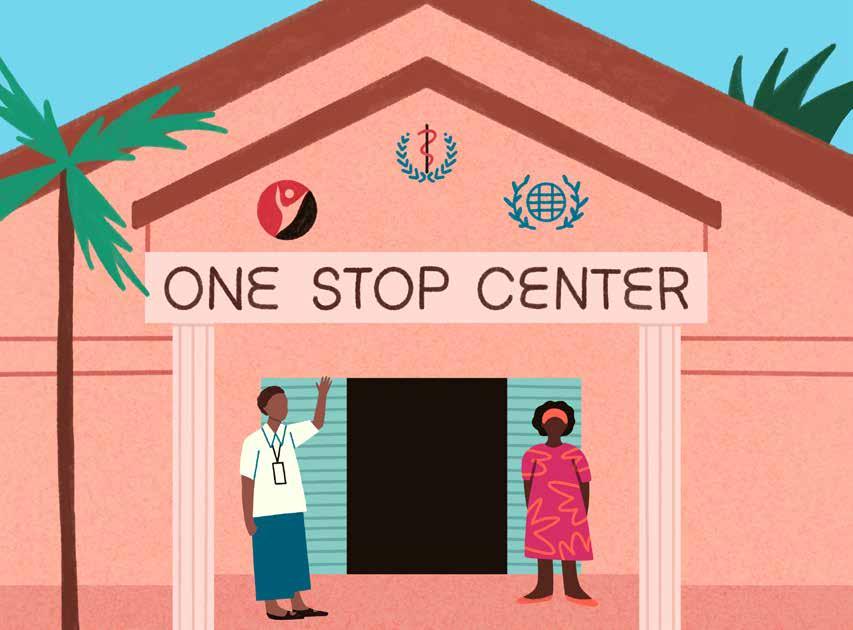
The war economy is also a deeply gendered and sexualized economy in which gendered violence becomes the norm. Conflict results in the dislocation of families and communities, massively disrupts the social fabric, and undermines local mechanisms of care, support, and protection–thereby creating a “care vacuum.” In Wau town, a One-Stop Centre (OSC) fills one such vacuum facing survivors of sexual and gender-based violence (SGBV) in need of care. It is operated by a deeply committed women’s rights/feminist
organization called Strategic Initiative for Women in Africa (SIHA Network), in collaboration with UNFPA and the Wau Teaching and Referral Hospital (Ministry of Health).33 The OSC is a critical infrastructure for post-rape care and rehabilitation in the Bahr al Ghazal region that is not funded by the government although recognized by it. The only one of its kind and first point of call for rape survivors aged 17 years and below, it offers testing, rape kits, post-exposure treatment, counselling, and paralegal services.34 The steady daily flow of survivors, accompanied by their parent or guardian, is stark empirical evidence of the scale of the GBV problem in the region and of the demand for care.35
OSC statistics show that some survivors are raped repeatedly. They also experience other forms of hardship, such as material loss and bereavement, suggesting the need for a more holistic response structure. Such an economy of care may, for instance, require that rape be addressed as part of the spectrum of violence in societies torn by decades of war, not as an exceptional phenomenon.36 It might require focusing attention on the infrastructures and networks that support rape survivors in contexts where state capacity has been decimated by war.37
The statistics in Wau show that rape survivors who reported to the police responded better when their cases were handled by women, demonstrating the need to increase the number of women police officers deployed to Sexual
Protection Units in police stations.38 The response of the criminal justice system, which is part of the “care economy” of rape, matters because of the nature of rape trauma and the risk of triggers and re-traumatization that survivors always face. Schools are also a domain of care for young girls who survive rape. They should be invested with the capacity for re-education and de-stigmatization, especially where rape survivors risk being locked out and prevented from completing school while the perpetrators are retained in school due to gender biased norms. The marginalization of GBV response in official state budgets ought to be seen as an outcome of delinking rape from maternity and antenatal care – especially where evidence shows that maternal and antenatal care are more prioritized by government.39 It requires thinking of rape concretely as a reproductive healthcare issue, and only exceptionally as “violence.”
This vignette shows the various levels at which rape trauma operates, and the long spectrum of care - the “economies of care” - that it activates. These economies include the community (parents/ guardians), the state (public hospitals, police), civil society (One-Stop-Centre), and even the market (sex work, schools). Seeing these infrastructures may allow us to shift our gaze from a predominant focus on the individual as the subject of care,40 to focus on these economies of care (as the focus also of policy) that respond to the survivors and support them where one realm alone is inadequate.
32 SIHA (2019), Caught in the Middle: Gender Inequality and Rampant SGBV in Wau, South Sudan, SIHA: Kampala.
33 SIHA (2023), “‘Rape takes place gradually, not suddenly’: An analysis of the realities of SGBV in Wau (Western Bahar el Ghazal, South Sudan), SIHA: Kampala. https://issuu.com/halayassin/docs/rape_takes_place_gradually_not_suddenly_an_ana
34 It also supports judicial processes, including lab tests and age assessments, psychosocial support, counselling, legal services, awareness raising, safe housing, and reporting.
35 The author was the researcher on this study and bore witness to this demand. SIHA, “Rape takes place gradually,” 15.
36 Ibid, 22.
37 For instance, studies show the need to address the social gap (class differences) in how parents respond to the rape of their children. While those with more means and/or education are more likely to pursue the formal justice route, survivors from poorer households are likely to seek arbitration and settlement through traditional structures. While both routes are common, institutional responses still lean disproportionately toward the formal justice system, thus ignoring the traditional structures through which most people experience daily life (SIHA 2023).
38 SIHA, “Rape takes place gradually,” Ibid, 23.
39 Ibid, 24.
40 A focus only on individuals might well address the immediate care requirements of survivors but do little to modify the social and political conditions that expose them to harm and that necessitate care.
Vignette 4: The setting is the rural-urban agrarian linkages in Kenya
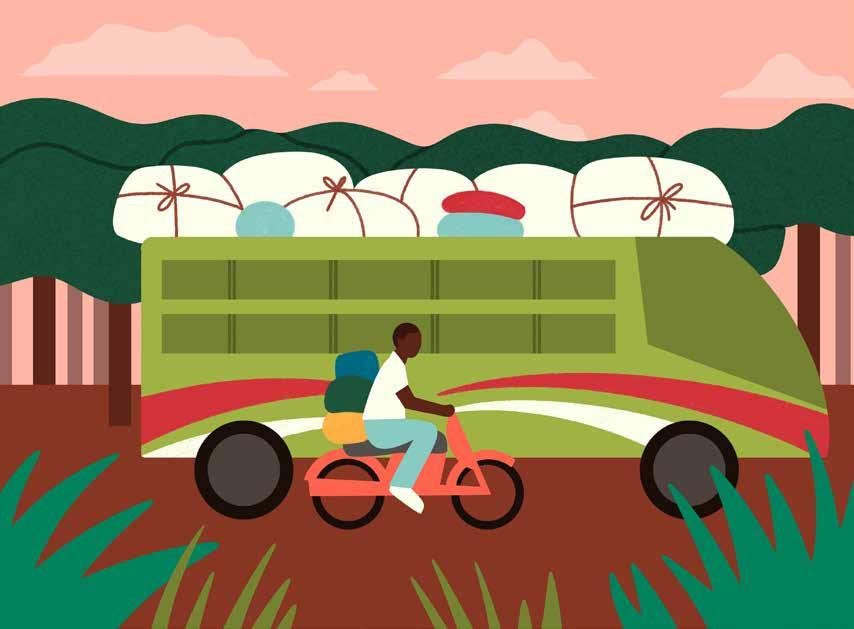
In Kenya, at the height of the hard COVID-19 lockdown in July 2020, a newspaper article in a major daily ran a headline titled “How ‘broke’ city folk get food from villages.” The article showed the agrarian links to the care economy and social reproduction that constitute a significant basis of livelihood and survival in agricultural societies of the global south. The newspaper cover featured a photo of a passenger service bus that was now being used to ferry sacks of foodstuff from rural
Kenyan families to their urban families in Nairobi and Mombasa. The food was not for sale. The story highlighted the agrarian economies of care that substituted for wages during the pandemic when wages fell out of the social reproduction equation and the sustenance of surplus people emerged as a stark question.
As the newspaper story reported: “Every Sunday, 62-year-old Jennifer Oloo travels from her Yala home to Usenge beach in Bondo to purchase omena (Rastrineobola argentea or Lake Victoria Sardines) and smoked fish, which she prepares, packs and sends to Nairobi. For the last three
months she has become a regular customer of a local bus company plying the Nairobi route. The recipient of her package is her 27-year-old son, who is a mechanic in Kariobangi.” 41 Jennifer says that her son is unable to fend for himself because of COVID-19…[and] he also can’t get out of Nairobi due to the lockdown announced by [the president] to contain the deadly virus.42
Many city dwellers with reduced or no income following the lockdown imposed on Nairobi and Mombasa, were left at the mercy of their friends and relatives back in the villages. From omena, smoked fish, and dried meat to mushrooms, cereals, bananas, sweet and Irish potatoes, relatives and friends came in handy, ensuring a steady supply of food to city dwellers. 43
During the pandemic, existing gender inequalities became exacerbated by COVID-19 responses at state and societal levels. Beginning in March 2020, quarantine restrictions, mandatory curfews, and bans on public gatherings were implemented to stem the spread of COVID-19. These measures required that only industries categorized by the government as “essential” were allowed to continue operations outside the home. Notable in cross-country responses are the ways in which care labour, broadly defined, was considered essential. The centrality of the rural-urban food supply chain was illustrated in Kenya where public transport vehicles were converted for courier service and permitted to transport food from rural to urban families on a daily and weekly basis. More significantly, this shows the need to pay attention to social and economic realms (other than the market) that support the care and sustenance of large sections of working people. By “allowing” these food buses to move freely during the hard lockdown, the state was implicitly acknowledging this kind of economy of care. Scaling up would mean bringing such economies into the realm of policy proper.
43 Ibid (added emphasis).
Vignette
5: the setting is an urban low-income settlement served by community health volunteers (CHVs)
Unpaid care work and volunteering are both forms of work that, in principle, take place without financial remuneration (Barford et al 2024: 13). These activities occur alongside other forms of (paid) work. For some, these activities are their main work activities. These activities may increase when labour market demand is low, or when state services are weak or non-existent, or when care demand is especially high (ibid). Unpaid care and volunteer work overlap conceptually: “Since it is unpaid, volunteer work is indeed work, but it is not employment. Similarly, but distinctly, unpaid care activities are work ‒ but not employment. There is an overlap here, in that unpaid care work undertaken in the context of the family and/or
household is not volunteer work, but unpaid care work undertaken outside the family is” (O’Higgins 2022: 7, cited in Barford et al 2024: 13).
Community Health Volunteers (CHVs), also known as Community Health Workers or Community Health Promoters, fall within the category of being both unpaid workers and volunteers. They play a critical role in linking poor and working people to primary healthcare services (Kimari, forthcoming). The majority of accredited community health workers are women. Governments generally consider them to be honorary volunteers rather than employees. As a result, they receive a small stipend but do not receive employment benefits, such as leave (e.g., paid, sick or maternity) or health insurance (Miyamoto 2020: 1). Their tasks are diverse and seem to exceed those of registered medical professionals.
They include:
1. “visit homes, initiate dialogue with household members, determine the health situation, deliver key health messages, and undertake necessary actions;
2. guide the community on health improvement and disease prevention;
3. register households at frequencies stipulated in current guidelines;
4. treat common ailments and minor injuries; and
5. with support and guidance from Community Health Extension Workers (CHEWs), implement protocols for Community-Based Maternal and Newborn Health and Integrated Community Case Management of Childhood Illnesses.” (Njiraini and Hussein 2019: 182, cited in Kimari, forthcoming).
They are also substitute community activists, family members and key leaders in their areas of operations, which are usually their areas of residence (ibid, added emphasis). Yet the exploitation of CHVs is not benign and ought to be seen as serving much more than a care function.
Kimari (forthcoming) makes a novel argument linking CHVs to the data extractivist model of neoliberal capitalism, showing how the proximity of CHVs to local communities and the networks of trust they build enables the exchange of information between them and their patients. This means that they have now become “data producers” – exploited gendered labour in the digital health age as data acquires the status of “new oil.”
These insights link the community care model with the state, households, technology, and capital through an invisible thread of a gendered labour regime. Tracing these connections, as Kimari (forthcoming) does in their critique, pushes the discourse beyond the care economy to show the social and economic structures through which care happens and, therefore, the practical domains/ economies in which policymaking on care should also be focused.
Policy and practice of an economies of care approach
The foregoing has presented some examples and policy challenges of approaching care from below. It has brought to the fore a number of considerations when thinking through the economies of care approach.
1
First is that these approaches enjoin households, markets, communities, and government/states and demonstrate the importance of paying attention to the structures, conditions and institutions that facilitate care in Africa. These structures and conditions don’t emerge in a vacuum but should be thought of in relation to broader developmental policies and macroeconomic considerations. On the one hand, this determines the populations that require the greatest amount of care; on the other, it determines the resources available for providing care. Such resources must be understood in their historical specificity: it is necessary to consider the kinds of social (as well as political) infrastructure whose availability actually enable care work, as well as to operate with the knowledge that such infrastructure and resources might be markedly different between countries of the global north and south. In the global south, the role of the state and the private sector in welfare is minimal, even negative, so resources such as land, water, nature matter for survival: access to them should constitute a key policy intervention when planning the care economy.
2
Second, the paper argues that in the care economy model of the north, the state is a necessary condition without which the care economy can’t be effective. For care models in the global south/ Africa, as the various vignettes illustrate, self-organization seems to be necessary for economies of care. Yet this does not necessarily mean that the state doesn’t have a role to play but rather points to the limitations of the state-centric approach to the care economy.
Each of the cases presented suggest that the state encroaches on, or appropriates, existing structures of care from below. This kind of appropriation gives the state an appearance of being the primary actor while, in reality, its care power would not be possible without these domains. This is an important insight as it shows that far from being absent, the state intervenes in the care economy, but the neoliberal state does so mainly on behalf of the market, not the households in need. It is thus only from concrete empirical data and an analysis from below that we can formulate relevant theoretical frameworks about the nature of the care economy in the developing world. That insight could also lead us to a theory of the state and a more concrete understanding of its approach to policymaking around the care economy.
3 4
5
Third, the self-organizing spaces highlighted in the vignettes above are spaces of agency that aren’t, in their inception, determined by the (legal-political) structure of the state. In the global south where only some aspects of care such as health care and child care are monetized, the distribution of care work between state, market, and household is more blurred than in the global north. This means that the traditional articulation between the state, market, and households (and community) – the major institutions that support care and social reproduction – must be rethought. In other words, such self-organizing spaces as domains of care are able to escape the excessive bureaucracy that policy and legislation might entail. Because of this, it may be very difficult to recognize and therefore redistribute care to and from them.
The perceived difficulty of organizing them under the domain of policy ‒ as the formal approaches to care economy now recommend ‒ suggests the need for better data-backed research, such as that being pursued in the SCIA project, that is then directed toward policy-making. Although there is no guarantee that these diverse, self-organizing economies of care won’t lose the unique social and cultural dimensions that make them so effective when brought under policy, good policy may directly and indirectly reduce the cost and burden of care that self-organization imposes on women.
Fourth, the spaces of selforganization exist despite capitalism and the market because of the survival imperative millions face. They constitute one form of thinking outside the state but get encroached very quickly by the state. The implication is that economies of care are not merely a domain of social and economic response, but also an important domain of politics or political life. They are economies with people and, to the extent that they compensate for the absence or weaknesses of both the market and state in ensuring the survival of working people, they constitute an important domain of political stabilization that the state cannot ignore. This suggests a realm of possibility that those working to scale up care should take advantage of by pushing the state for better care policies and practices.
Last, the foregoing has shown that non-traditional approaches to thinking about the economy require that methodological differences need to be linked to policy difference. Methodologies that we use tend to determine the policies that we formulate and the outcomes for society. Since methodologies don’t emerge from thin air but are derived from an engagement with the concrete realities of a given society, it follows that good feminist methodology for the study of care economy should first identify the institutions and functions around which a society is structured. Care economies (in their function of social reproduction) are usually organized around four key institutions: markets, the family/household, the state, and sometimes community organizations. Good research can identify the diverse actors within each of these institutions, their functions, and the interconnectivity between these institutions and actors. In other words, the nature, organization, and care functions of institutions are historical and cannot be presumed across place and time; rather they must be discovered empirically for policy to be relevant to the context and its care needs.
Discussion and conclusion
The role of the state in social reproduction is taken for granted in the prevailing literature on the care economy, primarily so in relation to its interventionist role. Classical political economy did not consider the reproduction of the working class as a mere “false expense;” rather, it recognized it as a necessary precondition for the capitalist production process to continue (Marx 1986: 603).
the nature of the care crisis or crisis of social reproduction is not entirely attributable to the lack of public spending
Wages, in turn, constitute the first form of working people’s subsistence but its adequacy in the processes of “self-managed reproduction” depends on workers’ access to employment and decent wages (Dickinson and Russell 1985). In other words, workers alone cannot guarantee the wages that are necessary for their sustenance.
To manage the contradictions associated with a reproduction crisis, the state may intervene through appropriate legislation to prevent or mitigate cost-shifting by capitalists or may seek
to underwrite some or most of reproductive costs. The actual manifestations and effective implementation of such state interventions, however, are historical and depend on a country’s social structure and growth process. In Africa and the developing world more broadly, decades of neoliberal restructuring have significantly weakened the capacity of states to intervene in processes of social reproduction (Ossome 2020: 7).
As such, the nature of the care crisis or crisis of social reproduction is not entirely attributable to the lack of public spending because this framing is based on a global north context where the social state has historically borne large public expenditures. Rather, the crisis in the global south arises from the systematic destruction of the infrastructures and resources that support social reproduction – including land, water sources, and “jobless growth” under neoliberalism. Increasingly also, attention must be directed toward the unfolding global climate and ecological crisis that is putting additional stress on the already fragile care infrastructure and the economies of care that have sustained it.
Rather, the crisis in the global south arises from the systematic destruction of the infrastructures and resources that support social reproduction –including land, water sources, and “jobless growth” under neoliberalism
Furthermore, public institutions and services charged with care provisioning have historically not been well developed or are under-resourced in much of the global south. This points to the need to pay attention to other realms that really support livelihoods and survival – a focus on the economies that support care (emphasis on a structural relation) rather than on care itself (emphasis on individuals) (Ossome, 2024g).
The difference is that investment in infrastructures of care enjoins society as a whole – as tillers of the land, as health workers, as preservers of forests and nature, as informal sector traders, as wage workers, as educators, and so on. It emphasizes the idea that, where the state (through social grants) and the market (through wages) are inadequate, those who provide care depend on other (or additional) resources that should be prioritized for support as we build care economies. Such resources are not always visible and need to be empirically discovered. When public resources are limited,
however, investing in care without identifying the resources people need to provide care invariably models care economies around the exploitation of human beings – those individuals who mainly and/ or formally undertake care work, predominantly racialized and working-class women.
This paper has sought to show economies of care as a possible starting point for any critique that seeks to give due consideration to the historical context in analyses of the care question in Africa. The lens under which the care economy is viewed is important in this regard, but it is the lens of social reproduction that exposes the processes that constitute care work in different contexts. Social reproduction links the household to the market to the state and the community. We must constantly reflect on three questions: What resources do we have to survive? Where are we getting those resources? And as Kanyogo (2025) has observed, What does it mean to redistribute care so that it is a collective, not a feminized role?
Aboderin, Isabella (2014). “Sexual and reproductive health and rights of older men and women: addressing a policy blind spot,” Reproductive Health Matters, 22(44): 185-190.
Aboderin, Isabella and Lyn Ossome (forthcoming). “Toward transformative futures for long-term care in Kenya? PanAfrican feminist and decolonial perspectives – and a proposed frame for understanding problematics, identifying solutions and forging agendas,” Research Paper in the Care Economy in Africa project.
Aboderin, Isabella and Jaco Hoffman (2015). “Families, Intergenerational Bonds, and Aging in Sub-Saharan Africa,” Canadian Journal on Aging/ La Revue Canadienne du vieillissement, 34(3): 282-289.
Adelaja, Adesoji and Justin George (2020). “Is Youth Unemployment Related to Domestic Terrorism?” Perspectives on Terrorism, 14(5): 41- 62.
APHRC (2023). “The Poor State of Childcare Centers in the Nairobi Slums: A major Threat to Children’s Health and Development,” available online at: https://aphrc.org/publication/the-poor-state-of-childcare-centers-in-the-nairobislums-a-major-threat-to-childrens-health-and-development/
Barford, Anna, Kate Brockie and Niall O’Higgins (2024). “Volunteering, unpaid care work and gender in lower-income countries,” Geneva: ILO.
Campbell, Hillary (2010). “Structural Adjustment Policies: A Feminist Critique,” Sigma: Journal of Political and International Studies, vol. 27, article 2. Available at: https://scholarsarchive.byu.edu/sigma/vol27/iss1/2
Cassirer, Naomi and Laura Addati (2007). “Expanding women’s employment opportunities: Informal economy workers and the need for childcare,” Geneva: ILO.
Chaves, Gabriela Mendes and Paris Yeros (2024). “The Bolsa Família Programme in Brazil and the Transfer of State Responsibility for Social Reproduction,” in D. Tsikata, P. Yeros & A. Prasad (Eds.), Gender in Agrarian Transitions, New Delhi: Tulika Books.
Clark, Shelley, Sangeetha Madhavan, Cassandra Cotton, Donatien Beguy and Caroline Kabiru (2017). “Who helps single mothers in Nairobi? The role of kin support,” Journal of Marriage and Family, 79(4): 1186-1204.
Clark, Shelley, Caroline W. Kabiru, Sonia Laszlo and Stella Muthuri (2019). “The Impact of Childcare on Poor Urban Women’s Economic Empowerment in Africa,” Demography, 56(4): 1247-1272.
Dickinson, James and Bob Russell (1985). “The Structure of Reproduction in Capitalist Societies,” in Family, Economy and the State: Social Reproduction Under Capitalism, edited by J. Dickinson and B. Russell, 1–20. New York, NY: St. Martin’s Press.
Epping-Jordan, J and Isabella Aboderin (2017). “Toward long-term care systems in Africa,” World Health Organization Technical Series on Long-Term Care, Geneva: WHO.
Faronbi, Joel and Adenike Olaogun (2017). “The influence of caregivers’ burden on the quality of life for caregivers of older adults with chronic illness in Nigeria,” International Psychogeriatrics, 29(7): 1085-1093.
Foster, Geoff (2000). “The capacity of the extended family safety net for orphans in Africa,” Psychology, Health & Medicine, 5(1): 55-62.
Ghosh, Jayati (2022). “The structure of care work and inequalities among care workers,” Care4Care Policy Brief Series, no. 2, https://ipdcolumbia.org/wp-content/uploads/2024/08/220905_Gosh_Article_2_final_online70.pdf
Gidley, Jennifer and Sohail Inayatullah (2002). Youth futures: Comparative research and transformative visions, Westport, CT: Praeger.
Global Burden of Disease GBD (2019), https://www.thelancet.com/infographics-do/gbd-2019.
Goldin, Claudia G. (1991). “The Role of World War II in the rise of Women’s Employment,” The American Economic Review, 81(4): 741-756.
Hassim, Shireen (2008). “Global Constraints on Gender Equality in Care Work,” Politics & Society, 36(3): 388-402).
He, Wan, Isabella Aboderin, and Dzifa Adjaye-Gbewonyo (2020). “Africa Aging, 2020,” International Population Reports, https://www.census.gov/content/dam/Census/library/publications/2020/demo/p95_20-1.pdf
Hojman, Andrés and Florencia López Boo (2019). “Cost-Effective Public Daycare in a Low-Income Economy Benefits Children and Mothers,” IZA DP No. 12585.
ILO (2011a). “World employment and social outlook: Trends,” Geneva: International Labor Organization.
ILO (2011b),.“Youth unemployment in the Arab world is a major cause for rebellion,” Geneva: International Labor Organization.
Kanyogo, Mumbi (2025). ‘Live conversation with Nawi Macroeconomics Collective regarding social reproduction,’ https:// www.instagram.com/p/DJ30X7_IodB/
Kimari, Wangui (forthcoming). “The Exploited Gendered Labour of Kenya’s Digital Health Age: Community Health Volunteers, Data and the Work of Care,” Nairobi: Nawi Collective.
Lin, Justin Yifu (2012). “Youth bulge: A demographic dividend or a demographic bomb in developing countries?”, World Bank Blog: https://blogs.worldbank.org/en/developmenttalk/youth-bulge-a-demographic-dividend-or-ademographic-bomb-in-developing-countries
Marx, Karl (1986). Capital: A Critique of Political Economy (Vol. I), Moscow: Progress.
Mains, Daniel (2011), Hope Is Cut: Youth, Unemployment, and the Future in Urban Ethiopia, Philadelphia: Temple University Press.
Miyamoto, Inez (2020). “COVID-19 Healthcare Workers: 70% are Women,” Daniel K. Inouye Asia-Pacific Center for Security Studies: https://www.jstor.org/stable/resrep24863
Mkhonto, Flora and Ingrid Hanssen (2018). “When people with dementia are perceived as witches. Consequences for patients and nurse education in South Africa,” Journal of Clinical Nursing, 27(1-2): 169-176.
Mussie, Kirubel Manyazewal, Jenny Setchell, Bernice Simone Elger, Mirgissa Kaba, Solomon Tessema Memirie and Tenzin Wangmo (2022). “Care of Older Persons in Eastern Africa: A Scoping Review of Ethical Issues, Frontiers in Public Health, vol. 10. doi.org/10.3389/fpubh.2022.923097
Njiraini, Rose, and S. A. Hussein (2020). “Kenya’s Community Health Volunteer Program,” Health for the People: National Community Health Programs from Afghanistan to Zimbabwe, 177-188.
O’Laughlin, Bridget (2016). “Pragmatism, structural reform and the politics of inequality in global public health,” Development and Change, 47(4): 686-711.
Ossome, Lyn (2025), “Social reproduction and surplus populations of the agrarian south,” in Shireen Hassim and Anna Korteweg (eds), Handbook on Politics and Society, UK: Edward Elgar.
Ossome, Lyn (2024g). “Care and Economic Crisis,” in Linda McClain and Aziza Ahmed (Eds), Routledge Companion to Gender and COVID-19, London: Routledge.
Ossome, Lyn (2020). “The care economy and the state in Africa’s COVID-19 responses,” Canadian Journal of Development Studies / Revue canadienne d’études dudéveloppement, DOI: 10.1080/02255189.2020.1831448.
Razavi, Shahra (2011). “Rethinking care in a development context: an introduction,” Development and Change, 42(4): 873903.
Sadasivam, Bharati (1997). “The Impact of structural adjustment on women: A governance and human rights agenda,” Human Rights Quarterly, 19(3): 630-665.
SIHA (2019), Caught in the Middle: Gender Inequality and Rampant SGBV in Wau, South Sudan, SIHA: Kampala. SIHA (2023). ‘Rape takes place gradually, not suddenly’: An analysis of the realities of SGBV in Wau (Western Bahar el Ghazal, South Sudan), SIHA: Kampala. https://issuu.com/halayassin/docs/rape_takes_place_gradually_not_suddenly_ an_ana
Simeoni, Crystal (2020). “Why Nigeria knows better how to fight corona than the US,” International Politics and Society, 11th March 2020.
Simutanyi, Neo (1996). “The Politics of Structural Adjustment in Zambia,” Third World Quarterly, 17(4): 825-839.
Standing, Guy (1989). “Global Feminization through Flexible Labour,” World Development, 17(7): 1077-1095.
Stevano, Sara, Rosimina Ali and Merle Jamieson (2021). “Essential Work: Using A Social Reproduction Lens to Investigate the Re-Organisation of Work During the COVID-19 Pandemic”, SOAS Department of Economics Working Paper No. 241, London: SOAS University of London.
Tsikata, Dzodzi (1995). “Effects of Structural Adjustment on Women and the Poor,” Third World Resurgence, 61, 1-8. https:// www.twn.my/title/adjus-cn.htm
UN Women (2022). “Advancing the Care Agenda: The 5Rs,” https://africa.unwomen.org/sites/default/files/2022-11/The%20 5Rs.pdf
Valiani, Salimah (2012). Rethinking Unequal Exchange: The Global Integration of Nursing Labour Market, Toronto: University of Toronto Press.
-------------- (2022), The Africa Care Economy Index. https://femnet.org/wp-content/uploads/2022/08/DC2836_Africa-CareIndex-2022_E-version_14-Sept-2022.pdf
WHO (2017). “Towards long-term care systems in sub-Saharan Africa,” https://iris.who.int/bitstream/hand le/10665/340535/9789241513388-eng.pdf
WHO AFRO (2023). https://www.afro.who.int/sites/default/files/2024-09/WHO%20Annual%20Report%202023.pdf