From the care economy to economies of care: a new model for Africa
This brief draws on the key findings of the 2025 working paper“Localizing the Care Economy” by Lyn
This brief draws on the key findings of the 2025 working paper “Localizing the Care Economy” by Lyn Ossome. Lyn Ossome is an Associate Professor at, and Director of, the Makerere Institute of Social Research (MISR), Makerere University, Uganda.
Ossome. Lyn Ossome is an Associate Professor at, and Director of, the Makerere Institute of Social Research (MISR), Makerere University, Uganda.
Non-profit sector
And Civil Society
The State
Care
Families & Households Markets
What’s at stake?
In Africa, people and communities are prime movers in organizing and providing care. Governments therefore need to rethink how best to support these diverse, self-organizing economies of care.
The COVID-19 pandemic increased global concern about the care economy as it strained health and care systems, widened socioeconomic divides, and shifted priorities. (See box “What is the care economy?”). The pandemic not only increased the physical and emotional burdens of caregivers but also underscored the interconnectedness of care work with broader social and economic dynamics. In doing so, it brought questions of care and social reproduction into wider debates on social and economic policymaking and theory.
But while this broader focus is welcome, the care economy is still largely viewed from the dominant vantage point of global north experiences and structures. In the global north, the care economy is greatly integrated into the formal economy and mainly relies on a system of paid services such as old age security programs, paid maternal leave, government-provided health care, and unemployment insurance, among other programs.
The danger this “universalization” of care thinking poses is that global south contexts and experiences of care become marginalized in both literature and policy approaches. In the global south, state and market capacity to support care work is limited. Here the responsibility is shifted onto markets, families, and communities, highlighting the uneven, complex balance of power and responsibility within the care economy that relies greatly on unpaid care work, mainly that of women.
Avoiding a one-size-fits-all approach is therefore crucial, as care responsibilities, financing mechanisms, locations, and regulations can vary widely across settings, even within households. This suggests that governments need to rethink how the state, market, community and households are interrelated and how best to support diverse, self-organizing economies of care.
institution within the care economy responsible for overseeing the resources, structures and activities that support care demands and social reproduction
The Care Economy
Care Gap
The State Families & Households
the site of unpaid care and social reproduction. In developing countries families and households disproportionately carry the burden of care because of the weak capacity of state and market intervention.
the uneven social, economic, and political capabilities of states, markets, and households to provide the necessary resources and supports for care
Unpaid Care
the structures, conditions, and institutions that enable women (and men) to perform both paid and unpaid care work, supporting human development, well-being, and productivity in society.
formal or informal institution within the care economy shaped by the legacy of economic liberalization in the 1980s, fundamentally altering the role and capacity of the state in social provisioning and care.
Not-for-profit Sector The Market
Formation of “voluntary” and “community” based organizations and initiatives where labour costs are absorbed, by care workers who may perform the work for less or no pay.
What is the care economy?
The term “care economy” refers to the growing recognition of the economic, social, and political importance of care work, both paid and unpaid. It recognizes that care is a fundamental aspect of society that supports human development, well-being, and productivity. Often performed without pay, it is indispensable to society. This suggests the importance of considering the care economy through a lens that extends from those who perform care work (a focus on care workers), to the structures, conditions, and institutions that enable women (and men) to perform care work.
Research approach
An extensive review of four decades of global care and social reproduction literature was carried out to explore the differences between universalist and grounded theories and practices of care in Africa, reimagine new models, and propose frameworks of care that can account for the realities of social reproduction in African contexts.
The paper on which this brief is based adopts a feminist political economy approach and, through a social reproduction lens, focuses on the crucial role both paid and unpaid care labour play in acquiring and providing basic needs such as food, shelter, clothing, and healthcare. These activities and services can be delivered through public and private sectors, including micro, small and medium enterprises, not-for-profit organizations, the social and solidarity economy, and households.
The paper departs from mainstream approaches that largely reflect global north realities, vantage points, and assumptions. It examines the care economy in light of the kinds of power and responses that manifest from below and therefore give more attention to “economies of care” - the structures, conditions, and institutions that support processes of care and social reproduction. This means imagining care economies that are context-specific and relevant to the needs of working people.
The research also drew insights and lessons from projects supported through IDRC’s Scaling Care Innovations in Africa (SCIA) Initiative and sought examples from current events.
Key findings
The literature analysis showed that, in the care economy model of the north, the state is a necessary condition without which the care economy cannot be effective. The role of the state in social reproduction is taken for granted, primarily so in relation to its interventionist role. As the following examples show, however, for care models in the global south - notably Africa - selforganization seems to be a necessary condition for economies of care: people and communities are prime movers in organizing and providing care.
This doesn’t necessarily mean that governments don’t have a role to play but rather points to the limitations of the state-centric approach to care economy. What is needed is to develop approaches to the state that expand its scope of intervention in the care economy. That is, to strengthen the capacity of the state to respond to care demands by investing in structures, institutions, and activities that support care but are ordinarily overlooked in mainstream policy.
The vignettes below are examples of social and economic structures through which care happen. They point to the practical domains/economies on which policymaking on care should focus.
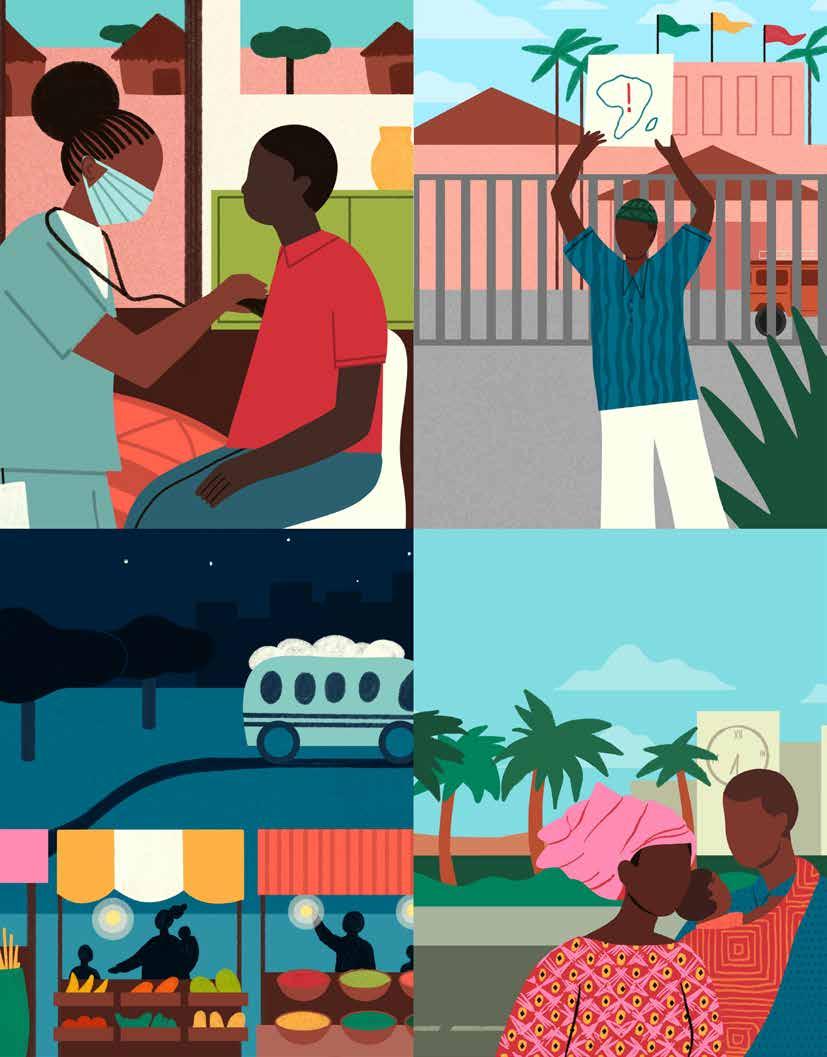
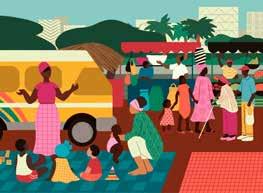
In Kenya, some 2.5 million people live in Nairobi’s crowded, deprived informal settlements. As more women enter the workforce, the demand for childcare is surging, the more so among the poor. Although Nairobi County has a Day Care Act and process for regulating childcare centres, most are substandard, unregulated, informal. To date, studies of childcare facilities have primarily focused on the skills of service providers as well as health and safety issues, but don’t question why the delivery of childcare services is so difficult among low-income earners and poor people. What is the cost of isolating children for special attention while ignoring their daily living conditions? What would happen if attention was paid to the broader economies that might support women in providing better care for children?
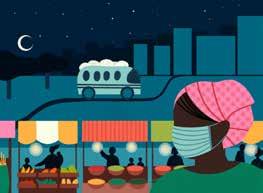
In Uganda, at the peak of the Covid-19 pandemic, lockdown protocols exempted the predominantly female food sellers. Considered essential workers, they were allowed to continue trading inside markets under quarantine conditions: they couldn’t leave the market and were required to sleep there. Basic sanitary services were provided, as well as mosquito nets. While this kept the supply chain of staple foods moving from rural farms to urban households, it did so in the interests of the state and the market, not households: women - who provide the bulk of caring labour at home - were exposed to health and sexual violence risks and children were left neglected at home. What if there had been an existing structure of care that sees the lived spaces of the market itself as a fundamental economy of care - as is suggested by the necessity on the part of the government to keep food markets open during the lockdown - and not merely as a trading site?
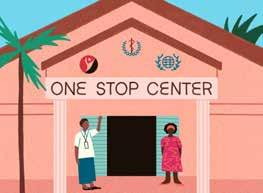
In South Sudan, protracted conflict has led to the dislocation of families and communities, massively disrupting the social fabric and undermining local mechanisms of care, support, and protection - effectively creating a care vacuum. Most affected are children and women whose bodies have become a battlefield. In Wau town, a One-Stop Centre (OSC) fills the vacuum facing rape survivors under 17. But it isn’t enough: rape needs to be addressed at various other levels as well, calling on economies of care that include the community (parents/guardians), the state (public hospitals, police), civil society (One-Stop-Centre), and even the market (sex work, schools). The scale of the gender-based violence problem in the region and the demand for care suggest that attention should be focused on the infrastructures and networks that support rape survivors in contexts where state capacity has been decimated, to shift the focus from the individual as the subject of care to the economies of care that respond to the survivors and support.
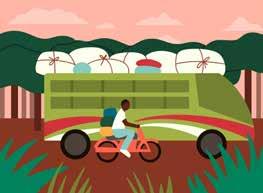
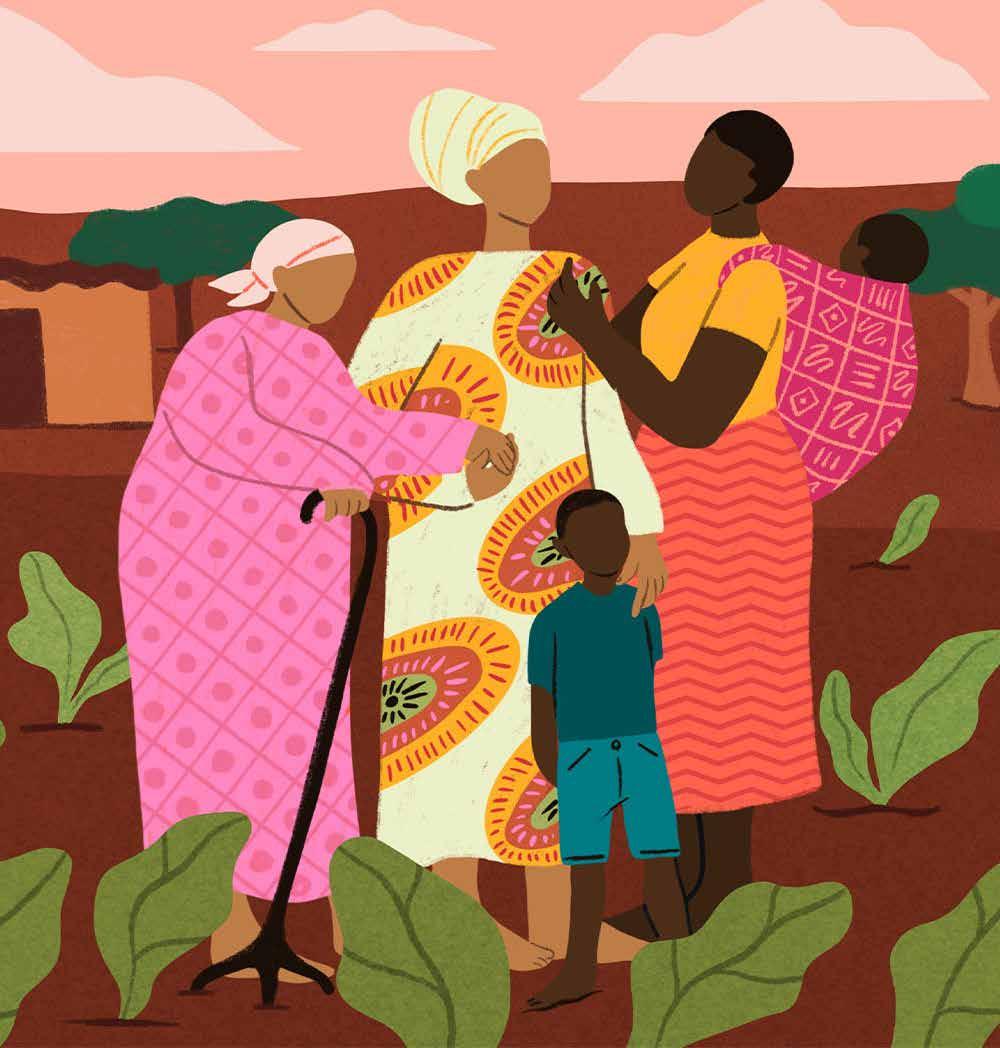
In Kenya, reduced or no incomes following the COVID-19 lockdown left many city dwellers at the mercy of their friends and relatives back in the villages for food and other supplies. Without passengers, struggling public transportation and delivery companies shifted their business models to carry food from rural to urban communities at an affordable cost to consumers. By allowing these food buses to move freely, the state was implicitly acknowledging an agrarian/ subsistence economy of care. This shows the need to pay attention to the social and economic realms - other than the market - that support the care and sustenance of large sections of working people. Could this be scaled up to bring such economies into the realm of policy proper?
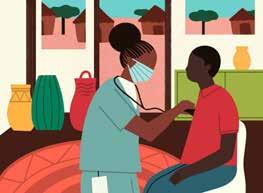
In Kenya and elsewhere, community health volunteersmost of them women - play a critical role in linking poor and working people to primary healthcare services. Trusted community members, they provide a variety of unpaid services, from health education to treating minor ailments and injuries. They are also crucial in supporting government maternal and child health protocols. With the advent of the digital age, a new role has been added to this unpaid care employment: that of “data producers” - an exploitation by markets and governments of their close ties with communities.
These vignettes show that self-organization seems to be necessary for economies of care. By recognizing various structures and sites as “economies of care,” they can formally be accounted for in the framework of rights, entitlements, and policies that states (in collaboration with non-state actors) target.
Policy and Research Insights
The research suggests the need to direct attention to the entire
Neglected research areas
The research uncovered four major knowledge and policy gaps in the way existing policy responds to the major demands for care in Africa.
Focusing on clients rather than care workers deepens underfunding and care inequalities. In Africa, patients can barely afford healthcare. The data suggests a need for policies that support the full constellation of care infrastructure including traditional medicine, homebased care, and support for care workers both inside and outside the hospital healthcare system.
Policy paradox of higher usage of paid childcare by low-income households. Low-income earners are greater users of childcare in Africa than higher-income households, causing great economic hardships. This has important implications for how we think about care economy, especially in relation to policy that continues to push for paid childcare without adequate attention to the social cost and effects.
Eldercare infrastructure upholds a narrow definition of the care older persons require. The absolute number of older persons in Africa is projected to rise extraordinarily rapidly. What options are available for long-term care for a population with varying needs without unduly burdening families?
The neglected problem of the needs of surplus populations. A great number of the booming population of young people are no longer being absorbed into the labour market. They, however, require food, shelter, healthcare, and other forms of care/reproduction to survive. What becomes the basis for survival for this large unemployed labour force when the state and market can’t - or won’t - provide?
Key Conclusions
● In Africa, self-organization seems to be a necessary condition for economies of care and should constitute a domain of redistribution.
● Because of weak care institutions and social services in the global south, greater attention should be paid to other realms that support livelihoods, health, and survival ‒investing in economies that support care rather than in care itself.
● Investing in care without identifying the resources that people need to provide care leads to care economies that exploit human beings, predominantly racialized and working-class women.
● Good feminist methodology for the study of care economy should first identify the institutions and functions around which a society is structured.