Moore Township Pflugler Farm Acquisition
Submitted by MACKENZIE GEISNER
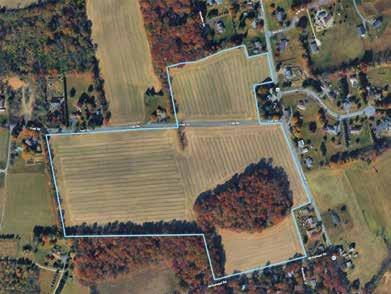
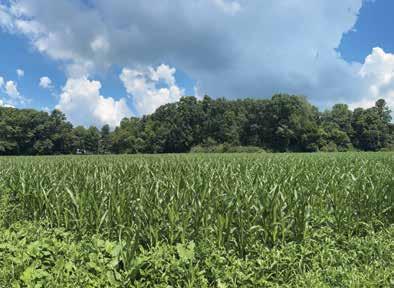
Moore Township continues to take meaningful steps toward preserving the rural character, farmland and open spaces that make our community special. Following the recent addition of an Open Space Coordinator to support these efforts, the township has acquired approximately 47 acres of farmland and woodlands near Yost Road and Nazareth Drive through the Open
Space Program and dedicated funding.
This effort represents another important investment in protecting valuable woodland and agricultural land from commercial or large-scale development. By preserving this property, the township can help ensure the land remains active in farming use while maintaining scenic views, natural resources and the open space that residents consistently identify as a priority for our community’s future.
As development pressures continue throughout the region, proactive preservation efforts like this help balance growth with the protection of farmland, wildlife habitat and the township’s agricultural heritage. Preserving farmland also helps relieve some strain on our community infrastructure and municipal services that often accompany dense development.
The township would like to extend its sincere appreciation to the property owners for their decision to sell this property for preservation. Their commitment to maintaining the land’s legacy plays a vital role in protecting the character of our community for years to come.
The township’s Open Space Program was created specifically to protect these types of properties for future generations. Through partnerships, grant opportunities and responsible planning, the township is committed to preserving key parcels that contribute to the character and quality of life residents value most.
The township looks forward to continuing to advance preservation initiatives that benefit both current residents and generations to come.
Sen. Miller
Continued from page 5
tending the Department of Human Services’ authority to use the Budget Adjustment Factor for two more years, provides muchneeded stability for providers.
This investment builds on Senator Miller's leadership as Senate Democratic Policy Chair, where he convened a policy hearing examining the long-term sustainability of Pennsylvania's nursing
homes, the state's rapidly aging population and workforce shortages and the urgent steps needed to ensure older adults continue to have access to quality longterm care.
“Pennsylvania’s nursing homes are facing significant financial pressures, and without action, access to quality long-term care for seniors is at risk,” said Senator Miller. “Nearly 70% of nursing home residents rely on Medicaid, making a sustainable reimbursement system essential
to keeping these facilities open and delivering the care families depend on, while ensuring our seniors continue to receive the care and dignity they deserve.”
Additional budget investments:
The budget also includes several key investments that will strengthen communities across Pennsylvania, including:
• $2.5 million for the Nursing Shortage Assistance Program to help address Pennsylvania's nursing workforce shortage.
Laminate Vs. vinyl Flooring
Continued from page 8
ments and laundry rooms.
• Easy cleaning: Routine sweeping and damp mopping are typically enough to maintain the surface.
• Comfort and sound control: Vinyl is softer and quieter underfoot than many hard flooring materials.
• Wide design selection: Products are available in wood, tile and stone looks.
• Several installation methods: Homeowners can choose from click-lock, glue-down, peel-and-stick and sheet products.
• Broad price range: Basic vinyl can be inexpensive, while thicker luxury products offer upgraded visuals and durability.
Vinyl flooring cons:
• Susceptibility to damage: Heavy furniture, sharp objects and appliances can dent, gouge or tear some products.
• Subfloor imperfections: Thin vinyl can reveal bumps, seams and other flaws beneath the finished floor.
• Quality differences: Lowcost vinyl may have repetitive patterns or a less realistic appearance.
• Replacement instead of refinishing: Like laminate, vinyl cannot be sanded and refinished.
• Difficult removal: Gluedown vinyl may require considerable labor to remove.
How much does Laminate flooring Cost?
Laminate materials commonly cost from $1 to $5 per square foot. Professionally installed laminate averages about $3 to $13 per square foot, depending on product quality, room layout, labor rates and subfloor repairs. Another 2026 estimate places laminate materials at $1 to $4 per square foot, with professional installation adding $4 to $8 per square foot. For a 200-square-foot room, that could mean a total cost of about $1,000 to $2,400. Removal of old flooring, new underlayment, transitions, trim and subfloor work can increase the final price.
How much does Vinyl flooring cost?
Vinyl prices vary consider-
ably by product. Basic sheet vinyl may cost from $1 to $2 per square foot, while luxury vinyl tile and luxury vinyl plank materials can cost from $1.50 to $12 per square foot. The total installed price can range from about $2 to $22 per square foot. Product thickness, wear-layer quality, installation method and local labor rates all affect the estimate.
Homeowners should also budget for old-floor removal, subfloor leveling, furniture moving and extra material for cuts or future repairs.
Which flooring is better?
Laminate may be the better option for living rooms, bedrooms and other dry areas where a realistic hardwood appearance is the priority. It can also appeal to homeowners who want a rigid floor and plan to handle a click-lock installation themselves.
Vinyl is generally the stronger choice for bathrooms, kitchens, basements and busy households where spills are common. Its water resistance and easy maintenance can outweigh the higher price of premium luxury products. Before deciding, bring samples home and view them in the room throughout the day. Compare the warranty, overall thickness, wear layer, waterresistance terms and installation requirements rather than choosing based on appearance or price alone.
Ultimately, neither material is best for every home. Laminate offers convincing wood style and good scratch resistance at an accessible price, while vinyl provides greater moisture protection and versatility.
How to lower your Pool's energy costs
By HOME NEWS STAFF
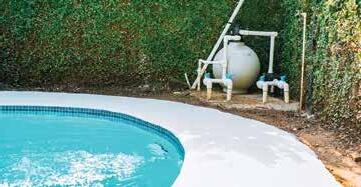
A swimming pool can provide hours of summer enjoyment, but pumps, heaters and filtration systems can also increase household energy bills. A few equipment upgrades and maintenance changes can help homeowners reduce operating costs while keeping pool water clean and comfortable.
One of the most effective ways to lower energy use is by installing a variable-speed pool pump. Traditional single-speed pumps operate at full power whenever they are running, even when maximum circulation is not necessary. Variable-speed pumps can operate at lower speeds for routine filtration and increase power only when needed for cleaning, heating or other tasks. Running the pump more slowly for longer periods can provide steady circulation while using less electricity.
Using a solar pool cover can also reduce energy and water costs. Covers help retain heat overnight, limit evaporation and reduce the amount of water that must be added to the pool. By keeping heat and water in the pool, a cover can also reduce the amount of time a heater or pump must operate. Covers may also help keep leaves and other debris out of the water, reducing the workload placed on the filtration system.
Homeowners should also review how long their filtration system runs each day. Many pools do not need continuous filtration, and running a pump longer than necessary can waste
electricity. The proper schedule will depend on the pool's size, how often it is used, the weather and the type of equipment installed. Running the system during off-peak utility hours may provide additional savings in areas where electricity rates vary throughout the day.
gae growth and reduce the need for extended filtration or additional chemical treatments.
Homeowners should periodically inspect pumps, filters, heaters and plumbing for leaks, unusual noises or declining performance. Aging or improperly sized equipment may consume more energy than necessary. A pool professional can evaluate the system and recommend upgrades or schedule adjustments.
courtesy of windowsonwashington.net Fall is the perfect time to tackle almost any home improve-
Regular maintenance is another important part of improving energy efficiency. Dirty filters, clogged skimmer baskets and blocked drains restrict water flow and force the pump to work harder. Filters should be cleaned or backwashed according to the manufacturer's recommendations, and baskets should be emptied regularly. Maintaining proper water chemistry can also prevent al-
ment project: you are well-rested after your summer holiday, the weather is pleasant and, with the summer heat waves over, you can importantly, home should
By combining energy-efficient equipment with proper maintenance and a practical filtration schedule, homeowners can lower utility costs and extend the life of their pool systems throughout the swimming season.
Bath Council
Courthouse.
to help residents travel to other grocery stores.
The meeting later shifted to property and administrative matters. After adding a settlement involving 349 S. Walnut St. to the agenda, council unanimously authorized the borough manager to move forward with and execute the agreement. The settlement is connected to a recent enforcement matter involving the property.
Last, council unanimously approved advertising an August public hearing on a petition to vacate or close a portion of Wolf Street. Council will hear from the petitioner and could announce a decision following the hearing. The matter also includes a request to preserve access for the Bath Borough Authority.
The next Bath Borough Council meeting will be held Monday, Aug. 10, at 6 p.m. in Borough Hall, located at 121 S. Walnut St., Bath. Continued from page
Northampton County Announces 2026 Annual awards Ceremony call For nominations
Submitted by JESSICA BERGER
Who: Northampton County Executive Tara Zrinski and the Department of Community and Economic Development
What: DCED Seeking Northampton County Resident Award Nominations for 2026 County Awards Ceremony
When: Nomination deadline Sept. 21 at 4 p.m.
Where: Courtroom 1 at the Northampton County Courthouse
Northampton County will hold its 2026 Annual Awards Ceremony on Thursday, Oct. 8, at 5 p.m. in Courtroom 1 at the Northampton County
Northampton County will present awards to residents in the categories of volunteer, youth, business, veteran, Samaritan and emergency personnel.
Community members are encouraged to nominate deserving individuals and organizations using the form on the DCED website at https:// www.norcopa.gov/dced. To submit a nomination, please contact Dawn Tomaino at dtomaino@norcopa.gov.
Nominations for Outstanding City and Municipal Employees will be submitted directly by their municipalities.
The event is free and open to the public.
Celebrate America’s 250th birthday With the StarSpangled Sampler 4-H Camp
Submitted by INGRID GARCIA
Get ready for three exciting evenings of learning, creativity and patriotic fun at the StarSpangled Sampler 4-H Camp!
Youth are invited to join us as we celebrate America’s 250th birthday through hands-on activities, engaging lessons and plenty of red, white and blue excitement! Each night will feature a different theme highlighting America’s history, agriculture and creativity while providing participants with memorable experiences and new skills.
Night One (Aug. 5, 6:308 p.m.): How Dairy Shaped America
Did you know that dairy farming has played a major role in America’s growth and success? Campers will discover fascinating dairy facts, learn
about the seven major dairy cattle breeds and explore how each breed made its way to America. This fun and interactive evening will help youth understand the important role dairy has played in feeding and building our nation.
Night Two (Aug. 11, 6:30-8 p.m.): Building America with LEGOs
Travel through 250 years of American history as we explore how homes, businesses, landmarks and cities have changed over time. After learning about America’s architectural evolution, campers will put their imaginations to work by creating their own LEGO masterpieces. Whether it is a historical landmark, a dream home or a completely original creation, the possibilities are endless! Bring your own LEGOs if you wish and want to keep your creation!
Night Three (Aug. 18, 6:308 p.m.): Red, White and Blue
We will wrap up the patriotic celebration with a night full of creativity and color! Campers will create festive vegetable baskets using artificial vegetables, design red, white and blue floral arrangements and decorate delicious cupcakes
with patriotic decorations. It is the perfect way to celebrate America’s birthday while showcasing craftmanship.
Join us for one night or all three nights as we honor 250 years of American history through hands-on learning, creativity and patriotic fun. We can’t wait to celebrate with you!
For more information or to register, please contact the Le
high County 4-H educators! All camps are held at the Lehigh County Ag Center, 4184 Dorney Park Road, Allentown, PA 18104. To register, visit 4h.zsuite.org, select Lehigh County and click on “Events” by July 13. Spaces are limited, so early registration is encouraged.
Submitted by STEVE MISKIN
The Pennsylvania State Association of Township Supervisors is urging Governor Josh Shapiro to veto Senate Bill 349 (PN 286), legislation that would preempt locally adopted solar decommissioning ordinances and undermine years of work by township officials across the commonwealth, and waste hundreds of thousands of state dollars training local officials.
PSATS urged lawmakers to preserve existing local solar decommissioning ordinances by grandfathering them from the bill's preemption provisions throughout the legislative process. Despite those efforts, the final version of SB 349 contains no protections for the hundreds of municipalities that proactively
addressed solar decommissioning issues through local ordinances.
In a letter sent to the governor, PSATS expressed strong opposition to the measure, noting that township officials have worked proactively to address the longterm impacts of solar energy development through local ordinances designed to protect residents, taxpayers and the environment when solar facilities reach the end of their useful lives.
PSATS believes enactment of SB 349 would invalidate years of thoughtful local planning and policymaking while disregarding the significant investments made by municipalities and the Commonwealth to educate local officials and develop responsible approaches to solar facility oversight. The legislation would
effectively erase regulations that were adopted to address local concerns and protect communities from potential future liabilities.
Sanko said the failure to grandfather existing ordinances sends a troubling message to local governments across Pennsylvania.
"Township officials were encouraged to educate themselves, engage their residents and develop local solutions to an emerging issue," he said. "When communities follow the state's guidance, invest time and taxpayer resources and enact ordinances in good faith only to have those ordinances swept aside, it suggests that local effort and partnership with the Commonwealth matter very little."
According to Sanko, townships
are on the front lines of land-use decisions and are best positioned to understand the unique needs and concerns of their communities. Local officials should not be penalized for working proactively and, through Commonwealth direction, planning for the future.
PSATS is calling on Governor Shapiro to veto SB 349 and maintain local authority over solar decommissioning requirements that municipalities have already adopted throughout Pennsylvania.
The Pennsylvania State As-
sociation of Township Supervisors represents Pennsylvania’s 1,453 townships of the second class and is committed to preserving and strengthening township government and securing greater visibility and involvement for townships in the state and federal political arenas. Townships of the second class cover 95% of Pennsylvania’s land mass and represent nearly 6 million residents—more than any other type of political subdivision in the Commonwealth.