
THE IN WORLD LEADER ADVANCED MOTION CONTROL
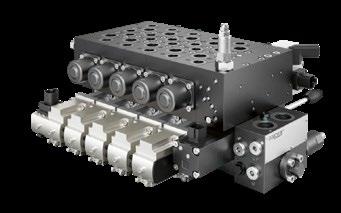
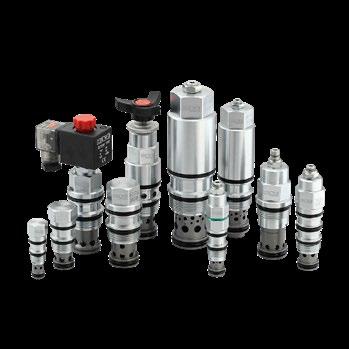
Sun Hydraulics, part of Helios Technologies Inc. (NYSE: HLIO), specializes in designing and manufacturing high-quality hydraulic cartridge valves and integrated packages. For over 50 years, our innovative floating nose cartridge construction and cavity design have delivered precise and reliable performance, even in demanding high-pressure and highflow applications. With a steadfast commitment to innovation, Sun Hydraulics consistently surpasses industry performance standards on a global scale.
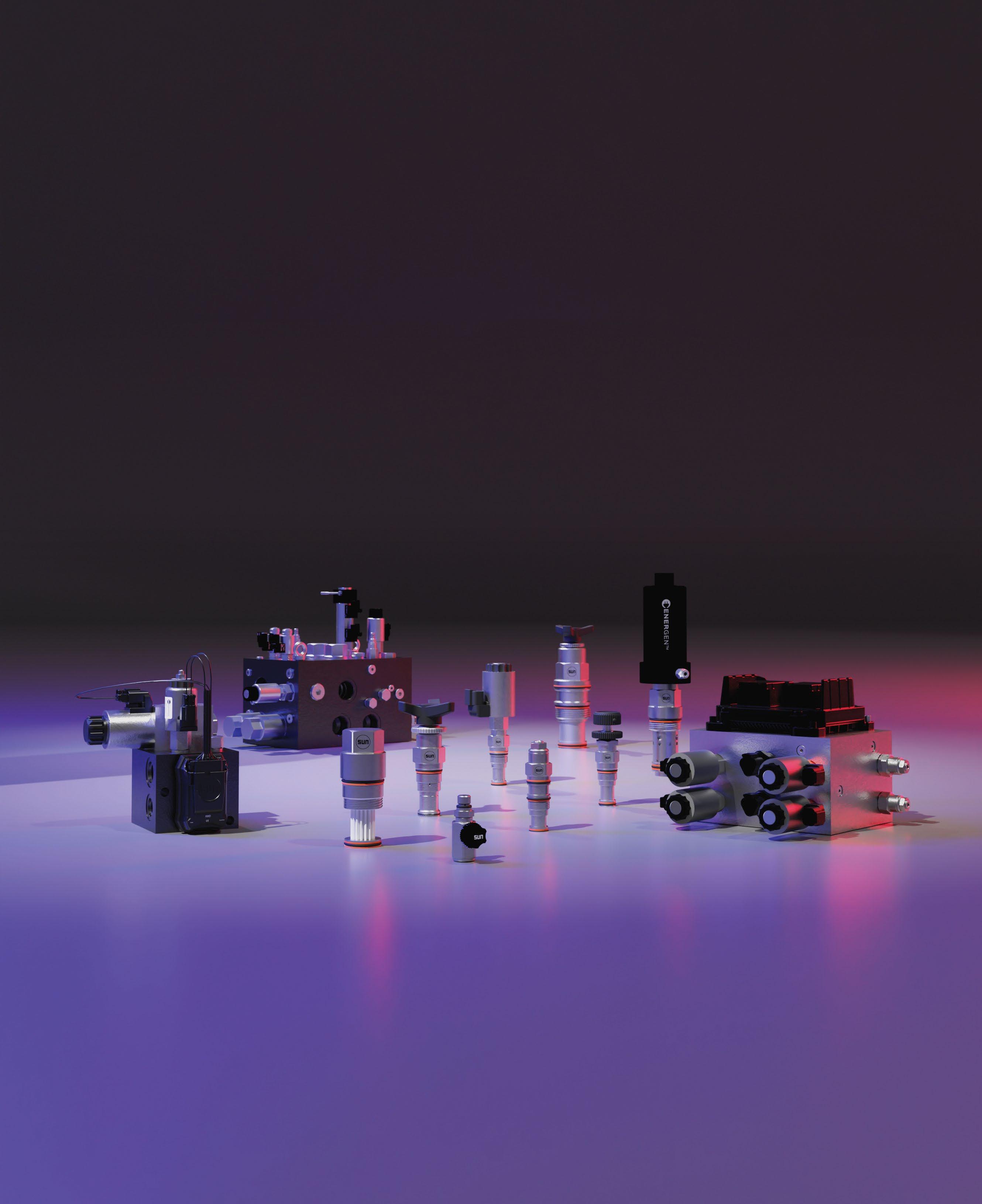


TRUSTED PARTNER. PROVEN ENGINEERING.
We enable our partners to move with confidence and engineer with purpose. Find out more at ConExpo 2026, Las Vegas Convention Center - South Hall, March 3–7, 2026 at Booth S81628.

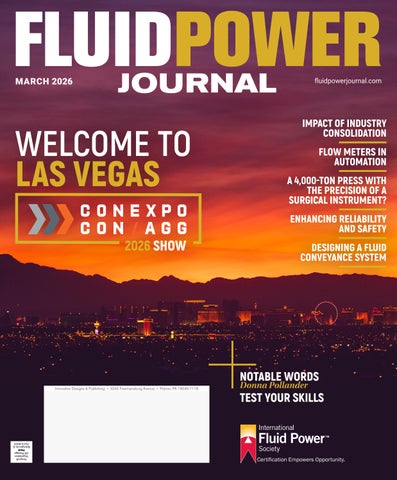
» TEST YOUR SKILLS
05 Knowing the Types & Applications of Abrasion Protection
Stay sharp with this monthly lesson from the IFPS's study guide.
06 The Impact of Industry Consolidation on Hydraulic System Serviceability
Serviceability poses challenges that can be overcome using mitigation strategies.
10 How Flow Meters Play a Vital Role in Automation
Meter integration proves crucial to the future and Industry 4.0.
14 How to Properly Design a Robust Fluid Conveyance System
Design efficiency prevents pressure loss while ensuring safety and system integrity.
18 Can a 4,000-Ton Press Move With the Precision of a Surgical Instrument?
Help a 4000-ton press to behave like a precision machine.
» COVER STORY
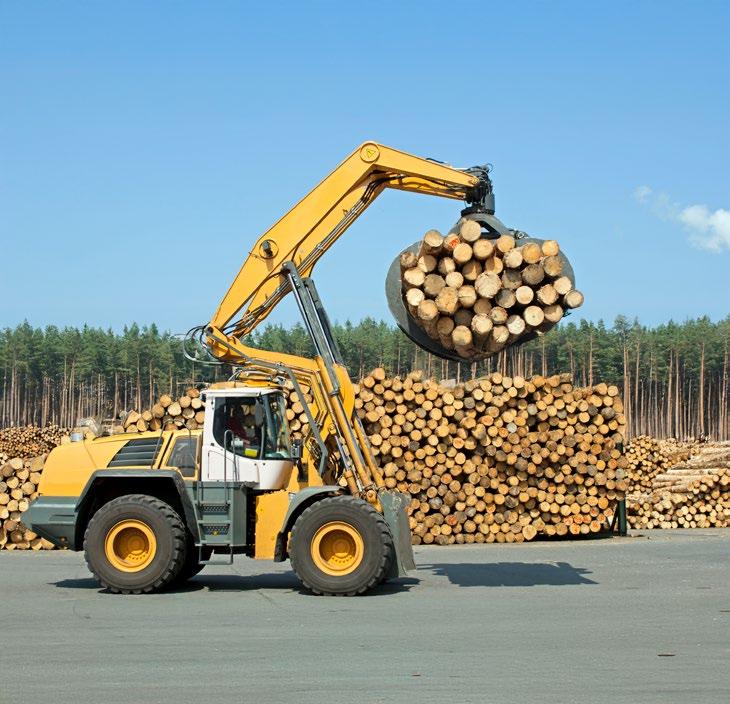
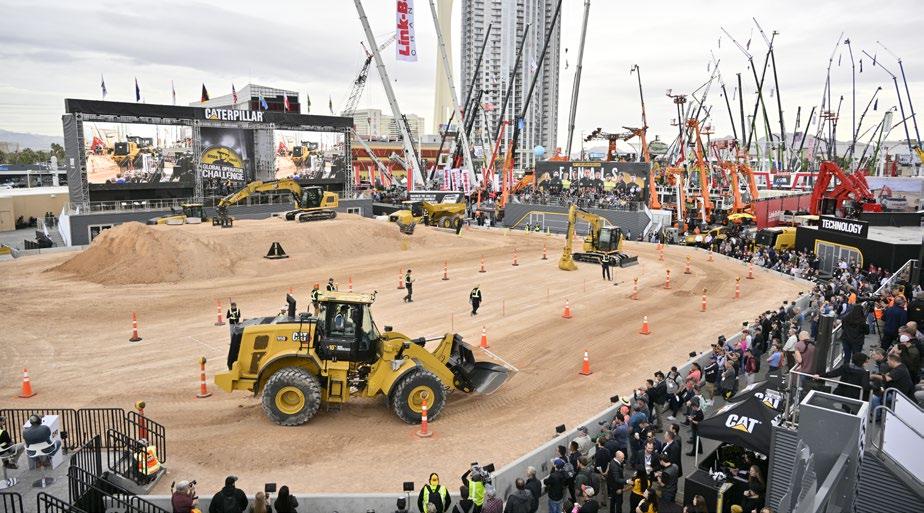
24 CONEXPO-CON/AGG 2026 Show Fluid Power Journal is Buzzing with Anticipation for CONEXPO-CON/AGG 2026 in Las Vegas!
30 Enhancing Reliability and Safety
Pressure switches in mobile hydraulics serve as silent guardians.
Publisher’s Note: The information provided in this publication is for informational purposes only. While all efforts have been taken to ensure the technical accuracy of the material enclosed, Fluid Power Journal is not responsible for the availability, accuracy, currency, or reliability of any information, statement, opinion, or advice contained in a third party’s material. Fluid Power Journal will not be liable for any loss or damage caused by reliance on information obtained in this publication.






Beyond Certification
HOW IFPS IS ADVANCING THE FUTURE OF FLUID POWER LEARNING
By Donna Pollander, CEO, International Fluid Power Society (IFPS)

» FOR MANY IN the fluid power industry, the International Fluid Power Society has long been synonymous with certification. For decades, IFPS credentials have set the benchmark for professionalism, technical competence, and credibility, and certification remains at the heart of the organization’s mission today. It always will. What has changed is not the importance of certification, but the scope of what IFPS now does to support the professionals who earn it.
As the industry evolves, so too must the way its workforce is prepared, educated, and protected. Rapid technological advancement, shifting workforce demographics, and growing safety demands have reshaped expectations across fluid power. In response, IFPS has deliberately expanded its role. What has emerged is a comprehensive education and training organization focused not only on validating knowledge, but on building it safely, accessibly, and continuously.
Certification remains one of the most reliable indicators of competency in an era defined by change. IFPS certifications are developed by industry experts, grounded in real-world applications, and trusted by employers around the globe. For individuals, certification signals commitment and credibility. For employers, it provides confidence that teams possess the knowledge needed to perform safely and effectively. For the industry, certification supports consistency, professionalism, quality, and safety. Yet certification success does not happen in isolation. It requires preparation, a strong foundation, and ongoing learning. Recognizing this reality, IFPS has invested heavily in
building an ecosystem of education and training resources that support learners well before an exam is taken and long after it is passed.
One of the most significant shifts within IFPS has been its focus on certification preparation. Today’s learners arrive with diverse backgrounds, experience levels, and work environments, making a one-size-fits-all approach ineffective. To meet these varied needs, IFPS offers preparation through in-person training, live virtual instruction, and self-paced learning modules, all designed to maintain rigor while offering flexibility.
Instructor-led courses, whether face-toface or online, allow participants to engage directly with subject-matter experts, ask questions, and learn alongside peers. Selfpaced modules provide an alternative for professionals balancing demanding schedules, enabling them to move through material at a pace that fits their lives. In addition, IFPS members have access to a growing library of free educational videos that reinforce key topics, support exam readiness, and help professionals stay current with industry practices. This commitment reflects a simple philosophy: certification should validate knowledge, not gatekeep it.
Strong certification depends on strong fundamentals, and foundational training has become a cornerstone of IFPS education. The Fluid Power Fundamentals Course exemplifies this approach. Designed for both newcomers and experienced professionals seeking a refresher, the course delivers a structured introduction to hydraulic and pneumatic principles. Offered in live online, in-person, and self-paced formats, it combines accessibility with technical depth. Participants develop a solid understanding of system components, symbols, basic physics, and operational principles; this is knowledge that underpins safe and effective work with fluid power systems.
Beyond formal courses, IFPS members can access more than 120 free educational videos covering topics that range from introductory concepts to applied problem-solving. This depth and breadth of content reinforce an essential truth: learning in fluid power does not end with certification. It evolves throughout an entire career. More information on these resources is available at www.ifps.org.
Because fluid power is inherently hands-on, IFPS places strong emphasis on experiential learning. Understanding theory is essential, but true competence is built through application. Hands-on training, both virtual and in person, allows learners to apply concepts in realistic scenarios, develop troubleshooting and diagnostic
skills, build confidence working with systems and components, and bridge the gap between classroom knowledge and jobsite performance. Virtual platforms use modern technology to simulate real systems, while in-person sessions offer direct interaction with equipment. Together, they ensure practical skills develop alongside technical understanding.
Underlying every aspect of IFPS education is an unwavering commitment to safety. Fluid power systems operate under significant pressure and stored energy, and the consequences of insufficient knowledge can be severe. At IFPS, safety is not treated as a standalone topic but woven into every element of training and certification. Dedicated safety videos address critical risks and best practices, while safety guidance is embedded directly into study manuals. As professionals learn how systems work, they simultaneously learn how to work safely. This integrated approach reflects a core belief: technical competence and safety are inseparable. One message is emphasized consistently throughout IFPS programs: knowledge is safety. When individuals understand system behavior, recognize hazards, and follow best practices, they are far better equipped to protect themselves, their colleagues, and their organizations. Education empowers safer decisions, and safer decisions strengthen the entire industry.
The fluid power industry faces real challenges, from an aging workforce to accelerating technological change and rising expectations around efficiency and safety. These realities demand a broader, more adaptive approach to workforce development. IFPS has answered that call by evolving from a certification-focused organization into a comprehensive professional development partner. Today, IFPS supports individuals at every stage of their careers, from foundational learning to advanced certification and lifelong education. This evolution does not diminish the importance of certification. Rather, it strengthens it. By investing in preparation, education, hands-on training, and safety, IFPS ensures that its credentials remain meaningful, respected, and relevant in a changing industry.
As CEO of IFPS, I am proud of how far we have come and excited about where we are headed. Certification will always be our foundation. But education, accessibility, and a commitment to safety are what will carry our industry into the future. I invite readers to explore IFPS’s programs, resources, and member benefits at www.ifps.org, and to join us in strengthening the knowledge, safety, and professionalism of fluid power worldwide.
PUBLISHER
Innovative Designs & Publishing, Inc.
3245 Freemansburg Avenue, Palmer, PA 18045-7118
Tel: 800-730-5904 or 610-923-0380
Fax: 610-923-0390 • Email: Art@FluidPowerJournal.com www.FluidPowerJournal.com
Founders: Paul and Lisa Prass
Associate Publisher: Hannah Coursey
Editor: Lauren Schmeal
Technical Editor: Dan Helgerson, CFPAI/AJPP, CFPS, CFPECS, CFPSD, CFPMT, CFPCC
Senior Marketing Consultant: Bob McKinney
Graphic Designer: Nicholas Reeder Accounting: Leza Ovten
Circulation Manager: Josh Shoup
INTERNATIONAL FLUID POWER SOCIETY
1930 East Marlton Pike, Suite A-2, Cherry Hill, NJ 08003-2141
Tel: 856-424-8998 • Fax: 856-424-9248
Email: AskUs@ifps.org • Web: www.ifps.org
2026 BOARD OF DIRECTORS
President: Garrett Hoisington, CFPAI, CFPS, CFPMHM
Immediate Past President: Jeff Hodges, CFPAI/AJPP, CFPMHM - Altec Industries, Inc
First Vice President: Chauntelle Baughman, CFPHSOneHydraulics, Inc.
Treasurer: Elisabeth DeBenedetto, CCFPS, GS Global Resources
Vice President Education: Daniel Fernandes, CFPS, CFPECS, Hydra-Power Systems
Vice President Membership: Brian Wheeler, CFPAI/AJPP - The Boeing Company
Vice President Certification: Bruce Bowe, CFPAI/AJPP - Altec Industries, Inc.
Vice President Marketing: Bradlee Dittmer, CFPPS - IMI Precision Engineering
DIRECTORS-AT-LARGE
Tyler Janecek, CFPHS - Engineering Systems, Inc
John Juhasz, CFPS - Kraft Fluid Systems
Stephen Blazer, CFPE- Altec Industries, Inc.
Brian Kenoyer, CFPS - Cemen Tech
Jeff Curlee, CFPS -Cross Mobile Hydraulics & Controls
Quest Duperron, CFPIHM, CFPCC - Coastal Hydraulics, Inc.
Cary Boozer, CFPE - Motion Industries, Inc.
Steven Downey, CFPAI, CFPS - Hydraulex Deepak Kadamanahalli, CFPS - CNH Industrial Kyler Craig Ridgeway, CFPHS - Bradbury Company
Alex Kummer, CFPE, - National Oilwell Varco
Wade Lowe, CFPS - Hydraquip Distribution, Inc. CHIEF EXECUTIVE OFFICER (EX-OFFICIO) Donna Pollander, ACA
HONORARY DIRECTOR (EX-OFFICIO)
Ernie Parker, Hydra Tech, Inc. CFPAI/AJPP
James O'Halek, CFPAI/AJPP, CFPMM, CFPMIP, CFPCCThe Boeing Company IFPS STAFF
Chief Executive Officer: Donna Pollander, ACA
Communications Coordinator: Stephanie Coleman
Director Training/Development: Bradley (BJ) Wagner, CFPAI/AJPP
Assistant Director: Jenna Mort
Certification Logistics Manager: Kyle Pollander Bookkeeper: Diane McMahon
Instructional Designer & Layout: Chalie Clair
Fluid Power Journal (ISSN# 1073-7898) is the official publication of the International Fluid Power Society published monthly with four supplemental issues, including a Systems Integrator Directory, Off-Highway Suppliers Directory, Tech Directory, and Manufacturers Directory, by Innovative Designs & Publishing, Inc., 3245 Freemansburg Avenue, Palmer, PA 18045-7118. All Rights Reserved. Reproduction in whole or in part of any material in this publication is acceptable with credit. Publishers assume no liability for any information published. We reserve the right to accept or reject all advertising material and will not guarantee the return or safety of unsolicited art, photographs, or manuscripts.

KNOWING THE TYPES & APPLICATIONS OF ABRASION PROTECTION
Abrasion, in most cases, is caused by continuous rubbing against equipment components, other hose, or objects in the operating environment. Cover erosion may also be caused by non-compatible fluids, such as toxic chemicals, acids, detergents, and non-compatible hydraulic fluids. Exposed hose reinforcement is susceptible to rust and accelerated damage leading, to failure.
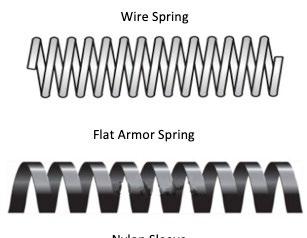
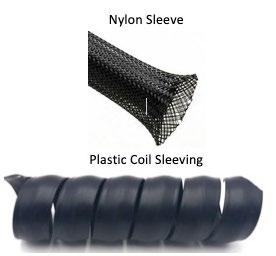
One solution is to bundle hoses or tubes that flex in the same direction. Clamps, bent tube fittings, nylon ties (straps), spring guards, and sleeving can be used to keep hydraulic hose away from abrasion sources and exposure to non-compatible fluids. Four common abrasion protection types include wire spring, flat armor spring, nylon sleeve, and plastic coil sleeving (See Figure 32). Each has different applications but all are installed during the hose assembly process and are used to protect the hose cover material from abrading against surrounding components.
REMEMBER:
1. GROUP and bundle similarly constructed and sized hoses together using clamps, nylon straps, or nylon sleeving.
2. NEVER bundle high-pressure hose with low-pressure hose. Under pressure, they can work against each other.
3. NEVER bundle rubber hose with thermoplastic or PTFE hose. Under pressure, they can also work against each other.
4. ALWAYS consider mechanical movement when bundling. Allow sufficient slack without pulling on a fitting or another hose. Bundles (like individual hose) should bend in one plane only. •
TEST YOUR SKILLS
1
What are the four popular hose guards?
a. Duct tape, wire, wood blocks, plastic clamps.
b. Clamps, PTFE strap, metal straps, wire.
c. Wire spring, flat armor spring, nylon sleeve, plastic coil sleeve.
d. Armor plating is all that is needed.
e. Not applicable, as hose cover is sufficient protection.
See page 43 for the solution.
Figure 32 Hose guards
The Impact of Industry Consolidation on Hydraulic System Serviceability
By Dylan J. Smead, Thomas Edison State University Alumnus and Hydraulic Technician
Innovation and Obsolescence
Technology is evolving faster than ever, reshaping industries and redefining best practices at a relentless pace. While this continuous innovation can yield progress, it also accelerates the cycle of obsolescence. Companies that fail to keep up face not just competitive setbacks, but sometimes outright extinction—swallowed by larger firms in a wave of industry consolidation. Nowhere is this more apparent than in the world of hydraulic systems, a sector whose solutions quietly underpin nearly every corner of the modern economy.
Today, as fluid power conglomerates acquire legacy manufacturers at a record rate, a troubling dynamic is emerging; reliable, efficient, and relatively modern hydraulic systems are rendered obsolete overnight. Parts for these systems are discontinued. Manufacturing rights lie dormant, and lead times stretch into the realm of improbability, sometimes as a not-so-subtle push for customers to purchase costly upgrades. Maintenance repair organizations (MROs) and end-users find themselves forced to redesign entire systems to accommodate the changing product landscape. In this climate, it is more important than ever to argue for increased serviceability in the hydraulics sector to sustain the future health of the global economy.
A Foundation of Industry
Before diving deeper into the serviceability dilemma, it is essential to understand the
basics. Hydroline explains that “Hydraulic systems are power transmission chains that convert mechanical energy into pressure and flow, and then back into mechanical movement again.” In simplest terms, these systems use a fluid to transfer force. Leveraging Pascal’s Law, they generate immense power in a small package, with applications ranging from industrial robots and excavators to the brakes on your car and the plumbing hidden within your own walls.
What distinguishes hydraulic systems is this: they provide unrivaled power density and a commensurate degree of control for virtually any application. Add that to flexible design parameters and the ability to integrate with electronic controls, and it is clear why hydraulics are favored for applications in construction, utility work, aerospace, and the medical industry, to name a few. Their ubiquity, however, makes disruption in this sector particularly impactful.
Consolidation and Its Consequences
For much of the 20th century, hundreds of companies competed in the fluid power marketplace, fostering a depth of innovation and giving customers a myriad of options. Today, the narrative is different. Take Denison Hydraulics—a pioneer in the field since the early 1900s, with a legacy including critical contributions to military and industrial applications. In the early 2000s, Denison was
acquired by Parker-Hannifin for $250 million, a move emblematic of industry consolidation. Parker-Hannifin, once called “the General Electric of fluid power,” has in total acquired more than 200 other firms.
Eric Alström, President of Danfoss, commented after Danfoss acquired Eaton Hydraulics: “Combining our two businesses not only doubles our sales force but also doubles our engineering and innovation headcount and manufacturing footprint.” Indeed, customers benefit from improved technology pipelines, larger support teams, and international resources.
But beneath the surface, there is an important question: Does being absorbed by a conglomerate inevitably benefit everyone? Or does it introduce new challenges, especially for maintenance and long-term serviceability?
The Vanishing Spare Part
Unfortunately, customers with “legacy” systems—the tens of thousands of machines still in the field—are not always so lucky. Industry insiders and organizations, including the International Fluid Power Society (IFPS), report rapidly diminishing supplies of obsolete parts. The story is familiar: after an acquisition, original equipment manufacturers (OEMs) stop supporting old product lines to drive purchases of their current offerings. Inventory clearances see new-old-stock sold off to third-party resellers, who mark up prices on ever-vanishing spares. Some thirdparty suppliers do an admirable job filling the gap. However, they cannot fully replace original support channels, and their markups add pressure to operating budgets.
In some cases, even routine maintenance requires scavenging for seals, O-rings, or specialty kits, as OEMs close the taps on their previous distribution channels. An IFPS voice from the field highlights this critical dynamic, stating that MROs, “have tremendous difficulty obtaining seals and things in part due to the available inventory retained by the OEM.”
Navigating the New Reality
How can these challenges be mitigated? A member of the IFPS board notes, “In a perfect world, hydraulic systems have zero wear.” Indeed, in an ideal hydraulic system, only high-quality oil with the perfect additive package is used, filters are changed regularly, and that same oil creates a perfect film for all moving parts. With these conditions, systems would rarely need service, and hard parts would last decades.
This represents an idealized scenario that is not achievable in practice. No matter how tightly organizations manage maintenance, environments are imperfect. Oil gets contaminated, seals degrade, frictional wear accumulates, and sometimes, serious issues are repaired improperly to get a machine running. Parts must be replaced, and access to those parts defines both the initial cost and the cost due to downtime of essential equipment. The International Organization for Standardization (ISO) and Deutsches Institut für Normung (DIN) have led the way in drafting codes of practice, but even under the best standards, the realities of field operations mean parts eventually need to be replaced.
According to noted maintenance authority Heinz Bloch:
• 25% of all failures are preventable but not prevented due to a lack of experience and knowledge.
• 15% are predictable but overlooked.
• 20% are predicted but ignored until repair is urgent.
• 25% are predicted and addressed on schedule.
• Only 1% of failures are truly unavoidable.
Most problems are preventable or at least manageable if the right parts and expertise are available. Serviceability, therefore, is not optional, but essential.
The Business Case for Serviceability
Beyond the technical rationale for accessible parts and standardized systems, serviceability is fundamentally a business issue. Given the reality of mergers, customers need assurance that their investments will not become stranded. Compliance with global standards helps, but does not address the underlying market dynamics. Suppliers, for their part, have options:
1. IDEALIZE SYSTEM CONDITIONS
By pushing for education and standardization regarding fluids, filtration, and environmental factors, part wear can be minimized, extending intervals between replacements. Though this cannot eliminate the consumption of replacement parts, it can reduce frequency and lower costs over time.
2. SUPPLIER MANAGED INVENTORY (SMI)
Rather than let inventories dwindle, OEMs can adopt SMI models, managing stockpiles of critical spares on behalf of end-users. Research by VanNyen et al. (2009) indicates that SMI arrangements can optimize lead times, reduce
uncertainty, and improve both the supplier’s and the customer’s bottom lines. By making sure spares are held close to where they are needed, and not just by opportunistic resellers, OEMs keep their customers satisfied and avoid expensive emergency solutions.
3. OPEN DATA & SUPPORT ECOSYSTEMS
Companies can release legacy schematics, engineering drawings, and part specifications to trusted repair organizations or the public domain after obsolescence. While this may seem radical, it facilitates broader access and ensures that vital infrastructure is supported for its intended service life.
The Hidden Cost of Neglected Serviceability
When global supply chains break down, the costs are measured far beyond just dollars spent on parts. Hydraulics invisibly connects critical industries’ systems. Fire departments, national defense, and even the global supply chain all lean on hydraulics. Downtime ripples through the economy; manufacturing lines halt, mining operations stall, and construction projects miss deadlines. Not only does this hit the bottom line,
but it can also compromise worker safety and risk environmental compliance.
A Call for Action
The consolidation driving today’s hydraulic sector is unlikely to reverse, given the efficiencies and technical synergies it can create. But unless suppliers and customers both prioritize long-term serviceability, the next wave of innovation may unintentionally cripple infrastructure that societies rely on daily.
Hydraulics has powered innovation since ancient times, from the Archimedes screw to advanced robotics. Its future depends not just on new technology, but on a commitment to supporting what already works. Through better standards, smarter inventory practices, and open support networks, the industry can balance innovation with reliability and keep the world’s machines running now—and for decades to come.
This article underscores the urgent need for increased serviceability in the hydraulics sector to ensure continued productivity and economic health in a rapidly changing technological landscape.•

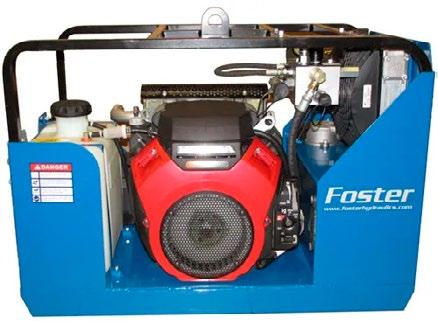
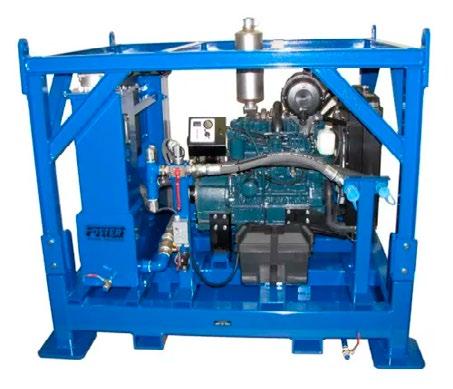

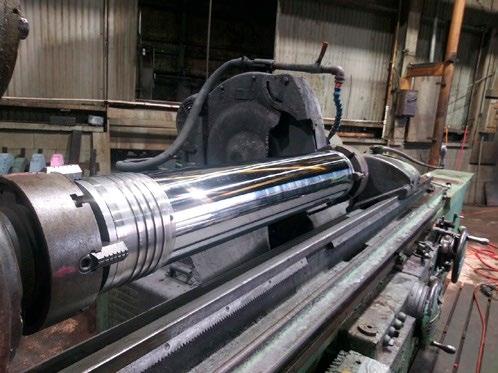
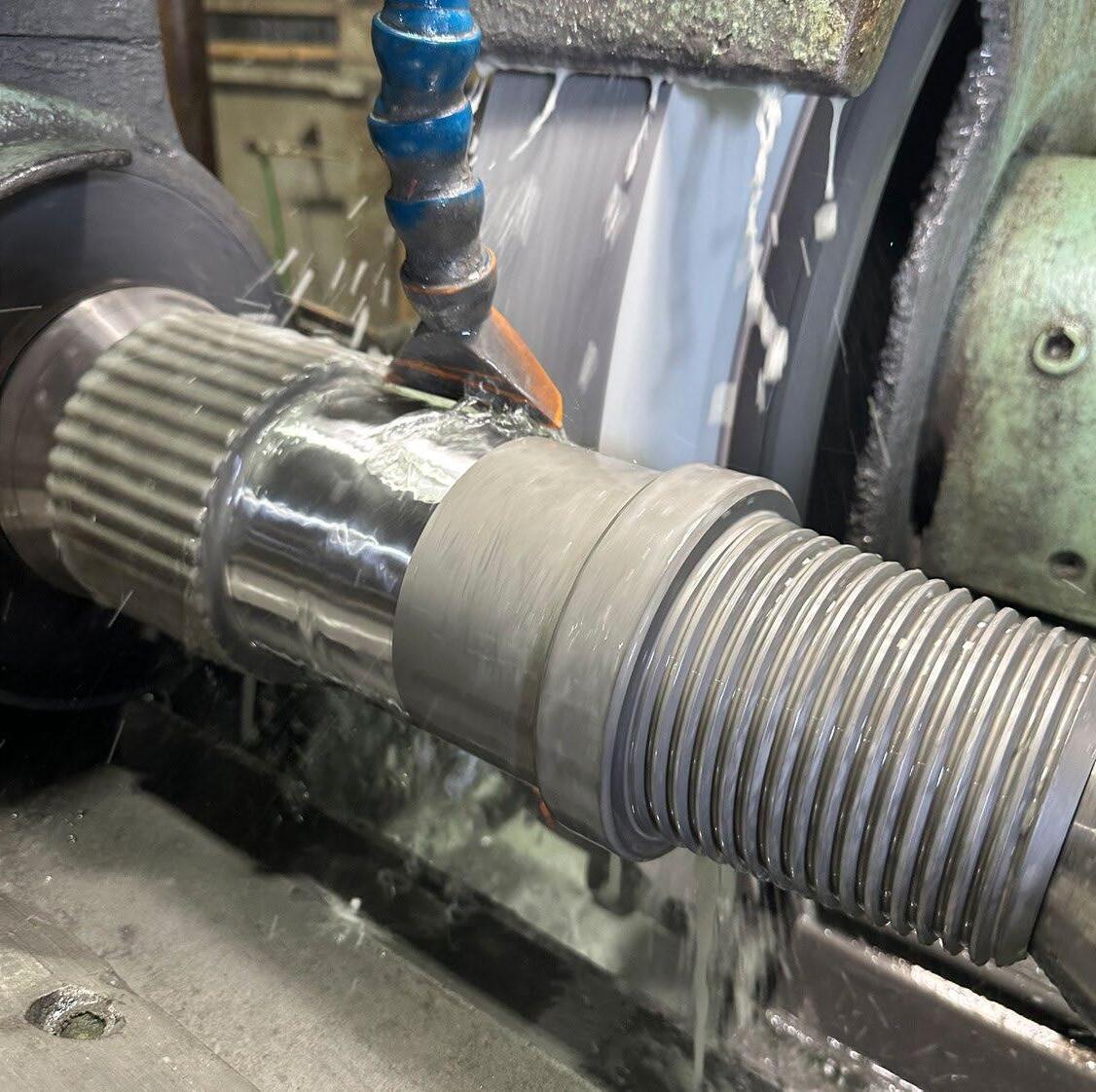
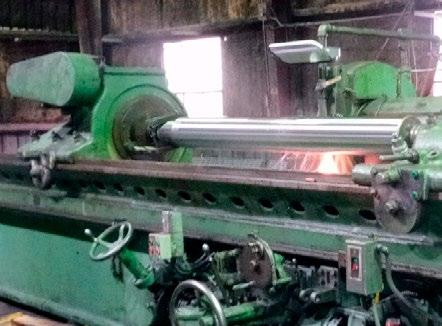
Diamond Coatings stands as a beacon of excellence in the chrome coating industry. Diamond Coatings provides precision grinding, CNC machining, metal finishing, mandrel production, hard chrome coating, and phosphate coating services. With over six decades of operation, our business is steeped in a rich history of providing superior quality services.
Precision Grinding
CNC Machining
Metal Finishing Mandrel Production Hard Chrome Coating Phosphate Coating
WWW.DIAMONDCOATINGSUSA.COM









































HOW FLOW METERS PLAY A VITAL ROLE IN AUTOMATION
By Mark Weiss, Marketing Specialist, Turbines R&D, LLC
Automation is becoming increasingly necessary in manufacturing processes. From pharmaceuticals to petrochemicals, manufacturers are under increasing pressure to streamline operations, minimize waste, and ensure product consistency. Central to this transformation is a range of smart technologies. Among the most critical, yet often underappreciated, are flow meters. These measure the volume or mass of a fluid moving through a system, providing the data that powers modern automation. In industries where fluid movement is integral to the process, the ability to accurately measure and control flow is not just helpful, it’s essential.
THE FOUNDATION OF AUTOMATION: DATA AND CONTROL
At its core, automation is about control: the ability to precisely regulate systems without constant human intervention. This requires accurate, real-time data monitoring using sensors. Among those sensors, flow meters
serve a distinct and vital role by monitoring the movement of liquids and gases within pipes or conduits. This data enables automated systems to make informed decisions, such as adjusting a valve, triggering an alarm, or adjusting a mixing ratio.. Without reliable flow measurement, any automated system that relies on fluid control would be prone to inefficiencies or even failure. In short, flow meters serve as the eyes and ears of fluid-based automation systems.
HOW FLOW METERS ENABLE SMART AUTOMATION
One of the primary benefits of flow meters in automated systems is precision. In many industries, small variations in flow can lead to significant differences in product quality. For example, in the food and beverage sector, flow meters help ensure that ingredient proportions remain consistent from batch to batch. Similarly, in pharmaceuticals, flow monitoring is crucial for dosing accuracy and regulatory compliance.
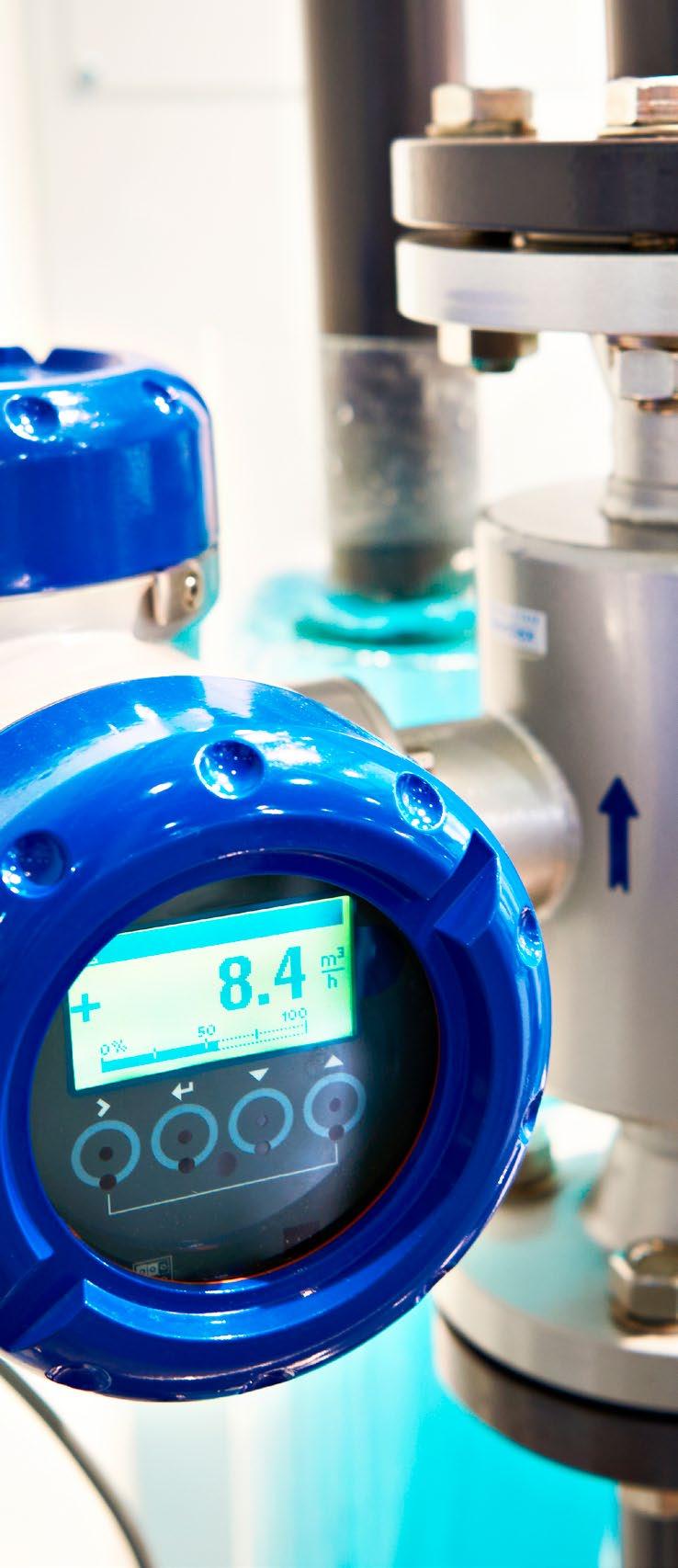
Flow meters also enable what’s known as closed-loop control. This means that the system uses feedback from the flow meter to automatically adjust operations in real time. For instance, if a flow rate dips below a set point, a pump can be automatically activated to correct it. This kind of responsive automation reduces the need for manual oversight and increases system reliability. Additionally, flow meters contribute to resource and energy efficiency. By tracking the flow of water, steam, fuel, or chemicals, organizations can identify leaks, overuse, or inefficiencies that might otherwise go unnoticed. Over time, this can result in significant cost savings and environmental benefits.
FLOW METER TYPES AND THEIR AUTOMATION ROLES
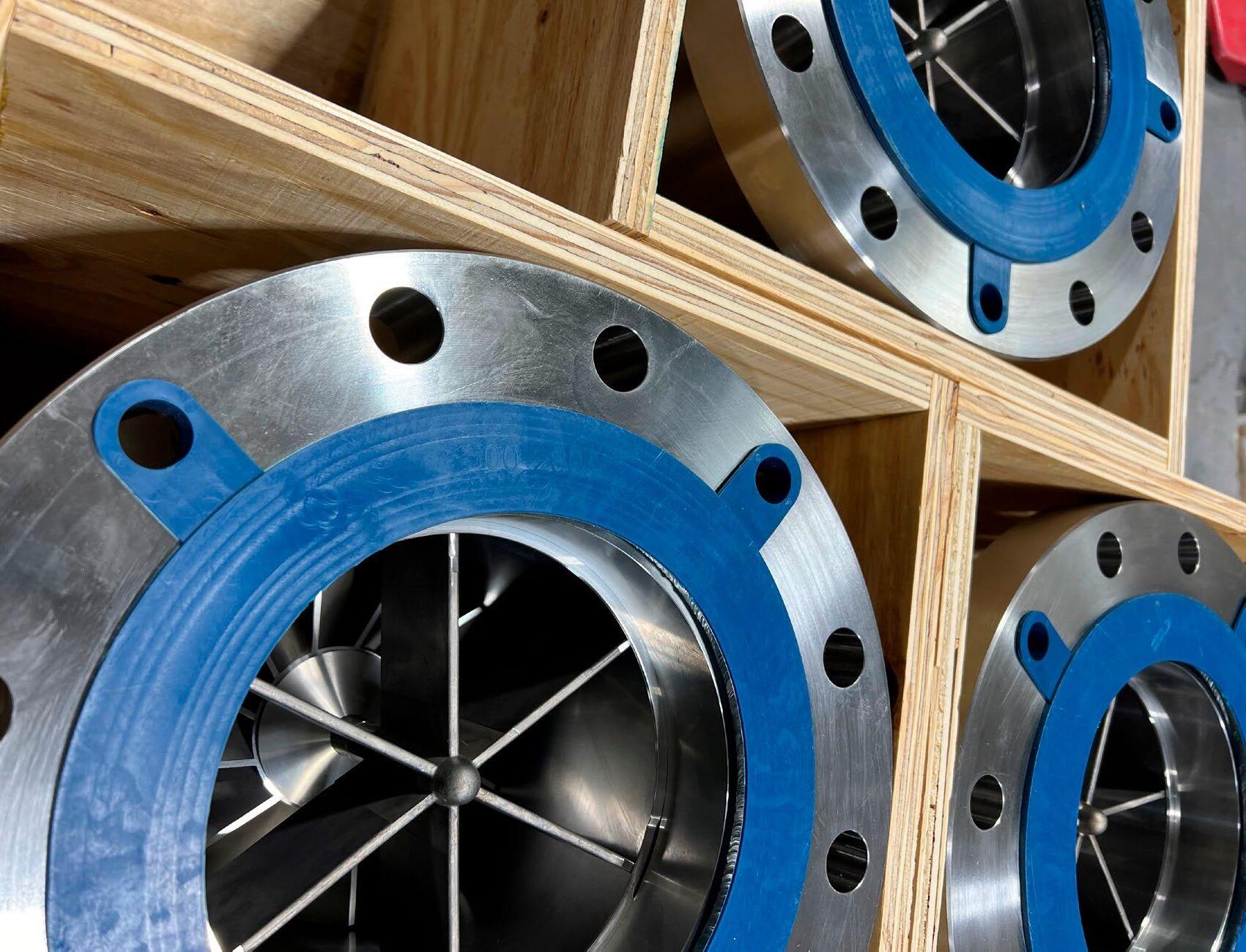
Not all flow meters are created equal, and different types serve different roles within automation systems. Turbine flow meters, for instance, offer high accuracy and are
well-suited for clean, steady flows such as fuels or water-based liquids. Their relatively simple mechanical design makes them reliable in controlled environments.
Conversely, Coriolis and magnetic flow meters provide advanced capabilities. Coriolis meters measure mass flow directly and are ideal for applications where fluid density varies. Magnetic meters, relying on the conductive properties of the fluid, are often used in water and wastewater treatment, where maintenance access can be limited.
Ultrasonic and vortex flow meters offer additional options, particularly in environments where minimal intrusion and low maintenance are priorities. Ultrasonic meters, which use sound waves to measure flow, are especially useful in situations where fluid is not compatible with internal meter components. Each type of meter brings unique advantages, and the selection depends on the specific needs of the process, fluid properties, and required automation levels.
APPLICATIONS IN HYDRAULIC AUTOMATION SYSTEMS
In hydraulic automation systems, such as those used in mobile equipment or industrial
presses, precise flow measurement is fundamental for optimizing actuator speed, force, and cycle repeatability. For example, on a high-speed hydraulic stamping press, integrating an electronic turbine flow meter into the oil supply line allows the control system to monitor flow rate in real time. It also allows for automatically adjusting pump speed or valve positions to maintain target actuator velocities, even as fluid viscosity changes with temperature. This closed-loop feedback ensures consistent press cycles and high-quality output, while allowing early detection of leaks or blockages that could lead to costly downtime or component failure. By providing reliable data directly to PLCs or electronic controllers, flow meters help drive advances in safety, energy efficiency, and predictive maintenance. These are key objectives for any modern, high-performance fluid power application.
THE FUTURE: FLOW METER INNOVATION
As industries move further into the era of Industry 4.0, the integration of flow meters with digital technologies is accelerating. Many modern flow meters now include built-in connectivity for IoT platforms,
enabling remote monitoring, predictive maintenance, and integration with cloudbased analytics tools. Self-calibrating meters and diagnostic capabilities are becoming more common, allowing systems to detect issues before they cause downtime. This shift from reactive to proactive maintenance is a key advantage in automated environments. Moreover, as sustainability and efficiency become central to industrial strategies, the role of flow meters in tracking and optimizing resource use will continue to expand.
WHY ADD A FLOW METER TO YOUR AUTOMATION PROCESS?
Flow meters may not always receive the attention given to more high-profile automation technologies, but their role is foundational. They deliver the data that enables precision, efficiency, and control in countless automated systems. Whether managing the dosage of a life-saving drug, monitoring wastewater output, or optimizing fuel usage in a processing plant, flow meters quietly keep automation running smoothly. •
POWER THAT MOVES INDUSTRY. RELIABILITY THAT NEVER QUITS.
At Young Powertech, we build high-performance mechanical and in the toughest industries—farming, marine, industrial, construction, mining, and wind energy.

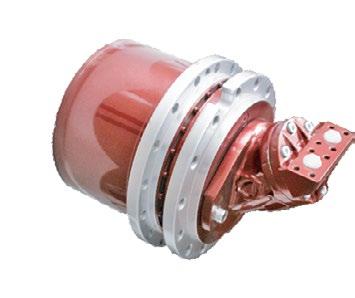
HYDRAULIC PRODUCTS
MAXIMIZE POWER, MINIMIZE DOWNTIME
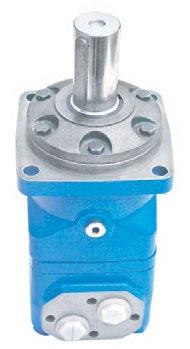
Motors
Delivering superior power, smooth operation, and longevity
Precision Hydraulic Pumps
Engineered for optimal pressure, flow control, and performance
Built for Demanding Industries
Keeping your systems strong, steady, and reliable
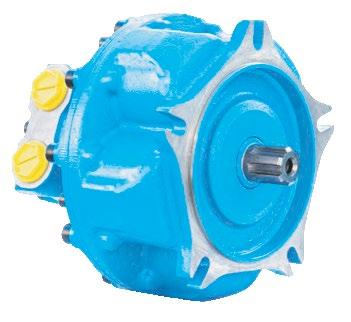
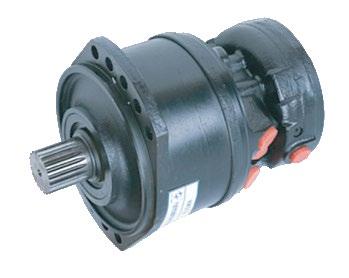
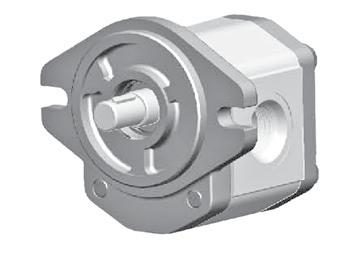
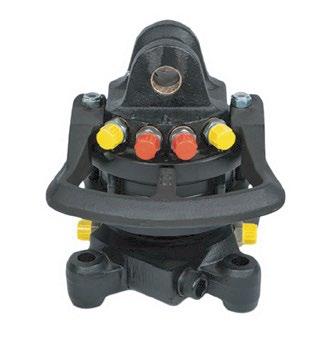
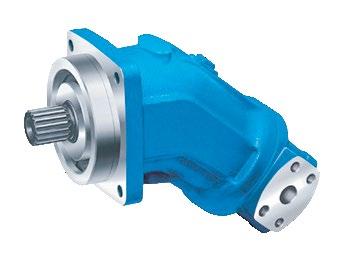
Orbital
Radial
Cam Ring
Bent Axis Gear
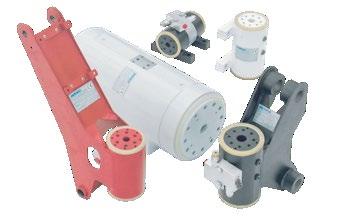
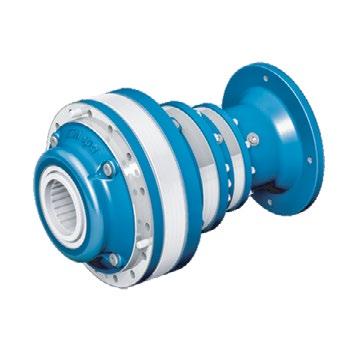
Helical Hydraulic Actuators
Grapple Rotators
MAXIMUM TORQUE, MINIMAL WEAR
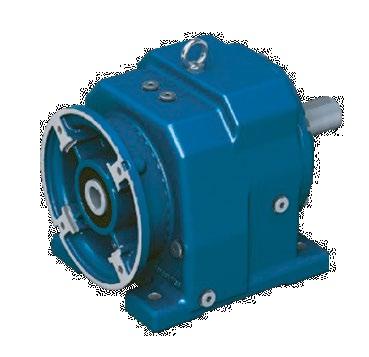
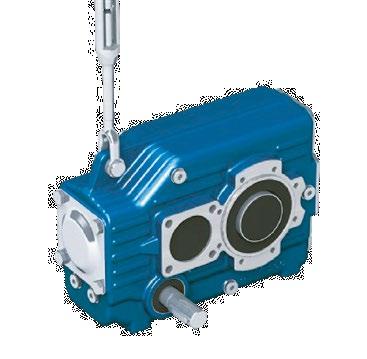
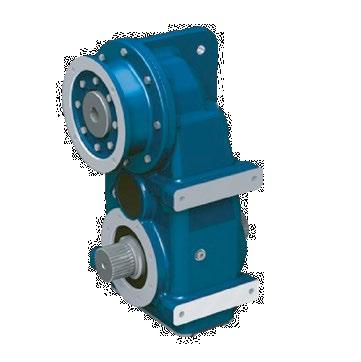
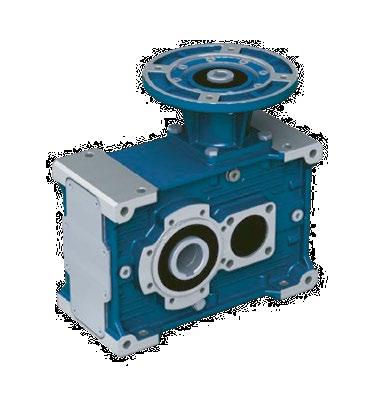
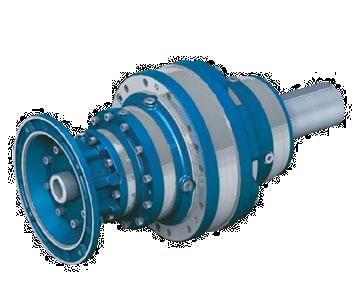
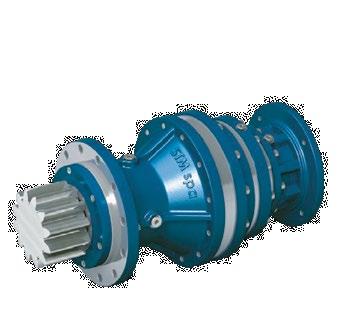
High-Performance Gearboxes
Built for maximum torque, minimal wear, and long-term reliability
Custom Transmission Systems
Tailored solutions for seamless power transfer
Heavy-Duty Components
Designed to withstand extreme conditions and high loads.
Gearboxes
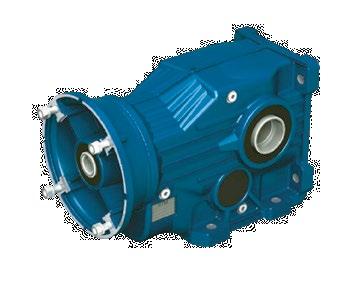
Bevel Helical Gearboxes
Gearboxes
Gears
HOW TO PROPERLY DESIGN A ROBUST FLUID CONVEYANCE SYSTEM
By Matthew Brink, Application Engineering Manager and Kevin Haselius, Application Engineer, Parker Hannifin
Designing a high-quality, reliable and efficient fluid conveyance system requires the completion of a thorough analysis of the fluid properties and process requirements, followed by careful selection of materials, sizing, and layout. System durability is achieved by minimizing sensitivity to variations in operational parameters, such as pressure, temperature, flow and vibration.
The failure to account for all variables can lead to system-wide breakdowns, increased costs, and dangerous operating conditions. An efficient system moves fluids with minimal resistance, saving energy and improving overall performance. A well-designed system reduces stress and wear on components, leading to a longer operational life and less downtime. Although there is an upfront investment in proper design, the time, energy, and money expended more than pays for itself in the form of reduced costly repairs and maintenance over the system's life.
PROBLEMS TO AVOID
Key challenges in designing an efficient and long-lasting fluid conveyance system include accounting for fluid properties, managing pressure and flow dynamics, and selecting appropriate materials and components. Ensuring mechanical integrity and reliability, and planning for installation and maintenance are also key. These issues must be properly addressed to prevent inefficiencies, abrasion, corrosion and excessive vibration. These concerns can cause leaks, system failures, safety hazards and higher warranty costs.
Common problems affecting fluid dynamics and flow include friction within the hose walls and turbulence from fitting bends or other restrictions, which cause a loss of pressure; this reduces the system's overall efficiency and increases energy costs. Significant pressure drops can vaporize into bubbles and then violently implode as pressure increases, severely damaging pumps and piping components. Under-sizing components results in turbulent flow, excessive friction, and pressure loss, ultimately leading to system inefficiencies. A sudden surge of pressure caused by an abrupt change in fluid velocity, such as the rapid closure of a valve, can create a shockwave that can damage hoses. The fluid conveyance system should be designed to accommodate the highest expected pressure spike.
Leaks and other types of system failures, which may or may not lead to safety incidents, are common problems when a fluid conveyance system is improperly designed or when the wrong components are used. Due to the
increasingly higher incidence of fines and other penalties, there is less tolerance for leaks of any kind.
Chemical compatibility issues have also garnered greater focus recently, especially with all the new materials on the market. Additives, such as fire retardants, corrosion inhibitors, and detergents, can increase the risk of incompatibility, as can non-traditional fuels, including biofuels and hydrogen, known for their permeability risks. In some industries, weight is also a concern, so there is a shift toward lighter-weight materials that still meet the same high-pressure, flow and temperature thresholds of more traditional, heavier materials.
CHOOSING THE RIGHT COMPONENTS: STAMPED
With so many options on the market today, it’s challenging to know what products, materials and designs are best for a specific application. Hydraulic engineering professionals may be comfortable in properly specifying hydraulic components, but need guidance in selecting the proper conduits and connections. This is true especially when faced with concerns about leaks and excessive vibration. Selecting the correct components is key to creating a robust system. That’s why leaders in motion control and fluid conveyance follow the catchy STAMPED acronym for selection.
SSIZE: Choosing the correct inner diameter is crucial for managing flow, pressure, and velocity. Size flexible hose or rigid tubing properly for system optimization to avoid excessive heat and pressure drop.
TTEMPERATURE: It’s important to ensure that all components can withstand fluid and ambient temperatures.
A APPLICATION: The system design must be appropriate for the specific use, considering factors like environmental conditions, duty cycle, and vibration.
M
MEDIA: The component materials selected must be chemically compatible for system longevity. Incompatible materials could result in swelling, softening, cracking or degrading of hose inner tubes, leading to premature failures.
P
PRESSURE: All components must be rated for the system's maximum operating pressure to prevent failure. It’s good practice to monitor pressures continually, ensuring that the system operates within the defined parameters. This is essential for reliability and safety.
E
ENDS: Fittings must be compatible with the hoses and crimped correctly to ensure leakfree connections. Choose fittings that can
Dwithstand system pressure, temperature, and vibration.
DELIVERY: Establish clear delivery expectations that align with the production schedule, including any special packaging, testing, certification, and cleanliness requirements.
DESIGN CONSIDERATIONS
A well-planned fluid conveyance design minimizes stress on the system and facilitates maintenance. Simple designs are preferred because fewer connections mean fewer leaks. They are also easier to troubleshoot and offer more reliability. It’s also important to minimize friction and turbulence. Straight hose or pipe runs, wherever possible, will work to provide the best efficiency. Where applicable, use soft bends in place of sharp bends to minimize turbulence and pressure drop. A common oversight is not accounting for movement. The system must be able to accommodate the full range of motion. Hose and tube clamps should be specified to minimize vibration and isolated from sharp edges, which could lead to abrasion failures. Accessibility is another frequent afterthought. To facilitate future
maintenance and inspections, it’s important that all components, especially those most likely to require frequent maintenance, are easily accessible. This includes keeping them accessible even with any future system expansions. Selecting quality components is a must. Always purchase components through trusted, authorized partners, avoiding the temptation to use less expensive or substandard parts. These parts may not be compatible and could cause leaks, improper operation, costly system damage, or increased maintenance.
THE IMPORTANCE OF PROPER ASSEMBLY TECHNIQUES: TURNS VS. TORQUE
There are several styles of tube and port connections available on the market, each with its own required assembly methods and sealing characteristics. The importance of proper training cannot be overlooked when the goal is a leak-free system. Whether a fitting requires a specific torque value or a turns-after-resistance method, assemblers should understand the requirement and have the correct, calibrated tools to perform it. Providing hands-on training for torque and turns methods is critical,
including how to detect initial wrench resistance and how to avoid hose twist. The quality assurance team should perform torque audits, capture nonconformances, update procedures, and retrain as needed.
CONSEQUENCES OF AN IMPROPERLY DESIGNED SYSTEM
Improperly designing a fluid conveyance system or choosing the wrong components can lead to severe consequences, including safety hazards, catastrophic equipment failure, environmental damage, and costly operational inefficiencies. These issues often stem from incompatibilities in material, size, and pressure ratings, or from poor installation practices. High-pressure injection injuries are caused by a tiny pinhole leak in a high-pressure line. These injuries are extremely dangerous and
continued on page 16
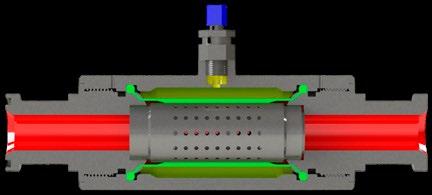
QUALITY NACOL ACCUMULATORS
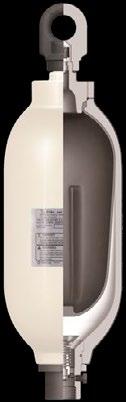
● Forged Shells, no welds
● Long lasting, No Seam, Pleated Bladders
● We stock ⅕ pint to 15 gallons in Chicago ● Sizes available to 40 gallons



from page 15
can cause severe tissue damage, necrosis, or even death if not treated immediately. Fires and explosions from leaking flammable fluids, such as hydraulic oil, that encounter a heat source like a hot engine or exhaust manifold are also highly dangerous. Physical injuries resulting from a burst hose or blown-off fitting under high pressure pose a risk as well. The force from a failed hose can cause blunt-force trauma, lacerations, and burns. Additionally, it’s important to avoid slips and falls caused by fluid leaks and slippery conditions in the work area.
Common equipment damage and system failures include catastrophes resulting from insufficient pressure ratings, improper hose crimping and incorrect assembly procedures. These types of failures can lead to a sudden loss of system pressure, rendering equipment inoperable and potentially causing significant damage. Pump cavitation can result from undersized inlet plumbing. Cavitation may cause noise, vibration and, ultimately, premature pump failure. Furthermore, system contamination is often caused by the ingress of dirt or moisture through cylinder seals or other access points. These contaminants will accelerate wear on critical components.
Financial implications include reduced system efficiency, yielding incorrect component selection and resulting loss of production output. This forces the system to work harder. Inefficient operations lead to increased costs in the form of higher energy consumption. Fluid leaks require refilling and additional maintenance, which adds to higher operational expenses. Costly maintenance and downtime stemming from system failures cause component degradation and persistent leaks. Unscheduled downtime can also cause significant production losses and project delays. Environmental effects include air, water and soil contamination from the leaking of hydraulic or cooling fluids. This can result in costly cleanup efforts and/or significant regulatory fines. Regulatory violations related to spills and leaks are not only costly, but they can also result in legal consequences and damage the company's reputation.
NEWER TECHNOLOGIES FOR THERMAL MANAGEMENT

chosen for their ability to withstand high temperatures while maintaining flexibility and chemical resistance for specific applications. New materials for hoses, fittings, and components are being developed to withstand higher thermal loads and more complex fluid paths, thus improving system efficiency and durability in harsh environments.
CHOOSING THE RIGHT PARTNER
Thermal management is a greater concern today for many reasons. Increasing performance demands and more compact designs are part of the problem. Electrified and hybrid electric systems have complex, stringent thermal management requirements due to the higher power density and temperature sensitivity of electric motors, batteries and electronics. Fast charging can generate high heat in a short time, creating the need for it to be quickly dissipated to prevent damage to batteries and other critical components. Choosing the right materials and technologies is key to achieving this. Specific to thermal management and hose selection, the best materials are silicone, EPDM, PTFE, and polyamide. These are
With more complex designs and a larger selection of materials and components to consider, the task of specifying and designing an efficient fluid conveyance system is tougher than ever. It requires a deep knowledge of the inner workings of traditional hydraulic systems, as well as newer hybrid options. Only a partner with a long, proven track record in motion control and fluid conveyance would have the necessary experience and expertise to effectively guide the multi-faceted decision-making process. Due to the importance of choosing materials and components that work well together, it is also important to identify a supplier with a broad portfolio. Selecting high-quality fluid conveyance components will help to improve system reliability and reduce warranty claims.
CONCLUSION
The future of fluid conveyance systems relies on a combined focus on sustainability, proven efficient designs, and the increased use of high-performance materials. Investments in sustainable materials and designs must continue to meet increasingly stringent environmental regulations. Electric and hybrid equipment will reach new heights in efficiency and productivity. A customized system approach will allow for solutions that are tailored to specific application needs to improve operational efficiency and safety. •




CAN A 4,000TON PRESS MOVE WITH THE PRECISION OF A SURGICAL INSTRUMENT?
By Ellie Gabel, Associate Editor, revolutionized.com
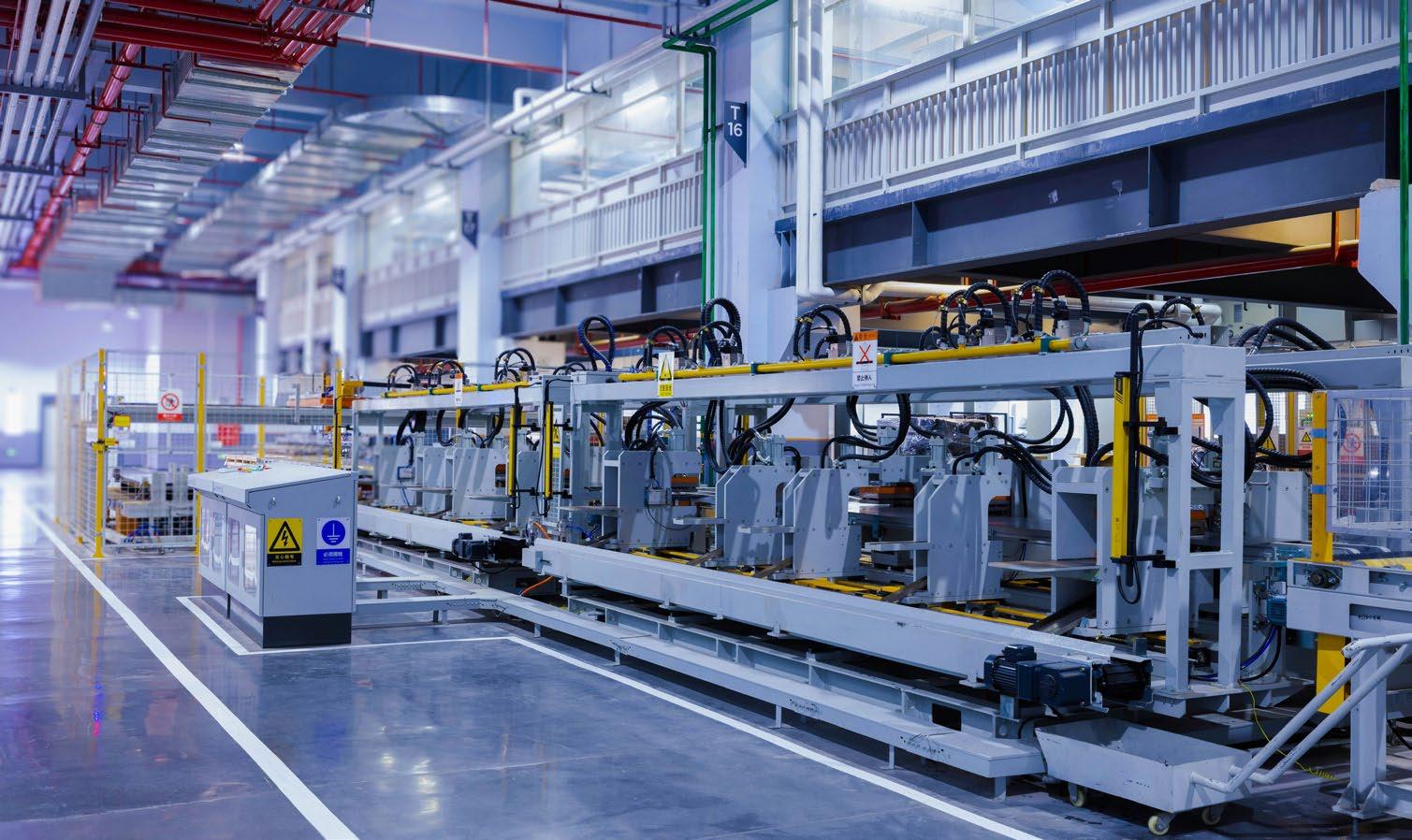
It seems impossible to move a 4,000-ton press with the delicate touch of a surgical instrument. However, improvements in fluid-power control, high-resolution feedback, and precision motion algorithms have pulled heavy presses into a realm of repeatable, near-micron-level accuracy. By incorporating robust hydraulics with smart electronics and closed-loop compensation, modern presses can deliver with brute force and the fine, controlled motion once exclusive to medical devices.
A Primer on Modern Hydraulics
The fundamentals of hydraulics rest on Pascal’s law, which states that a pressure change applied to a confined fluid is transmitted undiminished to every part of that fluid and to the walls of its container. That single idea, where pressure equals force divided by area,
lets engineers amplify a modest input force into an enormous output force by changing the piston area. This is the basic trick behind hydraulic jacks, presses, and brakes.
Old-school presses were largely mechanical or manually controlled. Modern machines layer electronic feedback, high-resolution linear encoders, and servo-controlled valves on top of classic fluid power to tame the hydraulic “muscle” and make its motion predictable and repeatable. With closed-loop position and force control, manufacturers routinely get repeatability in the single- or low-double-digit micron range on forming and press equipment. As a result, the same system that supplies thousands of tons of force can also hit extremely small stroke dwell tolerances.
The 6 Pillars of Advanced Hydraulic Press Control
Six key areas of hydraulic press control target different error sources. Together, these incremental improvements enable heavy presses to perform with precision.
1. Programmable Force and Control
Modern presses do more than slam a RAM down and hope for the best; they treat each stroke as a precisely choreographed motion. By making force and position programmable, operators can define exact force profiles, dwell times, and RAM trajectories across the stroke. The machine applies brute strength where needed and feathered control where tolerances are important.
That ability turns what used to be a one-dimensional power tool into a true motion system that is repeatable, predictable, and
tunable to the part and tool. The heart of that capability is closed-loop control, made possible by fine actuation and high-resolution feedback. Proportional and servo valves give continuous, fast, and repeatable control of hydraulic flow and pressure, letting the controller shape force and speed in real time.
High-resolution linear transducers report the RAM position and small positional changes in microns. A motion controller, computer numerical control (CNC), or programmable logic controller (PLC) receives valve commands, reads position and pressure feedback, and executes closed-loop algorithms to compensate for lag and leakage. Servo and proportional valves provide the fine throttle, and high-resolution transducers tell the controller exactly where the RAM is. When the valves, sensors, and controller all work together, a 4,000-ton press can follow a micrometer-level motion profile for thousands of cycles.
2. The Digital Twin: Real-Time Monitoring and Data
A digital twin is the live, instrumented twin of the press — a streaming, virtual model fed by Internet of Things (IoT) sensors that monitor pressure, oil temperature, valve position, RAM position, cycle time, and other operating signals every stroke. Pressure transducers, thermistors, high-resolution linear encoders, and vibration or strain sensors feed a data pipeline that timestamps and normalizes each cycle. In doing so, the twin stays synchronized with the machine in real time.
That real-time feed unlocked three uses on the floor: predictive maintenance, quality assurance, and fast process optimization.
Predictive analytics flags degrading valves, raising bearing temperatures, or slow drift position errors long before they cause scrap or an unplanned stop. Quality systems compare each part’s force or position trace to a golden profile and automatically reject deviations. Lastly, engineers use the twin to run “what if” changes to cushion, RAM trajectory, or die setup before touching the hardware. The growth of the predictive maintenance market demonstrates its value. It grew to $5.5 billion in 2022 as manufacturers invested heavily in sensing and analytics.
3. High-Speed, High-Efficiency Operation
Advances in valve technology, pump design, and motion planning allow presses to spend more time forming and less time idling without giving up the tight control that makes precision possible. Modern servo-hydraulic systems combine rapid approach and return speeds with carefully tuned forming velocities and short, controlled dwells. This allows the RAM to quickly zip into position, slow to a metered forming profile, and emerge for the next step. The result is
higher parts-per-minute rates with the same dimensional consistency or better.
A second efficiency lever is the way presses now treat setup as part of the control system. Quick-change die systems reduce the physical time a press sits idle between jobs. Integration with the press controller lets operators load a die “recipe” that automatically applies the correct cushion profile, RAM trajectory, and pressure limits. Paired with tool-monitoring sensors and safety interlocks, this close integration slashes changeover time and human error.
Holding tight tolerances at higher throughput requires clearly separated motion phases and tight coordination between them. Energy recovery and variable-displacement pumps also contribute by providing the system with the instantaneous flow needed for bursts of speed without overheating or wasting power.
4. Energy Efficiency
Precision and sustainability are complementary on the press floor. Hydraulic systems are designed to use energy only when motion or force is required, rather than running pumps at full capacity all the time and wasting the excess as heat. While that cuts electricity
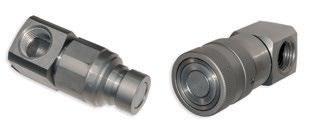
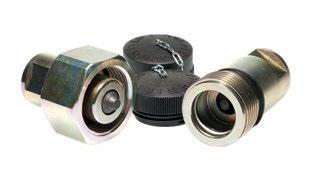
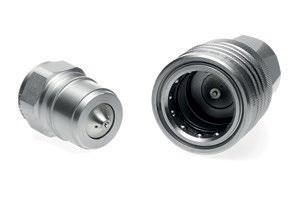
HOLMBURY COUPLINGS
bills and cooling demand, it also reduces the thermal swings and wasted heat that can undermine micrometer-level control.
Two changes make the biggest difference. First, variable-displacement pumps driven by variable-frequency drives (VFDs) only produce the oil the system needs at any given moment. Adding load-sensing or closed-loop pump control causes the drive speed and displacement to follow the instantaneous load, which reduces energy loss and minimizes oil heating. Second, accumulators and energy recovery circuits capture energy during deceleration or return strokes and release it when demand strikes. Combined with smart sequencing and regenerative valves, these measures shrink peak power by 56% and lower overall power use by 52%.
5. Intelligent Cushion and Bed Control
A cushion is a hydraulic platen located beneath the die that applies counterpressure to the blank as the punch descends. Properly tuned, that back-pressure supports material flow into the die, prevents uncontrolled
continued on page 20

thinning at the flange, and stops wrinkling by holding the sheet under the right amount of restraint. In essence, the cushion lets the press control how the metal stretches rather than how hard it pushes.
Where older cushions were fixed-pressure devices, modern systems make the cushion programmable and part of the closed-loop motion strategy. Load cells or pressure sensors monitor blank force in real time while
the controller runs a timed profile, including varying cushion force, ramp rates, and hold time. Multizone cushions take this further by independently controlling different areas of the bed, ensuring tension and pressure are balanced across large areas. Combining fast proportional or servo valves and high-resolution position feedback lets the machine impose precisely shaped force trajectories that match the forming sequence.
That capability is crucial for advanced materials. High-strength steels and aluminum alloys





have narrower forming windows. If there’s too little restraint, the part wrinkles or ejects. If there’s too much, the metal tears or thins beyond safe limits. Programmable cushion profiles enable operators to tailor the blankholder force to each material and geometry. This provides a soft start for initial feeding, increased force during bending, and a short, high-force dwell for springback compensation.
6. Active Leveling and Vibration Damping
Large presses can flex, tilt, and ring when loaded, and those small motions matter when tolerances are tight. Active leveling uses multiple hydraulic cylinders with independent control and local sensing so the controller can correct tilt and uneven loading. Instead of one big command to a single valve, the controller drives each corner with its own profile. It reads load cells, cylinder-position sensors, and tilt or angle feedback to keep the RAM parallel to the bed as the die takes an off-center hit. The upshot is less RAM canting, more even die contact, fewer edge failures, and longer die life.
Vibration damping takes care of the rest. Fast control loops, feedforward profiles, and tuned filters can suppress oscillations generated at impact or the end of a rapid stroke. Hydraulic snubbers, tuned accumulators, and even passive tuned-mass dampers are used where needed to soak up energy that would otherwise ring the frame or the tooling. Together, active leveling and damping keep the working surface stable enough that subsequent control layers can operate against a predictable low-noise baseline.
Bringing Precision to Heavy Presses
Choosing between raw power and fine control is no longer an issue. With better sensing and tighter system integration, a 4,000-ton press can hold small tolerances. The gains of these improvements lead to fewer rejects and faster changeovers. For shops chasing tighter tolerances without losing throughput, these advances put surgical-level accuracy within reach.

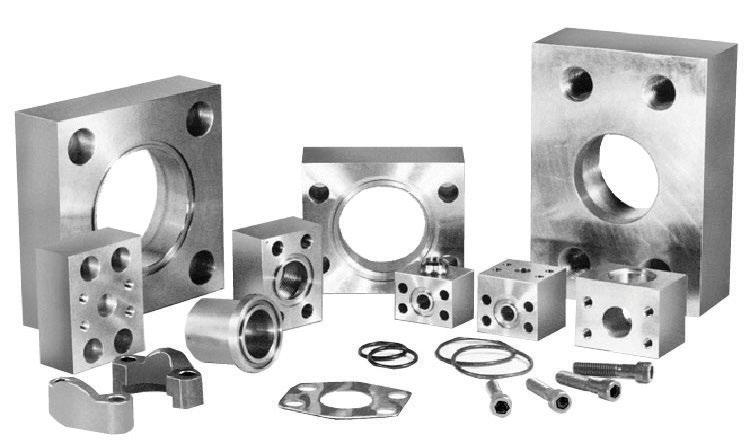
The flange connector you need – quick as 1, 2, 3 Why use MAIN MANUFACTURING PRODUCTS?
1
QUICK: MAIN has a large and diverse inventory, including specials for same day shipping. MAIN’s US production facility, specialized manufacturing processes, and large raw material inventory allow your custom non-stock parts to be shipped in days.
2
INFORMED: MAIN’s engineers are active on ISO and SAE committees. They are available to assist you with your flange needs, call 800.521.7918, e-mail to info@MAINmfg.com or fax 810.953.1385.
3
DEPENDABLE: MAIN has 60 years of experience in designing, developing, manufacturing and distributing quality hydraulic flanges and components.
COMPONENT SHOWCASE
info@mainmfg.com
The
Best Return on Investment
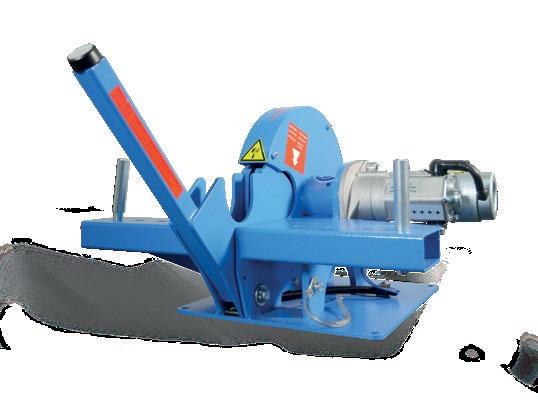
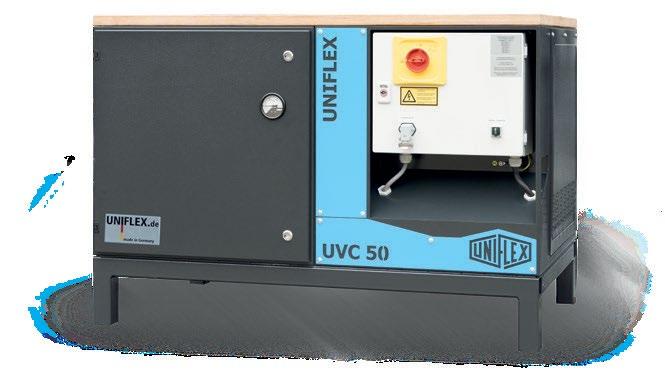
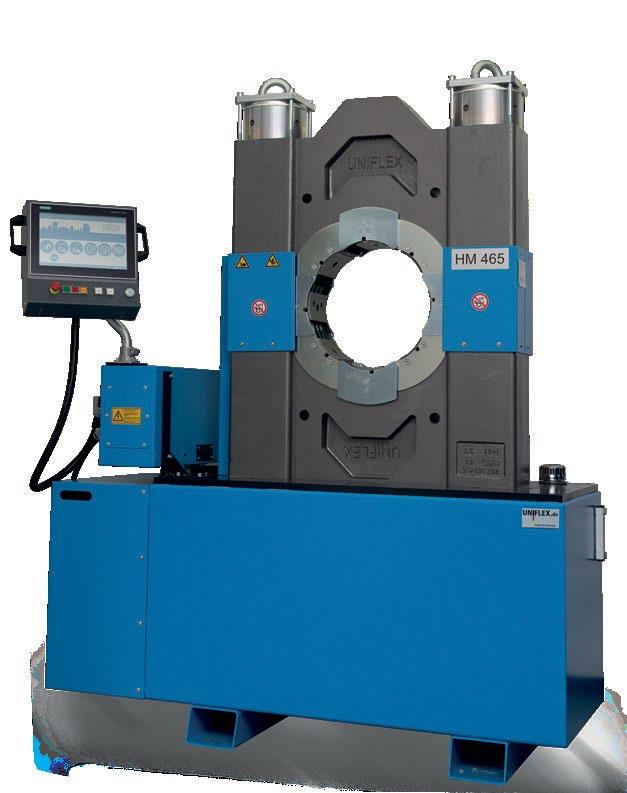
UNIFLEX of America is excited to showcase our latest equipment for hydraulic and industrial hose assembly at CONEXPO-CON/AGG 2026, the premier event for the construction and fluid power industries, taking place March 3–7 in Las Vegas. Visit us in Platinum Lot — Booth P7232 to see how UNIFLEX continues to set the standard for precision, performance, and reliability.
UNIFLEX designs and manufactures industry-leading hose crimpers, cutting machines, skiving machines, test benches, cleaning systems, and complete workshop solutions for hydraulic hose assembly operations worldwide. Built with German engineering and a focus on long-term durability, our machines deliver consistent quality, reduced downtime, and lower total cost of ownership.
Whether you’re a manufacturer, mobile service provider, OEM, distributor, or large production facility, UNIFLEX helps you increase productivity, improve safety, and protect your investment for years to come. Stop by Booth P7232 and discover the UNIFLEX advantage at CONEXPO-CON/AGG.
UNIFLEX of America LLC 1088 National Parkway Schaumburg, IL, USA 60173, +(1) 847 519 1100, sales@uniflex.de www.uniflex-hydraulics.com
Platinum Lot | Booth # P7232 March 3 - 7
























































2026 SHOW
By Lauren Schmeal, Editor, Fluid Power Journal
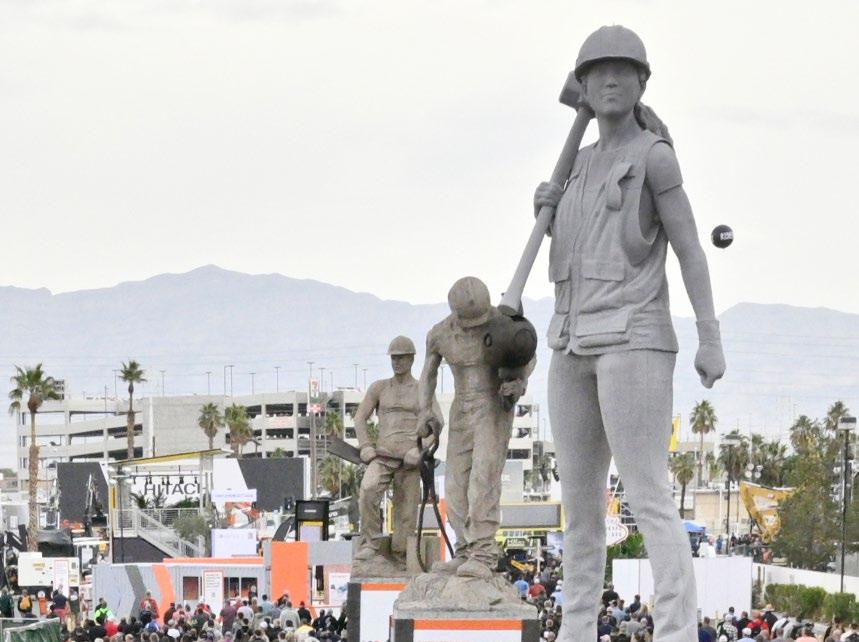
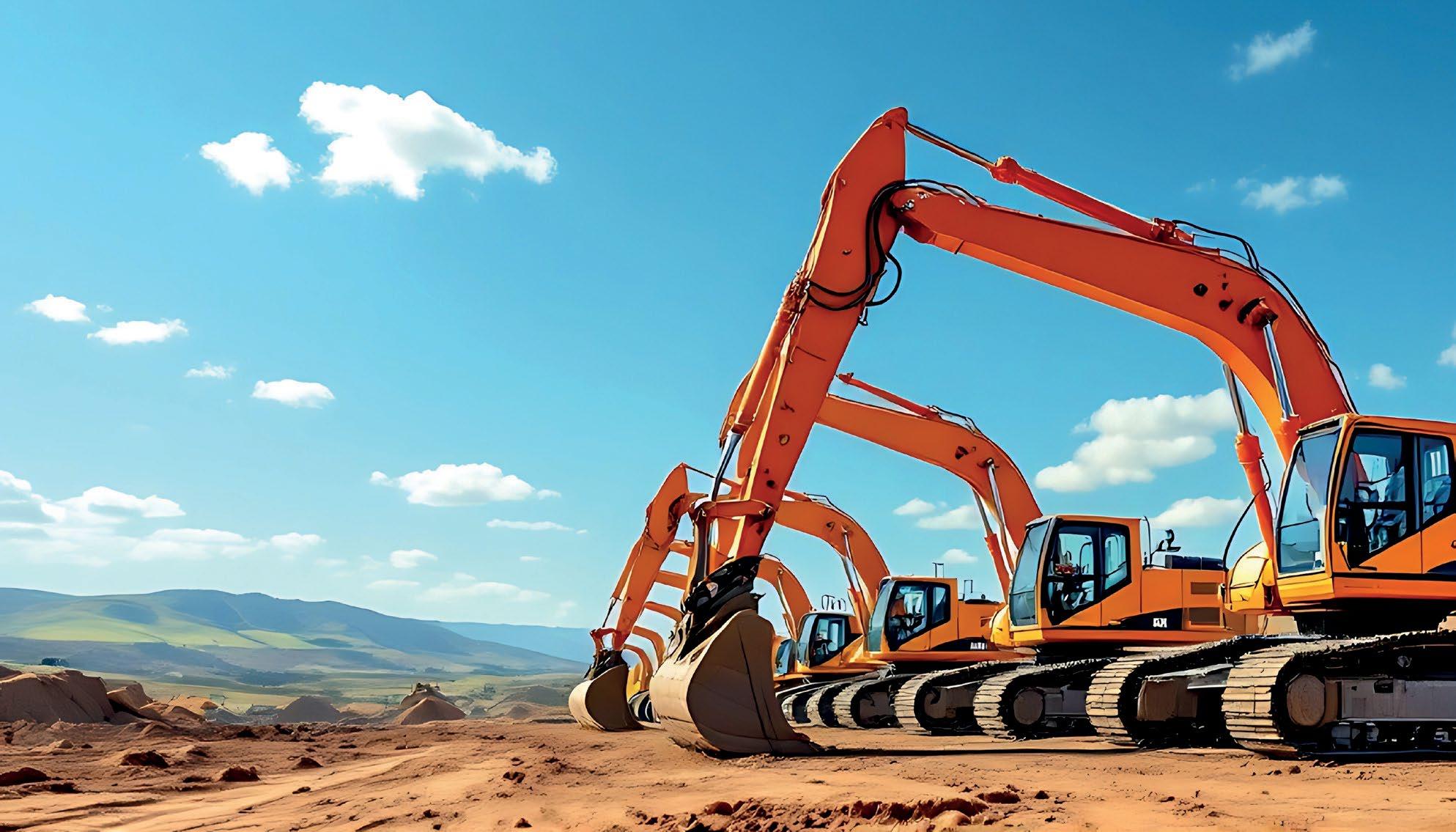
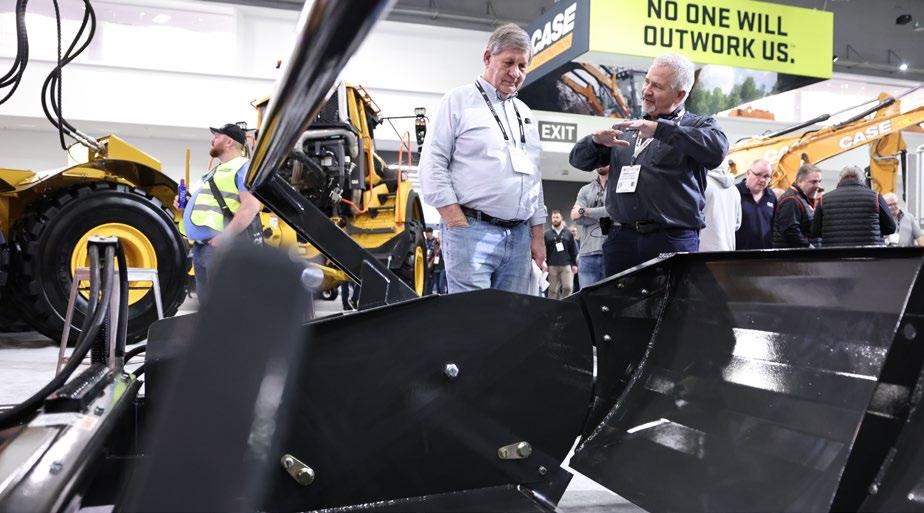
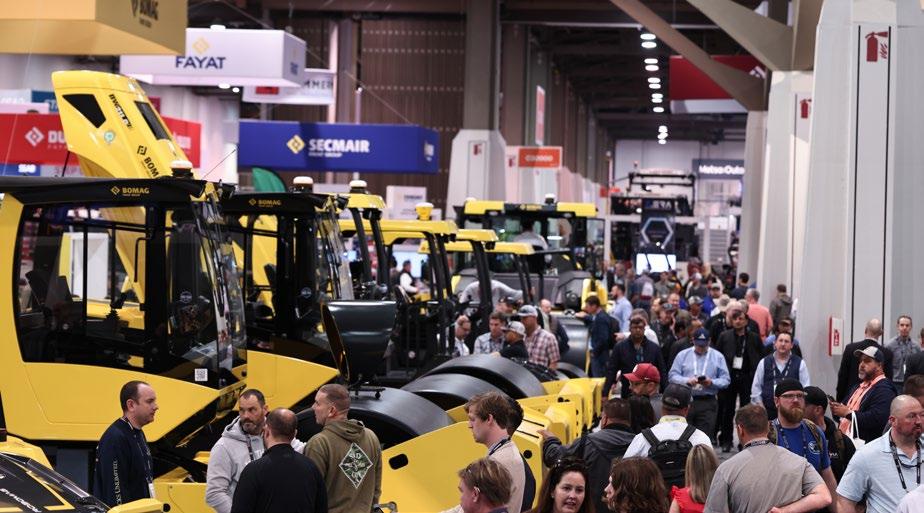
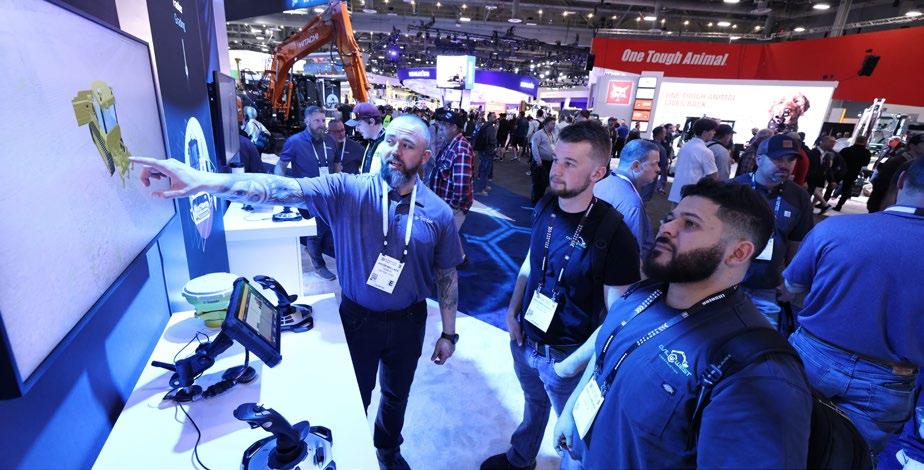
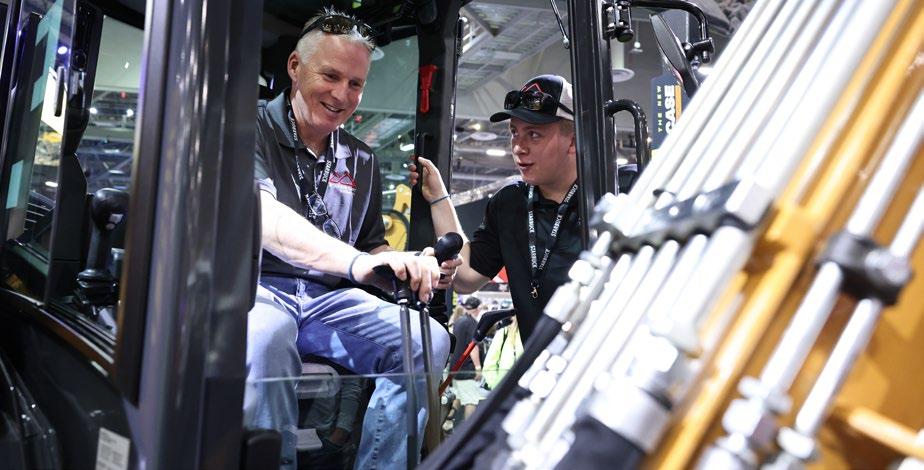
The industry’s premier heavy equipment show, CONEXPO CON/AGG 2026, will kick off with a bang this month! This is the largest construction and fluid power trade show in North America. Per the Expo’s producer, 2026 will offer roughly 2,000 exhibitors spread across approximately 2.9 million square feet of exhibit space, one of the show’s largest installments.
Purpose: CONEXPO-CON/AGG is the international gathering place every three years for the construction industries, focusing on construction, aggregates, and ready-mixed concrete. (conexpoconagg.com). Fluid power will continue to remain a core Expo focus. The National Fluid Power Association (NFPA) and Association of Equipment Manufacturers (AEM) ensure strong impact and participation for fluid power suppliers.
SHOW HOURS
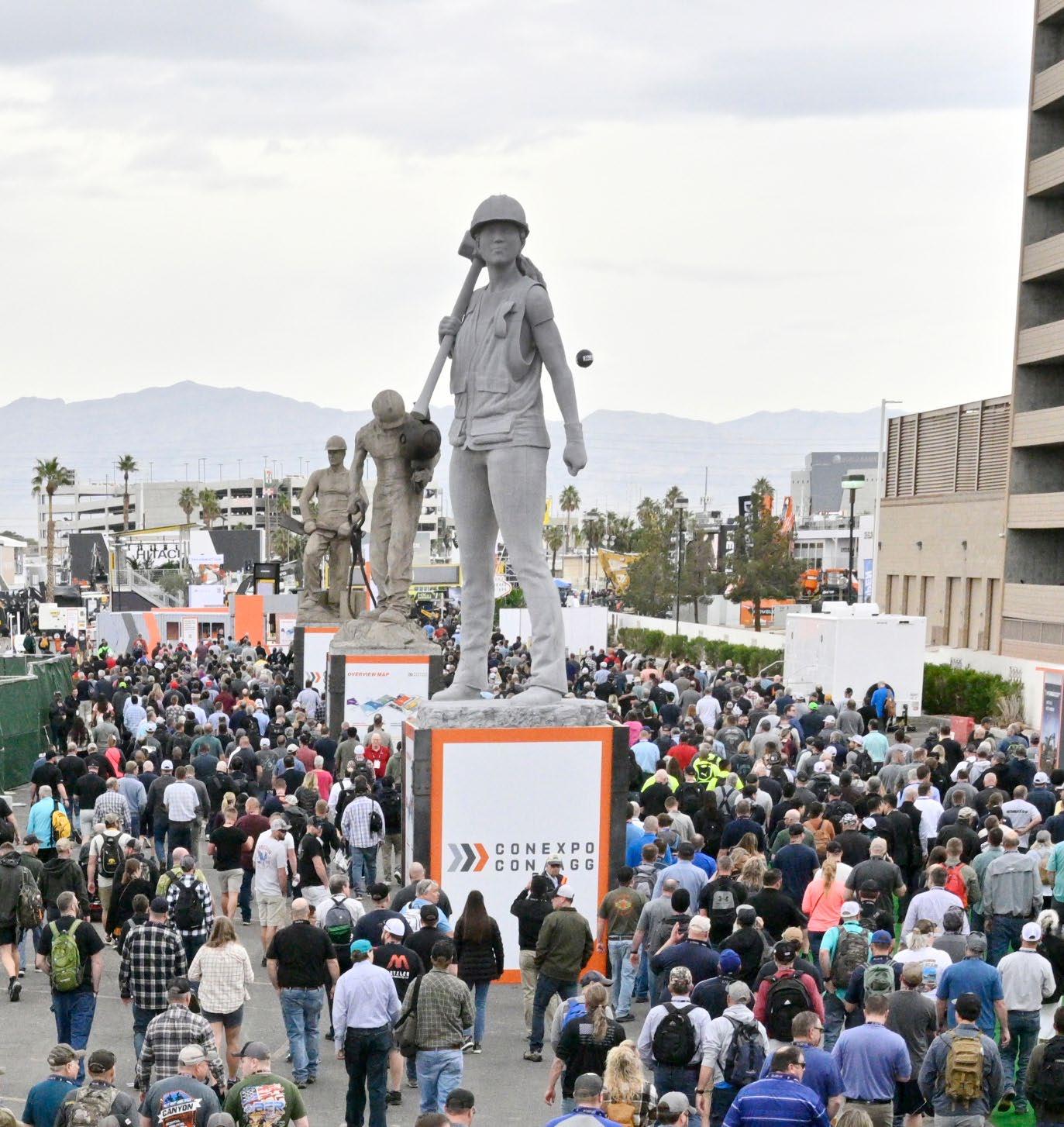
ATTENDEES : CONEXPO-CON/AGG attracts persons involved in all segments of the construction, aggregates, and ready mixed concrete industries, including contractors, materials producers, and government and institutional sector officials (conexpoconagg.com).












CAPACITY CROWDS : CONEXPO-CON/AGG 2026 is expected to attract over 130,000 attendees from more than 130 countries, building upon the record-breaking attendance of the 2023 event (boldbooths.com). The show demonstrates steady momentum with early registration, exhibitor growth, and expanded content all pointing to a record-setting event.
ACCESSIBILITY : To help attendees navigate the event, an underground shuttle system will link key halls of the Convention Center. This offers quick, free transport across large distances on campus.
EXHIBITS : CONEXPO-CON/AGG exhibits showcase the latest technologies and innovations in equipment, products, and services for the construction industries. Product concentration areas and specialized exhibit pavilions make it easy for visitors to locate
specific products, services, and exhibitors of interest (conexpoconagg.com). This includes fluid power, motion control, and power transmission focuses.
INTERNATIONAL TRADE CENTER : The ITC is a dedicated space for global construction professionals to meet and do business (conexpoconagg.com). ITC services include:
• High-Speed Internet
• Private Meeting Rooms
• Lounge Area
• Interpretation Services
• International Market Sessions
SUSTAINABILITY : CONEXPO highlights expanded recycling efforts, waste-minimization programs, and partnerships with vendors prioritizing sustainable practices. Exhibitors and organizers alike are committed to reducing the show’s environmental impact, with innovations in fuel efficiency, emissions reduction, cleaner hydraulics, and sustainable materials. This indicates an industry shift toward greener construction and equipment solutions.
INNOVATION INDEX AWARDS : For 2026, CONEXPO-CON/AGG will feature the Awards, designed to spotlight companies innovating within the industry. Finalists will be highlighted during the show, and attendees will get to vote for their favorites, Exhibitors meeting any of the following criteria will be eligible:
• Address common industry challenges with unique, effective solutions
• Offer broad application potential across construction, aggregates, infrastructure, or fluid-power sectors
• Improve safety, sustainability, or productivity in a tangible way
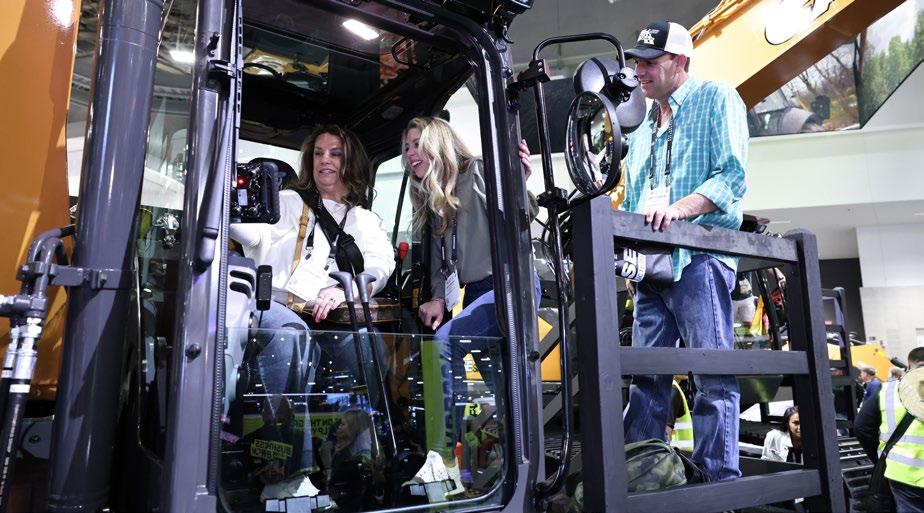
EDUCATION: CONEXPO-CON/AGG 2026 promises transformational experiences, including expanded educational sessions, improved logistics, and the chance to see next-generation hydraulic and pneumatic technologies up close. Visitors will have access to ample networking opportunities, positioning CONEXPO-CON/AGG as a driver of business growth and innovation. For more information, visit: conexpoconagg. com/show-experience/education.
Alongside the massive exhibit lineup, CONEXPO-CON/AGG 2026 will offer a comprehensive education schedule including 160+ sessions. Fluid power professionals can expect hydraulics and pneumatics content tailored to their needs. Specific topics include advanced hydraulics, automation, electrification, system efficiency, equipment management, and business, courtesy of dedicated programming from industry
continued on page 26

ADVANCED HYDRAULICS CONFERENCE SESSION SCHEDULE
» THE NFPA WILL be hosting its Conference from March 4-5, and it will be co-located at CONEXPO-CON/AGG. The sessions for that event focus on industry technology and innovation and are as follows:
WEDNESDAY
Increased Runtime for Battery-Electric Excavators with Digital Hydraulics, 9:00 - 9:30 a.m.| Presented by Chris Williamson, Danfoss Power Solutions
Shows how a 30-ton tracked excavator using a Digital Displacement pump/motor and high-voltage battery can cut hydraulic power losses and recover energy. Over realistic duty cycles, the digital hydraulic system delivers about 35% energy savings or boosts uptime by more than 50%.
Unlocking Digital Transformation: Why Strategic Ecosystem Partnerships are Essential to Delivering Risk-Reduced, High-Value Digital Services, 9:30 - 10:00 a.m. | Presented by Adam Livesay, Elevat
Explains why digital transformation and collaboration are now essential in off-highway equipment, especially for secure, scalable Edge IoT and AI solutions. Real-world cases show how connected hardware, telematics, and analytics reduce OEM risk while improving reliability and business performance.
Smart Hybrid Architectures for Off-Highway Machines: Standard Components, Smarter Controls, 10:00 - 10:30 a.m. | Presented by
Barun Acharya, Parker Hannifin
Presents a modular hybrid-electric system using standard motors, inverters, and pumps with rule-based controls to capture regenerative braking and optimize energy use. Case studies such as a hybrid backhoe and hydraulic-electric gearbox show up to 15% fuel savings and lower total cost of ownership without full machine redesign.
OEMs Presentation, 10:30 - 11:00 a.m. | Presented by DJ O'Konek, Nott Company
Explores how OEMs and equipment manufacturers can tap into system integrators to design and optimize machines’ hydraulic, electric, and control systems for performance, cost control, and reliability.
Optimization and Validation of eHydraulic System Performance on a Battery-Electric Backhoe Loader, 1:00 - 1:30 p.m. | Presented by Simon Nielsen, Danfoss Power Solutions
Reviews the conversion of a diesel backhoe loader into an 800V battery-electric prototype using an eHydraulic work-function system with an electrically driven, variable-displacement pump. The session shares lessons on optimizing controllability, productivity, efficiency, and NVH using both hardware
changes and software tuning.
Using 3D Finite Element Analysis to Increase Performance in Shaft Seals for Hydraulic Pump Applications, 1:30 - 2:00 p.m. | Presented by Dr. Nino Dakov, Trelleborg Sealing Solutions
Hydraulic Data from the Heart of the Circuit: Pump Output Digitization, 2:00 - 2:30 p.m. | Presented by Mark Preissig, Casappa
Is That Hydraulics?
The Accelerating Pace of Technology Change in the Fluid Power Industry, 2:30 - 3:00 p.m. | Moderator: Eric Lanke, National Fluid Power Association and Panelists: Barun Acharya, Parker Hannifin; Joe Budden, Danfoss Power Solutions; Philippe Reynolds, Poclain Hydraulics
Highlights Fluid Power Forum’s live podcast session on how electrification is driving innovation versus decline in mobile hydraulics. Attendees hear from NFPA Advanced Hydraulics Conference presenters and join a networking reception that explores how hybrid, quieter, and smarter hydraulic systems are reshaping fluid power.
Fluid Power Forum PLUS Panel, 3:00-4:00 p.m. with Eric Lanke (NFPA) and Reception for Subscribers
THURSDAY
Comparison of Two Electric Linear Actuation technologies: Electro-Mechanical Actuation and Electro-Hydrostatic Actuation, 9:00 - 9:30 AM | Dale Vanderlaan, Parker Hannifin
Compares Electric Linear Actuator architectures—electro-mechanical vs. electro-hydrostatic—as alternatives or complements to hydraulics in off-road machines. A trade study with duty-cycle results shows where each ELA option wins on efficiency, durability, safety, and leak reduction as designers chase longer battery life and autonomous capability.
Unlocking the Power of Practical AI in Mid-Market Manufacturing and Distribution, 9:30 - 10:00 AM | Ken Baker, Bailey International
Demystifies how mid-market manufacturers and distributors can move from AI buzzwords to practical tools that improve operations. By walking through fundamentals and real-world examples, the session gives leaders a roadmap for selecting cost-effective AI solutions and implementing them with confidence.
Hydraulic System Efficiency Optimization Leveraging Quasistatic & Dynamic Models, 10:00 - 10:30 AM | Chad Larish and Aaron Jagoda, Danfoss Power Solutions
Outlines a phased approach to machine and system modeling so engineers can find efficient architectures faster without blowing budgets. Quasistatic models quickly screen technologies against real duty cycles, then dynamic models refine the best options for performance and efficiency.
Variable Flow with Fixed Displacement Pump, 10:30 - 11:00 AM | Andrea Rimondi, Marzocchi Pumps
Introduces a low-noise, high-efficiency helical gear pump co-developed with the University of Bologna, optimized for use with VFD brushless motors. Lab tests show 1–20 l/min flow with over 90% volumetric
efficiency, supporting quieter, more efficient electrified powertrains at lower cost.
Steer By Wire: An Enabling Technology for Autonomy and Automation, 1:00 - 1:30 PM | David Schulte P.E., Parker Hannifin
Explores how the shift from traditional hydraulic steering with parallel electric valves to full steer-by-wire enables advanced automated and semi-autonomous functions that support and guide the operator, boosting productivity and performance.
Lowering Total Cost of Ownership, 1:30 - 2:00 PM | Dr. Rhishkesh Gokhale, Evonik Oil Additives
Shows how an advanced hydraulic oil formulation can cut total cost of ownership for construction and heavy equipment by optimizing viscosity. Field and OEM tests document lower fuel use, better responsiveness, less downtime, and environmental benefits. This can be achieved without facilitating hardware changes.
eHydraulic Building Blocks: Inverters, Components, and Application-Specific Systems, 2:00 - 2:30 PM | Joe Budden, Danfoss Power Solutions
Explores how intelligent eHydraulic systems, enabled by advanced inverters and careful component pairing, deliver precise hydraulic control in electrified machines. Topics include speed regulation, regenerative braking, functional safety, secure communications, and key engineering trade-offs for robust EV hydraulic systems.
How Mechatronics Integration Ease the Adoption of Electrification, 2:30 - 3:00 PM | Benjamin L’Hénoret, Poclain
Describes how modular mechatronic architectures simplify electrifying construction equipment by integrating power transmission and electrical systems. A case study of an all-in-one electric wheel hub that combines inverter, motor, and gearbox demonstrates compact packaging, faster time-to-market, and compliance for compact machines.

continued from page 25
associations. Specific session groupings are designed to help attendees refine performance, cut costs, and navigate regulations. Highlights include:
• Shop Talks & Walks offer small-group, guided discussions on the show floor that connect real-world challenges with practical solutions and expert insights.
• EmpowerHER delivers interactive workshops and networking designed to support, inspire, and advance women at all career stages within the construction industry.
• Small Business Workshops provide targeted education and resources to help small construction businesses improve operations, competitiveness, and long-term growth.
INDUSTRY SUPPORT : Leading industry organizations worldwide participate as Supporting Organizations, and leading industry publications/media worldwide participate as Supporting Publications/ Media. Hundreds of industry meetings, including annual conventions of industry associations, are held in conjunction with the show (conexpoconagg.com).
PERSONNEL : Principal sponsors are Association of Equipment Manufacturers (AEM), National Ready Mixed Concrete Association (NRMCA), and National Stone, Sand & Gravel Association (NSSGA). Show sponsor is Associated General Contractors of America (AGC). AEM is a show producer (conexpoconagg.com). •
Accumulators, Inc. | SL80023
Advanced Machine & Eng. | S84406
Aggressive Hydraulics | S81245
AKG of America | S80242
ALA Industries Ltd. | S84229 Alfagomma/Kuriyama of America | S84412/S83429
Alkon Corp. | S83941
Alro Steel & Plastics | N11472 Anhui Shenyu Hydraulic Technology S83317 Anfield Sensors | S82913 API Heat Transfer | S80907 ASA Hydraulik of America | S83541 Ashcroft | S81255 ATOS of North America | S81207 Austin Hose | S84218 Bailey International | S84212 Barbieri Rubber srl | S81352 BMF Hydraulics | S63545 Bondioli & Pavesi | S82116 Bonfiglioli NA | S80453 Bosch Rexroth/ HydraForce | S80245 Brennan | S82955
Bucher Hydraulics | S83113 Camozzi Aautomation | S81547 Canimex | S82452
Caplugs
CN Hydraulic Parts | N10776
Comer Industries | S82229
Concentric AB | S83755 Continental Hydraulics/ Hydreco | S83142 COXREELS | S63220
Cross Manufacturing | S81744
Dalton Bearing & Hydraulic | S81646
Danfoss Power Solutions | S80614
Delta Power Company | S83729
Deltrol Fluid Products | S81640
Dezhou Yuli Hydraulic Co. Ltd. | S83907
Dinamic Oil North America | W44105 Dixon | SL80027
DNP Americas | S83152
Donaldson Co. | N11763
Doosan Mottrol Co. | S84328
Dougguan Blince Machine & Electrical Co. | S63245
DURAPAC | N13244
Dynamic Fluid Components | C32997
Dynaset Oy | S63123
Dynatect Mfg. | N12062
Eagle Hydraulic | S83607
Eckerle Technologies
GmBH | S81553
Elastohose | S84041
Elobau | S80406
Emmegi Heat
Exchangers | S81957
ENERPAC | F42020
ESKRIDGE | S63159
Essentra Components | S82041
European Industrial Products | S82001
Famic Technologies Inc. | S81752
Femco USA, Inc. | S82053
Filtrec SPA | C22133
Flodraulic/North American Hydraulics | S80653
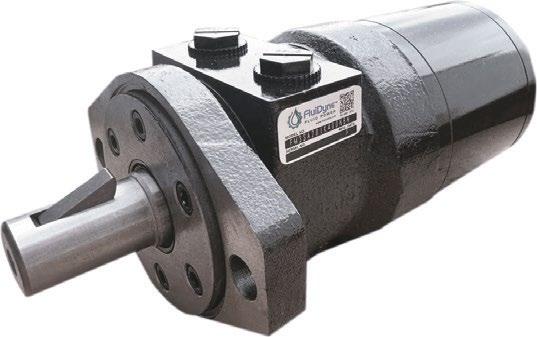
Fluidyne Fluid Power | S82557
FORCE AMERICA | S82412
Geartek | S81656
GEFRAN | S84021
GEMELS North America | S82256
Gorman-Rupp Pumps | C20306
Great Plains Industries | S63652
Hallite Seals | S82619
Hangzhou Befa Machinery Co. C22364
Hannay Reels | N12172
Harrison Hydra-Gen Power | S64622
Hartman Controls | S81253
HAWE Hydraulik | S81741
HBC-radiomatic | N12238
HBS Hydraulic Valves & Components | N11673
Heife Chongguan Hydraulic Co. | S84010
Heife Wanye Hydraulic Component Co. | S83400
Hengyu Group Hydraulic Fluid Tech Hebei Co. | S83616 Heavy Motions | S82907
HED, Inc. | S82020
Tech/Schroeder
| S81040
Leduc | S84228
Breaker Services | C32450
Power | S83340
Efector | N12963 IFP Motion Solutions, Inc. | S81052 IMO USA | C22209 Impro Fluidtek USA | S82033 Innovative Hydraulics | SL80012
International Fluid Power of America | S82152
IFPS | SL80103
Ironclad Hydraulics | N10672 Jiangsu Halies Hydraulic Pump Co. | S84044
Jinan Longli Hydraulic Device Co. N10134
Joral LLC | S82009
J.R. Merritt Controls | S82156
Kaesar Compressors | S60147
Kawasaki Precision Machinery | S81942
Knott Brake Co. | S83321
KTI Hydraulics | S81618
KYB Americas | S84119
Leggett & Platt Hydraulics | S81452
Legendary Hydraulic Valves | S80252
LHY Powertrain | S82941
Liftwell Hydraulics LLC | S81242
Logan Clutch Corp. | S81746
Marzocchi Pumps | S83441
MCS North America | S82518
Medel Hydraulics | S83521
Monarch Industries | S80747
MontanHydraulik Gmbh | N10234
Motion Industries | C32857
MP Filtri | S80853
MTE Hydraulics | S83733
Nantong Zhonglang Hydraulic Valves | S83315
National Fluid Power Association | SL80100
Next Gen Fluid Power LLC | C33038
National Tube Supply | S83332
Ningbo Airlift Pneumatics & Hydraulics Co. | S83311
Ningbo Bolex Hydraulics Co. | S83846
Ningbo Cofer Hose & Fitting Co. S83517
Ningbo E.H. Hydraulic Co. | S83506
Ningbo Hainor Hydraulics Co. | S82252
Ningbo Hatchin Hydraulic Co. | S82254
Ningbo Keta Hydraulic Co. | S83558
Ningbo Longye Hydraulic Mfg. Co. | S84140
Ningbo Xing Ming Hydraulic Equip. Co. | S83952
Ningbo Youquen Hydraulic Co. | S83853
Ningbo Zhonggi Hydraulic Motor Co. | S83600
Nott Company | S81541
PRODUCT SPOTLIGHT
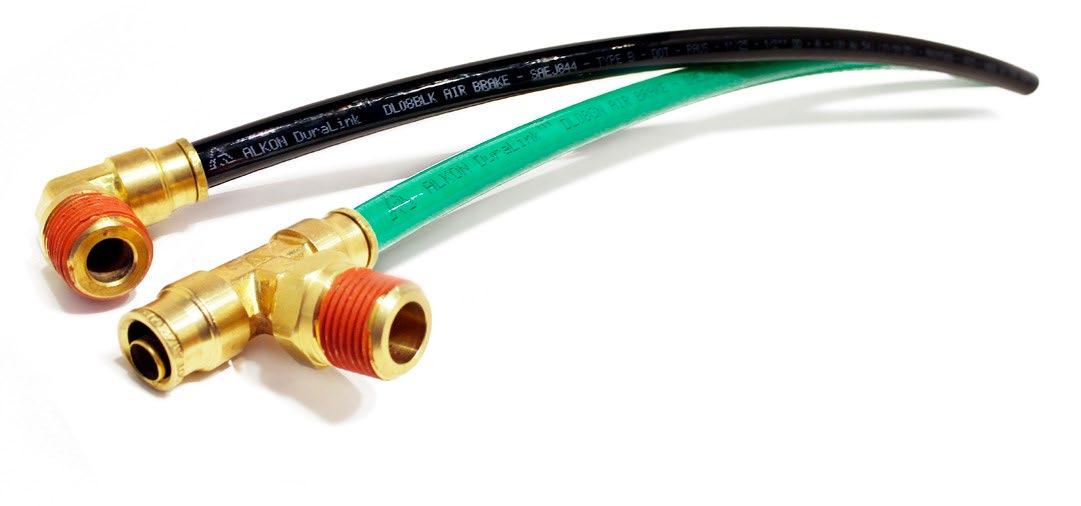
DuraLink™ is Alkon’s DOT tubing solution engineered for critical air brake and air suspension systems. Manufactured in the U.S., it exceeds SAE J844 and FMVSS requirements and delivers superior tensile strength, elongation, and durability. When paired with Alkon fittings, DuraLink™ provides unmatched system performance, dependable lead times, and confidence in every connection for demanding real-world applications.
Alkon Corp. sales@alkoncorp.com | 419-333-7000 Alkoncorp.com/Mobile/Tubing
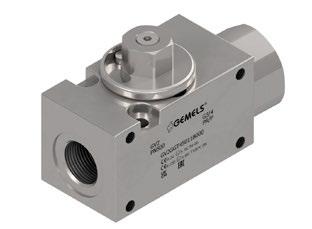
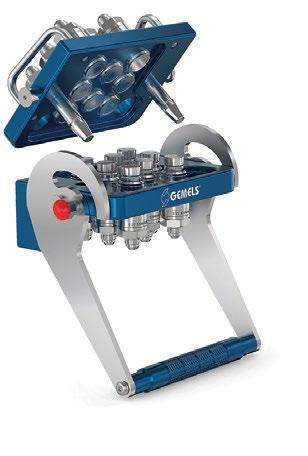
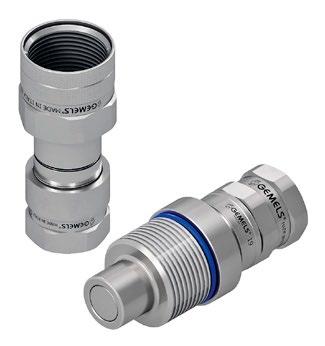
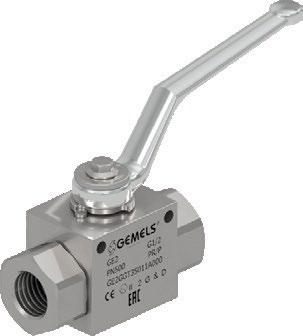
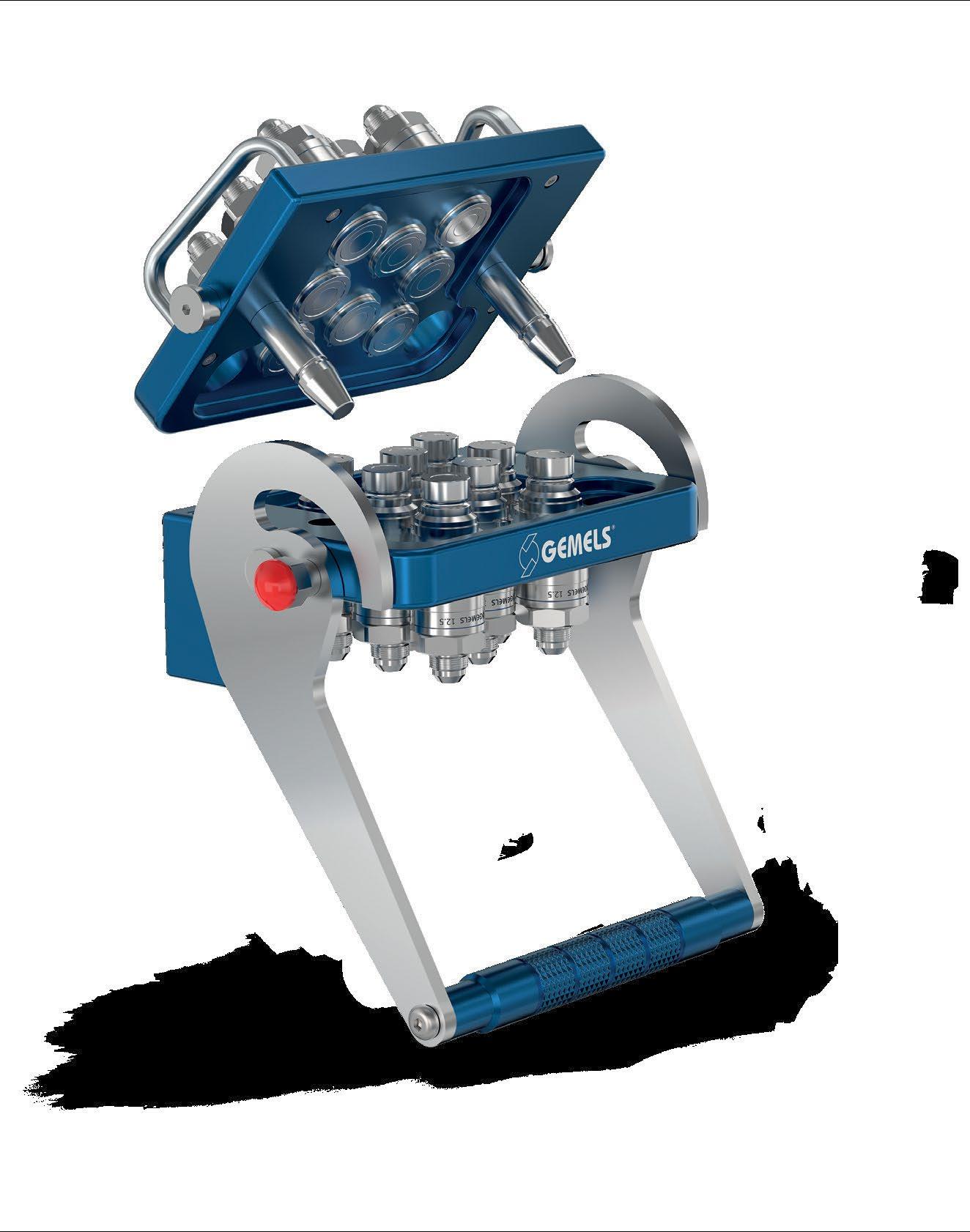
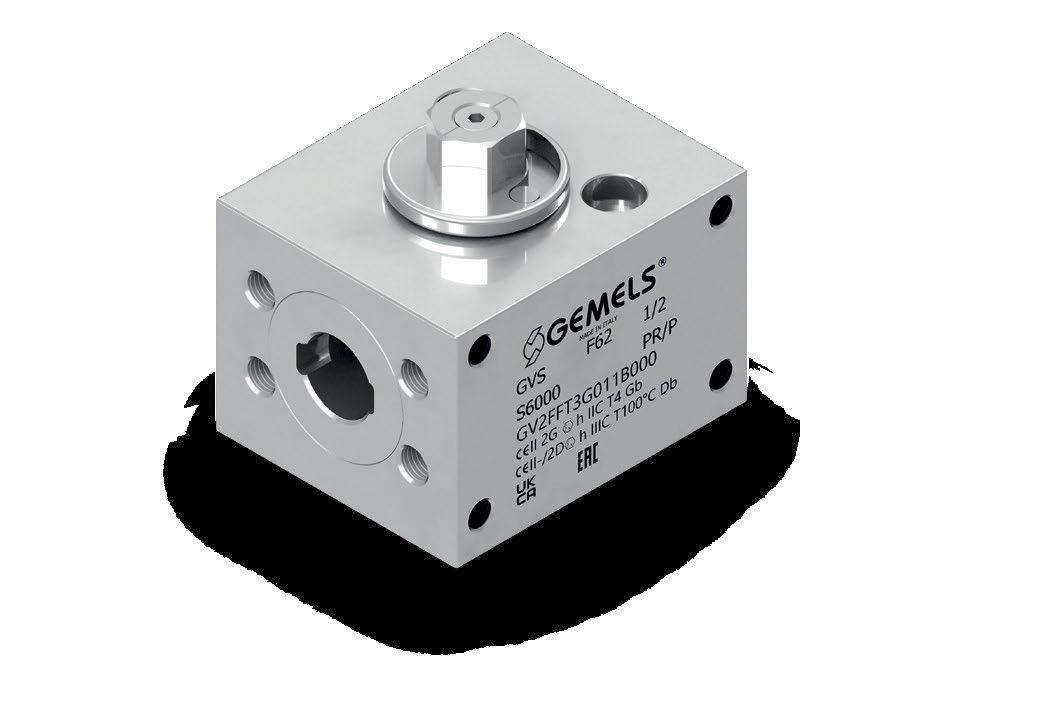
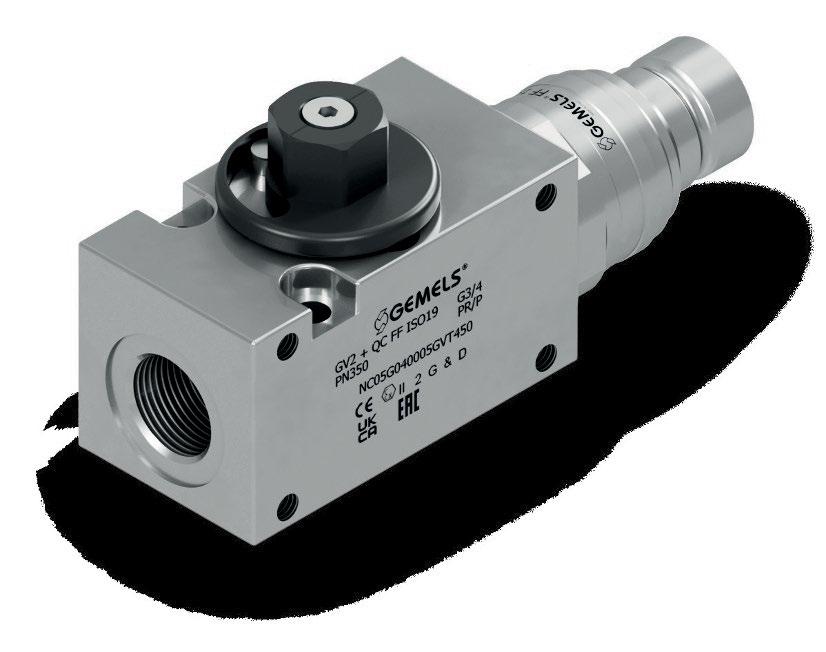
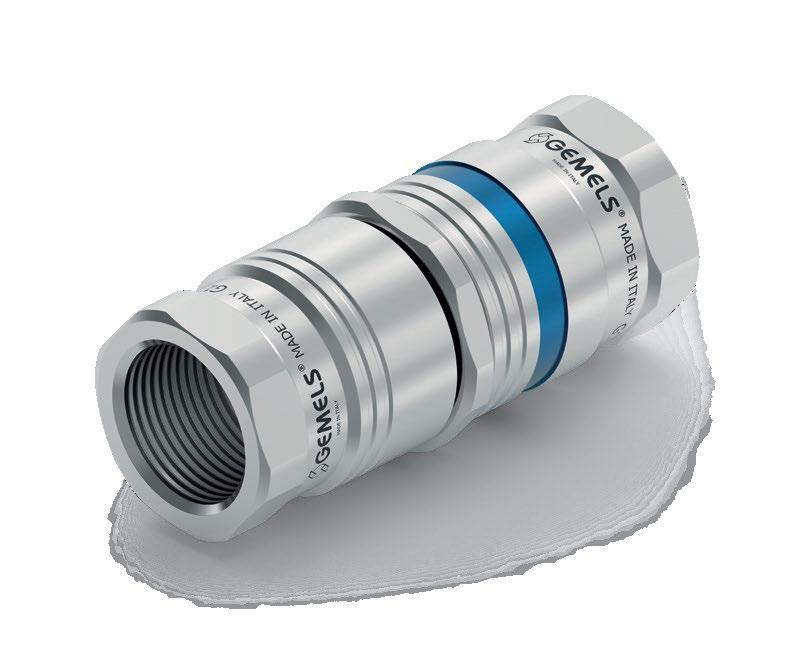
Gemels Is The World’s Leading Manufacturer Of High Pressure Valves & Quick Couplings.
Founded over 55 years ago in Italy, GEMELS is a global leader in ball valves, quick disconnect couplings, and hydraulic valves, combining Italian manufacturing excellence with innovation. With standard and customized solutions, a strong U.S. logistics hub, and a trusted dealer network, GEMELS North America ensures fast, duty-free distribution, competitive pricing, and a long-standing presence in the North American market.

Gemels North America Inc. northamerica@gemels.com gemels.com
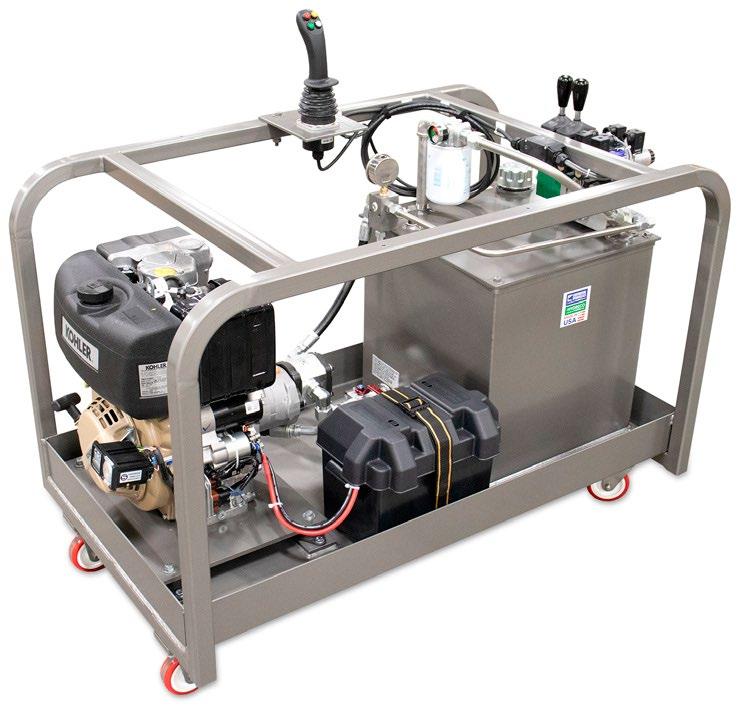
Custom Diesel Power Unit
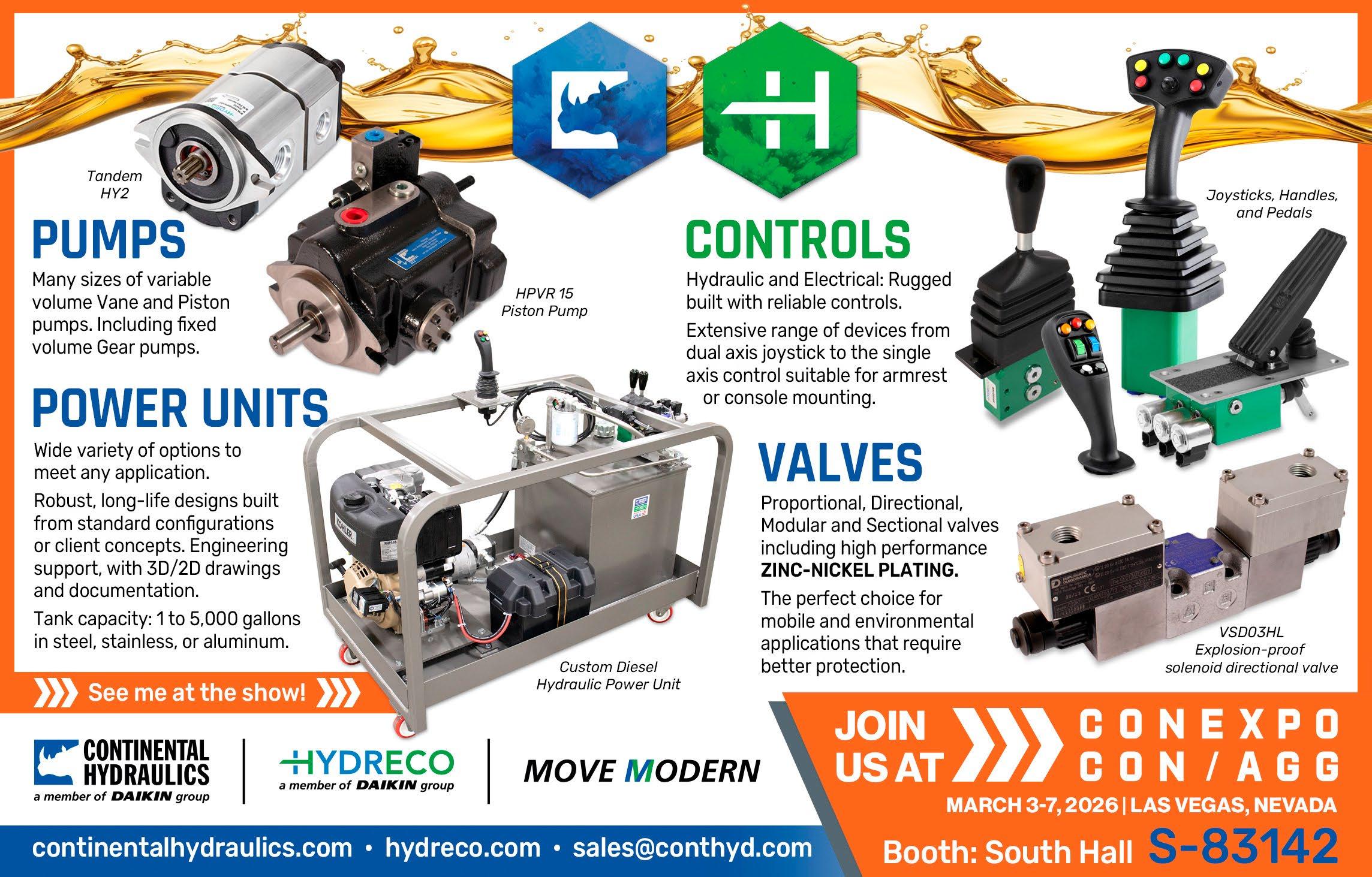
At Continental Hydraulics – Hydreco, we manufacture high-quality HPUs, pumps, valves, and manifold assemblies. Don’t take the risk of using substandard solutions when our products have a strong influence on machine efficiency, productivity, and reliability. Reach out to us, a premier fluid power manufacturer, and benefit from our years of experience within the industry.
www.continentalhydraulics.com | www.hydreco.com
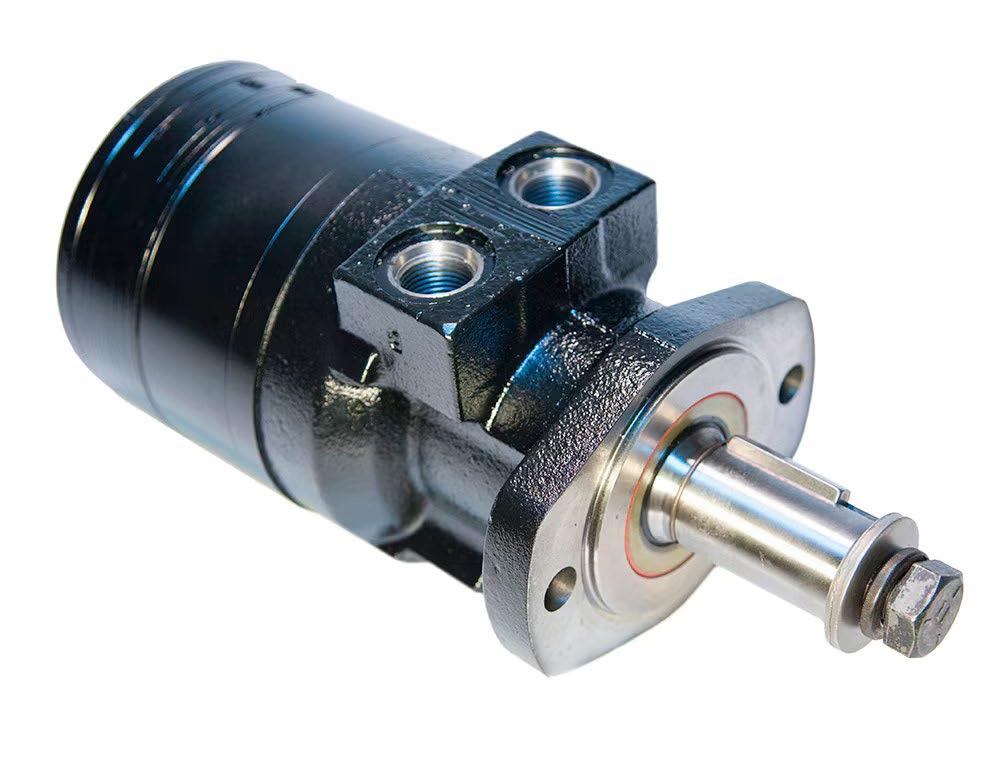
Torqmotor™ Gerotor Motors
Parker’s Torqmotor™ Gerotor motors deliver high torque at low speeds with exceptional reliability in demanding mobile and industrial applications. Their compact, robust design ensures smooth operation, long service life, and consistent performance, even under heavy loads and harsh conditions, helping maximize uptime and productivity. https://discover.parker.com/gerotor-motors
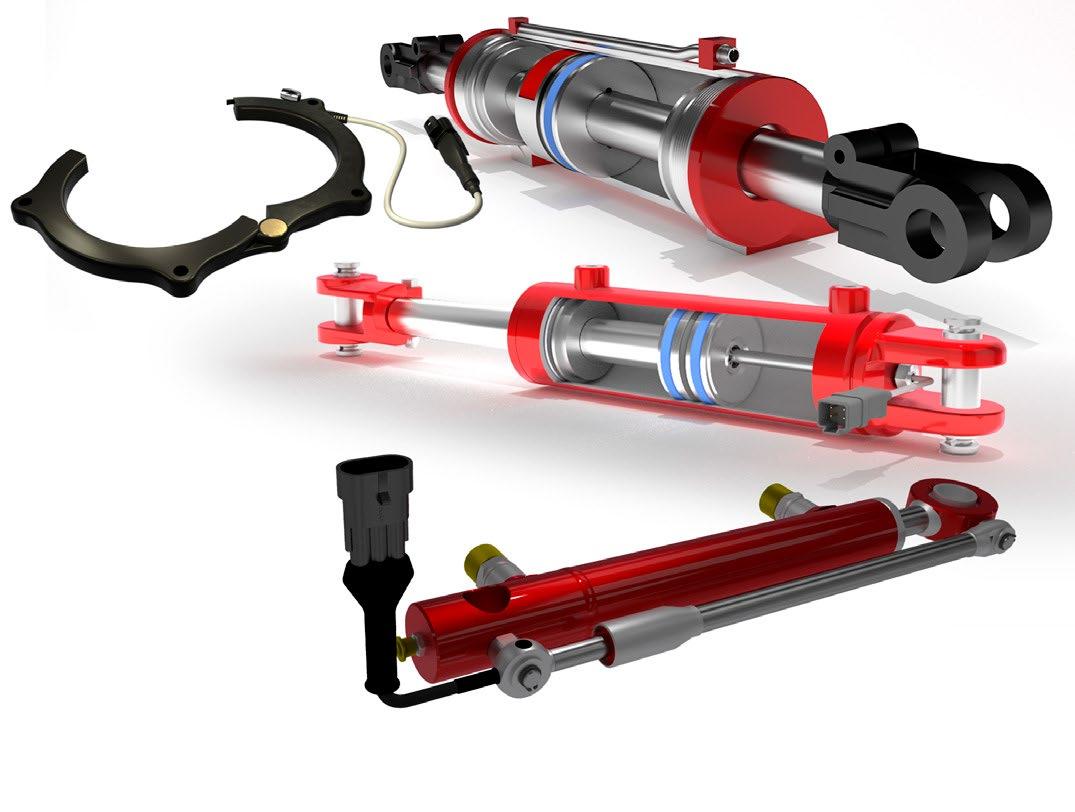
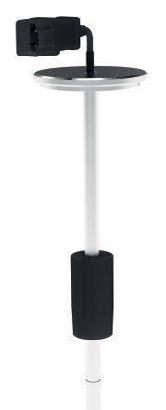
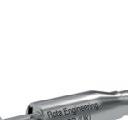
Rota Limited designs and manufactures the smallest, most robust linear transducers for position control/monitoring of hydraulic cylinders. Our technology has been specifically designed for a small size so as not to increase the existing pin to pin dimensions on — 95% of existing cylinders in the mobile market and to withstand both physical abuse and exposure to dust, water, etc. New products shown at ConExpo 2026 will be tank level sensors (hydraulic, fuel and chemical tanks), rotary sensors and the ability to mount magnets and sensors external to the hydraulic cylinder for ultimate flexibility and application cost reduction.

www.rota-ltd.com
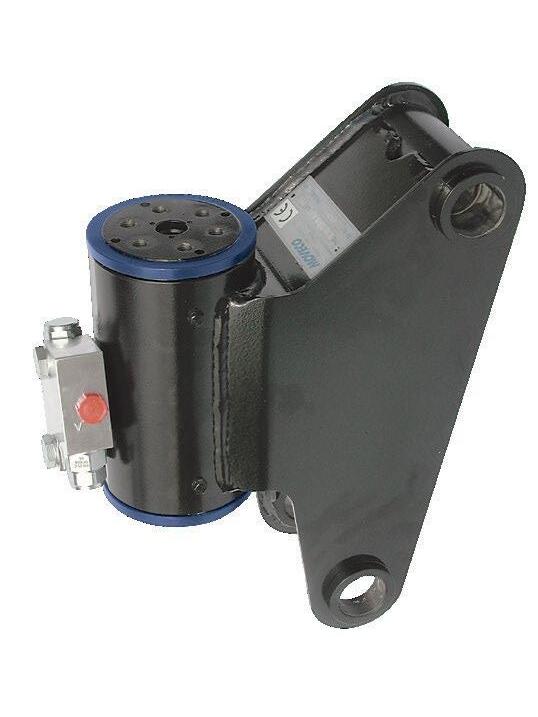
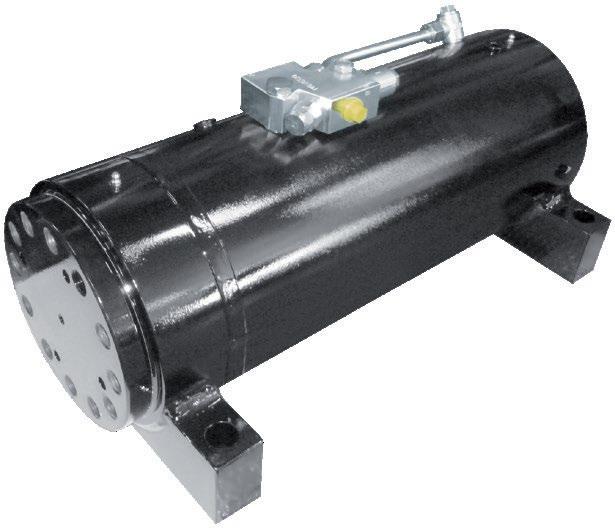
Helical Hydraulic Rotary Actuators
Young Powertech, Italian made Helical Hydraulic Rotary Actuators cover a wide range from 45 to 40,000 LB-FT torque and up to 750 degrees rotation for mobile and industrial applications. Local inventory for quick delivery and service and worldwide support makes it the best option for your rotating applications.
3060 Plaza Dr. #108
Garnet Valley, PA 19060
Telephone: 610-558-0760
Email: info@youngpowertech.com www.youngpowertech.com delivers solutions
PRODUCT SPOTLIGHT
Fluid Gear Products, Inc
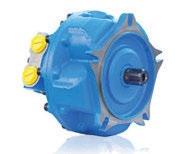
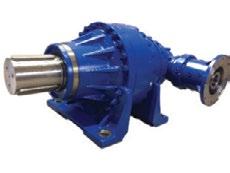
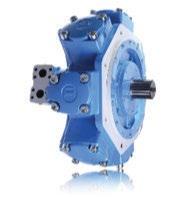
With over a decade of reliable and efficient products and services, Fluid Gear Products® is your ideal source for innovative high quality drive solutions. Whether your application requires our high speed/high torque radial piston motors, gear reducers or a combination unit, we are sure that our products engineered to fit your application will meet and exceed your requirements and expectations.
Sales@fluidgearproducts.com
Ph. 610-200-6045
www.fluidgearproducts.com
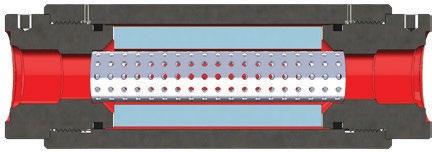
Hydraulic Noise and Shock Suppressor
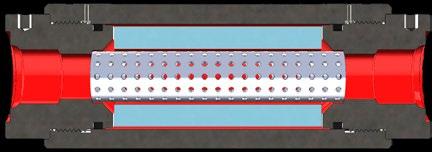
Wilkes and McLean manufactures an In Line Noise and Shock Suppressor for hydraulics and is a stocking distributor of Nacol Accumulators. Our suppressors eliminate pulsations, which greatly reduces noise and vibration from applications from a few gallons up to 200 gallons. We stock all of our suppressor sizes as well as Nacol Accumulators and parts from 1/5 of a pint up to 15 gallons, in our Schaumburg, Illinois facility.
877.534.6445 | info@wilkesandmclean.com | www.wilkesandmclean.com
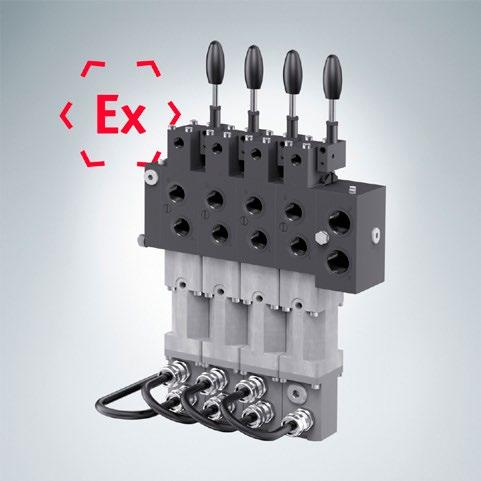
PSL-CAN is now Explosion-Proof!
HAWE’s proportional directional spool valve PSL-CAN is the ideal entry into CAN bus communication. This proven technology easily connects the valve bank into the CAN Bus along with other sensors and actuators on your machine. And now HAWE offers an explosion-proof version of this valve for use in explosion hazardous areas. Benefits: Simple wiring; preset parameters; and more.
hawe.com/en-us/topics/ psl-can-bus-on-board-directional-valve
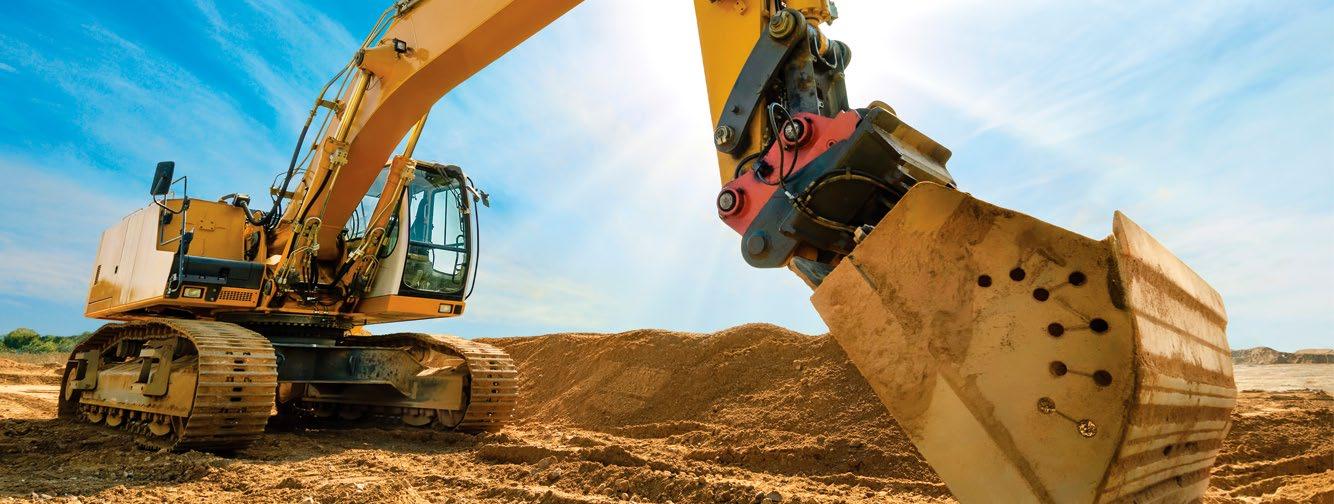
Enhancing Reliability and Safety
THE CRITICAL ROLE OF PRESSURE SWITCHES IN MODERN MOBILE HYDRAULICS
By Skyler Libkie, Technical Writer, SUCO ESI North America
Pressure switches in mobile hydraulics are essential to construction equipment, agricultural machinery, and off-highway vehicles; protecting multi-million-dollar assets and, more importantly, the operators who depend on them. With mobile hydraulic systems experiencing pressure spikes that can exceed 10 times normal operating levels, the right pressure monitoring solution becomes the critical difference between safe operation and catastrophic failure. As the mobile hydraulics market grows from $25 billion in 2025 to a projected $33.2 billion by 2032, the demand for rugged, reliable pressure switches continues to accelerate across the construction, mining, agriculture, and material handling sectors.
Operating at the Edge of Extremes
Consider the daily reality for mobile hydraulic equipment. Construction excavators endure relentless vibration and dramatic temperature swings. Agricultural tractors work through choking dust while encountering sudden and jarring load changes. Mining equipment deep underground faces punishing shock loads that would destroy lesser components. These aren't laboratory conditions; this is where pressure switches must perform flawlessly, day after day, shift after shift.
Unlike their cousins in stationary industrial systems with controlled environments, pressure switches in mobile applications face extraordinary challenges. Temperature extremes range from -40°C (-40° F) in arctic operations to +85°C (+185° F) in desert heat. Constant vibration exceeds 20g forces. Shock loads can spike to 500g. Pressure surges reach 10 times normal operating levels, all while
equipment traverses rough terrain and operates in rain, dust, and mud. The margin for error is essentially zero.
Failure in Pressure Switches
The consequences of pressure switch failure extend far beyond inconvenient downtime. Brake system monitoring detects low hydraulic pressure prior to brake failure. Hydraulic steering systems ensure adequate pressure for safe steering response. Accumulator charging monitors pre-charge pressure for emergency functions. Transmission oil pressure safeguards drive train components from damage. Furthermore, engine oil pressure provides an early warning of lubrication system failures.
Safety standards, including DIN VDE 0660, recognize these critical functions, mandating that fail-safe pressure monitoring must ensure systems remain safe or transition to a safe state upon any failure. In mobile hydraulics, this requirement extends beyond simple on/off switching. The system must also detect wiring failures that could otherwise mask dangerous conditions. This is a subtle, but potentially life-threatening distinction.
The Technology Evolution: FROM MECHANICAL TO INTELLIGENT
The evolution of pressure switch technology tells a fascinating story of engineering innovation driven by real-world necessity. What began as simple mechanical devices has transformed into sophisticated safety systems specifically engineered for mobile application demands. Traditional pressure switches detect pressure above or below the setpoint. For many applications, this binary approach
proved adequate. However, safety-critical systems, such as braking and steering, demanded more, including additional diagnostic capabilities to detect pressure levels, as well as system integrity.
Enter NAMUR Technology
NAMUR is an acronym for a German organization focused on standardization in automation technology. Advanced pressure switches with NAMUR technology provide 4 distinct states rather than just 2. Beyond detecting normal ON (pressure above the setpoint) and OFF (pressure below the setpoint), NAMUR-enabled devices also identify cable breaks and short circuits. This 4-state detection prevents a scenario that keeps safety engineers awake at night: a disconnected cable showing "normal pressure" while the actual system status remains unknown. This is a potentially life-threatening situation in brake or steering applications.
The leap to electronic pressure switches with dual outputs opened even more possibilities. These advanced devices provide independent switching functions from a single sensor, enabling simultaneous warning and shutdown thresholds without installing
multiple switches. For equipment manufacturers, this means simplified installations, reduced component counts, and enhanced safety, all from one device.
Perhaps most impressive is the integration of Silicon-on-Sapphire sensor technology. These advanced sensors deliver exceptional stability across temperature extremes. This is critical for mobile equipment operating from arctic winters to desert summers. With long-term stability greater than 0.2% full scale output and virtually zero hysteresis, these sensors maintain accuracy throughout extended service intervals. For maintenance teams managing large fleets, this translates to reliable performance and predictable maintenance schedules.
Even the humble electrical connector has evolved dramatically. Pressure switches must interface reliably with vehicle electrical systems despite constant vibration and environmental exposure. Industry-standard connectors like Deutsch DT04, Packard MetriPack 280, AMP Junior Timer, and M12 DIN have each been refined specifically for these demands, offering environmental sealing, vibration resistance, and secure locking
mechanisms that keep critical connections intact through years of punishing service.
Making the Right Choice: A FRAMEWORK FOR SUCCESS
Walking into a parts warehouse or scrolling through an equipment catalog, the variety of available pressure switches can feel overwhelming. How do you choose the right device for demanding mobile applications? It’s key to understand your specific operating conditions and match them systematically to switch capabilities.
Pressure Range and Overpressure Protection
Mobile hydraulic systems don't respect nominal operating pressures; they exceed them regularly during normal operation. Best practice calls for switches with setpoints at 60-70% of maximum operating pressure and overpressure ratings of at least four times normal operating pressure. This isn't conservative engineering; it's learned wisdom from decades of field experience.
continued on page 32
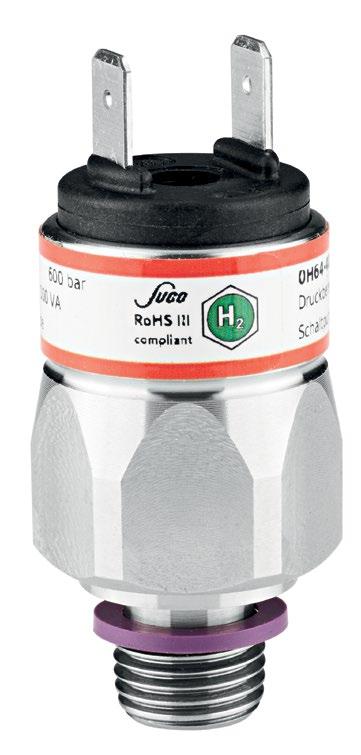
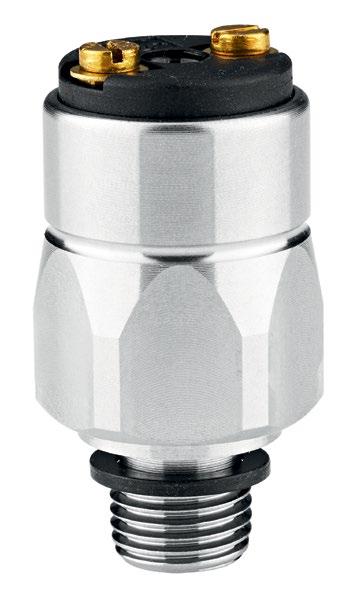
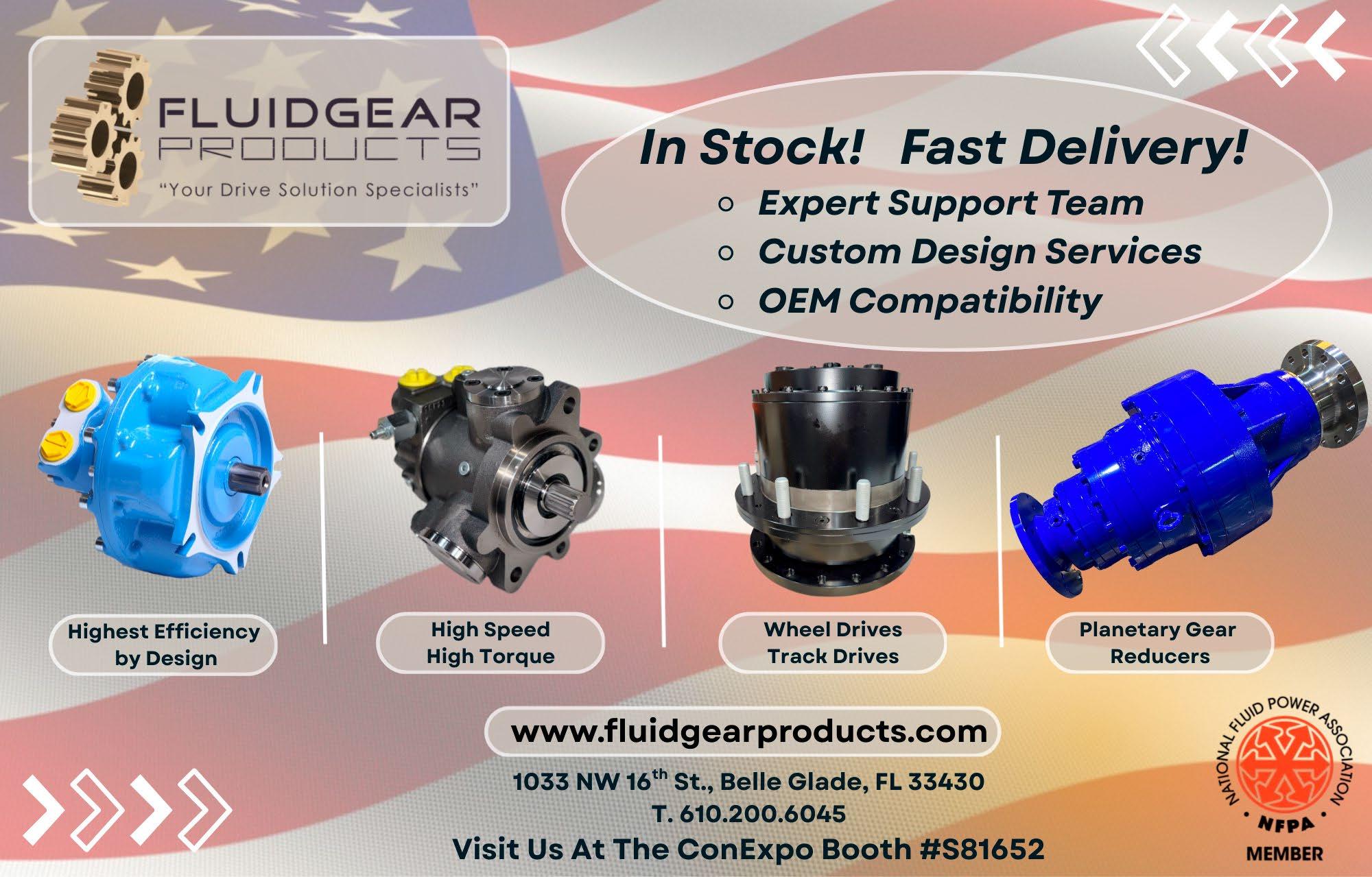
Consider brake systems typically operating at 7-17 MPa (1,000-2,500 PSI). The recommended overpressure rating jumps to 30-60 MPa (4,350-8,700 PSI), with burst pressure requirements exceeding 70 MPa (10,000 PSI). These aren't arbitrary numbers; they're the difference between reliable operation and catastrophic failure.
Environmental Protection Matters
Mobile equipment faces water, dust, and contaminants that would quickly destroy inadequately protected components. Ingress Protection (IP) ratings provide the standard measurement, but understanding what each rating means separates informed decisions from expensive mistakes. IP rating requirements by environment:
• IP65 (Minimum): Dust-tight and protected against water jets from any direction
• IP67: Dust-tight and protected against temporary immersion
• IP68: Dust-tight and protected against continuous submersion
• IP6K9K: Protected against high-pressure steam cleaning; recommended for construction equipment
Temperature considerations demand equal attention. Pressure switches must perform reliably across extreme temperature ranges spanning -40°C to +85°C (-40°F to 185°C) ambient, with hydraulic fluid temperatures potentially reaching +125°C (257°F). Seal material selection becomes critical to success. NBR (Buna-N) serves as the standard choice for -30°C to +100°C (-22°F to 212°F) with excellent oil resistance. FKM (Viton) extends the range from -20°C to
+200°C (-4°F to 392°F) with superior chemical resistance. If you choose incorrectly, premature seal failure becomes inevitable.
Installation: WHERE THEORY MEETS REALITY
Even the most carefully selected pressure switch can fail prematurely through improper installation. The good news? Most installation mistakes are easily avoided with attention to fundamental mounting location best practices. Avoid mounting at the end of long, straight pipe runs where pressure waves amplify. Install after filters or accumulators, when possible, to dampen pulsation. Use pressure snubbers or orifice fittings if direct installation in high-pulsation lines is unavoidable. Mount vertically, when possible, to prevent air pocket accumulation. Ensure adequate clearance for connector access and maintenance.
Proper torque specifications might seem like minor details until an expensive switch fails from over-tightening or leaks from insufficient torque. Over-tightening damages diaphragms and distorts housings, and under-tightening causes leaks. The solution? Always follow manufacturer torque specifications precisely and use appropriate thread sealants compatible with your hydraulic fluid. These simple practices eliminate common installation failures.
Maintenance: THE LONG-TERM RELIABILITY FACTOR
In the rush to restore equipment to service, maintenance teams sometimes view pressure switches as “set and forget” components. This mindset proves expensive. Implementing systematic maintenance extends service life and
ensures continued reliability in demanding mobile applications.
Interval Inspection Activities
Daily (Pre-Operation) Perform a visual check for leaks, damage, or loose connections.
Weekly Verify proper indicator function and check cable routing integrity.
Quarterly Test switching function, verify setpoint accuracy, and inspect seals and connectors.
Annually Verify full calibration with a certified pressure source, replacing seals if required.
Understanding common failure modes helps prevent them. Contamination ranks as the leading cause of premature failure. Use appropriate filtration upstream and clean connections during every maintenance interval. Vibration damage comes second: verify mounting security and consider adding snubbers in high-vibration locations. Seal degradation develops gradually: monitor for external leakage and replace seals at recommended intervals before catastrophic failure occurs.
Looking Forward
As mobile hydraulic systems continue evolving toward higher pressures, greater complexity, and increased automation, the role of pressure switches becomes even more critical. Modern equipment demands not just monitoring but intelligent monitoring systems that react to problems and help prevent them through predictive diagnostics and early warning.
The industry's trajectory is clear: higher reliability requirements, more challenging operating environments, and greater emphasis on safety-critical functions. Meeting these demands requires both advanced technology and fundamental best practices: selecting the right switches, installing them properly, and maintaining them systematically.
For equipment manufacturers, maintenance professionals, and operators, the message is straightforward: pressure switches in mobile hydraulics aren't commodity components to be selected based solely on price. They're precision safety devices that protect assets worth millions and lives that are priceless. Treating them accordingly through informed selection, proper installation, and systematic maintenance. This ensures they continue serving as the silent guardians that mobile hydraulic operations depend upon every single day. •

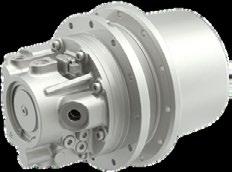

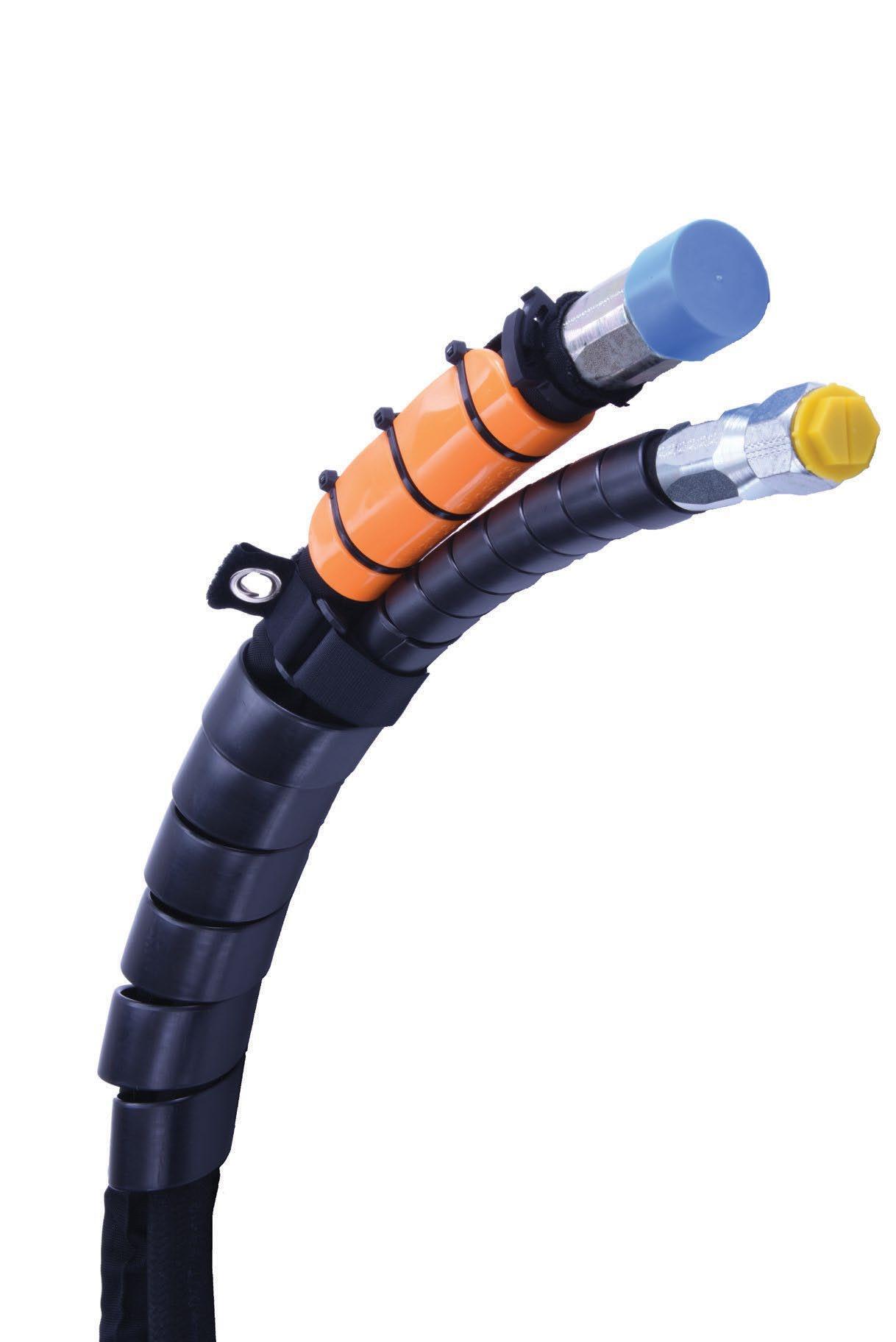
Trusted partner to OEMs supporting closed-loop CTL platforms globally

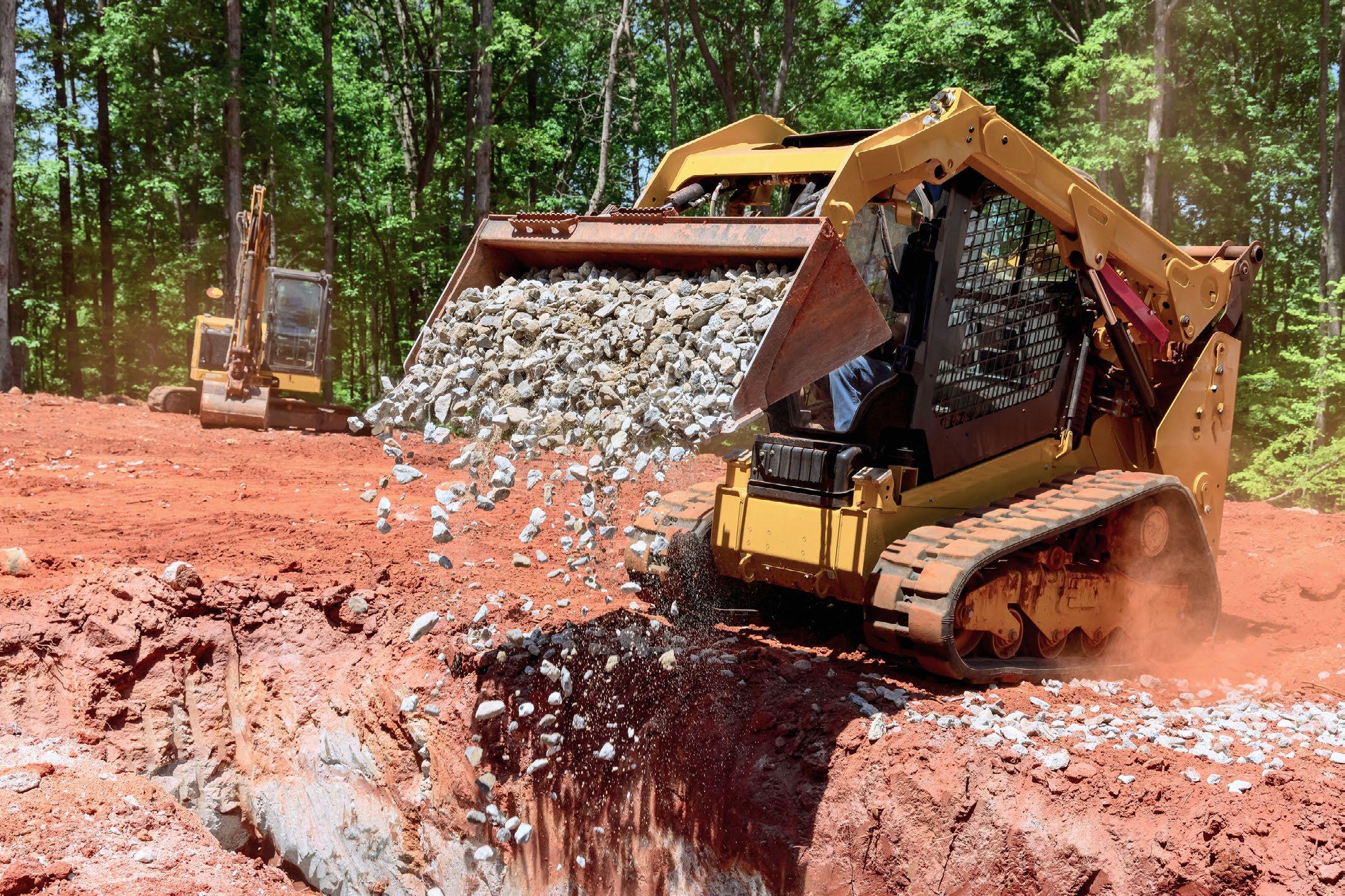
Deep application know-how built through real industrial operating experience
Regional engineering and support, backed by global development and manufacturing
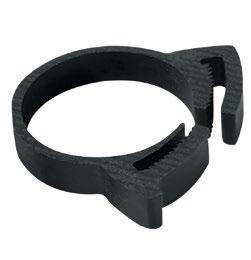
Avoid costly downtime from ruptures, contamination, and damaged ttings by protecting your entire hydraulic hose assembly with Essentra’s complete line of protection products.



LITERATURE REVIEW

Solutions for Construction Industry

Bonfiglioli delivers trusted closed-loop drive systems powering compact track loaders and demanding construction equipment. Built on deep application know-how, our hydraulic and electrified drive solutions are engineered for continuous-duty operation under high torque and harsh conditions. With global engineering expertise and strong regional support, Bonfiglioli partners closely with OEMs to optimize machine performance, reliability, and uptime across construction applications worldwide.
Bonfiglioli
3541 Hargrave Drive Hebron, KY 41048 859-334-3333 MarketingUSA@Bonfiglioli.com www.bonfiglioli.com
Diamond Hydraulics, Inc.
Diamond Hydraulics provides fast, accurate repair of hydraulic components by industry experts. With state-ofthe-art test equipment, we ensure that your products are in the absolute best condition before leaving our facility. We are committed to providing excellent customer service and strive to consistently meet and exceed the needs and expectations of every customer.
Diamond Hydraulics, Inc. 6776 FM 2004 Rd Hitchcock, Tx 77563 409-986-3957
www.diamondhydraulics.com sales@diamondhydraulicsinc.com
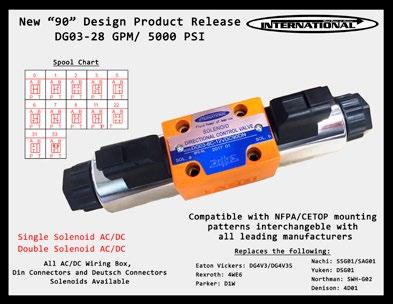

International FPA is a leader in the directional control space of the fluid power industry, delivering precision, reliability and innovation spanning mobile and Industrial applications ensuring accurate fluid routing, fast response times and long service life under demanding conditions. By combining advanced engineering, rigorous quality standards they set the benchmark for performance, safety and efficiency in modern hydraulic systems.
International Fluid Power of America 43123 Business Park Dr. Temecula, CA 92590
Toll Free PH: (800) 432-6405
Toll Free FAX: (888) 220-1415
Website:https://intlfpa.com
Custom Pump Mount Solutions
BSF has been designing and manufacturing custom motor/pump mounts for over 50 years. We offer a wide variety of options including multiple styles of adaptors, adaptor plates, foot mounts and test stand kits. See our full line at www.bsfinc.net. While there, try our online configurator. Select your motor, pump and couplings and get a quote in minutes. Let us use our expertise on your next project.
BSF Inc. (937) 890-6121 sales@bsfinc.net


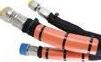





Solutions to Protect Hydraulic Hose & Fittings
Construction, agricultural and mining vehicles need to be durable and perform in the most demanding environments. We’ve put together this short guide to help design engineers, OEMs, and hydraulic designers choose the small components they’ll need to ensure reliable operations, reduced downtime, and low maintenance costs. sales@essentracomponents.com 800-847-0486

Compressed Air Filtration
Brochure offers a comprehensive overview of the company’s complete line of compressed air filtration products. Highlighted is the patented family of Extractor/Dryers. These two-stage, point of use filters remove contaminates to a 5-micron rating with flow ranges of 15 to 2,000 scfm. Additional products available include the SuperStar Membrane Dryer, .01 Micron Filter, Refrigerated Extractor/Dryer, and much more.
La-Man Corporation 800.348.2463 www.laman.com
LITERATURE REVIEW

LHY Powertrain Corporation
• Piston Pumps, 45 to 280 cc/rev
• Piston Motors, 35 to 280 cc/rev
• Post-compensated Directional Valves, 30 to 160 GPM
• High-touch Engineering Support for Application Reviews
• Nationwide Sales and Service Presence
• Best-in-Class Quality and Delivery Standards
• Mobile & Industrial: Agriculture, Construction, Forestry, Mining, Oil & Gas, Utility
Experience the LHY Difference! Call or email us today to get in touch with our team. We are here to help you. info@lhy-us.com | (330) 533-6801

Air on Demand Solutions
Electrify Pneumatic Actuators and Devices
*Easy setup. Motor Power Supply and Controller included
*Quiet operation: 50 dB sound pressure level
*Customizable to meet your specific applicationdiscover. phdinc.com/pdf/AOD.pdf
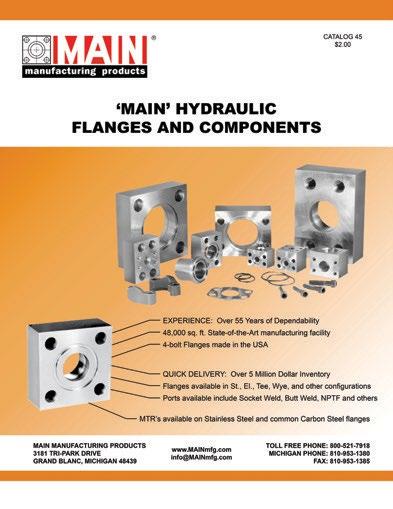
Hydraulic Flanges and Components
New 120 page catalog includes popular styles of MAIN Manufacturing’s extensive offering of carbon and stainless Hydraulic Flanges and Components – ready for immediate shipment. Metric ordering information, weld specs, and dimensional information included. The “Quick Reference Guide” helps specify less popular items often stocked or quickly manufactured (generally 3-4 days) at our US plant.
MAIN Manufacturing Products, Inc. Grand Blanc, MI
800.521.7918; FAX: 810.953.1385
E-mail: info@mainmfg.com www.mainmfg.com
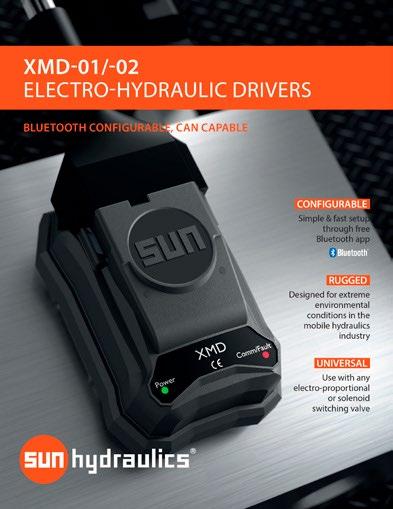

XMD-01/-02 Electro-Hydraulic Drivers
The XMD modules are single- and dualcoil electrohydraulic drivers for mobile and industrial hydraulic equipment. With CAN communication for easy integration, they’re configurable via Sun’s free XMD Mobile app. Designed for global markets, they control hydraulic actuators in on- and off-highway equipment, delivering reliable, repeatable flow and pressure control with Sun valves. www.sunhydraulics.com
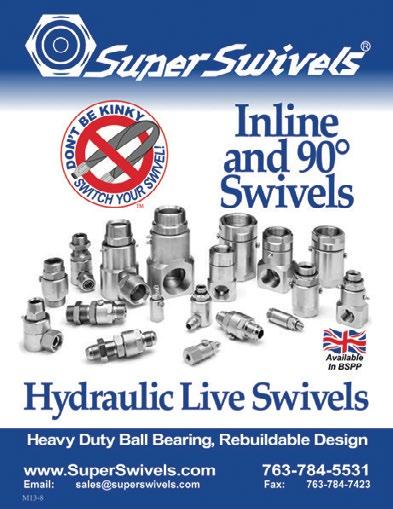

Hydraulic Live Swivels Catalog
Inline and 90° hydraulic live swivels.
Available in sizes from 1/8” to 2-1/2”, rated to 10,000 PSI, heat treated, superior quality alloy steel, chrome or stainless steel ball bearings, withstands heavy side loads, burnished (micro smooth) barrel bores, Viton®, Aflas®, or Teflon® encapsulated seals, zinc or nickel plated, available in 304 and 440 stainless steel, full flow - low pressure drop, rebuilding kits available.
Super Swivels
Phone: 763.784.5531
Fax: 763.784.7423
Website: www.superswivels.com

Hydraulic Contamination Control
For over 25 years, Ultra Clean has been a leader in the Fluid Power industry, perfecting techniques for cleaning hose and tube assemblies during the fabrication process. Our cleaning systems are also designed to purge contamination from hose and tube assemblies following system failures. Additionally, Ultra Clean provides advanced sealing solutions to ensure that these cleaned assemblies remain free from contamination during transportation and storage.
Ultra Clean Technologies Corp. 1274 Highway 77 Bridgeton, NJ 08302 Toll Free: 800.791.9111 www.ultracleantech.com sales@ultracleantech.com
Membership Benefits That Keep You Moving Forward

» IFPS MEMBERSHIP includes practical discounts that can make training and certification planning easier, including discounts on certification test fees, recertification fees, and store items. Also you can incorporate commitment packages for groups of 10 or more. Members can also access perks like the Abenity Member Perks Program.
Beyond savings, IFPS membership includes member only professional development options, including free downloads of certification study manuals, free live web seminars and archived web seminars. You have Access to the Member Forum, member exclusive educational and training videos, and free safety and technical posters. Members also earn Professional Development Points each year, which matter at recertification time, plus networking benefits like biannual meetings and member to member search.
IFPS Swag Spotlight, Mugs and Tumblers
» IFPS OFFERS DRINKWARE in the online store, including a 20 oz tumbler and a 15 oz mug. The mug includes graphic options like “Squeezy McPressure” and an IFPS certificate design, making it a simple, practical item for desks, shops, classrooms, or event giveaways.
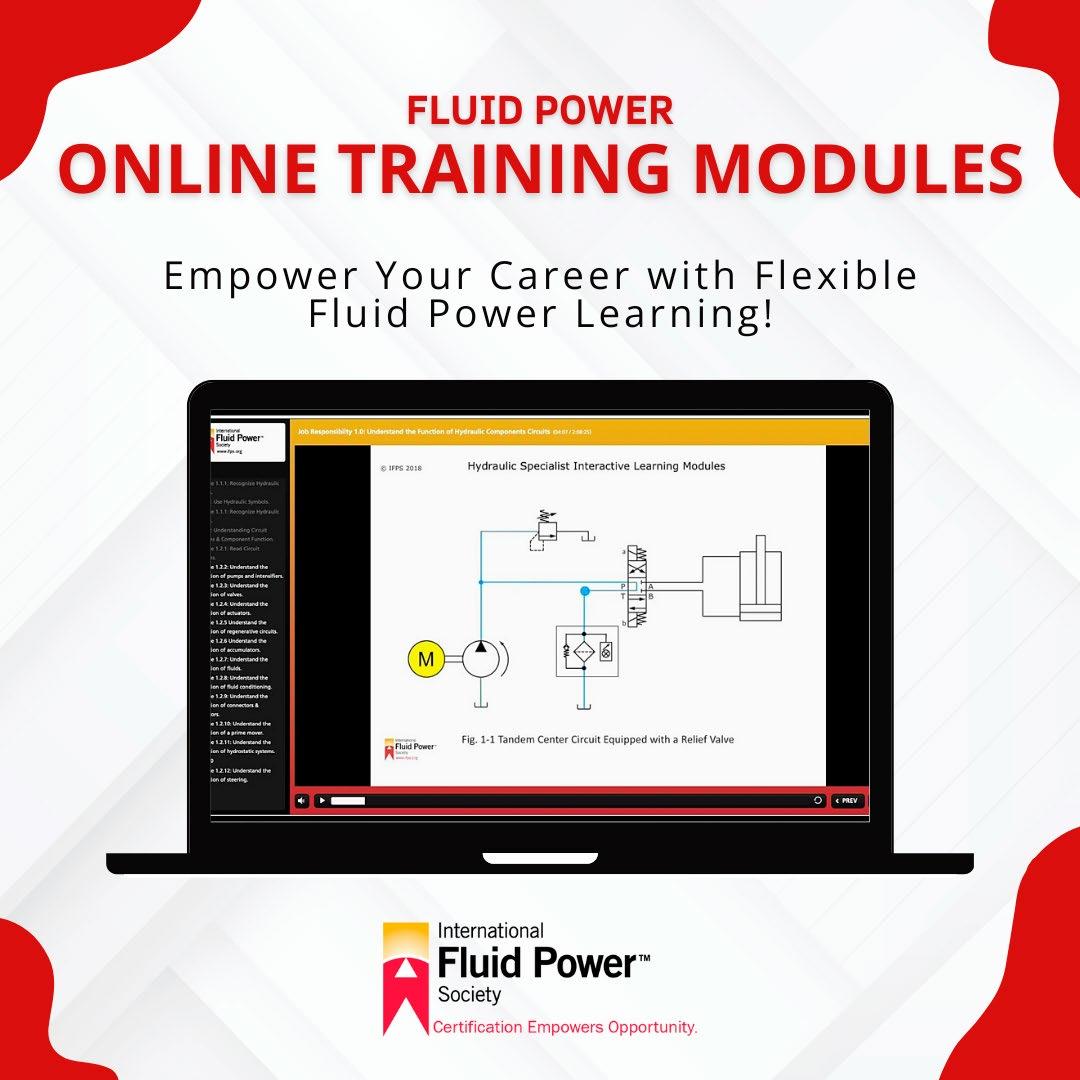
These items are also an easy add on when you are placing other IFPS store orders and they pair well with membership and training goals as a small useful touchpoint that keeps IFPS visible year round. IFPS notes that to receive member discounts, you must have an active membership and be logged in.
Online Training Modules and Fluid Power Fundamentals
» IFPS ONLINE TRAINING Modules are built for professionals who want to boost skills or prepare for a certification test, with one year of access to training after purchase. The catalog includes multiple paths, including Connector and Conductor, Fluid Power Support Associate, Hydraulic Mechanic, Hydraulic Specialist, and Pneumatic Specialist training modules. If you want a true starting point, IFPS also offers Fluid Power Fundamentals Training Modules, an online, at your own pace course designed for people who work with hydraulics and want to understand core fundamentals and key components in a hydraulic system. The outline covers hydraulic fundamentals, symbology, components, fluid conveyance, and fluids and contamination access is provided for one year after purchase.
Newly Certified Professionals
DECEMBER 2025
AJPP
Daniel Evans
AJPPCC
Daniel Evans
CC
Antonio Rivera, The Boeing Company
Oleg Babiy, The Boeing Company
E
Jeff Asselin, Altec Industries, Inc.
ECS
Grayson Marriner, Altec Industries, Inc.
Steven Nelson, Beckwood Press
HS
Aidan Lenz
Alexander Adamchick, Alfred State
Aneesh Reddlapalli Venkatesh, Applied Fluid Power
Bhanu Sai Prakash Chikkavarapu
Caleb Kea, Hydraquip
Elisha Newsome, Hydradyne LLC.
Hunter Northington, Hydraquip, Inc.
Jacob Austin, Alfred State College
John Heimer, Alfred State College
Michael Griffith, SunSource
Michael Johnson, Depatie Fluid Power Co.
Sergei Simonovich, Hennipen Tech
Vincent Molisani, Alfred State
Xoan Meira
IHM
Dave Beighley, MFP Automation Engineering
Tom Boden, MFP Automation Engineering
MHM
Abel Abrego, AEP
Billy Wilkerson, Altec Nueco
Brett Sullivan, Entergy
Cayden Billiot
Chris Petermann, Entergy
Dakoda Hall, Huntsville Utilities
Eric Mullins, Huntsville Utilities
Finney Trones, AEP
Hunter Henderson, Altec Industries, Inc.
Hunter Matte, Entergy
Jacob Boggus, Huntsville Utilities
Jacob Major, Altec Industries, Inc.
james vaughan, Altec Industries
Jeremy Grimes, Coosa Valley Electric Coop
Jon McGowan, Entergy
Jose Talamantes, AEP
Logan Horstman, Altec Industries, Inc.
Paul Wilson, Entergy
Rob White, Entergy
Shawn Mantanona, Altec Industries, Inc.
Talon Verret, Entergy
Zachary Wilson, Entergy
PS
Anastasia Alidaan, Hydraulic Supply & Service Co.
Gerardo Jimenez Palomares, Norgren Manufacturing
Jason LaFollette, Hovair Systems
Jose Luis Barron Morelos, IMI Norgren
S
Anastasia Alidaan, Hydraulic Supply & Service Co.
SA
Amanada Kelly, White
Cory Roth, Supreme Integrated Technology
David Gwartney, Supreme Integrated Technology
Terry Hudson, White
William Haigh, Supreme Integrated Technologies








Plugs with integrated molded NBR or FKM seal. Automatically assembled with integrated control. Our products can be found worldwide in hydraulic applications and drive technology. We stock for you.
our turn.
Individuals wishing to take any IFPS written certification tests can select from convenient locations across the United States and Canada. IFPS is able to offer these locations through its affiliation with the Consortium of College Testing Centers provided by National College Testing Association. Contact Kyle Pollander at Kpollander@ifps.org if you do not see a location near you. Every effort will be made to accommodate your needs.
Written Certification Test Locations
Alabama Auburn, AL Birmingham, AL Calera, AL Decatur, AL Huntsville, AL Jacksonville, AL Mobile, AL Montgomery, AL Normal, AL Tuscaloosa, AL
Alaska Anchorage, AK Fairbanks, AK
Arizona Flagstaff, AZ Glendale, AZ Mesa, AZ Phoenix, AZ Prescott, AZ Scottsdale, AZ
Sierra Vista, AZ Tempe, AZ Thatcher, AZ Tucson, AZ Yuma, AZ
Arkansas Bentonville, AR Hot Springs, AR Little Rock, AR
TENTATIVE TESTING DATES FOR ALL LOCATIONS
MARCH 2026
Tuesday 3/10 • Thursday 3/26
APRIL 2026
Tuesday 4/7 • Thursday 4/23
MAY 2026
Tuesday 5/12 • Thursday 5/28
JUNE 2026
Tuesday 6/9 • Thursday 6/25
JOB PERFORMANCE TEST LOCATIONS
Arizona California Colorado Florida
Georgia
Maine Michigan Minnesota Montana New Jersey Nova Scotia Pennsylvania Texas Washington Wyoming Western Australia
California Aptos, CA Arcata, CA Bakersfield, CA Dixon, CA Encinitas, CA Fresno, CA Irvine, CA
Marysville, CA Riverside, CA Salinas, CA San Diego, CA San Jose, CA San Luis Obispo, CA Santa Ana, CA Santa Maria, CA Santa Rosa, CA Tustin, CA Yucaipa, CA Colorado Aurora, CO Boulder, CO Springs, CO Denver, CO Durango, CO Ft. Collins, CO Greeley, CO Lakewood, CO Littleton, CO Pueblo, CO
Delaware Dover, DE Georgetown, DE Newark, DE
Florida
Avon Park, FL
Boca Raton, FL Cocoa, FL Davie, FL
Daytona Beach, FL
Fort Pierce, FL Ft. Myers, FL Gainesville, FL Jacksonville, FL
Miami Gardens, FL Milton, FL
New Port Richey, FL Ocala, FL Orlando, FL
Panama City, FL
Pembroke Pines, FL
Pensacola, FL
Plant City, FL Riviera Beach, FL Sanford, FL Tallahassee, FL Tampa, FL
West Palm Beach, FL
Georgia
Albany, GA
Athens, GA
Atlanta, GA
Carrollton, GA
Columbus, GA
Dahlonega, GA
Dublin, GA
Dunwoody, GA
Forest Park, GA
Lawrenceville, GA
Morrow, GA
Oakwood, GA
Savannah, GA
Statesboro, GA
Tifton, GA
Valdosta, GA
Hawaii Laie, HI
Idaho Boise, ID
Coeur d ‘Alene, ID
Idaho Falls, ID
Lewiston, ID
Moscow, ID
Nampa, ID
Rexburg, ID
Twin Falls, ID
Illinois
Carbondale, IL
Carterville, IL
Champaign, IL
Decatur, IL
Edwardsville, IL
Glen Ellyn, IL
Joliet, IL
Malta, IL
Normal, IL
Peoria, IL
Schaumburg, IL
Springfield, IL
University Park, IL
Indiana
Bloomington, IN
Columbus, IN
Evansville, IN
Fort Wayne, IN
Gary, IN
Indianapolis, IN
Kokomo, IN
Lafayette, IN
Lawrenceburg, IN
Madison, IN
Muncie, IN
New Albany, IN
Richmond, IN
Sellersburg, IN
South Bend, IN
Terre Haute, IN
Iowa Ames, IA
Cedar Rapids, IA
Iowa City, IA
Ottumwa, IA
Sioux City, IA
Waterloo, IA
Kansas
Kansas City, KS
Lawrence, KS
Manhattan, KS
Wichita, KS
Kentucky
Ashland, KY
Bowling Green, KY
Erlanger, KY
Highland Heights, KY
Louisville, KY
Morehead, KY
Louisiana
Bossier City, LA
Lafayette, LA
Monroe, LA
Natchitoches, LA
New Orleans, LA
Shreveport, LA
Thibodaux, LA
Maryland
Arnold, MD
Bel Air, MD
College Park, MD
Frederick, MD
Hagerstown, MD
La Plata, MD
Westminster, MD
Woodlawn, MD
Wye Mills, MD
Massachusetts
Boston, MA
Bridgewater, MA
Danvers, MA
Haverhill, MA
Holyoke, MA
Shrewsbury, MA
Michigan
Ann Arbor, MI
Big Rapids, MI
Chesterfield, MI
Dearborn, MI
Dowagiac, MI
East Lansing, MI
Flint, MI
Grand Rapids, MI
Kalamazoo, MI
Lansing, MI
Livonia, MI
Mount Pleasant, MI
Sault Ste. Marie, MI
Troy, MI
University Center, MI
Warren, MI
Minnesota
Alexandria, MN
Brooklyn Park, MN
Duluth, MN
Eden Prairie, MN
Granite Falls, MN
Mankato, MN
Mississippi
Goodman, MS
Jackson, MS
Mississippi State, MS
Raymond, MS
University, MS
Missouri
Berkley, MO
Cape Girardeau, MO
Columbia, MO
Cottleville, MO
Joplin, MO
Kansas City, MO
Kirksville, MO
Park Hills, MO
Poplar Bluff, MO
Rolla, MO
Sedalia, MO
Springfield, MO
St. Joseph, MO
St. Louis, MO
Warrensburg, MO
Montana
Bozeman, MT
Missoula, MT
Nebraska
Lincoln, NE
North Platte, NE
Omaha, NE
Nevada
Henderson, NV
Las Vegas, NV
North Las Vegas, NV
Winnemucca, NV
New Jersey
Branchburg, NJ
Cherry Hill, NJ
Lincroft, NJ
Sewell, NJ
Toms River, NJ
West Windsor, NJ
New Mexico Albuquerque, NM
Clovis, NM
Farmington, NM
Portales, NM
Santa Fe, NM
New York
Alfred, NY
Brooklyn, NY
Buffalo, NY
Garden City, NY
New York, NY
Rochester, NY
Syracuse, NY
North Carolina Apex, NC
Asheville, NC
Boone, NC
Charlotte, NC
China Grove, NC
Durham, NC
Fayetteville, NC
Greenville, NC
Jamestown, NC
Misenheimer, NC
Mount Airy, NC
Pembroke, NC
Raleigh, NC
Wilmington, NC
North Dakota
Bismarck, ND
Ohio Akron, OH
Cincinnati, OH
Cleveland, OH
Columbus, OH
Fairfield, OH
Findlay, OH
Kirtland, OH
Lima, OH
Maumee, OH
Newark, OH
North Royalton, OH
Rio Grande, OH
Toledo, OH
Warren, OH
Youngstown, OH
Oklahoma Altus, OK
Bethany, OK
Edmond, OK
Norman, OK
Oklahoma City, OK
Tonkawa, OK
Tulsa, OK
Oregon Bend, OR Coos Bay, OR Eugene, OR
Gresham, OR
Klamath Falls, OR
Medford, OR
Oregon City, OR
Portland, OR
White City, OR
Pennsylvania Bloomsburg, PA Blue Bell, PA
Gettysburg, PA
Harrisburg, PA
Lancaster, PA
Newtown, PA Philadelphia, PA Pittsburgh, PA
Wilkes-Barre, PA York, PA
South Carolina
Beaufort, SC
Charleston, SC
Columbia, SC
Conway, SC
Graniteville, SC
Greenville, SC Greenwood, SC Orangeburg, SC
Rock Hill, SC
Spartanburg, SC
Tennessee Blountville, TN
Clarksville, TN
Collegedale, TN
Gallatin, TN
Johnson City, TN
Knoxville, TN
Memphis, TN
Morristown, TN
Murfreesboro, TN
Nashville, TN
Texas
Abilene, TX
Arlington, TX
Austin, TX
Beaumont, TX
Brownsville, TX
Commerce, TX
Corpus Christi, TX
Dallas, TX
Denison, TX
El Paso, TX
Houston, TX
Huntsville, TX
Laredo, TX
Lubbock, TX
Lufkin, TX
Mesquite, TX
San Antonio, TX
Victoria, TX
Waxahachie, TX
Weatherford, TX
Wichita Falls, TX
Utah Cedar City, UT
Kaysville, UT
Logan, UT
Ogden, UT
Orem, UT
Salt Lake City, UT
Virginia
Daleville, VA
Fredericksburg, VA
Lynchburg, VA
Manassas, VA
Norfolk, VA
Roanoke, VA
Salem, VA
Staunton, VA
Suffolk, VA
Virginia Beach, VA
Wytheville, VA
Washington
Auburn, WA
Bellingham, WA
Bremerton, WA
Ellensburg, WA
Ephrata, WA
Olympia, WA
Pasco, WA
Rockingham, WA
Seattle, WA
Shoreline, WA
Spokane, WA
West Virginia
Ona, WV
Wisconsin
La Crosse, WI
Milwaukee, WI
Mukwonago, WI
Wyoming
Casper, WY
Laramie, WY
Torrington, WY
CANADA
Alberta
Calgary, AB
Edmonton, AB
Fort McMurray, AB
Lethbridge, AB
Lloydminster, AB Olds, AB Red Deer, AB
British Columbia Abbotsford, BC
Burnaby, BC
Castlegar, BC
Delta, BC
Kamloops, BC
Nanaimo, BC
Prince George, BC Richmond, BC Surrey, BC
Vancouver, BC
Victoria, BC
Manitoba Brandon, MB
Winnipeg, MB
New Brunswick Bathurst, NB Moncton, NB
Newfoundland and Labrador St. John’s, NL
Nova Scotia Halifax, NS
Ontario
Brockville, ON Hamilton, ON London, ON Milton, ON Mississauga, ON Niagara-on-the-Lake, ON
North Bay, ON North York, ON Ottawa, ON Toronto, ON Welland, ON Windsor, ON
Quebec
Côte Saint-Luc, QB Montreal, QB
Saskatchewan Melfort, SK
Moose Jaw, SK Nipawin, SK
Prince Albert, SK Saskatoon, SK
Yukon Territory Whitehorse, YU
UNITED KINGDOM
Elgin, UK
GHAZNI
Kingdom of Bahrain, GHA Thomasville, GHA
EGYPT Cairo, EG
JORDAN Amman, JOR
NEW ZEALAND Taradale, NZ
Wildwood, FL Winter Haven, FL
CFPAI
Certified Fluid Power Accredited Instructor
CFPAJPP
Certified Fluid Power Authorized Job Performance Proctor
CFPAJPPCC
Certified Fluid Power Authorized Job Performance Proctor Connector & Conductor
CFPE
Certified Fluid Power Engineer
CFPS
Certified Fluid Power Specialist (Must Obtain CFPHS & CFPPS)
CFPHS
Certified Fluid Power Hydraulic Specialist
CFPPS
Certified Fluid Power Pneumatic Specialist
CFPECS
Certified Fluid Power Electronic Controls Specialist
CFPMT
Certified Fluid Power Master Technician (Must Obtain CFPIHT, CFPMHT, & CFPPT)
CFPIHT
Certified Fluid Power
Industrial Hydraulic Technician
CFPMHT
Certified Fluid Power
Mobile Hydraulic Technician
CFPPT
Certified Fluid Power Pneumatic Technician
CFPMM
Certified Fluid Power Master Mechanic
(Must Obtain CFPIHM, CFPMHM, & CFPPM)
CFPIHM
Certified Fluid Power
Industrial Hydraulic Mechanic
CFPMHM
Certified Fluid Power
Mobile Hydraulic Mechanic
CFPPM
Certified Fluid Power
Pneumatic Mechanic
CFPMIH
Certified Fluid Power
Master of Industrial Hydraulics
(Must Obtain CFPIHM, CFPIHT, & CFPCC)
CFPMMH
Certified Fluid Power
Master of Mobile Hydraulics (Must Obtain CFPMHM, CFPMHT, & CFPCC)
CFPMIP
Certified Fluid Power
Master of Industrial Pneumatics
(Must Obtain CFPPM, CFPPT, & CFPCC)
CFPCC
Certified Fluid Power
Connector & Conductor
CFPSD
Fluid Power System Designer
CFPSA
Certified Fluid Power Support Associate
Tentative Certification Review Training
IFPS offers onsite review training for small groups of at least 10 persons. An IFPS accredited instructor visits your company to conduct the review. Contact kpollander@ifps.org for details of the scheduled onsite reviews listed below.
HYDRAULIC SPECIALIST
For custom IFPS training inquiries, please contact Bj Wagner (bwagner@ifps.org)
ELECTRONIC CONTROLS SPECIALIST
For custom IFPS training inquiries, please contact Bj Wagner (bwagner@ifps.org).
PNEUMATIC SPECIALIST
For custom IFPS training inquiries, please contact Bj Wagner (bwagner@ifps.org)
CONNECTOR & CONDUCTOR
For custom IFPS training inquiries, please contact Bj Wagner (bwagner@ifps.org).
MOBILE HYDRAULIC MECHANIC
For custom training IFPS inquiries, please contact Bj Wagner (bwagner@ifps.org)
Online Mobile Hydraulic Mechanic certification review for written test is offered through CFC Industrial Training. This course surveys the MHM Study Manual (6.5 hours) and every outcome to prepare you for the written test. Members may e-mail for a 20% coupon code off the list price. Test fees are not included.
INDUSTRIAL HYDRAULIC MECHANIC
For custom IFPS training inquiries, please contact Bj Wagner (bwagner@ifps.org).
INDUSTRIAL HYDRAULIC TECHNICIAN
For custom IFPS training inquiries, please contact Bj Wagner (bwagner@ifps.org).
» For dates, call CFC Industrial Training at (513) 874-3225 or visit www.cfcindustrialtraining.com.
MOBILE HYDRAULIC TECHNICIAN
For custom IFPS training inquiries, please contact Bj Wagner (bwagner@ifps.org).
PNEUMATIC TECHNICIAN & PNEUMATIC MECHANIC
For custom IFPS training inquiries, please contact Bj Wagner (bwagner@ifps.org).
» For dates, call CFC Industrial Training at (513) 874-3225 or visit www.cfcindustrialtraining.com.

Fluid Power Forum
ERIC LANKE WITH
FLUID POWER FORUM is a fluid power industry- focused podcast with Eric Lanke, President & CEO of the National Fluid Power Association, that highlights the people, technologies, and unique applications that are moving the industry forward. New episodes are released every other Monday.
Available on all of your favorite platforms, including Apple Podcasts, iHeart Radio, Spotify, and Stitcher. Find and share more interesting fluid power technologies and unique applications using #onlyfluidpowercan and follow podcast and other fluid power industry-related updates at @TheNFPA.
NEW EPISODES
SCAN HERE EVERY OTHER MONDAY
SUBSCRIBE TODAY AND NEVER MISS AN EPISODE!

ELECTRO-HYDRAULIC SOLUTIONS FOR STEERING HEAVY TRUCKS
» WHEN ERIC
LANKE, invited Zach Lindsley, national sales manager at Terzo Power Systems, onto the “Fluid Power Forum” podcast, the conversation quickly zeroed in on how OEMs are wrestling with how to steer very heavy electric trucks without giving up the power density of hydraulics. Terzo manufactures and sells an electro-hydraulic pump and control units branded as the Hydrapulse, which is produced in sizes ranging from 1.5 to 30 kW. Lanke welcomed Zach into the forum to learn more about these applications and the fluid power systems that make it possible. Lindsley explained how the company’s Hydrapulse electro-hydraulic power unit emerged as a compact “black box” solution that marries high-voltage electrics with proven hydraulic steering hardware.
FROM PROTOTYPE HEADACHES TO A “BLACK BOX” SOLUTION
The roots of the Hydrapulse concept go back to 2014, when Terzo engineers were supporting small and mid-sized OEMs on early vehicle electrification projects. At the time, many prototypes married high-voltage permanent-magnet motors and inverters to hydraulic pumps using ad hoc brackets, separate cooling loops, and expensive high-voltage cabling.
Those systems worked in the lab, but they were not production friendly. Each installation demanded custom interfaces, multiple cooling circuits, and a web of connections that added cost, complexity, and failure points. Terzo founder Mike Terzo saw an opportunity to consolidate these elements into a single, integrated package. The vision was simple: an engineer specifies required flow and pressure, sends a CAN command, and the unit delivers hydraulic power on demand.
That vision evolved into Hydrapulse, an enclosed electro-hydraulic module that combines inverter, high-voltage permanent-magnet
motor, quiet hydraulic pump, sensors, and control electronics in one compact assembly.
WHY ELECTRO-HYDRAULIC STEERING FITS HEAVY EVS
Terzo did not initially target steering for heavy trucks, but demand from vehicle manufacturers quickly redirected the product roadmap. As fleets pursue battery-electric, fuel-cell, and range-extended architectures, they must replace the engine-driven power steering pump without sacrificing steering feel or safety. Simply switching to a large electromechanical steering actuator is not realistic on vehicles with front axles carrying 90 kN (20,000 lb.) or more. Space inside the chassis is already constrained by battery packs, and any new hardware must compete with strict weight limits.
Hydraulics remain the most power-dense and packaging-efficient way to generate steering force in this environment.
Electro-hydraulic steering keeps the familiar power steering gear, but feeds it with a high-voltage electric motor and pump module instead of a belt- or gear-driven pump. This preserves the proven mechanical steering architecture while decoupling it from the engine. For fully electric trucks and buses, the Hydrapulse unit draws directly from the traction battery at 350–800 VDC, eliminating the need to step down to 24 or 48 V for steering power.
INSIDE THE HYDRAPULSE STEERING UNIT
At the hardware level, the Hydrapulse package replaces three to five discrete components with one integrated system. A high-efficiency inverter accepts DC power from the vehicle’s main battery. That inverter drives a permanent-magnet motor optimized for high power density and variable-speed operation. The motor, in turn, spins a low-noise helical gear
pump that supplies flow to the existing power steering gear. The module is self-contained so Terzo engineers can optimize internal connections, cooling, and noise control before the unit ever reaches the OEM. Built-in pressure and temperature sensors feed data back over the vehicle network, supporting diagnostics, performance monitoring, and predictive maintenance strategies. With an electro-hydraulic unit and speed-controlled motor, engineers can at least trim wasted energy by reducing pump speed in low-demand situations while ramping up when the driver demands rapid steering response.
BALANCING EFFICIENCY AND STEERING FEEL
One of the design challenges in electric steering assist is how aggressively to reduce pump speed when the vehicle is not turning. Even a brief delay while the pump spins up can feel like a “dead band” or stiffness at the wheel. Terzo’s approach is to maintain a low “idle” speed that preserves steering feel while still cutting most of the energy draw compared to full-speed operation.
BEYOND STEERING
A PLATFORM FOR AUXILIARY SYSTEMS
Looking ahead, Terzo sees an opportunity to move beyond open-center circuits toward closed-center or demand-based systems that eliminate continuous flow altogether. That evolution would further reduce parasitic losses while keeping hydraulics in the loop for high force steering and auxiliary functions. While heavy-truck steering is the first breakout application, Terzo expects significant growth across multiple vehicle types. The same high-voltage electro-hydraulic platform can power electric power take-off (ePTO) functions, cooling pumps, air-conditioning compressors, and other auxiliary circuits on commercial EVs.
Lubriplate’s complete line of ultra high-performance, hydraulic fluids has been designed to provide a wide range of benefits including: extended fluid change intervals, cooler operating temperatures, reduced friction and reduced downtime. Products include...
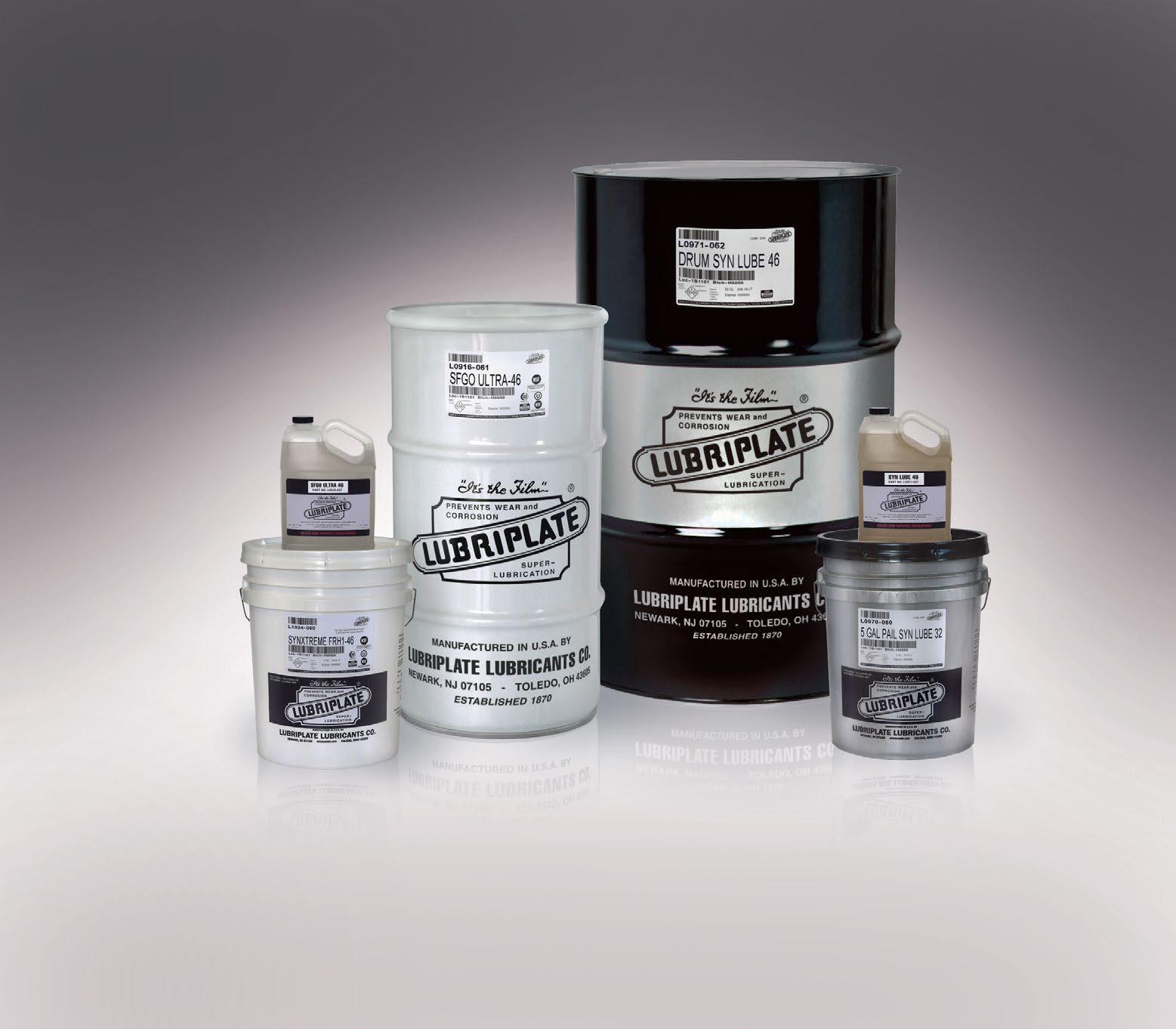
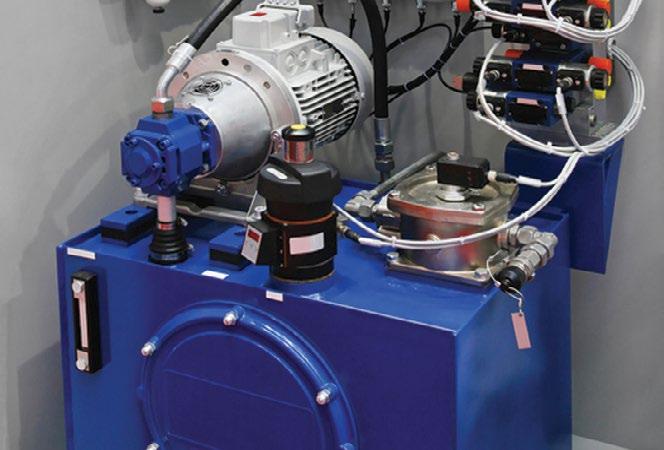

ZF SERIES HYDRAULIC FLUIDS ECO
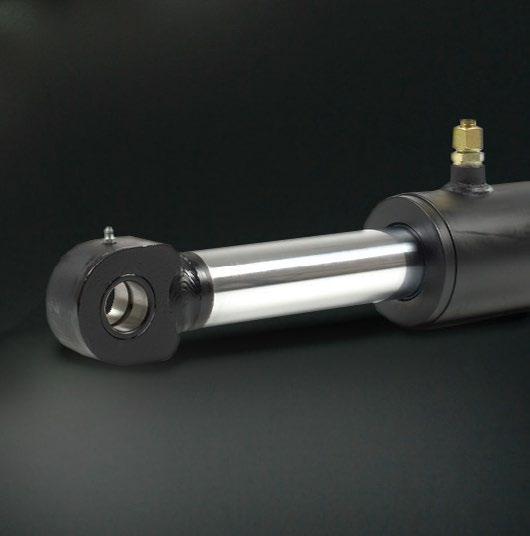
• High-Performance, 100% Synthetic, Polyalphaolefin (PAO)-Based Fluids.
• Provides extended drain intervals and excellent compatibility with seals.
• Available in ISO Viscosity Grades 32, 46 and 68.
HO SERIES HYDRAULIC OILS PETROLEUM
• Premium-Quality, Petroleum-Based Hydraulic Oils (ISO Grades 32-100).
• Anti-wear fortified to protect hydraulic system components.
• High aniline points ensure long seal life with fewer leaks.
SFGO ULTRA SERIES 7-68 NSF H1
• NSF H1 Registered and NSF ISO 21469 Certified - Food Machinery Grade.
• High Performance, 100% Synthetic Food Machinery Grade Fluids.
• Available in ISO Viscosity Grades 7, 15, 22, 32, 46 and 68.
• Fortified with Lubriplate’s proprietary anti-wear additive
SYNXTREME FRH1-46
• High-Performance, FM Approved, Fire Resistant Hydraulic Fluid.
• NSF H1 Registered and NSF ISO 21469 Certified - Food Machinery Grade.
• ECO-Friendly, Readily Biodegradable (OECD 301F).
• Fortified with Lubriplate’s proprietary anti-wear additive .
• Heavy-Duty, High-Performance, Extended Life, Hydraulic Fluids.
• ECO-Friendly - Free of zinc or silicone compounds.
• Provides long service life and extended fluid change intervals.
BIO-BASED GREEN SERIES ECO
• Vegetable-Based Oils for use in environmentally sensitive applications.
• ECO-Friendly - Ultimately Biodegradable (Pw1).
• Zinc-free additives provide exceptional anti-wear and anti-rust protection.
MARINE SAFE SERIES ECO
• For equipment operating in environmentally sensitive locations.
• Zinc-free and non-toxic to aquatic life.
• Exceeds U.S. EPA LC50 and US Fish and Wildlife requirements.
• Meets or exceeds the requirements of most hydraulic equipment
BIO-SYNXTREME HF SERIES ECO
• Advanced Synthetic Polyalkylene Glycol (PAG)-based hydraulic fluids.
• Designed for environmentally sensitive industrial and marine applications.
• Meets U.S. EPA Vessel General Permit (VGP) Requirements. Readily biodegradable.
• Does not leave a sheen on the water.



FACEBOOK AND X PHOTO & REEL CONTEST
» FLUID POWER PROFESSIONALS’ DAY is June 19th, a day of recognition for all of us who work in the fluid power field. Part of our celebration here at Fluid Power Journal and the IFPS involves a photo and video reel contest, established to encourage us all to celebrate the wonder of fluid power and its industry professionals. It’s a creative way to get our readers and members involved to showcase what they accomplish. The contest saw much success in the past, so we’re bringing it back for 2026! There are numerous categories to choose from:
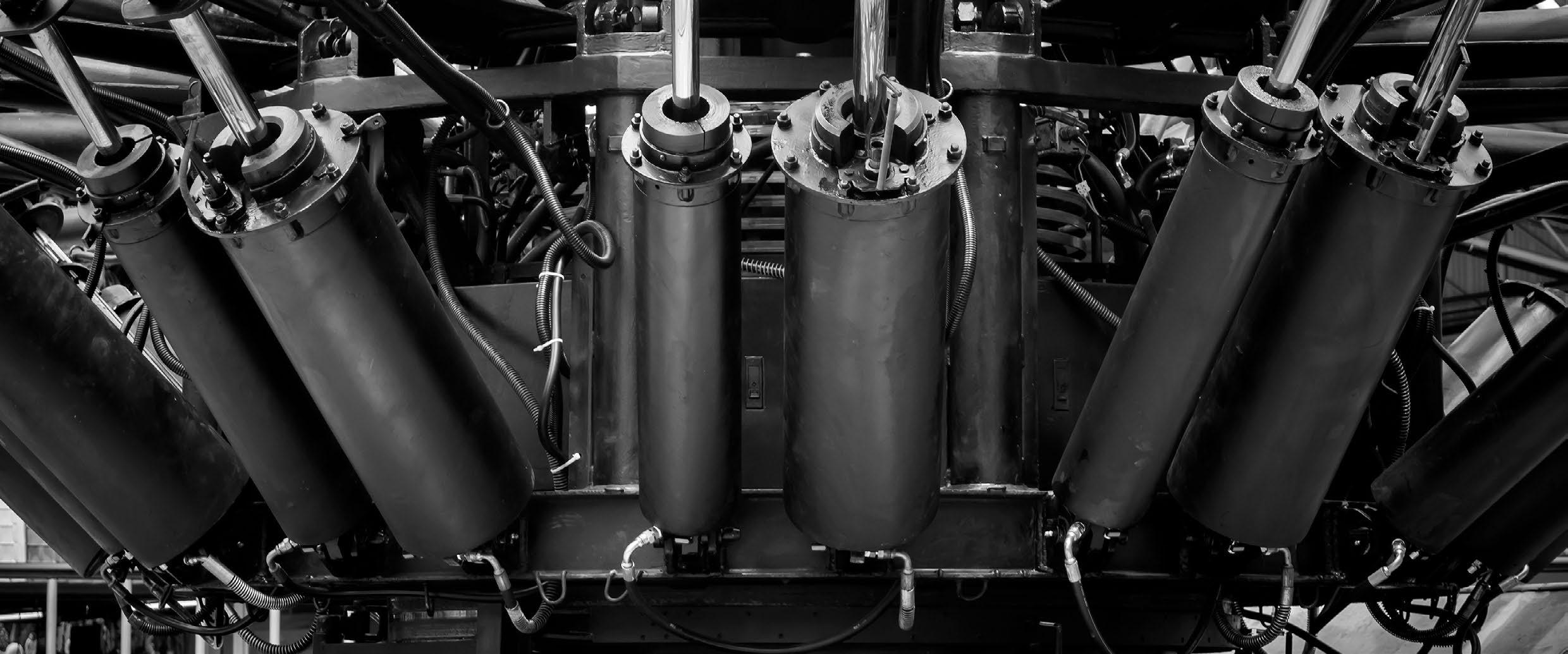
PHOTO CATEGORIES
• WHAT IS FLUID POWER? Explain fluid power to someone outside the industry.
• INNOVATION: Photos that show fluid power used in novel ways and from views not everyone gets to see.
• TEAMWORK: Photos of people working together using fluid power to get the job done.
• FUN WITH FLUID POWER: Photos that capture the joy of using, learning, or teaching about hydraulics and pneumatics.
• FLUID POWER IN MOTION: Photos that capture the might and muscle of fluid power.

VIDEO REEL CATEGORIES
• WHAT IS FLUID POWER? Explain fluid power to someone outside the industry.
• FLUID POWER PROFESSIONALS IN ACTION: Illustrate daily safety best practices in fluid power.
• BENEFITS OF CERTIFICATION TESTIMONIAL: How has certification helped in your career?
• THE MUSCLE OF FLUID POWER: Reels that capture the might of fluid power in action.
We’re also bringing back a category seen in years past, the PEOPLE’S CHOICE AWARD. This honor is bestowed upon the photo or reel that receives the most votes from contest followers. The photos that will appear in the Fluid Power Journal issue for June 2026 will be the 1st place, 2nd place, 3rd place, and People’s Choice Award winners.
The contest will run January 1 through March 31, 2026. The winners will be announced on Fluid Power Professionals’ Day, June 19, 2026. Enter for a chance to win and join in the fun by tagging your fluid power in action snapshots and reels using the hashtag #FPJPhotoContest or take pictures of your activities and e-mail to editor@fluidpowerjournal.com.
FOLLOW US
FACEBOOK: FPJteam and TheIFPS INSTAGRAM: fluidpowersociety X: @FPJTeam and @The_IFPS



Diamond
Essentra Components
EUFMC
FluiDyne Fluid Power 23, 43













ADVERTISER INDEX
alkoncorp.com
almomanifold.com
bonfiglioli.com
bsfinc.net
continentalhydraulics.com
diamondhydraulics.com
757-220-1795 eufmc.com
Fluid Gear Products 29, 31 610-200-6045 fluidgearproducts.com
586-296-7200 fluidynefp.com
Foster 7 262-633-7073 fosterhydraulics.com
Gemels North America 17, 28
1-713-257-3671 gemels.com
Harvard Corporation 39 608-882-6330 harvardcorp.com/filters
HAWE North America, Inc 20, 29 704-509-1599 hawe.com
Heinrichs 37 1-859-371-4999 heinrichs-usa.com
Holmbury, Inc 19 440-578-1070 holmbury.com
HydraForce 44 847-793-2300 hydraforce.com
International Fluid Power of America 34, IBC 951-676-2155 intlfpa.com
La-Man Corp 34 1-800-348-2463 laman.com
LHY Powertrain 34, OBC 330-533-6801 lhy-us.com
Lubriplate, Inc 41 1-800-733-4755 lubriplate.com
Main Mfg Products 21, 34, 43 1-800-521-7918 mainmfg.com
Parker Hannifin Corp 1, 28 419-644-4311 parker.com
PHD Inc 8, 34 phdinc.com
Rota Limited 9, 29 972-359-1041 rota-ltd.com
Sun Hydraulics IFC, 34 sunhydraulics.com
Super Swivels 34 763-784-5531 superswivels.com
Ultra Clean Technologies 3, 34 1-800-791-9111 ultracleantech.com
Uniflex of America 21 1-847-519-1100 uniflex-hydraulics.com
Wilkes & McLean Ltd 15, 29 877-534-6445 wilkesandmclean.com
Young Powertech, Inc 12, 29 610-558-0760 youngpowertech.com
TRUSTED EXPERTISE
PROVEN SOLUTIONS
Innovation starts with Bosch Rexroth and HydraForce. Our expert application engineers design efficient electro-hydraulic systems, delivering proven compact hydraulic solutions that enhance machine performance. Whether it’s an upgrade, redesign or new motion control application, rely on our global team and comprehensive product line to help you gain a competitive edge. Innovate with Us Las
Booth # S82152
South Hall 2nd Level — S82941