As the only global intergovernmental organization exclusively devoted to promoting the rule of law as an enabler of peace and sustainable development, the International Development Law Organization (IDLO) places equality for women and girls at the core of its mandate. Guided by people-centred and rights-based approaches, IDLO champions legal reform as a critical pathway for realizing women’s and girls’ human rights and for advancing gender equality across all fields.
AU-CEVAWG African Union Convention on Ending Violence Against Women and Girls
CEDAW Convention on the Elimination of All Forms of Discrimination against Women
CIM Inter-American Commission of Women
CSOs Civil Society Organization(s)
DENR Department of Environment and Natural Resources (Philippines)
DV Domestic Violence
EBRD European Bank for Reconstruction and Development
EIGE European Institute for Gender Equality
EU European Union
FAO Food and Agriculture Organization of the United Nations
GDP Gross Domestic Product
IAWJ International Association of Women Judges
ID4D Identification for Development
IDLO International Development Law Organization
IACtHR Inter-American Court of Human Rights
ILO International Labour Organization
IMF International Monetary Fund
IPU Inter-Parliamentary Union
MESECVI Follow-Up Mechanism to the Belém do Pará Convention
NDCs Nationally Determined Contributions
OECD Organisation for Economic Co-operation and Development
OAS Organization of American States
OHCHR Office of the United Nations High Commissioner for Human Rights
OSCE Organization for Security and Co-operation in Europe
PARIS21 Partnership in Statistics for Development in the 21st Century
PCW Philippine Commission on Women
SDGs Sustainable Development Goal(s)
SEGIB Ibero-American General Secretariat
SGBV Sexual and Gender-Based Violence
UN United Nations
UNDP United Nations Development Programme
UNFPA United Nations Population Fund
UNHCR United Nations High Commissioner for Refugees
UNICEF United Nations Children’s Fund
VAWG Violence against Women and Girls
CHAPTER 1. Introduction
Eliminating discriminatory laws against women and girls is a vital prerequisite to achieving equality. Such laws not only perpetuate inequality and hinder the realization of women’s human rights, they also pose significant obstacles to sustainable development. By denying women and girls essential rights, opportunities and protections, discriminatory laws restrict their ability to contribute to economic, social, and political life. This, in turn, inhibits the achievement of broader development goals such as poverty reduction, quality education, health and economic growth.
Discriminatory nationality laws can limit women’s economic opportunities by restricting their property rights, their access to credit and finance, and their ability to work.1 In countries where women are prohibited from working at night, in hazardous jobs, and in certain industries, these restrictions can stretch the pay gap between women and men, or deny women the chance to advance their professional careers.2
On the other hand, reforming discriminatory laws can catalyze positive changes across many aspects of women’s lives. Legal equality can accelerate efforts to achieve equal pay in the workplace between women and men.3 Domestic violence (DV) legislation and reforms in divorce laws have been linked to lower mortality rates for women and a decrease in reported rates of intimate partner violence.4 Equal citizenship laws promote trust, lower instances of conflict in the family unit, and enhance household income levels.5 Ensuring that men and women have equal control over household assets boosts women’s economic mobility and is a key determinant of their agency and empowerment.6
The elimination of discriminatory laws against women and girls and addressing gaps in legal protection is not only a matter of fairness but also a strategic investment in sustainable development, economic growth, and the overall advancement of societies and economies.
Globally, 119.3 million girls remain out of school, while approximately 39 per cent of young women do not complete upper-secondary education, with the resulting losses in education exceeding USD 10 trillion annually.7 Low- and middle-income countries stand to lose an additional USD 500 billion over the next five years if the digital divide between women and men remains unaddressed; while improving support for female farmers could contribute up to USD 1 trillion to global GDP.8 Closing gaps in employment and pay could increase global GDP by 20 per cent.9
Figure 1.1: Share of Countries with VAWG Legislation and Criminal Penalties, 2022, by Region (per cent)
Source: The World Bank, “Women, Business and the Law Data”, https://wbl.worldbank.org/en/wbl-data.
International human rights frameworks and standards, especially the Convention on the Elimination of All Forms of Discrimination Against Women (CEDAW), the Beijing Declaration and Platform for Action, the 2030 Agenda for Sustainable Development, the Pact for the Future and the United Nations Secretary General’s Common Agenda, have recognized the importance of eliminating laws that discriminate against women.10
The 2030 Agenda highlights the critical importance of laws in women’s lives. Sustainable Development Goal 5 (“achieve gender equality and empower all women and girls”) has specific targets to end all forms of discrimination against women, while Sustainable Development Goal 16 (“promote peace, justice and strong institutions”) includes a target to “Promote and enforce non-discriminatory laws and policies for sustainable development”11 (Target 16.B).
The UN Secretary-General’s report, Our Common Agenda, highlights the importance of prioritizing women and girls. Commitment No. 5 is specifically “to place women and girls at the centre”12 and includes the repeal of laws that discriminate against women and girls as one of five elements of this commitment.
Similarly, the Pact for the Future calls for urgently removing all legal, social and economic barriers to achieve equality and ensure women’s full and effective participation and equal opportunities for leadership at all levels of decision-making in political, economic and public life.13
Despite these commitments, significant gaps still persist in many legal systems.14 An estimated 3.7 billion women and girls worldwide live in countries where discriminatory laws are in effect and key protections are lacking.15 Women today enjoy less than twothirds of the legal rights available to men – lower than previously estimated.16
Equality for women and girls continues to face a backlash in many areas, making reform of laws even more difficult. Of alarming concern is that despite progress in recent decades, the pace of reforms tackling discriminatory laws has “slumped to a 20-year low,”17 with reports indicating that at the current pace it will take 286 years to close gaps in legal protection and remove discriminatory laws against women.18 Accordingly, it is crucial that efforts to eliminate discrimination against women and girls in legal systems are urgently prioritized.
1.1. IDLO’s Approach to Legal Reform for Women and Girls
$1 trillion
The amount that could be added to global GDP by improving support for female farmers
$500 billion
The amount that the digital divide between men and women could cost low- and middle-income countries between 2025 and 2030
20 per cent
The amount global GDP could be increased by closing employment and pay gaps between men and women
$1 trillion: Could be added to global GDP by improving support for female farmers [image depicting food]
$1 trillion: Could be added to global GDP by improving support for female farmers [image depicting food]
$1 trillion: Could be added to global GDP by improving support for female farmers [image depicting food]
$500 billion: The amount that the digital divide between men and women could cost low- and middle-income countries between 2025 and 2030 [image depicting technology]
$500 billion: The amount that the digital divide between men and women could cost low- and middle-income countries between 2025 and 2030 [image depicting technology]
$500 billion: The amount that the digital divide between men and women could cost low- and middle-income countries between 2025 and 2030 [image depicting technology]
20 per cent: The amount global GDP could be increased by closing employment and pay gaps between men and women [image depicting coins, money, etc.]
20 per cent: The amount global GDP could be increased by closing employment and pay gaps between men and women [image depicting coins, money, etc.]
As the only global intergovernmental organization exclusively devoted to promoting the rule of law as an enabler of peace and sustainable development, the International Development Law Organization (IDLO) places equality for women and girls at the core of its mandate. Guided by people-centred and rights-based approaches, IDLO champions legal reform as a critical pathway for realizing women’s and girls’ human rights and for advancing gender equality across all fields.
20 per cent: The amount global GDP could be increased by closing employment and pay gaps between men and women [image depicting coins, money, etc.]
Since the 1980s, IDLO has been a trusted development partner for governments and civil society to facilitate law and policy reform, strengthen institutions, develop innovative justice solutions, foster participatory governance, and support legal empowerment. Working across different legal systems and across the justice chain, IDLO provides tailored and pragmatic rule of law solutions based on national needs. IDLO’s approach links policy to action through a global field presence
Figure 1.2: The economic imperatives of equality for women and girls
in over 40 countries and an integrated approach that combines programming, research and policy advocacy. This work has touched the lives of millions of women in diverse contexts across every continent.
IDLO’s Strategic Plan 2025-2028 reinforces the organization’s mission by identifying gender equality as both a standalone goal and as a guiding, mainstreaming principle.19 Under Outcome 3, IDLO focuses on reducing the justice gap for women and girls. Recognizing that law is an important marker for social change, IDLO works to:
• Promote the elimination of discriminatory laws and practices;
• Support institutions, both formal and informal to address the justice needs of women and girls;
• Protect women and girls’ rights in digital spaces;
• Champion women’s leadership in the justice sector; and
• Empower women and girls to claim their rights.
When it comes to promoting the elimination of discriminatory laws and practices, IDLO recognizes that law is an important marker for social change and supports constitutional and legal reforms as well as their implementation. It works with State institutions, including ministries, parliaments, judiciaries, law enforcers, civil society organizations (CSOs), academia, international organizations, and other partners to combat discriminatory practices that hinder women’s rights, and develop transformative legal and institutional frameworks that support women and girls to fully and equally participate in all aspects of society. IDLO carries out this work in many countries around the world, including in Kenya, Honduras, Philippines, Sierra Leone, Tunisia and Uganda.
Furthermore, in support of global calls for ending discriminatory laws, IDLO is member and implementing partner of the Steering Committee of the Equality in Law for Women and Girls by 2030: A Multistakeholder Strategy for Accelerated Action, 20 an initiative convened
by UN Women, in collaboration with various global and regional organizations.21 The strategy serves as a comprehensive roadmap for eliminating discriminatory laws against women and girls and achieving legal parity on a global scale. The framework aims to fast-track the repeal of discriminatory laws in six thematic areas in 100 countries and is expected to address the legal needs of over 50 million women and girls.
1.2. Objective, Methodology and Scope
Building upon global calls to end discrimination against women and girls in law and practice, this report draws on IDLO’s research, policy advocacy and programmatic work, while also engaging with existing research, expert knowledge, and practical examples from a range of contexts. It aims to inform the repeal, reform or amendment of discriminatory laws by providing practical guidance and recommendations for policymakers, local stakeholders and international actors in line with international, regional and national laws, treaty obligations and political commitments.
The report is divided into five chapters. The first chapter introduces the report and outlines the urgent need to address discriminatory laws. Chapter 2 delves into the nature of legal discrimination, examining its definitions, forms and manifestations. It discusses international commitments, highlighting global human rights obligations and policy frameworks on equality. Chapter 3 identifies selected areas of legal discrimination, including issues related to legal identity, family laws, violence against women and girls, and economic rights. Chapter 4 proposes approaches to eliminate discriminatory laws against women and girls, including developing legal assessments, fostering multistakeholder commitments, and enhancing capacity-building for various stakeholders. The report concludes with lessons learned and policy recommendations to advance equality for women and girls through improved legal frameworks and implementation strategies.
The report draws from a desk review of national and international literature, identifying promising examples of eliminating discriminatory laws and adopting legal reforms that support women’s human rights. It also builds on IDLO’s decade of research and programming in this area – including experience in conducting comprehensive country and thematic legal assessments, providing technical support for the drafting of legislation; and supporting the implementation of legal provisions, including through secondary legislation and rules – thus contributing to the global and national dialogues on lessons learned and strategic approaches to legal reform. The research and drafting process was carried out between 2023 and 2025.
The report is global in scope, drawing examples from various parts of the world and across different thematic areas. It highlights main areas where reform is necessary to advance women’s human rights. These areas are not exclusive as unfortunately, reform of discriminatory laws is needed in almost all countries and in all fields, and good practice examples can be found in them as well.
CHAPTER 2.
Understanding equality and discrimination in law
The prohibition of all forms of discrimination against women and the right to equal protection under the law are recognized and protected under international law.
Understanding what constitutes discrimination in law is therefore essential to identifying gaps, prioritizing reforms, and ensuring that legal systems deliver substantive equality in practice.
What is Discrimination in Law?
Article 1 of CEDAW defines discrimination against women as “any distinction, exclusion, or restriction made on the basis of sex which has the effect or purpose of impairing or nullifying the recognition, enjoyment or exercise by women, irrespective of their marital status, on a basis of equality of men and women, of human rights and fundamental freedoms in the political, economic, social, cultural, civil or any other field.”22 Discrimination may be direct or indirect, and it is the impact of the action on women that is crucial for determining if a given policy, law, or other practice is discriminatory – regardless of whether discrimination was intended or not.
CEDAW General Recommendation No. 28 further elaborates on the forms of discrimination and provides guidance on the scope and meaning of Article 2. Discrimination can manifest as distinctions, exclusions, and restrictions made on the basis of sex, which are intended to, or do in fact, impair or prevent women and girls from enjoying political, economic, social, cultural, civil, or other fundamental freedoms on an equal basis with men.23
Laws can discriminate in different and distinct ways. Some discriminatory laws explicitly differentiate treatment between women and men, while others may appear to be neutral but have a disparate impact on women in practice.24 Some may be gender-blind, meaning that they fail to recognize the roles and responsibilities assigned to women, girls, men and boys in specific cultural, social, economic and political contexts.25 It is necessary to assess whether the impact of a particular policy, law or other practice results in the nullification or impairment of equal rights in order to determine discrimination.26
The principles of equality and non-discrimination are part of the foundations of the rule of law. Discrimination based on sex is prohibited under almost every international human rights treaty, including the International Covenant on Civil and Political Rights and the International Covenant on Economic, Social and Cultural Rights.27 The most comprehensive global treaty specifically focusing on women’s rights is CEDAW, which was signed in 1979, and which has 189 States Parties. CEDAW requires States to “pursue all appropriate means and without delay a policy of eliminating discrimination against women” as a core obligation.28
Under CEDAW, States are obliged to:
• Enshrine the principle of equality of men and women in their national constitutions or other appropriate legislation;
• Adopt appropriate laws and other measures prohibiting all discrimination against women;
• Establish legal protection for women’s equality and ensure that institutions provide effective protection of women against any discriminatory acts;
• Refrain from engaging in any act or practice of discrimination against women;
• Take all appropriate measures to eliminate discrimination against women by any person, organization, or enterprise;
• Modify or abolish existing discriminatory laws, regulations, customs and practices;
• Repeal discriminatory penal provisions.29
To elaborate further, the CEDAW Committee in its General Recommendation No. 28 on Core Obligations of State Parties has made clear that States must ensure that “the principle of equality between women and men and of non-discrimination is enshrined in domestic law with an overriding and enforceable status.”30
In 1995, at the end of the Fourth World Conference on Women, the Beijing Declaration and Platform for Action was adopted, providing a wide-ranging policy
roadmap for achieving equality for women and girls. It flagged 12 key areas where urgent action was needed to ensure +equality and opportunities for women and girls and enumerated targeted strategic objectives. Strategic Objective A.2. is of particular relevance, guiding governments to revise laws and administrative practices to ensure women’s equal rights and access to economic resources. While CEDAW provides binding treaty obligations, the Beijing Declaration and Platform for Action translates this into a detailed, actionoriented blueprint for governments, intergovernmental organizations, multilateral financial and development institutions, academic and research institutions, the private sector, national and international nongovernmental organizations, and women’s groups.
Following deep concern that women and girls were still subject to discrimination in law and practice, the United Nations Human Rights Council established the Working Group on the issue of Discrimination against Women in Law and in Practice in 2010.31 The Working Group enables deeper dialogue with States, UN entities, national human rights institutions, experts and civil society to “identify, promote and exchange views on best practices” on the elimination of discriminatory laws, study the ways and means in which it can cooperate with States to eliminate discrimination against women in law, and make recommendations on the improvement of legislation and implementation of the law to advance the equality and empowerment of women and girls.32 The UN Secretary General has also shown strong leadership on this topic. Since 2020 alone, his Our Common Agenda report, the New Vision of the Secretrary-General for the Rule of Law, and the Pact for the Future, have all reiterated the importance of repealing discriminatory laws or addressing legal, social and economic barriers.
Within the 2030 Agenda, the elimination of discriminatory laws against women lies at the intersection of SDG 5 on gender equality and women’s empowerment, and SDG 16 on peace, justice, and strong institutions. SDG 5 Target 1 aims to end all forms of discrimination against all women and girls everywhere. Indicator 5.1.1 specifically focuses on “whether or not legal frameworks are in place to promote, enforce and monitor equality and non-
discrimination on the basis of sex.”33 The status and progress under Indicator 5.1.1 is evaluated every two years by the World Bank, UN Women, and the OECD in collaboration with national statistics offices, national women’s machineries, legal and research experts. The assessment is carried out on the basis of a questionnaire containing over 40 questions, covering laws within a country’s overarching legal frameworks, laws to combat violence against women, laws on employment and economic benefits, and laws covering marriage and family life.34 In a similar manner, Indicator 5.a.2 under the custodianship of FAO regularly tracks progress where legal frameworks – including customary law – guarantee women’s equal rights to land ownership and control. The indicators can strengthen momentum around legal reform by providing clear, comparative data; can prompt legislative reviews and
reforms; and can be used to show the effect of legal protections in different areas – from declining rates of intimate partner violence to an increase in women’s labour force participation. These efforts are carried out in tandem to SDG 16, which includes the target to “promote and enforce non-discriminatory laws.”
Complementary instruments and mechanisms have also been established at the regional level. The Protocol to the African Charter on Human and Peoples’ Rights on the Rights of Women in Africa (the Maputo Protocol) opened for signatures in 2003 and has 46 ratifications. Its Article 2 echoes CEDAW by requiring States to combat discrimination through appropriate legislative, institutional and other measures. Additional political momentum was provided by the Solemn Declaration on Gender Equality in Africa the following year, where the 55 African Union Heads of State reaffirmed
CEDAW and agreed, among other commitments, to enact legislation to end discrimination against women living with HIV/AIDS. In 1999, the African Union also established a Special Rapporteur on the Rights of Women in Africa, whose mandate includes assisting African governments with the general harmonization of national legislation to the rights of women in other international or regional treaties. A new Convention on Ending Violence Against Women and Girls (AUCEVAWG) was adopted in 2025 and is the African Union’s first continent-wide binding instrument focused solely on addressing violence against women and girls (VAWG). It goes beyond existing frameworks by providing greater detail on circumstances where women may experience violence, including in new spheres such as cyberspace.
Other binding legal instruments have also been adopted in Latin America and Europe. The InterAmerican Convention on the Prevention, Punishment, and Eradication of Violence against Women (the Belém do Pará Convention) is the first regional treaty in Latin America and the Caribbean to criminalize all forms of violence against women, and Articles 7 to 9 also require the adoption or reform of legal measures to ensure sufficient legal protections for women and girls. Its Follow-Up Mechanism (MESECVI) ensures that the instrument’s 32 Parties are compliant with the Convention. In Europe, the Council of Europe Convention on Preventing and Combating Violence Against Women and Domestic Violence (the Istanbul Convention), which has been ratified by 39 States and the European Union, condemns all forms of discrimination against women, and binds Parties to take measures to prevent it – including enshrining constitutional equality between women and men, and abolishing discriminatory laws and practices.
CHAPTER 3.
Key areas where discrimination in law persists
In many instances, the effects of discriminatory laws can cascade across sectors. Discriminatory nationality laws can not only deny women a legal identity – they can prevent them from working, receiving an income or owning property. Discriminatory laws on divorce can expose women to greater risk of violence or leave them unable to live a life of their choosing. While discriminatory laws can exist in any sector, there are some which are the most common and pervasive, and where consequences are most likely to be multiplied. Targeted interventions can therefore have crosscutting benefits for women across society. These areas include laws governing nationality, family and marriage, employment, social protection, violence against women, property rights, and land and natural resources. These provisions have significant and damaging impacts on the lives of women and girls.
3.1. Legal Identity, Nationality and Statelessness
Article 6 of the Universal Declaration of Human Rights states that, “Everyone has the right to recognition everywhere as a person before the law.”35 Laws addressing legal identity, nationality and statelessness constitute the basis for people to participate as equal members of society and provide the foundation for them to access the full spectrum of human rights. For women, these laws are essential to access healthcare and education services, travel, own land and property, open bank accounts, start a business, be employed on an equal basis to men, and transmit legal identity to their children.
Despite this, around 50 countries have nationality laws that contain provisions that discriminate against women and girls,36 which entrenches inequality and can reinforce the notion that women are not equal citizens.37 Women may face greater challenges than
men in obtaining identification documents, including ID cards, residence permits and passports, which can bar them from accessing essential public services or exercising freedom of movement. 38 In 2021, in lowincome countries, an estimated 35 per cent of women did not have a legal form of ID, compared to 27 per cent of men.39 Restrictions are often more pronounced for married women, who may be required to be accompanied by a male guardian or provide additional documentation, such as a family booklet or a marriage certificate. Some countries employ separate passport application processes for women and men, with more stringent requirements for women.40
Discriminatory provisions also affect women’s ability to pass their nationality to their children. In 24 countries, women face significant legal and procedural barriers in this regard.41 A number of countries require a child to be registered exclusively by their father or another male family member in disregard of the agency of the mother.42 In others, a mother may be required to prove that her child was born within wedlock – while unmarried women may be prevented from registering their child’s birth altogether.43 The consequences can be far-reaching, putting considerable practical, financial and emotional strains on women, their children, and their families. It can also increase the likelihood of child statelessness, and contribute to what has been described as “an intergenerational spiral of poverty and destitution.”44 In 2023, the UN Special Rapporteur on violence against women and girls, its causes and consequences stated that discriminatory nationality laws and statelessness are mutually reinforcing, and described the resulting violation of multiple human rights as “tantamount to violence against women.”45
The reform of discriminatory nationality laws at the national level has been shown to lead to a reduction in the number of stateless people in a country.
Figure 3.1: Discrimination in legal identity, nationality and statelessness
Almost 50 countries have discriminatory provisions in their nationality laws
Around 35 per cent of women do not have a legal form of ID
24 countries hinder women’s ability to pass their nationality to their children
This was the case in Morocco, which amended its Nationality Code in 2007 to grant Moroccan women the same rights to confer nationality on their children as Moroccan men. The updated provision – which had retroactive effect – enabled tens of thousands of children born to Moroccan mothers and foreign fathers to obtain Moroccan nationality.46
3.2. Family Laws
Family laws cover a broad range of topics that are relevant for a person’s private life and their domestic relations. It includes both formal and customary laws on the rights of women and men with respect to marriage, divorce, property, inheritance, and matters relating to children - including custody, adoption, and guardianship.47 For generations, family dynamics have been shaped by culture, religion and tradition. It has long been an area that law and policymakers have been reluctant to codify, and where legislative reforms explicitly promoting equality between women and men have been slow to take hold.
Family laws that discriminate against women persist in 85 countries and often relegate them to the status of second-class citizens within their own homes.48 For example, 18 countries still have provisions that require a married woman to obey her husband.49 Other national laws preclude the recognition of women as heads of households, diminish their legal capacity and economic autonomy, limit their ability to pursue professional roles, or exclude them from decision-
1. Is the law free of legal provisions that require a married woman to obey her husband?
2. Can a woman be head of household in the same way as a man?
3. Is there legislation specifically addressing domestic violence?
4. Can a woman obtain a judgment of divorce in the same way as a man?
5. Does a woman have the same rights to remarry as a man?
Source: The World Bank, “Women, Business and the Law Data 2023”, https://digitallibrary.un.org/record/4007971?ln=en&v=pdf.
making in both public and private spheres.50 These legal inequalities can also restrict women’s ability to seek support or leave situations of intimate partner violence.
Many States still permit child marriages,51 with estimates indicating that it may take 300 years to eliminate the practice at the current rate of progress.52 The UN Human Rights Council acknowledged that child, early and forced marriage constitutes a violation of human rights. It is not only a harmful practice that disproportionately affects young women and girls, it is also recognized as a form of violence against young women and girls.53 In some cases, the minimum age for marriage differs for girls and boys – with the minimum age of marriage for women and girls set at a younger age than for men and boys.54 When girls are forced to drop out of school due to marriage, pregnancy, childbirth and childcare responsibilities, their future prospects for formal employment, economic opportunities and active participation and leadership in society can all be harmed.55
Discriminatory family laws also deny women the same rights as men to initiate or finalize divorce proceedings.56 In 45 countries, women face different
requirements than men to finalize a divorce, while 67 place additional limitations on how and when women can remarry compared to men.57 These unequal provisions limit women’s ability to leave abusive relationships, make independent life choices or secure financial stability.
Despite persistent barriers, family law reform has demonstrated clear and measurable impacts on women’s lives. Since 1970, over 600 million women have gained access to economic opportunities through reform of family laws granting them greater autonomy in marriage, divorce, inheritance, and household decision-making.58 Between 2014 and 2019, 15 countries have eliminated legal exceptions that allowed children under 18 to marry.59 In Sub-Saharan Africa, stronger protections of property rights upon dissolution of marriage have been linked to an increase in women’s intrahousehold bargaining power, enabling them to negotiate better health behaviours and reducing their vulnerability to HIV.60 Kenya’s reform of the 1981 Law of Succession, granting equal inheritance rights to men and women, has been associated with improved educational outcomes for girls, reduced likelihood of undergoing female genital mutilation,
Figure 3.2: Number of economies with elements of discriminatory family laws
greater access to prenatal care, and increased agency in decisions around marriage and childbearing.61 Reforms to family law have also been linked to a reduction in DV, where in some instances the introduction of nofault divorce has contributed to a one-third reduction of DV.62
3.3. Violence against Women and Girls
Laws prohibiting VAWG are a powerful statement of a State’s intention to ensure that women and girls have the right to live a life free of harm and abuse, but the lack of comprehensive provisions in many national frameworks leave women and girls susceptible to different forms of discrimination and abuse.63 VAWG remains a pervasive problem around the world, and one which is further exacerbated in situations of crisis – including natural disasters and conflict.64 It can take many forms, including DV, rape and sexual abuse, sexual harassment, harmful traditional practices, and trafficking in persons.65 Such violence has been recognized as “both a cause and consequence” of inequality for women and girls,66 and is a grave violation of their human rights which can have serious physical, sexual, psychological, and economic harms.67
Despite this, penal codes in many low- and middleincome countries do not criminalize some of the most common forms of violence that women face, such as marital rape, or allow for defences based on “honour”, “provocation” or voluntary intoxication to escape criminal liability.68 Forty-six countries have yet to enact legal provisions that criminalize DV, and existing legal definitions may fail to comprehensively capture some of the most egregious forms of harm, including sexual abuse.69 Legal definitions of sexual crimes, such as rape, often do not reflect a consent-based approach and continue to require proof of physical force or penetration.70 In some countries, rape within marriage is either explicitly or implicitly permitted, as the concept of consent is denied once a marital relationship is established. In several countries, perpetrators may avoid prosecution by marrying the survivor.71 Despite the prevalence of sexual harassment, 48 countries have not adopted laws criminalizing it. Where they do, they often fail to extend the scope of protection beyond the workplace to other areas where women are likely
to experience abuse and harassment, including public spaces, educational institutions, or – increasingly –online spaces.72
Nevertheless, there have been significant legislative developments in addressing VAWG over the past three decades, with 1,718 legislative measures documented across 188 countries.73 While early laws focused solely on criminalization, over time, countries put greater emphasis on preventive measures in legislation as well as stronger legal protections. Many countries now have DV laws combining both criminal prosecution and civil protections. Marital rape has been criminalized, including in South Korea, Japan, the Philippines and Taiwan. Several countries, especially in Latin America and the Caribbean, have recently recognized the crime of femicide, such as in Brazil, Chile, Colombia, Ecuador, Mexico, Paraguay and Uruguay.74 Rape shield laws prohibiting the discussion of a survivor’s sexual history or reputation in court, originating in the United States, have been adopted predominantly by common law countries and are expected to be more widely embraced in the wake of the European Union’s 2024 Directive “On Combating Violence Against Women and Domestic Violence.” The adoption of regional documents including the Istanbul Convention and the AU-CEVAWG have prompted significant legal reforms, capacity-building initiatives, and stand-alone national action plans across national contexts.75
3.4. Online VAWG
As digital technologies continue to dramatically transform our world, they also expose women and girls to new and different forms of VAWG. Online VAWG can include the non-consensual creation, dissemination, distribution or sharing of sexual or intimate photographs, videos, or audio clips – including through artificial intelligence and deepfakes. It can also include scenarios where perpetrators access, use, control, or manipulate private information and personal data, as well as instances of cyberstalking, cyberharassment, and cyber-bullying.76 Violence in these digital contexts often occurs as “part of a continuum of multiple, recurring and interrelated forms of violence across online and offline spaces,” and can aggravate the level of surveillance, trafficking, and physical violence
perpetrated against women and girls.77 Women who also experience other forms of discrimination – including discrimination due to their race, colour, religion, age, disability, and nationality – may be more impacted by violence online.78
Many countries have inadequate legal frameworks to prevent and respond to online VAWG. In countries with legislation to address online and digital violence, the laws are often outdated and vague, forcing women to pursue justice and accountability through an inadequate “patchwork” of existing crimes.79 Addressing online VAWG effectively requires the development of special laws and policies that promote the safety, security and privacy of women and girls and strengthening of accountability mechanisms through laws, policies and independent bodies. In the United Kingdom, for example, the Online Safety Act 2023 provides strengthened provisions to address online VAWG, including measures to convict individuals who share intimate images without consent. Additionally, the Act further criminalizes the non-consensual sharing of intimate deepfakes.80
Australia became the first country in the world to appoint an e-Safety Commissioner, an independent regulator and educator for online safety, which exercises its regulatory powers under the 2015 Online Safety Act.81 Recent changes have enhanced the Commissioner’s powers to address violence across digital platforms, including a new reporting scheme for adult cyber abuse that enables adult victims of harmful online abuse to seek support when online platforms fail to act.82 Mexico has introduced various legal reforms to incorporate online forms of VAWG into existing legal frameworks, criminalizing sextortion, threats, cyber harassment, sexual harassment, and non-consensual image sharing. In particular, the introduction of the Olimpia Law, carrying a six-year sentence for sharing non-consensual images depicting sexual content, has been fundamental to driving such reforms across 28 local legislatures.83 Ghana has introduced laws aimed at protecting women from non-consensual sharing of intimate images.84 Senegal, in partnership with civil society, has developed an online portal to flag sexual content or images of children.85
3.5. Economic Rights, Employment and Social Protection
Economic rights for women provide a foundation for peaceful societies and economic growth. Equal employment of women in the labour market allows countries to make full use of the available talent pool, increasing productivity and efficiency and reducing dependency ratios in countries with ageing populations.86 Gender equality has been positively associated with higher levels of per capita GDP, competitiveness, and human development indicators, including through a higher investment in children’s school enrolment.87 Closing gender gaps in labour force participation could raise countries’ overall labour productivity growth and thus boost national GDP.88 As gender inequality is associated with higher income inequality and reduced economic diversification,89 investing in women’s economic empowerment through equal rights and greater financial inclusion can strengthen economic resilience and support sustainable growth.90
Worldwide, many countries continue to impose legal restrictions on women’s access to employment.91 Research shows that women in 59 of the 190 economies surveyed still face legal and systemic barriers to accessing jobs in different economic sectors, including mining, factories, construction, energy, water, agriculture, and transportation.92 These restrictions limit women’s employment opportunities, especially in economies where industrial sectors form the backbone of the economy and employ the majority of the labour force.93 Women’s economic rights also continue to be undermined by laws requiring them to obtain authorization to work from a spouse or male relative. These laws also affect women’s pay and employment benefits, access to pensions, and entitlement to parttime work or periods of absence due to childcare.94 Laws can also restrict women’s ability to enter into commercial contracts or to be recognized as having full and equal legal capacity.95 In some countries, women are not able to sign contracts, register businesses, or open a bank account in the same way as men,96 impeding their entrepreneurship and placing severe restrictions on their economic empowerment.97 The existence of these barriers also has impacts on their well-being, social empowerment, health and education.
Within the workplace, the persistence of pay inequality perpetuates discrimination. The World Bank’s Women, Business and the Law 2024 report indicates that a woman earns on average only 77 cents in labour income for every dollar earned by a man. Furthermore, out of the 190 countries studied in the report, 92 still lack legislation requiring equal pay for equal work, and among those that have adopted such legislation, less than one in five have implemented mechanisms to overcome pay inequality.98 Additionally, there are significantly more men than women in leadership and management positions. ILO reports that only 32 per cent of global senior leadership positions in both the public and private sectors are held by women and a mere 28 per cent of employer and business membership organizations (EBMOs) have reached parity at the managerial level.99 Moreover, women may be adversely affected by inequitable parental leave agreements. Inequalities between men and women can
be reduced through enshrining the right to parental leave and ensuring that both parents are able to share care-giving responsibilities regarding their children. While almost all countries have paid and job-protected maternity leave, research by ILO into practices in 185 countries revealed that only 115 countries offer a right to paternity leave – meaning that, in many circumstances, child-raising is the exclusive prerogative of the mother. In 45 countries, maternity leave is covered by the employer and not by the State. Consequently, certain categories of workers, including self-employed women or women in the informal sector, may also be unable to access social protection or assistance schemes.100
In addition to the formal employment sector, attitudes towards the informal care economy can limit women’s economic opportunities. The care economy supports the physical, social, mental and emotional well-being of
92 countries without laws on equal pay for equal work
32 per cent of senior leadership positions held by women 4 billion people uncovered by social protection policies
care-dependent groups – such as children, the elderly, the ill, and people with disabilities, as well as healthy, working-age adults.101 Providing care work – at home, for families and friends, or within the community – is time-intensive and often unpaid, and the overwhelming majority of this work is undertaken by women.102 Alleviating the unpaid care burden through formalizing care activities and adopting well-designed social protection policies and programmes can reduce and prevent a cycle of poverty and vulnerability103 –but data shows that only 45 per cent of the global population is effectively covered by at least one social protection benefit, leaving over 4 billion people worldwide unprotected.104
There are strong indications though that progress in ensuring economic rights for women is possible and can drive changes. In 2003, Norway became the first economy to require a more balanced representation for corporate boards, a move now reflected in the European Union’s 2022 directive to promote a more balanced composition on the boards of listed companies throughout the region.105 Globally, 55 economies have laws prohibiting discrimination in recruitment based on marital or parental status and age, and national human rights ombudsman institutions, such as in Cyprus and Poland, have addressed discrimination in hiring by private businesses.106 Employer pay gap reporting has been implemented to avoid discriminatory pay practices,
92 countries without laws on equal pay for equal work [image depicting the planet or a map]
92 countries without laws on equal pay for equal work [image depicting the planet or a map]
92 countries without laws on equal pay for equal work [image depicting the planet or a map]
32 per cent: The amount of senior leadership positions held by women [image of skyscrapers, business district, etc]
32 per cent: The amount of senior leadership positions held by women [image of skyscrapers, business district, etc]
32 per cent: The amount of senior leadership positions held by women [image of skyscrapers, business district, etc]
4 billion: The number of people uncovered by social protection policies [image of two people holding a safety net]
4 billion: The number of people uncovered by social protection policies [image of two people holding a safety net]
4 billion: The number of people uncovered by social protection policies [image of two people holding a safety net]
such as in Spain, where companies are required to create and maintain a pay transparency registry, or face sanctions from the Labor Inspectorate.107 In recent years, countries like Pakistan, the UAE, and Viet Nam have lifted restrictions on women’s ability to work at night or in jobs deemed dangerous. Laws recently enacted in Costa Rica, Mauritius, and Croatia guarantee in law equal pay for work of equal value.108 Several governments have adopted financing programs providing support for female entrepreneurs and national strategies focusing on women’s access to financial services, such as Niger’s National Financial Inclusion Strategy.109
3.6. Property and Land
Secure rights to land and property are the basis upon which billions of people rely for the realization of their fundamental rights and their socio-economic prosperity.110 Women’s rights to property, especially land and natural resources, are essential to advancing their earnings and savings, enabling a better standard of living, improving nutrition and food security for themselves and their communities, and resulting in better indicators on health and education. It can also give women greater standing in their families and communities, improved credit and financial stability, resiliency in times of crisis and increased opportunities to participate and lead decision-making both in the household, and in the broader community.111 In Tanzania, where more than 80 per cent of women are engaged in the agricultural sector, women who are granted stronger land rights earn up to 3.8 times more income and are more likely to have individual savings.112 Access to ownership of land and housing in India was shown to improve women’s mobility outside the home and their intrahousehold decision-making abilities.113
However, in law and in practice, women are still largely excluded from having the same legal rights as men in owning, using or controlling land. Nearly 40 per cent of all countries limit women’s property rights in some way, often through local laws and customs.114 Legal frameworks and prevailing social norms create obstacles for women in purchasing, registering, or
maintaining property in their own names.115 Limited access to land ownership can also be detrimental for their ability to access credit, impeding them from using land as collateral to secure loans for business or agricultural activities. The absence of laws to protect and reinforce women’s land ownership also leaves women vulnerable to conflict over land.
Land and property rights for women can be significantly impacted by discriminatory family laws. Research has shown that legislation ensuring equal ownership rights for women and men is linked to a higher probability of women owning a house.116 In cases of divorce or separation, women may lose access to property acquired during marriage. Regarding inheritance, many countries provide different rights for male and female surviving spouses, or distinguish between the inheritance rights of daughters and sons.117 The implementation of plural legal systems can, in many
cases, deprive women of their rights to own, manage or use community land. In some cases, customary laws do not recognize women’s equal rights to own land, operate to prioritize male heirs in inheritance claims, or deprive women’s equal participation in dispute resolution processes on land.118
There has been some progress in securing land and property rights for women. For example, in 2022, Sierra Leone adopted the Customary Land Rights Act, which sought to address inequalities in land ownership and access for women who had been historically excluded. The Act eliminates discriminatory “restrictions relating to customary land rights and requires all enterprises, including mining companies, to address the adverse impact of commercial land use on women and children.”119 In Uganda, IDLO supported the training of district and community stakeholders in Lamwo, Wakiso, Lira, Nebbi, Iganga and Kampala by legal
officers from FIDA-Uganda. Participants were trained on women’s land rights, including rights of married women, cohabiting women and daughters to own property under the customary tenure system, which is predominant in the district. The training program was critical for women as cases involving violations of women’s land rights remain despite the legal protections afforded under both statutory and customary law. The trainings empowered women to claim their land rights and ownership as provided by the law.
3.7. Environmental Protection
Equitable laws and policies that promote a clean and healthy environment are not only essential for environmental protection and conservation – they are also fundamental for ensuring that countries and
communities are able to adapt to the rising frequency and severity of natural disasters, extreme weather events and environmental degradation. Furthermore, diminishing water sources, rising sea-levels, desertification, biodiversity loss and unpredictable weather patterns all have a profound impact on those within society who rely upon the land and its natural resources for their lives and livelihoods.
For women and girls, these environmental challenges may compel them to work longer hours and to shoulder a greater burden of unpaid care work and domestic responsibilities. In the Global South in particular, many women work in sectors like agriculture, where periods of drought in conjunction with desertification and biodiversity loss can put their livelihoods at risk. Natural disasters can also disrupt women and girls’
3.4: At the current trajectory, by 2030 women will only hold 25 per cent of green jobs
Today | 88 million jobs in the green economy, approximately 29 per cent of them held by women
In 2030 | 155 million jobs, but only 25 per cent of them held by women
Note: For purposes of this exhibit, the composition of the green economy is as defined by the United Nations Environment Program (UNEP) and the International Chamber of Commerce (ICC). *This category includes environmentally sustainable portions of the agriculture, green consumer goods, automotive, and industrial goods sectors.
Source: Boston Consulting Group, ”Why Climate Action Needs a Gender Focus?” 29 October 2021, https://www.bcg.com/publications/2021/ climate-action-impact-on-gender-equality
Figure
ability to access healthcare, food and water, and expose them to worsening situations of insecurity and a higher risk of violence, early and forced marriage, and trafficking.120
Unfortunately, many environmental laws, policies and action plans fail to take into consideration the distinctive ways in which the livelihoods of women and girls are affected.121 For some women, the consequences may be further amplified by factors such as age, ethnicity, race and caste.
Legal inequality can particularly contribute to the struggles faced by women, including Indigenous women, rural women and women belonging to local communities. Adaptation and investment laws and policies are typically designed for the promotion of large-scale, commercial farming of industrial crops, disadvantaging women who are often involved in small-scale agricultural production and impeding their equal rights to employment and food security.122 Often, laws and policies that reference the impact of natural disasters on women perpetuate a victim narrative, and fail to expressly acknowledge their importance as active agents of change and decision-makers. 123
Furthermore, many laws fail to recognize how existing discrimination in one area – such as economic rights – can be compounded by environmental shocks, such as drought, famine and natural disasters.124 For example, while an estimated 67 million new jobs will be created in the green economy by 2030, the under-representation of women in traditionally male-dominated industries, such as the energy sector, suggests that only around 25 per cent of these new jobs will go to women. Thus, eliminating discriminatory laws and barriers to the labour market can support a just transition and ensure that women and girls equitably benefit from the proliferation of new “green jobs”, which have emerged as countries seek to promote a clean and healthy environment and safeguard their national energy security by expanding infrastructure investment into renewable energy.125
Laws that prohibit discrimination and ensure that all women and girls can participate in the development, implementation and monitoring of policies and plans relating to the environment are urgently needed.
Promising legal developments have been undertaken at the national and regional levels. In Fiji, the National Climate Change Policy (2018-2030) and 2021 Climate Change Act explicitly endorse the principles of gender equality and recognize women as agents of change, and the National Disaster Risk Reduction Policy establishes “gender-based approaches” as a guiding principle.126 The Philippines’ 2010 Disaster Risk Reduction and Management Act includes principles of equality, provides for specific representation of women’s agencies in its institutions, and establishes participatory opportunities for women, highlighting the need to investigate how women’s needs may differ from those of men.127 Kenya’s 2016 Climate Change Act aims to “mainstream intergenerational and gender equity in all aspects of climate change responses,” and includes a requirement that its high-level National Climate Change Council ”approve a national gender and intergenerational responsive public education awareness strategy and implementation programme.”128
Barriers to Eliminating Discriminatory Laws
Several key factors contribute towards the slow progress in eliminating discriminatory laws:
Legal, customary and institutional barriers:
• The persistence of discriminatory traditions, customs and religious practices against women and girls further poses a challenge to legal reform.129 Areas of law that often defer to customs or religious practices, such as family law, have been slower in terms of reform, as these are often rooted in conservative values and can, in some cases, resonate better than formal legal systems with local communities.130 Social norms have, in various contexts, heightened women’s and girls’ risks to VAWG, seen them sidelined in decision-making, and facilitated the denial of key rights that would enable their political and economic empowerment.131 Lack of institutional capacity, including awareness of women’s rights and limited gender-mainstreaming, can also slow the rate of progress.
Political, socio-cultural and funding barriers:
• Consistent political will to formulate and implement laws that promote equality between women and men, coupled with “broad-based consensus of whole societies” is essential to advancing progress
The number of countries with strong female representation in the national government has stalled after consistent growth since 2000.
Countries with a female head of State or government
Countries with at least 50% women in national cabinet
Countries with at least 50% women in national parliament
Source: Council on Foreign Relations, Women’s Power Index, https://www.cfr.org/tracker/womens-power-index
on the elimination of discriminatory laws, yet it remains inadequate in many contexts.132 Political representatives may be reluctant to advocate for law reform advancing equality in fear of losing political or social support. In situations of crisis, including in health emergencies, conflict and postconflict situations, and natural disasters, law reform is often delayed or is not a priority.
• The lack of political support is also reflected in a lack of adequate funding for initiatives that assess the impacts of discriminatory laws on women and girls, raise awareness amongst religious leaders and communities, and engage in advocacy efforts with governments to advance further legal reforms. Funding priority shifts amongst donors or short-term project funding can also result in inadequate financing to support efforts targeted towards the elimination of discriminatory laws. 133 While it is difficult to ascertain precisely how much money is spent on justice for women worldwide, the justice sector itself has witnessed a reduction in funding in recent years: according to an OECD report from 2024, Official Development Assistance (ODA) to justice has been on a downward trend
since 2012 – accounting for just 1.1 per cent of all aid,134 while just 0.3 per cent of aid was in support of ending VAWG.135
Barriers to participation:
• Additionally, the failure to engage women and girls and their advocates in law-making processes has hindered progress on the adoption or reform of equitable, responsive legislation. The effective design and implementation of laws require the full participation of women and girls at all aspects of law making. Research has shown that greater representation of women in parliaments is linked with legal reforms to expand women’s rights, often generating “momentum needed for governments to take action on discriminatory laws.”136 However, women’s political participation and leadership has also seen slow progress. As of 1 January 2025, there are 26 countries where 29 women serve as heads of State and/or government,137 only 23.3 per cent of government ministers are women, and just 26.9 per cent of members of single or lower houses of parliament are women.138
Figure 3.5: Percentage of women at different levels of national government (2000-2025)
• Women are often excluded from participating in peace negotiations and post-conflict reconstruction. However, research has also shown that postconflict settings in many instances have successfully led to increased women’s political participation and advances in women’s rights protection.139 Postconflict transitions create “political openings” for women’s groups to advocate for change or cause major disruptions in power dynamics with women taking over leadership roles traditionally held by men.140 As women take on new roles, foundations for a new society are established through a new constitution, institutions and legal frameworks. For example, 94 per cent of post-conflict constitutions contain anti-discriminatory provisions based on sex.141 Post-conflict transitions offer openings to repeal discriminatory laws against women and introduce legal reforms responsive to women’s needs to better protect their rights and promote equality.142
Data, research and information gaps:
• Law and policymakers cannot address problems they cannot see. Without disaggregated sectoral analyses, the distinctive challenges women face in different parts of their life are not adequately captured. In some instances, discriminatory provisions are clearly identifiable through a de jure assessment – but often a detailed study of the impact and outcomes is required to fully understand the extent to which laws are effective or discriminatory. Limited resources and a lack of technical capacity result in a lack of uniform data collection and use – and, even where it exists, the information is not readily accessible or available for relevant stakeholders. Investing in data collection and empirical research is necessary to bridge the gap between policy and practice.
Selected approaches to the elimination of discriminatory laws and strengthening legal frameworks on equality
Creating a level playing field in law can be enhanced by fostering enabling conditions. This chapter highlights selected approaches and key success factors for tackling discriminatory laws and addressing gaps in legal protection, including by exploring case studies from IDLO’s programmes and highlighting best practices and promising aspects undertaken by other actors in various fields and levels.
4.1. Conducting Legal Assessments
Undertaking legal assessments is crucial for identifying the gaps in legal protections and discriminatory provisions against women and girls. These assessments are an invaluable resource for lawmakers and policymakers, researchers, development partners, CSOs and other stakeholders to galvanize momentum for legal reform. There is no prescribed format for legal assessments: some may have a defined geographic scope – including comparative or regional reviews –while others may hone in on pre-determined thematic areas. Reviewing legislation for compliance with the principles of CEDAW can provide a common reference point for assessments. As the vast majority of the world’s countries are parties to CEDAW, this can also ensure that they are complying with their obligations under international law.
At the global level, the OECD Development Centre’s Social Institutions and Gender Index examines the laws, social norms and practices in 179 countries that restrict women and girls’ rights and their access to empowerment opportunities and resources. To support law and policymaking experts with the necessary data, the index assesses four dimensions: (i) discrimination in the family; (ii) restricted physical integrity; (iii) restricted
access to productive and financial resources and (iv) restricted civil liberties.143 The World Bank Group’s Women, Business and the Law 2024 report analyzes the laws and regulations of 190 economies to measure their impact upon women’s economic empowerment and women’s economic opportunity. Data collected is structured around eight key areas, namely entrepreneurship, mobility, workplace, pay, pension, assets, marriage, and parenthood.144
At the regional level, the Ibero-American General Secretariat (SEGIB) provides a detailed legal analysis of 22 Ibero-American countries, focusing on discriminatory provisions related to the pay gap between women and men, restrictions on women’s employment, unpaid care or domestic work, limited maternity and paternity leave, and pension coverage.145 Data collected is also compiled into a Virtual Platform for Legislation on Autonomy and Economic Empowerment of Women in Latin America, a visual dashboard which can serve as a key tool for law- and policymakers, civil society, and members of the general public to understand the nature and extent of discriminatory laws that impact women’s economic empowerment in Latin America.146
At the country level, legal assessments are crucial tools for lawmakers to identify areas which require attention and urgent reform. Their reliance on participatory approaches, such as multistakeholder discussions, provides space for women’s rights organizations and experts to share information on sensitive issues and further shed light on the justice needs of women. Furthermore, they allow civil society to increase awareness about the seriousness of discrimination against women and girls and its
impact on communities, and enable them to work with governments for legislative change. Example of country-level legal assessments include those carried out by IDLO in Kenya, Sierra Leone and the Philippines.
Equality for Women and Girls: Legal Assessments in Kenya, Sierra Leone, and the Philippines
To contribute to the Equality in Law for Women and Girls by 2030 strategy and advance progress on the ground, IDLO, in partnership with UN Women and national stakeholders, conducted four legal assessment reports on eliminating discriminatory laws against women and girls in Kenya, Sierra Leone, and the Philippines.
Sierra Leone:
• Strengthening Equality in Law: Mapping and Analysis of Sierra Leone’s Legal Landscape was published by IDLO in partnership with UN Women and the Sierra Leone Office of the Attorney General and Ministry of Justice in Sierra Leone in 2022. The analysis of domestic laws covered the Constitution; 38 domestic laws; seven bills that were in various stages of consideration by the Cabinet and other
government departments and agencies; and several policy measures, which if fully implemented, could complement the legislative reform agenda in Sierra Leone.
• The analysis revealed that a total of 22 laws, including key sections and provisions of the Constitution of Sierra Leone had to be amended or revised; six had to be repealed in whole or in part; and at least seven new laws had to be enacted to bring Sierra Leone’s legislative framework in line with its international and regional obligations on women’s rights and women’s empowerment. The report also emphasized the need to prioritize the implementation of national laws that fulfil standards on women’s rights and equality between women and men, and in this context, recommended at least two policy measures to complement the legislative reform agenda.147
• To support the implementation of recommendations, IDLO provided a detailed roadmap to policymakers outlining the reform process. Among the key recommended actions was an amendment to raise the minimum age of marriage to 18 years throughout the country, regardless of customary laws and practices. In July
2024, the Sierra Leone Parliament enacted the Prohibition of Child Marriage Act, which sets the age of marriage at 18, applied strict penalties to offenders, and strengthened protection measures for victims of child marriage.148
Kenya:
• National assessments also serve as a key resource for national law reform bodies. IDLO, UN Women and the Kenyan Law Reform Commission (KLRC) undertook the Strengthening Gender Equality in Law: Mapping Discriminatory Laws against Women and Girls in Kenya assessment, which reviewed the Kenyan Constitution and 21 other laws. This covered a range of issues, including succession and inheritance, land and economic empowerment, employment and labour, participation in public and political life, VAWG, and nationality rights. The report identified 9 laws for repeal and 17 laws for revision in order to align them with the 2010 Constitution.
• The report also provided an analysis of selected case law on equality between women and men and on women’s empowerment in Kenya, showcasing the crucial role of the courts in advancing the implementation of equality imperatives contained in the Constitution and the normative standards under CEDAW and other human rights instruments that Kenya is a State Party to.149 KLRC highlighted that law reform and implementation of the proposed policy actions in the report will enable the filling of gaps identified in the Kenyan legislation. This will ensure the full enjoyment of women and girls’ rights and fundamental freedoms and the realization of the country’s Vision 2030 blueprint.150
• The analysis was carried out between February 2020 and September 2021, and subsequently there has been significant progress in reforming a number of discriminatory laws in Kenya. IDLO provided technical support towards drafting the Law of Succession (Amendment) Bill and revised Probate & Administration Rules, which aim to secure the rights of widows and daughters to inherit property. Implementation of the report’s findings has also led to strengthening legal frameworks for responding to SGBV, contributing to a rise in resolved cases from approximately 6,000 in 2021 to over 10,000 in 2023. In addition, several county governments have passed localized legislation that specifically mandates women’s participation in decision-making bodies on matters concerning the environment and natural resources management.
The
Philippines:
• In 2022, IDLO and UN Women in partnership with the Philippine Commission on Women (PCW) released a report on Strengthening Gender Equality in Law: An Analysis of Philippine Laws. At the time of the review, the report found that there were still existing laws that discriminated against women and girls and that did not recognize their unique experiences, thus failing to address their specific issues and concerns. Despite the adoption of the Magna Carta of Women in 2009, which was designed, as a response to CEDAW obligations, to correct outstanding legal obstacles to equality and promote the rights of Filipino women, discriminatory provisions have remained, as have legal gaps where women’s rights are overlooked and unprotected.
• The assessment recommended the adoption of seven new laws to address issues relating to the rights of women and girls that were not yet covered in existing legislation. Thirty-nine laws were identified for revision to address gaps in implementing various CEDAW General Recommendations, Concluding Observations of the CEDAW Committee to the Philippines, and the recommendations of other treaty bodies overseeing the implementation of international human rights treaties ratified by the Philippines. The rest of the laws were recommended to be harmonized with the provisions of the Magna Carta of Women, or through the use of the oversight functions of both houses of Congress.151
• Since the assessment was conducted, several national laws have been enacted to address discriminatory provisions and legal gaps impacting women and girls. These include Republic Act No. 11596, prohibiting child marriage; Republic Act No. 11648, raising the age of sexual consent from 12 to 16; and Republic Act No. 11930, which strengthens protections against online sexual abuse and exploitation of children.
The realization of the recommendations resulting from these studies will require high-level political commitment and advocacy involving all stakeholders for substantial reforms accompanied by strong implementation measures.
In addition to comprehensive country assessments, legal assessments can adopt a specific thematic focus, allowing for a more in-depth analysis of specific legal issues and concerns. This includes the work of the Global Campaign for Equal Nationality Rights, whose report on Equal Nationality Rights and the Sustainable Development Goals seeks to mobilize international action to reform discriminatory nationality laws.152 Equality Now similarly focuses on ending legal inequality, sexual exploitation, sexual violence and harmful practices against women and girls. Its study Barriers to Justice: Rape in Africa, Law, Practice and Access to Justice provides an in-depth assessment of sexual violence laws in Africa and suggests targeted recommendations for national governments.153 IDLO has also worked with local actors and key national stakeholders in Mongolia and the Philippines to address persisting gaps in legislation relating to thematic areas such as DV and the environment.
Addressing Women’s Needs through Thematic Legal Assessments in Mongolia and the Philippines
Mongolia:
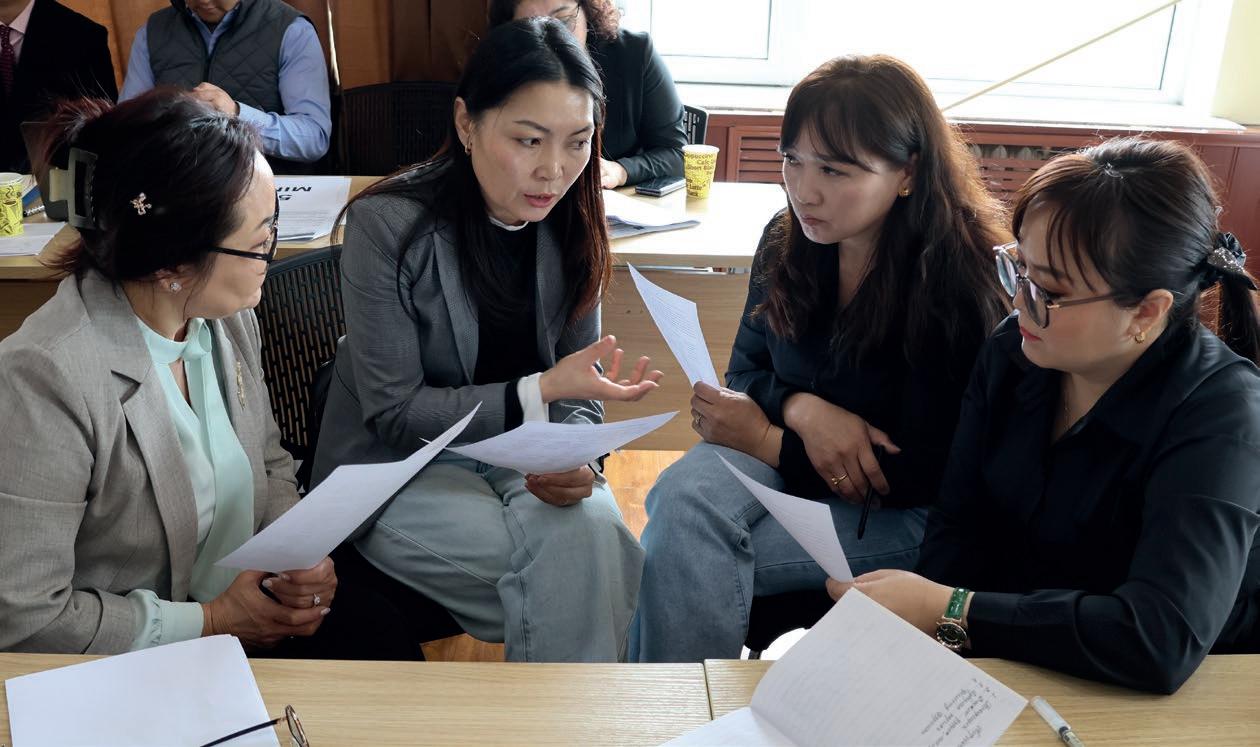
• In 2021, IDLO conducted a comprehensive research study titled Research Assessing the Implementation of a Victim-Centered Approach Along the Justice Chain in DV Cases in Mongolia to analyze the legal and regulatory framework on DV, identify gaps and challenges, and provide recommendations from a survivor-centred perspective.154 The initiative was carried out by IDLO with the support of the Government of Canada through the Strengthening the Response to Gender-based Violence in Mongolia (2019-2023) programme. Despite significant efforts to strengthen the legal framework addressing DV through the introduction of new laws, amendments, and regulations, the study found that the percentage of reported cases that proceeded to prosecution remained low, and the prevalence of DV did not decrease significantly.
• The research focused on several types of DV offences in four districts of Ulaanbaatar (Chingeltei, Nalaikh, Songinokhairkhan, and Bayanzürkh) and four provinces (Arkhangai, Tuv, Dorngobi, and Khovd). Findings and recommendations were compiled into a comprehensive report (published
in Mongolian) and presented to key stakeholders from law enforcement, the judiciary, CSOs, and the Human Rights Commission of Mongolia at a round table discussion. A report, incorporating feedback gathered from the discussion, was submitted to two parliamentary working groups responsible for revising the country’s Criminal Law and Law on Infringements. In total, 209 participants, including police officers, judges, prosecutors, and representatives of civil society and the Human Rights Commission participated in 29 focus group discussions on the report and its findings.
The Philippines:
• IDLO conducted research on Advancing Gender Equality in Climate Action: Gender Assessment of Climate and Environmental Laws in the Philippines, as part of the IDLO-funded programme on Advancing Women’s and Girls’ Action for Climate Justice through the Rule of Law (2022-2024). The report was published in 2024, in partnership with the Department of Environment and Natural Resources (DENR), the Climate Change Commission (CCC), and PCW. The analysis resulted from the understanding that despite considerable progress in enacting laws to tackle environmental challenges and promote equality between women and men, significant gaps remain in the Philippine legislation. Four main areas were scrutinized: environmental legislation, disaster risk reduction, land and resource rights, and VAWG, particularly in emergencies.
• The assessment reviewed 53 laws, in which it found notable gaps. These included insufficient representation of women in disaster risk management, inadequate legal provisions for women’s participation in land and resource management, and failure to update VAWG and social protection laws to address the disproportionate effect on women and girls of environmental challenges. To address these issues, the assessment proposed several targeted reforms, such as revising existing laws to incorporate measures that respond to women’s needs, enhancing women’s participation in legislative and disaster management processes, and improving legal protections on VAWG. Furthermore, it suggested strengthening the role of women in local disaster risk management councils and revising national laws to better protect women from violence during emergencies.
Finally, the assessment underscored the need for multi-sectoral collaboration and for legislative bodies to actively oversee and ensure the integration of women and girls’ perspectives in all aspects of environmental laws, ultimately empowering women and girls in the Philippines.155
Good Practices and Policy Guidance on Conducting Legal Assessments
• Use CEDAW and other international human rights treaties and commitments, as benchmarks;
• Engage national and local stakeholders through participatory processes;
• Ensure assessments are timely and responsive to changing legal and political contexts;
• Implement the assessments’ recommendations through concrete road maps for reform, action plans, and implementation pathways;
• Comparative and regional assessments can facilitate the exchange of best practices across borders and increase momentum for reform.
4.2. Capacity-Building for Relevant State Actors
Capacity-building on responsive legal reform for relevant stakeholders, including parliamentarians, justice sector actors and national institutions, represents another vital approach to advancing the elimination of discriminatory laws against women and girls. These stakeholders have the potential to transform power relations between women and men,156 as well as ensure that legal reforms are effectively implemented and sustained, especially in complex contexts. Capacity-building can address both behavioural and technical barriers to reform –including misconceptions, cultural norms, the fear of disrupting existing systems, and a lack of awareness of the benefits of economic growth and stability. It can equip policymakers and practitioners with the tools to identify biases in legal and policy frameworks and support their ability to monitor and implement steps
in practice. It can also embed institutional processes and create a culture where sensitive and responsive analyses become routine.
Parliamentarians are critical allies in reforming discriminatory laws against women and girls, allocating funding and resources to promote equality, and guaranteeing legal protection. Strengthening their capacity and providing technical support, especially for women parliamentarians, must be a priority.
At the global level, the Inter-Parliamentary Union (IPU) is committed to empowering its 181 member Parliaments and transforming them into institutions that respond to women’s needs and perspectives. In 2012, IPU members unanimously adopted the Plan of Action for Gender-Sensitive Parliaments, which serves as a roadmap for parliaments to strengthen legislation and policy on equality between women and men. The action plan provides a number of strategies that parliaments can implement, and comprises a selfassessment toolkit designed to assist parliaments in the evaluation of their policies, progress, areas for reform, and overall responsiveness to women’s needs.157 In 2021, the IPU, in partnership with UN Women, also launched a handbook for parliamentarians on Genderresponsive Law-making. 158
At the regional level, the European Institute for Gender Equality (EIGE) has created several initiatives and platforms on mainstreaming the needs of women and girls to support European Union institutions and governmental bodies with the integration of women’s perspectives in their work. Recently, EIGE released the Gender Equality Action Plans for Parliaments: Step-by-step tool to provide practical guidance to parliaments at the EU, national and regional levels to develop, implement, monitor and evaluate an equality action plan.159 The Council of Europe also developed the framework Mainstreaming Gender in Public and Private Law Reform Processes, an initiative aimed at providing legal practitioners with guidance on how to mainstream women’s needs in public and private law reform processes. Its goal is to ensure that the design, implementation and evaluation of laws and policies are integrated by considerations of women’s needs and perspectives.160
The Organization for Security and Co-operation in Europe (OSCE) produced Realizing Gender Equality in Parliament: A Guide for Parliaments in the OSCE Region. The guide considers parliaments’ key functions – representation, legislation and oversight – from women’s perspective, and provides a practical and detailed list of recommendations on what parliaments can do to advance law reform that responds to women and girls’ needs. Some of these include legal assessments and budgeting that respond to women’s needs, mandatory participation of women and minorities in lawmaking, and improving internal capacity for sex-disaggregated analysis.161
The Inter-American Commission of Women (CIM) provides technical support to Organization of American States (OAS) bodies and its Member States in mainstreaming women’s rights across their initiatives.162 The CIM’s capacity-building initiatives included online training courses on Gender Equality and Rights-based approach to Policies, Programs, and Projects, a Handbook on mainstreaming gender equality into the OAS project cycle, and the recent report on Mainstreaming+ for Equality and Transformation 163
The ASEAN Declaration on the Gender-Responsive Implementation of the ASEAN Community Vision 2025 and its related focal points and community of practice represent a commitment to integrate women’s concerns throughout its initiatives.164 Capacity-building initiatives such as ASEAN’s Training Module on Gender Equality and Social Inclusion Responsive Anticipatory Action seek to strengthen Member States’ ability for policy and programming that supports the needs of women and girls.165
At the national level, IDLO supported Philippine government partners in developing a manual on integrating women’s concerns in legislation, which is used as a reference tool for the training of officers and members of the Philippine Congress. In-person trainings, online consultations and development and delivery of specific strategies responsive to women and girls’ needs are all critical to supporting lawmakers in identifying best practices to dismantle discriminatory laws.166 IDLO has trained 131 legal drafters on legislating in accordance with the needs of women in the Philippines.167 Support for this work was carried out
by IDLO through the project, A Strategic Investment to Advance SDG 16, with the support of the Government of the Netherlands, as well as from the IDLO-funded programme on Eliminating Discriminatory Laws on Paper and in Practice.
In Uganda, to enhance the capacity of members of Parliament to pass gender sensitive laws, as well as support them in advancing women’s access to justice through representation, law-making, budget approval and oversight, the Uganda Women’s Network (UWONET), through IDLO’s support IDLO’s support, developed and disseminated developed and disseminated a Handbook for Members of Parliament. The handbook highlights factors that continue to impede women’s access to justice, specifically the limited gender responsiveness in policy and legal framework formulation, implementation, monitoring, and evaluation. A total of 600 copies were disseminated to the Members of Parliament and other parliamentary staff. Furthermore, advocacy for legal reforms was strengthened through an IDLO-supported online campaign led by FIDA-Uganda, dubbed #FamilyLawReformNow!. The one-year campaign advocated for the enactment of a law that protects the rights and interests of women in cohabiting relationships.
IDLO has a long history of training legislators, justice actors and other institutional partners, stretching back to the organization’s inception in 1983. When ministries are instructed to prepare draft laws, they often consult with actors and experts from across the justice chain on different themes and topics. Enhancing their capacity - in addition to those of parliamentarians – provides opportunities to ensure that gender-blind and discriminatory provisions are identified and caught at an early stage before legislation is adopted or implemented.
Through its Strengthening the Response to Genderbased Violence in Mongolia programme, supported by the Government of Canada, IDLO worked with national partners to build the capacity of justice sector institutions and actors to respond to DV. IDLO developed training curricula and handbooks and trained dedicated trainers, who in turn rolled out a programme for more than 800 justice practitioners,
including police, prosecutors, judges, court decision enforcement officers, forensic experts, lawyers and public defenders throughout the country. These capacity-building efforts contributed to the adoption of the Judicial Development Policy in 2023, and the passage of the Law on the Establishment of Courts in 2024, both of which underscore the importance of improving access to justice for women and children through the creation of a Specialized Family and Youth Court in Mongolia.
Building the capacity of national institutions is also critical for mainstreaming women’s needs and perspectives in the implementation of laws once they are adopted. In Tunisia, IDLO partnered with the Ministry of Justice, Ministry of Interior, Ministry of Social Affairs and the Ministry of Family, Women, Children and Seniors to strengthen access to justice and support services for survivors of VAWG, which remains widespread across the country. As a first step, IDLO conducted an assessment to identify the legal, legislative and institutional gaps in the implementation of the Organic Law on the Elimination of Violence Against Women (Act No. 58/2017). The assessment generated operational recommendations for institutional reform to enhance survivor protection, improve access to justice, and strengthen multisectoral coordination. These findings informed targeted capacity-building support to the Government of Tunisia, including strengthening institutional capacities, improving legal assistance services, and supporting coordinated responses among justice, security, and social actors. Together, these efforts contributed to creating safer pathways for survivors to seek protection, access remedies, and exercise their rights within a more responsive and survivor-centred justice system. IDLO also supported women’s leadership in the justice sector and provided training and technical assistance to the judiciary to increase the delivery of decisions that respond to women and girls’ needs in cases of VAWG. This included strengthening the capacities of judges and lawyers to identify and address cases of unconstitutionality and apply international law in domestic courts.
Good Practices and Policy Guidance on Capacity Building for Relevant State Actors
• Invest in capacity-building across the legal and justice chains, ensuring that actors at each stage can draft, implement, and uphold responsive laws and policies;
• Conduct dedicated training for parliamentarians and leaders to accelerate just legislative outcomes and the repeal of discriminatory provisions;
• Identify dedicated focal points and craft capacity building action plans;
• Institutionalize learning through partnerships and collaborations with legal and justice training institutes to ensure continuity through institutional memory and mitigate the loss of knowledge including through staff changes and reassignments;
• Provide training manuals, modules and other learning materials to support capacity building efforts;
• Create networks to foster peer-to-peer learning and catalyze momentum.
4.3. Building Trust and Credibility in Laws Through Implementation
Once laws that are responsive to the needs of women and girls are adopted or revised, it is important to support their implementation. When laws are implemented and funded, they convey a strong message that discrimination is not tolerated and, in turn, build trust in the government’s commitment to improve the lives of women and girls.
Nevertheless, laws do not automatically implement themselves. They require a range of secondary laws and mechanisms in place. In its 2024 report, Women, Business and the Law, the World Bank highlights that effective implementation of laws depends on an adequate supporting framework, and that it must be supported by strong enforcement mechanisms and the availability of services for women. The report states that although the laws on the books show women enjoying 64 per cent of the rights of men, less than 40
per cent of the systems needed for full implementation have been established in practice. To illustrate this further, on the issue of equal pay for equal work, the World Bank reports that 98 economies have enacted legislation mandating equal pay for equal work, and yet, only 35 economies – fewer than one in five –have adopted pay transparency and enforcement measures.168
Implementing laws effectively requires measures to strengthen access to justice for women. IDLO’s report on Survivor-Centred Justice for Gender-Based Violence in Complex Situations169 provides recommendations for implementing VAWG legislation and protecting women’s rights in situations of conflict, organized crime, climate disasters, and health emergencies. The promising interventions showcased in the report include the creation of specialized VAWG courts, police and prosecution units as well as the adoption of humanitarian sector approaches to addressing justice for VAWG. The latter includes the rule of law and justice coordination mechanisms within United Nations peacekeeping missions or humanitarian assistance through the VAWG sub-cluster.
The report further highlights that to address the short-, medium- and long-term needs of survivors in accessing and navigating justice, essential services must be in place. These include specialized women’s organizations and civil society actors; legal aid services, including case management support and community-based legal accompaniment; psychosocial counselling; one-stop centres; shelters; health services; and referral pathways and multi-sectoral coordination systems. The report also identifies increasing access to protection orders, engaging with customary and informal justice, training justice providers and providing specialized mechanisms for data collection and review as good practices.170
IDLO’s main recommendations for the effective implementation of VAWG legislation include: (i) developing and implementing a comprehensive survivor-centred justice response to VAWG, using effective and responsive laws and justice institutions; (ii) strengthening legal empowerment of women by raising awareness of laws and rights and providing legal support services directly to survivors; and (iii) improving monitoring, data collection and research
on what works to ensure that policies and practices are evidence-based and can be measured for accountability.171
Global networks and organizations such as the International Association of Women Judges (IAWJ) also play an important role in translating gender-responsive laws into practice and strengthening trust in justice institutions. The IAWJ emphasizes the unique position of women judges to influence the interpretation and application of laws affecting women and girls and promote gender-responsive adjudication within judicial system. In Uganda, for example, the IAWJ has supported female judges to advance legal protections for women and children in particular through the development of practical tools and trainings. By facilitating the exchange of best practices and strengthening judicial capacity, the IAWJ drives more consistent and rights-based decision making. Such initiatives leverage the leadership of women judges to foster social transformation, enhance survivors’ confidence in the justice system, and reinforce public trust in the State’s commitment to eliminating discrimination against women and girls.172
Advancing a Survivor-centred Approach to Domestic Violence through Trial Monitoring in Mongolia
Following sustained advocacy, Mongolia adopted an amended Law on Combatting Domestic Violence (LCDV) in February 2017, with the goal of increasing
accountability for perpetrators and providing greater protection for survivors. The amendments criminalized physical, psychological, economic, and sexual violence for the first time. Several initiatives were subsequently put in place to evaluate the impact of the amended law, including trial monitoring.
Trial monitoring was carried out as part of the Strengthening the Response to Gender-based Violence in Mongolia project (2019-2023). The monitoring initiative sought: (i) to assess any changes in the treatment of DV cases (both criminal and lesser offenses) since the country’s most recent legal and procedural reforms; (ii) to learn how these reforms were being implemented in Mongolian courts; (iii) to improve protection for DV survivors through data-driven recommendations; and (iv) to strengthen capacities in DV trial monitoring.
A total of 34 trial monitors, comprising civil society representatives and recent law graduates, underwent a five-day IDLO training programme. Working in pairs, they then monitored 57 DV trials, including 39 infringement cases and 18 criminal cases. A trial monitoring toolkit, adapted from a model from the OSCE, provided a systematic approach to collecting data through a Justice Sector Service Delivery Scorecard. Findings were compiled in the Monitoring Report Mongolian Domestic Violence Trials 2020, which also set out recommendations to strengthen the protection of survivors’ rights, including the right to information, equal and effective access to justice, and reparations for harm.
In 2021, the report’s key findings and recommendations were presented to national stakeholders, including trial monitors, Chief Judges, Heads of Court Administration, and officials from administrative, civil, and criminal appellate and first instance courts in nine districts of Ulaanbaatar and in each of Mongolia’s 21 provinces. The findings and recommendations emphasized the importance of a survivor-centred application of the law, including informing survivors about their rights throughout court proceedings, consistently notifying survivors about hearing dates, allowing their active participation, and treating them with dignity. The report constituted a crucial step in assessing the impact and implementation of the LCDV, measuring gaps and improving the knowledge of Mongolian justice institutions to create a safer, more supportive environment for survivors of DV.
The report’s recommendations subsequently became the focus of a 2022 exposure visit by a Mongolian Judicial General Council delegation to Canada on best
practices in responding to DV, including via specialized courts. The findings also supported continued advocacy with the Government of Mongolia, which itself contributed to legislative and institutional reforms, including the Revised Law on Forensics, which established procedures to evaluate psychological damages in DV cases. This advocacy further catalyzed national discussions on the establishment of specialized family courts, culminating in the creation of Mongolia’s Specialized Family and Youth Court, set to begin operations in early 2026, and representing a significant step forward in justice responses to DV.
Good Practices and Policy Guidance on Building Trust and Credibility in Laws Through Implementation
• Ensure that institutions, budgets and procedures are all in place to turn laws and reforms from paper to practice;
• Invest in accessible services for women. Legal aid services, shelters, psychosocial support, one-stop centres, and protection orders provide avenues for women to exercise their rights and access justice;
• Create monitoring and accountability mechanisms to measure progress and provide a back-stop for non-compliance;
• Partner with civil society and local communities to maintain momentum around implementation and ensure accountability.
4.4. Enhanced Collection, Analysis and Utilization of Research, Data and Evidence
The adoption and implementation of effective, responsive laws and policies necessitate the analysis and use of data to identify gaps and shortcomings in the existing legal and policy frameworks. Developing, collecting, using, analyzing, accessing, and sharing quantitative and qualitative information on a range of issues is essential to monitor progress, identify persistent challenges, and ensure accountability for commitments to empower women and girls. Efforts to address limited financial and technical resources at the national and international levels are crucial to account
for pre-existing inequalities, render women and girls more visible to policymakers, and identify solutions that are responsive to their needs. Precise and targeted data analysis and research can be a powerful tool for advocates by amplifying shortcomings and providing an evidence base for reform.
Data collected under SDG indicators illustrate these gaps. For example, SDG indicator 5.c.1, which tracks the “proportion of countries with systems to track and make public allocations for gender equality and women’s empowerment”, shows persistent discrepancies between policy commitments and actual resource allocations for their implementation.173 Monitoring how resources are allocated enables governments to intentionally integrate gender equality priorities into planning and budgetary processes, while public disclosure of such allocations further strengthens transparency and reinforces accountability in budgetary decision-making. However, only 26 per cent of 121 countries and areas have comprehensive systems in place to track such allocations, a figure that has remained unchanged since 2021, underscoring persistent challenges in accurately costing, allocating and spending such resources.174
Another example is on women’s land and property rights. Data collected and analysed under SDG indicator 5.a.2, which measures the “proportion of countries where the legal framework (including customary law) guarantees women’s equal rights to land ownership and/or control,” has revealed persistent discriminatory practices. Despite constitutional guarantees of gender equality in many countries, inheritance rules, unequal marital property regimes, and barriers to women’s secure land tenure continue to limit women’s rights in practice.175 Collecting and analyzing such data strengthens advocacy, highlights systemic gaps, and provides policymakers with an evidence-based foundation for adopting or amending laws and policies to eliminate discriminatory barriers.
Efforts to enhance the use of data in law- and policymaking can be elevated by integrating women’s needs and concerns into national and international data collection initiatives. Research conducted by UN Women and the Partnership in Statistics for Development in the 21st Century (PARIS21) into 108 statistics laws worldwide revealed that only 32 per cent
mandated the disaggregation of statistics by sex. Over two-thirds of the jurisdictions analysed, therefore, do not enshrine a minimum standard for the collection of data that can paint an accurate picture of the effects of any given scenario on women and girls.176 This, in turn, can identify areas where gaps persist and ensure that legislators are able to adequately address challenges through the adoption or reform of laws and policies.
Policy roadmaps, such as national action plans for different sectors, should also include provisions that commit to sex- and gender-disaggregated data. This can lead to more effective and holistic monitoring and evaluation throughout the life cycle of a project or initiative, and provide opportunities to course-correct. This topic has been gaining particular traction in the environmental sector, where the distinct effects of climate change and natural disasters on women and girls are becoming more pronounced, and where their role as agents of change is becoming more widely recognized. In the context of nationally determined contributions (NDCs) under the Paris Agreement, Climate Analytics – a global science and policy institute – has provided recommendations on mainstreaming gender throughout NDCs, which include genderspecific, intersectional sectoral actions and targets and a commitment to collecting and reporting on sex and gender-disaggregated data.177 With more data and evidence in the public domain, lawmakers will have a greater number of sources to draw upon as they develop more informed and targeted interventions.
Analyzing legal barriers to women’s entrepreneurship in Jordan
In Jordan, women entrepreneurs constitute a growing portion of the business population, offering opportunities for women to generate income and meaningfully contribute to the national economy. However, they often face discrimination as they engage in business ventures and seek to resolve disputes. Removing legal barriers to women’s entrepreneurship can be a powerful driver of economic empowerment by giving them greater bargaining power in households and communities, increasing their legal literacy and ability to engage with institutions, and strengthening their collective advocacy. Economic security is often a foundation for realization of other
rights, as it can reduce women’s vulnerability to coercion and violence and enable them to afford legal representation and overcome barriers to justice.
IDLO and the European Bank for Reconstruction and Development (EBRD) conducted research on barriers to women entrepreneurs’ access to justice, obtaining insights from women and men entrepreneurs, institutions and justice sector professionals on why women entrepreneurs need effective justice systems and the main barriers they face in using them.
The study identified discriminatory legal provisions ranging from labour to pension to personal status. It also highlighted laws with severe consequences for women related to freedom of movement, legal capacities to sign contracts and administer property, inheritance, protection from VAWG, and the ability to testify in civil proceedings, whereby they are not treated in the same way as men. The study provided recommendations to address the discriminatory provisions that constitute legal barriers to women’s entrepreneurship, and recommended strengthening awareness and use of mediation in commercial disputes.
The research further informed IDLO’s work to support women entrepreneurs in better understanding the legal barriers affecting their ability to establish and grow their businesses and to access justice mechanisms for resolving commercial disputes. IDLO trained a corps of ten trainers who subsequently delivered communitybased trainings on business-related legal issues and dispute resolution channels. Building on increased demand, IDLO also facilitated additional capacity development activities and dialogue on key legal and financial challenges facing women-owned micro, small, and medium enterprises, highlighting legislative, institutional, and knowledge gaps.
Since the publication of the report in 2019,178 Jordan has implemented policies for women to access credit on an equal basis as men, sign contracts, register businesses and open bank accounts.179 The Central Bank of Jordan’s Instructions No. 56/2012, as amended by Circular No. 27/1/10091, Art. 30 (h), also prohibit discrimination against women in matters pertaining to access to credit.180 The Women’s Economic Empowerment Action Plan (2019–2024) and the Enhancing Women’s Economic Opportunities in Jordan Operation (2024–2028) sought to remove
legal, institutional, and societal barriers by improving workplace conditions, childcare and transportation affordability, bridging the gender pay gap, and expanding access to finance and entrepreneurship.
Strengthening the Capacity of State Institutions for Data-Informed Interventions in Burkina Faso
IDLO partnered with the Secrétariat Permanent / Conseil National pour le Développement Durable (Permanent Secretariat of the National Council for Sustainable Development) in Burkina Faso to strengthen the capacity of State institutions to collect sex-disaggregated data in NDCs through trainings and workshops. An assessment of Burkina Faso’s previous NDC uncovered a lack of data on the impacts of climate change on women and girls, and with the Paris Agreement requiring Parties to submit updated NDCs on a regular basis, this was viewed as an area where a revised NDC could build upon its previous iteration. The assessment was carried out through the IDLO-funded programme on Advancing Women’s and Girls’ Action for Climate Justice through the Rule of Law (2022-2024).
The trainings included presentations, plenary discussions, group works and assessments with the statistical focal points from nine different ministries – including the Ministry of Agriculture, Animal and Fisheries Resources, the Ministry of Solidarity, Humanitarian Action, National Reconciliation, Gender and Family, and the Ministry of Environment, Water and Sanitation. The activities aimed to enhance participants’ ability to collect, analyse and use data on the gendered impacts of climate change. Almost 80 per cent of participants reported having a greater understanding of the importance of sex-disaggregated data, as well as increased knowledge of how to design more comprehensive and evidence-backed NDCs.
Good Practices and Policy Guidance on Enhanced Collection, Analysis and Utilization of Data
• Mandate sex-disaggregated data across sectors;
• Build national capacity for responsive data systems, including through investments in data infrastructure and knowledge management processes;
• Use data to inform legal and policy reforms and monitor progress;
• Ensure ethical standards in the collection, analysis and use of data;
• Promote access to information and open data policies.
4.5. Establishing Multistakeholder Commitments to Eliminate Discriminatory Laws
Multistakeholder initiatives represent a key approach to catalyzing law reform. They can draw in a diverse set of stakeholders - from government institutions to researchers, development partners and civil society actors – building upon their unique skills and expertise, while securing their commitment towards common objectives. Such initiatives can empower stakeholders to take achievable action within their sphere of influence and help accelerate progress towards the dismantling of discriminatory laws against women and girls. For example, legislative bodies and justice sector actors can leverage their joint expertise on law and develop roadmaps for reform; CSOs can advance the perspectives of women and girls with lived experience of discrimination; and regional and international organizations can amplify national voices in global arenas.181
The framework Equality in Law for Women and Girls by 2030: A Multistakeholder Strategy for Accelerated Action, launched in 2019 by regional and global organizations, has since served as a leading example of such initiative and as a basis for numerous other multistakeholder platforms.182
Equality in Law for Women and Girls by 2030: A Multistakeholder Strategy for Accelerated Action
IDLO is an active member of the Steering Committee of the Equality in Law for Women and Girls by 2030: A Multistakeholder Strategy for Accelerated Action initiative. Between 2019 and 2023, the Strategy aimed to fast-track the repeal of discriminatory laws against women in six thematic areas, including women’s empowerment, discriminatory marriage, rape, and nationality laws, in 100 countries, and was expected to address the legal needs of over 50 million women and girls. Its multistakeholder nature led to the engagement of different actors during the implementation process, promoting mechanisms of accountability and coordinated action. These actors included regional, interregional and national bodies, such as parliaments, judiciaries, law reform commissions, ministries of justice, CSOs and the private sector, which were each called on to join the efforts to repeal discriminatory laws.183
Within participating Member States, the Strategy has already catalyzed important progress. For example:
• Liberia has reformed its law to allow women to confer nationality on their children on an equal basis with men;
• Rwanda has lifted restrictions on women’s ability to remarry following the death of a husband;
• Brazil has enacted specific laws to prevent and address violence against women working in politics; and
• Ukraine has introduced paid paternity leave to encourage equal distribution of child-caring responsibilities between women and men.184
A comprehensive evaluation to be conducted after the Strategy’s implementation will serve as a basis for reporting on lessons learned and promising practices. The evaluation will also feed into various processes such as the periodic reviews of the Beijing Declaration and Platform for Action and the High-level Political Forum, the principal platform for follow-up and review of the 2030 Agenda for Sustainable Development.185
Besides the Equality in Law strategy, other multistakeholder initiatives are directed towards broad thematic areas and encompass the elimination of discriminatory laws against women and girls as a core
component of their work. For example, the Generation Equality Forum was established in 2021 to accelerate equality between women and men around the world through law and policy reform.186 Its ambitious action agenda is driven by multistakeholder Action Coalitions that work to address discrimination against women and girls by promoting collective action, endorsing global and local discussions and boosting public and private investments.187
Specific thematic multistakeholder initiatives have also been launched to address discrimination in targeted legal areas. For example, the Global Action Plan to End Statelessness: 2014-2024, launched in 2014 by the United Nations High Commissioner for Refugees, called on countries to develop and implement National Action Plans to prevent and reduce statelessness, including by eliminating discriminatory nationality laws.188 Building on the Plan’s demonstrated effectiveness and recognizing the complexity of its goal, a Global Action Plan to End Statelessness 2.0 was launched in 2024, to further reinforce multistakeholder support to governments in ending statelessness.189 The Global Campaign for Equal Nationality Rights190 and the Global Campaign for Equality in Family Law191 are two other initiatives that mobilize international
and multistakeholder action to end discriminatory nationality and family laws affecting women. Multistakeholder initiatives can also focus on specific groups impacted by discriminatory laws, allowing for more concrete objectives and the sharing of best practices. For example, the UNHCR-UNICEF joint Coalition on Every Child’s Right to a Nationality seeks to strengthen international cooperation to eliminate laws and practices that deny nationality on discriminatory grounds to children.192
Good Practices and Policy Guidance on Establishing Multistakeholder Commitments to Eliminate Discriminatory Laws
• Leverage diverse expertise;
• Establish shared objectives;
• Ensure representation of women’s organizations;
• Promote sustained, long-term opportunities for dialogue and information exchange, rather than ad hoc, one-off meetings;
• Align efforts for reform across sectors.
4.6. Empowering Women and Women’s Organizations
Advocacy campaigns and movements towards reforms that promote equality between women and men often begin with the proactive involvement of women’s organizations and women-led CSOs and movements. Their actions, both large and small, significantly influence national debates and can lead to meaningful policy and legal changes.193 They can identify discriminatory laws and practices through communitybased outreach, research and dialogues, advocate for progressive reforms to be included in policy agendas and provide technical support to claimants in legal and advocacy efforts. They can also help to change behaviours and attitudes to advance social as well as legal reform and raise awareness through social media and traditional media to educate the public about upcoming or ongoing cases.
Strong and committed local women’s organizations also help skilfully leverage international and regional conventions and agreements to influence
policymaking.194 By mobilizing public support and forming strategic alliances with diverse stakeholders, at the local, regional and global levels, they can amplify their voices in the legislative process. Impactful examples illustrate how women’s organizations have been crucial in securing significant legal victories worldwide. For example, in the Middle East, tireless advocacy has led to the repeal of rape laws in Lebanon, Jordan, and Tunisia, which previously allowed men accused of rape to evade punishment by marrying their victims.195
However, despite the critical roles that women’s movements and organizations play in advancing legal and policy frameworks, they suffer from under-funding. The Association for Women’s Rights in Development shows that despite new funding commitments made, women’s rights organizations receive only 0.13 per cent of the total ODA and only 0.4 per cent of all aid related to women’s needs.196 This financial disparity severely hampers the ability of women’s rights groups to sustain their crucial advocacy and programmatic efforts. Donor preferences for project-specific grants over core funding, short-term commitments, and stringent monitoring frameworks have further exacerbated this funding instability, undermining the autonomy and effectiveness of women’s organizations.197 On the contrary, financial support should include long-term, flexible core funding that allows these organizations to plan strategically and respond effectively to evolving challenges. Budget flexibility enables them to allocate resources where they are most needed, whether for advocacy campaigns, grassroots initiatives, or capacitybuilding programmes.198
Behind every legal reform advancing equality, there is a powerful women’s movement that not only advocates for these changes but also monitors progress to ensure their effective implementation. This vigilance from women’s organizations is essential for sustaining progress and addressing setbacks, reinforcing the transformative impact of legal reforms and making sure they remain responsive to women’s needs and perspectives. However, in many contexts, women’s rights organizations and women human rights defenders face legal, political, and security risks for their advocacy, which can undermine their ability to operate and hold institutions accountable.
The Generation Equality Forum, for example, not only emphasizes the critical need to fund women’s movements but also to protect them. The coalition thus advocates for sustained financial support while also ensuring safe civic spaces for women human rights defenders.199 It seeks to empower women’s organizations to take leadership roles in shaping laws and policies that affect their rights and well-being. By aiming to double funding for these initiatives by 2026 and promoting meaningful participation across decision-making processes, the coalition not only addresses barriers to women’s empowerment but also strengthens the capacity of young women leaders and marginalized voices within the broader movement.200
Case Study 7. Empowering Women’s Civil Society Organizations in Mongolia
For many years, IDLO has worked to empower women’s CSOs in order to leverage momentum for the reform of discriminatory laws. Under the Strengthening the Response to Gender-Based Violence in Mongolia project, IDLO supported the establishment of a Civil Society Organization Forum comprising more than 60 local CSOs from all of Mongolia’s 21 provinces. This played a pivotal role in expanding access to primary legal advice and assistance for survivors of DV, while also serving as a platform for coordinated advocacy.
Member organizations received training to deliver targeted capacity-building and community sensitization activities, with a particular focus on herder communities, rural populations, and nomadic women/girls. As a result, more than 123 community sessions and 21 specialized workshops reached over 6,500 people in rural areas, strengthening local service delivery and creating opportunities for joint advocacy informed by lived experience. The Forum’s quarterly meetings also provided a space for CSOs to discuss best practices, share locally generated knowledge, and engage with government representatives on legal and institutional reforms, reinforcing CSOs as key actors in shaping reform.
Good Practices and Policy Guidance on Empowering Women and Women’s Organizations
• Support women’s organizations and acknowledge their role as drivers of legal change;
• Provide long-term, predictable, flexible funding through core support to help sustain advocacy and watchdog functions;
• Strengthen alliances at all levels – local, national, regional and global – to amplify advocacy and create unified reform agendas;
• Protect civic space and women human rights defenders;
• Identify and remove barriers to women’s participation;
• Ensure meaningful participation in decision-making by including women at key milestones, such as drafting, monitoring, and evaluating laws.
4.7. Strategic Litigation
Strategic litigation is an instrumental tool that can help to repeal discriminatory laws and influence changes in the law. It can be characterized as the identification and pursuit of legal cases as part of a wider strategy to promote human rights and positive societal transformation. Law firms, private lawyers and CSOs such as women’s rights organizations can play a crucial role in supporting strategic litigation projects, both directly, if immediately involved in the litigation process, or indirectly, by providing research, data or any other type of legal support to the involved parties.201
Strategic litigation often looks to go beyond a specific case, seeking judicial guidance that can catalyse broader legislative change and legal precedent by publicly exposing injustices, raising awareness and bringing about changes in legislation, policy and practice. To be effective, it requires a number of conditions to be in place. Judicial independence must be safeguarded so that courts can rule impartially without political interference. Individuals and civil society need standing and resources to bring cases and access justice. And, fundamentally, there must be constitutional guarantees, international treaty
obligations or domestic laws that justice seekers can rely on to assert and defend their rights.
Over the past few decades and across various legal contexts, strategic litigation has paved the way for significant milestones. Notable examples include the recognition of marital rape in Nepal,202 the issuance of guidelines on sexual harassment at the workplace in the absence of a law in India in 1997,203 and the striking down of discriminatory citizenship laws in Botswana that prevented Batswana women from marrying non-Batswana men.204
Resorting to strategic litigation has been pertinent in addressing VAWG in complex and fragile contexts in Latin America. This is particularly true for situations where private security agents perpetuated historical patterns of violence and discrimination against women and girls. One such case is the Lote Ocho case (2020), wherein Canadian courts held a private Canadian corporation and the Guatemalan military to account for the sexual violence and dispossession of land experienced by Indigenous women in Guatemala and Mayan communities.205 In the ground-breaking Sepur Zarco case (2016), for the first time in history, the court, relied on both national and international criminal law to address sexual violence faced by Indigenous women during Guatemala’s civil war.206 In addition to the convictions of former military officers, the trial resulted in the granting of transformative reparation measures to survivors and their community.207
Beyond domestic courts, strategic litigation before regional and international bodies has helped advance legal and policy reforms. For instance, the case of Mestanza Chavez v. Peru (2003), heard before the Inter-American Court of Human Rights (IACtHR) led the Peruvian State to acknowledge responsibility for the forced sterilization of the plaintiff. The government also committed to implementing human rights recommendations and undertaking broader legislative reform to repeal discriminatory provisions and policies targeting women’s rights.208 IACtHR’s ruling sought not only to provide redress for the affected families but also to drive broader legislative changes to prevent future atrocities.209
In S. V. P. v. Bulgaria (2012), 210 the CEDAW Committee found that the State was in violation of its obligations
under CEDAW, and in addition to reparations for the victim, addressed the State to repeal the article in its Criminal Code allowing for molestation and rape to go unpunished where the perpetrator subsequently married the victim. It also recommended the adoption of the new health care protocols to address sexual violence and ensure the prosecution and sentencing of perpetrators commensurate with the gravity of their crimes. More importantly, the Committee recommended amendments to various State laws to establish an adequate mechanism for compensating moral damages and to ensure survivors’ protection from re-victimization.
In Karen Tayag Vertido v. the Philippines (2010), 211 the CEDAW Committee, finding the State to be in violation of Articles 2(f) and 5(a) of CEDAW, concluded that the national authorities relied on ‘’gender-based myths and misconceptions’’ about rape and rape survivors. The Committee affirmed that State Parties must “take appropriate measures to modify or abolish not only existing laws and regulations, but also customs and practices that constitute discrimination against women.” In particular, the Committee recommended that the State review the definition of rape in its legislation, emphasizing lack of consent and removing any requirement that sexual assault be committed by force or violence.
In multiple instances, the use of strategic litigation has been effective to counter stereotypes on women and girls and overcome evidentiary challenges;212 giving due weight to women’s testimony and taking into account contexts of violence;213 developing substantial jurisprudence on the issue of superior responsibility of public and private actors in cases of VAWG;214 and, not least, building jurisprudence related to reparations for VAWG.215
Strategic Litigation and the Maria da Penha Law in Brazil
Strategic litigation is a complex and costly tool, compared to other approaches such as communicating directly with government officials and lawmakers to advocate for change. To address systemic social issues, litigation may rely on lengthy and risky proceedings
but can ultimately lead to the adoption of muchneeded laws.216
This was the case of the Maria da Penha Law, enacted in Brazil in 2006, a landmark piece of legislation aimed at addressing and reducing DV against women. The law is named after Maria da Penha Maia Fernandes, a women’s rights activist who fought for justice for over two decades after having survived severe domestic abuse and attempted murder by her husband, who left her paraplegic.
The law took 22 years of litigation to come into being. The litigation started in 1984, when the case was first filed, but it languished in Brazilian courts without a resolution. In 1998, Maria da Penha, with the help of NGOs, filed a case with the IACtHR, claiming that the Brazilian State was negligent in prosecuting DV cases.
The IACtHR held that Brazil was negligent and, with its ruling and recommendations, placed international pressure on the State to reform its DV laws. From there, women’s organizations and human rights groups advocated for the drafting of a comprehensive law addressing DV. With the help of advocacy efforts, the legislative process between 2004 and 2006 led to the law’s passage, sanctioned by the President. The drafting process involved extensive collaboration among various stakeholders, including government bodies, NGOs, and feminist groups, further confirming the importance of multistakeholder initiatives to catalyzing law reform which was discussed above.217
The law represented a significant advancement in the protection of women’s rights in Brazil and has been acclaimed internationally. Among some of its provisions, it broadens the definition of DV to also include psychological, sexual, patrimonial (economic), and moral abuse; establishes protective measures for survivors, including restraining orders, the removal of the abuser from the home, and restrictions on the abuser’s proximity to the victim; and calls for specialized police stations and courts to handle cases of DV.218
Good Practices and Policy Guidance on Strategic Litigation
• Use litigation as part of a broader advocacy strategy to trigger or accelerate reform;
• Collaborate with civil society, media, legal experts, and affected communities to maximise impact;
• Anticipate risks and limitations. Litigation can be costly, slow, and may provoke backlash;
• Provide support – technical, financial, and psychosocial – to claimants and survivors.
Meaningful progress on equality between women and men and girls and boys is dependent on achieving equality in law for women and girls. This chapter outlines seven key policy recommendations to promote equality effectively.
1. Prioritize high-quality legal reviews
It is essential to continue prioritizing high-quality reviews of national legal frameworks to ensure alignment with international human rights standards. A human rights lens is critical, particularly in the face of anti-rights movements and backlash. Rigorous legal reviews can identify and address discriminatory laws, creating a robust legal foundation for equality between women and men. This process involves a thorough analysis of existing laws and regulations to ensure they promote and protect the rights of women and girls in all aspects of life.
Conducting high-quality legal reviews involves several key steps. First, a comprehensive legal analysis is necessary to systematically examine current national laws and regulations, identifying provisions that discriminate against women and girls. Consulting legal experts and scholars ensures thoroughness and accuracy. Additionally, engaging a wide range of stakeholders, including women’s organizations, civil society groups, and legal practitioners, provides valuable perspectives on the real-world impact of these laws. Next, comparing national frameworks with international standards, such as the CEDAW and the Beijing Platform for Action, helps pinpoint gaps where national laws fall short of international commitments. The identification of gaps allows drafting recommendations for legal reform to meet international standards.
2. Ensure effective implementation
The implementation of laws is as crucial as their formulation. Laws on paper must translate into effective action, necessitating a comprehensive network of secondary legislation, rules, regulations, and protocols at both national and local levels. Establishing robust systems, processes, and structures is essential to provide multiple layers of legal protection for women and girls.
Investment in institutions responsive to women’s and girls’ needs and that are accessible and effective is vital for ensuring that legal protections are realized in practice. These institutions should be adequately resourced and staffed with personnel trained in women-related issues. Furthermore, continuous training and capacity-building initiatives for law enforcement and judicial actors are necessary to foster the enforcement of legal protections. By bridging the gap between legislation and lived experiences, effective implementation safeguards the rights of women and girls in everyday life.
3. Strengthen justice institutions
Ensuring justice for women and girls is fundamental to the realization of equal rights, resources, and power. Justice systems must effectively hold individuals and institutions accountable while preventing impunity. Legal reform must be accompanied by simultaneous reform of the processes through which rights are claimed, working with stakeholders across the justice chain from parliamentarians to law enforcement officials. Women frequently encounter significant barriers in enforcing their legal rights, resulting in a disparity between rights in theory and their practical application.
Investment in statutory and non-statutory justice institutions – such as family courts, small claims tribunals, and customary and informal justice systems – is essential to promote women’s human rights and access to justice. Additionally, addressing biases against women and girls, both personal and institutional, is critical.
4. Amplify women’s voices
Efforts to amplify women’s voices at all levels must be prioritized. Women and girls should actively participate in all reform strategies. Feminist organizations and movements play a crucial role in representing women’s legal needs at both global and local levels. These organizations require adequate resources and support, particularly youth-led groups and those operating in conflict-affected and fragile contexts.
Incorporating women’s perspectives in decisionmaking processes is essential for developing laws and policies that effectively address their needs and promote equality. By ensuring that women’s voices are heard and considered, the legal and policy frameworks can better reflect the realities of women’s lives and contribute to meaningful progress toward equality.
5. Enhance the evidence base on the extent and impact of legal discrimination
Strengthening the evidence base on the extent and impact of legal discrimination against women and girls is vital for developing evidence-based solutions to current and emerging challenges. Understanding the scope of legal discrimination enables the formulation of targeted interventions and the measurement of progress.
Data collection and research should focus on identifying gaps in legal protection and evaluating the effectiveness of existing laws. Data gaps that persist across various areas of women’s lives, such as those relating to employment, land and property rights, family and marriage, must be addressed. A robust evidence base not only informs legal reforms but also underscores the economic and social benefits of closing the justice gap between women and men, demonstrating substantial returns in
human development, economic growth, and peace. By leveraging this evidence, advocates can make a compelling case for necessary legal changes.
6. Build strong alliances and partnerships
Strengthening alliances and partnerships is essential for increasing investment and advancing urgent action in promoting equality between women and men. Partnerships play a critical role in transforming legal systems. Strong multistakeholder, whole-of-society coalitions are necessary to drive meaningful change.
Collaboration among governments, civil society, international organizations, and the private sector can create a unified front to advocate for and implement transformative legal reforms that respond to women’s needs and perspectives. These alliances can mobilize resources, share best practices, and ensure coordinated efforts to achieve common goals, thereby enhancing the effectiveness of initiatives aimed at advancing equality between women and men.
7. Foster leadership and political will
Leadership and political will are critical for ensuring equality between women and men and the empowerment of women, both in law and in practice. Governments must urgently repeal discriminatory laws and enact transformative legal frameworks. Commitment from political leaders at the highest levels is essential to drive legislative changes and allocate the necessary resources for implementation.
Engaging with and supporting leaders who prioritize equality between women and men fosters an enabling environment for sustained progress. Furthermore, political will must be accompanied by accountability mechanisms to ensure that commitments translate into concrete actions and measurable outcomes. This dual approach is vital for achieving meaningful advancements in equality and safeguarding the rights of women and girls.
Notes
1 World Bank, “Women, Business and the Law 2024,” 2024, 29, https://openknowledge.worldbank.org/bitstreams/9bc440052490-41f8-b975-af35cbae8b9a/download; Zahra Albarazi and Laura van Waas, “Towards the abolition of gender discrimination in nationality laws,” Forced Migration Review, 46, May 2014, 49-51, https://research.tilburguniversity.edu/en/publications/ towards-the-abolition-of-gender-discrimination-in-nationalitylaw; Zahra Albarazi, Deirdre Brennan, and Laura van Waas, “Gender discrimination in nationality laws: Human rights pathways to gender neutrality,” Public Law & Governance, 2019, https://research.tilburguniversity.edu/en/publications/genderdiscrimination-in-nationality-laws-human-rights-pathways-t; Equality Now, “The State We’re In: Ending Sexism in Nationality Laws 2022 Edition – Update for a Disrupted World,” 2022, https://equalitynow.storage.googleapis.com/wp-content/ uploads/2022/07/06182936/The-State-Were-In-2022Equality-Now-EN-Online.pdf
2 World Bank, Women, “Women, Business and the Law 2024,” 31, https://openknowledge.worldbank.org/entities/ publication/853a55af-f1ba-4979-949c-61979af2fbb9; I. A. Reshi and T. Sudha, “Unleashing the Power: Empowering Women for a Stronger Economy,” International Journal of Educational Review, Law & Social Sciences, 3(3), 2023, https:// doi.org/10.54443/ijerlas.v3i3.818
3 World Bank, “Accelerating Gender Equality Through Reforming Legal Frameworks,” June 2023, 1, https://openknowledge. worldbank.org/server/api/core/bitstreams/6785737d-b8f745d0-a0bd-b54825495d1a/content
4 UN DESA and UN Women, “Progress on the Sustainable Development Goals: The Gender Snapshot 2024,” 2024, 12, https://www.unwomen.org/sites/default/files/2024-09/ progress-on-the-sustainable-development-goals-the-gendersnapshot-2024-en.pdf. See also: World Bank, “Accelerating Gender Equality Through Reforming Legal Frameworks,” June 2023, 1, https://openknowledge.worldbank.org/server/api/ core/bitstreams/6785737d-b8f7-45d0-a0bd-b54825495d1a/ content
5 World Bank, “Women, Business and the Law 2024,” 29; P. Imam and K. Kpodar, “Does an Inclusive Citizenship Law Promote Economic Development?” Review of Law & Economics, 2020, https://ferdi.fr/en/publications/does-an-inclusive-citizenshiplaw-promote-economic-development-22876b10-907e-4de398cd-880db334ddc4
6 World Bank, “Women, Business and the Law 2024,” 34, https:// openknowledge.worldbank.org/entities/publication/853a55aff1ba-4979-949c-61979af2fbb9.
7 UN DESA and UN Women, “Progress on the Sustainable Development Goals: The Gender Snapshot 2024”, https:// unstats.un.org/sdgs/gender-snapshot/2024/
8 Ibid.
9 World Bank, “Women, Business and the Law 2024,” 19, https:// openknowledge.worldbank.org/entities/publication/853a55aff1ba-4979-949c-61979af2fbb9.
10 OECD, “SIGI 2023 Global Report: Gender Equality in Times of Crisis,” Social Institutions and Gender Index, 2023, https://www. oecd.org/content/dam/oecd/en/publications/reports/2023/07/ sigi-2023-global-report_a65d7f7f/4607b7c7-en.pdf
11 Global Goals, “Goal 16: Peace, Justice and Strong Institutions,” n.d., https://www.globalgoals.org/goals/16-peace-justice-andstrong-institutions/
12 United Nations, “Our Common Agenda: Report of the SecretaryGeneral,” 2021, https://www.un.org/en/content/common-agendareport/assets/pdf/Common_Agenda_Report_English.pdf.
13 United Nations General Assembly, “The Pact for the Future,” 20 September 2024, 7-8, https://www.un.org/pga/wp-content/ uploads/sites/109/2024/09/The-Pact-for-the-Future-final.pdf
14 OHCHR, “Working Group on Discrimination against Women and Girls,” n.d., https://www.ohchr.org/en/special-procedures/wgwomen-and-girls
15 UN Women, “Shaping the Law for Women and Girls: Experiences and Lessons from UN Women’s Interventions (2015 – 2020),” 2020, https://www.unwomen.org/en/digital-library/ publications/2020/04/shaping-the-law-for-women-and-girls
16 World Bank, “Women, Business and the Law 2024,” 15, https:// openknowledge.worldbank.org/entities/publication/853a55aff1ba-4979-949c-61979af2fbb9
17 Ibid, xiii.
18 UN DESA, “Gender Equality Can’t Wait – We Must Achieve It Now for Current and Future Generations,” October 2022, Vol.26, https://www.un.org/en/desa/we-must-achieve-it-now-currentand-future-generations
19 IDLO, “Strategic Plan 2025-28”, https://www.idlo.int/about-idlo/ strategic-plan/2025-2028
21 Partners include the African Union, the Commonwealth, the Inter-Parliamentary Union, the Organisation Internationale de la Francophonie, the Secretaría General Ibero-Americana, the Office of the United Nations High Commissioner for Refugees (UNHCR), the United Nations Office on Drugs and Crime (UNODC), Equality Now, Global Citizen, Global Campaign for Equal Nationality Rights, the International Association of Women Judges, Muslims for Progressive Values, and the Women’s Learning Partnership.
22 Ibid.
23 Ibid, para. 5.
24 United Nations, “Fact Sheet No.22, Discrimination against Women: The Convention and the Committee’, 25 June 1993, https://www.ohchr.org/sites/default/files/Documents/ Publications/FactSheet22en.pdf
25 European Institute for Gender Equality, ‘Gender Mainstreaming Glossary’, 19 June 2024, https://eige.europa.eu/gendermainstreaming/glossary
26 United Nations, “Fact Sheet No.22, Discrimination against Women: The Convention and the Committee,” https://www. ohchr.org/sites/default/files/Documents/Publications/ FactSheet22en.pdf.
27 United Nations, “Human Rights and Gender,” n.d., https://www. un.org/ruleoflaw/thematic-areas/human-rights-and-gender/; United Nations, “International Covenant on Civil and Political Rights,” 23 March 1976, art. 3, https://www.ohchr.org/en/ instruments-mechanisms/instruments/international-covenantcivil-and-political-rights; United Nations, “International Covenant on Economic, Social and Cultural Rights,” 3 January 1976, art. 3, https://www.ohchr.org/en/instrumentsmechanisms/instruments/international-covenant-economicsocial-and-cultural-rights
28 United Nations, “Convention on the Elimination of All Forms of Discrimination against Women,” art. 2.
29 United Nations, “Convention on the Elimination of All Forms of Discrimination against Women,” art. 2.
30 CEDAW Committee, “General Recommendation No. 28 on the Core Obligations of States Parties under Article 2 of the Convention on the Elimination of All Forms of Discrimination against Women,” para. 31.
31 IDLO et al., “Justice for Women: High-Level Group Report’, 2019, 19, https://www.idlo.int/publications/justice-women-highlevel-group-report; OHCHR, “Working Group on Discrimination against Women and Girls.”
32 United Nations Human Rights Council, “Report of the Working Group on the Issue of Discrimination against Women in Law and in Practice’, para. 1, https://digitallibrary.un.org/ record/1637427?ln=en&v=pdf.
33 Ibid.
34 The World Bank, “SDG 5: Achieve gender equality and empower all women and girls”, https://wbl.worldbank.org/en/sdg511
35 Universal Declaration on Human Rights, art. 6.
36 Reem Alsalem, “Report of the Special Rapporteur on Violence against women and girls, its causes and consequences, Reem Alsalem - Violence against Women and Girls, Nationality Laws and Statelessness,” 28 July 2023, para. 1, https://reliefweb. int/report/world/report-special-rapporteur-violence-againstwomen-and-girls-its-causes-and-consequences-reem-alsalemviolence-against-women-and-girls-nationality-laws-andstatelessness-a78256-enarruzh
37 Global Campaign for Equal Nationality Rights et al., ‘Gender Discrimination and Childhood Statelessness’, 2019, 9, https:// www.unhcr.org/ibelong/gender-discrimination-and-statelesschildren/
38 Lucia Hanmer and Mariana Dahan, “Identification for Development: Its Potential for Empowering Women and Girls,” World Bank, 9 November 2015, https://blogs.worldbank.org/en/ voices/identification-development-its-potential-empoweringwomen-and-girls.
39 Identification for Development (ID4D), Global Dataset: Volume 1 – 2021 Global ID Coverage Estimates, 2021, 26, https://documents1.worldbank. org/curated/en/099705012232226786/pdf/ P176341132c1ef0b21adf11abad304425ef.pdf
40 International Bank for Reconstruction and Development and The World Bank, “Achieving Universal Access to ID: Genderbased Legal Barriers Against Women and Good Practice Reforms,” 2019, https://documents1.worldbank.org/curated/ ar/606011569301719515/pdf/Achieving-Universal-Access-toID-Gender-based-Legal-Barriers-Against-Women-and-GoodPractice-Reforms.pdf
41 Global Campaign for Equal Nationality, https://www. equalnationalityrights.org/global-overview/
42 Lucia Hanmer and Marina Elefante, “Refugee Women Face Complex Barriers to Proving Identity,” World Bank, 2 January 2020,
UN High Commissioner for Refugees and UNICEF, “Background Note on Sex Discrimination in Birth Registration,” 6 July 2021, https://www.refworld.org/policy/opguidance/unhcr/2021/ en/123888
44 United Nations Secretary-General, “Remarks at the Launch of Equality in Law for Women and Girls by 2030: A Multistakeholder Strategy for Accelerated Action,” 20 March 2019, https://www.un.org/sg/en/content/sg/statement/2019-03-20/ remarks-the-launch-of-equality-law-for-women-and-girls-2030multi-stakeholder-strategy-for-accelerated-action oners-statement-high-level-global-summit-gender-equality; Reem Alsalem, “Violence against Women and Girls, Nationality Laws and Statelessness.”
45 Reem Alsalem, “Report of the Special Rapporteur on Violence against women and girls, its causes and consequences, Reem Alsalem - Violence against Women and Girls, Nationality Laws and Statelessness,” 28 July 2023, para. 7, https://reliefweb. int/report/world/report-special-rapporteur-violence-againstwomen-and-girls-its-causes-and-consequences-reem-alsalemviolence-against-women-and-girls-nationality-laws-andstatelessness-a78256-enarruzh
46 Global Campaign for Equal Nationality Rights et al., “Gender Discrimination and Childhood Statelessness,” 8-9, 17; IDLO and UNHCR, “Addressing Statelessness Through the Rule of Law,” 5 December 2022, 8-11, https://www.idlo.int/publications/ addressing-statelessness-through-rule-law
47 Equality Now, “Call for Governments to Repeal Laws That Discriminate against Women’s Economic Rights,” 31 January 2023, https://equalitynow.org/press_release/call-forgovernments-to-repeal-laws-that-discriminate-against-womenseconomic-rights/
48 World Bank, “Women, Business and the Law 2023,” 28, https:// digitallibrary.un.org/record/4007971?ln=en&v=pdf
49 World Bank, “There Is No Legal Provision That Requires a Married Woman to Obey Her Husband (1=yes; 0=no),” World Bank Gender Data Portal, n.d., https://genderdata.worldbank. org/en/indicator/sg-law-obhb-mr-no.”container-title”:”World Bank Gender Data Portal”,”language”:”en”,”title”:”There is no legal provision that requires a married woman to obey her husband (1=yes; 0=no
50 The World Bank, “Women, Business and the Law 2023”, 28, https://openknowledge.worldbank.org/entities/publication/ e0437bc9-bac8-4486-959e-5be1dd45f253
51 Equality Now, “Governments Called on to End Laws That Explicitly Discriminate against Women and Girls,” 8 March 2020, https://equalitynow.org/press_release/press_beijing25_ mar_2020/ 52 Girls Not Brides, “The Latest Evidence on Child Marriage: Trends in Prevalence and Burden around the World,” 13 July 2023, https://www.girlsnotbrides.org/learning-resources/events/thelatest-evidence-on-child-marriage-trends-in-prevalence-andburden-around-the-world/.
53 UN Human Rights Council, “Child, Early and Forced Marriage: Ending and Preventing Forced Marriage,” 21 July 2023, https:// digitallibrary.un.org/record/4020097?ln=en&v=pdf
54 Equality Now, “Discriminatory Marriage Laws Are Putting Women and Girls at Risk of Child Marriage, Rape, and Abuse,” 11 October 2022, https://equalitynow.org/press_release/ discriminatory-marriage-laws-are-putting-women-and-girls-atrisk-of-child-marriage-rape-and-abuse/.
55 UN Human Rights Council, “Child, Early and Forced Marriage: Ending and Preventing Forced Marriage,” 21 July 2023, https:// digitallibrary.un.org/record/4020097?ln=en&v=pdf
56 European Parliament, “Discriminatory Laws Undermining Women’s Rights,” 20 May 2020, 22, https://www.europarl. europa.eu/thinktank/en/document/EXPO_IDA(2020)603489
57 World Bank, “Women, Business and the Law 2024,” 32, https:// openknowledge.worldbank.org/entities/publication/853a55aff1ba-4979-949c-61979af2fbb9
58 World Bank Group, “Changing Laws, Changing Lives: Family Law Reform as a Catalyst for Economic Prosperity,” 10 April 2025, 1, https://openknowledge.worldbank.org/entities/publication/ c2a1d8c3-7638-4829-abbe-3581d6729186
59 OECD, “SIGI 2019 Global Report,” 8 March 2019, 74, https:// www.oecd.org/en/publications/sigi-2019-global-report_ bc56d212-en.html
60 World Bank Group, “Changing Laws, Changing Lives: Family Law Reform as a Catalyst for Economic Prosperity,” 10 April 2025, 6, https://openknowledge.worldbank.org/entities/publication/ c2a1d8c3-7638-4829-abbe-3581d6729186
61 Ibid.
62 Ibid.
63 Jeni Klugman, “Gender based violence and the law”, 2017, 1, https://thedocs.worldbank.org/en/ doc/232551485539744935-0050022017/original/ WDR17BPGenderbasedviolenceandthelaw.pdf
64 IDLO and The Global Women’s Institute, “Survivor-Centred Justice For Gender-Based Violence In Complex Situations,” 2022, 6, https://www.idlo.int/sites/default/files/2022/other/ documents/survivor-centred_justice_for_sgbv_in_complex_ situations.pdf
65 Ibid, 1.
66 IDLO and The Global Women’s Institute, “Survivor-Centred Justice For Gender-Based Violence In Complex Situations,” 2022, 18, https://www.idlo.int/sites/default/files/2022/other/ documents/survivor-centred_justice_for_sgbv_in_complex_ situations.pdf
67 CEDAW Committee, “General Recommendation No. 35 on Gender-Based Violence against Women, Updating General Recommendation No. 19”, 2017, https://www.ohchr.org/en/ documents/general-comments-and-recommendations/generalrecommendation-no-35-2017-gender-based
68 IDLO and GWI, “Survivor-Centered Justice for Gender-Based Violence in Complex Situations,” 5 December 2022, pages 66-67, available at: https://www.idlo.int/publications/survivorcentred-justice-gender-based-violence-complex-situations.
69 OECD, “SIGI 2023 Global Report.”, https://www.oecd.org/en/ publications/sigi-2023-global-report_4607b7c7-en.html.
70 Ibid.
71 UNFPA, “My Body Is My Own: Claiming the Right to Autonomy and Self-Determination,” 14 April 2021, 48, https://wcaro. unfpa.org/en/publications/my-body-my-own-claiming-rightautonomy-and-self-determination; European Parliament, “Discriminatory Laws Undermining Women’s Rights,” 22.
72 OECD, “SIGI 2023 Global Report.”, https://www.oecd.org/en/ publications/sigi-2023-global-report_4607b7c7-en.html
73 Klugman and Duncan, UN Women, “Shaping the Law for Women and Girls: Experiences and Lessons from UN Women’s Interventions, 2015-2020,” 2022, https://www.unwomen.org/ sites/default/files/2022-01/Shaping-the-law-for-women-andgirls-en.pdf; UN Women, Global Database on Violence against Women and Girls, https://data.unwomen.org/global-databaseon-violence-against-women
74 Klugman and Duncan, UN Women, “Shaping the Law for Women and Girls: Experiences and Lessons from UN Women’s Interventions, 2015-2020,” 2022, 45, https://www.unwomen. org/sites/default/files/2022-01/Shaping-the-law-for-womenand-girls-en.pdf
75 United Nations General Assembly, “Intensification of efforts to eliminate all forms of violence against women and girls: Report of the Secretary-General,” 18 August 2022, https:// documents.un.org/doc/undoc/gen/n22/465/68/pdf/n2246568. pdf?OpenElement
76 Organization of American States, “Online Gender-Based Violence against Women and Girls,” 2021, https://www.oas.org/ en/sms/cicte/docs/Guide-basic-concepts-Online-gender-basedviolence-against-women-and-girls.pdf
77 United Nations Secretary General, “Intensification of Efforts to Eliminate All Forms of Violence against Women: Report of the Secretary-General,” 18 August 2022, 6, https://www.unwomen. org/en/digital-library/publications/2022/08/intensificationof-efforts-to-eliminate-all-forms-of-violence-against-womenreport-of-the-secretary-general-2022
78 Commissioner for Human Rights, “No Space for Violence against Women and Girls in the Digital World,” 15 March 2022, https:// www.coe.int/en/web/commissioner/-/no-space-for-violenceagainst-women-and-girls-in-the-digital-world
79 Dubravka Simonovic, UN Human Rights Council, “Report of the Special Rapporteur on Violence against Women, Its Causes and Consequences on Online Violence against Women and Girls from a Human Rights Perspective,” 18 June 2018, para. 81, https://digitallibrary.un.org/record/1641160; Organization of American States, “Online Gender-Based Violence against Women and Girls,”, 2021, 45, https://www.oas.org/en/sms/cicte/ docs/Guide-basic-concepts-Online-gender-based-violenceagainst-women-and-girls.pdf
80 UK Home Office et al., “UK children and adults to be safer online as world-leading bill becomes law,” 26 October 2023, https:// www.gov.uk/government/news/uk-children-and-adults-to-besafer-online-as-world-leading-bill-becomes-law.
81 UN Women, “Accelerating Efforts to Tackle Online and Technology Facilitated Violence against Women and Girls (VAWG),” 2022, 8, https://www.unwomen.org/sites/default/ files/2022-10/Accelerating-efforts-to-tackle-online-andtechnology-facilitated-violence-against-women-and-girls-en_0. pdf
82 Ibid.
83 Ibid.
84 United Nations General Assembly, “Intensification of efforts to eliminate all forms of violence against women and girls: Report of the Secretary-General,” 18 August 2022, 9, https:// documents.un.org/doc/undoc/gen/n22/465/68/pdf/n2246568. pdf?OpenElement
85 Ibid.
86 International Monetary Fund, “Jobs and Growth-Analytical and Operational Considerations for the Fund,” 14 March 2013, Policy Paper, Washington, DC: International Monetary Fund, https://www.imf.org/external/np/pp/eng/2013/031413. pdf
87 Gonzales, C., Jain-Chandra, S., Kochhar, K., Newiak, M. and Zeinullayev T, “Catalyst for Change: Empowering Women and Tackling Income Inequality,” 22 October, 2015, IMF Staff Discussion Note SDN/15/20, Washington, DC: International Monetary Fund, https://www.imf.org/en/ Publications/Staff-Discussion-Notes/Issues/2016/12/31/ Catalyst-for-Change-Empowering-Women-and-Tackling-IncomeInequality-43346
88 International Monetary Fund, “How to Operationalize Gender Issues in Country Work,” 13 June 2018, Policy Paper, Washington, DC: International Monetary Fund, https://www.imf.org/en/Publications/Policy-Papers/ Issues/2018/06/13/pp060118howto-note-on-gender.
89 World Bank, “Investing in Women: New Evidence for the Business Case,” 30 September 2017, https://www.ifc.org/en/ insights-reports/2017/investing-in-women-new-evidence-forthe-business-case
90 International Monetary Fund, “How to Operationalize Gender Issues in Country Work,” 13 June 2018, Policy Paper, Washington, DC: International Monetary Fund, https://www.imf.org/en/publications/policy-papers/ issues/2018/06/13/pp060118howto-note-on-gender
91 OECD, “A Long Way before Turning Promises into Progress: Discriminatory Laws and Social Norms Still Hamper Gender Equality,” 1 March 2019, https://web-archive.oecd.org/2019-0301/508613-a-long-way-before-turning-promises-into-progressdiscriminatory-laws-and-social-norms-still-hamper-genderequality.htm
92 Gaia Bechara and Natália Mazoni Silva Martins, “Opening the Doors: Removing Job Restrictions to Fuel Women’s Economic Empowerment,” World Bank Blogs, 10 September 2024, https:// blogs.worldbank.org/en/developmenttalk/opening-the-doors-removing-job-restrictions-to-fuel-women-s-eco
93 Ibid.
94 Katharine Christopherson et al., “Tackling Legal Impediments to Women’s Economic Empowerment,” 1 February 2022, 12-13, https://papers.ssrn.com/abstract=4073016
95 IDLO, “Women, Food, Land: Exploring Rule of Law Linkages,” 6 March 2017, https://www.idlo.int/publications/women-foodland-exploring-rule-law-linkages-0
96 World Bank, “Women, Business and the Law 2023 - Equatorial Guinea,” 2023, https://wbl.worldbank.org/content/dam/ documents/wbl/2023/snapshots/Equatorial-guinea.pdf.
97 World Bank, “Women, Business and the Law 2023,” 32, https:// openknowledge.worldbank.org/entities/publication/e0437bc9bac8-4486-959e-5be1dd45f253
98 Ibid, ix, 19, 43.
99 International Labour Organization, “Women in business: How employer and business membership organizations drive gender equality,” 2024, 17-19, https://www.ilo.org/sites/default/ files/wcmsp5/groups/public/%40ed_dialogue/%40act_emp/ documents/publication/wcms_915748.pdf
100 International Labour Organization, “Care at work: Investing in care leave and services for a more gender equal world of work,” 2022, https://www.ilo.org/sites/default/files/wcmsp5/ groups/public/@dgreports/@dcomm/documents/publication/ wcms_838653.pdf
101 UN Women, “Issue Paper: Promoting Women’s Economic Empowerment: Recognizing and Investing in the Care Economy,” May 2018, https://www.unwomen.org/sites/ default/files/Headquarters/Attachments/Sections/Library/ Publications/2018/Issue-paper-Recognizing-and-investing-inthe-care-economy-en.pdf
102 Mignon Duffy and Amy Armenia, “Discussion Paper: Paid Care Work around the Globe,” UN Women, April 2021, https://www. unwomen.org/sites/default/files/Headquarters/Attachments/ Sections/Library/Publications/2021/Discussion-paper-Paidcare-work-around-the-globe-en.pdf
103 Mignon Duffy and Amy Armenia, “Discussion Paper: Paid Care Work around the Globe,” UN Women, April 2021, https://www. unwomen.org/sites/default/files/Headquarters/Attachments/ Sections/Library/Publications/2021/Discussion-paper-Paidcare-work-around-the-globe-en.pdf
104 International Labour Organization, “World Social Protection Report 2017-19: Universal Social Protection to Achieve the Sustainable Development Goals,” 29 November 2017, https:// www.ilo.org/publications/world-social-protection-report-201719-universal-social-protection-achieve.
105 World Bank, “Women, Business and the Law 2024.” https://wbl. worldbank.org/en/wbl
106 Ibid.
107 Ibid.
108 Amer and Primiani, UN Women, “The Crucial Role of Legal Frameworks in Advancing Equality,” 2024, https://www. unwomen.org/sites/default/files/2024-03/progress-on-thesustainable-development-goals-the-gender-snapshot-2023infographic-sdg-indicator-5.1.1-en.pdf
109 World Bank, “Women, Business and the Law 2024.” https:// wbl.worldbank.org/en/wbl; European Council, “Gender balance on corporate boards’’, https://www.consilium.europa.eu/en/ policies/gender-balance-corporate-boards/#figures
110 OHCHR, “Women and Housing, Land and Property,” n.d., https://www.ohchr.org/en/women/women-and-housingland-and-property; UN Women, “Realizing Women’s Rights to Land and Other Productive Resources (Second Edition),” 24 May 2021, https://www.unwomen.org/en/digital-library/ publications/2020/10/realizing-womens-rights-to-land-andother-productive-resources-2nd-edition.property and housing are essential for realizing their rights to equality and to an adequate standard of living.
111 UN OHCHR, “Insecure Land Rights for Women: A Threat to Progress on Gender Equality and Sustainable Development,” n.d., https://www.ohchr.org/en/special-procedures/wg-womenand-girls/insecure-land-rights-women-threat-progress-genderequality-and-sustainable-development
112 Tarja Halonen, UN Chronicle, “Securing Women’s Land Rights for Increased Gender Equality, Food Security and Economic Empowerment,” 15 June 2023, https://www.un.org/en/unchronicle/securing-women%E2%80%99s-land-rights-increasedgender-equality-food-security-and-economic.
113 World Bank Group, “Voice and Agency: Empowering Women and Girls for Shared Prosperity,” 2014, https://documents1. worldbank.org/curated/en/586221468335982164/pdf/ Voice-and-agency-empowering-women-and-girls-for-sharedprosperity.pdf
114 USAID, “Women’s Land & Property Rights and Economic Security,” June 2023, https://www.land-links.org/wpcontent/uploads/2023/06/107-Womens-Land-RightsBrief-2023-6-8-508.pdf
115 UN Women, “Realizing Women’s Rights to Land and Other Productive Resources (Second Edition),” 11, https://www. unwomen.org/en/digital-library/publications/2020/10/realizingwomens-rights-to-land-and-other-productive-resources-2ndedition
116 Isis Gaddis, Rahul Lahoti, and Hema Swaminathan, “Women’s Legal Rights and Gender Gaps in Property Ownership in Developing Countries,” World Bank Blogs, 21 January 2021, https://blogs.worldbank.org/en/developmenttalk/womenslegal-rights-and-gender-gaps-property-ownership-developingcountries
117 World Bank, “Women, Business and the Law 2023,” 34, https:// openknowledge.worldbank.org/entities/publication/e0437bc9bac8-4486-959e-5be1dd45f253
118 IDLO et al., “Justice for Women: High-Level Group Report,” 31.
119 United Nations, “As Rights of Women and Girls Plunge to Lower Than Previous Depths, Third Committee Urges Nations to Tackle Violence, Address Poverty, Bolster Rural Development,” 2023, https://press.un.org/en/2023/gashc4376.doc.htm
120 Kavita Naidu, “Reimagining a Feminist, Social Contract for People and Planet: The World is Waking Up,” Christian Aid, 14 November 2022, https://www.christianaid.org.uk/news/policy/ world-waking.
121 IDLO, “Climate Justice for Women and Girls: A Rule of Law Approach to Feminist Climate Action,” 16 March 2022, 12, https://www.idlo.int/sites/default/files/pdfs/publications/a_ rule_of_law_approach_to_feminist_climate_action.pdf
122 Ibid, 15.
123 Cathi Albertyn at al., “Feminist Frontiers in Climate Justice: Gender Equality, Climate Change and Rights,” 14 February 2023, Elgar Publishing, https://www.elgaronline.com/edcollbook-oa/bo ok/9781803923796/9781803923796.xml
124 Ibid.
125 Boston Consulting Group, ”Why Climate Action Needs a Gender Focus?” 29 October 2021, available at https://www.bcg.com/ publications/2021/climate-action-impact-on-gender-equality
126 Commission on the Status of Women, “Targeted Investments to Promote Gender Equality Key for Ensuring Climate Resilience Plans Result in Female Empowerment, Protection, Speakers Tell Women’s Commission,” 15 March 2022, https://press.un.org/ en/2022/wom2214.doc.htm
127 Asian Development Bank, “Gender-Inclusive Legislative Framework and Laws to Strengthen Women’s Resilience to Climate Change and Disasters,” December 2021, https:// www.adb.org/sites/default/files/publication/761766/genderinclusive-legislative-framework-laws-women-resilience.pdf
128 Ibid.
129 Olivia Jenkins and Chris Hearle, “Discriminatory Law Reform: How Legal Barriers Affecting Women’s Economic Empowerment Can Be Overcome,” 4 February 2021, https://assets.publishing. service.gov.uk/media/621e40618fa8f5490aff83b0/Query63-discriminatory-law-reform.pdf; United Nations Human Rights Council, “Report of the Working Group on the Issue of Discrimination against Women in Law and in Practice,” para. 25, https://www.ohchr.org/en/documents/thematic-reports/ ahrc2028-report-working-group-issue-discrimination-againstwomen-law-and
130 IDLO, “Issue Brief: Women and Customary and Informal Justice Systems,” 10 September 2020, https://www.idlo.int/ publications/issue-brief-women-and-customary-and-informaljustice-systems
131 IDLO and The Global Women’s Institute, “Survivor-Centred Justice For Gender-Based Violence In Complex Situations”, 2022, 78-79, https://www.idlo.int/publications/survivorcentred-justice-gender-based-violence-complex-situations
132 United Nations Human Rights Council, “Report of the Working Group on the Issue of Discrimination against Women in Law and in Practice,” para. 9, https://www.ohchr.org/en/documents/ country-reports/ahrc2940add1-report-working-group-issuediscrimination-against-women-law
133 See for example: Open Justice Initiative, “Balanced Justice and Donor Programs: Lessons from Three Regions of the World,” 2008, https://www.justiceinitiative.org/uploads/1c7224a3c198-40f9-a0a5-d2f59f2d5b0a/justice_20081124b.pdf
134 ODI Global, “Justice financing 2024 annual review: domestic financing and aid”, 2024, https://media.odi.org/documents/ Justice_financing_2024_annual_review_domestic_financing_ and_aid.pdf
135 IDLO, UN Women, UNDP, World Bank, and Pathfinders, “Financing Women’s Justice Needs: Global Perspectives on Violence against Women, and a Case Study on Uganda”, July 2025, 71, https://www.idlo.int/publications/financing-womensjustice-needs-global-perspectives-violence-against-women-andcase
136 Jenkins and Hearle, “Discriminatory Law Reform: How Legal Barriers Affecting Women’s Economic Empowerment Can Be Overcome”, 7; World Bank, “Women, Business and the Law 2023,” 61, https://openknowledge.worldbank.org/entities/ publication/e0437bc9-bac8-4486-959e-5be1dd45f253; United Nations Human Rights Council, “Report of the Working Group on the Issue of Discrimination against Women in Law and in Practice,” para. 11, https://digitallibrary.un.org/ record/1637427?ln=en&v=pdf
137 UN Women calculation based on information provided by Permanent Missions to the United Nations, as of 1 January 2025. Countries with monarchy-based systems are excluded from the count of Heads of State. See UN Women, “Facts and figures: Women’s leadership and political participation,” n.d., https://www.unwomen.org/en/articles/facts-and-figures/factsand-figures-womens-leadership-and-political-participation
138 Inter-Parliamentary Union, “Monthly ranking of women in national parliaments, Ranking as of 1st January 2024,” n.d., https://data.ipu.org/women-ranking/?date_month=1&date_ year=2024
140 Clare Castillejo, “Constitutional reform and the Women, Peace and Security agenda,” ODI, April 2022, https://media.odi.org/ documents/WPS_Constitutional_reform_FINAL_FCDO_v2_ uCWNUQ0.pdf
141 Ibid.
142 Georgetown Institute for Women, Peace and Security, “UN Action Plan: Advancing Women’s Participation in Post-Conflict Reconstruction, 2020, https://giwps.georgetown.edu/wp-content/ uploads/2020/11/UN-Action-Plan-Post-Conflict-Women.pdf
143 OECD, “Social Institutions & Gender Index Dashboard,” n.d., https://www.oecd.org/en/data/dashboards/social-institutionsgender-index.html
144 World Bank, “Women Business and the Law 2024.”
145 Ibero-American General Secretariat, “Progress and Challenges in Legal Frameworks for Women’s Economic Autonomy and Empowerment in Ibero-America,” October 2020, 5, https:// www.segib.org/en/?document=avances-y-retos-legislativos-enmateria-de-autonomia-y-empoderamiento-economico-de-lasmujeres-en-iberoamerica-2
146 Ibero-American General Secretariat and UN Women, “Virtual platform for legislation on women’s autonomy and economic empowerment in Ibero-America,” n.d., https:// leyesigualdadgeneroiberoamerica.org/es/
147 IDLO et al., “Strengthening Gender Equality in Law: Mapping and Analysis of Sierra Leone’s Legal Landscape,” 8 December 2022, https://www.idlo.int/publications/strengtheninggender-equality-law-mapping-and-analysis-sierra-leones-legallandscape
148 Prohibition of Child Marriage Act, 2024, https://sierralii.gov.sl/ akn/sl/act/2024/5/eng@2024-07-11
149 IDLO, UN Women and Kenya Law Reform Commission, “Strengthening Gender Equality in Law: Mapping Discriminatory Laws Against Women and Girls in Kenya,” 2024, https://africa. unwomen.org/sites/default/files/2024-05/240412_un_edl_ kenya.pdf
150 Ibid.
151 IDLO, “Strengthening Gender Equality in Law: An Analysis of Philippine Legislation,” 10 March 2022, https://www.idlo.int/ fr/publications/strengthening-gender-equality-law-analysisphilippine-legislation
152 Global Campaign for Equal Nationality Rights and Institute on Statelessness and Inclusion, “Equal Nationality Rights for Sustainable Development,” 2024, https://www. equalnationalityrights.org/wp-content/uploads/2024/06/SDGBrochure.pdf
153 Equality Now, “Barriers to Justice, Rape in Africa, Law, Practice And Access to Justice,” 25 November 2024, https://equalitynow. org/resource/barriers-to-justice-rape-in-africa-law-practice-andaccess-to-justice/
154 IDLO, “Research Assessing the Implementation of a Victim-Centered Approach Along the Justice Chain in DV Cases”, 2021, https://familycenter.mn/img/files/ brochure/22e9536c6c75346a141ec53dbfeccd8e.pdf
155 IDLO, “Advancing Gender Equality in Climate Action: Gender Assessment of Climate and Environmental Laws in the Philippines,” 21 October 2024, https://www.idlo.int/publications/ advancing-gender-equality-climate-action-gender-assessmentclimate-and-environmental.
156 Oxfam International, “Gender Justice and Women’s Rights,” 2023, https://www.oxfam.org/en/what-we-do/issues/genderjustice-and-womens-rights
157 Inter-Parliamentary Union, “Plan of Action for Gender-Sensitive Parliaments,” 2017, https://www.ipu.org/resources/publications/ reference/2016-07/plan-action-gender-sensitive-parliaments; Inter-Parliamentary Union, “Evaluating the Gender Sensitivity of Parliaments: a Self-Assessment Toolkit,” 2016, https://www. ipu.org/resources/publications/toolkits/2016-11/evaluatinggender-sensitivity-parliaments-self-assessment-toolkit
159 European Institute for Gender Equality, “Gender Equality Action Plans for Parliaments: Step by-step tool,” 25 March 2024, https:// eige.europa.eu/publications-resources/publications/genderequality-action-plans-parliaments-step-step-tool?language_ content_entity=en
160 Council of Europe, “Mainstreaming gender in public and private law reform processes practical guide in short,” November 2023, https://rm.coe.int/practical-guide-in-short-gendermainstreaming-process-public-and-priva/1680ad3867.
161 OSCE, “Realizing Gender Equality in Parliament: A Guide for Parliaments in the OSCE Region,” 2021, https://www.osce.org/ files/f/documents/3/b/506885_2.pdf
162 Organization of American States, “Gender at the OAS,” https:// www.oas.org/en/cim/gender.asp
163 Ibid.
164 ASEAN, “ASEAN-UN Briefing to Strengthen Regional Cooperation Gender Mainstreaming in ASEAN Community, 4 July 2024, https://www.unescap.org/sites/default/d8files/ event-documents/Presentation%20on%20Gender%20 Mainstreaming%20in%20ASEAN%2C%204%20July%202024_ v2.pdf
165 ASEAN, “Training Module on Gender Equality and Social Inclusion Responsive Anticipatory Action,” https://asean.org/ book/training-module-on-gender-equality-and-social-inclusionresponsive-anticipatory-action/
166 Inter-Parliamentary Union, “Impact Report 2020,” 2021, https:// www.ipu.org/resources/publications/about-ipu/2021-05/ impact-report-2020; International Labour Organization, “Despite the War Ukraine Keeps up the Reform Process: Addressing the Gender Pay Gap Is High on Agenda,” 12 June 2023, https:// www.ilo.org/resource/news/despite-war-ukraine-keeps-reformprocess-addressing-gender-pay-gap-high
168 World Bank, “Women, Business and the Law 2024”, https:// openknowledge.worldbank.org/entities/publication/853a55aff1ba-4979-949c-61979af2fbb9
169 IDLO and GWI, “Survivor-Centered Justice for Gender-Based Violence in Complex Situations,” 5 December 2022, https:// www.idlo.int/publications/survivor-centred-justice-genderbased-violence-complex-situations
170 Ibid.
171 Ibid.
172 International Association of Women Judges, “Our Programs,” n.d., https://iawj.clubexpress.com/content.aspx?page_ id=22&club_id=882224&module_id=478687
173 UN Women, Sustainable Development Goal Indicator 5c1, https://gender-financing.unwomen.org/en/highlights/ sustainable-development-goal-indicator-5c1
174 United Nations, The Sustainable Development Goals Report 2025, page 18, https://unstats.un.org/sdgs/report/2025/TheSustainable-Development-Goals-Report-2025.pdf.
175 Ibid.
176 UN Women and PARIS21, “Legal Frameworks for Gender Data across Countries – Status and Opportunities”, 2025, 7, https://data.unwomen.org/sites/default/files/documents/ Publications/2025/Statistical-Legal-Frameworks-2025.pdf
177 Climate Analytics, ”How the New NDCs can Mainstream Gender to Accelerate Climate Action”, https://climateanalytics. org/comment/how-the-new-ndcs-can-mainstream-gender-toaccelerate-climate-action
178 EBRD-IDLO Research Study Women Entrepreneurs’ Access to Justice, Study Findings: Jordan, 16 December 2019, https:// www.idlo.int/sites/default/files/pdfs/publications/report-we_ atoj-jordan-final.pdf.
179 Jordan Ministry of Planning and International Cooperation, “Jordan Jumps 12 Points in the 2024 Women, Business and the Law Report,” 7 March 2024, https://reformjo.org/en-us/ information-center/news/jordan-jumps-12-points-in-the-2024women-business-and-the-law-report/
180 World Bank, “Women, Business and the Law 2024 - Jordan,” 2024, https://wbl.worldbank.org/content/dam/documents/ wbl/2024/pilot/WBL24-2-0-Jordan.pdf
181 UN Women, “Equality in Law for Women and Girls by 2030: A Multistakeholder Strategy for Accelerated Action,” 2019, 11-12, https://www.unwomen.org/en/digital-library/ publications/2019/03/equality-in-law-for-women-and-girlsby-2030
182 Ibid.
183 Ibid.
184 The Commonwealth, “Joint Statement on International Women’s Day: Equality in Law for Women and Girls in a Digital Age,” 8 March 2023, https://thecommonwealth.org/news/jointstatement-international-womens-day-equality-law-women-andgirls-digital
185 UN Women, “Equality in Law for Women and Girls by 2030: A Multistakeholder Strategy for Accelerated Action”, 2019, https:// www.unwomen.org/en/digital-library/publications/2019/03/ equality-in-law-for-women-and-girls-by-2030.
187 Generation Equality Forum, “Action Coalitions: A Global Acceleration Plan for Gender Equality,” 30 March 2021, https:// forum.generationequality.org/sites/default/files/2021-03/ AC_Acceleration%20Plan.Final%20Draft%20%28March%20 30%29_EN.pdf; Generation Equality Forum, “Action Coalitions,” n.d., https://forum.generationequality.org/action-coalitions.
188 UNHCR, “Global Action Plan to End Statelessness: 2014 – 2024,” 2014, 14-15, https://www.unhcr.org/ru/wpcontent/uploads/sites/73/2019/09/End-StatelessnessGlobalActionPlan-2019-Final-web.pdf
189 UNHCR, “Global Action Plan to End Statelessness 2.0,” October 2024, https://www.refworld.org/policy/strategy/unhcr/2024/ en/148761
190 Global Campaign for Equal Nationality Rights, “Where we work,” n.d., https://www.equalnationalityrights.org/; Global Campaign for Equali Nationality Rights, “Global Overwiew,” n.d., https://www.equalnationalityrights.org/globaloverview/#:~:text=Over%2050%20countries%20maintain%20 nationality,an%20equal%20basis%20with%20men
191 Global Campaign for Equality in Family Law, “About,” n.d., https:// equalfamilylaws.org/about-us/
192 UNHCR and UNICEF, “IBELONG: Every Child’s Right to a Nationality,” n.d., https://www.unhcr.org/ibelong/unicef-unhcrcoalition-child-right-nationality/
193 Carmen León-Himmelstine et al., “Global feminist experiences of mobilising for norm change,” February 2022, ALIGN Briefing, https://www.alignplatform.org/sites/default/files/2022-02/ global_feminist_experiences_final.pdf
194 UN Women, “Political Empowerment of Women: Framework for Strategic Action Latin America and the Caribbean (20142017),” June 2014, https://lac.unwomen.org/en/digiteca/ publicaciones/2014/10/guia-estrategica
195 Global Fund for Women, “Top 10 moments for women’s rights in 2017,” 7 December 2017, https://www.globalfundforwomen. org/latest/article/top-10-moments-for-womens-rights-2017/.
196 Association for Women’s Rights in Development, “Where is the Money for Feminist Organizing?” 2021, 17, https://www.awid. org/sites/default/files/2022-01/AWID_Research_WITM_Brief_ ENG.pdf
197 Lydia Alpízar Durán, “20 years of Shamefully Scarce Funding for Feminists and Women’s Rights Movements,” Association for Women’s Rights in Development, 14 May 2015, https:// www.awid.org/news-and-analysis/20-years-shamefully-scarcefunding-feminists-and-womens-rights-movements
201 Trial International, “Strategic Litigation,” n.d., https:// trialinternational.org/topics-post/strategic-litigation/; Marion Guerrero, “Strategic litigation in EU gender equality law,” European Commission: Directorate-General for Justice and Consumers,” 2020, 7, 47, https://op.europa.eu/en/publicationdetail/-/publication/beaa7c36-90d1-11ea-aac4-01aa75ed71a1
202 Supreme Court of Nepal, Special Bench, Forum for Women, Law and Development v. Ministry of Law [2 May 2002], https://www. globalhealthrights.org/wp-content/uploads/2013/10/TheForum-for-Women-Law-and-Development-Nepal-2002.pdf
203 Supreme Court of India, Vishaka & Ors vs State of Rajasthan & Ors [13 August 1997], https://indiankanoon.org/ doc/1031794/?__cf_chl_jschl_tk__=pmd_pDiy_gAjL4c5O reW4duJvH6poWUhCIOmDrJ7pi6yxIU-1632509115-0gqNtZGzNAiWjcnBszQd9
204 Court of appeal, Botswana, Attorney General v. Unity Dow [3 July 1992], https://elaw.org/resource/botswana-attorneygeneral-v-dow-appeal-court-1994-6-bclr-1-locus-standi
205 The case of Lote Ocho (2020) held private security agents accountable for continuing to perpetrate a continuum of violence and discrimination against Indigenous people that lasted during the 36-year period of armed conflict. Particularly, a private Canadian corporation and the Guatemalan military were held to account by the Canadian courts for the sexual violence faced by Indigenous women in Guatemala and the dispossession of Mayan communities from their land. See Andrea Bolaños Vargas and Andrea Suárez Trueba, “The Case of ‘Lote Ocho’: Indigenous women hold corporations accountable for violence,” Open Global Rights, 8 July 2020, https://www.openglobalrights. org/lote-ocho-indigenous-women-corporate-accountabilityguatemala-canada/.
206 IDLO et al., “Justice for Women: High-level Group Report”, 27 March 2019, https://www.idlo.int/sites/default/files/pdfs/ publications/Justice%20For%20Women%20Report%20FINAL. pdf
207 Transformative reparation measures included financial compensation, restitution and rehabilitation and were aimed at improving access to health and education and promoting cultural initiatives in the affected communities. See United Nations Office of the High Commissioner for Human Rights (OHCHR), “Strategic litigation can be a force for gender justice,” 25 June 2021, https://www.ohchr.org/en/stories/2021/06/strategiclitigation-can-be-force-gender-justice
208 In addition to acknowledging responsibility for the forced sterilization of the plaintiff, the Peruvian government agreed to implement a series of recommendations issued by the country’s Human Rights Ombudsman on the forced sterilization of women, particularly Indigenous and from marginalized communities. Furthermore, broader legislative change was made to repeal discriminatory provisions and policies targeting women’s rights. See Centre for Reproductive Rights, “María Mamerita Mestanza Chávez v. Peru (Inter-American Commission on Human Rights),” 18 March 2021, https://reproductiverights. org/case/maria-mamerita-mestanza-chavez-v-peru-interamerican-commission-on-human-rights/
209 In its ruling, the Inter-American Court emphasized the need for structural reforms in the legal and investigative frameworks including improving investigation protocols, training for officials, and enhancing support services for survivors’ families. See Inter-American Court of Human Rights, Case of González et al. (“Cotton Field”) v. Mexico, Judgment of 16 November 2009 (Preliminary Objections, Merits, Reparations, and Costs), https:// www.corteidh.or.cr/docs/casos/articulos/seriec_205_ing.pdf.
210 United Nations Human Rights Office of the High Commissioner, S. V. P. v. Bulgaria, 12 October 2012, https://juris.ohchr.org/ casedetails/1693/en-US
211 United Nations Human Rights Office of the High Commissioner, Tayag Vertido v. Philippines, 16 July 2010, https://juris.ohchr.org/ casedetails/1700/en-US
212 Impunity Watch, “Sentence in the Maya Achi women’s case –Summary,” 27 September 2022, https://www.impunitywatch.org/ wp-content/uploads/2022/10/Guatemala_Maya_Achi_women_ case_Summary_EN.pdf
213 Inter-American Commission on Human Rights, Case of Chumbivilcas v. Perú, 1 March 1996, https://www.refworld. org/jurisprudence/caselaw/iachr/1996/en/18202; Supreme Court of Justice of Argentina, Case of Rivarola, Martín Ramón v. Rutilex Hidrocarburos Argentinos S.A., 2011, https://www. globalhealthrights.org/rivarola-martin-ramon-v-rutilexhidrocarburos-argentinos-s-a/
214 Inter-American Court of Human Rights, Case of López Soto et al. v. Venezuela, Judgment of 26 September 2018 (Merits, Reparations, and Costs), https://www.corteidh.or.cr/docs/casos/ articulos/seriec_362_ing.pdf
215 Inter-American Court of Human Rights, Case of González et al. (“Cotton Field”) v. Mexico, Judgment of 16 November 2009 (Preliminary Objections, Merits, Reparations, and Costs), https:// www.corteidh.or.cr/docs/casos/articulos/seriec_205_ing.pdf
216 Marion Guerrero, “Strategic litigation in EU gender equality law,” European Commission: Directorate-General for Justice and Consumers,” 2020, 92, https://op.europa.eu/en/publicationdetail/-/publication/beaa7c36-90d1-11ea-aac4-01aa75ed71a1
217 Paula Spieler, “The Maria da Pehna Case and the Inter-American Commission on Human Rights: Contributions to the Debate on Domestic Violence Against Women in Brazil,” Indiana Journal of Global Legal Studies, 18(1), Article 6, 2011, https://www. repository.law.indiana.edu/ijgls/vol18/iss1/6/.
218 Ibid.
Branch Office
Hofweg 9E | 2511 AA
The Hague | The Netherlands
Tel: +31 070 240 0870
thehague@idlo.int
HEADQUARTERS
International Development Law Organization (IDLO)
www.idlo.int | idlo@idlo.int | @IDLO
Viale Vaticano, 106 | 00165 | Rome | Italy
Tel: +39 06 4040 3200 Fax: +39 06 4040 3232
Office of the Permanent Observer (UN) 336 East 45th Street | 11th floor New York | NY 10017 | USA
Tel: +1 212 867 9707
newyork@idlo.int
Office of the Permanent Observer (UN) 23 Avenue de France 1202 | Geneva | Switzerland