INDEPENDENT DEALER
the official publication of WSA

Lisa Veeck talks to dealers who are making the bottom line more comfortable with furniture sales

Lisa Veeck talks to dealers who are making the bottom line more comfortable with furniture sales
I’ve attended a couple of highly engaging and worthwhile events since our last issue of INDEPENDENT DEALER went to press: the OPI Global Forum in Chicago in May and AOPD’s Engage 2026 in Huntington Beach in early June.
It was great to see an increasing number of independent dealers at the Global Forum; and even better to hear from them about how much they enjoyed it and found it worth taking valuable time away from the office to be there.
At Engage, I was honored to be asked to host the discussion part of the opening session. While quite a bit of ground was covered, something that came up both in that session and in a number of the seminars and meetings that followed was how dealers view customer service as a key factor in their continued success, and that of the wider IDC.
It’s interesting, therefore, to read the study by McKinsey (see News Analysis on page 26) that suggests customers have never been happier to change supplier if they are not getting the service they think they deserve.

Rowan McIntyre, editor and publisher rowan@idealercentral.com
More importantly, they would rather do business with “a single integrated organization” than a large company where one department doesn’t know what the other is doing.
To me, this provides a golden opportunity for independents to get one over on their corporate competitors.
Indeed, I spoke to dealers at both events who said that they have recently been increasing their traditional office products sales by winning business back from Big Box players in their area.
Service has always been crucial differentiator for the IDC and it seems the time has never been better to drive that advantage home.

We take a look at some of the award-winning products on display in Chicago
Furniture fashions: Lisa Veeck talks to dealers who are making the bottom line more comfortable with furniture sales
46 West McDonald: AI-first furniture selling
50 Tom Buxton: Solving the mystery of matrixes
52 Troy Harrison: Guiding prospecting research

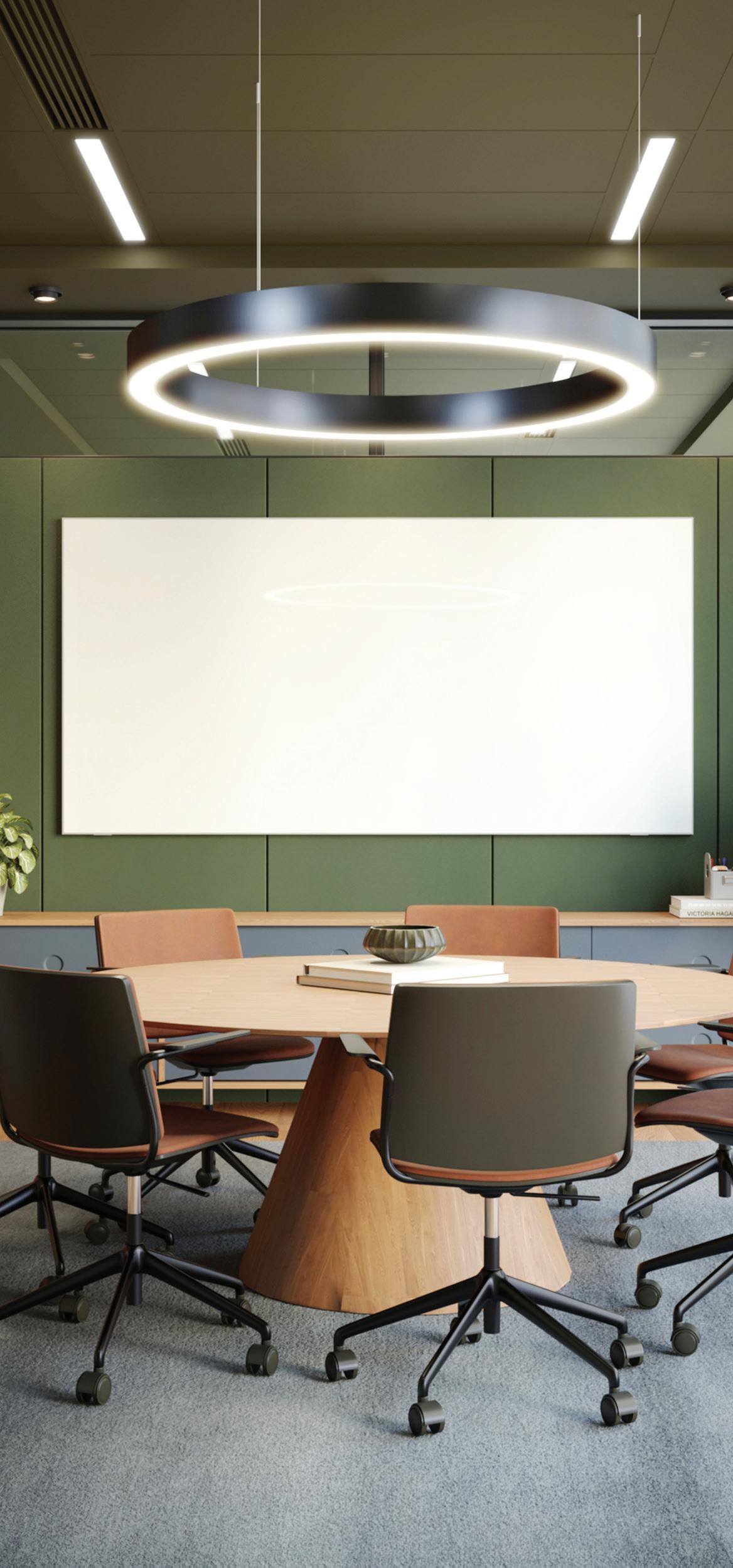
It’s just a whiteboard, but also
Makes your space usable
Helps you communicate clearly
Gains consensus
Helps with understanding
Complements your decor
Promotes brainstorming
Allows for ideas to flow
Gets teams talking
Supports accessibility
Simplifies the complex
Celebrates wins
Transforms blank walls
Blends into modern space
Encourages interaction
Adapts to any space
Keeps projects moving
Helps you think faster
Where the best ideas start

Imagine a business surviving—let alone thriving—through the turmoil of the American Civil War, two World Wars, the Great Depression, the global financial crisis, and the COVID-19 pandemic. These are just a few of the storms that Smith & Butterfield, a division of Champion Industries, Huntington, West Virginia, has weathered during its 160 years in business. Today, under its fifth generation of leadership, the company remains poised and ready for whatever the future may bring.
In 1866, George C. Smith opened a news, book and stationery store, called Young American News Depot, in Evansville, Indiana. Two years later, Smith met A.S. Butterfield, a book and stationery salesman. The pair decided to team up and merged their businesses, rebranding the new enterprise as Smith & Butterfield. In the early 1900s, the company expanded its offering to include photo finishing supplies and office equipment. Smith retired in 1924, selling his shareholding to the Butterfields, who carried on the legacy under the original name. In 1930, A.S. passed away and Sidney—a second-generation Butterfield who had started out in the company as a stock boy—took over. He successfully led the business through some tumultuous times, including the Great Depression. Sidney retired in 1966, handing over the reins to his son Bill. In 1967, a huge fire destroyed much of downtown Evansville, including the company’s storefront. Undaunted, Bill took this as an opportunity to relocate to new premises and split the business into two divisions. Earl Seibert assumed responsibility for furniture and office products, while Bill handled the photo-finishing side.
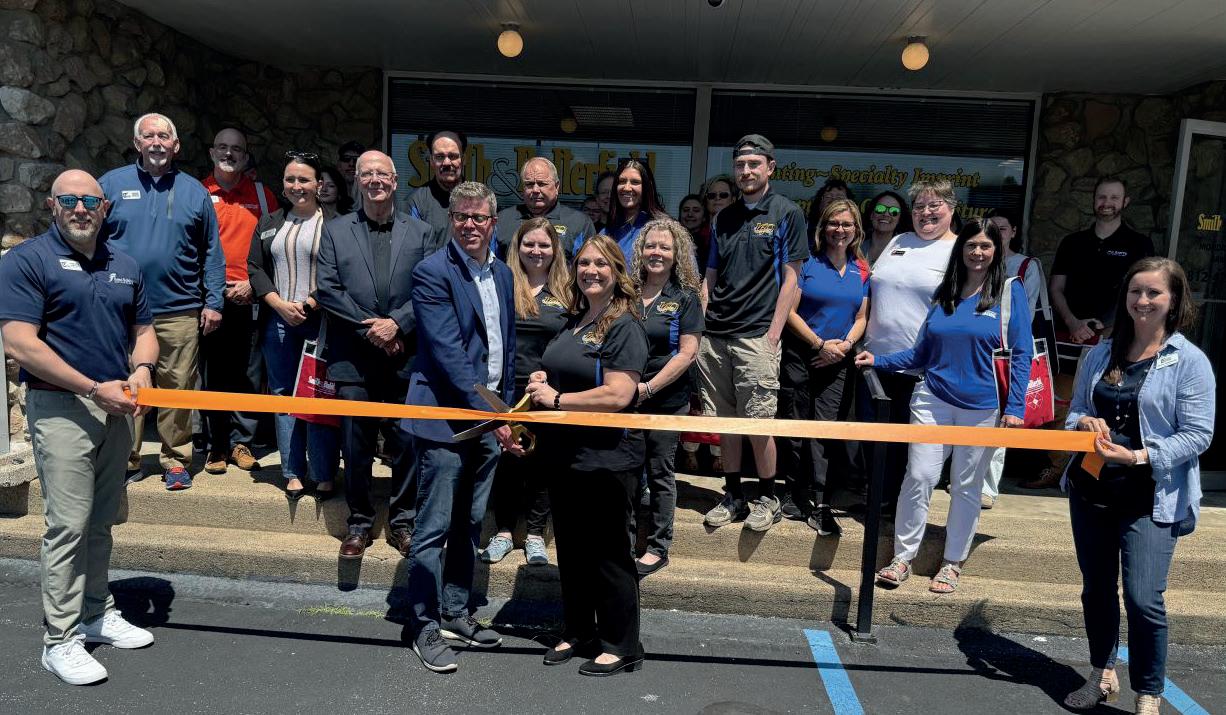
In 1987, Seibert retired and a fourth-generation Butterfield, James (known as Jim), took the helm as president. In 1989, keen to gain an edge in the market, the company purchased a major competitor. In 1996, as the pressure from the emerging big-box stores began to ramp up, Smith & Butterfield became a division of Champion Industries, Inc. The deal boosted Smith & Butterfield’s inventory of print-related products and in 1999, the company purchased a local print shop.
Teri Barnes, Smith & Butterfield’s division manager, was working for Champion at the time of the acquisition and wanted to check out the company’s new stablemate. “I fell in love with Evansville and moved here in 1998 to run Smith & Butterfield’s print division,” she explains. “Now I lead the whole division.”
Barnes took the helm in 2012 after Jim stepped down as president to give a friend a helping hand. “Jim ran the division until 2012, when he left the family business to head up Evansville Surgical Associates, a business owned by a friend who was dying of cancer,” she says. “Until then, he was my mentor. But he’s still
involved in the company today—he’s where I get my free advice!”
Before Jim’s departure, the duo had to steer the company through some choppy economic waters, including the 2008 recession. “We had an 80,000 square foot space and made the difficult decision to close the 40,000 square foot showroom to lower our overhead,” Barnes recalls. “We didn’t want to shut down altogether, so we looked for other options. Instead of letting people go, all our employees were willing to cut their hours from 40 to 36 hours.”
The COVID-19 pandemic was another flashpoint. “We had to make strategic changes and pivot,” says Barnes, admitting this wasn’t always easy. “A lot of what we sold at the time was breakroom supplies and instead we had to focus on PPE. We leveraged our supplier relationships through AOPD and pursued other opportunities. For example, I heard of a distributor in Chicago that had switched its assembly line from making vodka to hand sanitizer, so I drove five hours to Chicago and bought a whole skid.”
Ultimately, going this extra mile paid off: “We were able to get PPE to the police, fire department, schools


and other clients in the area when other companies couldn’t. So, it put us front of mind for other supplies.”
Fast forward to today and it’s office products that are the main revenue engine at Smith & Butterfield.
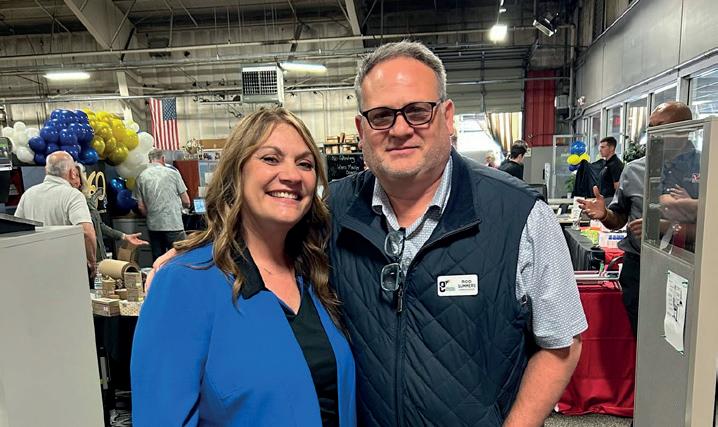
got a contract with a healthcare client—Evansville’s largest employer—office products are leading for the first time in a while.”
For Barnes, her own personal success is inextricably intertwined

the more I talked with customers, the more I realized my gift is servant leadership. Serving customers and leading my team is where my heart is. It’s what gets me up in the morning. It’s my talent. I love what I do—and I think that is key to any independent dealer’s success. Being able to pivot is also key. This industry can present diverse problems. But instead of quitting,



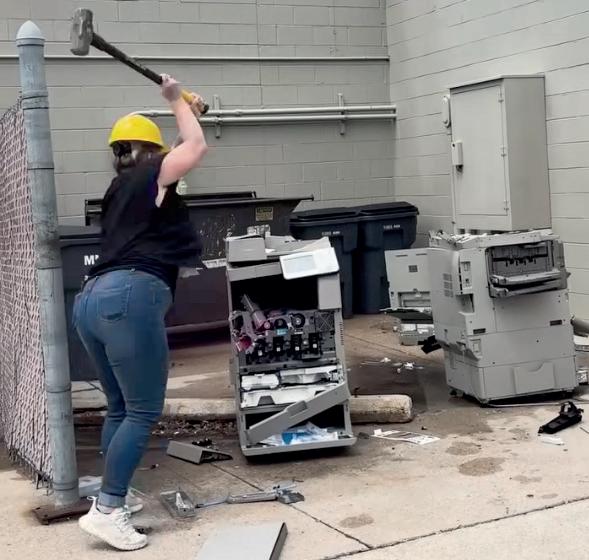
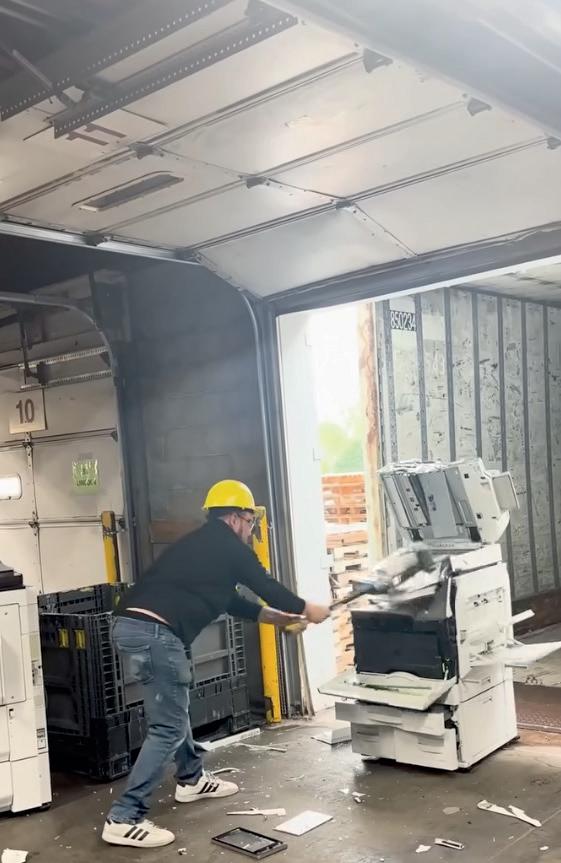
In honor of Mental Health Awareness Month, Eakes Office Solutions, Grand Island, Nebraska, hosted its fourth annual Copier Bash. Employees donated for a chance to take a swing at a copier, with all proceeds going to an organization that supports mental health. This year, $300 was raised by 30 employees who actively participated in the bashing and other employees who paid a small fee to wear jeans during the week. This year’s donation is being presented to Grand Island-based charity Willow Rising.
The mission of Willow Rising is to help foster new beginnings for those impacted by domestic and sexual violence by providing safety, support, education and survivor empowerment.
“We know people do their best work and live their best lives when they are healthy in mind and body,” says Mark Miller, Eakes president and CEO. “At Eakes, we recognize that mental health challenges are real, that seeking help is not always easy, and that support matters. We are committed to creating an environment where people feel encouraged to care for their mental wellbeing just as they would their physical health.”
Marketing manager Tasha Muller, who coordinates the event, adds: “At Eakes, supporting mental health starts with creating a culture where people feel connected and supported. The Copier Bash gives employees a meaningful outlet to relieve stress, have fun together and rally around a shared cause. It’s a simple way to make a real impact by supporting organizations like Willow Rising and strengthening our commitment to the communities we serve.”
For the tenth year, Wist Business Supplies and Equipment, Tempe, Arizona, is gearing up for the annual Pedal for Hope, benefiting the City of Hope. This year’s Wist/City of Hope teams are registered to race in the 24 Hours in the Enchanted Forest race, which will take place July 18–19 outside of Gallup, New Mexico. There will be 34 riders, divided into nine teams, competing in this year’s endurance-style mountain biking race, including three to five Wist employees. The event is designed to promote fundraising and awareness in support of City of Hope. Wist covers the registration and support fees so riders can participate. Wist raised over $30,000 during its 2025

Pedal for Hope campaign.
“All fundraising efforts go directly to City of Hope and we always strive to top the amount of fundraising experienced in the prior year,” says CFO Peter Drozdowicz.
To support Wist’s efforts, please click here

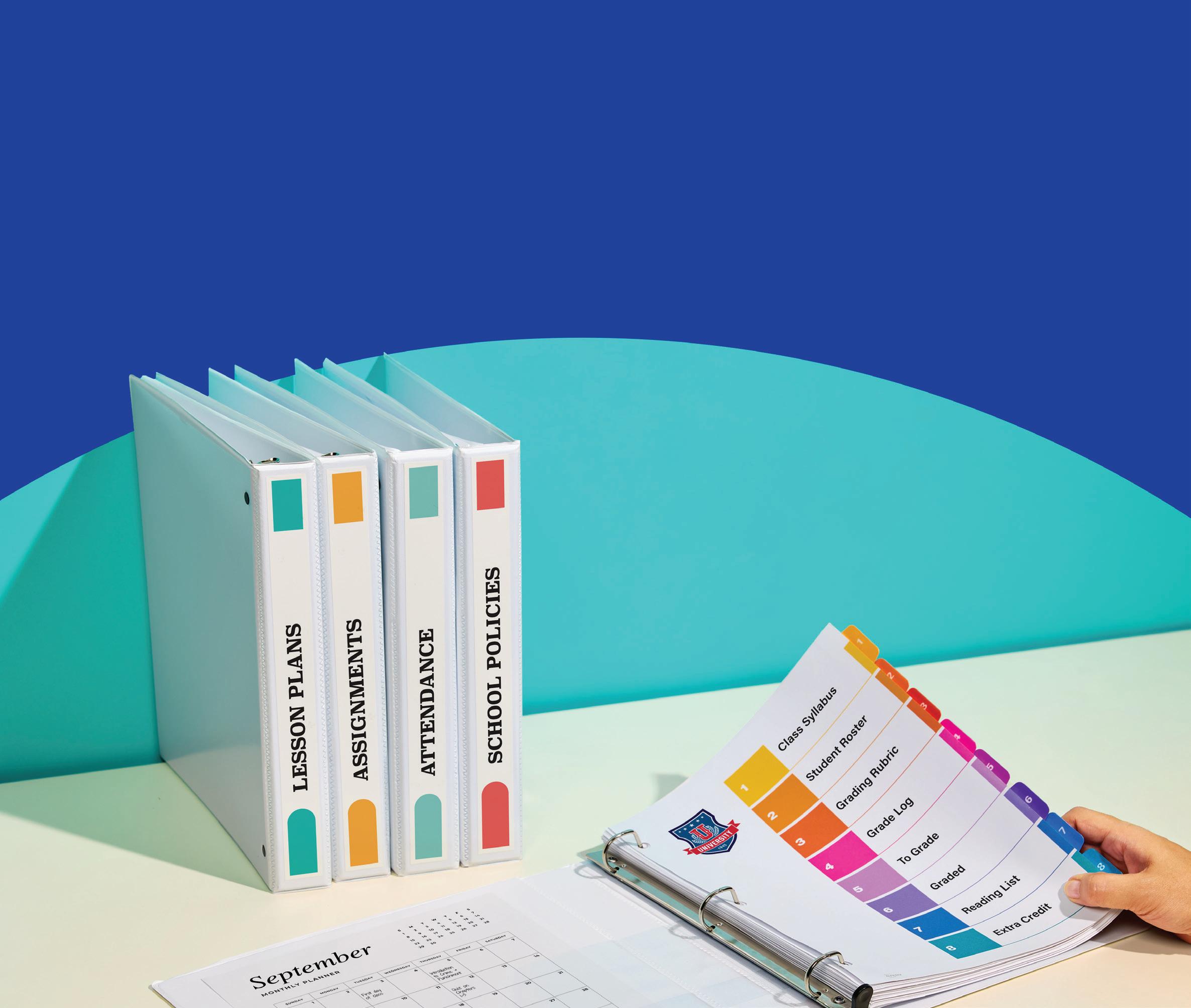
Get more value with durable binders & dividers.
From first bell to last period, staying organized keeps classrooms and offices running smoothly. Avery® binders and dividers are built for daily use in busy school environments, helping educators keep lesson plans, student work, and policies right where they belong. Stock up now for dependable organization that supports your everyday school needs.
• Binders made for reliable performance all year. Reinforced designs help prevent tearing and splitting through frequent use.
• Dividers that make information easy to find. Big Tab™ and Write & Erase options keep binder contents clear and adaptable.
• Flexible organization across your school. Select dependable solutions for classrooms, offices, and shared spaces.
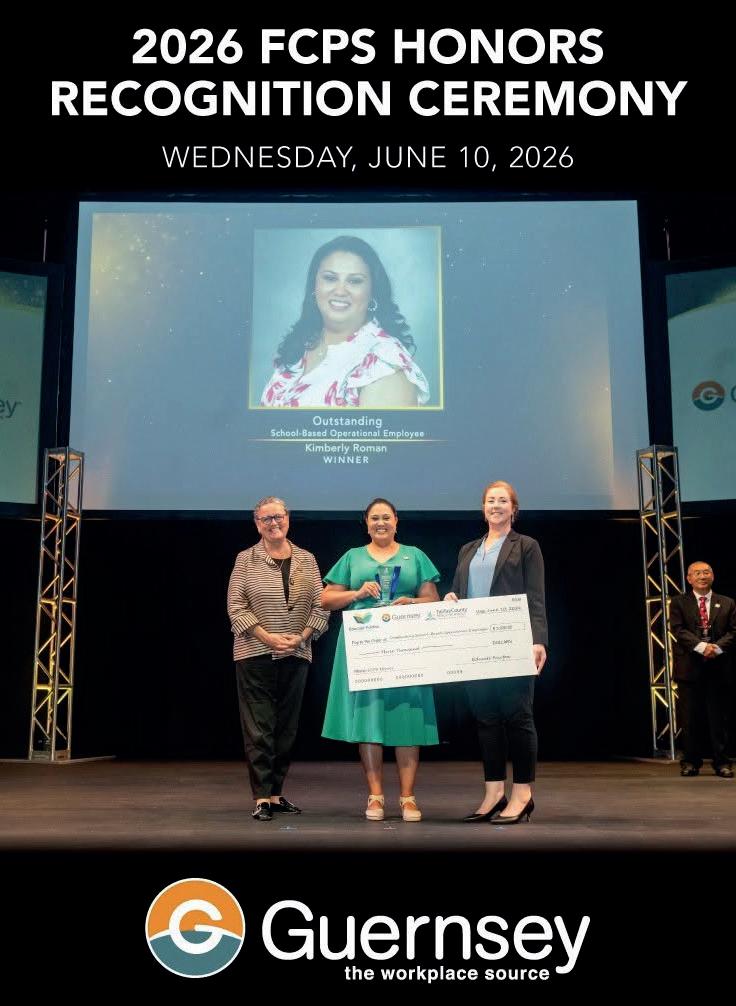
Guernsey, Inc., Dulles, Virginia, was a sponsor of Educate Fairfax and the 2026 Fairfax County Public Schools (FCPS) Honors Recognition Ceremony.
Account manager Stasia Holloway presented a $3,000 check to the Outstanding School-Based Operational Employee of the Year recipient, Kimberly Roman, during the FCPS Honors Recognition Ceremony held on June 10 at George Mason University.
“We are involved with several local school districts because they have such a profound impact on the community and we want to do our part in supporting them,” says CEO Doug Guernsey.
The FCPS Outstanding Employee Awards celebrate the efforts and accomplishments of exceptional school-based and non-school-based employees from throughout the district. Nominations are accepted from colleagues, supervisors, students and parents. Awards liaisons from participating schools and departments work with the Employee Awards Team throughout the selection process.
Educate Fairfax is a 501(c)(3) nonprofit that works to make a positive difference in the lives of FCPS students by empowering the community to invest in educational excellence and to prepare students for the future.
Elena Wuchner has announced she has stepped away from EON Workplace, the Denver, Colorado-based dealership she founded 25 years ago. Company president David Sass will lead the company going forward.
In a LinkedIn post, Wuchner said it was an exciting but bittersweet moment as she looks to explore some new career paths.
She wrote: “It has been a fun and wonderful ride, and I can confidently say that EON is now in the best hands in its history, with David Sass and our incredible leadership team running point,” adding: “I’m still very much connected with EON—and suspect I always will be.”




Magee Office Products, of Randolph, Vermont, which services customers across both Vermont and New Hampshire, has changed its name to Magee Business Solutions.
Originally founded in 1949 as Magee Office Equipment Inc, selling and servicing typewriters, the company has seen a number of evolutions and acquisitions over the years. As a result, it now carries a far wider product portfolio including copiers, printers, managed print services, furniture, water filtration systems, jan/san, office supplies, promotional items, breakroom and restaurant supplies.
In 2024, it acquired NHVT
Computer Services, Inc and rebranded it as NextGen Digital, which runs as a sister company providing managed IT and cybersecurity services.
“This change reflects our continued investment in serving as a trusted partner for all your workplace needs, while remaining true to the values that have guided our company since 1949,” company president Shawn Winslow explained in a letter to customers.



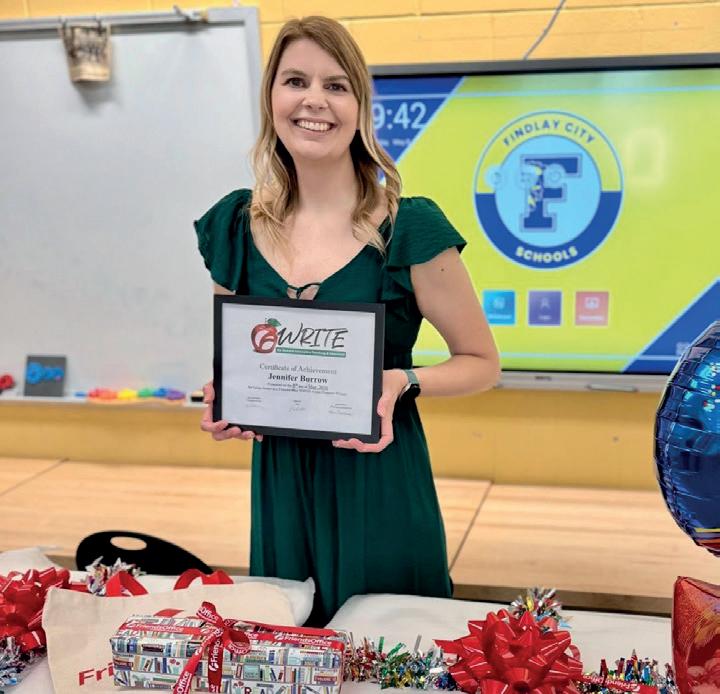
FriendsOffice, Findlay, Ohio, kicked off Teacher Appreciation Week with its annual WRITE grant program. The program provides classroom grants to educators across the FriendsOffice service area by turning innovative classroom ideas into reality. Teachers are asked to answer a simple question: “If I had specific products from FriendsOffice, what could I accomplish for my students?” Applicants explain how those particular items would improve learning outcomes, student engagement or classroom experiences. The program allows FriendsOffice to invest directly in schools and communities while supporting educators who are making a difference every day.
FriendsOffice created and administers the WRITE grant program with support from several valued manufacturer partners that helped fulfill this year’s winning projects, including Crayola, ACCO Brands, SAFCO, Lorell and S.P. Richards. Their participation helped extend the program’s impact and connect manufacturers directly to meaningful classroom outcomes. Out of the many submissions received for the 2025–2026 program,
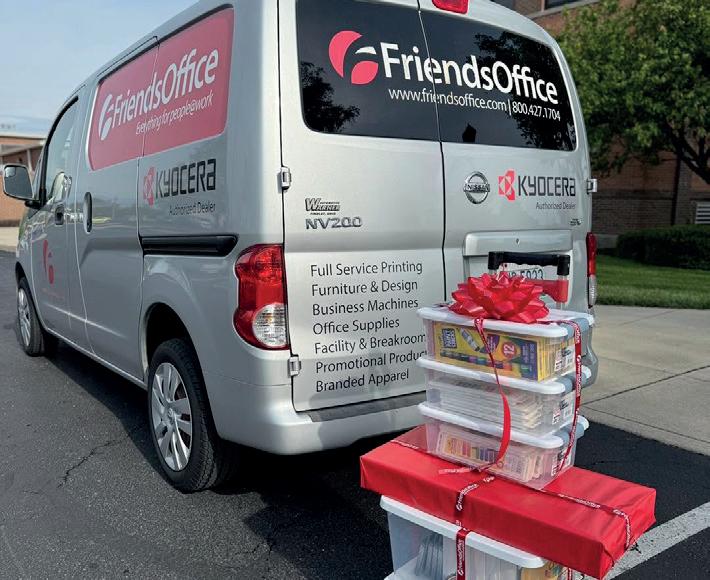
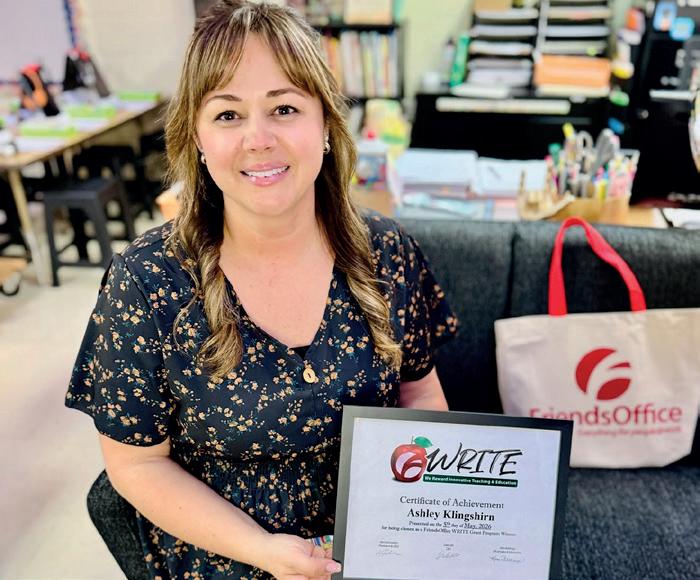
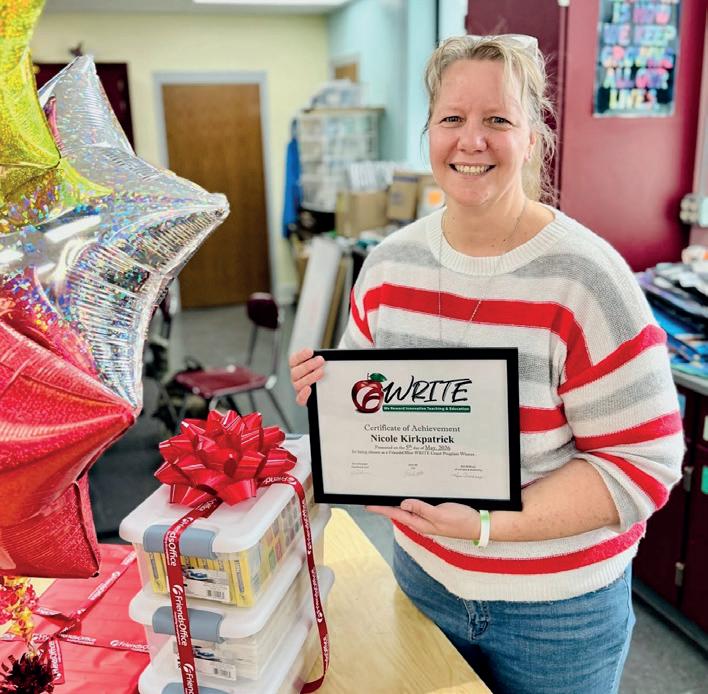
FriendsOffice selected and funded four winning classroom projects:
• New Knoxville School: Art teacher Nicole Kirkpatrick received Crayola supplies to create a large-scale collaborative mural focused on transformation, resilience and student expression.
• Coldwater Elementary: Kindergarten teacher Ashley Klingshirn received a Lorell loveseat to establish a dedicated literacy space designed to encourage reading and early literacy development.
• Donnell Middle School: Jennifer Burrow received SAFCO mobile storage carts and organizational tools to create a mobile sewing maker station supporting hands-on STEM and design learning.
• Elmwood High School: Kelsey McKibben received ACCO/
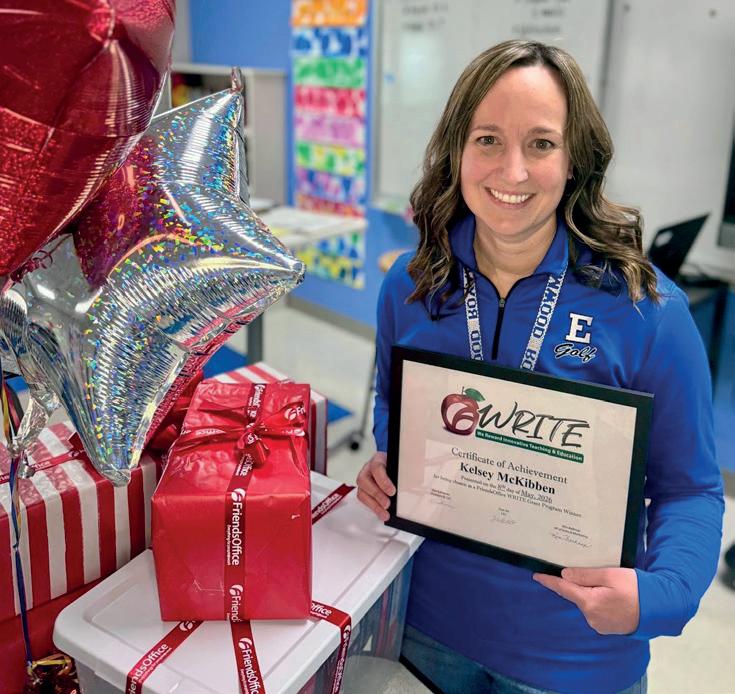
GBC laminating equipment and supplies to help students produce personalized children’s books for younger learners.
“One of the things we love most about the WRITE grant program is that it allows us to connect products directly to student impact,” says COO Peg Schroeder. “Every winning educator identified specific solutions from FriendsOffice and clearly demonstrated how those tools would enhance learning in their classroom. As a locally owned independent dealer, we believe in supporting the communities where our employees live and work. It’s local people supporting local people and there’s nothing more rewarding than seeing a teacher’s idea become a reality for their students.”
Led by 2026 honoree Greg Welchans, president and CMO of Distribution Management, we’re honoring the values that define the business products industry—speed, service, and integrity—by helping City of Hope® expand compassionate, leading‑edge cancer and diabetes care across the country.
Together, we’re accelerating research breakthroughs, advocating for veterans, and advancing whole‑person care—while carrying forward a legacy of generosity that has defined our field for decades. With a special focus on access and equity, this year’s campaign is helping bring hope to more patients and families—faster than ever before.

CITY OF HOPE’S NATIONAL BUSINESS PRODUCTS INDUSTRY’S 2026 UPCOMING EVENTS
Wednesday and Thursday, September 23-24
Spirit of Life Golf & Gala, Honoring Greg Welchans
Hosted by the National Business Products Council Cantigny Golf Club and Navy Pier Chicago, IL
Fall 2026
Los Angeles, Orange County, Chicago, Atlanta, Phoenix and Virtual
Visit Cityofhope.org/walkforhope for more information

For more information or to register for one of our events, scan here:


Gregory Modica, CEO of Government Supply Services (GSS), El Dorado, Arkansas, and a certified pilot, was on course for a career in the skies when his life took a different turn.
“My background was in aviation, but when my mom got sick with cancer, I came home to be her primary caregiver,” he explains. That’s when he realized another need: “I wanted to figure out a way to help disabled military personnel, so I got the idea of starting a company that would provide independent employment opportunities for people with disabilities and individuals who wanted to work from home because of potential challenges associated with commuting to a traditional office environment.”
For Modica, office products afforded the perfect opportunity for this, so he set up a business with the aim of providing the best products available, with the best possible service and support, at competitive prices. He also was quick to understand the commercial opportunities presented by the internet: “This all happened in 2009, before Amazon started targeting the business market, so it was a new idea for most people and online ordering in the workplace wasn’t as big a thing.”
Modica’s plan obviously worked.
Headquarters: El Dorado, Arkansas
Top management: Gregory Modica, president and CEO
Annual sales: $2.9 million
Number of employees: 4
The company has since grown its annual revenues to around $3 million; and—in addition to strong sales to local, state and federal government, as the company’s name suggests—it has also developed a solid fanbase of loyal local business customers. Indeed, last September, GSS was named Minority Business of the Year by the Little Rock Regional Chamber of Commerce and the Love Little Rock Council.
Modica attributes the success of GSS—which he likes to say also stands for “God, Service and Self”—to two major factors: “First, without faith and God, none of it would have been possible. Second is understanding and using the many resources available to small businesses. I have a military background, including procurement, and I worked as a plant manager, so I understand how the product moves. I spent a year researching, including working with the Small Business Association (SBA) and the General Services Administration.”
Modica also takes time to share this insider insight with other dealers: “Sometimes I represent the SBA, giving talks and webinars. There are a lot of programs out there, at the federal, state and local levels: the SBA, state and federal; the Department of Veteran Affairs; the Department of War; and local chambers of commerce, to name a few. With the internet, it’s easier to access so many more resources. It comes down to learning how to do business with them. Success is about being able to do the same things that larger corporations can. This includes partnering with larger corporations, including Amazon. I do consulting to help teach people how to do this for
free. It’s part of my original meaning of GSS—my mission to serve.”
Modica urges dealers to seize these chances with both hands: “You have to be willing to partner and take advantage of the opportunities suppliers offer. If you do, you can offer everything from MRO to industrial, environmental, health and safety, and even medical supplies.”
Dealers also should avail of advice and guidance from peers in the local community, he suggests: “Mentors can be a powerful asset for learning about the opportunities out there. Talking with people in business is very important, so don’t be afraid to ask them to mentor you. Participate in your community at the state and local level. I became a member of the Chamber of Commerce and was appointed to the board, so people got to know me at the state and local level.”
And to really plug into the industry, business conferences and similar events can be invaluable for dealers. “Go to conferences!” he insists. “Many state and federal agencies, organizations and corporations hold them. Set up a booth; have flyers and business cards with your website, and an informative 15-minute pitch ready. Often, the buyers are there looking to buy and you can get a signed contract right there.”
Other Modica “musts” include having a presence on LinkedIn and “keeping up to date with technology to make it easy for government entities to do business with you, including linking directly to your portal.”
Ultimately, those dealers who put the effort into tapping lucrative markets will reap the rewards. “I can’t stress enough the huge opportunity for dealers to get government contracts,” Modica concludes. “It starts with taking advantage of the many government resources available. Then, find the right people to partner with and go after the large contracts.”








Following last year’s joint outing with ISG, national accounts organization AOPD returned to a standalone event this year as its dealers and business partners met up in Huntington Beach, California at the beginning of June for Engage 2026.
While the combined 2025 event at Industry Week was generally well received, Engage is much loved by AOPD dealers—not only for the opportunity to spend quality, face-to-face time with their suppliers through a series on one-on-one meetings and marketing seminars, but also for the strong social aspect to the gathering, with organizers realizing how important it is for colleagues to catch up in less formal surroundings and strengthen their personal relationships as well as their professional ones.
It must be said that the setting added much to the relaxed, social nature of the show, as the host hotel’s location next to the Pacific Coastal Highway offered uninterrupted panoramas of the Pacific Ocean in the very pleasant local climate. Indeed, the event opened with a welcome reception under the palm trees of the Hyatt Regency’s California Courtyard, complete with cocktails and a generous buffet.
The following morning saw the start of business proper, with AOPD adopting a fresh approach to the structure of the opening session. This featured an address from board president Jon Rossman, who spoke about how well the group has dealt with the challenges that the industry has faced over the last five years together and thanked AOPD staff for their work in that respect. He also highlighted the benefits of the AOPD University series of webinars—a concept that was introduced in 2021—and plans for further episodes on new topics, such as AI and the AOPD One program, which gives dealers access
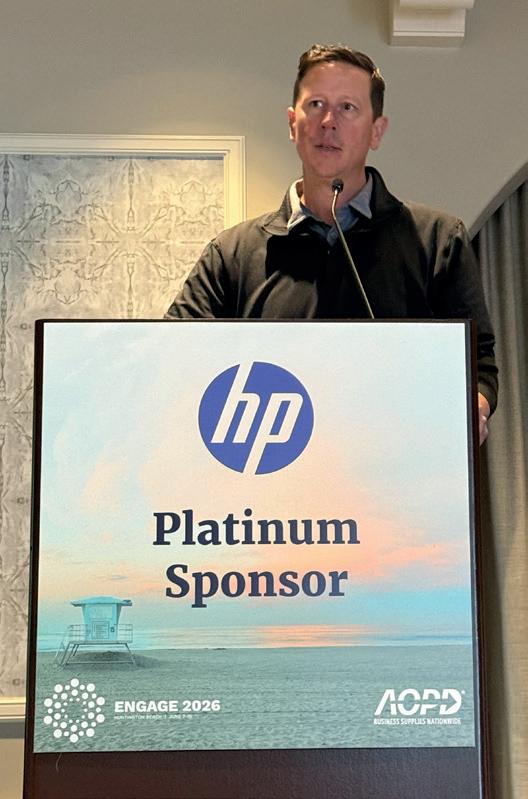

to one of the body’s group purchasing organization contracts for a reduced member fee.
He then shared a few facts and figures: sales growth hit 8 percent in 2025 and stood at 2 percent in 2026 up to the end of May. He also pointed out that dealer-driven sales at AOPD in 2021 totaled $13,885,000, rising to $28,295,00 in 2025—an increase of $14.5 million over five years.
He concluded by encouraging his fellow dealers to use their time at the show to talk to each other, challenge each other and ask the tough questions they face each day in their dealerships, adding: “We say in our dealership, growth and comfort do not coexist.”
The remainder of the opening session was given over, for the first time, to an interactive discussion moderated by INDEPENDENT DEALER editor Rowan McIntyre, who interviewed a selection of dealers, business partners and experts, while inviting questions and comments from the audience. In addition, the audience was asked to participate in a series of polls using the event’s mobile app on subjects such as jan/san sales, technology, AI, cybersecurity and what keeps them up at night.
The rest of the day, dealers attended one-to-one meetings with vendors, peer-sharing networking sessions and group marketing workshops.
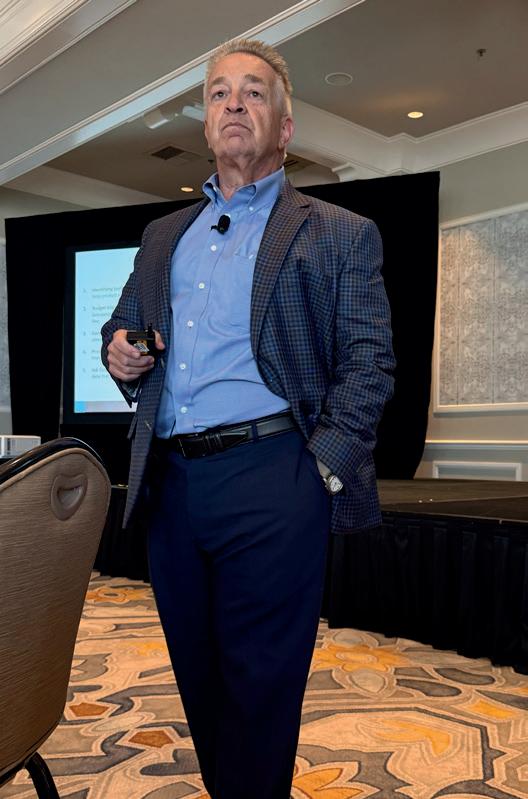
The following morning saw a dealer-only gathering followed by another day of one-to-one and marketing workshops, punctuated by a presentation from Dave Frank, a partner at industry consultants Knowledgeworx, entitled “Becoming a One-Stop Solutions Provider: A Strategic Growth Framework.” Frank discussed the opportunities available by moving into adjacent categories such as jan/san and food service, and the importance of harnessing the growing power of AI in so doing.
The event concluded with the traditional cocktail reception and awards dinner, at which nine awards were
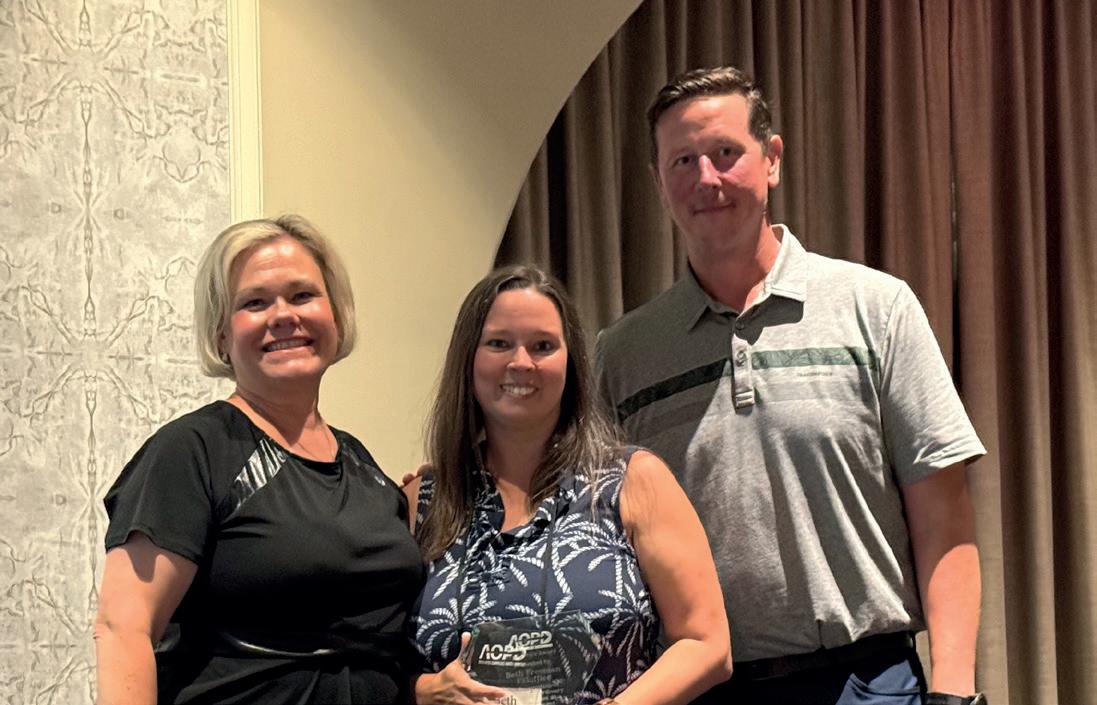
presented to recognize dealers’ success in 2025. The winners were:
• Office Basics, Inc: Highest percentage growth by a contracting dealer
• FSIoffice: Highest dollar growth by a contracting dealer
• OPACS, Inc: Highest percentage growth for the OMNIA contract
• Coastal Office Solutions, Inc: Highest dollar growth for the OMNIA contract
• Southeast Office Products & Paper: Outstanding new dealer
• Perry: Highest percentage growth for the Premier contract
• FSIoffice: Highest dollar growth for the Premier contract
• Strive Workplace Solutions: Highest percentage growth for the Vizient contract
• Perry: Highest dollar growth for the Vizient contract
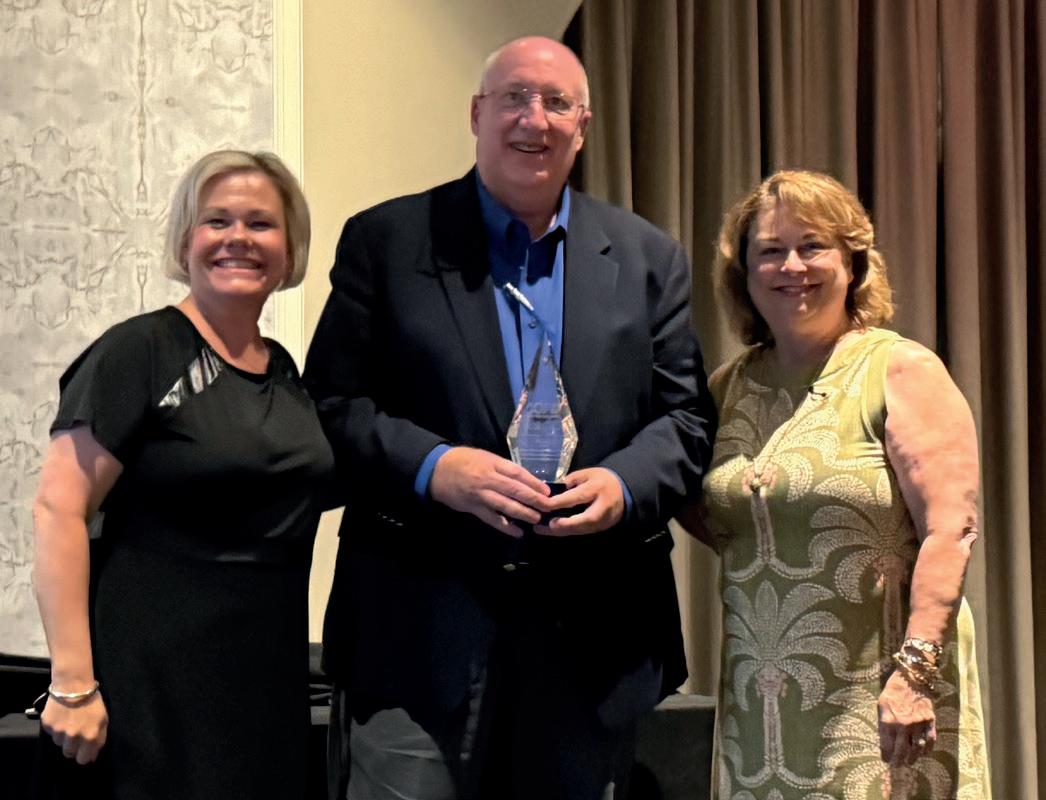
AOPD presented the President’s Award for Dealers to Beth Freeman of FSIoffice in Charlotte, North Carolina; while Patrick Scales, from BIC received the President’s Award for Business Partner of the Year.
AOPD presented the M.C. “Bud” Mundt Award to Wayne Stillwagon. This is a prestigious award that AOPD only gives to people who have given years of dedicated service to the organization and its members.
The new 2024 AOPD board of directors elected at the earlier meeting was also announced. The new board members are:
• President: Jon Rossman, Chuckals Office Products
• Vice President: Mark Porter, Porter’s Office Products
• Treasurer: Alisa Fraga-Kautzman, Tejas Office Products, Inc
• Secretary: Chris Crumpton, Business Essentials
• Director: Jarrod Anderson, Walkers Supply Co
• Director: Beth Freeman, FSIoffice
• Director: Lindley Herring, Officewise
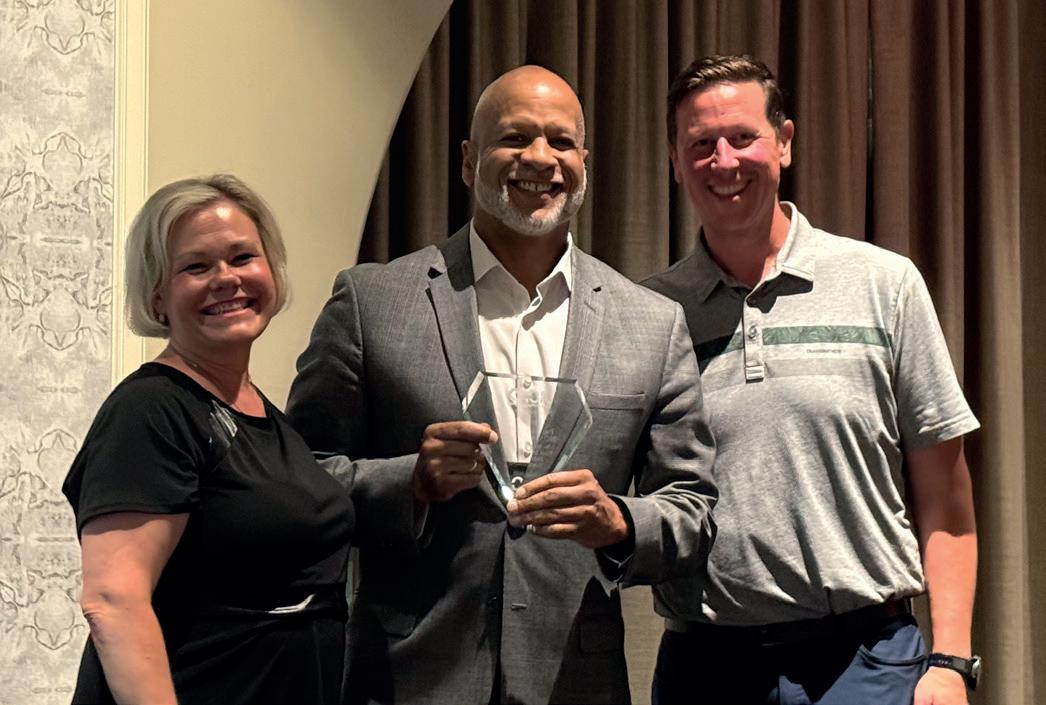
Angela Price then thanked the sponsors for this year’s meeting: HP (platinum sponsor); S.P. Richards (silver sponsor) and BIC, Essity and Fellowes Brands (bronze sponsors).
“What makes AOPD special is the willingness of our members to openly share their experiences, successes and challenges,” said Price. “The engagement throughout the meeting was tremendous and attendees left with new ideas, valuable connections and actionable strategies they can take back to their businesses. That spirit of collaboration continues to be one of the greatest strengths of the AOPD network.”
Rossman commented after the event: “AOPD staff and consultants did a great job putting together a program that allows our dealers and business partners to interact in a setting that enables relationships to continue to be fostered. The discussions centered on what is happening industry wide, as well as within each of our businesses, were really fun to witness. As AOPD continues to seek ways to help dealers and business partners succeed, this meeting helps the board understand our shared priorities and the challenges we all face, and allows us to celebrate many accomplishments.”

Independent Suppliers Group (ISG) has turned to a former Essendant executive to head its marketing team.
Following the recent departure of Ashlee Hunt, who left the dealer group in May after just over two years with the organization, the dealer group has confirmed Jamie Mennicke as its new director of marketing. Prior to joining ISG, Mennicke served as director of marketing strategy and operations at Essendant, where she led transformational go-to-market initiatives, launched a retail media network generating more than $30 million in annual recurring revenue and helped generate more than $125 million in new customer pipeline growth through AI-driven marketing programs.
In her new role, she will lead ISG’s overall marketing vision, supplier and member engagement initiatives, digital platform strategy and Industry Week marketing execution.
“Jamie’s extensive experience in channel marketing, supplier
engagement and digital strategy makes her an exceptional addition to the ISG leadership team,” said CEO James Rodgers. “Her proven ability to align marketing innovation with measurable business growth will help strengthen the value we deliver to our members and supplier partners.”
Meanwhile, at a recent members’ town hall, ISG unveiled a soft launch of its new brand identity.
The updated look features a refreshed logo, a new tagline— “leading brands, cooperative purchasing, exceptional distribution”— and a triangular icon that symbolizes the strong
relationship between the ISG organization, its members and suppliers.
“Together, our icon, name and tagline tell a powerful story of connection, collaboration and collective growth,” stated the US dealer group, adding: “This brand evolution represents more than a new look—it reflects our vision for the future and our commitment to building stronger partnerships and delivering greater value across our network.”
ISG will shortly be announcing a full launch as well as releasing additional brand materials.
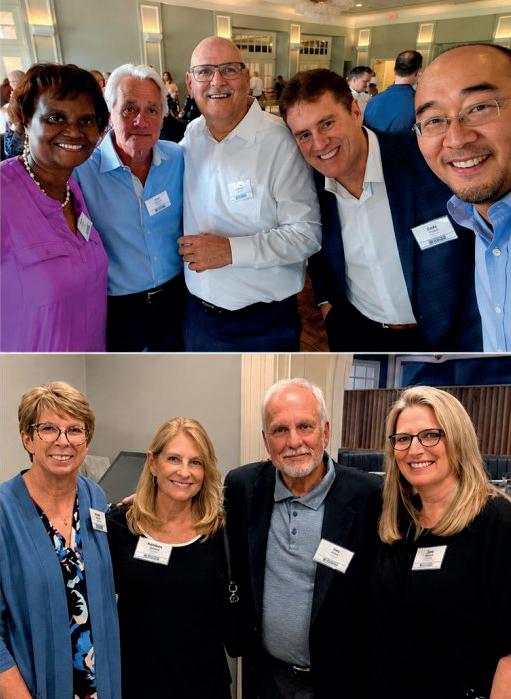
On May 23, 2026, a reunion involving former employees from various departments and divisions of United Stationers was held at The Grove Country Club in Long Grove, Illinois, near Chicago.
Initiated more than a year ago, the event brought together people from across the country to celebrate the company’s beginnings in 1921, reflect on its growth and reconnect with former colleagues.
Among those attending were former executives Cody Phipps, Dick Gochnauer, Randy Larrimore and Mel Hecktman. Other executives in attendance included Steve Schwarz, Kathy Dvorak, Jim Fahey, Joe Templet, Gordon Zdeblick and Mark Hampton.
The combined length of service of those present totaled 3,170 years, with the longest-serving individual having spent 48 years with the company.
The event also raised a contribution for City of Hope.
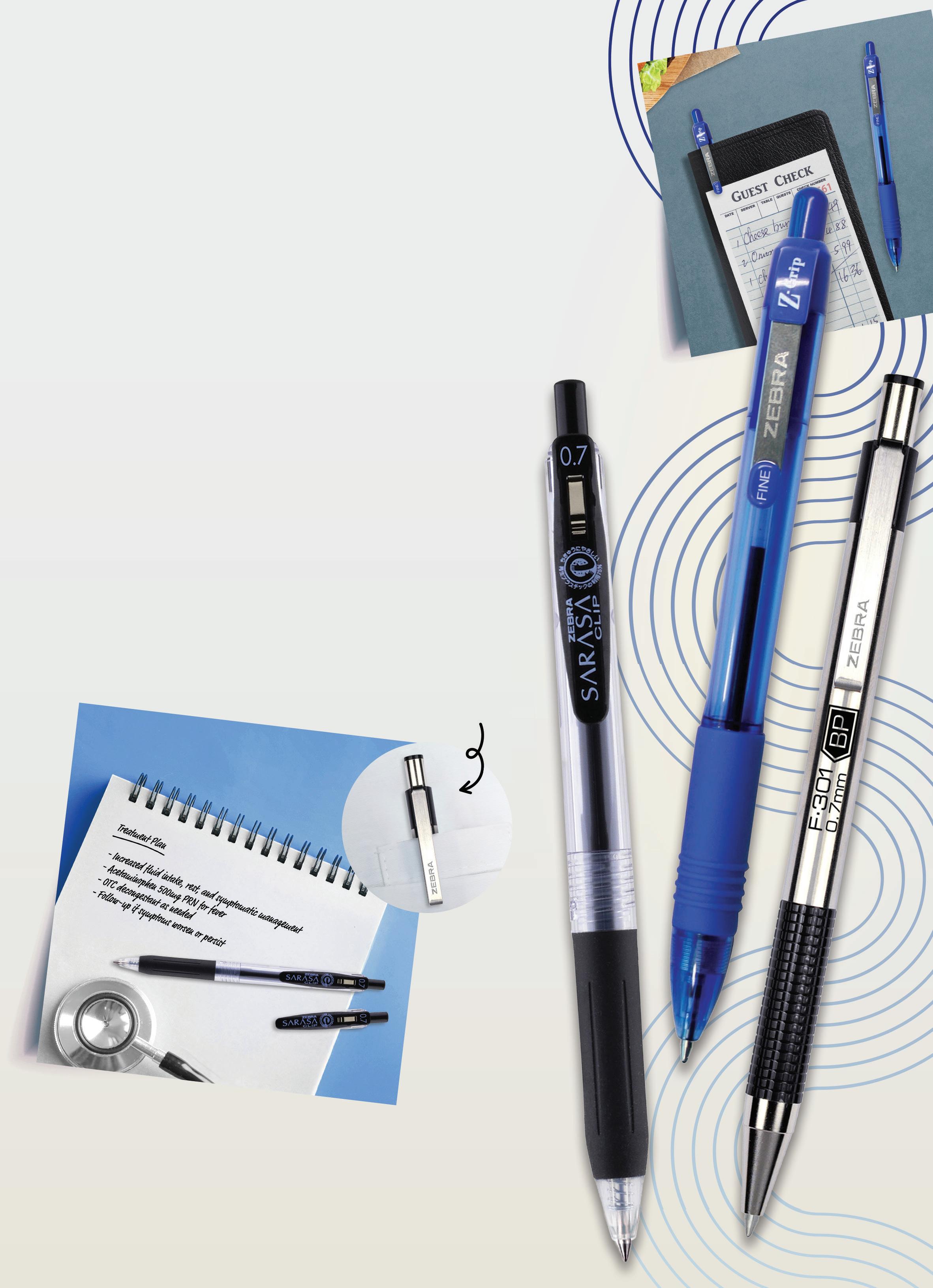



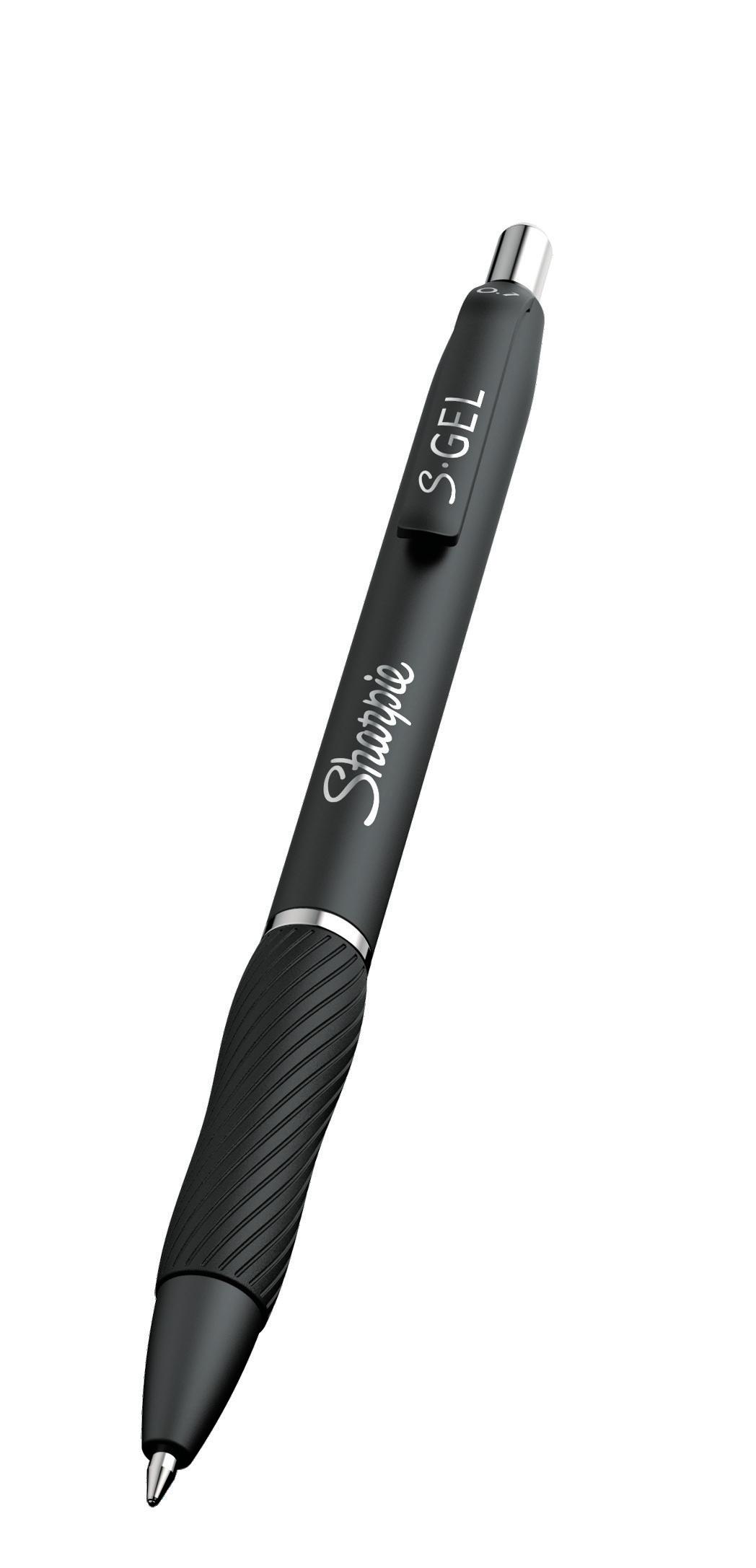
Zebra Pen o ers a wide range of retractable ballpoint and gel pens. Whether metal or alligator, Zebra’s retractable pens o er reliable clipability, guaranteed to be right there where you need it, when you need it.
Designed for everyday writing, these pens deliver smooth ink flow, comfortable grips, and reliable performance. The durable clip can be attached to shirt pockets, notebooks, check presenters, and more, always keeping your pen secure.
Clip it!


North American paper and facilities products vendor Georgia-Pacific has confirmed the return of two senior executives.
Ryan Elwart has rejoined the company as SVP of sales and innovation for its GP Foodservice Solutions unit, which includes the Dixie and Anchor Packaging brands. He will lead commercial strategy and integration efforts across the away-from-home foodservice disposables business.
Elwart returns after serving as group president at Mativ, where he oversaw multiple business segments. He previously spent 16 years at Georgia-Pacific, including a spell as chief customer officer for its Consumer Products Group, with responsibility for both retail and B2B sales operations.
Meanwhile, Nick Trainer has also returned to Georgia-Pacific, taking on the role of VP of market sales for the GP Pro division. In this position, he will oversee sales strategy and execution, with a focus on strengthening customer relationships and driving growth across the professional hygiene business.
A jan/san industry veteran, Trainer’s career includes 16 years at Kimberly-Clark and almost 18 years at Georgia-Pacific. Most recently, he was SVP of sales and marketing at food safety products supplier Handgards.
Imperial Dade and BradyPLUS have revealed their new operating brand, Imperial Brady.
The new name follows their merger, announced last year, which closed in March. The brand will roll out across different touchpoints over the coming months, including in Canada, where the business is now known as Imperial Brady Canada.
The combined company brings together more than 13,000 employees and generates approximately $10 billion in annual revenue. Despite the unified name, each legacy organization continues to run its own website and maintain its own headquarters.


Independent dealer furniture collective Connexions Office has appointed David Lipscomb to a leadership role focused on dealer growth and business development.
Lipscomb joined Connexions Office powered by IS Contract as a principal on June 8, working with existing and prospective dealer partners to expand the organization’s network, strengthen vendor relationships and support independent office furniture dealers through technology, marketing and operational initiatives.
He brings more than 25 years of experience in sales, national account management and business development. His previous roles include positions at Essendant and Office Furniture USA, where he developed dealer programs and strategic partnerships across the IDC.
Lipscomb will join his brother Dace, president of Connexions, the organization closely associated with their father, Don, who is now semi-retired but still serves as an industry consultant and advisor.
North American business products technology provider SSI has added a new software option for smaller resellers.
The Canada-based company has announced E-Powered, which is specifically designed to meet the needs of start-ups and smaller dealers and distributors that require a powerful but affordable solution for online sales and basic dealer operations.
E-Powered incorporates the same technologies as SSI Edge, the company’s flagship dealer software, and includes a complete e-commerce platform. Dealers can set up and
manage their own webstore—which SSI says offers customers a shopping experience comparable with the superstores and major e-tailers—along with the purchasing management tools many business customers need.
E-Powered’s purchasing tools provide online stock checks and automatic electronic purchasing with major vendors, while dealers can
use the software in conjunction with QuickBooks for a complete accounting solution. Other features include: support for custom products as well as catalogues and e-content from major suppliers; built-in merchandising tools; the ability for dealers to use their own SEO-friendly URLs and SSLs; and a device-independent design that runs on tablets, mobile phones, laptops and desktop computers.


SSI is privately owned and operated. That means we answer to our customers, not shareholders or equity investors.
So if your looking for affordable dealer software that will still be around as your business grows, shift your focus to SSI… and picture a more profitable future.

Complete ERP and e-commerce
and cut operational costs…all priced for the
Cleaning and hygiene products vendor Clorox has begun the search for a new CEO after Linda Rendle announced plans to step down for health reasons.
Rendle, who has led the US-based company since 2020 and has spent 23 years with the business, will remain chair and CEO while the search process takes place. She will also serve in an advisory capacity following the appointment of a successor to support the leadership transition.
In a personal message published on the company’s website, Rendle revealed she had been diagnosed with early-stage breast cancer and is now cancer-free. However, she said
the ongoing side effects of treatment designed to prevent a recurrence had prompted her to reassess her long-term priorities.
Rendle stressed that she remains fully committed to the company during the transition period and said her focus would continue to be on advancing Clorox’s strategy, improving execution and supporting employees until a new CEO is appointed.
Lead independent director Matthew Shattock credited Rendle with helping transform the company during a challenging period that included the pandemic, supply chain disruption, inflationary pressures and a major cyberattack.

During her tenure as CEO, Clorox has sharpened its portfolio toward faster-growing health and hygiene categories while investing in digital capabilities, innovation and operational improvements. It also recently snapped up well-known hand-sanitiser brand Purell in a $2 billion deal.



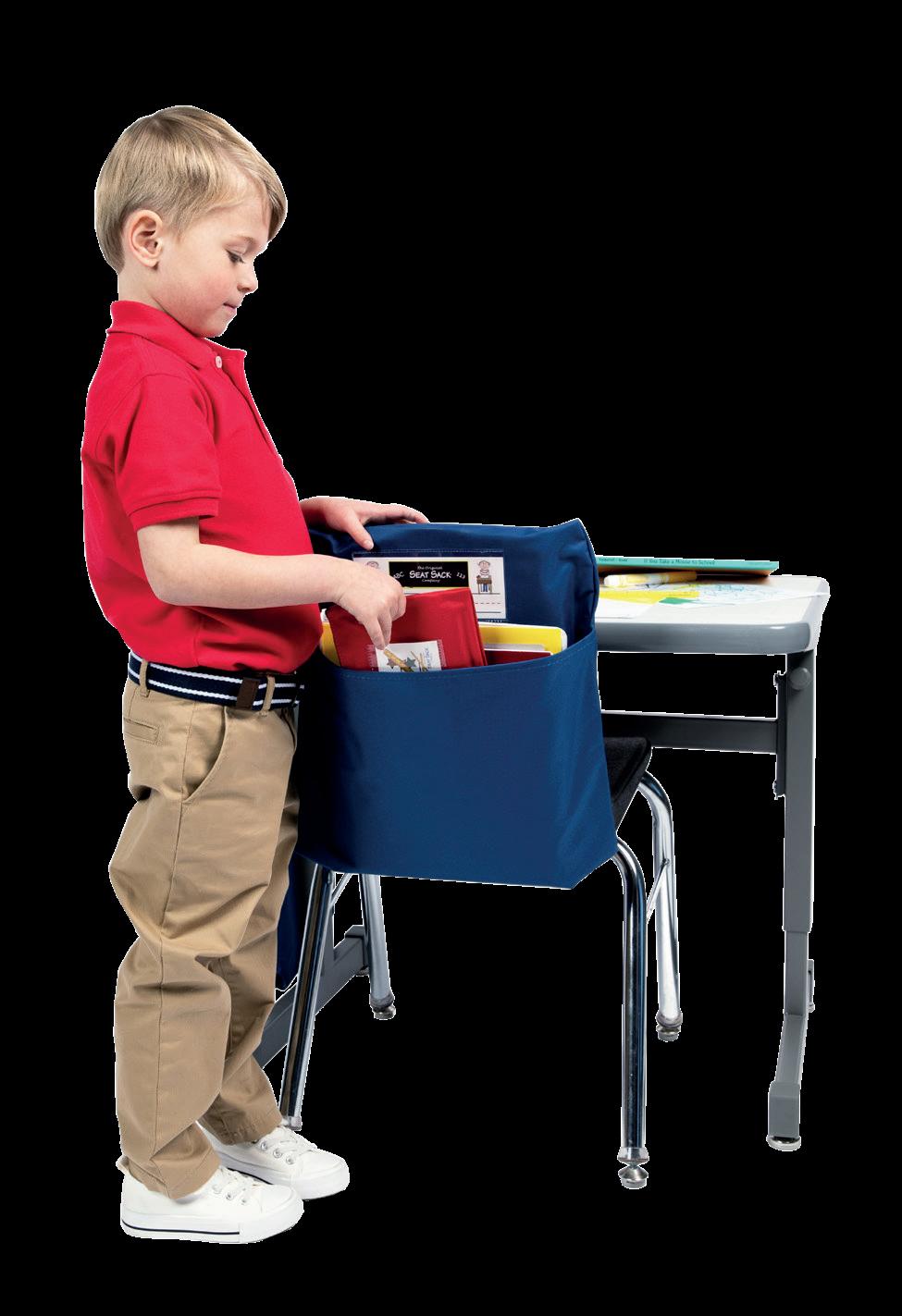
Safety and industrial signage giant Brady Corp has announced a change of CEO following the retirement of Russell Shaller.
Shaller has stepped down after 11 years with the company, the last four of those as CEO. His departure comes shortly after Brady sealed a $1.4 billion deal to acquire Honeywell’s Productivity Solutions and Services (PSS) business. He will stay on in a consultative role until August 1, to ensure a smooth leadership transition.
Taking over is current board member Vineet Nargolwala, most recently CEO of semiconductor firm Allegro Microsystems. He also spent 10 years at Honeywell between 2003-2013 in its Industrial and Building Automation unit. Brady said Nargolwala was “intricately involved” in the PSS acquisition and that his four years on the board as well as his previous experience at Honeywell “uniquely position him to lead our growth transformation.”




Experience a website built for your unique business—get full access free for 30 days.


MillerKnoll CEO Andi Owen has left her role at the office furniture giant.
According to a company press release, Owen and the MillerKnoll board mutually agreed that she will retire, effective June 30. However, she has resigned from the board and begun a leave of absence until her official departure date, with the press release referring to “important family matters.”
COO Jeff Stutz will carry out CEO duties until the end of the month, after which he will become Interim CEO while the search for a new permanent leader takes place. Company veteran Stutz, who served as the firm’s CFO for 10 years, was named COO in September 2025.

Tork says investments in renewable electricity procurement have helped reduce the reported carbon footprint of several paper towel and napkin systems by up to 21%.
The Essity-owned B2B hygiene brand has published updated carbon data for a number of its hand towel and napkin products. The move is part of a broader effort to support customers’ sustainability reporting and procurement requirements.
According to Tork, the reported reductions are linked to renewable electricity certificate purchases for paper manufacturing operations. The company said the resulting carbon footprint changes were measured through third-party reviewed cradleto-grave life cycle assessments.
The largest reported reduction was for Tork PeakServe hand towels
at 21%, followed by Xpressnap and Xpressnap Fit napkins at 20%. Xpress multifold hand towels and Matic hand towels showed reductions of 16% and 15% respectively.
Tork has also updated its Focus4 Sustainability platform with additional carbon reporting information, including ‘per-use’ emissions measurements intended to help customers better compare products and support environmental reporting obligations.
Audrey Wesson, sustainability manager, professional hygiene at Essity, said sustainability data was becoming increasingly important in purchasing decisions and corporate reporting.
The announcement was made at the Green Sports Alliance Summit,

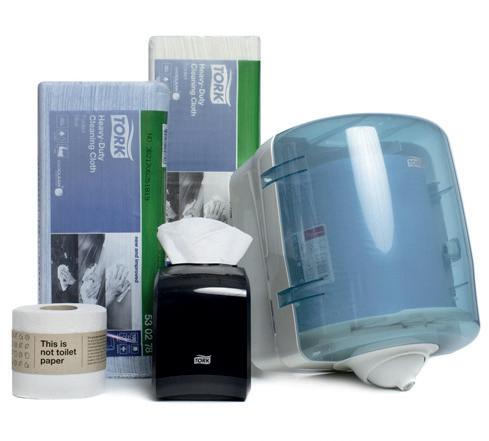
which took place in May in Cleveland, Ohio, and where Tork highlighted a long-running partnership with the Philadelphia Eagles. According to the company, the Eagles could reduce emissions linked to certain Tork napkin and towel purchases by more than 13,900lb of CO2 equivalent in 2026 under the updated calculations.












North American packaging and facilities distributor Veritiv has announced two acquisitions to expand its packaging operations in the US.
The company has acquired Tampa-based Quick Pak, a distributor of packaging products including films, tapes, strapping and packaging equipment. Financial terms of the deal were not disclosed.
Founded in 1999 by Mike Cunningham, Quick Pak supplies customers in sectors including distribution, food and beverage and manufacturing. Veritiv said the acquisition strengthens its packaging capabilities in Florida and complements its existing product portfolio.

At the same time, Veritiv has also acquired New Jersey-based Stickel Packaging Supply, which distributes corrugated packaging and related solutions across New Jersey, the Philadelphia area and
“We joined AOPD in 2015 to fill a coverage gap, and it quickly became clear it was the right fit for Office360. Since then, we’ve grown significantly, expanding our technology and focus on large, multi-location accounts. Winning the IHN Vizient account with AOPD is something I’ll never forget.”
Steve Nahmias
Principal, Office360 AOPD Member since 2015
northern Delaware.
CEO Sal Abbate said both businesses bring strong regional customer relationships and experienced teams that fit well with Veritiv’s packaging operations.

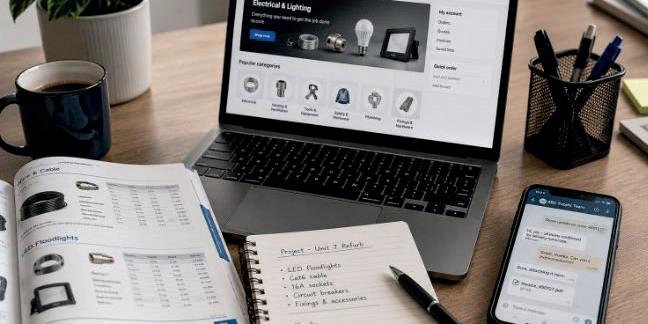
B2B buyers are becoming increasingly willing to switch suppliers when their expectations for a seamless purchasing experience are not met, according to new research from McKinsey.
The consultancy’s 2026 Global B2B Pulse Survey found that inconsistent information, poor communication between teams and difficulties accessing knowledgeable staff are among the leading causes of customer churn.
The report is based on responses from nearly 4,000 B2B decision-makers across 13 countries and multiple industries. According to McKinsey, buyer expectations have evolved to the point where capabilities such as e-commerce and omnichannel engagement are no longer competitive advantages, but basic requirements for doing business.
More than half of respondents (52%) said they would consider ending a supplier relationship if different teams provided inconsistent information on issues such as pricing, product availability or lead times. The same proportion cited difficulties connecting with people who had the knowledge or authority to resolve issues.
Other key frustrations included being transferred between multiple teams before receiving help (51%), a lack of flexibility to conduct independent research before speaking to a sales representative (50%) and poor experiences with supplier websites, webstores, chatbots and contact pages (43%).
McKinsey said the findings demonstrate that buyers increasingly expect suppliers to operate as a single integrated organization, regardless of whether interactions take place online, remotely or face to face.
The survey found that B2B
purchasing remains firmly omnichannel. Buyers now use an average of 10 channels throughout the purchasing journey and continue to divide their interactions relatively evenly between traditional, remote and digital channels—a pattern McKinsey describes as the “rule of thirds.”
While digital engagement continues to increase, the most notable shift in recent years has been a gradual move away from remote interactions such as phone calls and video meetings. Digital self-service channels have steadily gained ground, particularly during the research, ordering and reordering stages of the buying process.
Nevertheless, face-to-face engagement still accounts for around one-third of buyer interactions, underlining the continued importance of personal relationships. McKinsey noted that “business moves at the speed of trust,” adding that strong account management and expertise remain essential for retaining and expanding customer relationships.
Digital commerce is firmly established as a central pillar in B2B sales strategies. Some 71% of surveyed organizations now offer e-commerce capabilities and, among those, approximately one-third of revenue is generated through digital
channels, making it the largest sales channel for many businesses.
The report highlights a widening gap between high-performing organizations and their competitors. 60% of market leaders—companies that said their market share grew by 10% or more year on year—reported double-digit revenue growth in 2025, compared with just 21% of laggards.
According to McKinsey, the companies pulling ahead are more likely to combine advanced personalization, AI and strong commercial discipline in an integrated sales model. Market leaders were four times more likely than laggards to deploy one-to-one personalization and twice as likely to have adopted generative AI.
On the topic of generative AI, it is moving rapidly beyond the pilot stage. The survey found that 22% of organizations have fully implemented generative AI within their B2B buying and selling processes, while a further 31% are actively deploying the technology.
McKinsey concluded that the next phase of competitive advantage will come not from adopting individual technologies, but from integrating customer data, AI, digital commerce and sales processes into a coherent commercial strategy.
Beautifully curated and so informative! It was great collaborating with other dealers to see how they are taking on the same problems everyone is facing as well as get to meet suppliers in person and have meaningful conversations with them. Not overwhelming like other tradeshows - great ability to come and speak to everyone beyond the superficial conversations.
- Ellie Dowsland Bulk Office Supply
Industry Week is the only event that brings dealers and vendor partners from all corners of the country together to collaborate and learn from one another. It is a MUST attend event.
- Jordan Kudler Legacy Office Solutions

This time to think about the business instead of working on the business was invaluable. It was fantastic recognizing that we were not alone in some of the problems we struggle through. The event provided us with a renewed sense of energy to go after business when we got back to the office.
- Alan Bird Complete Office Supply
Industry Week is a great and needed investment into your business. If you put in the time and effort with the seminars and networking with other dealers, you can't help but improve your dealership.
- Tige Vester Boss Office Products
members should plan to arrive on Oct.

Paul A. Miller, legislative counsel, Workplace Solutions Association

The Integrity, Notification and Fairness in Online Retail Marketplaces for Consumers (INFORM) Act was passed with overwhelming bipartisan support in 2022 to address a growing crisis in online commerce: counterfeit products, anonymous third-party
sellers, deceptive business practices and the inability of consumers to identify who they were purchasing from.
Congress recognized that digital marketplaces had evolved faster than the safeguards designed to protect buyers, businesses and the
economy. The result was a landmark law requiring online marketplaces to verify high-volume third-party sellers, increase transparency and provide consumers with greater accountability in online transactions.
But while Congress acted to protect consumers in the private
marketplace, it failed to apply the same standards to the federal government’s own online purchasing systems. That gap is exactly why INFORM Act 2.0 is needed.
As federal procurement increasingly shifts toward digital marketplace models managed through the General Services Administration (GSA), the risks Congress sought to address in the consumer marketplace are now present inside the federal government itself. The difference is that the stakes are even higher. When counterfeit, fraudulent or non-compliant products enter federal supply chains, the issue is no longer simply consumer protection; it becomes a matter of taxpayer protection, small business fairness, procurement integrity and national security.
The proposed INFORM Act 2.0 would extend the core principles of the original INFORM Act to GSA’s online marketplace platforms by requiring verification, disclosure, accountability and enforcement standards for third-party sellers operating within federal procurement systems.
At its core, the legislation recognizes a simple truth: if consumers deserve transparency and protection when buying products online, then the federal government—which spends hundreds of billions of taxpayer dollars annually—deserves at least the same level of protection. The rise of online procurement platforms within government purchasing has created not only efficiencies but also vulnerabilities. Unlike traditional federal contracting systems that rely heavily on vetted vendors and structured procurement processes, online marketplaces often allow third-party sellers to enter
digital procurement ecosystems with far less scrutiny. This creates opportunities for counterfeit products, fraudulent actors, foreign shell entities and bad-faith sellers to exploit weaknesses in the system.
The Workplace Solutions Association (WSA) has cautioned that counterfeits and insufficient regulations within GSA’s online marketplace pose risks not only to small businesses but also to national security. These concerns are not theoretical. Federal agencies purchase everything from office technology and electronics to safety equipment and operational supplies through digital procurement systems. When the origin, authenticity or compliance status of those products cannot be verified, the federal government exposes itself to grave risk.
This issue is particularly important to WSA because its members operate directly within the industries most impacted by federal online procurement systems. WSA represents businesses that have spent decades building trusted brands, complying with federal procurement requirements, investing in cybersecurity protections and maintaining legitimate supply chains. Many of these companies compete fairly and transparently within federal contracting systems while adhering to strict standards tied to sourcing, quality, safety and compliance. Without stronger safeguards in GSA’s online marketplace, those legitimate businesses are increasingly forced to compete against anonymous third-party sellers operating with limited oversight and accountability. INFORM Act 2.0 helps ensure that honest businesses are not disadvantaged
by counterfeiters, fraudulent actors or sellers circumventing the rules that responsible companies follow every day.
WSA also understands that workplace products today are no longer simple commodity items. Modern workplace solutions increasingly involve connected technology, integrated software, smart office equipment, cloud-enabled devices and digital infrastructure. Counterfeit or compromised products entering federal systems through weakly regulated marketplaces create cybersecurity vulnerabilities that can threaten federal operations and national security.
That is why WSA is uniquely positioned to lead the conversation around INFORM Act 2.0. The association brings together the businesses, procurement expertise and real-world marketplace experience necessary to educate policymakers about the growing vulnerabilities inside federal digital procurement systems. WSA members understand how online procurement operates in practice, where the loopholes exist and how stronger verification standards can protect both taxpayers and legitimate businesses without disrupting competition.
Counterfeit electronics alone present a serious cybersecurity and infrastructure threat. Federal agencies increasingly rely on interconnected technologies, cloud systems, communications hardware and digital infrastructure to operate. A counterfeit router, server component, battery system or networking device inserted into the federal supply chain can create vulnerabilities that hostile
actors could exploit. The federal government has spent years strengthening cybersecurity protections across agencies, yet weak oversight in online procurement marketplaces can undermine those efforts with a single compromised vendor.
INFORM Act 2.0 directly addresses these vulnerabilities by requiring GSA online marketplace sellers to provide verified banking information, tax identification numbers, government-issued identification and working contact information. The legislation also requires annual certification of seller information and authorizes the suspension of sellers that fail to comply.
These are not burdensome requirements; they are common-sense accountability standards. If an individual or company wants to sell products to the federal government using taxpayer dollars, the government should know exactly who they are, where they are located and whether the products they are selling are legitimate and compliant with U.S. laws and trade requirements.
One of the strongest provisions in INFORM Act 2.0 is the requirement that GSA marketplaces verify that products sold by third-party vendors comply with U.S. trade agreement requirements and are original products. This is crucially important for both economic and national security reasons.
Federal procurement policy has long attempted to prioritize compliant products and responsible sourcing. Yet without robust verification mechanisms in online marketplaces, federal agencies may unknowingly purchase counterfeit goods or products sourced through improper trade channels. This undermines domestic manufacturers,

disadvantages legitimate small businesses and creates unfair competition against companies that actually follow federal rules.
Small businesses are particularly harmed when counterfeiters or unverified sellers can undercut legitimate suppliers through online marketplaces. Honest companies invest in compliance, product quality, workforce development, cybersecurity and regulatory obligations. Bad actors operating anonymously online often avoid these costs entirely while flooding marketplaces with cheaper counterfeit or unauthorized products. INFORM Act 2.0 helps level the playing field by requiring transparency and accountability from all marketplace participants.
This is another area where WSA can play a critical leadership role. Because it represents
companies directly affected by unfair marketplace competition, WSA can provide Congress and federal agencies with real-world examples of how counterfeit goods and anonymous sellers distort procurement decisions, undermine trusted brands and hurt responsible employers. WSA can help policymakers understand that INFORM Act 2.0 is not about limiting competition or innovation; it is about ensuring fair competition and protecting procurement integrity.
The legislation also addresses another growing concern: the lack of transparency regarding who is actually supplying products to the government. INFORM Act 2.0 requires the disclosure of the identity of sellers and suppliers involved in federal transactions. This is critical

because supply chain opacity creates opportunities for fraud, abuse, sanctions violations and procurement manipulation.
The federal government cannot afford to operate procurement systems where agencies do not fully know who is behind the products being purchased. Transparency is not anti-business; it is pro-integrity. Critics may argue that extending these requirements to GSA marketplaces creates additional compliance burdens. But the reality is that legitimate businesses already maintain this information. The entities most likely to oppose transparency requirements are often those same entities benefiting from weak oversight and anonymous marketplace access. The original INFORM Act was built on the understanding that transparency increases trust in digital
marketplaces. INFORM Act 2.0 simply applies that same principle to government procurement.
Importantly, the legislation also creates enforcement mechanisms with real consequences. Under the proposal, sellers violating marketplace rules could face immediate removal, five-year bans from GSA marketplace participation and monetary penalties of $25,000 per violation. These enforcement provisions are essential because rules without consequences rarely change behavior. Federal procurement systems are only as strong as their enforcement mechanisms. The government has a responsibility to protect taxpayer dollars and ensure federal agencies are not unknowingly purchasing counterfeit, fraudulent or non-compliant products. INFORM Act 2.0 sends a strong message that accountability matters in federal online marketplaces.
The legislation also includes reporting mechanisms allowing suspicious marketplace activity to be reported directly to GSA. This is another important safeguard because procurement fraud often relies on the inability of users or agencies to quickly identify and report suspicious conduct. Encouraging transparency and reporting strengthens oversight and allows the government to respond more rapidly to bad actors.
A broad church WSA is also uniquely positioned to build a broad coalition around this issue. INFORM Act 2.0 touches cybersecurity, procurement reform, domestic manufacturing, trade compliance, small business protections and
national security. That allows WSA to unite stakeholders across multiple industries while framing the legislation as a bipartisan effort focused on protecting taxpayers and strengthening federal procurement integrity.
Perhaps most importantly, WSA can help position INFORM Act 2.0 not as a partisan fight, but as a logical modernization effort.
The original INFORM Act passed because policymakers on both sides of the aisle recognized that online marketplaces had evolved faster than existing safeguards. The same reality now exists inside federal procurement systems. Extending transparency and accountability standards to GSA marketplaces is simply the next step in protecting the integrity of government purchasing in the digital age. The federal government should lead by example. Washington cannot demand transparency, accountability and fairness from private-sector marketplaces while failing to impose those same standards on its own procurement systems. If Congress believes anonymous online sellers pose risks to consumers, then anonymous sellers certainly pose risks when taxpayer dollars and federal operations are involved. At a time when counterfeit products, cybersecurity threats and supply chain vulnerabilities continue to grow, expanding transparency and verification requirements within federal online marketplaces is not simply good policy; it is necessary policy.
Congress acted once to protect consumers. Now it must act again to protect taxpayers, federal agencies, legitimate businesses and national security. INFORM Act 2.0 is the logical next step and WSA is uniquely qualified to help lead that effort.

I recently came across a National Office Products Alliance publication from the mid-1980s that referred to facility managers as an important new player in the office furniture market. At that time, the economy was booming and so too were service industry/white collar jobs. Offices were increasingly being viewed as a critical operating center with influence over products and efficiency. Investment in new equipment, technology and more sophisticated furniture systems was booming, creating a major new role in the office management and purchasing space: the facility manager.
Facility managers changed the ground rules for large corporate accounts. While purchasing
departments often focus primarily on price, facility managers have a broader, long-term perspective centered on performance, efficiency and total value. They are responsible for identifying maximum space utilization, extending asset lifetime value and providing critical input in planning and decision-making.
As organizations now adapt to hybrid work, flexible layouts and changing expectations, facility managers have practical insight into how spaces are actually being used beyond the perceptions of higher-level stakeholders. Facility management is increasingly tied to operational resilience, occupant wellbeing, sustainability goals and technology-enabled decision making.
The Workplace Solutions Association’s independent dealer members bring value far beyond furniture, with capabilities across janitorial and cleaning, technology and audiovisual, coffee and breakroom, print and copy, and other workplace support services. Rather than leading with products, lead with the strength of being an all-inclusive facility solutions partner—one that helps clients integrate people, space, assets and services into a more efficient, productive and adaptable workplace. In a market where organizations expect accountability, flexibility and measurable results, this consultative partnership with facility managers creates meaningful differentiation and long-term value.

About CBIZ Employee Benefits

CBIZ Employee Benefits is the single-source benefits solution for members of the Workplace Solutions Association. With a national presence, enrollment support, and supplemental communications materials, CBIZ can help you meet the needs of your employees in an everchanging market.
CBIZ Employee Benefits is the single-source benefits solution for members of the Workplace Solutions Association. With a national presence, enrollment support, and supplemental communications materials, CBIZ can help you meet the needs of your employees in an everchanging market.
CBIZ Employee Benefits is the single-source benefits solution for members of the Workplace Solutions Association. With a national presence, enrollment support, and supplemental communications materials, CBIZ can help you meet the needs of your employees in an everchanging market.
Our team of specialized experts will collaborate with you to develop an actionable plan tailored to your unique pain points and goals. This is not cookie-cutter consulting. With thousands of clients nationwide, and more than a decade of proven results, we’re the partner you can count of to provide the strategic benefits solutions you need.
Our team of specialized experts will collaborate with you to develop an actionable plan tailored to your unique pain points and goals. This is not cookie-cutter consulting. With thousands of clients nationwide, and more than a decade of proven results, we’re the partner you can count of to provide the strategic benefits solutions you need.
Our team of specialized experts will collaborate with you to develop an actionable plan tailored to your unique pain points and goals. This is not cookie-cutter consulting. With thousands of clients nationwide, and more than a decade of proven results, we’re the partner you can count of to provide the strategic benefits solutions you need.
To learn how we can help you please email or click the link:
To learn how we can help you please email or click the link:
Ryan Oursler at ryan.oursler@cbiz.com
Ryan Oursler at ryan.oursler@cbiz.com
To learn how we can help you please email or click the link:
Contact CBIZ
Contact CBIZ
Ryan Oursler at ryan.oursler@cbiz.com
Contact CBIZ

LEARN HOW CBIZ EMPLOYEE BENEFITS CAN HELP WITH YOUR UPCOMING RENEWAL
Are you looking to lower your rates while offering improved benefits to your employees?
Are you looking to lower your rates while offering improved benefits to your employees?
Are you looking to lower your rates while offering improved benefits to your employees?
Explore our free on-demand webinar to discover strategies to reduce costs, options for optimizing benefits for your team, and more!
Explore our free on-demand webinar to discover strategies to reduce costs, options for optimizing benefits for your team, and more!
Explore our free on-demand webinar to discover strategies to reduce costs, options for optimizing benefits for your team, and more!
In June, the great and good of the office furniture world gathered once again at The Mart in Chicago to attend NeoCon, one of the most important events in the commercial design industry calendar. This year organizers reported a strong attendance, with traffic up 9 percent from last year. Together with the nearby Fulton Market Design Days, which has now emerged as a substantial destination in its own right, they drew the global commercial interiors industry to the Windy City. Trends at this year’s NeoCon continued to refect a desire to provide spaces and products that offer opportunities to connect and collaborate in flexible environments. There was also an emphasis
on elements that offer inclusive, universally accessible spaces, with a renewed commitment to “resimercial” spaces that offer the comfort of home while meeting the practical demands of professional environments. There was also the acknowledgment that while collaboration is key, there is still the need for privacy at times, with privacy screens, space dividers and work pods abundant on the show floor.
The Best of NeoCon awards were also back for their 34th edition. With an event the size of NeoCon, it’s impossible to present a comprehensive overview, but here are some of the new products that caught the judges’ eyes at The Mart in June.
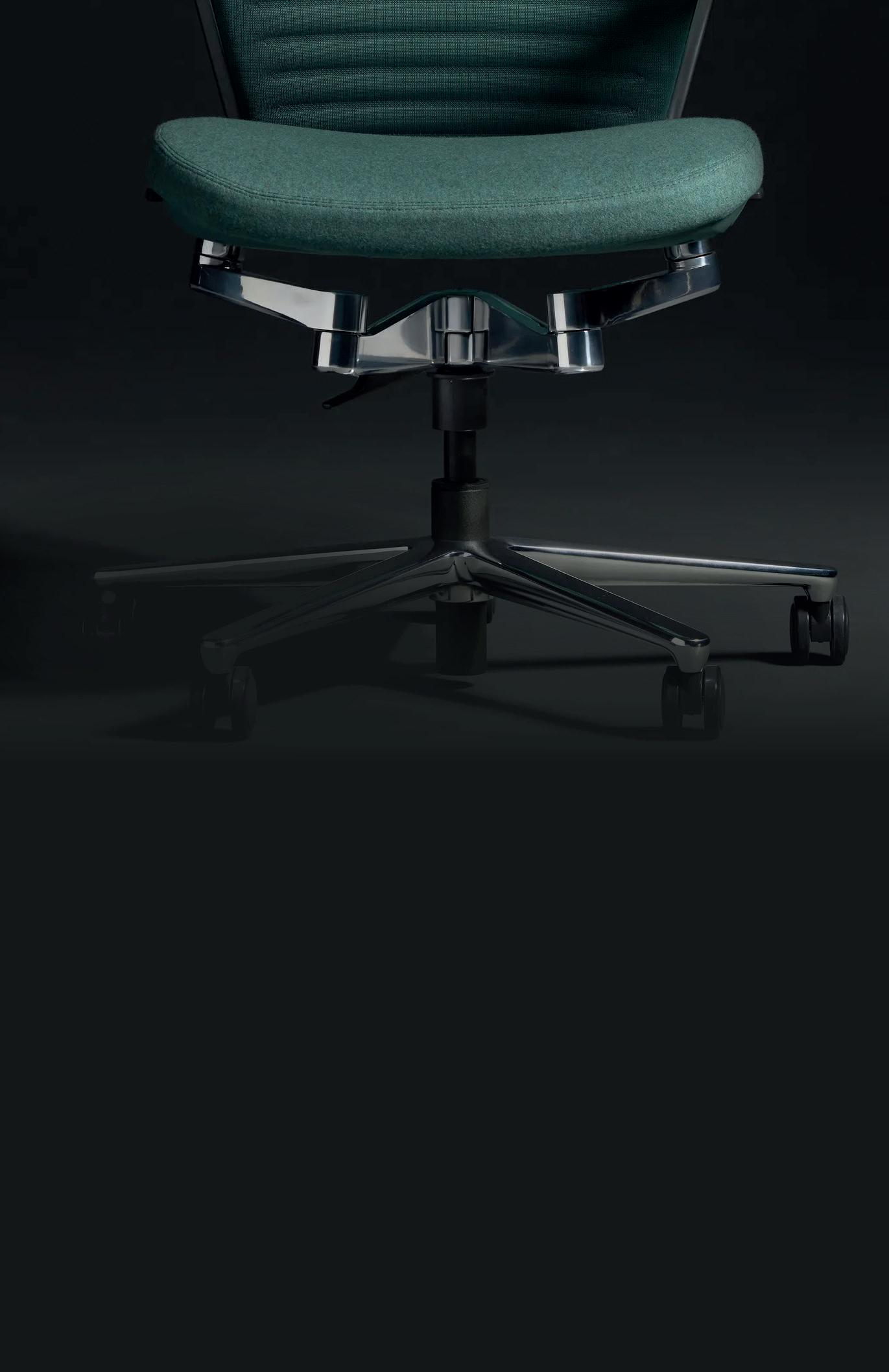

Green Bay, Wisconsin furniture manufacturer KI won the highest honor at the 2026 Best of NeoCon Awards for its new Cognetic Technology seating platform, taking home the Best of Competition Award. According to the judges, Cognetic Technology stood out for its intuitive design and ability to support natural movement while seated. The patented system uses a gravity-powered, multi-axis motion mechanism that responds to subtle body movements, creating what KI describes as a more fluid sitting experience than conventional task seating. The technology made its commercial debut in KI’s also multi-award winning Kiaura seating collection, which includes task, conference and lounge chairs.

Taking home a Gold Award in the Education Solutions category as well as a People’s Choice Award was the Newton Collection, a modular furniture system from Wisconsin-based manufacturer SurfaceWorks. Purpose-built for higher education classrooms and modern corporate training spaces, the collection comprises a streamlined kit of shared components that support an expansive range of tables, desks, lecterns and casegoods. Durable surface options are paired with SurfaceWorks’ MA7 urethane edge, providing both tactile warmth and long-term protection in high-use settings. Integrated power options install without permanent modification to tabletops, allowing spaces to evolve with technology over time.
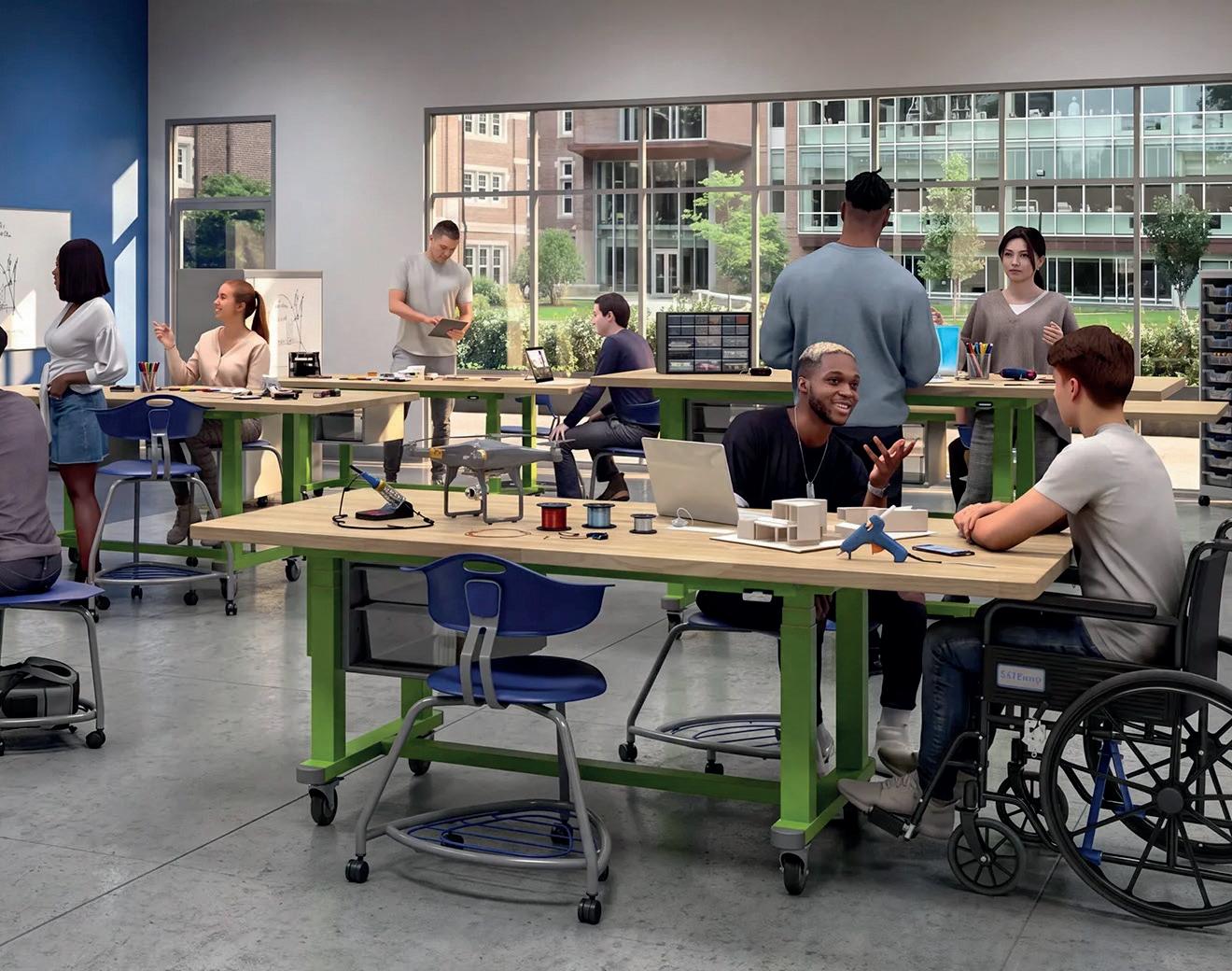
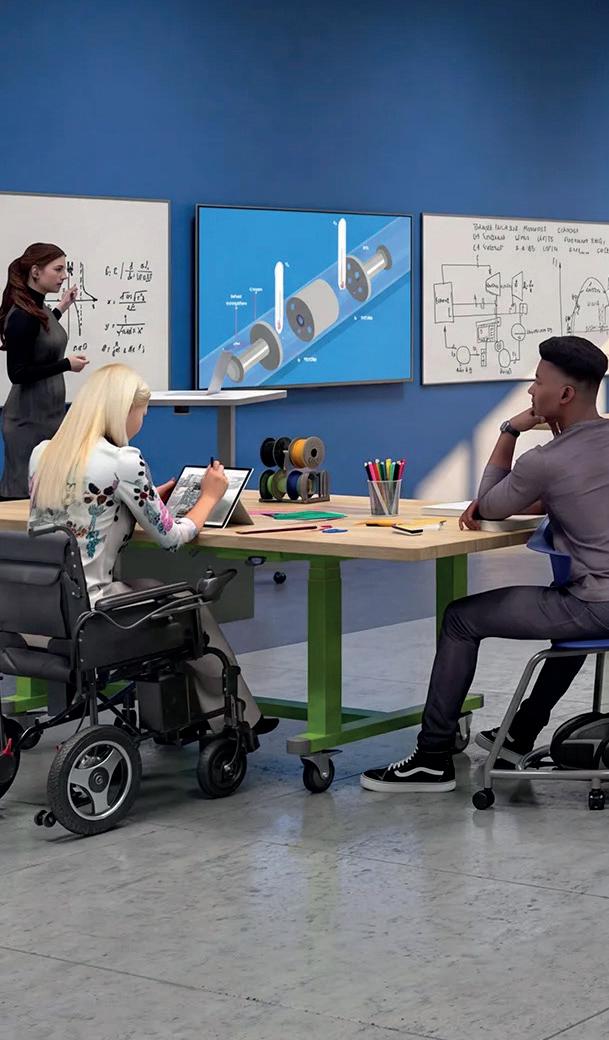
Scoring two Silver Awards, as well as wins in both the Business Impact and People’s Choice categories, the Pathmaker Table by Haskell Education represents a breakthrough in inclusive design. In a classroom or school setting, the Americans with Disabilities Act (ADA) and most local building codes require that a certain percentage of tables be wheelchair accessible. Easily adjustable from 29” to 42” (from Child ADA through adult standing height), Pathmaker tables are available in a number of sizes, with multiple storage configurations and both battery and corded power options.
Earning a Silver Award in the Architectural Products category, Muro is a modular display system that brings together integrated lighting, flexible configuration and a refined, modern aesthetic to meet the evolving demands of the modern workplace. Engineered to expand, contract and reconfigure with ease, the system allows companies to adjust office layouts without replacing existing infrastructure. Its low-voltage lighting system provides discreetly embedded illumination to preserve a refined visual appearance.

Winning an award in the Sustainability category, RESEAT is a mobile app that aims to do something about the fact that 98% of office furniture ends up in landfill. Designed to help businesses of all kinds manage the lifecycle of their commercial furniture, RESEAT is a complete inventory administration platform powered by digital product passports issued at the point of purchase. These passports give users real-time visibility into every asset across every location, with the ability to move, donate, sell, renew, reorder or repair, while tracking carbon impact along the way.
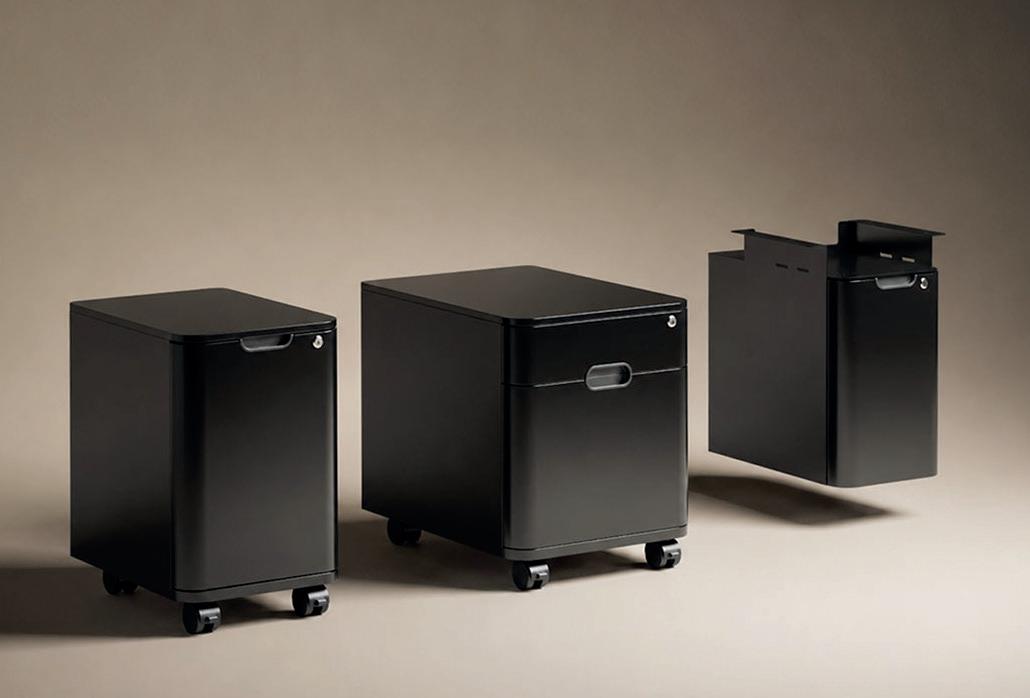
Scooping a Silver Award in the Storage category, The Collective Storage family from HAT Collective is designed to support the evolving needs of the modern workplace through a balance of flexibility, refined aesthetics and user-centered functionality. Developed as part of the broader Corva ecosystem, the collection includes both mobile and suspended configurations designed to support individual workstations, benching applications and flexible environments. Features such as integrated personal organization, accessible drawer layouts and optional cushion tops allow the collection to facilitate a variety of workflows while encouraging comfort and collaboration.

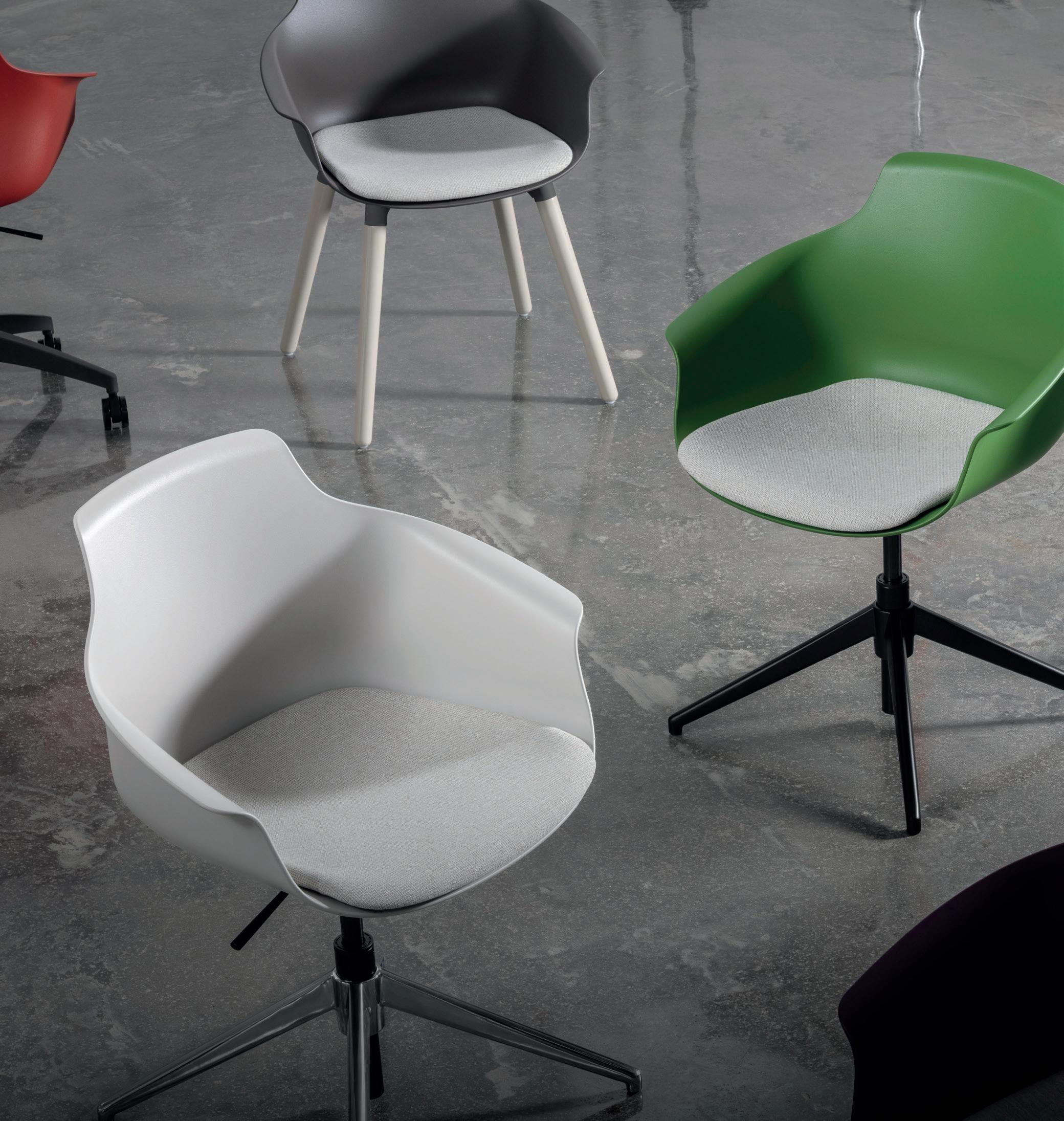
Full of curves, comfort, and confidence. Its sculpted shape doesn’t just look good, it’s built to welcome you in, support your posture, and keep you comfortable without overthinking it.
Designed by Nils Köhn
Winning a Gold Award in Benching and Furniture Systems, in addition to a Business Impact Award, Haworth Gallerie is a gallery panel workstation system with clean, design-led aesthetics and integrated power that make it suitable for a wide range of applications. This system helps designers and facility leaders create beautiful yet intuitive workspaces and make efficient use of available space. It offers a refined, design-led experience that creates a premium, custom-built look without the premium price tag.

Taking a Silver Award in the Innovation category, the Vision Chair from Levitask introduces Elevated Seating, a new category of seating that positions the body halfway between seated and standing, powered by the patented T-Mech knee-pivot mechanism developed over 40 years of biomechanical research and iterative prototyping. The collection comprises two models, both of which feature polished aluminum frames, a proprietary Anti-Slip Matrix seat surface and premium upholstery selected for durability and comfort in high-use environment. They accommodate users from 4’9” to 6’6” with a 300lb capacity, and assemble tool-free in under 10 minutes.
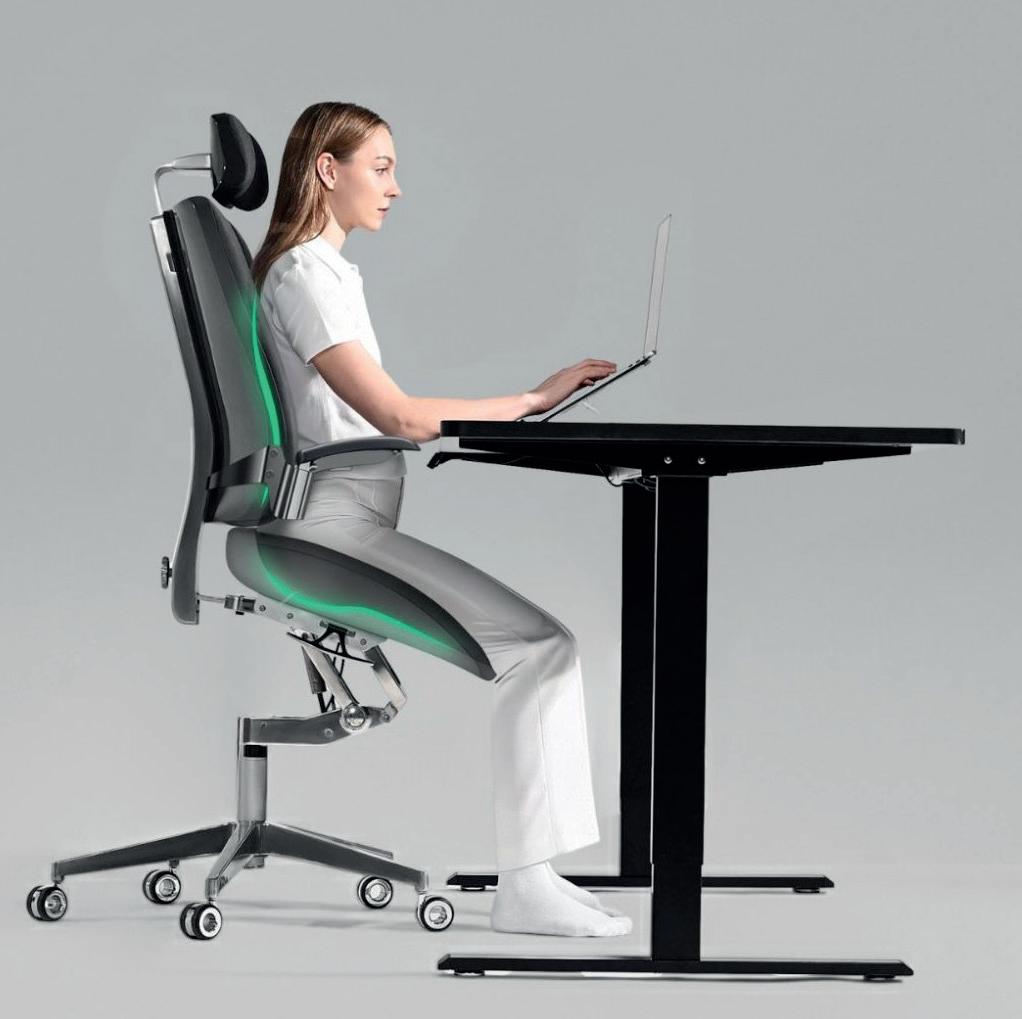





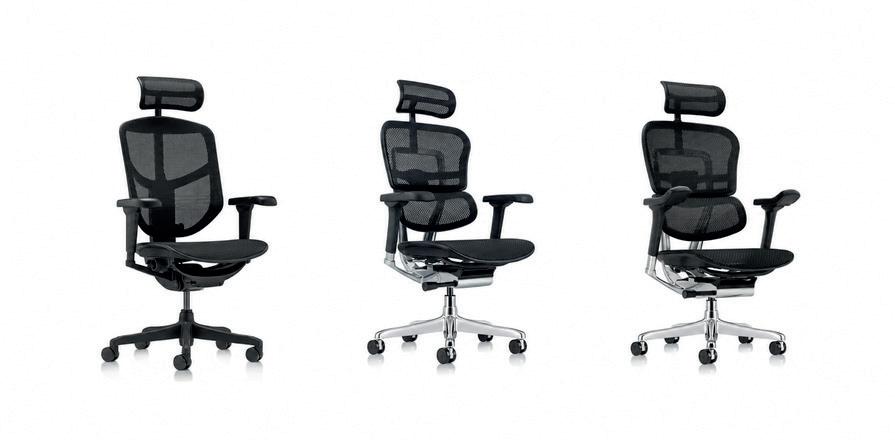
M E E T T H E


Patented Ergonomic Arm supporting handheld device use
Upgraded mechanism with tilt limiter
Mesh tension control




Lisa Veeck talks to dealers who are making the bottom line more comfortable with furniture sales
With office product sales stagnant or, worse, declining, it’s no secret that most independent dealers are looking for alternatives to boost their bottom lines. For many, furniture is a natural focus. But since furniture is a bigger investment and takes up a lot more space than, say, a pen, it’s important to keep up with what customers are buying. Here, a selection of dealers that are doing well in the category share their views on current trends and tips for success.
Furniture accounts for about 20 percent of the $85–90 million in sales generated at Eakes Office Solutions, Grand Island, Nebraska. In fact, it has been a staple of the company’s offerings for the past 40 to 50 years. Eakes has nine staff designers and was recently named a 2025 Steelcase Premier Partner. However, according to furniture division manager Amy Abramson, this year has started off somewhat slower: “It’s been a bit harder to sell furniture so far, as with everything going on
in the world, people are a bit more reserved with their expenses.”
Yet some items are still proving more popular than others.
“Height-adjustable furniture is still our number one request in furniture— and not just the sit-to-stand desks,” she reports. “It’s about ergonomics. For example, I happen to be short and the standard desk and computer don’t really fit me well. It’s to make employees more comfortable and it helps with hiring.”
Abramson has also noticed a return to more collaborative spaces since the COVID-19 pandemic: “We’re seeing customers wanting integrated technology built into the furniture in shared spaces. Conference rooms aren’t like they used to be. They need to accommodate in-person or virtual meeting, to facilitate all kinds of needs. Meeting rooms might have soft seating off to the side or a table and chairs, good for discussing different ideas. It also varies by client. Healthcare likes to have access to technology everywhere for clear communication.”
As for color, customers are leaning toward the “naturesque,” she suggests: “The past few years we’ve seen cool colors; lots of gray. Now we are seeing more warmth, such as golden oak with yellow undertones. We are not finding many customers seeking recycled furniture, but we are seeing some demand for sustainable fabrics. There seems to be more interest in how furniture is made sustainably, though. For example, HON has a line of plastic products that it promotes as helping clean up the ocean. Steelcase plans to be carbon neutral by 2050. All are trying hard not to create waste. Made in the United States is definitely a trend.”
At Perry, in Temple, Texas, furniture brings in 50 percent of $25,000 annual sales. The company has sold furniture for years and in 2018 it made a strategic acquisition of a local furniture dealer. Of its 55 employees, 11–12 are dedicated to this category, with the others contributing whenever possible. Perry’s largest furniture customers are evenly split between healthcare, higher education and municipal

and commercial. The vertical often dictates their choices.
“In healthcare, color is more neutral, while in schools it can be all over the place,” explains president H.B. Macey. “In both cases, it is frequently chosen to match the school, brand, or logo colors. Both sectors are also looking for longer-lasting furniture, which most often means metal legs and laminate tops.” He has also observed that trends tend to be geographical: “Texas wasn’t in as big a lockdown during COVID-19; as in some other states, collaborative spaces never really went away. What we are seeing now is more soft seating and more accessories, such as plant holders and laptop tables for use on soft seating.”
At Walker’s Supply Co., Rocklin, California, furniture generates 30-35 percent of total sales. Furniture sales director Stuart Cameron suggests that when it comes to trends, customers are lightening up: “There’s still a lot of gray, but in
the last year or so, companies are choosing driftwood—lighter greys and browns—sandalwood and other lighter woods like maple. For private offices, we are seeing companies choosing fabric for a higher comfort level; and for open office spaces and meeting rooms, vinyl chairs with mesh backs are popular. We occasionally get orders for wood chairs, but most are metal, and I’d guess it’s been five years since we sold a large executive wood desk.
“Flexibility in these areas is also provided by big, nesting chairs and flip-top tables—pieces that offer easy reconfiguration,” he continues. “Folding tables are less popular, as companies seem willing to pay a little more for more flexible options versus their employees having to stack and unstack and move chairs and tables.”
Walker’s has also seen a shift in furniture based on customer size. “The last couple of years, we’ve gotten some very nice, good-sized
projects,” says Cameron. “We’ve been working on a large install for about the last five or six months and have a few more that are waiting for the new fiscal year. Meanwhile, there’s been a pause in the more transactional sales. We still get small office redos for companies with three to five people, which is nice; they can be bought and installed in a week. But these have slowed down—I think because people are on pins and needles over today’s politics and world affairs—so smaller companies are holding on to their money. Overall, it’s been a very good year for furniture. It used to be the smaller transactional projects that kept the lights on; now it is flipping a bit.”
Strickland Companies, Birmingham, Alabama, has three divisions: paper, packaging and office products, including furniture and janitorial products. While 10 percent of total sales currently comes from furniture, this figure is expected to grow.


“We have 10 to 12 sales reps that have been focused on furniture, but now we are encouraging all our reps in all our divisions to sell it as well,” explains office products division manager Dennis Null. “So now we have doubled our salesforce. Our reps are very open to it—especially once they see how well one or two of them are doing at it, as it means more money for them.”
Unlike at Walker’s, large wood desks seem to be back in style at Strickland: “We see some call for collaborative spaces, but one trend I’ve noticed is more customers buying the classic wood desk. They are looking for a more traditional look for their private offices. At first, I thought it might be a specific customer age, but it’s not. It’s all ages.”
As for color, “We are seeing mostly the traditional gray and black colors, although some in healthcare and education will go with brighter ones,” he continues. “For seating,

most is leather or vinyl, depending on the area.”
Strickland doesn’t have its own in-house designers but relies on its manufacturer partners with design capabilities to compete in the market.
While furniture has not been hit as hard by the Amazon effect as office products, this does not mean the category is completely immune.
“At Eakes, we occasionally run into Amazon as a competitor, but it is mostly just a transactional sale, where someone wants a chair and is cost driven,” says Abramson. “Also, some manufacturers have open lines and sell to wholesalers and Amazon with better prices, so we have to be aware of that. But with furniture, customers are buying our support. They know it doesn’t stop with the sale and that creates loyalty. They’ll remember the time a castor on a piece of furniture broke and we fixed it for them.”
At Perry, meanwhile, it’s about focusing on what counts. “Office product sales are diminishing, so the idea is to concentrate on areas Amazon can’t or won’t sell in,” explains Macey. “Shipping costs for furniture are prohibitive for Amazon, which can sell a transactional chair but doesn’t do whole projects. It has no design or installation team. We have four full-time designers on staff who come up with plans for customers and allow them to make edits to ensure they get the looks and functionality they need.” There is one potential competitor Macey is keeping an eye on, though: “Staples exited the furniture market four to five years ago but then got back into it a few months ago. I don’t know if we will see an impact or not but, either way, it will be interesting to see what happens.”
For Walker’s, the trend toward a “softer” office has made Wayfair a bigger competitor in the furniture market than Amazon. “It follows the

trend toward resimercial, with softer seating in the mid-market,” reports Null. “Customers will see a chair on Wayfair in emerald green with walnut legs, which adds a pop of color they think will look perfect in the lobby, where people rarely sit, so quality isn’t really an issue. I encourage them to get it, as we can provide the same chair color or a close match, but not at the same price point. I’d rather have them get the $129 accent piece versus the whole project.”
Dealers hoping to succeed in this category need a keen understanding of its distinct dynamics. “Furniture sales are more consultative versus product oriented, and this requires good relationships and sales training,” says Abramson. “You need to invest
in your team, and a good design team is essential. We usually use it as a closer—we show clients in real time what the space will look like, in person or virtually, and let them make edits. It lets them take ownership and gives us a 95-99 percent close rate.”
Macey similarly believes Perry’s success is due to its exceptional team and advises other dealers to “find good talent. Having the right people in the right place with a good leader is key to success.”
For dealers looking to dive deeper into the furniture market, Cameron suggests: “Lean on people with knowledge and experience; form relationships and partnerships; and look for guidance from a Walker’s or a Guernsey that has a successful furniture department. You can buy gloves from a dozen places, but
with furniture, you need to form deep relationships with manufacturers. You can’t jump ship because you see a chair 5 percent lower and admit your mistakes. If a chair was supposed to be green and came purple, and it was your error, admit it. That’s when you are seen as a true partner and not just a problem customer. However, you also have to hold them to a standard. I have been in the furniture industry for 18 years. Early on in my career, I met a guy who set his standard by asking, ‘Is it good enough for my mom?’”
A spirit of partnership is also key for Null: “Lean into your strengths, your relationships, because your customers know you. They are looking to simplify their lives. One vendor means one invoice, one person to contact. So, dive into it and build those relationships.”

ES ROBBINS is the global authority in chair mat manufacturing. Trusted for more than five decades, we engineer solutions for the workspaces of today and beyond.

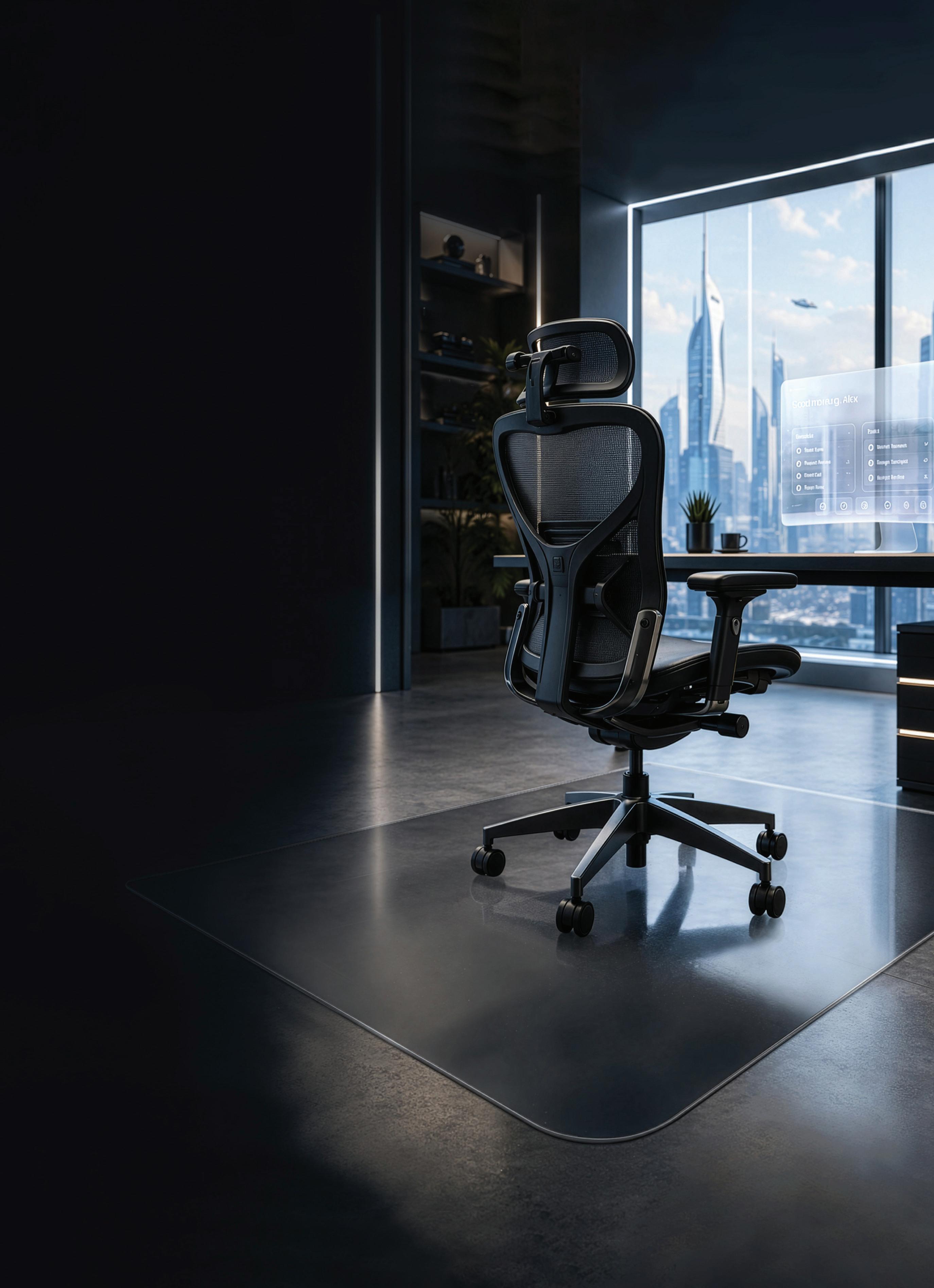

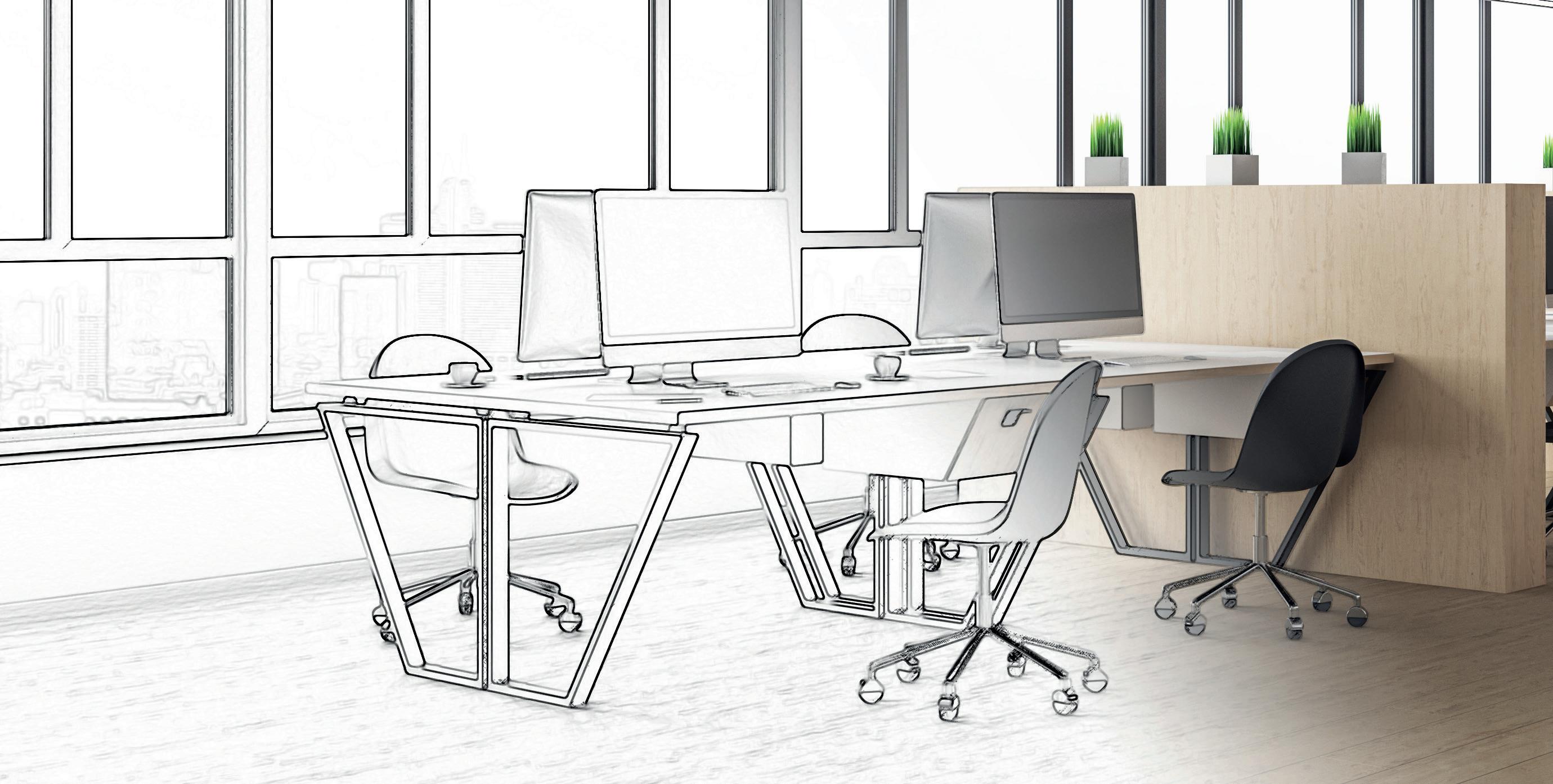
Let’s talk about AI, furniture and a practical new way for independent dealers to have better conversations with customers.
For years, dealers have been told to diversify into jan/san, breakroom, technology, managed services, promotional products, safety and print. All of these categories matter.
But AI does not just help us sell more of what we
already sell; it can help us sell differently.
This is where furniture gets interesting.
Furniture has real upside, but also real friction. Customers struggle to visualize what they want and the moment they ask, “Can you show me what it will look like?”, the sale can either gain momentum or stall.
AI is starting to change that. Now.
AI changes the first conversation
The biggest shift is not that AI can create a pretty picture. The biggest shift is that AI can help independent dealers move from product selling to possibility selling. Instead of opening with, “Would you like to buy chairs?” a dealer can say: “Send us a photo of one room in your office that needs attention and we will show you a few ideas for
what it could become.”
One gets you sent to purchasing. The other gets the customer thinking about outcomes.
A tired conference room becomes a hybrid meeting space. A sad breakroom becomes an employee experience upgrade. A private office becomes a more ergonomic workspace.
AI-first tools can create room concepts and staged furniture scenes without
West McDonald, founder of GoWest.
ai, is a recognized expert in AI solutions, with extensive experience across various technology sectors. His work focuses on generative AI applications and strategies for maximizing recurring revenue, guiding businesses toward innovative growth. West is dedicated to fostering a culture of learning and excellence through AI-driven innovation.

requiring a full design department for every small opportunity.
That does not mean AI replaces designers, measurements, quoting discipline, installation planning or product expertise. Please do not promise that an AI-generated rendering is the exact final installation. Your operations team will find you.
The market signals are there
This is not only a technology story. There are market reasons to pay attention too.
Steelcase has reported that orders grew 9% in its fourth fiscal quarter of 2025, including 12 percent growth in the Americas.
JLL data cited by The Wall Street Journal showed office attendance above 50 percent, with buildings
If companies want employees back in the office, the space has to earn it. Furniture sits right in the middle of that experience.
not start with the chair
If the strategy is simply, “We sell furniture now,” that is not enough. The internet sells furniture too, including chairs with names that sound like Scandinavian jazz musicians.
The opportunity is not selling a chair. The opportunity is helping a customer improve a workspace.
The AI-first tools worth watching
There are many tools in the design and visualization space, but not all are a good fit for independent dealers. Some are too residential, too generic or too traditional. For now, I would focus on four modern, AI-first tools worth studying:
• Room AI Studio: Appears to be built with furniture sellers in mind. It uses room photos and product images to create room visuals, product-fit scenes, catalog-style images and short videos.
67 percent full on Mondays and 56% full on Fridays in 2025.
CBRE manages roughly 2 billion square feet of office space globally. In 2025, it launched a Building Experience Lab focused on making workplaces more engaging, useful and worth the commute.
That phrase matters: “worth the commute.”
That conversation naturally leads to other categories: breakroom supplies, coffee, cleaning, whiteboards, webcams, monitors, cables, acoustic improvements, monitor arms, lighting and wellness products.
Furniture can become the opening act for a bigger account strategy. AI helps dealers paint that bigger picture faster.
• OmniRoom: Focuses on turning standard furniture product images into room scenes and marketing visuals. Many dealers have product photos, but not strong lifestyle imagery.
• Spacely AI: Feels more like an AI design and rendering workspace. It can help create room designs, renderings, furnishing concepts,

GoWest.ai helps independent office product dealers use AI in practical, business-ready ways. We focus on sales enablement, marketing, operations and training, with one goal in mind: helping independents move faster, compete smarter and protect margins in a changing market.
visual edits and customized visuals.
• Coohom: Probably the most robust of this AI-first group. It includes 2D and 3D planning, rendering, layout tools and custom assets, but may come with a steeper learning curve.
What if the best tool does not exist yet?
Here’s where things get even more interesting.
For years, software selection has mostly meant choosing from what already exists, then trying to make the best available option fit your business.
AI is starting to change that model. Companies like GoWest.ai and others working in this space can increasingly help design bespoke AI tools around a dealer’s actual workflow.
That could mean a tool where a sales rep uploads a customer’s room photo, selects a product family, adds a few preferences and generates three branded room concepts. It could connect to preferred furniture lines, pricing files,
proposal templates or customer records.
The future may not be limited to buying another software license and forcing your business to work around it. The future may be designing software around how your business already works.
Here’s where I would start. Pick five customers. Not 50. Five.
Choose customers where you already have a good relationship and where the office space clearly has room for improvement.
Then make a simple offer: “Send us a photo of one room you would like to improve.”
Then use an AI-first design tool, or a purpose-built AI workflow, to create two or three visual concepts. Good, better, best. Traditional, modern, collaborative. Whatever makes sense for the customer.
The goal is not to create the final installation plan. The goal is to create
momentum. Once the customer reacts, your team can move into measurements, product selection, quoting, delivery, installation and support.
AI gets the conversation started. Your team turns it into revenue.
You knew I was going to say it. Do not buy software because it looks cool in a demo. Run the numbers.
If an AI design tool helps you create better furniture proposals, win one extra project, improve your close rate or open conversations with dormant accounts, the return on investment could be excellent.
If a bespoke AI workflow costs more upfront but ties directly to your products, pricing, proposal process and sales motion, evaluate it the same way.
But if nobody uses it, nobody owns it and it turns into another login collecting digital dust, then congratulations—you have just purchased another shiny object.
Are you ready to sell outcomes?
Furniture could be a real growth engine for independent office products dealers, but only if we stop treating it like another line item.
The magic is not in the chair. The magic is in helping the customer imagine a better space, then making this happen.
AI-first design tools can make that first part easier, faster and more visual. And the next phase may be even more powerful: AI tools designed specifically around how independent dealers sell, quote, propose and support their customers.
Sometimes the best way to win a bigger share of the customer is to ask: “What room in your office needs some love?”
Want to explore how AI can help your dealership find new revenue opportunities in furniture, workspace design and beyond? Email me at west@ gowest.ai or visit www. gowest.ai

As you are probably aware, S.P. Richards (SPR) has announced that is no longer supporting its Marketlink matrixes. With the Marketlink matrixes gone, and the only other option from SPR being variable cost-up, is there anything else your company can use to price the 60–70% of products you sell that aren’t controlled by a custom contract? Because, let’s face it, we need to make high margins on the less emotional items that customers buy in order to stay solvent when reps or customers demand super-low prices on commodities.
Actually, there are alternatives to SPR that provide margin assistance through matrix creation—and I own one of them. I will do my very best to provide unbiased information, but if you need matrix assistance, you should explore all your options to find the solution that best fits your business and goals. Basically, including SPR, the are three alternative strategies for creating, managing and applying margin-enhancing matrixes in your business:
• Price by category: This is SPR’s last remaining set of matrixes. As mentioned, they apply a flat markup for each category (e.g., “Writing instruments”; “Coffee supplies”), rather than pricing products individually.
• Price matching: Some providers offer price files designed to match or closely track pricing from major competitors. They can create matrixes based on a snapshot of prices from Amazon, Office Depot or Staples; and they can also apply an added percentage if you want somewhat higher margins.
• Customized pricing: In this case, unique price models are developed
using existing price files and sales history as a jumping-off point and prices are then adjusted (up and down) to meet the individual dealer’s profit goals. Matrixes are maintained and adjusted on a monthly basis to protect against cost fluctuations; any major strategic moves are driven by the dealer. The goal of this methodology is to improve the dealer’s overall profitability over time and it has been very successful.
At my company, Interbizgroup LLC, we prefer the customized approach. We analyze the current pricing that our prospect is using (i.e., the Marketlink matrixes) and create three to five files that provide a smooth transition that will not look significantly different to the dealer’s customers. Over time, at the dealer’s discretion and after discussions, we move the

In addition to serving as national sales manager for AOPD, Tom Buxton, founder and CEO of the InterBizGroup consulting organization, works with independent office products dealers to help increase sales and profitability. Tom is also the author of a book on effective business development, Dating the Gatekeeper. For more information, visit www.interbiz group.com
matrixes up slowly so that profitability can increase. We also encourage the use of custom contracts for some larger customers, so that a low price isn’t shared with every account that a dealer sells to.
Currently, we manage approximately $300 million in sales for dealers across the United States and Canada, including monthly adjustments to HP MAP pricing and Brother MAP pricing, along with helping our customers identify and resolve costing issues. I would love the opportunity to speak with your company if you are interested in hearing more about our offerings; and we are willing to provide references for any dealers that are interested.
In summary, pricing your matrixes properly so that you don’t lose money or customers must be a priority for your dealership’s continued solvency. Please reach out to another provider and/or to me (tom@interbizgroup.com) if you need more information.


Troy Harrison is the Sales Navigator and the author of Sell Like You Mean It and The Pocket Sales Manager He helps companies navigate the elements of sales on their journey to success. He offers a free 45-minute sales strategy review. To schedule, call 913-645-3603 or email troy@troyharrison.com.

You already know the problem. In many industries, traditional telephone prospecting has become prohibitively inefficient. Where contact ratios once ran around one conversation for every three or four dials, they have now dropped to one in ten or worse.
The natural question follows: “So, how do we prospect?”
The frustrating answer is: it depends. On the industry. On the buyer demographic. On the product complexity. On variables that shift constantly.
Some companies implement whatever the latest sales expert is preaching—social selling, video messaging, direct mail—hoping this channel will be the answer. Some work. Most don’t. More companies just tell their
salespeople to “work harder.” And companies have no reliable way to know which approach will reach their specific buyers until after they have made significant investment.
But there’s a better way—and the data source is already available: your current customers.
Deploy salespeople to ask every current customer: “Let’s suppose we didn’t know each other and I was a salesperson wanting to gain your business. What would be the best contact method to approach you and start a relationship?”
Ask that question to hundreds of customers and you’ll get something priceless: real data about how buyers in this specific market actually want to be approached. Not
theoretical advice from consultants. Not generic best practices that aren’t tailored to your company. Actual answers from the people you are trying to reach, describing exactly how they prefer to be contacted.
This isn’t complicated. It’s a single question, asked consistently, with responses documented and analyzed. But the insight it generates is worth more than most companies invest in prospecting training and tools combined.
Your current customers represent the same buyer profile your salespeople are trying to reach. They’re in the same industries, hold similar roles and face comparable challenges as the prospects salespeople struggle to contact.
However, your current customers have already agreed to engage. They will answer honestly because you have an established relationship with them and the question isn’t threatening.
Salespeople can ask not just how customers prefer to be contacted, but why. What makes one channel more effective? What filters a message as spam versus worth reading? What signals credibility versus interruption? Drill down— the answers provide knowledge about not just which channel to use, but how to use it effectively.
If you execute this research, you’ll see patterns emerge quickly. In some industries, LinkedIn outreach is more effective than phone calls—but only when

the salesperson has an established presence and the message references something specific. Generic connection requests get ignored at the same rate as cold calls. In other industries, phone calls still work; but the optimal time window is narrower and the voicemail must accomplish something different. Buyers won’t call back, but they will look up the salesperson on LinkedIn if the voicemail creates curiosity.
In still other markets, customers report that referrals are the only prospecting method that consistently gets attention—which tells the organization that investing in referral systems is more strategic than investing in outbound tools.
In some environments, you can still generate
prospects by old-fashioned door knocking. It just varies by market—and that’s why this research matters. Generic advice doesn’t account for variables that make prospecting effective or ineffective in a particular industry. Customer research does.
This isn’t difficult. Sales leadership identifies which salespeople will conduct research and provides the questions. Salespeople then incorporate these questions into customer check-ins, quarterly business reviews or dedicated research calls. Responses are documented in a spreadsheet capturing the customer’s answer, their role, their industry and their context.
Your goal is volume. Fifty responses yield directional insight. Two hundred generate actionable data. Five hundred provide the clarity that can nail down your prospecting approaches.
This doesn’t require pulling salespeople off core responsibilities. The questioning takes less than five minutes. Over a quarter, a salesperson with regular customer contact can easily gather 20–30 responses while conducting normal business.
Sales leadership aggregates responses, identifies patterns and translates findings into revised strategy. If 70% of
customers say LinkedIn is preferred but only when the salesperson demonstrates expertise, you know you need to invest in thought leadership before scaling LinkedIn outreach. If customers ignore generic emails but engage with personalized messages, that signals deprioritizing mass campaigns for customized outreach.
This research produces value beyond prospecting strategy. It strengthens customer relationships by demonstrating that your company values customer input. It also surfaces broader insights. If customers consistently want efficient, business-focused interactions, that should inform not just prospecting but the entire sales approach. If they value salespeople who demonstrate deep expertise, that’s a hiring and training imperative.
The research creates a feedback loop that most companies never establish. That feedback loop, maintained over time, keeps the sales approach aligned with how buyers actually want to engage.
If this research is so valuable, then why don’t more companies execute it?
The most common reason is that it just doesn’t occur to them. Sales
leaders focus on finding the next prospecting tactic—or browbeating salespeople to “turn up the intensity”—and overlook the simplest data source: asking customers directly.
The second reason is that it requires discipline. Asking the question once generates anecdotes. Asking it hundreds of times generates data.
The third reason is that some leaders are uncomfortable with what the data might reveal. If research shows current prospecting methods are fundamentally misaligned with how buyers want to be approached, that requires acknowledging the misalignment and making a change.
This prospecting challenge isn’t going away. Buyer behaviors continue to evolve, contact ratios continue to decline and generic advice continues to fail when applied to specific markets. You can keep experimenting with tactics and hoping something works. Or you can ask your customers how to reach them and let the data drive your strategy.
Do you want prospecting strategy based on guesswork or based on what your actual buyers are telling you works? Your customers already have the answer. The only question is whether you will ask them.

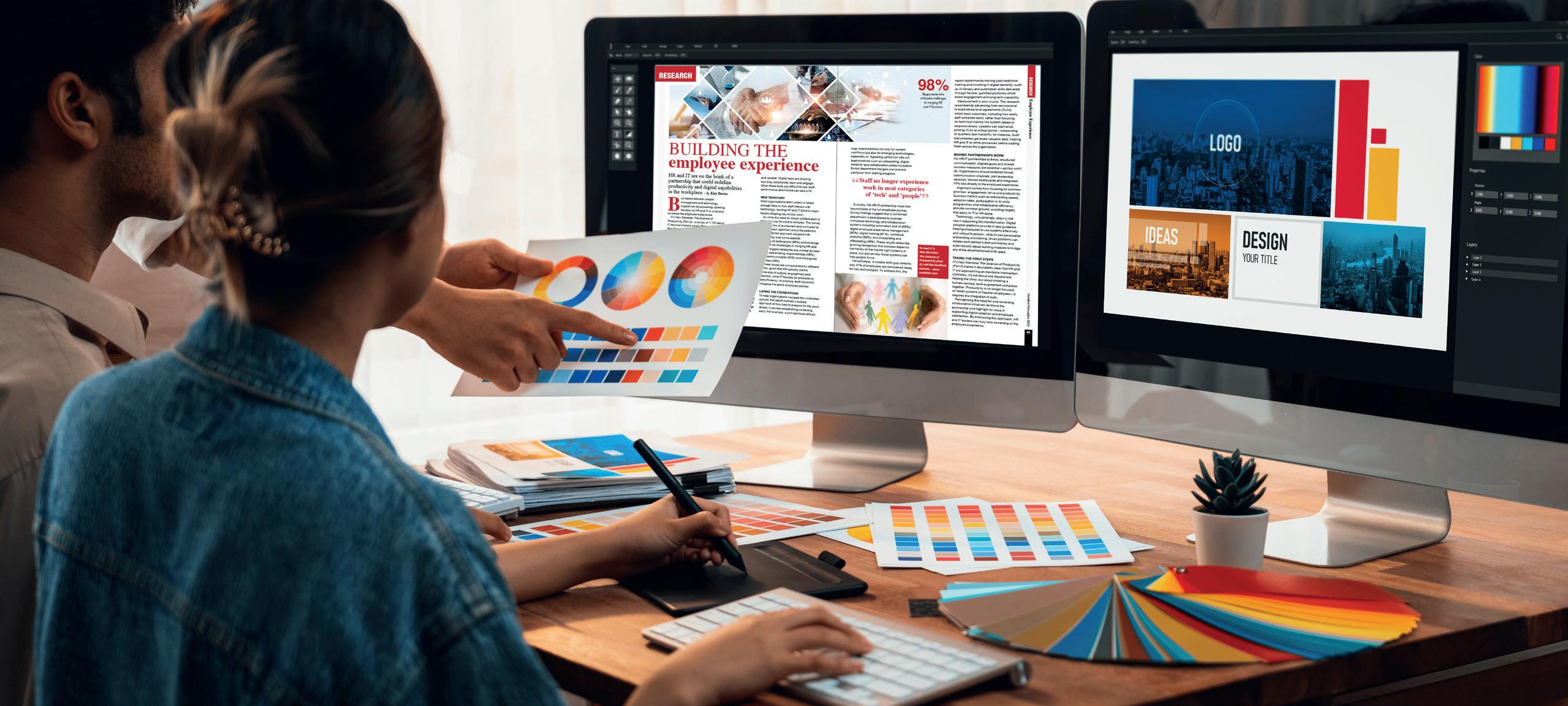
Planning a print or digital advert in any of our OPI publications?
Our end-to-end creative service ensures your brand not only looks great but performs.
With unrivalled industry knowledge, our team designs high-impact adverts built to stand out. Whether it’s a web banner, digital or print magazine advert, event and marketing assets or full show guides, we’ve got it covered.
from the team at