




















































PRESIDENT Spencer Black (Malta) 208-647-8130
PRESIDENT-ELECT
Val Carter (Pingree) 208-390-4811
VICE PRESIDENT
Arnold Callison (Blackfoot) 208-681-8441
PAST PRESIDENT
Jerry Wroten (Wilder) 208-831-7339
TREASURER
Scott Bunderson (Nampa) 208-250-7549
FEEDER COUNCIL CHAIR
Logan Peters (Boise) 208-999-2584
PUREBRED COUNCIL CHAIR
Chase Lanting (Twin Falls) 208-539-4371
COW-CALF COUNCIL CHAIR
Roscoe Lake (Blackfoot) 208-604-3650
CATTLEWOMEN COUNCIL CHAIR
Tay Brackett (Filer) 208-866-4967
DISTRICT 1 REPRESENTATIVES
Eric Wittman (Lapwai) 208-790-5344
Cece Baldwin (Coeur d’Alene) 208-699-6611
DISTRICT 2 REPRESENTATIVES
Royce Schwenkfelder (Cambridge) 208-550-2200
Rex Hoagland (Melba) 208-800-2798
DISTRICT 3 REPRESENTATIVES
Jesse Human (Jerome) 208-358-1277
Valene Cauhorn (Jerome) 208-571-9086
DISTRICT 4 REPRESENTATIVES
Shane Rosenkrance (Mackay) 208-589-3110
Danna Beckman......(Idaho Falls) 208-201-9902
DISTRICT 5 REPRESENTATIVES
Tim Munns (Snowville) 435-279-4420
Matt Thomson (Idaho Falls) 208-589-6901
ALLIED INDUSTRY REPRESENTATIVE
Elena Montemagni (Caldwell) 559-786-3627
CATTLEWOMEN BOARD REPRESENTATIVE
Christie Prescott (Fairfield) 208-420-3548
DIRECTORS AT LARGE
Casey Scott...............(Clarkston) 208-431-3024
Randall Raymond (Grand View) 208-599-0391
EXECUTIVE VICE PRESIDENT
Cameron Mulrony cameron@idahocattle.org
DIRECTOR OF COMMUNICATIONS & INDUSTRY RELATIONS
Morgan Lutgen morgan@idahocattle.org
MEMBER PROGRAMS & SERVICES MANAGER
Montana MacConnell montana@idahocattle.org
ADMINISTRATIVE ASSISTANT
Michelle Johnson michelle@idahocattle.org
NATURAL RESOURCES POLICY DIRECTOR
Karen Williams karen@idahocattle.org
Contact Idaho Cattle Association: Mailing address: P.O. Box 15397, Boise, ID 83715
Location: 2120 Airport Way, Boise, ID 83705 Phone: 208-343-1615
For advertising sales, contact: idahocattlepublications@gmail.com
The Line Rider is the official publication of the Idaho Cattle Association. It is published 10 times each year, in January, February, March, April/May, June, July/August, September, October, November and December.

Looking back at a good year, and forward towards a better future
Ifeel a huge relief that this is my last article. It has been a good year. I’ve been told a lot that it’s easy to be in charge when prices are good. That’s true—but even with stronger markets, we didn’t take our foot off the gas. The Idaho Cattle Association (ICA) maintained a steady presence at the Capitol, at our universities, industry meetings, and out in the country at bull sales. It’s been a privilege to travel across Idaho and beyond, representing our state’s beef industry and seeing firsthand the hard work and pride that goes into it.
As my time as president comes to a close, I can’t help but wonder what’s next for me. I know I’m not done serving this industry—opportunities always seem to come up—but for now, I admit I’m a little worried about having too much free time. My wife assures me that the kids will fill that time for me. A good friend recently told me to just sit back and enjoy running cows for a while. Both are good ideas, but I know I’ve only had the chance to run cattle and enjoy my family because others before me didn’t sit back. They stayed involved, and that’s what I believe we all need to keep doing to make sure the next generation has the same opportunities that we’ve had.

BY SPENCER BLACK ICA President
If anything, this experience has shown me how much this association matters. It’s time to pass the torch to the next president and board, and to start cultivating the next wave of leaders for this industry. Every time new people step up, they bring fresh ideas. Some work, some don’t—but that drive and energy are what keep us moving forward. The cattle industry never sits still, and we shouldn’t either.
This month’s focus is purebred, which is such a vital part of the cattle business. Although we have many long-time purebred breeders in our membership, I’m encouraged by the number of new, younger producers stepping in. Their energy is contagious. I admire the enthusiasm they bring— the questions they ask, the willingness to learn, and the commitment they show. Raising registered cattle isn’t easy. It takes an incredible amount of patience, record keeping, and discipline to continually improve genetics and meet the needs of commercial buyers. You have to believe in the long game. Every mating decision, every performance record, every customer relationship matters.
I’ve said before that I’m not cut out for the purebred side myself, but I have nothing but respect for those who are. If I’ve ever bought a bull from you, you’ve probably heard me say how much I appreciate what you do. You’re the foundation of the industry. Without strong, honest breeders, we wouldn’t have the kind of cattle we do today—or the progress that keeps us competitive.
I stand behind every message I’ve written this past year. Even though my term is ending, I’ll still be around—always ready to listen, offer advice, or lend a hand when needed. I’m a little sad to see it wrap up, but I’m also excited to watch the association continue to grow and our collective voice get even stronger.
This has mattered to me, and thank you for making it matter to you too.

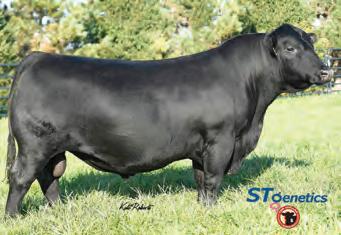
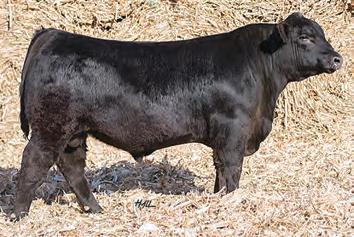
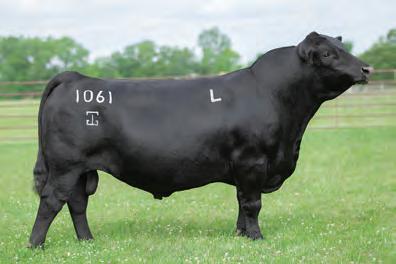
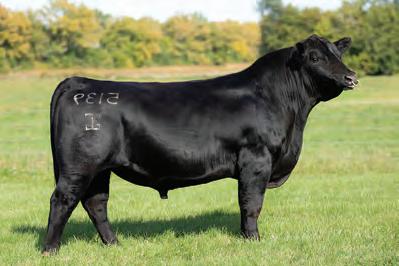
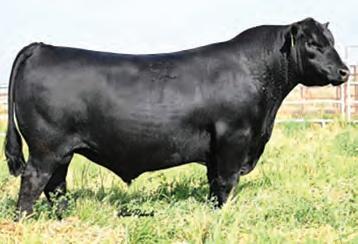
There’s no right or wrong—just success
As I sit in my chair here at the Idaho Cattle Association (ICA) office and ponder the latest government shutdown, I am drawn to look at the stark differences of opinion that have risen across our nation on a wide range of issues. It brings to mind an article that I wrote back in 2017 when I was just six months into my service here at ICA. Lately, the cattle market and the opportunities before us have reminded me again of that message.
Our industry has many levels of success and operators of all kinds.
From time to time, a reread—or, for some of our newer members, a first read—of that piece seems worth revisiting. Whether we’re looking at our industry, our leadership at the state and national levels, or even leadership within our own organizations, the message still rings true.
The following is a slightly modified version of an article originally published in the June 2017 Line Rider. Its message remains the same—and perhaps more relevant than ever—as we approach the close of 2025.
The U.S. beef industry—and our industry here in Idaho alike—takes all kinds of kinds within our purview. Each operation within our industry functions independently in its management goals and practices. It shows in our cattle and in the faces that represent our industry. This has led me to write in comment to the broad range of cattle producers who are key to our continued success and sustainability.
As some of you may already know, I spent a portion of my days touring the country, attempting to

BY CAMERON MULRONY ICA Executive Vice President
conquer bovine from atop their backs in an effort to make a living. During that time, I also had plenty of day work—building barns, branding calves, starting colts, driving tractor, etc. These experiences showed me the wide array of production methods and practices across this country. Even within our state, we have many different settings, sources of forage, and management styles that are effective for each particular operation.
Managing our forage plays a large role in our annual expenses and final weights. I feel confident in saying that decreased forage expenses with higher weights and body condition scores (BCS) would be a goal for the entire beef industry. As I stated in the title and opening of this article, it takes all kinds of kinds.
As an example, a neighbor I once had ran his operation a bit differently than I did. He bought bred cows, sold all his calves, gathered twice a year, and if the calves weighed more than six hundredweight, he sent them to the sale barn. Any cow that was dry at branding either went into the next pasture for the fall or spring breeding season, or she was sent to sale if she looked too old. Calves hit the ground from March to May and again from September to November. It wasn’t the way I ran my cows, but it worked.
Many a day I would hear in town, “He does it all wrong.” I would ask, “What is wrong with his practice?” His cows were fed when needed, and they were healthy. He ran more cows than most in our county, and as I got to know him better, I learned that he owned his ground, his cows, and his equipment. I don’t see anything “wrong” with that situation. As a matter of fact, I would like to have that scenario in my future.
Our industry has many levels of success and operators of all kinds. “If you’re not growing, you’re
dying,” was a phrase I heard from a cattleman in Texas. He ran about eight cows per section (640 acres) for a stocking rate in West Texas. He was focused on his numbers and assets—growing his acreage and herd was vital for the continuation of his operation on desert country, and he was continually looking to expand.
“Quality above quantity!” I’m sure we have all heard this echoed at one time or another. Some operations run on a value-added or niche market, where the quality and consistency of hitting their targets is more important than adding increased quantity to the marketplace.
“I still sell them by the pound.” Yet another quote heard at sale barns and bull sales across the country. Each of these quotes—and the producers that express them—have a role in our industry, as do the folks who do it all “wrong” and those who do everything “right,” in our individual opinions.
I encourage you to learn from your fellow cattlemen and cattlewomen and their practices. Our greatest lessons don’t always come from our successes, and our struggles can lead our industry toward greater future potential. When I was riding bulls rather than raising them, I traveled to a bull riding school in California to hone my skills. I heard the recommendation: “Watch, listen, and learn from others’ successes and struggles. Then develop your own style to make your own level of success.”
This, I believe, can be good advice for us as cattlemen, cattlewomen, range stewards, businesspeople, and neighbors.
It takes all kinds of kinds. Our industry will continue to succeed through multiple production methods—all of which are viable and sustainable. So whether you’re all wrong, all right, or somewhere in between, don’t hesitate to learn from your cohorts—all kinds. Cattlemen, cattlewomen, the old-timers and the young producers, the researchers, purebred breeders, feeders, industry partners, full-time ranchers, small producers, cowboys, and students can all help give us a piece of our success plan—whether we realize it or not.
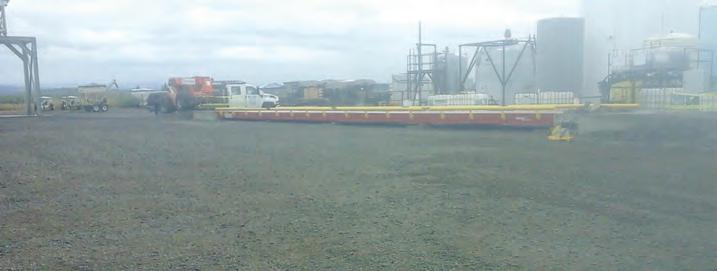
in 1959, Scales NW offers a wide range of equipment, from precision lab balances to high capacity rail scales, as well as certified scale service and installation.


A look at current shifts in federal land management
In September, the Bureau of Land Management (BLM) published a proposed rule to rescind the highly contested Public Lands Rule, also known as the Conservation and Landscape Health Rule. The underlying rule, proffered by the Biden administration, drew immediate criticism from nearly every segment of the public lands users’ community, because the rule would fundamentally change the balance of multiple use on several hundred million acres across the West. From the outset, Idaho Cattle Association (ICA) was vocal in our opposition to this rule and joined with the Public Lands Council (PLC), who took a position of significant opposition to the Public Lands Rule. PLC led a coalition of more than 60 other groups to highlight concerns that the rule not only was unlawful but also circumvented Congress’ direction to the BLM. Ultimately, PLC and partners sued the BLM in 2024 to stop implementation of the rule. This announcement is the first step in ensuring that the rule will not facilitate removal of grazing from public lands, and that the long-held expectation of balanced multiple-use management will continue. The proposed rule is subject to a comment period which will elapse on Monday, November 10. ICA has submitted comments in support of the recission. We encourage you to comment in support as well. More information and sample comments can be found on ICA’s commenting website, www.westernmartingale.com.
BLM has proposed some changes to their draft sage grouse plans and provided the public with an opportunity to comment on those changes last month.

BY KAREN WILLIAMS ICA Natural Resources Policy Director
Since the release of the draft plan in 2024, the state of Idaho has been working with the BLM to correct many of the concerns we identified within the plan. As we have long held, there is no need to make additional management changes to livestock grazing for sage grouse. The recently finalized University of Idaho Grouse and Grazing research concluded that livestock grazing had no negative impact on the species, which solidifies our position.
For the cattle industry, the most notable changes in the document relate to the stubble height requirement in the habitat indicators table. The plan has changed from requiring a 7" stubble height to “suitable nesting cover”. The plan has also incorporated some references to the University of Idaho’s study. In the plan’s adaptive management section, it has been updated to emphasize that no changes to livestock grazing should be made unless it is proven to be a causal factor in tripping a large-scale habitat or population trigger. These are important changes that our industry and the state of Idaho have been working for. The final plan will be released after BLM considers the comments submitted during this most recent public comment period.
After voicing our frustration for many years about Forest Service vacant grazing allotments, the agency, under new leadership, is finally listening to our concerns. The agency is beginning the process to review vacant allotments and potentially transition them to ten-year grazing permits. If you have a vacant allotment near you, we encourage you to visit with your local Forest Service staff about the possibility of its conversion back to grazing use.
Montana native Kim Prill has been named Acting Idaho BLM Director. Born and raised on a working cattle ranch at the base of the Absaroka-Beartooth Mountains, Prill moved to Billings to finish high school and attend college, earning her undergraduate and graduate degrees from Rocky Moun tain College and Montana State University-Billings.
Prill began her career with the Bureau of Land Manage ment (BLM) in Billings, Montana, through the GS-01 high school student intern program and continued working for BLM while attending college. Upon graduation, she was of fered a permanent position at the Montana/Dakotas State Office. Her federal career now spans over 35 years, during which she has served in a wide variety of roles, leadership positions, and special initiatives to advance the agency’s im portant multiple-use mission. Prior to her temporary assign ment as Acting Idaho State Director, Prill served as Associ ate State Director for BLM Nevada.

As the 57th Annual Meeting closed on September 18, 2025, in Flagstaff, Arizona, the national Public Lands Council (PLC) recognized two members of the western grazing commu nity for the annual President’s Award and Friend of PLC, both of whom hail from Idaho.
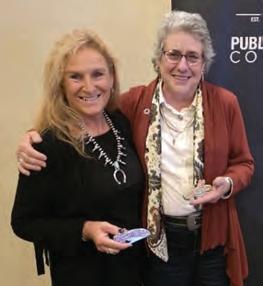
PLC Treasurer Brenda Richards, who runs a cow-calf operation in Reynolds Creek, Idaho, was recognized as the 2025 President’s Award recipient for her outstanding leadership on the local, state, and national levels. When she’s not working on the ranch, she volunteers her time with several different livestock industry organizations—the National Cattlemen’s Beef Association, Idaho Cattle Association, Nevada Cattlemen’s Association, and Boise’s District Bureau of Land Management Resource Advisory Council.
PLC also recognized Dr. Karen Launchbaugh as the 2025 Friend of PLC. Dr. Launchbaugh has worked as a Professor of Rangeland Ecology at the University of Idaho, providing ranchers with the latest research on grazing and rangeland management as well as educating the next generation on the benefits of grazing. Her immense research and teaching career has advanced rangeland education further than anyone, and her work studying livestock behavior while grazing has been hugely beneficial for ranchers and students alike.
Keeping Idaho farms safe and productive since 1968. Our employee owners are dedicated to




Building a foundation when it matters most
It’s been a good couple of years to be in the cattle business. Markets are strong, prices are holding, and for once it feels like all the hard work might actually be paying off. With fat cattle bringing top dollar and feeder calves commanding premiums, it’s easy to understand why a lot of conversations have shifted toward efficiency, crossbreeding, and getting more pounds on the ground. But in all the excitement, one question still lingers—do purebred cattle still matter in today’s high-priced market?
Every major genetic improvement in the beef industry, from calving ease to carcass quality, started in a purebred program.
The short answer is yes. In fact, they might matter now more than ever.
Purebred operations are the foundation that every commercial herd is built on. Those bulls turned out each spring didn’t just appear out of thin air—they came from years, sometimes decades, of careful breeding, recordkeeping, and selection for traits that drive the entire beef supply chain forward. When a rancher buys a purebred bull, they’re not just buying genetics—they’re buying generations of disciplined decisions.
High prices don’t change that. If anything, they raise the stakes. When calves are worth what they are today, every percent of gain, every pound of efficiency, every bit of fertility or
BY CHASE LANTING Purebred Council Chair
feed conversion makes a difference to the bottom line. And that’s exactly where purebred cattle shine. The work that seedstock producers put into identifying, measuring, and improving these traits gives commercial producers the tools to make progress with confidence.
Beyond performance, there’s the predictability that purebred cattle bring. In a volatile market, consistency is a form of security. Commercial ranchers know that when they buy a bull from a reputable breeder, they’re not taking a gamble— they’re investing in a genetic package that’s been proven, documented, and backed by data. Whether that’s through EPDs, genomic testing, or simply a breeder’s track record, that information builds trust. And in an industry that still runs on handshakes and relationships, trust is worth a lot.
It’s also worth remembering that purebred breeders aren’t just serving today’s market— they’re shaping tomorrow’s. Every major genetic improvement in the beef industry, from calving ease to carcass quality, started in a purebred program. Those breakthroughs didn’t happen overnight. They came from breeders who were willing to play the long game, to test, measure, and adjust, even when there wasn’t an immediate payoff. That steady hand and focus on genetic progress keeps the entire industry moving forward. There’s also something to be said for the stewardship side of purebred cattle. These breeders carry the responsibility of preserving breed integrity while keeping pace with modern demands. Balancing tradition and technology isn’t easy, but it’s necessary. Whether it’s leveraging genomic data, using AI and embryo transfer, or emphasizing maternal efficiency and adaptability,
purebred breeders are finding ways to make cattle that not only thrive in Idaho’s range country, but meet the expectations of consumers thousands of miles away.
And let’s not forget the local impact. Many purebred operations are small, family-run businesses that anchor rural communities. Bull sales bring people together, drive local economies, and keep connections alive across generations. Those sales aren’t just about moving cattle—they’re about building relationships, sharing ideas, and celebrating progress in an industry that’s always evolving. In a way, purebred cattle are as much about people as they are about genetics.
Of course, none of this is to say that crossbreeding doesn’t have its place. Heterosis is real, and it’s one of the most powerful tools commercial ranchers have. But crossbreeding only works because there’s a strong, predictable purebred base behind it. Without the consistent performance of purebred lines, the hybrid vigor we all rely on wouldn’t exist. It’s like building a house—you can’t have a solid structure without a strong foundation.
As markets continue to climb and production costs rise, it’s easy to chase short-term gains. But the breeders who keep their focus on long-term genetic improvement are ensuring that the next generation of cattlemen and women will have the tools they need to stay competitive.
They’re the ones making sure our industry doesn’t just survive high prices—it thrives because of them.
Here in Idaho, the Idaho Cattle Association plays a vital role in keeping that foundation strong. Through its magazine, events, and outreach, the ICA provides a platform for breeders to advertise their programs, promote upcoming sales, and showcase the quality genetics being developed across the state. Beyond that, ICA’s advocacy ensures that the voice of both commercial and seedstock producers is heard—whether it’s in Boise or Washington, D.C. Their work helps protect the business environment that allows Idaho ranchers to keep doing what they do best: raise high-quality cattle that feed families and sustain communities.
So yes, purebred cattle still matter. They matter for the data they provide, the genetics they advance, the trust they build, and the communities they support. They matter because behind every commercial cow-calf pair and every load of feeder calves heading to market, there’s a seedstock breeder whose quiet, steady work makes it all possible.
When prices are high, it’s tempting to think we’ve finally “made it.” But in reality, that’s when the foundation matters most. Because in this business, success isn’t just about what you sell this year—it’s about what you’re building for the next one.


BY MONTANA MacCONNELL
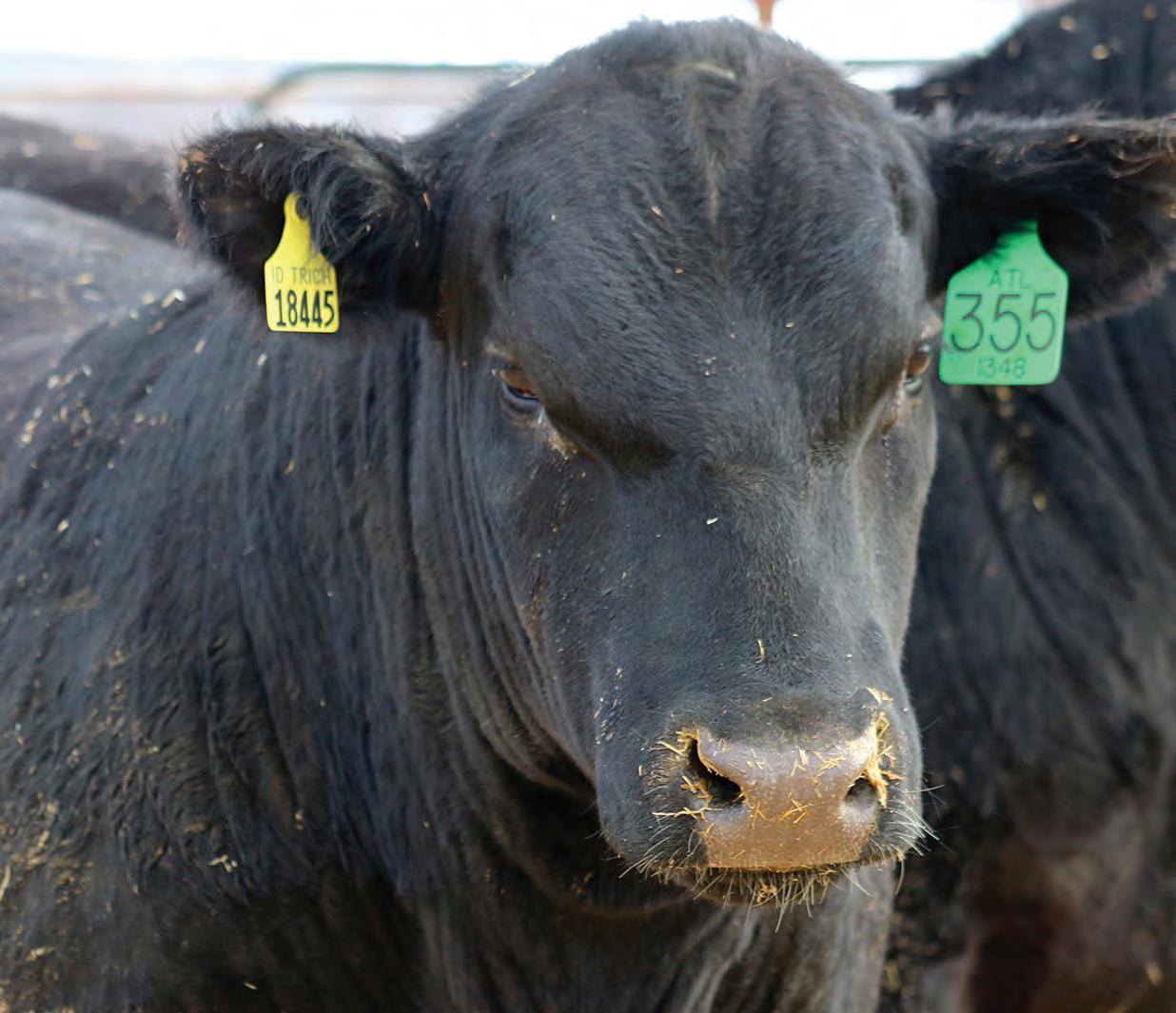
The purebred sector has always been steeped in tradition. Historically, marketing purebred cattle meant a handshake deal built on trust… these days, the foundation of trust hasn’t changed, but some of the strategy has shifted with new innovations in the field. The science of genetics has evolved over the past several decades. You want to select a bull who will sire low birthweight calves? Easy. Want to know if his daughters will make good mothers? They can tell you that too. These days, there isn’t much you don’t know about a purebred animal, because their worth is laid out on the paper right in front of you. You can design the perfect cattle herd, right down to what future generations will look like.
But there’s an art to the world of purebred marketing: you know your value… now how do you convey that to your consumers?
Data alone doesn’t sell cattle. Marketing does. The art lies in how producers convey their value to buyers, how they present their program, tell their story, and connect with customers.
For many seedstock producers, the first decision in marketing starts with how to sell.
Private treaty has long anchored the purebred industry—direct, personal, and built on relationships. Producers have control over timing, price, and presentation. Buyers appreciate being able to evaluate cattle on the ranch and talk directly with the seller.
But private treaty also limits exposure and price discovery. Production sales, on the other hand, create competition, visibility, and energy. They can attract new buyers and establish stronger market value, but they also demand more planning, labor, and upfront cost. Discovering the right marketing strategy can become a balancing act for purebred producers looking to get the best value for their animals.
For Matt and Sarah Thomson of Thomson Land & Livestock, that balance meant stepping away from private sales and transitioning into a new sales model—without completely abandoning what was already working for their operation.
“We felt like we were outgrowing the typical private treaty sale platform with a growing number of quality bulls,” Matt said. “Taking the next step would hopefully allow us to grow our customer base, as well as have better price discovery in such a good market. There has always seemed to be a disconnect between private treaty prices and actual market value.”
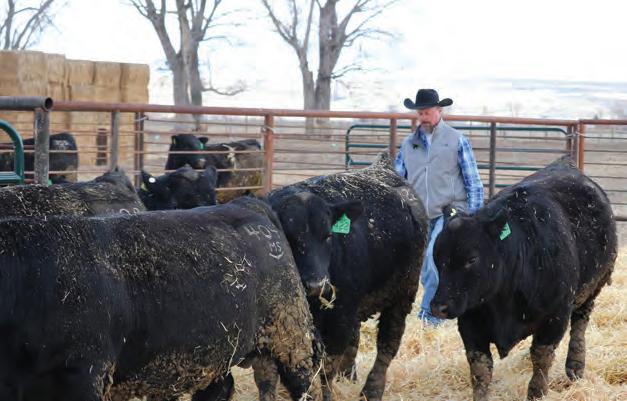
Last year, the Thomson family hosted their first openhouse sale. “We still didn’t have a full-blown auctioneer. I just called out prices and buyers could bid,” he explained. “We sold them by the pen, and whoever was the highest bidder got their pick of the pen.”
Matt saw this sale as the next in-between step for their operation, moving away from the comfort zone of private treaty, but not quite a true production sale.
The change came with a steep learning curve. “The biggest challenge was trying to grow our customer base and market to people we didn’t already know to get them to come take a look,” he said. “With private treaty, it was mostly word of mouth and friends of friends—no catalogs or professional photos. This time we sent out 500 catalogs and worked with Angus Media on the design. It was a learning curve, but it got our product in front of people, and hopefully there will be name recognition and they’ll remember us next year.”
He credits the success to teamwork and mentorship. “We were fortunate to have another guy in the business help us
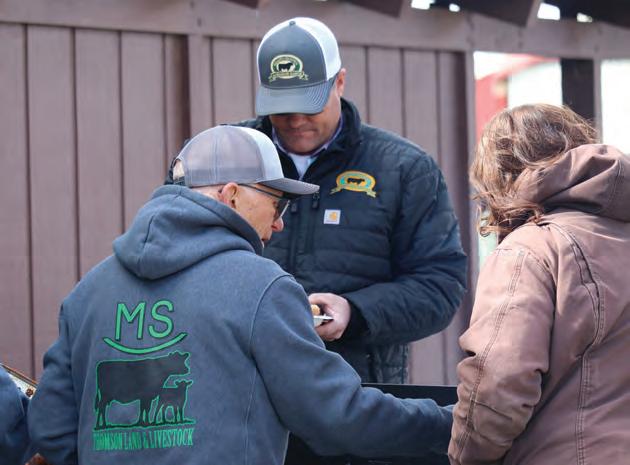
with clipping bulls and getting them ready,” he said. “He was gracious with his time, and that made a big difference.”
His advice for other producers is to jump at new opportunities. “There’s no better time than the present. Markets are strong, so it’s a good time to try something new. The worst thing that could happen is it doesn’t work— you’ll still sell your product anyway.”
The Thomsons plan on holding a similar sale next year, with some small tweaks. “It’s a continuing challenge and, in turn, reward.”
Arnold and Teresa Callison of Rimrock Angus have deep roots in the association sale world, where tradition,
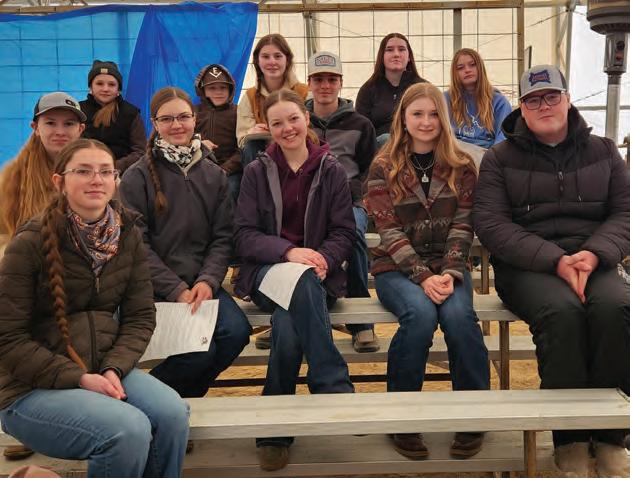
structure, and reputation hold firm. For them, their sale endured its tweaks and became set in tradition years before they even started in the business.
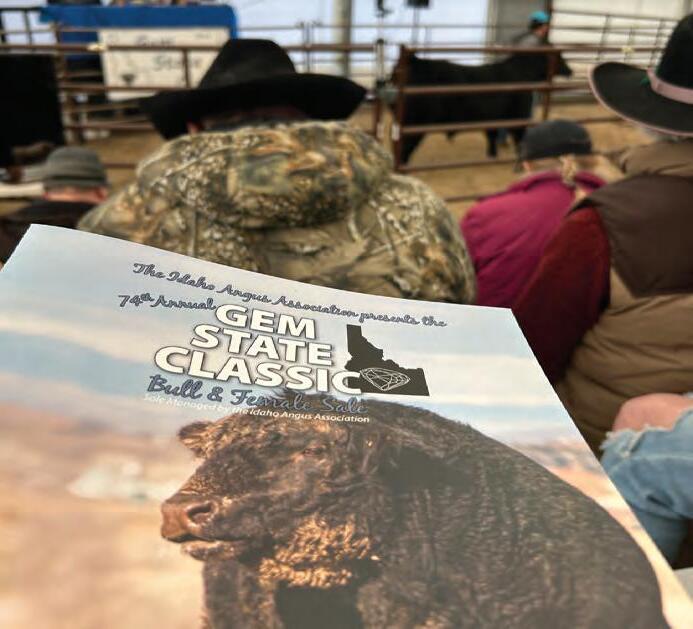
The Callisons participate in both the Idaho Angus Association and Rocky Mountain Angus sales—two long-running events with histories that stretch back generations. “The Idaho Angus sale is the oldest consignment sale this side of the Mississippi,” Arnold said. “It’s been going a long, long time.”
Arnold’s family has been part of the Idaho Angus Association for decades—his father even served as president—and his mother helped originate the Rocky Mountain Angus Golden Opportunity Sale in the early 1970s. “It’s a nice outlet if you have a small number of bulls or a handful of heifers,” he said. “If you have enough for a production sale, that seems to be the route most people go. But these association sales are a great outlet for registered females, and we like supporting them because of our history with both organizations.”
Though the Callisons host a spring bull sale each March alongside Beckman Land & Livestock, they remain dedicated to contributing to the association sales each year, which are not without their challenges. “Many of the consignors are nearing retirement age, and participation has dwindled over the years. We’ve looked at ways to get more involvement—opening up to other breeds, for instance—to help keep it viable.”
Arnold says attention to detail is key to a successful sale. “Turn in weights, make sure you have performance data, do DNA tests for enhanced EPDs, pay attention to pedigrees. Your endgame is the commercial producer. Focus on foundation—structure, feet, and the traits that matter.”
That kind of reputation takes years to build, and for Arnold, the association model keeps those standards front and center. It’s not just about selling cattle, it’s about supporting the breed and the people who’ve been part of it for decades.
Some producers have even taken a step beyond the boots on the ground open-house or production sales into the world of online auctions. Not every sale requires a crowd anymore. Online auction services and digital platforms have made it easier for buyers to bid from anywhere—and for sellers to reach audiences well beyond their region. This technology lends itself to creating more opportunity for the purebred producer, but it’s not a gamechanger for everyone. Trust, reputation, and customer service remain at the heart of every sale, whether it happens in a barn, a fairgrounds arena, or on a laptop.
Across all these marketing approaches—private treaty, association, hybrid, and digital—a few constants emerge. Trust and reputation remain non-negotiable. Data and EPDs may draw attention, but relationships close the sale. This industry is one of integrity which demands loyalty, while presentation and communication keep programs competitive.
The cost of marketing continues to grow, but so do the opportunities for exposure. Whether it’s a first catalog or a decades-old consignment, producers agree that visibility matters—and authenticity sells.
There’s no single formula for marketing purebred cattle. Success depends on matching your strategy to your cattle, your goals, and your customers. Want to learn more about hosting your own production sale? Check your ICA Resource Guide for breed association contact information.
From long-established association sales to innovative hybrid events, Idaho’s purebred producers are proving that the heart of the business still lies in the same place it always has: the people behind the cattle.


In Idaho, cattle ranching isn’t just an industry — it’s a legacy of hard work, community, and care for the land and people who call it home. Every day, Idaho’s ranchers pour their hearts into raising high-quality beef that feeds families across the state and beyond. But their impact goes far beyond the dinner table. Through Beef Counts, Idaho’s beef community is coming together to ensure that no family must face hunger alone.
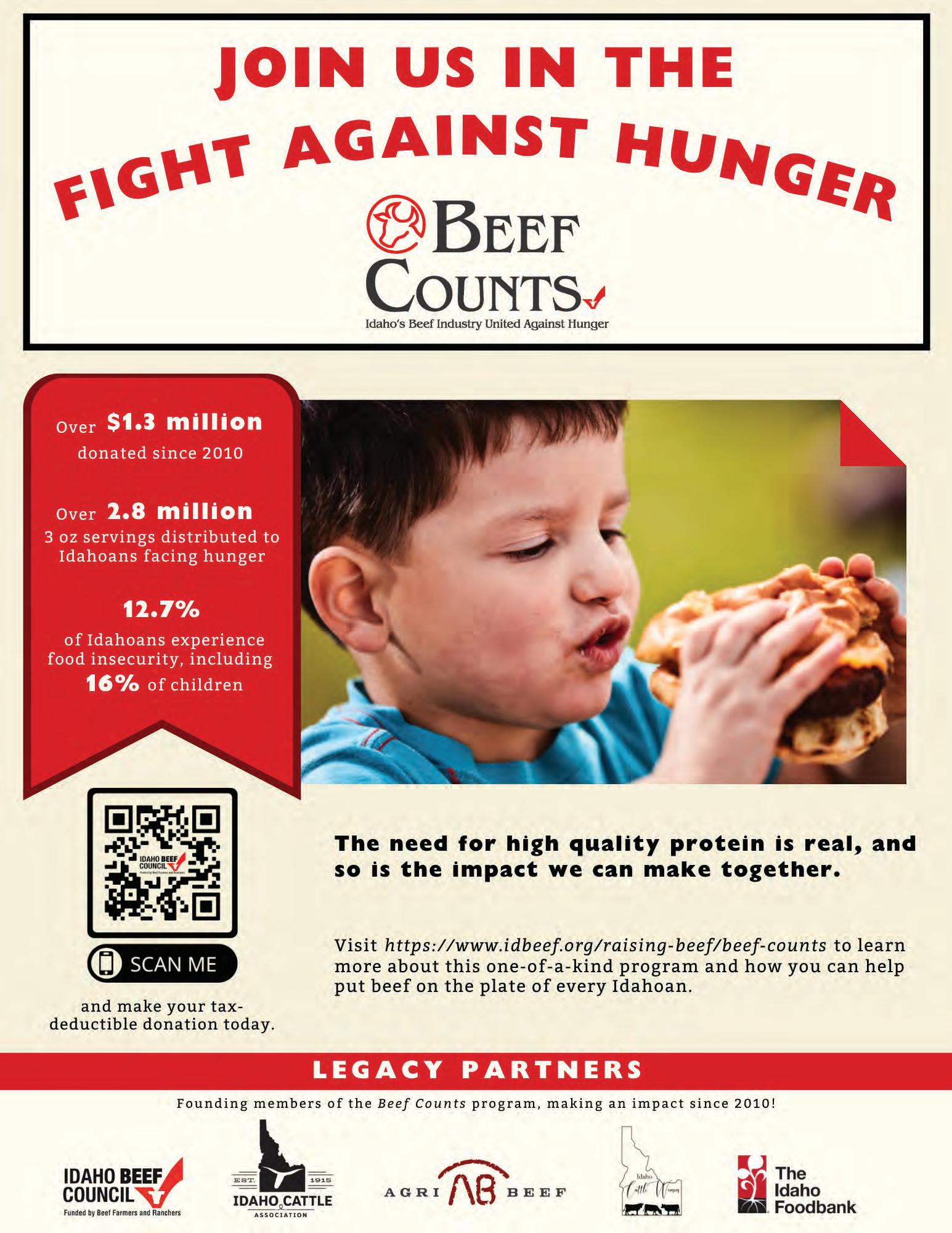
Beef Counts is a one-of-a-kind partnership between the Idaho Beef Council (IBC), Idaho Cattle Association (ICA), Idaho CattleWomen, Agri Beef, and The Idaho Foodbank. Together, they’ve built a program that delivers a consistent supply of nutritious, high-quality beef to Idahoans in need. Since 2010, this powerful partnership has provided more than 2.8 million servings of beef — proof that when Idaho’s ranching families rally together, the results are extraordinary.
When families are struggling to put food on the table, protein is often the hardest thing to come by. Yet it’s one of the most important parts of a healthy diet — especially for growing kids and working parents. Beef Counts helps fill that critical gap by ensuring Idaho families get access to nutrient-rich beef packed with iron, zinc, and B vitamins that support energy, growth, and well-being.
In Idaho, 12.7% of residents — including 16% of children — experience food insecurity. That means thousands of families are unsure where their next meal will come from. Beef Counts changes that story, one serving at a time.
Beyond nutrition, beef carries meaning. It’s Sunday dinners, backyard barbecues, and community cookouts — moments that bring people together. Through Beef Counts, Idaho’s ranchers
share that same sense of connection and care with families who need it most.
Beef Counts is powered by collaboration and compassion. Cattle producers, businesses, caring citizens, and community partners raise funds for the program. Those dollars are then used to purchase beef, which The Idaho Foodbank distributes through its statewide network — ensuring nutritious meals reach every corner of Idaho.
Every donation goes even further thanks to Agri Beef’s annual match of up to $50,000. That means your contribution literally doubles in impact — turning generosity into meals and hope for Idaho families.
This year, Idaho’s beef community has shown what can happen when neighbors come together for a common cause.
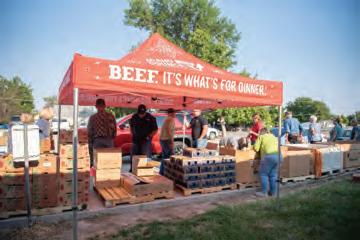
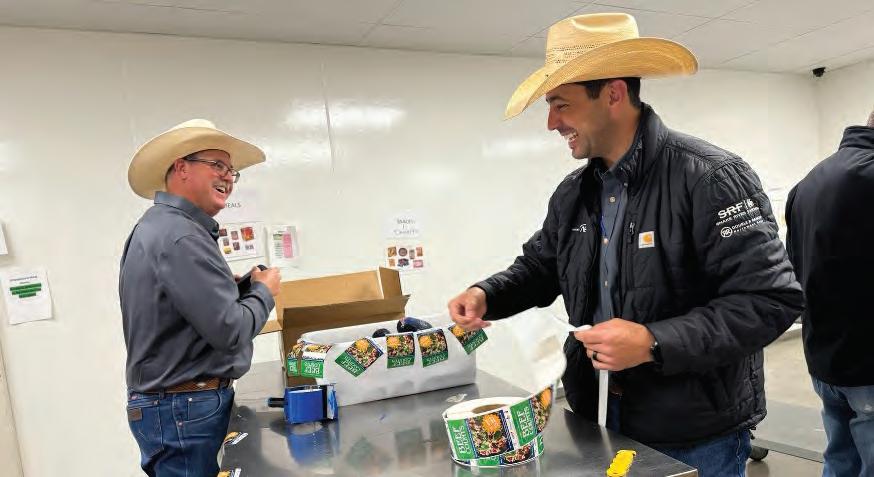
• At a beef-labeling event this spring, AgWest Farm Credit presented a $10,000 check, helping put more protein on Idaho tables.
• On July 18, families in Homedale received fresh beef at a local distribution event, turning donations into real nourishment and relief.
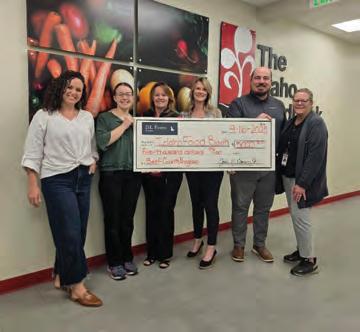
• From community baseball games to bank partnerships, support keeps growing — like D.L. Evans Bank, who joined as a Silver Sponsor this fall with a $5,000 contribution.
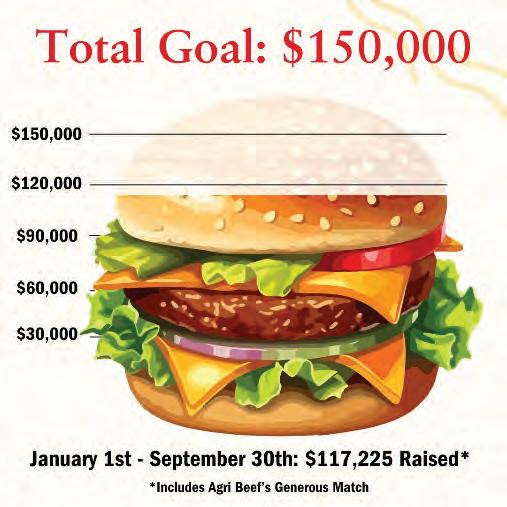
• In September, funds were raised at the “Seat at the Table” event hosted by the Idaho Foodbank. So far in 2025, Beef Counts has raised over $117,000, reaching 78% of our annual goal of $150,000 — but we’re not stopping there. Every dollar, every sponsor, and every rancher’s effort brings us closer to ensuring that every Idaho family has access to wholesome beef.
Your donation doesn’t just provide food — it provides comfort, health, and hope. It helps a child go to school with energy to learn, a parent focus on work instead of hunger, and a family share a meal that feels like home.
Whether you’re a rancher, business, or consumer, you can be part of this movement. When you give to Beef Counts, you’re joining Idaho’s ranching community in doing what we do best — taking care of our neighbors.
Cattle producer and longtime Silver Sponsor John Hepton said it best, “We want to spread that message as much as we can — to use the product we work so hard to produce to donate to hungry families.” That spirit of generosity runs deep across Idaho’s beef community, and through Beef Counts, it’s transforming lives every single day.
Beef Counts would not be possible without the generous support of our industry partners who believe in giving back to Idaho communities. The Legacy Partners would like to extend sincere appreciation to our Gold-level sponsor, AgWest Farm Credit, and our Silver-level sponsors:
MWI Animal Health
Advantage Veterinary
NW Mixer Feeders
Agar Transportation
Reynolds Creek Calf Ranch
Bank of Eastern Oregon
Weiser River Cattle Feeders LLC
Diamond Peak Cattle Feeders LLC
Wilder Cattle Feeders LLC
D.L. Evans Bank
Wilson Creek Cattle Feeders LLC
Hepton Livestock LLC
Together, these groups highlight the cattle industry’s commitment not
only to producing beef, but ensuring fellow Idahoans get to enjoy nutritious meals year-round.
As Idaho grows, so does the need — but so does our determination. Beef Counts isn’t just a program; it’s a commitment — a commitment to ensuring every Idahoan has access to nutritious, high-quality beef. Together, we can keep that commitment strong. Donate today. Volunteer. Spread the word. Every effort counts — because in Idaho, we take care of our own.

Give hunger the boot. Donate to Beef Counts today. Visit https://www.idbeef. org/raising-beef/beef-counts or scan the QR code above to donate today.







Silver Legacy Reno, NV Consignment Deadline: November 13 December 2
North Platte Stockyards North Platte, NE Consignment Deadline: December 29 January 6
Western Video Market is the premier livestock auction business in the western United States, offering internet and video marketing services for commercial cattle and sheep producers.


We have a team of field representatives who are second-to-none, and will represent your interests with old-fashioned values.

BY JOHN B. HALL, Ph.D.
Extension Beef Specialist University of Idaho
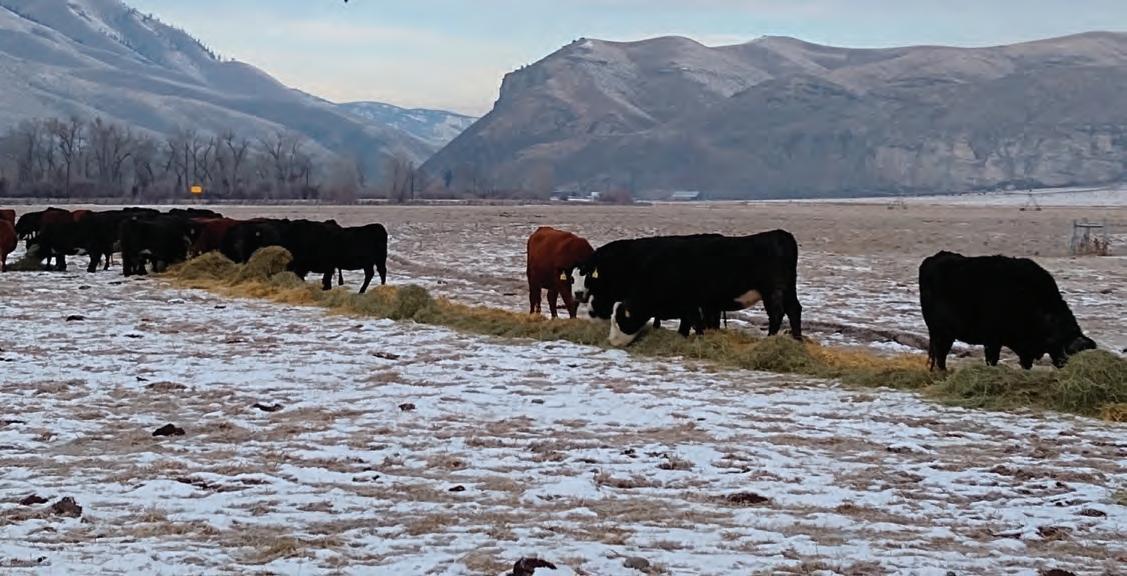
It’s been a rough water year in Idaho. A dry spring and summer limited range productivity. Variable snowpacks, early run-off and irrigation water limitations reduced hay yields on many ranches. Currently, 100% of Idaho is in a drought with over 85% in moderate drought or worse. In general, ranches are a little short on fall grazing and winter hay.
The good news is that calf prices are high, grain and by-product prices are low and states to the East had a good hay year. With calf prices expected to remain high through 2026, purchasing feed to maintain cow numbers looks to be a good option. The key is determining what combination of feeds meets the cows needs while being economical on feed cost.
Table 1 shows the amount of dry matter and amounts of specific nutrients needed meet the nutritional needs of cows at various stages of production. The minimum amount of dry matter for a 1300 lb. cow in late gestation is 25 lbs. Since hay is about 85% dry matter, she will need 33 to 38 lbs of hay per day (including 10% waste) more if it is below 10°F.
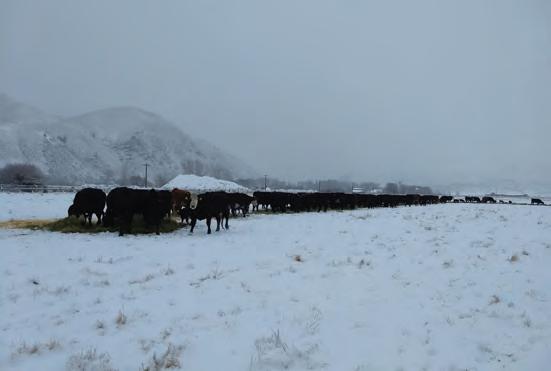
For most Idaho cows in winter, their lower critical temperature (LCT) is 10° to 18°F. If the average 24-hour temperature with the wind is 5°F and LCT is 18°F, then cows will need 13% more energy. For the 1300 lb. late gestation cow, that translates into another 3.7 lbs. of hay. During cold weather cows can increase their intake by 5% to 25% as long as hay quality is good.
Ranchers know how much hay they need to feed daily to maintain the body condition of their cows. However, when non-hay feeds are being substituted for some of the hay, the amount of each feedstuff to put out becomes more complex. Getting some assistance from Extension or a consulting nutritionist can ensure that cows meet requirements and will stay in proper condition.
Your county Extension Educator or Beef Specialist can assist you in determining the nutritional needs of your cows. Alternatively, tables for a variety of cow weights and ages can be found at https://extension.okstate.edu/factsheets/print-publications/e/e-974-2025-nutrient-beefrequirements-a.pdf
The quality of hay cows need is indicated in the other parts of Table 1. These nutrient concentrations can be compared to the hay or feed test. For example, if the hay a ranch is feeding to late gestation cows is 8% crude pro -
1Cow requirements are for a 1300 lb cow with BCS 5 producing 25 lbs. of milk at peak lactation. Heifer requirements are for replacement heifers with a BCS of 6 and gaining 1.5 lbs or 1.0 lbs depending on gestational stage. Heifers have a projected mature weight of 1300 lbs. Adapted from Lalman and Holder, 2024.
2TDN = Total Digestible Nutrients
3NEm = Net Energy for Maintenance
tein and 56% TDN, then the hay will meet the needs of the cow. However, if it is 6% crude protein and 56% TDN, then a protein supplement is needed.
If there is enough hay on the ranch and it meets the nutritional needs of the cows, then the simplest method is to feed hay. However, if hay supplies are short and purchased hay is more expensive then replacing it with a by-product feed, consider substituting by-products for some of the hay. By-product feeds (distiller’s grains, brewer’s grains, wheat midds, corn gluten feed) are better substitutes for hay than corn or barley. The high starch content of corn, wheat or barley can interfere with forage digestion whereas by-products contain highly digestible fiber as well as additional protein.
Commodities such as distiller’s grains, corn gluten feed or wheat midds can take the place of hay for part of the diet and stretch hay supplies. Commercial range cubes or pellets can also work. The rule of thumb is 1 lb. of these
feeds can replace 1.5 to 1.75 lbs of hay. For example, by feeding 5 lbs. of corn gluten feed per cow daily, the hay needed per cow is reduced by 7.5 to 8.8 lbs.
When comparing feeds, it is important not to look at just price per ton. First all feeds should be priced as cost per ton delivered to the ranch. Next, feeds should be compared on a cost per pound of nutrient on a dry matter (DM) basis. Comparisons can be made on energy content (TDN – total digestible nutrients) or protein content (CP-crude protein) basis.
Scenario – Flat Top Ranch is short on hay for late gestation cows. Looking at Table 2, the grass/alfalfa hay would seem to be the best buy because it is only $160/ton. However, 1) it doesn’t meet the cows’ TDN requirement and 2) it may not be the cheapest feed on a $/lb. of nutrient basis. Since they want to replace hay, then they should compare feeds on a $/lb. of TDN basis.
On a cost per lb of TDN, the grass/alfalfa mix hay is $0.18. In comparison, both distiller’s grain ($0.16) and wheat midds ($0.12) are a better buy than the hay. On an energy basis, 5.0 lbs. of wheat midds will replace 8 lbs. of hay. The cost of 5.0 lbs. of wheat midds on an as fed basis is $0.44/cow/day. The cost of 8 lbs. of hay is $0.64/cow/ day. So, stretching the existing hay supply with wheat midds saves $0.20/cow/day. That would be a savings of $600 for 100 cows for 30 days. It would also reduce hay needs by 12 tons for the 100 cows over 30 days. I have developed an Excel spreadsheet to compare feeds on a cost of nutrient basis. All our Extension Educators with beef responsibilities have access to the spreadsheet. In addition, several Educators and all Beef Specialist can assist you with developing feeding options for your herd.
Back when we all fed small square bales, limiting intake was rather easy. Knowing the weight of the small square bales (usually 80 to 90 lbs.), we simply decided how many cows per bale and put out the correct number. With large bales (round or square), the job of limiting hay intake becomes more difficult. The first step is to know how much the bales you make weigh. Your baler salesman is a nice guy, but the figure he gives you on bale weight is usually the maximum. Weigh a few bales on a cattle scale or take a load to the truck scale and weigh them. Unrolling. This method is the second most precise method we have to limit hay. This sounds simple, especially if you have a hydraulic bale mover; just take the amount of hay you want to put out and divide it by the bale weight, right? That works for square bales but not for round bales. Let’s do a little round bale geometry review. In a 5 ft. diameter bale, 1/3 of the hay is in the outer 4 inches and ½ of the hay in the bale is in the outer eight inches. For a 6 ft. diameter bale, 1/3 of the hay is in the outer 6 inches and ½ of the hay is in the outer 12 inches. For example, you have a 5 ft. diameter bale that weighs
1000 lbs., and you have 100 cows. You want to feed those cows 25 lbs. of hay each, so you need to feed 2½ bales. On the first day, you roll out 2 bales plus the outer 8 inches of the third bale. On the second day, you roll out the rest of the bale plus two new bales.
Wastage is still a factor with unrolling. Cows and calves will trample and soil about 5 to 10% of the hay rolled out. In high wind conditions, you may be feeding the neighbors’ cows instead of your own. Losses due to waste are increased in wet or snowy conditions.
Limiting access. This method is extremely effective, especially for smaller herds or herds that feed out of round bale feeders. Cows are allowed access to hay for only a few hours per day then they are moved to an adjacent area or pasture.
Research from the University of Illinois indicates that as little as 3 hours of access is needed with high quality hay, and 6 to 9 hours of access is needed for medium quality hays to achieve cow performance similar to 24-hour access. In this particular research, hay was the only feed offered to these gestating cows. If hay is to be stretched by feeding by-products, then 3 to 4 hours of access may be sufficient. It is important that there are enough feeding locations so all cows can eat at the same time. Therefore, multiple hay bale feeders may be needed.
Hoping for a better hay year in 2026!
307+-ACRES 206+-Irrigated Wendell: $4,500,000 PENDING!
156+-ACRES 141+- Irrigated Shelly: $2,700,000 PENDING!
165+-ACRES 124+- Irrigated Buhl: $2,000,000 PENDING!
39.08 +-ACRES 1500 CAFO Feedlot, 2400+-SF building Paul: $1,290,000
657.72 +- ACRES 367 +Carey: $7,900,000
40 +- ACRES 640+- lock ups-CAFO, American Falls Water & Pivot Dietrich: $1,400,000

An inside look at how University of Idaho students are getting involved in the industry.
BY MADISON OREM University of Idaho SICA president
This summer, Kole Martin took his interest in the cattle industry to the next level by participating in a ten-week operations internship with Beef Northwest in Boardman, Oregon. Kole learned about the opportunity when company representatives visited one of his agricultural economics classes. Interested in gaining more hands-on experience, he decided to apply and soon found himself immersed in multiple sectors of the feedlot.
As an Operations Intern, Kole rotated through a variety of departments including processing, hospital, maintenance, cowboy crew, feeding, and the mill. His tasks ranged from tagging cattle and administering vaccinations to collecting feed samples and checking the quality of steam-flaked corn. Each department offered a new opportunity to learn how efficiency, animal care, and precision come together in a large-scale beef operation.
“My main role was to help out wherever I was needed and to absorb as much information as possible,” Kole explained.
Through this experience, he developed valuable task management, communication, and problem-solving skills, while gaining an appreciation for the science and skill behind feeding cattle.
“I learned how much science goes into feeding cattle,” he said. “Every decision is backed by years of data, and it
was eye-opening to see how technology helps improve efficiency.”
Kole highly recommends this internship to other students interested in the beef industry. The experience affirmed his commitment to a career in agriculture and strengthened his desire to remain in the beef industry.
When Thomas heard from a friend about an internship opportunity last spring to work in Moscow, he reached out to his friend’s boss. That simple conversation led to a ten-week hands on internship which strengthened his experience in the agriculture industry and helped him understand the daily work that goes into raising livestock.
His days were filled with a variety of tasks including feeding ponies and cattle, cleaning pens and stalls, and taking care of general chores like mowing and pulling weeds.
“Every day was a little different,” he said. “It kept me busy and always learning something new.”
The experience gave him the chance to gain valuable animal handling, communication, and teamwork skills, while also building an understanding of how research is conducted and current topics in the cattle industry. One of his greatest takeaways was learning how market conditions can impact producers.
“I learned a lot about animal han-
dling and that cattle prices are breaking records right now,” He shared. “It really opened my eyes to how the business side connects to daily ranch work.”
Looking back, Thomas says he would highly recommend this internship to other students who want a true hands-on learning experience. The internship helped him realize how much he enjoys working with his hands and being outdoor, confirming that his future career will involve being out in the field instead of behind a desk.
For Rachel Wandell, a member of the Student Idaho Cattle Association, interning with the Canyon County Fair in Caldwell, Idaho, was more than just a summer

job. It was an opportunity to strengthen her skills, network, and grow her passion for the beef industry.
As a livestock intern, she played a key role in keeping the fair’s livestock shows running smoothly. Her responsibilities included checking barns, assisting with weigh-ins and check-ins, setting up show rings, assisting judges and announcers, and handing out ribbons. She was also able to work with social media and marketing, helping create content, posters, and event promotions for the fair.
“I gained hands-on experience with livestock care, marketing, and event organization,” Rachel said. “It taught me how to manage logistics and stay calm under pressure.”
Rachel’s internship deepened her appreciation for advocating for agriculture. She was presented with the opportunity to speak with fairgoers about beef production, sustainability, and animal welfare, helping educate the public about an industry she loves.
“These experiences have reaffirmed my passion for the beef industry,” she shared. “I’ve learned how incredible the people in this field are: strong, family-oriented individuals who care deeply about feeding others and supporting their communities.”
Through her work, Rachel discovered that agriculture isn’t just a career path, it’s a lifestyle built on service, stewardship, and community.
“I hope to continue working in the beef industry, whether through education, production, or policy,” she said. “I’m excited to keep learning, growing, and advocating for beef.”
For Izaak Krohn, gaining hands on experience working on a feedlot was a great way to connect his education at the University of Idaho with real world production skills. During this summer, he interned for Simplot in Grandview,
Idaho. This experience gave him a firsthand look at the size, complexity, and teamwork behind one of the largest cattle operations in the region.
Izaak came across this opportunity by a mutual friend connecting him with the company and him then reaching out directly. Once he was accepted into the program, he spent two week rotations in each department of the feedlot. These departments included processing, feeding, feed mill, veterinary hospitals, and the office. This helped Izaak gain a complete understanding of the operation.
“ The biggest thing I learned was how much effort goes into feeding a yard of 120,000 head of cattle, every single day,” Izaak shared.
Throughout his internship, Izaak developed a variety of skills, from heavy equipment operation and animal treatment to leadership and communication through Simplot’s internship program. Each department offered a unique side of each role that contributes to the overall success of the feedlot.
Izaak recommends the Simplot internship to any student interested in cattle feeding operations or large-scale beef production.
“It gave me a stronger understanding of cattle feeding, which will be incredibly valuable as I plan to move into the risk management side of the cattle industry,” he explained.
Rachel’s summer internship with Beef Northwest in Boardman, Oregon, mixed her interest in data analysis with her passion for the beef industry. Over eight weeks, she gained experience that showed her how technology, management, and production come together to drive efficiency in modern feedlot operations.
Her main role involved assisting with the implementation of a new cen-
tralized feedlot management platform, helping streamline data systems and supporting operational efficiency. In addition, she contributed to compliance audits, historical budgeting, and head-day tracking projects—this all showed her how data can influence business decisions in production.
“By being part of the daily operations with the new management system, I developed stronger problem-solving and data analysis skills,” Rachel said. “This internship also gave me the chance to strengthen my communication and Excel skills.”
Working on a large-scale feedlot allowed Rachel to gain an understanding of the feedlot sector of the beef industry, from ration formulation and commodity sourcing to packer expectations and daily operations.
“It’s a great way to explore your interests, improve your skills, and contribute directly to everyday operations,” she said.
This experience confirmed Rachel’s plans to pursue a career in the beef industry, particularly where data analysis and management decisions are made. It also showed her the diversity of career paths available within the industry, each important to keeping beef production efficient and sustainable.

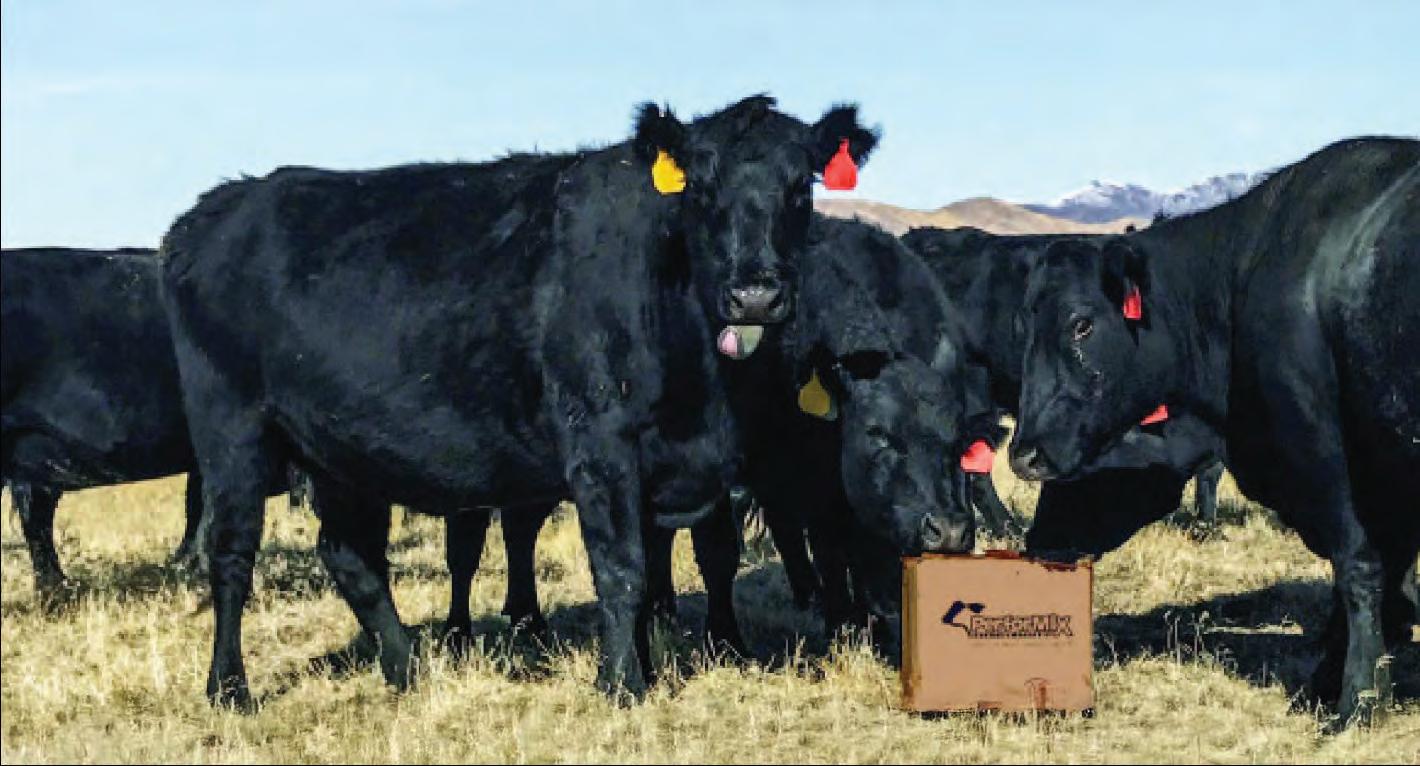
100lb No-Melt formula in biodegradable and edible packaging.
Complete year-round vitamin, mineral and protein supplement.
Support for maximum performance and efficiency at all production stages.
Improve digestion, body condition, reproduction and fetal growth. Contains Availa 4 and Boviacillus Production Plus option.
In addition to a full vitamin and mineral package it has 30% crude protein along with high levels of mono and poly unsaturated fat and a live multispecies probiotic for improved immunity and reproduction
NOW WITH MULTI-SPECIES LIVE PROBIOTIC!
BOVIBOX NATURAL
Has all the benefits of a quality mineral and vitamin package with 20% all-natural protein and the same high mono and poly unsaturated fat and live probiotic combination to boost immunity and reproduction
NOW WITH MULTI-SPECIES LIVE PROBIOTIC!





THE IDAHO PUBLIC LANDS COUNCIL (IPLC) AND IDAHO CATTLE ASSOCIATION (ICA) ARE JOINTLY SEEKING ONE STUDENT FOR A 2026 SUMMER INTERNSHIP POSITION!
Intern will be working on a project supporting IPLC’s mission to protect the continued use of livestock grazing on Idaho’s federal & state lands. The individual will also work in-depth with ICA on publication production, meeting planning & facilitation of ICA’s summer meeting, performing a variety of office tasks and membership recruitment projects.
DEADLINE FOR APPLICATION IS
January 31, 2026

Visit www.idahocattle.org for full posting & application.
BY CHRISTIE PRESCOTT
Crisp mountain mornings and Indian Summer afternoons leave layers of sweaters strewn across our corral fences. Fall, autumn, the season of the witch—call it whatever you wish—but it’s upon us, and I relish these days.
Fall is the best: the culmination of a growing season and the last push before we button things up for a winter respite. We’re frantically busy every day, all daylight hours, and there’s something intoxicating about working that hard. Like a runner’s high—that sense of pushing yourself past where you thought your limit was.
Reminiscent of the lyrics from a Cody Jinks song, we wake with the morning sun—we’ve got “mouths to feed and cattle to run… in this modern world moving breakneck fast… we struggle and strife… working long after the day is done… we still dream.” Isn’t that the coolest part? We are living a dream. Our whole family works together for that dream. It seems like our industry is defined by these seasons—spring and fall work. No matter how long the hours, it doesn’t really matter, because we are all together.
Being of the cattle culture, we all know that fall is when we make it or break it—shipping yearlings, buying calves, and weaning the year’s crop. We love it, so we don’t complain about it. And we learn to be lulled to sleep by the orchestra of bawling calves. Come daylight, we hear the DJ playing the wake-up call song—Let the Day Begin or Mary Chapin Carpenter’s I Feel Lucky Today are some of the favorites.
To top it all off, when we finally get in the house at the end of the day, it’s crockpot season! The dreaded question—“What are we going to feed everyone for dinner?”—is answered easily: beef, of course! Soups, pot roasts, stews, shepherd’s pie, fire cider, and fiest bier are some of our favorites this time of year. A favorite of mine is simply a crockpot roast with dried onion Lipton soup mix and a few potatoes on top.
Of course, like all families with young children, we never quite know who’s on shift to pick up kids from cross country or football practice—or even if we’ll have cell service to get the updates. It surely takes a village.
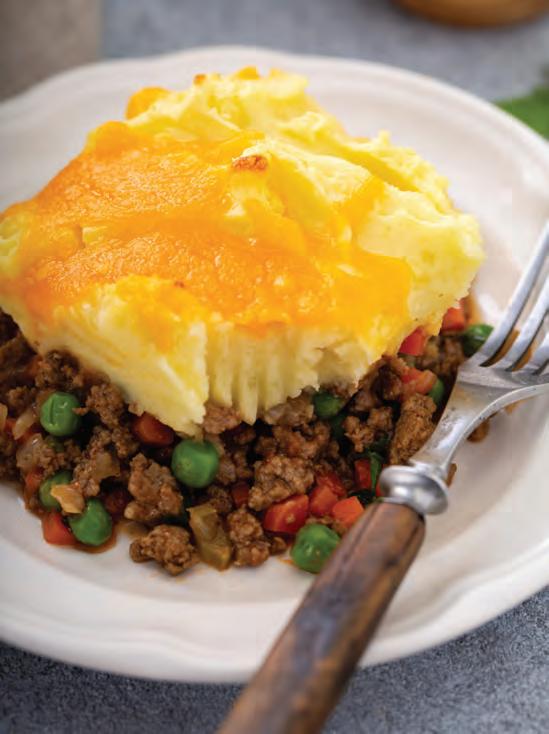
If you find yourself out Fairfield way this fall, feel free to stop by and say hello. If we aren’t working cattle or at a youth sporting event, we’ll be snuggled in after dark watching a spooky season movie and eating shepherd’s pie. Here’s a favorite recipe of mine.
Ingredients
• 2 lb. russet potatoes, peeled, sliced 1/2” thick
• Kosher salt
• 2/3 cup half-and-half
• 4 Tbsp. unsalted butter
• 2 Tbsp. chopped fresh parsley
• Freshly ground black pepper
• 2 lb. ground beef
• 1 medium yellow onion, chopped
• 2 medium carrots, chopped
• 3 cloves garlic, chopped
• 2 tsp. chopped fresh rosemary
• 2 tsp. chopped fresh thyme
• 3 Tbsp. tomato paste or a dash of ketchup
• 1/2 cup dry red wine, such as Cabernet Sauvignon
• 1 cup beef broth
• 3 Tbsp. Worcestershire sauce
• 3 Tbsp. all-purpose flour
• 1 bag frozen peas
• Grated cheddar cheese
• Cooking spray

Step 1:
Preheat oven to 400°F. In a medium saucepan, cover potatoes with water by 1/2" and season with 1 tablespoon salt. Bring to a boil over high heat and cook until potatoes are fork-tender, 12 to 15 minutes. Drain and set aside in a colander.
Step 2:
In the same pot over medium-low heat, cook half-and-half and butter, stirring until butter is melted. Return potatoes to the pot and mash with a masher or fork. Stir in 1 tablespoon parsley; season with salt and pepper. Remove from heat.
Step 3:
Meanwhile, in a large skillet over medium-high heat, add beef and season with 2 teaspoons salt and 1/2 teaspoon pepper. Break up beef with a wooden spoon and cook until browned. Using a slotted spoon, transfer beef to a plate.
Step 4:
In the same skillet over medium heat, cook onion and carrots, stirring until onions begin to soften, 5 to 6 minutes. Add garlic, rosemary, and thyme; cook until fragrant, about 2 minutes more. Return beef and accumulated juices to skillet; stir in tomato paste or ketchup. Cook, stirring, until tomato paste turns dark red, 3 to 4 minutes. Add wine and cook until almost completely evaporated, 2 to 3 minutes. Stir in broth and Worcestershire sauce; bring to a simmer. Sprinkle with flour and cook, stirring occasionally, until thickened, about 5 minutes. Stir in peas.
Step 5:
Pour beef mixture into a 13” x 9” baking dish. Dollop mashed potatoes on top. Lightly spray a rubber spatula with cooking spray and spread potatoes evenly over the beef mixture. Sprinkle with cheddar cheese; season with a pinch of pepper.
Step 6:
Bake shepherd’s pie until the filling is bubbling, about 25 minutes. Remove from oven. Place on a rack in the upper third of the oven and turn broiler to high. Broil until the top begins to brown, 1 to 2 minutes.
Step 7:
Sprinkle with remaining 1 tablespoon parsley. Let cool 10 minutes before serving.
Fall season is busy in a variety of ways, children have settled back into school and extracurricular activities, recreationalists are out in search of game, fall farming is in full swing, and cattle are on the move. With gathering underway, many operations are preparing calves to be weaned and set up for the next phase of production. For the cow-calf operation, this is also the time of year to decide which females to hold back from the truck ride to instead begin the process of development.
When visually evaluating prospect replacement heifers at weaning, one would want to select females with wide, open rib shape and a uniform body depth. Additionally, it would be appropriate to select females with sound, proper conformation, displaying a correct angle in the hocks and being square. Because there is expectation that a replacement heifer has longevity in the breeding herd, her footing needs to be evaluated as well, looking for evenly sized toes, good depth of heel, and a foot that sits flatly on the ground. Another set of traits to consider would be reproductive potential: is her mother a good cow with good temperament and milk production that breeds back each year and early in the season? Was this heifer born early in the calving season and more likely to reach puberty earlier? The way these types of questions are answered should influence whether this is a good female to select for replacement purposes.
Ideally, at around 12 months of age, potential replacement heifers have been provided quality nutrition and would be ready for further evaluation 30-60 days prior to breeding. By evaluating this far in advance, heifers that pass the evaluation can be given pre-breeding modified live vaccines, plus receive a booster in time for reaching full puberty around 14

BY MERANDA SMALL University of Idaho
months of age. Keep in mind that while nutrition is critical in heifer development, breed and genetics play a role in age of onset of puberty, so variations between herds is to be expected and reproductive evaluation may need to be scheduled closer to 13 or 14 months of age. The other advantage of this evaluation timing is that heifers with small pelvises or underdeveloped reproductive tracts can be culled, a practice that—in the long run—will help improve reproductive efficiency of a herd with increased rates of conception at first service. Additionally, by being prepared to cull at this time, an operation then has the opportunity to save on additional input costs such as labor services, vaccinations, hormones, and feed.
Because age of puberty can be difficult to measure directly, Reproductive Tract Scoring (RTS) can be performed to evaluate reproductive tract development. This measurement involves rectally palpating the reproductive tract and assigning a
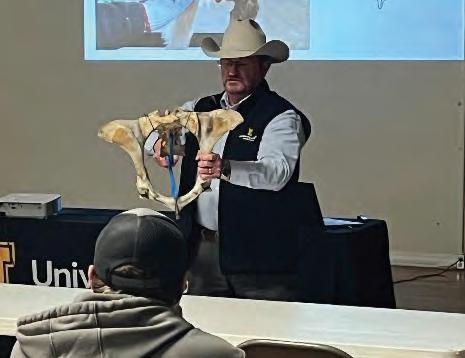
score of 1 to 5, with 1 indicating an immature, prepubertal heifer and 5 indicating a cycling heifer with a well-developed uterus and ovaries. Heifers with RTS of 4 or 5 have higher pregnancy rates compared to heifers with lower scores. While there are a number of factors that come into play in a heifer experiencing dystocia, pelvic area can be a major contributor to the occurrence. A pelvic measurement can be taken on the heifer and then factored in to estimate the birth weight of a calf she can successfully deliver unassisted. While using this measurement is appropriate in culling small pelvis heifers, it’s not recommended to rely on it in selecting larger heifers. Selecting for larger pelvic size means larger mature frame size but not necessarily proportionally large enough to accommodate a larger calf as a first calf heifer. With this information, producers can choose to cull immature heifers entirely or at least remove them from the AI group and save on the costs of synchronization hormones, labor, and potentially wasted semen. There are various instruments to utilize in obtaining these measurements, as well guides for using them. Work with your veterinarian or reproduction technician to accurately assign RTS scores and measure pelvic areas, and to discuss breeding strategies to increase reproductive efficiency on your operation.

701 X
Ab Orozco Diaz
Abigail Roberts
Allison Eliason
Animal Health
International
Bill & Ann Ebener
Bill & Evon Huntsman
Blackfoot Livestock
Bodie Lierman
Brad Stout
Brayden & Allison
Bruce Kerner
Caleb Showalter
Callyn Zollinger
Carley Weaver
Cassidy Neth
Cece Baldwin
Chelsea DeFriez
Chet & Cathy Sellman
Clare Dwyer
Cody Jepsen
College of Southern Idaho Ag Dept. CowBos
Daniel & Bailey Richards
Dave & Diane Myklegard
Dennis Boehlke
Endovac Animal Health
Esmeralda Aguilar
Eva Symms
Gallagher Animal Management
Grace Noe
Greg & Cleo Shaw
Greg & Shanna Gipson
Hadley MacConnell
Halter
Hannah Doumit
Holly Seefried
Idaho Coalition of Land Trusts
Intermountain Feed
Jacee Fuller
Jack & Colleen Filipowski
Jason & Robin Nettleton
Jasper Bilbao
Jesse Beaver
Joe & Ady Shaw
John & Amy Ruhs
Josiah Bolyard
Justin Dalrymple
Justin Hokanson
Kayli Conklin
Laird Manufacturing
Lynn & Rosanne Schodde
Marvin & Amy Mitchell
Matt Duckett
Merck Animal Health
Miller Livestock Solutions
Nathan & Carsey Eliason
Paige Barnum
Quinton Wemhoff
R&M Steel Co.
Ranch2Retail
Randolph Brown
Rangen LLC
Rebecca Larsen
Robert Jones Realty, Inc.
Rocking Tree Ranch & Fencing
Sam & Janel Shaw
Scott Holt
Shari Darrow
Sterling Marketing Inc.
Susana Roth
Tatum Martin
Ted & Bonnie Tracy
Theresa Campbell
Travis & Justin Christensen
Tucker & Angie Shaw
University of Idaho
Vonni Mulrony
W.N. Brailsford
Wayne Cada
Zoetis




Hang’n A Cattle Company

James & Dawn Anderson 208-280-1505 208-280-1509 Beverly Bryan
PRIVATE TREATY SALES HEREFORD & RED ANGUS
2 Year Olds & Spring Yearling Bulls Spring Yearling Hereford & Red Baldy Heifers
Check out our offering at jbbalherefords.com
JBB/AL HEREFORDS 1973 S 1500 E GOODING, ID 83330 jbbalherefords@gmail.com
Bryan & Charly Anderson 208-280-1964 Jae Anderson
Alan and Leslie Alexander (509) 727-9151 - Alan(509) 432-4802 - William PASCO, WA Bulls and Females available Private Treaty
Email : william@hangnacattle.com hangna@owt.com www.hangnacattle.com Follow Us on Facebook
Your Northwest Source for Quality Charolais Cattle
83686

• Farm, Ranch, Recreation, Large Land Parcels, and High Net-Worth Real Estate • 1031 Tax Deferred Exchanges
Our experienced sales team is ready to solve your real estate needs. Ready to buy or sell? Call today!
info@knipeland.com • 208-345-3163 • www.knipeland.com






















As farmers and producers, you know best that a good, quality food product means everything to the consumer. And with Liphatech Ag rodenticide solutions, the security of your output is in good hands. Our team will stop at nothing to help protect the hard work of farmers and producers.