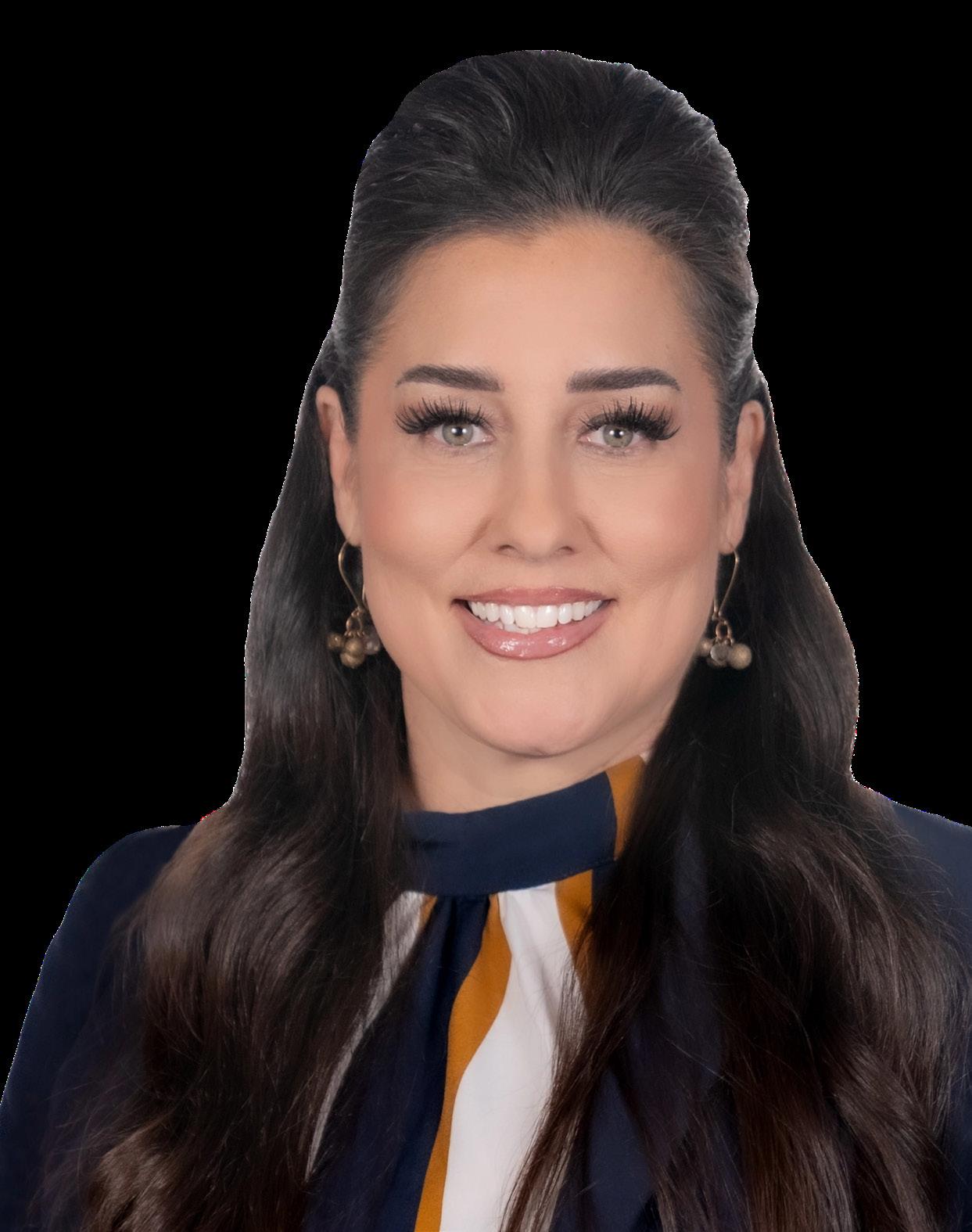
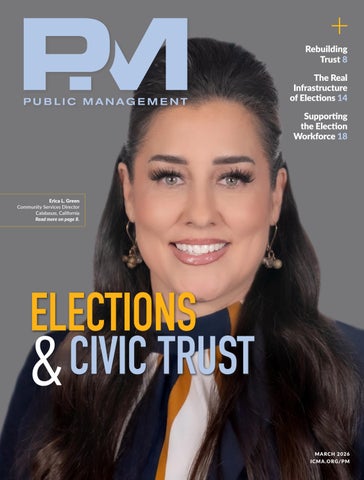
Erica L. Green Community Services Director Calabasas, California
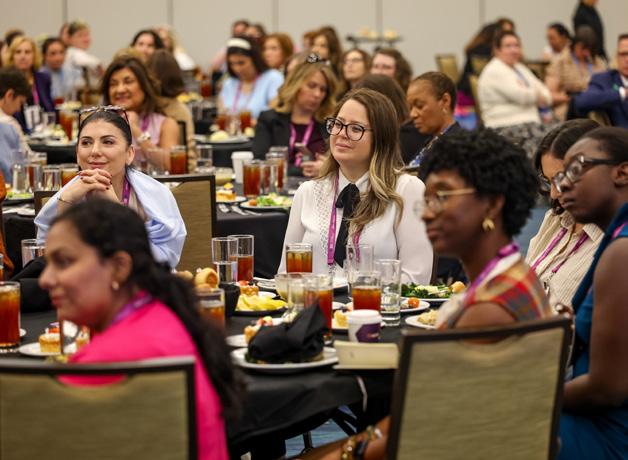
ICMA has many opportunities for you to use your talents and interests to become engaged and support the profession. Volunteering also provides opportunities for member connection, networking, and professional development.
Opens March 9.
You have until March 27 to answer the Call! Visit icma.org/volunteer
Conference Education Committee (formerly Conference Planning Committee) Govt Affairs and Policy Committee and many more!
Become a Coach
Host a Local Government or Veteran Fellow
TO EXPRESS YOUR INTEREST IN VOLUNTEERING
1. Log into your ICMA Profile (Log in is required.)
2. Navigate to "My Volunteer Opportunities" via the Committee Tab.
3. Make your selections
4. Submit your selections by March 27th. After you have submitted your selections, they should be viewable under the “My Volunteer Opportunities” link. Please contact us at membership@icma.org if you are unable to view your submitted selections.
How local election administration reinforces confidence in government
Fred Sherman
How local government leaders can support the front line of free and fair elections
Nancy Tate
What city and county clerks (and those in similar roles) want us to understand about the elections process
Stephanie L. Cox, Cassidy Flynn, Sarah Heinle, Jessica Hodek, Kathleen M. Montejo, Ashley A. Reichert, Lisa Posthumus Lyons, and Lisa Wise
How
Joanne Speers
Retiring from local government management is a significant and positive transition that benefits both the individual and the community they serve. Jim Malloy, ICMA-CM
How local government agencies can evaluate, strengthen, and align their core organizational practices.
Rod Gould, ICMA-CM Dr. Frank Benest, ICMA-CM and Jan Perkins,
Continuing
Reina
As birthrates decline, it’s imperative that municipalities focus on local amenities that attract families and support community vitality.
In celebration of the 25th anniversary of ICMA’s Credentialed Manager program, we’ll be acknowledging each author that holds the credential with this gold icon ICMA-CM in each issue of 2026.
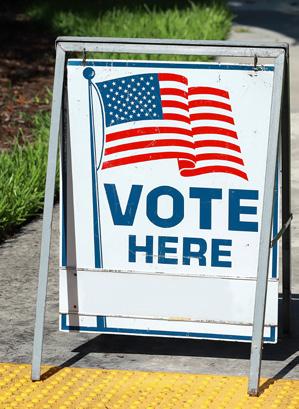

Competence, transparency, and consistency earn the trust of our residents— long before ballots are cast.
BY JULIA D. NOVAK, ICMA-CM
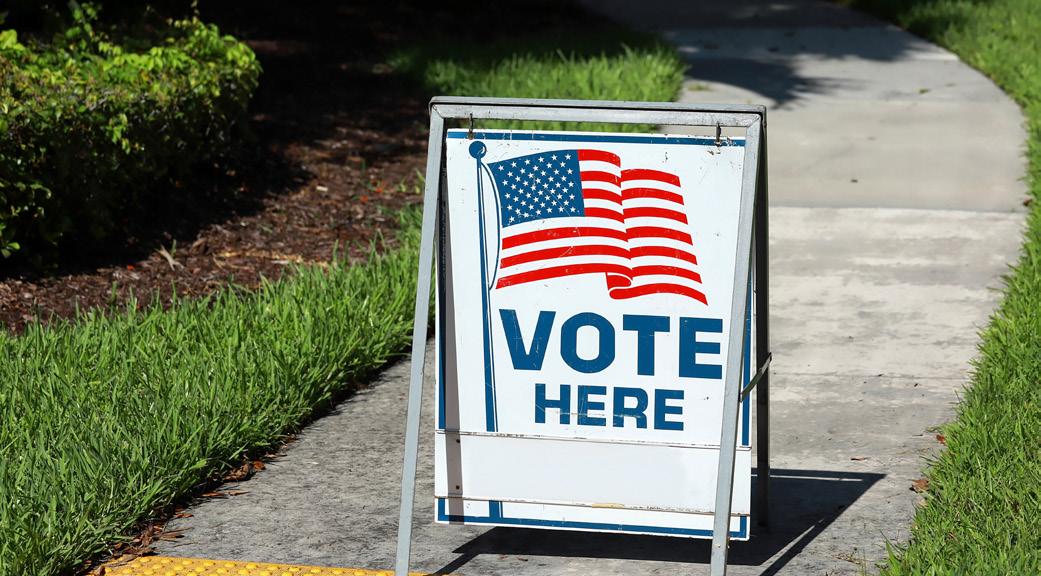
This issue of PM focuses on elections— an essential local government function that too often is taken for granted—unless, of course, something goes wrong. The only news articles we expect from an election are about who prevailed! We hope the process, the mechanics, the poll workers, etc., never make the front page. We have an amazing history of managing elections with integrity in the United States and that all happens because local government works!

JULIA D. NOVAK, ICMA-CM is executive director of ICMA.
It’s important for me to mention that the 2026 PM editorial calendar was published last fall! So while the “timing” coincides with some noise about election integrity and threats of federal intervention in the election process, this issue of the magazine was always intended to remind us of the importance of this process. We could not have predicted the intensity of questions and allegations, the escalation of threats against election workers, or the renewed questioning of democratic processes that many local governments now confront daily. The themes of this issue feel not just timely, but urgent.
International City/County Management Association
icma.org
March 2026
ICMA has moved!
Stay tuned for more details on our new office space! Our new address: 660 N Capitol St NW Suite 700, Washington, DC 20001
Public Management (PM) (USPS: 449-300) is published monthly by ICMA (the International City/County Management Association) at 660 North Capitol St NW, Suite 700, Washington, DC 20001. Periodicals postage paid at Washington, D.C., and at additional mailing offices. The opinions expressed in the magazine are those of the authors and do not necessarily reflect the views of ICMA.
COPYRIGHT 2026 by the International City/County Management Association. All rights reserved. Material may not be reproduced or translated without written permission.
REPRINTS: To order article reprints or request reprint permission, contact khansen@icma.org
SUBSCRIPTIONS: U.S. subscription rate, $60 per year; other countries subscription rate, $155 per year. Printed in the United States. Contact: 202/289-4262; subscriptions@icma.org.
POSTMASTER: Send address changes to Public Management, ICMA, 660 North Capitol St NW, Suite 700, Washington, DC 20001.
ARTICLE PROPOSALS: Visit icma.org/writeforus to see editorial guidelines for contributors.
For more information on local government leadership and management topics, visit icma.org.
Whether
or not elections fall directly within your portfolio, your leadership matters. The choices you make about resources, communication, and support for staff send a clear signal about what your organization values.
Local government professionals understand something fundamental about democracy: elections do not run themselves. They depend on systems designed well in advance, on staff who are trained and supported, and on leaders who are willing to protect the integrity of the process—often quietly and under intense pressure. Trust, in this sense, is built long before ballots are cast. It is earned through competence, transparency, and consistency over time.
Several articles in this issue underscore the critical role of our city/county/town clerks and the unique challenges they face. For many local governments, clerks and election administrators
Public Management (PM) icma.org/pm
ICMA 660 North Capitol St NW Suite 700 Washington, DC 20001
EDITORIAL: khansen@icma.org
ADVERTISING SALES: Natalie Matter Bellis The YGS Group natalie.matterbellis@ theygsgroup.com 717-580-8184
ICMA MEMBER SERVICES: 800.745.8780 | 202.962.3680 membership@icma.org
ICMA
Creating and Supporting Thriving Communities
ICMA’s vision is to be the leading association of local government professionals dedicated to creating and supporting thriving communities throughout the world. It does this by working with its more than 13,000 members to identify and speed the adoption of leading local government practices and improve the lives of residents. ICMA offers membership, professional development programs, research, publications, data and information, technical assistance, and training to thousands of city, town, and county chief administrative officers, their staffs, and other organizations throughout the world.
Public Management (PM) aims to inspire innovation, inform decision making, connect leading-edge thinking to everyday challenges, and serve ICMA members and local governments in creating and sustaining thriving communities throughout the world.
have become frontline defenders of democratic norms, navigating new security risks, staffing shortages, and unprecedented public scrutiny. Managers who understand this reality—and who actively support their election teams— are strengthening not just an election, but the legitimacy of their institutions.
The election workforce deserves particular attention. Across the country, local governments rely on a combination of career professionals, temporary staff, and volunteers to administer elections. These individuals are motivated by a sense of civic duty, yet increasingly they are asked to perform their roles in an atmosphere of distrust and, at times, hostility. Supporting this workforce is no longer just an operational concern; it is a leadership imperative.
The fact that this issue was planned months ago is a reminder that the work of strengthening democracy
PRESIDENT
Michael Land*
City Manager Coppell, Texas
PRESIDENT-ELECT
Andy Pederson*
Village Manager Bayside, Wisconsin
PAST PRESIDENT
Tanya Ange*
County Administrator
Washington County, Oregon
VICE PRESIDENTS
International Region
Meighan Wark
County Administrative Officer Huron County, Canada
Lungile Dlamini
Chief Executive Officer
Municipal Council of Manzini, Eswatini
Jānis Lange
Chief Executive Officer
Riga City Municipality, Latvia
Midwest Region
Jeffrey Weckbach*
Township Administrator Colerain Township, Ohio
Cynthia Steinhauser*
Deputy City Administrator Rochester, Minnesota
Cori Burbach*
Assistant City Manager Dubuque, Iowa
Mountain Plains Region
Pamela Davis
Assistant City Manager Boulder, Colorado
Sereniah Breland
City Manager Pflugerville, Texas
Penny Postoak Ferguson* County Manager Johnson County, Kansas
Northeast Region
Steve Bartha* Town Manager Danvers, Massachusetts
Brandon Ford
Assistant Township Manager Lower Merion Township, Pennsylvania
Kristy Rogers* Town Manager Milton, Delaware
is not reactive; it is steady, deliberate, and rooted in professional management. While the context around us may shift rapidly, the principles that guide effective election administration—and effective leadership—remain constant.
As you read this issue, I encourage you to reflect on the role you play in supporting elections in your community. Whether or not elections fall directly within your portfolio, your leadership matters. The choices you make about resources, communication, and support for staff send a clear signal about what your organization values.
In moments of uncertainty, local government continues to be a stabilizing force. This issue of PM is both a testament to that role and a call to action: to protect the people and processes that make democracy work—not just in election season, but every day.
Southeast Region
Eric Stuckey City Administrator Franklin, Tennessee
Chelsea Jackson
Deputy City Manager
Douglasville, Georgia
Justin Smith
Assistant City Manager Pelham, Alabama
West Coast Region
Nat Rojanasathira*
Assistant City Manager Monterey, California
Elisa Cox*
City Manager
Rancho Cucamonga, California
Katie Koester*
City Manager
Juneau, Alaska
* ICMA-CM
Managing Director,
Brand Management, Marketing, and Outreach
Scott lscott@icma.org
Senior Managing Editor Kerry Hansen khansen@icma.org
Senior Editor Kathleen Karas kkaras@icma.org
Graphics Manager Delia Jones djones@icma.org
Design & Production picantecreative.com
How does your local government organization promote this value for the community, elected officials, and employees?
BY JESSICA COWLES
March is Ethics Awareness Month and likely no topic is more crucial to this work than enhancing civic trust. This month we highlight two member communities who make trust a reality, tackle overcoming trust issues within the governing body, and provide tools to address incivility directed toward the organization’s employees.
The Community
Decatur, Georgia
Before declaring candidacy for a seat on the local governing body, individuals often form their views on civic trust through their experiences serving on the organization’s boards or commissions.
Decatur’s actions strive to make this service a positive experience: Decatur used “sortition, a process that started with a civic lottery and led to a diverse set of…members” to appoint a third of its members to the charter review commission. From the hundreds of volunteers, the National Civic League helped select a demographically balanced group of nine commission members” added to the 20 residents Decatur appointed from various community organizations.1
Over five months in the second half of 2025, “the commission met publicly to examine the charter section by section and recommend updates” with a process that included public input; work sessions; and a review of all aspects of the city’s governmental structure, powers, and duties for elected and appointed officials, as well as how decisions are made in Decatur.2

JESSICA COWLES is director of ethics at ICMA (jcowles@icma.org).
As part of this process, the commission identified “values they believed the charter should reflect… [that] included fairness, accountability, public involvement, environmental responsibility, and a welcoming community.” Those principles were translated into public engagement work for the local government through “inclusion, transparency, collaboration with city schools, and regular evaluation of engagement efforts.”3
While committee work often emphasizes the areas of consensus, in Decatur, “rather than smoothing over differences, the commission chose to be transparent about them.” This effort shows that the absence of full agreement happens throughout this process, but doing so does not need to devolve into the mentality of I’m right and you’re wrong. Civil disagreements are a fact of life in this profession, and Decatur’s Charter Review Commission shows how they can be appropriately managed.
The Decatur governing body approved the Charter Review Commission’s recommendations in December 2025. ICMA member Andrea Arnold is Decatur’s city manager and remarked, “This exceeded all of my expectations…. This was our own little constitutional convention. It made me proud to be your manager.”4
Additional inspiration comes from DeLand’s youth-focused public engagement initiative, the DeLand School of Government. The program was created 20 years ago through a partnership between the city of DeLand, the DeLand and Greater West Volusia Chamber of Commerce, and Volusia County Schools.5
The DeLand School of Government provides hands-on, comprehensive learning opportunities for students interested in government, public service, and political science. Along the way, DeLand noticed “two additional benefits ... The program exposes students to local government as a viable and rewarding career option, and it encourages them to become civically engaged, whether by attending public meetings, serving on advisory
boards, or eventually running for elected office. Taken together, the DeLand School of Government has become a practical way to help grow the next generation of local volunteers and leaders.”6
Another community resource is ICMA member Rick Davis’s three-part PM series on strategic planning as an approach to building trust.7 His series brings much-needed humor to this work.
“While living in Arizona years ago, I was advised by those who had resided there much longer than our family that termites are simply a reality of living in the Sonoran Desert. In fact, one neighbor told me, ‘There are two kinds of homes around here: those with termites and those about to have termites.” That would have made a great slogan for an extermination company! Similarly, there are two kinds of cities: those with a trust deficit and those who are actively building trust with their residents. Trust is not static. You are either building it or backsliding into a deficit.”
Davis continued,
[While] “more than a few local governments are afflicted by trust deficits… instead of addressing the root cause—the trust gap itself—they hack at the branches.
‘Let’s have a citizen appreciation day!’
‘How about we fire the city manager?’ And an oldie but goodie, ‘Let’s lower the property tax rate!’ Disappointment usually sets in when they realize they can’t fill a trust gap with free stuff, throwing money at people, or even offering up a human sacrifice. They must build trust!”
Take a moment to self-reflect on these principles: Honestly assess the state of community trust. Take inventory to ask yourself if your actions have promoted or weakened community trust.
Try, try again. Crowdsource ideas for improving community trust with colleagues and employees. Generously give others credit for those ideas that succeed. Speak truth to power. Welcome hard conversations with those whose actions undermine community trust. Don’t just be a bystander; do something about it.
Many of the issues in a fractured council-manager relationship stem from a councilmember feeling they do not receive equal information from the CAO. The information sharing and feedback guideline to Tenet 10 advises, “The member should collaborate with the governing body to establish clear communication protocols for effective, equitable, and transparent information sharing and reciprocal feedback.”
A governing body member’s chip on the shoulder as a result will grow with every perceived slight and wreak havoc on the governing body’s critical work in enhancing public trust. Don’t let this derail the organization’s positive efforts. Utilize the organization’s legal and financial risk management as needed to prevent issues from festering. A variety of ICMA resources operationalize these values.

Access relevant PM articles on the following topics via the QR code, which links to bit.ly/3ZN3SZH.
• Training a newly elected governing body.
• Helping newly elected officials make the shift from campaigning to serving in the unique role of governing.
• How the chief executive can address a disruptive elected official and help the governing body function well.
• When a council code of conduct doesn’t address the problem, how to confront misconduct and rewrite the rules.
• Understanding the importance of the relationship between the CAO and elected officials before, during, and after election.
• Governing for ethics and fairness: Different conceptions of need, deservingness, and entitlement is at the heart of public action.
Managers are acutely aware that today’s divisive public commentary has detrimental impact on the organization’s employees. These public servants are the backbone of a thriving local government, and in many cases, are experiencing the emotional trauma of incivility. Access relevant PM articles on the following topics via the QR code, which links to bit.ly/3ZN3SZH.
• Bullying and harassment of local government workers.
• Leadership means wading through uncertainty.
• Finding inspiration to support your employees by shifting from a mindset of cynicism and division to one of collaboration and openness.
Ethics Awareness Months continues! Mark your calendar for the first free ICMA Coaching Webinar of 2026 on Wednesday, March 18, “Remaining Politically Nonpartisan and Ethically Relevant in the Face of Threats to Democracy.” Learn more at icma.org/events.
You already know public service is not for the faint of heart! Lean on colleagues, mentors, senior advisors, regional directors, and me as resources for assistance in building civic trust. If you are struggling with an ethics situation, don’t forget your membership includes contacting ICMA’s ethics director for confidential advice. Reach out to me at jcowles@icma.org.
ENDNOTES AND RESOURCES
1 https://www.nationalcivicleague.org/innovative-process-used-to-revisecharter-in-decatur/
2 Ibid.
3 Ibid.
4 Ibid.
5 https://icma.org/articles/pm-magazine/assistants-and-deputies-growingnext-generation
6 Ibid.
7 https://www.icma.org/articles/pm-magazine/confronting-local-governmenttrust-dilemma-part-1, https://icma.org/articles/pm-magazine/confrontinglocal-government-trust-dilemma-part-2, and https://icma.org/articles/pmmagazine/confronting-local-government-trust-dilemma-part-3


ICMA
These intimate sessions are designed for deep connection and networking with ICMA leadership.
June 17: A Day with ICMA | Issaquah, WA
September 16: A Day with ICMA | University of Kansas (Lawrence, KS)
ICMA-CM
Exclusive professional development for ICMA Credentialed Managers.
August 6: Credentialed Managers Summit | Durham, NC
August 27: Credentialed Managers Summit | Palo Alto, CA

March 18: Remaining Politically Nonpartisan and Ethically Relevant | Coaching Webinar
May 13–15: Local Government Reimagined Conference: Democracy and the Public Trust | Philadelphia, PA
June 4: Tapping into Your Primal Intelligence: Better Decision-making in Uncertain Environments | In-Person Workshop
Innovation
March 31: Proven Playbook: Running a High-Impact AI Agent Pilot in Government | Webinar
April 8–10: Local Government Reimagined Conference: The AI Edge | Orlando, FL
April 22: Operational Excellence: How AI Dash Cams Deliver ROI for Local Governments | Webinar
Management
March 10: 8 Weaknesses Holding Back Your Grants Management Process | Webinar
March 25: From Data to Decisions: Tax Increment Financing (TIF) | Webinar Training Series
June 3: Modernizing Budgeting: A Transformational Shift to Priority-Based Budgeting | Certificate Program
Skill-Building
March 26: Learn the Truth of ADA Website Compliance and How to Do It Right | Webinar
April 2 / May 7 / June 4: The Current State of Student Debt and Forgiveness | Webinar Series
April 9: Effective Supervisory Practices Training Series | Webinar Series
April 16: Improving Your Jurisdiction’s Development Review Process | Webinar
For a full listing of events and details, visit icma.org/events. Shop all courses at learning.icma.org. Can’t make a webinar? Register and get access on-demand.
What the residents of Calabasas taught me as a local government leader
When I look back at my time in Calabasas, the moments that shaped me didn’t happen in conference rooms or during formal presentations. They showed up in unlikely spaces, like the lobby after a late meeting, a facility walk-through, and in a parking lot when everyone else had already gone home. Those small, unanticipated exchanges told me far more about what our community needed than any report or formal engagement ever could.
One of my first wake-up calls came during a walkthrough of the Calabasas Community Center roof

BY ERICA L. GREEN
project. The building was dark and cold, shuttered for four years, and the gym floor had a scattering of buckets catching rain from the night before. A supervisor mentioned that moving those buckets around had become part of the staff’s routine. They said it almost jokingly, but I remember thinking that this has become normal for us, and no one outside our team really knows it’s happening. The residents never saw the leaks, only the inconvenience of a closure. That was the moment I realized modernization couldn’t be a buzz word we used

in presentations. It meant real, candid honesty about what it takes to keep a building alive and sustainable.
I felt that way again on the day of the community center grand reopening. A long-time resident walked toward me with a huge smile and said she was happy to be back. After a moment, she paused and admitted the place felt different and she wasn’t sure she recognized it. That comment reminded me that when we improve a facility, we’re stepping into people’s memories. We’re rearranging the setting to their routines and pushing them out of their comfort zones. It taught me to talk about what we’re preserving just as much as what we’re updating.
She said she didn’t like the changes but appreciated that I took the time to explain them. It reminded me that disagreement isn’t the real threat to trust, silence is.
trained eye would catch. That was one of those moments when you realize how many safety decisions happen behind the scenes.
Parents bring their children to a playground believing every detail has been scrutinized and they’re right to believe that. It made me more intentional about explaining delays or last-minute fixes. Most people will accept an interruption or closure if they understand the reason behind it.
The tennis and swim center brought its own lessons. During a time of intense fee study community feedback sessions and conversations, something became clear. People weren’t actually focused on the fees; they were trying to understand whether they could count on finding a court or getting time in the pool. What they wanted was certainty and that shifted how I looked at fees. If the structure isn’t strong enough to support the experience people believe they’re paying for, then none of it works.
One afternoon on the pool deck, a member asked me why the city couldn’t keep everything “the way it was” while also expanding access, avoiding waitlists, updating equipment, and keeping costs down. She wasn’t angry, just puzzled. I walked her through the essential needs, including long-term repairs, the imbalance between revenue and demand, and how complex the old membership structure had been. She thanked me for the explanation. That stuck with me because most people aren’t looking for perfection, but to feel included in the story of their facilities.
That idea came up again in an email exchange with a resident who disagreed with nearly every part of the new tennis and swim center fee structure. She explained her concerns and I explained the process and the findings. We went back and forth a couple of times and her last response still stands out. She said she didn’t like the changes but appreciated that I took the time to explain them. It reminded me that disagreement isn’t the real threat to trust, silence is.
Our park projects deepened the lesson. At Gates Canyon Park, an inspector pointed out a potential safety problem with one of the slides. It was something only a
All of these moments shape how I think about the ACAO role. It sits between what the community hopes for, what the staff navigates every day, and what the council is working to accomplish. The job is a combination of a translator, problem solver, and steady hand. It’s understanding why someone feels anxious about a change even when the change is the right move. It’s being willing to take the time, slow a conversation down, and walk someone through a decision clearly, step by step.
Modernizing a community facility is not about construction schedules or budgets, but about connection. A building might be concrete and walls to us, but to residents it’s the place where their children grew up, where they worked out after hard days, where they made friends, or where their parents took them decades ago. Any change to the building touches that emotional connection.
Cities everywhere are trying to answer the same questions we’ve faced. How do you update a building without losing the trust you need to keep the work moving? How do you talk openly about the cost of caring for structures that have outlived their original lifespan? How do you keep people engaged even when the choices are difficult? Here’s what has become clear to me:
• Show people what’s behind the decisions.
• Share the compromises, not just the outcomes.
• Bring residents into the conversation before the plans are set.
• Listen intently, even when you know you can’t give them the exact answer they want.
When you do that consistently, trust and modernization don’t conflict, they complement. And for those in the ACAO role, staying grounded in real experience and genuine human moments is what strengthens both the organization and the community we commit to serve.
The importance of moving beyond minimal bereavement policies to create grief-responsive cultures that foster healing and resilience in the workplace
BY GINA PINGITORE, PhD, AND DAVEN MORRISON, MD

GINA PINGITORE, PhD, a licensed clinical psychologist, brings a deep understanding of human behavior to executive decision-making, helping leaders see beyond short-term metrics to the “long tail” of employee experience, including how people adapt to stress, change, and loss over time.

DAVEN MORRISON, MD, CEO of Morrison Associates, Ltd., develops programs to support leaders and teams, conflict management, and performance conversations. His work with municipal leaders addresses emerging problems, such as finding common ground in a polarized climate.
Recent high-profile deaths, like Charlie Kirk, Renee Good, and Alex Pretti, have sent waves of grief through communities nationwide. As vigils, prayer gatherings, and community care spaces emerge for residents trying to process what has happened, city/county employees continue to work, staff local government services, and support their communities amid their own grief and loss.
This moment underscores the fact that city/county managers and other public leaders are not only administrators of bereavement-related policies but also stewards of community grief and healing.
Each year, approximately 2.8 million people die in the United States, leaving behind parents, partners, siblings, friends, and coworkers to navigate both personal heartbreak and ongoing responsibilities, including work. In the public sector, where employees serve on the front lines of public safety, infrastructure, and administration, grief cannot be left at the door. Grief walks in with them. It shapes their focus, alters their decision-making, and influences how they lead, serve, and interact with others.
City and county governments know their public safety teams respond daily to grief events— sometimes highly visible, sometimes quietly personal—while colleagues across city hall, public works, public health, and community services bring their own private losses into work. For many public employees, exposure to death, trauma, and community crisis is a recurring feature of the job, made harder by lean staffing, vacancies, budget constraints, and “do more with less” expectations that leave little slack when someone is grieving.
We often tell ourselves to grit our teeth, compartmentalize our feelings, and get our work done. Across the United States, public-sector
Employees who do not feel supported in grief have less capacity to extend empathy and patience to community members.
employees—including city hall staff, transit and maintenance workers, public health teams, and first responders—often support a grieving community while grieving themselves, with few acceptable ways to slow down, speak up, or ask for support.
An example comes from the village of Glenview, where the police department abruptly lost Officer Robert Fryc, a respected patrol officer, to a fatal motor vehicle accident as he headed into work early one morning. The sudden, tragic death cast a wave of shock and sorrow across the department. In response, Police Chief Bill Fitzpatrick and City Manager Matt Formica moved quickly and thoughtfully, prioritizing both the city’s operational needs and the well-being of their staff.
They sent many officers from Officer Fryc’s shift home to grieve and recover while nearby agencies assisted in maintaining public safety coverage during the initial shock period. These actions recognized that such a loss has both personal and professional ramifications and will have a sustained impact on the department.
While public sector leaders may be moved to act in moments of loss, the impact of grief remains one of the least understood and most under-addressed challenges in the workplace. One reason is that we often treat bereavement,

mourning, and grief as interchangeable, when they differ in important and practical ways:
Bereavement is the state of having lost someone—an objective fact that marks the event of death.
Mourning is the outward expression of that loss—our rituals, traditions, and cultural practices.
Grief is the emotional, cognitive, and physical reaction to that loss—a complex, often nonlinear internal process that unfolds over time.
These distinctions matter for policy and practice. Bereavement leave policies, even when administered with sensitivity, typically cover only the immediate aftermath of a loss, the days required for funerals, travel, or initial family arrangements.
As in Glenview, the loss itself may be sudden, but the impact lingers in quiet ways that influence attention, energy, teamwork, and decision-making for weeks or months. When public employees affected by sudden or traumatic deaths return to front desks, patrol cars, snowplows, and field operations, they need more than a short bereavement window or a single informal check-in. Leaders who rely only on minimal leave miss the “long tail” of grief, the extended period when focus, sleep, trust, and a sense of safety are still fragile while work demands remain high.
Immediately after a loss, the practical aspects of bereavement, including funeral planning, notifying relatives, and navigating estates, consume attention. These steps drive the familiar “standard operating procedures” of workplace response: coordinate coverage, grant a few days of leave, issue condolences. These actions address logistics and provide short-term relief.
At the same time, a grieving employee is also sending an unspoken distress signal, a kind of “SOS.” They may be
distracted, withdrawn, irritable, or quietly disconnected for weeks or months after the official bereavement period ends. That ongoing distress often goes unrecognized or unsupported at work.
Our research with more than 5,300 employees across sectors and geographies shows that the psychological burden of grief does not end when employees return to work. In the public sector, the way a city manager’s office responds often mirrors the personal comfort level of its leaders. The profession lacks a shared, evidenceinformed understanding of how people grieve.
Grievers commonly experience:
• Declines in cognitive capacity: trouble focusing, confusion, and memory lapses.
• Heightened physical symptoms: fatigue, sleep disruption, and stress-related illness.
• Changes in communication: withdrawal, irritability, or intense emotional reactions.
• Long-term disengagement when they feel unsafe, unseen, or unsupported.
Unchecked or unsupported grief carries real organizational risk. It can lead to significant productivity losses, mental health struggles, absenteeism, premature departures, and safety concerns. Grief-related losses are estimated to cost U.S. businesses tens of billions of dollars each year.
Turnover: For city managers and county administrators, this is not an abstract concern. When employees feel that their grief is invisible or inconvenient to their employer, they are more likely to leave. Turnover in public agencies is costly, draining institutional knowledge and increasing the pressure on already thinly stretched teams.
Productivity and Safety: Many teams are navigating community tensions, public scrutiny, and personal loss simultaneously. When staff are both caring for a
When public employees affected by sudden or traumatic deaths return to front desks, patrol cars, snowplows, and field operations, they need more than a short bereavement window or a single informal check-in.
grieving public and processing their own shock and sadness, productivity understandably declines. Cognitive capacity, focus, and energy are compromised, which can contribute to errors, slower service, and heightened safety risks in public-facing work.
Trust in Public Institutions: When the default stance is “business as usual” in the face of loss, the costs include higher turnover, more mistakes, and erosion of trust in public institutions. Employees who do not feel supported in grief have less capacity to extend empathy and patience to community members. Over time, both staff and residents may come to see their institutions as indifferent to suffering.
For local governments, the call to action is clear: bereavement policies may be a necessary first step, but they are often not sufficient. Leadership must begin to see grief not as a private matter that occasionally interrupts work, but as a predictable, recurring, deeply human experience that affects individual performance, team dynamics, and organizational health.
To support grieving employees, especially those in highstress, public-serving roles, cities and counties should:
Educate leaders and managers. Training on the differences between bereavement, mourning, and grief—and how each appears in the workplace—can make conversations more validating and effective.
Normalize differences in grieving. Mourning rituals and expressions of grief vary across cultures and individuals. Some losses may go unrecognized yet remain profound. Public sector organizations need ways to acknowledge these “invisible” losses.
Develop grief-responsive policies. Written policies should do more than count days. They should signal leadership’s values, clarify access to counseling and peer resources, and empower managers to adapt expectations based on real-time needs.
In practice, leaders must do more than offer generic support. They need clear, grief-responsive standard operating procedures; templates for internal messages after a death; resource guides to vetted local support; and managers prepared to hold brief, empathic conversations rather than avoid the topic. At-need responses focus on the immediate
aftermath of a specific loss affecting individuals or departments, providing short-term stabilization through time and space to grieve, coverage adjustments, and visible signals that leadership understands the emotional impact. Pre-need work happens before the next crisis and includes education, policy development, and culture change so that, when future losses occur, the response is not ad hoc but consistent and values-aligned for both employees and the community.
When it comes to grief, city/county managers must move from a mindset of containment and closure to one of compassion and adaptation. Grief is not something to be fixed within a set number of days. It is a life-altering process that many colleagues learn to carry forward while continuing to serve their teams and communities.
The Glenview example illustrates what becomes possible when leaders leverage the right resources to become grief-responsive. Responding with both structure and presence, through communication, coverage, ceremonial acknowledgment, and ongoing support, helps lay the groundwork for healing well beyond the first week. In the case of Glenview, a deeper, stronger tie between the police service and the city manager’s office was forged.
In communities grappling with high-profile deaths, the way public sector leaders and governing body members respond will shape how safe and seen employees feel for years to come. Their actions signal whether public institutions take seriously both the well-being of their staff and the pain their communities carry.
By recognizing the full scope of grief and moving beyond minimal bereavement protocols, cities and counties can foster cultures of resilience, dignity, and psychological trust. This is not only the right thing to do; it is a strategic, human-centered approach that keeps public institutions strong, grounded, and ready to serve.
1 1/12/2026 5:56:40 AM


In communities across the United States, local governments make decisions that directly shape daily life— from zoning and housing to public safety and budgeting. Yet despite the central role local leadership plays, women remain significantly underrepresented in top municipal positions. In Virginia, for example, approximately 17% of chief appointed local government officials are women, a stark imbalance that highlights the need for targeted professional development and leadership support for women in public service. Comparatively and nationally, ICMA data indicates in 2024, 23.3% were women.
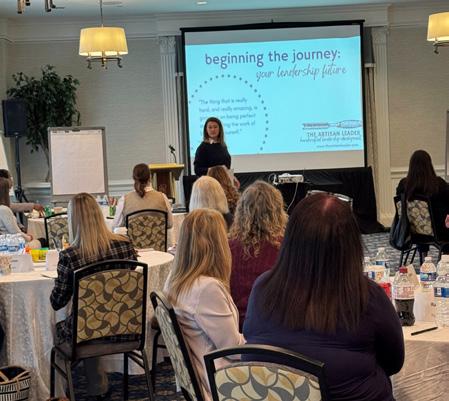
Launched in 2022, the Virginia Women’s Municipal Leadership Institute (VWMLI) offers essential tools for addressing this gap in municipal leadership. Sponsored by Virginia Women Leading Government in partnership with a major academic institution, VWMLI provides women in local government with the skills, confidence, and networks they need to step into influential leadership roles.
Traditional pathways to leadership often rely on informal networks and experiences that women may not have equal access to. VWMLI directly confronts this issue by creating a structured, cohort-based program designed to teach tangible leadership competencies—from budgeting and strategic planning to effective communication and public speaking.
Equally important, the institute places a strong emphasis on building confidence and self-advocacy. Program leaders have noted that many women hesitate to apply for advanced roles until they feel they “check all the boxes,” a standard not equally applied to men. By combining technical skillbuilding with encouragement and mentorship, VWMLI helps women see themselves as capable leaders long before they reach traditional thresholds of experience. Beyond individual development, leadership programs help create support networks that extend well beyond the classroom. Participants in VWMLI form bonds through eight monthly sessions that include both in-person and virtual gatherings. These connections become invaluable as women navigate complex organizational challenges and career decisions, providing peer support that can counter the isolation many feel as one of the few women in senior municipal roles.
The benefits of diverse leadership extend to the community at large. Research indicates that inclusive leadership teams make better decisions and more effectively represent the interests of their entire community. When local leadership reflects the demographic makeup of the community it serves—including gender diversity—trust
BY BONNIE SVRCEK
in government increases and decision-making improves. By strengthening the pipeline of women leaders, programs like VWMLI help build stronger, more responsive local governments.
Moreover, leadership programs serve as visible symbols of possibility. When young women see female leaders thriving in local government, barriers that once seemed insurmountable begin to erode. VWMLI not only equips women with tools for success—it sends a powerful message that women belong at every level of public governance.
In a world where civic challenges grow more complex by the day, it’s vital that local governments harness the full breadth of talent available. Leadership development initiatives for women are not just beneficial—they are essential for equitable, effective governance. With nearly 100 graduates since its creation, the Virginia Women’s Municipal Leadership Institute offers a model for how intentional investment in women’s leadership can reshape local government and, ultimately, strengthen communities across the Commonwealth of Virginia and beyond.
Author’s Note: VWMLI stands on the shoulders of the four other ongoing women’s institutes or academies throughout the country: Michigan (mml.org/programs-services/1650-project/), Oregon occma.org/nwwla), Texas (leagueofwomeningovernment.org/ wp-content/uploads/2019/08/TWLI-Application.pdf), and Washington (sites.google.com/view/nwwla/home?authuser=0).

BONNIE SVRCEK is executive director of VWMLI, repurposed Lynchburg city manager, former ICMA president (2012–2013), creator of the 2012 ICMA Task Force on Women in the Profession, an ICMA SheLeadsGov committee member, an ICMA senior advisor, and owner of Good Karma Fibers. (bsvrcek@ gmail.com)

BY FRED SHERMAN, AICP, CERA

Local government professionals spend their careers building public confidence in systems that must work every day. We pave streets, finance infrastructure, issue bonds, manage enterprise funds, and defend zoning decisions in packed hearing rooms. These are visible systems—residents see the road improvements, feel the drainage work, and debate development proposals.
Elections belong in that same category of essential infrastructure. In fact, public elections were formally designated as “critical infrastructure” in January 2017 by the U.S. Department of Homeland Security, placing election systems alongside energy grids and water systems in terms of national importance.
But unlike roads or water systems, election infrastructure operates largely behind the scenes.
When voters know what to expect, the process feels orderly and deliberate. Clarity builds trust.
Most voters encounter it only briefly—a few minutes marking a ballot—and then step away. The system’s strength depends almost entirely on public confidence in processes they rarely observe. When that confidence weakens, governance itself becomes unstable.
For most of my career, I worked in community development and city management. I navigated contentious zoning cases. I presented capital improvement plans and budget proposals. I worked with bond counsel to issue debt for critical infrastructure. In that environment, public service can feel like a blend of structured policy and improvisation. You have a framework, but you read
the room. You adjust your messaging. You refine the approach. Sometimes it feels closer to stand-up comedy than statutory compliance—the audience reaction shapes the delivery. Then I moved into election administration, and quickly realized that this is not improv. If much of local government management allows for adaptation within policy boundaries, election administration operates within far tighter lines. The script is written in statute. The terminology has its own language and acronyms. Deadlines are fixed. Procedures are prescribed.
1. Amplify Official Election Information
Regularly share links from your local election authority on voter registration status checks, registration deadlines, polling site lookups, and sample ballots. Reinforce that residents should rely on official sources for accurate information.
2. Clarify Voting Location Rules
Explain whether Election Day voting is precinctspecific or conducted at countywide vote centers. Clear communication about where to vote prevents unnecessary confusion and frustration.
3. Educate About Identification Requirements
Ensure residents understand what identification—if any—is required to vote in your state. Clarify whether photo ID, non-photo ID, signature verification, or other forms of identification apply. Voters who move between states often assume uniform rules.
4. Communicate Primary Election Rules Clearly
If your state requires party affiliation to participate in a primary, make that clear— including any deadlines to change or declare affiliation. Help residents understand that ballot styles may differ by party in primary elections, while general election ballots are typically uniform within a precinct.
5. Set Expectations About Timing and Verification
Reinforce that Election Night results are unofficial and that the canvass process ensures reconciliation and accuracy. Explaining this timeline in advance reduces suspicion when totals update after Election Day.
One of the most important lessons I learned in election administration: never assume voters understand the mechanics.
There is little room—and little tolerance—for improvisation. That rigidity is not bureaucratic inflexibility. It is the foundation of public trust.
At its core, the mechanics of elections are straightforward. A voter receives a ballot (typically paper or a ballot that produces a paper record), marks selections, and those votes are tabulated. Most jurisdictions operate on this same principle. Beneath that simplicity, however, lies considerable variation.
The United States is a nation of states. There is no single national ballot every voter casts. Each state establishes its own voter registration deadlines, identification requirements, early voting windows, vote-by-mail rules, and canvass procedures. Elections are also highly decentralized. In most states, counties administer elections. In others, municipalities or townships do. Yet voters often identify most strongly with their city or neighborhood—not the county that administers their ballot.
That structural reality can create confusion. And confusion, if unaddressed, erodes trust.
Don’t Assume Voters Know the Rules
One of the most important lessons I learned in election administration is this: never assume voters understand the mechanics.
Registration rules differ widely. Some states allow sameday registration; others require registration weeks before Election Day.
Identification requirements vary. Some states require government-issued photo ID. Others accept non-photo identification or signature verification. A few rely on other safeguards and don’t require ID at the polls. Voters who relocate between states often assume uniform rules, but there are none.
Polling location rules also differ:
• In some jurisdictions, voters must vote at an assigned precinct on Election Day.
• In others, voters may cast a ballot at any countywide vote center.
• Some operate hybrid systems.
Political party affiliation adds another layer—particularly during primary elections. In closed or semi-closed primary states,
voters must be affiliated with a political party—often before a deadline—to participate in that party’s primary. In open primary states, voters may select a party ballot on Election Day.
From an administrative standpoint, primary elections are often the most complex to conduct. Multiple parties may require different ballot styles within the same precinct. Two neighbors standing side by side may receive entirely different ballots based on party affiliation. Managing those ballot styles accurately requires careful planning and precise distribution controls.
By contrast, the November general election is typically more streamlined from a ballot-style perspective: every voter within a precinct receives the same ballot.
To election professionals, these distinctions are routine. To voters, they can be confusing. Clear and repeated communication strengthens confidence. That includes:
• How to check voter registration status.
• Registration deadlines.
• Identification requirements.
• Party affiliation rules for primaries.
• Whether Election Day voting is precinct-based or countywide.
• Where to find official polling place information.
• How to access a sample ballot.
Providing accessible polling site information—addresses, hours, accessibility details—prevents frustration that might otherwise be mistaken for dysfunction.
Offering specific sample ballots before voting begins reduces uncertainty, shortens lines, and increases voter confidence. When voters know what to expect, the process feels orderly and deliberate. Clarity builds trust.
Public trust is not sustained by assurances alone. It is reinforced by documented safeguards. Well-administered elections— regardless of state—share common operational controls.
Ballot Accounting and Reconciliation: Every ballot is tracked from printing through tabulation. Election offices reconcile ballots issued, ballots returned, provisional ballots,
spoiled ballots, and unused ballots. The number of voters checked in must align with the number of ballots cast, subject to documented exceptions. This balancing process ensures that every voter and every ballot is accounted for.
Chain of Custody: Ballots and memory devices are logged whenever they move—from warehouse to polling location, from polling location back to election headquarters, and through tabulation. Two-person teams, sealed containers, tamper-evident seals, and transfer logs are common safeguards. These controls exist because accountability is expected.
Bipartisan Oversight: Many states require bipartisan participation during ballot processing and canvassing. Structured observation strengthens legitimacy.
Transparent Canvass: Election Night is not the finish line. Results reported that evening are unofficial. The formal conclusion occurs during the canvass, when provisional ballots are reviewed, reconciliations are finalized, and certification occurs. The deliberate pace is not delay; it is verification.
Following the 2017 designation of elections as critical infrastructure, federal coordination around cybersecurity and threat monitoring expanded. That collaboration focuses on information sharing and resilience.
Elections themselves remain state-run and locally administered. When residents understand that their ballot is managed by their local election office under state law, trust often increases.
Misinformation about elections often targets process—ballot handling, counting timelines, polling access. Local government leaders cannot control national rhetoric, but they can reinforce accurate local information.
Residents frequently trust communication from their city or local government channels. That makes municipal leadership an important partner in reinforcing deadlines, identification rules, polling locations, sample ballot access, and canvass timelines.
This is not advocacy; it is governance. Public trust in elections does not belong solely to election administrators; it is shared infrastructure.
Local government leaders cannot control national rhetoric, but they can reinforce accurate local information.
Local government professionals steward roads, budgets, and public safety systems. We also steward confidence. And in elections, confidence may be the most essential infrastructure we manage.
FRED SHERMAN, AICP, CERA, is a local government professional with more than three decades of experience in municipal and county administration in the Kansas City metropolitan area, and served as election commissioner for Johnson County, Kansas, from 2021 through 2025. He also holds the Certified Elections/Registration Administrator (CERA) certification from The Election Center.

BY NANCY TATE
As another “big” election year unfolds, there will be ever growing attention to federal, state, and local races and on real and proposed changes to federal and state election laws. No one knows yet what the results will be. But one outcome that is critical is that the public trusted the election system itself. And the ground zero of election operations is at the local level.
The U.S. system of elections is highly decentralized, with 10,000 election administration jurisdictions. The administrative structure for these varies greatly by state, and even between counties in 16 states. Laws vary, as well as geographic and population size. At the local level, elections can be run by a single individual (commonly called a county clerk or registrar), a board or commission of elections, or a combination of entities. Some offices have a 60-person election staff and others have only one parttime worker. There are more than 8,000 individual local election officials. Depending
on the state, that person may be elected.
But all the election officials have the same basic duties to perform as part of their responsibility to administer free and fair elections. These include voter outreach, voter registration and list maintenance, ballot design, technology acquisition and maintenance, recruitment and training of poll worders, management of both absentee and in-person voting, and transport of ballots with documented chain of custody. And many of these duties occur multiple times throughout
the year due to primary and special elections.
Regardless of organizational structure, the nuts and bolts of election work are performed by a dedicated workforce of both professional staff and volunteers. These folks consistently work long hours in an often-changing environment. They are typically problem-solvers who do their best to handle both the predictable challenges— machine breakdowns and long lines—as well as unexpected challenges and crises, both natural and manmade. They often get little recognition or respect.
Election offices are typically a small component of local government, and they may or may not be within the chain of command of a professional local government manager. But now election offices—and the officials who head them—need more help than ever before.
A major reason is the federal government’s retreat from providing financial and information sharing support, particularly in the areas of technology and
cyber security. In previous years, the Cybersecurity and Infrastructure Security Agency actively tracked and defended against possible cyber-attacks by both foreign governments and criminal actors and provided information on relevant threats to state and local governments.
Another problem is the growing number of threats to election offices, polling places, and individual election workers. Recent research found that about 30% of election officials have faced some level of abuse.1 And, although not widely reported, in 2024, there were 220 bomb threats aimed at election sites.2 Unsurprisingly, the level of election worker turnover is increasing.
Support: There is a range of both internal and external actions they can take. First is that town/city/county managers and other local government officials can provide emotional and physical support to their election team. The workforce should know that their leaders have their backs, especially in crisis situations.
Resources: Of course, providing sufficient resources is also key. This can range from increases in funding for staffing, training, updated equipment, and cyber security consultants, to loaning staff from other departments as needed. Managers can also direct local election officials to organizations that can provide

advice and assistance. Those include the Election Center, the Center for Election Innovation and Research, and the Committee for Safe and Secure Elections, among others.
A Holistic Approach: Also important is approaching election risk mitigation issues from a “whole” local government perspective. That involves strengthening cooperation between the election office and such other arms of local government as law enforcement, emergency management, general counsel, the schools, and others. All the key players should know what to do in various types of crisis situations.
A Strong Communication Strategy: Keeping the needs of the voters in mind is essential. Ongoing factual communication is critically important, both to provide voters with the information
Free and fair elections are key to our democracy. Not only is it essential that elections actually operate that way, but that the public believes that they do.
It is critically important that there be no surprises on the operations side.
An Identified Spokesperson:
Unfortunately, local election offices have traditionally been weak in the communications area. Most offices do not have their own public affairs staff, and their team typically does not have expertise in this area. Town, city, and county managers can play an important role in this regard. One important task should be to make clear who the major spokesperson is about election issues or crises, and to ensure that other key organizational players are kept in the loop.
public believes that they do. The critical role played by local election offices and the community members who staff them has too often been overlooked. I urge town, city, and county managers to take a close look at their local election offices to identify additional ways to support their operations and to provide the workers with the respect, assistance, and protection they deserve.
ENDNOTES AND RESOURCES
1. Source: “Global Election Day: Election Security,” webinar hosted by National Academy of Public Administration and Brennan Center for Justice, February 5, 2026.
2. Ibid.
they need to vote and to head off unfounded rumors about malfeasance in election operations. This requires a proactive communications approach, and one that needs to start long before Election Day.
Free and fair elections are key to our democracy. Not only is it essential that elections actually operate that way, but that the
NANCY TATE is the former executive director of the League of Women Voters of the United States.

What city and county clerks (and those in similar roles) want us to understand about the elections process
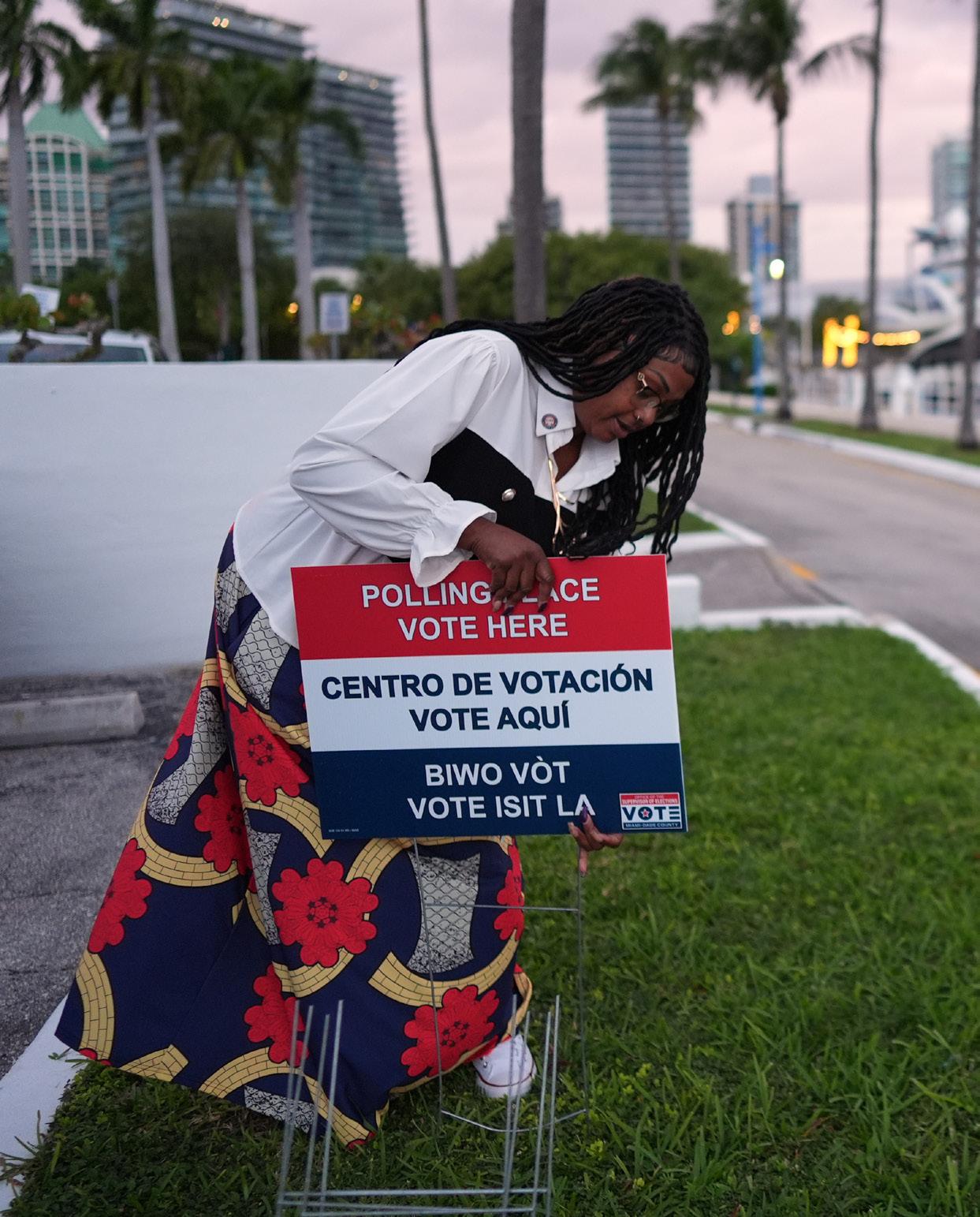
In an era when election headlines often focus on conflict and controversy, the people who actually run elections tell a different story.

BY STEPHANIE
COX, CASSIDY FLYNN, SARAH HEINLE, JESSICA HODEK, KATHLEEN M. MONTEJO, ASHLEY REICHERT, LISA POSTHUMUS LYONS, AND LISA WISE
Across Massachusetts, Maine, Wisconsin, Illinois, Texas, North Dakota, and Michigan, city and county clerks (and others in election administration) describe elections as one of the most structured, documented, and collaboratively supported functions in local government. They see elections not as a partisan battleground, but as a disciplined practice built on law, procedure, training, and community trust.
Their message is consistent: public confidence is earned through systems that are visible, verifiable, and carefully executed long before voters step into a polling place.
We asked the authors to tell us more about the elections administration process in their city, town, or county. In this article, we only scratch the surface of what they had to say. We’ve highlighted the major themes present in all eight of their perspectives, but to read each author’s full piece, visit icma.org/articles/ pm-magazine/vote-confidence.
At every level—city and county alike—clerks return to the same starting point: follow the law.
“As a city clerk, ensuring a fair process starts with strict adherence to state law and established procedures governing elections,” says Cassidy Flynn, deputy city clerk of Newton, Massachusetts. Clear procedures, consistent training, and documentation “help ensure that all candidates, voters, and stakeholders are treated equally.”
In Maine, Kathleen M. Montejo, city clerk and registrar of voters in Lewiston, frames it bluntly: “Integrity in the process is paramount.” She adds, “If we deviate from the state regulations, problems can arise. Always following the state statutes means the secretary of state’s office can back us up.”
Sarah Heinle of Cass County, North Dakota, isn’t a clerk but wears many other hats, such as finance director, auditor, treasurer, and superintendent of schools. Serving as her county’s election official, she believes that the best way to achieve a fair election process is
to ensure that everyone has the opportunity to vote. “We may never reach 100% participation in the election process but it’s definitely a goal to strive for,” she says. “Our most important duty is to make voting as accessible as possible.”
In Wisconsin, Jessica Hodek, county clerk of Barron County, emphasizes uniformity. Her office adheres “strictly to those statutes as written,” and she expects the same from municipal clerks. “Consistent application of the law is essential to maintaining uniformity, fairness, and public confidence in our elections.”
And in Michigan, Lisa Posthumus Lyons, county clerk of Kent County, points to decentralization itself as a structural safeguard. With more than 1,500 clerks administering elections locally, and bipartisan boards of canvassers reviewing results, “Michigan relies on checks-and-balances for secure, transparent, fair, and accurate elections.”
Different states, different frameworks, but the same refrain: the statutes are not suggestions; they are the spine.
If elections seem orderly on Election Day, it’s because the real work happened months before.
Montejo begins preparing for a presidential election “as
early as six months in advance.” Detailed checklists exist for presidential, mayoral, and school budget elections alike. By the time voters arrive, “my work as a city clerk…is mostly done.”
“Boring elections are the best elections!” she says—a line that could double as a mission statement.
Lyons echoes the timeline. She notes that her office begins preparations “months, if not years in advance,” working with local, state, and federal agencies to establish lines of communication and update response plans. “I am incredibly grateful that the 30 elections I have overseen…have been without incident when it comes to serious threats,” she says, attributing that record to advance planning.
In Texas, Lisa Wise, county elections administrator for El Paso County, oversees elections almost constantly—four to
six local elections each year in addition to statewide contests. “All elections require months of preparation and the support and collaboration of numerous stakeholders,” she explains.
“Elections don’t happen in a day,” says Heinle. “Months of planning and preparation go into the process, including but not limited to updating procedures, training election workers, testing equipment, packing and delivering supplies, and educating the public on their voting options.”
Preparation is not seasonal. It’s continuous.
Many clerks describe transparency not as passive disclosure, but as active inclusion.
Wise describes logic and accuracy tests conducted multiple times — before ballots are printed, before counting begins, and before results are canvassed. Members of the
public are invited to observe and participate.
“We have had members of the public come into the testing critical of election procedures and leave with a new understanding and trust,” she says. Seeing the complexity firsthand changes perspectives.
Reichert similarly implemented voluntary random hand-count audits conducted publicly during canvass meetings — exceeding statutory requirements. These audits are designed “not only to verify results, but to demonstrate the integrity of the process in a visible and accessible way to the public.”
Montejo embraces what she calls an “overshare” philosophy. “More is better” when explaining procedures, she says. Poll workers frequently tell her: “I had no idea all of the extra steps and safeguards that are in place.”
For Hodek, transparency also means accessibility. She maintains an open-door policy and welcomes voter questions. “By prioritizing transparency and community engagement, our office works to uphold the integrity of the electoral process and strengthen public trust.”
Trust, these clerks suggest, grows when the public is invited inside the process.
The Human Safeguards Election integrity is not only technological. It’s human. In Union County, Illinois, Stephanie Cox, county clerk, describes an exacting process for selecting election judges. Judges must meet qualifications set by the Illinois State Board of Elections and represent both political parties at each precinct.
“This is quite a burden to carry for a judge,” she says, particularly in a state without photo ID requirements. But with proper training, judges are prepared.
Her office reviews death notices daily to maintain accurate voter rolls and conducts a full voter registration purge every two years. “You might ask, how do you know the voter is the same as the individual on the VR Card?” she says, anticipating skepticism. The answer lies in systematic verification and bipartisan oversight.
Montejo also stresses bipartisan staffing: by law, Maine polling places must hire an equal number of registered voters from the two major parties. “We remind the voters that the polling place is run by their neighbors, coworkers, fellow community members.”
Lyons highlights similar bipartisan balance in Michigan precincts and absentee counting boards, reinforcing that checks are embedded at multiple levels.
Security planning extends well beyond locking ballot boxes.
After Lewiston endured a devastating mass shooting in 2023, Montejo worked closely with law enforcement to ensure polling places feel safe. Officers are present throughout voting hours. Homeland Security once reviewed polling locations and identified scenarios— like prolonged power outages—that prompted new contingency planning.
In Texas, Wise maintains constant communication with public safety officers and even provides them with training on election code violations. “Election code violations are
so rare that many public safety officers have little experience with them,” she explains. Preparing them in advance ensures readiness.
Cox notes that on Election Day, she and the Union County Sheriff travel from polling place to polling place, offering oversight and support. Each site can contact her office or law enforcement directly.
Reichert describes yearround coordination with local law enforcement to review logistics and emergency preparedness. Establishing clear communication channels before Election Day allows partners to perform their duties “in a secure, calm, and professional environment.”
Security, in every state, is proactive, not reactive.
From small rural counties to large metropolitan jurisdictions, these clerks describe remarkably similar principles:
• Follow the law precisely.
• Prepare months in advance.
• Invite observation.
• Train relentlessly.
• Document every step.
• Collaborate across departments.
• Communicate — even “overshare.”
Across states and structures, the clerks’ perspectives converge on one core idea: trust is built through consistent action. “Restoring public trust in elections does not happen through rhetoric or isolated initiatives,” Reichert reflects. “It is built through consistent actions, clear communication, and a willingness to exceed the bare minimum of what is required.”
These clerks describe election administration not as a
dramatic event, but as disciplined public service. The safeguards are layered and methodical. The work is steady, often invisible, and deeply procedural. And in that quiet consistency, they believe, is where public trust is earned.
Read each author’s full perspective at icma.org/articles/ pm-magazine/vote-confidence.
STEPHANIE L. COX is county clerk for Union County, Illinois.
CASSIDY FLYNN is deputy city clerk for Newton, Massachusetts.
SARAH HEINLE, CPFO, is finance director, auditor, treasurer, superintendent of schools, and county election official for Cass County, North Dakota.
JESSICA HODEK is county clerk and recorder for Barron County, Wisconsin.
KATHLEEN M. MONTEJO, MMC, CCM, RP, is city clerk and registrar of voters for Lewiston, Maine.
ASHLEY A. REICHERT is county clerk for Washington County, Wisconsin.
LISA POSTHUMUS
LYONS is county clerk and register of deeds for Kent County, Michigan.
LISA WISE is county elections administrator for El Paso County, Texas.



public

BY JOANNE SPEERS
Every well-intentioned public agency manager has a number of goals. Two of those goals are (1) to lead a high-performing agency that (2) enjoys a high degree of community trust and confidence in how staff perform their public service roles.
Conversely, having a scandal occur on a manager’s watch is every manager’s worst nightmare. Such scandals inevitably reflect poorly on the agency and its leadership. This frequently includes serious consequences for the community trust in the agency and the chief administrator’s tenure.
As a March 2023 article in PM explained, behavioral science helps us understand the powerful role that decision-making shortcuts and situational factors play in human decision-making.1 This includes the influential role that social forces, including obedience to authority2 and conformity bias3 play in shaping employees’ behavior.
The 2023 article noted that this is why ethics experts define the leadership task as fostering a culture of ethics in an organization.4 Put another way, it is a mistake to believe that individuals’ values and character determine their behaviors and decision-making in the workplace. The hard truth is that workplace environment plays a significant, if not determinative, role.5
Creating an organizational culture that supports prioritizing ethics requires a multi-faceted strategy. Elements of such a strategy include:
1. Leading by example (including being mindful of the messages one’s words and conduct sends).
2. Including ethics-related values in an agency’s vision, mission, and values statements.
3. Adopting a values-based code of ethics.
4. Hiring for ethics.
5. Including ethics in the onboarding process.
6. Making ethics part of the performance assessment and feedback process.
7. Setting realistic goals.
8. Encouraging a “speak up” culture.
9. Promoting regular discussion, education, and celebrations of ethical decision-making.
10. Seeking feedback and engaging in self-assessment.
This article focuses on the first strategy: leading by example. It explores three elements of this strategy: messaging emphasizing the importance of ethics in public service, modeling ways to reason one’s way through ethical issues, and holding oneself accountable for walking the talk.
A leader’s behavior is key to infusing ethical values into the organization’s day-to-day operations. Sometimes referred to as “leading by values,” this includes demonstrating a commitment to act fairly, transparently, and in a trustworthy manner. It also involves treating people within the organization, as well as the public, with respect and compassion. Conversely, research indicates that if employees believe they are being mistreated, they are more likely to engage in misconduct and mistreat others, including those the organization serves.6
It is natural for organizational leaders to be focused on performance; the public expects value for its taxpayer dollars. However, an organization runs a risk if its leaders focus exclusively on what gets done (the ends) to the exclusion of how the work gets accomplished (the means). Such a focus on ends may inadvertently signal that the means or processes by which people go about doing their jobs do not matter to the organization.
Some themes to consider emphasizing in one’s interactions with staff include the importance of the following in public service:
Public trust and confidence are critical to the agency’s ability to do its work and fulfill its mission. Such confidence and trust depend not only on doing one’s work well, but also consistently demonstrating the agency’s commitment to putting the public’s interests first. Avoiding even the
appearance of impropriety is a key dimension of signaling one’s commitment to serving the public’s interests. These concepts relate to the ethical core values of trustworthiness and responsibility.
Respecting the rule of law is central to public service and professional public administration. State and local public agencies are creatures of the law, either constitutional or statutory. This is one of the reasons officeholders and employees frequently take an oath to support the constitution and laws.
To be sure, the laws governing agency operations can make the agency’s work more challenging. It can be tempting for leaders to both express this frustration and cut compliance corners. The challenge is, if public agencies want the public to respect and adhere to the rules that the agency promulgates, it is important for the agency to conscientiously observe the laws governing its operations.
In working with one’s management team and staff, it can be helpful for leaders to connect these laws’ requirement to important public service values (for example, the core ethical values of trustworthiness, responsibility/accountability, and fairness). Such messaging underscores the “why” of complying with the law, even if it can be frustrating.
How one frames and complies with ethics laws matters, too. Such laws are designed to promote public trust in public agencies and public servants.
Such laws create minimum standards. Particularly in local agencies and states with extensive ethics laws (as in California), it can be easy to get consumed with making sure one complies with the various laws designed to promote public trust in public agency actions.
As arduous as that sometimes can be, satisfying the requirements of the law is only the first step of the analysis of what the right thing to do is in a situation. The next step is to analyze whether the particular action also is consistent with the agency’s values and the public’s expectations.
As ethicists are fond of saying, the law is a floor for ethical conduct—the standard below which one’s actions must not fall. This means public servants can and should set their sights higher than what the law requires. This is not only because doing so is the right thing but is also consistent with the public’s expectations of public servants.
Particularly for those team members that may be newer to public service, it can be helpful to stress the importance of viewing oneself as steward of the public’s resources. These resources include agency dollars, equipment, supplies, and staff time. The message needs to be as follows: the public’s money funds the agency. The agency therefore needs to hold itself accountable for stretching those dollars as far as possible in service to the public. It’s not okay to use agency time, equipment, or supplies for personal purposes.
A leader who engages their teams in ongoing
efforts to maximize the value the public receives for its investment in the agency work will minimize accusations of “waste, fraud, and abuse.” Such conscientious stewardship of public resources relates to the core ethical values of responsibility and trustworthiness.
These messages (and others) are about authentically setting “the tone at the top” for the kinds of considerations that go into public service work. For the message to be credible and affect organizational culture, leaders’ actions must match their words.
In one of his Career Compass articles, Dr. Frank Benest observes: “The most powerful way that people change behaviors is through modeling. Therefore, you, your division managers, and other key influentials must serve as role models, not only communicating the desired beliefs but modeling the desired behaviors.”7 He argues such role modeling is a key element of fostering a strong and positive organizational culture.
Dr. Benest’s views are apparently shared by the ICMA community. In a recent survey of ICMA members about techniques to promote organizational ethics, some 64% of those responding “strongly agreed” with the proposition that top administrators need to emphasize ethics in both policy and decision-making.8
People are understandably proud of their intentions to act ethically and do the right thing in situations. This frequently includes heartfelt declarations that they intuitively know right from wrong. Indeed, sometimes intuition can serve one well, such as when one gets an uncomfortable “gut feeling”
about a contemplated course of action, which may be signaling that the action could be inconsistent with one’s values. However, the science of human decision-making tells us that the obverse is not always true.9 The absence of a gut feeling does not necessarily mean that there is no ethical issue. This is particularly so when we are engaging in what Nobel laureate and bestselling author Daniel Kahneman calls “system 1 thinking,” which is fast, intuitive, and emotional.10 Kahneman explains that this is how we as humans do much of our thinking in our busy, demanding lives. He notes that the problem with such thinking is that it is error prone and doesn’t always allow us to behave like the kind of person we believe ourselves to be.
Another opportunity for leaders to engage in role modeling is for leaders to model how to slow down to engage their more deliberative, “system 2 thinking” processes. Leaders can demonstrate, by example, how to work through the process of looking for the values dimensions of situations and thinking (aloud) about what values are most important in a situation.
This “slowing down” process can be thought of as a three-part strategy involving awareness, analysis, and action. Visually, one can think of these elements as a tripod supporting ethical and core values related decision-making.
Awareness involves actively looking for the values dimensions of a situation (and avoiding the human tendency to not see the ethical dimensions of situation).
Analysis speaks to the question of “what is the right thing to do?” once one

has identified a situation or decision as presenting values issues. Sometimes the answer is clear; often it is not.
Action, the third leg of the tripod, speaks to the fact that doing the right thing can be difficult and potentially involve personal costs.
This article will focus on the second leg of the tripod: analysis. For additional information on the other two legs, see these pieces on awareness11 and action.12
A starting point for modeling how to analyze ethical dilemmas is to understand that there are two kinds:
• “Right-versus-right” ethical dilemmas involve conflicting positive (core universal) values that pull a decisionmaker in different directions.
• Moral courage ethical dilemmas occur when a decision-maker knows the right thing to do but understands that acting on that knowledge may involve personal or professional costs. Let’s explore each type of dilemma further.
If a situation presents a “conflicting right values” ethical
dilemma, a next question is which value(s) ought to be given more weight given the context. An agency’s values statement or code, if existent, may provide some guidance. In fact, the recent survey of ICMA members on strategies for fostering a culture of ethics suggest that managers find that agency values statements are a crucial tool for communicating an agency’s values and leadership expectations.13 These statements are typically embedded in agencies’ mission and goals statements. Examples of values that can be analytically helpful in reasoning through ethical issues are trustworthiness, fairness, responsibility, respect, and compassion.
Some team members can also turn to their respective professional codes of ethics.14 (Understanding that many of the professionals that serve in a public agency have their own code of ethics models the ethical core value of respect.)
For example, the Government Finance Officers Association (GFOA) Code of Ethics explicitly emphasizes the importance of the value of trustworthiness in the public finance profession. A strong theme of the International Institute of Municipal Clerks
Code of Ethics is the value of fairness, expressed as neutrality and impartiality. This is also a strong theme in the ICMA Code of Ethics and Guidelines, which stresses being politically neutral, which also relates to the values of responsibility and fairness. The “which value should have more weight” discussion also is a good opportunity for public agency employees to reflect on what core values are most important to them in their public service and why. Scholars suggest that it can be helpful for public administrators to ponder their own personal code of ethics.15 Similarly, Giving Voice to Values author Mary Gentile suggests being clear on one’s “professional purpose” as a strategy for positioning oneself to act on one’s values.16
Of course, not everyone may agree on which values should be given more weight. As Gentile notes, values conflicts are a normal part of professional life. Helping employees practice having these conversations and consider (and respond to) those with differing perspectives helps build important professional skills. It also builds what Gentile calls “moral muscle memory” that can help people respond effectively in the future.
Moral courage ethical dilemmas tee up a different line of conversation. Depending on the specifics of the situation, the cost of “doing the right thing” can be damage to relationships or can put one’s job or career advancement at risk. Behavioral ethics research indicates that a number of human tendencies come into play in such situations (including, for example, self-serving
bias, conformity bias, status quo bias and obedience to authority bias).
Local government ethics thought leader Kevin Duggan counsels ICMA members that “suffering undeserved negative personal or professional consequences does not absolve you of failing your ethical obligations— particularly as a leader.” Duggan notes that it can be helpful to clarify the lines one will not cross before a values conflict arises. Duggan further suggests trying to anticipate the ethical issues one might face to help increase the likelihood one will make a decision consistent with one’s own values and the public’s expectations.17
Circumstances may not always allow for this admittedly slow form of decision analysis. Like most areas, there are some helpful shorthand concepts. One is called the front page or media test18 (“what would happen if a decision were reported in the media?”); another is the mom test (“would my mom or other respected relative proud of this decision?”). If a situation isn’t suitable for this more extensive analysis, these heuristics can still be an effective form of analysis to model.
While not a part of role modeling per se, it bears noting that modeling such decision-making behavior will be easier and have more context if the ethics training the agency offers goes beyond the “do’s and don’ts” to include these kinds of analytic approached. As the Kellogg School of Management notes, it can also be helpful for trainings to include information on the types of situations where people are
most likely to go astray and the types of justifications (what behavioral ethicists call rationalizations) that are commonly used when missteps occur.19
This bears noting because ethics training scored highly (with over 80% strongly agreeing) in the recent survey of city managers on tools to promote ethical processes, leadership, and culture.20 Managers also agreed strongly with the statement that such training is a basis for further coaching on ethical conduct (nearly 54% strongly agreed).
Another important message to consider and model is accountability, including self-accountability. Again, employees take their cues from leaders’ behavior. If a leader wants to create a culture in which each employee holds themselves (and others) accountable, owning errors rather than denying or deflecting blame models the kinds of behaviors one wants others to exhibit. As Benest explains, role modeling also involves taking visible steps to acknowledge mistakes and commit to make situations right.
As Kellogg notes, the goal is to create an environment in which learning from mistakes is allowed.21 This involves creating a psychologically safe environment that supports responsible risk-taking and asking for help. According to Kellogg, leaders foster this by admitting their own missteps. The goal is to encourage organizational growth by responding to small ethical lapses in ways that promote learning rather than embarrassment.
This requires humility, which fans of Jim Collins’s Good to Great management tome will recognize as a highlevel leadership attribute.22 The Government Finance Officers Association code of ethics (which has been revised in light of what behavioral ethics science teaches us about pressures to act unethically) explicitly encourages humility. Under the code section relating to being open to new ideas, GFOA encourages its members to embrace humility by recognizing that they may not always be right. Indeed, humility is the antidote for another behavioral ethics dynamic that can lead people astray, which is over-confidence bias.
There is a strong consensus among both public and private management experts about the importance of fostering a strong organizational culture, including one that supports values-based/ethical decisionmaking. Role modeling and leading by example is perhaps the most important tool in a leader’s toolbox for shaping organizational culture.
The techniques described in this article—messaging, modeling ethical decisionmaking analysis, and holding oneself accountable—are three effective ways to engage in role-modelling.
For more information on other leadership strategies to shape organizational culture, see the full version of this paper, which was delivered at a recent American Society for Public Administration conference session on ways public administrators can place ethics first in public service.23
ENDNOTES AND RESOURCES
1 https://icma.org/articles/pm-magazine/ science-ethical-missteps
2 https://ethicsunwrapped.utexas.edu/ glossary/obedience-to-authority
3 https://ethicsunwrapped.utexas.edu/ glossary/conformity-bias
4 https://patimes.org/building-ethicalcultures-public-service-agencies-criticalimportance/
5 https://professional.dce.harvard.edu/ blog/why-workplace-culture-matters/
6 https://ethicsunwrapped.utexas.edu/ video/ethical-leadership-part-2-bestpractices
7 https://www.frankbenest.com/ CareerCompass51-worldclassculture.pdf
8 https://doi.org/10.1080/10999922.202 3.2295643
9 Ibid, note 1.
10 Thinking, Fast and Slow (2011). Kahneman, D. Farrar, Straus and Giroux.
11 https://patimes.org/a-tripodal-approachto-supporting-values-based-decisionmaking-first-leg-ethical-awareness/
12 https://patimes.org/a-tripodal-approachto-supporting-values-based-decisionmaking-third-leg-action/
13 Ibid, note 8.
14 https://www.ca-ilg.org/post/codesethics-adopted-associations-publicagencies-and-public-agency-professionals
15 Svara, J. H. (2021). The ethics primer for public administrators in government and nonprofit organizations (3d ed.) Jones & Bartlett Learning.
16 https://ethicsunwrapped.utexas.edu/ series/giving-voice-to-values
17 https://icma.org/articles/pm-magazine/ ethics-mattertm-acting-ethically-easy-untilit-isnt
18 https://www.westerncity.com/article/ front-page-test-easy-ethics-standard
19 https://insight.kellogg.northwestern. edu/article/building-ethical-culture-at-work
20 https://www.researchgate.net/ publication/377458262_Toward_ an_Organizational_Ethics_Culture_ Framework_An_Analysis_of_Survey_ Data_From_Local_Government_Managers
21 https://insight.kellogg.northwestern. edu/article/building-ethical-culture-at-work
22 https://www.jimcollins.com/concepts/ level-five-leadership.html
23 https://www.strategies4ethics.com/_ files/ugd/7db7e2_71f297edc5f345679fab0 6df2379bfed.pdf?index=true
JOANNE SPEERS, JD, is principal of S2 (as in “System 2”) Ethics Strategies. She previously served as chief executive of the Institute for Local Government, where she developed and directed its ethics program.

For more than 50 years, we’ve supported public service professionals with retirement solutions tailored to their needs. Moving forward we’ll be expanding our mission: offering not only workplace retirement plans, but new ways to deliver on the needs of our customers by helping individuals and their families as their financial lives change.
at icma.org/strategic-partners.
BY JIM MALLOY, ICMA-CM
Retiring from local government management is a significant and positive transition that benefits both the individual and the community they serve.
In 2024, I wrote an article for PM Magazine, “Knowing When to Leave,” describing 10 possible reasons for leaving one’s position in local government management. I mentioned that eventually my own reason for leaving would be retirement. That retirement came in fall 2024 and was driven by the same reason that many other managers stay—“to finish that one last project.” Local government management is an infinite universe of new projects, so the problem with
beyond when I had planned to retire. So I made the decision to retire at the end of my contract term in 2024. I left at a good point in the project so that my successor could see the project through to completion.
I have recently spoken to a couple of different managers who were contemplating retirement, but felt they had “one additional project they wanted to complete” before retiring. This made me think about my own decision, the point in our careers in
demands, no real stress, very few emails, no meetings, no nights out, and no late calls.
I believe local government management is one of the most honorable professions, one that benefits society and impacts our residents’ lives on a daily basis in many different ways. I enjoyed my career, and in a lot of ways, being a town manager was my identity for 37 years. But there’s more to life that we can learn when we separate from that identity. So, here are my thoughts and observations on retiring from
impacts nearly every person in a community each and every day based on the vast array of services our communities provide. Our local government’s ability to provide high-quality services is the difference between a bad, good, or great place for people to live. This is what energizes us and motivates us to continue to elevate our local governments to be highperforming organizations. However, at some point, even the most dedicated public servant leader must recognize that our public service is just

finishing that one last project is that there never is just “one last project.”
In my case, it was a $600+ million building project. I had been involved with the initial financial planning, design, and funding over a period of years. However, with the construction not anticipated to be completed until 2029, the project would continue
which we find ourselves contemplating the right time to retire, and what it means to our career and profession.
My retirement went into effect on October 1, 2024, and it’s been a year of enjoyment, exploration, rest and relaxation, and travel, but also one in which I’ve challenged myself in new ways. It’s also been a year of very few
our profession and what I’ve learned in my first year after doing so.
A career as a local government manager demands commitment, resilience, and adaptability. Ours is one of the few professions that
one chapter in both a professional and personal journey. Knowing when to transition out allows one’s legacy to stand on solid ground; marked by contribution, not exhaustion, declining health, or death while in office.
During my career, my thought was that I would start a tenure in

a community with the goal to build upon my predecessor’s successes, leave the organization better than when I arrived, and that my successor would then build upon my successes, creating a cycle of continuous improvement.
This concept of constant change and improvement also provides opportunities for younger managers or assistants to step up or for managers to move up to larger and more challenging positions. Change in leadership becomes a sign of institutional vitality. A well-timed retirement creates opportunities for others to step up, bringing new energy, vitality, and innovation to meet emerging challenges. Retiring from local government management is both appropriate and essential to the long-term health of our local governments and the individuals we worked with and those that will succeed us.
Healthy leaders and organizations should encourage succession planning, mentorship, and leadership development. These practices not only sustain continuity but also ensure that our governments evolve with the times rather than stagnate under familiar hands. We all have a strong desire to see the communities we love prosper and grow, as well as a shared interest in seeing both our assistants and those from outside our organization move upward. It is also extremely satisfying to watch those we’ve mentored succeed as our successors.
I spent 37 years as a local government manager navigating everything from simple to complex budgets, political
Knowing when to transition out allows one’s legacy to stand on solid ground; marked by contribution, not exhaustion, declining health, or death while in office.
dynamics, state and federal government relations and regulatory changes, elected officials and departmental needs, labor relations/human resources, (and a major pandemic), almost always while under intense public scrutiny. Retirement is not a withdrawal from our years of service but a recognition of the years we spent providing that service. It’s an opportunity for us to step back, assess, and celebrate our and our community’s achievements during our tenures, to recognize and celebrate all those we worked with, and to ensure institutional progression.
Local government management comes with constant demands: late-night meetings, crises that don’t wait for business hours (who among us has not had a 4 AM call from a police or fire chief?) and decisions that will weigh heavily on our conscience for years. During my career, I would often arrive home late, work on my laptop and go to bed late, wake up early, and commute
back to work, living on little sleep each night. For my own mental health, I balanced this with cycling, running, playing golf at every opportunity, and spending time with my family on weekends. Even though our opportunities to take vacations were limited and could only occur during certain times of the year, we always made sure that they were great adventures for our family. This also provided my spouse and me the opportunity to recharge and just be with our kids. Choosing to retire can be the ultimate act of self-care, but it also models responsible leadership to young, emerging professionals, demonstrating that balance, sustainability, and well-being are essential parts of a local government manager’s life.
Retirement need not end one’s contribution to public life. Retiring at the right time provides opportunities for us to look for new avenues to learn and give back, whether through volunteering, consulting, mentoring, or teaching. Our local government experience and knowledge remains invaluable to many organizations and can inspire current and future local government managers. Stepping away from the profession doesn’t mean stepping away from our life’s work of helping individuals and communities. Retirement and what it ultimately ends up looking like for each of us is not going to be a uniform experience; and will be different based on your location, interests, and abilities.
For me, I’ve found several different ways to continue to
contribute when I’m not either riding my bike, playing golf, running, or traveling. I am volunteering as a senior advisor through ICMA, volunteering with the American Red Cross to provide assistance in emergencies, and volunteering as a farm worker at a local nonprofit farm (that grew 836,000 pounds of produce this year) to assist families in need throughout the state. I am also serving on the municipal solid waste advisory committee and charter review committee in my community, providing expertise that I gained over the years.
Retiring from local government management should not be viewed as an end but rather as a continuum of the service we have provided throughout our professional lives. It reflects on our awareness as local government leaders of the timing, legacy, and health of the organizations we were fortunate to oversee. The decision to retire—made thoughtfully and with integrity—is a final act of leadership that benefits both ourselves and the communities we serve.
Long-term financial planning is essential to achieving stability and the freedom to enjoy life in retirement. In our profession, we work so hard at long-term financial planning for our communities, but it’s so important for us to also think about our own future early in our careers, set clear goals, and stay disciplined in meeting them. Financial security doesn’t happen by chance; it’s the result of consistent planning, saving, and investing over
Choosing to retire can be the ultimate act of self-care, but it also models responsible leadership, demonstrating that balance, sustainability, and well-being are essential parts of a local government manager’s life.
time. Many of us are fortunate to have a retirement system that we are part of, but we also have an asset in MissionSquare Retirement (a partner of ICMA), which provides an additional option of building our savings to improve our retirement. We all need to research how our retirement will be funded and make a plan using a combination of resources to ensure long-term financial stability.
I wanted to kick off my retirement with a clear delineation between my working career and my retired life. My spouse was still working, so the first few days were spent on my own, golfing and taking off to spend a few days mountain biking and camping in Vermont to round out my first week. Those first few days played an important part in how I transitioned from being a working local government manager to someone that could now pursue and enjoy life at my own pace. If you enjoy travel, trips no longer depend on a schedule that is outside of your control and can happen at any time of the year and for whatever duration you choose. During my first year of retirement, I’ve taken extended trips to Paris, the Caribbean, Spain, and Vietnam, enjoying new cultures and spending
more time with my spouse, doing things together that we both enjoy.
I enjoyed my career in local government management, and looking in the rearview mirror, I don’t believe there is another career I could have chosen that I would have enjoyed as much or that would have brought me the same satisfaction. But even more so, I am now enjoying my retirement, giving back to my community and profession in ways that I didn’t have the time or opportunity for during my working career.
As local government managers, I don’t believe attaining professional milestones should be our life’s goal. It should be to lead a healthy lifestyle, provide services to our communities at the highest level we can while we’re capable, and then turning our roles over to younger generations and encouraging them to continue to improve upon the foundations we have built. Believe me, it’s okay to retire.
JIM MALLOY, ICMA-CM is a
retired local government manager, an ICMA senior advisor, and a former ICMA president and vice president.


How local government agencies can evaluate, strengthen, and align their core organizational practices

When was the last time you stopped to consider the state of your city or county’s management system?
By management system, we mean the processes, techniques, and programs your local government agency uses to plan, organize, monitor, and evaluate the overall work performed by the organization. It’s about how the work gets done.
You don’t have to be Apple, Disney, or Amazon to have a management system. All public agencies have management systems, whether or not they are identified as such and fully articulated and understood. But they are key to the overall performance of the local agency and thus the community served.
The Management System in Local Government
Common component parts of local government management system include:
1. Governing body goal setting.
2. Effective governing body meetings.
3. Governing body/chief executive communications.
4. Vision, mission, and values.
5. Staff meeting effectiveness.
6. Organization-wide and department goals.
7. Public engagement and satisfaction.
8. Budgeting.
9. Preparation for change and adaptation.
10. Learning organization and collaboration.
11. Expectations for employees.
12. Compensation and employee development.
13. Marketing the agency for talent.
If you are joining a new public agency as chief executive or assistant or moving up in your current one, it is a good idea to identify and analyze the organization’s management system for effectiveness. This goes equally for long-term chief executives who should periodically audit and tune up their management systems.
A well-conceived, integrated, and understood management system clarifies what is expected from the entry-level planner to the top executive. It provides information and feedback for course correction and learning for optimal results. Each component of the management system should have some tie to the rest of the system to be mutually reinforcing. For example, your management systems may be misaligned if the governing board’s strategic planning leads to too many priorities, an unrealistic work plan for departments, or employee distress.
In many local government agencies, the overall management system is not spelled out. Instead, there is a series of legacy management system components that are not clearly linked together or evenly practiced throughout the city or county. Top managers adjust the components over time to suit their needs, and the systems grow like coral reefs by accretion.
When assessing the management system you have inherited or have been working within, here are some basic tests to get you started:
1. Governing Body Goal Setting. The governing body should have clear strategic goals and priorities, established in collaboration with the chief executive.
• Are they practical given organizational resources and constraints?
• If so, are they then reflected in the operating and capital budgets?
• Is there periodic reporting back to the policy makers and public about results?
2. Effective Governing Body Meetings. The chief executive plays a critical role in producing governing body meetings that get the agency’s business done in a professional and civil manner.
• What policies and protocols exist to guide those meetings?
• Are there agreed-upon norms of behaviors and a code of ethics?
• Is there a periodic check-in of the governing body and chief executive on meeting effectiveness and how the governing body and staff are working together?
3. Governing Body/ Chief Executive Communications. An effective management system ensures that feedback loops and ongoing communications are priorities of the chief executive.
• What structured and unstructured communications does the chief executive have with each member of the governing body?
• How is the organization following up on information requests?
4. Vision, Mission, and Values. The foundation for an organization is a simple and clear vision for the future, agreed-upon purpose of why we are here as a public agency, and a set of values to guide behaviors.
• When was the last time you reviewed and updated your vision, mission, and values statements?
• How are you communicating those to agency staff?
• How are you demonstrating the vision,
mission, and values in how you go about your work on a daily basis?
• How do you engage your elected officials in the agency’s vision, mission, and values?
5. Staff Meeting Effectiveness. Much time is spent in meetings, so they should be effective for all involved.
• Is there an expectation of providing an agenda, with a clear purpose statement for each meeting?
• Are the right people, but not more than those individuals, involved in meetings?
• Are there clear action items with assignments and timelines out of each meeting?
6. Organization-wide and Department Goals. The organization as a whole and each department should have clear goals, objectives, and performance measures (key performance indicators).
• How is performance tracked and measured?
• Do the department directors meet regularly with the city or county manager to discuss progress and challenges in meeting agreed-upon goals, objectives, and indicators?
• Does your agency have a technology strategic plan to aid in efficient purpose and use of technology? How does your organization use data and technology to improve services?
• How does your local government identify and address equity gaps in services and projects?
7. Public Engagement and Satisfaction. Staying close to the community is
critical in setting goals and adjusting service levels.
• How is public satisfaction with the various services measured? What feedback opportunities does your agency have? What happens with that information?
• Beyond the typical committee and public hearings, how does the agency involve a broader cross section of the public in shaping policies and services?
• Are community engagement protocols in place and resources allocated to ensure that all voices are heard?
8. Performance-Based Budgeting. A performancebased budget that clearly delineates service levels can offer important information about how resources are being deployed and what benefits are accruing to the community.
• Does each department’s budget clearly show established goals, objectives, and performance measures?
• Are operations aligned with the governing body’s strategic goals and desired community outcomes?
• Is the budgeting based on expected service outcomes rather than historical costs?
• Is the budget sustainable based on revenue and expenditure projections?
• Do department directors have authority to manage their budgets and make adjustments? Are they held accountable for managing within their budgets?
9. Preparation for Change and Adaptation. Change is constant and the organization must be resilient, plan for the future, and pivot when needed.
• How does your organization prepare for longer-term uncertainties like climate adaptation, economic shifts, or technological changes in the workforce like AI?
• How prepared is your agency for human-made and natural emergencies and disasters? How resilient is your city or county?
10. Learning Organization and Collaboration. No one department can make anything happen. It takes a team. Continual learning is essential to meet changing needs.
• What norms have you established for your management team regarding communicating and working together?
• Is your agency a learning organization? How do you measure that? Do you debrief major initiatives, acknowledge mistakes, and improve?
• How does your organization manage issues that cross departmental boundaries to avoid the silo effect?
• How does your organization continuously improve and innovate?
• Does your staff use work plans for effectively and efficiently managing projects (beyond capital projects)?
11. Expectations for Employees. Each employee should have a good understanding of what is expected in his or her position beyond the job description or classification statement.
• Do they understand how their work contributes
to overall service to the community?
• Are they given adequate autonomy to do the work and a chance to master it?
• Are there regular, meaningful, and constructive performance evaluations/conversations between supervisors and employees at all levels of the agency?
12. Compensation and Employee Development.
An agency’s compensation system and training and development resources should be robust enough to attract and retain talent.
• Does the agency consciously seek to “grow its own” supervisors and managers through skill development training?
• How do you handle the demand for hybrid/remote work flexibility and practice inclusive hiring?
• How does the agency recognize and incentivize excellence?
• Do you celebrate successes and strive to make the work as satisfying as possible?
• Is your city or county considered a good employer? How do you know?
13. Marketing the Agency for Talent. It takes intentional effort to proactively market your organization to attract talent.
• What are your agency’s efforts to create a “sticky” culture to retain talent?
• For instance, does your agency conduct stay interviews and make adjustments based on those conversations with employees?
A collaborative discussion with your executive team about these components
will provide you with a good idea of the state of your management system.
Local government agencies are typically overwhelmed. It is unrealistic to upgrade all components of your management system all at once. Therefore, to get started, here are some steps to consider:
• Engage your executive team in discussing which components of your management system need improvement.
• Select with the concurrence of your executive team one or two elements of your agency’s management system to tune up or enhance.
• Initiate changes pertaining to the governing body through the chief executive’s office.
• Form a cross-functional, multi-department team to address deficiencies (don’t leave it up to the finance, HR, or IT departments) where a variety of perspectives is needed, and ensure adequate resources and leadership support.
• Consider how input from other employees can be incorporated (depending on the management system component being focused on).
• Conduct a pilot project, debrief along the way, and identify what you learned.
• Share the results of the pilot project with all.
• Develop an improvement plan and execute the plan based on the pilot.
• Celebrate the launch of the improvement program. Over time, you can use the same approach for additional tune-ups and improvement efforts. It’s like painting the
Golden Gate Bridge—you start over as soon as you finish! As a chief executive or assistant, it is essential that you take stock of your actual system periodically and make changes or even overhauls as needed for better performance and outcomes. Much of that work is invisible to the public and even your elected officials because it is about managing the organization for effectiveness. Yet, it is key to your city’s or county’s success. It is part of the dividend of professional local government management.
The authors wish to thank Jerry Newfarmer, long-time ICMA member and founder of Management Partners, for originally linking the management system concept to cities and counties.
ROD GOULD, ICMA-CM is chairman of the board of HdL Companies, a former ICMA Executive Board member, retired city manager, consultant, and supporter of all those who toil in local government service. (rodgould17@gmail.com)

DR. FRANK BENEST, ICMA-CM is a retired city manager and currently serves as a local government trainer and ICMA’s liaison for Next Generation Initiatives. (frank@frankbenest.com).

JAN PERKINS, ICMA-CM is vice president of Raftelis, a local government management consultant and facilitator, retired city manager, and a believer in good government and in the city management profession. (jperkins@raftelis.com)

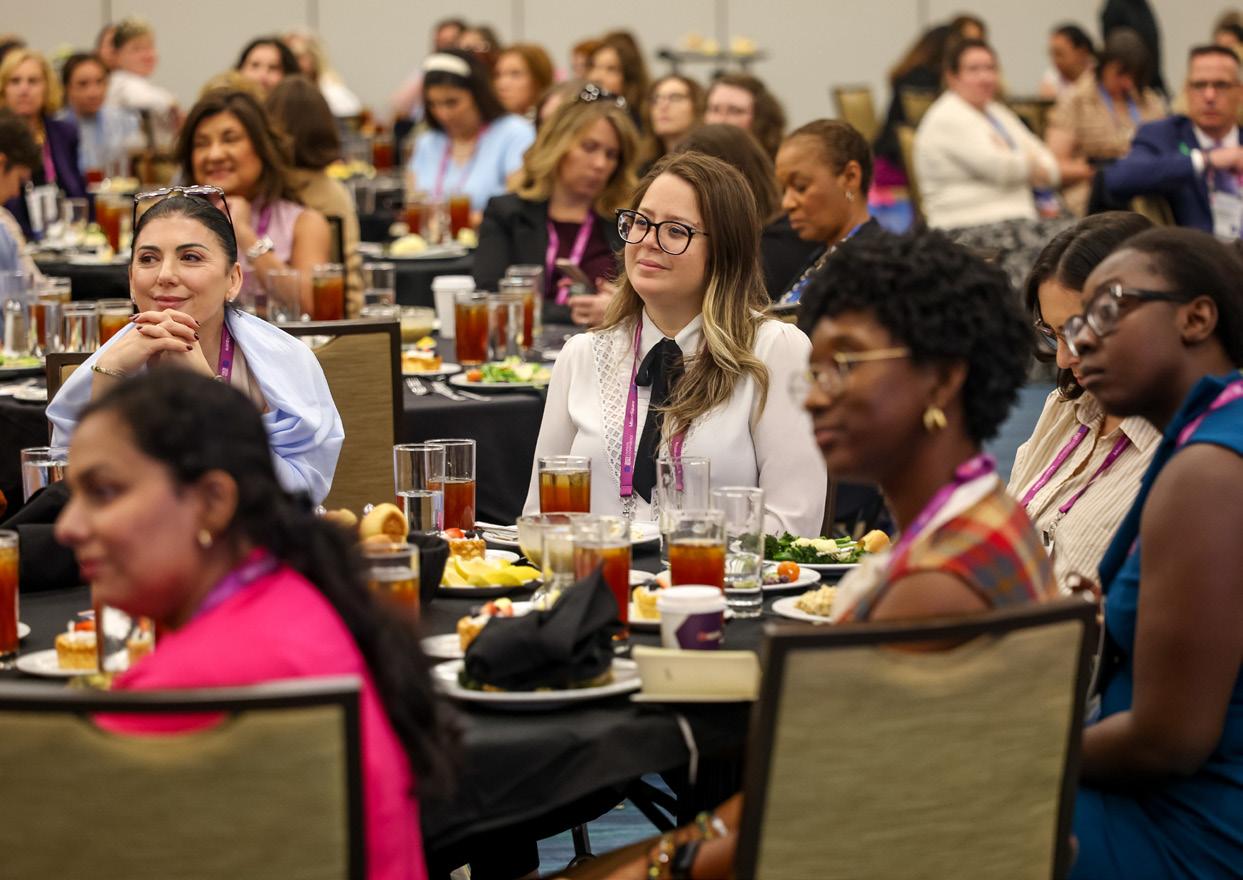
BY MICHELE L. LIEBERMAN, JD, LORENA RODRIGUEZ, REINA J. SCHWARTZ, ICMA-CM AND MONICA N. SPELLS, ICMA-CM
For the past 50 years, ICMA has sustained its commitment to increase the number of women in chief administrative officer (CAO) roles in local government— from just 1% in 1974 to approximately 20% today.1 This progress is due in part to member-driven task forces, committees, and special initiatives.
To promote gender equity, ICMA introduced the SheLeadsGov initiative (icma.org/sheleadsgov), providing resources,
networking opportunities, and recognition for women leaders in local government.
The initiative features events such as the SheLeadsGov Virtual Forum and webinars to recruit, retain, and advance women in the profession.
Acknowledging the initiative’s positive impact, the ICMA Executive Board proposed establishing a permanent SheLeadsGov Committee with the 2023 call for volunteers. The establishment of the committee also fulfilled recommendations from the 2013 Task Force on Women in the Profession2 and the 2015
Task Force on Strengthening Inclusiveness.3 The committee is led by two chairs and two vice chairs and has 23 members.
The inaugural ICMA SheLeadsGov Committee held its first meeting at the 2024 ICMA Annual Conference in Pittsburgh/Allegheny County, Pennsylvania. The committee took steps to solidify its preliminary activities while also demonstrating an enthusiastic desire to quickly execute on some deliverables. Shortly thereafter, the committee’s momentum slowed somewhat
as it adjusted to some new ICMA dynamics. While the committee repositioned itself, it remained steadfast in its mission and has received strong support from ICMA, with a collective goal of continuing the strides of ICMA’s initiatives to recognize and support women’s contributions in local government.
In 2025, the committee developed a work plan that includes working with ICMA staff to enhance the SheLeadsGov online presence, supporting the regional nominating process
for the ICMA Executive Board, contributing to ICMA conference and webinar education opportunities, supporting articles in PM Magazine and ICMA blog posts, and increasing social media engagement. The committee also developed a charter grounded in ICMA’s goals.4
While no single approach can address every need, there are powerful ways to uplift and empower women in local government, especially those striving for or excelling in senior leadership roles. The committee is committed to championing five key themes: Attract and champion women in local government leadership roles. Women in local government leadership bring diverse perspectives and collaborative approaches essential for addressing complex societal challenges. They serve as role models, breaking down systemic barriers and promoting gender equality. Studies show diverse leadership teams are more effective, with women emphasizing consensus-building and empathetic governance. Championing women in leadership roles not only promotes equality but also enhances the quality of the organization’s management. Develop a pipeline of women for leadership roles. Developing a succession plan for women in leadership roles is crucial for ensuring gender diversity and equality within an organization. It helps address the gender gap in leadership and promotes a more inclusive work environment. By planning for women’s
succession, organizations can retain talented women leaders and prepare them for greater responsibilities. This approach fosters a pipeline of capable, diverse future leaders, thereby enhancing the organization’s reputation and attracting a broader pool of talent.
Develop resources and programs supporting gender balance. Promoting gender balance through resources and programs fosters equality and dismantles systemic barriers. Genderbalanced environments improve organizational performance by fostering diverse teams that enhance creativity and innovation. Supporting gender balance also drives economic growth by empowering full workforce participation and improving health and education outcomes through policies addressing work-life balance and parental leave.
Help your organization lead in overcoming gender disparities in local government. Addressing gender disparities within an organization is a multifaceted endeavor that requires commitment, strategic planning, and continuous effort. Here are some strategies to tackle gender disparities:
• Develop inclusive policies that promote gender equality.
• Provide training and education.
• Establish mentorship and sponsorship programs.
• Set clear targets for gender diversity and measure progress to ensure accountability.
• Encourage a supportive organizational culture. By embracing these and other strategies, organizations ignite positive change and foster workplaces where everyone,
including women, can reach their highest potential.
Mentor and connect women in local government. Compared to men, women tend to be less assertive about advocating for themselves or pursuing advancement opportunities. When women have access to mentors, they receive compassionate support, motivation to step into leadership positions, and a wider range of viewpoints. Mentorship provides women with guidance, advocacy, and a pathway to leadership. It helps close opportunity gaps and strengthens confidence. Peer networks also build community, shared learning, and support— especially where women are underrepresented. These strategies empower women and promote a collaborative, equitable culture that elevates the entire workforce.
In conclusion, as the SheLeadsGov Committee moves forward with its work, we encourage and thank ICMA, its members, and its affiliates for actively championing, developing, and supporting women in the profession. Join us in keeping the momentum going to advance these efforts by getting involved, sharing resources, and promoting women’s leadership at every opportunity. By working together with intention and action, we will ensure the profession reflects the communities we serve, and that women not only have the resources, networks, and support they need but also thrive and lead at every stage of their careers.
Join SheLeadsGov for our Virtual Summit on March 5, 11:00 a.m. ET: Own Your Local Government
Influence. Learn more by scanning the QR code.

ENDNOTES AND RESOURCES
1 https://icma.org/blog-posts/icmastrengthens-commitment-womenprofession
2 https://icma.org/sites/default/ files/306859_Task%20Force%20 on%20Women%20in%20the%20 Profession%20Final%20Report%20 2014.pdf
3 https://icma.org/sites/default/ files/Task%20Force%20on%20 Inclusiveness%20Final%20Report%20 %284%29.pdf
4 https://icma.org/documents/icmasheleadsgov-committee-charter
MICHELE L. LIEBERMAN, JD, ICMA-CM is the county manager for Alachua County, Florida, USA, and is co-chair of the SheLeadsGov Committee (mlieberman@ alachuacounty.us).

LORENA RODRIGUEZ, is the chief aide for El Paso County, Texas, USA, and is co-vice-chair of the SheLeadsGov Committee (Lo.Rodriguez@ epcountytx.gov).

REINA J. SCHWARTZ, ICMA-CM is the finance director for Albany, California, USA, and is co-vice-chair of the SheLeadsGov Committee (rschwartz@albanyca.gov).

MONICA N. SPELLS, MPA, ICMA-CM is a deputy county administrator for Loudoun County, Virginia, and is co-chair of the SheLeadsGov Committee (monica.spells@loudoun.gov).

As birthrates decline, it’s imperative that municipalities focus on local amenities that attract families and support community vitality.
BY MATTHEW CANDLAND

Last year I viewed an interesting “60 Minutes” story on the declining birthrate in Japan. The birthrate has been declining there for decades and, as a result, there are very real concerns about the future of the country. You could say it is an existential concern.
It turns out that having at least a stable population, if

not a growing one, is critically important to whether a society will thrive long term. For example, a stable population is extremely important in promoting a robust economy, financing governmental social and health programs, and maintaining an adequate military.
Japan is hardly alone though. South Korea has an even lower birthrate than Japan. Nations across the world, including in the West, are witnessing the decline of their birthrates. Strangely, this decline has been going on for many years, but we just didn’t see it or didn’t want to see it. Few countries have done much about it until the past decade or so, and while the predicted negative impacts are most often many years in the future, stable populations, like growing a large oak tree, don’t happen overnight. Demography does not change on a dime.
Ironically, a generation or two ago, the experts were claiming that the world was experiencing over-population and argued this would result in starvation, war, and environmental catastrophe. This led to some nations adopting strategies and policies to reduce the birthrate, the most famous of which was China’s one-child policy. Today, while the policy seemed to work on reducing the birthrate, it may have actually worked too well. Or in other words, we now realize that this policy did not quite work the way they had thought and that it resulted in a host of unanticipated consequences. Several nations, recognizing the potential negative impacts of depopulation, have implemented policies in an effort to increase their birthrates. According to
the “60 Minutes” program, some nations like Japan have provided financial incentives to encourage women to bear more children and one, Hungary, even offers to make a woman who bears a certain number of children entirely exempt from income taxes. These efforts do not appear to be working. It seems increasingly more certain that financial incentives are not a primary driver to greater fertility.
Why the birthrates are decreasing is likely the result of a variety of social, economic, religious, and cultural changes that have occurred over many decades. Regardless of why, it is clear that those of childbearing years today just don’t seem to be as interested in bearing children as previous generations. In a 2024 Pew Research poll, 57% of men and 45% of women said that they want to have children. If half of U.S. women do not want to have children, this means the other half would need to have more than four children each just to maintain replacement levels.
Nations, and even local communities, need young people to not only replace those who are aging but also to provide creativity, innovation, and vitality. What if, in light of these growing trends, communities intentionally begin developing strategies to attract families to move into their towns, cities, and counties? This is already happening in Japan and may eventually happen here in the United States.
In reality, communities don’t exist without people and those communities that don’t maintain stable native population growth or are unable to attract new people
and families to move into their communities may very well experience decline. This decline will not only show itself in reduced population numbers but also in the quality of its community. One only needs to visit certain parts of the United States to see once-thriving communities now in a state of depopulation and decline.
But we do not need to imagine this scenario because in many ways American citizens are already migrating in large numbers to different communities in different states. Large migrations, of course, are not new. For example, early Americans moved west for cheap land and a shot at the American Dream. In the first half of the twentieth century, thousands upon thousands of poor southerners moved to the upper Midwest to work in factories.
Today, however, it appears that many are moving not only for land or good jobs but for quality of life. Never have Americans been more capable of “just up and moving” than they are today. In short, local communities are already, and have been for some time, competing for people (or more specifically, families) to move to their communities; they just may not have consciously thought about it. But this could be changing.
If local communities were trying to attract families, what should they do? What strategies or policies would be effective? Would these strategies look much different than they would if they were trying to attract youthful “twenty-somethings” or seniors? What exactly are families looking for in a community? The following is a short list of what most certainly would be high on the list:
Low Crime: Families with children, if they have the choice, will generally not move to communities that are considered to be unsafe. Local governments should renew their focus and efforts on improving public safety in their communities and especially the safety of children.
Quality Schools:
Schools have been a hotbed of controversy over the past five to 10 years. In part this may be because they are not producing good results. For example, according to several international surveys (such as those conducted by the Program for International Student Assessments), education in the United States is not doing particularly well, ranking lower than many other industrialized nations. At the same time, the U.S. spends more money per student than most other nations.
Additionally, parental concern about education
increased significantly during the COVID-19 pandemic as parents gained greater insight into school practices and coursework. Many parents were so were so unhappy with what they saw that they transferred their children to private schools or moved their families to communities with higher-rated schools and to school systems that shared their values. The use of school choice vouchers has expanded in some states, though they remain controversial.
Parks
Attractive, well-kept parks and open spaces near their home are on the top of most people’s lists of desirable amenities in a community, and this is especially true for families. Parents want a safe and convenient place where their children can play. They are willing to pay a premium for such amenities.
Recreation Programs: There has been an explosion
of interest in youth recreation programs over the past few decades. Families are looking for well-priced, quality recreation programs, especially athletic programs, in which their children can participate. Interest in “travel team” sports programs has grown, giving participants access to higher-level competition. In order to have robust recreational programs, communities must have adequate recreational facilities and staff or volunteers.
A Mix of Housing Types and Prices: Young families are economically diverse. Some families have considerable financial means while others do not. To attract families, communities should have a variety of housing types and price points. This not only better captures young families but also provides them with future housing options as their careers progress, all within the same community.

Even though many of today’s workers have the ability to work remotely, there seems to be a push to return to the traditional office. While many jobs may remain remote, jobs may again be tied to certain locations. Those communities that have a variety of employment options with competitive compensation and benefits will be very attractive to families.
For many years, this issue has been a major concern for singleparent households and those in which both parents work outside of the home. The cost of childcare for some families is often equal to one parent’s salary or exceeds their housing costs. Managers will need to begin developing policy options to help in financing the cost or finding ways to reduce the cost of childcare.
Just as it always has, the world continues to change, and today, community birthrates are experiencing significant change. Those communities that are able to provide desirable amenities, as well as others that were not mentioned, will be those communities that are best positioned to attract families. Providing these amenities do not happen by accident nor do they happen without careful and intentional planning. City/ county managers should begin, if they are not already, thinking about how their communities need to adapt to the changing demographics.
MATTHEW CANDLAND, ICMA-CM is town manager of South Boston, Virginia, USA.

Professional management isn’t a given— it’s a standard we have to protect every day.
Since 1986, the Fund for Professional Management has been the frontline defense for the council-manager form of government.
We were founded to protect the ethical standards our communities depend on. As we celebrate this milestone, our goal is to raise $151,000 to fuel the advocacy and education, that build the future of our profession.
Whether you make a one-time anniversary contribution or commit to a monthly legacy gift, your support ensures professional management remains the gold standard.
icma.org/donate
Scan to learn more and to donate!
BY DR. SCOTT ANDREWS, ICMA-CM
In 2026, the United States will commemorate 250 years since the signing of the Declaration of Independence. Anniversaries of this magnitude invite us to reflect on the ideals that shape our nation, but they also challenge us to examine how those ideals are lived today, in real communities, by real people, facing real constraints.
For most Americans, democracy is experienced locally. It is shaped by everyday interactions with public servants: when a resident attends a public meeting for the first time, when a small business owner navigates a permitting process, when a family relies on safe roads, clean water, and responsive emergency services. Democracy, for most people, lives at the doorstep.
Local government is the front porch of American democracy. It is where lofty principles meet operational reality, where trust is built incrementally, and where legitimacy is either reinforced or eroded one interaction at a time.
Local government professionals are not observers of democracy. We are its daily stewards.
Much of the American democratic experiment has unfolded not through sweeping national moments, but through the daily work of cities, counties, towns, townships, and tribal governments. While local governments are not explicitly outlined in the nation’s founding documents, they have long served as democracy’s most immediate expression.

DR. SCOTT ANDREWS, ICMA-CM is county manager for Doña Ana County, New Mexico, USA.
Local governments deliver the services that make modern life possible. Public meetings, advisory boards, community townhalls, and elections are not symbolic gestures. They are the mechanisms through which residents engage, challenge, and shape their communities. When these processes function well, democracy feels responsive. When they do not, public trust suffers. Local government professionals are not observers of democracy. We are its daily stewards.
Local government differs from other levels of governance in one essential way: proximity. Residents often know
where city hall is. They know who to call. They recognize staff members in the grocery store or at youth sporting events. That closeness creates accountability, but it also creates opportunity.
Proximity allows local governments to respond quickly, tailor solutions, and engage residents meaningfully. It also means that missteps are visible and personal. There is no abstraction layer. Trust is built face to face.
Over the course of my career, spanning more than 23 years and multiple states, I have come to understand that credibility in local government is cumulative. It is earned through consistency, transparency, and followthrough. People may disagree with decisions, but they are far more likely to accept outcomes when they believe the process is fair and respectful.
This is where democracy either strengthens or frays.
My own path into local government leadership was neither linear nor inevitable. I began my career in recreation, drawn to the belief that public spaces and shared experiences matter. Over time, I served in a range of local government roles across different regions and organizational cultures. Along the way, mentors invested in me, even early on when there was little reason to do so. They taught me that leadership is not about visibility, but responsibility. Not about certainty, but judgment. Not about authority, but trust.
Those lessons shaped a personal leadership mantra that has guided me throughout my career: Work for the cause, not the applause. Live life to express, not to impress. Don’t strive to make your presence noticed. Just make your absence felt. In local government, leadership is rarely loud. It is steady. It is relational. It is defined by what continues to function well when no one is watching.
The idea of leading with love can sound misplaced in a profession often defined by technical rigor, fiscal discipline, and legal compliance. Yet in practice, love is not sentimental. It is disciplined and demanding. To lead with love in local government means committing to dignity as a baseline. It means listening with the intent to understand, not simply to respond. It requires

balancing accountability with compassion, and efficiency with equity.
Love shows up in how public meetings are facilitated, especially when emotions run high. It shows up in how staff explain complex or unpopular decisions. It shows up in how organizations design systems that work not just for the most vocal, but for the most vulnerable. This approach does not lower standards. It raises them.
Research on trust in public institutions consistently points to procedural fairness, transparency, and relational competence as key drivers of legitimacy. Local governments are uniquely positioned to operationalize these principles because of their scale and proximity.
In this sense, emotional intelligence is not a “soft skill.” It is core infrastructure for democratic governance.
Today, I serve as county manager for Doña Ana County, New Mexico, a geographically expansive and culturally rich community along the U.S.–Mexico border. The county spans more than 3,800 square miles and includes urban centers, rural communities, agricultural lands, and tribal neighbors. Our residents bring diverse histories, languages, and expectations to the table. What unites them is a desire to be heard, respected, and served with integrity.
Early in my tenure, we held a public meeting on a complex issue with no easy answers. Emotions were high. Residents came prepared not just with comments, but with lived experiences shaped by decades of policy decisions. The temptation in moments like this is to manage the meeting tightly, minimize discomfort, and move quickly toward a conclusion.
Instead, we slowed the process.
We listened longer. We allowed space for frustration without defensiveness. We acknowledged uncertainty where it existed. We committed to follow-up and transparency, even when the path forward was not fully formed. That meeting did not resolve every concern. It did not produce unanimous agreement. But it did something equally important. It reinforced trust. Residents left knowing they had been taken seriously. That is democracy at the doorstep.
The health of democracy is rarely determined by singular events. It is shaped in the cumulative moments between formal decisions: How staff respond to a phone call. How accessible information is. How conflict is handled when stakes feel personal. These interactions may seem operational, but they are profoundly civic. They influence whether residents feel alienated or engaged, cynical or hopeful.
Local government professionals are, in many ways, translators. We translate policy into practice, community values into action, and conflict into compromise. That translation requires technical competence, but it also requires emotional fluency. When residents feel seen and respected, even in disagreement, democratic norms are reinforced. When they feel dismissed or unheard, those norms erode.
As the nation looks ahead to its next 250 years, local government faces both opportunity and responsibility. Technological change, artificial intelligence, demographic

shifts, climate adaptation, and fiscal pressures will reshape how communities operate. Yet amid these changes, one truth remains constant. Democracy depends on relationships. Efficiency without empathy will not sustain trust. Innovation without inclusion will not build legitimacy. Data without discernment will not inspire confidence. The future of local government leadership will require a dual fluency. Leaders must be technically capable and deeply human. They must understand systems and stories, metrics and meaning.
Like many public servants, I bring my full humanity into this work. Life experiences, including profound loss and moments of deep personal recalibration, have clarified my understanding of purpose. They have taught me that people remember how leaders show up during difficult moments. They remember whether decisions were made with humility, honesty, and care.
As we commemorate America’s 250th anniversary, local government professionals have a unique opportunity to
help shape the narrative of democracy at the ground level. Not through grand gestures, but through everyday acts of service carried out with integrity. Democracy does not begin with a speech. It begins with a conversation. Often at a counter. Sometimes in a council chamber. Always at the doorstep.
If the next 250 years of American democracy are to be strong, they will be built the same way the first 250 were built, through people willing to serve with competence, courage, and care. That is the quiet power of local government. It is a legacy worth protecting.
In collaboration with other local government associations, ICMA is commemorating America’s 250th anniversary by celebrating the “democracy at the doorstep” facilitated by cities, counties, regional councils, and tribal governments. Learn more at localgov250.org

If you care about community planning, you belong at APA. Membership connects you to trusted resources, meaningful networking, and opportunities to grow your influence in the field.

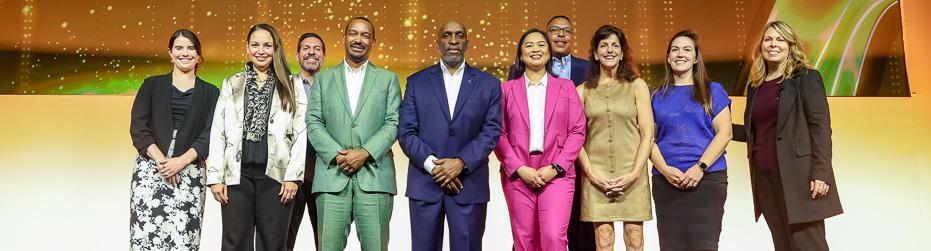
Every day, dedicated local government professionals are transforming communities, strengthening trust, and delivering meaningful results.
The Local Government Excellence Awards honor the individuals and programs that elevate our profession with breakthrough initiatives that address critical needs with creativity, courage, and impact.
Now it’s your turn to shine a light on them.
Nominate a colleague, team, or program that has made a difference through bold innovation, outstanding leadership, or unwavering commitment to public service. U.S. and global nominations are welcome. Explore the award categories and submit your nomination at icma.org/awards.


January 12, 2026 – March 16, 2026 icma.org/awards
PROFESSIONAL AWARDS
• Academic Contributions to the Profession
• Advocacy for the Profession
• Career Excellence
• Development of New Talent
• Excellence in Leadership as an Assistant
• Early Career Leadership
• Good Governance
PROGRAM AWARDS
• Community Equity and Inclusion
• Community Health and Safety
• Community Partnerships
• Community Sustainability
• Strategic Leadership and Governance
Help us celebrate the people and programs changing local government for the better. Scan to submit your nomination today.
For questions about the nomination process, contact Joyce Lee Brown at jlee@icma.org
Across the country, city and county governments face an urgent challenge: attracting innovative, skilled, and missiondriven professionals into public service. As seasoned leaders retire and talent pipelines tighten, municipalities must look beyond traditional recruitment channels. One untapped pool of highly skilled candidates is law school graduates.
While not every JD chooses to practice law, legal training equips graduates with advanced analytical, communication, and problem-solving skills that translate directly into the work of local government. This is where the concept of JD Advantage (JDA) careers comes in. These are roles that do not require a law license but strongly benefit from the skills developed in law school.
JD graduates bring a unique set of competencies:
• The ability to analyze complex ordinances, regulations, and policies.
• Strong research, writing, and persuasive communication skills for policy development and public engagement.
• Training in negotiation, conflict resolution, and critical decision-making for labor relations and community disputes.
• An understanding of constitutional principles for safeguarding due process and civil rights. These capabilities are invaluable as municipalities navigate increasingly complex legal, financial, and ethical challenges. JD-trained professionals add immediate value to areas such as public administration, urban planning and development, risk management, contract management, human resources, labor relations, and compliance.

Yet many local governments remain unaware of how well these skills align with their workforce needs or how to access this talent pipeline. As one city manager observed, “We need to change the narrative on a nationwide level. People look at government and see some form of evil, too big, wasteful, slow, inequitable. Those things can all be true, but there is a core piece of government which is a net good thing and can make you feel really good about contributing to your community.”1
Currently in Local Government
Kelli Bourgeois, city manager, Bristol, Tennessee
Kelli pursued her JD while already working in local government. Initially drawn to land development
BY CELESTINE OGLESBY, JD

negotiations, she soon discovered her true calling in public service. She stated, “My legal knowledge, and more so the way law school teaches you to think and analyze issues, helps me in my career every single day,” she says. “Whether it’s reviewing contracts, addressing HR issues, or understanding constitutional law, there are countless legal ‘nuggets’ I draw on as a city manager.”
Timothy Frenzer, interim village manager, Northfield, Illinois—Timothy’s journey and commitment to public service began during law school internships with the Cook County state’s attorney’s office. His career evolved from litigation to nearly three decades as corporation counsel and later village manager in Wilmette, Illinois. He shared that, “When a lawyer takes on a case, their job is to take a complicated and often chaotic set of facts and create order. That’s also what a city manager does every day,” he explains. Legal training gave him a foundation in zoning, land use, labor relations, and risk management—skills essential to effective municipal leadership.
Chris Hayward, assistant director, Gwinnett County Planning and Development—Chris’s local
with law schools allows local governments to shape the next generation of leaders while giving students meaningful pathways into public service.
government career began with an informational interview with a county chief operating officer. His JD training continues to serve him daily. Chris says, “Ordinances, policies, and regulations create the framework for the services we deliver in local government. I use the skills I developed in law school regularly to navigate that framework, solve problems, and drive improvement.”
Building and Bridging the Gap: Law Schools as
One of the most effective ways to access JD talent is through direct partnerships with law school career and professional development (CPD) offices. These departments specialize in preparing students for diverse career paths, not just traditional practice, and can help local governments identify and attract motivated, public-service-oriented candidates. For hiring managers, this means:
Understanding the JD talent pipeline: Career development offices can share data and connect employers with JD students interested in public service.
Designing meaningful entry points: Externships, fellowships, and clerkships in city and county offices can attract students while meeting short-term needs. These short-term placements offer mutual benefits: students gain experience and governments get support.
Collaborating on skill alignment: Law schools can tailor programming, such as workshops on municipal finance or land use, to prepare graduates for government careers.
Engaging alumni: JD-trained professionals already in government are eager to mentor and guide new graduates. As one law school career advisor summarized, “Collaborating with law schools allows local governments to shape the next generation of leaders while providing students with practical, mission-driven experience.”
Looking Ahead: Innovation, Inclusion, and Policy Shifts
Emerging technologies such as artificial intelligence, combined with evolving federal and state policy, are
reshaping local government operations. Meeting these changes requires adaptable, ethical, and strategic thinkers. JD graduates, trained to analyze complex information and anticipate risk, are uniquely positioned to help municipalities navigate this transformation.
Final Thoughts: A Call to Action
Local government offers JD graduates the chance to apply their legal education to meaningful, impactful work. Whether managing complex development projects, negotiating labor agreements, or ensuring compliance with constitutional principles, JD Advantage professionals help municipalities thrive. It is time to recognize JD Advantage professionals not as a niche, but as a vital part of the public sector workforce. By partnering with law schools and reimagining recruitment strategies, municipalities can unlock a new generation of legal talent ready to serve.
ENDNOTE
1 PM Magazine, November 2025, “Tackling the Local Government Talent Shortage,” https://icma.org/articles/pm-magazine/tackling-local-governmenttalent-shortage.
Tap into the JD talent pipeline by collaborating with career and professional development (CPD) departments. Here’s how:
Reach Out to CPD Offices: Learn about career fairs, externship programs, and employer panels.
Offer Externships and Fellowships: Create short-term roles in city and county departments that provide JD students real-world government experience.
Engage in Mock Interviews and Panels: Share your perspective on hiring needs and career pathways in local government.
Highlight JD Advantage Roles: Work with CPD teams to clarify which positions (e.g., policy analyst, compliance officer, management analyst) are a strong fit for JD graduates.
Leverage Alumni Networks: Collaborate with law schools to connect current students with alumni JD-trained professionals now serving in municipal leadership roles.
Shape Skill Development: Suggest workshops or courses in areas like municipal finance, land use, and risk management that align law school training with government needs.
Stay Visible: Maintain an active presence through guest lectures, mentorship programs, and joint projects with local law schools.
BY ELIZABETH JOURDIN
Participating in the 2025 cohort of ICMA’s Leadership Institute on Race, Equity, and Inclusion provided the opportunity to connect with other government professionals doing the work of equity—each in their own way and with the intent of making a positive difference in the lives of every member of their respective community.
For me personally, it provided the framework and structure to develop a capstone project that I could use to further the work in my own jurisdiction and to share what I learned with other local government professionals across ICMA’s membership. Specifically, my capstone was focused on building a resource guide to operationalize equity through the lens of compliance with Title II of the 1990 Americans with Disabilities Act and Title VI of the 1964 Civil Rights Act. These are two critical yet often forgotten pieces of legislation and adherence to them is essential to ensuring foundational access to local government programs and services.
As the first Title II and Title VI coordinator for Washoe County, Nevada, I quickly realized that we did not have the foundational resources in place for me to (1) serve effectively in this capacity and (2) educate the organization on why they should care about compliance with these two federal laws. It is from this lens that the idea for my capstone began to take shape. I would build what I did not have—a practical set of resources, a toolkit if you will, that I could use to educate county departments on how to increase compliance with these federal laws, and perhaps most importantly, increase the equitable impact of service delivery in our community.
As the resource guide began to take shape, and we held discussions within our Leadership Institute cohort, it also became clear that I was not the only one serving in this capacity without a

playbook. In building the resource guide, it was important to me that the finished product be one that would give back to the ICMA community. It should serve as a model for how local governments both small and large can get up and running with implementing compliance in these two areas and making measurable impact on equity outcomes within their community.
In researching and preparing the Operationalizing Equity Resource Guide, and in choosing to keep it manageable for initial implementation, I chose to focus on the following key components:
• Sample guidelines, plans, and checklists for key areas of compliance, such as language access.
• Community engagement.
• Equity budget practices.
• Key performance indicators for measuring impact,
• Complaint procedures and forms.
• Staff training.
• Resources for further education.
For any local government staff looking to improve equity outcomes and operationalize the work, I encourage you to explore the resource guide and take any or all of it back to your local jurisdiction for implementation. Access the guide via the QR code or at icma.org/documents/ operationalizing-equity-resource-guide.
Through compliance with Title II of the ADA and Title VI of the 1964 Civil Rights Act, and utilizing the resource guide, local governments can continue the work of building more equitable and inclusive communities and workplaces for those they serve.



Join Savi and ICMA on the first Thursday of every month for a webinar designed for local government employees and HR leaders. See how Savi streamlines Public Service Loan Forgiveness (PSLF) enrollment and helps employees navigate student debt with confidence while giving HR leaders a meaningful financial wellness benefit that strengthens recruitment, retention, and workforce stability. Enhance your benefits strategy and empower your employees’ financial future. Scan the QR code below to register.
PSLF applications have been accepted since 2020



























The AI Edge
APRIL 8-10, 2026 | ORLANDO, FLORIDA
Lead Ahead of Advancing AI
• Navigating the Ethics and Politics of Municipal AI
• What 30 IT Leaders Teach Us About Making GenAI Work in Local Government
• Mobile Workshop: The Institute for Simulation and Training at the University of Central Florida
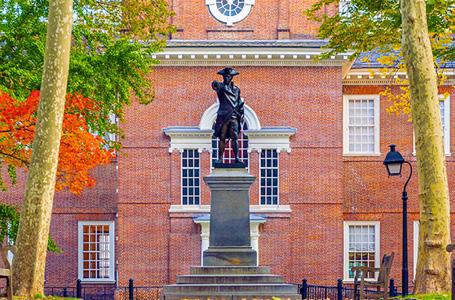
Democracy and the Public Trust
MAY 13-15, 2026 | PHILADELPHIA, PENNSYLVANIA
Trust and the Nation’s 250th Anniversary
• Reclaiming Civic Trust: New Models for Fiscal Transparency and Engagement
• The Science of Trust: How Local Leaders De-Escalate, Depolarize, and Reconnect
• No Press, No Problem: How Local Governments Are Going Viral for Good
Save $100! Register by March 30!