The International Christian Embassy Jerusalem was established in 1980 in recognition of the biblical significance of Jerusalem and its unique connection to the Jewish people. Today the ICEJ represents millions of Christians, churches and denominations to the nation and people of Israel. We recognise in the restoration of Israel the faithfulness of God to keep His ancient covenant with the Jewish people. Our main objectives are:
* To stand with Israel in support and friendship;
* To equip and teach the worldwide Church regarding God’s purposes with Israel and the nations of the Middle East;
* To be an active voice of reconciliation between Jews, Christians and Arabs and to support the churches and congregations in the Holy Land.
From its head offices in Jerusalem, the ICEJ reaches out to more than 170 countries, with branch offices in over 90 nations. Our vision is:
* To reach every segment of Israeli society with a Christian testimony of comfort and love, and
* To reach and actively represent to Israel the support of denominations, churches and believers from every nation on earth.
The Christian Embassy is a non-denominational faith-based ministry supported by the voluntary contributions of our members and friends across the globe. We invite you to join with us as we minister to Israel and the Jewish people worldwide by donating to the ongoing work and witness of the ICEJ.
WORD
FROM JERUSALEM CREDITS
ICEJ President Dr. Jürgen Bühler
Senior Vice President David Parsons
VP International Affairs Mojmir Kallus
VP Finance David Van der Walt
VP Operations Richard van der Beek
VP AID & Aliyah Nicole Yoder
Managing Editor/Publications Director Laurina Driesse
Graphic Design/Illustrator Ryan Tsuen
Administration Jonathan Buker
Photography Adobe Stock, Shutterstock, JAFI (Laura Ben David), Ommar Ayala, AP Photo, Flash90, IDF, Wikipedia, Adobe Firefly, Gemini, ICEJ Staff, Branches and Projects
The New King James Bible is used for all Bible references unless otherwise noted.
Word From Jerusalem is published by the International Christian Embassy Jerusalem. Reproduction in whole or in part without written permission is prohibited. Word From Jerusalem has no subscription price and is supported through contributions worldwide. All gifts to this ministry are tax-deductible (in countries where this applies). For more information, visit us at www.icej.org
INTERNATIONAL CHRISTIAN EMBASSY JERUSALEM
P.O. Box 1192, Jerusalem • 9101002, ISRAEL
Support our ministry online at www.icej.org
FROM THE DESK OF
Dear friends,
Israel has just celebrated its 78th birthday since the nation’s modern-day refounding in 1948. As always, the day before the entire country commemorated its fallen soldiers and terror victims. This year was particularly moving, as since October 7, 2023 more than 1,150 soldiers have died in fighting Hamas and Hizbullah. Almost every family in Israel has a close or distant relative who was killed. Many tears were shed.
Yet, as could be powerfully seen during the official Yom Ha’atzmaut ceremony, within minutes the entire nation shifted from mourning to celebration – a moment that powerfully represents the resilience of the Israeli people. The climax of the celebration was the surprise appearance of Argentine President Javier Milei, a great friend of the nation of Israel. His declaration that Argentina will soon open an embassy in Jerusalem was joyfully received as a special birthday gift on this significant day.
For two and a half years now, Israel has been at war with the giant of Iran and its many proxy militias, yet today the Jewish state is stronger than ever. The economy is undergoing surprising growth, and the value of the Israeli shekel has reached historic highs. Militarily, Israel remains the undisputed regional leader in projecting its power across the Middle East. And in many ways, the nation is drawing closer to God. Even David Zini, the secular head of Israel’s domestic security agency Shin Bet, challenged the Chief Rabbinate to establish a national service of thanksgiving. If we knew what he knows, Zini said, Israel has seen so many miracles over the past two and a half years that it defies any natural explanation. We need to thank God for this, he challenged the Chief Rabbis!
In all of this, we also see a whole new level of openness among the Israeli public, community organisations, and even government institutions to work with Christians. We are experiencing open doors like never before, as Israelis realise more and more that their closest friends today are Bible-believing Christians around the world.
But exactly herein lies the challenge. While Israel is blossoming, churches and Christians who stand with Israel around the world are facing increasing pressure and harassment. Not only in Europe but even in Latin America and Africa, churches are coming into the crosshairs of radical leftist and Islamic groups. Antisemitism has reached an all-time high, even in the West, and pastors find little help from theological institutions on how to face these challenges.
For this reason, we have mobilised some of the finest theologians and scholars to address Israel-related theology, the biblical foundations of Zionism, and how to deal honestly with our past Church history. They will be joining us for the Jerusalem Summit, an historic gathering of experts from 9-11 June, and we trust and pray that a powerful message will come out of this assembly in the critical days ahead. Find out more at: https://jerusalemsummit.icej.org
Please extend this invitation to the Jerusalem Summit to your pastors and leaders. A limited number of special sponsorships are available upon request. I look forward to seeing you there.
Yours in Christ,
Dr. Jürgen Bühler ICEJ President
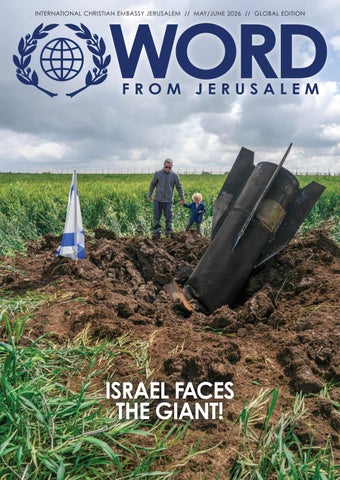
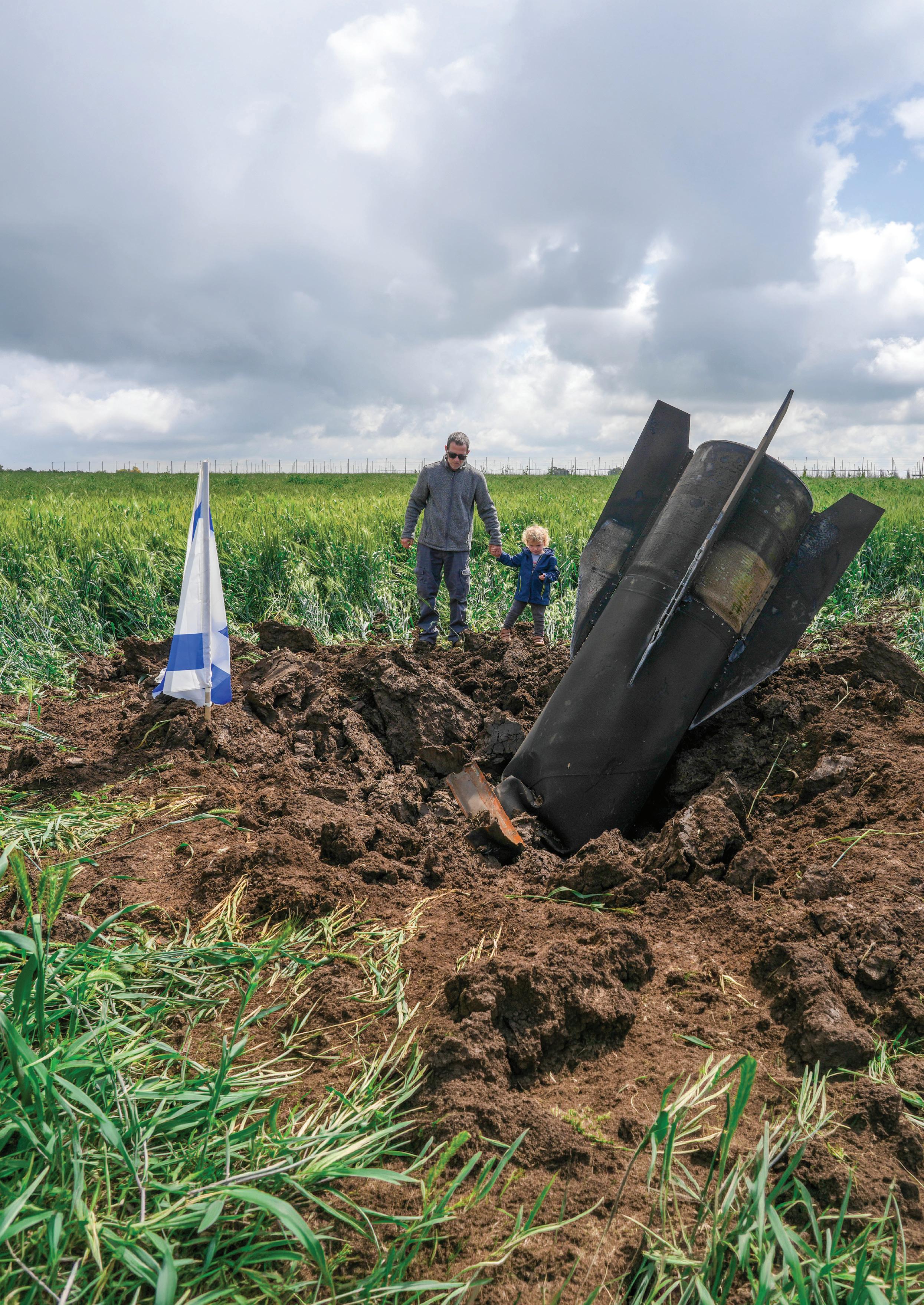
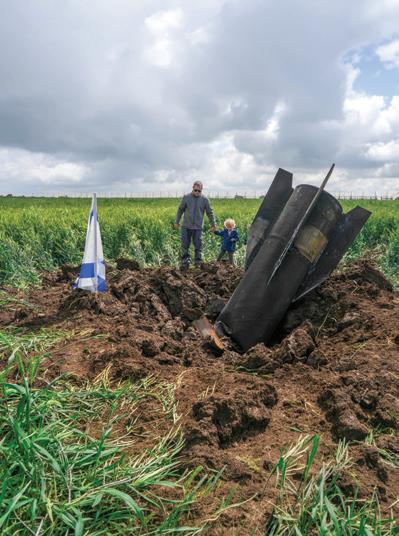
COVER PHOTO: Israeli father and son view an unexploded Iranian missile lodged in a field on the Golan by Ayal Margolin, Flash90
FEATURED TEACHING
4
CHURCH IN A BUBBLE
the CHURCH in a BUBBLE
BY DR. JÜRGEN BÜHLER, ICEJ PRESIDENT
Just days before Jews in Israel were to celebrate the festival of Purim, the current war with the radical Iranian regime ignited. Many Purim celebrations wound up taking place in bomb shelters, even as Israel hoped that the modern-day Haman— the militant Ayatollahs in Iran—would be brought down.
Purim is described in the Book of Esther as one of the greatest times of deliverance in the Bible.
Purim is described in the Book of Esther as one of the greatest times of deliverance in the Bible. Around 470 BC, the entire Jewish population in Persia was doomed to destruction at the instigation of the vicious Haman, the senior figure in the court of emperor Ahasuerus (Xerxes). His new queen, Esther, played a counter role by exposing the plot to the king, inspired by her cousin Mordechai, who also served as a high-ranking official in his royal court.
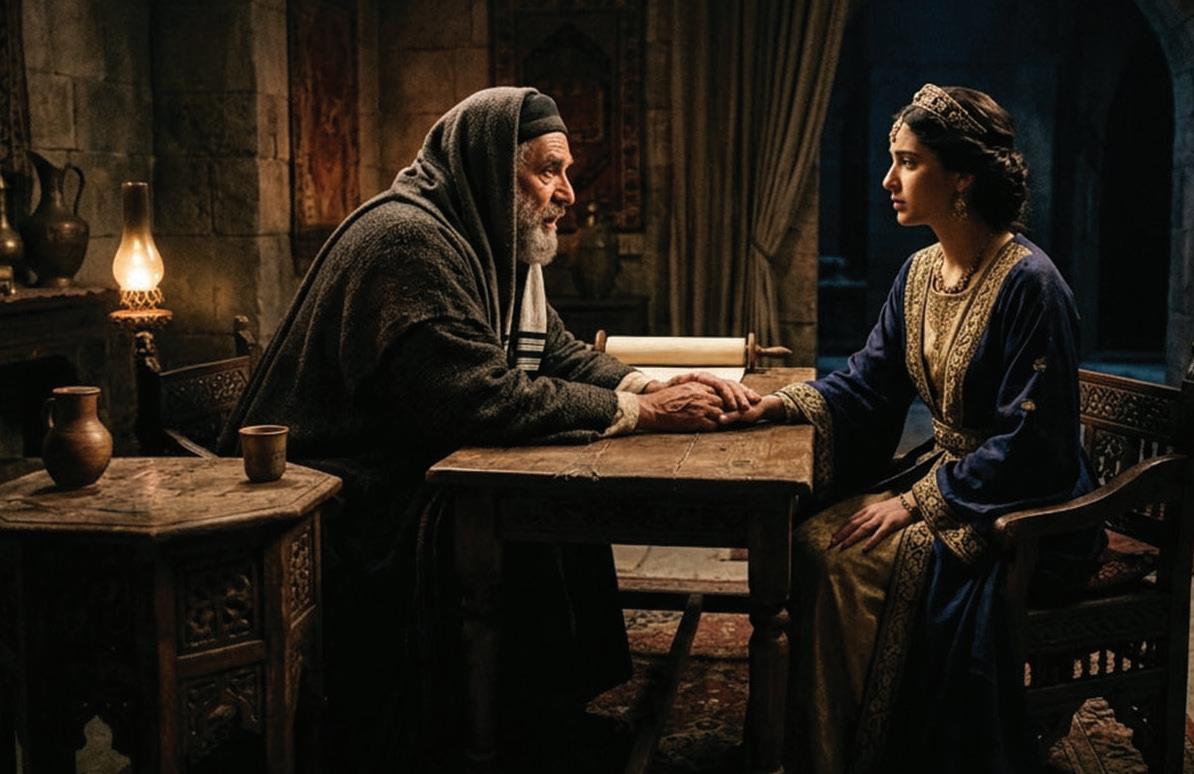
A depiction of Mordechai’s final appeal to Esther. (AI generated image)
To fully appreciate this remarkable story, I encourage you to read the entire Book of Esther. It involves a miraculous reversal in which the Jews prevailed, and those who sought their destruction were themselves destroyed.
The fourth chapter in particular recounts how this queen, immersed in the luxury of the royal palace, was transformed into a courageous woman willing to risk everything for the survival of her people.
A QUEEN IN A BUBBLE
Chapter four begins with a chilling account of the desperate situation for the Jews of Persia.
“There was great mourning among the Jews” (Esther 4:3), and many of them, including
Mordechai, put on sackcloth and ashes as a public expression of their grief. In doing so, he violated every protocol of the royal palace. When Queen Esther heard about it, she immediately sent Mordechai a message.
Surprisingly, she seemed unaware of the plight confronting her Jewish compatriots. Instead, she sent messengers with a new set of clothes for her cousin. Mordechai, a prominent official in the king’s court, was known to be a relative of the queen. At first, Esther appeared embarrassed by his appearance and pressured him to change back into noble attire. Her reputation was at stake – especially since the king had not summoned her for thirty days (Esther 4:11). A cousin drawing negative attention was the last thing she needed.
Queen Esther seemed to be living in a social and political bubble within the palace, unaware of the peril to her Jewish people.
Mordechai confronted this with what we call today an “information campaign”, bringing the queen up to date on what was happening in the kingdom.
“Mordechai told him all that had happened to him, and the exact sum of money that Haman had promised to pay into the king’s treasuries for the destruction of the Jews. Mordechai also gave him a copy of the written decree issued in Susa for their destruction, that he might show it to Esther and explain it to her and command her to go to the king to beg his favour and plead with him on behalf of her people.” (Esther 4:7-8 / ESV)
Mordechai confronted her with the facts. Translated to our day, he informed her about the vast sums of money sent by the Iranian and Qatari governments to various terror networks, and about the plans of Hizbullah and Hamas to wipe Israel off the map. He also informed her about the rapid growth of antisemitism around the world, and how more and more governments are turning their backs on Israel.
He urged her to use her influence with the king – to bring this information before him and to ask for a change in policy.
RISK ASSESSMENT
Esther then went through a personal risk assessment. She began to grasp the seriousness of the situation. In principle, she likely agreed something had to be done. However, she told Mordechai the risk was too great. One could not simply walk in before the king’s throne uninvited. Anyone who broke this royal protocol faced the death penalty –even the queen herself. Moreover, she was unsure of her standing with the king, as she had not been summoned for an entire month.
Her personal assessment concluded that it was too dangerous to approach the king. This message was sent back to Mordechai.
If you remain silent, deliverance will arise from another place.
TOTAL DEDICATION
What followed is the most famous passage in the scroll of Esther… Mordechai’s final appeal:
“Do not think to yourself that in the king’s palace you will escape any more than all the other Jews. For if you keep silent at this time, relief and deliverance will rise for the Jews from another place, but you and your father’s house will perish. And who knows whether you have not come to the kingdom for such a time as this?” (Esther 4:13b–14 / ESV)
Israel and the Jewish people were not dependent on her support, Mordechai told the queen. If you remain silent, deliverance will arise from another place. In this regard, the Scriptures are clear about Israel’s future: “If the fixed order of sun, moon, and stars departs… then shall Israel cease from being a nation before Me forever.” (Jeremiah 31:35-36).
What was truly at stake was not Israel’s survival, but Esther’s own. “If you keep silent, you and your father’s house will perish” (Esther 4:14).
These words pierced Esther’s heart. She responded by calling for a three-day fast and resolved to go before the king, declaring boldly: “If I perish, I perish.”
This decision set in motion a swift process of rescue and deliverance for the Jews of that day. Yet this story also carries a powerful application for our own times.
THE CHURCH IN A BUBBLE
Much like Queen Esther, many Christians and churches today live in a bubble. In fact, we all do. By default, we tend to focus on our own struggles and church projects, while missing the challenges unfolding around us. Esther’s main concern may have been that the king had ignored her for thirty days.
In May 1944, German pastor Dietrich Bonhoeffer wrote from his Nazi prison cell: “Our church, after fighting solely for its selfpreservation during these years, as if that were an end in itself, is incapable of bringing the reconciling and redeeming word to mankind and to the world.”
any other group. In many cities across the UK, activists go door to door conducting so-called “polls” asking residents whether they would boycott Israel or support a Palestinian state. Responses are recorded along with addresses, leaving Jewish communities feeling deeply intimidated.
Synagogues are once again being attacked in Germany and across Europe, while Jews marking Hanukkah were recently gunned down on a beach in Australia. This is not to mention the constant angry anti-Israel protests taking place worldwide.
Jew-hatred has reached levels comparable to the early years of Nazi Germany. Tragically, as in the 1930s, many churches continue with business as usual. We must ask the Lord to burst the bubble of our lives and churches, to awaken us to the urgency of the hour.
We may be tempted to remain indifferent because most Jews are not Christians and thus do not “belong to us.” In his 1933 essay “The Church and the Jewish Question”, Bonhoeffer wrote: “The church has an unconditional obligation to the victims of any ordering of society, even if they do not belong to the Christian community.”
Are we aware that in many European countries, statistics show that Jews face far more hate crimes than any other group – by a significant margin? In orderly places like Denmark and Norway, Jews are the target of hate crimes at a rate thirty times higher than
Mordechai launched an “information campaign” to confront the queen with the threat facing her people. For this reason, the ICEJ is holding the Jerusalem Summit this June, equipping pastors, leaders, theologians, and laypeople with the tools to preach God’s purposes for Israel from the pulpit. Please join us and share this invitation.
A recent anti-Israel protest (Wikimedia Commons - Brahim Guedich photo)
RISK ASSESSMENT REVISITED
Initially, Esther was not willing to pay the price. The risk of approaching the king uninvited was simply too great. The question we must ask ourselves is: Are we willing to pay the price?
Recently, two churches in Europe were forced to cancel a major ICEJ conference on their premises due to external threats. They support Israel, but felt the risk was too high to host Israel-related events. Some of our national branches report that pastors still invite them to speak but privately say: “Thank you for coming to my church, because I cannot speak about Israel anymore.” These leaders have succumbed to pressure and chosen silence.
Ultimately, this question goes to the heart of Jesus’ call to discipleship. Jesus warned His disciples to “count the cost” of following him (Luke 14:25–33). He warned against doublemindedness, saying that those who put their hand to the plough and look back are not fit for the kingdom (Luke 9:62). Even family ties must not stand between us and God’s call on our lives (Luke 14:26). Following Jesus may even require a willingness to lose our lives for His sake (Mark 8:35).
This was precisely Esther’s testimony: “If I perish, I perish.” This was not fatalism, but the ultimate expression of surrender and obedience to God’s calling.
WHAT IS AT STAKE?
Mordechai’s words to Esther were clear. Israel’s survival was not at stake, but her
own. Germany provides a sobering example. Before World War II, Germany was known for its deep Christian heritage – the land of the Reformation and Pietism. Figures such as Luther, Zinzendorf, Bengel and others profoundly influenced the world. Yet when Hitler rose to power, the majority of churches remained silent, and many even aligned themselves with the Nazi movement. Today, most churches in Germany are empty and lack spiritual vitality.
The warning “you and your house will perish” may be more real than we realise.
How are the churches in our own countries doing? Let us pray for them.
One final thought on Mordechai’s appeal to Esther: “…and who knows whether you have not come to the kingdom for such a time as this?” (Esther 4:14)
This phrase recently struck me in a new way. Mordechai did not say, “Thus says the Lord,” but simply, “Who knows…” He was not completely certain of the outcome, yet he urged Esther to act. And Esther went, even though she did not know how it would turn out.
This reminds us of the three men in Babylon who, when threatened with the fiery furnace, declared to King Nebuchadnezzar:
“Our God whom we serve is able to deliver us from the burning fiery furnace, and He will deliver us out of your hand, O king. But if not,
be it known to you, O king, that we will not serve your gods or worship the golden image that you have set up.” (Daniel 3:17-18 / ESV)
Our God can and will deliver – but even if He does not, we will not bow down.
We are entering a time in which the Church is once again confronted with the Jewish question. What will we do in the face of evil against them?
My prayer is that many will find the courage to take a clear stand for our Jewish friends – to stand with them because:
They are the natural family of Jesus (Matthew 1:1);
They gave us the Word of God (Romans 3:2); Jesus said salvation is from the Jews (John 4:22);
Paul said they are beloved for the sake of the fathers (Romans 11:28);
We are debtors to them (Romans 15:27), and Simply because we are called to bless them (Genesis 12:3).
Many more reasons could be given, but ultimately it is simply because this is the right thing to do. The declaration “If I perish, I perish” may be a statement of faith from ancient times, but it also has profound relevance for our own day.
9-11 June, 2026
ICEJ JOINS HOLOCAUST REMEMBRANCE DAY CEREMONY AT YAD VASHEM
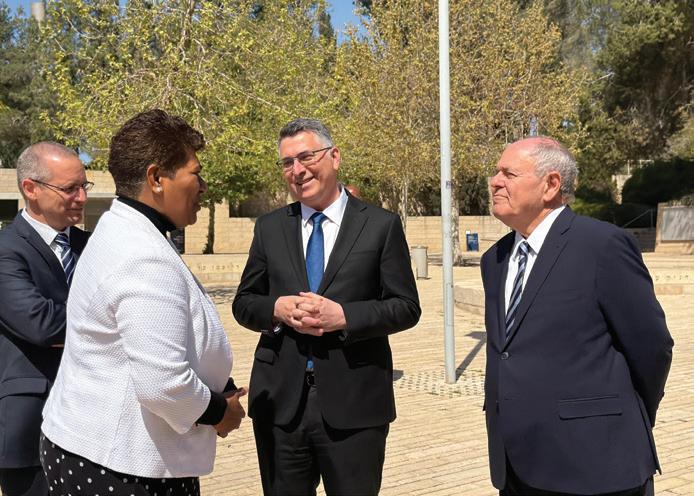
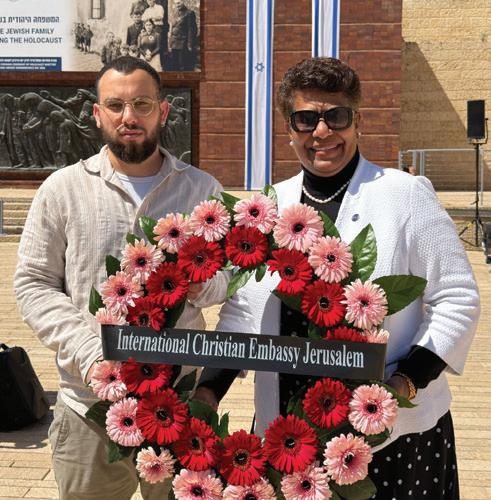
On Holocaust Remembrance Day in mid-April, the ICEJ’s Head of Diplomatic Protocol, Fine Ditoka, represented our global Christian following at the Yom HaShoah ceremonies held at Yad Vashem in Jerusalem. Fine was greeted at the entrance by Israeli Foreign Minister Gideon Saar and Yad Vashem Chairman Dr. Dani Dayan. She was then joined by fellow staff member Ariel Cohen in laying a wreath in the revered museum’s Warsaw Ghetto Square. Yom HaShoah is held to remember the more than six million Jews who perished in the Holocaust, and to honour the Jewish heroes who bravely rose to fight against the Nazis, including those who took part in the Warsaw Ghetto Uprising during Passover in 1943.
“As Christians, with all that is happening in the world, especially with rising antisemitism, this is not a time to be silent,” said Fine. “It is our biblical responsibility towards the nation of Israel to speak out. It is so important that we demonstrate openly our support for the Jewish people.”
ICEJ CONDEMNS ‘BURNING OF JUDAS’ CEREMONY IN SPAIN
DBurning an effigy of PM Netanyahu in Spain
(Credit: X video screen capture)
ICEJ HOSTS PASSOVER SEDER FOR STAFF AMID WAR
BY LAURINA DRIESSE
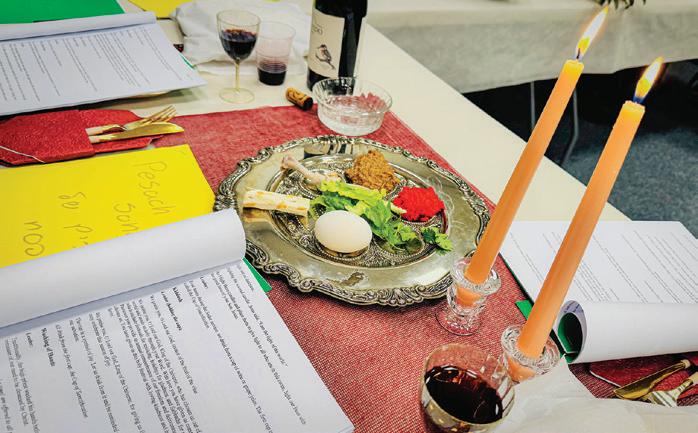
At Passover, Jewish families and friends gather around the dinner table to share the Pesach Seder meal and celebrate this significant biblical holiday, reflecting on its deep meaning – freedom, redemption and God’s faithfulness in delivering the Israelites from slavery in Egypt.
This year, observing Passover took on added significance, as we marked the occasion in Israel under the constant threat of ballistic missile barrages from Iran.
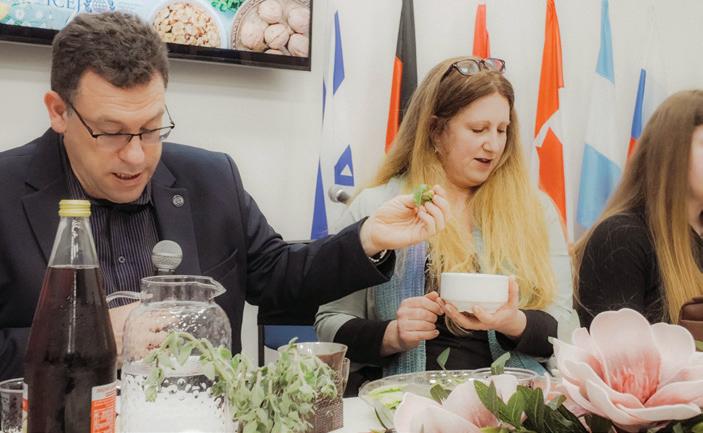
Amid the ongoing war and its repeated rocket sirens, some 30 ICEJ staff members with their families and friends gathered at our global headquarters in Jerusalem for a special Passover Seder meal. The chapel area was beautifully transformed, with decorated tables featuring the traditional symbolic elements of the Seder plate. ICEJ Vice President of Operations Richard van der Beek, an Israeli believer, led the celebrants on the journey through the Haggadah booklet (“the telling”) together.
uring the recent Passover season, an Easter ceremony in El Burgo, Spain featured the public burning of a seven-meter effigy of Israeli Prime Minister Benjamin Netanyahu as a supposed embodiment of evil. ICEJ President Dr. Jürgen Bühler released a statement condemning this outrageous act that followed an old Catholic and Orthodox tradition of the “Burning of Judas” which originated in medieval times. Such ceremonies were often deeply intertwined with antisemitic narratives portraying Jews as greedy, Christ killers, or inherently evil. The ICEJ added that such practices have no place in our modern world, and should be universally banned by the Catholic Church in keeping with the major reforms of the Vatican II Council. The ICEJ also called on the Vatican to reconsider its own one-sided criticism of Israel, and to use the Easter season instead to remember those Christians who ‘share in Christ’s sufferings’, such as the persecuted churches in northern Nigeria, Sudan, and the Congo.
The incident in Spain was especially alarming given the broader political context. It followed a series of harsh accusations by Spanish Prime Minister Pedro Sánchez that Israel is committing genocide and “exterminating” the Palestinian people. These statements were accompanied by concrete anti-Israel policies, including calls for arms embargoes, punitive diplomatic measures, and Spain’s recognition of a Palestinian state in 2024. The Israeli government therefore rightly viewed this burning of an effigy of its Prime Minister during Easter as a direct consequence of Spain’s official rhetoric and policies which legitimise the demonisation of Israel.
Despite the tensions outside, the evening was filled with warm fellowship, good food, laughter, and gratitude for the Lord’s goodness. The seder meal was made extra special as we sang the traditional Passover songs with Richard’s wife Katharine and several others accompanying us on harps.
US-ISRAEL BLOWS LEAVE IRAN BATTERED BUT NOT BROKEN
BY DAVID PARSONS, ICEJ SENIOR VICE PRESIDENT & SPOKESMAN
In late February, the United States and Israel launched a joint operation against the radical Iranian regime which quickly succeeded in severely degrading Tehran’s military and nuclear capabilities. While dozens of its top leaders were eliminated in the opening salvo, Iran did manage a serious response, attacking nearly every Arab country in the region and shaking global energy markets by closing the Strait of Hormuz. The war has now given way to a shaky ceasefire to give diplomacy a chance. But it remains unclear how long the truce will hold, and whether US President Donald Trump might settle for a stringent nuclear deal with Iran’s hard-liners or pursue genuine regime change that would finally end Tehran’s decades-long quest to destroy Israel and dominate the Middle East.
FROM FURY TO CEASEFIRE
When Trump launched operation “Epic Fury” (known in Israel as “Roaring Lion”), he faced immediate pushback in Washington, even from Republicans worried about another “forever war” in the Mideast. But Trump responded that he expected the fighting to only last 4-6 weeks, and sure enough a ceasefire was announced after 38 days of fighting.
leadership, including Supreme Leader Ali Khamenei, who was quickly replaced by his severely injured son Mojtaba in a hasty move dictated by the real rulers in Tehran – the Islamic Revolutionary Guard Corps. The regime is weakened and has accepted a ceasefire rather than risk true regime change. For Israel, that would mean an entirely new leadership no longer obsessed with eradicating the Jewish state.
In that time, American and Israeli forces managed to re-target Iran’s key nuclear sites initially hit last June, as well as several new ones critical to developing nuclear weapons. Iran lost some 70% of its ballistic missiles and launchers, along with its production facilities for missiles and rocket fuel. The US and Israel also decapitated Iran’s senior
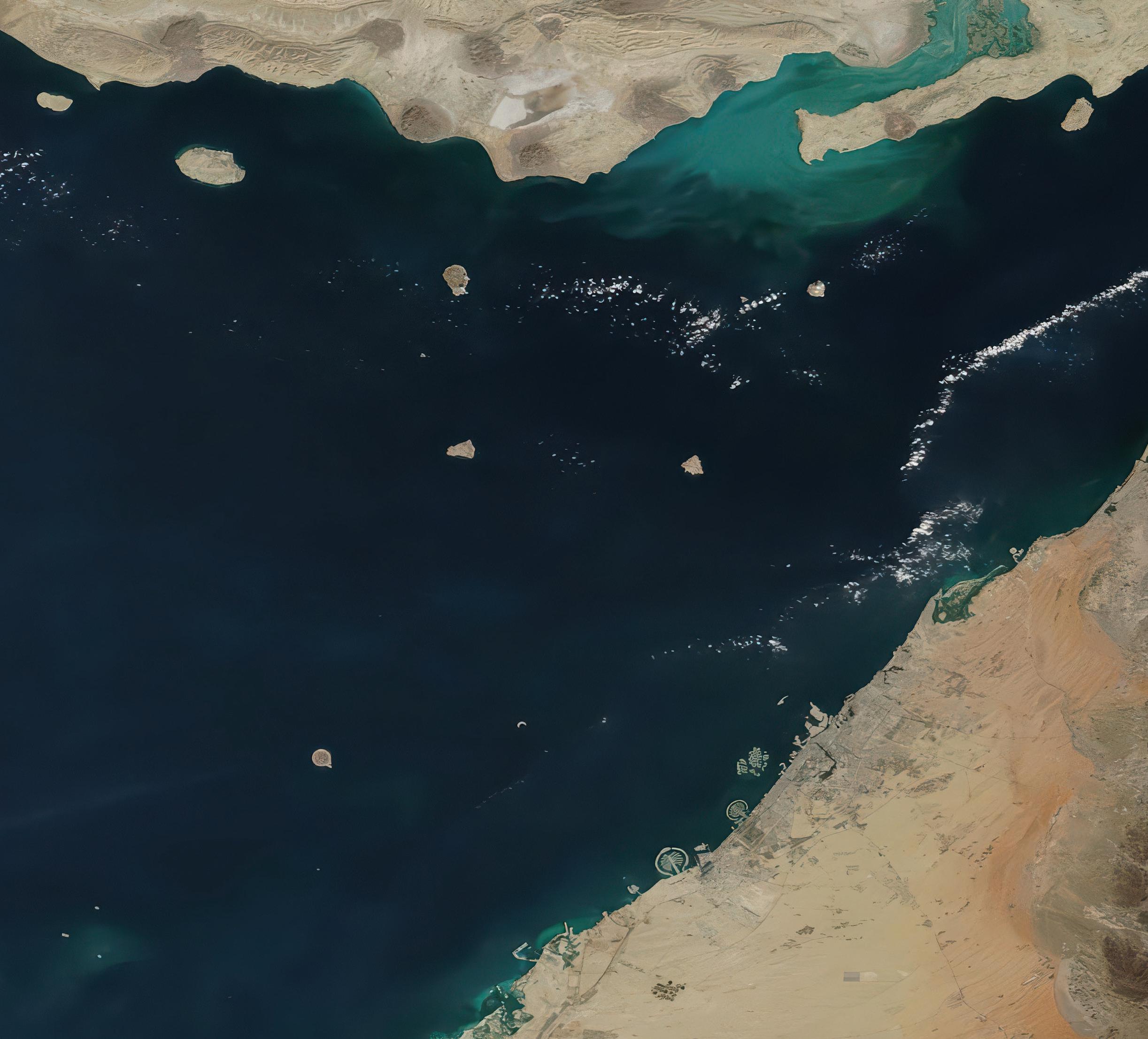
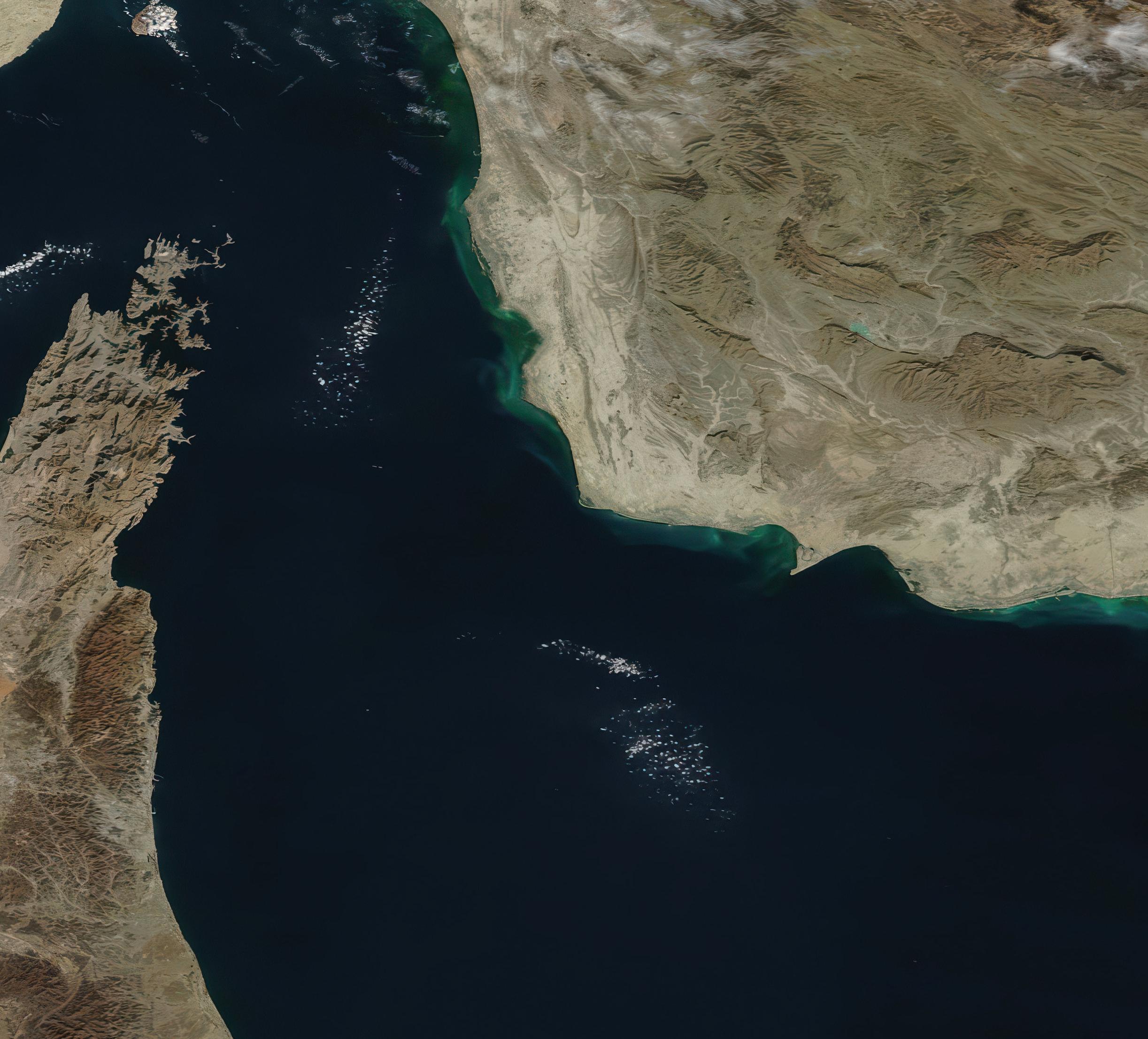
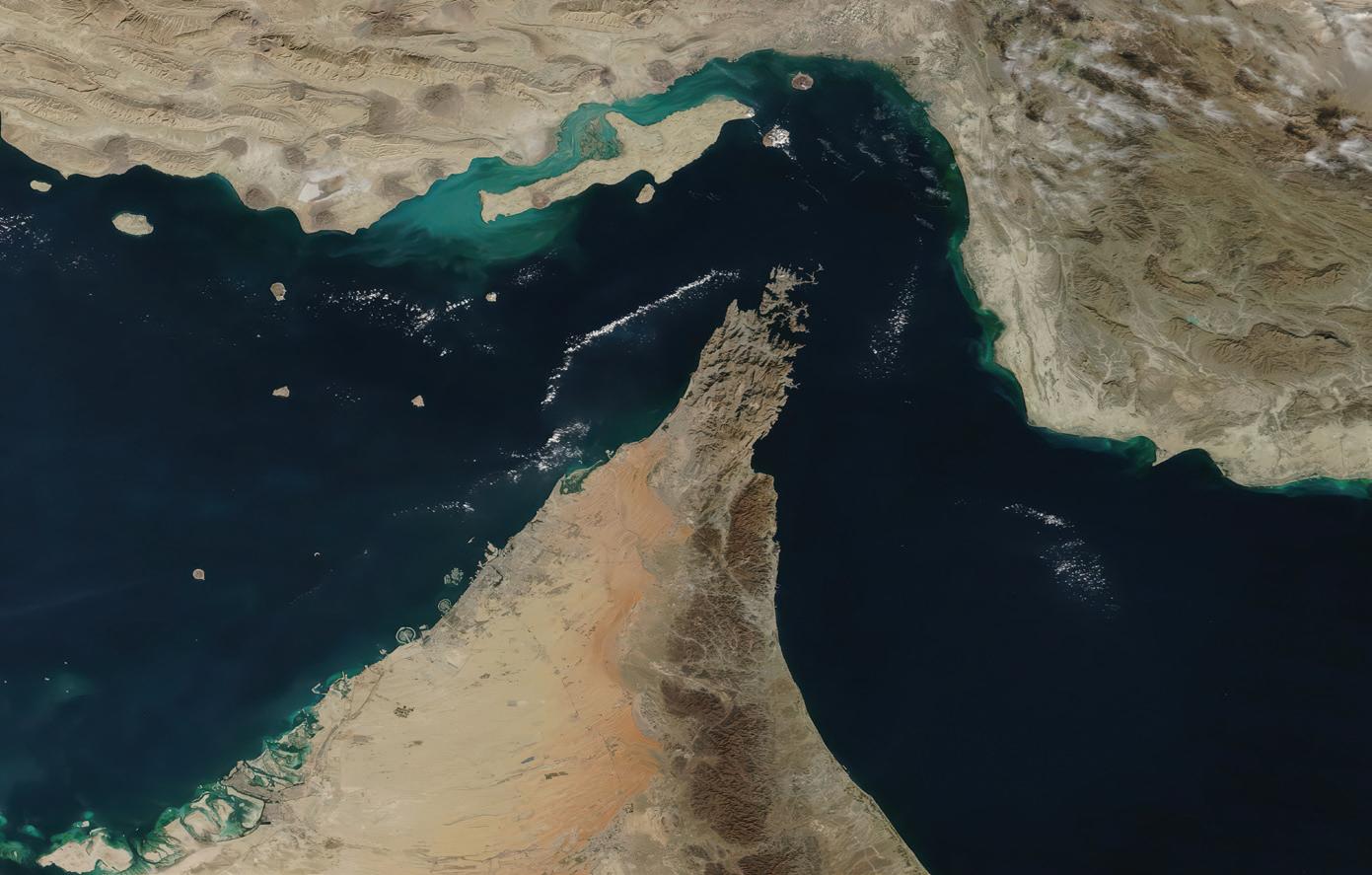
For its part, Iran was able to launch hundreds of ballistic missiles at Israel, many tipped with cluster munitions targeting civilians, while also mounting a serious rocket and drone threat to all its Arab neighbours. This cast a pall of fear across the region, seen in the way not a single Arab state decided to launch retaliatory strikes against Iran. In its most impactful move, the IRGC also sent ripples through global markets by closing the Strait of Hormuz, a narrow waterway through which 20% of the world’s oil and gas supply passes every day.
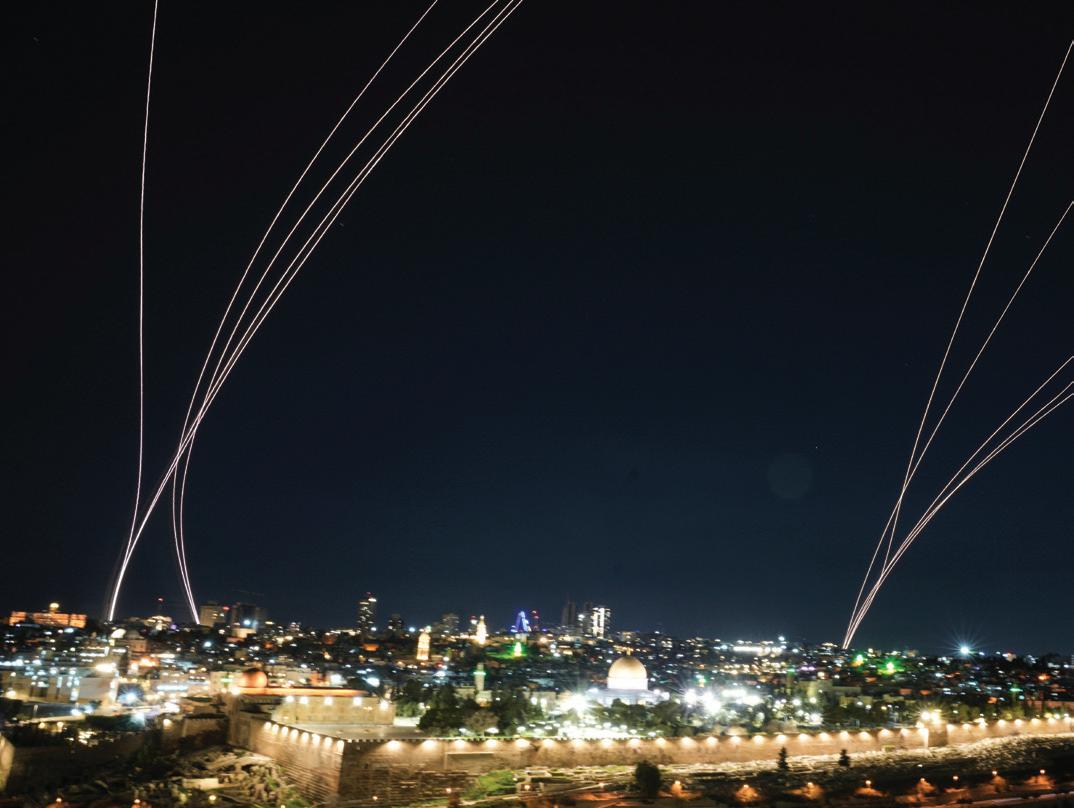
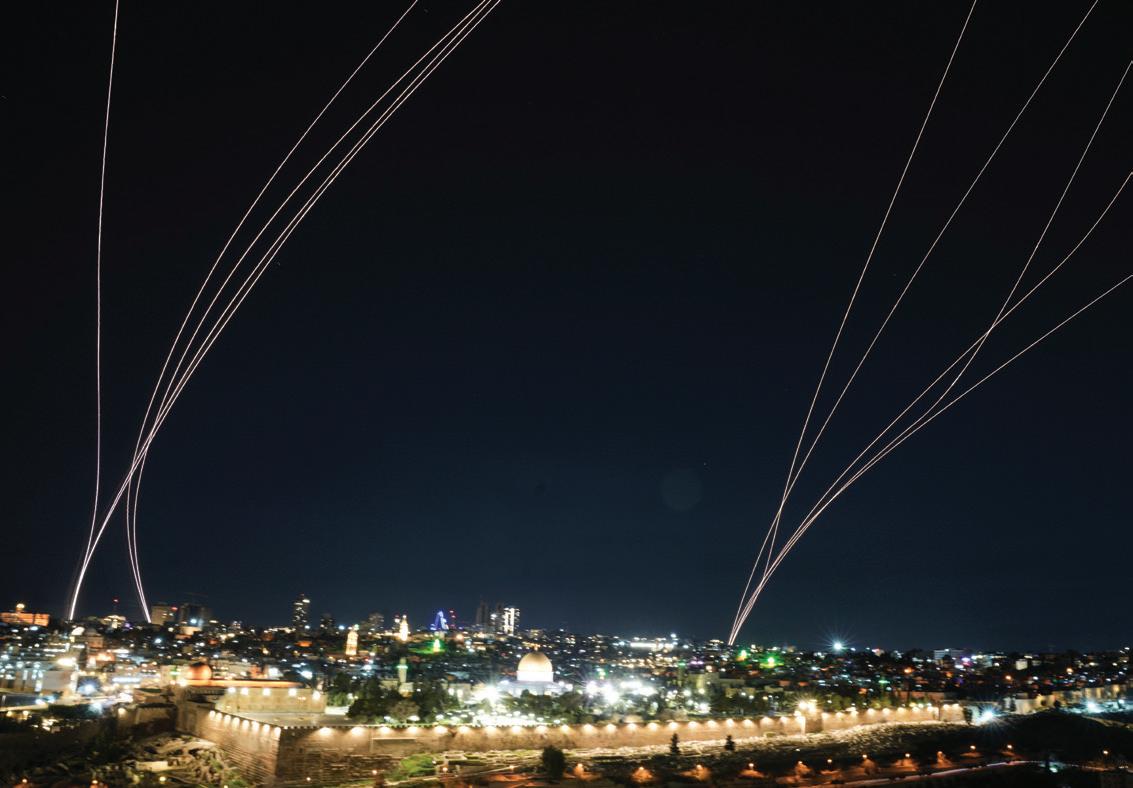
Israeli air defenses intercept Iranian missiles over Jerusalem. (Credit: AP photo-Mahmoud Illean)
The standoff over Hormuz eventually forced both the US and Iran into a ceasefire, with each side quick to claim victory. Trump could indeed say Washington had achieved most of its military objectives within his short timeframe for fighting, but crucial political goals must still await the results of negotiations being mediated by Pakistan. As these high-stakes talks began in Islamabad, only
(Credit: AP Photo)
American and Iranian delegations were sitting in the room, showing just how much Israel and its Arab allies are dependent on the US and especially President Trump right now.
Trump had set a deadline for Tehran to open the Strait of Hormuz, or he would target Iran’s power plants and bridges, paralyzing the country. But just minutes before the deadline, he announced that a “double ceasefire” was in place, giving the sides two weeks for “intense diplomacy” on a comprehensive deal resolving all issues in dispute.
In reality, these were duelling ceasefires, with the US, Israel and Iran each issuing unilateral declarations of their intent to hold fire, conditioned however on their own separate demands and red lines. Trump wanted the Strait of Hormuz opened immediately to all shipping, while Tehran insisted any vessels wanting through had to first seek approval from the Iranian army. Reports indicated Iran also was demanding a toll of $2 million per ship. Meantime, Israel was adamant that the ceasefire did not extend to Lebanon, where its battle with Hizbullah had reignited on the second day of the war with Iran.
Without Pakistan’s frantic last-minute intervention, the truce never would have happened. They seemed desperate not to see an important fellow Muslim country being battered so badly. China also quietly pressured Iran to open Hormuz out of its own thirst for Mideast oil. Trump’s veiled threat against an “entire civilization” and the IAF’s expanding strikes on Iranian bridges and petrochemical plants also played crucial roles in persuading the IRGC to come to the negotiating table.
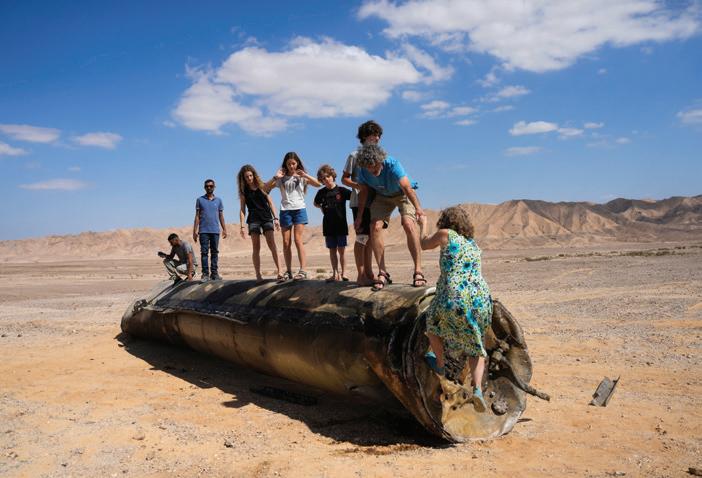
Local Arabs and Jews stand on a spent Iranian missile fuselage in the Negev last year.
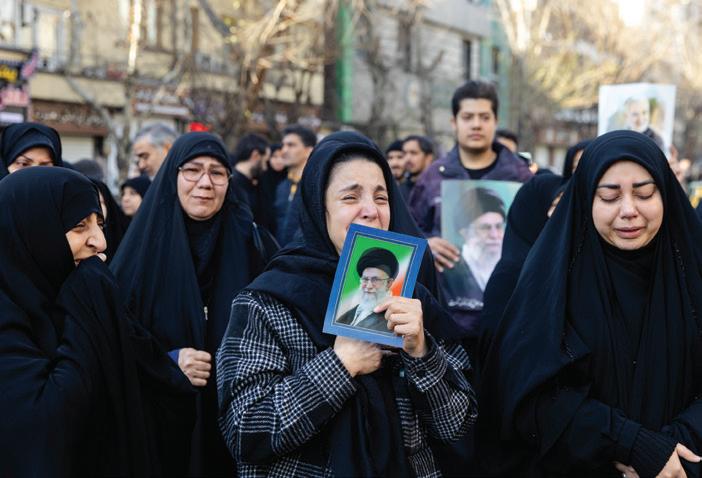
Mourning the death of Ayatollah Khamenei in Tehran. (Credit: AP PhotoFoad Ashtari-Sipa USA)
CONFLICTING WISH LISTS
The talks between Iran and the US have not gone smoothly, but Trump keeps expressing optimism that Tehran is coming around to his positions. The negotiations needed to reconcile Trump’s 15-point peace plan with Iran’s 10-point plan, both issued days before the ceasefire took effect.
TRUMP’S PLAN COVERED FOUR MAIN AREAS:
1) Nuclear Disarmament: Iran must dismantle its nuclear sites, foreswear nuclear weapons, halt all enrichment activities, and hand over its stockpile of some 450 kilos of highly-enriched uranium.
2) Regional Security: Iran must stop supporting regional proxy militias, and limit the number and range of its ballistic missiles.
3) Economic Relief: The US would lift all sanctions on Iran, rescind any snapback provisions, and offer Tehran help with a civilian nuclear program.
4) Safe Passage: Iran must ensure free, unhindered access through the Strait of Hormuz.
AMONG IRAN’S TEN DEMANDS
WERE:
• Security Guarantees: The US and its allies must sign a non-aggression pledge.
• Control of Strait of Hormuz: Including the $2 million transit fee per ship.
• Recognition of Iran’s right to enrich uranium.
• The lifting of all sanctions on Iran, both direct and third party.
• Washington must evacuate all US military bases in the region.
• End attacks on Iranian-aligned militias in Lebanon, Iraq, Yemen and Palestinian areas.
• War reparations and the release of all frozen assets.
• Rescind all UN Security Council and IAEA resolutions against Iran.
• A new UNSC resolution making the deal binding on all nations.
Trump has repeatedly insisted the “new” Iranian regime leaders he is dealing with (President Masoud Pezeshkian and Parliament Speaker Mohammad Ghalibaf) have already agreed to most of his demands. Latest reports claim the main sticking points are no pathway to a nuclear weapon, re-opening Hormuz, and war compensation.
CHANGING
OF THE GUARD
President Trump has built a record of effectively waging economic warfare in preference to actual fighting, though he is not afraid to order military action when necessary. Over the six weeks of combat, the Iranian regime proved his match by shuttering the Strait of Hormuz and sending shock waves through the global economy. One main lesson for Israel and the Arab Gulf states is that alternate routes are urgently needed to funnel oil to the rest of the world, to reduce dependency on the volatile Strait of Hormuz. Another key lesson is that Israel is America’s most trustworthy and effective ally in the region against the Iranian threat, a fact not lost on the Arab Gulf rulers. Together, these two factors may give fresh momentum to the Abraham Accords and the makings of a new US-backed Arab-Israeli strategic alliance to bring stability to the region.
In the meantime, Israel must continue with its efforts over the past two years of war to disarm Hamas in Gaza and Hizbullah in Lebanon. The fact that direct talks between Israel and Lebanon have already started in Washington, without any Iranian involvement, is a very positive sign. Gaza also is currently under its own separate track towards peace, with Hamas increasingly isolated.
However, there still seems to be a gap between American and Israeli interests when it
comes to the end game with Iran. President Trump has mid-term elections coming up in November that will determine whether his last two years in the White House will be stymied by Democratic control over one or both Houses of Congress. His approval ratings are dropping, partly due to the war with Iran, so he has a strong incentive to get a deal done quickly with Iran. His priorities are an airtight non-nuclear accord and re-opening the Strait.
Israel, on the other hand, is worried the hardline regime in Tehran will survive to fight another day once Trump leaves office. This could seriously jeopardise all the hard-won progress and sacrifices Israelis have made in 30 months of combat to weaken Iran and its ring of proxy militias, especially Hamas and Hizbullah. Thus, Jerusalem is much more keen on real regime change in Iran, something the Iranian people may find the courage to rise up and seek themselves no matter what deal Trump makes with the surviving guardians of the Islamic Revolution. With Iran’s economy collapsing under the weight of the joint USIsraeli assault, that day may be closer than we think.
As we go to press, Trump has tightened the US naval blockade on Iran, which is costing Tehran $500 million per day, while also extending his unilateral ceasefire without giving a deadline in hopes of pressuring the fractured Iranian regime into a unified decision to give up its nuclear ambitions. This also has the fighting in Lebanon on hold indefinitely, although the chances of a flare-up there are much higher. The multi-front war ignited by Hamas on October 7 still has no end in sight.
Satellite Image of the Strait of Hormuz. (Credit: Wikimedia)
THE SELF-EVIDENT TRUTHS BEHIND THE IRAN WAR
BY DAVID R. PARSONS, ICEJ SENIOR VICE PRESIDENT & SPOKESMAN
The current war pitting Israel and the United States against the Iranian regime is actually a continuation of the IDF’s 12-day conflict with Tehran last June, which Washington joined late to carry out Operation Midnight Hammer. Together, these military campaigns mark several notable firsts for the region and the world.
A LONG-OVERDUE RESPONSE
For starters, it marks the first time since the Islamic Revolution in 1979 that Iran has been made to pay a price on its own soil for its exporting of violence and terror worldwide. Sure, they fought an eight-year war with Iraq in the 1980s, but that was largely confined to a border dispute over oil fields. Here, we have 47 long years in which the world allowed the Ayatollahs to draw innocent blood, spread fear and radical ideologies, arm and train terrorists, fuel uprisings, target diplomats and embassies, and stage bombings against civilians worldwide.
THE BILL OF INDICTMENT AGAINST IRAN IS LONG AND GRIM! FOR INSTANCE:
• The 52 Americans held hostage for 444 frightening days in 1979-80;
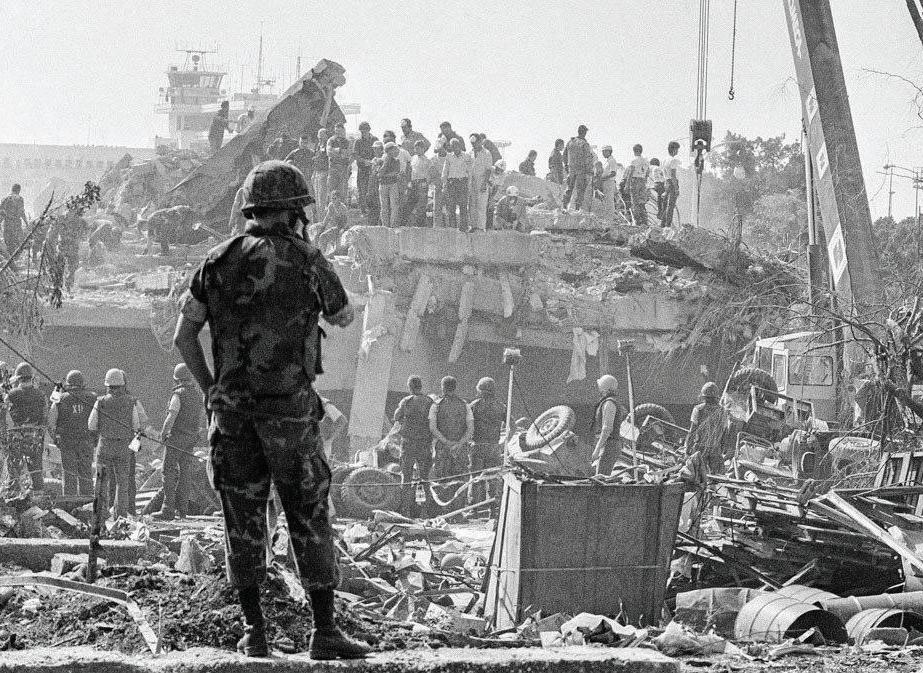
• The 241 US Marines and 58 French troops bombed in Beirut in 1983;
• The 29 people killed in 1992’s bombing of Israel’s Embassy in Buenos Aires;
• Another 85 killed in the 1994 blast at the city’s Jewish community center;
• The 1996 Khobar Towers blast in Saudi Arabia that killed 19 US personnel;
• Over 600 US troops killed by Iran-backed militias in Iraq from 2003 to 2011.
Syrians in that nation’s brutal civil war. It enabled the Houthi rebels to spread carnage and divide Yemen by force. It has destabilised Iraq, and sought to undermine the monarchy in Jordan. And it has staged or attempted terror attacks, bombings and assassination plots on all continents, from Argentina to Thailand.
Lest we forget, Iran also has brutally repressed and killed its own people over such menial violations as improper dress.
Last but certainly not least, the Iranian regime has drained its country’s resources for the express purpose of wiping Israel off the map.
To that end, the Iranian regime has spent the last 47 years building up a “ring of fire” around Israel by arming, training and funding Hamas and Palestinian Islamic Jihad in the West Bank and Gaza, Hizbullah in Lebanon, Shi’ite militias in Iraq, the Houthis in Yemen, and other proxy terror militias. It also has lied to the world about its renegade nuclear weapons program, hiding secret enrichment plants deep underground and enriching uranium to levels only fit for military purposes. They were caught with designs for nuclear triggers and atomic warheads. They built a vast ballistic missile program, using their space program as cover to develop longer range rocket engines.
Scene of the US Marine Barracks bombing in Beirut in 1983
(Credit: Wikipedia)
Iran has held Lebanon hostage through Hizbullah for 43 years. It aided the Assad regime’s slaughter of hundreds of thousands of
Yet when Israel and the US launched their latest military campaign against the Iranian regime, some had the audacity to ask: Where was the imminent threat?
They are asking the wrong question! The real question is: Why did it take so long?
Why did it take 47 years for the world to finally make Iran pay a price on its own soil for all of its global evil and carnage? Were we intimidated by their radicalism? Were we just plain cowards?
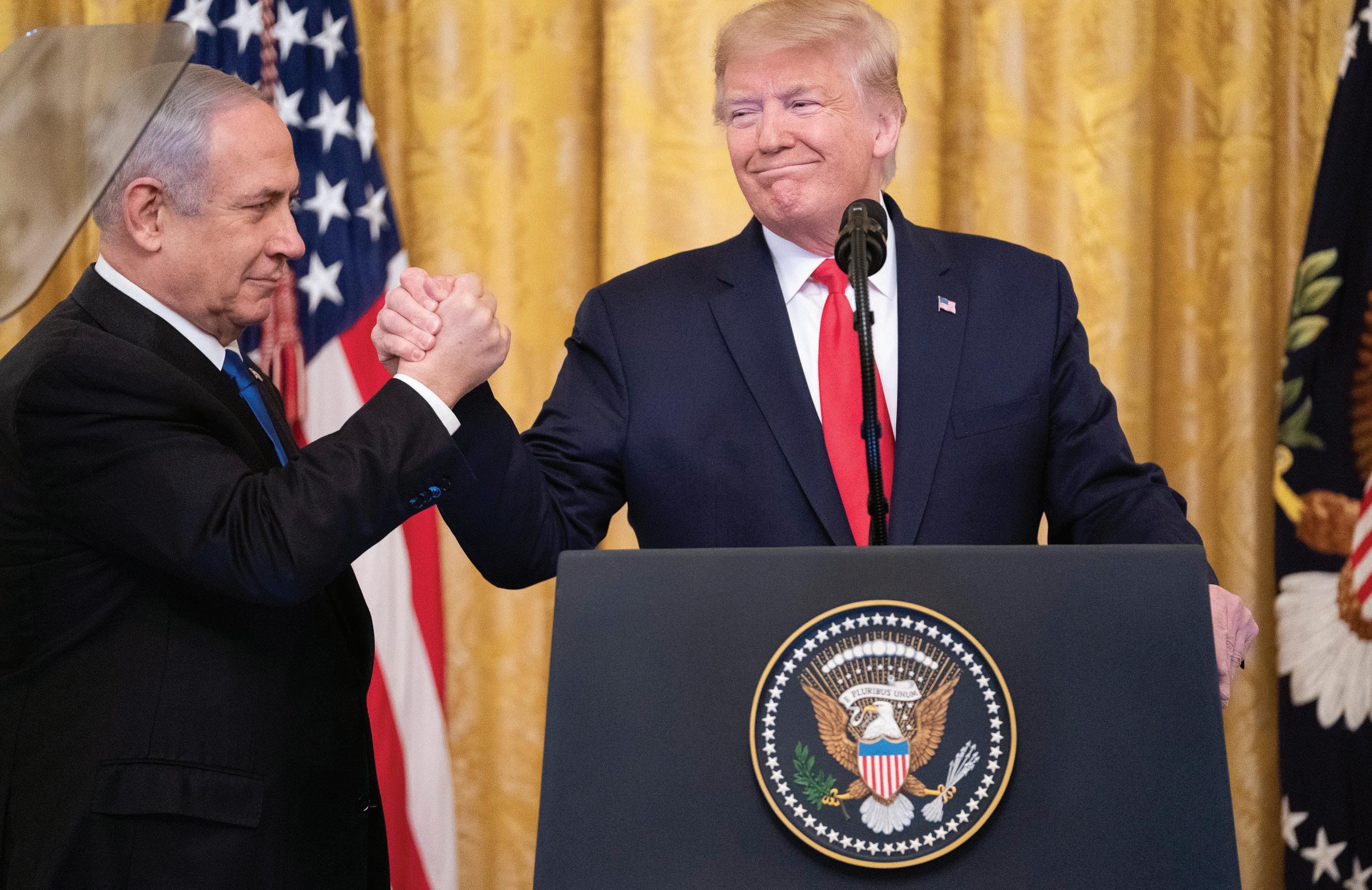
Donald Trump and Benjamin Netanyahu sent American and Israeli troops into battle for the first time together (Credit: Wikipedia)
Surely, by the time American and Israeli war planes descended on Iran in late February, the mad clerical regime in Tehran had already given us five decades worth of casus belli.
Now I know many of my fellow Americans refuse to get involved in “forever wars” in the Middle East, especially after the painful experiences in Iraq and Afghanistan. But here there is a good possibility of a swifter end to the regime in Tehran because the vast majority of Iranians also want them gone.
At the same time, we must realise that Islamic eschatology foresees Muslims waging perpetual war against Jews and infidels until Judgment Day. So, whether we like it or not, radical Muslims have declared a forever war on the West, and their track record cries out “woe” to those who ignore it. As the old adage goes: If you don’t go solve the problems of the Middle East, the problems of the Middle East will come to you.
A PROUD ALLIANCE
The other significant ‘first’ in this war is that for the first time American soldiers are fighting alongside Israeli troops in an active war. This is a huge surprise for me personally. I have spent the last 35 years as a fulltime Christian advocate for Israel, ever since I arrived in Washington in 1991 to volunteer with a small Christian group registered with Congress to lobby for strong US-Israel relations.
In those days, I quickly learned the principle that “Israel seeks to defend itself by itself”, they were just asking the US for help with the means to protect their country. In that regard, Israel has always been Washington’s best ally in never wanting Americans soldiers to risk their lives for them. So, this current war marks a huge shift for both nations.
Actually, Americans should be proud of our country and president for coming alongside Israel to face down this global menace. I do not think America should be the world’s policeman. And better if the US guarantees the free flow of Mideast oil than Russia or China. But there is something deeper at play here, and it has to do with America’s founding principles and its destiny as a nation.
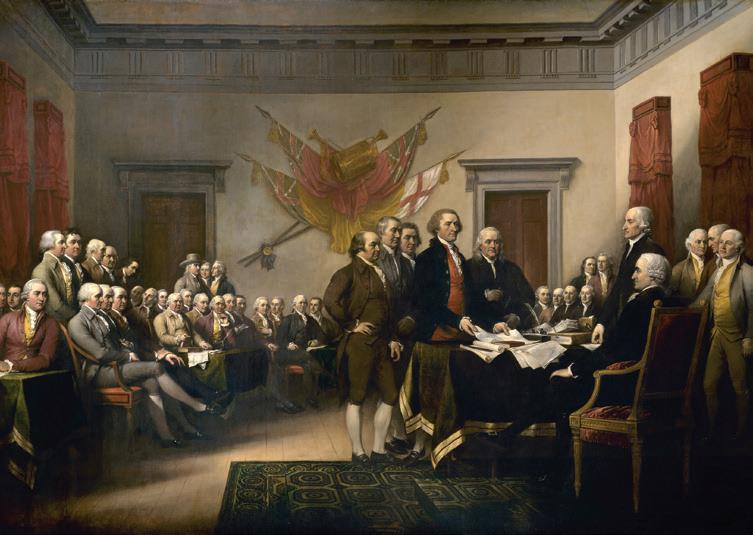
The US Declaration of Independence includes these precious words penned by Thomas Jefferson: “We hold these truths to be selfevident, that all men are created equal, that they are endowed by their Creator with certain unalienable Rights, that among these are Life, Liberty and the pursuit of Happiness.”
Many argue these days about whether America was founded as a Christian nation. What cannot be disputed is that our Founding Fathers did believe in a Creator God whose hand of Providence was on their endeavours. And they committed themselves to the biblical
principle of Imago Dei – that all men are created in God’s image, we are all equal in His sight, and we will all give account for our lives before Him one day.
This guiding principle originates in Genesis 9:3-6 and teaches us that humans have moral agency and an incentive to act uprightly towards each other, because God is watching. Also of great note, we received this guiding light from Israel. Indeed, it lies at the heart of the Judeo-Christian values which have inspired and upheld Western societies for generations.
Now America did have a serious problem in that it did not treat black African slaves as created equal by God, and our entire nation –North and South – paid a great price in the Civil War for constantly compromising over the cruel institution of slavery. In his famous Gettysburg Address, President Abraham Lincoln distilled that whole conflict as a fight over whether this “new nation, conceived in Liberty, and dedicated to the proposition that all men are created equal… can long endure.”
But once that failing was resolved, America has played a unique role in the world as guardians of the principle of human equality and freedom. We beat back the tyranny of the Nazis, who saw Jews as inferior humans that needed to be eradicated. We stood down the Soviet Communists, who sought to enslave the world under an atheistic Marxism which directly challenged the biblical principle that mankind is a special creation of God.
And in this hour, it is only appropriate that we stand by Israel, the source of this life-affirming principle, to fight the dark apocalyptic ideology of the radical Ayatollahs in Tehran. After all, they seek to ignite a global conflagration which they believe will end up massacring 80% of the world’s population so they can rule the planet. As for Israel and the Jews, they would be totally annihilated along the way.
My friends, that is an evil which calls for a response. Pre-emption, even! Yet we waited five decades to respond, with compromise after compromise over their evil agenda. Now, the whole world is paying a price in the spike of oil and gas prices. We must blame ourselves and our leaders for never directly challenging Iran in a way that would have convinced them to abandon this destructive ideology.
So, I am proud that America joined Israel in this battle. It is wholly appropriate, as the truths which undergird this just war are “self-evident”. And oddly, this alliance of our two nations was foreseen by the Ayatollahs themselves long ago. The reason they have always raged against the “Great Satan” and the “Little Satan” is because they knew from the start America and Israel were the only nations that could truly stand in their way.
Declaration of Independence (1819 Painting by John Trumbull - Wikipedia)
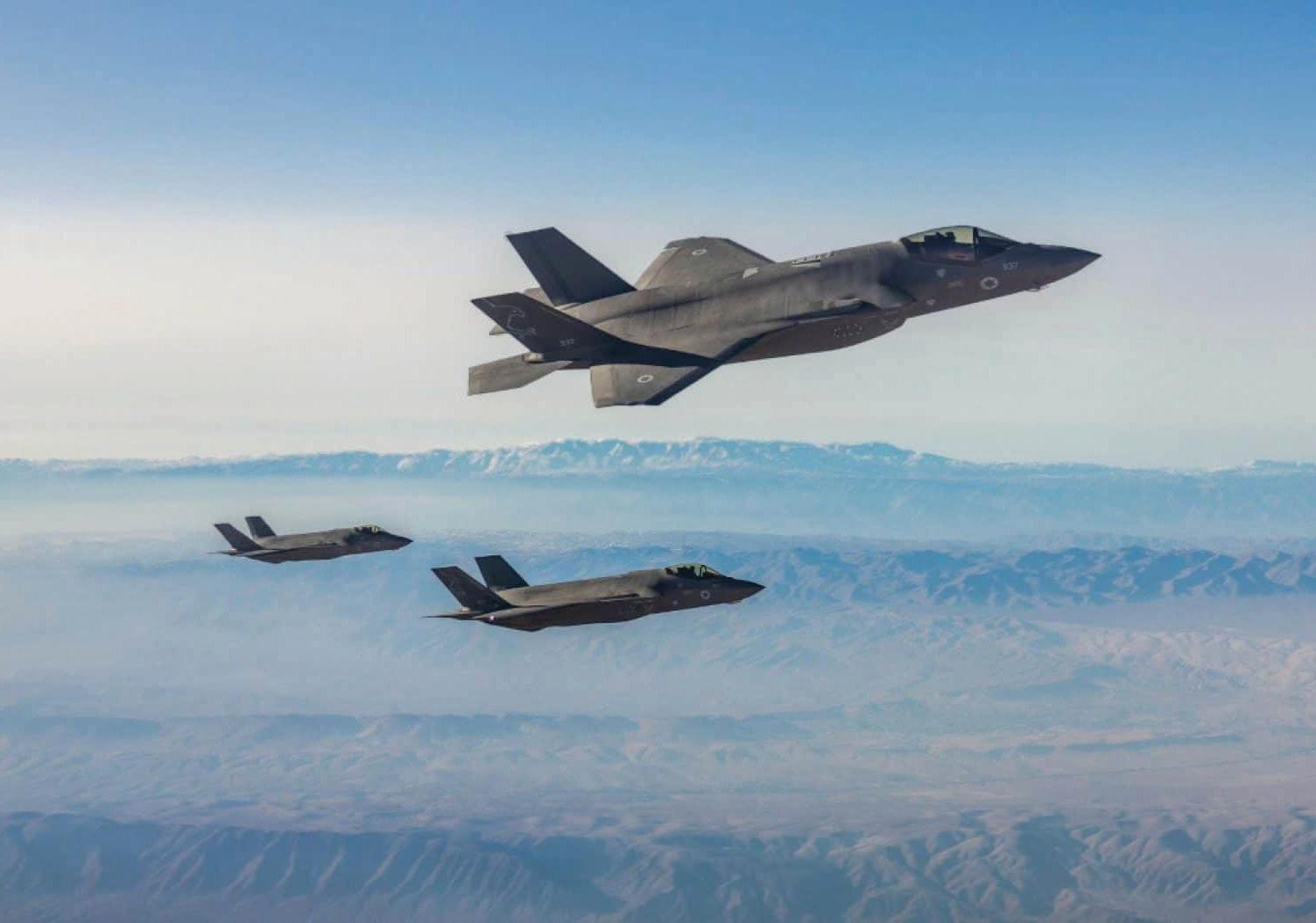
Israeli F-35s on their way to strike Iran (Credit: IDF photo)
ICEJ STEPS UP AGAIN WITH URGENT WAR RELIEF AID IN ISRAEL
BY ICEJ STAFF WRITERS
Over the recent six weeks of war with Iran, the people of Israel were rushing to bomb shelters over and over again to withstand the daily onslaught of Iranian ballistic missiles cruelly targeting the civilian heartland of this nation. With a fragile ceasefire in place as of this writing, things are a bit quieter, although the northern half of Israel is still being targeted by rockets and drones fired by Hizbullah in Lebanon. Despite these dangers, the staff of the International Christian Embassy Jerusalem kept traversing Israel to view the damages, assess the areas of greatest need, respond to urgent requests for help, and encourage Israelis we met along the way.
This latest chapter in the long conflict with Iran, known in Israel as “Operation Roaring Lion”, started just before Purim in late February and ended in a temporary ceasefire with Iran just as Passover week ended in early April. Here is a brief overview of the ICEJ’s urgent war relief efforts undertaken during this sharp escalation with Iran and its proxy Hizbullah in Lebanon.
Thanks to the quick response of our Christian donors, the ICEJ Aid department was able to help in the following areas of urgent need:
ASSISTING HOLOCAUST SURVIVORS
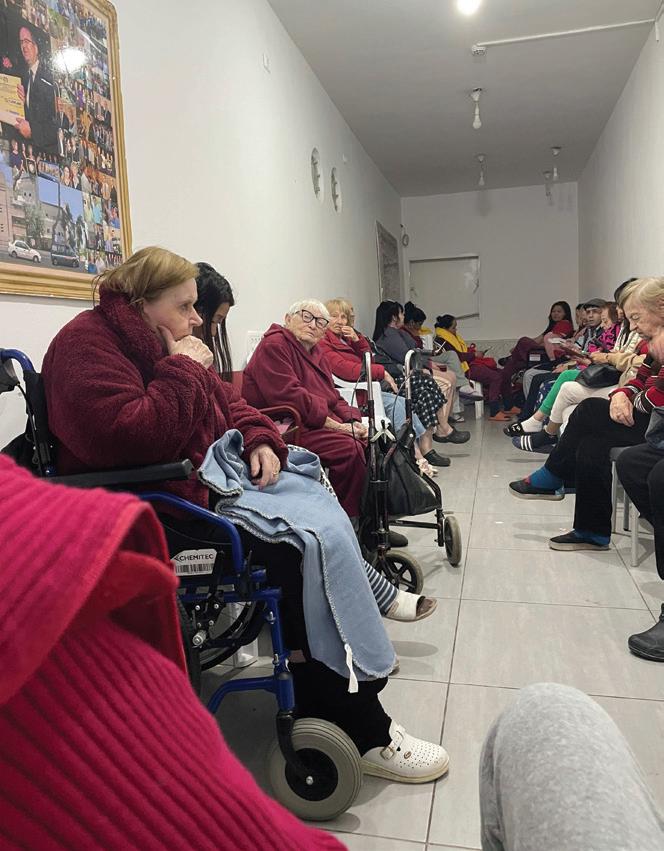
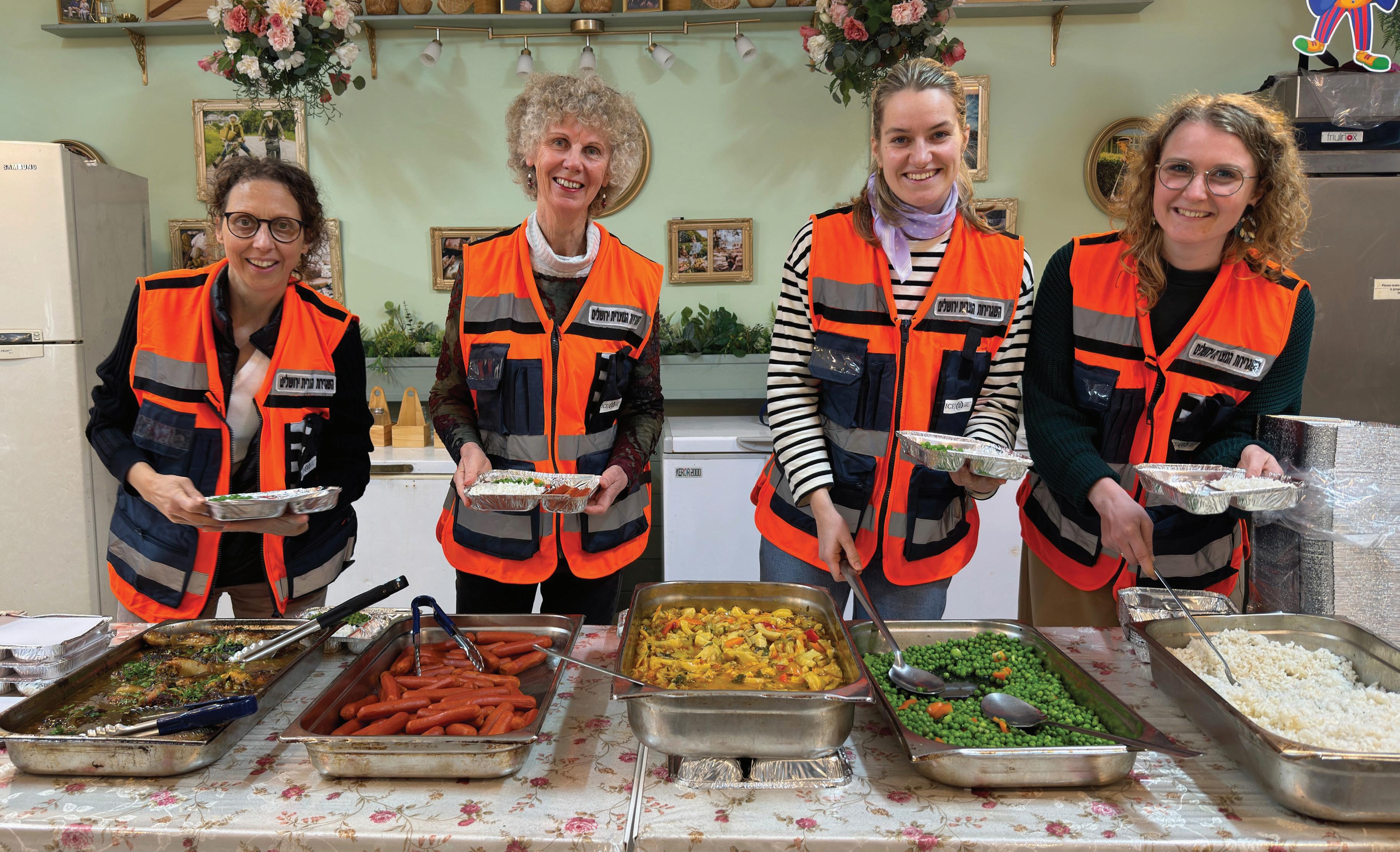
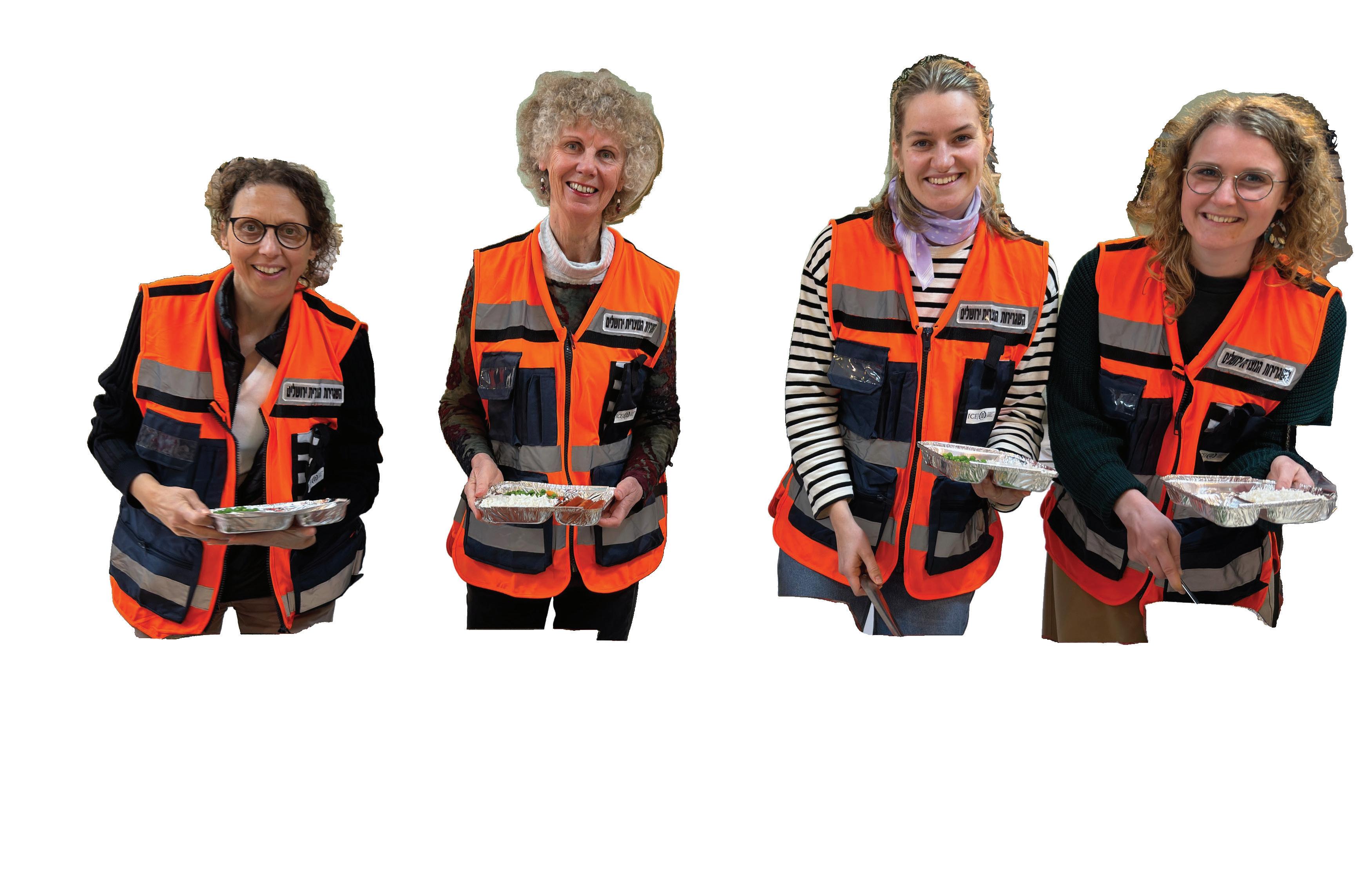
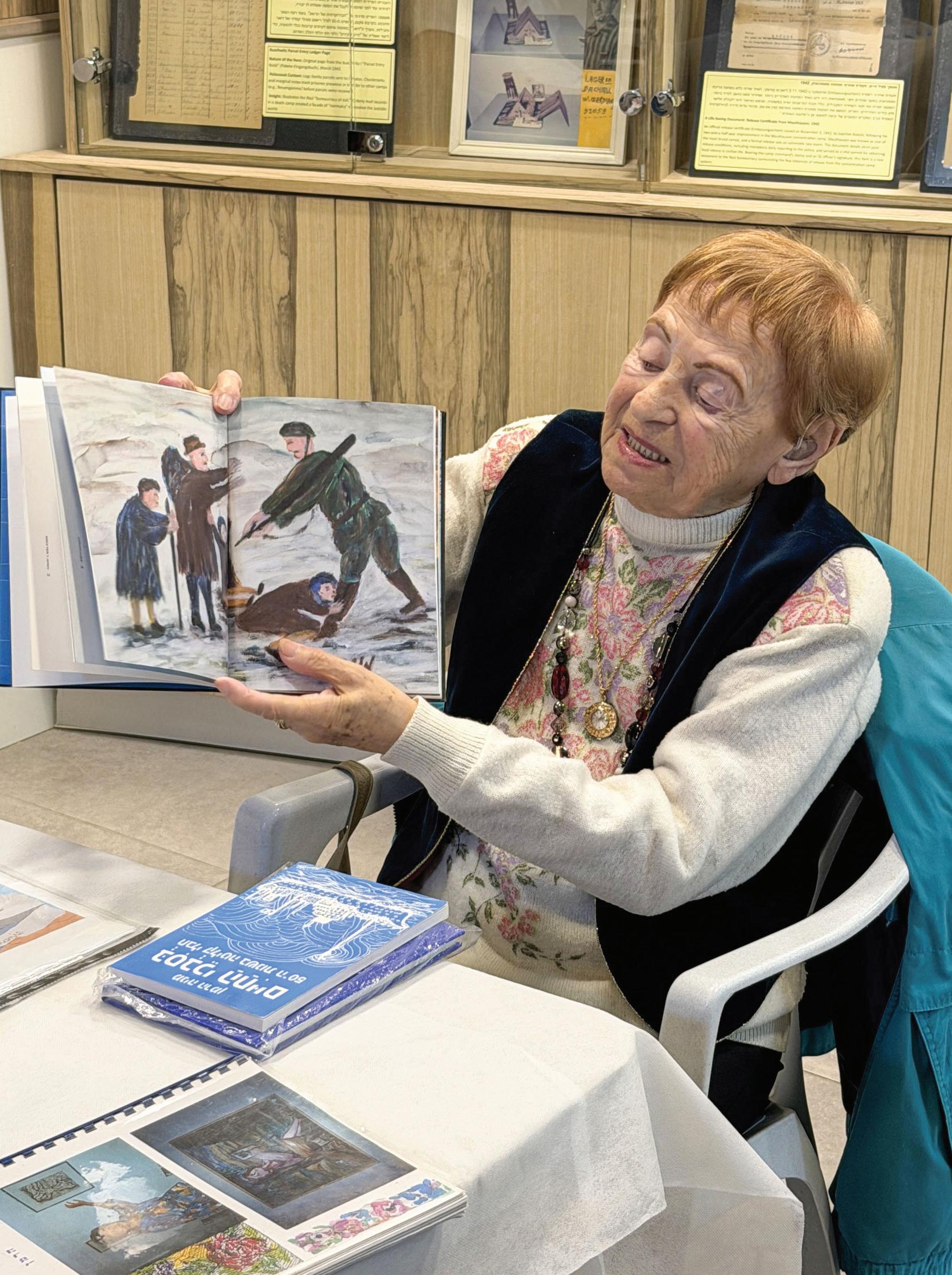
The ICEJ assisted hundreds of Holocaust survivors across Israel, including the dozens of residents in our special assisted living home for survivors in Haifa. Our Christian team at the Haifa Home spent long hours with the residents in bomb shelters and made special efforts to keep up their regular activities with art lessons, exercise sessions, meal times and other daily care.
The Christian Embassy also assisted many more Holocaust survivors through local partners and call centers that look after these elderly victims of Nazi cruelty. This included preparing and delivering meals, and providing food supplies to Holocaust survivors who could not leave home to shop for groceries due to the constant rocket threat.
Residents at the Haifa Home take shelter during the war.
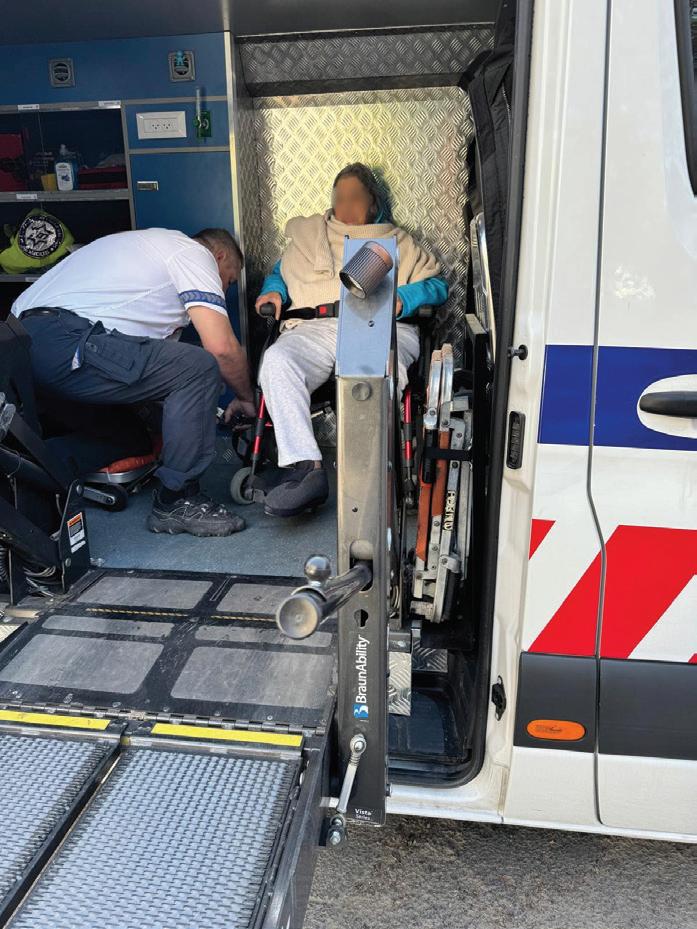
Also, we helped Holocaust survivors who do not live near easily accessible bomb shelters to move to safer locations for brief respites during the war. Many of these moves involved special transport needs in ambulances and wheelchair-accessible lift vehicles, while others were fine going by taxis and private vehicles.
One such transport effort was for a Holocaust survivor in her 80s who needed special attention and care due to her fragile medical condition. She and her caregiver daughter were
provided a week’s stay in a safe hotel, but she needed modified accommodations, transport by medical ambulance, and a heavy-duty patient hoist that is an essential part of her daily care. This special medical equipment needed to be moved with her both to and from the hotel. Most transport providers refuse to carry such heavy medical devices. But thanks to an exceptional effort, everything was found to allow her and the equipment to make the trip so she could enjoy her time of rest from the worries of reaching a shelter in time.
Specialised transport efforts for a Holocaust survivor.
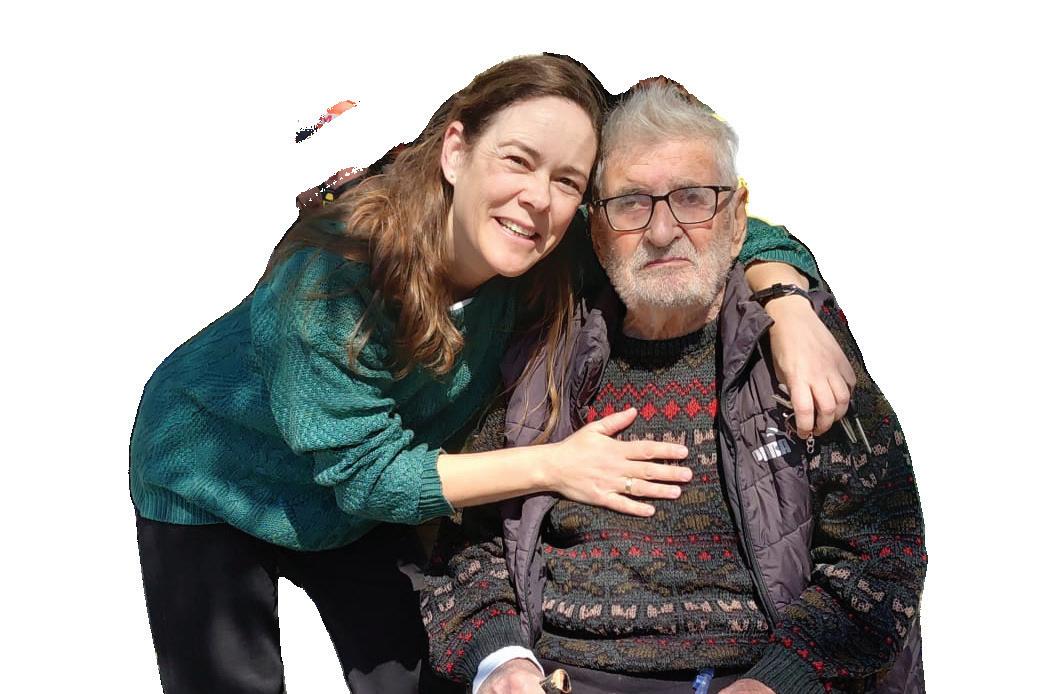
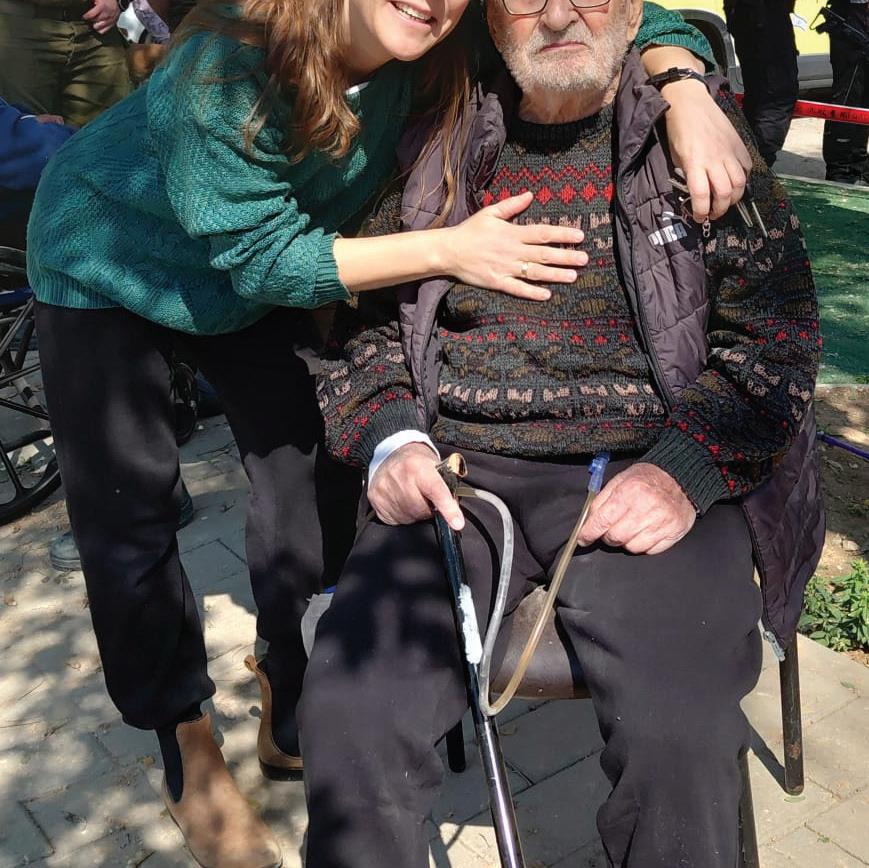
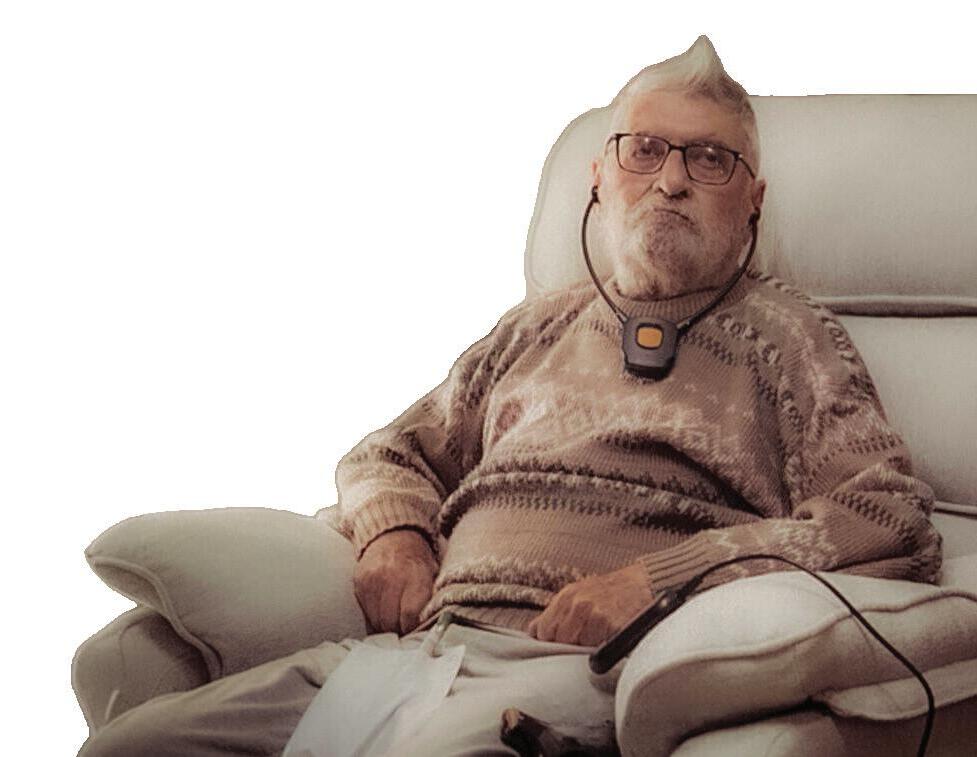
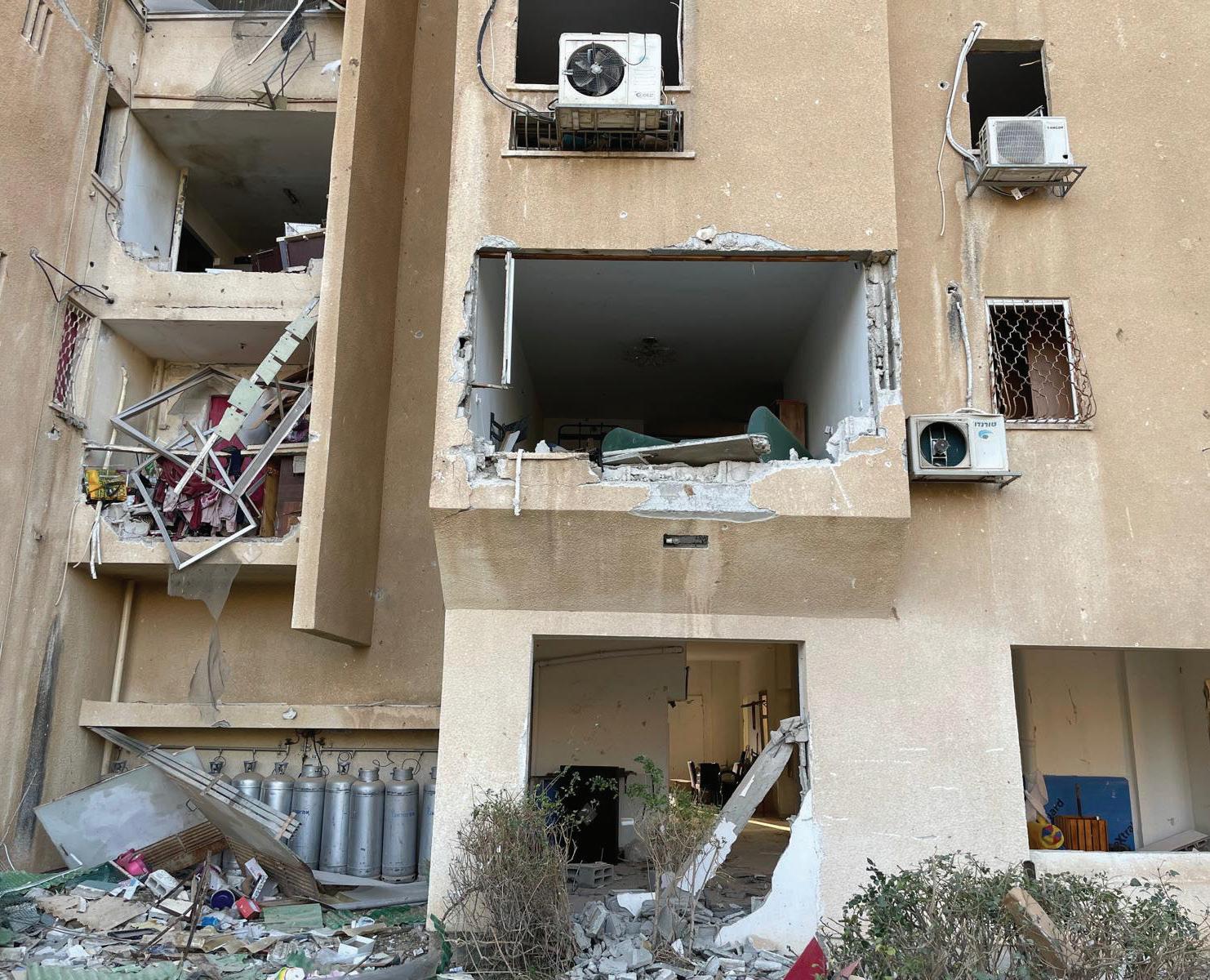
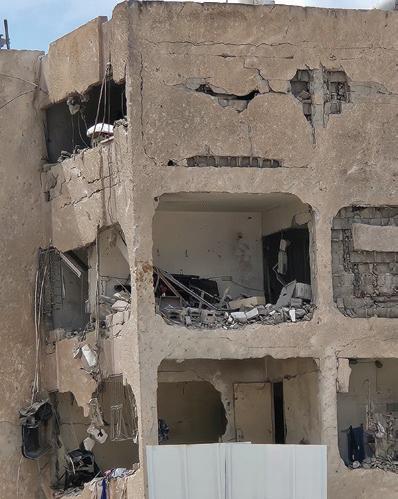
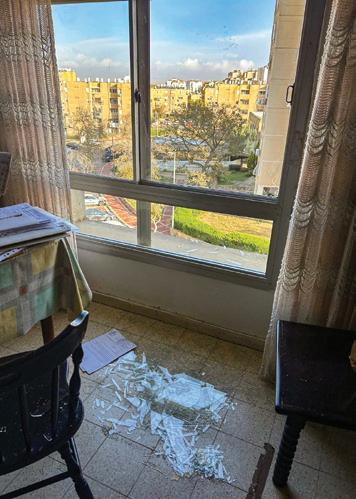
In another very touching example of our outreach to Holocaust survivors, the ICEJ assisted a dear elderly man whom our AID team met after his home and furnishings were all destroyed by a powerful missile impact in Beersheva. While visiting the blast site, ICEJ VP for Aid & Aliyah Nicole Yoder met Yoel, a Holocaust survivor originally from Poland who is now 90 years old. He was alone in his home when a missile landed next door. His daughter lives nearby and rushed over to check on him, but found his apartment empty, with the windows blown out and shattered glass everywhere. After a frantic search, she finally found her father unharmed, sitting peacefully in the sun on a chair near an emergency tent. He could not even remember how he had survived unscratched, but it was a miracle! After hearing Yoel’s story from the daughter, Nicole agreed on the spot to her request to purchase her father a new recliner chair, to replace the easy chair he had so enjoyed sitting in every day before it was destroyed.
90-year-old Yoel pictured above with his daughter.
Pictured here sitting in his new recliner chair.
HELPING DISPLACED FAMILIES
The ICEJ provided special grants for dozens of Israeli families whose homes were severely damaged or destroyed by Iranian missiles. We also purchased furniture to help house 40 evacuee families taken in by our friends at Kibbutz Yad Mordechai, just two kilometers from Gaza.
Yad Mordechai bravely fought off waves of Hamas gunmen on October 7 before they had to be relocated for months elsewhere in Israel. That is why they generously decided to take in fellow Israelis who had to leave their homes damaged or destroyed by Iranian missiles
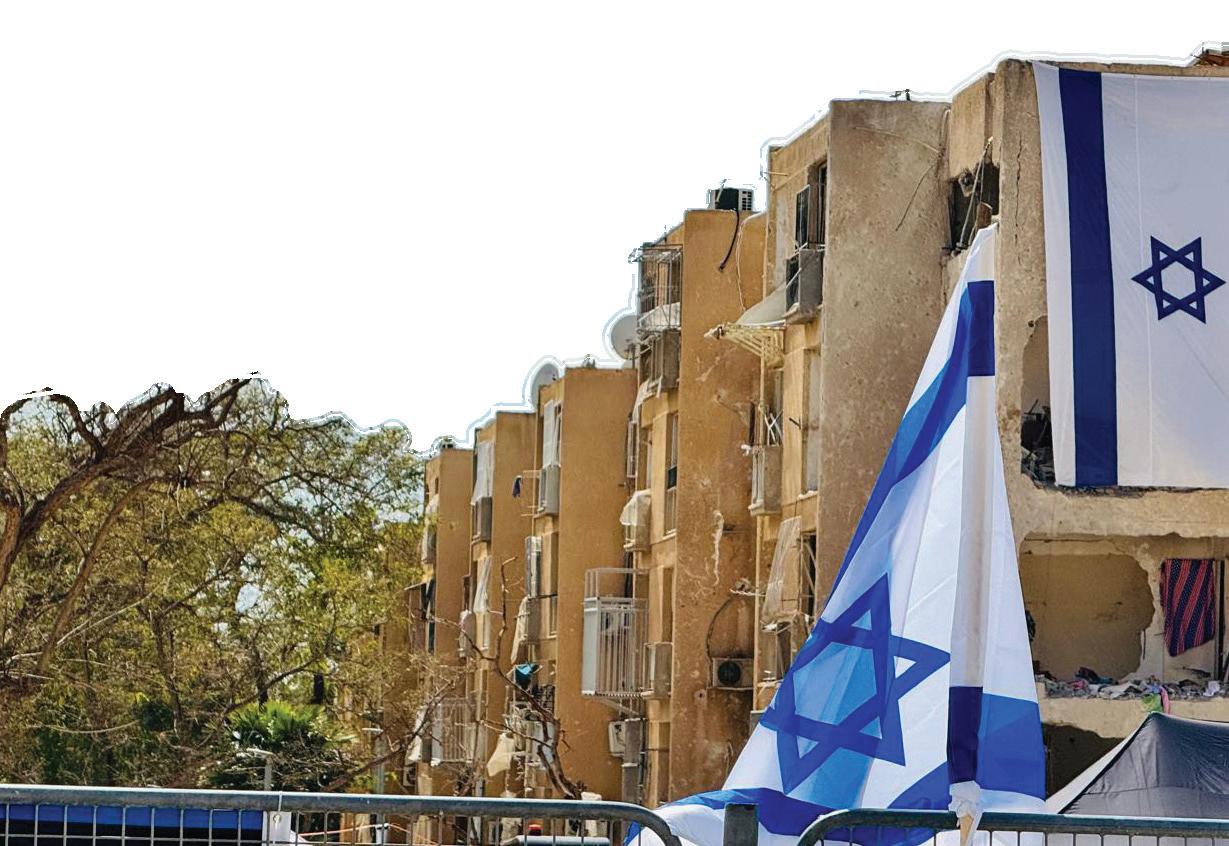
during “Operation Roaring Lion”. These displaced families – about 150 people in all – arrived from cities across the country, including nearby Beersheva, where an Iranian ballistic missile strike levelled a number of apartment buildings.
The Christian Embassy has visited Yad Mordechai many times over the years, and they instantly approached us for assistance in helping the displaced families they were hosting. We helped to purchase basic household items, furniture, mattresses and appliances to enable them to host these evacuated families who had lost everything. This included an elderly couple, both 85, who saw their home and neighbourhood in Beersheva completely destroyed by an Iranian missile. The couple are now slowly recovering from the trauma they experienced.
The team at the Haifa Home packing meals for Holocaust survivors during the war.
New furniture for displaced families.
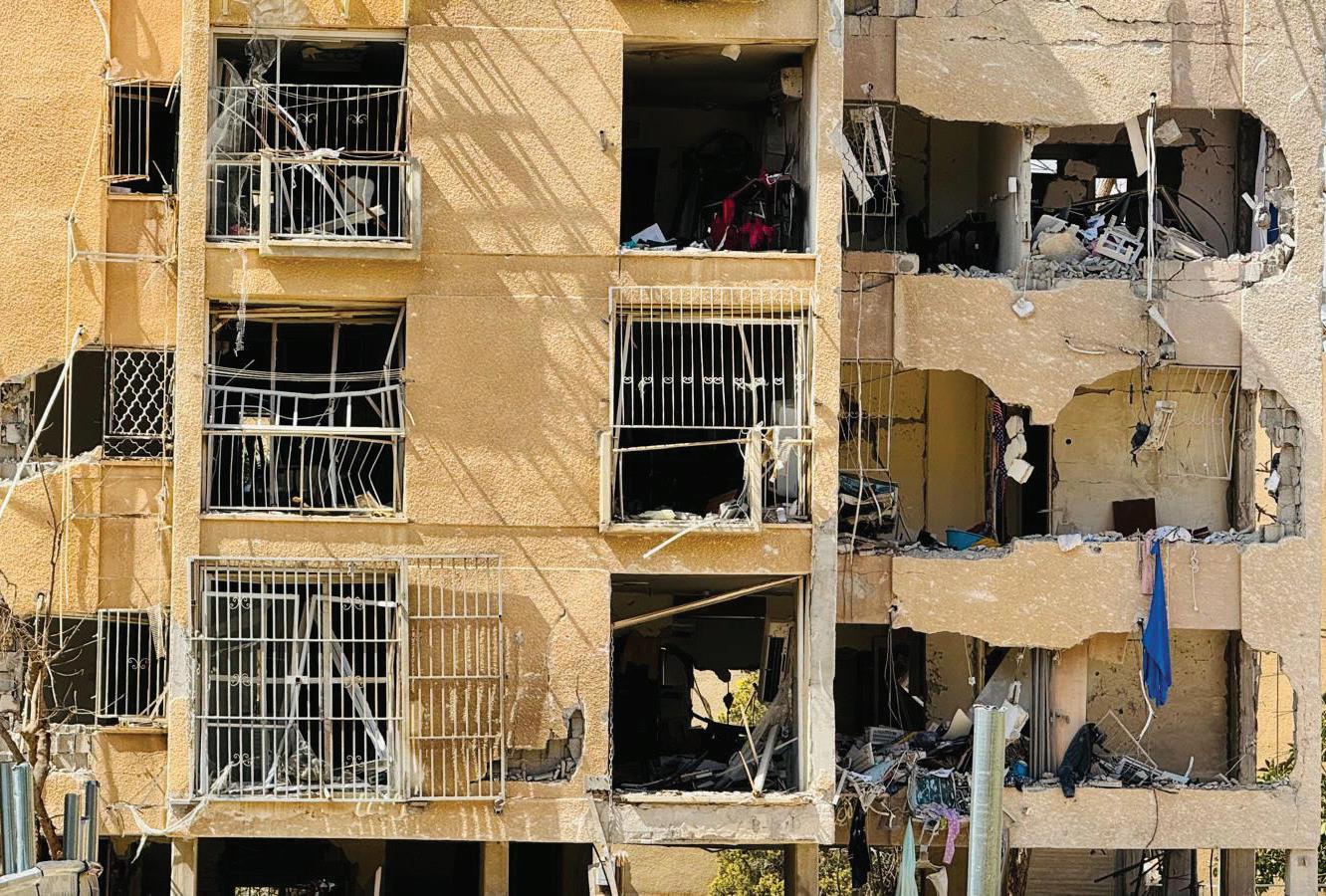
Damaged building in Beersheva.
EMERGENCY EQUIPMENT
FOR FIRST RESPONDERS
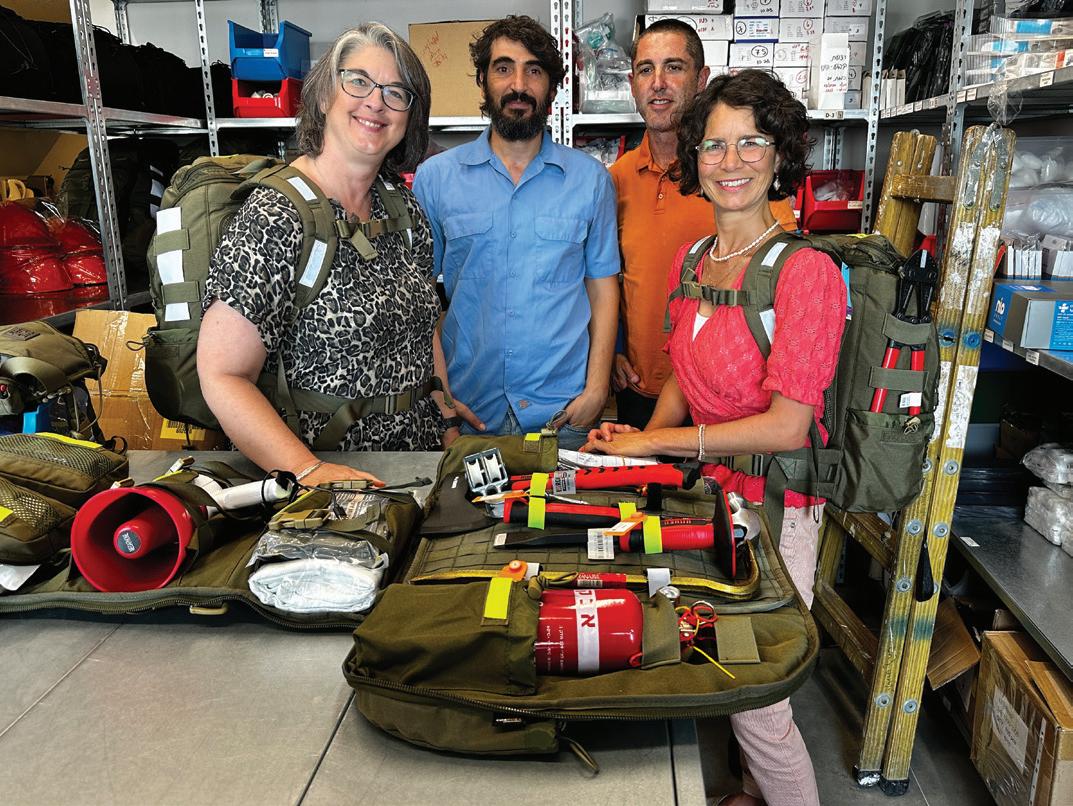
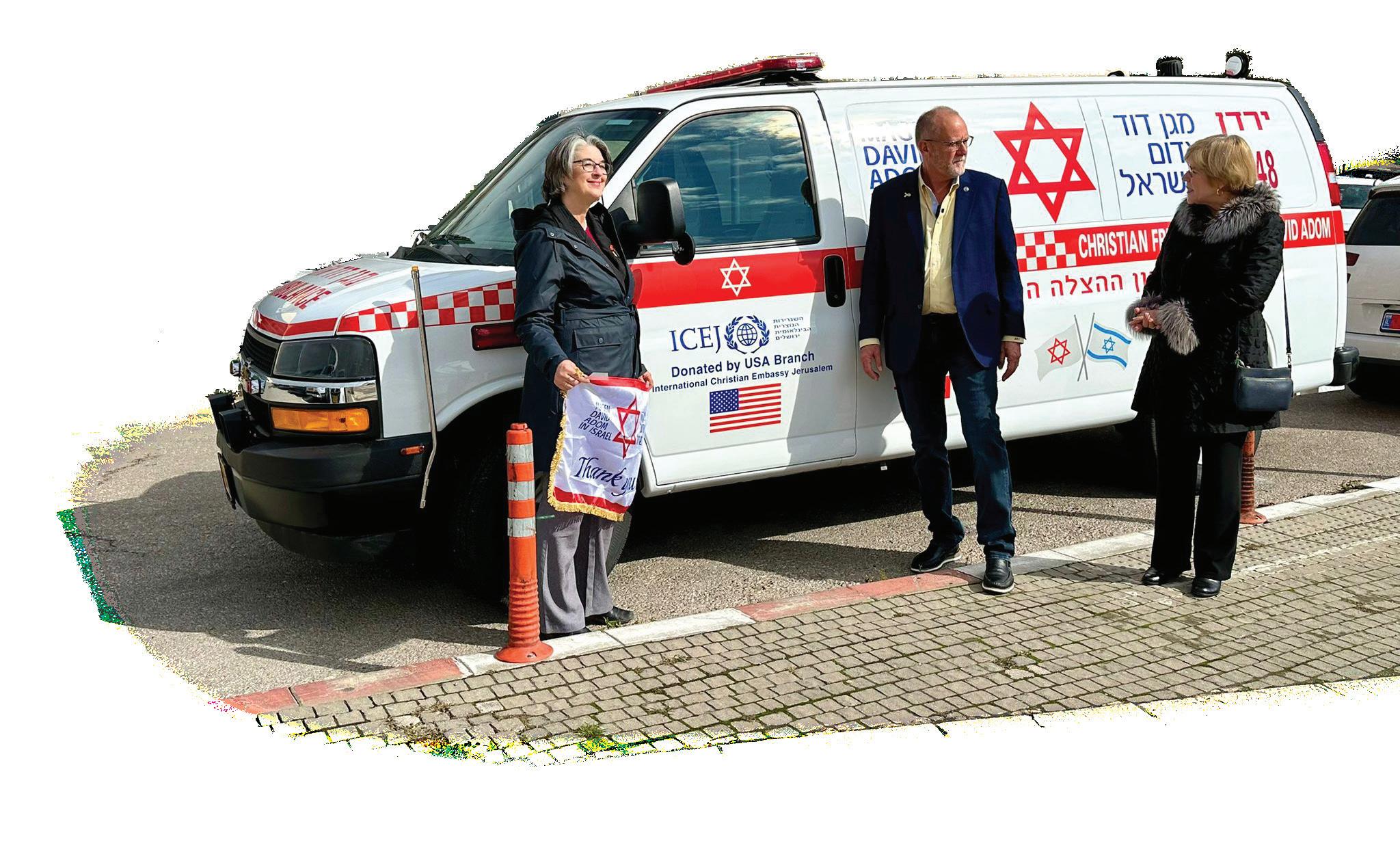
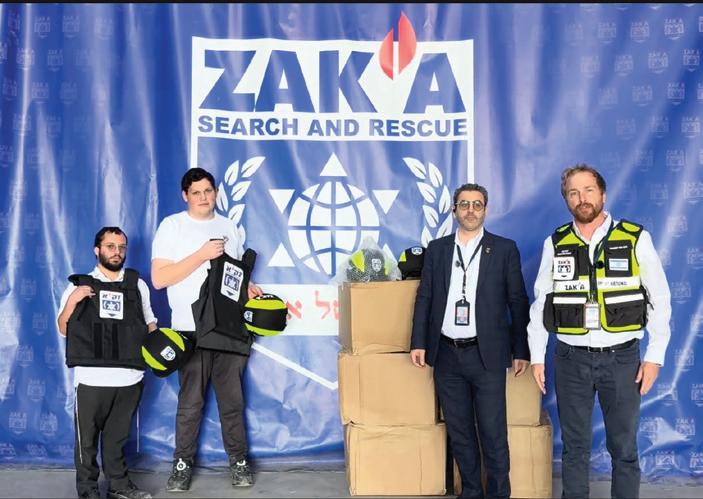
Since the Hamas invasion on October 7, the ICEJ has provided an array of emergency equipment to first-responder teams who must answer the call even when rockets are still flying. This has included donating five new ambulances, medi-cycles, and medical equipment and protective gear for EMTs and other emergency teams. But with even larger missiles now falling from the sky and many damaged homes near collapse, Israel’s Home Front Command is now requiring first-responders to have higher quality helmets and vests to enter damaged buildings. So, the ICEJ recently purchased two dozen sets of extraprotective helmets and vests for ZAKA volunteers. These upgraded safety helmets and vests were required by Israeli authorities not only due to the higher risk of building collapses, but also because of the growing threat from Iranian missiles armed with cluster munitions. Without this essential equipment, these first responders would not be permitted to enter damaged buildings to retrieve bodies or rescue victims who might be trapped there.
The ICEJ has donated five new ambulances.
We also donated 50 special Motorola communication devices for emergency response teams in the Galilee region. These unique encrypted walkie-talkies were instrumental in saving thousands of lives in the Gaza border communities during the Hamas terror invasion on October 7, and they are being put to good use now in the northern border area, which have faced intense rocket barrages once again from Hizbullah in Lebanon over recent weeks. In addition, the ICEJ is in the process of purchasing six new trailers to help local response teams in the Upper Galilee and northern border region transport vital emergency equipment to the scene of rocket impacts and other security incidents.
Unique encrypted walkie-talkies.
UPGRADING PUBLIC BOMB SHELTERS
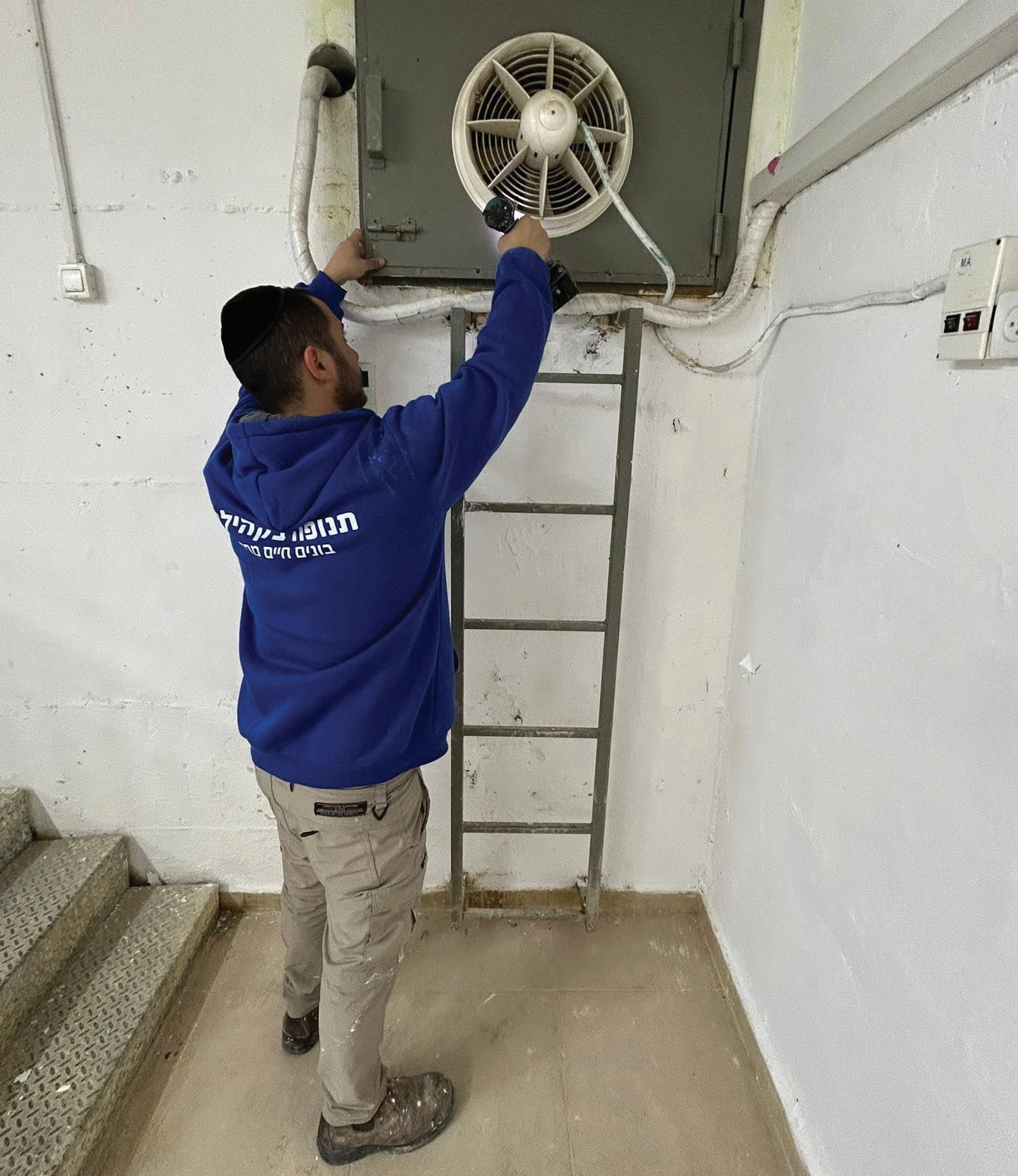
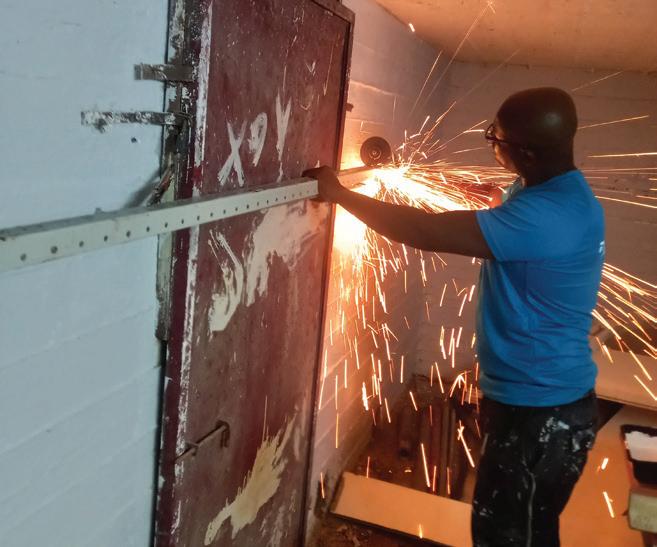
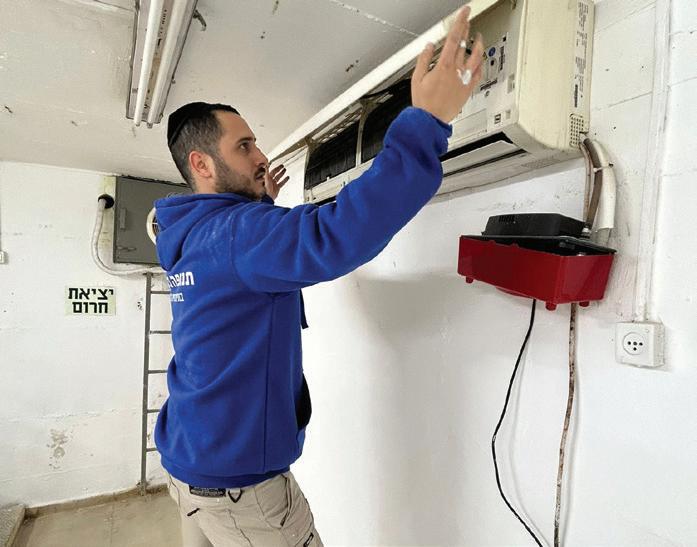
The ICEJ has upgraded 15 large public bomb shelters in the center of Israel with new handrails, lighting, ventilation, paint, and other improvements to make them more comfortable and safe for those repeatedly needing use of them.
We also upgraded 9 public bomb shelters along the northern border for longer-term stays, by furnishing mattresses, chairs, tables, children’s activities, large fans, WIFI, and other items.
In addition, the Christian Embassy delivered several new portable bomb shelters to communities in northern Israel amid the war.
The ICEJ has sponsored the upgrade of 15 large public bomb shelters.
ZAKA volunteers with new extraprotective helmets and vests.
SPECIAL ACTIVITIES FOR CHILDREN
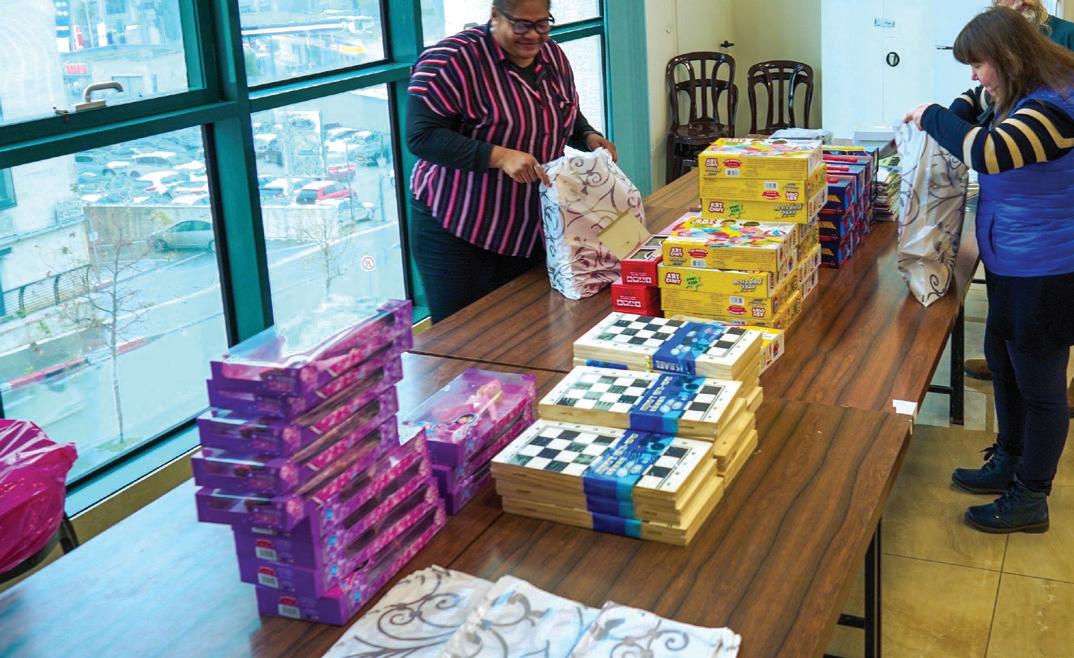
The ICEJ delivered toys and games to children stuck for long hours in bomb shelters on the northern border. We also funded group activity sessions for children of new immigrant families staying in Aliyah centers run by our partners at The Jewish Agency For Israel.
THERAPY TREATMENTS
The ICEJ sponsored trauma therapy for numerous families in Beit Shemesh, scene of a massive missile blast early in the conflict which killed nine civilians and wounded dozens more. We also funded group therapy sessions for new Jewish immigrants in Aliyah centers who are battling shock and fear from the massive Iranian missile impacts.
FOOD ASSISTANCE FOR FAMILIES IN IMPACTED AREAS
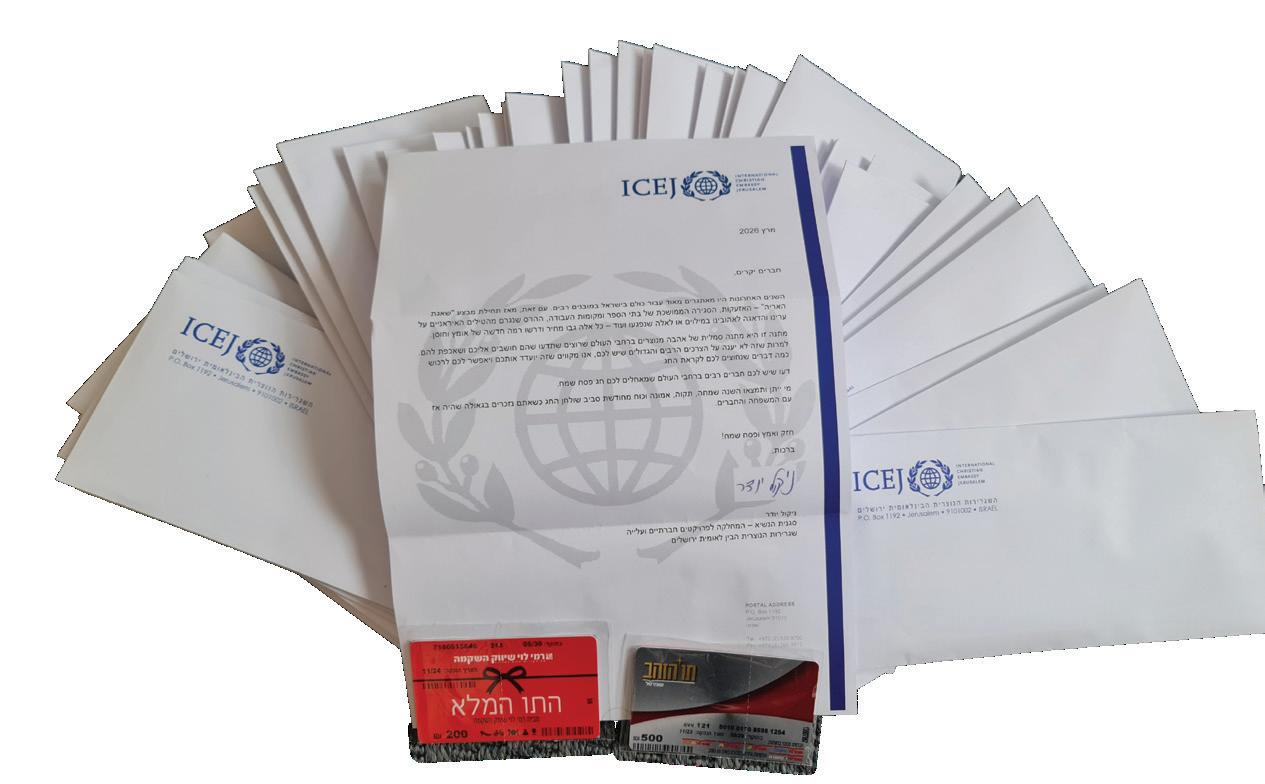
The Christian Embassy distributed gift card vouchers for food and other purchases to 130 needy families in severely impacted areas, including the Negev towns of Dimona and Arad where powerful missile strikes devastated entire neighbourhoods, and in Shlomi and other towns on the northern border under relentless rocket fire from Hizbullah in Lebanon. The gift vouchers can also be used to purchase clothing and basic household items as needed.
DONATE TODAY
All of these relief aid activities were undertaken on top of the ICEJ’s many rebuilding projects already underway to help Israelis recover from some 30 months of conflict on seven fronts since the October 7 terror invasion.
Please continue to support our urgent relief efforts to help Israelis bravely enduring this long war with Iran and its regional proxy militias.
This is Israel’s hour of need! And the Israeli people are more open than ever before to our Christian love and care at this critical time. So, give your best offering today to our Israel in Crisis fund.
The devastating destruction of Iranian missile strikes in the towns of Dimona and Arad.
ICEJ DELIVERS HOPE AT PASSOVER TO JEWISH FAMILIES
Despite the frequent dashes to find shelter from incoming Iranian missiles, the ICEJ AID team delivered with joy Passover gifts and food vouchers to hundreds of Jewish families in need across Israel over the past few weeks. Some families were even surprised that Christians are thinking of them during this tense time of war. These holiday deliveries not only provided practical support but also were a powerful reminder that they are not forgotten.
Thanks to the incredible support of our donors worldwide, some 400 Israeli households welcomed this Passover season with renewed hope and the witness of God’s provision at their Pesach Seder tables.
In Ashkelon, the ICEJ was graciously welcomed by Elena, who immigrated to Israel from Belarus ten years ago. As a single mother, she is raising her five-year-old son while working as a caregiver. Despite her challenges, she radiates warmth and a strong desire to help others.
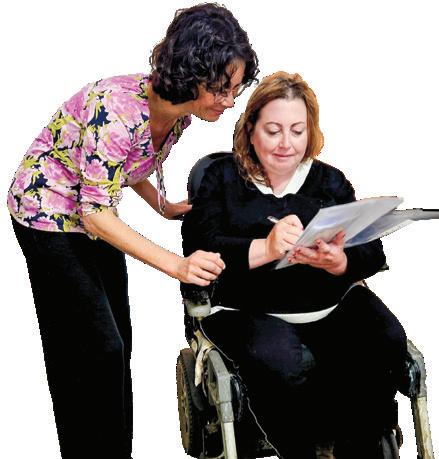
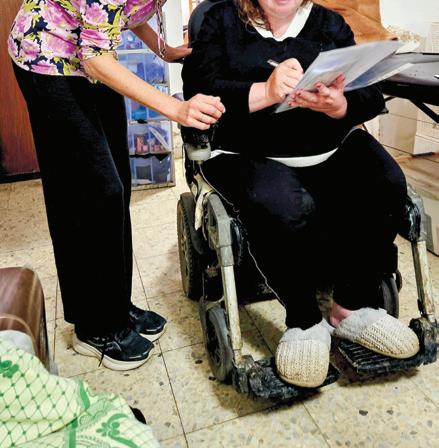
Meanwhile, the team visited another lady also named Elena who is confined to a wheelchair and lives alone. She has been disabled for seven years and has a son living in Sderot. Despite facing daily challenges, she does so with admirable strength and dignity.
BY LAURINA DRIESSE
antisemitism in the world, it warms my heart knowing that we have friends in the ICEJ who stand with us and support us.”
In Ashdod, social worker Ram described the motivation for doing his work simply as a “mission”. Being responsible for 400 families, he witnesses daily the growing need for social welfare support. He estimates that 15% of Ashdod’s population (45,000 out of around 300,000 residents) receives government assistance.
“I could not do this work without the ICEJ. We are together in it,” Ram insisted.
One such resident, Rafi, is undergoing cancer treatment and recently lost his mother. Despite his hardships, he warmly greeted the team with a radiant smile. Even when the red-alert siren interrupted the visit, sending everyone down two flights of stairs to a bomb shelter, Rafi maintained his humour and concern for others, checking on neighbours and reassuring everyone. With no elevator in the building, Rafi uses his walker to get downstairs and jokes that he has gotten good practice with the sirens.
“There are people like you who care for me, driving from Jerusalem during this war?” she said with amazement. “We don’t take that for granted. Thank you!”
“You are my heroes”, exclaimed 95-year-old Holocaust survivor Eva, upon seeing the ICEJ team arrive. “You dared to drive when missiles are flying all over this country, which shows your courage.”
Eva said that the visit distracted her from worrying about her children and grandchildren. Over a cup of tea, Eva shared her wisdom.
“Every day is a gift. Embrace it as it will not come back,” she said. “The gift you brought me today is not just a present. It is a heartfelt box of love that truly shows how much you care. With the rise of
“The work that ICEJ does, everyone should hear about it,” Rafi said. “Your presence here is so important, as well as defending Israel in the nations... Thank you!”
In another home, we met Rachel, a mother of six children aged between eight and 19, living in cramped conditions in a small apartment. She shared the emotional burden of raising them during wartime. Upon entering the apartment, we saw mattresses filling the living room. The ICEJ team heard how the children sleep there, while her father sleeps in his own room, and she and her husband sleep in another small space. With limited resources for online schooling and a daughter in trauma therapy, Rachel’s days are full of challenges.
Iran. Four of her seven children live in Israel, but Malka was deeply concerned because three of her children are still in Tehran and have not been able to make Aliyah. She has not had contact with them for over a month. The ICEJ’s visit was a brief distraction however, her thoughts kept drifting back to “my children, my children”, she softly repeated. Malka shared that she believes God is her strength and refuge during difficult times.
Traveling up the coast to Netanya, the effects of war were particularly noticeable. Many disadvantaged families hesitate to leave their homes to visit the local social welfare office, and single parents face the added challenge of managing their children’s remote schooling. Heidi, a social worker, expressed heartfelt appreciation for the ICEJ’s gifts, saying: “Thank you, ICEJ, for helping our families celebrate Pesach even amid these challenges”.
The ICEJ team’s visit, and recognition of her sacrifices, moved her to tears.
The ICEJ team also visited Malka and her husband, who made Aliyah 20 years ago from
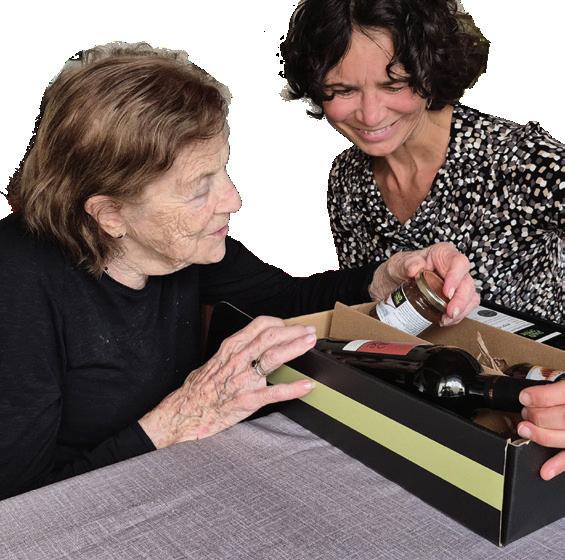
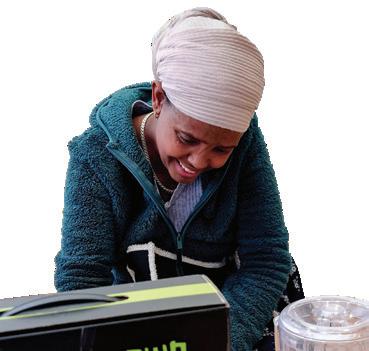
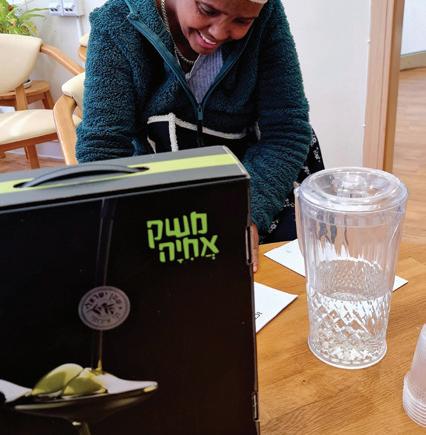
Further encounters revealed similar stories of difficulties yet resilience. In Ma’ale Adumim, an Ethiopian mother of five named Malonesh spoke about the importance of community for survival. Despite her own health struggles and having to run to a neighbouring building for shelter when the sirens sound, she focuses on helping others. She, too, was grateful for the Passover gift, describing it as “so beautiful in a box with olive oil, wine, and other items, plus a gift card to buy groceries for Pesach”.
The ICEJ’s Passover gifts reminded each of these struggling Jewish families that amid the war, fear and hardship, Christians around the world remember and care for them. Please consider being part of our timely, impactful efforts to give hope and a better future to needy Israeli families.
DONATE TODAY AT: help.icej.org/future-hope
Elena receives a Passover gift.
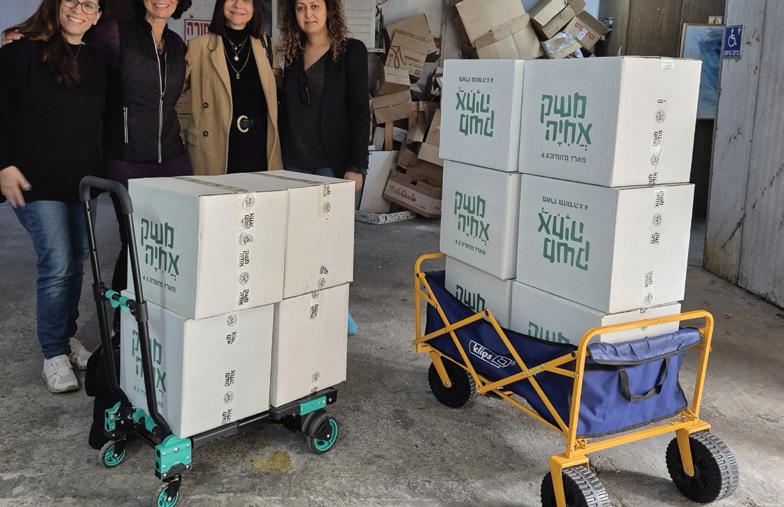
Passover gift boxes delivered in Netanya for disadvantaged families.
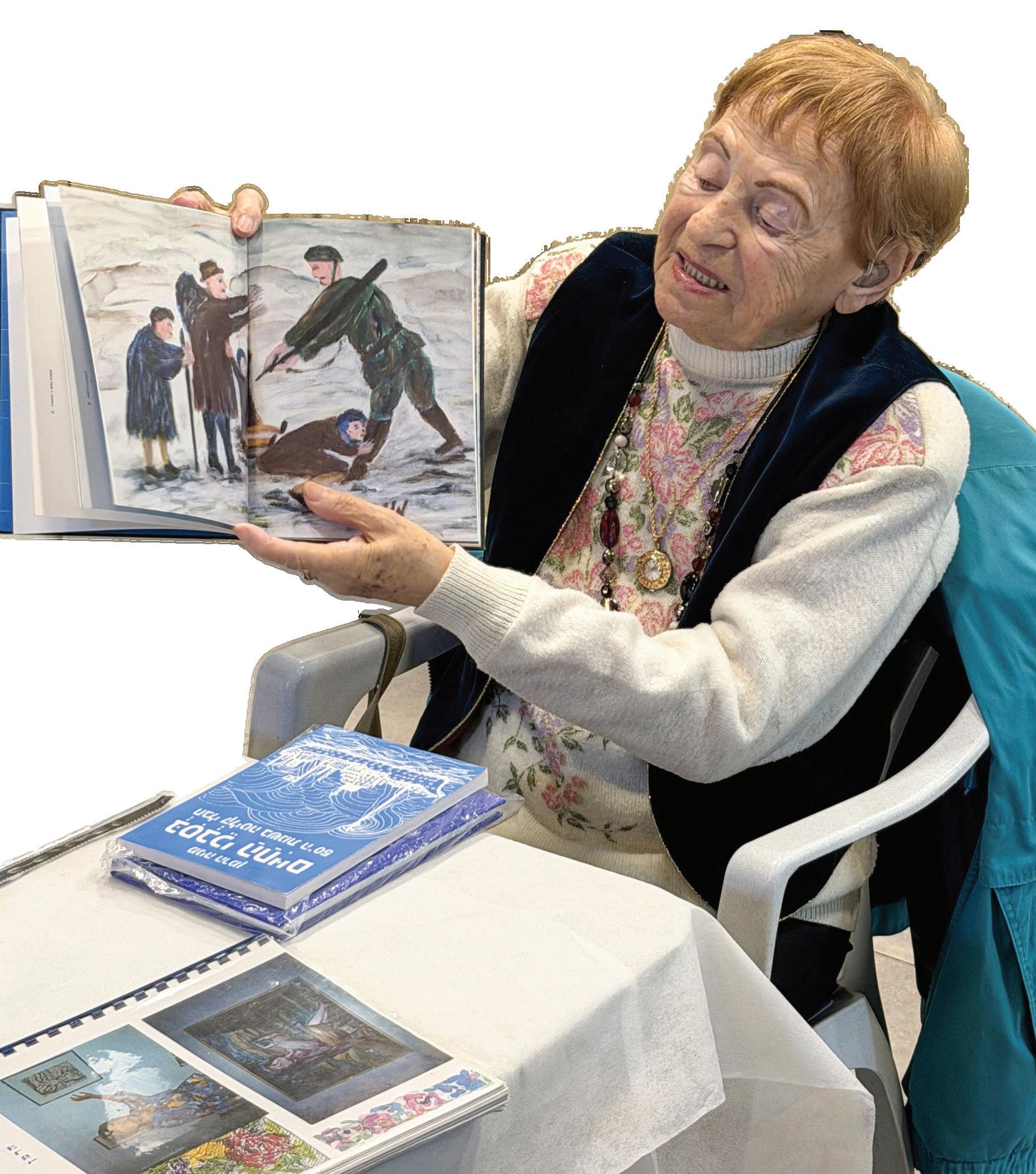
95-year-old Eva Erben
Ethiopian mother Malonesh
ICEJ’S SUPPORT FOR ALIYAH UNWAVERING AMID WAR!
BY LAURINA DRIESSE
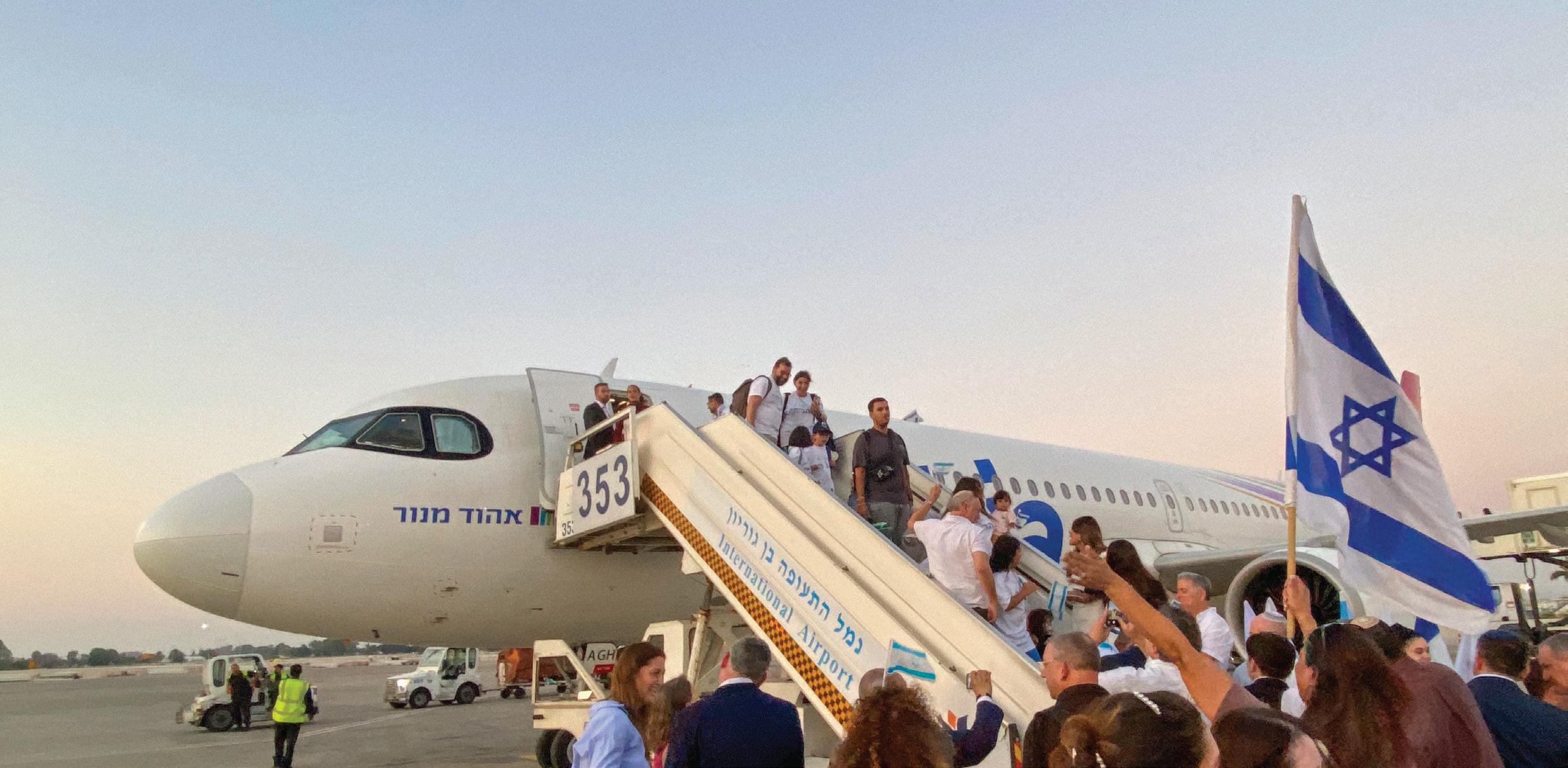
Despite the challenges of the war with Iran, we are still seeing many Jews make Aliyah as global antisemitism rises. Recent statistics from The Jewish Agency for Israel (JAFI) show that Jewish immigration from Western Europe has continued to increase in the first three months of this year, with more than 3000 olim (newcomers) arriving in Israel so far. Of these Jewish immigrants, more than 500 came from France alone, while Aliyah from Germany also continues to increase. Overall, 2,564 olim have made it home to Israel in the first two months of this year. Since the war started with the Hamas terror invasion on October 7, 2023, more than 63,000 Jewish immigrants have landed in Israel.
The ICEJ’s support for Aliyah remains unwavering as we witness the fulfilment of God’s promises through the Hebrew prophets. “For I will take you from among the nations, gather you out of all countries, and bring you into your own land.” (Ezekiel 36:24)
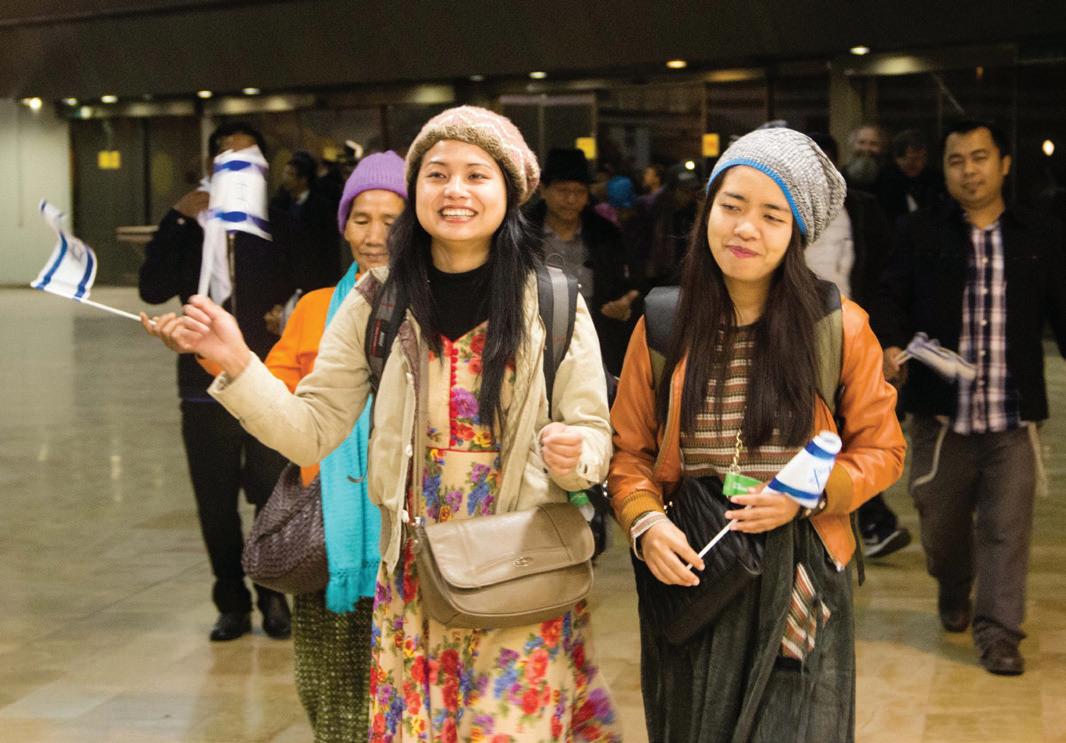
Prior to the start of the recent war with Iran, the Israeli government had launched Operation Wings of Dawn (Kanfei Shahar), a five-year plan to bring home from India every last member of the Bnei Menashe tribe – some 5,800 people officially recognised as descendants of ancient Israel. Of these, 1,200 Bnei Menashe are expected to arrive this year, starting with the first flight of 250, which arrived in late April. The Christian Embassy is sponsoring Aliyah flights for 100 of these newcomers, and we look forward to being there to welcome them home.
Two additional flights of Bnei Menashe immigrants are scheduled for Spring, bringing the total to 600 new immigrants, and three more flights are planned for Fall with another 600 Olim. The ICEJ needs your help in sponsoring flights for these precious members of the Bnei Menashe tribe.
Besides the Aliyah of the Bnei Menashe, the ICEJ also has committed to sponsoring 100 Youth Aliyah flights this year from Russian-speaking countries of the former Soviet Union.
First, the ICEJ is sponsoring flights for 50 Jewish youths participating in JAFI’s Naale program, which brings teenagers as young as 14 to Israel to study and embrace their Jewish heritage ahead of their parents making Aliyah. The program offers more than just learning in an Israeli high school, it also immerses them in Israeli culture during their most formative years. Students live in boarding schools, celebrate Jewish holidays as national events, and build lifelong social networks. This deep integration often leads them to stay for military service, university, and beyond, while the parents usually follow. The ICEJ-sponsored Naale flights will arrive at the end of August.
In addition, 50 Russian-speaking youths participating in the SELA university preparatory program will arrive in Israel on an ICEJsponsored flight in October. SELA, meaning “rock” in Hebrew, is a ten-month preparatory program run by JAFI. These Jewish youth, aged 17 or 18, will take their first steps on a life-changing journey towards studying in an Israeli university and becoming Israeli citizens.
Meanwhile, Ethiopian Aliyah and integration will remain another key ICEJ focus this year. Thousands of Ethiopian Jews are still waiting in Gondar and Addis Ababa to be reunited with loved ones already in Israel. There are over 1,200 waiting to come as soon as the government of Israel permits them. The Christian Embassy will be there to help them make the journey home while also funding integration programs to assist these Ethiopian Jewish immigrants in overcoming the large cultural and economic gaps to fully absorb themselves into Israeli society.
We invite you to partner with us in helping to fulfil the biblical mandate of Jewish return to the Land of Israel.
ALIYAH
Bnei Menashe arrive in Israel. (Credit: Laura Ben David)
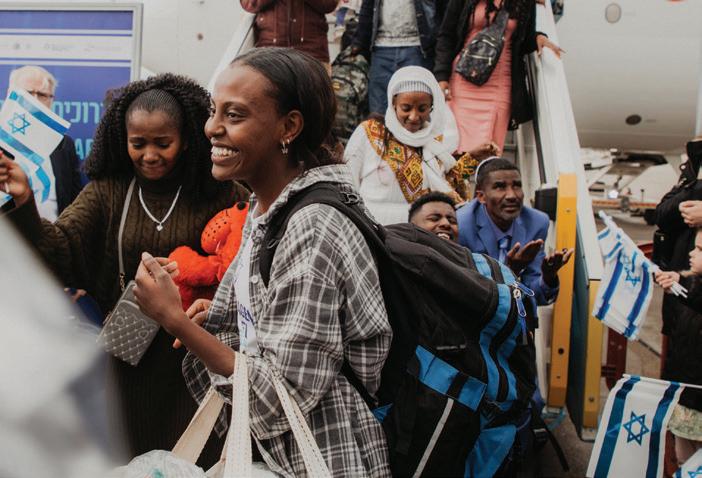
Ethiopian Jews arrive at Ben Gurion airport.
HAIFA HOME RESIDENTS REMEMBER HOLOCAUST WHILE SURVIVING IRAN WAR
BY YUDIT SETZ
It has been a tough spring for the residents of our Haifa Home for Holocaust Survivors, as they endure constant rocket barrages from Iran and Lebanon. But they have responded valiantly even in this season when they remember the dark time of the Nazi genocide against the Jews.
THE EFFECT OF WAR ON OUR RESIDENTS
We are in a shaky ceasefire right now, but many times over recent weeks the rocket sirens during this intense war with Iran have brought back memories of our residents’ childhoods during the Holocaust.
“The air-raid sirens always take me back to when I was small”, Chaya shared. “During the Second World War, we had sirens whenever planes flew over and dropped their bombs, and our house would shake from the explosions. We were so afraid…”
Now, Chaya has been spending many nights sleeping in our bomb shelter during the war with Iran.
Renate, who had just moved to another apartment that better fits her needs, does not have easy access to the bomb shelter. She manages to go to a place in her apartment that is far from the windows and feels safe there. However, when the ceasefire with Iran began, we still had many rockets from Hizbullah in Lebanon targeting Haifa.
The sound of the air-raid siren is still the same as during the Second World War, when Renate was a child and had constant nightmares from the fighting around her.
How do our residents cope? Some try to fill their minds with good things, like humour, and not just news. This helps them to get through the day. Others try to keep their head up and focus on the miracles they have seen during this war.
For instance, an Iranian missile was not intercepted and landed in Haifa. Despite the horrible loss of life in this event, the fact that the warhead did not explode prevented even more loss of life and extensive damage. A miracle! Or someone who had just managed to leave their bed and enter the safe room, when shrapnel fell where they had been asleep, only a few minutes before.
“Suddenly, an overwhelming fear gripped me when the siren went off”, Renate explained. “I tried to walk to my safe place and sat down in my wheelchair. In my mind, I tried to fight that fear and looked for something funny on my phone. It took quite a while before it left me.”
Another factor that supports our residents is their sense of community. Sharing these experiences, enjoying meals together, and participating in various activities significantly strengthens them.
HISTORY AND THE TANACH
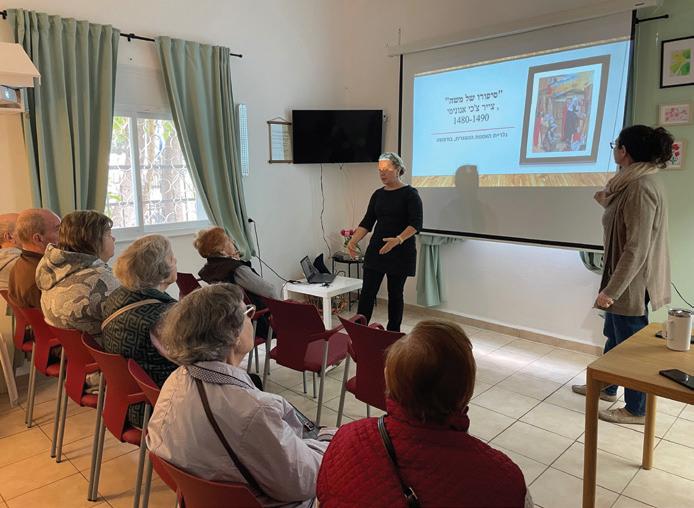
The Russian-speaking residents at the Haifa Home have thoroughly enjoyed the bi-monthly lectures we offer about the history of Israel. Those who arrived in Israel over the past four years from Ukraine, as well as other Russianspeaking survivors who came to Israel in the 1990s, hardly knew anything about the amazing country they now live in. From these lectures, an idea emerged to add lectures on the biblical history of the Jewish people, as found in the Tanach (Old Testament). Many of our residents grew up in the Soviet Communist era and had zero knowledge about their biblical heritage as a people.
Two members of our ICEJ staff, Maria and Nancy, our art therapist, combined the stories of the Torah (the five books of Moses) with paintings by different artists depicting each story. The Bible lesson before Passover spoke about the story of Joseph and why the people of Israel ended up in Egypt. This allowed
A special Pesach lesson combines the Tanach with art.
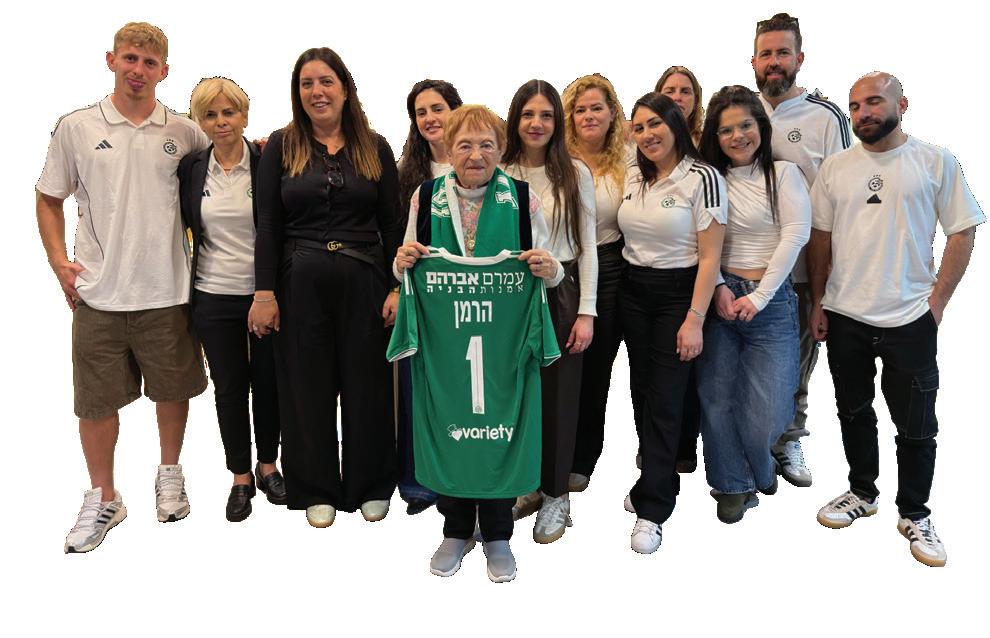
Holocaust survivor, Manya, shares her story with Maccabi Haifa soccer team.
our residents to celebrate Pesach this time with much more knowledge of the festival’s historical background.
“All that I learned here is new for me and touched my heart. I certainly want it to continue,” said Boris.
“It was all new for me, too, and I found it very interesting. I really hope we will hear more,” responded Arnold.
HOLOCAUST MEMORIAL DAY
While there was a temporary ceasefire with Iran, Hezbollah in Lebanon was still firing rockets at northern Israel when we recently marked Yom HaShoah – the nation’s annual Holocaust Remembrance Day. It came 81 years since the end of the Holocaust and almost 78 years since the establishment of the State of Israel.
It is a very sobering thought that the nations have learned little from history and that the level of antisemitism, especially in the Western world, has continued to surge even more in recent years.
“Did you hear what happened in Munich, Germany, yesterday?” Chaya asked me, explaining about an attack on an Israeli restaurant there. “It reminds me of the pogroms that took place years ago.”
The days surrounding Holocaust Memorial Day are always very difficult emotionally for our residents. Those survivors who are still able sense a deep need to share their personal Holocaust stories, and various residents are invited to all kinds of forums to tell their own story. Israeli TV crews also came to interview them ahead of Yom HaShoah, but with their advancing of age, it gets more and more difficult to recount all the details.
we were, her face was filled with joy. She fell a few months ago and hurt her knee so badly that she spends most of her time in bed. Of her four children, only one is in touch with her. So, she was quite thrilled with our lovely time together.
“I want to tell it, and I do it,” Chaya said, “but the memories are becoming so alive that it takes me days to recover.”
“This year it is the last time I will do it”, Rachel said, full of emotion. “It is too hard for me”.
She spoke in two different locations this year, including at an army base.
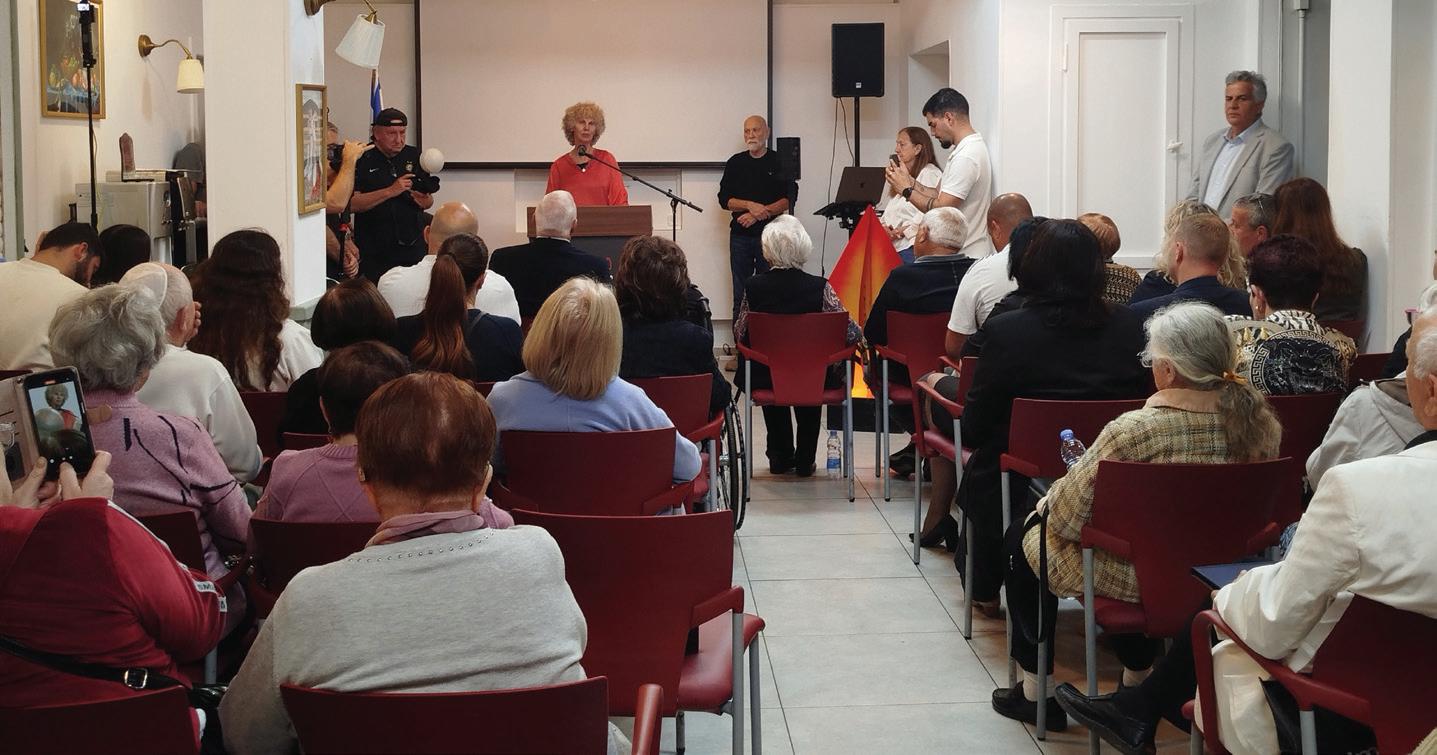
On April 14, the Holocaust Remembrance Day Ceremony at the Haifa Home was a small in-house event, due to the ongoing security situation. Besides our residents, the only attendees were some dignitaries from the Israeli government, the Haifa area and different foreign embassies were present.
The growing antisemitism is something our residents do not understand. Why do they always hate the Jewish people so much?
But not all is bad.
“I am so encouraged by Christians who don’t forget us and take time to write to us and even come to visit and work among us”, said Chaya. “That is real love, not hate. I am telling everyone I talk to about what you are doing for us.”
PASSOVER IN THE SHADOW OF WAR
In addition to joining the residents for our traditional Passover Seder meal at the Haifa Home, our Christian team also distributed many Pesach food parcels to Holocaust survivors in the Haifa region before the holiday began. This included visiting quite a few of them personally in their homes.
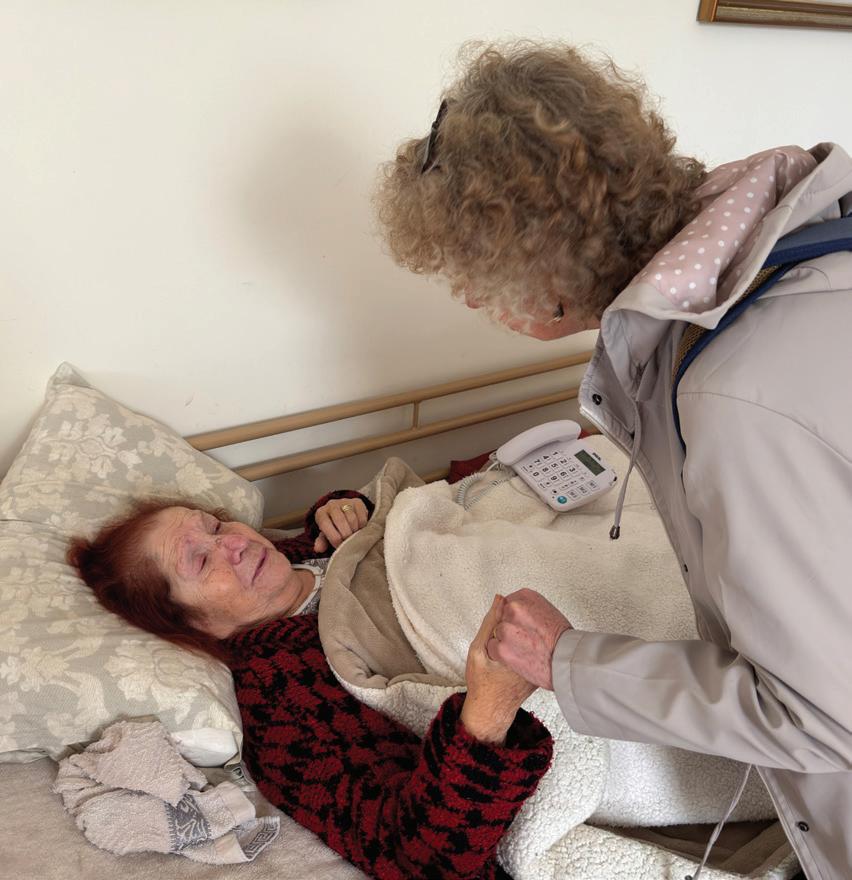
When we walked in, Iris, an 88 year-old Holocaust survivor, was lying in her bed in the sitting room. When she found out who
It was hard for her to let us go, and she begged us to visit again soon. When we got back into the car, we received the alert of incoming missiles from Iran, and we quickly made our way back to Iris and her caregiver to wait in a safe place.
“What a blessing that you are here again!” exclaimed Iris. “Now I can enjoy you a bit longer…”
At another home, Yaacov was already waiting for us. We usually visit him on every holiday and stay in touch throughout the year. Apart from his son, who tries to come a few times a week, no one else visits him. He is increasingly aware of his forgetfulness, which deeply troubles him. Loneliness and deteriorating health are weighing heavily on many of these Holocaust survivors who still live at home. Our visit brought a ray of light and warmth to those who live alone.
Support our work with Holocaust survivors by donating at: help.icej.org/survivors
HAIFA HOME
Yom HaShoah ceremony at the Haifa Home.
Manya with members and staff of Maccabi Haifa soccer team.
Yudit Setz visits Holocaust survivor Iris.
ICEJ-LATVIA PUBLISHES MEMOIRS OF NOTED HOLOCAUST SURVIVOR
BY ILZE SAULITE, ICEJ-LATVIA NATIONAL DIRECTOR
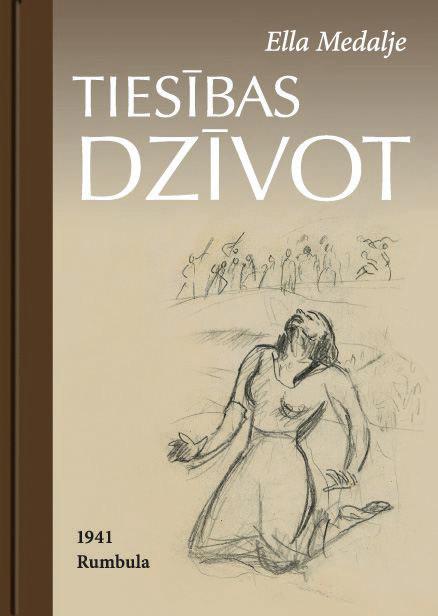
ICEJ-Latvia recently held a special reception at the Museum “Jews in Latvia” in Riga to mark its publication of the book “The Right to Live”, a memoir of noted Holocaust survivor Ella Medalje.
During the Holocaust, more than 70,000 Jews were murdered in Latvia, roughly three-quarters of the Jewish population. On 30 November and 8 December 1941, approximately 25,000 Jews imprisoned in the Riga Ghetto were murdered in mass executions organised by the Nazis in the
NEW ICEJ BRANCH OPENS IN LITHUANIA
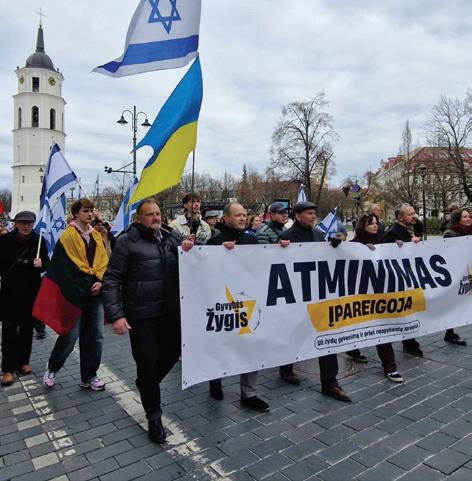
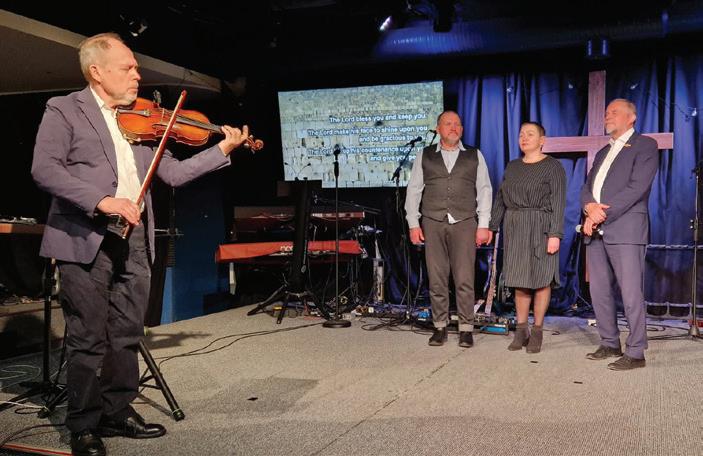
In April, Dr. Mojmir Kallus, ICEJ Vice President for International Affairs, visited Lithuania to officially open a new ICEJ branch in the Baltic state. Together with special regional representative Serguei Popov, they served at a three-day conference on Israel and the Church in “Kristaus Paliepimas” church in Vilnius. The pastor, Arvydas Vysniauskas and his wife Olga, were appointed as ICEJ national representatives.
Dsupport of co-author David Silberman, the Latvian Jewish Community Restitution Fund, the foundation “Uniting”, and the Embassy of Israel in Latvia.
Rumbula forest just outside the city. Only two women survived the massacre: Ella Medalje and Frida Mihelson.
The memories of both eyewitnesses were recorded by survivor David Silberman in the 1960s but could not be published in Latvia during the Soviet era. Only in 2014 did the Latvian edition of Frida Mihelson’s book “I Survived Rumbula” come out. And now Ella Medalje’s memoir “The Right to Live” was published by ICEJ-Latvia with the
The book includes the investigative documents used at the trial of Nazi collaborator Viktors Arajs, who led a local commando death squad responsible for the mass murder of thousands of Jews in Latvia. Thanks to Ella and other survivors’ testimonies, he was eventually sentenced to life imprisonment by a German court.
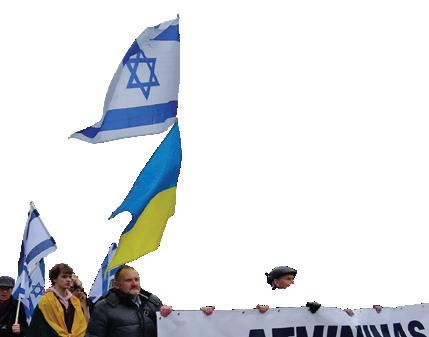
While in Lithuania, Mojmir and Serguei also participated in the March of Life organised by TOS ministry on the occasion of Yom HaShoah. About 120 people attended and marched with Israeli flags peacefully through the streets of Vilnius. The event to commemorate Jewish victims of the Holocaust was addressed by the Speaker of the Lithuanian Parliament, the Israeli Ambassador, and a representative of the Jewish community.
Lithuania is a stable country with no anti-Israel sentiment today, even while it has a rich yet tragic Jewish history. Vilnius used to be called the “Jerusalem
Serguei Popov performs at the conference in Vilnius.
of the North” due to all the ultra-Orthodox communities there. The Nazis and their local collaborators killed more than 80% of Lithuania’s Jewish population during the Holocaust. Repentance for the sins of the past and remembering these Jewish victims is an important step towards healing and blessing for the country.
ISRAEL CONFERENCE HELD IN IVORY COAST
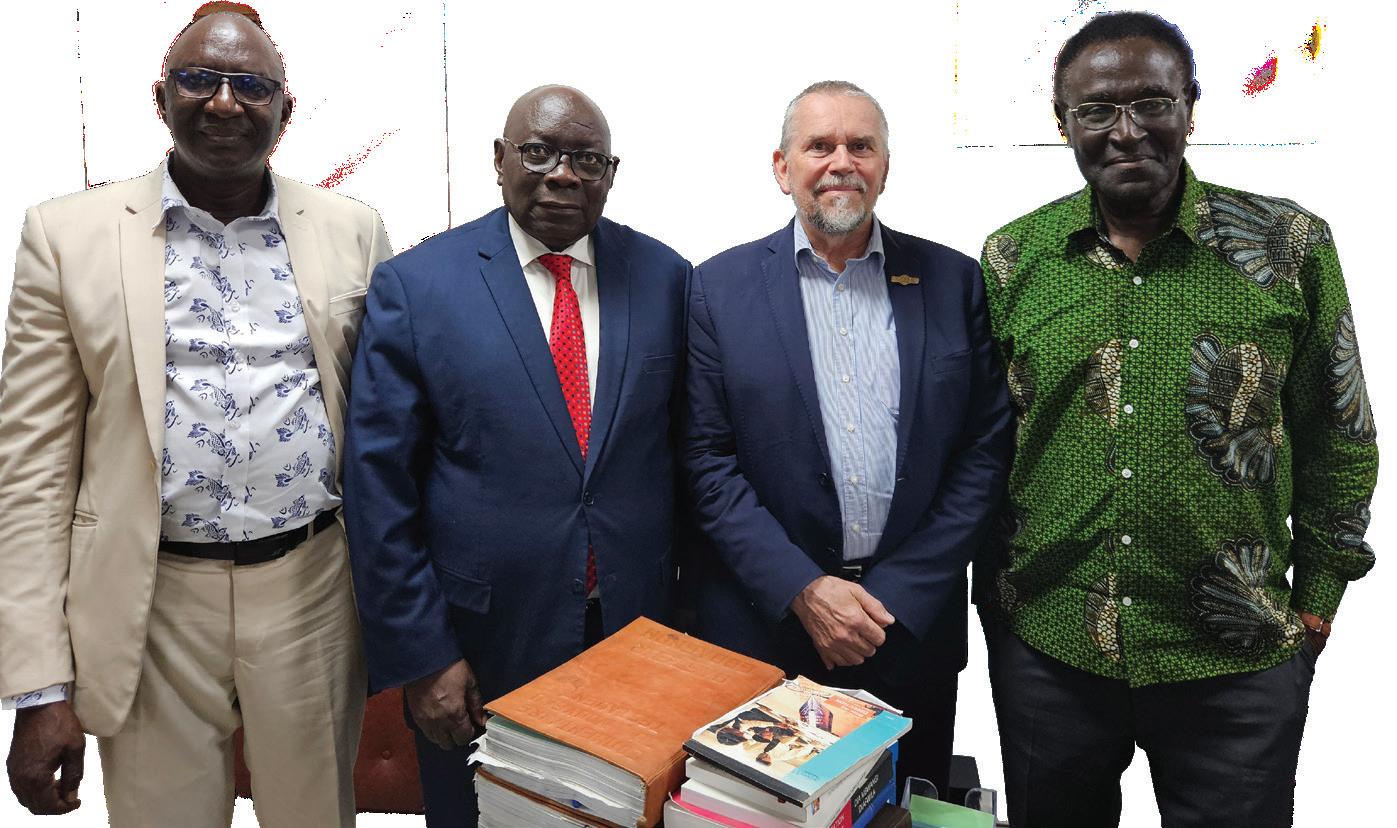
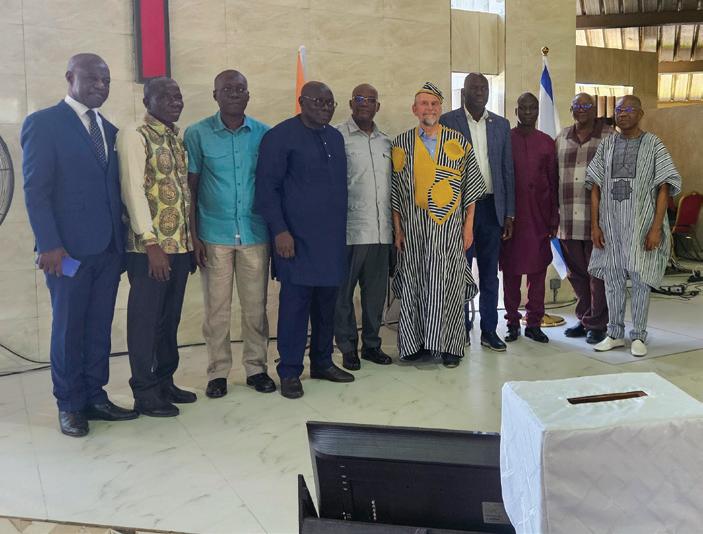
r. Mojmir Kallus, ICEJ Vice President for International Affairs, recently visited the Ivory Coast to participate in an Israel conference organised by our national director David Silue and his team. Mojmir addressed the subject of Israel and the Church and how to understand the current conflict in the Middle East. He also preached in the church of Apostle Apollinaire Gboagnon, the largest congregation in Abidjan.
Local leaders at the Israel conference in Ivory Coast.
Dozens of pastors and ministry leaders participated in the conference and showed keen interest in Israel. Attendees also came from Benin, Burkina Faso, Gabon and Senegal. Christians in West Africa have a good grasp of Israel theology, and they naturally love Israel. As a result of the conference, prospects for opening new ICEJ branches in Burkina Faso and Senegal also arose. The Ivory Coast is the most influential country in French-speaking West Africa and our ICEJ branch there plays a lead role for our ministry in the region.
Representatives from Senegal and Gabon with Dr. Kallus and Apostle Gboagnon.
DR. SUSAN MICHAEL ELECTED TO NRB BOARD
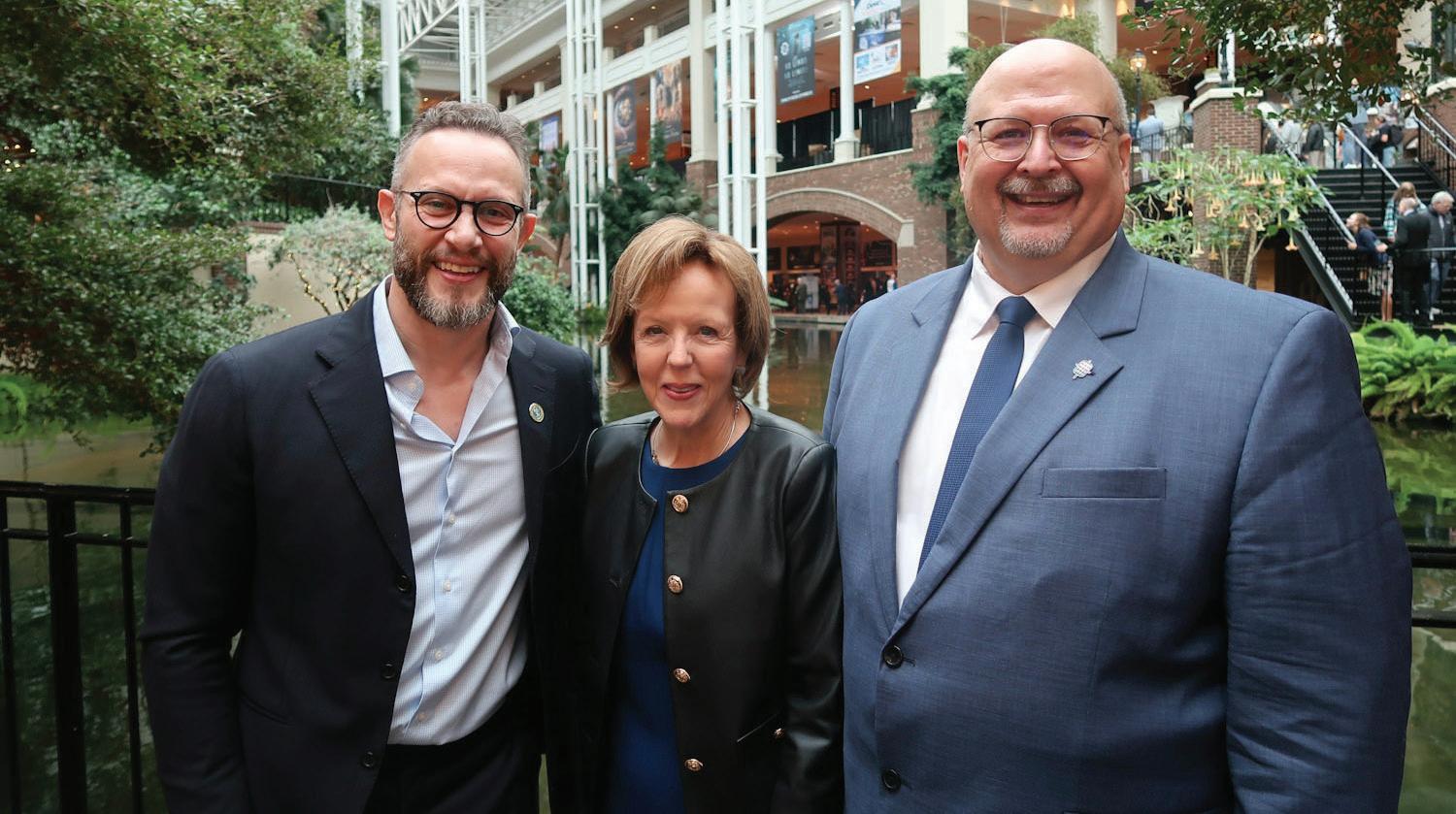
ICEJ-USA played a prominent role at two major gatherings of Christian and Jewish leaders recently, the inaugural Judeo-Christian Zionist Congress (JCZC) and the National Religious Broadcasters (NRB) annual mega-convention, where our USA national director Dr. Susan Michael was elected to NRB’s Board of Directors. The NRB is one of the most influential Christian organisations in the United States, representing thousands of religious broadcasters, publishers and digital media platforms reaching millions of believers worldwide. Dr. Michael’s appointment provides an expanded platform to strengthen biblical support for Israel within the Christian media community at a time of rising antisemitism and growing geopolitical tensions.
A main highlight of the NRB convention was the American Christian Leaders for Israel reception, hosted by the ICEJ and ACLI alongside the NRB and the JCZC. This event brought together more than 180 Christian and Jewish leaders, ministry representatives and media voices committed to strengthening support for Israel in America and worldwide.
MOJMIR KALLUS URGES CHRISTIAN SUPPORT FOR ISRAEL IN MEXICO TOUR
BY ICEJ STAFF WRITERS
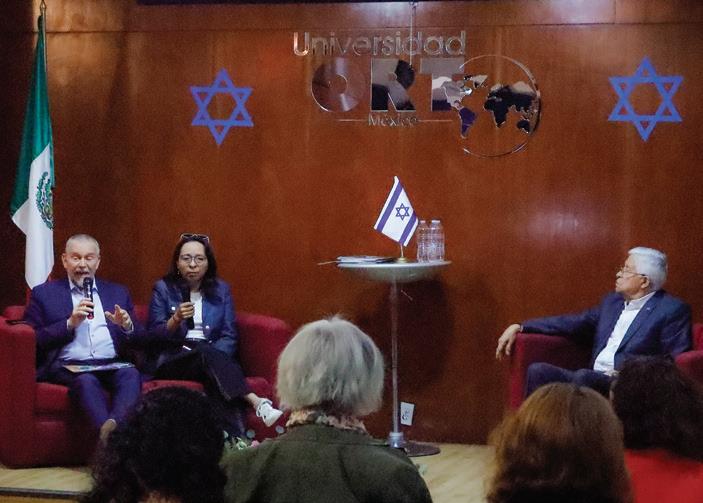
Dr. Mojmir Kallus, ICEJ Vice President for International Affairs, recently visited Mexico to deliver a series of lectures on the biblical basis of Christian support for Israel. His speaking tour was arranged by ICEJ-Mexico national director, Pastor Javier Martínez Rueda.
At the main event at ORT University in Mexico City, Kallus spoke on “Why Is Israel Relevant to the Church?” He traced the course of God’s redemptive plan from the covenant promises made to Abraham to the present-day Church and the restored nation of Israel. Among the attendees was Ommar Ayala, a journalist with Diario Cristiano Internacional who covered the tour for his journal.
Ayala reported that Dr. Kallus, a trained mathematician and Bible teacher, explained how God separated out Israel for a special purpose within His divine plan. This calling has never diminished and thus the Christian Embassy has been standing with Israel even more strongly since the tragic events of October 7, 2023.
According to Ayala, Kallus further explained
that the ICEJ not only educates Christians about Israel, but also informs them about the country’s pressing social needs due to the intense conflict in the region over the past 30 months. This includes trauma care, rebuilding projects in the Gaza border communities, and assisting Arabs and other minorities in the Land.
Dr Mojmir Kallus (l) addresses a gathering in Mexico City.
(Credit: Ommar Ayala)
A central point of the conference was the urgent need to verify information about Israel disseminated by the press and on social media platforms. Kallus warned of the existence of “another war front” based on disinformation
CZECH CHRISTIANS MARCH AGAINST ANTISEMITISM
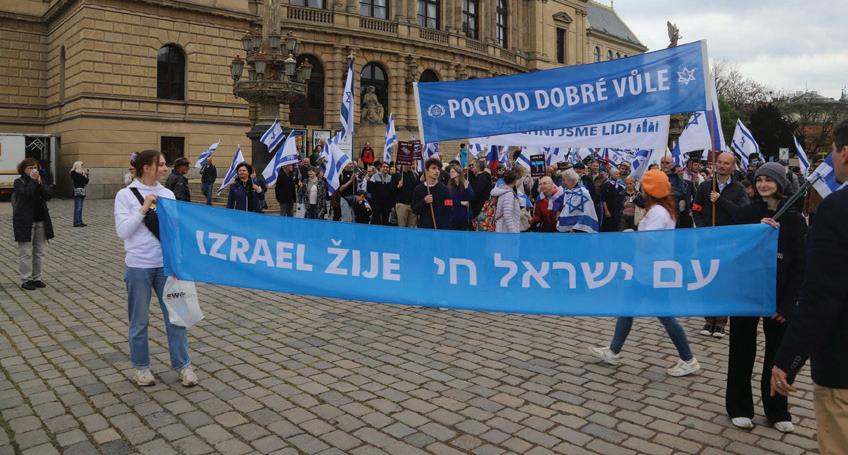
In mid-April, hundreds of Christians joined Jews and others for a march and rally in Prague to oppose antisemitism. The march featured Israeli dances performing in a main town square, while Israeli folk music was played at the rally in the gardens of the Czech parliament. Deputy Speaker of the Senate Jiri Oberfalzer addressed the gathering, while video messages were screened by a Holocaust survivor and victims of October 7. Organisers, including the ICEJ-Czech branch, presented the Jewish community with a Christian Declaration against Antisemitism signed by over 70 church leaders.
and propaganda against the Jewish state and people.
Einat Kranz Neiger, Israel’s ambassador to Mexico, could not attend the gathering at ORT University for security reasons, as intelligence reports had revealed that Iran’s Islamic Revolutionary Guard Corps planned an attack against the ambassador in Mexico, which was thwarted by local authorities in the summer of 2025.
But in a video message, she told the attendees that Christian solidarity with Israel is highly important, and also emphasised the need for truth amid the surge of disinformation and antisemitism.
“To our dear Christian friends in Mexico, your solidarity and friendship with Israel inspire us and remind us that the bonds between our peoples are based on shared values, faith, and hope. Thank you so much for always being by our side,” Kranz Neiger stated, according to the report in Diario Cristiano Internacional.
Meanwhile, Pastor Javier Martinez told the gathering that “ICEJ represents Christians worldwide who stand in solidarity with the Jewish people. Founded in 1980, it recognises in the modern restoration of Israel the faithfulness of God in fulfilling His ancient covenant promises to His people,” Martínez stated.
HOMECARE PUTS LOVE INTO ACTION FOR ELDERLY JEWISH IMMIGRANTS AMID WAR
BY LAURINA DRIESSE
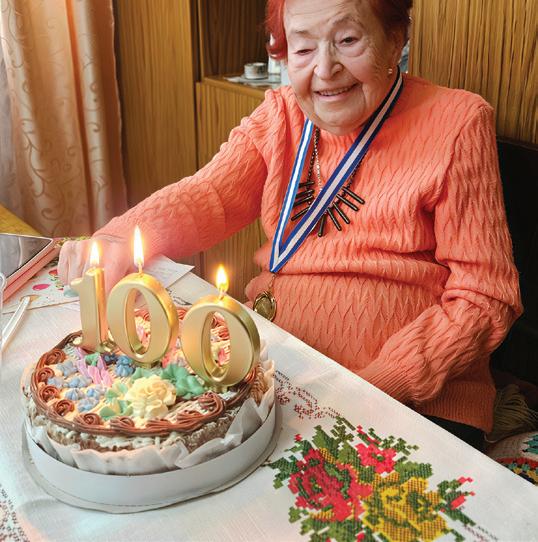
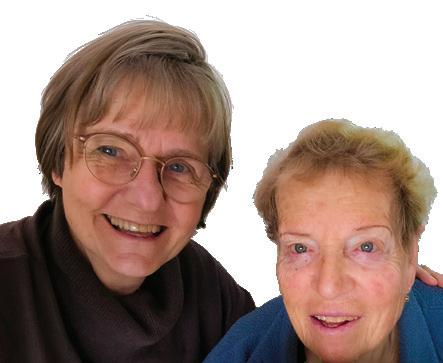
Amid Israel’s tense war with Iran, the ICEJ Homecare team was extra busy this spring with added home visits ahead of Passover. Homecare nurse Corrie van Maanen also made sure a milestone birthday did not go unnoticed, as Luba turned 100 years old!
ICEJ Homecare visits every week with Luba, a Soviet Jewish immigrant to Israel. During one recent visit, Luba became sad when discussing her upcoming birthday.
“I don’t want to celebrate it,” she insisted.
Luba has no family in Israel, after her son and daughter-in-law passed away a few years ago. She was looking forward to her granddaughter from Germany and another relative from America visiting to celebrate this special day with her. But their flights were cancelled due to the war.
So, Corrie promised to visit on her birthday, and even brought two co-workers with flowers and balloons. Soon, neighbours and friends arrived, filling Luba’s cozy one room apartment with 12 people. Two friends arranged the party and prepared Russian dishes. What seemed like a disappointing occasion became a joyful celebration, with Luba at the center. She offered a short, humorous speech.
The current war is extremely challenging for many of the elderly who cannot reach shelters fast enough. Even during Luba’s birthday celebration, the siren sounded, and everyone moved to the stairwell. She calmly accepted it as part of her special day.
Elsewhere, Corrie’s relationship with Esther* began 15 years ago when she opened her door to a stranger. During a recent visit with Esther down in Arad, Corrie could see she was worn down with fear from the war. It is a challenging time for this 88-year old independent lady. Corrie left her expressing her love, but how could anyone have known what lay ahead just two days later?
Late that evening, a nurse-friend in Arad messaged Corrie to say she should check on Esther, as an Iranian missile had just struck the Negev desert town. Corrie immediately tried contacting her, but to no avail. Only the next morning did Esther respond.
“Corrie, I’m alive, but my windows are shattered, and I don’t know what to do”, she said. “In my heart there is a big fear. I give you a hug.”
Esther’s apartment was a street away from the impact site, but the force of the blast shattered her living room windows. Miraculously, she was in her bedroom and escaped any serious injury.
“If you think that one hundred years is long, I can assure you it’s not!”
Corrie later recounted Luba’s journey as a new immigrant to Israel.
“She left the former Soviet Union as a pensioner, and is now celebrating her 100th birthday on Israeli soil. This is the essence of Aliyah for me,” said Corrie. “She arrived, learned the language, and made Israel her home.”
A shattered window from the blast of an Iranian missile.
built up over many years, showing we are here, and encouraging them not to give up.”
That same day, Esther miraculously received new glass for her living room windows.
Corrie checked on her again later that day and asked whether she should come to visit.
“Yes, please come”, said Esther. So, the next day, amid sirens and seeking shelter en route from incoming missiles, Corrie made her way from Jerusalem to Arad.
Meanwhile, Passover is such an important Jewish festival, but not everyone has a traditional seder meal to attend. Corrie started early before the holiday, bringing flowers to those under her care who would be alone for Passover.
One recipient was extremely happy to see Corrie!
Corrie reached out to her nurse-friend nearby, who immediately sprang into action. In under two hours, she had checked on Esther and cleaned the apartment.
The friend sent Corrie a message that Esther was making tea to get her mind off the stress.
“Drinking tea and letting her share about her anxiety is so the heart of Homecare,” reflected Corrie. “I experienced that day the true teamwork of our efforts, complementing one another, but mostly through the relationships
“Come, I want to give you one more hug because you came today with flowers,” she exclaimed.
“All these years of building relationships are meant for a time such as this,” shared Corrie. “This is a difficult time when Israel is in a crisis, but amid the crisis we can draw closer to these precious people. We are part of their lives, and are called to stand with the people of Israel, just to be there for them.”
*Name changed for privacy.
Thank you for supporting the incredible work of ICEJ Homecare. Donate today at: help.icej.org/homecare
Joel 3:16
25-30 September, 2026
This year’s Feast of Tabernacles is especially significant for Israel as it emerges from the prolonged conflict in this region. Thus, the ICEJ is once again reducing the entry price for our Feast 2026 celebrations, starting from as low as $270 USD! We want to bring together as many Christians as possible for a solidarity and victory tour this Succot, to support the nation as it recovers. Israel needs our friendship and presence now more than ever.
Find out about our In-Person Packages starting as low as $270 USD, our Land Package, and our Online Packages. by visiting the official website.
For more information visit feast.icej.org or email events@icej.org