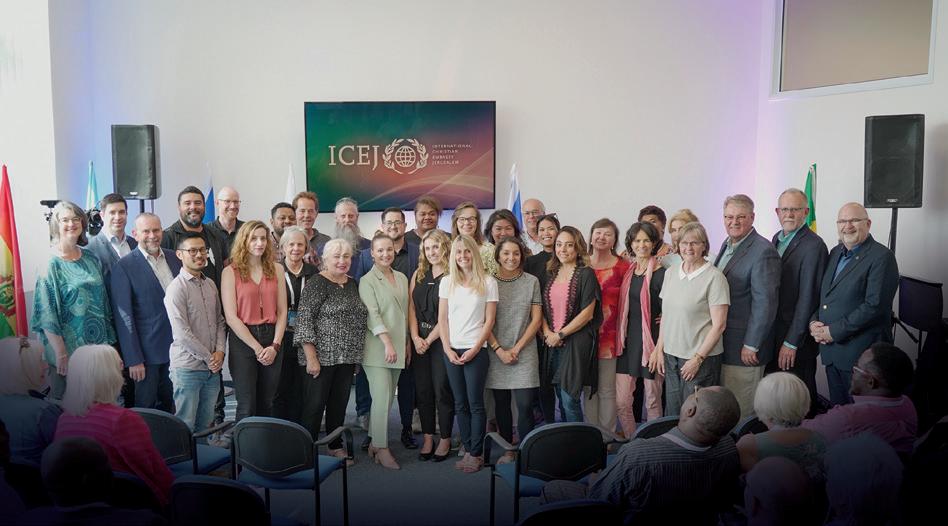
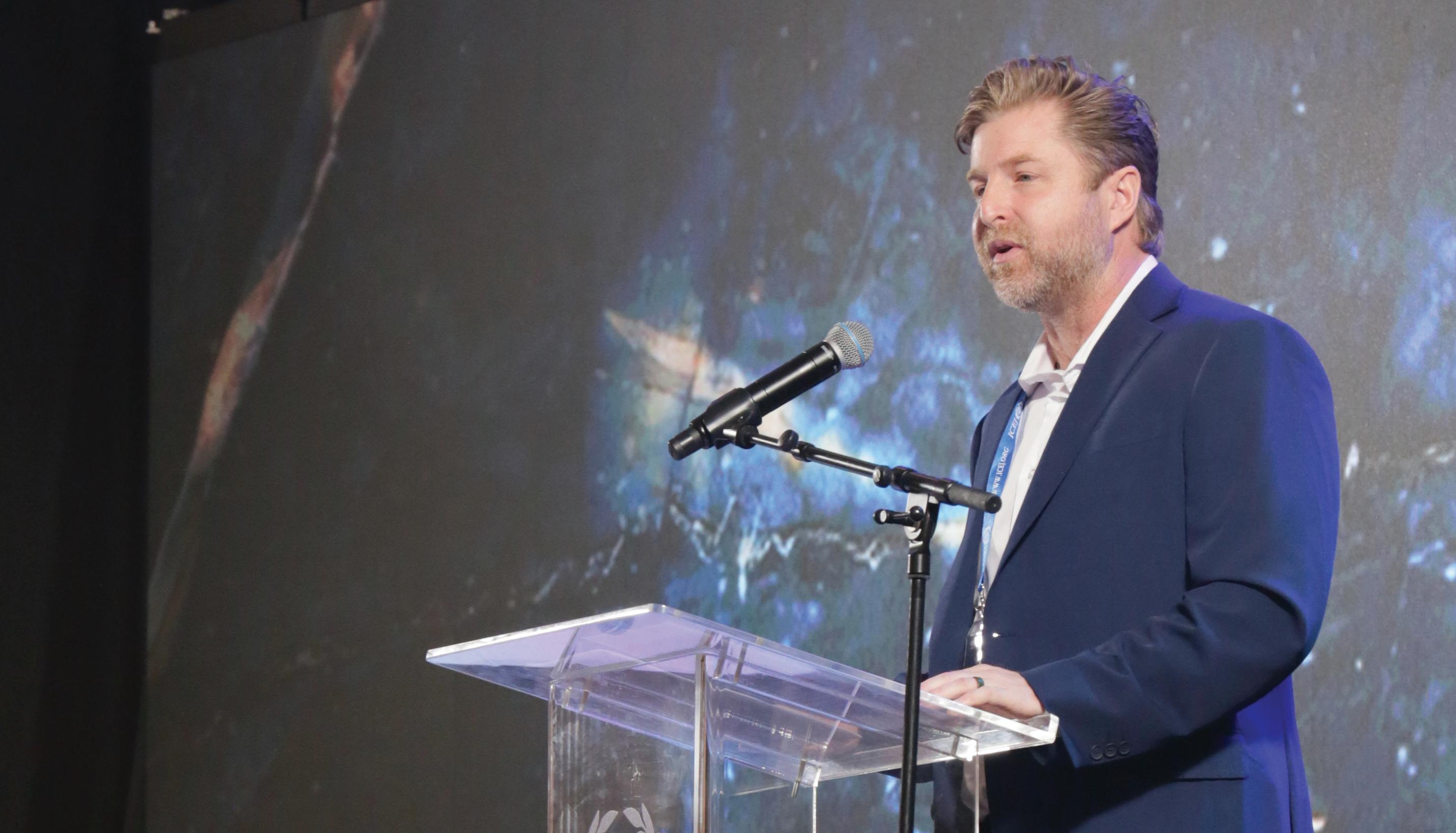
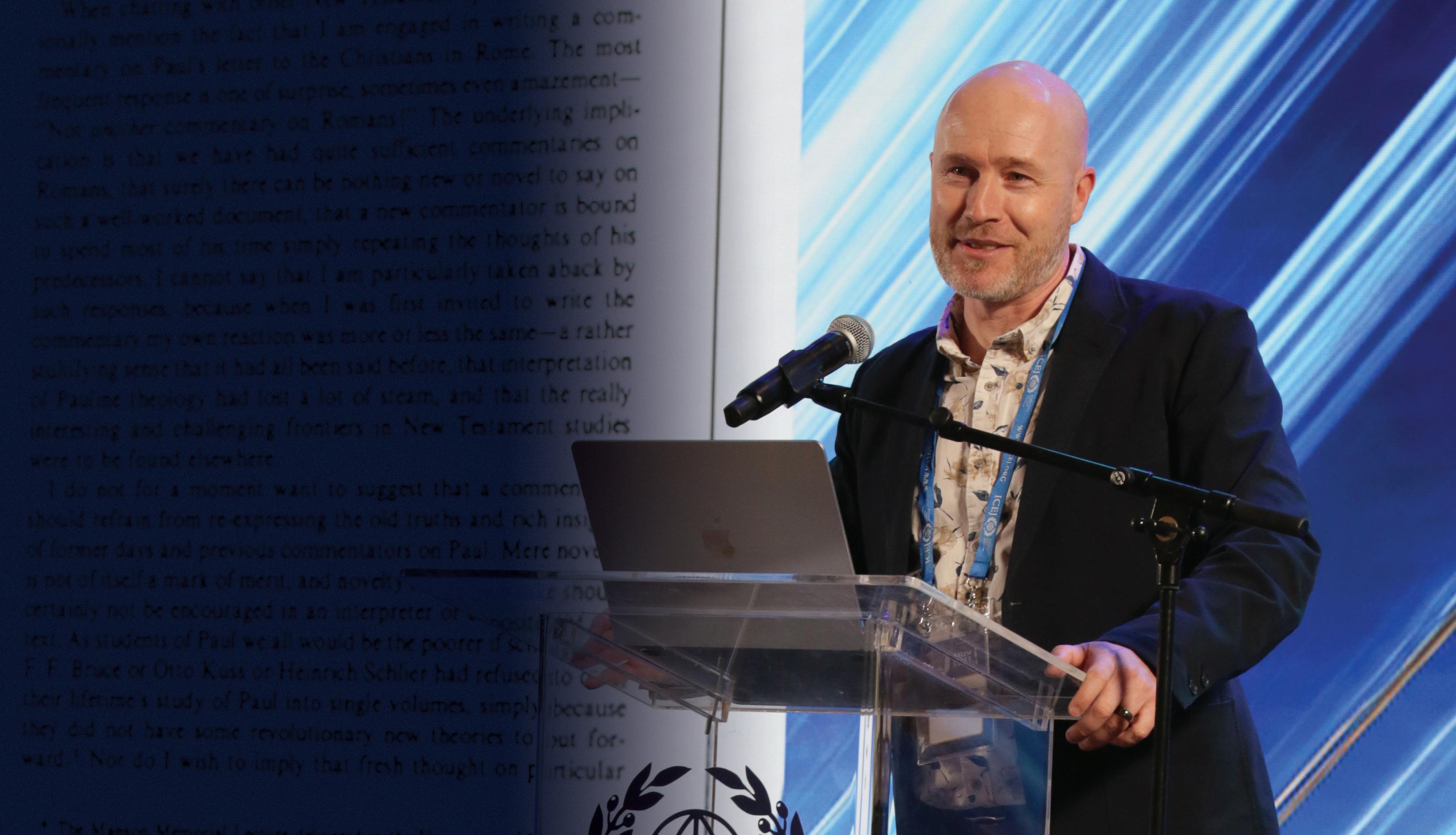
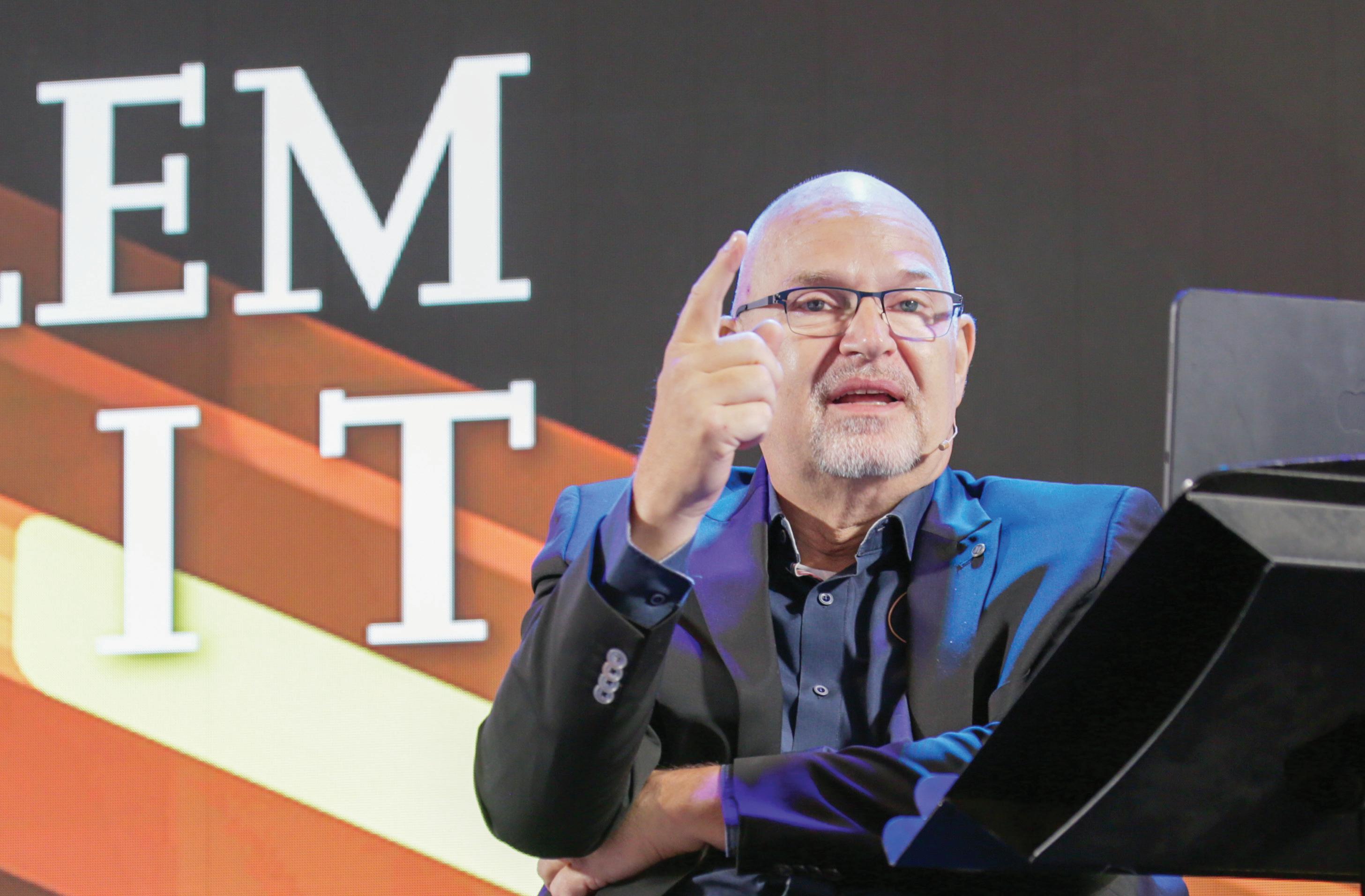
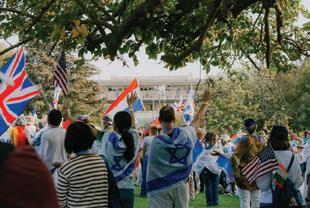
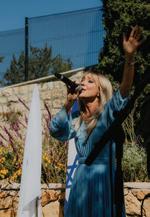
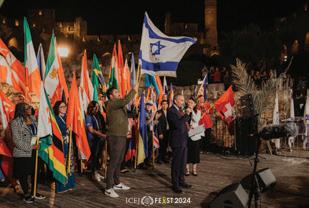
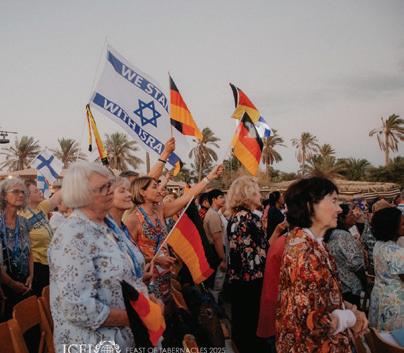
The International Christian Embassy Jerusalem was established in 1980 in recognition of the biblical significance of Jerusalem and its unique connection to the Jewish people. Today the ICEJ represents millions of Christians, churches and denominations to the nation and people of Israel. We recognise in the restoration of Israel the faithfulness of God to keep His ancient covenant with the Jewish people. Our main objectives are:
* To stand with Israel in support and friendship;
* To equip and teach the worldwide Church regarding God’s purposes with Israel and the nations of the Middle East;
* To be an active voice of reconciliation between Jews, Christians and Arabs and to support the churches and congregations in the Holy Land.
From its head offices in Jerusalem, the ICEJ reaches out to more than 170 countries, with branch offices in over 90 nations.
Our vision is:
* To reach every segment of Israeli society with a Christian testimony of comfort and love, and
* To reach and actively represent to Israel the support of denominations, churches and believers from every nation on earth.
The Christian Embassy is a non-denominational faith-based ministry supported by the voluntary contributions of our members and friends across the globe. We invite you to join with us as we minister to Israel and the Jewish people worldwide by donating to the ongoing work and witness of the ICEJ.
WORD
FROM JERUSALEM CREDITS
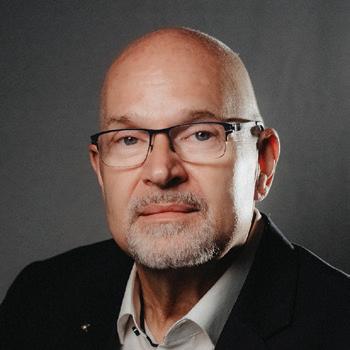
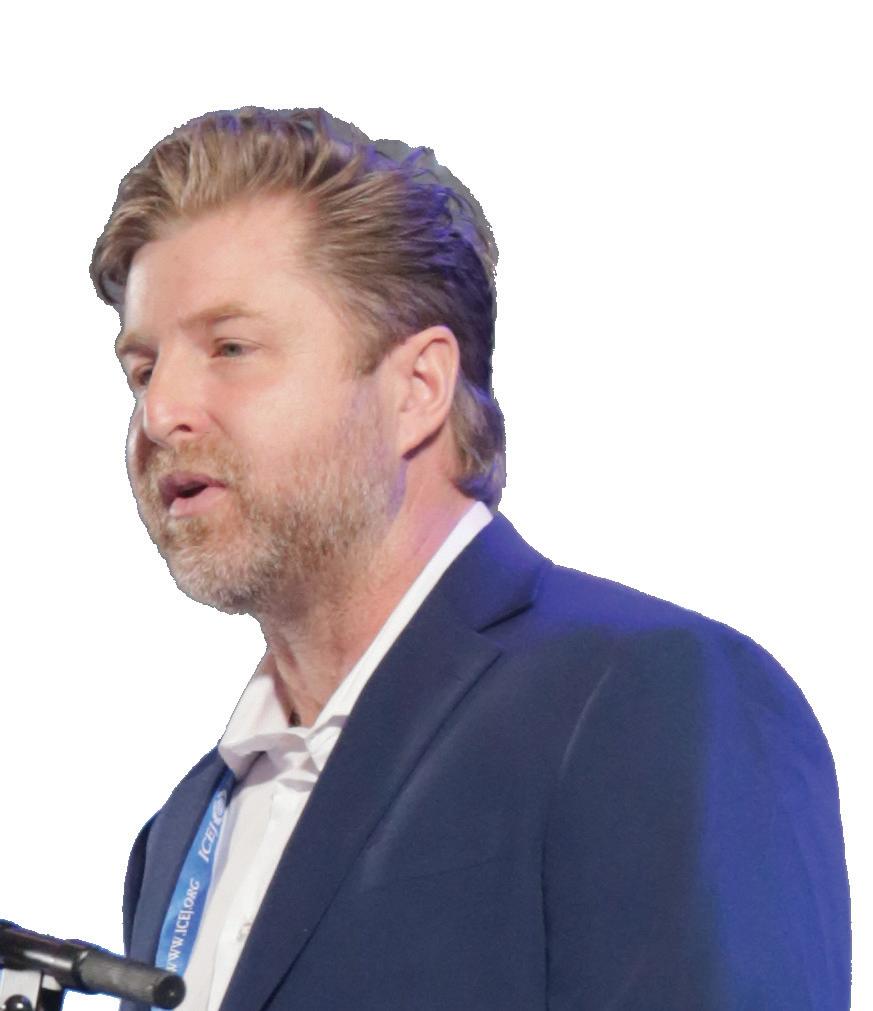
ICEJ President Dr. Jürgen Bühler
Senior Vice President David Parsons
VP International Affairs Mojmir Kallus
VP Finance David Van der Walt
VP Operations Richard van der Beek
VP AID & Aliyah Nicole Yoder
Managing Editor/Publications Director Laurina Driesse
Staff Writers Nick Hansen, Nativia Bühler, Naomi Ammon
Additional Writers Howard Flower, Jannie Tolhoek, Dr. Mojmir Kallus, Joshua Gooding
The New King James Bible is used for all Bible references unless otherwise noted.
Word From Jerusalem is published by the International Christian Embassy Jerusalem. Reproduction in whole or in part without written permission is prohibited. Word From Jerusalem has no subscription price and is supported through contributions worldwide. All gifts to this ministry are tax-deductible (in countries where this applies). For more information, visit us at www.icej.org
INTERNATIONAL CHRISTIAN EMBASSY JERUSALEM
P.O. Box 1192, Jerusalem • 9101002, ISRAEL
Support our ministry online at www.icej.org
FROM THE DESK OF THE PRESIDENT
Dear friends,
SCAN ME TO BLESS ISRAEL TODAY!
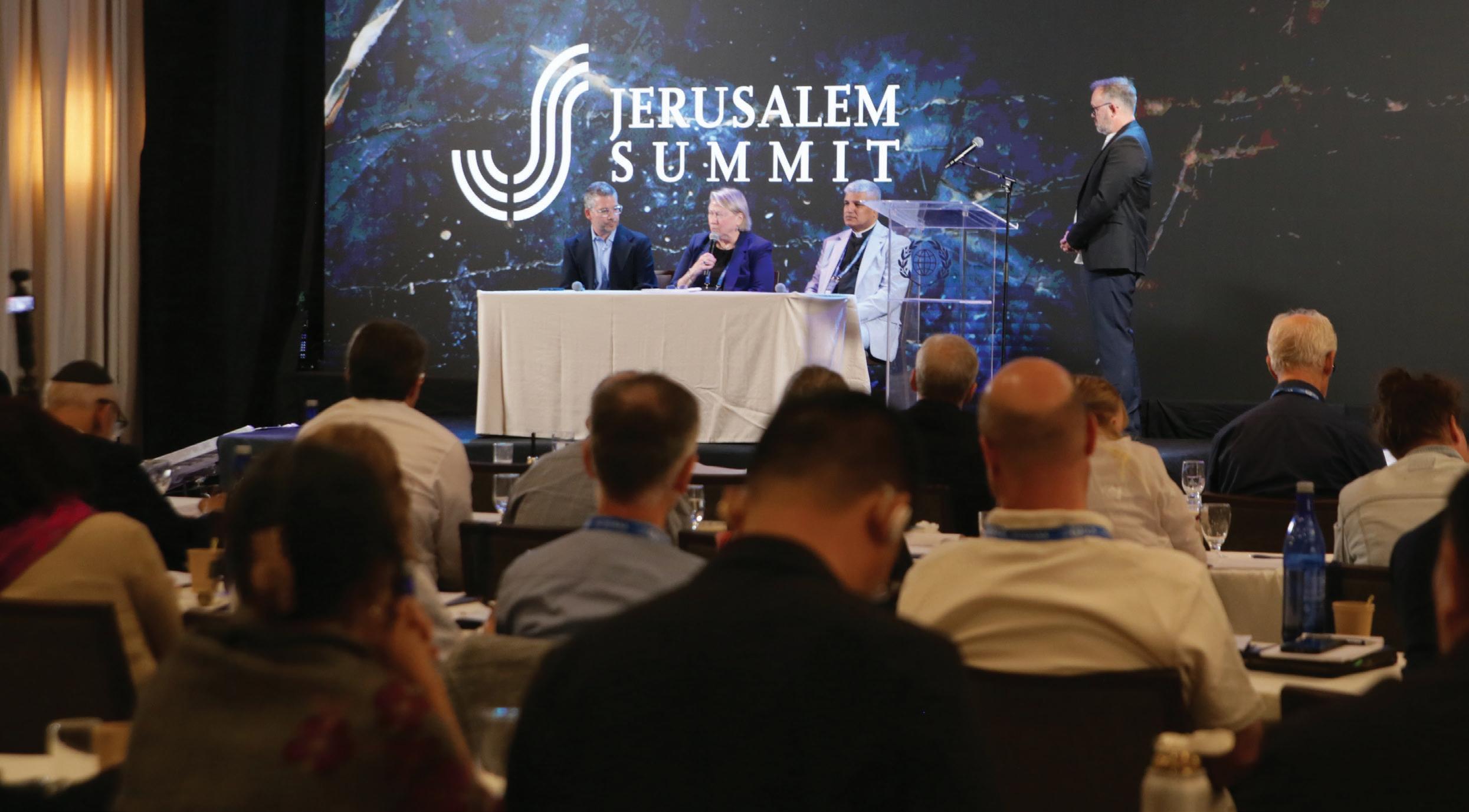
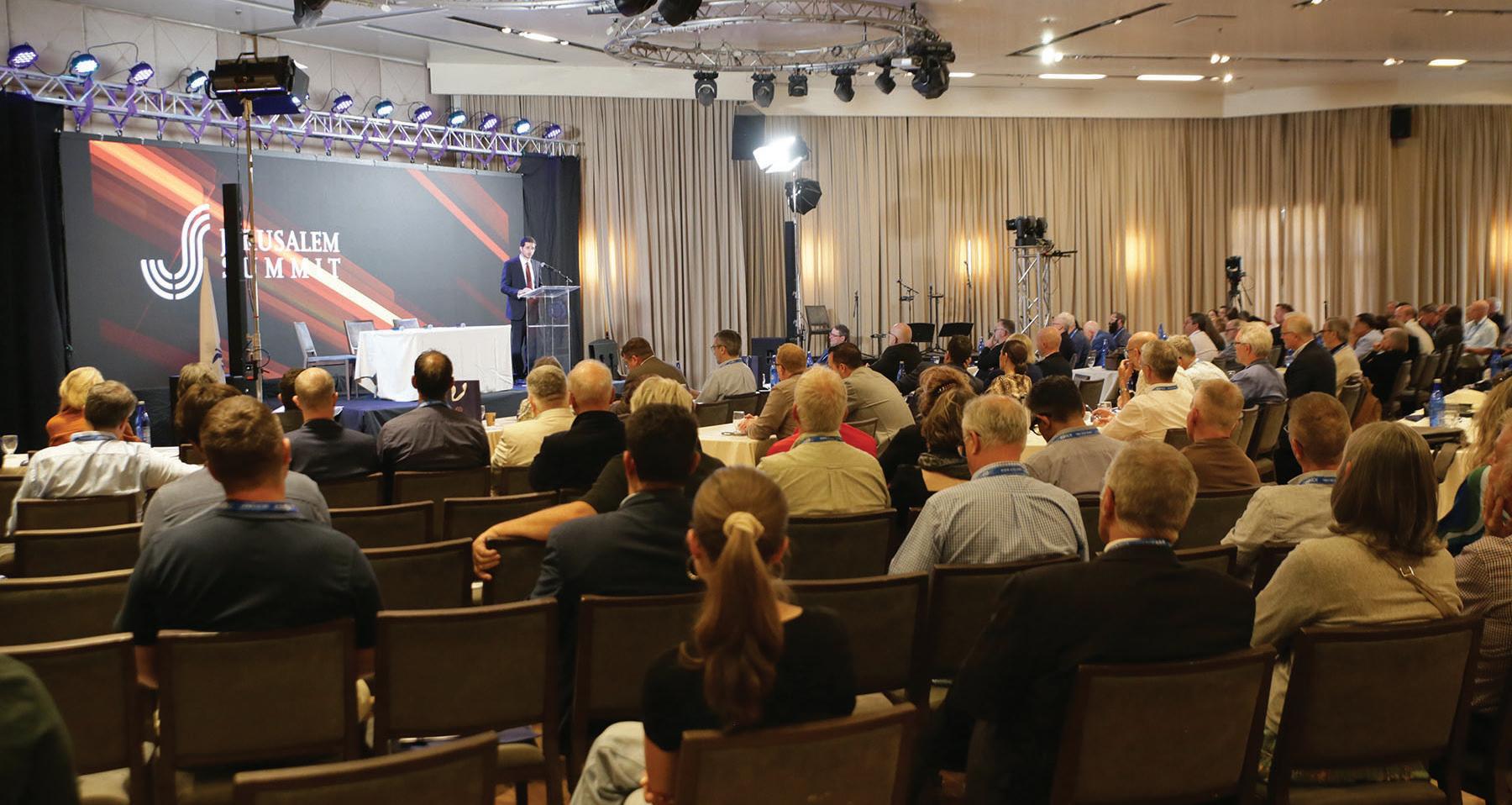
The issue of our Word From Jerusalem magazine is coming to you just a few days after the Jerusalem Summit. It was an emergency gathering of leading theologians and scholars in regard to Israel and Zionism.
What characterised our first Jerusalem Summit was the very presence of God among us. Even though it was a conference packed with theological talks and detailed information, many of the pastors came away saying this was the most anointed conference they had attended in their life. I believe this was not just because we had excellent speakers from around the world, but that we prepared the Summit for an entire year with weekly prayer meetings on our Global Prayer Gathering.
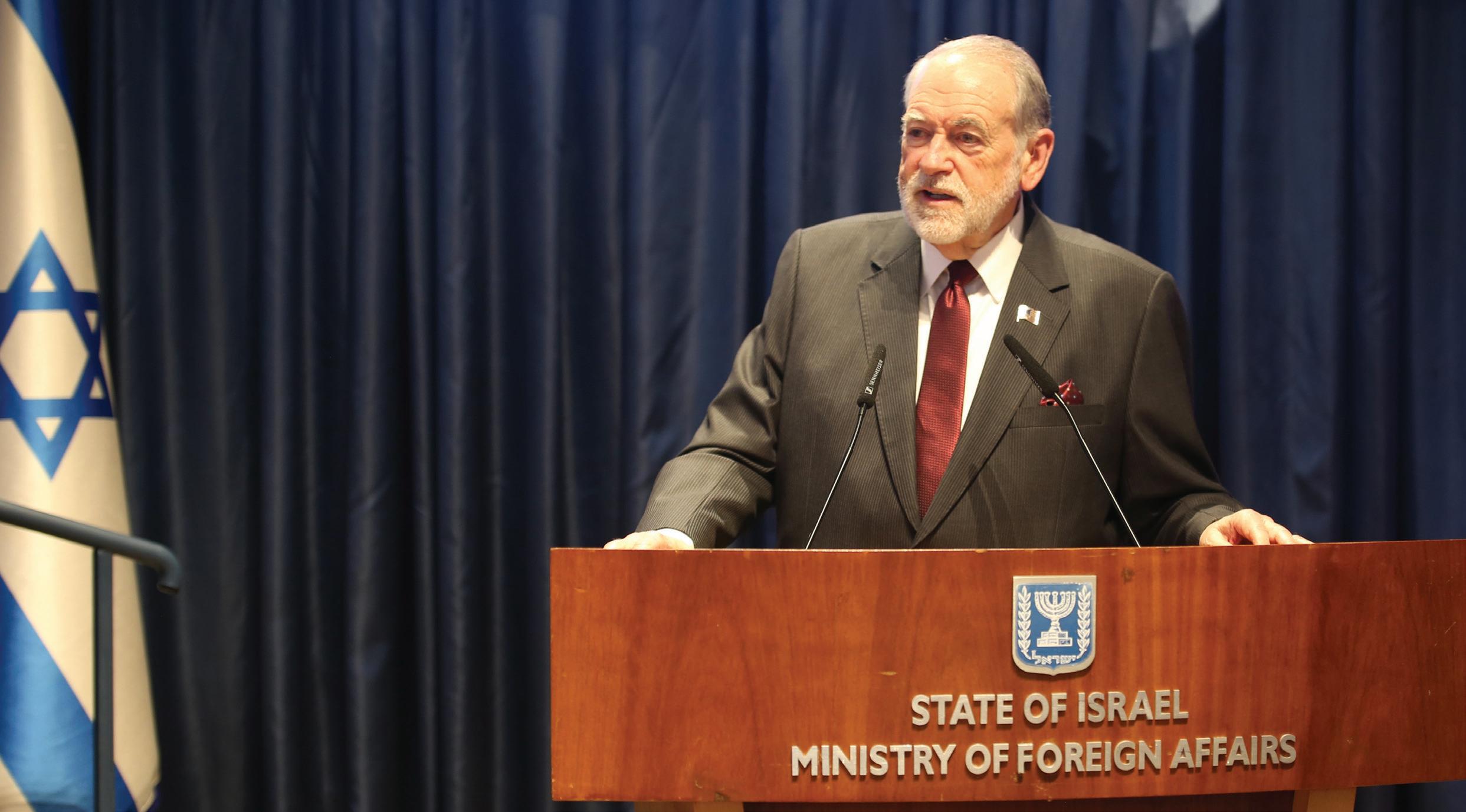
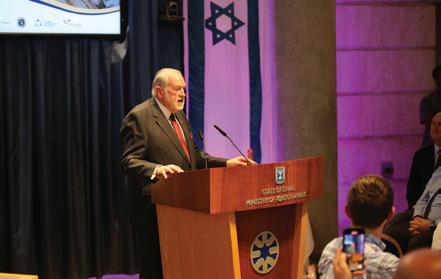
A highlight of the Summit was the closing night at the Israeli Ministry of Foreign Affairs, where US Ambassador Mike Huckabee served as our keynote speaker. We all were surprised that he did not deliver a political or diplomatic message, but he shared his heart from the Word of God on the calling of Israel. Everyone was greatly encouraged, and we are very thankful for the Ministry of Foreign Affairs for so graciously opening their doors to us.
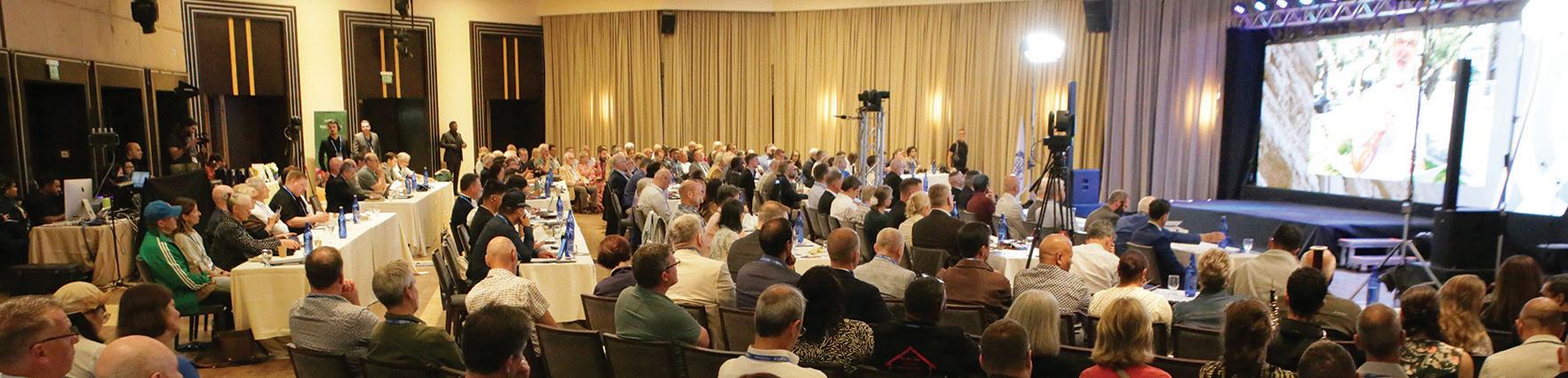
One of the miracles of the Jerusalem Summit was that all the speakers we invited decided to come and address our gathering. We also had more attendees at the Summit than we expected, especially in light of Iranian missiles falling on Israel just one day before the event started. The brief escalation had no impact on the attendance or the speakers. There was truly a spirit of determination and clarity among us. Plus, we had over 3,500 joining us online, another pleasant surprise and answer to prayer.
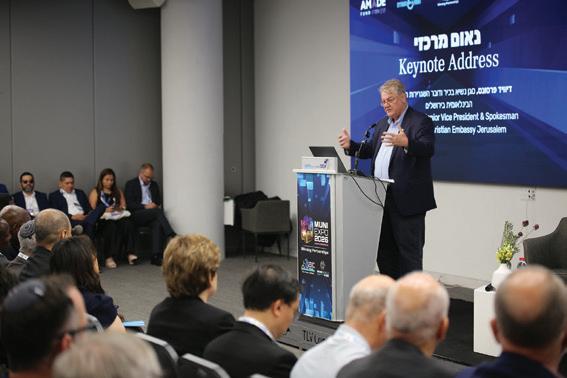
Just one week after the Summit, we attended a special conference in Tel Aviv called the MuniExpo, Israel’s largest annual government-sponsored conference involving all the mayors and local community leaders in the country. It was a truly historic occasion. For the first time, they included a special session that highlighted the contributions of Christians towards the nation of Israel and the different communities throughout the land. The aim was to build closer Jewish-Christian relations based around our shared Judeo-Christian values, and my colleague David Parsons was the keynote speaker.
The next big event on the ICEJ calendar is the Feast of Tabernacles celebration from 25-30 September. Please make your best effort to join us in Jerusalem at Sukkot, as we gather under the prophetic theme “The Lord Roars From Zion”.
I also hope you enjoy the stories and images in this magazine from our social aid projects in the Gaza border area, as well as our efforts at feeding the needy, bringing new Jewish immigrants, and caring for Holocaust survivors.
We do sense that we are entering into an exciting new phase in our ministry here in Israel, and we ask you to pray for us. Besides keeping us in your prayers, please continue to support our ministry financially as you are able.
Shalom and blessings from Jerusalem,
Dr. Jürgen Bühler ICEJ President
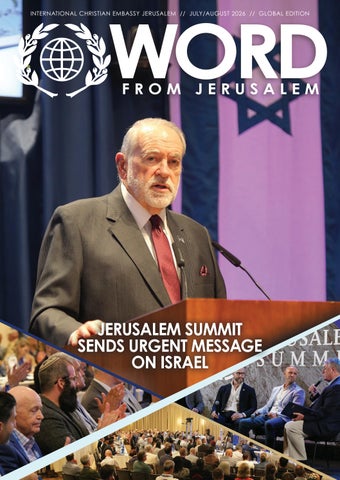
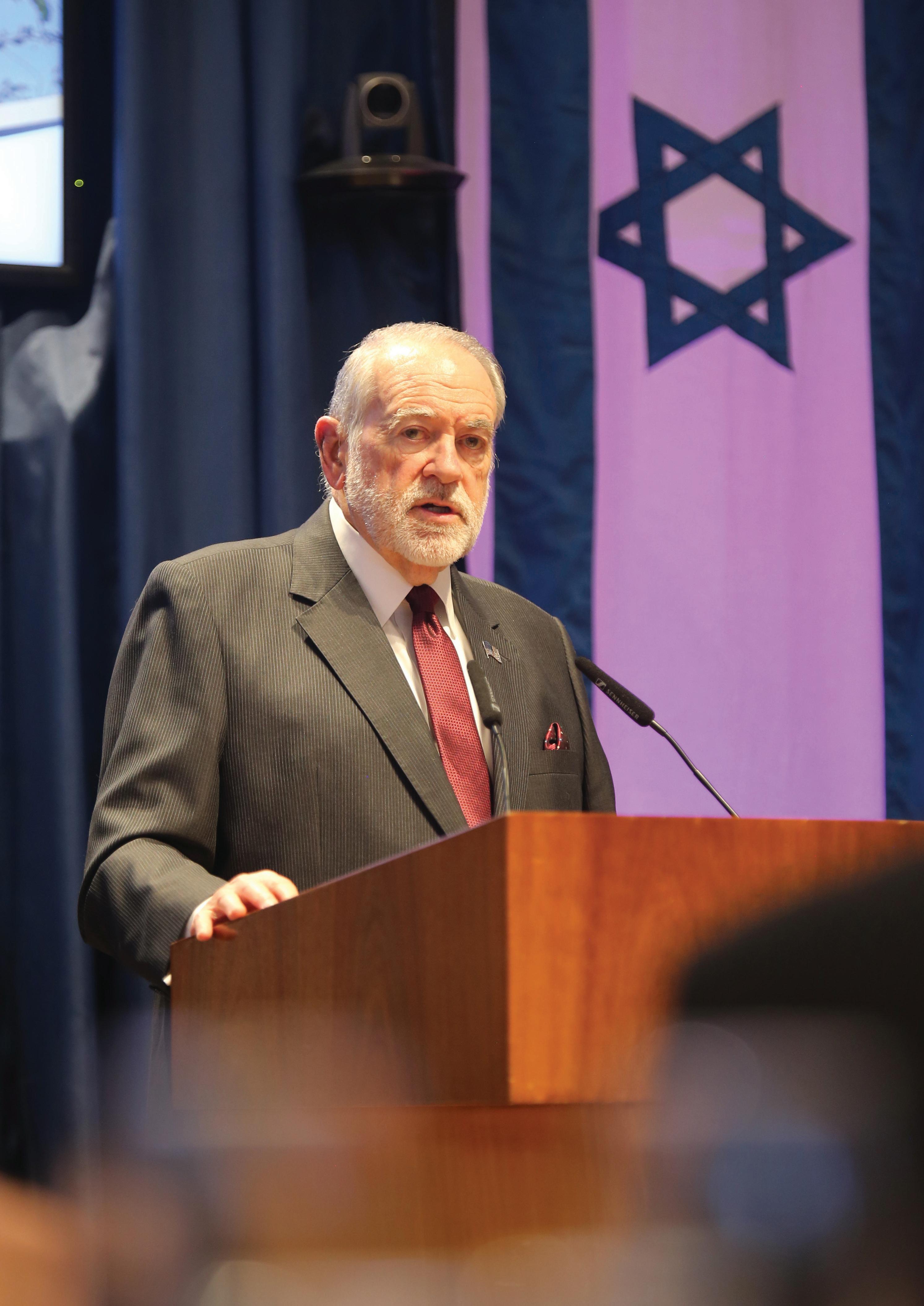
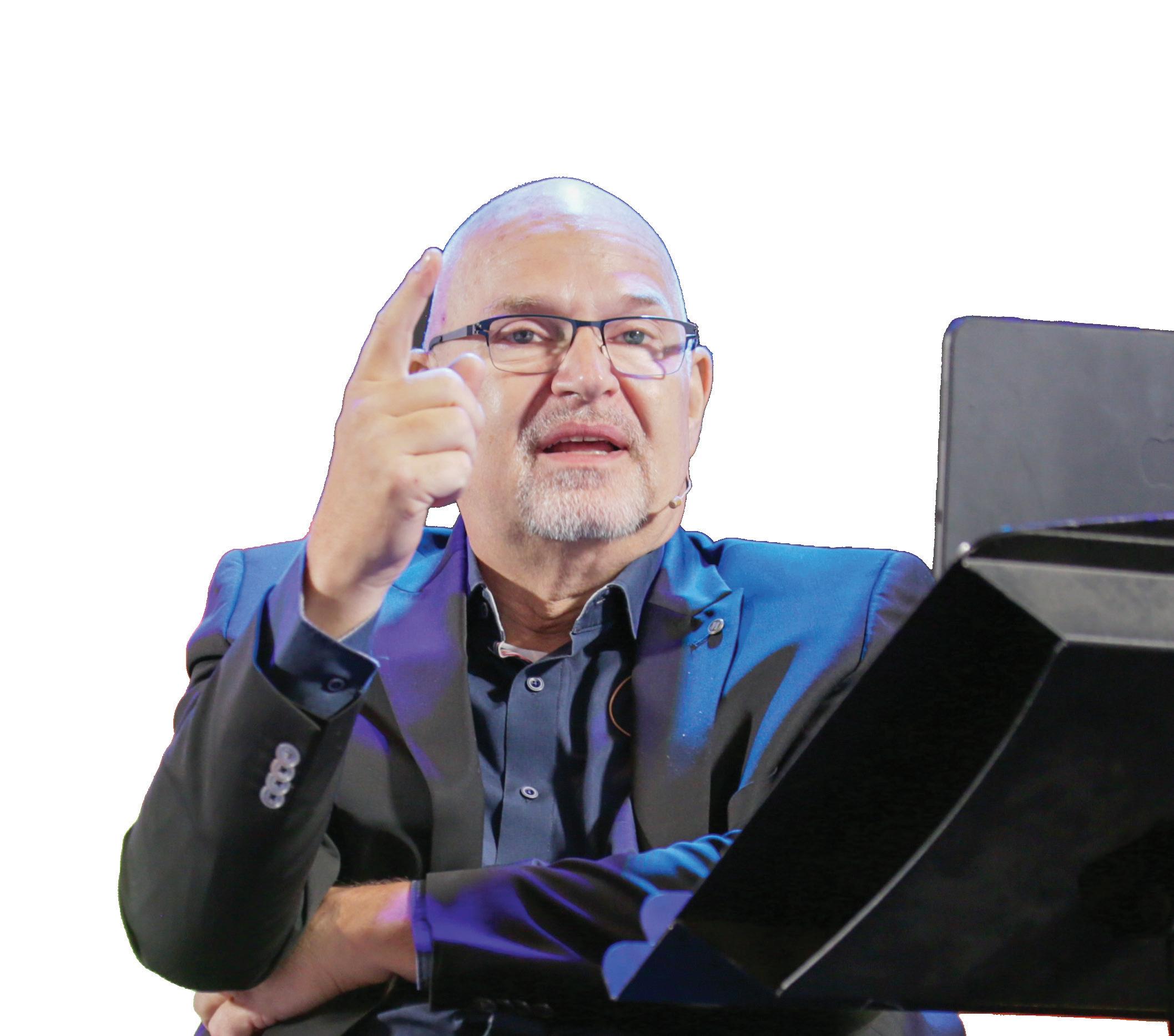
COVER PHOTO: Amb Mike Huckabee speaks at the Jerusalem Summit 2026.
REBUILDING A COMMUNITY, RESTORING HOPE
The LORD ROARS from ZION
THE RETURN OF THE TRUE PROPHETIC VOICE
BY DR. JÜRGEN BÜHLER, ICEJ PRESIDENT
Joel was one of the first Hebrew prophets to proclaim “The Day of the Lord”. The exact time of his prophecy remains unclear, as he never tied his message to the reign of a certain king. Ancient Jewish sages like Jarchi and Kimchi believed he prophesied during the years of drought declared by Elijah (1 Kings 17:1), while others place him during Queen Athaliah’s reign.
The book of Joel focuses on the coming “Day of the Lord”. The Apostle Paul wrote that the Day of the Lord will come as a “thief in the night” (1 Thessalonians 5:2); totally unpredictable, like thieves who come unannounced when you least expect it. According to the Apostle Peter, the heavens will dissolve, and the earth will burn (2 Peter 3:10). It is the great day of reckoning for humanity, or as Isaiah said: “… it is the day of the Lord’s vengeance. The year of recompense for the cause of Zion.” (Isaiah 34:8).
The prophet Zephaniah further described it: “The great day of the Lord is near… a day of wrath is that day, a day of distress and anguish, of ruin and devastation…” (Zephaniah 1:14-15) As Joel saw this day coming upon the world, he first called the entire nation together for fasting, prayer and repentance, because “who knows whether He will not turn and relent and leave a blessing behind…” (Joel 2:14). Joel sensed an emergency and called on the people to gather and weep “between the porch and the
altar”. Some commentators believe he saw the Babylonian conquest centuries beforehand. Yet, like many biblical prophets, his vision also extended into the distant future. “And it shall come to pass afterward…” Joel saw a two-fold vision for the last days.
“And it shall come to pass afterward that I will pour out My Spirit on all flesh; Your sons and your daughters shall prophesy, your old men shall dream dreams, your young men shall see visions. And also on My menservants and on My maidservants I will pour out My Spirit in those days.”
- Joel 2:28-29 -
First, he saw great revival coming. “And it shall come to pass afterward that I will pour out My Spirit on all flesh; Your sons and your
daughters shall prophesy, your old men shall dream dreams, your young men shall see visions. And also on My menservants and on My maidservants I will pour out My Spirit in those days.” (Joel 2:28-29) It would be a time of great awakening and refreshing.
Many prophets, like Isaiah, Ezekiel, and Zechariah, saw a similar end-time revival for Israel. Preaching centuries later in Jerusalem, Peter saw “times of refreshing” awaiting his people (Acts 3:19). This all means before the great and awesome Day of the Lord, we can expect an outpouring of the Holy Spirit, centered in Israel.
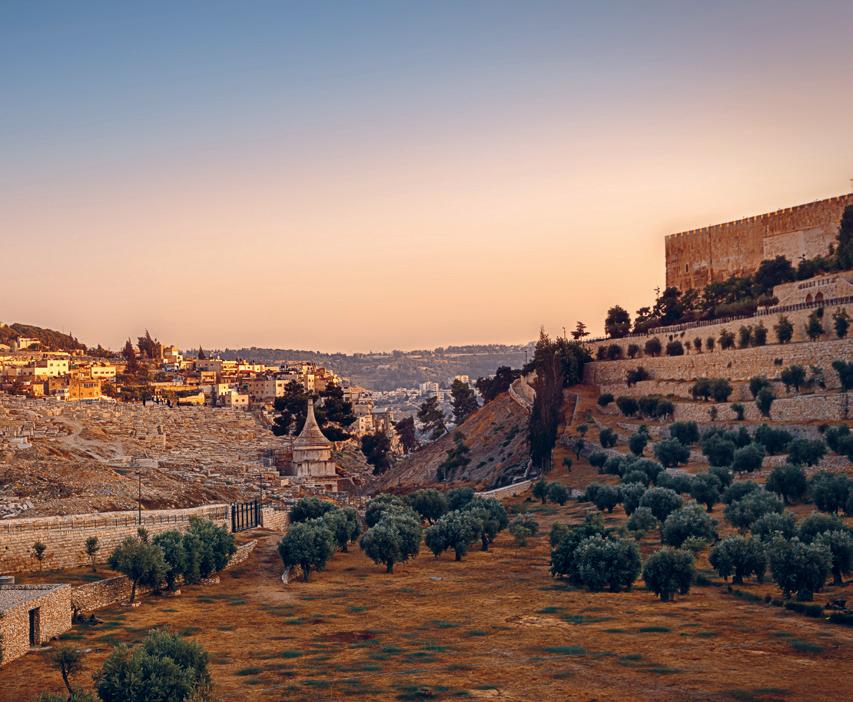
Second, Joel saw a less encouraging vision. He saw the Valley of Jehoshaphat, meaning “the Lord judges”. This is part of the Kidron Valley east of Jerusalem. It represents God’s judgment of the nations, as other prophets also envisioned. While there is an opportunity for “all flesh” to be filled with the Holy Spirit and call on the name of the Lord, God also is positioning the nations for judgment, based mainly on how they have treated Israel.
So, the prophet Joel saw both revival and judgment, for Israel and the nations. This is not just Joel’s vision, but of almost every prophet in the Bible as well. This strikes me, because today
most modern-day prophetic voices speak only about revival, church growth, health and prosperity. Joel saw this too, yet he also warned his people and the nations about the great and dreadful Day of the Lord.
Indeed, I am struck that the Church has largely failed to foresee the great global shakings of the past decade: the Covid pandemic, a major war in Ukraine, and of course October 7. After the horrible terror invasion of Israel, we at the ICEJ asked ourselves why no one really saw it coming. In a way, Israel’s security failure is a striking parallel to the Church; we were all caught by utter surprise.
“Surely the Lord God does nothing, unless He reveals His secret to His servants the prophets.”
- Amos 3:7 -
Amos declares: “Surely the Lord God does nothing, unless He reveals His secret to His servants the prophets.” (Amos 3:7) Yet we hear regularly, “this year will be your best year” or “a new season of prosperity is coming”. Over the past 50 years, I have heard so many times that revival is coming to Germany, and you likely have heard the same about your country. Very few voices, like the Bible teacher David Pawson, foresaw events such as the radical Islamisation of his country, the United Kingdom, already 25 years ago.
Prophets who proclaim only good times are not a new phenomenon. It is as old as the people of God. Jeremiah and Ezekiel chided the prophets of their time who foresaw only peace and well-being and failed to see the judgment of God coming (Ezekiel 12:24). Why this one-sided stream of prophecy?
Mostly because it satisfies the desires of our own hearts. Who does not want growth and prosperity? Meanwhile, we struggle with harsh words of correction and judgment.
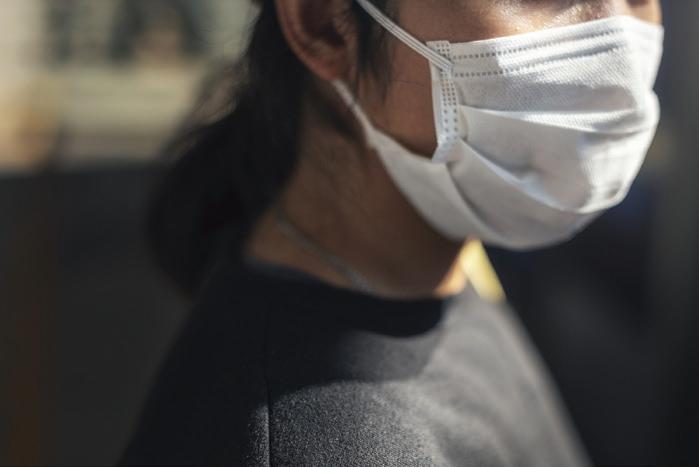
A woman wearing a face mask during the Corona pandemic.
The prophet Habakkuk faced exactly this dilemma. He wrestled with the challenging times Israel was facing, and cried out to God: “How long?” Yet God did not answer as he might expect, saying: “Don’t worry. Great times are ahead.” Instead, God told him: “You think it is bad now? This is just the beginning. I will send the Chaldeans to judge Israel.” God even introduced His word this way: “Look among the nations and watch – Be utterly astounded! For I will work a work in your days which you would not believe, though it were told you.” (Habakkuk 1:5)
Would we, too, have struggled to believe if the Lord had announced a global pandemic in 2020, that churches would be shut down worldwide, and big ministries would collapse? Not even Israeli security officials heeded the warning signs that came in the days, and even hours, before the horrific invasion from Gaza.
You might be tempted to think the office of a New Testament prophet is more filled with words of grace and encouragement. But a close look at the New Testament, particularly the book of Acts, tells us that the balance of Old Testament prophetic words is also found in the New.
“And in these days prophets came from Jerusalem to Antioch. Then one of them, named Agabus, stood up and showed by the Spirit that there was going to be a great famine throughout all the world, which also happened in the days of Claudius Caesar.” (Acts 11:27-28) This prophetic word about a global famine caused the churches to prepare special offerings for the believers in Israel.
Perhaps an Agabus-type prophet today might have foretold Covid. The same Agabus dramatically prophesied that Paul would be bound in Jerusalem and delivered to the Gentiles (Acts 21:10-11). And he was not the only prophet with such a difficult word for
Paul. In Acts 20:23, Paul stated, “the Holy Spirit testifies in every city, saying that chains and tribulations await me.” Yet remarkably, Paul accepted it as the word of God for him. You might also be tempted to believe this is not relevant for our time, as the Day of the Lord is still far off. Joel, however, gives us an exact time marker for when these prophecies will be fulfilled:
“For behold, in those days and at that time, when I restore the fortunes of Judah and Jerusalem, I will gather all the nations and bring them down to the Valley of Jehoshaphat. And I will enter into judgment with them there, on behalf of My people and My heritage Israel, because they have scattered them among the nations and have divided up my land…” (Joel 3:1-2).
It will be in the time of Israel’s restoration, when nations are trying to carve up the Land of Israel. There has never been a time that fits this description better than today.
This means that if you come from a nation which constantly accuses Israel of genocide, apartheid and other lies, while remaining silent in the face of real atrocities in Nigeria or Congo, then the Church should be alarmed and not just see great times ahead, but also ask God for a genuine prophetic warning for your nation.
We need to understand that the roar of the Lion of Judah is not just a call for revival but also – and perhaps primarily – a call to judgment and reckoning with God. It means we need a return of true prophetic ministry in our time, which also dares to prophesy hard truths to the Church and the nations.
We pray that at this year’s Feast, God’s roar will be heard, with words of encouragement and revival, but also needed words of correction and repentance. Please pray with us that the Lord indeed will roar from Zion.
The Kidron valley.
ICEJ HOSTS EMERGENCY JERUSALEM SUMMIT ON ISRAEL AND THE CHURCH
HIGH-LEVEL GATHERING TAKES ON RISING ANTISEMITISM, REPLACEMENT THEOLOGY, NICENE CREED
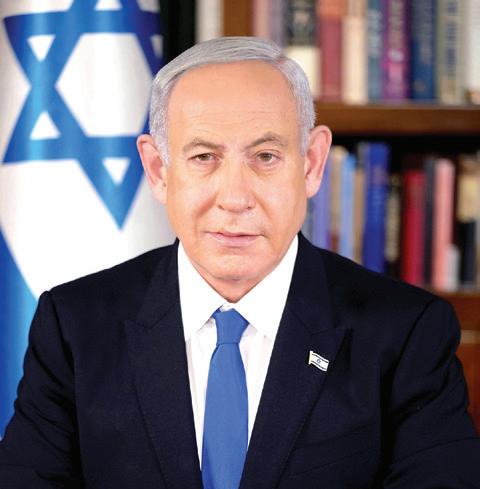
GREETING FROM ISRAELI PRIME MINISTER BENJAMIN NETANYAHU
My dear friend Dr. Jürgen Bühler, and all those who are gathered at this important meeting of the Christian Embassy in Jerusalem… I appreciate your support, especially during these challenging times. The times are challenging because we are facing a tsunami of antisemitism, and a tsunami of vilification that seeks to erase our common Judeo-Christian heritage.
You know the facts. You know the story of the Jewish people in this land. You know about the rise of Christianity in this land. You know our common roots, and you know our common values, which are now under assault by radical Islamists and their various collaborators on the deep left and the deep right. You have to stand up and speak for the truth — and you do so. The only way to fight against the lie is with the truth, and I know that the fire of truth, and the pride of our common heritage, beats strongly in your heart.
Stand up and fight for the truth. Fight for Jerusalem, and fight for the great alliance between Israel and our Christian friends. Thank you!
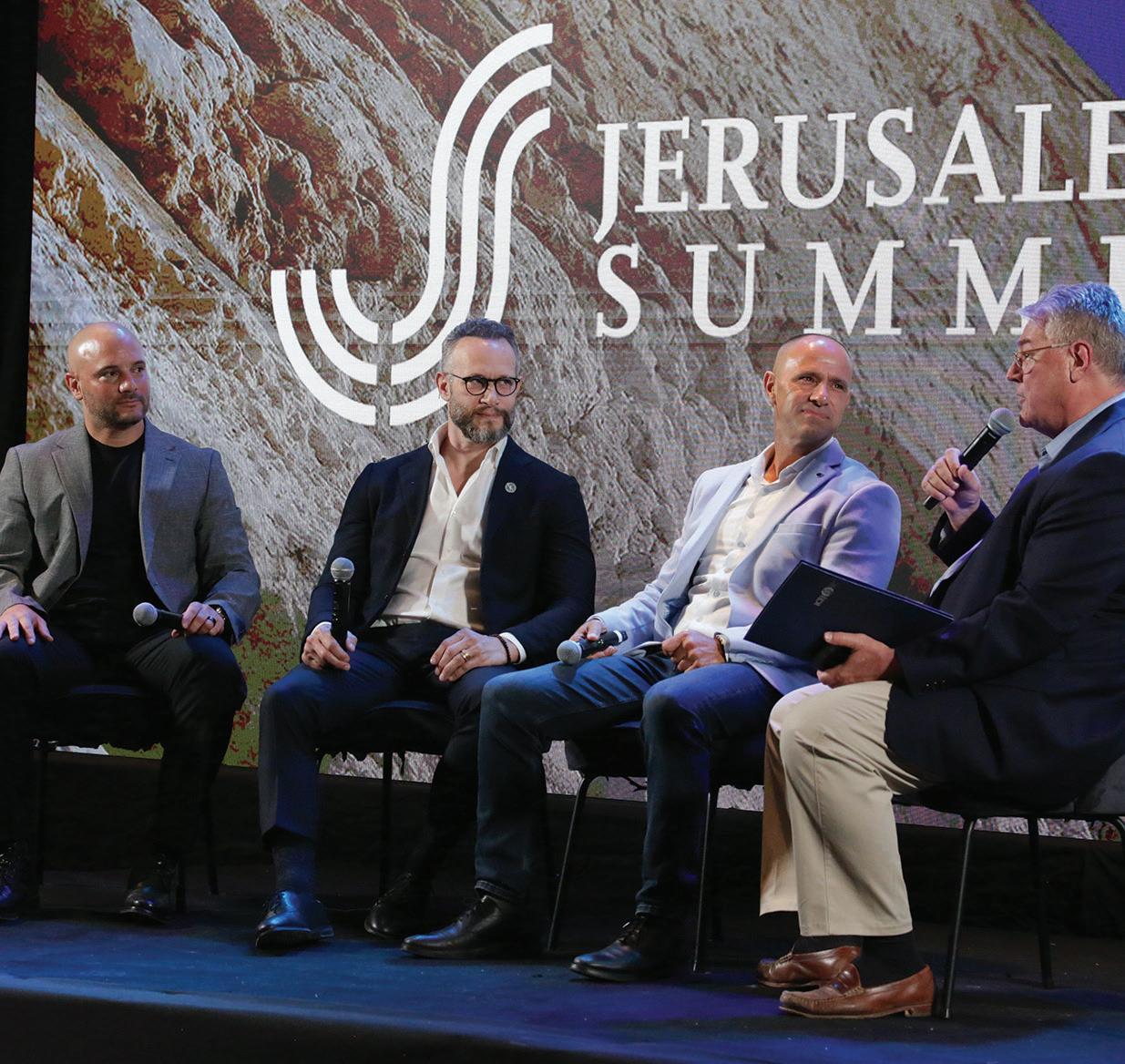
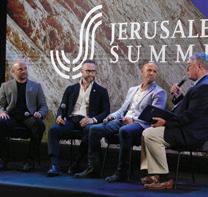
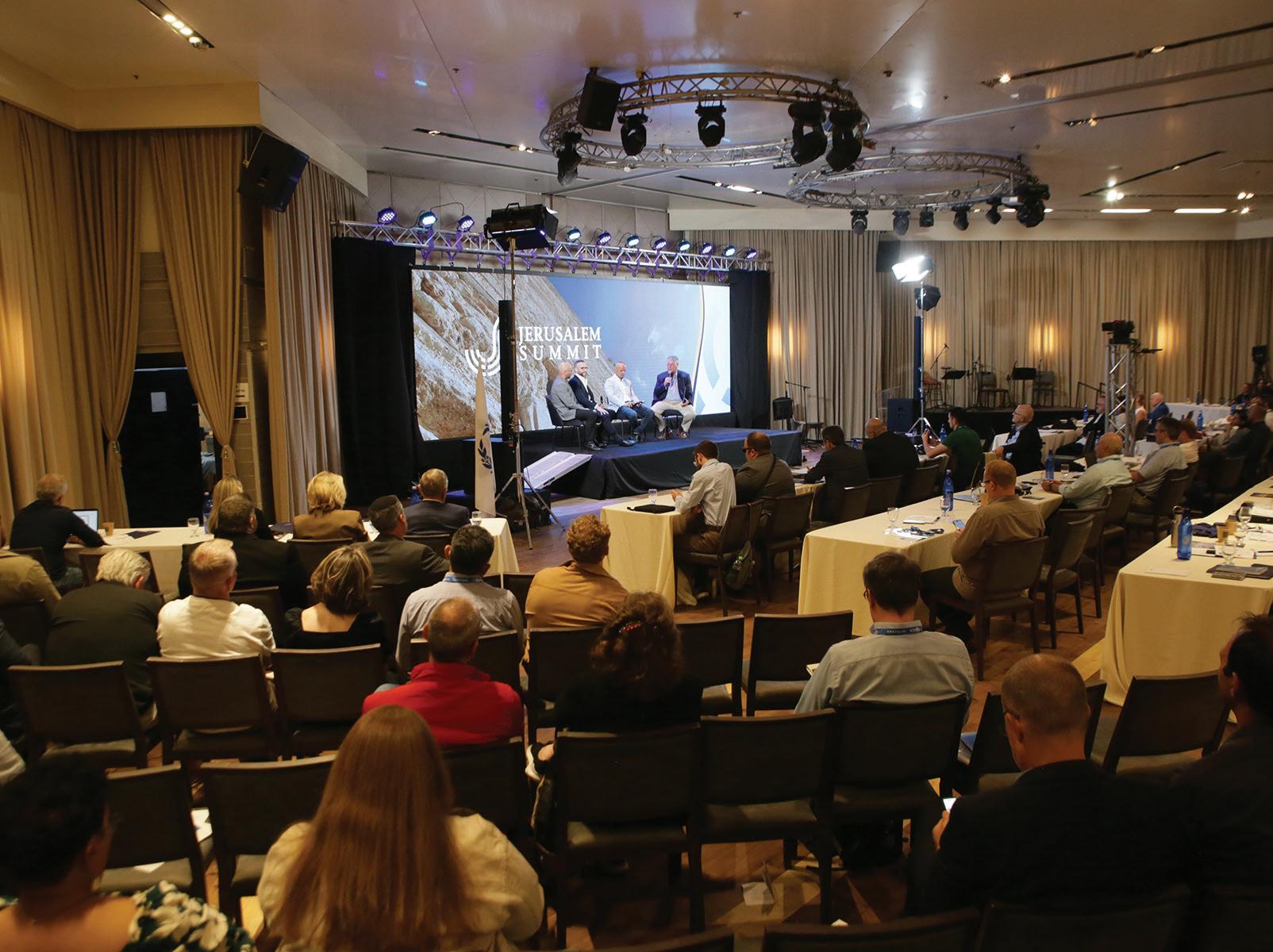
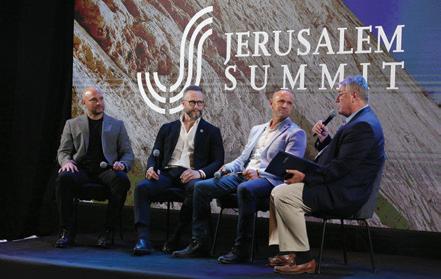
In June, the International Christian Embassy Jerusalem hosted the Jerusalem Summit, an emergency gathering to encourage and equip Christian leaders to stand up to the rampant wave of antisemitism spreading worldwide since the October 7 terror invasion of Israel by Hamas three years ago.
The high-level roster of theologians and Bible scholars speaking at the Summit also examined the new forms of Replacement theology gaining traction even in Evangelical circles, such as the New Pauline Perspective.
Finally, the Summit addressed the failure of the Council of Nicaea held 1700 years ago to acknowledge the central role of Israel in the birth of the Church and the Jewishness of Jesus when compiling the Nicene Creed. This examination of Nicaea came after the ICEJ led a year-long period of prayer and study on Nicaea and its impact on Church history.
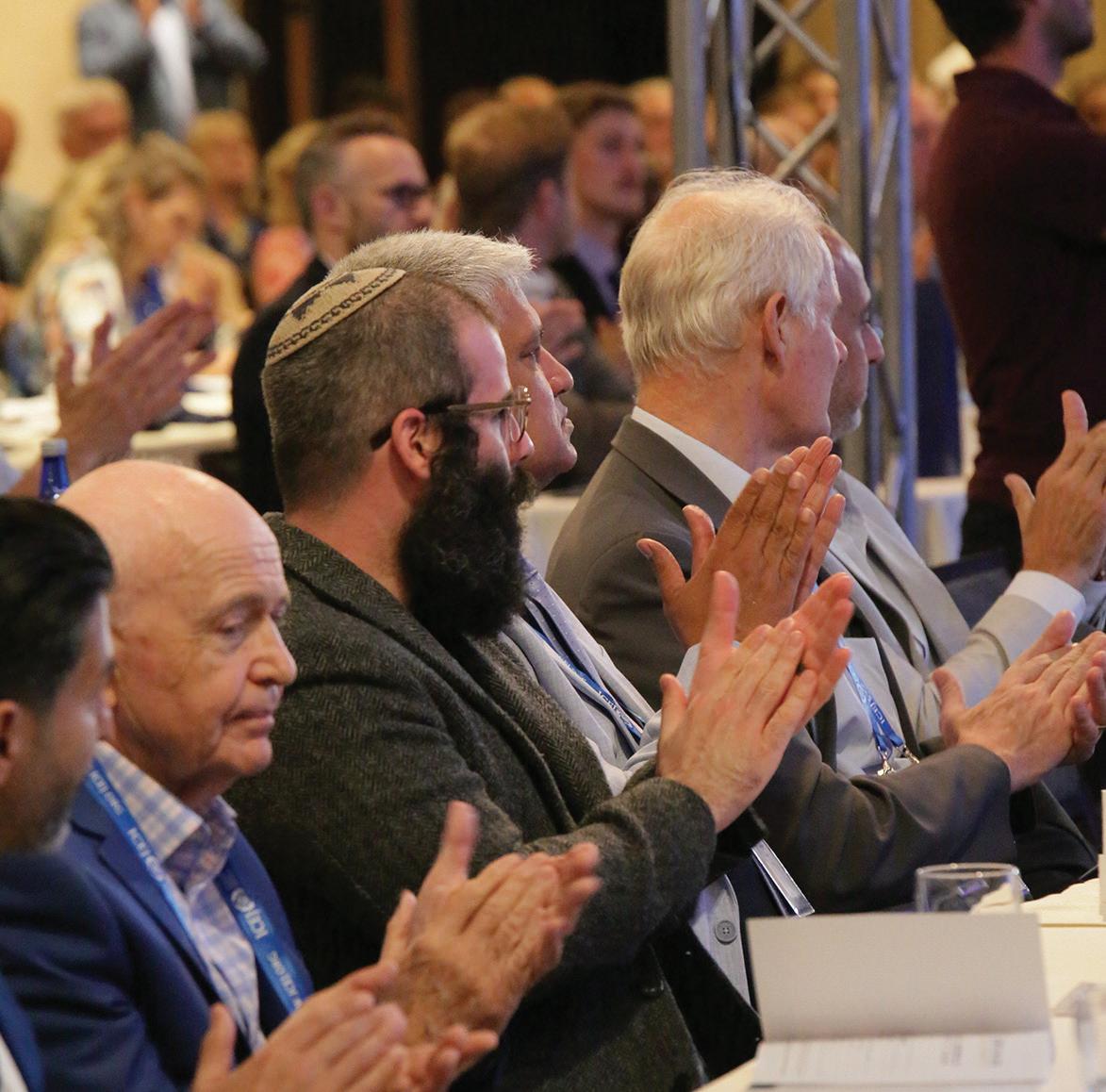
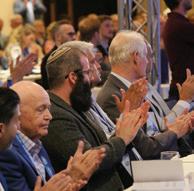
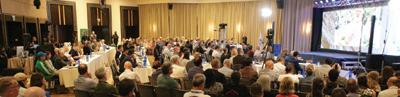
Over 200 Christian theologians, pastors and ministry leaders from more than 30 nations attended the Jerusalem Summit in Israel, while more than 3,500 joined us online.
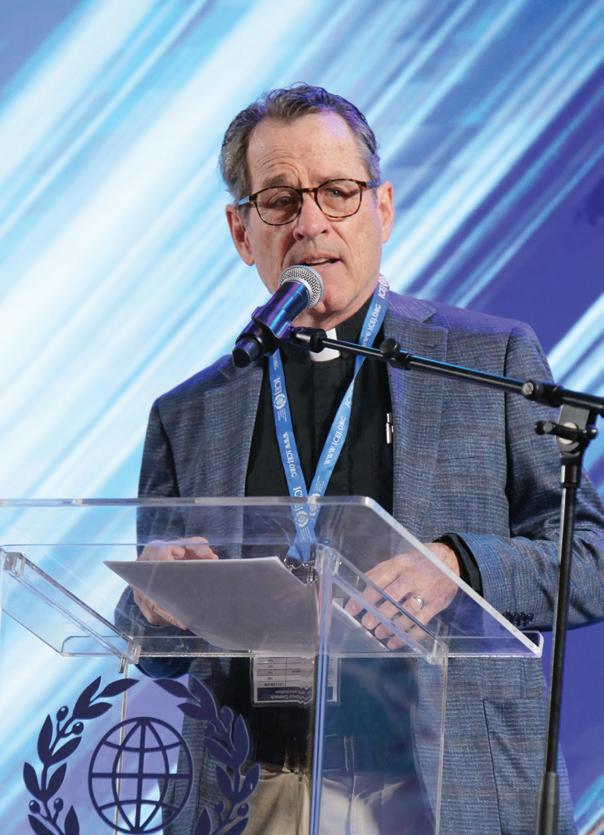
“We are living in a decisive moment for the Church, as antisemitism is surging at an alarming rate worldwide following the October 7 terror invasion, and too many Christian leaders are responding with silence,” ICEJ President Dr. Jürgen Bühler told the assembled delegates. “At the same
time, Israel is increasingly delegitimised –not only politically, but also in theological discourse even within Evangelical circles. For this reason, we have convened the Jerusalem Summit to help educate Christian leaders on how to counter modern antisemitism, to restore biblical clarity on Israel, and to strengthen the Church’s witness in a time of moral confusion.”
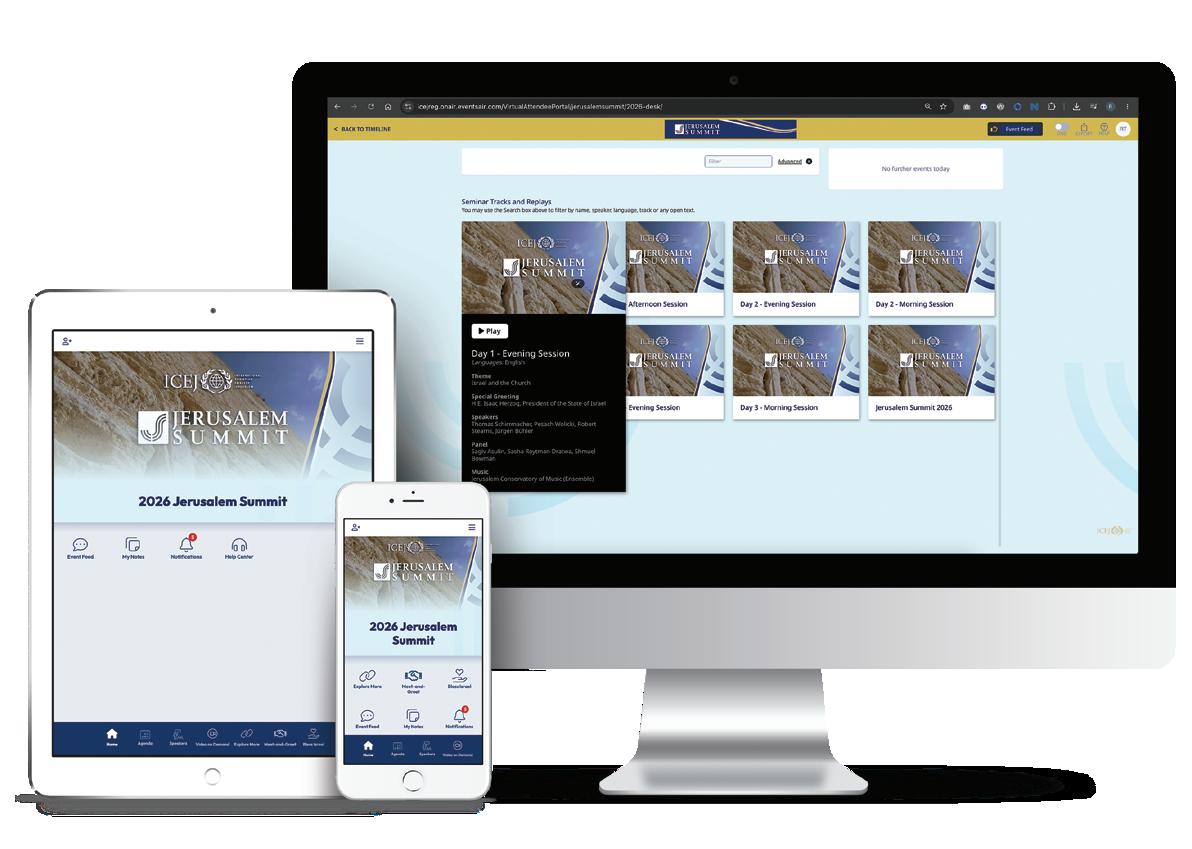
The presentations made at the Jerusalem Summit will be published in a book, and also posted online on the ICEJ’s channel on YouTube and other social media platforms.
On the final day of the Jerusalem Summit, the ICEJ released the “Jerusalem Affirmation of the Nicene Faith”, a contemporary statement of Christian belief and commitment developed by respected theologians and church leaders under the auspices of the International Christian Embassy Jerusalem.
The Jerusalem Affirmation upholds the Nicene Creed as a unifying declaration of Christian faith centered on the divinity of Jesus, while also addressing the Council of Nicaea’s key omissions concerning the humanity of Jesus as a Jew, which were essential to establishing his credentials as the promised Messiah. The Affirmation also aims to restore the Church’s appreciation for the uniquely central role of Israel, the Patriarchs and the Hebrew Scriptures in birthing and nourishing the Christian faith from its inception.
AMB HUCKABEE ADDRESSES SUMMIT AT ISRAELI FOREIGN MINISTRY
The Jerusalem Summit ended with a special program and dinner at Israel’s Ministry of Foreign Affairs, highlighted by an inspiring address by US Ambassador to Israel Mike Huckabee.
“The reason we stand with Israel is not political, but because of God’s promises to Abraham,” Amb. Huckabee told the pro-Israel Christian pastors and leaders from around the world. “The amazing thing is that a tiny, tiny country of ten million people wins, over and over again, when its existence is threatened by those who have ten times the population, many times the military budget. And yet, it not only survives. It thrives.”
“So, what’s the secret? The secret is that 3,800 years ago, God told Abraham, ‘I’m going to create a people. And you’re it. And I’m going
to put you in a place. And this is it. And this is going to be your place. And I’m going to give you a purpose. And you’re going to fulfil it’,” Huckabee stated.
Amb. Huckabee also addressed reports of violence against Christians in Israel, saying: “I have been visiting this country for 53 years.
EI cannot think of a warmer welcome I could have received, not just from the government officials, but from the people on the streets and everywhere I go in this country. I am amazed at the reception that people show me, knowing full well that I am an evangelical Christian who believes in the Bible. It does not offend people.”
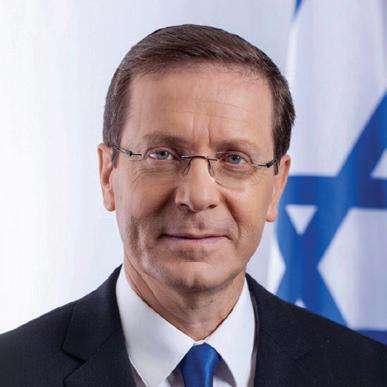
ADDRESS BY ISRAELI PRESIDENT ISAAC HERZOG TO THE JERUSALEM SUMMIT
ducated theologians, pastors, ministry leaders, distinguished guests. From the President’s Residence in Jerusalem, the Holy City, it is such a pleasure for me to welcome all of you to this emergency gathering of the Christian Embassy in Israel. You are going to deal with the most complicated of topics, on the Church, Israel and antisemitism. And I want to thank you especially for your ongoing work, day in and day out.
We are witnessing a very disturbing surge of antisemitism all over the world. This is a major challenge for humanity. This is the age-old, perhaps the oldest plague in humanity. And we have to stand up together, thought leaders and religious leaders, and say, “No More!” And teach people about the sources of this evil and how to counter antisemitism.
I believe that countering antisemitism requires a combination of three major elements of law enforcement, adjudication and education. Meaning, first and foremost, to demand from your government and to demand from all other governments to fight back against antisemitism by law enforcement, meaning against some of those demonstrators who spread blasphemy against the Jewish people and the State of Israel. Adjudication means also applying court cases and legal precedents. But most importantly, education. Educating the young generation. It cannot be that there are places around the world that people erase
Israel off the map, the only nation-state of the Jewish people. It cannot be that people take it for granted that there could be swastikas in schools and on kindergartens; that there could be stones thrown on synagogues and yeshivas and higher education institutions of Jews. It cannot be that people learn and drink from this fountain of poison and spread it out.
And you, dear leaders, have a huge capability of fighting back, and I bless you. Truly, I bless you as the President of Israel for coming here and fighting back; coming here and discussing how to fight back. So, thank you all very, very much.
I want to thank the International Christian Embassy in Jerusalem for its incredible work, especially Dr. Jürgen Bühler, a real righteous man, a tzaddik, him and his colleagues, for carrying on this torch and moving it forward from generation to generation and spreading the good message on Israel and the Jewish people all throughout the world. May God bless all of you.
And may we all see better days, and may we change the minds of human beings all over the world to understand the incredible mission and purpose of Israel and the Jewish people. Todah raba to all of you.
ANTISEMITISM AND ZIONISM IN A MODERN-DAY CONTEXT
CHRISTOPHER
KUEHL
Tfrom
he first teaching track at the Jerusalem Summit was on combatting antisemitism, a virus that has a remarkable ability to reinvent itself. Christopher Kuehl described antisemitism as a chameleon, always accusing the Jewish people of being whatever society most fears, to create a scapegoat for deeper social frustrations and anxieties. Noting the prevailing Christian silence amid the current wave of antisemitism, he urges us to examine the condition of the Church itself.
A Discipleship Crisis
Christians should never be surprised by darkness in society. The real question is whether the Church is functioning as salt and light.
There has been a dramatic decline in biblical worldview among younger generations. Foundational beliefs concerning truth, morality, identity and the authority of Scripture have weakened significantly. If young believers are unconvinced about these basic issues, they are unlikely to embrace more complex biblical teachings regarding Israel and the Jewish people.
The crisis, therefore, is not primarily a Zionism problem. It is a discipleship problem.
Many Christian leaders have become hesitant to speak with clarity on controversial subjects. Israel is often avoided because it offers little cultural advantage and can carry significant social costs. Over time, this silence leaves younger believers without a framework for understanding the biblical significance of Israel.
Young Looking Backward
One of the most interesting observations of Gen Z is their growing fascination with ancient Christian traditions. Many young adults are not searching for novelty. They are searching for roots.
In a culture marked by instability, shifting identities and constant change, ancient traditions provide a sense of permanence and belonging. Younger Christians increasingly want to know what believers before them believed and why. This creates both an opportunity and a challenge.
The challenge is that many historical Christian traditions include theological ideas that marginalised or misunderstood the Jewish people. Young believers exploring church history inevitably encounter these perspectives. Simply dismissing them is not enough. Christians must be prepared to explain why support for Israel is consistent with Scripture and how it fits within the broader story of God’s covenant faithfulness.
The opportunity is equally significant. The story of the Jewish people is itself a testimony to God’s faithfulness across generations. Properly understood, it offers exactly the kind of historical rootedness many young believers are seeking.
The New Battlefield
The media environment also has changed dramatically. Hostility toward Israel is no longer confined to one side of the political spectrum. Alongside traditional left-wing antiIsrael activism, new forms of antisemitism have emerged on the political right, often expressed through conspiracy theories about Jewish influence and power.
Historians have noted the “cosmic conspiracy” view of history, the belief that Jews are secretly responsible for society’s problems. Such theories survive because every piece of evidence, including contradictory evidence, is interpreted as proof of the conspiracy. Digital media has amplified these ideas on an unprecedented scale.
As a result, younger generations are increasingly exposed to anti-Israel narratives
through social media, influencers and online communities. Surveys already show troubling declines in support for Israel among young adults.
Passing the Flame
My concern is that the thread connecting generations is weakening.
Older believers possess decades of experience, theological understanding, and commitment to Israel. Yet too often these convictions are not intentionally passed on to younger leaders. No ministry, church or movement can survive if it fails to reproduce itself.
I have challenged pastors, parents, teachers and Christian leaders to invest personally in the next generation on this topic. The task is not merely to communicate information but to cultivate conviction. Young believers need mentors who can explain why Israel matters, why antisemitism matters and why these biblical truths remain worth defending.
Courage is also of great importance. Public support for Israel is becoming increasingly costly in many parts of the world. Positions that once seemed uncontroversial now invite criticism and opposition. Yet courage is often the test of conviction.
The challenges facing the Jewish people, Israel and the Church are real. But every generation must decide whether it will remain silent or speak with clarity. The answer is clear: this is not a moment for retreat, but for resolve.
The future of the conversation about Israel may depend on whether today’s believers are willing to pass the flame to those who come after them.
Christopher Kuehl is an author and teacher known for bringing theological clarity to some of the Church’s most contested questions. He is founder of Present Witness, co-host of the One New Man podcast, and author of “Is God A Zionist, Finding God’s Story in a World Obsessed with Israel.”
[Excerpts
his presentation at the Jerusalem Summit]
Scan here to watch teaching
AN INTRODUCTION ON THE NEW PERSPECTIVE OF PAUL
DR. SAMUEL TEDDER
[Excerpts from his teaching at the Jerusalem Summit]
The Theology track at the Jerusalem Summit focused primarily on new forms of Replacement theology and how to respond to them. One of the most discussed theological movements of the past fifty years is the so-called “New Perspective on Paul” (NPP), which tends towards Replacement thinking. Dr. Samuel Tedder provided a concise and balanced introduction to this influential school of thought, explaining both its strengths and its implications for how Christians view Israel today.
Have Christians misunderstood both Paul and Judaism?
For centuries, Judaism was often portrayed as a religion of legalism, where people sought to earn salvation through obedience to the Law. Christianity, by contrast, was presented as the religion of grace. The work of E. P. Sanders in the 1970s challenged this picture. After studying Jewish literature from the Second Temple period, Sanders argued that Judaism was better understood as a covenant relationship initiated by God’s grace. Obedience to the Law was not a way of entering the covenant but a way of living within it. This became one of the foundational insights behind the New Perspective on Paul.
Another key figure was Swedish theologian Krister Stendahl, who questioned whether Paul’s doctrine of justification primarily addressed an individual’s guilty conscience. Instead, he argued that Paul was dealing with the relationship between Jews and Gentiles and the question of who belongs to God’s covenant people.
James Dunn developed these ideas further. He argued that Paul’s phrase “works of the law” referred not to human effort in general but to specific Jewish identity markers such as circumcision, food laws and Sabbath observance. These practices distinguished
Jews from Gentiles and marked out the covenant community.
According to Dunn, Paul’s concern was not opposition to good works but opposition to requiring Gentiles to adopt Jewish identity markers in order to belong to God’s people. Thus, faith in the Messiah became the defining badge of covenant membership.
N. T. Wright has further developed this approach by placing Paul within the larger story of Israel. He argues that Israel’s history remains under the shadow of exile until the coming of the Messiah. Through His death and resurrection, Jesus renewed the covenant, fulfilled Israel’s story and opened the blessings promised to Abraham to the nations.
There is much to appreciate in these developments. The New Perspective places Paul firmly within his Jewish context. It highlights the importance of Israel’s Scriptures and corrects unfair caricatures of Judaism. It reminds us that salvation is not merely an individual experience but participation in God’s covenant family.
Important Questions Remain
Some expressions of the New Perspective understand Israel’s story as reaching its climax in Christ in such a way that ethnic Israel no longer retains a distinct role in God’s ongoing purposes. Israel becomes redefined around those who believe in Christ together with the Gentiles who are incorporated into the covenant family.
This becomes especially significant when reading Romans 9–11. If Israel is understood primarily as a redefined spiritual community, Paul’s expectation concerning Israel’s future can easily lose its national and historical dimension.
A helpful corrective has been offered by New Testament scholar John Barclay. Barclay argues that the defining feature of Paul’s theology is God’s incongruous grace; that is, grace given without regard to the worthiness of its recipients. God’s grace called Abraham, formed Israel, and opened the covenant to the Gentiles.
From this perspective, God’s faithfulness to Israel is not an obstacle to the Gospel but a demonstration of the very nature of grace itself.
This is why Paul’s olive tree metaphor remains so important. Gentiles are grafted into Israel’s tree, but they do not replace its natural branches. The root that sustains both Jews and Gentiles is the gracious calling of God. The gifts and calling of God remain irrevocable because they rest not on human merit but on divine faithfulness. And on the salvation of all Israel, there is the future hope that God will save all of Israel, meaning ethnic Israel, which was created by God’s mercy, is held in God’s mercy, and will be healed from its partial hardening by divine mercy in Christ.
The New Perspective has rightly challenged the Church to read Paul more carefully within his Jewish world. Yet any reading of Paul must also reckon with his unwavering conviction that God has not rejected His people. The same grace that welcomes the nations into the covenant is the grace that sustains God’s promises to Israel.
Rev. Dr. Samuel Tedder is a biblical scholar, pastor and missionary from Finland. He received his Doctoral degree in New Testament Studies from Durham University, UK (2018).
Scan here to watch teaching
the JERUSALEM AFFIRMATION of the NICENE FAITH
DR. JÜRGEN BÜHLER, ICEJ PRESIDENT
The third track of the Jerusalem Summit was a look back at Church History and especially the Council of Nicaea of 325 AD, which issued the Nicene Creed to unify the expanding Christian world around the divinity of Jesus, but also steered the Church away from its Jewish roots.
The Council of Nicaea was convened 1700 years ago largely to resolve the dispute within the early Church over the divinity of Jesus. They responded by formulating the Nicene Creed, which adopted the concept of the Trinity as a counter to the teachings of Arius.
The emperor Constantine also summoned the Council to unify the holidays, and especially to settle on a date for all Christians to celebrate Easter. I do believe that, within the motivations of Constantine, there was a good dose of antisemitism. This spirit may not have been so present among all the Church fathers gathered there. We actually do not know, because there are no minutes from the Council of Nicaea, and they met for three long months.
But when Constantine later declared to the churches a new date for Easter, he stated the following in his synodal letter: “When the question relative to the sacred festival of Easter arose, it was universally thought that it would be convenient that all should keep the feast on one day. For what could be more beautiful and more desirable than to see this festival, through which we receive the hope of immortality, celebrated by all with one accord, and in the same manner? It was declared to be particularly unworthy for this, the holiest of all festivals, to follow the customs and the calculation of the Jews, who had soiled their hands with the most fearful of crimes, and whose minds are blinded.”
This was the second ecumenical council in Church history. The first council was right here in Jerusalem, recorded in Acts chapter 15. In that council, the gates were opened wide for Gentiles to join the Church. The big question was: What should we do with all of these believers in Yeshua who are not Jewish? Should they get circumcised or eat kosher? And the council agreed all they need to do is believe in Yeshua, and to be culturally respectful to Jews, along with observing some Noahide regulations outlined by the council. But they widely opened the doors for us as Gentiles.
What happened at Nicaea, and at other councils soon after, was they made it almost impossible for Jews to join the Church. They could not celebrate their Jewish holidays anymore, go to synagogues, or use matzah bread to celebrate Easter. And you must not call it Passover. So, there was a complete rejection of everything Jewish, and this started at Nicaea. This was not so much by what was said at Nicaea, but by what was deliberately omitted, to separate the Church from any Jewish context.
Then there were several councils that followed which slightly altered the language of the Nicene Creed. So, there is a precedent for the Creed to undergo minor changes, with its core tenets remaining intact.
Now, the affirmed Creed that we want to release here today does not have a global magisterium, but we did run it through the magisterium of the ICEJ, through key leaders and respected theologians in our movement, and our Board of Trustees.
In this “Jerusalem Affirmation of the Nicene Faith”, we left the original Nicene Creed as it is, because it rightly affirms the divinity of Yeshua. But we felt that here in Jerusalem we need to affirm the humanity of Jesus as a Jew, which was essential to establishing his credentials as the promised Messiah. This Affirmation also aims to restore our appreciation for the uniquely central role of Israel, the Patriarchs and the Hebrew Scriptures in birthing and nourishing the Christian faith from its inception. Every new phrase added in this Affirmation is firmly grounded in New Testament texts and truths.
Ultimately, this Affirmation seeks to reaffirm the Church’s historic commitment to the Jewish people, thereby rejecting antisemitism in all its forms and encouraging a biblically based understanding of the relationship between the Church, Israel and the Jewish people.
We invite you to join us by signifying your agreement with the Jerusalem Affirmation of the Nicene Faith. This is especially needed today to restore to the wider Church a more biblical view of the rightful place Israel and the Jewish people held and still hold in God’s redemptive purposes.
Scan here to sign the affirmation
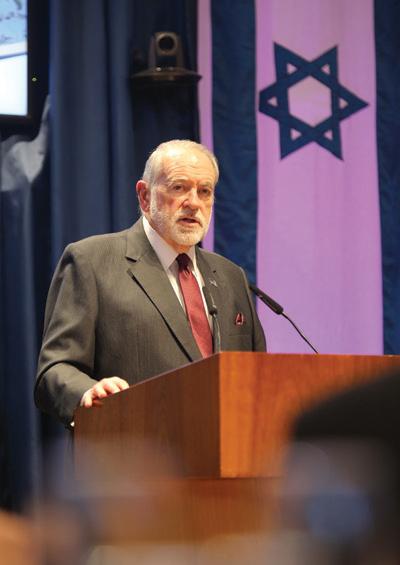
Dr. Jürgen Bühler speaks to attendees at the Jerusalem Summit.
a Jerusalem Affirmation of the Nicene Faith
We believe in one God, the Father Almighty, Maker of heaven and earth, of all things visible and invisible.
He is the God of Abraham, Isaac and Jacobi, the Lord God of Israelii.
We believe in one Lord, Jesus Christ, the promised Messiahiii, the only-begotten Son of God, eternally begotten of the Father, God from God, Light from Light, true God from true God, begotten, not made, being of one substance with the Father; through Him all things were made.
He is the One of whom Moses, the Prophets and all the Hebrew Scriptures bear witnessiv.
For us and for our salvation, to the Jew first and also to the Gentilev, He came down from heaven; by the Holy Spirit He was incarnate of the Virgin Mary and was made truly man.
He is the Son of Abraham and of David according to the fleshvi, a light to bring revelation to the Gentiles, and the glory of His people Israelvii
For our sake He was crucified under Pontius Pilate; He suffered death and was buried.
On the third day He rose again according to the Scriptures; He ascended into heaven and is seated at the right hand of the Father, as the Lion of the tribe of Judah, the Root and Offspring of Davidviii .
From there He shall come again in glory to judge the living and the dead, and His kingdom shall have no end.
We believe in the Holy Spirit, the Lord and Giver of Life, who proceeds from the Father and the Son, who with the Father and the Son is worshipped and glorified, who has spoken through the Prophets.
We believe in one holy catholic and apostolic Church, in which Jew and Gentile are reconciled as one new man in Christix, and in which the nations, having been grafted into the cultivated olive tree by faith, share in the covenants and promises given through Israelx.
We acknowledge one baptism for the forgiveness of sins.
We look for the resurrection of the dead, and the life of the world to come.
Amen.
i Exodus 3:16; Matthew 22:32; Acts 3:13
ii Exodus 24:10; Psalm 68:8; Luke 1:68; Acts 13:17
iii Psalm 2:2; Daniel 9:25-26; Micah 5:2; John 1:41, 4:25; Romans 9:4-5, 15:8
iv Deuteronomy 18:15; Psalm 2:7; Daniel 7:13-14; Luke 1:68-70, 24:25-27; Romans 1:1-3
v Romans 1:16
Presented in Jerusalem on 11 June 2026 at the Jerusalem Summit.
vi Matthew 1:1-17, 22:42; Luke 1:32; Romans 1:1-3; 2 Timothy 2:8
vii Isaiah 49:6; Luke 2:32; Acts 13:47
viii Revelation 5:5, 22:16
ix Ephesians 2:15
x Romans 11:16-24; Ephesians 2:19-20
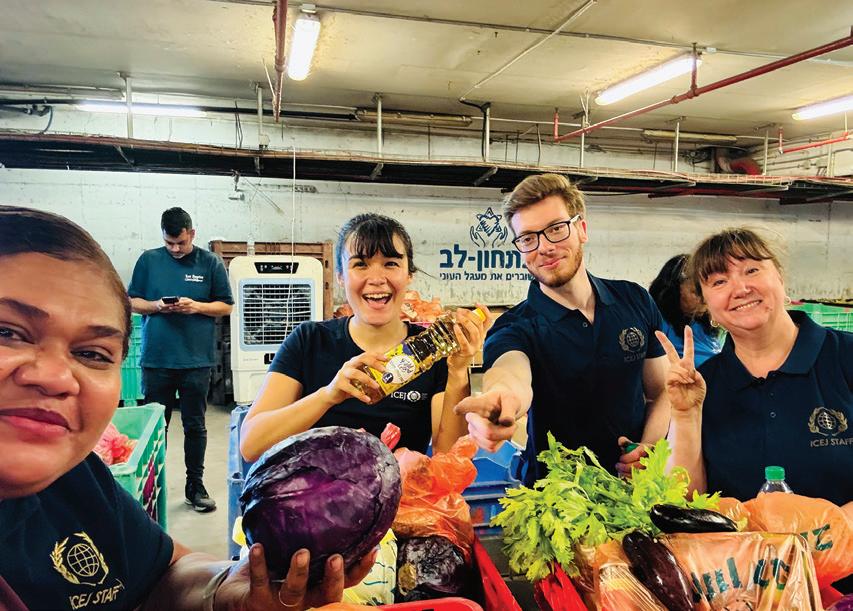
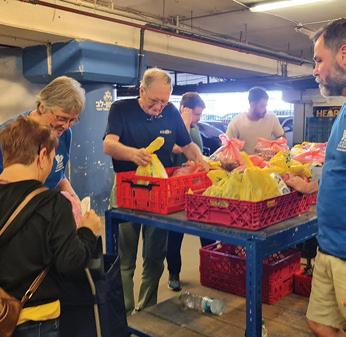
ICEJ staff packing groceries.
ICEJ STAFF PACK GROCERIES FOR 1,000 ISRAELI FAMILIES
BY NAOMI AMMON
“Baguette or roll?”
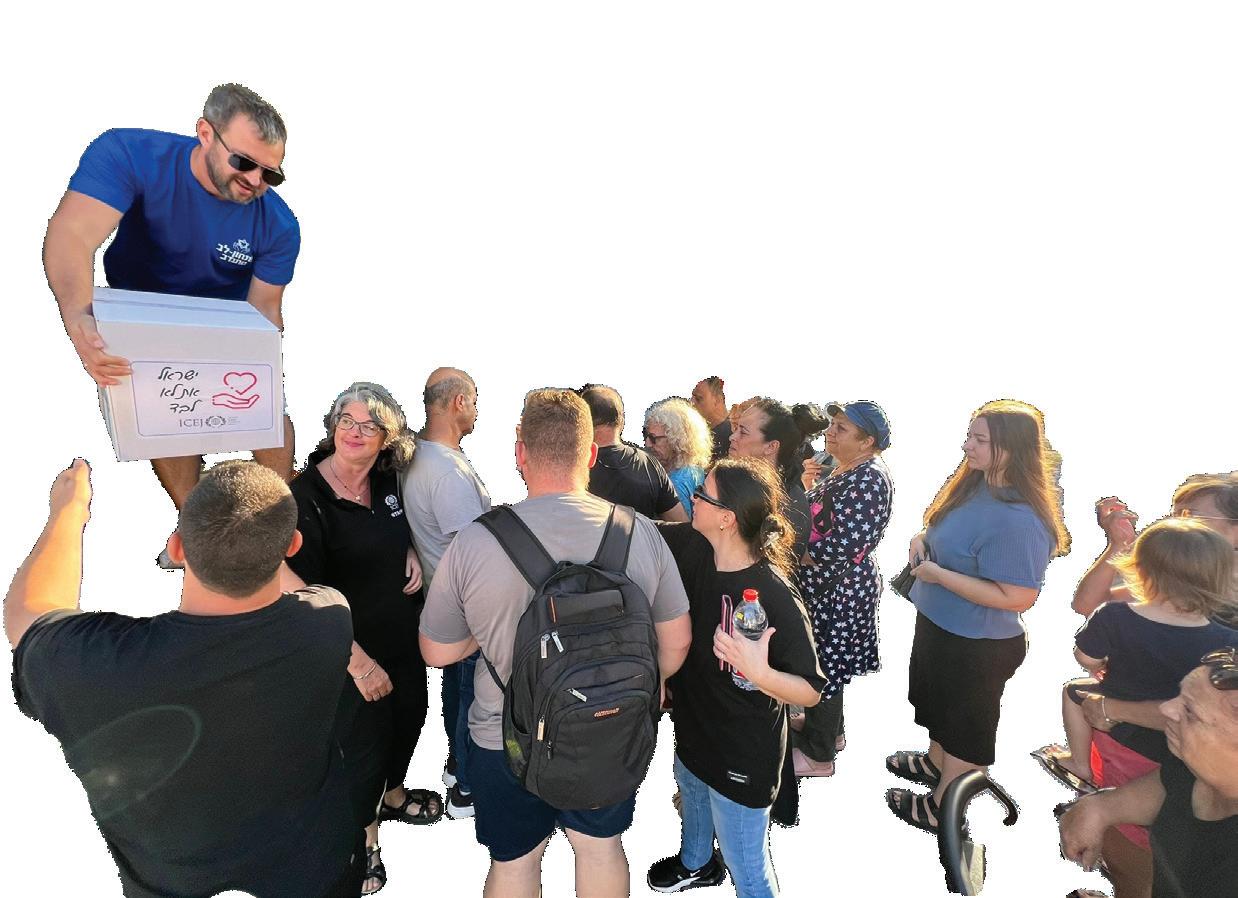
Recently, a team of ICEJ staff repeated this phrase to over 1,000 Israelis while handing each of them bags of groceries at a social welfare distribution site in Rishon LeZion.
Because of the prolonged war, poverty rates in Israel have increased dramatically, as the costs of living – especially the price for basic groceries – has skyrocketed. In response, a parking garage transforms every Wednesday and Thursday into a bustling food bank.
Forklifts transfer hundreds of boxes of food essentials necessary for a balanced family diet. The distribution line has to move fast. Our staff from several foreign lands worked alongside local Israeli volunteers to get the job done.
“Every time I volunteer in this country, there’s so many people. It’s not hard to find people who want to help, Israel is special like that”, noted Sammuel Mauch from Brazil.
“The program director remembered me, and that I’m from Ukraine. He even called me by my name”, said Pnina, an ICEJ staffer who has volunteered here before. “Here, you’re not just a stranger who comes to volunteer and leave. It feels like one big Israeli family.”
“For me as a Christian, I feel that I’m pleasing God and fulfilling His word by taking care of His people”, added Priscilla Campos from São Paulo. “It’s a privilege to be part of what God is doing in this country.”
The ICEJ AID team shares a warm relationship with this social distribution center and has brought groups of Christian volunteers to this location for many years now. We also have leased two refrigerated delivery trucks for the food bank (see more on page 15).
ICEJ GATHERS WITH GLOBAL LEADERSHIP IN PRAGUE
BY NICK HANSEN
The ICEJ’s Jerusalem leadership team gathered in Prague in May with our national directors and representatives from dozens of nations for our annual International Leadership Conference, to discuss the current status and future direction of the ministry. It was a blessed time of fellowship, strategic planning and renewed commitment to our biblical mandate. The conference focused on the growing challenge of antisemitism and practical ways to strengthen our support for Israel and the Jewish people.
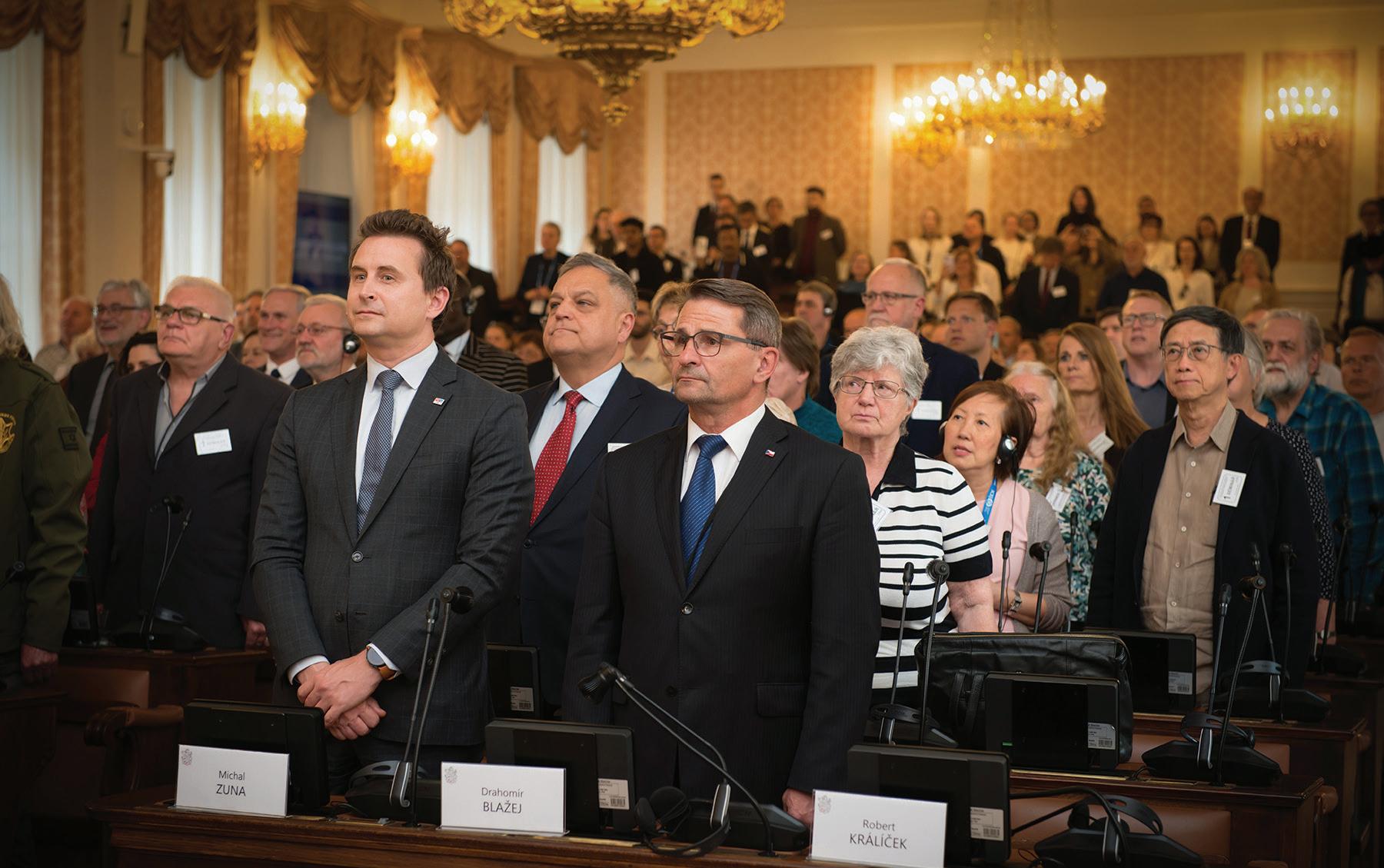
A highlight of the ILC was a special Jerusalem Day celebration in the Czech Parliament. The event underscored the enduring friendship between Israel and the Czech Republic, a relationship rooted in shared democratic values and a remarkable history of mutual support.
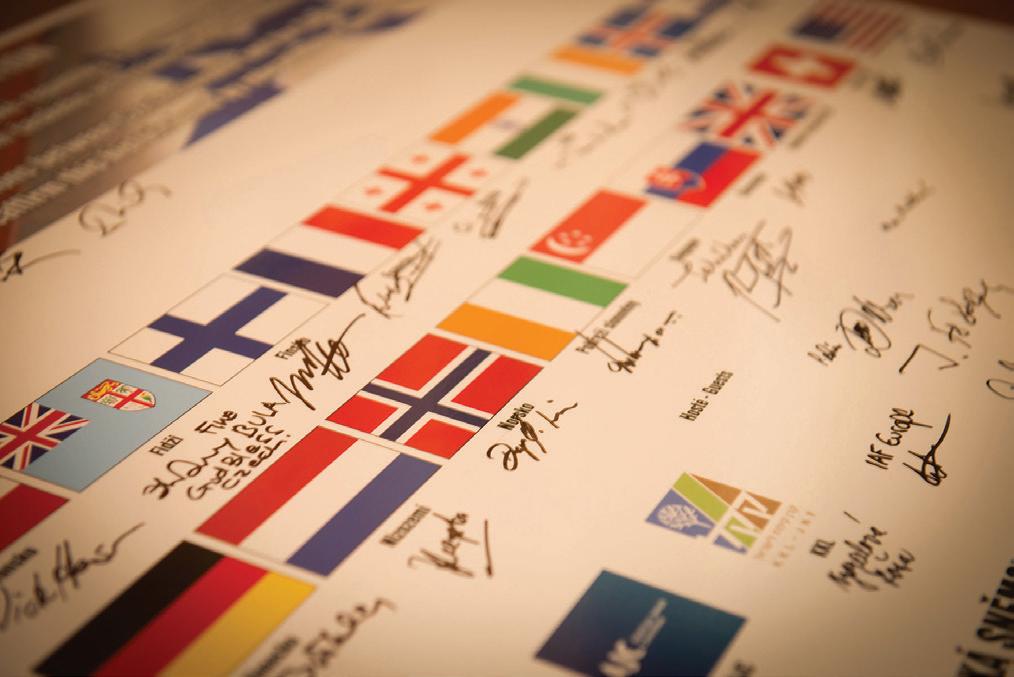
The ILC delegates from various nations took part in a ceremonial signing of an appeal to move the Czech Embassy to Jerusalem.
The conference also included a guided tour of Prague’s historic Jewish Quarter, offering our global leaders a deeper appreciation for the rich Jewish heritage that shaped Czech history for centuries. Walking through the synagogues, cemetery and museum exhibits served as a powerful reminder of both the vitality of Jewish life and the tragedies it endured.
We also paid a very moving visit to the village of Lidice, which was completely destroyed by the Nazis in 1942 after local partizans assassinated Reinhard Heydrich, one of the primary architects of the Holocaust.
Together, these experiences anchored the conference in the lessons of history. Remembering the past is not merely an act of reflection, but a call to responsibility.
As the ICEJ global leaders returned home, they did so with a renewed determination to respond to today’s challenges regarding Israel and the Jewish people in biblical, diplomatic and practical ways.
The ILC attended a special Jerusalem Day celebration in the Czech Parliament.
Signatures from various national representatives.
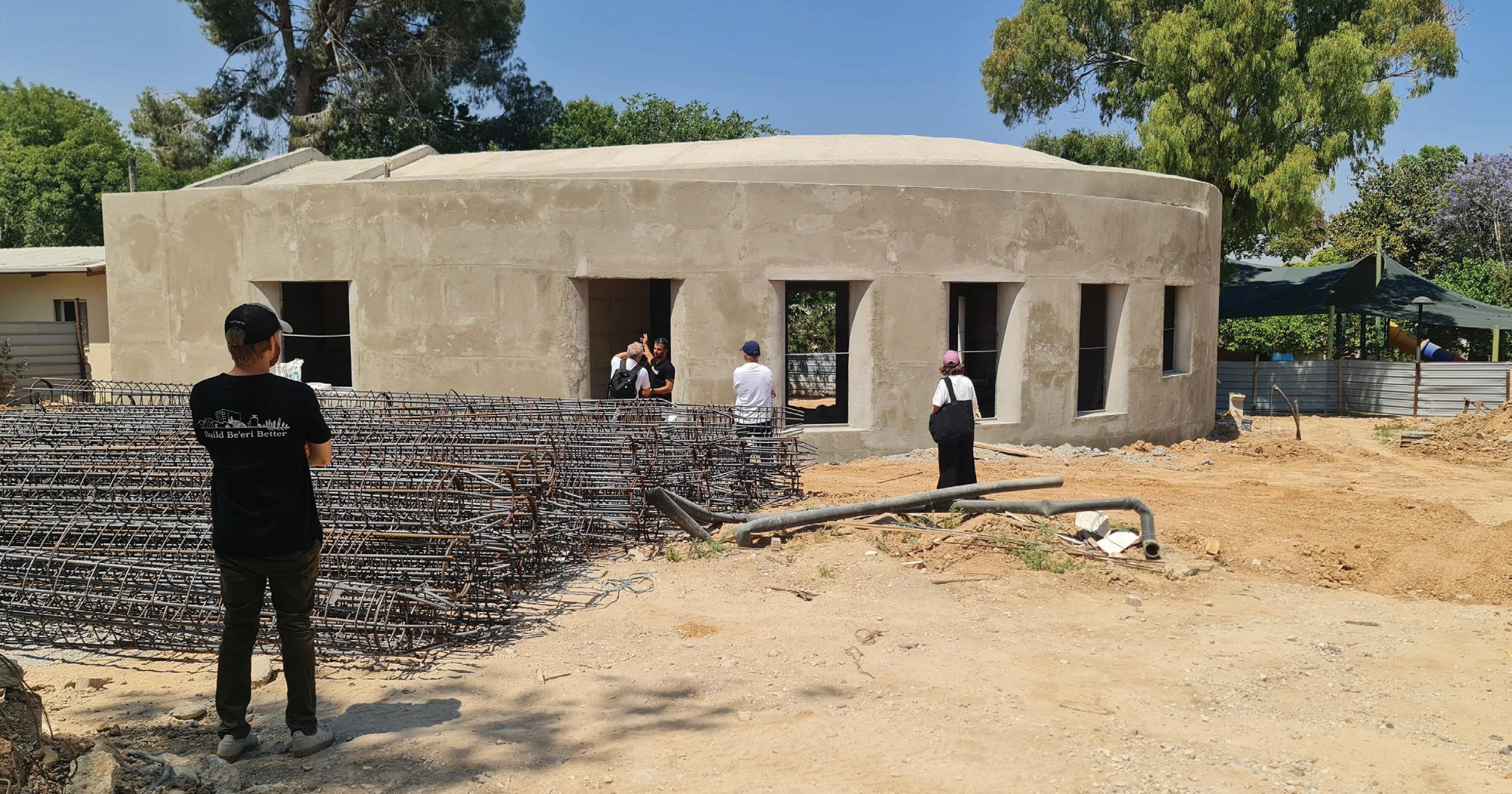
A photo showing the progress of the youth activity center from the exterior.
TKIBBUTZ BE’ERI REBUILDING A COMMUNITY, RESTORING HOPE
BY JANNIE TOLHOEK
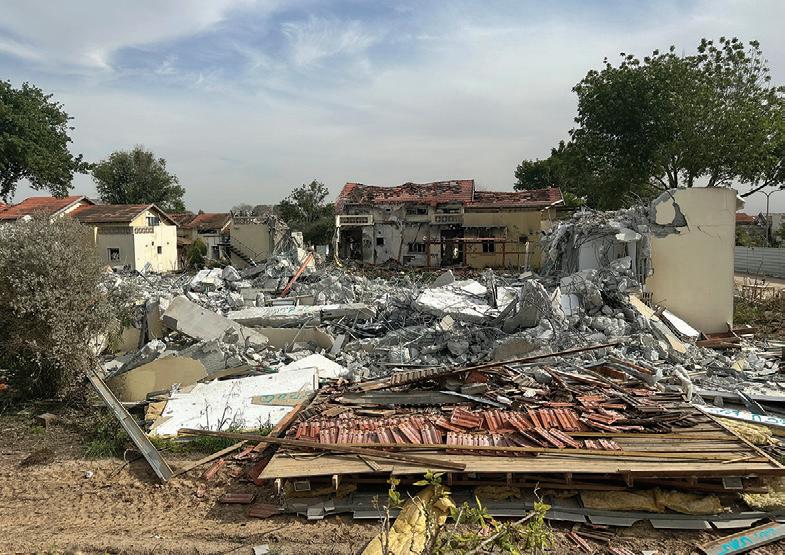
hese past few months have marked a painful milestone in the long journey of recovery for Kibbutz Be’eri, as its western neighbourhoods were finally levelled. All but one house has been torn down, with the lone remaining structure preserved as a lasting testimony to the horrors of the October 7 terror invasion from nearby Gaza.
These were not merely buildings. They were homes filled with family memories, childhood adventures, friendships, celebrations, and the rhythms of daily life. Their loss represents a deeply emotional farewell to the Be’eri that once was.
Yet within this heartbreaking chapter lies the beginning of renewal. Clearing the ground is making way for a new future, as the community remains committed to honouring what was, remembering what happened, and building what will be.
Clearing of destroyed homes on Kibbutz
Today, the focus is shifting from survival to sustainable growth. The foundations being laid are more than concrete and steel; they are the bedrock of a community determined not to be defined solely by tragedy. The rebuilding of Be’eri encompasses every aspect of life – emotional healing, physical restoration, economic recovery, education, and community renewal.
Hizbullah missile and drone attacks. For many survivors, the sound of sirens and the return of uncertainty reopen deep wounds from October 7. Yet in these difficult moments, the people of Be’eri continue to draw strength from what has always characterised their community: mutual responsibility, solidarity, and a profound commitment to caring for one another.
Despite the ongoing challenges, the rebuilding effort continues with remarkable determination. The reconstruction of educational facilities is well underway.
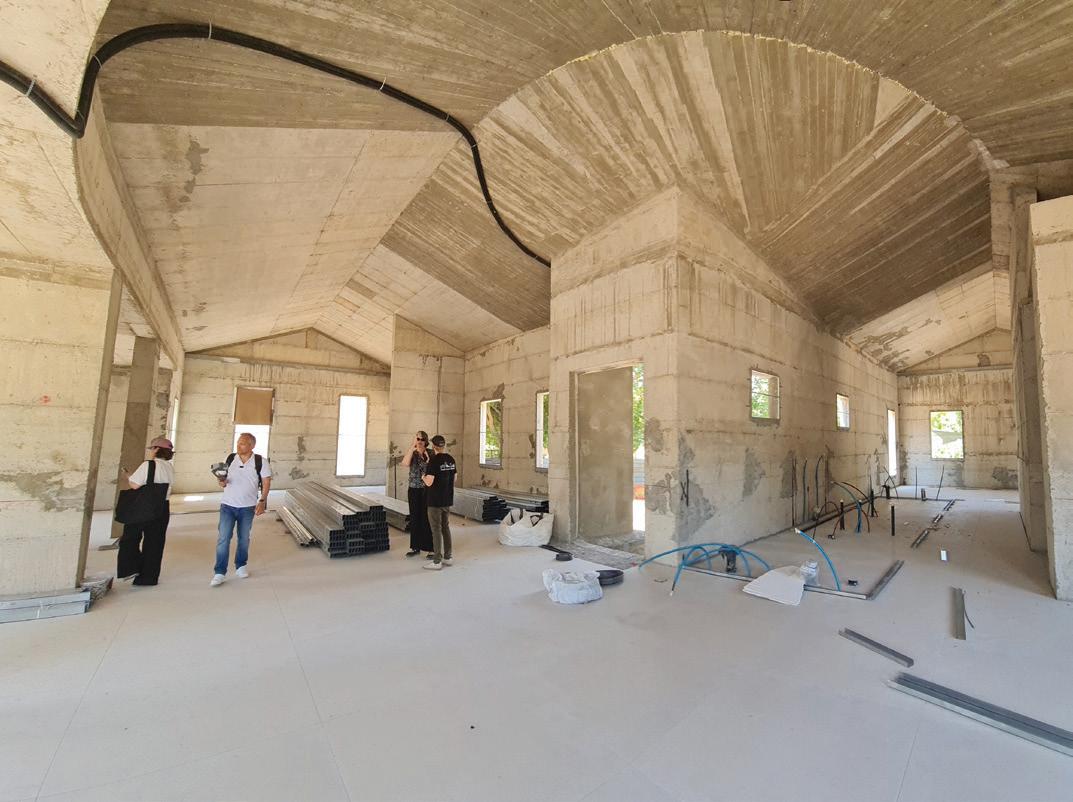
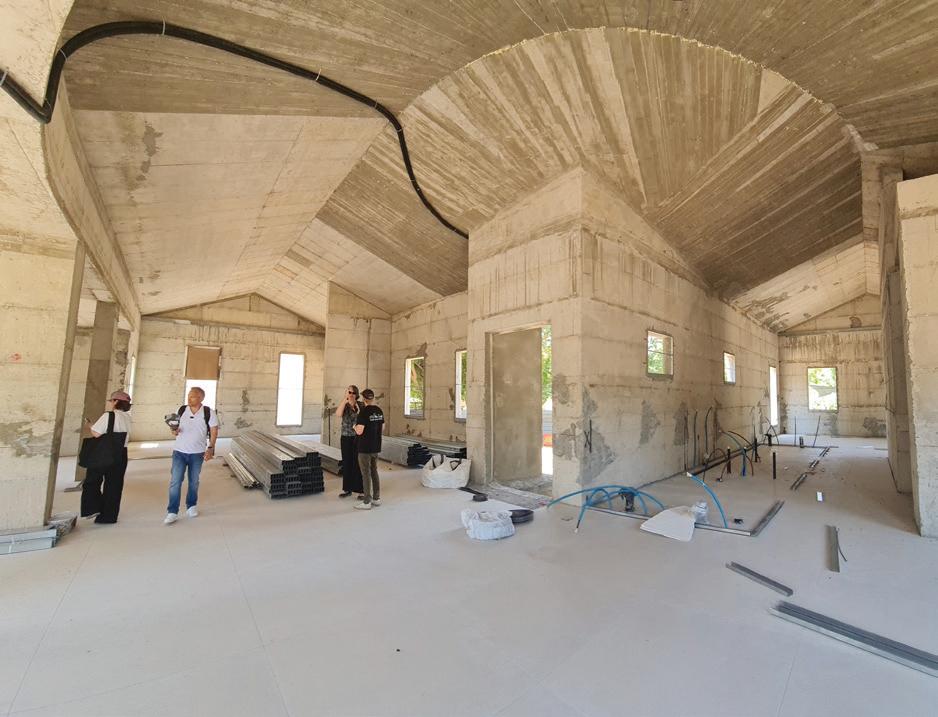
During a recent visit, ICEJ staff witnessed the youth activity center taking shape, thanks to the generous donations we have received from Christians in 26 different nations. When families return next year, the building will once again echo with children’s laughter and become a place where new memories and lifelong friendships are formed. This building will stand as a testament to the many friends around the world who wish them well.
Soon, work will also begin on the new medical complex, including a new dental clinic sponsored by ICEJ-Germany. In addition, German Christians have made possible renovations of a rehabilitation center for senior citizens of the kibbutz, with construction set to begin in July.
Like the rest of Israel, the residents of Be’eri – whether living in the kibbutz itself, or in Hatzerim or temporary homes elsewhere across the country – have faced repeated sirens triggered by Iranian and
The rebuilding of Kibbutz Be’eri is far more than a construction project. It is the restoration of a community, a way of life, and a declaration that terror will not dictate the future. Thanks to the faithful support of our Christian friends around the world, that better, brighter future is now beginning to take shape.
An inside look at the youth activity center.
Be’eri.
FICEJ’S LATEST Hands-On TOUR SHOWS ISRAELIS THEY ARE NOT ALONE
BY JANNIE TOLHOEK
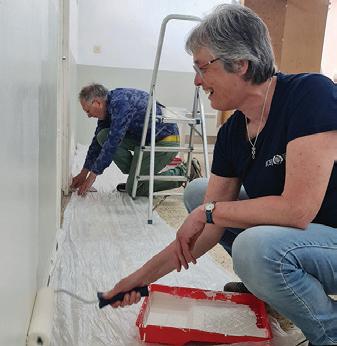
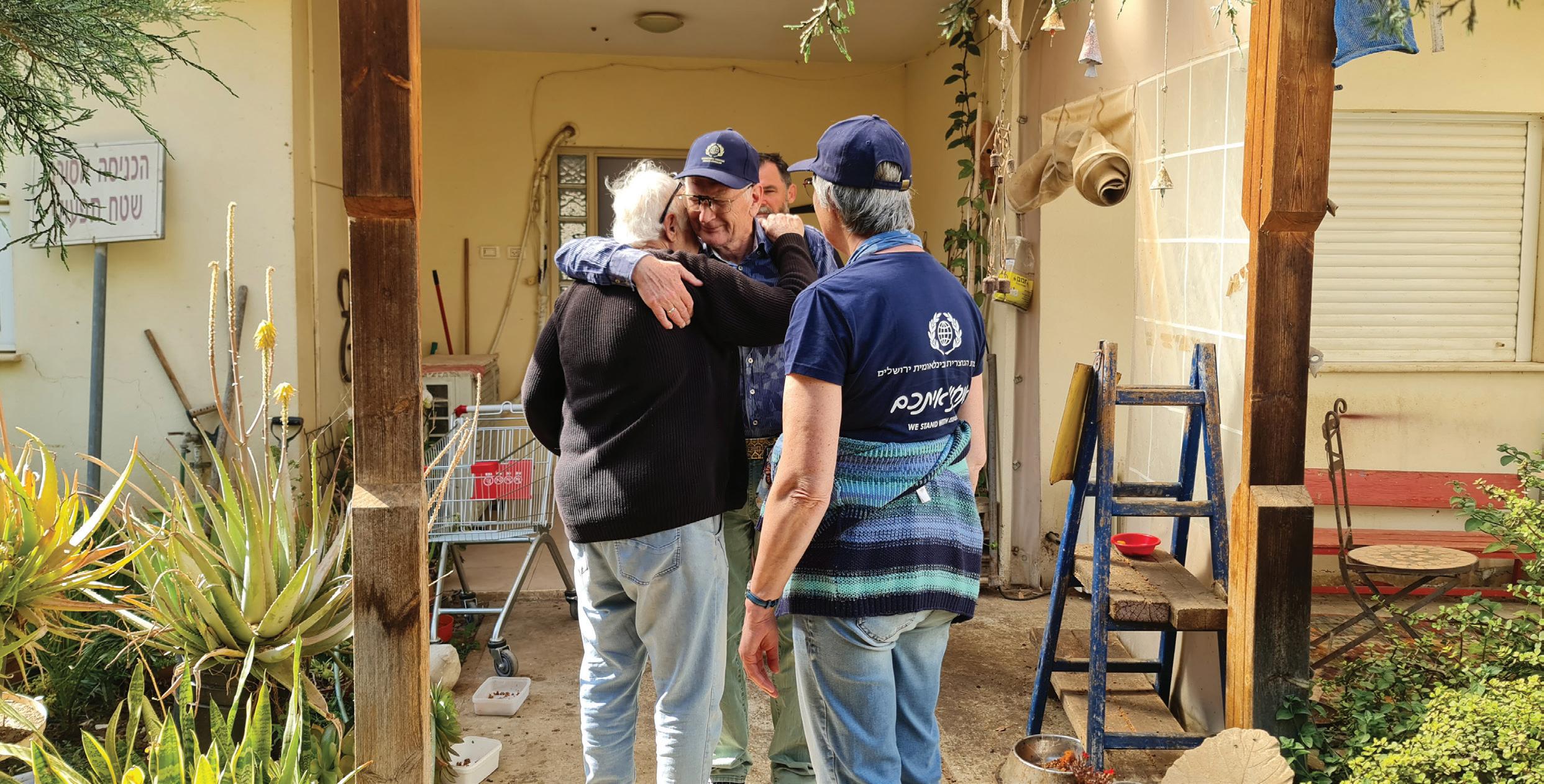
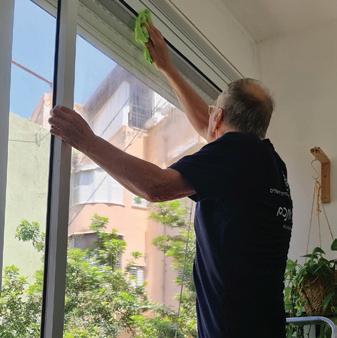
rom dawn till dusk, a group of Christian volunteers recently spent ten days traveling all around Israel to help local farmers in their fields, distribute food parcels to the needy, clean the homes of Holocaust survivors, and paint apartments for new Jewish immigrants. Yet this latest ICEJ HandsOn Serving Tour opened their eyes to a much deeper, lasting work being done not with hands, but with their hearts.
The tour included stops at various ICEJ AID projects throughout Israel, as well as visits to such historic sites as Herodian and Tel Gezer.
At a new Agro-Tech High School the ICEJ sponsors in the Western Negev, the group worked alongside Israeli students in cucumber fields and then ate lunch together. The Israeli teens shared how the school has given them a sense of purpose.
Asaf, the school’s founder, explained his vision to reconnect the younger generation with modern Israel’s early pioneer roots, to encourage a new type of Zionism.
“We cannot thank the ICEJ enough for coming alongside us in establishing this school”, Asaf stated. “We are proud that you come so often and bring groups to our school. This is leaving an imprint on these students.”
In the vineyards of another farm, they met Ori, who was recently released from reserve duty and is helping his elderly grandparents keep the family farm alive during wartime. As the Christian volunteers worked in the vineyards of their farm, Ori shared his dream of transforming it into a flourishing winery. Over coffee and Dutch cookies, Ori asked the visitors: “Why did you come?”
“When you in Israel are facing trouble, we feel
a deep pain”, Harmen answered. “We want to come lend a helping hand.”
“We pray, we give financially, we speak out on social media, but above all, we want to be here to show you that Israel has friends in the nations”, added his wife Zwanneke.
More than two years into the war, Israeli farmers are struggling with labour shortages and uncertainty. Ori told the volunteers, “There is no one like you. You are a gift from heaven.”
The group also spent time at Kibbutz Dorot, near the Gaza border. Yael guided them through the archives, telling stories of pioneers who arrived in 1941 when there was “just one tree and the rest desert.” Looking around at the flourishing fields and gardens today, the volunteers could hardly comprehend the transformation.
“It is a miracle what the Jewish people have made of the Negev,” Harmen exclaimed.
“This tour is surpassing my expectations,” Zwanneke insisted.
The tour also included distributing food to struggling families across Israel. Avi, who oversees the food distribution effort, thanked the volunteers warmly.
“We don’t take lightly that you are here during this time”, he assured. “We love the ICEJ very much, and they always bring us great volunteers.”
“What a great opportunity to connect with people, not just giving food, but making them feel seen”, volunteer Arend reflected afterwards.
Later at the ICEJ’s Home for Holocaust survivors in Haifa, the Christian volunteers cleaned the physio room and spent precious moments with 95-year-old Renate, who rebuilt her life after surviving the Holocaust in Germany. She read some of her poems aloud, revealing deep pain and remarkable resilience. Despite everything she has endured, the volunteers were struck by her humour and “the twinkle in her eyes”.
In Ashdod, the volunteers painted the basement of a home for new Jewish immigrants, which is being remodelled into an activities center. Later, over tea, they listened to new immigrants Valerie and Tami describe finally arriving in Israel after years of struggle proving their Jewish identity. Tami was overwhelmed when he learned the volunteers had paid their own way to come serve.
“I could not imagine that people would do this,” he said quietly. “Why now? The world has gone crazy in the last few years with antisemitism.”
This is exactly why these hands-on volunteer tours are needed right now, to demonstrate to Israelis that not everyone is against them.
Another Hands-On Serving Tour will take place from 8–17 November 2026. So, come be part of this great opportunity to help Israel in practical and loving ways.
A DAY WITH THE ICEJ-FUNDED FOOD TRUCKS
BY NATIVIA BÜHLER
As the morning light breaks over central Israel, the large metal doors of our charitable partner Pitchon Lev’s new 2,000-squaremeter logistics center roll open. Forklifts hum across the floor, volunteers move swiftly between stacked pallets of food, and the smell of fresh produce fills the air.
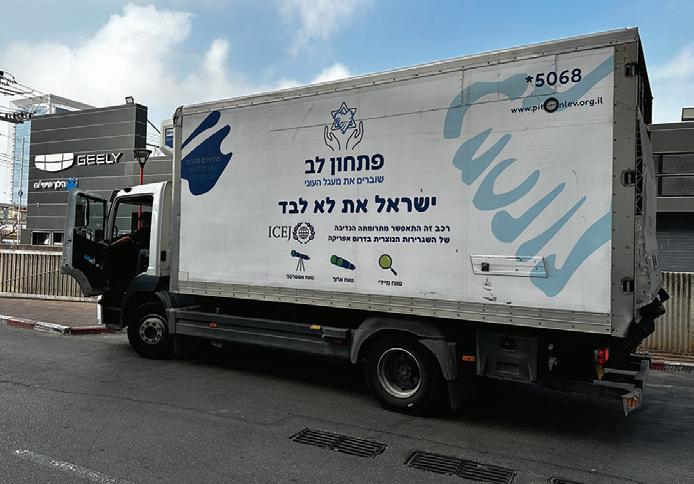
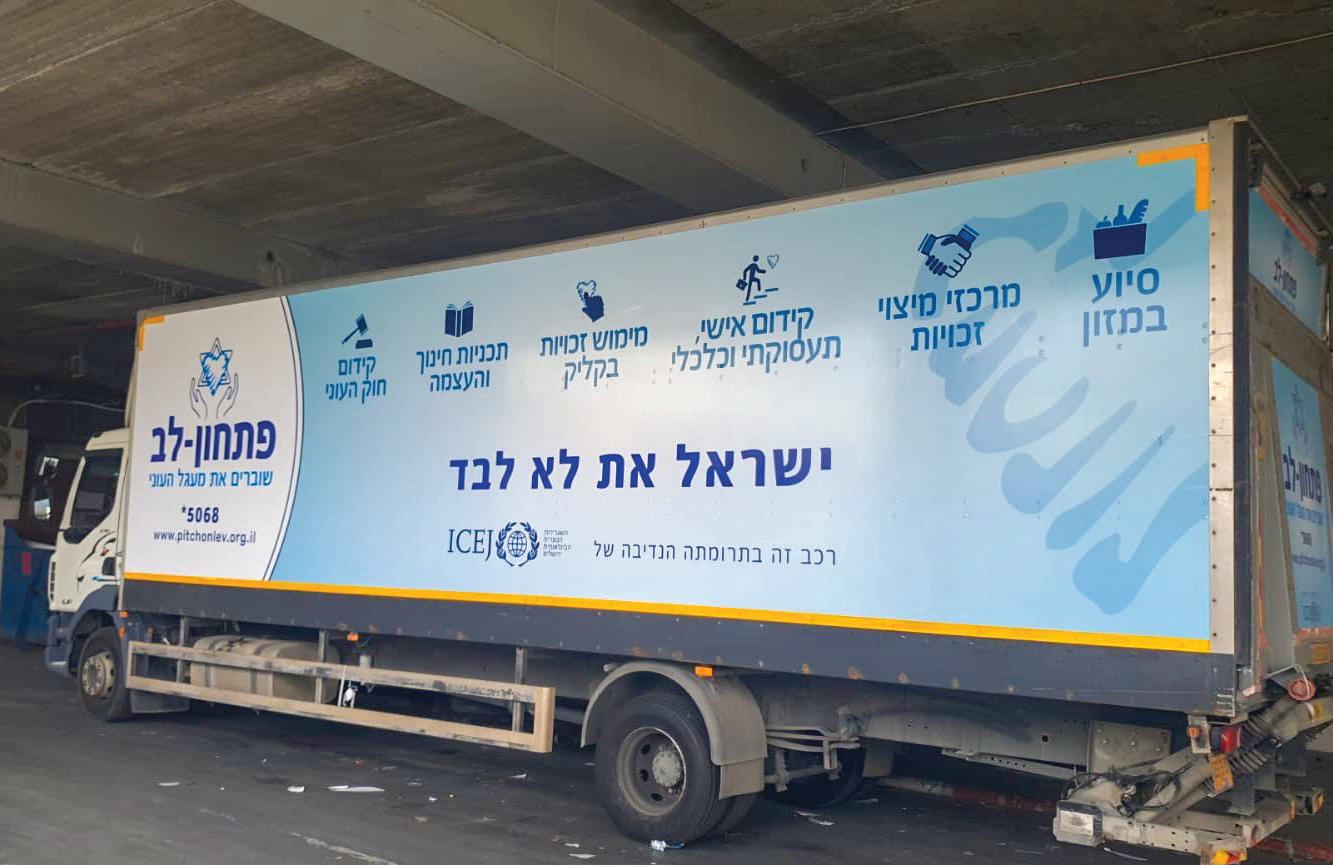
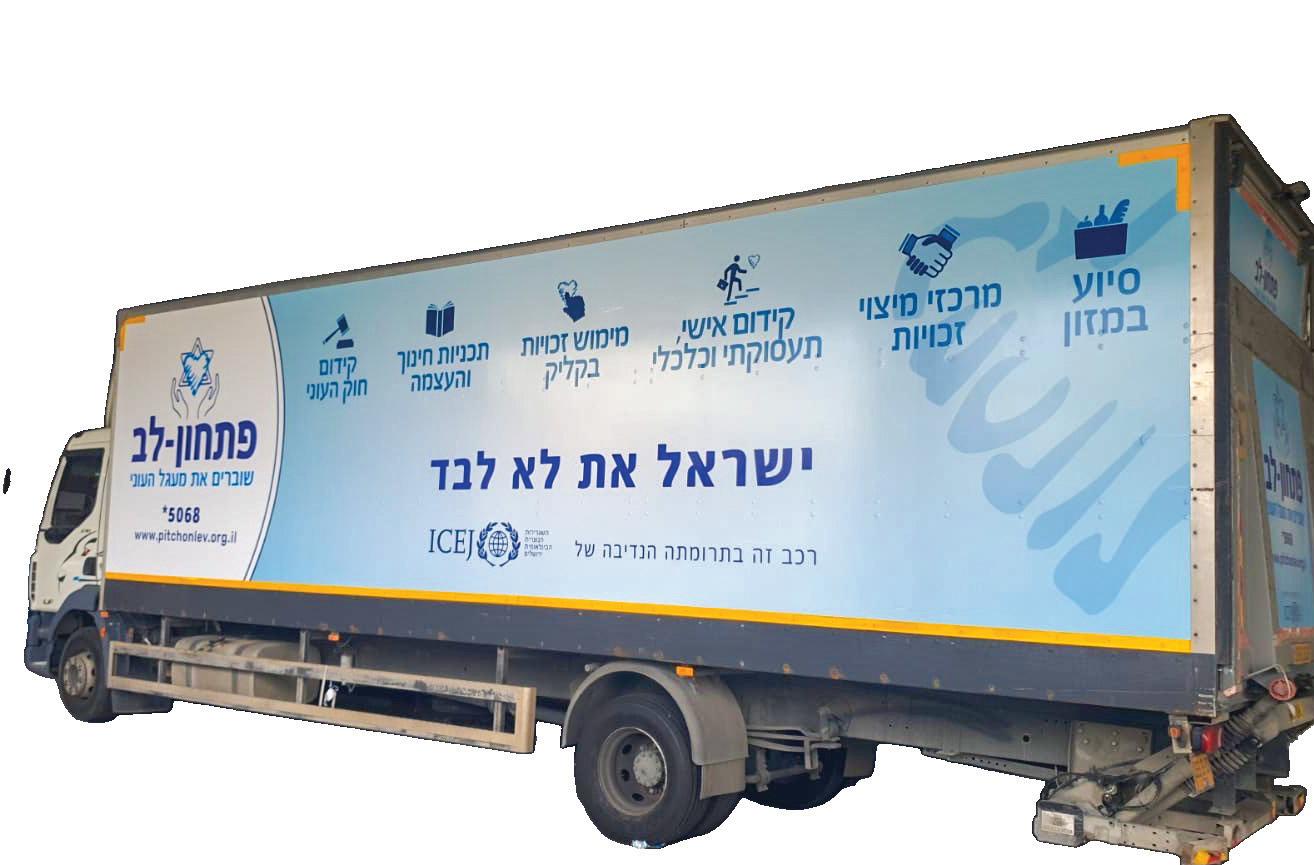
At the heart of this operation are the ICEJ-funded refrigerated food truck and a second emergency “War Truck,” made possible through the support of Christian partners in South Africa, Switzerland and around the world. In response to increased needs, another refrigerated food truck supported by ICEJ-Germany will soon be on Israel’s roads.
These vehicles have transformed how food and emergency supplies reach Israel’s most vulnerable families.
06:00 AM | THE LOGISTICS HUB
The day begins inside the massive logistics center in central Israel, where over 500 tons of emergency supplies and equipment have already been collected and distributed nationwide since the war began.
Before the arrival of the ICEJ-supported trucks, transporting refrigerated food donations on a large scale was nearly impossible. Families often received dry goods alone, filling stomachs but lacking vital nutrition.
Today, dairy products, meat, and fresh produce can be safely delivered across Israel, restoring dignity and health to thousands of households.
“Thanks to the refrigerated vehicles, donations requiring cold storage have increased by more than 600%”, explains Peleg, a local manager. “We can now add an average of four additional nutritious items to every food basket”.
For struggling families, this means proper meals for children, strength for the elderly, and the reassurance that someone cares.
09:00 AM | LOADING THE TRUCKS
Volunteers form long lines, lifting crates and carefully packing baskets that will soon reach homes across the country. Today’s mission is part of a nationwide distribution effort that has grown dramatically.
In 2023 alone, more than 255,000 food baskets were delivered across Israel, a 40% increase compared to 2022. In 2024, this project again assisted over 25% more families and individuals than the year before.
The ICEJ-supported trucks have made this expansion possible.
During the final months of 2023, the emergency “War Truck” became a lifeline for displaced families, transporting over 30,000 food parcels to evacuated families living in hotels across the country – having lost homes, routines, and any sense of security overnight.
11:30
AM | ON THE ROAD
As the refrigerated truck heads onto the highway, its temperature monitors stay steady, protecting hundreds of food baskets packed just hours earlier. Inside are dairy products, meat, and fresh produce – items that must arrive quickly and safely to remain useable.
By maintaining a strict cold chain throughout every journey, the truck ensures that each basket arrives fresh, nutritious, and ready to support families who rely on this food for the week ahead.
2:00 PM | DISTRIBUTION
At each distribution point, long lines form quietly. Many families arrive early, pulling small trolleys behind them or carrying large shopping bags. Some even bring suitcases, knowing the baskets will be heavy and filled to the top with food for their households.
Here, the numbers being helped turn very personal.
For many families displaced by the war, the ICEJ-funded trucks often provide the only fresh protein they will eat all week. For the elderly living alone, these deliveries offer both nourishment and reassurance they have not been passed by.
“The support and partnership of the ICEJ has been crucial to everything we’ve accomplished,” Peleg shares. “These vehicles have given us new logistical capabilities to assist more people than ever before. They are a powerful expression of compassion.”
5:00 PM | LASTING IMPACT
As the sun sets, the trucks return to the logistics center, empty of supplies after a full day of distribution. This project is not only meeting urgent wartime needs, but it is also working to break the cycle of intergenerational poverty in Israel.
The war and its challenges have not ended and neither has the battle against poverty. Yet through strong partnerships and support, hope continues to roll forward on every mile these trucks travel.
HOW YOU CAN HELP
This work is made possible through the support of Christians around the world. Together, we can continue to extend a lifeline to families
Your support is indeed a powerful expression of compassion. Please continue to donate to our Future and Hope fund at: help.icej.org/future-hope
BNEI MENASHE HOMECOMING CONTINUES THIS FALL
BY HOWARD FLOWER, ICEJ ALIYAH DIRECTOR
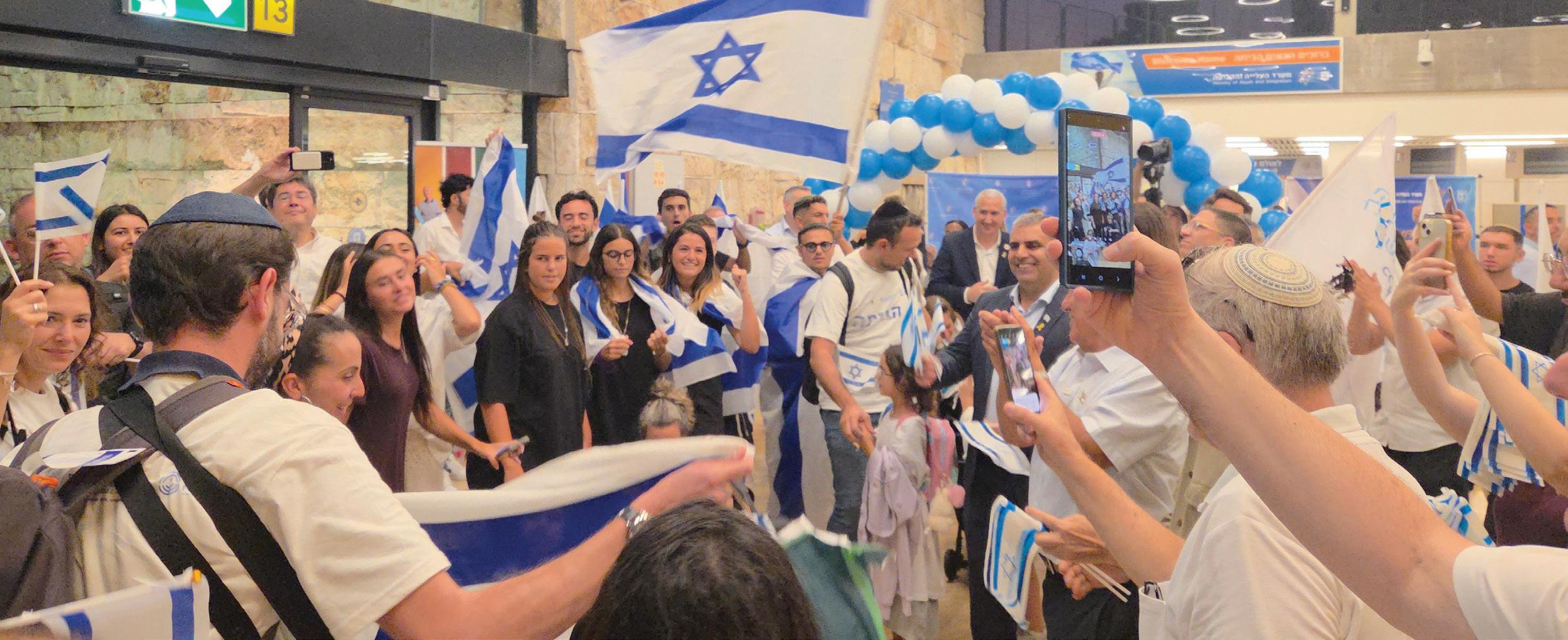
Over the past two decades, the International Christian Embassy Jerusalem has assisted more than 1,400 members of the Bnei Menashe tribe in northeast India to immigrate to Israel, including 100 newcomers this spring. We are excited to announce that the ICEJ also will be part of the next wave of 600 Bnei Menashe scheduled to arrive on three flights in November.
This is one of the most extraordinary homecomings in Israel’s history. The Bnei Menashe, or “Children of Menashe”, trace their lineage to one of the northern ten tribes of Israel exiled by the Assyrians in 722 BCE. After a journey of 2700 years, their long exile is drawing to an end.
In Sihphir, a village in northeast India, candles are lit every Friday evening, and prayers rise in Hebrew. A small synagogue with a menorah on the door fills with men wearing tallit and women sitting behind a curtain.
After a long migration across Central Asia into remote hills in India and Myanmar, the Bnei Menashe still cling to their Israelite heritage. They finally began their return to Israel when Israel’s Chief Rabbinate recognised them as “Sons of Israel” in 2005. Since then, family by family, they have been coming home.
In November 2025, the Israeli government approved Operation Wings of Dawn, aimed at bringing the entire remaining community of roughly 5,800 people by 2030, with the Jewish Agency in charge.
This also is an Aliyah of rescue. Ethnic violence between rival tribes in Manipur has targeted the Bnei Menashe. Synagogues and homes have been burned, with over 2,000 people displaced.
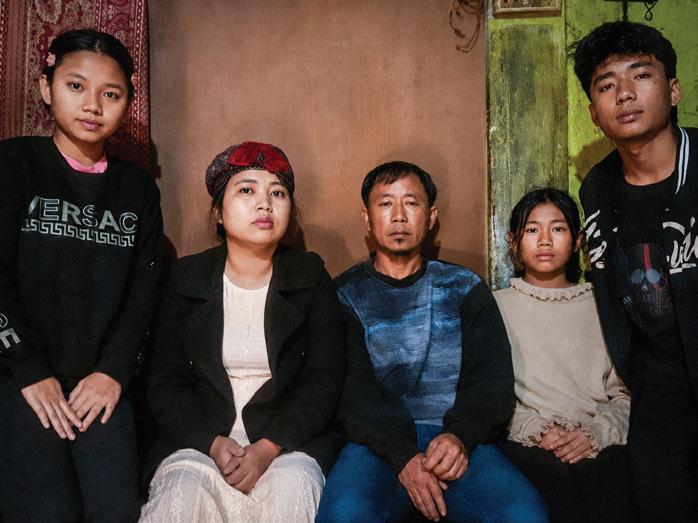
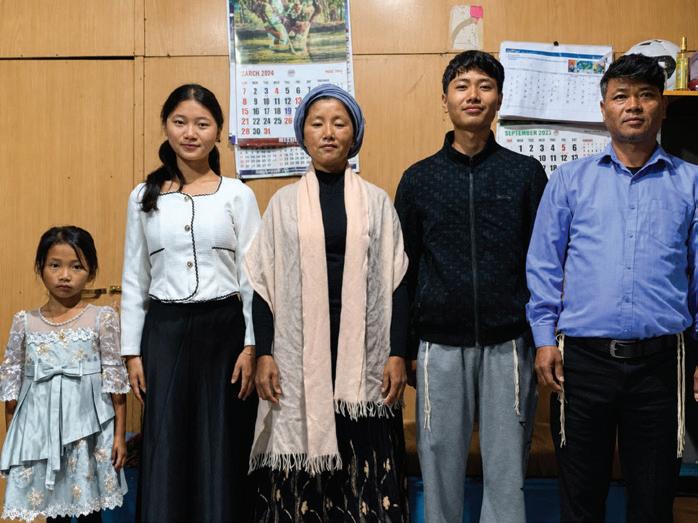
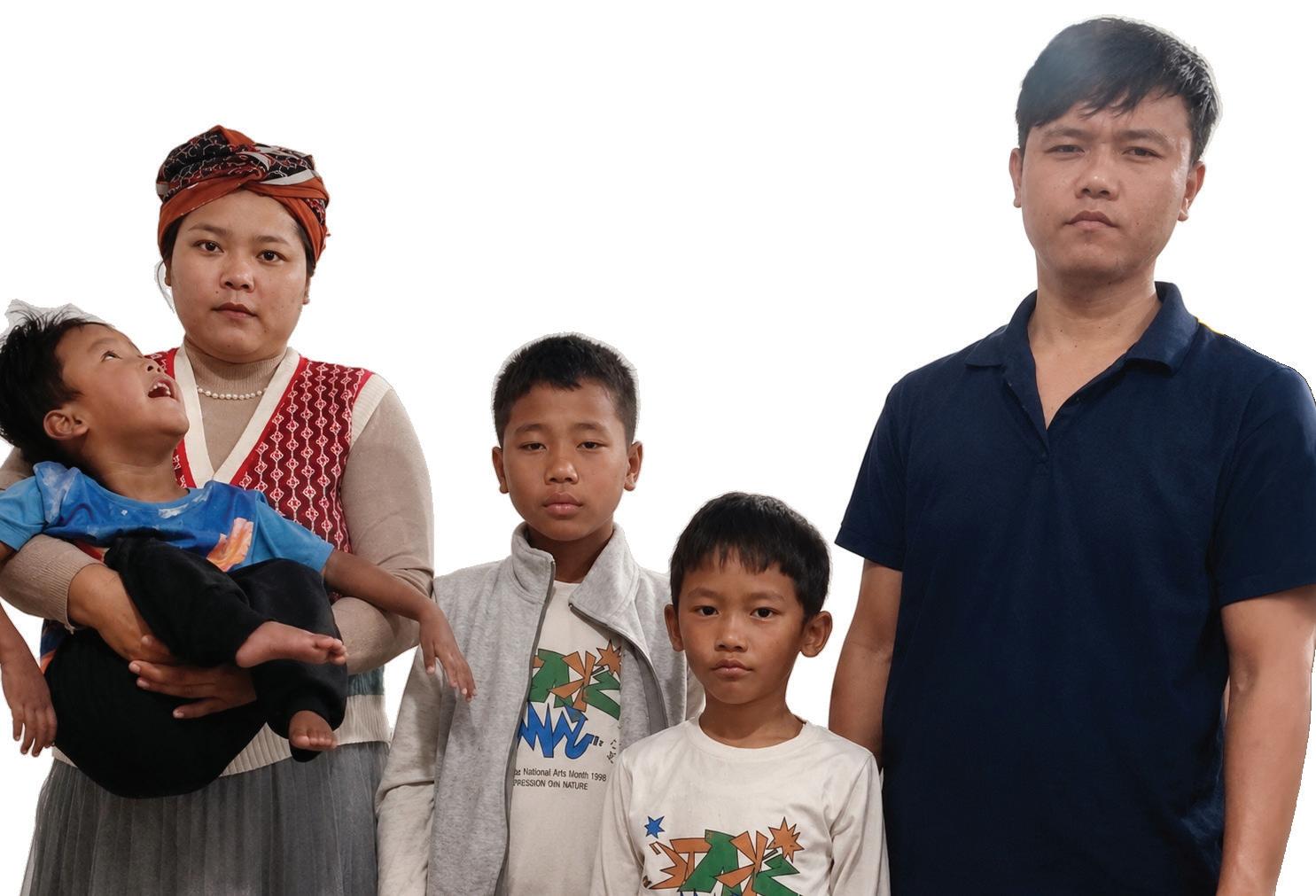
In every seat on every flight this coming November will be filled with Bnei Menashe families longing for Zion. Here are the stories of three such families.
THE HNAMTE FAMILY
Simeon Hnamte, 34, has waited his whole life for this moment. His grandparents helped build the Sihphir village over 30 years ago, when keeping Shabbat meant explaining yourself to your neighbours. His grandmother Malka left for Kiryat Arba in Judea over twenty years ago. His aunt Dina has lived in Afula since 2006, and his mother Devorah, 62, is already on the manifest for this autumn. Simeon serves as chazzan (cantor) for the community and repairs cracked cell phones to provide for his wife Rivka and their three boys: Yehuda (10), Aviram (8), and Osher (4). The youngest has special needs that can be properly cared for in Israel.
THE PACHUAU FAMILY
In 2006, Yehoshua Pachuau had a brit milah (circumcision) at age 27. That same year his brothers Menakhem and Gerson left for the Galilee in Israel. Yehoshua stayed, married Leah, and raised four children: Eitan (21), Leah (19), BatSheva (16), and Naomi (7). He farms what land he can and takes day work as it comes. Through it all, he has kept Shabbat and ate kosher. A few passport details are still being sorted. The family missed the first flight groups and is praying to make the next.
THE RALTE FAMILY
Itzhak Ralte has not seen his sister Rina since she moved to Israel in 1998. Since then, he married Zelda, who gave birth to Ruth (19), Reuben (17), and Yolina (10). Itzhak drives a bus for a living. He has adult nieces and nephews in Israel who he has never met in person. He hopes that will change this fall. His daughter Ruth dreams of becoming a pilot, though she has never boarded a plane, because she knows in Israel, women can fly.
HOW YOU CAN HELP
These three families belong to a large group of 600 Bnei Menashe preparing to make Aliyah in just a few months. The costs for getting them home includes several flights from northeast India to Tel Aviv, document processing, government coordination, support upon arrival, Hebrew classes, and housing assistance. Your gift will go directly to helping bring these families and many more home to Israel. In November, their long wait to return Zion will end.
A donation to the ICEJ’s Aliyah fund will help these and other families have a successful arrival in the Land of Israel. Please send your best gift today.
ICEJ CHARTER FLIGHTS TO BRING FRENCH JEWS HOME TO ZION
BY HOWARD FLOWER, ICEJ ALIYAH DIRECTOR
We are excited to report that a sustained surge of immigration from France is currently taking shape which will alter the Jewish demographic map worldwide. The numbers we are seeing are not merely stats, but a historic realignment, as the largest Jewish community in Europe increasingly sees its future in Israel. It is being driven by a mix of push factors in France and the pull of a resilient Jewish state.
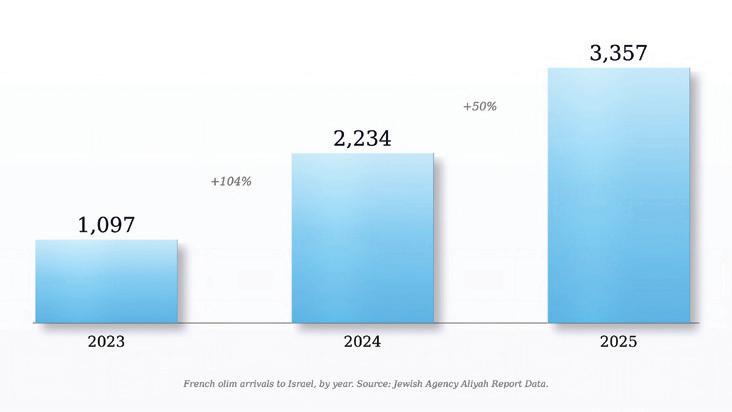
Throughout 2025, Aliyah from France took a dramatic 50% leap over the previous year. That translated to more than 6,000 French Jews making the move to Israel.
This momentum has even intensified in 2026. For the first time, France has become the leading country in the world for Jewish immigration to Israel.
Israel’s Ministry of Aliyah and Integration has responded with the “Aliyah of Renewal” plan, effective from 1 January 2026. The government initiative will ease and accelerate immigration from Western countries, especially from France, where antisemitic incidents have recently soared by 350 percent.
For many of these French Jews, Aliyah is a positive, identity-driven choice. Yossef, a 21-year-old observant Jew who immigrated in 2025, told Euronews: “In Israel, being Jewish is normal... In France, to live and flourish as a Jew, it can be complicated.”
Sarah, a 34-year-old mother of two recently moved her family from Créteil to Netanya, telling Le Figaro: “It was not a decision taken lightly. We had everything here: school, work, family. But my children could no longer go out wearing their kippa without being stared at.”
Raphaël, a 22-year-old university student, voiced a similar sense of social suffocation to Le Parisien, saying: “At university, we were stigmatised as soon as we showed support for Israel. It became unbearable.”
At a major Aliyah fair for medical professionals in Paris in May, young doctors spoke seriously about their Aliyah decision.
“The majority of young people are thinking a lot about how they can live in Israel before it is too late”, Dr. Raphael Mimoun, 26, told The
Times of Israel. “It is becoming more and more difficult to live here because of antisemitism.”
Another young doctor, 37-year-old Eitan, a father of three, added, “there is no future [for Jews] in France.”
Another Aliyah Fair in Paris in April drew thousands of visitors, and featured a significant new element of Israeli companies recruiting directly on site, from engineers to defense and energy sector specialists.
Meanwhile, Israel’s new government programs will offer not just safety, but a comprehensive support structure — enhanced housing aid, a monthly adjustment grant for the first year, fast-tracked bureaucracy, customised Hebrew language classes, and employment coaching.
Even during the intense conflict “Operation Roaring Lion” this spring, as missiles rained down from Iran and Lebanon, a special flight carrying more than 50 new olim from France and Britain landed at Ben-Gurion Airport. Aliyah Minister Ofir Sofer captured the spirit of the moment, saying: “The Jewish people see the actions and bravery of the State of Israel and choose to be part of it.”
SUMMER 2026: A WAVE ON THE HORIZON
The Aliyah from France is set to reach a new crescendo in the summer of 2026. The ICEJ projects up to 3,000 newcomers will arrive from France during the summer months alone. This projection is built on several converging factors. First, the application pipeline is overflowing. Aliyah file openings from France are reportedly up by 384%. The Israeli government’s target is to welcome 15,000 new immigrants from French-speaking countries by the end of 2026, with France providing the vast majority.
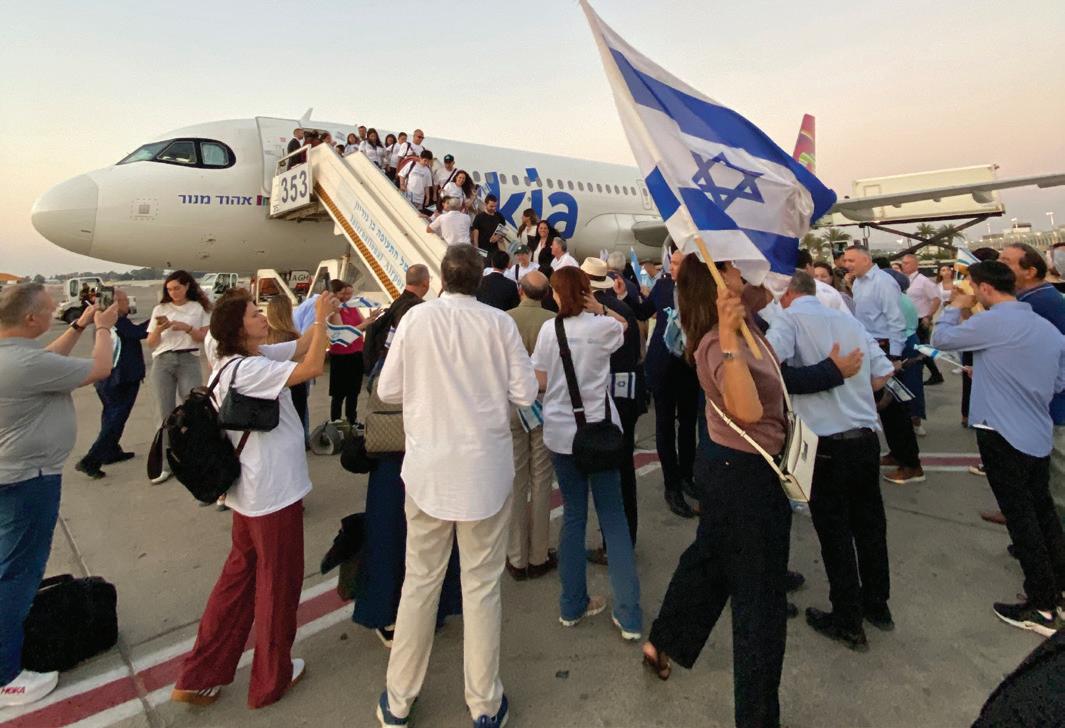
In response, the Christian Embassy will be sponsoring two full Aliyah charter flights from Paris this summer, in cooperation with The Jewish Agency for Israel. The first flight is scheduled to arrive the first week of July, and the second in early August. These flights represent both our practical and deeply symbolic commitment to Aliyah at this critical hour.
The prophetic gathering from the “west” (Isaiah 43:5, 49:12; Hosea 11:10; Zechariah 8:7) is no longer a distant vision. It is a vibrant, growing reality, and we are privileged to witness and support it every day. Please join us in sponsoring these two special Aliyah flights in the coming weeks to bring hundreds of French Jews home to Israel.
ALIYAH
French Jewish flight arrives at Ben Gurion airport. (Credit: JAFI)
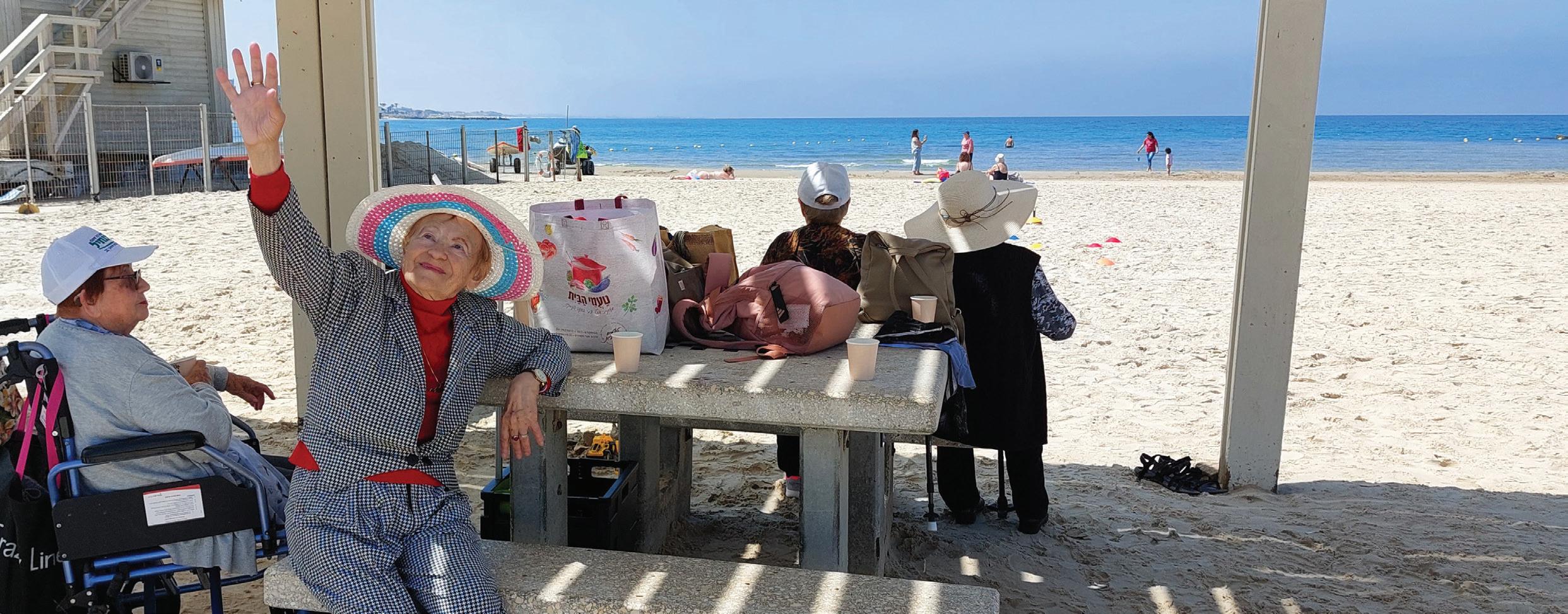
Haifa home residents enjoy a day on the beach.
RHAIFA HOME UPDATE
BY YUDIT SETZ
esidents at the ICEJ’s Home for Holocaust Survivors in Haifa have endured the latest escalation in the long, intense war with Iran and Hizbullah, and are now embracing the summer months, showing their creativity in art, and blessing the community in special ways.
FRAGILE CEASEFIRE AS SUMMER ARRIVES
Despite the constant battle still going on with Hizbullah in nearby Lebanon, it has been quiet in Haifa. The weather has grown warmer, and nature is at its peak – offering the perfect opportunity to take our residents outdoors as much as possible.
Trips to the beautiful beaches of Haifa were a real highlight for many of our residents. After being cooped up in their homes for so long, surrounded only by walls and ceilings, the refreshing sea breeze and the endless view of the ocean brought renewal to their minds, bodies and spirits. Topping it all off with delicious ice cream was truly the cherry on top!
Some gym classes were even held on the beach, with exercises in the sand, running competitions with the caregivers, and lots of laughter and fun. The ICEJ team is constantly looking for creative ways to support and care for our precious Holocaust survivors.
One resident returning from beach gymnastics exclaimed with a huge smile: “This was so much fun!”
GETTING TO KNOW THEIR LAND AND HERITAGE
Our Ukrainian and Russian-speaking residents continue to greatly enjoy the lectures about the Land of Israel, which are occasionally combined with outings and excursions.
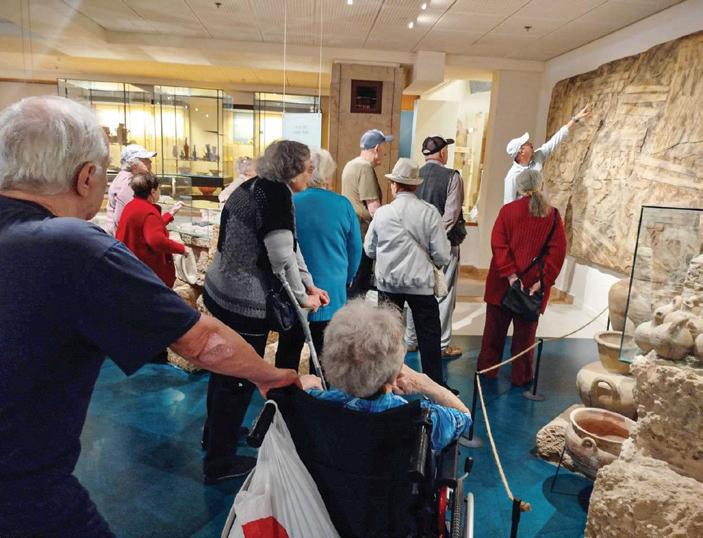
This time, the group visited the Hecht
Museum in Haifa. Located on the University of Haifa campus, the museum focuses on the archaeology and art of the Land of Israel and offers fascinating insights into the region’s ancient past.
“It’s wonderful! I love how Israel built Haifa on the mountain ridge, with both buildings and trees, and the university is impressive as well,” Arnold said from the top floor of the university overlooking the city.
Sonia, who is often housebound, was excited to get out and learn something new. “The museum is beautiful – so nice and quiet –and the ancient artefacts really impressed me”, she assured.
On the way back to the Haifa Home, Lena shared: “Even though I felt very tired when I arrived, I now feel refreshed in body and soul. These trips help me love Israel even more.”
BIRTHDAYS — ALWAYS A GOOD REASON TO CELEBRATE LIFE
Celebrating our residents’ birthdays remains an important part of our work. Many of them do not have family living nearby or anyone to celebrate with in a special way.
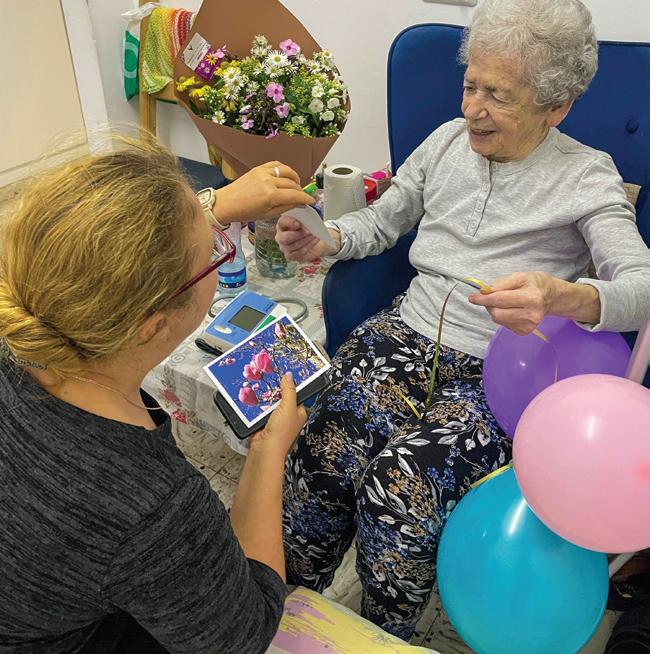
When we arrive with songs, balloons, and a personal blessing written on a birthday card, it means so much to them to know they are remembered and loved. We
also include a gift card for our beauty salon as part of the birthday celebration.
SAYING GOODBYE
We recently had one particular goodbye which was both joyful and bittersweet.
Christine, originally from Germany, joined our ICEJ team at the Haifa Home four years ago. During that time, she became an invaluable part of our team. As a nurse, she carefully monitored the health of our residents and gained deep knowledge of Israel’s medical system. She also learned to speak Hebrew fluently and brought many additional skills and gifts to our community.
Christine found love in Israel, married and now the couple are expecting new life. She has now started her maternity leave – the joyful part of the goodbye. At the same time, the residents and staff will sorely miss her. She leaves a significant gap in our Haifa Home family.
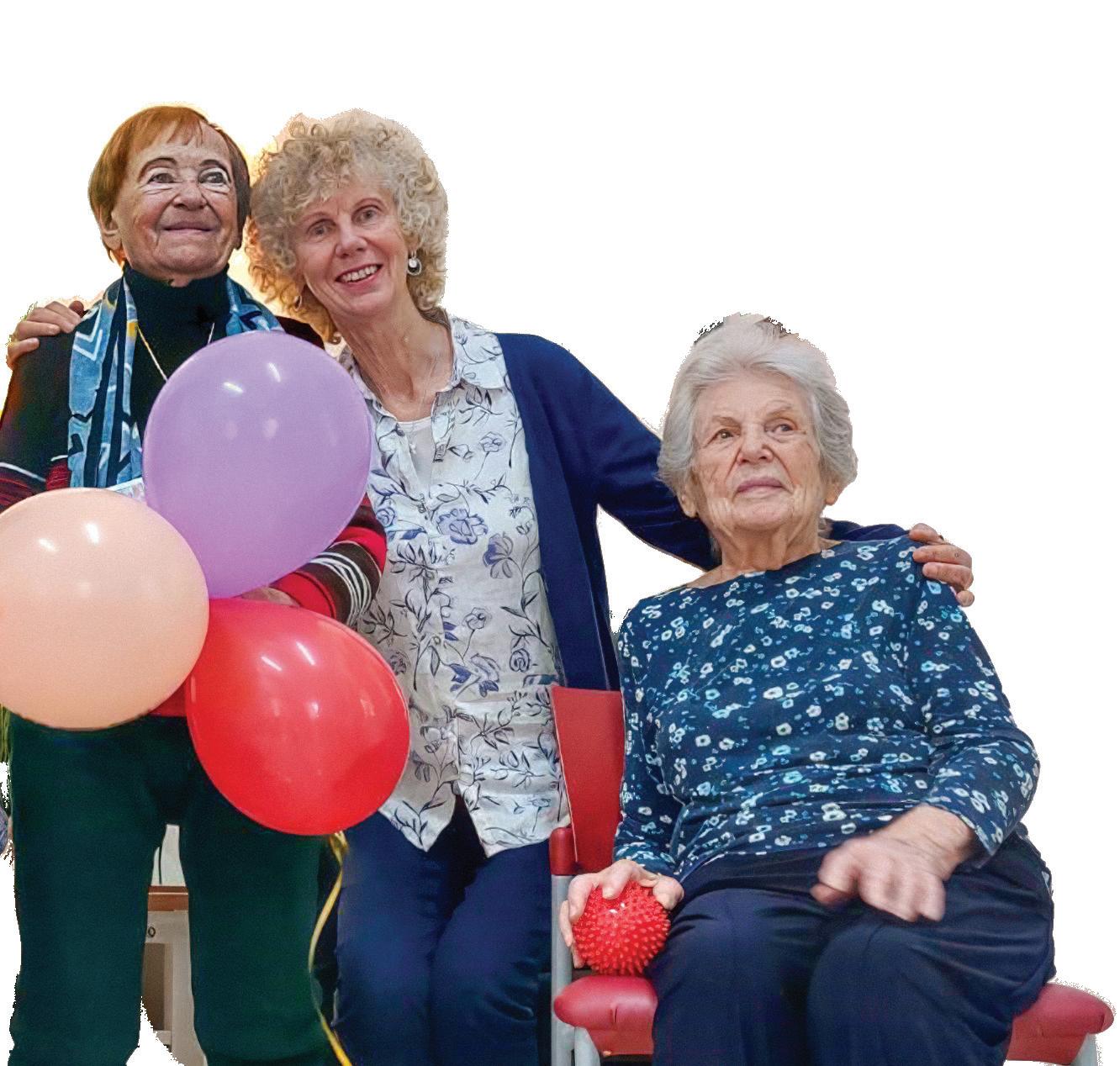
Residents, Naomi and Manya, share a birthday on the same day.
Residents take a visit to the Hecht Museum in Haifa.
Her medical expertise, fluency in Hebrew and Russian, and experience navigating the Israeli healthcare system are not easy to replace, especially for volunteers coming from abroad.
To honour her, we organised a baby shower together with the residents, giving everyone the opportunity to thank her for her wonderful service and wish her well in this new season of life.
At this point, it is still uncertain whether Christine will return after her maternity leave.
SHAVUOT CELEBRATION
Shavuot – the Biblical Feast of Weeks – was celebrated at the end of May and this year fell close to the dates of Pentecost. The Feast is also known as the “Giving of the Torah”.
Many of our recent activities have centered around this beautiful biblical holiday. A local high school class joined our residents for singing and special Shavuot-themed activities.
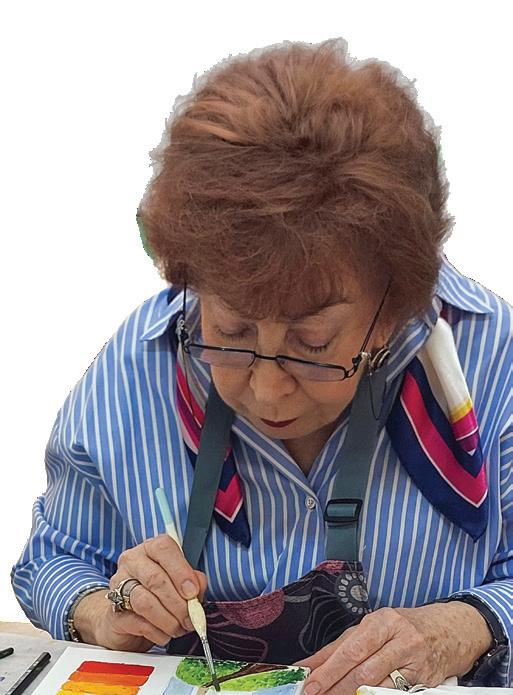
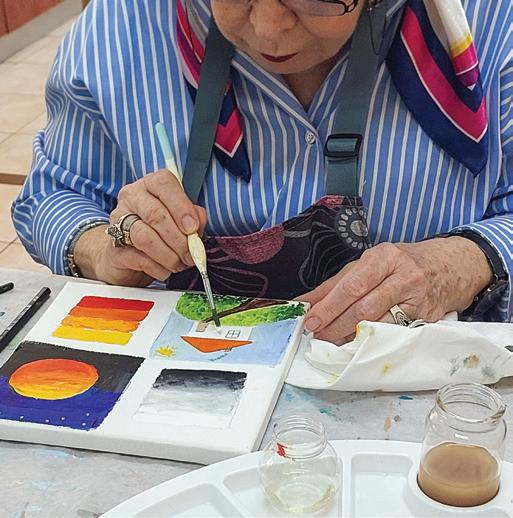
Our Ulpan classes and art therapy sessions also focused on the holiday. During art therapy, each participant painted one of the Seven Species of the Land of Israel (Deuteronomy 8:8) – the seven major agricultural products native to the Land. At the end of the activity, everyone received a beautiful basket featuring artwork painted by one of the residents.
Chag Sameach (“wishing you a joyful feast”) is the greeting commonly shared throughout Israel in the days leading up to Shavuot.
RITA’S LOVE FOR COFFEE
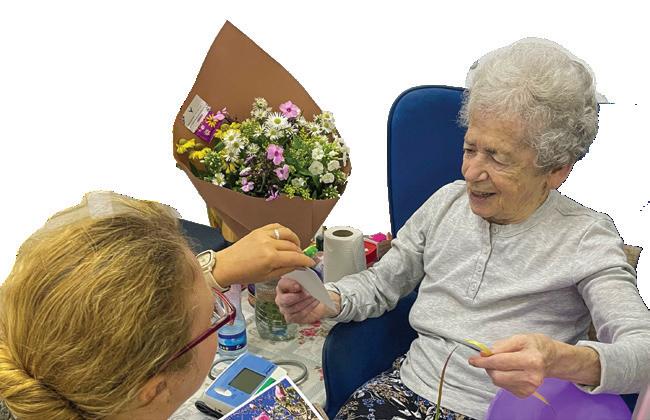
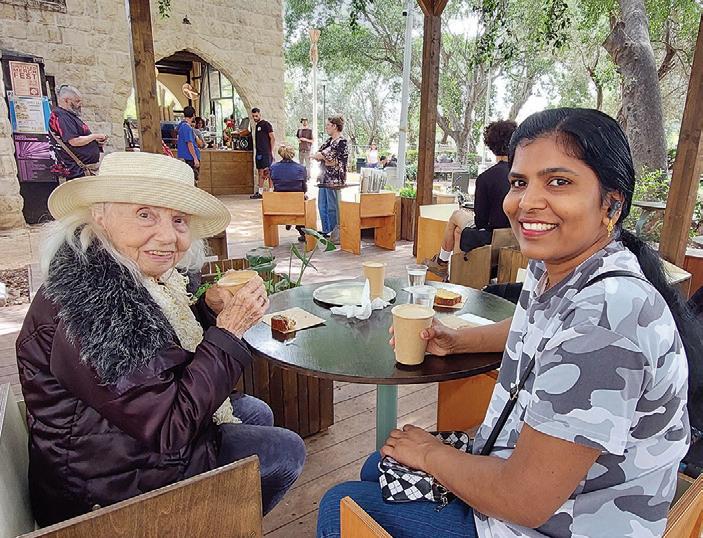
Rita, one of our beloved residents who became known worldwide through her appearance in the documentary film Miss Holocaust, has always loved visiting coffee shops. For many years, meeting friends for coffee was one of her favourite activities.
As the years have passed, going out has become much more challenging. But our team believes that challenges are simply opportunities to create meaningful moments.
Recently, a new café opened in the middle of a beautiful park not far from the Home. Our physiotherapist Simcha invited Rita and her caregiver for a special outing there. The trip required quite a bit of effort – including some walking and the final stretch in a wheelchair – but it was absolutely worth it.
The joy on Rita’s face was contagious. She thoroughly enjoyed the coffee, the peaceful natural surroundings, and the chance to experience something special again. Since the outing, she has not stopped talking about it. For Rita, this simple visit meant the world.
A MARKET FULL OF GENEROSITY
We recently organised another flea market at the Home, turning an ordinary day into a lively and joyful event.
Over time, many items have been donated to our residents by visiting guests from abroad, while other belongings came from residents themselves who wished to pass them on to others. Instead of letting these items sit unused, we decided to create a fun community market where everything was free.
Just outside the dining room, residents and caregivers gathered together with music playing in the background and visitors stopping by to browse. Everyone was invited to choose items they liked or needed, and by the end of the event, almost everything had found a new home.
Beyond the practical side of giving things away, the market created something even more valuable: connection, excitement, and a sense of blessing for everyone involved.
DISCOVERING HIDDEN ARTISTIC TALENT
Many of our residents who now participate in art sessions had never painted or drawn before joining the program. Some were hesitant at first, convinced they lacked any artistic talent. To their surprise, many discovered not only a love for creating art, but genuine talent as well!
In a calm atmosphere filled with soft background music, Nancy, our dedicated art therapist, patiently teaches residents new artistic techniques while encouraging everyone to grow creatively and gain confidence in their abilities.
From time to time, we also invite guest artists to lead special workshops. Recently, talented painter Jonathan Goldberg visited to teach residents the basics of oil painting.
The workshop was a wonderful success. Residents proudly admired their finished paintings and left inspired to continue learning and exploring this new creative passion.
THANK YOU!
Our team and the residents of the Haifa Home want to thank God for each and every one of you who make it possible for us to share so many precious moments and meaningful activities together.
This work would not be possible without your generous donations and faithful prayers for all of us. Thank you for standing with us and for faithfully blessing the residents of the Haifa Home.
Please support our ministry of comfort and care to these precious Holocaust survivors.
Give a generous donation today at: help.icej.org/survivors
HAIFA HOME
Rita enjoys a cup of coffee with her caregiver at a new café.
ICEJ Staff wish Sonia a very happy birthday.
BREAKING NEW GROUND IN ASIA
BY DR. MOJMIR KALLUS, ICEJ VICE PRESIDENT FOR INTERNATIONAL AFFAIRS
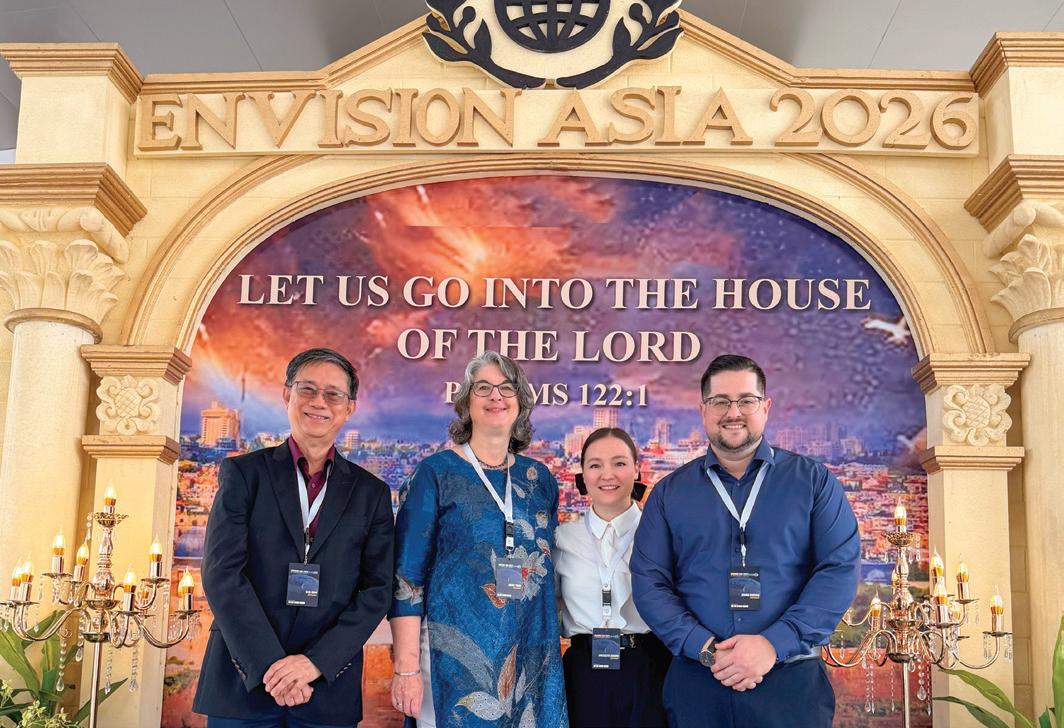
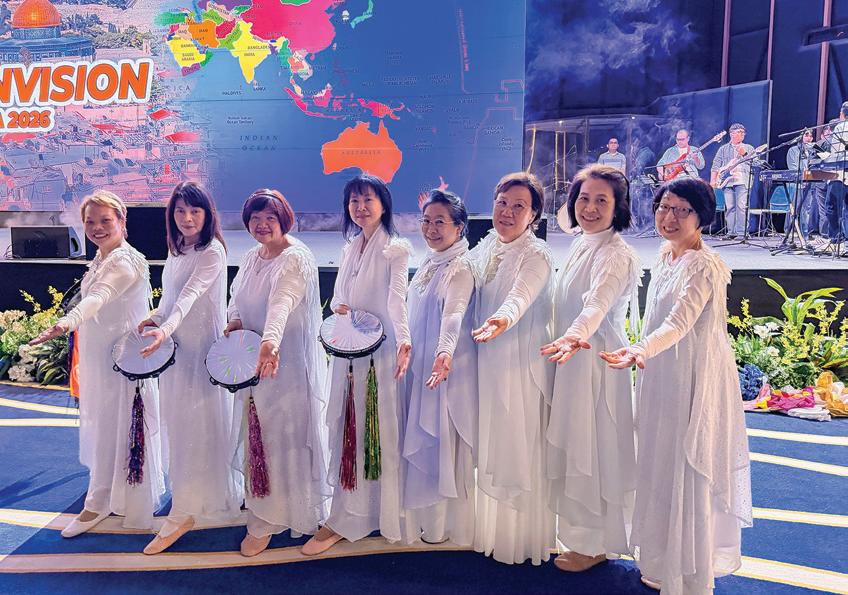
After months of planning and prayer, the ICEJ held its first major regional conference in Asia in April and the results were a great success. More than 700 registered participants from 25 nations across Asia attended the event, convened under the title “Envision Asia 2026”.
A leadership team from the Jerusalem headquarters arrived in Batam, Indonesia to bring a fresh message from Israel to believers in Asia. This included myself, David Parsons, Nicole Yoder, and Joshua and Anastasiya Gooding, who were joined by Peter Tsukahira, Suzette Hattingh and other key speakers, while ICEJ President Dr. Jürgen Bühler delivered a recorded message from Jerusalem. Christian leaders from Indonesia, Philippines, Singapore, Taiwan and Thailand also shared the Word, while these same nations brought along colorful and anointed musical teams to lead the worship sessions.
The largest delegations came from Indonesia, Singapore and Malaysia, while other groups came from China, Hong Kong, India, Papua New Guinea, Philippines, South Korea, Sri Lanka, Taiwan, Thailand and Vietnam, among many other countries.
“I believe Envision Asia marks a timely shift as Asia rises to play a more prominent role in blessing Israel – not only through prayer, but also through financial support for the vital work of ICEJ”, said Jehu Chan, the ICEJ regional coordinator for Southeast Asia. “The atmosphere at the conference was electrifying, enriched by beautiful worship and powerful, anointed messages. It was truly a significant gathering that heralds a new dawn for Asia and its growing partnership with Israel.”
The gathering was modeled on the ICEJ’s annual Envision conference for pastors and ministry leaders hosted each year in Jerusalem. This initial Envision Asia conference took place against the backdrop of a shaky ceasefire in the US and Israeli battle against the radical Islamic regime in Iran. There was much prayer for the peace of Jerusalem, and many stirring messages on the spiritual nature of the battle surrounding Israel and why Christians should be standing with the Jewish state and people in our day.
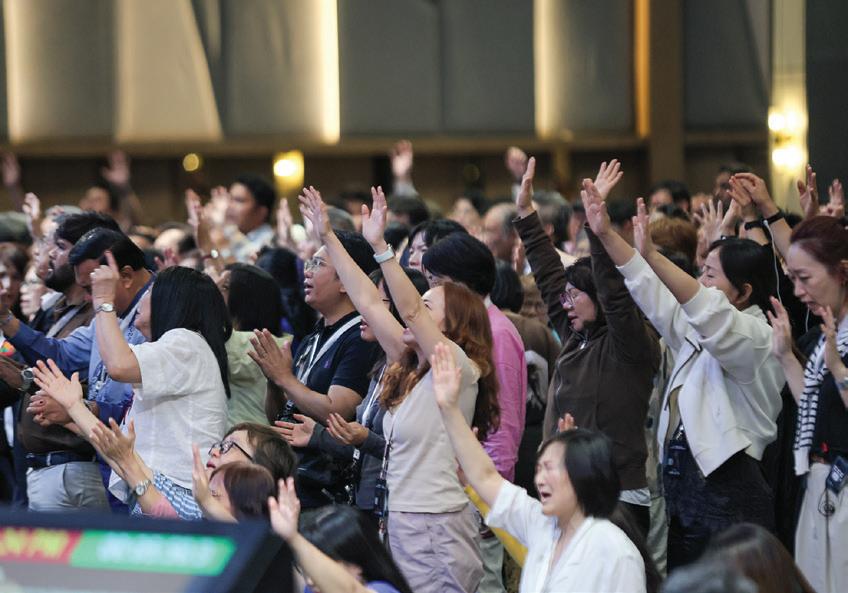
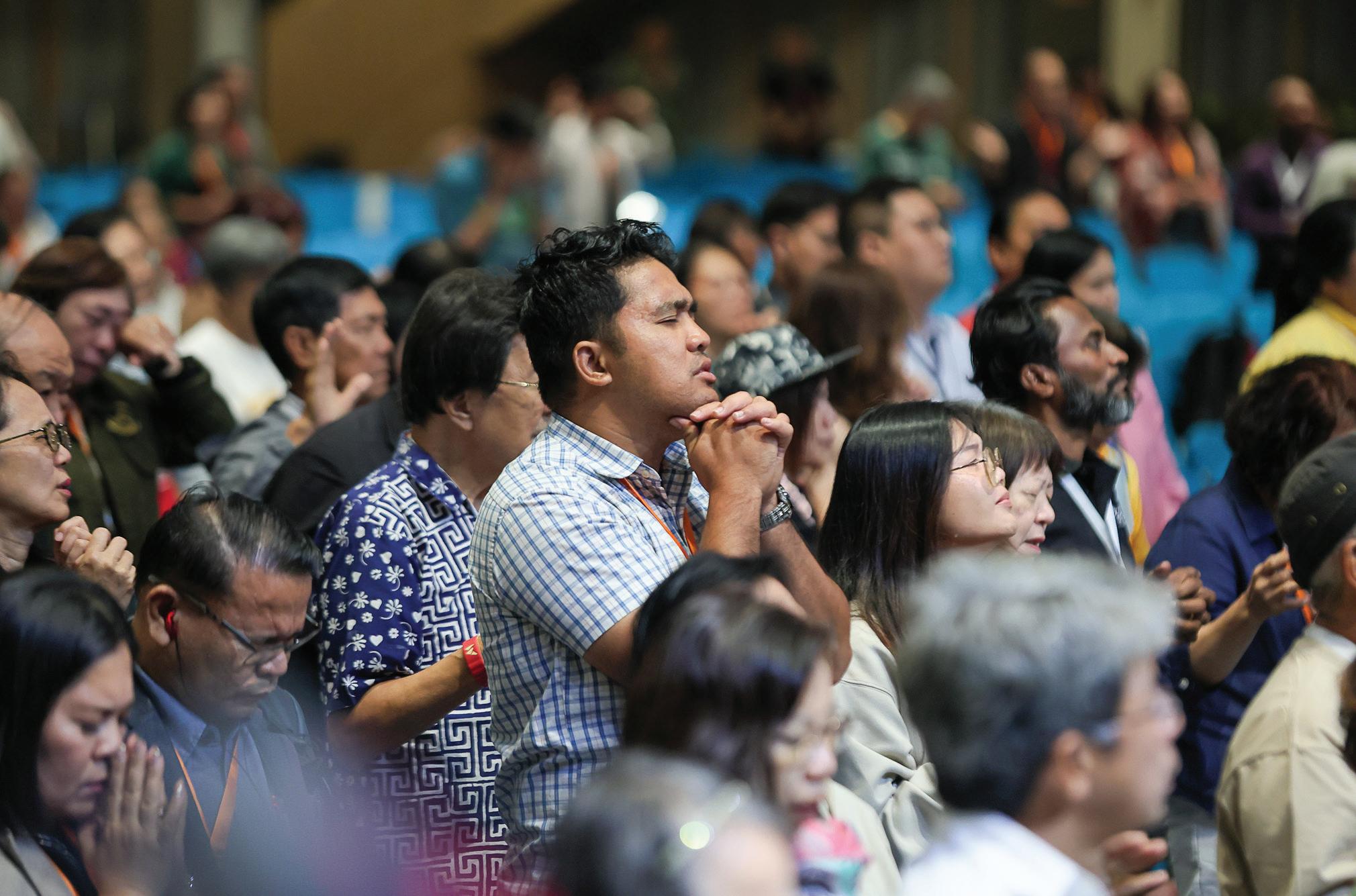
1. Praise and worship time at the Envision Asia conference.
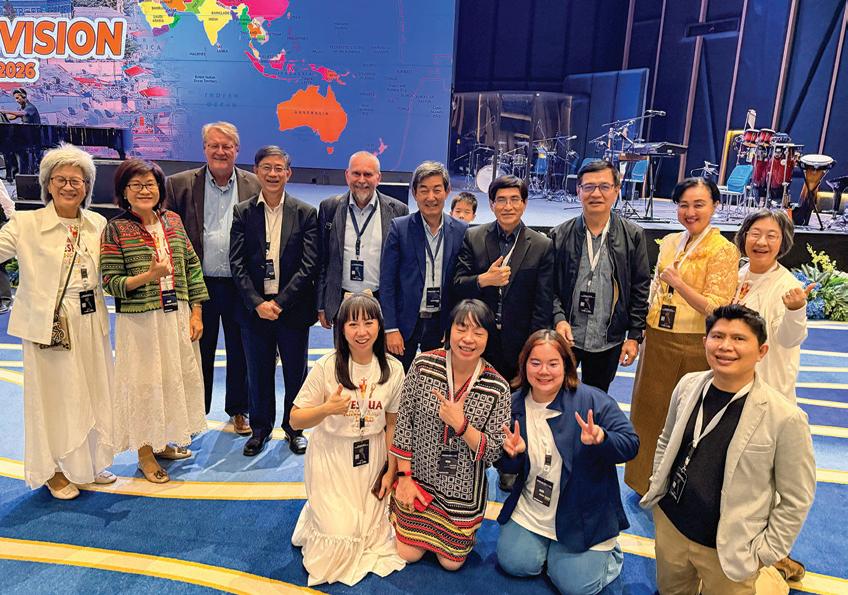
2. ICEJ international branch leaders with HQ leadership and guests.
3. Dancers who performed at the conference.
4. Jehu Chan (Singapore), Steve Mirpuri (Philippines), Dr. Mojmir Kallus (ICEJ VP International Affairs)
TSTRENGTHENING THE ICEJ PRAYER MOVEMENT ACROSS ASIA
BY JOSHUA GOODING, HEAD OF ICEJ PRAYER DEPARTMENT
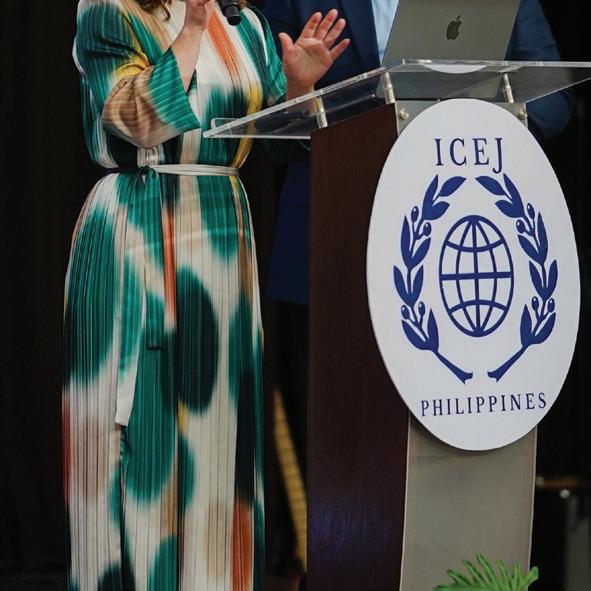
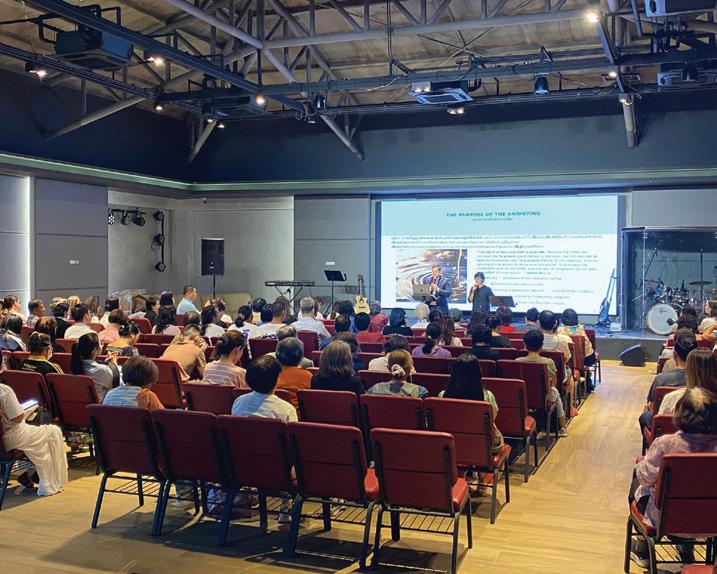
he ICEJ Prayer Department recently spent three weeks travelling across Indonesia, Singapore, the Philippines and Thailand to strengthen our prayer partnerships and encourage believers to stand with Israel. Throughout the journey, one theme clearly emerged: God is raising up believers across Asia with a deep hunger for prayer and a growing conviction that now is the time to align with His purposes, especially for Israel.
The journey began in late April at the Envision Asia conference in Batam, Indonesia, where pastors, prayer leaders, and ministry workers gathered from across the region. One of the most encouraging outcomes was the strong response to the call for prayer and intercession for Israel. Following the conference, more than one hundred participants expressed a desire to become involved in the ICEJ’s prayer initiatives connected to Israel.
From Indonesia, we travelled to the Philippines, home to one of the strongest expressions of the ICEJ prayer movement. Each month, believers from across the nation participate in the ICEJ Rosh Chodesh Prayer Chain, contributing approximately 140 hours of prayer. Meetings with pastors, ministry leaders, and prayer network representatives revealed a mature and growing community committed to prayer, biblical truth, and standing with Israel.
A highlight of this visit was a gathering of approximately 250 prayer leaders and intercessors. The atmosphere was marked by humility, spiritual hunger, and a shared desire to seek the Lord together. The sessions focused on prayer and God’s covenant purposes, while many leaders testified they also were being freshly prepared for the season ahead.
Throughout these meetings, one truth became evident. Strong prayer movements are not built through events alone. They are established through faithful relationships, shared vision, and perseverance over time. Many of the leaders we encountered have spent years serving quietly and faithfully in their prayer rooms, yet their influence is bearing fruit far beyond what can be seen.
Our team also was encouraged by the younger generation. Several young believers shared how they are using social media to communicate
biblical truths and respond to growing misinformation about Israel. Their courage highlights an important challenge facing the Church today. As antisemitism continues to increase globally, the next generation must be equipped with a strong biblical understanding of God’s purposes for Israel so they can stand confidently in the truth.
A key lesson the Lord repeatedly impressed upon us throughout the journey was that prayer must be joined with action. It is not enough to pray for God’s purposes, we also must actively partner with Him in advancing them. Prayer and action work together as two essential arms of ministry. Believers are called to both priesthood and kingship, interceding before God while actively partnering with Him to establish His kingdom purposes in Israel and the nations.
The final leg of our journey took us to Thailand, where prayer leaders and ministry partners gathered at the Thailand Prayer Tower in Bangkok for teaching, fellowship, and a one-day prayer school. Representatives from approximately fifteen prayer teams participated, creating an atmosphere of oneness and expectation.
The one-day prayer school in Thailand.
The sessions focused on intercession, spiritual authority, and the biblical foundations of Israel’s role in God’s redemptive plan. Beyond the teaching itself, there was a clear sense that God was calling believers into a deeper understanding of their identity as watchmen and intercessors. Many expressed a renewed commitment to prayer and a desire for greater partnership with believers in Israel.
Returning to Jerusalem, we were filled with gratitude for what the Lord is accomplishing throughout Asia. The growing hunger for prayer, commitment to biblical truth, and desire to stand with Israel point to a work that is far greater than any single ministry effort.
God continues to raise up faithful watchmen from every nation. Seeds planted through the years of the ICEJ prayer ministry are bearing fruit, and there is every reason to believe that even greater opportunities lie ahead. This journey served as a powerful reminder that when believers submit themselves fully to the Lord, prayer becomes more than an act. It becomes a force that strengthens leaders, mobilizes nations, and helps prepare the way for all that God desires to accomplish in the earth.
View all the Videos On-demand*, or on our Youtube and Spotify channels.
*Pre-registration for the Jerusalem Summit 2026 required in order to view all the content.
Jerusalem Summit on Youtube on.icej.org/jsummit-yt
Jerusalem Summit on Spotify on.icej.org/jsummit-pod
Speakers include:
Sagiv Asulin
Rabbi Shmuel Bowman
Dr. Jürgen Bühler
Amb. George Deek
Rev. Ingolf Ellßel
Pastor Ulrik Flinta
Dr. Jules Gomes
Dr. Gavriel Gordon
Pastor Nick Hansen
Rev. Dr. Petra Heldt
Amb. Mike Huckabee
Shadi Khalloul
Dr. Christopher Kuehl
Dr. Baruch Kvasnica
Dr. Tyson Lambertson
Prof. Gerald McDermott
Dr. Susan Michael
Dr. Tricia Miller
Troy Miller
Calev Myers, Esq.
Dr. A. J. Nolte
You can still catch all the Jerusalem Summit 2026 teachings and presentations On Demand*. SAVE THE DATE: May 25-27, 2027
Jerusalem Summit on Apple Podcast on.icej.org/summit-apple
Rev. Paul O’Higgins
Rev. David R. Parsons
Sacha Roytman-Dratwa
Archbishop Thomas Schirrmacher
Mati Shoshani
Ali Siadatan
Dr. Erez Soref
Bishop Robert Stearns
Dr. Samuel Tedder
Prof. Dr. Jacob Thiessen
Dr. André Villeneuve
Rabbi Pesach Wolicki
Dr. Brad Young
Dr. Gerald McDermott at the Jerusalem Summit 2026.
In-Person Packages
Desert-Jerusalem
$390 USD Jerusalem $270 USD
Visit the official Feast website for full details. Join us this year in Jerusalem from 25-30 September, 2026 to celebrate the Feast of Tabernacles.
Jerusalem Land Package
Join us on the Jerusalem Land Package to Israel with our incredible itinerary, designed to delight and inspire you every step of the way!
Or join us in Kfar HaNokdim for Opening Night only (September 25). Visit feast.icej.org for all the details. Includes touring as per Touring itinerary and all Feast 2026 Events. (Subject to changes)
Online Packages
Basic
$50 USD Resource $125 USD First-Fruit $175 USD
Unable to attend the Feast of Tabernacles this year in person? You can still enjoy a wide range of Feast celebrations and videos on demand by joining us online!
Galilee Add-on Tour
1-4 October. Spend a few extra days during the festive feast of Succot touring the Galilee region.
Available for In-Person Desert-Jerusalem Package, Jerusalem Package, and Jerusalem Land Package registrations. (Adults ages 13+)