GENTILES IN THE RETURN OF THE JEWISH PEOPLE FROM BABYLON
THE PASSOVER SONG THAT BROUGHT THE JEWS HOME FROM INDIA
The International Christian Embassy Jerusalem was established in1980 in recognition of the biblical significance of all of Jerusalem and its unique connection to the Jewish people. Today the ICEJ represents millions of Christians, churches, and denominations to the nation and people of Israel. We recognize in the restoration of Israel the faithfulness of God to keep His ancient covenant with the Jewish people. Our main objectives are:
• To stand with Israel in support and friendship
• To equip and teach the worldwide church regarding God’s purposes with Israel and the nations of the Middle East
• To be an active voice of reconciliation between Jews, Christians, and Arabs, and to support the churches and congregations in the Holy Land
From its head offices in Jerusalem, the ICEJ reaches out into more than 170 countries worldwide, with branch offices in over 90 nations.
Our vision is:
• To reach every segment of Israel’s society with a Christian testimony of comfort and love
• To reach and actively represent to Israel the support of denominations, churches, and believers from every nation on Earth
The Christian Embassy is a non-denominational faith-based ministry supported by the voluntary contributions of our partners and friends across the globe. We invite you to join with us as we minister to Israel and the Jewish people worldwide by donating to the ongoing work and witness of the ICEJ.
WORD
FROM JERUSALEM
CREDITS
ICEJ President Dr. Juergen Buehler
USA President Dr. Susan Michael
VP International Affairs Dr. Mojmir Kallus
VP Finance David van der Walt
USA Director of Finance Barry R. Denison
Senior VP & International Spokesman David Parsons
USA Director of Communications Shannon Bennett
VP AID & Aliyah Nicole Yoder
Managing Editor/Publications Director Laurina Driesse
USA Managing Editor Karen Engle
Graphic Design/Illustrators Ryan Tsuen, Nancy Schimp
The New King James Bible is used for all Bible references unless otherwise noted.
Word From Jerusalem is published by the International Christian Embassy Jerusalem. Reproduction in whole or in part without written permission is prohibited. Word From Jerusalem has no subscription price and is supported through contributions worldwide. The ICEJ USA Branch is a 501(c)(3) non-profit organization with offices in Tennessee, Florida, and Washington, DC. All gifts to this ministry are taxdeductible according to United States law.
PRESIDENT FROM THE DESK OF THE
Dear Friends,
As I write this, we are more than two months into the war against Iran—a conflict that is a continuation of last year’s 12-day clash, where Washington joined for one day to execute Operation Midnight Hammer. This was a long-overdue response to Iran’s five-decade global terror agenda, which ICEJ Senior VP and Spokesman David Parsons discusses further in this issue.
While Iran’s current regime pursues a path of destruction, its history tells a different story. Iran is the modern name for the region identified in the Bible as Elam and later as Persia. My article in this issue, “The Cyrus Anointing,” focuses on the Persian Gentile King who permitted the Jewish people to return to the Land of Israel after their 70-year Babylonian captivity. In it, I highlight other Gentile leaders with such an anointing, including President Trump, who has done more for Israel than any other leader in recent history, and many Israeli politicians consider to be a Cyrus for our time.
An article by ICEJ Aliyah Director Howard Flower further explores the role of Gentiles in the Jewish people’s release from Babylon, illustrating how it was a divine, multifaceted work. Read together, these articles offer encouragement for the days we live in and highlight the importance of Gentile participation in the prophetic work God is doing today.
The Cyrus calling is, without a doubt, a calling on the ICEJ. We continue to stand alongside Israelis burdened by this ongoing war, bringing them love, comfort, and support as we help them rebuild and restore what was lost over these past few years—and we invite you to join us.
Blessings from Jerusalem,
Dr. Juergen Buehler
ICEJ President
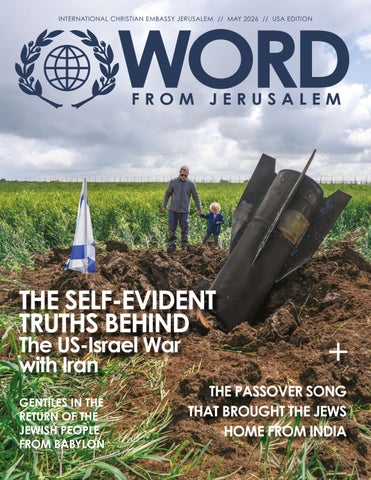
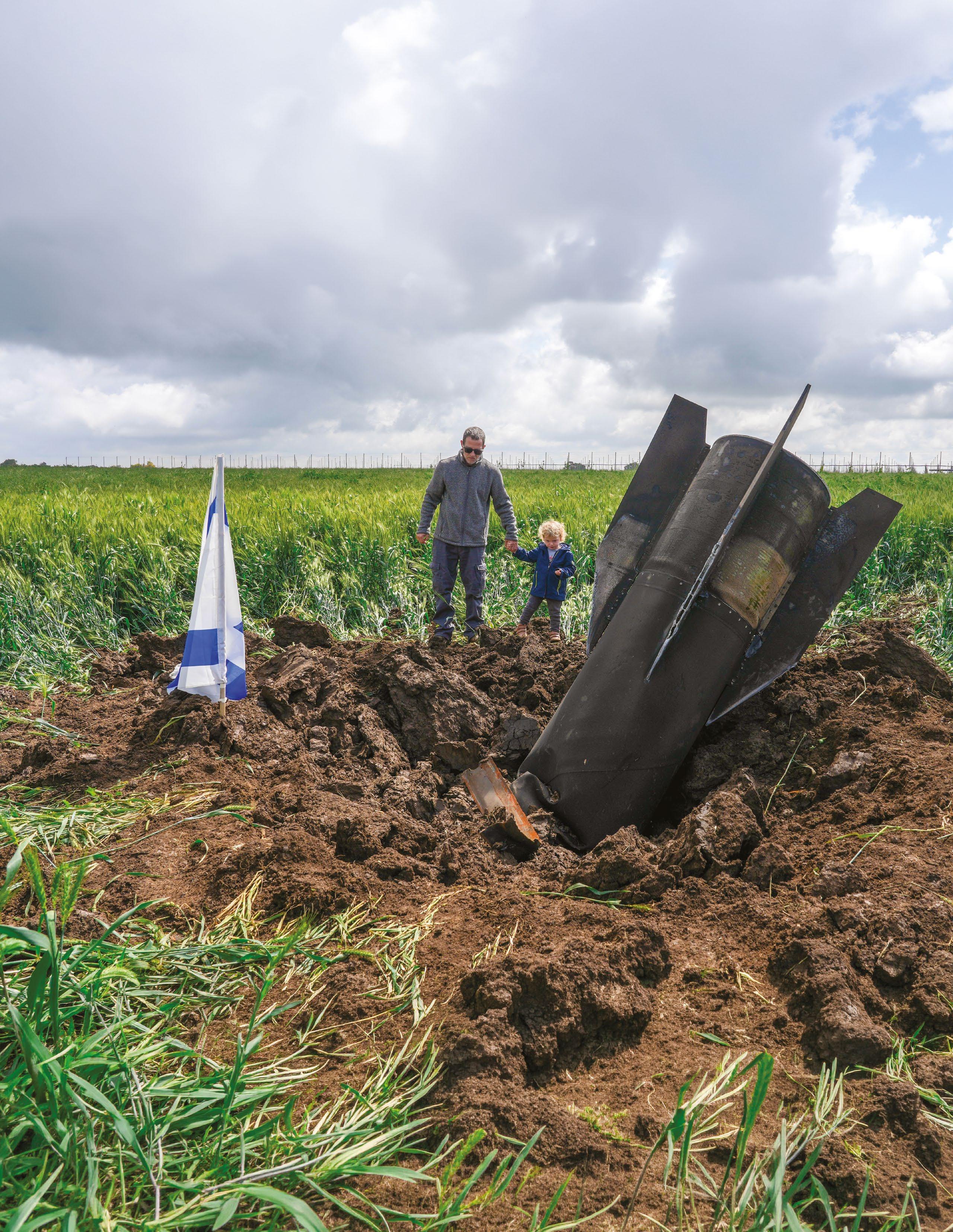
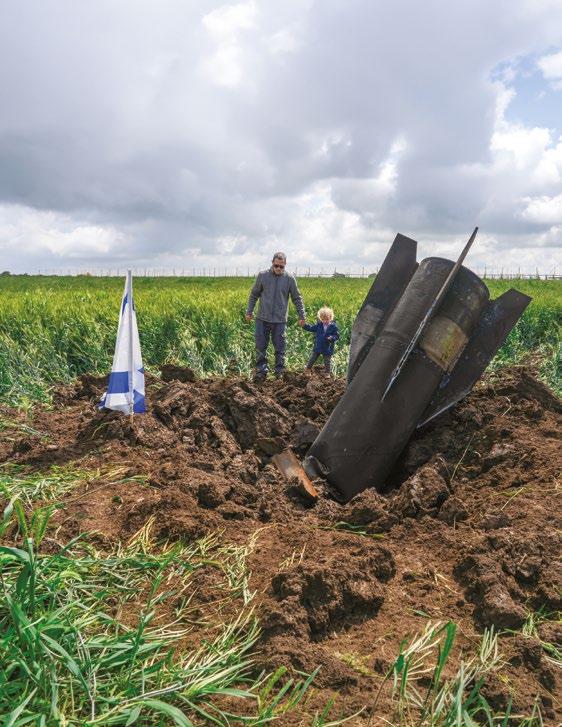
COVER PHOTO: An Israeli father and son view an unexploded Iranian missile lodged in a field in northern Israel (Ayal Margolin, Flash90)
THE SELF-EVIDENT TRUTHS BEHIND The US-Israel War with Iran
By David R. Parsons, ICEJ Vice President & Senior Spokesman
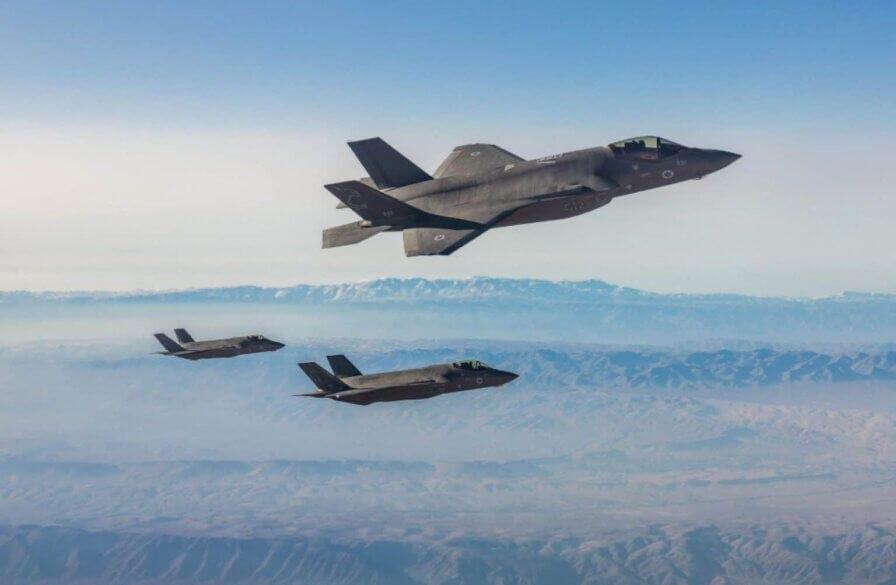
The current war pitting Israel and the United States against the Iranian regime is actually a continuation of Jerusalem’s 12-day conflict with Tehran last June, which Washington joined for one day to carry out Operation Midnight Hammer. Together, these military campaigns mark several notable firsts that are of great significance for the region and the entire world.
A LONG-OVERDUE RESPONSE
For starters, it marks the first time since the Islamic Revolution in 1979 that Iran has been made to pay a price on its own soil for its decades of orchestrating terror, violence, and murder around the globe. Sure, they fought an eight-year war with Iraq in the 1980s, but that was largely confined to a border dispute over oil fields. Here, we are speaking about how the world, for 47 long years, allowed the Ayatollahs to draw innocent blood,
spread fear and radical ideologies, arm and train terror militias, fuel uprisings, target diplomats and embassies, and stage bombings against civilians worldwide.
The bill of indictment against Iran is long and grim! For instance:
• The 52 Americans held hostage for 444 frightening days in 1979–80
• The 241 US Marines and 58 French troops bombed in Beirut in 1983
• The 29 people killed in the 1992 bombing of Israel’s Embassy in Buenos Aires
• Another 85 killed in the 1994 blast at the city’s Jewish community center
• The 1996 Khobar Towers blast in Saudi Arabia that killed 19 US personnel
• Over 600 US troops killed by Iran-backed militias in Iraq from 2003 to 2011
A TRAIL OF CARNAGE
Iran has held Lebanon hostage through Hezbollah for 43 years. It aided the Assad regime’s slaughter of hundreds of thousands of Syrians in that nation’s brutal civil war. It enabled the Houthi rebels to spread carnage and divide Yemen by force and terror. It has destabilized Iraq and sought to undermine the monarchy in Jordan. And it has staged or attempted terror attacks, bombings, and assassination plots on all continents, including in Argentina, Bulgaria, France, Georgia, India, Kenya, Peru, South Africa, Tanzania, Thailand, Turkey, and many other nations.
Lest we forget, Iran also has brutally repressed and killed its own people over such menial violations as improper dress.
Last but certainly not least, the Iranian regime has drained its country’s resources for the openly expressed purpose of wiping Israel off the map.
To that end, the Iranian regime has spent the last 47 years building up a “ring of fire” around Israel through the arming, training, and funding of Hamas and Palestinian Islamic Jihad in the West Bank and Gaza, Hezbollah in Lebanon, multiple Shi’ite militias in Iraq, the Houthis in Yemen, and other regional proxy terror militias. And it has lied to the world about its renegade nuclear weapons program, hiding its secret enrichment plants deep underground and enriching uranium to levels only used for military purposes. They were caught with designs for nuclear triggers and atomic warheads. They built a vast ballistic missile program, using their space program as cover to develop longer range rocket engines.
THE QUESTION OF CASUS BELLI
Yet when Israel and the US launched their latest military campaign against the Iranian regime, some had the audacity to ask: Where was the imminent threat?
They are asking the wrong question! The real question is: Why did it take so long?
Why did it take 47 long years for the world, and especially the West, to finally make Iran pay a price on its own soil for all its evil and carnage? Were we intimidated by their radicalism? Were we just plain cowards?
Surely, by the time American and Israeli war planes descended on Iran three weeks ago, the mad clerical regime in Tehran had already given us five decades worth of casus belli, justification for war.
Now I get that many of my fellow Americans are reluctant to get involved in “forever wars” in the Middle East, especially after the painful experiences in Iraq and
Afghanistan. But here there is a good possibility of a swifter end to the regime in Tehran because the vast majority of the Iranian people also want them gone. At the same time, we must realize that basic Islamic eschatology foresees Muslims waging perpetual war against Jews and infidels until Judgment Day. So, whether we like it or not, radical Muslims—both Sunni and Shi’ite—have declared a forever war on the West, and their track record in modern times cries out “woe” to those who would ignore it. As the old adage goes: If you don’t go solve the problems of the Middle East, the problems of the Middle East will come to you.
A PROUD ALLIANCE
The other significant “first” in this war is that for the first time, American soldiers are fighting side by side with Israeli troops in an active war. This is a huge surprise for me personally. I have spent the last 35 years as a fulltime Christian advocate for Israel, ever since I arrived in Washington in 1991 to volunteer with a small Christian organization registered with Congress to lobby for strong US-Israel relations.
In those early days, I quickly learned that the mantra “Israel seeks to defend itself, by itself” meant they were just asking the United States for help with the means to protect their country. In that regard, Israel has always been Washington’s best ally and never asked Americans soldiers to risk their lives for Israel. So this current war marks a huge shift for both nations—and for me, as an American.
FOUNDATIONS OF LIBERTY AND PROVIDENCE
In truth, I am proud of my country and our president, Donald Trump, for coming alongside Israel to face down this global menace. I do not think America should be the world’s policeman, and better if the United States guarantees the free flow of Middle East oil than Russia or China. But there is something deeper in play here, and it has to do with America’s founding principles and our destiny as a nation.
The Declaration of Independence includes these precious words penned by Thomas Jefferson:
We hold these truths to be self-evident, that all men are created equal, that they are endowed by their Creator with certain unalienable Rights, that among these are Life, Liberty, and the pursuit of Happiness.
Many argue these days about whether America was founded as a Christian nation. What cannot be disputed is that our Founding Fathers believed in a Creator God whose hand of Providence was on their endeavors. And they committed themselves to the biblical principle of
Imago Dei—the notion that all men are created in God’s image, that we are all equal in His sight, and that we will all give account for our lives before Him one day.
This guiding principle originates in Genesis 9:1–7 and teaches us that humans have moral agency and an incentive to act uprightly toward each other, because God is watching us. And of great note, we received this guiding light from Israel. Indeed, it lies at the heart of the Judeo-Christian values, which have inspired and upheld Western societies for generations.
GUARDIANS OF THE IMAGO DEI
Now America did have a serious problem in that it did not treat black African slaves as created equal by God, and our entire nation—North and South—paid a great price in the Civil War for repeatedly compromising over the cruel institution of slavery. In his famous Gettysburg Address, President Abraham Lincoln distilled that whole conflict as a fight over whether this “new nation, conceived in libery, and dedicated to the proposition that all men are created equal . . . can long endure.”
But once that failing was resolved, America has played a unique role in the world as guardians of the principle of human equality and freedom. We beat back the tyranny of the Nazis, which saw Jews as inferior humans that needed to be eradicated. We stood down the Soviet Communists, who sought to enslave the world under an atheistic Marxism that directly challenged the biblical
principle that mankind is a special creation of God.
And in this hour, it is only appropriate that we stand by Israel, the source of this life-affirming principle, to fight the dark, apocalyptic ideology of the radical Ayatollahs in Tehran. After all, they seek to ignite a global conflagration that they believe will end up massacring 80 percent of the world’s population so they can rule over their Sunni rivals and the entire world. As for Israel and the Jews, they would get annihilated along the way.
My friends, that is an evil which calls for a response— pre-emption, even! Yet we waited almost five decades to respond, with compromise after compromise over their evil agenda. Now the whole world is paying a price in the spike of oil and gas prices. We must blame ourselves and our leaders for never directly challenging Iran in a way that would have caused them to abandon this destructive ideology.
CONCLUSION
So, I am proud that America has joined Israel in this battle. It is wholly appropriate, as the truths that undergird this war are “self-evident.” And oddly, this alliance of our two nations was foreseen by the Ayatollahs themselves long ago. The reason they have always raged against the “great Satan” and the “little Satan” is because they knew from the start America and Israel were the only nations that could truly stand in their way.
May we press on to victory together!
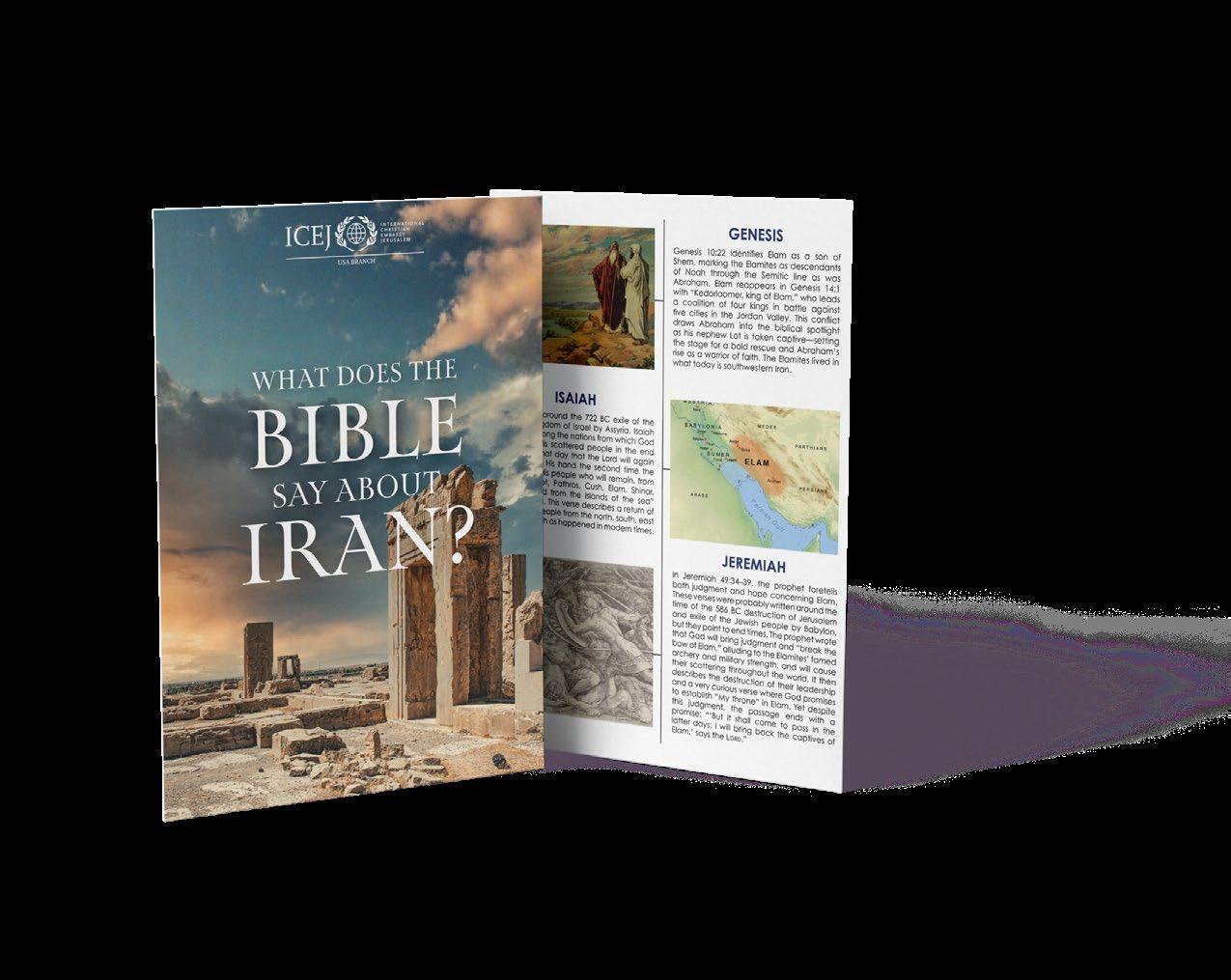
What Does the Bible Say about Iran?
As tensions between Iran, Israel, and the United States dominate today’s headlines, many are searching for deeper answers. Step beyond the chaos and into God’s Word with our free guide: What Does the Bible Say About Iran?
Inside, you’ll journey through eight pivotal scriptural landmarks that trace the history of modern-day Iran (ancient Persia). It’s more than a history lesson—it’s a faith-filled roadmap designed to help you navigate complex conversations with grace, clarity, and biblical authority. You’ll discover why the current situation in the Middle East isn’t just a political struggle, but a significant moment in God’s unfolding plan—past, present, and future.
Scan the QR code to download your copy now—and deepen your understanding of Iran from a biblical perspective.
Download Your PDF Now!
THE CYRUS ANOINTING
By Dr. Juergen Buehler, ICEJ President
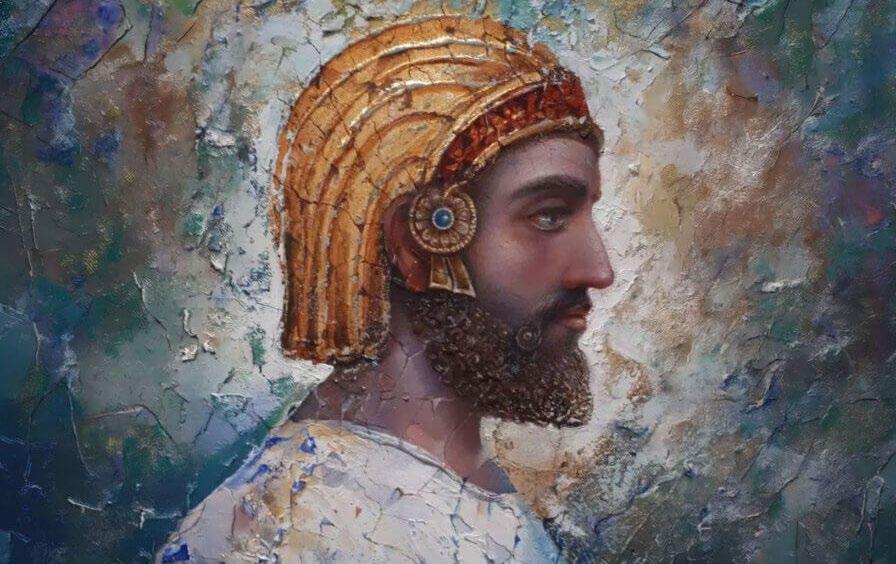
A remarkable Bible prophecy is found in the book of Isaiah about a coming Gentile ruler named Cyrus, who would become a central instrument in the redemption of Israel. God calls him by name long before his birth and appoints him to fulfill His purposes concerning Israel and their restoration. It took 150 years for this prophecy to be fulfilled when Cyrus the Great rose to power, becoming the most legendary ruler of ancient Persia.
Amazingly, Cyrus the Great remains today one of the greatest unifying figures among Iranians who do not identify with the current regime in Tehran. To this day, Cyrus’ tomb remains a pilgrimage site for Iranians longing for freedom and change.
The ancient Persian king, who ruled from 559–530 BC, united the Persian and Median kingdoms into a mighty empire stretching from Greece, Turkey, and Babylon far into the eastern Elamite regions.
Cyrus is remembered as a leader known for unusual tolerance and benevolence toward minorities and non-Persian peoples under his rule. He allowed—and even encouraged—many displaced nations to return to their lands of origin, from which the Babylonians had taken them captive. He also financed and supported the rebuilding of their religious shrines. This is documented in two ancient sources: the Bible and the Cyrus Cylinder, discovered in 1879 in Babylon. Some regard the Cyrus Cylinder as the first declaration of human rights, and it can be seen today in the British Museum in London.
Throughout history, Cyrus has represented for the Persian people a unifying national figure who embodied ethnic and religious tolerance—qualities directly opposite those
of the current clerical regime in Tehran. Yet the Bible helps us understand that these unique traits were not merely personal attributes but placed within him by God.
THE BIBLE AND CYRUS
The Bible focuses on the Jewish people under his rule, especially the decree of Cyrus permitting the Jews to return to the Land of Israel and rebuild the foundations of the temple in Jerusalem, which had been destroyed by the Babylonian king Nebuchadnezzar. Cyrus, therefore, played a crucial role in the restoration of the Jewish people at the end of the Babylonian exile. God had appointed him for this purpose—even before he was born. This divine calling to help the Jewish people also became a blessing to many other minorities in Persia.
The first biblical mention of the name Cyrus appears in Isaiah 44:28: “who says of Cyrus, ‘He is my shepherd.’” This sentence concludes a series of statements that began five verses earlier, where God repeatedly declares who He is: “I am the Lord . . . who made all things, who alone stretched out the heavens, who spread out the earth by myself.” After eight such declarative “who” statements, God concludes with, “who says of Cyrus.” This is remarkable, demonstrating that it is an essential aspect of God’s nature to intervene in world affairs to accomplish His purposes. God raised one of history’s most prominent leaders, granting him treasures and victories (Isaiah 45:1–3), and ultimately, leading him to assist with the restoration of Israel.
“MY ANOINTED”
This reflects the same understanding of God’s sovereignty found in the book of Daniel, where we read that God “changes times and seasons; He removes kings and sets
up kings” (Daniel 2:21). The New Testament likewise proclaims Jesus as “the ruler of the kings of the earth” (Revelation 1:5), “King of kings” (Revelation 19:16), and the Lord who “made from one man every nation of mankind . . . having determined allotted periods and the boundaries of their dwelling place, that they should seek God” (Acts 17:26–27). God is actively involved in the history of mankind for the purpose of world redemption. And because He is the Creator of the heavens and the earth, He will fulfill His purposes on earth. Repeatedly in Isaiah, God introduces Himself as Creator (Isaiah 40:26; 42:5; 44:24; etc.), Lord over time (declaring the end from the beginning, Isaiah 46:10), and the ultimate source of wisdom (Isaiah 40:14ff).
Strikingly, these prophetic passages reveal that God placed a divine calling upon a ruler who never seems to have come to faith in the God of Israel. Twice God declares, “I call you, though you do not know Me” (Isaiah 45). Yet God gives this imperfect ruler titles in a language normally reserved for Israel or, later, the church. God calls this Gentile ruler “My shepherd,” indicating that he will care for God’s people. He also commands the rebuilding of Jerusalem and the laying of the temple’s foundations. God even grants him the prominent title “My anointed,” meaning God’s Spirit was at work through him—even though “you do not know Me.” What an extraordinary calling for a Gentile ruler!
OTHER GENTILE LEADERS WITH THE “CYRUS CALLING”
Although the scope of Cyrus’ calling is unmatched in history, we do see throughout the ages that other Gentile leaders have arisen with a similar “anointing” to stand with the Jewish people at crucial moments. One example is Lord Arthur James Balfour, the British foreign secretary who issued the Balfour Declaration of 1917, calling for a national homeland for the Jewish people in what was then called Palestine.
Yet not only government officials but ordinary individuals have carried this “Cyrus calling,” working for the physical and spiritual restoration of Israel. One such figure was Rev. William Hechler, a German clergyman and chaplain at the British Embassy in Vienna in the late nineteenth century. He helped Theodor Herzl understand the prophetic significance of his mission and used his connections to secure meetings for Herzl with kings and rulers of Europe.
On another level, countless intercessors around the world carry this same Cyrus-like burden before the King of kings, praying for the restoration of Israel.
Today, as events in the Middle East continue to unfold, many see the United States as Israel’s closest ally in the modern era. In recent years, the US administration under President Donald Trump has taken significant steps, such as opening an embassy in Jerusalem for the first time since 1980 and recognizing the Golan Heights as part of Israel. These actions have been viewed by Israeli leaders as historic expressions of support. Until now, six other nations have followed the United States by opening their Embassies in Jerusalem.
A MODERN-DAY “CYRUS” AND IRAN
Today the US administration is confronting the nerve center of Middle Eastern terror—the Shi’ite mullah’s reigning in Tehran. Should this effort succeed, the region may have the greatest opportunity in decades to move toward more peaceful days, as the head of the terror “octopus” would finally be addressed. Israeli politicians widely agree that, without question, Donald Trump has done more for Israel than any other state leader in recent history and consider him thus a Cyrus for our time.
In our Global Prayer Gatherings, we have been praying for Iran—that God would raise up a Cyrus-like leader who will shepherd His people with justice, restore long-lost freedoms (especially for the church in Iran), and establish peaceful, productive relations with the Jewish State rather than supporting terrorism and nuclear annihilation against her. May God indeed raise such a leader.
Let me encourage you to pray for your own nation, that God would raise up leaders who stand clearly and openly with His purposes for Israel. Pray for the church in your country, that God would anoint leaders who are true shepherds for both the church and the Jewish people. And finally, ask God to use you within your own circle of influence to work for the good of the people of God.
CONCLUSION
The historian Josephus explains why King Cyrus acted in such extraordinary ways to support the Jewish people. According to him, it was the prophet Daniel—who had access to Cyrus’ court—who read him the prophecy of Isaiah written 150 years before his rise to power. This caused Cyrus to act. Likewise, William Hechler presented the Bible to Herzl and the rulers of Europe to advance the Zionist cause with great success.
Pray with us that in our days, many more Cyruses may arise who challenge the avalanche of antisemitism, stand with Israel, and care for the spiritual restoration of God’s people.
Bless Israel through a Gift of Stock
A tax-wise way to support Israel’s restoration–and give more than you thought possible
Many faithful supporters of Israel don’t realize one of the simplest and most powerful ways to give is through appreciated assets—such as stocks, mutual funds, or other investments that have increased in value.
When you donate appreciated stock directly to ICEJ USA, you may be able to:
• Avoid capital gains taxes on the increase in value
• Receive a charitable deduction for the full fair market value (when eligible)
• Give a larger gift than you could comfortably give from cash alone
This is one of the most efficient ways to turn what God has entrusted to you into meaningful help for Israel—
Why many donors choose stock gifts:
“Each of you should give what you have decided in your heart to give . . . for God loves a cheerful giver.”
—2 Corinthians 9:7
Often takes only a few minutes
Works with most brokerage accounts
Can be used for a one-time gift or a larger strategic gift
May allow you to give more while reducing taxes
Would you prayerfully consider making a gift of stock to bless Israel today?
GENTILES IN THE RETURN OF THE JEWISH PEOPLE FROM BABYLON
By Howard Flower, ICEJ Aliyah Director
The Babylonian Captivity (586–538 BC) stands as one of the most traumatic yet theologically pivotal events in Israel’s history. The destruction of Jerusalem and Solomon’s Temple represented not just a national catastrophe but a crisis: had God abandoned His people? Yet, even in judgment, the prophets declared a message of future hope—a promise of return, restoration, and renewal. This return, as historically recorded in the books of Ezra and Nehemiah, was meticulously foreshadowed by the prophets Isaiah, Jeremiah, and Ezekiel, each providing distinct facets of the promise. Furthermore, the event showcases the providential work of the Holy Spirit and the unexpected, instrumental role of Gentile nations, culminating in a profound revival upon the restoration of the Second Temple.
PROPHETIC FORESHADOWING: A TRIUNE PROMISE
The prophetic announcements of return began even before the exile’s onset, particularly in Isaiah. Living over a century before the fall of Jerusalem, Isaiah remarkably named the Gentile ruler who would facilitate the return: Cyrus the Great of Persia. “Who says of Cyrus, ‘He is my shepherd, and he shall fulfill all my purpose’; saying of Jerusalem, ‘She shall be built,’ and of the temple, ‘Your foundation shall be laid’” (Isaiah 44:28). This explicit prophecy framed the return not as a geopolitical accident but as a divine appointment, a work of God sovereignly orchestrating world history for the sake of His covenant people. Isaiah’s broader vision of a “highway for the remnant of his people” from Assyria and Babylon (Isaiah 11:16) and the comforting words of chapters 40–55 provided the foundational hope of a second exodus, more glorious than the first.
Jeremiah, prophesying in the tumultuous years leading to Jerusalem’s fall, provided the chronological framework. While unflinching in pronouncing a 70-year judgment (Jeremiah 25:11–12), he coupled it with an unwavering promise: “For thus says the Lord: When seventy years are completed for Babylon, I will visit you, and I will fulfill to you my promise and bring you back to this place” (Jeremiah 29:10). This precise timeline anchored Israel’s hope in a measurable, historical reality, turning their captivity from a permanent state into a season of discipline with a defined end. Jeremiah’s act of purchasing a field
in Anathoth while the Babylonians besieged Jerusalem was a tangible, Spirit-led sign of faith in this promised restoration (Jeremiah 32).
Ezekiel, prophesying from among the exiles in Babylon itself, provided the theological and visionary heart of the restoration. His terrifying vision of God’s glory departing the polluted temple (Ezekiel 10) was answered by his magnificent vision of the glory returning to a new, ideal temple (Ezekiel 43:1–5). This bookended the exile not just as a geographical displacement but as a spiritual crisis resolved by God’s renewed presence. Furthermore, Ezekiel’s famous vision of the valley of dry bones (Ezekiel 37) was God’s answer to the despairing cry, “Our bones are dried up, and our hope is lost.” The prophecy was a promise of national resurrection—the breath of God (the Ruach, or Spirit) would reassemble and revitalize the seemingly dead nation, bringing them back to their land. This was not merely a political return but a spiritual resurrection.
THE WORK OF THE HOLY SPIRIT
The return from Babylon is a premier example of the Holy Spirit’s work in what might be called “providential history” and “inspired leadership.” The Spirit’s activity is manifest in several ways:
1. Inspiring Prophecy: The predictions of Isaiah, Jeremiah, and Ezekiel are explicitly attributed to the Spirit of God. As 2 Peter 1:21 later notes, “men spoke from God as they were carried along by the Holy Spirit.” The hope that sustained Israel for 70 years was a Spirit-breathed hope.
2. Stirring Hearts: The return did not happen automatically in the seventieth year. It began when “the Lord stirred up the spirit of Cyrus king of Persia” (Ezra 1:1–2) to issue his decree. This “stirring” is the unseen hand of the Holy Spirit governing the hearts of kings (Proverbs 21:1). Furthermore, the Spirit stirred the hearts of specific Israelites—priests, Levites, and tribal leaders—to leave their established lives in Babylon and embark on the arduous journey to rebuild a ruined homeland (Ezra 1:5). This internal awakening was a crucial work of the Spirit.
3. Empowering Leadership & Teaching: The leaders of the return, particularly Zerubbabel the governor
and Joshua the high priest, are explicitly described as being empowered by God’s Spirit for the rebuilding work (Zechariah 4:6 – “Not by might, nor by power, but by my Spirit”). Later, Ezra the scribe is described as a man with “the hand of the Lord his God on him,” a man who “had set his heart to study the Law of the Lord, and to do it and to teach his statutes and rules in Israel” (Ezra 7:9–10). This devotion and ability to teach and reform were functions of the Spirit’s guidance.
THE ROLE OF THE GENTILES
Scripture presents a complex picture of the Gentiles in this event: they are both the instruments of God’s judgment and the unexpected agents of His restoration. Babylon, the “hammer of the whole earth” (Jeremiah 50:23), was used by God to chastise Judah. Yet, according to Isaiah, God’s greater purpose was for His servant to be “a light for the nations,” that His salvation might reach “to the end of the earth” (Isaiah 49:6).
The primary Gentile agent was Cyrus the Persian. Isaiah’s prophecy is stunning in its depiction of this pagan king as God’s “anointed” (mashiach – Isaiah 45:1), called to subdue nations and secure Judah’s freedom. Cyrus’ decree (Ezra 1:2–4; 6:3–5) not only permitted the Jews to return but mandated that their neighbors provide them with silver, gold, goods, and animals for the journey, effectively orchestrating a partial fulfillment of Isaiah’s prophecy that the wealth of the nations would flow to Jerusalem (Isaiah 60:5). Furthermore, Cyrus ordered the return of the sacred temple vessels plundered by Nebuchadnezzar, a significant spiritual and symbolic restitution.
Later, under the preaching of Haggai and Zechariah, the Gentiles (the surrounding peoples) are predicted to come and join themselves to the Lord in those days, taking hold of the robe of a Jew and saying, “Let us go with you, for we have heard that God is with you” (Zechariah 8:23). This points to a future, more spiritual inclusion, but the foundation is laid in the tangible, material support of the Persian Empire for the physical restoration.
REVIVAL AND MIRACLES AT THE SECOND TEMPLE’S RESTORATION
The rebuilding of the temple was fraught with opposition and discouragement. The initial altar-building and foundation-laying (Ezra 3) were met with both joyous praise and tearful mourning from those who remembered Solomon’s glory. Work stalled for nearly two decades until the prophetic ministries of Haggai and Zechariah sparked a revival.
Their message was a direct appeal from the Spirit of God: “Is it a time for you yourselves to dwell in your paneled
houses, while this house lies in ruins?” (Haggai 1:4). They called the people to repentance, renewed priority on God’s house, and faith in God’s presence. The revival was one of obedience and prioritized worship. The people obeyed, “and the Lord stirred up the spirit of Zerubbabel . . . and the spirit of all the remnant of the people; and they came and worked on the house of the Lord” (Haggai 1:14).
The miracles of this period were less about supernatural cataclysms and more about the miraculous fulfillment of prophecy and the sustaining providence of God:
1. The Miracle of Prophetic Fulfillment: The very fact that a remnant returned, that Cyrus acted exactly as Isaiah foretold, and that the temple was rebuilt against significant odds was the overarching miracle. It validated the word of the prophets and demonstrated God’s faithfulness to His covenant.
2. Providential Protection and Favor: When local opponents tried to halt construction, the Jewish leaders appealed to the Persian court. King Darius not only upheld Cyrus’ original decree but commanded that the opposition provide the full expenses for the construction from the royal treasury (Ezra 6:6-12). This was a miraculous turn of events, ensuring the project’s completion.
3. The Miracle of Hanukkah (Dedication): While the historical return under Zerubbabel saw a completed temple (516 BC), the most famous miracles associated with the Second Temple period occurred centuries later during the Maccabean Revolt (167–160 BC). After Antiochus Epiphanes desecrated the temple, Judas Maccabeus cleansed and restored it. At the rededication (Hanukkah), the Talmud records the miracle of a single cruse of pure oil—enough for one day—burning for eight days until new oil could be consecrated. This miracle, celebrated in John 10:22, is intrinsically linked to the story of the Second Temple’s preservation and purification, a later chapter in the life of the sanctuary restored from Babylonian ruin.
CONCLUSION
The return from Babylon was a multifaceted work of God. It was foretold by the prophets as a sure promise of covenant faithfulness. It was energized by the Holy Spirit, who stirred kings and commoners alike. It was facilitated by Gentile rulers, fulfilling the prophetic vision that the nations would be implicated in God’s redemptive plan. And its culmination in the rebuilt temple sparked a revival of worship and obedience, setting the stage for the coming of the Messiah, who would walk in those very temple courts and fulfill all their symbolic meaning. The return was more than a historical event; it was a theological drama of judgment, hope, and restoration, pointing forward to the ultimate restoration through Christ.
LIBERTY UNIVERSITY LAUNCHES ISRAEL CENTER IN PARTNERSHIP WITH ICEJ USA
By Linda Smith, ICEJ USA Executive Vice President
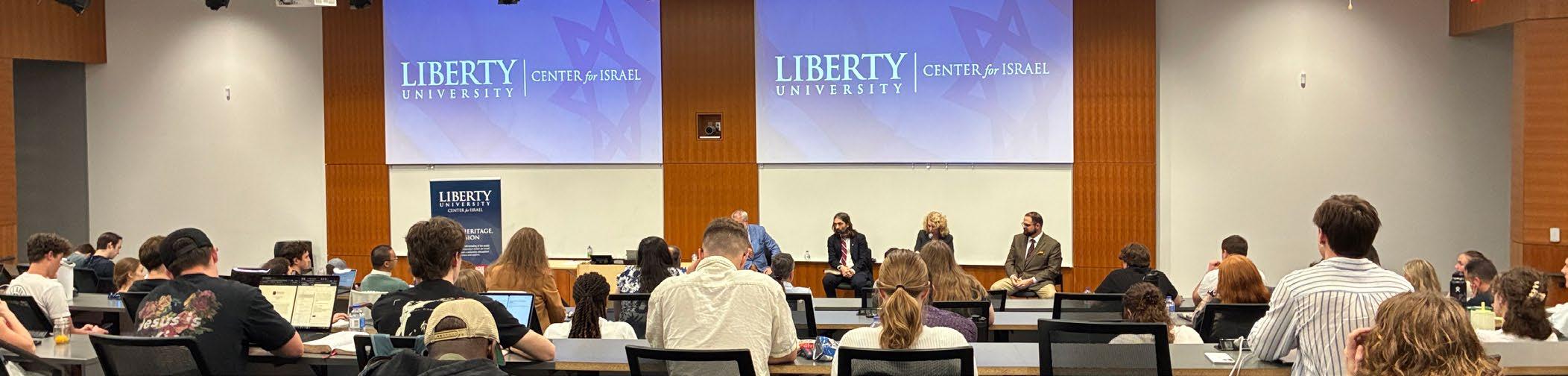
As the scourge of antisemitism surges at alarming levels across the United States, Liberty University launched its Center for Israel, inspired by the vision of Liberty founder Dr. Jerry Falwell during a gala dinner on March 10, 2026.
Liberty University Chancellor Jonathan Falwell and John W. Rawlings School of Divinity Dean Dr. Troy Temple were joined by high-profile guests, including Ambassador Yechiel Leiter, the Israeli Ambassador to the United States, Ambassador George Deek, recently appointed special envoy of Israel to the Christian world, and former Israeli Ambassador to Azerbaijan, who joined virtually from Israel.
Dr. Johnnie Moore, Center for Israel Senior Founding Fellow, and Dr. Susan Michael, ICEJ USA President and Director of American Christian Leaders for Israel (ACLI), other distinguished guests, and Liberty students were in attendance.
ICEJ USA partnered with Liberty University in launching
the Israel Center under the School of Theology.
The gala dinner on March 10 was followed by panels on March 11 on “Israel, the Church, and the God Who Keeps His Promises: Answering Replacement Theology” and “The Political Necessity Between the United States and Israel.”
The Center’s focus is to engage and equip the next generation of leaders to understand Israel’s role in God’s redemptive purposes and examine the relationship between the church, the Jewish people, and the nations.
Later this year, Liberty University, the International Christian Embassy Jerusalem USA (ICEJ USA), and the Combat Antisemitism Movement (CAM) are holding a Christian Leaders Summit on the Liberty University campus. The conference is a strategic gathering of young Christian leaders designed to renew, educate, and activate the next generation of Evangelical leadership across America in the fight against antisemitism
Liberty University Chancellor Jonathan Falwell and ICEJ USA President Dr. Susan Michael at the inaugural Center for Israel Annual Gala
Dr. Susan Michael with Israel Ambassador to the United States Yechiel Leiter (Right), and Rev. Johnnie Moore (Middle)
FAITH, QUESTIONS, AND IMPACT AT COLORADO CHRISTIAN UNIVERSITY
By John Vedder, ICEJ USA Church Relations Coordinator
In March, the ICEJ USA team was privileged to speak with students at Colorado Christian University. We met many students already supportive of Israel, which was encouraging, but we also engaged those with questions about why backing Israel matters biblically and economically. One memorable conversation was with a young man studying politics and government. He came with many questions, eager for answers.
We sat down with Bibles in hand, exploring passages from Romans, Galatians, Genesis, and Ezekiel. Through these discussions, he began to see God’s unique and enduring love for the Jewish people. We then discussed Gaza, Israel’s
American Christian Leaders for Israel (ACLI), a project of the International Christian Embassy Jerusalem – USA Branch (ICEJ USA), alongside Liberty Counsel and Covenant Journey, launched a timely new educational series for young, Christian professionals on Capitol Hill searching for clarity regarding Israel.
The “Why Israel?” Lunch & Learn series is in response to rapidly spreading misinformation about Israel, especially among the next generation. Held over five months, the goal is simple: create a space for honest questions, thoughtful dialogue, and deeper understanding of the many reasons Christians should support Israel.
The first two sessions have already set a strong tone.
The kickoff event on February 25 featured bestselling author and Middle East expert Joel Rosenberg, who offered a compelling overview of why Israel matters to America today. Rosenberg emphasized the urgency of confronting the lies
relationship with the United States, and the current “America First” movement.
After over 30 minutes, he thanked us, saying our conversation gave him real answers and much to reconsider—something he hadn’t found elsewhere.
This encounter reflects the many opportunities we had to pour into future leaders. Meeting them in person, listening to their questions, and guiding them through Scripture is an investment that bears lasting fruit, shaping not only understanding but hearts.
WHY ISRAEL?
A New Series for Capitol Hill Staff, Interns
By ICEJ USA Staff
and propaganda surrounding Israel and the Jewish people and the importance of understanding the strategic, moral, and historical ties between Israel and the United States. His presentation resonated with attendees eager to navigate today’s complex narratives better.
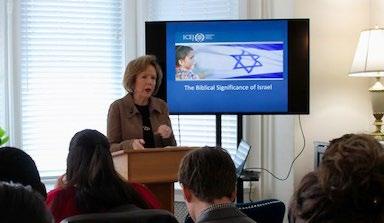
The second event, held on March 25, featured Dr. Susan Michael, ICEJ USA president and ACLI director. Her session, “Why Israel Matters to Christians,” explored the biblical foundations of the US-Israel relationship. Drawing on Genesis 12 and 15, as well as Romans 9 and 11, Dr. Michael highlighted the enduring theological significance of Israel and its relevance to the Christian faith and worldview.
Together, these two sessions reflect the heart of the series: equipping the next generation of leaders with truth, context, and confidence. As conversations about Israel intensify, initiatives like “Why Israel?” help ensure that those shaping policy are informed by both history and faith.
ELLEN RIZZO, SERVE TOUR TESTIMONY
Ellen Rizzo from New York participated in an ICEJ serve tour last year and told ICEJ staff the experience was transformative. “I entered retirement wondering if and when I would ever get back to Israel, having traveled there twice in the past with Christian organizations,” Ellen said. “When the ICEJ Serve Tour came to my attention, it sounded ideal. But I wondered: Will I be up to it?" She shares she was also concerned about the continuing tension in the region. However, the Lord spoke to her slowly over the next months, and Ellen signed up. “I hope we were blessings also to those we helped in the Land,” she said.
AMERICAN SERVE TOUR PARTICIPANTS DONATE FLAG AT
GAZA ENTRANCE
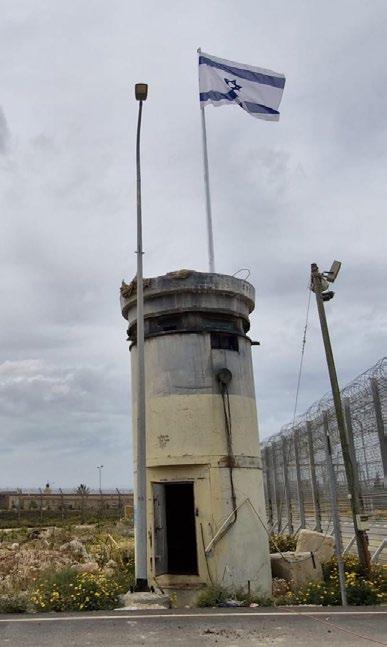
The most recent American Serve Tour was presented with a need for an Israeli Flag at the new entrance to Gaza, where all international diplomats and delegations enter and leave Gaza. The group’s seed donation grew with more donations, and now there is a tall flagpole with a large Israeli flag and a plaque dedicating it from ICEJ USA.
Learn more about ICEJ tours at: www.icejusa.org/tours
GET TO KNOW YOUR ICEJ USA TEAM
As our Young Adults Outreach Coordinator, Amanda Saxton is empowering the next generation to discover God’s heart for Israel and the Jewish people. Before joining the ICEJ USA team, Amanda attended The King’s University in Southlake, TX, and later served on staff with the Admissions and Recruitment team. There, she loved encouraging prospective students to take steps toward fulfilling God’s calling on their lives in service to His kingdom. Over the years, she has been involved in various ministries focused on discipling the next generation, carrying a strong passion for helping young adults grow in their pursuit of Jesus and His Word.
Amanda’s work involves influencing and building a national movement of young adults who are engaged with God’s heart for Israel through outreach strategies, building partnerships with churches and ministries, organizing and leading events and tours to Israel, and creating pathways for young adults to move from interest to active involvement.
Her work with ICEJ flows naturally from the way God has wired her: “I love building relationships with young adults, helping them to feel personally connected to what God is doing in Israel and empowering them to use their voice to speak truth,” says Amanda. “I also love leading trips to Israel with young adults as they experience the land, the people, and the Scriptures in powerful ways.”
That passion was solidified when she went to Israel for the first time on a study trip. “It truly changed my understanding of Scripture and gave me a deeper revelation of God’s heart for Israel. My love for the Jewish people comes from seeing God’s faithfulness to His promises and His covenant with Israel. As a Christian, I recognize the incredible privilege of being grafted into the family of God, and I want to honor and bless my Jewish brothers and sisters.”
Amanda’s favorite verse captures both humility and dependence on God: “For we have no power against this great multitude that is coming against us; nor do we know what to do, but our eyes are upon You” (2 Chronicles 20:12).
AMANDA SAXTON, ICEJ USA Young Adults Coordinator
HELP ICEJ SAFEGUARD ISRAELIS WITH MORE BOMB SHELTERS
By ICEJ AID Administrator Nativia Buehler
As sirens blare across the nation day and night to warn of incoming missiles from Iran or Hezbollah, one-third of all Israelis have nowhere to run for shelter. That is the harsh reality right now in Israel’s pivotal war against the Iranian regime and its regional proxy militias.
Months of fighting against the Iranian-led axis has exposed critical vulnerabilities on Israel’s civilian home front. A recent report by the State Comptroller found that some 3.2 million Israelis have lacked access to adequate bomb shelters since the Hamas terror invasion on October 7, 2023. For those who do have protective spaces nearby, more than 10 percent of the existing public shelters are unfit for use, usually due to poor maintenance and neglect. For families with young children, the elderly, and those with special needs, getting to a shelter in time can be a traumatic experience. Recently, a 102-year-old man fell down a flight of stairs and died trying to reach a bomb shelter in time.
Amid these challenges, the International Christian Embassy Jerusalem (ICEJ) has continued its long-standing commitment to Israel’s security by placing bomb shelters in communities most at risk. With support from Christian donors worldwide, the ICEJ has provided more than 250
portable bomb shelters and renovated hundreds more over the past 15 years. These shelters have been protecting lives daily during this prolonged conflict.
The gaps in protection are most acute in northern and southern Israel, and the Christian Embassy has been working to identify and address these “blind spots.” The need is greatest right now in the Upper Galilee, which has come under intense rocket and drone attacks since Hezbollah rejoined the battle.
Over the past year, the ICEJ focused on communal hubs in the North, placing shelters in a youth village in Kfar Galim and a food distribution facility in Karmiel, along with additional shelters in the Merom HaGalil region.
The ICEJ also began 2026 by sponsoring a shelter at a trauma treatment center in the Golan Heights, while additional shelters now protect vulnerable communities, including disabled youth centers and a kindergarten for immigrant children. But the need for additional shelters in the North is more urgent than ever, as Hezbollah intensifies attacks on towns and villages across the Galilee. The same report found that only 3 percent of Arab towns have adequate shelters, raising concern for highly exposed Christian villages.
Help provide more bomb shelters to Israelis in northern Israel. Give now to the ICEJ USA Bomb Shelter Fund at: give.icejusa.org/donate/bomb-shelter-fund
ICEJ-sponsored shelter being delivered to Sadot Negev Resilience Center (credit: Rafi Babiyan)
BRINGING LIGHT TO JERUSALEM’S DOORSTEPS AMID WAR
By Ryan Tsuen, ICEJ Art & Design Officer
Just over two months into Israel’s most recent war with Iran, and the impact is being felt in every corner of Israel. For the country’s vulnerable elderly population, the constant news cycle on the war brings a heightened sense of fear and anxiety.
While the fighting rages, ICEJ Homecare head nurse, Corrie van Maanen, is not deterred by fear. Her mission is clear: to deliver a presence of peace to those the world might easily forget. Corrie makes daily visits to elderly residents in Jerusalem and around Israel to check on their varied needs. Many have no immediate family in the country and live in pronounced isolation. For them, there is no one else to step in and offer care at a time like this.
On a recent morning, we accompanied Corrie as she brought companionship and care to several remarkable women in the Pisgat Ze’ev neighborhood. One was to Fanya,* a Jewish immigrant originally from Minsk, Belarus. As the door opened, the room was filled with the sound of a television blaring and a radio loudly reporting the latest news in Russian. Fanya busied herself with preparing coffee and snacks, but her anxiety was palpable as she described the attacks in the North from Lebanon and shared deep concerns for her nephew, who had been called to IDF reserve duty.
In the middle of the conversation, an alert sounded on our mobile phones. We quickly realized Fanya lacked the Homefront Command App and thus was not receiving advanced warning of incoming missiles, so she immediately had us install it on her device. Moments later,
air-raid sirens echoed throughout this neighborhood in northeast Jerusalem. What could have been a moment of terror for a woman alone became a shared moment of safety as everyone walked swiftly to the mamad (inhouse bomb shelter).
Fanya is one of many elderly immigrants who look forward to the light Corrie brings on her visits by sharing psalms, offering help when there are practical needs, and encouraging their faith in the God of Israel.
In the next home visit, Corrie led the way to Tatiana’s apartment, which was an explosion of colors and ceramic figurines. Tatiana is an artist from another part of Belarus, and we found her baking. Despite the war, she was preparing for a small workshop she hosted from time to time. For Tatiana, creativity served as a shield against the stress.
Removing some equipment, she turned over a large painting representing the current war. She explained that it symbolized a victorious lion and the army guarding Jerusalem against missiles. It was a timely work for a nation in the battle for peace.
In each of the morning’s visits, it was clear that Corrie brought great hope to women through simple companionship. As their varied needs were met, from digital safety to emotional comfort, the love which Corrie brought through her gentle touch left the deepest impact. As the conflict continues, the presence of Homecare is a literal lifeline.
THE PASSOVER SONG THAT BROUGHT THE JEWS HOME FROM INDIA
By Howard Flower, ICEJ Aliyah Director
For nearly 2,700 years, a people scattered by Assyrian conquest preserved a memory in an ancient song sung in the remote hills of northeastern Manipur, India.
The Sikpui Hla, an ancient chant of the Bnei Menashe community, describes a great sea parting, pillars of cloud and fire, quails from heaven, and water gushing from a rock. It is the Exodus narrative, passed down through generations who had no Bible, no rabbis, and no contact with the Jewish world for millennia.
This month, that song will echo once again on the tarmac of Ben Gurion Airport, as the next wave of Bnei Menashe Jews begins their long-awaited Aliyah. Over the next three years, some 5,000 Bnei Menashe are expected to make the journey home.
The Sikpui Hla proved so precise and ancient it could not be dismissed. Traditionally performed during the Sikpui Ruoi harvest festival, its lyrics read like the Book of Exodus:
While we are preparing for the Sikpui Feast, the big red sea becomes divided; as we march along fighting our foes, we are being led by pillar of cloud by day, and pillar of fire by night. . . . Collect the quails and draw the water that springs out of the rock.
Welsh Baptist missionaries arrived in 1894, yet the Sikpui
Hla chant was documented by earlier Christian contact. Its themes are anchored entirely in the Israelite period. In 2004, Sephardi Chief Rabbi Shlomo Amar sent dayanim (religious judges) to Manipur. The following year, Rabbi Amar issued a landmark ruling: the Bnei Menashe are recognized as descendants of Israel.
Israeli author Hillel Halkin, who initially questioned the claims, became convinced after his own investigation. His book Across the Sabbath River argues that a song containing five distinct elements from Exodus 13–17—the Red Sea crossing, pillars of cloud and fire, the drowning of enemies, quails, and water from rock—crosses the threshold into historical connection.
The Bnei Menashe call the chant “Miriam’s Prayer.” Starting in April 2026, the Aliyah enters a new phase. Approximately 5,000 community members remain in India, many caught in the violent ethnic conflicts of Manipur, longing to join the 5,000 already in Israel. Aliyah requires resources: flights, absorption, and housing.
The ICEJ is helping 600 Bnei Menashe make their way home to Israel this spring, while the Jewish Agency for Israel is preparing another 600 for this fall—and the ICEJ plans to help bring them home as well. Your generosity helps turn an ancient song into a modern homecoming.
CHRISTIAN ZIONISM: PART 4
The Historical Origins of Christian Zionism
By Dr. Susan Michael, ICEJ USA President
In my last article, I explored the concept of a promised land for God’s people, Israel, in the New Testament showing how it carries forward Old Testament, themes—the importance of the land, the reaffirmation of the covenants, the law, and the prophetic writings—all pointing to a future return of the Jewish people to the land and a coming glorious day when the kingdom of God will be established on earth. In this article, I will explore the historical origins of Christian Zionism.
ANCIENT ROOTS OF CHRISTIAN ZIONISM
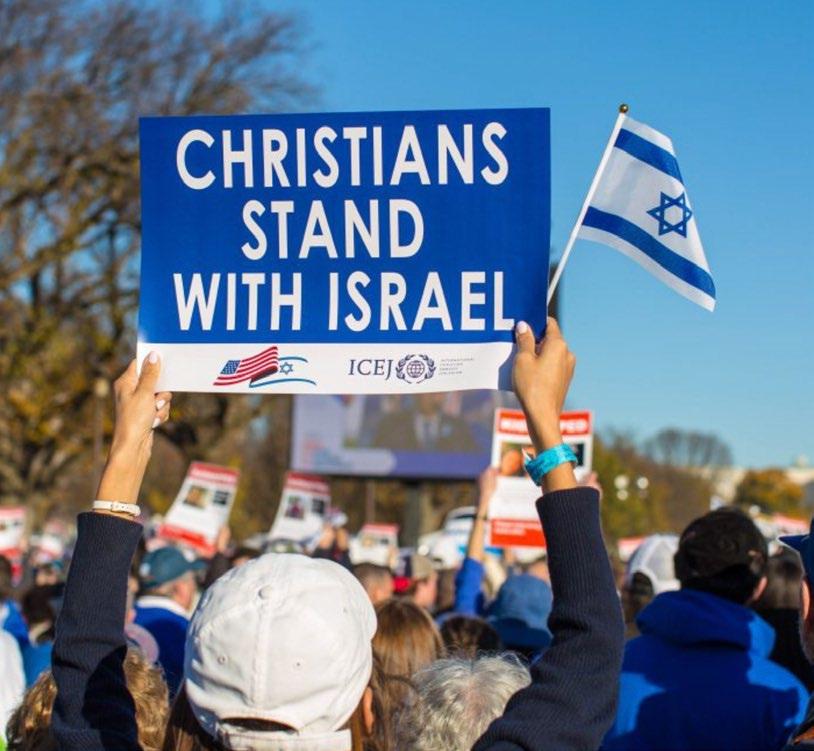
Christian Zionism has become a frequent topic in recent news, especially as media figures like Tucker Carlson and Nick Fuentes criticize those who affirm Israel’s God-given right to the land—a promise made to the descendants of Abraham, Isaac, and Jacob in Genesis 12:1–3, 7. However, Christian Zionism is not a modern invention. While the term is relatively new, its roots stretch back centuries—in fact, as far back as the early church.
Just as Jesus and the disciples were Jewish, so were almost all the New Testament authors, as was the early church they wrote about. As a result of their deep understanding of the Hebrew Scriptures, these authors believed in the everlasting validity of the Abrahamic covenant. They also believed in the literal accuracy of the prophecies regarding the life
and ministry of Jesus as well as those about future events, including the restoration of a kingdom to Israel.
In the first century, church fathers still held to the theological expectation of a restored nation of Israel. Dr. Tricia Miller, director of CAMERA’s Partnership of Christians and Jews, writes:
The expectation of a future return of the Jewish people to the land and the restoration of the nation of Israel was also fairly common in the early church. Tertullian, a third-century leader, said: “It will be fitting for the Christian to rejoice, and not to grieve, at the restoration of Israel, if it be true, as it is, that the whole of our hope is intimately united with the remaining expectation of Israel.”
As the church grew over time, it became predominantly Gentile. Christians—from pagan backgrounds with little knowledge of the Hebrew Scriptures—lost sight of the Jewish roots of their faith and God’s promises to the Jewish people. Most did not even know that Jesus was Jewish.
THE COUNCIL OF NICAEA
The Council of Nicaea of AD 325 was a turning point in that separation. This Council was monumental in affirming the divine nature of Jesus, articulated most clearly in what became known as the Nicene Creed.
In his article “Healing the Rift: 1700 Years After the Nicaea Council,” ICEJ President Dr. Juergen Buehler states: “While the creed and the 20 canons that emerged from Nicaea were free of anti-Jewish rhetoric, the official letters [to distribute the creed to churches throughout the world] from Emperor Constantine contained a critical and condescending attitude toward the Jews.” This tone spread throughout the church, resulting in anti-Jewish preaching by some of the most notable church fathers.
NICAEA TO THE REFORMATION
For well over 1,000 years, most of the church believed that Christians had replaced the Jews as the people of God’s covenant. Known as Replacement Theology, this interpretive framework reads the Scriptures allegorically. God’s promises to the Jewish people are spiritualized and applied to the church. In rare instances, monks and priests read the Scriptures differently; however, in the church’s first thousand years, this view remained predominant and became the fuel that fed centuries of Christian antisemitism.
THE REFORMATION
This began to change in the fifteenth and sixteenth centuries when the Bible was translated into the languages of the common people, including into English. Christians
began reading Scripture for themselves. They learned about Christianity’s Jewish roots and the promised return of the Jews to their ancient homeland.
As a result, respected theologians and preachers taught of a future Jewish restoration to the land of Israel. Entire movements of Christians began praying for this return. By the eighteenth century, the Restorationist movement had blossomed and included many theologians, writers, and politicians.
This movement continued to grow in the nineteenth century; the term “Christian Zionist” was first used by Theodore Herzl, who acknowledged the participation of some key Christian supporters at the first Zionist Congress in 1897. Christian leaders had expanded their involvement in the Zionist cause beyond prayer to advocacy. They did all that they could to help the Jewish people return to Israel.
Christian Zionists today are proud to follow in the footsteps of a multitude of Bible-believers from numerous theological persuasions, countries, and professions— men and women who saw overwhelming evidence in Scripture for God’s continuing covenant with the Jewish people and their right to their ancient homeland. While many Christian Zionists today may differ with these pioneers on other points of theology or politics, they all agree on the biblical significance of the restoration of Israel.
CONCLUSION
From the early church fathers through the Reformation and beyond, a faithful remnant of believers has stood firm in their conviction that God’s covenant with the Jewish people— His promise to be an everlasting people and a blessing to the world in a specific land— remains unbroken. And though Replacement Theology caused a centuries-long schism between the church and synagogue, the modern shift away from it has enabled the church to rediscover its Jewish roots and recognize Israel’s restoration—both physical (to the land) and a future spiritual restoration.
Clearly, Christian support for the Jewish people did not originate in 1948 with the birth of the State of Israel. Instead, deeprooted biblical conviction is the driving force behind the Zionist vision.
CONFUSED ABOUT CHRISTIAN ZIONISM?
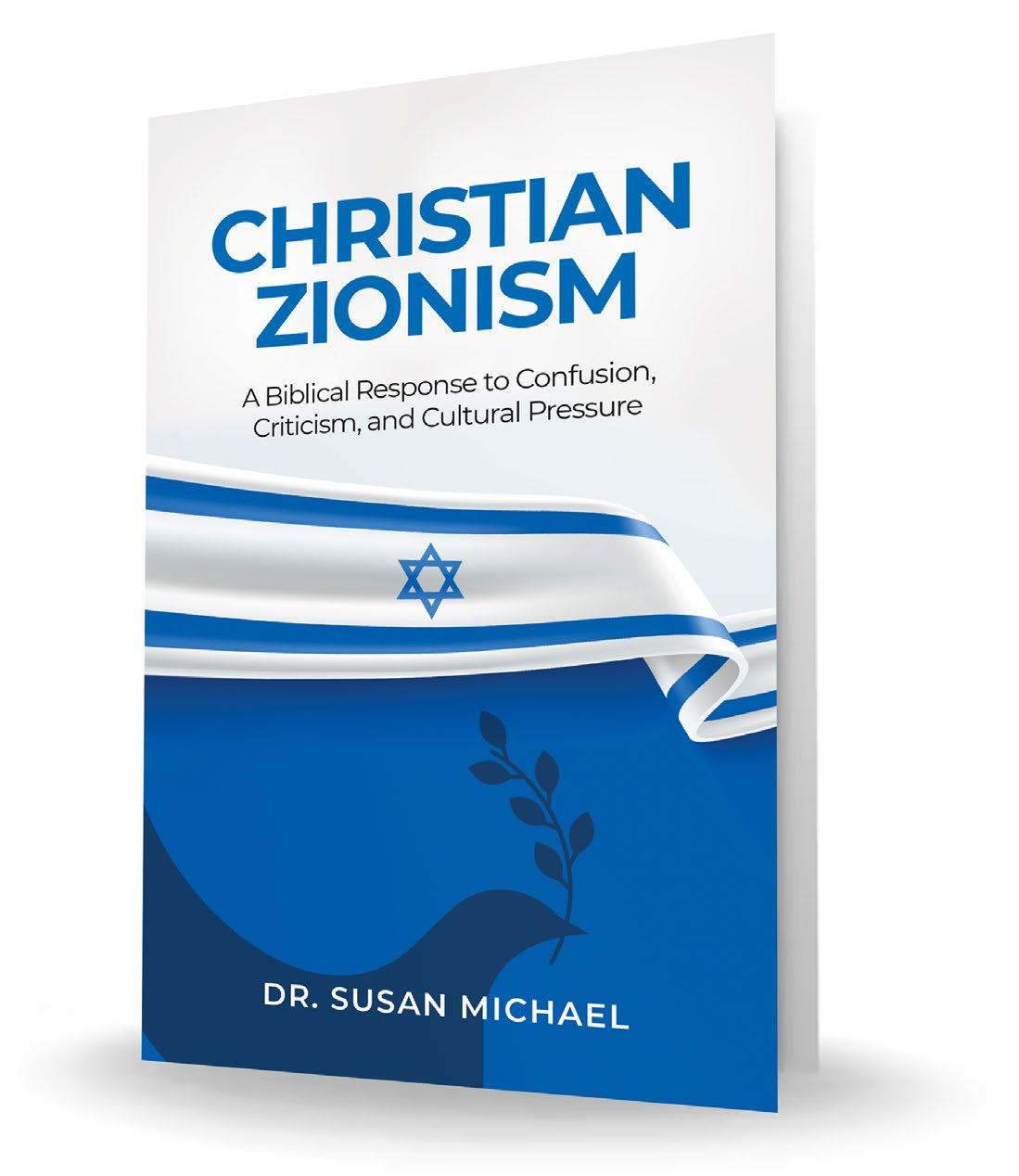
Cut through the noise with Dr. Susan Michael’s newest booklet: Christian Zionism: A Biblical Response to Confusion, Criticism, and Cultural Pressure
Clear, concise, biblically grounded—and designed for anyone seeking understanding.
“I absolutely loved Christian Zionism—every word of it. I couldn’t put it down. The writing is clear, engaging, and remarkably concise; there isn’t a wasted word. A friend from church was so impacted that they ordered copies to share with several elders. Susan truly has a gift—both in writing and speaking. I was captivated from the very beginning.” —Elizabeth R., Jacksonville, FL