The International Christian Embassy Jerusalem was established in1980 in recognition of the biblical significance of all of Jerusalem and its unique connection to the Jewish people. Today the ICEJ represents millions of Christians, churches, and denominations to the nation and people of Israel. We recognize in the restoration of Israel the faithfulness of God to keep His ancient covenant with the Jewish people. Our main objectives are:
• To stand with Israel in support and friendship
• To equip and teach the worldwide church regarding God’s purposes with Israel and the nations of the Middle East
• To be an active voice of reconciliation between Jews, Christians, and Arabs, and to support the churches and congregations in the Holy Land
From its head offices in Jerusalem, the ICEJ reaches out into more than 170 countries worldwide, with branch offices in over 90 nations.
Our vision is:
• To reach every segment of Israel’s society with a Christian testimony of comfort and love
• To reach and actively represent to Israel the support of denominations, churches, and believers from every nation on Earth
The Christian Embassy is a non-denominational faith-based ministry supported by the voluntary contributions of our partners and friends across the globe. We invite you to join with us as we minister to Israel and the Jewish people worldwide by donating to the ongoing work and witness of the ICEJ.
WORD
FROM JERUSALEM
CREDITS
ICEJ President Dr. Juergen Buehler
USA President Dr. Susan Michael
VP International Affairs Dr. Mojmir Kallus
VP Finance David van der Walt
USA Director of Finance Barry R. Denison
Senior VP & International Spokesman David Parsons
USA Director of Communications Shannon Bennett
VP AID & Aliyah Nicole Yoder
Managing Editor/Publications Director Laurina Driesse
USA Managing Editor Karen Engle
Graphic Design/Illustrators Ryan Tsuen, Nancy Schimp
The New King James Bible is used for all Bible references unless otherwise noted.
Word From Jerusalem is published by the International Christian Embassy Jerusalem. Reproduction in whole or in part without written permission is prohibited. Word From Jerusalem has no subscription price and is supported through contributions worldwide. The ICEJ USA Branch is a 501(c)(3) non-profit organization with offices in Tennessee, Florida, and Washington, DC. All gifts to this ministry are taxdeductible according to United States law.
Dear Friends,
In late January, the remains of Ran Gvili—a courageous IDF officer who was captured while defending his fellow citizens on October 7, 2023—were returned to Israeli soil and buried with full honor. For the first time since 2014, no Israelis are held hostage in Gaza—all of us at the ICEJ are rejoicing with the people of Israel.
Bringing Ran home not only symbolizes the end of that horrific and long ordeal but also closes a painful chapter in Israel’s national story. But this does not mean Israel’s enemies have disappeared. Iran is still a threat, and Israel continues to face ongoing pressure from terror organizations operating to the north and south. Despite this, we stand firm in God’s promises, knowing that He watches over His people Israel as a shepherd watches over his flock—never slumbering nor sleeping (Psalm 121:4).
In this issue of Word From Jerusalem, you’ll be encouraged further about God’s faithfulness. ICEJ President Dr. Susan Michael reviews key developments shaping Israel and the ongoing call of Christian Zionism. You’ll also be encouraged by stories of healing, hope, and return as God continues to bring His people home from the four corners of the earth. Truly, we are witnessing His enduring faithfulness to His Word.
God bless,
Dr. Juergen Buehler ICEJ
President
10 DEVELOPMENTS AFFECTING ISRAEL
By ICEJ USA President Dr. Susan Michael
2025 was a monumental year for Israel, but it is impossible to reflect on the year’s developments without going back to the fateful date of October 7, 2023.
After 27 months of war and challenges, as well as astounding miracles, the Jewish State has changed in many ways.
What follows are 10 significant developments affecting Israel today.
1. ISRAEL WAS VICTORIOUS ON SEVEN BATTLEFRONTS OF WAR
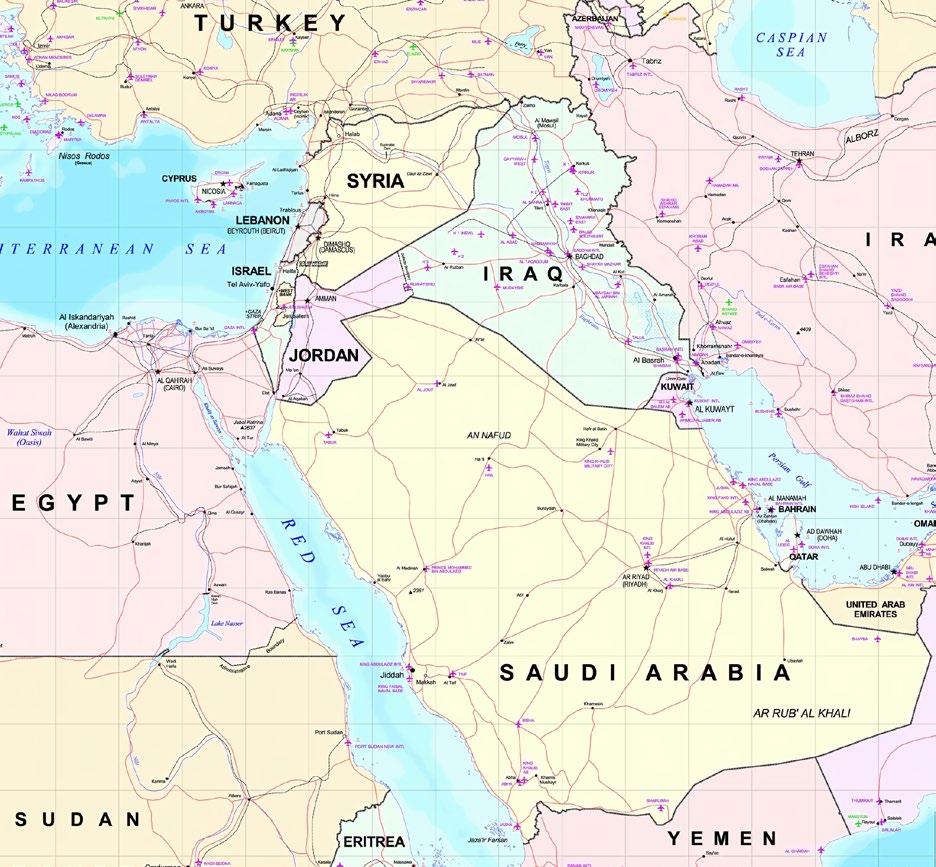
Many of us struggle to understand the complexities of the Middle East and therefore did not grasp the seriousness of the situation Israel was facing two years ago. Thanks to the well-coordinated information war that kept the world focused on false narratives coming out of Gaza, we also did not understand the astounding accomplishments of the Israel Defense Forces (IDF) fighting a seven-front war in Gaza, Judea and Samaria (aka the “West Bank”), Lebanon, Syria, Iraq, Iran, and Yemen.
Israel was victorious, but her enemies do still exist. And as long as they do, the danger of renewed war remains. This is why few Israelis are in a celebratory mood even after their astounding successes on the battlefield.
2. ISRAEL IS LOSING ON THE EIGHTH FRONT OF THE WAR
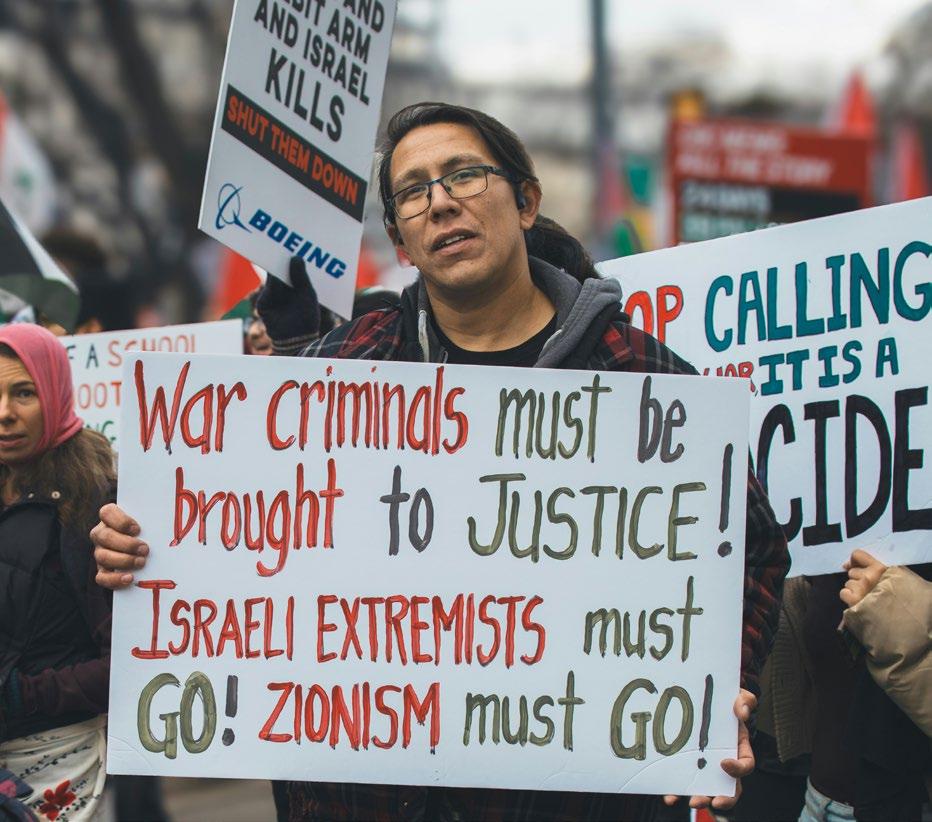
A lot of Israeli pessimism reflects the understanding that Israel is losing the battle on the eighth front—that of public opinion. Demonstrations in support of Hamas and against Israel took place around the world as early as October 8, thanks to a well-funded, well-organized campaign that had been waiting for that day. Its effectiveness on American college campuses exposed the decades of influence bought with billions of Qatari dollars. The same financial influence had crippled mainstream media and bought powerful influencers on social media. Israel could not compete, and her reputation has now been badly damaged by the stream of false accusations parroted by professors, news anchors, Hollywood actors, and influencers.
The Apostle Paul, portrait by Rembrandt (c. 1657)
3. ISRAEL IS EXPERIENCING A MENTAL HEALTH CRISIS
Some 40 percent of Israelis are suffering from depression, and 30 percent could have PTSD, creating a massive demand for counseling and trauma therapy. The effects of the worst massacre of Jews since the Holocaust on October 7, the 250 hostages held in Gaza—some for a full two years—and the danger of so many loved ones serving in IDF reserve duty created compounded trauma. That, plus the surge of antisemitism around the world, made Israelis feel very alone and depressed.
4. ALIYAH TO ISRAEL IS SURGING
One of the most amazing contradictions in modern Israel is that for every Israeli moving their family abroad to get away from the stress, someone is planning to move to Israel. The current antisemitic wave of hatred for all things Israeli and Jewish has only served to confirm the need for Israel and its strong military and intelligence apparatus. Israel exists as a place of safety for Jews where they can defend themselves, and many are moving there to escape the threat of rising antisemitism abroad.
5. ISRAEL IS RECOGNIZING THAT THEIR GREATEST FRIENDS ARE EVANGELICAL CHRISTIANS
A recent study in Israel uncovered that 9 out of 10 Israelis are unaware of the hundreds of millions of Christian supporters around the world. When the Zionist movement began in the late nineteenth century, it was almost entirely Jewish, with a handful of Christians involved. Today the numbers are flipped, and the number of Evangelical Christians who support Israel dwarfs the number of Jewish Zionists.
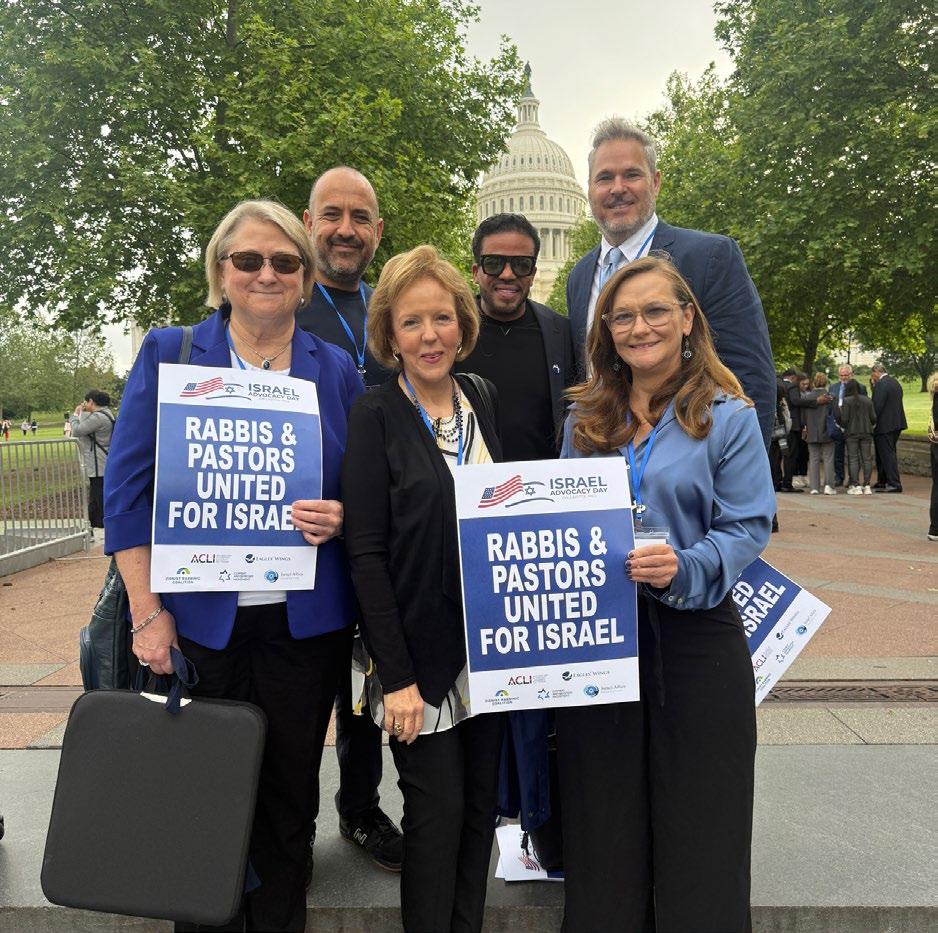
The American Jewish community is also waking up to this after the shock of discovering the liberal causes and groups they had supported turned against them after October 7. The one group that continued to support Israel was the one they had tried to keep at arm’s length—Evangelical Christians. As a result, they are beginning to accept that Christians are true friends, and initiatives to bring rabbis and pastors, Jews and Christians together are finding great interest and success. The two faiths need each other in the battle for truth and against antisemitism.
6. ISRAEL HAS SHIFTED RIGHT
Israelis living in the southern border region known as the Gaza envelope endured decades of sirens and the threat of incoming rockets because of their firm belief that peace was possible. They employed Gazans in their communities and farms; some provided transportation
to Israeli hospitals for treatment; others planned projects inside Gaza to improve life there—all in hopes that this goodwill would lead to friendship and peace.
Those dreams were shattered on the morning of October 7 when they discovered the Gazan workers had been mapping out the area, reporting who lived in each house, who had arms, and where the community security chiefs lived. After a decade of what they thought was a growing trust and friendship, the betrayal was so deadly that the whole of Israel has concluded there is no partner for peace, and therefore, there cannot be a Palestinian state. The Oslo peace process was pronounced dead, and these former “peace-niks” shifted from planning for peace to backing the increase of Israeli presence and security administration in the territories.
7. ISRAEL IS EXPERIENCING ITS CLOSEST RELATIONSHIP WITH THE UNITED STATES EVER
Israel’s Ambassador to the United States, Yechiel Leiter, recently revealed how comical it was that during the intense planning of a joint US-Israel attack on Iran’s nuclear facilities, the media was reporting rising tensions and disagreements between the two governments. He said it provided great coverage for what was really happening: the planning of the first joint military campaign between the United States and Israel.
Likewise, there is still a lot of skepticism about President Donald Trump’s plans to rebuild Gaza and whether he will do something that endangers Israel. The reality is that the two countries are working more closely than ever before and with shared goals. The situation in Gaza is incredibly difficult and complex. Israel cannot solve it alone and hopes this strategic partnership with President Trump will bring about an arrangement that provides a better life for the Palestinians in Gaza and the security that Israel needs.
8. PEACE STILL MAY COME TO THE MIDDLE EAST
The Abraham Accords were put on hold during this twoyear war. While Arab leaders would not say so publicly, they cared little for the Palestinians, and they detested the Muslim Brotherhood-backed Hamas. But their citizens cared, and for that reason, they could not be seen as supporting Israel. The Sunni Muslim countries, such as the UAE and Saudi Arabia, secretly rejoiced when they saw the Shia Muslim Iranian regime brought to its knees. But they cannot say so publicly for now. Instead, they are waiting it out. In the meantime, expect quiet cooperation with Israel that may one day become public with the signing of more agreements.
9. YOUNG ISRAELIS ARE EMBRACING THEIR JEWISH HERITAGE
As hostages were released from Gaza, many shared a common theme: they had encountered God in their captivity. One young man said he had never prayed before, but in the pitch-black tunnel, he often spoke to God and felt His presence. Another former hostage even said he missed the divine presence he experienced there. It is also reported that many young men and women returning from service in the IDF are coming home with renewed interest in prayer and Sabbath observance. But the most puzzling trend is that thousands of high school students in secular Tel Aviv are attending early-morning prayers at the synagogue before going to school. One of those teenagers explained to their mother, “We are a generation of thirsty souls.” These students, who were raised secular, are now seeking something more.
10. ISRAEL IS STILL THE MIRACLE NATION
It would take a book to recount all the astounding miracles in Israel’s defeat of her enemies in this past war. Extensive operations in Lebanon, Syria, Iran, and Yemen completely crippled enemies without the loss of one Israeli soldier. The civilian death toll due to 28,000 missiles fired into Israel was, incredibly, less than 40.
The painful day that started it all is actually what saved Israel. Hamas was planning a coordinated attack with Hezbollah and Iran that could have destroyed Israel. For some unknown reason, Hamas attacked Israel alone and angered the others, so they did not join the battle. While over 1,200 Israelis lost their lives on October 7, the plan was to kill millions by combining the Hamas ground operation with thousands of missiles from Lebanon and Iran. No one knows why Hamas went out ahead of the plan, but it saved Israel by doing so.
Israel is still the miracle nation, and although the Jewish State will continue to face challenges, as Israel’s first prime minister, David Ben Gurion, said: “In Israel, in order to be a realist, you must believe in miracles.”
That is still true today.
May 4–6, 2026
Washington, DC
Antisemitism is rising again—openly and aggressively—fueled by false narratives about Israel and the Jewish people that are spreading even within our nation’s institutions.
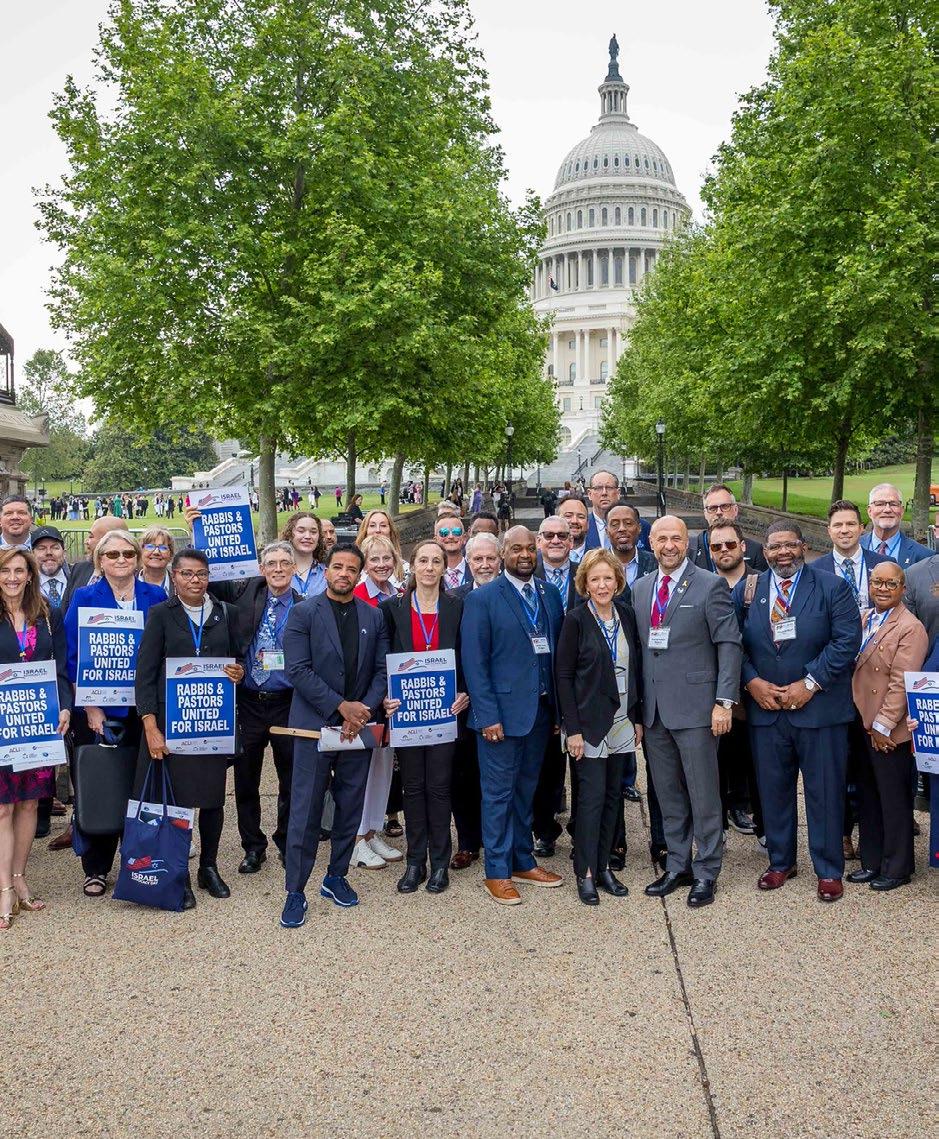
American Christian Leaders for Israel (ACLI) and Eagles’ Wings invite you to join us in Washington, DC, on Capitol Hill for a joint advocacy mission for Israel for rabbis, pastors, and Jewish and Christian leaders. Israel Advocacy Day 2026 will bring truth and biblical conviction into the halls of power and engage lawmakers and their staff with clarity on confronting antisemitism and the value of a strong US–Israel alliance.
YOUR REGISTRATION INCLUDES
Monday, May 4 Gala Dinner
Tuesday, May 5
Congressional Engagement & Israel Allies Reception
Wednesday, May 6
Christian Zionism Seminar: “A Biblical Response to Confusion, Criticism, and Cultural Pressure”
REGISTRATION INFO
Early Bird Rate: $149 (before April 4)
Learn more or secure your spot at: www.aclforisrael.com/ israel-advocacy-day or scan the QR code to register.
This is not political—it is biblical. Stand for Israel. Stand for truth. Stand together.
ICEJ President Dr. Susan Michael
AT THE IAC NATIONAL SUMMIT
By Shelley Neese, ACLI Coordinator
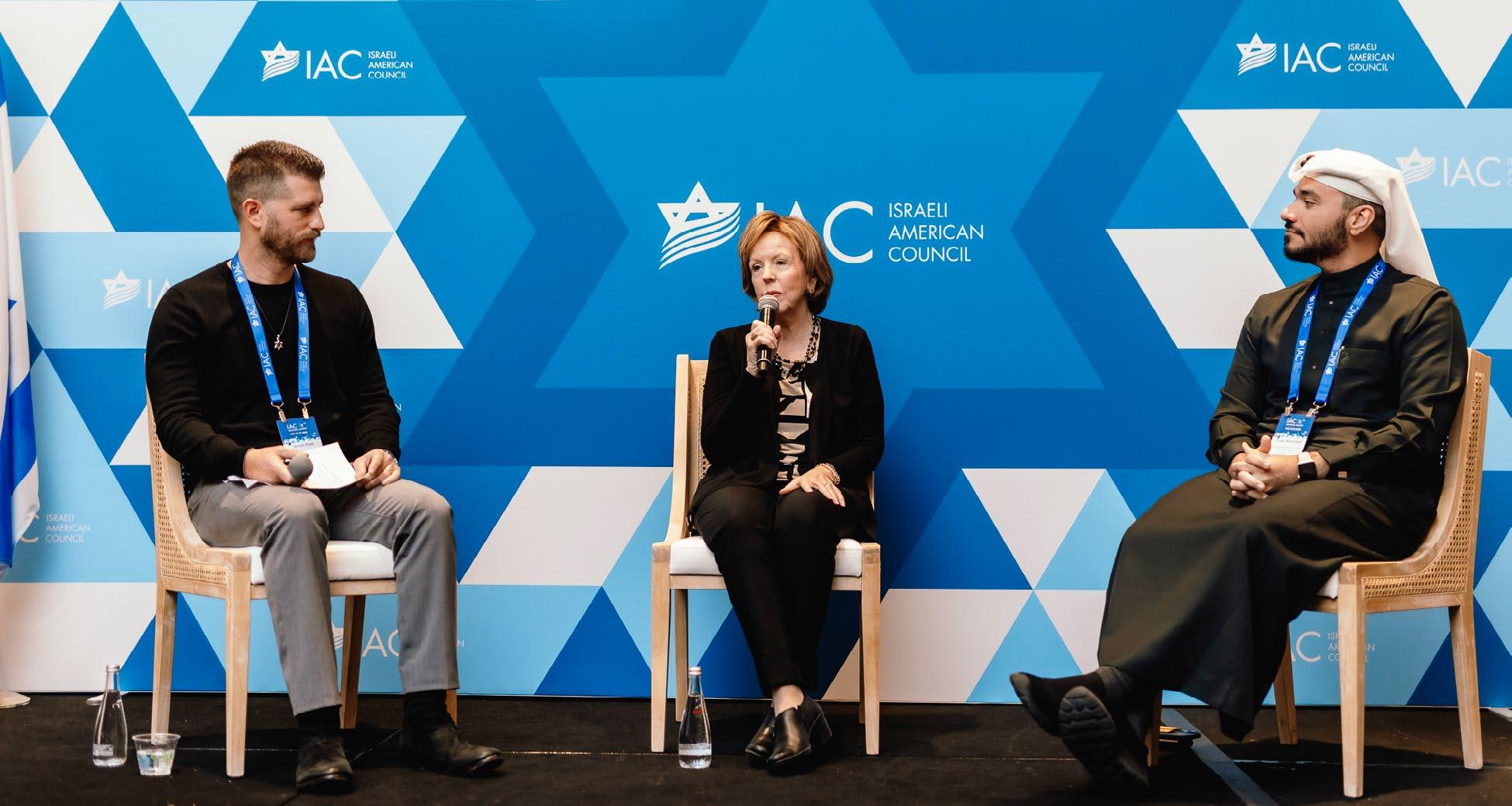
At the Israeli American Council (IAC) National Summit, Susan Michael took the stage for a breakout session and recorded a podcast with host Jonah Platt, a Jewish American actor. The session was titled “Facts, Feelings, and Friction: Navigating Israel Conversations in Tough Spaces.”
In the podcast interview, Susan recounted how, at just 19, she traveled to Israel for the first time—an experience that changed her world. For Susan, the trip transformed the Bible into a living reality. This foundational journey did not just change her perspective; it set her on a lifelong path of advocacy and education about Israel within the Christian world.
Joining her in the session was Loay Alshareef. As a Saudi Egyptian Muslim, Loay admitted to hating the Jewish people and Israel while growing up. However, when he went to study in France, he was hosted by a Jewish family. The friendship that developed forced him to take a second look at everything he had heard about Israel and the Jewish people, allowing him to separate truth from lies. Loay is now a powerhouse in the Middle East, dedicated to shifting the Arab world's mindset toward Israel.
Susan also addressed a difficult rift within the religious world: the problem of Replacement Theology. She explained how this doctrine, which suggests the church has replaced Israel in God's plan, has historically driven a wedge between Christians and Jews. By identifying this theological root, Susan highlighted how specific religious interpretations have fueled misunderstandings and distance, rather than the intended connection, between the two communities.
Susan concluded by emphasizing the urgent need for historical literacy among Christians, noting: “Most Evangelicals know little about Christian history, and if they do know Christian history, it is likely not the history of antisemitism in the church. It is an unfortunate fact. I try to teach it as often as I can. I squeeze it in everywhere that I can. We have to learn those lessons that history affords us.”
The annual Israeli American Council (IAC) National Summit brings together Israeli Americans, Jewish Americans, and Israelis as partners confronting shared challenges. Scan the QR code to hear Susan address the problem of Replacement Theology at the IAC National Summit.
Jewish-American actor Jonah Platt, ICEJ USA President Dr. Susan Michael, and Saudi Egyptian Muslim and pro-Israel advocate Loay Alshareef
Dr. Susan Michael Speaks at the Launch of SHE LEADS THE NATIONS
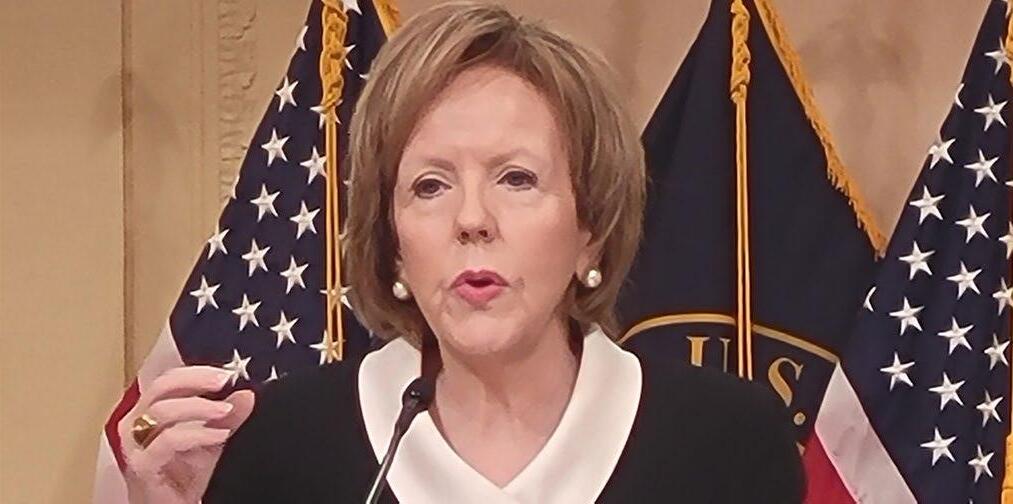
On February 4, 2026, during the launch of She Leads the Nations, Dr. Susan Michael, ICEJ USA President, spoke on rising antisemitism. She joined a group of distinguished speakers, including US Representatives Young Kim (CA/40th), Maria Elvira Salaza 9FL/27th), Lisa McClain (MI/10th), and Bill Huizenga (MI/4th).
The event, held in the Cannon House Office Building Caucus Room in Washington, DC, hosted over 150 attendees. Liz Doyle, founder and executive director of She Leads America
and now She Leads the Nations, said they are founded on the biblical mandate of Proverbs 31:30–31, which calls us to “Honor women who fear the Lord and to give their works praise at the city gate.” The organization exists to bring honor to these women whose faithful service has shaped families, communities, institutions, and nations.
Fourteen women were honored for their incredible accomplishments in all sectors of society. This year’s recipients included those in government, medicine, nonprofit work, the arts, and the military.
Dr. Michael’s moving presentation focused on what the global rise in antisemitism means in the prophetic timeline as outlined in Revelation 12 and what this portends for Christians. She discussed the efforts ICEJ USA is doing to combat this global crisis and received a standing ovation for her remarks.
A She Leads Israel is being launched In March 2026 in Jerusalem and will recognize Christian women whose lives are marked by integrity, courage, and lasting fruit.
GET TO KNOW YOUR ICEJ USA TEAM
RACHEL PICKETT
From marketing strategy to ministry, Rachel Pickett brings creativity, heart, and purpose to everything she does—including in her work with the ICEJ USA. Rachel is our Marketing & Digital Media Manager, leading multi-channel communications across social media, email, and digital platforms. With a background in project management and marketing, she has led both creative and data-driven initiatives across agencies, nonprofits, and ministry organizations. Her experience includes serving as a Lead Project Manager for a marketing agency and as an Event and Marketing Manager in the convention and tourism space.
Rachel brings this professional background to ICEJ USA, where she manages daily social media creation and scheduling, writes copy for emails, digital ads, and social posts, and manages CRM data and social analytics. Her work blends strategic insight with storytelling that connects people to God’s heart for Israel.
She graduated from Lee University with a bachelor’s degree in communications. In addition to her professional work, she has partnered with multiple ministries throughout her career, reflecting her passion for faith-filled, purpose-driven work.
God ignited Rachel’s heart for Israel during a 2019 trip to the land, where she encountered its history and people firsthand. “It changed my life forever,” she said. “I feel like God uses my heart for ministry and Israel to connect the work back to His bigger story,” Rachel shares. “He uses the strengths He’s given me to help people see His heart for Israel.”
Rachel is deeply grateful for the team and environment at ICEJ USA. “I’ve never felt so supported—professionally and spiritually. The work we do, spreading truth and standing firmly on God’s Word, is incredibly meaningful.”
Her favorite verse is 2 Timothy 1:7: “For God has not given us a spirit of fear, but of power and of love and of a sound mind.”
Outside of ICEJ USA, Rachel comes alive through music and musicals. “Wherever I am, you’ll probably hear some kind of music. I love to worship and sing and occasionally break out my theatre skills.”
, ICEJ USA Marketing & Digital Media Manager
FREEDOM TO RUN ICEJ-Renovated Soccer Field Transforms Young Israeli Lives
By ICEJ AID Administrator Nativia Buehler
Tucked away in a quiet corner of northern Israel lies a boarding school that serves as a refuge for some of the country’s most vulnerable children. Seventy-six boys and girls, ages seven to eighteen, live here. Around sixty percent have suffered from abuse, neglect or addiction in the family. Others come from homes overwhelmed by mental illness or substance abuse. Social workers from across Israel place them here because their homes are too unsafe for them to stay.
For these children, healing is not complicated; it happens through small, practical rhythms like regular meals, therapy sessions, encouragement from staff, and above all, space to breathe, move, and play. Here, the most beloved space of all is the soccer field.
Recently, thanks to an ICEJ donation from Christians around the world, this field has been completely renovated and resurfaced, transforming it from an unsafe concrete base into a soft, secure place where children can run without fear of injury.
The old surface had become worn, cracked, and dangerous. Children were slipping, tripping, and falling. A proper refurbishment is required every five to seven years, yet the cost is significant, and resources are always tight. When Christians in Germany stepped forward to help, the staff felt immensely grateful. Soon after, Christian friends from the
United States, the United Kingdom, and others joined in, too, turning this into a beautiful gift from the nations.
The impact of the renovated field can be seen most clearly in the lives of two young brothers who arrived only a few months ago.
The boys from Kiryat Ata are just eight and ten years old, whose mother struggles with depression and drug addiction. Their father is in prison. Their home environment is so unsafe that their mother often had to lock them indoors for long stretches of time, driven by fear of the dangers outside. With no safe outlet for energy, the boys lived in a type of emotional confinement, restless and trapped.
“When they arrived here, it was like opening the door of a cage,” Ariel, a manager at the school, recalls. The staff noticed the boys were constantly running, sprinting across the soccer field with big smiles that had been missing for far too long. Their mother also visits often and is comforted knowing they are safe at the boarding school.
“Freedom” is the word Ariel uses most often when he speaks about them. The field became the symbol of that
freedom, a place where movement, joy, and childhood return. The boarding school feels almost like a vacation for the boys, a space filled with possibilities they never had at home.
“They always tell us, ‘You can punish me, but don’t take me away from the soccer field,’” Ariel says with a laugh. “To them, it means everything.”
But while the field is a favorite, it is only one part of a comprehensive therapeutic environment. The boarding school offers psychology programs, special education tracks, and daily warm lunches and dinners. Each child receives weekly therapy, whether music, drama, animalassisted, or other treatments according to their needs.
The long-term impact is remarkable. Graduates go on to complete high school, serve in the army, pursue university studies, and build stable lives. Some stumble along the way, but the staff see mistakes as part of the process of rebuilding a future.
“It’s a work you fall in love with,” Ariel reflects. “Every day is different—new children, new volunteers, new stories. And you know you’re affecting the next generation.”
ICEJ-SPONSORED RETREAT BRINGS HOPE FOR VICTIMS OF TERROR
By ICEJ AID Administrator Nativia Buehler
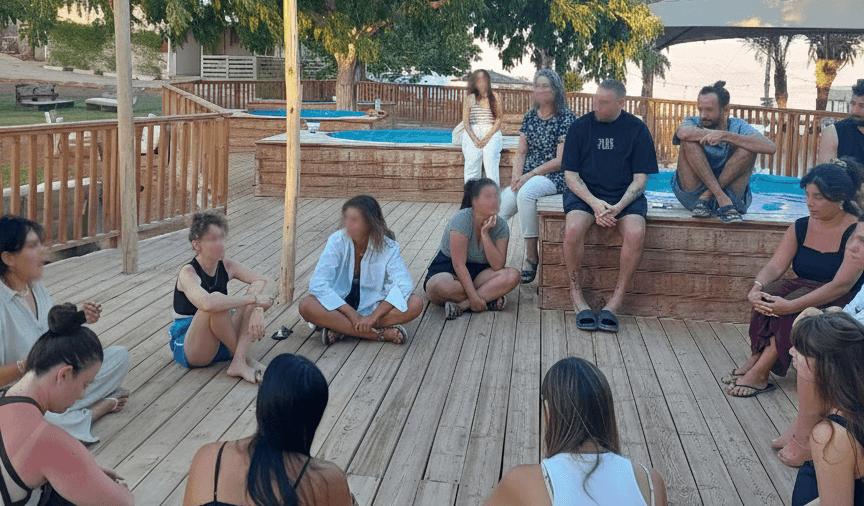
At a retreat perched above the Dead Sea, some 40 young Israeli victims of terror gathered to confront the trauma that has defined their lives since October 7. For some, it was the first time they had left their homes or spoken openly about their experiences—especially in a group of peers who truly understand.
The two-day resilience retreat sponsored by the ICEJ was designed for young adults whose lives had been overturned by terror.
One participant admitted that simply arriving was a milestone. A 25-year-old woman from Sderot, paralyzed by panic attacks since that dreadful day of October 7, wept in the arms of Ortal, the retreat’s project manager, upon stepping out of her car. “It was not just about surviving,” Ortal explained. “It was about the courage to live again.”
FINDING BREATH, VOICE, AND COMMUNITY
Others described moments of breakthrough during the sessions. “The first day was emotionally intense,” one participant said. “But the staff’s sensitivity helped me
cope. They really saw me, and support came without me even asking.” Another recounted battling anxiety and finding release through unconventional therapies. “I had an anxiety attack but went through a two-hour process and ended up crying. Dancing and drawing helped me see the small successes and how important they are.”
Daniel, 39, reflected on the retreat’s profound impact: “It was so precise and perfect. I came back to life; it gave space to breathe, and we had the chance to both receive support and support others. No one forced anything; we could simply participate. I haven’t stopped talking about it. Every activity had depth, and the environment was nonjudgmental.”
Daniel shared about his friend, Avi, a social worker and therapist, with whom he witnessed the unimaginable horrors that erupted on the street outside his home. As the battle outside raged, Avi received a call for help from a patient he had counselled for eight years. As he tried to calm him over the phone, Avi heard him being murdered by terrorists before the phone went silent. “It was almost impossible to go on after that, especially for Avi,” Daniel said. “Honestly, through this retreat, you saved a soul in Israel. After the retreat, Avi was finally able to return to work again after two years.”
give.icejusa.org/donate/icej-aid-fund
Leah, 25, agreed:
I’ve been to several retreats since October 7, and this was the most life-changing and helpful. I came because I realized I could not continue on my own anymore and found that others felt that way as well. Volunteer therapists gave practical tools such as writing, thankfulness, and other workshops to help us cope. The retreat connected us with a community. It opened the door to the life I had hoped for but didn’t think could happen. I had been engaging in “self-harm” and was suicidal. Today I have new friends and have stopped these harmful behaviors. After two years at home, I am now able to return to work. I hope we can continue to meet to support one another into the future.”
CHOOSING LIFE AFTER TERROR
Stories like these are no longer isolated, but since October 7, 2023, the numbers have surged: over 70,000 victims, including more than 30,700 new victims after the attacks. The need for targeted support has never been greater. Schools, social services, and mental-health infrastructure are overwhelmed.
“Traditional therapy is no longer enough,” Ortal said. The retreat uses holistic approaches: painting, drawing, dance therapy, and exposure to nature. These structured interventions help people express trauma, rebuild resilience, and reconnect with daily life.
Help many more Israelis overcome trauma and rebuild their lives. Give today at: give. icejusa.org/donate/israel-incrisis-fund
One young man reflected after a music workshop: “In 40 minutes, I was able to completely let go. I saw my successes and failures, and how it’s possible to live better. I’m so glad I didn’t give up, even when it wasn’t easy.”
Eli, from Ofakim, lost family members before October 7 and witnessed his community being attacked. At the retreat, he found creative outlets and painted a piece symbolizing the choice to move toward life despite grief. “Ofakim means “horizon,” he explained to Nicole Yoder, ICEJ Vice President of AID and Aliyah. “You can focus on what’s behind you or look ahead—the choice is ours.”
Others, like Noa from Magen and Dov from Nir Oz, shared the struggles of displaced and scarred communities. “Together we are a unique group, each one a whole world,” a participant said. “I still have a way to go, but with retreats like this, I will get there.”
HOPE FOR TERROR VICTIMS
The ICEJ-sponsored retreat is not a temporary escape; it is a lifeline for young Israelis navigating the aftermath of October 7. Through shared experiences, creativity, practical tools, and compassionate guidance, participants are discovering that healing is possible, even amid unimaginable loss. In the face of trauma, courage, resilience, and human connection light the path forward. But these retreats can only continue if support continues.
*Names have been changed to protect privacy
AGAINST THE TIDE
Western Jews Return to Israel in Record Numbers
By ICEJ Aliyah Director Howard Flower
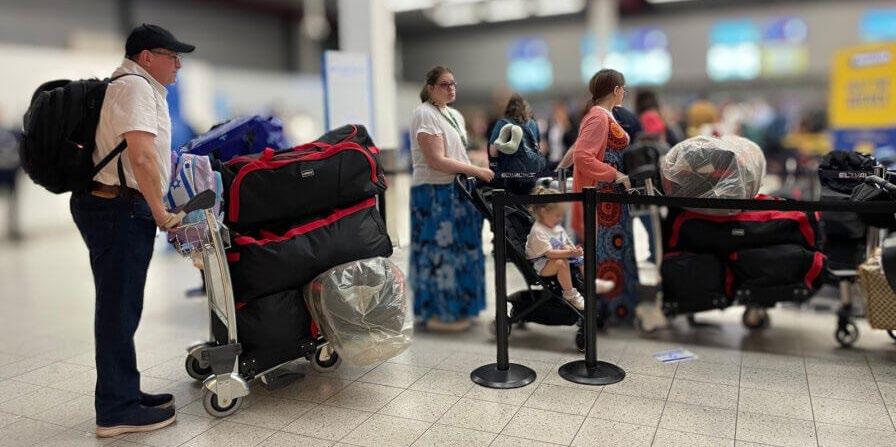
As we look back at 2025, we are witnessing something remarkable: while global Aliyah numbers have shifted, immigration from Western nations has surged to historic levels. Jews from France, Britain, Germany, and beyond are coming home to Israel in numbers not seen in years— and the ICEJ is honored to stand alongside them on this journey in partnership with the Jewish Agency for Israel. The numbers tell an inspiring story.
WESTERN EUROPE
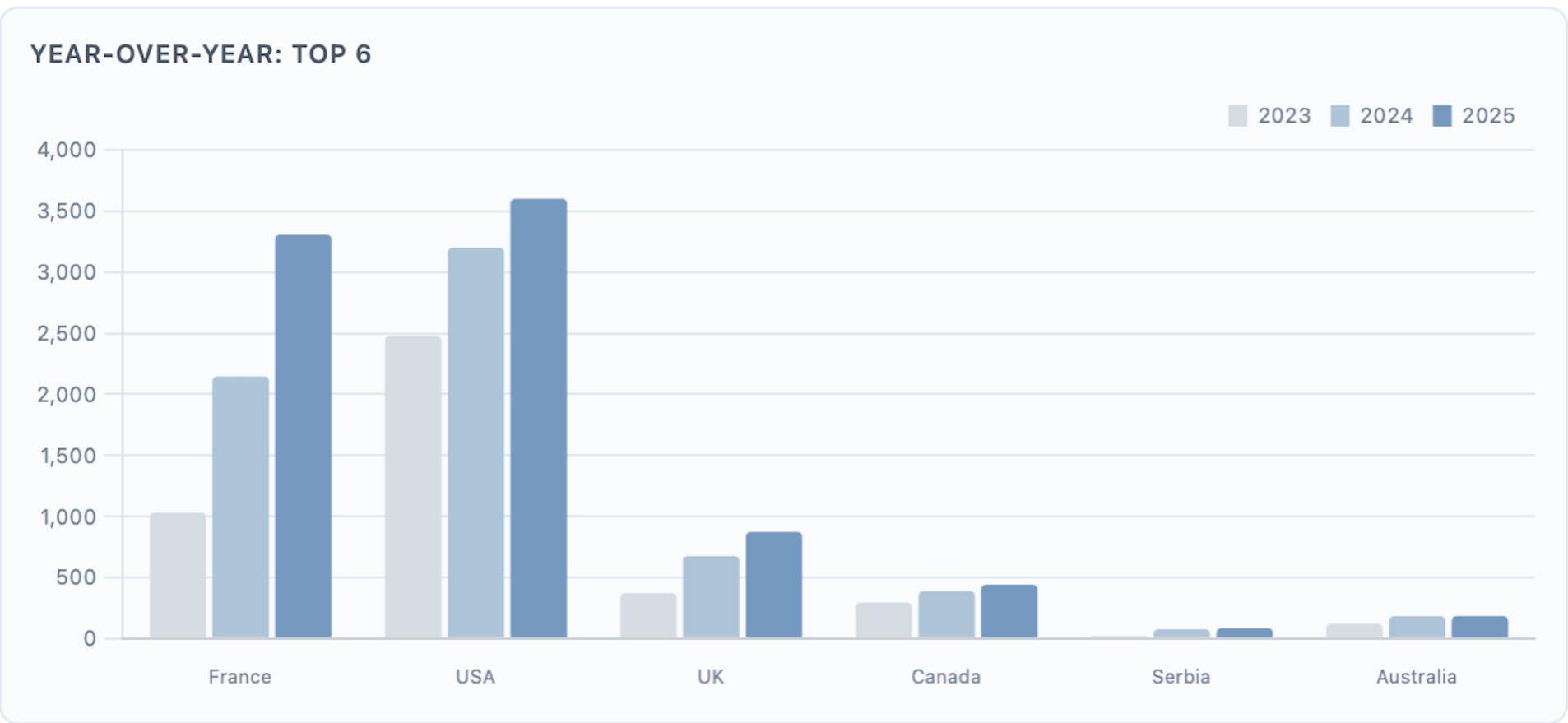
Total immigration from Western Europe reached 5,103 in 2025—a remarkable 138% increase since 2023. France leads this wave, with 3,357 French Jews making Aliyah in 2025, more than triple the 1,051 who came in 2023. This 219% surge reflects both the troubling rise of antisemitism in France and a renewed desire among French Jews to build their future in the Jewish homeland. Great Britain followed suit, with 890 Olim (immigrants) arriving in 2025—up 136% from 2023. Germany also showed steady growth at 34%.
From North America, the numbers continue to climb. The United States saw 3,638 new immigrants in 2025, a 45% increase since 2023. Canadian Aliyah grew 51% over the same period, reaching 447 Olim.
Combined, Western Europe and North America accounted for over 9,000 new immigrants in 2025—nearly double the 4,954 who arrived in 2023. This 85% increase demonstrates that despite the challenges Israel has faced, Jews worldwide are choosing to come home.
Surveys indicate that approximately 38% of French Jews—around 200,000 people—are now considering Aliyah. With rising antisemitism across Europe and North America, we expect this stream to continue flowing strongly in 2026.
ALIYAH FROM THE SOUTH AND EAST
ICEJ is also assisting with immigration programs for Olim from South and Latin America. Argentina remains the largest source country in the region due to its sizable Jewish community. The ICEJ is currently assisting families from Argentina and other Spanish-speaking countries through a mentoring and integration program. Still, significantly more support is needed to meet the rising demand due to increasing antisemitism.
Aliyah from Ethiopia and South Africa continues in 2026 as well. These are two countries where ICEJ has been helping, as we watch Scripture being fulfilled about Jewish return to the land: “And from the South do not hold them back!” (Isaiah 43:6).
And from the East, a new wave of Aliyah is emerging from Northeast India with the homecoming of more than 5,800 Bnei Menashe who have been waiting for the green light from the government of Israel: 1,200 Bnei Menashe Olim are expected starting within the next month, with the first plane load of some 180 new Olim—100 of which the ICEJ is supporting. Regional tensions and ethnic violence have made the situation
dangerous for the Bnei Menashe, who have literally been caught in the crossfire. The ICEJ has been supporting this Aliyah since 2012, and in the next five years, nearly the entire community will be home at last in Israel. Join us in this urgent mission.
ALIYAH FROM THE NORTH
Aliyah from the former Soviet Republics accounts for about 41% of total Aliyah. Partner with us to bring more Olim home from the land of the North. ICEJ began its work in 1980, assisting Jews from the Soviet Union in coming home to Israel, and since then, we have helped more than 193,000 Jewish people come home to Israel. The prophet Isaiah envisioned a time when Gentile nations would actively assist in the return of the Jewish people to their homeland: “Behold, I will lift My hand in an oath to the nations, and set up My standard for the peoples; they shall bring your sons in their arms, and your daughters shall be carried on their shoulders”
(49:22). The imagery of carrying sons and daughters suggests a tender and nurturing role, as Gentiles support and facilitate Aliyah. That time is today.
CONCLUSION
The ICEJ is poised to help even more Jewish immigrants from the West, South, East, and North in 2026. Your support funds flights, pre-Aliyah preparation, Hebrew classes, and integration assistance for families starting new lives in Israel. Thank you for partnering with the ICEJ to fulfil the biblical promise of the Jewish return to their ancient homeland.
SUPPORT OUR URGENT ALIYAH EFFORTS—GIVE TODAY AT: give.icejusa.org/donate/icejaliyah-fund
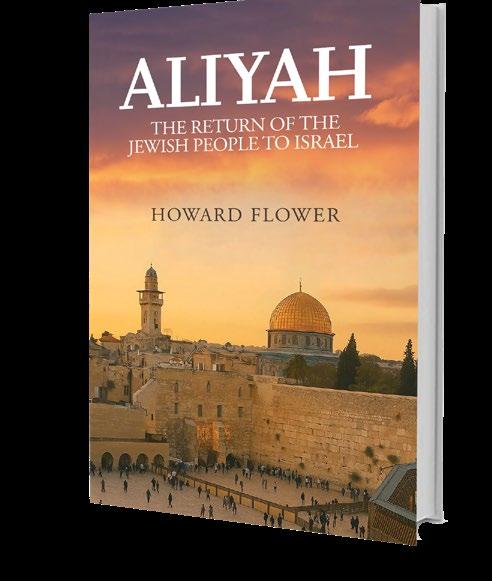
ALIYAH: The Return of the Jewish People to Israel
Is the modern-day return of the Jewish people to the Land of Israel merely a response to rising antisemitism—or part of a far deeper, divinely orchestrated story unfolding in our generation?
In this upcoming release from Embassy Publishers, ICEJ Aliyah Director Howard Flower explores Aliyah as the fulfillment of ancient prophecy unfolding before our eyes.
“Howard's book will open your eyes to the prophetic restoration of the Jewish people to the land of Israel taking place before us.” —Dr. Susan Michael, ICEJ USA President
CHRISTIAN ZIONISM: PART 2
The Foundation for Christian Support of Israel
By Dr. Susan Michael, ICEJ USA President
In part 1 of this series, I defined Christian Zionist as a Christian who supports the right of Jews to self-determination in their ancient homeland—a definition under which many Christians would qualify, regardless of their reasons for supporting Israel and the Jewish people. Those reasons span from personal, and practical, to political or biblical. For Bible-based Christians, the biblical basis for Christian support of Israel— Christian Zionism—trumps them all, and this article will discuss that basis in greater detail.
Christian Zionism is a theological framework based on God’s promises to Abraham, confirmed by the Hebrew prophets, and reinforced by the New Testament writings. It is not a new concept, and throughout history, it has ebbed and flowed. This means that a narrower use of the term Christian Zionist is one who holds to the theological school of thought known as Christian Zionism and supports the right of the Jewish people to return to their homeland on scriptural grounds.
CHRISTIAN ZIONISM
According to Anglican priest and theologian Gerald McDermott in the book The New Christian Zionism: Fresh Perspectives on Israel and the Land , Christian Zionism refers to the belief
that the recent gathering of Jews in the land of Israel, and their establishment of a polity there, are fulfillments of biblical prophecy.
Understanding this perspective requires examining the biblical underpinnings that support it—first found in the Old Testament.
THE OLD TESTAMENT
The key tenets of Christian Zionism are found in Genesis 12:1–3, where God promised Abraham a great nation of descendants, a land, and a mission to bless the world:
Now the Lord had said to Abram: “Get out of your country, from your family and from your father’s house, to a land that I will show you. I will make you a great nation; I will bless you and make your name great; and you shall be a blessing. I will bless those who bless you, and I will curse him who curses you; and in you all the families of the earth shall be blessed.” (Genesis 12:1–3)
Former International Christian Embassy Jerusalem (ICEJ) Executive Director Rev. Malcolm Hedding writes: “The biblical foundation for Christian Zionism is found in God’s covenant with Abraham. It was in this covenant that
God chose Abraham to birth a nation through which He would redeem the world, and to do this, He bequeathed them a land on which to exist as His chosen nation”:
And I will establish My covenant between Me and you and your descendants after you in their generations, for an everlasting covenant, to be God to you and your descendants after you. Also I give to you and your descendants after you the land in which you are a stranger, all the land of Canaan, as an everlasting possession; and I will be their God. (Genesis 17:7–8)
The later Mosaic covenant stipulated that the right to live on the land promised to them would be determined by their obedience to God’s instruction and their relationship with Him. Sin and disobedience would result in Israel’s exile from the land for a season, but exile never annulled the promise. Whether the children of Israel were in or out of the land, the land remained theirs by divine covenant, granted by God and never revoked.
The Hebrew prophets proclaimed the arrival of judgment and punishment for sin, as well as a future restoration to their land and to their God. The Psalms confirmed God’s promise of land and
a universal calling to bring the light of God’s salvation to the ends of the earth. In Psalm 89:34 God declares, “My covenant will I not break, nor alter the thing that is gone out of My lips.”
Christian Zionism recognizes God’s hand in the modern-day return of the Jewish people to their ancient homeland after 2,000 years of exile and rejoices in God’s faithfulness to His promises.
THE NEW TESTAMENT
The New Testament affirms this perspective. It was written by Second Temple–period Jews who clearly understood God’s promises to their people and were awaiting their fulfillment. They interpreted the ministry, death, and resurrection of Jesus within the context of those promises, not as a replacement of them.
This is evident in the disciples’ final conversation with the resurrected Jesus
before His ascension into heaven when they asked, “Lord, will You at this time restore the kingdom to Israel?” (Acts 1:6). Jesus’ response did not deny that future event—He simply responded, “It is not for you to know times or seasons which the Father has put in His own authority” (v. 7).
A few days later, Peter was preaching in the heart of Jerusalem and explained that Jesus had been received into heaven “until the times of restoration of all things” (Acts 3:21). The Greek word used—apokatastasisis—was from the Septuagint where it described the return to the land by Jews from the four corners of the earth. Peter was using the term after the resurrection of Christ to refer to a future event.
The apostle Paul wrote in Romans 11 that even though the majority of the Jewish people had not accepted Jesus’ messianic credentials, the promises to them were still valid. The promise of a universal mission and the gift of land found in
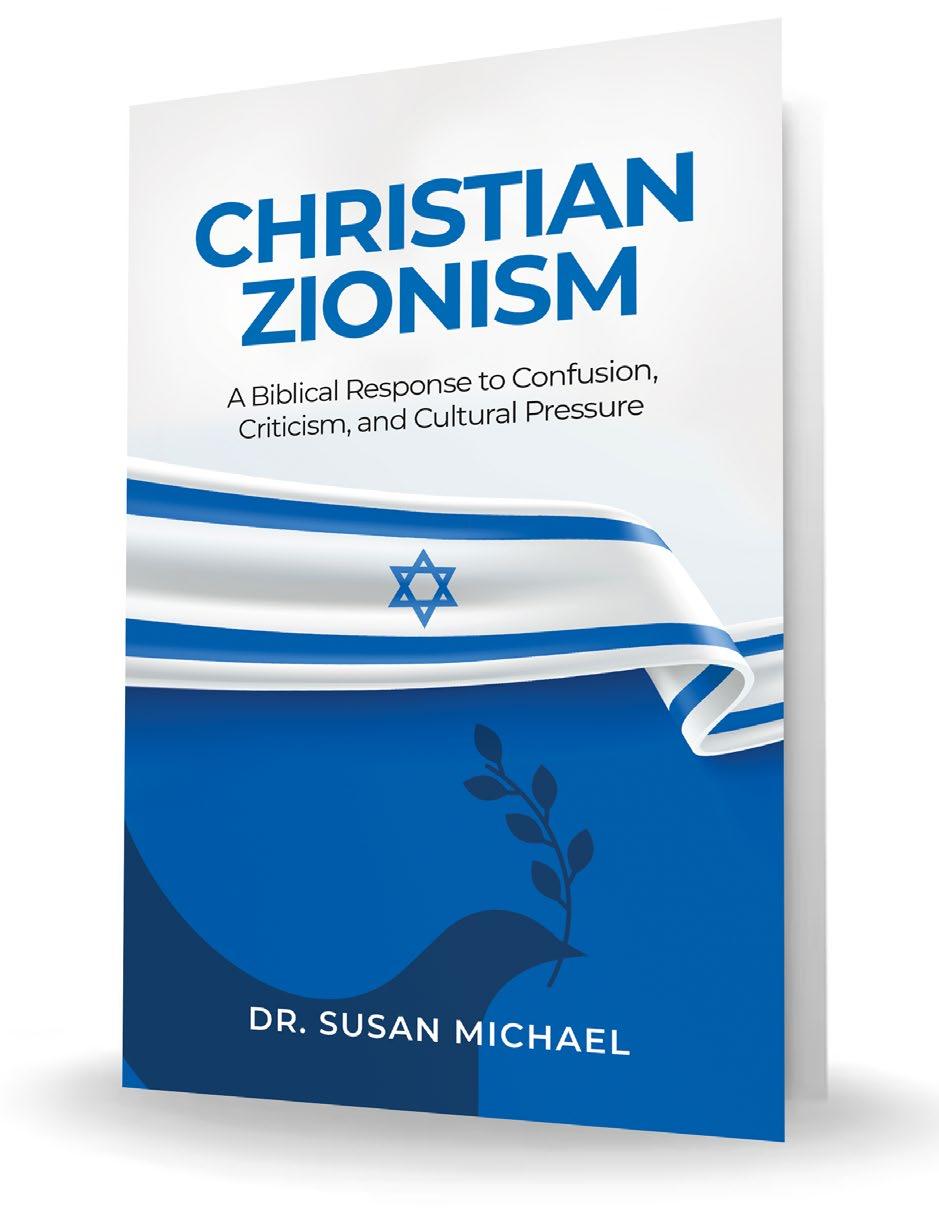
CONFUSED ABOUT CHRISTIAN ZIONISM?
Cut through the noise with Dr. Susan Michael’s newest booklet: Christian Zionism: A Biblical Response to Confusion, Criticism, and Cultural Pressure Clear, concise, biblically grounded—and designed for anyone seeking understanding. AVAILABLE NOW! Get your copy at: www.icejusa.org/store
the Abrahamic promise remained:
Concerning the gospel they are enemies for your sake, but concerning the election they are beloved for the sake of the fathers. For the gifts and the calling of God are irrevocable. (vv. 28–29)
CONCLUSION
Christian Zionism is, therefore, the belief that God bequeathed the land of Israel to the Jewish people as an everlasting possession for the purpose of world redemption. This is the biblical foundation for Christian support for Israel and the Jewish people and demands our lifelong pursuit of loving and blessing the Jewish people. In part 3 of this series, I will explore how the New Testament carries on the Old Testament principle of the importance of land.
1 Malcolm Hedding, “What Is Christian Zionism?” Charisma Magazine Online, 26 Mar. 2010.