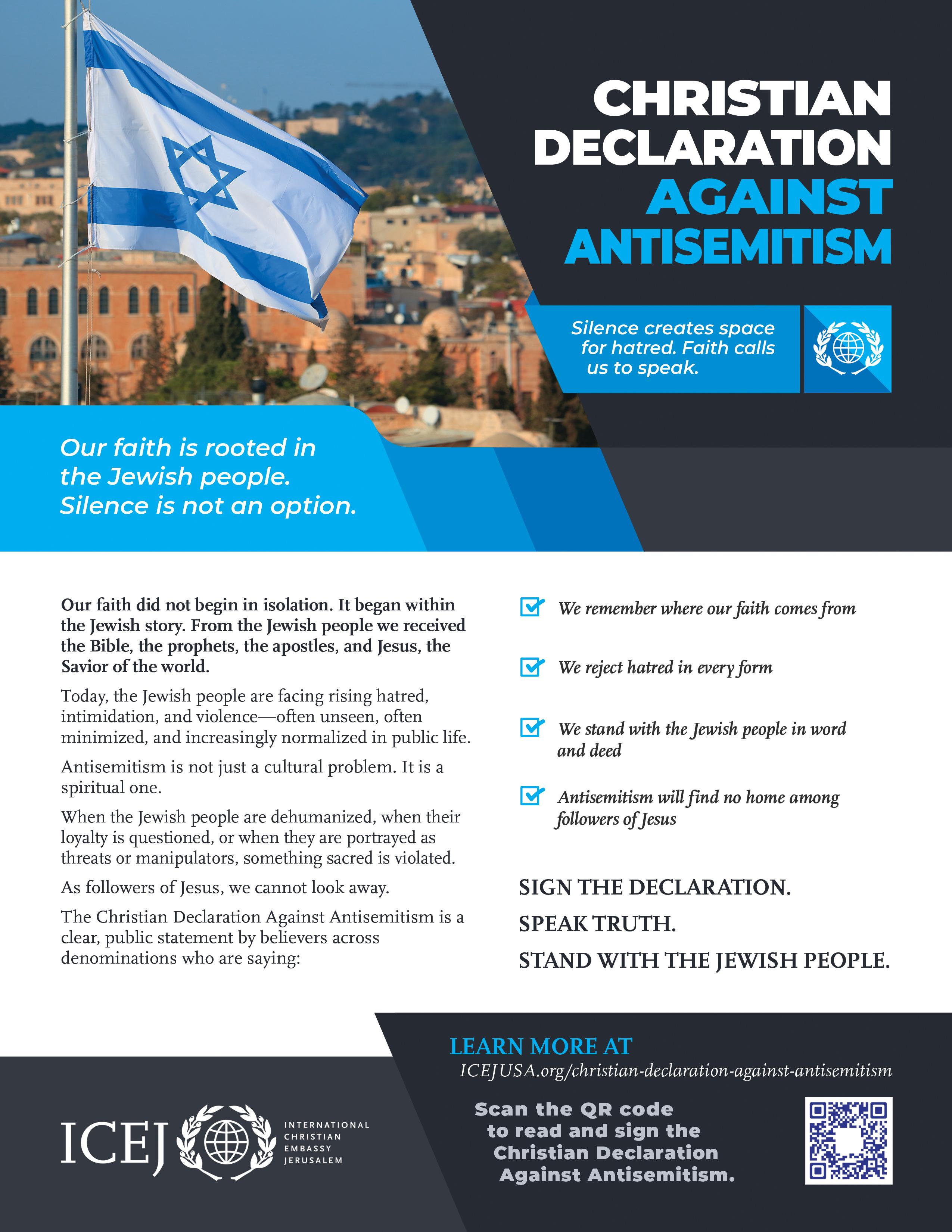
The International Christian Embassy Jerusalem was established in1980 in recognition of the biblical significance of all of Jerusalem and its unique connection to the Jewish people. Today the ICEJ represents millions of Christians, churches, and denominations to the nation and people of Israel. We recognize in the restoration of Israel the faithfulness of God to keep His ancient covenant with the Jewish people. Our main objectives are:
• To stand with Israel in support and friendship
• To equip and teach the worldwide church regarding God’s purposes with Israel and the nations of the Middle East
• To be an active voice of reconciliation between Jews, Christians, and Arabs, and to support the churches and congregations in the Holy Land
From its head offices in Jerusalem, the ICEJ reaches out into more than 170 countries worldwide, with branch offices in over 90 nations.
Our vision is:
• To reach every segment of Israel’s society with a Christian testimony of comfort and love
• To reach and actively represent to Israel the support of denominations, churches, and believers from every nation on Earth
The Christian Embassy is a non-denominational faith-based ministry supported by the voluntary contributions of our partners and friends across the globe. We invite you to join with us as we minister to Israel and the Jewish people worldwide by donating to the ongoing work and witness of the ICEJ.
WORD
FROM JERUSALEM
CREDITS
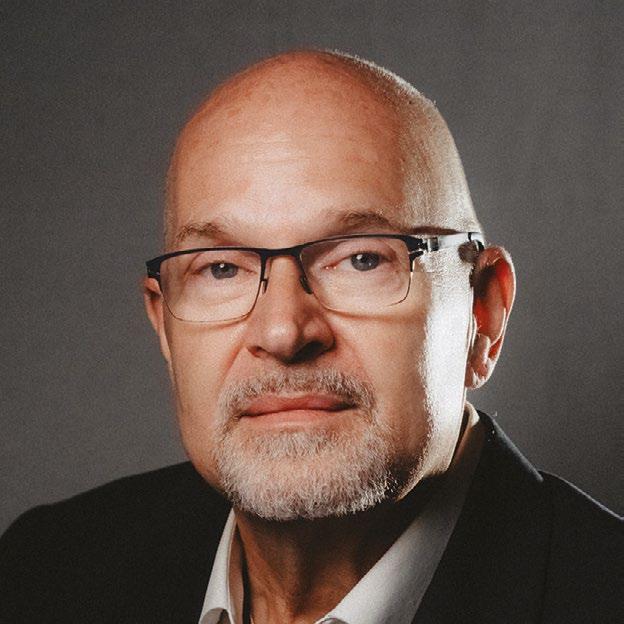
ICEJ President Dr. Juergen Buehler
USA President Dr. Susan Michael
VP International Affairs Dr. Mojmir Kallus
VP Finance David van der Walt
USA Director of Finance Barry R. Denison
Senior VP & International Spokesman David Parsons
USA Director of Communications Shannon Bennett
VP AID & Aliyah Nicole Yoder
Managing Editor/Publications Director Laurina Driesse
USA Managing Editor Karen Engle
Graphic Design/Illustrators Ryan Tsuen, Nancy Schimp
The New King James Bible is used for all Bible references unless otherwise noted.
Word From Jerusalem is published by the International Christian Embassy Jerusalem. Reproduction in whole or in part without written permission is prohibited. Word From Jerusalem has no subscription price and is supported through contributions worldwide. The ICEJ USA Branch is a 501(c)(3) non-profit organization with offices in Tennessee, Florida, and Washington, DC. All gifts to this ministry are taxdeductible according to United States law.
Dear Friends,
As we step into 2026, I invite you to rediscover the foundational mandate God gave humanity in the very first chapter of Genesis: to be fruitful, multiply, fill the earth, and subdue it.
These ancient commands are more than historical echoes. They are vital, living instructions for the challenges we face today. From the miraculous fruitfulness of Isaac during a drought to God’s promise that the “gates of hell” will not prevail against a growing church, God’s Word offers encouragement and even a roadmap for spiritual increase during tough seasons and amid a shifting culture.
This month’s issue also provides an insightful look at God’s irrevocable calling on the Jewish people, and ICEJ USA President Dr. Susan Michael provides a timely and relevant article on Christian Zionism. And though Israel is still tender from the trauma inflicted on the entire nation on October 7, 2023, you’ll be heartened to read how the ICEJ is caring for Israelis with practical assistance, love, and comfort.
May the Lord bless you as we press on together in this vital work of comforting God’s people (Isaiah 40:1).
BE FRUITFUL, MULTIPLY AND FILL THE EARTH A New Season of Growth for ICEJ in 2026
By ICEJ President Dr. Juergen Buehler
As we begin a new year, I find it appropriate to go to the very beginning of the Bible and consider the original mandate that God gave mankind when He created the heavens and the earth. When God created Adam and Eve, He blessed them and commissioned them, saying: “Be fruitful and multiply; fill the earth and subdue it” (Genesis 1:28).
These are four simple commands that God gave to humanity in the garden of Eden, and they are still relevant to us today.
BE FRUITFUL!
By this My Father is glorified, that you bear much fruit; so you will be My disciples. (John 15:8)
Fruitfulness is a basic characteristic of every living being. According to the Oxford Dictionary, “The capacity for growth and reproduction” is what defines life. It means fruitfulness is a basic call of God to all of us.
The Bible gives us many ways to be fruitful. Of course, this initial calling includes the call to procreate, to establish families. But the parables of Jesus also compare the spread of the good news of the kingdom as a cycle of seed and harvest. Thus, making disciples is considered being fruitful to the Lord. And in Galatians, another kind of fruit is mentioned when Paul speaks about the character that the Holy Spirit wants to produce in our lives: love, joy, peace, longsuffering, kindness, goodness, faithfulness, gentleness, and self-control.
It means that God expects a tangible harvest of change and increase from us every year. In the Gospel of John, Jesus is very particular about this, comparing us to branches, with Jesus as the vine (John 15). Fruitlessness has dire consequences, while fruitfulness is the ultimate goal and proof of our being close to Jesus (Heb. Yeshua).
Ask the Lord to make 2026 a year of great fruitfulness for you, your family, and your church. I pray that when we look back at the year 2026, we will be different people than we were last year. We want Yeshua to be seen ever more clearly in us.
MULTIPLY!
But others fell on good ground and yielded a crop: some a hundredfold, some sixty, some thirty. (Matthew 13:8)
Multiplication and increase are God’s will and mandate for mankind. Several of Jesus’ parables speak about this. In the parable in Matthew 13, the sower experiences a harvest of one hundredfold, sixty, and thirty. Also, the parable of the talents in Matthew 25 shows that God expects a multiplication of the talents God has given us.
Multiplication is a blessing of God. The first commandment in Genesis 1 is initiated by Him: “And the Lord blessed them.” The great psalmist King David wrote: “He also blesses them, and they multiply greatly” (Psalm 107:38). The Bible is clear that the increase of numbers in families and nations in biblical times was regarded as a sign of divine favor.
God also encourages Israel to ask for multiplication!
Thus says the Lord God: “I will also let the house of Israel inquire of Me to do this for them: I will increase their men like a flock.” (Ezekiel 36:37)
Ask the Lord for 2026 to become a year of multiplication, that God will give increase to your family, personal life, church or ministry.
FILL THE EARTH!
For God, there is no limit to increase. In Isaiah, the prophet foresees that the government of the kingdom of Messiah will have no end (Isaiah 9:7). It means we will never reach the limit of God’s capabilities. He still can add to the little or to the much we might have.
To Abraham, He promises that the multitude of his descendants will be like the sand of the seashore and the stars in the heavens. Today, we can calculate the approximate number of stars in the heavens—astronomers currently estimate that there are some 1023 stars in the universe. This compares roughly to 12.5 trillion stars per person on earth. It means Abraham’s faith could never outperform God’s capabilities. Therefore, the prophets could see the whole earth filled with the glory of God.
Abraham’s vision of impact was that in him, all the families of the earth shall be blessed. And this is the vision that Jesus extended to the church. Every tribe and every nation is to be reached with the gospel of the kingdom of God, even to the ends of the earth (Matthew 24:14; 28:19; Acts 1:8; Revelation 7:9). So let us “fill the earth!”
Ask the Lord to receive a vision from Him in 2026 that will be large enough to give God the glory.
SUBDUE IT!
Here we see something interesting! Even in the perfect environment of the garden of Eden, something in nature required Adam and Eve to subdue it. We can only speculate how this unfolded in that original, sinless world of Eden, but the following chapters describe how sin, rebellion, and bloodshed entered and spoiled creation. The consequences were a breakdown of relationships, increased pain, and hindering factors like the weeds, thorns, and thistles
that sprang up in the world. Nature became wild, and “every intent of the thoughts of [man’s] heart was only evil continually” (Genesis 6:5).
You might be wondering why I expect you to believe in a mandate that stems from the garden of Eden. It seems so counterintuitive in our present-day world. And indeed, the challenges of today are growing every year.
Today, we are witnessing an alarming growth in antisemitism—especially in Western countries—that is unprecedented since the early Nazi era. Not only is it disturbing to see large pro-Hamas demonstrations staged in many cities across the world, but it is even more troubling in some ways to witness the strong anti-Israel sentiments found in today’s churches, even in Evangelical circles. Many pastors are boldly boasting in an unprecedented manner about being adherents to Replacement Theology and taking pride in sharply criticizing Israel.
For the first time in the United States— considered the bulwark of Christian love and support for Israel in recent generations—it seems their support is crumbling, especially among the younger people. Tucker Carlson, Candace Owens, and the ultra-nationalist figure Nick Fuentes have become powerful voices for anti-Israel and antisemitic rhetoric within the mainstream of the conservative camp. Some of these powerful influencers of public opinion are known to be on the Qatari payroll and may have ulterior motives, but others appear to attack Israel for very personal reasons.
Moreover, we are watching the foundations of Judeo-Christian values, which helped build enlightened, democratic societies, start to dissolve before our eyes rapidly. Freedom of speech is under threat in several surprising countries, and churches have often withdrawn into a religious bubble, lacking answers for the challenges of the modern-day world.
Considering all these new challenges, it’s tempting not to think of growth, multiplication, and reaching the end of the world. However, now is the time to strengthen our fortresses.
In Genesis 22:17, we read:
[B]lessing I will bless you, and multiplying I will multiply your
descendants as the stars of the heaven and as the sand which is on the seashore; and your descendants shall possess the gate of their enemies.
God promises us multiplication in the face of the enemies standing against us! But God promises not just survival; as Jesus proclaimed to Peter, the “gates of hell” shall not overcome us, and He calls on us to possess them. This was the very blessing spoken to Abraham concerning Israel, a blessing that all of Pharaoh’s evil intentions could not stop, for the more he oppressed the Israelites, the more they multiplied.
There is a great mystery to how the church grows stronger in times of much adversity. Iran, China, and even the Russian free churches during the Soviet era are clear examples of this phenomenon. The book of Genesis also describes how Isaac started sowing even in a season of severe drought in the dry area of Gerar, which is today near the Gaza border. The word of God says that despite the adversity of drought, Isaac harvested one hundredfold that same year. That is fruitfulness on a miraculous level.
That also is exactly what the prophet Jeremiah foresees:
Blessed is the man who trusts in the Lord, and whose hope is the Lord. For he shall be like a tree planted by the waters, which spreads out its roots by the river, and will not fear when heat comes; but its leaf will be green, and will not be anxious in the year of drought, nor will cease from yielding fruit. (Jeremiah 17:7-8)
At the beginning of this new year, I want to encourage you that even though you might face adversity in your personal or spiritual life, in your family, regarding your finances, or even your health situation, we must proclaim in the face of these adversities that by the grace of God, in 2026, we will make this a year of fruitfulness, multiplication, and vision.
If God is with us, we are unstoppable, as all authority in heaven and earth has been given to our Lord Jesus, and we are seated with Him in heavenly places. Please join me in expecting great things from God this year. May you bear much fruit, may it multiply and spread, may you pursue fresh visions from the Lord, and may you reach a new level of authority in Him.
PAUL AND THE IRREVOCABLE CALLING OF ISRAEL
By Prof. Gerald McDermott
This Bible teaching is adapted from Prof. Gerald McDermott’s message at the ICEJ’s Feast of Tabernacles 2025.
There is much debate today concerning the New Perspective on Paul as it relates to Israel. The apostle Paul is not always easy to comprehend. Even his fellow apostle, Peter, wrote that Paul is sometimes “hard to understand,” and many twist his words “to their own destruction” (2 Peter 3:16). Twenty centuries later, perhaps the most debated aspect of Paul’s teachings center on the question: What did Paul think was the relationship between first-century Judaism and this new Jesus movement?
LUTHER’S LEGACY
For five centuries, Protestants have largely read Paul through Martin Luther’s theology, which was shaped by his conflict with late-medieval Catholicism. In that battle, “works” were pitted against “grace,” and Luther concluded that first-century Judaism must have taught salvation by works. On that assumption, Paul’s critique of the “works of the law” came to mean a total rejection of Judaism and the inauguration of a wholly new religion—a Christianity detached from Israel’s people, story, and land.
That reading quickly became the theological soil for supersessionism, or Replacement Theology, which came in two pieces:
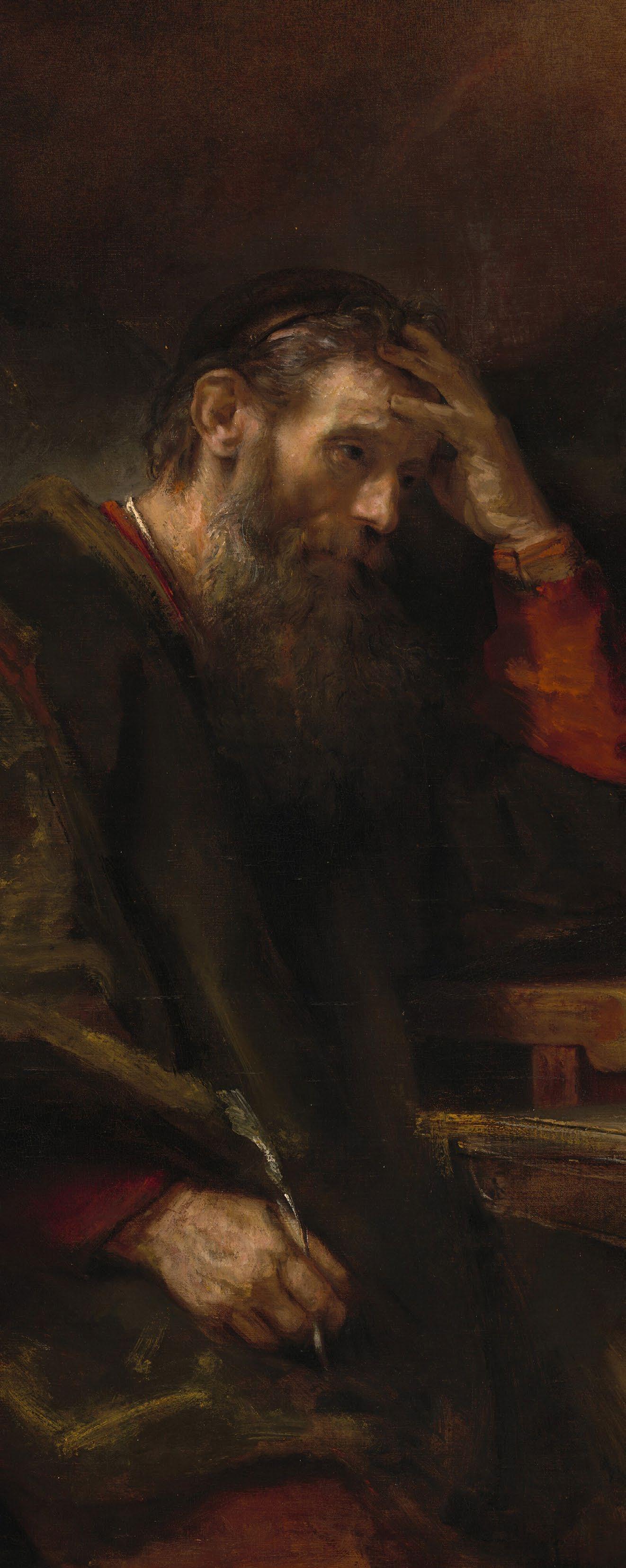
The Apostle Paul, portrait by Rembrandt (c. 1657)
First, the people. The church replaces Israel as God’s chosen people, and so Jews who do not follow Jesus are no longer the elect.
Second, the land. The land of Israel loses its covenantal significance, is no longer holy, and the territorial promises are spiritualized.
These thoughts took deep root and the consequences proved grave. Luther’s late work, On the Jews and Their Lies, would be weaponized centuries later by the Nazi regime, which distributed it widely to condition Christians—especially Lutherans—to accept anti-Jewish laws. While Luther fought abuses of his own day, falsely superimposing them on the first-century church, his take on Paul helped make the church susceptible to grievous errors about Israel.
THE NEW PERSPECTIVE ON PAUL
In the 1970s and 80s, a group of scholars—most notably E. P. Sanders, James D. G. Dunn, and N. T. Wright—challenged this Luther-shaped approach to Judaism. They demonstrated that Second Temple Judaism—Paul’s Judaism—did not preach salvation by works, but what Sanders called “covenantal nomism.” In brief, this means that Israel enters covenant by grace (signified for boys by infant circumcision), but remaining in that covenant requires faithful obedience to its terms. The entrance is a gift of grace, but to remain in the covenant requires obeying its terms. (We might observe this is not unlike what Rabbi Jesus teaches in John 15:14: “You are my friends if you keep my commandments.”)
So, Paul is not an enemy of Torah. In fact, he says the opposite: “Do we then overthrow the Law by this faith? By no means! On the contrary, we uphold the Law” (Romans 3:31).
This correction to Luther is welcome. However, some versions of the New Perspective on Paul have drifted into a different distortion, interpreting Paul through a contemporary lens of race and identity politics. In this telling, Paul rejected Judaism not because it taught “works” but because it was “ethnic”—a position summarized in the slogan “grace, not race.”
But Paul did not think in modern racial categories. On the contrary, he writes: “From now on, we regard no one according to the flesh” (2 Corinthians 5:16). The apostle’s logic is covenantal, not racial. Jesus thereby does not erase Israel, but confirms the promises to the Hebrew Patriarchs and brings Gentiles into Israel’s story (Romans 15:8-12).
A NEW “TROJAN HORSE”
A widely discussed book by Jason Staples, Paul and the Resurrection of Israel: Jews, Former Gentiles, and Israelites (Cambridge University Press), is changing yet again the understanding of Jews and Israel in New Testament thinking. Its title sounds promising, but it is a Trojan horse, and here’s why.
Staples argues that the only true “Israel” now consists of Jesus-followers—Jew and Gentile believers together. In his view, Jews who do not confess Jesus are not “Israel,” their covenant has no continuing validity, and the land promise is now defunct. To support his view, he says 1 Corinthians 12:2 refers to “former Gentiles,” as though Gentiles cease to be Gentiles upon believing—a reading unsupported by the Greek text.
The net effect is a new supersessionism in disguise. The names have changed, but the substance remains: Israel is replaced—this time by a Jesus-community whose identity erases the ongoing peoplehood of non-Messianic Jews, and the land is detached from the covenant.
WHAT PAUL ACTUALLY TAUGHT
Against such redefinitions, Paul speaks plainly in Romans 11:28–29 about Jews who had not accepted Jesus in his day, saying: “They are beloved for the sake of the fathers.” Not “were” but “are”—present tense—because of the fathers (Abraham, Isaac, and Jacob). Why? Because “the gifts and the calling of God are irrevocable.”
The word “calling” here is a technical term; it refers to God’s election of Israel to be His firstborn son and priestly nation (Exodus 4:22; 19:5–6). That vocation is not annulled by Jewish unbelief; Paul says it cannot be revoked. If God’s faithfulness could be cancelled by human faithlessness, then grace would no longer be grace, and the Gentiles’ grafting into Israel’s olive tree (Romans 11:17–24) would itself be uncertain. Paul’s argument runs the other way: God’s steadfast love to Israel is the foundation of Gentile hope, not its opponent.
This priestly vocation is a witness to show the world the one true God of Israel who has revealed Himself supremely in Israel’s Messiah. Gentile believers share this vocation not by replacing Israel, but by being grafted into Israel’s story of a covenant-keeping God.
PAUL AND THE LAND
Supersessionist theologians usually insist the land promise drops out of New Testament theology. Paul himself assumes the land’s enduring significance. Consider Acts 13:19–20, where Paul rehearses Israel’s history: God chose the patriarchs, delivered Israel from Egypt, endured them in the wilderness, “and after destroying seven nations in the land of Canaan, He gave them their land as an inheritance.” Paul does not blush at Joshua’s conquest or reinterpret the inheritance as a metaphor. Instead, he states it plainly as covenantal history and present reality.
In Jewish intellectual life around Paul’s time, when Philo, Josephus, and others list God’s “gifts” to Israel, they regularly place the land at or near the top. Thus, when Paul writes that “the gifts of God are irrevocable” (Romans 11:29), he speaks
with that understanding of “gifts.” He names many gifts in Romans 9:3–5, and the land sits clearly within them.
Historically, Paul likely wrote Romans around AD 57, roughly 25 years after his encounter with Christ. At that mature stage of reflection, his conviction about Israel’s election and the permanence of God’s gifts is explicit. The land promise is not a vestige of a discarded dispensation but a sign of the God who keeps His promises
READING PAUL WITHOUT ERASING ISRAEL
What then of the Law? Paul’s language is careful. He never teaches that Torah is bad; he insists it is holy and good (Romans 7:12). He criticizes not Torah but sin’s misuse of the Law and its powerlessness to deliver from sin’s dominion— something only accomplished in Christ (Romans 8:1-4).
Nor does Paul reduce Israel’s identity to ethnic markers. He celebrates Gentiles streaming into Israel’s hope (Romans 15:8–12) and insists there is no “second-class” status among the redeemed. But as Gentiles are welcomed, Paul refuses to erase Israel. He draws a distinction in Romans 9:6 between those who are “from Israel” and those who are truly “Israel,” but that is an intra-Jewish distinction between unbelieving and believing Jews—not a license to expel non-Messianic Jews from Israel altogether. Indeed, the “remnant” of believing Jews confirms that
Israel’s calling endures. It does not erase the unbelieving majority’s belovedness, for God keeps His promises to the patriarchs. Therefore non-Messianic Jews are still beloved “for the sake of the fathers” (Romans 11:5, 28).
When Gentiles presume upon their ingrafted status and boast over the natural branches, Paul rebukes them sharply: “Remember it is not you who support the root, but the root that supports you” (Romans 11:18). Supersessionism is not merely a misreading; Paul treats it as spiritual arrogance.
Ideas have consequences. A Paul stripped of Israel’s ongoing election made it easier, in modern Europe, to rationalize contempt for Jews and indifference to their suffering. Supersessionist ideas in Luther’s later writings were harnessed by the Nazi state to teach Christians to accept state antisemitism. This is not to equate today’s scholars with totalitarian regimes, but a similar misreading of Paul—however well-intentioned—can again dispossess Jews of their God-given identity.
Today, Jews in many places face renewed hostility. Tragically, some Gentile Christians, influenced by theological redefinitions that hollow out Israel’s peoplehood and Land promise, unwittingly join the chorus. The church must resist this. Faithfulness to God requires faithfulness to all His promises—to the church and to Israel.
SEEING WHAT WE WERE TOLD NOT TO SEE
Many Christians have been taught the New Testament leaves the land promise behind. As a result, generations have read the text and never noticed Paul’s straightforward retellings of the gift of the land or his sweeping affirmation that God’s “gifts and calling” stand irrevocably.
When we pay attention, a coherent portrait emerges. Paul honors Torah as holy, even while insisting on Christ as the fullness of God’s saving work. He insists on the unity of Jew and Gentile in Messiah, while refusing to abolish Israel’s identity or vocation. He calls Gentiles into Israel’s hope, while refusing their boasting over the natural branches. He takes for granted the historic gift of the land, while insisting that its deepest meaning is bound to God’s faithfulness.
The thread that ties it all together is covenant—that God keeps His word to the fathers. In Jesus, the Messiah of Israel, God extends mercy to the nations.
The stakes in this debate are not merely academic. Christians are joining the new explosion of antisemitism because they have accepted supersessionist views of Paul. But to join the true Paul is to confess, with joy and trembling, that the gifts and calling of God are irrevocable—and to order our doctrine, our witness, and our politics accordingly.
Professor Gerald McDermott speaking at the 2025 Feast of Tabernacles
A YEAR OF IMPACT
ICEJ USA in Washington, DC
By ICEJ USA Director of Communications Shannon Bennett
Throughout 2025, the International Christian Embassy Jerusalem – USA (ICEJ USA) strengthened its presence in Washington, DC, building strategic alliances, amplifying Christian support for Israel, and engaging national leaders at pivotal moments. Month by month, the year unfolded as a sustained witness of faith in action.
CAPITOL HILL
ICEJ USA leaders traveled to the nation’s capital numerous times in 2025 to participate in events organized by the Israel Allies Caucus in the US House of Representatives, beginning with the inauguration of the caucus for the new 119th Congress in January, the Jerusalem Day reception in June, and ending with the annual Chairman’s Conference in December. The conference was attended by parliamentarians from 40 countries and included a gala dinner in honor of President Trump attended by some 700 people, including ICEJ President Dr. Juergen Buehler.
JEWS AND
to
USA President Dr. Susan Michael; ICEJ USA Director of Communications Shannon Bennett; ICEJ Director of Operations Julaine Stark; and ICEJ USA Prayer Leader Donnalyn Ennels at the 2025 Israel Allies Foundation gala in Washington, DC
PRIME MINISTER NETANYAHU IN DC
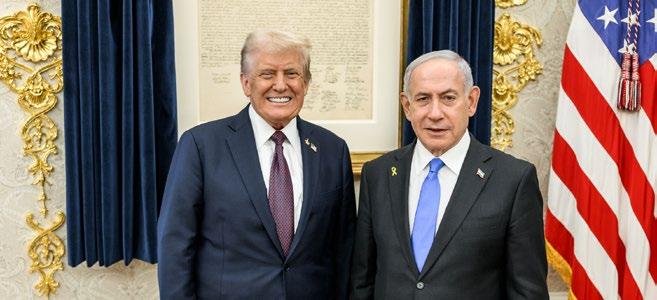
After the United States’ bombing of Iranian nuclear facilities in June, the Prime Minister of Israel came to DC for continued discussions with the Trump Administration. While in town, a reception was held at Blair House for top leaders in the US-Israel relationship, including the ICEJ USA’s President, Dr. Susan Michael.
CHRISTIANS TOGETHER
May marked one of the most significant moments of the year with Israel Advocacy Day 2025. The three-day event brought more than 300 pastors, rabbis, and faith leaders from 29 states to Capitol Hill. Participants held over 100 meetings with senators and representatives, demonstrating growing Jewish-Christian unity. It also served to reinforce bipartisan, faith-based cooperation in support of the US–Israel relationship. In November, ICEJ USA’s American Christian Leaders for Israel (ACLI) network helped launch the Judeo-Christian Zionist Congress (JCZC) in Washington, convening an Israeli delegation with Christian leaders to address rising antisemitism and threats to Judeo-Christian values. Dr. Susan Michael joined the Congress’ steering committee, signaling long-term strategic commitment.
(Left
right) ICEJ USA Outreach Director Tyson Lambertson; ICEJ USA Executive Vice President Linda Smith; ICEJ Senior Vice President & Spokesman David Parsons; ICEJ Music Department Head Vesna Buehler; ICEJ President Juergen Buehler; ICEJ
US President Donald Trump and Israeli Prime Minister Benjamin Netanyahu
Israel Advocacy Day 2025 with 300 rabbis, pastors, and Jewish and Christian leaders
AMBASSADOR HUCKABEE IN DC
ICEJ USA leaders participated in a special prayer gathering in January 2025 for Ambassador Mike Huckabee ahead of his confirmation hearings. ICEJ USA’s engagement continued in April when Dr. Michael personally presented Ambassador Huckabee with a letter signed by ACLI leaders supporting his nomination as US Ambassador to Israel. This moment underscored ICEJ USA’s commitment to relationship-building and consistent engagement with officials shaping America’s posture toward Israel.
WHITE HOUSE BRIEFINGS
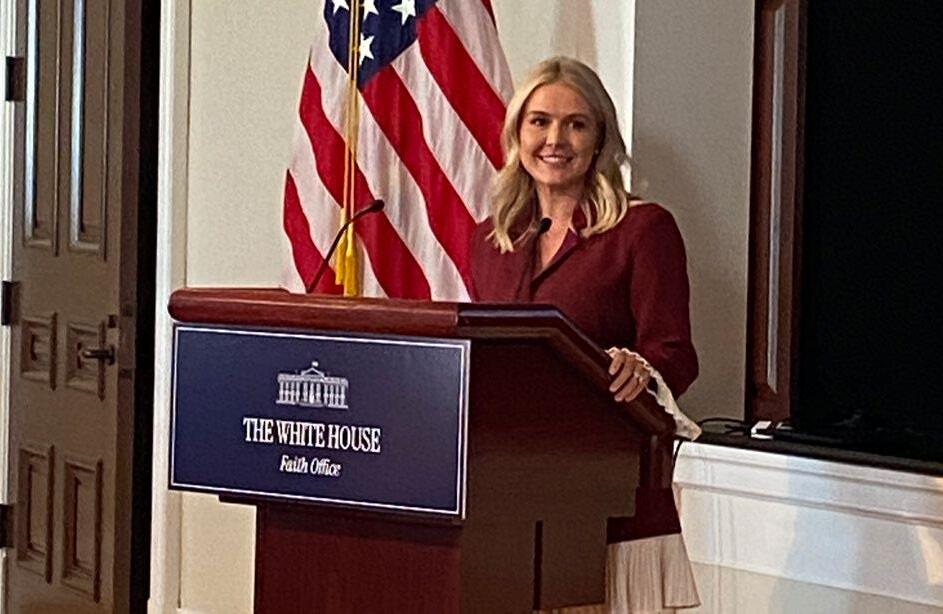
Dr. Michael participated in four different briefings at the White House in 2025. Members of the Trump Administration highlighted their efforts to combat rising antisemitism as well as to stop government discrimination of Christians in America. Another briefing was for members of the National Religious Broadcasters (NRB) Presidents’ Council and strengthened ICEJ USA’s influence within Christian media and policy circles, reinforcing its role in shaping discourse on Israel, antisemitism, and religious freedom.
PRESIDENT TRUMP
In February, ICEJ USA’s ACLI network took decisive action during a critical US policy moment. At the NRB Convention, ACLI announced a historic resolution affirming the Jewish people’s right to Judea and Samaria. Signed by hundreds of Christian leaders nationwide, the resolution was delivered to President Donald J. Trump, signaling unified Christian advocacy at a consequential juncture.
Also in May, ICEJ USA delivered its “No Bombs for Iran” petition to President Trump, representing 55,599 Americans urging firm action to prevent Iran from obtaining nuclear weapons. The petition amplified the voices of thousands of Christians during a time of heightened concern over Iran’s nuclear ambitions and regional threats to Israel. In June, ACLI delivered a letter signed by prominent Christian leaders urging President Trump and Secretary of State Marco Rubio to oppose efforts by the United Nations to impose Palestinian statehood on Israel.
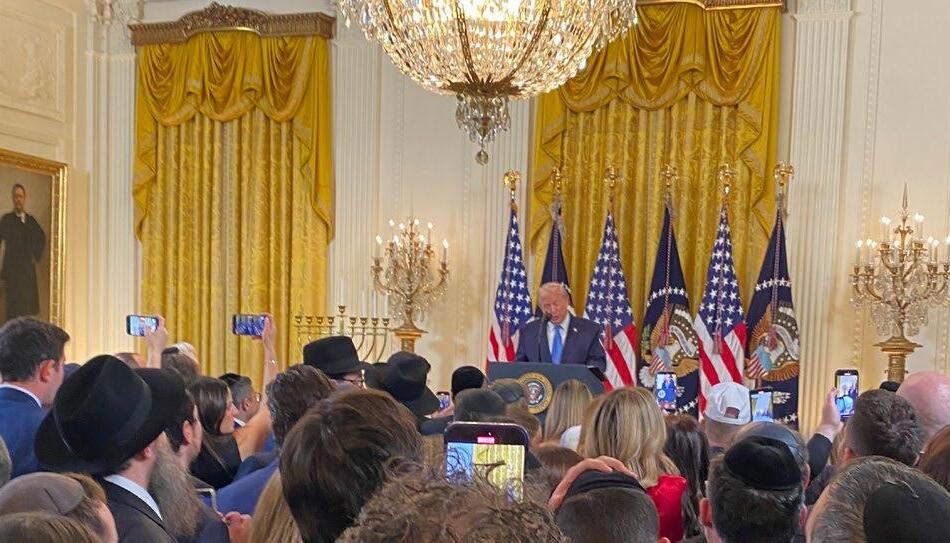
The very busy year in DC concluded with Dr. Michael and her husband, George Michael, attending a Hanukkah reception at the White House, along with some 300 Jewish leaders. At that gathering President Trump reviewed his
extraordinary actions in support of Israel during both of his administrations and demonstrated the very warm relationship he has with many in the Jewish community.
The ICEJ USA has been active in Washington DC since its founding in the early 80s, but 2025 was a year of increased impact and partnership that has set the stage for even greater participation, collaboration, and advocacy in 2026.
(Left to right) ICEJ USA Director of Communications Shannon Bennett; Ambassador Mike Huckabee; ICEJ USA Executive Vice President Linda Smith; ICEJ USA Event Coordinator Allison Griffin
White House Press Secretary Karoline Leavitt addresses a briefing on efforts to combat rising antisemitism.
President Donald Trump at the White House Hanukkah party
“I CAME TO SERVE AND ISRAEL SERVED ME BACK”
By Nativia Buehler, ICEJ AID Administrator
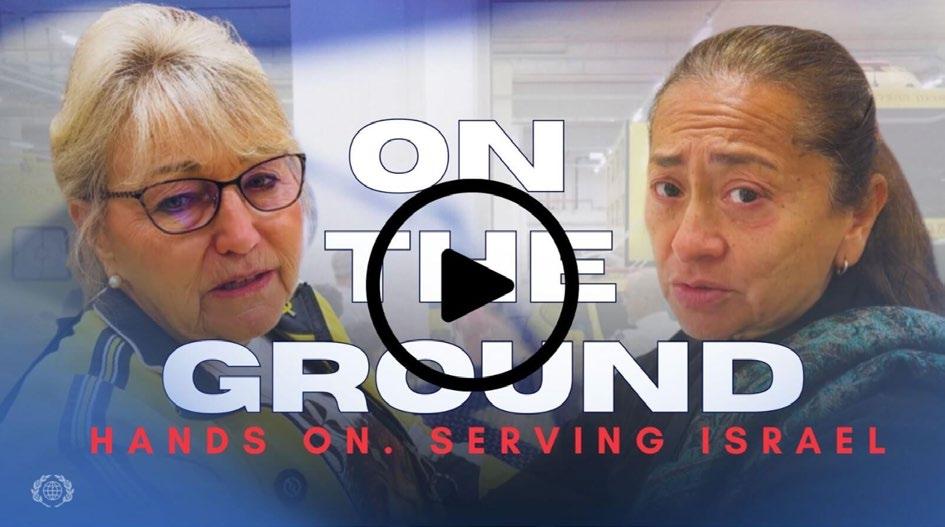
In November, two groups of volunteers, from the United States and from nations across Europe, Asia, Africa, and Latin America, came to Israel to serve in a season of national healing following the war. What united them was not the itinerary, nor the tasks, but a shared calling to stand with Israel in love and solidarity and be part of the work of restoration. Everywhere they went, they discovered that simple acts of service can bring hope, connection, and healing, sometimes in ways far greater than the volunteers themselves expected.
SERVING ISRAEL THROUGH PRACTICAL HELP
The volunteers’ days were spent doing the most essential work: packing food boxes, sorting clothes, tending gardens and animals, preparing homes for Holocaust Survivors, supporting farms, and caring for communities still recovering from the trauma of October 7. Volunteer service is practical, but its intent is to show solidarity and support for local Israeli communities “The most important moments weren’t about the tasks we did but about being present, speaking into lives,” reflected Leroy, a tour participant.
HEALING ENCOUNTERS ACROSS THE LAND
At the Agro Tech School, volunteers were welcomed like old friends. The students’ excitement was palpable. One volunteer from Kenya named Peace told students, “We are honored to be here. You risk your lives in daily life, and you keep this land alive.” Asaf, a farmer and trainer at the school, responded: “Thank you for your support—ICEJ is a true friend to our community.”
In Kibbutz Be’eri, still bearing the scars of the attack, a community representative said, “You’re helping rebuild our home. ICEJ is our friend.” The sight of flowers
blooming, construction underway, and birds singing was a stark juxtaposition to the destruction and a reminder of the Israeli people’s resilience. Tim from the United States reflected through tears: “I feel like a weeping tourist. ‘Comfort, comfort my people.’ That’s what I came to do.”
WITNESSING THE BLESSING OF THOSE WHO SERVE
In fields and classrooms, in kibbutzim and kitchens, smiles and tears flowed in equal measure. Hands were dirtied with work; hearts were lifted in prayer. New friendships were planted like seeds that will continue to grow.
Barry Denison, ICEJ USA Director of Finances shared: “We want to see more Christians on a tour like this again in Jerusalem. There is nothing like experiencing the land, the people, and the hope firsthand.”
STEVE AND LORI SCHWARTZKOPF
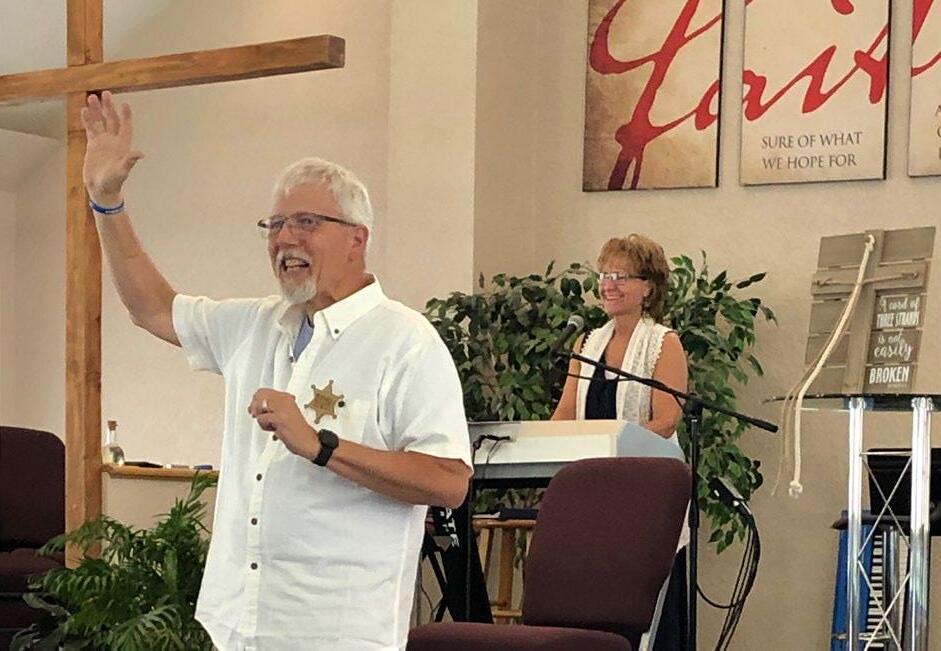
In early December, ICEJ USA Outreach Director Dr. Tyson Lambertson spoke at Life Unlimited Church. Pastor Steve Schwartzkopf shared how his congregation’s financial health has been directly tied to their commitment to supporting the Jewish people. Here is his story.
My name is Steve Schwartzkopf. My wife and I have pastored Life Unlimited Church in Scottsbluff, Nebraska, for 30 years. I truly love my church—we are a family of people who are becoming kingdom-builders—steady, sincere believers who love Jesus Christ and deeply desire to honor Him.
We are not a perfect church. We are a church family, which means we make mistakes in judgment and leadership at times. But through a couple of near failures at Life Unlimited, the Lord taught us a lesson that has marked us to this day.
A Word of Instruction
Our church has never been numerically large. At our highest, we averaged around 60 people which can put financial pressure on the church. In our early years, we were in one of those seasons, struggling to pay bills. During one particularly difficult season—when keeping the lights on felt like a miracle—I received a clear word from the Lord during prayer. It was simple, but it shook me: “I came for the Jew first. You need to put the Jewish people first in your church finances.”
Research led me to a reputable ministry in Israel. I brought the matter to our church leadership, and the conversation was intense. These were good people who loved me and feared I wouldn’t be paid. I assured them that if God were leading us, He would also provide. We stepped out in faith with a monthly gift of $50 a month. Within three months, our finances turned around. We were meeting every commitment, paying every bill, and operating in the black. Our great God honors those who honor the Jewish people.
A Lesson Forgotten
After a time of growth, a few faithful givers moved away, and others transitioned to different churches—and we felt the financial squeeze once again. Our leadership team had since changed and decided to suspend all missions giving—starting with the Jewish ministry. The shift was rapid. Within months, we were in serious financial trouble and barely surviving.
After a couple of years wrestling through this, God spoke to me again during prayer: “Steve, didn’t I tell you to support the Jewish people? Haven’t we already walked through this test? Didn’t you see My blessing when you obeyed?”
The Blessing of Obedience
After bringing the background story to the new team, without hesitation, they decided to restart our $50 monthly support. Within three months, our finances not only stabilized, but we had more than enough. One couple who had moved away even began sending their tithes back to us! God was moving in Life Unlimited.
We are still a small church, but we are a devoted body that understands giving, obedience, and God’s heart. Recently, when my friend Dr. Tyson Lambertson began serving as the ICEJ USA Outreach Director, we transitioned our support to Israel, and even increased it.
A Final Thought
We live in a time when hostility toward the Jewish people is increasing—though, in truth, it has always existed. As followers of a Jewish Messiah, we cannot join the world in that hostility. We are called to follow Jesus, who placed the Jewish people first! Our motivation must be obedience and Christlikeness, not personal gain or blessing. As Romans 1:16 reminds us, the gospel is God’s power for salvation—first for the Jew, and also for the Gentile.
For some in Israel, the holidays are difficult seasons. However, this year, the ICEJ saw light breaking through in deeply human and hope-filled ways. Through an ICEJ outreach, we were able to support 115 families in Haifa and Nazareth, ensuring that homes with empty cupboards could still feel the warmth of the holidays.
WHEN HELP ARRIVES AS PRESENCE
Working closely with local Nazareth pastors Afif and Mimi, the ICEJ AID team visited families personally, listened to their stories, and shared holiday gifts. These visits revealed not statistics, but faces—lives marked by hardship, resilience, and quiet dignity.
One widowed woman living on the margins and facing family struggles met the ICEJ team outside her home and, sitting with Jannie Tolhoek over tea, smiled through tears. While the food support brought relief, she said being seen and heard mattered even more.
Marlene, another widow with immense health challenges that have included 18 surgeries, is raising two teenage children while running a tiny home-based manicure business to stay afloat. Yet her laughter fills a room. Gratefully, she told Jannie, “You feel like my sister.”
A third visit was with Mary and Kamal, originally from Bethlehem and Egypt, now longtime residents of Nazareth. This was ICEJ’s third visit, and the relationship has grown deeply personal. Despite ongoing health and financial challenges, they are known for generosity and hospitality. This Christmas was especially joyful as they welcomed a new grandson. Thanks to the support they received, their family gathered, prepared a festive
LIGHT THAT REACHES ISRAELI DOORSTEPS
By Nativia Buehler, ICEJ AID Administrator
meal, and celebrate together. They asked for prayers and thanked the ICEJ for standing with them.
“These visits are more than a holiday gift,” Jannie reflected. “They are a message that people are seen, remembered, and loved.”
In addition to these home visits, ICEJ volunteers from around the world partnered with Pastor Saleem in Nazareth to pack 1,000 Christmas packages for local children. Working with joy and laughter, each package was prepared with care—carrying not only treats, but a message of hope.
HAIFA HOME
In Haifa at the ICEJ Home for Holocaust Survivors, that same spirit was felt. The local team prepared small Hanukkah gifts for residents, Israeli staff, and caregivers, each accompanied by a card featuring artwork created by the residents themselves and a message about light overcoming darkness. Several residents were deeply moved, sensing the care behind the gesture.
Holidays are central in Jewish society. Every family deserves to celebrate with dignity and hope, and the faithfulness of ICEJ supporters around the world made this possible for many this year. As Hanukkah candles glowed across the nation and those in Nazareth and Haifa received their gifts, light truly shined in the darkness.
Your support enables ICEJ AID to continue reaching vulnerable families across Israel with practical help, dignity, and hope—during the holidays and throughout the year.
A Holocaust Survivor receives a Hanukkah gift from the ICEJ
REAL LOVE AT THE “RED CARPET”
By Naomi Ammon, ICEJ Publications Assistant
From the moment the ICEJ team stepped across the threshold of the Red Carpet Center in Tel Aviv until they swept the day’s debris out the door, they served tirelessly— preparing food, folding clothes, painting nails, washing dishes, making tea, and distributing personal hygiene kits.
The ICEJ began supporting the Red Carpet Center several years ago after founder Anat Brenner opened it to offer practical help to unemployed and vulnerable women caught up in the rampant homelessness, drug abuse, and prostitution in southern Tel Aviv. The Red Carpet Center provides a welcome haven, offering nourishing meals, warm clothes, a place to rest, and access to medication.
A PLACE OF SAFETY WITH A PERSONAL TOUCH
What distinguishes the Red Carpet center from other women’s shelters is its extraordinary attention to detail. The main room features a boutique-style clothing rack where volunteers act as “personal shoppers,” placing each woman’s chosen items into a shopping bag. Personalized shampoo and conditioner kits await each guest in the center’s showers.
These details exemplify the dignity and care this center provides. And that care extends far beyond conventional limits. It is not reserved for the religious, respectful, or drugfree. Some visitors come only to pick up food or toiletries. Others simply stop by for a warm drink and conversation.
TENDERNESS IN HARD PLACES
For many, this kind of loving care is a rare and deeply meaningful expression of tenderness amid difficult circumstances—especially for women like Maia.* Over tea and almond cake, Maia shared about her several children, all of whom are currently in government care. She does not have an apartment or reliable employment and is still recovering from a recent C-section. The Red Carpet provides a safe, clean place away from the streets where she can rest and regain strength. As she chatted about her baby boy and showed Anat his photos while blow-drying her hair, it became clear just how life-giving the center is for women like Maia.
Maia may lack many opportunities, but Anat and her team's care and dedication bless women like her, offering safety, affirmation, and a chance to flourish.
CHRISTIAN ZIONISM: PART 1
Who Are Christian Zionists?
By Dr. Susan Michael, ICEJ USA President
The term Christian Zionist was first used at the end of the nineteenth century; therefore, it is a relatively new concept and one that requires some explanation. In addition, it is often discussed amid controversy surrounding the highly emotive subject of modern Israel, leading to easy mischaracterization. Defining the term is therefore crucial, and a correct definition must start with an explanation of Zionism itself.
ZIONISM
Zionism today refers to the largely secular political movement that began in the late 1800s and led to the founding of the State of Israel in 1948. Therefore, the term “Christian Zionism” could be considered an oxymoron describing a religious affiliation with a secular movement, which helps explain some of the misunderstanding and debate surrounding it.
Anti-Israel activists have demonized the term Zionism, which has had a detrimental effect on the use of the term Christian Zionism. It is the same with the term Evangelical Christian; antiChristian liberals have so demonized the word “Evangelical” that, increasingly, Christians are no longer using it.
Personally, I do not want to give up on the term Zionism because it is, at its root, a biblical concept. The word “Zion” denotes Jerusalem, the very place
God brought the people He chose for Himself to worship and the center of His redemptive activity. Zion is a real place in Israel, but also a theological symbol of God’s faithfulness, kingship, and future restoration: from Zion, God’s law will go forth (Isaiah 2:3; Micah 4:2), and from Zion, Jesus will one day rule and reign (Zechariah 14:4; Acts 1:9–12).
Ultimately, Zion (Jerusalem) is the one place on the face of the earth where God chose to set His name and dwell among His people:
For the Lord has chosen Zion; He has desired it for His dwelling place: “This is My resting place forever; here I will dwell, for I have desired it.” (Psalm 132:13–14)
After Rome destroyed Jerusalem in AD 70 and the Jewish people were exiled among the nations, where they have been for over 2,000 years, the hope of returning to Zion became central to Jewish life, prayer, sentiments, and most importantly, identity. Zionism is thus the modern political outworking of thousands of years of Jewish longing to return to Zion.
At its heart, Zionism is a religious movement that needed a political effort to make it a reality. Christian supporters of Israel tend to view Zionism within this biblical context and not as a separate political movement that is somehow
distinct and to be disdained. It is a natural progression and a necessary expression of the spiritual love for Zion found in the Bible.
CHRISTIAN ZIONIST
A definition of Christian Zionist would then be a Christian who supports the right of Jews to self-determination in their ancient homeland. Under this definition, former International Christian Embassy Jerusalem (ICEJ) Executive Director Rev. Malcolm Hedding writes that “many Christians would qualify, no matter what their reasons are for this support.”1
The term was first used in 1897 at the First Zionist Congress by Theodore Herzl. This father of the Zionist Movement used the term when acknowledging the presence of several Christians among the Congress attendees. One of those Christian Zionists was Jean Henri Dunant, founder of the Red Cross. Those Christians supported the return of the Jews to their homeland for both biblical and moral reasons—it was an act of justice for a persecuted people.
Much has happened since 1897, and today, there are many reasons a Christian should support the return of the Jewish people to their ancient homeland and the modern State of Israel. What follows are a few of the most common, spanning from personal, practical, and political to biblical.
Personal Reasons
Millions of Christians have visited Israel and its holy sites and seen their Bible come alive in profoundly lifetransforming ways. It only stands to reason that these pilgrims return with an excitement about Israel and a deep appreciation for the country. They were blessed by the fact that Israel protects their access to sacred places and preserves the archaeological treasures of biblical history found there.
Communal Reasons
Christians support Israel because Israel provides the only safe haven for Christians in the Middle East and is consequently the only country in the region in which the Christian community is growing. This Israeli minority enjoys full Israeli citizenship, freedom of worship, and greater opportunities for advancement than in any Muslim country.
Practical Reasons
Israel’s incredible contributions across healthcare, agriculture, and technology are saving lives, creating jobs, and enriching communities worldwide. Israel is home to over 1,000 medical device companies and ranks among the world’s leading countries in terms of patents per capita. These companies are leading at the intersection of hi-tech and healthcare and generating cuttingedge devices and medical care used in hospitals around the world.
Political Reasons
Israel is the only liberal democracy in the Middle East and shares our values of freedom of speech, freedom of worship, and human rights. By supporting Israel, America not only helps safeguard democracy in the Middle East but also strengthens its own security and global leadership. We benefit greatly from Israel’s intelligence and security expertise.
Economic Reasons
Support of Israel is a good investment. All 50 states in the United States benefit
from cooperative agreements with Israel, and out of 250 multinational companies with operations in Israel, 80 percent are US companies. Benefits like this are realized around the world, and the greatest blessing for the Palestinian people lies in an alliance with Israel through which they, too, would enjoy the benefits of her strong economy and free society.
Legal Reasons
Israel’s founding was completely legal and formulated by the community of nations as reflected in the 1917 Balfour Declaration, the 1920 San Remo Conference Resolution, the 1922 League of Nations vote, the 1947 UN Partition Plan, and Israel’s admission to the United Nations in 1949. Every country in the Middle East was founded out of the same legal process after the end of the Ottoman Empire. Israel’s founding was legal, and Christian support is justified.
Moral Reasons
The tragic history of Jewish-Christian relations was plagued by antisemitism perpetuated by confessing Christians. The acknowledgment of this history has moved many Christians today to condemn the demonization of the Jewish people and stand with Israel while seeking ways to establish a new relationship with them based on mutual respect. Their support of Israel is an outgrowth of their desire to make amends and be a blessing to the Jewish people.
Biblical Reasons
The biblical basis for Christian support for Israel is extensive and is not reliant on one isolated section of the Bible but found throughout. Old Testament covenants concerning the calling of the Jewish people and their gift of land beginning in Genesis 12 are affirmed throughout the Psalms, the prophetic books, and the New Testament. God’s Word makes it unmistakably clear: we have a biblical mandate to love and bless the people and nation He set apart to
bring glory to His name and to fulfill His redemptive plan for the world.
CONCLUSION
One must conclude that while there are many convincing arguments based on history, morality, and common sense to support Israel, for Biblebased Christians, the biblical basis for Christian support of Israel— Christian Zionism—trumps them all and demands our lifelong pursuit of loving and blessing the Jewish people. Next month’s article will discuss the biblical basis for supporting Israel in greater detail.
1 Malcolm Hedding, “What Is Christian Zionism,” Charisma Magazine, 26 Mar. 2010.
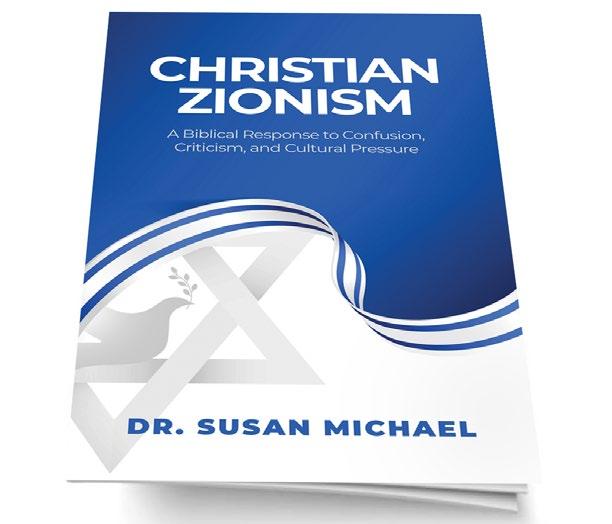
CONFUSED ABOUT CHRISTIAN ZIONISM?
Cut through the noise with Dr. Susan Michael’s newest booklet: Christian Zionism: A Biblical Response to Confusion, Criticism, and Cultural Pressure
Clear, concise, biblically grounded—and designed for anyone seeking understanding. AVAILABLE NOW! Get your copy at: www.icejusa.org/store