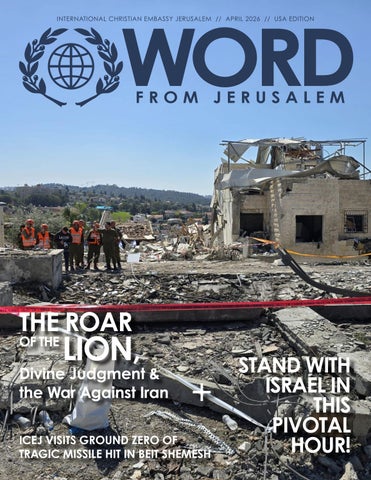
The International Christian Embassy Jerusalem was established in1980 in recognition of the biblical significance of all of Jerusalem and its unique connection to the Jewish people. Today the ICEJ represents millions of Christians, churches, and denominations to the nation and people of Israel. We recognize in the restoration of Israel the faithfulness of God to keep His ancient covenant with the Jewish people. Our main objectives are:
• To stand with Israel in support and friendship
• To equip and teach the worldwide church regarding God’s purposes with Israel and the nations of the Middle East
• To be an active voice of reconciliation between Jews, Christians, and Arabs, and to support the churches and congregations in the Holy Land
From its head offices in Jerusalem, the ICEJ reaches out into more than 170 countries worldwide, with branch offices in over 90 nations.
Our vision is:
• To reach every segment of Israel’s society with a Christian testimony of comfort and love
• To reach and actively represent to Israel the support of denominations, churches, and believers from every nation on Earth
The Christian Embassy is a non-denominational faith-based ministry supported by the voluntary contributions of our partners and friends across the globe. We invite you to join with us as we minister to Israel and the Jewish people worldwide by donating to the ongoing work and witness of the ICEJ.
WORD
CREDITS
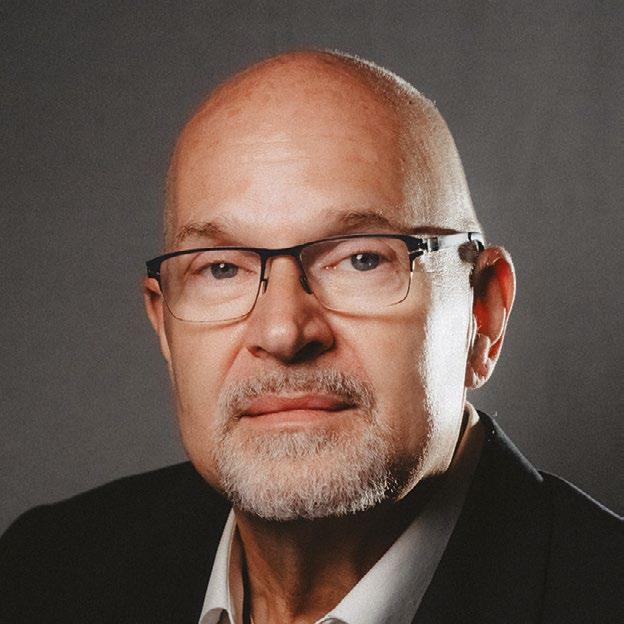
ICEJ President Dr. Juergen Buehler
USA President Dr. Susan Michael
VP International Affairs Dr. Mojmir Kallus
VP Finance David van der Walt
USA Director of Finance Barry R. Denison
Senior VP & International Spokesman David Parsons
USA Director of Communications Shannon Bennett
VP AID & Aliyah Nicole Yoder
Managing Editor/Publications Director Laurina Driesse
USA Managing Editor Karen Engle
Graphic Design/Illustrators Ryan Tsuen, Nancy Schimp
The New King James Bible is used for all Bible references unless otherwise noted.
Word From Jerusalem is published by the International Christian Embassy Jerusalem. Reproduction in whole or in part without written permission is prohibited. Word From Jerusalem has no subscription price and is supported through contributions worldwide. The ICEJ USA Branch is a 501(c)(3) non-profit organization with offices in Tennessee, Florida, and Washington, DC. All gifts to this ministry are taxdeductible according to United States law.
Dear Friends,
In the early hours of February 28, 2026, Israelis awoke to a dramatic escalation in the region as the United States and Israel launched a coordinated air and missile strike against Iran. The large-scale offensive targeted Iranian military and government infrastructure and was dubbed “Operation Lion’s Roar” by Israel and “Operation Epic Fury” by the United States. In the opening strikes, Iran’s Supreme Leader, Ali Khamenei, along with other senior officials, was killed—sparking scenes of celebration among many Iranians who had endured decades under his tyrannical rule.
Iran quickly retaliated, launching hundreds of ballistic missiles and drones toward Israel, US bases in the Middle East, and countries hosting American forces, including Qatar, Bahrain, and the UAE.
Israelis once again found themselves rushing to bomb shelters throughout the day. Amid the unfolding conflict, the International Christian Embassy Jerusalem (ICEJ) did not miss a beat. We quickly stepped up our activities to provide emergency assistance to those most affected. In this issue, you will read several articles about how we are standing with Israel in this pivotal hour.
I also reflect on the campaign as a prophetic “roar from Zion,” drawn from Joel 3:16—a theme which, not coincidentally, we had chosen for this year’s Feast of Tabernacles. I invite you to stand firm with us as we continue loving, blessing, and praying for the Jewish people, while looking forward with hope to a free Iran and a future of peace and security in the Middle East.
God bless,
Dr. Juergen Buehler
ICEJ President
THE ROAR OF THE LION, DIVINE JUDGMENT & THE WAR AGAINST IRAN
By ICEJ President Dr. Juergen Buehler
On Shabbat morning February 28, 2026, at 8:15 a.m., we woke here in Israel to the eerily familiar alarm tone of the Home Front Command app. We were instructed to stay close to a safe room, as missiles from Iran were expected at any moment. By that time, Ayatollah Ali Khamenei and 40 other top leaders surrounding him were already history, and the war to finally topple the rest of the Iranian terror regime had begun. Although many anticipated that early March could bring an escalation, none of us quite expected it on that quiet Shabbat.
In the first minutes, the military spokesman announced that the operation was named Magen Yehuda—“Shield of Judah.” It sounded fitting. I was reminded of God’s promise to Abraham in Genesis 15: “Fear not, I am your shield.”
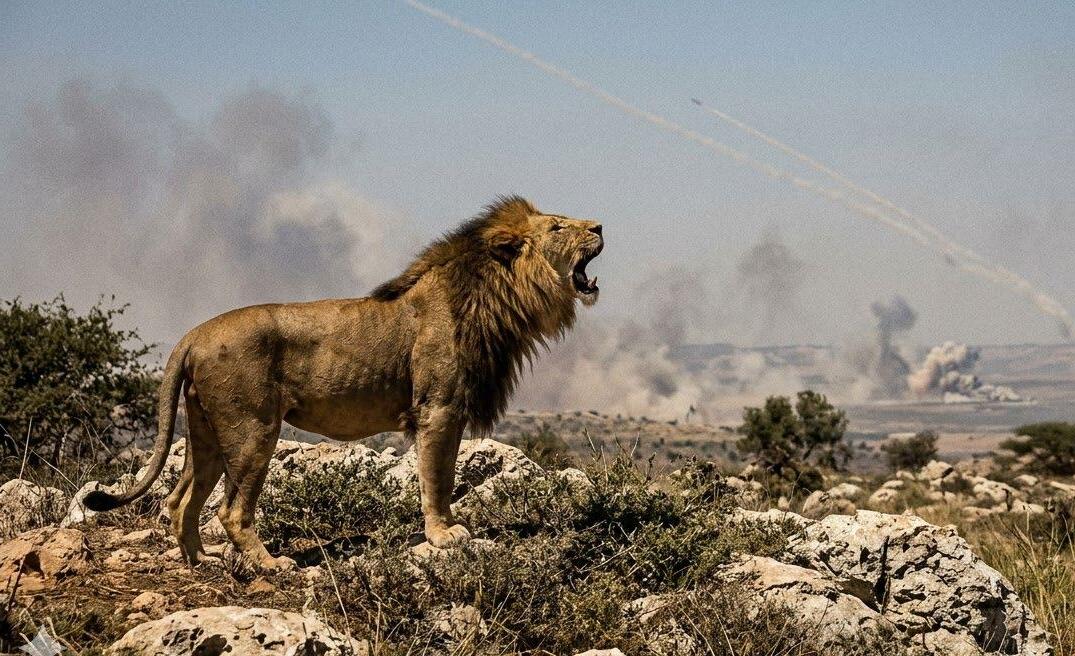
Yet less than an hour later, in an unprecedented move, the Prime Minister’s Office issued a new message: the campaign would instead be called Sha’agat HaAryeh “The Roar of the Lion.”
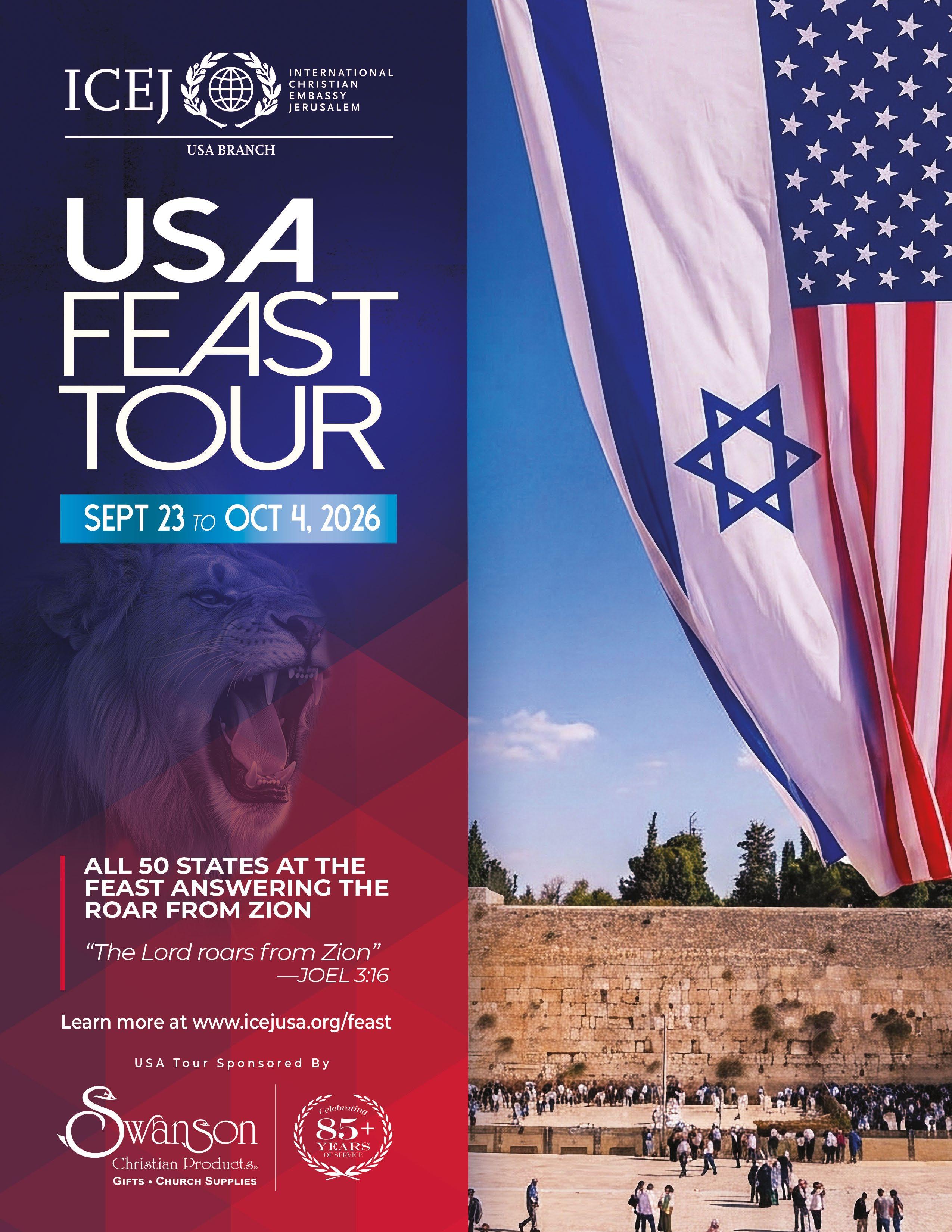
I was amazed. That name could not have been closer to the theme of this year’s Feast of Tabernacles: “The Lord Roars from Zion,” taken from Joel 3:16. I sensed that God Himself was speaking through this moment—that 2026 would be a year when His roar would be heard clearly. Amos said it equally as well:
A lion has roared! Who will not fear? The Lord God has spoken! Who can but prophesy? (Amos 3:8)
The prophetic image of the roaring Lion is not the gentle whisper of love but the voice of judgment and divine intervention. Joel 3 warns of God’s response to nations that “divided My land” (v. 2). Likewise, Jeremiah declares: “The Lord will roar from on high . . . for He has a controversy with the nations” (Jeremiah 25:30).
My colleague, David Parsons, recently wrote about Isaiah 34:8, where God’s judgment rises because of the “controversy of Zion.” Scripture makes it unmistakably
clear: a day comes when God will judge nations according to how they related to Israel. No other nation provokes such persistent, irrational disdain. Israel stands as a constant reminder that the God of the Bible—the God of Israel—still directs history.
The IDF’s campaign “Roaring Lion” announces judgment on a regime that, for 47 years, called out “Death to Israel,” enriched uranium to eliminate the Jewish State, and forced its citizens to trample the Israeli flag on the streets. Today, that regime is collapsing into the dustbin of history.
It is no coincidence that the joint strike by Israel and the United States took place only days before Purim. The book of Esther tells of Haman, an Amalekite prince who served as a senior official in ancient Persia—modern day Iran—who plotted to annihilate the Jewish people. Interestingly, Israelis pronounce “Khamenei” in a way strikingly similar to “Haman,” and not only their names but also their hatreds align. Just as Haman urged the king to decree the destruction of the Jews (Esther 3:9), the Iranian regime repeatedly declared its intention to wipe Israel off the map. Their proxies—Hamas, Hezbollah, and the Houthis—share the same ambition. Hamas states explicitly in its charter that it will fight until every inch of “Palestine” is cleansed of Jews. These groups embody the “perpetual enmity,” the hatred of Amalek, condemned in Ezekiel 35.
Purim, however, is the festival of reversal:
On the very day the enemies of the Jews hoped to overpower them, the opposite occurred.
(Esther 9:1)
Sorrow turned to joy and mourning to celebration (Esther 9:21–22). Mordechai, who was destined for execution, became the king’s chief minister, and being Jewish became an honor in the Persian Empire (Esther 8:17).
When we look at the past two-and-a-half years, the parallels are remarkable. On October 7, 2023, Israel feared for its very existence. Top generals admitted that if Hezbollah and the terror networks in Judea and Samaria had
joined the attack, Israel’s survival would have been in real danger.
Yet two-and-a-half years later, we are witnessing a near total reversal. Hamas and its stronghold in Gaza are in rubble. Hezbollah is weakened and under renewed pressure to give up the fight. The hostile Assad dynasty in Syria is now languishing in exile. And the head of the terrorist octopus—Iran—is facing what may be its final blows.
The Hamans of our time are falling. Israel is being delivered from its enemies, and the entire Middle East may see more stable and peaceful times ahead as a result.
Many analysts agree that Iran’s reckless attacks on fellow Muslim nations—Qatar, the UAE, Saudi Arabia, Bahrain, and others—have achieved the opposite of what Iran intended. Behind the scenes, the Abraham Accords are strengthening. Even more historic, Saudi Arabia publicly supported America’s mission against Iran—a mission carried out together with Israel. For the first time in history, Muslim nations have effectively joined an alliance with Israel in a strike against another Muslim nation.
Meanwhile, millions of Iranians rejoiced in the streets at Khamenei’s death, expressing their hope for freedom. One of our Iranian friends just told us, “We will be the first nation in the Middle East to free ourselves from the shackles of Islam.” Our ministry friend Christine Darg also noted that Iran could even become the first Muslim nation turned Christian in the region. The change we see in Iran today is undoubtedly also the result of decades of prayer for the suffering church in Iran and around the world—Iran has witnessed for the past decades one of the fastest church growth rates in the world with the number of Iranian followers of Jesus is somewhere between one to three million. The Lion of the tribe of Judah has already been roaring for decades over the land of Cyrus and Darius.
In short, Purim is about reversals—and what reversals we have witnessed in just 30 months. At the same time, the events unfolding in the Middle East are also a warning to all nations: The time is coming when the Lord will roar against any nation that harbors a controversy with Zion. Joel 3 speaks of “multitudes in the valley of decision.” There is still time to choose. Some nations have already chosen to stand with Zion. At the Feast of Tabernacles last October, we honored the seven nations that have opened embassies in Jerusalem—and more will follow.
For church leaders, political leaders, and believers everywhere, the message is clear: We are all in the valley of decision. God is calling His people and the nations to stand on the right side of history, for this is the time when the Lord roars from Zion.
STAND WITH ISRAEL IN THIS PIVOTAL HOUR!
By ICEJ Vice President & Senior Spokesman David Parsons
We are now more than a month into the US-Israeli military campaign to bring down the fanatical Iranian regime. Here in Jerusalem, we have hunkered in our bomb shelters day after day, as dozens of Iranian missile barrages sailed overhead on their way to Tel Aviv and other Israeli cities. Each time, the explosions from rocket interceptions above us got louder and the ground impacts came closer.
The day after the war started, we saw the tragic missile strike that leveled a synagogue and public bomb shelter in Beit Shemesh, only twelve miles from Jerusalem. Nine people died from the blast. Entire families were wiped out. One woman lost her husband the day before they were supposed to celebrate their 13-year-old son’s bar mitzvah. Instead, the boy had to bury his father.
Within hours of the Beit Shemesh disaster, Iran started deliberately targeting Jerusalem for the first time, using their best guided missiles. One unexploded warhead fell in the Hinnom Valley outside Jaffa Gate, just 500 meters from the Temple Mount. Another rocket blew a large crater in a main highway in Jerusalem. Iran even brazenly announced it had targeted Israeli government offices in “East Jerusalem.”
Like the Iranian attacks on numerous Arab countries, the missile barrages on Jerusalem are signs of a desperate regime in the last throes of their power. With the
confirmed death of Ayatollah Ali Khameini and dozens of other senior Iranian leaders on day one, the Islamic Republic knows it is about to meet its end. Masses of Iranian people are longing for that moment, but we do not know yet exactly when it will come.
Since the war began, many Christians joined us in praying for a swift and decisive victory over the Iranian regime. Still, Israeli authorities have told the public to expect the fighting to continue for weeks to possibly several months, while US President Donald Trump just has not given an exact time frame—only that the United States will “finish the job.” We simply do not know how long this war will last and whether it might spread further throughout the region.
But what we do know is that right now, Israel needs our help. This is a pivotal moment for the Jewish people gathered back in their ancestral homeland. A clear victory could radically change the dynamic in the region, expanding the prospects of Israel’s wider acceptance by its Arab neighbors. But they need to know that Christians are at their side, to give them the courage and stamina to endure yet another difficult season.
The International Christian Embassy Jerusalem (ICEJ) is uniquely positioned to give you a direct way to help hurting and needy Israelis. We ask you to join our efforts to support Israel in three practical areas.
1. URGENT AID
Help us meet the urgent needs of Israelis severely impacted by this war. By giving to our Emergency fund, you will aid us in:
• Assisting Israeli families displaced from their homes by missile strikes
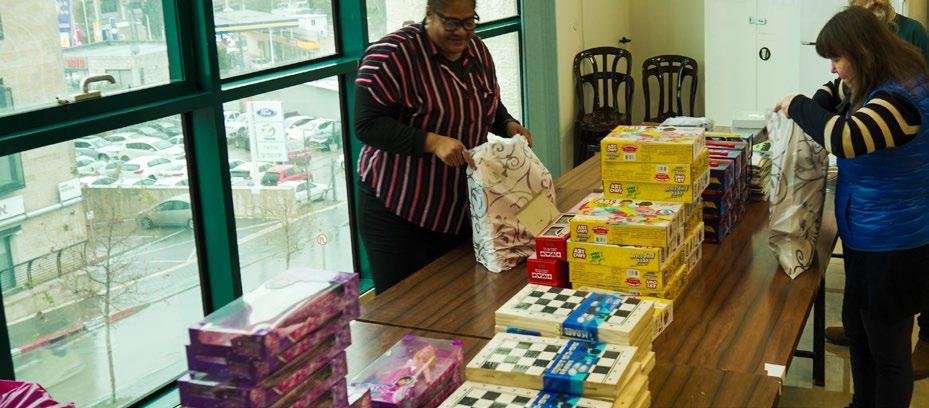
• Providing games, toys, and group youth activities for children in bomb shelters
• Caring for Holocaust Survivors at our elderly home in Haifa
• Sponsoring trauma therapy for those suffering shock
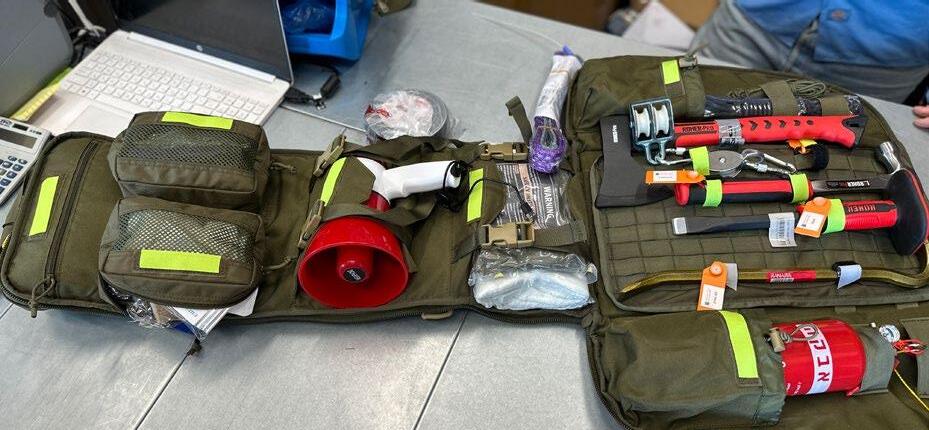
• Supplying medical and safety equipment for first responders
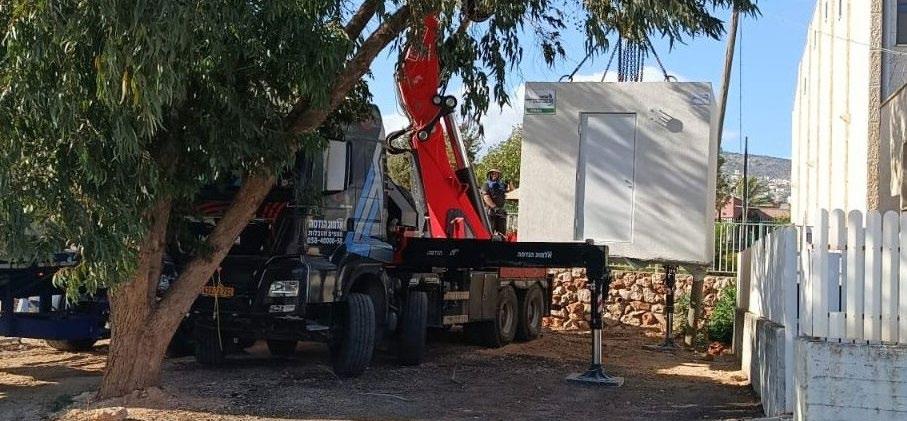
• Donating more bomb shelters in public locations without protection
• Giving financial assistance to bereaved families and injured victims
• Emergency aid grants to those who suffered loss of jobs and property
• Delivering food packages and essentials to the elderly and new immigrants
2. PRAYER
Please pray for Israel and the other nations fighting to bring down the evil Iranian regime. Here are some urgent prayer points to follow:
• Pray for Israel’s swift, decisive victory over Iran and its regional terror network.
• Pray world leaders will not force a truce that leaves the Islamist regime in power.
• Pray everyone understands the Iranian people welcome this effort to free them.
• Pray for the Iranian people to successfully oust the clerical regime in Tehran.
• Pray for a stable transitional government to be set up quickly to rule a free Iran.
• Pray for protection for Israelis and other peoples under fire from Iran.
• Pray for the American and Israeli troops waging this just war against Iran’s rulers.
• Pray for mass defections from the Iranian regime’s loyalists and the army.
And make sure to join us for the ICEJ’s daily Global Prayer Gathering, every day at 4:30 p.m. Israel time at: www.on.icej.org/ICEJGlobalPrayer.
3. SOLIDARITY
Stand in solidarity with Israel in your nation, church, and community.
• Make sure your pastor and church raise their voice for Israel at this critical time.
• Contact your government and local community leaders to support Israel.
• Speak out for Israel in your local media and on the internet.
• Hold pro-Israel rallies, including with those who also want Iran to be free.
• Contact www.icejusa.org, and see how you can help.
The hour to act is now! As Mordechai told his niece Esther in the story of Purim: “For if you remain completely silent at this time, relief and deliverance will arise for the Jews from another place … Yet who knows whether you have come to the kingdom for such a time as this?” (Esther 4:14).
Stand with Israel in this pivotal hour—give today at: give.icejusa.org/donate/icej-emergency-fund or scan the QR code.
ICEJ staff members pack toys for use in bomb shelters.
ICEJ-donated bomb shelter is installed and provides protection for a local Israeli community (Photo: Operation Lifeshield).
Emergency kits for first responders (ICEJ Photo)
OPERATION LION’S ROAR AND THE MEANING OF HOSEA 11:10
By Howard Flower, ICEJ Aliyah Director
On February 28, 2026, the United States and Israel launched coordinated military strikes against Iran targeting nuclear, missile, and military infrastructure. The campaign was named “Operation Epic Fury” by the United States and “Operation Lion’s Roar” by Israel. The joint operation struck sites in multiple Iranian cities, including Tehran and Isfahan, as part of an effort to neutralize Iran’s nuclear and ballistic missile capabilities.
Israel’s name for the operation echoes biblical imagery such as in Hosea 11:10, “They shall walk after the Lord. He will roar like a lion. When He roars, then His sons shall come trembling from the west.” Even Prime Minister Benjamin Netanyahu referenced Amos 3:8 when announcing the operation, “The lion has roared, who will not fear? ”
Let’s explore Hosea 11:10 further, specifically the phrase “He will roar like a lion,” in its original context, to unpack the depth of this verse—and how it relates to Aliyah.
1. “They shall walk” ( וּכְלְֵיֵ - yēl'ḵū )
Root: ךְַלְ
( halakh )
Meaning: This is the most common Hebrew verb for “walking” or “going.” However, in a prophetic and covenantal context, it is rarely just about physical movement. It is the primary verb used to describe a person’s relationship with God, often in the phrase “to walk in His ways.” It implies a manner of living, a pattern of conduct, and a committed following. Here, it signifies a future, wholehearted devotion, and obedience after a period of estrangement.
2. “Like a lion” ( הֵָיְֵרְאַ כְּ - kə'aryê *)
Root: הֵָיְֵרְאַ ( aryeh )
Meaning: The lion is the most powerful and majestic of beasts. In the ancient Near East, the lion was a symbol of both destructive power and royal authority. In the Hebrew Bible, God is occasionally depicted as a lion, usually in the context of judgment (e.g., Amos 3:8). Its use in Hosea 11:10 creates a powerful paradox: the same voice that could inspire terror becomes the unmistakable signal for redemption and gathering.
3. “He will roar” ( גאָ שְִׁ יֵ - yish'ag )
Root: גאַ ָשְׁ ( sha'ag )
Meaning: This verb is an onomatopoeia, a word that sounds like what it describes—the deep, resonant, and powerful roar of a lion. It is not used for human shouting or other animal sounds. In Scripture, it is almost exclusively used to describe the lion’s roar or, metaphorically, the Lord’s roar as a warrior or judge. The sound is meant to be unmistakable, authoritative, and impossible to ignore. It conveys a divine proclamation that is both powerful and purposeful.
Meaning: This is the most nuanced word in the verse. While often translated as “tremble,” its meaning in this context requires careful unpacking. Unlike words that imply terror before judgment (like pachad ), charad describes a trembling that results from a sudden, powerful stimulus. Its range of meanings includes:
• Trembling from eager agitation: Crucially, charad is used to describe a state of hurried, anxious, yet purposeful movement. In Genesis 42:28, when Joseph’s brothers find their money in their sacks, their hearts “sank” (vayeitzah libam) and they “trembled” ( yeḥerāḏū ) in fear and confusion.
• Being suddenly alert: More positively, in Ruth 3:8, Boaz “was startled” (yeḥerad) in the middle of the night—he woke with a start, suddenly alert.
In Hosea 11:10, the most fitting interpretation combines these meanings. It is not the trembling of those about to be destroyed, but the trembling of sudden, awe-filled alertness and eager agitation. It is the shiver of recognition and anticipation. When the children hear the divine roar, they will not cower in place; they will be shaken from their complacency and will spring into action, hurrying toward the source of the sound.
5. “From the west” ( ם יִָּמִ - miyyām )
Root: םָ יֵ ( yam )
Meaning: Miyyām literally means “from the sea.” For Israel, whose western border is the Mediterranean Sea, “the sea” became a synonym for “the west.” However, in prophetic literature, miyyām often carries a broader connotation of the distant, unknown lands accessible by sea—the “isles of the sea” and the nations of the Mediterranean and European coasts.
PUTTING IT ALL TOGETHER
When we combine these Hebrew nuances, Hebrews 11:10 comes alive with vivid meaning: “They will walk after the Lord; like a lion He will roar. For He will roar, and the children will come trembling with eager haste from the distant lands of the west.”
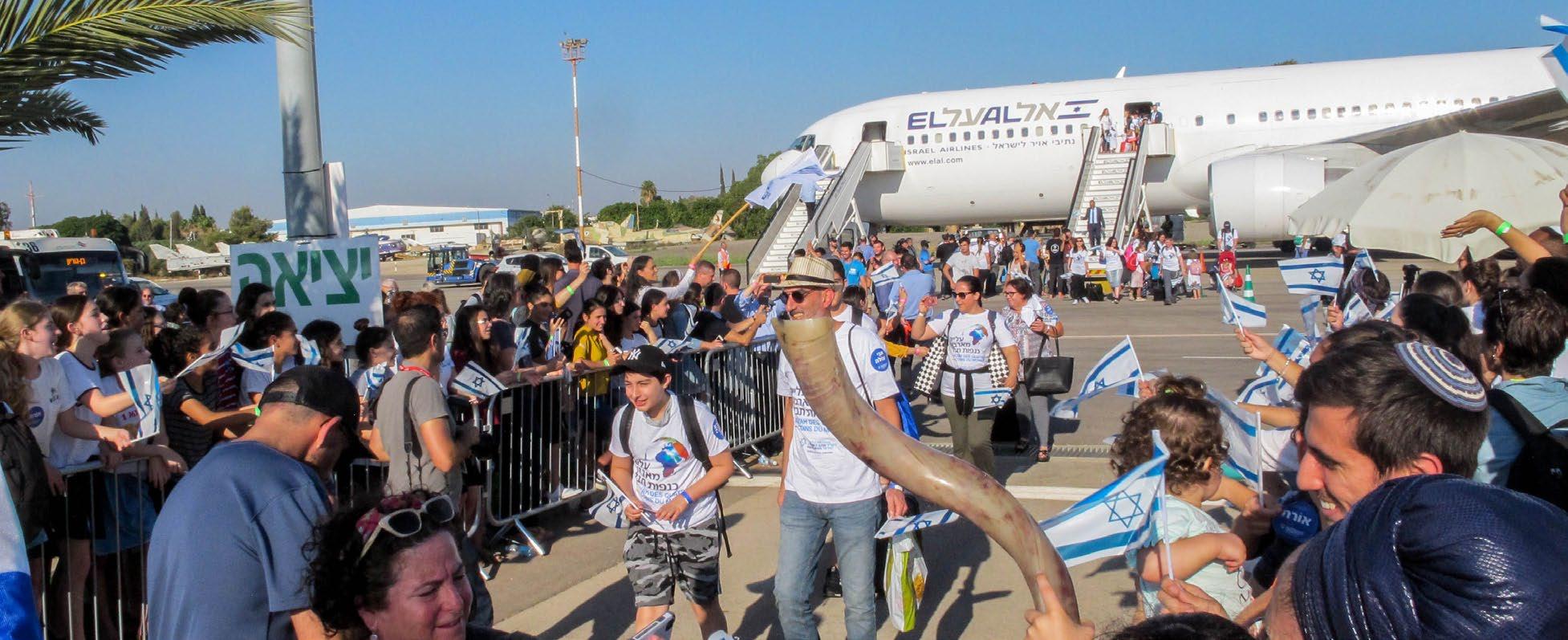
The roar is God’s powerful, unmistakable divine summons. The trembling is not paralyzing fear, but a profound, reverential awe that jolts them into action. They are not dragged back against their will; they respond with an eager, trembling anticipation to the voice of the God they had once forgotten. The verse depicts a future redemption where God’s powerful call awakens His people, inspiring them to return to Him and to their homeland with a mix of awe, reverence, and overwhelming joy. Already, the Jewish people are coming home from France, Great Britain, and North America, the “isles of the sea.”
LION OF JUDAH
The term “Lion of Judah” is a powerful biblical symbol that represents strength, kingship, and the Messiah. Here is a breakdown of its origins, other Scriptures where it appears, and its presence in the New Testament.
The First Mention: Genesis 49:9–10
The very first mention of the Lion of Judah is found in the book of Genesis, in the blessing that the patriarch Jacob (also called Israel) gave to his sons before his death. Speaking to his son Judah, he prophesied:
Judah is a lion’s cub; from the prey, my son, you have gone up. He stooped down; he crouched as a lion and as a lioness; who dares rouse him? The scepter shall not depart from Judah, nor the ruler’s staff from between his feet, until Shiloh comes, and to him shall be the obedience of the peoples. (Genesis 49:9–10)
This passage establishes the tribe of Judah as a ruling tribe, symbolized by a lion—the king of beasts, representing courage, authority, and royalty. The prophecy points to a future ruler from Judah’s line, a king who would command the nations, a promise understood in both Jewish and Christian traditions as a messianic prophecy .
The imagery of Israel or specific tribes as a lion appears in other parts of the Old Testament, reinforcing the themes of power and triumph found in Genesis. The prophet Balaam, in his oracles, also described the people of Israel with lion-like imagery: “Indeed, the people will rise up like a lioness, and like a lion raises himself up” (Numbers 23:24; 24:9).
CONCLUSION
When Operation Lion’s Roar is completed and peace returns to the Land, Aliyah will increase. The atrocities of October 7 and now in what’s happening between Iran, Israel, the United States, and other nations will act as a powerful summoning call: the loud, far-reaching roar of the Lion of Judah will gather the exiles from their dispersion. Like the blowing of a shofar, it will signal redemption and be heard from great distances, summoning God’s children to the land of their forefathers.
Help bring more Jewish people home—donate today at: give.icejusa.org/donate/icej-aliyah-fund or scan the QR code.
ICEJ USA AT THE 2026 NATIONAL RELIGIOUS BROADCASTERS CONVENTION
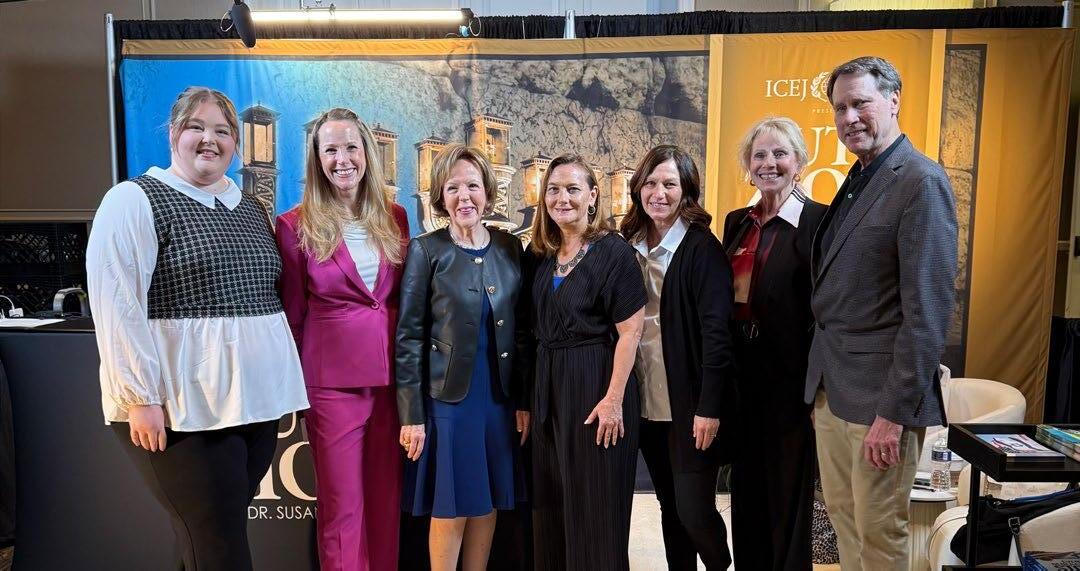
ICEJ USA staff attended the National Religious Broadcasters (NRB) Convention at the Gaylord Opryland Resort & Convention Center in Nashville, TN, in February, an annual gathering of Christian communicators and media organizations. As the central networking hub for Christian media, it is an opportunity for ICEJ staff involved in media to network, learn, and discuss issues affecting faith-based communication.
NRB BREAKFAST TO HONOR ISRAEL
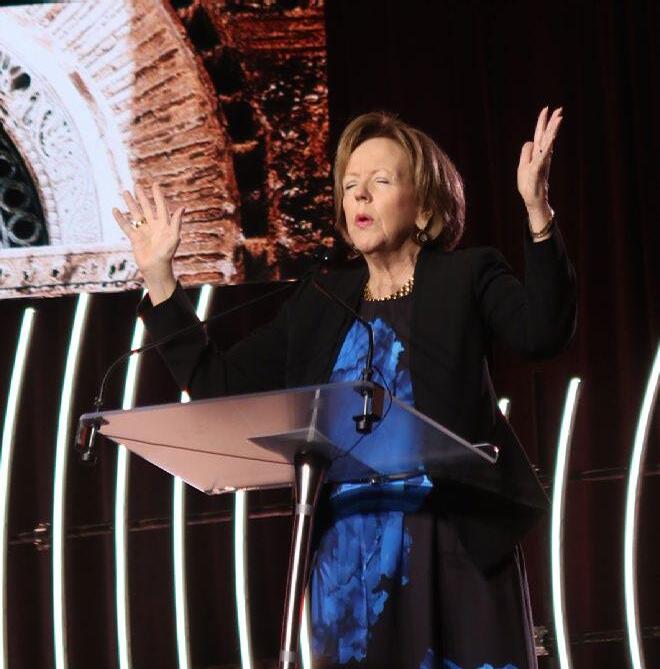
The annual NRB Breakfast to Honor Israel highlights the strong relationship between Evangelical Christians and Israel. Attendees, including several ICEJ USA staff, were encouraged by remarks from various speakers who called participants to pray for the peace and security of the Jewish State while expressing solidarity during a time of ongoing regional tensions in the Middle East. Israeli country artist Omer Netzer provided music for the event, and Dr. Susan Michael, president of the International Christian Embassy Jerusalem – USA, had the honor of offering closing remarks and gave the closing prayer.
ACLI RECEPTION
NRB, the ICEJ USA, and the newly formed Jewish–Christian Zionist Congress (JCZC) hosted the American Christian Leaders for Israel (ACLI) reception as a pivotal gathering during the NRB Convention. The event brought together more than 180 Christian and Jewish leaders, ministry representatives, and journalists committed to increasing support for Israel. Opening the reception, NRB President Troy Miller praised Dr. Michael’s leadership in building a unified Christian voice in support of Israel: “This gathering is really thanks to the vision of Susan,” Miller said. “She began bringing Christian leaders together more than a decade ago because she understood that if we are going to be effective in supporting Israel and the Jewish people, we must work together. That network now includes hundreds of organizations representing millions of Evangelicals across this country.”
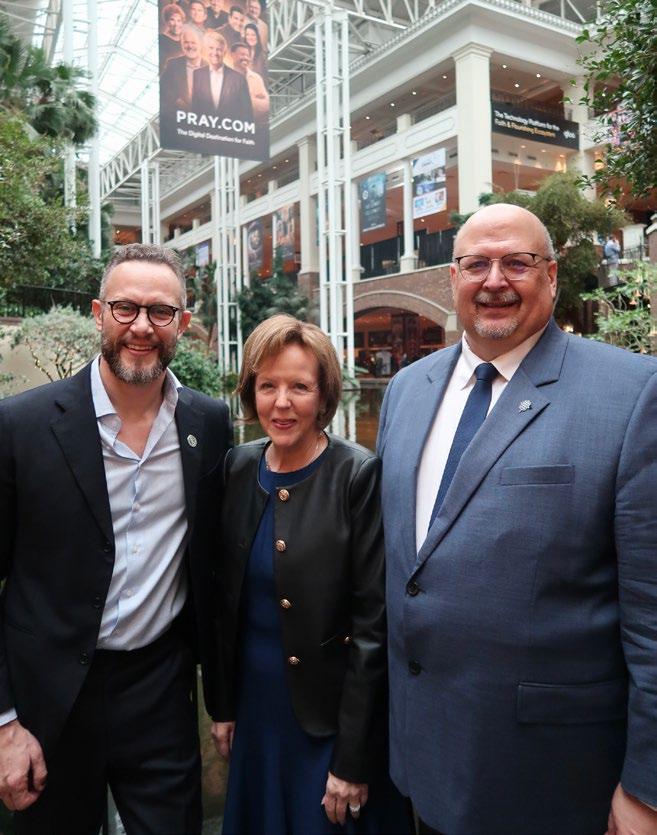
Calev Myers (L), Chairman of the Jewish -Christian Zionist Congress, Dr. Susan Michael (C) ICEJ USA President, and Troy Miller (R), NRB President
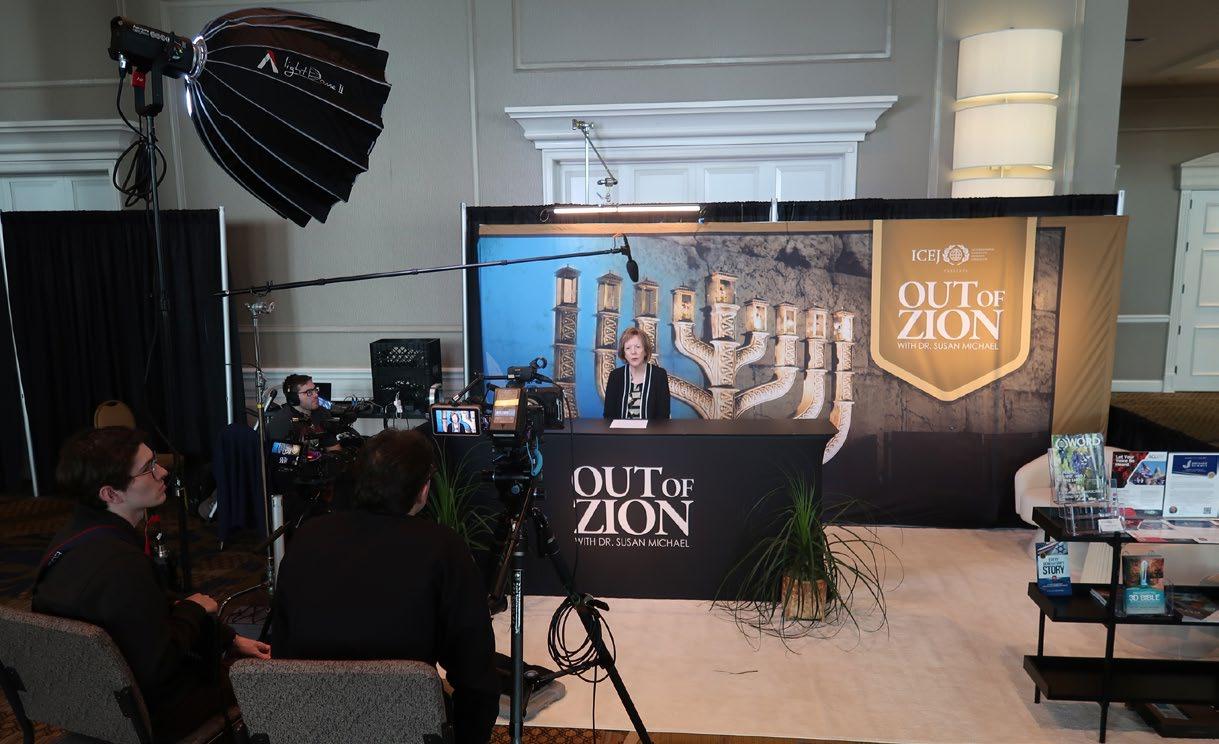
OUT OF ZION FILMING
During the NRB convention, ICEJ USA President Dr. Susan Michael and ACLI Coordinator Shelley Neese recorded more than 20 episodes of the Out of Zion Podcast. Guests included Joel Rosenberg, Michele Bachmann, and Hormoz Shariat—along with many other notable voices. Text “Zion” to 72572 to be notified of upcoming episodes designed to equip, embolden, and strengthen your faith.
DR. SUSAN MICHAEL ELECTED TO NRB BOARD OF DIRECTORS
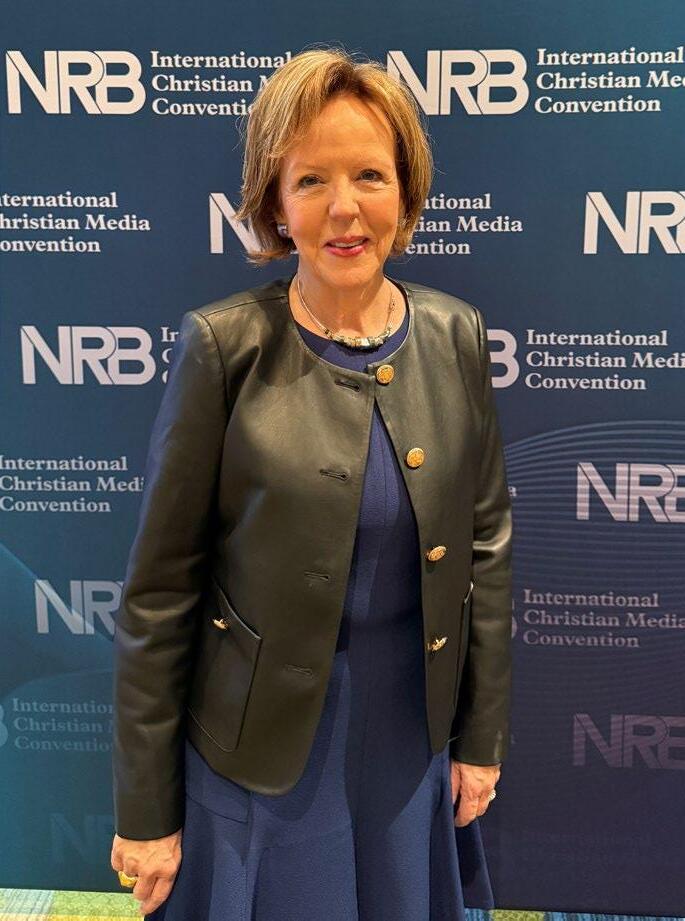
At this year’s NRB membership meeting, Dr. Michael was elected to the NRB’s Board of Directors. In this influential role, she will help guide the strategic direction and public voice of an organization that shapes how millions of believers engage culture, media, religious liberty, and global issues. Her presence on the NRB Board provides an important platform to elevate biblical perspectives on Israel and
to ensure that Christian media leaders remain informed about the realities facing the Jewish State and the growing threat of antisemitism. This selection strengthens ICEJ USA’s ability to connect with major Christian broadcasters, publishers, and digital platforms, amplifying our mission and expanding the reach of trusted, Bible-based insight on Israel at this critical moment in history.
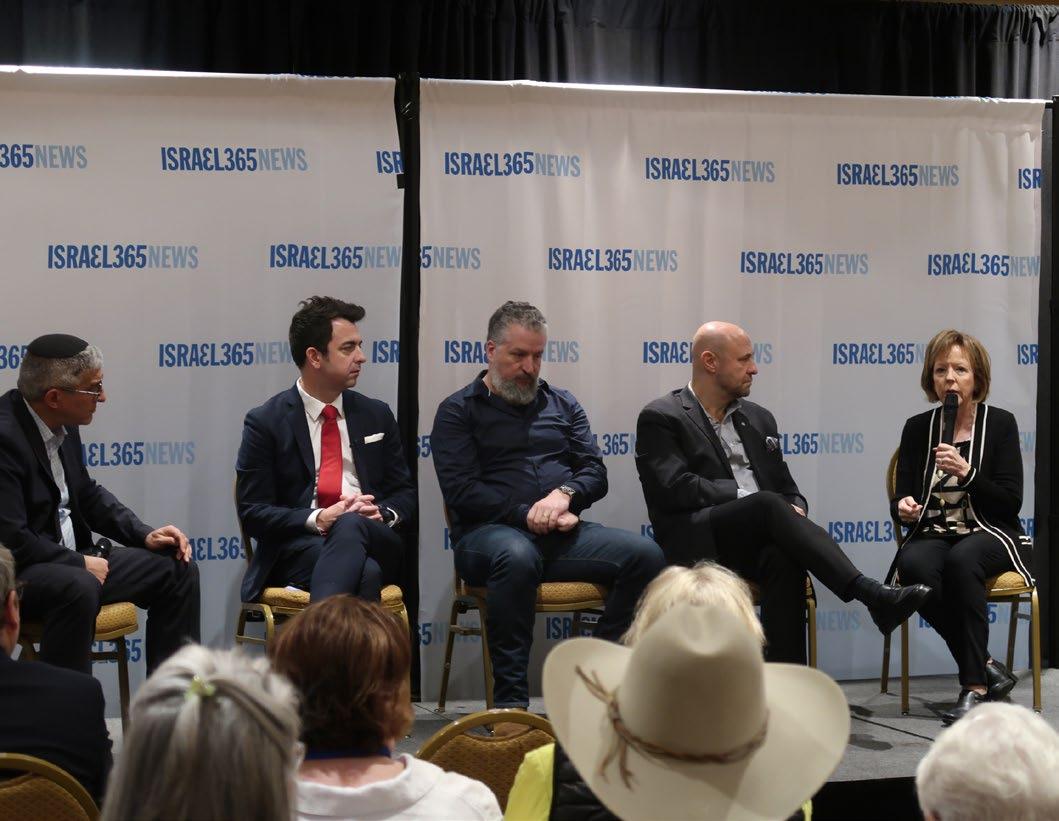
ISRAEL 365 PANEL DISCUSSION
Dr. Michael also participated in Israel365’s 2026 News Conference, joining Jewish and Christian leaders to address Israel’s security challenges and the importance of faith-based advocacy for the Jewish State. During the Israel365 panel discussion, Dr. Michael discussed the concerning rise of antisemitism on the conservative right as well as Zionism and how it is a biblical concept. Dr. Michael noted that Christians need to reclaim the terminology of Christian Zionism, be much quicker to react to accusations about it, and speak about it to others with clarity.
US PASTORS INSPIRED, EMBOLDENED DURING TOUR TO ISRAEL
By ICEJ USA Director of Outreach Dr. Tyson Lambertson
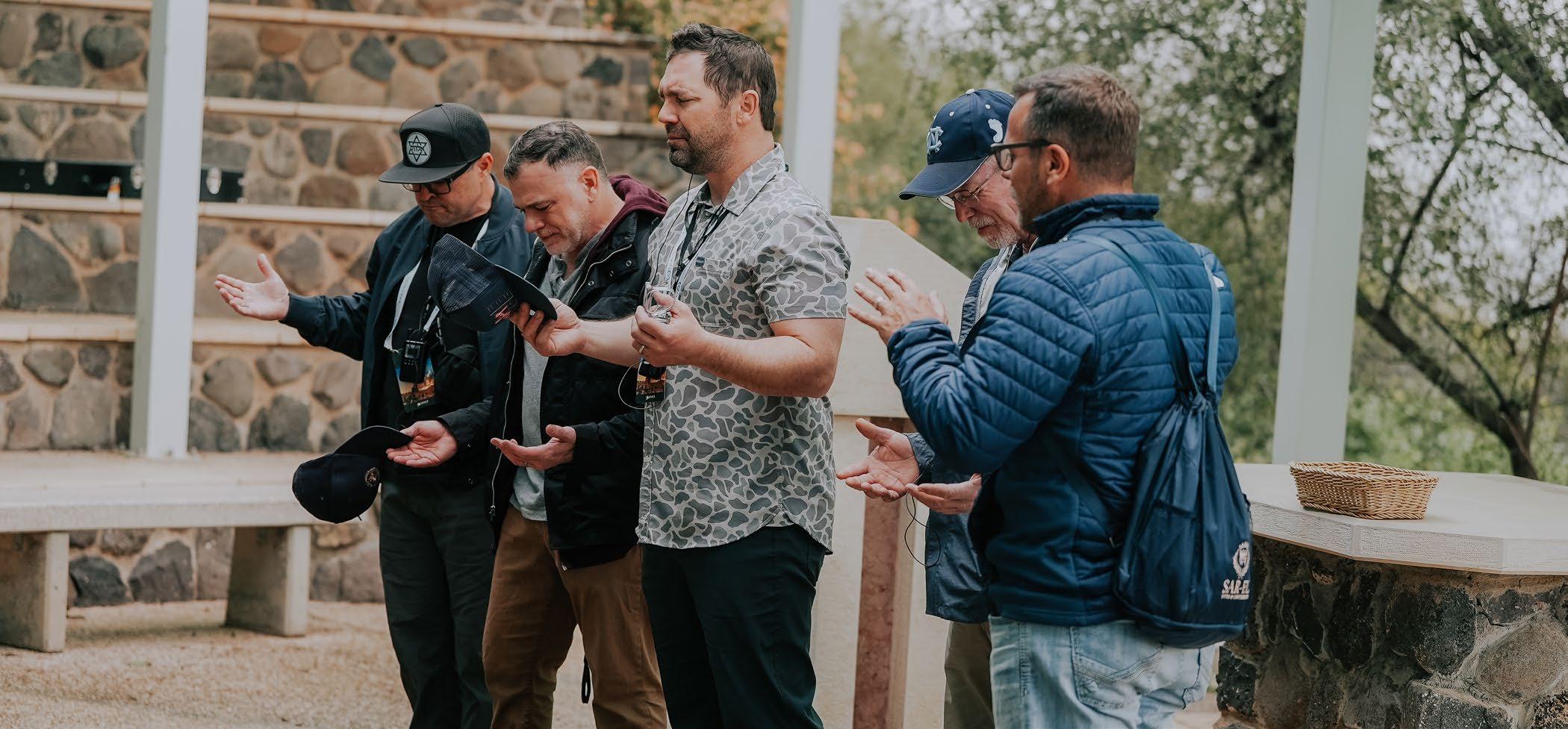
Since the current war in Israel began, many churches have struggled with how to respond. Some pastors have spoken clearly. Others have remained largely silent. But among pastors who recently traveled to Israel through ICEJ USA initiatives, something different has happened. These pastors returned home with renewed clarity. They are leading their congregations in prayer, speaking openly about the spiritual realities behind the headlines, and helping believers understand the biblical significance of Israel in ways many had never considered before.
There is something powerful about walking the land of the Bible. Scripture is no longer distant history. The places, the promises, and the people of the Bible suddenly come into focus.
Pastor Josh Smith shared that Israel had rarely been part of his thinking before the trip. “Before Israel, I was ignorant and disconnected from God’s desire and purpose for the Jews. After Israel, I discovered an entry point to pursue a relationship with the Jewish community in Israel and in my local community.”
Seeing the places where biblical events unfolded strengthened his confidence in God’s Word. “Walking the land we read about in the Bible deepened my trust in the Word of God. The stories became real. Therefore, the God I worship became even more personal and accessible.”
For Pastor Kennedy Siyame, the experience created a spiritual connection he had never felt before. “I was reading the Bible
theoretically, but by walking around the Holy Land, I became spiritually connected.” One moment stood out for Kennedy in particular. “I decided to take off my shoes and step on the soil with bare feet so that I could truly connect with the land.”
Pastor David Berry said the experience forever changed how he reads Scripture. “I can’t treat them [the Jewish people] as a footnote any longer.” While visiting Kibbutz Be’eri, where the October 7 attacks took place, Berry encountered the reality of evil firsthand. Reflecting on that moment, he wrote: “The devil hates God. The devil despises Jesus. The devil will do whatever it takes to erase the Jews from this world.” Yet he also reminds believers that the story does not end with darkness. “The story of the Messiah can never be erased from the story of humanity. He is real. He is coming again.”
These pastors are now doing what faithful shepherds are called to do. They are helping their churches pray for Israel, understand the biblical story more clearly, and recognize the spiritual battle surrounding God’s covenant promises. Their voices stand in contrast to the silence that too often fills pulpits during moments of global crisis.
This is precisely why the Pastoral Education Fund exists. When pastors experience Israel firsthand, they return home equipped to lead their congregations with greater biblical understanding and spiritual clarity. They preach with renewed confidence, guide their churches in prayer, and help believers see God’s redemptive story with fresh eyes.
Help equip more pastors to experience Israel and return home ready to lead their congregations with greater biblical understanding. Support the ICEJ USA Pastoral Education Fund today: give.icejusa.org/donate/pastoral-education-fund
STANDING TOGETHER AGAINST ANTISEMITISM
By ICEJ USA Director of Communications Shannon Bennett
On January 27, 2026, International Holocaust Remembrance Day, ICEJ USA’s Director of Communications Shannon Bennett and Dr. Trish Miller, Director of CAMERA’s Partnership for Christians and Jews, joined leaders from Florida’s Jewish community at the Florida State Capitol in Tallahassee for Israel Advocacy Day. These delegates from across the state gathered in a unified response to the alarming rise of antisemitism in Florida and across the United States.
ICEJ USA’s participation reflects a growing commitment to strengthen Jewish-Christian relationships. Through its ongoing partnership with the Miami Jewish Federation, the ministry has built trust and collaboration rooted in shared values and concerns. That relationship opened the door for Christian voices to stand alongside the Jewish community on International Holocaust Memorial Day, one of the most solemn days of remembrance on the calendar. It also offers a model for believers nationwide: meaningful, sustained relationships with local Jewish communities are not only possible—they are essential.
The facts presented that day were sobering. According to the Anti-Defamation League, antisemitic incidents in the United States have risen 344 percent over the past five years, reaching 9,354 incidents in 2024 alone. Florida ranked seventh in the nation, reporting 353 incidents, with more than one-third occurring at Jewish institutions—double the national average. In a single day in June 2024, fifty bomb threats targeted Jewish institutions across South Florida.
These are not distant statistics. They represent families, students, and communities living under increasing threat. Participants urged lawmakers to support expanded security funding for synagogues, churches, community centers, and
schools—recognizing that threats against one faith community often extends to others. The safety of houses of worship is a shared concern, underscoring the importance of unified action.
The conversation also addressed antisemitism in Florida’s K–12 schools and universities. Jewish students shared deeply troubling accounts of harassment, bullying, and even physical violence—sometimes met with indifference or blame from those entrusted to protect them. Their testimonies underscored the urgency of action. In response, delegates expressed support for a statewide Antisemitism Task Force to strengthen accountability and develop meaningful solutions.
The ICEJ USA remains committed to standing with the children of Abraham, Isaac, and Jacob—both in Israel and here in the United States. At this critical moment, the Jewish community is not looking for words of sympathy, but for faithful allies—those willing to show up, build relationships, and take meaningful action.
Israel Advocacy Day was one such opportunity. But the call to stand against antisemitism does not end there. The ICEJ USA encourages believers across the nation to take two important steps.
FIRST, reach out to a local Jewish federation, introduce yourself, and ask how you can stand together in your own community. These relationships are deeply needed in this hour.
SECOND, add your voice to a growing movement of Christians by signing the Christian Declaration Against Antisemitism. This declaration affirms a clear and united stand against hatred toward the Jewish people and sends a powerful message of solidarity.
Sign the Christian Declaration Against Antisemitism now at: www.icejusa.org/christian-declaration-against-antisemitism
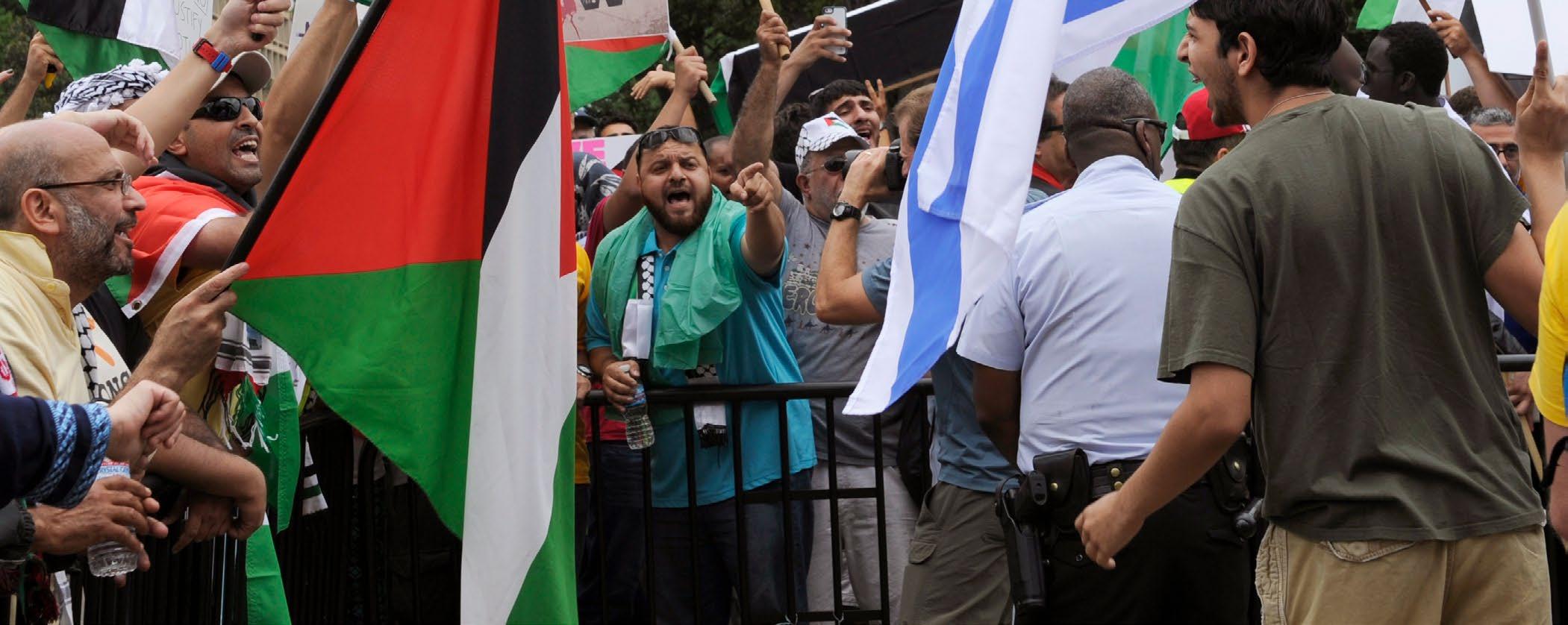
Photo credit: AP - Pro and anti-Israel protesters face off in Washington, DC
FROM SIRENS TO SHELTER
ICEJ STANDS WITH HOLOCAUST SURVIVORS DURING WAR
By Laurina Driesse, ICEJ Head of Media and Publications
Residents at the ICEJ Home for Holocaust Survivors woke up recently to a very different Shabbat morning. Usually, it is quiet in this older neighborhood in Haifa, but at 8:00 a.m. on February 28, sirens sounded across the country, warning of incoming missiles. The longanticipated war with Iran had begun.
While the ICEJ staff usually do not work on Shabbat, those team members living near the Haifa Home went as soon as they could to be with the residents, helping them to get to the bomb shelter numerous times throughout the day.
The ICEJ team has been working tirelessly day and night ever since, even staying overnight in the office at the Haifa home, to be close to the Survivors when the sirens sound, especially in the middle of the night. “Our presence is a calming influence on our residents and their caregivers. It gives them the feeling of being safe,” noted ICEJ Deputy AID director Yudit Setz.
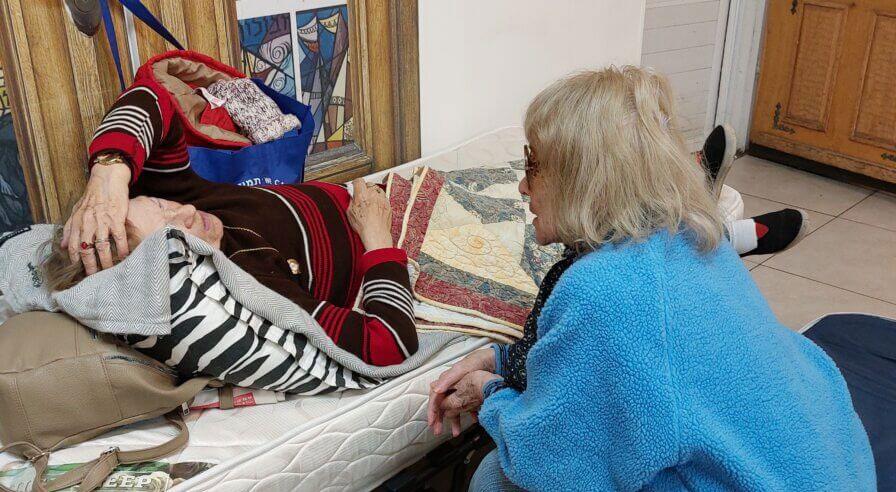
The heart of the Haifa Home is the dining hall, where meals are served, friends gather, and fun activities take place. However, since a shelter is next to the dining room, in the evenings it is also used as a sleeping space for some residents who fear they will not be able to reach a safety shelter in time.
“I am amazed at the resilience of the residents. It is incredible,” said Yudit. “Even in the middle of the night when they have to get up to go to the shelter, even in their nineties, they remain calm and are still smiling.”
Despite the frequent sirens, ICEJ staff have maintained their regular activity programs for the Holocaust Survivors. “Our team continues with daily activities, like gymnastics, language study, and playing bingo and chess to foster community and distract the residents from thoughts of the war,” explained Yudit.
Despite the onset of the war, residents and staff still celebrated the festival of Purim. Some residents and staff wore party hats at the small celebration dinner. “We read the scroll of Esther together with a rabbi. It was mentioned that we live in special times and that God is performing His miracles for His people, as we see in the story of Esther,” noted Yudit.
During this challenging time, many elderly people are finding it difficult to reach a shelter when the sirens sound. An emergency hotline that runs 24/7, established in collaboration with the ICEJ, operates around the clock to assist Holocaust Survivors and other elderly residents across the country. ICEJ staff also are preparing meals for delivery to them.
Haifa Home residents Manya and Esti encourage each other during difficult nights (all photos ICEJ)
Yudit shared some of the stories of the hundreds of calls received at the hotline: “Rita, a Holocaust Survivor, called after choking at home while trying to reach the protected space,” Yudit recounted. “She was distressed and unable to get up on her own. A team was dispatched to help her, and a psychiatrist also spoke with her, providing emotional support while ready-made meals were delivered to her home, so she does not have to go outside.
“Another Holocaust Survivor called in tears, explaining that she was unable to cook or shop for groceries during this period. Our teams arrived at her home, brought her hot meals, and added her to the regular distribution list so she knows someone is caring for her every day,” Yudit added.
Help us care for elderly Holocaust Survivors impacted by the most recent war so they know they are not alone.
Bless and comfort the most vulnerable in Israel—donate today at: give.icejusa.org/donate/haifa-home-for-holocaust-survivors or scan the QR code.
Haifa Home residents stay safe in the bomb shelter
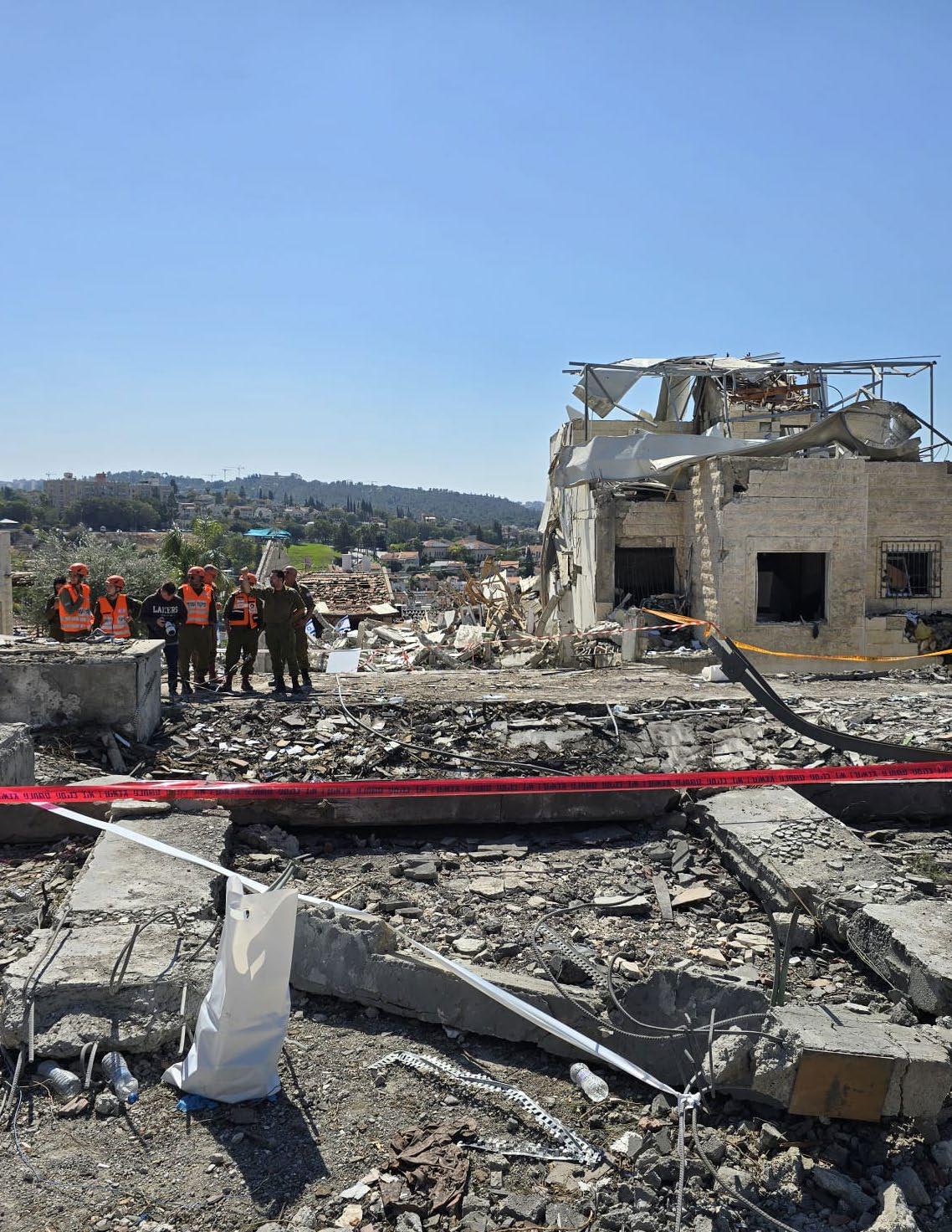
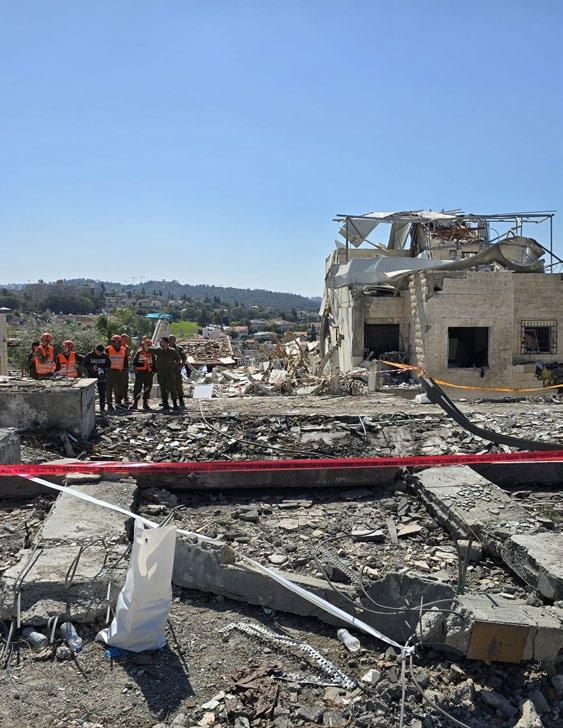
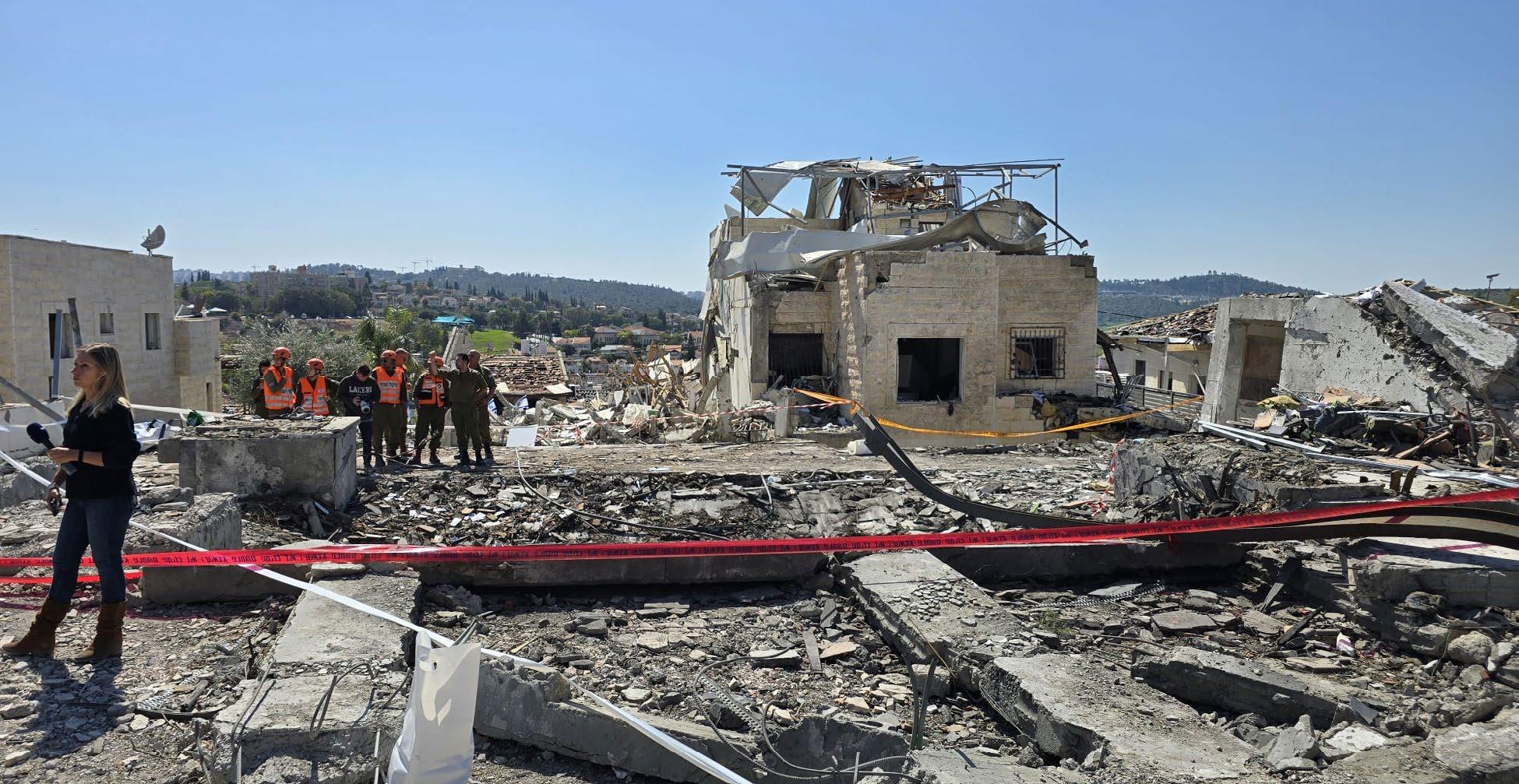
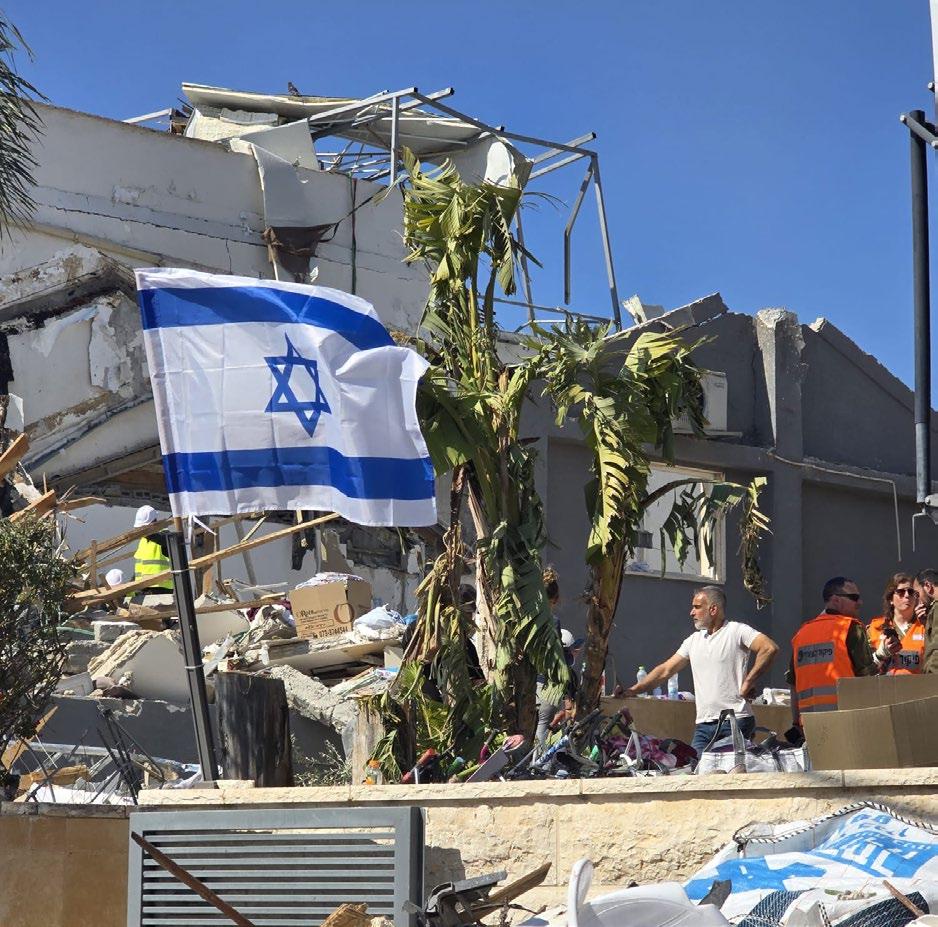
Israeli flags are everywhere. They are planted in the rubble of leveled houses and next to piles of blankets and house supplies that locals brought for their traumatized neighbors. They are zip-tied to construction poles that already signal Beit Shemesh is quickly rebuilding. The bright blue-and-white of Israel’s national flag, defiantly flying amid the destruction, offered a sharp contrast to the dustcovered debris at ground zero of Iran’s deadliest missile strike yet in the joint US-Israel war to topple the radical Islamic regime of Iran.
Soon after the hit, a group of ICEJ staff ventured out from our bomb shelters to pay a solidarity visit to Beit Shemesh, only 20 minutes from Jerusalem. Once on site, we witnessed the aftermath of the Iranian ballistic missile hit that demolished a synagogue and several nearby residential buildings, killing 9 people and injuring 40 more.
Near the point of impact, we spoke with Hannah.* Her house, all her family memories, and everything she owns, are now a pile of mangled metal and broken concrete that residents and volunteers were digging through to salvage personal items.
We also met the grieving family of blast victim Gabriel Baruch Revach outside her doorstep as she and other family members were sitting shiva —the traditional Jewish week of mourning for a lost loved one. Characteristic of Israelis’ extraordinary hospitality and communal care in response to tragedy, we—complete strangers who had just met on the street—were invited
ICEJ VISITS GROUND ZERO OF TRAGIC MISSILE HIT IN BEIT SHEMESH
By Naomi Ammon ICEJ Publications Assistant
into their home, where Gabriel’s family shared their precious son’s story.
Holding back tears, his mom explained how her 16-year-old son was running to the bomb shelter when the sirens sounded but he did not make it in time.
His older brother recalled Gabriel’s spiritual sensitivity and commitment to HaShem. “We all served in the army, but he wanted to study Torah,” the brother explained. “He was just a special boy like that.” Gabriel’s loss leaves their family with an unimaginable vacancy and pain.
Somehow, amid this immense loss, Beit Shemesh is already starting to recover. Local and foreign volunteers with Machal were helping to sort through and clear the rubble. Others offered support and a helping hand in the residents’ time of need. Israel Defense Forces (IDF) soldiers were on the scene recording the heartbreaking story of Beit Shemesh for the world to hear. And most importantly, neighbors showed up for each other. Nobody is alone in Israel. Countless hands were held, bottles of water were passed, and blankets and hugs were shared as people continued the work of rebuilding.
Israel’s national anthem Hatikvah —“The Hope”—is more than the country’s national anthem. It is a national identity , and it lives in the hearts of the sons and daughters of Israel.
*Name has been changed.
Help Israelis recover and rebuild—give to the ICEJ Israel in Crisis Fund now at: give.icejusa.org/donate/ israel-in-crisis-fund or scan the QR code. Watch a Short Video Here: https://youtu.be/8Z_3BpfugiE
CHRISTIAN ZIONISM: PART 3
Confirmation of Christian Zionism in the New Testament
By Dr. Susan Michael, ICEJ USA President
In my last article, I defined Christian Zionism as the belief that God bequeathed the land of Israel to the Jewish people as an everlasting possession for the purpose of world redemption. This is the biblical foundation for Christian support for Israel and the Jewish people. This principle of land is not just in the Old Testament but continues in the New Testament.
Let’s first consider the legitimacy of God’s promises in the Old Testament.
VALIDITY OF OLD TESTAMENT PROMISES
Replacement theologians often emphasize that the Old Testament and Judaism have been brought to an end and were replaced with something totally and completely new: Christianity. But this is precisely the approach Paul warned against in Romans 11, when he refers to the root of Christianity as being Jewish and warns against an arrogant position that does not honor the root.
According to Anglican priest, theologian, and author Gerald McDermott in his book Israel Matters, “For Paul, then, the believing church will never be separated from its root, Jewish Israel. If the church thinks it can be separate and in fact replace Jewish Israel, it has become ‘proud’ and ‘arrogant.’”1
A popular type of Replacement Theology is Fulfillment Theology, which teaches that Jesus fulfilled the Law, so it is no longer relevant. However, Jesus said: “Do not think that I came to destroy the Law or the Prophets. I did not come to destroy but to fulfill” (Matthew 5:17). Some say even the Ten Commandments do not apply to Christians because Jesus brought a new set of ethics, when, in fact, in His Sermon on the Mount, Jesus expounded upon the basic principles found of the Ten Commandments—He did not replace them with something new. Clearly the New Testament confirms the validity of the promises of God found in the Old Testament and does not seek to redefine or redirect them to another people.
THE PROMISED LAND IN THE NEW TESTAMENT
The God of the Bible is the God of the whole earth. Yet His promise of this piece of land to one family—the descendants of Abraham, through Isaac and then Jacob—is confirmed and repeated in Scripture more than one thousand times. Clearly, this attention affirms the importance of the land in God’s purposes.
Land is a necessary element for forming a nation. The land also provided a stage on which the Almighty God carried out His plan of redemption. As long as God’s covenant with Abraham was in play
(everlasting), the land belonged to his descendants (everlasting). The land is an integral part of the covenant because it is the place where God would work through His people and fulfill His promise to bless the world. But does the New Testament even mention the land?
Indeed, it does! However, one problem Christian Bible readers face is the English translation of a Greek word that can mean “land” or “earth.” For example, Matthew 5:5 states, “Blessed are the meek, for they shall inherit the earth” (emphasis added). Many scholars are beginning to recognize that a better translation is “Blessed are the meek, for they shall inherit the land.” This is more in keeping with the Jewish context of inheriting the land of Israel as reflected in Psalm 37, where David says he would have “lost heart, unless I had believed that I would see the goodness of the Lord in the land of the living”—imagery that echoes God’s covenant promise of dwelling securely in the land God has given His people Israel.
As discussed in Part 2 of this series, Jesus did not deny that there would be a future Israel [in the land] when asked in Acts 1:6–7. Paul predicted that one day “all Israel will be saved” because Israel’s deliverer would “come out of Zion” (Romans 11:26), and Peter referred to the “restoration of all things” in Acts 3:21, which was a Greek term based on the Old Testament concept of
the future return of the Jews to the land and reestablishment of a Jewish nation.2
THE RETURN OF THE JEWS TO THE LAND
Though some argue the prophecies of Israel’s return were fulfilled when Jews returned to rebuild Jerusalem after the Babylonian captivity, this does not align with Jesus’ very teachings, and what His disciples believed, about a future for Israel.
Jesus prophesied a coming exile of the Jewish people and Gentile control of Jerusalem, but only for a time. Gentile rule would come to an end one day, and Jerusalem would come under Jewish control: “And they will fall by the edge of the sword and be led away captive into all nations. And Jerusalem will be trampled by Gentiles until the times of the Gentiles are fulfilled” (Luke 21:24, emphasis added). It is important to note that Gentiles indeed controlled Jerusalem for the next 1,900 years until it came under Israeli sovereignty in 1967.
THE RETURN OF JESUS TO JERUSALEM
In His Olivet Discourse, Jesus looked
over the city of Jerusalem and prophesied the coming destruction of the city and the temple. But he also prophesied in Luke 13:35 that one day, the Jewish people would welcome Him back to the city with the Hebrew greeting Baruch Haba BaShem Adonai (“Blessed is He who comes in the name of the Lord”). Jesus would return to a Jewish Jerusalem.
In Matthew 19 Jesus speaks of reigning from His throne in the New Jerusalem, judging the 12 tribes of Israel (v. 28). McDermott, citing Markus Bockmuehl in The New Christian Zionism: Fresh Perspectives on Israel and the Land, says indications in the Gospels seem to affirm “the early Jesus movement . . . continued to focus upon the restoration of Israel’s 12 tribes in a new, messianic kingdom.”3
And in Mark 11:17, Jesus quoted Isaiah’s prophecy concerning a restored Jerusalem. Each of these prophecies speaks of a literal, physical place from where Jesus will one day rule and reign.
THE NEW JERUSALEM
The book of Revelation also affirms that Israel, as a particular land, has a place in God’s plan for the future. McDermott observes:
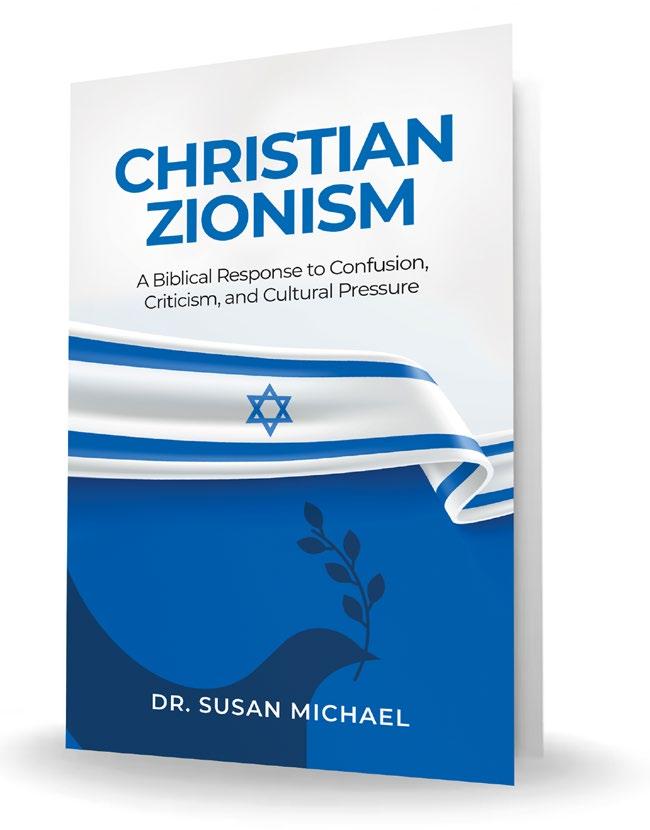
CONFUSED ABOUT CHRISTIAN ZIONISM?
Cut through the noise with Dr. Susan Michael’s newest booklet: Christian Zionism: A Biblical Response to Confusion, Criticism, and Cultural Pressure
Clear, concise, biblically grounded—and designed for anyone seeking understanding.
AVAILABLE NOW!
Get your copy at: www.icejusa.org/store
Christians are right to say that the Bible speaks of the whole earth being renewed. But not all Christians have seen that the center of the renewed earth will be Israel.4
The Bible depicts the Lamb standing on Mount Zion (Revelation 14:1), the new earth that is to come centered in Jerusalem, and the New Jerusalem adorned with 12 gates inscribed with the “twelve tribes of the sons of Israel” (Revelation 21:2, 12).
CONCLUSION
Clearly, the New Testament carries on the Old Testament principle of the importance of the land and reaffirms the covenants, the law, and the prophetic writings, all of which point to a future return of the Jews to the land and a coming glorious day when the kingdom of God is on earth. In my next article in this series, I’ll explore the historical origins of Christian Zionism.
1 Gerald R. McDermott, Israel Matters (Grand Rapids, MI: Brazos Press, 2017), 29.
2 McDermott, Israel Matters, 30.
3 Gerald McDermott, Ed., The New Christian Zionism: Fresh Perspectives on Israel and the Land (IVP Academic, 2016), citing Markus Bockmuehl, Jewish Law in Gentile Churches: Halakhah and the Beginning of Christian Public Ethics, Baker Academic, 2000, p. xi.