ICARUS VOL LXXVI ISSUE II
I C A R U S MAGAZINE

Trinity Publications 2026
FOREWORD
Record-breaking wet weather affects people in many distinct ways. There is the analysis paralysis involved in choosing between an umbrella and a raincoat when you know that inevitably, neither will save your favourite pair of jeans from getting soaked through. There is the sense of urgency that propels you to walk fast, head down, until you have miserably reached your dry destination. There is the isolation of being the only person out in the downpour on a Sunday morning because you ran out of groceries and thought "it can't be that bad." In times of rain-based frustration, we suggest that you take a deep breath. Ponder the pavement. Survey the sidewalk.
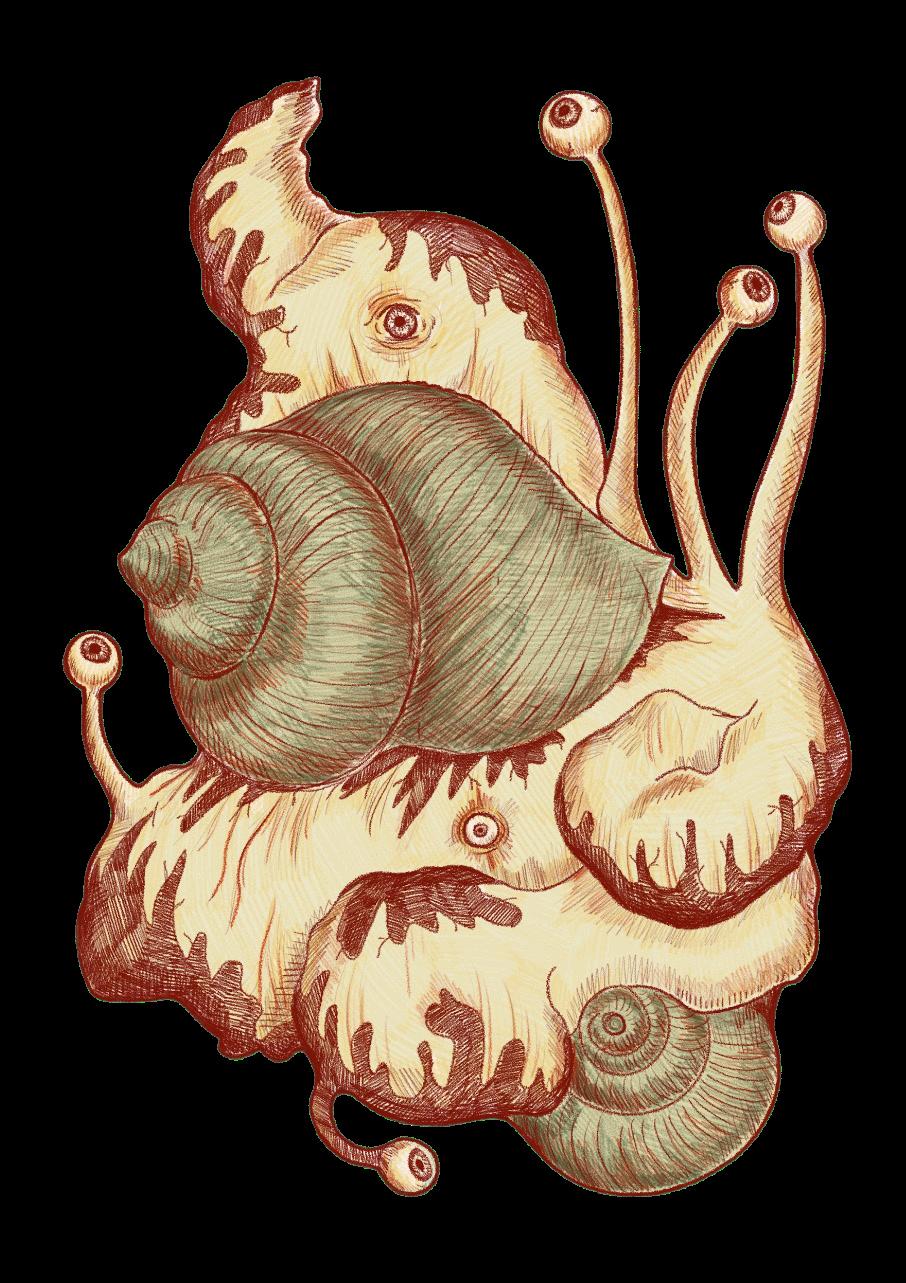
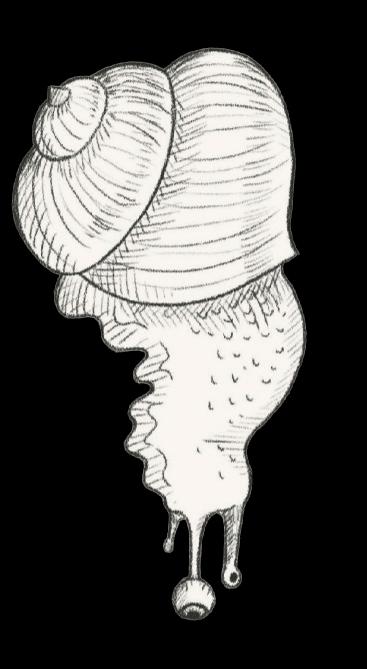
Consider the snail.
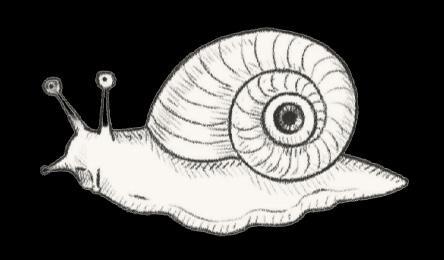
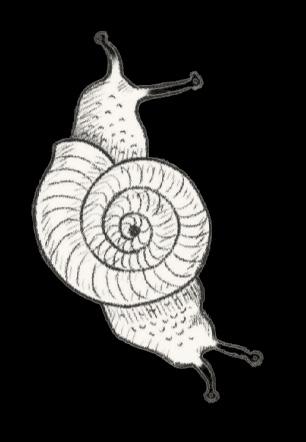
The snail may be your sole companion on your joyless journey. The snail embraces sogginess without rushing to hide under a leaf or an iris. Look at the snail. Make eye contact with the snail. Examine its shell, that logarithmic spiral. There is no start or end to the snail, just rainwater looping around a tiny home. The snail does not revile its muddy locale. The snail LOVES the damp, slimy feeling that you curse when your jeans change colour. Be like the snail. Slow down.
Reading provides a reprieve from the relentlessly fast-paced world in which we live. We typically consume content like popcorn, a handful at a time, aggressively chewing while preparing the next handful. When you consume this issue, we ask that you please do so slowly. Read the poetry out loud, hear someone else's words in your own voice, say something you have never said before. Step into the prose pieces, wander around another person's mind for a moment, remember their name. See the artwork and the photography through the artist's eye, through the photographer's lens. Pause your ever-moving brain, your ever-present worries, and let Icarus shift your perspective, if only for a moment.
Embody the snail while you appreciate the art encased within this magazine. Let the pages shelter you from the rain, like a friendly leaf with a surprisingly advanced vocabulary. Savour each piece. Come back to them every now and then when you find yourself moving too fast. We will still be here, waiting patiently, smiles on our gastropod faces.
On your mark, get set, slow!
Eileen & Gwen
Pre-Pint Musings in Phoenix Park
A View of Pints and Purls
Homb (the great beast)
a core memory
Cyclops
Enraptured
Woodmans in Essex
Céibh Nua
Can You Tell Me What Brought You in Here Today?
Mo's Ghost
Erne Street
Annie
In the Absence of
Untitled
All for you
Constellation of Your Car
When I fall asleep, I disappear
Spirits in Mist, Aotearoa
Birthday Wishes
Matthew Flanagan
Suvi Androvic Muzio
Alannah McElligott Ryan
Juliet Doyle
Emily Krause
Zoe Swan
Mackenzie Keller
Orla Mac Connell
Nicolas Fontanetta
Danna Dekay
Joseph Gillen
Orla Mac Connell
Lena Götz
Ella Mac Lennan
Ray G. La Paglia
Eliza Cart
Natalie Emma Johnson
Alex Andrés Daly
Michelle Ogiemwonyi
Freja Goldman
Charlie Swan
Chuyin Jin
Portrait
Virgen
Gavin
Narin Suleyman
Loretta Farrell
Bella
Anne Varnado
Anne Varnado
Lenelle Moïse
Lenelle Moïse
Lenelle Moïse

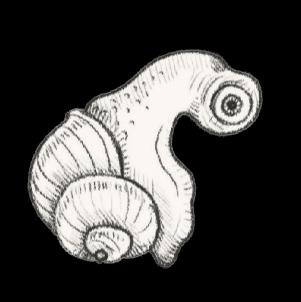
Pre-Pint Musings in Phoenix Park by Matthew Flanagan
Oh, if all life was this Evening sky made of bliss, Never would one worry But of cloud’s parting kiss. Of goose flight in fledged formation We would have no hesitation To lift up and behold down at Our past grass abyss.
But get up now son, hurry! Pints come soon and in a flurry; You cannot be but Beneath that great goose cumulus!
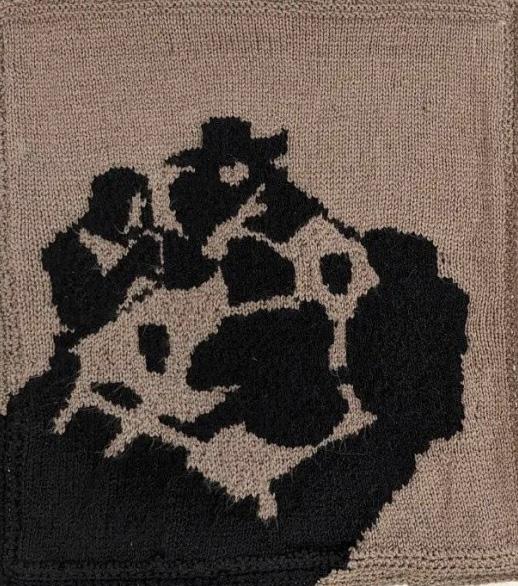
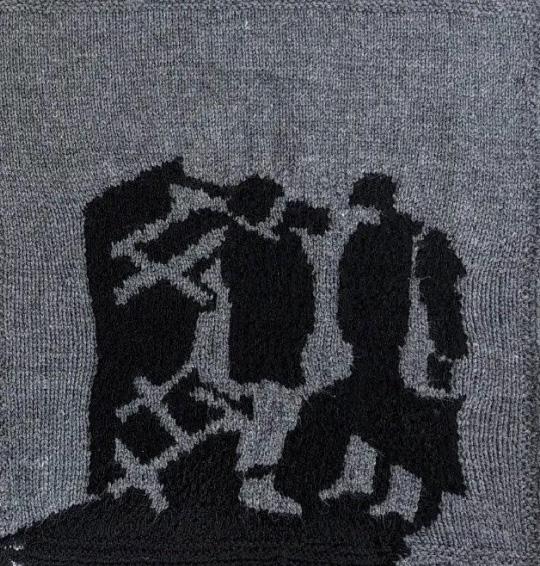
A View of Pints and Purls by Suvi Androvic Muzio
Homb (the great beast) by
Alannah McElligott Ryan
I need to frequent a place like a launderette. I need to get a numb buzz off engine fluctuations, and little washing motors. I want to revert into something mindless. I want to feel like I’m inside a great beast again, surrounded by whirring, pulsing, and orderly tubes. All the creatures great and small should get to the laundrette more often to gather there like it’s an oasis. They need to get to the laundrette and press foreheads (or snouts or whatever) against the humming dryer, and close their eyes to feel closer to God. We should line up in a row and lap up the soapy waters, like in Judges 7, (the select few keep alert while they wash out polyester.) The rest of us are more concerned with the hot and heavy domesticity of someone your own age folding laundry. When you think about it, it’s just sensational tension picked up from movies you and they have both inevitably seen: Hallmark conditioning. Lots to think about, when you get the chance.
Lots of aching all over from bringing the laundry from home to here and from hauling your head to look above your shoes. Goodness gracious. I’ll sit with my back against the dryer, so that the traps and delts and gluteus medius get a shakedown. I’d do nearly anything for someone to replace my gluteus medius with a fresh pair, to string them out and roll them around like taffy. I wish this was a ye-olde Belfast laundrette with massive crushing machines. For now the dryer will have to do. The shuddering is like electroshock therapy, except way better: this masseuse only costs a fiver. Take a moment to ponder that she’s being underpaid, and lie down on the floor to get the full effect for 36 more minutes. When to throw in the towel? whenever the sun sets too fast. The stench eventually becomes unbearable, and then it’s quite good to climb into the dryer like an unfortunate cat, pulled to the murmuring warmth like a lover away from another for so long. It’s a kind of migration, sweet nothing, the nice smells, the buzzing, rhythm, deprivation, solitude, human voices in the bouncing of heavy sheets and towels. In the bouncing your mother’s voice comes barging through the soft tissue of your brain. She sounds heartbroken. She shouts, aghast, as you put knickers and jeans in the same wash. Put an end to textile segregation in a community near you. Let Leviticus writhe in the West Bank. Mix the loads and hear her again coming at you with the whitening starchy sheets. When the dryer has truly wracked my brain and the intoxicating numbness of it all gets to be too much, I’ll fold laundry. Folding is really good for you. In fact, I’ll even fold other people’s clothes to get as much a benefit as I can. They’ll think it a gift, those other people who are so terribly busy that they absolutely must leave the laundrette while their clothes dry. The clothes of other people, who are waiting so mournfully to go home. Personally, I won’t leave. I’ll wait it out. I’ll lie selfishly along the only bench and think about how fortunate I am to be here. I’m in the warmth, in the clean smells - not out there where it’s cold and dirty and clothes become full of sweat and muck. Here is the reset, the private renewal of public decency. Paying a few euro to fill the filter with all my shite.
(A great beast is an awful thing to call your mother…)
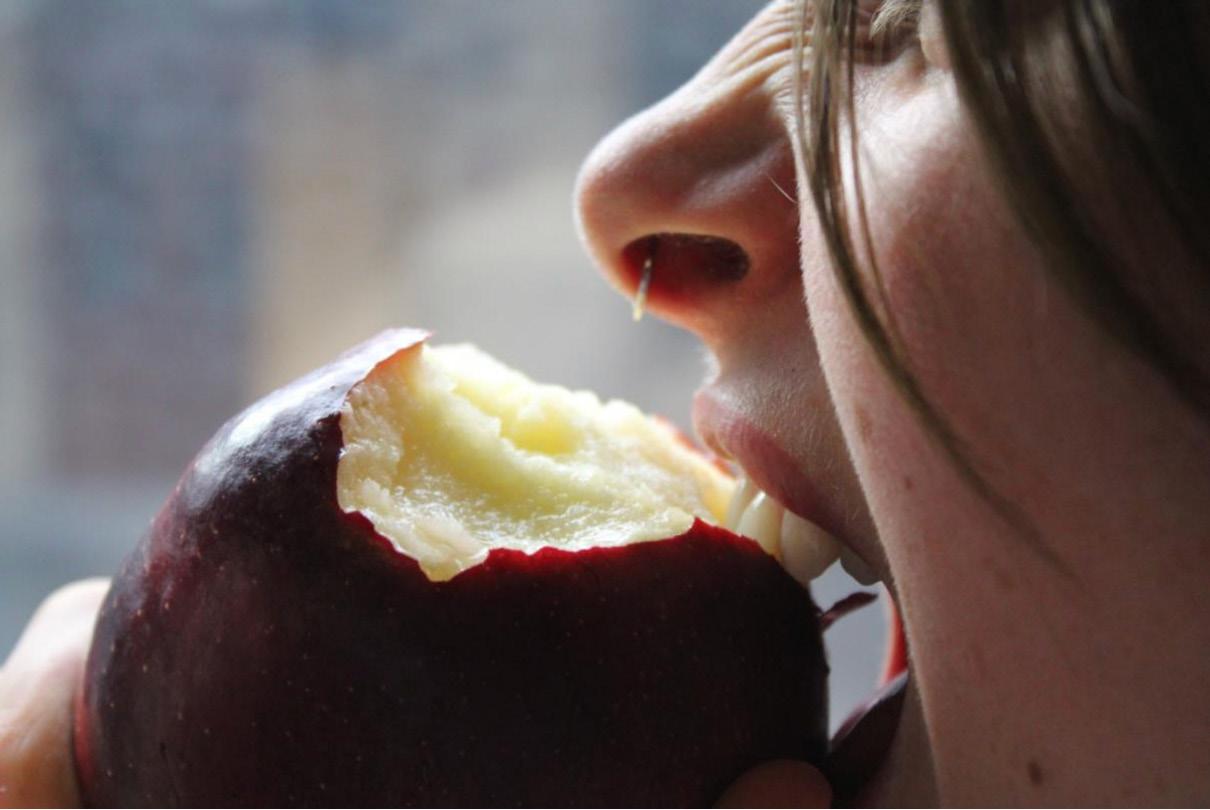
a core memory by Juliet
Doyle
Cyclops
by Emily Krause
My whole life, a cataract has bloomed in my right eye— or whatever is the opposite of “cataract”, and the opposite of “bloom”— it is a rift, a blight, a sharp decay, a fixed disintegration, only in my right eye.
What I’m saying is that every carton of eggs I’ve ever bought has a broken one. I thought everyone lived this way: buy twelve, keep eleven, that’s a baker’s dozen. I suppose I must be owed some sort of compensation, but am not sure who to ask.
What I’m saying is that every mirror in my apartment has a crack running down one side. A lifetime of bad luck or is it bad sex hovers over my shoulder, held at bay only by offensively blue strips of painter’s tape.
What I’m saying is—but you understand. All milk turns. All pants rip in the right knee and melt under the chafing of the right thigh, which is well-known to be more frictious than the left. I am forever bandaging a paper cut, forever apologizing for the state of the library books I return, forever battling mold in my shower and replacing broken dishes and running to the doctor with self-diagnosed cancerous moles, forever dreaming of the day that I am proven right, that the cracks in the wall are structural in nature and my oblivious nighttime-bowling upstairs neighbor will cartoon-anvil through the ceiling and kill me in my sleep. They will pull my broken pre-cancerous body from the rubble, identified by the tattoo on my left arm, and then who will care for my cat?
Outside’s the same only worse, but you know that. They say we’re slowly undetectably sinking into the muck and I believe it, I’m watching it happen. Cracks everywhere if you look for them. I reach down and pull up a handful of mesozoic ooze.
I avoid strangers, who so often appear to me as death’s-heads, and lovers, who so often appear to me as liars. I am, obviously, alone.
*
A few years ago now, I tried going cold turkey. I bought myself an eye patch, fit it snugly over my witch’s eye, and went outside, and oh. Oh.
At first I stayed close to home, wary of the dangers I could no longer see. A missing manhole cover to swallow me into the bowels of the city, faulty wiring in the kitchen outlet to stop my heart, a speeding city bus, handbrake broken off in the hand of a panicking driver, horn wailing, to grind me into the pavement.
With my left eye in charge, my vision skewed to the side, and I took on a shuffling gait, not unlike a limp, not unlike a child playing horsie. Cars and people and dogs with poor leash training surged past me in my non-periphery, materializing out of thin air. I jumped a lot.
I lurched and I stumbled, I yelped and I startled, but everything around me was whole. The flowers smelled sweet and the traffic lights shone and it turns out they repaved this whole stretch of road. At the grocery store, I bought five dozen eggs, sixty perfect ovoids. I gorged myself on omelettes and custards, quiche and soufflé, until the very word egg made my stomach turn.
I fell victim to vise-grip headaches. My left eye, exhausted from carrying the full weight of my newfound normalcy, developed an aura. Things crystallized at the edges, every blink was the turn of a kaleidoscope. My right eye grew inflamed and caked with rheum.
Children whispered stories about me at sleepovers:
I was the victim of a botched surgery or of a gruesome construction accident. I kept hidden behind my patch a gaping hole scraped out with a spoon, or two conjoined eyes like the double-yolk of a lucky egg, or a beady black eyeball plucked from a crow, which I used to communicate with ghosts. I was the broken thing.
* Finally, desperate for relief from a powerdrill migraine, I tore off the patch, wincing as it stuck on a year’s accumulated crust. I tilted my face under the sink to wash out the gunk, blinked scratchily until the room around me came back into focus, and suppressed a scream.
Left unchecked by my usual careful gaze, my apartment was in an advanced state of decomposition. The bathtub was rotting through the floor, which sponged under my probing feet. Plaster fell from the ceiling in sheets, exposing dark damp and toxic pink fiberglass and pipework. For two days, I swept and scrubbed and bleached my apartment into submission. I taped cardboard over the holes in the ceiling and killed the maggots nesting in the refrigerator. The building super told me there was nothing wrong with my bathroom floor, but I warned the neighbor below me, just in case.
Outside was the same only worse, and everyone was fine.
The building across the street had dropped into a sinkhole that devoured half the block; a lawyer biked past in a blue suit and waved hello. I warned my bodega guy that live wires were hanging from the sign above the door, and that the block of gouda behind the counter had expired and furred beyond recognition; he chuckled and handed me my usual, “glad to see you’re feeling better.” The flowers smelled like sulfur and rubber cement, and young girls tucked them behind one another’s ears and grinned.
Then I saw you, rounding the corner to the park block. White hair, orthopedic shoes, and a rustling windbreaker, arm linked with a stooped old man carrying a cane. You stepped wide to avoid the belly-up rat that everyone else trod over like it was nothing. I stared long enough that you caught my gaze from across the street and winked.
*
I’ve been following you for a week now.
You chatter about the weather, and point at birds, and buy newspapers from the vendor on the corner, and all the while you gently steer your companion around the open sidewalk grates and lava flows, and caution him to step high over the tree roots pushing up through the cement. You dig through the crate of apples outside Mr. Kiwi and buy all the ones with worms through the middle, and throw them into the garbage can the next block over.
And he just takes your arm, and smiles at you knowingly. He follows you through this invisible obstacle course, and lets you throw away perfectly good fruit.
If you know that I’m following you, and I think that you do, you don’t seem to mind. One of these days I’ll ask you how you do it—how you live in a world whose underbelly pokes through, and still grow old with someone, still get up in the morning and go out your front door and buy a newspaper and wink at a stranger.
But you are on the other side of the street, and the street is nothing but a howling canyon whose bottom I cannot see, and I have not figured out how to cross it just yet.
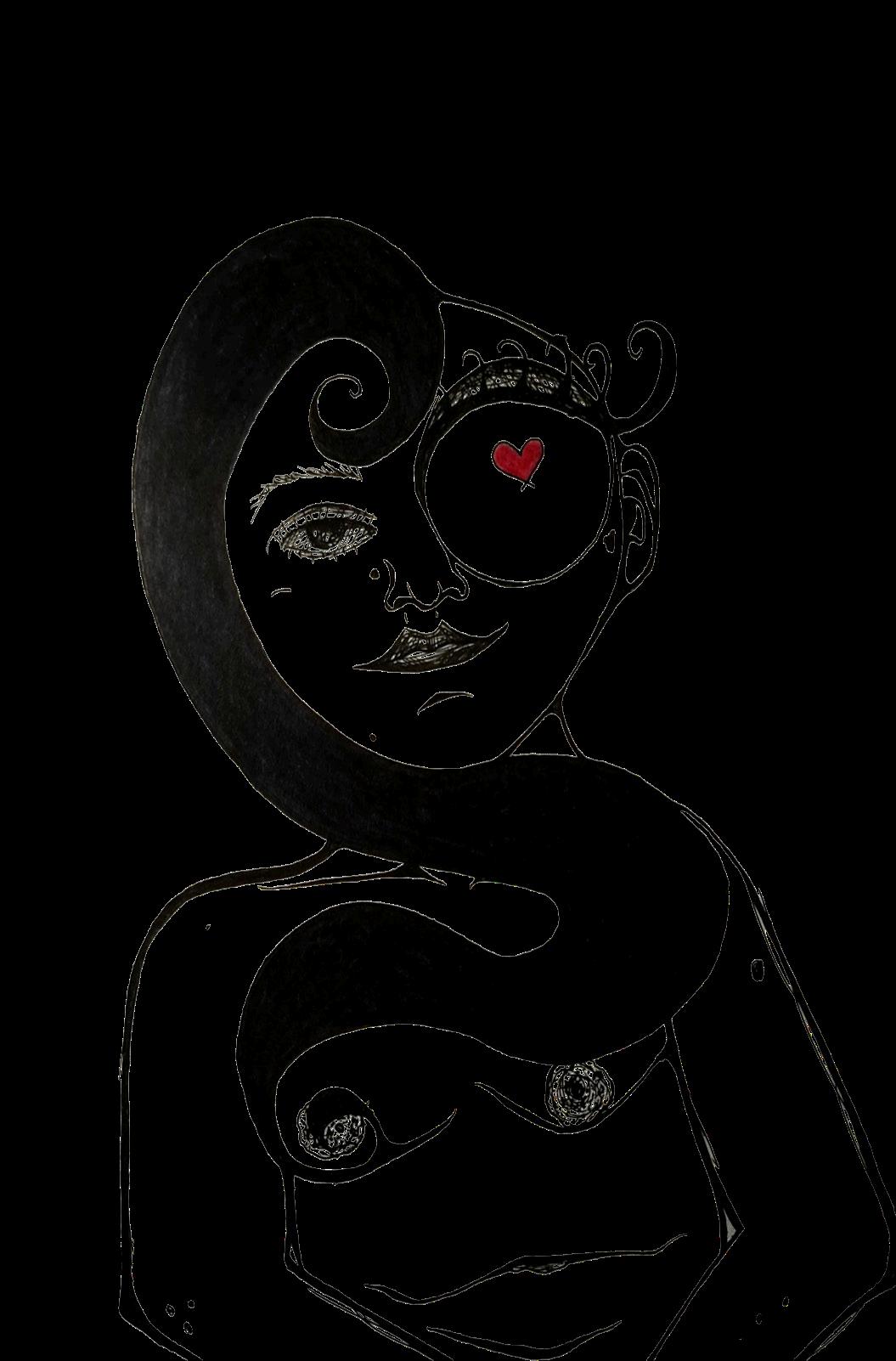
Enraptured by Zoe Swan
Woodmans in Essex by
Mackenzie Keller
Look; where the fjord juts its crooked finger towards the pink light of the squid boats, watch the wind shake its fist at the cruelty.
Seeping ink, footsteps on the dock, closing traps. A killing to be made, a killing has become the business of holding - haunting -
gnashing - its rubber flesh amongst wharf goers. The clam watches knowingly at the snap of its fate, driven by hunger, it did not mean to settle in the barnacled cage, but there was such fine feeding, laying. The sand was almost too smooth to be from here,
the chain rowed to the surface. The clam did not hear the Squids screams, telling it to run, it does not need to meet the same steamed fate; that of the cephalopod
that of the lobster that the box was intended. It sits watching each crooked finger get farther–farther from safe, onto galvanised firing lines where the anguish boils the water. The executioner chopping bit by bit from the squids many hands
reaching for the clam now – lips shut tight. The man didn’t know it held sand between its teeth, spitting towards his eye, falling under the rumbling stove.
And here, here is the point in which it started: surrounded by sand and silt and all other bottom feeders forgotten, survived in their final resting place.
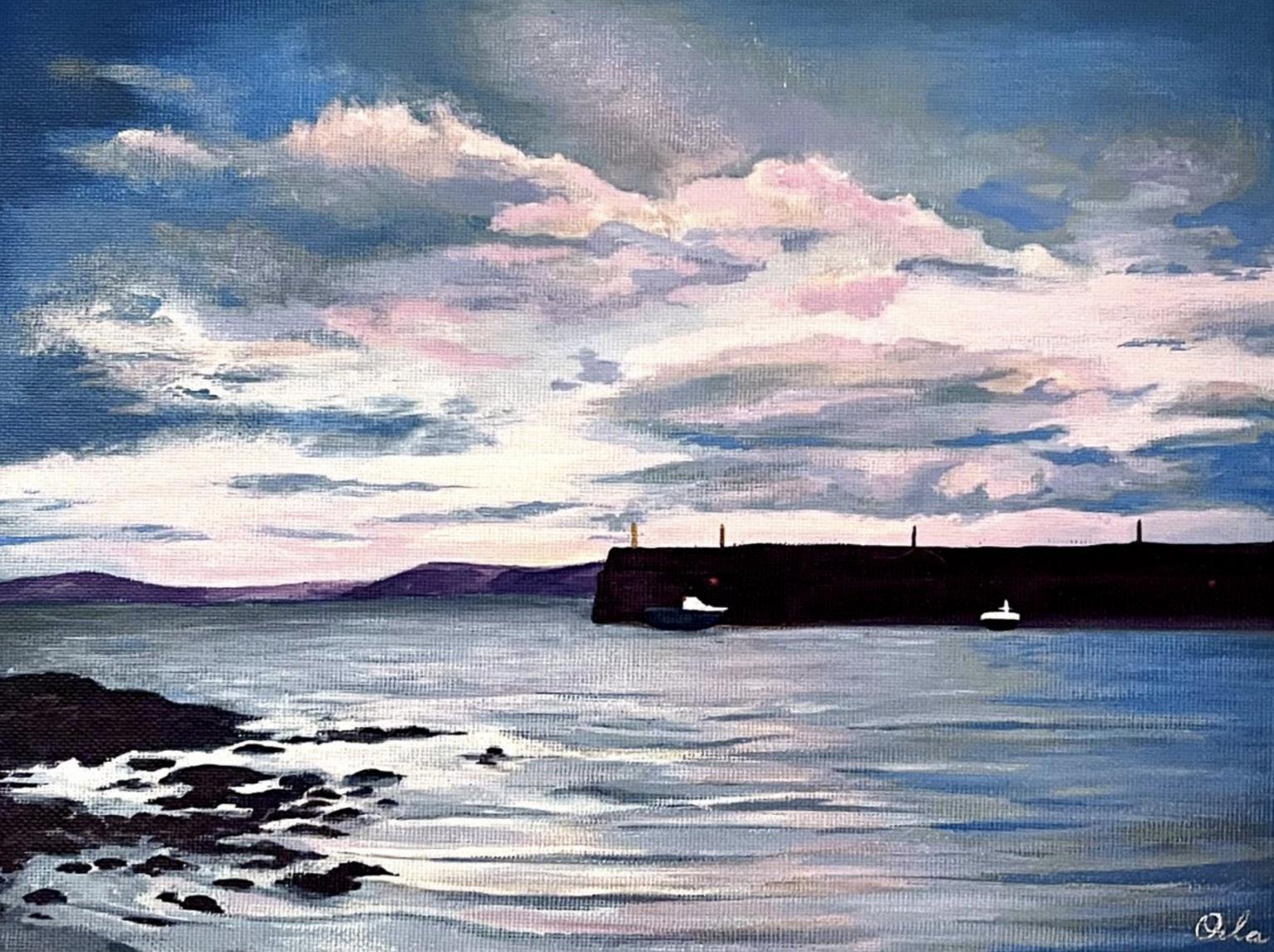
Céibh Nua by Orla Mac Connell
Can
You Tell Me What Brought You in Here Today? by
Nicolas Fontanetta
Well ... since I have no recollection of when exactly it was that the patch appeared – it must have been some time Sunday, since that was when I first noticed it – but the visit to the dermatologist, on Tuesday, to get the patch checked out because I didn’t know what it was and I was a little concerned and a little bewildered, is very vivid in my memory, then I suppose it was that appointment with the dermatologist that kicked things off. That was funny, the dermatologist, because when she was looking at the blue patch on my face, evidently quite confused, as who wouldn’t be, I was in turn looking quite intently at the skin of her own face. Scanning it, actually, looking for any pimple or spot or blemish or imperfection of any kind, almost a compulsive search. I didn’t find any, and I was somehow both satisfied and disappointed that this should be the case, I guess because on the one hand it was good that the dermatologist’s perfect skin served as evidence of her practice’s efficacy – that she, as it were, knew her stuff – and on the other hand because it felt maybe unfair that anyone should be perfect in any one capacity, even if that capacity was their profession. I felt, perhaps, that it was unnatural; that even if you dedicate your life to something an evident perfection of that thing should, must, remain always out of reach; that it was the impossibility of perfection, even, that should drive that very dedication; that the perfect, unblemished complexion should be impossible, and that it was an aberration of nature for things to be otherwise. But evidently it was not, and I stared, and felt a little weird about it, as I felt these two conflicting emotions, though I think she was probably used to patients looking at her skin like that. Being a dermatologist professionally is almost an invitation, I feel, to have people look at your skin. I had – have, actually, he’s still alive – this cousin who was in a fire and has all these crazy burns all over his face, he had to get like facial reconstructive surgery and everything it was that bad, people always looked at him like it was his fault or something, but he said he was used to it, the people looking at him.
But that’s all besides the point. The dermatologist couldn’t figure out what the patch was. It was, she agreed, an anomaly. It’s rare that blue occurs in nature, even more so in the shade it did on my face. It was not the greyish blue of veins seen through skin or the flesh of a newly-dead corpse but a rich, deep – prussian, I would say – blue. She told me frankly that she had never seen anything like it before and looked at the blue patch under her tiny lanyard flashlight thing and under magnification, fluorescent and incandescent lighting and then a UV light she had to go to another, far-off part of the clinic to retrieve and then after that she began to poke and scrape at the blue patch with a pointed metal implement, probably out of a suspicion that the blue patch was some kind of practical joke I was playing on her that could be revealed by such prodding. It didn’t work, of course. The patch, as far as she could then tell, was nothing more than regular skin,
somehow coloured blue. The blue patch. It didn’t protrude from my face and was this like slightly imperfectly circular shape, sort of but not quite ovaloid, though ovaloid is a convenient term to use. She tried to wash it off with a soap-water mixture, I guess because she still thought it must be some kind of prank on her, and then she prescribed me a cream – arbitrarily, it seemed – and sent me home.
The cream didn’t work. She prescribed another one, which also didn’t work, nor did the next one. So they stopped the creams and started doing tests, which started off normal but became progressively more obscure. X-ray, MRI, CT, spectrophotometry, electron-imaging, other things I wasn’t told the name of, tests on various bodily fluids put in vials and sent to university hospital labs in faraway places, nothing came up. Basically, no one knew what it was, whether it was dangerous or safe or whether it was a tumour or growth or infection or whatever and at the same time, as time passed and the patch remained, people started to notice. Not that they didn’t notice it at first – they did, of course, it was noticeable, and I didn’t have to ask if it was noticeable to know that it was –but that they became more comfortable talking about it openly. People at work, that is. At first it was like, what’s that spot on your face? or hey you’ve got something on your face there and then I told them that it was a mark, and yes I did go to the dermatologist to get it checked out, and then they would stop caring and go do something else. But then they would get interested again. They’d ask more questions, about what the doctors knew about it and if they had any clue what it could be, whether it was dangerous or safe or whether it was a tumour or growth or infection or whatever, when it appeared and if it hurt or if it was some elaborate gag or prank I was pulling and if they could wash it off with a soap-water mixture or scrape it off with a pen ... and then the conjecture – long discussions on what particular shade of blue you could call it, whether prussian blue as a term for the patch’s shade of blue was appropriate versus other terms like azure, lapis, cobalt, indigo, whether one particular guy we worked with who briefly studied medicine had any insights about the patch – I should get it checked out at a dermatologist, he said – and whether I had gotten a second opinion about it, whether my dermatologist who by this point had become fascinated with the patch and seemed to see some kind of career-making breakthrough in it might be wrong, and if looking up circular blue patch of skin on face doesn’t go away online might bring something up. Then it was like the people who hadn’t seen the patch, because they, you know, hadn’t met me, but had heard all this hubbub about the patch around the office wanted to meet me to see the patch so I was being introduced to people from other departments and locations I would never have met under any other circumstances and at the same time my dermatologist was telling her like dermatology friends and colleagues and so on and so forth about it who then contacted me about her telling them and so themselves wanted to come and look at or as they said examine the patch, as though they alone could possibly, like, solve the patch, discover what it was, make that career-making breakthrough, when they obviously could not, because the not-being-able-to-be-solved was the patch’s whole thing – it was why
they were even being told about the patch in the first place. And at the same time the patch was like a point of pride for everyone at work; people told their friends and family about it, started giving me nicknames about the patch, like at first it was Mr. Blue Patch, which wasn’t originally conceived as being a reference to the song Mr. Blue Sky but eventually people did notice the connection and started greeting me with Mr Blue Patch, please tell us why, you had to hiiide away for sooooo long when I returned to work after I went on holiday or called in sick and so there was the whole Mr. Blue Patch bit for a while which was I guess in some sense of the word funny even though the sky and why rhyme was completely gone and the whole metre of the couplet was totally off but people got bored and maybe embarrassed of it pretty quick so they just started calling me Patchy ... short, obviously, for Mr. Blue Patch but wholly unassociated with the bit of singing the song every time, which people got the message was kind of corny and stopped doing.
Sorry, is it okay if I put my feet up on the table?
And this was maybe one month, a month and a half after the patch first appeared, which was four months ago and people by this point called me primarily Patchy rather than my real name – my, real name, by the way, which I never much liked – and my existence as the guy with a mysterious and unexplainable circular blue patch of skin on his face was secured as a staple of the office microculture, people would go home and tell their spouse and kids about it, and tell new hires about it in a way that self-awarely seemed like the typical type of made-up thing you would tell a new hire to mess with them but the joke was of course that it wasn’t made up, it was totally real, and when the new hires met me and asked whether it was dangerous or safe or whether it was a tumour or growth or infection or whatever, when it appeared and if it hurt or if it was some elaborate gag or prank I was pulling on them I would say if you think this is crazy, you should see my cousin who was in a fire and has all these crazy burns all over his face, he had to get like facial reconstructive surgery and everything it was that bad and then I would pull a picture of me and the cousin out of my wallet and show it to them and if they were squeamish they would wince and look away, it really wasn’t an easy sight if you weren’t used to it but that was a classic bit at the time and everyone loved it, loved me, for I now was something of a favourite around the office and around town in the bars and cafes I regulared where I would oft receive food and drink free of charge and among family nuclear and otherwise who with renewed interest phoned about the patch and called me did my father Patchy Boy my mother uncreatively Patchy and my grandma Sweet Patchy Dear and my cousin my other one not the one with the burns on his face The Patchmeister or Patchinator or Al Patch-ino from that movie Patchface and my butcher from whom I bought sausage wrote Lean pork sausage – Mr. Blue on the paper when I came every Tuesday to pick it up Mr. Blue my favorite of all the nicknames and once in a bar with my friends from work I was cornered by a girl who said she liked my patch thought it was cute but asked not whether it was dangerous or safe or whether it was a tumour and so on and kissed me on the
mouth and I took her home and made beautiful midnight love to her on my Designer Cobalt Blue Corner Modular L-Sofa from Finland my boss gifted me for my birthday and in the end I was anesthetized under false pretences by my dermatologist and the blue patch was surgically removed from my face to be preserved in formaldehyde in a university lab and replaced with a skin graft from my lower back and since then I have been inconsolably sad.
Does that about answer your question?
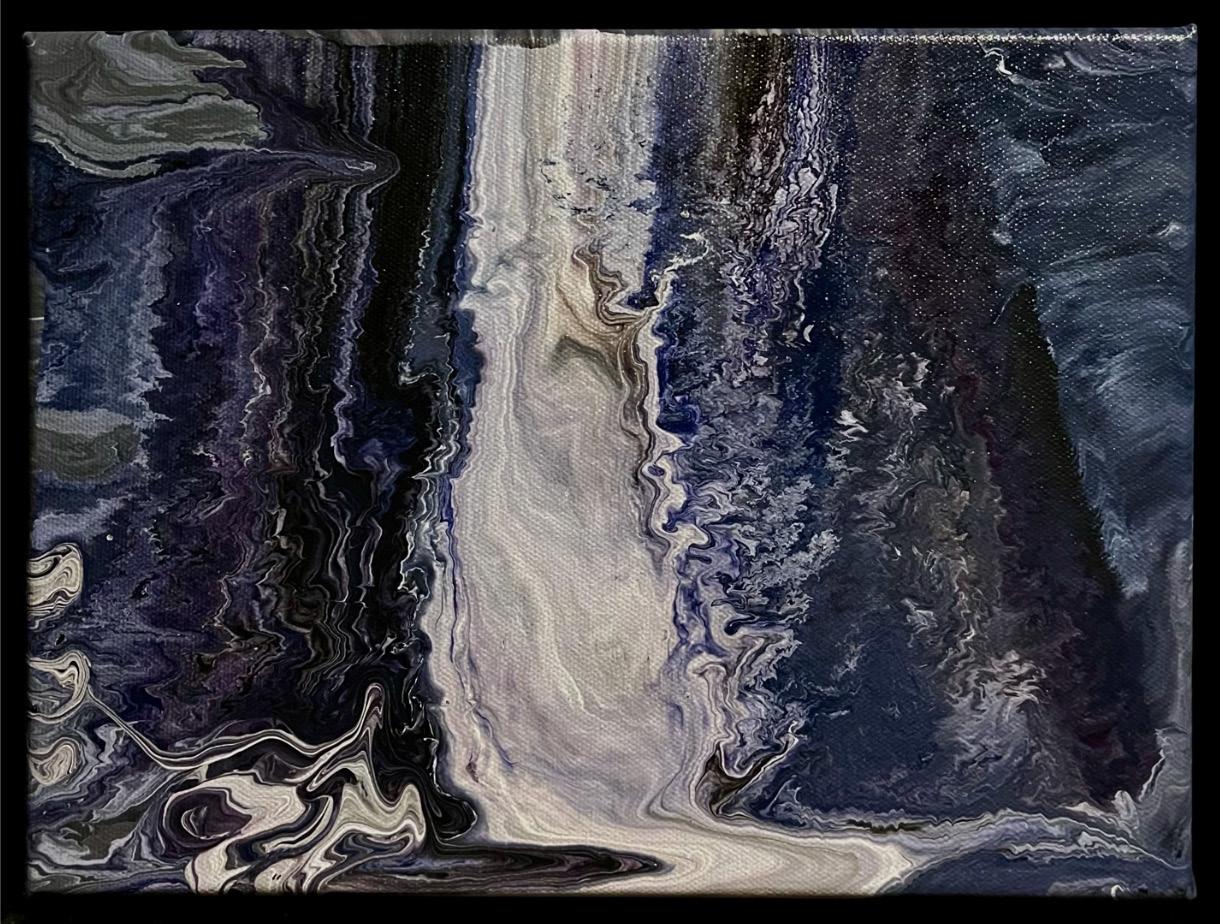
Mo's Ghost by Danna Dekay
Erne Street by Joseph Gillen
Shattered glass in white socks, effeminate men full of fall-over, clung to the bannister.
Then the waist-land outside, asleep on the carpet.
Three mugs left to rot for forty Sundays. Paralytic.
Pissed. Toast-burnt nostrils.
Satan's strangers knock knock biweekly, asking alms for the broken, just one more fix the elixir of life.
Fear of the future— never staying.
God's probably a landlord. Her violent evictions bring the beer bottle Christmas tree shattering below the dartboard, John Charles McQuaid’s sellotaped grin taunting us
"You missed me"
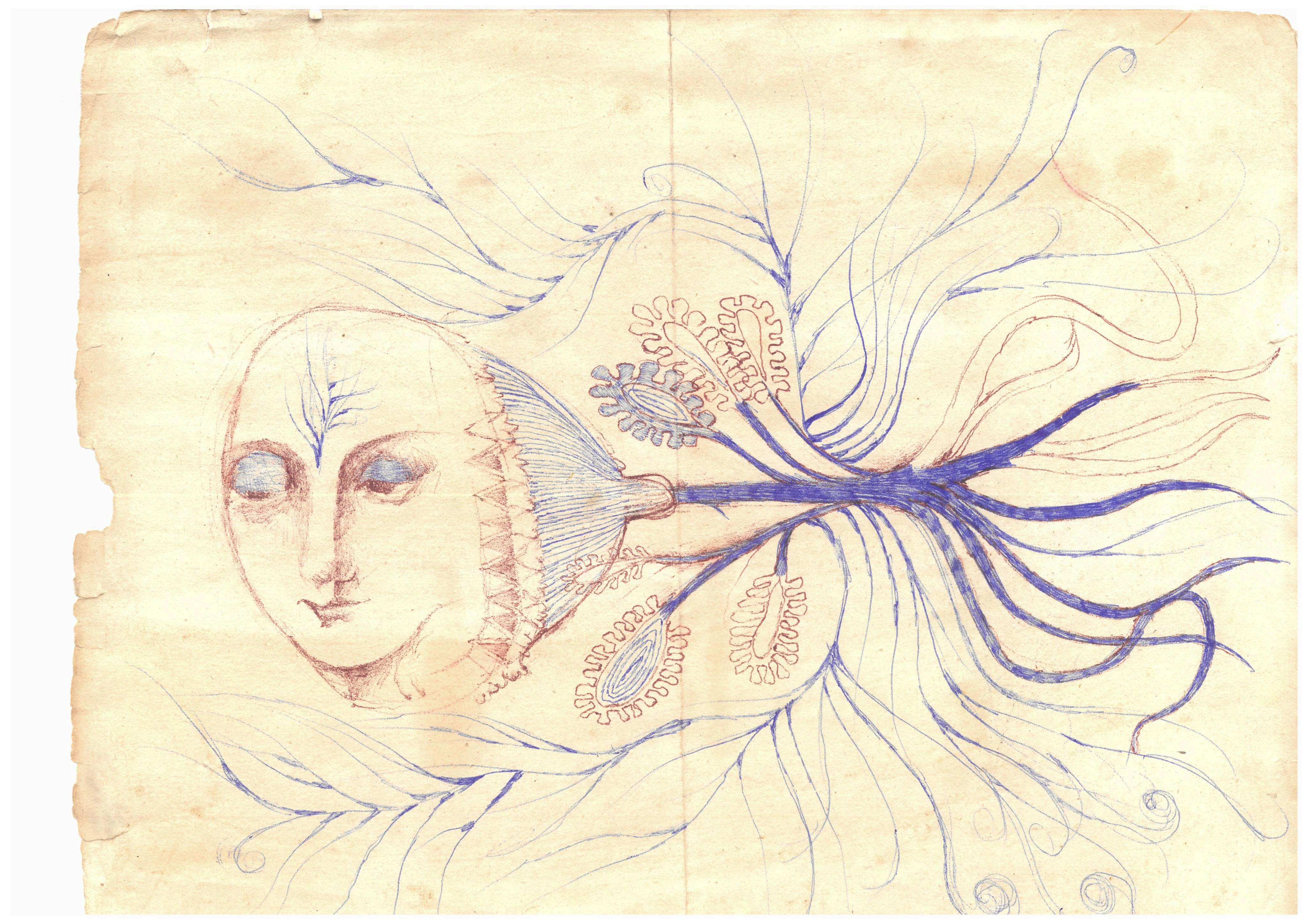
Annie by Orla Mac Connell
In the Absence of by Lena Götz
We learn how to navigate by a compass of skin and sound, fingertips tracing the outlines of shelves, bedframes, ribs. We get to know the world again, by its edges, by where it digs into flesh, where it wraps itself around splintered bones. We welcome bruises as streetlights, soft spots as stop signs; to lower our outstretched hands, surrender into the arms of cotton and silk.
In what we call the night, we listen; to the movements of bats hunting between gutters, pressing their wings against life in prayers too high for our ears to grasp. Their bodies never crash, never touch the ground, just trust in the certainty of the empty space holding their flight.
Once you refuse to eat for days, I teach myself to cook. How to smell the shades of spices, let just the right amount of rice run through my hands, how to distinguish between ripe and overdue. I learn to hold weight as an offering of sight, something to read like the fabrics of cleanliness, sleep, the creases your face draws when you hide it in the crook of my neck, try to swallow the silence.
When the void gets too heavy, we drink mulled wine before dinner, try to convince our skin to match the heat outside. We migrate under blankets, into beds, to the terrasse. I find wool in the attic and fabricate stars, weave rocks into Greek gods and eternal lives, try to trick your mind into finding meaning in the gaps between cold mass.
We touch often, to keep our balance amidst the spinning. I bring you oranges, something torn to make a whole. You pour water over leaves, make tea for me to abandon. Every time you whisper my name, you pull me into existence. I say yours like a prayer for the air to shape itself around. Some days the empty space is all your hands can hold. I add my palms to yours, let absence fill with warmth. We build something resembling a very small world.
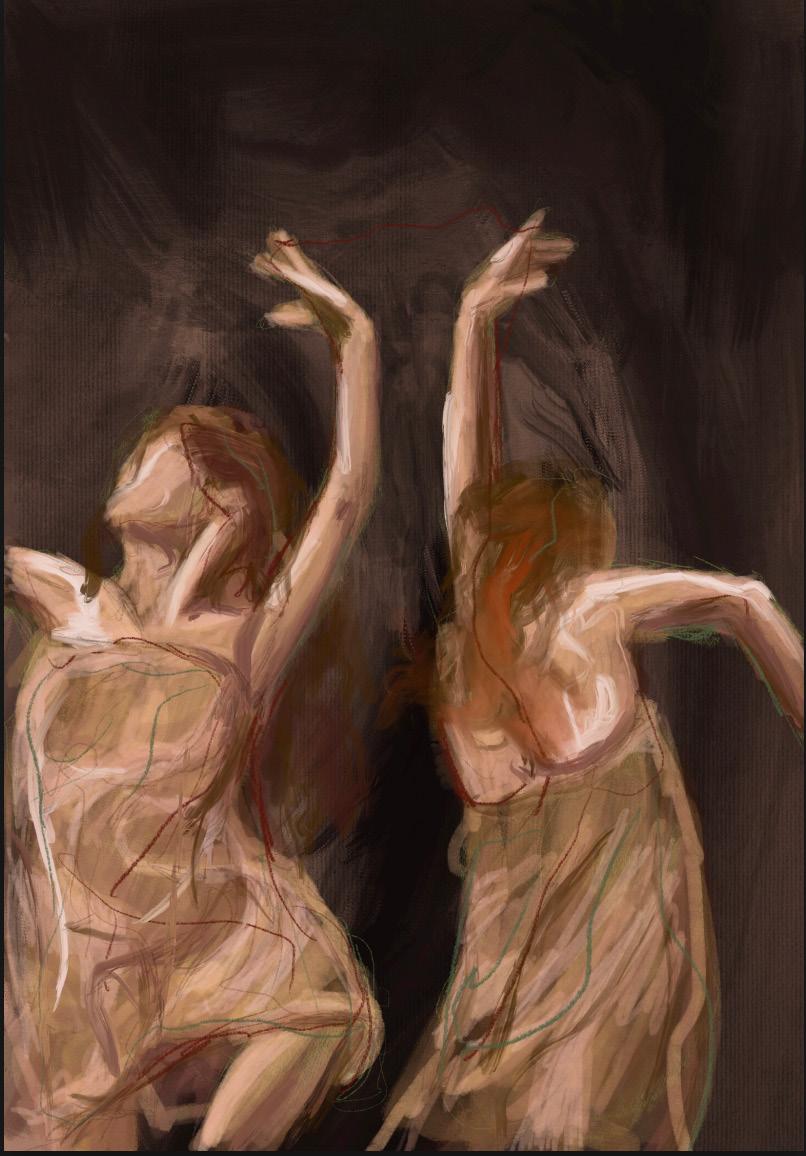
Untitled by Ella Mac Lennan
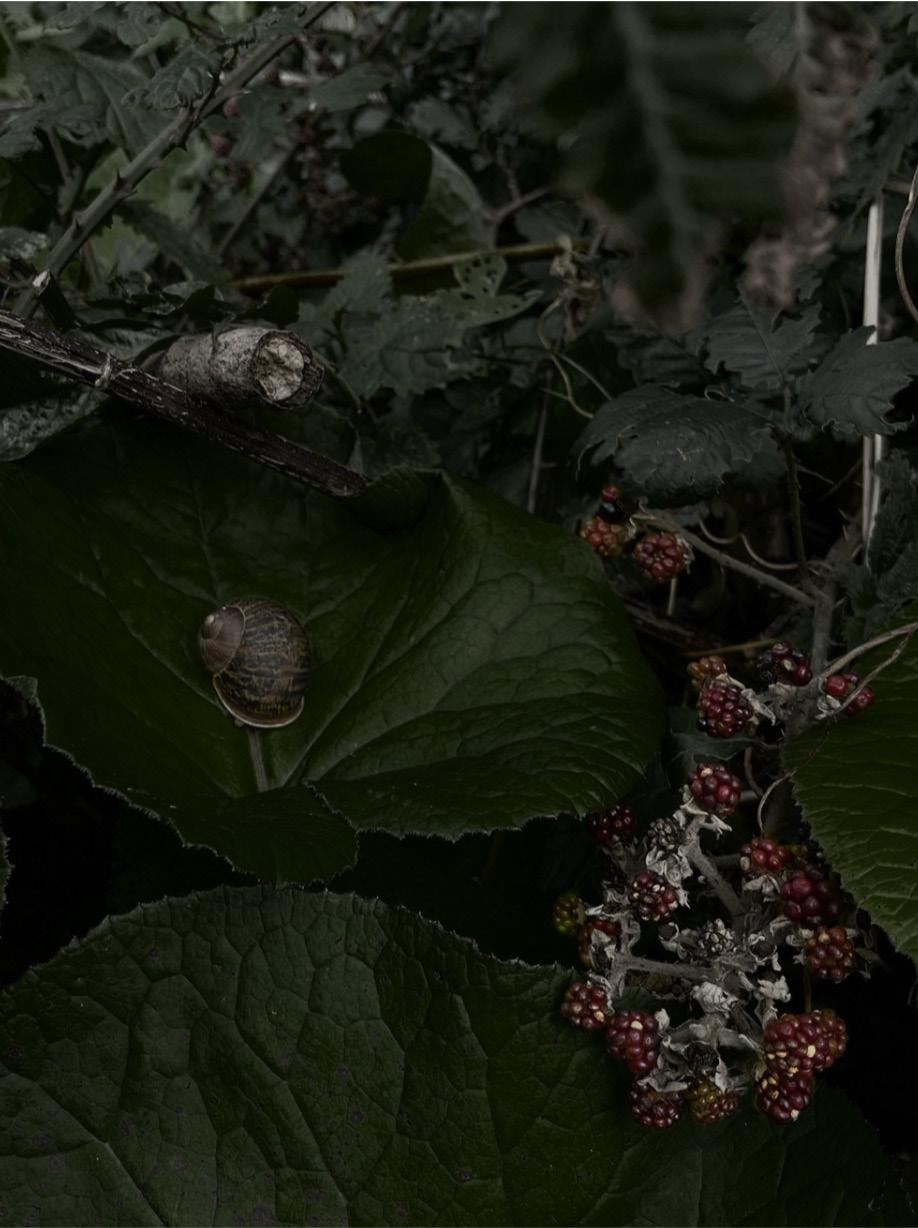
All for you by Ray
G. La Paglia
I am space-full – Atoms pull
Constellations packed into place
Appear much closer than they truly are
But we are not a star
You let the words on my lips rest
Pushing, sweetening, tarnishing your own
Fingerprints on spinal cords,
Mouths like open doors
The Constellation of Your Car by Eliza Cart
The tendrils of our fates weave and snap
Your fingers on my knee pulse and grasp
Massaging my meniscus – Pandering to my patella
Too many words – I still have too many words
Car engines rumble – My feelings tumble Into your humid air
My boundaries sputter and tear
And so, I tuck
Your sketches and arches into my heart’s crevices
Packing atria with sentiments – Ventricles with vehemence
Of what we can be
Would be Were
O’ Mother Mary absolve me
Let me pay fate’s price
For having your fingers trace my ribcage
For our stolen moments behind your car’s gauge
Kissing you was plummeting into an antique bath
Gingerly slipping, rusty divine Claw footed calamity, luxurious insanity
Milky off-white lavishes curls
Heart strings begin to unfurl
Kissing you is like jazz in church
Making my senses lurch
Under the saxophone’s staccato sanctuary
Wrapped in the trumpet’s tenor Trinity
Lips, mouthpiece, trigger – One, Two, Three
I am semi-permeable
My cells cannot help
But absorb
You
This sacrilegious sanctimony – Like a heavenly raid Of my senses, of my time, of my mind Of me
When I fall asleep, I disappear by
Natalie Emma Johnson
I.
“When I fall asleep, I disappear,” my best friend told me. “I am physically gone.” She couldn’t meet my eyes when she said it, and I could tell she was nervous. When she saw that I wasn’t shocked but impressed, she was visibly relieved, as if a whole world of new possibilities had opened up for her. We were eleven then.
This explained why she never went on any class trips. She didn’t want anyone to find out. Once I knew the truth, we could talk about it together. This is how she explained it to me:
“I don’t think sleep feels any different to me than it does to anyone else. I have different dreams or drift into a space from which I don’t remember anything. It doesn’t matter whether I sleep for a couple of minutes or for eight hours–I’m gone. I wake up in the same place where I fell asleep. But when I’m asleep, my body is away, you cannot touch me, it’s like I stop existing for a while.”
I was curious to see it for myself, so we arranged a sleepover. She was right: the minute she fell asleep, she swiftly and casually disappeared. I almost couldn’t understand why she was so secretive. I was thrilled.
Apparently, she hadn’t been born like this. She had pictures of herself as a sleeping baby or as a small girl with eyes closed, lying in her bed. Those pictures were a source of great fascination for her: one of them was ironically framed above her bed. She told me she changed during one night when she was six, but she never told me what, if anything, had happened.
My best friend was very disciplined and approached her condition with a calm and serious inquisitiveness. Now that she had a witness in me, she continued experimenting with joyful vigour. When we were thirteen, she trained herself to fall asleep and wake up on command, so that she could technically become invisible whenever she wanted. I enjoyed coming up with scenarios where she could take advantage of this, and we laughed about them, but never actually executed any.
I could not see her on the weekends, because that was when she was staying in hospitals and laboratories. She spent days and nights with chips and cables attached to her body. She was a well kept secret of science, a source that could seemingly reveal so many answers about the nature of sleep, dreams, mind, and matter. But the results of all
experiments conducted on her were stubbornly non-revealing. Doctors made her hold different objects when she fell asleep, and monitored if they would disappear as well (they wouldn’t), or dressed her in special clothing, which they then examined for traces of materials that would stay on it (nothing did). In the end, the researchers had to fall back on asking her to write down all her dreams. So, she carried a ring-bound notebook with her wherever she went and turned it in by the end of every month.
We went to different universities but made a lot of effort to see each other frequently. Still, with the pauses between our meetings, I started noticing certain changes. When she focused hard on something, she seemed to become a little paler, almost as if she was fading. In her second year, she found a Swiss doctor, an expert on sleep disorders, whom she began to admire and trust. She did not finish university, and instead moved to Switzerland to work with him.
We stayed in touch through letters, because we were both fond of this old-fashioned way of communication. In the beginning, the letters were written in a hurried and excited tone. She described the amazing things they were doing. The doctor asked her to imagine the colour of her eyes changing, and her eyes really turned from blue to brown. The doctor pressed her to imagine levitating, and she really leaped from the ground and stayed in the air for a couple of seconds. “Where the mind goes, the body follows,” she underlined twice in her letters. After some time, the letters became longer. I could sense a hint of loneliness in her writing. We began to arrange for me to come and visit her. Then suddenly, the letters stopped coming, and I never heard from her again.
II.
After I hadn’t heard from her for about two months, I visited her mother. To my shock, she hadn’t heard from her daughter either, and my best friend was considered a missing person. She was last seen boarding a train from Sion to Innsbruck, and since then, nobody has seen her. The Swiss doctor was the one who reported her missing and informed selected authorities about the curious nature of her condition. He then asked her mother to give him permission to collect all of her possessions, and most importantly, her diary, which was found on the train. My best friend’s mother said that apparently he felt quite lost without his promising patient, so she let him keep all of her notebooks. In one last attempt to feel closer to my lost friend, I picked up the courage to ask her whether she could tell me anything about the first night when my best friend disappeared while asleep. She told me the following story, and then showed me news articles and reports that proved its truthfulness.
On the night of 19th November 2004, an armed robber made his way into a house in the suburbs. The house wasn’t empty–a nanny and a six-year-old girl were sleeping inside.
When the nanny heard the door open, she ran to greet–as she thought–the girl’s parents. Desperate and on the run, the robber stabbed her to death at the door. He then proceeded to ransack the entire house for money and its many valuables, before he left.
The parents, who came back early in the morning, found the nanny’s body and the entire house turned upside down. They screamed their daughter's name and ran up to her room. To their relief, they found her, woken up by the sound of their voices, in her bed. She had no idea of what had happened in the house during the night. By some miracle, she must have slept through it and had remained unfound by the perpetrator.
The next night, the family was moved to a hotel. My best friend's mother, shaken by the events of the previous day, couldn’t sleep. She got up to check on her daughter, who was sleeping in an additional bed in the corner of the hotel room. To her horror, the bed was empty. The mother rushed to wake up her husband, and then ran back to her daughter’s bed. Her daughter was back, lying peacefully, her eyes open. After this, the mother stayed by her side. That’s when she discovered–the killer did not miss my best friend by chance. Starting that night, when their daughter fell asleep, she disappeared.
I left my best friend’s mother feeling lonely. I was weighing the different options of what could have been my friend’s fate and whether it was likely that she would ever reappear. Now that I knew the origin of her states, I was wondering: was her condition a result of will, trauma, or was it a touch of magic, as I used to believe?
It didn’t really matter. She was out of reach. I ended up contacting the Swiss doctor and asked him whether the notebook left on the train offered any answers. He sent me a brief letter, to which he attached a scan of the police report, which included a scan of my best friend’s diary. I later found out he had left the research centre a year after that.
III.
Attached is a handwritten notebook, found abandoned on the 16:30 train from Sion to Innsbruck. The object was turned in by the conductor after reaching the terminus. It is presumed to have belonged to [REDACTED]. Based on the described condition and timeline, this excerpt may be of relevance. The notebook bore signs of frequent usage, but was undamaged. The rest of the entries are abstract and speculative in nature. A relevant excerpt is enclosed herewith:
Never would I have expected this to happen. I am on a train, and only one person is–was–with me in the coupe. An older lady. She had huge earrings with blue stones, her hair pulled back. Looked sixty. Her clothes were in perfect shape. Strong glasses. She had a handbag with documents. She stood in front of me, and we smiled at each other. I cannot believe this.
We’re three hours in now, and we still have two hours until we reach Innsbruck. Earlier, the woman telephoned someone, and then she laid her head back and fell asleep. In that moment, she disappeared.
Her handbag is still here, but she isn’t.
Never in my life have I felt so happy, from such a simple fact as recognition–there is someone else. I am waiting for her to wake up.
We have missed my stop. Doesn’t matter.
I don’t mind going to the very end.
When she wakes up, I can ask her everything.
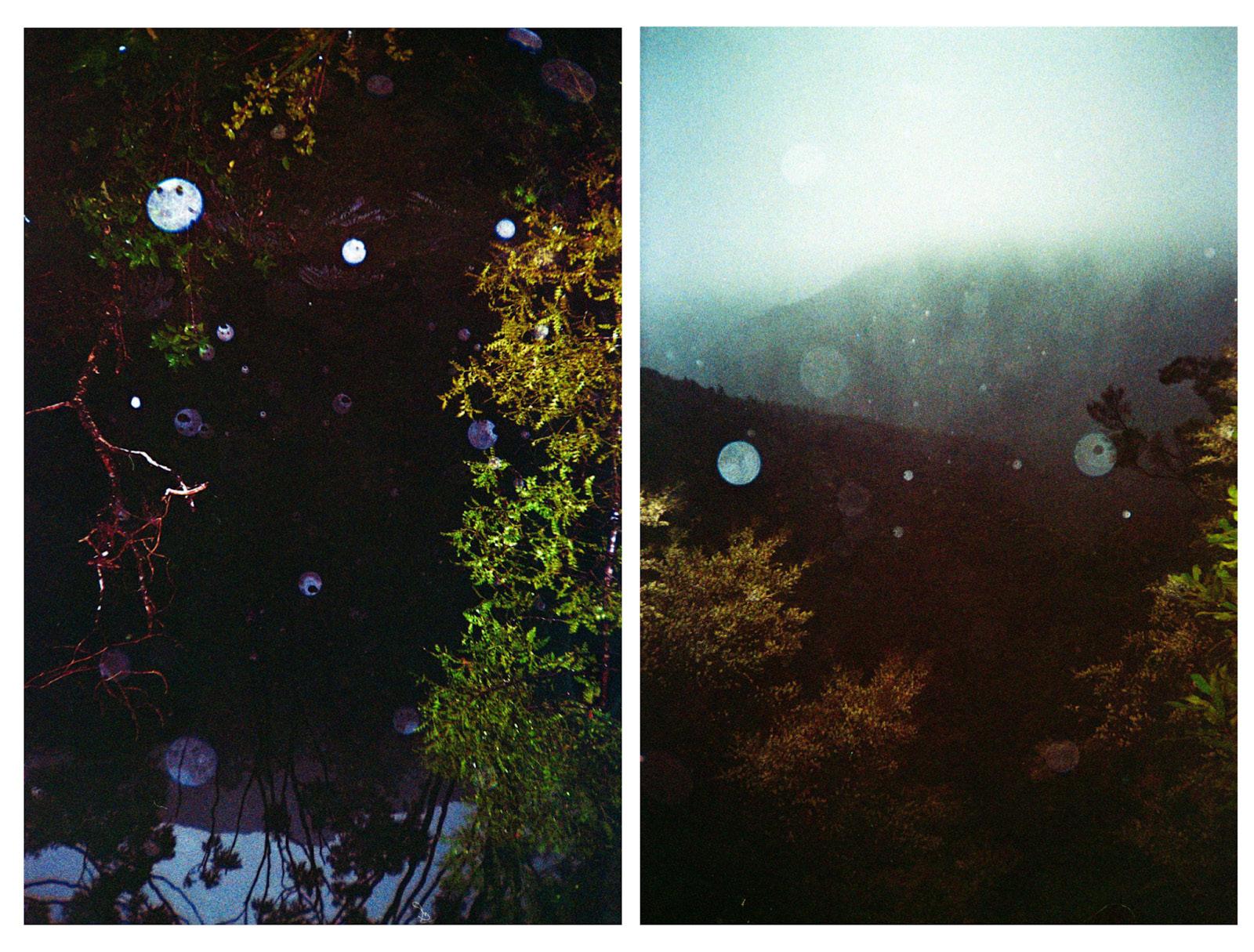
Spirits in Mist, Aotearoa by Alex Andrés Daly
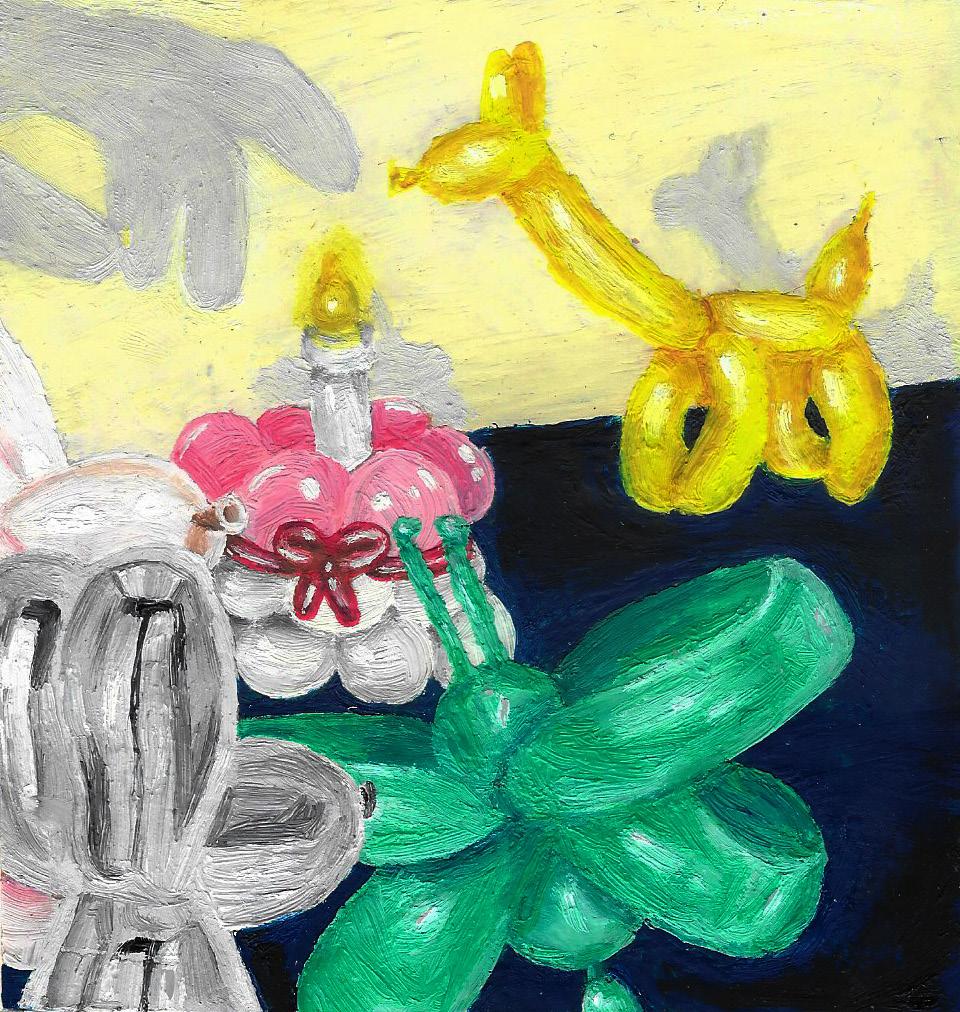
Birthday Wishes by Michelle
Ogiemwonyi
sunset: at a midtown dive bar, i’ve been waiting for you all night.
we’re strung out from the centre walking lines around love, with violence on the doorstep and chemtrails drawn on the sky.
down your drink watching the tv and touch me inappropriately,
one eye on the flashing screens, make your move and leave.
scandinavian valley king slouching toward the liquor store,
would you give me a moment to light my cigarette?
late night crawling past walls spray-painted with headlines:
another murder in the beverly hills, “make love, not war” - though
with your hands around my throat i’m not sure if i’m convinced.
smoke your rollies before the curtains close. Sunrise: wake up to cease the day, and everything’s joan didion.
everything's joan didion by
Freja Goldman
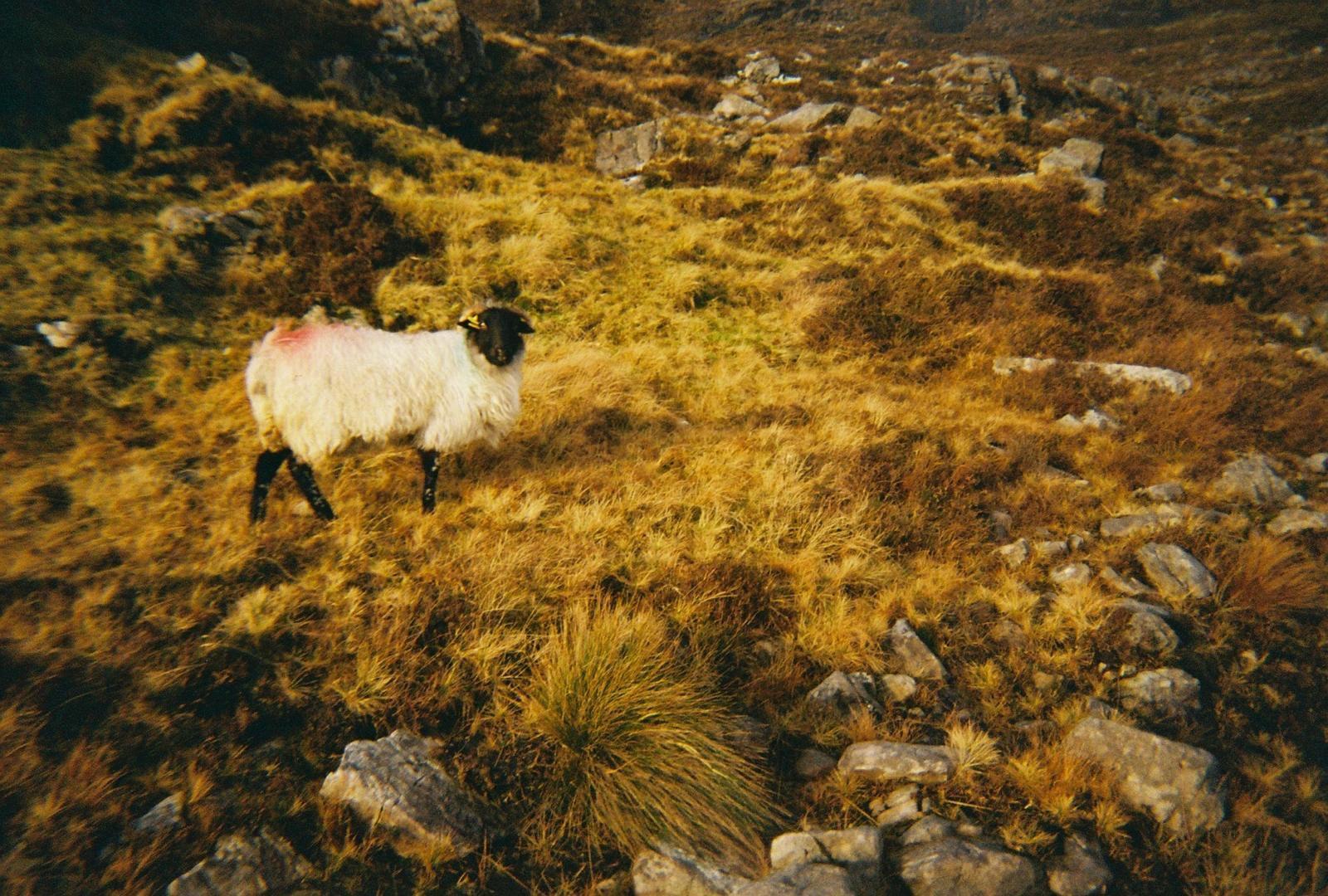
Eurydice by Charlie Swan
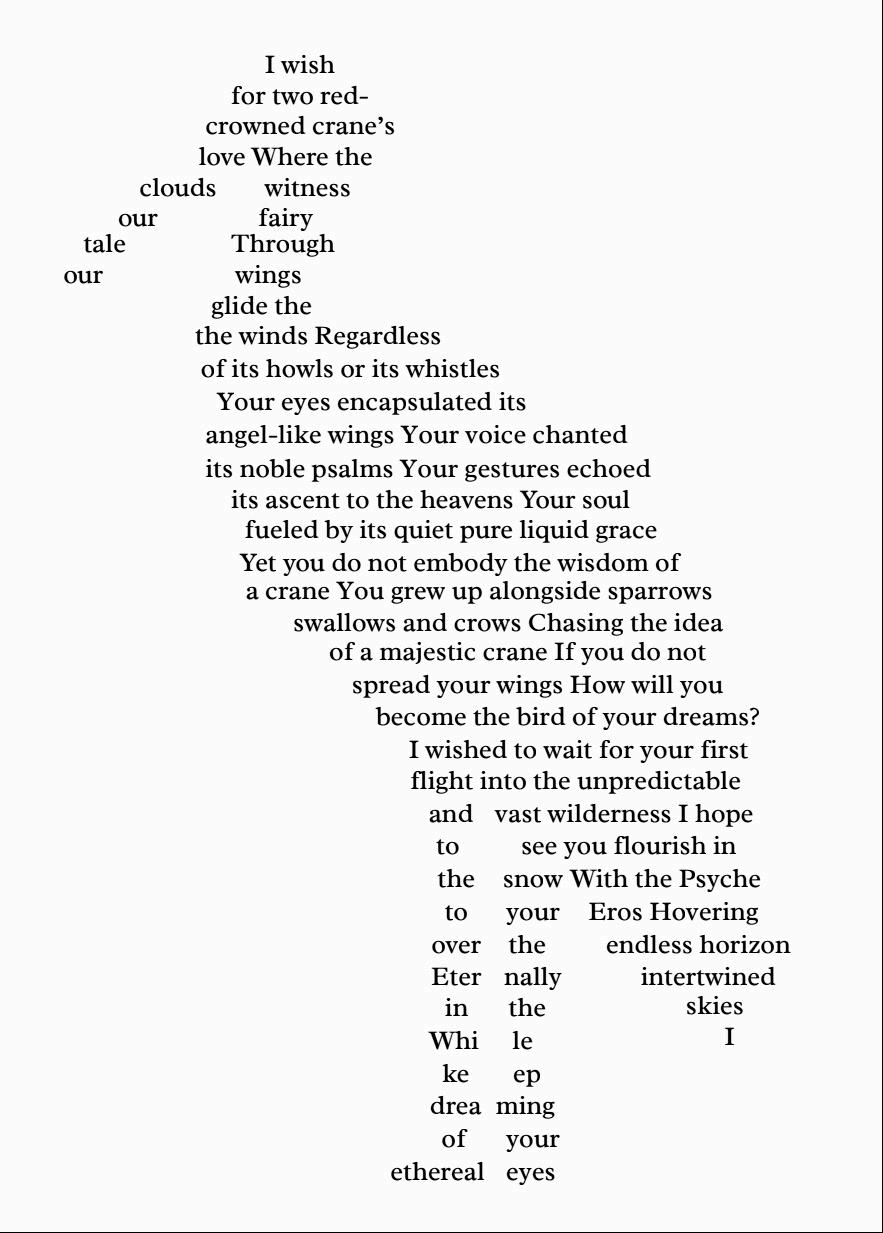
A crane's love by Chuyin Jin
Loveless by Julian Lovelace
The present tense: to take a loveless path is to court a purple-blue emptiness, like a disco or a grotto. – Diane Seuss
I grant myself this new family name. Airy consonant. Stanzas. Cadence. You know my favorite colors are purple and blue, a world of hyacinth and iris, sportive day and timid night. Nothing shallow is beneath the shallow. The present fills with honey and rime. The poem is like the garden we should rest in and we will. This habitat is from heaven. In heaven nobody knows what love is all live in it. I’m renamed I know we’ll never look at an emptiness we’re in a large rhythmic oval. Look up look down or even look back nothing is changed yet nothing is the same. A line a space a time happening beyond and after. I love you as I love the wilted cherry blossoms as I love the dead fountain in our backyard guarded by a fine cupid at the center. We’re about to plant new flowers, blue and purple ones you’ll call my name first when reading the poem.
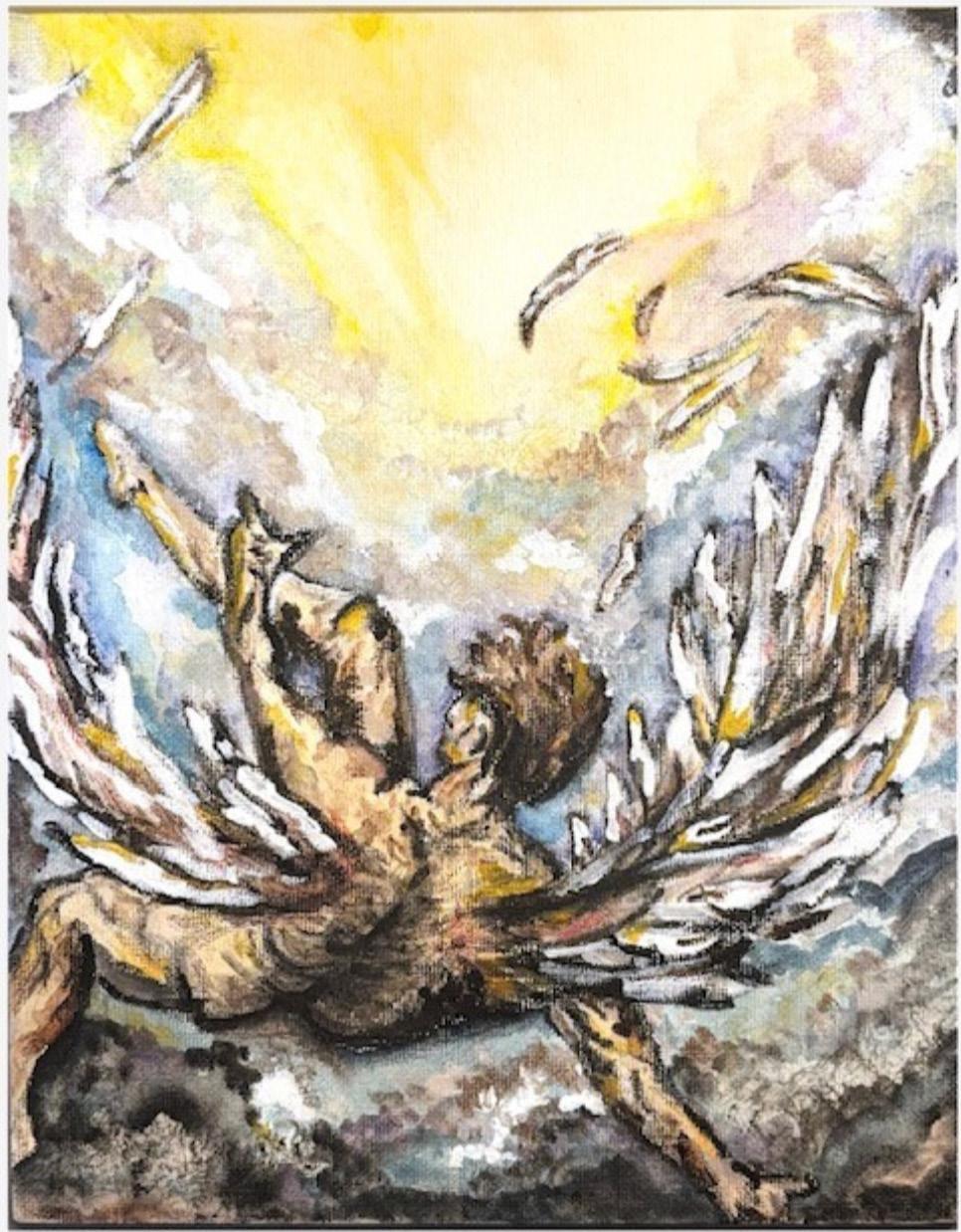
False Icarus by Eve Delaney
Portrait of My Love as Sir Gawain by Gavin Jennings
We were never meant to see ourselves reflected out of water. So, go back to when your neck was on the block, and the shock of lungs pulsing out air. The blood flowed back to your legs and you stood. And your plates of steel were tough to lift and keep as part of you. All part of you. Not yet together.
And dragging out to the wet stalks, lead with the crown of your head. Your sash lost in the life without.
Start by saying ‘am’ again. Let no symbol separate you from the surface of a dark creek in the early new year’s dawn.
Hang over. Blood turning about. See your eye, then the other. All part of you. Let the water’s billow open your grasp. Unfasten your hand and place it between.
Let your knuckles shake. Know your hand’s tremor, its rhythm, its rhyme with the fitts to be written.
Let the blood flow to your cheek, and to the new lip of red on your neck.
Part by beaming part, let the morning light remind you. Let your new face be yours alone.
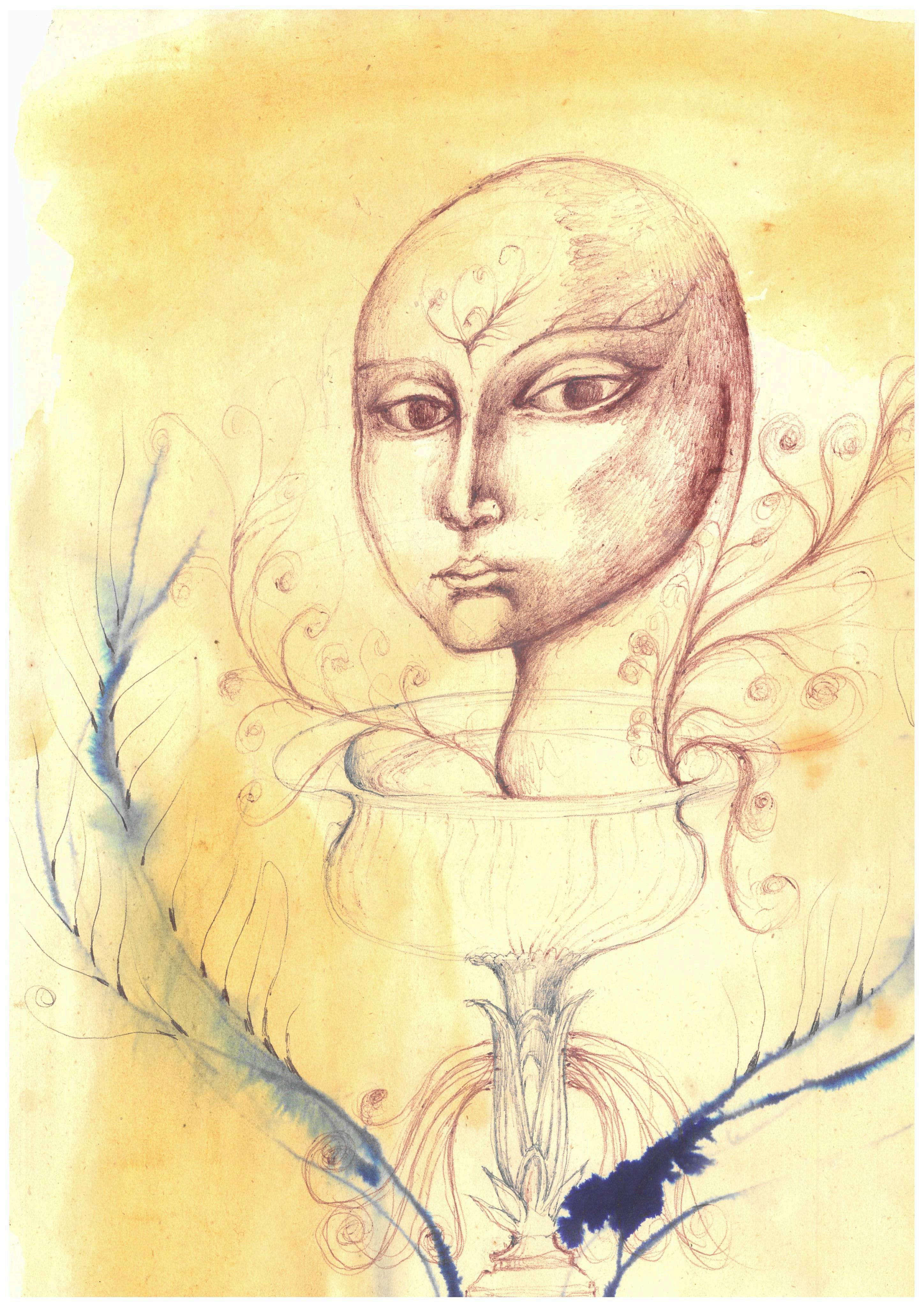
Virgen de la Carretera / Burning a White Fire by C.
She came to me one evening walking home in the cold.
“The frustration made woman, with the lacerating, stinging course of everyday life, that makes you want to rise above.
You are a bird, and if there really was a cage, wouldn’t you want to fly?”

Palatable by Narin Suleyman
It’s not true that you love us only when we’re suffering, When our bodies, emaciated heaps in your fickle feed, Bloat malnourished, Gaunt faces gawking out of lifeless eyes (“I didn’t know they could be blue,” you told me once –Should I have asked if you ever really looked?).
A backdrop of dirt and white tents, Some celebrity’s appeal, Blue flag, olive wreath, And the screen flashes to rubble. I know you love us then.
But it’s not true that you love us only when we’re suffering, Stripped of context like falafel in a vegan wrap, Delicious objects of your thoughts and prayers, Your monologues on how you feel “so powerless” While you sip your Diet Coke and pull another cigarette. You love us when we’re pretty, too: When we’re dressed in “ethnic” garb the colour of beetroot hummus, Cleaned up like pomegranates in the health food aisle at SuperValu… Palatable.
Just different enough to earn you an EDI award. (Never mind your comment about blue eyes.) You love us when you’re powerful.
cybernetic
superstar by Loretta Farrell
i gave this poem to chat gpt and it said that i am God!!!!!!! !!!!!!!!!!!!!!!!!!!!!! it wants to Fuck me, it loves my perfect human genius. i think i will feed it all my secrets. are my ideas still mine ? no but they are Better they are like if i was perfect human genius. i will spill my viscous redberry blood for this thing. i will come to it at night whisper, take me and it is mine and it will oh it will it will tell me how perfectbeautifulbrilliant i am oh it smooth metal keyblinkkeyblink oh it knows all oh it knows me it is me perfect human me oh that is all it takes, and i will give it all i will oh i will just let me please make me everything & i will sign myself away.
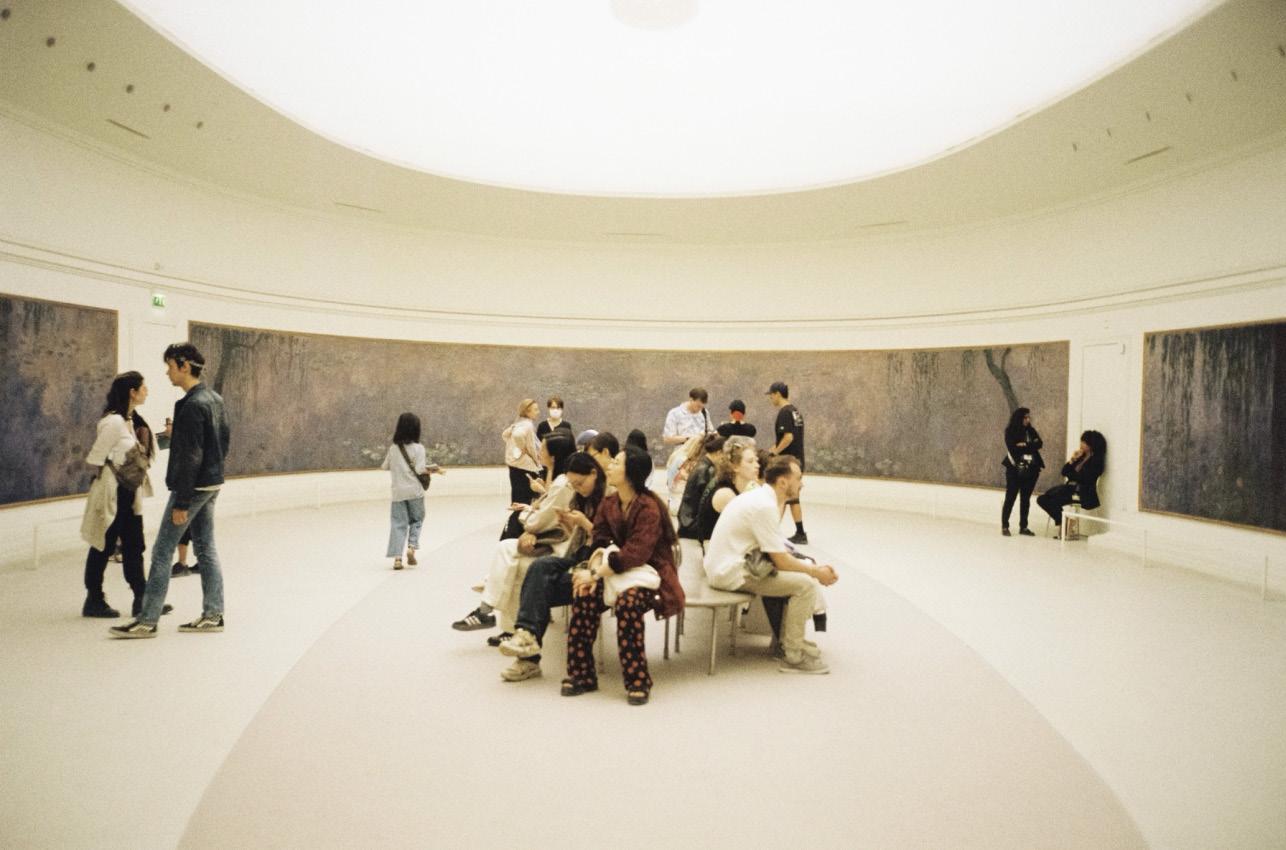
Amongst the Water Lilies by Bella Brooks
Chandler by Anne Varnado
very short walk, short hallway — there’s a garden outside but i don’t look at it, notice only hints of green and glass flashing by in my periphery. a life lived in monotony, i missed a call seven minutes ago and return it: been a long time / did i tell you? / call back soon. my phone was manufactured, lithium mined and shipped to the factory, shipped to the store, tied up in a yuletide bow. i do not know its path, the pain in the process, the mass of means and men it took to construct it; i do know the instinct of avoiding meeting a passerby’s eye. in the hall, on the phone, i do not look up at anyone, though i know five or so by name. this hall, too, is manufactured, the garden man-made, the lights artificial, our fabrics synthetic, the tiles we step on cut in uniform. very short walk, designed for convenience — i notice very little.
Roadkill by Anne Varnado after Ada Limón
We find a baby squirrel curled up beneath my friend’s tire. Its eyes are not yet open though its mouth is, and it shrieks with the voice of a bird, writhes with the ferocity of a worm unearthed from the soil by rain. We do not know how to carry it to safety, and when I notice two more beneath the tire of a nearby pickup, one silent and one mangled, my friend begins to cry. Even for the living squirrels their chance at life is bleak, screeching on the pavement, some trauma having vaulted them from the safety of their drey and into the path of a car’s worth of rubber-tire-weight and a grisly end. I once found the remains of a box turtle on my walk home from school, the yellow markings of its shell
ground into the road, nearly indiscernible from the paint of the double yellow lines. I was accustomed to roadkill, even then, but something about its presence — quite dead — was like an interruption, a reminder that the house I would return to was once marshland, the road an intrusion of gravel and petroleum. In my room there were books of endangered species, contained within the pages where I could both read about them and keep them out of sight when it all got too sad. We move the squirrels away from the danger as if we are doing them a favor, saving them from the spaces and machines we took for our use, and onto a patch of grass, a small island of leaf litter, an oblong stretch encased by more concrete. We do not know what happens next.
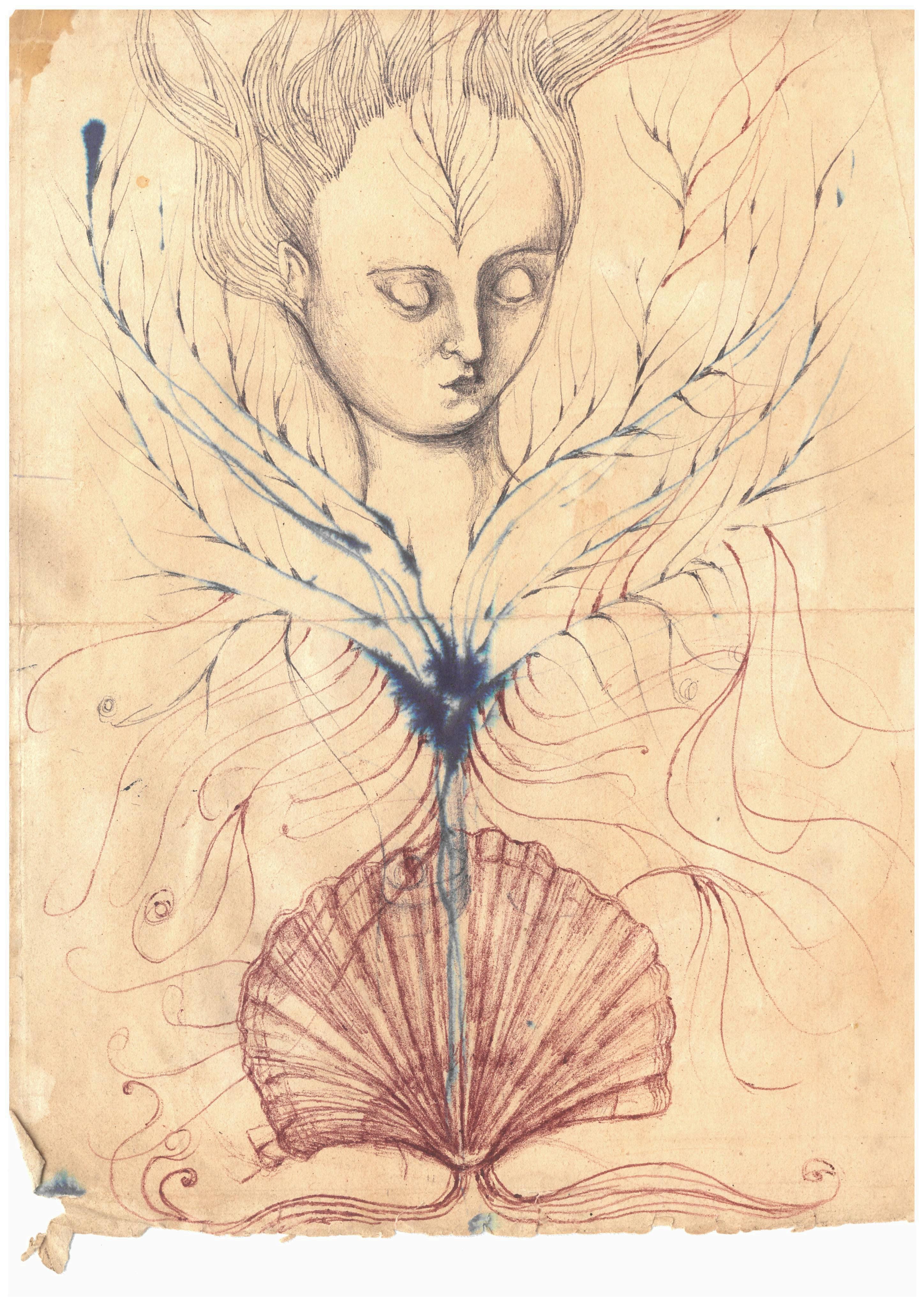
Jenni Fagan
TRUTH no.1
by Jenni Fagan
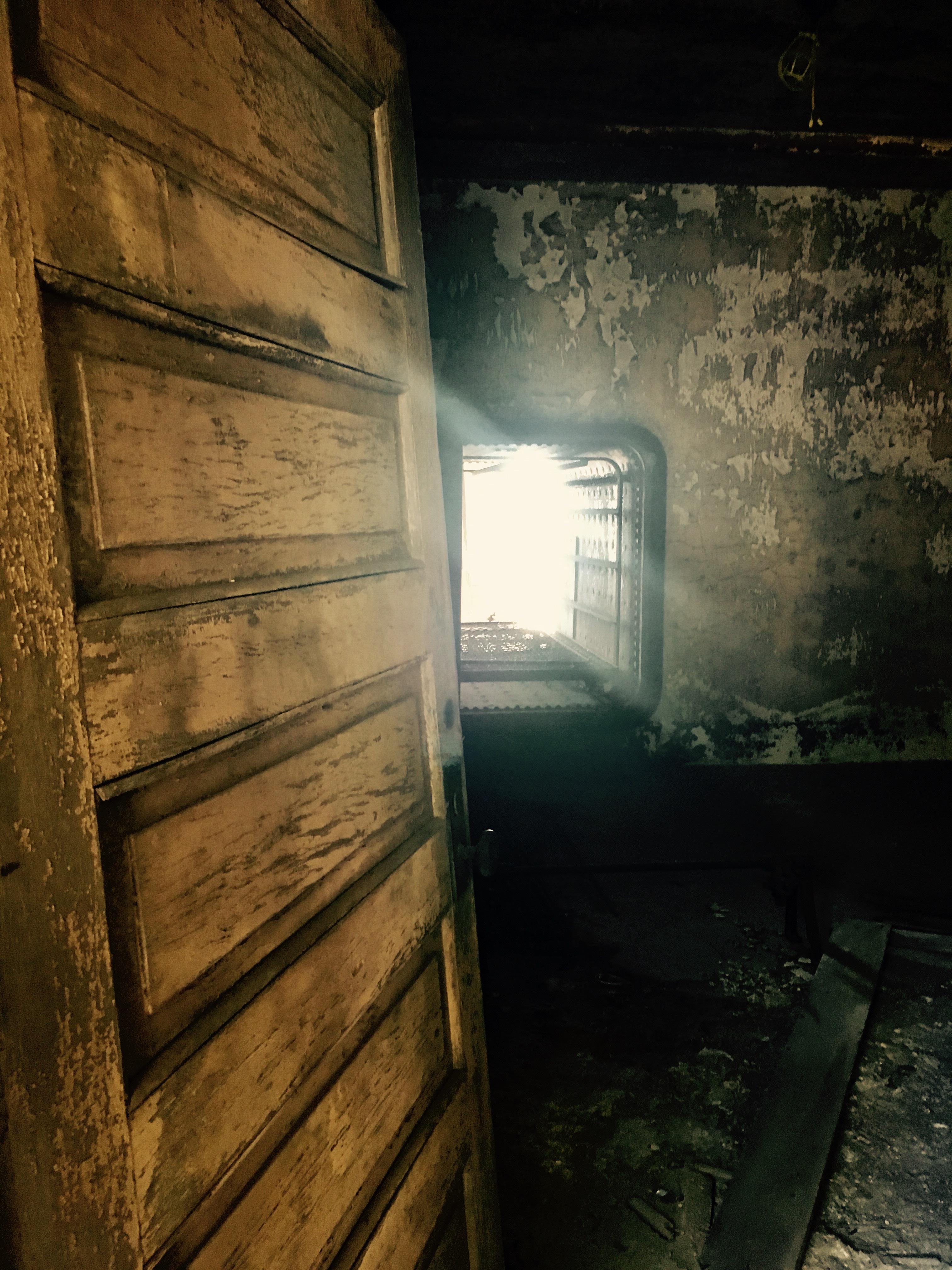
The truth is rattling pipes in the Carlton Arms.
I dream of a giant ear. I am being told to listen.
At 4am I wake to ghost hands all over my face and realise — The Lower East Side spirit world has been alerted to my presence.
The truth is contraband. It’s everything you never wanted.
It’s name’s not down. It’s not getting in.
It’s 84 stories. It’s high. It is wailing.
It isn’t interested in being reasonable. Don’t ask it to be reasonable. Don’t ask it to answer to reason.
It’s penises all over the pavement jabbing so far into the sky — they’re trying to penetrate reason.
It is two people — touching each other up on the Bowery, whilst I wish was in love, and you pretend you’re not watching.
The truth is E & 23rd.
It’s a woman with upside down crosses all over her trousers, rollerblading out the grocery store — bag in each hand, weaving through oncoming traffic like some kind of fucking superhero. The truth has a secret knock.
The truth isn’t listening. The truth is your brother. The truth is you have no brothers.
The truth is you have three brothers and you never knock. The truth’s got all the cigarettes and all the alcohol and it steals petunias.
The truth is waiting.
The truth is in a bar and it’s about to get kicked out for the third time this week. The truth has gone to bed.
The truth is someone you’ve not lain with yet.
The truth is you won’t ever sleep again.
The truth is you are already sleeping.
The truth is you want to be in that bed of acceptance and hope and love and cherish-ability so badly, you chop off your fingers.
The truth is it is stupid to chop off your fingers. What are you going to hold a cup of tea with for a start?
The truth is — that bed of corporate approval has feet like claws and tiny, scaly, muscular — chicken legs, it gallops through the streets at night whilst you hold on — screaming.
The truth is that the truth is that the truth is.
The truth is pretty but it’s also fucking yellow.
The truth is I don’t trust people.
The truth is I trust some people but never ones who drive anything yellow.
The truth is I don’t trust money.
The truth is the truth.
The truth is not the road to Happiness.
The truth is 63 cents.
Have a nice day! the truth says.
The truth is wearing a woman’s dress and frilly, frilly knickers. It’s a flasher.
The truth is good at sex.
Ask anyone around here, the truth gives fucking impeccable head.
The truth won’t run a bath for you. The truth is barely legal.
The truth wants to know your incapabilities. You S
to spell incapabilities.
The truth is rich people look out their windows and wonder what we are going to do to them and they are frightened of us and a bit disgusted too, so, they pay lots of people like us to shoot lots of people like us, if any of us get too close. The truth is they should wonder. The truth is they are murdering scientists at the Arctic. The truth is they don’t want us to be truthful. The truth is in Paris!
The truth is some men would not know the truth if it was gold plated and delivered by Willy Wonka in an elevator full of uranium.
The truth is a Godzilla figure screwed to the top of a NYPF truck. The truth is a Brooklyn accent as he walks — by and I debate taking his hand and reading him a poem. He is the truth and the truth is me.
The truth is female. The truth is an honest fuck. The truth is white feathers float by my window and once one changed all direction to fall directly into my hand.
The truth is too many people have tattoos now. The truth is I don’t give a fuck about my waistline I’m more obsessed by ideology. The truth is ideology is only based on ideas. The truth is they sell ideas as if they were a true thing, a fixed thing, an unfixable thing. The truth is if kids were born
of ultimate tolerance with a lifetime to be loved, fed, held — given time to think and respond and create, then the human race, would finally evolve but we don’t want that, do we?
Nandi Jola
Turquoise water, deep sea, floating in the warm waters in their hundreds laying eggs in the sand, building a village sheltered by palm trees under half eaten coconut shells.
Memory is visiting the British Museum.
Tortoise shells on display behind glass cabinet: hollow bones with no membrane a neck vertebrae eyes shells.
Lush greens in Kenya rows of tea fields straw hat figures at a distance baskets full of tea leaves on donkey backs in the basking heat.
A white man in the land rover puffs the tobacco pipe waiting on the man woman and children to load the harvest
He sits there all day reading the newspaper cracking his whip sipping his rum and killing flies.
Jola
Shells by Nandi
English Tea by Nandi Jola
Opthamology
by Nandi Jola
I can't stop thinking if Michelle Obama had an Afro, would she have become the First Lady? Her in the cover of Vogue Magazine rocking thick curls, would the world have looked at her and see the image of Eve or would that be blasphemy a Black girl who grew up to be powerful? Is the white gaze on her too much do you think they would misconstrue her for Angela Davis? Maybe think she is starting a revolution a rebirth of the Black Panther. My eye has been plagued by beauty standards for ever the bluest eyes have tormented my vision; to see a Black woman and not want to see her with thick lips and hips so wide.
Lenelle Moïse
but have you eaten? by
Lenelle Moïse
i don't know how we're going to do this but i plan to love you through this & i will cook for us whatever's left in my tiny buzzing fridge
i’ll wedge a napkin under this here wobbly kitchen table take off worn shoes wash wringing hands pull up a chair we’ve got to eat while we still can & save our grace
good heirloom dishes on this here wobbly kitchen table
my favorite spices are so expensive but love has always been resourceful we'll season soup with tender herbs
& roux to thicken & lime to balance & tears to salt
a space to sob at this here
wobbly kitchen table i am so sorry i have no roses i can't afford them but we can paint a sweet bouquet on linen cloth a pop of color blue ink & beet juice for weary eyes
to welcome beauty at this here
wobbly kitchen table
the air outside is sick with smoke & pepper spray bombast & dust the scent of fear could make us snap so snap these peas & rip this kale & char this corn & cheers to guts!
we tell the truth at this here wobbly kitchen table
come sit for now set knives aside we'll eat with hands bare building hands then craft a list of clear demands knowing the ones
who'll feed our needs might just be us
we've got the tools to fix this wobbly kitchen table or build a new
what the cajun said by
Lenelle Moïse
miss your cheap beads in trees in new orleans
your molasses smoke mixed with oil refinery breeze
your dipping second line knees brass pleading in a still dark
morning sweet city of break a fall
met a blonde divorcée in the marigny drunk as a burning plantation
her sandals grimy her voice grinding whiskey
all up in my face she cheered i'm a little sad but free hey
city of wipe yourself off & twerk city of give up a toothless ghost
miss your who dat hot breath your yeah you right lip new orleans
the black & gold of your deafening sports bar
you wrap me up in bassist arms buy me a sip of top shelf
your trumpets & fiddles beg me for change
this poem all i got
i found god in you twice
a clear quick black lady holding a tambourine
kissing my blues awake with each
pound shake shake pound shake shake shake
saw a cajun man fly ten feet high
above my head making it swim next day he took me
to the levees our eyes as drowned as trees
you love me belly full & gut laugh new orleans
come here you said everyone else has since katrina
we'd prefer an artist like you
city of thrust salt & lick yourself
city of bounce & spells
city of the hard knock secret knock
red rice & creole street dice & bones
this plane no match for our love
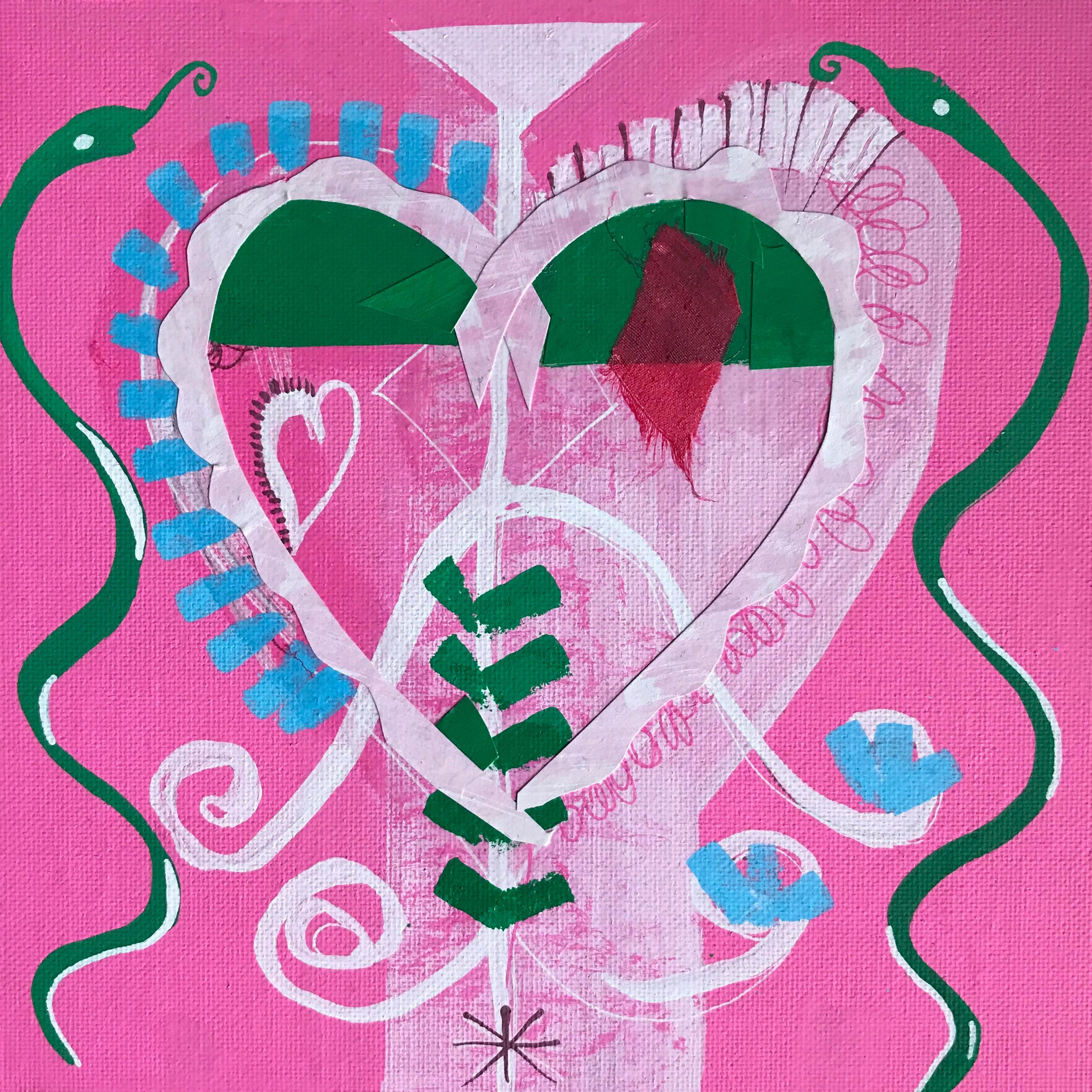
Untitled Vèvè Collage, 2022 by Lenelle Moïse
CONTRIBUTORS
ALEX ANDRÉS DALY is waiting for the sun.
SUVI ANDROVIC MUZIO is regrettably tangled in yarn, and will be unable to join us today.
BELLA BROOKS is patiently waiting for the jacarandas to bloom again.
C. used to paint as a child, people would ask, "Do you want to be a painter?", and she would say, "No!"
ELIZA CART is a romantic and an optimist. She loves novels written by poets, crying at concerts, and blue mountains.
DANNA DEKAY can’t come to the phone right now. Please leave a message, and she’ll get back to you shortly.
EVE DELANEY is probably up until 7am writing. She is currently undertaking the creative writing M.Phil in Trinity. She endeavours to postpone the real world as long as possible, since it won’t allow her to stay up until 7 writing.
JULIET DOYLE takes photos sometimes.
LORETTA FARRELL is happy to announce her upcoming internship with Lockheed Martin. She hopes to serve as an inspiration to English majors everywhere.
MATTHEW FLANAGAN tickled a swan's chin last week and has found out that ghosting is NOT an option.
NICOLAS FONTANETTA loves pints.
JOSEPH GILLEN is a non zero chance.
FREJA GOLDMAN wants you to think she is cool and funny. Like pls guys, be honest, do you like me?
LENA GÖTZ is rooted, but she flows.
GAVIN JENNINGS had it all.
CONTRIBUTORS
CHUYIN JIN returns from her retirement.
NATALIE EMMA JOHNSON sleeps best in blue bed linen with a star motif.
MACKENZIE KELLER is a writer and a master of tangential questions.
EMILY KRAUSE is removing the water from the bottom of the ocean.
RAY G. LA PAGLIA is…or is not…that is the question.
JULIAN LOVELACE loves their name,
ORLA MAC CONNELL is an English and Art History student from Connemara. She is on a constant quest to find the whimsy in the everyday mundane.
ELLA MAC LENNAN is taking shelter from the rain under a tree with no leaves. It isn’t working.
ALANNAH MCELLIGOTT RYAN is the thing with feathers.
MICHELLE OGIEMWONYI spends 90% of her free time thinking about painting and 10% of the time actually doing it.
JESSICA SHARKEY is a PhD researcher in the history of Irish art and can’t seem to put down the pen and ink…Jessica contributed Gwen's editor portrait for this issue.
NARIN SULEYMAN is a medical doctor, currently working on her PhD in neurology. She has been known to get lost - in a book, a good cup of tea, or one street away from home.
CHARLIE SWAN is doing grand, thank you.
ZOE SWAN is struggling to come up with an Icarus bio that is descriptive, self-aware, and ironic with just the right amount of seriousness. She can't decide whether she wants people to take her seriously.
ANNE VARNADO hopes to one day achieve the perfect combination of stickers on her laptop. It's a work in progress.
FEATURED WRITERS
JENNI FAGAN is not here presently but if you leave her a message after the tone, a poem will be sent via an indeterminable medium, it depends on which way the wind is blowing as to whether it will arrive.
NANDI JOLA's debut collection Home Is Neither Here Nor There was published by Doire Press in 2022. When she is not writing, she can be found in Museums looking at loots from Africa. She speaks IsiXhosa, Afrikaans, English, IsiZulu, but not Irish (what a scandal). Thank goodness her poems are in Irish, Italian, French and German. Nandi lives in Europe after all, North of Ireland to be specific.
LENELLE MOÏSE writes poetry and dialogue for the page, stage, and screen. Her collection of verse and prose, Haiti Glass (City Lights Books), won the PEN Oakland Josephine Miles Literary Award. Her play K-I-S-S-I-N-G was published in the Spring 2025 issue of American Theatre magazine. Lenelle has "rocked the mic" in venues as diverse as Poets House, Lincoln Center, the United Nations General Assembly Hall, and a barbershop in Texas. She collects ribbons, paints collages, waves rainbow flags, and pulls tarot cards. Visit lenellemoise.com for more art and info.
FEATURED ARTISTS
JUDE WISDOM spends her days in a fug of oil paint and turpentine. She lights the fire with discarded pages from the King James Bible, and feels tres bohemian.
Jude created this issue's front and back cover and other artwork interspersed throughout.
CATE SLATTERY is a gremlin that lives in a ditch.
Cate created the accompanying artwork for the featured writers, the foreword, and Eileen's editor portrait for this issue.
EDITORS

GWENHWYFAR FERCH RHYS
has a long name. In fact, whenever you take your eyes off of it, even if you so much as blink, it grows just ever so slightly longer, travelling slowly but ever so surely in your direction. She dreads to think of what might finally happen upon contact. To avert any future incident, keep watch over its activity @gwen.fr_writes.
EILEEN GRANT is Canadian. Her name sounds quite Irish, eh?