

Founding publisher,
Editor-in-chief & Creative director
Mouna Anajjar
Editorial assistant
Camélia Sarnefors
Editors
Mouna Anajjar
Camélia Sarnefors
Contributing editors
Nidam Abdi
Gilles Khoury
Contributors
Mariam Bouchamane
Rafram Chaddad
Artsi Ifrach
Eliot Leblanc-Hartmann
Yamen Manai & Les éditions
Elyzad
Yassine Sellame
Cover image
Eliot Leblanc-Hartmann
Copy editor
Jasmin Verdès
Translators
Başak Balkan
Seth Sherwood
Art direction & Graphic design
Salina
(Eugenia Luchetta & Marco Minzoni) www.salina.design info@salina.design
Advertising
Kamatè Régie T +33
Dominique Olivier-Toumano dolivier@kamateregie.com
Véronique Andrei vandrei@kamateregie.com
Distribution
KD Presse Éric NAMONT
101 rue du Faubourg Saint-Denis 75010 contact@kdpresse.com
Printed by Agpograf/Nexe Barcelona
Materials
Printed on Fedrigoni Arena & Fedrigoni Symbol Tatami
Typography
Text set in Catalogue by Lineto, Turnery and Quadrant Slab Duo by Matter of Sorts
Publisher Maison Mim Press 10 rue de Penthièvre 75008 bonjour@maisonmim.com
Production o Weekend Éditions 23 lot Akiod Semlalia 40000 Morocco
sisley-paris.com

Letter from the editor-in-chief
As Pierre Rabhi said, and I quote: “While I was having fun redrawing the trajectory of human beings in the modern world, I realized that our world has a prison-like atmosphere. From grade school through university, we are more or less locked up. Later we nd ourselves in barracks, and after that everyone works and lives in various enclosures. To have fun, we crowd into drinking dens, and when we grow old, we enter pens for the aged. Finally, we end up in the famous pine box ”
What is commonly called “the Arab world” is yet another example of the habit of “dividing the world into ‘worlds.’” But what exactly is the Arab world? What is it to be Arab? It’s a complex puzzle with no uni ed answer.
Hoping to reveal its curves and folds, to capture its movements and vibrations, to explore its culture and imagination – well beyond any simple geographical showcase – we have rounded up a team of journalists, writers, photographers, musicians, lmmakers, designers, poets, and illustrators to bring you this rst issue of I Came For Couscous, a publication that both highlights and juxtaposes the words of those connected and curious individuals who explore the world around them with creativity and freedom.
More than a magazine, I Came For Couscous is a human adventure, a state of mind that extols curiosity, openness, plurality, and sharing – an echo of the diversity that comprises us and sustains us. It’s a space of contrasts, beautiful and imperfect, that provides a window into other latitudes, overturning certainties and received ideas while giving free rein to the convulsions of the spirit.
We are excited to share it with you, and I sincerely hope that you will join us for the adventure.
Lettre de la rédactrice en chef
Pierre Rabhi a dit, je cite : “Quand je me suis amusé à refaire l’itinéraire de l’être humain dans la modernité, je me suis aperçu que notre monde avait des allures carcérales. De la maternelle à l’université, on est enfermé (…) ensuite on est dans des casernes, puis tout le monde travaille et vit dans des “boîtes” plus ou moins petites ; pour s’amuser, on va en boîte et on y va dans sa “caisse” ; en n, on rentre dans une boîte à vieux et on retrouve la dernière boîte que je vous laisse deviner !”.
Ce que l’on nomme communément monde arabe n’échappe pas à ce phénomène de “catégorisation du monde en ‘mondes’”. Mais qu’est-ce que le monde arabe au juste ? Qu’est-ce qu’être Arabe ? Si le puzzle est complexe, il n’est certainement pas un bloc compact.
Désireux d’en révéler les courbes et les tréfonds ; d’en capter les mouvements et les vibrations, d’en apostropher la culture et les imaginaires, bien au-delà de la vitrine géographique, nous nous sommes entourés d’une équipe de journalistes, d’écrivains, de photographes, musiciens, cinéastes, designers, poètes et illustrateurs ; pour vous livrer ce premier numéro d’I Came For Couscous, une publication qui met en contraste et en lumière la parole de ceux qui, connectés et curieux, explorent le monde qui les entoure avec créativité et liberté.
Plus qu’un magazine, I Came For Couscous est une aventure humaine, un état d’esprit, qui prône la curiosité, l’ouverture, la mixité et le partage, en écho à la diversité qui nous compose, nous nourrit. Un espace contrasté, beau et imparfait, pour ouvrir une fenêtre nouvelle sur d’autres latitudes ; et venir ainsi contrarier les certitudes et les idées reçues, et donner libre court à toutes les convulsions de l’esprit.
Mouna Anajjar
Nous sommes exaltés de le partager avec vous, et j’espère sincèrement que vous l’adopterez.
ACTE 48 – 77
50 Conversation with Deema Assaf, the Jordanian architect who makes forests grow
62 Entretien avec Deema Assaf, l’architecte jordanienne qui fait pousser des forêts
66 Portfolio Yassine Sellame, Skateur Photographe Portfolio Yassine Sellame, Photographer on wheels
TROISIÈME ACTE 78 – 121
80 Entretien avec Carl Gerges, architecte de moments
94 Conversation with Carl Gerges, creator of moments
96 Photography Machi Mouchkil
Machi Mouchkil
Photographie
109 Extrait de Bel abîme, de Yamen Manai, éditions Elyzad
QUATRIÈME ACTE 122 – 149
124 Shkoun Hiya? The interview. Fatima
Al Banawi, Saudi actress and storyteller
132 Shkoun Hiya ? Entretien avec Fatima
Al Banawi, l’actrice et conteuse saoudienne
136 Chanson Maghreb Moderne à Paris
146 Modern Maghreb Music in Paris
CINQUIÈME ACTE 150 – 165
152 Graine qui roule Grain on the move
ARTSI IFRACH
Stylisme et Direction créative
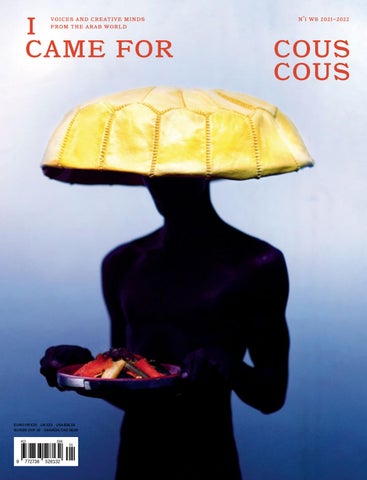
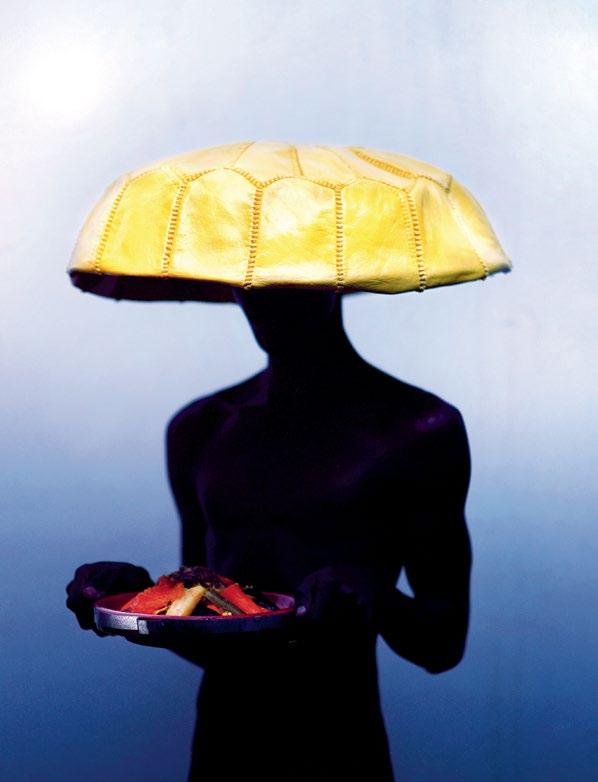
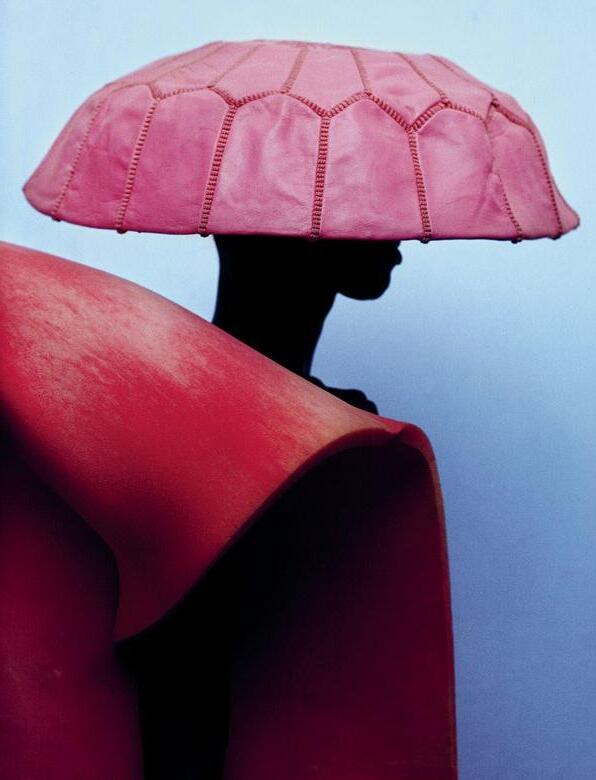
Plus connu sous le nom de son label Maison ARTC et pour ses collaborations artistiques avec les photographes marocains, enfants de la balle, chez lui, la mode s’engage à coup de ciseaux, de récup’, de messages politiques. Pour ce premier numéro, le styliste revêt sa casquette de directeur de la création, sous l’œil d’Eliot Leblanc-Hatrmann, pour styliser la couverture et la série Machi Mouchkil (p.
MARIAM BOUCHAMANE
Illustrations
Elle est née avec un crayon dans la main. Diplômée en Design et Architecture intérieure de l’École Camondo à Paris, Mariam collabore à L’O puis au Studio KO. Sa pièce à vivre onirique, la été présentée au Festival Design Parade à la Villa Noailles ( Ici, elle illustre les recettes de couscous à travers une série de collages (p.
ELIOT LEBLANC
Photographie
D’abord directeur artistique, il tient sa propre galerie dans le à Paris, et enchaîne des projets graphiques dans l’édition. Après des voyages au Mexique en Eliot se consacre pleinement à la photographie, signe une couverture pour L’O Mugler et Converse. Aujourd’hui il troque le studio pour une lumière naturelle, appareil photo au poing chargé de la magie de Marrakech et le style d’Artsi Ifrach, pour la série Machi Mouchkil (p.
Styling and Creative Direction
Better known by the name of his label, Maison ARTC, and for his artistic collaborations with coolkid Moroccan photographers, Artsi Ifrach transforms cut-up scraps, vintage fabrics, and political messages into fashion. For our rst issue, he dons his artistic-director hat and, under the watchful lens of Eliot Leblanc-Hartmann, plays stylist for the cover and the series Machi Mouchkil (p. 96).
MARIAM BOUCHAMANE
Illustrations
Born with a pencil in her hand, Mariam has a degree in architecture and interior design from the Camondo school in Paris and collaborated with L’O cine Universelle Buly before working for Studio KO. Her dreamy living room, La Liseuse au Bain, was presented during the Design Parade festival at the Villa Noailles (2017). For this issue, she illustrates couscous recipes with a series of collages (p. 152).
ELIOT LEBLANC-HARTMANN
Photography
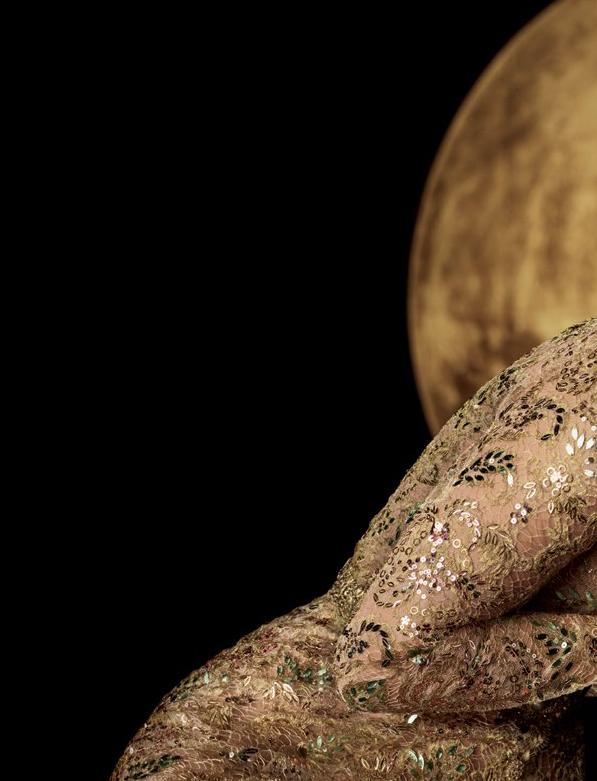
Originally an artistic director, Leblanc-Hartmann operates his own gallery in the 10th arrondissement of Paris and has a slew of graphic-design publishing projects. Since travelling to Mexico in 2018 and 2019, he has devoted himself entirely to photography, shooting a cover for L’O ciel and collaborating with Mugler and Converse. Today he steps out of the studio and into the sunlight, lm camera in hand, to capture the magic of Marrakesh and the style of Artsi Ifrach, for the series Machi Mouchkil (p. 96).
YAMEN MANAI AND ÉDITIONS ELYZAD
Writing
A Tunisian writer and engineer based in Paris, Yamen garnered eight literary prizes for his novel L’amas ardent. The book was put out by éditions Elyzad, a Tunis-based publishing house created in 2005 to give voice to novelists who dare to say the unspeakable and explore the human soul. For I Came For Couscous, they share passages from Bel abîme Yamen’s latest novel in French (p. 109).
RAFRAM CHADDAD
Recipe
Based in Tunis and New York City, artist Rafram Chaddad uses photographs, lms, and multimedia installations to convey personal experiences that touch on grand social and political themes, including migration, displacement, identity, and the sense of belonging. His current project, Leftovers, is a book about the food and cooking habits of cities formerly occupied by the Ottoman Empire. He shares a favorite recipe with us (p. 152).
YASSINE SELLAME
Photography
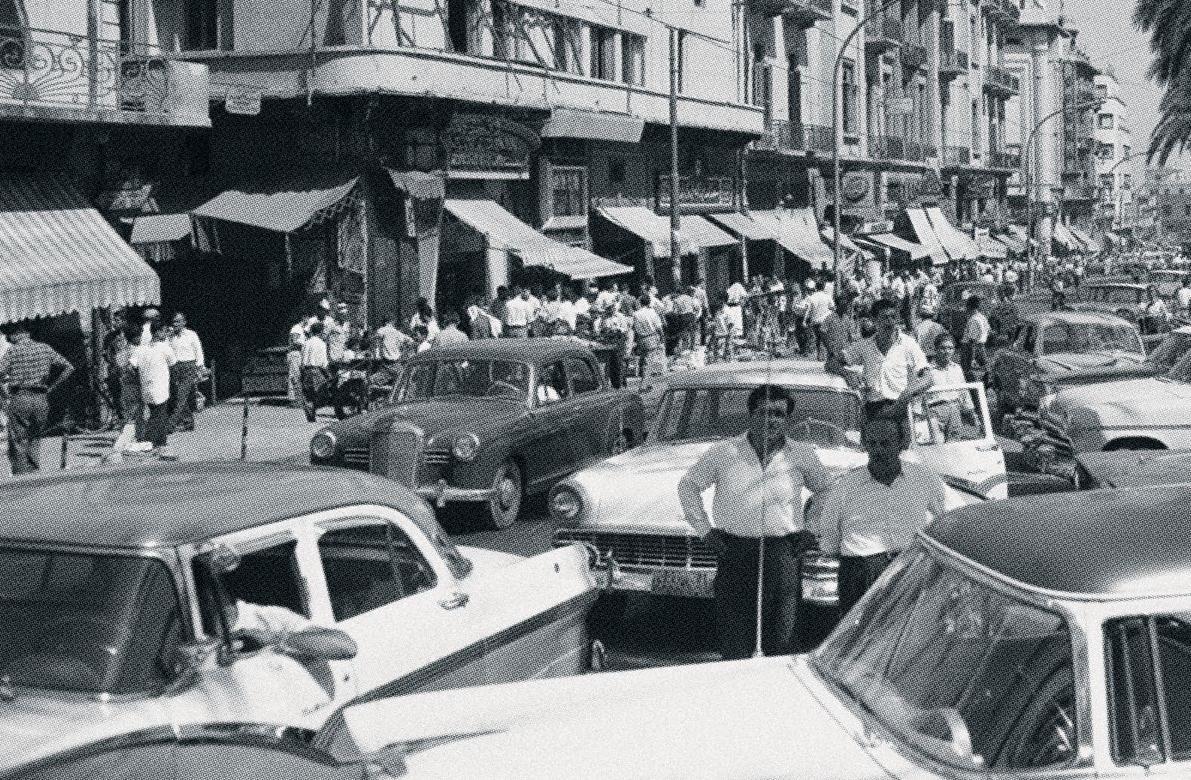
A native of Marrakesh, the 27-yearold skateboarder discovered lm photography in 2015 when he started photographing his fellow Moroccan skaters. His works have been shown in the Czech Republic, at the Arab Fest Festival, at the Transforma Festival, and in the exhibition space of Moroccan photographer Hassan Hajjaj during the 1-54 fair. I Came For Couscous has selected various black and white images to accompany the portraits of this little-known community (p. 66).