The Global Socio-Political Impact Survey


The last two years have seen the world deal with heightened global unrest, policy changes and conflicts. While they affect all areas of societies, they also have a major impact on the international meetings and conference industry.
The 2026 Global Socio-Political Impact Survey was spearheaded by the International Association of Professional Congress Organisers (IAPCO) and shared across the memberships of five of IAPCO’s Strategic Partners and leading global business events associations, including AIPC, AMC Institute, ICCA, IFES and PCMA in April 2026.
The survey provides a snapshot of the impact of the current global socio-political instability on the business events sector. It received responses from 130 organisations across the globe.
All respondents were asked to consider the impact of socio-political disruption over the past two years on their own, and their clients’ events.
This is the second consecutive year the survey has been conducted, enabling IAPCO and its partners to begin tracking how global conflict, instability and policy change are affecting the international meetings and conference industry over time.
The impact is stark. 73.84% of respondents said global conflicts have impacted their ability to plan or host international meetings. This is an increase of almost 20 percentage-points (up from 53.92% in 2025). With almost three-quarters of respondents reporting that their events have been impacted, it raises questions about the long-term challenges this will bring to our industry and how this will impact decision-making around hosting and attending meetings and conferences.

To provide context to this statistic, in 2025 IAPCO Accredited PCOs organised 23,512 meetings and events worldwide, up 20.77% from 2024. Across 187 office locations, they managed 7,718,808 participants, generating €17.36 billion in economic impact. This enormous body of work represents global knowledge exchange, economic contribution, professional advancement and the power of expertly delivered conferences to move industries and communities forward.
The impact of global unrest on this volume of events points to significant disruption and cost.
The research shows that 49.23% of respondents to the 2026 Socio-Political Impact Survey said there had been an increase in costs to their team, up from 32.14% in 2025. In addition, 48.46% said there had been an increase in costs to their clients and/or participants at their events, up from 32.14% in 2025.
Respondents also noted impacts on their ability to host leading scientists and academics, particularly where changes to USA government funding, grants, visa and immigration settings have affected international travel and participation.
The impact of such cuts can also be felt in the global meetings industry as academics are unable to present research at conferences that take place every day around the globe. This may have flow-on effects for fields such as global health, climate action, gender equality and democracy promotion, where conferences play an important role in knowledge sharing, collaboration and advocacy.
This year, we have seen the impacts of the war in the Middle East impacting destination related decisions, with 33.07% of respondents saying they had frequently or occasionally had to cancel, postpone or relocate events, or cancel planned participation in
events, due to safety concerns or instability in certain regions. 42.31% said there had been a shift in preferred event locations, with respondents avoiding conflict-prone regions. This brings huge challenges for destinations who need to manage their reputations as safe and desirable, whilst providing opportunities for others.
We thank all the organisations who participated in this survey.
We hope you find the insights valuable.
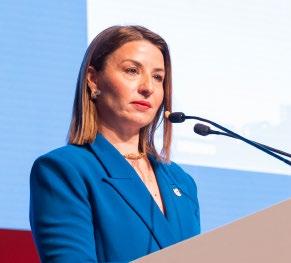
Sissi Lignou President, IAPCO
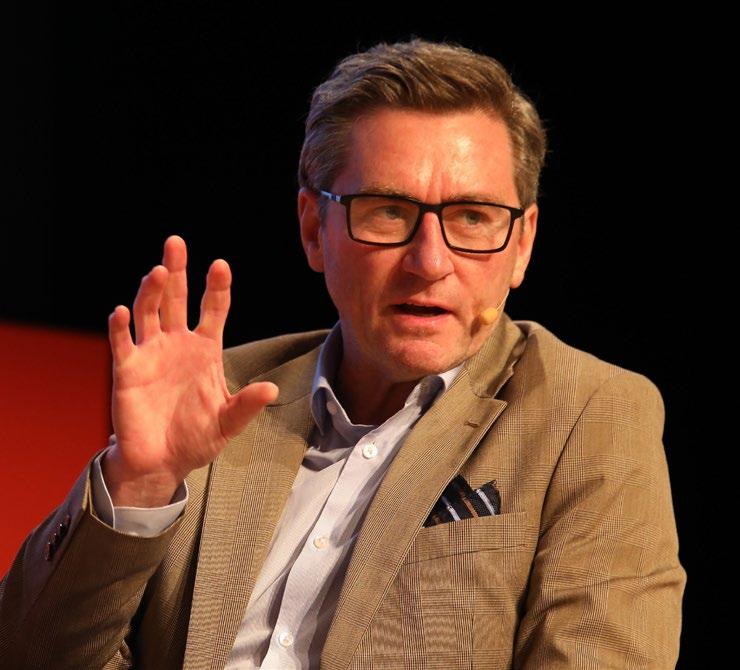
Martin Boyle CEO, IAPCO
respondents said global conflicts have impacted their ability to plan or host international meetings. 73.84%
This is an increase of almost 20 percentage-points (up from 53.92% in 2025)
The areas most affected by ongoing global conflicts include:
65.38%
said there had been travel disruptions for their clients and/or participants at their events up from 41.67% in 2025
58.46%
said there had been reduced international attendance or participation up from 52.38% in 2025
49.23%
said there had been an increase in costs to their team up from 32.14% in 2025
48.46%
said there had been an increase in costs to their clients and/or participants at their events up from 32.14% in 2025
40.00%
said there had been security concerns at event locations up from 38.29% in 2025
33.08%
said they had experienced travel disruptions across their teams up from 16.67% in 2025
33.07% said they had frequently or occasionally had to cancel, postpone or relocate events, or cancel planned participation in events, due to safety concerns or instability in certain regions
59.23% said they had not yet had to cancel, postpone or relocate events
42.31% said there had been a shift in preferred event locations, with respondents avoiding conflict-prone regions
40.00% said there had been a decreased willingness to travel internationally
61.54% 5.38% 2.31%
said between 1 and 10 events had been impacted said between 11 and 20 of their events had been impacted said more than 50 events had been impacted said more than 100 events had been impacted
12.10%
25% 11.29% 10.48%
said the estimated value of losses suffered was between said the estimated value of losses suffered was between said the estimated value of losses suffered was between said the estimated value of losses suffered was more than
€1 and €50,000
€50,000 and €75,000
€75,000 and €100,000 €200,000
59.32% said the USA government policies enacted in 2025 and 2026 had affected their ability to plan and execute events in 2026, 2027 and 2028
61.02% said funding cuts that impact on academic and scientific experts’ ability to travel were the most impactful government policy on their event management operations
59.32% said visa and immigration policies affecting international participants, staff or speakers were the government policies having the most impact on their event management operations
17.80% said taxation and financial policies had the most impact on their event management operations
said there had been no impact 44.92% said changes in government funding or grants had negatively influenced their budget or feasibility of their events
27.97%
22.88%
said their ability to secure event venues, permits or necessary approvals had been significantly or somewhat affected by recent policy changes
Respondents reported that, on average,
22
2,557 events in total (118 respondents) of their own or their clients’ events, or participation in events they support, had already been impacted
Respondents anticipated that, on average,
31
3,652 in total (118 respondents) of their own or their clients’ events or participation in events they support, would be impacted over the next six months
Of the events to be impacted in the next six months:
23.01% said the estimated value of losses suffered was between €1 and €50,000
13.27% said the estimated value of losses suffered was more than €200,000
As a global organisation, IAPCO seeks to work with its Accredited PCOs, Strategic Partners and destinations on programs and initiatives that support PCOs, event owners and city hosts.
IAPCO is working across a number of areas, including:
2
1 Conducting research to quantify the cost implications of global conflicts.
Collaborating closely with international associations to bring one strong voice to advocacy, ensuring the impact, scope and size of the business events industry is understood and valued.
3
Engaging with local and national tourism bodies to identify specific challenges and solutions.
4
Providing robust and up-to-date data and information for accredited members to ensure they can make informed decisions.
5
Designing and delivering cutting-edge training to support an informed, wellnetworked and educated workforce.
IAPCO Accredited PCOs work from 187 office locations around the world.
This includes, but is not limited to:
They are implementing macro and micro strategies to support their companies, clients and destination partners to navigate the impact of global conflict.
Diversification of event destination portfolios
a. Working on relationships with a wide variety of destinations to avoid an over-reliance on politically sensitive markets
b. Close consideration of visa requirements and security implications
Rebuilding trust in international travel
a. Communicating destination safety and requirements from the source
b. Offering travel assurance policies
c. Incentivising attendance
Reviewing and updating all contingency planning protocols
a. Designing and building new risk mitigation frameworks
b. Enhancing contract flexibility, now standard feature
c. Building out supplier diversity
IAPCO Accredited PCOs work from 187 office locations around the world. They are implementing macro and micro strategies to support their companies, clients and destination partners to navigate the impact of global conflict.
This includes, but is not limited to:
Proactive client communication
a. Engaging early with transparent risk assessments
b. Proactive approach to escalation of concerns
Measured postponement advisory a. Recommending short-term postponements where necessary to protect event integrity and longterm client trust
Hybrid delivery integration
a. Adopted as a complementary model, not a default replacement
b. Ensuring attendees facing travel or security hesitations remain meaningfully connected to events
The insights point to a significant increase in the impact of global socio-political instability on the global meetings and conference industry, with
73.84% of respondents saying global conflicts have affected their ability to plan or host international meetings, up from 53.92% in 2025.
This near 20 percentage-point increase suggests that conflict-related disruption is becoming a core planning consideration for PCOs and event owners, rather than an occasional contingency.
The insights point to an increasingly constrained environment for international participation, with
65.38% of respondents reporting travel disruption for clients or participants, up from 41.67% in 2025.
Reduced international attendance also rose to 58.46%
reported a decreased willingness to travel internationally. while 40%
These results show that global socio-political instability is not only affecting logistics, but also attendee confidence.
The insights point to a growing financial impact on the global meetings and conferences industry, with
49.23% of respondents reporting increased costs to their teams, up from 32.14% in 2025.
A further 48.46% reported increased costs for clients or participants, 10% estimated losses above €200,000. and more than
These figures indicate that socio-political instability is translating into measurable commercial risk, with disruption creating higher delivery costs, lower participation confidence and greater exposure for organisers, clients, and destinations alike.
The insights point to government policy becoming a major force shaping the future of international conferences and meetings.
Almost 60% of respondents said the USA government policies enacted in 2025 and 2026 had affected their ability to plan and execute conferences in 2026, 2027 and 2028. Funding cuts affecting academic and scientific travel, alongside visa and immigration restrictions, were identified as the most impactful policy areas.
This suggests future disruption is not only immediate, but structural and forward-looking.
James Lancaster reported in Association Meetings
International that the cost of fuel has added real costs to business event travellers.
He said: “While business travellers (including conference participants) are seen as less 'pricesensitive' than leisure travellers, the reality is more complex. Participants may not be hammering their own wallets, but they are still constrained by organisational budgets.
“Organisations are under pressure to justify travel spend and demonstrate return on investment. When airfares rise significantly, trips once deemed essential come under scrutiny. Business travel is scaled back when necessity demands, resulting in smaller delegations, fewer junior attendees, or just more selective participation in international events throughout the year.”3
These costs are not equally shared; with those most affected being destinations that rely heavily on longhaul connectivity and transit traffic.
The most concerning impact is the length of these conflicts, and how they influence business traveller behaviour and spending over the long-term.
What is clear is that the global meetings and events industry is one that brings people together, the cost of which has been justified by the quality of the learning, networks, relationship building, and commercial outcomes. The question remains: for how long?
173% of UK Event Professionals Affected by Middle East Conflict, MIA Finds | Meeting Media Group
2WEF_Beyond_Tourism_Coordinated_Pathways_to_Inclusive_Prosperity_2025.pdf
3How fuel price surge could influence destination selection | Association Meetings International
Answered: 130 Skipped: 0
Q1: Over the last two (2) years, have the global conflicts (e.g., Russia/ Ukraine conflict, Middle East, Red Sea disruptions) impacted your organisation’s ability to plan or host international meetings or events?
Yes, significantly
Yes, moderately
No noticeable impact
Not applicable
Answered: 130 Skipped: 0
Q2: If yes, which areas of your business have been most affected by ongoing global conflicts? (Select all that apply)
Answered: 130 Skipped: 0
Q3: Have you had to cancel, postpone, or relocate events and fully planned participations due to safety concerns or instability in certain regions?
Yes, frequently Yes, occasionally No, not yet
Not applicable
Answered: 130 Skipped: 0
Q3: Have you had to cancel, postpone, or relocate events and fully planned participations due to safety concerns or instability in certain regions?
Answered: 130 Skipped: 0
Q4: In your opinion, how have global conflicts influenced attendee behaviour or event demand?
Decreased willingness to travel internationally
Increased demand for virtual or hybrid options
Shift in preferred event locations (e.g., avoiding conflict-prone regions)
Answered: 130 Skipped: 0
Q4: In your opinion, how have global conflicts influenced attendee behaviour or event demand?
Answered: 130 Skipped: 0
Q5: How many of your or your clients’ events have been impacted, in general?
Answered: 130 Skipped: 0
Q5: How many of your or your clients’ events have been impacted, in general?
Answered: 124 Skipped: 6
Q6: If there has been a negative financial impact, what is the estimated value of any losses suffered (in Euros)?
Answered: 124 Skipped: 6
Q6: If there has been a negative financial impact, what is the estimated value of any losses suffered (in Euros)?
Answered: 118 Skipped: 12
Q11: Have U.S. government policies enacted in 2025 and 2026 (e.g., cuts to education funding, import tax levies, immigration policies) affected your ability to plan and execute events in 2026, 2027 and 2028?
Answered: 118 Skipped: 12
Q11: Have U.S. government policies enacted in 2025 and 2026 (e.g., cuts to education funding, import tax levies, immigration policies) affected your ability to plan and execute events in 2026, 2027 and 2028?
Answered: 118 Skipped: 12
Q12: Which government policies have had the most impact on your event management operations? (Select all that apply)
Compliance on national association events
Funding cuts that impact on academic and scientific experts’ ability to travel
Taxation and financial policies (e.g., event-related tax changes)
Venue and permitting restrictions
Visa and immigration policies (affecting international delegates attending events, staff, or speakers)
Other - please specify
Answered: 118 Skipped: 12
Q12: Which government policies have had the most impact on your event management operations? (Select all that apply)
Answered: 118 Skipped: 12
Q13: Have changes in government funding or grants influenced the budget or feasibility of your events?
Q13: Have changes in government funding or grants influenced the budget or feasibility of your events?
Answered: 118 Skipped: 12 ANSWER CHOICES
Answered: 118 Skipped: 12
Q14: Has your ability to secure event venues, permits, or necessary approvals been affected by recent policy changes?
Answered: 118 Skipped: 12
Q14: Has your ability to secure event venues, permits, or necessary approvals been affected by recent policy changes?
Answered: 118 Skipped: 12
Q15: How many of your or your clients’ events or participation at events, which they support, have already been impacted?
Q15: How many of your or your clients’ events or participation at events, which they support, have already been impacted?
Answered: 118 Skipped: 12 ANSWER CHOICES
RESPONSES
Answered: 118 Skipped: 12
Q16: How many of your or your clients’ events or participation at events, which they support, do you anticipate will be impacted in the next 6 months?
Answered: 118 Skipped: 12
Q16: How many of your or your clients’ events or participation at events, which they support, do you anticipate will be impacted in the next 6 months?
Answered: 113 Skipped: 17
Q17: If there has been a negative financial impact, what is the estimated value of any losses suffered?
Answered: 113 Skipped: 17
Q17: If there has been a negative financial impact, what is the estimated value of any losses suffered?

Discover how IAPCO is Unlocking Excellence in the global meetings and conference industry today. This report is available at iapco.org