Conference Report and Intelligence Briefing: KAMC/MediAsia2025
1. Introduction
2. The Crisis of Attention: Structural Failures in Broadcast and Print Media
3. Challenging the ‘Big Lies’ of History: The Shōwa Restoration
4. Decolonising Film and Media History
5. The Forum: Generative AI and Legacy Media
6. Conclusion
7. Networking and Cultural Programme
8. Key Statistics
9.
Executive Summary
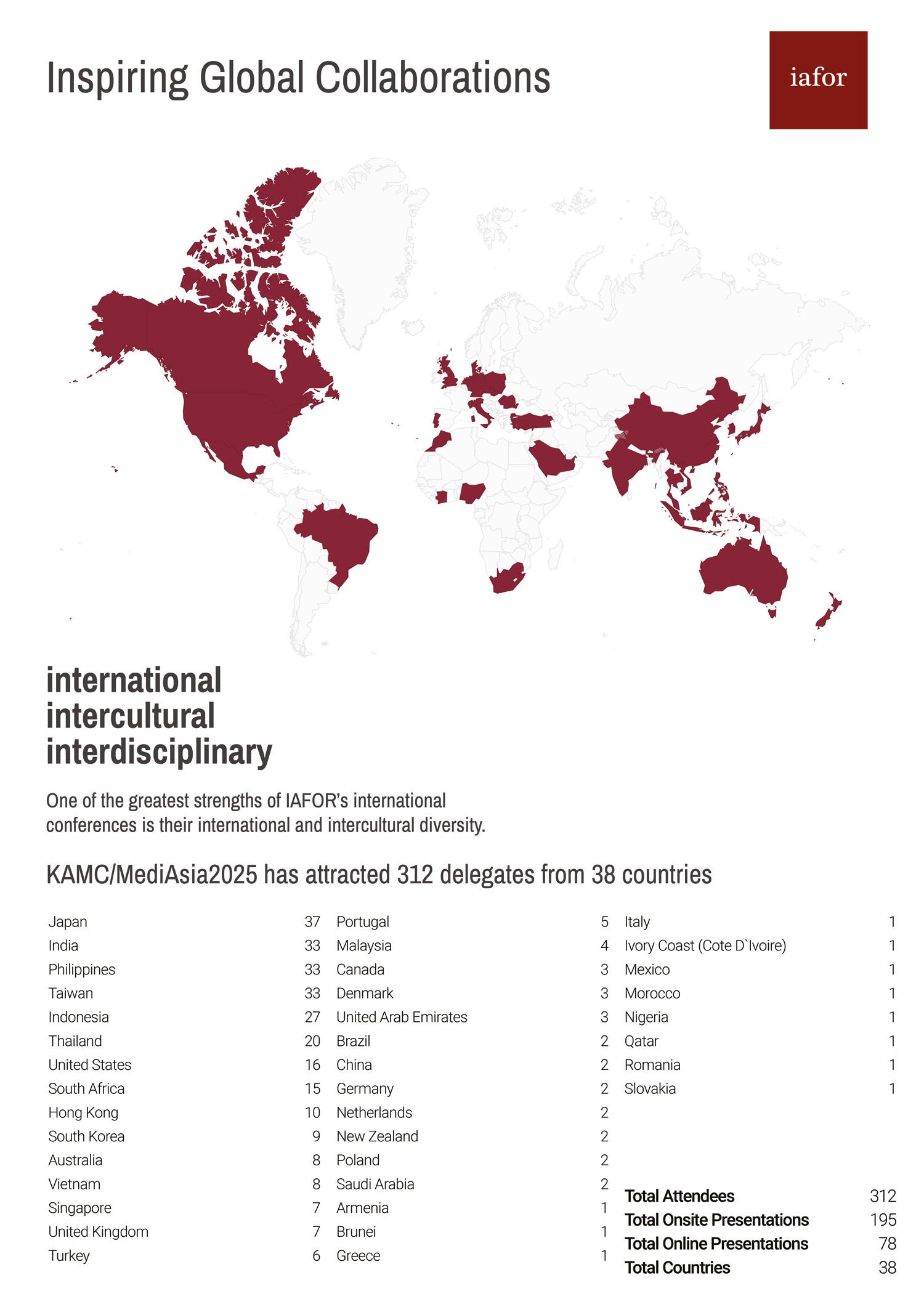
The 6th Kyoto Conference on Arts, Media & Culture (KAMC2025) and The 16th Asian Conference on Media, Communication & Film (MediAsia2025) were held together from November 04 to 08, 2025 in one of the major cultural hearts of Japan, where we welcomed some 320 delegates from some 40 countries. With Kyoto’s unique blend of deep tradition and modernisation, the conferences looked at the existential crisis facing legacy institutions in the twenty-first century, from broadcast media and journalism to historical narratives and academic theory. Covering a wide range of disciplines and in line with IAFOR’s interdisciplinary mission, the central question across the plenary presentations and discussion revolved around the way in which we can reclaim authenticity and relevance in an age of algorithmic disruption and structural manipulation, and more importantly, how we can bring back human connection into our communication practices.
Professor Padmakumar K of the Manipal Academy of Higher Education, India, looked at the existential crisis facing traditional FM broadcasting within the attention economy, in which human attention is treated as a scarce and valuable resource. He argued that radio has lost its unique identity as the ‘theatre of the mind’ by attempting to compete with the visual dominance of social media platforms through forced visibility. Professor K highlighted a ‘content differentiation crisis’ where stations use algorithmic tools to determine and clone playlists, resulting in a homogenised soundscape that alienates active listeners. He concluded that in order to survive, the medium must abandon its pursuit of visual influencers and return to its core strength of auditory intimacy and human connection (Section 2).
In a panel discussion moderated by Dr Joseph Haldane, Chairman and CEO of IAFOR, Japan; Professor Virgil Hawkins, Co-Chair of the IAFOR Research Centre and Professor at The University of Osaka, Japan, and Professor Nobuyuki Okumura of Musashi University, Japan, presented a quantitative and qualitative diagnosis of the Japanese press, revealing a media landscape that is increasingly inward-looking and isolated from global realities. The panel discussed how the decrease in international news coverage in Japan continued the cycle of audience disengagement and structural manipulation of the news industry. This has resulted in a narrowing media lens that leaves the Japanese public underinformed about global news, with continuously decreasing expertise on international affairs within Japanese news agencies (Section 2).
Professor Brian Victoria of the Oxford Centre for Buddhist Studies, United Kingdom, looked at the suppressed ‘truth’ surrounding the Shōwa Restoration. He challenged two major narratives, one at home on the post-war history of Japan, and the other the world’s understanding of National Socialism. He challenged what he termed the ‘big lie’ in the mainstream historical narrative that sees Emperor Hirohito as a powerless puppet, positing instead that he was a powerful ruler and major capitalist, who personally ordered the suppression of the 1936 uprising to protect his economic interests. Within a broader narrative on
national socialism, Professor Victoria posited that Japan had an earlier and ‘more genuine’ version of it than Germany, predating that of Hitler, countering common perceptions. According to him, this true National Socialist ideology is what drove the 1936 revolution led by the Japanese military, but was suppressed by the Emperor, who was on the other side of it (Section 3).
In a roundtable discussion on making film history more inclusive, Professor Aaron Gerow of Yale University, United States, highlighted the ‘theory complex’ in media studies, which treats Western thought as a normative theoretical framework, while non-Western cinema is viewed merely as an object of study. Using Japan as a perfect example of exclusion in the mainstream theories, he called for the ‘territorialisation’ of theory, urging scholars to acknowledge that all theoretical frameworks are culturally situated and geographically distinct. Professor Mitsuyo Wada-Marciano of Kyoto University, Japan, looked at the gendered construction of film history, describing it as a closed loop where ‘men talk about men.’ Professor Wada-Marciano analysed the work surrounding film director Ogawa Shinsuke to demonstrate how female contributions are systematically erased from the official narrative. She concluded that true diversity requires not just adding women to the list, but fundamentally dismantling the criteria of value that marginalise them (Section 4).
Dr Yutaka Kubo of Kanazawa University, Japan, highlighted the ‘heteronormative tension’ within Japanese academia and the erasure of queer voices from media history. He described his ‘curatorial interventions’ in the NHK archives, where he worked to recover and highlight LGBTQ+ narratives that have been omitted from broadcasting history. Dr Kubo shared his practical success in changing industry practices and advocating for more inclusive language in film and industry marketing. He emphasised that scholars must actively intervene in public discourse to create a language that makes marginalised identities visible. Professor Timothy Pollock of Osaka Kyoiku University and Osaka Metropolitan University, Japan, highlighted that the work to expand Film history is a difficult and never-ending task: it is a process of revealing unrecognised voices amidst the changes of political waves (Section 4).
The conference also featured another session of The Forum, IAFOR’s one-hour moderated discussion session, during which delegates are encouraged to discuss with one another and share their insights and experiences on a specific topic. In this Forum discussion session, Dr Nasya Bahfen of La Trobe University, Australia, served as the session’s respondent, guiding delegates through looking at the blurred lines between reality and fabrication in the age of Generative AI. She presented case studies ranging from harmless AI-generated hoaxes to the legitimate use of AI tools in newsroom workflows, illustrating the varied degrees of the technology’s impact. The subsequent discussions with the delegates concluded that the best practice in responding to this crisis must be the recommitment to media literacy education, enhancing the ability to verify sources rather than trusting the visual evidence of their screens. The discussion was extended to online delegates in The Forum’s new online expansion, with Professor Hawkins as the online respondent (Section 5).
1. Introduction
The systems and narratives we’ve built around the workings of our society are in a period of great flux, affecting our economic systems, our communications, how we deal with disruptive technologies, and how we interpret history. This is forcing us to question what it means to be human. Keynote speakers and panellists at this conference explored issues and conflicts surrounding human communication, intimacy, justice, critical thinking, curiosity, profit-generation, and efficiency. Discussions included cultural biases that manifest in marginalisation and misrepresentation, across communication and broadcasting, film, journalism, history, and knowledge (re)production. With capitalists rewriting history, kisha—or ‘press’— clubs lobbying for selected news coverage, AI eroding our critical thinking skills and aiding mis- and disinformation, radio broadcasting focusing on advertisement and automation, or film studies and film itself marginalising certain voices, we have lost touch with the human element that made our communications and transactions genuine, authentic, and inclusive.
Plenary speakers at The 6th Kyoto Conference on Arts, Media & Culture (KAMC2025) and The 16th Asian Conference on Media, Communication & Film (MediAsia2025) signalled an urgency to refocus on human values and bring the human element back into our everyday interactions and our institutional structures. The programme looked at the existential crisis facing legacy media institutions in the twenty-first century, and how traditional frameworks are attempting to maintain authority and relevance in the face of technological disruption. In addition to the means of communication, the presentations looked at how information across media has been curated through algorithmic, systemic, historic, and academic biases. The focus on human values reflects continuous discussions in this direction through at least one of IAFOR’s four Conference Themes for 2025-2029: Humanity and Human Intelligence.
This report begins by looking at the existential struggle of radio broadcasters fighting to retain auditory intimacy in a visually obsessed economy, with AI taking away the role and essence of human agency within radio broadcasting. It then looks at the structural manipulation of information in the Japanese context, how the aforementioned kisha clubs affect Japanese news outlets’ coverage of international news, and dismantles the ‘big lies’ of the Shōwa Restoration in the post-war history to protect economic elites. The panel discussion on film and media studies challenged the Eurocentric ‘theory complex’ that continues to marginalise nonWestern cinema by treating it as raw material rather than a source of intellectual framework. Participants at The Forum discussion on legacy media and generative AI discussed how legacy media should not merely be content producers, but act as essential arbiters of verification in an information ecosystem increasingly characterised by algorithmic manipulation. Media literacy and human agency remain key in reclaiming the truth and authenticity in an algorithmic hegemonised world.
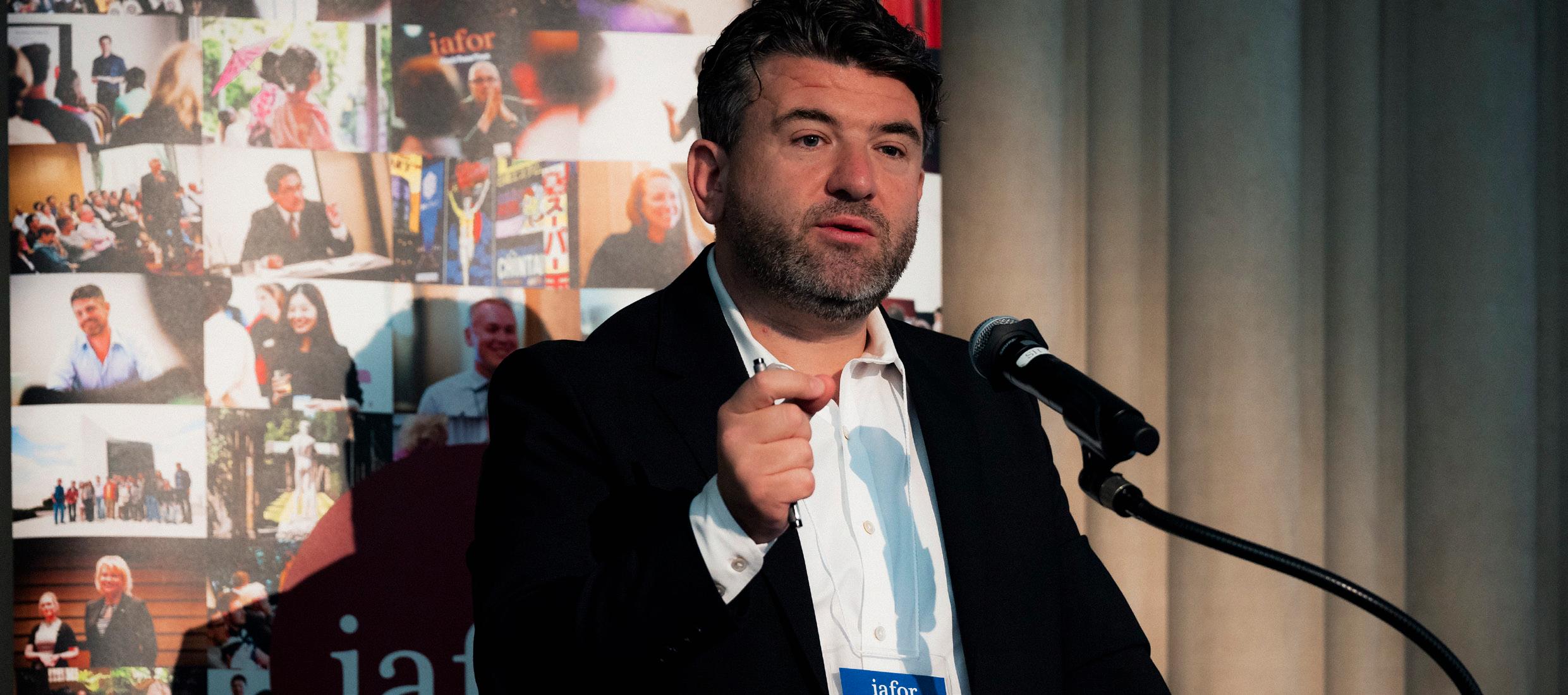
IAFOR Chairman & CEO, Dr Joseph Haldane, delivered the Welcome Address at KAMC/MediAsia2025
2. The Crisis of
Attention:
Structural Failures in Broadcast and News Media
Attention is recognised today as one of the most powerful currencies, and its commodification in the attention economy is manifested in all sectors of the media. It is a currency that can be easily manipulated: social media and radio broadcasting are swamped with advertisements and brand ambassadorships that encourage endless consumerism, and legacy media cave under heavy lobbying to broadcast only selected news, directing attention to more profitable narratives. Within the process of careful and engineered content curation, elements like spontaneity, agency, intimacy, curiosity, justice, empathy, or critical thinking—values once ascribed to humans—are lost. Communities and minorities also lose access to the means of information (re)production, and their voices are effectively marginalised.
Radio broadcasting is one area of entertainment in which these biases manifest. Professor Padmakumar K of the Manipal Academy of Higher Education, India, presented the state of Indian commercial FM radio with a keynote presentation titled ‘Reshaping the Soundscape: Engagement, Adaptations, Innovations and Hindrances in India’s Commercial FM Radio Channels.’ Professor K framed his analysis around the concept of the ‘engagement revolution’, arguing that radio, once a medium that held families captive in a shared listening experience, is now fighting for survival in an attention economy dominated by digital platforms. He described the historical essence of radio as the ‘theatre of the mind’, a medium defined by the invisibility of its presenters. In this traditional model, the Radio Jockey (RJ) was a mysterious figure known only by their voice and personality, which left listeners with an imaginative yet deeply personal connection to the RJ’s content. This ‘invisibility’ was not a deficit but a superpower, creating a sense of intimacy and spontaneity, where every song played felt like a surprise to the listener, and where listeners could actively engage with and affect the content being played.
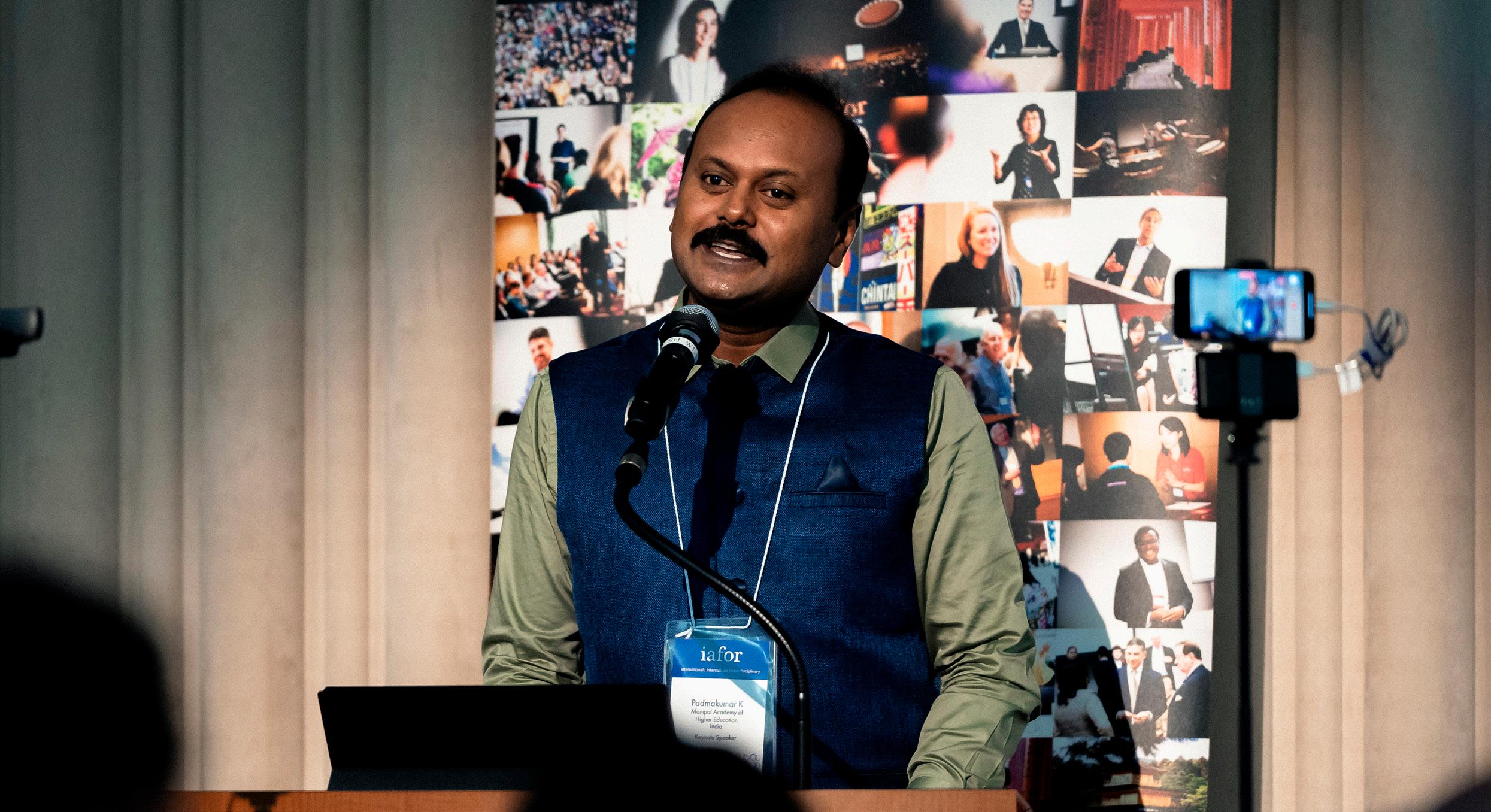
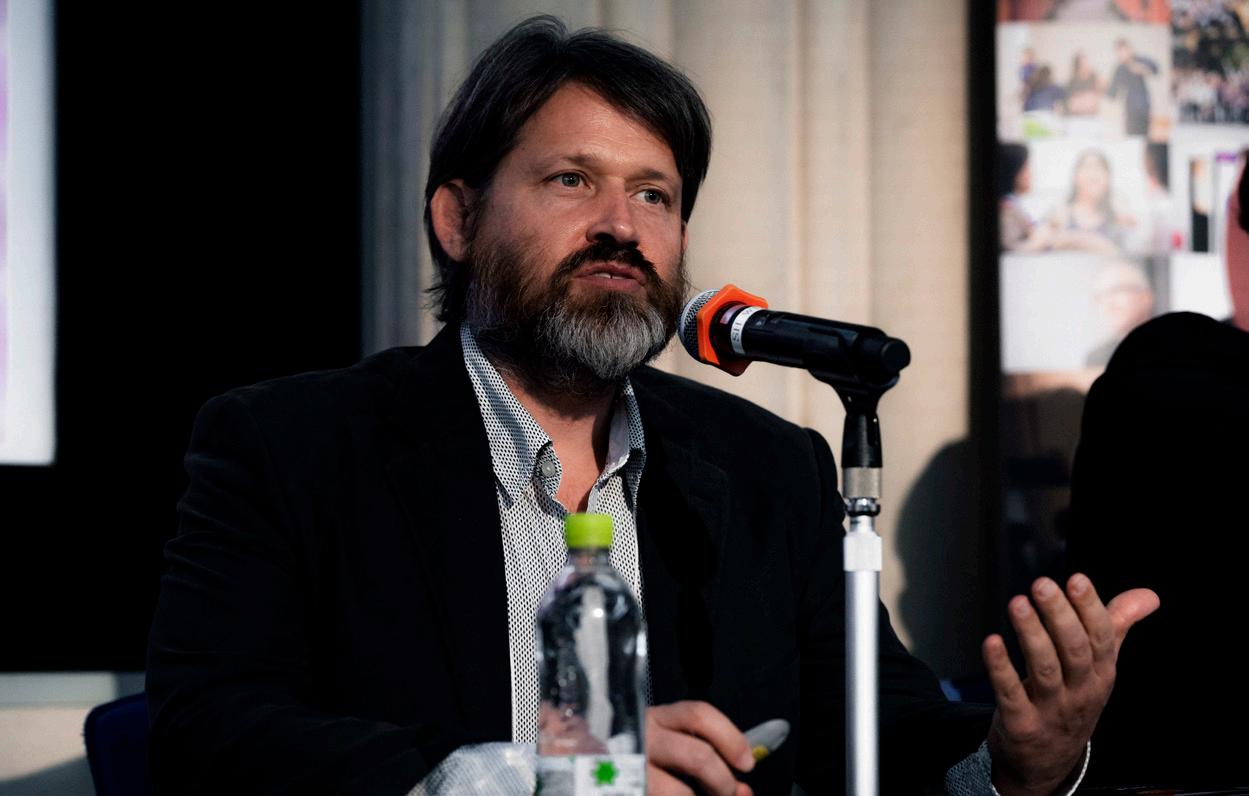
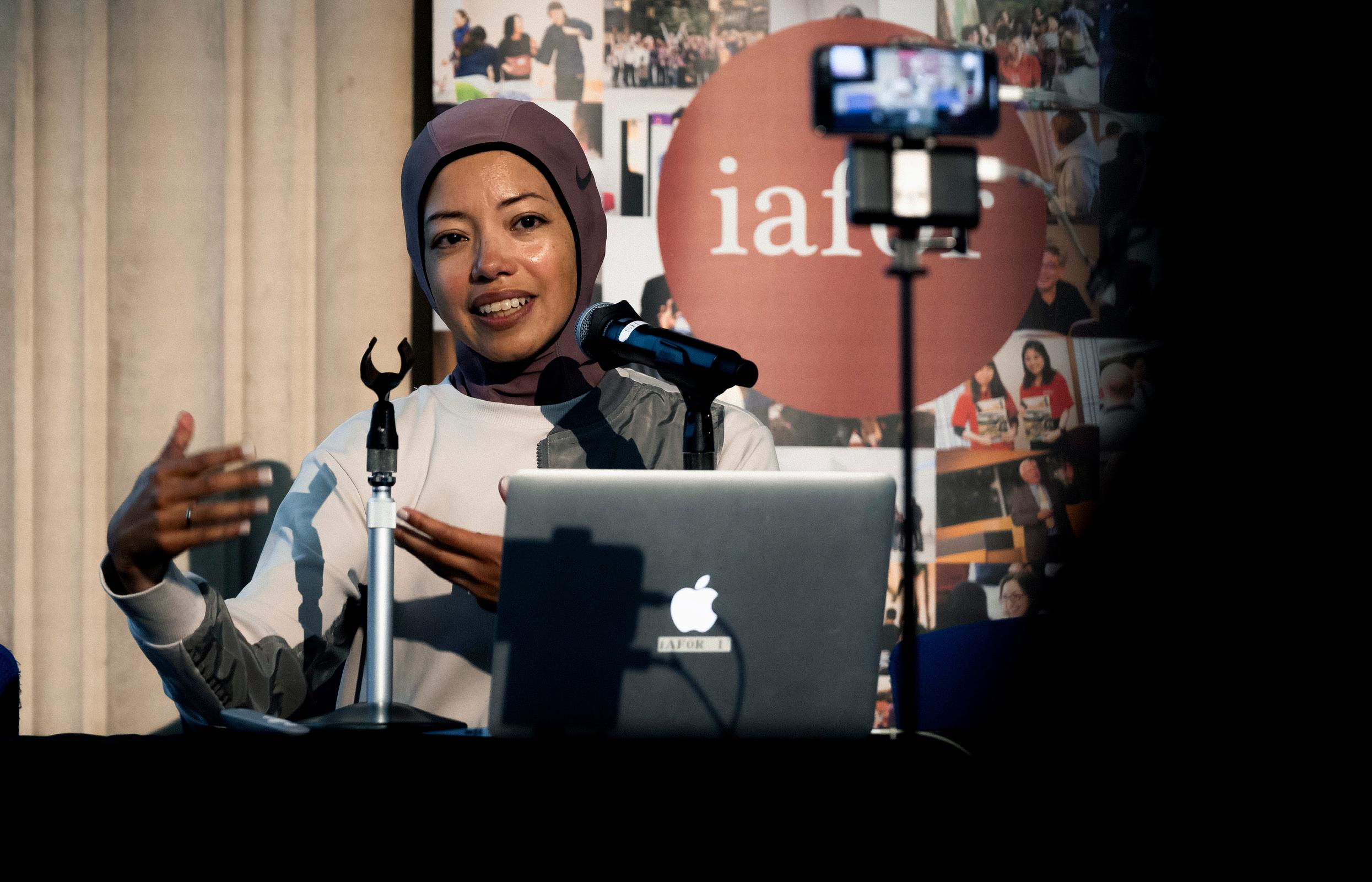
Professor Padmakumar K of the Manipal Academy of Higher Education, India Watch on YouTube
However, the radio industry is currently trapped in a ‘visibility paradox’. In a desperate bid to compete with the visual dominance of modern media like Instagram and YouTube, radio stations are increasingly forcing their RJs to become visible brand ambassadors and social media influencers. Professor K argued that this strategy is fundamentally counterproductive. Radio stations have broken the unique anonymity that sustained the listeners’ imagination by putting RJs in the spotlight, hosting mall events, maintaining active video profiles, and prioritising visual content over audio content. Furthermore, Professor K highlighted a content differentiation crisis plaguing the industry. He described how commercial pressures and a reliance on algorithmic tools have led to extreme homogenisation. Stations now subscribe to services that list every song played by competitors, leading to a cloning of formats where every station plays the same music in the same order to minimise the risk of losing listeners. It is fairly easy to identify the reproduction of formats and content worldwide when looking at shows like ‘the breakfast show’, ‘the late night show’, or ‘the drivetime show’.
This ‘algorithmic predictability’ has replaced the human spontaneity of the RJ, transforming the medium into a sterile, automated loop of pre-scheduled content and invisible advertisements disguised as jock talk. Professor K suggested that this commercial hijacking of programming space has alienated core audiences, with research showing that listeners find the relentless brand integration ‘annoying and irritating’. He concluded his presentation with a prescriptive framework for the future, urging the radio industry to stop mimicking and battling visual social media, and instead invest in ‘RJ excellence’: training presenters to be storytellers and music historians who can reclaim the unique auditory intimacy that originally defined the medium.
Cultural, economic, and social bias also manifests itself within news coverage. A panel discussion titled ‘Japanese Newspaper Coverage of the World,’ featuring Professor Virgil Hawkins of the IAFOR Research Centre and The University of Osaka, Japan; Professor Nobuyuki Okumura of Musashi University, Japan, and moderated by Dr Joseph Haldane, Chairman and CEO of IAFOR, Japan, covered how exactly this plays out in Japan. The panel provided a quantitative and qualitative diagnosis of the Japanese press, revealing a media landscape that is increasingly inwardlooking and isolated from global realities. Professor Hawkins presented findings from a ten-year longitudinal study conducted by Global News View (GNV), which analyses trends in international news coverage across Japan’s major newspapers. His data illustrated a severe geographic imbalance in media coverage of Japanese newspapers that is overwhelmingly concentrated on a small number of nations, with the United States, China, and Japan’s own foreign relations accounting for more than 40% of all international news.
The implications of this concentration, as Professor Hawkins pointed out, are that vast regions of the world are effectively erased from public consciousness. Professor Hawkins argued that this is not merely a matter of editorial preference but a systemic failure to inform the public about the majority of the human population. He also noted a trend in the determinants of coverage: while population size and geographic proximity correlate with coverage, economic ties do not. The fact that the level of trade between Japan and a foreign nation does not predict news coverage suggests that the Japanese media is driven less by economic pragmatism than by the influence of the agenda-setting power of Western outlets like The New York Times
Watch on YouTube
Professor Okumura complemented this quantitative data with a qualitative analysis of the newsroom culture that produces these distortions. Responding to Dr Haldane’s question about the role of the newspapers in encouraging the public to learn more about international news, he identified the kisha club (press club) system as a primary structural hindrance to high-quality international journalism. Unique to Japan, this system grants established media outlets exclusive access to government ministries, police departments, and corporate headquarters, effectively monopolising the flow of information. Professor Okumura argued that while this system provides reporters with privileged access, it fosters a relationship of dependency and cooptation rather than scrutiny. Reporters within the kisha club are often rotated to new posts every two years, a practice designed to prevent corruption, but one that simultaneously prevents the development of deep subject-matter expertise.
Consequently, Japanese reporting on international affairs often lacks depth and context. Professor Okumura described a negative spiral in which media outlets provide superficial coverage of complex global events, such as the focus on daily battle updates without explaining the historical background or long-term implications of conflicts in Ukraine or Gaza. This lack of context alienates readers, who find the news difficult to understand and therefore lose interest. Media executives then interpret this lack of engagement as a sign that international news ‘doesn’t sell’, leading to further cuts in foreign bureaus and correspondent numbers. He noted that many major Japanese outlets have closed bureaus in the Middle East, Africa, and South America over the last twenty years, leaving them reliant on newswires and unable to produce independent, Japanese-perspective analysis.
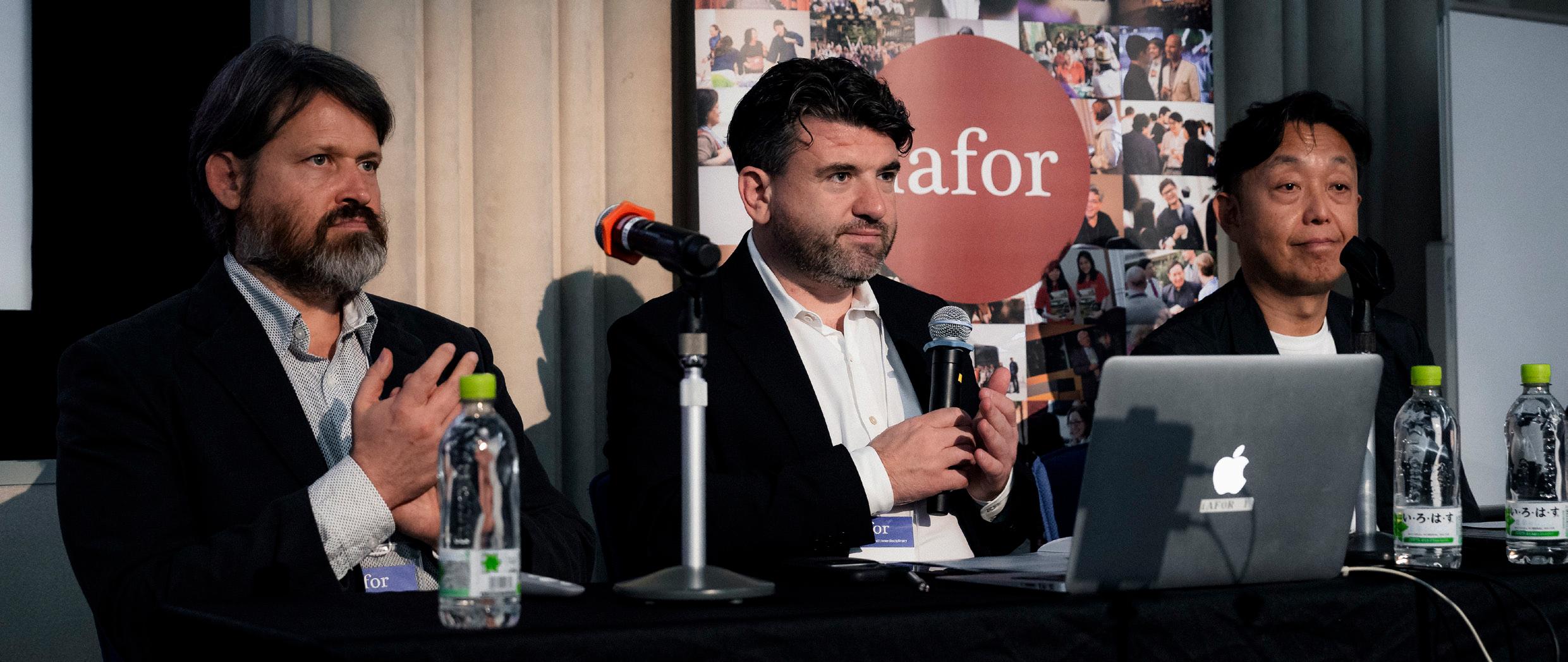
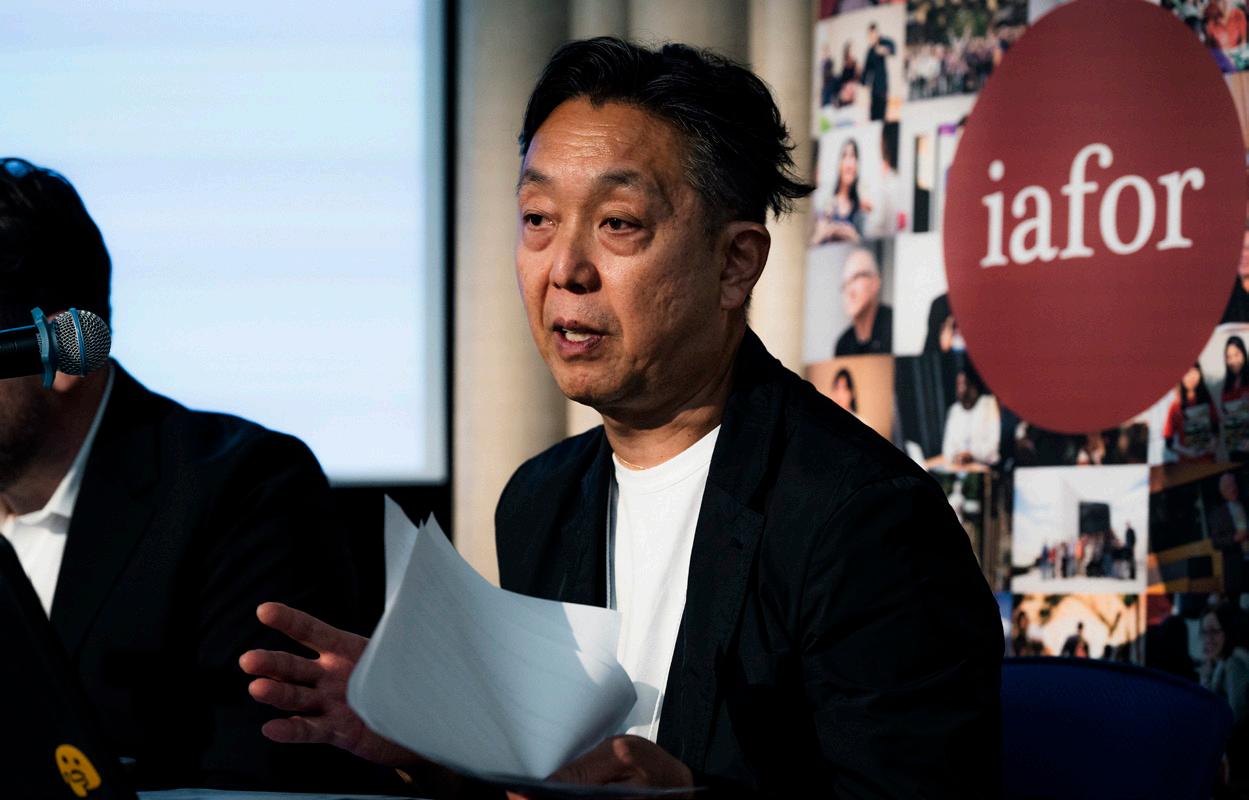
Top, from left to right: Professor Virgil Hawkins, Dr Joseph Haldane, Professor Noboyuki Okumura
Bottom left: Professor Virgil Hawkins of the IAFOR Research Centre and The University of Osaka
Bottom right: Professor Nobuyuki Okumura of Musashi University
3. Challenging the ‘Big Lies’ of History: The Shōwa Restoration
Winners get to write history, and they often choose to do so by omitting several truths. By drafting their own narratives, whole nations and generations grow up unknowingly reinforcing biases and systemic injustice. Driven by economic elites, the case of national socialism during the Shōwa Restoration in Japan is a good example of how economic interests once again manipulated narratives and wrote their own preferred history. Professor Brian Victoria of the Oxford Centre for Buddhist Studies, United Kingdom, delivered a keynote titled ‘The Shōwa Restoration in 1930s Japan: True National Socialism’ in which he offered a radical re-examination of pre-war Japanese history, challenging the standard post-war narratives regarding the Shōwa Restoration and the role of Emperor Hirohito.
The presentation dismantled what he termed the ‘big lies’ that have obscured the true nature of Japanese militarism and the world’s understanding of national socialism. Professor Victoria argued that German National Socialism, regarded worldwide as the original or ‘true’ national socialism, was essentially a ‘fake’ ideology. While the Nazi party adopted the rhetoric of socialism, promising to break the ‘bondage of interest’ and nationalise corporations, they ultimately aligned themselves with the German capitalist class. He pointed to figures like Gustav Krupp, who supported Hitler not because he believed in socialist reform, but because he saw the Nazis as a vehicle for rearmament and a bulwark against the threat of communism.
In contrast, Professor Victoria posited that the National Socialist movement in Japan was a ‘genuine’ ideology, deeply rooted in the economic suffering of the agrarian class. In the 1930s, 44% of Japanese farmers were landless, living in crushing poverty. Families were forced to sell their daughters to pay debts to
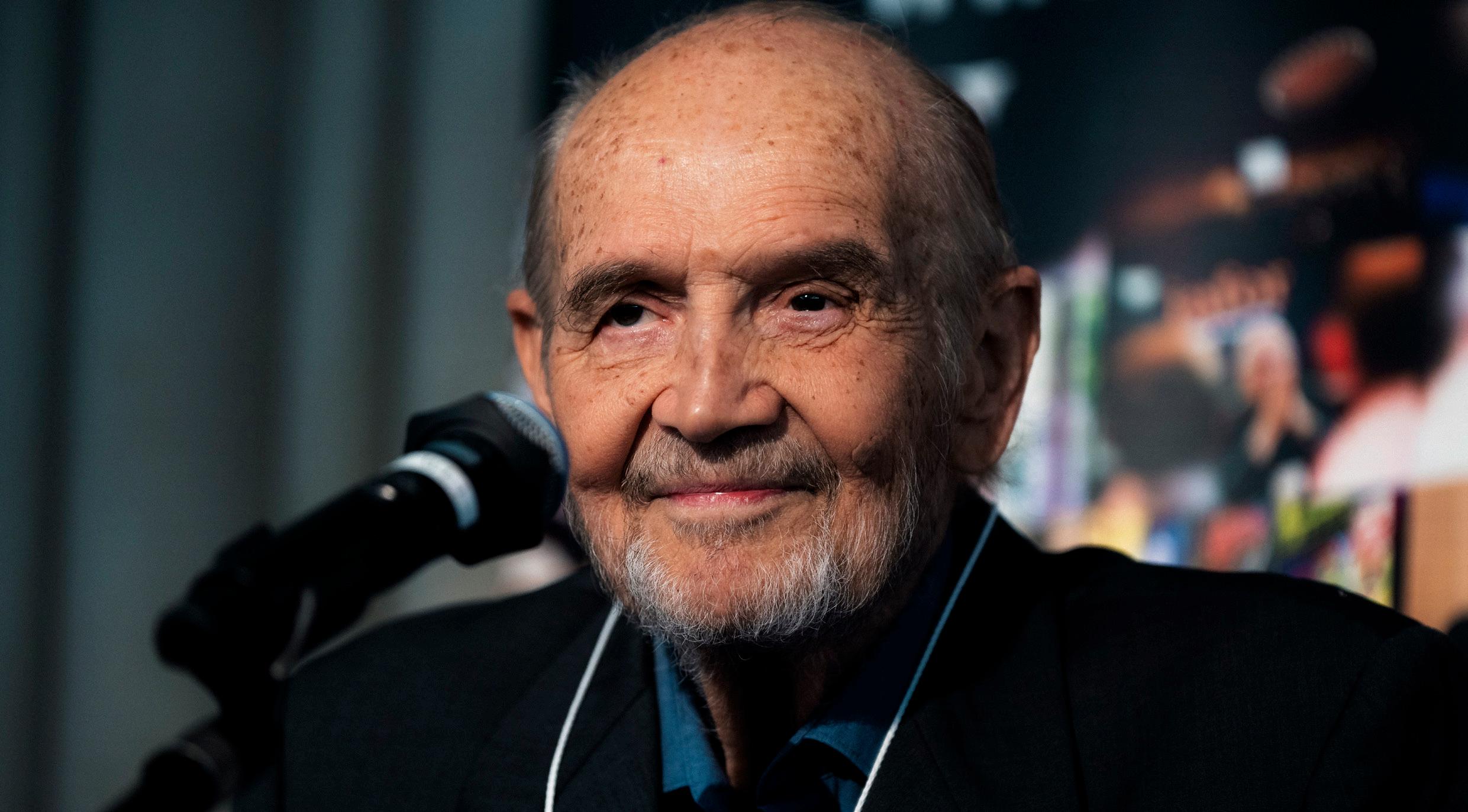
Professor Brian Victoria of the Oxford Centre for Buddhist Studies
Watch on YouTube
wealthy landowners. Many of the young officers of the Imperial Japanese Ar my came from these impoverished peasant backgrounds and were radicalised by this suffering. Unlike their German counterparts, these officers were true believers in the teachings of Kita Ikki, the intellectual father of Japanese national socialism, whose ‘true’ national socialism ideology was established in his book ‘An Outline Plan for the Reorganisation of Japan’ published in 1932, before Hitler’s ‘Mein Kampf’. He advocated for the nationalisation of wealth, radical land reform, and the restoration of direct imperial rule to bypass the corrupt political and industrial elites, which has inspired the ‘Shōwa Restoration’ in its original intention.
Professor Victoria presented a detailed analysis of the February 26 Incident of 1936, which he reframed not as a mere mutiny by disgruntled militarists, but as a failed revolution intended to trigger the Shōwa Restoration. The rebels’ goal was to restore absolute power to Emperor Hirohito, believing that as a benevolent ‘father’ to his people, he would naturally implement the socialist reforms necessary to alleviate the suffering of the poor. However, Professor Victoria argued that this belief was based on a fundamental misunderstanding of the Emperor’s position. He challenged the ‘big lie’ propagated by the post-war occupation authorities that Emperor Hirohito was a powerless puppet controlled by the military. Emperor Hirohito, Professor Victoria argued, was a capitalist, ‘the richest man in Japan,’ holding massive shares in the major zaibatsu—the industrial and financial conglomerates—owning vast tracts of land, and whose economic interests and power restoration were directly threatened by the young officers’ calls for land reform and wealth redistribution. Professor Victoria recounted the pivotal moment when Prince Chichibu, the Emperor’s younger brother and a sympathiser with the national socialists, pleaded with Emperor Hirohito to help the suffering troops. Emperor Hirohito’s cold refusal marked the death of the movement. To Professor Victoria, the Emperor’s order to suppress the uprising was not to save democracy, but to protect the capitalist order and his own wealth.
He argued that this history was deliberately suppressed by the American occupation forces after 1945, who wanted a capitalist leader to serve as a fortress against Soviet communism in Asia. This, Professor Victoria stated, is the foundational lie of modern Japanese history, one that continues to obscure the class dynamics that drove the nation to war, and the world’s distorted understanding of the national socialism ideology that existed in Japan before the Nazi Germans’ version as we know it.
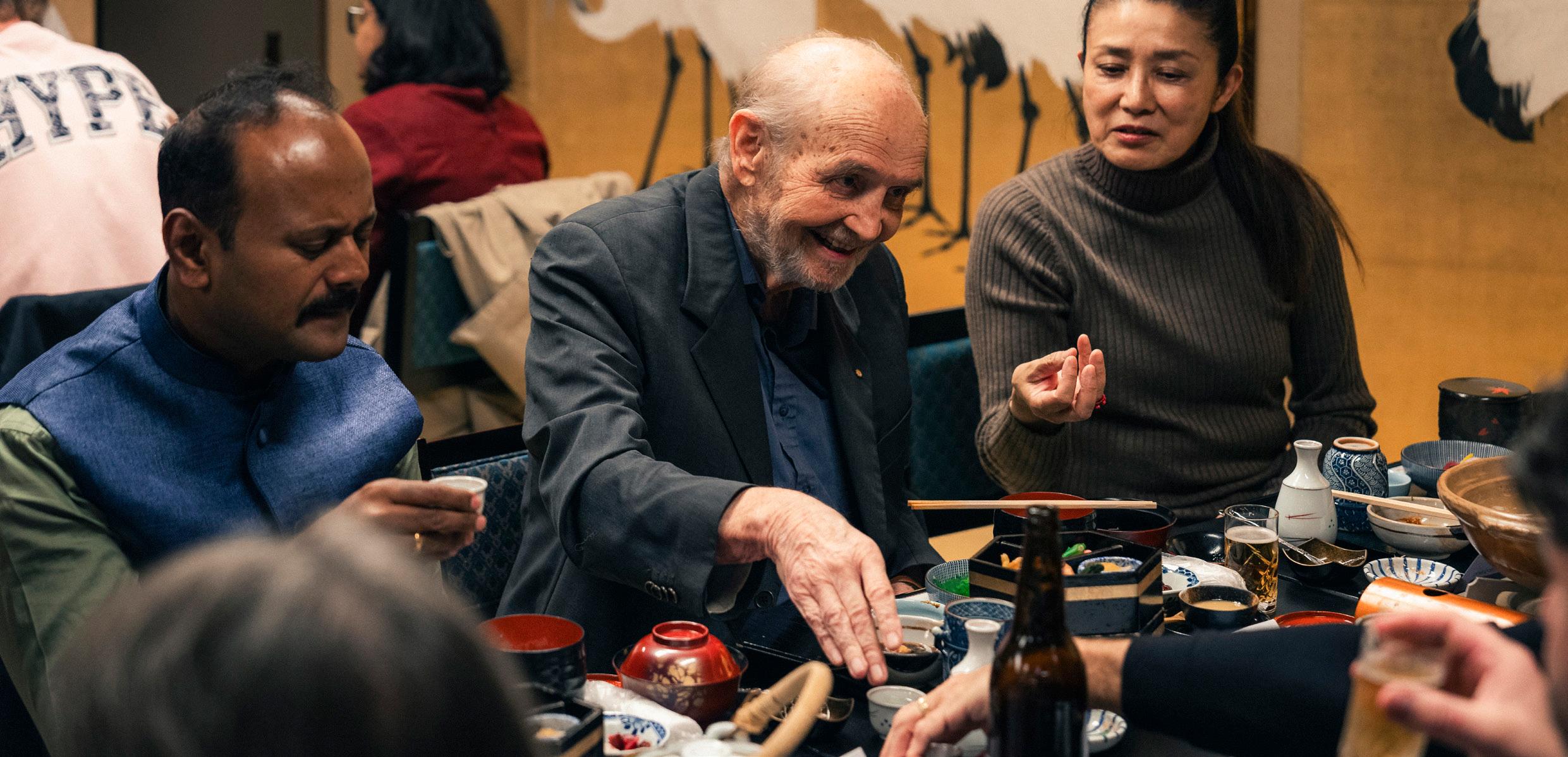
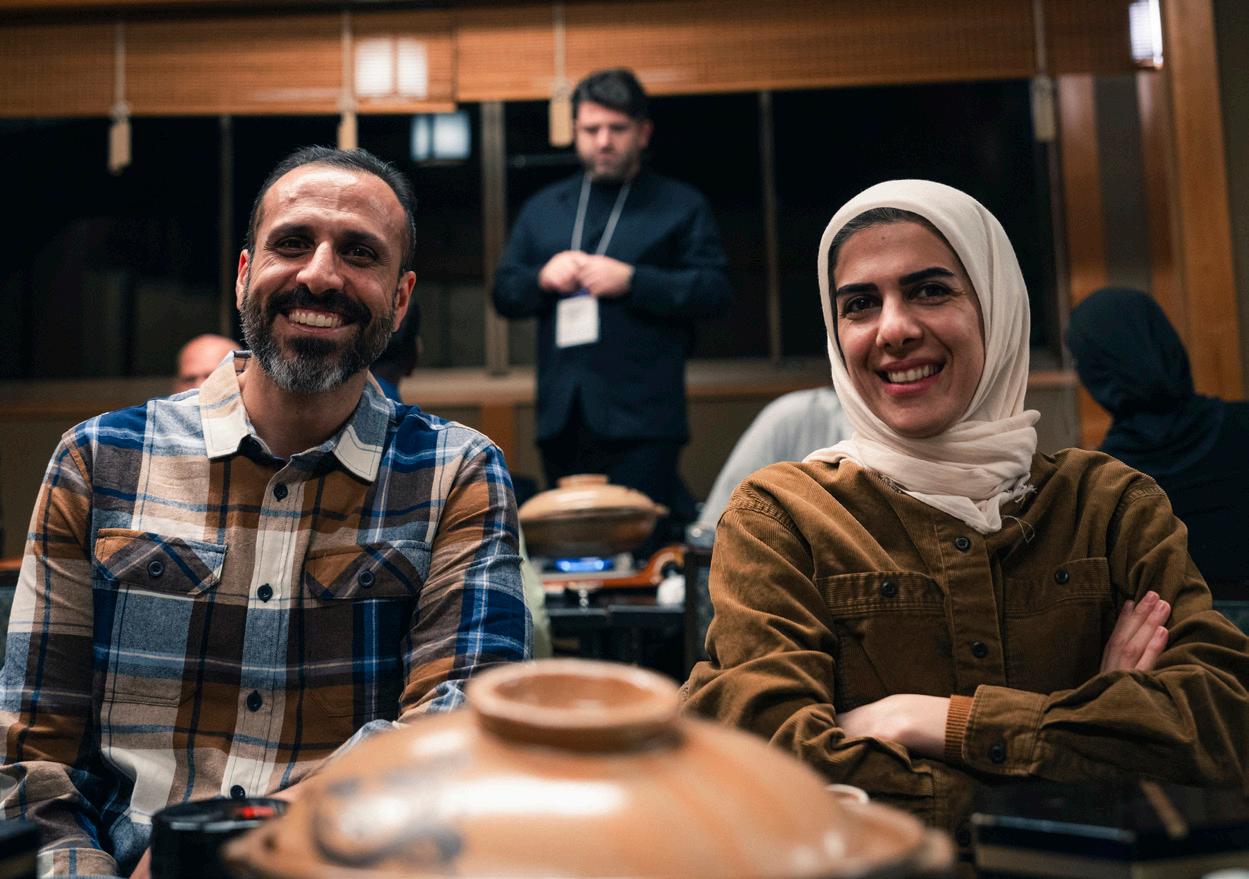
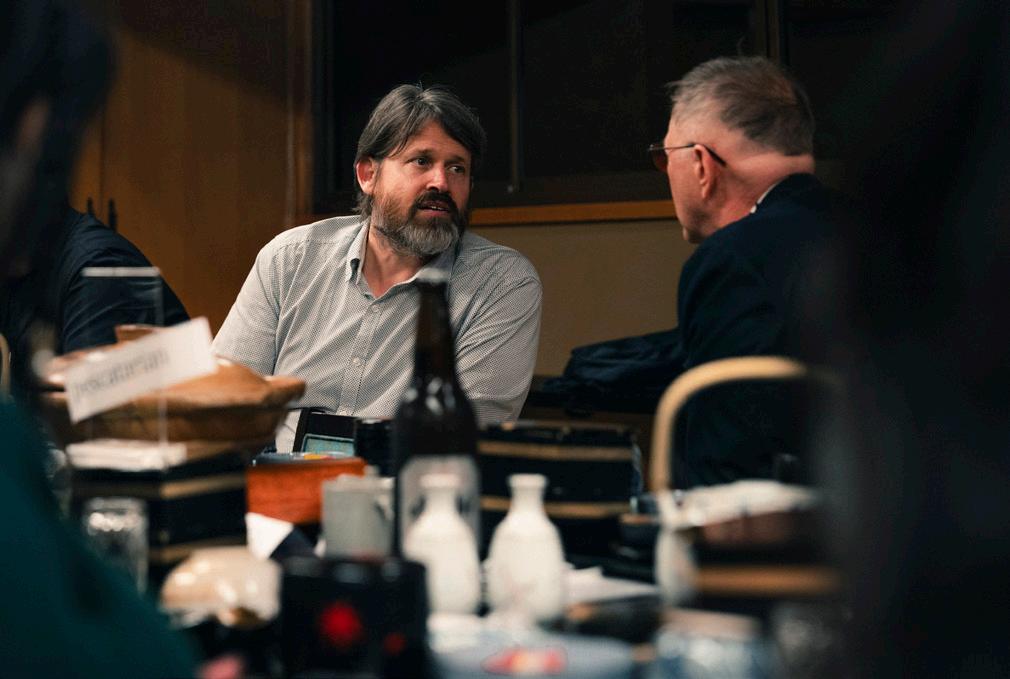
Professor Brian Victoria during the Conference Dinner at Yachiyo Nanzenji
4.
Decolonising Film and Media History
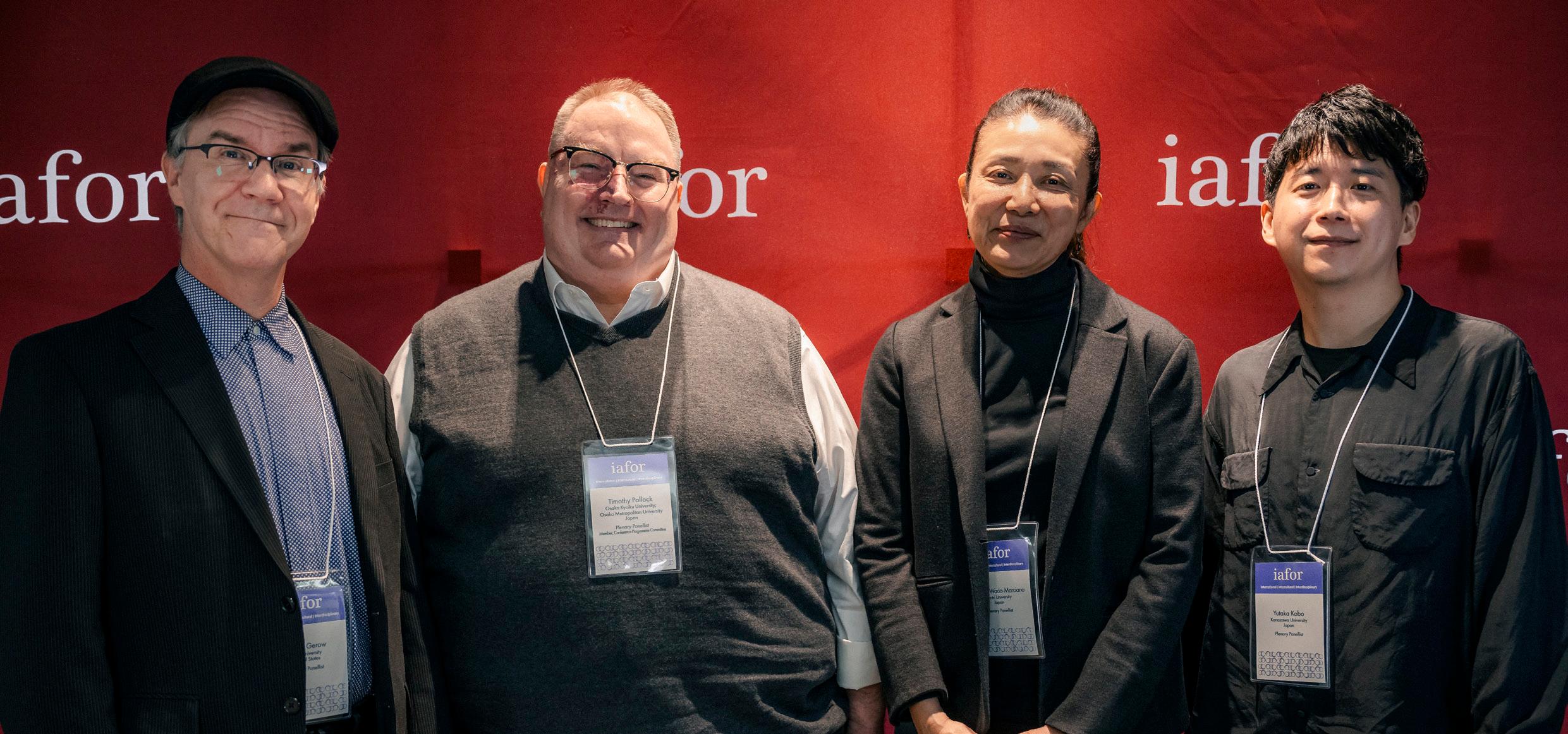
The discussion around systemic biases can also be found within film studies and the film industry at large. Dominated by Western film theory and production, narratives from cultural, racial, or gender minorities are often treated as ‘pedestrian’, lacking value, or not being profitable enough. In a panel titled ‘Expanding Film and Media History: Lessons from Japan’ moderated by Professor Timothy Pollock of Osaka Kyoiku University and Osaka Metropolitan University, Japan, leading scholars critiqued the Euro-American dominance of academic theory and proposed new methodologies for studying non-Western media. Covering topics around theoretical bias, and gender and sexuality misrepresentation, Professor Aaron Gerow of Yale University, United States; Professor Mitsuyo Wada-Marciano of Kyoto University, Japan; and Dr Yutaka Kubo of Kanazawa University, Japan, made several cases for more inclusivity and diversity within film studies and filmmaking.
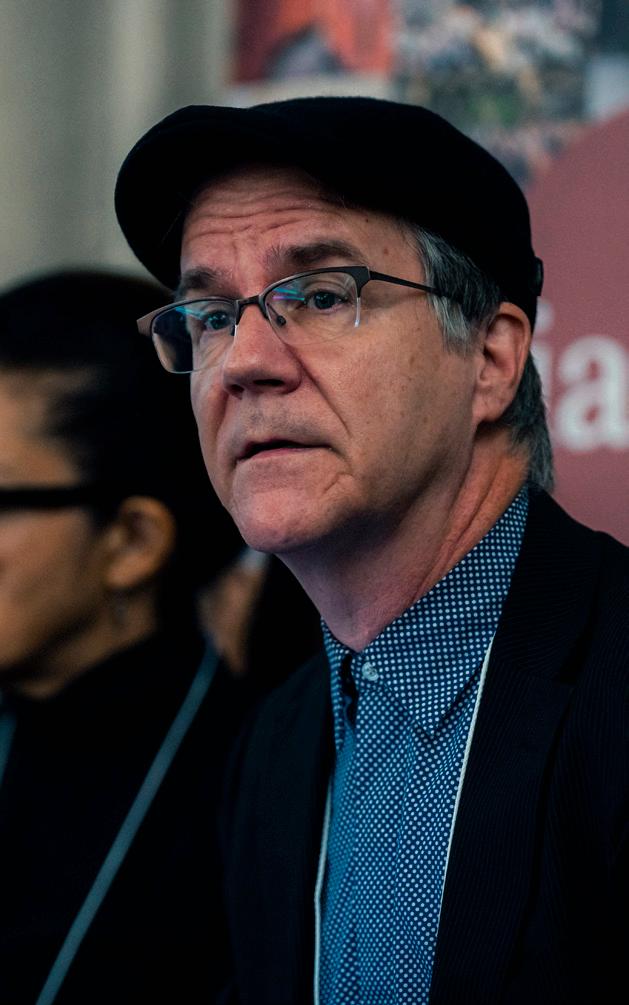
Professor Gerow opened the panel by interrogating the very location of ‘theory’ within the discipline. He noted that standard film theory textbooks are overwhelmingly dominated by European and American thinkers, creating a ‘theory complex’ where Japanese cinema is treated merely as an object of study, a mere collection of texts to be analysed rather than a source of theoretical knowledge itself. Professor Gerow argued that this structure reproduces an imperialist dynamic, where the West provides the intellect and the East provides the raw material. He called for the ‘territorialisation’ of film theory, urging the academy to acknowledge the geopolitics of knowledge production. He highlighted the rich, yet largely ignored history of Japanese film theory dating back to the 1910s, pointing to pivotal figures like Gonda Yasunosuke, the first person in the world who wrote a 400-page theoretical treatise on film decades before Western film studies existed as a discipline. He noted that Japanese theorists in the 1940s were engaging in high-level discourse that often prefigured later Western concepts, such as Deleuzian film theory. Yet these contributions remain entirely absent from the global canon of theory. He urged scholars to excavate these texts not just to add Japan to existing theory, but to challenge the universalist pretensions of Western thought and recognise that theory itself is always culturally situated.
From left to right: Professor Aaron Gerow, Professor Timothy Pollock, Professor Mitsuyo Wada-Marciano, Dr Yutaka Kubo
Watch on YouTube
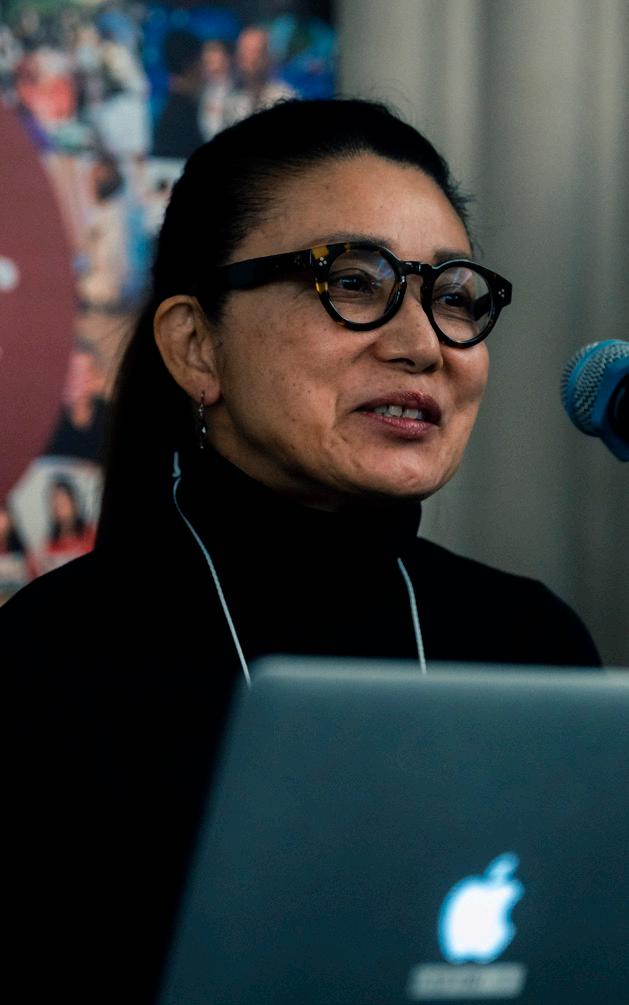
The panel transitioned to the gendered dynamics of film history, highlighting how the canon of Japanese cinema has been constructed as a ‘men’s world’. Through a close reading of the documentary Devotion: A Film about Ogawa Productions, Professor Wada-Marciano demonstrated how film history is often a closed loop of ‘men talking about men’. In the documentary, famous male directors like Ōshima Nagisa praise Ogawa Shinsuke, reinforcing a lineage of ‘masters’ that entirely excludes women. Professor Wada-Marciano presented a ‘revisionist’ history through the lens of female filmmakers, presenting statistics to illustrate the persistent structural inequality in the industry. She noted that in 2024, only 9.1% of Japanese films were directed by women, a figure that lags significantly behind neighbours like South Korea (29%) and Taiwan (30%). She argued that true expansion of the discipline requires not just adding women to the existing lists of directors, but fundamentally rethinking the criteria of value and the structure of the film industry, from education to distribution, that have systematically excluded them.
Dr Yutaka Kubo concluded the panel with a discussion on queer cinema and the ‘heteronormative tension’ that still dominates Japanese academia. Dr Kubo described the personal and professional risks faced by scholars who choose to apply a queer lens to Japanese film, noting that the pressure to disclose one’s sexual identity can be a heavy burden for early-career researchers in a conservative academic environment. He detailed his own ‘curational interventions’ such as working with the NHK archives to locate and highlight erased queer memories in broadcasting history. Dr Kubo shared his struggle to convince a film distribution company to include the terms ‘aromantic’ and ‘asexual’ in the promotional pamphlets for a new film as an example of this. He described the industry’s hesitation to use terminologies associated with LGBTQ+, which they viewed as risky or niche. However, by framing the inclusion of these terms as socially relevant, he succeeded in altering the promotional strategy, demonstrating that academic intervention can have a tangible impact on public discourse and the visibility of marginalised identities.
In a follow-up interview, Professor Pollock highlighted the importance of perseverance in expanding film history. He stated that the project of dismantling or decentring patriarchy within film history and theory will not be a finite task, but an ongoing, never-ending process subject to constant shifts. He noted that while progress is possible, there is always a risk of regression due to changing political landscapes, citing that even universities in certain countries may face punishment for teaching specific viewpoints. Despite the reality that this work may never be fully accomplished, it is important to be persistent. In doing so, it is not about adding new elements to the discipline, but rather revealing voices that were already present but previously unrecognised.
From left to right: Professor Aaron Gerow of Yale University, Professor Mitsuyo Wada-Marciano of Kyoto University, Dr Yutaka Kubo of Kanazawa University, Professor Timothy Pollock of Osaka Kyoiku University and Osaka Metropolitan University
5. The Forum: Generative AI and Legacy Media
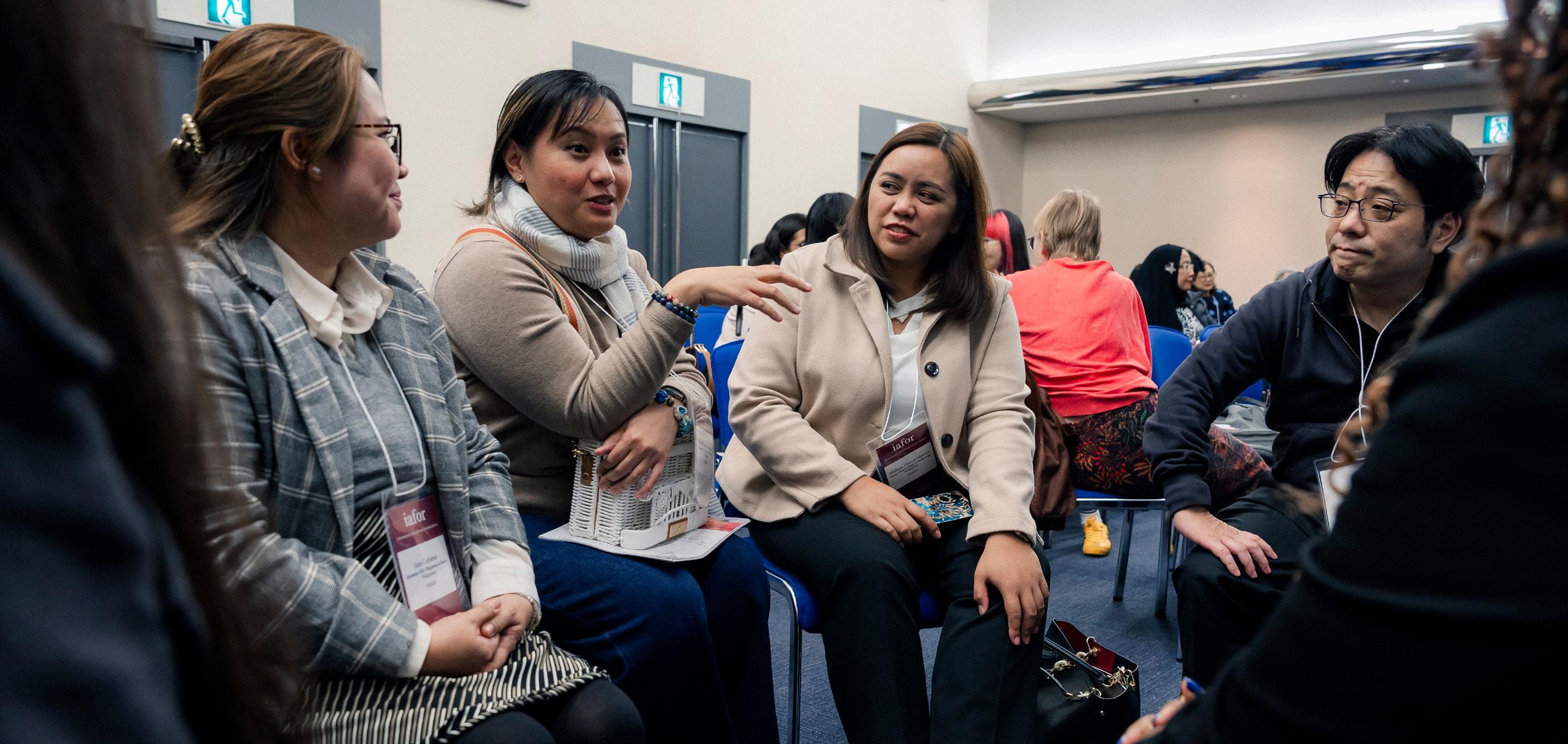
The Forum, IAFOR’s open, interactive discussion session, regarded ‘Generative AI and Legacy Media: Potentials and Pitfalls’ held both online and onsite in Kyoto. Delegates were invited to discuss questions around the role of legacy media in countering misinformation, including the opportunities and risks of AI use and its application in educational and institutional contexts. Professor Nasya Bahfen of La Trobe University, Australia, served as the respondent for the onsite session, with Mr Apipol Sae-Tung of IAFOR, Japan, as the moderator. The Online session was moderated by Dr Melina Neophytou of IAFOR, Japan, and included keynote panellist Professor Hawkins as the respondent.
The Forum moved the conversation from theoretical discussion to the immediate, practical realities of the information ecosystem. In her introduction, Professor Bahfen set the stage for The Forum with a demonstration of how easily AI can disrupt the consumption of truth. She presented a ‘fake news’ story that had circulated on WhatsApp regarding new coffee-drinking laws in Australia, noting that while the image was clearly AI-generated, the text mimicked journalistic structures well enough to fool casual readers, despite giveaways like ‘Americanized’ spelling and a lack of hyperlinks. She contrasted this with a legitimate example from the Australian Broadcasting Corporation (ABC), where a journalist used AI to generate captions, illustrating the spectrum of utility from deceptive hoax to workflow efficiency.
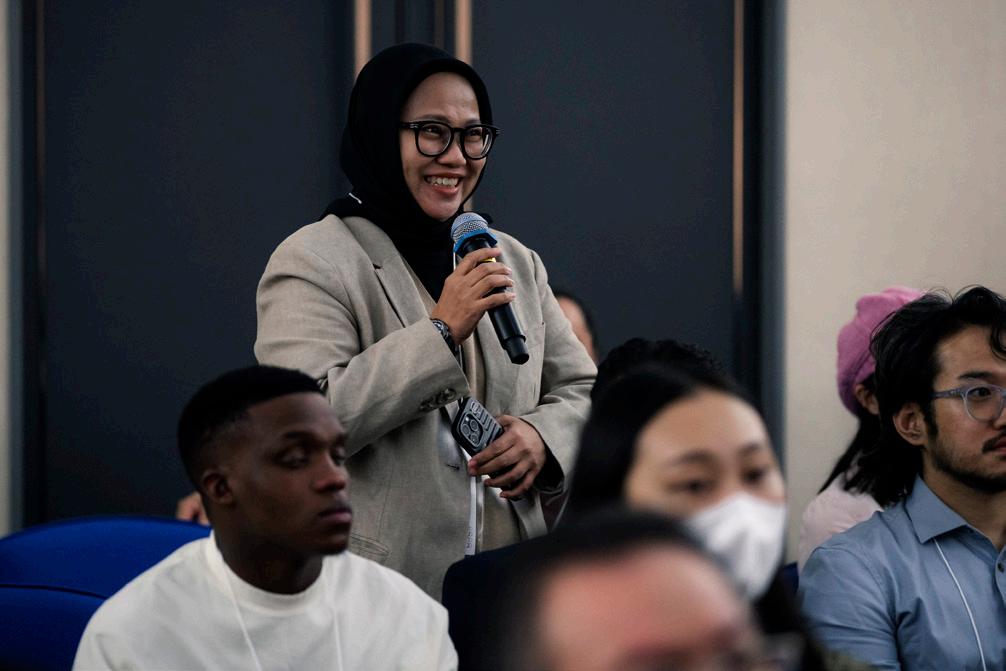
The discussion opened with an exploration of how delegates are currently utilising AI in their personal and professional lives. The responses revealed a diverse range of applications that go beyond academia and research. A delegate from Indonesia offered a particularly humanising perspective, noting that she uses AI for ‘emotional support’, treating the machine as a helper to validate her concerns and confusion. This sentiment highlighted a psychological dimension to AI adoption, where the technology serves as a non-judgmental confidant. In contrast, a delegate from India who runs a design agency described a more functional use for AI to source research papers and summarise content, though she emphasised the necessity of an ‘extra layer of filtering’ to validate the output. A delegate from the Philippines added that many delegates were using AI for logistics, such as creating itineraries for the conference and sightseeing in Kyoto.
...we use AI to validate our emotions as emotional support, like when we need somebody or some machine to validate our concerns or our confusion. We can turn to AI to find the solution. Even though we know the logic behind all of their answers, it’s still nice to have someone to actually talk nicely to you.
- A delegate from Indonesia
...we mostly use it to find resources. We ask AI to give us research papers, and then actually read through them. A few of us tried to use AI for summarising content, but sometimes we saw that it puts its own thing in there. So we end up just reading the entire thing. And, we have a professor with us who talked about how students are using a lot of AI in their work, and that is something that they have to put up with: an extra layer of filtering to make sure that all the students are using valid resources.
- A delegate from India
However, the tone of The Forum shifted significantly when the conversation turned to the credibility of legacy media versus social media. A live poll revealed that ‘Social Media’ and ‘Digital Online Media’ were the primary news sources for the delegates, a result that Professor Hawkins found concerning due to the algorithmic biases inherent in social platforms. This prompted a dialogue about why audiences, particularly in the Global South, are abandoning legacy institutions. A delegate from the Philippines explained that legacy media is often viewed by the younger generation as compromised or outdated, leading students to bypass television and radio entirely in favour of social media, despite the high risk of misinformation. He further highlighted that to remain relevant, newspapers in the Philippines are frantically trying to pivot to digital platforms, but the trust deficit remains a significant barrier.
Professor Nasya Bahfen of La Trobe University served as the respondent for The Forum session at KAMC/ MediAsia2025
...the legacy media is somehow losing its credibility over other sources. Social media plays a big role in informing people rather than the traditional media… Newspapers tried to create social media accounts to make themselves relevant… These websites never get censored by the government or those who control the legacy media. The government is the one spreading the wrong information [through traditional media], so the credibility of the legacy media was actually turned by the government itself.
- A delegate from the Philippines
The Forum also revealed the psychological reception of information in a complex dynamic, where disinformation is not always viewed as a threat, but sometimes as entertainment. A delegate from Indonesia consciously acknowledged fake news as the source of entertainment, stating that she often turns to social media first precisely because the content is ‘fun’, acknowledging that ‘sometimes it’s fake... but I just enjoy it’. Conversely, the discussion touched on the alienation caused by automated content. An online delegate, contributing via the chat box, war ned that the widespread use of AI in news production risks creating a fundamental disconnect, arguing that audiences perceive legacy media as a means to connect with each other, a function that is lost when the content is perceived as artificial. Professor Hawkins referenced Mark Twain to address this tension between the allure of entertaining fakes and the desire for human connection, suggesting that the spread of disinformation may be less about technology and more about human nature, where sensationalism travels ‘halfway around the world before the truth can get its pants on’.
If you want to get the very fast news, then you go to social media. Then, it’s fun because sometimes it’s fake; it’s fun for me. … I get the real news [from going on social media]. I know it’s fake, but it’s funny. I just enjoy it.
- A delegate from Indonesia
There’s an impression that legacy media is our way to connect with each other. Placing AI at the forefront of news, or the majority of the content, creates a disconnect.
- A delegate from Indonesia
This critique of legacy media deepened when a delegate from Ghana shared his insights about the relationship between media ownership and political power in West Africa. He argued that most of the legacy media are owned by politicians for propaganda and to misinform the populace. He described a media landscape captured by ‘cartels’ of elites who gained wealth illegally and who use media outlets to protect their interests. In this context, information is not a public good but a weapon used to cast a ‘spell’ over the electorate, dividing the country along ethnic and religious lines to ensure the continuity of the ruling class. He further discussed the physical dangers of challenging these narratives, citing the tragic case of the investigative journalist Anas Aremeyaw Anas, whose work exposing judicial corruption was met with such severe political backlash and physical threats that he has been effectively silenced, illustrating the lethal stakes involved in fighting statesponsored disinformation.
I believe that legacy media can play a vital role in building a future that is free from misinformation, primarily by leveraging their experience in quality journalism. In fact, if you look at Ghana, most legacy media are owned by politicians, and they mostly use these media and platforms for propaganda and to misinform the populace.
- A delegate from Ghana
The discussion of AI’s role in this ecosystem was characterised by caution. The issue of AI hallucinations often provides fabricated information, necessitating constant human verification. A delegate from South Africa expressed deep concern regarding privacy, questioning whether the digital platforms harvesting data for AI models are safe spaces for personal information.
Sometimes AI will hallucinate. One of the reasons is that if there is no payment on the premium [subscriptions], AI will stop addressing all your questions. Another reason depends on how we prompt… AI actually assists us to make our own work more efficient and effective, but it depends on how we prompt it. I am also worried about the validity of AI responses, with regard to the references and citations for research.
- A delegate from the Philippines
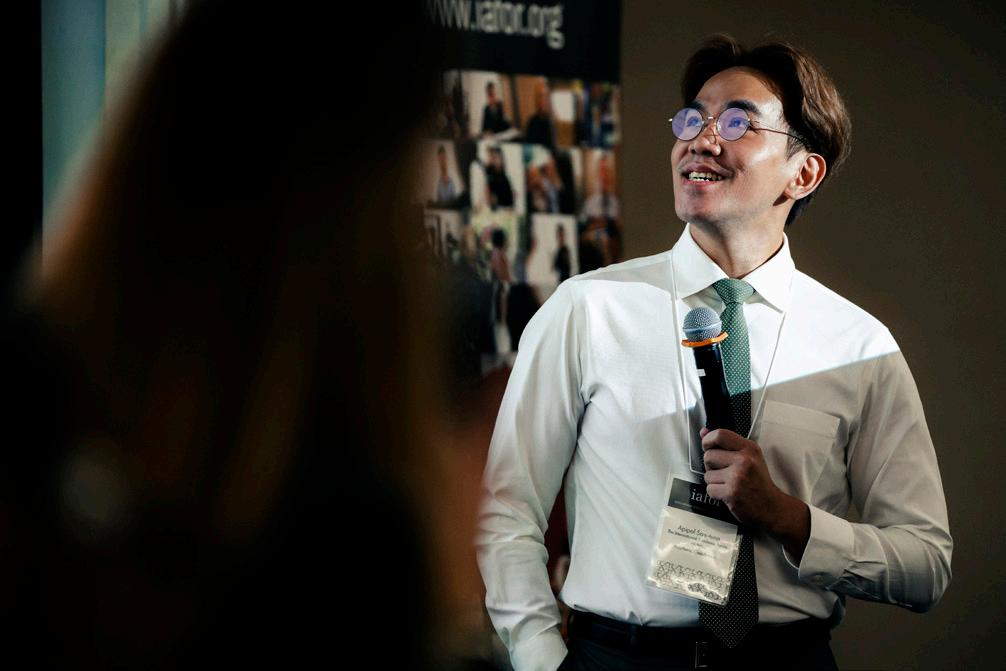
Apipol Sae-Tung, IAFOR’s Academic Coordinator served as moderator for The Forum session at KAMC/ MediAsia2025
I thought about ethical implications—Is it ethical and credible?—as well as the credibility of information that we get through the use of AI. For example, someone was worried about privacy. I’m using AI, and it allows me to put my details, claiming that it is a safe space for me to put my information. I’m concerned about my privacy because on these digital platforms that we utilise, people can commodify and use our data. That’s why I’m concerned about privacy and ethical implications.
- A delegate from South Africa
Despite the gravity of these challenges, The Forum offered glimpses of a path forward through education. A delegate from the Philippines highlighted that the Philippine basic education curriculum now includes ‘Media, Information, and Literacy’ as a specific subject to teach students how to verify information and use social media respectfully. He emphasised that this curriculum was crafted even before the current massive wave of disinformation, aiming to shield students from cyberbullying and manipulation. The Forum concluded with a consensus that while AI offers undeniable tools for efficiency, such as generating assessment rubrics in education or processing data in the media, it cannot replace the necessity for ethical judgment. As noted by a delegate joining the online Forum discussion, one of the viable futures for legacy media is to pivot from being a mere channel of information to becoming rigorous ‘benchmarks for truth’ leveraging their resources to validate the chaotic flood of content generated by AI and social algorithms.
6. Conclusion
The challenges facing the global information ecosystem are not only products of the digital age, but cyclical struggles over power, memory, and authenticity. The structural manipulation identified in Japanese newsrooms, where the kisha club system prioritises access over scrutiny, mirrors the historical manipulations exposed by Professor Victoria, where the ‘big lies’ of the Shōwa era were constructed to protect the economic interests of the elite. Similarly, the ‘visibility paradox’ plaguing commercial radio and the Eurocentric exclusionary practices within film theory both point to a failure of legacy institutions to prioritise substantive engagement over performative authority.
The path forward identified across all sessions was remarkably consistent. Just as scholars must ‘territorialise’ theory to recover the silenced voices of female and queer filmmakers, legacy media must reclaim its role not as a passive platform of content, but as an active arbiter of truth. To conclude, technology is merely the delivery mechanism, but the core defence against the erosion of reality remains critical media literacy and humans’ ability and courage to question the source.
These conclusions drawn from the KAMC/MediAsia2025 conference are closely connected to the discussions currently underway at IAFOR’s education-themed conferences, where a lot is being said about the role of education, and of the university in particular, in an AI-driven and uncertain era of geopolitical tension, societal uprising, and a rising cost of living. Dr Kubo’s positive message that academic intervention can have a tangible impact on public discourse and the visibility of marginalised identities, as well as the repeated emphasis on media literacy and AI ethics, prompt us to look closer at how we prepare students and societies for the future. One of the best ways in which this can be achieved is through education. IAFOR will continue to address these issues in our upcoming conferences.
7. Networking and Cultural Programme
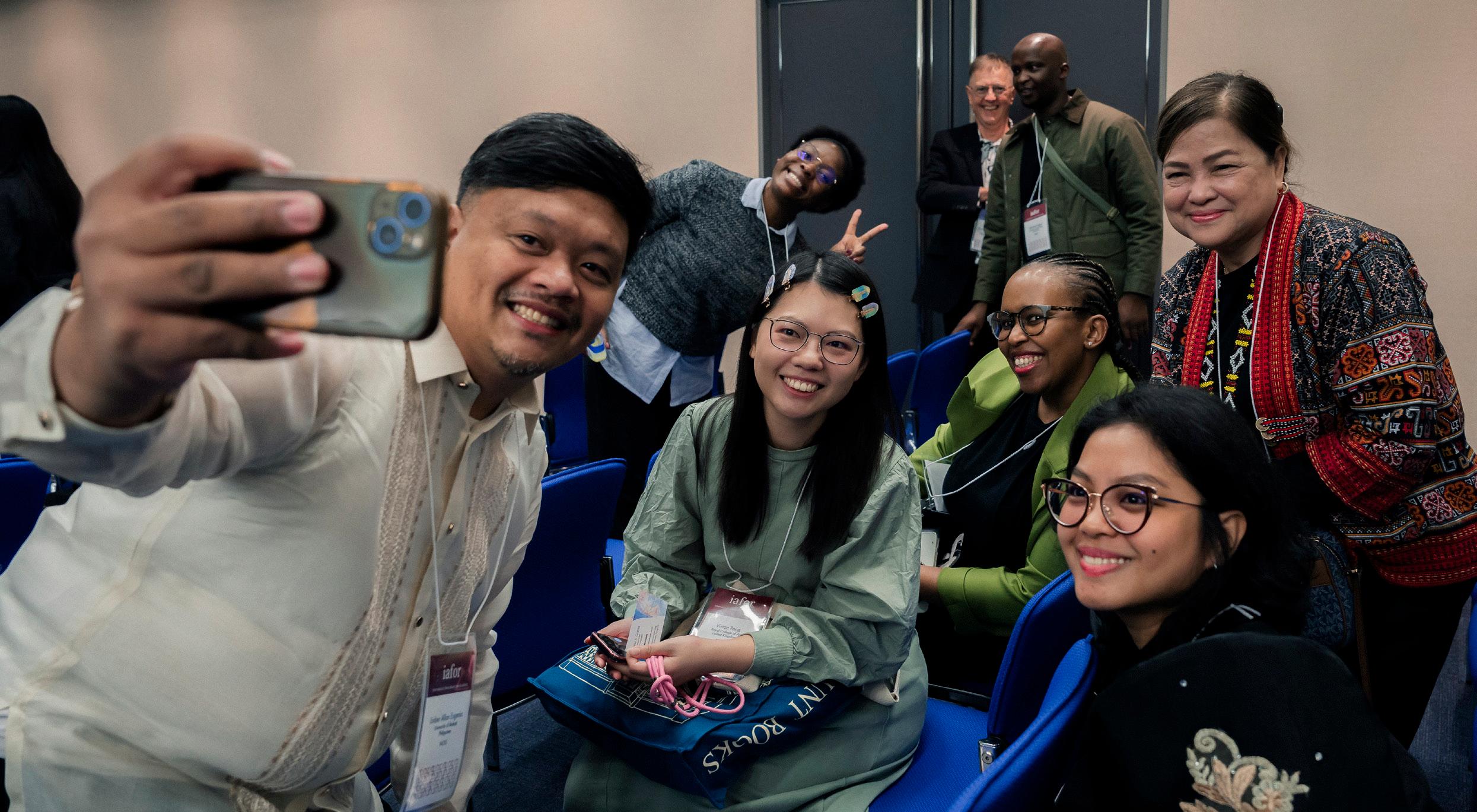
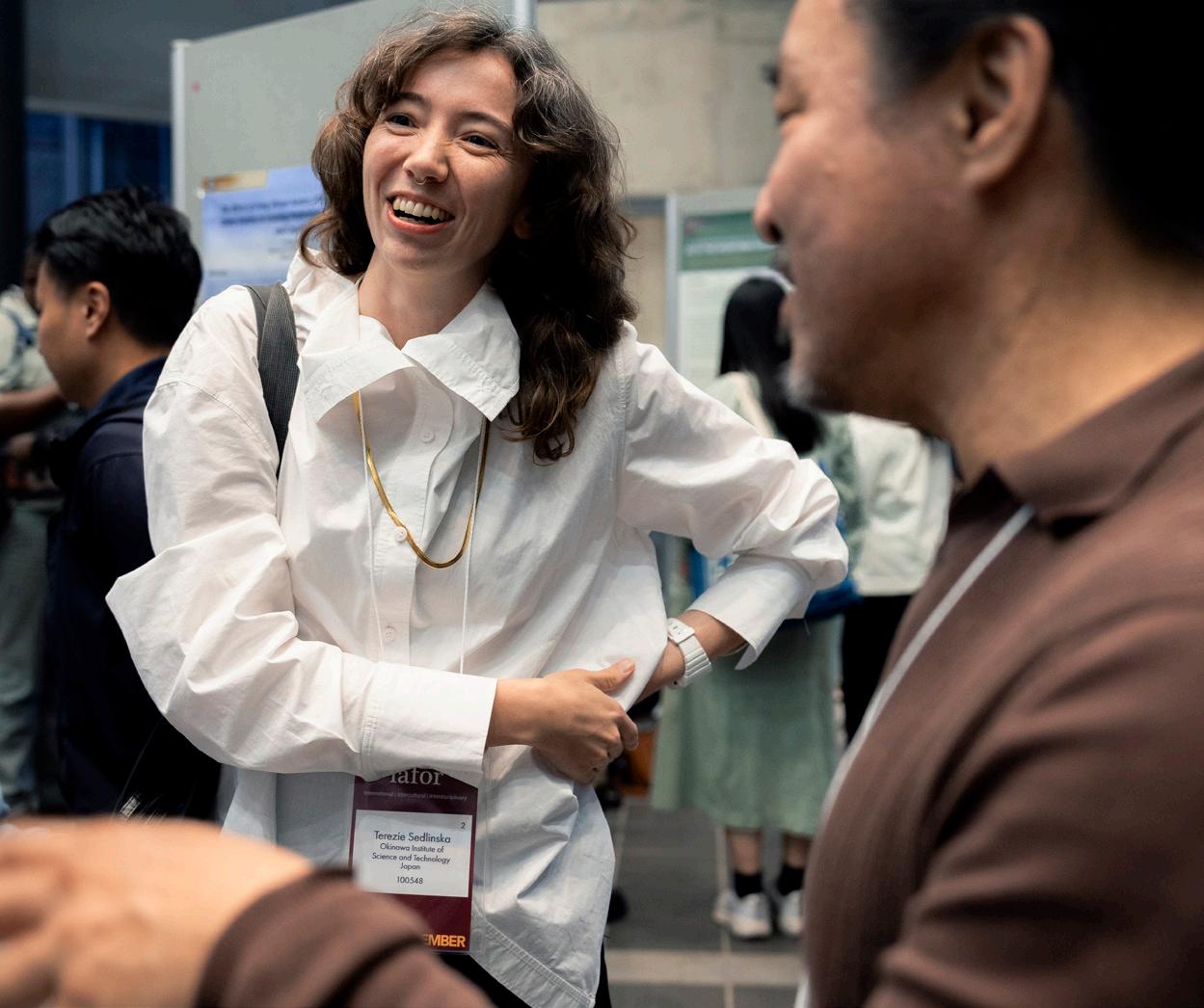
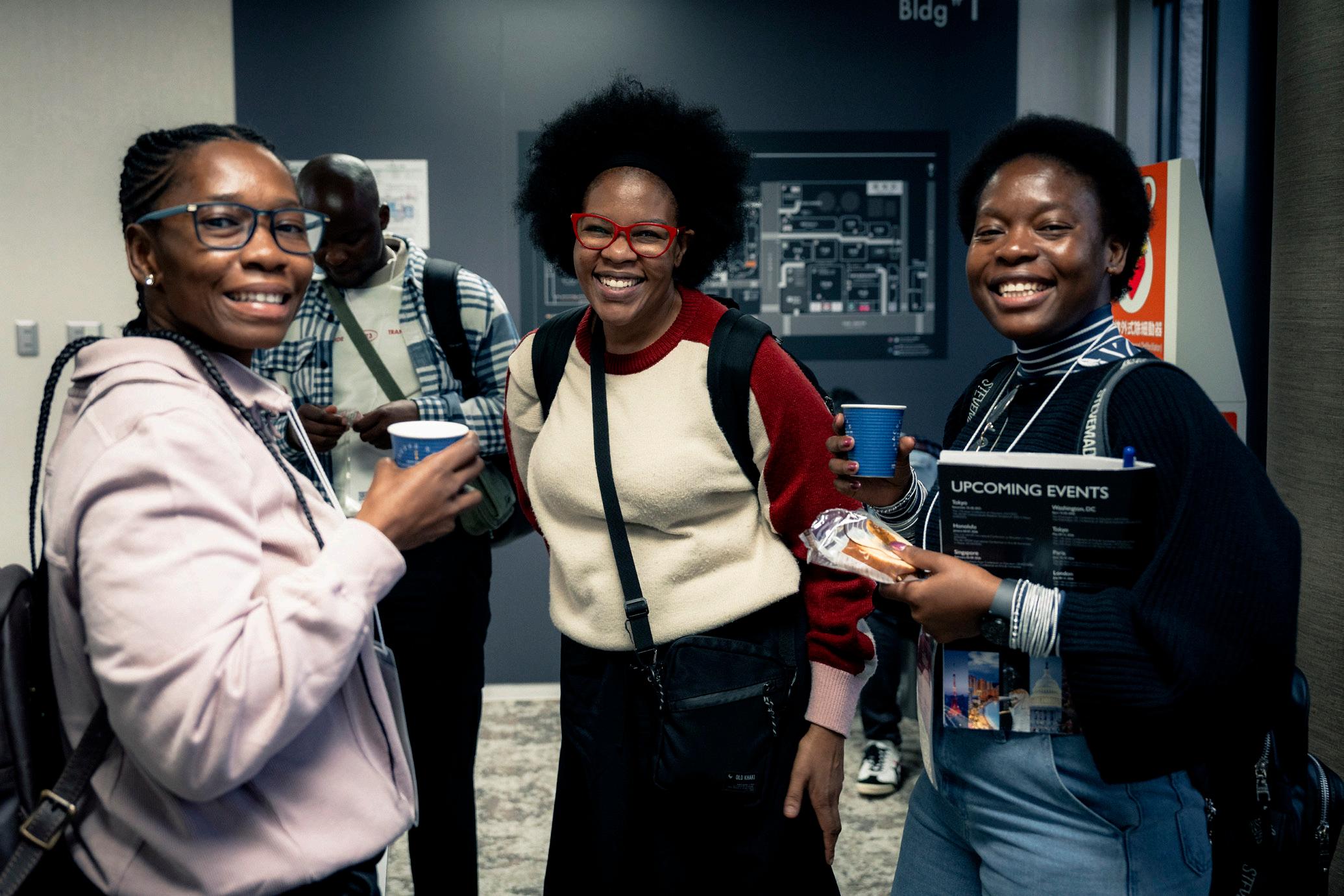
Networking events within our conference programmes provide designated spaces for open discussion, forming professional connections, and inspiring collaboration within and outside the conference venue. The KAMC/MediAsia2025 itinerary featured a variety of such spaces, sharing them alongside returning delegates and new members alike.
Welcome Reception
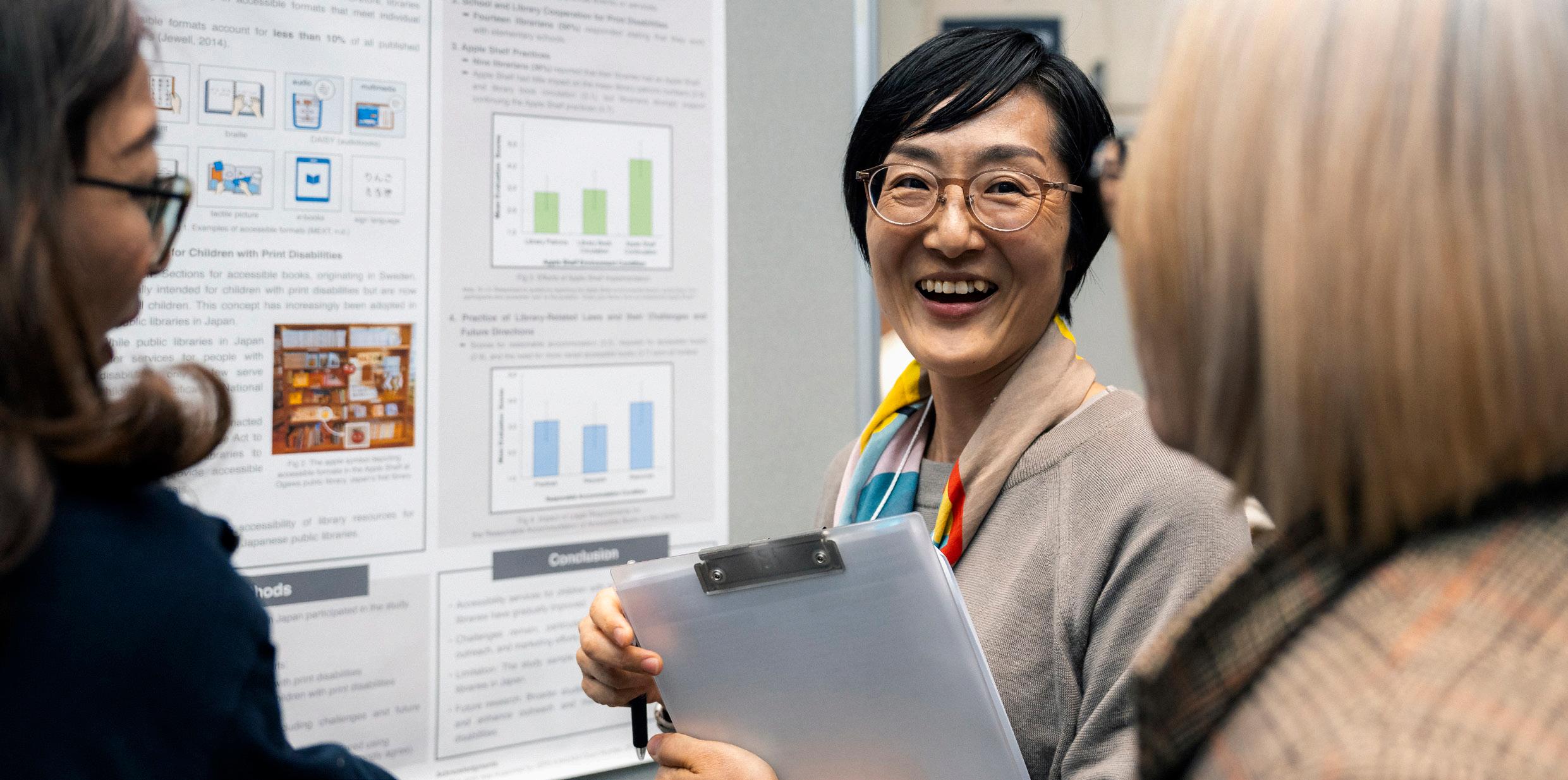
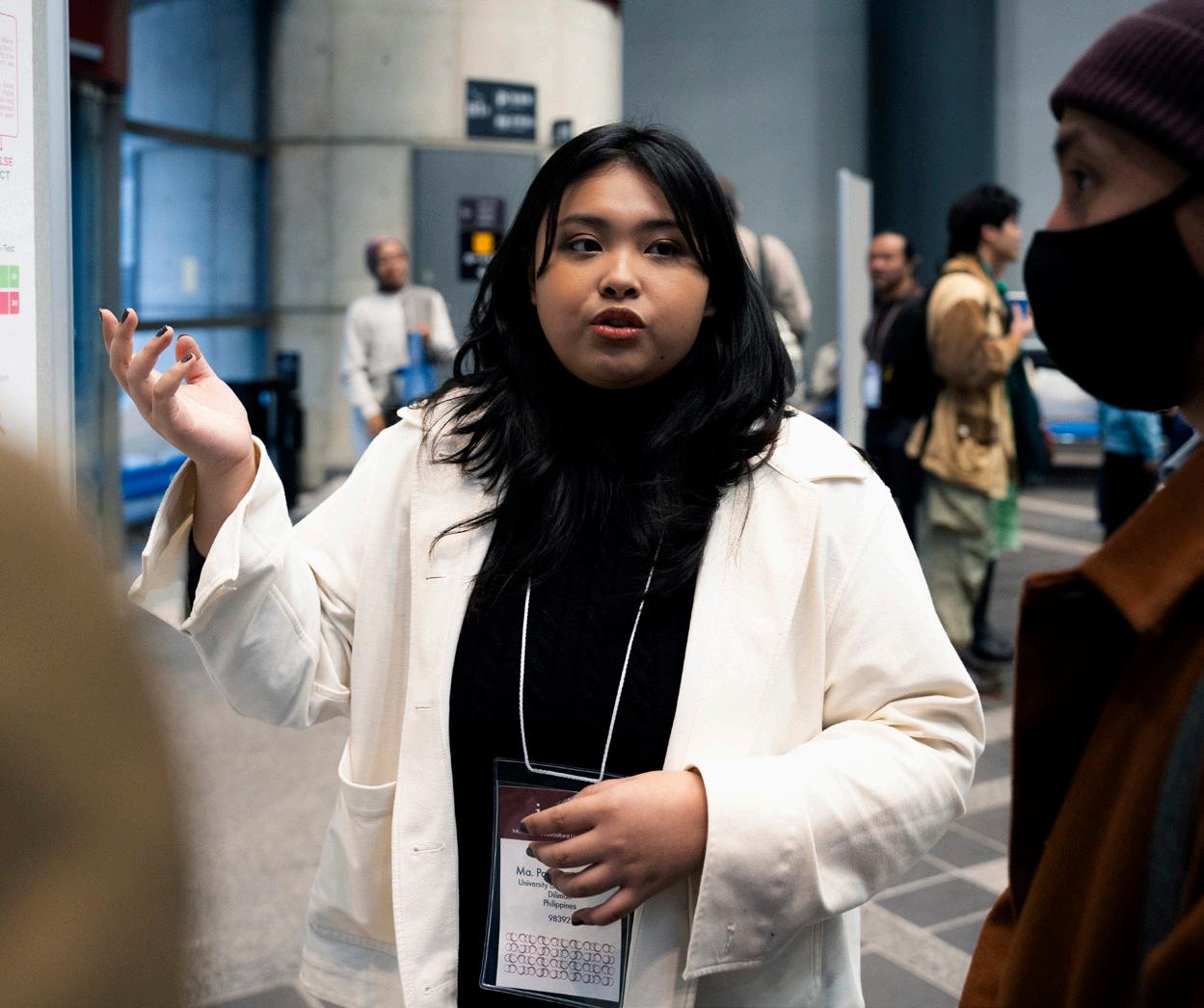
The Welcome Reception is designed as a free networking event open for all registered delegates to attend. The inclusion of the poster presentations with the Welcome Reception at the end of the day provided a space for delegates to ease into the conference, make new connections, and learn about the featured poster presentations in a more engaging way.
Cultural Presentation: Kimono Dressing Demonstration
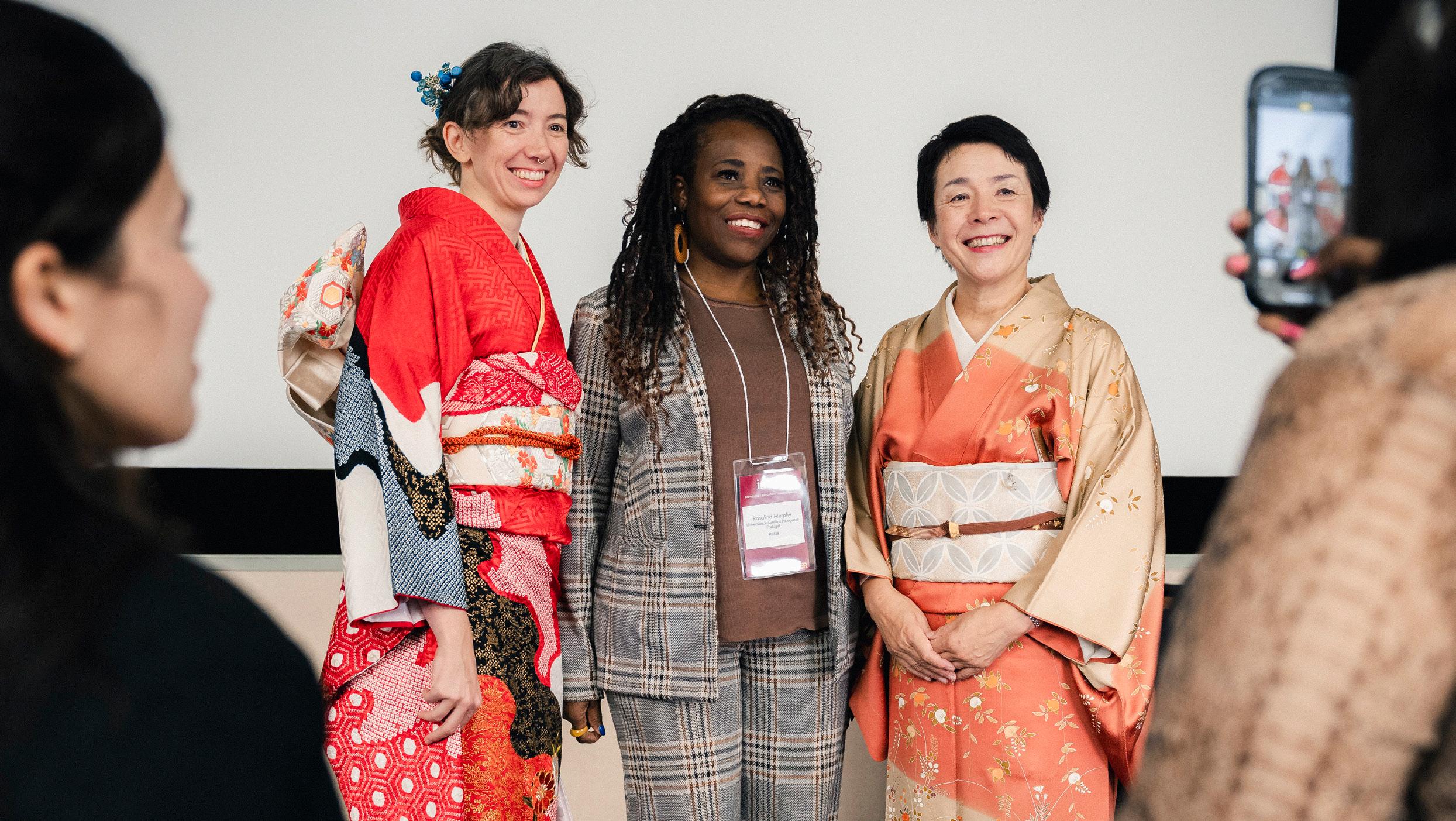
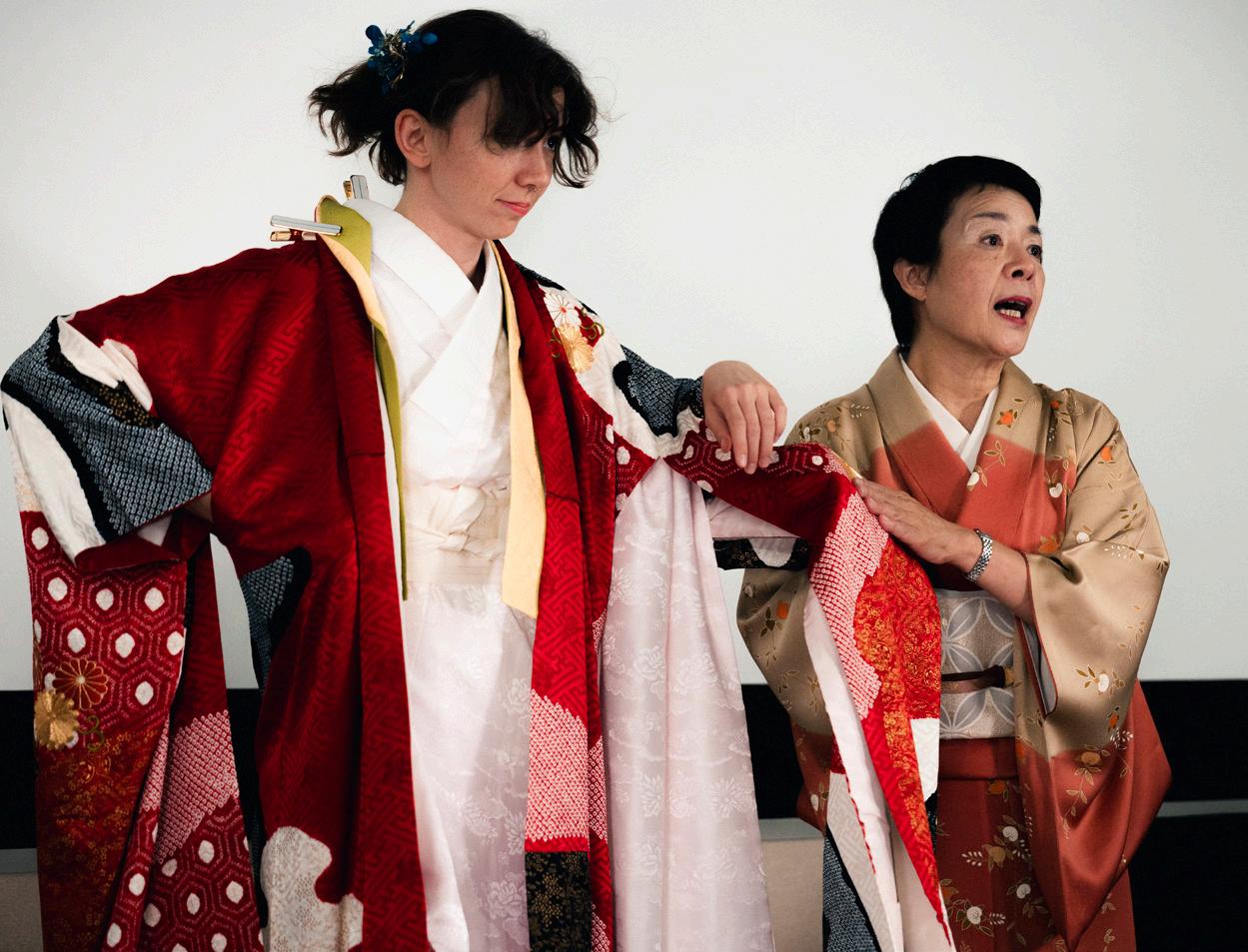
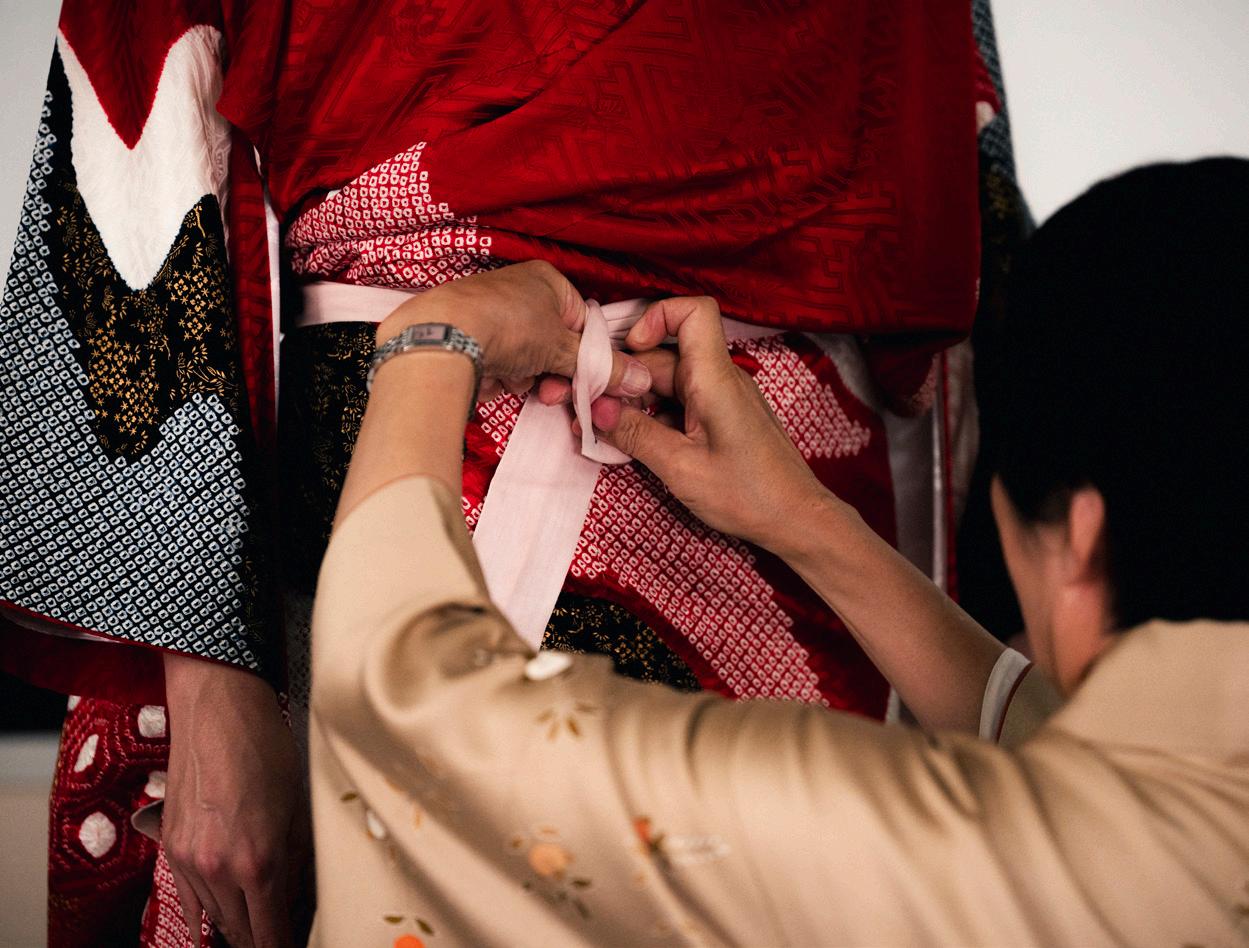
A Kimono Dressing Demonstration was included in the conference programme, led by local kimono instructor Satoko Yamada, a specialist in traditional kimono dressing. Delegates who attended the free demonstration were given an in-depth overview of the history and traditions of Japanese kimonos through Yamada-sensei’s expert instructions. In addition to explaining the rules and instructions of kimono dressing, the session showcased the intricacies of different styles of Kimono for different occasions and seasons. Like many demonstrations in the past, a delegate was selected to model during the demonstration, offering a chance to experience the Yamada family’s century-old kimono legacy. The event included a Q&A session for audience members to engage with Yamada-sensei as she demonstrated each step. IAFOR is proud to have a locally-renowned expert to showcase her share of Japanese culture with us and our delegates, who range from first-timers in Japan to frequent returnees.
Conference Dinner at Yachiyo Nanzenji
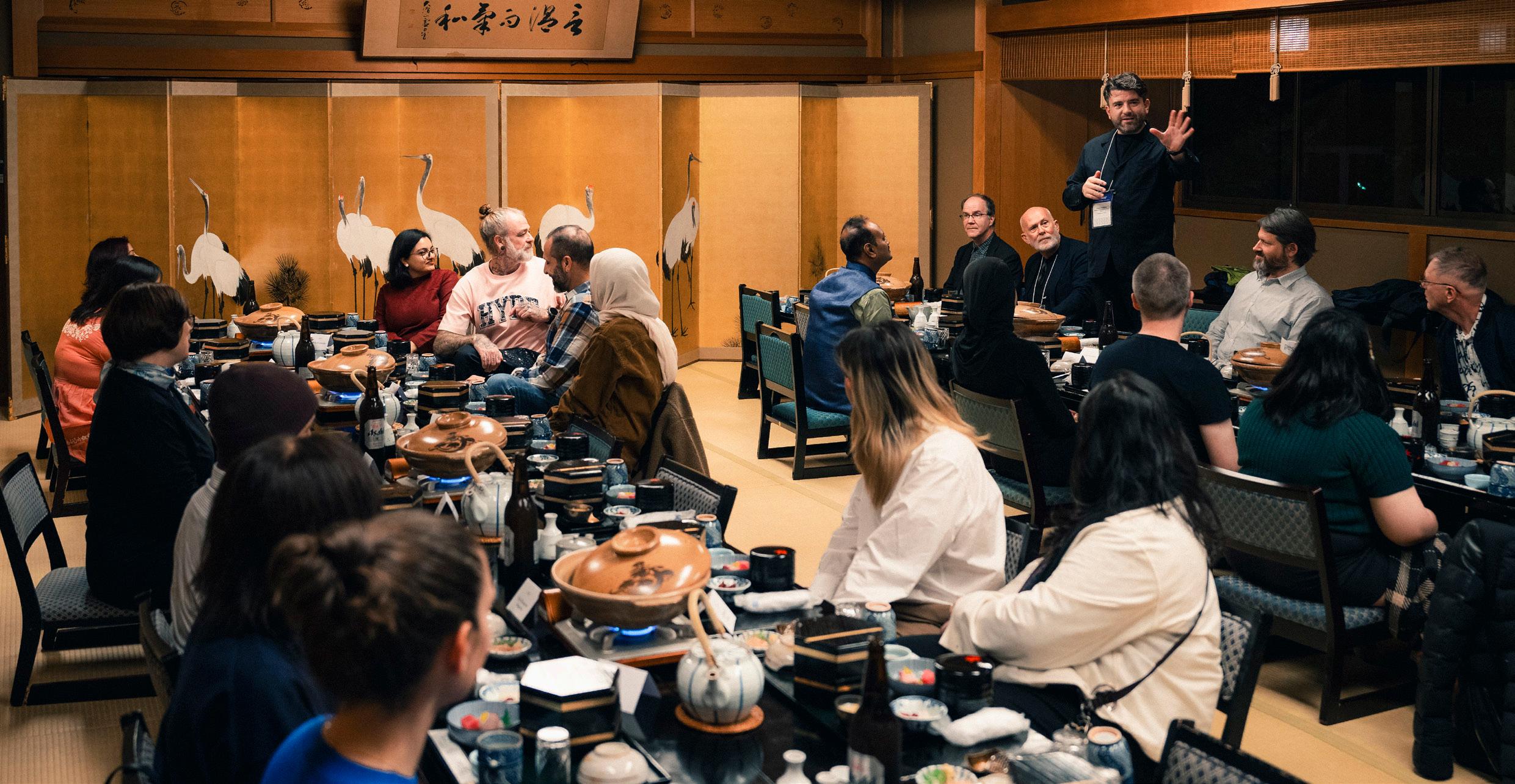
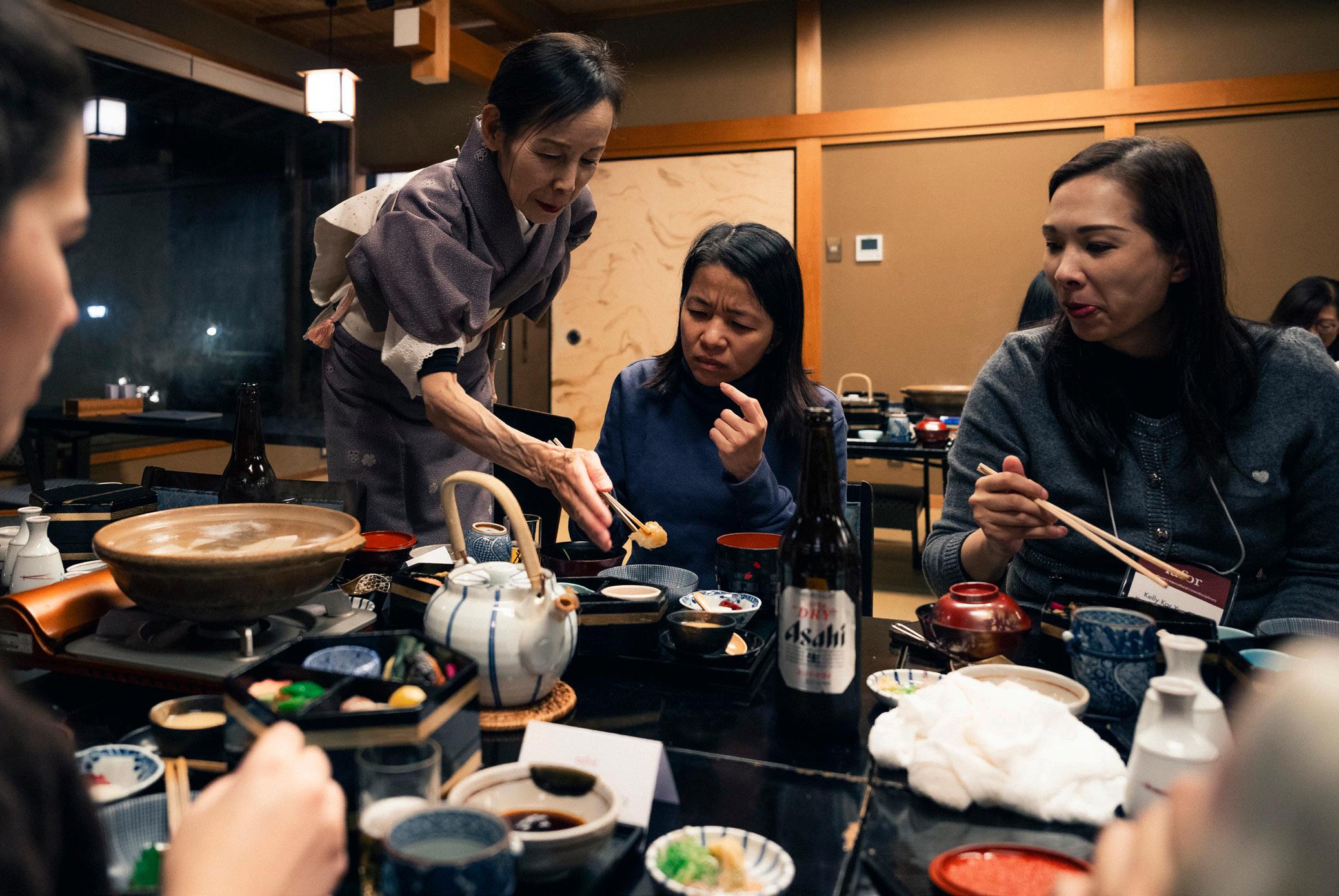
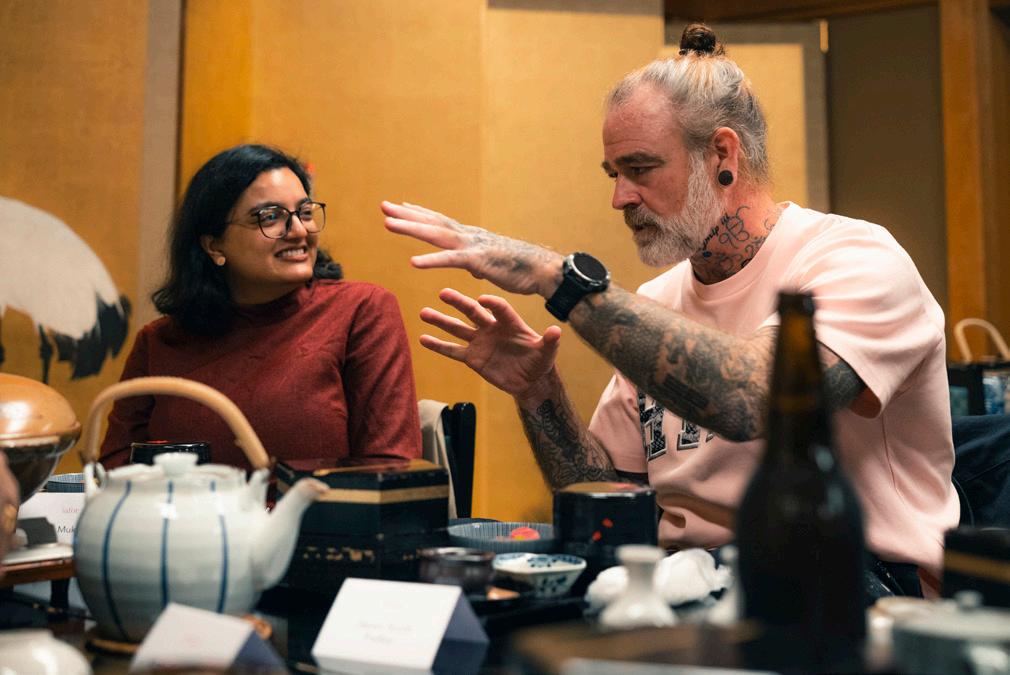
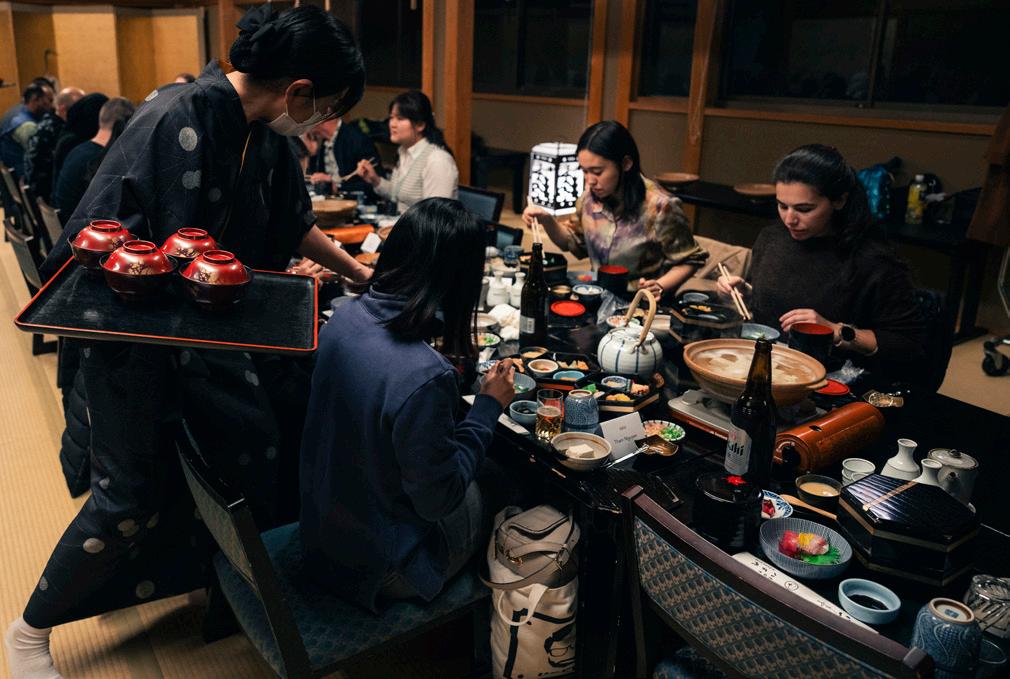
IAFOR returned to Yachiyo Nanzenji for the Conference Dinner in Kyoto. The venue is a traditional Japanese-style ryokan or inn located near the Zen Buddhist Nanzenji Temple, its traditional Japanese-style interior and hospitality in its most genuine form provided the perfect place and feeling of Kyoto. The Conference Dinner brought keynote speakers, presenters, and delegates together to connect over a course meal of traditional Japanese dishes overlooking the Japanese garden situated outside the dining hall, which featured the vibrant red leaves of Japan’s autumn season.
Nanzenji Temple is particularly famous for yudōfu, or boiled tofu, which has been a staple item for centuries in the vegetarian diet of the temple’s monks. Established in 1291, the temple grounds have been reconstructed over centuries, but its tofu tradition has remained in-tact. Yachiyo Nanzenji carries on this tradition today, preparing yudōfu as part of its course offerings in the traditional way. Through the Conference Dinner, delegates old and new were able to relax, unwind, and connect after the plenaries together over local, deep-rooted cultural traditions of Kyoto.
Key Statistics
C on feren ce Su rvey R es u lts
Date o f Cr eatio n: Dec emb er 2 3 , 2 0 2 5
Yo ur feed b ack p lays a vit al ro le in s hap ing t he fut ure o f IAFO R co nferences . Guid ed b y t he Jap anes e p rincip le o f 'k aiz en ' a co m m it m ent t o co nt inuo us , increm ent al im
P re -C onfe re nce C ommuni ca t i on & S uppor t Ra t i ng C onfe re nce Expe ri e nce Ra t i ng D e l e g a t e s' M ot i va t i on for A t t e ndi ng A ca de mi c Q ua l i t y Ra t i ng Re comme nda t i on
60% 80%
C onfe re nce S a t i sfa ct i on of delega tes a re sa tisif ed or con ten t w ith th e ev en t
“One o f the stro nge st aspe c ts o f the c o nf e re nc e w as its ability to bring so me o f the ifne st minds unde r o ne ro o f , c re ating a v ibrant spac e f o r e xc hange o f ide as, pe rspe c tiv e s, and re se arc h inno v atio ns. ”
bas
The post-conference survey sent to KAMC/MediAsia2025 attendees included the questions below
Before the conference (Q1-Q5): Evaluating submission, registration, and communication processes
Q1 Please rate your experience with the submission and review system.
Q2 Please rate the quality of the information provided on the website.
Q3 Please rate the quality of the information provided in the emails you received.
Q4 Please rate the registration process.
Q5 How would you rate the overall pre-conference support you received?
Q6 Please rate the quality of the plenary sessions and featured presentations.
Q7 Please rate the quality of the conference parallel presentations.
Q8 Please rate the overall content of the conference (academic quality, relevance, diversity).
Conference Experience (Q9-Q13): Measuring hospitality, networking opportunities, and overall satisfaction
Q9 Please rate the conference hospitality and ambience.
Q10 Please rate the opportunities to connect with fellow participants during the conference.
Q11 Please rate your overall networking experience at the conference.
Q12 Please rate your overall conference experience.
Q13 Considering your complete experience at our conference, how likely would you be to recommend us to a friend or a colleague?
We have received 106 responses out of 312 delegates. Below is an overview of the results.
Overall Score by Attendee Types
(n=81)
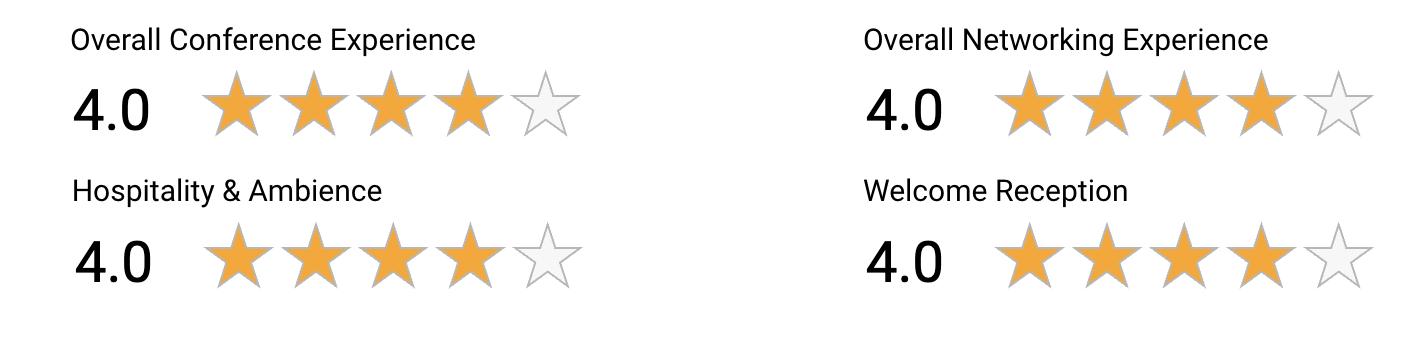
Delegates attending the KAMC/MediAsia2025 found the overall pre-conference support helpful. They have received useful information from IAFOR prior to joining the conference, rating information provided on the website at 4.38 out of 5. The submission system was found to be easy to use by 83.95 percent of the respondents. Our email communication was timely and clear, with an overall score of 87.90 percent. The registration system was straightforward and easy, with over 86.42 percent of the respondents rating it at 4.37 out of 5.
The conference performs well in terms of academic content delivery, with an overall score of 82.96 percent. The plenary sessions and featured presentations were found to be engaging, with an overall 80.49 percent satisfaction. As for delegates’ presentation, 95.06 percent of the respondents found parallel presentations to be well-prepared and informative.
IAFOR is a platform for international, intercultural, and interdisciplinary collaborations. Our delegates found the opportunities to connect with fellow participants during the conference to be moderate interaction by 92.59 percent of the respondents. Delegates attending the conference onsite found the networking experience to be somewhat effective, but could be improved with over 75.74 percent satisfaction. Our conference’s hospitality and ambience are acceptable, with a 3.94 out of 5 rating from the respondents.
In conclusion, our respondents rate the overall conference experience at 3.95 out of 5, a 79.01 percent satisfaction. Overall, the delegates are satisfied with the conference, and 70.37 percent of the respondents might recommend IAFOR conferences to their peers. We look forward to welcoming you at our upcoming conferences. Please visit www.iafor.com/conferences for more details.
Individual Responses
Sorted by Total Score
5
5
4
5
5
4
4
5
4
2
Conference Photographs
Appendix I. Affiliations by Region
Africa
Ivory Coast
Université Félix Houphouët-Boigny
Morocco
Mohammed First University
Nigeria
Adeleke University
South Africa
Cape Peninsula University of Technology
Nelson Mandela University
North-West University
University of Fort Hare
University of South Africa
University of the Free State
University of Zululand
North America
Canada
Queen’s University
Saint Mary’s University
Toronto Metropolitan University
United States
Arizona State University
Auburn University
East Carolina University
Fielding Graduate University
Marquette University
Southern Methodist University
University of Alaska Anchorage
University of Arizona
University of Hawaii
University of Oklahoma
University of Washington Tacoma
Valdosta State University
Oceania
Australia
Deakin University
Melbourne Polytechnic
RMIT University
The University of Melbourne
New Zealand
Unitec Institute of Technology
University of Auckland
Asia
Armenia
American University of Armenia
Brunei
Universiti Teknologi Brunei
China
Fudan University
North China Electric Power University
Hong Kong
City University of Hong Kong
Hong Kong Baptist University
Hong Kong Metropolitan University
Lingnan University
The Chinese University of Hong Kong
The Education University of Hong Kong
The Hang Seng University of Hong Kong
The Hong Kong Polytechnic University
The University of Hong Kong
India
Amity University
Bangalore University
Christ University
Dalai Lama Institute for Higher Education
Guru Gobind Singh Indraprastha University
Indian Institute of Information Technology Manipur
Indian Institute of Information Technology Senapati
Indian Institute of Management Indore
Indian Institute of Technology Guwahati
Manipal Academy of Higher Education
Mudra Institute of Communications, Ahmedabad
Panjab University
Somaiya Vidyavihar University
Symbiosis International University
Tezpur University
The Maharaja Sayajirao University of Baroda
The Assam Royal Global University
University of Delhi
University of Mumbai
University of North Bengal
Indonesia
Hasanuddin University
State University of Medan
Universitas Brawijaya
Universitas Dian Nuswantoro
Universitas Gadjah Mada
Universitas Indonesia
Universitas Muhammadiyah Surakarta
Universitas Terbuka
Japan
Chukyo University
Chuo University
Hokkaido University of Education
J. F. Oberlin University
Keio University
Komazawa University
Kyoto University
Kyoto University of Advanced Science
Kyoto University of the Arts
Meijo University
Notre Dame Seishin University
Okinawa Institute of Science and Technology
Rikkyo University
Ritsumeikan University
Ritsumeikan Asia Pacific University
Sagami Women’s University
Tokyo Keizai University
Tokyo University of Science
Tokushima University
Tohoku University
Tsuda University
University of Aizu
University of Tsukuba
Wakayama University
Waseda University
Yamanashi Gakuin University
Malaysia
Sunway College
Universiti Malaysia Sarawak
Universiti Pendidikan Sultan Idris
University of Nottingham Malaysia
Philippines
Angeles University Foundation
Aurora State College of Technology
Benguet State University
Cebu Institute of Technology University
Central Philippine University
De La Salle University
De La Salle–College of Saint Benilde
Mapúa Malayan Colleges Laguna
National University
Polytechnic University of the Philippines
University of Asia and the Pacific University of Makati
University of the Philippines
Qatar
Doha Institute for Graduate Studies
Saudi Arabia
King Faisal University
Taif University
Singapore
Nanyang Technological University
Singapore Institute of Management Global
Education
Singapore Management University
Singapore University of Social Sciences
South Korea
Hanyang University
Hongik University
Incheon National University
Korea University
Seoul National University
Taiwan
Cheng Shiu University
Chinese Culture University
Fu Jen Catholic University
Ming Chuan University
National Cheng Kung University
National Chengchi University
National Chi Nan University
National Chiayi University
National Kaohsiung University of Science and Technology
National Pingtung University of Science and Technology
National Sun Yat-sen University
National Taipei University of Technology
National Tainan University
National Tsing Hua University
Shih Hsin University
Shu-Te University
Southern Taiwan University of Science and Technology