2. The Future of Education: Lessons from Japan and East Asia
2.1. Japan’s Education Reform in an AI-Driven Era
2.2. Internationalisation of Higher Education in East Asia Amidst Geopolitical Tensions
3. What Do We Teach?
3.1. AI and the Skills Turn
3.2. Teaching Leadership Through Artificial Intelligence
3.3. The Future of Education and Skills: Insights from the Forum
4. The Teacher of the Future
4.1. The Hybrid Teacher of the Future
4.2. With a Little Help from AI
5. Conclusion 6. The IAFOR Undergraduate Research Symposium (IURS) 7. Networking & Cultural Programme
Executive Summary
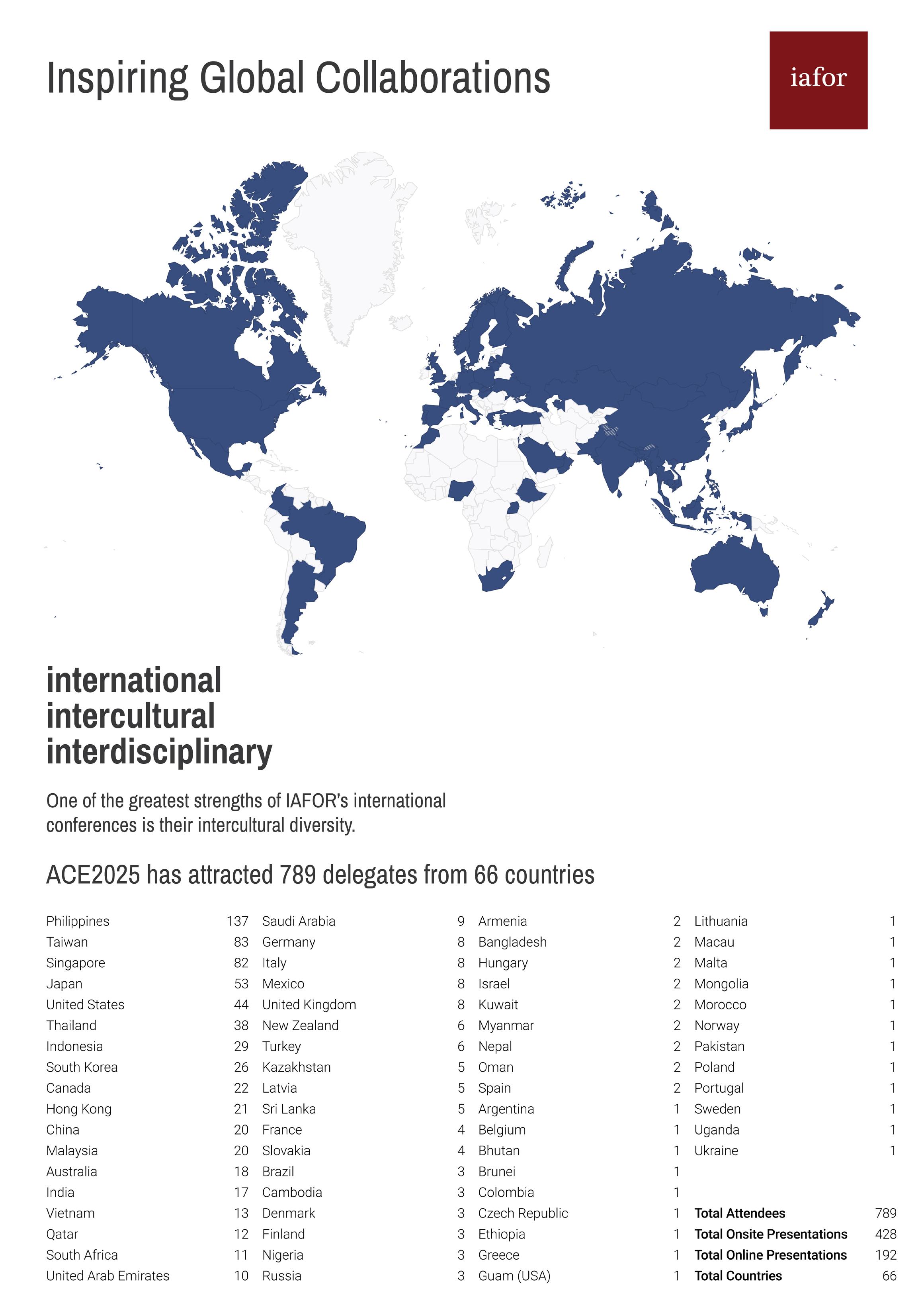
The 17th Asian Conference on Education (ACE2025) addressed the profound and lasting impact of AI and geopolitical fragmentation on education, positioning the conference as a platform for rethinking the purpose of education, the skills of the future, and the evolving role of teachers and institutions in an AI-driven and multipolar world.
In Section 2.1, the keynote presentation ‘Japan’s Education Reform and the Future of Global Education in the AI Era’ by Former State Minister of Education, Culture, Sports, Science and Technology, Professor Kan Hiroshi Suzuki of The University of Tokyo, Japan, examined Japan’s recent education reform and its shift toward Sustainable Wellbeing Goals (SWGs), highlighting selfdirected, inquiry-based learning and non-cognitive skills as essential for humanAI collaboration.
In Section 2.2, the panel ‘Internationalisation of Higher Education in East Asia: Challenges and Opportunities in Comparative Perspective’, moderated by IAFOR Vice-President, Professor Grant Black of Chuo University, Japan, and featuring Professor Futao Huang of Hiroshima University, Japan; Professor Jing Liu of Tohoku University, Japan; and Professor Rodger Williamson of The University of Kitakyushu, Japan, explored how geopolitical tensions are reshaping internationalisation, notably arguing that East Asian universities are not retreating but strategically recalibrating partnerships through knowledge diplomacy, regional collaboration, and socially responsible engagement.
In Section 3.1, the panel ‘AI and Skills Turn: Driver or Disruptor of Skills-Based Education?’ moderated by Dr Justin Sanders of Woven by Toyota, Japan, with Alfonso Asensio of Google, Dr Matthias Frey of Sony SCL, Japan, and Dr Sean McMinn of The Hong Kong University of Science and Technology, Hong Kong, discussed the acceleration of competency-based education, emphasising that durable human capacities such as discernment, metacognition, and critical verification of AI outputs will define future graduate employability more than static disciplinary knowledge.
In Section 3.2, the online panel ‘Teaching Leadership Through Artificial Intelligence’, moderated by Dr Murielle El Hajj Nahas of Lusail University, Qatar, with Dr Najwa Saba ‘Ayon Fares of Rafik Hariri University, Lebanon; Professor Martin Parsons of Hannan University, Japan; and Dr Mikel Garant of the City University of Macau, Macau, demonstrated through case studies how AI can foster leadership, autonomy, and intercultural competence, particularly by using AI as a collaborative research assistant, translation aid, and scaffold in virtual exchange projects that increase student confidence and agency.
In Section 3.3, the Forum session ‘Global Citizenship: The Future of Education and Skills in an AI-Driven World’, moderated onsite by Dr Melina Neophytou of IAFOR, Japan with Dr Sean McMinn as respondent, and online by Apipol Sae-Tung of IAFOR, Japan with Dr Eric Hawkinson of Kyoto University of Foreign
Studies, Japan as respondent, revealed delegate perspectives on AI as both productivity tool and complex partner, notably stressing that human judgement, ethical reasoning, experiential learning, and process-based assessment must be preserved to prevent cognitive offloading and overdependence on AI.
In Section 4.1, the online panel ‘Human-AI Partnership in Teacher Education: Rethinking the Hybrid Teacher of the Future’, moderated by Susie Kung of Manukau Institute of Technology, New Zealand, and featuring Nabila Nindya Alifia Putri of Universitas Islam Internasional Indonesia, Indonesia; Dr Danny Liu of The University of Sydney, Australia; and Dr Jason Lodge of The University of Queensland, Australia, examined the evolving identity of educators in AI-rich environments, notably arguing that the teacher of the future will not be replaced but redefined through human-AI synergy, with a renewed emphasis on social learning, curriculum redesign, and reclaiming meaningful human interaction in classrooms.
In Section 4.2, the keynote ‘Educational Leadership in the Age of AI Agents’ by Dr Eric Hawkinson of Kyoto University of Foreign Studies, Japan, showcased creative pedagogical integration of AI with VR and AR technologies, such as virtual hometown projects that build empathy and global engagement, while cautioning against the ‘AI loop trap’, data privacy risks, and the unintended automation of inquiry and creativity in education.
In Section 6, the IAFOR Undergraduate Research Symposium (IURS) 2025, led by Professor Grant Black and with contributions from IAFOR Vice-President, Professor Dexter Da Silva of Keisen University, Japan; Professor Tzu-Bin Lin of the National Taiwan Normal University, Taiwan; and Dr James W. McNally of the University of Michigan & NACDA Program on Aging, United States provided mentorship-driven sessions, poster sessions, and career guidance that elevated undergraduate research beyond classroom output, notably fostering international collaboration, resilience, and professional skill development among 85 undergraduate students from 17 countries.
In Section 7, the Networking and Cultural Programme, including the Welcome Reception at Public Red Akasaka, the Conference Dinner at Shunju Tameikesanno, and a shamisen cultural performance by Kuniaki Matsunaga (KUNIAKI), strengthened intercultural dialogue and professional networking, illustrating the conference’s commitment to holistic academic exchange that integrates scholarly discussion with cultural engagement and communitybuilding.
Note: This executive summary was generated with the assistance of AI based on the full manuscript and has been reviewed, revised, and approved by the authors.
1. Introduction
Current technological and geopolitical developments are causing profound changes to education. From specific areas such as curricula and pedagogy to broader concepts like the purpose of education and teacher identity, AI and geopolitical tensions are shifting what, how, and why we teach and learn. With stricter border controls and less international movement in Western-dominated educational institutions, internationalisation in other research and education hubs around the world is paradoxically expanding and fighting against physical restrictions. As labour markets also shift to adapt to these changes, education has, up to now, reactively responded with a shift from knowledge-based to competency-based learning. In an AI-driven and politically fragmented era, human values, leadership skills, and a hybrid collaboration between humans and machines are becoming increasingly important.
At the same time, as we are slowly approaching the 2030 deadline set for the Sustainable Development Goals (SDGs), we are now prompted to think about what comes after 2030. What have we learned thus far from the efforts we have put into being sustainable, and in which areas can we improve in order to make life not only sustainable, but livable? With international organisations such as the United Nations and the Organisation for Economic Co-operation and Development (OECD) increasingly focusing on well-being, we are asked to tailor education to support the proposed Sustainable Well-being Goals (SWDs) beyond 2030.
In light of technological and geopolitical transformations, what will the skills of the future be? What do educators teach to ensure that graduates leave the schooling system well-equipped to approach the labour market and their social and civic responsibilities successfully? What will the teacher of the future look like? What role will AI play, and what will the role of education be? What will the university of the future look like within the local community, but also within global partnerships? These are the grand and ambitious questions that The 17th Asian Conference on Education (ACE2025) attempted to answer. With specific insights from Japan and East Asia, keynote speakers and panellists offered examples of how the region has been trying to deal with these challenges in disrupting times, which undoubtedly have broader relevance to the rest of the world.
2. The Future of Education: Lessons from Japan and East Asia
2.1. Japan’s Education Reform in an AI-Driven Era
As 2030 is fast approaching, it is time to re-evaluate the extent to which the Sustainable Development Goals (SDGs) have been achieved, and ask a very important question: what comes next? In an effort to address this looming question, Japan has recently initiated a major educational reform, shifting focus towards the so-called ‘Sustainable Well-being Goals’, or SWGs, as a concept beyond SDGs. In his keynote presentation titled ‘Japan’s Education Reform and Future of Global Education in the AI Era’, Former State Minister of Education, Culture, Sports, Science and Technology (MEXT) Professor Kan Hiroshi Suzuki of The University of Tokyo, Japan, traced the changes in policy and practice following Japan’s recent education reform, and the implications of AI proliferation for education.
According to Professor Suzuki, international organisations are increasingly moving away from considering GDP as a measure of social well-being. Instead, the OECD has introduced the ‘Better Life’ index, and the United Nations have started publishing an annual ‘World Happiness Report’. ‘The underlying philosophy driving the concept of Sustainable Wellbeing Goals within education is a shift from passive learning to self-directed learning and agency, transitioning from learning that competes on memorisation, speed, and accuracy to learning driven by self-driven motivation through inquiry-based learning’, Professor Suzuki explained. Following this redirection of attention, Japan has, for the first time in 40 years, reformed its national curriculum in 2020 as well as its university entrance examinations in 2021.
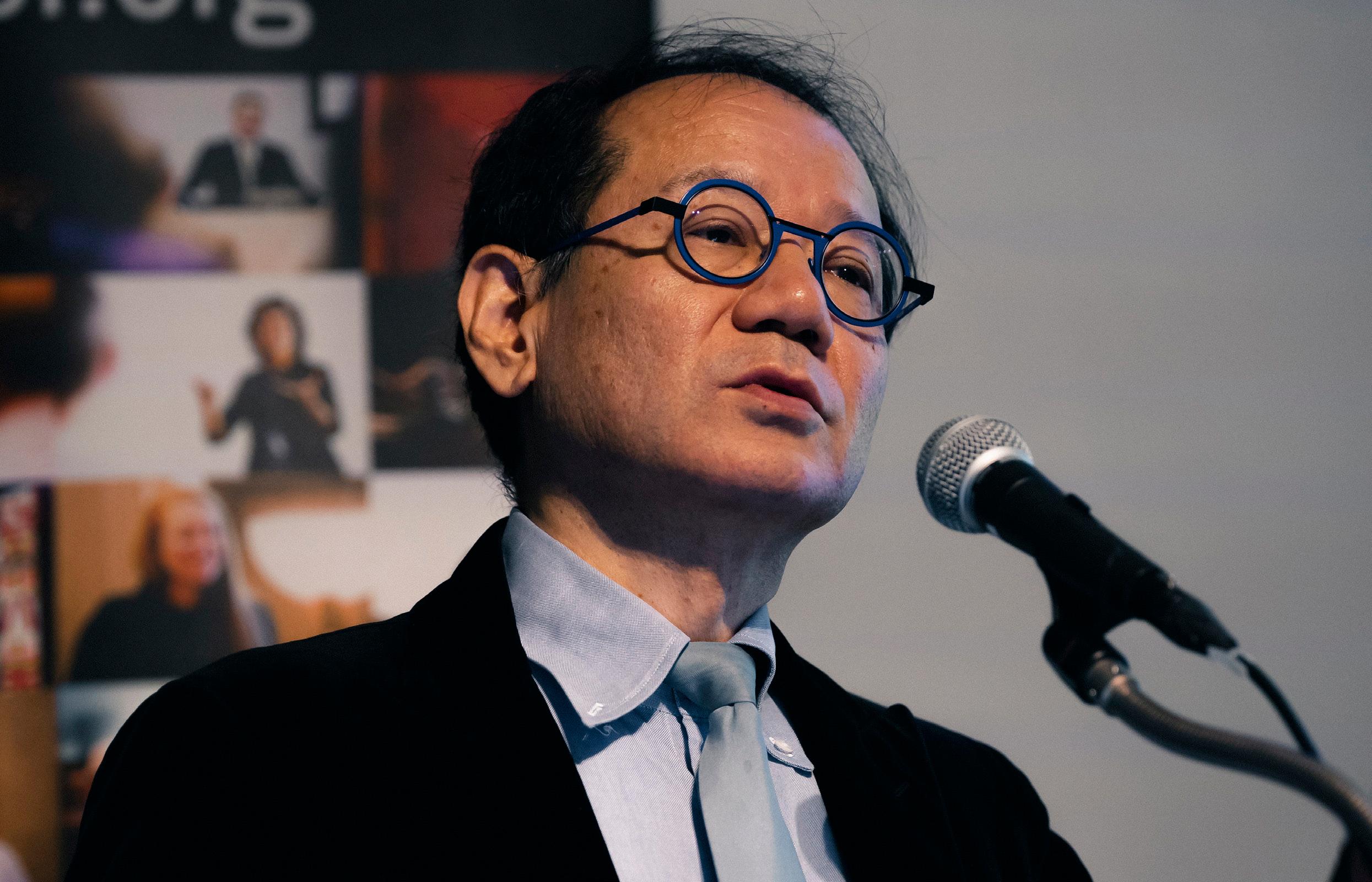
Former State Minister of Education, Culture, Sports, Science and Technology (MEXT) Professor Kan Hiroshi Suzuki
Watch on YouTube
As for the national curriculum, Japan already added foreign language learning, cross-cultural communication, and problem-solving initiatives at the primary level. At the senior high school level, new subjects such as ‘public philosophy and public policy’ were introduced to cultivate the ability to handle conflicts and act responsibly. History was also redesigned as ‘comprehensive history studies’, situating Japanese history within a global context to develop historical thinking rather than isolated factual learning. Senior high school entrance examinations have also changed, specifically the assessment criteria, to better assess students’ thinking, judgment, and expression skills, rather than memorisation, knowledge, and pure skill.
According to Professor Suzuki, this reform came after some serious consideration about where Japan ranks globally in terms of well-being. ‘According to the OECD PISA results’, he explained, ‘Japanese education is generally considered successful. But the low level of student well-being and the sharp increase in school refusal cases represent a serious situation’. Regarding science literacy, Japan ranked first among OECD countries. However, children’s well-being in Japan ranked 37th out of 38 countries, and last in terms of students’ confidence in self-directed learning. The same is true for family support and a sense of belonging, with Japan being ranked the worst among 80 countries. The proportion of people who do not engage in selfimprovement or self-development after entering the workforce is also very high.
These issues become even more pertinent as we enter an AI-dominated era. ‘We, as a planet and as human beings, are facing the limits of civilisation, mass production, mass energy consumption, and mass waste’, Professor Suzuki exclaimed. ‘We are at the end of the “industrial society”-style of education. Now, AI and robots are taking over the jobs of “industrial society”-type people’. This is why education needs to make an important distinction between educational reform for AI and educational reform by AI. In terms of how education can prepare students for an AI-driven society, Professor Suzuki explained that identifying, defining, and solving problems concerning the Earth, society, humanity, regional revitalisation, food issues, energy consumption, and the environment will be increasingly important. Equally important, according to him, will be non-cognitive skills, such as collaboration, understanding others, persuasion, negotiation, and service orientation, as well as abstract disciplines such as art, history, archaeology, philosophy, or theology for cultivating innovative thinking. ‘So please check and understand again what a human is, and what AI is’, he urged the audience, noting that a hybrid collaboration is very important.
In terms of education reform by AI, Professor Suzuki mentioned ways in which we can incorporate AI into education well. According to him, AI should be regarded as a teaching assistant rather than a teacher replacement, and every student should have access to an assistant like this. Keywords he proposed for this implementation include self-directed, self-motivated, inquiry-based writing, and individual and personalised learning.
Professor Suzuki closed his presentation with an important remark for a future that includes AI: ‘The way to master Generative AI is the ability to question – how to make a good question – not to answer it’. This is in line with what was discussed at The 6th Barcelona Conference on Education (BCE2025), where Professor Carlos Delgado Kloos from the Universidad Carlos III of Madrid, Spain, and Director of the UNESCO Chair on Scalable Digital Education for All, stated that there is no one absolute truth, and that the question matters more than the answer.
Watch the interview on YouTube
2.2. Internationalisation of Higher Education in East Asia Amidst Geopolitical Tensions
Aside from social well-being considerations and the disruption caused by the advent of AI, worldwide increasing geopolitical tensions are compromising efforts for more international educational cooperation. In a panel discussion titled ‘Internationalisation of Higher Education in East Asia: Challenges and Opportunities in Comparative Perspective’ moderated by IAFOR Vice-President Professor Grant Black of Chuo University, Japan, panellists Professor Futao Huang of Hiroshima University, Japan, Professor Jing Liu of Tohoku University, Japan, and Professor Rodger Williamson of The University of Kitakyushu, Japan, outlined concerns in internationalisation efforts among East Asian higher education institutions, primarily around shifting geopolitics, the social responsibility of universities, and cultural differences in multicultural classrooms.
‘Geopolitics has moved to the centre of higher education due to security tensions, nationalism, and ideological rivalry’, said Professor Huang in his opening remark. According to him, ‘East Asia has now become a highly sensitive geopolitical space, and higher education is shifting from open globalism to strategic risk-managed internationalisation’. Internationalisation efforts should now be understood as inseparable from broader geopolitical strategy, and Professor Huang added that in East Asia, such efforts are no longer academically driven, but ‘politically charged, strategically selective, and shaped by global fragmentation or geopolitical limitations’. An obvious example of this is the recent transformation of regional clusters as opposed to dominant global networks. In practical terms, this translates to students from Mainland China increasingly choosing to study abroad in neighbouring countries like Hong Kong, Malaysia, and Singapore, instead of the up-until-now dominant destination of the United States. Professor Huang concluded that ‘East Asia’s internationalisation efforts are evolving not by retreating from the world, but by adjusting its engagement strategically within a changing global order’. He predicted that universities are expected to adopt a security-oriented approach, rulesbased frameworks, and interest-driven partnerships in the near future.
Watch on YouTube
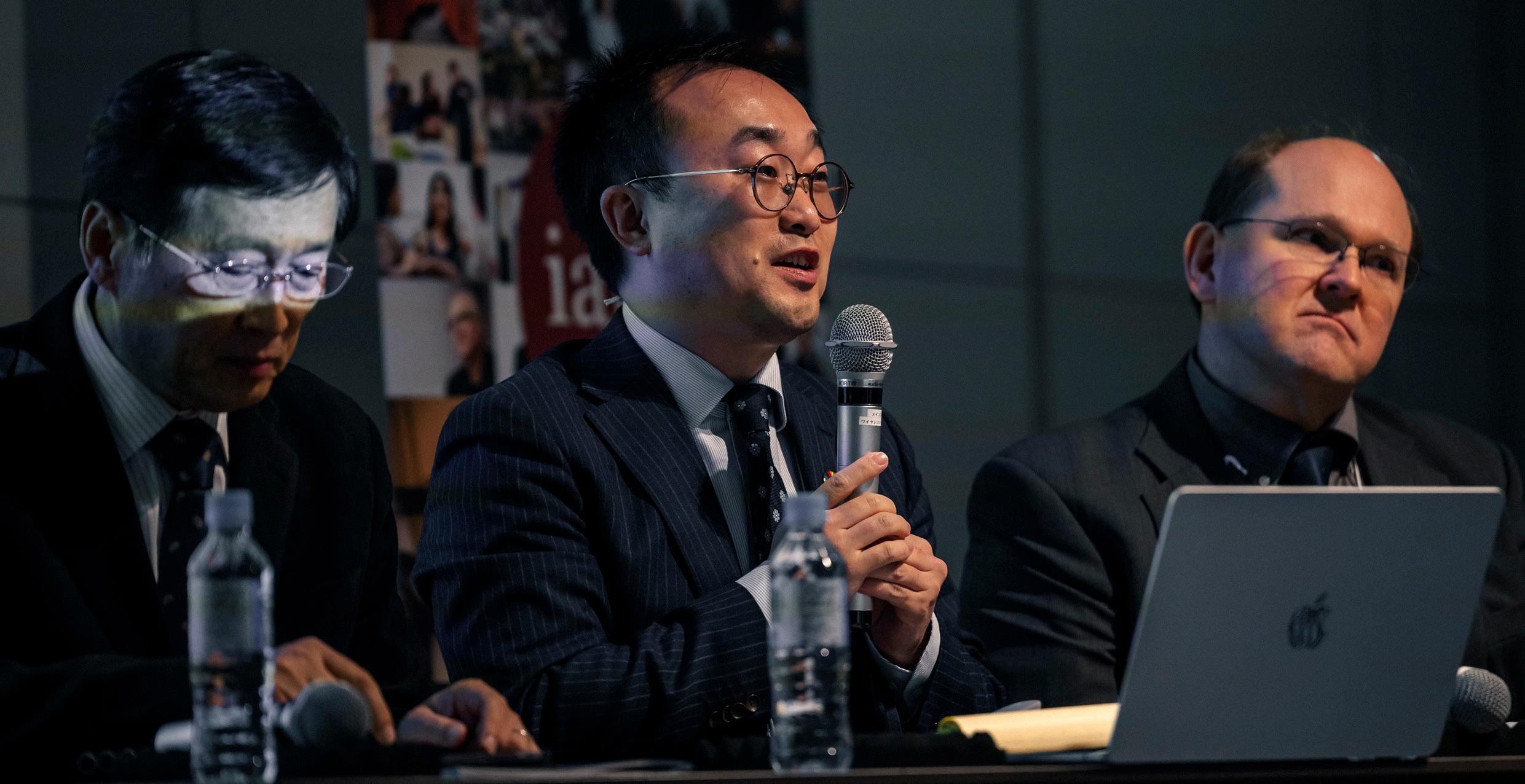
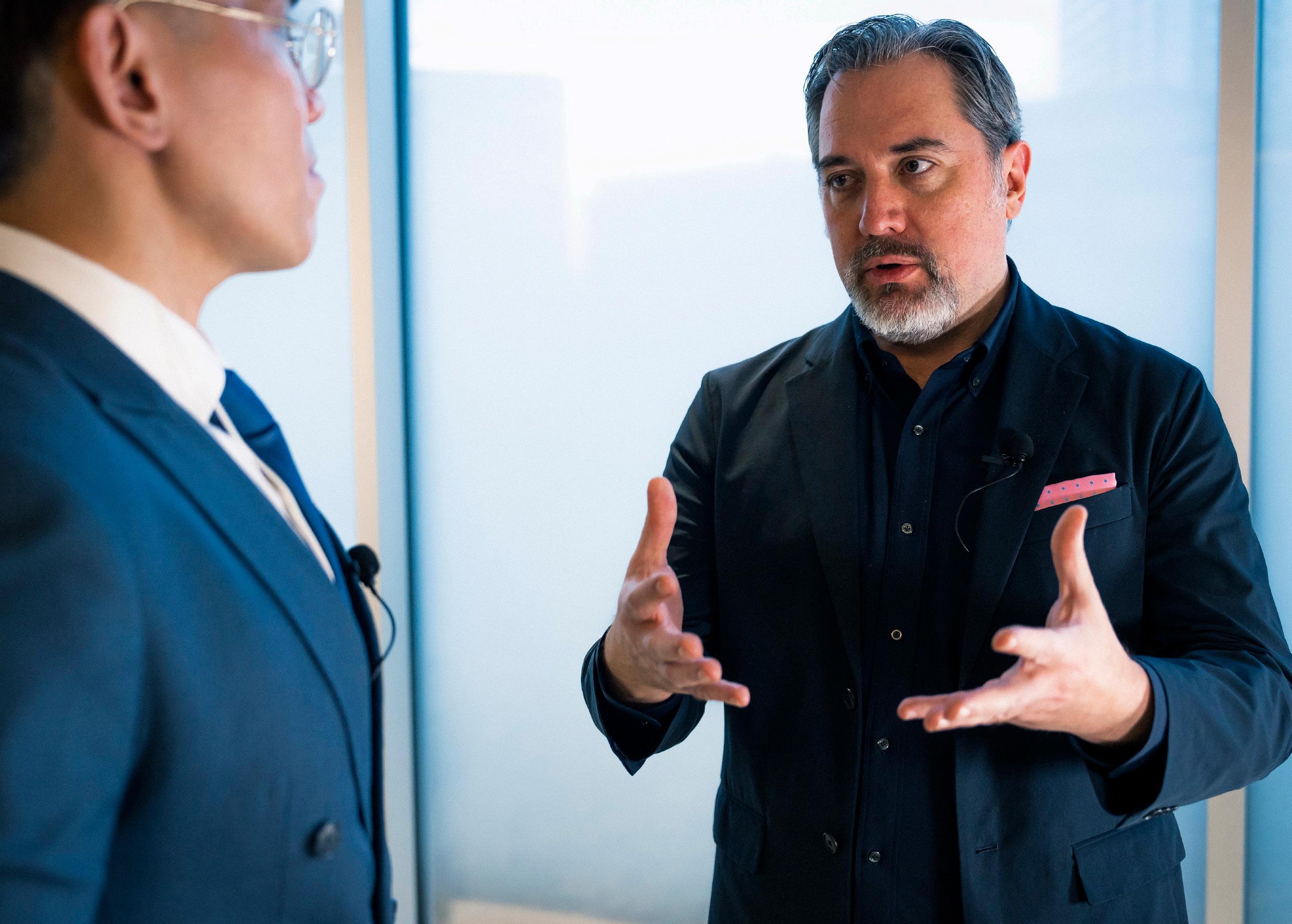
From left to right: Professor Futao Huang (Hiroshima University), Professor Jing Liu (Tohoku University), and Professor Rodger Williamson (The University of Kitakyushu)
In contrast to this tension-oriented geopolitical framing, Dr Liu focused on institutional social responsibility and cooperation as a form of overcoming hostility. While the traditional model of internationalisation in the form of competition, global rankings, and mobility as prestige still exists, he claimed that a new model is now emerging, which looks at internationalisation for societal good. This includes the university’s responsibility towards society, the role and future of sustainable development, community engagement, resilience building, local knowledge integration, and cross-border problem-solving. He invoked the term ‘knowledge diplomacy’ as elaborated by Professor Jane Knight (Springer, 2022) of the Ontario Institute for the Studies of Education, Canada, to focus on the process of building and strengthening relations between and among countries through international higher education research and innovation. ‘It is a time for us to change the brain race to more mutual development through co-learning, co-producing, and co-creation’, he stated. ‘The university must function as a regional SDG hub. Social responsibility can provide the framework for us to consider the global challenges we are facing’, he further explained. He added that trying to connect local issues with international learning, student mobility, and joint research is also a great way to advance collaboration through internationalisation, by focusing on what unites us rather than what divides us. He further advocated for interdisciplinary collaboration, as well as collaboration between researchers and practitioners, praising IAFOR’s mission of forming cross-border regional alliances focused on mutual development.
Professor Williamson doubled down on the importance of human connections for maintaining good programmes and partnerships in higher education. ‘All of these [study abroad] programmes at our university have been initiated by faculty who have been overseas for research, where they met faculty, and then came back to Japan’, he explained. He took on a more practical approach within the panel by addressing challenges Japanese universities and students face when engaging in internationalisation efforts. He spoke on the differences between high and low context cultures: a high-context culture relies on implicit communication, such as nonverbal cues, and shared understanding rather than explicit words to convey meaning. He equated low-context cultures to a game of ping-pong, while highcontext cultures like Japan are more like a game of golf, where one has to wait for their turn to speak up. As a result, Japanese students often have difficulty speaking up.‘That’s actually one of the things that studying abroad helps with, because when you leave the country, you have to speak up’, he explained.
Credit transfer is another challenge Japanese higher education is facing. Hinging on institutional rigidity, the reluctance to transfer credits from courses completed abroad makes study abroad programmes unattractive and international collaboration difficult, according to Professor Williamson.
Professor Black followed up with a question about the development of meaningful partnerships through Memoranda of Understanding (MOUs) between higher education institutions, asking: ‘How do we move from just a basic agreement to getting to the point of collaboration and real-world exchanges, given the concerns that Professor Huang mentioned about security?’. Dr Liu answered that there is an emerging concept around knowledge security. ‘This really depends on how we understand knowledge’, he explained. ‘If we take it as a public good, then we need more transparency, as Professor Huang mentioned; transparency in collaboration, cocreation, and co-production. But if we take it as a private good, then it will probably be very difficult for universities around the world to collaborate and to create more knowledge and technologies for sustainability’.
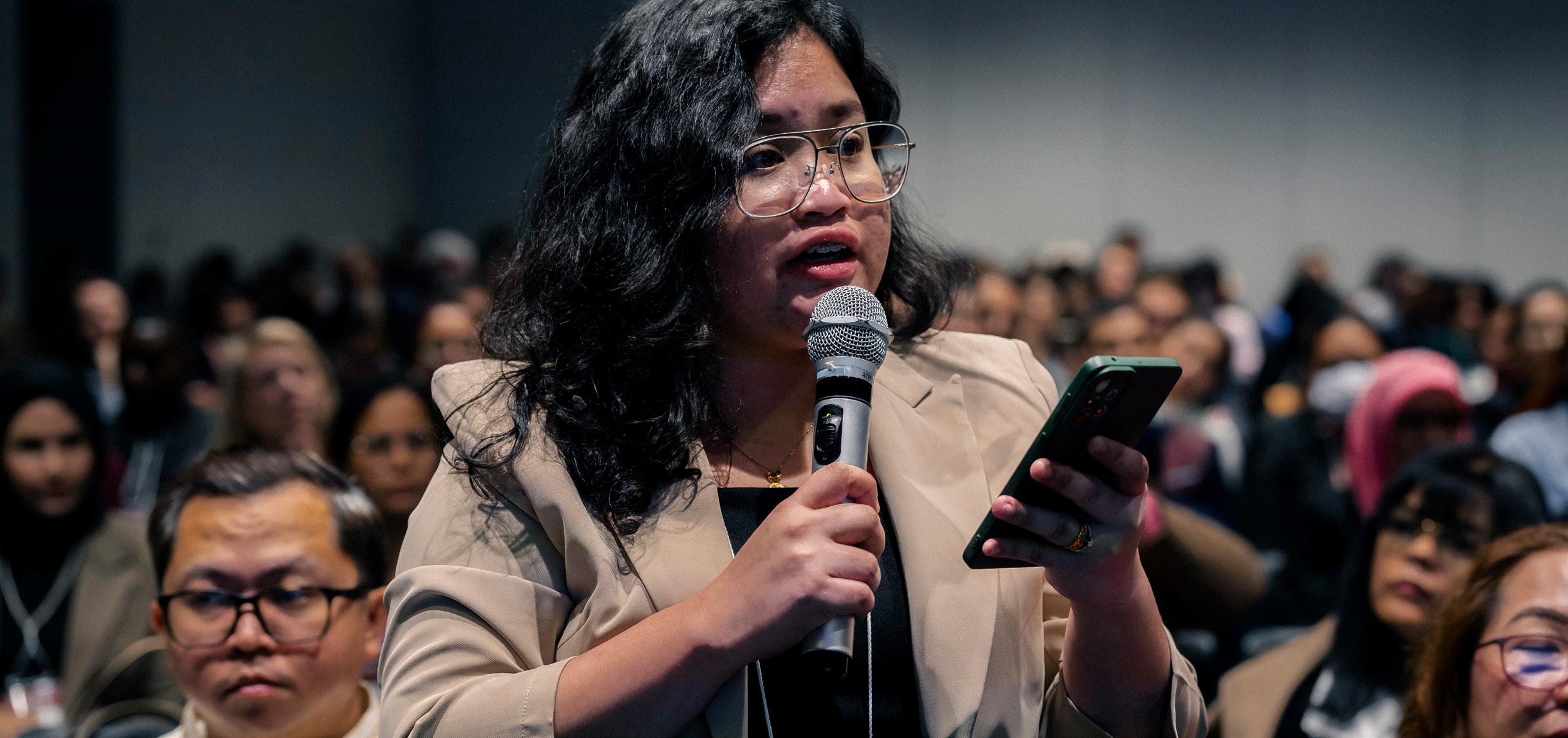
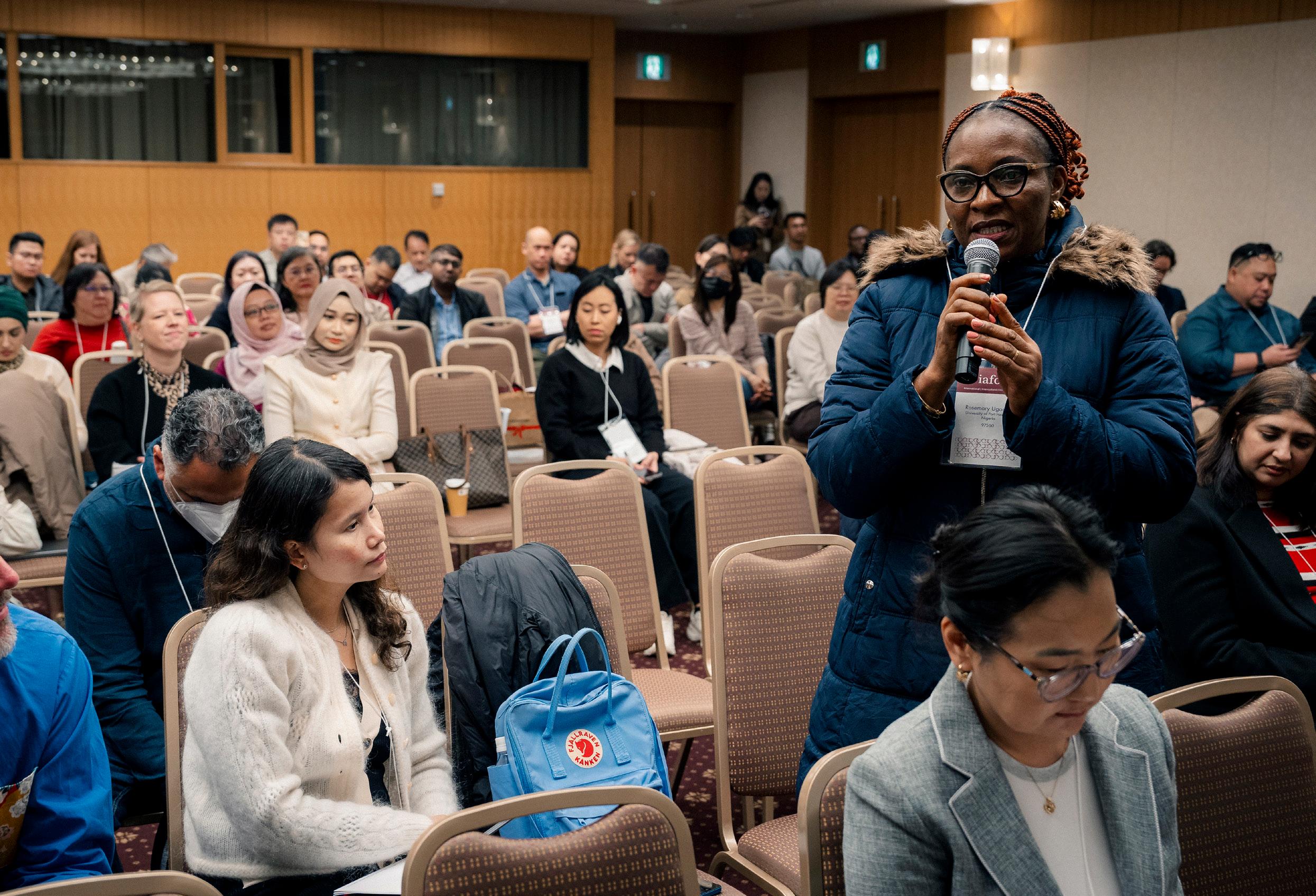
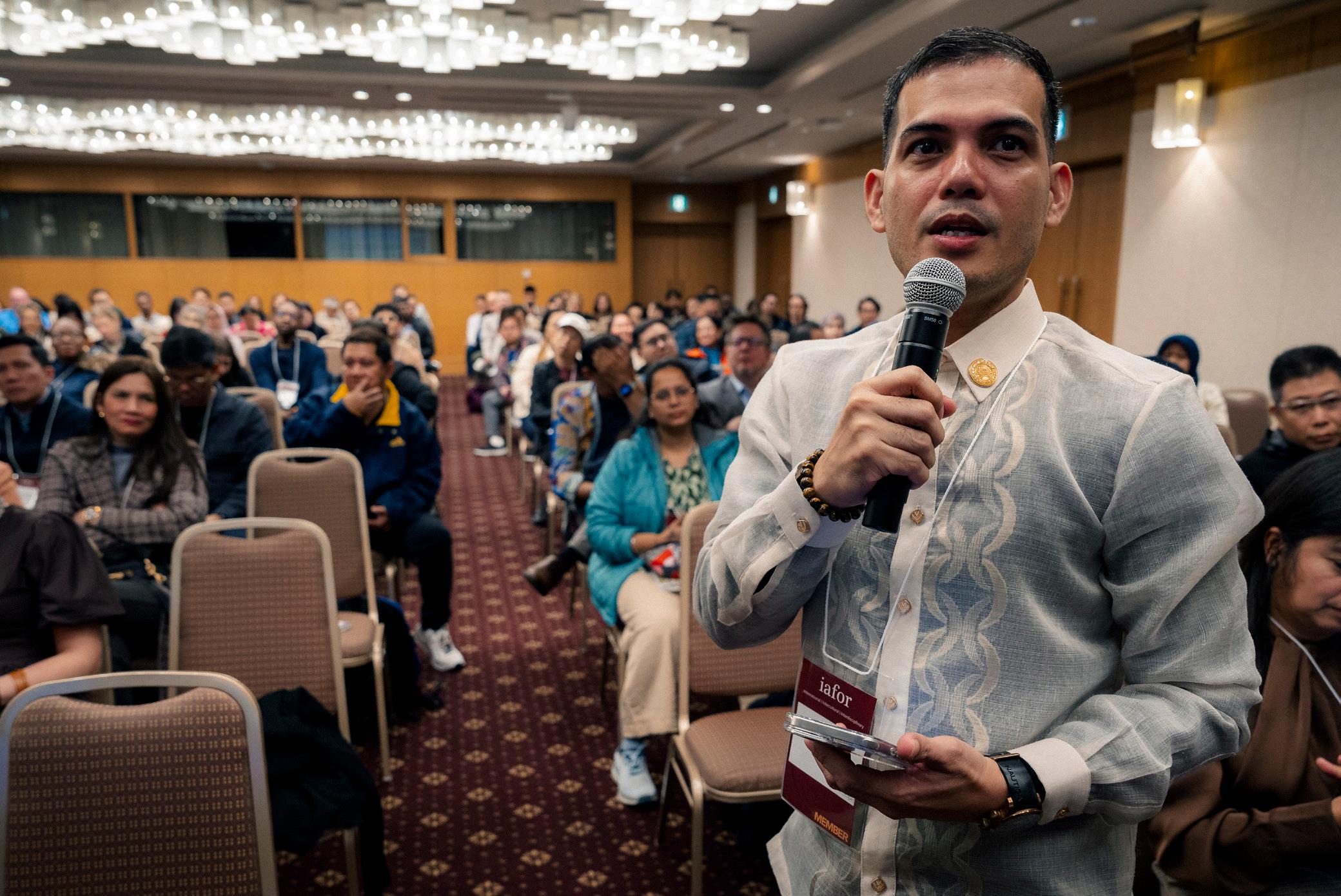
From the panel’s discussion, a clear message arose: education cannot be understood without looking at the geopolitical landscape, and since the geopolitical landscape is rapidly changing at the moment, education is inevitably changing as well. ‘What can universities and systems do to ease this geopolitical tension?’, an audience member asked during the panel’s Q&A session. ‘In East Asia, we don’t have a single unified architecture of higher education’, Professor Huang explained. He emphasised dialogue, common reference points, and shared qualification descriptions as mechanisms for initiating collaboration. ‘I think this soft mechanism may gradually reduce tensions among countries in the region’, he concluded. Dr Liu put his faith in the younger generations, claiming that they are the ones who hold the key to longterm peacebuilding through mutual understanding. ‘I think from a perspective of individual teaching, we need to enhance more communication and cultural exchange through the young generations in this region’, he stated.
On the other hand, Dr Liu cautioned against competitive structures like university rankings, which may no longer be suitable as geopolitical structures are changing. ‘I think this is a good time for us to reconsider whether it is necessary to really join the ranking system or not’, he said. According to him, many universities in China are abandoning the international higher education rankings (e.g., QS rankings) as a form of decolonisation of higher education and internationalisation. He left the audience with a provocation, stating that, ‘this is a good time for us to rethink the so-called standardised globalisation, as these global geopolitical maps are changing’.
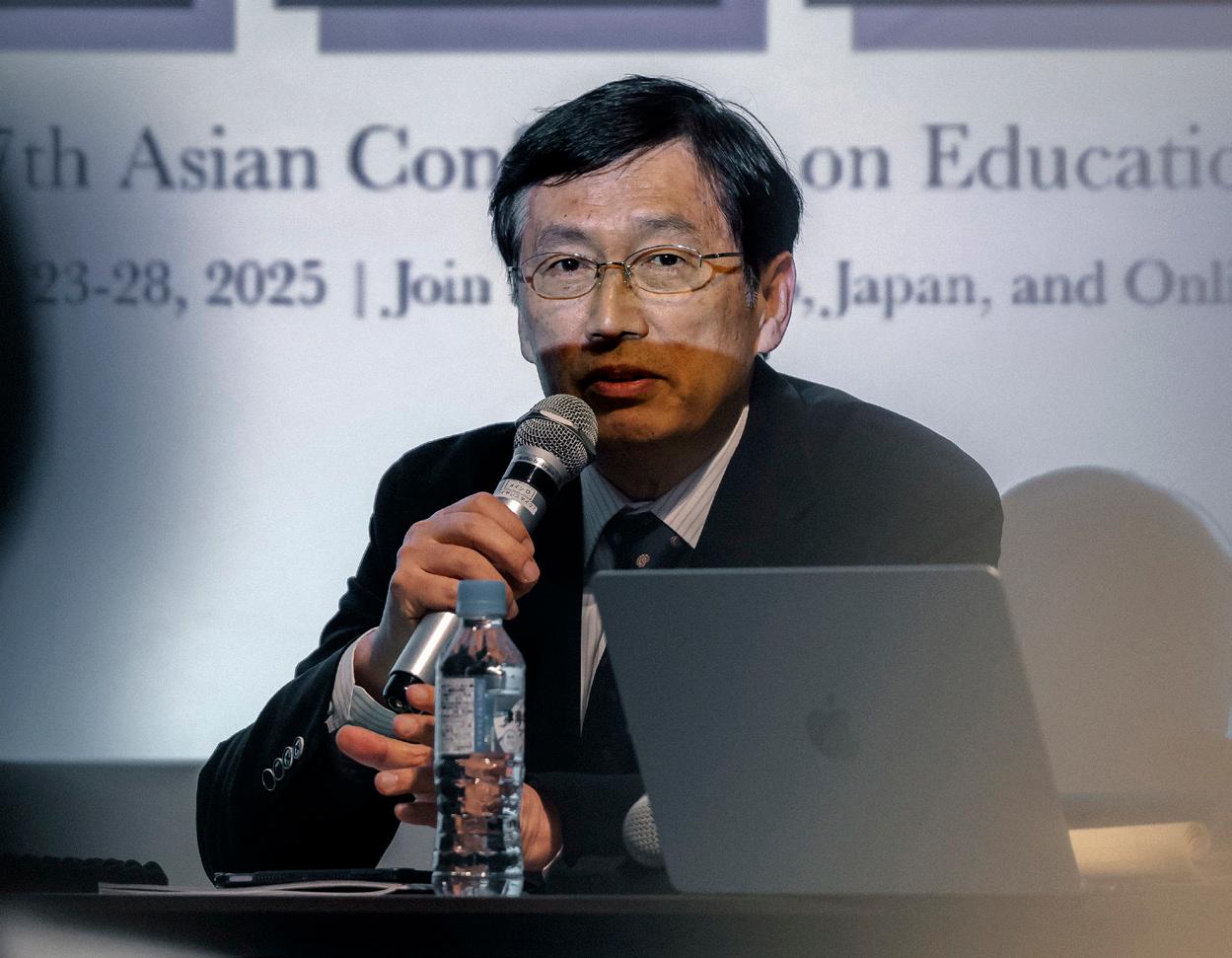
Left: Professor Futao Huang (Hiroshima University)
Right: Professor Rodger Williamson (The University of Kitakyushu)
3. What Do We
Teach?
AI and geopolitics are undoubtedly causing major disruption in education and the future of labour. The question is whether we change reactively or proactively: do we allow external changes to shape us, or do we adapt to them deliberately? If we were to have a strategic plan with which we prepare citizens and leaders of tomorrow for an AI-driven and contentious world, what would we teach? Two plenary panels and The Forum discussion at ACE2025 explored these important questions, focusing on the skills of the future shaped both by and with the help of AI.
3.1. AI and the Skills Turn
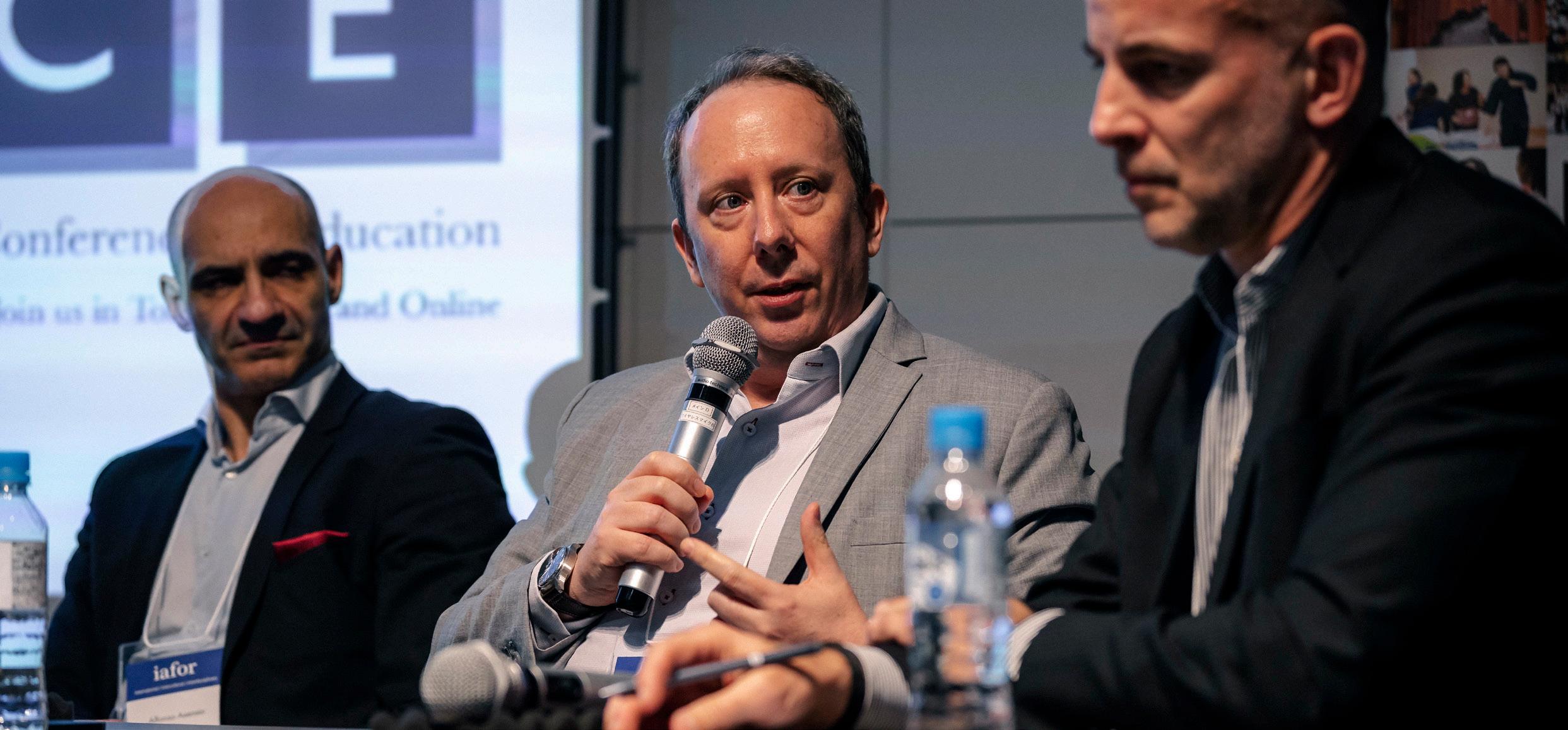
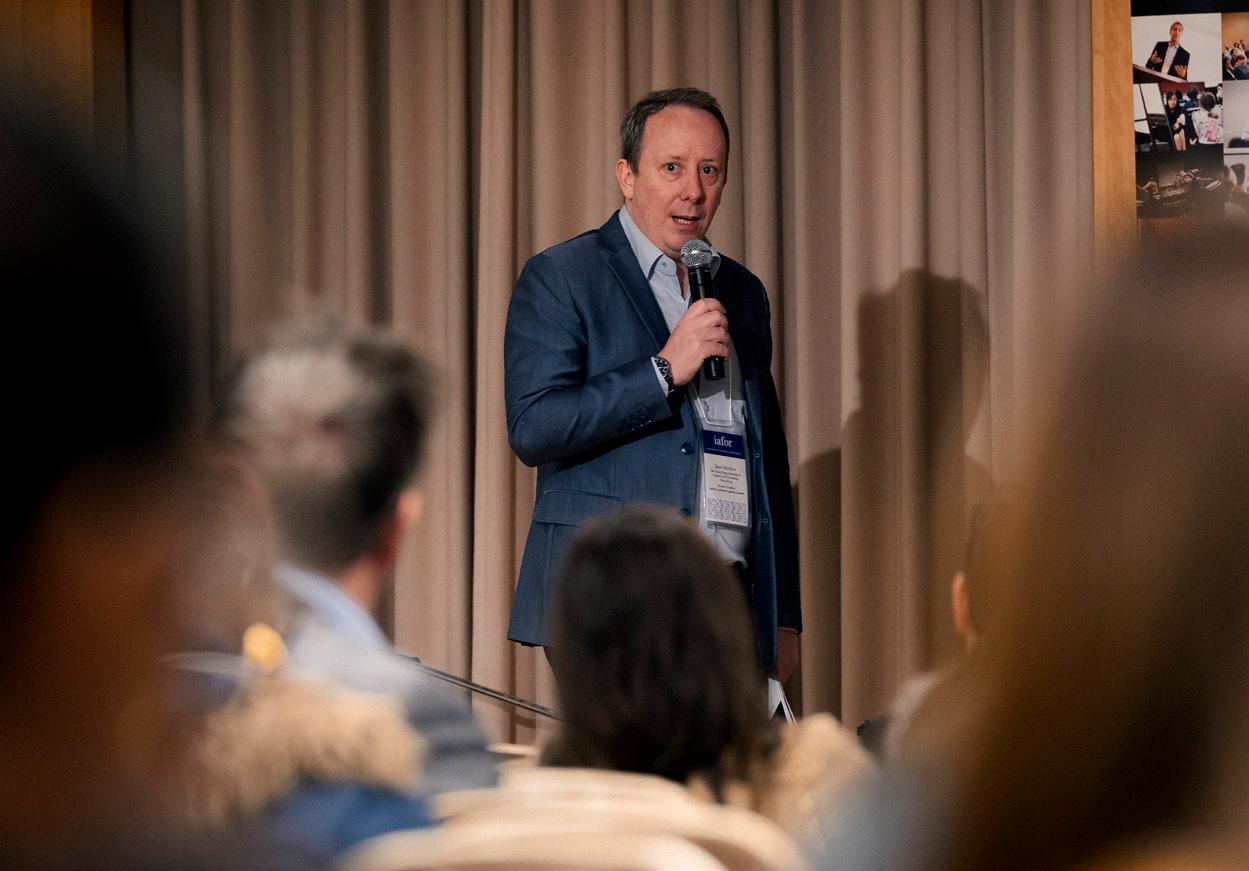
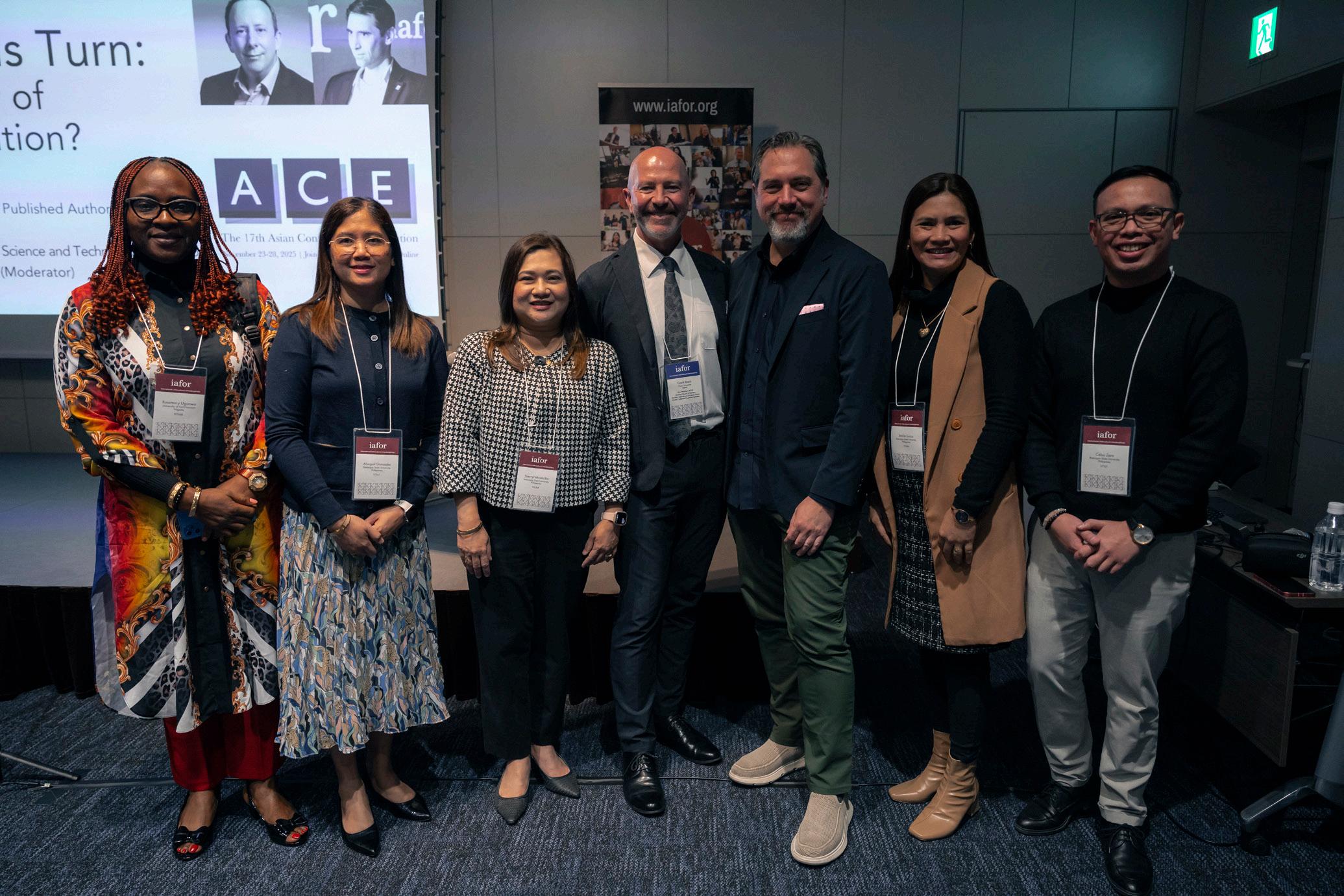
The panel discussion ‘AI and the Skills Turn: Driver or Disruptor of Skills-Based Education?’ examined the systemic shifts occurring as artificial intelligence redefines the relationship between academic preparation and professional viability. Moderated by Dr Justin Sanders of Woven by Toyota, Japan, the session brought together Mr Alfonso Asensio of Google, United States; Dr Matthias Frey of Sony SCL, Japan; and Dr Sean McMinn of The Hong Kong University of Science and Technology, Hong Kong to examine how AI is reshaping what it means to be ‘educated’.
The discussion opened with the acknowledgement that the traditional 200-year-old discipline-based degree model is being challenged by a more modular approach to education. Dr Sanders highlighted that nearly 40% of core workforce skills are expected to change within the next few years, necessitating a radical rethinking of curriculum design. The panellists agreed that while the ‘skills turn’ has been discussed for decades, AI acts as a significant catalyst that accelerates the need for immediate institutional adaptation. Akin to Professor Suzuki, they agreed that the focus must move away from static knowledge toward a dynamic ability to acquire and apply new competencies. This transformation is not merely about adding technical tools but about reimagining the very purpose of a university education in a tech-saturated market. The speakers emphasised that institutions failing to pivot towards this competency-driven model risk becoming obsolete in a landscape where employers increasingly value demonstrated abilities over formal credentials.
From left to right: Mr Alfonso Asensio (Google), Dr Matthias Frey (Sony SCL) and Dr Sean McMinn (The Hong Kong University of Science and Technology)
Watch on YouTube
A major thematic pillar of the discussion was the critical distinction between shortterm technical ‘hype’ and long-term cognitive resilience. Dr Frey observed that while there is currently a high market demand for specific skills like prompt engineering, these may soon be automated or rendered by more intuitive AI interfaces. The panel urged educators to focus instead on durable human skills such as critical thinking, fact-checking, communicating ideas, and the ability to verify AI-generated outputs. Dr McMinn introduced the concept of metacognitive awareness, arguing that students must understand their own thinking processes to effectively partner with machine intelligence. There was a shared concern that overrelying on AI for basic tasks might strip away the grit and problem-solving stamina that students traditionally develop through cognitive struggle. Mr Asensio added to the discussion by highlighting the necessity of ‘discernment,’ the high-level ability to judge the boundaries of what an AI can and cannot do effectively. This discernment allows human workers to identify where their unique ‘added value’ is most impactful, ensuring they remain relevant as AI capabilities expand. The panel concluded that the ultimate goal of education should be to produce wise graduates who can navigate the ethical and practical complexities of AI usage.
The conversation then shifted toward the practical integration of AI within institutional frameworks and the management of global technological biases. Dr McMinn detailed the four-domain framework used at his institution, which categorises AI’s impact into domain knowledge, procedural knowledge, technological knowledge, and cognitive skills. This structured approach allows for a more nuanced assessment of how AI changes specific tasks within a discipline without completely replacing the human element. The panellists also addressed the inherent Western-centric bias in major Large Language Models (LLMs), which are largely developed in the United States. Dr Frey suggested that educators should seek out regional models like Singapore’s SEA-LION or local adaptations of opensource models to better understand different biases in LLMs. Dr McMinn also gave an example of how Hong Kong developed its own model based off of Deepseek for Cantonese speakers in the absence of ChatGPT in Hong Kong. Although this localised approach to AI is seen as a way to empower students in non-Western contexts to lead within their local frameworks rather than merely adopting foreign perspectives, cognitive skills are still at the heart of the discussion. Dr McMinn suggested that students should be aware of, and trained in, biases that exist in
Mr Alfonso Asensio of Google, United States
all LLMs, and that the ability to interpret human biases against those of LLMs is a vital human-AI collaboration skill. Mr Asensio also stated that by understanding the ‘flow of money’ and data behind these models, students can become more critical consumers and creators of technology.
The panel emphasised that as AI lowers the floor to entry for technical tasks, the ceiling for high-level creative and strategic thinking is raised significantly. The future of technical expertise, specifically coding and digital creation, was debated with a focus on the rise of ‘vibe coding’ and low-code platforms. Dr Frey predicted that within a few years, the demand for traditional entry-level programmers might decrease as AI allows individuals with minimal technical training to build complex applications. However, the panel was quick to clarify that this does not mean technical knowledge is becoming irrelevant; rather, its nature is changing toward architectural oversight and system auditing. Dr McMinn argued that a deep understanding of technological foundations and models developed remains essential to prevent their misuse, even ensuring that they will be used effectively. Mr Asensio noted that in the corporate world, the ability to bridge the gap between technical potential and business value is the most sought-after leadership trait.
Amidst the shift of skill turns to AI and the contentious space of technical versus human expertise, what should we teach students? There was a consensus among the panellists that banning AI is likely a futile strategy, as students will inevitably interact with these tools in their private lives. Instead, they advocated for a balanced approach to learning with high-tech AI integration and low-tech analogue activities like handwriting and whiteboarding. These traditional methods are seen as essential for maintaining the cognitive pathways required for deep reflection and selfregulated learning. Mr Asensio invoked the classical concept of Sophia (σοφία) or wisdom, the highest form of knowledge according to Greek philosophy, as the union of practical skill and theoretical knowledge as the pathway for the future of education, focusing on wisdom rather than just information. The session concluded with the idea that the ‘AI turn’ should not be feared as a disruptor, but embraced as an opportunity to return to the most fundamental aspects of human intelligence. The final takeaway was that while AI can provide output for the ‘what’ and the ‘how’, it remains the human’s role to judge and answer with the ‘why’ and the ‘should’.
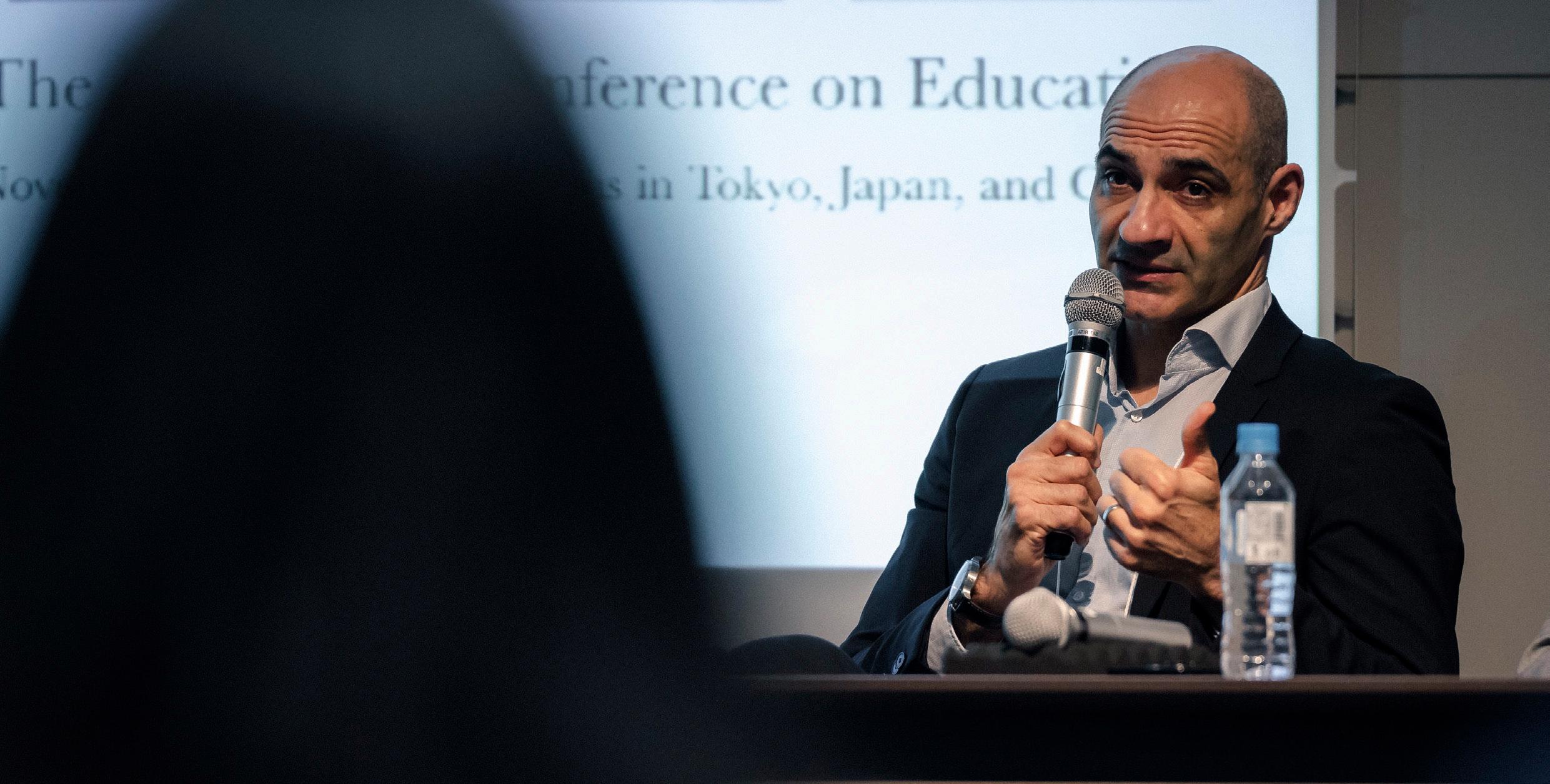
Dr Matthias Frey of Sony SCL, Japan
3.2. Teaching Leadership Through Artificial Intelligence
One of the skills of the future that is becoming more and more relevant is leadership. As AI is increasingly threatening to take away humans’ autonomy and agency in decision-making, it is important to retain the human skill of decision-making. This endeavour is not necessarily undertaken without the help of AI. The online panel discussion ‘Teaching Leadership Through Artificial Intelligence’ explored the transformative role of AI in developing future-ready leadership skills and how AI fosters criticality, autonomy, and cultural intelligence in students. Moderated by Dr Murielle El Hajj Nahas of Lusail University, Qatar, the session featured comprehensive insights from Dr Najwa Saba ‘Ayon Fares of Rafik Hariri University, Lebanon; Dr Mikel Garant of the City University of Macau, Macau; and Professor Martin Parsons of Hannan University, Japan.
The panellists collectively argued that the traditional role of the educator is shifting from a primary information source to a facilitator of complex, tech-integrated learning environments. This transition is essential for preparing students to navigate a professional world where AI is becoming a key collaborator rather than just a tool. Throughout the session, the panellists provided examples of how pedagogical shifts are already taking place in diverse global contexts and how pedagogical designs can impact students’ leadership skills. The discussion highlighted that leadership in the digital age is not just about technical proficiency but about the ability to guide technology toward human-centric goals.
Dr Fares detailed a specific case study from her course in her personal presentation within the panel titled ‘Empowering Student Leadership with AI: Enhancing Research, Writing, and Professional Skills’, which illustrated how AI can be a catalyst for student agency. Dr Fares’ purpose in integrating AI in her classroom was to foster human-AI synergy, an increasingly essential skill in the current world, she argued. Students in her course were trained to utilise ChatGPT not as a shortcut, but as a research and writing assistant that co-constructs their learning. Students were asked to use AI to generate research ideas and refine résumés, followed by rounds of instructor and peer feedback. This process required students to document their prompts and reflect on the AI’s output, ensuring the final work remained their own. The outcome was a significant improvement in students’ digital literacy; students reported feeling more empowered and critical of AI, viewing it as a collaborative tool rather than a replacement for their own effort. This method has fostered leadership by requiring students to take full responsibility for the accuracy and quality of their AI-generated work, and to actively shape knowledge rather than only receiving it, said Dr Fares.
Watch on YouTube
Professor Parsons and Dr Garant expanded the conversation by presenting a collaborative virtual exchange project involving students from Japan and China in their in-panel presentation titled ‘Integrating AI in Intercultural Virtual Exchange: Building Relationship through Collaboration and Activity’. Professor Parsons presented how he utilised AI as a potential ‘permanent scaffold’ to bridge linguistic and cultural gaps, allowing students to continuously develop their high-order cognitive skills. Students who previously felt limited by their English proficiency were allowed to use AI for scripting and storyboarding, enabling them to produce high-quality cultural videos. This technological support lowered the barrier to entry for creative expression, enabling a deeper level of exchange than would have been possible otherwise.
Dr Garant discussed how AI has fostered leadership through intercultural collaboration in the virtual cultural exchange project. He addressed the lack of student confidence and the linguistic challenges inherent in real-time international academic collaborations. During the virtual exchange sessions, he encouraged students to use AI on their mobile devices for real-time translation and to clarify complex concepts during Zoom discussions. This allowed for more fluid conversations and ensured that linguistic barriers did not prevent students from contributing their ideas to the group. The outcome was a measurable increase in student participation and a greater sense of ease when communicating in a second language. This fostered leadership as students learned to lead discussions and manage intercultural dynamics with confidence and digital fluency, showing that immediate access to AI tools can act as a bridge and enable more inclusive and confident participation on the international stage.
The panellists agreed that AI must be integrated into higher education as an explicit, collaborative tool rather than a prohibited resource. They emphasised that the primary role of AI is to serve as a tool that helps facilitate student autonomy by handling technical tasks like translation and data organisation. However, we must maintain the human element in the AI integration process to ensure that students retain final ownership and critical oversight of all AI-generated outputs. The practical case studies explored in the panel demonstrated that AI can significantly lower barriers to intercultural communication and boost student confidence in international settings. However, the panellists collectively agreed that implementing institutional frameworks that prioritise transparency was key to these case studies’ successes, such as the use of reflective logs to document the ethical and strategic use of AI tools. The discussion highlighted that teaching leadership today requires preparing students to navigate a professional landscape where human-AI collaboration is an essential, foundational skill.
3.3. The Future of Education and Skills: Insights from the Forum
Delegates at the ACE2025 conference also had a chance to share their insights on what they think the future of education and skills looks like in the interactive Forum session titled ‘Global Citizenship: The Future of Education and Skills in an AI-Driven World’, conducted both online and onsite in Tokyo. The Forum revealed varied opinions regarding the role of AI in higher education. The onsite Forum session was led by Dr Sean McMinn of The Hong Kong University of Science and Technology, Hong Kong, who served as the respondent, with Dr Melina Neophytou of IAFOR, Japan, as the moderator. The online Forum discussion was led by Dr Eric Hawkinson, who served as the respondent, with Apipol Sae-Tung of IAFOR, Japan, as the moderator.
The discussion on AI at the Forum moved beyond a simple critique of productivity to explore how AI is reshaping professional responsibilities and the value of academic disciplines. While recognising AI as a productivity tool, many also view it as a complex partner that challenges the very definition of human expertise. Whether discussing the use of AI for classroom management or its role in personal support, delegates consistently emphasised that human judgment, critical thinking, and ethical decision-making remain essential, and that these skills are more valuable now than ever before. The key message from the discussion was that while AI can serve as a powerful partner, it requires careful oversight and a commitment to preserving unique human skills. The future of education lies not in resisting technology, but in balancing technological integration with human agency, where learners and educators are able to reclaim their agency through experiential engagement within structural policy shifts.
Watch on YouTube
The Forum opened with an icebreaker discussion on how delegates use AI in their daily lives, and revealed a mix of both professional and personal support. For professional support, AI was widely used in the educational setting as a collaborative tool for classroom management and brainstorming lesson plans, as well as a useful tool for students that requires strict guidance to prevent students’ over-dependency on AI. In addition to the education context, AI was also used for personal support, with a particular emphasis on emotional support. Delegates shared how they have turned to AI for advice on mental health and relationships when human resources were unavailable or difficult to access. The proliferation of AI beyond the delegates’ academic and professional use showed how AI is functioning not just as an academic aid, but as a counsellor of sorts, making user discernment and safety measures critical.
We are trying to collaborate with AI by discussing our thoughts about our lessons, and we also use it to create some exercises. But anyway, we still have great concerns that the students later on will rely too much on AI.
- A delegate from Thailand
Gemini has given me pretty good or sound advice. Whether it’s good or sound, of course, relies a lot on my ability to judge its advice… It depends on how the AI model is programmed or tweaked, and what kind of guardrails are built in so that it wouldn’t give wrong advice.
- A delegate from Singapore
I use it for relationship advice because sometimes my relationship isn’t going well, and then I’m just curious about how computers, especially AI, could give a different perspective.
- A delegate from Indonesia
The discussion that followed asked delegates for their views on the human factor and its co-existence with AI. We asked the delegates to rank the ‘value’ of disciplines to reveal their perspectives on the value of human skills. While ‘hard sciences’ such as health sciences were ranked highly due to practical concerns like ageing populations and the quality of healthcare, ‘social sciences’ emerged to balance the perceived economic necessity of hard sciences, citing the foundational value of human skills that are also based in the liberal arts. Many delegates agreed that disciplines should not be viewed in isolation. They are interconnected, with technological progress relying on foundational work in other areas. Delegates viewed that as technical barriers are lowered with the help of AI, human skills, which are cultivated by the arts such as creativity, ethical reasoning, and cultural understanding, become more critical in keeping humans ‘human’. In education, for example, many writing tasks that are intrinsically linked to thinking have now been largely transferred to AI. This could diminish students’ ability to reason and think critically, and essentially ‘dehumanise’ an essential human skill. Many called for cross-disciplinary collaboration to prevent a ‘robotic’ future.
In regards to economic recession and ageing, public health will be very important, but also language and literature. I teach English and everyday I feel that the way we learn language will drastically change in the future because of the advancement of AI technology. I hope language and literature will still be important.
- A delegate from Japan
I’m afraid I’m going to be a very difficult person and say I participated in an act of civil disobedience and didn’t do any ranking because I believe they are all equally important in their own way... You can’t have, for instance, work done in health sciences and natural sciences without people developing the technology.
- A delegate from Japan
We believe that AI is more focused on giving solutions... Another way we should develop it is to train AI to better understand how humans are responding to something rather than training AI to come up with a solution.
- A delegate from Indonesia
Writing is closely linked to thinking. If you can’t think well, you can’t really write well. But when you ask AI to write for you, you are also outsourcing your thinking to AI.
- A delegate from Singapore
Subsequent discussions focused on how to teach leadership in an automated world and what changes institutions must make in order to do so. Delegates agreed that leadership cannot be learned solely through theory; it requires experience and the ability to make difficult choices. Leadership requires ‘grit’ gained through real-world friction, such as getting lost in a foreign city or navigating complex human dynamics. The concern was raised that if AI smooths over all difficulties and decision-making processes for early-career professionals, they may never develop the judgment required for senior roles. Hence, AI should be proposed as a tool to simulate scenarios for training, but the final decision-making power must remain with humans.
I use AI simply as a complement or supplement... We infect or influence them with a kind of leadership that is humble, compassionate, and one that transforms.
- A delegate from the Philippines
We could train leaders by using AI to generate scenarios where we can train teachers, even teacher leaders, using these scenarios to discuss critical moments or difficult decisions so that they then can decide what are possible solutions.
- A delegate from Singapore
You cannot just learn pure leadership through a course. You have to have experience... There is beauty in getting lost and having to ask... And you will have to learn to be brave!
- A delegate from the Philippines
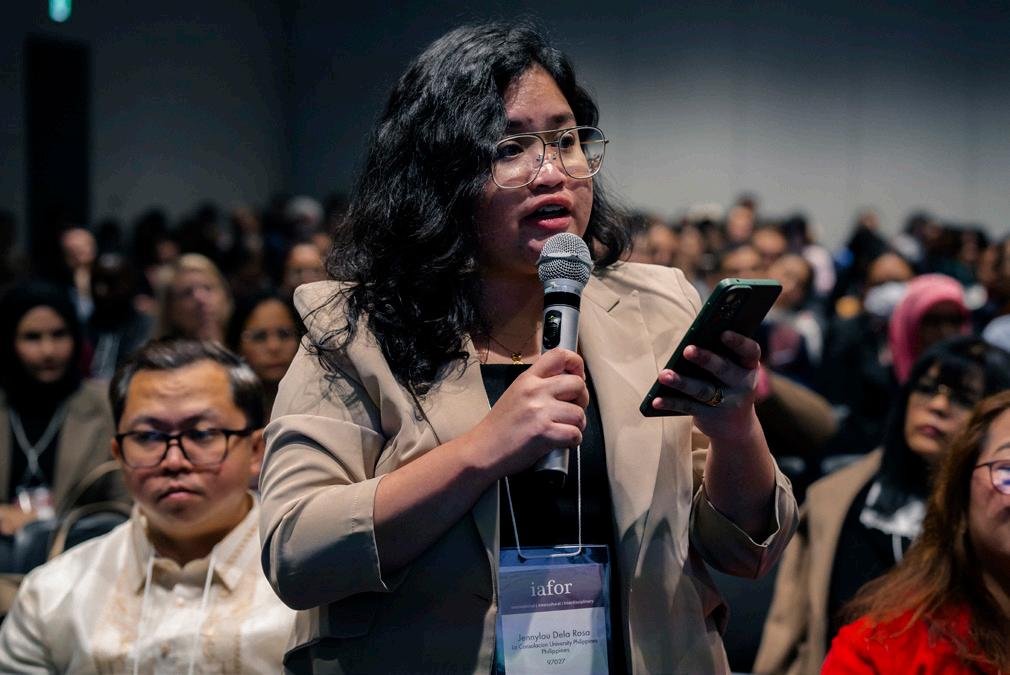
The session ended with the delegates’ perspectives on institutional policy on AI and its impact on education, voicing their call for a shift in ‘institution attitude’ rather than just imposing new rules. A majority of delegates acknowledged that their institutions were negatively affected by AI, citing issues of academic integrity and cognitive offloading. However, the proposed solutions moved beyond simply proposing technology bans. Delegates suggested that AI literacy should be separated into distinct technical courses, leaving space for critical thinking in other courses. This move, however, requires a fundamental shift in institutional attitude towards speed and adaptability in policy-making, with the ability to recognise and leverage its potential while maintaining awareness of the risks it may pose. Additionally, at a more micro level, Dr Hawkinson suggested that classroom assessment must also shift from ‘product-based’ grading to ‘process-based’ evaluation. In this way, the journey of learning is valued over the final output, thereby mitigating the risk of students bypassing the struggle of learning and leaning towards relying more on AI.
The onsite Forum session was led by Dr Sean McMinn of The Hong Kong University of Science and Technology, Hong Kong, who served as the respondent, with Dr Melina Neophytou of IAFOR, Japan, as the moderator
If we are to implement policy frameworks that will inform a better usage of AI, we need to change our attitudes... It starts first with the attitude, then shifts to policy framework, and then to the physical implementation.
- A delegate from South Africa
I would like to see maybe more AI courses that are separate from what teachers do in the classroom where we can direct students to take those courses and then we could actually allow teachers to teach, because I think when teachers teach, they do develop those necessary skills they use to survive the AI market.
- A delegate from Norway
The Forum concluded with a unified recognition that the disruption caused by AI is not merely a technological challenge, but a pedagogical imperative to prioritise human connection and agency. While acknowledging the utility of AI for efficiency and even companionship, the delegates strongly advocated for an educational approach that prioritises human experience and critical judgment. Institutions should move beyond reactive AI-detection policies towards a holistic restructuring of curriculum, one that embraces ‘process over product’ and fosters environments where students can safely struggle, collaborate, and lead, in that students are able to retain their agency and ability to think independently. Moving forward, the recommendation is for institutions to foster environments where technical literacy supports rather than replaces, the development of essential human values and leadership skills. AI should be embraced as a partner, while the spaces where human values, ethics, and creativity are forged must be encouraged and protected.
Watch the interview on YouTube
4. The
Teacher of the Future
AI not only has an impact on how we learn but also on how we teach. Many are afraid that the role of the human teacher will become obsolete in an AI-driven era. If AI possesses vast amounts of knowledge and is able to tutor students and promote self-learning, will there be a role for teachers to play in the future? Two panels at this conference proposed that neither has to dominate: a synergy between human and machine teaching will guarantee that students become masters of the technology while maintaining their own agency and thought.
4.1. The Hybrid Teacher of the Future
AI tools are increasingly reshaping and transforming the professional landscapes of teacher education. AI is quickly taking over traditional teaching, leaving teachers with an existential crisis regarding their identity and role in the future. In the online panel presentation titled ‘Human-AI Partnership in Teacher Education: Rethinking the Hybrid Teacher of the Future’ moderated by Susie Kung of the Manukau Institute of Technology, New Zealand, Nabila Nindya Alifia Putri of Universitas Islam Internasional Indonesia, Indonesia; Dr Danny Liu of the University of Sydney, Australia; and Dr Jason Lodge of The University of Queensland, Australia, explored how student-teacher identities are evolving in AI-rich contexts, how cultural and societal factors shape our responses, and if the future teacher or educator might be a human-AI hybrid, what that could mean for the profession.
‘The integration of AI into educational spaces is not just a technological shift, it’s a profound cultural and pedagogical transformation’, Ms Kung remarked in her opening statement. Dr Lodge agreed that we are witnessing a different kind of human-machine relationship with AI; not necessarily one where AI is conscious or has deliberate agency, but ‘a technology that to many people feels like a collaborator and less like a tool’. Dr Liu added that recently, students tend to ask fewer questions in class, preferring to ask a chatbot instead of asking each other or a teacher. ‘I think that’s a great threat to what we feel that we are, and who we are as a teacher’, he stated, urging the audience to ask themselves ‘what we need to reclaim that we lost through the machine that is education’.
Ms Kung went on to ask the panellists ‘How are emerging teacher identities shaped in digital, AI-rich environments? Is there a difference between an AI-rich environment and those that sit in traditional settings?’. To this, Dr Lodge responded that ‘currently, all of the evidence that we have suggests that humans learn better from and with other humans. So, there’s something about teaching and learning that I think is really human and social’. According to him, it would be great if AI were developed in a way that frees up teachers’ time from administrative tasks, so that teachers can spend more time socialising with their students and focus on this human relationship. However, Dr Liu warned that a lot of administrators take this too far, thinking that AI is just an administrative and efficiency tool. Instead, he stated that there is a lot AI can help teachers with besides administrative tasks, as long as teachers can be in control of how they use AI.
Ms Kung raised the issue around the emotional and professional tensions that may arise from using AI in the classroom, particularly as it challenges established
beliefs about teaching and learning, and considered whether AI-mediated contexts exacerbate identity tensions or are a catalyst for positive transformation. ‘I think the tensions already existed before AI came around, and it is just exacerbating and illuminating the problems that we already had in formal education’, Dr Liu stated. Assessment is one area in which this is visible, Dr Liu explained. There are a lot of students who use AI to complete their homework because they don’t care about it. And so, they don’t care if using AI for their homework is bad or unethical. ‘So, maybe it is time to rethink our curriculum and to actually think about what students would value more’, he concluded.
Will the future educator inevitably be a human-AI hybrid? And if so, should this be embraced, critiqued, or reimagined? Ms Nabila Nindya Alifia Putri expressed her conviction that AI will be unable to transfer human values like spirituality or morality. Her research highlighted cultural factors influencing AI adoption, including Indonesia’s emphasis on morality, discipline, and honesty. According to her, teachers demand localised AI that reflects Indonesian cultural contexts, and so, AI will never be able to reach this standard. ‘I want to encourage an avoidance of that kind of framing’ Dr Liu countered, ‘because there will be a time when AI could probably do those things, or rather be perceived by students to be able to do those things. And so if we keep saying to ourselves, “AI can’t”, or “This is a uniquely human thing”, then we are going to be very upset when we find out that AI can actually do those things’.
The panel concluded that while AI presents challenges and intensifies existing tensions, it also offers opportunities for positive transformation. Rather than viewing this as an antagonistic relationship between humans and machines, we should redefine the teacher profession and education in a way that allows both to flourish and play a meaningful role. ‘I think the discussion around academic integrity is distracting us from larger questions we need to ask about the future of AI in education’, Dr Liu concluded.
4.2. With a Little Help from AI
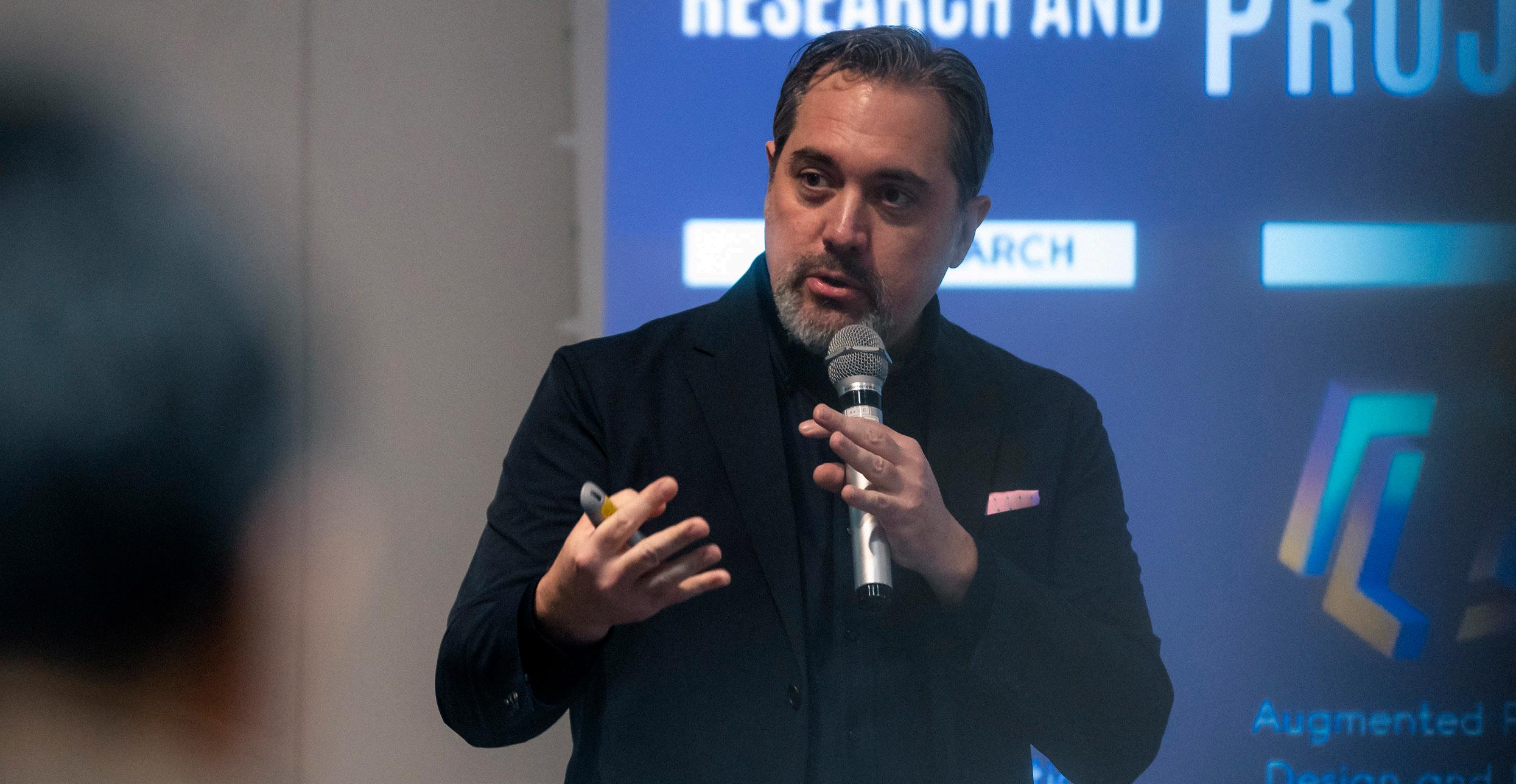
In his keynote presentation titled ‘Educational Leadership in the Age of AI Agents’, Dr Eric Hawkinson of the Kyoto University of Foreign Studies, Japan, outlined creative ways in which AI can be coupled with other existing technologies to enhance teaching and learning. Among those technologies were virtual (VR) and augmented reality (AR), which can help students make sense of the real world by using both their digital and real-world avatars. The ‘My Hometown Project’, for example, is a VR vocational training simulator in the tourism hospitality industry, during which students are creating virtual tours of their hometowns and sharing them with people all over the world. According to Dr Hawkinson, this has the potential of building empathy and of students becoming the teachers themselves as they connect to their peers around the world. AR goes a step further and blurs the lines between our digital selves and our real selves, therefore connecting various engagement models of how we interact with our surroundings and people. This has great implications for how we teach: students can learn by using all five senses that almost feels like hands-on experience.
However, ‘all this comes at a cost’, Dr Hawkinson warned. According to him, there are mixed emotions around the use of AI and several pitfalls we should try to avoid in order to ‘not go in the wrong direction really fast’. Universities around the world are considering taking a step back and ‘going back in history a little bit with how we conduct education’. This includes more paper tests, more oral examinations, and focusing on literacy campaigns, signalling a turn towards traditional teaching methods, Dr Hawkinson explained. This turn to traditional teaching is not without good reason, according to him. There is a great chance to fall into what he calls the ‘AI loop trap’, in which teachers use models to create lesson plans and syllabi while students take AI-generated quizzes, complete their work using AI, and teachers in turn provide feedback using AI. While he acknowledged that AI empowers people, he also expressed concern that it might be turning humans into automated machines. He worried that students and workers have fewer chances to make mistakes or to find inspiration and deviate from the script as they learn.
Dr Eric Hawkinson of the Kyoto University of Foreign Studies, Japan
Watch on YouTube
Another issue surrounding the use of AI is data privacy in VR. The main company behind much of the hardware and software of AI is Meta, which does not have the best track record when it comes to data collection and privacy, according to Dr Hawkinson. ‘There’s a chance for that data to be misappropriated, misused, collected in ways we don’t know, automating away some of the processes of inquiry’, he explained. He cited research from Stanford University showing that in just five minutes of VR, tracking users’ head movements, distance from the floor, and body and hand movements are more effective at de-anonymising them than fingerprint scanning.
While these issues are challenges to be regulated at a higher policy-level, concerns around cognitive offloading, narrowing expertise pipelines at the workplace, isolation and fragmentation of social connections, and challenges with assessment are issues that educators and educational institutions can effectively try to solve. At the Kyoto University of Foreign Studies, Dr Hawkinson has introduced two compulsory courses that are meant to tackle these issues: ‘Digital Literacy’ and ‘Digital Citizenship and Engagement’, aimed at addressing both the instrumental agency of students as well as their social responsibility.
Dr Hawkinson urged participants to focus on how to use AI safely and ethically, and in a way that promotes learning or equitable situations in the classroom. ‘How can we be inclusive? How are we creating a community? How are we sharing what we know and do together with these technologies so we can learn from each other and get the most out of them?’, he asked, urging the audience to think about these things as they go back to their own institutions.
Watch the interview on YouTube
5. Conclusion
The technological and geopolitical disruptions we are currently experiencing are not temporary. Without a doubt, AI and a multipolar world order are here to stay and, as mentioned by Ms Susie Kung, pose a deeper cultural and societal transformation than just a technological shift. Japan’s recent educational reforms and East Asia’s efforts in advancing cultural diplomacy and internationalisation are some forwardlooking examples of how to navigate these uncertain times. However, meaningful reforms and initiatives worldwide are still lacking momentum: educational systems and institutions are only reactively responding to these new developments instead of steering meaningful transformation. Many are still afraid of AI. While most have identified that human values and skills, such as critical thinking, metacognition, leadership, and ethics will be invaluable in an AI-driven and polarised world, there has been minimal forward movement on the implementation front. Is policing students to make sure they follow critical thinking and ethical conduct rules the most effective way to teach them human values and skills?
Some educators and researchers like Dr Danny Liu are slowly starting to realise that overly fixating on issues like ‘academic integrity’ might be counterproductive, taking away the focus from more crucial questions. Instead, education must begin with the permanent nature of AI as the starting point, and reimagine itself as a hybrid collaboration between humans and machines. Perhaps, the purpose of education and human teachers in the future will be to teach how to learn as a discipline in itself rather than teaching specific knowledge. Ultimately, the future of education lies not in resisting AI, but in integrating it thoughtfully while safeguarding the human dimensions of learning, community, and global citizenship.
6. The IAFOR Undergraduate Research Symposium (IURS)
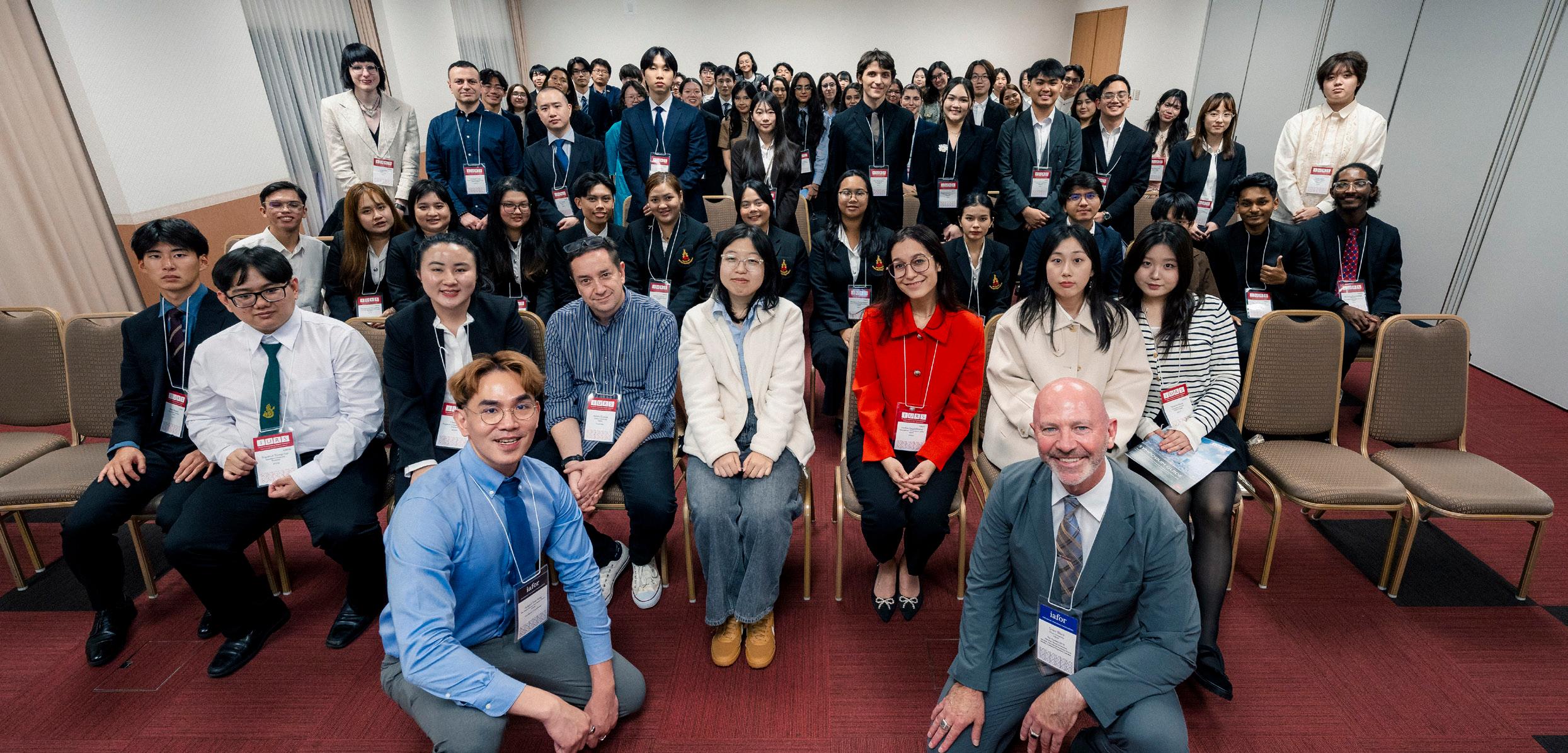
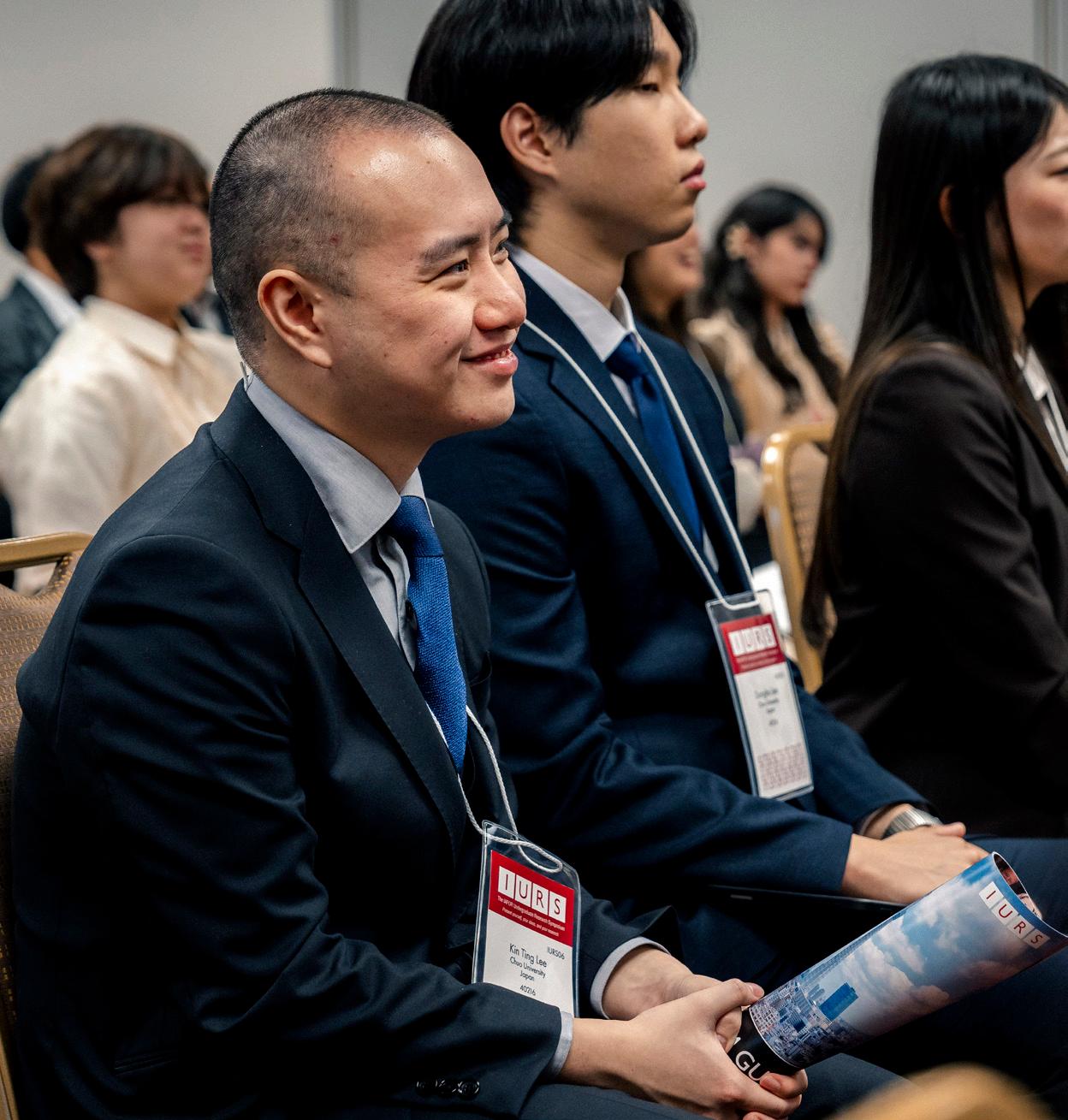
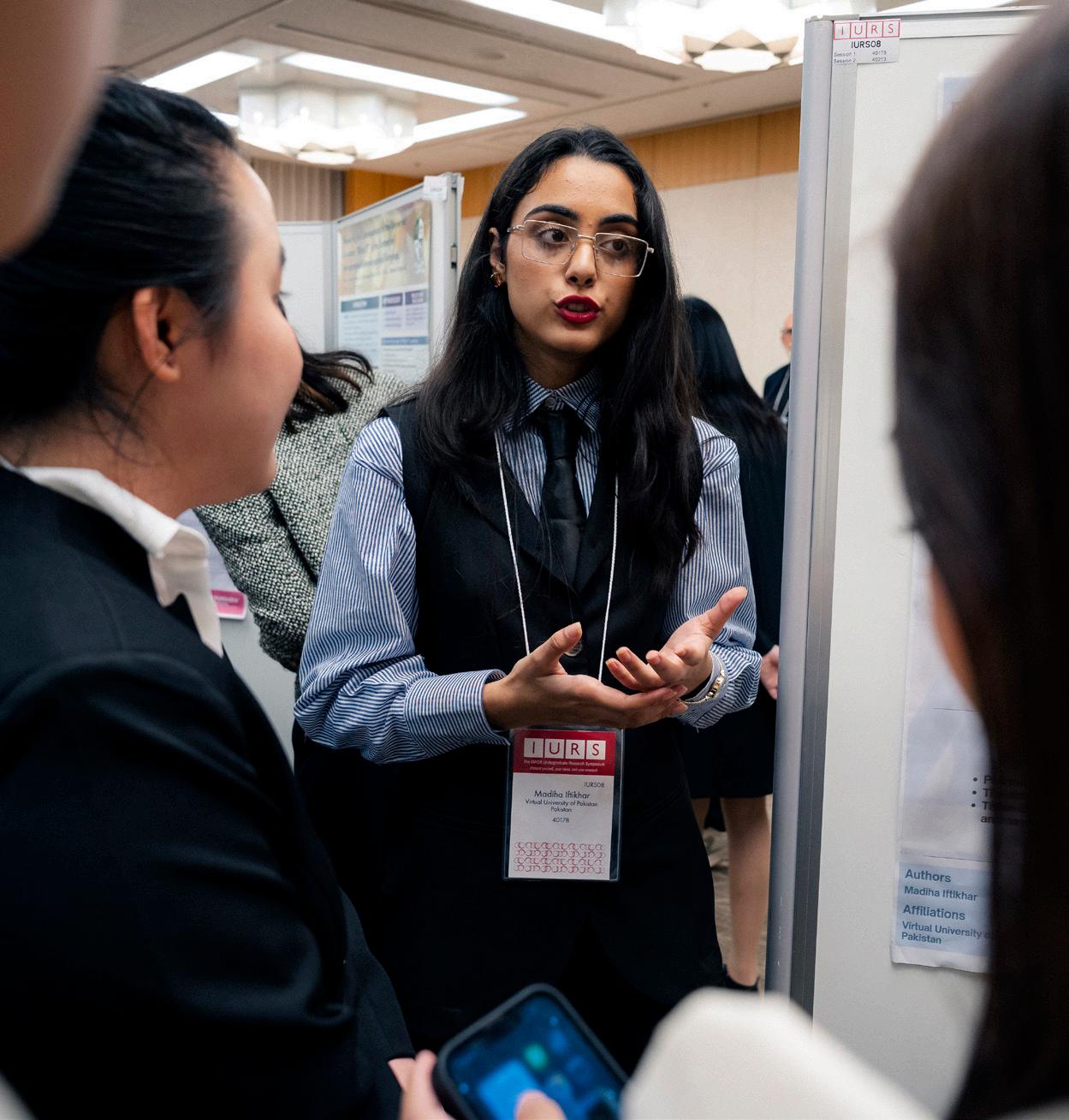
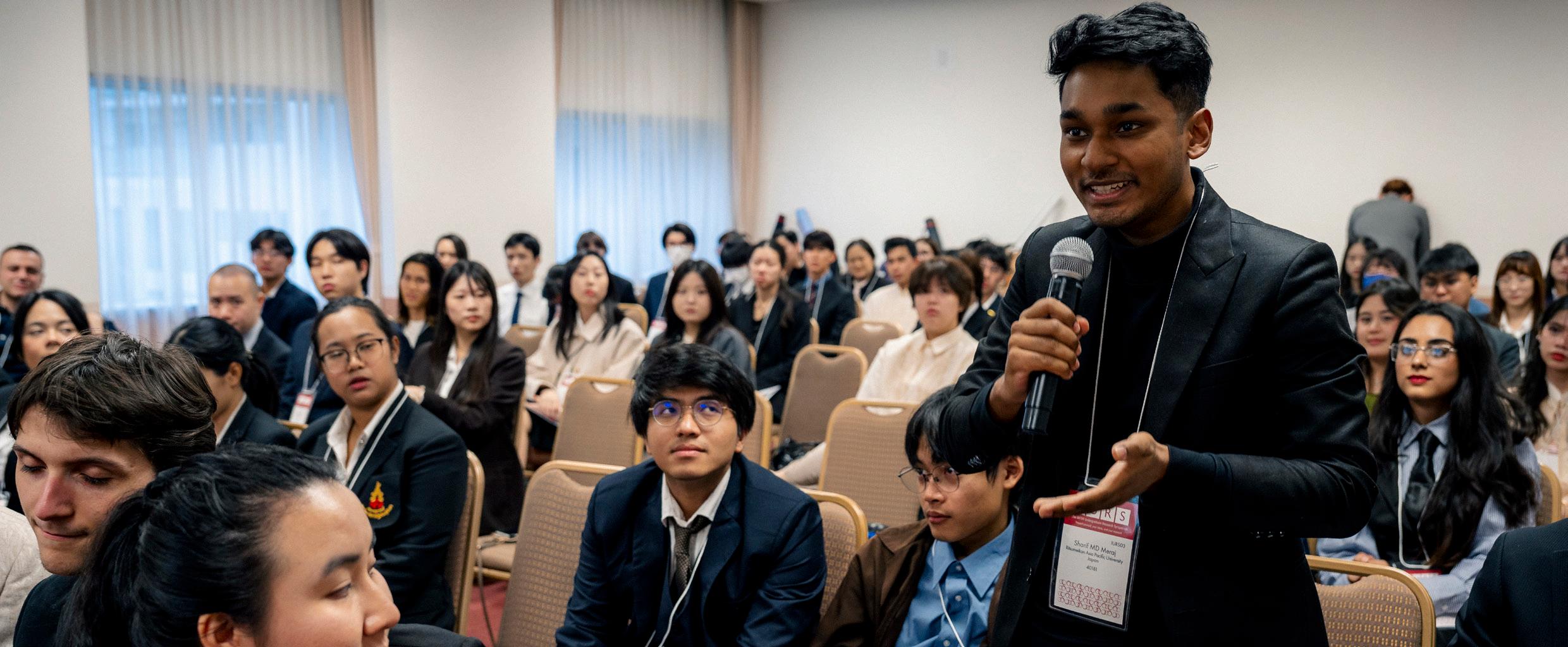
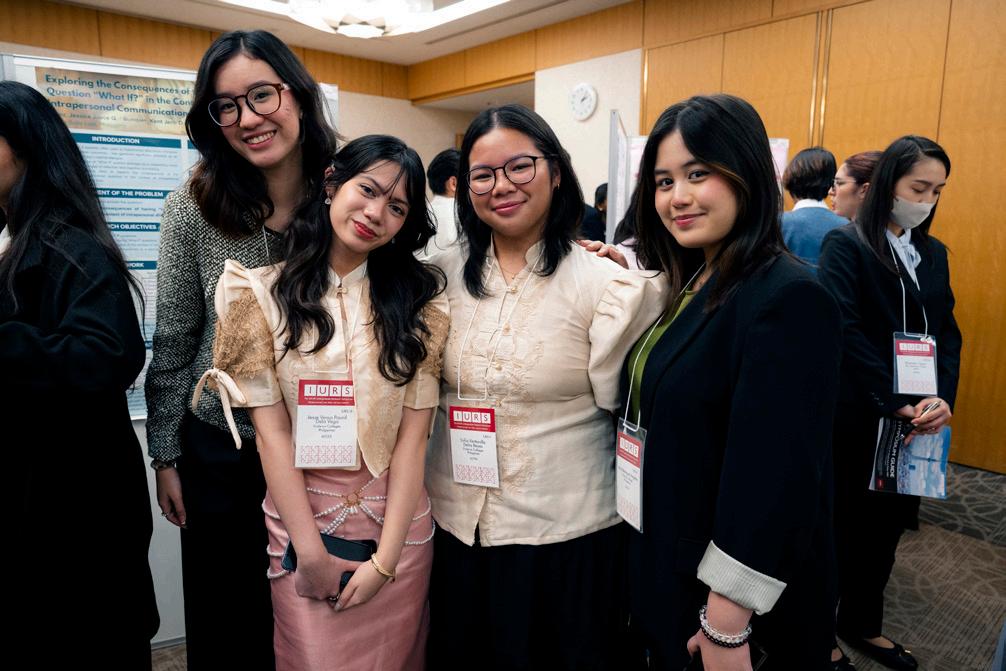
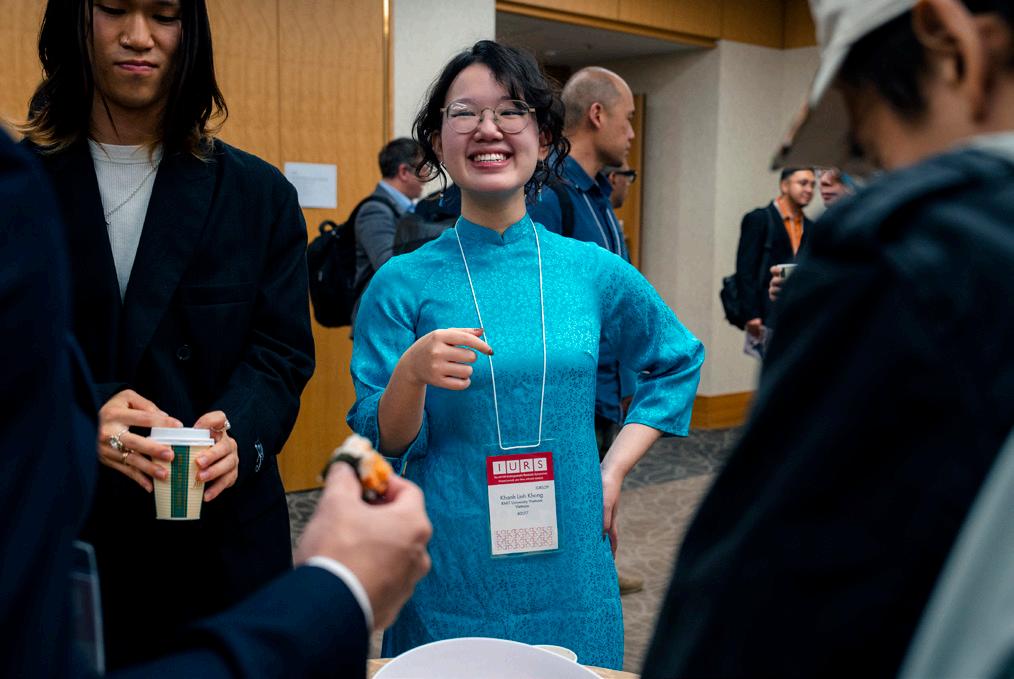
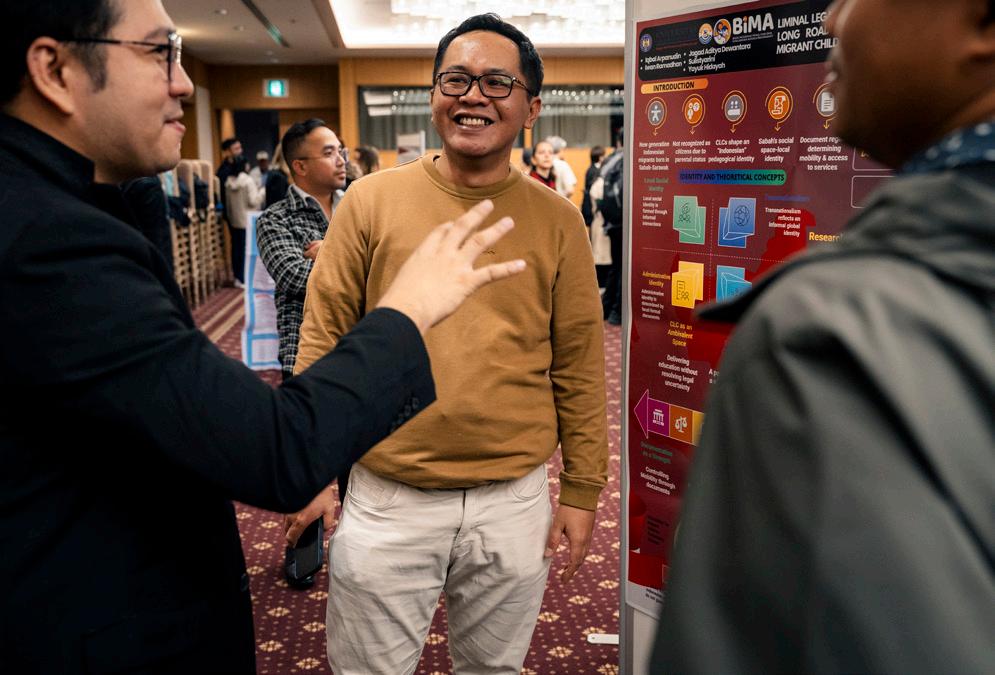
Held online on November 1 and onsite in Tokyo on November 25, the IAFOR Undergraduate Research Symposium (IURS) in Tokyo 2025 brought together 85 presenters from 17 countries. IURS in Tokyo 2025 was led by IAFOR Vice-President, Professor Grant Black of Chuo University, Japan. The symposium’s online day was held for students to get to know their peers and share their research before the conference, and for the facilitators to provide guidance for students to be ready for the on-site presentation at ACE2025. IURS is held alongside selected IAFOR education conferences, which positions students in a professional environment alongside global peers, providing a platform for international exposure to practice essential skills, including communication, networking, and presentation skills. As highlighted in the welcome message, the importance of such symposia lies in their ability to elevate student work beyond the classroom, challenging undergraduates to view their contributions not as ‘just a poster’, but as essential steps in the advancement of knowledge.
To achieve these goals, IURS curated a curriculum that prioritised mentorship and skill acquisition over simple presentation. In addition to the lead facilitator, IURS in Tokyo 2025 was joined by IAFOR Vice-President, Professor Dexter Da Silva of Keisen University, Japan; Professor Tzu-Bin Lin of the National Taiwan Normal University, Taiwan; and Dr James W. McNally of the University of Michigan & NACDA Program on Aging, United States as the invited speakers for the ‘What I Wish I Knew When…’ session of the symposium. Professor Da Silva shared how always being curious about things around the students opens doors to endless possibilities of learning. Professor Lin shared that students should explore and identify what they are good at, and connect theory to practice with international perspectives so that students are not limited to boundaries on discipline or nation. Professor McNally showed how resiliency and consistency in continuous self-development through education and practice will result in a higher chance of success when an opportunity is presented to the students. These discussions from the professors’ experiences showed that the students should learn to think and cooperate beyond boundaries, and look for possibilities of collaboration that will help foster their academic and professional achievements.
Complementing this mentorship, Professor Black facilitated practical workshops focused on ‘Making Meaningful Connections’ and ‘How to Give an Effective Poster Presentation,’ directly addressing the soft skills required for academic and professional success. The symposium then proceeded with Poster Presentation Sessions that allowed students to show the best version of themselves to their peers and academic professionals, allowing them to apply what they have learned during their training.
IURS in Tokyo 2025 successfully created an extraordinary environment that empowered students to engage, challenge, and support each other in a collegial manner, fostering friendships that are long-lasting beyond the symposium.
7. Networking and Cultural Events
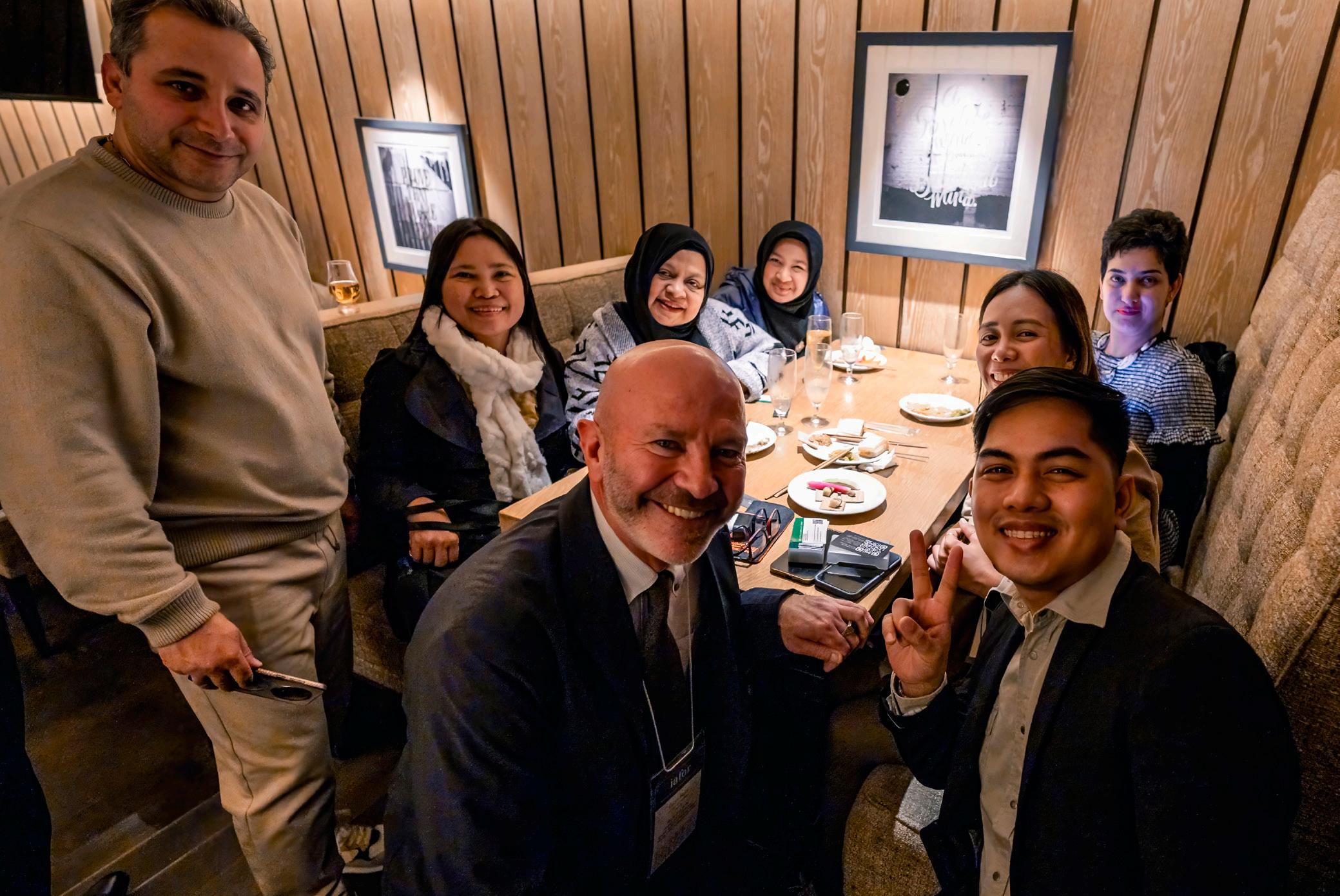
ACE2025 featured three events where delegates could unplug from the plenaries and connect with local artisans, their culture, and each other: the Conference Welcome Reception at the Public Red Akasaka, a Japanese shamisen cultural performance, and the Conference Dinner at Shunju Tameikesanno.
Welcome Reception
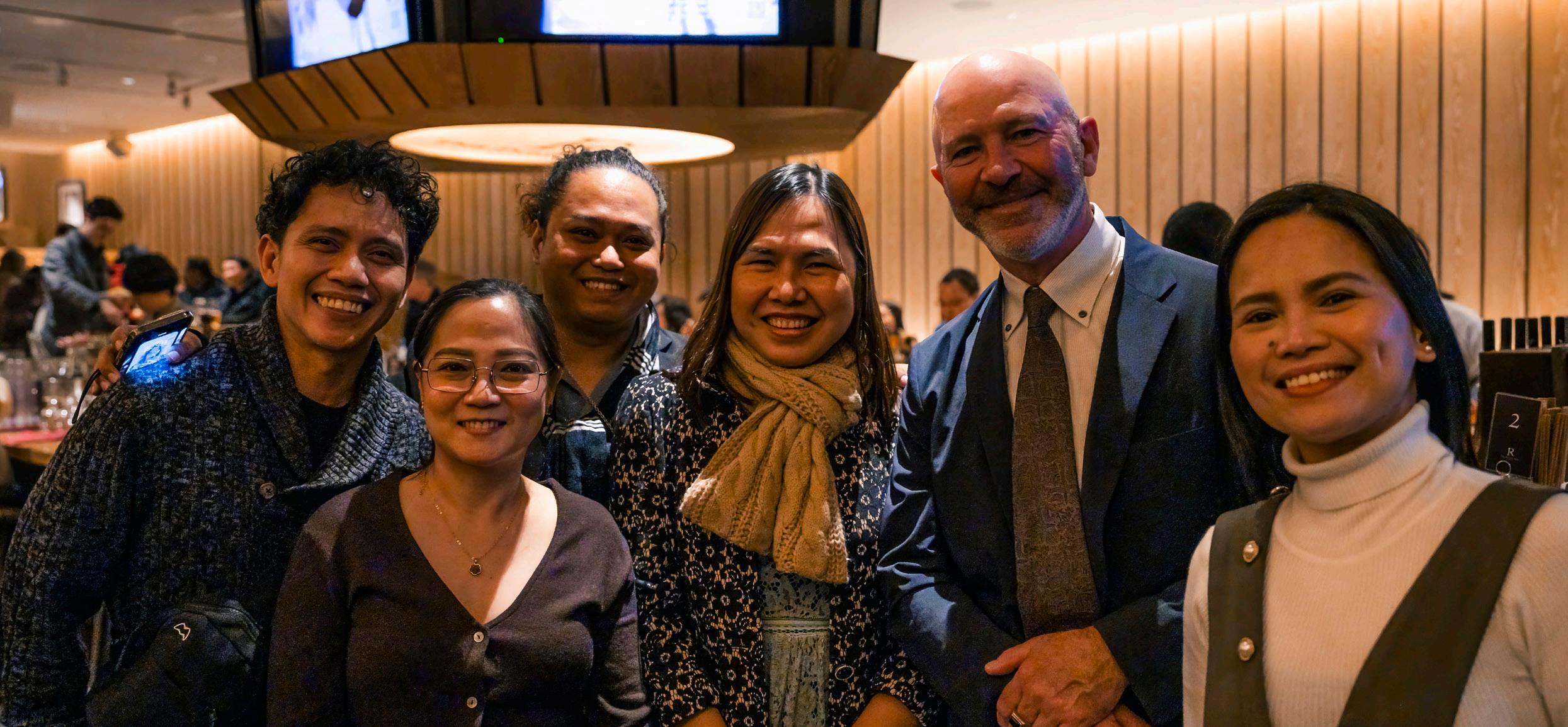
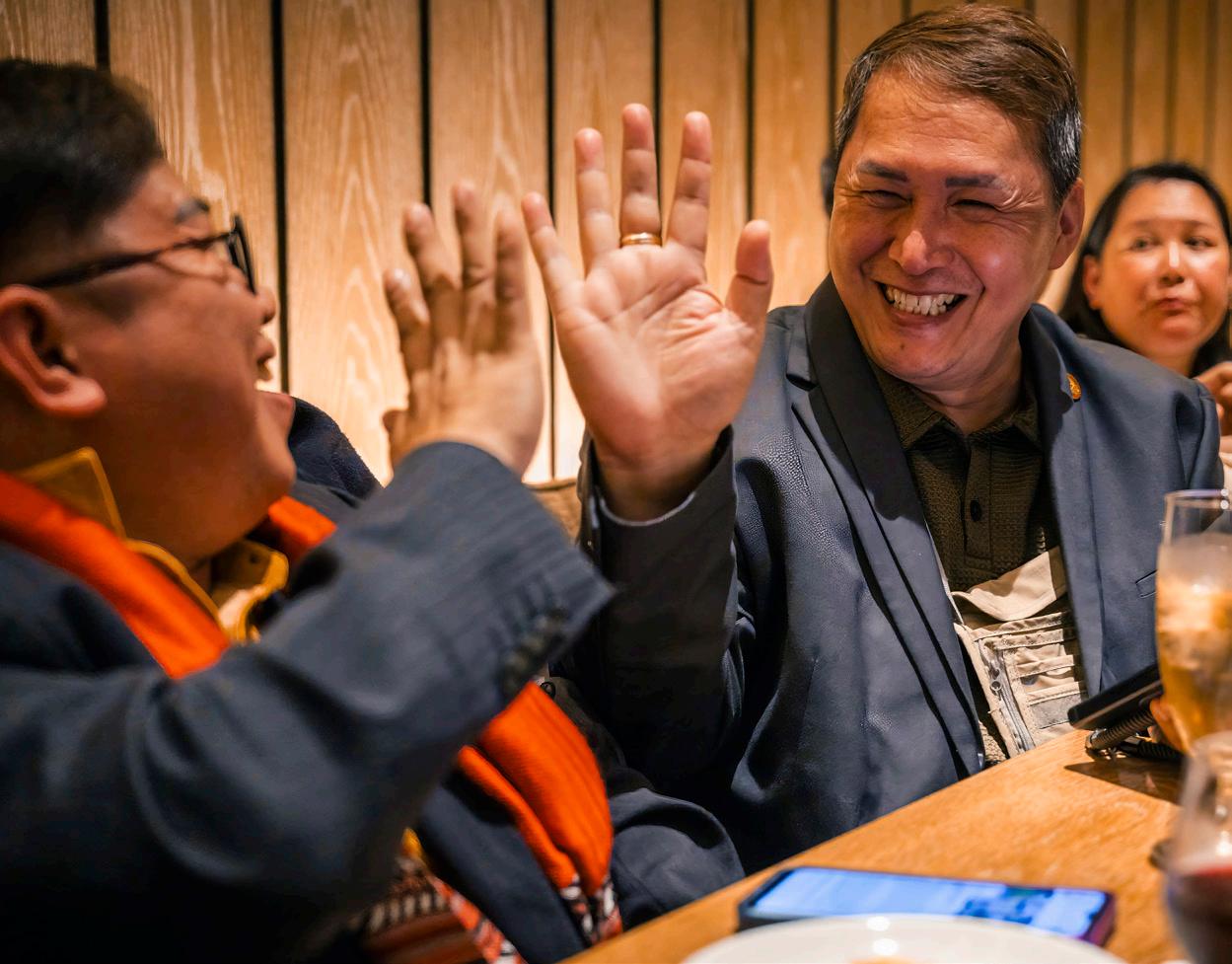
The conference kicked off with the Welcome Reception held on the evening of Sunday, November 23, at the Public Red Akasaka, a contemporary gastro-pub located near the conference venue. The Welcome Reception is always a free event open to everyone registered for the conference, from early career researchers to veterans in the field. Facilitating spaces for delegates at all levels of their careers can form long-lasting connections within the IAFOR network and is a key aspect to our conference planning. Holding this event before the busy plenaries allowed delegates old and new to relax, connect, and get to know each other before the busy conference programme.
Conference Dinnerat Shunju Tameikesanno
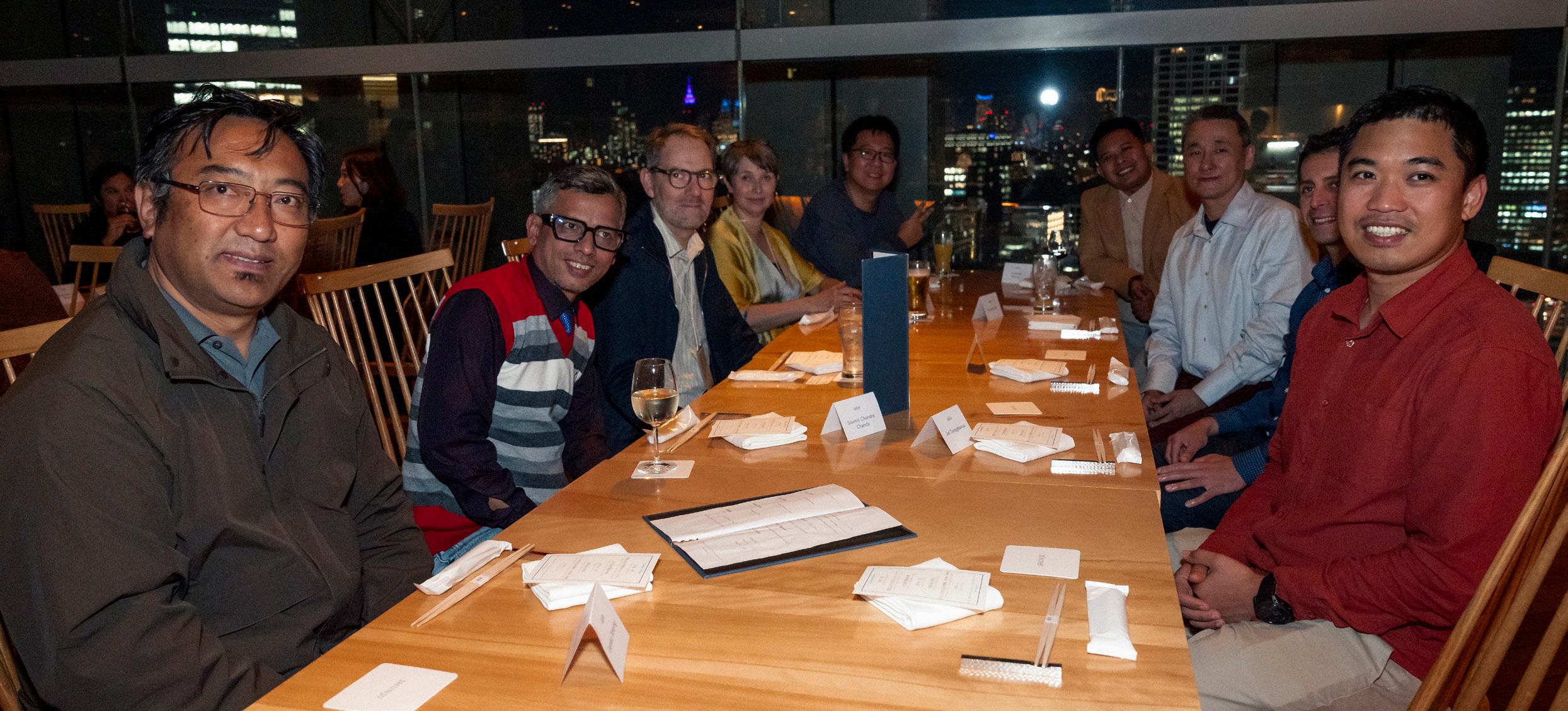
The Conference Dinner returned to Shunju Tameikesanno, our culinary host in Tokyo for the past two years, on Tuesday, November 25. The seasonal Japanese course menu the chefs curate for our dinner has remained a hit with delegates, making this event consistently sell out at each of our conferences in Tokyo. Each iteration of the course, whether delegates join us in winter or spring, offers a chance for conference attendees to explore and experience the unique culinary culture and seasonal tastes of Japanese cuisine. The chefs at Shunju Tameikesanno especially excel at infusing traditional Japanese dishes with modern flavours, while showcasing the local produce in season, including a fresh fish carpaccio assortment paired with organic Japanese radish, pumpkin, and lotus root.
The aim of the Conference Dinner is to provide an exclusive event where plenary speakers, IAFOR Executives, and VIP guests can partake in more relaxed, in-depth conversations with the participants. IAFOR Conference Dinners are always held at spectacular venues, and Shunju Tameikesanno is no exception: the restaurant sits atop Sanno Park Tower in Tokyo’s metropolitan Chiyoda district, offering aerial views of the city.
Conference Cultural Event: Shamisen Performance
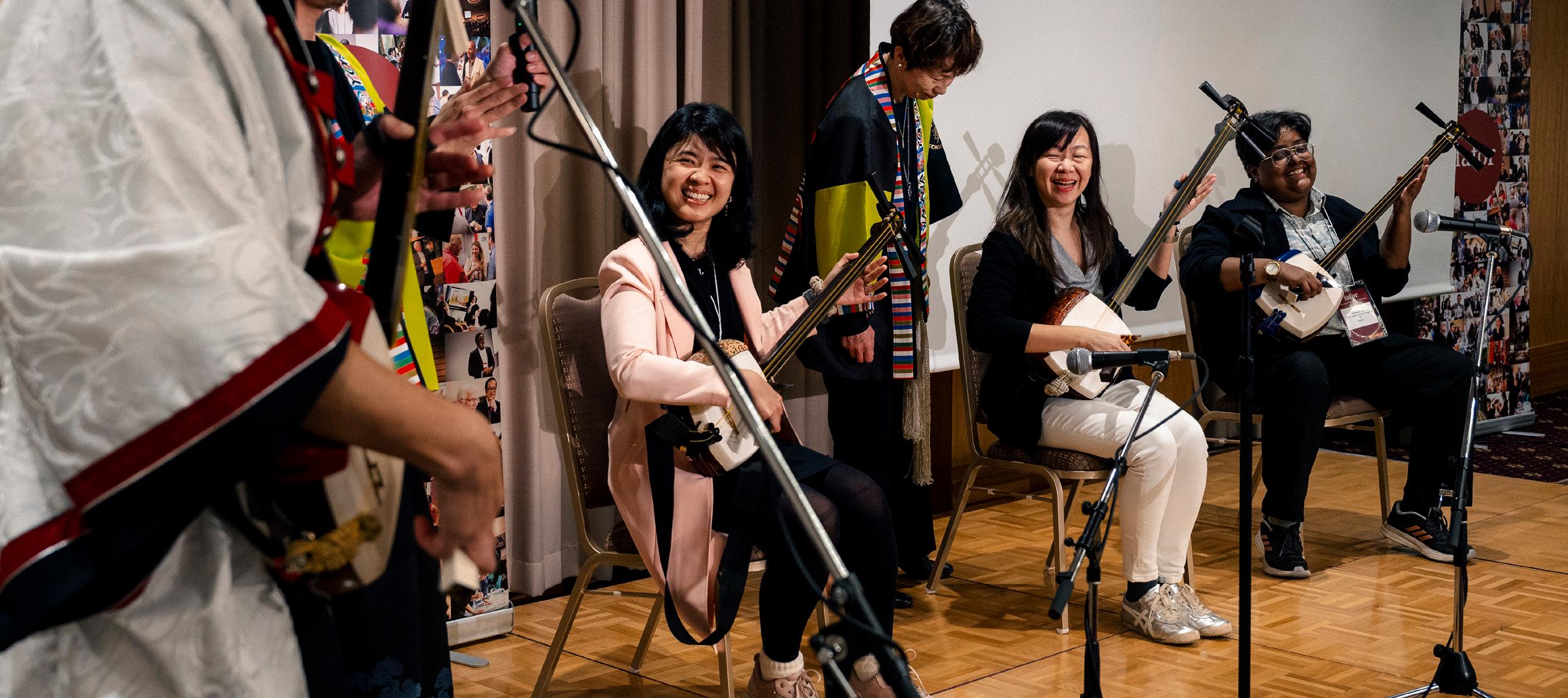
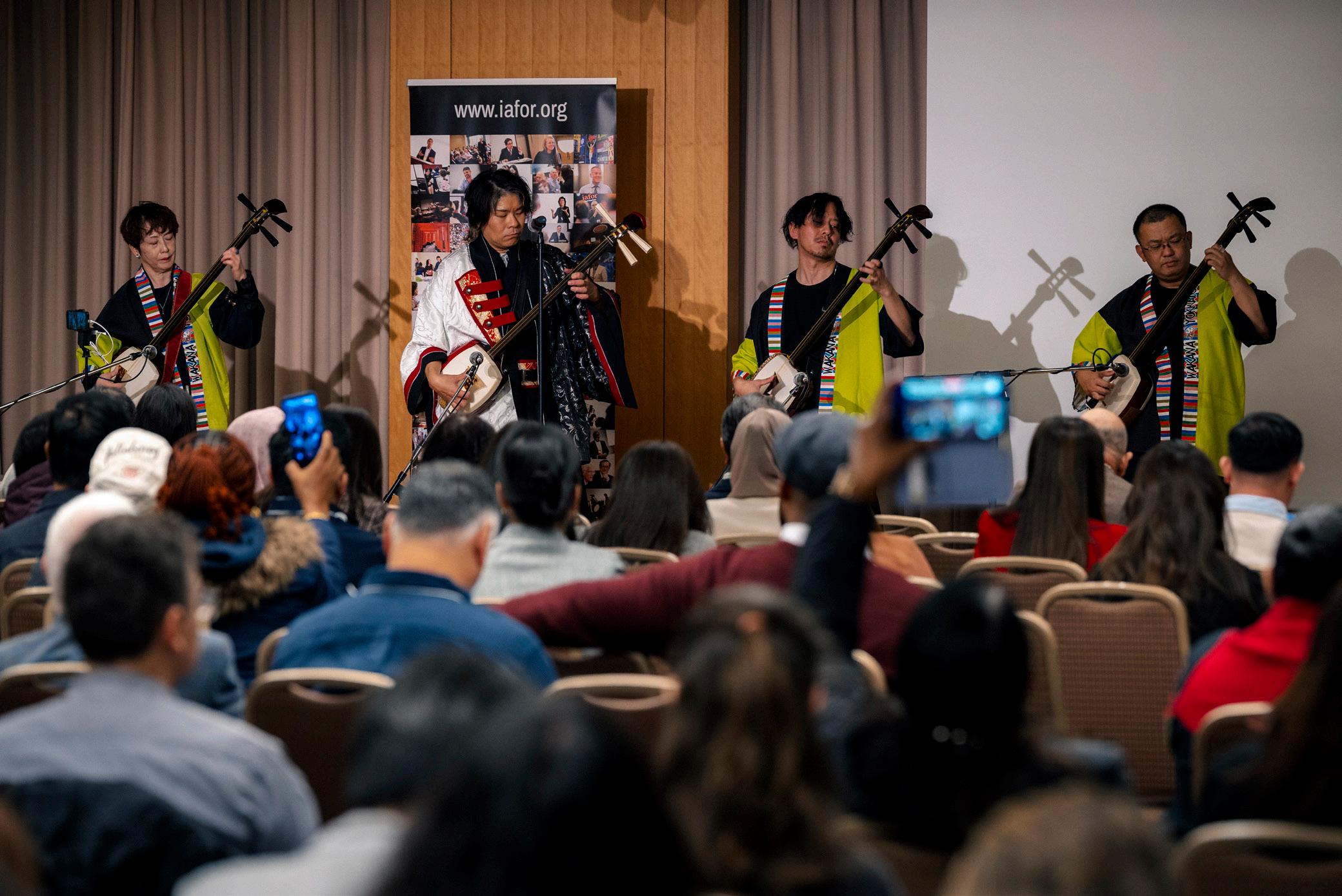
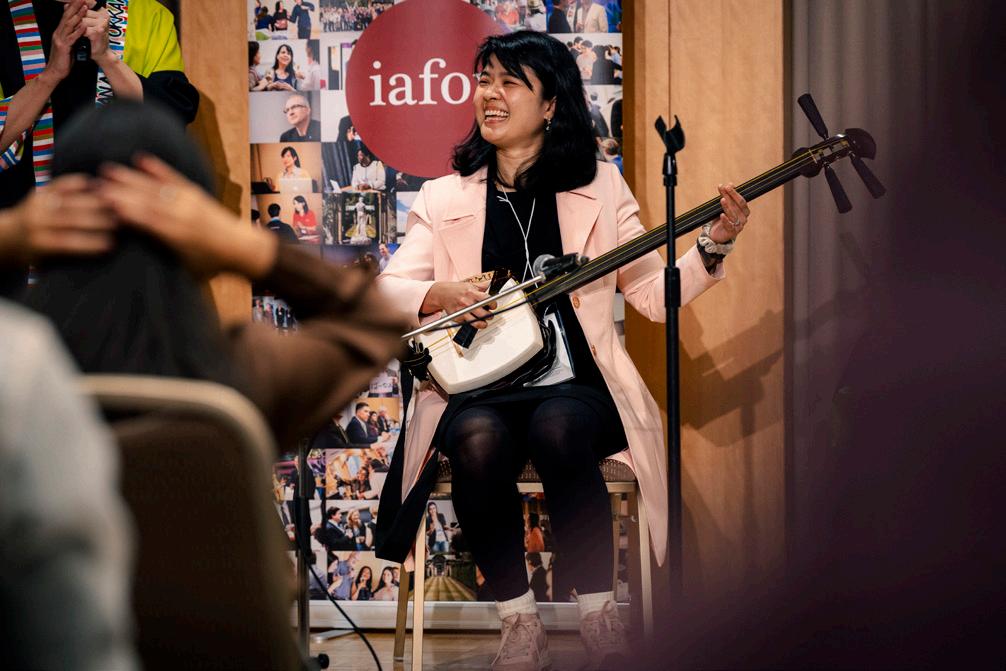
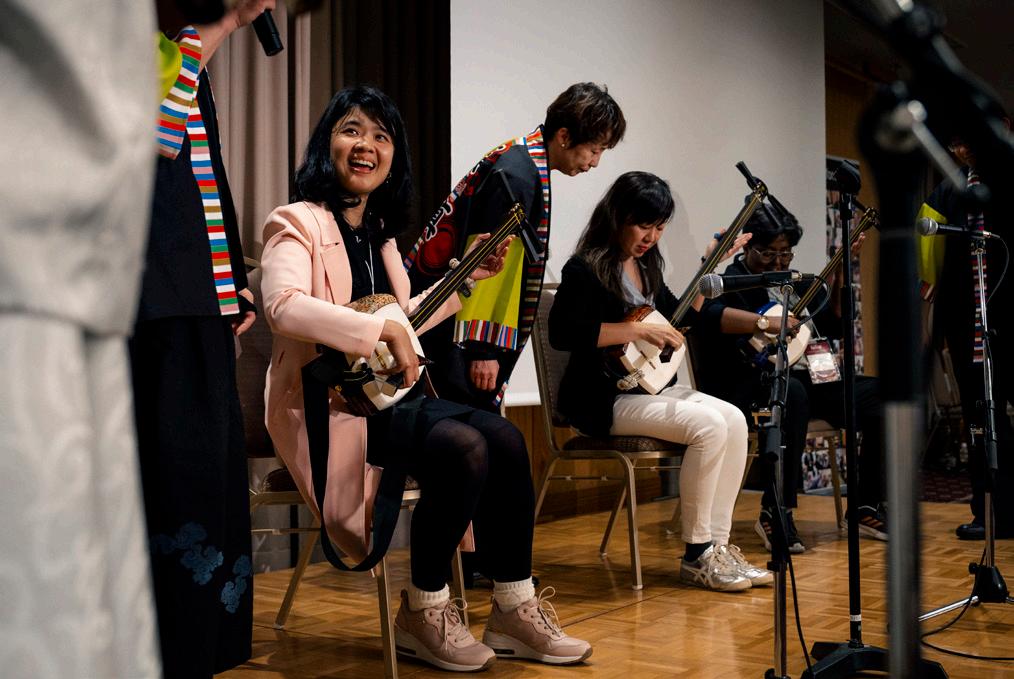
This year’s cultural programme featured a shamisen performance on Tuesday, November 25, at our venue by renowned shamisen performer and teacher Kuniaki Matsunaga, known professionally as KUNIAKI. Delegates were not only able to listen to the shamisen performance, but also try out the instrument under the guidance of KUNIAKI. The shamisen is one of Japan’s most distinctive traditional instruments, and is a keystone of Edo-era music in Japan, particularly in kabuki theatre arrangements. The shamisen is a traditional three-stringed instrument resembling a lute, featuring a long neck and a small, skin-covered body, and is played by striking the strings with a large bachi, or plectrum.
KUNIAKI is a celebrated Tsugaru shamisen player in Japan and abroad, and has performed in 12 countries. His international performances include the dinner reception for the G20 Aichi-Nagoya Foreign Ministers’ Meeting in 2019, and a 2023 solo concert hosted by the Embassy of Japan in Azerbaijan. KUNIAKI made his fourth appearance at Japan Expo Paris in 2024, and at ANIMENIA ABU DHABI in the United Arab Emirates. IAFOR was fortunate to have KUNIAKI join our programme and perform for delegates, as connecting our Forum with local, professional artists to share their knowledge and craft is integral to our mission of international, intercultural, and interdisciplinary dialogue.
Key Statistics
C on feren ce Su rvey R es u lts
Date o f Cr eatio n: Januar y 2 8 , 2 0 2 6
Yo ur feed b ack p lays a vit al ro le in shap ing t he fut ure o f IAFO R co nferences. Guid ed b y t he Jap anese p rincip le o f 'k aiz en ' a co m m it m ent t o co nt inuo us, increm ent al im p ro vem ent w e st rive t o enhance t he d eleg at e ex p erience The d at a p resent ed in t his rep o rt w as co llect ed fro m 1 7 8 resp o nd ent s o ut o f 7 8 9 d eleg at es w it hin 3 0 d ays o f t he co nclusio n o f t he event
Re comme nda t i on Re t urne e s of delega tes w ou ld recom m en d th e I AF O R ev en t to a f rien d or a collea gu e of delega tes h a v e a tten ded a n I AF O R con f eren ce bef ore
P re -C onfe re nce C ommuni ca t i on & S uppor t Ra t i ng
Ov e rall Pre -C onfe re nce S upport Re gistration Proce ss S ubmission & Re v ie w S y ste m
C onfe re nce S a t i sfa ct i on of delega tes a re sa tisif ed or con ten t w ith th e ev en t
C onfe re nce Expe ri e nce Ra t i ng
Ov e rall C onfe re nce Expe rie nce
Hospitality & A mbie nce
D e l e g a t e s' M ot i va t i on for A t t e ndi ng
*Per c entage bas ed on 540 m ar ked options fr om 178 r es pons es
“One o f the stro nge st aspe c ts o f the c o nf e re nc e w as its ability to bring so me o f the ifne st minds unde r o ne ro o f , c re ating a v ibrant spac e f o r e xc hange o f ide as, pe rspe c tiv e s, and re se arc h inno v atio ns. ”
Ov e rall Ne tw orking Expe rie nce
We lcome Re ce ption
The post-conference survey sent to BCE/BAMC2025 attendees included the questions below
Before the conference (Q1-Q5): Evaluating submission, registration, and communication processes
Q1 Please rate your experience with the submission and review system.
Q2 Please rate the quality of the information provided on the website.
Q3 Please rate the quality of the information provided in the emails you received.
Q4 Please rate the registration process.
Q5 How would you rate the overall pre-conference support you received?
Q6 Please rate the quality of the plenary sessions and featured presentations.
Q7 Please rate the quality of the conference parallel presentations.
Q8 Please rate the overall content of the conference (academic quality, relevance, diversity). Conference Experience (Q9-Q13): Measuring hospitality, networking opportunities, and overall satisfaction
Q9 Please rate the conference hospitality and ambience.
Q10 Please rate the opportunities to connect with fellow participants during the conference.
Q11 Please rate your overall networking experience at the conference.
Q12 Please rate your overall conference experience.
Q13 Considering your complete experience at our conference, how likely would you be to recommend us to a friend or a colleague?
We have received 178 responses out of 789 delegates. Below is an overview of the results.
Overall Score by Attendee Types
Onsite (n=59)
Data as of January 27, 2026, 10:00 JST
ACE2025 attendees found the overall pre-conference support helpful. They reported receiving useful information from IAFOR prior to joining the conference: information provided on the website was scored at 89.10 percent. The submission system was found to be easy to use with an overall satisfaction score of 89.78 percent. Our email communication was deemed timely and clear, with an overall score of 89.66 percent. The registration system was straightforward and easy, with an average score of 88.88 percent.
The conference performed well in terms of academic content delivery, with an overall score of 87.08 percent. The plenary sessions and featured presentations were found to be engaging, with an overall 85.96 percent. As for the delegates’ presentations, 97.75 percent of the respondents found the parallel presentations to be well-prepared and informative.
IAFOR is a platform for international, intercultural, and interdisciplinary collaborations. Opportunities to connect with fellow participants during the conference were found to be good networking opportunities by 95.51 percent of the respondents. Delegates who attended the conference onsite found the onsite networking experience to be a good opportunity to build connections, reporting an over 83.64 percent satisfaction rating. Our conference’s hospitality and ambience were pleasant and inviting, receiving an overall rating of 84.49 percent.
In conclusion, our respondents rated the overall conference experience at 4.33 out of 5, with a satisfaction rating of 86.52 percent. Overall, the delegates were satisfied with the conference: 85.39 percent of the respondents would recommend IAFOR conferences to their peers. Please visit www.iafor.com/conferences for more details. We look forward to welcoming you to our upcoming conferences.
Individual Responses
Sorted by Total Score
5
5
5
5
5
5
5
5
5
5
5
5
5
5
5
5
4
5
5
5
5
4
5
3
Data as of January 27, 2026, 10:00 JST
Conference Photographs
Appendix I. Affiliations by Region
Africa
Ethiopia
JWP Consulting – Inspired by Children
Morocco
Mohammed First University
Nigeria
Delta State Polytechnic
Delta State University
University of Ibadan
University of Port Harcourt
South Africa
Mangosuthu University of Technology
Nelson Mandela University
North-West University
University of Johannesburg
University of South Africa
Uganda
Islamic University in Uganda
Asia
Bangladesh
BRAC University
International Centre for Diarrhoeal Disease Research, Bangladesh
Bhutan
Royal University of Bhutan
Brunei
Dato Othman Primary School
Cambodia
CamEd Business School
China
Beihang University
Beijing Aidi School
Beijing Normal University
Hangzhou Normal University
Nanjing University
Renmin University of China
Shanghai University of International Business and Economics
Tsinglan School
Xi’an Jiaotong–Liverpool University
Zhejiang University
Zhuji Ronghuai Foreign Language School
Hong Kong
The Chinese University of Hong Kong
The Education University of Hong Kong
Hong Kong Baptist University
Hong Kong Chinese Institute of Engineers
Hong Kong Metropolitan University
Hong Kong University of Science and Technology
The Hong Kong Polytechnic University
Tung Wah College
Tung Wah Group of Hospitals Tsui Tsin Tong School
India
CHRIST (Deemed to be University)
Dr. B. R. Ambedkar University Delhi
FLAME University
GITAM University
Indian Institute of Information Technology Vadodara
Indian Institute of Management Kozhikode
Indian Institute of Technology Gandhinagar
Indian Institute of Technology Patna
Malaviya National Institute of Technology Jaipur
NSHM Knowledge Campus, Kolkata Routledge, Taylor & Francis
Shri Madhwa Vadiraja Institute of Technology and Management
UNESCO Mahatma Gandhi Institute of Education for Peace and Sustainable Development University of Kashmir
Indonesia
Article 33 Indonesia
Bina Bangsa School
Guru Belajar Foundation
Riau University
Sekolah.mu
Universitas Indonesia
Universitas Islam Internastional Indonesia
Universitas Kristen Maranatha
Universitas Negeri Jakarta
Universitas Negeri Yogyakarta
Universitas Pendidikan Indonesia
Universitas Tanjungpura
Universitas Terbuka
Israel
Max Stern Yezreel Valley College
Tel Aviv University
Japan
Fukuyama University
Globis University of Management
Higashi Nippon International University
Hiroshima University
Hokkaido University
Hokusei Gakuen University
Hosei University
Japan Advanced Institute of Science and Technology
Japan International Cooperation Agency
Jissen Women’s University
Kagawa University
Kanto Gakuin University
Kobe Shoin University
Kobe University
Komazawa University
Kwansei Gakuin University
Kyoto University of Foreign Studies
Kyushu Institute of Technology
Kyushu University
Meiji University
Muroran Institute of Technology
Nagoya University
Okayama University
Osaka Metropolitan University
Osaka University
Ryukoku University
Seijo University
Soka University
Sophia University
Takushoku University
Teikyo University
The University of Kitakyushu
The University of Tokyo
Tokai Gakuen University
Tokai University
Tokushima University
Tokyo Kasei Gakuin University
Toyo University
University of Hyogo
University of the Sacred Heart
Utsunomiya University
Waseda University
Yamano College of Aesthetics
Kuwait
Kuwait University
Macau
University of Macau
Malaysia
Asia Pacific University of Technology & Innovation
Monash University Malaysia
National University of Malaysia
Sabah Education Department
SEAMEO RECSAM
Sekolah Kebangsaan Bekenu
Sunway University
Swinburne University of Technology Sarawak Campus
Taylor’s University
Universiti Kebangsaan Malaysia
Universiti Malaya
Universiti Malaysia Terengganu
Universiti Sains Islam Malaysia
University of Selangor
Mongolia
Mongolian National University of Education
Myanmar
Myat Kay Khaing English Classes
Nepal
Neo-Sanskritization Study Center
Oman
Sultan Qaboos University
Pakistan
American Foundation School
Philippines
Academia de San Isidro Labrador
Adamson University
Asian Development Bank
Ateneo de Manila University
Ateneo de Naga University
Aurora State College of Technology
Batangas State University
Bulacan State University
Cavite National High School
Cebu Technological University
Central Bicol State University of Agriculture
Central Luzon State University
Central Mindanao University
Centro Escolar University
De La Salle Medical and Health Sciences Institute
De La Salle University
Don Bosco Technical Institute of Makati
Emilio Aguinaldo College
Far Eastern University Diliman
Holy Angel University
Holy Trinity University
Jose Rizal University
La Consolacion University Philippines
Laguna State Polytechnic University
Lyceum of the Philippines University
Mapúa University
Marikina Polytechnic College
Miriam College
National University (Philippines)
Notre Dame of Kidapawan College
Pambayang Dalubhasaan ng Marilao
Philippine Normal University
Polytechnic University of the Philippines
Rizal Technological University
Sacred Heart School – Ateneo de Cebu
Southern Luzon State University
Technological Institute of the Philippines
Cebu Institute of Technology – University
Universidad de Dagupan
University of Cebu
University of Makati
University of San Carlos
University of Science and Technology of
Southern Philippines
University of the Cordilleras
University of the East
University of the Philippines
Xavier School
Qatar
Georgetown University in Qatar
University of Doha for Science and Technology
Virginia Commonwealth University School of the Arts in Qatar
Weill Cornell Medicine -– Qatar
Saudi Arabia
Imam Muhammad ibn Saud Islamic University
King Abdulaziz and His Companions
Foundation for Giftedness and Creativity
King Faisal University
King Saud University
Majmaah University
Ministry of Education
Islamic University of Madinah
Singapore
Academy of Singapore Teachers
Lasalle College of the Arts
Millennia Institute
Ministry of Education
Nanyang Polytechnic
Nanyang Technological University
National University of Singapore
Ngee Ann Polytechnic
Singapore Institute of Technology
Singapore Polytechnic
Singapore University of Social Sciences
Singapore University of Technology and Design University of the Arts Singapore
South Korea
Ajou University
Changwon National University
Chungnam National University
Dongguk University
Hanyang University
Incheon National University
Jeju National University
Korea National Sport University
Pusan National University
Seoul National University
Yonsei University
Sri Lanka
University of Colombo
Taiwan
Cheng Shiu University
Chihlee University of Technology
Chinese Culture University
I-Shou University
Ming Chuan University
National Academy for Educational Research
National Central University
National Changhua University of Education
National Cheng Kung University
National Chengchi University
National Chiayi University
National Chung Cheng University
National Dong Hwa University
National Institutes of Applied Research
National Kaohsiung Normal University
National Pingtung University
National Pingtung University of Science and Technology
National Sun Yat-sen University
National Taichung University of Education
National Taipei University of Education
National Taipei University of Technology
National Taiwan Normal University
National Taiwan University
National Taiwan University of Arts
National Taiwan University of Science and Technology
National Tsing Hua University
Providence University
Shu-Te University
Soochow University
Tamkang University
Tatung University
University of Taipei
Wenzao Ursuline University of Languages
Thailand
Chiang Mai University
Khon Kaen University
King Mongkut’s University of Technology
North Bangkok
King Mongkut’s University of Technology Thonburi
Mae Fah Luang University
Mahasarakham University
Naresuan University
Rajamangala University of Technology Thanyaburi
Rangsit University
Silpakorn University
Srinakharinwirot University
Suranaree University of Technology
University of Phayao
United Arab Emirates
American University in Dubai
Emirates College for Advanced Education
Gulf Medical University
Khalifa University
Rabdan Academy
United Arab Emirates University
University of Stirling Ras Al Khaimah
Vietnam
Can Tho University
Diplomatic Academy of Vietnam
Edith Cowan University Vietnam
FPT University
Ho Chi Minh City University of Education
RMIT Vietnam
Thai Nguyen University of Education
Vietnam National Institute of Educational Sciences
Europe
Belgium
PXL University of Applied Sciences and Arts
Czech Republic
Tomas Bata University in Zlín
Denmark
Roskilde University
Finland
University of Helsinki
University of Jyväskylä
France
CY Cergy Paris University
École des Ponts Business School
Université de Limoges
Germany
Berlin School of Business and Innovation
IU International University of Applied Sciences
Leibniz Institute for Research and Information in Education
Ludwig Maximilian University of Munich
Ruhr University Bochum
Greece
Aristotle University of Thessaloniki
Hungary
Eötvös Loránd University
University of Debrecen
Italy
Istituto Marangoni
National Research Council of Italy
University of Cagliari
University of Foggia
University of Verona
Kazakhstan
KIMEP University
NARXOZ University
Latvia
Riga Technical University
University of Latvia
Lithuania
Kaunas University of Technology
Norway
Nord University
Poland
General Tadeusz Kościuszko Military University of Land Forces
Portugal
Polytechnic of Porto
Slovakia
Bratislava University of Economics and Business
Comenius University in Bratislava
Spain
Autonomous University of Madrid
Sweden
Karolinska Institutet
Turkey
Anadolu University
Bartın University
Mersin University
Trakya University
Ukraine
Poltava V. G. Korolenko National Pedagogical University
United Kingdom
The University of Manchester
University College London
University of Bath University of Birmingham
University of Bristol
University of Hertfordshire
University of Southampton
North America
Canada
Athabasca University
British Columbia Institute of Technology
Simon Fraser University
St. Francis Xavier University
Toronto Metropolitan University
The University of British Columbia Universityé dofe Sherbrooke
University of British Columbia
University of Calgary
University of Fredericton
University of Ottawa
University of Prince Edward Island
Universityé ofdu Québec atà Montréal
Western University
Mexico
Meritorious Autonomous University of Puebla Universidad Anáhuac Querétaro