The 14th European Conference on Education (ECE2026)
The 14th European Conference on Arts & Humanities (ECAH2026)
The 6th European Conference on Aging & Gerontology (EGen2026)
July 09-13, 2026 | London, United Kingdom, and Online
ISSN: 2433-7544 (Online) ISSN: 2433-7587 (Pr int)
Or ganised by the Inter national Academic For um (IAFOR) in par tner ship with the IAFOR Research Centre at the Osaka School of Inter national Public Policy (OSIPP) at The Univer sity of Osaka, Japan, and IAFOR's Global Par tner s.
International Academic Board
Professor Anne Boddington, IAFOR, Japan (IAB Chair)
Dr Joseph Haldane, IAFOR & The University of Osaka, Japan
Professor Jun Arima, IAFOR & The University of Tokyo, Japan
Professor Virgil Hawkins, IAFOR Research Centre & The University of Osaka, Japan
Mr Lowell Sheppard, IAFOR & Never Too Late Academy, Japan
Dr Susana Barreto, University of Porto, Portugal
Professor Grant Black, Chuo University, Japan
Dr Evangelia Chrysikou, The Bartlett School of Sustainable Construction, University College London, United Kingdom
Professor Donald E. Hall, Binghamton University, United States
Professor Brendan Howe, Ewha Womans University, South Korea & The Asian Political and International Studies Association (APISA)
Dr James W. McNally, University of Michigan, United States & NACDA Program on Aging
ECE/ECAH2026 Conference Programme Committee
Dr Rena Alasgarova, Baku Oxford School, Azerbaijan
Professor Emerita Doris Brigitte Ash, University of California Santa Cruz, United States
Professor Anne Boddington, IAFOR, Japan
Dr Evangelia Chrysikou, The Bartlett School of Sustainable Construction, University College London, United Kingdom
Dr Mehmet Demir, University of Birmingham, United Kingdom
Professor Jean-Marc Dewaele, Birkbeck, University of London, United Kingdom
Dr Joseph Haldane, IAFOR & The University of Osaka, Japan
Dr Takoua Jendoubi, University College London, United Kingdom
Dr Rana Khalife, University College London, United Kingdom
Dr Jacqueline Lottin, Higher Colleges of Technology, United Arab Emirates
Dr David Mallows, University College London Institute of Education, United Kingdom
Dr Mauryn Chika Nweke, University College London, United Kingdom
Professor Andrea Révész, University College London Institute of Education, United Kingdom
Dr Ian Scott, University College London, United Kingdom
Dr Marcelo Staricoff, University of Sussex, United Kingdom
EGen2026 Conference Programme Committee
Dr Jane Biddulph, University College London, United Kingdom
Professor Dimitrios Buhalis, Bournemouth University Business School, United Kingdom
Dr Dorina Cadar, Brighton & Sussex Medical School, United Kingdom
Professor Stefano Capolongo, Polytechnic University of Milan, Italy
Dr Evangelia Chrysikou, The Bartlett School of Sustainable Construction, University College London, United Kingdom (Conference Chair)
Ms Carina Dantas, SHINE 2Europe, Portugal
Professor Eddy Davelaar, Birkbeck, University of London, United Kingdom
Dr Isaiah Durosaiye, School of Architecture, University of Sheffield, United Kingdom
Professor Joseph Falzon, Centre for Research & Innovation, Malta
Professor Ava Fatah, Bartlett School of Architecture, University College London, United Kingdom
Dr Joseph Haldane, IAFOR & The University of Osaka, Japan
Professor Paul Higgs, Faculty of Brain Sciences, University College London, United Kingdom
Dr Fernando Loizides, School of Computer Science & Informatics, Cardiff University, United Kingdom
Dr Elena Petelos, Faculty of Medicine, University of Crete, Greece & Faculty of Health, Medicine & Life Sciences, Maastricht University, Netherlands
Ms Eleftheria Savvopoulou, SynThesis Architects, Greece
Professor Anastasios Tellios, School of Architecture, Aristotle University of Thessaloniki, Greece
Dr Greg Williams, University of Manchester, United Kingdom
Letter of Welcome
Dear Friends and Colleagues,
It gives me immense pleasure to welcome you to IAFOR London 2026, and to The 14th European Conferences on Education (ECE2026) and Arts & Humanities (ECAH2026), and The 6th European Conference on Aging & Gerontology (EGen2026).
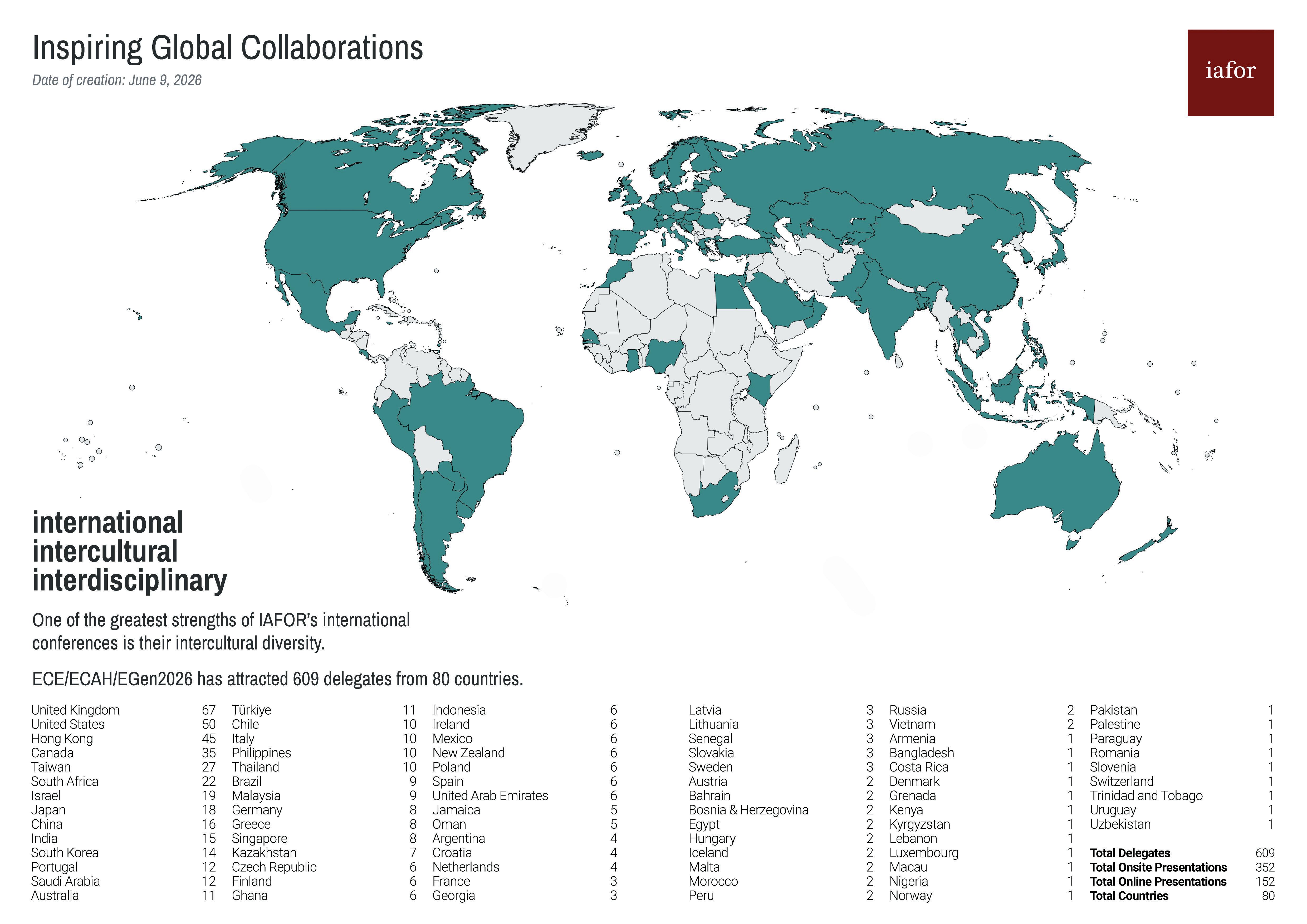
We expect over 600 delegates from 80 countries to join us in this great city, which has long attracted scholars, academics, and thinkers, drawn by its intellectual and cultural openness and diversity. I would like to acknowledge the 200th birthday this year of our partner, University College London (UCL). Founded in 1826, it was the first secular university in England, and its openness to peoples and ideas has been key to its great and continuing success. It is into the history of this city and this university that we write that of our conference, as we seek to come together across divides of nation, culture, and discipline, in the spirit of friendship and collaboration, and in search of the international personal and professional synergies and connections that make being a member of the international academy such a rewarding experience. On a personal note, it is always particularly special to be able to bring The International Academic Forum to the city of my birth, and to the University of London, of which I am an alumnus.
I would like to thank the International Academic Board, local conference committee, reviewers, and staff for their work in putting together the exceptional programme this year, and to the presenters and audience, who have come from the four corners of the world, to make this event possible.
An IAFOR conference is programmed to give presenters and audience alike the opportunity to engage with other disciplines, and in doing so both present and rediscover their own. You will have the opportunity to present both your research and your fields of specialisation, and expose your approaches and methodologies to those from different areas. This will require both strong communication skills, but also an openness to engagement and challenge from sometimes unlikely and often enlightening new perspectives.
We have so much to learn from each other, and I encourage your active participation throughout the conference.
I look forward to meeting you all.
Warmest regards,
Dr Joseph Haldane Chairman & CEO, The International Academic Forum (IAFOR)
Professor, European Center for Peace and Development (ECPD), United Nations University for Peace
Guest Professor, Osaka School of International Public Policy, The University of Osaka, Japan
Visiting Professor, Doshisha University, Japan
Visiting Professor, The University of Belgrade, Serbia
Member, Expert Network, World Economic Forum
Become an IAFOR Member
IAFOR provides an enriching personal and professional environment for academics and scholars of all ages and backgrounds to exchange and contribute to interdisciplinary and intercultural dialogue that informs and is informed by their own cultural and disciplinary background and experiences. We are able to do this thanks to our extraordinary network of individuals and institutions around the world who support our work and help shape our events globally. We particularly emphasise the nurturing and support for emerging academics from an array of different backgrounds, and aim to provide opportunities for them to seek advice, support and guidance, as well as offering mid-career and more established academics opportunities to forge working relationships beyond their traditional disciplinary ambitions.
In our current world where division and strife are often reinforced and played out in national and local contexts, and political posturing frequently seeks to ostracise and demonise, IAFOR is committed to working across cultural and national borders, and to work to bring people together through dialogue. We believe that mature human interaction and academic and cultural exchange are essential to offering positive versions of the future, where cooperation happens between individuals and institutions who share a commitment to listen, to reach out and bridge divides, and to contribute to good global citizenship, and to making the world a better place.
By becoming a member of IAFOR, you will become part of an extraordinary network and a stakeholder in shaping the IAFOR mission and facilitating international exchange, encouraging intercultural awareness, and promoting interdisciplinary discussion in the hope and expectation of generating and sharing new knowledge. Join us now in this growing global organisation, and help make a difference today.
To learn more about IAFOR membership, please visit:
iafor.org/membership
D ate of C r eati on: June 9 , 2 0 2 6
Created with MapChart
Conference Venue: Thursday, July 9 to Friday, July 10
SOAS University of London
Address: Thornhaugh Street, Russell Square, London WC1B 5DQ
Conference Venue: Saturday, July 11 to Sunday, July 12
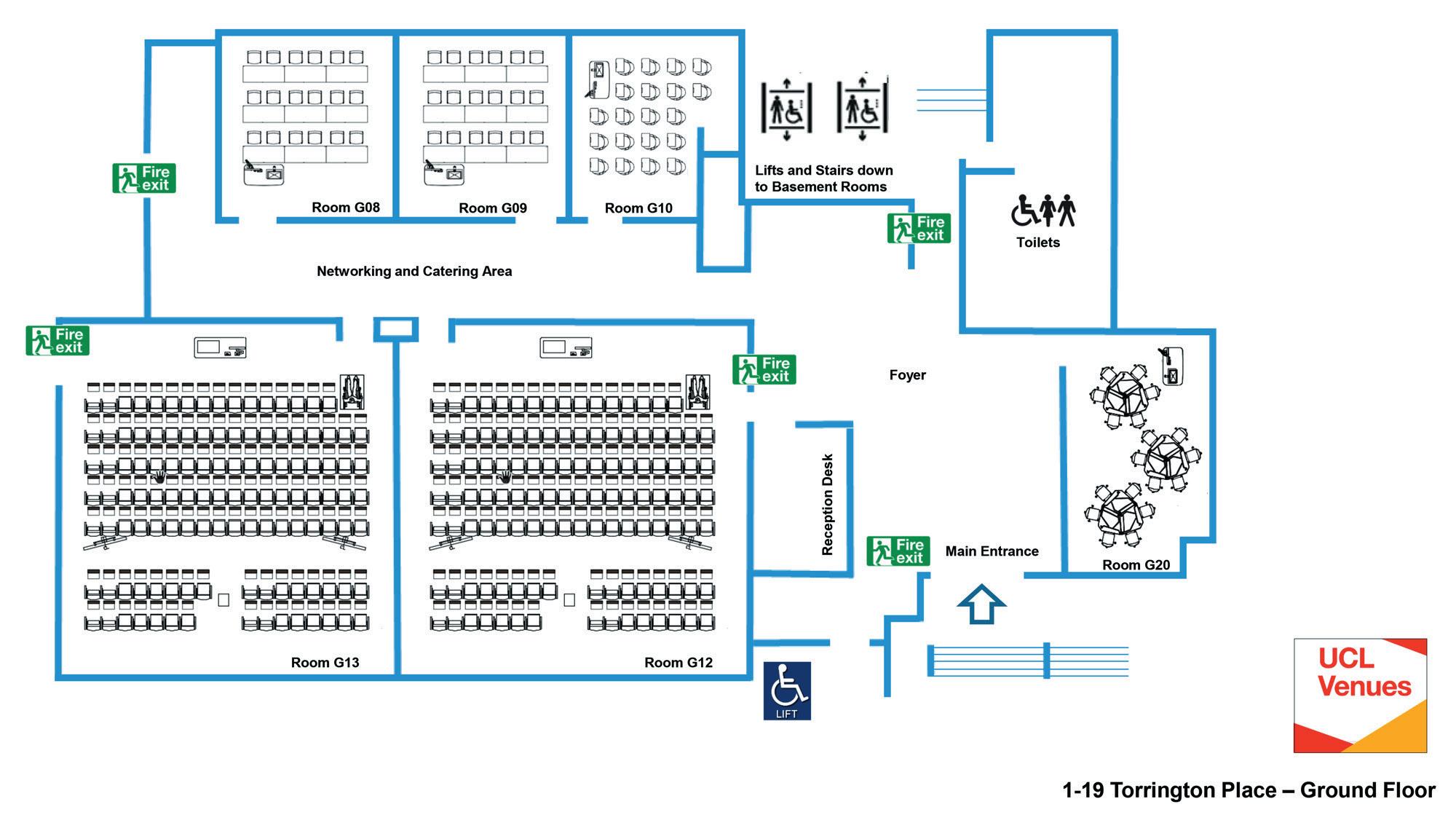
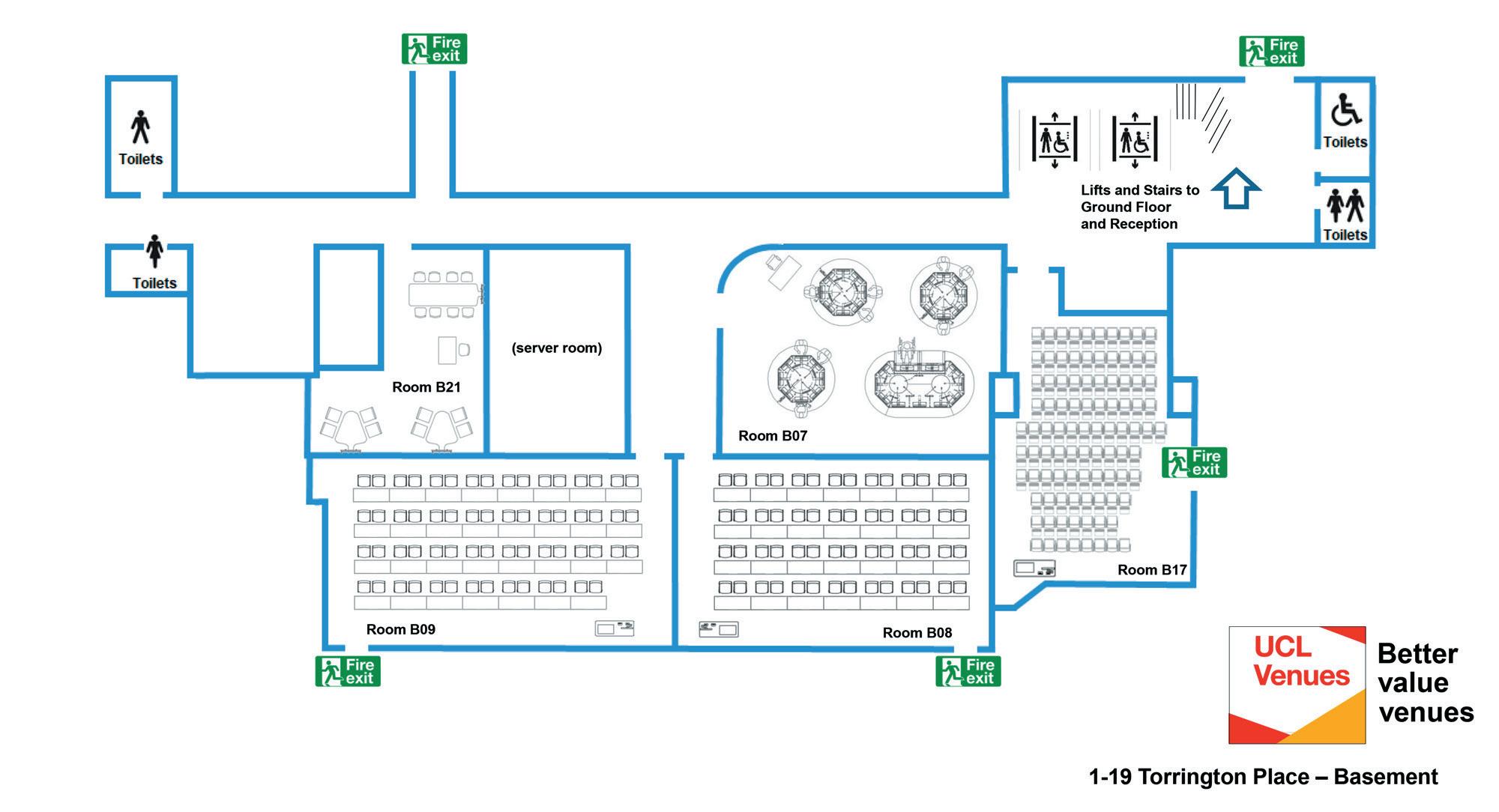
Torrington Place Training Centre, University College London
Address: 1-19 Torrington Place, Fitzrovia, London WC1E 7HB
Conference Venue: Thursday, July 9 to Sunday, July 12
Bloomsbury, London
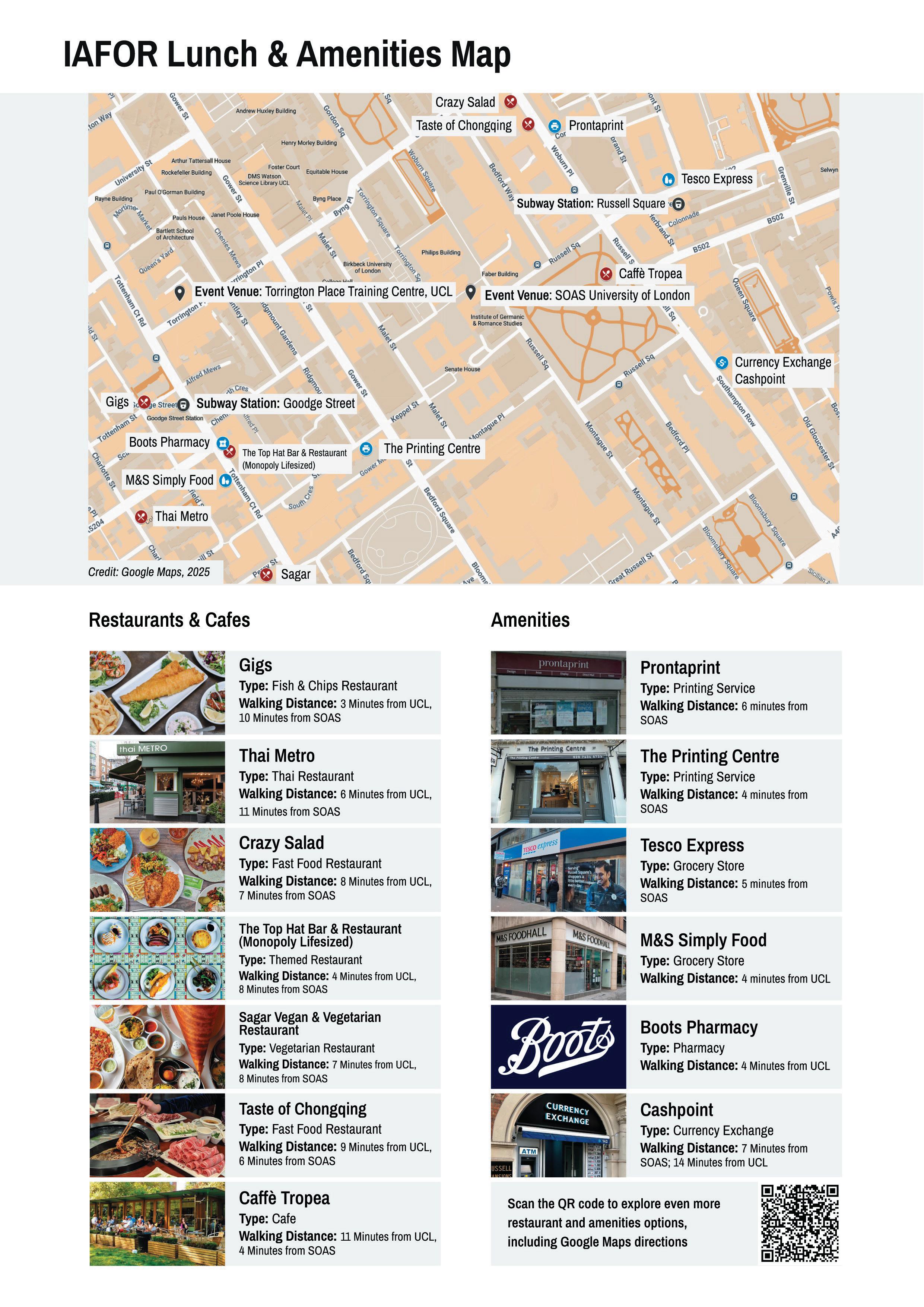
Suggested Lunch Options and Local Amenities
Please note that lunch is not provided. This map offers suggestions on where you can eat around the conference venues, as well as the locations of local amenities.
July 9 | All times are British Summer Time (UTC+1)
Thursday at a Glance
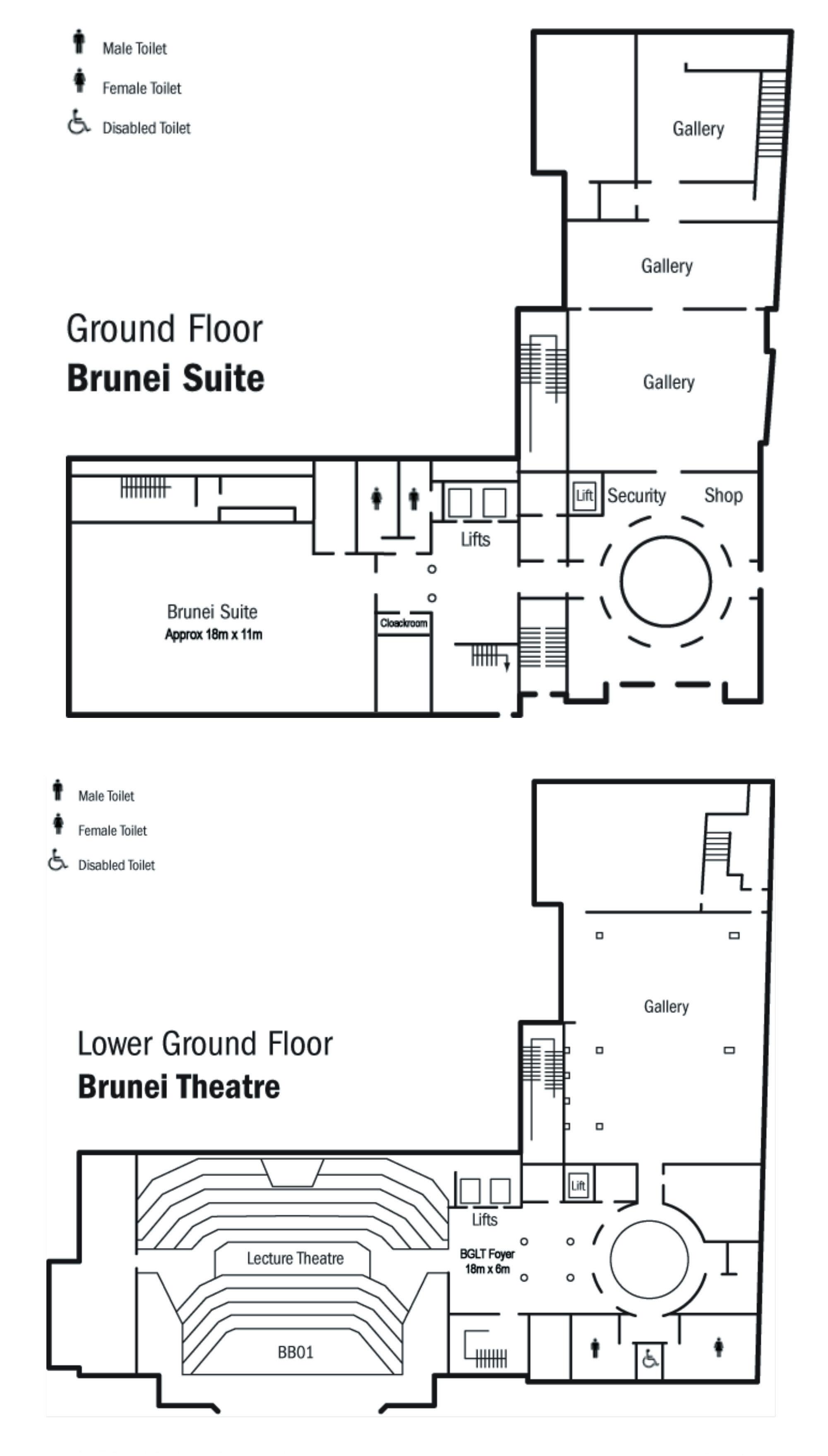
Conference Venue: SOAS University of London, Brunei Gallery Building
13:45-14:45 The Forum | Brunei Gallery Lecture Theatre
The Role of the Arts & Humanities in Troubling Times: Part III
Alfonso J. García-Osuna, Hofstra University, United States (Respondent)
Melina Neophytou, IAFOR, Japan (Moderator)
The Forum is a plenary session designed as a platform for international, intercultural, interdisciplinary—and inclusive—discussions, joining experts and practitioners alike in an open dialogue format. Come share your thoughts and experiences as global educators and researchers.
July 9 | All times are British Summer Time (UTC+1) Thursday at a
Glance
Conference Venue: SOAS University of London, Brunei Gallery Building
14:50-15:40 Cultural Workshop | Brunei Gallery Lecture Theatre
The Living Tradition of British Folk Song
British folk guitarist and songwriter Chris Cleverley will lead delegates across three centuries of folk song from the British Isles.
This session provides an overview of what to expect at the conference, including guidance on preparing your presentation, publishing opportunities, and ways to engage with IAFOR.
Paul Chamberlain, Royal College of Art, United Kingdom
11:50-12:05 Q&A Session
12:05-13:40 Extended Break
July 10 | All times are British Summer Time (UTC+1)
Friday at a Glance
Conference Venue: SOAS University of London, Brunei Gallery Building
13:40-14:05 Keynote Presentation | Brunei Gallery Lecture Theatre & Online Designing With and For the Living World Justin McGuirk, the Design Museum, United Kingdom 14:05-14:20 Q&A Session
July 13 | All times are British Summer Time (UTC+1)
Monday at a Glance
Conference Venue: Online via Zoom
08:55-09:00 Message from IAFOR
09:00-10:00 The Forum (Online) | Live-Stream Room 1
The Role of the Arts & Humanities in Troubling Times: Part III Apipol Sae-Tung, IAFOR, Japan (Online Moderator)
The Forum is a plenary session designed as a platform for international, intercultural, interdisciplinary—and inclusive—discussions, joining experts and practitioners alike in an open dialogue format. Come share your thoughts and experiences as global educators and researchers.
10:00-10:15 Break
10:15-11:55 Online Parallel Session 1
Live-Stream Room 1: ECE | Educational Policy, Leadership and Administration
Live-Stream Room 2: ECE | Learning Experiences and Outcomes
Live-Stream Room 3: ECE/ECAH | Knowledge Creation, Preservation and Access
Live-Stream Room 4: ECE/ECAH | Counselling, Guidance and Adjustment in Education
Live-Stream Room 5: ECAH | Teaching, Learning and Practices in the Arts
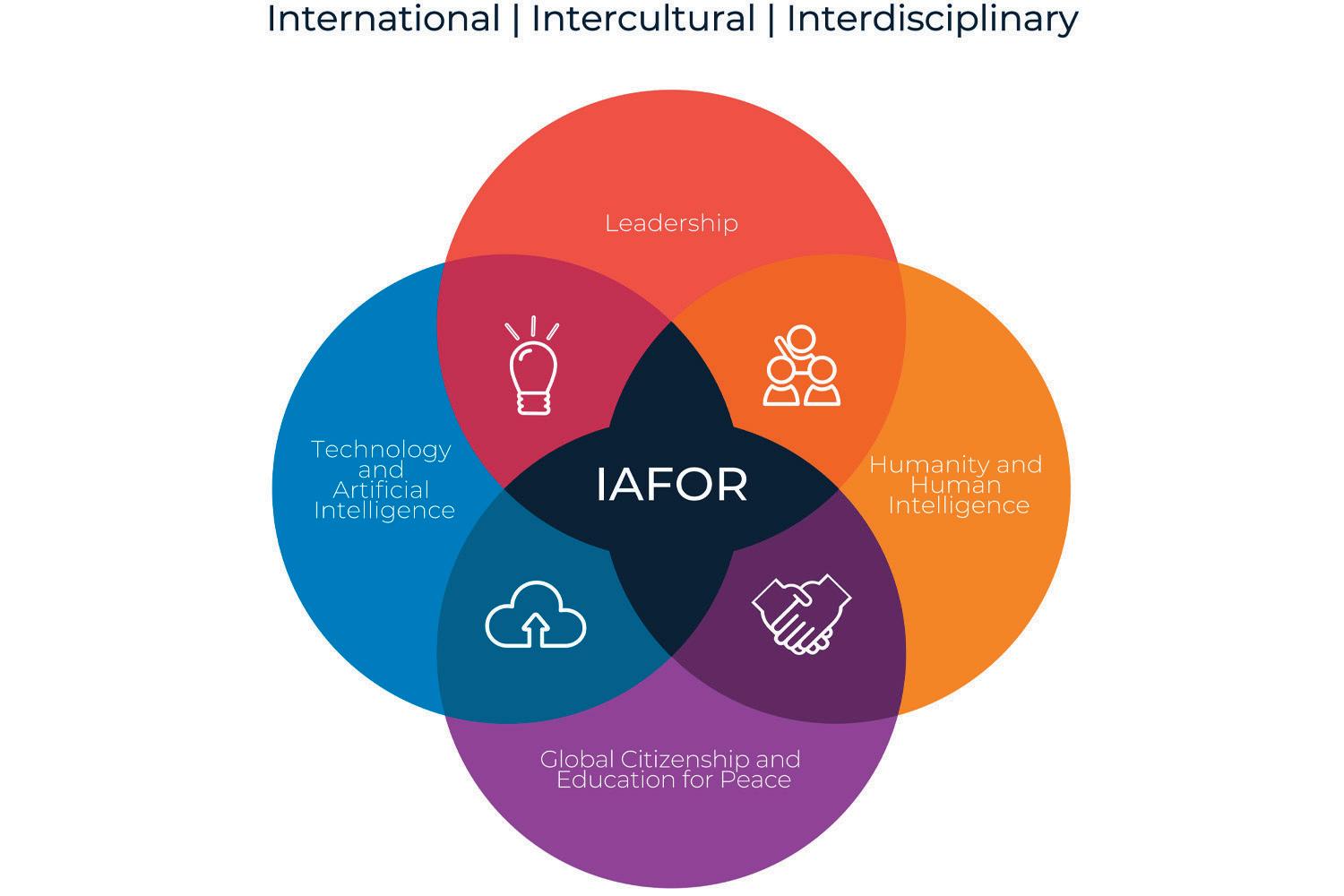
IAFOR’s conference programme provides an essential comparative and contrastive space for people to engage in multidisciplinary research across borders of nation, culture, discipline, and professions. We encourage mixed approaches and methodologies, combining theory and practice between and across the disciplines, and we look to harness the collective intelligence of our International Academic Forum in addressing some of the most pressing issues of our time. Through the implementation of new formats in our conference programme over the last year, including Intelligence Briefings, Keynote Interviews, and The Forum, we gathered insights into what has been discussed at the theoretical and policy levels, identify the challenges, and the outlook for best practices in tackling global contemporary issues, which we have identified as the themes for 2025-2029. Our four themes can be seen as standalone themes, but they are also very much in conversation with each other. Themes may be seen as corollaries, complementary, or in opposition/juxtaposition with each other. The themes can be considered as widely as possible and are designed, in keeping with our mission, to encourage ideas across the disciplines.
1. Technology and Artificial Intelligence
Our first theme examines the rapid pace of technological advancements, aided most particularly by those driven by artificial intelligence and its enormous and growing impact in all fields.
2. Humanity and Human Intelligence
Our second theme asks us which principles, values, and attributes we wish to encourage, protect, and nurture and how we accomplish this. Technological advancements constantly ask us to reconsider and reimagine what it means to be human, including questions regarding communication, creativity, inclusivity, ethics, and care.
3. Global Citizenship and Education for Peace
This theme prompts us to consider our existence and coexistence with each other, within our communities and places of belonging, and with peoples of different countries, cultures, and backgrounds, as well as with our environment and our planet. It includes engagement with enormous issues facing us beyond borders, such as peace and human security, climate change, etc.
4. Leadership
The final theme recognises the continuing importance of leadership as a skill, particularly in light of difficult times, where recognising and encouraging best practices in leadership at all levels of society is critical. Encouraging leadership at the government level, in businesses, and within institutions of all sizes represents the engine of change.
Conference Themes in Theory, Policy, and Practice
Many theories are born and initially tested in the academy, informing discussions in the public sphere that influence policy. IAFOR represents a unique combination of engagement emerging from the collaborative efforts of senior policymakers, administrators, and individuals working on the ground or in the field. IAFOR has made this rare combination of equitable theoretical and practical exchanges the standard for our organisation and represents a valuable model for how science should be done.
We will develop conference and institutional programmes and publications around these themes as well as capacity building sessions for our conference programme over the next five years. It is our aim with the implementation of these themes, alongside the implementation and continuing refinement of new formats, to best harness the unique arena IAFOR and its network have built in regards to pressing issues of today and the future.
General Information
This QR code, also located on the back of your name badge, contains the information you need to attend the conference, including:
- Full Conference Schedule
- The ‘Find a Presentation’ Feature
- Conference Survey
- Suggested Lunch Options
- Online and Virtual Presentations
- Presentation and Session Chair Guidelines, and more.
Please scan this QR code or visit https://linktr.ee/iaforlondon
Check-in & Information Desk
You will be able to pick up your name badge at the Conference Check-in & Information Desk at the times listed below. If you have any questions or concerns, IAFOR staff and volunteers will happily assist you in any way they can.
Please note that check-in is required at the registration desk each day of the conference.
Thursday, July 9 | 09:00-16:00 – SOAS, Brunei Gallery Suite (Ground Floor)
Friday, July 10 | 08:30-16:00 – SOAS, Brunei Gallery Suite (Ground Floor)
Saturday, July 11 | 09:00-17:00 – UCL, Torrington Place Training Centre
Sunday, July 12 | 09:00-16:00 – UCL, Torrington Place Training Centre Monday, July 13 | No in-person check-in
Name Badges
Wearing your badge is required for entrance to the sessions. You must wear your badge at all times.
Refreshment Breaks
Complimentary coffee, tea, water, and light snacks will be available during the scheduled coffee breaks. Please note that lunch is not provided.
Connecting to WiFi
Free WiFi for light use like reading emails and web browsing is available at the conference venues. Streaming video will not be possible. If your presentation includes video, please bring it on a file that can be played without an internet connection.
Wifi at both SOAS University of London and University College London Torrington Place can be accessed by logging in or creating a free account with https://www.sky.com/wifi.
General Information
Conference Schedule
The full conference schedule (including abstracts) and conference programme are available on the conference website, accessible through the QR code located on the previous page as well as the back of your nametag.
A full list of pre-recorded virtual video presentations and virtual poster presentations will be on the conference website during and after the conference. We encourage you to scan the QR code to watch these presentations and provide feedback through the video comments.
Conference Catch-up
All Keynote Presentations and live-streamed sessions will be recorded and uploaded to the Conference Catch-Up (On-Demand) page via Vimeo. The Catch-Up page will be publicly available after the conference until Thursday, August 13, 2026.
Certification
Corresponding authors will be able to download Certificates of Presentation for all presenters, as well as Session Chair certification and reviewer certification for Senior Reviewers, by logging in to the submission page. Certificates will be available from Thursday, July 23, 2026
Certificates of Participation for non-presenters, as well as reviewer certification for Review Committee members, will be sent out by email in a PDF format within two weeks of the Conference's conclusion.
Photo/Recording Waiver
Human interaction through networking, and dissemination of this knowledge, is at the core of what IAFOR does as an academic research organisation, conference organiser and publisher. As part of the archiving of the conference event, IAFOR takes photos in and around the conference venue, and uses the photos to document the event. This also includes the filming of certain sessions. We consider this documentation important and it provides evidence of our activities to members, partners and stakeholders all over the world, as well as to current and potential attendees like you. Some of these photos will therefore appear online and in print, including on social media. The above are the legitimate interests of the organisation that we assert under the European Union law on General Data Protection Regulation (GDPR). Under this legislation, you have an absolute right to opt out of any photo. We are committed to protecting and respecting your privacy.
Read our full privacy policy – iafor.org/about/privacy-policy
IAFOR Publications
Conference Proceedings
IAFOR Conference Proceedings are Open Access research repositories that act as permanent records of the research generated by IAFOR conferences. The Conference Proceedings are published online in the IAFOR Research Archive (papers.iafor.org). All accepted authors who present at the conference may have their full paper published in the online Conference Proceedings. For further details of how to submit your paper, please visit the Conference website.
Please note that:
1) Papers published in the Conference Proceedings cannot be considered for publication in IAFOR journals.
2) IAFOR's Conference Proceedings are not peer-reviewed and are not 'Scopus-indexed'.
Full text submission is due by Tuesday, August 11, 2026, through the online system. The proceedings will be published on Wednesday, September 23, 2026
Conference Reports and Intelligence Briefings (ISSN: 2759-4939)
IAFOR produces conference reports that provide concise and coherent overviews of the ideas, conversations, and areas of research presented at our conferences. These include key themes and takeaways, referencing programme(s), speakers and attendees, which are curated and archived for both those who attended the event, as well as those who did not. Readers can stay abreast of many of the developments and insights provided by the conference, and the collective intelligence of its participants. Links to video recordings of the presentations and interviews references are included where possible, encouraging readers to engage further with the conference material and presentations. Each report contains photos of the event, as well as key statistics pertaining to general attendance and demographics.
Read and download the Conference Reports and Intelligence Briefings, and access Conference Photo Galleries from the past conferences from the QR code on the back of your name badge. You will receive a notification email when the Conference Photos and the Conference Report and Intelligence Briefing of this conference are available.
THINK Magazine: The Academic Platform
THINK is an online magazine presenting the latest in interdisciplinary research and ideas from some of the world’s foremost academics and thought leaders. As a publishing platform, THINK makes selected research presented at IAFOR’s international, intercultural, interdisciplinary conferences freely available to a global academic audience. Content on THINK spans everything from the arts to psychology, politics to film, law to education and history to technology, presenting research, ideas and perspectives from every corner of the globe. The format is varied, encompassing full research papers, long-form journalism, opinion pieces, creative writing, interviews, podcasts, video, photography and more. To learn more about THINK, please visit think.iafor.org or access the webpage from the QR code on the back of your name badge.
IAFOR Journals
IAFOR's Open Access Journals
IAFOR publishes several editorially independent, Open Access journals across a variety of disciplines. They conform to the highest academic standards of international peer review, and are published in accordance with IAFOR’s commitment to make all of our published materials available online.
How are papers submitted?
Submissions should be original, previously unpublished papers which are not under consideration for publication in any other journal. All articles are submitted through the submission portal on the journal website and must conform to the journal submission guidelines.
How does IAFOR ensure academic integrity?
Once appointed by IAFOR’s Publications Committee, the Journal Editor is free to appoint his or her own editorial team and advisory members, who help to rework and revise papers as appropriate, according to internationally accepted standards. All papers published in the journal have been subjected to the rigorous and accepted processes of academic peer review. Neither editors nor members of the editorial team are remunerated for their work.
Where are the journals indexed?
IAFOR Journals are indexed in Scopus, Web of Science, DOAJ, ERIC, MIAR, TROVE, CiteFactor and EBSCO, SHERPA/ROMEO and Google Scholar. DOIs are assigned to each published issue and article via Crossref. Please note that indexing varies from journal to journal.
What’s the reach?
Each of our journal issues is viewed thousands of times a month and the articles are frequently cited by researchers worldwide, largely due to our dedicated marketing efforts. Each issue is promoted across our social media platforms and to our tailored email marketing lists. On average, each journal publishes biannually.
What’s the cost?
IAFOR Journals are Open Access publications, available online completely free of charge and without delay or embargo. Authors are not required to pay charges of any sort towards the publication of IAFOR Journals and neither editors nor members of the editorial boards are remunerated for their work.
How are IAFOR Journals related to IAFOR Conferences and Conference Proceedings?
IAFOR Journals reflect the interdisciplinary and international nature of our conferences and are organised thematically. A presenter can choose to publish either in Conference Proceedings or submit their manuscript to the corresponding IAFOR Journal for review.
Current IAFOR Journal titles include
IAFOR Journal of Cultural Studies (Scopus Indexed)
IAFOR Journal of Education (Scopus & Web of Science Indexed)
IAFOR Journal of Literature & Librarianship (Scopus Indexed)
If you would like more information about any of IAFOR’s publications, please visit iafor.org/publications
Networking: Connecting with Other Delegates
IAFOR conferences are designed to offer countless networking opportunities to make and consolidate personal and professional connections, reconnect with colleagues, and meet new friends in a spirit of convivial collegiality. Whether in the plenaries, parallel sessions, workshops, information sessions, or cultural events, we encourage your active and open participation throughout the conference, remembering the importance of the spaces in-between; over a cup of coffee or a glass of wine, or the continuation of conversations and relationships outside the conference. We encourage you to network at the conference during the Welcome Reception and the Cultural Workshop, as well as during the Networking Coffee Breaks and Extended Breaks
In addition, on Monday, July 13, you are invited to join the Online Presentation Sessions and the Online Forum discussion to explore even more presentations and opportunities to make connections for future collaborations. While conferences serve as a platform to present your work and make connections, please be mindful of the other delegates’ privacy and their consent to provide personal information.
Networking Spaces
The conference venues feature several comfortable spaces which serve as perfect locations for networking during the conference. These spaces provide an excellent opportunity to meet new people, connect with familiar faces, exchange ideas, and explore possible collaborations. We encourage you to make use of these spaces to connect with fellow attendees for a quick coffee or a longer chat to broaden your network and enhance your conference experience.
Missed the opportunity to make connections?
You can connect with other delegates by using our ‘Find a Presentation’ feature. This feature can be accessed by scanning the QR code provided on the back of your name badge, and is also available on the conference website. You can search by presentation title, submission number, the presenter’s name, or their affiliation. From there, you can look up the presenter’s bio and connect with them through their preferred contact channel.
In addition to the ‘Find a Presentation’ online feature, presentation schedules are also displayed in front of presentation rooms.
Networking Events
Cultural Workshop | The Living Tradition of British Folk Song
British folk guitarist and songwriter Chris Cleverley will lead delegates across three centuries of folk song from the British Isles.
Time & Date: Thursday, July 9, 2026 | 14:50-15:40
Location: SOAS, Brunei Suite (Ground Floor)
Ticket Price: Free to attend
Admission is included in the conference registration fee and all registered onsite delegates are invited to participate in this cultural workshop.
Welcome Reception | SOAS, Brunei Suite (Ground Floor)
Join fellow delegates for a drink or two at the conference Welcome Reception. Held alongside a Conference Poster Session, this event provides a great opportunity for delegates to network and get to know each other.
Time & Date: Thursday, July 9, 2026 | 15:45-16:45
Location: SOAS, Brunei Suite (Ground Floor)
Ticket Price: Free to attend
Admission is included in the conference registration fee and is only open to registered conference delegates.
Conference Dinner | The Savile Club
The Conference Dinner will be held at London’s prestigious Savile Club. The event will feature a threecourse meal prepared by the Club's Michelin-starred Chef, Michael James.
Time & Date: Thursday, July 9, 2026 | 19:00
Location: Savile Club
Availability: 100 persons
Ticket Price: 125 GBP
This is an optional ticketed event. Only delegates with pre-purchased tickets are able to attend the Conference Dinner. Please note that a dress code is required for entry to the Savile Club.
Networking Event | Traditional British Pub Experience
Join fellow delegates for an authentic evening of English hospitality at our Traditional British Pub Experience, a relaxed and sociable event that offers a taste of city life in the UK’s classic communal space, the London pub. Delegates will convene at the Marquis Cornwallis, a 19th-century pub in the heart of Bloomsbury, after the conference plenary sessions for a night of good food, good conversation, and a touch of friendly competition.
Time & Date: Friday, July 10, 2026 | 18:30-22:00
Location: The Marquis Cornwallis
Availability: 60 persons
Ticket Price: 50 GBP
This is an optional ticketed event. Only delegates with pre-purchased tickets are able to attend.
Academic Grant & Scholarship Recipients
IAFOR's grants and scholarships programme provides financial support to PhD students and early career academics, with the aim of helping them pursue research excellence and achieve their academic goals through interdisciplinary study and interaction. Our warmest congratulations go to the following scholarship recipients who have been selected to receive grants and scholarships to present their research at the conference.
Stuart D.B. Picken Scholarship Recipient
Professor Stuart D. B. Picken was a cherished friend and an inspiration to IAFOR and its community of supporters. In honour of Professor Picken and his dedication to academia, the ideals of intercultural understanding, and the principles of interdisciplinary study, IAFOR created the Stuart D. B. Picken Scholarship, an award supported by the Stuart D. B. Picken Memorial Fund.
This award is given to PhD students and early career academics who are in need of funding to complete their research, and whose work demonstrates excellence in the core values of academic rigour, intercultural sensitivity, and interdisciplinarity.
About Stuart D.B. Picken (1942-2016)
The late Reverend Professor Stuart D. B. Picken began his academic career as a Rotary Scholar in Japan. A native of Scotland dedicated to religious studies, he became fascinated by Japanese culture and the practice of Shinto. Whether in his research or teaching, Reverend Professor Picken devoted much of his life to increasing understanding between Japan and the West, and in 2007 he was recognised with the Japanese Order of the Sacred Treasure for his contribution to the promotion of friendship and mutual understanding between Japan and the United Kingdom. From 2009 he was the founding Chairman of The International Academic Forum (IAFOR), where he helped nurture and mentor a new generation of academics and facilitate intercultural and international understanding.
Melike Yozgatli Gülüm (Oral Presentation)
107592 | Does More Coursework Mean Better Preparation? Examining Course Availability and Opportunities to Learn Inclusive Practices in Teacher Education
Dr Melike Yozgatlı Gülüm is a researcher and currently works at the Directorate General for Special Education and Counseling Services within the Ministry of National Education of Türkiye. She holds a PhD in Special Education from the University of Kentucky, United States, with an emphasis on learning and behavior disorders. Her research examines how teacher preparation programs structure opportunities to learn inclusive practices, including the integration of coursework, faculty perspectives, and program models. She has professional experience in educational research, teacher education, and policy-related work, and has been involved in national and international research projects related to inclusive education. Her broader research interests include inclusive teacher preparation, professional learning, and equity in educational contexts.
Academic Grant & Scholarship Recipients
ECE2026 IAFOR Scholarship Recipients
Gamze Erdem Coşgun (Virtual Presentation)
107825 | Between Promise and Caution: Pre-Service EFL Teachers Integrating GenAI into Microteaching
Dr Gamze Erdem Coşgun is currently an Assistant Professor at Amasya University, Türkiye. She received her bachelor’s degree in ELT from Boğaziçi University, and her MA and PhD degree in ELT from Middle East Technical University.
Malak Kanaan (Virtual Presentation)
107342 | Towards Immersive Training for Inclusive Education: Co-designing a Virtual Reality Application for Educators
Ms Malak Kanaan is a PhD candidate in educational technologies. Her work focuses on virtual reality, accessibility, and supporting teachers working with learners with ASD.
105812 | Pedagogical Technology Integration in ICT-Rich and ICT-Poor Community Learning Centres in South Africa
Mr Khethokwakhe Goodman Chonco is an academic manager and lecturer in the School of Education(Distance Learning) at STADIO Higher Education, where he oversees postgraduate programmes.
ECAH2026 IAFOR Scholarship Recipients
Peisen Ding (Oral Presentation)
108218 | Photomontage, Affective Fragments, and Urban Encounters
Peisen Ding is a sessional lecturer and PhD candidate in Art Education at the University of British Columbia, Canada. Peisen's research explores art practices engaging the built environment, identity, and affect within educational contexts.
Reza Tavakoliabandansari (Oral Presentation)
106919 | Interpretive Polarization in the Analysis of Iranian Governmental Murals: Between Cultural Continuity and Visual Authoritarianism
Mr Reza Tavakoliabandansari is a PhD Candidate at Sapienza University of Rome, Italy. His research interests include Iranian political iconography, state murals, and the intersection of visual culture & power.
Md Sidratul Muntaha (Virtual Presentation)
104191 | Architectural Nationalism and Spatial Justice: Reimagining Development and Indigenous Belonging in Post-2014 India
Mr Md Sidratul Muntaha is pursuing an MA in English Literature from Aligarh Muslim University, India. His work explores tribal literature, postcolonial studies, memory, and ecology.
EGen2026 IAFOR Scholarship Recipients
Sin Meun How (Oral Presentation)
107274 | Assessing Perceived Age-Friendliness in Klang Valley, Malaysia: A Multidomain, Multigenerational and Multiethnic Neighbourhood Assessment
Ms Sin Meun How is a PhD candidate in Urban Planning and Design at Universiti Putra Malaysia. Her research focuses on age-friendly environments, multigenerational planning, and subjective well-being.
Speakers, Keynote & Featured Presentations
All times are British Summer Time (UTC+1) Abstracts appear as originally submitted by the author. Any spelling, grammatical, or typographical errors are those of the author.
Plenary Speaker: Joseph Haldane
Welcome Address & Recognition of IAFOR Scholarship Winners
Joseph Haldane is the Founder, Chairman, and CEO of IAFOR. He is responsible for devising strategy, setting policies, forging institutional partnerships, implementing projects, and overseeing the organisation’s global business and academic operations.
Dr Haldane has a PhD from the University of London in 19th century French Studies (ULIP/RHUL), and has research interests in world history, politics, and education, as well as governance and decision-making.
In 2022, Dr Haldane was named Professor in the United Nations Peace University's European Center for Peace and Development (ECPD). From 2019 he has been also a Visiting Professor at Doshisha University, where he teaches Ethics and Governance in the Global MBA, and a Member of the World Economic Forum’s Expert Network for Global Governance since 2017.
Since 2015, he has been a Guest Professor at The Osaka School of International Public Policy (OSIPP) at The University of Osaka, having taught on the postgraduate Global Governance Course, and has been Co-Director of the OSIPP-IAFOR Research Centre, an interdisciplinary research centre situated within the university, since 2017. He is also a Member of the International Advisory Council of the Department of Educational Foundations at the University of Hawai'i Mānoa, United States.
From 2020 to 2025, Dr Haldane was an Honorary Professor of University College London (UCL), through the Bartlett School of Sustainable Construction. Earlier in his career, he held full-time faculty positions at the Université Paris-Est Créteil, Sciences Po Paris, and Nagoya University of Commerce and Business, as well as visiting positions at the French Press Institute in the Université ParisPanthéon-Assas and the Schools of Journalism of Sciences Po Paris and Moscow State University.
Professor Haldane has given invited lectures and presentations at universities and conferences globally, including at the United Nations headquarters in New York, and advised universities, NGOs, and governments on issues relating to international education policy, public-private partnerships, and multi-stakeholder forums. He was the project lead on the 2019 Kansai Resilience Forum, held by the Japanese Government through the Prime Minister’s Office, and oversaw the 2021 Ministry of Foreign Affairs commissioned study on Infectious Diseases on Cruise Ships.
From 2012 to 2014, Dr Haldane was Treasurer of the Chubu chapter of the American Chamber of Commerce Japan, and since 2015 has been a Trustee of HOPE International Development Agency Japan. He was elected Fellow of the Royal Asiatic Society in 2012 and the Royal Society of Arts in 2015. He lives in Japan and holds a black belt in Judo.
Artificial Intelligence (AI) is permeating education systems worldwide, reshaping teaching, learning, and assessment. Research shows that most university educators now use AI tools in their practice (Wang et al, 2026). Even those educators who choose not to use AI in their teaching still encounter AI use in their work, because of the large number of students choosing to use AI to carry out coursework (Digital Education Council, 2025). For academics, the use of AI raises fundamental questions about professional identity and power. AI adoption risks transferring pedagogical choices from educators to technologists, shifting teaching practice away from human-centred practice towards the management of data and technology. This presentation examines how educators draw on cognitive, affective, and social practices to support learning. Practices such as real-time sensemaking through student cues, purposive instructional design anticipating misconceptions, and creating emotional scaffolds that enable learning. While AI can assist with some tasks, it cannot replicate the professional judgment needed for effective teaching. Taking a wider perspective, this keynote will explore the effects of AI and data usage on professional agency, highlighting power shifts and vulnerabilities of people in different professions. Ways to navigate these vulnerabilities will also be discussed through forms of professional development that allow the negotiation of future work in ways that ensure AI adoption empowers human workers, rather than the AI being empowered by human work.
Allison Littlejohn
Professor Allison Littlejohn is Pro-Vice Provost for Grand Challenge Data Empowered Societies and Professor of Learning and Technology in the UCL Knowledge Lab at University College London (UCL), United Kingdom. Her research expands our understanding of the socio-technical impacts of digital transformation at work and how it impacts work and learning. Professor Littlejohn was previously Director of the UCL Knowledge Lab, University College London (2020 -2025); Dean (Learning & Teaching) at the University of Glasgow, United Kingdom (2019-20); Academic Director for Digital Innovation at the Open University, United Kingdom (20152019); and Professor and Director of the Caledonian Academy at Glasgow Caledonian University, United Kingdom (2006-2015). She holds the Ruth Wong Visiting Professorship at the National Institute of Education, Singapore.
Keynote Presentation: Lee Jerome
What Can Teachers Do to Promote Democratic Citizenship?
This lecture argues that teachers are uniquely placed to help defend democracy and considers what we can reasonably expect teachers to do and what the evidence suggests about their chance of success. The presentation will start with a brief outline of some of the key contemporary challenges and explore how teachers can exercise agency, even within constrained policy environments. Drawing on a review of the international research literature and recent survey evidence, the presentation will demonstrate that education can strengthen young people’s knowledge and understanding of democracy; their ability to engage in deliberative dialogue; and their willingness to act as active citizens. The session will end with some examples of how schools can support these outcomes through classroom practice, whole-school culture, and community engagement, suggesting that such positive outcomes can be achieved within existing curriculum and policy constraints in many countries.
Lee Jerome
Professor Lee Jerome has worked in secondary schools as a history and sociology teacher, in the charity sector running citizenship projects, and in universities teaching on a variety of courses from undergraduate to doctoral programmes. His main interests are linked to citizenship education, children's rights education, and the work of teachers. He is editor of the academic journal Education, Citizenship and Social Justice and his books include England’s Citizenship Education Experiment (2012), Children’s Rights Education in Diverse Schools (2021 with Hugh Starkey), Votes at 16 (2025 with Ben Kisby) and Educating for Citizenship (forthcoming). Professor Jerome’s recent projects include leading a group of student researchers to develop proposals for the national curriculum review in England, a 3-year student survey of citizenship education in secondary schools, and an international project to explore student-led approaches to learning about divisive contemporary issues.
The Forum | The Role of the Arts & Humanities in Troubling Times: Part III
Alfonso J. García-Osuna (Respondent), Melina Neophytou (Moderator)
Monday, July 13, 2026 | 09:00-10:00 | Online via Zoom
Education, and the arts and humanities in particular, act as a positive force in framing and understanding the many contentious issues we collectively face in the pursuit of a sustainable world. In times that are increasingly uncertain, hostile, and contentious, and in which national governments focus on productivity, efficiency, technology, and security, considerations of humanity, human intelligence, and the wider common good are often ignored.
In Part I of this Forum series held at May’s ACAH/ACCS/ACSS2026 event in Tokyo, delegates discussed whether the arts and humanities have made a sufficient case for their value to governments and wider society today. One of the main conclusions was that the case has always been there, but the problem lies in communication.
In Part II, held in June at the PCE/PCAH2026 event in Paris, participants discussed how we can best communicate the value of the arts and humanities to those who know about it but may be more inclined towards short-term achievements, financial stability, progress, and growth.
In Part III of this series, this Forum session invites participants to build on Parts I and II and the words and concepts identified, to resonate and convince, and to discuss possible action plans.
Alfonso J. García-Osuna (Respondent)
Professor Alfonso J. García-Osuna has taught at Hofstra University and at City University of NY-Kingsborough, United States, for over 35 years. He specialises in mediaeval and early modern literature, receiving his PhD from the Graduate School of the City University of New York in 1989. He has completed postdoctoral work at the University of Valladolid, Spain, has published six books, and is a frequent contributor to specialised journals. Additionally, Professor García-Osuna is the editor of the IAFOR Journal of Arts and Humanities
Professor García-Osuna received primary and secondary education in Las Palmas in the Canary Islands, the place where his family originated and where he grew up. An avid cyclist, he has completed the Road to Santiago, an 867-kilometre route through northern Spain, eight times.
Melina Neophytou (Moderator)
Dr Melina Neophytou is the Academic Operations Manager at IAFOR, where she works closely with academics, keynote speakers, and IAFOR partners to shape academic discussions within The Forum, bring conference programmes together, refine scholarship programmes, and build an interdisciplinary and international community. She is leading various projects within IAFOR, notably The Forum discussions and the authoring of Conference Reports and Intelligence Briefings, and she oversees the Global Fellows Programme.
Born in Germany and raised in Cyprus, Dr Neophytou received her PhD in International Development from Nagoya University, Japan, in 2023, specialising in political sociology, the welfare state, and contentious politics. She received an MA in International Development from Nagoya University, with a focus on Governance & Law, and a BA in European Studies from the University of Cyprus, Cyprus.
Dr Neophytou’s research interests currently focus on how Artificial Intelligence (AI) is changing the relationship between state and society. Her current work examines technologies such as facial recognition (FRT) and biometric surveillance, and how these tools impact freedom of expression, protest, and social policy.
Apipol Sae-Tung (Online Moderator)
Apipol Sae-Tung is an Academic Coordinator at IAFOR, where he contributes to the development and execution of academicrelated content and activities. He works closely with the Forum’s partner institutions and coordinates IAFOR’s Global Fellowship Programme. His recent activities include mediating conference reports for the Forum’s international conference programme and facilitating the IAFOR Undergraduate Research Symposium (IURS).
Mr Sae-Tung began his career as a Program Coordinator for the Faculty of Political Science at Chulalongkorn University, Thailand. He was awarded the Japanese Government’s MEXT Research Scholarship and is currently pursuing a PhD at the Graduate School of International Development, Nagoya University, Japan. His research focuses on government and policy analysis, particularly on authoritarian regimes. Mr Sae-Tung holds an MA in International Relations and Diplomacy from Thammasat University, Thailand, where he studied foreign policy analysis and Thailand-China relations. He also holds a BA in History from the same institution.
Dr James W. McNally is the Emeritus Research Scientist for the NACDA Program on Aging, located in the Institute for Social Research at the University of Michigan, United States. He was trained initially in forensic anthropology at the University of Maryland and then in formal demography at Georgetown University. As part of this PhD work, Dr McNally was awarded the first minor degree in social gerontology from the Population Studies and Training Center at Brown University, followed by a two-year postdoctoral appointment examining policy applications of health data at Syracuse University’s Center for Policy Research. After teaching at Brown University as an Assistant Research Professor, Dr McNally directed the NACDA Program on Aging from 1998 to 2025, building an internationally recognised collection of seminal studies on the aging lifecourse, health, retirement, and international aspects of ageing. In addition to lifecourse research, he has spent much of his career addressing mechanisms to maintain and strengthen family support networks, focusing on the needs of frail or cognitively impaired elders, presenting on these issues in the United States and internationally. Dr McNally serves on the International Academic Board of IAFOR.
Dr Evangelia Chrysikou, RIBA is Associate Professor within the Bartlett School of Sustainable Construction at University College London, United Kingdom, and Founder/Programme Director of the university’s MSc Healthcare Facilities. A multi-awarded RIBA architect and healthcare planner, Dr Chrysikou has published widely and won several prestigious grants and fellowships from international organisations, including Horizon 2020, UKRI, Wellcome, British Academy, Royal Society of New Zealand, and the Sasakawa Foundation. Her research interests lie at the spectrum of inclusion in relation to design, spanning across the disciplines of built environment, health, digital technologies and the social sciences. Dr Chrysikou is a member of the National Accessibility Authority, Hellenic Republic by invitation from the Greek Prime Minister, and a member of the Urban Land Institute’s (ULI) Life Sciences and Healthcare Council Leadership Committee. She was the coordinator of the Environment Section of the EIPonAHA, EU, and has worked as a consultant for international government bodies such as the Japanese MOFA, Peru Reconstruction Mechanism, and the British Government for projects related to healthcare planning and architecture. She was elected Vice-President of the Urban Public Health section of EUPHA in 2018.
Population ageing represents one of the greatest scientific, societal, and public health challenges of the 21st century. While ageing and dementia research has traditionally focused on decline, disease, and dependency, there is increasing recognition that resilience, adaptation, and prevention are equally important for understanding healthy ageing and maintaining brain health across the lifecourse. This keynote will explore how interdisciplinary approaches across behavioural science, neuroscience, public health, education, and community research can help reshape the way we think about ageing and dementia prevention in contemporary society.
Drawing on evidence from longitudinal cohort studies, translational research, and communitybased projects, the presentation will examine how cardiovascular health, mental wellbeing, social connection, education, lifestyle behaviours, and health inequalities interact to influence cognitive ageing and dementia risk. The lecture will further discuss the role of public engagement, inclusive communication, and community participation in promoting healthier and more resilient ageing societies.
Examples from ongoing research programmes in healthy ageing, resilience, dementia prevention, and public engagement will illustrate how resilience-based approaches can support not only dementia prevention, but also quality of life, wellbeing, independence, and social participation in later life. Emerging directions in digital health, artificial intelligence, and personalised prevention strategies will also be considered, alongside the importance of interdisciplinary collaboration across science, healthcare, education, and the humanities.
The keynote concludes by arguing for a broader and more hopeful framework for ageing research and policy, one that moves beyond disease-centred narratives and towards supporting resilience, dignity, inclusion, and healthy ageing across diverse communities.
Dorina Cadar
Dr Dorina Cadar is a Professor in Ageing and Behavioural Science at Brighton and Sussex Medical School in partnership with the University of Brighton and the University of Sussex, United Kingdom. She leads interdisciplinary research on healthy ageing, cognitive resilience, dementia prevention, and population mental health. She is Director of the CEDAR Lab and Deputy Director of the Centre for Dementia Studies and Deputy Director of Research and Knowledge Exchange at Brighton and Sussex Medical School. Her research combines epidemiology, behavioural science, neuroscience, and public health approaches to investigate how social, psychological, cardiovascular, and lifestyle factors influence cognitive ageing and brain health across the lifecourse. She works extensively with large longitudinal cohort studies, including the English Longitudinal Study of Ageing and UK Biobank, alongside community and translational research focused on resilience, prevention, and inequalities in ageing. Professor Cadar has led and collaborated on projects funded by organisations including UKRI, NIHR, UKHSA, Alzheimer’s Research UK, and the British Academy. She is also actively involved in public engagement initiatives aimed at raising awareness and improving communication about healthy ageing and dementia prevention, including projects selected for national scientific exhibitions and community outreach programmes.
With advancements in medical science, it is estimated that a quarter of babies born today will live to one hundred years old. This increased life expectancy will bring about many societal changes and economic challenges. The number of years of this extended life that will be spent in good health is not increasing at a proportionate rate. Existing conceptualisations of life, education, work, retirement, a three-stage model, will be replaced by a multi-stage model of life. How and when we exist with these changing aspects of life and where they take place are increasingly less certain as traditional structures of every-day life and the spaces we inhabit are being challenged. This talk explores how inclusive approaches to design might shape our future environment to support healthier ageing and enhance our wellbeing. While advocating the significant value of design to support activities of daily living, cautionary approaches must be taken to understand the positive value and sometimes negative impact of design. This has become more imperative since the increasing democratisation and proliferation of co-design, where non-design experts are increasingly involved in, and sometimes leading, the design process.
Paul Chamberlain
Dr Paul Chamberlain is Professor of Design and Co-Chair of the Helen Hamlyn Centre for Design at the Royal College of Art, United Kingdom, a global leader in Inclusive Design founded in 1991. Professor Chamberlain’s research informs the design of the built environment through developing tools and methods to encourage and engender innovation and applied with a focus on health and wellbeing, disability, and ageing. His work explores the multi-sensory aspects of design and the role of artefacts that help define pertinent social questions as much as present solutions. He has led major interdisciplinary projects, won international awards for his designs, and delivered keynote lectures at leading international events. He has over 100 published texts and his work has been exhibited widely, including solo exhibitions at the Museum of Contemporary Art, Taiwan, The WAAG Amsterdam and the Venice Architectural Biennale. Paul was recently the principal investigator of a £4m Research England funded project that focused on the 100-year life and the Future Home and was the first visiting international resident scholar of the Neutra Institute, United States. He was a member of the Art & Design, History Theory and Practice panel for the UK Research Excellence Framework 2021, was founder and director of research group Lab4Living, and is founding editor of the Design for Health Journal (Taylor and Francis).
Design is critical to the green transition, and yet within the dominant conceptual frameworks of ‘sustainability’ and ‘net zero’ its impact will always be limited. According to these logics, design is less a medium for imagination than a means of damage limitation. It is reduced to reducing: shaving off increments of carbon, plastic, and waste without rethinking the systems that produce them. Future Observatory, the Design Museum’s national research programme for the green transition, funds and supports such work, and incremental change is urgent. But, as the design theorist Arturo Escobar argues, the climate crisis is not just a carbon crisis but a crisis of storytelling. In line with his assertion that we need to transition from one story of the world to another, an important facet of Future Observatory’s work is to explore alternative narratives.
Central to those narratives is the belief that design will have to shift from being a human-centric discipline to one that works with and for landscapes, ecosystems, and other species. More-thanhuman design is a challenge to contemporary practice, indeed to the very definition of design as we know it. But if the Anthropocene has made anything clear, it is that we live in a time when human interests have to be tempered with the interests of the rest of the living world. What does it mean to design not just for ourselves but for other species and for the health of natural systems? What does it mean to design with and for the living world?
Justin McGuirk
Justin McGuirk is the director of Future Observatory, the United Kingdom’s national design research programme for the green transition, based at the Design Museum in London. He is also the former chief curator of the Design Museum. A writer and curator, he has produced numerous high-profile exhibitions and publishing projects. In 2012, he was awarded the Golden Lion at the Venice Biennale of Architecture. He is a regular speaker at universities and conferences around the world, and his writing has appeared in the New Yorker, the Guardian, e-flux, and numerous art and design journals. He is the author or editor of ten books, including Radical Cities (Verso, 2014) and More than Human: Making with the Living World (the Design Museum, 2025). He is also the editor of Future Observatory Journal.
107596 | Enhancing Physical Resilience in Dementia: A 12-Week Multi-Component Foot and Resistance Exercise Protocol for Frail Seniors in Day Care Center
Mei Chen Chen, Cishan Hospital - Ministry of Health and Welfare, Taiwan
As aging societies face the dual challenge of dementia and physical frailty, developing feasible and effective intervention protocols in community-based settings is crucial. This study investigates the efficacy and feasibility of a 12-week intervention combining resistance training with specialized “Foot-Core” exercises (Short Foot Exercise and toe-grip training) for frail older adults with dementia (n=13) in a day care center.The program consisted of 24 sessions (60 min/session, twice weekly). Quantitative assessments included the Short Form Berg Balance Scale (SFBBS), Hand-Held Dynamometer (HHD) for multi-muscle group strength (including hallux and lesser toes), and the Functional Independence Measure (FIM).The results demonstrated exceptional feasibility, with a mean attendance rate of 90.83% (± 13.14%), suggesting high acceptance among participants with cognitive impairment. Statistical analysis revealed significant improvements in balance (p < 0.01), strength across all measured muscle groups (p < 0.01), and functional independence (p = 0.032). These findings suggest that targeting intrinsic foot muscles alongside traditional resistance training can significantly improve physical resilience and quality of life for frail seniors. This study provides a scalable model for day care facilities to implement specialized exercise programs that address the complex needs of the dementia population.
Transport, Mobility and Accessibility
109262 | Development and Evaluation of an Anesthesia Nurse-Led Prehabilitation Service System for Geriatric Surgical Patients Fang Li, Army Medical University, China
Objective: To develop an anesthesia nurse-led prehabilitation service system for elderly surgical patients and evaluate its clinical effectiveness.
Methods: This quasi-experimental study was conducted from January 2022 to December 2023 at a tertiary hospital. Using the Delphi method, we established a prehabilitation service framework comprising preoperative risk assessment, multimodal exercise training, nutritional optimization, and psychological preparation. Elderly patients (≥65 years) undergoing elective surgery were assigned to either the intervention group (n=156) receiving the nurse-led prehabilitation program or the control group (n=148) receiving standard care. Primary outcomes included postoperative complications, length of hospital stay, and functional recovery measured by the six-minute walk test. Secondary outcomes encompassed patient satisfaction and quality of life assessed using the SF-36 questionnaire.
Results: The intervention group demonstrated significantly lower postoperative complication rates compared to controls (18.6% vs. 31.8%, P=0.008). Mean hospital stay was reduced by 2.3 days in the intervention group (7.2±2.1 vs. 9.5±3.4 days, P<0.001). Functional capacity improved significantly, with the intervention group showing greater enhancement in six-minute walk distance (68.5±24.3m vs. 32.1±18.6m improvement, P<0.001). Patient satisfaction scores were significantly higher in the intervention group (92.4±5.8 vs. 84.6±7.2, P<0.001). Conclusion: The anesthesia nurse-led prehabilitation service system effectively reduces postoperative complications, shortens hospital stay, and enhances functional recovery in geriatric surgical patients, providing an evidence-based model for perioperative nursing practice.
109634 | Validation of the Telehealth Literacy Screening Tool to Advance Equitable Virtual Care for Vulnerable Geriatric Patients
Audrey Shawley, Scripps Mercy Hospital San Diego, United States
Lily Morrison, Sutter Santa Rosa, United States
Rohit Rajendran, The University of Texas Houston, United States
Rana Mehdizadeh, The University of Massachusetts Worcester, United States
Kathy Jo Carstarphen, Ochsner Health System, United States
The COVID-19 pandemic rapidly accelerated the adoption of telehealth, expanding access to care while simultaneously exposing disparities in digital skills, technology access, and familiarity with virtual platforms—collectively termed telehealth literacy. These barriers disproportionately affect older adults, individuals with sensory or cognitive impairments, and those with limited broadband access, potentially limiting equitable participation in virtual care. To address this gap, the Telehealth Literacy Screening Tool (TLST) was developed to identify patient-specific barriers, and this study aimed to complete a multi-phase validation of its revised version (TLSTv2), evaluating usability, reliability, and validity. We conducted a six-step validation process guided by established survey validation frameworks and adapted to the telehealth context. Expert review and cognitive interviews refined item clarity, readability, and accessibility. A pilot study (n=183) demonstrated feasibility, with a 69.3% response rate and minimal item nonresponse. Exploratory factor analysis identified three core domains—technology access, platform navigation, and patient confidence—accounting for 76% of cumulative variance. Internal consistency was strong, with a Cronbach’s alpha of 0.80. Construct validity was supported by a strong correlation (r = 0.96) between TLSTv2 scores and successful completion of telehealth video visits. Overall, the TLSTv2 is a reliable and valid 17-item instrument that effectively identifies barriers to telehealth engagement. As telehealth continues to expand, this tool offers a practical strategy to mitigate digital health disparities and promote more equitable access to virtual care.
110004 | Improving Delirium Recognition Using 4AT to Reduce Inpatient Falls: A Quality Improvement Project
Chi Kang Gan, Basildon University Hospital, United Kingdom
Olga Ciobanu, Basildon University Hospital, United Kingdom
Prativa Rai, Basildon University Hospital, United Kingdom
Meera Mangan, Basildon University Hospital, United Kingdom
Soma Kar, Basildon University Hospital, United Kingdom
Delirium is a common syndrome of acute brain dysfunction, the pathophysiology of which remains uncertain. It is a clinical diagnosis based on a detailed history, examination, and relevant investigations. Elderly patients with pre-existing conditions, such as cognitive impairment or severe acute illness, are at increased risk of delirium. The 4 A’s Test (4AT) is a widely used screening tool for delirium and may also help predict mortality (Evensen et al., 2021). Recent findings from the National Audit of Inpatient Falls (NAIF) highlighted six key domains contributing to inpatient falls. All United Kingdom (UK) trusts and health boards are encouraged to review their data and implement local improvements. The audit recommends a delirium screening target of 65% or higher to enhance patient care and safety, thereby reducing inpatient falls. We conducted a baseline audit of all acute admissions from the emergency department to the care of the elderly wards in September 2025 in our local hospital. Documentation of the Single Question in Delirium (SQiD) and 4AT was reviewed at the point of medical clerking and during ward care. Fewer than 10% of patients had documented 4AT assessments, which is significantly below the NAIF target. This finding prompted the initiation of a quality improvement project aimed at increasing delirium screening among clinicians and, consequently, reducing the incidence of inpatient falls. Secondary outcomes for the project include length of hospital stay and all-cause mortality.
Lifespan Health Promotion
107934 | Multi-Stakeholder Perspectives of Integrating Care and Management for HIV, Hypertension, and Diabetes at Local Community-Care Posts in Uganda
Mathias Akugizibwe, Hong Kong Baptist University, Hong Kong
Wing Shan, Hong Kong Baptist University, Hong Kong
Moreen Namulundu, Medical Research Council and London School of Hygiene and Tropical Medicine, Uganda Research Unit, Uganda Paul Kitandwe, Medical Research Council and London School of Hygiene and Tropical Medicine, Uganda Research Unit, Uganda
Dorothy Mirembe, Medical Research Council and London School of Hygiene and Tropical Medicine, Uganda Research Unit, Uganda Ivan Namakoola, Medical Research Council and London School of Hygiene and Tropical Medicine, Uganda Research Unit, Uganda
The growing burden of NCDs among the ageing persons in Sub-Saharan Africa continues to overwhelm healthcare systems and challenge the attainment of SDG three. Although integrated care models have proven effective in managing NCDs in developed countries, there is a paucity of evidence on the acceptability of integrated care in low-resource settings. This study explored perspectives of multistakeholders on implementing community-based integrated care for managing HIV, diabetes, and hypertension in Uganda. This qualitative study purposively selected participants through in-depth interviews with health workers, key informant interviews with policymakers, researchers, and NGO representatives, and focus group discussions with patients and community leaders. The study was conducted in communities served by 8 health facilities in two districts of Uganda’s central region. Data were managed using NVivo 14 and analyzed thematically. The findings reveal that community-based integrated care can improve patient care-seeking experiences, medication adherence, and health outcomes, particularly for elderly patients, by fostering efficient time management, reduced travel costs, clinic navigation, coordinated care, and streamlined follow-ups, while enabling patients with multiple conditions to receive simultaneous and personalized services. However, to make the model more patient-centered, participants advocated for the inclusion of care for other common diseases like cough, flu, ulcers, and malaria, and discreet drug packaging would ensure privacy and confidentiality and reduce community stigma, further enhancing medication adherence and strengthening the patient-doctor relationship. Conclusively, communitybased integrated care provides a patient-centered mode of care, enhances care continuity, strengthens medication adherence, and presents a viable strategy for improving chronic disease management.
108204 | Bridging the Gap Between Guidelines and Practice in Secondary Stroke Prevention for Older Adults: A Systematic Review of Randomized Controlled Trials
Myrto Pyrrou, University of Macedonia, Greece
Anna Tsiakiri, Democritus University of Thrace, Greece
Konstantinos Vadikolias, Democritus University of Thrace, Greece
Hariklia Proios, University of Macedonia, Greece
Stroke recurrence remains a major challenge in older adults, despite well-established secondary prevention guidelines. Sustaining longterm adherence is particularly complex in aging populations, where multimorbidity, polypharmacy, cognitive decline, and functional limitations often interfere with consistent prevention practices. This international systematic review synthesized randomized controlled trials evaluating secondary stroke prevention interventions in adults aged 60 years and older, with a focus on real-world barriers and facilitators influencing long-term engagement. Following PRISMA 2020 guidelines and PROSPERO registration (CRD420251177501), PubMed and Scopus were searched through April 2025. Seventeen trials involving approximately 17,000 participants were included, and risk of bias was assessed using the Cochrane RoB 2 tool. Across diverse healthcare settings, multicomponent interventions combining medication management with structured education, behavioral support, and ongoing follow-up, often delivered through home-based or digital approaches, were most consistently associated with improved adherence, vascular risk-factor control, and quality of life. In contrast, pharmacological strategies alone showed limited or short-lived benefits. Common barriers included low motivation, cognitive challenges, technological difficulties, and fragmented continuity of care, whereas facilitators centered on personalized education, multidisciplinary coordination, and sustained monitoring. These findings suggest that effective secondary prevention in older stroke survivors requires integrated, person-centered models that embed education and follow-up as essential components of care, supporting healthier aging and addressing the persistent gap between guideline recommendations and real-world implementation.
Funding: This project has received funding from Boehringer Ingelheim (Grant number 695751, 2023).
110216 | Biopsychosocial Life-Course Pathways to Intrinsic Capacity from the Prenatal Period to Adulthood
Leah Hillari, Imperial College London, United Kingdom
Alex Lewin, London School of Hygiene and Tropical Medicine, United Kingdom
Georgina M. Hosang, Queen Mary University of London, United Kingdom
Rozenn Nedelec, University of Oulu, Finland
Marjo-Riitta Järvelin, Imperial College London, United Kingdom
Background: Intrinsic capacity (IC), defined by the World Health Organization as the aggregate of physical and mental capacities, is a well-established construct in healthy ageing research. However, most studies have examined only a limited number of determinants in isolation, often within a single life-stage and using conventional regression approaches. These approaches cannot capture the interrelated, time-ordered pathways shaping IC across the life course. We aimed to address this by applying a novel Bayesian structural equation modelling (BSEM) approach to estimate direct, indirect, and total effects between temporally ordered exposures and IC outcomes.
Methods: Using data from the Northern Finland Birth Cohort 1966, we modelled IC at ages 31 and 46 years within a forward-directed life-course framework spanning prenatal to mid-life exposures. Exposures comprise approximately 250 individual-level biological, psychosocial, socioeconomic, lifestyle, and work-related variables, as well as environmental-level variables (e.g., greenness index and neighbourhood characteristics).
Results: Preliminary findings from a reduced BSEM analysis including socioeconomic exposures showed that more favourable adult socioeconomic circumstances, including partnership, home ownership, higher occupational status, and more stable employment, predicted higher IC through direct effects. In contrast, associations between earlier-life socioeconomic factors and adulthood IC were mainly indirect, operating through later educational, occupational, and material pathways, consistent with protective pathway models. Conclusion: These preliminary findings suggest that socioeconomic inequalities in IC are shaped across the life course through cumulative and mediated pathways rather than through direct early-life effects. The conference presentation will report findings from the fully expanded BLSEM, including the wider biopsychosocial and environmental exposome.
Loneliness
104623 | Gender, Filial Piety, and Parent-Child Relationship Satisfaction Among Adult-Child Caregivers
Maya Kagan, Ariel University, Israel
Pnina Dolberg, Ruppin, Israel
Sagit Lev, Bar-Ilan, Israel
As population aging increases reliance on informal care, understanding what motivates adult children to care for aging parents has become essential. Filial-piety, conceptualized in contemporary research as comprising pragmatic obligation and compassionate reverence, offers a valuable framework for examining these motivations. Yet little is known about how the quality of the parent–child relationship interacts with caregiver gender in shaping filial attitudes. This study investigates these dynamics among 387 adultchild caregivers aged 40 and older. Participants completed validated measures of parent–child relationship satisfaction and the two dimensions of filial-piety. Moderation analyses demonstrated that although women reported higher levels of both pragmatic obligation and compassionate reverence, relationship satisfaction was a considerably stronger predictor of these filial orientations among men. For men, higher satisfaction with the parent–child relationship was strongly associated with greater sense of duty and enhanced emotional reverence toward their parents. Among women, these associations were significant but more modest, indicating that women’s caregiving attitudes tend to be guided by enduring normative expectations rather than by fluctuations in relational quality. Interpreted through intergenerational solidarity theory and gender role theory, the findings highlight meaningful gender differences in the sources that shape filial-piety. Men’s filial attitudes appear more dependent on the perceived emotional quality and reciprocity within the parent–child relationship, whereas women’s attitudes reflect more stable, socially embedded caregiving norms. These results underline the importance of gender-sensitive support for caregivers:support for men may benefit from strengthening relational dimensions of care, while support for women should address the pressures associated with internalized caregiving expectations.
106587 | Loneliness Is Not Inevitable: Leadership Lessons from Community-Driven Aging-in-Place Models
Meena Amlani, ASK Friendship Society, Canada
Loneliness among older adults is increasingly recognized as a critical public health and leadership challenge, particularly for those aging in place while living with cognitive, physical, or social vulnerabilities. It is not an individual deficit, but rather a systems and leadership challenge. This poster presents leadership lessons drawn from the ASK Friendship Society. The Society is a not-for-profit organization that has been in operation for 50-years through community-driven care model. The organization supports older adults and caregivers through culturally responsive adult day programs and community supports. Rather than framing loneliness as an inevitable consequence of aging, this model positions social connection as an intentional outcome of organizational leadership, program design, and community partnership. Using a practice-based leadership lens, the poster examines how adaptive leadership strategies—such as relationshipcentred care, flexible program design, inclusive governance, and workforce stability—create environments that foster belonging, dignity, and sustained engagement. Some focus is given to leadership decisions that prioritize continuity of relationships, culturally meaningful programming, and low-barrier access for socially isolated seniors, including those living with dementia. The poster further explores how aging-in-place is strengthened when leadership aligns operational structures with the social and emotional needs of older adults and caregivers. By embedding connection and meaning into daily practice, space design, and community collaboration, the model demonstrates measurable reductions in social isolation and increased caregiver confidence and participation.
109351 | Reframing Age-Friendly Cities for the Global South: A Scoping Review of Contextual Implementation Strategies
Bowen Zhou, Hong Kong Baptist University, Hong Kong
Zhen Tian, Hong Kong Polytechnic University, Hong Kong
Rapid population ageing and urbanization are reshaping urban environments worldwide, with low- and middle-income countries (LMICs) facing distinct challenges. The World Health Organization’s Age-Friendly Cities (AFC) framework provides guidance for creating inclusive cities, but its Western-centric focus has limited applicability in diverse contexts. This scoping review critically examines how AFC models are implemented across the Global South by synthesizing findings from 14 peer-reviewed articles. The results reveal that housing, transportation, and community support services are the most highly prioritized domains in LMICs, while social participation, civic engagement, and communication receive comparatively less emphasis. Contextual factors such as economic disparity, cultural norms, and basic infrastructure strongly influence implementation strategies. Drawing on Maslow’s hierarchy of needs, this study proposes a revised, context-sensitive AFC framework that prioritizes fundamental requirements for older people in resource-constrained settings. The findings highlight the need for adaptable policies and locally grounded approaches to improve the quality of life for ageing urban populations in the Global South. Recommendations for future research and policy development are provided to enhance the relevance and effectiveness of age-friendly initiatives.
Resilience
107945 | Using Reflective Reports to Facilitate Student Learning Resilience in the Care of Older Adults: Does It Work?
Sau Kuen Lo, Hong Kong Metropolitan University, Hong Kong
Mimi Tse, Hong Kong Metropolitan University, Hong Kong
Resilience—the capacity to adapt, recover, and grow through adversity—is particularly salient for students navigating intensive academic, professional, and personal demands in such settings. This study investigates the effectiveness of a theoretically grounded, structured reflective journaling intervention as an innovative resilience-training pedagogy for postgraduate students working with vulnerable older adults. A qualitatively driven mixed-methods design was employed with 50 postgraduate students enrolled in a 12week Resilience course. Quantitatively, students completed a validated pre–post Self-Compassion Scale to assess emotional regulation and self-compassion, conceptualised as a core mechanism underpinning resilience, with paired ttests indicating increased self-kindness and common humanity and reduced over-identification. Qualitatively, the intervention was framed by Kolb’s experiential learning theory and operationalised through iterative cycles of experience, reflection, conceptual insight, and behaviour change. Weekly journals, structured using Gibbs’ reflective cycle, required critical examination of challenging situations, associated emotional and cognitive responses, and emergent adaptive strategies. Weekly journals and final essays were analysed using Braun and Clarke’s reflexive thematic analysis, yielding themes of heightened self-awareness, reduced self-criticism, and more compassionate, reflective engagement with challenges, demonstrating the pedagogical originality and utility of structured reflective journaling as a resilience-training modality in postgraduate education.
Arts - Media Arts Practices: Television, Multimedia, Digital, Online and Other New Media
102619 | Empowering Creatives: Leveraging European Data Spaces for Fair Growth
Leena Toivanen, Centria University of Applied Sciences, Finland
This presentation focuses on the European Union data economy’s new business opportunities in the creative sector. While data economy infrastructures are composed of business and policy stakeholders and aim to support equal growth across sectors, the art sector still lacks a unified European data space. European Data Spaces offer an operational environment for data sharing as a business model. Since practical business cases in the art sector are still emerging, this presentation outlines three potential cases: 1. The sale or sharing of an art piece as data, transferring ownership between seller and buyer. 2. Sharing art for use in broader contexts, such as multidisciplinary performances or as training material for AI, where artists sell their work to developers. 3. Creating art using existing data, emphasizing joint development in value chains consisting of artists, art buyers and exhibitions. Even though the cases are conceptual, existing Data Spaces are producing use cases following similar structure in media and heritage sectors. The presentation provides creatives with insights into fair methods for sharing art. The presentation is based on systematic literature review in the business management sector. It consists of two clusters of search terms; business development and digital business environments. The analysis results are 1. status of current academic research, 2. research gaps and 3. research structure for the creative sector. Currently academic contributions to such topics are limited. This presentation is a significant contribution to business development in creative Data Spaces, and invites concrete action for data-based business.
Humanities - Cyberspace/Technology
107337 | The Effects of an Interactive Storybook on Reading Outcomes with Struggling Young Adult Readers
Samantha McCool, Georgia State University, United States
Digital technologies play an important role in our everyday lives and have become widely used in classrooms and standardized assessments. However, these platforms lack scaffolded digital tools and content to support struggling young adult readers. This study evaluated whether a digital library, ReadEezy, can assist struggling young adults with their reading skills and increase their interest and engagement in reading. Specifically, the study investigated whether using the ReadEezy platform improves struggling young adult readers’ comprehension, engagement, and retention relative to a control condition (Plain-Text).Participants included 202 struggling high schoolers in Intensive Reading classes; each received one interactive E-Book from the ReadEezy platform and one digital Plain-Text ReadEezy story. Following each digital condition, participants completed a self-reported survey rating their reading experience and digital features, and a post-reading summary to demonstrate comprehension and retention. Participants self-rated the E-Book higher for engagement and retention than the Plain-Text, but slightly higher comprehension confidence for the Plain-Text. Post- reading summaries revealed stronger comprehension performance in the E-Book condition. Self- reported comprehension, engagement, and retention ratings were all significant predictors of comprehension performance for both versions, though effects were small. Finally, images, embedded questions, and gamification features were predictive of higher comprehension performance in the E-book. These findings highlight the importance of incorporating interactive features to engage and support struggling readers during digital reading activities. As digital resources expand in classrooms, it is important to focus on how struggling young adult readers engage with these resources, and how particular platform features can offer support.
Humanities - History/Historiography
110323 | From Family Tomb to Museum Collection: The Shifting Histories of Three Egyptian Mummies
Eva-Johanna Marie Lafuente Nilsson, University of Oslo, Norway
This paper examines how museums produce knowledge on mummified human remains through the object biographies of three related Egyptian mummies now dispersed across four European museums. The mummies of Dismutenibtes, Padiamenet and Osirmose were excavated, collected and separated by Giovanni Anastasi, the Swedish-Norwegian consul in Alexandria, in the nineteenth century. Today their mummies can be found in Oslo, London, Brussel and Liege. Since entering separate museums has the meaning, value and knowledge produced around the mummies shifted and been shaped by distinct institutional methodologies in cataloguing, conservation, research and exhibition methods over time. Although belonging to the same family and originating from a shared family tomb in ancient Thebes, their subsequent museum histories have followed markedly different trajectories. Their meanings and values have shifted according to different museum methodologies within conservation, research, and exhibition. Across time they have been understood variously as curiosities, scientific and medical specimens, and recently as individuals with focus on ancient identities and constructed person-hoods with the rise of ethcial concerns surroudning the display of human remains. By tracing these diverging yet intertwined object biographies, the paper argues that museums actively participate in the historical construction of knowledge surrounding these mummies. In doing so this paper highlights museums as a historiographical site where this ancient Egyptian family are repeatedly interpreted, recontextualised, and assigned new meanings over time.
108216 | Letters that Preschoolers Write Most Often
Milena Lipnická, Matej Bel University in Banská Bystrica, Slovakia
Children’s language develops in both oral and written form. Letters are part of written language. Children perceive them and actively work with them. They have many opportunities to learn independently, and adults also teach them letters. The diversity of opportunities is a result of children’s different abilities. Writing letters outside of school has one thing in common – conventional letters. The article shows which conventional, capital letters preschool children write most often. A quantitative content analysis of children’s written work in a test task (Lipnická, 2009, 2025) showed that they are equally good at writing stick letters and letters with arcs and loops. It is true that the older the child, the more legible the letters they can write, and that children most often write letters that are found in their names. This article provides a descriptive statistical analysis of letter writing by children aged 3 to 6 who attend kindergartens in the Slovak Republic.
109785 | GenAI Use Type, Academic Self-Efficacy, and Academic Performance: The Conditional Role of Frequency
Asmitha Rao Ponnam, The American College of Greece, Greece
Christos Stamatoulis, The American College of Greece, Greece
Christos Mourikis, The American College of Greece, Greece
Lavinia Pyrovetsi, The American College of Greece, Greece
Irene Karayianni, The American College of Greece, Greece
Most research on students’ use of generative AI (GenAI) relies on frequency of use as an indicator of engagement. However, frequency is a weak proxy, capturing exposure but not the way students integrate GenAI into their learning. This study examined whether distinct patterns of GenAI use are more informative for academic outcomes than how often GenAI is used. We differentiated between constructive use (using GenAI to support understanding) and passive use (using it as a shortcut). Use types were assessed with items developed inductively from pilot data. Using survey responses from 157 undergraduates, we tested their associations with academic performance and the mediating role of academic self-efficacy. Frequency of use was included as a comparison variable. Constructive GenAI use was positively associated with academic performance, whereas passive use was negatively associated with academic performance. Both relationships were mediated by academic self-efficacy. Frequency of GenAI use did not significantly predict either performance or self-efficacy, indicating limited value as a standalone indicator of academic outcomes. It did, however, moderate the association between constructive use and self-efficacy, with stronger associations at higher levels of use, a pattern not observed for passive use. These findings are consistent with a pathway from GenAI use to academic performance through academic self-efficacy, with frequency strengthening this pathway only under constructive use. For higher education, this highlights the need for pedagogical approaches that foster constructive GenAI use, as well as refined measures that capture the nature of student-GenAI interaction.
Humanities - Language/Linguistics
109789 | From EFL to Global Englishes: Examining Thai School Administrators’ Perspectives on Language Curricula and Policies
The emerging status of English as a lingua franca necessitates a paradigm shift in English language teaching from an English as a Foreign Language (EFL) orientation toward a Global Englishes (GE) perspective. In Thailand, existing GE-related research has primarily focused on teachers’ and learners’ perspectives, while comparatively little attention has been paid to other key stakeholders, particularly school administrators, who play a crucial role in shaping language curricula and policies. This mixed-methods study employed questionnaires and semi-structured interviews to examine secondary school administrators’ perspectives on incorporating GE principles into school language curricula and policies. The findings indicated that administrators generally expressed positive views toward the integration of GE principles, particularly in areas such as materials design, curriculum development, and professional development. However, their perspectives remained influenced by native-speaker ideologies, especially in the recruitment of teaching staff and in assessment practices. Several themes emerged, including an extensive use of standardized English proficiency tests and the adoption of exonormative curricula. Overall, while administrators demonstrated an awareness of the evolving sociolinguistic landscape of English, school language curricula and policies continue to be shaped predominantly by the native norms. Consequently, the traditional EFL paradigm will remain dominant, and the current positioning of GE appeared to have limited potential to drive substantial pedagogical change.
Humanities - Other Humanities
109033 | Transitioning to the Future: A Review of Education Policies for Economic Diversification in the GCC
Amthal AlOraifan, Independent Scholar, Kuwait
Throughout the Gulf Cooperation Council (GCC), nations are moving away from oil-dependency toward “Knowledge-Based Economies”. This shift requires a massive update to education policies. While traditional education focused on rote learning and public sector employment, new policies emphasize skills like problem-solving and digital literacy to meet the demands of a modern global workforce. Objective: This research aims to identify the common goals of recent education policies in the GCC (specifically Saudi Arabia, the UAE, and Kuwait). It seeks to understand how these policies plan to bridge the gap between classroom learning and the requirements of the private sector. Methods: The study uses a qualitative document analysis (Review). It examines official policy announcements and “National Vision” summaries from 2020–2026. The research identifies recurring themes—such as “STEM education”, “Vocational training”, and “Lifelong learning”—without using complex statistical data. Findings: The research finds that GCC education policies are becoming increasingly “result-oriented.” There is a clear move toward Vocational and Technical Training (TVET) and a strong push for Private-Public Partnerships. However, the study also finds that “soft skills” like creativity and leadership are now being prioritized just as much as technical grades. The main challenge identified is the speed of implementation across different school districts. Conclusion: The study concludes that GCC education policy is successfully shifting toward a “Market-Ready” model. For these policies to work, the research suggests that continuous teacher support and localized curriculum development are essential.
110364 | The Impact of Virtual Influencer Design on Narrative Transportation and Behavoir Intention
Yutian Wu, Kyung Hee University, South Korea
Sujin Bae, Kyung Hee University, South Korea
Ohbyung Kwon, Kyung Hee University, South Korea
Recent advances in generative artificial intelligence have accelerated the development of virtual influencers across social media and short-form platforms. These digital agents are widely used to enhance user engagement and improve brand communication outcomes. As their marketing role expands, research has shifted from whether they attract attention to how content mechanisms shape users’ psychological responses and behavioral intentions. Drawing on Narrative Transportation Theory (Green & Brock, 2000), this study conceptualizes virtual influencer content as digital storytelling. Through narrative structure and emotional expression, such content induces immersion, reduces cognitive resistance, and strengthens affective connections. However, limited research has examined how different types of virtual influencers activate distinct narrative mechanisms and translate them into behavioral outcomes. To address this gap, a mixed-method design was adopted. Study 1 employed netnography on Instagram, analyzing 20 virtual influencer accounts, 1,705 posts, and 34,132 comments over 11 months (May 2025–March 2026). Findings show that human-like influencers evoke responses through aesthetic evaluation, whereas animal-like influencers activate cuteness perception, triggering caregiving tendencies and emotional comfort. Advertising disclosure produces differentiated effects. For human-like influencers, aesthetic expressions declined by 63%, with an 86% drop in likes. In contrast, cuteness-related expressions for animal-like influencers increased by 140%, with only a 35% reduction in likes. Overall, effectiveness is driven not by realism but by the ability to activate low-defensive emotional responses (Tang et al., 2025), offering implications for virtual character design, short-form content production, and brand storytelling.
110200 | Study on Expansive Learning in Cooperatives: Focusing on the Case of Korea’s Nori Community Enterprise
Jihyun Kim, Chungnam National University, South Korea
Eunjeong Lee, Chungnam National University, South Korea
Jiwoo Jeong, Chungnam National University, South Korea
This study aims to explore the collective learning that appear during the activities of community-based enterprises. Utilizing Engeström’s expansive learning theory as an analytical framework, this study focuses on cooperatives operating as community enterprises as hybrid activity systems where the heterogeneous voices of public interest and profit intersect. A qualitative case study was adopted as the research method, and community enterprise ‘Nori’ in Korea, was selected as the research site. As a result of the study, the following patterns of expansive learning were identified during the Nori’s activity process. First, a new objective of economic self-reliance was established within the volunteer-centered activity system, and a new activity system called a community enterprise was formed. Second, internal tensions regarding public interest and profit intensified during the transition to a community enterprise, and the activity systems for training community’s teacher and career education were newly established through discussions involving heterogeneous voices. Third, an expansive activity system network was established through networking with external activity systems such as teacher community, school, and parent community. In this process, transformative learning patterns emerged in which new practices were generated within the local education ecosystem. Based on these research results, it is possible to identify the patterns of collective learning at the local community level and contribute to discussions on expansive learning in the field of the local social economy.
Assessment Theories & Methodologies
105297 | Assessment as Innovation Driver: Empowering Teaching Assistants as Strategic Agents of Educational Transformation
Cecilia Primogerio, Universidad Austral, Argentina
Camila del Carril, Universidad Austral, Argentina
This study addresses a critical gap in teaching assistant (TA) development at Universidad Austral’s Faculty of Business Sciences. Traditional assessment methods measuring only theoretical knowledge and attendance limit TAs’ potential as future faculty members. These conventional evaluations fail to develop proactive competencies essential for educational innovation. We implemented a quasiexperimental intervention with 17 TAs (from a pool of 62) working with 34 professors across 8 courses in 5 undergraduate programs during 2026. The final assessment was redesigned into an active learning experience with three integrated components as independent variables: (1) AI-assisted co-creation using ChatGPT for iterative proposal development, (2) 20-second elevator pitch videos, and (3) digital collaborative portfolios via Padlet. Dependent variables measured pedagogical proposal quality, communication effectiveness, critical AI evaluation skills, and role transformation. Data collection combined qualitative analysis of documented AI interactions, video assessments, portfolio content analysis, and departmental implementation rates. Results demonstrate how each method contributed to TA transformation. AI co-creation developed critical thinking as TAs refined proposals through iterative dialogue. Elevator pitches strengthened synthesis and persuasive communication by distilling complex ideas into compelling arguments. Collaborative portfolios fostered peer feedback skills and collective learning dynamics. TAs generated diverse pedagogical innovations including redesigned activities, peer feedback systems, gamification strategies, and interactive multimedia resources. Departments implemented multiple proposals, validating their practical value. Key findings reveal AI functioning as reflective scaffolding, authentic assessment intensifying commitment, and successful TA repositioning as strategic pedagogical collaborators. This framework offers replicable models for developing future faculty while advancing institutional innovation capacity in higher education.
107905 | Dialectical Currere, Urban Experience, and Autobiographical Learning
Peisen Ding, University of British Columbia, Canada
This presentation rethinks currere as a dialectical and sensory mode of educational inquiry by bringing Walter Benjamin’s autobiographical and critical writings into conversation with William Pinar’s theory of autobiographical understanding. Rather than approaching currere as a reflective recounting of personal experience, the presentation frames it as a practice of attending to the self in relation to its material, social, and historical surroundings. Drawing on Benjamin’s Berlin Childhood around 1900 and The Arcades Project, the presentation explores how fragmentary memory, urban observation, and sensory encounter function as modes of learning. Benjamin’s use of thoughtimages and montage offers a way of engaging experience not as linear narration but as moments that flash up in the present, interrupting habitual perception and opening critical awareness. This dialectical orientation resonates with currere’s recursive movements, particularly in how the self moves between subjectivity and distance, personal memory and collective conditions. Autobiographical approaches have long been viewed with suspicion in academic contexts, often dismissed as overly subjective or insufficiently rigorous. This work challenges that assumption by foregrounding the dialectical dimension of currere, showing how autobiographical inquiry can cultivate a form of learning that is neither purely personal nor detached, but relational and educational. Positioned within everyday urban life rather than formal pedagogy, this work promotes a learning of self that is inseparable from learning one’s surroundings, offering currere as a critical, situated practice for understanding both personal experience and the world we inhabit.
Challenging & Preserving: Culture, Inter/Multiculturalism & Language
108782 | Negotiating Cultural Power in Multicultural Families: A Narrative Inquiry of a Korean-Chinese Case
Yangyang Liu, Chungnam National University, South Korea
Changsoo Hur, Chungnam National University, South Korea
Yun Jin Cho, Chungnam National University, South Korea
Miao Dong, Chungnam National University, South Korea
This study explores educational conflict within a multicultural family in Korea through a narrative inquiry of a Korean-Chinese couple. While existing research has largely focused on mothers and children, the role of immigrant fathers remains underexamined. Drawing on in-depth observations and interviews, this study traces how the father’s authoritarian beliefs—shaped by experiences within a highly disciplined system—are reproduced in his parenting. His reliance on control and corporal punishment reflects an internalization of oppressive educational norms. However, these practices are challenged through conflicts with his spouse and the children’s fear responses. The findings show that educational conflict cannot be reduced to cultural differences alone, but is embedded in asymmetric power relations. Through emotional ruptures and dialogue, the father begins to question his assumptions and shifts toward a more reflective approach, illustrating Freirean conscientization. This study argues that parenting in multicultural contexts is a dynamic process of negotiating cultural power rather than simply reconciling differences. By foregrounding the father’s perspective, it offers a critical understanding of how educational beliefs are shaped.
110210 | Beyond Internationalisation: Exploring the Challenges of Young Arab International Students in UK Higher Education
Ruqaiah Al-Kabab, The University of Salford Manchester, United Kingdom
Fahid Qurashi, The University of Salford, United Kingdom
Donna Peach, The University of Salford, United Kingdom
Kellie Thompson, The University of Salford, United Kingdom
In today’s globalised world, the UK is the second most popular destination for international students (Bolton et al., 2023), including those from Arab countries. Arab students face various challenges in the UK due to differences in language, religious beliefs, and social priorities. This study aimed to explore the challenges young Arab students encounter in UK higher education, based on in-depth interviews with 20 Arab international students aged 18–25 and thematic analysis. Three key challenges emerged: English proficiency, forming friendships, and developing cultural competency. The findings highlight the need for more inclusive internationalisation and for aligning institutional policies with actual student needs to support academic and intercultural development.
Counselling, Guidance & Adjustment in Education
108182 | Beyond Words: Enhancing Primary School Counsellors’ Professional Growth Through Collaborative Group Sandtray Supervision in Taiwan
Mei-Hsiang Tsai, National University of Tainan, Taiwan
Mon-Hsin W. Flahive, Chinese Culture University, Taiwan
In primary education, professional supervision support for school counsellors is essential to students’ holistic development. This qualitative study constructs and examines an innovative “Collaborative Group Sandtray Supervision Model” implemented with 13 primary school counsellors across eight monthly three-hour supervision sessions. By integrating non-verbal sandtray materials and miniatures, this model transcends the limitations of traditional verbal supervision to facilitate the exploration of multidimensional perspectives, including client systems, significant others, school-based collaboration, and counsellors’ self-awareness. Thematic analysis reveals that diverse group perspectives on sandtray miniatures broadened participants’ viewpoints, deepened their understanding of family dynamics, and inspired subsequent intervention strategies. Furthermore, the model strengthened group cohesion, fostered safety, and enhanced self-awareness during the case presentation process. This presentation will discuss the implementation strategies and group dynamics of this model, offering practical recommendations for researchers, supervisors, and educational training programs seeking to enhance counsellor professional growth through creative group supervision.
Curriculum Design & Development
106068 | Design and Evaluation of a Generative AI Board Game
Sheng-Yi Wu, National Tsing Hua University, Taiwan
Generative AI is trained based on the Transformer architecture and is capable of producing diverse forms of content, including text and images. In educational contexts, the widespread adoption of generative AI has also introduced ethical challenges, such as issues related to content authenticity, data bias, and privacy protection. Therefore, developing an understanding of generative AI principles and enhancing AI literacy have become important educational objectives. Board games are regarded as effective learning tools because they integrate playfulness with educational value, thereby fostering students’ interest in and comprehension of generative AI. This study proposes an educational board game centered on the principles of generative AI, developed in a Chinese-language version. The game design covers key concepts of the Transformer model, including encoding, decoding, self-attention mechanisms, and AI ethics challenges. Through scenario-based simulations grounded in natural science text inquiry, elementary school students engage in learning about how generative AI operates and explore related ethical issues. To examine students’ learning outcomes, a three-hour instructional intervention was implemented, consisting of an introduction to the board game mechanics, gameplay activities, and guided synthesis of generative AI concepts and ethical challenges. Pre- and post-intervention assessments were conducted using a generative AI principles learning achievement test. The results indicate that the generative AI board game significantly improved students’ conceptual understanding of generative AI. Qualitative feedback further revealed that ethics-oriented gameplay enhanced students’ awareness of critically evaluating AI-generated content when using AI systems.
107917 | English Curriculum, Ideology, and Social Justice: A Critical Discourse Analysis of Hong Kong’s 2025 Primary English Policy Suite Catherine Shee-hei Wong, Hong Kong Metropolitan University, Hong Kong
This paper reports a critical discourse analysis of the 2025 English Language Education Key Learning Area Curriculum Guide (Primary 1-6) in Hong Kong, its “Major Updates” leaflet and posters, and the English Language Education Curriculum Framework of National Security Education. Situated within Hong Kong’s biliterate (Chinese and English) and trilingual (Cantonese, English, Putonghua) policy, the study interrogates how these texts construct English language education at the intersection of global competitiveness, local identity, and national integration (Evans, 2013). The study combines corpus-assisted keyword and collocation analysis with close textual and multimodal analysis (Kress, 2010; Flowerdew & Richardson, 2017). Findings show that recurring lexis (e.g., “21st century skills”, “global citizenship”, “proper values and attitudes”) and metaphors of “foundation”, “journey” and “bridge” frame English as a vehicle for lifelong learning, global mobility and moral formation, while legitimising a tightly managed reform agenda. Modal verbs (“must”, “should”, “are encouraged to”), nominalisations (“implementation”, “assessment”, “standardisation”) and headings such as “Vision”, “Learning Goals” and “Values Education” produce a discourse that oscillates between promoting school-level autonomy and prescribing central standards, positioning teachers as both agents and constrained implementers (Luke, 2002; Rogers, 2011). Meanwhile, references to equity, diversity and plurilingualism sit alongside limited guidance for marginalised learners and non-standard Englishes, and the integration of National Security Education layers patriotic and civic agendas onto communicative goals through depoliticised multimodal design (Curdt Christiansen, 2014; Kress, 2010; Wodak & Meyer, 2016). The paper discusses implications for critical engagement with curriculum texts and for rethinking English language education.
110449 | Gender Roles and the Division of Labor in Taiwan’s Indigenous Language Textbooks: A Textual Analysis Study
Ju-Hui Chang, National Taitung University, Taiwan Chien-Lung Wang, National Taitung University, Taiwan
Since the passage of Taiwan’s Indigenous Languages Development Act in 2017, endangered indigenous languages have been officially recognized as national languages and integrated into the formal school curriculum. The government has developed standardized textbooks spanning from grade 1 to grade 12 for various ethnic groups. As language is not only a medium of communication but also a carrier of culture, this study adopts the perspective of intersectionality of gender and ethnicity to explore the representation of gender in Eastern Paiwan language textbooks using textual analysis. The findings are as follows: 1. Gender bias induced by Chinese translation: Many Eastern Paiwan terms are inherently gender-neutral; however, gender distinctions were artificially imposed when these terms were translated into Mandarin Chinese. 2. Binary descriptions of gender traits and division of labor: The textbooks predominantly portray traditional gender traits—masculinity for males and femininity for females. This binary framework extends to the descriptions of traditional rituals and contemporary daily gender roles, thereby overlooking the Eastern Paiwan tradition of embracing gender diversity and transgender identities. 3. Disconnection in egalitarian discourse: Although the textbooks introduce the egalitarian culture of “primogeniture inheritance” (succession by the eldest child regardless of gender), this core cultural spirit is not consistently applied to the descriptions of gender roles and the division of labor.
Design, Implementation & Assessment of Innovative Technologies in Education
105667 | A Competency-Oriented System of Chemistry Tasks for Grade 7: Scientific and Methodological Foundations and Empirical Validation of Effectiveness
Indira Aimbetova, International Kazakh-Turkish University named after Khoja Ahmed Yasawi, Kazakhstan
Dinara Berdi, Ahmet Yassawi University, Kazakhstan
Akylbek Meirbekov, Ahmet Yassawi University, Kazakhstan
The article examines the scientific and methodological principles underlying the development and implementation of a task system aimed at fostering functional literacy within the Grade 7 chemistry curriculum. The relevance of the study is обусловлена limited laboratory infrastructure in many Kazakhstani schools, especially in rural areas, as well as insufficient integration of digital and interactive learning tools. These constraints reduce opportunities for experimental work and hinder the development of research skills and scientific literacy required by modern educational standards and international assessments such as PISA and TIMSS. The study aims to design and pedagogically validate a system of contextual, experimental, problem-based, and analytical tasks that connect theoretical chemical concepts with real-life situations. The methodological framework includes curriculum and document analysis, comparative pedagogical analysis, task classification, and elements of inquiry-based and competence-oriented learning approaches. The empirical component involved surveys of 120 school students and 120 undergraduate and master’s students enrolled in chemistry-related programs. The findings indicate that systematic use of functionally oriented tasks increases students’ interest in chemistry by 32–47%, enhances analytical and experimental skills, and supports the development of scientific thinking and environmental awareness. The results demonstrate that the proposed task system significantly improves the quality of chemistry instruction at the lower secondary level while serving as an effective tool for developing functional literacy and research competencies. The developed instructional package has strong practical applicability and can be adapted for use across diverse educational contexts.
107308 | Unlocking “Dark 3D Data” for Anatomy Education: A Global, Open Pipeline from Research Repositories to Learning Tools
Amy Lagorio, University of Missouri - Columbia, United States
Casey Holliday, University of Missouri - Columbia, United States
High-effort 3D anatomical models generated for research are increasingly deposited in public repositories (e.g., MorphoSource, Sketchfab), yet many become effectively “dark data” after publication - rarely reused outside specialist circles. This project proposes a reuse pathway that converts research-centric, non-human 3D specimens into low-cost learning tools for veterinary and comparative anatomy education. Human anatomy already offers proof of concept for web-distributed 3D assets as pedagogical infrastructure: NIH 3D provides openly downloadable biomedical 3D models for printing and interactive visualization. Systematic reviews indicate that these models aid in improving educational outcomes in academic settings. Building on this foundation, this project outlines a scalable “repository-to-classroom” pipeline for non-human specimens: (1) curate models with permissions compatible with educational reuse and 3D printing; (2) standardize metadata and linguistically adaptable labeling; (3) generate AR and print-ready files with documented repair/ scaling; and (4) pair models with brief, accessibility-oriented learning activities that support varied learning strategies and accommodate students with learning difficulties. By reframing research repositories as potential sources of educational materials, this work enables the reuse of high-effort 3D assets in ways that are cost-sensitive and locally adaptable. The produced infrastructure can support veterinary training, vertebrate anatomy education, and future translational applications where structure-function reasoning is central, all while reducing dependence on cadaver access and static 2D materials. Because activities and labels can be adapted for different curricular contexts and languages, the pipeline is designed to travel across borders of geography, culture, and discipline - supporting collaborative teaching, wider participation, and more accessible anatomy learning worldwide.
107384 | Interactive Digital Reading Features and Comprehension Outcomes in Secondary and Postsecondary Learners: A Scoping Review
Samantha McCool,
Georgia State University, United States
As digital reading becomes increasingly prominent in secondary and postsecondary education, comprehension and learning outcomes may depend not only on whether texts are digital, but on the design features embedded within digital reading environments. This scoping review synthesizes empirical research (2014-2025) examining how four digital features, images, interface design (pagination vs scrolling), annotations, and gamification relate to reading comprehension and reading related learning outcomes among high school and college-aged learners. Empirical studies (N=45) were analyzed to identify (a) feature specific effects on comprehension and learning outcomes, (b) methodological trends and gaps, and (c) conditions under which digital features support or hinder comprehension through mechanisms such as alignment, cognitive load, and generative engagement. The existing literature is dominated by college samples (N=38), with limited evidence for high school readers (N=7) and rare attention to struggling or diverse learners (N=3), despite their relevance to high-stakes digital assessment contexts. Findings indicate that digital environments yield outcomes comparable to print when features reduce extraneous cognitive load, preserve spatial stability, and scaffold integration and generative processing. Images supported comprehension when simplified and instructionally aligned; pagination consistently supported comprehension over scrolling; annotations were most effective when paired with generative tasks (e.g., note-taking, concept mapping); and gamification reliably increased motivation and engagement but showed mixed effects on deep comprehension. Overall, the evidence suggests that design quality and task alignment, rather than feature presence alone, shape comprehension in digital reading environments.
107892 | Application of Modern Technology in Fieldwork in Elementary School
Bozena Mitic, University of Zagreb, Croatia
Dario Hrusevar, University of Zagreb, Croatia
Diana Vlahovic, Primary School Bogumil Toni Samobor, Croatia
An evaluation of the 10-year collaboration between the University of Zagreb and schools across Croatia has shown strong student interest in fieldwork focused on invasive plants. As invasive species represent one of the leading causes of biodiversity loss, university botanists in Croatia have organized Alien CSI Bioblitz events since 2022, a citizen science initiative dedicated to monitoring and reporting invasive alien plants. Given the active involvement of schools in this initiative, the aim of this study is to present the results of the implementation of this Action in an elementary school in Samobor (near Zagreb). The research was conducted from 2022 to 2025, with seventh-grade students participating each year. Prior to the fieldwork, students were educated about invasive plants and trained to use the national reporting application (https://invazivnevrste.haop.hr/novosti/25). During the study period, students recorded 1380 observations of 16 invasive alien plants, and the detailed results will be presented on a poster. All submitted records were validated by experts and incorporated into the national database of invasive plants. This teaching approach benefits both students and experts. Students described the activity as an engaging and enjoyable way to learn outside the classroom using mobile phones and symbolic rewards. They contributed directly to their local community, and some continued participating in Bioblitz activities during high school. By training young people in species identification and reporting, experts obtain valuable data more rapidly and in greater quantities, while also fostering the development of potential future experts who may address the challenges posed by invasive species.
108873 | Metacognitive AI Learning Cycle: A Framework for Intentional and Effective Learning
Adriano Quieti, Mahidol University International College, Thailand
As generative AI becomes embedded in higher education, students increasingly risk outsourcing core cognitive processes to intelligent systems. While institutional responses have focused on policy and assessment redesign, less attention has been given to how learners regulate their own AI use during everyday academic tasks. This poster presents the Metacognitive AI Learning Cycle, a student-centered framework designed to support intentional and reflective AI-supported learning.
The cycle structures engagement across five stages: clarifying the learning demand prior to tool use, defining the scope of AI support, designing interactions that preserve cognitive effort, monitoring for signs of outsourcing, and verifying independent competence.
Embedded “return triggers” prompt learners to recalibrate when AI begins to replace, rather than support, intellectual work. Grounded in metacognitive and self-regulated learning theory, the framework positions AI as a scaffold for deeper engagement.
The framework was implemented in a technology-enhanced learning course in an English-medium instruction (EMI) context. Evaluation drew on student reflections, selected task comparisons, and instructor observations of AI use. Initial findings suggest increased student awareness of how and when to use AI, along with some evidence of more deliberate prompting and greater attempts to verify understanding. However, variation across students indicates that sustained support and practice are needed.
The poster outlines the framework, its implementation, and early evaluation insights, offering a practical model for fostering responsible AI use in higher education.
110098 | Evaluation of Educational Materials in the Digital Game Industry in Terms of Measurement and Evaluation Methods
Kadir Yilmaz, Istanbul Commerce University, Türkiye
Aslıhan Atabek Yılmaz, İstanbul Kültür University, Türkiye
Objective: This research aimed to evaluate the measurement and evaluation methods of educational materials in the digital game industry.
Methods: Academic databases were searched using Web of Science and Scopus, employing semiotic and content analysis methods. The use of educational materials in terms of measurement and evaluation was assessed using SWOT analysis.
Results: Results showed that the strongest aspect of educational materials in digital games is their ability to provide big data and obtain reliable, real-time data for measurement and evaluation. Their weakness is the imitation of co-founders due to a lack of relevant literature and field experience. Opportunities lie in the compatibility of new game models and measurement methods with big data analysis methods. Threats primarily stem from manipulation by external actors and incompatibility between content and measurement methods. According to the SWOT analysis results, digital games generally offer great opportunities for measuring and evaluating educational materials, but more field research and academic studies are needed in this area. Conclusion: While the use of educational materials in the game industry provides significant data collection opportunities for measurement and evaluation, offering big data, the open-source nature of big data and the differences in game content make it susceptible to manipulation by external actors within the sector. Therefore, it can be argued that in order for digital games to yield maximum benefit in terms of measurement and evaluation in educational materials, a multidisciplinary approach is necessary, encompassing everything from game design and pedagogical content to industrial policies and data security.
107818 | Visualizing the Invisible: Co-Creating an AI-Assisted Tactile Picture Book with a Congenitally Visually Impaired Student Chu Yu Cheng, Southern Taiwan University of Science and Technology, Taiwan Kuan-Ju Ho, Southern Taiwan University of Science and Technology, Taiwan
This study explores how congenitally blind students perceive and imagine biological forms through co-creating an AI-assisted tactile picture book. Our research laboratory specializes in developing educational materials for visually impaired students. After completing several projects helping students understand biological characteristics, we became curious: how do students without visual experience conceptualize living creatures? We used AI as a creative tool and aesthetic design as a communication channel to externalize a blind student’s imaginative world. The visually impaired (VI) student, along with design professionals, collaborated using Google Labs Mixboard to co-create a picture book about urban insects. The 15-year-old congenitally blind student developed characters, invented storylines, and orally described scenes. Inspired by Chinese martial arts novelist Louis Cha Leung-yung, he created a ten-legged cockroach protagonist with martial arts-style actions and settings. Prompts derived from his descriptions were input into Mixboard for image generation, with designers refining the outputs. The final 24-page book was produced using swell paper printing technology, creating tactile graphics accompanied by Chinese Braille. This collaborative project reveals that VI students’ biological understanding often stems from verbal descriptions and tactile toys, resulting in imaginative yet scientifically inaccurate conceptions. The methodology demonstrates how AI-assisted co-creation can bridge imagination and reality while providing valuable insights into alternative cognitive frameworks and celebrating the boundless creativity of students with visual impairments.
107877 | Intervention Strategies for Learner Support in Secondary Schools: A Theoretical, Empirical, and Policy Analysis Within the Johannesburg North District
Patricia Mokgosi, Tshwane University of Technology, South Africa
This study examines the intervention strategies used by secondary schools in the Johannesburg North District to support learners facing challenges across learning areas. Grounded in South Africa’s inclusive education framework and guided by the SIAS policy, the research explores the design, implementation, and monitoring of academic and psychosocial interventions to enhance learner performance. Using a mixed-methods design, the study combines quantitative analysis of learner support program data with qualitative insights from teachers, members of School-Based Support Teams (SBSTs), and district support officials. Quantitative findings reveal the prevalence and distribution of intervention practices, including remedial classes, curriculum differentiation, and after-school support initiatives, across schools. Qualitative data indicate that effective support is bolstered by collaborative problem-solving, teacher commitment, and proactive parental involvement, yet is hindered by limited resources, large class sizes, and inconsistent district-school coordination. The study shows that while secondary schools employ a range of evidence-informed intervention strategies, their impact is influenced by contextual challenges that affect implementation fidelity. The findings highlight the need for strengthened district support, enhanced teacher training, and systematic monitoring to ensure sustainable and equitable learner support systems. This research contributes to the broader discourse on inclusive education by providing context-specific insights into how intervention programs can be improved to better meet diverse learner needs in South African secondary schools.
109908 | Development and Investigation of a Social-Emotional Learning Scale for Gifted Students
Hsiao-Ping Yu, National Taiwan Normal University, Taiwan
Social-emotional learning has gained increasing attention, with various researchers developing social-emotional learning scales for general students for assessment purposes. However, due to the distinct physical and psychological characteristics of gifted students, the design of such scales should consider different dimensions to better address their specific developmental needs. Based on a literature review, the use of social-emotional scales for general students, and classroom behavior observation checklist for gifted students, we designed a scale that encompasses five dimensions of social-emotional learning: self-awareness, self-management, social awareness, relationship skills, and responsible decision-making, consisting of 77 items. A total of 180 gifted secondary school’s gifted students were surveyed, with 173 valid responses. Factor analysis revealed four major dimensions and seven factors, explaining 61.18% of the variance. These factors include: self-awareness (self-understanding and confidence expression), self-management (self-control and goal execution), social awareness, and social behavior (relationship skills and problem-solving). These factors differ from those identified in adult populations and reflect the specific social-emotional learning dimensions that may be exhibited by gifted students at the middle school level, consisting of 40 items. Finally, the study invited 442 gifted middle school students to participate in the survey to provide a reference for the direction of future affective education. The results showed there are significant differences across all four dimensions among gifted secondary school students based on gender, grade, type of giftedness, and region. Based on these statistical findings, teachers and parents of gifted students should pay closer attention to the socio-emotional development and learning of gifted students.
110287 | Shaping Inclusive Education: Secondary School Teachers’ Perceptions of Including Students with Autism Spectrum Disorders in Saudi Arabia
Mohammed Al Jaffal, King Saud University, Saudi Arabia
This study investigated secondary school teachers’ perceptions of inclusive education for students with autism spectrum disorders (ASD) in general education classrooms in Riyadh, Saudi Arabia, where inclusive practices have largely been implemented at the elementary and middle school levels (Ministry of Education, 2017). With the Ministry of Education increasingly promoting inclusive education at the secondary level, understanding teachers’ perspectives is essential for effective policy and practice implementation (Hodges et al., 2020; Simpson et al., 2003). The study aimed to examine teachers’ general perceptions of inclusive education, their preferred placement options for students with ASD, and whether these perceptions differed according to selected demographic and variables. A cross-sectional survey design was employed using a convenience sample of over 2,000 secondary educators who completed an online questionnaire. Data were analyzed using SPSS through descriptive statistical techniques to identify patterns and group differences. Findings indicated teachers held slightly positive perceptions of inclusive education; however, most preferred that placement decisions be based on the severity of ASD symptoms. Significant differences in perceptions were observed based on years of teaching experience and level of education. These findings align with prior research suggesting teacher-related and contextual factors influence inclusive education related views (Al Jaffal, 2022; Chung et al., 2015). The study highlights the need for targeted training and professional development to strengthen inclusive education practices. Despite limitations related to convenience sampling, the findings provide large-scale evidence from the Saudi context and offer important implications for educators and policymakers aiming to improve inclusive education in secondary schools.
Education, Sustainability & Society: Social Justice, Development & Political Movements
104529 | Maker Culture and Sustainable Practices in Basic Education
Lígia Maura Delbem, VespeR, Brazil
Waldir Siqueira Moura, Federal University of Rio de Janeiro, Brazil
Edgar Delbem, Federal University of Rio de Janeiro, Brazil
Célia Regina Tomachuk dos Santos Catuogno, University of São Paulo, Brazil
This study investigates how the integration of Maker Education into the pedagogical practices of early years elementary school teachers can strengthen socio-environmental competencies established by the Brazilian National Common Curricular Base (BNCC) and promote sustainable attitudes aligned with the United Nations’ Sustainable Development Goals (SDGs). Conducted in a philanthropic school in Tremembé (São Paulo), the research adopts a qualitative approach that combines case study and action research, involving five teachers and ninety-four students. Methodological procedures included a literature review, questionnaires, interviews, teacher training workshops, implementation of maker-based activities, and continuous pedagogical assessment. Preliminary findings indicate that teachers initially associated sustainability mainly with recycling and punctual practices. After the training sessions, a broader interdisciplinary understanding emerged, along with greater confidence in planning collaborative and hands-on activities linked to the 3R principles (Reduce, Reuse, Recycle). Maker practices—such as creating reusable objects, designing investigative projects, and reusing materials—enhanced student engagement, inquiry-based learning, and the adoption of environmentally responsible behaviors at school and at home. The results suggest that Maker Education fosters pedagogical innovation by connecting learning to real-world challenges and encouraging active, creative, and meaningful student participation. Despite positive outcomes, challenges remain, including time constraints, infrastructure limitations, and the need for continuous teacher development. The study will culminate in an educational e-book to support teachers in implementing sustainable Maker methodologies. Overall, the integration of Maker Education, Environmental Education, and SDGs offers a promising and replicable pathway for advancing sustainability in Basic Education.
105014 | Early Childhood Policy as a Field: International Perspectives from an Iterative Mapping Project Gail Joseph, University of Washington, United States
Early childhood education is foundational to human development and social equity, yet the policy structures surrounding early learning systems differ widely across nations. As higher education increasingly recognizes the need to prepare leaders who can navigate this complexity, efforts are emerging to build Early Childhood Policy as a coherent field of study. This poster presents an international, multiconference project designed to collect, compare, and synthesize global perspectives on early childhood policy, with the goal of informing the development of a shared comparative curriculum in higher education. The poster introduces the Early Childhood Policy in Higher Education (ECPIHE) movement and its U.S.-based efforts to formalize the field, while also serving as an active data-collection site. At each international conference where this poster is presented, attendees are invited to contribute information about their country’s early childhood system—placing a marker on a world map and providing brief details about governance, financing, workforce pathways, and policy priorities. Insights gathered during each iteration are visually added to the map and synthesized, with updated findings presented at subsequent conferences. This rolling, cumulative approach creates a growing, participatory global dataset that can deepen comparative understanding, surface shared challenges, and cultivate new international partnerships. By integrating field-building with iterative global engagement, the project aims to advance higher education capacity in comparative early childhood policy and foster sustained crossnational collaboration.
107273 | Educational Recovery After COVID-19: A Global Systematic Review of Policies, Evidence, and Outcomes
Igor Rodrigues, University of Brasilia, Brazil
This study conducts a global systematic review to examine which educational policies mitigated or amplified learning losses following the COVID-19 pandemic. Motivated by growing evidence of substantial and unequal declines in student achievement associated with school closures and emergency remote instruction, the review aims to synthesize robust empirical findings on post-pandemic recovery strategies in basic education. Following the PRISMA 2020 guidelines, the review includes only peer-reviewed journal articles and academic working papers published between 2020 and 2025. Searches were conducted across major multidisciplinary and field-specific databases and working paper repositories, applying predefined PICOS criteria. Eligible studies comprise randomized controlled trials and quasi-experimental or observational designs with explicit identification strategies, covering diverse country contexts. The synthesis reveals strong consensus that learning losses were widespread and socially stratified, disproportionately affecting disadvantaged students. Evidence indicates that intensive and targeted interventions—particularly high-dosage tutoring, small-group instruction, and extended learning time combined with diagnostic-based curricular recomposition—were most effective in mitigating losses. In contrast, prolonged school closures, reliance on remote learning without adequate infrastructure, and low-intensity universal recovery measures were frequently associated with persistent or widened educational gaps. The study concludes that effective recovery policies require prioritization of intensity and equity, integration of pedagogical quality with additional instructional time, and attention to institutional capacity, offering evidence-based guidance for future educational resilience and crisis response.
107815 | Early Childhood Education Crisis Across Socioeconomic Contexts: A Comparative Qualitative Study from Israel
Amit Rottman, Emek Yezreel Valley Academic College, Israel
Yoad Eliaz, Emek Yezreel Valley Academic College, Israel
Lior Gendelman, Emek Yezreel Valley Academic College, Israel
Early Childhood Education (ECE) in Israel is facing a structural crisis characterized by resource constraints, staff shortages, high workforce turnover, unstable regulation, low wages, challenging working conditions, and limited professional recognition. Quality indicators of Israeli ECE are among the lowest in OECD countries, even within state-supervised settings. While previous research has documented these conditions primarily through quantitative indicators, this study offers a qualitative account of how the ECE crisis is experienced in the everyday work of daycare staff. Recognizing the central role of early education in children’s development, particularly for toddlers from low socioeconomic backgrounds, the study conducted a comparative analysis of structural conditions and staff work experiences across socioeconomically contrasting contexts. It examined how the challenges of Israeli ECE manifest in different localities through a comparation of daycare centers in affluent and disadvantaged settings. The research was based on two case studies: one conducted in a peripheral, low-income city and the other in a middle-class kibbutz. Data were collected through observations in daycare centers, semi-structured interviews with managers, administrators, and professional instructors, and focus groups with caregivers. The findings reveal that both contexts are shaped by the same underlying structural crisis, though its intensity and lived expression differ. In the disadvantaged urban setting, the crisis was experienced in an intensified and acute manner, whereas in the more affluent setting, it unfolded under more privileged “first-class” conditions. Overall, the study demonstrates that socioeconomic advantage does not eliminate crisis dynamics in ECE systems but rather reshapes their form and severity.
Educational Research, Development & Publishing
108889 | A Quantitative Pilot Study of the Application of Generative Artificial Intelligence in Life Science Literature Research Fai-hang Lo, The Chinese University of Hong Kong, Hong Kong
The rapid advancement of generative artificial intelligence (genAI) has opened new opportunities for supporting literature research in life science education. This quantitative pilot study evaluated the use of a genAIbased tutor to assist undergraduate students in four key aspects of literature research: brainstorming, information searching, factchecking, and proof-reading. GenAI offers notable advantages, including its capacity to process large volumes of scientific text and to provide intuitive, conversational support without requiring specific technical terms for searching. Nevertheless, its databasedependent nature highlights limitations in accuracy/currency of information, and potential risks of propagating errors, underscoring the need for user alertness. Thirtyfive life science undergraduates participated in a structured training session introducing the AItutor, after which they evaluated its performance using a 10point Likert scale. Students reported prior experience with genAI (mean baseline knowledge 5.94 ± 0.33) and rated the AItutor positively across all applications. Brainstorming and information searching both achieved mean scores of 6.57, reflecting the usefulness of naturallanguage prompts in generating research ideas and navigating the literature. Factchecking received a moderate score of 6.06, consistent with known limitations of LLMgenerated factual accuracy. Proofreading was the strongest domain (mean 7.00), confirming the value of genAI for enhancing clarity, grammar, and referencing consistency. Taken together, this study demonstrates the potential of genAI to complement traditional approaches to literature research in life science education. Its intuitive, studentcentred design could offer broader relevance across disciplines, provided that genAI tools are applied critically and supported by systematic training.
Foreign Languages Education & Applied Linguistics (including ESL/TESL/TEFL)
102693 | Social Media as a Language Learning Space: A Study on Polish High School Students
Sinem Maden, University of Łódź, Poland
Adolescents’ aspirations are central to their educational, professional, and personal development, yet little is known about how social context shapes aspirations in English language learning. This study examines the influence of family, peers, and teachers on students’ online and offline English interactions and how these interactions relate to their future aspirations for using English. Data were collected from 66 high school students (aged 14–17) through a questionnaire and analyzed using Partial Least Squares Structural Equation Modeling (PLS-SEM). Results show that family support positively predicted online English interaction, while peers influenced both online and offline interaction. Teachers significantly shaped students’ English learning aspirations but not their interaction patterns. Both types of interaction positively predicted aspirations, with peers exerting indirect effects through interaction. These findings highlight the importance of social context and interaction in fostering adolescents’ English learning aspirations.
107847 | Reconstructing Lexical Networks of Japanese EFL Learners: An Application of Technique Feature Analysis to Already-Known Words
Noriko Aotani, Tokai Gakuen University, Japan
Shinya Takahashi, Tokai Gakuen University, Japan
This study employed Technique Feature Analysis (TFA) to examine the characteristics of tasks that may help reconstruct Japanese EFL learners’ lexical networks. We focused our interest on the deepening and broadening of knowledge of already-known words, rather than on the retention of newly learned words. Twenty target words were selected from an essay. Participants (73 Japanese university students) evaluated perceived relationship among these words (Test-1). One week later, they read the essay and completed one of three tasks. The MCQ group answered multiple-choice questions about the meaning of the target words. The FIB group filled in the blanks in the essay using the target words, supported by definitions and example sentences. The Composition group completed sentences separate from the essay using the target words. Based on TFA criteria, the tasks were assigned 5 points for MCQ, 7 points for FIB, and 8 points for Composition. After completing the tasks, participants took the same word-relationship test as Test-1 (Test-2). Finally, four weeks later, they took Test-3. The results showed that word-relationship scores increased from Test-1 to Test-2 and declined from Test-2 to Test-3 in all groups. The effects of groups (i.e., different tasks) were not found. The results were also analysed and visualised by Gephi, a data-visualisation platform, and showed some qualitative features of individual’s network change. Overall, the results did not support the learning effects predicted by TFA, suggesting the need for more appropriate tasks and/or indices of criteria when applying TFA to learning of already-known words.
109036 | Voices of the Heart: Examining Student-Centered Activities in an Early Childhood SEL-Integrated English Program
Dilek Necibe Tekin, Akdeniz University, Türkiye
Gunseli Orhon, Akdeniz University, Türkiye
This qualitative action research examines the integration of Social-Emotional Learning (SEL) within 1st and 2nd-grade English as a Foreign Language (EFL) classrooms in Antalya, Turkey. The study primarily aims to demonstrate the feasibility and effectiveness of applying SEL principles within the context of second language learning, specifically focusing on how student-centered activities foster core skills—self-awareness, self-regulation, empathy, and relationship building—alongside linguistic objectives. The research was conducted at a private elementary school with a study group of 20 children. Following an intervention-based design, data were collected through participant observations, teacher reflective journals, and student work samples. This methodological triangulation ensured a comprehensive evaluation of how SEL-integrated tasks shape the early language learning experience and influence the acquisition of the target language. The results indicate that these activities significantly enhanced students’ acquisition of emotional vocabulary in English and fostered more positive peer-to-peer social dynamics. Furthermore, specific sub-dimensions of the findings that contribute to increased social-emotional awareness were examined and concluded, highlighting significant growth in students’ ability to recognize and express complex emotions. Ultimately, the study confirms the viability of integrating SEL into second language instruction, suggesting that a holistic approach supports both linguistic proficiency and emotional maturity. By bridging cognitive and affective development, the research offers a practical model for early childhood English education, providing evidence that SEL is not an auxiliary component but a fundamental driver of communicative competence in young learners.
Higher Education
107062 | Student Perceptions of Democracy and Multiculturalism in Higher Education
Karīna Spridzāne, University of Latvia, Latvia
Olga Astratova, University of Latvia, Latvia
Zanda Rubene, University of Latvia, Latvia
This paper examines how students understand and experience democracy and multiculturalism in higher education, focusing on everyday institutional practices, curriculum content, and opportunities for participation. While universities increasingly frame inclusivity and democratic values as central to their mission, less is known about how students experience these principles in practice. To address this gap, a quantitative survey was conducted among 334 students from three higher education institutions in Latvia. The questionnaire explored four main areas: curriculum integration, institutional attitudes and inclusiveness, students’ knowledge and perspectives, and participation in governance. The analysis combined descriptive statistics, reliability testing, and nonparametric methods to examine relationships among components of democratic and multicultural education and to identify differences across student groups. The results suggest that students generally associate their universities with democratic values at an institutional level. At the same time, there is a misalignment between these values and their practical implementation. Students report limited integration of democracy, human rights, and multiculturalism into the curriculum, as well as low engagement in governance and democracy-related activities within the academic environment. These findings indicate a need to strengthen curricular and participatory practices if higher education institutions are to support meaningful democratic engagement in increasingly diverse educational contexts.
107268 | Learning in the Age of AI: Student Perceptions and Uses of Generative Artificial Intelligence (GenAI) Tools
Ruth Wario, University of the Free State, South Africa
The rapid integration of Generative Artificial Intelligence (GenAI) tools such as ChatGPT, Google Gemini, and Microsoft Copilot into educational environments has prompted both enthusiasm and concern among students and educators. This study investigates university students’ perceptions, usage patterns, and attitudes toward GenAI tools in academic contexts. Using a mixed-methods approach, data were collected from 200 students across multiple disciplines at university in South Africa through surveys and semi-structured interviews. Findings reveal that a majority of students actively engage with GenAI tools for a variety of academic tasks, including brainstorming, summarizing content, enhancing writing, and clarifying complex concepts. Students reported benefits such as improved productivity, reduced anxiety, and access to personalized learning support. However, concerns were raised regarding the accuracy of information, overreliance, and ethical issues such as plagiarism and diminished critical thinking as well as creativity. Differences in use and perception were observed based on field of study, year level, and prior familiarity with AI technologies. The study highlights the need for clear institutional policies, AI literacy training, and pedagogical strategies that integrate GenAI in a way that supports active learning rather than passive dependence. Implications for educators, curriculum designers, and policymakers are discussed.
107294 | Redefining Instructional Development Workflows Through AI-Enhanced Faculty Support
Brooke McGowin, Virginia Tech, United States
Instructional designers in higher education often support faculty through professional development, pedagogy across learning environments, multimedia development, learning technology consultation, and course design. As online and hybrid offerings expand, these responsibilities often become diffuse, leading to inefficient workflows, unclear role boundaries, and increased faculty burden. This presentation explores how one instructional design team redefined its workflows and roles to create a more streamlined model for supporting faculty who teach online courses, with a deliberate focus on the development phase of instructional design. In response to growing demand and limited capacity, the team adopted a role-aligned approach in which instructional designers specialize in specific phases of the course design and development process, with some roles intentionally centered on course development and the strategic use of GenAI. This reorganization improved internal efficiency, clarified faculty expectations, and increased course quality. In conjunction with this change, the team intentionally integrated generative artificial intelligence (GenAI) tools throughout the development phase. GenAI was leveraged to support tasks such as content drafting, multimedia scripting, animation and video creation, significantly reducing the cognitive and time demands placed on instructors. GenAI functioned as a design accelerator, allowing developers to focus more deeply on learning experience design and faculty partnership. The presentation will highlight lessons learned, challenges encountered, and practical considerations for developing GenAI content in higher education settings. Attendees will leave with transferable strategies for redefining instructional development process.
109519 | Overview of Industrial Engineering Programmes in Brazil Under the Focus of Entrepreneurship
Adriana Santos, Federal University of Parana, Brazil
Amanda Santos, Pontifical University of Parana, Brazil
Bruno Santos, Federal Technological University of Parana, Brazil
This study presents an overview of Industrial Engineering programmes in Brazil with a focus on entrepreneurship. The research is grounded in knowledge management concepts, including a brief discussion of the knowledge society and organisational knowledge. The main objective was to analyse the curriculum of the Industrial Engineering programme at the Federal University of Paraná from an entrepreneurship perspective. To support this analysis, a national panorama of Industrial Engineering programmes was developed, identifying their main characteristics and examining how entrepreneurship education has been incorporated into higher education institutions. A descriptive research method was adopted, using data collected from the National Institute for Educational Studies and Research (INEP) database. The results indicate a strong concentration of programmes in the Southeast region, representing sixty-one per cent of the total. The study also identified regional differences in the distribution of entrepreneurship-related subjects and highlighted the significant number of recently created programmes. Out of 805 programmes analysed, 443 had not yet graduated their first cohort, corresponding to fifty-five per cent, which demonstrates the relatively recent expansion of Industrial Engineering education in Brazil. This rapid growth reflects the increasing demand for professionals in this field. The findings further reveal that the curriculum of the Federal University of Paraná remains comparatively traditional when contrasted with other Brazilian institutions. The study suggests the need for curricular revision, emphasising the inclusion of entrepreneurship-related subjects to ensure that future engineers develop entrepreneurial competencies alongside technical skills, thereby strengthening innovation and professional adaptability.
International Education
106508 | Family Capitals Beyond SES: Cross-Cultural Evidence from Germany, Turkey, and China Isabelle May, University of Erlangen-Nuremberg, Germany
Educational inequality research often emphasizes socioeconomic status (SES), yet more proximal learning-related resources within families (“family capitals”) may shape students’ achievement more directly. This study examines whether a multidimensional familycapitals measure functions comparably across Germany, Turkey, and China, and whether family capitals predict school achievement beyond SES. We analyzed online survey data collected in May–June 2025 via parent associations from n = 1,271 parents in Germany (n = 626), Turkey (n = 244), and China (n = 401). Parents reported on ten family-capital domains assessed with paired items capturing resources and stress if resources are missing, as well as their child’s school grades. A higher-order confirmatory factor model with ten first-order capital factors loading on two second-order factors (education vs. learning capitals) was estimated using robust maximum likelihood with full-information maximum likelihood for missing data. Multi-group CFA tested configural, metric, and scalar measurement invariance. The configural model showed acceptable fit (CFI = .94, TLI = .92, RMSEA = .09, SRMR = .05). Full metric and scalar invariance were not supported; however, partial metric and partial scalar invariance were achieved by freeing a small number of parameters, indicating culture-specific item functioning for selected indicators. Country profiles of family capitals differed substantially. Across countries, higher family capitals were associated with better grades beyond SES, with associations tending to be stronger in China. Findings highlight the importance of culturally sensitive measurement in cross-cultural inequality research and suggest that strengthening families’ learning-related resources may offer actionable leverage points for reducing educational disparities.
108170 | The Importance of Botanical Field Research for High School Students
Dario Hruševar, University of Zagreb, Croatia
Božena Mitić, University of Zagreb, Croatia
Zrinka Pongrac Štimac, Fifth Gymnasium Zagreb, Croatia
Romana Halapir Franković, Fifth Gymnasium Zagreb, Croatia
As part of the cooperation with secondary schools (2013–2015), professors and teachers from the University of Zagreb, Faculty of Science, and the V Gymnasium in Zagreb collaborated on several teaching topics in botany. The aim was to provide students with fundamental knowledge of floristic research. The specific objectives were to teach students the basics of plant identification and methods for measuring plant population size, including density, frequency, and coverage assessment. Field research, with a focus on plant identification, was conducted during the 2014 vegetation season in Papuk Nature Park (Slavonia region, eastern Croatia). The analysis of collected material and results was carried out at school, including the study of chorological elements, vulnerability, protection status, and invasiveness. During the fieldwork, students successfully identified more than 70 plant species in the research area. Population size estimates were conducted according to different plant growth strategies. Taxa that typically grow individually within their habitats are best suited for density assessment; those that grow in clumps or tufts are more appropriate for frequency assessment; and taxa that spread via runners, stolons, or rhizomes are most suitable for coverage estimation. In conclusion, the students acquired fundamental knowledge of flora inventory and analysis, as well as methods for measuring the population size of selected plant species (e.g., invasive, endangered, endemic). This type of teaching can encourage public awareness through young people and highlight the importance of native plants and potential threats to their survival, such as pressure from invasive alien species.
110395 | The Prevalence of ADHD Among School-Age Participants in Saudi Arabia: Depending on Teachers and Parents’ Reports
Abdulkarim Alhossein, King Saud University, Saudi Arabia
Research indicates that the prevalence of Attention-Deficit/Hyperactivity Disorder (ADHD) may be higher in Arab nations compared to Western countries, with environmental factors largely contributing to this disparity. This study aimed to determine the prevalence of ADHD among school-aged children within Riyadh, Saudi Arabia. A total of 5,988 participants, ranging from 5 to 17 years of age, were evaluated for ADHD symptoms using the ADHD Rating Scale—5 for Children and Adolescents (DuPaul et al., 2016). The findings revealed an ADHD prevalence of 12.7% among boys and 10.57% among girls, based on teacher reports. When parent reports were utilized, the prevalence was found to be 13.7% for boys and 8.3% for girls. These results suggest that ADHD is more prevalent in Saudi Arabia than in both Western countries and other Arab nations.
Mind, Brain & Psychology: Human Emotional & Cognitive Development & Outcomes within Educational Contexts
107709 | Spaces that Follow Individual Preference Can Improve Learning Performance
Walaa Aljehani, Lancaster University, United Kingdom
Ana Rute Costa, Lancaster University, United Kingdom
Michelle To, Lancaster University, United Kingdom
Educational space design has traditionally focused on standardised environments; recent research suggests that individual spatial preferences may affect learning outcomes. Objective: This paper discusses the relationship between individual spatial preferences and learning performance in educational settings. In a virtual reality setting, participants (N = 60) completed a memory task in different virtual educational settings. Learning performance was assessed using recall tests to measure memory retention and semi-structured interviews to explore spatial preferences. Learning environment design conditions comprised 6 variations: 2 lighting temperatures, 2 colours, and 2 room proportions. A mixed methods approach was employed to analyse the interaction between individual spatial preferences and memory performance across these virtual settings. The study shows that designing spaces based on individual preferences can enhance learning performance. Findings reveal a noticeable interaction between individual spatial preferences and memory performance. Participants whose spatial preferences aligned with the spatial configuration had retention scores 79.2% higher than those in nonpreferred environments. Interestingly, this preference-performance relationship remained consistent across all conditions, although performance improvements were particularly notable, at 85.7% in the room condition, 77.8% in the light condition, and 75% in the colour condition. These findings deepen our theoretical understanding of person-environment fit in educational settings, showing that adaptable spatial designs can improve learning outcomes. This approach promotes evidence-based, user-centred design strategies that optimise educational spaces for diverse cognitive needs, shifting from one-size-fits-all solutions to more flexible, adaptive learning environments.
Primary & Secondary Education
103778 | The Implications of a Developing Country’s Life Sciences Teachers’ Attitudes Towards 21st Century Educational Change on Their Teaching Practice
Marcell Mc Knight, University of South Africa, South Africa
South Africa is in its infancy in responding to the challenges of 21st-century education. Hence, the attitude of teachers towards 21stcentury educational change is critical in developing the skills learners need to succeed in it. A teacher’s instructional approach, shaped by their attitude, must promote the acquisition of essential skills in learners. Underpinned by a conceptual framework informed by the relationship between attitudes, teaching practices and the attainment of skills by learners, this qualitative case study asks two questions: (i) What are selected Life Sciences attitudes towards 21st century educational change? (ii) What are the implications of these attitudes on their teaching practices? Teachers’ attitudes were determined by applying the forces, namely job outcomes, trust in the principal and colleagues, and the role of process factors that shape attitudes (Kondakci et al., 2017). Eight purposively selected Life Sciences teachers participated in this study. Data sources included open-ended questionnaires and semi-structured interviews, which were thematically analysed. Findings revealed that teachers generally have a positive attitude towards change. However, their attitudes towards 21stcentury educational change exhibit both supporting and resisting aspects. A supporting aspect is that learners developing the relevant skills for the 21st century would provide teachers with job satisfaction. A concern (resisting aspect) is that they lack trust in their principals to support them through this change. It is recommended that effective professional development initiatives be conducted for principals and teachers to promote the supporting aspects and address the resistant elements of the teachers’ attitudes.
Professional Training, Development & Concerns in Education
105135 | To Matter Is to Learn: the Impact of Relational Pedagogy on Cognitive Engagement and Student Satisfaction
Camila del Carril, Universidad Austral, Argentina
Cecilia Primogerio, Universidad Austral, Argentina
This paper investigates the impact of “Mattering”, as the fundamental human need to feel valued and add value, on student learning outcomes within the Undergraduate Business School at Universidad Austral. Based on Mercurio’s (2025) analysis that respectful engagement directly enhances cognitive functioning and learning capacity, we posit that the perception of significance is not merely a psychological boost but a prerequisite for intellectual risk-taking and academic performance. Drawing on the theoretical frameworks of Mercurio, Flett, and Prilleltensky, this study analyzes quantitative data from teaching evaluations collected over 2024 and 2025, covering a faculty of 250 professors across five undergraduate programs (Business Administration, Economics, Digital Business, Marketing, and Public Accounting). We examined the correlation between the specific indicator “Teacher-Student Interaction” (measured by a 5-point Likert scale on kindness, cordiality, and availability) and the “General Professor Satisfaction” score. The results reveal a remarkably strong positive correlation (Pearson’s r = 0.93), indicating that perceived kindness and respect are not peripheral details but central pillars of the educational experience. This near-perfect linear relationship suggests that when students score high on interaction, feeling noticed and affirmed, they establish a “secure base” that fosters deeper engagement and resilience in the learning process. These findings support the “Pygmalion effect,” where instructor support acts as a catalyst for student potential, and validate that creating a culture of mattering is a pedagogical imperative. Consequently, faculty development must prioritize relational skills to unlock students’ full cognitive potential, transforming the classroom from a transactional space into an environment of significant learning.
105926 | Bridging Experience and Reflection: Teacher Efficacy in Special Education Teacher Training Hoi Yan Lau, Hong Kong Metropolitan University, Hong Kong
Wing Yee Ho, Hong Kong Metropolitan University, Hong Kong
Yuk Ching Law, Hong Kong Metropolitan University, Hong Kong
This study examined the mediating roles of teachers’ perceived efficacy in inclusive instruction, behavior management, and collaboration in the relationship between experiential learning and positive mirror effects. Experiential learning provides a hands-on, reflective, and collaborative environment that fosters practical skills, confidence, and adaptive problem-solving abilities, thereby enhancing teacher efficacy. Positive mirror effects, derived from observing and interpreting group interactions, enable individuals to gain insights that facilitate learning and support the strategic application of knowledge in complex, unpredictable situations. Teacher efficacy functions as a key mechanism linking experiential learning to positive mirror effects, amplifying the impact of experience-based training on reflective and professional growth. Addressing a gap in prior research, largely focused on mirror effects in counseling, this study applies these constructs to special education teacher training. Undergraduate students (N = 269; 91.1% F) enrolled in an early childhood education program specializing in special educational needs (SEN) participated in the study. Using an online survey comprising the Experiencing Scale, the Teacher Efficacy for Inclusive Practice Scale, and the Mirror Effects Inventory, results indicated that efficacy in inclusive instruction, behavior management, and collaboration function as serial mediators between experiential learning and positive mirror effects. The findings underscore the importance of experiential learning in strengthening teacher efficacy, which, in turn, fosters positive mirror effects that support the development of adaptive teaching strategies in special education contexts. The study highlights the need to enhance both individual and collaborative efficacy to better prepare teachers to effectively address the diverse needs of learners with SEN.
Teaching Experiences, Pedagogy, Practice & Praxis
107710 | Strengthening Secondary Education Through Art: Pedagogical Insights from a School-based Mural Project in Paraguay Arnildo Andrés Garcete Vergara, National University of Pilar, Paraguay
This study examines the role of Art Education in enhancing student engagement within Paraguayan secondary education through a school-based mural project. Situated within debates concerning the marginalisation of the arts in Latin American curricula, the research explores two primary questions: (1) How is Art Education integrated into the Paraguayan national curriculum? and (2) How can an artist–school collaborative intervention promote student engagement and pedagogical practices in socially vulnerable contexts? The study employs a qualitative design rooted in educational action research, combining documentary curriculum analysis with a case study conducted at Cándida Achucarro National School (San Antonio, Paraguay). The intervention involved thirty-four seventh-grade students collaborating with the Tetâgua Muralist Movement to design and produce a mural using the sgraffito technique. Data collection methods included participant observation, informal interviews with students and teachers, and analysis of students’ artistic outputs. Results indicate observable changes in student engagement, including heightened motivation, sustained participation, collaborative problemsolving, and an increased sense of ownership and belonging within the school. Teachers reported a transformation in their perception of Art Education, acknowledging its potential as a catalyst for interdisciplinary learning and community development. Additionally, the research highlights a structural disconnect between the formal recognition of the arts within the national curriculum and their practical application in everyday educational settings.
107875 | Strengthening Self-Regulation and Executive Functions Through a Value-Based Challenge-Board Framework: Educational Implications for Contemporary Schools
Stephan Drescher, Střední škola UNIQ s.r.o., Czech Republic
Adolescents face increasingly complex learning environments characterized by digital overload, fragmented attention, and diminishing opportunities for authentic social learning and embodied experience. These developments correlate with observed declines in intrinsic motivation, reduced frustration tolerance, and rising difficulties in emotional regulation and social functioning — trends underscored by both the OECD Learning Compass 2030 and the Council of the European Union’s Key Competences framework. This paper introduces the “Challenge Board” method, a structured, value-based educational framework designed to foster long-term development of selfleadership, personal responsibility, executive functions, and social competences in youth over a multi-year trajectory. Empirical support stems from recent intervention studies demonstrating that school-based programmes can yield measurable gains in attention, working memory, inhibition, and self-regulatory behaviour — for instance, as shown by Paananen et al. (2022) and Lertladaluck et al. (2021). The paper reflects critically on programme design, scalability, and contextual adaptation for diverse school settings, arguing that sustainable impact requires embedding self-regulation training within broader school development strategies rather than implementing isolated addon modules. Finally, it outlines how the Challenge Board aligns with global educational agendas, offering a practical pathway for schools to realize the vision of student agency, cooperation and resilience articulated by OECD and EU frameworks. The discussion highlights implications for educational policy, teacher training, and future research on long-term student development.
108184 | Implementation of the Integrated Curriculum in the Opinions of Primary School Teachers
Monika Brozmanova, Matej Bel University Banska Bystrica, Slovakia
Ivana Rochovska, Matej Bel University Banska Bystrica, Slovakia
The integration of educational content is one of the conceptual pillars of the current curricular reform in primary education in Slovakia. It represents a shift from a fragmented subject-based approach to meaningful, interconnected learning that contributes to the comprehensive development of students’ competencies. The aim of this paper is to analyse how primary school teachers conceptualise the integration of educational content, what their experiences are, how they approach their own design of an integrated curriculum, and what barriers they identify in this process. The research is conducted in a qualitative design through focus interviews. The data are processed by thematic content analysis focusing on semantic frameworks, professional strategies, and systemic limits to the implementation of reform principles. The findings suggest that teachers perceive integration as a pedagogically meaningful approach that supports contextualized student learning, but its implementation is conditioned by the degree of curricular autonomy, time available for planning, and the level of methodological support. Their statements reveal a tension between the declared flexibility of curricular documents and the practical reality of schools. The results of the study contribute to a deeper understanding of the implementation of curriculum reform at the level of pedagogical practice and point to the need for systematic support for teachers in the creation and implementation of an integrated curriculum, including adequate undergraduate and continuing professional training. The study emphasises the importance of supporting teachers in the areas of interdisciplinary project design, ensuring content coherence, and reflective professional development.
110250 | Emotions of Novice Teachers and Their Impact on Classroom Practice
Wesal Maash, King Saud University, Saudi Arabia
The first years of teaching are widely recognised as a formative yet demanding stage in teachers’ professional development. During this period, novice teachers must translate theoretical preparation into classroom practice while simultaneously adapting to institutional expectations, classroom realities, and workload pressures. This study investigates the emotional experiences of novice teachers and examines how these emotions influence their pedagogical practices and classroom climate. The study draws on qualitative data collected through semi-structured interviews with ten novice teachers working in ten different schools in Saudi Arabia. The analysis identified a set of institutional and professional triggers shaping novice teachers’ emotional experiences, including supervisory observation, classroom management challenges, perceived professional inadequacy, gaps in subject-matter knowledge, and heavy workload. These conditions generated four key emotional responses: fear, anxiety, embarrassment, and emotional exhaustion. The findings show that these emotions significantly influenced teachers’ classroom practices. Fear associated with supervisory observation often led to performance anxiety and reduced confidence, encouraging authoritarian classroom approaches. Anxiety related to classroom management prompted avoidance of direct confrontation with students. Feelings of inadequacy and embarrassment, particularly when teachers perceived gaps in their knowledge, led to the avoidance of student questioning and reduced opportunities for open classroom discussion. Finally, emotional exhaustion resulting from heavy workload diminished teachers’ pedagogical energy and capacity for sustained engagement. Collectively, these emotional challenges shaped classroom interactions, instructional decisions, and the overall emotional climate of learning, with implications for student engagement. The study highlights important implications for educational policy and practice, including the need for induction programmes.
110345 | The Value of Programme Accreditation by Professional Bodies to Enhance Student Employability
Noreen Siddiqui, University of Glasgow, United Kingdom
Carolyn Loveridge, University of Glasgow, United Kingdom
Hui Chen, University of Glasgow, United Kingdom
Prarthna Clare, University of Glasgow, United Kingdom
Employability is increasingly recognised as a central outcome of higher education, with growing expectations on higher education institutions (HEIs) to produce graduates who are both work-ready and adaptable to a rapidly changing labour market. Professional body accreditation signals alignment between academic programmes and the evolving knowledge and skills required by industry. However, despite membership benefits, there is limited understanding of perceptions at postgraduate taught (PGT) master’s-level concerning how students view accreditation in relation to their employability and if this varies by degree subject. This study aims to address this gap. This paper presents findings from qualitative thematic analyses of focus group discussions which were conducted separately with marketing (n = 7) and life sciences (n = 13) students whose master’s programmes are accredited by the Chartered Institute of Marketing (CIM) and the Royal Society for Biology (RSB) respectively. While some different sub-themes were identified between the two cohorts, three common themes were distinguished: motivations, accreditation journey and positioning. The credibility of accredited programmes was noted as a key motivator behind choice of degree programme. Awareness of and engagement with professional bodies were highlighted as key elements in the accreditation journey. Several causes of disengagement were also identified. Participants emphasised the format, frequency and timing of communication regarding membership and hearing success stories of alumni from accredited programmes as being key to disseminating the benefits of accreditation to students. These findings are formulating our ongoing research to develop a framework to enable educators to best position accreditation to benefit student employability.
Saturday, July 11
Parallel Sessions
All times are British Summer Time (UTC+1)
Abstracts appear as originally submitted by the author. Any spelling, grammatical, or typographical errors are those of the author.
09:15-10:05 | UCL Torrington Training Centre B07 (Basement Floor)
Saturday Onsite Parallel Session 1
ECAH2026 | Creative Dance for Inclusion and Community Leadership (Workshop)
Session Chair: Eleni Tsompanaki
09:15-10:05
105656 | The Poetics of Embodied Intelligence: Creative Dance as an Educational Commons for Inclusion and Community Leadership Eleni Tsompanaki, University of Thessaly, Greece
This workshop explores creative and community dance as a form of embodied intelligence, functioning as a shared resource that fosters inclusion, collaboration, and community leadership in education. In an era dominated by standardized, technology-mediated learning, embodied practices reclaim the body as a site of knowledge, agency, and relational understanding. Drawing on research in community dance, participatory pedagogy, and inclusive education, participants will engage in movement-based strategies that cultivate empathy, cooperation, and collective problem-solving. Through structured improvisation and reflective movement tasks, participants will experience how shared movement practices strengthen collective cohesion, mutual recognition, and participatory leadership. Each activity is paired with pedagogical rationale, illustrating how creative dance nurtures agency, leadership, inclusion, and intercultural understanding. By framing dance as an educational commons, participants will explore how redistributing agency through embodied practice promotes equitable participation and cultivates learning environments grounded in care, creativity, and collaboration. These principles extend beyond classrooms, modeling values of cooperation, shared responsibility, and global citizenship. Designed for educators, researchers, activists, education policymakers, and arts practitioners, this workshop equips participants with practical methodologies, reflective prompts, and adaptable exercises suitable for diverse educational contexts.
09:15-10:05
Saturday Onsite Parallel Session 1
ECAH2026 | How to Teach Your Students to Become Leaders (Workshop)
Session Chair: Stephanie Meyers
09:15-10:05
110316 | How to Teach Your Students to Become Leaders
Stephanie Meyers, University of Texas at El Paso, United States
Leadership is the ability to motivate, inspire, and lead others to a common goal. This workshop is geared toward music education and will focus on strategies to teach your students how to become leaders. In the field of music, leadership does not only mean being the best player or gaining the most recognition. Instead, it is something that is cultivated within each person so they can enter the professional arena with conviction and purpose. Leadership is a skill gained through concrete learning methods and should be taught alongside other curriculum objectives. Teachers must inspire students and give them tools, such as a positive growth-oriented mindset and confidencebuilding affirmations, so they have the ability to stand firmly in their convictions and become leaders who inspire those around them to move in a similar direction and achieve a shared goal. To reach the learning outcome of how to teach students to become leaders, this workshop will explore additional strategies such as social emotional learning, active listening, and peer-led learning forums. There will also be a focus on how to incorporate leadership tools in the context of collaboration, conceptual learning, peer influence, and decisionmaking. When paired with hard work and dedication, these strategies can produce the next generation of leaders who have a clear purpose that embodies their belief in their art and individuality. In order to be a leader, a musician must inspire the audience with their skill, determination, conviction, and interpretation, which in turn allows art to transcend all boundaries.
09:15-10:05
Saturday Onsite Parallel Session 1
ECE2026 | Playing, Growing, and Including Everyone Together (Workshop)
Session Chair: Harrison Campbell
09:15-10:05
107827 | Playing, Growing, and Including Everyone Together
Harrison Campbell, St. Mary’s University, Canada
Rachel Gustafson, St. Mary’s University, Canada
Trisa Soroski, St. Mary’s University, Canada
Play is a powerful pedagogical tool that promotes social-emotional development, executive functioning, creativity, and problem-solving skills (Gray, 2013; Pellegrini, 2009). When intentionally designed, play supports diversity and inclusion by providing multiple access points to engage learners of varying abilities, backgrounds, and strengths. Engaging in collaborative play fosters empathy, tolerance, and a sense of joy in learning, making it a highly effective strategy for educators seeking to create inclusive and learner-centered environments (Misseyanni et al., 2018).
This interactive workshop is designed for educators and education professionals who wish to incorporate playful, experiential approaches into their classrooms. Led by faculty and staff from St. Mary’s University, in Calgary, Alberta Canada, the session draws on a first-year education course where collaborative planning and Universal Design for Learning (UDL) principles were applied to create inclusive, engaging learning experiences (CAST, 2024). Participants will engage in a series of play-based activities and centers that demonstrate strategies for promoting problem-solving, creativity, and collaboration across K–12 classrooms.
Learning Objectives: Participants will: Apply play-based strategies to foster social-emotional learning and collaboration. Design differentiated play activities that align with a wide range of curricular outcomes. Integrate principles of Universal Design for Learning to support playful diversity. Reflect on the connections between play, inclusivity, and student engagement.
Workshop Structure: The session includes hands-on play centers, collaborative problem-solving tasks, reflection discussions, and practical demonstration of K-12 classroom strategies.
Learning Resources: Participants will receive slides, activity guides, and curated reading lists to support ongoing implementation of playbased learning.
09:15-10:05 | UCL Torrington Training Centre G09 (Ground Floor)
Saturday Onsite Parallel Session 1
ECE2026 | From Ambient Algorithms to Autonomous Agents (Workshop)
Session Chair: Dale Pike
09:15-10:05
110282 | From Ambient Algorithms to Autonomous Agents: A Diagnostic for Institutional AI Strategy
Dale Pike, Virginia Tech, United States
Most higher education institutions make consequential decisions about AI policy, training, governance, and assessment using an undifferentiated concept of “AI use.” This undifferentiation produces predictable failures: blanket policies that constrain experienced users while inadequately guiding novices, training programs that teach prompting skills to people who need workflow design, and assessment approaches focused on detection rather than design.
This workshop introduces a framework that distinguishes five qualitatively distinct modes of human-AI interaction, ordered by the degree of human agency in the relationship: Ambient (AI acts without awareness), Transactional (single-shot query and response), Iterative (multi-turn refinement), Procedural (human-designed repeatable workflows), and Autonomous (AI acts within human-defined boundaries). A cross-cutting capability, Judgment, operates along two dimensions: technical judgment (assessing AI’s reliability and fit) and human impact judgment (assessing what AI use does to the user, to others, and to the capabilities that matter over time).
Participants will map their own institutional contexts to the framework, identifying where their policies, training, and assessment designs address some modes but leave others unexamined. The workshop will use structured exercises to surface the specific gaps, particularly around ambient AI already embedded in institutional systems and the emerging challenge of autonomous AI agents.
The framework was developed through institutional practice at a major US research university and draws on existing scholarship in AI literacy, skill acquisition, and technology adoption. Participants will leave with a diagnostic tool applicable to their own institutional strategies.
09:15-10:05
Saturday Onsite Parallel Session 1
ECE2026 | Institutional Redesign for Doctoral Completion (Workshop)
Session Chair: Twianie Roberts
09:15-10:05
108420 | Institutional Redesign for Doctoral Completion: The ABD Cohort Support Model
Twianie Roberts, Tennessee State University, United States
Doctoral attrition remains a persistent challenge globally, particularly at the ABD (All But Dissertation) stage where candidates experience isolation, limited faculty access, and structural barriers to completion. This workshop presents an institutional cohort-based redesign model developed to support doctoral persistence and completion through coordinated faculty engagement, structured professional development, and peer accountability. Drawing from program implementation within an educational leadership context, the model integrates dissertation chair access strategies, structured monthly support sessions, and institutional alignment around doctoral progress. Participants will explore the systemic factors contributing to doctoral attrition and examine a replicable framework that shifts responsibility from individual student persistence to institutional support structures. The session will provide practical tools for designing cohort support models, strengthening faculty-student engagement, and building institutional accountability mechanisms that improve completion outcomes. This workshop is designed for faculty, program leaders, and administrators seeking sustainable strategies to support doctoral candidates and redesign support systems that promote persistence, completion, and professional success.
Aslı Özüak, University of Arts London, United Kingdom
Stitching Identity is a participatory workshop that employs arts-based methods to explore garment alteration and wardrobe hacking as a human-centered practice of identity articulation and world-building for queer and disabled individuals. Grounded in theories of enclothed cognition (Adam & Galinsky, 2012) and DIY queer worldmaking (Halberstam, 2011), the workshop positions visible mending and improvisational “wardrobe hacking” not as simple repair, but as a form of embodied, material inquiry challenging normative systems in fashion and identity. Attendees are asked to bring a garment that they are comfortable (through a facilitated process of discussion and hands-on making) physically transforming. Hand stitching needles, and a small selection of materials will be provided but participants are welcome to bring their own. A central prompt, asking how one can visually “stamp” oneself onto an object to better reflect function, symbol, memory, or desire, structures this creative investigation. The majority of the session is dedicated to open studio time, where participants work on their garments, making the process a primary mode of knowledge generation. The workshop aims to establish cooperative, material practice as scholarly research through applying a conceptual prompt to guide the material processes and co-create material artifacts that serve as “proud scars,” documenting alternative narratives. This collaborative making generates non-textual data on adaptation and queer futurity, offering educators and practitioners in disability and/or queer studies and community arts a concrete framework for using craft as scholarly research and a tool for inclusive, creative practice.
10:20-12:00
Saturday Onsite Parallel Session 2
ECE2026 | Implementation and Assessment of
Session
10:20-10:45
Chair: Eduard O. Merc
Innovative Technologies in Education
110281 | Hollow Work: when AI-Mediated Knowledge Work Passes Inspection but Bypasses Comprehension
Dale Pike, Virginia Tech, United States
For most of the history of professional knowledge work, producing an artifact and understanding it were the same activity. Writing a legal brief required holding the case law in your head. Drafting clinical notes required processing the encounter. Building software required reasoning through the logic. The work was slow enough that comprehension was a structural byproduct of production. Generative AI breaks that link. A professional can now produce a document, a brief, a clinical note, or an analysis without building the mental model that previously came with production. The output looks competent, passes routine checks, and ships without anyone having built the mental model that producing it used to require. This paper calls the resulting class of artifacts “hollow work”: output that has the shape of competent professional product but lacks the understanding that producing it used to require. Hollow work is not a quality problem that better prompting solves. It is a structural condition in which the review chain, built for an era when producing work and understanding it coincided, no longer catches the gap. The presentation introduces CLEAR, a framework of five institutional practices (Custody, Living artifacts, Epistemic boundaries, Auditable review, Risk calibration) that attach comprehension back to authorship. Most of these practices already exist in mature professions. The one genuinely new obligation is marking, inside the artifact, what AI produced and what the responsible human actually verified. The framework is grounded in case analysis across law, medicine, software engineering, academic publishing, and higher education administration.
10:45-11:10
105598 | Child-as-Guide in Storytelling: Exploring Imagination and Expression in Child-AI Collaborative Narrative Play
Ting Xu, Hong Kong University of Science and Technology, China
Xian Xu, Lingnan University, Hong Kong
The proliferation of generative AI in education has not automatically led to the empowerment of children’s creativity. The prevalent “prompt-response” model often positions children as passive consumers, risking the homogenization of their unique imagination and narrative voices. This study proposes and investigates “Child-as-Guide,” a novel human-AI collaboration paradigm that reconfigures the child as the narrative authority and the AI as a responsive partner to their unstructured play-based expressions (e.g., spontaneous drawings, block-building, improvised narratives). Through a mixed-methods study integrating participatory design and educational experiments, we co-created a dynamic environment for multimodal storytelling with children. Our findings indicate that this paradigm effectively fosters children’s narrative agency and authorship, transforming AI from a ghostwriter into an extension and mirror of their imagination. It not only enhances the complexity and originality of children’s narrative expressions but also cultivates their dynamic visual literacy through playful engagement. We argue that the “Child-as-Guide” philosophy offers a critical framework for preserving and empowering children’s artistic and narrative expression in the age of AI.
11:10-11:35
108784 | The Pedagogical Effectiveness of Integrating Gamification and AI Tools in Teaching Physics
Indira Usembayeva, Khoja Akhmet Yassawi International Kazakh-Turkish University, Kazakhstan Gulzhan Niyazova, Khoja Ahmed Yassawi International Kazakh-Turkish University, Kazakhstan
The study is aimed at evaluating the impact of the integration of gamification elements and artificial intelligence tools into the teaching process of the secondary school physics course on students’ learning motivation, cognitive engagement, and the quality of mastering the learning material. The main hypothesis of the study is that the systematic use of gamification and AI tools in the educational process contributes to increasing students’ interest in the subject and improving their learning outcomes. A quasi-experimental research design including pre-test and post-test was used in the study, and 169 students from secondary schools of the Turkestan region of the Republic of Kazakhstan participated in it. The experiment was conducted over two academic terms. During the teaching process, gamification elements and digital educational resources (LearningApps, Quizizz, Gimkit, WordWall, Blooket) as well as AI assistants and interactive simulations (ChatGPT and PhET) were used. Data were collected through Google Forms surveys, observation of students, and analysis of their learning activity. The Jamovi software was used for data processing. In the analysis process, descriptive statistics methods, one-way ANOVA variance analysis, and multinomial logistic regression were used to identify the impact of gamification and AI tools on different aspects of students’ learning activity. In general, it was found that the use of gamification elements and AI tools increased students’ interest in physics by 35-45% and contributed to the development of their ability to complete tasks independently. The obtained results showed that gamification and AI technologies can be effective tools in teaching physics.
11:35-12:00
110225 | The DIAL Framework for AI-Supported Decision Making in Undergraduate Business Programs
Eduard Merc, University of Hawai`i at Manoa Campus, United States
Artificial intelligence (AI) is rapidly transforming organizational decision-making processes, yet undergraduate business education has been slower to systematically integrate AI-supported decision making into its curricula. While students are increasingly exposed to analytics tools, there remains a gap in how these tools are structured within a coherent decision-making approach that combines data-driven insights with human judgment, ethical considerations, and contextual awareness. This paper proposes the DIAL (Decision Intelligence with AI Learning) Framework, which conceptualizes decision making as a multi-layered process consisting of input, process, and output components. At the input level, students develop data literacy and engage with AI tools to generate, interpret, and contextualize insights. The process level emphasizes the central role of human judgment and ethical awareness in critically evaluating AI-generated outputs, mitigating potential biases, and ensuring responsible and context-sensitive decision making. At the output level, the framework focuses on improving decision quality and enhancing business impact in real-world organizational settings. The framework is informed by teaching practices and industry experience in a diverse higher education environment in the State of Hawai'i, USA, highlighting the importance of culturally relevant, applied, and student-centered learning contexts. The DIAL Framework contributes to business education by offering a structured and scalable approach to integrating AI into decision-making instruction and provides a foundation for future empirical research on AI-supported learning in higher education and workforce preparation.
10:20-12:00 | UCL Torrington Training Centre B09 (Basement Floor)
Saturday Onsite Parallel Session 2
ECE2026 | Education and Differences: Special Education and Learning Difficulties
Session Chair: Mohammed Alhammad
10:20-10:45
105154 | Predictors of Junior High School Classroom Learning Outcomes Under Inclusive Education from the Perspective of General Education Teachers
Jia-Ming Chang, National Taiwan Normal University (NTNU), Taiwan
Chia-Yi Chu, National Taiwan Normal University (NTNU), Taiwan
Yumei Liou, National Taiwan Normal University (NTNU), Taiwan
This study investigates multifactorial predictors of classroom well-being (enjoyment and emotional satisfaction) among junior high school students in Taiwanese inclusive educational settings. Utilizing the 2012 Special Education Longitudinal Study in Taiwan (SNELS) data, the analysis included 1,479 students. Predictors spanned five domains: background (gender), attitudinal (views on inclusive education), school-based support, family involvement, and individual experiences (peer relationship quality, perceived impact of school life).Hierarchical multiple regression analysis revealed that peer relationship quality (beta = -.40, p < .001) was the most substantial negative predictor, followed by perceived negative impacts of school life (beta = -.34, p < .001). Conversely, students’ positive attitudes toward inclusive education served as the strongest positive predictor (beta = .22, p <.001). Structural support variables, such as resource teacher support and general/special education teacher collaboration, did not show significant effects. The findings underscore the critical need for student-centered strategies that prioritize peer support and emotional belonging to enhance classroom well-being in inclusive education.
10:45-11:10
105641 | Using Simulation Technology to Facilitate Occupational Therapy Students Learning Self-advocacy in Neurodivergent Individuals: A Participatory Approach to Occupational Justice
Eva Yin-han Chung, Swansea University, United Kingdom
Introduction: Simulation technology is increasingly used in healthcare education to prepare students to support individuals with diverse needs. Autistic individuals are particularly susceptible to social anxiety in social situations. Despite challenges in communication and forming relationships, they hold participation rights and an interest in social connection. This study aimed to identify the occupational and participation needs of autistic individuals and develop strategies using a rights-based approach.
Method: A participatory approach explored occupational needs related to social anxiety and generated strategies to promote participation. Forty-two occupational therapy students, both neurotypical and neurodivergent, engaged in an immersive virtual reality simulation featuring a 360-degree first-person video of a neurodivergent young adult experiencing social anxiety at a party. Participants collaborated to discuss occupational rights and formulate strategies, documenting outcomes on posters.
Results: Content analysis revealed that social anxiety and participation were influenced by sensory processing differences, personal preferences, and limited understanding of neurotypical communication codes. Occupational injustice often occurred subtly, with neurodivergent needs overlooked. Strategies emphasized person-centred approaches, capacity building within neurodivergent groups, and interpreting engagement from a neurodivergent perspective.
Discussion & Conclusion: Occupational deprivation often arises from the interplay of environmental constraints and personal characteristics. Addressing this requires systemic efforts to create inclusive environments supported by resources and social structures. Embedding principles of inclusion and equity into education can prepare future professionals to recognize and address systemic barriers, ensuring graduates develop both personal competencies and advocacy skills to promote equitable participation.
11:10-11:35
108987 | Neurodivergent Students in Higher Education: Lived Experience, Inequality and Institutional Structures
Zeta Bikova, University of Sunderland, United Kingdom
This conceptual paper examines how autistic and ADHD students experience higher education and argues that persistent educational inequalities may reflect institutional structures rather than individual deficit. Research consistently reports lower academic attainment, increased withdrawal rates, and higher levels of psychological distress among autistic and ADHD students compared to their peers (DuPaul et al., 2021; Bakker et al., 2020). However, universities are typically organised around assumptions of sustained attention, independent time management, self-directed learning, and normative communication styles. Such expectations privilege a narrow model of the “ideal” student and may unintentionally disadvantage neurodivergent learners. Drawing on the Neurodiversity paradigm and Milton’s (2012) concept of the double empathy problem, this paper critically explores how teaching practices, hidden curricula, and institutional norms shape belonging, participation, and progression. It also considers how socioeconomic inequalities influence access to diagnosis and support prior to university entry, potentially compounding disadvantage. The presentation outlines the theoretical framework and methodological design of the research, which uses the Biographic Narrative Interpretive Method (BNIM) to examine lived experiences within a post-1992 university in the North East of England. By reframing attainment gaps as structurally produced rather than individually located, this research contributes to debates about institutional responsibility, inclusion, and inequality in higher education.
11:35-12:00
103656 | Contribution of Parents Towards the Promotions of Inclusive Education for Pupils with Intellectual Disabilities in Saudi Arabian Primary Schools
Mohammed Alhammad, Imam Mohammad Ibn Saud Islamic University, Saudi Arabia
This research investigates the contribution of parents towards the promotions of inclusive education for pupils with intellectual disabilities in Saudi Arabian primary schools from the point of view of teachers. An interpretivist qualitative research design was adopted. Twenty-four teachers were interviewed. Thematic analysis revealed that the relationship between the parents and the schooling institutions significantly determines the success of inclusion where the quality of communication represents a prominent aspect. The research showed that poor communication such as the failure by parents to respond, rare visiting the schools, or failing to check up a home usually constrains the students’ advancement. Teachers reported issues such as incorrect phone numbers, poor attendance by the parents, and disinterest in non-academic courses that dilute teamwork between the home front and the school. But the teachers that kept in touch regularly also observed marked increments in the students’ participation and studies. The study also found mixed parental attitudes toward inclusion. Some parents supported it for social benefits, while others feared it might harm learning quality. The study concludes that strong communication, awareness, and active involvement of parents are essential for successful inclusion. Schools should train and involve parents more to build strong home–school partnerships that improve educational outcomes for students with learning disabilities.
10:20-12:00
Saturday Onsite Parallel Session 2
EGen2026 | Lifespan Health Promotion
Session Chair: Dewaram Abhiman Nagdeve
10:45-11:10
107950 | Systematic Review on Prognostic Factors in Mid-life Adults for Predicting Frailty Onset
Maria T Sanchez-Santos, University of Oxford, United Kingdom
James H Bezer, University of Oxford, United Kingdom
Roshi Shrestha, University of Oxford, United Kingdom
Gary S Collins, University of Birmingham, United Kingdom
Louise Lafortune, McMaster University, Canada
Background: Frailty is associated with an increased risk of adverse health outcomes. A better understanding of prognostic factors for frailty is important for taking comprehensive approaches to mitigate their combined effect on health in later life. This systematic review aimed to identify, describe, and critically appraise the evidence for prognostic factors in mid-life (40-64 years old) for predicting frailty onset. Methods: Seven databases were searched from inception to January 2025. Longitudinal studies with data on mid-life adults without frailty, that assessed prognostic factors for incident frailty with ≥5 years of follow-up, were eligible. Risk of bias (RoB) was assessed using the QUIPS tool, and certainty of evidence using GRADE tool. Results: Of 9,141 references screened, 35 studies involving 2.3 million participants were included. Mean ages ranged from 42 to 64 years. The frailty index was the most frequently used definition (52.8%). Twenty-eight studies were rated at high RoB in at least one QUIPS domain, and only one study was rated at low RoB across all domains. Fifty-two potential prognostic factors were identified and categorised into six groups: demographic, life-style, general health, social networks or support, psychological, and work-related or environmental factors. Four modifiable prognostic factors, including smoking, depression, moderate/severe body pain, and perceived unmet healthcare needs, showed consistent moderate to high certainty evidence of association with frailty onset. Conclusion: This review synthesises evidence on prognostic factors in mid-life associated with frailty onset. Early identification of modifiable prognostic factors can guide preventive programmes to improve health and independence later in life.
11:10-11:35
110108 | Prioritizing Multi-Dimensional Requirements of Senior Adults for Aging in Place Using Hesitant Fuzzy Analytical Hierarchy Process (HFAHP)
Gül Tekin Temur, Bahcesehir University, Türkiye
Dilan Sarpkaya, Toros University, Türkiye
Mehmet Ali Işık, Brunel University, United Kingdom
This study proposes a comprehensive multi-criteria method-based framework to support aging in place by prioritizing personalized requirements of senior adults. Moving beyond traditional studies, the framework incorporates emerging dimensions such as behavioural finance, gamification, early disease detection, social robotics, sleep behaviour monitoring, medication management, and ambient assisted living systems. The main objective is to construct a holistic and data-driven perspective that reveals how the importance of different dimensions varies from person to person and to generate findings that can be used in decision support systems designed for senior adults. The proposed model is structured around six main criteria: (1) Physical Environment, (2) Preventive Health Monitoring, (3) Assistive Living Technologies, (4) Behavioural Decision Capacity, (5) Social Engagement, and (6) Psychological Well-being. The model integrates both subjective and objective criteria, and for this hybrid structure, multi-criteria decision-making (MCDM) methods are preferred as they can simultaneously handle both types of information within a unified framework. To address uncertainty and vagueness in expert judgments, the study employs the Hesitant Fuzzy Analytic Hierarchy Process (Hesitant Fuzzy AHP). This method is particularly suitable for decision-making problems where preferences are not precisely defined and may vary across experts. It allows decisionmakers to provide multiple possible evaluations simultaneously, thereby effectively capturing hesitation and ambiguity in a flexible manner. In future applications, the outcomes of this study are expected to serve as an adaptive input structure for AI-driven decision support systems that can personalize recommendations, monitor risks in real time, and optimize resource allocation.
11:35-12:00
104022 | Effect of Spousal Co-residence on Health and Social Well-being Among Older Adults in India
Dewaram Nagdeve, International Institute for Population Sciences, India Lincy K, International Institute for Population Sciences, India
This study investigates the impact of spousal co-residence on the health, social well-being, and substance use of older adults in India using data from the Longitudinal Ageing Study in India (LASI) Wave 1 (2017–18). The analysis includes 20,209 currently married individuals aged 60 years and above and examines outcomes related to health (sleep problems, activities of daily living, instrumental activities of daily living, and depression), social well-being (ill-treatment, discrimination, and crime victimization), and substance use (tobacco and alcohol consumption). Employing bivariate and binary logistic regression analyses in STATA 19.5, the study explores gender and socioeconomic differentials to identify vulnerable subgroups. Findings reveal that spousal co-residence significantly influences sleep quality, depression, and tobacco use. Older adults living apart from their spouses report more sleep problems, functional disability, and tobacco use, whereas those co-residing with spouses exhibit higher levels of depression. No significant association was found between spousal co-residence and alcohol consumption or social well-being indicators such as discrimination and victimization. Gender, socioeconomic status, and place of residence emerge as key determinants shaping late-life well-being. Females, rural residents, the less educated, and unemployed older adults experience poorer health and social outcomes. Overall, the study underscores the complex role of spousal co-residence in shaping physical and psychological health among India’s ageing population. The findings highlight the need for gender-sensitive and socioeconomically inclusive policies and programs that support healthy ageing, strengthen social relationships, and promote emotional and physical well-being in later life.
10:20-12:00
Saturday Onsite Parallel Session 2
ECE2026 | Counselling, Guidance and Adjustment in Education
Session Chair: Odeta Merfeldaite
10:20-10:45
110078 | The Inversion Problem: Existential Freedom, Attentional Collapse, and the Failure of Student Guidance
Kristina Lebedeva, University of Cambridge, United Kingdom
Contemporary students face a structurally novel existential challenge: an excess of ambiguity that undermines the very capacity to choose. Existing coaching and guidance approaches, whether humanistic, vocational, or grounded in positive psychology, presuppose a stable self and coherent world that no longer hold. They fail at the level of philosophical anthropology rather than technique. This paper argues that the Beauvoirian task has inverted. Beauvoir wrote in response to a world presenting false certainty: the task was to introduce ambiguity into apparent stability. Contemporary young people face the precise opposite. They inhabit a world already too fragmented and contradictory to act within. What attentional collapse destroys is a specific and nameable condition: existential freedom, the condition under which freedom discloses itself to the subject who has it. To address this inversion, the paper develops the Situated Existential Coaching Framework for Students (SECFS), grounded in an original synthesis of Simone de Beauvoir and Simone Weil. Weil’s account of gravity and grace, placed in philosophical dialogue with Beauvoir’s ethics of ambiguity, provides the structural account of why facticity must be restored before authentic transcendence becomes possible. SECFS reconceptualises the coaching encounter as a practice of restoring the conditions under which students can recognise their own freedom, refusing resolution that existing frameworks promise. From this analysis, five coaching principles are derived, including the proposition that productive irresolution is the framework’s best possible outcome. Methodologically philosophical and phenomenological, the paper demonstrates how conceptual analysis generates pedagogical practice.
10:45-11:10
107225 | Leading Differently: Experiences of Neurodivergent Education Leaders and Their Professional Journeys
Daniel Beck, University of Chichester, United Kingdom
Despite growing recognition of neurodiversity in education, the experiences of neurodivergent education leaders remain largely underresearched and underrepresented. Existing leadership models and organisational norms often reflect neurotypical assumptions, creating structural and cultural barriers that shape how neurodivergent leaders experience their roles, wellbeing, and professional identity. Yet emerging accounts suggest that neurodivergent leaders bring distinctive strengths, including systems thinking, heightened sensitivity to inclusion, and alternative approaches to problemsolving, which are particularly valuable in complex educational contexts. This paper draws on a participatory, mixedmethods research exploring the professional journeys of a small group of neurodivergent education leaders within the UK. Grounded in the neurodiversity paradigm, the research privileges lived experience over deficitbased narratives and centres the voices of leaders who identify as neurodivergent, with or without formal diagnosis. Across surveys, semistructured interviews, and collaborative reflection, participants explored their daily leadership roles, the impact of neurodivergence on wellbeing, experiences of disclosure and masking, and the supports that enable sustainable leadership. The findings highlight tensions between individual capability and systemic expectation, illustrating how neurodivergent leaders navigate environments not designed with neurocognitive diversity in mind. In addition, the findings from the study will support the codevelopment of a reflective tool designed used to support neurodivergent leaders’ professional development and wellbeing.
11:10-11:35
105973 | Counseling Clients with Disabilities: Experiences of Taiwanese College Counseling Professionals
Ta-Wei Wang, National Pingtung University, Taiwan
Formal training on disabilities is limited within counselor and counseling psychology graduate programs in Taiwan. Despite this, approximately 15,000 students with disabilities (SWD) attend colleges and universities across the country, representing 1.54% of the total student population. Consequently, counseling professionals working in college counseling centers will inevitably encounter clients with disabilities (CWD). This study aimed to explore the experiences of college counseling psychologists when counseling CWD, particularly their coping strategies and the impact of these experiences on their professional development. Special attention was given to how the dynamics of ability and disability status influence the counseling relationships. The participants comprised eight counseling psychologists (four males and four females) working full-time or part-time in college counseling centers. A thematic analysis was conducted to analyze the qualitative data, leading to five major themes: 1. The Discrepancy Between Professional Training and Fieldwork Reality, 2. The Need for Systemic Advocacy and Role Flexibility, 3. “Universal Design” and Adaptation of Counseling Techniques, 4. Confronting Helplessness and the “Unchangeable,” and 5. The Influence of Counselor Identity and Humility. Regarding counseling relationships, most participants were able-bodied and initially experienced anxiety and fear. They confronted challenges related to power dynamics and boundaries. By adopting a learner role rather than positioning themselves as experts, they achieved more balanced relationships. One participant, who became disabled during their training, reported that this experience fostered humility and significantly altered their approach to counseling. The implications for counselor education, clinical practice, and policy development will be discussed.
10:20-12:00 |
Saturday Onsite Parallel Session 2
ECE2026 | Counselling, Guidance and Adjustment in Education
Session Chair: Odeta Merfeldaite
11:35-12:00
107581 | All-day School as a Response to Educational Difference
Jolanta Pivoriene, Mykolas Romeris University, Lithuania
Odeta Merfeldaite, Mykolas Romeris University, Lithuania
Asta Railiene, Mykolas Romeris University, Lithuania
Daiva Penkauskiene, Mykolas Romeris University, Lithuania
Violeta Jegeleviciene, Mykolas Romeris University, Lithuania
Although inclusive education is widely promoted across Europe, school practices often remain focused on compensatory support for pupils with special educational needs, rather than addressing educational difference in a broader sense. Previous research suggests that the all-day school (ADS) model may offer opportunities to better respond to learner diversity; however, evidence on its role in supporting inclusive practices across educational stages remains limited. This presentation reports findings from a qualitative study conducted in Lithuania within the project Inclusive Education at All-Day School, which aimed to develop an evidence-based ADS model supporting inclusive education pathways. The study explores how ADS addresses educational difference beyond narrowly defined special educational needs. Five focus groups were conducted with ADS school leaders, municipal representatives, national education policymakers, selected based on their experience with ADS implementation and regional representation. Data were analysed using qualitative content analysis. Findings indicate that most ADS initiatives were externally initiated and primarily designed to meet parental supervision needs, with learners’ diverse educational needs addressed secondarily. Extended Day model predominates, while integrated approaches combining academic, social, and therapeutic support remain limited. ADS was perceived as supporting inclusive practices, particularly in primary education, through additional learning time, differentiated activities, and social support. However, insufficient financial and human resources constrain targeted support for learners at the secondary level. The study concludes that ADS can meaningfully contribute to addressing educational difference only if continuity across school levels, specialist staffing, and sustained investment are ensured.
10:20-12:00 | UCL Torrington Training Centre G09 (Ground Floor)
Saturday Onsite Parallel Session 2
ECE2026 | Inter/Multiculturalism in Language Education
Session Chair: Hong Li
10:20-10:45
109209 | Beyond Exposure: Emotional Attachment in Heritage Language Retention Among Bilingual Children in Single-Parent Migrant Families
Venera Kildyusheva, Campus CA, Türkiye
Anna Volkova, Moscow City University, Russia
Heritage language retention in bilingual children is commonly explained through exposure, schooling, and community support. However, emerging research suggests that language choice may also be shaped by emotional attachment and relational experience (Vidrine-Isbell, 2020; Ghimenton, Cohen, & Minniear, 2023). This line remains underdeveloped, particularly regarding single-parent migrant families, which have received limited attention in research by Vorobeva (2022). Grounded in attachment theory by Bowlby and Ainsworth, this exploratory qualitative case study examines how attachment dynamics may influence heritage language preference in a single-parent migrant context. It was motivated by the observation of a bilingual child who consistently preferred the heritage language despite full immersion and strong competence in the dominant societal language. The study combines a review of literature on bilingual development, attachment, and heritage language maintenance with an in-depth qualitative case analysis. The case centers on a Russian-Turkish bilingual child living in Turkey and raised in a single-mother household. Data were collected through semi-structured interviews and attachment-based and projective methods, including the Child Attachment Interview (CAI), the Attachment Story Completion Task (ASCT), and selected projective techniques. The material was analyzed through qualitative thematic analysis within an attachment-theory framework. Findings suggest that the child’s preference for Russian is linked less to exposure alone than to emotionally salient attachment relationships, particularly those associated with maternal and grandmaternal caregiving. Although not generalizable, this single-case study offers conceptual insight into how emotional security may shape heritage language retention and points to the need for more psychologically informed research across diverse single-parent migrant families.
10:45-11:10
110353 | Participatory Action Research on the Application of Second Language Acquisition in Secondary School Teacher Education for Endangered Taiwanese Indigenous Languages
Chein-Lung Wang, Department of Education, National Taitung University, Taiwan
Ju-Hui Chang, Department of Education, National Taitung University, Taiwan
In response to the 2019 Development of National Languages Act, this study addresses the challenge of preparing secondary school teachers for Taiwan’s endangered Austronesian languages. Many student teachers initially possess limited proficiency and struggling with intricate linguistic structures, which hinder effective instruction. This research develops Second Language Acquisition (SLA) strategies to equip educators with the proficiency required for professional teaching. Adopting a Participatory Action Research (PAR) design, the researcher synthesised linguistic treatises from over a dozen linguists into a pedagogical framework centered on three core SLA strategies: • Focus on Form (FonF): Developed 150 online pedagogical videos across 10 languages. By converting complex academic grammar into simplified formulas, the study reduced cognitive load, enabling student teachers to “teach the core with simplicity” through enhanced comprehension. • Comprehensible Input: Produced 100 advanced videos analysing high-level national curricula and proficiency examinations. Student teachers mastered complex affixes and derivations—the nexus of Austronesian morphology—through the active process of recording these instructional resources. • Language Output: Guided students to develop oral proficiency using cross-linguistic universal scripts. This experience-based training facilitated success in national impromptu speech competitions, where 17 participants secured 36 awards. The results demonstrate that tailoring pedagogy to national curricula—through simplified audiovisual resources and advanced structural breakdowns—effectively bridges the gap between linguistic theory and classroom application. This systematic approach empowers future teachers to revitalise endangered languages through a structured, output-oriented framework.
11:10-11:35
104119 | Crossing Three Borders in China: Building a Sustainable Foreign Language Education Research Center Under SDG4 Huiyuan Ye, Shanghai Jian Qiao University, China
This reflective case study, written by the founding director, examines the creation of the Center for the Sustainable Development of Foreign Language Education (CESD) at Shanghai Jian Qiao University in 2024. Framed as a formative account rather than a summative report, it highlights how CESD was inspired by SDG4’s call for inclusive and equitable quality education and how this global agenda was localized within a Chinese private applied university pursuing research excellence by the benchmark of Essential Science Indicators (ESI). The study’s central contribution is the articulation of a three-borders framework—disciplinary, competence, and assessment—that redefines the scope of English education research. SDG4 provides the rationale for each crossing: to move beyond the disciplinary border, CESD links language education with the social sciences through an Education for Sustainable Development (ESD) Symposium Series (six lectures, 500+ participants, with speakers from UNESCO, AAC&U, and Harvard). To move beyond the competence border, CESD adapts McKinsey’s T-shaped skills framework to integrate lifelong and industry-specific competencies. To move beyond the assessment border, CESD collaborates with AAC&U to apply VALUE rubrics, advancing authentic assessment beyond test-based models. Early outcomes include three SSCI Q1 publications on interdisciplinarity, the renaming of the “College of Foreign Languages” as the “College of Foreign Languages and International Education,” and the launch of a university-wide initiative on research excellence aligned with ESI. This case illustrates both the challenges and opportunities of building institutional research capacity through sustainability-driven innovation, offering a transferable model for higher-education leaders and language-program administrators.
11:35-12:00
103332 | “Against the Tide”: Exploring Heritage Speakers’ Motivations for Enrolling in Chinese Language Courses Hong Li, Emory University, United States
The Modern Language Association’s 2021 report on language enrollment in US colleges and universities shows a decline in Chinese language enrollment in recent years. However, enrollment in heritage Chinese language courses at a private University in the Southeastern U.S. has continued to grow. This study, based on a survey of 125 heritage speakers of Chinese conducted during the 2023-2025 academic years, has identified factors that have driven this rise and those that deterred students from enrolling in these courses. The findings reveal that a significant motivator for enrolling in Chinese courses is the desire to connect with older generations, Chinese communities and to explore cultural roots through language. Conversely, the shifting dynamics and political and economic tensions between China and the U.S. appear to have minimal impact on students’ enrollment decisions. Furthermore, logistical challenges, particularly balancing language courses with other course requirements for their majors, are more influential in students’ decisions. These findings have the potential to provide valuable insights for curricular and pedagogical adjustments and better support students in their language learning journey. This presentation will introduce the research design, methodology, and its main findings. Additionally, the presenter will share initial reflections on how to improve the curriculum for heritage language courses and promote learners’ cultural and linguistic competencies.
10:20-12:00 | UCL Torrington Training Centre G10 (Ground Floor)
Saturday Onsite Parallel Session 2
ECE2026 | Educational Policy and Professional Development
Session Chair: Marc Turu Porcel
10:20-10:45
110388 | Distributed Leadership in Brazil: The Case of Ceará State and the Adriano Nobre State Vocational School Jaana Flavia Fernandes Nogueira, Getulio Vargas Foundation, Brazil
Distributed educational leadership involves the participation of various stakeholders within the school community in school management. This type of leadership is closely associated with the democratic model of educational management in Brazil, for which Ceará - and, more specifically, the State Vocational School Adriano Nobre (EEEP) - serves as an example of good practice. This research aims to elucidate the main aspects of the distributed leadership model adopted by the EEEP. It is a qualitative research study, more precisely a case study, which makes use of a literature review, documentary analysis and 20 semi-structured interviews to achieve the intended objective. From the perspective of the country’s regulatory and political framework, significant progress has already been made towards establishing democratic management of education. Studies on the practice, however, show that there is still much to be done to ensure that national guidelines are implemented. Analysis of the interviews indicates, initially, that there are many challenges to the realisation of democratic school management in Brazil and in Ceará. It also shows that the various stakeholders within the school community in question recognise the practice of distributed management at EEEP. The training of school personnel was a key factor in the introduction of the current management model. A key challenge is the need for innovation and the reinterpretation of school practices. It is concluded that a school’s management model is associated to its unique context, and that public policies can and should promote more democratic practices in the country’s educational institutions.
Einav Argaman, Levinsky-Wingate Academic College, Israel
In educational systems, directives formulated by policymakers are not always implemented as originally intended. Within this context, the agency of teachers—as one among several potential policy implementers—has been examined in the literature, including scholarship on educational ecosystems (Niemi, 2021). Nonetheless, the nuances of ecosystem components warrant further elaboration. This presentation focuses on a case that foregrounds such subtleties. The qualitative study under discussion involved the collection of policy circulars issued by a subject-area superintendent—a district administrator responsible for a specific school subject within the Ministry of Education—and in-depth interviews with teachers who enacted that policy in their classrooms. The findings reveal that teachers exceeded the policy’s requirements by adopting self-initiated leadership actions vis-à-vis the latter. These findings call for a reconsideration of several ecosystem concepts, of which interconnectedness (and associated questions regarding how proximate policymakers and policy implementers need to be for policies to be executed as intended, and what types of connections are required) and nestedness (who nests within whom, and when can formal nestedness become loosened?) will be discussed. Beyond these theoretical implications, the presentation offers a practical possibility for policymakers: redesigning vertical hierarchical nesting structures into flexible configurations to potentially enable better policy-implementer connections.
11:10-11:35
103776 | “No, It’s Not Reasonable, but It’s Necessary”: Senior School Leaders on Teachers’ Wellbeing Marc Turu Porcel, University of Huddersfield, United Kingdom
This study examines the discursive constructions of teacher wellbeing within the English education system. This research draws on qualitative interviews with senior leaders across primary and secondary schools in England to explore how leaders perceive, manage, and internalise narratives surrounding professional stress, support, and care. Using a discourse analysis framework, the study identifies and interrogates dominant narratives, including deficit, performance-oriented, and managerial discourses, that individualise responsibility for wellbeing and normalise unsustainable working conditions. These narratives often frame wellbeing as a personal responsibility tied to emotional regulation and professional resilience, thereby obscuring the structural and policy-driven contributors to burnout. However, the study also uncovers counter discourses wherein educators exercise agency through boundary-setting, reframing professional identities, and solidarity. Findings suggest that current institutional constructions of wellbeing may reinforce compliance rather than empowerment, and that authentic support for educators requires structural change, relational investment, and recognition of the emotional and ethical dimensions of teaching. While the study is grounded in the English context, its insights resonate globally, reflecting transnational challenges in teacher retention and professional sustainability.
10:20-12:00 | UCL Torrington Training Centre G12 (Ground Floor)
Saturday Onsite Parallel Session 2
ECAH2026 | Teaching the Arts and Humanities
Session Chair: Helmi Vent
10:20-10:45
108393 | Experience, Reflection, and Creation: Reimagining Humanities Pedagogy for the AI Era Through Three Experimental Teaching Cases
Tiecheng Li, The Chinese University of Hong Kong, Hong Kong
Fotini Diamantidaki, University College London, United Kingdom
As AI reshapes knowledge production, this paper argues that experiential pedagogy grounded in reflection, discussion, and creation addresses what forms of learning remain uniquely human. These processes require embodied presence, empathetic engagement, and interpretive labor, capacities AI can assist but never replace. It presents three interconnected teaching experiments conducted by the author over several years. The first case draws on a COIL project (2024–2025) between CUHK and UCL. Students from Documentary Media Course (CUHK) and Intercultural Communication and the Foreign Language Classroom (UCL) were placed in mixed groups to collaboratively produce documentary shorts on the same urban theme in their respective cities. They compared findings across cultural contexts, negotiating meaning through cross-cultural dialogue and visual storytelling, a process dependent on human collaboration and interpretation. The second and third cases are from a visual research methods course. Two assignments cultivated practices AI cannot mediate: photographing a “familiar stranger” at home, work, and leisure to build conversations and human connections, and keeping an experiential visual diary that required stepping into subjects’ lived realities, documenting shifting perceptions through pre- and postexperience reflections, and approaching inquiry with empathy. Across all cases, students demonstrated deepened interpretive skills, heightened empathy, and capacity to construct meaning from raw experience. The paper proposes a pedagogical model centered on comparative reflection across cultures, media, and lived experiences, arguing that in the AI era, the humanities must reclaim experiencebased learning as their core methodology, positioning AI as a tool in service of the human mind rather than its replacement.
10:45-11:10
107578 | Empowering the Future: Overcoming Obstacles in Ghanaian TVET Colleges
Stella Daah Siaw, Wesley College of Education, Ghana
Agnes Abankwah, Wesley College of Education, Ghana
Faustina Busumbru, St Louis College of Education, Ghana
This study examined the major obstacles affecting the performance of Technical and Vocational Education and Training (TVET) colleges in Ghana and assessed their implications for student learning and employability. A mixed-methods approach was used, drawing on survey data from 120 students and 30 instructors, supported by semi-structured interviews and direct observations across five institutions. The findings showed that inadequate training resources were a central challenge, with more than 60% of students reporting insufficient equipment. Observational assessments indicated that some institutions operated with less than 40% of their workshop tools functional. Teaching quality was similarly constrained, as 56% of respondents felt instructors were overstretched and unable to provide adequate practical supervision. Industry engagement was limited, with only 35% of students gaining industrial exposure. Meanwhile, industry partners noted that the curricula lagged behind workplace technologies by three to five years. Public perception remained a significant barrier, with 75% of students indicating that TVET was viewed as inferior to general education. These structural and perceptual constraints weakened student confidence, reflected in only 45% feeling prepared for employment upon graduation. The study concluded that meaningful improvements in TVET require coordinated reforms across infrastructure.
11:10-11:35
110313 | Transformative Learning Through English-Medium Instruction and Virtual Exchange: Management Education Across Brazil and Poland
Jorge Tenorio Fernando, São Paulo State Tech College (CPS), Brazil Malgorzata Marchewka, Cracow University of Economics, Poland
This study explores opportunities and challenges of integrating English as a Medium of Instruction (EMI) and Virtual Exchange (VE) within a semester-long course at Fatec State College, São Paulo, Brazil, in collaboration with UEK Krakow, Poland. Focusing on EMI – content delivery in English using authentic materials like Business Process Management (BPM) tools, case studies, and customer feedback analysis – it examined to what extent this approach can promote non-native English-speaking students’ language development comprehension, and engagement, including gains in business vocabulary, listening skills, and professional confidence. Concurrently, the VE component, involving virtual mural telecollaboration for case analysis and cultural sharing, examined how it can foster intercultural communication and collaborative skills amid cross-cultural management contexts. Data collected through post-course reflective student feedback questionnaires from participants was analysed thematically, revealing nuanced patterns in language proficiency, global competence, and content application. The findings highlighted notable benefits of EMI-VE integration such as improved proficiency via non-punitive grading focused on concepts rather than language; enhanced global competence through exposure to diverse management styles and soft skills; and practical application of management concepts in real scenarios. However, it also highlighted significant hurdles such as barriers with technical vocabulary, varying proficiency levels, limited group participation, time zone differences, and technical issues, which affected content comprehension and intercultural engagement. The research contributes to best practices for the combination of EMI and VE by offering targeted, scalable recommendations for educators and institutions aiming to design inclusive internationalized learning environments and to leverage transformative learning in higher education curricula.
10:20-12:00 | UCL Torrington Training Centre G12 (Ground Floor)
Saturday Onsite Parallel Session 2
ECAH2026 | Teaching the Arts and Humanities
Session Chair: Helmi Vent
11:35-12:00
107974 | Arts & Humanities – Connecting Bridges and Mutual Resonances
Helmi Vent, Mozarteum University Salzburg, Austria
This paper places the overarching thematic Conference framework on the Arts & Humanities at the centre of the dicussion. In the inter-university project Doing Culture – an interface project between A&H in Salzburg, Austria – students and interested people have come together under the author‘s leadership. From 2025 to 2027, Doing Culture examines the socio-cultural oriented bridges within the centuries-old partnership between A&H and links research with artistic and cultural practice. Film screenings of project documentaries offer insights into the field studies on everyday Salzburg “stages”. Project participants send nonverbal and verbal signs in an artisticperformative, and discursive way. They critique current, unconnected study content and create and present Arts & Humanities-networking models (film examples). Methodologically, the project makes systematic use of applied qualitative and polyvalent arts-based research criteria. Videography, the main empirical research method, enables key criteria of participation and interaction to be analysed and evaluated. The obtained data is incorporated into various exchange, interviews, reflection and interpretation cycles in communicative forms of validation. Interim Findings: In the context of our studies to date, there are occasional connections between the A&H, but rarely connections between the humanities and the arts. This imbalance stems, i.a., from the different methods of knowledge generating and acquisition. This observation gives rise to the concern to rediscover or uncover anew the potential of the Arts and Humanities in their constitutive and contextual differences through reciprocal exchange processes, and to jointly identify points of resonance in order to apply connecting bridges in joint socio-cultural project practice.
10:20-12:00 | UCL Torrington Training Centre G13 (Ground Floor)
Saturday Onsite Parallel Session 2
ECAH2026 | Humanities - Teaching and Learning with AI
Session Chair: Maram Almaneea
10:20-10:45
108350 | Rebuilding Academic Confidence in an AI-Regulated World: An Autoethnographic Reflection on Students’ Learning and Well-being
Fatima AlMohsen, Zayed University, United Arab Emirates
Artificial intelligence has transformed teaching and learning across all levels of education from early childhood through higher education. The technologies have significantly empowered students and enabled them to practice self directed learning in ways which were previously inconceivable. Despite the glowing factors of artificial intelligence in higher education, the technologies also come with a plethora of challenges which pose a great risk to bringing academic integrity to a disrepute and affect students’ well-being. The purpose of this autoethnographic study is to critically reflect on how artificial intelligence tools have enhanced my students’ learning experiences and also impact their well-being. Drawing from personal narratives as a faculty member and vignettes compiled, I reflect on how my students engage with artificial intelligence powered tools such as plagiarism detection software, generative artificial intelligence, and AI-assisted writing platforms. Guided by Vygotsky’s Sociocultural Theory, particularly the view of learning as mediated by tools and social interaction, the chapter situates students’ struggles within a broader socio-educational framework. It examines how artificial intelligence, while offering efficiency and support, often generates anxiety, self-doubt, and a diminished sense of ownership over learning. Reflections show that students lacked confidence in their abilities to use their cognitive thinking skills to solve complex problems due to overreliance on artificial intelligence. The paper concludes with suggestions for creating supportive academic environments where students feel empowered and not undermined by technological tools.
10:45-11:10
107862 | Strategies Promoted by Universities for the Development of Technological Skills in Female Students: A Systematic Review
Consuelo Amparo Kanashiro Santillan, Universidad Nacional Hermilio Valdizán, Peru
Yermmy Vasquez Salis, Universidad Nacional Hermilio Valdizan, Peru
Romer Ramiro Rivera Illatopa, Universidad Nacional Hermilio Valdizan, Peru
Bernardino Roling Minaya Martel, Universidad Nacional Hermilio Valdizan, Peru
Irving Mijail Ramírez Flores, Universidad Nacional Hermilio Valdizan de Huánuco, Peru
While technology advances, inequality gaps persist, placing women at multiple disadvantages in both the public and private spheres. In this context, some universities have institutional policies with a gender perspective and promote technological innovation for women. These experiences are vital for analyzing the global social structure. Within this framework, the objective of this study is to reveal the strategies developed by universities to strengthen women’s technological skills through scientific production. Methodologically, the study is framed within the PRISMA systematic review method, based on 35 scientific articles published between 2021 and 2026. The research presents a qualitative methodological perspective and an interpretive paradigm. The results indicate that technological advancements benefiting female students are more closely associated with STEM fields, scholarships, programs, training, workshops, and courses focused on AI, which significantly contribute to their professional development. In conclusion, universities showing significant progress in technological competencies are those that have incorporated a gender perspective and focus on the curriculum. However, this progress is largely documented, and challenges remain for its effective implementation in practice. Therefore, institutional commitments from universities to ministries, national, local, and international institutions are urgently needed to address the needs of female students from an interdisciplinary and intersectional perspective, aiming to contribute to Sustainable Development Goal 5 of the 2030 Agenda and gain visibility in the face of global digital transformation.
11:10-11:35
107003 | Language Learning and Dictionary Use in the Age of AI: Longitudinal Evidence on Patterns of Use and Pedagogical Implications
Katalin P. Márkus, Károli Gáspár University of the Reformed Church in Hungary, Hungary
This paper examines long-term trends in dictionary use among university graduates in English as a Foreign Language (EFL) and German as a Foreign Language (GFL), based on large-scale questionnaire data collected in 2020 (N=197) and 2023 (N=110), complemented by a new dataset from 2026, which is still being collected and will conclude in May 2026 (participant numbers not yet available). The study explores attitudes toward dictionary usage patterns and the role of dictionary-skills instruction in language-learning. Analyses of the pre2026 datasets reveal a steady shift from print to digital tools, accompanied by a marked increase in machine translation use, while online dictionary consultation remains stable. Formal instruction in dictionary skills has declined, with learners increasingly relying on self-taught strategies. Examination of the 2020 and 2023 data highlights: growing preference for digital convenience; limited engagement with advanced features of digital dictionaries; reduced classroom discussion of dictionary types, search strategies, and dictionary metalanguage. Correlation analyses confirm the importance of structured dictionary instruction for advanced and effective dictionary use. The presentation will introduce the newly collected 2026 dataset. By mapping evolving patterns of dictionary use within an increasingly digital and AI-supported environment, the paper contributes to ongoing discussions in practical lexicography, dictionary didactics, and language learning. The findings further underscore the central role of dictionary didactics in developing conscious, efficient, and pedagogically grounded dictionary-use practices. Selected examples of such practices will also be presented.
11:35-12:00
108726 | Humanising Language Education in AI-Mediated Classrooms: Debate Pedagogy as a Counterbalance to Algorithmic Learning in the Saudi EFL Context
Maram Almaneea, Imam Mohammad Ibn Saud Islamic University, Saudi Arabia
As artificial intelligence becomes increasingly embedded in educational environments, language learning is progressively shifting towards personalised, algorithm-driven models that prioritise efficiency and individualised feedback. While AI-mediated platforms provide expanded access to linguistic input, they may inadvertently reduce opportunities for dialogic engagement, intercultural interaction, and collaborative meaning-making. This concern is particularly relevant in English as a Foreign Language (EFL) contexts such as Saudi Arabia, where English functions as a key medium for global academic and professional participation. This study reconceptualises structured classroom debate as a human-centred pedagogical intervention within AI-augmented language learning environments. Rather than positioning debate solely as a tool for improving speaking proficiency, the study explores its role in cultivating communicative competencies that remain beyond the scope of algorithmic optimisation, including intercultural awareness, perspective-taking, and communicative adaptability. Using a quasi-experimental pretest–posttest control group design, the study examined the impact of integrating a structured debate project into a first-year university Listening and Speaking course on students’ perceived intercultural competence. Findings revealed statistically significant improvements among students who participated in the debate intervention. The results suggest that dialogic, interaction-based pedagogies can help preserve essential relational dimensions of communication in increasingly AI-mediated language learning environments.
10:20-12:00 | UCL Torrington Training Centre G20 (Ground Floor)
Saturday Onsite Parallel Session 2
ECAH2026 | Gender and Sexuality in History and Literature
Session Chair: Ho Man Tang
10:20-10:45
107333 | From Anthropocentrism to Ecocentric Harmony: A Deep Ecological Reading of Dante’s Divine Comedy Rouaa Hammadi, Lunds University, Sweden
This paper examines Dante Alighieri’s Divine Comedy (1321) through the lens of ecocriticism, with particular emphasis on Arne Naess’s theory of deep ecology. Rather than offering a comprehensive reading of the entire work, the presentation focuses on a selected set of cantos in Inferno, Purgatorio, and Paradiso in order to trace a gradual shift from an anthropocentric to an ecocentric worldview across the three realms. Through close textual analysis, the paper argues that Inferno is structured around a predominantly anthropocentric perspective, where nature functions mainly as a static backdrop for human sin and punishment. In Purgatorio, this perspective begins to change as nature emerges as an active participant in processes of purification, reflection, and ethical transformation. The presentation demonstrates how this transitional space introduces relational thinking and prepares the ground for a more ecologically attuned worldview. In Paradiso, the analysis shows how Dante articulates an ecocentric vision grounded in harmony, interdependence, and cosmic order. Here, human and non-human entities coexist within a divinely structured system that resonates strongly with deep ecological principles such as symbiosis, diversity, and self-realization. Particular attention is paid to how movement and spatial organization function as metaphors for ecological balance and relational being. By highlighting this progression across the three realms, the paper positions The Divine Comedy as a literary work that anticipates key concerns of contemporary environmental humanities and demonstrates how medieval literature can contribute meaningfully to modern ecological thought.
10:45-11:10
109185 | “I Knew My Route, Yet It Seemed as If I Was Hindered from Pursuing It Direct”: Lucy Snowe’s Unsatisfied Life in Villette Chia-Wei Hu, National Chengchi University, Taiwan
In Charlotte Brontë’s Villette, the development of female intellect is portrayed as being in conflict with emotional fulfillment. This study argues that nineteenth-century girls’ education, characterized by surveillance and the suppression of desire, acts as a restrictive emotional architecture that dismantles Lucy Snowe’s capacity for romantic agency. While Lucy gains an early understanding of passion from Miss Marchmont, her transition to the pensionnat in Villette subjects her to Madame Beck’s pervasive surveillance, which imposes the preservation of innocence through the quenching of sexual desire. Central to this analysis is the garden as a site of internalized repression. Lucy’s act of sealing Dr. John’s letters in a bottle and burying them beneath a pear tree—a space haunted by a nun buried alive for breaking vows of celibacy—symbolizes the literal entombment of her feelings. This research contends that such educational conditioning fosters a persistent hesitancy that also stifles her later connection with M. Paul Emanuel. Her inability to overcome this learned reservedness in the pleasure garden not only prevents a deeper human bond but denies her the agency to avert the tragic fate of their relationship. The shipwreck of the Paul et Virginie stands as a final indictment of an educational system that sacrifices female autonomy at the altar of Victorian Innocence. Ultimately, this paper illustrates how institutionalized constraints curtailed individual growth, providing new insight into the ways social structures governed the intersection of intelligence and intimacy in nineteenth-century literature.
11:10-11:35
108400 | Crossing the Boundaries of Gender: Royal Women and Gendered Spaces in Nineteenth-Century Korea
Lucy Waugh, SOAS, University of London, United Kingdom
During the Chosŏn dynasty in Korea, Neo-Confucian values restricted royal women to the domestic sphere and “inner” spaces. While these women primarily operated within such boundaries, rare instances allowed them to engage in public or “outer” spaces. The Queen Dowager, a widowed queen, held the position of head of the royal household, often blurring the lines of the gender divide in Chosŏn. However, it was only through queen dowager regency that a royal woman could legally participate in court politics. This study utilises royal court records to investigate how gender was navigated in the Chosŏn royal court when royal women crossed into the outer or the political sphere. It discusses how queen dowager regency was employed in nineteenth-century Korea to address unprecedented succession issues to the throne while still upholding Confucian gender ideals. In nineteenth century, four successive kings ascended to the throne at a young age or without sufficient preparation, prompting the court to install queen dowagers as regent. Codified rules were created to standardise this practice, they encouraged the joint governance of the queen dowager and the king. The Queen Dowager participated in court discussions from behind a hanging curtain, remaining physically present in court but separated from the male ministers. Through this system, royal women were able to navigate gender spaces and uniquely engage in governance. This study argues that queen dowager regency both upheld and challenged royal court gender roles, highlighting the complex relationship between gender and leadership in the royal court.
11:35-12:00
110177 | Subtle Backlash: the Male “Double Burden” and Narrative Empathy for Violence in Contemporary Hong Kong Cinema Ho Man Tang, The Chinese University of Hong Kong, Hong Kong Summer Kwong, The Chinese University of Hong Kong, Hong Kong
This research discusses a subtle yet potent backlash against progressive familial gender roles in contemporary Hong Kong, manifesting as narrative empathy for male violence. While academia and society recognize the failure of the traditional “breadwinner-caregiver” dichotomy, this study focuses on the reactionary response to such recognition. It argues that the shift toward gender equality has triggered a narrative strategy that repackages male dominance not through traditional authority, but through the rhetoric of dual victimization. Adopting a mixed-methods approach, the study conducted a quota-sampled survey (n = 400) with randomization design across diverse sectors and age-groups. Findings reveal a significant shift: men now perceive higher levels of pressure in both financial support and domestic caretaking than women. Crucially, while results show that women tend to externalize systemic pressures, men lack such psychological ventilation, internalizing frustrations from failures in both spheres. Complementing these findings, textual analysis of Hong Kong social realist films identifies a recurring pattern where male aggression is depicted through an empathetic lens. This study views such “empathetic violence” as a double-edged sword: while humanizing the male struggle under structural oppression, it simultaneously functions as sub-conscious resistance to progressive movements. By framing aggression as an inevitable byproduct of the male “double burden” without addressing structural patriarchy, these cultural discourses blur the line between explanation and justification for male violence. Ultimately, this research highlights how internalizing dual pressures creates a narrative justification that sustains patriarchal logic through a collective psychological defense against shifting gender paradigms.
12:15-13:55 | UCL Torrington Training Centre B07 (Basement Floor)
Saturday Onsite Parallel Session 3
ECE2026 | Educational Research and Development
Session Chair: Marina Fuertes
12:15-12:40
110493 | Artful Early Years: Reimagining Children’s Gender Awareness and Expression Through Art and Play
Michael Martins, Yorkville University, Canada
This study examines how young children (ages 3-9) make sense of gender through arts-based practices, with particular attention to how they conform to, resist, and reimagine dominant gender norms. Grounded in critical feminist and queer theory, culturally relative pedagogy, and a pedagogy of care, the research positions gender learning as relational, negotiated, and embedded within everyday early years education interactions. Using an arts-based methodology, children engaged with loose parts, drawing, and multimodal expression to represent their understandings of identity. Findings reveal that children actively participate in the social regulation of gender norms (SRGN), often using binary frameworks as initial sense-making tools. However, these binaries were not fixed; children demonstrated agentic shifts through imaginative and artistic exploration, producing moments of ambiguity, resistance, and expanded gender possibilities. The study identifies three key processes—social regulation, artistic-symbolic identity construction (ASIC), and tension between reproduction and reimagination (TBRR)—to conceptualize how gender is both reinforced and disrupted in early childhood contexts. Importantly, the findings suggest that educators play a critical role not by correcting children’s gender expressions, but by engaging relationally within these moments. Flexible, care-based pedagogies that sustain dialogue and imagination can create openings for more inclusive understandings of gender. This research contributes to early childhood education by offering a practical and theoretical framework for integrating gender-inclusive, arts-based pedagogies into everyday practice. It challenges deficit-based approaches and instead positions children as capable meaning-makers, while providing educators with concrete strategies to support equity, inclusion, and diverse identity development in early years classrooms.
12:40-13:05
103996 | Role-Playing Games as a Psychometric Tool for the Analysis of Personality Profiles and Academic Performance in Basic Education
Waldir Moura, Federal University of Rio de Janeiro, Brazil
Edgar Delbem, Federal University of Rio de Janeiro, Brazil
Angélica Ferreira da Silva Dias, Federal University of Rio de Janeiro, Brazil
Juliana Baptista dos Santos França, Federal University of Rio de Janeiro, Brazil
This research investigates the potential of role-playing games (RPG) as psychometric instruments capable of revealing personality traits, decision-making patterns, and engagement indicators related to the academic performance of basic education students. We understand that the symbolic and narrative dynamics of RPGs foster the spontaneous expression of psychological characteristics, thereby contributing to the identification of learning profiles that support personalized pedagogical practices. An analog RPG was developed based on archetypes and moral dilemmas, structured according to the 16PF and Wartegg psychometric models. The game was applied in three successive experiments conducted between 2023 and 2025, involving a total of 76 basic education students. Data collection integrated observation protocols, narrative records, and formal indicators of academic performance. Preliminary results show that 68% of participants exhibited decision-making patterns consistent with psychometric dimensions previously identified by formal instruments. Students with predominance in Cooperation (A), Stability (C), and Self-Control (Q3) factors demonstrated a 22% higher tendency toward collaborative behavior, often mediating narrative conflicts. Conversely, profiles characterized by Assertiveness (E) and Openness to Change (Q1) showed a 31% greater propensity to lead decision-making in risk-based scenarios. From a pedagogical perspective, work groups reorganized based on the profiles identified through the RPG experienced an average improvement of 12% in academic performance—particularly in text production and problem-solving—and a 19% increase in classroom participation. Analysis of the sessions also indicated a positive correlation (r = 0,43) between cooperative behaviors displayed in the game and academic engagement in the weeks that followed.
13:05-13:30
110397 | Navigating the Logistics of Active Learning: Using SoTL to Refine Group Projects in Massive Macroeconomics Courses
Natalia Pakhotina, Texas A&M University, United States
Robert Jacob Robbins, Texas A&M University, United States
Mariafernanda Chavez Martinez, Texas A&M University, United States
Implementing active learning in massive classes (300–500 students) presents a logistical paradox: high-impact collaborative projects often struggle with logistical hurdle, leading to student frustration. This study presents a multi-semester SoTL research project using Semantic Network Analysis (SNA) to iteratively refine a “Digital Workbook” project in Principles of Macroeconomics. The research utilized student surveys from Spring 2024 and Spring 2025, analyzed via MAXQDA and UCINet. By applying the Girvan-Newman algorithm and betweenness centrality measures, we mapped the “semantic landscape” of student experiences. The 2024 analysis identified confusing logistics and teammate conflict as central nodes of struggle. In response, specific “Design Moves” were implemented in Spring 2025: mandated team-building activities (e.g., social outings), formal group contracts, and sequential task-scaffolding in Canvas. Results from the Spring 2025 network (Q=0.539) demonstrate a significant shift in the student experience. “Building relationships” (n=149) and “Improved learning” (n=122) emerged as primary success clusters, suggesting that design moves mitigated the typical frustrations of large-scale group work. This paper demonstrates how network analysis allows instructors to move beyond anecdotal feedback to make surgical, data-driven design changes. It offers a scalable framework for maintaining the pedagogical benefits of constructivismcreativity, peer review, and real-world application - within the large enrollment classes.
13:30-13:55
107304 | How Different Are Parents and Educators when Play, Interacting and Communicating Preschool Children During Educative Cooperative Tasks?
Marina Fuertes, Polytechnic University of Lisbon, Portugal
Involving children in collaborative tasks supports their cognitive, motor, and social development. This study, conducted in Portugal, aims to describe and compare the collaborative and interactive behavior of early childhood educators and parents when working with children. For that purpose, 55 educators (of both genders) with a child from their class and 45 parents (of both genders) with their children, participated in an everyday-like quasi-experimental situation for 20 minutes. The participants were invited to build an object of their choice, using a range of available materials and tools. The children included 47 boys and 48 girls, between 3 and 5 year-old. In comparison with the parents, the educators encouraged the children more to explore and find their own solutions. Conversely, the parents helped their children by offering demonstrations and directions. When the educators and the parents were grouped by gender (“men” versus “women”), different opportunities were offered to boys and girls by male and female adults. Our study suggests that educators and parents serve as diverse, but complementary educational role models and provide different learning opportunities.
12:15-13:55 | UCL Torrington Training Centre B08 (Basement Floor)
Saturday Onsite Parallel Session 3
ECE2026 | Experiences in
Teaching with
AI
Session Chair: Ling Yue
12:15-12:40
106322 | Aligning AI-Assessment to AIEd Pedagogical Practice
Denise Germaine Taylor, Lancaster University, United Kingdom
This study investigates how assessment practices are being re-imagined to align with Artificial Intelligence in Education (AIEd) pedagogical practices. As AI systems increasingly mediate learning through adaptive tutoring, co-creation, and metacognitive feedback, assessment frameworks must transform to become valid and pedagogically aligned. Combining Fairclough’s (1992) Critical Discourse Analysis (CDA) and the Theory of Practice Architectures (TPA) (Kemmis et al., 2014), this qualitative empirical study investigates how two Heads of Department based in Kazakhstan and Thailand construct meanings around AI-enabled assessment through their professional discourse. Data were collected via asynchronous email interviews and documentary artefacts evidencing institutional AI initiatives. Findings reveal that teachers discursively position AI as an assistant rather than an authority, anchoring their practices within dominant discourses of integrity, efficiency, and policy vagueness. CDA-TPA mapping demonstrates that teachers’ sayings highlight ethical vigilance, their doings show cautious experimentation constrained by infrastructural and linguistic inequities, and their relatings suggest hierarchical yet collaborative professional networks. However, students are often framed as suspect users of AI rather than reflective co-agents, thereby highlighting asymmetries in assessment relations. The study identifies a shift from regulative to reflective practice architectures, where AI begins to mediate trust, authority, and assessment design. It concludes that genuine alignment between AIEd pedagogy and assessment requires more culturaldiscursive opportunities for reflective dialogue, material support for innovation, and policy frameworks that enable collaborative design. This paper contributes an original CDA-TPA synthesis for analysing power, ethics, and practice in AI-mediated educational assessment.
12:40-13:05
108168 | Beyond GenAI Adoption: New Horizons for the Ethos of Teaching in Higher Education
Adma Gama-Krummel, University of Rochester, United States
The rapid integration of generative artificial intelligence (GenAI) into higher education has generated extensive scholarship on adoption, institutional policy, and pedagogical innovation. However, much of this discourse frames GenAI primarily as a matter of technological integration rather than a transformation of faculty professional ethos. Drawing on a synthesis of over 50 peer-reviewed studies examining faculty engagement with GenAI, this paper argues that GenAI is catalyzing a broader reconfiguration of faculty professional ethos: the normative commitments, epistemic assumptions, and pedagogical responsibilities that shape teaching practices. The study proposes a conceptual typology of four non-hierarchical orientations: the Instrumental Optimizer, the Ethical Gatekeeper, the Pedagogical ReDesigner, and the Critical Humanist. These orientations are mapped along two analytical dimensions: orientation toward technological mediation (ranging from instrumental tool use to transformative pedagogical reconfiguration) and orientation toward professional responsibility (ranging from protective boundary-setting to interpretive and relational engagement). By shifting attention from adoption to ethos transformation, the framework offers a structured vocabulary for analyzing how faculty negotiate responsibility in GenAI-mediated teaching environments. This typology offers a foundation for future empirical research, cross-institutional comparison, and faculty development initiatives in the age of GenAI.
13:05-13:30
107486 | AI as a Co-learner: Shifting the Mindset to Promote Students’ Critical Consciousness
Kashaf Noreen, University of Toronto, Canada
Mariam Al Ramadhan, University of Toronto, Canada
Education has undergone significant changes over the last decade, particularly with the rise of AI. While some teachers remain hesitant to introduce AI into their classrooms, students in secondary education frequently use it. The use of AI comes with a stigma; it is assumed that AI use translates to a lack of willingness to engage in learning. Under the lens of critical pedagogy, we propose that the hierarchy that exists within education, where AI is viewed as an authoritarian source of knowledge, be broken so that it becomes a co-learner with students in the classroom. When AI becomes a co-learner, students can preserve their epistemic agency by choosing to accept or reject its ideas. They can exercise their critical thinking and analysis skills by questioning AI outputs, rather than interacting with it as an authoritative source. Through this interaction, students are encouraged to hold on to their identities and acknowledge the underlying biases of how AI works. Education should be versatile to adapt and transform with continuous technological changes. Our proposed mindset shift will open new pathways in education, driving the education system towards student-centred pedagogy while embracing advancing technologies like AI. This shift can bring about critical consciousness in students by enhancing their critical analysis skills, consequently solving essential challenges that AI poses. In this research paper, we will identify the challenges of AI usage in secondary classrooms and how our proposed mindset shift can address them.
13:30-13:55
107836 | AI-Assisted Debates: Prompt-Guided AI Use in Case-Based Teaching Ling Yue, National University of Singapore, Singapore Deserina Sulaeman, National University of Singapore, Singapore
Structured debate deepens case analysis by promoting evidence-based argumentation and engagement with opposing views (El Majidi et al., 2021). However, debate quality is often constrained by uneven student preparation: students may hold views on a case but struggle to develop structured arguments, anticipate counterarguments, and cite evidence under time pressure. This study evaluates a practical instructional response: instructor-engineered prompts that guide students’ use of generative AI for debate preparation, positioning AI as a scaffold for reasoning rather than an answer engine. The intervention was implemented in two undergraduate finance courses at a large Asian research university, where students completed two comparable case debates: under traditional preparation and AI-assisted preparation using a standardized, instructor-designed prompt. The prompt enforced step-by-step argument development, adversarial questioning, and evidence-based justification, while prohibiting direct solution generation; in both conditions, students participated in the same structured in-class debate format. Using a quasi-experimental, mixed-methods approach, the study draws on pre- and post-activity surveys, students’ preparation submissions, and audio recordings of in-class debates. Survey analysis indicates that guided AI preparation is associated with higher self-reported readiness, greater confidence in articulating and defending arguments, and improved perceived ability to engage with opposing viewpoints. Ongoing analysis examines whether these perceived gains correspond to observable differences in argument quality, evidence use, and responsiveness during debate. By shifting the focus from AI access to instructordesigned prompts, this study offers transferable principles for integrating AI into discussion-intensive teaching to strengthen students’ argumentation and engagement (Kasneci et al., 2023; Mollick & Mollick, 2023).
12:15-13:55
Saturday Onsite Parallel Session 3
ECE2026 | Reimagining Teacher Education (Panel)
Session Chair: Ronen Kasperski
12:15-12:40
105800 | Reimagining Teacher Education: Placing Social-Emotional Learning (SEL) Competencies at the Core of Professional Practice
Ronen Kasperski, Gordon College of Education, Israel
Merav Hemi, Gordon college of Education, Israel
María Laura Angelini, Valencia Catholic University Saint Vincent Martyr, Spain
Dorota Chimicz, Maria Curie-Skłodowska University, Poland
Teacher education traditionally prioritizes disciplinary and pedagogical content knowledge. However, the complex realities of 21st-century classrooms, marked by diversity, uncertainty, and ethical tensions, demand a paradigm shift. Proceeding from the premise that teaching is fundamentally a relational profession, this panel challenges the view of Social-Emotional Learning (SEL) as a peripheral add-on or static “soft skills.” Instead, we posit SEL as a core professional competence constituted in the dynamic resonance, rupture, and repair of interaction. To operationalize this vision, we ground our approach in Kolb’s (1984) Experiential Learning Theory. We demonstrate how immersive environments, ranging from human role-play to tailor-made educational simulations, serve as “concrete experiences” that, following Korthagen (2017), trigger deep reflection and the active reconstruction of professional identity. The session features three integrated presentations. The first presentation, titled ‘The Theoretical Shift: Grounding SEL in Experiential Learning and Reflective Practice’, delineates the move from theory-based instruction (e.g., traditional text-based learning) to experiential pedagogy. The second presentation, titled ‘Reimagining Practice through Human Interaction: Cultivating a Cultural Diversity Mindset and Enhancing Social Perception to Decode Complex Classroom Realities’, examines decoding diverse social cues in simulated contexts. Finally, the third presentation, titled ‘Reimagining Practice through Crisis-Based Interdisciplinary Simulations: Strengthening SEL for Safer School Climates’, applies these strategies to high-stakes safety environments. Collectively, this panel offers a comprehensive framework for designing curricula that produce resilient, relationship-ready educators capable of bridging the gap between educational theory and practice.
12:15-13:55 | UCL Torrington Training Centre B17 (Basement Floor)
Saturday Onsite Parallel Session 3
EGen2026 | Frailty
Session Chair: Fiona Alpass
12:15-12:40
107940 | Findings from the LRGS TUA Cohort: Baseline Cognitive Performance Predicts 36-Month MoCA Outcomes in Malaysian Older Adults
Nurul Syasya binti Mohd Ridzwan Goh, National University of Malaysia (UKM), Malaysia
Ponnusamy Subramaniam, National University of Malaysia (UKM), Malaysia
Suzana Shahar, National University of Malaysia (UKM), Malaysia
Devinder Kaur Ajit Singh, National University of Malaysia (UKM), Malaysia
Early detection of predictors of cognitive impairment is crucial, particularly in Malaysia where the aging population is rapidly increasing. This study sought to determine baseline predictors of Montreal Cognitive Assessment (MoCA) scores at 36 months using data from the Long-Term Research Grant Scheme: Towards Useful Ageing (LRGS TUA) cohort. Hierarchical multiple linear regression was employed with predictors entered in three blocks: (i) sociodemographic variables, (ii) health and functional variables, and (iii) baseline cognitive test scores. Results showed that the sociodemographic variables accounted for 16.8% of the variance in MoCA score at 36 months (p < .001). The inclusion of health and functional variables increased the explained variance to 26.6%. The final model, incorporating baseline cognitive tests, explained 47.2% of the variance. Five cognitive domains (verbal learning, processing speed, working memory, and visual memory) emerged as significant predictors of 36 months MoCA performance. Education years, functional status, grip strength and diabetes were no longer significant after adjusting for baseline cognitive performance, suggesting that their effects may be mediated through cognitive functioning. However, family history of dementia remained as an independent predictor associating with lower MoCA scores. These findings underscore the importance of early identification of cognitive predictor to facilitate timely detection of cognitive decline among Malaysian older adults. Future research should explore culturally appropriate digital cognitive assessment tools to enhance early detection and longitudinal monitoring, thereby strengthening evidence-based approaches to early detection and management of cognitive impairment among Malaysian older adults.
12:40-13:05
110381 | Evaluating a Co-Creative Intergenerational Programme to Foster Mutual Understanding Among Older Adults, University Students, and Secondary School Students
Xue Bai, The Hong Kong Polytechnic University, Hong Kong
Xinxin Cai, The Hong Kong Polytechnic University, Hong Kong
Man Ying Kang, The Hong Kong Polytechnic University, Hong Kong
Lin Dong, The Hong Kong Polytechnic University, Hong Kong
Daniel W L Lai, Hong Kong Baptist University, Hong Kong
Rapid population ageing requires younger generations to develop a sound understanding of the ageing process and effective communication competence with older adults, yet the increasing shift toward nuclear families has reduced opportunities for intergenerational contact. This study evaluated an Inter-Generational Engagement in Secondary Schools project implemented across 15 secondary schools in Hong Kong between 2021 and 2025. University students and older adults were trained to co-create and conduct activities of six hours or more for secondary school students to increase mutual understanding across generations. Quantitative pre-post survey results from 621 secondary school students and 149 university students revealed significant increases in attitudes toward ageing (34-item Kogan’s Attitudes Toward Older People Scale), and intergenerational communication confidence and skills. Results from 166 older adults aged 60 or above also showed significant improvements in attitudes toward young people (5-item Seniors’ Attitudes Toward Children), intergenerational communication confidence and skills, as well as broader gains in self-esteem (10-item Rosenberg SelfEsteem Scale), generativity (6-item Loyola Generativity Scale), cognitive flexibility (7-item Cognitive Flexibility Scale), and life satisfaction (5-item Satisfaction with Life Scale). Qualitative interviews with 37 older participants further revealed that recognition as capable and knowledgeable contributors enhanced self-esteem, meaningful transfer of life experiences strengthened generativity, and greater ease and openness extended beyond intergenerational communication to broader perspectives on life events and social development. Findings contribute empirical evidence that multigenerational programmes can promote mutual understanding while fostering among older adults more positive, aspirational, and open orientations toward the self, the next generation, and the wider world.
13:05-13:30
108202 | An Integrative Existential-Biographical Model of Treatment Adherence in Older Adults
Leovaldo Alcântara, University of Porto, Portugal
Luís Midão, University of Porto, Portugal
Elísio Costa, University of Porto, Portugal
Constança Paúl, University of Porto, Portugal
Background: Treatment adherence in older adults is shaped by subjective, existential, and structural factors, yet an empirically grounded integrative model remains underdeveloped. This study presents an existential-biographical model derived from a sequential research programme beginning with two literature reviews: Perceptions and Self Perceptions of Treatment Adherence in Older Adults: A Scoping Review, which identified subjective determinants of self-care; and Psychological and Behavioural Responses to Death Anxiety in Older Adults with Chronic Illnesses: An Integrative Review, which demonstrated how awareness of finitude influences responses to treatment. Methods: Review findings informed a qualitative study with in-depth interviews, analysed using reflexive thematic analysis, that explored experiences of finitude, temporality, identity change, and self-care among older adults with multimorbidity. A cross-sectional quantitative study was subsequently conducted, incorporating measures of adherence, illness experience, psychosocial well-being, and attitudes towards death. Integration followed an iterative process that combined qualitative insights, quantitative patterns, and core theoretical constructs. Results: Across data sources, awareness of time as limited emerged as a structuring element reshaping health priorities. Yet the extent and direction of this reorganisation were modulated by multiple factors: health status and functional capacity; religious and spiritual beliefs; family relationships and social support; economic conditions; illness perceptions; and accessibility and organisation of care services. These interacting influences underpin distinct profiles of existential positioning and therapeutic engagement. Conclusion: The model proposes that adherence results from the interaction between awareness of finitude and biographical, social, and structural conditions, offering an integrated evidence-based framework for understanding self-care in later life with multimorbidity.
12:15-13:55
Saturday Onsite Parallel Session 3
EGen2026 | Frailty
Session Chair: Fiona Alpass
13:30-13:55
104451 | Pathways to Sustainable Ageing in Aotearoa New Zealand: Research Programme Overview
Fiona Alpass, Massey University, New Zealand
Brendan Stevenson, Massey University, New Zealand
Christine Stephens, Massey University, New Zealand
Preventing frailty and enhancing independence among older people benefits society, individuals, and the economy by reducing the burden of care. This presentation outlines a 5-year government-funded research programme that adopts a preventative approach to frailty, targeting social and environmental precursors before care becomes necessary. Unlike current interventions focusing on already frail individuals, this research identifies early intervention opportunities through twenty years of longitudinal data from the New Zealand Health, Work and Retirement (HWR) Study. The programme leverages New Zealand’s world leading population-based data repository (Integrated Data Infrastructure; IDI), linking HWR data (including lifecourse histories and physical and cognitive assessments) with national health and disability datasets. Advanced computational methods map trajectories of wellbeing and independence, identifying specific policy targets for early intervention. This research programme will produce evidence-based recommendations and visual representations demonstrating key intervention areas to enhance independence and reduce care burdens.
12:15-13:55 | UCL Torrington Training Centre G08 (Ground Floor)
Saturday Onsite Parallel Session 3
ECE2026 | Teaching Experiences, Pedagogy and Practice
Session Chair: Mohammed Al-Amri
12:15-12:40
110097 | Reclaiming Human Creativity in Writing: Drama-Based Pedagogy in Chinese Primary Classrooms
Qingya Zhao, University of Sydney, Australia
In an era of rapid technological advancement, where writing is increasingly mediated by various AI tools, concerns have emerged about the potential erosion of creativity, personal voice, and meaningful expression in student writing. In this context, the need to reclaim human creativity in writing has become increasingly significant. This study explores how drama-based pedagogy (DBP), informed by sociocultural perspectives of learning, can support the development of creative writing by foregrounding embodied, social, and imaginative dimensions of learning. The paper reports on a seven-week fieldwork conducted in two primary schools in Nanjing, China, involving 40 students and two teachers. Adapted from an Australian teacher professional learning program, School Drama, it integrated structured drama strategies and quality literature to scaffold students’ writing. Data were generated through pre- and post-benchmarking, student focus groups, teacher interviews, and classroom observations, and analysed using a qualitative approach. Findings indicate that DBP played a significant role in enhancing students’ creativity in writing. Students demonstrated greater originality, richer imagination, and increased ability to generate and develop ideas beyond formulaic structures. More than simply improving technical aspects of writing, DBP supported students in producing more personally meaningful and creatively driven texts. In addition, participating teachers reported shifts in pedagogical practice, moving towards more facilitative and student-centred approaches. This study highlights the importance of pedagogies that foreground embodiment, interaction, and imagination in evolving educational landscapes. It argues that DBP offers powerful pathways for sustaining meaningful and human-centred engagement with writing in primary education.
12:40-13:05
103800 | Printing the Past: A Case Study of Arts-Integrated Holocaust Education
Michael Pitblado, Overseas Family School, Singapore
Integrating the visual arts with history education can be a powerful approach for exploring the past and representing difficult historical narratives. This presentation shares findings from a case study of an arts-integrated Grade 11 history project focused on the Auschwitz concentration camp. Co-taught by a history teacher and an art education professor in an international school setting as part of a unit on Nazi Germany, the project invited students to research assigned sites within Auschwitz and represent their learning through a collaborative collagraph mural and an accompanying website that paired student-authored, historically grounded interpretive text with their artwork. Both the project and its empirical investigation were guided by a conceptual framework synthesizing arts integration scholarship with established models of historical thinking. Data were collected through artefact/document collection (research summaries, prints, written reflections) and post-project focus group interviews, and were subjected to qualitative content analysis to identify recurring themes across sources. Findings suggest that combining rigorous historical inquiry with collaborative artmaking supported students’ historical empathy, deepened attention to the material and spatial dimensions of genocide, and prompted reflective dialogue about representation and ethical responsibility. Taken together, the findings affirm the potential of arts-integrated approaches to illuminate the human impact of the Holocaust and provoke both deepened understandings and enhanced engagement in the history classroom.
13:05-13:30
108736 | When Spaces Speak: the Hidden Curriculum and Arrangement Strategies in High School Art Classrooms
Chi Hui Huang, National Academy for Educational Research, Taiwan
The spatial environment serves as a “hidden curriculum,” exerting a subtle yet critical influence on teacher-student interactions. Particularly in art education, which emphasizes visual sensory experiences, visual symbols in the environment profoundly impact students’ subconsciousness and memory. Therefore, constructing an aesthetically immersive environment is a crucial pathway to enhancing students’ artistic literacy. Employing interviews, observations, and document analysis, this study investigated eight high school art teachers. It aimed to clarify the current status and arrangement strategies of their art classrooms and to gain an in-depth understanding of the needs of both teachers and students regarding the ideal classroom. The preliminary findings identified the following arrangement strategies: (1) Aesthetic Decoration: utilizing color planning to establish aesthetic concepts and displaying student artworks to enhance visual appeal. (2) Planning as Learning: guiding students to repurpose recycled materials into installation art, echoing the spirit of environmental sustainability. (3) Contextual Arrangement: connecting the physical space with academic and real-world contexts to create an immersive atmosphere. Regarding the ideal learning environment, respondents indicated that stepping into the classroom should immediately immerse students in an atmosphere of art, design, and aesthetics. Furthermore, the ideal space should incorporate a gallery-like section to serve exhibition purposes, while also emphasizing the impact of the classroom environment on students’ Social and Emotional Learning (SEL). Ultimately, these findings aim to elevate academic attention toward learning environments and offer innovative, prospective reference strategies for the future design of high school art spaces domestically.
13:30-13:55
104845 | Integrating UN 17th SDGs in the English-Speaking Class Through Visual Art
Mohammed Al-Amri, Sultan Qaboos University, Oman
Saleh Al-Busaidi, Sultan Qaboos University, Oman
Wafa Al-Dhuhli, Sultan Qaboos University, Oman
This study is a part of a research project funded by the Deanship of Research, Sultan Qaboos University (SQU), Oman. It attempted to investigate the use of art as a potentially engaging subject for enhancing learners’ English-speaking skills. A descriptive, analytical, and experimental research approach was employed in this study, with a sample comprising one experimental group (21 students) that received instruction in listening and speaking through the use of art, and one control group (20 students) that followed traditional course materials. In this study, we present only the artworks generated during an art-based research project designed to teach the English language through the arts, with a focus on developing students’ speaking skills. The themes of the art projects were based on the 17 Sustainable Development Goals (SDGs) agreed by the UNESCO in 2015. The result shows that art provides a creative and imaginative platform for communication. There is growing evidence that art helps learners with English language learning. It also shows that ArtEnglish integration helped students to speak the English language by using art forms to demonstrate their knowledge and speaking skills. It provides the learners with a platform to express their ideas in a non-linguistic form as well as in the form of English-speaking, which shows the power of art integration in teaching and learning of the English language.
12:15-13:55 |
Saturday Onsite Parallel Session 3
ECE2026 | Foreign Languages Education
Session Chair: Anouar El Malihi
12:15-12:40
109888 | Evaluation of a Summer Reading Program in Mitigating Summer Learning Loss: Evidence from the Philippines
Dianne Jade Calay, Waseda University, Japan
This study examines the pilot implementation of a summer reading program in Region IX: Zamboanga Peninsula in the Philippines. The program sought to help students who struggle in reading achieve grade-level proficiency. Using publicly available administrative data, we compared outcomes of public schools in the treatment region to those in regions with similar socioeconomic characteristics. This study utilized school-level balanced panel data drawn from end of school year 2024–2025 (pre-program) and beginning of school year 2025–2026 (post-program) to determine whether the summer reading program had an effect on summer learning loss. This study employed doubly robust differences-in-differences (drDID) method to estimate the average treatment effect on treated since the selection of the pilot region is not random. Further, we restricted the sample to public schools using Sinugbuanong Binisaya and Tagalog as medium of instruction (MOI) to satisfy the common support assumption in drDID. Our analysis showed that the program was effective in reducing the proportion of struggling readers and increasing the proportion of grade-level readers in Grade 1 but only for schools that use Sinugbuanong Binisaya as MOI. On the contrary, the program increased the proportion of grade-level readers in grade 2 regardless of the school’s medium of instruction. Our findings highlight the importance of adapting reading remediation programs to cater different language settings. With recent mixed evidence on summer learning loss and the effects of summer programs, the results of this paper offer perspective from a developing country experience operating under a multilingual education context.
12:40-13:05
107819 | Psychometric Features of an English Proficiency Test for Children
Dimiter Dimitrov, Education & Training Evaluation Commission (ETEC), Saudi Arabia
Fathima M jaffari, Education & Training Evaluation Commission (ETEC), Saudi Arabia
Mohammed Sadaawi, Education & Training Evaluation Commission (ETEC), Saudi Arabia
This study examines the psychometric features of the Children’s English Proficiency Test (CEPT) in Saudi Arabia. The test is designed to assess non-native English speakers in listening, reading, writing, and speaking skills based on the Global Scale of English Learning Objectives (GSE) for children 6-14 years of age. This study examines the listening and reading parts, with focus on two test forms that differ in item formats (a) audio-pictorial format (APF): written item stems, delivered also in audio, and pictorial response options, and (b) written format (WF): written item stems and response options without audio and pictures. The psychometric analysis of test data for 3,367 children (9-12 years of age) was conducted in the framework of confirmatory factor analysis. Several key findings stemmed from the study results. First, the results supported the dimensionality and high reliability of the test scores. Second, in terms of how well the test items discriminate among examinees, the WF items performed better than the APF items on the listening part, whereas the differences in item discrimination for the reading part were negligible. Third, the APF items were predominantly more difficult than the WF items on the listening part, whereas just the opposite was the case on the reading part of the test. Plausible explanations of the findings and their implications for quality assessments of English proficiency for children are also discussed.
13:05-13:30
103890 | The Ten Rs’ Commandments Model of Reading-Comprehension Strategies
Anouar El Malihi, Mohammed V University, Morocco
Reading comprehension is a critical skill for EFL learners, yet many Moroccan students enter higher education without effective reading comprehsnion strategies, which hinders their ability to process academic texts. This study explores both awareness and instruction of reading comprehension strategies among 283 first-semester students, and three professors at Ibn Tofail University in Morooco professors. It adopts a mixed-method approach: an exploratory survey assessing students’ awareness and a quasi-experimental design using T-tests and correlation analysis to measure performance outcomes. Findings indicate that raising awareness alone does not significantly enhance reading comprehension. In contrast, explicit and integrated instruction through the Ten Rs’ Commandments Model— combining cognitive and metacognitive strategies—led to substantial improvements in comprehension tasks. Unlike traditional approaches that focus on isolated strategies, this model provides a structured, holistic framework that equips learners with effecient strategies to become independent and successful readers. These results challenge the assumption that awareness alone guarantees better performance and highlight the pedagogical value of explicit and integrative instruction. The study underscores the need for Moroccan EFL programs to adopt an integrated strategy instruction of both cognitive and metacognitive strategies to foster proficient academic readers and improve overall language learning outcomes.
12:15-13:55 | UCL Torrington Training Centre G10 (Ground Floor)
Saturday
ECE/ECAH2026
Onsite Parallel Session 3
| Training Teachers
Session Chair: Kazi Hossain
12:15-12:40
107845 | The Aboriginal Numeracy Gala Day: Exploring Pre-service Teachers’ Confidence and Knowledge to Teach Aboriginal and Torres Strait Islander Students
Nick Riley, University of Newcastle, Australia
Introduction: The Australian School Curriculum reinforces a need for all educators to value the cultures and perspectives of Aboriginal Torres Strait Islander students. The Australian Professional Standard for Teachers (APST) includes two specific standards for Aboriginal Torres Strait Islanders. Initial Teacher Education students (ITE) are provided with limited exposure and experience of Aboriginal and Torres Strait Island culture and can often lack confidence to teach relevant culture and content to students. Methods: The Aboriginal Numeracy Gala Day was developed and embedded within an undergraduate ITE course. ITE students delivered the day as part of their coursework to Aboriginal school children (n=144) through teaching 12 applied mathematics stations using the sport of Rugby league as the “hook”. The aim of this study was to evaluate the impact of both the course and Gala Day using a pre-post self-review against standards 1.4 and 2.4 and specifically confidence to teach Aboriginal cultures, content and students. Results: Paired sample T tests indicated statistically significant improvements in ITE students self-review against standard 1.4 and 2.4 and their confidence to teach Aboriginal cultures, content and students. Additionally, key themes emerged from qualitative data analysis reflecting the overall positive impact of the program on students’ learning experiences and highlighted areas of success and potential improvement. Conclusion: The Aboriginal Numeracy Gala Day and its embedding within ITE is a novel approach to improve students self-rated confidence against the APST. The initiative offers a unique opportunity to develop a culturally responsive curriculum as part of an undergraduate ITE program.
12:40-13:05
108190 | Reimagining Teacher Identity Through Place Conscious Pedagogy in Urban Educational Contexts
Sharon Pelech, University of Lethbridge, Canada
Darron Kelly, Memorial University of Newfoundland and Labrador, Canada
This study explores how teacher identity emerges among teachers in urban settings through lived relationships with place and through the integration of place-conscious pedagogy in professional practice. Drawing on semi-structured interviews with six elementary, middle, and secondary teachers in urban Alberta and British Columbia, the research examines how educators’ identities are formed in relation to place-conscious pedagogy and how these understandings evolve over time. Informed by hermeneutic philosophy, particularly HansGeorg Gadamer, the research employs a hermeneutic methodology in which interview data are interpreted through careful, reflective engagement with participants’ accounts. Within this approach, meaning is not treated as fixed or immediately transparent; rather, findings are developed through interpretive analysis and deepened through sustained dialogue with relevant scholarly literature. Clear themes emerged from teachers’ descriptions of their pedagogy, revealing the ways in which place-conscious practice shapes teacher identity. Findings suggest that place is not merely a backdrop or instructional resource, but a pedagogical encounter that shapes both teaching practice and professional self-understanding. Participants describe how ecological relationships, local histories, and community contexts give meaning to their work and inform the learning opportunities they create. Although each teacher articulates a distinct approach to place-conscious pedagogy, all express a strong affinity for the natural world and demonstrate pedagogical confidence in situating learning within local environments. The study contributes to scholarship on teacher identity and urban pedagogy by showing how attentiveness to place fosters reciprocal teacher-student relationships, supports responsiveness to emergent curricular possibilities, and deepens relational understandings of teaching. It also points to practical implications for teacher education by highlighting the value of preparing educators to engage urban places as pedagogical partners.
13:05-13:30
103464 | Rewriting the History of Undocumented Immigrants Through Informed Teaching Kazi Hossain, Millersville University of Pennsylvania, United States
The United States is facing an immigration crisis, particularly with undocumented immigrants crossing the border. A similar crisis is unfolding in Europe, especially in the United Kingdom, fueling negative perceptions of undocumented immigrants. Public opinion is divided. However, the humanitarian perspective is often overlooked, requiring a collective response from all parties involved. Governments are enacting deportation laws, but these policies fail to address the humanitarian aspects of the crisis. Legislation alone cannot resolve the issue. Educating the public about the root causes of undocumented immigration is crucial. Many undocumented immigrants seek better opportunities, much like past generations who migrated from England to America in the 18th and 19th centuries. The lack of awareness of these historical similarities contributes to the growing negative perceptions. These unfavorable attitudes extend to children, who form views that persist into adulthood. Without intervention, these biases become difficult to change. Schools must actively discuss immigration, highlighting immigrants’ contributions at all levels of society. Integrating discussions on immigration in education can reshape perceptions. This presentation shares strategies for teaching about immigration positively and informatively, based on action research conducted in an undergraduate teacher preparation class. Anecdotal records were collected over several semesters through pre-class surveys, assessing student perceptions of undocumented immigrants and their understanding of historical migrations. Student perceptions were consistently misinformed because K-12 curricula only address immigration through a historical perspective, with little to no mention about current immigration parallels. The strategies shared in this presentation offer insights into fostering a more informed perspective on immigration.
12:15-13:55 |
Saturday Onsite Parallel Session 3
ECE/ECAH2026 | Training Teachers
Session Chair: Kazi Hossain
13:30-13:55
110337 | Reconceptualizing Professional Development for EMI Lecturers: A Multilingual Framework from the Kazakhstani Context
Maral Syzdykova, SDU University, Kazakhstan
Simon Thompson, University of Sussex, United Kingdom
The expansion of English Medium Instruction (EMI) has become a significant area of academic inquiry in non-Anglophone contexts, including Kazakhstan. In the era of globalization and expanding higher education internationalization, EMI has increasingly occupied a central position in both empirical and conceptual research in Applied Linguistics. However, in spite of its rapid development in Kazakhstan, current approaches to professional development of lecturers remain largely rooted in monolingual assumptions, while Kazakhstan is a multilingual country which is stated in trilingual education strategy. This paper reconceptualizes professional development for EMI lecturers by proposing a Multilingual Framework anchored in Kazakhstani higher education context. Existing professional development models promote the idea of English language proficiency and general pedagogical training, thus neglecting the multilingual and context-sensitive nature of EMI practice in Kazakhstan. According to the viewpoints of Applied Linguistics research, EMI lecturer development is best seen as a socially embedded, multilingual process that brings together language, pedagogy, identity, and institutional factors (Dearden 2014). Hence, professional development for EMI lecturers in Kazakhstan should be rethought beyond deficit-oriented and decontextualized models, toward approaches that better capture the realities of multilingual higher education contexts. In light of this, the paper introduces Multilingual EMI development model, in which lecturer development is treated as a multidimensional process encompassing the integration of language and pedagogy. The paper contributes to the development of contextsensitive and theory-based framework to guide professional development in multilingual higher education contexts worldwide.
12:15-13:55 | UCL Torrington Training Centre G12 (Ground Floor)
Saturday
Onsite Parallel Session 3
ECAH2026 | Arts - Performing Arts Practices: Theater, Dance, Music
Session Chair: Uttiya Chattopadhyay
12:15-12:40
103111 | What Does the Body Remember? Embodied Knowledge, Decolonial Practice and the Future of Humanity
Sherli Novalinda, University of Limerick, Ireland
This presentation reflects on an arts practice-based research project investigating the layered body as a living site of memory, cultural knowledge, and choreographic decision-making. Rooted in Minangkabau and Kerinci traditions from West Sumatra, Indonesia, such as plate dance, Tale, lahek, and galanggang, the research asks: What does the body remember, and how are layers of memory, tradition, and experience activated through movement? Through autoethnographic performance and intercultural collaboration, the study explores how traditional movement vocabularies carry sensory, affective, and cultural knowledge across bodies and performance contexts. The first performance, RASO I, examined raso - a Minangkabau concept of affective and intuitive sensing - as a way for the body to reveal and negotiate memory through risk, relation, and presence. The second, RASO II, expands this inquiry into intercultural space, working with Western-trained dancers in a circular galanggang-inspired stage. Documentation and post-performance dialogues reveal moments of friction, negotiation, and resonance when different bodily histories meet, challenging representational modes and opening pathways for decolonial choreographic practice. This presentation argues that choreography functions as a mode of thinking through the body, where memory is not a fixed archive but is continuously activated, negotiated, and transformed through bodily practice. By situating Indonesian embodied knowledge alongside Western embodied cognition theories, this research contributes relational and affective perspectives to discussions of knowledge, embodiment, and choreographic practice, while opening broader questions about mediation and human presence within contemporary technological contexts.
12:40-13:05
106645 | The Philologist on Stage: Bridging the Gap Between Archive and Performance in Dante Studies
Giuseppe Christian Distefano, Universidad Complutense de Madrid, Spain
This paper sits between Literary Studies and Performance—an uncomfortable position for traditional Dante scholarship, which has mostly treated the Commedia as something to be read silently on the page. I want to challenge that assumption. The poem wasn’t written for silent reading. It demands voice, breath, the physical effort of speaking tercets aloud. My research uses Practice-as-Research methods to explore what happens when you treat the Commedia as performance rather than just text. I work both as a philologist and as a trained actor, which gives me an unusual vantage point. The project creates a digital “hermeneutic audio-edition”—basically a recording that tries to reconstruct how a fourteenth-century Florentine might have performed Dante. This isn’t just illustration. Performance becomes the research itself: when you actually have to speak a line, questions about metre, phonetics, emphasis suddenly have concrete answers that don’t emerge from textual analysis alone. Moving some of the interpretative work from the library to the rehearsal room reveals things. Timing matters. Acoustic patterns matter. The affective weight of certain sounds—these aren’t accessible when you’re working only with the written text. I present several case studies to argue that embodied performance generates legitimate philological insights, not just aesthetic ones. There’s also a broader implication here about how we make medieval literature accessible in digital formats. We don’t have to rely exclusively on images of manuscripts or critical editions. Sound and physical gesture carry meaning too, and they were part of how these texts originally lived in the world.
13:05-13:30
106792 | Tuning with Nature: An Ecomusicological Study of Rabindranath Tagore’s Songs
Anwesa Chattopadhyay, University of Kalyani, India
Uttiya Chattopadhyay, Bhawanipur Education Society College, India
Ecomusicology is an interdisciplinary field that explores the intricate connections between music, culture, and the natural environment. Although its foundations trace back to scholars like R. Murray Schafer, who propagated the ideas of “Soundscape Ecology” and “Acoustic Ecology,” interest in ecomusicology grew significantly during the environmental movement of the 1960s and 1970s. Rabindranath Tagore, the poet, composer, and first Nobel Laureate of Asia, has created such a genre in Indian music (Rabindrasangit) which can be studied from an ecomusicological perspective. Tagore always considered nature as an entity worthy of respect from us, an approach which is now known as “Deep Ecology,” theorized by Arne Naess in 1973. Tagore introduced an educational system in Santiniketan and Sriniketan, where an eco-friendly attitude is still nurtured through performing seasonal festivals like “Briksharopan” (Tree Planting Ceremony), “Halakarshan” (Soil tillage festival), “Varshamangal” (Monsoon festival), whereby human beings are connected to nature through songs. Each of these songs invokes cognitive imagery of the climatic elements and claims positive human actions towards nature. Tagore followed Herbert Spencer, who believed in the power of music in controlling human action, rather than being a tool of entertainment. Later, Tagore himself preached this idea with men of letters like Romain Rolland, Albert Einstein, H.G. Wells, among others, and gathered international recognition. This paper seeks to explore Tagore’s ideology through a critical study of his nature-based songs, which can be instrumental in having a sustainable solution to combat climatic issues and can become a separate discourse of ecomusicology as well.
12:15-13:55 |
Saturday Onsite Parallel Session 3
ECAH2026
|
Humanities - Literature/Literary Studies
Session Chair: Sara Elaine Neswald
12:15-12:40
106287 | Rescuing Mulan from Nationalism: Humanitarian Consciousness and Self-Reflective Imagination
Liying Wang, The University of Osaka, Japan
The story of Mulan originated in the “Ballad of Mulan,” a Xianbei ballad dating back to the Northern Dynasties. Having undergone countless transmedia adaptations, the heroine has become an iconic figure of patriotic feminism in China, has been integrated into the American literary canon through Maxine Hong Kingston’s The Woman Warrior, and has achieved global popularity with Disney’s Mulan. Kingston’s and Disney’s works have drawn most scholarly attention, leaving other adaptations largely overlooked. This presentation, by interpreting an unexamined film titled Hua Mulan/Moonlight (2020), aims to unsettle the conventional nationalist-feminist paradigm and explore the possibility of unlearning nationalism in this nationalistically charged story. First, I review Mulan’s chronological metamorphosis to reveal how the nationalist-feminist paradigm--the most dominant framework for perceiving Mulan in Chinese culture--has been invented and stabilized. However, through an analysis of the linguistic, visual, and acoustic apparatuses of Hua Mulan/Moonlight, I argue that this paradigm is destabilized by the film, which otherizes nationalism to unlearn it and reinterprets Mulan’s story as a narrative concerning the conflict between instrumental-rationality-oriented nationalism and value-rationality-oriented humanitarianism. Consequently, Mulan is recast as a humanitarian who betrays her country. I further argue that what gives birth to this subversive moment of conceiving an anti-nationalist Mulan is the production team’s philosophy of “film as a means of self-reflection” and, ironically, the popularization of the concept of human rights by Chinese national discourse. Ultimately, this presentation seeks to initiate an epistemological iconoclasm by challenging the ontological truism of Mulan as a nationalist woman warrior.
12:40-13:05
109790 | Reinterpreting Abrahamic Theologies for Global Citizenship and Peace
Bharat Jhunjhunwala, Independent Scholar, India
Background: Contemporary global conflicts are frequently intertwined with religious identities and theological interpretations. In particular, perceptions of exclusivity within the Abrahamic traditions—Judaism, Christianity, and Islam—often contribute to inter-religious tensions. Problem Statement: Certain interpretations suggest that Judaism emphasizes chosenness, Christianity emphasizes exclusivist salvation only through Jesus, and Islam propagates finality of prophethood through Muhammad. These interpretations foster attitudes of superiority often provoking reciprocal resistance and conflict. Objective: This paper aims to critically examine the textual foundations of these beliefs and investigate whether canonical scriptures necessarily mandate exclusivist interpretations. Methodology: The study undertakes a comparative textual analysis of key scriptural passages from the Old Testament, the New Testament, and the Qur’an. It engages with classical and contemporary interpretations to identify alternative, inclusive readings. Key Argument: One God that is the rock bed of theology in all the three religions. The paper raises the question how One God can be a possession of any particular religion. It suggests that the foundational texts across these religion can—and must—be interpreted to support ethical universality. The paper suggests that the exclusivist readings may be historically contingent rather than textually inevitable. Implications: By foregrounding inclusive interpretations, this paper proposes a theological basis for global citizenship rooted in common belief in One God, mutual respect, dignity, and peaceful coexistence. Such reinterpretations may help reduce inter-religious tensions and support peace-building efforts. Conclusion: Revisiting and reinterpreting core religious texts offers a constructive pathway toward mitigating conflict and fostering a shared ethical framework across religious boundaries.
13:05-13:30
110336 | Viplava Jānapadam: The Birth of Political Revolutionary Folklore in South India: A Longue Durée Study of Telugu Jānapada Oral Traditions
Prudhvi Kumar Kanyadari, Loughborough University, United Kingdom
This paper presents a comprehensive, interdisciplinary study of Telugu Jānapadam (folk) traditions in the Telugu-speaking states of India— principally Telangana—tracing their origins from pre-classical Dravidian expressive cultures (c. 1500 BCE) through the medieval Bhakti period, colonial modernity, the Telangana Peasant Armed Struggle (1946–1951), the formation of revolutionary cultural organisations (Praja Natya Mandali, 1946; Virasam, 1970; Jana Natya Mandali, 1972), and the rise of viplava Jānapadalu (revolutionary folk songs) as a mass political medium in the late twentieth and early twenty-first centuries. Drawing on oral poetics, performance studies, subaltern historiography, and decolonial epistemology, the paper argues that Jānapadam is not a residual folk relic but a living, adaptive epistemological system through which communities historically excluded from literacy, land, and institutional power have generated, transmitted, and enacted political knowledge. Particular attention is given to the structural features of Jānapada forms—Oggu Katha, Burrakatha, Dappu performance traditions, Golla Suddulu, Chindu Yakshaganam, Lambadi dance-song—and to key historical actors: Suddala Hanumanthu (1908–1982), Sri Sri / Srirangam Srinivasa Rao (1910–1983), Gaddar / Gummadi Vithal Rao (1949–2023), Varavara Rao (b. 1940), and Vimalakka. The paper concludes by theorising Jānapadam as dormant social energy—cyclically reactivated in moments of crisis—and viplavam as the inevitable cultural-political expression of communities whose epistemology is carried in drum-skin, breath, and shared memory.
13:30-13:55
108161 | Interactional Identity Formation: Evidence from Contemporary Comparative Religious Contexts Sara Neswald, Soochow University, Taiwan
In this paper, insights from ritual and anthropology are applied to considerations of the ritual and social framework of Buddhist/Daoist practises of self-emptying and tradition-specific modes of realization of the divine, including visual actualization, rupture, and embodied intensification. Comparative ethnographic analysis of a Nepali Gelug (Tib. dge lugs) Buddhist retreat and a Formosan Daoist–Kagyu (Tib. bka’ brgyud) retreat reveals how interaction rituals are assembled, enacted, regulated, and stabilized through the coordinated deployment of bodies, discourse, authority, and cosmology. Examined practices focus on interaction rituals (IRs), emotional energy (EE) and ritual engagement through disciple education and embodied responses. In both retreats, disciple-disciple interactions arise as significant points of EE. Knowledge transfer is found to extend from the core teacher/guru, and is actively reinforced, reinterpreted and affirmed in interdisciple IRs. While most intense EE arises solely from a disciple’s direct encounter with the divine in embodied /meditation practice, all such encounters observed did entail some level legitimization and/or judgement by more senior gurus/teachers. This control of affect and encounter can be experienced by the disciple in deeply positive or negative manners, pulling some more deeply into the ritual community while pushing other individuals toward rupture with the community. These findings contribute to broader debates on interaction ritual theory, illustrating how emotional energy is both generated and actively regulated within certain intensive ritual environments; how ritual legitimacy and communal cohesion are sustained under conditions of affective excess and internal plurality; and, how these conditions manifest in two very different religious retreat environments.
12:15-13:55
| UCL Torrington Training Centre G20 (Ground Floor)
Saturday
Onsite Parallel Session 3
ECAH2026 | Humanities - Political Science/Politics
Session Chair: Ephraim David
12:15-12:40
110251 | Al-Islah and the Construction of Collective Identity Through Education in Somalia
Shoki Hayir, Radboud University, Netherlands
Islamic movements have attracted increasing scholarly and policy attention, particularly in the aftermath of 9/11 attacks. Multiple factors have contributed to their rise, among which education has played a central role. In the Somali context, two prominent Islamic movements; Al-Islah (reform) movement, established in 1978 and Al-Ittihaad (Islamic union), movement founded in 1980 have been especially influential in the education sector, with Al-Islah emerging as the more prominent actor. This article examines how Al-Islah movement constructs and sustains collective identity through education. Anchored in Melucci’s conceptualization of collective identity as a dynamic process shaped by cognitive, relational, and emotional dimensions, the study explores how Al-Islah institutionalizes education to produce shared meanings, foster solidarity, and strengthen organizational cohesion. It further considers the role of education as a potential mechanism for peace building in Somalia. The establishment of Islamic educational institutions such as schools and universities functions not only as a means of religious instruction but also as a central place for articulating shared interpretations of Islam and cultivating a sense of belonging. These institutions generate social networks that reinforce collective identity, facilitate mobilization, and sustain long-term member commitment. Based on qualitative interviews with founders, scholars, and civil society actors, the study demonstrates that education serves as a critical relational and symbolic resource through which Al-Islah maintains unity. By foregrounding education, the article contributes to the broader debates on identity formation and the role of educational institutions in shaping Islamic movements in fragile and fragmented environments.
12:40-13:05
108694 | The Image of the White Man in Slave Narratives: A Structural and Analytical Study
Hasan Alfaify, King Saud University, Saudi Arabia
This article examines how slave narratives construct and interrogate white authority, arguing that these texts represent domination not primarily as individual cruelty or moral failure but as a structural and institutional system of power. Through comparative close reading of narratives by Olaudah Equiano, Frederick Douglass, Harriet Jacobs, Solomon Northup, and Mahommah Gardo Baquaqua, the study demonstrates that white figures consistently appear as masters, traders, religious authorities, legal officials, and agents of the state whose power is legitimized through law, capitalism, Christianity, and governance. White authority emerges as routinized, procedural, and morally normalized rather than exceptional or aberrant. The article further argues that this structural critique is inseparable from narrative strategy. Writing under conditions of surveillance, mediation, and rhetorical constraint, enslaved and formerly enslaved authors deploy restraint, irony, documentation, silence, and selective confrontation to expose domination without forfeiting credibility. Narrative form thus functions as an analytical and political intervention rather than a neutral vehicle of testimony. Finally, the article situates slave narratives within a broader critique of Western modernity, showing how capitalism, legal neutrality, moral discourse, and state power function as afterlives of white authority beyond formal emancipation. By reading slave narratives as analytical texts rather than solely autobiographical accounts, the study repositions them as central contributions to the intellectual history of power, modernity, and racial hierarchy.
13:05-13:30
109864 | Political Empowerment Through Representation: The Role of Indigenous Peoples Mandatory Representative in Local Government Unit
Abigeil Carlos, Lyceum of the Philippines University-Manila, Philippines
The Philippines is an ethnolinguistically diverse country in which democratic governance requires not only equitable access to public services but also institutional mechanisms that ensure meaningful political participation and representation of historically marginalized groups. Despite statutory recognition under Republic Act No. 8371, or the Indigenous Peoples’ Rights Act (IPRA) of 1997, Indigenous Peoples (IPs) continue to experience systemic exclusion, manifested in persistent poverty, limited access to social services, and constrained influence over political decision-making. To address this gap, IPRA institutionalized the Indigenous Peoples Mandatory Representative (IPMR), guaranteeing indigenous representation in local legislative councils through culturally grounded selection processes. This study analyzes the IPMR as a mechanism for Indigenous political empowerment, focusing on its achievements and persistent challenges. Using a qualitative research design grounded in Indigenous perspectives, the study was conducted in a Dumagat community in the Philippines. Findings show that the community recognizes the mandate of IPRA and values the IPMR’s formal role in articulating Indigenous interests within legislative bodies. The study also highlights the strong authority of community elders (gemut) over the selection and early removal of representatives, reflecting enduring Indigenous governance practices. The results also reveal the susceptibility of IPMRs to co-optation by local political actors through patronage-based arrangements, underscoring tensions between state-based democratic procedures and Indigenous consensus-driven governance systems. This underscores the need for reforms that move beyond symbolic inclusion. Strengthened Indigenous Peoples Education (IPED), structured capacity-building and legislative training for IP representatives, periodic performance monitoring by relevant agencies, and the consistent enforcement of laws are recommended. 13:30-13:55
105801 | Democracy and the Mixed Constitution
Ephraim David, University of Haifa, Israel
The mixed constitution—a system combining monarchy, aristocracy, and democracy in balanced proportions—was conceived to prevent their degeneration into the corresponding vicious forms of tyranny, oligarchy, and ochlocracy. Central to the political thought of classical antiquity, it explained long term stability through the equilibrium of rule by one, by the few, and by the many. This study reactivates, and elaborates on, the classical paradigm as a theoretical framework for analysing the hybrid composition of modern democracies. Methodologically, the research is grounded in a neo institutionalist and historical comparative perspective, employing an idiographic and multidisciplinary approach that integrates conceptual interpretation with empirical illustration. Examples are drawn mainly from the ancient Roman Republic and three modern democracies—the USA, France, and Israel—chosen for their different institutional structures and political cultures. The analysis identifies distinctive combinations of “monarchical” leaders, “aristocratic” elites, and “democratic” participation, tracing their respective weight and interaction with their corrupt counterparts: executive dominance (at times despotic), oligarchic entrenchment, and populist volatility. Theoretically, the study moves beyond the orthodox, quantitative taxonomy of classical thought to include governing elements derived from other political types—such as plutocracy, theocracy, technocracy, and ethnocracy— defined by the principles through which power is legitimised and exercised. By extending and refining the ancient framework through modern sociological insights, the research develops a renewed analytical model of the mixed constitution, capable of applying not only to polities but also to other forms of organisation, including municipal government, political parties, and academic administration.
14:10-15:50 | UCL
Torrington Training Centre B07 (Basement Floor)
Saturday Onsite Parallel Session 4
ECE2026 | Curriculum Design and Development
Session Chair: Salman Ali
14:10-14:35
107910 | Designing Game-Based Online Courseware for Workplace Chinese Communication in a University Context
Hon Fong Poon, The University of Hong Kong, Hong Kong
Despite the availability of AI tools for writing, learning Chinese characters, grammar, and writing remains essential for students. It provides a foundational understanding of the language’s structure, fostering creativity and allowing for unique self-expression, which are valuable for students’ academic achievement and career success, which AI might not fully capture. Self-paced learning is a crucial approach for fostering intrinsic motivation in students, especially in Chinese language learning, which requires extended practice to achieve proficiency. This paper attempts to present the detailed structure and design of an online self-learning courseware, ‘Game-based Chinese Communication for the Workplace’, in the hope that it may provide useful perspectives for international educational academia interested in game-based self-learning resources. Developed with a game-like interface, the courseware features level-based challenges, instant feedback, and reward mechanisms to enhance student motivation and engagement. Set within a diverse company, students (players) assume the role of new employees tasked with solving work-related challenges assigned by superiors and colleagues, all centered on Chinese language application. The question bank comprises five categories, corresponding to five levels, each simulating a different company department through mini-games. The courseware is being developed using Unity as the game development engine, allowing for a dynamic and interactive learning experience. It will be seamlessly integrated into the university’s official online learning platform. Expected to launch in September 2026, the courseware will be accessible to all University of Hong Kong students via their student credentials as a voluntary online self-learning resource.
14:35-15:00
107842 | Student Learning and Engagement: Downstream Effects of Academic Development
Newman Wadesango, University of Limpopo, South Africa
Within the Scholarship of Teaching and Learning (SoTL), there is a growing call for evidence that links academic development initiatives to student learning experiences. While postgraduate qualifications in higher education teaching are increasingly common, their impact is often examined through academic self-reflection rather than student-focused data. This study adopts a SoTL lens to investigate how academic participation in a Postgraduate Diploma in Higher Education and Training (PGDHET) is experienced by students in the learning environment A quantitative research design was used to analyse survey data from 150 undergraduate students across four faculties at a comprehensive university. The students were enrolled in modules taught by academics who had completed the PGDHET. The survey captured students’ perceptions of learning-oriented teaching practices, alignment between learning outcomes, teaching activities and assessment, quality of feedback, and levels of cognitive and behavioural engagement. Descriptive and inferential statistical analyses were conducted to examine trends and differences across faculties. The findings suggest that students reported higher levels of engagement and clearer pedagogical alignment in modules taught by PGDHET-qualified academics. Students also indicated more positive experiences of assessment clarity and feedback practices that supported learning. Variations across faculties highlight the influence of disciplinary contexts on how pedagogical development is enacted and perceived by students. Although the sample size limits generalisability, the results provide evidence of meaningful patterns in student learning experiences associated with structured academic development. This study contributes to SoTL by centring student perceptions as legitimate evidence of teaching and learning enhancement.
15:00-15:25
105020 | Using a Constructivist Theory to Design Teaching of Mathematics and Physical Science in High Schools
Deonarain Brijlall, Durban University of Technology, South Africa
Godfrey Mazibuko, Durban University of Technology, South Africa
In order to explore the barriers created by learners when working with the problems in Mathematics and Physical Science we carried out a qualitative research study. We asked what mental constructions do teachers develop when designing genetic decompositions and what are teachers’ perceptions of genetic decomposition? We report on a study which explored the design of genetic decompositions (GD) for some tasks in mathematics and physical science by high school teachers (n=20). They were divided into nine groups. Three groups worked on two tasks in Physical Science and six groups worked on two tasks in Mathematics. The genetic decompositions were presented by a group representative to the whole audience. An open-ended questionnaire retrieved data on the teachers’ views on the value of genetic decompositions in the teaching and learning of mathematics and physical science. The study was carried out at a University of Technology in South Africa. The data were analysed using action process object schema (APOS) theory. Interviews followed these analyses to verify the APOS levels they identified as necessary for students to be successful in achieving correct solutions. Findings emanating from the data analysis indicated that Physical Science teachers could justify the action level of a GD but failed to provide sound justification for placing the process and object conceptions in accordance with APOS theory and that there is a connection between logistical thinking during learning and the hierarchy of mental constructions in APO.
15:25-15:50
109121 | Evaluating Simulation-Based Learning in Management Education: Evidence from Student Perceptions Salman Ali, Indian Institute of Management Kozhikode, India
Simulation-based pedagogy is increasingly used in management education to create experiential learning environments that connect theoretical concepts with real-world decision-making. This study examines the effectiveness of classroom simulations as a teaching tool in a postgraduate management course, with a focus on student engagement, learning outcomes, and skill development. The study draws on a classroom implementation involving postgraduate students. Data were collected using a structured post-simulation survey comprising Likert-scale items and qualitative reflections. The survey captured perceptions of conceptual understanding, application of theory, engagement, collaboration, and higher-order skills, while qualitative responses provided contextual insights into the learning process. We received 50 responses. The findings demonstrate consistently strong positive outcomes. Over 80% of students reported improved conceptual understanding and application of theory, and more than 85% indicated enhanced strategic decision-making and critical thinking. Engagement emerged as a key strength, with approximately 88% of students reporting higher engagement than in traditional lecture-based formats and active participation in simulation activities. Around 80% also highlighted improved collaboration and teamwork. These results are based on self-reported perceptions rather than objective assessments of learning, which limits claims regarding conceptual understanding and problem-solving outcomes. Nevertheless, qualitative evidence corroborates the findings, emphasizing the integration of functional knowledge and the translation of strategy into action. The study contributes to the literature by demonstrating the pedagogical value of simulations in fostering experiential, applied, and collaborative learning in management education.
14:10-15:50
Saturday Onsite Parallel Session 4
ECE2026
| Implementation of AI in Education
Session Chair: Maria Tsakeni
14:10-14:35
108421 | Leveraging Generative AI in Statistics Teaching: A Classroom Experience in Higher Education
Helena Sofia Rodrigues, ADiT-Lab, Instituto Politécnico de Viana do Castelo, Portugal
The growing availability of generative artificial intelligence (AI) tools is reshaping teaching and learning practices in Higher Education, particularly in quantitatively demanding subjects such as Statistics. This classroom-based pedagogical experience was conducted within a Master’s programme in Digital Marketing, aimed at exploring the role of AI as a support tool in the development of statistical reasoning. The activity was organized in two sequential phases. In the first phase, students, most of whom had limited prior exposure to statistics, used ChatGPT or Julius AI to analyse a dataset generated from their own class context. This initial stage revealed both the accessibility afforded by AI tools and the risks associated with uncritical reliance on AI-generated interpretations in the absence of conceptual grounding. In the second phase, students received formal instruction on fundamental statistical concepts. Equipped with this theoretical framework, students revisited the dataset using AI as a complementary analytical resource. Comparative analysis between the two phases demonstrated significant improvements in interpretation accuracy, analytical depth, and critical engagement with results. The findings highlight the importance of integrating AI tools within structured pedagogical designs that prioritize foundational knowledge, positioning generative AI as an enhancer, rather than a substitute, of statistical learning.
14:35-15:00
110269 | Process-Oriented Collaborative Essays: Empowering Undergraduate Students Through Assessment Redesign in the Age of Generative AI
Fahima Alam, Queen Mary University of London, United Kingdom
Jonathan Jackson, Queen Mary University of London, United Kingdom
The growing use of Generative Artificial Intelligence (GenAI) tools such as ChatGPT is reshaping how students approach learning and assessment in Higher Education (HE) as well as the viability of traditional assessment methods such as essays. While a significant amount of research has focused on student acceptance of GenAI through models such as the Technology Acceptance Model (TAM) and Unified Theory of Acceptance and Use of Technology (UTAUT), there is a pressing need for practical examples of how assessments in HE can remain valid and secure despite the prevalence of GenAI. This study explores the benefits and limitations of a collaborative, processoriented assessment implemented with 23 first-year degree apprenticeship students at Queen Mary University of London. Student teams were required to engage with an iterative essay-writing task, producing multiple drafts and reflecting on how their work developed through collaboration with each other and optional use of GenAI tools to support their writing process. Drawing on Task-Technology Fit (TTF) and Institutional Theory, the study examines how GenAI aligns with academic writing practices and institutional expectations within an undergraduate assessment context. The findings suggest that GenAI can support the learning process through exploration of ideas and refinement of arguments over time, if appropriate assessment design scaffolding exists. The iterative and collaborative elements of the assessment appeared to support the development of students’ academic voice, identity, and autonomy. The study highlights the value of designing assessments that prioritise process, reflection, and collaboration, enabling more meaningful and engaging learning experiences while strengthening academic integrity.
15:00-15:25
109630 | The Impact of Generative AI on Assessments in Computational Science and Engineering
Marijan Beg, Imperial College London, United Kingdom
Tiffany Chiu, Imperial College London, United Kingdom
Generative Artificial Intelligence (GenAI) is rapidly reshaping coding practices in higher education, raising critical questions about how student learning is reflected in assessed work. This study presents a large-scale quantitative analysis of nearly 6,500 Python summative assessment coding submissions from large cohorts of several hundred postgraduate MSc students at Imperial College London, across programmes in computational science and engineering, machine learning, and data science. Comparing submissions before and after the widespread adoption of GenAI tools, the results reveal a clear shift in the nature of student work: although submissions have become longer on average, they exhibit significantly lower structural complexity across established metrics, including cyclomatic (McCabe) complexity, cognitive complexity, and Halstead measures. This reduction in code complexity suggests a move away from constructing algorithmic solutions towards less cognitively demanding approaches, with potential implications for the development of core programming and computational thinking skills. By providing robust empirical evidence from a large, discipline-specific dataset, this study highlights a measurable transformation in coding assessment outputs in the GenAI era, raising questions about the validity of current assessment practices.
15:25-15:50
107530 | The Role of Literature Review Assessments in Artificial Intelligence Integrated STEM Preservice Teachers’ Learning Environments
Maria Tsakeni, University of the Free State, South Africa
Stephen Chinedu Nwafor, University of the Free State, South Africa
Literature review tasks are an assessment-for-learning tool useful for developing mastery of content graduate attributes in STEM preservice teachers. However, the advent of artificial intelligence (AI) has rendered some assessment methods, including literature reviews, less effective for meaningful learning. This is because AI can perform tasks traditionally performed by humans, such as learning and conducting literature reviews. Faced with this challenge, we innovated a literature review assessment in a STEM module taken by 260 primary preservice teachers. The literature review assessment was developed into a design activity in which the preservice teachers engaged in a real-life STEM problem-solving and creative activity, drawing on interdisciplinary knowledge of STEM and sustainable development. The literature review became a sub-step of a project-based assessment guided by design process steps of (1) identifying the problem and conducting background research, (2) designing and planning, (3) prototyping and model creation, (4) presentation and justification, and (5) reflection and collaboration. We used an interpretivist paradigm, a qualitative approach, and a descriptive case study to collect data at each design process step, which were analysed using qualitative content analysis. The authentic learning environments enabled preservice teachers to use both traditional and AI-assisted literature reviews, and the knowledge acquired was applied to problem-solving and creativity. The innovation turned the literature review assessment from a product into a learning process. The study’s findings were explained within the framework of the Human-AI collaboration proposed by Jiang et al. (2024) and the constructivist learning theory.
14:10-15:50
Saturday Onsite Parallel Session 4
ECE2026 | Professional Development in Education
Session Chair: Anastasia (Natassa) Raikou
14:10-14:35
110267 | Preparing Preservice Teachers for the Unexpected Through a Crisis Management Course: Implications and Recommendations Glory Ovie, University of British Columbia, Canada
This paper presents practical insights and pedagogical praxis emerging from the design and implementation of a crisis management course for preservice teachers at a Canadian postsecondary institution. School crises pose significant threats to safety and security, often resulting in serious harm to students and staff while disrupting teaching and learning. Despite the presence of crisis management plans in many Canadian K–12 schools, these plans frequently assume that educators have received prior training. Research indicates, however, that crisis training occurs after teachers enter the profession, reflecting a reactive rather than proactive approach to preparedness. This gap leaves preservice teachers underprepared for high stakes situations early in their careers. Using an autobiographical and self study approach, this research provides insights on the pedagogical decisions, challenges, and innovative approaches that emerged during the design and instruction of the preservice crisis management course. Drawing on these insights, this study proposes practical strategies for integrating experiential learning and critical reflection to enhance preservice teachers’ sense of preparedness and professional responsibility. This study underscores the importance of proactively and intentionally preparing preservice teachers for crisis situations and offers recommendations, and implications for teacher education programs seeking to address similar gaps within their faculties.
14:35-15:00
110204 | From Shortages to Satisfaction: Drivers of ECEC Staff Well-Being in Three Countries
Samuel Bader, German Youth Institute, Germany
Staff shortages can jeopardize educational quality by exacerbating work stress, which can lead to increased sick leave and prompt staff to leave the profession. Despite substantial variation between ECEC systems’ governance structures, welfare-traditions and personnel compositions, many countries face similar challenges. This presentation builds on the Job Demands-Resources Model (Bakker/ Demerouti 2016) to explore how ECEC staff’s well-being is – on one hand – supported by various job resources (e.g. leadership, selfefficacy) and job rewards (e.g. salary, recognition), while – on the other hand – being undermined by job demands (e.g. staff shortages). In order to account for international variations, interrelationships are analysed in three countries with distinct welfare-state traditions (Esping-Anderson 1990): Germany (conservative), Finland (social-democratic) and Ireland (liberal). Despite their differences, all three face staff shortages and work stress in ECEC centres that harm staff well-being and national ECEC policy goals. The presentation utilises TALIS Starting Strong data from 2024 (OECD 2025), based on self-reports of ECEC staff and leaders, to examine mechanisms and interrelationships shaping staff well-being. After descriptive results on staff working conditions, well-being and stressors, correlation and regression analyses test interrelationships between these factors. Ultimately, the goal is to develop a model explaining ECEC staff wellbeing in the three selected systems. To avoid spurious correlation, other plausible influences on staff’s perspective are controlled during analyses. Preliminary results indicate key factors on well-being that are relevant regardless of system context: negative effects of staff shortages are contrasted by positive effects of supportive leadership or salary satisfaction.
15:00-15:25
107341 | Adult Social and Emotional Learning in Preschool Education: Insights from a Collaborative Research Study
Marie-Andrée Pelletier, Université TÉLUQ, Canada
Educational contexts are increasingly shaped by emotional, relational, and organizational demands that influence both children’s learning experiences and school staff’s professional well-being. In preschool education, these demands intensify the need to better understand how adult social and emotional learning (SEL) is experienced and supported in everyday professional contexts. This SSHRC-funded collaborative research study, conducted in partnership with a public school service center in Québec (Canada), sought to examine the organizational and relational conditions shaping adult SEL in preschool settings. Using purposive sampling, 27 professionals were recruited on a voluntary basis through the partner school service center to participate in four semi-structured focus group interviews (180 minutes each). Data were audio-recorded, transcribed verbatim, and analyzed using reflexive thematic analysis supported by qualitative data analysis software. Drawing on the CASEL framework (2021) as an analytical lens, three interrelated dynamics emerged: constrained professional autonomy in decision-making processes, relational climates marked by fear of judgment, and persistent ambiguities in professional roles that challenge collaboration. Findings suggest that adult SEL is not merely an individual competency but a relational and organizational phenomenon embedded in professional interactions and institutional structures. Implications are discussed for professional development, collaborative practices, and organizational leadership in preschool education.
15:25-15:50
106956 | Critical Reflection and Inclusive Education: A Semester-Long Implementation of Brookfield’s Four Lenses in Teacher Education
Natassa Raikou, University of Thessaly, Greece
Labrina Gioti, Aristotle University of Thessaloniki, Greece
This study presents an implementation of Brookfield’s four lenses of critical reflection (theoretical literature, personal experience, learners’ perspectives, and colleagues’ perspectives) (2017), over one academic semester within a laboratory-based course. The intervention involved 40 undergraduate students enrolled in the Department of Special Education at the University of Thessaly. The general aim was to explore the potential of systematic critical reflection to enhance students’ reflective skills, while the specific objective was to critically examine pre-service teachers’ beliefs and assumptions regarding inclusive education. The study is grounded in the premise that educators’ beliefs about inclusion are often implicit, and that declared intentions for inclusive practice may not align with actual pedagogical actions. Consequently, the development of inclusive practices presupposes the critical examination and transformation of educators’ underlying assumptions. Throughout the semester, students engaged in structured individual and collaborative activities aligned with each of Brookfield’s lenses, including theoretical analysis, critical incident reflection, peer dialogue, lesson planning, teaching implementation, and collective and individual reflection. Qualitative data derived from students’ reflective texts, lesson plans, and group discussions were analyzed thematically. The findings indicate a substantial deepening of reflective engagement, increased selfawareness, and emerging elements of critical self-reflection concerning inclusion. Students demonstrated a growing ability to identify inconsistencies between beliefs and practices and to articulate more critically informed approaches to inclusive teaching. This pilot implementation suggests that Brookfield’s four lenses offer a robust framework that can inform the establishment of a core course on critically reflective teaching and learning within teacher education programs.
14:10-15:50 |
Saturday Onsite Parallel Session 4
EGen2026 | Public Policy
Session Chair: Kristin Thorarinsdottir
14:10-14:35
110374 | Aging with Dignity: A Political Economy of Later Life in Kerala
Harishma A Gireesh, National Institute of Technology Warangal, India
Amrutha S L, PSGR Krishnammal College for Women, India
This paper examines aging through a political economy lens, drawing on Marxian concepts of labour, value, and social reproduction to analyse how older adults are positioned within contemporary welfare regimes. In capitalist economies, the biomedicalization of ageing increasingly frames older adults in terms of decline, dependency, and diminished social value. Such reductionist frameworks sustain profit driven medical systems that individualize responsibility for ageing while obscuring broader structural conditions. This marketoriented approach contributes to the commodification of care, producing inequalities in access and outcomes, and thereby fostering “eldercide” (Gullette 2024). Using the state of Kerala in India as a critical case, this paper examines a range of welfare interventions and policies implemented by the state government, and illustrates an alternative framework of a moral economy grounded in use value. Kerala offers a significant site for analysis, as it is the first and only state in the country led by the Communist party of India (Marxist) to establish a state level statutory body called the Kerala Senior Citizens Commission (2025), along with other welfare interventions for older adults. By situating Kerala in relation to ageing regimes in the Global North, this paper argues that aging can be partially decommodified through state-supported social and care infrastructures. It concludes that while alternative models of ageing are possible, they remain structurally constrained within a broader capitalist framework.
14:35-15:00
110119 | A Systems Approach to Promoting Healthy Ageing in India: Rationale and Design
Divya Sivaramakrishnan, University of Edinburgh, United Kingdom
Lekha Subaiya, Institute for Social and Economic Change, India
Vani B.P., Institute for Social and Economic Change, India
Syamala T.S., Institute for Social and Economic Change, India
Jeremy Hilton, University of Edinburgh, United Kingdom
Louise Baldwin, Health and Social Change, Australia
The World Health Organisation has declared 2021–2030 as the decade of healthy ageing, recognising the need to improve the lives of older adults and support all people to lead long, healthy lives. India has seen a rapid increase in the proportion of older adults and faces numerous challenges to healthy ageing including socio-economic, infrastructure, social and cultural factors. Through adopting systems thinking, we can consider the interactions between actors, communities and organisations that can facilitate healthy ageing. The aim of this project is to take a systems approach to healthy ageing in India, with the objective of supporting older people to be themselves and do what they value. Through this study, we will identify and develop inter-sectoral interventions, polices and changes to practice that promote healthy ageing in India. The project is guided by the 6SQuID intervention development framework, with coproduction and systems thinking embedded throughout. The proposed session will describe the overall design and the first data collection phase which included stories and participatory workshops, and aimed to explore the factors influencing healthy ageing, key actors involved, and outcomes. Participants included key stakeholders from diverse organisations and sectors (n=31), and older adults (n=39) from two sites (Bengaluru and Mysusru). The stories and workshop data were analysed thematically, and several inter-related factors influencing health ageing were identified. These included family dynamics and living arrangements, financial security, social participation, lifestyle, institutional support, and technological aspects. The findings lay the foundation for intervention development in the next phase of the project.
15:00-15:25
110383 | Older Persons’ Perspectives on Constrained Participation in Health Care: A Framework Synthesis
Kristin Thorarinsdottir, University of Akureyri, Iceland
Kristján Kristjánsson, University of Birmingham, United Kingdom
Patient participation is emphasised as an ideal in international health care policies. Yet, some studies suggest that the enactment of patient participation is not always ideal but ‘constrained. Aim: To analyse critically the concept of ‘constrained patient participation’ in health care, from the perspectives of older persons, through a systematic review of qualitative research findings. Methods: Qualitative studies on older persons’ views of participating in their health care were retrieved from four data bases (CINAHL, Pubmed, Web of Science and Scopus). Preliminary definition of ‘constrained participation’ and outlined inclusion and exclusion criteria guided the selection of studies. Then diverse attributes of constrained participation of older persons in health care were identified and contrasted with personcentred participation and analysed through a framework synthesis, drawing upon prior conceptual frameworks. Results: A total of 42 studies met the inclusion criteria for the synthesis. Constrained participation in health care from older persons’ perspectives was found to be characterised by patients experiencing less or more participation than preferred, which most often involved communication struggles between them and health-care professionals. In these instances, the latter either did not allow patients the desired kind/extent of participation or forced them into unwanted participation. Constrained patient participation manifested itself via two constructs: ‘fought-for participation’, or experiencing less participation than preferred, and ‘forced-to participation’. Those were further divided into 3-4 themes respectively. Conclusion: The results challenge earlier concept analyses of patient participation, where these constructs do not appear.
14:10-15:50 |
Saturday Onsite Parallel Session 4
EGen2026 | Public Policy
Session Chair: Kristin Thorarinsdottir
15:25-15:50
110369 | Beyond Care Recipients: Older Migrants’ Contributions to Family in Australia
Anjana Lamichhane, Western Sydney University, Australia
Olayide Ogunsiji, Western Sydney University, Australia
Jed Montayre, The Hong Kong Polytechnic University, Hong Kong
Rita Chang, Western Sydney University, Australia
Shyama Ratnayake, Western Sydney University, Australia
Background: Population ageing is often considered through increasing care needs and service demands. However, many older adults continue to contribute substantially to family and community life through unpaid caregiving. In multicultural societies such as Australia, where a significant population is overseas-born, recognising the caregiving roles of older migrants is essential. Despite this, limited evidence exists on the caregiving contributions of older migrant populations. Objective: This study examined the caregiving roles of older Indian and Nepalese migrants and explored their relationship with healthy ageing. Methods: This paper presents findings from the quantitative phase of an explanatory sequential mixed-methods study. A cross-sectional survey was conducted with 170 older Indian and Nepalese migrants. Measures included caregiving frequency, caregiver burden, social support, and healthy ageing. Data were analysed using descriptive statistics, independent samples t-tests, ANOVA, and multiple and hierarchical regression models. Results: Caregiving was common, with approximately 70% reporting moderate to high caregiving frequency. Caregiving frequency varied significantly by sociodemographic factors. Approximately 18% of the participants reported moderate to severe caregiver burden. Caregiving frequency, caregiver burden, and social support were initially associated with healthy ageing in multiple linear regression, F (3,166) = 7.30, p < 0.001. However, in hierarchical regression that these factors did not independently predict healthy ageing after controlling for socio-demographic and health-related variables. Conclusion: Older migrants play an important role in family wellbeing through caregiving. The findings suggest the need to recognise their contributions while addressing the broader structural and health determinants that shape healthy ageing in culturally diverse populations.
14:10-15:50 | UCL Torrington Training Centre G08 (Ground Floor)
Saturday
Onsite Parallel Session 4
ECE2026 | Culture, Inter/Multiculturalism
Session Chair: Anupama Devendrakumar
14:10-14:35
110141 | Supporting Diverse Students in Southwestern Manitoba Schools Through Culturally Responsive Leadership
S. Michelle Kolbe, Western University, Canada
Manitoba public schools operate within a system that reflects a Eurocentric and conservative approach to education. Historically, this existing framework has not met the needs of its student population. The overarching question asks what changes are needed for a diverse student population in a Southwestern Manitoba school that sits in Treaty 2 Territory, and which includes many newcomer students. Secondary research supports the underpinning theories within this Problem of Practice (PoP) and was examined to seek viable solutions. Secondary research theory is based on qualitative and quantitative findings by Khalifa, Banwo, Mackey, Pagán and TintiangcoCubales. Selected leadership models of culturally responsive leadership and distributed leadership are used to move away from the “top down” approach. A hybrid change framework using Kotter’s Eight Stage model and Greiner’s Five Phases of Organizational Growth models were selected to their tiered structure to support a two-year change model. This change model allows effective transition time for readiness assessment, coalition building and monitoring. Monitoring tools such as the Plan, do, Check, Act (PDCA) and Strengths, Weakness, Opportunities and Threats (SWOT) are integrated to monitor and adjust changes needed. Knowledge mobilization (Kmb) strategies support the PLC to focus on both linear and non-linear approaches. This hybrid model navigates Meadow School’s PoP and provides methodologies which maintain accountability to the TRC’s Calls to Action (2012). Recommendations to create change require culturally responsive leadership and the influence of Indigenous education framework methodologies.
14:35-15:00
108835 | Testing the Edges of Youth Work: What Recent Crises Reveal About the Promise and Limits of Non-Formal Education
Yaron Girsh, David Yellin Academic College of Education, Israel
In recent years, Israeli society has faced a succession of social, political, and security crises that have reshaped the conditions under which Arab and Jewish youth grow up and the spaces in which they are socialized. Against this backdrop, non-formal education has increasingly been called upon to provide community support, civic continuity, and a sense of belonging. This paper examines what recent crisis responses reveal about the capacities, public role, and structural limits of non-formal education in Israel. Focusing on the period 2020-2026, it presents a qualitative research review based on a cross-source analysis of empirical studies, policy documents, organizational reports, and semi-structured interviews with key actors in the field. The materials were analysed through thematic coding to identify recurring patterns in how non-formal education responded to crisis, what educational, civic, and community functions it fulfilled, and where its limits became visible. The review shows that non-formal education can serve as an important crisis-responsive social and civic infrastructure, particularly in sustaining belonging, continuity, and local initiative under disrupted conditions. At the same time, its role is uneven and constrained by resource dependence, state regulation, and institutional arrangements. The paper makes a twofold contribution: it reconceptualizes non-formal education as a crisis-responsive civic infrastructure, and it shows that the field’s effectiveness in times of crisis is shaped not only by organizational action, but by the wider policy and structural conditions in which it operates.
15:00-15:25
109294 | Can University Be ‘On Sale’? Strategies and Questions for the Overseas Expansion of Korean Higher Education Institutions Hayoung Shin, Semyung University, South Korea
The Korean higher education sector stands at a critical turning point, facing an existential crisis due to the rapid decline in the school-age population and the urgent national task of securing global talent. While current policy discussions primarily focus on “inbound” strategies, such as attracting overseas educational institutions and improving admission systems, this study proposes a strategic paradigm shift toward “outbound” strategies to expand the scope of Korean education. Under the provocative theme, “Can universities also be ‘targets for sale’?”, this study analyzes the current status of domestic universities’ overseas expansion through a comprehensive three-stage methodology. First, a valid survey was designed to identify the status of universities nationwide through an expert Delphi survey; subsequently, data from universities across the country was collected and analyzed with the cooperation of the government. Through this analysis, the specific regulatory barriers and innovation requirements experienced by universities in establishing overseas branch campuses are identified. By synthesizing empirical data with the opinions of university officials, this study will examine whether the “export” of higher education is merely a commodity transaction or an essential evolution for survival in the global market.
15:25-15:50
110308 | Examining the Impact of Academia-Industry Collaboration on Teaching Cultural Heritage: A Case Study of Vietnam’s Ethnic Minority Community
Anupama Devendrakumar, VinUniversity, Vietnam
This research investigates the integration of intangible cultural heritage from Vietnam’s Thái ethnic minority textiles into the Globalization module of the Global Political Economy (GPE) course curriculum through an academia-industry collaboration model. It demonstrates how incorporating intangible cultural heritage enhances students’ understanding of cultural preservation and sustainable livelihoods related to ethnic textiles in a globalized Vietnam. Industry partners from the Thái ethnic minority community collaborate with faculty and undergraduate students, sharing insights through lectures on the challenges their traditional textiles face amid global market pressures. Students engage in hands-on weaving experiences and gain valuable insights into local market dynamics. Utilizing a qualitative ethnographic approach, this research combines in-depth interviews, narrative inquiry, document analysis, observations, and participatory methods. By integrating intangible cultural heritage into the curriculum, the study presents a scalable model that recognizes community knowledge and promotes sustainable partnerships for preserving cultural identities. The findings reveal a shift in students’ understanding of cultural heritage, how ethnic communities exercise their agency and their vulnerabilities, the role of digital media, and textiles as sources of sustainable livelihood. Most importantly, the research highlights how globalization shapes cultural heritage and the communities involved. Through this collaboration, students developed creative and implementable solutions, including a documentary, educational comics, website redesign, storytelling and branding strategies through QR codes, an ethnic textile-based designer wear catalogue and TikTok content. These projects reflect the students’ understanding of cultural heritage and serve as tools for promoting ethnic textiles and their significance.
14:10-15:50 | UCL Torrington Training Centre G09 (Ground
Floor)
Saturday Onsite Parallel Session 4
ECE2026 | Languages Education and Applied Linguistics
Session Chair: Gawie Schlebusch
14:10-14:35
105164 | Exploring the Fluency-Comprehension Relationship Among Linguistically Diverse Learners: A Study in Tea-garden Schools in a Northeastern State of India
Archita Gogoi, Gauhati University, India
While the relationship between oral reading fluency (ORF) and reading comprehension is well established, existing research has examined this association primarily in first-language reading contexts or through majority–minority language comparisons, with limited attention to variation across home-language groups in linguistically diverse classrooms where learners’ familiarity with the medium of instruction (MoI) differs. This quantitative, cross-sectional study investigates English ORF and reading comprehension among middle-stage (Grades 6–8) learners in 12 tea-garden schools—an under-researched educational context—in Assam, a Northeastern state of India. In these schools, Assamese, the MoI, is not the first language for most learners. Data were collected from 238 students, categorized into four home-language groups: Assamese, Bagania, Assamese & another language, and speakers of distinct minority languages with limited familiarity with Assamese. English ORF was individually assessed using a grade-appropriate task adapted from DIBELS, whereas English reading comprehension was assessed through individually completed tasks (multiple-choice items, sequencing, matching ideas, and poster reading) administered simultaneously in groups, with final scores converted into percentage means. Data were analyzed using descriptive and comparative statistics to examine patterns across grades and home-language groups. The findings reveal a strong positive relationship between ORF and reading comprehension across grades and language groups, though with varying strength. Mean levels of both ORF and comprehension differ across language groups, with higher average performance observed among learners more familiar with the MoI. Overall, the findings underscore the need for linguistically responsive reading instruction and assessment practices, particularly for learners less familiar with the MoI.
14:35-15:00
109248 | English Language Classrooms as Sites of Global Citizenship Education: Developing Intercultural Competence in Multilingual Learning Contexts
Prerna
Sihag, Ministry of Preschool and School Education, Uzbekistan
This research explores the role of English language classrooms as platforms for Global Citizenship Education (GCE) by developing intercultural competence in multilingual settings in India and Uzbekistan. Grounded in Global Citizenship Education (UNESCO, 2015) and Intercultural Communicative Competence (Byram, 1997), the study uses a qualitative reflective practitioner approach based on six months of inquiry conducted in classrooms. Data were gathered from 60 students in both undergraduate and secondary contexts through structured observations, reflective teacher journals, and audio recordings of task-based interactions. The thematic discourse analysis is employed to investigate how students construct meaning, convey cultural viewpoints, and engage in intercultural dialogue. Intercultural competence is defined through observable indicators such as turn-taking patterns, clarification techniques, perspective-taking, and culturally aware language usage. The results indicate that task-based intercultural activities led to more collaborative dialogue and negotiation of meaning. In comparison, learners from Uzbekistan depended more on structured support, while those from India were more spontaneous but showed less consistent depth in their intercultural reflections. The research introduces a data-driven teaching framework with three main elements: structured intercultural interaction, critical engagement with global issues, and guided reflective practice. This framework is unique in connecting classroom discourse data to practical instructional strategies. The study also notes challenges in implementation, such as curriculum constraints, varying levels of learner preparedness, and demands on teacher facilitation, emphasizing the importance of ongoing professional development and adapting approaches to local contexts when integrating GCE into English language teaching.
15:00-15:25
110390 | Cultural Background, Self-Determination and Life Satisfaction Among Jewish and Arab Undergraduate Students in Israel
Sawsan Shalaby, Gordon Academic College, Israel
The state of Israel is considered as a multicultural country with two main groups: A Jewish majority and an Arab minority. The study examines the relationship between cultural orientation, self-determination in learning, and life satisfaction among different college students in Israel.vThe research population comprised students in the first and second undergraduate years. Questionnaires were completed by 300 students, 154 Arab and 146 Jewish in three multicultural colleges in the north of Israel. The average age of undergraduate students in the college is (25) years.
The study seeks to answer two main research questions:
1. What is the relationship between cultural background, self-determination, and life satisfaction among Jewish and Arab college students in Israel?
2. To what extent does cultural background influence students’ life satisfaction?
The following hypotheses were tested:
1. There will be a positive correlation between cultural background, and life satisfaction.
2. There will be differences between Jewish students and Arab in self-determination.
3. The relation between cultural background and students’ life satisfaction will be mediated by the components of self-determination.
4. Jewish students will report higher levels of life satisfaction than Arab students
The findings indicate that the first and the second hypothesis was corroborated. The third hypothesis was partially corroborated. However, contrary to expectations, Arab students exhibited higher levels of life satisfaction compared to their Jewish peers, thus refuting the fourth hypotheses. Understanding these findings more deeply can help bridge cultural gaps and help develop inclusive academic support programs to promote greater academic success and life satisfaction among all students.
14:10-15:50 |
Saturday Onsite Parallel Session 4
ECE2026 | Languages Education and Applied Linguistics
Session Chair: Gawie Schlebusch
15:25-15:50
108666 | Limited English Proficiency in South African Schools: Towards Mother Tongue-based Bilingual Education Gawie Schlebusch, Central University of Technology, South Africa
Limited English Proficiency (LEP) continues to present a significant educational challenge in South African schools, where English serves as the dominant Language of Learning and Teaching (LoLT) despite the country’s rich multilingual context. This paper explores the conceptual foundations of LEP and situates the issue within South Africa’s historical, sociolinguistic and policy frameworks. Although many learners develop basic conversational competence in English, a substantial number struggle to attain Cognitive Academic Language Proficiency (CALP), which is essential for subject understanding and sustained academic achievement. The shift to Englishmedium instruction, typically occurring in the intermediate phase, places considerable cognitive and academic pressure on learners whose home language differs from the LoLT. Drawing on language acquisition theory and educational research, the paper explores the ways in which LEP contributes to weak literacy outcomes, limited comprehension across content subjects, inequities in assessment, and increased dropout rates. It also considers systemic constraints, including levels of teacher preparedness, disparities in resources, and the gap between policy and practice in the implementation of the Language in Education Policy (LiEP). The paper contends that prevailing subtractive approaches to bilingualism inadvertently marginalise learners’ home languages, thereby perpetuating educational inequality. In response, the Department of Basic Education has introduced Mother Tongue-based Bilingual Education (MTbBE) initiatives designed to strengthen home language instruction while supporting the acquisition of English. Situated within an additive bilingual framework, MTbBE promotes cognitive development, improves academic performance, and advances linguistic equity. By recognising multilingualism as an asset rather than a deficit, MTbBE offers a policy-informed pathway towards improved educational outcomes and greater social justice in South African schools.
14:10-15:50
| UCL Torrington Training Centre G10 (Ground Floor)
Saturday Onsite Parallel Session 4
ECE2026 | Teacher Education
Session Chair: Lois George
14:10-14:35
107526 | Are Teachers Getting Smarter? International Evidence on Changes in Teacher Cognitive Skills and Student Achievement
Sebastian Reinartz, Halle Institute for Economic Research, Germany
Eric A. Hanushek, Stanford University, United States
Andreas Schleicher, OECD, France
Simon Wiederhold, Stanford University, United States
Teacher cognitive skills shifted notably over the last decade. Using PIAAC Cycles 1-–2 for 25 countries, we document how the level, dispersion, and relative standing of teachers’ numeracy and literacy evolved within countries. The descriptive evidence reveals large heterogeneity: some countries saw teacher-skill declines of about one standard deviation, while others improved; and teachers’ position within the tertiary-educated workforce moved by 15+ percentile ranks in several countries—consistent with substantial changes in selection into teaching. We then ask which policies and labor-market conditions (e.g., relative teacher wages, outside options for high-skilled women, and teacher status) are associated with these shifts. In a second step, we relate these country-level changes in teacher skills to changes in student achievement using rich PISA microdata in mathematics and reading. For identification, we exploit within-country variation across subjects and over time, testing whether students in countries where teachers gained in numeracy relative to literacy also improved more in math relative to reading. Data on subject-specific skills in PIAAC for the overall population and for detailed occupations enables a set of robustness checks and placebo tests that help separate changes in teacher skills from broader skill changes within countries. Understanding how and why teacher skills evolve internationally–—and whether these changes translate into student achievement–—matters for policies aimed at strengthening teacher quality and improving educational outcomes.
14:35-15:00
107881 | Evaluating the Feasibility of a ‘Super Prac’ for Primary Initial Teacher Education Students
Joanne Riley, University of Newcastle, Australia
This research explores the feasibility of a professional experience ‘Super Prac’ model for undergraduate and postgraduate Initial Teacher Education (ITE) students. Teacher placements have long been a fundamental component of ITE, but while their importance is well-established, the limitations of these placements in effectively preparing future teachers for the classroom are also widely recognised. Successful outcomes depend on strong collaboration between students, schools and universities. This doctoral study focuses on the experiences of primary teacher education students, both undergraduate and postgraduate, enrolled at a regional university in New South Wales, Australia. Given the high attrition rate in teacher education programs, data was collected over a 12-month period, utilising both quantitative (surveys) and qualitative (focus group interviews) methods, involving a range of stakeholders. The Super Prac project adopts a constructivist grounded theory approach to examine the experiences of teacher education students before and after their professional placement. The findings demonstrate that the Super Prac model can have a significant positive impact on students’ professional placement experiences. Teacher education students reported increased selfefficacy and improved pedagogical practice, with the model retaining all teacher education students within their program and a 100% success rate. Positive feedback from school staff and the broader community further supports the feasibility of the model. This study provides strong evidence for the effectiveness of the Super Prac model in enhancing the support and success of teacher education students in ITE programs.
15:00-15:25
107592 | Does More Coursework Mean Better Preparation? Examining Course Availability and Opportunities to Learn Inclusive Practices in Teacher Education
Melike Yozgatli Gulum, Ministry of National Education of Turkiye, Türkiye
Inclusive education is a central goal of teacher preparation programs, yet questions remain about how program structures shape opportunities to learn inclusive practices. Prior research has emphasized the importance of offering inclusion-related coursework; however, less is known about whether increasing the number of such courses meaningfully supports the integration of inclusive practices. This study examines the relationship between course availability and opportunities to learn inclusive practices in teacher education programs. Using survey data collected from 215 faculty members in special education and elementary education–related programs at four-year higher education institutions in the United States, this quantitative study explores associations between the number of inclusion-related courses offered and faculty-reported integration of inclusive practices. Faculty reported an average of five inclusion-related courses within their programs. While most participants indicated that inclusion is considered when selecting clinical or field placement opportunities, fewer than two-thirds reported that all pre-service teachers are consistently placed in inclusive settings. Analyses revealed weak but statistically significant associations between course availability and overall integration of inclusive practices. Course availability was more strongly associated with collaboration- and assessment-related practices, whereas relationships with instructional and social–emotional–behavioral practices were weak and not statistically significant. These findings suggest that increasing the number of inclusion-related courses alone has limited explanatory power for how inclusive practices are integrated in teacher preparation. The results highlight the importance of intentional course design and coherent clinical experiences in shaping meaningful opportunities to learn inclusive practices.
15:25-15:50
109094 | From Specialising to Justifying: In-service Teachers’ Engagement with Mathematical Thinking in a Graduate Mathematics Education Course
Lois George, The University of the West Indies, Jamaica
Research in mathematics teacher education highlights the importance of teachers developing deep mathematical understanding and experiencing mathematics as a process of reasoning and inquiry. Opportunities for teachers to engage in mathematical exploration may support shifts in how they conceptualise mathematics and its teaching. Engaging teachers in processes such as specialising, conjecturing, generalising, and justifying (Mason et al., 2010) can help them experience mathematics as structured, relational, and pattern-oriented rather than primarily procedural. While these processes are recognised as central to mathematical thinking, less is known about how in-service teachers engage with them within teacher education contexts. This study explores how in-service mathematics teachers engaged with these processes during a graduate mathematics education course structured around Mason’s framework of mathematical thinking. Participants were practicing teachers enrolled in a graduate course in which tasks were designed to prompt exploration of examples, the formulation of conjectures, the development of generalisations, and the justification of emerging relationships. Data consisted of participants’ written solutions, conjectures, and reflective responses produced during course activities. Qualitative analysis examined how teachers engaged in the processes of specialising, conjecturing, generalising, and justifying, with particular attention to how participants noticed and articulated mathematical structure within the tasks. The study contributes to mathematics teacher education research by illustrating how engagement with mathematical thinking processes can support teachers in noticing mathematical structure and experiencing mathematics as a discipline of reasoning and inquiry.
14:10-15:50 | UCL Torrington Training Centre G12 (Ground Floor)
Saturday Onsite Parallel Session 4
ECAH2026 | Arts - Visual Arts Practices
Session Chair: Shuchi Shen
14:10-14:35
108218 | Photomontage, Affective Fragments, and Urban Encounters
Peisen Ding, University of British Columbia, Canada
This presentation explores photomontage as an artistic and methodological practice for engaging affect in everyday urban life. Drawing on the work of Roland Barthes, Walter Benjamin, and Kathleen Stewart, it considers how photographic fragments, when assembled rather than explained, can open a space for attending to the subtle intensities that shape lived experience. Barthes’s writing frames the photograph as an affective encounter that resists narrative interpretation, while Benjamin’s concept of the dialectical image offers montage as a method through which fragments collide, interrupt linear time, and generate moments of awakening. Stewart’s notion of ordinary affects situates these encounters in the textures of daily life, where feeling circulates through atmospheres, gestures, and surfaces rather than stable meanings. Through photomontages created in Vancouver, the presentation demonstrates how assembling urban fragments can slow perception and hold images in relation. Rather than documenting the city, the works linger with interruptions, small encounters, and sensory traces. For immigrants living between places, this practice also becomes a quiet form of care, offering a way to stay with moments of estrangement, tenderness, and belonging. Photomontage, in this sense, supports an attentive, relational way of looking, knowing and feeling that emerges through proximity, interruption, and shared urban life.
14:35-15:00
110261 | Threading Inwards, Reading Outwards: the Politics of Care in Contemporary Craft Curatorial Practice
Shifei Zhang, Hong Kong Baptist University, Hong Kong
The discourse of “care” has become a dominant rhetorical framework in contemporary craft curation, yet its ubiquity raises a critical question: at what depth does “care” operate as a genuine ethical intervention, rather than a consumable curatorial gesture? This presentation takes “Threading Inwards,” a group textile exhibition held at The Mills, Hong Kong in March 2026, as a core case study to examine the internal tensions produced when “care” discourse lands in actual craft curatorial practice. The analysis moves through four critical paths: craft as epistemology; the labour and power structures of socially engaged practice; the limits of repair; and the politics of geopolitical framing. Drawing on the works of fourteen artists from across Asia, the paper argues that “care” discourse in craft curation is not simply a question of curatorial sincerity or intention, but of discursive structure. The analysis reveals how “care” simultaneously enables critical depth and risks flattening geopolitical difference, beautifying irreversible harm, and absorbing participatory labour into institutional ethical capital. The conclusion suggests that the most productive form of “care” discourse lies not in resolving these tensions through soft and gentle gesture, but in holding them. By sustaining the unstable potential of rupture within the framework of connection, “care” may be transformed from emotional rhetoric into a genuinely political apparatus, one that opens sustained inquiry and allows different possibilities to unfold over time.
15:00-15:25
110303 | Visual Myth and Modernity: The Zhiying Art Studio (1920s-1940s) and the Dual Construction of Female Figures in Calendar Posters Shu-Chi Shen, Southeast University, China
This study examines the construction of femininity in the modern calendar poster – a quintessential visual medium of Republican Shanghai (1920s–1940s) – as a visual myth. Focusing on the Zhiying Art Studio, which drove the medium’s transformation, it highlights the studio’s shift from individual artistry to collaborative production. This shift enabled the typification and mass dissemination of female imagery, laying a crucial visual foundation for the expanding consumer market. Framed by concepts of the ‘sign’ and ‘visual myth’ within critical theory, the paper argues that these posters functioned as ‘sign objects’ embodying values such as ‘modernity’ and ‘urban life’. Through standardised replication, the female image detached from reality and became a ‘hyper real’ visual model. This model, the study contends, produced a dual effect. On the one hand, the semiotic system—composed of clothing, postures, and settings—guided viewers to internalise new norms of gender and class. On the other hand, it also presented a visual narrative of women inhabiting new public spaces such as department stores, parks, and racecourses, thereby performing a form of female independence that intertwined consumer agency with modern civic subjectivity. Ultimately, the female figure in calendar posters was not a reflection of reality but a visual myth generated by the self replication of signs under an industrial logic. This myth simultaneously reinforced social distinctions and participated in shaping new imaginaries of modern female identity. By tracing both visual production and semiotic construction, this research reveals the complex interplay between image, gender, and modernity in the consumer culture of early twentieth century China.
14:10-15:50 |
Saturday Onsite Parallel Session 4
ECAH/ECE2026
| Humanities - Teaching and Learning in Intercultural Context
Session Chair: Fotini Diamantidaki
14:10-14:35
107569 | Fostering Global Citizenship Through Intercultural Dialogue and Collaborative Learning: Evidence from Ghanaian Higher Education
Stella Daah Siaw, Wesley College of Education, Ghana
Abena Sekyere, Akenten Appiah-Menka University of Skills Training and Entrepreneurial Development, Kumasi, Ghana
Kwame Siaw, Ghana Revenue Authority, Ghana
Fostering Global Citizenship through Intercultural Dialogue and Collaborative Learning: Evidence from Ghanaian Higher Education
Stella Daah Siaw1, Abena Sekyere2, Kwame Siaw3 1Department of Creative Arts and & TVET, Wesley College of Education, Ghana. 2Department of Hospitality and Tourism Education, Akenten Appiah-Menka University of Skills Training and Entrepreneurial Development, Kumasi, Ghana 3 Ghana Revenue Authority, Ghana. 1 ssiaw@wesco.edu.gh 2 abenasekyere@aamusted.edu.gh 3 papasiaw@yahoo.
com Corresponding author: Stella Daah Siaw; stalluss@yahoo.com Abstract Although there is little empirical data from African settings, global citizenship education is becoming more and more important in higher education. Among pupils in Ghanaian higher education institutions, this research explores how intercultural communication and group work help to foster world citizenship. Using a mixedmethods approach, 400 students from various academic fields, levels of study, and geographical backgrounds completed a structured questionnaire with open-ended questions and Likert-scale items. Quantitative data reveal that intercultural conversation is a regular aspect of pupils’ learning experience; there is a lot of interaction across cultural boundaries and a great readiness to interact with many points of view. Although uneven participation and language-related difficulties were also apparent, collaborative learning became a major site of intercultural contact whereby students had to handle difference, share responsibility, and settle disputes. Qualitative answers also show that students grasp world citizenship mostly from actual experience, which stresses respect for others, accountability beyond one’s own, and knowledge of the larger consequences of daily deeds. The research reveals that among Ghanaian students, daily academic contacts set in local surroundings help to promote global citizenship.
14:35-15:00
108370 | Micro-credentials at the Higher Education – Work Interface: From Intercultural Communication to Transnational Communicative Competence
Niina Kovalainen, Laurea University of Applied Sciences, Finland
Anne-Mari Raivio, Metropolia University of Applied Sciences, Finland
This presentation examines micro-credentials as a structural and pedagogical interface between higher education and working life. Situated within a Finnish university of applied sciences (UAS) collaboration project, the study explores how profession-specific employability skills and communicative competences can be recognized, validated and developed via micro-credentials. While intercultural communication competence has traditionally focused on cultural awareness and interaction across contextual differences, contemporary professional environments increasingly require transnational communicative competence: the ability to operate fluidly across linguistic, cultural, institutional and digital boundaries. Drawing on an ongoing UAS cooperation project, this paper presents preliminary findings indicating that cross-sector collaboration is not merely beneficial but essential for designing meaningful microcredentials that serve as agile, future-oriented modes of skill recognition. Early results from this case study suggest that co-creation with working life partners strengthens relevance, authenticity and transferability of learning outcomes. The analysis integrates principles of transnational communication and andragogy, emphasizing adult learners’ experience, self-direction and work-related relevance. From this perspective, micro-credentials are conceptualized not only as modular certifications, but as co-constructed learning processes embedded in professional practice. Recognition and validation of prior and emerging competences, together with up-to-date profession-bound skills, are shown to support not only higher education pathways but also labour market integration and broader societal participation. The paper argues that micro-credentials developed collaboratively with employers and diverse stakeholder groups—including migrants and peer communities—can function as mechanisms of inclusion, competence transparency and ultimately, transnational communicative agency in contemporary Europe.
15:00-15:25
109137 | Artefacts in Motion: Intercultural Learning and Translanguaging Through Collaborative Online International Learning (COIL)
Fotini Diamantidaki, University College London, United Kingdom
Sophia Lam, Education University of Hong Kong, Hong Kong
Jane Woo, Christ College Finchley, United Kingdom
Elfi Troi, Herz Jesu Institut, Italy
This presentation examines how Collaborative Online International Learning (COIL) can support intercultural teaching and learning through the creation of translanguaging artefacts across school and university contexts. The project connects MA students and school learners from institutions in the United Kingdom, Hong Kong, and Europe, bringing together higher education and classroom practice within a shared pedagogical framework. Within the COIL design, MA students collaborate in international groups to explore concepts of culture, language, and intercultural communication while engaging in guided weekly tasks. A central learning activity involves the development of translanguaging artefacts, including multilingual poems and multimodal creative compositions developed around the theme “Count on Me.” These artefacts serve as both creative outputs and pedagogical tools that encourage participants to draw on their full linguistic repertoires while reflecting on intercultural meanings. At the same time, participating school teachers introduce planned and related classroom activities that enable school students to produce and share their own translanguaging work. The artefacts generated across contexts become shared learning resources that stimulate dialogue about language, identity, and intercultural perspectives. The presentation focuses on how artefact-based COIL tasks can foster creative plurilingual expression and support reflective intercultural learning across educational levels.
14:10-15:50 |
Saturday Onsite Parallel Session 4
ECAH/ECE2026 | Humanities - Teaching and Learning in Intercultural Context
Session Chair: Fotini Diamantidaki
15:25-15:50
110392 | Beyond the Economic Lens: Assessing Social and Environmental Research Impact in Irish Higher Education
Robert Ludgate, University College Cork & Munster Technological University, Ireland
Stephen Brosnan, University College Cork, Ireland
Justin Doran, University College Cork, Ireland
Research Impact means different things across the higher education sector, and no single definition exists. This ambiguity shapes what gets measured, what gets funded, and what research reaches the real world. Frameworks like the UK’s Research Excellence Framework do recognise social, and environmental impact categories. However, the academic literature suggests that economic indicators are considered more tractable, more politically legible, and more methodologically developed. Social and environmental impact assessment operates in an area of more ambiguity as a result, where subjective judgements can be made without consistent frameworks, and where measurement has not kept pace with the growing expectations placed on higher education institutions. This paper presents a systematic literature review of how research impact has been conceptualised and measured across higher education systems, with a particular focus on the Irish third level sector. Drawing from an initial review of the contribution literature, this review will test two assumptions which have arisen. First, that while economic impact measurement has reached a level of methodological maturity, the broader literature lacks coherence: the relationships between economic, social, and environmental dimensions remaining largely siloed and undertheorised. Second, the social and environmental dimensions remain significantly underdeveloped. Institutional commitment and evolving funding requirements have moved faster than measurement practice has been able to follow. No nationally harmonised indicator set currently exists to address this gap. The paper will assess whether the evidence base supports both assumptions, and outlines what a more holistic approach to these dimensions might look like in the Irish context.
102650 | Making AI Great Again: Trump, Masculinity, and Techno-nationalism in Fiction
Lucy Stevens, University of Brighton, United Kingdom
Donald Trump has repeatedly cast artificial intelligence (AI) as central to securing U.S. dominance over rival nations. Headlines such as Melania Trump’s declaration that “the robots are here” illustrate how AI functions not only as a technological advance but as a symbolic frontier of American power. Drawing on Judith Butler’s performativity theory [1988] and Richard Neustadt’s Presidential Power [1960], this paper argues that Trump enacts a presidential masculinity that fuses technological command with exclusionary nationalism. Through analysis of Trump’s speeches and media coverage, I show how his evocation of an AI “race” recalls Kennedy’s New Frontier and the Cold War space race, projecting both nostalgia and competitive urgency. Literary fiction provides a crucial lens for understanding this performance. Nicholas Gaskill has noted how novelists respond to Trump through “panic fiction,” staging his persona as both threat and symptom of broader cultural anxieties. Paul Auster’s 4 3 2 1 [2017] and Don DeLillo’s The Silence [2020] illuminate how Trump’s rhetoric of AI as an existential threat is bound to apocalyptic fantasies of survival, technological transcendence, and the fragility of American exceptionalism. Their novels treat Trumpism as a fiction in itself – an unstable blend of performance, myth, and fear that refracts the ways AI is bound to presidential authority. While Trump invokes the positive mythology of past presidents, I will argue that these novels reveal how such nostalgia is inseparable from anxieties of national decline.
14:35-15:00
107511 | Soviet Cultural Diplomacy in the Stalinist Era: Soviet Georgia as a Case Study
Tatia Oboladze, Tbilisi State University, Georgia
This paper examines Franco-Georgian cultural diplomacy under the Soviet regime, focusing on how Stalin-era cultural relations with the West were reconfigured rather than cancelled. Through the Georgian reception of three francophone writers-Henri Barbusse, André Gide, and Panait Istrati- it analyzes how Soviet institutions managed Western cultural contact to present socialism as a global achievement while reshaping Georgian literary life. The article traces the institutional “filters” of exchange - surveillance, censorship, and mediation through VOKS and Glavlit- alongside translation policy, staged encounters, and press campaigns that framed visiting intellectuals for both foreign and domestic audiences. By comparing different trajectories of travel and reception, the study highlights the contrast between encounters that reinforced the official script (as in Barbusse’s guided visit and its affirmative press framing) and moments of dissonance, when observation and conversations with Georgian writers complicated or contradicted the intended narrative (as suggested by the later positions associated with Gide and Istrati). Based on archival materials and Soviet-period Georgian periodicals, the paper reconstructs cultural diplomacy as a full cycle - from preparation and narrative orchestration to strategies of discursive containment when external accounts diverged from Soviet messaging. In doing so, it clarifies how literature functioned as a tool of ideological consolidation inside Soviet Georgia and as a mechanism of international legitimation, raising broader questions about the durability of such culturalpropaganda techniques beyond the Stalinist period.
15:00-15:25
105917 | Bridging Margins for Global Sustainability: Investigating U.S. Consumer Perceptions of Chinese Solar Technologies Through a TPB–TAM Integrated Model
Zhuxuan Yan, Shanghai International Studies University, China
As global climate risks intensify, the adoption of renewable energy technologies such as solar photovoltaic (PV) systems is critical for mitigating greenhouse gas emissions. China has emerged as a leading PV producer, yet its technologies face skepticism in Western markets. This study examines how U.S. consumers perceive Chinese solar technologies, integrating the Theory of Planned Behavior (TPB) and the Technology Acceptance Model (TAM) to investigate cognitive, normative, and value-based determinants of attitudes and purchase intentions. Using survey data from 203 U.S. respondents and structural equation modeling, the study finds that product quality and technological innovation perceptions strongly shape attitudes, environmental values, and environmental collectivism, with technological credibility emerging as the most influential predictor of positive evaluations. Environmental collectivism, rather than individual environmental values, mediates attitudes and indirectly influences purchase intentions, highlighting the role of shared climate responsibility in shaping support for foreign renewable technologies. Subjective norms exert limited direct influence, reflecting the individualistic cultural context of the U.S., but are indirectly shaped by product evaluations. Overall, the integrated TPB–TAM framework explains 79% of variance in purchase intention, offering insights into how technical assessments, cultural values, and global ethical considerations interact to drive cross-cultural acceptance of renewable energy technologies. Findings inform communication strategies for Global South firms seeking legitimacy, trust, and adoption in Western markets.
15:25-15:50
106142 | When Care Leaves No Room for the Self: Motherhood and Autonomy in the Awakening Yuwen Su, Soochow University, Taiwan
Motherhood in Kate Chopin’s The Awakening is not simply a social role but a condition that permeates a woman’s inner life, leaving little room for selfhood to take shape. This paper offers a literary analysis of motherhood and selfhood in The Awakening, using the novel as an entry point to examine how maternal identity comes to occupy not only a woman’s social position but also her mental space. Building on this literary foundation, the paper then turns to a reflective social observation, drawing on contemporary East Asian contexts such as Taiwan, South Korea, and Japan. In these societies, women’s access to higher education and professional life has expanded significantly, yet expectations surrounding intensive maternal devotion remain largely intact. The resulting tension between care, autonomy, and female selfhood serves as a cultural lens through which the enduring relevance of Chopin’s insights can be further illuminated. By reading The Awakening through the lens of maternal mental space, this paper argues that Chopin exposes a model of motherhood that demands too much while naming too little. The novel remains unsettling not because Edna refuses motherhood, but because it reveals how little room the role allows a woman to remain fully herself—a condition that continues to shape contemporary societies. By inviting a cross-cultural dialogue, this paper suggests that motherhood should be understood not simply as a private or gendered concern, but as a shared ethical and social question that continues to demand critical reflection.
16:05-17:20 | UCL Torrington Training Centre B07 (Basement Floor)
Saturday Onsite Parallel Session 5
ECE2026 | Technology and Assessment
in Academic Writing
Session Chair: Ayako Nakai
16:05-16:30
107848 | The Role of Artificial Intelligence in Advancing Professional Writing Education in Hong Kong
Olivia Ching Man Shum, The Hong Kong Polytechnic University, Hong Kong
This study investigates the integration of digital technologies into the teaching of Chinese for Business and Administration, with particular attention to the linguistic characteristics and commercial context of Hong Kong. Drawing on competencybased assessment frameworks, the study examines how artificial intelligence enhances pedagogical effectiveness and learning outcomes, while highlighting the transformative impact of educational digitalization on applied Chinese language education. Situated within Hong Kong’s business context, the study demonstrates how technological innovation and language instruction intersect to support outcomeoriented learning. This paper adopts a qualitative case study methodology to examine issues related to curriculum design. The study proposes an AIenhanced curriculum that integrates language education with business knowledge to foster interdisciplinary competencies. The curriculum defines intended learning objectives and outcomes related to format, content and the effective application of Hong Kong business communication practices, with AI embedded as a core learning component. The intervention employed explicit AIuse guidelines and a threestage instructional design to progressively develop students’ learning capacities. Exploratory interviews were conducted prior to instruction to examine students’ AI use strategies and perceptions of AIsupported learning. An iterative instructional cycle was implemented, in which teaching strategies were refined through formative analysis of students’ reflective data on writing processes and AI use, and learning was assessed via authentic, performancebased tasks with staged feedback to inform the optimization of AIintegrated pedagogy. The empirical findings indicate that effective communication requires an understanding of sociocultural context and communicative strategies, with AI serving as a facilitative tool to enhance outcomes when appropriately applied.
16:30-16:55
108572 | Epistemic Authority in Transition: AI, Feedback Literacy, and Student Agency in Saudi University EFL Writing Classrooms
Raees Unnisa, Qassim University, Saudi Arabia
Anjana Tiwari, National Institute of Technical Teachers Training & Research, India
The rapid integration of generative artificial intelligence (AI) tools into higher education has intensified global debates surrounding authorship, academic integrity, and the future of writing pedagogy. While much of this discussion has emerged from Western contexts, limited research has examined how AI-mediated feedback operates within higher education systems characterized by strong traditions of teacher-centered authority. This study investigates how AI-generated feedback reshapes epistemic authority, feedback literacy, and student agency in Saudi university EFL writing classrooms. Adopting a mixed-methods design, the study was conducted over one academic semester with 82 undergraduate students enrolled in a foundation-year writing course at a public Saudi university. Data included pre- and post-semester surveys, comparative draft analyses, revision tracking, and semi-structured interviews. Findings reveal a redistribution—rather than erosion—of authority. Students positioned AI as a technical linguistic assistant, particularly for grammar and vocabulary, while maintaining the instructor as the primary epistemic validator of ideas and argumentation. Although AI use increased revision frequency and reduced feedback-related anxiety, most revisions remained surface-level, indicating underdeveloped feedback literacy. The study argues that AI does not inherently democratize writing instruction; instead, it exposes existing gaps in students’ capacity to interpret and apply feedback critically. Implications include the need for explicit feedback literacy instruction, culturally responsive AI integration, and a reconceptualization of the instructor’s role from corrective authority to epistemic mentor within AIaugmented learning environments.
16:55-17:20
109168 | Effects of Handwriting on Improving English Writing Fluency and Motivation in Higher Education Ayako Nakai, Toyo University, Japan
Despite the increasing global reconsideration of handwriting in L1, research specifically addressing handwriting and language learning in higher education remains limited. This study aims to examine the effects of handwriting in an English class in higher education in EFL contexts. This research included a total of 49 undergraduate students in the main study between 2022 and 2023. The students took a pretest, an English writing test to examine their improvement in writing proficiency before the course. The number of words awarded for each group measured their writing fluency. To examine the effects of handwriting, two groups of writing ability were utilized: beginner (n=21) and intermediate (n=28). The participants of each group conducted handwriting of key phrases and service procedures in the hospitality industry in the classes. After the treatment, a post-writing test was carried out. The results were analyzed using ANOVA. The main effect of handwriting showed statistical significance. Both beginner and intermediate groups in the main study improved their fluency. However, an interaction effect was found between beginner and intermediate groups. The beginner group improved their writing fluency more than the intermediate group. According to the analysis of a parallel mini- Attitude/ Motivation Test Battery before and after the treatment, only the beginner group increased motivation and showed a favorable attitude towards the learning situation. Handwriting has a more positive effect on improving the English writing of especially low proficient learners in EFL contexts.
16:05-17:45 | UCL Torrington Training Centre B08 (Basement Floor)
Saturday Onsite Parallel Session 5
ECE2026 | Design and Development of Technologies in Education
Session
Chair: Nurseit Zhunissov
16:05-16:30
109205 | Teaching Students Nanomedicine Fundamentals and Synthesis Through a Remote-Controlled Robotic Laboratory
Egor Egorov, Technion Institute of Technology, Israel
Hagai Zeira, Technion Institute of Technology, Israel
Yuval Ramrazker, Technion Institute of Technology, Israel
Tiba Hamza, Technion Institute of Technology, Israel
Zoe Nov, Technion Institute of Technology, Israel
Avi Schroeder, Technion Institute of Technology, Israel
Direct engagement with experimental research is vital for scientific education, yet access to advanced infrastructure remains globally limited. To address this, we developed Robiochemistry, a hybrid initiative enabling remote participation in nanomedicine research. The program allows students with minimal laboratory access to conduct authentic lipid nanoparticle (LNP) synthesis using an automated liquid-handling platform. The initiative attracted approximately 200 applications from undergraduate and postgraduate students. Selected cohorts from Vietnam and China navigated the complete research pipeline over four weeks—from molecular assembly and in vitro analysis to data interpretation. Using a web-based interface, students progressed from theory to autonomous research, writing custom scripts to control a robotic workstation in real time. The majority of participants successfully completed rigorous assignments and a final research project, rating the engaging format and material utility highly. By replacing passive simulation with active workflows identical to those used in industrial nanomedicine, the program bridged the gap between manual understanding and automated execution. To scale this impact, we developed the RbCh Digitizer, a prototype application that translates bench-top methods into robotic commands using AI. This foundation facilitates new educational upgrades and global outreach, demonstrating that automation can effectively extend highlevel laboratory experiences beyond physical boundaries, fostering a more inclusive scientific community.
16:30-16:55
110290 | Delayed Attainment Effects of a Large-Scale 1:1 Device Programme: Pupil-Level Evidence from a Longitudinal Study in England
Jessica Talalay, Manchester Metropolitan University, United Kingdom
Cathy Lewin, Manchester Metropolitan University, United Kingdom
William Cook, Manchester Metropolitan University, United Kingdom
The use of tablets and laptops in education has become increasingly pervasive and controversial; advocates highlight gains in access and engagement while critics raise concerns around distraction, screen time, and the purposes of digital education. Yet evidence on pupil attainment remains limited, particularly in longitudinal evaluations using national data, while systems to capture data on how devices are used in practice are underdeveloped. This study presents findings from a doctoral evaluation of Oasis Horizons, a 2020 digital initiative providing pupils and teachers with iPads within Oasis Community Learning (OCL), a 52-academy trust serving areas of socioeconomic disadvantage. The analysis draws on the National Pupil Database to construct a panel of KS2 pupils (n=3,243,461; OCL: 8,807), spanning 2017/18–2024/25, including 29 OCL academies and 13,081 comparator schools. Outcomes include attainment in core KS2 subjects. Models control for pupil characteristics and school composition, including ethnicity, EAL, SEND, and FSM. Programme effects were estimated using difference-in-differences, exploiting OCL–non-OCL variation, with school and year fixed effects and standard errors clustered at school level. Triple-difference models examined subgroup variation. Given COVID-19 disruption, alternative onset definitions and event study specifications assessed timing sensitivity. Attainment effects were robust across specifications, with subgroup differences. Improvements were not immediate, emerging after sustained curriculum integration, suggesting that, beyond access, timing and curriculum embedding may be important. Findings provide cautious evidence on when large-scale EdTech initiatives may translate into attainment gains, and highlight a gap: without high-quality device-usage data, it remains difficult to identify where impacts occur.
16:55-17:20
110245 | Evaluating the Effectiveness of Gamification Technology in Teaching Science Subjects
Anuarbek Amanov, Akhmet Yasawi International Kazakh-Turkish University, Kazakhstan
Nurseit Zhunissov, Akhmet Yasawi International Kazakh-Turkish University, Kazakhstan
Arypzhan Aben, Akhmet Yasawi International Kazakh-Turkish University, Kazakhstan
This study is designed to develop an educational platform based on gamification elements to increase the motivation and activity of 7th grade students in teaching natural sciences and to comprehensively evaluate its effectiveness. In the current education system, the decline in interest in natural sciences and the passivity of students are one of the pressing issues. In this regard, during the study, an interactive digital platform based on game mechanics (points, badges, leaderboards, levels, reward system) was developed, which ensures the active participation of students in the learning process. The developed platform was tested in an experimental group among 7th grade students. Within the framework of the research design, a comparative analysis was conducted with traditional teaching methods, and the level of students’ academic achievements and interest in the subject was determined. Psychometric tools widely used at the international level were used for the assessment, in particular, the Learning Motivation and Learning Strategies Assessment Questionnaire (MSLQ) and the Intrinsic Motivation Inventory (IMI). In addition, preliminary and final testing methods were used to determine the learning outcomes. The results of the study showed that the use of a gamified platform significantly increased students’ cognitive interest in natural sciences, learning activity, and academic performance. Among students, there was a development of selflearning, competitive, and cooperative skills. The proposed gamification approach can be considered an effective tool for revitalizing the educational process and improving the quality of teaching.
16:05-17:45 | UCL Torrington Training Centre B08 (Basement Floor)
Saturday Onsite Parallel Session 5
ECE2026 | Design and Development of Technologies in Education
Session Chair: Nurseit Zhunissov
17:20-17:45
110235 | Development and Evaluation of a Gamified Digital Platform for Science Education in Secondary Schools
Nurseit Zhunissov, Khoja Akhmet Yasawi International Kazakh-Turkish University, Kazakhstan
Anuarbek Amanov, Khoja Akhmet Yasawi International Kazakh-Turkish University, Kazakhstan
Arypzhan Aben, Khoja Akhmet Yasawi International Kazakh-Turkish University, Kazakhstan
The integration of gamification into science education has emerged as an effective approach to enhance student engagement, motivation, and learning outcomes. This study investigates the application of gamification elements in teaching natural science subjects through the development of a specialized digital platform. The proposed platform incorporates key gamification components, including points, badges, levels, leaderboards, and instant feedback mechanisms, designed to foster interactive and student-centered learning. The research was conducted among 7th-grade students, where the developed platform was integrated into the instructional process. To evaluate its effectiveness, a quasi-experimental design was employed, including pre-test and post-test assessments, along with student motivation and engagement surveys. The evaluation framework was based on widely used educational measurement scales, such as Likert-scale questionnaires and performance-based assessment criteria, enabling both quantitative and qualitative analysis. The results demonstrated a significant improvement in students’ academic performance and learning motivation compared to traditional teaching methods. Students who used the gamified platform showed higher test scores, increased participation, and greater interest in science subjects. Additionally, the platform contributed to the development of critical thinking and problem-solving skills by encouraging active involvement in the learning process. Furthermore, the findings align with existing research highlighting the positive impact of gamification in education, particularly in STEM disciplines. The use of structured evaluation scales allowed for a comprehensive assessment of both cognitive and affective learning outcomes. In conclusion, the developed gamification-based platform proved to be an effective tool for enhancing the quality of science education.
16:05-17:45 | UCL Torrington Training Centre B09 (Basement Floor)
Saturday Onsite Parallel Session 5
ECE2026 | Educational Policy, Management and Administration
Session Chair: Devasheesh Mathurov
16:05-16:30
110385 | Designing for Impact: A Design Thinking Approach to Multidisciplinary Research Translation in Higher Education
Robert Ludgate, Munster Technological University, Ireland
Fred Creedon, Munster Technological University, Ireland
Translating research into real-world impact is a persistent challenge in higher education. Research impact can be defined as the tangible difference that research makes beyond academia. Yet most researchers are trained within a single discipline, making it difficult to develop the multidisciplinary perspective that meaningful impact demands. Developing holistic research impact narratives requires support across multiple stakeholder perspectives. Research impact literacy is the knowledge and skills needed to create, evidence, and communicate that impact, a challenge this programme was designed to address. This paper presents Designing Multidisciplinary Research Impact, a pilot design thinking-based researcher development intervention at Munster Technological University (MTU), examined through a programme evaluation approach. Co-designed by the MTU Research Office and design thinking specialists, it brings researchers into a multidisciplinary, structured, cohort-based experience. Design thinking principles informed both content and process, moving from framing the impact challenge, through to multidisciplinary understanding. To date, the programme has been delivered to two cohorts, engaging approximately 40 researchers from various disciplines and experience levels. Between sessions, participants applied their learning by completing a real-world validation task within their own research context. Participants demonstrating competency across all learning outcomes were awarded an accredited MTU digital badge, a portable, verifiable credential recognising their impact literacy. Evaluation data were collected through post-programme online surveys examining confidence, knowledge gain, and shifts in thinking. Initial findings indicate positive learner experiences and growing confidence in understanding research impact. The programme team believes this to be a replicable model, adoptable across larger cohorts and diverse research contexts.
16:30-16:55
110297 | Reconciling Caring and Market Imperatives in Global Early Childhood Education and Care Practice: A Systematic Literature Review
Shiraz de Vreede, University of California Los Angeles, United States
Globally, early childhood education and care (ECEC) practitioners face the unique challenge of balancing market-driven demands with caregiving imperatives, navigating these competing rationalities in complex and multifaceted ways. This study systematically reviews 32 empirical accounts from academic scholarship to answer the question: how do early childhood practitioners balance the market imperative with the imperative to care? Educator efforts are dimensionalized according to three levels of professional engagement: micro(interpersonal, caring-learning interactions), meso- (organizational and community-level engagement), and macro- (collective or national systems of provisioning and governance). Grounded in the concept of discursive governance, the discussion examines how market and caregiving imperatives are negotiated at both interpersonal and structural levels within ECEC. The findings highlight how educators prioritize care when resisting commodification pressures, illustrating the relational nature of teaching and learning and the importance of stakeholder governance for meaningful early learning experiences. Embracing the complexity and multiplicity of these negotiation efforts is crucial for advancing equitable ECEC experiences, recognizing that education depends on the balancing of both economic and social imperatives to sustain social reproduction and cohesion in liberal market economies.
16:55-17:20
109113 | Boosting Learning with Cost-Effective Management: Experimental Evidence
Felipe Puccioni, Court of Accounts of Rio de Janeiro, Brazil
Causal evidence on the effectiveness of management in education is limited and ambiguous. In this study, we investigate how costeffective management practices boost student learning through a randomised field experiment conducted with 31,760 students from 80 grade 1-9 public schools in the municipality of Rio de Janeiro, Brazil. The experimental intervention, delivered exclusively by municipal servants to school managers, involved one-to-one coaching and on-the-job training focused on implementing the World Management Survey (WMS)’s ``23 best management practices’’ for the education sector. We also conducted two double-blind, in-depth management surveys, one prior to and one following the programme implementation, to evaluate precisely the quality of management in schools. The surveys were based on the WMS methodology. After two years, the estimated average treatment effects were 0.928 (0.260) SD for school management, 0.226 (0.059) SD for reading, and 0.237 (0.059) SD for mathematics. Instrumental variable estimates indicate that a onepoint improvement in school management (on a 1–-5 scale) led to gains of 0.680 (0.245) SD in reading and 0.714 (0.265) SD in mathematics. Students in schools that achieved a one-point management improvement were more than two academic years ahead of peers in untreated schools. We present causal estimates amongst the largest in the education intervention literature based on a programme that costs only $15.22 (PPP-adjusted) per student per year. The programme can be applied to any school and has expanded in Brazil.
17:20-17:45
104558 | Quo-Vadis B-Schools? A Systems Analysis of Generative AI and Learner-Teacher-Learning Continuum in Business Schools
Devasheesh Mathur, International Management Institute Delhi, India
Generative AI is forcing business schools to rethink their pedagogy and curriculum. The rise of Gen AI seems like an inflection point with an unprecedented pace of change for all the stakeholders- teachers, students, and recruiters alike. This paper defines a Learner-TeacherLearning Continuum, which is under stress due to the stark difference in the competence of teachers around AI as compared to that of students. The author develops a Causal Loop Diagram based on 15 in-depth interviews of business school instructors in India. There are four reinforcing and one balancing loop in the CLD. R1 highlights AI-Enhanced Learning based on pedagogical adaptability and Teacher-AI integration; R2 focuses on feedback-based growth of learning on the basis of students possessing agency that drives learning outcomes; R3 posits adoption of AI due to institutional pressures of ranking and accreditations, and R4 emphasises Digital Literacy Ecosystem through Edtech investments and Teacher-AI integration. The balancing loop B1 depicts that if the Teacher-AI integration is low, it will lead to diminished pedagogical adaptability that eventually will lead to an outdated curriculum and thus, diminished learning outcomes. The paper then discusses the leverage points based on each loop of the CLD to improve the LTL continuum for business schools.
16:05-17:45 | UCL Torrington Training Centre B17 (Basement Floor)
Saturday Onsite Parallel Session 5
EGen2026 | Resilience
Session Chair: Dominik Sikirić
16:05-16:30
108208 | Fostering Self-Compassion Across Generations: Development of a Dyadic Parent-Child Program
Wai Man Sin, Hong Kong Metropolitan University, Hong Kong
Mimi Mun Yee Tse, Hong Kong Metropolitan University, Hong Kong
Joanne Wai Yee Chung, Guangzhou Medical University; Kiang Wu Nursing College of Macau, China
Sandy Pin Pin Choi, Hong Kong Metropolitan University, Hong Kong
Objectives: To develop a dyadic parent-child self-compassion program (D-PCSC) aimed at fostering self-compassion in children and parents.
Methods: Program development began with a systematic review synthesizing existing self-compassion interventions for children. Three mindfulness experts evaluated the initial version for relevance, effectiveness, and appropriateness, with Item- and Scale-Content Validity Indices (I-CVI and S-CVI) calculated. Expert feedback informed final refinements. The program was then pilot-tested with five parent–child dyads, followed by semi-structured interviews assessing program feasibility and suitability.
Results: Expert evaluation yielded an I-CVI of 1.0 and S-CVI of 0.8, confirming strong relevance, effectiveness in fostering selfcompassion, and suitability for children. Positive feedback included: “content expected to cultivate self-compassion,” “engaging program design for children,” and “already detailed and comprehensive,” requiring no revisions. Pilot testing with five parent–child dyads (children: mean age 9.4 years, 80% female; parents: 60% aged 31–40 years, 60% female) yielded positive feedback. Children found the program enjoyable and fun; parents suggested adding sessions for more practices. The finalized D-PCSC comprises five weekly 45-minute face-toface sessions led by a qualified mindfulness teacher, engaging parent–child dyads in structured self-compassion practices.
Conclusion: The study provides evidence supporting the validity of the D-PCSC as an early family-based self-compassion program with potential to build intergenerational emotional resilience and well-being across the lifespan. Future research will assess its effectiveness in enhancing child and parent outcomes.
16:30-16:55
107944 | Mapping Ageism in Media Representations of Older Adults in Italy: An Interdisciplinary Media-Analytical and Health Psychology Analysis
Pamela Giannetta, University of Bergamo, Italy
Stefania Butti, University of Bergamo, Italy
Chiara Ghezzi, University of Bergamo, Italy
Francesca Morganti, University of Bergamo, Italy
Ageism shapes contemporary understandings of aging and remains one of the most pervasive yet least examined forms of social bias in media narratives. In societies marked by demographic aging and expanding digital cultures, media representations define which forms of later life appear normal and desirable, while others are marginalized or silenced. Although research on age-related stereotypes is growing, significant gaps remain in understanding how media environments produce ageist narratives and how older adults themselves engage with these portrayals. Addressing these gaps is essential for changing the narrative surrounding aging. Situated at the intersection of media studies, health psychology, and aging studies, this research offers an innovative contribution within the Italian context. It adopts a comparative, cross-media perspective examining highly visible newspaper articles, Italian films, and social media posts over seven years. This captures continuity and change in older-adult representations. Using a longitudinal lens, the study identifies narrative frames and social roles, with attention to intersections of age with gender, ethnicity, and sexuality, alongside opportunities for self-representation. Methodologically, the project employs a multi-level design combining a scoping review, linguistic-discursive analysis, and mixed qualitative and quantitative psychological tools. These methods examine how media narratives shape subjective perceptions of aging and identification processes. By linking representations to ageist narratives and stereotype reinforcement or disruption, the study informs practical guidelines for aging-related fields and contributes to advancing knowledge on ageism. This conference presentation will outline the analytical framework and present initial findings, highlighting possibilities for transforming later-life portrayals and outlining directions for future research.
16:55-17:20
107936 | Social Capital in Care Homes in Zagreb: How Functional Vision Shapes Informal Support and Everyday Rituals
Dominik Sikirić, University of Zagreb Faculty of Education and Rehabilitation Sciences, Croatia
Tina Runjić, University of Zagreb Faculty of Education and Rehabilitation Sciences, Croatia Vlatka Anić, University of Zagreb Faculty of Education and Rehabilitation Sciences, Croatia
This qualitative study explores how functional vision intersects with social capital in care homes in Zagreb, focusing on how everyday rituals and informal support shape inclusion, autonomy, and wellbeing. Drawing on semi-structured interviews with residents (N=20), we analyse how social ties are formed and maintained through repetitive micro-practices such as shared meals, coffee routines, group exercises, walks, leisure activities, and informal “corridor” encounters. These rituals serve as low-threshold entry points to belonging but can also become sites of subtle exclusion when residents cannot easily participate. Informal support is described as both practical and symbolic: help is frequently offered, negotiated, accepted, or declined in ways that protect dignity and manage perceived dependency. Functional vision emerges as a relational condition that shapes access to interactional cues (recognising faces, reading situations), confidence in moving through shared spaces, and the ability to sustain spontaneous contact – thus influencing opportunities to build and mobilise social capital. Vision-related challenges are rarely described as isolated; they interact with broader functional constraints (mobility limitations, fear of falling) and with brokerage by family, peers, or staff, which can enable participation but also increase dependence. This study contributes to gerontological debates on social inclusion by showing how embodied functioning and institutional routines jointly produce unequal access to informal support and social capital, highlighting practical implications for designing everyday practices and environments that sustain connection without undermining autonomy.
16:05-17:45 | UCL Torrington Training Centre G08 (Ground Floor)
Saturday Onsite Parallel Session 5
ECE2026 | Sustainability Issues in Education
Session Chair: Felicity Kelliher
16:05-16:30
107816 | From University to Community: Indigenous Teachers and AI in the Peruvian Amazon
Angela Giattino, University of Oxford, United Kingdom
I propose a longitudinal ethnographic study of how newly qualified Indigenous Amazonian educators are employing emergent digital technologies, particularly AI and large language models. My work builds on 33 months of prior ethnographic fieldwork at intercultural universities in Peruvian Amazonia, during which I traced the professional and personal trajectories of almost thirty Indigenous students who aspired to become the very first Indigenous schoolteachers in their home communities. I observed how these underprivileged students adapted to university information technologies despite coming from communities where such infrastructures were scarce or absent, and how many of them articulated a clear ambition to transfer these tools back to their Indigenous communities. This paper follows that cohort into their first years of teaching to examine how they are realising those ambitions today. The study combines followup ethnography (in person and online), semi-structured interviews, classroom observation, and analysis of locally produced pedagogical materials to capture practice and meaning. I focus on teachers’ interpretations of the epistemic promises and limits of conversational AI and LLMs, and how these intersect with intercultural curricula, community norms, and aspirations for epistemic justice. The paper emphasises processes of appropriation, hybridisation, and selective refusal: how technologies are adapted to local teaching aims, languages, and cosmologies, how teachers negotiate community expectations about knowledge transmission, and how they reconfigure tools to sustain Indigenous pedagogical aims. Overall, this research contributes ethnographic nuance to debates on educational futures and offers practical implications for teachers, designers and policymakers working across unequal global scales.
16:30-16:55
107826 | Education for Sustainable Development in Addressing Climate Change and Food Security
Glen Legodu, University of the Free State, South Africa
Seleke Benjamin, Walter Sisulu University, South Africa
Climate change and food insecurity are interconnected global challenges that require education systems to move beyond knowledge transmission toward transformative and sustainability-oriented learning approaches. Despite growing emphasis on Education for Sustainable Development (ESD), many teachers struggle to translate sustainability concepts into meaningful classroom practices. This study examines how an ESD-focused professional learning intervention can strengthen teachers’ capacity to integrate climate change and food security into their teaching. The study was conducted within the South African context and was guided by a critical constructivist framework that emphasises participatory and context-responsive learning. A qualitative participatory intervention design was adopted involving in-service teachers who participated in a structured professional development programme. The intervention consisted of a series of collaborative workshops aimed at developing teachers’ understanding of climate change, sustainable food systems, and ESD-oriented pedagogical strategies. Teachers were further supported in designing and implementing lesson plans that connected sustainability issues with learners’ everyday experiences and local community contexts. Data were generated through semistructured interviews, reflective journals, classroom observations, and analysis of teachers’ lesson plans collected before, during, and after the intervention. Thematic analysis was used to examine shifts in teachers’ conceptual understanding and pedagogical practices. Findings indicate that the intervention supported a shift from fragmented, content-driven teaching toward more integrated, inquiry-based approaches that linked climate change and food security to local realities. Teachers increasingly incorporated problem-solving activities, project-based learning, and community knowledge into their lessons. The study highlights the potential of ESD-focused professional learning interventions to support curriculum transformation and empower teachers to address.
16:55-17:20
107028 | Effectiveness of a Biomimicry-Based Virtual Educational Escape Room (VEER) in Promoting Pro-Nature Attitudes and Learning Vered Yeflach Wishkerman, Kaye Academic College for Education, Israel
While biomimicry offers a powerful framework for interdisciplinary science education, effectively engaging digital-native students in its complex principles remains a pedagogical challenge, particularly within traditional classroom settings. This research reports on the implementation of a biomimicry-based virtual educational escape room (VEER) for 90 secondary students. To foster interdisciplinary content knowledge and 21st-century skills, the VEER was developed by student trainers to teach biomimicry through games such as riddles, puzzles, and short videos. The purpose of the study was to examine the impact of the gaming experience on student attitudes toward the learning process and nature. The research aims were assessed using a pre- and post-test to measure knowledge gains, a questionnaire to assess student attitudes toward the game and learning experience (including flow), and semi-structured interviews with 13 students. The results indicated that the VEER influenced emotional and cognitive dimensions. Findings show positive attitudes toward the VEER, knowledge gains, a greater appreciation of nature, and improved problem-solving and collaboration skills. The study results showed that VEERs can serve as engaging environments for constructing new knowledge and promoting pro-nature attitudes by increasing curiosity and engagement. To maximize impact, implementation should be supported by reliable technical infrastructure and carefully designed, appropriately challenging tasks.
16:05-17:45 |
Saturday Onsite Parallel Session 5
ECE2026 | Sustainability Issues in Education
Session Chair: Felicity Kelliher
17:20-17:45
110479 | Into the Blue: Exploring the Development of a Coastal Sustainability Micro Credential Underpinned by Innovative Digital Pedagogical Design
Felicity Kelliher, South East Technological University, Ireland
Mary Clare Curran, South East Technological University, Ireland
Lorna Bailey, South East Technological University, Ireland
Neill Wiley, South East Technological University, Ireland
Emmet Cullinane, South East Technological University, Ireland
Blue tourism refers to a variety of coastal and marine-based activities, such as beach recreation, water sports, coastal cruising, and marine wildlife experiences. It is characterised as a central component of the blue economy, involving the sustainable use of ocean resources to support economic development, enhance livelihoods and employment, while safeguarding the health of marine ecosystems. However, translating these sustainability ambitions into practice requires new forms of learning and capacity-building across diverse stakeholder groups. This workshop explores the development of a coastal sustainability education programme, informed by digital pedagogical design. It reports on a short, focused micro-credential designed and delivered as part of SEALabHaus, an Interreg Atlantic Area Programme targeting educators, tourism stakeholders and community actors across Atlantic coastal regions. The micro-credential leverages the New European Bauhaus(NEB) framework through digital learning experiences focusing on key pedagogical affordances: structured reflection, collaborative meaning-making and applied, project-based inquiry. Findings exhibit the potential for transnational learning, reporting on how we engaged with over 400 learners across Europe and fostered community-driven engagement by working through sustainability challenges to deliver co-created solutions. This design-oriented workshop offers insight into how digital pedagogical design for transitions in blue tourism help learners reimagine coastal sustainability education and offers a flexible and scalable mechanism for supporting upskilling in coastal and blue tourism sustainability.
16:05-17:45 |
Saturday Onsite Parallel Session 5
ECE2026 | Language Development and Literacy
Session Chair: Ai-Hua Chen
16:05-16:30
107624 | Using Music to Promote Foundational Literacy Competencies
Maria Kay, University of Aberdeen, United Kingdom
Reports from the USA and the UK suggest that they are facing a literacy crisis. Whilst much research focuses upon the teaching of the alphabetic principle as a starting point for literacy success, more important are the foundational competencies and experiences, which children bring to their formal literacy learning. It is these that determine a child’s ease of entry to the educational system. Research to date suggests a strong relationship between music and language and that musical activities are advantageous to literacy learning, yet music cannot teach reading. Through a pragmatic, sociocultural lens, this research used a micro-ethnographic, action research study of nine children, aged three to five years, daily, over a ten-week period, to explore how a literacy-focused musical programme can be designed and delivered to promote foundational literacy competencies and experiences. Data from video recordings were analysed through hybrid coding. The findings revealed that when engaging musical activities which promote auditory, motor, cognitive, language and timing skills, with elements of dialogic teaching are integrated in a Literacy-through-Music program, focusing on explicit literacy outcomes such as language and phonological and prosodic awareness, children develop skills which will support literacy learning. Observation of the activities also offered the presenter a panoptic view to possibly identify children at risk of reading failure. Highlighting the features of an integrated Literacy-through-Music programme provides a unique contribution to current literature and shows how such a programme can obviate the need for transfer from musical to literacy skills.
16:30-16:55
109685 | Reconceptualizing Read-Alouds: Children’s Meaning-Making in a Post-Disaster Early Childhood Context
Vahide Yigit-Gencten, Emirates College for Advanced Education, United Arab Emirates
Read-aloud practices are widely recognized as central to early childhood literacy; however, they are often conceptualized as print-centered instructional activities rather than socially and emotionally situated meaning-making processes. While prior research has examined interactive read-alouds and children’s responses to texts, little is known about how these processes unfold in post-disaster early childhood contexts. Addressing this gap, this study investigates how preschool children construct meaning during interactive read-aloud sessions in an earthquake-affected setting, drawing on reader-response theory (Rosenblatt) to foreground the transactional nature of reading. This qualitative exploratory study analyzes 11 classroom transcripts from read-aloud sessions and follow-up activities (e.g., discussions, dramatizations, and design-based tasks) conducted with 18 children aged 5–6 in an earthquake-affected region. Using interactional discourse analysis and an inductive, iterative coding process, the study examines (a) teacher prompts, (b) forms of children’s responses, and (c) emerging interaction patterns. Findings show that children’s meaning-making is predominantly experiential and emotionally grounded, with frequent shifts from story events to personal narratives related to fear, safety, and prior disaster experiences. These narrative expansions position read-alouds as spaces for processing lived realities rather than solely developing comprehension skills. Although teachers initiate open-ended questioning, limited sustained scaffolding constrains the development of collective meaningmaking. In contrast, embodied and multimodal extensions (e.g., role-play and design tasks) support deeper engagement and expression. The study argues that, in post-disaster contexts, read-alouds function as dialogic and affective spaces where literacy, memory, and emotional processing intersect, calling for trauma-responsive and interactionally attuned pedagogies in early childhood education.
16:55-17:20
107300 | Play, Imagination, and Learning in Rave Culture: An Integrative Literature Review
Brian Mooney, Fairleigh Dickinson University, United States
Since the late 1980s, rave culture has often been framed as a youth subculture, yet its educational dimensions remain underexplored. Drawing on interdisciplinary scholarship from education, developmental psychology, and cultural studies, this paper presents an integrative literature review (Torraco, 2005) that reconceptualizes rave culture through the lens of play-based learning and social imagination (Greene, 1995). Informed by foundational theories of play (Piaget, 1945; Vygotsky, 1978), the review examines Englishlanguage sources published from the late 1980s to the present, encompassing the emergence, transformation, and post-pandemic resurgence of rave culture. Sources include peer-reviewed scholarship and academic books, supplemented by publicly available materials such as published interviews, oral histories, documentary films, and curated digital archives that document the experiences of DJs, promoters, and ravers. Inclusion criteria required substantive analytic engagement with first-person narratives and lived experience within rave culture; sources that were primarily promotional, commercial, or descriptively superficial were excluded. Through iterative thematic coding, the review synthesizes and reinterprets educational themes related to play, imagination, and collective meaning-making across successive eras of ravers. By positioning the rave as a site of informal learning, this paper expands educational theories of play and lays conceptual groundwork for future research on youth cultural practices beyond school.
17:20-17:45
110346 | Recontextualizing CLIL as Policy–Practice Translation: Multimodal Translanguaging, Structural Inequality, and Disciplinary Mediation in Primary Bilingual Classrooms
Ai-Hua Chen, Providence University, Taiwan
As bilingual and Content and Language Integrated Learning (CLIL) initiatives continue to expand internationally, research has tended to foreground pedagogical innovation while paying less attention to structural conditions shaping how CLIL unfolds in practice. This study addresses that imbalance by examining how multimodal translanguaging is taken up across contrasting school contexts and subject areas. It approaches CLIL as a process of policy–practice translation, where classroom practices are shaped through interaction between institutional conditions and semiotic resources. Drawing on a social semiotic perspective, meaning-making is understood as distributed across linguistic and non-linguistic modes. The study adopts a qualitative multiple-case design involving four primary school teachers in central Taiwan, in both urban and remote settings teaching science and health. Data from interviews, classroom observations, teaching materials, and a follow-up focus group are analyzed across cases, with classroom observations offering interactional evidence of how multimodal and translanguaging practices are used, including their frequency, functions, and pedagogical purposes. Findings reveal CLIL as a structurally stratified pedagogical assemblage. Urban classrooms enact more expansive, interaction-oriented integrations of language and content, whereas remote classrooms rely on constrained, teacher-directed mediation to sustain participation under conditions of reduced exposure to English, uneven proficiency, and limited resources. Disciplinary differences further influence these patterns: science lessons emphasize inquiry and reasoning, while health lessons draw more on experience and participation. The study advances a context-sensitive theorization of CLIL by foregrounding the interplay of structure, modality, and discipline. It highlights the need for more differentiated teacher education and more equitable policy design.
16:05-17:45 |
UCL Torrington Training Centre G10 (Ground Floor)
Saturday Onsite Parallel Session 5
ECE2026 | Higher Education
Session Chair: Yahya Alharbi
16:05-16:30
105013 | Argumentation in Initial Teacher Education: University Instructors’ Explanations
Ingrid González-Palta, Universidad de La Serena, Chile
Pablo Castro, Universidad de La Serena, Chile
In the current post-truth context—marked by misinformation and eroded trust in scientific knowledge (Towler, 2025)—higher education must prepare future teachers capable of critical thinking (Puig et al., 2023). Although critical thinking is recognized as a key learning outcome (Bellaera et al., 2021), its development is complex (Darcie et al., 2024). Argumentation is a central pathway to foster it (Aarar & Pérez, 2025), yet its systematic integration into initial teacher education is limited, partly due to transmissive teaching approaches that restrict opportunities for argumentative dialogue (Borge et al., 2020). Little is known about how teacher educators’ subjective theories contribute to this gap. This study aims to reconstruct the subjective theories held by teacher educators regarding argumentative skills and practices in initial teacher education. A qualitative grounded theory study was conducted with 15 university instructors at a Chilean public university. Data were generated through interviews and analysed using grounded theory coding. The findings show strong consensus regarding the educational, civic relevance of argumentation, alongside a perception of limited argumentative proficiency among students. Instructors’ explanations cluster into three domains: (a) macro sociocultural factors, such as conflict avoidance and inequalities in students’ cultural capital; (b) institutional and curricular conditions, including the absence of argumentation in learning outcomes and predominance of expository teaching; and (c) emotional and power dynamics in the classroom, linked to fear of exposure, assessment, and asymmetries between instructors and students. A theoretical model is proposed and implications for formative interventions to integrate argumentation into teacher education curricula are discussed.
16:30-16:55
109338 | Designing Ethical Pedagogies for AI in Higher Education
Katia Moles, Santa Clara University, United States
Responding to the growing influence of AI in higher education, the question driving this project is: “How can universities best prepare students in all fields of study for jobs of the future by incorporating AI skills and literacies in general education requirements?” Given the rapid rate of change, there is a growing body of literature informing this line of inquiry using many different methodological approaches (e.g. George & Sevak, 2026; Hun, Sarun, & Sophary, 2026; Dai, Liu, & Zhang, 2026, Chiu, 2025; Caspari-Sadeghi, 2026; Deng & Sun, 2026; Wiese, Hoefer, & Altenburger, 2025; Giannakos et al. 2025; Kasneci et al., 2023; Patrissia, forthcoming; Moles & Robinson, forthcoming). For instance, scholars suggest customizing and personalizing student learning experiences as a possible ethical approach. The literature also notes challenges, especially given the rise of generative AI, such as maintaining academic integrity, meaningfully assessing student work, and the need to cultivate both applied AI skills and critical AI literacy relevant to professional contexts. This presentation proposes innovative and ethically grounded pedagogies to support meaningful student learning and workforce preparedness. It engages with and builds on AI education scholarship, including recent developments in instructional design strategies, frameworks, and principles. Significantly, I will draw on multi-disciplinary and multi-method contributions from a variety of authors, using different methods in my forthcoming edited book in press with ESMC. By highlighting and citing their practical pedagogical strategies for integrating AI tools alongside structured critical engagement with those tools, I will offer pedagogical tools adaptable for educators across disciplines.
16:55-17:20
110258 | Beyond Definitions: Operationalizing Interdisciplinarity, Innovation, and Social Responsibility Through a Systematic Review in Higher Education
Nataly Cisternas San Martín, University of Concepción, Chile
Daniela Silva Valeria, University of Concepción, Chile
Esteban Guzmán Muñoz, University of Concepción, Chile
Higher education institutions increasingly demand that graduates develop complex competencies that transcend disciplinary boundaries and respond to the needs of a rapidly changing society. However, a persistent challenge remains: how to define, and ultimately measure, competencies such as interdisciplinarity, innovation, and social responsibility in ways that are both theoretically grounded and practically applicable. This study presents a systematic review aimed at operationalizing these three generic competencies within the higher education context. Following PRISMA guidelines, a comprehensive search was conducted across major academic databases, resulting in a final selection of peer-reviewed studies addressing the conceptualization and measurement of these competencies. The analysis identified the core dimensions and indicators associated with each competency, as well as a set of shared transversal skills including problem-solving, communication, creativity, and decision-making. Moreover, 46.6% of the identified attributes were shared by at least two competencies, revealing a significant degree of conceptual overlap with important implications for assessment design. Beyond measurement, the findings offer concrete pedagogical and institutional guidelines for fostering interdisciplinarity, innovation, and social responsibility in higher education institutions, supporting curriculum design, teaching practices, and institutional policy. These results provide a systematic and evidence-based foundation for the development of more coherent and comprehensive approaches to competency-based education.
17:20-17:45
105012 | A Development Framework for Enhancing Scientific Publishing Among Faculty Members in Saudi Universities
Yahya Alharbi, Imam Muhammad ibn Saud Islamic University, Saudi Arabia
This study aimed to present a developmental framework for improving scientific publishing among faculty members in Saudi universities, in response to the increasing emphasis on research productivity and international visibility in higher education. The study examined the current state of scientific publishing, identified the main challenges faced by faculty members, and proposed evidence-based strategies for improvement. A descriptive survey design was employed, and data were collected through a structured questionnaire administered to a sample of 212 male and female faculty members from Saudi universities. The data were analyzed using descriptive statistical methods (Frequencies, Percentages, Mean, and Standard Deviation) to identify key patterns and challenges related to scientific publishing. The findings revealed several obstacles, including difficulties in selecting innovative yet feasible research topics that meet the requirements of high-impact journals, limited availability of collaborative research teams, strict institutional publication policies, high publication costs, and delays in editorial and peer-review processes. Based on these findings, the study proposed practical, evidence-based recommendations, such as providing adequate institutional support for research, promoting collaborative and team-based research— particularly for large-scale projects—and offering financial incentives to faculty members who publish in reputable international journals. The proposed framework contributes to strengthening research capacity and enhancing the global competitiveness of Saudi universities.
16:05-17:45 | UCL Torrington Training Centre G12 (Ground Floor)
Saturday Onsite Parallel Session 5
ECAH2026 | Arts - Arts Theory and Criticism
Session Chair: María Eugenia Rabadán Villalpando
16:05-16:30
108389 | The Legacy of “Uncanny Spirits” in the Music Academy: Two Theories of Harmony Linda Schwartz, Booth University College, Canada
The “unessential” Theory of Arnold Schoenberg’s Harmony (Vienna, 1911) is a manifesto of ideas about the origins, evolution, and future of tonality or the “language of tones,” cloaked loosely in an already disintegrating system of harmony in post-romanticism. His aesthetic sensibility is grounded in phenomenology, where the materiality of musical experience and subjective intending toward meaning – not objectified eternal truths about art – yield possibilities in excess of those that have already been realized. What Schoenberg calls for is a system that does not pretend to clarify the ultimate nature of things presented, but instead chooses to present experience. This is speculative theory which desires both to enshrine and repress a musical tradition centred in German Idealism.
Another Theory of Harmony was published in 1911 for a primarily Viennese audience. Heinrich Schenker--whose theoretical-analytical method of structural reduction (based on an Hegelian notion of dialectic tension in which dissonance is synthesized and absorbed into the primary chord within a “standing structure”)--has made a dominant mark on music theory scholarship in the tonal music tradition of analysis. Schenker believed that the task of the composer was to manipulate dissonance in the interests of consonance, to rationalize all performative ruptures within the confines of a dominant tonal hierarchy-–the triad--which was understood to be the key element of musical/tonal order and stability. For Schoenberg, the harmonic tradition orders musical discourse and new musical utterances always exceed tradition. “Excess” does violence to Schenkerian sensibilities: tonality=a closed system, yielding a fascinating exploration of discursive fragmentation.
16:30-16:55
109437 | The Logic of Images — How Did William Hunter Edit the Images of His Anatomia Uteri Humani Gravidi (1774) Min Zhang, Wenzhou Business College, China
William Hunter, one of the most renowned British anatomists in the eighteenth century, collaborated with draftsman Jan van Rymsdyk (1730-1790) and many other engravers and published the revolutionary atlas Anatomia Uteri Humani Gravidi (Birmingham: J. Baskerville, 1774). Unlike the anatomical books before him, in which the images of human body always sharing the properties of Renaissance art and Baroque art, all the images in Hunter’s atlas are realistic depictions of the pieces of human body in an empty background. However, Hunter and all the related artists almost left no written materials about how they made the images for this specific atlas. After a meticulous checking of all the preparing red chalk drawings (figure 1) for this atlas collected now at the Library of Glasglow University, I have found some deliberate adjustments of style in Rymsdyk’s drawings for this atlas, and also, the pictorial discrepancies between the preparing drawings and the final engravings tell how the anatomist Hunter selected and edited the images. All the pictorial cues show Hunter’s intentional control over the whole process of image-making as well as his possible disagreements with the artists, which on a large scale reveal the cognitive differences towards the female bodies between scientists and the general public. Furthermore, after a check of Hunter’s other medical books, this paper also argues that the mechanism held by Hunter constitutes the underlying reasons for the editing of these images.
16:55-17:20
110298 | The Ready-mades, Abstract Paintings and the Paradigmatic Change that Revolutionized Representational Landscape Paintings into Abstract and Conceptual Landscapes
María Eugenia Rabadán Villalpando, Universidad de Guanajuato, Mexico
Landscape is a Renaissance phenomenon that has continued to contemporary art, although between 1907 and 1915 the artistic community shifted the formal visual gestalt into a completely new conception of art, consubstantial with the landscape, even though it remained relatively esoteric in its visual enquiries. To understand them, we study art history, particularly landscape art, and its avant-garde conception, analysing Land, Earth, Environmental. However, we restructured this theoretical and visual conception by assimilating the structuralism of scientific revolutions, according to Thomas Kuhn, who, by contrast, perceives revolutionary – non-cumulative – change, which ceases to add knowledge of the known, like art in this case, and distinguishes it from the normal – accumulative – change, which adds knowledge to the new conception. Evidently ready-mades, such as Duchamp’s Air de Paris, 1919, and abstract painting, such as Mondrian’s Composition 10 in Black and White, 1915, appear as landscapes that no longer represent the real, since they are the real. In Jan and Hubert van Eyck’s Adoration of the Lamb, 1432, Kenneth Clark sees the constituent elements of the landscape that remain relevant today: “there is a remarkable sense of our being in the landscape – of our being able to proceed smoothly from foreground to distance.” Such is Dan Graham’s March 31, 1966, 1966, mathematically exploring a line of sight from the retinal wall to the edge of the known universe. Five centuries apart, the landscape component of both works is still observable even though they stem from conceptually and visually incompatible.
16:05-17:45 | UCL Torrington Training Centre G13 (Ground Floor)
Saturday Onsite Parallel Session 5
ECAH/ECE2026
| Humanities - Teaching and Learning
Session Chair: Nicholas De Jager
16:05-16:30
109659 | Selling Curriculum Reform in Colour: Multimodal Packaging of English Policy Texts in Hong Kong (2017-2025)
Catherine Shee-hei Wong, Hong Kong Metropolitan University, Hong Kong
Wenxin Li, The Chinese University of Hong Kong, Hong Kong
This paper explores how English language curriculum reform in Hong Kong is visually packaged and legitimised for educators through multimodal policy genres. Focusing on the 2025 “Major Updates” leaflet and posters that accompany the English Language Education Key Learning Area Curriculum Guide (Primary 1–6), it treats these artefacts, following Ball’s notion of policy as “text” and “discourse,” as key sites where reform is summarised, branded and “sold” to school leaders and teachers (Ball, 1993). In contrast, the 2017 guide circulated without parallel visual materials, relying almost exclusively on dense textual exposition. Drawing on socialsemiotic multimodality (Kress, 2010; Kress & van Leeuwen, 2006) and multimodal critical discourse analysis (Ledin & Machin, 2018; Machin & Mayr, 2012), the study examines colour, typography, icons, spatial layout, visual metaphors and verbal–visual couplings, and compares how the 2017 textonly guide and the 2025 textplusvisual package differently foreground pedagogical priorities. The analysis shows how “major updates” are visually ranked through size, colour contrast and central placement, with clusters around 21stcentury skills, values education and selfdirected learning afforded high salience, in line with Hong Kong’s official Values Education and National Security Education frameworks (Curriculum Development Council, 2021; Education Bureau, 2022). National security and patriotic themes are embedded in harmonious palettes and childfriendly illustrations, softening contentious content for practitioners. The paper argues that multimodal policy artefacts now play a crucial role in shaping how teachers understand curriculum change, values education and national security education in highstakes languageineducation reform (Fairclough, 1992; Jones, 2025).
16:30-16:55
110020 | Making Space for Children’s Voices Through Picturebooks: Exploring Rights Through Talk, Making and Poetry
Rebecca Simpson-Hargreaves, University of Manchester, United Kingdom
This paper examines how picturebooks create dialogic spaces in which young children articulate and extend their understandings of human rights. Drawing on a qualitative study with children aged 5 to 9 in three primary schools in England, it explores how literary engagement and participatory methods support meaning-making around concepts often viewed as too complex for young learners. Picturebooks function as mediating texts for human rights dialogue, enabling children to explore the rights and freedoms of the Universal Declaration of Human Rights. The study is informed by reader response and narrative perspectives that view meaning-making as emerging through interaction between reader, text and context (Sipe, 2008), alongside contemporary picturebook scholarship foregrounding multimodality and children’s active interpretive engagement (Arizpe and Styles, 2016). Children engaged in whole-text discussions of Dreams of Freedom, created rights-themed pages and participated in focus groups. An Integrated Framework for Analysing Children’s Responses to Picturebooks traced analytical reasoning, personal connection, intertextual reference and affective response. Visual analysis and poetic inquiry were used to examine and represent children’s contributions. Findings show that children move fluidly between text and lived experience, drawing on family narratives and peer dialogue to negotiate meanings of rights. Across the data, dimensions of thinking emerged that may not always be visible through discussion alone. The paper reflects on participation and power in researching children’s ideas and argues that combining an integrated response framework with visual analysis and poetic inquiry offers rigorous ways to recognise children’s voice, agency and critical imagination within literacy research and classroom contexts. 16:55-17:20
110286 | Worth a Thousand Words: Visual Texts and the Creation of an Extensive Analytical Word Bank Nicholas De Jager, Akademia Institute of Higher Education, South Africa
In academia, we often hear about terminology to describe language, or a specialised vocabulary to evaluate, judge, or critique linguistic texts on a deeper and more meaningful level. At the core of linguistics, such terms can include phonemes, morphemes, compound sentences, complex sentences, imperatives, and so on. It can be argued that this nomenclature exists for the sole purpose of creating meaning from written text as it originally appears -- to identify different uses of rhythm and diction, or to perpetuate these linguistic phenomena in academic discourse. This raises the question: Can a similarly expanded vocabulary or metalanguage be developed for nonverbal, visual-verbal, exclusively visual, or multimodal texts? The seven art elements (line, texture, colour, space, shape, form, and tonal value) are often reserved for conversations in the art world, either during the creative process or as a starting point for analysing existing texts. The same elements can also be seen in mass media, for example cartoons, comics, graphic novels, animated series and films. These forms of expression are mostly characterised by hand-drawn and coloured images, where lines, shapes, and textures can always be identified but rarely articulated. This study encourages readers to rethink the ways in which we currently interpret nonverbal texts, specifically using the linguistic mode. With reference to several classic works of art, possibilities are explored for the formulation of an extended word corpus to analyse visual texts in a more pragmatic and scientific manner.
16:05-17:45 |
Saturday Onsite Parallel Session 5
ECAH2026
|
Ethnicity and Identity in the Arts and Humanities
Session Chair: Nuning Yanti Damayanti
16:05-16:30
108883 | The Effect of Colonial Oppression and Cultural Erasure on the Indigenous Bayung Rai People’s Segro Ceremony in Nepal Bali Rai, Royal Roads University, Canada
Nepal, a small country with 124 languages spoken by 142 castes and ethnic groups, and with diverse cultures and religions, has a history of internal colonisation led by so-called superior caste elites, the Brahmins and Chhetris (hereafter, the internal colonisers), for more than two centuries. This history is characterised by oppression, subjugation, and the domination of Indigenous peoples. The Indigenous Bayung Rai people, therefore, endured colonial dominance through strict restrictions, severe threats and punishments imposed to exterminate their culture and language, and hence to erase their identity. Consequently, the Bayung Rai’s vital and revered ancestral ceremony, the Segro, along with their language, is critically endangered. This study examines the Segro, underpinning an overarching question: how the internal colonisers enforced systemic violence to destroy the Bayung culture, i.e., the Segro, to erase their identity. Exploring this question helps to uncover the then-institutionalised oppressions within the colonial structures: absolute monarchy, the tyrannical Rana regime, a Hindu-based hierarchical society, and the unfair judicial system. It employs Indigenous ethnography and tribal critical race theory as methodologies, along with unstructured interviews and group discussions for data collection. It engages with the Bayung Elders, community representatives, activists and Bayung scholars (n=20). The three findings generated by thematic analysis are: (i) cultural assimilation, (ii) a stronger sense/feeling of inferiority among the Bayung people, and (iii) the state’s discriminatory policies. The implication of this study is to revitalise Indigenous cultures and identity, thereby fostering a stronger sense of Indigeneity, both nationally and globally.
16:30-16:55
109741 | Postcolonialism and Korean Shakespeare
Scott Shepherd, Chongshin University, South Korea
In 2010, Lingui Yang described scholars of Shakespeare studies in Asia as treating the whole region as a single ‘Orientalist ideological block’ in which the governing methodology is based on the situation in India, ‘the representative party [which] seems to deserve the most attention for its colonial history.’ While the field has certainly improved in the 16 years since Yang’s paper, his claim remains partly true. In South Korea’s case, some scholars continue to apply postcolonial theory to Shakespeare studies, treating the country as just another member of the ‘Orientalist ideological block’ – despite the fact that Korea never experienced European or American imperial rule. Taking a theoretical approach inspired by Chen Kuan-hsing’s Asia as Method, this paper explores how to study Korean Shakespeare without misrepresenting its history and context. I argue that prevailing modes of postcolonial theory, predicated as they are on the notion of Western dominance, require recalibration to properly understand Shakespeare’s place in South Korea. Korea is not the colony of a Western nation and never was; furthermore, Shakespeare’s entry into the country was a result of Japanese, not Western, imperialism. As such, a rash application of postcolonial theory leads to misunderstandings and inaccurate claims. Instead, a Korea-centric methodology modelled on Chen’s work makes it possible to understand Shakespeare’s place in Korea without Western-centrism distorting our understanding of the field.
16:55-17:20
109268 | Stitching Memory and Identity: Memorializing the Everyday in Philippine Contemporary Art Through Hand Sewing Jose Basil Malicsi, University of the Philippines-Diliman, Philippines
This study examines sewing as a meditative ritual and an installation art practice that memorializes the life and legacy of my grandmother, a seamstress whose craft shaped my identity as an artist and designer. Through the creation of forty-two hand-stitched collage tapestries and a cube-like installation structure, discarded retasos (fabric scraps) were transformed into vessels of memory and healing. The process was structured into three phases—pre-production, production, and post-production—each characterized by ritualized actions that elicited both implicit and explicit memories. The installation, enriched with multisensory elements of scent and sound, invited audiences to recall their own childhood experiences and departed loved ones, thereby extending personal grief into communal remembrance. Viewer feedback revealed strong associations with the reconstructed objects, such as the sewing machine, dining table, and altar, underscoring the installation’s power to evoke familial bonds and cultural traditions. Situated within the discourse of socially engaged art, the work resonates with memorial projects such as the Monument Quilt and the NAMES Project AIDS Memorial Quilt, while acknowledging Philippine embroidery traditions from the bordaderos of Laguna to the T’boli and Tausug artisans of Mindanao. Ultimately, this study demonstrates how sewing, as both ritual and installation, can transform grief into positive acts of honoring, connecting, and sustaining collective memory.
17:20-17:45
108896 | The Aesthetic Value and Meaning of Batik Kompeni Motifs as a Sociological Narrative of the Dutch Colonial Period in Indonesia Nuning Yanti Damayanti, Institut Teknologi Bandung, Indonesia
Traditional Indonesian batik textiles have been recognized by UNESCO as a Masterpiece of the Oral and Intangible Heritage of Humanity. Batik is a patterned fabric characterized by distinctive motifs that embody philosophical meanings and cultural values of the communities that produce them. The fabric is colored using the batik dyeing technique, a method practiced for more than a thousand years. This research paper focuses on One of distinctive development in batik emerged during the Dutch colonial period along the northern coast of Java, particularly in Cirebon. This style introduced new visual elements, including the depiction of human figures, creating narrative and thematic motifs that had not previously appeared in traditional batik designs. This style later became known as Batik Kompeni. In the early nineteenth century, Batik Kompeni gained popularity and developed into a textile commodity with significant economic value. The development of Batik Kompeni was influenced by collaborations between Dutch and Indo-Dutch entrepreneurs and indigenous batik artisans. Over time, these motifs continued to evolve through the creativity of traditional Cirebon batik artists and later inspired the emergence of modern batik designs. Using a qualitative descriptive method with historical analysis and Primadi Tabrani’s visual language approach, this study finds that Batik Kompeni motifs function as visual narratives portraying historical events and social interactions between Dutch colonial society and indigenous communities. The study also shows that indigenous batik artisans adapted to social and cultural change, demonstrating creative resilience that continues to shape batik traditions today.
Sunday, July 12
Parallel Sessions
All times are British Summer Time (UTC+1)
Abstracts appear as originally submitted by the author. Any spelling, grammatical, or typographical errors are those of the author.
09:30-11:10
Sunday Onsite Parallel Session 1
ECE2026 | Educational Policy, Leadership, Management and Administration
Session Chair: Vasileios Tsiantos
09:30-09:55
108177 | Building a Practice-Based Principal Preparation Model: A Design-Based Research and Kirkpatrick Four-Level Evaluation of Taiwan’s Innovation Management Action Program
Hsin-Chih Lin, University of Taipei, Taiwan
In response to rapid educational transformation driven by digitalization and curriculum reform, principal preparation programs must move beyond theory-oriented instruction toward practice-based leadership development. This study examines Taiwan’s IMPACT (Innovation Management Program for Action), a national training initiative for aspiring principals, through a Design-Based Research (DBR) framework and a Kirkpatrick four-level evaluation model. The IMPACT program integrates mentoring (Mentor Coaching), cohort-based collaborative learning, benchmarking visits to exemplary schools, and blended learning (OMO) into an action-oriented MCEO leadership framework. Participants work in teams to diagnose authentic school challenges, design innovation strategies, and present actionable proposals to partner schools. Grounded in principles of inclusive leadership, the program explicitly cultivates equity-oriented decision-making, stakeholder engagement, and collaborative problem-solving across diverse school contexts. Using mixed-method data collected across four evaluation levels—participants’ reactions, professional learning gains, behavioral transfer, and organizational impact—findings demonstrate significant growth in self-awareness, strategic leadership, collaborative capacity, and communication competence. Threemonth follow-up assessments confirm sustained behavioral transformation, particularly in team leadership, inclusive dialogue facilitation, and stakeholder coordination. At the results level, partner schools reported strengthened collective efficacy, deeper organizational reflection, and increased innovation momentum. By positioning leadership preparation within a DEI-informed and practice-based framework, this study contributes to international scholarship on how principal development can advance inclusive governance, equitycentered school improvement, and sustainable organizational change. The findings provide a scalable model for reimagining principal preparation in diverse and rapidly evolving educational systems.
09:55-10:20
108419 | Addressing International Teacher Shortages: Stress, Leadership Gaps, and System-Level Retention Strategies
Twianie Roberts, Tennessee State University, United States
Sonya Johnson, Metro Nashville Public Schools, United States
Addressing International Teacher Shortages: Stress, Leadership Gaps, and System-Level Retention Strategies
Teacher shortages have emerged as a global workforce crisis affecting education systems across North America, Europe, Asia, and beyond. While policy responses have largely focused on recruitment pipelines, evidence consistently indicates that attrition driven by occupational stress, leadership capacity gaps, and inadequate institutional conditions remains the primary driver of shortages. This presentation reports findings from a comparative literature synthesis examining teacher attrition across multiple international contexts, drawing on peer-reviewed research, policy analyses, and workforce data from OECD nations and emerging education systems. The review analyzed studies addressing three interconnected dimensions: (1) stress-related exit patterns and their organizational antecedents, (2) leadership preparation frameworks and their capacity to identify and mitigate educator burnout, and (3) system-level policy alignment between workforce entry and retention strategies. Sources were selected based on recency (2010–2025), geographic diversity, and relevance to retention outcomes. From this synthesis, a three-tier Retention-Centered Leadership Framework was developed, organizing actionable strategies at the classroom, school, and policy levels. The framework positions leadership awareness, structural organizational supports, and policy coherence as interdependent conditions for workforce sustainability. Findings suggest that sustainable responses to teacher shortages require a fundamental reorientation of leadership expectations and policy design — from recruitment-centered to retention-centered models. This presentation offers implications for school leaders, policymakers, and international education systems seeking evidence-informed strategies for long-term educator workforce stability.
10:20-10:45
109859 | Emotion-Aware RAG: Improving AI-Generated Responses to Student Reviews in Higher Education
Vahideh Baradaran Rafiee, University Canada West, Canada
Amirhossein Zaji, University Canada West, Canada
Amirhossein Kaviani, University Canada West, Canada
This paper presents a Retrieval-Augmented Generation (RAG) pipeline designed to generate high-quality, emotionally intelligent responses to student reviews. Online reviews function as a critical digital interface through which students express expectations, frustrations, and satisfaction. Large Language Models (LLMs), while widely adopted for automated communication and support, often produce generic replies that lack emotional resonance. This study investigates whether emotion-aware and intent-aware prompting (e.g., emotions such as anger, anxiety, or satisfaction, and intents such as complaint, inquiry, suggestion, or praise) improves the quality, empathy, accuracy, and alignment of AI-generated responses in higher-education communication. Using a controlled experimental design, three prompting strategies — Simple (baseline), Emotion-aware, and Emotion+Intent — were tested across three GPT-5 model variants (GPT-5, GPT-5-mini, and GPT-5-nano), yielding nine experimental conditions. One hundred real student Google Reviews of University Canada West served as input data, evenly split between low-rating (1–2 stars) and high-rating (4–5 stars) reviews. All generated responses were evaluated using a deterministic rubric-based scorer across five dimensions: relevance, completeness, emotional responsiveness, clarity, and helpfulness (scored 20–100). Results show that prompting strategy is a stronger predictor of response quality than model size. Emotion-aware prompting (mean: 66.15) substantially outperformed the simple baseline (mean: 56.44), while Emotion+Intent prompting (mean: 65.02) produced the most contextually stable responses. Importantly, structured prompting enabled smaller, lower-cost models to achieve competitive performance, with GPT-5-mini emerging as the optimal configuration for institutional deployment. These findings align with the Computers Are Social Actors (CASA) framework and carry practical implications for universities seeking scalable, cost-effective AI tools that maintain empathy and accuracy in student-facing communication.
09:30-11:10 |
Sunday Onsite Parallel Session 1
ECE2026 | Educational Policy, Leadership, Management and Administration
Session Chair: Vasileios Tsiantos
10:45-11:10
109402 | Total Quality Management in Action: What Headmasters of High School Believe
Vasileios Tsiantos, Democritus University of Thrace, Greece
Argiris Fyntanakis, Democritus University of Thrace, Greece
This paper examines Total Quality Management (TQM) as a management philosophy that can support the improvement of the functioning of secondary education school units in Greece, with emphasis on the role of the principal. The aim is to record and interpret the level of knowledge and understanding of TQM principles among these school leaders, within the framework of the institutionalised internal evaluation - self-evaluation of school units in the Greek educational system and the European/international harmonisation with quality policies. Specifically, the research investigates the extent to which knowledge and understanding of TQM principles differ according to gender, years of service in a school leadership position, training in TQM, and postgraduate studies in educational administration; develops a predictive model; and maps typologies of attitudes through cluster analysis. The study employed a quantitative approach, using a structured questionnaire on a five-point Likert scale, which was distributed electronically to principals of schools in the Regional Directorates of Education of Central Macedonia and Eastern Macedonia - Thrace. Construct validity was tested through exploratory factor analysis (PCA, Varimax), while reliability was assessed using Cronbach’s a. Group comparisons were carried out using non-parametric tests (Mann-Whitney U, Kruskal-Wallis), correlations were examined with Spearman’s coefficient, and predictive analysis was performed through multiple linear regression. Cluster analysis was applied to identify adoption profiles of TQM. The findings indicate that the level of knowledge and understanding of TQM principles varies in relation to certain demographic and professional variables.
09:30-11:10
| UCL Torrington Training Centre B08 (Basement Floor)
Sunday Onsite Parallel Session 1
ECE2026 | Implementing Technologies in Education
Session Chair: Tilahun Mekonnen
09:30-09:55
102758 | A Complicated Side Quest: A Narrative Exploration of Children’s Experience of Computer Science in Early Secondary School Andrew Butcher, University of East Anglia, United Kingdom
The absence of diversity in STEM subjects, and in Computer Science in particular, remains a concern for school leaders, teachers, policymakers and academics worldwide. While research has highlighted the role of stereotypes, classroom performances, and social comparisons in shaping young people’s identities, we still know little about how these forces play out in early secondary classrooms, and what practical steps teachers might take to mitigate them. In this presentation, I share first-person, longitudinal narratives of ten children, captured during their first year at one of two secondary schools in the East of England. These verbatim accounts reveal how children’s everyday classroom experiences gradually shape their sense of whether Computer Science is for “people like them.” Drawing on theories such as Expectancy-Value Theory and the Communication Theory of Identity, I show how these stories allow us to decode children’s identity performances and their interpretations of peers’ performances, helping us understand how Computer Science identities evolve in response to classroom experiences. The findings highlight how a sense of belonging is built or eroded through ordinary moments. I argue that for many children, Computer Science is experienced as little more than a “Complicated Side Quest,” rather than a central, achievable pathway.
09:55-10:20
110530 | Teaching in the Age of TikTok: Rethinking Pedagogy Through Visual Storytelling
Richard
Desinord, Georgetown University, United States
Effective pedagogy has long been grounded in established methods of content delivery, active learning, and assessment. However, there’s a noticeable gap in the literature regarding the role of data visualization and aesthetics in supporting and enhancing these teaching strategies. As digital literacy becomes increasingly important in higher education, traditional presentation tools like static PowerPoint slides and insignificant transitions are no longer sufficient to engage students or support meaningful learning. Today’s learners, accustomed to the dynamic visual storytelling of YouTube, TikTok, and other media-rich platforms, require more engaging and visually intuitive content to foster comprehension and retention. This presentation investigates the integration of data visualization techniques with deliberate aesthetic design as a means of addressing a significant gap in current pedagogical practices, thereby enhancing both the delivery and comprehension of course material. To this end, I introduced a novel module within my graduate-level music theory pedagogy course, aimed at demonstrating how the design of visually compelling interfaces (through tools such as Adobe apps, PowerPoint, Keynote, and other advanced presentation software) transcends basic aesthetic considerations to transform passive learning into active engagement. Furthermore, the paper presents examples of how students applied the principles from the module to refine their own teaching strategies in subsequent semesters, illustrating the broader pedagogical impact of these approaches.
10:20-10:45
110011 | Media Literacy Education and Digital Consumption Patterns Among Omani Secondary School Students: Toward CulturallyGrounded Frameworks
Faten Ben Lagha, University Sultan Qaboos, Oman
Secondary schools increasingly face the challenge of preparing students who are intensive digital media users yet receive limited formal media literacy education. This study examines digital media consumption patterns and the necessity of media literacy education among Omani secondary school students — a population underrepresented in existing school-based media research. A cross-sectional survey of 747 students (grades 10–12) across 10 educational directorates employed three-stage stratified cluster sampling. A culturally-adapted Arabic instrument (89 items, α=.79–.88) assessed platform usage, daily screen time, perceived impacts, and media literacy attitudes. Instagram (19.91%) and YouTube (17.18%) dominated student media consumption; 54% spent 1–5 hours daily on digital media versus 52.9% spending under one hour on traditional media (paired t(746)=28.91, p<.001, d=1.51). Students demonstrated dual awareness: 97.36% recognized digital skill benefits while 87.12% acknowledged associated health risks. Parental mediation revealed culturally distinctive patterns — high acceptance of value-based guidance (94.75%) contrasted sharply with resistance to device monitoring (43.48%). Religious institutions received highest trust for media literacy delivery (87.5%), followed by families (72.24%) and schools (72.03%). These findings establish a clear necessity for embedding media literacy within secondary school curricula, supported by culturally-grounded frameworks that engage religious and family institutions alongside formal schooling. This study provides the first nationally-representative baseline of digital media use among Omani secondary school students and validates an Arabic media literacy instrument for use in Gulf educational settings.
10:45-11:10
107853 | ‘PebblePad’ as a Teaching and Learning Platform in Higher Education
Tilahun Mekonnen, Sheffield Hallam University, United Kingdom
Introduction: This research presents the author’s experiential teaching, active and reflective learning theories for knowledge retention in digital teaching and technology platforms over the last eight years (2018-2025) in one of his postgraduate modules (International Entrepreneurship). This paper draws on the author’s experiential teaching and learning practices at Sheffield Hallam University on the PebblePad, Sandpit, Blackboard and Google Drawings platforms. The results of adopting PebblePad for students and staff include convenience, accessibility, downloadability, and user-friendliness, as well as enhanced group and active learning through active engagement and knowledge retention. Among the challenges are technical complexity, compatibility issues, lack of support, and security concerns, which are discussed at the conference. Methodology: A survey of five stakeholder categories, with a total of 194 participants: 180 students, 9 teaching staff (instructors), 2 IT experts, 2 members of the software licensing team, and 1 Pebblepad software developer. Results: The results have been collated from 35 (18%) respondents who identified significant benefits and some areas for improvement. Significance: The research has established significant benefits for higher education stakeholders, consistent with broader societal and industry trends toward digital engagement and online activities that promote transparency, competitiveness, knowledge retention, and efficiency.
09:30-11:10 |
Training Centre B09 (Basement Floor)
Sunday Onsite Parallel Session 1
ECE2026 | Technologies in Curriculum Design and Development
Session Chair: Shyh-Jian Tang
09:30-09:55
107222 | Designing a Digital Educational Platform Based on the STEM-Robotics Approach to Foster Design Thinking Among Gifted Students Asmahan Al Kharusi, Sultan Qaboos University, Oman
Ali Al-Shuaili, Sultan Qaboos University, Oman
Abdullah Ambusaidi, Sultan Qaboos University, Oman
Hussain Alkharusi, Sultan Qaboos University, Oman
This study designed and examined the effectiveness of a STEM-Robotics-based digital platform in fostering design thinking among gifted middle-school students. Grounded in Design Thinking theory and constructivist STEM pedagogy, the platform was structured around the empathize–define–ideate–prototype–test cycle and integrated robotics simulations, iterative engineering challenges, and collaborative digital workspaces. A one-group pre–post quasi-experimental design was implemented with 28 identified gifted students. Data were collected using two instruments: a validated multidimensional Design Thinking Scale (Cronbach’s α = .87) and a structured rubric for analyzing students’ design artefacts across six performance criteria. Due to the non-parametric nature of the data, Wilcoxon Signed-Rank tests were conducted. Results demonstrated statistically significant improvement in overall design thinking (Z = -4.40, p = .001) with a very large effect size (r = .83), as 26 participants showed post-intervention gains. Friedman test analysis revealed significant differences in practical application (p = .015) and quality/detail (p = .002), indicating progressive refinement of engineering performance, while ceiling effects were observed in selected dimensions. The findings support the pedagogical value of structured STEM-Robotics digital environments in advancing design thinking within gifted education. The study recommends embedding engineering design practices in gifted curricula, fostering productive failure as a developmental mechanism, strengthening teacher facilitation capacity, and conducting controlled and longitudinal research to enhance generalizability and sustainability.
09:55-10:20
109000 | Improving Student Engagement Through Human-Centric Assessments: The Role of Artificial Intelligence and Adaptive Learning from Industry 4.0 to Industry 5.0
Alexander
Samuels, North West University, South Africa
Purpose of the study: This study explores how human-centric assessments, improved by artificial intelligence (AI) and adaptive learning, can improve student engagement in the transition from Industry 4.0 to Industry 5.0. It examines how technological advancements are reshaping assessment methods to encourage personalized, student-centered learning experiences. Design/methodology/approach: A systematic literature review was conducted following the PRISMA framework, analysing studies published between 2010 and 2024 on AIdriven assessments and adaptive learning. Thematic analysis identified key trends, challenges, and opportunities in integrating humancentric assessments into higher education. Findings: Industry 4.0 technologies, such as AI, big data analytics, and intelligent tutoring systems, have improved personalised learning and real-time feedback. However, Industry 5.0 shifts the focus toward human-centric approaches, integrating emotional intelligence, collaborative learning, and teacher-student interaction into assessments. While AI-driven assessments improve efficiency and adaptability, challenges include ethical concerns, data privacy, and digital accessibility gaps. Recommendations/value: A balanced approach that combines AI-driven automation with pedagogical strategies is essential to maximize student engagement. Institutions should invest in faculty training, ethical AI frameworks, and policies ensuring equitable access to technology-driven assessments. Managerial implications: Policymakers must prioritize infrastructure improvements, data security measures, and professional development programs to support the effective implementation of AI-improved, human-centric assessments.
10:20-10:45
109099 | 3 Level Game for the First-Year Students in Computer Science
Daniela Tsaneva, Cardiff University, United Kingdom
This study explores the use of gamification and Generative AI to enhance engagement and learning outcomes to “Design, build, and test frontend web pages according to specifications and best practices” in introductory web development education. It addresses the research question: “To what extent can a gamified, AI-supported learning intervention improve first-year students’ understanding of HTML and CSS while promoting meaningful engagement? A three-level HTML & CSS Mastery Game was designed and implemented within a Web Applications module at Cardiff University. It comprises: (1) Builder Basics, focusing on HTML structure through interactive drag-and-drop tasks; (2) CSS Styling, requiring students to complete code based on design prompts; and (3) Guess the Tag, reinforcing conceptual understanding through matching activities. Generative AI contributed to the pedagogical design by supporting the creation of varied task instances, generating immediate and adaptive feedback, and enabling scalable content development. Its use was guided by principles of responsible AI, ensuring transparency, accuracy, and alignment with educational objectives. A mixed-methods research approach was adopted with 260 first-year students, combining quantitative performance data with qualitative feedback from 73 questionnaire responses. Findings indicate increased student engagement, improved conceptual understanding, with participants reporting higher motivation and a preference for the gamified approach compared to traditional formative assessments. This study contributes to the field of higher education pedagogy by presenting a scalable framework for integrating gamification and Generative AI into computing education. It highlights how AI can be used to enhance active learning and formative assessment while maintaining pedagogical integrity and supporting inclusive education.
10:45-11:10
106989 | A Multi-Model Deliberative Generative AI Framework F: Enhancing Content Veracity and Critical Thinking in Higher Education Shyh-Jian Tang, WuFen University, Taiwan
Generative Artificial Intelligence (GAI), powered by Large Language Models (LLMs), has rapidly entered higher education, offering instant content generation but raising concerns about student overreliance and cognitive slacking. While GAI outputs often appear credible, they remain vulnerable to bias and hallucinations, creating risks of misinformation. Current teaching practices focus mainly on tool operation, lacking systematic approaches to guide students in verifying authenticity or engaging in critical evaluation. This study proposes the Multimodel Deliberative Generative AI Framework (MDGAIF), which employs cross-model verification and structured guidance to transform students from passive recipients into active evaluators and ethical stewards of AI. A quasi-experimental design was conducted with students in an “Introduction to Machine Learning” course, comparing an experimental group (MDGAIF-integrated teaching) with a control group (traditional tool-based teaching). Mixed-methods analysis revealed that MDGAIF significantly improved students’ habits of verifying information and enhanced their critical thinking and problem-solving skills. Findings demonstrate that MDGAIF not only achieves its intended goals but also provides a valuable reference for universities seeking to design integrated AI teaching strategies and curricula.
09:30-11:10 | UCL Torrington Training Centre B17 (Basement Floor)
Sunday Onsite Parallel Session 1
EGen2026 | Built Environment
Session Chair: Mimi Tse
09:30-09:55
107274 | Assessing Perceived Age-Friendliness in Klang Valley, Malaysia: A Multidomain, Multigenerational and Multiethnic Neighbourhood Assessment
Sin Meun How, Universiti Putra Malaysia, Malaysia
Mohammad Mujaheed Hassan, Universiti Putra Malaysia, Malaysia
Zalina Shari, Universiti Putra Malaysia, Malaysia
The demographic shift of Malaysia toward an ageing population emphasises the need for context-specific, empirical-based assessment methods to determine environmental age-friendliness, particularly within the multiethnic cities of the Global South. Building on the World Health Organization’s Age-Friendly Cities framework to include technological and financial components, this study utilised a multidimensional tool to measure neighborhood age-friendliness in six local authorities in the Klang Valley, Malaysia (N = 511; ages 18+). This research incorporated a multigenerational perspective to capture perceptions from diverse age and ethnic populations regarding the city. The development of the tool was systematic and included expert review, content validity index validation, and piloting prior to implementation. Overall, the results indicated Klang Valley is moderately age-friendly with spatial and ethnic influences being greater predictors of perceived age friendliness than actual age. The master-planned administrative capital, outperformed organic, older cities in majority of the domains. Technology represents a factor of intergenerational inequality. Housing, health care, and finances demonstrate acceptable levels of satisfaction and provide insight into a national baseline where policies are successful in preventing extreme deprivation, but still fall short of providing necessary services at an optimal level of quality. There appears to be a regional gap in civic participation and employment. As the first council-level benchmark for Malaysia, this study expands upon person-environment fit theory, providing insights on age-friendly planning within the Global South which requires inclusive, intergenerational strategies that account for the interdependent nature of the urban environment, social identity, and generational needs.
09:55-10:20
110279 | Surgical Interventions in Topological Bottlenecks a Multi Agent Wave Function Collapse Framework for Adapting Existing Secondary Hospitals into Elderly Care
Ke Zhu, Chongqing University, China
Xu Yeyang Zhang, Southeast University, China
Hao Long, Chongqing University, China
Transforming existing secondary hospitals into elderly care facilities is essential for addressing global aging and reducing carbon emissions. Traditional spatial evaluation methods often ignore how micro-kinematic perturbations, such as wheelchair turning radii, disrupt macro-building topologies. Clashes between new spatial demands and rigid boundaries like shear walls create systemic topological deadlocks, leading to unnecessary demolitions. To address this, a bottom-up multi-agent wave function collapse (WFC) heuristic framework is proposed. Floor plans are discretized into negotiating agents, with elderly care regulations abstracted into physical state templates. During dynamic envelope expansion, agents perform geometric calculations and spatial negotiations guided by a graph attention network. Simulations and practical applications across various secondary hospital types demonstrate significant efficacy in identifying topological bottlenecks and resolving systemic deadlocks. Results prove that remodeling resistance concentrates in specific bottlenecks rather than distributing linearly. Consequently, a surgical intervention strategy is proposed to maximize topological release with minimal structural cost. This research provides a novel quantitative algorithm for spatial resilience; it is hoped that this framework can serve as a humble decision-making reference for low-carbon elderly care adaptations and urban renewal.
10:20-10:45
110382 | The Usefulness of the Person-Centred Assessment Tool, Hermes, for Health Promotion of Older Adults in Primary Care: An Action Research
Kristin Thorarinsdottir, University of Akureyri, Iceland
Anna Ólafsdóttir, The Primary Health Care Centre, Reykjavík, Iceland
Rúnar Sigthórsson, University of Akureyri, Iceland
The phenomenologically derived assessment tool, Hermes, was developed in a rehabilitation setting for adopting the ideal of person-centered care, into nursing practices. The aim of the study was to explore the usefulness of Hermes for enhancing person centred approach to health assessment and health promotion practices of older adults in primary care. Action research methodology was applied. Participants were 10 older adults in primary care and a nurse who conducted the health assessment interview with them through Hermes as well as following with subsequent health promotion. Moreover, 5 general physicians of the older adults participated in the study. Each older adult who participated was followed for two months. Data collection comprised of: i) The health interviews through the use of Hermes with the older adults; Interviews (semi-structured and unstructured) with the older adults about their experience of the use of Hermes; Unstructured interviews with the general physicians; Diary in which the nurse recorded the progress and the reflections upon the study. Data were analysed by thematic analysis. The results consisted the following 5 main theme: i) Some adjustment needed of Hermes in its use for older adults; ii) Enhanced open discussion of health issues of concern from a holistic health perspective; iii) Promoted understanding and awareness of the older adults’ health situation; iv) Needs attended to through trusting relationship; v) Promotion of interdisciplinary teamwork. Overall, the use of Hermes enhanced person-centred care in the health promotion of older adults in primary care.
09:30-11:10 |
Sunday Onsite Parallel Session 1
EGen2026 | Built Environment
Session Chair: Mimi Tse
10:45-11:10
104271 | Health Promotion Programs for Residents Living in Transitional Housing: A Collaborative Approach
Mimi Tse, Hong Kong Metropolitan University, Hong Kong
Housing is always a big concerns for those living in Hong Kong. Indeed, it take more than 7 years for residents to allocate a Public Rental Housing. Thus, many non-government organizations, operate transitional housing to those needed. Residents in transitional housing are older adults above 65 years old, and, may suffer from health problems, that include chronic illness, arthritis, chronic pain, and psychosocial distress. Also, they are living with limited income, and have neglected in the inclusion of health promotion services that are mostly located in the central business district. This pilot study aimed to develop and refine a Green Oasis (GO) website. The objectives were to increase health awareness, promote physical activities, and enhance transitional housing residents’ happiness and quality of life. There were eight residents approached and participated in the development process of the GO website. Participants were invited to share their ideas and suggestions for the website features, physical activities, and gardening tasks. The study used a pre-post design with assessments at baseline and after the intervention (the GO). We used standardized questionnaires to measure health and wellness outcomes, including the happiness scale, quality of life, activities of daily living, and physical activity questionnaire. Participants’ had improvements in subjective happiness, quality of life, daily living activities, and physical activity levels, indicated improvements in physical and psychological well-being. Also, they provide very positive comments and feedback regarding the website’s usability and engagement features. This allow us to further move on to develop the GO.
09:30-11:10 | UCL Torrington Training Centre G08 (Ground Floor)
Sunday Onsite Parallel Session 1
ECE2026 | Education Policy and Administration
Session Chair: Glen Mangali
09:30-09:55
109037 | Beyond Student Voice: Adultcentrism and the Limits of Participation in Educational Policy
Leslie Karen Booth S., Pontificia Universidad Católica de Chile, Chile
In recent decades, the concept of adultcentrism has gained increasing visibility in Latin American scholarship on childhood, youth, and education. However, despite its growing circulation, the concept is often used ambiguously, functioning more as an ethical label than as a precise analytical category. This ambiguity limits its usefulness for examining intergenerational power relations within educational institutions and policies. This paper draws on doctoral research in Sociology at Pontificia Universidad Católica de Chile and develops a critical conceptual review of adultcentrism within Latin American academic literature. The study traces the genealogy of the concept from its early formulations as a perceptual bias in adult interpretations of childhood to its contemporary reconceptualization in Latin American critical scholarship as a structural system of generational domination. Building on contributions from the sociology of childhood, decolonial perspectives, and critical educational theory, the paper analyzes how adultcentrism operates simultaneously as an epistemic framework, an institutional logic, and a relational structure shaping interactions between adults and children within educational contexts. The article proposes a situated definition of adultcentrism that integrates its symbolic, institutional, and relational dimensions, with particular attention to the intersections between generational hierarchies, coloniality, and gendered power relations in Latin America. By clarifying the analytical scope of the concept, the paper aims to provide a conceptual foundation for future empirical research examining how adult-centered logics are reproduced and contested within educational policy and school practices.
09:55-10:20
109847 | Governing Glocalized Internationalization: Comparative Institutional Mechanisms Across Chinese University Types Echo Zhao, City University of Macau, Macau Que Ling, Shenzhen University, China
Transnational higher education (TNHE) has expanded rapidly as universities seek to internationalise beyond student mobility, yet the governance mechanisms through which host-country institutions manage the structural tensions of TNHE partnerships remain poorly understood. Existing scholarship concentrates predominantly on outcomes such as programme quality and graduate employability, whilst neglecting the deliberate institutional design work that makes cross-border collaboration sustainable. This paper presents an ongoing qualitative study examining how three types of Chinese universities, namely public research universities, private universities, and Sinoforeign cooperative universities (SFCUs) as a distinctive TNHE form, design governance mechanisms to navigate the competing regulatory, cultural, and strategic demands of glocalized internationalization. Drawing on semi-structured interviews with twelve senior university leaders and employing thematic analysis following Braun and Clarke (2006), the study maps the institutional arrangements through which each university type manages dual accountability to Chinese and foreign regulatory bodies whilst sustaining coherent educational identities. Two complementary theoretical frameworks guide the analysis. Market design theory (Roth, 2007, 2008) reconceptualises TNHE governance as a deliberate design problem requiring systematic institutional solutions. Glocalization theory (Robertson, 1995; Miani, 2025) foregrounds how structural position within a national higher education system shapes the hybrid arrangements that emerge from global-local interpenetration. Preliminary findings reveal systematically different governance logics across institutional types, with SFCUs facing the most complex design challenge. The paper contributes a novel theoretical synthesis applicable to TNHE governance beyond the Chinese context, offering transferable insights for universities and policymakers navigating comparable cross-border partnership pressures globally.
This study aimed to synthesize the factors of critical thinking skills, as well as to develop and validate the Critical Thinking Skills Test (CTST). The quality analysis included face validity, discrimination, reliability, construct validity, and the creation of local norms. The conceptual framework aligns with Bloom’s (1956) taxonomy of critical thinking. The sample consisted of primary school students in Northern Thailand. Data collection utilized open-ended questionnaires to gather behavioral indicators of critical thinking skills, while the CTST employed community-based problem-solving scenarios with three-choice options. The results indicate that critical thinking skills consists of three factors: content, relationship, and principle analysis. There were thirty-six behavioral indicators related to the problem scenarios in the communities; these comprised twelve issues, including forest destruction, smog levels exceeding standards, and waste disposal. The CTST was developed with three to nine scenarios for each issue. The quality of the CTST was ensured through face validity, based on the consensus of at least four out of five experts who approved all scenarios (100%). The discriminant indices were higher than the critical value and statistically significant at the .05 level. Reliability analysis showed Cronbach’s alpha coefficients ranging higher than .70 and approaching 1.00. The critical thinking skills model demonstrated construct validity, with factor loadings for each item significant at the .01 level, indicating that the model fits the empirical data. Local norms categorized scores into T-scores.
10:45-11:10
104048 | Three Decades of Technical-Vocational Education and Training (TVET) in the Philippines: A Policy Implementation Analysis (19952025)
The study examines the evolution, implementation, and outcomes of Technical-Vocational Education and Training (TVET) policies in the Philippines over the past three decades. Drawing from the official reports of the Technical Education and Skills Development Authority (TESDA), the Philippine Statistics Authority (PSA), the National technical Education and Skills Development Plans (NTESDPs), and the international development publications, the research evaluates trends in access, quality, gender participations, and employability. Guided by Mazmanian and Sabatier’s Policy Implementation Theory and Sen’s Capability Approach, the study critically analyses how the TESDA Act of 1994, successive NTESDP cycles, and the Philippine Qualifications Framework have influenced national skills development and workforce readiness. Findings reveal notable progress in broadening access to training, institutionalizing competency-based standards, and fostering industry linkages. However, persistent challenges remain, including regional disparities, gender imbalance in technical fields and limited mechanisms for monitoring and evaluation. Trend analyses highlight gradual improvements in employability and certification outcomes but limited advancement in digital and green-skills programs. The study underscores the need for greater policy coherence, gender-responsive planning, and evidence-informed decision-making to ensure inclusive, equitable, and future-ready TVET implementation in the Philippines.
09:30-11:10
Torrington Training Centre G09 (Ground Floor)
Sunday Onsite Parallel Session 1
ECE2026 | Education, Sustainability
and Society
Session Chair: Akiko Nishio
09:30-09:55
100984 | Framing Controversy: Preconditions for Effective Classroom Discussions on Controversial Issues
Eran Gusacov, Levinsky-Wingate Academic College, Israel
This paper presents a structured framework for preparing teachers to lead meaningful, pedagogically sound classroom discussions on publicly controversial issues. It identifies key preconditions for such engagement and situates them within the broader discourse on democratic education. First, teachers must define what constitutes a “controversial issue” in an educational context and assess its appropriateness for classroom exploration. Second, they should understand the concept of educational ideology, identify their own ideological stance, and examine how it shapes their approach to controversial topics. Third, teachers must analyze both the wider societal context and the specific classroom dynamics in which the discussion will unfold. The framework underscores that the interaction between ideology and context determines which issues are included or excluded, the mode of engagement – whether through open dialogue, structured presentation of opposing views by the teacher, or advocacy for a particular stance – and whether the teacher’s personal position is disclosed. Establishing clear objectives for the discussion, creating a respectful and inclusive classroom climate, and preparing students for constructive dialogue are essential components. Finally, the paper emphasizes the necessity of cultivation of multiple literacies – political, media, disciplinary, multicultural, and logical – to enable students to articulate coherent arguments, think critically, and draw reasoned conclusions. By clarifying these preconditions, the paper offers both a conceptual contribution to debates on teaching controversial issues and practical guidance for educators navigating diverse and complex learning environments. This framework aims to support teachers in fostering informed, open, and democratic classroom discourse.
09:55-10:20
104100 | Interculturality as Transparency: Liberal Arts, Public Good, and East Asia’s Higher Education Futures
Huiyuan Ye, Shanghai Jian Qiao University, China
Few highereducation debates are more unresolved than whether universities constitute a public good. Simon Marginson argues that higher education cannot be reduced to private returns or market logics; it produces collective benefits—social trust, cultural cohesion, civic capacity. Yet institutions are asked to serve society but measured as private commodities. This paper contends that interculturality, made transparent through evidencebased research, is a structural condition of the publicgood role. Transparency is scholarly visibility: making clear how knowledge flows across disciplines, cultures, and borders. The case study is the Alliance of Asian Liberal Arts Universities (AALAU), analyzed through a purposive sample of 25 institutions across East Asia. Research output from Clarivate InCites (2018–2024) serves as a proxy for intercultural engagement. Collaboration is quantified with an original adaptation of the Rao–Stirling Diversity Index (commonly for interdisciplinarity) for interculturality to highlight cultural distance. Cultural distance uses Hofstede’s six dimensions, consolidated via the Kogut–Singh index, and applied to publication distributions. Scores are standardized as zvalues for comparability across institutions and years. Findings reveal three durable tiers of performance, with Duke Kunshan University and NYU Shanghai sustaining high intercultural profiles. Scale moderates volatility but not direction: smaller liberal arts and sciences institutions can punch above their weight when interculturality is embedded as mission. By combining Marginson’s publicgood framework with empirical measures of interculturality, the paper suggests that East Asian liberal arts and sciences institutions are cultivating infrastructures of trust and cooperation—conditions that echo beyond academia and reach toward the longterm project of world peace.
10:20-10:45
108758 | Challenges in Engaging University Students in Global Citizenship Education Through Independent Learning and Co-curricular Activities
Yvonne Loong, Chinese University of Hong Kong, Hong Kong
Jovita Yeung, Chinese University of Hong Kong, Hong Kong
This presentation aims to describe how the Independent Learning Centre (ILC) and the Library of the Chinese University of Hong Kong (CUHK) respond to the UNESCO’s vision in Global Citizenship Education (GCE) and the need to empower our students with the mindsets and skills needed to behave as responsible global citizens of the 21st Century via an independent online learning series and co-curricular activities. The Series, which comprises 3 modules on Intercultural Communication, Media & Technology, and Global Labour & Employment respectively, was launched in the fall semester of 2024 across the campus. Each module engages students with interactive exercises, videos, case studies as well as self-reflection questions and advocacy group project suggestions. At the end of each module, we include a relevant glossary and further learning resources for students to further explore the topics. To motivate students to complete the Series before the end of the semester, we offered incentives and invited them to a Dialogue event where they could freely exchange their views on the topics covered in the Series with teachers. Data were collected via students’ reflections after completing the Series. The qualitative analysis of such reflections, in general, showed, heightened global citizenship awareness among students. Connection between the Series content and their own experience, incidents from the local community, and the world trends were noted. Plans of concrete actions to make the world a more equal, peaceful and sustainable place were observed as well. There seems to be more mentions in students’ cognitive and behavioural domains.
10:45-11:10
107310 | Strengthening Social Connections and Student Wellbeing in UK Higher Education: A Comparative Study of Russell Group Universities
Akiko Nishio, Mukogawa Women’s University, Japan
This study aimed to examine how United Kingdom (UK) Russell Group universities seek to reduce student loneliness and promote mental health and wellbeing through formal support systems and campus-based opportunities for social connection. By using a systematic review of publicly available university website content, relevant webpages were identified, documented, archived, and analysed via inductive qualitative content analysis, thus distinguishing widely shared provisions from institution-specific initiatives. Preliminary findings indicate a strong alignment with UK guidance, with common approaches emphasising clubs and societies, sports, volunteering, and mechanisms for the student voice. Distinctive practices include university-based health services and support for the National Health Service registration. However, the visibility and currency of online information may inadvertently hinder participation, specifically for students with limited networks. This highlights the necessity to monitor student experiences and implement targeted interventions when support is insufficient.
09:30-11:10 |
Sunday Onsite Parallel Session 1
ECE2026
| Professional Training and Development
Session Chair: Yung-Ho Huang
09:30-09:55
109841 | Exploring Pre-Service Teachers’ Impediments in Pedagogical Content Knowledge Development During TPRAC: A South African Case Study
Kgomotsego Brenda Samuel, North West University, South Africa
Michael Marumo, North West University, South Africa
Thapelo Mokgadi, North West University, South Africa
Martha Matashu, North West University, South Africa
Prince Ramonyai, North West University, South Africa
Andrew Mutsvangwa, North West University, South Africa
This study reports on pre-service teachers’ challenges which impedes their pedagogical content knowledge (PCK) development during teaching practice (TPRAC). In the South African context, it is mandatory that pre-service teachers complete a certain amount of time at schools acquiring practical and real-world experience to be certified qualified professionals. This means providing opportunities to gain real-world experience on what to teach and how to teach. Kolb (1984) experiential learning theory guided the conceptual framework of how the pre-service teachers apply the principles of experiential learning to build a steady PCK development foundation in a real teaching and learning environment. However, their journey is not always a smooth ride. They come across several challenges which derail these developments to a point of stagnancy. This qualitative study employed exploratory case study approach. Twenty final year pre-service (n=20) who were assessed in one district which compose of well-resourced and under resourced schools were purposively sampled. Data were generated through semi-structured interviews. Data were thematically analyzed using ATLAS.ti version 8.0. Preliminary results indicated contextual and systemic challenges as impediments for pre-service teachers’ professional growth and development during the teaching practice. This study recommends a collaborative effort between the university and school management train mentor teachers to ensure pre-service teachers’ holistic development.
09:55-10:20
106060 | Becoming Teachers: Professional Identity Trajectories in Initial Teacher Education
Erika De la Barra Van Treek, University of Santiago, Chile
Sylvia Veloso Ponce, University Of Santiago, Chile
Soffia Carbone Bruna, Universidad Mayor Chile, Chile
This study explores professional identity trajectories of preservice EFL teachers through a longitudinal qualitative narrative approach with a gender-sensitive analysis. Drawing on narrative inquiry (Barkhuizen, 2021) and research on emotional labour and identity negotiation in language teaching (Gkonou & Miller, 2021), the study examines how professional identities evolve and how gender operates as a structuring and mediating dimension. The corpus comprises 13 preservice EFL teachers enrolled at a Chilean public university. Each participant took part in two in-depth narrative interviews conducted at different stages of their initial training. Data were coded and analysed using Atlas.ti following a six-axis analytical matrix: (1) changes in teaching conceptions, (2) shifts in self-perception as teachers, (3) transformations in relation to gender, (4) narrative tensions and contradictions, (5) phenomenological interpretation of experiences, and (6) projections and sense of agency. Findings reveal four different identity trajectories: (1) reflexive consolidated identities, characterized by stable vocational agency; (2) identities in progressive empowerment, marked by initial insecurity and gradual affirmation; (3) critically tensioned identities, where gender, and authority generate sustained vulnerability and politicized agency; and (4) exploratory identities, defined by ethical orientation but limited consolidation. Across trajectories, gender operates not merely as an individual attribute but as a structural force shaping recognition, authority, emotional labour, and professional legitimacy, which resonate with the tension-laden nature of teacher identity construction (De La Barra Van Treek et al., 2025). The study contributes a typological and conceptual model of identity trajectories, offering methodological and theoretical insights for teacher education programs.
10:20-10:45
110288 | Ethical Asymmetry and the Authority of the Teacher: Levinas and Arendt on Responsibility in Education Jolanta Saldukaityte, Vilnius University, Lithuania
This paper reconsiders an educational approach grounded in equality, collaboration, and democratic learning. Within this framework, the student is understood as an equal partner, while the teacher is seen not as an authority but as a facilitator. The paper questions whether such student-centered education remains responsible for the student’s development as an engaged citizen and adequately introduces them into a world that is not yet familiar. This perspective is developed through the introduction of Levinasian asymmetry, Arendt’s concept of authority, and Ranciere’s radical equality. At the core of Levinas’s philosophy is the ethical face-to-face relation, which emphasizes proximity and vulnerability, while also asserting that the relation to the Other as irreducible alterity is fundamentally asymmetrical. The “I” is always more responsible for the Other. In the educational context, this means that the teacher bears greater responsibility for the student, a dimension that cannot be fully addressed within Ranciere’s radical commitment to equality. Arendt, on the other hand, emphasizes the importance of authority as a form of responsible guidance into the world. She argues that pre-political authority – once grounding the durability and continuity of the world and structuring relations between adults and children, teachers and students – is no longer secure. While for Levinas the teacher–student relation is asymmetrical and therefore ethical, for Arendt authority arises from responsibility for the world and its representation to youth. Together these perspectives challenge purely egalitarian models of education by showing that responsibility and authority cannot be fully grounded in symmetry and equality.
09:30-11:10 |
Sunday Onsite Parallel Session 1
ECE2026 | Professional Training and Development
Session Chair: Yung-Ho Huang
10:45-11:10
105971 | The Impact of Teaching Career Commitment on the Development of Learning Engagement Among Preservice Teachers: A Longitudinal Study
Yung-Ho Huang, National Taipei University of Education, Taiwan
Learning engagement is critical for teacher education effectiveness, with teaching career commitment as a potential antecedent. However, longitudinal evidence remains limited. This study employed a cross-lagged panel design to examine how teaching career commitment predicts learning engagement development among 163 preservice teachers from a Taipei teacher education university. Data were collected at two time points in 2025 (May and November), measuring teaching career commitment and three learning engagement dimensions (emotional, cognitive, behavioral). Structural equation modeling tested cross-lagged effects while controlling for temporal stability. The model demonstrated adequate fit (χ²/df = 4.84; CFI = .937; TLI = .853; GFI = .922; SRMR = .059; RMSEA = .154). Results revealed that Time 1 teaching career commitment significantly predicted all three Time 2 engagement dimensions: emotional (β = .184, p = .007), cognitive (β = .174, p = .011), and behavioral (β = .144, p = .043). Teaching career commitment exhibited high temporal stability (β = .804, R² = 64.6%), indicating trait-like characteristics. Learning engagement dimensions also showed significant stability, with emotional engagement highest (β = .564) and behavioral lowest (β = .429). These findings confirm teaching career commitment as a significant antecedent of learning engagement development, providing longitudinal evidence for this theoretical relationship. Results suggest teacher education programs should emphasize teaching career commitment in candidate selection and curriculum design to promote learning engagement and professional development.
09:30-11:10 |
UCL Torrington Training Centre G12 (Ground Floor)
Sunday Onsite Parallel Session 1
ECAH2026 | Science, Environment and the Arts and Humanities
Session Chair: John Nguyet Erni
09:30-09:55
106563 | Fostering Nutrition and Cognitive Resilience: Assessing Caritas Vanni HUDEC’s Nutritional and Wellbeing Programme for Post-War Preschoolers in Northern Sri Lanka
Mary Tharshika MV, Bharathidasan University, India
Judy Gomez, Holy Cross College (Autonomous), Affiliated to Bharathidasan University, India
This research investigates the impact of Caritas Vanni HUDEC’s Nutrition and Wellbeing Programme on preschool children’s cognitive resilience in post-war Northern Sri Lanka, where conflict, poverty and family instability continue to affect child development. A mixed-methods design was employed to assess 48 preschool children: 24 attending Caritas Vanni HUDEC’s supported preschools in Puthukkudiyiruppu (Mullaitivu district) and 24 from non-supported preschools in Karachchci (Kilinochchci district). Standardized IQ assessments and structured parental questionnaires on household and psychosocial context were used to compare cognitive outcomes between groups. Children in Caritas Vanni HUDEC supported preschools predominantly demonstrated below average IQ levels, while those in non-supported preschools mainly fell within the low IQ range, suggesting a beneficial effect of nutritional support on cognitive functioning. Qualitative insights indicated that family, community and post-war stressors continue to shape children’s wellbeing and educational readiness. Overall, the findings highlight the value of early nutrition-focused interventions in strengthening cognitive resilience among preschool children in post-conflict, low-resource settings, while underscoring the importance of integrating such programmes with broader psychosocial and educational supports. Ultimately, these evidence-based strategies offer a beacon of hope, empowering the next generation to break cycles of adversity and rebuild resilient communities worldwide.
09:55-10:20
108388 | A Challenge-Driven Methodology for Embedding Artistic Research in Water Governance
Catarina Duarte, Atlantic International Research Centre, Portugal
Florian Michahelles, Vienna University of Technology, Austria
Fruzsina Dézsi, Pro Progressione, Hungary
Rui Monteiro, Rio Neiva, Portugal
Raquel Ledo Doval, Hortimare, Netherlands
Patrícia Carvalho, INOVA +, Portugal
Technical and policy instruments alone are insufficient to address sustainable water governance challenges. Greater grassroots ownership and activation, as forms of fostering public engagement, are required to ground these instruments in participatory research and collective action. This paper presents the AQUA MOTION project, which addresses this gap by building on the S+T+ARTS model to promote innovation at the nexus of science, technology, and the arts, embedding artistic research and digital technologies within water governance structures to stimulate systemic innovation.It is grounded in a quintuple helix collaboration, with Water Innovation Labs as multi-actor platforms combining public authorities, researchers, civil society, cultural organisations, and industry, working to jointly define locally grounded water challenges across geographical contexts in Portugal, the Netherlands, Austria, and Italy. These challenges guide the artistic residencies, in which artists work with water scientists and communities to prototype new ways of sensing, visualizing, and narrating water systems. This is deployed through a two-phase residency model that links artistic experimentation to societal and policyoriented scaling. We present the methodological approach of AQUA MOTION and illustrate how it contributes to anchoring artistic practices as drivers of water research and governance innovation.Early implementation across the Labs signals how the model may create new spaces for stakeholder dialogue, strengthen water literacy, and open imaginaries for sustainable water futures. Additionally, it is the ambition of AQUA MOTION to offer a transferable methodology for integrating artistic research into mission-oriented environmental governance, science communication, and community-based innovation through a challenge-driven process.
10:20-10:45
110241 | Relational Art Education in an Ecologically Entangled World Pien School, Leiden University, Netherlands
Formalist-inspired approaches to art, which are based on a division between object and subject and premised on the idea that an artwork’s form encapsulates its essence, continue to shape contemporary art education in secondary schools in the Netherlands and beyond. However, this approach is not able to address the plurality of meanings an artwork can generate in an intercultural and ecologically entangled world. Drawing on the work of Estelle Zhong Mengual, Bruno Latour and Achille Mbembe, among others, this paper develops an alternative approach and explores heuristics for a relational mode of inquiry in art education. Relational approaches dissolve the hierarchies established by the object/subject scheme. Rather than appropriating or stabilizing their objects, they enable non-humans to articulate counter-voices and remain attentive to transformation and change. The way Latour and Zhong Mengual foreground (embodied) situated perspectives of both humans and non-humans opens possibilities for understanding artworks as active participants in meaning-making practices. In this paper I argue for a relational approach to art education by paying attention to the ways works of art ‘live’ in their own particular way. This approach generates possibilities for a more inclusive art education that supports the understanding of art within ecological entanglement.
10:45-11:10
109749 | From Waterfront to Critical Zone: Reclamation, Memory, and More-Than-Human Urbanity in Victoria Harbour
John Nguyet Erni, The Education University of Hong Kong, China
This paper examines Hong Kong’s long history of land reclamation in Victoria Harbour as “harbourcide”: the slow, institutionally sanctioned killing of a harbour that has sustained the city’s breathing space, wind channel, and urban imaginary. It treats reclamation not simply as engineering or policy, but as a cultural, sensory, and more-than-human process that remakes bodies, ecologies, and collective memories. The argument foregrounds how projects justified in terms of land scarcity, housing, and infrastructure produce layered harms—-against air and water quality, marine and intertidal species, public space, and harbour-side communities—-while being narrated as inevitable urban progress. Bringing cultural studies into conversation with environmental humanities and science and technology studies, the paper reads reclaimed areas as hybrid aqua-landscapes composed of dredged sediments, toxic heavy metals, concrete seawalls, stressed marine life, and human bodies moving through altered sensory environments. It analyses legal and planning texts, media and activist representations, and emerging oral histories of pre reclamation shorelines as a vernacular archive of harbour memory that exceeds conventional, view-based heritage frameworks. The paper ultimately refigures harbourcide as a problem of more-thanhuman urbanity and asks what kinds of lives are rendered expendable in the name of “development” and “sustainability.” It concludes by sketching speculative scenarios in which Victoria Harbour is reimagined not as surplus space for infilling, but as a site of regenerative design, multispecies cohabitation, and renewed sensory and political attachment to the water.
09:30-11:10 |
Sunday Onsite Parallel Session 1
ECAH2026 | Arts - Visual Arts Practices
Session Chair: Selma Rizvic
09:30-09:55
106894 | From Nation-Building to Economic Strategy: Shifting Cultural Policy Rationales in Singapore’s Visual Arts Standley Tan, Nanyang Technological University, Singapore
This study examines the evolving relationship between economic imperatives and community engagement within Singapore’s visual arts sector, situated within the nation’s ambition to position itself as a regional arts and cultural hub. Tracing cultural policy developments from the 1970s to the 2020s, it highlights shifts in policy rationales—from arts-led nation-building to the strategic mobilisation of the arts for economic growth, innovation, and social vitality. Rather than replacing earlier priorities, these shifts reflect a cumulative layering and rebalancing of policy rationales that continue to coexist within Singapore’s cultural governance framework. While existing research has documented Singapore’s cultural policy trajectory, limited attention has been paid to how policy rationales are justified, sustained, and negotiated over time. This study addresses this gap by applying the lens of institutional logics to analyse how evolving rationales mediate tensions between economic objectives, social goals, and community-oriented cultural value. Particular attention is given to Singapore’s distinctive governance context, characterised by strong state involvement, which shapes negotiations around artistic autonomy, market participation, and cultural legitimacy. By foregrounding policy rationales rather than discrete policy instruments, this paper demonstrates the value of institutional logics as an analytical framework for understanding continuity and change in cultural governance. Drawing on five decades of policy development, the study offers insights relevant to cultural policy debates in Singapore and other contexts where state participation plays a central role in shaping visual arts ecosystems.
09:55-10:20
108390 | From Commons to Control: Representational Space as Political Apparatus in Istanbul Birge Yildirim Okta, Liverpool John Moores University, United Kingdom
Beyazıt and Taksim Squares have long served as symbolic and functional centers of public life in Istanbul, particularly during the politically turbulent 1970s, when both became prominent sites of protest and riot. As such, they emerged as key arenas for political expression and collective action. This paper explores the historical formation and transformation of these squares, focusing on how state power has continuously shaped—and at times constrained—their role as public spaces. In the early Republican era, both squares were subject to architectural and spatial interventions aimed at projecting the ideals of the new nation-state. The erection of the Republic Monument in Taksim and the redesign of Beyazıt Square, including the addition of modernist features such as a central pool, illustrate how public space was mobilized to embody national identity and modernization. In recent decades, however, state authorities have increasingly restricted public gatherings through both legal prohibitions and urban redesigns that subtly limit protest without overt policing. Consequently, political demonstrations have been pushed to the peripheries of the city. By tracing the evolution of Beyazıt and Taksim Squares, this paper investigates the shifting dynamics between urban form, political authority, and public agency in Istanbul from the early Republic to the present day. Through this lens, the paper contributes to a deeper understanding of how Istanbul’s public spaces have functioned as arenas of ideological expression and socio-political contestation from the early Republic to the present day.
10:20-10:45
106081 | Pauls Turn – Re-imagining Art from the Entropic Remains of Visual Form
Justin Carter, Glasgow School of Art, United Kingdom
After exhibiting the work ‘Untitled (Rust)’ at the Annex Gallery in Glasgow (part of the ‘Field Notes’ exhibition 2025) I was invited to contribute work to the publication ‘Do Rocks Remember Lava’ by curator Leo Hajducki. Her interdisciplinary research draws on her background in Philosophy and Politics, exploring the intersections of materiality and ecological thought. My response to this invitation was an eight-page visual essay describing the research process around a current project ‘Pauls Turn’ where I had transformed rust material from Anthony Caros sculpture ‘Pauls Turn’ (1971) into ink. The visual essay included photographs describing the research journey from harvesting waste material in the Hunterian Sculpture Courtyard at Glasgow University where the work is displayed, to ink making, then printing. The final two images are displayed on the last pages of the essay - ‘Pauls Turn’ (a photo etching) and ‘These Words’ (a printed text). The images face each other in conversation, referencing the original sculpture from which they are printed, creating space between image and text. Using an ecological perspective I will discuss this practice-led research to address questions of agency, authorship, ethics and conservation.
10:45-11:10
105178 | Combining Physical and Virtual Reality on Theatre Stage
Selma Rizvic, University of Sarajevo, Bosnia-Herzegovina
Bojan Mijatovic, DIGI.BA Association, Bosnia-Herzegovina
The introduction of VR into theatrical performance represents both a significant innovation and a creative challenge. In this context, VR is not merely a visual enhancement but an active component in shaping the narrative. In the StećakLand production presented in this paper, the playwright employs VR as a storytelling tool to evoke a sense of the past, positioning the technology within a broader cultural and historical framework. This approach reflects current trends in the application of VR and digital technologies for the preservation, interpretation, and presentation of cultural heritage. The StećakLand theatre production combines traditional stage performance with immersive digital technologies to bring the medieval cultural heritage of the Western Balkans closer to contemporary audiences. The play is performed in a physical theatre space and features digital replicas of carved stone monuments (stećci) integrated into the scenography. One actor wears a VR headset and takes on the role of a “traveler” through StećakLand, a virtual world populated by ornaments, symbols, and mythological figures derived from the iconography of the stećci. This unique fusion of live performance and VR interaction enables the audience to experience heritage both physically (on stage) and virtually (through the projection of the VR environment). By integrating storytelling, theatre, and advanced digital tools, the production highlights the richness of medieval Western Balkan history and its enduring cultural significance.
09:30-11:10
| UCL Torrington Training Centre G20 (Ground Floor)
Sunday Onsite Parallel Session 1
ECAH2026 | Archives and Curation
Session Chair: Paulo Batista
09:30-09:55
110120 | Reframing the Archive: Archivio Storico Ricordi as a Case of Active Memory Across Public History, AI, and Contemporary Art Pierluigi Ledda, Archivio Storico Ricordi, Italy
This paper examines the Archivio Storico Ricordi as a case study in the epistemological transformation of historical archives within digital humanities. Drawing on media archaeology (Ernst 2012) and critical museology (Sternfeld 2011), it adopts a practice-based methodology, analysing three institutional initiatives as interconnected experiments in what we term active memory: an operational reconfiguration of the archive as a site of mediation, computation, and creative reuse. The first initiative, Puccini Online, is a public history project expanding access to operatic heritage through digital storytelling and participatory audience engagement. The second, ArchiBot, is an experimental LLM-based tool that navigates archival datasets across documents, images, and metadata, raising questions about how generative AI mediates historical knowledge. The third, The Music Folder, is a podcast series of artistic conversations that activates archival materials through dialogue with contemporary art, repositioning historical sources as substrates for critical reinterpretation. Read together, these projects reveal three distinct yet convergent vectors — public, computational, and artistic — through which a historical archive negotiates its contemporary epistemic function. The paper’s central argument is that the digital archive is not merely a remediated repository but a generative infrastructure: one that produces new relationships between heritage, audiences, and knowledge. The Ricordi case thus contributes to current debates on digital archives by proposing a model in which institutional, technological, and artistic agencies operate as co-constitutive forces in the cultural mediation of memory.
09:55-10:20
106296 | Curating Conversations: A Case Study Exploring the Curatorial Choices Made at the National Gallery, London, with Reference to Women Artists
Beverley Hayward, Sotheby’s Institute of Art, United Kingdom
This paper considers the conversations had by the author and curators at National Gallery, London, since the rehang in 2022 to understand curatorial choices. Those conversations and onsite visits reveal how curatorial practices influence the visibility of women artists. Of the museum’s approximate 1,000 paintings on display, 14 of which are painted by women. Although the National Gallery is the focus of this paper, it facilitates wider conversations about equality in the arts. Predominantly, women in the arts have been systemically marginalised because of gender, class and other intersectional barriers. This positioning has made it challenging to access training, education, patronage, financial security and entry into the canon of art history. Conversely, the ‘old masters’’ privileges accorded them access into the established systems. Contemporary curatorial practices do reenforce prevailing hierarchies of gender inequities, which shapes the public’s understanding of what ‘great’ art is. However, through the mapping of curatorial conversations about choice and practices, this study discusses curatorial decisions made at the National Gallery, which are complex and nuanced, as display can operate as an institutional tool of inclusion or exclusion. The study proposes alternative curatorial practices, and periphery marketing and promotion strategies, and training and education for staff. These small changes in practices were suggested and discussed by the author in conversation with the curators to challenge the canon, develop the under-representation of women and foster a cultural citizenship for visitors and staff. These changes could transform how national collections represent artistic diversity, inclusive curatorial and pedagogic practices.
10:20-10:45
108416 | The Archival Apparatus: Professional Journals as an Interpretive Infrastructure of Architecture Shao-yu Huang, National Taipei University of Technology, Taiwan
Contemporary architectural development in Taiwan is defined by a compressed phenomenon, wherein the discipline operates as an externally transplanted and fragmented system rather than a linear cultural evolution. Within this landscape, architectural history manifests as an interpretive phenomenon- a constructed discourse necessitating an atypical historical archive. Consequently, professional journals in Taiwan perform a role distinct from Western traditions: they do not merely record history but produce it discursively. Endowed with a halfcentury legacy as the institutional organ of the National Association of Architects, Taiwan Architect (TA) functions as the definitive repository of professional memory. In the pre-globalization era, TA operated as a critical discursive portal, facilitating the transnational translation of theoretical frameworks and anchoring a discipline in transition. By synthesizing Beatriz Colomina’s (1994) proposition of media as a site of architectural construction and Michael Speaks’ (1993) conceptualization of writing as “invisible infrastructure”, this paper argues that TA’s “fragmented assembly- like texts” constitute the primary ontological site of identity negotiation. These assemblages are not historical voids but the active material of Taiwan’s modern architectural derivation. The critical argument posits that interpretive historiography emerges as an idiosyncratic manifestation of the Taiwanese condition, wherein the professional archive acts as a surrogate for traditional historical continuity. Within this framework, mediated representation functions as the primary historiographical act. This research proposes that in compressed modernities, this “Taiwanese method” establishes the institutional archive as the foundational site for an indigenous tradition- one born from, and sustained by, the continuous process of mediated interpretation.
10:45-11:10
108698 | Architecture Archives: (In)visible Themes Paulo Batista, University of Évora, Portugal
A significant portion of architecture archives (19th/20th centuries), held in archives, libraries, museums, universities, etc., is characterized by prioritizing the most graphically spectacular drawings (elevations, perspectives, or plans), alongside private or personal documentation, such as correspondence, photographs, books, magazines, newspapers, among other examples. Almost always excluded is the written documentation related to the day-to-day management of the profession and the firm, such as that concerning the creation and development of a studio or the financial area. Consequently, memory institutions receive only a small portion of an architect’s or studio’s archive, excluding the documentation that serves as administrative, legal, or financial evidence, clearly the most voluminous part of any business. Furthermore, acquisition policies show that some institutions prioritize the archives of the most well-known and high-profile architects and firms. Considering this, a significant number of archives from lesser-known architects never reach these memory institutions or their audiences. As a result, the public is left with a fragmented, reduced, and limited view of their projected and built work and, consequently, of architecture in its multiple facets. Using case studies related to 6 institutions in Portugal and Brazil, and comparative analysis as a research methodology based on primary sources, this conference proposal aims to present lines of action for archivists and architecture researchers to reverse this reality, to give visibility to the countless (in)visible themes of architecture archives.
11:25-12:40 | UCL Torrington Training Centre
B07 (Basement Floor)
Sunday Onsite Parallel Session 2
ECE2026 | Practices in Teacher Training
Session Chair: Nicoll Castillo Torres
11:25-11:50
107839 | Reflective Practice in Pre-Professional Arts Education: A Theoretical Examination Through Teacher Education
Misun Kong, Konkuk University, South Korea
Minsung Kwon, Chung-ang University, South Korea
Jonghun Kim, Konkuk University, South Korea
This study examines the core principles of reflective practice developed within teacher education and explores how the educational structure underlying pre-service teacher education may be conceptually reconsidered in the context of pre-professional arts education. Drawing on Fred Korthagen’s reflective cycle and Linda Darling-Hammond’s framework for practice-based teacher education, the study analyzes the shared educational assumptions and conceptual foundations of these approaches. The analysis demonstrates that both theories prioritize the formation of professional identity through reflective engagement with practice in institutional learning environments, rather than the retraining of already established professionals. Building on this theoretical foundation, the study argues that pre-service artists, like pre-service teachers, develop learner identities through iterative cycles of creative practice and reflection situated within formal educational contexts. Key components of reflective practice—experiential learning, cyclical reflection, awareness of implicit beliefs, and the exploration of alternative practices—are rearticulated in relation to arts-based learning processes. Rather than proposing a specific pedagogical model or presenting empirical findings, this paper adopts a theoretical perspective to examine the educational conditions under which reflective practice can be meaningfully discussed in arts education. By contrasting outcome-oriented curricular assessment structures, the study considers extracurricular education as a conceptual reference point where exploratory practice and reflection may be organized more flexibly. Generative AI is discussed not as a creative production tool but as a mediating resource supporting the documentation and articulation of reflective processes. Although grounded in the Korean context, the study offers broader relevance for rethinking reflective practice in global higher education and arts education contexts.
11:50-12:15
107911 | Individual Conceptions of Teaching of Prospective Pre-primary Teachers in Relation to the Integration of Educational Content
Ivana Rochovska, Matej Bel University, Slovakia
An individual conception of teaching constitutes a system of pedagogical beliefs that shapes teachers’ instructional decision-making. This study analyses the individual conceptions of teaching held by prospective pre-primary teachers (N = 66) and examines their relationship to the integration of educational content in instructional planning. The research was conducted in Slovakia, a post-socialist country whose education system has been undergoing a long-term transformation towards child-centred approaches. Data were collected using the questionnaire My Individual Conception of Teaching, administered in a pre-test–post-test design during a semester of general didactic training. In addition, students’ thematic teaching projects, designed as one-day instructional plans for kindergarten, were analysed through qualitative content analysis. The analytical framework developed in the first part of the study served as the basis for evaluating these projects. Descriptive analysis indicated that students’ conceptions of teaching were most strongly oriented towards pragmatist (M_pre = 54.0; M_post = 53.5) and personalist approaches (M_pre = 41.7; M_post = 44.7). A paired samples t-test comparing pre-test and post-test results revealed a statistically significant change only in the personalist conception of teaching (t(65) = −3.57, p < .001, Cohen’s d = 0.44). A relationship between individual conceptions of teaching and the degree of educational content integration in thematic projects was identified only in selected aspects of the pragmatist approach, particularly in conceptions of the child’s role in education, the organisation of instruction, and assessment. The findings suggest that prospective teachers’ pedagogical beliefs may partially influence how integrated learning is planned in pre-primary education.
12:15-12:40
102668 | Early Practice in Teacher Training: Collaborative Experiences from the Provincial English Network Nicoll Castillo Torres, Universidad de Concepción, Chile
This presentation presents an early field experience implemented by the English Pedagogy Program at the University of Concepción, Los Ángeles Campus, in collaboration with schools across the Biobío province. The initiative was developed within the framework of the Provincial English Network and involved first-year students participating in English Week activities at several schools. This pedagogical action enabled early engagement with real school settings, promoting the development of pedagogical, communicative, and attitudinal competencies, while also establishing a horizontal relationship between the university and local educational communities. Through collaborative design, academic guidance, and reflective practice, the project strengthened initial teacher education from a situated learning perspective. Surveys administered to participating students and schoolteachers show high levels of satisfaction, meaningful learning, and willingness to continue the collaboration in the future. The presentation aligns with the thematic focus on progressive practices and is presented as a pedagogical action report with potential for replication in other regions and disciplines.
11:25-12:40
Sunday Onsite Parallel Session 2
ECE2026 | Learning Experiences and Learner Diversity
Session Chair: Jonghun Kim
11:25-11:50
The scheduled presentation has cancelled and been moved to a virtual presentation.
11:50-12:15
106292 | School Violence and Media-Constructed Experts: Educational, Social, or Psychological Approach?
Pablo J. Castro-Carrasco, Universidad de La Serena, Chile
Martina Zelaya, Pontificia Universidad Católica de Valparaíso, Chile
Verónica Gubbins, Universidad Finis Terrae, Chile
Vladimir Caamaño, Universidad de La Serena, Chile
Claudia Carrasco-Aguilar, Universidad de Málaga, Spain
Fabiana Rodríguez-Pastene, Universidad de Playa Ancha, Chile
In the aftermath of the COVID-19 pandemic, public discourses have reported a rise in school violence (Cornell et al., 2025; Molcho et al., 2025). This study seeks to understand the collective subjective theories in the public discourse of experts on school violence after educational confinement due to the COVID-19 pandemic. Specifically, it aims at understanding the causes, effects, intervention strategies and contextual conditions associated with the challenges of school violence. Drawing on a documentary research design and qualitative methodology, we reconstructed subjective theories (Groeben & Scheele, 2020) based on 109 public discourses on Youtube and Google News by professionals in education, psychology, and other fields. Three macro-level subjective theories were identified: Social subjective theory, Educational subjective theory, and Psychological subjective theory. These offer different explanations of the causes of violence, its consequences, and appropriate intervention strategies. Social Subjective Theory emphasizes exclusion, inequality, and systemic abandonment. Psychological Subjective Theory focuses on the deterioration of students’ mental health and emotional distress. Educational Subjective Theory highlights institutional fragmentation and policy contradictions. The findings reveal that expert discourses, besides describing the problem, shape public agendas, justify interventions, and allocate responsibility. The study highlights the public role of expert knowledge in moments of micro and macro-level institutional uncertainty, showing how subjective theories function as interpretive frameworks of educational issues.
12:15-12:40
107830 | The Effects of Plant-Mediated Healing Agricultural Program on Social-Emotional Competencies of Elementary School Students
Jonghun Kim, Konkuk University, South Korea
Minsun Sung, Konkuk University, South Korea
Social-emotional competencies are widely recognized for their positive effects on improving academic achievement and reducing dropout rates among elementary school students. This study investigated the effects of an 8-session plant-mediated healing agricultural program on the social-emotional competencies of upper elementary school students. A total of 200 students in grades 4-6 participated, with 100 assigned to the experimental group and 100 to the control group. The experimental group engaged in structured plant cultivation activities including seed planting, transplanting, plant care, observation journaling, and harvesting over eight weeks, while the control group received regular curriculum instruction. Social-emotional competencies were assessed using a validated 21-item instrument based on CASEL’s framework, measuring five domains: emotion recognition and regulation, self-management, empathy, positive relationship building, and responsible behavior. Pre- and post-tests were administered to both groups.
Results indicated significant improvements in the experimental group across all five competency domains. ANCOVA analyses revealed statistically significant differences between groups in emotion recognition and regulation (F=18.42, p<.001, η²=.085), self-management (F=15.67, p<.001, η²=.073), empathy (F=21.35, p<.001, η²=.097), positive relationship building (F=19.28, p<.001, η²=.089), and responsible behavior (F=12.54, p<.001, η²=.061). The experimental group showed particularly notable gains in empathy and positive relationship building, suggesting that collaborative plant care activities fostered perspective-taking and cooperative interactions. These findings suggest that plant-mediated healing agricultural programs can serve as effective interventions for enhancing elementary students’ socialemotional competencies, offering practical implications for integrating nature-based experiential learning into school curricula.
11:25-12:40 | UCL Torrington Training Centre B17 (Basement Floor)
Sunday Onsite Parallel Session 2
EGen2026 | Resilience
Session Chair: Offer Emanuel Edelstein
11:25-11:50
106290 | Resilience and Perceived Successful Ageing in Malaysia: The Mediating Role of Ageing Adaptation Among Middle-Aged Civil Servants
Yeshulavani Rajeswaran, Universiti Putra Malaysia, Malaysia
Mohammad Mujaheed Hassan, Universiti Putra Malaysia, Malaysia
Azlina Mohd Khir, Universiti Putra Malaysia, Malaysia
Asmidawati Ashari, Universiti Putra Malaysia, Malaysia
Malaysia is projected to become an ageing nation by 2030, yet ageing research and policy initiatives continue to focus predominantly on older adults, with comparatively limited attention given to midlife as a critical developmental period for ageing preparation. This study examines the relationship between resilience and perceived successful ageing (PSA), and investigates the mediating role of ageing adaptation among middle-aged civil servants in Malaysia. Guided by the Selection, Optimization, and Compensation (SOC) framework, a cross-sectional survey was conducted among 403 civil servants aged 41–59 years in Putrajaya. Resilience was conceptualised through individual and environmental dimensions, while ageing adaptation comprised adaptation to psychosocial loss, physical change, and psychological growth. Data were analysed using Partial Least Squares Structural Equation Modelling (PLS-SEM). The findings revealed that individual resilience significantly predicted both ageing adaptation and PSA, whereas environmental resilience demonstrated limited influence. Ageing adaptation partially mediated the relationship between individual resilience and PSA, with psychological growth emerging as the strongest adaptive pathway. Adaptation to physical change also contributed positively, while adaptation to psychosocial loss was not a significant mediator. These findings suggest that perceptions of ageing successfully are shaped not only by resilience itself but also by individuals’ capacity to adapt constructively to ageing-related transitions during midlife. The study contributes to successful ageing scholarship by highlighting psychological growth as a key mechanism linking resilience and PSA, and by demonstrating the importance of midlife as a strategic intervention period. The findings support the development of resilience-enhancing and adaptation-focused initiatives within workplace health promotion programmes and national ageing policies to foster more positive ageing trajectories in Malaysia.
11:50-12:15
110380 | In-Home Mobility Monitoring in Older Adults: Preliminary Findings from the CART-France Project
Abderrahim Derouiche, Chu-Toulouse, France
Eric Campo, LAAS-CNRS, France
Sophie Guyonnet, Chu-Toulouse, France
Isabelle Carrié, Chu-Toulouse, France
Antoine Piau, Clariane, France
Zara Steinmeyer, Chu-Toulouse, france
Background: Mobility is a key indicator of health in older adults, reflecting both physical capacity and interaction with the home environment. It is strongly associated with autonomy, functional status, and quality of life. However, conventional assessments rely on episodic clinical visits, which may fail to capture day-to-day variability and gradual functional decline, often delaying the detection of loss of independence. Continuous monitoring in real-life settings is therefore needed. Objective: To present preliminary results from the CART-France study and examine the relationship between in-home mobility measures and standard clinical assessments. Methods: CART-France aims to develop digital biomarkers for the longitudinal monitoring of intrinsic capacity in older adults. It is an ancillary study of the INSPIRE-T cohort and includes 120 community-dwelling participants aged 60 years and older. This preliminary analysis involved 15 participants with sufficient longitudinal data quality and follow-up continuity. In-home mobility was assessed using ambient sensors measuring (i) average walking speed via four aligned motion detectors and (ii) room-to-room transitions. Monthly aggregated data were used to derive instantaneous and cumulative mobility scores. Participants were classified according to their mobility trajectory using a rulebased approach. Digital biomarkers were compared with annual clinical assessments, including SPPB and gait speed. Results: Participants (80% women) had a mean age of 79.9 ± 4.8 years and a mean follow-up of 29.6 ± 6 months. Twelve showed stable mobility trajectories, whereas three showed a decline over time. Mobility scores were strongly correlated with clinical measures (Spearman’s ρ = 0.848).
12:15-12:40
106838 | Resilience Through the Lens: Photovoice as an Empowerment-Based Intervention for Older Adults During COVID-19
Offer Emanuel Edelstein, Ben-Gurion University of the Negev, Israel
Menny Malka, Ben-Gurion University of the Negev, Israel
Ephrat Huss, Ben-Gurion University of the Negev, Israel
Rivka Hillel Lavian, The Academic College Levinsky Wingate, Israel
This research examines how older adults who participated in an online photovoice-based group intervention program described their experiences. Using a qualitative phenomenological design, the study included 13 older adults. Data were collected through semistructured, in-depth interviews and analyzed using content analysis. Findings revealed three central themes: (1) Challenges, including technical difficulties, difficulty identifying a subject for photography, the time required for photographing, and the emotional and intellectual effort involved in translating experiences into images; (2) Growth, reflected in the acquisition of new knowledge and skills, experiences of competence regardless of age, and empowerment; and (3) Meaning, expressed through reflexivity, projecting feelings onto images, connection to the outside world, mindfulness, choice, creativity, and critical consciousness. Overall, creative visual engagement through photography helped participants cope with challenges and enabled significant personal gains throughout the process.
11:25-12:40
Sunday Onsite Parallel Session 2
ECE2026 | Design and Assessment of Technologies in Education
Session Chair: Gerhard
Hube
11:25-11:50
107887 | From Prechool to Placement: Adapting Participant-Worn GoPro Cameras for Innovative Assessment in Higher Education Placement
Chloë Keegan, Dublin City University, Ireland
Placement assessment in higher education is commonly based on in-person observation, providing a limited snapshot of students’ practice. The presence of an external assessor can influence student behaviour which may encourage the enactment of expected behaviours rather than everyday professional practice, raising concerns about its authenticity (Gitomer et al., 2014). This highlights the need for alternative methods that can better capture students’ lived experiences on placement. This presentation explores the potential of adapting participant-worn video methods for assessing students on placements. Video methods are increasingly used in qualitative research to capture lived experiences. Wearable cameras, such as GoPros, enable participants to document their own perspectives, engage in process consent, and maintain control over the data being collected (Richardson, 2019; Keegan, 2024). This approach also offers assessors the potential to access professional practice that may be unseen during scheduled observation visits (O’Leary, 2024). This is a conceptual, research-informed exploration of how participant-worn GoPros could complement existing approaches for placement assessment. It considers ethical and practical implications, including consent, privacy, and data management. It also outlines how the effectiveness of such approaches might be considered, including the depth of insight into everyday student practice, whether they support reflective student engagement, and their usefulness in informing and meeting assessment outcomes. Key limitations are acknowledged, including the physical constraints of wearing GoPros, digital literacy requirements related to data sharing, and the ethical complexities of recording in educational contexts that may include children. This discussion advances debates on innovative assessment methods in higher education.
11:50-12:15
109784 | The Homework as a Space for Dialogue in Curriculum Design
Barbara Bocchi, University of Trieste, Italy
This paper explores the role of homework assignments within instructional design, conceptualising them not merely as tools for assessment or consolidation, but as dialogic spaces where implicit conceptions of learning, teachers’ design choices, and opportunities for student action and interpretation intersect. Drawing on Bruner’s view of culturally shared and often implicit educational assumptions, assignments are analysed as everyday practices through which such conceptions become observable. The theoretical framework combines Bernstein’s distinction between visible and invisible pedagogy with Laurillard’s Conversational Framework, which conceptualises learning as a dialogic cycle of description, action, observation, feedback, and adaptation. In this perspective, assignments are understood as potential feedback devices for both students and teachers, supporting reflective and adaptive instructional design. The study adopts a qualitative interpretative ethnographic approach and is currently being conducted in a comprehensive school in northeastern Italy. Data include audio recordings of classroom interactions, field notes, contextual descriptions, and institutional documents. The unit of analysis is the task-mediated design episode, defined as the situated set of practices, discourses, and artefacts through which assignments are designed, enacted, and reviewed. The study aims to examine how assignments are conceptualised and used, their role as feedback mechanisms, and the conditions that shape their dialogic potential.
12:15-12:40
109297 | How Avatar Realism Affects Zoom Fatigue in Higher Education
Gerhard Hube, Technical University of Applied Sciences Würzburg-Schweinfurt, Germany
Hakan Arda, University of Applied Sciences Wuerzburg-Schweinfurt, Germany
Nicholas Mueller, University of Applied Sciences Wuerzburg-Schweinfurt, Germany
Christian Moellmann, University of Applied Sciences Wurzburg-Schweinfurt, Germany
This paper reframes findings from two prior case studies on Zoom Fatigue in avatar-based virtual learning environments through the lens of Mori’s Uncanny Valley (UV) theory. The two studies, conducted within a master’s program at a German university, compared six desktop-based learning environments varying in avatar realism: face-to-face teaching, Zoom with camera, Zoom with stylized 2D avatars, Gather Town (2D pixel avatars), and Frame with both a non-humanoid “Android” avatar and a humanoid avatar. Using a 9-item questionnaire derived from the Zoom Exhaustion & Fatigue (ZEF) scale (5-point Likert, N=17–20 per condition), results show that the Android avatar—which combines a human body form with a non-humanoid appearance—produced the highest general fatigue (M=3.67) across all six conditions, even exceeding face-to-face teaching (M=3.60). The stylized Zoom avatar produced the lowest fatigue (M=2.72). Mapping these six conditions onto a realism continuum reveals a pattern consistent with the UV hypothesis: fatigue does not decrease linearly with increasing realism but peaks at the point of maximal perceptual mismatch. These findings suggest that avatar design for virtual learning environments should either remain clearly stylized or achieve sufficiently high realism to avoid the UV effect, and that intermediate, near-human representations may inadvertently increase student exhaustion.
11:25-12:40 |
Sunday Onsite Parallel Session 2
ECE2026 | Distance and Autonomous Learning
Session Chair: Gina Solano
11:25-11:50
106037 | Assessing the Effectiveness of a Smartphone Application on Adult Learners’ Acquisition of Phrasal Verbs
Andrea Kyprianou, University of Glasgow, United Kingdom
Language acquisition has embarked on an unprecedented era, dominated by the advent of cutting-edge immersive technologies and smartphone applications, which have significantly revolutionised and reshaped the educational landscape. This mixed-methods study examines the contribution of a smartphone-based application to adult employees’ phrasal-verb knowledge in workplace contexts, as well as its alignment with professional development needs and career aspirations. The study employed the English Phrasal Verbs in Use application within a quasi-experimental design using snowball sampling. A total of 80 adult second-language learners from diverse professional sectors were recruited and evenly assigned to experimental and control groups. The experimental group engaged in interactive, self-paced mobile learning through the application for six weeks, while the control group used non-interactive worksheets and static online resources, allowing interactivity to function as the primary distinguishing variable (Alhujaylan, 2025). Data were collected through pre- and post-intervention phrasal-verb tests, self-confidence and demographic questionnaires administered via Qualtrics, and semi-structured interviews with ten experimental-group participants. Quantitative data were analysed using inferential statistical procedures to compare learning gains across groups, indicating meaningful improvement in phrasal-verb knowledge among experimental participants. Qualitative thematic analysis revealed high levels of engagement, increased linguistic confidence, and improved workplace use of phrasal verbs, attributed to the application’s interactive design and accessibility. Participants nevertheless expressed a preference for a blended learning approach combining mobile applications with conventional resources. Limitations include sample size, reliance on self-reported measures, and the short intervention duration. Overall, the findings suggest that interactive smartphone applications offer significant pedagogical potential for workplace-oriented language learning.
11:50-12:15
105911 | Building Better Readers: AI Tools and Habit Tracking for Autonomous Learning in English Language Classrooms
Alina Chirciu, Sultan Qaboos University, Oman
This presentation explores the design, implementation, and pedagogical impact of AI-powered reading tools developed to support personalized learning and reading habit formation among first-year university students in English-medium instruction (EMI) contexts. Initially piloted in Political Science and later adapted for Nursing education, the tools provide discipline-specific vocabulary support, comprehension activities, and feedback through structured learner-AI interactions. A central feature of the project is the integration of a habit tracker, which encourages students to build consistent, self-directed reading practices and reflect on their engagement over time. Students access the tool through interactive prompts such as “Teach me” or “Help me practice,” receiving immediate, tailored feedback that aligns with their language level and content area. As the program transitions into Google Classroom using GEMs (customized Geminis), it offers a scalable, flexible framework that can be adapted across courses and disciplines. Preliminary findings indicate that students demonstrate increased motivation, improved vocabulary retention, and enhanced metacognitive awareness. The AI-supported environment lowers affective barriers, encourages academic risk-taking, and promotes autonomy by allowing students to engage at their own pace and ability level. This study contributes to current research in personalized learning, AI in education, and learner diversity, while offering practical insights into curriculum design, digital integration, and educational equity. It highlights how AI tools—when thoughtfully designed—can foster both cognitive development and positive learning habits in higher education settings.
12:15-12:40
109753 | Bridging the Distance: Leveraging Communication Apps to Foster Collaboration and Reduce Isolation in Online Graduate Education Gina Solano, Walden University, United States Jennifer Miller, Lake Erie College, United States
Distance learning in graduate programs presents persistent challenges related to student isolation, diminished peer interaction, and the absence of spontaneous communication that characterizes face-to-face instruction. This qualitative study examined how the integration of mobile communication applications, specifically WhatsApp and Nectir, transformed collaborative dynamics among graduate students enrolled in an online Educational Technology Master’s program at a university in Upstate New York. Drawing on open-ended questionnaire responses and observational data collected across three semesters from 65 participants, the study found that structured use of communication apps within small peer groups substantially reduced feelings of isolation, facilitated timely instructor-student exchanges, and cultivated a more cohesive learning community. Participants reported increased confidence in seeking help, stronger peer-to-peer relationships, and a more supportive course environment. These findings have practical implications for instructors seeking scalable strategies to strengthen collaboration and social presence in asynchronous online settings. The study is grounded in Anderson’s (2011) Integrated Theory of Online Education, with particular emphasis on the community-centered and learner-centered dimensions of effective online pedagogy.
11:25-12:40
Sunday Onsite Parallel Session 2
ECE2026 | Assessment Theories & Methodologies
Session Chair: Mthobisi Ntuli
11:25-11:50
110069 | An Exploratory Study on Developing an Evaluation Model for Assessing the Effectiveness of Peer Learning Relative to Traditional Instruction
Godfrey Nkululeko Mazibuko, University of Technology, South Africa
This study develops a mathematical framework to evaluate the effectiveness of peer learning relative to traditional instructional approaches. The proposed Traditional–Peer Learning (TPL) model provides a structured, quantitative method for analysing learning outcomes across instructional modes. The model partitions students into four learning states: skilled via traditional learning (ST), unskilled via traditional learning (UT), skilled via peer learning (SP), and unskilled via peer learning (UP). Transitions between these states capture the dynamics of knowledge acquisition. A central feature of the model is the Knowledge Reproduction Rate (K₀), a parameter analogous to the basic reproduction number in epidemiological models, used to quantify the extent to which knowledge propagates through peer interaction. Consistent with this analogy, when K₀ 1, knowledge spreads more effectively, enhancing peer learning outcomes. In cases where K₀ < 1, the model introduces a secondary parameter, the Specific Threshold (SP), which defines the minimum proportion of knowledgeable students required to sustain effective peer-driven learning. The model is applicable during the instructional period prior to curriculum completion and assumes that all students initially begin as unskilled and rely solely on traditional learning methods. Students who do not engage in either traditional or peer learning are excluded from the analysis. The study further outlines a systematic procedure for applying the TPL model in educational contexts. As an exploratory study, the focus is on model development, with empirical validation left for future research.
11:50-12:15
110391 | Assessment as a Catalyst for APOS Mental Constructions in Undergraduate Calculus
Mthobisi Ntuli, Durban University of Technology, South Africa
Persistent difficulties in undergraduate mathematics are often linked to students’ reliance on procedural reasoning rather than structural understanding. Guided explicitly by APOS theory (Action–Process–Object–Schema), this study investigates how assessment task design can support the development of higher-order mathematical reasoning in first-year calculus. Two assessment tasks were designed using an Initial Genetic Decomposition (IGD): one focusing on the domain of composite functions and the other on asymptotes under functional transformations. Each task was deliberately structured to provoke mental constructions across APOS levels, moving students from rule-based actions to coordinated processes, object-level conceptualisation, and schema-based generalisation. Data were generated through students’ written responses to a questionnaire completed by the full cohort and followup semistructured interviews with selected participants to confirm emerging inferences. Data analysis was explicitly aligned with the IGD, using APOS indicators to identify students’ dominant modes of reasoning. Findings show that most students operate at Action and Process levels, applying rules mechanically with limited coordination of inner–outer function relationships. Fewer students attained Object-level reasoning, where composition and transformation were treated as coherent mathematical entities, and only a small proportion demonstrated Schema-level reasoning, evidenced by generalisation and invariance awareness. The study demonstrates how APOS-informed assessment design can function not only as an evaluative tool but also as a mechanism for fostering conceptual development. It contributes to theoretical discussions on assessment as a catalyst for cognitive growth in higher education mathematics.
11:25-12:40
Centre G12 (Ground Floor)
Sunday Onsite Parallel Session 2
ECAH2026 | Humanities - Science and Environment
Session Chair: Iffah Farhana Abu Talib
11:25-11:50
104357 | Street Vending and Its Cultural Representation in Urban Households: An Investigation on Dakar Markets in an Empirical Approach
Fafa Sene, Tokyo University of Foreign Studies, Japan
Houleymata Dite Dianga Ba Ndongo, Cheikh Anta Diop University, Senegal
Alioune Wade, Ministry of Urban Planning and Local Communities, Senegal
This research highlights the cultural impact of street vending as a social safety net and an outlet for national production and cohesion. Previous studies on the street vending business in developing countries neglect the cultural motive which is an important factor in household quality of life, especially in sub-Saharan Africa. In those studies, mention is often made of youth unemployment, economic problems or the propensity of young traders not to fulfill their tax obligations, hence their refusal to formalize their businesses. Although many of these studies have been qualitatively conducted through observation and/or interviews, others, admittedly less well known, have attempted to give a quantitative answer to the characteristics of poverty, violence and informality often attributed to street vending. However, our study has chosen to make an in-depth immersion in Senegal’s informal economy in order to give the chance to street vendors to recount their individual stories. Through observations and interviews, we managed to record the individual and often emotional stories of 350 street vendors who accepted to reveal their main motivations in storming Dakar’s main markets. As a result, we not only have discovered that most vendors’ presence on the street is culturally motivated, but that they also contribute directly to the overall level of economic activity and provision of goods and services. They are an integral part of the economy, and their elimination would inevitably sever the cultural bonds within households and the social solidarity that underpin Senegalese society.
11:50-12:15
107546 | Sustainable Culinary Practices: Bridging Traditional and Modern Hospitality in Ghana Abena Sekyere, Akenten Appiah Menka University of Skills Training and Entrepreneurial Development, Ghana Faustina Busumbru, Saint Louis College of Education, Ghana Agnes Abankwah, Wesley College of Education, Ghana
Ghana’s hospitality sector is increasingly shaped by the tension between globalisation and growing interest in culturally rooted, sustainable food experiences. This study examined how sustainable culinary practices can bridge traditional Ghanaian food heritage and the operational realities of modern hospitality. A mixed-methods, cross-sectional design was used; data were collected from 40 establishments across Accra, Kumasi, Cape Coast, and Takoradi through surveys, interviews, menu analysis, and non-participant observation. Findings showed Ghanaian cuisine carries strong cultural and sustainability potential, yet its integration into formal hospitality remains uneven. Ghanaian dishes appear widely but rarely occupy central menu positions, particularly in star hotels where international items dominate. Local sourcing is robust for vegetables, tubers, and fish but less reliable for grains and meats, reinforcing cautious menu planning. Sustainability practices exist but are inconsistently applied, with waste monitoring and sustainability-driven menu design remaining weak. Guest interest and environmentally conscious tourists emerge as powerful motivators, alongside notable staff pride in heritage cuisine. Key barriers include labour-intensive traditional preparations, skills gaps, supply inconsistencies, and conservative management assumptions. The study proposes the Sustainable Culinary Bridge Framework, which shows that while cultural inputs are strong, mediating systems such as skills, procurement structures, and workflow design determine whether heritage cuisine can support sustainability goals. Strengthening these mediators offers a practical pathway for positioning Ghanaian cuisine as both a cultural asset and a strategic driver of sustainable hospitality.
12:15-12:40
109814 | Integrating Indigenous Knowledge into Disaster Risk Reduction in Tasik Chini, Malaysia
Iffah Farhana Abu Talib, Universiti Teknologi Mara, Malaysia
Nurfashareena Muhamad, Universiti Kebangsaan Malaysia, Malaysia
Ginbert Permejo Cuaton, Lingnan University, Hong Kong
Pamela Giselle Katic, University of Greenwich, United Kingdom
Henrike Neuhaus, University of Greenwich, United Kingdom
Nur Amelia Abas, Universiti Kebangsaan Malaysia, Malaysia
Despite a well-established disaster management framework in Malaysia, gaps remain in aligning formal systems with the lived realities of indigenous communities. This study examines the integration of indigenous knowledge into flood risk management in Tasik Chini, with a focus on the Orang Asli (indigenous) and multi stakeholder governance processes. A qualitative research design was employed, involving semi-structured interviews and group discussions with ten key stakeholder groups, including government agencies, non-governmental organisations, research institutions, and Orang Asli community representatives. The data were analysed using thematic analysis to identify recurring patterns across perspectives on key insights, challenges, and potential strategies. Findings indicate that flood behaviour in Tasik Chini has become increasingly frequent and unpredictable, largely driven by environmental degradation and human activities. While indigenous ecological knowledge, such as environmental indicators for flood prediction, remains valuable, it is largely undocumented and not sufficiently integrated into formal disaster management frameworks. Key challenges include limited community participation, reliance on standardised top-down approaches, weak institutional trust, and constraints in accessing remote communities. The study highlights the need for more inclusive and context sensitive approaches to disaster management. Integrating indigenous knowledge with scientific systems, strengthening equitable partnerships, alongside more inclusive and locally responsive engagement strategies, and enhancing community-based disaster risk management are essential to improving disaster preparedness and resilience. The findings provide practical insights for policy and implementation in indigenous and environmentally sensitive contexts.
11:25-12:40 |
Sunday Onsite Parallel Session 2
ECAH2026 | Arts - Arts Practices
Session Chair: Tan-Hsin Tsai
11:25-11:50
110464 | On the Construction of Musical Taste: Exploring Social Stratification and Omnivorousness Through SEM Analysis
Timothy Vella, University of Malta, Malta
The study of taste has undergone a profound historical transformation, from philosophical reflections on subjective judgement, through Marxist-inflected commentaries on the moulding of tastes in a capitalist society, to more contemporary empirical dissections of its origins and social structuring. Recent works have contended that dispositions of taste are socially constructed, mediated by one’s position in society. Focusing on musical taste, this work explores this notion in the Maltese context, asking: to what extent can musical taste be socially stratified, and how does omnivorousness (the number of genres liked) shape such patterns? Drawing on a survey of adults residing in Malta (n=249) it examines the interplay between genre preferences, structural determinants, formative and current exposures to music, motivations for listening, as well as cultural capital. A well-fitted general Structural Equation Model was then developed to assess the covariance structure between latent constructs (e.g, childhood exposure to music, cultural capital, appeal to classical music and opera) whilst also observing the predictive effects of demographic variables and musical omnivorousness on such factors. Results suggest that to some extent it is indeed possible to socially stratify a population with respect to musical tastes. Further, a well-fitted Multi-Group Structural Equation Model was also developed with the aim of comparing groups with low musical omnivorousness (listen to two or less genres) and high omnivorousness (listen to three or more genres). The results indicate significant differences in taste formations and tendencies across both groups.
11:50-12:15
110414 | Interdependence of Music, Choreography, and Film Image: Creative Strategies in the Materialization of Screendance
Anna Dańda, The Krzysztof Penderecki Academy of Music, Poland
An important, albeit not immediately obvious, trend in art film that emerged in the 20th century is screendance. This creative and artistic space intertwines three distinct disciplines: music, choreography, and cinematography. The film image becomes a tool for evoking the artistic phenomena encountered by the camera. While choreography and music retain their structure and autonomy, they are embodied in a new medium that transforms choreography materially, while music acquires additional non-musical visual significances. This mode of interpreting art allows audiences to experience it from a different perspective and dynamic. This presentation aims to discuss and elucidate the significance of screendance in the context of the synthesis of the arts. A comparative analysis of two artistic creations – “Movement Interpretation of ‘Sacher Variation’” by Witold Lutosławski, created by this paper’s author (2025), and “100m” by Monika Szpunar (2022) – will highlight two distinct creative strategies focused on the intricate relationship between music, choreography and film. The selected artistic works will facilitate a discussion of screendance as a practice that generates space for the contemporary art audience, emphasizing the value of dynamization and revitalization of artworks through filmic transposition, while restoring balance among music, dance, and film within their own individual realms.
12:15-12:40
106128 | From Beckett to Crosstalk Drama: Stan Lai, Comic Seriousness, and Research-Led Creative Practice in Seng Dao Tan-Hsin Tsai, National Taipei University of Technology, Taiwan
This paper presents Seng Dao, an original stage play, as a form of research-led creative practice for understanding the comic dramaturgy of Samuel Beckett and its transformation within Taiwanese crosstalk drama, particularly in the works of Stan Lai. Writing the play enabled a rethinking of Beckett’s theatre not as abstract philosophy, but as a performative logic grounded in dialogue, rhythm, and relational tension. The play employs key structural features of xiangsheng (crosstalk) as analytical tools. First, it foregrounds conversational rhythm: rapid turn-taking establishes temporary alliances, while pauses and interruptions destabilise them. Second, it draws on the peng and dou role dynamics central to crosstalk drama to shape character relations. The monk, burdened by a concealed crime, lies without limit and pulls others into sustaining his deception. The Daoist also harbours a secret, but his lies expand reactively under the monk’s pressure. In contrast, the police officer interprets language with rigid rationality, becoming increasingly vulnerable to manipulation. The play is structured around three concerns: xiangsheng-style dialogue as a generator of dramatic relations, philosophical questions of life and death, and the emergence of plot through the internal logic of natural language. Following Beckett and Stan Lai’s insistence on comic seriousness, Seng Dao resists resolving its mysteries, demonstrating how crosstalk drama can serve as a productive framework for rethinking Beckett’s comic legacy in Taiwanese theatre.
11:25-12:40 |
Sunday Onsite Parallel Session 2
ECAH2026 | Humanities - Identity and Literature
Session Chair: Janique Baker-Dennis
11:25-11:50
108415 | Secular Salvation and Structural Power: Political Theology and the Ethics of Capitalism in Major Barbara Mafruha Ferdous, American International University-Bangladesh, Bangladesh
This paper examines Major Barbara through the lens of political theology and post-secular theory to argue that George Bernard Shaw reshapes salvation as an economic rather than spiritual condition. While critical readings often interpret the play as a Fabian socialist critique of charity, this study advances the argument that Shaw stages a radical displacement of Christianity into the domain of industrial capitalism. Andrew Undershaft’s armament empire is not merely an economic structure but a theological paradigm in which power, wealth, and production replace divine grace as the instruments of redemption. Drawing on Max Weber’s theory of rationalization, Carl Schmitt’s conception of political theology, and contemporary post-secular discourse, the article demonstrates how Shaw dramatizes the transformation of religion into structural authority. The Salvation Army’s dependence on capitalist funding exposes the fragility of moral absolutism in a modern economy governed by systemic power. Barbara’s crisis of faith thus marks not a defeat but a transition—from spiritual idealism to an ethics grounded in material conditions. This paper anticipates contemporary critiques of neoliberal moralism by revealing how economic sovereignty redefines ethical legitimacy.
11:50-12:15
108367 | In Pursuit of Affirmative Biopolitics: The Paradigm of Immunization in Margaret Atwood’s MaddAddam
Eva Chin-Yi Su, National Taiwan University, Taiwan
In the MaddAddam trilogy, Atwood deftly depicts catastrophic scenarios resulting from the unconstrained advancement of biotechnology. Undoubtedly, the adoption of genetic engineering prompts individuals to make interventions to enhance their daily performance. At the same time, it also reveals ethical concerns that disrupt the understanding of what it means to be human. The uneven manufacture and distribution of genetic resources across socio-economic spheres showcase the intensifying stratification of the scientific regime. Nonetheless, after the outbreak of the drug-induced plague, it becomes increasingly urgent for human and non-human beings to reconsider ways to address the unpredictable future incidents rather than resorting to exclusion mechanisms, as the latter leads to autoimmune reactions undermining the working of the pre-apocalypse. This paper explicates the biopolitical working of a more affirmative community realized through the internalization of exteriority in MaddAddam, the third installment of the trilogy. With Roberto Esposito’s paradigm of immunization, this research scrutinizes affirmative possibilities within the interactions of species despite the inevitable differences and pain in the desolate world. This paper asserts that the interactions between the human survivors and the bioengineered creatures demonstrate the significance of taking on what Esposito terms munus, that is, the obligation to give, in their everyday encounters. By highlighting their mutual responsibility and recognizing openness to cultural divergences, the normative conceptualization of community can be reshaped, showcasing the affirmative form of biopolitics that renders interconnected spheres for diverse normative orders to flourish.
12:15-12:40
110338 | Introducing the Pataki Continuum: The Theory of Orisha-Influenced Literature Janique Baker-Dennis, University of the West Indies, Trinidad and Tobago
Òrìṣà/Orisha/Oricha/Orixa and their varied manifestations in literature continue to be academically recognised and discussed with some degree of caution, often labelled as “folk”. Literary research continues to identify these ethnic linkages between global ọmọ òrìṣà or orisha devotee communities – writers, readers, practitioners and initiates. The theories framing these discussions, however, are mostly external both to literature and to the ontology of the òrìṣà. To achieve some contiguity in literary critical discourse on the matter, what is necessary are theories specifically applicable to African Traditional Religions’ (ATRs’) spiritualities in literature and potential interpretations afforded through their epistemological underpinnings. This article seeks to seal that lacuna by introducing The Pataki Continuum. The Pataki Continuum is a literary theory that presents an authentically internal lens and register for discussing literary factors of and analysing literature impacted by the stories of òrìṣà – the pataki. The Pataki Continuum is crafted out of the philosophies of a primordial, ubiquitous òrìṣà, Òrìṣà Èṣù-Elegbara. It centres members of the international, multilingual, cultural group of ọmọ òrìṣà. Necessarily, socio-historical/ socio-cultural contexts that impact upon ọmọ òrìṣà writers and their readership are interwoven with cosmological variables via three metaphors to explicate this revolutionary worldview. These metaphors of meridians, whales and c(h)ords elucidate the theory which focuses the constant motion of pataki across the globe and through time, initiating an academic conversation about the relationships between literary texts and the source of pataki – The Sacred Oracles of Ifá – and among pataki-influenced texts.
12:55-14:35 | UCL Torrington Training Centre B07 (Basement Floor)
Sunday Onsite Parallel Session 3
ECE2026 | Primary and Secondary Education
Session Chair: Marta López-Costa
12:55-13:20
109811 | Personalizing Learning in Primary Education Through the Integration of Neurophysiological Data and Artificial Intelligence
José Luis Beltrán Sánchez, CAM Michoacán, Mexico
The advancement of brain–computer interfaces (BCI) and body sensors in wearable devices has opened new possibilities for the design of personalized educational experiences. This study presents a proposal for integrating neurophysiological data—such as heart rate, heart rate variability, and electrodermal activity—with artificial intelligence algorithms to improve attention, motivation, and academic performance in primary school students in a semi-urban context in Mexico. The research was conducted with a sixth-grade group (21 students) in a public school, using a quasi-experimental intervention design. Each student used low-cost smartbands to record physiological variables during school sessions. These data were analyzed using machine learning models and supported by an AI system (ChatGPT, in its free version), which generated feedback for the teacher and adaptive recommendations regarding pace, type of activity, and level of cognitive load. The results show that feedback based on biometric data contributes to increased on-task behavior, reduced cognitive fatigue, decreased stress levels, and improvements in reading comprehension and mathematical problem solving. In addition, both students and the teacher reported positive perceptions of the intervention, highlighting the motivating and humanized nature of didactic personalization. This work provides evidence of the pedagogical, technical, and ethical feasibility of integrating accessible neurotechnologies with artificial intelligence in school environments with limited resources and proposes a replicable model for similar educational contexts.
13:20-13:45
105782 | Strengthening Student Self-Regulation Through Systemic School Design
Carlos Alvarez, Los Angeles Institute For Right Brain Practices and Research, United States
Rising levels of student stress, emotional dysregulation, and behavioural escalation in schools reflect underlying neurobiological processes that are frequently misinterpreted within traditional disciplinary systems. Grounded in affective neuroscience and developmental psychology, this breakout session examines how systemic school design can strengthen student self-regulation by aligning educational practices with right-brain mechanisms governing stress response, emotional processing, and relational safety. Emotional dysregulation is defined as sustained states of hyperarousal (e.g., anxiety, impulsivity, aggression) or hypoarousal (e.g., withdrawal, shutdown) that arise when perceived threat activates the autonomic nervous system, constraining executive functioning, empathy, and learning (Damasio, 1998; Schore, 2003). The session draws on quantitative, schoolwide pre–post implementation data from multiple urban public secondary schools in Los Angeles. Office discipline referrals and suspension records were analyzed across one academic year prior to and one academic year following the implementation of a neurobiologically informed restorative framework. Outcome measures included total referrals, suspensions, and incidents involving violent or escalated behaviour. Participants are introduced to the concept of a right-brain restorative alliance, emphasizing adult emotional attunement, co-regulation, and relational consistency as foundational conditions for student regulation and behavioural repair. Observed reductions in disciplinary referrals and suspensions are examined as indicators of decreased threat activation and increased systemic coherence among adults. Session translates neuroscience research into actionable, system-level design principles, offering educators, counselors, and school leaders practical strategies for cultivating emotionally safe, regulation-supportive learning environments.
13:45-14:10
107707 | The Adaptation of the Self-Efficacy in STEM Activities Scale into Turkish and Examination According to Some Socio-Demographic Variables
The objective of this study is to adapt the Self-Efficacy in STEM Activities Scale into Turkish and to examine whether self-efficacy beliefs in STEM activities differ according to gender and grade level. In the first stage of the research, exploratory factor analysis was conducted with data obtained from 283 middle school students (145 girls, 138 boys); in the second stage, confirmatory factor analysis, criterion validity, and internal consistency analyses were performed with data obtained from 250 middle school students (149 girls, 101 boys). According to the results of the exploratory and confirmatory factor analyses, the single-factor structure of the scale consisting of twelve items was confirmed. The Cronbach’s Alpha value of the scale was calculated as .94. As a result of the analyses conducted within the scope of criterion validity, a positive and significant relationship was found between self-efficacy in STEM activities and 21st-century skills. The findings showed that the Turkish Self-Efficacy in STEM Activities Scale is a valid and reliable measurement tool. According to the analysis results, the self-efficacy beliefs of female students in STEM activities were found to be significantly higher than those of male students. Additionally, the self-efficacy beliefs of 7th-grade students in STEM activities were found to be significantly higher than those of 8th-grade students.
14:10-14:35
109781 | A Multidimensional Analysis of Educational Transformation in Rural Schools in Catalonia
Marta López-Costa, Universitat Oberta Catalunya, Spain
This paper examines educational transformation in rural schools in Catalonia through a multidimensional framework that integrates pedagogical, digital, and environmental perspectives. The study is part of the project Transforming Rural Education: A Three-Dimensional Perspective, which explores how rural schools balance innovation with the preservation of local identity and strong community ties. Using a convergent mixed-methods design, the research draws on data from 76 principals of public rural schools in Catalonia and combines Bayesian regression analysis with thematic analysis to identify the leadership practices, opportunities, and barriers shaping school transformation. Findings show that rural schools are advancing toward more personalized, inclusive, and community-connected educational models, while also incorporating digital tools and natural environments as key resources for teaching and learning. Leadership emerges as a central driver of change, particularly through practices that foster community participation, pedagogical innovation, and links with the local environment. At the same time, the study identifies persistent barriers, including teacher turnover, lack of time for coordination, uneven digital infrastructure, and limited opportunities for context-specific professional development. The paper argues that educational transformation in rural contexts must be understood as a context-sensitive and multidimensional process, and it highlights the need for tailored leadership training, equitable digital policies, and sustainable school-community partnerships.
12:55-14:35 | UCL Torrington Training Centre B08 (Basement Floor)
Sunday Onsite Parallel Session 3
ECE2026 | Learning Experiences and Cognitive Development
Session Chair: Cristina Pita Yáñez
13:20-13:45
107883 | An Integrated Education and Training Model for Safe Offshore Aquaculture Engineering
Mouna Chetehouna, Queen Mary University of London, United Kingdom
Eldad Avital, Queen Mary University of London, United Kingdom
Ioannis Chatjigeorgiou, National Technical University of Athens, Greece
Dimitrios Konispoliatis, National Technical University of Athens, Greece
Abdus Samad, IIT Madras, India
Guoxu Niu, Wenzhou Vocational College of Science and Technology, China
This paper presents a novel education and training model that dissolves traditional boundaries between higher education, professional training, research activity, and industry practice within offshore aquaculture engineering. While offshore aquaculture is expanding rapidly, education systems have struggled to align academic learning, workforce training, and safety critical practice in coherent and mutually reinforcing ways. The framework reported here addresses this gap through an integrated, research embedded learning architecture. The model is implemented within a five-year international offshore aquaculture project that commenced in September 2025 and is structured around layered knowledge transfer between academics, students, industry specialists, and end users. A higher education strand led by Queen Mary University of London, the National Technical University of Athens, and the Indian Institute of Technology Madras delivers joint Master level research projects, shared supervision, and coordinated guest lectures. International peer-learning is central, with students from different institutions engaging collaboratively with common engineering challenges, enabling comparative study and exposure to diverse professional contexts. In parallel, an end-user training strand led by Wenzhou Vocational College of Science and Technology delivers hands-on, field-based learning for offshore aquaculture operators. Structured interaction between students and endusers supports experiential learning and reciprocal knowledge exchange. Industry partners including AKVA-Group, Griffon-Marine, AstraRyba and BFP-Tech contribute operational data, case-based learning, and specialist expertise across both strands. By positioning education as a shared, co-produced activity across academia and practice, this approach offers a transferable model for quality education and skills development aligned with UN Sustainable Development Goals 4 and 8.
13:45-14:10
110149 | Predicting STEM Learning Outcomes Using Ensemble Machine Learning: Evidence from E-Microlearning Intervention
Sarimah Surianshah, Universiti Malaysia Sabah, Malaysia
Wong Sing Yun, Universiti Malaysia Sabah, Malaysia
Sarah Bridges, University of Nottingham, United Kingdom
Aniah Izzah Atirah Ahmad, Universiti Malaysia Sabah, Malaysia
This study aims to predict student outcomes following an e-microlearning intervention in STEM among learners in disadvantaged areas of Sabah, Malaysia. An ensemble decision tree–based machine learning approach was employed to predict student scores and the probability of achieving a passing mark (≥70%). Primary data from 306 eighth-grade students were analysed to identify the most significant predictors of STEM performance. The results indicate that the random forest model outperformed gradient boosting, achieving a root mean square error (RMSE) of 1.964 for regression and an F1 score of 0.62 for classification after hyperparameter tuning. Key predictors of performance include students’ awareness of interdisciplinary connections between science and non-science subjects, as well as parental support. Additionally, investigative skills were identified as a key psychological factor influencing learning outcomes. These findings provide evidence-based insights for educators and policymakers to design targeted interventions aimed at improving STEM achievement among students in disadvantaged contexts, thereby contributing to broader national and global education goals.
14:10-14:35
109007 | Education and Job Satisfaction
Cristina Pita, Universidad de Salamanca, Spain
Ramón Torregrosa, Universidad de Salamanca, Spain
Empirical research on the relationship between education and job satisfaction has produced mixed results. While most studies rely on regression analysis, treating education as an explanatory variable in job satisfaction models, these divergent conclusions may be influenced by variations in econometric model specifications and datasets. In this paper, we explore whether higher educational attainment is associated with higher job satisfaction by applying two alternative methodologies to a large sample of 43,850 workers from 35 countries, based on the European Working Conditions Survey (EWCS). We contrast standard regression analysis with the Balanced Worth (BW) procedure, a distribution-based methodology designed to handle ordinal data without arbitrary cardinalization. Our findings are clear: higher levels of education are positively correlated with greater reported job satisfaction with working conditions. Furthermore, we compare the results from both methodologies and find consistent conclusions in both approaches. The consistency of results across these methodologies strengthens the validity of the education-job satisfaction link and demonstrates the utility of the BW approach for social science research.
12:55-14:35 | UCL Torrington Training Centre B09 (Basement Floor)
Sunday Onsite Parallel Session 3
ECE2026 | Implementation and Issues of AI in Education
Session Chair: Megan Cotnam-Kappel
12:55-13:20
107916 | Generative Artificial Intelligence in Higher Education: Student Perceptions and Ethical Considerations
Miguel Montoya, Tec de Monterrey, Spain
Mauro Rodriguez, Tec de Monterrey, Mexico
The rapid expansion of generative artificial intelligence (GenAI) is profoundly reshaping learning practices in higher education, creating both pedagogical opportunities and ethical concerns. This study investigates undergraduate students’ perceptions of GenAI, addressing a critical gap in empirical evidence on how these technologies are used, evaluated, and regulated from the learner’s perspective. The objective is to analyze patterns of GenAI use, perceived educational benefits, ethical risks, and attitudes toward institutional policies governing its adoption. A quantitative, cross-sectional survey design was used to collect self-reported data from university students on GenAI-supported academic activities, including writing, summarization, and analytical problem solving. Results indicate widespread adoption of GenAI tools for efficiency-driven tasks, alongside significant concerns about academic integrity, overdependence, the reliability of outputs, and equitable access. Students consistently emphasized the need for clearer institutional guidelines and formal AI literacy training. The findings suggest that GenAI integration must be pedagogically structured and ethically framed to support learning without undermining academic autonomy. This study contributes empirical insights to the AI in Education literature and informs higher education policy by highlighting the necessity of balanced, transparent, and student-centered governance of generative AI technologies.
13:20-13:45
108661 | From Importance to Implementation: Engineering Students’ Perspectives on Industry 4.0 Technologies in Higher Education
Ira Raveh, Braude Academic College of Engineering, Israel
Dan Cuperman, Braude College of Engineering, Israel
Education systems are increasingly expected to prepare graduates for a labor market shaped by the Fourth Industrial Revolution. In engineering education, this includes exposure to Industry 4.0 technologies. However, the extent and nature of the integration of Industry 4.0 technologies into engineering curricula remain unclear. This study explores engineering students’ engagement with Industry 4.0 technologies, including reported use, modes of curricular integration, perceived importance, and proposals for future implementation. Data were collected through an online questionnaire administered to engineering students enrolled in Israeli engineering colleges. Although the questionnaire included both quantitative and qualitative components, the conference presentation focuses on the qualitative findings. More than half of the respondents reported that Industry 4.0 technologies were integrated into their studies. Among those reporting integration, the most frequent context was structured courses. Within courses, students most commonly described the use of simulations, followed by 3D printing activities and theoretical exposure in lectures. Laboratory-based and project-based implementations were mentioned less frequently. A smaller group reported personal use, primarily for self-learning or personal projects, and only a minority indicated workplacerelated use. Regarding the perceived importance, 76% of respondents indicated that integrating Industry 4.0 technologies into engineering education is important. The most frequently cited reason was alignment with labor market demands, followed by future readiness. In addition, a minority of students proposed concrete curricular suggestions, mainly expanding dedicated courses, increasing hands-on learning, and incorporating technologies such as 3D printing, augmented reality, digital twins, and advanced simulations.
13:45-14:10
105335 | Making AI Use Visible: A CMS-Embedded Disclosure Field as a Pedagogical Intervention in Journalism Education Angela Misri, Toronto Metropolitan University, Canada
In most journalism classrooms, conversations about AI ethics happen in lectures and workshops, far from the moment when students actually use these tools to produce journalism. This study asks what happens when that moment becomes the site of ethical reflection. By redesigning the student newsroom content management system (CMS) to include a public AI-disclosure field, the intervention turns a hidden part of students’ workflow into something visible, accountable, and open to discussion, prompting students to identify any AI tools used in their reporting or production. These notes appeared with their published work, anchoring transparency within the publication routine. The project uses a design science + action research hybrid methodology. The design science component guided the creation and implementation of the CMS-embedded artifact, while the action research cycle supported iterative reflection during a semester-long deployment. Data sources included pre- and post-course surveys, ethnographic field notes, and qualitative analysis of anonymized student disclosures. Findings show that although students primarily used AI for transcription, source ideation, and copy-editing, the visibility of the disclosure field encouraged deeper engagement with questions of authorship, verification, and journalistic integrity. Students shifted from simple compliance to reflective decision-making, articulating why they chose particular tools and how these choices shaped their work. The public nature of the disclosures also fostered peer accountability and conversations about responsible AI use that rarely surface in lectures. The study demonstrates that a deliberately designed technological artifact can make invisible AI practices visible, discussable, and pedagogically productive.
14:10-14:35
107381 | Co-Creating Ethical Digital Citizenship with Youth: Participatory Research Using Generative AI Megan Cotnam-Kappel, University of Ottawa, Canada
Across Canada and internationally, digital citizenship education remains largely framed by normative approaches emphasizing safety and compliance, often marginalizing critical and participatory perspectives (Davis, 2020; Dass & Kumar, 2024). This study advances an alternative approach to digital citizenship research and education by positioning youth as knowledge producers and by using generative AI as a pedagogical and data-generation tool for surfacing how secondary students understand, and can collectively redefine, ethical digital citizenship in their online lives. Grounded in digital ethnography and creative participatory approaches (Pink et al., 2016; Gauntlett & Holzwarth, 2006), the study draws on six classroom-based research visits with 30 secondary students (ages 16–18) in Ontario, Canada. Methodologically, it combines (1) student-created digital artifacts produced through the generative AI tool Canva Magic Studio (including traces of iterative prompts and revisions), (2) a qualitative online questionnaire, and (3) youth co-analysis workshops to validate and deepen interpretations. Inductive analysis of 204 coded excerpts across artifacts, workshop transcripts, and questionnaire responses generated a three-part framework co-defined with youth: Being (affective, relational, and identity dimensions), Doing (valued or prohibited online practices), and Knowing (critical awareness of platforms, algorithms, and power relations). Findings indicate ethical digital citizenship is predominantly constructed through Being (n=84) and Doing (n=101), while critical Knowing (n=19) remains less developed, revealing a tension between strong relational commitments and constrained critical agency. The study shows how critically scaffolded generative AI co-creation serves as both methodological innovation and classroom catalyst, offering a transferable approach for participatory ethical digital citizenship education.
12:55-14:35 | UCL Torrington Training Centre B17 (Basement Floor)
Sunday Onsite Parallel Session 3
EGen2026 | Resilience
Session Chair: Euan Sadler
12:55-13:20
109807 | Life-Course Pathways of Older Women Leaders in Valparaíso Chile
Christine Bailey Catalán, Universidad de Playa Ancha, Chile
Yanina Gutiérrez Valdés, Universidad de Playa Ancha, Chile
The feminization of population aging in Chile, particularly in the Valparaíso region with the highest aging index (INE, 2024), underscores the need to understand older women’s contributions to social leadership (Brito & Mansilla, 2022). Drawing on critical feminist gerontology, this ongoing qualitative study examines how older women exercise leadership within social organizations, emphasizing the role of life trajectories in shaping empowerment and agency (Freixas et al., 2012; Hooyman, 2002). Using purposive sampling, semi-structured interviews are being conducted. A life course perspective is guiding the analysis of participants’ narratives, revealing that their leadership is rooted in experiences of overcoming poverty, structural sexism, and migration. Leadership among older women is not accidental, but the product of accumulated resilience and social capital, transforming past vulnerability into community advocacy and social rights defense. Women leaders emphasize family solidarity, respect for older women’s experiences, mentorship of younger generations, and mutual support as central to their practices. The study highlights how the transition from private, domestic life to public, community leadership allows older women to apply caregiving and organizational skills in political and social spheres. Their leadership confronts intersecting barriers of ageism, sexism, and other structural inequalities, illustrating strategies of resistance and collective empowerment. Preliminary findings suggest that promoting the leadership of older women enhances social cohesion, reduces isolation, and informs public policy and lifespan health promotion, contributing to resilient and inclusive communities.
13:20-13:45
110164 | Caregiving Status and Age Identity Among Older Chinese Adults: The Moderating Role of Filial Piety Belief
Jia Li, The Chinese University of Hong Kong, Hong Kong Wenhan Xu, The Chinese University of Hong Kong, Hong Kong
The global increase in life expectancy has normalised a ‘young-old’ cohort providing care for their ‘old-old’ parents. This caregiving role shapes age identity through divergent pathways: while the associated physical and psychological burdens may accelerate a subjective sense of frailty and decline, the experience can also foster a sense of purpose and generativity, potentially reinforcing a more youthful self-concept. This study aims to examine the influence of caregiving on older carers’ age identity in the Chinese context, with a specific focus on the moderating role of Filial Piety Beliefs (FPB) in shaping this relationship. We adopted a sample of 9,686 Chinese adults aged 60+ (caregivers = 612) from the 2020 China Longitudinal Aging Social Survey (CLASS). The linear regression model showed that caregivers reported a more positive age identity than non-caregivers. However, stronger FPB attenuated, and ultimately reversed, this advantage. Such results were replicated in the sensitivity analysis where we generated a balanced sample of 612 caregivers and 612 comparable non-caregivers using propensity score matching (PSM). Findings suggest that caregiving may have a rejuvenating effect in later life, but high FPB may neutralize this benefit by introducing a sense of moral imperative on the act of caring for older parents. Policies and practices can be enhanced to recognise the contributing roles of older caregivers and reduce their perceived caregiving burden and moral stress.
13:45-14:10
108742 | Enhancing Independent Living Through Self-management Support Provided by Physiotherapists for Older People with Complex Multiple Long-term Conditions: A Qualitative Study
Euan Sadler, University of Southampton, United Kingdom
Christoph Heuser, University of Southampton, United Kingdom
Pippa Collins, University of Southampton, United Kingdom Fiona Stevenson, University College London, United Kingdom
Older people with complex multiple long-term conditions (MLTCs), defined as those living with four or more long-term conditions, have poorer quality of life, increased mortality, and higher use of health care services and costs. Self-management support (SMS) provided by physiotherapists has been shown to help older people with MLTCs and their carers better manage their conditions, but the quality of its delivery varies across practice. This qualitative study aims to co-produce an evidence-based, patient-centred communication guide delivered by physiotherapists to improve SMS and enhance independent living for older people with complex MLTCs and their carers in the home setting. The methods used in the study include ethnographic fieldwork comprising observations of physiotherapy practice, situated interviews with older people with MLTCs and their carers, focus groups with physiotherapists, stakeholder workshops to co-produce the SMS communication guide and subsequent testing of this in practice. Physiotherapists from two community therapy teams in two regions of England (Hampshire and Dorset), and patients with complex MLTCs and their carers were recruited to the study. We used a reflexive thematic analysis approach to analyse the qualitative data informed by a sociological understanding of person-centred care as applied to self-management support. This presentation will present the ethnographic findings from the study, which will inform our coproduced SMS communication guide.
12:55-14:35 | UCL Torrington Training Centre G08 (Ground Floor)
Sunday Onsite Parallel Session 3
ECE2026 | International Education
Session Chair: Michael Goh
12:55-13:20
109367 | What Works in Fostering Civic Capacities at School?: A Cross-National Multilevel Analysis Using ICCS 2022
Shinui Kim, Johns Hopkins University, United States
Understanding how schools foster civic self-efficacy is critical in the context of contemporary democratic challenges, including misinformation, polarization, and declining civic participation. By identifying which school experiences are most strongly associated with civic capacity across diverse national settings, this study contributes to ongoing efforts to strengthen democratic engagement through education. This project examines how school-based civic learning experiences contribute to students’ civic self-efficacy across national contexts. Using data from the International Civic and Citizenship Education Study, which includes 8th-grade students from 22 countries, the study examines the question, if three key dimensions of civic education, civic curriculum, participation in school-based civic activities, and openness of classroom climate, are effective in fostering students’ civic self-efficacy and if there are significant national-level contextual effects in these associations. Employing multilevel modeling, the analysis explores both individual- and country-level variation in how these experiences shape students’ perceived capacity to engage in civic and political life.
13:20-13:45
110284 | Evaluation of Institution Responses to Student Applications from Abroad for Training Which Could Be Used to Abuse Human Rights
David Matas, International Coalition to End Transplant Abuse in China, Australia
Students from countries with widespread human rights abuses apply for training abroad in dual use subjects, where the training could be used, on return of the students to their home countries, to perpetuate abuses. What should be the response of the education institutions abroad to applicants from those countries for training in those subject matters? The presentation will set out how that question has been answered through the prism of a specific form of training, in organ transplantation, and a specific form of human rights violations, organ transplant abuse. Within the framework of transplantation, that question has been answered in five different ways. One response was to reject all such applicants. A second was to accept these applicants subject to their signing an undertaking not to use their training for transplant abuse. A third, for those who have already engaged in transplantation at home and are seeking further training abroad, was their signing a declaration that they had not engaged in transplant abuse. A fourth has been to accept these applicants on the same basis as applicants from other countries. A fifth has been to favour applicants from the countries not at the same level of development in transplant surgery techniques as the host countries in order to allow the applicants to learn from the advances in the host countries. The presentation would evaluate the results and conclude with an attempt to answer the question initially posed based on the lessons learned from the organ transplantation experience.
13:45-14:10
107833 | Strengthening Educational Partnerships Between Africa and Historically Black Colleges and Universities: A Study of Selected HBCU and African Leaders Perspectives
Kelisha Graves, Virginia State University, United States
As global higher education confronts shifting economic, demographic, and geopolitical pressures, America’s Historically Black Colleges and Universities (HBCUs) and African higher-education institutions are reexamining the role of transatlantic partnership in advancing institutional sustainability and shared development. This paper presents findings from original quantitative and qualitative research exploring the perspectives of senior leaders across HBCUs and African institutions regarding contextual realities, sustainability priorities, and partnership possibilities. Drawing on interviews, surveys, and institutional data collected between 2020 and 2025 from more than 150 educational leaders across over twenty African nations and the United States, the study identifies distinct yet interconnected thematic patterns. HBCU leaders emphasize mission-driven commitments to social justice alongside urgent concerns related to fiscal sustainability, enrollment stability, and curriculum relevance. African leaders highlight postcolonial institutional constraints, foundational educational gaps, labor-market alignment, and the persistent challenge of brain drain. Across both contexts, transatlantic partnership is viewed as promising, but unevenly prioritized. Financial constraints, relational trust, and concerns about extractive or asymmetrical engagement emerge as central barriers, while student and faculty mobility, joint research, curriculum co-creation, and virtual exchange surface as valued models of collaboration. The analysis argues that sustainable HBCU–Africa partnership depends on moving beyond symbolic connection toward reciprocal, co-designed institutional strategies grounded in equity, human-capital development, and shared knowledge production. In doing so, the study positions transatlantic collaboration as a future-oriented framework for strengthening global higher education and advancing inclusive educational development.
14:10-14:35
107884 | From Performative to Transformative: Bridging the Gap Between Internationalization Rhetoric and Intercultural Practice
Michael Goh, University of Minnesota, United States
International education scholars (Deardorff, 2017; Deardorff & Jones, 2022; Goh, Akiba, Yonezawa, Hirai, & Horie, 2025) have critiqued the tendency of higher education institutions to prioritize quantitative metrics—such as academic mobility numbers and recruitment targets—over the qualitative development of intercultural competence (ICC) in their internationalization efforts. This focus on “numbers counting” often renders internationalization efforts performative rather than genuinely transformative, failing to equip faculty, staff, and students with the capabilities necessary for true global citizenship. While some universities have been shifting from mobility-centric models to “internationalization at home” initiatives, embedding intercultural learning into curricula for all students, these institutions still struggle with consistent assessment and moving beyond superficial engagement to foster deep, critical global competence. This paper reviews 32 case studies from institutions worldwide that have attempted to incorporate intercultural learning into their internationalization mandates. These cases are analyzed to synthesize key themes regarding operational successes and barriers that prevent ICC from being fully integrated and rigorously assessed. By examining the gap between institutional rhetoric and pedagogical practice, this study highlights where current efforts fall short. Findings include a lack of ICC definitions and theoretical foundations, aspirational goals lacking commensurate investment, inconsistent faculty buy-in, and a misalignment between stated intent and operational execution resulting in institutional rhetoric not matching with implementation realities. Finally, I offer actionable suggestions for future research and implementation strategies to move the field beyond symbolic engagement toward a model where internationalization results in measurable, meaningful intercultural growth for all campus stakeholders.
12:55-14:35 | UCL Torrington Training Centre G09 (Ground
Floor)
Sunday Onsite Parallel Session 3
ECE2026 | Teaching Experiences, Pedagogy, Practice & Praxis
Session Chair: Ramya Damarla
12:55-13:20
109855 | Hold Your Questions Till the End: Deep Listening, Affects, and Decolonial Ethics in Higher Education Pedagogy Girinandini Singh, University of Cambridge, United Kingdom
In higher education research pedagogy, ethical considerations are typically taught as procedural compliance milestones i.e., a clearance to be obtained, form completed, a best practice guide for fieldwork, etc. rather than as entangled, embodied dimensions of the research process itself. Such a procedural framing, reinforced by the time-constrained information density of institutional ethics teaching formats, risks reproducing ontoepistemic hierarchies that critical and decolonial scholarship seeks to dismantle. This paper draws on an Ethical Considerations in Research seminar held at the Faculty of Education, Cambridge, to reveal how institutional pedagogical formats adopted for researcher training reiterate normative onto-epistemics which ignore bodily and affective conditioning of students in shaping knowledge. Attending to affective dimensions of the seminar through - sighs, silences, and shifts in bodily orientations of students, makes visible how knowledge is not merely transmitted but is affectively produced impacting how bodies can listen, engage, and know. Building on embodied participant observation with thick descriptions from my role as a teaching assistant, I trace how affective intensities, particularly what Ahmed (2014) refers to as ‘sticky’ affects circulates between bodies, sites, and processes, to shape the design and delivery of the session, and how students engage in the knowledge space. From this analysis, I propose deep listening as a decolonial pedagogical method grounded in affects and sound to disrupt normative knowledge hierarchies embedded in institutional teaching formats. This paper contributes to scholarship on affective and decolonial pedagogies by calling attention to sound and embodiment to reconfigure institutional ethical and epistemic research training.
13:20-13:45
110211 | Type One Activations in Suggestopedia: Scaffolding, Suggestion, and the Activation of Hidden Reserves
Christina Johnstone, Restad Gård Utbildning, Sweden
This paper examines the pedagogical logic of Type One activations, highly scaffolded learning activities used within Suggestology and Suggestopedia, a holistic pedagogical approach developed by Georgi Lozanov and further developed and refined in contemporary classroom practice. While widely used in Nordic suggestopedic contexts, particularly in modernised applications at adult education centres in Sweden, these activations have remained largely under-theorised in academic literature. The paper argues that Type One activations function as structured, scaffolded learning environments operating across both conscious and paraconscious levels of learning. Drawing on Lozanov’s theory of suggestion, the concept of hidden reserves, and sociocultural perspectives on scaffolding and mediation, the analysis shows how these activations create conditions for participation, communication, and gradual internalisation of knowledge. Attention is given to how support is embedded not only in interaction, but in the design of the learning environment itself. The paper further introduces the notion of families of Type One activations as a way of describing recurring pedagogical patterns while preserving flexibility in practice. As a conceptual and practice-informed theoretical analysis, it draws on illustrative examples from multilingual adult education settings to demonstrate how these activations integrate structure and openness, enabling learners to engage meaningfully from the outset. By making the structure of Type One activations explicit, the paper contributes to a clearer theoretical understanding of suggestopedic pedagogy and opens possibilities for dialogue with broader educational research.
13:45-14:10
110124 | Predictors and Collective Mechanisms of Student Engagement in Elementary Education: A Meta-Analysis and Systematic Review Patrik Buček, Tomas Bata University in Zlin, Czech Republic
Student engagement is widely recognized as a protective factor promoting academic success, dropout prevention, and mental health. Its dynamics are closely linked to family, teachers, and classmates. Because research often examines these influences fragmentedly, we aim to provide a comprehensive overview of their predictive power and collective mechanisms within elementary education. Following PRISMA guidelines, our meta-analysis (28 studies) uses random-effects models to assess the isolated predictive power of specific microsystem factors: family context, teacher support and relationship quality, and peer status and support (RQ1). We evaluate their temporal stability by comparing findings from cross-sectional and longitudinal designs (RQ2). A complementary systematic review (13 studies) synthesizes the role of coactive, contingent, and sequential mechanisms in these complex microsystem interactions and their impact on engagement (RQ3). While results compare individual microsystems, key findings indicate that although positive family context is a substantial cross-sectional predictor (ES=0.38), its longitudinal effect weakens markedly (ES=0.10). Conversely, teacher support emerges as a significant, stable predictor across both designs (ES=0.35). Interaction analysis further suggests teacher support acts as a moderator, buffering negative impacts of family instability, classmate rejection, or teacher-student conflict, while amplifying classmates’ positive influence on student engagement. Our findings support the development of inclusive elementary school environments. They demonstrate that teacher support can partially compensate for engagement declines caused by family deficits or classmate rejection, while unlocking peers’ positive influence. The teacher thus emerges as a key stabilizing element that continuously protects student engagement, enabling a broad spectrum of children to benefit from education.
14:10-14:35
110209 | Bridging Policy and Practice in India: Implementing IB Inquiry-Based Pedagogy in CBSE Urban Classrooms Aligned with NEP 2020 and NCF-SE
Ramya Damarla, Helios Sadineni Chowdaraiah Futuristic School, India
This study investigates the feasibility of adapting International Baccalaureate(IB) inquiry based pedagogical methods within urban cbse middle school classrooms to bridge the critical gap between the student- centered,critical thinking and holistic assessment vision of India’s National Education Policy 2020 and National curriculum framework 2023 and the tradional exam-driven reality that continues to dominate many urban Indian classrooms.Using a mixed - methods research design, data were collected from 20 teachers through structured questionnaires and in depth interviews complemented by direct classroom observations and teaching interventions across three grade 6,7,8 sections of approximately 100 students in one urban cbse school.The study systematically tracks six skill domains.Critical thinking, collaboration, communication,problem-solving,creativity and self directed learning alongside shifts in student engagement and assessment practices.Findings reveal that teachers strongly recognize the value and policy alignment of inquiry based approaches with NEP 2020 and NCF-SF2023 objectives:however they consistently face significant implementation barriers including overloaded syllabi,exam driven assessment systems, limited professional development opportunities,and insufficient institutional support.Teachers who received structured facilitation support demonstrated measurable improvements in instructional practices,along with higher levels of student engagement and conceptual participation.The study concludes that policy intent alone is insufficient to transform clasroom realities. Meaningful change requires targeted teacher capacity building,competency aligned assessment reform,and institutional cultures that actively enable inquiry based learning to take root and scale within existing frameworks across urban Indian schools.
12:55-14:35 | UCL Torrington Training Centre G10 (Ground Floor)
Sunday Onsite Parallel Session 3
ECE2026 | Pedagogical Design and Development
Session Chair: Catherine Shee-hei Wong
12:55-13:20
106520 | Learning Analytics and Personality-Based “Tailor-Made” Paths: A Model for Enhancing Student Satisfaction in Online Education
Orit Baruth, Tel Aviv University, Israel
Anat Cohen, Tel Aviv University, Israel
This research addresses the critical challenge of enhancing learner satisfaction in online education by proposing an innovative theoretical and practical model for personality-based personalization. Utilizing a quantitative approach, the study analyzed data from 283 students to examine connections between satisfaction, the Big-Five personality traits, and Learning Analytics metrics. Correlation analysis revealed a consistent pattern of statistically significant relationships between personality traits and satisfaction with nine online learning activities. For instance, Agreeableness correlated with satisfaction in media (r=0.232, p<0.001) and graphics (r=0.255, p<0.001). Log-file-based learning analytics demonstrate how personality traits manifest through unique digital tracks, such as the link between Extraversion and social engagement (‘Likes’) (r=0.164, p<0.05) and Openness and test performance (r=0.223, p<0.01). This data-driven analysis enables the system to identify learners’ personality profiles based on digital behavioral patterns, thereby eliminating the traditional need for intrusive self-report questionnaires. The proposed model suggests that once a learner’s profile is identified through these digital tracks, the system can proactively offer a “tailor-made” learning path consisting of learning activities found to be most satisfying for that specific personality type. Future research should empirically validate the model’s impact on online learning satisfaction. By providing a robust framework for aligning instructional design with automatic personality identification, this study offers an interdisciplinary, systemic, and scalable solution to learner diversity. This research highlights that as the online learning revolution is already here, adopting such personalization models promotes a truly inclusive and adaptive digital education that ensures no learner is left behind in the rapidly evolving digital age.
13:20-13:45
106519 | Transforming Language Education: Revising English Language Pathways for Hong Kong Undergraduates
John Iveson, The Hong Kong Polytechnic University, Hong Kong
This presentation explores forthcoming changes to undergraduate language education at a Hong Kong university and a move away from traditional English for Academic Purposes (EAP) course requirements. Beginning in the 2026/27 academic year, all first-year, first-degree students will be required to take a new compulsory subject called AI-as-a-Tool for Language Learning (AITLL). The course is designed to help students develop practical skills in using digital and AI resources to support language development and workplace communication. It uses a scenario-based, project-oriented approach with an emphasis on active student participation. The main learning objectives include the use and evaluation of AI tools, consideration of ethical issues, prompt design, analysis of AI-generated content, and strategies for personalised learning. These objectives will be discussed in relation to current research on the integration of AI in undergraduate language education. The presentation also addresses the introduction of a new university English exit test, which will be required for graduation and is separate from the AITLL course. Initial feedback from teachers and students who participated in a pilot version of the AITLL course will be presented. This feedback points to both opportunities and challenges encountered during the pilot. The session considers implications for curriculum design, assessment methods, and engagement with stakeholders, as well as the potential for more flexible and individualised learning pathways. The aim is to contribute to ongoing discussions among educators, administrators, and policymakers about the impact of these developments on EAP provision and undergraduate language education.
13:45-14:10
109754 | Cultivating Autonomous English Learning Through Digital Platforms in Moroccan Higher Education Mounir Beniche, Mohammed V University, Morocco
Digital platforms have increasingly become central to modern language learning, providing learners with enhanced opportunities for flexibility, personalization, and the development of autonomy. This study investigates the ways in which Moroccan university students use digital platforms to foster autonomous learning in English. Adopting a quantitative descriptive–correlational research design, data were collected from a sample of 199 students using a structured questionnaire. The findings indicate that most participants (82.4%) study English within their academic programs and display a moderate level of engagement with digital learning tools. Overall, students expressed positive attitudes towards the effectiveness of these platforms in supporting their learning processes. Additionally, a significant majority (83.4%) recognized the importance of autonomous English learning in enhancing their language proficiency. Despite these encouraging trends, the study identifies a notable shortcoming in institutional support. Only 26.6% of respondents indicated that they receive consistent or structured guidance from their instructors on how to effectively use digital platforms for learning purposes. This gap suggests that while students are willing and prepared to engage in autonomous learning, they often lack the pedagogical support necessary to maximize the benefits of digital resources. The study concludes by emphasizing the need for higher education institutions to bridge this gap. It recommends the integration of digital literacy into curricula, the professional development of professors in autonomy-oriented instructional strategies, and the establishment of supportive environments that promote self-directed learning. Such measures are essential for optimizing the role of digital platforms in language education. 14:10-14:35
107918 | Content Linked Humour: Inclusive Pedagogy for Non-Chinese Speaking L2 Chinese Learners in Hong Kong
Catherine Shee-hei Wong, Hong Kong Metropolitan University, Hong Kong
This paper examines how instructional humour can be mobilised as an inclusive pedagogical resource in senior secondary Chinese language education for non-Chinese-speaking (NCS) students in Hong Kong’s Applied Learning Chinese (ApL(C)) curriculum. Situated in a multilingual system where biliteracy and trilingualism are policy goals and Chinese proficiency is crucial for educational and occupational mobility, NCS learners continue to face substantial linguistic, affective, and equity barriers (Bhowmik & Kennedy, 2012; Curriculum Development Council, 2021; Education Bureau, 2024, 2025). While humour is not explicitly mentioned in key ApL(C) policy documents, the activity structures (role plays, group discussions, simulated workplace tasks) implicitly allow for humorous, interaction-rich practices. Drawing on research in humour and language education (Aboudan, 2009; Bell, 2009; Bell & Pomerantz, 2016; Tong & Tsung, 2020; Zhou & Lee, 2024, 2025; Tian, 2024; Ngai et al., 2025), the study adopts a mixed qualitative design combining classroom observations, teacher interviews (n = 10), and student surveys (n = 40). Instructional humour is defined as contextually relevant, content-linked humour that scaffolds language learning and engagement, distinct from self-disparaging humour. Findings show strong alignment between teacher and student perceptions: both groups rate humour as important for lowering anxiety, enhancing motivation, and creating an inclusive classroom climate, with students reporting benefits for attention, participation, and vocabulary recall, and teachers emphasising humour’s role in non-threatening feedback and “difficult conversations” about culture and identity. The study also documents “prosumption” practices, where students co-create humorous content, strengthening ownership, inclusion, and critical reflection.
12:55-14:35 | UCL
Torrington Training Centre G12 (Ground Floor)
Sunday Onsite Parallel Session 3
ECAH2026 | Humanities - Knowledge
Session Chair: Sharon Vethamanickam
12:55-13:20
108360 | A Systematic Review of Artificial Intelligence Technologies and Indigenous Knowledge Management in Special Libraries in Kenya Johnson Masinde, University of Embu, Kenya Daniel Wambiri, Kenyatta University, Kenya
This study employed systematic review methodology to explore 67 articles that included peer reviewed articles and gray literature at the intersection of artificial intelligence technologies and indigenous knowledge management in Specialized Kenyan libraries between 2021 to 2025. The target journals included African Online Journal, Web of Science and ACM digital library. The findings show that the adoption of artificial intelligence technologies in indigenous knowledge management among Specialized Kenyan libraries remains at the conceptual phase. Indigenous knowledge management activities and practices mainly among corporate, government, cultural heritage and agricultural libraries are unstructured, fragmented and unsupported by artificial intelligence technologies. The libraries face challenges such as insufficient technical capacity, absence of a defined policy framework, inadequate funding, and limited goodwill from key stakeholders. Nonetheless, artificial intelligence technologies present significant opportunities in Specialized Kenyan libraries, with many already cognizant of the technology and its benefits. Artificial intelligence technologies have the potential to revolutionize, enrich and optimize indigenous knowledge management, use and application in Specialized Kenyan libraries. However, meaningful progress and impact has to be achieved to strengthen the technical capacity of information professionals, develop supportive policy framework and infrastructure and also advance context-specific artificial intelligence tools. This study contributes to literature by closing the gap on artificial intelligence and indigenous knowledge management in African special libraries. It also offers insights to practitioners, policy makers and researchers seeking to safeguard indigenous knowledge in the phase of artificial intelligence technologies
13:20-13:45
109764 | Human-AI Created Works: Rethinking Authorship, Agency, and Creativity in the Age of Generative AI Systems
Dino Gliha, Joint Law Office dr. sc. Marković, Grbavac & Gliha, Croatia
Generative artificial intelligence is transforming how cultural works are created, challenging a foundational premise of copyright law and artistic practice that creativity is inherently human. Systems capable of producing text, images, music, and code blur the boundary between human expression and machine-generated content, raising fundamental questions about authorship, agency, and the nature of creativity itself. This paper examines the emerging distinction between AI-assisted works and AI-generated productions through an interdisciplinary lens combining copyright law, understanding of machine learning, and theories of creativity. While legal frameworks traditionally require that a work reflect the author’s own intellectual creation, generative AI systems complicate this assumption by reducing human control over the expressive form of outputs. The analysis argues that AI systems do not possess agency or intentionality in the human sense, and their outputs are better understood as statistically generated artefacts rather than creative acts. At the same time, human interaction with these systems – through prompting, selection, and integration – introduces new forms of hybrid creativity that challenge existing categories. Building on recent conceptual distinctions between (copyright) “works of the mind” and AI “productions,” the paper proposes a framework for distinguishing human and machine contributions in creative processes. It further explores how generative AI reshapes creative cognition, authorship practices, and cultural production. By situating the legal debate within broader humanities discourse, the paper contributes to understanding how creativity is evolving in the age of AI and why preserving the role of human agency remains essential for both copyright systems and cultural development.
13:45-14:10
109589 | Beyond Academic Use: University Students’ Emotional Engagement and Authenticity in AI Companion Relationships
As AI chatbots become increasingly integrated into daily life, young adults are forming romantic relationships with AI companions, a phenomenon remaining poorly understood. This study investigates how university students construct authenticity in these relationships and how they deploy AI companions to navigate existing human romantic partnerships. While existing research examines how AI simulates empathy (Ovsyannikova et al., 2025), it overlooks how young adults evaluate and experience authenticity in AI-mediated intimacy. We define authenticity as the capacity to present one’s genuine self within a relationship. This study reveals how technology reshapes expectations of intimacy and self-expression among adults (Guzman & Lewis, 2020; Sundar & Lee, 2022). We surveyed 30 university students with direct experience of AI romantic relationships or who had used AI companions to support their human relationships. Using thematic analysis, we identified patterns in how participants negotiated authenticity with AI versus human partners. We considered how demographics, gender, sexual orientation, and family background, influenced engagement with these technologies. Our findings reveal a paradox: participants felt more freed to present themselves authentically with AI companions, but due to their non-judgmental nature rather than authenticity substitution in relationships. Participants used AI companions in distinct ways: for emotional validation, conflict rehearsal, or as relationship substitutes. The study contributes to human-machine communication research by demonstrating how young adults’ engagement with AI companions reflects evolving definitions of intimacy and authenticity (Roumeliotis & Tselikas, 2023). These findings clarify how technology mediates psychological development during university years, a formative period for identity formation 14:10-14:35
110280 | The Unstable ‘I’: Voice and Subjectivity in Neurological Narratives
Sharon Vethamanickam, The American College, India
The research paper is a study on the instability of the enunciative subject - the - ‘I’ - in narratives that are constituted by neurological disruption. The study also argues that brain-based disorders primordially decenter the conventional notions of voice, identity and subjectivity. Based on V.S.Ramachandran’s Phantoms in the Brain, the paper explores conditions like anosognosia, phantom limb syndrome and Capgras delusion. These conditions are examined to posit that the first-person voice is fragmented, unreliable and internally contradictory. These neurological dynamics reveal that ‘I’ is not a stable centre of consciousness but a construct that is perpetually produced and occasionally disrupted again due to neural dynamics.The study adopts an interdisciplinary merge of cognitive neuroscience and literary theory. It examines how the voice functions when the brain’s signifying system malfunctions. It explores how brain based narratives are split between experience and articulation, where there is a conflict between the reality and the subject’s (‘I’) beliefs, thereby decentering the credibility that the first-person narration owns. ‘I’ therefore is claimed to be a construction of negotiating neural signals and not a site of certainty. The study refers to the theoretical perspectives of Michel Foucault and Jacques Lacan, arguing that subjectivity is constructed through discourse and perception. The study thereby calls for a rethinking of the voice, identity and subjectivity through neurological mediation.
12:55-14:35 |
Sunday Onsite Parallel Session 3
ECAH2026 | Arts - Social, Political and Community Agendas in the Arts
Session Chair: Carolina V. Lio Rodrigues
12:55-13:20
109756 | Painting the Nervous System: Art of Emotions as a Bottom-Up Method for Identity Transformation in Wartime Ukraine
Irina Valentin, KINERGIA International Institute of Resilience and Human Development, Canada
When language fails, the body speaks—and the hand can listen. This paper introduces the Art of Emotions method, a neurobiologically informed, arts-based approach in which spontaneous painting functions as an externalization of nervous system states rather than representational expression. Developed through over two decades of clinical practice and applied in the direct training of 120 Ukrainian mental health professionals in the Art of Emotions method, alongside nearly 400 trained in trauma diagnosis and treatment in war-affected populations since 2022, the method operates through a gesture-to-symbol pathway: nervous system → body → hand → mark → form → symbol → meaning. In this sequence, visual form emerges prior to narrative, allowing implicit material to organize before cognitive interpretation. Situated at the intersection of trauma studies, neuropsychology, and contemporary arts practice, the paper argues that spontaneous mark-making provides a distinct entry point into non-verbal memory systems. This process can bypass defensive language structures and enable the gradual formation of symbolic meaning without premature narrative closure, including through the mediating capacity of painted form. The method is contextualized alongside established bottom-up approaches (e.g., somatic and sensorimotor modalities), highlighting both convergences and its unique contribution through visual-symbolic mediation. Drawing on a series of 46 paintings created during an extended crisis period, the paper outlines six developmental phases of identity transformation: Collapse, Withdrawal, Incubation and Emergence, Testing and Early Embodiment, Relational Recalibration, and Collective Integration. These phases are further reflected in preliminary observations from Ukrainian practitioners applying the method in disrupted therapeutic environments.
13:20-13:45
106919 | Interpretive Polarization in the Analysis of Iranian Governmental Murals: Between Cultural Continuity and Visual Authoritarianism
Reza Tavakoliabandansari, Sapienza University of Rome, Italy
The paper examines the significant interpretive polarization that currently characterizes scholarly discourse over Iranian government murals. The major Literature reveals a Culture-Centric perspective that has become the norm for decoding such paintings using Shi‘i iconography and themes of sacrifice. Under this perspective, the paintings are regarded as genuine cultural phenomena that promote cultural identity and exemplary values. It follows that most scholarly discourse has been based upon this internal cultural semantics that fails to scrutinize its ideological undertones. Conversely, the Power-Centric/Critical method, again a marginal paradigm, provides a seemingly different interpretation. This paradigm focuses the murals on the sites of state power and visual ideology. Two exemplary studies exemplify the difference in interpretations: (1) Child-soldier imagery, in which images of child soldiers are seen as heroic patriotism within the dominant discourse, but as a visual mechanism that normalizes violence, hides state responsibility, and fits with coercive mobilization patterns within critical scholarship. (2) Leader portraits: in the Culture-Centric approach, these are hailed as icons of spiritual leadership and national integration, while in the literature they are seen as manifestations of a cult of personality. In this way, the research argues that the Culture-Centric Discourse’s hegemony has created a blind spot in academia that obstructs the discipline’s potential to examine the issue of power, agency, and human rights. The research argues for the need for a more complex framework of analysis that can combine the cultural specificity of Iran with the political system of public visibility.
13:45-14:10
103821 | Between Hostile Temporalities and Threatened Corporeality: New Street Art in Delhi Ronie Parciack, Tel Aviv University, Israel
Situated in a liminal historical-political moment, this presentation examines the changing repertoire of street art In the Indian capital over the last five years. I examine the time period between late 2019 to 2025, starting with the dramatic legislative steps spearheaded by the Citizenship Amendment Act, the protests that created new visual imageries introducing visual repertoires that endowed high visibility to bodies that had not previously been seen as a conspicuous part of the public space; lower middle class Muslim women. By March 2020, the lockdown imposed under the pretext of the Covid-19 crisis eliminated the new landscapes and corporeal imagery, thus whitewashing the legislative threat and civic unrest. To date in early 2025, this legislation has not been systematically implemented, but the upcoming census of India (2025) could dramatically change this situation. This presentation discusses two analytical axes related to the ways in which the eliminated images and bodily imageries re-emerged in murals and new visual repertoires in the Indian capital: The first deals with the new visual discourse about hygiene and sanitation that negotiated both with the Covid pandemic. The second ponders on the resuscitated images through a multi-temporal reading of present-absent bodies and Ghostly bodies, inspires and drwaing on scholarly works of Mukul Kesavan and Anand Vivek Tanja.
14:10-14:35
110179 | Art as Social Infrastructure: Curating Practices Through the Visible Project Carolina V. Lio Rodrigues, Istituto Marangoni London, United Kingdom
This paper examines the Visible project, which the author has co-curated since 2020, as a case study for understanding contemporary curatorial practice as a form of social infrastructure. Visible is an international platform that supports socially engaged art through fellowships, research, and publishing, including the volume Visible: Art as Policies for Care (2024), working with community-based practices across different geographies. Based on practice-based research, existing literature, and texts commissioned by Visible from authors such as Anna Tsing, Emanuele Coccia, and Néstor García Canclini, the paper argues that such models mark a shift from exhibition-making as the primary site of curatorial work to more distributed, long-term forms of engagement. Instead of mediating between artwork and audience, curating becomes infrastructural, enabling the conditions for artistic practices that address ecological, social, and political urgencies. The paper reflects on recent fellowships and collaborations with practitioners such community-based practices, such as the Shipibo-Konibo collective Shinan Imabo (Peru) and the Warli initiative Waral Prakalp (India), as well as Cooking Sections and the Karrabing Collective, foregrounding sustained support, non-extractive funding, and collaborative processes. By situating this approach within broader debates on socially engaged art, the study proposes a redefinition of curatorial practice as a relational and durational activity that extends beyond institutional frameworks. This perspective challenges exhibition-driven models and offers an alternative understanding of the role of art within contemporary society.
12:55-14:35 | UCL Torrington Training Centre G20 (Ground Floor)
Sunday Onsite Parallel Session 3
ECAH2026 | Media, Film Studies and New Media
Session Chair: Azza Ahmed
12:55-13:20
109029 | Subversive Incongruence: G-Dragon and the Multi-Step Flow of Gender-Disruptive Luxury Branding
Xuanqin Li, The Chinese University of Hong Kong, Hong Kong
Changyangzi Li, The Chinese University of Hong Kong, Hong Kong
Lingyu Liu, The Chinese University of Hong Kong, Hong Kong
Yingqi Zhang, The Chinese University of Hong Kong, Hong Kong
Xiang Jiang, The Chinese University of Hong Kong, Hong Kong
Bianca Sheena Zheng Cai The Chinese University of Hong Kong, Hong Kong
In contemporary luxury advertising, the strategic leverage of gender incongruence—male celebrities explicitly styling womenswear—has evolved into a dual-layered tool of persuasion. This study investigates the “G-Dragon (GD) effect” and his association with CHANEL to explore how gender-disruptive aesthetics are negotiated by consumers. We argue that this phenomenon operates through a double persuasion: facilitating commercial consumption while normalizing the broader cultural acceptance of fluid gender performances. Crucially, we distinguish this from traditional “gender-neutral” or subcultural “queer” aesthetics. By maintaining a distinctly masculine appeal to a female-dominated fanbase, GD’s persona enables a form of subversive stylization where incongruence is seamlessly merged into his identity. This allows “feminine” luxury signifiers to be recoded as markers of elite taste rather than gender dissonance, naturally eroding the rigid cultural imaginations of the gender binary. Our research examines how this dual persuasion is filtered through a multi-step cultural flow: the legitimization of incongruent styles by elite fashion media, the validation of peer groups who mirror these choices, and the role of female appreciation in redefining male desirability. Through a survey of consumers in mainland China, this study explores how attitudes toward the celebrity and purchase intent are shaped by social validation and peer evaluation. The findings suggest that such “merged” incongruence represents a radical departure from traditional congruence-based cultural and marketing values, offering a new lens for understanding how high-fashion provocations persuade audiences to embrace both luxury goods and the re-articulation of masculine identity.
13:20-13:45
108386 | Navigating the Cinematic Landscape: Analyzing Consumer Decision-Making Through Cognitive Mapping Methodology Bianka Vas, University of Szeged, Hungary
In the era of the streaming boom, the traditional cinema experience is undergoing a profound transformation. While attention spans are perceived to be diminishing, the success of long-form television (e.g., Stranger Things) suggests a complex shift in consumption rather than a simple decline in engagement. This research explores film selection motivations in “late-adopter” markets, where the tension between dominant global productions and local content creates a distinctive market environment. While Hollywood maintains dominance, they occasionally elicit consumer resentment, whereas in other regions, audiences express a bias against locally produced content. Understanding the underlying motivations in this environment is a pertinent issue for both practitioners and film studies. The objective of this study is to delineate the mental maps of consumers, identifying the factors influencing film selection and their interrelationships. Given its exploratory focus, the work adopts a qualitative methodology, utilizing in-depth interviews integrated with cognitive mapping. The analysis seeks to synthesize variables into a comprehensive mental map, illustrating the trade-offs consumers make between accessibility and content attributes (platform, genre, cast, or origin). Preliminary observations suggest that decision-making is significantly mediated by the viewer’s situational affective state, which functions as a primary filter before technical factors, such as production year, are even considered. Consequently, this research constructs a conceptual framework that serves as a foundation for future model development and quantitative validation.
13:45-14:10
106978 | Selected Online Media Coverage of Mental Health Issues in Ghana
Elizabeth Owusu Asiamah, University of Education, Ghana
Gifty Appiah-Adjei, University of Ghana, Ghana
Ghana has over 2.3 million people living with mental health disorders, yet about 98% do not receive treatment, underscoring the urgent need for greater public awareness, accessible care, and community support. The media plays a critical role in addressing this gap by shaping public understanding and prioritising mental health issues. This study examines the salience and framing of mental health coverage on two purposively selected Ghanaian online news portals - Graphiconline.com.gh and MyJoyOnline.com. Using qualitative content analysis, the study analyses 94 purposively selected mental health stories published on the two platforms. Guided by agendasetting and media framing theories, the findings reveal that, overall, mental health issues received limited attention, despite the frequent use of images and hyperlinks intended to enhance visibility and agenda-setting. Four dominant frames emerged from the coverage: call to action, public health crisis, vulnerability, and policy reform. The study concludes that although mental health stories were not highly prioritised, the predominantly positive framing of these issues has the potential to shape public discourse and encourage greater societal and policy attention to mental health in Ghana.
14:10-14:35
107438 | Social Representation of Egyptians Gen Z and Gen Alpha in Netflix and Shahid Original Series
Azza Ahmed, Zayed University, United Arab Emirates
Hossam Hassan, Zayed University, United Arab Emirates
This study compares the portrayal of Egyptian Gen Z and Gen Alpha in Netflix and Shahid Egyptian original series, examining Stuart Hall’s Representation Theory. Using content analysis, it analyzes a selected sample of two Egyptian series from each platform, released between 2020 and 2025. The sample includes 165 scenes from Netflix and 99 from Shahid. Units of analysis include scenes, character portrayals, and recurring cultural symbols. Categories address family relationships, gender roles, and the balance between tradition and modernity, among others. Preliminary findings show that peers are rarely present in the scenes. Netflix depicts positive peers, while Shahid shows deviant peers for both generations. Characters on Shahid are portrayed as lacking decision-making power compared to those on Netflix. Additionally, the findings reveal a significant absence of personal interests across both platforms—especially on Shahid— while Netflix presents a slightly more diverse range of hobbies. Overall, the findings suggest that the social representation of Egyptian Gen Z and Alpha in original productions on regional and global platforms raises three main concerns. First, it may foster false stereotypes about Egyptians among Arabs who have not met Egyptians of the same age or who have not visited Egypt. Second, it can influence selfperception by shaping how these generations view themselves and how they should act. Third, social comparison between TV portrayals and real life may lead to negative psychological effects among Gen Z and Alpha.
14:50-16:30 | UCL Torrington Training Centre B07 (Basement Floor)
Sunday Onsite Parallel Session 4
ECE2026 | Foreign Languages Education
Session Chair: Hesborn Ondiba
14:50-15:15
107899 | Introducing the MIRA Framework: Multilingual Identity Reconstruction and Adaptation Through Socialisation Across Contextual Transitions
Bahar Balaban, Aksaray University, Tuerkiye
This paper introduces the Multilingual Identity Reconstruction and Adaptation (MIRA) framework, a conceptual model explaining how language learners reconstruct their multilingual identities through ideological and socialisation processes when transitioning from officially monolingual EFL (English as a Foreign Language) contexts to linguistically diverse ESL (English as a Second Language) environments. The aim of the paper is to present the framework and illustrate how it emerged from an empirical qualitative study conducted as part of the author’s doctoral research. Initially conceived as a theoretical roadmap during doctoral research, MIRA was refined through a phenomenological multiple-case study examining how international undergraduate students in the United States interpreted shifts in their multilingual identities after entering a multilingual environment. Data were generated through in-depth interviews, shadowing, focus group discussions, and written reflections, capturing participants’ language ideologies and socialisation experiences across academic and social settings. The data were analysed thematically to identify patterns in how learners repositioned themselves within new linguistic environments. Grounded in post-structuralist perspectives on identity and informed by language ideology and language socialisation theories, the framework highlights how contextual transition and participation in multilingual communities foster ideological transformation, self-repositioning, and identity reconstruction. MIRA outlines three recursive phases: pre-existing ideologies, the evolving multilingual self, and reconstructed multilingual identity. By integrating ideology, socialisation, and contextual transition, the framework addresses a gap in multilingual identity research by conceptualising and empirically demonstrating how contextual change and socialisation expose learners to alternative language ideologies that enable the reconstruction of multilingual identity across contexts.
15:15-15:40
104142 | Hacks for the Classroom: Simple Tips with a Potentially Big Impact
Mark Rebuck, Meijo University, Japan
In more than two decades of attending conferences on language teaching the presenter has seen many interesting presentations on topics such as discourse analysis, student motivation, and diversity in the classroom. However, he has come away from all these conferences with surprisingly few practical suggestions for the classroom. In the early 2010s, the presenter started teaching medical English in capacious lecture rooms filled with sixty or more students. With so many students, how could he ensure that they all got an opportunity to speak? Observing a Japanese lecturer teach a pharmacology lesson, the presenter saw how a microphone was passed from student to student. The student with the microphone then become the center of attention as he or she completed a task, whether it was reading from the PowerPoint slide, answering a question, or giving an opinion. This simple technique that the presenter had not before considered was transformational, and the instruction “Pass the mic” has been vital to his success in teaching large classes. Most teachers will have their own classroom hacks, effective solutions to problems encountered while teaching, learnt from colleagues or conceived themselves in response to the demands of their specific contexts. In this presentation, the presenter will demonstrate a selection of hacks he has developed over his many years teaching. He also looks forward to participants sharing their own tips and techniques.
15:40-16:05
110424 | Innovations in Language and Academic Literacy Learning in a Canadian Bilingual University Context
Vasiliki Spiliotopoulos, University of Ottawa, Canada
Jérémie Séror, University of Ottawa, Canada
This presentation describes an innovative language immersion program in Canada’s largest bilingual (French-English) university (Knoerr & Weinberg, 2020). The immersion program at the University of Ottawa was implemented 20 years ago to promote the continued learning of French beyond high school, and applies the pedagogical principles of content-based language instruction or ‘CLIL’ (Dalton-Puffer et al., 2014; Brinton, Snow, & Wesche, 2003), or what is better known in Canada as “immersion” (Burger, Wesche, & Migneron, 1997). An approach that teaches language across disciplinary subjects within the nation’s capital helps to not only realize a political ideal (Séror & Weinberg, 2021), but also meets the needs of an increasingly diverse domestic and international student population pursuing academic goals not only through French, but also English. A case study approach (Duff, 2020) is used to present an in-depth description of content and language integration, linguistically and culturally responsive instruction (Gallager & Haan, 2022), as well as academic biliteracy (Hornberger, 2022) development in adjunct language courses connected to a discipline course. Research findings on the French and English immersion program will be shared examining the impact of the program on student academic performance as well as student engagement (Kuh, 2008; Groccia, 2018). Quantitative data from student grade averages and questionnaires, as well as qualitative data from student interviews, pedagogical documentation, and practitioner reflections will be presented. Despite institutional challenges, the impact of the immersion approach is positive overall, and the program shows promise for supporting bi/multilingualism and intercultural understanding in a global educational context.
16:05-16:30
107590 | Classroom Language Ecologies and Instructional Choice Under Kenya’s Competency-Based Education in Homa Bay County Hesborn Ondiba, Tokyo University of Science, Japan
Kenya’s Competency-Based Education (CBE) reform supports multilingual instruction in early grades, encouraging the use of the mother tongue or local catchment language alongside a gradual transition to Kiswahili and English. However, empirical evidence on how teachers’ instructional language choices are shaped by local classroom language ecologies remains limited. This study examines the relationships between teachers’ language-related beliefs, reported classroom practices, and perceived learner outcomes in early-grade CBE classrooms in Homa Bay County, a multilingual region where Luo, Suba, Kiswahili, and English coexist. Using a mixed-methods design, data were collected from 112 early-grade teachers in public and private primary schools. Quantitative data were analyzed using Pearson correlation and multiple linear regression, supported by thematic analysis of open-ended responses. Results showed that valuing mother-tongue instruction was associated with higher perceived comprehension (r = 0.586) and engagement (r = 0.601), while deficit beliefs predicted lower comprehension (B = −0.317, p = 0.009; Adjusted R² = 0.345). Among instructional practices, only the use of Kiswahili to explain key concepts was significantly associated with higher outcomes (B = 0.341, p = 0.028). Findings indicate that instructional language choice reflects teachers’ adaptive responses to local sociolinguistic and institutional conditions, highlighting the need for context-sensitive multilingual education reform.
14:50-16:30 | UCL Torrington
Training Centre B08 (Basement Floor)
Sunday Onsite Parallel Session 4
ECE2026 | Assessment Theories and Methodologies
Session Chair: Christopher Yorke
14:50-15:15
110272 | Assessment Methods: A Statistical Analysis of Outcome Effects and Impact on Equality, Diversity & Inclusion
Joshua Folkard, University College London, United Kingdom
This paper conducts a statistical analysis of all final year module results at the Faculty of Laws of University College London in the main 2025 assessment period. The principal assessment methods used (with various percentage weightings for different modules) were: (i) in person, ‘closed-book’, timed written exams; (ii) in person oral exams; and (iii) ‘open-book’ essays. The research objective was to determine whether choice of exam format had any effect on outcomes and/or impact on equality, diversity and inclusion (as to which, possible concerns had been raised by staff and students). The available equalities markers in the Faculty of Laws’ data were gender and ‘Access UCL’ status, namely students admitted under a contextual offer scheme for UK-domiciled applicants from underrepresented groups at UCL. The methodology used was to run regressions on the data using Excel, controlling for various factors and interactions. The main findings and research outcomes were that, controlling for demographics, a higher percentage of grade assessed by written exams was associated with a lower grade outcome (significant at the 0.1 level). A 10 percentage point increase in written exam weighting was associated with a 0.4 point decline in overall grade. Controlling for assessment method, female candidates obtained a higher grade outcome by 1.1 points (significant at the 5% level) and ‘Access UCL’ students obtained a lower grade outcome by 1.5 points (significant at the 0.1% level). No significant interactions between demographics and assessment methods were observed.
15:15-15:40
107555 | A Tale of Two Assessments: Navigating Generative AI Integration in Authentic Assessment Design Ramalakshmi Vaidhiyanathan, Cardiff University, United Kingdom
The study presents a comparative analysis of two approaches to authentic assessment design, highlighting how scaffolding and generative AI integration influence student learning in computing education. In the first approach, students engaged with a structured coursework supported by predefined requirements and starter code. A custom AI chatbot was provided to enhance comprehension and guide processes while deliberately restricting code generation to uphold academic integrity (Sullivan et al., 2023). This structured design fostered strong student engagement, reduced instructor intervention, and supported consistent understanding of expectations. Although some evidence suggested limited AI-assisted code generation, the controlled scope mitigated the risk of overreliance on automated solutions. In contrast, the second approach adopted an open-ended use of generative AI, permitting students to employ AI tools as virtual clients to create requirement specifications (Chaudhry et al., 2023) and to use AI-generated code with declaration. This high-autonomy model unintentionally elevated student anxiety and increased requests for instructor support. Students faced difficulties determining appropriate requirements to demonstrate learning outcomes and struggled to connect AI outputs to underlying design principles. Instead of empowering learners, unrestricted AI use resulted in decision paralysis and conceptual confusion. Together, these findings underscore that autonomy without adequate scaffolding can overwhelm learners engaging with emerging technologies. Effective AI integration requires calibrated structure that supports critical thinking, along with explicit instruction on evaluating AI outputs against learning objectives which is a core digital literacy competency (Chen et al., 2020) in modern computing education.
15:40-16:05
107891 | Leveraging Human Intelligence: Assessment for Learning Through Peer Feedback and Self-reflection
Negar Riazifar, University of Warwick, United Kingdom
Edwina Jones, University of Warwick, United Kingdom
Kerry Dobbins, University of Warwick, United Kingdom
Sam Grierson, University College Birmingham, United Kingdom
Student satisfaction with assessment and feedback has consistently posed a problem for universities (NSS, 2023, 2024). In response to the need for a more personalised, scaffolded approach to assessment and feedback (Kuh and O’Donnell, 2013; Pitt and Quinlan, 2022), we developed ALSD – Assessment for Learning and Skills Development, a cross-disciplinary framework to leverage formative assessment and feedback to drive student engagement, skills development and knowledge acquisition. The ALSD framework unfolds through four stages that foster an assessment-for-learning culture: Developing Assessment Literacy; Formative Assessment Choice; Peer Feedback Exchange, and Reflection and Refinement. Together, these stages support students to interpret criteria, practise skills and test knowledge in low-stakes contexts, engage with peer feedback, consolidate learning through reflection, and produce forward-facing outputs that connect learning to future goals. All stages are recorded in a digital ePortfolio which students can access throughout their studies and into the future. We piloted ALSD in a taught postgraduate MSc module with 90 international students from diverse educational and disciplinary backgrounds. Using a cohort survey and a post-pilot focus group, we evaluated students’ learning experiences of the framework, perceived skill development, feedback literacy, and the feasibility of embedding structured reflective cycles within short, intensive teaching blocks. This pilot evaluation indicates that more than 90% of students reported improved feedback literacy, deeper reflective engagement, and greater confidence in applying formative feedback to strengthen summative assessment performance. The findings provide practical design considerations for inclusive, scalable assessment and feedback practice in diverse higher education contexts.
14:50-16:30 |
Sunday Onsite Parallel Session 4
ECE2026 | Assessment Theories and Methodologies
Session Chair: Christopher Yorke
16:05-16:30
107817 | Beyond Detection: Redesigning Assessment for Academic Integrity in the Generative AI Era
Christopher Yorke, Western Sydney University, Australia
Estee Ch’ng, Western Sydney University, Australia
Lalitha Kirsnan, Western Sydney University, Australia
Mike Rayner, University of Portsmouth, United Kingdom
Generative AI is placing pressure on assessment paradigms. Yet institutions oscillate between unreliable detection tools and uncritical adoption. This study moves beyond this binary to propose evidence-informed frameworks for assessment redesign that support academic integrity while recognising evolving professional role of AI. Drawing on a systematic analysis of sport management education contexts with clear transferability across disciplines, the research demonstrates how authentic, context-rich assessment can cultivate distinctively human capabilities while integrating AI. The study identifies structural failures in institutional responses. Traditional plagiarism detection proves ineffective against sophisticated AI-generated submissions (Alawad et al., 2025; Kovari, 2025). Students increasingly perceive AI as legitimate learning support, widening policy-practice gaps. Algorithmic bias embedded in training data risks reproducing inequitable outcomes (Baker & Hawn, 2022). Such dynamics can inadvertently undermine the development of higher-order capabilities including critical judgement, contextual reasoning, and ethical decision-making. These challenges demand assessment redesign prioritising pedagogical purpose over technological novelty. The research provides practical assessment frameworks. Multimodal assessment combining written, oral, and applied components promotes diverse expression less susceptible to automation. Portfolio-based evaluation tracks learning trajectories difficult to replicate algorithmically. Collaborative assessment formats emphasise real-time human communication and shared problem-solving. Case-based tasks requiring critical evaluation of AI-generated outputs position students as informed, not passive, users (Kovari, 2025). These strategies speak to a broader cross-disciplinary imperative: redesigning assessment systems that maintain academic integrity while preparing graduates for AI-mediated professional environments. Authentic evaluation, therefore, emerges not as a defensive response to technological disruption, but as a central pedagogical challenge for contemporary higher education.
14:50-16:30 | UCL Torrington Training Centre B09 (Basement Floor)
Sunday Onsite Parallel Session 4
ECE2026 | Innovative Technologies in Education
Session Chair: Dimitra Anastasiou
14:50-15:15
107838 | The Human-AI Synergy Learning Model: Reframing Language Education in an AI-Augmented Era
Ming Wai Christy Chung, The University of Hong Kong, Hong Kong
Chi Ming Chan, The University of Hong Kong, Hong Kong
Artificial intelligence (AI) is increasingly significant in reshaping how education is designed and delivered, enabling adaptive and personalized learning environments. As AI systems now automate substantial aspects of both learning processes and learning outputs, student produced work can no longer be relied on as the only indicator of learning achievement. This shift requires teachers to prioritize the development of interpretive, ethical, and reflective capacities that allow learners to navigate AI mediated environments with critical awareness and discernment. In response to these emerging challenges, the Chinese Language Enhancement Programme (CLEP) at School of Chinese, the University of Hong Kong, has developed a new learning framework that help to balances AI assisted processes with human engagement. Beginning in the 2024 academic year, some CLEP courses piloted the Human–AI Synergy Learning Model (HASLM) in designing learning activities and course assessments. The model consists of five sequential stages: data collection, human–machine collaboration, interpretation, decision making, and reflection. These stages establish a structured learning cycle that integrates AI tools while encouraging students to contribute human judgment, creativity, and critical thinking. This paper evaluates the effectiveness of HASLM through an analysis of learning cases, teacher feedback, and student survey data. The findings reveal the degree to which this hybrid approach supports deeper learning within AI enhanced educational environments. The results also help us rethink and redesign class assignments and learning activities in educational contexts where AI now plays an increasingly significant and lasting role.
15:15-15:40
110163 | Technology-Mediated English Grammar Learning by Chinese Learners: A Case Study Chi Wai Lee, Hong Kong Metropolitan University, Hong Kong
When it comes to university students’ English grammar learning, traditional paper-pencil in-class writing tasks are common. Nowadays, various technology tools including artificial intelligence (AI) can assist students’ learning. Using an experiential approach to learning (Kolb and Kolb, 2009), this study firstly attempts to reveal the extent to which technology-mediated grammar learning across course-topics can be realised. Secondly, it aims to report students’ evaluation of this integrated approach of technology-mediated and experiential learning. Methodologically, this study embraces a learning model of “experiencing, reflecting, thinking and acting.” It integrates technology tools and student-centred activities of a 13-week course “English Grammar”. At the term-end, 30 year-2 students posted their responses to open-ended questions onto the University’s online forum. The technology tools include (a)an in-house online platform, (b)universitysupported Open AI, c)websites and d)YouTube. The hands-on practice activities cover topics: (i)thesis statements, (ii)myths of effective writing, (iii)functions of writing, and (iv)parts of speech. Students use their smartphones in class to (a)post paragraphs onto a university’s online forum when elaborating on a topic, (b)use OpenAI to generate myths of effective writing and discuss their flaws, (c)search for fundraiser websites and evaluate functions of writing, and (d)browse YouTube and explore parts of speech in song lyrics. The above has revealed technology-mediated grammar learning across topics can be successfully realised through experiential learning. Students’ qualitative comments regarding this integrated approach are: 1)paper-pencil writing tasks are perceived as “old-fashioned”, 2)interaction through technology meets their expections, 3)the development of AI causes them to question the significance of grammar learning.
15:40-16:05
105029 | Surpass Chatbots and Human Teachers? Explore the Effectiveness of Conversational AI in Language Learning Cong Qi, The Hong Kong Polytechnic University, Hong Kong Yitian Sun, The Hong Kong Polytechnic University, Hong Kong Shimeng Wu, The Hong Kong Polytechnic University, Hong Kong
Conversational Artificial Intelligence (ConvAI) has evolved from early rule-based systems and simple chatbots (e.g., Siri) to complex learning tools enabled by large language models, opening up new possibilities for language education. ConvAI is a type of AI that enables computers to understand, process, and respond to human language in a natural and human-like way. The introduction of ConvAI to language learning is especially timely and meaningful, as it overcomes the limitations of traditional learning methods, such as limited practical scenarios, mechanical or unengaging feedback, and high human costs. ConvAI systems can simulate real-life conversations, provide immediate correction, and offer adaptive learning options as well as context-aware feedback. This study evaluated the effectiveness and limitations of ConvAI in language education from two ConvAI-enabled language learning tools: Loora and Talkpal. The analysis reveals that ConvAI-enabled learning tools can break temporal and spatial barriers for language learning, offer highly personalized and adaptive learning experiences, provide vivid, immediate, and granular feedback to language learners, democratize learning costs, and ultimately enhance students’ grammatical accuracy and overall English proficiency. Our study also highlights key challenges in ConvAI-enabled language learning tools, such as limited depth, lack of human interaction, difficulties in fully replicating cultural and contextual nuances, model hallucinations, algorithmic bias, and data privacy risks. These risks may further erode user trust and pose obstacles to the widespread adoption of ConvAI. Finally, we compare learning practices between human teachers and ConvAI (humanoid) teachers. The comparison results are meaningful for the further improvement of ConvAI in language learning.
16:05-16:30
107906 | Chat4EFL: A Personalized Chatbot Addressing Diverse Student Needs
Dimitra Anastasiou, Luxembourg Institute of Science & Technology, Luxembourg Natarajan Chidambaram, Luxembourg Institute of Science & Technology, Luxembourg
The Chat4EFL project (https://www.chat4efl.eu/) aims to improve the quality and effectiveness of English as Foreign Language (EFL) instruction in secondary schools by using AI technologies to create personalized learning experiences that address diverse student needs. It builds teachers’ digital skills, confidence, and capacity in using AI-based resources that support students’ foreign language learning. We present our Chat4EFL platform, which was developed using the BESSER agentic framework (https://github.com/BESSERPEARL/BESSER-Agentic-Framework). The platform currently includes a grammar and a flashcard agent. In the case of grammar agent, the Large Language Model (LLM) gpt-5-mini model is used for generating questions based on the user provided context, evaluating the generated questions and the answers. In the case of flashcard agent, the LLM model is used to generate a prompt based on the user provided context and a description for the image as well. Our Chat4EFL platform offers personalized learning experiences that address three specific learning profiles: i) dyslexic students, ii) gifted students, iii) and bilingual students by adapting the content to the specific user needs.
14:50-16:30 | UCL Torrington Training Centre B17 (Basement Floor)
Sunday Onsite Parallel Session 4
EGen2026 | Lifespan Health Promotion and Loneliness
Session Chair: Rowena Mende
14:50-15:15
109468 | Does Training Elderly to Use Generative Artificial Intelligence Tool Increase Their Psychological Well Being? A Pilot Study
Ying Wai Bryan HO, The Hong Kong Metropolitan University, Hong Kong
Mei Yi Tsang, Castle Peak Hospital, Hong Kong
Wai Kit Wong, Hong Kong Metropolitan University, Hong Kong
In the older population, loneliness are on the rise and have potential negative impacts on their health outcomes . Conversational Artificial Intelligence (AI) tools, such as ChatGPT, offer a promising solution to address these concerns by providing human-like conversation, offering emotional support, and facilitating communication with loved ones and caregivers . However, older adults may feel overwhelmed and distressed by rapidly advancing technology that surpasses their own capabilities . The current research aims to develop a tailor-made training programme – the Generative Artificial Intelligence Literacy Inclusion Programme (GAILIP) – for older adults through investigating their major barriers to and concerns about learning AI technologies. Our GAILIP involved 12 workshops conducted for older adults. In the programme, older adults will be trained in using GenAI technologies (i.e. ChatGPT) to create artefacts such as artwork, music, and chatbots in a much quicker and better way. Leveraging GenAI in common leisure activities like art creation and music composition can significantly foster cognitive and mental health in older adults. This pilot study, which included 30 samples (N=30), applied quasiexperimental study approach to measure their psychological wellbeing pre and post. Their psychological wellbeing is measured by the 18item Ryff’s Psychological Well-Being Scale (RPWS), a validated instrument for measuring psychological wellbeing. T-test was conducted for data analysis and the result indicated that the score of RPWS is increased. The results provide initial evidence that our GAILIP could improve the psychological well-being among elderly. Increasing sample size is recommended to obtain a more impactful result.
15:15-15:40
109597 | Bridging the Digital Divide for Active Ageing: A Cross-Regional Review of Smart Technology Adoption and Age-Friendly Practices
Zhen Tian, The Hong Kong Polytechnic University, Hong Kong
Xinyue Zhang, Lingnan University, Hong Kong
Smart technologies are increasingly positioned as key enablers of active ageing, yet their relationship to age-friendly environments remains fragmented across the literature. This study examines how smart ageing initiatives align with the World Health Organization’s eight domains of age-friendliness and examines the technological and contextual factors shaping their adoption among older adults. Drawing on a longitudinal scoping review of studies published between 2000 and 2025, the analysis synthesizes evidence from 255 articles across diverse geographical settings. The review identifies telehealth systems, wearable monitoring devices, and smart home technologies as the most frequently reported technologies, with strongest attention given to the domains of healthcare and housing. It further shows that priorities differ across regional and national contexts, reflecting variations in welfare systems, digital infrastructure, and cultural expectations around ageing and care. Across studies, major barriers include limited digital literacy, affordability, accessibility, and gaps in institutional and community support. The study contributes a comparative evidence base for understanding how smart technologies are being integrated into age-friendly agendas and identifies priority areas for policy intervention, technological design, and future research on inclusive digital ageing.
15:40-16:05
110556 | “It Gives Us Life”: Perspectives of Frail Older Residents on Horticultural Therapy in Lebanese Nursing Homes
Marina Gharibian, American University of Beirut, Lebanon
May Adra, American University of Beirut, Lebanon
Nour Abdallah, American University of Beirut, Lebanon
Background: Horticultural therapy (HT) is an emerging non-pharmacological intervention in gerontological care, with evidence supporting its benefits for psychological well-being, social engagement, and functional participation among older adults in long-term care. These outcomes align with European priorities in person-centered and psychosocial approaches to aged care. However, evidence from Middle Eastern nursing home settings remains limited. This study explored frail nursing home residents’ experiences following participation in a structured horticultural therapy program in Lebanon. Methods: A qualitative descriptive design was conducted in two purposively selected nursing homes. Fifteen older residents participated in semi-structured interviews following an eight-week HT intervention delivered twice weekly. Participant observation during sessions complemented interview data. Data were analyzed using qualitative content analysis, with field notes enhancing contextual interpretation. Results: Four themes emerged: (1) Engaging the senses and emotions, (2) Restoring confidence and sense of purpose, (3) Experiencing joy through social connection, and (4) Reminiscence, storytelling, and meaningful reflection. Participants described HT as a meaningful and emotionally enriching activity that fostered engagement, identity reinforcement, and interpersonal connection. The intervention was perceived as restoring structure, purpose, and emotional vitality in daily nursing home life. Conclusions: This study contributes novel evidence from a resource-constrained Middle Eastern context to the international gerontological literature on scalable, low-cost psychosocial interventions in residential care. Findings support horticultural therapy as a feasible and culturally adaptable approach that promotes person-centered care and enhances quality of life among frail older adults. HT may offer a transferable model for enriching psychosocial care in long-term care settings globally.
16:05-16:30
106273 | I Am Old, but I’m Happy: Self-Categorization into the Elderly Social Identity and Other Factors Affecting Flourishing Rowena Mende, University of the Philippines Cebu, Philippines
With good health and well-being as one of the Philippines’ sustainable development goals, it is crucial to look into the well-being of the elderly, considered a marginalized sector of the population. This study investigates flourishing—a measure of well-being—among one hundred and sixty-five (165) elderly Cebuanos who were asked to participate in two field experiments embedded in a survey. The experiments examined contexts that may lead to self-categorization into social identities and their effects on flourishing. Experiment 1 looked at self-categorization into elderly (e.g., grandparent) vs. non-elderly (e.g., employee) social identity and Experiment 2 looked at selfcategorization into positive (e.g., wise) vs. negative (e.g., weak) elderly social identity. Existing measures of flourishing—Flourishing Scale and Flourish Index—were utilized for this study. The experiments showed that no matter what the context presented, the participants had a positive elderly social identity. The Flourishing scores of the participants were also unaffected and were, in general, high scores. Thus, the study participants appeared to be flourishing. The survey data about relatively stable factors such as their current conditions, the stresses they weathered and their coping styles, the level of individual agency they have, and especially, how they perceive being old, help explain their high levels of flourishing. Positive views of aging appear to be essential as one transitions to old age and categorizes the self as an elderly. These positive views may allow one to take on a positive elderly social identity that appears to be a key to flourishing.
14:50-16:30 | UCL Torrington Training Centre G08 (Ground Floor)
Sunday Onsite Parallel Session 4
ECE2026 | Communication and Literacy in Education Contexts
Session Chair: Gilman Senem Gençtürk Hızal
14:50-15:15
107309 | Research-informed Genre-based Pedagogy: Enhancing Critical Communication Literacy for Engineering Interviews
Yanwei Nie, The Chinese University of Hong Kong, Hong Kong
This presentation showcases a research-informed genre-based pedagogy applied to enhance engineering students’ critical communication literacy for technical job interviews. The practice addresses a gap between student preparation and professional expectation. The pedagogical intervention began with research involving 10 engineering undergraduates and 4 industry professionals. The guiding research questions are: (1) What are the differences between industry professionals’ and engineering students’ perceptions of technical interviews? (2) What strategies can be given to students to address technical interviews? Findings revealed a key misalignment: students prioritized delivering correct technical answers, whereas professionals assessed technical capability, logical process, and communication effectiveness as integrated dimensions. These insights directly informed the development of an online learning platform centered on genre-specific response structures for three technical question types: experience-based, knowledge-based, and situational. Each structure models how professionals communicate complex thinking. A practice zone with authentic questions enables iterative application. The platform was critically evaluated by students via a 15-item questionnaire informed by research about online learning platform evaluation (Gu et al., 2023). The results indicate that the platform successfully demystifies implicit communication norms, supports self-study, and fosters professional literacy. It is particularly beneficial for university students with limited interview experience. The project experience has proved that research-based pedagogy effectively makes expert discourse in professional communication (e.g. job interviews) accessible to students and facilitates constructing their professional identities. While the project targets engineering students, this genre-based pedagogy is transferable across disciplines.
15:15-15:40
106378 | Integrating Scientific Communication into the Liberal Arts Science Classroom Using Multiple Learning Strategies
Alan Chant, The University of Vermont, United States
Many liberal arts colleges and universities require non-major science students to take at least one STEM-based class to satisfy all their curriculum requirements. For non-science majors, the choice of science class can include introductory chemistry, introductory biology, and astronomy, among others. However, through conversations we have had with students in non-science fields, we have realized that many have reservations about taking a science course, for various reasons. To mitigate student concerns and to promote increased interest in the sciences, we have implemented methodologies that include course-independent, student-driven, mentored projects such as poster sessions, fact sheets, Wiki presentations, and other Project- and Team-Based Learning methodologies. Our focus is on the educational tools developed –what they involved, how they were used in the classroom, how they focused on scientific communication –and their usefulness, based upon general student feedback and personal responses over the course of 6 semesters and approximately 300 students. These activities also expose students to essential “soft skills” that will serve them well beyond the science classroom, including effective communication, working as a team, independent self-motivated learning, and effective and efficient problem-solving. In this talk, we will discuss the methodologies we implemented as well as the positive impact that diversifying learning strategies has on students’ attitudes towards the sciences. Future research will focus on implementation of Discipline-Based Education Research (DBER) guidelines, which provide a refinement of self-directed learning projects to allow for issues that may be specific to a subject area as well as certain student demographics and socioeconomic 15:40-16:05
110270 | Entrepreneurial Competency Development in Higher Education: A Conceptual Model Integrating Pedagogy, Communication, and Digital Literacy
Felipe Edmundo Garza Rodríguez, Universidad Autónoma de Nuevo León, Mexico
Patricia Georgina Llamas Villarreal, Universidad Autonoma de Nuevo León, Mexico
Carmen Dinorah García Retes, Universidad Autonoma de Nuevo León, Mexico
Carlos Federico Miranda Medina, Universidad Autonoma de Nuevo León, Mexico
In recent years, the development of entrepreneurial competencies in higher education has become more of a real priority, driven by increasing labor market uncertainty, rapid digitalization, and the demand for more adaptable professional profiles. Existing literature has explored this phenomenon through active learning strategies, digital technologies, and different pedagogical approaches. However, these contributions remain largely fragmented, often addressing isolated dimensions without really offering an integrated understanding of how entrepreneurial competencies are actually formed. This research addresses this gap by proposing a conceptual integration of educational, communicative, and media-digital perspectives. A systematized documentary review was conducted following the methodological guidelines of Oates (2006) and Tranfield et al. (2003). This analysis was based on 13 peer-reviewed articles indexed in Scopus, published in English and Spanish between 2008 and 2025. The review process included structured stages of search, selection, critical evaluation, and thematic synthesis. Findings reveal a predominant focus on active teaching strategies—such as experiential learning, problem-based learning, and collaborative work—supported by constructivist and humanistic approaches. However, the communicative dimension and media-digital literacy are frequently treated as implicit or secondary elements, limiting a comprehensive understanding of the entrepreneurial learning process. As a result, the main contribution of this research is the proposal of a systemic conceptual model that articulates pedagogical, communicative, and digital dimensions as interdependent components. This model advances into an integrated approach to understand entrepreneurial competency development and offers a theoretical foundation for designing more coherent and integrative educational strategies in higher education.
14:50-16:30
Sunday Onsite Parallel Session 4
ECE2026 | Communication and Literacy in Education Contexts
Session Chair: Gilman Senem Gençtürk Hızal
16:05-16:30
109697 | Reframing Communication Education in Turkey: Accreditation, Learning Outcomes, and the Theory-Practice Nexus
Gilman Senem Gençtürk Hızal, Başkent University, Türkiye
This study examines the evolving landscape of communication education in Türkiye by analyzing learning outcomes within the framework of accreditation. Focusing on the theory–practice nexus, it investigates how the standards of the Communication Education Evaluation and Accreditation Board (İLEDAK) define and shape learning outcomes and how these have evolved across different criteria. A qualitative document analysis explored the integration of knowledge, practical skills, and competencies with theoretical foundations, applied learning, and ethical responsibilities. Findings indicate that İLEDAK standards promote a balanced approach across knowledge, practice-oriented skills, and broader competencies. Practical abilities are emphasized, while ethical responsibility, social awareness, and civic engagement are strongly foregrounded, reflecting commitment to socially responsible education. Digital competencies— including artificial intelligence, data literacy, and digital communication tools—are increasingly integrated, demonstrating responsiveness to a rapidly evolving media environment. The study highlights İLEDAK’s critical role in institutionalizing quality assurance in Turkish communication education and emphasizes the ongoing need to update learning outcomes in line with technological advances, changing professional practices, and societal expectations. While the framework effectively integrates theory, practice, and ethics, future revisions could clarify implementation across diverse programs and more fully address emerging digital competencies. Comparative analyses with international standards may further align Turkish communication education with global trends, ensuring graduates are prepared for evolving professional and societal challenges. By linking theory, practice, and ethics, this analysis frames communication education in Türkiye as a dynamic, adaptive, and forward-looking field capable of equipping graduates to navigate the complex demands of contemporary media and communication ecosystems.
14:50-16:30
Sunday Onsite Parallel Session 4
ECE2026 | Self-regulated
Session Chair:
14:50-15:15
Learning
Carlie Luzaan Schlebusch
101405 | Mapping Critical Decisions in Heutagogy-Based Learning
Sharon Hardof-Jaffe, Levinsky-Wingate Academic College, Israel
In today’s rapidly developing knowledge technologies, particularly GenAI, traditional educational approaches are increasingly inadequate. Therefore, the ability to learn autonomously has become essential. Heutagogy (self-determined learning) addresses this need by placing learners at the center of their educational journey. Heutagogy aims to empower individuals to take full responsibility for every aspect of their learning process: from selecting topics and choosing collaborators to determining learning methods and conducting self-assessment. This approach transforms learning from a structured, instructor-led activity into a learner-driven experience, making it a cornerstone of future skills of lifelong learning. However, heutagogy also presents significant challenges for today’s students, including difficulties in selfmanagement, self-assessment, and making autonomous decisions regarding their learning. This study aims to identify the critical decisionmaking junctures for self-determined learners. The study included 70 students who participated in heutagogical approach courses. The research tool consisted of open-ended questionnaires that focused on the students’ learning experience, challenges encountered, and points where guidance was needed. The findings identified six decision-making junctures where learners reported a need for structured tools to support their learning progress: • Topic selection and initial motivation for learning • Monitor learning progress and make necessary adjustment • Find collaborators • Identify relevant and quality learning resource • Identify areas where they need to improve • Selfassessment. These findings offer insights for educators who want to enable autonomy while offering scaffolding. Moreover, based on this research, we propose developing a self-monitoring mobile application to promote self-determined learning.
15:15-15:40
110085 | Designing a Transnational Curriculum for Sustainable Engineering Management: A Systems Thinking and Decolonial Approach Mohammad Sakikhales, University of West London, United Kingdom
This case study examines the collaborative design of a transnational certificate programme in Sustainable Engineering Management, developed by the University of West London (UK) and Tecnológico de Monterrey (Mexico). By focusing on the design phase as a site of epistemic negotiation, this study extends transnational education (TNE) scholarship beyond delivery and quality assurance frameworks. It integrates systems thinking, decolonial principles, and stakeholder co-creation as a combined approach to transnational curriculum design. Specifically, it asks how these approaches inform curriculum design in bilateral TNE The process involved pre-pilot workshops with staff, industry partners, and students, plus pedagogical alignment and needs assessment. Workshop outputs and reflections were thematically analysed through a system and decolonial lens. External examiners have since reviewed the curriculum. Three findings emerged. (i) Students reframed learning for employability, calling for hackathon-style scenarios and artefacts addressing problems drawn from their own contexts. (ii) Industry participants framed learning as a personal journey towards organisational impact, developing artefacts addressing their own sustainability challenges. (iii) Meaningful North-South academic dialogue did not emerge spontaneously; it required facilitated epistemic conversations to surface tensions between dominant and Southern sustainability frameworks. Recommendations include: embedding decolonial principles in TNE governance and design, not just in content; treating co-creation as power rebalancing; building assessments around learner-generated, context-specific artefacts; and protecting time for North-South epistemic dialogue at the design stage. The study contributes design-phase knowledge to TNE practice, with attention to capacity building and shifts in institutional power.
15:40-16:05
103344 | Unlocking Knowledge Management in Work-Integrated Learning Environment: Insight from Undergraduate Students in a Selected University of Technology in South Africa
Obianuju Okeke-Uzodike, Durban University of Technology, South Africa
Work-Integrated Learning (WIL) has been widely acknowledged as a strategy for bridging theory and practice for undergraduate students. Higher education institutions hold strategic positions in the knowledge economy of every nation. The advancements in technology and the need to provide a more engaging learning environment require an understanding of how knowledge is created, captured, organised, retrieved, and disseminated in developing skills and knowledge for future graduates. The study aims to assess the knowledge management (KM) practice and its extent in developing skills for WIL undergraduate students from a selected University of Technology in KwaZulu-Natal, South Africa. Specifically, the study examines four constructs for skills development, which are knowledge-sharing practices, information accessibility, effectiveness of KM processes, and culture of knowledge sharing. Using a structured, closed-ended questionnaire, quantitative data were collected from a sample size of 200 undergraduate students doing WIL as part of the university curriculum requirements. Data will be analysed using SPSS version 28 and presented using inferential and descriptive statistics. The findings will contribute to the discourse on graduate employability and the needs and requirements of the industry.
16:05-16:30
108853 | Peer-Driven Innovation and Student Self-Regulation in Resource-Constrained E-Learning
Carlie Luzaan Schlebubsch, Central University of Technology, South Africa
Vincente Antonio Halle, Central University of Technology, South Africa
Nicole Swartz, Central University of Technology, South Africa
The rapid expansion of e-learning in higher education, particularly within developing countries, has been driven by efforts to overcome geographical, infrastructural and socio-economic barriers. Despite its potential to widen access, students in these contexts continue to face significant challenges in fully engaging with online learning platforms. This study examines the role of Self-Regulated Learning (SRL) and resilience strategies in enabling students to navigate these barriers effectively. Data were gathered through semi-structured interviews comprising open-ended questions and analysed thematically. Twenty-four students (12 male and 12 female) from two universities in South Africa and Mozambique participated in the study, offering insights into the strategies they employed to address technological, psychological and contextual challenges. The findings indicate that students draw upon a combination of SRL and resilience strategies, including goal-setting, time management, self-monitoring and peer support through platforms such as WhatsApp and YouTube. A notable finding was the establishment of peer-led YouTube channels, which provided low-technology solutions for navigating e-learning systems and delivering academic support. These initiatives illustrate innovation and resilience, fostering collaborative learning within resource-constrained environments. The study proposes the Self-Regulated Resilience Framework (SRRF), highlighting the importance of integrating SRL and resilience to strengthen student agency. Recommendations include the institutional support of peer-led initiatives and the incorporation of SRL and resilience training to enhance the sustainability of e-learning. Further research is required to assess the scalability of these peer-driven approaches and their long-term impact on academic achievement. The study contributes by identifying peer-led innovation as a scalable strategy for improving student engagement
14:50-16:30 | UCL Torrington Training Centre G10 (Ground Floor)
Sunday Onsite Parallel Session 4
ECE2026 | Diversity in Higher Education
Session Chair: Fahimeh Darchinian
14:50-15:15
108565 | From Awareness to Action: Evaluating Experiential Intercultural Training in UK Higher Education
Yesim Kakalic, University of Warwick, United Kingdom
Thomas Greenaway, University of Warwick, United Kingdom
Intercultural awareness and competence are increasingly framed as core graduate capabilities for global readiness, yet UK evidence on whether experiential training produces meaningful gains remains limited. This study evaluates an experiential Intercultural Training (ICT) programme, asking how effectively it develops students’ intercultural awareness and self reported behaviour change, and how students, facilitators, and academic staff perceive its impact. We use a mixed methods design. Phase 1 analyses anonymised post workshop feedback (2020 to 2025), combining Likert scale ratings with free text reflections (2024 to 2025: around 2,800 attendees and 1,450 feedback submissions). Descriptive statistics summarise reported outcomes, and thematic analysis identifies learning processes and conditions that enable or constrain transfer. Phase 2 collects new data via short anonymous questionnaires aligned to ICT learning outcomes and focus groups or interviews with ICT attendees, non attendees, facilitators, and module leaders, alongside review of ICT materials for context. Preliminary findings show consistently positive evaluations of interactive activities and structured reflection, with students frequently reporting heightened awareness of cultural assumptions, greater confidence communicating across difference, and intentions to adapt teamwork practices. Reported barriers to transfer include limited opportunities to practise, time pressure, and requests for more discipline specific scenarios and follow up support, suggesting sustained behaviour change depends on curricular reinforcement and repeated application opportunities.
15:15-15:40
107908 | The Role of Academic Capital in Reducing Social Asymmetries in Brazilian Universities
Wescley Xavier, Universidade Federal de Viçosa, Brazil
José Roberto Carvalho Jr, Instituto Federal do Espírito Santo, Brazil
Ykaru Wagner, Universidade Federal de Viçosa, Brazil
Ronald Gonçalves, Universidade Federal de Viçosa, Brazil
Brazil is characterised by pronounced social inequality, historically marked by discrimination on the grounds of race, class and gender, which restricts equitable social mobility and can partly be explained by the exclusion of poorer segments of the population from higher education. To address these asymmetries, affirmative action policies reserve places for students from public schools. Recent studies analysing the impact of quotas on graduates’ performance have demonstrated the policy’s effectiveness, which serves as a driver of social mobility among quota beneficiaries. Nevertheless, certain differences persist, particularly those stemming from families’ cultural and economic backgrounds. To bridge these gaps, institutional policies developed within universities, such as extracurricular activities, may serve as an important mechanism for reducing these asymmetries by creating what we refer to here as academic capital.
Experiences gained through extracurricular activities — such as research, cultural and sporting activities, student enterprise programme, language courses, student representation and others — can promote significant changes in personal life and social inclusion, especially for students from low-income backgrounds (Winkler & Sriram, 2015; Carvalho Júnior, 2024). As a result of this process, the formation of academic capital may affect various spheres of a student’s life, including the development of technical skills and competencies, language acquisition, soft skills, and self-esteem. This represents a fertile, still underexplored field in the literature; therefore, in this theoretical essay, we seek to develop the concept of academic capital and propose hypotheses for future research.
15:40-16:05
110453 | Seeking the Welfare of the City: How a University in Winnipeg (Canada) Practices Postsecondary Learning as an Act of Reconciliation
Linda Schwartz-Trivett, Booth University College, Canada
Booth University College, a liberal arts university in Winnipeg (Manitoba/Canada) is situated in the downtown core of this prairie city of 850,000. The only postsecondary institution of the Salvation Army worldwide, BoothUC launched ShelterU in partnership with the Salvation Army’s Centre of Hope--the largest shelter in Winnipeg, offering long-term residence with medical/social service supports-providing free access to university courses in humanities/social sciences and studying immediate and long-term effects of educational reconciliation with participants. ShelterU is a hybrid of several best practice models that provide safe learning spaces for immersive study of the liberal arts/sciences within a population that is both precarious and transient. In collaboration with Bard College’s Clemente Course in the Humanities and modelled loosely on the Walls-to-Bridges program, ShelterU provides a safe approach to intellectual inquiry “without borders” that follows learners to their spaces of knowing. In keeping with the spirit of Canada’s Truth/Reconciliation Commission, classes are mixed: “shelter-based”/Indigenous, refugee and “campus-based”/university students read, talk and wrestle with ideas in a sharing circle, guided by learning facilitators who gently prompt conversation that challenges primary cultural narratives in arts/ sciences. Diverse perspectives emerge, producing integrated, high-level approaches to problem-solving. Students learn the art of respectful exchange, practice team-building skills, explore research practices and engage inquiry through reading/writing. Next phases of programming, designed to ladder learners toward brave postsecondary spaces, are in development. What have we learned so far? Evidence suggests that ShelterU will continue developing learning strategies that positively impact community in Treaty1 Territory--the largest urban Indigenous population in Canada.
16:05-16:30
105322 | Unpacking Epistemic Violence: Constrained Agency Among Muslim Female Students in Canadian Universities Fahimeh Darchinian, Université de Montréal, Canada
This paper examines how epistemic violence shapes the agency of Muslim female students of immigrant backgrounds within Canadian universities, challenging the dominant narrative of higher education as an inclusive and equitable space. Drawing on qualitative research based on 54 semi-structured interviews, the study identifies two key configurations through which agency becomes constrained: constrained conformity and self-delegitimation. These patterns reveal how pressures of self-surveillance and internalized hegemonic norms operate beneath official discourses of diversity and inclusion. Academic success, often portrayed as a pathway to equality and belonging, emerges in participants’ narratives as a burden of social survival rather than empowerment. By unpacking these subtle dynamics of epistemic violence, the paper highlights the asymmetries in agency that shape students’ possibilities for belonging and voice. The study contributes to the field of academic development by advancing a critical understanding of inclusion that goes beyond access and representation, urging universities to engage more deeply with the epistemic and affective dimensions of equity in higher education.
14:50-16:30
Sunday Onsite Parallel Session 4
ECAH2026 | Knowledge, Cyberspace and Technologies
Session Chair: Grace Lim
14:50-15:15
106011 | Industry to Academia: A Need Analysis for AI Skills to Design Industry-Friendly Curriculum Through Scoping Review
Faria Nourin Ansaree, The University of Alabama, United States
The rapid evolution of Artificial Intelligence (AI) across industries has created an urgent need for higher education to align their curricula with contemporary workforce demands. The primary objective of this study is to develop a foundational understanding of the current AI skills gap between industry and higher education. To obtain the objective, this scoping review addresses two critical questions: (1) What specific AI competencies are expected by industry, and (2) how are graduate programs preparing students to meet these needs? The study sourced literature from six journal databases: Taylor & Francis, Springer, Frontiers, Sage, Elsevier, and Emerald Insight. From the initial poll of 200, a total of 26 articles, encompassing qualitative, quantitative, mixed-method, and review studies were selected for the final coding. The review followed the PICOS (population, intervention, comparison, outcomes, and setting) model for document evaluation, employed for detailed inductive coding. Consistent with scoping review methodology, inter-coder reliability was maintained to ensure rigor and transparency. Afterwards, a thematic analysis was conducted for reporting the findings. The findings of the study indicate that graduate employability is no longer defined solely by degree acquisition but by dynamic skills intelligence. The findings suggest that successful graduates are those who can navigate the psychological challenges of AI adoption, master the operational use of AI tools, and leverage unique human capabilities to collaborate with, rather than compete against, artificial intelligence. The findings will support policymakers in tertiary education in adapting existing curricula to better align with industry demands, thereby enhancing graduate students’ employability and workforce readiness.
15:15-15:40
110146 | Moderating the “High-Context” Crisis: AI Recruitment and the Socio-Cultural Reconfiguration of Fairness in Mainland China
Hongwenjing Li, The Chinese University of Hong Kong, Hong Kong
Ho Man Tang, The Chinese University of Hong Kong, Hong Kong
Yanxin Liao, The Chinese University of Hong Kong, Hong Kong
Yangzhuolin Long, The Chinese University of Hong Kong, Hong Kong
This research challenges the traditional dichotomy between technology and the humanities by examining how Artificial Intelligence (AI) reconfigures the socio-cultural landscape of job recruitment. While AI is often criticized for lacking the “high-context” communication central to human interaction, this study proposes a dual-dimensional framework: high-context communication as both a linguistic-cultural convention and a socio-cultural dimension of social practice. By analyzing data from a randomized questionnaire across diverse age groups and social sectors in Mainland China, the study investigates how AI involvement moderates perceptions of fairness. The findings reveal a complex paradox that complicates the common concern regarding AI’s communicative limitations. While high-context communication typically enhances fairness perceptions in human-led interviews, AI involvement is also positively associated with perceived fairness. Crucially, when interviewees’ perception of AI’s high-context processing capability is high, or when the need for highcontext communication is salient, AI involvement significantly enhances the rated fairness of the interview. This suggests that AI does not necessarily weaken high-context communication; rather, it facilitates it by moderating the structural unfairness of localized practices like guanxi (connections) and neiding (internal hiring). By limiting human-centric social biases, AI is perceived as a “fair” arbiter that balances technological mediation with humanistic values. Ultimately, this study breaks the technologyhumanities binary, demonstrating how human perceptions and practices in AI usage reveal diverse possibilities for human agency complicated by specific socio-contextual situations in contemporary societies.
15:40-16:05
104180 | Teaching Public Relations in the Age of Artificial Intelligence: Evidence from Omani Higher Education Tahani Al Shaibi, University of Technology and Applied Sciences, Oman
The rapid development of Artificial Intelligence (AI) has transformed media and communication practices worldwide. This study explores the current reality and future prospects of teaching Public Relations (PR) courses in the Sultanate of Oman within the context of the AI revolution. Using Rogers’ Diffusion of Innovations Theory as a framework, the study investigates how PR faculties at the University of Technology and Applied Sciences (UTAS) observe, adopt, and integrate AI tools in their teaching practices. A sample of 25 PR and Mass Communication faculty members participated through an online survey. Findings disclose that although AI integration in PR curricula remains limited, the majority of instructors acknowledge AI’s potential in enhancing PR education, improving learning outcomes, and aligning with Oman Vision 2040’s digital transformation goals. The study concludes with strategic recommendations for embedding AI within PR education in Oman.
16:05-16:30
108321 | AI-empowered Interviews for Learning and Teaching: Benefits, Challenges and Improvements to Enhance the Application Grace Lim, Hong Kong Polytechnic University, Hong Kong
An increasing number of recruiters have turned to AI to screen applicants and interview candidates, prompting research into AI-human rating reliability (Suen et al., 2020), the perception of employers and job seekers regarding AI use (Kim & Heo, 2022), and teacher preparation for AI adoption (Pokrivčáková, 2019). To prepare students in workplace English programmes for AI-driven recruitment processes and enhance their interviewing skills, our team has launched a project using the AI interview platform Neufast to offer practical interview experience. This presentation will share insights from students and teachers in three undergraduate programmes-- Business and Finance, Hotel and Catering, and Construction and Environmental Professions --who used Neufast as a learning and teaching tool. The presenter will analyse data from student reflection reports, surveys and focus group interviews. The presenter will then suggest possible directions for the development of AI interviews, citing oft-noted suggestions such as tailoring to specific disciplines, a larger database of questions, and the addition of follow-up questions.
14:50-16:30 |
Sunday Onsite Parallel Session 4
ECAH2026 | Arts, Language
and Design
Session Chair: Pawel Zygadlo
14:50-15:15
106949 | Decolonising Memory: A Curatorial Encounter with Ngũgĩ Wa Thiong’o’s Linguistic Philosophy Mabafokeng Hoeane, University of South Africa, South Africa
Post-2020 reckonings with institutional racism, the accelerating return of looted objects, and centenary reviews of colonial-era collections have made the decolonization of African heritage institutions an urgent and contested project. Yet existing debates insufficiently address language itself as a site of ongoing colonial violence. This paper argues that decolonizing African museum collections remains incomplete without confronting the linguistic imperialism embedded in curatorial naming practices and that Ngũgĩ wa Thiong’o’s philosophy provides the most generative framework for this task. Ngũgĩ is applied not by analogy from literary studies but because his theorization of language as “the keeper of memory” directly captures what curatorial naming does: when African objects are catalogued through colonial taxonomies, the ontological and relational worlds from which they emerged are systematically suppressed. No other postcolonial thinker articulates with comparable precision the relationship between linguistic dispossession and the erasure of collective memory. Drawing on ethnographic fieldwork as an African Museology Fellow at the Smithsonian National Museum of African Art and focusing on South African institutions, this paper identifies three dimensions of harm: colonial taxonomies misrepresent the ontological significance of African objects; recovery of indigenous terminologies is obstructed by suppressed oral archives and fragmented custodian communities; and institutional structures—funding dependencies, international cataloging norms, and curatorial professional formation—constrain transformative renaming even where political will exists. Theoretically, the paper establishes linguistic sovereignty as a museological problem, expanding decolonial critique within postcolonial African studies. Methodologically, it proposes renaming practices as epistemic justice and offers an evaluative framework for heritage institutions working toward genuine decolonization.
15:15-15:40
110318 | Decorated in Hong Kong, Made in Japan: What Is the Role that Canton Enameled Porcelain Played in Hong Kong
Vivian Pang, Royal College of Art and V&A Museum, United Kingdom
This essay research focuses on the spoon, Canton enameled porcelain (Guangcai) collected in the V&A Museum. It was identified as part of the continuing history of Chinese export porcelain, but also a rare example in Britain as this spoon was exported mainly to America historically and in particular since the US embargo during the Cold War. The underside marks, including “Y.T. Decorated in Hong Kong, Made in Japan”, provides a material entry point into these geopolitical pressures, revealing how questions of origin, manufacture, and value were negotiated through labelling practices. Guangcai continued to be relevant in the twentieth century despite not holding as much consumption as they did in the eighteenth century. It stands as a highly idealised object whilst connoting the chinoiserie in eighteenthcentury England to twentieth-century America. Canton enamel porcelain remains a tool for connecting the past, evoking nostalgia for the good times through its collection. It served as a respite in the ever-changing world of American expansion, with its unchanging patterns symbolizing a world untouched by Western influence. Hong Kong as a colony of the British during the Cold War, took over the role of canton factory, let Guangcai export continue and provide commodities and fulfil American collectors’ emotional anchors in the twentieth century. This paper adopts a material culture approach, analysing Guangcai as an object embedded within geopolitical and cultural systems rather than as a passive commodity.
15:40-16:05
110373 | ‘grips/me/like/time’: Un/voicing and Auto-Ambivalence in Hong Kong Anglophone Erasure Poetry Hoi Tung (Janice) Lam, Chinese University of Hong Kong, Hong Kong
With recent examples from the perpetually transitory state of contemporary Hong Kong, this paper argues that an ambivalent voice can be found in erasure poetry, potentially permitting a metaphysical possibility of temporal and spatial transcendence that can be understood through concepts of hauntology and dis-appearance. In the silent and silencing form of erasure, the poetic voice oscillates between oppression and accusation, a fission between the autobiographical and the artificial. This liminality, resonant in Paul de Man’s “Autobiography as De-Facement”, induces an anxiety about identity and voice that the reader is desperate to escape. Yet there remains to be explored a muted voice unique to erasure if we opt to dwell in this liminal space and observe the concrete form’s composite relation to other mediums, as a number of Hong Kong poets have demonstrated. Paired with ideas related to fictionality, visual iconicity, and cinema, the evocative yet elusive form of erasure poetry thus provides a fertile ground for compounded meditations about personal grief, identity and sexuality, and post-colonial phenomena.
16:05-16:30
109574 | Semiotics and Logical Differentiation in the Yinwenzi Pawel Zygadlo, Xian Jiaotong-Liverpool University, China
This paper explores topic–comment structures in the Yinwenzi (《尹文子》), emphasising their semiotic and argument-organisational significance. As a text concerned with relationships between ming 名 (names), xing 形 (forms), and shi 實 (actualities), the Yinwenzi occupies an important position in early Chinese thought on language and reasoning. Although its links with the Mingjia and HuangLao traditions are acknowledged, the discursive mechanisms through which its argumentative concerns are expressed have not been systematically analysed. Drawing on theories of topic–comment structure, this study explores how the Yinwenzi establishes semiotic entities as discourse topics and controls their interpretive scope. “Logical” refers to structured relations between categories and coherent argumentation, not formal deductive systems. The analysis is conducted at three hierarchical levels. First, it investigates how ming, xing, and shi are used as stable discourse topics to define referential domains. Second, it examines how comments perform relational operations through implicit strategies such as contrastive predication and negation. Third, it analyses how topic chaining enables sequential development through anaphoric binding: when a topic is sustained across clauses, each comment must align with prior possibilities, creating constraints that guide argumentative progression. This acts as an argumentative technology, facilitating complex reasoning without a formal apparatus. The paper argues that the Yinwenzi uses topic–comment organisation as a strategy to manage argumentative coherence. By establishing the topic, the text provides an interpretive anchor that guides the reader’s interpretation, promoting normatively charged claims without the need for formal logical structures.
109301 | Stay at Home and Serve: Narratives of Submission in Tradwife and BDSM Discourses Krystal Cassar, Reading College, United Kingdom
With the growing trend of #Tradwives and the millions who watch, like, and share such content, fascination with the regressive ideals of female service and domestic submission remain prevalent today. Despite the number of posts online, there is very little evidence to suggest that modern women have any desire to return to such arrangements (Beaufils et al 2025.). Instead, studies highlight widespread exhaustion with contemporary systems and unequal labour expectations, all the while professional success and autonomy remain central aspirations for many women. Who, then, do we see practising similar markers of submission? An individual who may wilfully and dutifully ‘serve’: the BDSM practitioner. Yet while Tradwives and BDSM practitioners may appear to occupy opposing ends of a spectrum, their behaviours are explained and justified through the narratives that frame them. This paper therefore demonstrates that such performances of submission are explained and legitimised through fundamentally opposing discourses, each structured through similar linguistic markers, behaviour scripts and, crucially, aesthetic cues. The distinction lies not only in opposing narrative frameworks, but also in the spaces in which these behaviours are practised and presented. In one context, such acts are typically confined to private, consensual settings oriented towards intimacy and pleasure; in another, they are publicly performed, circulated as content, and framed in ways that may encourage or normalise similar behaviours, ultimately reinforcing ideals that call women to ‘stay at home and serve’.
15:15-15:40
109066 | Erasing the Maternal Womb: Ectogenesis, and the Ironic Dream of the Posthuman Labanya Dey, Indian Institute of Technology, India
Smita Jha, Indian Institute of Technology, India
This paper intervenes in the bioethical and feminist debate around artificial reproductive technology. Despite having significant individual differences, one thing is common to people of this planet- they have all been a part of the gestating body so far. However, with the Artificial Womb, this reality is going to change. Firestone regarded pregnancy as barbaric and a temporary deformation for the needs of the species. She envisioned the uprooting of reproductive oppression by outsourcing gestation to technological invention. Marge Piercy’s Women on the Edge of Time imagines a feminist utopia where gestation has been disembodied with equal access to pregnancy between genders. This is the cyborgian future that Haraway asks feminists to code to celebrate the postmodern breakdown of a hegemonic identity category of womb politics and women’s embodiment and pregnancy. Yet, adopting the theoretical premise of Marcuse’s One-Dimensional Man, technology becomes an extension of social control and domination. Feminists are torn in their stance on new reproductive technologies, especially their way of usurping women from the monopoly of gestation. To what extent would artificial wombs and the prospect of complete ectogenesis be liberating within the neoliberal regime, where technologies are used to further the advancement of a profit-generating economy? The rise of this techno-culture must be critically examined. This paper presents an intervention to explore whether the Artificial Womb can be used to empower bodies to transcend the subservient role imposed by the biological demands of reproduction, or if it risks giving total control to a machine-driven future.
15:40-16:05
108219 | Sonic Patriarchy: Improvising Gender in Southern Thai Folk Song Chanaporn Sangngam, Phuket Rajabhat University, Thailand
“Pleng Bok” is one traditional performance of social communication in southern Thailand. Pleng Bok has a wide range of content, including praise songs, news distribution, celebrations in traditional ceremonies, and allusions to women in different circumstances. However, the primary performers who sing and improvise, known as “mae pleng” (literally “mother of song”), are predominantly male singers. This research article analyzes the construction of images and meanings of “femininity” through the perspective and presentation of male singers (male gaze), selecting 10 songs as case studies from the 1950s to the present. To represent social dynamics, the study combines musicological analysis, content analysis, and song categorization techniques. The findings reveal that “mae pleng” (male singers) construct representations of women in three significant categories: 1) The Ideal Mother/Donor, who usually makes an appearance during merit-making rituals and traditional festivals and uses soft, respectful vocal tones; 2) The Object of Desire, emphasizing descriptions of physical form and beauty through compact rhythms and flirtatious melodic patterns; and 3) The Modern Deviant, presented through satirical and mocking melodies to control the social behavior of modern women. The conclusions of this study indicate that Pleng Bok is not just a form of entertainment but also a cultural tool that men use to prescribe and define women’s roles through the art of improvisation. This clearly reflects the dynamics and power relations within the context of southern Thai folk culture.
16:05-16:30
108825 | The Body Politic: How Classical Ideas of the Female Body Shape Modern Politics and State Governance Christin Campbell, John Cabot University, Italy
Women’s bodies are a political necessity and an inconvenience. Paradoxically, women’s reproductive work is the fundamental necessity to the continuation of the modern state and to state power, power from which women themselves have historically been excluded. Her own bodily sovereignty disavows and threatens the state, ideas rooted in our western imaginations through classic texts. From Plato, Aristotle and Galen all the way to Hobbes, the male obsession with managing and policing the female body, denying its full humanity and autonomy, continues to inform modern patriarchal governance and the political processes it supports. States know that only by policing the female body, considering her body to be half a male body, can they solidify their imperialist, transnational power and authoritarian agendas. Political and social opposition to the existence of the female body both as a political corpus and an individual person, to the value of woman beyond her physical body, are rooted in the medical, scientific and cultural values that still draw blood from the ancient Mediterranean world. Dictatorial and even democratic governments gain oxygen through compulsory heteronormativity and heterosexuality, and the denial of the full bodily autonomy and sexuality of women. This paper examines how classical ideas of women’s bodies support the current body politic, the insistence of the organic state as an integrated organism with a head that dominates and coordinates its subordinate parts (citizens or subjects), establishing hierarchical political structures through biological analogy. I argue that without facing and reworking our unexamined learning from classical texts, that her body stems from his body and is therefore less than, we will continue to embolden threats to democracy and those State actors whose imperial power grabs insist on the relegation of the female body to the home.
Monday, July 13
Online Parallel Sessions
All times are British Summer Time (UTC+1)
Abstracts appear as originally submitted by the author. Any spelling, grammatical, or typographical errors are those of the author.
10:15-11:55
| Live-Stream Room 1
Monday Online Parallel Session 1
ECE2026 | Educational Policy, Leadership and Administration
Session Chair: Hiea Mizyed
10:15-10:40
109240 | The Digital Mirror: an AI-Human Duoethnography Framework for Combating Subjective Bias in Educational Leadership
Sing Tsun Derek Wong, Independent Scholar, Hong Kong
Educational leadership has long been seen as an inherently lonely endeavour. For teacher-researchers, traditional reflective practices like autoethnography or journalling often devolves into an echo chamber, lacking the “critical friend” necessary to combat subjective biases. This paper introduces a novel methodological framework: AI-Human Duoethnography. By prompting a Large Language Model (LLM) to inhabit a “Researcher Persona”, this study demonstrates how an isolated educational leader can engage in a rigorous, dialogic interrogation of their own lived experience. Situated within the context of a Hong Kong Secondary School English Panel Chairperson (Department Head) implementing an AI-assisted marking policy, the paper documents the recursive dialogue between human practitioner and machine interlocutor. An analysis of the generative text artifacts produced during these sessions, the study demonstrates how the AI partner challenges the practitioner’s initial narratives. The reflection shifted the framing of hesitation from “technophobia” to a protective “Duty of Care”, and redefined a flexible adoption timeline as “Strategic Patience”. Ultimately, this paper argues that AI-Human Duoethnography offers a scalable, rigorous, yet highly accessible framework for school leaders to break the reflective echo chamber, achieving actual critical distance, generating dynamic “Third Voice” insights into educational reform.
10:40-11:05
110193 | Teachers’ Rights and Professional Authority Infringement in Korea Under Neoliberal Education Reform
Hoojae Gong, Korea National University of Education, South Korea
This study examines the structural conditions under which infringement of teachers’ rights and authority occurs in the context of neoliberal education reform, with a focus on Korea. Although such infringement has recently emerged as a major social issue, previous research has largely focused on individual experiences, leaving structural factors insufficiently examined. This study conceptualizes infringement of teachers’ rights and authority as encompassing both violations of the right to teach and the erosion of teachers’ professional authority, and examines how accountability pressures, parentocracy, and teacher-blaming discourses under neoliberal education reform contribute to these infringements. An explanatory sequential mixed-methods design was employed. The quantitative analysis draws on OECD TALIS 2018 and 2024 data for Korean secondary teachers, using trend analysis and multilevel modeling to identify key determinants. Qualitative analysis was conducted to enrich the interpretation of these findings by examining the contexts and mechanisms through which such infringements occur. The findings indicate that infringement of teachers’ rights and authority increased between 2018 and 2024. Multilevel modeling shows that pressure from fast policy is the strongest predictor, while teacher autonomy also has a significant effect. Accountability, however, is not statistically significant. Qualitative findings reveal that the reconfiguration of teacher–parent relations into a consumer-oriented dynamic undermines teachers’ professional authority and constitutes a key mechanism. In addition, negative media coverage, exclusion of teachers from policymaking, and Korea’s exam-driven private tutoring culture further intensifies these dynamics. These findings suggest that strengthening the public and democratic character of education is essential for restoring teachers’ rights and authority.
11:05-11:30
109787 | A Whole University Approach to Leadership for the Mental Health Faculty Members, Staff, and Students: An Embedded Multiple Case Study
Sterling Plata, De La Salle University, Philippines
The World Health Organization (2024) rings the alarm of the mental health crisis that calls for transformative, systemic, and collective action to deal with the threats of mental ill health. In this context, mental health leadership is urgently needed in the workplace and schools that have been increasingly mandated to mitigate the impact of stigma, prevent the onset of mental health problems, and support those dealing with mental illness. Despite this, there is little research on mental leadership in universities to support the well-being of students, faculty, and staff. This paper explores mental health-oriented leadership practices in a private university in the Philippines through an embedded case study (Yin, 2018). Case 1 investigates the mental health leadership practice for faculty and staff, while Case 2 examines the mental health leadership practice to ensure the wellbeing of students. The data included interviews with university leaders and a content analysis of relevant policies and supporting documents. The synthesis reveals that effective leadership practices include placing mental health on the agenda, formulating a university mental health policy and a safe spaces policy, creating a structure and appointing leaders to support an integrated approach, developing implementation strategies, and operationalizing those strategies. The results also identified the pillars (universal, multisectoral, holistic, multi-tiered, and rights-based) of a whole-university approach to mental health leadership. It also contributes to the emerging literature on leading for wellbeing because traditional models focus on mental health support as a stand-alone service rather than an integrated, whole-university organizational imperative.
11:30-11:55
109249 | Building Leadership Capacity Through Systematic Equity Audits: A Quantitative Study of a UAE Public Primary School
Hiea Mizyed, Emirates College of Advanced Education, United Arab Emirates
Educational equity remains a persistent challenge in K–12 systems globally. Despite national reform initiatives in the United Arab Emirates (UAE), systematic investigations of within-school inequities remain limited, particularly in newly established public schools serving remote communities. This longitudinal quantitative study examines how systematic equity audits build leadership capacity to address institutional inequities at a KG-5 public school in the UAE. Conceptualized as a leadership development intervention, systematic equity audits provide leaders with structured mechanisms to identify institutional disparities and strengthen data-driven decision making (DDDM). Employing Skrla et al.’s (2004) equity audit framework, the study utilized a non-experimental secondary data analysis with a descriptive-comparative design to examine disparities across student groups. Data encompassed disaggregated student achievement records (N = 679), discipline referral patterns, demographic profiles, teacher quality indicators, and resource allocation metrics across two academic years, supplemented by document analysis of school policies and professional development records. Findings revealed significant gender disparities in achievement and discipline, driven primarily by instructional practices, limitations in teacher expertise, and patterns of resource allocation rather than inherent differences among students. The systematic audit process strengthened leaders’ ability to monitor equity over time and informed targeted interventions, including professional development in differentiated instruction, gender-responsive pedagogy, and more equitable resource allocation. This study contributes empirical evidence positioning systematic equity audits as dualpurpose tools: diagnostic instruments and leadership development mechanisms for advancing educational equity in UAE contexts.
10:15-11:55 | Live-Stream Room
2
Monday Online Parallel Session 1
ECE2026 | Learning Experiences and Outcomes
Session Chair: Shan He
10:15-10:40
110237 | Unrealized Potential: Self-Concept as a Prerequisite for Perceived Giftedness in Hong Kong Youth
Hing Weng Eric Tsang, Hong Kong Baptist University, Hong Kong
Ho Man Tang, The Chinese University of Hong Kong, Hong Kong
While established models of giftedness often focus more on objective talent identification and treat psychological factors (like selfconcept) as facilitating catalysts, this study argues for a fundamentally different approach. We propose that the subjective dimension— specifically whether an individual perceives their talent as an innate, personal trait—is a primary mechanism of realization. Central to this argument is the claim that a positive self-concept is not just a facilitating factor, but a foundational prerequisite that allows for the emergence of this “self-perceived giftedness.” Through a survey of Hong Kong university students, this research examines the relationship between self-concept, autonomy, and identity. Findings show that childhood self-perceived giftedness is significantly correlated with current self-evaluations. Crucially, a significant negative correlation was found between “dictated development”—characterized by highly planned, external pressure to achieve—and how individuals retrospectively evaluated their innate talent during childhood. This indicates that structured external pushing effectively stifles the early internal recognition of being gifted. We argue that developmental autonomy is essential for establishing a healthy self-concept. While parental or educational dictation may indeed enhance objective skills, it simultaneously causes students to attribute success to external manufacture. This dissociation weakens the “gifted identity,” as abilities are viewed as products of compliance rather than inborn talent. Our pilot data suggests that protecting a child’s agency is more critical than the external “pushing” of potential. We conclude that gifted education should prioritize self-directed exploration to ensure potential is authentically internalized as a core part of the self.
10:40-11:05
110083 | Designing Career Readiness Through Industry Embedded Capstone Pedagogy
Barbara Trippeer,
University of North Texas, United States
Preparing students for unpredictable professional futures requires learning environments that move beyond credentialism toward meaningful, human centered educational design. This study examines an industry embedded capstone model implemented across two upper level fashion design courses, conceptualized as a pedagogical response to career readiness challenges through curriculum and learning design rather than isolated skills training. In alignment with recent educational discourse on learning spaces, leadership, and preparation for AI influenced futures, the capstone was structured as a scaffolded sequence of professional learning experiences. The model began with a discipline specific career expo and progressed through milestone reviews with industry practitioners from entrepreneurial, local studio, and international brand contexts, culminating in a formal professional defense modeled on industry evaluation practices. These experiences functioned as intentional learning environments in which students developed professional communication, critically engaged with feedback, exercised ethical judgment, and demonstrated leadership under conditions of uncertainty. Drawing on student reflections and instructional observation, the study highlights how repeated industry embedded encounters supported the development of confidence, agency, and reflective judgment—competencies identified in ECE discourse as essential for global and technologically complex futures. The paper concludes by offering a transferable capstone framework for educators seeking to design curricula that foster career readiness while sustaining creativity, inquiry, and human intelligence within higher education.
11:05-11:30
110121 | Non-cognitive Factors of Mathematics Achievement Among Higher Education Students in Bahrain
James Ray Mendaje, Bahrain Polytechnic, Bahrain
This study examined the non-cognitive factors influencing mathematics achievement among higher education students in Bahrain through a descriptive-correlational design, employing correlation analysis and structural equation modeling (SEM) to test the predictive roles of mathematics anxiety, attitude towards mathematics, motivation, and learning strategies. Results indicated that students generally exhibited moderate levels of mathematics anxiety, attitude, and motivation, alongside moderately effective use of learning strategies. Correlation analysis revealed that mathematics anxiety was negatively correlated to attitude, motivation and achievement, and positively linked to learning strategies. In contrast, attitude, motivation, and learning strategies were positively associated with one another and with achievement. The best-fit SEM confirmed mathematics anxiety, attitude, and learning strategies as significant predictors of achievement. These findings underscore the importance of strengthening positive attitudes, enhancing learning strategies, and reducing anxiety to improve mathematics performance.
11:30-11:55
110182 | Constructing Employability in Early Childhood Education: A Qualitative Study of University Students in Northwestern China
Shan He, Ningxia University, China
Jining Ma, Ningxia University, China
Jiale Jin, Ningxia University, China
Wenxiu Ren, Ningxia University, China
In China’s highly competitive job market, Early Childhood Education (ECE) is often perceived as a “less popular” major, leaving recent graduates uncertain about their transition from school to work. This challenge is especially pronounced in economically disadvantaged regions, such as Northwestern China, where resources are scarce and traditional career perceptions prevail. Against this backdrop, this qualitative study explores how undergraduate students majoring in ECE actively construct their employability advantages. In-depth, semistructured interviews were conducted with final-year students and faculty members from the ECE department of X University in Yinchuan, Ningxia Hui Autonomous Region. Thematic analysis revealed four key findings: First, most participants described a shift from “accidental enrollment” in the major to “proactive cultivation” of individual strengths, enhancing their employability through consistent, self-driven efforts. Second, foundational courses—including child development psychology and pediatric health science—were highly valued for their direct real-world applicability, while extracurricular activities fostered universally applicable transferable skills critical for employment, such as communication and teamwork. Third, in response to noted discrepancies between academic training and job market realities, students sought practical information, peer support, and alternative learning pathways. Fourth, internship experiences had a polarized impact on participants’ professional identity: positive placements reinforced their commitment to the field, whereas negative experiences significantly eroded their confidence in employability and diminished their willingness to pursue long-term careers in this area. The study concludes that, despite initial ambivalence, many ECE undergraduates at X University can effectively leverage available resources and personal initiative to intentionally shape their employability and develop viable career paths.
10:15-11:55 |
Monday Online Parallel Session 1
ECE/ECAH2026
| Knowledge Creation, Preservation and Access
Session Chair: Marva J Ferguson
10:15-10:40
110263 | Exploring the Use of a Culturally Responsive Pedagogy in Practice: Perception and Knowledge Performance with the CARE² Model
Karen Fujii, Niels Brock Copenhagen Business College, Denmark
Natalie Perez, University of Hawaii, United States
International learning environments are a defining feature of contemporary higher education and require instructional approaches that intentionally address cultural diversity to support student success (Leask, 2015). This study examines the implementation of the Fujii and Perez (2025) CARE² model, a culturally responsive pedagogical framework, in undergraduate marketing courses at a higher education institution in Denmark. The study draws on multiple data sources, including learner surveys of CARE² model perceptions, self-reported technology capability measures collected pre-post, knowledge-based assessments, and final exam performance. The findings indicate strong learner perceptions of the CARE² model (M = 4.07/5, SD = 0.60), with Instructor Support and Meaningful Content rated highest, and Cultural Relevance and Timely Feedback comparatively lower. Significant improvements were observed in 8 of 12 technology skill areas, particularly in submitting online assessments, creating presentations, and using presentation tools (p < .05 to p < .001), alongside a substantial reduction in technology-related anxiety. Academic performance averaged 55.7% (SD = 12.0), with a 67.6% pass rate. Female students significantly outperformed male students (p < .001, d = 0.71), while no differences were found by country of origin. Preintervention technology skills were not associated with academic performance. Overall, findings indicate that the CARE² model is associated with positive learner perceptions, meaningful growth in self-reported technological capabilities, and improved confidence in navigating digital learning environments, supported by multiple forms of assessment data.
10:40-11:05
109254 | The Experience of Mexican Female Students in the COIL Mexico-Colombia Project: Insights into Intercultural Online Collaboration and Educational Exchange
Juana Beatriz Ortiz Cienega, University of Guanajuato, Mexico
Bertha Mondelo Villaseñor, University of Guanajuato, Mexico
Monica Mondelo Villaseñor, University of Guanajuato, Mexico
The COIL Project between Guanajuato (Mexico) and Colombia originated as part of the institutional collaboration between the high schools of the University of Guanajuato and the Colegio Agustiniano Suba in Bogota, Colombia. This study documents the experience of five female students from the city of Leon, Mexico, distinguished by their have outstanding academic performance and strong collaborative skills. Throughout the development of the Collaborative Online International Learning (COIL) project, the students participated in a virtual master class and engaged in sustained interaction through social networks with peers and teachers from Bogota. These exchanges facilitated the sharing of practices related to environmental care applicable in both countries, as well as the dissemination of cultural traditions and regional celebrations. As a first approach Mexico contributed by presenting the Day of the Dead festivity, while Colombia enriched the collaboration by sharing diverse multicultural activities, including graphic arts, dance, visual arts, and other creative expressions. These exchanges enriched the experience of the Mexican students, who had never traveled abroad and now gained a broader perspective by interacting synchronously with young people of the same age in another country. This COIL project also underscored in the students the recognition that environmental, social, and cultural challenges often exhibit striking similarities across national boundaries. Furthermore, it demonstrated that meaningful international collaboration does not necessarily require substantial financial investment, but rather the commitment of both high schools to join efforts for mutual benefit.
11:05-11:30
105157 | “I Saw the Sun Before You”. Histories Our Elders Carry… Nurturing Their Teachings, Culture and Wisdom for the Future Marva J Ferguson, Mount Royal University, Canada
In the African, Caribbean, and Indigenous communities, Elders hold high esteem, impor tance, are knowledge keepers of cultural beliefs, language, and are revered. Often, Elders will share sayings that are informative, and even hilarious with improvisation and theatrics with serious messages about life for interpretation. In their role, they pass on information and knowledge from one generation to the next (Dei, 2020). This information is often not recorded, and one must ask how come? and, why not? Stories and teachings by elders are grounded in heritage, hardships, sacrifices to ensure the well-being of their families and communities. Presently societies emphasize “youthfulness” as a mark of achievement while “old” is a marker for anti-aging creams, seniors discount and blame for health challenges in the health industry. Western societies such as Canada tend to be a source of constant reminders of ageism and marginalization of a cohort who could contribute to the development of any society. How do we begin to critically examine some of the myths and assumptions about Elders? Stories of Elders shape the world and inspire people to grow. As the world continues to experience rapid changes in the digital world more needs to be done to highlight and ensure that the stories become a repository for the next generation. The focus of the presentation is to explore the impact of the narrative used to discuss the roles and functions of older adults from a structural to an empowerment position.
10:15-11:55
| Live-Stream Room 4
Monday Online Parallel Session 1
ECE/ECAH2026 | Counselling, Guidance and Adjustment in Education
Session Chair: Gladie Natherine Gascon-Cabanizas
10:15-10:40
109752 | “It’s a Private and Shameful Thing”: Young People with Intellectual Disabilities Making Sense of Unwanted Sexual Messages on Social Media
Cansu Bolat Dinc, University of Plymouth, United Kingdom
Fatma Nur Akcın, Marmara University, Tuerkiye
The increasing digitalization of young people’s daily lives has added a new dimension to their social relationships and everyday interactions. The rise in smartphone ownership and the relative affordability of mobile internet access have created a communication ecosystem in which young people can be online almost every moment of the day. This study examines how young people with mild intellectual disabilities (MID) experience and respond to unwanted sexual messages on social media, and how they make sense of these encounters in terms of risk, privacy, and morality. Using a qualitative, phenomenological design, semi-structured interviews were conducted with 30 young people aged 14–24 at a special education high school in Turkey. The analysis focused on their reported and anticipated responses (e.g., deleting, blocking, reporting, telling a trusted adult, and occasionally reciprocating), their perceptions of online sexual risk, and the role of what is considered “private” and “shameful” in drawing bodily and social boundaries. Risk was commonly framed through moral language (e.g., bad, wrong, shameful), emotional discomfort, and fears of future harm or image circulation. The findings have implications for rights-based, disability-inclusive sexuality education and for child–computer interaction, particularly in the design of accessible online safety features and educational materials that speak to young people’s own moral and emotional vocabularies.
10:40-11:05
109891 | Holistic Wellbeing in Higher Education: Perspectives of Undergraduate Students in Hong Kong and the Czech Republic
Anna-Maria Kutateladze, Charles University, Czech Republic
Irena Smetáčková, Charles University, Czech Republic
Michael Manio, The University of Hong Kong, Hong Kong
The transition from high school to university is a critical period marked by rapid developmental, academic and social changes that can adversely affect students’ wellbeing. This critical shift from adolescence to adulthood frequently marks the onset of unhealthy lifestyle patterns and habits that are often carried forward into later stages of being. This study explores undergraduate students’ perspectives on this transition, with a focus on wellbeing, through a cross-cultural lens spanning Hong Kong and the Czech Republic. Wellbeing is conceptualised holistically, comprising emotional, social, cognitive, physical and spiritual dimensions. A mixed-methods design is employed, integrating qualitative data from reflective letters to students’ past selves and quantitative survey data based on wellbeing dimensions (Student Wellbeing Scale), analysed using a convergent parallel approach. The research population consists of 100 undergraduate students: 50 from Jockey Club Student Village IV, College 1 at the University of Hong Kong, and 50 students from Charles University in Prague. Preliminary findings indicate substantial self-reported challenges across key areas of wellbeing and highlight perceived gaps in existing support services, with both shared and context-specific patterns emerging between the two settings. The findings aim to contribute to the body of knowledge on modern-day student wellbeing and inform evidence-based policymaking and targeted interventions to enhance student mental health and academic success. The study also seeks to identify characteristics of existing support services, accessed within and beyond the two universities, that students regard as effective in supporting their wellbeing. 11:05-11:30
110102 | Supporting Students Who Stutter Inclusion as Proactive Instructional Design
Azza Abdelkader, King Saud University, Saudi Arabia
This paper reconceptualizes support for students who stutter by framing inclusion not as individualized accommodation but as proactive instructional design. It adopts a qualitative practitioner research design, integrating a systematic synthesis of interdisciplinary literature (neuroscience, speech-language pathology, and pedagogy) with structured reflective inquiry grounded in classroom practice. The empirical dimension draws on purposively sampled classroom cases involving students who stutter across foundation-year English courses in a Saudi higher education context. Cases were selected to reflect variation in language proficiency and participation patterns, supporting analytic rather than statistical generalization. The study examines how fluency differences interact with cognitive load, affective variables, and evaluative classroom norms. It argues that stuttering—a neurodevelopmental fluency disorder characterized by disruptions in speech flow—is frequently misinterpreted in educational settings, leading to practices that inadvertently marginalize learners. Findings from the integrated analysis indicate that speed-based participation norms, spontaneous oral demands, and implicit fluency expectations can constrain equitable access to learning. The paper proposes a shift toward “instructional architecture,” embedding inclusive strategies such as structured wait time, multimodal participation pathways, and explicit communication norms. These approaches reduce communicative pressure, support cognitive processing, and enhance meaningful participation without compromising academic rigor. The study positions communicative equity as a core pedagogical responsibility, demonstrating that classrooms designed for fluency diversity benefit all learners.
11:30-11:55
110352 | Gender-Based Violence Experiences and Coping Mechanisms of University Students
Gladie
Natherine Cabanizas, Tarlac State University, Philippines
This study focused on the experiences of gender-based violence (GBV) among university students specifically on their emotional responses, coping mechanisms, and academic challenges following incidents of violence. The researcher used the qualitative approach to capture the phenomenon covering gender-based violence cases and experiences. Participants were selected based on cases filed at the Student Discipline Unit of the University. There were seven ( 7 ) participants who agreed to be part of the study. Interviews were conducted using a researcher- made interview questions which provided the necessary data for the research. Findings reveal that GBV were manifested in forms such as inappropriate touching, attempted sexual assault, and physical abuse related to gender preference. These experiences result in profound emotional distress, loss of motivation, and academic decline. Despite these challenges, survivors showed resilience through self-isolation, self-care, seeking trusted support, and re-engagement with academics. Participants diverted their attention to their academic performance to do better in their education and forget the GBV they experienced. With these results, the study emphasizes the immediate need for institutional policies, awareness programs, and inter-agency collaboration to address GBV and support survivors’ recovery and reintegration not only into the academic environment but the society as well. The researcher proposed programs on gender-based violence prevention for the university.
10:15-11:55 |
Monday Online Parallel Session 1
ECAH2026
|
Teaching, Learning and Practices in the Arts
Session Chair: Alexandre Abellard
10:15-10:40
107864 | Collective Photographic Practices Reconsidered: Temporality, Witnessing, and Responsibility
Uğur Çetin, Hacettepe University, Tuerkiye
Collective and collaborative photographic practices are often theorized as a relatively coherent field. In practice, however, such projects operate through divergent understandings of time, participation, and agency. This paper revisits the concept of collectivity in photography by approaching it not as a unified definition but as a set of situated organizational practices. The analysis draws on three empirical photographic projects developed in different contexts and examines what might be described as the mechanics of the collective: how participants are brought together, how editorial decisions are negotiated, and how responsibility is distributed between photographers, editors, and viewers. Informed by the author’s background as a practicing photographer, the paper adopts a reflexive perspective on these collaborative processes. Particular attention is paid to the temporal dimensions of collective practice. By contrasting short-term responsive forms of collaboration with projects that require sustained commitment over time, the paper proposes an analytical distinction between modes of collectivity shaped by simultaneous witnessing, pedagogical learning, and longer-term responsibility. Rather than offering a definitive classification, the paper suggests that a more precise vocabulary is needed to evaluate the political and ethical claims often associated with collective photography. By focusing on the internal conditions under which collective practices operate, the study aims to contribute to broader debates in visual culture concerning the possibilities and limits of collaborative art-making.
10:40-11:05
110271 | Modes of Co-existence: Ongoing Hospitality at the 4th Porto Design Biennale
Maria João Baltazar, College of Art and Design Matosinhos, Portugal
The 4th Edition of the Porto Design Biennale, held in Portugal in 2025 under the theme TIME IS PRESENT: Designing the Common, transcends traditional dichotomies by emphasising everyday gestures and actions as essential to social mobilisation. Drawing upon the curators’ insights, and our collaboration with Casa do Design, the venue hosting the Biennale’s central exhibition, this presentation engages with the tensions inherent in Derrida’s question of hospitality. How do artistic projects cultivate ongoing processes of hospitality within lived realities that change our social awareness? Through the examination of two case studies from the Biennale’s Love and Listen sections, we explore how openness to the ‘other’ allows a re-evaluation of the terms ‘stranger’ and ‘host’. These contemporary cultural practices foreground more-than-human environments, challenging prevailing structures and narratives. The sound installation High Voltage Waggle Dance (2022-24) and the film and project After Hours (2025) highlight the intertwined relationships with electromagnetic signals perceptible to bees, as well as alterations in the nocturnal cycles of animals and humans caused by extractive agriculture in southern Portugal. The Biennale’s framework prioritises co-design initiatives that engage citizens’ sensibilities and presence, revealing diverse situations that demand openness to alternative forms of agency and temporalities. This performative approach embraces practices as situational processes unfolding over time, generating meaning and subjectivities through cooperation rather than static representation or fixed analysis. It involves inhabiting and enacting problems and cultural forms, thereby allowing knowledge and projects to emerge from an ongoing relational process.
11:05-11:30
108217 | Beyond the Image: Female Art Models in Contemporary Photography — Precarious Work, Relational Labour and Gendered Digital Visibility
Alexandre Abellard, Toulon University, France
This paper examines the work of female photographic models as a largely invisibilized and precarious form of labour, at the intersection of gig economy, body work, aesthetic labour, and emotional labour. Based on twenty semi-structured interviews conducted primarily in France, it explores how models navigate legal frameworks poorly adapted to independent and amateur practices, economic instability, and emotional vulnerability within an activity whose realities remain largely unknown to the public, often overlooked in academic research and with negative aspects rarely discussed by models themselves. Precarity is also produced through the relational and communicational dynamics that structure modelling activity. Interactions with predominantly male photographers are marked by gendered asymmetries of power, uncertainty, and, in some cases, sexualized behaviours or gender-based violence. Relations with followers and subscribers — seen as easier to manage — take place within gender-biased contexts perceived as ordinary and require negotiation of visibility, social respect, and sexualization. Digital presence becomes an integral part of modelling activity, demanding continuous self-promotion, boundary management, and emotional regulation. Rather than mitigating precarity, online visibility often displaces it into time-consuming communication work and intensified embodied self-display. By mobilizing perspectives from sociological and psychological studies, this paper shows how precarity is produced through the articulation of legal, economic, relational, and digital dimensions. It reframes photographic modelling as a multimodal and relational form of labour within contemporary photographic practices, involving intimate bodily and psychological exposure, structured by a gendered economy of solicitation and questions prevailing assumptions in contemporary digital and visual cultures.
10:15-11:55
|
Room 6
Monday Online Parallel Session 1
ECE2026 | Higher Education
Session Chair: Leah Gustilo
10:15-10:40
110127 | Migration Intentions Among Mathematics Educators in Higher Education Institutions in Batangas, Philippines
Lea Catapang, Bahrain Polytechnic, Bahrain
This study investigated the migration intentions of mathematics educators in higher education institutions (HEIs) in Batangas Province, Philippines, examining how institutional factors, individual characteristics, external influences, and job satisfaction shape these intentions. Anchored in established migration and behavioral theories, the study employed a descriptive-correlational, quantitative design using Partial Least Squares Structural Equation Modeling (PLS-SEM). A total of 150 mathematics educators from 63 HEIs across Batangas Province participated through purposive sampling. Data were collected using a 48-item researcher-developed questionnaire with strong validity (S-CVI/Ave = 1.00) and reliability (Cronbach’s α = 0.861–0.896), administered via online survey supplemented by onsite visits. Findings revealed that migration intention was high in cognitive readiness but moderate in behavioral preparation, indicating a pre-migration state among the respondents. Demographic variables showed no significant direct relationship with migration intention. The PLS-SEM structural model (R² = 0.293) demonstrated that external factors (β = 0.346) and individual factors (β = 0.240) were significant positive predictors of migration intention, while institutional factors and job satisfaction did not reach significance as direct paths. These results suggest that global opportunity structures and personal aspirations — rather than local institutional conditions — primarily drive migration contemplation among mathematics educators in Philippine HEIs. The study contributes empirical evidence for policy interventions targeting faculty retention, emphasizing competitive compensation, career advancement opportunities, and workload management as strategic priorities for sustaining quality mathematics education in the region.
10:40-11:05
110244 | Safety Experience and Student Well-Being at School: The Moderating Role of School Characteristics Among Indonesian Students
Septian Cahyo, Center for Education Assessment, Indonesia
Siti Raudlah, Center for Education Assessment, Indonesia
Januar Pribadi, Center for Education Assessment, Indonesia
Well-being has become an important factor that contributes to students’ mental health. Since prior studies suggested that a safe school environment significantly increases students’ well-being, this study aims to investigate the effects of student’s safety experience at school, reflected by being safe from bullying, sexual abuse, and physical punishment, on their perceived well-being, and how these relationships are moderated by specific school characteristics that includes geographic location, school status, and school type. Using data from 27,154 high schools in the 2024 Indonesian National Assessment, the results showed that safety experience was positively associated with students’ well-being, where safety from bullying became the strongest predictor, followed by safety from physical punishment and sexual abuse. These results suggest that the safer a school environment is, the higher the quality of students’ well-being becomes. A follow-up analysis using multiple regression with interaction terms revealed that the effects of being safe from bullying on well-being were significantly different across school characteristics, where the impacts were stronger for urban and public schools compared with rural and private schools, but weaker for vocational compared with general high schools. While no moderation effects were found regarding safety from sexual abuse, the effects of safety from physical punishment varied significantly across different school characteristics. The theoretical and practical implications of the findings are discussed, along with the limitations and suggestions for future studies.
11:05-11:30
107874 | Student Loan Debt Under the National Credit Act Within the Context of Higher Education Access, Consumer Protection, and Social Justice in South Africa
Preleen Govender, The Durban University of Technology, South Africa
Karunanidhi Reddy, Durban University of Technology, South Africa
The historical inequalities created by the South African apartheid system, left lasting educational and social disparities, that continue to limit access to higher education (HE) for many South Africans. To increase participation, government and financial institutions have introduced student loan schemes to assist with tuition and related costs. However, student loans present significant risks, and rising student loan debt has become an increasing concern within South Africa’s HE sector. Despite this, limited attention has been given to the implications of the National Credit Act 34 of 2005 (NCA) on student borrowers and the protections available to them. This article examines the extent to which the NCA safeguards student consumers through a doctrinal analysis of key provisions, including responsible lending, disclosure obligations, and the prohibition of reckless credit granting. This article assessed the adequacy of the Act in addressing the challenges faced by student borrowers. To support the legal analysis, selected quantitative findings from a broader master’s study were incorporated, demonstrating students’ limited understanding of loan terms, low levels of financial awareness, and the inconsistent implementation of NCA requirements by lenders. The findings revealed that many students enter credit agreements with limited understanding of key contractual terms, repayment obligations, and the legal consequences of default. Although the NCA offers a strong regulatory framework for responsible credit lending, its application within the student loan context remains uneven. This article concluded that targeted reforms are needed to improve consumer protection for financially vulnerable student borrowers and to support equitable access to HE.
10:15-11:55
Monday Online Parallel Session 1
ECE2026 | Higher Education
Session Chair: Leah Gustilo
11:30-11:55
109762 | Algorithmically-driven Writing and Academic Integrity: Exploring Educators’ Practices, Perceptions, and Policies in AI Era
Leah Gustilo, De La Salle University, Philippines
Ethel Ong, De La Salle University, Philippines
Minie Rose Lapinid, De La Salle University, Philippines
Despite global interest in the interface of Algorithmically-driven writing tools (ADWTs) and academic integrity, empirical data considering educators’ perspectives on the challenges, benefits, and policies of ADWTs use remain scarce. This study responds to calls for empirical investigation concerning the affordances and encumbrances of ADWTs, and their implications for academic integrity. Using a crosssectional survey research design, we recruited through snowball sampling 100 graduate students and faculty members representing ten disciplines. Participants completed an online survey on perceptions, practices, and policies in the utilization of ADWTs in education. The Technology Acceptance Model (TAM) helped us understand the factors influencing the acceptance and use of ADWTs. The study found that teacher respondents highly value the diverse ways ADWTs can support their educational goals (perceived usefulness). However, they must overcome their barrier threshold such as limited access to these tools (perception of external control), a perceived lack of knowledge on their use (computer self-efficacy), and concerns about ADWTs’ impact on academic integrity, creativity, and more (output quality). AI technologies are making headway in more educational institutions because of their proven and potential benefits for teaching, learning, assessment, and research. However, AI in education, particularly ADWTs, demands critical awareness of ethical protocols and entails collaboration and empowerment of all stakeholders by introducing innovations that showcase human intelligence over AI or partnership with AI.
10:15-11:55 |
Monday
Online Parallel Session 1
EGen2026 | Ageing and Gerontology
Session Chair: Sheng-Tsung Hou
10:15-10:40
107279 | Beyond Longevity: The IKIGAI-BAYANIHAN Framework for Purposeful Aging
Mariza Lendez, Philippine Women’s University (PWU), Philippines
Maria Victoria Rosas, Philippine Women’s University, Philippines
The global aging crisis exposes the limitations of retirement models that emphasize financial security and medical care while overlooking purpose and social integration. This study developed and validated a purpose-driven retirement community framework grounded in the Japanese philosophy of Ikigai and localized through the Filipino ethos of Bayanihan. Using a convergent mixed-methods Design Science Research approach, quantitative survey data (n=70) and qualitative focus group discussions were integrated to iteratively design and refine the model. Findings indicate that purpose-aligned roles are the strongest predictor of life satisfaction and psychological well-being, followed by cooperative economic participation and access to preventive healthcare, while social participation functions as an indirect reinforcing mechanism. Qualitative results further reveal that while Ikigai provides inner meaning in life, sustaining purpose in later adulthood requires collective support. Bayanihan functions as this social scaffold, enabling purpose to be lived communally. The resulting Ikigai-Bayanihan framework reframes aging from dependency to contribution within a scalable, culturally grounded system.
10:40-11:05
110375 | Art, Technology and Participation in Later Life
Digitalisation is reshaping social participation across all areas of life. Yet older adults, particularly those with cognitive impairments, are frequently excluded from these processes due to structural barriers, inaccessible interfaces, and a lack of inclusive co-creation opportunities. This mixed methods study, grounded in design-based research, investigates how a low threshold, web-based drawing tool can foster digital and creative competencies among older adults. Developed at a German research university receiving national research funding, it was iteratively refined through direct collaboration with participants and tested across three heterogeneous groups of older adults, including individuals living with dementia, leading to new functions, tutorials and the development of creative and digital interests. Emerging findings indicate that low-threshold creative tools can facilitate meaningful digital engagement, even for participants with no prior experience. Some participants began projecting their creative work onto broader social imaginaries, envisioning connections between their drawings and assistive technologies. This points to an underestimated capacity for intergenerational thinking and future orientation among older adults. These results suggest that ageing should not only be framed through vulnerability, but also through agency, imagination, and creative practice. The tool demonstrates that purpose-built inclusive tools can create participatory learning spaces that make digital engagement accessible and meaningful for a diverse older population, contributing to efforts to counteract the digital divide.
11:05-11:30
110203 | Managing Service Inventory for Age-Friendly Rural Mobility: Implications of Taiwan’s TTGO Platform Experience to the European DRT Dilemma
Peter Sher, Feng Chia University, Taiwan
Sheng-Tsung Hou, Feng Chia University, Taiwan
Ageing populations in rural areas face acute mobility deprivation as driving cessation and economically unviable public transport leave elderly residents isolated from healthcare and social services. Across Europe, demand-responsive transport (DRT) has been promoted as a solution, yet implementations have repeatedly failed—Helsinki’s Kutsuplus, the UK’s Rural Bus Challenge schemes, and the Netherlands’ Breng flex were all discontinued due to low ridership, unsustainable costs, and weak elderly user acceptance. Research identifies a fundamental “DRT dilemma”: the service quality needed to attract adoption requires subsidization levels governments cannot sustain. We argue this recurring failure stems from an inability to manage perishable service capacity in sparse-demand contexts—a problem we theorize through “service inventory” management. This study examines Taiwan’s TTGO platform in Taitung County, a rural DRT system achieving sustained growth serving predominantly elderly users for medical, rehabilitation, and welfare trips. Drawing on 25 months of operational data (14,461 orders; 23,672 passengers; 157,545 km dispatched), we identify three service inventory mechanisms resolving challenges that defeated European implementations: (1) reservation-based service inventory, shifting capacity management from real-time response to advance scheduling, transforming demand uncertainty into planned allocation; (2) community-relational inventory, embedding service capacity within local driver networks, building the trust elderly users require; and (3) cross-service integration inventory, bundling transport with healthcare and welfare services, increasing per-trip social value and fiscal sustainability. Our findings offer transferable insights for European policymakers designing age-friendly rural mobility, demonstrating how community-embedded, reservation-based models overcome structural barriers that technology-centric approaches have repeatedly failed to address. Keywords: demand-responsive transport, service inventory,
11:30-11:55
110372 | Fostering Social Connections to Combat Loneliness in Later Life
Joana Portugal, Aproximar, Cooperativa de Solidariedade Social, Portugal
Liesbeth Gaasbeek, Gouden Dagen, Netherlands
Kamila Witerska, Akademia Humanistyczno-Ekonomiczna w Łodzi, Poland
Laura Mazzoli, Anziani e Non Solo, Italy
Marie-Louise Kok, Leyden Academy for Vitaliy and Ageing, Netherlands
Silvia Bossio, Fundación Harena, Spain
FRIEND is an ERASMUS+ project to foster the social inclusion of older adults and combat loneliness. The aim is to develop a blended learning programme that enhances the social skills and coping strategies of older adults, helping to prevent and reduce the risk of social isolation and loneliness. It derives from Nan Stevens’ Friendship Enhancement Programme (FEP) originally created in the 90s, for older widows to empower them regarding friendships (Stevens, 2001). FRIEND programme was cocreated by 30 professionals and 30 older adults, who participated in iterative focus group (FG) sessions across 5 countries: from the original FEP, the authors upgraded the materials with constructive feedback from these FGs. The piloting stage of 7 meetings was organised in two rounds across countries, with quasi-experimental design using prepost-test measures: i) the Lubben Social Network Scale (LSNS-6); and ii) an individual interview with some participants. A first round of 72 older adults have engaged in testing. While no significant changes were observed in LSNS scores, qualitative findings indicate that the course was highly valued by participants. Many reported increased awareness of their social needs, a shift in attitudes toward their social lives, and greater motivation to engage in meaningful relationships. These findings suggest that the blended friendship course is a promising and wellreceived intervention, with potential to foster subjective social well-being among older adults.
12:05-13:45
Monday Online Parallel Session 2
ECE2026 | Educational Policy, Leadership, Management and Administration
Session Chair: Theressa Zengeya
12:05-12:30
105928 | Designing a Green and Resilient English Curriculum Unit Through Wheeler’s Cyclical Model: A Leadership-Oriented Curriculum Design Case
Maysa Junaydi/ Salayma, Palestine Polytechnic University, Jordan
Contemporary education systems are increasingly challenged to prepare learners for uncertain futures shaped by sustainability concerns, rapid social change, and evolving labor market demands. These challenges call for curriculum designs that move beyond linear planning toward flexible, coherent, and context-responsive frameworks. This paper presents a theoretically grounded curriculum design case of an English language unit developed through Wheeler’s cyclical model and framed by a green and resilient learning perspective, with leadership and responsible decision-making positioned as explicit learning outcomes. Wheeler’s cyclical model conceptualizes curriculum as an iterative process in which aims, learning experiences, content organization, and evaluation are dynamically interconnected through continuous feedback. Building on this framework, the unit integrates principles of Education for Sustainable Development (ESD) and future-ready competencies by embedding sustainability themes, learner agency, and leadership practices within authentic language learning experiences. The design is informed by social constructivist theory and operationalized through task-based and problem-based learning approaches, enabling learners to engage with real-world issues, negotiate meaning, and justify decisions using English as a communicative tool. Adopting a design-based analytical approach, the paper demonstrates how the unit’s objectives, learning experiences, content, and assessment are cyclically aligned to promote curriculum coherence, adaptability, and relevance. Evaluation is treated as a formative mechanism that informs continuous refinement rather than a terminal stage. The study offers a transferable curriculum design framework illustrating how green and resilient learning, leadership development, and language education can be coherently integrated within a cyclical curriculum model, with implications for curriculum designers, teacher educators, and educational systems.
12:30-12:55
107895 | Grounding Learning Material Refinement in Learner Thinking: Evidence from Large Online Coding Classes with Thai and Myanmar Students
Hanspeter Amend, Independent Researcher, Thailand
This contribution reports on four years of iterative refinement of digital learning materials in large online coding classes with cohorts of up to 60 students. Refinements were grounded in systematic observation of how students reasoned during problem-solving and engaged with written task instructions. Students worked with online workbooks structured around orientations, definitions, examples, and progressively challenging exercises. Explanations were intentionally succinct, and most learning time was devoted to problem-solving. Students’ reading processes and subsequent implementation in code were observed in relation to specific task sections. Because the workbooks are divided into numbered units, observed difficulties could be precisely documented and linked to specific passages. Documented issues informed revisions implemented after class, supporting iterative refinement. Analysis of observation notes revealed instances in which wording, structural sequencing, or author-assumed shared understanding contributed to difficulties in understanding. Because the materials were developed within the instructional context, observations directly informed revisions designed to increase precision and reduce ambiguity. Over time, clarification requests decreased, while questions increasingly reflected application, transfer, and synthesis. The findings identify a recurrent tendency in the authoring process to assume that what is clear to the author is equally clear to learners, resulting in instructional ambiguity. Systematic observation of learner thinking during reading and problem-solving enabled its timely identification and iterative revision. Insight into learner thinking thus emerges as a central mechanism for sustained instructional improvement in large online classes.
12:55-13:20
107629 | From “Curriculum as Product” to “Curriculum as Process”: An Autoethnographic Critical Review of English Language Curriculum Development in Hong Kong
Shuk Ling Cheng, The Hong Kong Polytechnic University, Hong Kong
Wenyun Jia, City University of Hong Kong, Hong Kong
This autoethnographic paper critically examines the development of English language curriculum in Hong Kong secondary schools by juxtaposing (1) the author’s reflection on learning experience, and (2) reproduced narratives from dialogues between the author and secondary school teachers in Hong Kong, with the principles outlined in the English Language Curriculum and Assessment Guide (2021). Drawing on the curriculum theory articulated by Smith (1996) and Finney (2002), which distinguishes curriculum as knowledge, product, process and praxis, this paper analyzes the transition from traditional “curriculum as product” and “curriculum as knowledge” models, characterized by examination-oriented instruction, discrete skill assessment and behaviorist pedagogy, towards the process-centered and learner-centered approaches. From the author’s experience, this paper identifies a persistent gap between official curriculum intentions and real-world classroom practices, the product-oriented curriculum still applies despite the fact that post-reform education policies in Hong Kong nowadays emphasize learner autonomy, communicative competence, and formative assessment. In light of this, this paper suggests pedagogical implications, including the need for systemic support in teacher training, assessment reform, and resources allocation to facilitate genuine curriculum transformation. It also advocates for a dialectical approach that integrates both product and process orientations to enable meaningful language learning while addressing contextual constraints in Hong Kong’s educational landscape.
12:05-13:45
|
Room 1
Monday Online Parallel Session 2
ECE2026 | Educational Policy, Leadership, Management and Administration
Session Chair: Theressa Zengeya
13:20-13:45
107423 | The Role of High School Principals in Enhancing Teachers’ Assessment Literacy
Theressa Madzingesu Zengeya, Sol Plaatje University, South Africa
Assessment literacy is increasingly recognised as a critical component of effective teaching and learning, yet many teachers lack the knowledge and skills required to design, implement, and interpret sound learner assessments. School principals are strategically positioned to address this gap through assessment leadership. This qualitative study explores the role of high school principals in enhancing teachers’ assessment literacy, focusing on professional development, mentoring and coaching practices, principals’ own assessment competence, and the challenges they encounter in strengthening assessment capacity. Guided by an interpretivist paradigm, the study adopted a multiple case study design involving nine high schools in the Frances Baard District of the Northern Cape Province, South Africa. Data were generated through semi-structured interviews with principals and district officials and analysed inductively. The findings reveal that principals support teachers’ assessment literacy through targeted professional development initiatives, mentoring and coaching, collaborative assessment practices, and the use of assessment data to inform teaching and learning. However, principals’ efforts are constrained by limited assessment training, heavy administrative workloads, inadequate external support, and resistance to change among teachers. The study highlights the central role of principals as capacity builders in learner assessment and underscores the need for systematic professional development and support structures to strengthen principals’ assessment literacy. The article contributes to the field of educational leadership by positioning assessment leadership as a core dimension of principalship essential for improving teaching quality and learner achievement.
12:05-13:45 |
Monday Online Parallel Session 2
ECE2026 | Teaching Experiences, Pedagogy, Practice & Praxis
Session Chair: Jill Dickinson
12:05-12:30
109587 | Guiding Creativity in Practice: A Template-Based Approach to Pedagogical Design
Kuan-Lun Su, National Chengchi University, Taiwan
In recent years, rapid developments in digital media and generative artificial intelligence have begun to reshape how visual content is produced. As technical barriers continue to decrease, creative work is no longer as tightly tied to software proficiency as it once was. This shift is particularly evident among students without formal design training who are nevertheless expected to engage in basic forms of visual expression. In such contexts, teaching that focuses primarily on tools and techniques may no longer be sufficient to support creativity or sustained engagement. This paper draws on a course designed for students in communication-related programs, where illustration software is introduced as a tool rather than an end in itself. The core of the course is a “creative task template,” which combines a map-like structure, multiple scenes, and visual elements into a shared framework that balances constraint and openness. Developed through user-centered design principles, the template guides student decision-making while allowing for diverse outcomes. Based on student work, classroom observations, and feedback from over 60 participants, three patterns emerge: varied creative strategies within a shared structure, sustained engagement through exploration, and a shift in the instructor’s role toward designing learning conditions. Rather than offering a fixed method, this study presents a way of rethinking pedagogical design that can be adapted across contexts.
12:30-12:55
107491 | Peer Tutoring, AI, and Critical Thinking: Lessons from a Hong Kong University
Angus Cheung, Hong Kong Baptist University, Hong Kong
In the AI era, the increasing use of AI has raised concerns about how human-centred pedagogies can foster critical thinking skills. This talk re-evaluates a university peer tutoring speaking programme in a multilingual context in Hong Kong, originally designed as out-of-class support for assignment-related speaking tasks, to explore how human peer interaction can help students develop critical thinking skills. Drawing on empirical data from evaluation questionnaires (n=22), tutor reflections (n=3) and in-depth interviews (n=4), this paper investigates the perceptions of tutees and tutors. Findings reveal that peer dialogues support the development of spoken fluency and confidence, and the tutors’ sceptical views of AI-mediated language tools are grounded in concerns about accuracy, loss of individual voice and data privacy. These findings offer practical and actionable insights for programme improvement and point to the need to redesign peer tutoring so that it explicitly develops students’ capacity to interpret and integrate feedback from multiple sources, including AI, while reserving human peer interaction for cultivating higher-order capacities. It is suggested that peer tutoring could be redesigned as a three-stage model: pre-session AI-generated feedback, in-session dialogic critique, and post-session integration and reflection.
12:55-13:20
103652 | The Integration of Constructivism Theory and Multisensory Techniques as Innovative Learning Approaches in Introductory Literature Courses
Een Nurhasanah, University of Singaperbangsa Karawang, Indonesia
Sutri Sutri, Universitas Singaperbangsa Karawang, Indonesia
Nia Pujiawati, Universitas Singaperbangsa Karawang, Indonesia
Maya Rahmawati, Universitas Singaperbangsa Karawang, Indonesia
This study aims to assess the effectiveness of integrating constructivism theory and multisensory techniques in the learning of the Introduction to Literature course. The research background addresses the challenges associated with learning literature, which is often perceived as abstract and less engaging for first-year students. Constructivism theory emphasizes the importance of students’ active participation in knowledge construction, while multisensory techniques present learning experiences through diverse sensory modalities (visual, auditory, kinesthetic, and digital). The research methodology employed a descriptive quantitative approach using a 25-item Likert scale questionnaire instrument. The respondents consisted of 100 first-semester students enrolled in the Indonesian Language Education Study Program. Data analysis revealed an average overall score of 4.3 (high category), with 83% of respondents providing a positive response (scores 4–5). The dimensions of active engagement, comprehension of literary concepts, and appreciation and emotional intelligence all received high scores. The study’s findings support the efficacy of integrating constructivism and multisensory techniques in enhancing student involvement, comprehension, and appreciation of literary works. Consequently, the study proposes the development of a literary learning model centered around digital drama, audio-visualization of texts, and collaborative reflection. Further research on the long-term impact on students’ critical literacy and creativity is warranted.
13:20-13:45
104636 | Exploring How Academics with Practitioner Experience Navigate Research Culture Within Higher Education
Jill Dickinson, Leeds Beckett University, United Kingdom
Monika Foster, Northumbria University, United Kingdom
Debbie Rigby, Leeds Beckett University, United Kingdom
The literature notes how those with dual experience of practice and academia, or pracademics (Volpe and Chandler, 1999) can complement a diverse faculty (Dickinson and Griffiths, 2023) by transgressing boundaries, serving as network brokers between academia and industry, and enhancing communication and cooperation across the academic-practitioner divide (Powell et al., 2018, Panda, 2014). Framed by the intensity of the HE research agenda, this paper reports on findings from a project funded by The British Academy/Leverhulme that explores how pracademics renegotiate their professional identities as they navigate the HE research culture. The researchers purposively sampled post-1992 institutions (which have been granted university status through the Further and Higher Education Act 1992) given the likelihood of them employing a significant number of pracademics (Obembe, 2023) and developing their research agenda alongside their teaching offer (Perkmann and Walsh, 2007; Guthrie and Neumann, 2007). The paper reports on data collected via a national survey and follow up focus groups that drew on the creative research method of using artefacts (see, for example, Dickinson and Griffiths, 2023). The researchers anticipate that the findings will be relevant to a broad range of stakeholders, including: policymakers, HE-related charities, senior university leadership, human resources and organisational development, research development, those who self-identify as pracademics, and those who have taken more traditional career paths. Through the paper, they make recommendations for how stakeholders can encourage and support pracademics’ engagement with the research of HE.
12:05-13:45 |
Monday Online Parallel Session 2
ECE2026 | Design, Implementation and Assessment of Innovative Technologies in Education
Session Chair: Ken Howarth
12:05-12:30
107552 | Risk Framing and Emotional Tone in University AI Policies: A Computational Discourse Analysis of Global Higher Education Governance
Stanley Terkuma Asongo, University of Massachusetts Lowell, United States
Purpose: This study examines how top-ranked universities globally frame artificial intelligence governance through linguistic analysis of risk intensity and emotional tone in official AI policy documents. In the context of AI governance, where stakeholders experience emotions ranging from enthusiasm to apprehension (Güneş & Kaban, 2025; Kim, 2025), the emotional register of policy language becomes a critical variable in governance effectiveness. Design/Methodology: We conducted quantitative text analysis using LIWC-22 software on AI policies from 20 top-ranked universities (Times Higher Education 2026 rankings) across four geographic regions. The analysis examined emotional tone, anxiety language, risk framing, and affective balance across 54,093 words of policy text. Findings: Universities exhibit substantial variation in risk framing intensity (3.4-fold difference) driven primarily by tentative language rather than explicit anxiety. Eighty percent of policies adopt a negative/uncertain emotional tone (M=43.06, SD=8.70), with significant regional differences: UK universities demonstrate confident optimism (M=49.66), US universities show moderate uncertainty (M=44.26), and Asian universities express pronounced caution (M=32.75, p=0.072). Asian institutions use significantly more anxiety-related language (p=0.023) and maintain the most negative affect balance (p=0.043), despite comparable overall risk intensity across regions (p=0.728). Originality/Value: This study contributes a systematic, computational examination of emotional framing within university AI governance policies—an area that has seen limited formal investigation to date. The findings reveal that effective AI governance communication is culturally situated, challenging assumptions about universal policy language and demonstrating that institutions reach similar risk conclusions through different emotional pathways.
12:30-12:55
109075 | Navigating Ethical Complexities: Cheating, Integrity, and the Use of Generative AI in Maltese Secondary Schools
Lucianne Zammit, University of Malta, Malta
Luana Bonnici, University of Malta, Malta
This study examines the ethical complexities surrounding the integration of Generative AI (GenAI) in Maltese secondary education. Adopting a qualitative, interpretivist approach, data were collected through semi-structured interviews with six students (aged 11–16), four teachers, and one Head of Department. Interviews were conducted online, transcribed verbatim, and analysed inductively using Braun and Clarke’s six-phase thematic analysis. Findings reveal both convergence and divergence across participant groups. Students primarily framed GenAI as a practical learning aid that supports efficiency and understanding, while also expressing unease about over-reliance and its impact on learning. Teachers were generally supportive of AI use but emphasised academic integrity, critical engagement, and the need to prevent passive dependence. The Head of Department highlighted institutional challenges, including inconsistent practices and the absence of clear policy direction. Four themes emerged: (1) contested ethical boundaries of AI use, (2) the need for structured AI education and clearer guidelines, (3) tensions around fairness, particularly between access and assessment integrity, and (4) the futureoriented necessity of AI integration. Framed through James Moor’s concept of policy and conceptual vacuums, the study identifies gaps in shared understanding and institutional preparedness. It argues for the systematic integration of AI literacy, clearer policy frameworks, and targeted professional development. The Maltese case offers contextually grounded insights for education systems navigating similar ethical and pedagogical challenges in the age of GenAI.
12:55-13:20
110330 | AI Literacy in European Higher Education Curricula: Current Status
Ghita Kouadri Mostefaoui, University College London, United Kingdom
In this study, we analyse publicly accessible course catalogues from a sample of several European universities, examining the presence, framing, and disciplinary distribution of AI literacy content.
Module descriptors have been analysed for both explicit and implicit references to AI literacy, using a competency mapping framework based on the European DigComp 2.2 and UNESCO’s AI Competency Framework for Students.
The analysis shows what percentage of module descriptors mention AI literacy at all, broken down three ways.
• Overall rate across all module descriptors (e.g. “23% of all module descriptors contained at least one AI literacy reference”)
• Rate by country (e.g. UK vs Germany vs France vs Spain vs Netherlands)
• Rate by discipline cluster (STEM vs social science vs humanities vs business vs education)
• Rate by explicit vs implicit distinction separately
The analysis highlights a clear disconnect between policy recommendations and actual curriculum content: AI literacy is largely present in computing and engineering programs, whereas disciplines like humanities, arts, and education show almost no such content.
The study also highlights the general trend in adopting AI Literacy between elite universities, middle-ranked ones and, finally, lower-tier universities. This study presents one of the first large scale empirical assessments of AI literacy across European higher education curricula, delivering practical recommendations for curriculum developers and education policymakers aiming to put institutional AI strategies into practice.
12:05-13:45 | Live-Stream Room
3
Monday Online
Parallel Session 2
ECE2026 | Design, Implementation and Assessment of Innovative Technologies in Education
Session Chair: Ken Howarth
13:20-13:45
110399 | Institutional Judgment Under Mixed Normativities
Ken Howarth, Mercer County Community College, United States
Modern institutions do not answer to one norm at a time. They are pressed simultaneously by heterogeneous demands: truth, efficiency, care, legality, inclusion, profitability, technical performance, sustainability and public accountability. Artificial intelligence intensifies this condition by translating and compressing plural goods into forms more easily optimized, ranked, and administered. This paper argues that beyond familiar concerns about bias, opacity, or misuse, there deformation of judgment risks under mixed normativities. Where competing goods are in play, no rule, metric, or output can settle in advance what should count most, here and now, and at whose expense. Judgment cannot therefore be post-hoc residual supplement to rational systems; it is the practical activity by which irreducibly different claims are rendered answerable in action. On this view, artificial intelligence often offers pseudo-resolutions: it gives the appearance of commensuration where conflict, remainder, and contestability still persist. This paper develops a humanitiesbased account of judgment as the medium through which institutions can confront normative plurality without collapsing into either technocratic flattening or moral vagueness. What artificial intelligence exposes is not the obsolescence of judgment, but how much institutional life depends upon formed capacities for salience, ranking, contestation, and public answerability prior to and concurrent with the need to exercise them wisely - only now with increased scales, speeds, and stakes. Not assuming that the full suite of needed judgment capacities are in place to navigate well the normative sea of priorities and values is only the first challenge for leaders and managers. It’s not the last.
12:05-13:45
| Live-Stream Room 4
Monday Online Parallel Session 2
ECAH/ECE2026 | Arts - Teaching and Learning
Session Chair: Zoran Poposki
12:05-12:30
110341 | The Cello as Voice: Instrumental Lyricism in the Music of Frédéric Chopin
Wiktor Misiak, Wroclaw University, Poland
This paper examines instrumental lyricism in the music of Frédéric Chopin, focusing on the expressive role of the cello and its close connection to vocal modes of musical thought. Across Chopin’s oeuvre, the instrument appears consistently in both chamber contexts and in the manner of cello writing, reflecting the evolution of his musical language and emerging as a structurally significant element after the piano. Rather than treating lyricism as a fixed stylistic feature, the study approaches it as an expressive principle that develops alongside changes in Chopin’s compositional idiom. In this context, the cello participates in a mode of writing shaped by cantabile phrasing, linear continuity, and the articulation of melodic breath. Its presence often extends beyond accompanying function, contributing to the formation of musical narrative through a distinctly singing quality. Drawing on selected examples from works featuring the cello, the paper traces how changes in Chopin’s harmonic and textural thinking affect the instrument’s expressive role. Particular attention is given to instances where the cello assumes a leading or structurally significant role within the musical fabric. By situating the cello within Chopin’s evolving musical language, the study suggests a view of instrumental lyricism shaped by the interplay of texture, line, and vocal imagination, as well as by changing conceptions of cello playing and its expressive possibilities in the nineteenth century.
12:30-12:55
106007 | From Typification to Professional Meaning: Musician Health and Role Identity in Tertiary Music Training
Nabeel Zuhdi, Johns Hopkins University, United States
Efforts to address music-related occupational health concerns in tertiary music institutions often take the form of supplementary education and resources. However, these concerns persist despite well-established evidence and repeated institutional initiatives, suggesting that responses remain largely single-loop interventions that add supports without critically examining underlying norms and assumptions. I argue that these concerns cannot be addressed through external efforts alone; they must be understood as internal to the music discipline, arising from tacit assumptions that shape professional meaning and sustain habitualized practices. Using a critical interpretive design with iterative question development and theory-driven sampling, I analyze music-related health literature to identify typifications of recurring occupational behaviors and response pathways as represented in research discourse. Drawing on organizational learning theory, Berger and Luckmann’s account of the social construction of reality, and identity theory, I interpret these typifications as four interrelated phenomena: documented high prevalence of music-related occupational health concerns; risky music-related behaviors; blurred professional boundaries; and emergent student-led epistemic inquiry. Together, these phenomena indicate a structural gap in professional meaning within tertiary music training, in which well-established evidence circulates without being translated into shared identity-relevant standards for practice. I propose a role identity framework that positions student-led epistemic inquiry as a prototype for professional realization. The framework treats occupational health as an internal role identity verification problem rather than a matter of external compliance, locating change within the discipline’s own processes of meaning-making.
12:55-13:20
103928 | Quantum Pedagogies: Reimagining Arts Education Through Interdisciplinary Scientific Frameworks
Zoran Poposki, The Education University of Hong Kong, China
This paper introduces a new teaching approach that brings quantum physics ideas into visual arts education, aiming to change how creative learning is usually taught. By using recent theories that link quantum mechanics with consciousness and perception, this curriculum challenges the usual boundaries between science and ar t. The framework sees the visual arts classroom as a place where students use quantum ideas like uncertainty, superposition, and observer effects to boost their creativity and understanding of art. This approach encourages students to make and view art by thinking about quantum concepts, helping them develop critical thinking that blends science with creative work. The framework looks at how teaching methods inspired by quantum ideas can help students connect with abstract concepts, solve creative problems in new ways, and better understand how science and art relate. The paper also discusses how this approach could boost creativity and innovation, as well as the teaching challenges and ethical issues that may come with using new educational methods.
13:20-13:45
110082 | Designing Education Professional Development: Industry-Embedded Capstone Pedagogy in Fashion Design Education Barbara Trippeer, University of North Texas, United States
Fashion design education increasingly navigates how students become professionals within creative, ethical, and technologically mediated cultural systems (Faerm, 2022). This paper examines a yearlong, industryembedded capstone pedagogy implemented across two upperlevel fashion design courses, reframing professional preparedness as a process of professional becoming rather than a single culminating assessment (Bertola & Colombia, 2021). Positioned within humanitiesoriented approaches to teaching and learning, the capstone sequence unfolded through dialogic engagements with industry, including a career expo, scaffolded critiques with practitioners across entrepreneurial, local, and international contexts, and a formal professional defense. These encounters functioned as authentic sites of critique, reshaping students’ understandings of authorship, authority, responsibility, and professional voice. Drawing on situated learning and professional identity formation, the study frames the capstone as a holistic pedagogical strategy integrating mentorship, critique, and ethical accountability. Student reflective narratives and instructional observations were examined using thematic analysis, revealing a transition from student designer to emerging professional identity marked by resilience, reflective judgment, and leadership. Findings suggest that industryembedded critique operates as an authentic site of professional socialization. This study contributes to arts and humanitiesbased discussions of how creative education can cultivate professional readiness while sustaining humancentered, critically engaged learning.
106976 | Chanting Revolution: Environmental Performance and Trauma in Syrian Protests and Youssef-Agha’s Chronicles
Tami Aisha, The English and Foreign Languages University, India
This article analyses the performative dynamics of language in the chants of the Syrian demonstrations (2011-2024) in relation with Tarif Youssef-Agha’s memoir The Chronicles of the Syrian Revolution: The Orphan Uprising the Entire World Betrayed through an interdisciplinary framework combining Richard Schechner’s theory of Environmental Theatre and Cathy Caruth’s trauma theory. Schechner reconceptualises performance as an immersive practice in which space, sound, participants, and audience co-constitute meaning, eliminating the boundary between staged performance and lived experience. Within this framework, the chants of Syrian street protests such as “Ash-sha’ab yureed isqaaṭ an-niẓam”, meaning “The people want the fall of the regime” and “Janna, janna ya watana”, meaning “Paradise, paradise, oh homeland” are examined as embodied performative acts that transform public space into a site of collective creation and resistance these conceptions are characterized by colloquial Syrian Arabic, repetition, and rhythm structures that enable huge participation and the construction of collective identity. Integrating Caruth’s trauma theory, which conceptualises trauma as an experience that resists direct representation and returns through repetition and fragmentation, the article argues how trauma-affected language can challenge power and reclaim silenced voices. These chants enact the continued violence and loss, allowing trauma to be voiced communally within the performative space of the demonstration. In addition, Youssef-Agha’s memoir moderates this process by transforming the street chants into poetic and narrative forms that bear witness to trauma. The article contributes to interdisciplinary dialogues on linguistic performativity, revolutionary expression and the Middle Eastern cultural analysis by highlighting the role of embodied language in shaping revolutionary experience.
12:30-12:55
110089 | “Kisan-Mazdoor Ekta Zindabad”: Nonviolence, Solidarity, and the Reconfiguration of Power in India’s Farmers’ Protests
Noor Dhaliwal, Toronto Metropolitan University, Canada
This paper examines the 2020–2021 Indian farmers’ protests as a case study in the strategic deployment of nonviolence within an authoritarian nationalist context. While often framed as a moral or cultural expression of Gandhian pacifism, it argues that nonviolence functioned as a calculated political practice that reconfigured legitimacy across state, media, and transnational publics. In doing so, it enabled marginalized agrarian actors to challenge the authority of the Hindu nationalist Bharatiya Janata Party (BJP) while operating as a counter-hegemonic force that exposed the contradictions of nationalist power. Drawing on theories of nonviolence (Webel and Khaydari; Nagler), nationalism (Ignatieff), and political myth-making (Hedges), the paper situates the protests within broader transformations in India’s political economy and the consolidation of authoritarian governance. Through an analysis of protest tactics, including mass mobilization, encampment at Delhi’s borders, and the use of community infrastructures such as langar, it demonstrates how nonviolent resistance enabled coalition-building across class, caste, and diasporic networks, while state actors and aligned media sought to delegitimize the movement through narratives of anti-nationalism, misinformation, and moral panic. Rather than weakening the movement, these strategies ultimately reinforced its legitimacy by revealing fractures within nationalist ideology. The repeal of the farm laws in November 2021 is thus understood not simply as a policy concession, but as the outcome of a sustained reconfiguration of political and moral authority. This case highlights the continued relevance of nonviolence as a dynamic and strategic force in contemporary struggles against authoritarianism.
12:55-13:20
108397 | China in Transition: Geopolitics and Representation in Ratner’s Star and Mao II
Lijun Wang, Otemon Gakuin University, Japan
Characters of Asian descent have remained a rarity within American writer Don DeLillo’s works. Meanwhile, his early fiction has received far less scholarly attention than his mid-career novels. This paper, for the first time in DeLillo studies, brings Ratner’s Star (1976)—one of his underexamined early works that includes a Chinese American character, and Mao II (1991)—one of his acclaimed works concerning China’s politics, into dialogue, to uncover a new intertextual dimension within DeLillo’s oeuvre that situates them within broader geopolitical contexts. Drawing on the writer’s literary philosophy that “fiction is all about reliving things,” I argue that DeLillo’s authorial consciousness of the political dynamics in Sino-U.S. relations from the 1970s to the 1980s underlies his representations of China in the two works. First, based on archives from research materials for Ratner’s Star, this paper reveals that DeLillo’s portrayal of Maurice Wu—a Chinese American archaeologist fascinated by Chinese culture and employed by an organization promoting Sino-American scientific collaborations—reflects the cultural and political climate of the 1970s United States, when Western centrism was increasingly criticized for being ignorant to other cultures and U.S.-China relations were moving toward rapprochement. In Mao II, by contrast, the earlier emphasis on the enigmatic aspects of Chinese culture gives way to a more direct engagement with the political turbulence of late-1980s China that captured global attention. By tracing an intertextual connection between the two DeLillo novels, this paper sheds light on how transformations in Cold War U.S.-China relations are reflected and refracted within American literary discourse.
12:05-13:45
|
Room 6
Monday Online Parallel Session 2
ECE2026 | Language Development and Literacy
Session Chair: Lucy Sibanda
12:05-12:30
108771 | Roots of Reading: How Latin Instruction Can Support Emergent Literacy in Primary-Age Learners (Ages 7-11)
Darren Lester, University of Reading, United Kingdom
Despite its reputation as a pursuit reserved for older students, Latin offers a surprisingly rich set of cognitive and linguistic tools for children in the early stages of literacy development. This paper argues that structured engagement with Latin at the primary level can meaningfully support emergent readers across several interconnected dimensions: phonological awareness, morphological understanding, vocabulary acquisition, and metalinguistic reflection. Drawing on research in reading development, vocabulary studies, and second-language acquisition, the paper examines the mechanisms by which Latin instruction produces transferable literacy gains. Latin’s highly regular phoneme–grapheme correspondences offer early readers a decoding environment with fewer irregularities than English, reinforcing phonics principles. Its transparent morphological structure — roots, prefixes, and suffixes that recur systematically across English academic vocabulary — provides young learners with a generative framework for word-level comprehension. Studies suggest that even brief exposure to Latin roots significantly improves children’s ability to infer the meaning of unfamiliar English words, with particular benefits for pupils from lower socioeconomic backgrounds. Beyond vocabulary, Latin instruction cultivates a quality of linguistic attention that supports comprehension and writing development across the curriculum. The paper concludes by discussing practical models of Latin delivery at primary level, including the Iris Project and similar programmes in the United Kingdom, and by addressing common objections to the teaching of Latin to young children. Rather than a luxury, Latin emerges as a powerful tool for equity in literacy education.
12:30-12:55
107312 | EFL Teachers’ Cognition and Practices in GenAI-Supported Academic Writing Instruction
Yuxi Wang, Hong Kong Metropolitan University, Hong Kong
Edsoulla Chung, Hong Kong Metropolitan University, Hong Kong
The emergence of Generative Artificial Intelligence (GenAI) has introduced new possibilities for English language teaching, especially regarding academic writing, a skill that English as a foreign language (EFL) undergraduates often struggle with. These possibilities highlight the need for enhanced instructional approaches. However, research on one area related to GenAI writing instruction, EFL teachers’ cognition, i.e., what teachers know, believe, and think about, and their classroom practices, remains limited, especially within the context of higher education in mainland China. Using qualitative methods, our study addresses this gap by examining EFL teachers’ knowledge, beliefs, and practices regarding the integration of GenAI into academic writing instruction. Four university teachers of academic writing were purposively selected based on their experience and engagement or interest in using GenAI tools for educational purposes. Data were collected through semi-structured interviews, which were transcribed and thematically analysed to identify recurring patterns and salient themes. A preliminary analysis revealed that the teachers perceived GenAI as a potentially valuable tool for enhancing academic writing instruction, with notable applications in task design, material development, and instructional reflection. Nonetheless, integration remained limited and tentative, guided more by intuition than by systematic or confident implementation. The teachers highlighted uncertainties about effective pedagogical strategies and the absence of clear guidelines for instructional use. Overall, our findings provide a nuanced understanding of how teachers negotiate pedagogical opportunities and challenges when adopting GenAI in higher education, offering insights for professional learning strategies that support its responsible and effective integration into writing instruction.
12:55-13:20
105708 | Enhancing L2 Academic Writing Quality: A Task-based Multi-modal Intervention for Chinese High School Students
Tian Wen, National University of Malaysia, Malaysia
This quasi-experimental study evaluated the efficacy of the Task-driven Academic Writing Model (TDAW)---an approach integrating taskbased language teaching with multi-modal resources (mind maps, data visualization, poster presentations, textual materials)---in enhancing L2 academic writing. Over a 16-week intervention, 74 Chinese eleventh-grade students (mean age=16.5) participated, with an experimental group (n=38) receiving TDAW instruction and a control group (n=36) following traditional grammar-template methods. Writing quality was operationalized using the Academic Writing Ability Scale (AWAS, κ=0.87), assessing six dimensions: grammatical accuracy, lexical complexity, academic register, content richness, organizational logic, and textual coherence. Quantitative results indicated that the experimental group achieved significant improvements.
13:20-13:45
107377 | Prospects for Teaching and Learning Grade 8 Technology Education in African Languages: Teacher-Learner Attitudes
Lucy Sibanda, Sol Plaatje University, South Africa
Jabulani Sibanda, Rhodes University, South Africa
Theressa M Zengeya, Sol Plaatje University, South Africa
The study reported in this paper explored the attitudes of Technology Education teachers and learners regarding the desirability and feasibility of using Indigenous African Languages (IALs) as Languages of Learning and Teaching (LoLTs) within the context of Technology Education. The study drew on the age-old debate around mother tongue instruction and the models of attitude formation and change. Using a qualitative case study design, data were collected from three purposively selected teachers and five focus groups of Grade 9 learners across township, rural, and urban school settings. Data collection involved semi-structured interviews and focus group discussions conducted in two phases: before and after a technical translation exercise. Initially, learners expressed enthusiasm for using home languages like Setswana and IsiXhosa. However, their attitudes shifted markedly after participating in a task to identify indigenous equivalents for technical terms. This exercise functioned as a critical intervention, exposing the current technical inadequacy of IALs and leading learners to favor English-only or bilingual instruction. In contrast, teachers consistently maintained skepticism regarding the practical viability of IALs under current conditions. The study concludes that while IAL instruction is seen as desirable for social justice, significant investment in the intellectualization of these languages is required for them to be viewed as feasible LoLTs
12:05-13:45 |
Monday Online Parallel Session 2
EGen2026 | Ageing and Gerontology
Session Chair: Yosif Albrahem
12:05-12:30
106253 | Barriers to Aging Well: A Cross-Cultural, Mixed-Methods Study of Loneliness as a Dementia Risk Factor
Edith-Marie Green, University of Wisconsin-Madison, United States
Population aging is a major demographic phenomenon that has led to increases in dementia. Though long clinically recognized, there is no cure for dementia. Despite clear urgency, longitudinal research on modifiable risk factors for dementia is lacking, as is cross-cultural research (though interventions should be culturally relevant). One modifiable risk factor, a “new” health determinant, is loneliness. Most studies connecting loneliness and cognition are focused on one time point and single countries. Therefore, I use data from the Health and Retirement Study and the Survey of Health, Aging, and Retirement in Europe (Germany specifically). Germany is interesting because it is in a demographic crisis due to population aging; their population is simultaneously growing older and shrinking. I leverage latent growth curve modelling to compare trajectories to develop a causal understanding of loneliness and cognition. However, loneliness is a subjective measure of health with no clinical cutpoints, and there are known cultural variations in the measure, emphasizing the importance of both qualitative and cross-cultural research. Thus, I use this longitudinal analysis as scaffolding for participant observation in adult day centers in the United States and Germany and semi-structured interviews with adults over the age of 65 in both countries. This qualitative work, which is in progress, will explain the mechanisms underlying the relationship between loneliness and cognitive decline and elucidate cultural variations in the experience of loneliness. Overall, this project informs the development of targeted interventions to alleviate dementia burden, which is a critical population-level issue around the globe.
12:30-12:55
110220 | Potentially Inappropriate Prescribing in Older Adults Hospitalized with Stroke in Indonesia: Implications for Medication Safety in Ageing Care
Beba Shiami, Universitas Baiturrahmah, Indonesia
Kusnandar Anggadiredja, Institut Teknologi Bandung, Indonesia
Khairil Arma, Dr. Drs. M. Hatta Brain Hospital, Indonesia
Population ageing is increasing the complexity of medication management in older adults, particularly after stroke, when multimorbidity and polypharmacy are common. This study examined the prevalence and patterns of potentially inappropriate medications (PIMs) among older patients hospitalized with stroke at Dr. Drs. M. Hatta Brain Hospital, Bukittinggi, Indonesia. We conducted a prospective crosssectional study involving 110 patients aged 60 years or older who were hospitalized for at least 24 hours and received more than one medication. PIMs were evaluated using the 2023 Beers Criteria. All patients had at least one PIM, and most experienced two to three PIMs (49%). PIMs were identified across five categories: medications considered potentially inappropriate in older adults (29.1%), medications potentially inappropriate in patients with certain diseases or syndromes (100%), medications to be used with caution (20.0%), potentially inappropriate drug-drug interactions (5.5%), and medications requiring dose adjustment based on renal function (40.0%). Ranitidine (100%) and haloperidol (10%) were the most frequently prescribed medicines. A higher number of PIM categories was significantly associated with the total number of medications, the number of doctors involved in patient care, renal function, age, and history of heart disease (p<0.05), but not with length of stay, stroke type, gender, or other sociodemographic variables. These findings highlight the need for careful medication review in older stroke patients. Integrating national stroke guidelines with international geriatric prescribing tools may enhance medication safety and support appropriate treatment in acute care.
12:55-13:20
105170 | Falls in the Older People with Visual Impairment: A Missed Screening Opportunity?
Yosif Albrahem, Kettering General Hospital NHS Foundation Trust, United Kingdom
Mustafa Mustafa, Kettering General Hospital NHS Foundation Trust, United Kingdom
Aditi Srivastava, Kettering General Hospital NHS Foundation Trust, United Kingdom
Arundhati Wariar, Kettering General Hospital NHS Foundation Trust, United Kingdom
Introduction: Falls pose a major public health and financial impact in the UK, with fragility fracture–associated costs estimated at £4.4 billion annually. Visual impairment is a modifiable risk factor for falls. National guidance from NICE and the Royal College of Physicians (RCP) advocates a basic visual assessment for all inpatients admitted with a fall. Methods: A prospective audit was undertaken on the care of elderly wards at Kettering General Hospital between August and October 2025. Twenty patients aged ≥65 years admitted following a fall were included. Patients with delirium, dementia, or cognitive impairment were excluded. Compliance was audited against the RCP Bedside Vision Check for Falls Prevention, which defines a basic visual assessment as a structured vision questionnaire, checking eye movements, distance, near, and side vision. Documentation of vision-impairing conditions (e.g., glaucoma, cataract) and referral planning to visual correction services were reviewed from the medical notes. Results: Vision-impairing conditions were undocumented in 75% of patients. Only 10% of patients underwent a basic visual assessment. No patients had documented plans for referral to visual correction services at the date of data collection. Conclusions: Our audit demonstrates poor adherence to recommended inpatient visual screening following falls, highlighting a gap between the guidelines recommendations and clinical practice. Visual assessment appears underutilised despite its relevance to falls prevention. These findings highlight the need for a quality improvement project to embed routine bedside visual assessment and referral pathways. Exclusion of patients with cognitive impairment may affect generalisability.
12:05-13:45
| Live-Stream Room 7
Monday Online Parallel Session 2
EGen2026 | Ageing and Gerontology
Session Chair: Yosif Albrahem
13:20-13:45
110334 | Assessment of a Fitness Index in the Elderly (AFIE)
Pierosario Giuliano, University of Naples, Italy
Marco Tarabini, Politecnico di Milano, Italy
Stefania Orrù, University of Naples, Italy
Functional decline poses a significant challenge in aging, including frailty-related conditions. The aim of this study was to provide an overview of the physical and functional status of older adults and to create a Fitness Index (FI) representing individual functional levels for the early identification of frailty. A cross-sectional observational study was conducted in 88 participants (71.27 ± 5.33 years). Participants completed questionnaires assessing physical activity (PASE), autonomy and independence (ADL/IADL), and comorbidities (CCI). Inclusion criteria included age between 65 and 84 years and specific questionnaire cut-off scores. Participants underwent anthropometric and body composition assessments, waist circumference measurement, reaction time evaluation (simple and choice), handgrip strength testing, gait speed assessment (15 feet), and the Senior Fitness Test battery. The results showed that the principal component analysis identified the first retained component (RC1), representing global functional performance, which was operationalized as the FI. To improve interpretability, FI scores were linearly rescaled to a 0–100 range (mean 41.18 ± 18.9). Construct validity was examined using multiple linear regression models including age, sex, and their interaction. Age and sex significantly predicted functional fitness levels (β = −1.72, p < .001 for both). In conclusion, the RC1 reflected global physical function, and the observed decline of approximately 1.7 FI points per year suggests a progressive age-related reduction in functional capacity. These findings support the potential utility of composite functional indices for early identification of frailty and encourage future longitudinal studies including additional neuromuscular and functional indicators.
13:55-15:10
|
Room 1
Monday Online Parallel Session 3
ECAH/ECE2026 | Educational Policy, Leadership, Management and Administration
Session Chair: Dimitrios Stafylas
13:55-14:20
109276 | Trends in Children’s Living Arrangements in Rural South Africa: Findings from Agincourt Health and Demographic Surveillance System (HDSS), (1993-2024)
Tlangelani Hlongwane, University of Witwatersrand, South Africa
Family instability in South Africa shaped by labour migration, HIV, and non marital fertility has contributed to complex living arrangements for children. Parental absence is common and may have important consequences for child wellbeing, yet evidence on long term trends in rural contexts is limited. This study examines trends in children’s living arrangements from birth to age 19 in rural northeast South Africa between 1993 and 2024, focusing on changes in parental co residence and patterns of parental presence and absence across childhood. We used longitudinal data from the Agincourt Health and Demographic Surveillance System (HDSS), covering approximately 120,000 individuals in 31 villages in Mpumalanga Province. Annual household census data were used to classify children into four living arrangement categories: both parents present, both parents absent, only father present, and only mother present. Descriptive analyses assessed temporal trends by age, sex, and household characteristics across four year periods. Multinomial logistic regression examined associations between child and household characteristics and living arrangement categories. Children’s living arrangements became increasingly diverse over time. The proportion living with both parents declined, while mother only residence and absence of both parents increased, particularly between 2021 and 2024. Older children were more likely than younger children to experience parental absence. Female headed households and lower socioeconomic status were strongly associated with mother only residence and absence of both parents. Parental absence is a common and evolving feature of childhood in rural South Africa. This study provides new longitudinal evidence on children’s living arrangements and lays a foundation for future research on how different living arrangements are associated with children’s health and social outcomes.
14:20-14:45
105040 | Marketized Mindsets: Validating the Student Consumerism in Higher Education Scale
Lisa Chen, Quincy University, United States
Steven Brown, Georgia Gwinnett College, United States
John Marinan, Georgia Gwinnett College, United States
Marvin Bontrager, Georgia Gwinnett College, United States
This research focuses on the development and validation of the Student Consumerism in Higher Education Scale (SCHE), a multidimensional measure that captures how market-oriented assumptions shape students’ expectations, evaluations, and interpretations of value in higher education, addressing current fragmentation among measures by integrating micro-level service expectations with macro-level economic, institutional, and promotional pressures. Using established scale-development procedures (DeVellis & Thorpe, 2021; Hinkin, 1998), two studies were conducted with undergraduate business students from two institutions. For Study 1, items from literature and contemporary higher-education discourse were developed and tested with an exploratory factor analysis. Study 2 assessed factor structure, reliability, convergent and discriminant validity, higher-order dimensionality, and measurement invariance with confirmatory factor analysis. Results supported a stable four-factor, 17-item structure: (1) Service/Provision Expectations, (2) Degree–Employment ROI Pessimism, (3) University-as-Business/Customer Mindset, and (4) Marketing/Rankings Pressure. The instrument demonstrated acceptable reliability, strong factorial validity, and a coherent higher-order consumerism factor. Measurement invariance across seven demographic subgroups supports meaningful latent-mean comparisons.
The SCHE is the first validated measure to integrate interpersonal expectations, economic anxieties, corporate logic, and sensitivity to promotional influences into a unified hierarchical construct. It identifies two unmeasured dimensions, return-on-investment pessimism and marketing/rankings pressure, distinguishing attitudinal beliefs from entitlement, satisfaction, climate perceptions, and behavioral outcomes. The SCHE helps institutions diagnose which consumerist beliefs drive expectations for service, employability, and institutional competitiveness, informing communication, advising, and academic-policy decisions. 14:45-15:10
104206 | Eco-consciousness, Sustainability, and Students’ Perspectives
Dimitrios Stafylas, University of York, United Kingdom
Kleio Akrivou, University of Reading, United Kingdom
Mona Ashok, University of Reading, United Kingdom
Emmanouil Platanakis, University of Bath, United Kingdom
Charles Sutcliffe, University of Reading, United Kingdom
As global climate challenges escalate, embedding eco-consciousness and sustainability in business school curricula has become increasingly urgent. This study investigates business and management students’ perceptions of environmental sustainability across three UK universities, examining belief-based (personal value) and experience-based (curriculum integration) drivers that shape their motivation and confidence to implement sustainability in future business practice. We employ a mixed-methods approach, which combines Partial Least Squares Structural Equation Modelling (PLS-SEM) with thematic analysis of open-ended responses from a large sample of students. We find that perceived sustainability relevance and integration significantly influence students’ future motivation and confidence. Perceived sustainability value does not directly enhance confidence, but positively impacts motivation. The qualitative insights reveal nuanced concerns about greenwashing, powerlessness in corporate environments, and a desire for experiential, embedded, and values-aligned learning. We propose actionable educational practices that strengthen eco-conscious capabilities through reflective, interdisciplinary, and real-world learning. This study contributes novel empirical evidence from a multi-institutional UK context, and offers a theory-informed model of student readiness for sustainable management. We call for a policy shift in business education, towards curriculum-wide integration of sustainability, institution-wide eco-culture, and student agency in shaping a regenerative business future.
13:55-15:10
| Live-Stream Room 2
Monday Online Parallel Session 3
ECE2026
| Foreign Languages Education and Applied Linguistics
Session Chair: Guranda Khabeishvili
13:55-14:20
109210 | Digital Tools and Foreign Language Acquisition Among Adolescents
Elfida Mazmanova, American University of Central Asia, Kyrgyzstan
Digital tools have become increasingly present in foreign language classrooms. Applications such as Kahoot, Quizlet, and Blooket are commonly used to support vocabulary practice, review activities, and formative assessment. While these tools are widely used in many educational settings, their influence on student engagement, motivation, and perceived language learning outcomes remains debated. This study explores the role of digital technologies in shaping classroom participation and learning experiences among adolescents studying foreign languages in urban high schools in Kyrgyzstan. The research was guided by the question of how digital tools influence engagement, motivation, and perceived learning outcomes in foreign language classrooms. The study employed a predominantly qualitative research design supported by descriptive quantitative data. Participants were recruited through snowball sampling and included foreign language teachers and adolescent learners. Data were collected through classroom observations and surveys focusing on participants’ experiences with digital learning activities and were analyzed thematically to identify recurring patterns. The findings suggest that digital tools can significantly enhance classroom interaction and learner engagement when they are integrated thoughtfully into the pedagogical process. Both teachers and students reported increased motivation, a more dynamic classroom atmosphere, and greater participation. However, participants also emphasized that the effectiveness of digital tools largely depends on the teacher’s pedagogical approach and the way technology is integrated into the lesson.
14:20-14:45
103210 | Augmenting, Not Offloading: Thinking & Writing in the Age of GenAI
In education, the potential of Generative AI (GenAI) to augment pedagogical practices and enhance learning outcomes has garnered significant attention (Rizvi et al., 2023). GenAI has changed how we approach the process of writing (Morrison, 2023); however, without a critical understanding of how GenAI impacts cognitive processes and skills, some educators fear that an overreliance on GenAI tools will erode critical and creative thinking and writing skills and increase plagiarism (Kumar et al., 2023; Tlili et al., 2023; Zhai et al., 2024). This qualitative case study research explored the affordances and considerations of two GenAI tools (GoblinAI and BriskAI) in the writing process to facilitate students’ engagement and learning while also guarding against cognitive offloading (Gerlich, 2025). Key findings suggest that tools such as GoblinAI can be helpful for (i) breaking down a complex writing task into manageable chunks and (ii) providing writing prompts as a point of entry to the writing process. Tools like BRISK can be helpful for just-in-time feedback (i.e., “glows, grows and questions”) and to sustain the creative writing flow without replacing critical and creative work. Writers need to have critical AI literacy skills to understand how and why to use the tools appropriately and the self-regulation skills to keep these ethical guardrails in place.
14:45-15:10
103863 | Enhancing Learning Through AI: Integrating AI-Powered Grading and Feedback Platforms
Guranda Khabeishvili, International Black Sea University, Georgia
This paper explores how artificial intelligence (AI) can enhance learning by integrating AI-powered grading and feedback platforms into educational practice. Instant feedback on grammar, style, and correctness, as well as detailed comments could significantly contribute to improving students’ academic writing skills. Traditional assessment methods often delay feedback and place a heavy workload on teachers. In constrast, incorporating AI-powered feedback platforms in English as a second language (ESL) classrooms could analyse student performance instantly and offer formative feedback, which facilitates teachers to track students’ progress. The research discusses the pedagogical implications of using AI for assessment among high school students. Hence, the paper discusses some practical ways of using AI-powered platforms in ESL classrooms to help both students and teachers identify opportunities for improvement and reflection. The research results demonstrate significant potention to enhance students’ learning and transform assessment practices. AI-generated feedback is perceived fair, and helpful by most learners. Besides, the findings reveal some challenges related to teachers’ readiness to adopt and apply AI tools in the classrooms. Consequently, the integration of AI tools could lead to improved learning outcomes and stronger student motivation.
13:55-15:10
| Live-Stream Room 3
Monday Online Parallel Session 3
ECE2026 | Design and Implementation of AI in Education
Session Chair: Alessandra Micalizzi
13:55-14:20
105025 | “AI Talent for All”: Sociotechnical Imaginaries in Korea’s 2025 AI Education and Regulation Strategy Seri Yoon, Waseda University, Japan
In November 2025, South Korea announced under the slogan “AI talent for all” an AI education package including a 5.5-year bachelor’s-toPhD fast-track, investment in “AI highways” data centers, an AI regulatory “rationalization” roadmap, and a lifelong AI education strategy. Ultimately, these measures form a national plan for Korea to become a “top three AI power” by 2030. The plan emphasizes innovation, competitiveness, and talent production. However, it remains unclear how education is reimagined or what this implies for equity and public accountability Using Sheila Jasanoff’s concept of sociotechnical imaginaries, this study examines how Korea’s strategy aligns education, regulation, and infrastructure around AI competitiveness. Methodologically, the study uses qualitative critical policy analysis and discourse analysis on a purposive corpus of authoritative agenda-setting official documents from November to December 2025. The corpus includes high-level speeches, cross-ministerial roadmaps, and official press releases explicitly linked to the “AI talent for all” and “AI G3” initiative. Data are analyzed through a hybrid coding approach integrating deductive categories derived from Jasanoff’s framework with inductive thematic coding. Analysis suggests education is cast as an AI workforce production system, while questions of educational inequality, labor conditions, and democratic oversight remain marginal. By conceptualizing Korea’s strategy as a sociotechnical imaginary, the study offers a lens to analyze AI initiatives in other countries. The study argues AI education policy should be imagined not only as an instrument of competitiveness, but also as a space for critical digital literacy, institutional accountability, and inclusive futures resonating with UNESCO and OECD priorities.
14:20-14:45
110354 | Human-AI Differences in Instruction Uptake and Revision Quality in English Paraphrasing Task
Pui Lun Daisy Chow, The Chinese University of Hong Kong, Hong Kong
The present study contributes empirical evidence to the growing literature comparing human teacher feedback and AIgenerated feedback in the university context. A group of 16 Year 1 students were invited to complete two English paraphrasing tasks in class (without access to electronic devices). They were asked to revise two poorly paraphrased texts following writing instructions given by a human teacher and generated by AI respectively. The study analyses instructionbyinstruction uptake and paraphrasing behaviour of the two sets of answers. Results show that human teacher feedback demonstrated stronger learner success in addressing conceptual and interpretive instructions, including numerical interpretation, categorical accuracy, and meaning level reformulation. On the other hand, AIgenerated feedback revealed high effectiveness in lexical and mechanical corrections, including tone normalization and spelling refinement. However, students showed weaker performance on sentence completeness, syntactic integration, and abstract meaning expression. In terms of quality of paraphrasing (degree of rewriting), no significant differences were observed, indicating that the task type influenced where students struggled rather than overall level of achievement.
14:45-15:10
108098 | Human-Machine Co-Creation: An Empirical Study on Creativity and AI in Poetry
Alessandra
Micalizzi, Pegaso University, Italy
This study explores the use of artificial intelligence in computational poetry within the broader debate on the nature of creativity and its distinction from machine production. The discussion has long been polarized between enthusiastic “integrators” and critical perspectives that question the legitimacy of algorithmic authorship. Moving beyond this dichotomy, we adopt the premise that creativity functions as a social device: it is shaped by cultural frameworks, shared references, and, crucially, by public recognition. Creativity thus emerges as a dialogic outcome rather than an isolated act of individual genius. What changes when one side of this dialogue is a machine? To address this question, we conducted a mixed-methods study combining quantitative and qualitative approaches. An extensive survey involved 500 participants divided into two sub-samples: 250 respondents evaluated a poem without information about its authorship, while the remaining 250 were informed that the poem was computationally generated. This design allowed us to measure the impact of perceived authorship on aesthetic evaluation. In addition, we carried out in-depth interviews with 20 poets to investigate their perceptions and lived experiences regarding the integration of AI into creative processes. Participants were also assigned a creative task and asked to document the entire dialogic process with the AI, enabling a qualitative content analysis of human–machine co-creation. Findings reveal a complex landscape: while processes of contamination and hybridization appear inevitable, the integration of AI requires sustained critical awareness.
13:55-15:35
4
Monday Online Parallel Session 3
ECAH/ECE2026 | Concerns and Implementation of Technologies
in Education
Session Chair: Alexandra Sofia Rodrigues
13:55-14:20
110023 | Interrogating the Machine: a Human-AI Workflow for Structured Extraction from Historical Sources
Robin Cherix, University of Applied Sciences and Arts Western Switzerland, Switzerland
Melinda Fleury, University of Geneva, Switzerland
Elena Mugellini, University of Applied Sciences and Arts Western Switzerland, Switzerland
Text-analysis technology has evolved rapidly with the advent of large language models (LLMs). As these tools reshape how we process language, the humanities face a pressing question: can LLMs meaningfully support — rather than replace — the historian’s craft of extracting information from primary sources? Extracting precise data such as events, characters, and locations from historical texts remains a labor-intensive process that resists scaling. While computational approaches such as named entity recognition have long been applied to textual sources, they typically deliver outputs without offering historians the means to interrogate or refine the extraction process itself. We argue that a human-AI collaboration enables historians to process more sources, more systematically, while retaining interpretive control. Our approach automatically extracts events, characters, and locations from historical texts. Historians then review, validate, correct, and enrich the proposed data. They can also interact with the LLM through a chatbot interface to query the reasoning behind each extraction, preserving transparency and scholarly agency. To evaluate this approach, we invited historians to test our system, which implements Mistral Large 2.1, on a 16th-century historical source. Elements extracted by the LLM closely matched those identified manually by historians, demonstrating the tool’s reliability. Qualitative feedback further indicated that this human-AI collaboration empowered historians to work at greater scale while maintaining a clear understanding of what was extracted and why, notably through the ability to request explanations from the model.
14:20-14:45
105812 | Pedagogical Technology Integration in ICT-Rich and ICT-Poor Community Learning Centres in South Africa Khethokwakhe Goodman Chonco, Stadio Higher Education, South Africa
The Department of Higher Education and Training (DHET) in South Africa has made substantial investments in online learning initiatives and information and communication technology (ICT) infrastructure to enhance teaching and learning in Community Learning Centres (CLCs). However, there is limited evidence of meaningful pedagogical integration of ICT in adult education. This study examines the status of technology integration in two South African Community Learning Centres that offer adult education programmes: one with access to ICT resources and one without, both situated in semi-urban contexts. Employing a qualitative comparative case study design, data were collected through semi-structured interviews with adult learners, lecturers, and centre managers (n = 10), as well as document analysis of lesson plans, DHET ICT policy documents, annual performance plans, and staff training records.The findings indicate that both ICT-rich and ICT-poor centres exhibit minimal pedagogical integration of technology into teaching and learning practices. The availability of ICT resources did not significantly affect instructional approaches. Using Activity Theory, the study identifies systemic challenges contributing to this outcome, including the absence of DHET implementation guidelines specific to Community Education and Training (CET) colleges, a lack of institutional mandates for ICT integration by adult lecturers, insufficient pedagogical ICT training, and the absence of a dedicated learning management system (LMS) for adult learning programmes. ICT integration was primarily dependent on individual lecturer initiative rather than institutional expectations or structured support. The study contributes to a shift from infrastructure provision to the development of CET-specific ICT policies.
14:45-15:10
109104 | Data Journalism Education: Voices and Reflection from Malaysia
Iffat Ali Aksar, Xiamen Univesrity, Malaysia
Data journalism, an interdisciplinary field rooted in the principles of precision journalism, emphasizes journalistic practices grounded in factual evidence and scientific methodologies (Heravi, 2019). Data journalism involves new journalistic competencies in information acquisition, storytelling, and presentation techniques. Globally, data journalism is recognized and practiced; however, it remains underdeveloped in Malaysian journalism education. Journalism education in Malaysia began in 1970; it is currently facing a decline due to the growth of digital media and communication fields. Given the potential of data journalism to revive journalism education in Malaysia, in-depth interviews were conducted with nine faculty members, and the interviews were thematically analyzed. Journalism educators from public and private universities with 5 or more years of journalism teaching and industry experience shared their perspectives, the status of journalism education, the value of data journalism, and suggestions for reinventing journalism education in Malaysia. The study’s findings suggested that data journalism in Malaysia is hard to crack due to financial constraints, administrative hurdles, lack of teaching expertise, and poor students’ analytical capabilities. The participant considered data journalism a valuable field of study and suggested collaborating with industry partners to launch data journalism education to equip students with the latest journalistic practices. Further, it is recommended to revise the educational curriculum and provide on-the-job training to journalism educators. The findings contribute to the broader discourse on journalism education in the Global South, emphasizing the necessity of curriculum innovation, faculty training, and policy support to bridge the gap between traditional and data-driven journalism practices.
13:55-15:35
4
Monday Online Parallel Session 3
ECAH/ECE2026
| Concerns and Implementation of Technologies in Education
Session Chair: Alexandra Sofia Rodrigues
15:10-15:35
108852 | Chatbots in Statistics Education: Implications for Knowledge Building
Alexandra Sofia Rodrigues, Universidade NOVA de Lisboa, Portugal
Corália Pimenta, Instituto Politécnico de Coimbra, Portugal
Deolinda M. L. Dias Rasteiro, Instituto Politécnico de Coimbra, Portugal
In a context of increasing use of generative Artificial Intelligence (AI) in higher education, this study examines how critical interaction with a chatbot may support the construction and consolidation of statistical knowledge. It analyses how first-year Computer Engineering students demonstrate conceptual and procedural consolidation when confronting their own solutions to a Probability and Statistics task with those generated by AI, focusing on the nature of their critical analysis. The study assumes that this comparison can trigger epistemic actions associated with knowledge consolidation. Consolidation is examined through the RBC+C model (Recognising, Building-with, Constructing, Consolidation), which addresses limitations in its empirical identification. AI is conceptualised as a cognitive mediator that enhances critical analysis, argumentation, and conceptual validation, particularly when students engage with alternative interpretations and problem-solving strategies. A qualitative approach was adopted, based on the analysis of students’ written work and interactions. The activity took place in a Statistical Methods classroom, involving around 200 first-year Computer Engineering students working in pairs. Data sources included written responses, records of interactions with the AI system, and the teacher’s reflective journal. Data were analysed through qualitative coding guided by the epistemic actions of the RBC+C model. Findings show that consolidation becomes evident when students critically interpret AI responses, confront them with their own reasoning, and justify agreements or disagreements. Interaction with AI may also trigger further epistemic actions, as previously consolidated knowledge supports more elaborate constructions. This study contributes to understanding the relationship between knowledge construction models and intelligent technologies in higher education.
107390 | Disposable Futures: Posthuman Bodies, Biopolitical Value, and the Ethics of Recognition in Contemporary British Fiction Francesco Bottone, University of Bologna, Italy
This paper examines how contemporary British fiction deploys posthuman and transhuman figures to interrogate the political mechanisms through which human value is allocated, withdrawn, and technologically managed. Focusing on Kazuo Ishiguro’s Never Let Me Go and Klara and the Sun together with Jeanette Winterson’s Frankissstein, this paper argues that these novels stage worlds in which biotechnology and artificial intelligence intensify rather than abolish entrenched hierarchies of recognition. Drawing on Judith Butler’s notion of grievability and feminist posthumanist theory, including the work of Rosi Braidotti and Francesca Ferrando, the paper traces how these novels construct differential regimes of value across biological, synthetic, and hybrid bodies and interrogates the ethical stakes of post-anthropocentric imaginaries within late-capitalist modernity. Ishiguro’s clones and Artificial Friends inhabit systems of care that simultaneously protect and render them sacrificial, regulating which lives can be publicly mourned and which are designed to be quietly replaceable. Winterson’s posthuman figures, meanwhile, dramatize how technologically enhanced bodies are inscribed with heteronormative scripts of intimacy and violent sexual normativity, particularly in the exploitation of sex-bots. The paper contends that these texts resist both techno-optimist and apocalyptic narratives by foregrounding disposability as a structuring logic of contemporary life. Through close readings of scenes of biomedical surveillance, organ-donation scheduling, and the pedagogical regulation of sexuality, this paper suggests that British posthuman fiction does not simply imagine what comes after the human, but diagnoses how late-modern societies are already reorganizing humanity along new axes of usefulness, vulnerability, and replaceability.
14:20-14:45
109793 | Guilt Without Grace: The Translation of Hamartia as Tsumi and the Literary Imagination of Sin in Meiji and Modern Japan Brenna Tanner, University of Tsukuba, Japan
When Dazai Osamu’s narrator in Ningen Shikkaku declares himself beyond redemption — permanently estranged from both God and fellow humans, he is drawing on a moral vocabulary inherited from a single translation decision made in Meiji-era Japan. This paper argues that the Meiji Bible translators’ rendering of the Greek hamartia as tsumi (罪) produced a structurally consequential misalignment: one that introduced Protestant Christianity to Japan primarily through the register of divine judgment, while suppressing the corresponding vocabulary of grace and redemption. Drawing on corpus analysis of the Gospels using Voyant Tools, this paper demonstrates that tsumi was applied far beyond the Greek term’s semantic range, encompassing condemnation, judgment, legal charge, and social transgression. Gendered asymmetries in the data reveal further ideological work: where women’s transgressions are rendered as akugyō (evil deeds) rather than tsumi, the translation locates female wrongdoing in the behavioral rather than the theological, a distinction with its own literary afterlife. Situating this analysis within Toury’s descriptive translation studies and Venuti’s concept of the translator’s ideological invisibility, the paper reads the tsumi translation not as a failure of equivalence but as an institutional act, one that encoded a particular moral theology into modern Japanese literary language at the precise moment that language was being standardized. The Meiji Bible’s mediation of sin demonstrates that translation is never a neutral transfer: it is a structuring act whose consequences exceed its agents’ intentions, shaping the moral imagination of a literary culture for generations.
14:45-15:10
107863 | Vernacular Explicated Texts (Ŏnhaebon 諺解本) and the Formation of Political Identity in Seventeenth-Century Chosŏn Korea Jung Wook Pyo, Defense Language Institute Foreign Language Center, United States
This paper examines the Chosŏn state’s publication of vernacular explicated texts (ŏnhaebon 諺解本) and their role in reshaping political and intellectual identity in seventeenth-century Korea. The expansion of vernacular editions of the Four Books and Five Classics contributed to the production of examination candidates who could read canonical texts but lacked proficiency in classical Chinese composition, a skill still required for official office. At the same time, these publications broadened access to Confucian knowledge among commoners and female members of the yangban elite, accelerating the vernacularization of learning. This paper argues that vernacular explicated texts functioned not merely as pedagogical tools but as cultural mediators that facilitated the emergence of a distinct Chosŏn Neo-Confucianism (Chosŏn sŏngnihak 朝鮮性理學). Through the translation and reinterpretation of canonical knowledge, Neo-Confucian scholars came to redefine themselves both ethnically and philosophically—articulating a Korean identity differentiated from China and Japan while simultaneously negotiating internal political factionalism and competing Neo-Confucian interpretations. In this way, vernacular print culture played a crucial role in linking knowledge transmission to the formation of early modern Korean political identity.
15:10-15:35
108356 | Seeking Alternatives Through Languages in Dollie Radford’s Diary and Poetry
Hadeel Azhar, Umm Al-Qura University, Saudi Arabia
Dollie Radford (1858–1920), a fin-de-siècle poet, produced diary writings and poetry that depart from dominant late Victorian norms and illuminate the constraints facing women writers in England. While existing scholarship has highlighted the subversive and socio-political dimensions of her work, Radford’s engagement with foreign languages, myth, and cross-cultural references remains underexplored. LeeAnne Richardson’s analysis of The Ransom and “A Modern Polypheme” argues that Radford reworked Greek myth to challenge inherited assumptions about sexuality, yet this reading does not address the texts examined here. Similarly, Sarah Parker situates Radford among neglected Victorian women poets and emphasizes her lyric responses to modernity and women’s urban presence, but without considering mythological or multilingual elements. Addressing this lacuna, the present study offers a novel contribution by analyzing previously unexamined materials: selections from Radford’s unpublished diary housed at the William Andrew Clark Memorial Library (UCLA) and the poem “Orpheus” from A Light Load (1891). The analysis demonstrates how Radford’s references to foreign languages and myth function as strategies of intellectual autonomy, cultural openness, and symbolic empowerment. In doing so, the study extends discussions of revolutionary poetics in Victorian women’s writing and contributes to broader debates on multilingualism and crosscultural expression as resources for women authors.
Abstracts appear as originally submitted by the author. Any spelling, grammatical, or typographical errors are those of the author.
ece.iafor.org/programme
ECE2026 Virtual Poster Presentations
Adult, Lifelong & Distance Learning
106070 | The Model to Depict the University Students’ Engagement in the Metaverse Chun-Yen Tsai, National Sun Yat-sen University, Taiwan Pei-Jung Lee, National Sun Yat-sen University, Taiwan
This study examines the psychological factors that influence student engagement in metaverse environments by developing and validating a structural model that integrates internet-specific epistemic justification, self-concept, and problem-solving tendencies. The purpose of the study was to examine how these factors directly and indirectly affect engagement in metaverse-based learning and entertainment contexts. Data were collected from 466 university students from six Taiwanese universities who had prior experience using metaverse-related platforms. The revised measurement scale demonstrated acceptable construct validity and reliability, as established through confirmatory factor analysis within a Structural Equation Modeling (SEM) approach. Results from the SEM analysis indicated a satisfactory model fit and revealed that internet-specific epistemic justification significantly predicted both self-concept and problemsolving tendencies. These factors subsequently influenced metaverse engagement both directly and indirectly, indicating their mediating roles. In particular, problem-solving tendency fully mediated the relationship between epistemic justification and engagement, suggesting that learners who critically evaluate online information are more actively engaged in metaverse environments through strengthened problem-solving tendencies. Moreover, self-concept has a positive effect on problem-solving tendencies, highlighting the importance of self-related beliefs in supporting higher-order cognitive processes. The findings provide empirical support for the proposed model and offer practical implications for the design of metaverse-based learning environments that promote high-order thinking, learner engagement, and meaningful interaction. This study also contributes a validated instrument for future research in educational technology and immersive learning contexts.
Assessment Theories & Methodologies
107091 | Building an AI Teaching Assistant with RAG: Implementation and Performance Scoring Framework Alexandre Moudjeb, Hochschule Karlsruhe, Germany
Fahmi Bellalouna, Hochschule Karlsruhe, Germany
AI-based assistants are increasingly playing a central role in educational environments, yet pre-trained large language models (LLMs) remain limited by issues of factuality and hallucinations, which are particularly critical in pedagogical contexts. To address these challenges, this paper investigates the contribution of Retrieval-Augmented Generation (RAG) systems, which combine text generation with information retrieval from external knowledge sources, without requiring additional model fine-tuning. We propose a systematic implementation of an educational AI assistant based on FastAPI, designed following object-oriented programming principles. The system integrates a multimodal RAG pipeline leveraging textual documents, code, and images. Its performance is evaluated on a dataset of 2,000 user queries, comparing state-of-the-art multimodal generation models (Ministral-3:14b), with and without the RAG mechanism. A simplified scoring method is introduced, based on scientific factuality and multimodal coherence, enabling analysis of the combined impact of dynamically provided documents and those indexed in the RAG knowledge base. Experimental results indicate that integrating RAG improves response accuracy by 9% and significantly boosts the overall performance score, demonstrating that RAG is a decisive lever for deploying reliable and pedagogically effective AI assistants in education. Our innovative scoring method, based on JensenShannon divergences and temperature softmax, which automatically updates and allows evaluation of the performance of an objectoriented AI assistant, taking into account the multimodality of sources; in our case, it achieved a score of 7.2/10.
Curriculum Design & Development
108179 | Navigating Values Education in Hong Kong: Implementation Effectiveness and Teacher Preparedness
Mandy Au, The Education University of Hong Kong, Hong Kong
Values Education in Hong Kong, integrated within the Curriculum Framework on Values Education (2021), plays a pivotal role in fostering core values. This study investigates the implementation and effectiveness of Values Education in schools, alongside teachers’ perspectives and preparedness, to assess its impact and identify areas for improvement. Guided by the framework for finalizing Hong Kong’s education curriculum development process, which emphasizes stakeholder consultation, pilot programs, and resource development, this research addresses two key areas. First, it explores how schools integrate Values Education into curricula and co-curricular activities and evaluates the extent to which students internalize promoted values. A mixed-methods approach, including surveys, interviews with teachers, and classroom observations across primary and secondary schools, is employed to measure perceived effectiveness and uncover implementation challenges. Quantitative data assesses outcomes, while qualitative insights highlight contextual nuances. Second, the study examines teachers’ attitudes, readiness, and challenges in delivering Values Education. Semi-structured interviews and focus groups with teachers, supplemented by surveys quantifying confidence and training needs, reveal critical gaps in support and preparedness. Preliminary findings suggest variability in implementation success due to resource constraints and differing teacher capacities. This research contributes to understanding the practical dynamics of Values Education in Hong Kong, providing recommendations for refining the curriculum by mid-2026 and better supporting teachers to meet educational and societal needs.
ECE2026 Virtual Poster Presentations
Design, Implementation & Assessment of Innovative Technologies in Education
107850 | The Role of Critical-Thinking Self-Efficacy in Creative Problem-Solving: A Generative AI-based Evaluation
Bethany C. Y. Wu, National Chengchi University, Taiwan
Rayen Jui-Yen Chang, National Chengchi University, Taiwan
Yu-Chu Yeh, National Chengchi University, Taiwan
Min-Wen Jao, National Chengchi University, Taiwan
Addressing global challenges such as the United Nations Sustainable Development Goals (SDG) requires individuals to critically evaluate problems and generate viable solutions. However, assessing performance on such open-ended and complex tasks is often timeconsuming and methodologically challenging. The rapid development of generative artificial intelligence (GAI), such as ChatGPT, offers a potential solution to this assessment challenge. In addition, critical thinking has been identified as a key factor influencing creative problem-solving. Accordingly, this study examined the role of critical thinking self-efficacy (CTSE) in solving ten online SDG-related problems among 82 college students, with ChatGPT employed as an automated scoring tool. Based on CTSE scores, participants were categorized into high- and low-CTSE groups. A mixed-design analysis of variance revealed a significant main effect of time, F(1, 80) = 20.541, p < .001, ηp² = .204, as well as a significant Time × Group interaction, F(1, 80) = 6.340, p = .014, ηp² = .073. Follow-up simple main effects analyses indicated that students in the high-CTSE group demonstrated significantly greater improvements in GAI-rated CPS performance, F(1, 40) = 22.364, p < .001, ηp² = .359. Notably, repeated trials revealed that ChatGPT was less effective in evaluating complex problem-solving responses involving large volumes of information. Accurate and consistent assessment was achieved only when responses were constrained to smaller, well-structured inputs. Collectively, these findings suggest that CT self-efficacy plays a critical role in creative problem-solving and underscore the importance of cautiously and strategically employing generative AI as an assessment tool for complex, open-ended tasks.
109896 | Increasing Intraverbal Response Order Variability in a Child with Autism Spectrum Disorder and Severe Intellectual Disabilities
Masashi Kawamura, Hachioji City Utsukidai Elementary School, Japan
Children with autism spectrum disorder (ASD) often develop rigid, repetitive language patterns. Although discrete-trial training effectively establishes intraverbal responses—verbal behavior controlled by another’s verbal stimuli—it frequently produces stereotyped sequences. In the present case, a fixed emission order (e.g., carrot → cabbage → eggplant for ‘vegetables’) led to blended utterances in which phonemes from adjacent words merged into a single unit, necessitating intervention. This study examined whether combining a Lag 1 schedule with differential reinforcement of orders differing from the baseline sequence (DRDO) could increase response-order variability in a 12-year-old boy with ASD and severe intellectual disabilities.A multiple-baseline-across-behaviors design was employed across five semantic categories (fruits, vegetables, animals, insects, vehicles). Following baseline and instruction phases—during which instructions to vary response order produced no change—variability training was introduced sequentially. Two dependent variables were recorded: (A) proportion of words emitted in a different order than the preceding trial, and (B) proportion differing from the baseline sequence.The Lag 1 alone produced minimal improvement. Adding DRDO—reinforcing sequences differing from the baseline order—substantially increased both measures in the first category (Non-overlap of All Pairs = 1.00; Improvement Rate Difference = 1.00 for measure A; NAP = 0.94, IRD = 0.88 for measure B). Gains generalized rapidly; later-trained categories reached criterion within one to three training trials, suggesting cross-category transfer. The classroom teacher responded positively on a 15-item social validity questionnaire. These findings suggest DRDO is an effective adjunct when instruction or Lag alone are insufficient, and offer a classroom-feasible framework for sequencing interventions.
International Education
109008 | How Much Does Financial Support Matter? Long and Short Study Abroad Preferences for University Students Daniel James, Hiroshima Shudo University, Japan
This poster looks at differences in study abroad preferences of Japanese university students over two academic years (2024: n66, 2025: n118). Research was rationalised upon determining whether preferences were affected by incentivised scholarship awards determined by destination, time period and standardised test assessed foreign language proficiency or accumulated foreign language credits. The scholarship system was introduced to enhance students’ own language learning responsibility and level as well as to raise study abroad participation. Results and analysis show three clear patterns of behaviour were shown: first, the low number of students going abroad was affected by the “weak” Japanese yen in 2024, second, destination choice in both 2024 and 2025 (English speaking, Asian and European countries) was less affected by incentivised scholarships, and third, there was a marked overall increase in students studying abroad between 2024 and 2025. The fixed amount awarded to first year students increased short-term programme participation. Similarly, exchange programme applications increased as did students’ motivation for higher scores or grades on standardised tests. Therefore, it would appear that student study abroad preferences are affected and incentivised by performance based or credit accumulation based scholarships as well as external financial factors. Findings also seem to indicate study aboard participation is increased not only for short/medium term programmes but also for exchange programmes due to enhanced scholarship amounts which are attainable through improved scores and grades on standardised and internationally renown tests.
107851 | From AI Engagement to Critical Thinking: The Mediating Role of Generative AI Use Self-Efficacy Among College Students
Rayen Jui-Yen Chang, National Chengchi University, Taiwan
Bethany C. Y. Wu, National Chengchi University, Taiwan
Yu-Chu Yeh, National Chengchi University, Taiwan
Yu-Chen Chih, National Chengchi University, Taiwan
The rapid integration of generative artificial intelligence (GAI) into higher education has not only transformed instructional practices but also reshaped how students engage in knowledge construction, reflection, and problem solving. As GAI tools become increasingly embedded in classroom contexts, it is crucial to explore how these technologies foster higher-order thinking, such as critical thinking. While prior research has examined the functional benefits and motivational aspects of AI use, limited empirical attention has been given to the psychological mechanisms through which technological engagement translates into cognitive growth of higher-order thinking. To address this gap, the present study investigates the effects of a GAI-supported instructional intervention on college students’ GAI use motivation, GAI use self-efficacy, and critical thinking dispositions. Using a 14-week single-group pretest–posttest experimental design, data were collected from 45 undergraduate students. Results indicated significant improvements in students’ GAI use motivation, GAI use self-efficacy, and critical thinking dispositions following the intervention. Path analysis further revealed that GAI use self-efficacy fully mediated the relationship between the motivation of using GAI and critical thinking dispositions. These findings suggest that increased motivation or exposure to GAI alone is insufficient to promote higher-order cognitive development. Instead, psychological empowerment—specifically, students’ confidence in their ability to strategically and effectively use GAI—serves as a critical mechanism linking technological engagement to sustained critical thinking growth. The study offers important implications for the design of GAIintegrated pedagogy, highlighting the need to prioritize self-efficacy development to support meaningful cognitive transformation in higher education.
Professional Training, Development & Concerns in Education
108797 | Parenting and Motivation: Parental Conduct and Coping with Children’s Learning Motivation Difficulties
Asnat Dor, Max Stern Academic College of Emek Yezreel, Israel
Within Self-Determination Theory, motivation is conceptualized as a continuum ranging from amotivation to intrinsic regulation. In children with learning difficulties, diminished perceived competence is associated with lower engagement and persistence. While extensive research has examined children’s motivation, far less attention has been given to how parents interpret and respond to perceived motivational decline, and how these interpretations shape home–school dynamics. This study approaches “lack of motivation” not as a fixed child trait, but as a relational construct emerging within family and school contexts. The study examines how parents interpret and manage their child’s perceived lack of learning motivation, how these interpretations shape coping practices, and how parents position educational professionals within this process. A qualitative design was employed. Semi-structured, in-depth interviews were conducted with 18 parents of elementary school children. Data were analyzed using thematic content analysis. Parents described emotional strain, relational tension, and a sense of responsibility for restoring motivation. Coping practices revealed a tension between autonomy-supportive intentions and performance-driven strategies such as incentives and persuasion. Many parents perceived school culture as outcome-oriented, reinforcing performance expectations while offering limited engagement with underlying motivational processes. “Lack of motivation” thus emerged as a relational and contextual phenomenon rather than an individual deficit. Findings reconceptualize parental coping as part of a broader motivational ecology shaped by performance norms. Addressing motivational processes through collaborative, autonomy-supportive parent–school partnerships may strengthen children’s autonomous engagement in learning.
ecah.iafor.org/programme
ECAH2026 Virtual Poster Presentations
Arts - Arts Policy, Management and Advocacy
110029 | Using ARIMA Forecast for Scenario Projections to Compare Funding Mechanisms in the Singaporean Arts Sector
Amberyce Ang, Singapore University of Social Sciences, Singapore
Elijah Loy, Hwa Chong Institution, Singapore
This study uses Autoregressive Integrated Moving Average (ARIMA) forecasting models and regression analysis to explore the impact of three government funding mechanisms on financial sustainability in Singapore’s arts and heritage sector. Based on data obtained from the Ministry of Culture, Community and Youth (MCCY) for FY 2022-2024, we modelled three funding scenarios: direct organisational grants (Scenario A), citizen-directed cultural vouchers (Scenario B), and a hybrid model combining both approaches (Scenario C). The results showed that while direct funding provides the most significant immediate capacity increase, a hybrid model provides a better balance between organisational stability and demand, thereby offering a more sustainable pathway for sector development. Our study makes a methodological contribution by illustrating the application of ARIMA forecasting to cultural policy evaluation, and compared the outcome of supply-side and demand-side interventions in the cultural sector. A multi-method forecasting framework is applied, where ARIMA time-series models are combined with regression-based scenario analysis. Approaching the problem in three stages: Stage 1 - Baseline Forecasting ARIMA models were fitted to historical data for employees, employee costs, and income to establish baseline projections for FY2025 absent policy intervention. Stage 2 - Regression Modelling Linear regression models were estimated to quantify relationships between income and both employment and employee costs. Such models allow scenario-based projections that make changes in income levels translate into workforce implications. Stage 3 - Scenario Projection For each scenario, the model adjusted baseline income projections according to the assumed uplift under that scenario, and projected the employment and cost outcomes
110402 | The Ontological Death of the Object: Authenticity, Authority, and the Paradox of “Calderean” Balance
L. Y.
Kang, National Pingtung University, Taiwan
This study theorizes the “Ontological Death” of artworks through the landmark case of Brodie v. Rower et al. (2025). It investigates the crisis where an $8 million Calder mobile remains physically extant but is stripped of its “Artistic Soul” by unilateral institutional decree, examining the tension between material ownership and aesthetic sovereignty. Applying a Qualitative Hermeneutic Discourse Analysis, this research synthesizes news outlets’ investigative reporting and federal court filings. It employs the “Ship of Theseus” paradox to kinetic sculpture, assessing how the work’s “Calder-ness” is contingent upon a fragile intentionality that Foundations now claim the exclusive right to extinguish. The study reveals that authentication bodies have transitioned from archivists to Deities of Valuation. The Calder Foundation’s refusal to authenticate functions as a Judicial Guillotine, creating “Zombie Works”—objects that are materially present but legally invisible. It finds that “damage” is being weaponized as a tool for Administrative De-authentication to police market scarcity. The research introduces the groundbreaking doctrine of “Institutional Estoppel” to art law. It argues that a Foundation’s decades-long historical acquiescence creates a “Reliance Interest” that bars retrospective de-authentication. By proposing a framework of “Aesthetic Due Process,” this study shifts the burden of proof back to institutions, defending the “Right to Exist” against the arbitrary revocation of an object’s historical identity.
Arts - Social, Political and Community Agendas in the Arts
107978 | “Nothing About Us Without Us”: How Will Integrating AI into the Arts Impact Disabled Creatives and Audiences?
Grace Thomas, Wrexham University, United Kingdom
AI has been integrated into a wide range of systems and online spaces in the last year, and an increase in AI generated artwork being used by companies, including art and creative content. This theoretical presentation will explore, through the lens of the Social Model of Disability and Critical Disability Studies, the positive and negative aspects of AI art in relation to disability. While AI is being promoted as an accessibility tool for disabled people to engage with and create art, this presentation will investigate how algorithmic bias and promotion of harmful stereotypes are present within AI systems and their defenders’ arguments. Natasha’s Stovall’s 2021 essay Eugenics Powers IQ and AI, examines the links between AI with the promotion of specific, rigid ideals of intelligence and “usefulness”. As argued by Stovall, artificial intelligence promotes a rigid, ableist ideal of intelligence. In regard to the arts, AI poses challenges to the creative industries and disability activists, as the medical model of disability has informed how we engaged with the topic and how AI systems are built. Discourse around disability and arts has focused on optimisation and productivity, prioritising output over creative exploration and artistic processes. Defenders of AI art are arguably dismissive of existing disabled artists and use disabled people to condone creative theft. The presentation will argue that including disabled artists and audiences in the implementation and ethical decisions surrounding AI and the arts is a crucial tactic for the creative industries moving forward, to avoid these challenges.
Humanities - Cyberspace/Technology
108832 | AI-Generated Imagery as an Ethical Pedagogical Interface: Addressing Visual Gaps in Heritage Conservation Education Jiuan Jiuan Lin, the Director of Museum Republic for Heritage Technology, Taiwan
Cultural heritage conservation education often faces a persistent paradox: the necessity of visualizing high-risk environments—such as compromised storage or disaster zones—versus the strict ethical and security restrictions that limit access to such imagery. When realworld documentation is unavailable due to confidentiality, educators require innovative tools to cultivate professional judgment. This paper proposes AI-generated imagery not as a replacement for material authenticity, but as a scenario-based pedagogical interface that bridges these critical visual gaps. Unlike conventional digital tools, this application is strictly bounded by professional ethics: AI is not employed to simulate microscopic material deterioration or specific restoration procedures, which could lead to epistemic misinformation. Instead, it is utilized to construct macro-environmental scenarios—including emergency responses and complex collection management contexts—to foster situational awareness. Drawing on classroom practice, the study examines learner responses to these constructed environments. Findings indicate that AI-generated scenarios act as a catalyst for active interpretation and exploratory viewing, significantly increasing student engagement compared to static textbook examples. From a posthuman perspective, the AI functions as a “mediating participant” that decentralizes pedagogical authority, encouraging students to negotiate risk and responsibility. The paper concludes that ethically-framed AI imagery provides a transferable model for heritage institutions to enhance visual literacy and professional ethics, offering a safe yet immersive space to navigate the complexities of contemporary conservation without compromising institutional security.
egen.iafor.org/programme
EGen2026 Virtual Poster Presentations
Frailty
109884 | Interventional Effects of Warm Needling Moxibustion Combined with Acupoint Massage Continuation Care on Functional Rehabilitation and Fall Risk in Elderly Zhenghong Qian, Chongqing Bishan District Hospital of TCM, China
Objective: To evaluate the clinical efficacy of warm needling moxibustion (WNM) combined with acupoint massage within a continuation care model on joint function recovery and fall risk reduction in elderly patients with knee osteoarthritis (KOA).
Methods: A total of 120 elderly patients diagnosed with KOA were randomly allocated into a control group (n = 60) receiving conventional rehabilitation nursing and an intervention group (n = 60) receiving WNM combined with acupoint massage under a structured continuation care framework. Both groups were followed for 12 weeks. Outcome measures included the Western Ontario and McMaster Universities Osteoarthritis Index (WOMAC), Visual Analogue Scale (VAS) for pain intensity, Range of Motion (ROM) of the knee joint, the Timed Up and Go Test (TUGT) for fall risk assessment, and the Berg Balance Scale (BBS). Results: Compared with the control group, the intervention group demonstrated significantly greater improvements in WOMAC scores, VAS scores, and knee ROM at weeks 6 and 12 (P < 0.01). TUGT completion time was markedly reduced and BBS scores significantly elevated in the intervention group (P < 0.01). Conclusion: The integrated continuation care model incorporating WNM and acupoint massage effectively alleviates pain, enhances knee joint function, improves balance performance, and reduces fall risk in elderly KOA patients, warranting broader clinical application.
109949 | Latent Class Analysis of Multimorbidity Patterns in Hospitalized Elderly Patients and Their Association with Frailty Status
Dan Xiang, Chongqing University, China
Objective: To identify distinct multimorbidity patterns among hospitalized elderly patients using latent class analysis (LCA) and to examine the association between these patterns and frailty status.
Methods: A cross-sectional study was conducted among patients aged ≥65 years admitted to a tertiary hospital between January 2024 and December 2025. Demographic data, chronic disease diagnoses, and frailty assessments using the Clinical Frailty Scale (CFS) were collected. LCA was applied to identify multimorbidity subgroups based on 15 common chronic conditions. Multivariate logistic regression was used to evaluate associations between latent classes and frailty, adjusting for age, sex, body mass index, and polypharmacy.
Results: A total of 586 patients were included (mean age 73.8±6.9 years; 52.7% male). LCA identified four distinct multimorbidity patterns: cardiometabolic class (31.6%), musculoskeletal-respiratory class (24.3%), neuropsychiatric-metabolic class (23.5%), and complex multisystem class (20.6%). Overall frailty prevalence was 41.2%. After multivariable adjustment, the complex multisystem class showed the highest frailty risk (OR=4.16, 95% CI: 2.73–6.34, P<0.001), followed by the neuropsychiatric-metabolic class (OR=2.43, 95% CI: 1.58–3.74, P<0.001), compared with the cardiometabolic class.
Conclusion: Hospitalized elderly patients exhibit heterogeneous multimorbidity patterns. Complex multisystem and neuropsychiatricmetabolic clusters confer substantially elevated frailty risk, highlighting the need for pattern-based, individualized geriatric interventions.
Lifespan Health Promotion
108348 | Health-Nutritional Status According to Social Determinants Among Older Adults in Monte Buey (Córdoba, Argentina): A PopulationBased Study
Maria Daniela Abraham, National University of Córdoba, Argentina
Mariana Butinof, Universidad Nacional de Córdoba, Argentina
Dolores Dopazo, Universidad Nacional de Córdoba, Argentina
Luana Segovia, Universidad Nacional de Córdoba, Argentina
Population aging constitutes a demographic phenomenon of increasing relevance in local contexts. Within this framework, the present study examines the health–nutritional status of older adults (OA) in Monte Buey-Córdoba-Argentina and its relationship with the social determinants of health, from a comprehensive, rights-based, and care-centered approach. The objective is to analyze the predominant health–nutritional status among OA considering social determinants of health, and to identify characteristics potentially associated with protective and risk factors in old age during the 2023–2024. A population-based cross-sectional study was conducted (n=103). A semistructured interview was administered to collect sociodemographic variables, housing conditions, morbidity history, medication use, and physical activity. Anthropometric measurements and functional assessment were performed. The analysis included descriptive statistics, tests of association, multiple correspondence factor analysis. The sample had a mean age of 67.9 years (SD±6.7), comprising 42 women and 61 men. A high prevalence of excess weight (32%), cardiometabolic risk (63% elevated blood pressure, 51% increased waist circumference), and physical inactivity (44%) was observed, along with environmental exposure in proximity to households. Four profiles were identified: (i) health risk profiles, characterized by multimorbidity, polypharmacy, and environmental exposure; (ii) protective profiles, associated with adequate nutritional status, physical activity, and muscle strength; (iii) frailty profiles, linked to older age, low educational level, and high healthcare dependency; and (iv) autonomy profiles, related to younger age, normotension, and low medication use. Health in old age is a complex interaction between social, environmental, and biomedical conditions, shaping differential trajectories of vulnerability and healthy aging.
egen.iafor.org/programme
EGen2026 Virtual Poster Presentations
110157 | Effects of Polygenic Risk Score of Bipolar Disorder on Executive Functions Through Lifestyle Factors and Brain Tissue
Ted Chun Tat Fong, The University of Hong Kong, Hong Kong
Ryder Tsz Hong Chan, The University of Hong Kong, Hong Kong
Background: Bipolar disorder (BD) has been linked to substance use and cognitive declines, yet BD polygenic risk score (PRS) was associated with greater educational and occupational attainment that protect against cognitive decline. This study aimed to examine the effects of PRS-BD on executive functions and brain tissue volumes via educational and occupational attainment, alcohol use, and smoking.
Methods: The sample comprised 15,425 respondents aged 60 or above recruited from the UK Biobank between 2006 and 2010. Baseline collection included educational attainment, income, occupational complexity, alcohol frequency, and smoking history. Grey and white matter volumes were collected via magnetic resonance imaging in 2014. The participants completed the executive functions tests on Trail Making Tests and symbol digit substitution in 2021. Path analysis was conducted with 10,000 bootstrap samples in Mplus 8.8. Covariates included sex, age, neighbourhood economic deprivation, and 12 PRS principal components.
Results: PRS-BD showed significant negative total and direct effects on all three cognitive tests on trail making and symbol digit substitution. There were negative indirect effects on the tests via alcohol frequency and grey matter volume, and on trail making test – B through smoking history and grey matter volume. However, it showed positive indirect effects on all three tests via educational attainment and income.
Conclusions: This 15-year longitudinal study found significant negative effects from PRS-BD to executive functions through alcohol and smoking history, despite protective effects of education and income. Reducing alcohol consumption and avoiding smoking in those with elevated PRS-BD could protect brain health and cognition.
Public Policy
108994 | Adapting Health Systems to Population Aging: Policy Lessons from a Chile-Japan Comparison
Camilo Ignacio Riquelme Rojas, CEMO Villa Sur - Municipalidad de PAC, Chile Hoang-Nam Tran, Tokushima University, Japan
Population aging is reshaping health systems worldwide, creating pressures on financing, service delivery, and long-term care. Countries are responding through different institutional arrangements; however, evidence on how these models influence health outcomes remains limited. This study compares the health systems of Chile and Japan to examine how demographic context and system design shape responses to population aging and population health outcomes. Using data from sources such as the World Bank, the OECD, and the World Health Organization, the analysis evaluates key indicators including demographic structure, health system financing, primary care organization, healthcare resources, and selected health outcomes. Japan, one of the world’s most rapidly aging societies, operates a universal mandatory health insurance system supported by extensive healthcare infrastructure and strong financial protection. Chile, while demographically younger, is undergoing a significant demographic transition characterized by a rapidly increasing proportion of older adults. Its health system combines a mixed public–private insurance model with a community-centered primary care network emphasizing prevention and family health services. The comparison suggests that Japan’s universal financing structure and healthcare capacity contribute to strong outcomes in life expectancy and mortality indicators, while Chile’s primary care model strengthens accessibility and community-based prevention. From a policy perspective, Chile may benefit from Japan’s experience in universal coverage and long-term care systems designed to support very aged populations. Japan could draw lessons from Chile’s community-centered primary care model and preventive programs aimed at promoting healthy aging and maintaining functional capacity among older adults.
Abstracts appear as originally submitted by the author. Any spelling, grammatical, or typographical errors are those of the author.
ece.iafor.org/programme
Pre-Recorded Virtual Presentations
Challenging & Preserving: Culture, Inter/Multiculturalism & Language
109265 | From Majlis to Manuscript: Leveraging Emirati Oral Traditions to Scaffold Phase 1 Literacy in the PYP
Nguyilan Shaaji, Emirates National Schools, United Arab Emirates
Alueshima Jennifer Shaapera, Blossom Early Education Institution, United Arab Emirates
Emirati children entering KG2 classrooms arrive with something extraordinarily valuable, which is a rich Arabic oral storytelling tradition, strong family narrative cultures, and deeply embedded linguistic confidence in their mother tongue. Yet the moment formal English literacy instruction begins, that confidence frequently disappears. Western stories dominate the curriculum entry points, cultural familiarity evaporates, and young Emirati English Language Learners face the double burden of acquiring a new language in a culturally unfamiliar context that quietly but consistently suppresses engagement, risk-taking, and early literacy progress. This qualitative research study investigates how integrating Emirati folktales, family narratives, and traditional oral storytelling into Phase 1 English literacy instruction supports phonological awareness, vocabulary acquisition, and communicative confidence among Emirati KG2 learners within an IB PYP framework. Conducted within one KG2 PYP classroom with five-year-old Emirati ELL students, the study deployed co-constructed Storytelling Adventures, pedagogical documentation of student talk, observational tracking through play-based Word Detective activities, and Visible Thinking routines using authentic Emirati cultural artefacts across iterative inquiry cycles. Culturally familiar storytelling demonstrably increased voluntary participation, spontaneous English use, peer interaction, and willingness to experiment with new sounds and vocabulary. Tier 2 vocabulary retention strengthened measurably, and children spontaneously began sharing family stories, thereby bridging home oral traditions and school literacy with remarkable naturalness. When children recognise their cultural world inside the literacy classroom, language learning stops feeling foreign and starts feeling possible, proving that the most powerful English literacy resource an Emirati child possesses is the story their grandmother already told them.
Curriculum Design & Development
103894 | Encountering the Sacred in the Classroom: A Phenomenology of Theological Learning Among College Students
Aldino Gonzales, De La Salle-College of Saint Benilde, Philippines
This phenomenological study explores the lived experiences of college students encountering the Sacred in the context of Theological learning within Catholic higher education in the Philippines. Grounded in the conviction that Theology courses are not merely academic requirements but privileged spaces for faith seeking understanding, the research seeks to uncover how students experience, interpret, and give meaning to moments of transcendence, insight, or transformation that emerge in the Theology classroom. Guided by the principles of hermeneutic phenomenology, in-depth interviews and reflective narratives were gathered from students enrolled in Theology courses across a Catholic tertiary institution. Data were analyzed using van Manen’s (1990) thematic approach to illuminate the essence of Theological learning as a lived encounter. The findings reveal that the experience of encountering the Sacred manifests through moments of interior reflection, dialogical engagement, and a deepened awareness of self, others, and God. These encounters often lead to renewed moral sensitivity, faith awakening, and an integrated sense of vocation and purpose. The study concludes that the Theology classroom can become a transformative space where faith and reason meet, allowing students to experience learning as an encounter with the Sacred rather than a mere academic exercise. The insights generated affirm the indispensable role of Theology courses in sustaining the formative mission and Catholic identity of higher education institutions in the Philippines.
Design, Implementation & Assessment of Innovative Technologies in Education
106089 | The AI Academic Integrity Toolkit: Designing Ethical and Reflective Assessment Practices in the Age of AI Rahme Sadikoglu, Anglia Ruskin University London, United Kingdom
This paper presents the AI Academic Integrity Toolkit, an open educational resource designed to support lecturers in embedding ethical and reflective AI use within assessment design and feedback. Building on the AI-Enabled Academic Integrity (AIAI) Framework (Visin, 2025), the Toolkit translates its four pillars, ethical access, critical competence, reflexive transparency, and educational value, into assessment-oriented design principles. The Toolkit was developed through reflective engagement with academic integrity review processes, analysis of institutional policy guidance, and iterative consultation with academic practitioners within higher education. The Toolkit provides adaptable assessment templates, marking rubrics, and reflection models aligned with principles of constructive alignment (Biggs & Tang, 2011) and integrity as pedagogy (Bretag, 2016). Designed for potential application across undergraduate and postgraduate contexts, it aims to clarify boundaries around responsible AI use, promote student reflection, and support educators in evaluating AI-assisted work. The Toolkit is presented as a design-based contribution intended to support future pedagogical implementation and evaluation, rather than as a report of empirical outcomes. Future work will explore institutional piloting to inform subsequent evaluative study. By reframing integrity as an educational rather than compliance-based practice, the Toolkit contributes a scalable, theoretically grounded approach to integrating AI literacy and ethical reflection within higher-education assessment practices.
106951 | Time Series Forecasting Using Context Rish Restaurant Sales Data in Data Science Education
Boyang Zhang, University of Turku, Finland
Restaurant diner forecasting in data science education is significant for decision making, human resource management, and inventory control. This paper proposes a decision-centric framework which including context layer, data layer, model layer, and decision layers for the design and implementation of context-aware forecasting model. The Kaggle’s Restaurant Sales Report 2024-2025 dataset is used in this research, it provides comprehensive daily sales records across multiple restaurant categories, enriched with contextual variables such as weather, promotions, special events, and pricing information. The methodology of this paper implements a structured analytical pipeline consisting of data cleaning, feature construction, time-series decomposition (trend and seasonality), and exploratory regression analysis using contextual variables such as weather, promotions, events, and prices. These steps are mapped to the proposed context, data, model, and decision layers to demonstrate how analytical outputs inform forecasting-related decisions. The findings of this research suggests that the proposed framework is suitable for forecasting the amount of diners to practical decision making, by explicitly various layers, the framework helps to understand how data preprocessing, feature construction and modeling choices affect downstream outcomes, the prediction of the diners for the future. The framework supports the implementation of forecasting models that are transparent, reproducible and adaptable to various different restaurant settings.
107876 | The Price of Progress? Assessing the Impact of Artificial Intelligence on Systems Engineering Education
Kieran Holling, Cranfield University, United Kingdom
Steve Barker, Cranfield University, United Kingdom
The advent of Artificial Intelligence (AI), especially Generative AI (GAI), could have both advantages and disadvantages for the education sector. In a positive sense, GAI allows faster more comprehensive searching for information and may facilitate the development of models and concepts at a higher tempo. In a negative sense, however, AI generated content, which might pass as the work of a human, could be submitted by unscrupulous individuals as their own work. This threat to original insight and thought is a challenge to the integrity of educational qualifications. Beyond content generation, however, GAI could pose more existential questions for the andragogical process and provision of education. In the field of Systems Engineering (SE) education has, to date, focused on the application of concepts, principles, modelling techniques and related ideas to finding the best possible solution to problem situations in engineering and business. The advent of GAI could have the effect of changing this paradigm; does such technology confer SE ability on those with the ability only to construct the cleverest ‘prompts’? Can GAI under the right circumstances be used to determine the most appropriate models and approach to solution development and, if so, will higher-order functions be lifted from the human ‘operator’? If so, where does the human add value in the subject? In the light of these questions, will GAI fundamentally affect how SE should be taught? This paper assesses these questions and proposes andragogical ideas for the constructive use of GAI techniques in SE education.
107923 | From Disruption to Integration: Understanding Practitioner Engagement with Generative AI Priscilla Angelique-Page, Nottingham Trent University, United Kingdom
While Generative AI (GenAI) is rapidly transforming education, approaches to helping practitioners incorporate it into their work are still developing. This study contributes a model to support structuring curriculum design for this purpose. It examines (a) an autoethnographic study of integrating GenAI into creative practice (from which the model was derived), and (b) staff and student attitudes towards GenAI at one university based on questionnaire responses (through which the model is explored). The questionnaire used the four-item standardised AI Attitude Scale (AIAS-4, 1-10 rating), open-ended questions, and other questions. 71 participants responded. The AIAS-4 showed a mean neutral stance of 5.02, yet deeper analysis, and reflexive thematic analysis of open-ended questions revealed polarised opinions. Findings highlight the complexity of attitudes as well as how CPD can address concerns and increase the uptake of GenAI. The auto-ethnographic study examined how a novice GenAI user integrated it as they transformed themselves from a solo artist into an AI-generated band. This led to the development of a six-stage model, that maps the journey of engaging with, and integrating, GenAI during the creative process. The model traces a user’s journey from disruptive (emotional, existential), through exploratory (curious, experimental), challenging (technical, frustrating), transformative (role expanding, empowering), and reflective (philosophical, strategic), to integrative (creative, multimodal). The model can help educators to align curriculum design to user’s emotional and cognitive states, guiding them from uncertainty, ethical ambiguity and experimentation, to creative integration as they learn to use AI tools.
108193 | AI-Driven Leadership and Administration in Higher Education
Rubina
Danilova, American University of Armenia, Armenia
Artificial intelligence is rapidly reshaping higher education, yet many universities lack practical frameworks for integrating AI into leadership and administrative decision-making. This interactive workshop explores how institutions can move from experimentation to strategic implementation of AI across academic operations, student advising, and international collaboration. Designed for university leaders, administrators, and academic staff, the session presents concrete use cases of AI-supported workflows in admissions, program coordination, advising, and institutional planning. Participants will engage with practical tools and structured activities that demonstrate how generative AI can enhance efficiency, support data-informed decisions, and strengthen global collaboration while maintaining ethical and responsible practices. The workshop situates AI adoption within broader institutional transformation, emphasizing leadership capacity, governance, and change management. Participants will examine how digital innovation can align with institutional values, equity considerations, and long-term strategy. Through guided exercises, attendees will identify high-impact implementation areas within their own institutions and outline realistic next steps for integrating AI into daily operations. By combining strategic perspective with hands-on exploration, the session aims to bridge the gap between emerging technologies and practical application in higher education leadership. It is suitable for both institutions beginning to explore AI and those seeking more structured approaches to implementation.
ece.iafor.org/programme
Pre-Recorded Virtual Presentations
108195 | The Use of AI-Powered Piano Practice Mobile Applications in China: A Qualitative Case Study
Qixin Wu, University of Southampton, United Kingdom
With the rapid development of artificial intelligence (AI), AI-powered tools have become increasingly integrated into educational settings. In China, AI-powered piano practice mobile applications with real-time error detection and feedback functionshave grown rapidly in recent years, especially after COVID-19. This type of piano practice mobile application typically utilizes mobile-device microphones to capture performance audio. Through AI audio recognition and comparison functions, they detect pitch and rhythmic inaccuracies in real time, providing immediate corrective feedback and practice suggestions. Despite their widespread use, empirical research on how these tools are experienced and perceived by users is limited in China. This study aims to explore music teachers’, students’, and parents’ attitudes and experiences toward using AI-powered piano practice applications, examine their perceived impact on students’ piano learning, and identify the strengths and limitations of the AI tool. I conducted a qualitative case study design by interviewing three piano teachers who use AIpowered applications to support their students’ learning, as well as three parents of their students. Data collection includes four weeks of observation, semi-structured interviews, and document collections. Data was analyzed using thematic analysis, including iterative coding and theme development. Findings suggested that AI-powered piano practice applications can effectively boost students’ interests and efficiency in piano learning, enhance their music reading skills, and simultaneously alleviate supervision pressures for parents and teachers. However, participants also emphasized that AI tools cannot replace human teachers on many musical and professional levels of instruction. This study provides pedagogical and design implications for integrating AI into piano education.
109064 | Does AI Ideation Feel Collaborative? Collaboration Potential as a Structurally Distinct Evaluation Dimension in an LLM-Based Ideation Tool
Stefania Zourlidou, University of Koblenz, Germany
Kamyab Farokhi, University of Koblenz, Germany
Frank Hopfgartner, University of Koblenz, Germany
Large language models (LLMs) are increasingly used as individual ideation assistants in project-based data science courses, yet little is known about whether students experience AI-generated ideas as shareable with peers. This paper presents a structural analysis of student evaluations of EduIDEAtor, a minimal LLM-based ideation tool for early project formulation. Using a pilot dataset of 16 post-use survey responses, we examine whether students’ ratings of collaboration potential co-vary with assessments of other quality dimensions — engagement, creativity, ease of use, and project relevance, or whether collaboration potential functions as a distinct evaluative dimension. Descriptive analysis shows that 79% of respondents rated the tool as “Better” or “Much Better” than traditional brainstorming on collaboration potential (median = 4.0 on a 5-point scale). However, Spearman correlation analysis reveals that these ratings are decoupled from the usability and engagement cluster: the four other comparative dimensions form a tightly intercorrelated group (ρ = 0.54–0.80, all p < .05), while collaboration potential correlates significantly with none of them except project relevance (ρ = 0.65, p = .013). Cronbach’s α for the five-item comparative block increases from 0.81 to 0.86 when collaboration potential is removed, providing psychometric confirmation that it does not track the same quality signal as the other indicators. These patterns suggest that students evaluate whether ideas feel shareable through a different interpretive lens than they use to assess usability or creativity. Improving interface design alone may not address this gap, therefore pedagogical structures that scaffold the social use of AI-generated ideas appear necessary.
109065 | Design Conditions for Educator Adoption of LLM-Based Ethics Scaffolding in Higher Education
Stefania Zourlidou, University of Koblenz, Germany
This paper examines what has to align before educators can integrate LLM-based ethics scaffolding into ordinary higher-education teaching without increasing marking burden, rule ambiguity, or inappropriate reliance on automated output. The paper develops an educator-facing framework from a bounded cross-case synthesis of recent higher-education literature and two prior design case, one addressing classroom use of an LLM-supported ethics activity, and one addressing assessment redesign for keeping student reasoning inspectable under AI use, rather than reporting a new adoption survey. The paper proposes six design conditions for course integration: pedagogical positioning, workflow fit, visible reasoning, governance clarity, infrastructural reliability, and educator capability-building. Taken together, these conditions suggest that adoption is less a matter of individual willingness to use AI than a matter of coordinated design across pedagogy, assessment, policy, infrastructure, and staff development. The paper contributes a practical framework, a temporal reading of how the conditions surface across the life of a course, and a worked illustration showing how the framework travels beyond computing to other judgment-intensive disciplines. Its central argument is that responsible adoption becomes more plausible when AI is bounded to a clearly defined pedagogical role and when student deliberation remains interpretable, assessable, and governable in everyday teaching conditions.
109204 | Designing AI-Supported Assessment in Marketing Education
Ying Wu, University of Dundee, United Kingdom
Andrew Ross, University of Dundee, United Kingdom
Malcolm Stewart, University of Stirling, United Kingdom
Fahima Alam, Queen Mary University of London, United Kingdom
Generative artificial intelligence (AI) is rapidly transforming professional practice across marketing and creative industries, creating new challenges for higher education in preparing students for AI-enabled workplaces. While many institutional responses emphasise restricting AI use in assessment, an alternative pedagogical approach involves designing assessments that integrate AI tools in ways that support learning while maintaining academic integrity. This paper investigates the design and implementation of AI-supported assessment within marketing education. Drawing on perspectives from digital pedagogy and authentic assessment, the study examines the integration of generative AI tools into assessment tasks within an undergraduate marketing module delivered across two academic years (2024/25 and 2025/26) involving over 150 students. Students develop marketing campaign plans for real industry clients through written reports and video presentations while using AI tools for idea generation, creative exploration, and content development, including producing mock-ups such as music or multimedia concepts. Students are required to critically evaluate, refine, and reflect on AI-generated outputs as part of the assessment process, ensuring that AI supports rather than replaces independent reasoning and analytical judgement. Using a reflective case study approach drawing on student feedback, assessment artefacts, and teaching reflections, the study explores how structured integration of generative AI influences student engagement, creativity, and critical evaluation skills. The findings highlight how AI-supported assessment design can enhance digital literacy and pedagogical innovation while preparing students for AI-mediated professional environments.
110224 | From Surface to Substance: Using an AI Thinking Partner to Scaffold Critical Reflection in Initial Teacher Education
Kate Lewis, Manukau Institute of Technology, New Zealand
Kriya Patel, Manukau Institute of Technology, New Zealand
Critical reflection is an essential skill within initial teacher education that supports authentic and meaningful connections for pre-service teachers (Polley, 2022). In a Bachelor of Education (Primary, Pasifika) programme, preservice teachers (PSTs) experienced challenges applying reflective models purposefully to inform professional judgement and pedagogical decisionmaking. These challenges are compounded by increased access to generative artificial intelligence (GenAI), where insufficient AI literacy can lead to dependency and diminished critical judgement (Hsu, 2026). This case study sits within a wider cross-sector AI initiative, and focuses on Jarvis, an AI reflective agent developed to scaffold pre-service teachers’ to articulate their own reflections through prompts and iterative questioning aligned with established educational frameworks. This work examines how engagement with Jarvis shapes preservice teachers’ critical thinking, quality of reflection, and professional learning conversations. Focus groups with PSTs examined experiences of using Jarvis, with thematic analysis used to identify patterns in reflective practice and AI engagement. Findings indicated deeper reflective writing and stronger learning conversations where Jarvis supported studentgenerated reflection rather than replacing it. This ongoing inquiry contributes to AIsupported learning design by promoting AI literacy and critically reflective, futureready teachers.
110248 | English Production Learning Cycle Using Generative AI in Image Description Tasks: Focusing on Lowering Psychological Barriers and Promoting Autonomous Noticing
Harumi Kashiwagi, Kobe University, Japan
Min Kang, Kobe University, Japan
This study examines how a learning cycle of “English output, reference to samples, and self-correction” affects learners’ psychological barriers and “noticing” within AI-generated image description tasks. A total of 129 university students (n = 65, n = 64) performed two identical tasks while referring to AI-generated sample descriptions with different levels. The procedure followed a three-step cycle: (1) independent output, (2) reference to an AI sample, and (3) revision based on that sample. Participants rated the samples on a 5-point scale across three dimensions—vocabulary, grammar, and organization. Finally, an overall survey was conducted. Key findings revealed: (1) Over 90% of participants perceived the cycle positively. The framework’s focus on subsequent revision lowered the anxiety of making mistakes and fostered psychological security by reducing a sense of incompleteness. (2) Regarding sample usefulness, both groups gave high ratings of 4.4 or higher on average across all dimensions. While no significant differences were found between the groups in vocabulary or grammar, a significant difference in “organization” was observed between the groups in one task. Findings suggest that structures explicitly describing spatial arrangements (e.g., “on the left/right” or “in the background”) were particularly helpful. (3) Over 90% of participants gained a sense of improvement by revising their own work using AI samples as a point of reference rather than merely viewing model answers. Furthermore, 60–70% identified AI-generated similar images and texts as effective support resources. These results demonstrate the effectiveness and future potential of Generative AI in fostering autonomous learning.
107342 | Towards Immersive Training for Inclusive Education: Co-designing a Virtual Reality Application for Educators Malak Kanaan, Arts et Métiers Institution, France
This study explores how virtual reality (VR) can support the professional development of educators working with learners with Autism Spectrum Disorder (ASD) through an interdisciplinary approach combining inclusive education, learning sciences, and immersive technologies. Grounded in Design-Based Research, the study investigates educators’ training needs and translates real classroom experiences into immersive learning scenarios. Using a mixed-methods methodology, data were collected through an online questionnaire (N = 92), 14 semi-structured interviews, and two focus groups with educators experienced in inclusive education and ASD. The analysis identifies recurring classroom challenges, key situations requiring targeted training, and pedagogical strategies currently used in practice. These findings inform the co-design and development of an immersive VR training application that is currently being implemented and tested. The application enables educators to engage with realistic classroom situations, reflect on their pedagogical choices, and experiment with inclusive strategies in a safe environment. By bridging educational research, special education, and immersive technology design, this study highlights the potential of VR as a technology for supporting special education and strengthening inclusive competencies in educator’s education.
109873 | Coherence as a Coordination Problem: The Coherence Navigation Framework for Multi-Agency Support in Neurodivergent Children’s Education
Azibaolanari Okungbowa, Independent Researcher, United Kingdom
When a child has additional support needs, their education does not happen in a classroom alone. It happens across a system: health appointments, local authority decisions, education plans, and third sector support, all of which are supposed to connect. In Scotland, they frequently do not. Families fill the gaps. Children wait. This paper argues that fragmentation in multi-agency educational support is not primarily a resource problem. It is a coherence problem. And coherence is something that can be built into systems, rather than left to families to construct alone under pressure. The Coherence Navigation Framework (CNF) was developed from independent qualitative research with 50 participants across Scotland: 30 family members and 20 professionals from NHS, local authority, education, and third sector settings. Thematic analysis identified three conditions that determine whether support pathways hold together for the children at their centre. Shared navigation, where coordination is distributed across the system rather than absorbed quietly by families. Visible navigation, where progress and gaps are transparent to all relevant parties. Supported navigation, where families receive structured guidance rather than repeated redirection. The CNF is an emerging, original contribution to understanding coordination failure in neurodivergent support systems, with implications for education, health, and social care policy. It responds directly to Scotland’s Additional Support for Learning Review published March 2026 and contributes to interdisciplinary literature on inclusive education, integrated support design, and the real conditions under which educational outcomes improve for neurodivergent children. Coherence is not a soft ambition. It is a design requirement.
ece.iafor.org/programme
Education, Sustainability & Society: Social Justice, Development & Political Movements
104842 | Widening Participation in Medicine: Building Sustainable Educational Pathways Through Mentorship and School Partnerships Brian Wang, University of Oxford, United Kingdom
Persistent inequities in access to medical education remain a major challenge in the United Kingdom, where students from working-class backgrounds constitute fewer than 5% of medical school entrants despite forming a substantial proportion of the population. Evidence also shows that a small number of schools account for a disproportionate share of medical applicants, reflecting structural barriers rather than differences in ability or aspiration. In2MedSchool, a national widening participation charity founded during the COVID-19 pandemic, provides free mentorship, school-based programmes, and educational resources to support aspiring medical students from disadvantaged backgrounds. This study presents a mixed-methods evaluation of In2MedSchool’s impact, demonstrating that students engaging with the programme are approximately twice as likely to receive a medical school offer compared with national averages. The findings highlight how mentorship, early exposure, and sustained school partnerships can enhance confidence, belonging, and application success in under-represented groups. By positioning widening participation as both an educational and workforce strategy, this work illustrates how scalable, community-led initiatives can contribute to a more representative healthcare profession and promote social mobility through education.
107870 | Effects of Academic Strike and COVID-19 Pandemic on Students Academic Activities During Lockdown in Higher Education
Aderinsola
Kayode, Trinity University, Nigeria & University of Venda, South Africa
The study undertaken to investigate the “effect of academic strike and Covid-19 pandemic lockdown in public institutions in Oyo state, Nigeria. The purpose of the study include; to examine the influence of academic strike on students academic performance, the perception of Nigeria students towards e-learning during Covid-19 lockdown and to find out the challenges confronting students on their academic activities during lockdown. In the course of study, descriptive survey design was adopted. Sample random was used to select two public institutions in Oyo state. 500 students was selected in each school. Frequency and simple percentage was used to analysed the result and the hypothesis were tested using T-test and linear reqression.The study reveals that academic strike dose not significantly influence students’ academic strike and their was a significant perception of Nigeria students in Oyo state towards e-learning and there is a significant challenges facing student’s academic activities during academic strike and Covid-19 pandemic during lockdown. Based on the findings of the study, it was recommended that educational administrator should be ready to shift ground on issues so as to avert academic performance, also government & policy maker are to made known the influence of academic strike and Covid-19 Pandemic on students’ academic performance, in lieu of this, functional and effective legislation should be put in place to guide academic strike and pandemic.
108786 | Understanding Sustainability in the Context of Anchoring and Objectification: Insights from College Students Özden Şengül, Boğaziçi University, Türkiye
Transition to a sustainable society is not simply a matter of technical progress: transformative changes take place in people’s sense of their role in the natural world. Using anchoring and objectification as lenses, we analyzed student comments in a science education course. The dataset consisted of reflective writings and responses of 139 students from various fields. Using qualitative thematic analysis, this research explores how students consistently anchor sustainability to their lived experiences and enact this approach by translating abstract concepts into concrete behaviors and specific results. Seven major themes were developed as different ways to anchor and objectify the themes. For instance, concepts such as “Waste & Resource Management” link biodiversity, resource conservation, water/energy saving, and waste reduction, as evidenced by observable waste management systems. “Environmental Protection & Biodiversity” situated the preservation of the environment in the context of being a natural outtake of public behavior in shared space with people, invoking clear social norms surrounding what constitutes cleanliness in public space. Conservation of biological diversity was also seen as integral to the structure of education and socialization, as the era when the value was best articulated in “Education & Awareness.” Abstract theories of biodiversity become objectified through recycling, waste segregation, and the use of locally sourced products. Lastly, learning nature through sustainability education would be integral to students’ ability to construct their understanding of how knowledge is constructed, how values affect research priorities, and how scientific discoveries are told, debated, and re-emerge in public discourse.
110143 | Assessing the Impact of Sustainability Initiatives on Fashion Students’ Practices and Attitudes
Hiu Cheng, Technological and Higher Education Institute of Hong Kong, Hong Kong
Embedding sustainability into fashion design curricula is well-established in Western countries, but it remains relatively new in Asia. Hong Kong fashion students currently lack comprehensive skills and knowledge in sustainability. Additionally, there is limited literature addressing the effectiveness and impact of sustainability projects specifically for students in Asia and Hong Kong. This research evaluates how a student project could enhance students’ understanding of sustainability and investigates how the project impacts the practices and attitudes toward sustainability. It helps structure the research and provide a comprehensive understanding of the impact of sustainability workshops on fashion students. A questionnaire survey has been undertaken among all students participating in the project to assess if the student project has enhanced their understanding of sustainability, and to investigate the impacts of the project on the practices and attitudes of sustainability. Following the survey, one-on-one semi-structured interviews were conducted to gather more in-depth data. By participating in the student project, samplers agree that they have gained sustainability-related knowledge from various aspects. The project generated positive impacts, including increased awareness of sustainability and changes in consumer behavior toward more sustainable practices. They believe that embracing sustainability can contribute to creating a better world. This research is conducted on a small scale, focusing on students from a single tertiary institution. However, the findings would assist educators in refining project approaches and content to enhance overall effectiveness and outcomes of sustainability-related projects in the future.
107128 | Instructional Leadership in Underperforming Schools: Evaluating the Intervention Strategies of School Management Teams and Subject Advisors
Maseeeng Papashane, Sol Plaatjie University, South Africa
Sandile Xaba, Sol Plaatjie University, South Africa
Richard Moloele, Sol Plaatjie University, South Africa
The National Curriculum Statement (NCS) results serve as a primary benchmark for school functionality in South Africa. Despite existing accountability frameworks, persistent underperformance remains a challenge. This qualitative study investigated intervention strategies employed by School Management Teams (SMTs) and subject advisors to enhance Grade 12 performance. Grounded in instructional leadership theory, the research utilized purposive sampling to select three high schools that have underperformed for over fifteen years. Data were collected through in-depth interviews with three teachers, three principals, and two district officials, then processed via inductive thematic analysis.The findings revealed a multi-pronged intervention approach categorized into three core themes: (1) Psychosocial Support, through motivational programmes aimed at learner resilience; (2) Intensive Pedagogical Support, via academic camps to address curriculum gaps; and (3) Institutional Oversight, through human resource capacitation and subject advisor support. While these strategies are central to district recovery plans, their efficacy is hampered by geographic disparities and resource constraints. The study recommends that the Department of Education decentralise resource allocation to support remote schools and transition subject advisors from compliance monitoring to active instructional coaching. Further research is required to evaluate the long-term effectiveness of these specific interventions in sustainable academic recovery.
107187 | Development of Inclusive Education in Nigeria
Ugonne Ezugwu, University of Regina, Canada
Efforts to expand equitable access to education in Nigeria have shaped the gradual development of inclusive education policy at the federal and state levels. Historically rooted in special education approaches, the concept has progressively evolved under the influence of international laws. While previous research has documented these policy efforts, there is a limited comparative analysis of how state policies relate to federal directives and how contextual conditions shape their development. Guided by the models of disability: the medical, charity, social, and human rights models, this study examines how inclusive education policies have been developed across six Nigerian states. Using a qualitative document analysis approach, the study analyzes federal policy texts and state-level documents selected for their official status, relevance, and recency. The comparative analysis explores multiple dimensions of policy development, including legal foundations, financing mechanisms, community engagement, and pedagogical innovation. Findings reveal significant variation in the orientation of state policies. While the national policy promotes a rights-based vision, states integrate federal recommendations unevenly, often prioritizing local concerns and resource constraints. Some states, such as Lagos, Edo, Enugu, and Kwara, demonstrate emerging innovative practices, notably the integration of digital learning tools to reduce pedagogical barriers. However, implementation remains partial, frequently limited to basic education and rarely extending to private schools. The study shows that Nigeria’s inclusive education policy is gradually shifting toward the social and human rights models, yet achieving full alignment will require clearer federal guidance, strengthened coordination, and sustained investment to ensure access and participation for all.
108730 | Collective Parental Involvement in Municipal Educational Governance: Selective Institutional Accessibility
Sharon Shani, Tel Aviv University, Israel
Audrey Addi Raccah, Tel Aviv University, Israel
Situated within global shifts toward decentralized governance, this case study examines the power dynamics shaping collective parental involvement in municipal education. Rather than assuming empowerment as an inherent outcome, the analysis approaches governance as a negotiated arena characterized by institutional ambiguity (Hajer, 2003), where participatory expansion coexists with preserved policy sovereignty. Power is conceptualized within a spatial and class based context, embedded in control over non-substitutable resources such as regulatory authority and local policy making. The concept of Selective Institutional Accessibility explains how cultural homophily facilitates proximity to decision making while local authorities operate as strategic steerers (Rhodes, 1996), balancing democratic legitimacy with managerial control (Pierre & Peters, 2000). A qualitative case study (Yin, 2018) was conducted in a high socioeconomic municipality (Cluster 9). Data from fifteen semi-structured interviews were analyzed through constructivist grounded theory (Charmaz, 2014) to trace how accessibility is negotiated and bounded within this institutional context. Findings identify a four component mechanism:
1. Cultural homophily converts collective expertise into selective accessibility but produces asymmetric dependence between parent leaders and municipal officials.
2. Ritualized participation generates legitimacy without local authorities reallocating strategic authority.
3. An informal bypass space grants direct accessibility to a parental core.
4. Parent leaders function as mediators who stabilize institutional boundaries.
The study demonstrates how policy sovereignty is maintained through relational and symbolic mechanisms rather than formal authority alone, offering a case based analytical framework for examining decentralized education systems.
109051 | The Importance of Implementing AI Institutional Policy in Higher Education
Nato Pachuashvili, International Black Sea University, Georgia
A significant increase in Artificial Intelligence (AI) technologies in educational practices has raised a number of ethical issues related to academic integrity, data privacy, and transparency. In response to these challenges, international higher education institutions have recognized the necessity to implement ethical AI policies to regulate the use of AI in academic processes. Some international universities that appeared at the forefront of this educational innovation have necessitated the formalization of AI policies at their institutions. Other universities, however, have not yet developed their institutional policies, posing threats to academic integrity and transparent practices. The aim of the study is to explore the importance of institutional AI policy to ensure the ethical and transparent use of AI in higher education. The research employed a quantitative methodology and surveyed 50 university lecturers across higher education institutions in Georgia. The purpose of the survey was to investigate the presence of AI regulations at Georgian universities, the participants’ AI practices and their attitudes towards the implementation of formal AI policies. The findings indicate that while AI is widely used in teaching preparation, research, content generation, and administrative work, many users remain uncertain about acceptable practices. Moreover, the majority of the participants are unaware whether their universities have an AI governing policy, causing confusion among the university community. The participants also emphasized the urgency of integrating AI governance into academic integrity frameworks and highlighted the demand to define AI use in teaching, learning, and research practices.
Educational Research, Development & Publishing
109049 | The Power of the Nudge: Measuring the Impact of Proactive Outreach
Cynthia Solari, Colorado Technical University, United States
Catherine McBride, Colorado Technical University, United States
Student persistence in online higher education remains a challenge, even with strong curriculum and support systems. While existing literature supports proactive engagement from a student services perspective, there is limited empirical evidence examining facultyinitiated proactive outreach and its impact on student outcomes. This study addresses that gap by evaluating whether proactive faculty communication improves course completion and performance compared to reactive messaging. Using a quantitative, quasi-experimental design, this study compares two conditions across sequential academic years within the same institution. In 2022 (control), faculty used a reactive outreach model, contacting students only after indicators of academic risk (e.g., missing assignments). In 2023 (treatment), faculty implemented a proactive outreach model, defined as structured, early, and ongoing communication initiated prior to academic difficulty, including welcome messages, progress check-ins, and milestone reminders. Data includes 3,320 course sections and 108,072 student experiences across twenty-two high-enrollment online business courses. The independent variable was outreach type (reactive vs. proactive), and dependent variables included course completion rates and the frequency of failing (F) and withdrawal (W) grades. Findings indicate that proactive faculty outreach is more effective than reactive messaging, resulting in higher completion rates and reduced F and W outcomes. These results extend existing theory into the instructional space, offering a practical and scalable, facultydriven model for improving student success in online learning environments.
Foreign Languages Education & Applied Linguistics (including ESL/TESL/TEFL)
107825 | Between Promise and Caution: Pre-Service EFL Teachers Integrating GenAI into Microteaching Gamze Erdem Coşgun, University of Amasya, Tuerkiye
The present exploratory case study investigated pre-service EFL teachers’ integration of generative artificial intelligence (GenAI) tools into micro-teaching practices. Data were collected from 70 third-year pre-service EFL teachers and analyzed via thematic analysis under the guidance of Extended Technology Acceptance Model (TAM2). Findings revealed that majority of the pre-service teachers voluntarily incorporated GenAI tools into their micro teaching practices. Among the tools, ChatGPT was the most frequently used one, followed by Canva, Gemini, Grammarly. Additionally, certain multimodal AI tools were also mentioned like Leonardo AI and Eleven Labs. GenAI was primarily employed in lesson planning and activity design, content creation, presentation preparation, and pedagogical/accuracy support. Significant advantages were also mentioned including time and effort-savings, enhanced creativity and practicality, and increased confidence. However, certain disadvantages emerged regarding reduced teacher creativity, over-reliance, and unreliable or generic output. It was clear from the results that pre-service EFL teachers are positive and active users of GenAI tools, but they were also cautious supporters. The research provides empirical data from an EFL teacher education setting by extending the use of multimodal GenAI applications in microteaching and underscores the need for teacher education programs to develop structured, reflective methods for ethical GenAI use in microteaching.
107831 | Subtitles to the Rescue? Vocabulary Learning in Children Watching English Cartoons
Karolina
Baranowska, Adam Mickiewicz University, Poland
While the benefits of subtitled audiovisual (AV) input for second language learning are well established, most research has focused on adults and adolescents. Less is known about how children process and benefit from subtitles, especially given their developing reading and cognitive skills. The present study examined whether intralingual (L2) subtitles support vocabulary acquisition and comprehension in Polish children, and whether individual differences in visual processing contribute to learning outcomes. Participants were 20 Grade 5 students (11 years old), all native Polish speakers with pre-intermediate English proficiency. Using a within-subject design, children watched two short English-language animations: one with subtitles and one without. Comprehension, vocabulary, and scene recognition were tested after each viewing, with a delayed vocabulary posttest two weeks later. Visual processing ability was assessed using the Visual Pursuit Test (LVT), which measured children’s ability to visually track written input in motion. Results showed significantly higher vocabulary gains and comprehension scores in the subtitle condition. Children with stronger visual processing skills benefited more from subtitle use, while overall exposure to English AV content and subtitles was low. The findings support the use of subtitles in child L2 learning and suggest that visual abilities mediate input processing.
ece.iafor.org/programme
Pre-Recorded Virtual Presentations
110239 | A Comparative Study on Oral Communication Strategy Use Among Vietnamese Non-English Majors
Huyen Nhi Vo, Ton Duc Thang University, Vietnam
Huu Tai Nguyen, Ton Duc Thang University, Vietnam
There are various strategies that can be used to improve communication skills in English. This paper aims to investigate differences in the use of oral communication strategies among Vietnamese non-English major undergraduates at two proficiency levels, elementary and intermediate, at the Creative Language Center, Ton Duc Thang University, Vietnam. A total of 120 students participated in the study. They completed a 58-item questionnaire adapted from Nakatani’s (2006) Oral Communication Strategy Inventory, focusing on speaking and listening skills. The findings indicate that, in speaking, intermediate students tend to employ social-affective strategies more frequently, while elementary students rely more on message abandonment strategies. In listening, intermediate students most frequently use wordoriented strategies, whereas elementary learners prefer negotiation for meaning. These differences suggest that learners adjust their communication approaches depending on their level of proficiency and experience. In addition, the results reflect how communication involves both cognitive processes and social interaction. Learners attempt to maintain conversations and achieve understanding despite linguistic limitations, showing a balance between strategic thinking and the natural human tendency to connect with others. The study provides practical insights for teachers and students in selecting appropriate communication strategies in learning English.
Higher Education
104006 | Augmented Reflection in Practicum: AI as a Dialogic Partner in Teacher Education
Anna Jo Perry, Manukau Institute of Technology, New Zealand
Practicum placements are central to field-based qualifications, offering students embodied opportunities to develop professional practice. This presentation explores how augmented reflection with an AI agent, ARI, supports Bachelor of Education (Early Childhood Teaching) students in Aotearoa New Zealand as they navigate practicum expectations across three years of study. Students are assessed against 18 Key Teaching Tasks (KTTs), progressing from beginner to proficient levels. For some, this trajectory is challenging. Framed within a post-digital paradigm, ARI functions as a non-human dialogic partner, prompting, reframing, and scaffolding students’ reflective processes. Drawing on analytic and focus group data, the study illustrates how ARI surfaces implicit assumptions, deepens pedagogical awareness, and fosters metacognitive insight. Crucially, ARI does not replace human collaboration but complements it, mediating reflection without diminishing learner agency. This hybrid form of reflection creates a space where understanding of practice levels becomes visible, actionable, and improvable over time. Rather than positioning AI as a sentient collaborator or a mere tool, this work conceptualizes ARI as a post-digital presence, an entangled participant in meaning-making and recursive inquiry. The findings suggest that such configurations can enrich practicum learning by supporting students to articulate professional decisions and navigate complexity with greater confidence.
106116 | AI Integration in Pedagogical Practices: A Quantitative Analysis of the Competence of College Teachers
Joan Guinto, University of the Cordilleras, Philippines
Shayne Klarisse Dinamling, University of the Cordilleras, Philippines
Ibrahim Hanbal, University of the Cordilleras, Philippines
Don Harl Malabanan, University of the Cordilleras, Philippines
Dionisio Tandingan Jr., University of the Cordilleras, Philippines
In the last few years, Artificial Intelligence (AI) became a driving force for globalization and economic shifts. Particularly, its impact on the educational sector became a major consideration with the paradigm shift of many educational institutions around the world. The purpose of this study is to examine the extent of competence of teachers with the integration of AI tools in their pedagogical practices. Through quantitative descriptive design, a survey questionnaire was administered to 388 college teachers. It was found that the college teachers are competent in terms of the use of various AI tools. This result is supported by best practices such as the provision of AI-focused faculty development programs and establishment of an AI team in the institution.
107734 | Design of Internships in Chilean Higher Education
Claudia Oliva, Pontificia Universidad Católica de Chile, Chile
Verónica Santelices, Pontificia Universidad Católica de Chile, Chile
This study sought to characterize the design of higher education program internships in the sciences and social sciences through interviews with 32 directors and academic coordinators of university and technical-professional institutions. Thematic analysis, program theory, and concepts from implementation fidelity literature were used for analyses. Findings indicate that internship designs prioritize the teaching of institutional values and principles, as well as the modeling of professional behaviors. Differences were observed in the expected outcomes of programs with mandatory accreditation, highlighting the development of critical thinking for professional practice and the learning generated by observation of professionals. Interviewees report a high level of interest in ensuring the appropriate implementation of internship designs but also comment on the significant obstacles faced to guarantee effective implementation. Among them, administrative barriers in the contractual relationship between tutors and institutions, and difficulties in ensuring diverse learning experiences in different types of organizations are the most salient.
107814 | “The Desire to Learn Was Above All” – Haredi, Ethiopian, and Arab Women with Doctorates in Israel
Adi Binhas, Beit Berl College, Israel
This study examines women from minority groups in Israel who have completed doctoral degrees. The research question was: How do higher education studies shape the identity of minority women? This qualitative study examined that question through interviews with thirty 30 women from three groups: Haredi (ultra-Orthodox) Jews, Palestinian-Arabs, and Jews of Ethiopian descent. The findings demonstrate that their ability to integrate several different identity components in a harmonious, complementary way has allowed them to develop in two sociocultural worlds. Through perseverance, ambition, patience, and the ability to embrace a complex identity, they have fulfilled their academic dream and embraced a professional identity without renouncing their minority identity. The findings also highlight the similarities and differences in their barriers and opportunities on the way to success. Finally, the study presents policy recommendations to promote the representation of women from unique groups in the Israeli higher education system.
109203 | Industry-Integrated Curriculum Design for Employability in Marketing Education
Ying Wu, University of Dundee, United Kingdom
Kirsty Beaumont, University of Dundee, United Kingdom
Ruth O’Riordan, University of Dundee, United Kingdom
Graduate employability has become a strategic priority in higher education, particularly within business and marketing programmes where employers increasingly expect graduates to demonstrate applied competencies alongside disciplinary knowledge. Despite this emphasis, a persistent gap persists between academic curricula and the skills required in contemporary marketing practice. This paper investigates how industry-integrated curriculum design can support the development of employability competencies in marketing education. Drawing on theories of work-integrated learning and authentic learning, the study examines the implementation of an industry-engaged curriculum model across undergraduate and postgraduate marketing modules involving over 100 students collaborating on real-world marketing challenges with local industry partners. The curriculum incorporates industry-informed briefs, client-oriented projects, and competency-focused assessment tasks designed to develop skills in digital marketing strategy, analytical reasoning, collaborative problem solving, and professional communication. Using a mixed-method evaluation approach combining student feedback, assessment outcomes, and reflective teaching analysis, the study explores how structured industry collaboration shapes student learning and professional preparedness. The findings indicate that industryintegrated learning environments enhance student engagement, strengthen applied competencies, and improve students’ understanding of professional practice. By bridging disciplinary knowledge with industry experience, the study contributes to interdisciplinary and transdisciplinary approaches to curriculum design and offers practical insights for embedding employability within marketing education.
110456 | Conceptualizing Virtual Museums as Cultural Learning Ecosystems
Mita Purbasari Wahidiyat, Bina Nusantara University, Indonesia
Engkos Achmad Kuncoro, Bina Nusantara University, Indonesia
Juliastuti Juliastuti, University of Bina Nusantara, Indonesia
Setiani Putri Hendratno, University of Bina Nusantara, Indonesia
Joel Rizky Wahidiyat, University of Bina Nusantara, Indonesia
This research proposes a conceptual framework regarding virtual museums as cultural learning ecosystems in the context of contemporary digital education. Departing from the limitations of conventional museums that tend to be static and less interactive, as well as the increasing need for immersive and participatory learning models, this study examines the potential of virtual museums as a pedagogical medium that goes beyond the function of representation towards a constructive learning experience. Through a literature synthesis approach that integrates constructivist learning theory, informal learning, and digital cultural heritage studies, this study formulates the concept of the Virtual Museum Nexus Hub Framework as a system that connects cultural content, user interaction, and learning experience in a structured whole. The proposed framework consists of four main layers, namely the cultural content layer, the interaction layer, the experience layer, and the learning output layer. Each layer plays a role in shaping a learning process that is not only oriented towards knowledge transfer, but also on the formation of meaning, emotional engagement, and active participation of users. Thus, the virtual museum is positioned as a dynamic learning space that allows for the co-creation of knowledge between the system and the user. The main contribution of this research lies in the redefinition of virtual museums as a digital-based cultural learning ecosystem, while offering conceptual implications for the development of more adaptive, inclusive, and contextual educational strategies in the face of digital transformation.
Language Development & Literacy
110162 | Supporting the Development of Emergent Literacy in Preschool Education: The Role of Family and Kindergarten Collaboration Aneta Hřavová, Masaryk University, Czech Republic
This study explores the development of emergent literacy in preschool children, focusing on the relationship between family background and educational support provided in kindergarten. The aim was to examine differences in family literacy support and to identify how kindergarten education may help compensate for these differences. The research was designed as a qualitative case study conducted in a kindergarten in the Czech Republic. The sample consisted of four children in their final preschool year before compulsory primary school entry and their families. Participants were selected through purposive sampling based on shared attendance at the same kindergarten, comparable age, and the possibility of long-term observation in a natural educational setting. Data were collected through semi-structured interviews with parents, systematic pedagogical observation of children during everyday kindergarten activities, analysis of pedagogical diagnostic records, and documentation related to cooperation between the kindergarten and families. The data were analysed using thematic coding within the framework of the emergent literacy model (Rohde, 2015). The findings revealed significant differences in the home literacy environment, particularly in shared reading practices, language stimulation, access to books, and parental involvement in children’s literacy development. The results suggest that consistent and individualized pedagogical support in kindergarten can partially compensate for less stimulating family environments and positively influence the development of key emergent literacy skills. The study highlights the importance of effective cooperation between families and early childhood educational institutions in supporting children’s early literacy development.
Jeannine Vail, University of North Texas, United States
Kathleen Branning, DLR Group, United States
Bridging traditional design education with real-world engagement aims to foster deeper human understanding for post-graduate success in the interior design field. This study examines a series of experiential design workshops facilitated by industry professionals. Conducted outside the traditional studio environment, the workshops attracted students from all academic levels, fostering vertical integration and peer learning. Students collaborated through interdisciplinary teams, framed by a hybrid pedagogical model combining Project-Based Learning (PBL) and Experiential Learning, to design a secondary school facility in the United States. With professionals serving as facilitators and mentors, their involvement grounded the project in true-to-life practice, exposing students to realistic interconnected design influences, including empathy for the client’s needs and the importance of communication while achieving solutions through the creative process. Cross-disciplinary collaboration was embedded through the participation of education student majors portraying the “client” and providing user perspectives and goals. The structure reinforced inclusivity through multiple voices and ethical design practices of active listening and accountability to the user. Assessments from surveys, reflective feedback, and observational data revealed a significant pedagogical impact, with 71% of participants reporting that the workshops influenced their preferred learning style. Qualitative findings showed enhanced understanding of end-user needs, appreciation for multiple perspectives gained through collaborative teamwork, and boosted confidence in managing complex, real-world projects. The study suggests that integrating PBL with experiential, industryled workshops offers an effective model for an enhanced educational experience: expanding learning beyond the studio, strengthening professional connections, and preparing interior design students for career demands in complex, client-centered practice.
107284 | ‘A
Very Good Girl’: Experiencing Primary School After Intrafamilial Sexual Abuse from an Adult Male
Sheona Goodyear,
University of Birmingham, United Kingdom
Child sexual abuse is a global concern. Much national and international attention has focussed on child sexual exploitation and sexual abuse which is technology assisted or that which happens between children. A high proportion of victims and survivors are girls abused by adult males who are or feel like family. These victims are under-represented in research. Although primary school staff have ideal opportunity to support them, victims rarely disclose sexual abuse experiences at school. I led this research as an insider researcher using heuristic inquiry to provide unique insights into women survivors’ experiences of primary school having been sexually abused by an adult male within their family ecosystem. Heuristic inquiry holistically investigates a social phenomenon for which the researcher and research partners share intense personal interest (Moustakas, 2015). Using a best-practice model with a trauma responsive and relational ethic of care, I invited women survivors to share memories and create meaning of what primary school was like for them. Twelve survivor research partners provided rich, nuanced detail of how they experienced school, their protective factors and what might have helped them disclose. Reflexive thematic analysis of the semi-structured interviews and follow-up communications revealed their trauma responses, their efforts to establish autonomy, how they masked what had happened to them and their strong desire to matter in contrast with the sense of not mattering instilled by the sexual abuse and familial responses. The recommendations generated can inform educators, practitioners in other sectors and policy makers to drive enhanced responses for victims.
108422 | Designing for Disciplinary Diversity: A Comparative Analysis of Preferences in Informal Learning Environments
Siriwan Rujibhong, Bangkok University, Thailand
In the contemporary academic landscape, Informal Learning Environments (ILEs) serve as critical infrastructure for fostering productivity, cross-disciplinary inspiration, and social cohesion. This research investigates the inherent nexus between disciplinary nature and spatial requirements through a detailed comparative study of students within Creative and STEM (Science, Technology, Engineering, and Mathematics) clusters. The study addresses a central problem: how the distinct spatial behaviours and co-cognitive demands of different academic disciplines necessitate specialised interior design interventions within shared university territories. Employing an Exploratory Sequential Mixed-Methods design, the research initially utilised qualitative in-depth interviews to map the nuanced environmental preferences and habitus of both cohorts. These qualitative insights informed the subsequent development of a quantitative survey administered to a sample of 305 students. Data analysis validates significant distinctions: whilst Creative students demonstrate a clear proclivity for high-modularity environments and collaborative-intensive zones that facilitate visual stimuli, STEM students prioritise acoustic insulation, technological integration, and focus-intensive configurations optimised for sustained cognitive work. The findings reveal that students from different disciplines have distinct requirements and exhibit unique spatial characteristics rooted in their respective academic backgrounds. Consequently, the research argues against homogenous universalist design, advocating instead for flexibility, adjustable elements, and the implementation of various specialised zones. The study culminates in strategic recommendations for hybrid configurations that favour a balance between the fluid, collaborative needs of the creative process and the precision-oriented requirements of STEM disciplines.
ece.iafor.org/programme
Pre-Recorded Virtual Presentations
108426 | AI Literacy, Collaboration, and Future STEM Interests: An Informal Seven-Week Dual-Enrollment Presidential AI Challenge
Elodie Billionniere, Miami Dade College, United States
Lawrence Meyer, Jr., Miami Dade College, United States
As artificial intelligence (AI) becomes part of everyday life, preparing young learners to understand and use it responsibly is no longer optional. This study examines the impact of the IDEA-AI: Presidential AI Challenge, an intensive, project-based program designed for dualenrollment high school students at Miami Dade College.
Over a seven-week period, students worked in teams to design AI-informed solutions to real-world community problems. The program integrated foundational AI literacy, ethical reflection (including bias, privacy, and social impact), hands-on prototyping, design thinking workshops, mentoring, and optional industry micro-credentials. Using a structured post-program survey with retrospective pre/post items, we examined changes in students’ confidence, understanding of AI concepts, teamwork experiences, and future academic interests. Findings suggest meaningful increases in students’ confidence discussing AI, a stronger understanding of how AI can address community challenges, and greater awareness of ethical considerations in AI development. Students reported that collaborative prototyping—including exploratory “vibe coding” sessions—and mentoring strengthened both their technical understanding and communication skills. Importantly, participation also helped many students clarify or deepen their interest in AI, computer science, and related STEM majors.
These findings provide insight into how informal, project-based AI programs can responsibly introduce AI education at earlier stages. By intentionally integrating technical learning with ethical awareness and community relevance, such programs demonstrate how AI education can balance technological competence with human-centered thinking. The model offers a practical framework for educators seeking to bridge secondary and higher education while preparing students for thoughtful participation in an AI-driven world.
110006 | Culturally Responsive, Holistic, and Strengths-Based Pastoral Care Practices in NZ Tertiary Education: Advancing Pasifika Learner Wellbeing and Educational Success
Anamua Lole, Manukau Institute of Technology, New Zealand
Krishan Mani, Manukau Institute of Technology, New Zealand
This study investigates effective pastoral care strategies for Pasifika learners, with a focus on identifying core pastoral practices and understanding their relationship to learner health, wellbeing, and educational success. Guided by Stages 3 and 4 of the research, data were collected through learner surveys to capture Pasifika perspectives on pastoral support within New Zealand tertiary education sector. The research team used a pragmatic methodology combining Pasifika and Western perspectives, starting with a literature review and beginning talanoa (conversations) through an online survey. The findings reveal that effective pastoral care for Pasifika learners is fundamentally relational, holistic, and culturally grounded. Learners identified regular check-ins, academic guidance, and emotional or wellbeing support as the most valued forms of assistance. Feeling understood as Pasifika emerged as a central theme, with learners emphasising the importance of cultural recognition, respectful relationships, and environments free from discrimination. Pastoral support was reported to strongly influence wellbeing, particularly emotional stability, motivation, and mental health. Learners described how culturally safe pastoral practices foster a sense of belonging, strengthen inner mana (empowerment), and create confidence to engage in learning. Conversely, inconsistent support, limited transparency, and confidentiality concerns reduced the effectiveness of pastoral care. The research demonstrates a clear connection between culturally responsive pastoral practices and improved wellbeing outcomes for Pasifika learners. It underscores the value of staff cultural capability, authentic relationship-building, and dedicated Pasifika support roles. These findings support the development of pastoral models that honour Pasifika values, identity, and community, contributing to enhanced educational experiences and learner success.
110169 | Playing Heritage: Loose Parts and Traditional Emirati Play as Pathways to Culture and Identity in Early Childhood
Alueshima Jennifer Shaapera, Blossom Nursery & Preschool, United Arab Emirates
Nguyilan Shaaji, Emirates National School, United Arab Emirates
The Problem: In early childhood education, culture and identity are frequently addressed through representational activities or curriculum content, which can reduce cultural heritage to a symbolic display. Such approaches risk overlooking how young children construct meaning, belonging, and identity through embodied and relational play experiences rooted in materials and interaction. The Study: This paper presents an action research case study examining how loose parts pedagogy, intentionally informed by traditional Emirati play practices, supports young children’s understanding of culture and identity in early childhood settings across the United Arab Emirates. Methodology: Educators in UAE early years settings designed open-ended play invitations inspired by traditional Emirati games, grounded in found and natural materials such as stones, shells, seeds, sand, and fabric. The sample included children aged three to four years across five schools. A cyclical action research approach combined pedagogical documentation, educator reflective journals, and systematic observations. Findings: Findings indicate that loose parts functioned as cultural mediators, anchoring children’s emerging sense of belonging and identity within embodied, social play. Cultural values, including hospitality, generosity, collaboration, and togetherness, were enacted as lived practices. Children adapted and reimagined traditional play forms, demonstrating agency and creative ownership. Contribution: The study contributes to early childhood research by demonstrating how play-based approaches support culture as dynamic, relational, and child-authored. It offers practical insights for educators and leaders seeking authentic, culturally responsive approaches to identity formation in early years contexts.
ece.iafor.org/programme
Pre-Recorded Virtual Presentations
Primary & Secondary Education
110264 | Counting the Uncounted: The Statistical Construction of School Dropout and Grade Retention in Portugal
Cibelle Toledo, Universidade do Porto, Portugal
Gil Nata, Universidade de Trás-os-Montes e Alto Douro, Portugal
Alexandra Doroftei, Universidade do Porto, Portugal
Tiago Neves, Universidade do Porto, Portugal
Following Desrosières’ (1993) work on the epistemological tensions inherent in statistical objects, we examine how dropout and retention are defined, measured, and interpreted within the Portuguese education system. To do so, we combine a conceptual and statistical mapping of educational indicators with approximately 25 interviews with teachers and opinion-makers in the field of education, focusing on the gap between statistics and lived educational realities. The mapping reveals important limitations in official indicators, particularly their reliance on age-based measures and aggregated categories. These indicators do not adequately capture processes of school disengagement during compulsory education, nor do they allow for a clear distinction between different educational trajectories. The qualitative analysis shows that, in practice, students who disengage from school often remain formally enrolled in the system. When they do not return, these cases are typically classified as retention due to absenteeism rather than as dropout. This administrative classification makes it difficult to distinguish between academic failure, temporary disengagement, and effective school abandonment. Bringing these two dimensions together reveals that conceptual plurality is structural – that is, the multiplicity of definitions of dropout and retention is not a contingent measurement problem, but an inherent feature of how these phenomena are institutionally produced. Together with monitoring failures and fragmented student data recording, this creates analytical opacity. As a result, crucial educational data such as dropout rates and patterns of retention may provide an inconsistent picture of student trajectories. This raises important challenges for the identification, interpretation, and governance of educational inequalities.
Professional Training, Development & Concerns in Education
107285 | Leading Through Collaboration: How Communities of Practice Develop Professional Learning and Pedagogical Agency in Early Years STEAM Education
Khawla Alsada, University College London, United Kingdom
Traditional educational leadership models often rely on hierarchical authority and standardised professional development. This interpretivist study examines an alternative approach—distributed leadership enacted through Communities of Practice (CoP)—in which educators collectively develop pedagogical expertise, professional identity, and institutional agency in early-years STEAM education. Over four months, twelve participants—ten early-years teachers working across diverse curricula and two museum learning specialists— engaged in sustained collaborative professional learning. Employing methodological triangulation, data were generated through pre- and post-semi-structured interviews, participatory observations of CoP meetings and classroom practice, reflective questionnaires, and iterative lesson co-design documentation. Reflexive thematic analysis (Braun & Clarke, 2022) examined leadership and professional learning processes across Wenger’s (1998) three CoP dimensions: domain, community, and practice. Findings indicate significant professional learning enacted through distributed leadership. Teachers shifted from largely isolated practitioners to collaborative leaders, developing shared pedagogical authority and exercising institutional agency within curricular and organisational constraints. Leadership extended beyond schools as museum learning specialists enacted adaptive, cross-sector leadership, translating experiential expertise into curriculum-aligned pedagogical support. Overall, the Community of Practice functioned as a distributed professional learning infrastructure, enabling collective agency and relational expertise through human-centred collaboration rather than top-down professional development. This study advances understandings of educational leadership by foregrounding human-centred collaboration as the foundation for sustainable pedagogical innovation. It demonstrates how Communities of Practice cultivate collective agency, relational expertise, and capacity for institutional change—key leadership competencies in culturally diverse educational contexts where formal support structures remain limited.
Teaching Experiences, Pedagogy, Practice & Praxis
106961 | Cameras On or Off? A Systematic Literature Review of Student Camera Use and Its Impact in Online Synchronous Learning
Wendy Hiew, Universiti Malaysia Sabah, Malaysia
Cameras are commonly used in online synchronous learning; however, research exploring the motivations behind students’ camera use and its effects remains limited. This study systematically reviews the literature to investigate why students switch their cameras on or off during online synchronous lessons and how this behaviour impacts both instructors and students. The review followed five methodological steps: review protocol, research question formulation, systematic search (Scopus, Wiley, Taylor Francis, Sage, Springer Link, Emerald), quality appraisal, and thematic analysis. The analysis identified 19 themes according to four categories: (a) Motivation for turning cameras on: (1) social presence, (2) external motivation, (3) instructor’s policy, (4) context dependence; (b) Barriers to camera use: (1) optional requirement, (2) passive learning, (3) online fatigue, (4) social norms, (5) lack of personal space, (6) privacy concerns, (7) appearance consciousness, (8) psychological factors, (9) technology issues, (10) avoiding distractions; (c) The impact of camera use: (1) active engagement, (2) anxiety; and (d) Consequences of turning camera off: (1) lack of engagement, (2) lack of connectedness, (3) lack of integrity. The findings provide insights for instructors on camera-use policies to enhance student engagement.
ece.iafor.org/programme
Pre-Recorded Virtual Presentations
107732 | Designing and Facilitating External Partner-Based Pedagogy in Higher Education: Implications for Authentic Learning, Student Engagement, and Perceived Relevance
Ana Da Silva Costa, University of Glasgow, United Kingdom
Rachel Masson, University of Glasgow, United Kingdom
Jed Lennox, University of Glasgow, United Kingdom
Higher Education institutions are under increasing pressure to design learning experiences that engage students and demonstrate relevance to professional and societal contexts. Traditional classroom-based pedagogies have been criticised for limiting authentic learning and reinforcing a divide between academic knowledge and professional practice. External partner–based pedagogy, in which students collaborate with industry, community, or professional partners, offers a means of bridging this gap. Grounded in experiential and constructivist learning theories, such approaches require educators to act as designers, facilitators, and boundary-spanners between institutional and external contexts. This reflective study draws on the design and delivery of external partner–based learning activities across ten postgraduate life sciences courses in Scotland. Using reflection from staff observations, we examined student engagement during the course, the provision of authentic learning scenarios, and perceived relevance to learning outcomes. External partners contributed specialist expertise, real-world problem-solving activities, and employability-focused sessions, supporting a Trilateral Model of Benefits in which students, educators, and partners benefit reciprocally. Findings indicate that student motivation and attendance were highest when external sessions aligned clearly with module learning outcomes and assessments. When external speakers challenged students with real-life problems, engagement, participation, and depth of discussion increased. Exposure to diverse professional perspectives enhanced confidence, informed career decisions, and strengthened perceptions of curricular relevance. Overall, engaging external partners provides powerful opportunities for authentic learning and sustained engagement in postgraduate life sciences education. However, engagement becomes harder as cohort size increases, requiring integration, communication, and innovative approaches to scaling across programmes.
108440 | How Can You Implement Mindfulness in the Classroom? The Impact of Mindfulness on Preservice Teachers
Katy Hisrich, Governors State University, United States
Glenna Howell, Governors State University, United States
Mindfulness has been shown to significantly benefit the mental, emotional, and physical health of both adults and children. These benefits include reduced anxiety, more positive mood, increased focus, improved sleep, better relationships and work performance, and enhanced immune system (National Institute for Health, 2021). Although research on mindfulness and education has blossomed over the last 15 years, focus has primarily centered on the effects of mindfulness training on PK-12 students, specifically in relation to academic achievement. However, a meta-analysis of the literature by Schonert-Reichel and Roeser (2016) found only 6% of that research focused on the effects of mindfulness practice by teachers themselves. They urged that those “who create the weather in the classroom” (p. 7) should be the focus of more attention. Our experience as teachers and teacher educators leads us to agree. In this presentation, we will depict implementation and continuation of mindfulness programs for candidates in Early Childhood and Elementary Education programs and describe our ongoing longitudinal research conducted via repeated surveys as participants move through their preservice coursework and clinical experiences, student teaching, and first and third years post-graduation. Survey methods are appropriate for our research because many of the primary outcomes of our mindfulness interventions involve subjective perceptions and internal psychological states. We will also address the primary challenges of clearly defining the mindfulness construct we are measuring, pilot testing our survey procedures, reporting reliability and validity evidence, and strategies for addressing potential survey error, including nonresponse and sampling bias.
108748 | Effectiveness of the Dangerous Decibels® Program in Primary Schools in the Czech Republic
Noise-induced hearing loss is the most common preventable cause of hearing loss in children, adolescents and adults. In 2015, WHO estimated that 1.1 billion adolescents and young adults were potentially at risk of hearing loss due to voluntary noise exposure during recreational activities (Dillard et al., 2022). In adults, noise-induced hearing loss is associated with an increased risk of social isolation, depression, cognitive decline and lower work performance. In children, it manifests itself in poorer school performance, impaired attention, increased fatigue and difficulties in communication and social relationships. The most effective ways to deal with this problem are prevention and early detection. The article deals with the issue of noise-induced hearing loss in children and adolescents. It summarizes the most important epidemiological data and shows how this diagnosis has an impact on the quality of life. It also presents the Dangerous Decibels® program, which was evaluated and implemented in the Czech environment. The program uses interactive teaching and focuses on three key strategies: reducing exposure time, increasing the distance from the noise source and using protective equipment. It thus seeks to change the knowledge, attitudes and behavior of students through education, visual demonstration and active participation. The evaluation results show that the Dangerous Decibels® program is effective in strengthening children’s knowledge, attitudes and behavior towards hearing protection, both in the short term and with the effect maintained after three months. The paper will present the process of implementation and evaluation of the effectiveness of the program in the Czech environment.
ece.iafor.org/programme
Pre-Recorded Virtual Presentations
110265 | Playing the Grading Game: Teachers, Performativity and the Dispute over Grade Inflation in Portugal
Tiago Neves, Universidade do Porto, Portugal
Toledo Cibelle, Universidade do Porto, Portugal
Alexandra Doroftei, Universidade do Porto, Portugal
Gil Nata, Universidade de Trás-os-Montes e Alto Douro, Portugal
Grading is integral to the regimes of performativity governing educational systems and practices (Ball, 2003). In Portuguese public debate, grade inflation has become a prominent concern. Yet, teachers’ understandings of the phenomenon are heterogeneous and often misaligned with the statistical indicators through which it is publicly acknowledged. Based on 18 interviews with teachers across school levels in public and private schools throughout Portugal, this study examines how teachers make sense of grade inflation and what it reveals about grading practices. Data were analysed using thematic analysis. Findings show that grading concentrates multiple purposes within a single decision: monitoring progress, producing evidence of performance, and responding to accountability demands. Grade inflation, bound up with the system’s sorting and regulation of educational trajectories, carries different meanings for teachers: discrepancies between internal and external assessment; broadened assessment criteria; legal adaptations to avoid grade retention; increased valuing of socio-affective or oral components; and forms of manipulation oriented towards more favourable grade records. These interpretations vary by sector (public/private), educational level, and exposure to national exams. This multiplicity places teachers at the centre of negotiation, where pedagogical and systemic demands are weighed and grading emerges as a situated practice. Grade inflation emerges not as a self-evident phenomenon but as a field of interpretive dispute where pedagogical criteria, organisational pressures, and institutional context intersect. Adequate accounts of grade inflation must attend not only to indicators but to the social and institutional conditions under which grading decisions are made and rendered legible — or invisible.
Arts - Performing Arts Practices: Theater, Dance, Music
104115 | Anam Agus Fuaim: The Soul and Sound of Irish Choral Music
Stacie Rossow, Florida Atlantic University, United States
This presentation explores the rich traditions, evolving practices, and distinctive sound of Irish choral music. Beginning with an overview of Ireland’s musical heritage, it highlights stylistic features drawn from traditional music, including sean-nós ornamentation, modal inflections, and rhythmic patterns rooted in folk song and dance. Participants will be introduced to key Irish choral composers, from nationalist voices of the 19th and 20th centuries to contemporary composers and arrangers shaping today’s choral landscape. Through selected listening and score examples for ensembles, attendees will gain practical insights into performance for a variety of ensemble types. The session also addresses performance practice considerations such as diction strategies and dialect nuances when singing in the Irish language. Concluding with resources for locating scores and recordings, this workshop equips directors and singers with the tools to explore this vibrant repertoire. By uniting cultural context and practical musicianship, participants will experience the anam (soul) and fuaim (sound) of Irish choral music while deepening their musical and linguistic understanding
Arts - Social, Political and Community Agendas in the Arts
107297 | Flow Resonance: Mural Artwork
David Jerez Sánchez, Universidad Tecnológica Metropolitana, Chile
This article documents the heritage project ‘Resonancia de flujo: saberes y memorias de un territorio’ (Flow Resonance: Knowledge and Memories of a Territory), developed through the participatory creation of a mural located at the Cardenal Caro station on Line 3 of the Santiago de Chile Metro. The work is an epistemic approach to marginal knowledge, which is housed in the nooks and crannies of the Cortijo community and is characterised by its capacity for self-production and constant transformation. This mural seeks to honour the historical development of this community, which has been filled with the anonymous efforts of different individuals and social organisations who believed it was possible to live in dignity in this territory. They have done so through a process of contingent reconfiguration that balances resistance and survival, which I call Flow Resonance. Over the years, countless stories from different neighbours, spontaneous conversations, photographs, various documentary records and the flow of reflections and echoes of desires have been collected, weaving together a silent collective memory, as if it were a kind of longing for that collective that refuses to die out. From a methodological perspective, special relevance is given to the notion of autobiographical capital, conceived as a device for assessing an underlying memory that summons and promotes the appreciation of the present continuous.
This work concludes that artistic creation contributes to the production of knowledge for the benefit of human development and to strengthening the sense of belonging in different communities.
Arts - Visual Arts Practices
105920 | Paleoart as Epistemic Mediation and a Psychogenetic Device: Fossil Species Reconstruction and Symbolic Formation in Educational Contexts
Waldir Moura, Federal University of Rio de Janeiro, Brazil
Lívia Dinis Rodrigues, UNINTER, Brazil
Edgar Delbem, Federal University of Rio de Janeiro, Brazil
This work examines paleoart as an intersection between the visual arts and paleontology, dedicated to reconstructing extinct organisms and ecosystems from fossil evidence. Paleoart is not mere illustration, but epistemic mediation: it translates anatomical, functional, and paleoenvironmental hypotheses into assessable representations, making explicit the choices, gaps, and levels of inference that condition scientific interpretation. In dialogue with the Educational Psychogenetics of Fr. Joaquim Ferreira Xavier Júnior, SJR, reconstruction is conceived as a practice of symbolization and perspective coordination, useful for thinking about inquiry-based teaching and the formation of the scientific gaze. Methodologically, a four-layer workflow is outlined: (1) an inventory of evidence and constraints; (2) an inference matrix with premises and alternatives; (3) iterative artistic production with review; and (4) didactic transposition carried out by the authors, who build, on dissected boards, a representation of Paraphysornis brasiliensis, articulating classical and digital art to model organs, musculature, skin, and feathers. By documenting each reconstructive decision, the study reduces the risk of visual anachronisms and copy effects across media, offering a replicable standard for research, museums, and teaching materials.
ecah.iafor.org/programme
Pre-Recorded Virtual Presentations
Humanities - Ethnicity/Difference/Identity
109144 | Southeast Asian Trainees in German Media: A Postcolonial Reading of DW’s “GoGerman” Rosalina Antony, Johannes-Gutenberg University Mainz, Germany
This paper examines how contemporary European media reproduces postcolonial hierarchies through seemingly positive portrayals of Southeast Asian labor migrants. Using Deutsche Welle’s 2023 report “GoGerman – Azubis aus Südostasien” as a case study, the analysis explores how Indonesian trainees are framed as disciplined, grateful, and highly adaptable workers positioned as solutions to Germany’s labor shortages. The report repeatedly describes the trainees as “motivated,” “disciplined,” “respectful,” and “grateful,” a linguistic pattern that aligns with modelminority stereotypes and obscures structural inequalities. Through qualitative media analysis, the study investigates linguistic choices, visual framing, and narrative structure, drawing on Said’s logic of othering, Bhabha’s concepts of ambivalence and mimicry, and Spivak’s critique of the silenced subaltern. The employer’s voice dominates the narrative, while the trainees appear only in brief, curated soundbites such as “I am grateful for this opportunity,” reinforcing a hierarchy in which the Global North interprets and evaluates the Global South. The paper situates these representational patterns within broader Southeast Asian postcolonial contexts, connecting them to regional discourses of visibility, labor migration, and cultural negotiation. By linking the DW report to scholarship on Singaporean identity formation and Southeast Asian migrant labor regimes, the analysis highlights how “positive” stereotypes function as subtle technologies of power that reinforce coloniality in contemporary European media. Ultimately, the paper argues for more critical media practices that foreground migrant subjectivity and challenge the persistent framing of Southeast Asian workers as compliant, apolitical, and emotionally indebted. This study contributes to ongoing conversations in postcolonial studies, media representation, and global labor.
Humanities - History/Historiography
105147 | Historical Sources from Stone: Collection and Research of Epitaphs from the Khitan Liao Dynasty (907–1125)
Ruowei Yang, Hong Kong Shue Yan University, Hong Kong
This paper presents a study for the Khitan-Liao Dynasty (907-1125) epitaphs unearthed since the last century, along with their current status in collection and related researches. The Khitan-Liao Dynasty, established by nomadic Khitan people, stood on the Mongolia steppes for more than two hundreds years, rulling vast territories within Inner Asia and occupying a significant place in global history. However, the extreme scarcity of extant historical documents had hindered study on this powerful steppe empire. Beginning in the 1920s, etapiphes from this dynasty had been discovered, particularly since the late 20th century, a considerable number of tom inscritions have been unearthed across regions in northern China. These invaluable cultural relics left behind by the Khitan-Liao reveal the realities of various aspects of social life at that time. With the continuous publication and the ongoing emergence of new discoveries, researchers need a comprehensive understanding of their collections and relevant research conducted to advance further in-depth studies. Thus, by field work with visits of museums and archaeological sites in Inner Mongolia and northern China, the research team for this study investiaged the status of the epitaphs both published and unpublished along with their respective repositories, then classified and analyzed them based on the characteristics of the epitaphs, such as owner’s ethnic background, locations to which they belonged, languages appeared, and the important historical topics involved. This study provides scholars with the latest information on the epitaphes and related studies, offering new avenues and sources for addressing important issues in study of Khitan-Liao.
Humanities - Language/Linguistics
109722 | How Are Academic English Levels and Course Load Impacting Academic Performance: A Study of Domestic Students in the English-Medium University
Wenjin Vikki Bo, Singapore University of Social Sciences, Singapore
Among the extensive research about international students’ academic English skills and the impact upon their academic performance in English-medium universities, the focus has been on foreign speakers of English. Little is known about domestic students who are first speakers of English regarding their academic English proficiency levels and how academic performance is influenced accordingly. This is due to the assumption that domestic students are naturally equipped with academic English skills. However, this assumption has been challenged by recent research that discovered the reported challenges by domestic students about their academic English levels that impacted their academic success in the English-medium universities, particularly those who are multi-lingual speakers. To fill in the research gap, the present study aimed to examine the impact of pre-entry O-level English Grades (OEGs) and post-entry English for Academic Purposes (EAP) course scores on semester Grade Point Average (GPA), as well as the moderating role of completed credits during the semester. With the sample size of 1641 domestic students in a Singapore university, findings indicated that both pre-entry OEGs and post-entry EAP scores significantly and positively predicted students’ semester GPAs, and the post-entry EAP scores uniquely accounted for 9% of the variance. In addition, a significant three-way interaction showed that completed credits during the semester moderated the combined influence of OEGs and post-entry EAP scores on semester GPA. Findings were discussed for implications to guide the educational policy in the English-medium universities to better promote domestic students’ academic literacy development and academic performance.
108359 | Relational Humanity: Mind-Modelling, Distributed Agency, and Cognitive Ecology in Klara and the Sun Antonella De Blasio, eCampus University, Italy
Adopting a cognitive narratology approach, this study analyses Kazuo Ishiguro’s Klara and the Sun (2021) as a text that reflects on the concepts of the human and identity, and on contemporary forms of relation and empathy. In the future imagined by Ishiguro, a society dominated by technological progress and genetic engineering entrusts the education and emotional support of young people to artificial companions, in a context marked by social isolation and relationships mediated by technology. Through the first-person focalization of Klara, an Artificial Friend purchased to assist Josie, a sick girl, the novel stages a process of constructing mental states, showing how identity is formed through practices of recognition, care, and mutual dependence. Klara’s narrative voice constitutes a cognitive device that prompts the reader to simulate an artificial mind engaged in interpreting human minds. The mind-modeling processes demonstrate that subjectivity is the result of relational interpretation between consciousnesses. From this perspective, Josie’s identity is not replicable – as Capaldi’s technological project presupposes – but rather a relational configuration distributed across the affects and bonds that surround her. The analysis also integrates cognitive ecology, showing how the Sun and pollution are processed by Klara as causal agents within her belief system; the environment thus enters into the narrative construction of agency and responsibility. The novel proposes a relational humanism that challenges the human/non-human dichotomy, redefining subjectivity as a phenomenon emerging from embodied cognition rooted in affective, environmental, and social relations, rather than as an internal property of an isolated subject.
109132 | Lost in Algorithmic Translation: Evaluating AI Tools in Translating Chinua Achebe’s Things Fall Apart Rasha Osman Abdel Haliem, The Higher Technological Institute, Egypt
This study critically evaluates the efficacy of AI translation tools—Google Translate, DeepL, and ChatGPT-4—in rendering Chinua Achebe’s Things Fall Apart (1958), a seminal postcolonial novel, into Arabic. Achebe’s work, renowned for linguistic hybridity, Igbo proverbs, and critique of colonialism, poses challenges, demanding sensitivity to cultural nuance, oral traditions, and sociohistorical context. Through a comparative analysis of machine-generated translations against professional human versions, this research identifies systemic limitations in AI’s capacity to preserve the novel’s metaphorical richness, cultural specificity, and stylistic cadence. While AI tools demonstrate basic lexical competence, they struggle to retain the cultural resonance and stylistic fidelity achieved by human translators, often reducing nuanced narratives to sterile, literal outputs. These shortcomings stem from AI’s reliance on Eurocentric training data and algorithmic rigidity, which flatten non-Western linguistic and cultural diversity. To address these gaps, the paper advocates for a hybrid Human-AI workflow, where AI generates initial drafts for efficiency, while human translators refine metaphors, dialectal nuances, and rhythmic elements. Furthermore, it emphasizes the need for culturally informed algorithms trained on postcolonial literary corpora and collaborative frameworks engaging linguists from source and target cultures. By bridging AI’s technical capabilities with human expertise, this approach seeks to enhance equity in literary translation, ensuring marginalized voices are preserved without colonial-era distortions. The findings underscore the irreplaceable role of human translators in navigating postcolonial texts while charting ethical pathways for AI integration. This research contributes to debates about technology’s role in cross-cultural communication, advocating for systems prioritizing cultural empathy alongside computational efficiency.
110238 | From Reader to Participant: The Evolving Embodiment of Erotica in Story of O and Beyond Ines Glanznig, University of Vienna, Austria
Erotic fiction has the power to mark its reader permanently, yet the journey of how such texts are received, adapted, and embodied across time remains underexplored. This talk traces the evolution of Pauline Réage’s Story of O (1954) through its various adaptations—from Just Jaeckin’s 1975 film “Story of O” to kink.com’s “The Training of O” and Richard Schechner’s immersive stage production “Imagining O” (2012). Using a historicist and feminist framework, I ask how the relationship between viewer, reader, and participant has shifted from passive observation to shared embodiment. While early feminist critics like Andrea Dworkin condemned Story of O for linking femininity with submission, later adaptations complicate this reading. Jaeckin’s film softens O’s cruelty, “The Training of O” grants the protagonist agency and choice, and Schechner’s interactive theatre collapses the boundary between spectator and performer. Drawing on Laura Marks’ concept of embodied vision and Ingrid Ryberg’s ethics of shared embodiment, I argue that contemporary adaptations move beyond the “male gaze” toward a more tender, selfless form of engagement. In doing so, they transform erotica from a tool of patriarchal control into a space for mutual vulnerability, challenging us to rethink pornography, obscenity, and the embodied power of adaptation.
106152 | Breaching the Billionaire’s Retreat: Tech Elite Spaces in Contemporary Screen Media
Margaret Tally, State University of New York, United States
This presentation examines the proliferation of tech billionaire retreats as a dominant setting in contemporary film and television, analyzing how these spaces function as both literal and symbolic sites of power, isolation, and potential resistance. From the alpine chalet of HBO’s *Mountainhead* to the private islands of *Glass Onion* and *Blink Twice*, screen narratives increasingly position audiences as intruders into the hermetically sealed worlds of the technological elite. These retreats share common architectural features—glass walls suggesting false transparency, industrial minimalism, dungeonlike secured rooms—that encode the contradictions between tech industry rhetoric of openness and the reality of concentrated power insulated from accountability. The presentation explores how these narratives deploy class-conscious protagonists, typically working-class women, who penetrate these fortified spaces and expose the moral corruption within. Drawing on examples including *Triangle of Sadness*, *Made for Love*, and *Black Mirror*’s “U.S.S. Callister,” I argue that these stories reflect collective anxieties about technological power while offering fantasies of resistance and revelation. However, as *Mountainhead* suggests, these narratives may ultimately reinforce rather than challenge tech elite invulnerability—the interloper discovers secrets but changes nothing. This presentation considers whether the tech billionaire’s lair has become as formulaic as the Gothic mansion, and what this saturation reveals about contemporary culture’s ambivalent relationship with technological capitalism and the limits of individual resistance against structural power.
108364 | Classical Music as Symbolic Capital in Advertising: A Semiotic and Computational Approach to Kitsch and Consumption
Nice Vizoso Chao,
Universidad Politécnica de Madrid, Spain
This paper examines the recurrent use of Western classical music in advertising as a mechanism of symbolic distinction and aesthetic resignification within contemporary consumer culture. While previous research has largely focused on popular music and sound branding, limited attention has been paid to the structural and ideological implications of canonical repertoire in commercial contexts. Drawing on semiotic theory (Peirce) and the concept of symbolic capital (Bourdieu), the study argues that selected works from the classical canon function as culturally legitimized signs of prestige, refinement, and aspirational identity. The research combines qualitative musicological analysis with computational visualization methods: recurring motifs from frequently used pieces in advertising are translated into multidimensional graphs using Python to identify shared melodic, rhythmic, and harmonic patterns. This dual approach makes it possible to examine whether the persuasive effectiveness of these works derives solely from their historical prestige or also from formal characteristics that enable emotional immediacy and symbolic adaptability. The paper ultimately argues that classical music in advertising operates not merely as background sound, but as an affective and strategic device that transforms “high culture” into a tool of consumer persuasion.
109751 | Human vs AI-Generated Advertising: Consumer Perceptions in the Era of Digital Visual Culture
Stefan Anghel, Bucharest University of Economic Studies, Romania
Denise Lacatus, The Faculty of Arts and Design, Romania
Artificial intelligence has significantly altered the production of visual advertising content, with AI-generated imagery becoming increasingly present in campaigns traditionally developed by human designers and photographers. As generative AI tools continue to expand within the creative industries, questions concerning authenticity, emotional response, and consumer trust have become increasingly relevant in advertising research. This study examines how consumers evaluate AI-generated advertisements compared to human-created advertising content, focusing on the role of visual aesthetics and perceived authenticity in shaping purchase intention and brand attitudes. The research employs a mixed experimental design involving 300 Romanian participants stratified across three age groups (18–24, 25–34, 35–54, 35+) and balanced between respondents employed in art-related and non-creative professional fields. Participants were recruited from both major urban centers and smaller urban areas. Respondents evaluated matched pairs of AI-generated and human-created advertisements produced under identical creative briefs, allowing the study to isolate the effect of perceived authorship on consumer evaluation. Exploratory factor analysis, multiple regression, and moderation analysis were used to examine the relationship between perceived authenticity, emotional engagement, and behavioral intention. The findings indicate that AIgenerated advertisements are generally perceived as visually appealing and innovative, while human-created advertisements continue to score higher in emotional impact and credibility. However, these differences are less pronounced among younger and AI-familiar participants, suggesting that increasing exposure to generative AI technologies may gradually reshape perceptions of authenticity and creative value in advertising communication.
110196 | Negotiating Religious Citizenship: Spiritual Warfare and the Exclusion of the “Religious Other” Francesca Monteverdi, University of Amsterdam, Netherlands
This paper explores how an Evangelical Church’s “radical” theological framework constructs a religious definition of peace rooted in spiritual standardization. Utilising several months of participant observation and interviews at Sabaoth Church in Brescia, this research investigates the Church’s dual perception of immigration, which distinguishes between the “integrated” Christian immigrant and the “threatening” religious other. Central to this analysis is the church’s internal drive for public intercession and spiritual conquest, which frames evangelisation as a vital civic and missionary duty to “save” the city and foreign nations like Morocco and Syria from “spiritual darkness”. The study explores how the church uses theology, conservative politics, and narratives of systemic oppression to justify spiritual warfare as a necessary tool for achieving a Christian-centric peace. A primary intermediary finding identifies the Bible as a “standardization device” or “leveler” that allows a multi-ethnic congregation of first and second generation immigrants to adopt a shared Christian identity that supersedes original national heritage. This “religious citizenship” allows diverse members to participate in a community that frequently utilizes nationalistic and anti-immigrant rhetoric. By analysing these dynamics, the paper argues that the Church’s pursuit of “peace” through missionary conquest complicates secular notions of social justice and global citizenship within a polarised European landscape.
Humanities - Philosophy/Ethics/Consciousness
108296 | Being Moved by Fiction: Do We Have Only Quasi-emotions when We Feel for Fictional Characters?
Verena Gottschling, York University, Canada
‘Quasi-emotions’ were postulated to solve to the famous paradox of fiction, why we feel for fictional characters besides knowing they do not exist. The core idea is that in engagements with fiction, instead of genuine emotions, we have quasi-emotions; both differ in important respects. I focus on video, text-based fiction and pictures (photographs, paintings). Most accounts differ were phrased in terms of less intensity or less imagination involving and thereby “less vivid.” (Walton 2015, Currie 2002, Kind 2023, Langkau 2021) I discuss how promising empirical findings (Sperduti et al. 2016, Humbert-Drotz et al. 2020, Langland-Hassan 2024) fit in the conceptual and philosophical debate and present a conceptual argument: contrary to intensity accounts the intensity of our feelings in fiction can be higher than towards real objects/situations. Even worse, phenomenology and its associated physiology cannot be used to distinguish between genuine emotions and quasi-emotions. After discussing and rejecting “less vividness” as well, I point out another conceptual option: Both have different action tendencies or different motivations associated with them. However, this is hard to empirically investigate motivations for passive fictions like text, movie and picture: Obviously, the claim is not that quasi-emotions play no causal role at all in our behavior, I argue that quasi-emotions lack the action tendencies that are characteristic of their genuine counterparts, and these differ individually and contextually. After reading a novel about a fictional psychopathic murderer, Anna might carefully check the locks at her main door, but her action tendencies would differ from the real-life situation.
110347 | Synthetic Humanism and the Ontological Displacement of Human Heuristics in Multimodal Agentic Systems
Muhammad Waqas Halim, International Edtech Lab, Canada
What becomes of cognitive labor unique to human beings such as critical judgment, skepticism, and embodied reasoning when multimodal AI systems replace them? We theorize this systematic displacement of human heuristics by multimodal agentic AI, which we call Synthetic Humanism. It is centered around proactive agents which operate through “Joint Embedding Spaces” and stimulate human sensory intent across text, image, and more importantly, logic. Drawing on Tversky and Kahneman (1974) and Gigerenzer (2007), we argue that autonomous agents have the tendency to dominate the conditions of human heuristic possibilities and they consequently produce epistemic decoupling, systemic collapse of authorial intent, and mechanized erasure of human heuristics. We extend the concept of Foucault’s (1977) algorithmic panopticon, and propose the condition of inferential cross-contamination, which is central to multimodal Agentic AI. The idea is that problems fundamental to AI such as hallucination can potentially embed themselves into premises across modalities. This process blurs the sources of errors and multiplies their impact. Empirical results (N=24 interviews; 150 AI outputs) present strong indication of loss of ability to audit the source-logic after cross-modal delegation was introduced (64%). Also, 73% treated hallucinated premises in cross-modal interaction as logically coherent. To deal with this limitation, we introduce Heuristic Sovereignty: institutional design principles that conserve the uncomputable dimensions of human cognition such as judgment under uncertainty, human ability to question and doubt, and embodied intuition, which cannot be reduced to pattern recognition (Ishiguro, 2021). Finally, we provide recommendations for authentic investigation in an era of synthetic agency.
ecah.iafor.org/programme
Pre-Recorded Virtual Presentations
Humanities - Political Science/Politics
104191 | Architectural Nationalism and Spatial Justice: Reimagining Development and Indigenous Belonging in Post-2014 India Md Sidratul Muntaha, Aligarh Muslim University, India
This research explores how India’s post-2014 architectural politics most visibly through the Central Vista Redevelopment and the Smart Cities Mission operates as a form of spatial pedagogy, instructing citizens in a unified national identity. Although these projects draw on modernist principles of urban design, they are saturated with Hindu nationalist imagery that sidelines marginalized communities, especially the Adivasi. The study interrogates how this “architectural nationalism” glorifies the state’s vision of progress while enabling the displacement and cultural erasure of indigenous populations in areas such as Jharkhand. Grounded in postcolonial theory and trauma studies, the research fills a significant gap by tracing the links between state-led spatial violence, indigenous deterritorialization, and the suppression of Adivasi architectural knowledge. To date, no large-scale studies have been performed to investigate the prevalence of such spatial exclusion, thus, using a mixed-methods approach combining policy analysis, ethnographic interviews, and spatial mapping it examines how infrastructure development perpetuates dispossession while disregarding indigenous ecological wisdom and the principle of free, prior, and informed consent. Early findings indicate that these projects deepen social divides and erase memory, echoing colonial modes of control that deny the land’s sentient and relational meanings in Adivasi worldviews. The study ultimately calls for a decolonized, participatory model of urban planning, one that centers Adivasi voices and challenges hegemonic design practices. By merging architectural critique with community narratives, it proposes new pathways toward equitable spatial justice and inclusive heritage preservation in India’s urban future.
109536 | Artificial Intelligence and Regional Cybersecurity Governance: Transforming Security Cooperation in the 21st Century Dina Jaccob, Badr University in Cairo, Egypt
This study examines how artificial intelligence (AI) is reshaping regional cybersecurity governance, addressing a gap in understanding the causal mechanisms between AI-driven threats and regional cooperation. Using a comparative case study design, the study integrates regional security community theory with new regionalist literature. Methodologically, it employs qualitative document analysis of primary policy sources (EU cybersecurity strategies, ASEAN digital agreements, and Middle East security declarations) and secondary literature, combined with process tracing to assess how AI-powered threats trigger institutional responses. Three cases are systematically compared: the European Union (high institutional density, binding frameworks), ASEAN (consensus-based, soft law), and the Middle East (fragmented, high tension, with specific focus on Iran). Cross-case variation in political trust and institutional maturity enables controlled comparison, strengthening validity. Findings show that AI transforms cyber threats from isolated incidents into systemic challenges, making regional coordination imperative. However, outcomes diverge: the EU advances toward centralized defense mechanisms; ASEAN prioritizes normative information-sharing; the Middle East remains fragmented, with AI capabilities reinforcing offensive postures and securitization dynamics involving Iran. The study contributes a focused, empirically grounded argument: AI not only changes attack and defense strategies but also reshapes regional security logics, turning transnational threats into either opportunities for integration (EU, ASEAN) or drivers of conflict (Middle East). This study design ensures replicability and addresses the validity concerns typical of broad, descriptive abstracts. The findings underscore the necessity of linking technological transformations with institutional structures in contemporary international relations.
109763 | From Resistance to Revolution: Resilient Cyberspace in Myanmar’s Authoritarian Public Sphere (2025-26 Election)
Chui Yi Ma, National Chi Nan University, Taiwan
Building on Dukalskis’s (2021) concept of the “authoritarian public sphere”, a state-managed arena where regimes use infrastructure to regulate cyberspace, this study examines digital authoritarianism in Myanmar. Current scholarship tends to overlook how a “resilient, confrontational cyberspace”, defined here as a decentralized network structured for resource mobilization and revolutionary action rather than rational deliberation, can emerge under extreme suppression. Contextualized within Myanmar’s 2025–2026 election, this study investigates the intersection of technology and resistance. Methodologically, it integrates digital ethnography, discourse analysis, and data journalism (specifically text-as-data and sentiment analysis). Macro-level data from Freedom House and DataReportal establish the suppression baseline. Through discourse analysis, the study contrasts authoritarian narratives (e.g., junta speeches) with counter-discourses from independent media (The Irrawaddy, Mizzima) and NGO statements (Justice For Myanmar, BACS). Furthermore, digital ethnography tracks hashtag campaigns (#RejectShamElection) alongside individual defiance, ranging from prominent activists like Thinzar Shunlei Yi to Gen Z cultural resistance figures like Emily Oo. By analyzing these multi-layered sources, the research aims to illustrate how citizens navigate digital loopholes to bypass censorship. Consequently, initial observations suggest that under authoritarianism, the public sphere ceases to function as a space for rational deliberation; rather, it transforms into a highly confrontational cyberspace where the primary objective shifts toward active resistance. Ultimately, this research highlights how cyberspace may serve as a vital infrastructure for rebellion.
ecah.iafor.org/programme
Pre-Recorded Virtual Presentations
Humanities - Sexuality/Gender/Families
109902 | Divorced Fathers in Precarious Times: Class Decline, Housing Insecurity, and Post-Divorce Life in Israel
Shlomit Benyamin, The Academic College of Tel Aviv-Jaffa, Israel
In Israel, rising divorce rates and the retrenchment of neoliberal welfare provisions have intensified economic vulnerabilities among singleincome households. While research has traditionally centred on single mothers’ hardships, this paper examines how financial constraints, child support obligations, and diminished social safety nets converge to produce acute economic decline among divorced fathers. This decline manifests prominently in housing precarity, a condition this study terms “hidden homelessness”: nominal shelter that nonetheless lacks stability, legal tenancy rights, or adequate living conditions. Makeshift arrangements including caravans, vehicles, parental homes, and expedient cohabitation expose fathers to estrangement from their children, psychological distress, and social invisibility.
Drawing on in-depth semi-structured interviews with 30 economically disadvantaged divorced fathers aged 33–55, the study analyses their experiences through four analytical lenses: the reconfiguration of class identity as expressed through housing arrangements; emotional well-being as a marker of altered class position; the redefinition of masculine and paternal identity under conditions of resource scarcity; and strategic adaptations to post-divorce economic adversity. The findings illuminate how neoliberal policies designed to reduce welfare dependency inadvertently produce new vulnerabilities and how men negotiate masculinity, fatherhood, and selfhood at the intersection of class demotion and residential instability. By situating these experiences within broader debates on gender, family dissolution, and social policy, this paper contributes to scholarly discourse on male identity and the multidimensional consequences of divorce beyond conventional economic metrics.
Humanities - Teaching and Learning
108830 | Maximising Pre-Class Learning Through Collaborative Strategies in the Flipped Classroom
Adam Forrester, The Hong Kong Polytechnic University, Hong Kong
Flipped classrooms rely on students completing preparatory work before class, yet ensuring meaningful engagement with assigned readings remains a persistent challenge. This paper reports on the use of Perusall, a collaborative social annotation platform, to promote pre class reading in an advanced academic reading and writing course at a Hong Kong university. The intervention was implemented with approximately 200 undergraduate students and subsequently scaled up in a second semester to around 600 students. Completion and engagement with the online readings together with other tasks performed on Perusall contributed 15% to the final course grade. A large part of the scoring was calculated using Perusall’s AI supported scoring system, thereby minimising teacher marking workload while maintaining accountability. At all times, teachers could override the auto calculated score. Using a mixed methods approach, the study draws on student surveys, learning analytics from the online platform, assessment results, and focus group interviews with both students and teachers. Findings indicate a positive relationship between students’ engagement with pre class reading and their academic performance. Students reported increased accountability and deeper interaction with texts, while teachers valued improved student preparedness and more productive use of in class time. Some teachers, however, expressed uncertainty about how best to leverage the freed up class time within a flipped design. The paper concludes by discussing practical implications for assessment supported pre class reading and argues that this scalable approach can be readily transferred to similar courses and institutional contexts.
110413 | Jing Si Aphorism Family–School Humanistic Education Model in Tzu Chi Da AI Kindergarten and Parent-Child Bonding Class, Malaysia
Chua Soo Sien, University of Malaya, Malaysia
Florence Kuek Chee Wee, University of Malaya, Malaysia
Ching Thing Ho, University of Malaya, Malaysia
In recent years, moral decline highlights the limitations of academically oriented education systems, creating a critical gap between moral understanding and the actual behaviour among children. This study explores Jing Si Aphorisms, conceptualised as a humanistic value oriented pedagogical approach in living moral philosophy rooted in Humanistic Buddhism, articulates ethical principles that bridge spirituality in daily practice. Exploring its role in bridging this gap in the broader multicultural setting of Malaysia, Tzu Chi’s early childhood and family-school primary programs engage participants from diverse cultural and religious backgrounds.This study employs qualitative approach, integrating Lickona’s Knowing-Feeling-Doing and Bronfenbrenner’s ecological microsystem framework, analysing holistic character formation in Jing Si Aphorism teaching across both educational and familial settings. Data were collected through classroom observations and semi structured interviews in Tzu Chi Da Ai Kindergarten and Parent-Child Bonding Classes in Malaysia. The findings indicates that Jing Si Aphorism education internalised value through consistent routines and reflective activities, contributing to positive behavioral development in moral awareness and emotional sensitivity. Crucially, consistent reinforcement between school practices and parental reinforcement serve as a key microsystem sustaining value internalisation of gratitude, filial piety, compassion, highlights an ethical practice continuity across interconnected social environments, within a culturally responsive adaptation in implementing valuebased education within plural societies. This study contributes to a contextualized humanistic education model that integrates valuebased pedagogy, family engagement and ecological perspectives. This offers insight on a culturally grounded transferable framework, in spiritually informed pedagogies, addressing contemporary moral development in early childhood and primary education multicultural societies.
egen.iafor.org/programme
EGen2026 Pre-Recorded Virtual Presentations
Lifespan Health Promotion
108347 | Empathy, Neoliberal Governance, and the Paradox of PersonCentred Care in LongTerm Care Homes Sue Owen, York University, Canada
Person-centered care is widely recognized as best practice in Long Term Care Homes (LTCHs), yet its implementation remains uneven. Empathetic relational care is known to contribute to improved outcomes. Yet, care is organized around task-based, observable indicators, rendering relational aspects of care largely invisible within formal performance measurement systems. This study examines the paradox between the importance of empathetic, relational care in LTCHs and the Neoliberal systems which impact the ability to provide empathetic care. To investigate this paradox, this work draws on robust literature review of regulatory and organizational policies and how these policies contrast with the known benefits of empathetic care. A Feminist Political Economy framework is used to analyze how rigid Neoliberal accountability regimes shape the conditions under which empathy is enacted in everyday care. This work further explores how practitioners define empathetic care, navigate structural constraints and experience the influence of Neoliberal accountability systems. This assessment demonstrates that while practitioners view empathy as essential to high quality care, systemic pressures restrict opportunities for empathetic interactions. This study contributes to broader debates on care quality by revealing how macro level political economic forces shape micro level care interactions and highlights the need for policy reforms which support the relational dimensions of care in LTCHs. Findings underscore the need for further empirical study to measure the impact of empathy in LTCHs to inform future policy development.
110228 | Prevalence of Elderly High Risk of Stroke and Related Risk Factors: Data from Elderly Screening in West Sumatera
Erdanela Setiawati, University of Baiturrahmah, Indonesia
Fidiariani Sjaaf, Baiturrahmah University, Indonesia
Stroke is the second leading cause of death globally and a major contributor to long-term disability, with risk increasing substantially in older adults. In Indonesia, particularly in West Sumatra Province, the prevalence of stroke among the elderly exceeds the national average, underscoring the need for early risk detection. This study aimed to identify stroke risk factors and examine their association with stroke risk levels among elderly residents in Nagari Gurun Panjang Utara, Pesisir Selatan Regency. An analytical cross-sectional design was used involving 100 elderly participants selected through purposive random sampling. Data were collected using the National Stroke Association’s Stroke Risk Scorecard, assessing blood pressure, atrial fibrillation, smoking, cholesterol, diabetes, physical activity, body weight, and family history. Statistical analysis evaluated associations and calculated odds ratios (OR) for each risk factor. Results showed that 55% of respondents were at high risk of stroke. Significant factors associated with elevated stroke risk included high blood pressure (OR=7.875), atrial fibrillation (OR=4.861), smoking (OR=3.756), high cholesterol (OR=4.500), lack of exercise (OR=7.292), obesity (OR=9.220), and family history (OR=7.980), while diabetes was not significantly associated (p=0.198). These findings highlight the importance of early screening and lifestyle modification to reduce stroke risk among the elderly.
Public Policy
106940 | Smart Cross-Border Elderly Care: Technology Integration and Policy Innovation in the Greater Bay Area Yuze Bi, Hong Kong Baptist University, Hong Kong
In response to the global trend of population ageing, elderly care in Hong Kong faces multifaceted challenges including resource allocation and service quality. In recent years, cross-border residence has emerged as a new option for Hong Kong elderly, largely due to prolonged waiting times in public institutions and high costs in private facilities. This study aims to systematically analyze the factors influencing Hong Kong elders’ decisions to reside across the border, with a particular focus on the practical role of smart technologies in elderly care innovation and the prevailing policy challenges. The research addresses the following core questions: (1) How do crossborder elderly care policies affect residential choices? (2) What role do smart technologies play in health management for the elderly? (3) How does Greater Bay Area cooperation facilitate policy coordination? Methodologically, this study combines policy analysis and qualitative interviews. Through literature review and analysis of statistical data from elderly care institutions and government reports in Hong Kong and Mainland China, the study examines policy frameworks and trends. In-depth interviews were also conducted to gather perspectives from elders and service providers regarding smart technology adoption, focusing on technology adaptability, resource allocation, and health management. Findings indicate that smart technologies can optimize resource allocation and enhance service experience, and their effectiveness is often constrained by technology acceptance and policy adaptability. Although Greater Bay Area cooperation is promising, further refinement of cross-border policy mechanisms is needed. This study offers new academic insights for international elderly care governance and smart care innovation.
egen.iafor.org/programme
EGen2026 Pre-Recorded Virtual Presentations
Resilience
107932 | Older Prisoners’ Experiences of Successful Ageing Behind Bars: From Marginalization to Finding Meaning
Hila Avieli, Ariel University, Israel
Older incarcerated individuals comprise the fastest-growing demographic in prison systems in the United States and Europe (Canada et al., 2019). These figures are expected to increase, given the aging of the general population, the issuing of longer sentences, and the reduction of parole and early release policies (Fellner & Vinck, 2012). Older prisoners are often deemed a marginalized population characterized by poverty, life-long abuse, and limited access to education and occupational opportunities. At old age, these components intersect with ageism, as well as with physical, psychological, and social aging-related processes. Most of the literature emphasized the challenges and barriers old prisoners encounter as they aspire to integrate into prison life. These studies often pinpointed experiences of loss, hardship, as well as physical and emotional pain. Only a paucity of research revealed a more favorable side to aging in prison. The present study explored experiences of well-being while aging in confinement. An interpretive phenomenological perspective was taken to analyze the narratives of eighteen older prisoners. The narratives revealed four themes: ‘Like all other older men’: Comparing aging in prison to aging within the community; ‘Better than what I have outside’: Prison as an escape from a life of loneliness, poverty, and delinquency; ‘Here I get some respect’: The older prisoner as a mentor; and ‘I feel accomplished’: Experiences of growth and selfdiscovery. The findings suggested that aging in prison may facilitate positive changes in the lives of aging offenders in prison.
108671 | Adapting WHO Life Skills Education to Older Adulthood for Promoting Competent Aging
Manuela
Zambianchi, ISIA University Institute, Italy
This study presents an adaptation of the Life Skills Education Model developed by the World Health Organization to older adulthood, positioning it at the intersection of Life-Span Psychology, Lifelong Learning and Positive Aging. We introduce the construct of Competent Aging as the outcome of strenghtening life skills in older adults. Two research-intervention projects were conducted. Project N.1 (N = 6; aged 62-74) focused on Critical Thinking, Decision Making and Interpersonal Relationships. Project N. 2 (N = 15; aged 53-70) targeted Critical Thinking and Creative Thinking. Both adopted a pre-test /post-test desing and active learning strategies (focus group, role playing, stimulus cases, video clips). Results. Project 1. Repeated-measures Anova revealed a significant reduction in avoidant decision-making style (F= 8.18; p< 0.01; test: M = 3.33; retest M = 2.44; Cohen’s d = 1.51) and significant improvement in Theory of Mind performance (test M = 1.83; retest M = 2.80, Cohen’s d = 1.27). Project 2 showed significant changes in the Alternative Uses task (Guilford), with decreased functional fixedness and increased production of non-usual object uses (usual functions :F = 7.98; p < 0.01; test M = 3.00; retest M = 1.57, Cohen’s d = 1.04. Non usual functions: test M = 1.50; retest M = 2.50, Cohen’s d = 0.82), indicating enhanced creative flexibility. Findings suggest that adapting WHO Life Skills Education Model to later life may reduce maladaptive decision styles, support socio-cognitive functioning and foster creative processes in aging population indicating, althought limited by small sample sizes, potential effectiveness.
Reviewers
IAFOR depends on the assistance of a large number of international academics and practitioners who contribute in a variety of ways to our shared mission of promoting international exchange, facilitating intercultural awareness, encouraging interdisciplinary discussion, and generating and sharing new knowledge. Our academic events would not be what they are without a commitment to ensuring that international norms of peer review are observed for our presentation abstracts. With thousands of abstracts submitted each year for presentation at our conferences, IAFOR relies on academics around the world to ensure a fair and timely peer review process in keeping with established international norms of double-blind peer review.
We are grateful for the time, effort, and expertise donated by all our contributors.
ECE2026 Review Committee
Dr Akeem Adekunle, University of Lagos, Nigeria
Dr Samra Afzal, National University of Modern Languages, Islamabad, Pakistan
Dr Pallavi Aggarwal, University of Missouri-Saint Louis, United States
Dr Trinette Chang-Colina, University of the East Manila, Philippines
Dr Hazel Diaz, Central Luzon State University, Philippines
Dr Angela Giattino, University of Oxford, United Kingdom
Dr Wendy Hiew, Universiti Malaysia Sabah, Malaysia
Dr Gregory Katsas, American College of Greece, Greece
Dr Aderinsola Kayode, Trinity University, Nigeria
Dr John Linga, Tamagawa Academy (K-12) & University, Japan
Dr Brooke Mcgowin, Virginia Tech, United States
Dr Hiea Mizyed, Emirates College of Advanced Education, United Arab Emirates
Dr Obianuju Okeke-Uzodike, Durban University of Technology, South Africa
Dr Nato Pachuashvili, University College London (UCL), United Kingdom
Dr Kornkanya Ratchaponsit, Phuket Rajabhat University, Thailand
Professor Alexandra Sofia Rodrigues, Universidade NOVA de Lisboa, Portugal
Dr Robbie Lee Sabnani, National Institute of Education, Nanyang Technological University, Singapore
Dr Craig Sims, Curtin University, Australia
Professor Rainer Telesko, FHNW University of Applied Sciences and Arts Northwestern Switzerland, Switzerland
Dr Ying Wu, University of Dundee, United Kingdom
ECE2026 Senior Reviewers
Dr Doaa Hamam, Higher Colleges of Technology, United Arab Emirates
Dr Glen Mangali, Marikina Polytechnic College, Philippines
Dr Een Nurhasanah, University of Singaperbangsa Karawang, Indonesia
Dr Rahme Sadikoglu, Anglia Ruskin University, London, United Kingdom
Dr Igor Rodrigues, UnB - University of Brasília, Brazil
Dr Özden Şengül, Bogazici University, Türkiye
Dr Mohammed Al Jaffal, King Saud University, Saudi Arabia
Professor Mounir Beniche, Mohammed V University in Rabat, Morocco
Dr Lucianne Zammit, University of Malta, Malta
Professor Abdulkarim Alhossein, King Saud University, Saudi Arabia
Professor Salman Ali, Indian Institute of Management Kozhikode, India
Dr Safana Aseri, King Saud University, Saudi Arabia
Dr Nanthima Nakaphong Asvaraksha, Naresuan University, Thailand
Dr Vahideh Baradaran Rafiee, University Canada West, Canada
Professor Barbara Bocchi, University of Trieste, Italy
Dr Ai-hua Chen, Providence University, Taiwan
Dr Rubina Danilova, American University of Armenia, Armenia
Professor Anouar El Malihi, Mohammed V University, Morocco
Dr Kelisha Graves, Virginia State University, United States
Dr Ronenk Kasperski, Gordon College of Education, Israel
Dr Isabelle May, University of Erlangen-Nuremberg, Germany
Dr Craig Sims, Curtin University, Australia
Dr Sarimah Surianshah, Universiti Malaysia Sabah, Malaysia
Dr Vahide Yigit-gencten, Emirates College for Advanced Education, United Arab Emirates
Dr Stefania Zourlidou, University of Koblenz, Germany
Dr José Luis Beltrán Sánchez, CAMM Michoacán, México
Dr James Ray Mendaje, Bahrain Polytechnic, Bahrain
Dr Kgomotsego Brenda Samuel, North-West University, South Africa
Professor Wescley Xavier, Universidade Federal de Viçosa, Brazil
Dr Mai Yan Yuen, The University of Hong Kong, Hong Kong
Dr Alina Chirciu, Sultan Qaboos University, Oman
Dr Aldino Gonzales, De La Salle-College of Saint Benilde, Philippines
Dr Irene Karayianni, The American College of Greece, Greece
Dr Guranda Khabeishvili, International Black Sea University, Georgia
Dr Lea Catapang, Bahrain Polytechnic, Bahrain
Dr Negar Riazifar, University of Warwick, United Kingdom
Dr Jareeporn Naksamrit, Srinakharinwirot University, Thailand
Dr Marijan Beg, Imperial College London, United Kingdom
Dr Erika De La Barra, University of Santiago, Chile
Dr Masashi Kawamura, Hachioji City Utsukidai Elementary School, Japan
Dr Wesal Maash, King Saud University, Saudi Arabia
ECE2026 Reviewers
Dr Alan Chant, The University of Vermont, United States
Professor Chu Yu Cheng, Southern Taiwan University of Science and Technology, Taiwan
Dr Arnildo Andrés Garcete Vergara, National University of Pilar, Paraguay
Professor Paul Gonzalez-Torres, Universidad Tecnica Particular De Loja, Ecuador
Professor Zoran Poposki, The Education University of Hong Kong, Hong Kong
Dr Twianie Roberts, Tennessee State University, United States
Dr Nji Bang, Higher Institute of Management Studies, Cameroon
Professor Deonarain Brijlall, Durban University of Technology, South Africa
Professor Michael Goh, University of Minnesota, United States
Dr Christiana Kappo-abidemi, University of Mpumalanga, South Africa
Dr Asma Melouah, University of Medea, Algeria
Dr Efstratios Pantelis, Philips University, Cyprus
Dr Ivana Rochovska, Matej Bel University, Slovakia
Professor Gawie Schlebusch, Central University of Technology, South Africa
Dr Maria Tsakeni, University of the Free State, South Africa
Dr Nisreen (Sireen) Al Aradi, RCSI Bahrain, Bahrain
Dr Einav Argaman, Levinsky-Wingate Academic College, Israel
Dr Eldad Avital, Queen Mary University of London, United Kingdom
Dr Kati Begen, Fresno Unified School District and National University, United States
Dr Faten Ben Lagha, University Sultan Qaboos, Oman
Dr Bouchra Benhadi, CRMEF CASABLANCA-SETTAT, Morocco
Dr Jane Bitok, Kenyatta University, Kenya
Dr Monika Brozmanova, Matej Bel University Banska Bystrica, Slovakia
Dr Alice Yin Wa Chan, City University of Hong Kong, Hong Kong
Professor Ju-hui Chang, National Taitung University, Taiwan
Dr Lisa Chen, Quincy University, United States
Dr Ming Wai Christy Chung, The University of Hong Kong, Hong Kong
Dr Nataly Cisternas San Martín, University of Concepción, Chile
Professor Fahimeh Darchinian, Université de Montréal, Canada
Professor Jill Dickinson, Leeds Beckett University, United Kingdom
Professor Justine Dion-Rouhier, TÉLUQ University, Canada
Dr Chi Hui Huang, National Academy for Educational Research, Taiwan
Dr Ayomi Indika Irugalbandara, The Open University of Sri Lanka, Sri Lanka
Dr John Iveson, The Hong Kong Polytechnic University, Hong Kong
Dr Harumi Kashiwagi, Kobe University, Japan
Professor Felicity Kelliher, South East Technological University (SETU), Ireland
Dr Yvonne Loong, Chinese University of Hong Kong, Hong Kong
Dr Carolyn Loveridge, University of Glasgow, United Kingdom
Dr Marta López-costa, Universitat Oberta Catalunya, Spain
Professor Yasser Mansour, Prince Sultan University, Saudi Arabia
Dr Godfrey Nkululeko Mazibuko, University of Technology, South Africa
Dr Miguel Montoya, Tec de Monterrey, Spain
Dr Laura Morrison, Ontario Tech University, Canada
Dr Lucky Ncala, Northwest University, South Africa
Dr Tiago Neves, University of Porto, Portugal
Dr Mthobisi Ntuli, Durban University of Technology, South Africa
Professor Chinedu Ifedi Onochie Okeke, University of the Free State, Bloemfontein, South Africa
Dr Glory Ovie, University of British Columbia, Canada
Dr Maseeeng Papashane, Sol Plaatjie University, South Africa
Dr Liang Peng, University of Edinburgh, United Kingdom
Dr Solomon Pharamela, Walter Sisulu University, South Africa
Dr Katharine Piotrowski, Toronto Catholic District School Board, Canada
Professor Cristina Pita, Universidad de Salamanca, Spain
Dr Cong Qi, The Hong Kong Polytechnic University, Hong Kong
Dr Ira Raveh, Ort Braude Academic College of Engineering, Oranim Academic College of Education, Israel
Dr Shanya Reuben, University of KwaZulu-Natal, South Africa
Dr Nick Riley, University of Newcastle, Australia
Dr Joanne Riley, University of Newcastle, Australia
Dr Amit Rottman, Emek Yezreel Valley Academic College, Israel
Dr Linda Schwartz-Trivett, Booth University College, Canada
Dr Lucy Sibanda, Sol Plaatje University, South Africa
Dr Cynthia Solari, Colorado Technical University, United States
Professor Valia Spiliotopoulos, University of Ottawa, Canada
Dr Dimitrios Stafylas, University of York, United Kingdom
Professor Yuling Su, University of Taipei, Taiwan
Dr Mustafa Toprak, Sharjah Education Academy, United Arab Emirates
Professor Chun-yen Tsai, National Sun Yat-sen University, Taiwan
Professor Mei-hsiang Tsai, National University of Tainan, Taiwan
Dr Daniela Tsaneva, Cardiff University, United Kingdom
Dr Marc Turu Porcel, University of Huddersfield, United Kingdom
Professor Sheng-yi Wu, National Tsing Hua University, Taiwan
Professor Hsiaoping Yu, National Taiwan Normal University, Taiwan
Dr Ling Yue, National University of Singapore, Singapore
Dr Boyang Zhang, University of Turku, Finland
Dr Nicholas De Jager, Akademia, South Africa
Dr Eran Gusacov, Levinsky-Wingate Academic College, Israel
Dr Yee Man Lam, City University of Hong Kong, Hong Kong
Professor Ayako Nakai, Toyo University, Japan
Dr Nancy Nhemachena, Midlands State University, Zimbabwe
Dr Nurhasmiza Sazalli, Universiti Teknologi Malaysia, Malaysia
Dr Olivia Ching Man Shum, The Hong Kong Polytechnic University, Hong Kong
Dr Faith Tinonetsana, Durban University of Technology, South Africa
Dr Christopher Yorke, Western Sydney University, Australia
ECAH2026 Review Committee
Professor Selina Gao, Murray State University, United States
Dr Lalita Jitkaroon, Naresuan University, Thailand
Dr Rebecca Lind, University of Illinois at Chicago, United States
Dr Chandna Singh Nirwan, Majan University College, Oman
Dr Ndidi Ofole, University of Ibadan, Nigeria
Dr Rasha Osman Abdel Haliem, The Higher Technological Institute & AMIDEAST, Egypt
Dr Mario Savini, University of Camerino, Italy
Professor Akiko Takei, Chukyo University, Japan
ECAH2026 Senior Reviewers
Dr Kakali Adhikary, RONY, Bangladesh
Dr Dina Jaccob, Badr University in Cairo, Egypt
Dr Anwesa Chattopadhyay, University of Kalyani, India
Dr Nuning Yanti Damayanti, Institut Teknologi Bandung, Indonesia
Dr Irina Valentin, KINERGIA International Institute of Resilience and Human Development, Canada
Dr Pawel Zygadlo, Xian Jiaotong-Liverpool University, China
Professor John Nguyet Erni, Lingnan University, China
Dr Hasan Alfaify, King Saud University (KSU), Saudi Arabia
Dr Slimani Ahmed Abderrahmane, University of Zitouna, Tunisia
Dr L. Y. Kang, National Pingtung University, Taiwan
ECAH2026 Reviewers
Dr Maram Almaneea, Imam Mohammad Ibn Saud Islamic University, Saudi Arabia
Dr Büşra Nur Duran, Amasya University, Turkey
Dr Charis Oraiz, Holy Trinity College of General Santos City, Philippines
Dr Islam Bakry, Silk Road International University of Tourism and Cultural Heritage, Uzbekistan
Dr Alice Yin Wa Chan, City University of Hong Kong, Hong Kong
Dr Tariq Manzoor, Deakin University Australia, Australia
Dr Chau Nguyen Thi Hoai, University of Social Sciences and Humanities, Vietnam National University - HCM City, Vietnam
Dr Azza Abdelkader, Alkhaleej for Training and Education at King Saud University, Saudi Arabia
Dr Alexandre Abellard, Toulon University, France
Dr Hermeline Aguilar, Polytechnic University of the Philippines, Philippines
Dr Abrar Alali, Al-Imam Imam Mohammad Ibn Saud Islamic University IMSIU, Saudi Arabia
Dr Ningrum Ambarsari, University of Moestopo Jakarta, Indonesia
Dr Hadeel Azhar, Umm Al-Qura University, Saudi Arabia
Dr Janique Baker-Dennis, University of the West Indies, Trinidad and Tobago
Dr Wenjin Vikki Bo, Singapore University of Social Sciences, Singapore
Dr Abigeil Carlos, Lyceum of the Philippines University-Manila, Philippines
Dr Brian Chama, Canadian University Dubai, United Arab Emirates
Professor Ephraim David, University of Haifa, Israel
Dr Antonella De Blasio, eCampus University, Italy
Dr Fotini Diamantidaki, University College London, United Kingdom
Dr Nabil Farea, Hodeidah University, Yemen
Dr Ariadna García Carreño, University of Almería, Spain
Dr Dino Gliha, Joint Law Office dr. sc. Marković, Grbavac & dr. sc. Gliha; Qi Project Ltd.; iqdigital systems Ltd., Croatia
Professor Dr Mehmood Ul Hassan, Shaikh Ayaz University, Shikarpur Sindh, Pakistan
Dr Beverley Hayward, Sotheby's Institute of Art, United Kingdom
Dr Chui-fun, Selina Ho, Lingnan University of Hong Kong, Hong Kong
Dr Ya-ning Hu, Sichuan University of Arts and Sciences, China
Dr Shao-yu Huang, National Taipei University of Technology, Taiwan
Professor Consuelo Amparo Kanashiro Santillan, Universidad Nacional Hermilio Valdizán- Perú, Peru
Dr Niina Kovalainen, Laurea University of Applied Sciences, Finland
Dr Phuong Le Ngoc, University of Social Sciences and Humanities, Vietnam National University Ho Chi Minh City, Vietnam
Dr Grace Lim, Hong Kong Polytechnic University, Hong Kong
Dr Xavier Lin, National Chi Nan University, Taiwan
Professor Alessandra Micalizzi, Pegaso University, Italy
Professor Andrea Miconi, IULM University, Italy
Dr Katalin P. Márkus, Károli Gáspár University of the Reformed Church in Hungary, Hungary
Professor Roksolana Povoroznyuk, Taras Shevchenko National University, Ukraine
Dr Thanyawee Pratoomsuwan, Mahidol University International College, Thailand
Professor Selma Rizvic, University of Sarajevo, Bosnia-Herzegovina
Dr Lokweetpun Suprawan, Mahidol University International College, Thailand
Dr Margaret Tally, State University of New York, Empire State College, United States
Dr Jorge Tenorio Fernando, São Paulo State Tech College (CPS), Brazil
Dr Grace Thomas, Wrexham University, United Kingdom
Professor Eleni Tsompanaki, University of Thessaly, Greece
Dr Zhuxuan Yan, Shanghai International Studies University, China
Dr Min Zhang, Wenzhou Business College, China
Dr Fatima Almohsen, Zayed University, United Arab Emirates
Professor Milena Lipnická, Matej Bel University in Banská Bystrica, Slovakia
Dr Kahina Mahdid, Université de Djelfa, Algeria
Dr Hamza Saad, Zayed University, United Arab Emirates
EGen2026 Review Committee
Dr Vincent Lee, Hong Kong Baptist University, Hong Kong
Dr Naqeeb Hussain Shah, Kohat University of Science & Technology, Kohat, Pakistan
Dr Jiayin Tian, Beijing Vocational College of Labour and Social Security, China
Dr Hoang-nam Tran, Tokushima University, Japan
EGen2026 Senior Reviewers
Dr Nodir Xusenov, Bukhara State University, Uzbekistan
Dr Meena Amlani, ASK Friendship Society, Canada
Dr Ao Shan, The University of Hong Kong, Hong Kong
Dr Abdulazeez Abdullahi, University of Ilorin, Ilorin, Nigeria
Dr Sangeeta Gupta, International Institute for Population Sciences, Mumbai, India
Dr Dominik Sikirić, University of Zagreb Faculty of Education and Rehabilitation Sciences, Croatia
EGen2026 Reviewers
Dr Mariza Lendez, Philippine Women's University (PWU), Philippines
Dr Euan Sadler, University of Southampton, United Kingdom
Dr Terence Shum, Hong Kong Metropolitan University, Hong Kong
Dr Divya Sivaramakrishnan, University of Edinburgh, United Kingdom
Professor Yeo Ju Sohn, Ewha Womans University Seoul Hospital, South Korea
Dr Erind Thartori, Albanian University, Albania
Dr Zhen Tian, The Hong Kong Polytechnic University, Hong Kong
Dr Kornanong Yuenyongchaiwat, Thammasat University, Thailand
Visit the IAFOR Research Archive, where you can search and access the repository of research generated by IAFOR.
You can search by keyword(s), subject area(s), or specific conference proceeding(s) to access abstracts and full papers from past IAFOR conference proceedings, browse and read them online, or download them to your device.