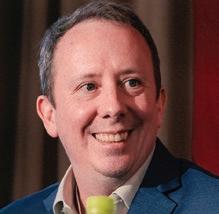
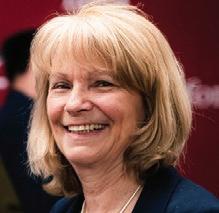
Professor Anne Boddington, IAFOR, Japan (IAB Chair)
Dr Joseph Haldane, IAFOR and The University of Osaka, Japan & University College London, United Kingdom
Professor Jun Arima, IAFOR & The University of Tokyo, Japan
Professor Virgil Hawkins, IAFOR Research Centre & The University of Osaka, Japan
Mr Lowell Sheppard, IAFOR & Never Too Late Academy, Japan
Professor Umberto Ansaldo, VinUniversity, Vietnam
Dr Susana Barreto, University of Porto, Portugal
Professor Grant Black, Chuo University, Japan
Dr Evangelia Chrysikou, Bartlett School of Sustainable Construction, University College London, United Kingdom
Professor Donald E. Hall, Binghamton University, United States
Professor Brendan Howe, Ewha Womans University, South Korea & The Asian Political and International Studies Association (APISA)
Dr James W. McNally, University of Michigan, United States & NACDA Program on Aging
ACEID2026 Conference Programme Committee
Dr Rena Alasgarova, Baku Oxford School, Azerbaijan
Professor Shingo Ashizawa, Kanda University of International Studies, Japan
Dr Brian Aycock, International Christian University, Japan
Dr Lara Carminati, University of Twente, Netherlands
Dr Joseph Haldane, IAFOR and The University of Osaka, Japan & University College London, United Kingdom
Professor Brendan Howe, Ewha Womans University & The Asian Political and International Studies Association (APISA), South Korea
Dr Taro Mochizuki, The University of Osaka, Japan
Professor Farish Noor, University of Malaya, Malaysia
ACP2026 Conference Programme Committee
Professor Dexter Da Silva, Keisen University, Japan
Dr Joseph Haldane, IAFOR and The University of Osaka, Japan & University College London, United Kingdom
Dr Miriam Sang-Ah Park, Nottingham Trent University, United Kingdom
Professor Roberto Ravera, ASL1 of Imperia, University of Turin & University of Genoa, Italy
Dr Roswiyani Roswiyani, Tarumanagara University, Indonesia
Professor Monty P. Satiadarma, Tarumanagara University, Indonesia
Professor Chi-Shing Tse, Chinese University of Hong Kong, Hong Kong
Dr Brian Victoria, Oxford Centre for Buddhist Studies, United Kingdom
Dr Mete Yasuji, Rikkyo University, Japan
AGen2026 Conference Programme Committee
Dr Joseph Haldane, IAFOR and The University of Osaka, Japan & University College London, United Kingdom
Dr James W. McNally, University of Michigan, United States & NACDA Program on Aging
Professor Sela V. Panapasa, University of Michigan, United States
Dr Miriam Sang-Ah Park, Nottingham Trent University, United Kingdom
Lowell Sheppard, IAFOR & Never Too Late Academy, Japan
Letter of Welcome
Dear Friends and Colleagues,
日本へようこそ、東京へようこそ!
Nihon e yokoso, Tokyo e yokoso! Welcome to Japan, and Welcome to Tokyo!
Welcome to IAFOR’s Spring Conference Series in Japan, held in the great city of Tokyo, and to the Asian Conferences on Education and International Development (ACEID2026), Psychology and the Behavioral Sciences (ACP2026), and Aging and Gerontology (AGen2026). ACP is now in its sixteenth year, while ACEID and AGen are now in their twelfth.
You join us at one of the most significant and poignant times of the year in Japan. In late March, students graduate and say goodbye to their classmates, and quickly turn around in April to begin anew in different classrooms, schools, and colleges, while those with freshly minted degrees join the workforce and begin their professional lives. During this period, the delicate cherry blossoms bloom, signifying the end of one year’s cycle, and the beginning of the next. People of all generations gather under the sakura to admire their beauty, swim in nostalgia, anticipate new beginnings, and be reminded of the ephemerality of human existence, and similarly galvanised to make the most of life!
This year, we expect a combined total participation in our hybrid event of some 900 people, representing 580 institutions and organisations from 68 different countries, in a celebration of IAFOR’s mission of encouraging interdisciplinary discussion, facilitating intercultural awareness, and promoting international exchange. People from around the world will join us to share their ideas, make new personal and professional contacts, and seek new research opportunities and partnerships. An IAFOR conference is a unique comparative, contrastive, and collaborative laboratory that emphasises academic excellence, but also conviviality. In these uncertain times, we are sustained by our friendships and partnerships; they help us make sense of the world.
I encourage your active participation and engagement across the disciplines; we have so much to learn from each other.
I look forward to meeting you all.
Warm regards,
Dr Joseph Haldane Chairman & CEO, The International Academic Forum (IAFOR)
Professor, European Center for Peace and Development (ECPD), United Nations University for Peace Guest Professor, Osaka School of International Public Policy, The University of Osaka, Japan
Visiting Professor, Doshisha University, Japan
Visiting Professor, The University of Belgrade, Serbia
Honorary Professor, University College London (UCL), United Kingdom
Member, Expert Network, World Economic Forum
Become an IAFOR Member
IAFOR provides an enriching personal and professional environment for academics and scholars of all ages and backgrounds to exchange and contribute to interdisciplinary and intercultural dialogue that informs and is informed by their own cultural and disciplinary background and experiences. We are able to do this thanks to our extraordinary network of individuals and institutions around the world who support our work and help shape our events globally. We particularly emphasise the nurturing and support for emerging academics from an array of different backgrounds, and aim to provide opportunities for them to seek advice, support and guidance, as well as offering mid-career and more established academics opportunities to forge working relationships beyond their traditional disciplinary ambitions.
In our current world where division and strife are often reinforced and played out in national and local contexts, and political posturing frequently seeks to ostracise and demonise, IAFOR is committed to working across cultural and national borders, and to work to bring people together through dialogue. We believe that mature human interaction and academic and cultural exchange are essential to offering positive versions of the future, where cooperation happens between individuals and institutions who share a commitment to listen, to reach out and bridge divides, and to contribute to good global citizenship, and to making the world a better place.
By becoming a member of IAFOR, you will become part of an extraordinary network and a stakeholder in shaping the IAFOR mission and facilitating international exchange, encouraging intercultural awareness, and promoting interdisciplinary discussion in the hope and expectation of generating and sharing new knowledge. Join us now in this growing global organisation, and help make a difference today.
To learn more about IAFOR membership, please visit:
iafor.org/membership
AC E ID/AC P /AGen 2026
Key Sta tis tics Date of C r eati on: Feb r uar y 2 3 , 2 0 2 6
1 A gi n g a n d G eron tol ogy (92)
2. Men ta l Hea l th (63)
3 Psych ol ogy a n d Edu ca ti on (40)
4 Qu a l i ta ti v e/Qu a n ti ta ti v e R esea rch i n a n y oth er a rea of Psych ol ogy (33)
5 G en
Psych ol ogy (28)
9 2 6 3 4 0 3 3 2 8
Date of C r eation: Febr uar y 23, 2026
One o f the gre ate st stre ngths o f I A FOR's inte rnatio nal co nf e re nce s is the ir inte rcultural div e rsity.
A CEI D/A CP/A Ge n2026 has attracte d 865 de le gate s f ro m 68 co untrie s.
Conference Venue: Monday, March 23
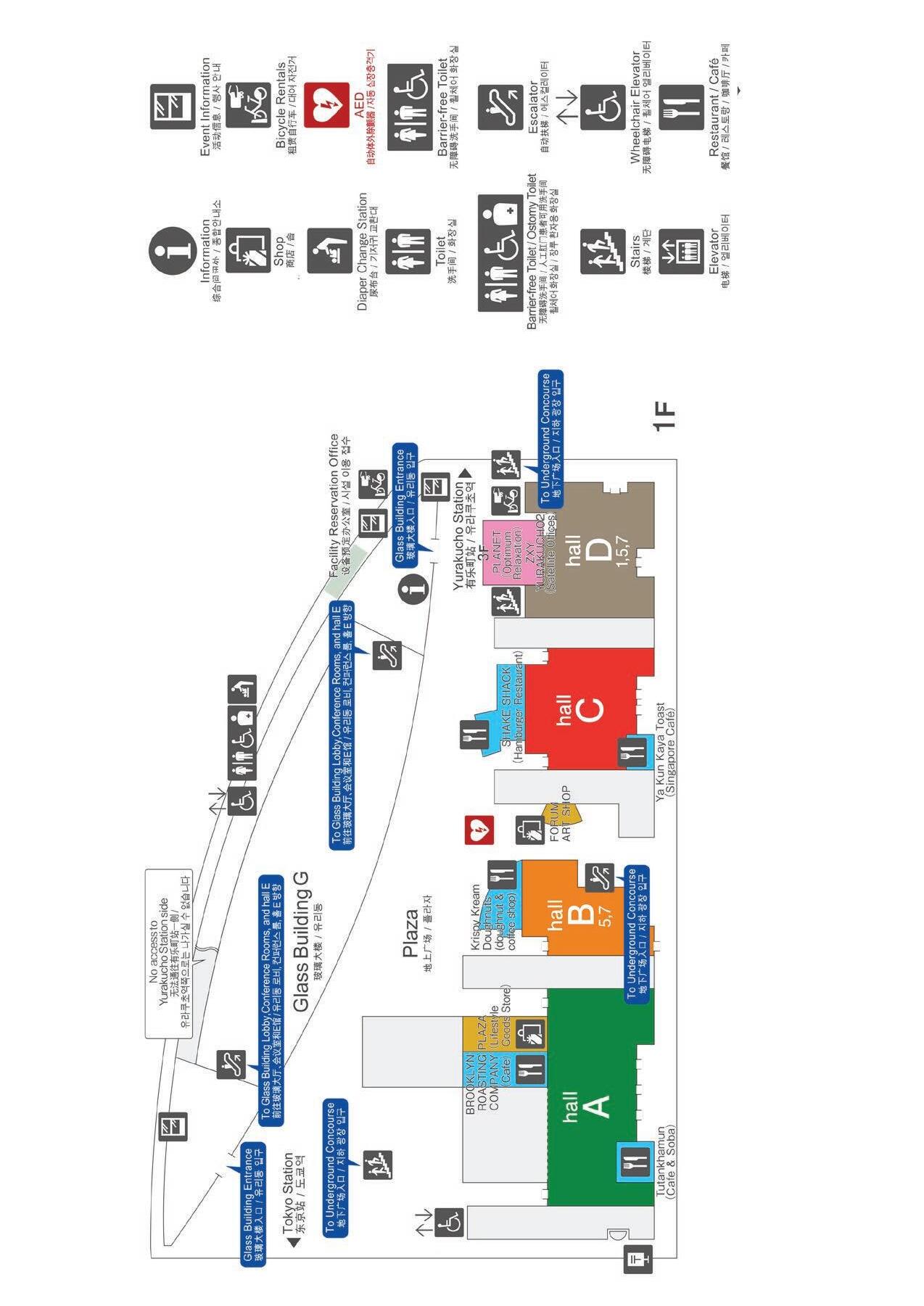
Tokyo International Forum
Address: Marunouchi 3-5-1, Chiyoda Ku, Tokyo
Conference Venue: Monday, March 23
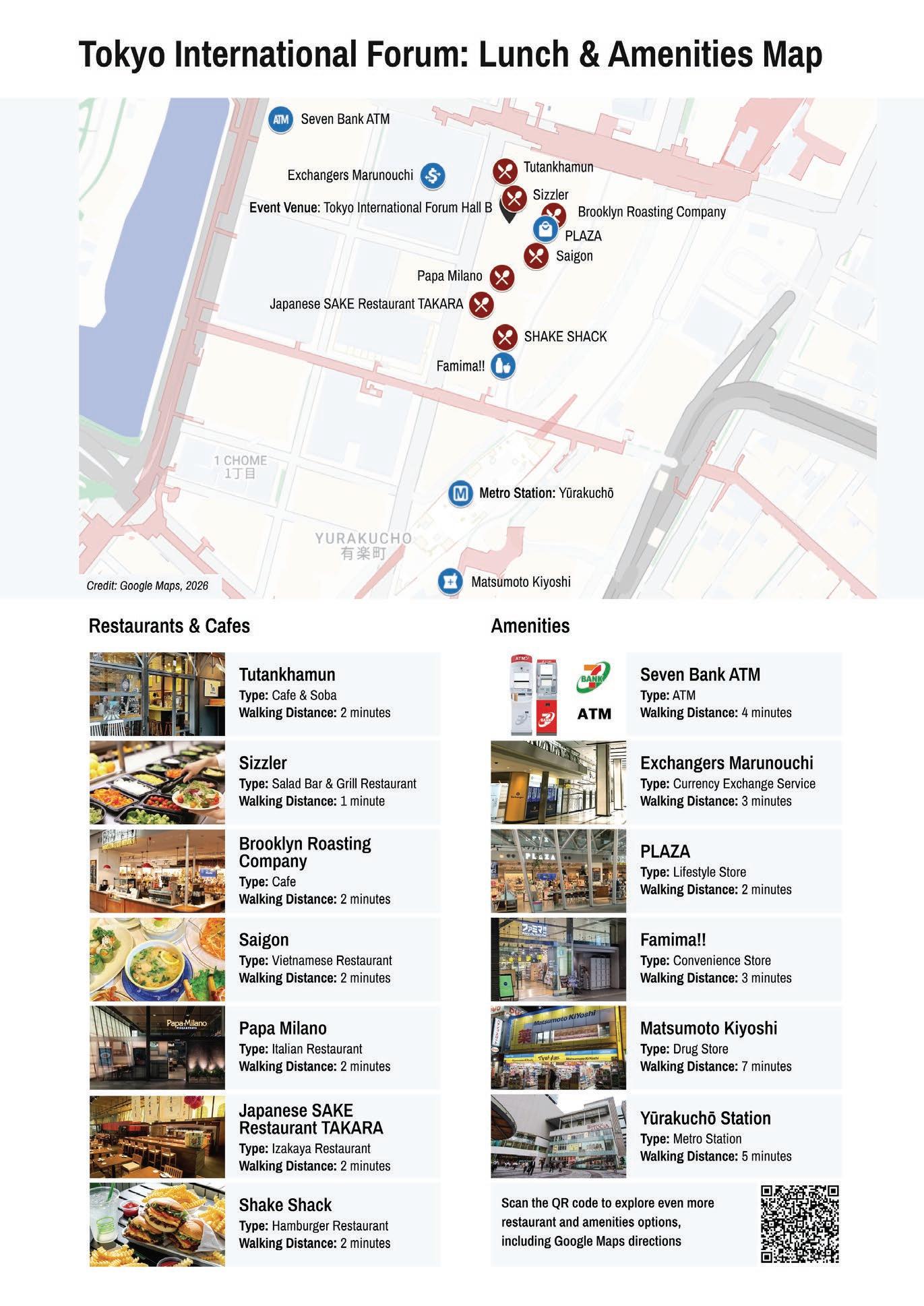
Tokyo International Forum
Suggested Lunch Options and Local Amenities
Please note that lunch is not provided. This map offers suggestions on where you can eat around the Tokyo International Forum, as well as the locations of local amenities.
Conference Venue: Sunday, March 22 & Tuesday, March 24 to Thursday, March 26
Toshi Center Hotel
Address: Hirakawacho 2-4-1, Chiyoda Ku, Tokyo
Conference Venue: Sunday, March 22 & Tuesday, March 24 to Thursday, March 26
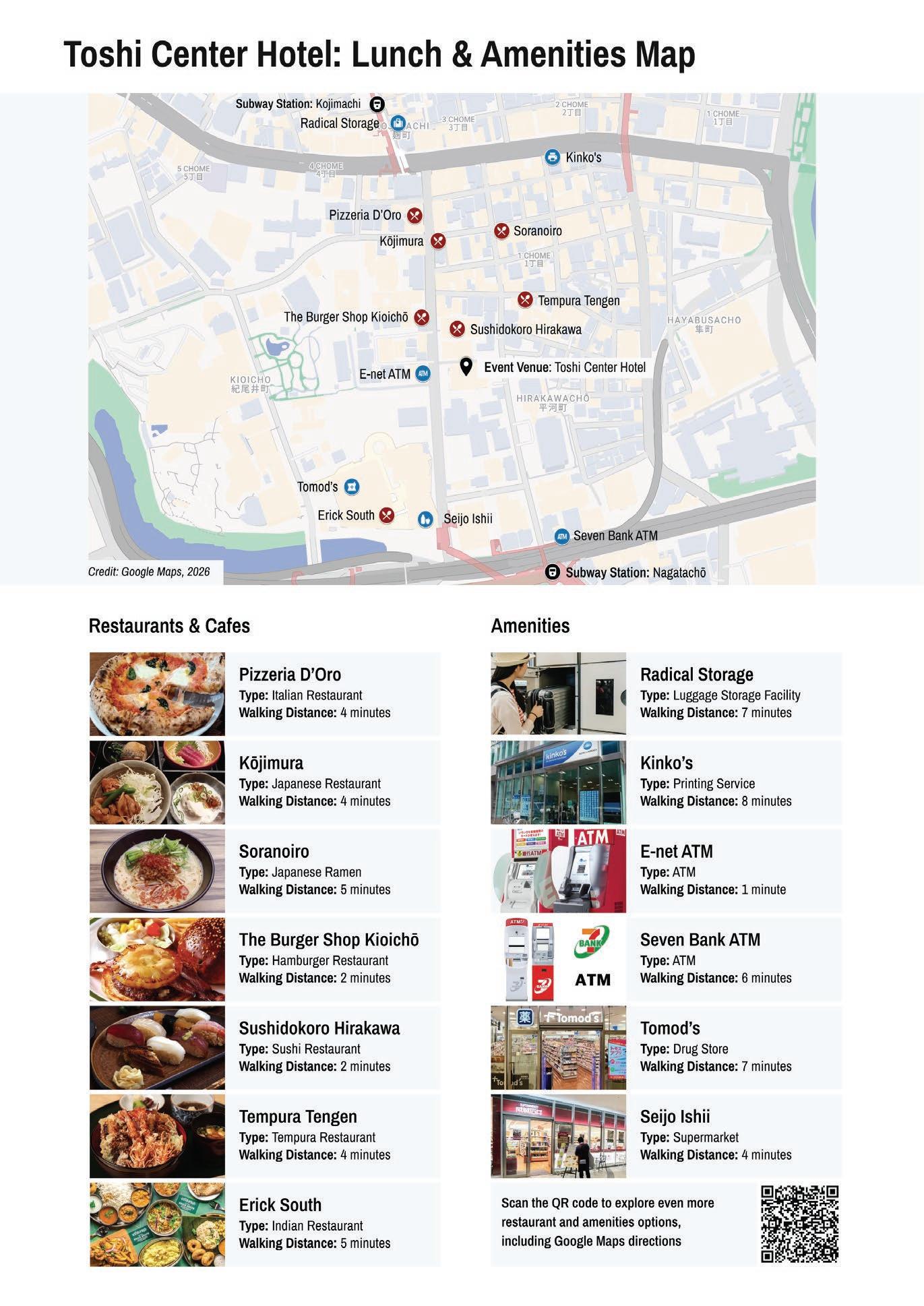
Toshi Center Hotel
Suggested Lunch Options and Local Amenities
Please note that lunch is not provided. This map offers suggestions on where you can eat around the Toshi Center Hotel, as well as the locations of local amenities.
These sessions will provide an overview of what to expect at the conference, including guidance on preparing your presentation, publishing opportunities, and ways to engage with IAFOR.
Pre-registration is required. Space is limited.
March 23 | All times are Japan Standard Time (UTC+9)
Monday at a Glance
Conference Venue: Tokyo International Forum, Tokyo
10:00-11:00 Conference Check-in & Coffee | Hall B5 Foyer
11:00-11:30 Welcome Address & Recognition of IAFOR Scholarship Winners | Hall B5 & Online
Joseph Haldane, IAFOR, Japan
11:35-12:00 Keynote Presentation | Hall B5 & Online
Globalisation in Retreat
Kiichi Fujiwara, Juntendo University, Japan
12:00-12:15 Q&A
12:20-12:45 Keynote Presentation | Hall B5 & Online
Challenges and Opportunities for the Internationalisation of East Asian Higher Education in a Rapidly Changing Environment
Hiroshi Ota, Hitotsubashi University, Japan
12:45-13:00 Q&A
13:00-13:05 Conference Photograph
13:05-14:15 Extended Break
14:15-14:40 Keynote Presentation | Hall B5 & Online
Designing Care Futures: Built Environments, Health Systems, and Human–Robot Cohabitation in an Ageing World
Evangelia Chrysikou, University College London, United Kingdom
14:40-14:55 Q&A
15:00-16:00 Featured Panel Presentation | Hall B5 & Online
Longevity, Happiness, and the Art of Community: Lessons from Japan and Beyond
Héctor García, Author, Japan
Yukiko Sawano, University of the Sacred Heart, Japan
Lowell Sheppard, IAFOR & Never Too Late Academy, Japan
Dexter Da Silva, Keisen University, Japan (Moderator)
William C. Frick, University of Sharjah, United Arab Emirates & Associate Editor of the IAFOR Journal of Education: Studies in Education
10:00-10:30 Networking Coffee Break
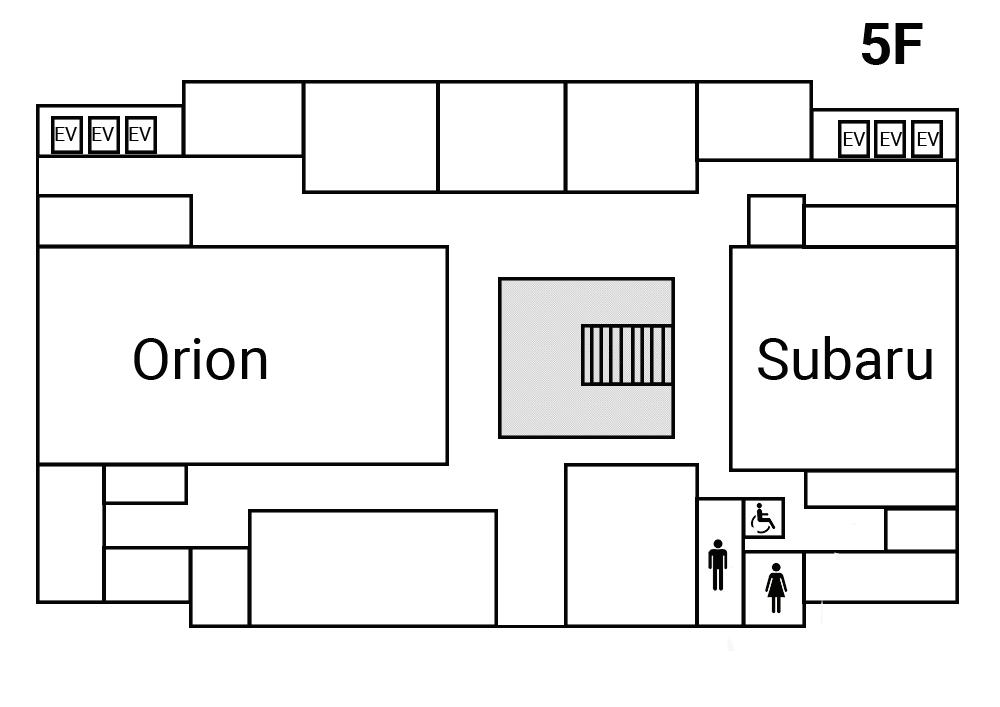
10:30-11:30 The Forum | Orion Hall (5F)
Living Together in Disrupting Times: Community and Intergenerational Learning
Monty P. Satiadarma, Tarumanagara University, Indonesia (Respondent)
Melina Neophytou, IAFOR, Japan (Moderator)
The Forum is a plenary session designed as a platform for international, intercultural, interdisciplinary – and inclusive – discussions, joining experts and practitioners alike in an open dialogue format. Come share your thoughts and experiences as global educators and researchers.
11:35-12:00 Karate Demonstration | Orion Hall (5F)
The Waseda University Karate Club
This performance will showcase a series of katas – detailed patterns of movements or ‘drills’—and also a choreographed fight sequence exhibiting the katas in action. This is a free event open to all registered delegates
12:00-13:15 Extended Break
13:15-14:15
Conference Poster Session 1 (AGen2026) | Orion Hall (5F)
March 27 | All times are Japan Standard Time (UTC+9) Friday
at a Glance
Conference Venue: Online via Zoom
09:55-10:00 Message from IAFOR
10:00-10:25 Online Keynote Presentation
The Psychology of Democracy and Democratic Backsliding Fathali M. Moghaddam, Georgetown University, United States 10:25-10:40 Q&A
10:45-11:45 Online Forum
Living Together in Disrupting Times: Community and Intergenerational Learning Dexter Da Silva, Keisen University, Japan (Online Respondent) Apipol Sae-Tung, IAFOR, Japan (Online Moderator)
11:45-12:00 Break
12:00-13:40 Online Parallel Session 1
Live-Stream Room 1: ACP | Special Topics in Psychology
Live-Stream Room 2: AGen | Frailty and Loneliness
Live-Stream Room 3: ACEID | Early Childhood and Basic Education
Live-Stream Room 4: ACEID | Higher Education
13:40-13:50 Break
13:50-15:30 Online Parallel Session 2
Live-Stream Room 1: ACP | Linguistics, Language and Psychology/Behavioral Science
Live-Stream Room 2: AGen | Aging and Gerontology
Live-Stream Room 3: ACEID | Special Topics in Education
Live-Stream Room 4: ACEID | Innovative Technologies in Education
15:30-15:40 Break
15:40-17:20 Online Parallel Session 3
Live-Stream Room 1: ACP | Special Topics in Psychology
Live-Stream Room 2: AGen | Aging and Gerontology
Live-Stream Room 3: ACEID | Special Topics in Education
Live-Stream Room 4: ACEID | Foreign Languages Education and Applied Linguistics
17:20-17:25 Message from IAFOR
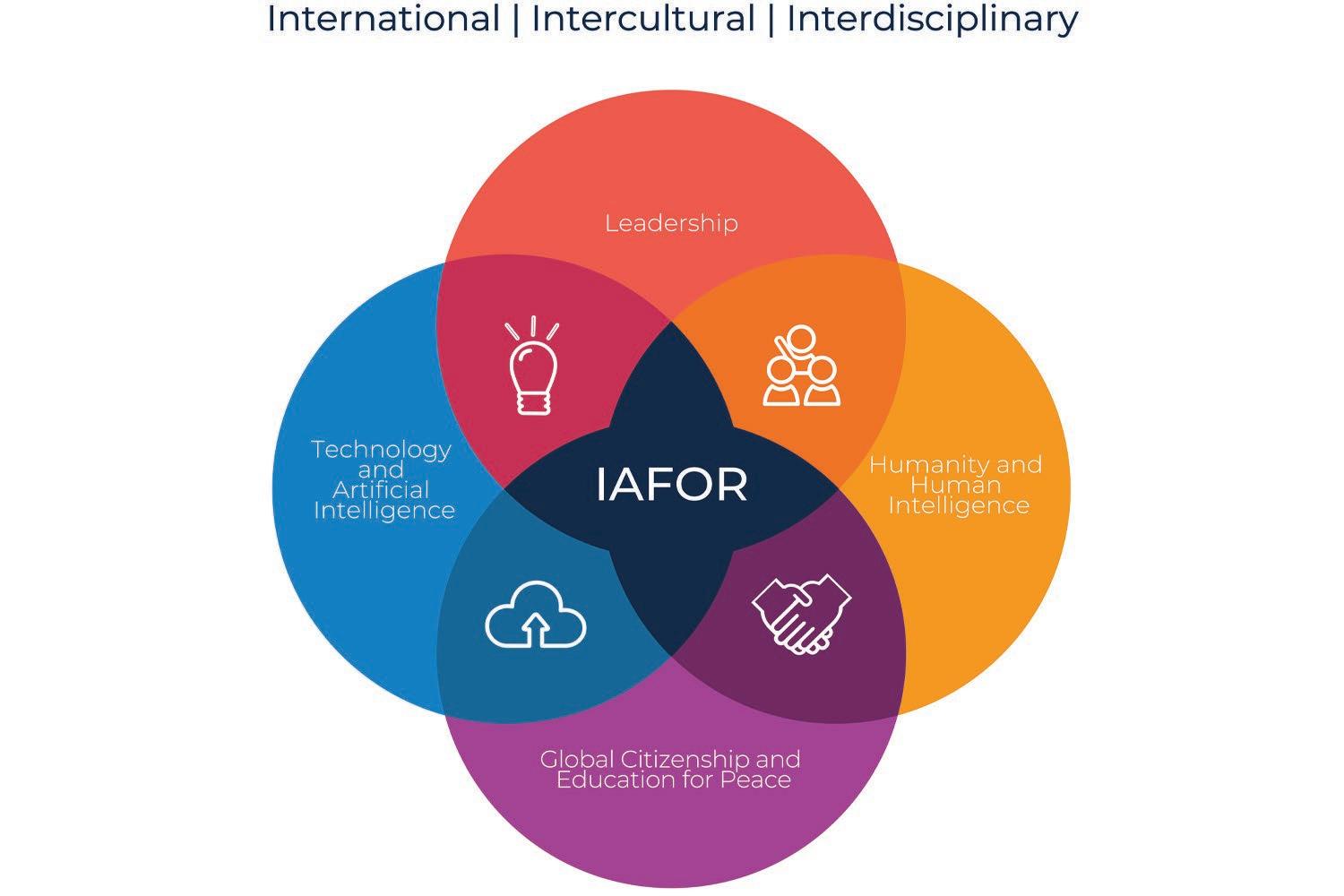
IAFOR’s Conference Themes for 2025-2029
IAFOR’s conference programme provides an essential comparative and contrastive space for people to engage in multidisciplinary research across borders of nation, culture, discipline, and professions. We encourage mixed approaches and methodologies, combining theory and practice between and across the disciplines, and we look to harness the collective intelligence of our International Academic Forum in addressing some of the most pressing issues of our time. Through the implementation of new formats in our conference programme over the last year, including Intelligence Briefings, Keynote Interviews, and The Forum, we gathered insights into what has been discussed at the theoretical and policy levels, identify the challenges, and the outlook for best practices in tackling global contemporary issues, which we have identified as the themes for 2025-2029. Our four themes can be seen as standalone themes, but they are also very much in conversation with each other. Themes may be seen as corollaries, complementary, or in opposition/juxtaposition with each other. The themes can be considered as widely as possible and are designed, in keeping with our mission, to encourage ideas across the disciplines.
1. Technology and Artificial Intelligence
Our first theme examines the rapid pace of technological advancements, aided most particularly by those driven by artificial intelligence and its enormous and growing impact in all fields.
2. Humanity and Human Intelligence
Our second theme asks us which principles, values, and attributes we wish to encourage, protect, and nurture and how we accomplish this. Technological advancements constantly ask us to reconsider and reimagine what it means to be human, including questions regarding communication, creativity, inclusivity, ethics, and care.
3. Global Citizenship and Education for Peace
This theme prompts us to consider our existence and coexistence with each other, within our communities and places of belonging, and with peoples of different countries, cultures, and backgrounds, as well as with our environment and our planet. It includes engagement with enormous issues facing us beyond borders, such as peace and human security, climate change, etc.
4. Leadership
The final theme recognises the continuing importance of leadership as a skill, particularly in light of difficult times, where recognising and encouraging best practices in leadership at all levels of society is critical. Encouraging leadership at the government level, in businesses, and within institutions of all sizes represents the engine of change.
Conference Themes in Theory, Policy, and Practice
Many theories are born and initially tested in the academy, informing discussions in the public sphere that influence policy. IAFOR represents a unique combination of engagement emerging from the collaborative efforts of senior policymakers, administrators, and individuals working on the ground or in the field. IAFOR has made this rare combination of equitable theoretical and practical exchanges the standard for our organisation and represents a valuable model for how science should be done.
We will develop conference and institutional programmes and publications around these themes as well as capacity building sessions for our conference programme over the next five years. It is our aim with the implementation of these themes, alongside the implementation and continuing refinement of new formats, to best harness the unique arena IAFOR and its network have built in regards to pressing issues of today and the future.
General Information
This QR code, also located on the back of your name badge, contains the information you need to attend the conference, including:
- Full Conference Schedule
- The ‘Find a Presentation’ Feature
- Conference Survey
- Suggested Lunch Options
- Online and Virtual Presentations
- Presentation and Session Chair Guidelines, and more.
Check-in & Information Desk
You will be able to pick up your name badge at the Conference Check-in & Information Desk at the times listed below. If you have any questions or concerns, IAFOR staff and volunteers will happily assist you in any way they can.
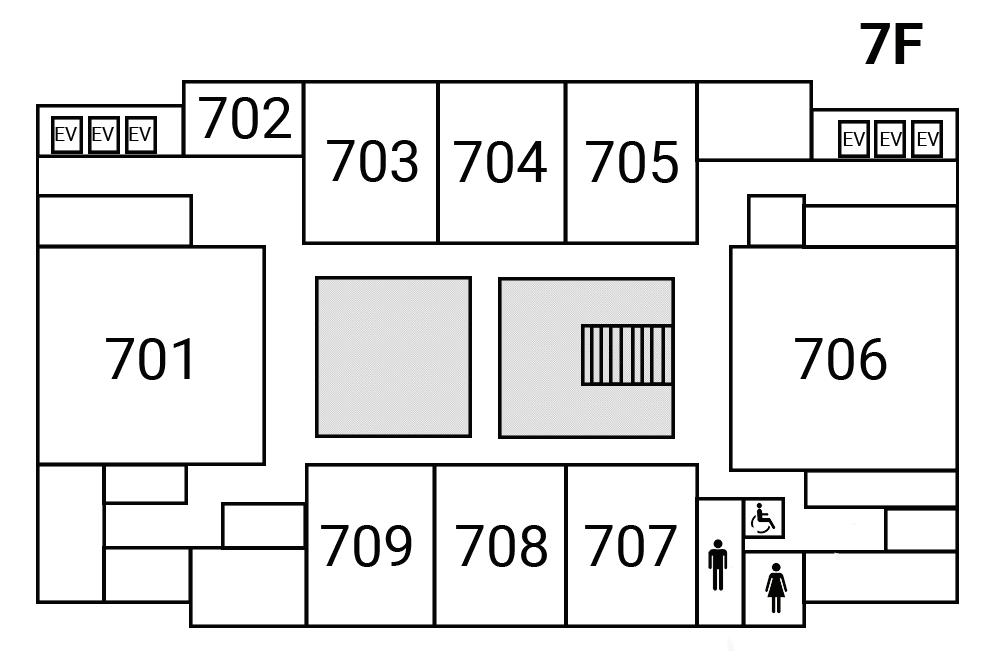
Sunday, March 22 | 14:30-17:00 – Toshi Center Hotel, Foyer (7F)
Monday, March 23 | 10:00-15:30 – Tokyo International Forum, Hall B5 Foyer
Tuesday, March 24 | 09:00-16:30 – Toshi Center Hotel, Subaru Room (5F)
Wednesday, March 25 | 09:00-18:00 – Toshi Center Hotel, Foyer (7F)
Thursday, March 26 | 08:30-16:00 – Toshi Center Hotel, Foyer (7F)
Friday, March 27 | No in-person check-in
Name Badges
Wearing your badge is required for entrance to the sessions. You must wear your badge at all times.
Refreshment Breaks
Complimentary coffee, tea, water, and light snacks will be available during the scheduled coffee breaks. Please note that lunch is not provided.
Connecting to WiFi
There is free Wi-Fi internet connection at the conference venues. However, this can be unreliable, so we would strongly suggest that you do not rely on a live connection for your presentation.
Tokyo International Forum
Network Name: tif-free-wifi
Password not required.
Toshi Center Hotel
Network Name: Toshicenter_Hotel_Wi-Fi
Password: toshi19590302
General Information
Conference Schedule
The full conference schedule (including abstracts) and conference programme are available on the conference website, accessible through the QR code located on the previous page as well as the back of your nametag.
A full list of pre-recorded virtual video presentations and virtual poster presentations will be on the conference website during and after the conference. We encourage you to scan the QR code to watch these presentations and provide feedback through the video comments.
Conference Catch-up
All Keynote Presentations and live-streamed sessions will be recorded and uploaded to the Conference Catch-up page (video-on-demand) via Vimeo. The catch-up page will be publicly available after the conference until Monday, April 27, 2026.
Certification
Corresponding authors will be able to download Certificates of Presentation for all presenters by logging in to the submission page. Certificates of Presentation will be available from Monday, April 6, 2026.
Session Chair certification, Certificates of Participation for non-presenters, as well as reviewer certification for Review Committee members and Senior Reviewers, will be sent out by email in a PDF format within two weeks of the Conference's conclusion.
Photo/Recording Waiver
Human interaction through networking, and dissemination of this knowledge, is at the core of what IAFOR does as an academic research organisation, conference organiser and publisher. As part of the archiving of the conference event, IAFOR takes photos in and around the conference venue, and uses the photos to document the event. This also includes the filming of certain sessions. We consider this documentation important and it provides evidence of our activities to members, partners and stakeholders all over the world, as well as to current and potential attendees like you. Some of these photos will therefore appear online and in print, including on social media. The above are the legitimate interests of the organisation that we assert under the European Union law on General Data Protection Regulation (GDPR). Under this legislation, you have an absolute right to opt out of any photo. We are committed to protecting and respecting your privacy. Read our full privacy policy – iafor.org/about/privacy-policy
IAFOR Publications
Conference Proceedings
IAFOR Conference Proceedings are Open Access research repositories that act as permanent records of the research generated by IAFOR conferences. The Conference Proceedings are published online in the IAFOR Research Archive (papers.iafor.org). All accepted authors who present at the conference may have their full paper published in the online Conference Proceedings. For further details of how to submit your paper, please visit the Conference website.
Please note that:
1) Papers published in the Conference Proceedings cannot be considered for publication in IAFOR journals.
2) IAFOR's Conference Proceedings are not peer-reviewed and are not "Scopus-indexed".
Full text submission is due by Friday, April 24, 2026, through the online system. The proceedings will be published on Wednesday, June 10, 2026
Conference Reports and Intelligence Briefings (ISSN: 2759-4939)
IAFOR produces conference reports that provide concise and coherent overviews of the ideas, conversations, and areas of research presented at our conferences. These include key themes and takeaways, referencing programme(s), speakers and attendees, which are curated and archived for both those who attended the event, as well as those who did not. Readers can stay abreast of many of the developments and insights provided by the conference, and the collective intelligence of its participants. Links to video recordings of the presentations and interviews references are included where possible, encouraging readers to engage further with the conference material and presentations. Each report contains photos of the event, as well as key statistics pertaining to general attendance and demographics.
Read and download the Conference Reports and Intelligence Briefings, and access Conference Photo Galleries from the past conferences from the QR code on the back of your name badge. You will receive a notification email when the Conference Photos and the Conference Report and Intelligence Briefing of this conference are available.
THINK Magazine: The Academic Platform
THINK is an online magazine presenting the latest in interdisciplinary research and ideas from some of the world’s foremost academics and thought leaders. As a publishing platform, THINK makes selected research presented at IAFOR’s international, intercultural, interdisciplinary conferences freely available to a global academic audience. Content on THINK spans everything from the arts to psychology, politics to film, law to education and history to technology, presenting research, ideas and perspectives from every corner of the globe. The format is varied, encompassing full research papers, long-form journalism, opinion pieces, creative writing, interviews, podcasts, video, photography and more. To learn more about THINK, please visit think.iafor.org or access the webpage from the QR code on the back of your name badge.
IAFOR Journals
IAFOR's Open Access Journals
IAFOR publishes several editorially independent, Open Access journals across a variety of disciplines. They conform to the highest academic standards of international peer review, and are published in accordance with IAFOR’s commitment to make all of our published materials available online.
How are papers submitted?
Submissions should be original, previously unpublished papers which are not under consideration for publication in any other journal. All articles are submitted through the submission portal on the journal website and must conform to the journal submission guidelines.
How does IAFOR ensure academic integrity?
Once appointed by IAFOR’s Publications Committee, the Journal Editor is free to appoint his or her own editorial team and advisory members, who help to rework and revise papers as appropriate, according to internationally accepted standards. All papers published in the journal have been subjected to the rigorous and accepted processes of academic peer review. Neither editors nor members of the editorial team are remunerated for their work.
Where are the journals indexed?
IAFOR Journals are indexed in Scopus, Web of Science, DOAJ, ERIC, MIAR, TROVE, CiteFactor and EBSCO, SHERPA/ROMEO and Google Scholar. DOIs are assigned to each published issue and article via Crossref. Please note that indexing varies from journal to journal.
What’s the reach?
Each of our journal issues is viewed thousands of times a month and the articles are frequently cited by researchers worldwide, largely due to our dedicated marketing efforts. Each issue is promoted across our social media platforms and to our tailored email marketing lists. On average, each journal publishes biannually.
What’s the cost?
IAFOR Journals are Open Access publications, available online completely free of charge and without delay or embargo. Authors are not required to pay charges of any sort towards the publication of IAFOR Journals and neither editors nor members of the editorial boards are remunerated for their work.
How are IAFOR Journals related to IAFOR Conferences and Conference Proceedings?
IAFOR Journals reflect the interdisciplinary and international nature of our conferences and are organised thematically. A presenter can choose to publish either in Conference Proceedings or submit their manuscript to the corresponding IAFOR Journal for review.
Current IAFOR Journal titles include
IAFOR Journal of Cultural Studies (Scopus Indexed)
IAFOR Journal of Education (Scopus & Web of Science Indexed)
IAFOR Journal of Literature & Librarianship (Scopus Indexed)
If you would like more information about any of IAFOR’s publications, please visit iafor.org/publications
Networking: Connecting with Other Delegates
IAFOR conferences are designed to offer countless networking opportunities to make and consolidate personal and professional connections, reconnect with colleagues, and meet new friends in a spirit of convivial collegiality. Whether in the plenaries, parallel sessions, workshops, information sessions, or cultural events, we encourage your active and open participation throughout the conference, remembering the importance of the spaces in-between; over a cup of coffee or a glass of wine, or the continuation of conversations and relationships outside the conference. We encourage you to network at the conference during the Welcome Reception, the Networking Coffee Breaks, and the Extended Breaks
In addition, you are invited to join the Online Presentation Sessions and the Online Forum discussion to explore even more presentations and opportunities to make connections for future collaborations. While conferences serve as a platform to present your work and make connections, please be mindful of the other delegates’ privacy and their consent to provide personal information.
Networking Spaces
The conference venues feature several comfortable spaces, such as the main lobby, coffee area, and the restaurant, which serve as perfect locations for networking during the conference. These spaces provide an excellent opportunity to meet new people, connect with familiar faces, exchange ideas, and explore possible collaborations. We encourage you to make use of these spaces to connect with fellow attendees for a quick coffee or a longer chat to broaden your network and enhance your conference experience.
Missed the opportunity to make connections?
You can connect with other delegates by using our ‘Find a Presentation’ feature. This feature can be accessed by scanning the QR code provided on the back of your name badge, and is also available on the conference website. You can search by presentation title, submission number, the presenter’s name, or the name of their affiliation. From there, you can look up the presenter’s bio and connect with them through their preferred contact channel. In addition to the ‘Find a Presentation’ online feature, presentation schedules are also displayed in front of presentation rooms.
Networking Events
Welcome Reception | Tokyo International Forum
Join fellow delegates for a drink or two at the conference Welcome Reception. This event provides a great opportunity for delegates to network and get to know each other. The event will be held at Hall B5 Foyer, Tokyo International Forum.
Time & Date: Monday, March 23, 2026 | 16:00-17:00
Location: Hall B5 Foyer, Tokyo International Forum
Ticket Price: Free to attend
Admission is included in the conference registration fee and is only open to registered conference delegates and audience members.
Conference Dinner | Shunju Tameikesanno
Celebrated for its blend of traditional and contemporary Japanese cuisine, Shunju Tameikesanno offers an experience where classic flavours meet modern culinary techniques. Join us for an evening of refined dining in Tokyo's cosmopolitan midtown.
Time & Date: Monday, March 23, 2026 | 19:00-21:00
Location: Sanno Park Tower 27F, Nagatacho 2-1-1, Chiyoda Ku, Tokyo
Ticket Price: 15,000 JPY
This is an optional ticketed event. Only delegates with pre-purchased tickets are able to attend the Conference Dinner.
Cultural Event | Karate Demonstration
Join us for a special demonstration of karate, a traditional Japanese martial art, by the Karate Club at Waseda University, Japan. This performance will showcase a series of katas, detailed patterns of movements or ‘drills’, as well as exhibit the katas in action.
Time & Date: Tuesday, March 24, 2026 | 11:35-12:00
Location: Toshi Center Hotel, Orion Hall (5F)
Ticket Price: Free to attend
Admission is included in the conference registration fee and is only open to registered conference delegates and audience members.
Academic Grant & Scholarship Recipients
IAFOR's grants and scholarships programme provides financial support to PhD students and early career academics, with the aim of helping them pursue research excellence and achieve their academic goals through interdisciplinary study and interaction. Our warmest congratulations go to the following scholarship recipients who have been selected to receive grants and scholarships to present their research at the conference.
ACEID2026 Scholarship Recipients
Ricky Fernandes (Live-Stream Presentation)
101890 | Perception vs Practice of Indonesian Teacher Facilitation of Critical Thinking in English Language Learning
Dr Ricky Fernandes is a graduate from The University of Adelaide, Australia, and is currently an external postgraduate supervisor.
ACP2026 Scholarship Recipients
Harshita Sharma (Oral Presentation)
102513 | Decoding the Advocate’s Psyche: Interplay of Morality, Personality, and Emotion in OverBurdened Legal Landscape
Ms Harshita Sharma is a PhD Research Scholar at Sardar Patel University of Police, Security and Criminal Justice, India. Her research interests are psychology, rehabilitation, and social justice. She is currently researching criminal behaviour and holistic rehabilitation models.
Kiet Pham (Poster Presentation)
101967 | Case Studies of Adapting and Integrating Relational Cultural and Acceptance & Commitment Therapy for Asian Clients
Mr Kiet Pham is currently a PhD student in the School Psychology programme at The University of Washington, United States. As a school psychologist, he is interested in culturally responsive practices for students of colour and juvenile justice-involved youth.
AGen2026 Scholarship Recipients
Ameer Ali Abdul Hameed (Virtual Poster Presentation)
101608 | Facilitators and Barriers to Physical Activity Among Older Adults in Karachi: A Qualitative Exploratory Study
Mr Ameer Ali Abdul Hameed is a Physical Therapist and Health Policy Researcher interested in ageing, chronic disease prevention, and health systems. He is currently researching physical activity among older adults in Karachi, Pakistan.
Laura Boffi (Live-Stream Presentation)
102443 | The Inhabited Robot: First Intergenerational Experiments
Dr Laura Boffi is a designer and independent researcher based in Italy.
Xiang Li (Oral Presentation)
102215 | Association of Hearing Loss and Hearing Aid Use with Depressive Symptoms in Older Adults: A Multicohort Study Across 24 Countries
Mr Xiang Li is currently a master's student specialising in Epidemiology and Biostatistics at the School of Public Health, Shandong University, China.
Speakers, Keynote & Featured Presentations
All times are Japan Standard Time (UTC+9)
Abstracts appear as originally submitted by the author. Any spelling, grammatical, or typographical errors are those of the author.
Plenary Speaker: Joseph Haldane
Welcome Address & Recognition of IAFOR Scholarship Winners
Monday, March 23, 2026 | 11:00-11:30 | Hall B5, Tokyo International Forum & Online
Joseph Haldane
Joseph Haldane is the Founder, Chairman, and CEO of IAFOR. He is responsible for devising strategy, setting policies, forging institutional partnerships, implementing projects, and overseeing the organisation’s global business and academic operations.
Dr Haldane has a PhD from the University of London in 19th century French Studies (ULIP/RHUL), and has research interests in world history, politics, and education, as well as governance and decision-making.
In 2022, Dr Haldane was named Professor in the United Nations Peace University's European Center for Peace and Development (ECPD). From 2019 he has been also a Visiting Professor at Doshisha University, where he teaches Ethics and Governance in the Global MBA, and a Member of the World Economic Forum’s Expert Network for Global Governance since 2017.
Since 2015, he has been a Guest Professor at The Osaka School of International Public Policy (OSIPP) at The University of Osaka, having taught on the postgraduate Global Governance Course, and has been Co-Director of the OSIPP-IAFOR Research Centre, an interdisciplinary research centre situated within the university, since 2017. He is also a Member of the International Advisory Council of the Department of Educational Foundations at the University of Hawai'i Mānoa, United States.
From 2020 to 2025, Dr Haldane was an Honorary Professor of University College London (UCL), through the Bartlett School of Sustainable Construction. Earlier in his career, he held full-time faculty positions at the Université Paris-Est Créteil, Sciences Po Paris, and Nagoya University of Commerce and Business, as well as visiting positions at the French Press Institute in the Université ParisPanthéon-Assas and the Schools of Journalism of Sciences Po Paris and Moscow State University.
Professor Haldane has given invited lectures and presentations at universities and conferences globally, including at the United Nations headquarters in New York, and advised universities, NGOs, and governments on issues relating to international education policy, public-private partnerships, and multi-stakeholder forums. He was the project lead on the 2019 Kansai Resilience Forum, held by the Japanese Government through the Prime Minister’s Office, and oversaw the 2021 Ministry of Foreign Affairs commissioned study on Infectious Diseases on Cruise Ships.
From 2012 to 2014, Dr Haldane was Treasurer of the Chubu chapter of the American Chamber of Commerce Japan, and since 2015 has been a Trustee of HOPE International Development Agency Japan. He was elected Fellow of the Royal Asiatic Society in 2012 and the Royal Society of Arts in 2015. He lives in Japan and holds a black belt in Judo.
Keynote
Presentation:
Kiichi Fujiwara
Globalisation in Retreat
Monday, March 23, 2026 | 11:35-12:00 | Hall B5, Tokyo International Forum & Online
The early twenty-first century marks a decisive shift from the optimism of globalisation we observed in the 1990s to an era of deglobalisation, one defined by geopolitical fragmentation, economic nationalism, and identity politics. This presentation examines the transition from a US-led unipolar and yet international order to an increasingly multipolar world with limited international cooperation, where the United States itself has evolved from a ‘democratic empire’ to a more openly ‘predatory’ one, prioritising strategic advantage over liberal internationalism. Economically, global trade has fractured: the number of trade restrictions surged from roughly 1,000 in 2019 to over 3,000 by 2023, signaling a structural move towards protectionism and regionalisation. Strategic reshoring, supply chain segmentation, and the rise of regional trade blocs have replaced the once seamless global production networks that underpinned globalization’s high point.
This fragmentation extends beyond economics into culture, education, and identity: a deglobalisation of the mind is unfolding as nationalism and nativism shape civic education, emphasising local loyalty over cosmopolitanism. Younger generations—highly connected digitally, yet confined within echo chambers— struggle to balance dual identities: rooted in national belonging while aspiring toward global citizenship. They face ‘responsibility fatigue,’ burdened by global challenges yet constrained by the turn toward economic nationalism and political inwardness.
Despite these trends, opportunities remain. Today’s youth display a distinct capacity for nuanced thinking, capable of reconciling local pride with global responsibility. Understanding how civic education, digital culture, and geopolitical realignment interact in this period of deglobalisation is crucial to envisioning a future that preserves both national agency and shared global accountability.
Kiichi Fujiwara
Kiichi Fujiwara is a Professor in the Graduate School of International Liberal Arts at Juntendo University and Professor Emeritus of the University of Tokyo, Japan. He taught International Politics at the Graduate Schools of Law and Politics and the Graduate School of Public Policy until 2022. Professor Fujiwara founded the Institute for Future Initiatives at the University of Tokyo, a university think-tank that engages in multidisciplinary approaches to global challenges. His publications include Remembering the War (2001), A Democratic Empire (2002), Is There Really a Just War? (2003), Peace for Realists (winner of the Ishibashi Tanzan award, 2005), International Politics (2007), Conditions of War (2013), A Destabilizing World (2020), and Predatory Imperialism (forthcoming). Professor Fujiwara is a commentator on international affairs and writes a monthly column for the Asahi Shimbun. He is also a film buff, and serves as a film reviewer for the NHK.
Keynote Presentation: Hiroshi Ota
Challenges and Opportunities for the Internationalisation of East Asian Higher Education in a Rapidly Changing Environment
Monday, March 23, 2026 | 12:20-12:45 | Hall B5, Tokyo International Forum & Online
The internationalisation of higher education has developed under the premise of ‘openness,’ encompassing the expansion of international student mobility, the deepening of international university partnerships, and the establishment of international collaborative networks. However, the international environment surrounding higher education has recently undergone unprecedented, rapid changes. In particular, heightened geopolitical tensions, coupled with a focus on economic security, are affecting the international role of universities, the process of internationalisation, and international student mobility. Consequently, major host countries for international students are adopting policies that run counter to the previous trend of expansive internationalisation. It can be said that the prevalent ‘attracting international students for economic benefits’ model has reached its limits, and solving domestic issues is increasingly prioritised over internationalisation. Governments are redefining international students from economic assets to, at times, security risks or even societal burdens.
Meanwhile in East Asia, policies aimed at attracting international students have become a national strategy. This is driven by domestic factors, such as under-enrolment in universities and a labour shortage stemming from the decline in the college-age population due to low birth rates. In this region, international student policies are linked to addressing domestic issues: ensuring the survival of higher education institutions and securing the future labour force. Internationalisation is integrated beyond education policy into economic and labour policy, with expectations of its societal contributions. These trends raise concerns about internationalisation becoming an end in itself, reliance on quantitative indicators such as international student numbers, and the marginalisation of educational principles in the internationalisation process.
Hiroshi Ota
Dr Hiroshi Ota is a professor in the Center for General Education at Hitotsubashi University, Japan, where he serves as Director of the Hitotsubashi University Global Education Program. His research primarily focuses on higher education policies and practices related to internationalisation and international student mobility from a comparative perspective. He has more than 150 publications in both Japanese and English, including 20 book chapters published by Springer, Routledge, SAGE, Multilingual Matters, and so on. Professor Ota serves as a vice president of the Japan Association of International Student Education (JAISE). In addition, he has been a visiting scholar for the Japan Student Services Organization (JASSO), a government agency that supports and promotes international education. He has also served on many selection and evaluation committees for international education and internationalisation projects organised by the Ministry of Education, Culture, Sports, Science and Technology (MEXT) in Japan and other international organisations. Professor Ota received his EdM in 2001 and a PhD in Social Foundations of Education (Comparative and Global Studies in Education) in 2008 from the State University of New York at Buffalo, United States. He was also awarded a Fulbright Scholarship to study international education administration in the United States in 1996. He was invited by the HarvardYenching Institute to serve as a Visiting Scholar from 2023 to 24.
Keynote Presentation: Evangelia Chrysikou
Designing Care Futures: Built Environments, Health Systems, and Human–Robot Cohabitation in an Ageing World
Monday, March 23, 2026 | 14:15-14:40 | Hall B5, Tokyo International Forum & Online
Population ageing represents not only a demographic or technological challenge, but fundamentally a design challenge. The built environment is not a passive backdrop to care; it actively shapes health, autonomy, behaviour, and social relations across the life course. Yet responses to ageing and vulnerability have often prioritised medical or technological solutions, while the spatial conditions of everyday life remain insufficiently addressed. This keynote integrates three interconnected domains: age-inclusive built environments, healthcare planning, and the emerging concept of human–robot cohabitation. Across hospitals, community facilities, and domestic settings, spatial design and health planning influence whether care environments promote dignity, resilience, and wellbeing, or reinforce dependency and exclusion. Effective planning therefore requires alignment between physical space, service models, and population needs.
Cohabitation is a particularly critical lens in the context of care robotics. Robots are not neutral machines: as they enter environments of vulnerability, they develop forms of agency, shape routines, influence human behaviour, and gradually reconfigure social norms. Coexistence becomes reciprocal: humans adapt to robots as much as robots adapt to humans. This process has direct implications for housing design, spatial organisation, ethics, and governance. By foregrounding cohabitation, this keynote advances an integrated, design-led agenda that positions architecture, health systems, and intelligent technologies as inseparable components of equitable and humane ageing futures.
Evangelia Chrysikou
Dr Evangelia Chrysikou, RIBA is Associate Professor within the Bartlett School of Sustainable Construction at University College London, United Kingdom, and Founder/Programme Director of the university’s MSc Healthcare Facilities. A multi-awarded RIBA architect and healthcare planner, Dr Chrysikou has published widely and won several prestigious grants and fellowships from international organisations, including Horizon 2020, UKRI, Wellcome, British Academy, Royal Society of New Zealand, and the Sasakawa Foundation. Her research interests lie at the spectrum of inclusion in relation to design, spanning across the disciplines of built environment, health, digital technologies and the social sciences. Dr Chrysikou is a member of the National Accessibility Authority, Hellenic Republic by invitation from the Greek Prime Minister, and a member of the Urban Land Institute’s (ULI) Life Sciences and Healthcare Council Leadership Committee. She was the coordinator of the Environment Section of the EIPonAHA, EU, and has worked as a consultant for international government bodies such as the Japanese MOFA, Peru Reconstruction Mechanism, and the British Government for projects related to healthcare planning and architecture. She was elected Vice-President of the Urban Public Health section of EUPHA in 2018.
Featured Panel Presentation: Héctor García, Yukiko Sawano, Lowell Sheppard, Dexter Da Silva (Moderator) Longevity, Happiness,
and the Art of Community: Lessons from Japan and Beyond
Monday, March 23, 2026 | 15:00-16:00 | Hall B5, Tokyo International Forum & Online
As Asia and the wider world confront rapidly aging populations, a pressing interdisciplinary question emerges: What makes life not only long, but happy, connected, and meaningful in its later stages? This group of panellists will share their perspectives on how community environments shape emotional well-being, psychological resilience, and functional independence well into advanced age. Drawing on research centred in Japan’s super-aging society, the panel explores how community-driven structures such as moai (模合) groups, neighbourhood support networks, exercise rituals, festivals, and intergenerational spaces directly contribute to late-life happiness. And how education, in the form of continued learning, teaching, mentoring, and curiosity, can help sustain life-long purpose and emotional and mental vitality.
The discussion will highlight the interplay between psychology, behaviour, purpose, and social connection. The panellists will show how these factors collectively influence a healthy lifespan by integrating perspectives from gerontology, psychology, behavioural science, education, and development studies. The session will offer insights into why older adults thrive in environments where belonging is strong, relationships are deep, and lifelong learning is encouraged, and how purpose and social identity protect against loneliness and cognitive decline. The panel will specifically discuss how lessons from Japan can inform policy, community design, education, and behavioural interventions across cultures, where long life is lived richly.
Héctor García
Héctor García was born in Spain and worked at CERN in Switzerland before moving to Japan, where he has lived for over 21 years. During his fifteen years in Tokyo’s IT industry, he wrote the international bestseller Xcentric Culture: A Geek in Japan (2008) and later The Magic of Japan: Secret Places and Life-Changing Experiences (2020). He is also the co-author of the global hit Ikigai: The Japanese Secret to a Long and Happy Life (2016), which has been translated into 70 languages. Notably, Ikigai holds the distinction of being the most translated modern book originally written in Spanish. To date, he has published ten books on Japanese culture.
Yukiko Sawano
Dr Yukiko Sawano is currently serving as a tenured Professor in the Department of Education at the University of the Sacred Heart, Japan. Her professional background includes significant roles as a government official and specialist of overseas research for the Japanese Ministry of Education (MEXT), as well as Senior Researcher at the Department of Lifelong Learning Policy Research of the National Institute for Educational Policy Research (NIER). Professor Sawano is a recognised expert in lifelong learning and comparative education, with a specific research focus on the Nordic model of lifelong learning and educational reform in postSoviet countries.
Professor Sawano served as President of the Japan Association of Lifelong Education from 2016 to 2018, and as a member of the Lifelong Learning Subgroup of the Central Council of Educational Reform from 2019 to 2025. Currently, she serves as the Co-coordinator for Research Network 6: Learning Cities/Regions within the ASEM Lifelong Learning Hub.
Her recent publication includes Eastern Promise: New Wave Learning Cities in Japan in Edit. Seamus, OT, et.al. “Global Perspectives on Learning Cities”, Springer, 2025 (Co-author, In English), Lifelong Learning for GX and Sustainable Development in Europe, in “Bulletin of the Japan Association of Lifelong Education” No.46, 2025 (In Japanese), etc.
Lowell Sheppard
Mr Lowell Sheppard is an author, speaker, social entrepreneur, and Fellow of the Royal Geographical Society with a lifelong commitment to social impact, ethical leadership, and exploration. He has worked extensively with established NGOs and start-ups, most notably as the Founder of HOPE International Development Agency Japan. Under his leadership, HOPE-JP has grown to rank among the top 2% of charitable organizations in Japan, achieving the prestigious nintei tax-deductible certification. Mr Sheppard has been a longtime supporter and past speaker at IAFOR Conferences. He currently serves as the organisation’s Director of Development, seeking to expand the Global Fellowship Programme and scholarship opportunities. Mr Sheppard’s passion for social and environmental improvement projects has driven his career. For over two decades, Lowell has served as an informal advisor to companies and boards around the globe.
In pursuit of adventure and deeper insights into ageing and longevity, Mr Sheppard moved onto a sailboat five years ago and has been sailing full-time around Japan, embracing the life of a digital nomad and explorer. After spending fifteen months moored and deeply immersed in the Blue Zone culture of Okinawa, Mr Sheppard set out in 2025 to revisit a journey that had first shaped his life twentyfive years earlier: chasing Japan’s cherry blossoms from south to north. What began as a seasonal passage became a year-long quest, repeatedly visiting and revisiting Japan’s key longevity hotspots— rural prefectures, islands, and communities where people continue to live long, healthy, independent lives. Between these journeys, he regularly returned to his own ‘longevity laboratory’” a remote island village where he lives and observes daily community life at close quarters, blending slow travel, field research, and lived experience.
As an author, his book Never Too Late (Lion Hudson PLC, 2005), published in four languages, became the inspiration for his latest social enterprise, the Never Too Late Academy. His most recent book, Dare to Dream, was shortlisted for the UK Business Book of the Year Award in 2023.
Dexter Da Silva (Moderator)
Professor Dexter Da Silva is Professor Emeritus at Keisen University in Tokyo, Japan, where he has been teaching for 35 years. He is an Educational Psychologist who has taught at junior high school, language schools, and universities in Sydney, Australia, and at various educational institutions in Japan. He was educated at the University of Sydney, Australia (BA, Dip. Ed., MA), and the University of Western Sydney, Australia (PhD). He has presented and copresented at conferences throughout Asia, Australia, Europe, and the United States, and published or co-published a number of books, articles, and book chapters on education-related topics. He is a past president of the Asian Psychological Association and currently a Vice-President of IAFOR. As an Educational Psychologist, he is very interested in how Artificial Intelligence will continue to be incorporated into and impact research and theory on the nature, types, and uniqueness of Human Intelligence(s).
Publishing Workshop: William C. Frick
Navigating Academic Publishing
Tuesday, March 24, 2026 | 09:15-10:00 | Orion Hall (5F), Toshi Center Hotel
Publishing in peer-reviewed outlets is a central expectation of academic life. Yet many scholars, particularly early-career researchers and those working in resource-constrained or interdisciplinary contexts, receive limited formal training in how academic publishing actually works. This Continuous Professional Development (CPD) workshop is designed as a capacity-building session for conference participants seeking to strengthen their scholarly publishing practices across a range of formats, including peer-reviewed registers (journals), edited book chapters, monographs, and applied outputs such as consultation and advocacy reports.
The workshop offers a practical, demystifying overview of the academic publishing landscape, with attention to selecting appropriate outlets, aligning manuscripts with journal or publisher scopes, and understanding peer-review and editorial decision-making processes. Participants will be guided through common reasons for manuscript rejection, including issues of fit, originality, methodological rigor, theoretical and/or applied contribution, and clarity of argument. They will learn how these decisions are typically communicated by editors and reviewers. Particular emphasis will be placed on professional etiquette in responding to reviewers’ and editors’ comments, including strategies for revision, resubmission, and constructive engagement with critical feedback.
In addition, the workshop addresses broader considerations that shape successful publishing trajectories, such as ethical authorship practices, collaboration and mentoring, managing rejection and revision cycles, navigating impact and visibility, and balancing scholarly rigour with accessibility. The workshop will draw on real-world examples and reflective discussion, equipping participants with actionable knowledge, realistic expectations, and confidence to engage productively with academic publishing as an ongoing professional practice rather than a one-time achievement.
William C. Frick
Dr William C. Frick is currently a Professor in the College of Public Policy at the University of Sharjah, United Arab Emirates, and a faculty developer with the Institute of Leadership in Higher Education. Previously, he was the Rainbolt Family Endowed Presidential Professor of Educational Leadership and Policy Studies in the Jeannine Rainbolt College of Education at the University of Oklahoma, United States. He is the founding director of the Center for Leadership Ethics and Change, an affiliate body of the international Consortium for the Study of Leadership and Ethics in Education (CSLEE) of the University Council for Educational Administration (UCEA). Professor Frick has assumed editorial roles and been appointed to editorial boards in a number of prominent registers including, and most recently, Leadership and Policy in Schools, the Journal of Educational Administration, and the Journal of School Leadership. Prior to his higher education academic roles, Professor Frick was a practitioner in common education public schools including building and district-level administration. He has been awarded Core Fulbright U.S. Scholar and Fulbright Public Policy Fellow assignments. A doctoral graduate of The Pennsylvania State University, United States, his research interests include the philosophy of administrative leadership, school system reform within urban municipality revitalisation efforts, and broader cultural studies exploring the intersection of identity and schooling. A coauthored book with Jacqueline A. Stefkovich titled Best Interests of the Student: Applying Ethical Constructs to Legal Cases in Education (2006) is now in its third edition with Routledge. He has served in multiple officer and representative roles for national professional associations such as AERA, UCEA, and the CSLEE as well as local schools and school systems.
The Forum: Living Together in Disrupting Times: Community and Intergenerational Learning
Monty P. Satiadarma (Respondent), Melina Neophytou (Moderator)
Tuesday, March 24, 2026 | 10:30-11:30 | Orion Hall (5F), Toshi Center Hotel
Dexter Da Silva (Online Respondent), Apipol Sae-Tung (Online Moderator)
Friday, March 27, 2026 | 10:45-11:45 | Online via Zoom
We are living in a world rattled by technological disruption, rapid advancement of AI technologies we do not fully understand, ecological destabilisation, social polarisation, and economic depression. Economic systems promoting competition and individualism have led to an increase in social isolation and the erosion of communal living. Human values and skills are being undermined, while technology keeps pushing the boundaries of what it means to be human.
In such a world, the transmission of knowledge and the reinforcement of human values are essential. Many of the challenges our societies face today can be tackled through information we already possess. Communities are the backbone of sustainable societal development, and hold the wisdom necessary for meaningful living, social cohesion, and long-term sustainability. Specifically, intergenerational living highlights the role of the community as a place where knowledge, values, and ways of living are passed on and evolve sustainably over time.
How can communities be reimagined to support intergenerational knowledge transmission, human values, and sustainable coexistence in an age of rapid technological and social change? How do we live together across generations, cultures, and borders, in a way that preserves wisdom, care, and sustainability, and that provides a meaningful and fulfilling life? What role do universities play as places of knowledge creation and reproduction? This Forum session invites delegates to revisit the role of communities and how education can assist in learning how to coexist more meaningfully in an increasingly complex and interconnected world.
Monty P. Satiadarma (Respondent)
Dr Satiadarma is a clinical psychologist who has been teaching psychology at Tarumanagara University since 1994. He was one of the founders of the Department of Psychology at Tarumanagara and served as the Dean of Psychology, Vice Rector, and Rector of the university. He earned a degree in psychology from the University of Indonesia, a degree in art therapy from Emporia State University, Kansas, a degree in family counselling from Notre Dame de Namur University, California, and a certification in clinical hypnotherapy from Irvine, California. He has published several books nationally with a focus on educational psychology and the use of music and art therapy. He provided treatment to survivors of the Indonesian tsunami through the International Red Cross and the United Nations. Dr Satiadarma is a board member and chair of the area for the International Council of Psychology and a founder and a board member of the Asian Psychology Association.
Melina Neophytou (Moderator)
Dr Melina Neophytou is the Academic Operations Manager at IAFOR, where she works closely with academics, keynote speakers, and IAFOR partners to shape academic discussions within The Forum, bring conference programmes together, refine scholarship programmes, and build an interdisciplinary and international community. She is leading various projects within IAFOR, notably The Forum discussions and the authoring of Conference Reports and Intelligence Briefings, and she oversees the Global Fellows Programme.
Born in Germany and raised in Cyprus, Dr Neophytou received her PhD in International Development from Nagoya University, Japan, in 2023, specialising in political sociology, the welfare state, and contentious politics. She received an MA in International Development from Nagoya University, with a focus on Governance & Law, and a BA in European Studies from the University of Cyprus, Cyprus.
Dr Neophytou’s research interests currently focus on how Artificial Intelligence (AI) is changing the relationship between state and society. Her current work examines technologies such as facial recognition (FRT) and biometric surveillance, and how these tools impact freedom of expression, protest, and social policy.
Dexter Da Silva (Online Respondent)
See full biography on page 44.
Apipol Sae-Tung (Online Moderator)
Apipol Sae-Tung is an Academic Coordinator at IAFOR, where he contributes to the development and execution of academicrelated content and activities. He works closely with the Forum’s partner institutions and coordinates IAFOR’s Global Fellowship Programme. His recent activities include mediating conference reports for the Forum’s international conference programme and facilitating the IAFOR Undergraduate Research Symposium (IURS).
Mr Sae-Tung began his career as a Program Coordinator for the Faculty of Political Science at Chulalongkorn University, Thailand. He was awarded the Japanese Government’s MEXT Research Scholarship and is currently pursuing a PhD at the Graduate School of International Development, Nagoya University, Japan. His research focuses on government and policy analysis, particularly on authoritarian regimes. Mr Sae-Tung holds an MA in International Relations and Diplomacy from Thammasat University, Thailand, where he studied foreign policy analysis and Thailand-China relations. He also holds a BA in History from the same institution.
Panel Presentation: Seoyoun Kim, James W. McNally, Lowell Sheppard
Understanding Cognitive Impairment: Placing Dementia Within a Realistic Framework
Tuesday, March 24, 2026 | 14:30-15:30 | Room 701 (7F), Toshi Center Hotel
The Diagnostic and Statistical Manual of Mental Disorders, 5th Edition (DSM-5) updated the definition of dementia in May 2013, during the American Psychiatric Association's annual meeting in San Francisco. ‘Major neurocognitive disorder’ (MND) replaced the term ‘dementia’ in order to reduce stigma and to focus on the decline from a previous level of functioning rather than the deficit. The DSM-5 also allowed for the inclusion of dementias where other cognitive domains were affected first, such as in vascular or frontotemporal dementia. Unfortunately, the redefinition of dementia to MND allowed a broad reinterpretation of risks associated with ‘dementia’ to emerge in the research literature, often incorporating chronic health conditions or sensory disabilities as predictors of future dementia. Based upon these loose interpretations, recent estimates suggest that 40 percent or more of the current world's population will have dementia in the coming decades. This panel will place definitions of MND within the framework of a progressive neurological disease and ways we can intelligently address the needs of individuals facing cognitive impairment.
Seoyoun Kim
Dr Seoyoun Kim is affiliated with ICPSR and the Population Studies Center at the Institute for Social Research within the University of Michigan, United States She is also the director of the NACDA Program on Aging. She holds a dual-title PhD in Sociology and Gerontology from Purdue University, United States. Her research lies at the intersection of social gerontology, epidemiology, multiomics, and cardiovascular health. Dr Kim explores how social and environmental factors shape health outcomes, particularly in ageing populations. She examines the impact of paid and unpaid productive engagement on the well-being of older adults, shedding light on the social determinants of health in later life. Her research also integrates multi-omics approaches to unravel the complex interactions between genetic, epigenetic, and environmental influences on health and ageing.
James W. McNally
Dr James W. McNally is the Emeritus Research Scientist for the NACDA Program on Aging, located in the Institute for Social Research at the University of Michigan, United States. He was trained initially in forensic anthropology at the University of Maryland and then in formal demography at Georgetown University. As part of this PhD work, Dr McNally was awarded the first minor degree in social gerontology from the Population Studies and Training Center at Brown University, followed by a two-year postdoctoral appointment examining policy applications of health data at Syracuse University’s Center for Policy Research. After teaching at Brown University as an Assistant Research Professor, Dr McNally directed the NACDA Program on Aging from 1998 to 2025, building an internationally recognised collection of seminal studies on the aging lifecourse, health, retirement, and international aspects of ageing. In addition to lifecourse research, he has spent much of his career addressing mechanisms to maintain and strengthen family support networks, focusing on the needs of frail or cognitively impaired elders, presenting on these issues in the United States and internationally. Dr McNally serves on the International Academic Board of IAFOR.
Lowell Sheppard
See full biography on page 43.
NACDA Workshop: Seoyoun Kim, Kathryn Lavender
Aging Data in the Digital Era: Leveraging NACDA Resources for Gerontological Research, Training, and Education
Tuesday, March 24, 2026 | 16:00-16:45 | Room 701 (7F), Toshi Center Hotel
The establishment and maintenance of sustainable, accessible data archives are critical to advancing gerontological research across national and international contexts. Robust data archives, such as the National Archive of Computerized Data on Aging (NACDA), empower researchers, educators, and students to maximise the return on costly data collection by enabling secondary analysis, replication studies, and interdisciplinary collaboration. Internally managed archival systems further promote equitable data distribution and research autonomy.
This workshop explores NACDA, the world’s largest publically accessible collection of ageing-related studies with over 1,600 longitudinal and cross-sectional datasets, demonstrating hands-on strategies for discovering, accessing, and implementing curated data in research and teaching. Whether you are developing a thesis, designing a curriculum, or conducting advanced inquiries, publicly available ageing datasets can catalyse innovation.
In today's rapidly evolving technological landscape, recent advancements in artificial intelligence (AI) are revolutionising data analysis and discovery. The integration of AI-driven tools alongside traditional archival practices enables researchers to identify novel patterns, automate complex analyses, and foster new avenues for collaboration across borders. The workshop will briefly discuss these technological possibilities and provide guidance on how the latest digital tools can enhance gerontological inquiry.
All conference attendees are welcome to join, engage with NACDA instructors, and learn how to harness the power of ageing data—now amplified by state-of-the-art technologies—for research, education, and global partnership.
Seoyoun Kim
See full biography on page 50.
Kathryn Lavender
Kathryn Lavender is the Data Project Manager for the National Archive of Computerized Data on Aging (NACDA), the aging archive at the Inter-University Consortium for Political and Social Research (ICPSR) at the Institute for Social Research, the University of Michigan, United States. NACDA is funded by the National Institute on Aging (NIA) at the National Institutes of Health (NIH). Ms Lavender helps to guide data producers on data management and data sharing in the realm of data on aging populations/ gerontology; promotes secondary research resources for public use; and contributes to spreading knowledge about quality metadata and data discovery through NACDA, as well as through the DDI Alliance. Ms Lavender has been an ICPSR staff member for more than 15 years and has been managing NACDA for nearly half of that time.
IAFOR events are among the most d iverse on Earth
Bridging divides of nation, culture, and discipline; informing and shaping ideas, research, practice, and policy in a comparative and contrastive space, IAFOR encourages the sharing and nurturing of diverse ideas.
Over the past year, more than 5,000 delegates from more than 120 countries have participated in an IAFOR event.
Inspiring global collaborations, this diversity of peoples, nations, voices, cultures, and ideas is at the heart of what we do.
It is our greatest strength. Join us.
Friday, March 27, 2026 | 10:00-10:25 | Online via Zoom
This presentation will discuss the psychology of democracy and democratic backsliding in two main parts: Part one will discuss the psychological foundations of democracy and dictatorship, while part two will explore pro-democracy solutions to the democratic backsliding we are currently experiencing in the 21st century. Democracy is not inevitable; in some respects, our psychological socialisation over thousands of years has been more in the context of dictatorships than democracies. In addition, the behavioural changes we need to make to achieve ‘actualised’ (fully developed) democracy are hindered by low political plasticity in certain domains, such as (1) leader-follower relations and authoritarian styles of leadership, and (2) certain aspects of group dynamics, such as collective reactions to perceived threats. The illustrative examples of our reactions to rapid large-scale migration and ‘sudden’ intergroup contact will be discussed. The conclusion of part one is that the psychological foundations of democracy are fragile and slow to develop. In part two, two proposals will be put forward regarding the role of psychological science in strengthening democracy, the first of which concerns nurturing the psychological characteristics of the democratic citizen, presenting ten psychological characteristics. The second proposal concerns developing omniculturalism, the active celebration of human commonalities, based on scientifically established evidence. It is argued that omniculturalism is especially compatible with actualised democracy.
Fathali M. Moghaddam
Dr Fathali M. Moghaddam is an award-winning Professor of Psychology at Georgetown University, United States. He previously worked for the United Nations and McGill University, Canada. Professor Moghaddam has published extensively on intergroup relations, the psychology of democracy and dictatorship, and subjective justice. His most recent books include Political Plasticity: The Future of Democracy and Dictatorship (2023), The Psychology of Assimilation, Multiculturalism, and Omniculturalism (2024), The Psychology of Revolution (2024), and The New Immigration Challenge: A Psychological Exploration Toward Solutions (with M. Hendricks & R. Salas Schweikart, 2026). Professor Moghaddam currently holds an h-index of 67.
Tuesday, March 24
Orion Hall (5F) Tuesday Poster Sessions
Abstracts appear as originally submitted by the author. Any spelling, grammatical, or typographical errors are those of the author.
13:15-14:15
Tuesday Poster Session 1 (AGen)
Aging and Gerontology
97865 | Effectiveness of Emotion-oriented Interventions in Older Adults: A Meta-analysis
Kuei-Ru Chou, Taipei Medical University, Taiwan
Emotion-oriented interventions have demonstrated effectiveness in the care of older adults. While previous studies have examined specific approaches such as reminiscence therapy, life review, simulated presence therapy, and validation therapy, findings have been inconsistent and often limited to individual interventions. Moreover, no meta-analysis has evaluated the overall effectiveness of emotionoriented interventions in older adults. This study aimed to conduct a meta-analysis of randomized controlled trials (RCTs) to evaluate the impact of these interventions on the psychological outcomes and cognitive function of older adults. A systematic search of eight databases (CINAHL, Cochrane, Embase, Ovid MEDLINE, PsycINFO, PubMed, Scopus, and Web of Science) was conducted through 2024. Eligible trials included participants aged 60 or older who received emotion-oriented interventions. Primary outcomes included depression, self-esteem, life satisfaction, and loneliness. Cognitive function was the secondary outcome. Pooled effect sizes were calculated using Hedges’ g with a random-effects model. Heterogeneity was examined using Cochrane’s Q and I² statistics. Moderator analyses were conducted to explore sources of heterogeneity. A total of 37 RCTs were included. Emotion-oriented interventions led to significant improvements in depression (g = −0.82), self-esteem (g = 0.98), life satisfaction (g = 0.63), loneliness (g = −2.22), and cognitive function (g = 0.34) among older adults. Significant follow-up effects were also observed for depression (g = −1.40) and loneliness (g = −3.48). Emotion-oriented interventions effectively enhance psychological well-being and cognitive function in older adults. Successful implementation in practice requires provider training and interdisciplinary collaboration to support person-centered care.
98287 | From Social Capital to Health Services: Examining Attitude-Mediated Digital Health Adoption Among Hong Kong Older Adults
Xin Guan, Hong Kong Baptist University, Hong Kong
Tin Yan Cherry Cheung, Hong Kong Baptist University, Hong Kong
Wan Ping Vincent Lee, Hong Kong Baptist University, Hong Kong
As healthcare systems increasingly integrate digital technologies, understanding factors influencing older adults’ digital health adoption becomes essential for ensuring equitable access. This study examines the relationships among online informal social capital, perceived usefulness, technology attitudes, and health service utilization among Hong Kong older adults. Drawing on the Technology Acceptance Model and social capital theory, we developed a comprehensive framework to understand digital health adoption pathways. A quantitative telephone survey was conducted with 802 participants aged 55 and above across Hong Kong from July to August 2024. Partial Least Squares Structural Equation Modeling (PLS-SEM) analyzed the complex relationships among variables. Results revealed that online informal social capital significantly enhances perceived usefulness (β = 0.246, p < .001). Perceived usefulness strongly influences positive attitudes (β = 0.450, p < .001) and reduces negative attitudes (β = -0.348, p < .001). Critically, perceived usefulness does not directly affect health service utilization, challenging traditional Technology Acceptance Model assumptions. Instead, both positive attitudes (β = 0.145, p < .01) and negative attitudes (β = -0.125, p < .05) serve as complete mediators between perceived usefulness and actual service adoption. These findings highlight that recognizing technology’s benefits alone is insufficient for older adults’ adoption; emotional acceptance through positive attitudes is essential. The study contributes to technology acceptance literature by demonstrating attitude-mediated pathways and provides practical insights for developing age-friendly digital health interventions. Recommendations include leveraging family and community networks as “tech ambassadors” and implementing programs that foster positive technology attitudes rather than solely emphasizing functional benefits.
100839 | Healthcare Professionals’ Responses on Elder Abuse: A Scoping Review
Elaine Chow, Tung Wah College, Hong Kong
Wong Lok Yan, Tung Wah College, Hong Kong
Him Yi Wong, Tung Wah College, Hong Kong
Wai Kwan Ip, Tung Wah College, Hong Kong
Elder abuse is a significant global public health issue. One sixth elder person experienced abuse in the community, only 1 in 14 cases was reported to proper authorities which indicated that elder abuse issue was under recognized. Health care professionals (HCPs) who provide direct health care service to elderly play a crucial role in this context. The purpose of this review is to describe the responses of HCPs towards elder abuse. Arksey and O’Malley framework was adopted. Articles related to health care professional’s responses on elder abused between 2010 and 2024 were identified through electronic databases (PubMed, Medline, CINAHL, APA PsycINFO and ScienceDirect). Articles were identified based on the inclusion and exclusion criteria. Duplicated, irrelevant articles were removed and then sorted into subcategories for review. 13 articles were selected.Findings revealed the experiences of HCPs such as nurses, physicians, occupational therapists, physiotherapists, orthoptists from various countries. Barriers encountered by HCPs in elder abuse such as selfawareness, knowledge, organization policy were evaluated. Their perception and attitudes towards elder abuse were studied. Eventually, theme of positive responses that benefit for elder abuse, negative responses that impede the elder abused situation were included in study. The findings provide greater understanding on the ways in addressing elder abuse from health care professionals’ perspectives. Sufficient knowledge promotes awareness of HCPs on elder abuse issue and enhance their understanding to early identify elder abuse cases. Institutes should employ strategies to facilitate the reporting system by removing the barriers at individual and organizational levels.
Tuesday Poster Session 1 (AGen)
101032 | Advance Care Planning Perspectives Among Junior Physicians Rotating Through Geriatric Medicine
Angela Frances Hui Wen Yap, Singapore General Hospital, Singapore
K Sri Karpageshwary, Singapore General Hospital, Singapore
Vignesh Sivasamy, Singapore General Hospital, Singapore
Aaron Tan, Singapore General Hospital, Singapore
Mohammad Shahrizal Bin Zainal Abidin, Singapore General Hospital, Singapore
Yuan Long Xia, Singapore General Hospital, Singapore
Casper Lu Wei Zhu, Singapore General Hospital, Singapore
Anupama Roy Chowdhury, Singapore General Hospital, Singapore
Background: Advance care planning (ACP) is essential in the care of older adults, particularly those living with frailty. However, little is known about junior physicians’ understanding of ACP during geriatric medicine training.
Aim: To assess ACP knowledge, attitudes, and perceptions among junior physicians.
Methods: Junior physicians rotating through the Department of Geriatric Medicine in May 2025 completed a standardized questionnaire on knowledge, attitudes and perception(KAP) adapted from Zhang et.al. The 36-item questionnaire captured post-graduate year (PGY), domains on ACP knowledge, attitudes, and perceptions (KAP), and additional questions on prior exposure, clinical experience, perceived barriers, comfort level, and receptiveness to further ACP training incorporated as study-specific additions to the original instrument.
Results: A total of 21 junior physicians (median PGY 4, interquartile range 2–6) completed the questionnaire. Although majority became aware of ACP through colleagues and workplace experience (81.0%), more than half (52.4%) had not participated in ACP-related discussions. ACP was viewed essential to patient-centred care (57.1%) with 95.24% of respondents expressing keenness to acquire more knowledge and training on ACP. In knowledge assessments, more than 50% correctly answered 6/7 questions. Most respondents believed ACP improves end-of-life care and felt responsible for engaging in ACP discussions.
Conclusion: Junior physicians demonstrated positive attitudes toward ACP, recognizing its importance in patient-centred and end-of-life care. However, gaps remain with respect to knowledge clarification and engaging in ACP discussions during clinical setting. Geriatric medicine rotations represent an opportune time to provide targeted training and practical experiences to enhance junior physicians’ confidence and engagement in ACP.
101197 | Improving Care Through Collaboration: A Qualitative Review of Nursing Home Staff Perspectives on a Fall Prevention Initiative with AIC
Sabrina Toh, Agency of Integrated Care, Singapore
Chin Jong Leong, Agency of Integrated Care, Singapore
Heidi Rafman, Agency of Integrated Care, Singapore
Lay Hoon Lim, Agency of Integrated Care, Singapore
As part of enhancing the quality of nursing home(NH) care in Singapore, Agency of Integrated Care (AIC) launched the Fall Prevention collaborative, a continuous quality improvement(CQI) programme which integrates evidence-based practices, expert-led lecture series and NH-driven pilot projects. This qualitative review explored staff perspectives on the initiative’s impact, challenges, and personal meaning. A total of 579 staff across 14 NHs provided feedback over two years in four different settings. Rather than aggregating all responses, results were analysed at individual setting levels to capture site-level variation. Staff views were examined across five domains: (1)Care quality, (2)Workload, (3)Worthiness of extra work, (4)Training sufficiency, and (5)Personal benefits. Staff strongly endorsed this CQI, with 92–100% agreeing that the initiative improved care quality. Workload implications were acknowledged by 58–65%, though only 6–14% strongly viewed this as burdensome. Despite added tasks, 84–93% felt the effort worthwhile given care improvements. Training gaps emerged, with only 28–42% strongly agreeing they were sufficiently prepared for their pilot implementation. Perceived personal benefits from training ranged widely, from 46% to 87%. The Fall Prevention collaborative was regarded as meaningful and impactful, balancing challenges with a strong sense of value. Sustaining long-term success will require addressing workload pressures and strengthening training support, while preserving the collaborative ethos that motivated staff engagement.
101385 | Integrating Gaze Guidance with Internal Focus Instructions Enhances Stability During Adaptive Walking in Older Adults
Toby C.T. Mak, The Hong Kong Polytechnic University, Hong Kong
Thomson W.L. Wong, The Hong Kong Polytechnic University, Hong Kong
Background/Purpose: Gait instability during adaptive walking increases fall risk in older adults. While an external focus typically enhances movement automaticity, older adults may still tend to rely more on internal focus strategies. However, the role of gaze direction during an internal focus remains poorly understood. This study examined how pairing an internal focus with specific gaze direction affects gait stability in older adults during narrowed-path walking.
Methods: Twenty-eight older adults (72.9±5.0 years) walked along an 8-m level-ground narrowed path (0.3m wide) with their self-selected pace for nine trials under three different manipulations: control (CON; no instruction), internal focus (INT; focus on body movement), and internal focus-front (INTF; focus on body movement while gazing ahead at the destination). The outcome for gait stability was assessed by the variability of spatial and temporal gait parameters and compared among the three conditions.
Results: There were significant main effects of conditions in step width variability [F(2, 54)=4.159, p=0.021]. Post hoc analysis revealed that step width variability was significantly lower under INTF relative to both INT and CON (all p0.05).
Conclusion: Combining internal focus with forward gaze during narrow-path walking reduced step width variability—a key predictor of falls—in older adults, outperforming internal focus alone and control. This suggests that internal focus instructions might require explicit gaze guidance to enhance gait safety. Clinicians can consider integrating forward visual strategies with internal focus to improve gait stability and mitigate fall risk in the aging population.
Tuesday Poster Session 1 (AGen)
101977 | People Living with Dementia Going Outside in Residential Care Facilities: A Cross-sectional Study in Portugal
Liliana Sousa, University of Aveiro, Portugal
Miguel Padeiro, Universidade de Coimbra, Portugal
Flávia Machado, Universidade de Aveiro, Portugal
Oscar Ribeiro, Universidade de Aveiro, Portugal
Paula Santana, Universidade de Coimbra, Portugal
Clarissa Giebel, University of Liverpool, United Kingdom
Outdoor environments are increasingly recognised as fundamental for the health and quality of life of people living with dementia. However, little is known about their availability, accessibility, and actual use in residential care facilities in Southern Europe. This study explores these dimensions in Portugal through a nationwide cross-sectional survey of 423 residential care facilities, completed by their directors in 2024. Logistic regression models were applied to examine organisational, institutional, spatial, and environmental factors associated with three outcomes: (i) autonomy to access outdoor spaces, (ii) frequency of residents going outdoors, and (iii) organisation of outdoor activities. Results show that nearly all facilities reported having outdoor areas (98.6%), most of them vegetated (93%). Nevertheless, only one-third allowed people living with dementia unrestricted access outdoors, while two-thirds required accompaniment or supervision. Autonomy was more likely in facilities located in the Lisbon Metropolitan Area (around the capital city) or Algarve (Southern Portugal) and in those facilities with orchards or vegetable gardens. Person-centred care practices, staff training, pavement accessibility, and the possibility of easy supervision significantly increased the frequency of outdoor use and the organisation of activities. Walking, conversation, and resting dominated outdoor activities, whereas gardening and structured interventions remained less common. These findings reveal a paradox: although outdoor areas are almost universal in Portuguese residential care facilities, their accessibility and effective use remain uneven and shaped by socio-spatial inequalities, organisational culture, and environmental design. Policies and practices must move beyond safety-driven restrictions to recognise outdoor life as a central dimension of dementia care.
103306 | Lung Function and Muscular Endurance Among Aging Farmers: A Comparative Study of Those with and Without Post-COVID-19 Patchareeya Amput, University of Phayao, Thailand
Background: The purpose of this study was to compare lung function in aging farmers with and without post-COVID-19 and to investigate the associations between lung function parameters and muscular endurance. Methods: Fifty aging farmers were recruited and categorized into two groups: those without a history of COVID-19 and those with post-COVID-19. Lung function and muscular endurance were evaluated using spirometry and the 1-minute sit-to-stand test (1STS), respectively. An independent sample t-test was conducted to compare lung function parameters between aging farmers with and without post-COVID-19. Pearson’s correlation coefficient (r) was calculated to assess the relationships between lung function parameters and muscular endurance. Results: There were no significant differences in participant characteristics between the groups (p > 0.05). Aging farmers without post-COVID-19 exhibited significantly higher predicted forced expiratory volume in one second (FEV1%) compared with those with post-COVID-19 (p < 0.05). Moreover, none of the lung function parameters were significantly correlated with performance on the 1STS (p > 0.05). Conclusions: Aging farmers with post-COVID-19 exhibited lower FEV1% predicted compared to those without post-COVID-19, indicating possible residual impairment in lung function. No significant associations were observed between lung function and muscular endurance, emphasizing the need for respiratory follow-up in aging populations after COVID-19 infection.
103307 | A Comparative Study of Physiological Responses During the 6-Minute Walk and Step Tests in Community-Dwelling Older Adults
Patcharin Phrompao, University of Phayao, Thailand
Patchareeya Amput, University of Phayao, Thailand
Background: This study aims to compare physiological responses, including heart rate (HR), blood pressure (BP), rating of perceived exertion (RPE), and leg fatigue, between the 6-minute walk test (6MWT) and 6-minute step tests (6MST) in community-dwelling older adults. Methods: A randomized crossover trial was conducted to examine physiological responses, including HR, BP, RPE, and leg fatigue, during the 6MWT and 6MST in community-dwelling older adults. Forty participants took part in the study. Baseline demographic characteristics and physiological responses were assessed for both the 6MWT and 6MST. A 30-minute rest period was provided between tests to ensure adequate recovery. Descriptive statistics were used to summarize demographic data. The Shapiro-Wilk test was performed to assess data normality, and paired t-test were conducted to compare HR, BP, RPE, and leg fatigue, between the two tests. Results: HR, SBP, RPE, and leg fatigue increased significantly after both tests (p 0.05). Comparisons between the two tests indicated no significant differences in HR, SBP, or DBP; however, RPE and leg fatigue were significantly higher during the 6MST than the 6MWT (p < 0.05). Conclusions: Both tests elevated physiological responses in community-dwelling older adults. Although HR and BP responses were comparable, RPE and leg fatigue were greater during the 6MST, indicating higher exertion. These findings suggest that both tests effectively assess functional endurance, but the 6MST imposes greater perceived effort and muscular demand than the 6MWT.
103315 | Sex-Specific Two-Step Community Older Adults Screening for Muscle Weakness Using BIA Muscle Mass and Smartphone Sit-toStand Velocity: A Pilot Study
Weerasak Tapanya, University of Phayao, Thailand
Noppharath Sangkarit, University of Phayao, Thailand
Background: Affordable screening for knee extensor weakness (KEW) is needed in primary care. We piloted a pragmatic sex-specific serial algorithm that first uses a low-cost body-composition indicator and then a smartphone measure.
Methods: In a cross-sectional pilot, 60 community-dwelling older adults (30 women, 30 men) were assessed (age, mean±SD: women 65.90±4.29 year; men 66.33±5.37 year). Bioimpedance analysis (BIA) provided the muscle mass-to-body weight ratio (MM/BW). A smartphone-video recorded sit-to-stand test velocity (m/s). Reference strength was knee extensor strength normalized to body weight (KES/BW). “Lower strength” was sex-specific 25th percentile (women ≤ 0.325; men ≤ 0.370). Cut-point derivation, sex-specific ROC curves were used. Step-1 targeted high sensitivity using MM/BW cut-points (women < 0.634; men < 0.676). Step-2 targeted high specificity using velocity cut-points (women < 0.385 m/s; men < 0.375 m/s). The serial rule was positive only if both steps were positive. Diagnostic indices were calculated against KES/BW. Results: Prevalence of lower strength was 28.3% (17/60). The two-step algorithm produced 14/60 positives with sensitivity 0.76 (13/17), specificity 0.98 (42/43), PPV 0.93 (13/14), and NPV 0.91 (42/46). False positives were 1/43 normals, indicating a very low false-positive rate.
Conclusions: A sex-specific two-step workflow that screens with BIA-derived MM/BW and confirms with smartphone velocity identified probable KEW in older adults with excellent specificity and good sensitivity while conserving resources. Larger, multi-site validation with predefined external cut-points, test–retest reliability, and implementation outcomes is recommended.
103317 | A Low-Cost Community Screening of Knee Extensor Weakness in Older Women Using Calf Circumference and Smartphone-Derived Power: A Pilot Study
Noppharath Sangkarit, University of Phayao, Thailand
Weerasak Tapanya, University of Phayao, Thailand
Background: Access to field screening for lower-limb weakness is limited by equipment, cost, and time. We piloted a pragmatic serial algorithm that combines a low-tech tape measure with a smartphone sit-to-stand signal to detect knee extensor weakness (KEW) in community-dwelling older women.
Methods: In this cross-sectional pilot (N=60; female-only, age, mean±SD = 67.02±5.03 year), participants underwent calf circumference (Calf), smartphone sit-to-stand video recordings (mean power), and reference knee extensor strength (KES), expressed as KES normalized to body weight (KES/BW). “Low strength” was defined by the within-sample lowest quartile of KES/BW. Using ROC coordinates, Step-1 Calf aimed for high sensitivity; Step-2 smartphone power aimed for high specificity. The serial rule was positive only if both steps were positive. Diagnostic indices were calculated against the reference.
Results: Step-1 Calf ≤30.25 cm achieved sensitivity 0.911 and flagged 14/60 women for Step-2 testing. Step-2 smartphone power ≤2.9183 (W/kg) yielded specificity 0.867 and 20/60 positives. The combined two-step algorithm produced 12/60 positives with sensitivity 0.73 (11/15), specificity 0.98 (44/45), positive predictive value 0.92, and negative predictive value 0.92 (prevalence 25%). The approach reduced smartphone testing burden to 23% of the sample while maintaining a very low false-positive rate.
Conclusions: A simple serial algorithm using Calf followed by smartphone-derived power identified older women with probable KEW with excellent specificity and good sensitivity. This low-cost, rapid procedure appears feasible for primary care and community programs in resource-limited settings. Larger, sex-inclusive validation with predefined external cut-points and test–retest reliability is recommended.
103321 | Feasibility of a Screening Model Combining TUG and MDRT to Identify Low Handgrip Strength in Older Women: A Pilot Study
Saisunee Konsanit, University of Phayao, Thailand
Weerasak Tapanya, University of Phayao, Thailand
Patchareeya Amput, University of Phayao, Thailand
Background: Handgrip strength (HGS) is widely recognized as a key indicator of muscle function and sarcopenia risk, but the use of hand dynamometers is often limited in community settings. This study aimed to develop and evaluate a simple two-step serial screening algorithm using the Timed Up & Go (TUG) and the Modified Dynamic Reaching Test (MDRT) to identify older women with low handgrip strength. Methods: Sixty community-dwelling older women (age, mean±SD = 67.43±4.43 year) participated in this pilot study. Low HGS was defined as 7.57 seconds derived from receiver operating characteristic (ROC) analysis (sensitivity = 0.882). Step 2 (MDRT) focused on specificity, using a cutoff value of ≤73.5 cm (specificity = 0.882). The two-step algorithm was considered positive only when both criteria were met. Results: Among 60 valid cases, 17 participants (28.3%) had low HGS. The two-step screening correctly identified 13 true positives and 43 true negatives, yielding a sensitivity of 0.765, specificity of 1.000, positive predictive value of 1.000, negative predictive value of 0.915, and overall accuracy of 0.933. No false positives were observed, indicating strong discriminative specificity. Conclusions: The proposed TUG–MDRT serial algorithm demonstrated high screening accuracy and practical feasibility for detecting low handgrip strength among community-dwelling older women. This two-step approach offers a rapid, low-cost, and field-applicable alternative for identifying individuals who may benefit from further muscle strength assessment or intervention.
Tuesday Poster Session 1 (AGen)
103475 | Harnessing Blended Telerehab to Combat Deconditioning in Singapore’s Aging Population
Sylvia Liew, NTUC Health Co-Operative Limited, Singapore
Cyprian Chia, NTUC Health Co-Operative Limited, Singapore
Ruel Esteron Magbago, NTUC Health Co-Operative Limited, Singapore
Jenalynne Montemayor, NTUC Health Co-operative Limited, Singapore
Five years after the initial COVID-19 lockdowns, the landscape of senior rehabilitation has noticeably shifted. While Telerehabilitation (Telerehab) was crucial during social isolation, its uptake has declined as seniors have returned to institutional and centre-based care. This post-pandemic trend presents a significant challenge, especially for **Singapore’s rapidly aging population**, where deconditioning from chronic disease is highly prevalent. Current clinical guidelines stress that seniors need a minimum of 150 minutes of moderateintensity exercise per week to maintain function and independence. New models of care are urgently required to overcome adherence barriers and help seniors meet this target. NTUC Health is championing the integration of technology to enhance service delivery. Recognizing Telerehab’s potential for more efficient and broader service, we executed a robust pilot recruitment drive. From April to September 2025, 47 clients participated in our three-month programme, receiving 20 to 30 sessions each. These sessions utilized a blended model, combining in-centre one-on-one sessions, group classes, and Telerehab. Preliminary analysis shows that these 47 clients experienced gains in MBI and EQ5D compared to those receiving only conventional weekly centre-based therapy. In summary, this hybrid Telerehab programme successfully blended in-person clinical expertise with remote support to maximize convenience, adherence, and functional outcomes. It demonstrates a scalable model to combat population-level deconditioning and re-validate the essential role of technology in modern geriatric rehabilitation.
103569 |
Experiences with a Coronary Artery Disease (CAD) Mobile Application for Health and Exercise Maintenance Among At-Risk Adults
Eliza Wong, Tung Wah College, Hong Kong
Anson Tang, Tung Wah College, Hong Kong
Simon Lam, Tung Wah College, Hong Kong
Background: Coronary artery disease (CAD) is a major health concern among adults. Mobile health (mHealth) applications have demonstrated potential in supporting self-care and promoting exercise adherence. However, deeper insights into user experiences, including barriers and facilitators, are needed to optimize app design and implementation.
Objectives: This study aimed to explore the experiences of adults at risk of CAD in using a mobile application designed to support exercise maintenance and health management. Methods: Eighty-four adults at risk of CAD who were smartphone users were invited to use a self-developed mobile application comprising: (1) a CAD knowledge platform, (2) personalized exercise goals and tracking, and (3) a “Chest Pain – Things to Do” checklist. A qualitative descriptive study was conducted through in-depth individual interviews with a purposive sample of 15 participants. Semi-structured interviews, lasting 25–40 minutes, were conducted by a nurse and audio-recorded. Data saturation was reached after 15 interviews, which were transcribed verbatim and analyzed using content analysis.
Results: Three key themes emerged: (1) the app was perceived as acceptable and helpful for health maintenance; (2) facilitators included ease of use, engaging features, and habit formation; (3) barriers included privacy concerns and technical issues such as app downtime. Conclusion: The findings provide valuable insights into user experiences with mHealth technology, informing future development to enhance self-care and support sustained exercise among individuals at risk of CAD.
103690 | Combined Effects of Cognitive Impairment and Physical Activity on Older Adults’ Health Status
Ying-Jhen Wu, Kaohsiung Municipal Siaogang Hospital, Taiwan
Hsin-ling Chung, Kaohsiung Municipal Siaogang Hospital, Taiwan
Pei-ci Lin, Kaohsiung Municipal Siaogang Hospital, Taiwan
Hsin-yi Huang, Kaohsiung Municipal Siaogang Hospital, Taiwan
Chia-yu Kuo, Kaohsiung Municipal Siaogang Hospital, Taiwan
Ting-yi Wu, Kaohsiung Municipal Siaogang Hospital, Taiwan
Purpose: Regular physical activity is recognized by the World Health Organization as a key factor in maintaining health and preventing disease. However, cognitive decline in dementia may limit participation in exercise, potentially worsening overall health. This study examined the interaction between cognitive impairment and physical activity on health status among older adults. Methods: Data were obtained from the National Health and Nutrition Examination Survey (NHANES, 2011–2014). Participants aged 60 years and older were classified into four groups: (a) MI(-)exercise(+), (b) MI(+)exercise(-), (c) MI(-)exercise(-), and (d) MI(+)exercise(+). Health status was categorized as (a) excellent/very good/good or (b) fair/poor. Chi-square tests and logistic regression analyses were conducted using SAS version 9.4.
Results: Among 2,959 participants, 25.5% were MI(-)exercise(+), 28.5% MI(+)exercise(-), 30.3% MI(-)exercise(-), and 15.8% MI(+) exercise(+). Those with cognitive impairment and no exercise had the highest odds of poor health (OR=3.06), followed by MI(-)exercise(-) (OR=2.30) and MI(+)exercise(+) (OR=1.44), compared with the reference group MI(-)exercise(+). Several covariates were also significantly associated with health status, including race, education level, family income, smoking status, hypertension, diabetes, coronary heart disease, and stroke.
Conclusions: Older adults with cognitive impairment who engaged in physical activity showed better health outcomes than inactive counterparts. Promoting regular exercise among cognitively impaired individuals may enhance their overall health and quality of life.
Tuesday Poster Session 1 (AGen)
104281 | Digital Interventions for Cognitive Support in Older Adults with Mild Cognitive Impairment and Dementia: A Systematic Review
Xin Guan, Hong Kong Baptist University, Hong Kong
Xiaofeng Zhou, Zhejiang University, China
Pengpeng Cai, Trinity College Dublin, China
Xuhong Li, The University of Hong Kong, Hong Kong
With global aging, the prevalence of mild cognitive impairment (MCI) and dementia is rising, posing a public health challenge. By 2050, the WHO estimates that over 150 million people will live with dementia, most of them older adults. These conditions impair cognitive functioning and quality of life, burdening families and society. Although no cure exists, early non-pharmacological interventions may help delay decline and support daily functioning. This systematic review evaluates the effectiveness of internet- and mobile-based interventions on cognitive and psychosocial outcomes in older adults with MCI or dementia. A review was conducted across PubMed, Embase, Web of Science, and CENTRAL, identifying 12,579 records. After removing 4,564 duplicates, 8,015 records were screened. Thirtyeight articles were retrieved for full-text assessment, and 24 studies met the inclusion criteria. The review was registered in PROSPERO and followed PRISMA 2020 guidelines. Risk of bias was assessed using ROB2 for RCTs and MINORS for non-randomized studies. Data were narratively synthesized. Twenty-four studies indicated that digital interventions significantly improve cognitive outcomes, including MMSE, MoCA, and ADAS-Cog. Benefits were particularly evident in memory, language, executive function, and social engagement. Subgroup findings suggest that multidomain interventions and personalized approaches demonstrate stronger effects. Adherence rates were high (76–100%), with no significant adverse effects reported. Digital health interventions show promising benefits for cognitive and psychosocial outcomes in older adults with MCI or dementia. Future research should focus on personalized interventions, longer followup periods, and larger randomized trials to strengthen the clinical and policy implications.
104332 | Timing Preferences of Care Workers for Initiating Advance Care Planning with Chinese Elderly Residents in Japan
Qijun Yan, Gunma University, Japan
Noriko Tsukagoshi, Gunma University, Japan
Mitsuko Ushikubo, Gunma University, Japan
Aim: The number of immigrants in Japan is increasing, with 22.8% of them being Chinese. As the population ages, it is becoming increasingly important for care professionals to promote advance care planning (ACP) for elderly foreign residents living in Japan. This study aimed to explore timing preferences for initiating ACP discussions among workers providing care for Chinese elderly individuals. Method:The subjects were one staff member from 499 long-term care insurance facilities for Chinese elderly individuals. An anonymous, self-administered postal questionnaire survey was conducted. Responses to seven potential timings for initiating ACP were obtained on a 4-point Likert scale (4= ‘very easy’; 1= ‘fairly hard’), and free-text responses were collected to identify other timings. Results: We analyzed 124 responses. Seventy-seven participants (62%) had two parents of Chinese descent and five (4%) had one. Forty-three respondents (35%) had never heard of ACP. The highest average scores for ACP initiation timing were 2.91 for “upon discharge from hospital”, 2.74 for “after medical consultation”, and 2.56 for “at the time of a funeral or memorial service for relatives”. The lowest average value was for “on their birthday”. The two most frequent responses in the free-text section were “when the person brings up the topic” and “when their health condition deteriorates”. Mann-Whitney U test revealed no significant differences in timing preferences according to sociodemographic characteristics. Conclusions: Care workers suggested several appropriate opportunities to initiate ACP with Chinese elderly individuals. Their daily contact places them in a key position to initiate sensitive end-of-life discussions.
104355 | Analysis of Supportive Furniture Behaviors in Age-Friendly Residential Environments
Shan Ni Li, National Taipei University of Technology, Taiwan
Tung-Ming Lee, National Taipei University of Technology, Taiwan
Older adults often require additional support when performing daily activities such as standing up, sitting down, and posture transitions due to age-related declines in balance and muscle strength. However, the acceptance of medical-style handrails in residential environments remains low. In everyday life, older adults tend to intuitively rely on nearby household furniture as sources of support. This study employs scenario-based observation to examine the actual use of residential furniture as substitutes for handrail functions. The participants consisted of 5 older adults who were observed during sit-to-stand and posture transition activities in simulated daily living scenarios. The locations of support, types of furniture used, and modes of interaction were documented. In addition, expert questionnaire feedback was collected to evaluate the potential risks associated with using furniture as support. The results indicate that when performing sit-to-stand or posture transition activities near seating areas, older adults frequently used adjacent furniture, such as chair sides and table edges, as immediate support, thereby functioning similarly to handrails. These furniture elements were often selected due to their proximity and intuitive usability; however, their structural characteristics and dimensions are not specifically designed to provide support and may therefore pose potential safety risks. The findings reflect older adults’ real-life residential behaviors and may serve as preliminary references for future age-friendly residential space planning and furniture-integrated assistive design.
104425 | A Dyadic Home-Based Technology-Enhanced Horticulture Programme for People Living with Dementia and Their Family Caregivers: A Pilot Study
Patrick Pui Kin Kor, The Hong Kong Polytechnic University, Hong Kong
Alex Pak Lik Tsang, The Hong Kong Polytechnic University, Hong Kong
Lexi Hanzhi Tan, The Hong Kong Polytechnic University, Hong Kong
Background: Dementia presents increasing public health challenges worldwide. Although horticultural therapy (HT) has shown benefits for both caregivers and people living with dementia (PLwD), conventional HT programmes often depend on outdoor environments, adequate space, and favourable weather conditions. Technology-enabled indoor horticulture may offer a practical alternative by facilitating meaningful engagement within the home, particularly in densely populated urban settings.
Objective: To assess the feasibility, acceptability, and preliminary effects of a dyadic home-based, technology-enhanced HT programme supported by a smart hydroponic growing device.
Methods: Thirty seven dyads took part in three in-person horticulture sessions followed by eight weeks of structured home-based activities using the smart grower and its accompanying mobile application. Quantitative measures of cognitive function, neuropsychiatric symptoms, wellbeing, caregiver stress, depressive symptoms, and positive caregiving experiences were collected at baseline and immediately post-intervention. Feasibility indicators included recruitment, completion, and attrition rates. Semi-structured focus-group interviews with caregivers provided qualitative insights into participants’ experiences.
Results: Completion was high (83.8%), with minimal attrition (2.6%). Quantitative analyses indicated significant reductions in caregiver distress and increased happiness among PLwD. Qualitative findings described strengthened emotional bonds within dyads, broadened social networks for caregivers, and stimulation of autobiographical memories in PLwD.
Conclusions: This pilot study demonstrates that a home-based, technology-enhanced horticultural intervention is both feasible and acceptable for dementia dyads, with encouraging early psychosocial benefits. A larger randomised controlled trial is recommended to determine efficacy and longer-term outcomes.
104518 | Tha Effectiveness of a Nurse-Led ISupport Program for Family Caregivers of People with Dementia in Taiwan
Chia-Chi Chang, Taipei Medical University, Taiwan
Hsien-Hui Tang, National Taiwan University of Science and Technology, Taiwan
Chor-Kheng Lim, YuanZe University, Taiwan
Aim:This study aimed to assess the effectiveness of implementing a facilitated, online adaptation of the WHO’s iSupport for Dementia program for family caregivers in Taiwan.
Methods:This study was conducted as a randomised pilot and feasibility trials within a larger RCT, focusing on a single site within a multicenter study. It follows the Extension of CONSORT 2010 guidelines (Eldridge, et al., 2016). Caregivers were randomized into intervention (iSupport Program) and control (usual care) groups. The six-month intervention included self-paced learning, virtual peer support, and support from a program facilitator. Results:Findings revealed that caregivers in the intervention group reported significantly improved physical health (SF-12 scores) at six and nine months (p < 0.05) compared to controls. However, no significant differences were observed in mental health, caregiving self-efficacy, social support, or caregiver-proxy quality of life measures. Conculsion:This study suggests that while the iSupport program positively influences physical health, additional support is needed to impact mental health and quality of life. Future interventions should consider integrating mental health support and culturally relevant components to offer a more holistic caregiver support model in Taiwan and similar contexts.
104958 | Impact of an NHG-Wide Delirium Care Bundle on Delirium Outcomes: A Quality Improvement Study in Woodlands Health Ward A42 Nur Farhana Ab Razak, Woodlands Health Hospital, Singapore
Background: Delirium is a common and preventable condition among older adults in acute hospitals. Early identification and consistent non-pharmacology interventions are often lacking, contributing to prolonged delirium episodes and patient harm. The National Healthcare Group (NHG) introduced a system-wide Delirium Care Bundle to delirium prevention, and early identification across all institutions. As part of this regional initiative, Woodland Health piloted the bundle in Ward A42. Methods: This quality improvement project used a prepost design over 40 weeks. 13 weeks of baseline data were collected prior to implementation. The Delirium Care Bundle – comprising 4AT screening, Hospital Elder Life Program (HELP) non-pharmacological delirium prevention interventions, supportive care interventions for person with delirium. The delirium care bundle was introduced to the piloted ward in week 10 Implementation was supported by staff training, workflow refinement, visual prompts and weekly audit-feedback cycles. Outcome measures included delirium incidents/week, percentage of patients with delirium, and delirium days/week, analyzed using run charts to identify shifts and special-cause variation. Results: Marked improvements were observed following bundle implementation. Delirium incidents decreased from a baseline maximum of 9 per week to sustained levels of 0-1 incident after Week 15. The percentage of patients with delirium dropped from early peaks of 13-18% to 0-2% in greatest reduction, falling from 28-50 delirium days pre-intervention to 0-2 delirium days after process stabilization. Improvements were maintained for over 12 consecutive weeks, indicating special-cause variation attributable to the intervention.
Conclusion: As part of the NGH-wide delirium improvement effort, the pilot at Woodlands Health Ward A42
Tuesday Poster Session 1 (AGen)
104988 | Japanese Older Adults’ Experiences and Perspectives on the (in)convenience of Using Digital Devices in Everyday Life: A Qualitative Study
Takeda Kazuya, Hiroshima University, Japan
Mineko Wada, Hiroshima University, Japan
Yuko Hatake, Hiroshima University, Japan
Harune Hamano, Hiroshima University, Japan
This study aimed to investigate Japanese older adults’ experiences of and perspectives on using digital devices in everyday life, with a particular focus on how convenient (or inconvenient) they found them. Digitalization has advanced rapidly in recent years, but promoting the use of digital devices among older adults has been challenging. Although the Japanese government has been promoting usercentered digital transformation with the slogan “No One Left Behind,” to date there has been little research exploring how older adults perceive and experience the digital society. This qualitative study involved 18 community-dwelling Japanese older adults: 10 participated in semi-structured individual interviews and eight in focus groups. Both interviews and focus group discussions were designed to elicit the challenges and benefits of using digital technologies in everyday life. All the interviews and focus group discussions were digitally recorded, transcribed verbatim, and analyzed thematically using the International Classification of Functioning, Disability and Health as a framework. Three themes were generated: 1) Convenience (or incovenience) of digital devices for managing safety, information, health, payments, and social life; 2) Physical functional issues and lack of knowledge and skills that affected the level of convenience; and 3) Environmental factors associated with the (in)convenience of using digital devices. The findings will be used to suggest strategies for addressing the digital divide as it affects older adults — for example, implementing digital skill training focusing on their areas of interest, such as information and safety management.
104992 | Impact of Geriatric Education, Specialty, and Sociodemographic Factors on the Management of Older Adults in Türkiye
Esra Taşcı, Hacettepe University, Türkiye
Yasemin Polat Özer, Hacettepe University, Türkiye
Burcu Balam Doğu, Hacettepe University, Türkiye
The global population is rapidly aging, increasing the demand for geriatric care, and Türkiye is undergoing a similar demographic shift. This study examined physicians’ approaches to patients aged 65 years and older and evaluated the effects of geriatric education, specialty background, and sociodemographic factors on clinical practices. A cross-sectional online survey was conducted between February 18 and July 30, 2025, with 612 specialist physicians across Türkiye who provide outpatient care to older adults. The questionnaire assessed demographic characteristics, challenges in geriatric patient management, barriers to treatment adherence, screening practices for geriatric syndromes, and attitudes toward aging. Data were collected through social media platforms and faceto-face communication and analyzed using IBM SPSS 27 with chi-square tests for categorical variables and Mann–Whitney U tests for continuous variables. The median age of participants was 38 years, with a median professional experience of 15 years; 82.4% were internal medicine specialists and 17.6% were surgical specialists. The most frequently reported challenges included communication difficulties (61.3%), comorbidities (60.5%), polypharmacy (58.5%), lack of family suppor t (49.3%), and treatment adherence (48.7%). Internal medicine physicians reported polypharmacy, cognitive impairment, and socioeconomic problems more often (all p<0.01) and showed higher screening rates for frailty, malnutrition, depression/anxiety, and functional status (all p<0.001). Physicians with geriatric training demonstrated significantly higher screening rates and more holistic clinical approaches (all p<0.05). These findings suggest that geriatric education increases awareness of geriatric syndromes and supports multidimensional, patient-centered care. Expanding geriatric curricula and standardizing screening protocols may improve functional outcomes and healthcare quality for older adults.
105009 | Strategies for Supporting Older Adults with Dementia Bullied by Cognitively Intact Peers in Care Facilities
Jong-Ni Lin, Da-Yeh University, Taiwan
Cheng-Chen Chou, College of Nursing National Yang Ming Chiao Tung University, Taiwan
Background: Peer-to-peer bullying is common among older adults, and those with dementia are particularly vulnerable. It harms health and quality of life, while unclear guidelines leave nursing staff unprepared to respond. This study described caregivers’ strategies in managing bullying conflicts between older adults with dementia and cognitively intact peers.
Methods: Grounded in a constructivist perspective, this study used purposive sampling to recruit 20 caregivers from care facilities in Taiwan who had managed bullying cases involving older adults with dementia targeted by cognitively intact peers within the past year. Data were collected through 60-minute interviews and analyzed using Braun and Clarke’s six-phase thematic analysis.
Results: The strategy for resolving bullying involving older adults with dementia comprised three themes. Momentary crisis control involved modifying the environment and situation, de-escalating physical aggression, and calming emotional distress. Assessment focus emphasized monitoring conflict severity, assessing cognitive and emotional states, and identifying underlying causes of bullying behaviors. Peace promotion centered on impartial mediation, empathetic engagement, and education for caregivers and older adults. Conclusions and Implications: Supporting older adults with dementia who experience bullying from cognitively intact peers requires an integrated approach grounded in crisis control, assessment, and harmony promotion. Practical guidelines are needed to help caregivers manage these interactions through person-centered, context sensitive strategies. Ongoing education is essential for implementing and sustaining these practices, fostering compassionate and supportive care environments.
Tuesday Poster Session 1 (AGen)
105092 | Nurse-Led Interventions to Prevent Readmission Among Elderly Inpatients: A Quality Improvement Initiative for Pneumonia, UTI, and Cardiac Conditions
Ying Hua Cheh, Taipei City Hospital, Zhongxiao Branch, Taiwan
Ting Chih Ko, Taipei City Hospital, Zhongxiao Branch, Taiwan
Hsiao Chieh Hsu, Taipei City Hospital, Zhongxiao Branch, Taiwan
Shu-Feng Huang, Taipei City Hospital, Zhongxiao Branch, Taiwan
Chih-Ni Liao, Taipei City Hospital, Zhongxiao Branch, Taiwan
Background: Elderly inpatients are frequently admitted for pneumonia, urinary tract infections (UTIs), and cardiac diseases, leading to high readmission rates, increased healthcare costs, and progressive functional decline. Inadequate discharge planning and limited application of nurse-led models contribute to these challenges. Developing structured, nurse-led interventions is essential to enhance care quality and reduce preventable readmissions in this population.
Objective: To evaluate the effectiveness of nurse-led interventions in reducing readmission rates and improving care quality among elderly inpatients diagnosed with pneumonia, UTIs, and cardiac conditions.
Methods: A quasi-experimental pre–post design was conducted in the internal medicine ward of a regional hospital. The study population had a mean age of 85 years. Interventions included: (1) early risk screening at admission (nutrition, functional status, infection), (2) disease-specific care pathways and education, (3) structured discharge planning with referral follow-up, and (4) family-involved care training. Outcomes assessed were 30-day readmission rates, fall incidents, nutritional status, and nurse satisfaction. Data were collected from hospital records and national health insurance databases. Statistical analyses were performed to test differences before and after the intervention, with significance set at p<0.05.
Results: Following implementation, 30-day readmission rates decreased significantly: from 18.5% to 9.2% for pneumonia, 14.7% to 6.3% for UTIs, and 21.1% to 11.4% for cardiac conditions (p < 0.05). Fall incidents were reduced by 36%. Nutritional status improved (MNA score increased from 17.8 to 22.4, p < 0.01), and nurse satisfaction rose from 3.6 to 4.5 on a five-point Likert scale.
Conclusion: Nurse-led integrated interventions demonstrated effectiveness in improving care quality and reducing readmissions among elderly inpatients. This model offers a sustainable, nursing-centered approach to geriatric care and aligns with global priorities for aging populations.
105097 | Community Dance for Active Aging: A Narrative Review on Psychological Well-Being
Chengwei Hsieh, National Chi Nan University, Taiwan
Shihting Lai, The National Taiwan University of Sport, Taiwan
of Older Adults
The global trend of population aging underscores the need for effective strategies to promote psychological well-being in older adults. In Taiwan, community dance programs have been widely adopted to foster active aging. This narrative review synthesizes evidence on their impact, utilizing a structured and feasible methodology. Literature was systematically sourced from Taiwanese master’s and doctoral thesis repositories, Google Scholar, and the Airiti Library (2000–2025), using keywords including “community dance”, “older adults”, and “active aging”. Studies were included if they involved community-dwelling adults aged 65+ participating in local programs, while reviews and non-Taiwanese studies were excluded. Evidence was categorized according to the active aging framework—health, participation, security—and examined across qualitative, quantitative, and mixed-methods designs.
The synthesis indicates that community dance participation is associated with improved mood, reduced loneliness, strengthened social connections, and enhanced cognitive function and self-efficacy. These outcomes align closely with active aging principles. The review concludes that community dance represents a promising, low-cost, and accessible public health intervention. By offering contextualized evidence, it informs policymakers, social workers, and activity coordinators in designing effective community-based programs that support holistic well-being and social integration in later life.
105192 | Developing and Testing Technology-Enabled Interventions by ASU Roybal Center for Older Living Alone with Cognitive Decline Fang Yu, Arizona State University, United States
Kristi Spieleder, Arizona State University, United States
Molly Maxfield, Arizona State University, United States
Abigail Gómez-Morales, Arizona State University, United States
Ross Andel, Arizona State University, United States
Rodney Joseph, Arizona State University, United States
Purpose: Despite the rapidly growing population of older adults living alone with cognitive decline globally, there are limited effective interventions to help them adopt and maintain healthy behaviors to improve their physical function, emotional wellbeing, and quality of life. Methods: The Arizona State University (ASU) Roybal Center for Older Adults Living Alone with Cognitive Decline aims to guide the development and testing of mechanism-driven, technology-enabled behavioral and lifestyle interventions to reduce risk and slow down the progression of Alzheimer’s disease (AD) and related dementias. The ASU Roybal Center will fund 12 clinical trials over 5 years (20242029) to advance this research. Results: The ASU Roybal Center’s framework utilizes five constructs; interventions, mechanistic, proximal, and long-term outcomes, and health disparity factors; postulating that technology-enabled interventions that target mechanisms of behavior change (MoBC) or biological pathways will effectively promote healthy behaviors. Trial 1 focuses on social support and stress resilience to increase physical activity in isolated older adults with subjective cognitive decline (15 completed pilot). Trial 2 (Stage I) focuses on interpersonal/social processes to improve emotional wellbeing for those with early AD living alone (21 enrolled: 14 completed, 7 active; 100% adherence). Presentation will include Trial 1 pilot data, findings from the Trial 2 pre-pilot (13 completed), and preliminary qualitative and demographic results from the ongoing Trial 2 pilot. Conclusions: Development of effective lifestyle and behavior change interventions for older adults living alone with cognitive decline has the potential to improve health outcomes and attenuate progression of AD and related dementias.
13:15-14:15 |
Tuesday Poster Session 1 (AGen)
105244 | Dietary Behaviors and Health Indicators Among Middle-Aged and Older Men: A Pilot Study Using Actigraphy in Southern Taiwan
Ching-Ju Chiu, National Cheng Kung University, Taiwan
Chun-Hao Chen, National Cheng Kung University, Taiwan
I-Ju Lai, I-Shou University, Taiwan
Yi-Chen Lee, E-Da Hospital, Taiwan
Hsiao-Han Tang, National Cheng Kung University, Taiwan
Understanding how daily behaviors relate to health is important for promoting healthy aging, yet men remain understudied in behavioral and circadian research. This pilot study examined dietary behaviors and their associations with early health indicators among communitydwelling middle-aged and older men in southern Taiwan. A total of 72 men were recruited, and 65 with complete data (aged 45–78 years; 45–54: n=17, 55–64: n=28, ≥65: n=20) completed structured dietary questionnaires and wore wrist actigraphy for seven days. We analyzed age-stratified associations between eating patterns, sleep efficiency, circadian rhythm measures, activity levels, and general health. Overall distributions of key dietary behaviors were similar across groups: night snacking (66%), home cooking ≥4 times/week (60%), and eating out ≥3 times/week (32%). However, age-specific associations emerged. In the 55–64 group, men with night-snack habits showed lower sleep efficiency, with an average reduction of about 7–8% compared with those without the habit (p < 0.05), along with reduced interdaily stability. Those who cooked more often also reported fewer chronic conditions. Among men aged ≥65, night snacking and eating out were linked to higher activity counts and differences in rhythm amplitude. In the 45–54 group, greater attention to fruit–vegetable intake was related to better self-rated health. These preliminary findings suggest that similar dietary behaviors may influence physiological health differently across age stages. Integrating dietary information with actigraphy-derived metrics may help identify early behavioral–circadian patterns in men. Larger samples and longitudinal designs are needed to clarify these differences and inform targeted health promotion strategies.
105324 | An Empirical Study on Pulse Harmonic Analysis for Health Assessment of Elderly Individuals in Home-Based and Community Healthcare Settings
Yen-Wen Chang, Ministry of Health and Welfare, Taiwan
Kun-Yuan Hsiao, Ministry of Health and Welfare, Taiwan
Jia-Yu Wei, Ministry of Health and Welfare, Taiwan
Yong-Hong Chen, Ministry of Health and Welfare, Taiwan
Wan-Hsuan Huang, Ministry of Health and Welfare, Taiwan
Background: Traditional pulse diagnosis relies heavily on physician experience, limiting its consistency and scalability in community healthcare. As the aging population grows, there is an urgent need for objective, non-invasive tools to assess elderly health. This study applies Pulse Harmonic Analysis to quantify pulse characteristics and explores their associations with physiological, psychological, and metabolic indicators in a rural elderly population. Methods: We conducted a cross-sectional study recruiting 101 elderly residents (mean age 78.8 ± 6.1 years) from Qishan and Meinong, Taiwan. Participants included those from home-based care, mobile clinics, and community centers. Pulse waves were recorded using photoplethysmography (PPG) sensors to extract harmonic amplitude (C1–C10), phase power (P1–P10), and their variabilities (CV, PnSD). Clinical assessments included the Montreal Cognitive Assessment (MoCA), anxiety/depression scales (BAI/BDI), and metabolic profiles. Results: Static harmonic analysis revealed that low-frequency amplitudes (C1–C3) were significantly negatively correlated with systolic blood pressure, reflecting arterial compliance. However, static parameters failed to distinguish hypertensive from non-hypertensive groups, likely due to medication effects and age-related vascular stiffness. Crucially, dynamic variability analysis showed a significant negative correlation between the standard deviation of pulse amplitude (P1SD–P8SD) and cognitive function (MoCA scores). Specifically, P1SD showed the strongest correlation , indicating that higher pulse instability is associated with lower cognitive performance. Conclusion: While static pulse metrics may have limited sensitivity in medicated elderly populations, dynamic pulse variability features (particularly P1SD) emerged as significant physiological markers for cognitive decline. This study suggests that “pulse stability” rather than mere”pulse strength” offers higher clinical value for geriatric assessment.
105325 | Public Discourse on Dementia: Analyzing Social Perceptions Through Movie Review Text Mining Kyungwon Kim, Incheon National University, South Korea Soomin Shin, Korea National University of Transportation, South Korea
This study examines public perceptions of dementia as constructed in popular media by analyzing large-scale reviews of movies and television dramas. As Korea enters a super-aged society, dementia has become a critical public health and welfare issue, and public views shape early screening, help-seeking, care acceptance, and stigma. Drawing on 94,181 reviews from three major online platforms (Naver Movies, WatchaPedia, CGV), we apply keyword extraction (KeyBERT), LDA topic modeling, and Transformer-based sentiment analysis. Results reveal two predominant themes. A first, “narrative-centered” topic highlights family, memory, affection, and emotional warmth. A second, “acting- and emotion-centered” topic stresses grief, burden, caregiving challenges, and the painful realities of cognitive decline. Sentiment analysis shows predominantly positive sentiment in narrative-centered reviews, whereas emotion-centered reviews display mixed positive and negative emotions. Situating these findings within media framing, agenda-setting, and cultivation theories, we discuss how media narratives simultaneously portray dementia as a compassionate relational journey and as a profound experience of loss and suffering. We then consider implications for reducing dementia-related stigma, designing media-based public education, and fostering more inclusive community environments for people living with dementia, and offer practice and policy recommendations to strengthen dementia awareness and support systems.
Tuesday Poster Session 1 (AGen)
105327 | Interpretable Machine Intelligence for Predicting Suicidal Thoughts in Aging Populations
Soomin Shin, Korea National University of Transportation, South Korea
This study employs machine learning–based explainable artificial intelligence to predict suicidal ideation among older adults and to refine understanding of its associated risk factors. Using a decade of data from the Korean Welfare Panel, we compared the predictive performance of six machine learning and deep learning algorithms. LightGBM (LGBM) achieved the highest overall accuracy (98.74%), while precision reached 99.79% when combined with a Random Forest–based ensemble, indicating that suicidal ideation can be identified in nearly all high-risk older adults. To interpret the models, we applied SHAP (SHapley Additive exPlanations), which allows simultaneous examination of global and individual-level feature contributions. Key factors associated with elevated suicidal ideation included high levels of sadness, exposure to partner violence, current smoking, sleep disturbance, recent outpatient service use, reduced meaningful family communication, frequent loss of appetite, low satisfaction with family income, advanced age, and reduced grocery expenditures. By integrating explainable AI with large-scale longitudinal survey data, this study delineates demographic, economic, social, and health-related determinants of suicidal ideation in later life. The findings provide empirical evidence to inform targeted screening, risk stratification, and the design of precision suicide-prevention strategies for older adults in community and clinical settings.
105330 | Analysis and Exploration of Pulse Harmonic Features in Mild Cognitive Impairment
Kun-Yuan Hsiao, Ministry of Health and Welfare, Taiwan
Jia-Yu Wei, Ministry of Health and Welfare, Taiwan
Yen-Wen Chang, Ministry of Health and Welfare, Taiwan
Yong-Hong Chen, Ministry of Health and Welfare, Taiwan
Wan-Hsuan Huang, Ministry of Health and Welfare, Taiwan
Background: With the rapid aging of the global population, early detection of dementia and Mild Cognitive Impairment (MCI) has become a critical public health issue. Current diagnostic tools often rely on costly or invasive methods that are difficult to implement in primary care settings. This study proposes a non-invasive screening model using Pulse Harmonic Analysis to evaluate physiological responses to cognitive load.
Methods: We recruited elderly participants categorized into an MCI group (n = 47) and a healthy control group (n = 11) based on Montreal Cognitive Assessment (MoCA) scores. Pulse wave signals were collected using a photoplethysmography (PPG) sensor before and after a cognitive intervention (subtraction task). Fast Fourier Transform (FFT) was used to extract harmonic amplitude (C-values), coefficient of variation (CV), phase (P-values), and phase standard deviation (PnSD) to analyze hemodynamic changes.
Results: The healthy control group exhibited a consistent downward trend in harmonic amplitudes (C1–C10) and stable phase characteristics following cognitive intervention, suggesting a resilient physiological regulation mechanism. In contrast, the MCI group demonstrated distinct signs of dysregulation: (1) High Heterogeneity: Amplitude responses were directionless and highly variable, with non-normal distributions; (2) Increased Instability: The Coefficient of Variation (CV) and Phase Standard Deviation (PnSD) generally increased after intervention, indicating a loss of autonomic stability; (3) Phase Sensitivity: Notably, the MCI group showed marginally significant changes in low-frequency phases (P1: p = 0.016 ; P2: p = 0.027 ), whereas the control group remained stable.
Conclusion: Although some amplitude parameters lacked statistical significance due to individual variability, the study identified critical physiological markers distinguishing MCI from healthy aging. Specifically, the significant alterations in low-frequency phases (P1, P2) and the increased signal instability (CV, PnSD) under cognitive load suggest that Pulse Harmonic Analysis can effectively capture cardiovascular-autonomic dysregulation. These features show promise as scalable, non-invasive biomarkers for early MCI screening.
105356 | The Correlation Between Finger Force Control and Cognitive Function in Older Adults
Hsiao-Feng Chieh, National Cheng Kung Universtiy, Taiwan
Chien-Ju Lin, National Cheng Kung University, Taiwan
Chen-Ling Wu, National Cheng Kung University, Taiwan
Fong-Chin Su, National Cheng Kung University, Taiwan
During aging, motor function and cognitive function usually decline simultaneously. Motor disorders can be detected in the early stages of dementia and mild cognitive impairment (MCI). Previous studies indicated that finger movement characteristics are associated with cognitive decline. The purpose of this study was to explore the correlation between finger pressing force control and cognitive function using a novel hand training and evaluation system. This study employed a novel hand training and evaluation system called Tipr, equipped with six loadcells. Tipr combines finger force control with an interactive “butterfly catching” game, with adjustable difficulty parameters. Nineteen elderly participants (age = 71.11 ± 4.16 years) participated in the Montreal Cognitive Assessment (MoCA) and the game test. The game difficulty ranged from level 1 to level 9. Correlation analysis was performed between success rates in games of different difficulty levels (Levels 3, 5, 7, and 9) and MoCA scores. The results showed a significant negative correlation between age and MoCA scores (-0.508; p=0.026). The correlation coefficients between success rates at levels 3, 5, 7, and 9 and MoCA scores were -0.391, 0.226, 0.398, and 0.540, respectively. The correlation coefficients increased with increasing difficulty and were statistically significant only at level 9 (p=0.021), where the target appearance time in the game was shorter, and tolerance of force error was lower. These results showed that difficulty could influence discrimination rates. Hence, our findings suggest that finger force control assessment with appropriate parameters could potentially serve as an indicator for monitoring changes in cognitive function.
Tuesday Poster Session 1 (AGen)
105384 | Real-World Digital Support Needs of Dementia Caregivers: A User-Centered Mixed-Methods Study
Yi-Jie Wu, National Taiwan Normal University, Taiwan
Chen-Wei Chang, National Taiwan Normal University, Taiwan
Dementia caregiving involves rapidly changing and complex responsibilities, creating an urgent need for clear guidance, timely support, and appropriate psychosocial care. However, existing digital tools for dementia caregivers often lack real-time assistance and emotional support, partly because caregivers have limited capacity to participate in design validation. This study used a user-centered, concurrent mixed-methods design to investigate caregivers’ actual needs and expectations for digital support via quantitative questionnaires and qualitative semi-structure interviews. Quantitative results showed significant correlations among psychosocial variables. Specifically, higher depressive symptoms (GDS-15) were strongly associated with higher loneliness (UCLA), poorer psychological and social relationship (WHOQOL-BREF), increased caregiver burden (ZBI-9), and poorer sleep quality (PSQI). Notably, higher caregiver burden was strongly associated with poorer psychological quality of life, highlighting the importance of burden alleviation for promoting mental health. Qualitative thematic analysis revealed core needs, including difficulties navigating complex government resources, lack of time for information search due to fragmented schedules, and challenges responding to unexpected symptoms without timely guidance. Caregivers also emphasized emotional burdens like loneliness. During interviews, male caregivers were less likely to explicitly express emotional needs, despite questionnaire scores indicating psychosocial strain. These findings highlight essential functional and emotional requirements for future digital support platforms and reinforce the importance of incorporating caregiver experiences into early-stage design to ensure usability and real-world relevance.
105543 | The Impact of AI-Based Personalized Reminiscence Therapy on Psychological Well-Being and Vitality in Middle- and Older-Aged Adults: A Qualitative Pilot
Seungyoun Hong, Kangnam University, South Korea
Background: With rapid population aging, enhancing psychological well-being and vitality among middle- and older-aged adults has become a central goal of healthy aging strategies. Reminiscence therapy using photos, music, and familiar objects has demonstrated benefits for depression and quality of life; however, real-world applications of artificial intelligence (AI)–based personalized reminiscence among Korean older adults remain underexplored.
Objective: to examine how AI-based personalized reminiscence influences depressive feelings, vitality, and perceptions of physical strength among adults aged 50–80 years.
Methods: A qualitative study was conducted with 10 participants. AI video-generation tools (Kling AI, and Runway AI) were used to recreate individualized scenes from participants’ youth in the 1980s, such as kimchi-making, traditional street games, and neighborhood play. After viewing the AI-generated videos, participants engaged in one-to-one semi-structured interviews. Interview transcripts and field notes were analyzed using thematic coding.
Results: Three themes emerged. First, alleviation of depressive feelings and loneliness: most participants reported reduced emotional emptiness, and bereaved individuals described enhanced self-worth through narrative sharing. Second, increased vitality and motivation for social re-engagement: many participants expressed renewed interest in community or group activities after recalling collective experiences. Third, changed perceptions of physical strength and health behavior: participants reflected on differences between past and present physical capacity, with several reporting increased motivation to adopt healthier routines, such as regular walking.
Conclusions: AI-based personalized reminiscence therapy appears to be a feasible and meaningful digital intervention to support psychological well-being, vitality, and health-related self-reflection among middle- and older-aged adults. Further large-scale and longitudinal studies are warranted.
105546 | Effects of Loop Band Exercise on Lower Limb Force Development Characteristics, Balance, and Fall Efficacy in Older Adults
Wook Song, Seoul National University, South Korea
Sowoon Kim, Seoul National University, South Korea
Background: This study aimed to present an effective exercise intervention to prevent falls, which are recognized as a serious health problem in the aging society. Specifically, the research sought to determine the effects of highly accessible and safe loop band resistance exercise on the lower limb strength and physical function of older adults.
Methods: Twenty-four older adults (aged ≥65 years) were randomized to either a loop band resistance training group (n=13; twice weekly for 12 weeks at RPE 6-7, targeting lower extremity muscles through 8 exercises including squats, side steps, and hip movements) or an active control group (n=11) maintaining usual activities. Outcomes included Rate of Torque Development (RTD), Peak Torque (PT), Timed Up and Go (TUG), Functional Reach Test normalized to height (FRT/Height), grip strength, and hip range of motion.
Results: Significant Time × Group interaction effects were observed for non-dominant leg strength measures (RTD: p = .024; PT: p = .024), FRT/Height (p < .001), grip strength (p < .001), and hip range of motion (flexion: right p < .001, left p < .001; extension: right p = .001, left p = .002), with the intervention group demonstrating superior improvements across all measures.
Conclusion: The 12-week loop band resistance program significantly enhanced multiple fall-related physical capabilities in older adults, including lower extremity strength, functional balance, and hip mobility. These findings support loop band training as an accessible and effective intervention that requires minimal equipment and is suitable for both home-based and community settings.
105551 | Metabolic Syndrome and Urban-Rural Health Inequality: Evidence from Older Adults in Southern Taiwan
Jia-Yu Wei, Center for Teaching and Research, Cishan Hospital, Ministry of Health and Welfare, Taiwan
Wan-Hsuan Huang, Center for Teaching and Research, Cishan Hospital, Ministry of Health and Welfare, Taiwan
Sen-Jen Wang, Pingtung Hospital, Ministry of Health and Welfare, Taiwan
Pi-Yu Hsu, Administrative Council for Institutions of Health and Social Welfare, Ministry of Health and Welfare, Taiwan
Yung-Hung Chen, Center for Teaching and Research, Cishan Hospital, Ministry of Health and Welfare, Taiwan
Ming-Chih Chen, Office of the Superintendent, Cishan Hospital, Ministry of Health and Welfare, Taiwan
Background:This study investigated the current status of metabolic syndrome among older adults and examined urban–rural disparities in health inequality in southern Taiwan.Methods:A cross-sectional survey was conducted among community-dwelling adults aged ≥65 years living in urban districts of Kaohsiung City and rural mountainous areas of Pingtung County. Field investigations collected demographic data and anthropometric measures (sex, age, occupation, height, weight, blood pressure, waist circumference), while fasting blood samples were obtained to assess glucose, triglycerides, and high-density lipoprotein cholesterol. Participants meeting the diagnostic criteria for metabolic syndrome were identified for further comparison.Results:From September 17, 2022, to November 30, 2025, a total of 1,238 participants were enrolled (male: 508, 41.0%; female: 730, 59.0%; mean age 74.27 ± 6.8 years). Metabolic syndrome was present in 627 individuals (50.6%). Among those affected, 208 (33.2%) resided in urban areas and 419 (66.8%) in rural mountainous regions. Older adults living in rural areas exhibited a significantly higher prevalence of metabolic syndrome compared with their urban counterparts. Further analysis revealed that individuals with metabolic syndrome were more likely to frequently consume fried, pan-fried, or stir-fried foods (χ² = 16.0, p < 0.001).Conclusion: This four-year survey highlights a pronounced urban–rural disparity in metabolic syndrome among older adults in southern Taiwan, with rural residents showing a substantially higher risk. The findings suggest that unhealthy cooking practices may play a key role in the development of metabolic syndrome. strengthening nutritional education with lower dietary knowledge are recommended to reduce health inequality and prevent the onsetof metabolic syndrome.
105557 | Timing of Migration and Cognitive Aging: a Longitudinal Analysis of Foreign-Born Older Adults in the U.S.
Dongfang
Hong, University of Massachusetts Boston, United States
Older immigrants represent a rapidly growing segment of the U.S. aging population, yet the long-term cognitive implications of immigration timing remain insufficiently understood. This study examines whether age at migration shapes cognitive function and cognitive decline among foreign-born older adults using longitudinal data from the Health and Retirement Study (HRS, 1998–2020). A total of 10,816 observations from 1,735 individuals aged 55 and older were included. Linear mixed-effects models were estimated with random intercepts and slopes to assess the association between age at migration, age, and cognitive trajectories, adjusting for demographic, socioeconomic, behavioral, and health factors. Results show that a later age at migration is significantly associated with slightly lower baseline cognitive scores (β = –0.0022, p = 0.008). Moreover, age at migration modestly modifies cognitive trajectories over time, with a small but significant interaction with age (β = 0.000125, p = 0.027), suggesting that individuals who migrated later exhibit a slightly steeper increase or slower decline in cognition. Gender-stratified models showed that these associations were more pronounced among women, whereas estimates among men were smaller and not statistically significant. However, in the full interaction model, gender interaction terms were not significant, suggesting that observed gender differences reflect descriptive patterns rather than statistically robust effect modification. Overall, findings indicate that the timing of migration carries lasting implications for laterlife cognitive health. These results contribute to a nuanced understanding of immigrant aging and may inform targeted interventions to support cognitive health in diverse aging populations.
Built Environment
105273 | A Study on Church Organization Involvement in Promoting Community Symbiosis: The Case of Anna Home in Chiayi, Taiwan Po-Tsung Chen, National Cheng Kung University, Taiwan Ting-Tsang Hsieh, National Cheng Kung University, Taiwan
Facing aging and low birth rates, traditional Catholic churches seek sustainable development by opening spaces and integrating resources to promote community symbiosis and care. This study investigates the essential spatial characteristics and planning principles required for a church to establish a multi-functional community care center. The research uses in-depth interviews, focus groups, and participant observation, referencing the Anna Home in Chiayi County, Taiwan. We explore the necessary planning and design essentials for the church’s community symbiosis center. Key findings indicate the church should: 1) Possess an autonomous social welfare organization for operation; 2) Integrate neighborhood resources to facilitate intergenerational interaction; 3) Use the church as a core to plan multi-level, continuous care facilities (e.g., service centers, day care, long-term care); 4) Offer platforms for community members’ volunteer services; 5) Design venues where care recipients can contribute their strengths; and 6) Open care spaces and integrate wellness activities to create a multi-functional religious campus for care and learning. To pursue sustainable development, the church’s care campus must actively open and closely integrate with local life. It should be planned as a venue for shared living and care, enabling church personnel and local residents (including the elderly, people with disabilities, and children) to interact. This actively assists local residents’ health needs, seeking a new model of community symbiotic care.
Tuesday Poster Session 1 (AGen)
Entrepreneurship/Silver Economy
104338 | Application Effectiveness of an AI-Assisted Voice Assistant in Long-Term Care Settings: A Case Study of Southern Taiwan Institutions
Ching-Ju Chiu, National Cheng Kung University, Taiwan
Background: Taiwan’s rapidly aging population and shortage of long-term care (LTC) manpower underscore the need to reduce administrative workload while maintaining care quality. Objective: This study evaluated the effectiveness of an AI-assisted voice assistant in improving work efficiency and reducing documentation burden in LTC settings. Methods: The AI-assisted voice assistant was implemented across 14 residential and non-residential LTC facilities in southern Taiwan. Pre- and post-evaluations, along with user feedback, were collected from 68 staff members through self-administered questionnaires. Key indicators included changes in documentation time, monthly cost-effectiveness, perceived reduction in documentation burden, and perceived work assistance. Results: The average daily documentation time decreased from 2.88 to 2.23 hours (−22.57%). The overall sample showed an estimated monthly labor cost saving of approximately NT$3,165, while documentation burden improved by 21.01%. The perceived helpfulness score (4.66/10) was slightly lower than the pre-implementation expectation (5.44/10), and overall satisfaction averaged 3.21/5. Qualitative feedback revealed enhanced real-time communication, reduced redundant input, and improved record accuracy, while also emphasizing the need for better system integration, simplified operation, and more stable speech recognition. Conclusion: The AI-assisted voice assistant effectively reduced documentation burden and improved workflow efficiency among LTC personnel. Further optimization of system integration, speech recognition accuracy, and user training may enhance its usability and long-term impact on care quality.
104993 | Mapping of Technology Engagement: A Narrative Inquiry into Older Adults’ Experiences with Technology
Estherine Goh, National
University of Singapore, Singapore
Understanding older adults’ experiences with technology requires attention to the temporal and contextual dimensions of learning and adoption. This study employs narrative inquiry to explore how 106 older adults tell their stories of engagement with digital technologies, focusing on challenges, milestones, and strategies for interacting with emerging AI tools. Participants reflected on their past, present, and anticipated future technology experiences, documenting and sharing personal narratives with facilitators who guided discussion of associated emotions and learning moments. Narratives captured first encounters with digital devices or software, emotional responses during use and learning, and reflections on trust, usability, and perceived benefits. This study demonstrates the value of storytelling and temporal mapping for understanding learning trajectories and informing design interventions that respect older adults’ pace, preferences, and cognitive needs. Analysis highlighted patterns in engagement, including key turning points, such as initial workplace exposure to technology, periods of frustration and moments of empowerment. Participants’ stories reveal how prior experiences, social networks, and mentoring support shape learning trajectories and openness to new technologies. Findings underscore that technology adoption is nonlinear and deeply contextual and emotional journey, influenced by individual, social, and environmental factors. By centring participants’ narratives, this work provides rich, context-sensitive insights for designing inclusive technology education and AI interventions that are responsive to older adults’ lived experiences.
105351 | Development of Smart Glasses-Based Training Materials for Indwelling Urinary Catheters Focused on Infection Prevention
Momoko Miura, Keio University, Japan
Chieko Fujii, Keio University, Japan
Background: Japan’s super-aged society faces increasing nursing-care demand and diversified care settings, while staffing shortages hinder efforts to maintain and standardize safe nursing skills. Indwelling urinary catheters are widely used, particularly among older adults, and catheter-associated urinary tract infections (CAUTIs) remain a common and clinically important complication. Although extended reality (XR) tools enable safe, repeatable simulation, smart glasses–based training materials for indwelling urinary catheter care remain underdeveloped. Objective: To develop smart glasses–based educational materials for indwelling urinary catheter care focused on infection prevention from a medical safety perspective. Methods: Literature searches were conducted using Ichushi-Web, PubMed, and Google Scholar to identify articles published since 2000 on medical safety related to indwelling urinary catheters. Key infectionprevention considerations were extracted and organized into a training module. The system consisted of an Android smartphone, smart glasses (EPSON BT-40), and bone-conduction earphones (Shokz OpenComms2). Results/Conclusion: The material emphasizes aseptic and clean skills during catheter insertion and management, maintenance of a closed drainage system, appropriate hygiene, and timely catheter removal or replacement when indicated. It also targets prevention of human errors (e.g., omission of infection-control steps due to inexperience or during busy periods). First-person perspective video and repeated practice in near-clinical conditions are designed to support experiential learning and mastery of CAUTI-prevention measures. Further work should examine effective implementation strategies to integrate these materials into diverse educational and clinical settings. This work was supported by JSPS KAKENHI (Grant Number JP23K02822).
Tuesday Poster Session 1 (AGen)
Frailty
96609 | Reducing Frailty: Integrating Health & Social Services for Active Aging Grace Chiang, Alexandra Hospital, Singapore
Background: A multi-centre community-based frailty intervention programme was designed using a comprehensive needs assessment and integrating holistic multi-dimensional interventions to target frailty.
Methods: Participants were recruited from older adults aged 60. Participants were screened using the FRAIL scale. Those found to be pre-frail or frail were invited to participate in the year long programme. Individualised care plans were developed, and participants underwent various combinations of the five intervention tracks based on their specific needs: Physical, Medical, Nutritional, Cognitive, and Psychosocial. The primary outcome was frailty status measured by the FRAIL scale, and intermediate outcomes were measured for each of the five intervention tracks. Outcomes at 6-months and 12-months were compared to baseline.
Findings: At 12-months from the start of interventions, 46% of participants had an improved FRAIL score, 40% maintained their baseline FRAIL score, and 14% had worse scores. Paired sample means of FRAIL scores at 12 months vs baseline improved by -0.43 (SD 0.92, 95% CI [-0.66 – -0.20], p<0.001); self-reported health rating improved by +5.82 (SD 15.64, 95% CI [1.78 – 9.86], p=0.006). Intermediate outcomes measured at 6-months showed improvements from baseline: systolic blood pressure (difference in mean: -6.57, SD 20.00, 95% CI [-10.46 – -2.68], p=0.001); nutritional scores (difference in mean: +0.4, SD 1.63, 95% CI [0.08 – 0.72], p=0.16); Functional Ambulatory Category scores (difference in mean: +0.13, SD 0.45, 95% CI [0.02 – 0.24], p=0.019).
Conclusion: This programme demonstrates how health and social services may be integrated and delivered through a multi-dimensional community-based frailty intervention programme. By anchoring care in the community and adopting a de-medicalised approach, this programme has the potential to be more cost-effective, sustainable, and scalable in reversing frailty than other programmes published in literature.
102343 | Digital Approaches to the Comprehensive Geriatric Assessment: Rapid Review of Digital Tools to Assess the Domains of Frailty
Jocelyn Rempel, Mount Royal University, Canada
Gail Crockford, Mount Royal University, Canada
Sadra Shamanian Esfahani, Mount Royal University, Canada
Background: The comprehensive geriatric assessment (CGA) is the gold standard for evaluating frailty across medical, psychosocial, cognitive and functional domains. Despite its proven value, its use is limited in practice due to time demands, lack of standardization, and fragmented tools. With the rapid growth of age-tech and med-tech, there is an opportunity to modernize CGAs by incorporating digital technologies to improve efficiency, reliability, and accessibility. Objective: This rapid review aimed to identify mobile applications that assess the different domains of frailty, and to evaluate evidence on their usability, validity, and clinical value. The findings provide critical direction for the subsequent scoping review and the eventual development of a comprehensive, technology enabled CGA toolkit. Methodology: The National Collaborating Centre for Methods and Tools Rapid Review Guidebook and the Tricco et al. (2015) methodology was used to conduct our review. Two searches were undertaken: (1) systematic searches in MEDLINE and CINAHL using terms related to geriatric assessment, technology, older adults, physical and cognitive function; and (2) a structured app store search (Google Play, iOS) restricted to Canadian availability. Inclusion criteria targeted older adult populations (65+), English language, updates/publications since 2020, and evidence of assessment outcomes. Results & Conclusion: Early findings show a rise in mobile apps with strong usability ratings but limited clinical validation. This rapid review demonstrates the urgent need for targeted research and will guide the design of a scoping review and the creation of standardized, digitally enabled assessment tools to improve geriatric care.
105247 | Sex-Specific Nonlinear Association Between Sleep Duration and Sarcopenia in Older Korean Adults
Young Her, Kangwon National University, South Korea
Inhyeok Yim, Kangwon Natioonal University Hospital, South Korea
Young-Woo Jo, Kangwon National University, South Korea
Background: Sarcopenia and altered sleep duration are common in older adults and may share underlying biological and behavioral mechanisms. However, their relationship remains unclear, particularly in Asian populations.
Objective: To investigate the nonlinear and sex-specific associations between sleep duration and sarcopenia among Korean adults aged ≥65 years, and to explore relevant biochemical correlates.
Methods: Data from the 2022–2023 Korea National Health and Nutrition Examination Survey were analyzed. Sarcopenia was defined using appendicular skeletal muscle mass and handgrip strength. Multivariable logistic regression and restricted cubic spline analyses were performed to assess the association between sleep duration and sarcopenia after adjustment for sociodemographic, lifestyle, and biochemical variables. Statistical analyses were conducted using SAS 9.4, SPSS 29.0, and R 4.4.3.
Results: Among 2,544 participants aged ≥65 years, the prevalence of sarcopenia was 9.6%. A U-shaped association between sleep duration and sarcopenia was observed, with significantly higher odds among those with long sleep (≥9 h) compared to those with 7–9 h (OR 1.75, 95% CI 1.02–2.99). The association was more pronounced in men, whereas short sleep (≤5 h) showed no significant relationship. Participants with sarcopenia had lower total cholesterol, LDL-cholesterol, hemoglobin, and ALT levels.
Conclusion: Prolonged sleep duration was independently associated with sarcopenia in older Korean adults, particularly in men. These findings suggest that long sleep may be both a marker and a risk factor for muscle decline, reflecting reduced activity or comorbid conditions. Longitudinal studies are warranted to clarify causality and clinical implications.
Tuesday Poster Session 1 (AGen)
Lifespan Health Promotion
96839 | Mind to Motion: the Role of Perceptions in Promoting Physical Activity for Dementia Prevention Offer Emanuel Edelstein, Ben-Gurion University of the Negev, Israel
Physical activity (PA) is a key modifiable factor in dementia prevention. This study examined PA participation among Israeli-born adults aged 50+ and explored its association with Health Belief Model (HBM) constructs (Rosenstock,1974). A cross-sectional convenience online survey (2022–2024) included 1004 Israeli-born adults aged 50 and older. PA participation was assessed by frequency, type, and duration (minutes per week). Cognitive perceptions were measured using a validated Hebrew version of the Motivation to Change Lifestyle and Health Behaviors for Dementia Risk Reduction (MCLHB-DDR) questionnaire (Shvedko et al., 2023). Participants engaged in an average of 154 minutes of PA per week (SD = 47), but only 41.4% met the recommended 150 minutes. Multivariate regression revealed that perceived barriers (β = -0.356, p < .001), cues to action (β = 0.341, p <.001), and perceived severity (β = 0.201, p < .001) significantly predicted PA adherence. Female gender (β = -0.245, p < .001) was also associated with PA levels. The model explained 22.4% of the variance in PA participation (F(5,892) = 15.56, p < .0001). Findings highlight the importance of reducing perceived barriers, increasing cues to action, and addressing beliefs about disease severity to promote PA. Public health strategies should integrate these insights to enhance PA engagement to prevent dementia.
102303 | Cognitive Efficiency, Physical Activity, and Sleep Patterns in Older Individuals of the Sardinian Blue Zone: Preliminary Evidence on Healthy Aging
Maria Chiara Fastame, University of Cagliari, Italy
Benedetta Brandas, University of Cagliari, Italy
Massimiliano Pau, University of Cagliari, Italy
The promotion of healthy aging represents a major public priority, as highlighted by the WHO: If in 2020 the global population aged 65 years and older reached 727 million, this figure is projected to more than double by 2050. Therefore, the examination of the relationship between biomarkers associated with cognitive efficiency, physical activity (PA), and sleep of older adults residing in areas characterized by exceptional longevity —the so-called Blue Zones — may help identify functional and psychological factors involved in optimal aging. The primary aim of this study was to examine cognitive efficiency, amount and intensity of PA, and sleep patterns in a sample of individuals aged 65–99 years (M = 79.2 years, SD = 8.4 years) recruited in the Sardinian Blue Zone, Italy. Participants individually completed a battery of tests assessing executive functions and psychological well-being, while hourly and daily trends of sedentary behaviour, PA performed at different levels of intensity, and sleep parameters were objectively measured 24h/day for 7 days through a clinically validated accelerometer. Significant associations emerged between several PA metrics, sleep time, and cognitive flexibility. Furthermore, participants who did not regularly engage in moderate-to-vigorous PA activities such as gardening reported higher levels of depressive symptoms, slower processing speed and reduced cognitive flexibility, and tended to experience more fragmented sleep. In conclusion, these findings suggest that an active lifestyle involving regular PA makes a substantial contribution to the preservation of physical and psychological health in the later decades of life.
104203 | Human Intelligence in Action: Leveraging Pharmacists to Connect Older Adults and People with Disability with Affordable Care Salisa Westrick, Auburn University, United States
Medicare provides essential healthcare and medication coverage for older adults and individuals with disabilities in the United States. However, Medicare is not without out-of-pocket costs, and many beneficiaries still face significant financial barriers to care. Although several governmental assistance programs exist, they remain underutilized due to low awareness and the perceived complexity of the enrollment process. Leveraging human intelligence and compassion, community pharmacists are well-positioned to identify eligible individuals and connect them with local Aging and Disability Resource Centers (ADRCs) for screening and enrollment in assistance programs that reduce out-of-pocket medical and medication costs. In Alabama, we have developed two initiatives: (1) integrating education into the pharmacy curriculum to prepare future pharmacists to assist beneficiaries in selecting Medicare plans tailored to their needs, and (2) training current pharmacy teams to recognize those who may qualify for assistance programs and refer them to ADRCs. Over the past decade, these programs have trained more than 1,500 individuals, creating the first known model linking pharmacists with ADRCs. Program evaluations published in peer-reviewed journals confirm the feasibility and sustainability of these initiatives, demonstrating improved Medicare plan selection and increased referrals for assistance. This approach demonstrates how humancentered strategies and professional judgment can mitigate barriers to affordable care, ensure access to Medicare-covered services, and provide long-term solutions for Medicare enrollees with limited resources. By integrating pharmacists into the aging services network, these programs exemplify the power of human intelligence in addressing complex healthcare challenges.
105232 | An Interdisciplinary Approach to the Assessment and Visualization of Elemental Status in the Elderly
Yeskendir Umarov, West Kazakhstan
Marat Ospanov Medical University, Kazakhstan
Gulnara Batyrova, West Kazakhstan Marat Ospanov Medical University, Kazakhstan
Gulmira Umarova, West Kazakhstan Marat Ospanov Medical University, Kazakhstan
The aim of research is to map the selenium, manganese, and chromium content in the hair of older adults of Aktobe and West Kazakhstan regions of Western Kazakhstan Using Geographic Information System (GIS). The present study involved 520 older adults aged 60 and over, permanently residing in Aktobe (n=225) and West Kazakhstan (n=295) regions of the Republic of Kazakhstan. Selenium, manganese, and chromium content in hair samples was estimated by inductively coupled plasma mass spectrometry. The map was generated using the cross-platform geographic information system QGIS (QGIS 3.18). Color intensity was determined by the concentration of selenium, manganese, and chromium content in hair. The median (q25-q75) concentrations of trace elements in the hair samples of residents from the Aktobe region were 0.492 (0.270–0.942) µg g ¹ for Mn, 0.427 (0.360–0.481) µg g ¹ for Se, and 0.102 (0.053–0.186) µg g ¹ for Cr. The median (q25-q75) concentrations of Mn, Se, and Cr in the West Kazakhstan region were 1.282 (0.467–2.561) µg g ¹, 0.423 (0.329–0.497) µg g ¹, and 0.053 (0.030–0.119) µg g ¹, respectively. Elderly individuals in Aktobe region have lower manganese, and higher chromium concentration in hair than in West Kazakhstan region. These differences are visually demonstrated in the map of content in the hair of residents. The use of GIS technologies allows monitoring of elemental status of older adults in the studied region.
105314 | Analysis of Clinical Outcomes of Applying an Integrated Health Information System in Post-Acute Stroke Care Under the Lens of Geriatric Integrated Care: A Case Study in Rural Taiwan
You-Xuan Lai, Qishan Hospital, Ministry of Health and Welfare, Taiwan
Jia-Yu Wei, Qishan Hospital, Ministry of Health and Welfare, Taiwan
Tai-Yi Chiang, Qishan Hospital, Ministry of Health and Welfare, Taiwan
Shu-Chun Hsueh, Meiho University, Taiwan
Objective: Integrated Care for the Elderly is a core strategy for addressing the needs of an aging society and the management of complex chronic diseases. The study clearly demonstrates how the introduction of a health information system in Post-Acute Care (PAC) for stroke becomes the key to achieving highly efficient integrated care. Methods: Traditional care models are often fragmented and lack continuity, imposing a significant burden, particularly on elderly patients requiring long-term rehabilitation after a stroke. This study utilized electronic medical record integration, quantified rehabilitation progress data, and Dashboard visualization to successfully synchronize data and decisions in real-time across the interdisciplinary team, including physicians, nurses, and occupational therapists. Results: This information-enabled integrated model not only transformed the elderly patient’s “impaired physical mobility” into quantifiable data (such as improved muscle strength scores, and restored ability to walk and self-feed) but also incorporated caregivers into the system, thus enhancing rehabilitation compliance. Conclusion: Ultimately, this data integration significantly shortened the recovery time and improved the function of elderly individuals returning to social roles and the workplace. This validates the high effectiveness of achieving “PersonCentered Integrated Care” through digital health capabilities, which contributes to optimizing the utilization of healthcare resources in rural areas and enhancing overall health quality.
105554 | The Relationship Among Age, Obesity, and Fatty Liver Disease
Chen-Shan Lien, Cishan Hospital, Ministry of Health and Welfare, Taiwan
Jia-Yu Wei, Center for Teaching and Research, Cishan Hospital, Ministry of Health and Welfare, Taiwan
Shen-Nien Wang, Pingtung Hospital, Ministry of Health and Welfare, Taiwan
Chun-Wen Chang, Cishan Hospital, Ministry of Health and Welfare, Taiwan
This study aimed to compare obesity status between older and non-older adults using a health examination database and to examine the association between age groups and the prevalence of fatty liver disease. A cross-sectional study was conducted using health examination data from a regional teaching hospital in Kaohsiung. Older adults were defined as individuals aged ≥65 years. Variables extracted from the database included sex, age, BMI, and presence of fatty liver disease. Eligible participants were community residents aged 20 years and above with a BMI ≥24.A total of 1709 individuals were included between January 1, 2023, and June 30, 2025. Among them, 720 were men(42.1%) and 989 were women(57.9%). The older adult group consisted of 855 individuals, and the non-older group consisted of 854 individuals. Fatty liver disease was present in 622 participants(38.7%).Among participants with fatty liver disease, 283(42.7%) were older adults and 379(57.3%) were non-older adults. The prevalence of fatty liver disease was significantly higher in the non-older group(p<0.001). Analysis further showed that non-older participants had significantly higher BMI levels than older adults(p<0.001). Cooking habits differed between groups: older adults more frequently consumed steamed or boiled foods(p<0.001), whereas over 80% of non-older individuals regularly consumed fried or pan-fried foods(p<0.001).Although obesity was the main target of analysis, younger obese individuals had a significantly higher prevalence of fatty liver disease compared with older obese individuals. These findings highlight the importance of targeted nutrition education and behavioral interventions, especially for younger adults who frequently consume fried foods, to prevent the development of fatty liver disease.
105555 | The Relationship Between Cognitive Promotion and Disease Progression in Older Adults with Dementia
Jia-Yu Wei, Cishan Hospital, Ministry of Health and Welfare, Taiwan
Sung-Nian Tsai, Cishan Hospital, Ministry of Health and Welfare, Taiwan
Ming-Chih Chen, Cishan Hospital, Ministry of Health and Welfare, Taiwan
Since the establishment of the Dementia Collaborative Care Center in 2019, our hospital has provided not only medical services but also case management and referrals to social support programs. These services aim to reduce caregiver burden and enhance the quality of life of individuals with dementia. This study examined whether cognitive promotion activities, facilitated through case management and community referrals, could slow cognitive decline among older adults with dementia. Database analysis was conducted using electronic medical records from January 2019 to December 2021. Individuals diagnosed with Alzheimer’s disease, vascular dementia, or mixed dementia were included. Cognitive status was evaluated using the Clinical Dementia Rating (CDR) at Year 1 and Year 3 (CDR 0.5 = very mild; CDR 1 = mild; CDR 2 = moderate; CDR 3 = severe), and changes in dementia severity were compared between those who participated in case management with cognitive promotion and those who did not. A total of 59 older adults who did not receive case management services showed significant cognitive decline, with mean CDR increasing from 1.4 ± 0.5 in Year 1 to 1.7 ± 0.8 in Year 3 (t = 4.5, p < 0.001). Older adults with milder dementia were more likely to engage in community participation and cognitive promotion activities. Through case management and appropriate referrals, these individuals benefited from increased social engagement, which effectively slowed cognitive deterioration. These findings underscore the importance of dementia collaborative care centers in providing structured case management, supporting caregivers, and encouraging cognitive-promoting activities to delay disease progression.
Tuesday Poster Session 1 (AGen)
105559 | Intergenerational Dynamics, Psychological Well-Being, and Early Career Outcomes in an Aging Taiwan
Ming-Feng Hsieh, Tunghai University, Taiwan
You-Yi Ju, Tunghai University, Taiwan
This study examines the impact of the pre-career psychological state of the Taiwanese Millennium generation on their initial labor market success. Utilizing the Panel Study of Family Dynamics (PSFD), we analyze whether students’ emotions, life satisfaction, and personality traits predict the duration of their first job search and their subsequent wage income, and how these factors correlate with their later work-life satisfaction. A multi-stage regression model is employed to test three key linkages: First, we examine how pre-career positive emotions and life satisfaction are shaped by comprehensive family background factors, including the health of grandparents and parents, household income, family relationships, living arrangements, and attitudes toward marriage and family. Second, we assess the influence of developmental-stage psychological health, happiness, personality, and family background on the length of the first job search. Third, we explore how wage income, happiness during developmental years, and family background affect happiness and life satisfaction during the working period. Crucially, in the context of rapid aging and declining fertility, the study emphasizes the role of intergenerational relationships. We specifically analyze how the care and residential arrangements for elderly family members affect the labor market decisions and outcomes of the younger generation. Ultimately, this research aims to verify if higher positive emotions and life satisfaction predict enhanced career success. It emphasizes the importance of mental health and emotional well-being for achieving economic success, and contributes to the discussion on societal issues, such as intergenerational kinship and integrated care, in the context of population aging.
Loneliness
101934 | Validation of the De Jong Gierveld Loneliness Scale – Short Version for Older Adults in Portugal
Liliana Sousa, University of Aveiro, Portugal
Sara Guerra, University of Aveiro, Portugal
Carolina Soares, Extragenária, Portugal
Oscar Ribeiro, University of Aveiro, Portugal
Sofia Silva, Escola Superior de Educação, Instituto Politécnico de Coimbra, Portugal
João Tavares, University of Aveiro, Portugal
Loneliness is increasingly recognized as major public health concer of the 21st century, with negative outcomes particularly among for older adults. Assessing loneliness is a crucial step in identifying those at risk. The six-item De Jong Gierveld Loneliness Scale (DJGLS-6) is one of the most widely used instruments worldwide, but evidence of its validation in Portuguese older adults remains limited. This study examined the psychometric properties (reliability and validity) of the Portuguese version of the DJGLS-6 in community-dwelling older adults. A descriptive, correlational study was conducted with 466 Portuguese older adults (65+ years old). Data collection included sociodemographic and health variables, the DJGLS-6, and the UCLA Loneliness Scale (UCLA-16). Analyses comprised exploratory and confirmatory factor analysis, Pearson’s correlations, intraclass correlation coefficient (ICC), and internal consistency (Cronbach’s alpha and composite reliability, CR). Factor analyses supported a a two-dimensional structure of the DJGLS-6 (social and emotional loneliness) with adequate fit indices. The scale correlated strongly with the UCLA-16 (r ≥ 0.6). Test–retest reliability over two weeks was excellent (r = 0.889, p < 0.001; ICC = 0.936) with good agreement in Bland–Altman plots (7.01% of scores outside the 95% CI: [-3.91, 3.73]). Internal consistency was satisfactory (Cronbach’s alpha = 0.67; CR = 0.75). Overall, the Portuguese DJGLS-6 demonstrated robust psychometric properties, supporting its use as a reliable and valid tool for assessing loneliness in older adults.
104987 | Loneliness Among Older People Living Alone: When Should We Worry?
Michele Charpentier, University of Quebec in Montreal, Canada
Maryse Soulieres, University of Montreal, Canada
This presentation will highlight results of a qualitative research(1) aimed to analyze the experiences of living alone among elderly. Current state of knowledge suggests that older people living alone are at high risk of social isolation and loneliness which, in turn, can compromise their health and wellbeing at varying degrees (de Jong & al, 2015; Pate 2014). Yet, few studies have tried to understand the subjective experience of living alone, its multiple dimensions, and the day-to-day strategies to deal with it.
The data presents are based on 43 individual interviews with men and women aged 65 to 93, living alone in the Montreal area (Canada), and group discussions with 120 actors involved in intervention (community and social workers, service managers). Results show that for the majority of participants, living alone is not seen as a problem: it is associated with autonomy and freedom, shows the extent of their resilience and their ability to maintain social relations (specially with peers: siblings, friends, neighbors). But for a minority, mostly men aged 80 and over, solo living is problematic in terms of the daily realities, living conditions, social isolation and solitude loneliness. Support for those men facing vulnerabilities such as low income, physical or mental health problems, recent difficult transitions (bereavement, moving, etc.) will be discussed.
Tuesday Poster Session 1 (AGen)
105313 | HIS Impact on Independent Living and Continuity of Care for SCI Patients: A Rural Regional Hospital Case Study
You-Xuan Lai, Qishan Hospital, Ministry of Health and Welfare, Taiwan
Tai-Yi Chiang, Qishan Hospital, Ministry of Health and Welfare, Taiwan
Jia-Yu Wei, Qishan Hospital, Ministry of Health and Welfare, Taiwan
[Objective] This study aims to utilize Health Information Systems (HIS) to overcome the limitations of rural medical resources, leveraging data-driven approaches to enhance independent living skills and continuity of care for patients with spinal cord injury (SCI).
[Methods] A 28-day intervention was conducted involving three SCI patients at a regional hospital in rural Southern Taiwan. An Electronic Medical Record (EMR) system was implemented to integrate muscle strength and assistive device data. Using the Functional Independence Measure (FIM) as the primary metric, individualized treatment plans were dynamically adjusted in conjunction with scheduled follow-up rehabilitation mechanisms.
[Results] Following the intervention, the average FIM total score increased by 18.5%, and daily care dependency decreased by an average of 1.5 hours. Systematic feedback significantly enhanced patients’ autonomy and self-efficacy. Furthermore, the platform bridged communication gaps within interdisciplinary teams, ensuring the precision of clinical decision-making.
[Conclusion] The implementation of health informatics facilitates the establishment of standardized rehabilitation models. By enhancing the autonomous living capabilities of SCI patients through data transparency, this study provides an empirical foundation for precision care in rural settings.
Public Policy
105006 | Integrating Aging into Sustainable Urbanism: A Critical Mapping of Regulatory Landscapes from Global to National Contexts in Singapore and India
Sravanti Peri, National University of Singapore, Singapore
Aging is recognised as a critical dimension of sustainable urbanism, yet its integration into planning and regulatory systems remains uneven across governance scales. Dominant narratives continue to frame aging as a late-life decline rather than a continuous, adaptive, and relational process, reinforcing structural ageism and limiting how planning systems support older adults as active participants in urban environments. This study examines how aging in urban contexts is framed across regulatory landscapes, and how these framings are conceptualised, operationalised, and institutionalised across global and national governance levels. Through a mapping review, 977 records were screened, and 53 regulatory instruments were analysed, including frameworks, policies, toolkits, and strategic guidance from the United Nations, UN-Habitat, WHO, Singapore, and India. The analysis assessed implementation mechanisms, governance pathways, stakeholder roles, and behavioural factors shaping age-inclusive urban development. Findings reveal growing alignment around age-inclusive urbanism; however, significant translation gaps persist. Global frameworks articulate cohesive visions but rely largely on voluntary commitments. Singapore demonstrates a top-down approach, whereas India’s federal plurality supports innovation and locally negotiated outcomes. In both contexts, older adults are considered vulnerable or beneficiaries. Drawing on these insights, the study introduces a multi-level conceptual framework that positions governance translation and alignment, rather than merely as a service provision, as the mechanism shaping successful implementation. The framework identifies where translation succeeds, where it falters, and where involvement of older adults remains absent. By reframing aging as central to equitable urban governance, the study offers a pathway for advancing resilient, age-inclusive, and socially just urban futures.
Adult, Lifelong & Distance Learning
103680 | Evaluating the Effectiveness of Basic First Aid Training for Displaced Individuals Giulia Ciaghi, Seattle Pacific University, United States
Injuries are a significant problem globally, contributing to annual deaths exceeding 5 million, representing 9% of mortality worldwide. Refugees living in low and middle-income countries are greatly impacted by injuries because they are displaced due to war and conflicts, and are forced to stay in hazardous environments. Additionally, these individuals experience other challenges, such as limited access to health care and educational resources, thus highlighting the need to empower them with first aid knowledge. The purpose of this study is to determine the effectiveness of integrating AI-powered avatars in training refugees who are in an online community health care worker program. Factors that were evaluated include participants’ knowledge and attitude on first aid, learning efficacy, persistence, and experience with the tools (culturally adaptive AI avatars). The methodology used was a mixed-methods design accompanied by 18 matched pre- and post-training surveys and 43 post-only surveys. Paired t-tests, effect size, and explanatory factor analysis were used to analyze quantitative data to determine the effectiveness of the AI-powered avatars. Qualitative data were extracted from the open-ended post-training reflection surveys. The study findings demonstrated small positive trends in first aid knowledge (Cohen’s d = 0.29), perceived learning efficacy (Cohen’s d = 0.15), and attitude toward learning (Cohen’s d = 0.22). Additionally, a minimal trend was recorded in the persistence score (Cohen’s d=-0.15). The changes were not statistically significant (p> 0.05). The qualitative findings demonstrated that participants’ understanding of the course was promoted by AI avatar visualization, cultural relatability, and learner engagement.
Curriculum Design & Development
102385 | Iqro’ Latin Module: An Effective Reading Interventions for Illiterate Early Primary Students in Indonesia
Else Shinta Maharani, Prince of Songkhla University, Thailand
This study explores the effectiveness of the Iqro’ Latin Module as an innovative reading intervention for illiterate early primary students in Indonesia. The objectives are (1) to evaluate the module’s effectiveness in improving the literacy skills of early primary students who have not yet acquired basic reading ability, and (2) to understand the teaching and learning experiences of teachers and students during its implementation. Using a classroom action research (PTK) approach with both qualitative and quantitative methods, 15 early primary students were selected as participants in a six-month intervention program. Data collection involved pre- and post-tests, classroom observations, teacher reflections, and student interviews to gain comprehensive insights into learning outcomes and experiences. Preliminary findings indicate notable improvements in students’ recognition of Latin letters, reading fluency, and comprehension skills. Teachers also reported increased confidence in delivering literacy instruction despite being assigned to teach outside their initial academic specialization. The module showed promise in fostering more engaging and structured literacy sessions. This study contributes to efforts in reducing illiteracy rates in Indonesia and offers practical guidance for elementary teachers, especially those who face challenges adapting to unfamiliar teaching assignments. It also provides a scalable model for policymakers and institutions seeking to ensure that students acquire foundational reading skills before progressing to higher grades.
Design, Implementation & Assessment of Innovative Technologies in Education
101110 | Integrating AI and VR for Nurse–Patient Communication Training: A Qualitative Inquiry in Undergraduate Nursing Education Pao-Ju Chen, Asia Eastern University of Science and Technology, Taiwan
Background: Artificial intelligence (AI) and virtual reality (VR) are increasingly recognized as valuable tools in nursing education. This study developed the NLP-AV-NPCS (NLP-based Artificial Intelligence and Virtual Reality Nurse–Patient Communication Simulation system), integrating natural language processing with immersive VR to create a 1:1 virtual ward. The system, delivered via a headmounted display, allows nursing students to practice communication repeatedly in a low-stress setting. Features include real-time speech and emotion feedback, speech recognition, dynamic facial expression simulation, and learning history playback to enhance authenticity, motivation, and self-reflection.
Objective: To explore nursing students’ experiences and challenges when engaging with NLP-AV-NPCS and to assess its educational applicability.
Methods: A qualitative design was employed with purposive sampling of 52 undergraduate nursing students. Data were collected through semi-structured focus group interviews and reflective journals. Transcripts were analyzed using Braun and Clarke’s six-phase thematic analysis. Credibility was ensured through member checking, investigator triangulation, and peer debriefing.
Results: Three themes emerged: (1) Safe and repeatable practice environment—the system reduced anxiety and enabled error-based learning; (2) Promotion of self-awareness and reflection—real-time feedback encouraged performance evaluation and strategy refinement; and (3) Enhanced authenticity and motivation—immersive interactions fostered engagement and confidence.
Conclusion: NLP-AV-NPCS provided a realistic and supportive environment for communication training, addressing limitations of traditional teaching and enhancing confidence in clinical communication. Findings highlight its potential as a safe, interactive, and authentic educational tool, offering an evidence-based foundation for advancing digital nursing education.
Tuesday Poster Session 2 (ACEID & ACP)
101116 | AI-Driven Clinical Skill Assessment and Metaverse Avatar-Based Feedback System in Nursing Education
Wei-Kai Liou, HungKuo Delin University of Technology, Taiwan
Background: Artificial intelligence (AI) and virtual/extended reality technologies are reshaping nursing education by providing standardized, interactive, and low-stress learning environments. This study developed a clinical skill assessment and feedback system integrating computer vision, GPT-4o analysis, and a Unity-based metaverse Avatar.
Objective: To design and validate a prototype system that automatically evaluates nursing students’ clinical skills based on OSCE checklists, generates individualized feedback, and delivers real-time commentary through a digital Avatar.
Methods: A total of 82 nursing students were recruited and randomly assigned to an experimental group (AI+Avatar feedback) or a control group (traditional teacher feedback). Standard operating procedure (SOP) videos were used as benchmarks, and students’ performance videos were analyzed using computer vision and GPT-4o to produce scores and narrative feedback. Evaluation measures included preand post-test OSCE scores and a learning satisfaction scale.
Results: Students in the experimental group demonstrated an average 15% improvement in OSCE scores (p < .05) and reported significantly higher learning satisfaction compared with the control group (4.5 vs. 3.8/5). AI-generated feedback accurately identified strengths and weaknesses, while Avatar-based real-time delivery enhanced motivation and reduced performance anxiety.
Conclusion: This system provides a standardized, immersive, and learner-centered approach to clinical skill training. Quantitative results indicate that AI+Avatar not only improved skill performance but also increased learning motivation, demonstrating strong potential for advancing digital innovations in nursing education.
103133 | AI for Non-STEM Students: Rethinking Online Assessment Design
Andrei Ternikov, HSE University, Russia
The increasing adoption of large language models (LLMs) in educational contexts poses a challenge to maintaining the robustness of online assessment results. The advent of post-plagiarism, driven by substantial coverage of AI-based assistants, has the potential to significantly impact the fairness of online learning. This study presents a novel approach to open-book online assessment design, implemented in an introductory AI course for non-STEM undergraduates. The approach is based on the principle of allowing learners to use LLMs while prohibiting them from copying questions and answers indiscriminately. Specifically, hidden context was incorporated into an HTML-based, multiple-choice test to emulate the unreliable responses characteristic of LLMs. These hallucinations were exhibited in incorrect submissions, particularly when minimal attention was given to AI-guided outputs, facilitating critical thinking learning outcomes. Learners who successfully resolved the hidden context constraints tended to disregard question formulations offering a choice between true and false statements. This resulted in an approximately normal distribution of grades for a sample of over 600 learners. This study establishes a basis for further discussion on developing online assessments and implementing LLM-resistant tests to ensure fair and reliable grading standards, approaching its limitations, and reflecting for future use in a broader educational context.
103766 | MOOCs in Blended Learning: Impact on Student Achievement and Engagement
Yu-Chen Chan, National Tsing Hua University, Taiwan
This study explored the integration of Massive Open Online Courses (MOOCs) with face-to-face instruction through a blended learning model in higher education. The research focused on the core general education course “Contemporary Psychology”, which was conducted across three class sections. A quasi-experimental design compared a blended learning group, a retrieval practice group, and a traditional instruction group. The blended group completed eight weeks of MOOCs-based online learning and eight weeks of in-person instruction, while the other two groups received traditional lectures. Results revealed no significant differences in midterm, final, or overall course grades among the three groups. However, students in the blended learning condition reported higher course satisfaction, reflecting their appreciation for flexible learning schedules and opportunities for content review. The findings suggest that while blended learning may not enhance academic achievement, it fosters greater learner engagement and satisfaction. Future research should optimize online interactivity and feedback to strengthen retrieval practice effects.
103916 | Enhancing Nursing Students’ Clinical Reasoning Through Human Figure Mapping and the Five-Step Microskills Model
Jui-Chiung Sun, Chang Gung University of Science and Technology, Taiwan
Shu-Mei Wu, Chang Gung University of Science and Technology, Taiwan
Min-Yu Chang, New Taipei Municipal Tu Cheng Hospital, Taiwan
Background: Traditional clinical teaching often relies on instructor-led bedside observation, which can lack structure and clear learning objectives. Consequently, students may struggle to connect clinical signs with underlying problems, limiting their reasoning and problemsolving abilities.
Aim: This study explored the effects of integrating Human Figure Mapping with the Five-Step Microskills Clinical Teaching Model on nursing students’ clinical reasoning, problem-solving, and learning satisfaction.
Methods: A mixed-methods design was adopted, involving 170 third-year nursing students in an obstetric nursing practicum at a university in northern Taiwan. The experimental group (n = 83) received a four-week intervention using Human Figure Mapping combined with the Five-Step Microskills Model, while the control group (n = 87) received traditional instruction. Quantitative data were analyzed using SPSS 28.0, and qualitative data were examined via content analysis.
Results: The experimental group demonstrated significantly higher clinical reasoning, problem-solving, and satisfaction scores than the control group (p < .05). Three qualitative themes emerged: (1) visualizing patient conditions and problems, (2) articulating reasoning logic, and (3) integrating observation, drawing, and explanation to deliver person-centered care.
Conclusion: Integrating Human Figure Mapping with the Five-Step Microskills Model effectively strengthens nursing students’ visualization, reasoning, and problem-solving abilities, supporting their preparedness for clinical practice and promoting active, reflective learning.
Tuesday Poster Session 2 (ACEID & ACP)
104051 | Humanizing Learning with Generative AI: An Intelligent Reading Companion for Personalized and Inclusive Education
Yen-Liang
Chen, National Central University, Taiwan
This study presents a Generative AI-based Reading Companion System designed to enhance interactive learning, personalized guidance, and educational inclusivity. Addressing the lack of engagement in digital learning, the system integrates GPT-4, Azure STT/TTS, Live2D animation, and WebGazer.js for real-time understanding, emotional response, and adaptive teaching. Based on Vygotsky’s Zone of Proximal Development and instructional scaffolding, it emulates a teacher’s support by offering context-aware explanations, examples, and interactive feedback stored in Firebase for long-term personalization. Affective interaction is achieved through eye-tracking: when learners lose focus, the companion pauses; upon re-engagement, it greets them, promoting attention and motivation. The system also generates summaries, quizzes, and adaptive content to foster self-directed learning while supporting visually impaired or elderly users through multimodal interfaces. Its modular design (Vue.js, Flask, Firebase) allows integration with learning management systems, positioning it as both a personal tutor and an AI assistant. Overall, this system transforms AI from a content provider into an empathetic, intelligent partner that nurtures understanding, curiosity, and emotional connection—pioneering a step toward inclusive, human-centered education in the AI era.
105059 | Non-Generative AI Socratic Support in EFL Argumentative Writing: Improving Evidence and Rebuttal Quality
Li-Jen Wang, National Central University, Taiwan
This quasi-experimental study examines whether a teacher-scripted, non-text-generating AI Socratic Dialogue Assistant can enhance EFL undergraduates’ argumentative writing while supporting learner autonomy and academic integrity. The intervention was designed as multi-turn, question-only guidance that prompted reasoning without producing text, positioning AI as a dialogic catalyst rather than a writing generator. Drawing on the Technology Acceptance Model and writing self-efficacy theory, the study investigates how learners’ perceptions shape their engagement with AI-mediated questioning, extending these frameworks to a non-generative AI writing context. At a comprehensive university in Taiwan, 103 first-year students were assigned to an AI-supported revision condition (two classes, n = 65) or a conventional peer-and-teacher feedback condition (one class, n = 38) during an eight-week unit. Data consisted of pre/ post argumentative essays coded for claims, grounds/evidence, and rebuttals, an 18-item TAM/Writing Self-Efficacy questionnaire, and written plus oral reflections. Controlling for pretest scores and accounting for class-level grouping, the AI group outperformed the control group in grounds/evidence and rebuttals. These gains reflected improvements in how students supplied evidence and responded to counterarguments, while no differences appeared in basic stance formulation. Students reported high perceived usefulness, mixed ease of use, and moderate-to-high writing self-efficacy, together with shifts toward metacognitive planning and argument structure awareness, minor navigation issues, and occasional reliance on prompts. The findings indicate that dialogic, question-only AI can offer more transparent and less text-replacing forms of support for writing instruction, and they highlight the importance of combining Socratic prompting with explicit instruction and scaffold-fading strategies to promote autonomy
105257 | Designing an AI-Enhanced Virtual Reality Simulation for Nursing Prioritization: Integrating Generative Artificial Intelligence (GenAI), Voice Recognition, and Human Debriefing
Hao-Yuan Chang, National Taiwan University, Taiwan
Shih-Jou Chen, National Taiwan University, Taiwan
Hsiao-Ling Yang, National Taiwan University, Taiwan
Cheng-Fang Yang, National Taiwan University, Taiwan
Ya-Ling Tzeng, China Medical University, Taiwan
Background: Novice nurses often struggle with prioritizing care in complex environments. While Virtual Reality (VR) offers immersive training, traditional VR often lacks dynamic interaction and personalized feedback. Furthermore, effective simulation requires not just technological practice but also structured pedagogical reflection.
Objectives: This study aims to develop a high-fidelity, AI-enhanced VR training module for nursing prioritization. The module design integrates the Tanner Clinical Judgment Model, expert clinical experience, and advanced interactive technologies.
Methods: A comprehensive instructional design approach was adopted. The scenario content was synthesized from longitudinal field observations of 15 support groups for new nurses and the expert consensus of researchers with 20 years of combined educational experience. The scenario flowchart and user interface (UI) prototypes were created using Figma to visualize the user experience (UX). The gamification design incorporates Generative AI to drive dynamic interactions with virtual family members and voice recognition technology to assess therapeutic communication.
Results: The developed VR module features a gamified structure with leveling and scoring systems. Key design elements include: (1) “Call-out” Scaffolding: Real-time prioritization provided upon learners’ hesitation; (2) AI-Driven Interaction: GenAI powers voice-based family interruptions to challenge learners; and (3) Hybrid Debriefing Model: The simulation concludes with a quantitative performance report followed by in-person debriefing and retry mechanisms to effectively reinforce learning.
Conclusion: This study presents an innovative AI-enhanced hybrid simulation framework. By combining VR and GenAI scalability with human insight, this design addresses both decision-making and communication skills as core competencies for nursing prioritization.
105304 | A Teaching Innovation Model for Vibration Mechanics: Applying Inquiry-Based and Problem-Based Learning
Shyh-Chour Huang, National Kaohsiung University of Science and Technology, Taiwan
Previous studies have demonstrated that Project-Based Learning (PBL) is effective in enhancing engineering education. This study investigates the effects of integrating Inquiry-Based Learning (IBL) with PBL on undergraduate students’ learning motivation and creativity in a vibration mechanics course. Vibration mechanics is a core course in mechanical engineering, aerospace engineering, and naval architecture, focusing on abstract concepts such as vibration analysis and dynamic system behavior. A quasi-experimental design was adopted in this study. The experimental group consisted of 29 students who received IBL+PBL instruction, while the control group included 23 students who received PBL-only instruction. Regarding learning motivation, paired-sample t-test results indicated significant improvements in the experimental group in overall learning motivation, task value, and self-efficacy. Specifically, significant gains were observed in overall learning motivation (p = 0.000***), intrinsic and extrinsic goal orientation (p = 0.000***), task value (p = 0.003**), control of learning beliefs (p = 0.047*), self-efficacy (p = 0.010**), and test anxiety (p = 0.025*). In terms of creativity, the experimental group showed significant improvements in overall creativity (p = 0.000***) as well as in specific dimensions, including risk-taking (p = 0.014*), curiosity (p = 0.0003***), imagination (p = 0.005**), and challenge seeking (p = 0.046*). The contributions of this study are threefold: (1) it provides empirical evidence supporting IBL+PBL as an effective instructional strategy in engineering education; (2) it proposes a replicable course framework that integrates theoretical instruction, problem-solving, and inquiry-based learning, applicable across STEM disciplines; and (3) it establishes a comprehensive evaluation framework that combines quantitative and qualitative measures to holistically assess learning outcomes.
105424 | KI4ING: Integrating Generative AI into Engineering Education – a Prototype LMS for Intelligent Tutoring in Technical Mechanics
Christopher Klupak, University of Hamburg, Germany
Simon Vock, University Hamburg, Germany
Technical Mechanics is a subject in which many engineering students face persistent challenges. The concepts are abstract, mathematically demanding, and often difficult to approach without individual guidance. The project KI4ING (“KI für das Ingenieurstudium nutzbar machen”) addresses this issue by developing a prototype that integrates generative AI directly into a Learning Management System to offer students timely, personalized support.
The prototype is built on Moodle and uses Flowise to link structured domain knowledge with large language models. Through this setup, students can interact with an AI tutor that explains concepts in manageable steps, comments on intermediate calculations, identifies typical errors, and generates practice tasks suited to different levels of progress. Reliability is supported through curated technical content, controlled prompt structures, and quality-assurance mechanisms designed to reduce misleading outputs.
In this contribution, we outline the pedagogical design, the technical architecture, and our initial experiences from the pilot phase. Early feedback suggests that students feel more confident when working on complex TM problems and appreciate the opportunity to clarify questions independently before attending class. Instructors report that the system helps them use face-to-face time more effectively, as recurring basic questions can be addressed in advance.
The presentation will include a demonstration of the prototype, reflections on challenges such as validating AI-generated explanations and integrating new components into university infrastructures, and an outlook on next steps. KI4ING aims to support learning in demanding foundational subjects and strengthen students’ understanding early in their studies.
105451 | Integrating Generative AI and Digital Platforms into an English-medium Semiconductor Diploma
Mariela Bravo-Sanchez, Universidad de Guadalajara, Mexico
Erick Cisneros-Lopez, Universidad de Guadalajara, Mexico
Sabrina Vega-Maldonado, Universidad de Guadalajara, Mexico
Marco Perez-Cisneros, Universidad de Guadalajara, Mexico
Amparo Gonzalez-Morales, Universidad Cultural Metropolitana, Mexico
Rapid advances in generative artificial intelligence and digital platforms are reshaping how professionals communicate, learn and work in the semiconductor industry. This work examines how the E3 diploma (“English, Ethics and Employability in the Semiconductor Industry”) integrates innovative technologies to develop critical digital literacy, ethical awareness and communication skills among engineering students in Mexico. Focusing on the programme’s technology-rich modules, we describe a learning design that combines interactive platforms (Wooclap, Padlet, Wooflash, Miro), collaborative tools (Google Workspace, Trello, Notion) and AI-assisted applications (ChatGPT, Copilot, Claude, Elicit) within structured pre-class, in-class and post-class activities.
Examples include a digital body-language lab for online professionalism, a CSR simulator built in Canva, and an AI comparison lab in which students critically evaluate different large language models for tasks such as email drafting, summarising technical texts and brainstorming solutions to workplace dilemmas. Explicit attention is given to bias, hallucinations, data privacy and citation practices, encouraging students to use AI as a partner rather than an unquestioned authority.
Evidence from student reflections, classroom observations and collected artefacts suggests that participants move from an instrumental view of digital tools towards a more critical and reflective stance; they report greater confidence in choosing appropriate platforms, documenting their work and justifying when and how AI should be used. The paper offers design principles for incorporating emergent technologies into discipline-specific English-medium programmes while maintaining ethical and pedagogical rigour.
Tuesday Poster Session 2 (ACEID & ACP)
105585 | Interdisciplinary STEAM Education in Japan: Inquiry-Oriented Practices and Implications for University Curriculum Design
Mikako Nobuhara, Nagaoka University of Technology, Japan
From fiscal years 2020 to 2022, the Japanese Ministry of Education, Culture, Sports, Science and Technology (MEXT) designated a group of STEAM Education Model Schools in Hyogo Prefecture and implemented theme-based programs that emphasized inquiry-based learning. This study aims to identify the key characteristics of the inquiry activities observed in these STEAM education practices and to clarify the forms of institutional support provided by local education boards that facilitated their implementation. This study adopts a literature-based qualitative approach, analyzing publicly available documents released by MEXT and related organizations. Primary sources include national policy documents and practice reports from official websites. These materials were systematically reviewed and analyzed to extract the primary features of the STEAM education initiatives.
The analysis identifies several defining features of the inquiry-oriented approach, including cross-curricular collaboration, the integration of humanities and sciences, and flexible curriculum structures that enable students to engage with real-world problems. Moreover, the findings highlight the critical role of administrative support from education boards, specifically in coordinating subjects, securing instructional time, and fostering collaboration among teachers. Finally, this study examines the potential transferability of these STEAM education practices to higher education contexts. It also proposes directions for university-level curriculum design that prioritize the development of inquiry skills, problem-solving competencies, and interdisciplinary collaboration.
Education, Sustainability & Society: Social Justice, Development & Political Movements
96984 | Expanding Student Conceptions of Peace: The Perspectives on Peace Course at Hiroshima Jogakuin University
Robert Dormer, Hiroshima Jogakuin University, Japan
This study explores how linguistic analysis of learners’ written and spoken language can help to understand transformation in how learners conceive of peace. It draws on 62 pre- and post-course written reflections on peace and final presentation transcripts from six iterations of Perspectives on Peace, an online, on-demand peace education course. Sentiment, word frequency, and thematic analyses of the written reflections show a broadening of peace conceptions, increased positive sentiment, and evidence of growing understandings consistent with positive peace. Analysis of the final presentation transcripts shows thematic eclecticism and predominantly personal and locally focused topic choices. However, polarity coding of these presentations revealed only a slight overall leaning toward positive peace. The results highlight both the potential value and the challenges of employing language-based analyses to understand students’ conceptions of peace and to assess peace education outcomes.
102499 | Active Learning Approach to Global Citizenship Education: Determinants of Achieving Robust Learning Outcomes
Anupama Devendrakumar, VinUniversity, Vietnam
As an instructor of the course Global Political Economy (GPE), I conduct research to identify the active learning determinants that lead to robust global citizenship education (GCE) learning outcomes. The research focuses on Vietnamese undergraduate students enrolled in the GPE course under the general education program. This research is based on the conceptual framework in which the GPE course learning outcomes are mapped to align with GCE learning objectives, and then the active learning methods of the course are designed to embed the GPE course learning outcomes. The paper uses mixed research methods. Pre-course and post-course student self-assessment surveys, and 18 in-depth student focus-group interviews are used as sources of quantitative data and qualitative insights. The results show the following determinants emerge as robust channels of meeting the learning objectives of GCE: (i) realworld exposure; (ii) case study approach; (iii) peer-to-peer interaction; (iv) space for reflection (v) teacher as a role model. The qualitative insights collected through the in-depth interviews serve as evidence of achieving the GCE learning objectives in three categories: knowledge and skills, attitudes and values, and behavior. The research also explores insights on GCE in the context of Vietnam. The research findings contribute to enhancing the current understanding of the effectiveness of active learning methods; provide suggestions for designing robust active learning methods; and more importantly put the active learning determinants in context to achieve global citizenship education.
103672 | Developing Culturally Grounded Indicators of Critical Health Literacy: A Mixed-Methods Study Among University Students in Taiwan
Mi-Hsiu Wei, Tzu Chi University, Taiwan
Chih-Hsiang Hsu, Tzu Chi University, Taiwan
Purpose: This study aimed to explore university students’ experiences related to critical health literacy (CHL) and to develop culturally grounded CHL indicators tailored to the Taiwanese context. Methods: A mixed-methods design was adopted in two phases. In the first phase, six focus group interviews were conducted with a total of 38 university students in Taiwan to explore their practices related to CHL. In the second phase, a fuzzy Delphi method was employed. Eleven scholars with expertise in health literacy were invited to evaluate the preliminary indicators. Consensus-based indicators were identified using a double triangular fuzzy number approach. Results: Focus group findings revealed that students demonstrated foundational skills in evaluating and verifying health information and recognized social determinants of health such as housing, diet, academic pressure, and healthcare access. They also exhibited multi-level health action awareness, from personal adaptation to community engagement and policy advocacy. The fuzzy Delphi process yielded 30 consensus indicators across three domains: (1) evaluation of health information, (2) comprehension of social determinants of health, and (3) engagement in health actions. Each domain comprises indicators related to cognition, attitude, and skills. Conclusion: This study developed a three-domain structure and corresponding indicators for university students’ CHL. The findings align with international CHL frameworks while reflecting the unique cultural and social context of Taiwan. The findings may serve as a reference for designing university health literacy curricula and youth-oriented health promotion strategies, and provide both theoretical and empirical foundations for the future development of CHL measurement tools and cross-cultural research.
102426 | Investigation, Fact-Finding, and Challenges of School Incident Review Committees
Liming Chen, National Sun Yat-Sen University, Taiwan
Hsiu-I Hsueh, National Kaohsiung Normal University, Taiwan
When Taiwanese teachers in primary and secondary schools engage in inappropriate conduct toward students, including inappropriate discipline, unlawful punishment, corporal punishment, or bullying, schools are required to convene School Incident Review Committees (SIRC) to conduct investigations and make determinations. This study aims to explore the perspectives of certified investigation committee members regarding the investigative process, fact-finding, and associated challenges. The study involved 45 committee members from seven counties/cities in Taiwan. Data were collected through focus group discussions and individual interviews and analyzed using the grounded theory method. Findings reveal that the composition of committee members influences communication, pre-meeting briefings facilitate understanding of school context and expectations, interviews with different stakeholders emphasize distinct foci, fact-finding and disciplinary recommendations vary based on whether leniency or impartiality is applied, distinctions between inappropriate discipline and bullying are primarily based on definitions and regulations provided by the Ministry of Education, and the primary author of the report significantly impacts its content. Regarding the investigation and determination process, seven key challenges were identified: non-validating experts and unqualified members, difficulties in evidence collection, psychological pressure on committee members, ambiguity in determinations, school demands to revise reports, rejections due to erroneous determinations, and external distrust in reports. The findings of this study provide valuable evidence to inform institutional reforms and policy development for SIRC investigations and other administrative inquiries.
104883 | From Fragmentation to Field Formation: The Early Childhood Policy in Higher Education Movement
Gail Joseph, University of Washington, United States
Early childhood systems worldwide face similar challenges — fragmented governance, insufficient workforce preparation, funding inequities, and limited higher-education capacity to prepare early childhood policy leaders. Within the United States, the Early Childhood Policy in Higher Education (ECPIHE) movement seeks to establish Early Childhood Policy as a coherent, recognized field of study, with shared curricula, faculty pipelines, and a coordinated network to support evidence-based decision-making and equity-oriented practice. This poster will introduce the ECPIHE framework — its rationale, structure, and ongoing efforts — and simultaneously invite international conference participants to contribute to a living, interactive world map of their countries’ early childhood policy landscapes. Attendees will be encouraged to “pin” their nation on the map and provide key data about governance, financing, workforce preparation, access, and policy challenges. The resulting global snapshot will form a foundation for comparative analysis and inform the co-creation of a crossnational “Comparative Early Childhood Policy” course. By combining a policy-field building narrative with a global participatory mapping exercise, the session aims to foster intercultural connections, spark collaborative research partnerships, and engage scholars from diverse contexts in building a shared international curriculum — advancing global citizenship, educational equity, and collective capacity to improve early childhood systems worldwide.
105197 | Women Educators’ Leadership in the AI Era: An Integrated Framework
Melati Nurkirana, Sepuluh Nopember Institute of Technology, Indonesia
Sari Pratiwi, Sekolah Merdeka Cita, Indonesia
This study develops an integrated framework explaining how women educators, particularly in early childhood settings, build leadership capacity through the interaction of intrinsic motivation, self-development abilities, structural barriers, and the use of digital and artificial intelligence (AI) technologies. Gender plays a significant role in shaping educators’ access to technology, their readiness for digital adoption, and the unique challenges women face in adapting to new tools. As digital technologies increasingly catalyze innovation and student-centred pedagogies, understanding women educators’ differentiated experiences becomes essential. The study aligns with SDG 5 by addressing gender equality and the empowerment of women through equitable access to enabling technologies. Intrinsic motivation—characterised by autonomy, competence, purpose, mastery, and self-growth—provides the internal energy that allows women educators to persist and develop despite dual burdens and social pressures. Self-development capacity enables them to pursue more dignified professional lives through clarity of purpose, priority setting, time management, and effective self-directed learning. At the same time, women educators encounter layered structural barriers arising from gender norms, domestic expectations, limited compensation, and unequal access to training, technology, and decision-making spaces. From a GEDSI perspective, these constraints reduce their agency, learning opportunities, and leadership visibility. Digital and AI empowerment can serve as a catalyst by reducing routine workload, accelerating learning, expanding access to information, and supporting participation in data-informed decision-making. The integration of these four constructs suggests that justice-oriented leadership among women educators emerges when intrinsic motivation is strengthened, self-development is supported, structural inequities are minimized, and technology is leveraged for empowerment.
Tuesday Poster Session 2 (ACEID & ACP)
105272 | A Comparative Study of Curriculum Policy Sensemaking by Junior High School Teachers in Different Local Contexts
Feng I Feng, National Chi Nan University, Taiwan
Liang Hsin-Chuan, National Chi Nan University, Taiwan
The 12-Year Basic Education curriculum policy represents a pivotal educational reform in Taiwan. Policy implementation is viewed as a dynamic process necessitating translation and adjustment by local actors. This study utilizes a sensemaking perspective to explore how junior high school teachers interpret and respond to this curriculum policy.
The specific research objectives are:
1. To explore the policy sensemaking and responses of junior high school educators regarding the 12-Year Basic Education curriculum.
2. To compare the sensemaking and response logics exhibited by junior high schools across different local contexts (counties/cities).
3. To investigate the impacts of county/city-level and school-level policy promotion, as well as individual factors, on educators’ sensemaking and practice.
Using a case study approach, this research selected two junior high schools situated in distinct local contexts. Data were collected through semi-structured interviews and document analysis to facilitate a comparative analysis. The findings indicate that the 12-Year Basic Education functions as a process of ‘multi-level translation’ within junior high schools, where teachers’ curriculum sensemaking is shaped by the interplay between individual and situated cognition, with teacher agency playing a pivotal role.
105475 | Organizational Context and Policy Enactment: A Comparative Study of Character Education in Rural and Urban Schools in Taiwan
Wen-Yan Oscar Chen, University of Taipei, Taiwan
Sin-Fen Bai, National Chi Nan University, Taiwan
Educational policy implementation is increasingly understood as a dynamic process of translation and enactment shaped by the organizational contexts of schools rather than a linear execution of policy texts. This study examines how organizational scale, resources, and professional cultures influence the enactment of character education policy in Taiwanese elementary schools. Using a comparative qualitative case study design, the research focuses on two schools recognized for effective character education. School A is a small rural school characterized by limited manpower and declining enrollment, whereas School B is a large urban school with a complex professional ecology and diverse stakeholder expectations. Data were collected through semi-structured interviews with principals, middle leaders, and teachers, supported by document analysis. Findings show that contrasting organizational contexts produced divergent enactment strategies. In School A, material constraints led actors to adopt a whole-school participation model in which distributed leadership compensated for structural shortages and integrated character education into curriculum and daily routines. In School B, where achieving consensus was more challenging, leaders employed an incremental strategy that relied on pilot initiatives and seed teachers within professional learning communities to gradually diffuse practices. The study argues that the effectiveness of character education does not arise from applying a standardized model but from how school actors interpret, adapt, and recontextualize policy in relation to their organizational ecologies. These findings highlight the need for policymakers to design flexible frameworks that accommodate diverse school contexts rather than relying on uniform implementation expectations.
105582 | Assessing Institutional Support for Student Leadership Development: Academic-Level Differences among Kuwait University Students
Ali Alansari, Kuwait University, Kuwait
Noor Alnuwaiem, Kuwait University, Kuwait
The aim of the current study was to examine the role of university administration in developing student leadership skills at Kuwait University, as well as to investigate differences in students’ responses according to academic year. A descriptive analytical survey design was employed using a questionnaire administered to a random sample of 357 male and female students. Data were analyzed using descriptive statistics to determine the overall level of administrative practices, and inferential statistical techniques (analysis of variance) to examine differences attributable to academic year. The findings indicated that the role of university administration in developing student leadership skills at Kuwait University was at a moderate level. The results also revealed statistically significant differences in students’ responses based on academic year, with higher mean scores reported by first-year students. Based on these findings, the study recommended the adoption of a comprehensive policy for managing student leadership talent, encompassing recruitment, training, and empowerment, and aligning such initiatives with the university’s strategic plans to promote innovation and sustainable student participation.
& ACP)
Educational Research, Development & Publishing
103926 | Mindfulness as a Predictor of Stress, Anxiety, and Empathy Among Nursing Students: A Cross-Sectional Study
Ya-Chu Hsiao, Chang Gung University of Science and Technology, Taiwan
Yi-Chien Chiang, Chang Gung University of Science and Technology, Taiwan
Hsiang-Chun Lee, Chang Gung University of Science and Technology, Taiwan
Tsung-Lan Chu Chu, Chang Gung Medical Foundation, Taiwan
Background. Nursing students face considerable psychological challenges during training. Mindfulness has been shown to enhance attention and awareness and may mitigate stress and anxiety, while also supporting empathy.
Purpose. To examine whether overall mindfulness predicts anxiety, perceived stress, and empathy among Taiwanese nursing students after controlling for demographics.
Methods. We conducted a cross-sectional correlational study with 225 third-year bachelor nursing students. A self-administered questionnaire included the Five Facet Mindfulness Questionnaire (FFMQ), Generalized Anxiety Disorder-7 (GAD-7), Perceived Stress Scale (PSS), and Jefferson Scale of Empathy (JSE). Hierarchical multiple regression tested the incremental predictive value of mindfulness beyond relevant demographic variables.
Results. Total mindfulness was negatively correlated with anxiety (r = −.532, p < .001) and perceived stress (r = −.675, p < .001), and positively correlated with empathy (r = .241, p < .001). In hierarchical regression, mindfulness significantly improved model fit for anxiety (ΔR² = .324, ΔF = 26.882, p < .001), stress (ΔR² = .375, ΔF = 35.639, p < .001), and empathy (ΔR² = .044, ΔF = 5.292, p < .01), respectively.
Conclusion. Higher mindfulness was associated with lower anxiety and perceived stress and with higher empathy. Mindfulness remained an independent predictor after demographics were controlled. Integrating mindfulness training into nursing curricula may help reduce psychological burden and foster empathic capacity. Longitudinal or intervention studies are warranted to establish causality and to explore facet-specific effects.
Foreign Languages Education & Applied Linguistics (including ESL/ TESL/TEFL)
98465 | A Teacher or a Textbook – Which Is More Effective in Enhancing EFL Students’ Metacognitive Skills?
Nurah
Alfares, Umm AlQura University, Saudi Arabia
This research will evaluate the comparative efficacy of using the textbook with the teacher’s actual practices in improving metacognitive skills in Saudi EFL classrooms. The research aims to determine how textbook activities might aid EFL instructors in cultivating metacognitive skills and to get insights into instructional practices that enhance learners’ learning. This research may improve understanding of the correlation between textbook content potential and participants’ real practices in the EFL context. The study methodology includes the analysis of the third intermediate grade English textbook, supplemented by classroom observations, openended questionnaires, and interviews with six EFL teachers. The result of the textbook analysis indicated that 36.71% of textbook tasks can promote metacognitive skills, while 63.29% cannot promote that. The data revealed that having a textbook designed to enhance metacognitive skills is insufficient for developing learners’ learning in Saudi EFL since teachers’ behavior may greatly affect the efficacy of promoting these skills. The study’s findings indicate that a supporting textbook alone is insufficient for enhancing learners’ metacognitive skills in EFL classes, as teachers’ behaviors can either promote or hinder this development.
105254 | Exploring Self-Disclosure and Narrative Styles in Asynchronous English Presentations: A 2-Channel NIRS and Eye-Tracking Study Fumiya Shinozaki, Osaka Kyoiku University, Japan
This study investigated the impact of presentation video content and structure on viewers’ brain activity, attention, and subjective evaluations. The experiment involved 59 right-handed Japanese university students with intermediate English proficiency (CEFR B1B2). Participants watched three presentation videos with distinct narrative styles: personal storytelling, objective explanations, and mixed formats. During the experiment, cerebral blood flow was measured using NIRS, and eye-tracking data were collected to assess visual attention. After viewing each video, participants completed comprehension tests with multiple-choice questions. At the end of the experiment, questionnaires were administered to evaluate participants’ perceptions of the presentations. The results revealed that personal narratives incorporating self-disclosure significantly increased cerebral blood flow, enhancing emotional resonance and deeper engagement. Visual elements, such as photographs, strengthened the perceived presence of the speaker and the connection with the audience. Additionally, negative information was found to be more memorable and influenced brain activity patterns. These findings suggest that combining personal narratives, visual aids, and balanced thematic progression can maximize the impact of presentations. This study provides practical insights for improving presentation design and emphasizes the need for future research under controlled conditions and across diverse communication settings.
Tuesday Poster Session 2 (ACEID & ACP)
105379 | Investigating Bidirectional L1-L2 Vocabulary Learning: Student Responses and Teacher Perspectives on a Cross-Curricular Mobile Application
Kaoru Mita, Jissen Women’s University, Japan
Misa Otsuka, Jissen Women’s University, Japan
Eiji Akiyama, Ehime University, Japan
Tetsuaki Miyoshi, Kansai University of International Studies, Japan
This study investigates the pedagogical effectiveness of a mobile learning application designed to integrate Japanese (L1) and English (L2) vocabulary acquisition, examining bidirectional learning approaches and teacher perspectives on cross-curricular language instruction. Theoretical frameworks including the Linguistic Interdependence Hypothesis (Cummins, 1984), Multicompetence (Cook, 2002), and Translanguaging (García & Li, 2014) support the significance of L1-L2 connections in language learning. However, practical implementation remains limited due to curricular compartmentalization and insufficient materials bridging language subjects. We developed a cloud-based application using LearningBOX LMS featuring a four-stage sequence: meaning recognition, synonym identification, short sentence composition, and integrative story writing. The sequence begins with English-to-Japanese translation, followed by Japanese synonym selection, and concludes with sentence composition using target vocabulary across three sets, culminating in a Japanese story (approximately 75 characters) integrating all target words. Seven secondary school students completed the tasks and participated in semi-structured interviews. Findings revealed that students appreciated the novel format connecting L1 and L2 vocabulary, recognizing its potential for developing core semantic understanding. However, they expressed strong preferences for English output tasks. Teacher interviews highlighted structural challenges of cross-curricular collaboration, with one teacher employing a “curry and nikujaga” metaphor to illustrate how Japanese and English courses conduct similar cognitive activities without coordination. Teachers emphasized that L1-based logical reasoning instruction can effectively scaffold L2 writing development, particularly for lowerproficiency learners, while noting practical constraints limiting interdepartmental cooperation. These findings suggest that bidirectional vocabulary applications can enhance metalinguistic awareness, though effective implementation requires consideration of student output needs and sustainable integration.
105472 | Enhancing Student Feedback Literacy Through Written Loop Feedback in L2 Writing Assessment
Sonthaya Rattanasak, Rajamangala University of Technology Suvarnabhumi, Thailand
In second language writing (SLW), how feedback is processed is often deemed critical to the progress of the learners. This research aims to examine how written loop feedback influences student feedback literacy to inform learners of specific areas that require attention for continued development. Aimed at enhancing student feedback literacy, the proposed written feedback loop comprised five main phases, including sharing and initial feedback, reflection and response, discussion for clarification, repetition of the feedback loop, and reflection on the feedback process. The participants in this study included 28 EFL undergraduate students participating in a written loop feedback workshop. Two research instruments were employed. A student writing feedback literacy questionnaire was used to collect data on students’ beliefs and competence in evaluating and using writing feedback across five aspects, namely appreciating feedback, acknowledging different sources, making judgments, managing affect, and taking action; and a peer feedback worksheet was adopted to track students’ progress. The data were analyzed using a paired samples t-test, Pearson correlation, and thematic analysis. The overall results demonstrated significant improvements in several aspects, particularly in acknowledging different feedback sources; furthermore, the relationship between the components of feedback was also found to be more pronounced. It was revealed that, post-intervention, students became more open to different sources of feedback and demonstrated a stronger willingness to engage with them. The findings suggest that incorporating a structured feedback loop may serve as an effective pedagogical intervention within SLW assessment, enhancing learners’ feedback literacy.
Higher Education
98280 | Addressing Misconceptions in Teaching Organic Chemistry Among Grade 12 Students in a UAE Private School
Manal Almahdawi, UAE University, United Arab Emirates
Fatima Alyammahi, UAE University, United Arab Emirates
Misconceptions in organic chemistry remain a significant barrier to student achievement, particularly among Grade 12 learners in private American curriculum schools in Al Ain, UAE. This study investigates the nature, causes, and impacts of such misconceptions, focusing on students’ reliance on memorization rather than conceptual understanding. The research employs a mixed-methods approach, including diagnostic assessments, semi-structured interviews with students and chemistry teachers, classroom observations, and document analysis of lesson plans, assessments, and student work. Findings reveal that students struggle with fundamental concepts such as chemical bonding, reaction mechanisms, and the meaning of terms like “organic,” “reduction,” and “alcohol,” often associating them with everyday meanings instead of scientific definitions. The study identifies several contributing factors, including weak prior knowledge, poor instructional strategies, limited active learning opportunities, and curriculum time constraints. These elements collectively hinder deep understanding and engagement in organic chemistry. Notably, the research highlights the crucial role of teachers in addressing these issues through more interactive, concept-focused instruction and regular formative assessment. The study recommends targeted professional development for chemistry teachers to enhance pedagogical strategies, reinforce foundational knowledge, and support conceptual learning. Collaborative efforts among educators and additional chemistry support sessions are also essential for sustainable improvement. This research underscores the need to shift from rote learning toward more meaningful, inquiry-based approaches in science education. By addressing these persistent misconceptions, educators can significantly enhance students’ academic performance, confidence, and long-term interest in chemistry.
Tuesday Poster Session 2 (ACEID & ACP)
102282 | Struggles and Breakthroughs: Latent Categories and Improvement Strategies for Young Teachers’ Teaching Experiences in Chinese Universities
Xiongjie Mei, Nanjing University of Chinese Medicine, China
Yuan Wang, Nanjing University of Chinese Medicine, China
Based on the survey data of 1856 young teachers in 16 Chinese universities, this study uses potential profile analysis to identify the types and characteristics of their teaching experience, and further uses multiple logistic regression model to test the effect of demographic variables. The results show that young teachers’ teaching experience can be divided into three categories: mediocre (16.1%), confused (62.6%) and pursuing (21.3%), among which the pursuing type is the best, the confused type is in the middle, and the mediocre type is relatively insufficient. Variables such as age, degree, marital status, subject field and teaching age have significant predictive effects on different types. The research shows that the teaching experience of young teachers in universities and colleges shows significant heterogeneity. We should implement classified support and precise improvement according to group differences, strengthen the connection between the development demand and the supply of universities, so as to optimize the path of teacher development and promote the high-quality development of higher education.
105051 | Online Multitext Health Information Search and Evaluation Among University Students: An Intervention and Analysis of Scaffolding Strategies
Wan-Chen Hsu,
National Kaohsiung University of Science and Technology, Taiwan
This study examines how a reflective scaffolding strategy supports university students’ multitext health information search and integration in an AI-enriched online environment. Using a one-group pretest–posttest design, the intervention was implemented within a course-based learning activity involving 32 undergraduate students over a short instructional period. Students conducted guided multitext health information searches supported by a self-check and reflection prompt form. Data sources included pre–post self-reported measures of multitext processing and health information literacy, as well as written reflections on search and synthesis strategies. Pairedsample t-tests and qualitative analysis were employed. Quantitative findings indicated consistently high levels of perceived competence across key multitext processing dimensions at both pretest and posttest (M = 3.9–4.3 on a 5-point scale), including identifying relevant information, detecting inconsistencies across sources, integrating complementary perspectives, and understanding task demands. However, no significant pre–post differences were found in reflective scaffolding checklist-based measures related to understanding and integrating multiple perspectives (p > .05). Qualitative analysis revealed increased awareness of systematic planning, source credibility evaluation, and intentional synthesis when navigating multiple online health texts. Students also reported a shift in their perceived roles when using AI tools, indicating a tendency to rely on ChatGPT or search engine–embedded AI for labor-intensive organizational tasks such as content integration and summarization, while positioning themselves as final evaluators responsible for judgment and verification. These findings suggest the need for further research on instructional approaches that support effective AI use without compromising essential critical evaluation and verification skills in AI-supported learning contexts.
105221 | Impact of Incentive-Based Systems on Research Productivity: A Case Study from an International College in Thailand Wachirawit Parunawin, Mahidol University, Thailand
Empirical evidence on the effectiveness of incentive systems to promote research publication is limited, particularly within the context of international programs in Southeast Asia. This study thus evaluated the impact of a quality-based scoring and reward system on the number, quality, and collaborative characteristics of research publications at an international college in Thailand. Analysis of 482 journal publications from academic years 2020 to 2024 was performed using content analysis, descriptive statistics, trend analysis, and independent-sample mean difference testing. The incentive system categorized publications according to internationally and nationally recognized databases such as Web of Science, Scopus, and Thai-Journal Citation Index Centre (TCI), quality quartiles, and international collaboration as co-authors. The scoring ranged from 3 to 5 (good, very good, and excellent, respectively), corresponding to rewards of 30,000 to 200,000 THB, which are aligned with publication categories. The findings revealed a substantial increase in research productivity, rising from 71 publications in 2020 to 117 in 2024 (a 64.8% increase). Publications in Top 10% journals with international collaboration grew from none to 14. Scopus-indexed outputs expanded steadily, while non-Scopus publications declined, reaching zero in 2024. Additionally, results showed that international publications accounted for 88.6% of total outputs. High-quality publications (very good to excellent) increased continuously, and international collaboration rose markedly from 16 to 65 publications. The results indicated that an incentive system in the form of scoring and rewards played a significant role in enhancing high-quality research and strengthening international collaboration.
Innovation & Technology
102101 | Innovating Nursing Education with Spherical Video-Based Virtual Reality: Improving Clinical Assessment and Critical Thinking
Hsiang-Chun Lee, Chang Gung University of Science and Technology, Taiwan
Ming-Feng Tsai, Chang Gung University of Science and Technology, Taiwan
Yi-Chien Chiang, Chang Gung University of Science and Technology, Taiwan
Ya-Chu Hsaio, Chang Gung University of Science and Technology, Taiwan
This study investigated the effectiveness of a Spherical Video-based Virtual Reality (SVVR) interactive teaching model in strengthening nursing students’ clinical assessment competency and critical thinking disposition within a symptom management course. A quasiexperimental single-group pretest–posttest design was conducted with 94 first-year students enrolled in a two-year nursing program. Two SVVR modules were developed to simulate authentic clinical scenarios—dementia and dyspnea—integrated with standardized tools (MiniMental State Examination and Respiratory Distress Observation Scale) and implemented via the Uptale platform. Students first completed individual assessments in immersive VR and subsequently engaged in group analysis and peer feedback to consolidate clinical reasoning. Results demonstrated significant improvements in critical thinking disposition (p < .001 across all subscales) and nursing assessment performance (p = .006). The findings highlight SVVR as an innovative, student-centered pedagogical strategy that not only enhances clinical decision-making but also aligns with digital-native learners’ needs. This study provides practical insights into integrating immersive learning technologies into nursing curricula, contributing to broader discussions on advancing educational innovation and international development in health professions education.
102103 | The Effectiveness of Spherical Video-Based Virtual Reality Learning on the Motivation, Self-Efficacy, and Critical Thinking of Nursing Students
Yi-Chien Chiang, Chang Gung University of Science and Technology, Taiwan
Hsiang-Chun Lee, Chang Gung University of Science and Technology, Taiwan
Ya-Chu HSIAO, Chang Gung University of Science and Technology, Taiwan
Background: Learning motivation is a key factor influencing students’ academic outcomes. Spherical video-based virtual reality (VR) learning has emerged as a promising strategy to enhance motivation and learning effectiveness.
Purpose: The project aimed to explore the effects on the VR learning in the course of “pediatric nursing”. The learning outcomes of the students are including learning motivation, self-efficacy, and critical thinking intention.
Method: The VR learning activities were implemented using the Uptale platform. Students experienced the VR lessons through simple 3D glasses. The VR learning lesson design included a review of fundamental disease knowledge, practice and acquisition of technical skills, and problem-solving of clinical scenarios, such as the management of hypoglycemia. The subjects of this project are students who are included in a class on pediatric nursing. The indexes of evaluations are included the students’ learning motivation, learning self-efficacy, and critical thinking intention. Descriptive statistics and paired t-test will be used for this study to analyze the data.
Results: The VR learning intervention significantly improved students’ overall critical thinking (p < .01), particularly in systematic analysis, intellectual curiosity, and reflective integration. Motivation and self-efficacy increased, though without statistical significance. Qualitative feedback indicated that VR enhanced engagement, memory retention, situational awareness, and reasoning ability, although some students reported dizziness or visual fatigue during the sessions.
Conclusion: The project successfully designed VR-based pediatric case scenarios and structured learning activities. Findings highlight VR’s potential to enrich nursing education, strengthen essential competencies, and support curriculum innovation in higher education.
102165 | Immersive Virtual Reality in Transforming EMI Nursing Education: The Course “Medical and Nursing Issues”
Ming-Fen Tsai, Chang Gung University of Science and Technology, Taiwan
Hong-Che Chen, Chang Gung University of Science and Technology, Taiwan
Hsiang-Chun Lee, Chang Gung University of Science and Technology, Taiwan
“Medical and Nursing Issues: Selected Readings” is an English-taught elective that develops nursing students’ interest in health care topics through discussion and assigned readings, cultivating critical thinking and English proficiency. However, inadequate English ability often limits reading completion, classroom interaction, and learning outcomes. To address this, the course will be redesigned with enhanced pre-reading support, question-based assessments, and targeted strategies for oral expression and vocabulary. Innovations include pre-reading video enhancements and the integration of spherical video-based virtual reality (SVVR) to create immersive learning experiences. A quasi-experimental one-group pretest–posttest design will be conducted, using the Rubric of English-Speaking Performance, the Technology Acceptance Model Inventory, and online assessments. Data analysis will apply descriptive statistics and paired t-tests. The redesign aims to provide a supportive learning environment, reinforce pre-reading and oral practice, and improve comprehension and engagement. Expected outcomes include elevated English proficiency, improved teaching effectiveness, a revised course outline, two SVVR teaching modules, and a research publication. This project also aligns with Taiwan’s 2030 Bilingual Policy by enhancing students’ professional English and international competitiveness.
105348 | The Impact of Integrating Generative AI into ComputationalThinking Scaffolding on HighSchool Students’ Learning Outcomes in STEM
Hsien-Sheng Hsiao, National Taiwan Normal University, Taiwan
Hsin-Mei Chen, National Taiwan Normal University, Taiwan
In twenty-first-century education, problem-solving ability is recognized as a key component of higher-order thinking and a central focus of international assessments such as PISA and NAEP. In alignment with these global trends, competency-based STEM education emphasizes the integration of science, technology, engineering, and mathematics through hands-on and project-based learning activities to cultivate students’ systematic thinking and problem-solving skills. In recent years, generative artificial intelligence (GAI) enhances personalized learning, supports real-time guidance, and strengthens problem-solving, making teaching more adaptive and effective. This study incorporates computational thinking (CT) scaffolding into GAI using retrieval-augmented generation (RAG) technology to develop an adaptive “GAI Learning Partner.” The proposed system provides personalized and real-time instructional support, addressing limitations commonly found in traditional programming instruction. A quasi-experimental design was conducted with 100 tenth-grade high school students, who were assigned to experimental and control groups. Over a 12-week STEM project focused on sorting machine design, the experimental group received GAI-supported CT scaffolding, whereas the control group received CT scaffolding only. Research instruments included assessments of CT, hands-on performance, programming self-efficacy, and problem-solving attitudes. Additionally, behavioral sequence analysis was employed to examine students’ learning processes. The results reveal that integrating GAI significantly improved students’ CT, hands-on performance, programming self-efficacy, and problem-solving attitudes. The experimental group also demonstrated stronger hands-on performance and more engaged behavioral patterns during the learning activities. Overall, the study offers empirical evidence supporting the use of generative AI in secondary STEM education and provides practical insights for designing CT–GAI integrated instructional models.
14:30-15:30 | Orion Hall
(5F)
Tuesday Poster Session 2 (ACEID & ACP)
105447 | Integrating Digital Resources in Education: Insights from Japanese and Swedish School Contexts
Lena Gleisner Villasmil, Mälardalen University, Sweden
The purpose of this literature review is to investigate the opportunities and challenges associated with digital learning resources in Japan and Sweden, offering a comparative analysis of school practices and teacher education programmes. More than 100 studies were included in the review. A combination of the ENTREQ (Tong et al., 2012) and PRISMA (Moher et al., 2009) guidelines was used for the systematic review, alongside snowball searching (Wohlin, 2014). A sociocultural theoretical perspective was adopted, and a content analysis was conducted. Schools and universities in both Sweden and Japan have integrated digital resources into education for many years; however. In Japan, digital learning is developing rapidly, supported by strong national initiatives focused on improving teacher education, ensuring equitable access, and balancing digital tools with traditional pedagogies. Studies from Japan indicate AI and virtual learning environments are associated with increased student engagement, improved comprehension, and expanded educational access. Nevertheless, several challenges remain, including high implementation costs, insufficient teacher training, uneven infrastructure, and gender-related disparities, with female students reporting higher stress levels and lower engagement with educational technologies. In contrast, Swedish studies report no significant relationship between gender and teachers’ use of digital learning resources. Instead, factors such as teacher certification, professional roles, school climate, collegial support, experience, education, and individual motivation appear to play a more decisive role in shaping effective digital integration. While many Swedish educators employ digital learning resources in innovative ways, others continue to experience challenges and increased levels of stress. Further findings will be presented.
105386 | Preparing Students for Community-Engaged Research Across Cultures
Kevin Ramsden, Kyoto University of Foreign Studies, Japan
Aaron P Campbell, Kyoto University of Foreign Studies, Japan
Preparing students for community-engaged research across cultures requires intentional scaffolding, ethical grounding, and meaningful opportunities for applied practice. This poster presentation will explain some strategies for equipping students with the competencies needed to collaborate effectively with community partners in diverse international and intercultural contexts. Emphasis is placed on developing cultural humility, communication skills, and an understanding of local knowledge systems that shape research dynamics. Through a blend of structured skill-building, students learn to navigate unfamiliar environments, build trust, and approach research relationships with respect and reciprocity. Project participants are afforded guidance on interviewing, ethical engagement, and project design that can empower emerging researchers to contribute meaningfully while honoring community priorities. By integrating these approaches, educators can better support students in becoming thoughtful, collaborative, and culturally aware researchers prepared to engage with communities in ways that enhance both learning outcomes and project impact.
Mind, Brain & Psychology: Human Emotional & Cognitive Development & Outcomes within Educational Contexts
104159 | The Effects of Multitasking on Learning Environments in the Context of Education 5.0 in the Philippine Setting
Cyrene Joseph Chua, Polytechnic University of the Philippines, Philippines
This study investigates the effects of multitasking on student learning performance within post-pandemic classrooms, highlighting its relevance to Education 5.0 in the Philippines. By using a Quantitative Experimental design, twenty-eight college students were divided into two groups; one was allowed to use mobile devices during lectures, and the other group was not allowed to use mobile devices. The results revealed that students who engaged in multitasking scored significantly lower on post-lecture assessments compared to those who focused solely on the discussion. The findings demonstrate that divided attention caused by the usage of mobile devices negatively affects their comprehension and learning retention. The study contributes to understanding how technology-driven behaviors can influence academic outcomes and can highlight the need for instructional designs that promote focus, digital discipline, and humancentric learning. By aligning with the principles of Education 5.0, this research emphasizes the importance of balancing the integration of technology and having effective cognitive engagement in the current educational landscape.
Primary & Secondary Education
98282 | Comparative and Relational Study of Grade 7 Students Cognitive Skill in Selected and Constructed Response Items of Science Exam
Fatma Alyammahi, UAEU, United Arab Emirates
Manal Almahdawi, UAEU, United Arab Emirates
Teachers need to understand the limitations of various question types to develop effective assessments for measuring the student learning. This study aimed to compare student performances on MCQ items and their reasoning to identify and reveal student thinking regarding specific option selection. The test was a two-tier with MCQ and reasoning questions administered to 40 students studying at a public school in the UAE. Different cognitive skills such as scientific knowledge, observation, memorization, critical thinking, problemsolving and imagination related questions were examined. The results showed that MCQ items had medium difficulty level and lower discrimination index in comparison to reasoning questions. The study reports a significant difference between the student scores in MCQ and reasoning items with students scoring higher in MCQs than in reasoning. There was little to no correlation in student MCQ scores and their reasoning for specific choice selection in the test questions. These results suggest that MCQ items can direct students to select a particular option without thinking or understanding the scientific concept associated with it. The construction of MCQs can be modified with the inclusion of student reasoning to efficiently assess student higher order cognitive skills.
14:30-15:30 | Orion Hall (5F)
Tuesday Poster Session 2 (ACEID & ACP)
101153 | Impact of Guided STEM Challenges on Critical Thinking and Scientific Reasoning in the Early Years
Rachel Takriti, United Arab Emirates University, United Arab Emirates
Leanne Shay, United Arab Emirates University, United Arab Emirates
Young children can face a substantial shift from play-based learning in the early years of school to more structured learning as they move into higher school years/grades. This can lead to difficulties for young children as they have not been encouraged to use the scientific reasoning and critical thinking skills required to facilitate learning in areas such as Science Technology Engineering and Mathematics (STEM). This issue can be compounded by additional factors such as diverse language classrooms often found in international educational contexts. This study examined how structured STEM tasks with guided questions can improve critical thinking and scientific reasoning in 5- to 6-year-old children studying at a UK National Curriculum international school in the United Arab Emirates. Pupils were randomly assigned to either an intervention or control group, where they undertook STEM tasks over a four-week period, completing a pre and post-test. The intervention group received guided questioning during LEGO-based seesaw and marble maze tasks, whilst the control group completed the same tasks without such guidance. The intervention group showed increased engagement, persistence, reflection, and problem-solving, demonstrating the transforming power of adult-facilitated questioning in early STEM learning. The findings suggest that guided STEM tasks can help to bridge the EYFS-to-Year 1 (Pre-KG to KG2) transition particularly in international educational contexts, supporting structured inquiry in early STEM competency development.
Professional Training, Development & Concerns in Education
102379 | Self-Directed Professional Development of Faculty Members: From Conventional Approaches to Global Trends
Faiza
Adil Gonaim, University of Jeddah, Saudi Arabia
Faculty professional development represents a strategic priority at both global and local levels, reflecting its critical role in sustaining educational quality amid the rapid transformations of the 21st century. Within this context, self-directed professional development (SDPD) refers to faculty members’ autonomous engagement in purposeful learning activities that extend beyond institutional programs—such as pursuing independent study, engaging in scholarly networks, contributing to academic publications, or mastering emerging digital tools. This study adopts a systematic literature review approach, sourcing peer-reviewed studies published between 2015 and 2024 from major academic databases. Through an integrative synthesis, the paper explores contemporary approaches and strategies underpinning SDPD in higher education, identifying both conceptual frameworks and practical trends. Findings reveal five interrelated dimensions: psychological (motivation, self-efficacy, reflective practice), academic (Attending conferences, training courses, and scholarship opportunities), research (Participation in collaborative and funded research teams), behavioral (time management, goal setting, peer learning), and technological (digital literacy, online professional communities). Each dimension exemplifies how educators navigate self-initiated growth to enhance teaching, research, and institutional impact. The review addresses a key research gap by consolidating fragmented evidence on SDPD, offering a structured framework that bridges theory and practice. Implications emphasize the need for higher education institutions to integrate self-directed pathways within their professional development policies, fostering cultures of lifelong learning and reflective autonomy.
102556 | Coaching-related Knowledge and Coaching Behavior Level of Mentor Nurses in a General Hospital Kyoungsan Seo, Chungnam National University, South Korea Hana Han, Chungnam National University, South Korea
Background :While preceptorship programs support novice nurses’ early adaptation, they provide limited socio-psychological support. To address this gap, many hospitals have introduced mentor nurse systems. However, without clear guidelines or formal education, evaluating mentor nurses’ competency remains difficult. Providing coaching to novice nurses has been emphasized as a key mentoring strategy. This study aimed to assess mentor nurses’ coaching-related knowledge and coaching behavior levels in a general hospital to better understand their competency. Methods: This descriptive correlational study was conducted with mentor nurses at a general hospital in D metropolitan city, Korea. A total of 65 mentor nurses responded to an online survey between October 2024 and January 2025. Collected data were analyzed using descriptive statistics, t-tests, ANOVA, and correlation analysis. Results: The mean coaching knowledge score of mentor nurses was 61.08, while their mean coaching behavior score was 129.58. Among coaching behavior subdomains, relatedness scored the highest (25.23), whereas autonomy scored the lowest (10.78). A significant positive correlation was observed between coaching behavior levels and educational needs (r = .531, p < .001). Conclusion : Mentor nurses in the general hospital demonstrated low levels of coaching knowledge but high levels of coaching behavior. Educational interventions on coaching concepts are needed, along with the development of systematic programs to enhance coaching competencies, particularly communication-focused coaching skills.
14:30-15:30 | Orion Hall (5F)
Tuesday Poster Session 2 (ACEID & ACP)
105430 | Building English, Ethics and Employability for a Nascent Semiconductor Ecosystem: A Diploma Programme in Universidad de Guadalajara, Mexico
Erick Omar Cisneros-López, University of Guadalajara, Mexico
Mariela Bravo-Sánchez, University of Guadalajara, Mexico
Sabrina Vega-Maldonado, University of Guadalajara, Mexico
Marco Antonio Pérez-Cisneros, University of Guadalajara, Mexico
Amparo González-Morales, Universidad Cultural Metropolitana, Mexico
The rapid expansion of the global semiconductor industry has exposed a skills gap in regions where English-medium training and employability competencies are limited. This paper reports on the design and implementation of the first cohort of “English, Ethics and Employability in the Semiconductor Industry” (E3), a 100-hour diploma programme created at the University of Guadalajara, a public university in Western Mexico, to prepare late-undergraduate engineering students for emerging opportunities in the sector. Grounded in competency-based education and socio-economic development goals, the programme integrates seven modules on ethics, collaboration, agility, corporate social responsibility, digital literacy and artificial intelligence, workplace conflict, and transparency. The paper focuses on three core aspects of the initiative: (1) the collaborative curriculum design process led by a multidisciplinary team with experience in semiconductor science and industry, curriculum design and English language teaching; (2) the selection of 29 students through a competitive call; and (3) the pedagogical model based on active, project-based and reflective tasks, informed by Universal Design for Learning principles and Bloom’s taxonomy, and structured into pre-class, in-class and post-class sequences. Data from baseline questionnaires, learning artefacts and end-of-module surveys are used to explore changes in students’ preparedness for English-medium teamwork, ethical decision-making and participation in the semiconductor value chain. Preliminary results indicate high levels of engagement, increased confidence in discussing ethical and socio-technical issues in English, and a strong perceived impact on students’ future career plans. The paper argues that E3 offers a context-sensitive and transferable model of professional training that links higher education, employability.
105476 | Digital Dilemmas: Exploring Educators’ Challenges in Using Technology for Parent Engagement in Early Childhood Education Wing Hei Yip, Hong Kong Metropolitan University, Hong Kong
In Hong Kong, parental involvement in children’s education has evolved significantly since the introduction of the “School Management Initiative” in 1991, which first recognised parents’ active roles in school governance. The 2021 Curriculum Framework on Parent Education further emphasised collaborative practices and holistic child development. Globally,technology is recognised as a valuable tool for enhancing parent education and home-school communication. This study investigates the use of digital tools for parent education by inservice early childhood educators in Hong Kong, focusing on their experiences, attitudes, and challenges. A total of around 100 educators enrolled in an early childhood education (ECE) degree programme participated, with data collected through questionnaires and qualitative interviews with 10 educators. Findings revealed that 84.9% of participants used technology for parent education, with video conferencing platforms and parent-targeted communication apps being the most popular tools. Despite the increasing importance of technology in enhancing parental engagement and communication, educators reported moderate digital literacy (M = 5.26) and ease of use(M = 5.27). This indicates a gap between the perceived necessity of technology and educators’ confidence in using it effectively. Challenges such as lack of time, inadequate training, limited resources, and insufficient institutional support were identified as barriers to effective utilisation. The study highlights the importance need for structured, ongoing training programmes and improved institutional support to enhance educators’ digital competency and confidence. Findings suggest that policymakers and institutions should design targeted initiatives to address these barriers, ensuring effective integration and optimal use of technology in parent education.
Teaching Experiences, Pedagogy, Practice & Praxis
101912 | Game-Based Learning in Piped Services Engineering Education: Enhancing Student Engagement and Learning Experiences
Sherry S.W. Yiu, Technological and Higher Education Institute of Hong Kong, Hong Kong
Roger T.H. Ng, Hong Kong Institute of Vocational Education, Hong Kong
Joseph H.K. LAI, The Hong Kong Polytechnic University, Hong Kong
This paper evaluates the integration of Game-Based Learning (GBL) into the SBS5221 Piped Services module in the BEng(Hons) in Building Services Engineering programme at THEi, Hong Kong. Traditionally reliant on lectures, tutorials, and laboratory sessions, this module often struggles to engage Gen Z and Alpha students, who prefer interactive, digital learning. To address this challenge, a customdesigned online mini-game was developed using Unity, simulating the real-world cold water supply system design for the 42 students currently studying the module. The effectiveness of GBL was assessed through pre- and post-game quizzes and a questionnaire survey. The quizzes measured the students’ knowledge acquisition in piped services both before and after playing the game. The results showed an average performance improvement of 35% in quiz scores, with the highest gain (49%) in pipework design considerations. A chi-square test confirmed that the improvement was statistically significant (p < 0.05). Furthermore, 83.3% of student players found the game easy to navigate, 80.9% rated it engaging, and 76.2% agreed it improved their understanding of technical concepts in piped services. Confidence in applying theoretical knowledge practically in plumbing system design increased for 83.3% of the students. The results demonstrate GBL’s effectiveness in bridging theoretical knowledge and practical applications. While the students praised the game, they suggested several areas for improvement, including adding advanced scenarios and refining game navigation. This study highlights the transformative potential of GBL in modernising engineering education and recommends its expansion to other engineering topics to better prepare students for upcoming industry challenges.
14:30-15:30 | Orion Hall (5F)
Tuesday Poster Session 2 (ACEID & ACP)
105333 | Weekly Titles as Micro-Advance Organisers: Small Design Choices for Pedagogical Memory
Ian Frank, Future University Hakodate, Japan
In multi-week university courses, especially those taught annually or intermittently, instructors can face the challenge of erosion of pedagogical memory. A gap of a year can make it surprisingly difficult to recall the original intent behind activities, examples, and conceptual transitions. We discuss how the simple, low-cost intervention of assigning each week concise titles or one-sentence summaries can have an outsized impact, functioning as instructor-facing micro-advance organisers. This insight emerged through reflective analysis and iterative engagement with a low-code class materials system, where the need to manage and update course artefacts made these micro-design elements especially salient. Whereas ideas such as Lang’s Small Teaching focus on micro-activities inside the classroom, the emphasis here is on micro-design decisions that shape both the structure of a course and the cognitive experience of the teacher. Drawing on Ausubel’s theory of advance organisers, the generation effect, narrative cognition, and the broader metaphor of wayfinding, the paper argues that weekly titles serve as conceptual landmarks that orient instructors within a course’s evolving narrative. Clear conceptual signposting holds broad relevance across learning contexts, as it requires no technology, budget, or institutional infrastructure, making it easily transferable across resource-diverse settings. The paper offers a model of pedagogical wayfinding and proposes some practical guidelines for educators and LMS designers, suggesting that although sustainable improvement is frequently pursued through large-scale reform, deceptively simple micro-design choices may constitute an under-appreciated alternative pathway.
Neuroscience
102316 | Butterfly Hug and Its Effects on Emotional Reactivity and Anxiety: An ERP Investigation in University Students
Francesca Strappini, University of Rome “Foro Italico”, Italy
Margherita Filosa, University of Rome “Foro Italico”, Italy
Camilla Panacci, University of Rome “Foro Italico”, Italy
Luca Boccacci, University of Rome “Foro Italico”, Italy
BiancaMaria di Bello, University of Rome “Foro Italico”, Italy
Andrea Casella, University of Rome “Foro Italico”, Italy
Merve Aydin, University of Rome “Foro Italico”, Italy
Francesco Di Russo, University of Rome “Foro Italico”, Italy
Sabrina Pitzalis, University of Rome “Foro Italico”, Italy
Emotion regulation is an important skill for university students, who frequently encounter academic, social, and personal challenges that impact both psychological well-being and cognitive performance. Butterfly Hug (BH), a self-administered tactile bilateral stimulation technique, was originally developed in psychotherapy to foster emotional regulation during distressing material reprocessing. Despite its increasing clinical use, its neurophysiological correlates remain poorly understood.
The present study investigated whether BH modulates emotional reactivity and state anxiety, using the late positive potential (LPP), an electrophysiological marker of the brain’s response to emotionally salient information.
Thirty-two right-handed students were randomly allocated to an experimental or a control group. EEG was recorded in two sessions (T0 and T1) while participants performed an emotional simple reaction time task with negative and neutral pictures. Distinct image sets were presented at each session. Between recordings, the experimental group performed 15 minutes of BH, whereas controls maintained the same crossed-hands posture without tapping. State anxiety (STAI-Y) and subjective discomfort (VAS) were also measured. LPP activity was calculated as the difference in ERP amplitude between negative and neutral stimuli.
Results showed a significant decrease in LPP differential amplitude from T0 to T1 in the BH group. No change was observed in the controls. Moreover, we found a non-significant trend toward reduced anxiety and discomfort after BH.
These findings provide initial electrophysiological evidence that BH may decrease cortical activity with negative stimuli, thus supporting emotion regulation. Importantly, this reduction was observed with novel images at T1, suggesting that the effect generalized beyond specific stimulus content.
102458 | Effect of Nintendo WII Brain Training Games on Perceptual Speed, Memory and Spatial Orientation in Spinal Cord Injury
Sneha Sneha, All India Institute of Medical Science, India
Stuti Khanna, Indian Spinal Injury Centre, India
Background: Spinal cord injury (SCI) is a low-incidence but high-cost disability that results in immediate and often permanent life changes. Cognitive deficits have been reported in SCI patients from the acute stage, with worsening over sub-acute and chronic phases. Brain training games are emerging as novel tools for cognitive rehabilitation. This study aimed to examine the effectiveness of brain training games in improving perceptual speed, memory, and spatial orientation in individuals with SCI. Methods: Thirty SCI patients, matched for age and educational level, were recruited with informed consent. Participants were randomly allocated to either the Nintendo Wii brain training group or a paper-and-pencil cognitive training group. Both groups underwent training for 30–45 minutes daily, 5 days per week, over 4 weeks. Cognitive outcomes were assessed using the Symbol Digit Modalities Test, Trail Making Test (TMT-A, TMT-B), Montreal Cognitive Assessment (MoCA), and Perspective-Taking Spatial Orientation Test at baseline, post-intervention, and at 4-week follow-up. Results: Compared with the paper-and-pencil group, the Nintendo Wii training group showed significant improvements on the Symbol Digit Modalities Test (F=61.65, p<0.01), TMT-A (F=288.64, p<0.001), TMT-B (F=22.26, p<0.01), MoCA (F=156.57, p<0.001), and PerspectiveTaking Spatial Orientation Test time (F=241.88, p<0.001). No significant differences were observed between groups at 4-week follow-up. Conclusion: Nintendo Wii brain training demonstrated superior short-term benefits in perceptual speed, memory, and spatial orientation compared to paper-and-pencil training in SCI patients, though these effects were not sustained at follow-up.
14:30-15:30 | Orion Hall (5F)
Tuesday Poster Session 2 (ACEID & ACP)
102625 | Neural Modulation of Interpersonal Comfort and Emotional Approach: Evidence from tDCS over vmPFC and rTPJ
Aylin Mardanpour, University of Tehran, Iran
Interpersonal space preferences and emotional approach behaviors are shaped by the interaction of emotional valence, self–other distinction, and neural activity. In this within-subject study (n = 20 healthy adults), we applied transcranial direct current stimulation (tDCS) over the ventromedial prefrontal cortex (vmPFC), right temporoparietal junction (rTPJ), and dorsolateral prefrontal cortex (dlPFC) to examine their causal contributions to social distance regulation and approach tendencies. Participants completed two tasks under each stimulation condition: (1) the Comfortable Interpersonal Distance Task (CIDT), assessing preferred distances toward avatars representing “self,” “mother,” and “president,” and (2) the Approach–Avoidance Task (AAT), involving emotional facial expressions (happy, neutral, sad, angry, disgust). Anodal stimulation of the rTPJ selectively increased interpersonal distance toward mother and president avatars compared to sham and other sites. In contrast, anodal vmPFC stimulation reduced distance toward positive emotional stimuli in the AAT, reflecting enhanced approach behavior. Stimulation of the dlPFC did not significantly alter outcomes. These findings reveal a functional dissociation between neural circuits underlying self–other spatial processing (rTPJ) and emotional approach (vmPFC). The study provides novel causal evidence for targeted neuromodulation of social behavior and highlights potential applications for interventions in affective and social disorders.
Psychology and Education
102117 | Intervention Promoting Self-Concept and Resilience Among Adolescents: Development, Feasibility and Initial Efficacy
Chia-Kuei Lee, National Cheng Kung University, Taiwan
Li-Ling Liao, Kaohsiung Medical University, Taiwan
This study developed and evaluated the feasibility and initial efficacy of Legend of the Brave: The Journey Home, a six-week online intervention designed to enhance resilience and self-concept in adolescents, with the goal of preventing or reducing behavioral and mental health problems. Grounded in self-concept and family resilience theories, the program was delivered through six pre-recorded modules for adolescents and parents. A quasi-experimental design was used, involving 195 junior high school students and 83 parents from five public schools in Southern Taiwan. Participants were assigned to either an intervention or a comparison group. Feasibility— assessed through measures of acceptability, demand, practicality, and implementation—was high among adolescents, though lower among parents. Initial efficacy was evaluated through pre- and post-intervention surveys measuring self-efficacy, self-concept properties, and resilience. Adolescents in the intervention group showed significant improvements in self-efficacy and self-concept clarity compared to the comparison group. Additional within-group gains were found in family resilience and specific self-concept domains in the intervention group. Notably, adolescents with childhood adversity experienced greater improvements across all outcomes than those without adversity in the intervention group, addressing the differential impact of the intervention. Findings support the feasibility and promise of this online program, particularly for adolescents exposed to early life adversity.
102373 | Aspirational Rehabilitation Coaching for Holistic Health (ARCH) for Post-Stroke Families: Protocol and Implementation Outcomes
Muhammad Amin Shaik, Nanyang Technological University, Singapore
Andy Hau Yan Ho, Nanyang Technological University, Singapore
Post-stroke hospital discharge holds complex psycho-socio-emotional disruptions for survivors and family caregivers, yet community services rarely extend beyond physical rehabilitation. To address this gap, Aspirational Rehabilitation Coaching for Holistic Health (ARCH) was developed as a strength-based dyadic intervention integrating psychoeducational coaching and blended learning resources, to enhance survivor-caregiver mutuality, resilience, and psychological wellbeing during this critical transition. This study reports the intervention protocol and evaluation outcomes of ARCH. Survivor-caregiver dyads were recruited within three months of discharge to receive the intervention. ARCH comprises four-weekly 90-minute coaching sessions with the following themes: Self-Compassion, Resilience, Goal-setting, and Fostering Mutuality. To examine implementation, 30 dyads completed semi-structured interviews analysed using Framework Analysis, with coding structured around the elements of (1) Acceptability, (2) Adoption, (3) Appropriateness, and (4) Sustainability in Proctor’s Taxonomy of Implementation Outcomes. Findings indicate strong adherence to (1) Acceptability: Participants reported that ARCH created structured and safe opportunities for emotional disclosure and dyadic communication, as well as restored meaning and agency in their lives, (2) Adoption: Participants emphasized the intervention’s value in bridging the post-discharge gap, and as an important complementary resource for recovery, (3) Appropriateness: Participants found the protocol’s structured yet flexible format relevant across diverse recovery trajectories, and (4) Sustainability: Participants described integrating self-compassion, reframing, and other ARCH-derived strategies into daily life. Findings support the robustness of ARCH as an acceptable and sustainable post-stroke dyadic intervention within the community, while pointing to its potential and scalability as a complementary family-centred, compassionoriented stroke rehabilitation model in Singapore and beyond.
14:30-15:30 | Orion Hall (5F)
Tuesday Poster Session 2 (ACEID & ACP)
102430 | Developmental Differences in the Accuracy of Post-Learning Self-Evaluations of Comprehension: The Role of Self-Monitoring Information as General Strategies
Maiko Uchihashi, Japan women’s University, Japan
Previous research on metacognition has consistently shown that learners’ post-learning monitoring of their comprehension is often inaccurate, which can limit effective learning. However, it remains unclear whether the criteria learners adopt to judge their comprehension—defined in this study as self-monitoring information used as general strategies—are associated with the accuracy of self-evaluations of comprehension, and whether such relationships differ across developmental stages. To investigate this issue, we compared junior high school students (n = 232) and university students (n = 70) in the context of English grammar learning. Participants engaged in individual self-study tasks, after which they (a) provided self-evaluations of their comprehension, (b) described in open-ended responses the abilities or behaviors they considered as evidence of comprehension, and (c) completed an objective comprehension test. Absolute accuracy, defined as the absolute value of the difference between participants’ self-evaluated comprehension and their scores on the objective test, was used as the indicator of accuracy. Results of t-tests revealed that, among university students, those who articulated higher-quality self-monitoring information as general strategies (e.g., “I can explain it in my own words”) demonstrated more accurate self-evaluations than those relying on lower-quality self-monitoring information as general strategies (e.g., “I can solve the problems”). In contrast, for junior high school students, the quality of self-monitoring information as general strategies did not significantly affect absolute accuracy. These findings suggest that developmental differences exist in the quality and effectiveness of self-monitoring information as general strategies, and that higher-quality information may contribute to more accurate post-learning self-monitoring in later stages of learning. The study highlights the importance of considering developmental changes in metacognitive processes and provides practical implications for supporting learners’ effective self-assessment in educational settings.
103693 | Cultural Differences in Past Experiences and Attitudes Toward Menstruation Among Japanese and Thai Female University Students
Rumi Matsushima, Kyoto Notre Dame University, Japan
In Japan, menstrual issues have recently gained social attention through discussions on “period poverty” and “femtech” awareness. Although public initiatives and corporate efforts have improved access and understanding, many still feel uncomfortable discussing menstruation, especially with men, and awareness levels vary among women In contrast, Asian countries such as Thailand actively promote gender education. Ranked 66th in the 2025 Gender Gap Index—far above Japan’s 118th—some Thai university students have taken the initiative in promoting gender education, which is expected to offer insights for Japan’s future educational and social development. This study aimed to compare past experiences and attitudes toward menstruation among Japanese and Thai female university students. The survey was conducted online in Japan and at Thammasat University in Thailand in 2024. Participants included 166 Japanese and 106 Thai female students who responded to questions on menstrual knowledge, school education, and coping strategies for comfortable menstruation. Results indicated that Japanese students were more hesitant to talk about menstruation, especially with the opposite sex, and tended to view it as a private or embarrassing topic. They showed lower motivation to learn about menstruation and less confidence in their knowledge. In contrast, Thai students obtained information from more diverse sources and received menstrual education over a longer period, often from junior to senior high school. While Thai students reported stronger physical and psychological discomfort, they were more likely to discuss menstruation openly with family members. These findings highlight cultural differences that can inform educational approaches to menstrual health and gender awareness.
104452 | The Relationship Between Family Experiences and Social Acceptance Among Adolescent Siblings of Children with Disabilities: A Secondary Data Analysis
Jia
Ming Chang, National Taiwan Normal University, Taiwan
This study aimed to explore the psychological experiences of adolescent siblings of children with disabilities (commonly referred to as “Angel Children”) and to examine the predictive factors of their perceived social recognition and acceptance. This research adopted a secondary data analysis approach based on data collected by the Angel Heart Family Social Welfare Foundation in Taiwan. The participants were adolescents aged 13 or older who were capable of self-expression and biologically related to a child with disabilities. A total of 508 valid responses were analyzed. The study utilized two subscales: caregiving burden and social isolation, and family support and perceived attention. Both subscales demonstrated good internal consistency (Cronbach’s α ranged from .82 to .86). Principal component analysis extracted two factors that reflected key dimensions of siblings’ psychological experiences. Correlation analysis revealed a moderate positive relationship between family support and perceived social recognition and acceptance (r = .294, p < .001). Hierarchical regression showed that, after controlling for religious belief, gender, and age, family support significantly predicted perceived social recognition and acceptance (ΔR² = .074, p < .001), with a total explanatory power of 17.4%. The findings highlight the pivotal role of emotional support and fairness within the family in shaping siblings’ social adaptation. It is recommended that future interventions adopt a family systems perspective to develop targeted support services for siblings.
14:30-15:30 | Orion Hall (5F)
Tuesday Poster Session 2 (ACEID & ACP)
105073 | High School and University Students Attitudes to ‘Critical Thinking’ Skills
Peter Bibby, Lead for Taiwan, Taiwan
Shania Chang, Lead for Taiwan, Taiwan
In a world of endless information flow the ability to discriminate fact from fiction is highly valued. Critical thinking is not a skill that is always taught directly and sometimes not taught at all. The Taiwanese government has promoted critical thinking as an essential part of education. Bibby & Chang (2025) reported that teachers believe that teaching critical thinking skills is important but under resourced. The major obstruction is an assessment system that is exam focused. In an extension of this research a follow up online questionnaire asked students (Male N=43, Female N=74) from high school (N=, Mean Age:16.78yrs) and university (N=, Mean Age: 20.64yrs) attending public and private schools whether they felt critical thinking skills were important, whether they were taught and if so taught well, and how able they feel with respect to critical thinking. In addition they were asked how frequently specific thinking skills were taught. The results suggest that like teachers Taiwanese students recognise the importance of critical thinking though they did not always think it was well taught or encouraged. There was also evidence that public school students under appreciated their critical thinking skills and private school students over estimated theirs and this was something that became clear at University. Furthermore, with regard to specific thinking skills there was a disconnect between the teachers’ and students’ perceptions of how often a skill was taught. The implications of the these findings will be discussed.
105338 | Relationship Between Junior High School Student’s Classroom Social Goal Structures, Feeling of School Adjustment and Academic Motivation in Learning English
Honoka Noda, Nagoya University, Japan
Motoyuki Nakaya, Nagoya university, Japan
The primary aim of this study was to examine how students’ classroom social goal structures (prosocial and compliance goal structures) influence feeling of school adjustment and academic motivation. A survey was administered to 68 third-grade students at a junior high school in central Japan. Factor analyses revealed the underlying structures of classroom social goal structure, feeling of school adjustment, and academic motivation. The scales used in this study demonstrated adequate reliability and validity, with reliability indices (α=.72~.93) supporting their consistency and associations aligning with existing classroom environment measures. Covariance structure analysis was conducted to clarify the relationships among these factors. Path analysis revealed that prosocial goal structures positively influenced students’ adjustment to both teachers and classmates, whereas compliance goal structures showed no significant effects. Adjustment to teachers and classmates was also associated with higher academic motivation. Due to the small sample size in this study, the analysis results are not conclusive. Despite these limitations, the study provides insights into the nuanced associations between social goal structures and academic motivation within classroom settings. Future research should refine the model and develop more comprehensive scales in order to derive practical implications for creating more supportive and effective educational environments. The implications for research and educational practice are discussed.
105363 | Time Perspective and University Students’ Vocational Identity: The Mediating Role of Student Engagement
Yuxin Li, , The University of Hong Kong, Hong Kong
Li-fang Zhang, The University of Hong Kong, Hong Kong
Identity formation is one of the key developmental tasks for young people. For university students, who are facing the age-specific tasks of establishing their vocational career, vocational identity development is especially crucial. This research explored the predictive role of time perspective (TP) in university students’ vocational identity development and the mediating role of student engagement, while controlling for gender and socioeconomic status. Five hundred and thirty-seven university students from the Chinese Mainland responded to three inventories: Zimbardo Time Perspective Inventory (ZTPI), Vocational Identity Status Assessment (VISA), and Higher Education Student Engagement Scale (HESES). Hierarchical multiple regression analyses showed that adaptive dimensions of vocational identity (including in-breadth career exploration, in-depth career exploration, commitment making, and commitment identification) were positively predicted by adaptive time perspectives (i.e., past-positive, present-hedonistic, and future-positive TPs). Conversely, the maladaptive dimension of vocational identity (i.e., self-doubt) was positively predicted by a maladaptive time perspective (i.e., futurenegative TP). Furthermore, structural equation modelling revealed that social engagement mediated the relationships between adaptive time perspectives and three adaptive dimensions of vocational identity (including in-breadth career exploration, commitment making, and commitment identification). Cognitive engagement mediated three adaptive time perspectives and commitment making. However, behavioral and affective engagement did not mediate the relationship between time perspective and vocational identity. These findings highlight the importance of adaptive time perspectives and social engagement in university students’ vocational identity development and provide implications for university students and educators.
105498 | Telepractice-Based Behavioral Intervention: Advancing Parent Support for Complex Challenges in Twice-Exceptional Children
Ching-Yi Liao, National Taiwan Normal University, Taiwan
Within the broader neurodivergent framework, children who have higher cognitive development and diagnostic behavioral needs might occur complex and high-intensity challenging behaviors. With support provided by professionals, family caregiver can play an important role to provide highly specialized and adaptable intervention across natural settings. This presentation includes findings from a case study on the effectiveness of telepractice-based parent coaching in addressing challenging behaviors on a school-aged twice-exceptional child with autism. The goal was to support the parent’s acquisition and fluent application of behavioral intervention protocols at home. Data collection employed video-based observations and parent-reported logs to track behavioral changes throughout the coaching process. Delivered synchronously over six months (including baseline, intervention, and maintenance phases), the family-centered coaching guided the parent to identify environmental triggers and communicative functions of challenging behaviors (e.g., outbursts and aggression), as well as the implementation of function-based strategies. As the parent’s intervention fidelity increased, systematic data analysis showed a consistent downward trend in challenging behaviors (Tau-U = -1.0) and an improvement in alternative behaviors (Tau-U = 0.8). This study provides important empirical evidence for supporting the use of expert remote coaching to manage challenging behaviors in neurodivergent children with autism. It demonstrates a tailored service delivery for translating complex behavioral science into practical family skills. Based on these results, our research team is currently employing this parent coaching model with a larger sample size to further evaluate its efficacy and broader applicability. The detailed data, study limitations, and implications will be shared during the presentation.
14:30-15:30 | Orion Hall (5F)
Tuesday Poster Session 2 (ACEID & ACP)
105500 | Second Language Anxiety and Self-Disclosure Among Chinese International Students in Japan
Lan Liu, Nagoya University, Japan
This study aimed to clarify the relationship between second language anxiety and self-disclosure among Chinese international students in Japan, a connection that has been suggested but not fully examined in prior research. A questionnaire survey was conducted with 105 Chinese international students residing in Japan using Qualtrics. The survey consisted of a demographic questionnaire, a Japanese language anxiety scale (covering both classroom and non-classroom settings), and a self-disclosure scale. Participants reported their degree of self-disclosure toward four target groups: Japanese friends, Chinese friends, new Japanese acquaintances, and new Chinese acquaintances. Results indicated that participants disclosed most to Chinese friends, resulting in a notable gap in disclosure levels between Chinese and Japanese friends. This disclosure gap showed a weak negative correlation with Japanese speaking proficiency, suggesting that higher speaking ability reduces perceived barriers to self-disclosure with Japanese peers, while both classroom and non-classroom second language anxiety exhibited weak positive correlations with the gap. Simple regression analyses further confirmed that second language anxiety in both contexts positively predicted the disclosure gap, with classroom anxiety exerting a slightly stronger effect. Overall, these findings suggest that international students tend to disclose more to friends who share their native language due to lower linguistic barriers and reduced anxiety, whereas improved speaking proficiency facilitates self-expression and emotional sharing with Japanese peers, narrowing the disclosure gap, while higher levels of second language anxiety inhibit self-disclosure and widen the gap, particularly in classroom settings where interpersonal dynamics may intensify anxiety.
105502 | A Research on the Test Construction of Grit for College Students
Pin Chen Huang, National University of Tainan, Taiwan
Hsiu-Shuang Huang, National University of Tainan, Taiwan
Hui-Ping Chen, National University of Tainan, Taiwan
Shang-Liang Chen, National Cheng Kung University, Taiwan
According to the statistics of the World Health Organization, in the first year of the COVID-19 pandemic, the prevalence of global anxiety and depression increased by 25% (WHO, 2022). The long-term reception of a great number of messages with negative emotions is easy to accumulate psychological burden and the continuous chronic pressure is generated, in this way it is particularly critical to cultivate college students’ grit. To address this issue, we propose a clear distinction between background factors and grit as an outcome. The purpose of this research was to compile a grit scale for college students, conducted pretests and formal tests, and explore the impact of the performance of college students’ grit. Descriptive statistics, t-test, etc. were used to analyze the impact of students’ personal background factors on college students’ grit, explanation and relative influence.
The main results of this research were as followed:
1. The formal questionnaire were good at cumulative explanatory power, reliability and validity.
2.The Cronbach α coefficients of the subscales of the Perseverance Scale were as follows: “Persistence of Effort” was .825, and “Stability of Interest” was .795. From the two subscales, the α coefficients were both above .70, indicating that each level had good reliability.
3. The grit scale of college students at different levels could predict the overall psychological resilience.
Based on the findings, suggestions were made for the authorities concerned, schools, teachers, future research and psychological resilience teaching practice were proposed.
105505 | Beyond Directive Language: Japanese Childcare Strategies to Foster Self-Initiative via Acceptance, Praise, and Inquiry Komi Suzuki, Tohoku University, Japan Katsumi Sato, Tohoku University, Japan
This study investigated the reality of early childhood educators’ verbal strategies and their relationship with children’s self-control behaviors at a kindergarten in Japan that prioritizes children’s self-initiated play. While other research suggests Directive Language (e.g., prohibition or instruction, such as “Don’t”) is frequently used by teachers, this study focused on an environment that emphasizes non-interventionist, observing care, characterized by a “waiting posture” and “Mimamoru” (Nakatsubo et al, 2021) as well as unique verbal strategies. The study aimed to classify the teachers’ language, including unique categories like Acceptance, Praise, and Inquiry, and to clarify how they correlate with children’s self-control behaviors.Teachers’ verbal strategies from three classes (3- to 5-year-olds) were analyzed. The results showed that Acceptance and Praise (32%) and Inquiry (20%) were the most frequent categories, collectively accounting for 52% of all utterances. Conversely, Directive Language (Instruction) accounted for only 2.6%. Furthermore, Acceptance and Praise and Inquiry were significantly more frequent when prompting self-control behavior focused on promotion (achieving positive results, e.g., “It feels good when the room is clean”) rather than prevention (avoiding negative results). The findings suggest that teachers consciously shift from directive or negative language to non-directive strategies, such as Acceptance, Praise, and Inquiry. These strategies are instrumental in encouraging children to notice, think for themselves, and adjust their emotions. This approach, focused on affirming the child and stimulating reflection, is likely to be effective in promoting self-control behaviors aimed at positive goal achievement and ultimately contributes to fostering children’s self-initiative.
16:00-17:00 | Orion Hall (5F)
Tuesday Poster Session 3 (ACP)
Community Development
101921 | Visual Identity Design in Taiwan’s Religious Branding Events: an Analysis of Place Branding Strategies
Ching-Jung Fang, Ming Chuan University, Taiwan
Jie-Yu Peng, University of Ming Chuan, Taiwan
Design plays a significant role in shaping national economies, cultures, and societies. Local governments worldwide are increasingly leveraging design to establish distinctive values and reinforce cultural identity. This study examines the visual identity of major Taiwanese folk religious events through literature review, case analysis, and expert interviews, with the aim of exploring branding and promotional models for cultural activities. The research analyzed five cases designated as “Important Traditional Folk Customs” under Taiwan’s National Intangible Cultural Heritage, along with one general folk custom. These cases were assessed in terms of brand visual identity and integrated marketing communication. Findings show that the general folk custom Daxi Daxi performed strongest across five indicators—basic identity system, visual extensions, brand strength, IP development, and integrated marketing communication— demonstrating a comprehensive structure and international potential. Among the heritage cases, the Donggang King Boat Ceremony revealed strong local symbolism and emerging IP development. Expert interviews emphasized that local brand construction requires early strategic planning, leadership by key figures, institutional organization, and continuity of identity systems. Sustainable development further depends on balancing local distinctiveness, narrative storytelling, and visual IP strategies. To ensure long-term success, political interference should be minimized while collaboration between public and private sectors should be promoted. These findings provide insights into strengthening local culture, advancing place marketing, and enhancing the enduring impact of cultural branding.
General Psychology
97028 | Theory of Mind Moderates Self-Persuasion in Healthy Eating Habits in Children
Dario Diaz, Universidad de Castilla-La Mancha, Spain
Miriam Bajo, Universidad de Castilla-La Mancha, Spain
Maria Stavraki, Universidad de Castilla-La Mancha, Spain
Previous research has demonstrated that higher cognitive capacity is associated with more effective persuasion. Within this framework, Theory of Mind (ToM)- the capacity to attribute independent mental states to others- plays a critical role in the construction of persuasive arguments. Empirical studies have shown that children with more advanced ToM skills tend to produce arguments that are more compelling. However, the potential influence of ToM on self-persuasion- that is, whether persuasive efforts can lead to changes in the persuader’s own attitudes- remains unexplored. The present study seeks to address this gap by (1) investigating whether children’s ToM abilities moderate the effectiveness of their persuasive arguments and (2) examining the extent to which ToM development influences self-persuasion, specifically through changes in children’s attitudes toward broccoli following a persuasive task. A total of 164 children between the ages of 3 and 9 participated in a role-playing activity in which they were asked to convince a puppet to eat broccoli. Attitudes toward broccoli were assessed both before and after the task. ToM was measured using the Sally-Anne false belief test. Results indicated that children who passed the ToM task exhibited a more pronounced positive shift in their attitudes toward broccoli compared to those who did not pass. These findings suggest that ToM development contributes not only to persuasive effectiveness but also to the internalization of persuasive messages through self-persuasion. This study offers new insights into cognitive development and has practical implications for education and behavior modification.
102375 | Navigating Psychosocial Adjustment After Stroke: Interim Outcomes of a Dyadic Intervention for Survivors and Caregivers Andy Hau Yan Ho, Nanyang Technological University, Singapore
First-time stroke survivors and their families face profound post-stroke losses due to abrupt changes in their physical, emotional, and psychosocial health. Yet, post-discharge support is limited, leaving families to navigate these challenges with minimal psychosocial guidance. The Aspirational Rehabilitation Coaching for Holistic Health (ARCH) programme was developed to empower stroke survivors and their families in addressing losses, fostering positive adaptation, and cultivating effective coping strategies for healthy post-stroke adjustment within the community. Dyads engaged in four structured sessions led by trained coach-researchers. Sessions combined psychoeducation and psychosocial support, focusing on post-stroke adjustment, self-compassion, goal-setting, and dyadic coping. Intervention efficacy was evaluated at baseline (T1) and post-intervention (T2) using validated outcome measures: the Short Warwick–Edinburgh Mental Wellbeing Scale (SWEMWBS; survivors only), Brief Resilience Scale (BRS), Modified Reintegration to Normal Living Index (MRNLI; survivors only), Functional Assessment of Chronic Illness Therapy–Spiritual Well-being (FACIT-SP), and Dyadic Relationship Scale (DRS). Twenty-five dyads completed both T1 and T2 assessments. Following ARCH participation, stroke survivors showed significant improvements in well-being (SWEMWBS: Z=-3.23, p=.001, r=.36), resilience (BRS: Z=-3.19, p=.001, r=.36), and community reintegration (MRNLI: Z=-2.22, p=.026, r=.30). Family caregivers demonstrated significant improvements in spiritual well-being (FACIT-SP: Z=-2.01, p=.045, r=.28). Both stroke survivors and caregivers reported gains in positive dyadic coping (DRS (stroke survivor): Z= -2.08, p = .038, r=.29; DRS (caregiver): Z=-2.31, p =.021, r=.30). Interim findings indicate the potential of a standardized dyadic coaching intervention effectively enhances psychosocial well-being and coping after stroke. Further evaluation will explore sustained impact over time.
16:00-17:00 |
Tuesday Poster Session 3 (ACP)
103930 | Examining Connection and Transparency in Social Media Influencers’ Parasocial Relationship and Trust
Shuling Liao, Yuan Ze University, Taiwan
Kim Vy Nguyen, Yuan Ze University, Taiwan
Connection and relationship building among individuals used to be the heart and soul of the society and it becomes more vital in nowadays’ social media networks when media technologies have granted a boundaryless digital community for people to interact and share. Among various characters in online networks, social media influencers have become unique and prominent in terms of interpersonal influence. Influencers often seek to create a close connection with followers by sharing personal moments and encouraging interaction through viewers’ engagement. As the connection and intimacy in influencer-follower relationships grows, such parasocial relationship emerges as a major catalyst of influence. To strengthen this one-sided imaginary relationship, previous studies suggested homophily and interactivity between the influencer and their followers the crucial facilitators of parasocial relationship (e.g., Bu et al.,2022). However, influencers could be paid to recommend a product but they may not disclose it. Therefore, in additional to homophily and interactivity, influencers’ sponsorship disclosure (i.e., transparency) should also affect parasocial relationship and trust toward the endorsed brand. Based on the above background, the present study examines if homophily, interactivity, and influencer self-disclosure affect influencer-follower parasocial relationship and therefore trust toward brands recommended by influencers. By structural equation modeling, the data collected from 303 social media users provide the results that homophily and disclosure practices of influencers emerge as crucial factors in shaping parasocial bonds between influencers and followers, while interactivity poses no effect. Finally, the study verifies that parasocial relationship is a key predictor of brand trust in the digital landscape.
103973 | Cultural Differences in Emotional Support Expression: Attributional Responses to Controllable and Uncontrollable Deaths on Social Media
Yibo Zhang, Nagoya University, Japan
Mei Asakawa, Nagoya University, Japan
Background: Emotional support expression—the communication of empathy, comfort, or solidarity toward others in distress—is universal but culturally variable. According to Attribution Theory (Weiner, 1986), perceived controllability of a tragedy shapes public emotions: uncontrollable events (e.g., natural disasters, accidents) elicit sympathy, whereas controllable ones (e.g., suicide) evoke blame or moral judgment. Yet, cross-cultural differences in these attributional reactions remain underexplored in natural online settings. Methods: This study analyzed discussions on online video platforms responding to broadcast-news videos of suicides (controllable) and accidents or natural disasters (uncontrollable) across Japan, Italy, the United States, and China. A total of 480 top-voted comments were thematically coded (e.g., Empathy [S1], Comfort [S2], Blame [E2], Externalization [E3]) with inter-coder reliability κ = .78.
Results: Cultural contrasts emerged in emotional tone and attributional focus. Japanese comments emphasized Empathy and Comfort, reflecting relational harmony and acceptance of uncontrollable fate. Italian and Chinese users expressed Blame and Externalization, highlighting responsibility and institutional failure. U.S. comments focused on Affiliation and Advice-Giving, combining personal disclosure with action-oriented empathy. Across contexts, uncontrollable events evoked more supportive language than suicides, consistent with Attribution Theory. Conclusion: Cultural attribution norms shape how empathy and blame are linguistically expressed online. Collectivistic cultures favor implicit, harmony-preserving empathy, while individualistic ones externalize responsibility or personalize support. These findings illustrate how culture and perceived controllability jointly structure collective emotional responses in the digital age.
104177 | The Structure of Feeling: Quantifying Emotional Complexity in Aesthetic Preference Jingchun Xu, Kyoto University, Japan Jun Saiki, Kyoto University, Japan
Aesthetic pleasure emerges not from emotional intensity alone but from how the mind organizes complex emotional states into coherent meaning. The present study examined how five indices of emotional complexity—Subjective Emotional Complexity, Emotional Conflict, Emotional Diversity, Emotional Semantic Space Span, and Emotional Surprisal—predict aesthetic preference across artworks. A total of 377 participants evaluated 100 paintings, each rating approximately 50. Multilevel analyses revealed that emotional complexity reliably predicted aesthetic preference at both individual and group levels. At the individual level, Emotional Semantic Space Span and Emotional Surprisal were the strongest positive predictors, indicating that broader and less predictable emotional configurations enhanced liking. Emotional Conflict and Emotional Diversity were negatively associated with preference, suggesting that excessive differentiation may diminish aesthetic appeal. At the group level, however, the predictive pattern shifted: Subjective Emotional Complexity and Emotional Surprisal became dominant positive predictors, whereas the effect of Semantic Space Span reversed direction. These cross-level contrasts suggest that emotional complexity operates differently across analytical scales—individual preference reflects intra-personal differentiation and novelty, while group-level preference reflects inter-subjective integration and coherence. Together, these findings provide quantitative evidence that emotional complexity serves as a structural principle of aesthetic experience, clarifying how differentiated yet integrated affective processes transform emotional multiplicity into shared experiences of beauty.
16:00-17:00 | Orion Hall (5F)
Tuesday Poster Session 3 (ACP)
104215 | When We Offend Others: How Gender and Humor Traits Shape the Types and Skills of Humorous Responses
Meng-Ning Tsai, National Taiwan Normal University, Taiwan
Hsueh-Chih Chen, National Taiwan Normal University, Taiwan
Previous studies on humor production have mainly focused on general interpersonal dilemmas, emphasizing humor’s role in relieving stress or facilitating interactions. However, few have examined how individuals use humor when they themselves are the offenders in interpersonal situations. This study focused on interpersonal offense situations, exploring the types and skills of humorous responses adults produce and how these relate to gender and humor traits (humor styles and sense of humor). Using the Interpersonal Offense Humor Response Generation Assignment, 222 Taiwanese adults participated and completed the Humor Styles Questionnaire and the Multidimensional Sense of Humor Scale. Results showed that males tended to produce more aggressive humor and preferred imitation and double-meaning skills, whereas females more often used displacement skills to reframe the situation and ease tension. Individuals with a higher sense of humor generated more and varied humorous responses, especially affiliative humor. Among humor styles, affiliative and self-enhancing humor were positively associated with the quantity and diversity of humorous responses. In addition, specific patterns emerged between humor types and skills: affiliative and self-enhancing humor were frequently combined with displacement, aggressive humor with reverse contrast, and self-defeating humor with exaggeration. Overall, this study highlights how humor production in offense situations is shaped by gender differences and personal humor dispositions, extending previous self-report–based findings on humor tendencies.
104351 | Neuroticism and the Effects of Emotional Arousal and Valence on Time Perception of Visual Stimuli
Ricky K. C. Au, Hong Kong Metropolitan University, Hong Kong
Alvin K. M. Tang, Hong Kong Metropolitan University, Hong Kong
Previous research has extensively examined the impact of physical properties of stimulus on time perception, highlighting the inherently subjective nature of time perception and its susceptibility to influences of the emotional content. The present study investigated the effects of emotional valence and arousal in visual stimuli on perceived duration, as well as the potential moderating role of individual differences in the personality dimension of neuroticism. We hypothesized that participants would overestimate the presentation duration of low-valence (negative emotion) and high-arousal stimuli relative to high-valence (positive emotion) and low-arousal stimuli. A twointerval discrimination paradigm employing the method of constant stimuli was used, in which participants compared the presentation duration of a picture with a fixed interval to another picture with systematically varied durations. Stimuli in Experiment 1 were varied in arousal level while stimuli in Experiment 2 were varied in emotional valence. Participants completed a two-alternative forced choice (2AFC) task to judge which stimulus in each trial appeared to last longer, followed by an assessment of neuroticism trait using the neuroticism subscale of the Big Five Inventory. Preliminary results reported a temporal overestimation for high-arousal and negative stimuli, and suggested possible trends between neuroticism and temporal distortion across emotional stimuli. Overall, the findings align with the attention-based and arousal-based internal clock model of time perception, suggesting that high-arousal and negative emotional content may heighten attentional focus on the stimulus, thus accelerating the pacemaker rate and increasing pulse accumulation, resulting in a subjective experience of expanded time.
104904 | Predictors of Intention to Use AI-Driven MHealth Apps: An Extended TAM Approach
Ali Aboueldahab, University of Milano Bicocca, Italy
Gabriele Damaschi, University of Milano Bicocca, Italy
Marco D’Addario, University of Milano Bicocca, Italy
Patrizia Steca, University of Milano Bicocca, Italy
The rapid growth of mobile health technologies and the increasing integration of artificial intelligence (AI) in healthcare have created new opportunities for prevention, monitoring, and personalized support. However, AI-driven mHealth applications remain under-investigated as a unified technological domain, especially regarding the external, attitudinal, psychological, and sociodemographic factors that may shape user acceptance and intention to use. This study examined the main predictors of intention to adopt AI-driven mHealth tools in the Italian population using an extended Technology Acceptance Model (TAM). A survey was specifically developed for this purpose and completed by 605 participants stratified by gender, age group, and education level. The model included general attitudes toward AI, AI anxiety, digital health literacy, technological imagination, trust in AI-driven mHealth apps, personality traits, and sociodemographic variables. Overall, personality traits did not significantly predict intention to use. In contrast, most external variables contributed meaningfully to the model, which explained 67% of the variance in behavioural intention. Perceived usefulness emerged as the strongest predictor. Age and education also played an important role: older adults (>55) reported lower perceived ease of use and lower intention to adopt AIdriven mHealth tools, whereas highly educated participants showed more positive attitudes across variables and a significantly higher intention to use these technologies. These findings underscore the central role of perceived usefulness and socio-attitudinal factors in the acceptance of AI-driven mHealth apps, offering insights for the design of more inclusive, effective and user-centered digital health interventions.
16:00-17:00 | Orion Hall (5F)
Tuesday
Poster Session 3 (ACP)
105080 | Individual Differences in Change Perception and Their Behavioral Consequences: Applying the Flexible Threshold Theory
Ga Young Lim, Soonchunhyang University, South Korea
People perceive and express changes differently. O’Brien (2024) proposed that change perception depends not only on information salience and quality, but also on adaptation implications—leading people to flexibly adjust their thresholds for perceiving change. Building on this framework, we examined whether individual differences in change perception exist in real consumption contexts (Study 1) and influence behavioral outcomes (Study 2). Study 1 analyzed 12,000 Korean cosmetics reviews using text mining. Among 3,073 changerelated reviews across various skincare products, consumers expressed product effects either radically (“definitely worked,” “immediately changed”; n=484) or gradually (“requires consistent use,” “over time”; n=614). Notably, consumers expressing radical change showed significantly higher satisfaction scores (M=85.6 vs. 75.5, p<.001). While this pattern suggests potential individual differences in change perception thresholds, the causal direction remains exploratory. Building on these naturalistic patterns, Study 2 (N=140) examined the downstream behavioral consequences using an experimental approach. Participants who perceived change as more sudden predicted greater self-change one year later, leading to higher temporal discounting rates. The indirect effect through expected future change was significant for those with low self-continuity but not for those with high self-continuity, indicating moderated mediation. These studies, using different operationalizations across naturalistic and experimental contexts, provide converging evidence for the flexible threshold theory. Individual differences in change perception—whether expressed in product reviews or measured directly— influence both evaluation and temporal decision-making. Self-continuity emerges as a psychological buffer against the impulsive consequences of perceiving rapid change.
105305 | Cumulative Risks and Cumulative Protective Factors: Examining Daily Routines as Potential Moderators to Decrease Obesity Risk in Midwestern Latino Youth
Benjamin Seely, Brigham Young University, United States
Bethany Lundy, Brigham Young University, United States
Joshua Castro, Brigham Young University, United States
Tanya Chalk, Brigham Young University, United States
Zoe Taylor, Purdue University, United States
Blake Jones, Brigham Young University, United States
Obesity during adolescent development is a growing concern among Latino youth in the United States, with early identification and intervention critical for preventing serious health comorbidities. To address this problem, cumulative risk models (CRMs) have emerged as valuable tools for identifying youth at elevated risk for obesity. The present study assessed 119 Latino youth (ages 10-12) and their parents to examine how cumulative risk models predict obesity in youth, and whether protective daily routines (sleep duration, bedtime, family mealtimes, and physical activity) moderate this association. Results demonstrated that the CRM predicted higher obesity levels, with physiological risks having the strongest association with obesity outcomes. Adolescents with more protective factors tended to have lower BMIs, with health sleep routines providing the greatest benefit to those at higher levels of cumulative risk. This study highlights the importance of protective routines among Latino youth, particularly for individuals most at risk for developing obesity.
105362 | Ensemble Bias of Facial Expression Shows Asymmetry for Angry and Happy Faces
Jun Saiki, Kyoto University, Japan
Hiroki Yamada, Miidas Co., Ltd, Japan
Nobuyuki Jincho, Miidas Co., Ltd, Japan Xiyan Ji, Kyoto University, Japan
Ensemble perception enables observers to extract summary statistics from groups of objects, but it remains unclear whether the perceived expression of a single face is biased toward the average emotion of a heterogeneous facial ensemble. Prior evidence for such biases has largely come from ensembles containing only one emotional category. Here, we tested ensemble bias in mixed-emotion contexts and examined whether attentional allocation contributes to potential asymmetries between positive and negative expressions. In an online experiment with 300 participants, each display contained one angry face, one happy face, and two neutral faces. Participants first performed a visual search task to locate an angry or happy target, then completed a same/different memory judgment for one of the previously shown faces. Across conditions, participants were more likely to judge a probe face as “same” when it was shifted toward the ensemble average, indicating reliable ensemble bias even in mixed-emotion arrays. Notably, this bias was larger for angry than for happy faces, whereas memory accuracy was higher for happy than for angry faces, revealing a negative–positive asymmetry. However, attentional measures did not correlate with bias magnitude, suggesting that attentional priority alone cannot account for the effect. We propose that this asymmetry may reflect categorical perception of facial emotion: the anger–neutral boundary may be more perceptually diffuse than the happier and sharper happy–neutral boundary, making anger more susceptible to assimilation toward the ensemble mean.
16:00-17:00 | Orion Hall (5F)
Tuesday Poster Session 3 (ACP)
105490 | Who Cares? Unveiling the Demographics and Burden of Family Caregivers
Florensia F. Surjadi, Northern Illinois University, United States
Family caregiving is a critical component of informal health support, yet its demographic and functional profile remains underexplored. This study examines the characteristics and roles of adult caregivers, and investigates the practical and psychosocial implications of family caregiving. Data were drawn from 21,137 individuals who provided regular care or assistance to parents or parents-in-law (35%), spouses or partners (18%), and friends or non-relatives (13.5%). Caregivers vary in gender (60% were females) and in age, spanning from young adulthood (ages 18 to 24; 3.7%), early and middle adulthood (ages 25 to 64; 54.8%) and late adulthood (ages 65 and older; 40.1%). The majority of care recipients had chronic conditions, with old age or frailty (11.7%) and Alzheimer’s disease or dementia (11.8%) being the most reported health problems. Caregiving tasks varied in intensity: 41.2% managed personal care such as bathing or feeding, while 80.8% assisted with household tasks, such as transportation and financial management. A series of structural equation models were estimated to predict caregiving burden. In general, greater hours and complexity of care (e.g., helping with transportation vs. helping with routine personal care) were associated with poorer caregivers’ mental health. Role overload, sleep disruption, and social isolation mediated the link between care intensity and depressive symptoms, whereas perceived competence, positive appraisal, and access to respite were associated with better self-reported mental health. Taken together, the findings underscore the need to recognize family caregivers as essential partners in care. Implications for clinical practice and policy will be discussed.
105494 | Shifting Viewpoints on Evolution in the UAE over 15 Years
Mark Aveyard, American University of Sharjah, United Arab Emirates
Data on attitude change across similar demographic cohorts in the Middle East is rare, particularly on issues related to science and education. This study examines changing attitudes towards evolution among young adults in the UAE over a 15-year time period using cross-sectional survey data. Each year hundreds of undergraduate participants in psychology courses reported their general agreement with evolution theory on a Likert scale question, with responses ranging from strongly agree to strongly disagree, coded with five values from -2 to +2 (with zero as the neutral point). Participants also indicated their general level of religiosity and spirituality. Results show a modest but significant increase in acceptance of evolution over time, from an average -0.35 in the first four years (2011-2014) to an average of -0.04 in the last four years (2021-2024). Though self-reported religiosity showed no change over time, the results indicate a divergence in evolutionary acceptance that correlates with overall religiosity starting only around the onset of covid-19.
105516 | Do We Feel Less when AI Feels for Us? Cognitive and Affective Effects of AI-Assisted Message Generation
Daniela Kuhr, University of Lübeck, Germany
Olga Stavrova, University of Mannheim, Germany
Artificial Intelligence (AI) chatbots are increasingly used to compose emotionally supportive messages, yet research has focused primarily on how these messages are received rather than on how relying on AI affects the sender. Theories of cognitive offloading and motivated empathy avoidance suggest that delegating empathic work to AI may reduce emotional engagement. The present study examined whether different degrees of human involvement in AI-assisted message generation shape users’ emotional and cognitive responses toward a distressed friend. In a 4-condition × 4-scenario within-subjects experiment, 267 adults (Mage = 45; 49% female) responded to scenarios involving a close friend’s distress. Each scenario was paired with one message-generation format: copying an AIgenerated message, choosing among AI-generated options, editing an AI-generated message, or writing a message without AI assistance. After composing each message, participants reported compassion, empathy, cognitive engagement, closeness, effort, and self-efficacy. Linear mixed-effects models showed that message-generation condition significantly predicted all outcomes. Greater human involvement produced higher responses overall: passive AI use yielded the lowest outcomes, whereas choosing AI options showed only modest gains. Notably, editing an AI-generated message were statistically indistinguishable from fully self-written messages. Within the edit condition, greater modification of the AI template was associated with higher compassion, closeness, cognitive empathy, and cognitive engagement. These findings show that human involvement—not AI assistance itself—drives emotional and cognitive self-effects in AIsupported communication. Active engagement preserves the psychological benefits of empathic responding, whereas passive reliance diminishes them.
105529 | Pathogen Avoidance and Political Orientation: Are Conservatives or Liberals More Concerned About Pathogen Threats?
Marius Unnvik, University of Arkansas, United States
Anastasia Makhanova, University of Arkansas, United States
Prior to the COVID-19 pandemic, a robust literature suggested that trait pathogen avoidance—an evolutionary motivational tendency to be concerned about pathogen threats—was positively associated with conservatism, including in the United States. During the pandemic, however, conservatives in the United States became increasingly hesitant to accept CDC recommendations. Given the threat posed by COVID-19, we hypothesized that this sociocultural shift may have changed the association between trait pathogen avoidance and conservatism. In Study 1, we conducted a meta-analysis of studies (k=71) on the association between pathogen avoidance and political orientation, using time as a moderator. Time significantly moderated the association. Before the COVID-19 pandemic, pathogen avoidance was associated with conservatism; but after the COVID-19 pandemic, pathogen avoidance was associated with liberalism. In Study 2 (N=1829) we found that pathogen avoidance was also associated with liberal health care attitudes, and voting for liberal over conservative candidates in the 2020 and 2022 U.S. elections. In Study 3 (N=696), we found that liberals were more likely to be concerned about, and pay attention to, information about the 2025 measles outbreaks in the U.S. We also tested whether this shift may be due to socially desirable responding to trait pathogen avoidance instruments. In Study 4 (data collection in progress), participants instead listened to clips of coughing/sneezing. We hypothesize that conservatives will be more disgusted by the coughs/sneezes. Our research can inform political leadership about how and why pathogen threats are perceived differently depending on one’s political orientation.
16:00-17:00 | Orion Hall (5F)
Tuesday Poster Session 3 (ACP)
Industrial Organization and Organization Theory
101958 | How and When Organization-Based Self-Esteem Leads to Workplace Deviance
Shin-Guang Liang, Yuan Ze University, Taiwan
The general picture in the organization-based self-esteem (OBSE) literature is that OBSE (i.e., the self-perceived value that individuals have of themselves as organization members acting within an organizational context; Pierce, Gardner, Cummings, & Dunham, 1989) has almost exclusively positive effects on both employees and organizations. We challenge the prevailing belief and argue that OBSE may also have potential drawbacks. Drawing from moral licensing theory, we theorize that high-OBSE employees can develop perceptions of psychological entitlement (i.e., a pervasive sense that one deserves more and is entitled to more than others; Campbell, Bonacci, Shelton, Exline, & Bushman, 2004), which in turn can lead them to engage in deviant behaviors (including both interpersonal and organizational deviances). Moral licensing theory suggests that people who performed good deeds in the past can license future evil deeds (Miller & Effron, 2010). Nevertheless, people sometimes feel morally justified and, therefore entitled to display socially undesirable behaviors without engaging in morally praiseworthy behaviors. We also examine employees’ independent self-construal (i.e., individuals are more inclined to think in terms of the singular me instead of the plural we; Singelis, 1994) as a moderator of this process. Results from a threewave survey study (i.e., three-time points with one month in between) of 258 employees from various industries supported our predictions that high-OBSE employees display workplace deviance by creating a sense of psychological entitlement. Furthermore, we find that independent self-construal serves as a first-stage moderator, such that the mediated relationships are stronger when independent selfconstrual is high instead of low.
104295 | Leadership in Singapore’s Border Security
Sok Yee Leong, Immigration and Checkpoints Authority, Singapore
Paige Pei Xuan Lim, Immigration and Checkpoints Authority, Singapore
Wei Chen Heng, Home Team Science and Technology Agency, Singapore
Celeste Yan Ru Tan, Immigration and Checkpoints Authority, Singapore
Li Li Poh, Immigration and Checkpoints Authority, Singapore
Effective leadership is vital in any modern organisation, particularly for agencies entrusted with safeguarding national security. As the country’s first line of defence, the border security agency in Singapore is responsible for maintaining the nation’s borders. Given the dynamic and evolving security climate, it is crucial for border security officers to be rigorously selected, assessed, trained, and developed into effective border security leaders, based on a common definition. Hence, a clear Leadership Competency Framework (LCF) defining the competencies for effective border security leadership is essential. This paper explored and defined the leadership competencies in the context of Singapore border security. A multi-step approach was adopted during the development process to integrate the information objectively, utilising contextualised data from border security officers to inform the LCF. The results illustrated the completed LCF which defined five core competency domains. The application of the results is discussed in the areas of organizational selection, assessment, training, and development, with a focus on ensuring that these applications are contextualized within the unique operating environment of border security. For instance, given that Singapore’s border security leaders are expected to lead large teams, initiatives derived from the LCF are tailored to empower leaders with the necessary team management capabilities. Further applications and future directions are also explored in the paper.
105072 | When Fate Meets Agency: A Yuanfen Lens on How Political Skill Mediates Challenge – Hindrance Stressor Effects on Subjective Well-being in Chinese Workplace
Jyun-Kai Liang, National Taichung University of Science and Technology, Taiwan
Wan-Jing April Chang, National Tsing Hua University, Taiwan
Yun-Yu Chang, National Tsing Hua University, Taiwan
Traditional Western stress theories, particularly the challenge-hindrance framework, often overlook cultural differences in how employees respond to workplace pressures and maintain well-being. This limitation is pronounced in Chinese organizational contexts, where collective values and relational harmony shape stress responses in ways not captured by individualistic approaches.
This study addresses this gap by integrating indigenous Chinese Yuanfen theory—comprising Yuan (fatalistic acceptance) and Fen (proactive effort)—with established stress research. We hypothesized that challenge stressors positively influence employee well-being through political skill deployment (Fen), while hindrance stressors negatively affect it by hindering skill use (Yuan).
Using survey data from 423 full-time employees in Taiwan and structural equation modeling with bootstrapping, results revealed distinct mediation patterns: challenge stressors’ positive effects on subjective well-being were completely mediated through political skills, while hindrance stressors showed partial mediation with significant direct and indirect negative effects.
These findings demonstrate that political skills in Chinese workplaces function as relationship-centered, Yuanfen-expressive behavioral competencies rather than resource-acquisition tools. For practitioners, results suggest culturally-informed stress management interventions in collectivistic cultures should leverage both acceptance-based and action-oriented coping strategies to enhance employee well-being.
16:00-17:00 | Orion Hall (5F)
Tuesday Poster Session 3 (ACP)
105268 | A Multilevel Study to Investigate the Antecedents and Outcomes of Sports Centers’ Service Employees’ Involvement in Customer Value Co-creation
Mei-Ju Huang, National Taiwan Sport University, Taiwan
Increasing attention is being given to the essential role of service employees in enabling and facilitating customer involvement in value co-creation. Adopting the job demands-resources model, this study bridged a research gap by testing the mediating role of employees’ value co-creation in the relationship between optimism and job satisfaction. This study also tested the moderating role of internal marketing in value co-creation-job satisfaction linkage, as well as the moderating role of job stress in internal marketing-job satisfaction linkage, in the context of sports centers in Taiwan. The research hypotheses are examined using structural equation modeling and hierarchical linear modeling. Through purposive sampling and 2-wave data collection, a cross-sectional survey with a self-administered questionnaire was conducted to collect data from service employees (N=236) across 17 sports centers in Taiwan. The results show that personal resource optimism leads to job satisfaction through employee involvement in customer value co-creation. Organizational-level internal marketing practices serve as job resources, enhancing employees’ participation in value co-creation and their job satisfaction. In addition, job stress could attenuate the positive effect of internal marketing practices on job satisfaction. The current study provides valuable insights into how ample personal and job resources are provided to support employees’ new roles as enablers and coordinators in the value co-creation process, thereby increasing job satisfaction and reducing job stress.
105309 | Digital Demands on Minority Employees: TechnoStressors, Job Insecurity, and Underemployment
Phillip Nguyen, Auburn University, United States
Michelle Ngoc-Trinh Nguyen, Auburn University, United States
Gwendolyn Paige Watson, Auburn University, United States
As workplace technology evolves rapidly, technostressors may intensify job insecurity and underemployment, particularly among ethnic minority workers who already face social dilemmas such as discrimination (Kinitz et al., 2025). This study investigated the associations between five technostressors (techno-overload, techno-invasion, techno-complexity, techno-insecurity, and techno-uncertainty) and adverse outcomes of job insecurity and underemployment. We tested minority status as a moderator to determine whether these relationships are stronger among racial and ethnic minority employees. A cross-sectional online survey of employed U.S. workers (N = 538) was recruited on Prolific and assessed technostress (Ragu-Nathan et al., 2008), perceived job insecurity (Oldham et al., 1986), and underemployment (Allan et al., 2017). Multiple regression in RStudio was used to test the hypothesized relationships. For job insecurity, we only found significant main effects for techno-overload, techno-uncertainty, and techno-insecurity, while techno-invasion and technocomplexity were nonsignificant. Moreover, the effects of techno-uncertainty on job insecurity were stronger for minority employees compared to non-minority employees. For underemployment, significant main effects were found for minority status, techno-invasion, and techno-insecurity. The only significant interaction was techno-overload and minority status, such that techno-overload predicted higher underemployment among minority workers, but not among non-minorities. These findings highlight the need for organizations to reduce techno-overload and techno-uncertainty for minority employees through interventions, culturally accessible training, and supportive policies, while also addressing underemployment disparities experienced by ethnic minority workers.
105343 | The Influence of Role Modeling and Moral Intensity on Emergent Leadership and Ethical Orientations in Teams
Ellie Tran, The University of Texas at Arlington, United States
Logan Watts, The University of Texas at Arlington, United States
Michelle Martín-Raugh, The University of Texas at Arlington, United States
Leadership in small teams often arises informally through social cues rather than formal roles, making emergent leadership a critical driver of how groups interpret and respond to ethical challenges. This study examines how a team member who models ethical or deviant behavior functions as an initial emergent leader and shapes how other teammates step into leadership roles. Using a 2 x 2 experimental design, teams of 2-5 undergraduate students (M = 3.75) discussed an ethical dilemma with a confederate as a team member who enacted either an ethical champion or deviant role under high or low moral intensity conditions. After accounting for team size, confederate role performance, and amount of confederate communication, the results showed that the confederate’s modeled behavior strongly influenced the leadership tendencies displayed by non-confederate teammates. Teams exposed to an ethical champion demonstrated higher ethical emergent leadership (p < .001) and lower deviant emergent leadership (p < .001), whereas teams with a deviant confederate showed the opposite pattern. Moral intensity did not affect ethical emergent leadership but reduced deviant emergent leadership (p = .047). Teams with ethical champions also demonstrated stronger formalistic orientations (p < .001), while deviant confederates increased teams’ utilitarian orientations (p < .001). These findings suggest that the first informal leader’s behavior guides the type of leadership that emerges from other team members and shifts the team’s ethical orientations when facing an ethical dilemma. Additionally, the perceived seriousness of the dilemma can act as a contextual factor that limits the spread of deviant leadership.
16:00-17:00 | Orion Hall (5F)
Tuesday Poster Session 3 (ACP)
105514 | Feeling Less, Getting Less: Race-Based Social Pain Bias and Support Gaps at Work
Isabella Lehman, Auburn University, United States
Phillip Nguyen, Auburn University, United States
Brielle Johnson, Auburn University, United States
Gargi Sawhney, Auburn University, United States
Jonathan Kunstman, Auburn University, United States
Black employees often face subtle workplace bias through the invalidation of their emotional pain, a phenomenon known as social pain minimization (SPM). Building on research concerning race-based pain bias, this work examines whether managers demonstrate such biases and whether transformational leadership (TL) can mitigate their effects. In Study 1, managers judged Black target individuals as less distressed and in need of fewer coping resources than White target individuals, with pain judgments mediating support decisions. Study 2 built upon these findings, showing that TL reduced the minimization of Black employees’ pain and promoted more equitable support judgments. Together, these studies identify race-based pain bias as a barrier to workplace equity and highlight TL as a leadership style that validates Black employees’ emotional experiences and fosters inclusion. These findings on inclusivity and transformational leadership could extend to other marginalized groups.
Previous studies on emotional understanding from vocal cues have mainly relied on explicit methods, such as using emotion-related words or facial illustrations to identify the emotion conveyed by a voice. However, these approaches may not adequately capture the developmental characteristics of emotional understanding in early childhood. To address this limitation, implicit methods have been proposed. For example, Hiraoka et al. (2019) analyzed center-of-pressure (COP) shifts in mothers when listening to infant vocalizations and found rapid approach responses to unpleasant and urgent sounds. However, it remains unclear whether similar approach-avoidance responses occur in adults and whether COP shifts can be used to assess reactions to emotional vocal stimuli.
This study aimed to examine whether patterns of approach and avoidance responses vary depending on the type of emotion expressed in vocal stimuli. Twenty-four university students listened to four types of emotional vocalizations (joy, sadness, anger and neutral). These vocal stimuli were produced by one male and one female actor uttering “waa” with different emotions, with reference to Sawada et al. (2024).
Results showed no significant differences in approach-avoidance patterns across emotional categories. Two possible explanations are considered: (1) large individual variability in COP shifts or insufficient measurement sensitivity, and potential effects of gender differences; and (2) a possible mismatch between the intended emotions in the stimuli and participants’ perception of those emotions. Future studies should include larger samples and evaluate how the emotional content of the stimuli is actually perceived.
103256 | Effects of Auditory Cue Strategies in AR-HUD and HUD Navigation Warning Systems on Driving Performance
Wei-Lun Huang, National Yunlin University of Science and Technology, Taiwan
Hung-Lin Fu, National Yunlin University of Science and Technology, Taiwan
Yung-Ching Liu, National Yunlin University of Science and Technology, Taiwan
Background and Motivation: With the advancement of in-vehicle display technologies, Head-Up Displays (HUD) and Augmented Reality Head-Up Displays (AR-HUD) have become key interfaces in driver-assistance systems. These displays project navigation and warning information directly onto the driver’s view, reducing gaze shifts and cognitive load. Therefore, this study compares the effects of AR-HUD and HUD under different auditory warning conditions on driving performance.
Method: Twenty participants performed randomized sudden-event scenarios using a STISIM Model 300 driving simulator equipped with a VOLVO 340DL vehicle body. A 2 (Display: HUD, AR-HUD) × 3 (Auditory Cue: none, action-first, reason-first) within-subject repeatedmeasures design was employed. Dependent variables included reaction time, minimum time-to-collision (TTC), collision rate, driving performance, and subjective ratings (DALI and event-cue preference).
Results: A significant interaction was found between display type and auditory cue for reaction time (p = .024), steering-angle variation (p < .001), and collision rate (p < .001). The AR-HUD with the reason-first cue showed the best performance, whereas the HUD with no auditory cue performed the worst. AR-HUD also outperformed HUD in lane deviation (p < .001) and TTC (p = .008). Subjective evaluations indicated that AR-HUD was rated significantly higher in event-cue preference (p < .001).
Conclusion: The findings confirm that integrating AR-HUD with auditory cues enhances driver responsiveness and safety. In particular, the reason-first auditory warning enabled drivers to recognize hazards faster and maintain steadier control, highlighting multimodal interface integration as a key direction for future intelligent vehicle human factors design.
16:00-17:00 | Orion Hall (5F)
Tuesday Poster Session 3 (ACP)
105076 | Flow Experience During English Vocabulary Learning on a Web Application
Mitsuki Niida, Center for Human Nature, Artificial Intelligence, and Neuroscience, Hokkaido University, Japan
Masahiro Yoshihara, Center for Human Nature, Artificial Intelligence, and Neuroscience, Hokkaido University, Japan
Keisuke Suzuki, Center for Human Nature, Artificial Intelligence, and Neuroscience, Hokkaido University, Japan
Hiroyuki Iizuka, Center for Human Nature, Artificial Intelligence, and Neuroscience, Hokkaido University, Japan
Masahiro Shiraishi, Fujitsu Limited, Japan
Takuya Kamimura, Fujitsu Limited, japan
Flow refers to a state of deep immersion in an activity, characterized by factors such as challenge–skill balance. Although flow research often focuses on sports and games, daily learning activities can also elicit flow. We investigated whether English vocabulary learning on a web application elicits flow by testing whether matched difficulty enhances flow. Participants completed six levels of English vocabulary quizzes on a web application over six days, one per day in random order. Each session consisted of a 10-minute quiz with immediate feedback and a post-quiz questionnaire including the Flow State Scale (Yoshida et al., 2013) and a 7-point rating of subjective difficulty (easy – moderate – difficult). We analyzed the data using mixed-effects models. Flow scores were separately modeled as a function of accuracy and subjective difficulty, using both linear and quadratic models. For accuracy, the linear effect was significant (β = 2.38, p < .001), whereas the quadratic effect was marginally non-significant (β = 2.01, p = .052), and the two models showed comparable fit (ΔAIC = 1.74). For subjective difficulty, both the linear (β = −0.19, p < .001) and quadratic (β = −0.07, p < .001) terms were significant. The quadratic difficulty model markedly outperformed the linear model (ΔAIC = 28.47), and also fit better than the linear accuracy model (ΔAIC = 19.90). The negative quadratic term indicates that application-based learning elicited flow, with flow peaking at moderate subjective difficulty. Additionally, model comparisons indicated that flow was better explained by subjective difficulty than by accuracy.
105380 | Digital Habits and Financial Well-Being: How Active and Passive ICT Usage Shape Economic Behavior Among Japanese Working Adults
Seiya Kojima, NTT DOCOMO, Inc., Japan
Masayuki Hida, NTT DOCOMO, Inc., Japan
Setsuko Kondo, NTT DOCOMO, Inc., Japan
Michitaka Hirose, The University of Tokyo, Japan
Objective: In an increasingly digitalized society, the relationship between Information and Communication Technology (ICT) usage and individual well-being is complex. This study examines how different styles of ICT engagement influence financial well-being, defined as the subjective perception of having a healthy relationship with money, among working-age adults in Japan. Methods: An online survey was conducted with approximately 3,500 participants from two generational cohorts: the Yutori generation (a cohort educated under Japan’s relaxed curriculum, ages 25–39) and the Employment Ice Age generation (a cohort affected by Japan’s hiring freeze, ages 40–54). A “Good Relationship with Money” scale was developed with high internal reliability (α > .87), and multiple regression analyses identified ICT behaviors associated with this score while controlling for demographics. Results: ICT usage showed a notable divergence. Passive behaviors, such as video streaming, prolonged smartphone use, and gaming, were negatively associated with financial well-being. Active behaviors, including online securities trading, gourmet-related digital services, and productive PC or tablet use, were positively associated. Generational differences emerged: younger adults benefited from videobased financial learning, while middle-aged adults showed stronger links between well-being and efficiency-oriented behaviors like food delivery and online grocery services. Conclusion: Digital access alone does not guarantee financial satisfaction. The style of engagement plays an important role: active utilization for efficiency and learning is generally associated with better financial health, whereas passive consumption for entertainment tends to correlate with lower financial well-being.
Mental Health
97034 | The Impact of Thought Confidence on Self-Concept in Patients with Anorexia Nervosa
Miriam Bajo, Universidad de Castilla-La Mancha, Spain
Dario Diaz, Universidad de Castilla-La Mancha, Spain
Ricardo Garcia-Marquez, Universidad de Castilla-La Mancha, Spain
Recent studies indicate that mental disorders may stem not only from primary cognitions (e.g., negative thoughts) but also from metacognitive processes, such as the confidence individuals place in their thoughts. This research examines the applicability of SelfValidation Theory (SVT)—a metacognitive model of attitude formation—in the context of anorexia nervosa. A pre-registered study was conducted with 40 patients diagnosed with anorexia nervosa using SCID-5 criteria. The protocol was approved by the ethics committees of the Universidad de Castilla-La Mancha and the General University Hospital of Ciudad Real (Spain). Participants were first instructed to generate either positive or negative thoughts about their self. After this thought-direction induction, their confidence in these thoughts was assessed. Finally, self-concept was measured using the Rosenberg Self-Esteem Scale. As hypothesized, thought confidence moderated the impact of thought valence on self-concept. The effect of the direction of self-relevant thoughts on attitudes increased with confidence. As a consequence, when participants generated negative thoughts—reflecting a spontaneous thinking style—greater confidence led to a more negative self-concept. However, when participants generated positive thoughts, greater confidence resulted in a more positive self-concept. These findings highlight the critical role of metacognitive validation in shaping self-perceptions in eating disorders and suggest promising avenues for therapeutic interventions that target thought confidence rather than thought content alone.
16:00-17:00 | Orion Hall (5F)
Tuesday Poster Session 3 (ACP)
101927 | Assessing Niacin Flush Pathway Markers for Resilience Classification in Schizophrenia
Sheng-Hsiang Lin, National Cheng Kung University, Taiwan
Chih-Wei Lin, National Cheng Kung University, Taiwan
Wan-Lin Cheng, Chi Mei Medical Center, Taiwan
Huai-Hsuan Tseng, National Cheng Kung University Hospital, Taiwan
Chih-Chun Huang, National Cheng Kung University Hospital, Taiwan
Shulan Hsieh, National Cheng Kung University, Taiwan
Background: Psychological resilience supports better outcomes and recovery in schizophrenia. These patients often show a blunted niacin flush, associated with dysregulated phospholipid metabolism and downstream signaling. Chronic stress and depressive symptoms lower polyunsaturated fatty acids, increase oxidative stress, activate phospholipase A2, and reduce flush response. This study aims to identify key niacin flush pathway biomarkers that distinguish schizophrenia patients with low resilience.
Methods: A total of 108 schizophrenia patients were recruited from the hospitals in southern Taiwan. Resilience was assessed with the Connor-Davidson Resilience Scale, and cluster analysis categorized them into high- and low-resilience groups. The niacin skin flush test evaluated flush responses, and blood samples were analyzed for niacin receptor, prostaglandins, and their specific receptors. We utilized different machine learning algorithms and a SuperLearner ensemble model to construct predictive models for identifying low resilience in schizophrenia patients. Results: The findings demonstrated that a panel of six biomarkers related to the niacin flushing pathway yielded area under the curve (AUC) values between 0.71 and 0.78 across various machine learning algorithms. Notably, when predictions from four individual algorithms were combined using the SuperLearner ensemble approach, the model achieved an improved AUC of 0.80. Furthermore, 10-fold cross-validation showed that the SuperLearner ensemble model maintained a robust discriminative performance in identifying patients with schizophrenia characterized by low psychological resilience, yielding an AUC of 0.70.
Conclusions: This study identified biomarkers within the niacin flush pathway associated with low psychological resilience in schizophrenia. The risk models may facilitate early identification and inform targeted clinical interventions.
101929 | An Open Trial of Imagery-based Stabilization and Rescriting Therapy for Adults with Subthreshold Posttraumatic Stress Disorder Among Korean Psychiatric Outpatients
Daeho Kim, Hanyang University, South Korea
Hyuji Lee, Aeromedical Center, South Korea
Jiyoung Min, Child Protection Agency, South Korea
Eunkyoung Kim, Hanyang University, South Korea
Background: Given the paucity of literature for subthreshold posttraumatic stress disorder (PTSD), which is more prevalent than full PTSD but still causing substantial distress and low psychological function, we tested a novel imagery-based sequential trauma psychotherapy for adults with subthreshold PTSD.
Objective: This study examined the efficacy of safety of the eight sessions of ISRT for adult outpatients with subthreshold PTSD, recruited from a psychiatric outpatient unit of a university-affiliated hospital in South Korea.
Methods: Eight sessions of 60-mimute individual psychotherapy were delivered to 25 adult participants with civilian trauma and 23 completed the treatment, defined by receiving at least six sessions or early termination due to clinical improvement. The clinicianadministered PTSD scale for DSM-5, the Hamilton Depression and Anxiety Rating Scales, and self-questionnaires were administered at pre-treatment, post-treatment and 6-month follow up.
Results: Seven (30%) out of 23 reached the complete remission of PTSD and 15 of 23 (65%) showed treatment response (30% or more decrease in PTSD scores) after treatment. There was significant decrease in PTSD, depression, anxiety, and impaired quality of life scores after treatment and these gains were maintained after six months. One case of exacerbated PTSD symptoms were observed (25% increase in CAPS-5 score).
Conclusion: This study demonstrated the effectiveness and safety of this novel psychotherapy for subthreshold PTSD including maintenance of treatment gains at six-month follow-up.
101967 | Case Studies of Adapting and Integrating Relational Cultural and Acceptance & Commitment Therapy for Asian Clients Kiet Pham, University of Washington, United States
Western counseling theories often require cultural adaptation to resonate with and benefit clients from Asian cultural backgrounds, where values and philosophies such as filial piety, interdependence, harmony, or endurance (nhẫn, gaman) shape personal, family, and community life. This poster presentation aims to explore how Asian cultural values and philosophies, Relational Cultural Therapy (RCT), and Acceptance and Commitment Therapy (ACT) complement and enrich each other to offer a more culturally aligned framework for working with Asian clients in therapy. The poster will first present a conceptual guide to integration and show how RCT’s emphasis on mutual empathy and growth-fostering relationships aligns with collectivist cultural values, while ACT’s focus on psychological flexibility parallels Buddhist and Confucian traditions of acceptance and values-driven living. Together, these frameworks provide therapists with tools to bridge cultural and theoretical divides in clinical practice. Then, the poster will present two case studies to illustrate this integration in action. “TW,” a college-aged Chinese client, demonstrates how ACT practices supported anxiety, identity exploration, and psychological flexibility. “LN,” an 8th-grade Vietnamese client, illustrates the use of RCT, empathy, and validation to address suicidal ideation, familial conflict, and cultural tensions in the parent-child relationship. Both cases demonstrate how integrating Asian values with RCT and ACT not only enhances the therapeutic progress but also affirms clients’ cultural strengths.
16:00-17:00 | Orion Hall (5F)
Tuesday Poster Session 3 (ACP)
102310 | Alternating Bilateral Stimulation and Anxiety Reduction: An ERP Study of Emotional Reactivity in University Students
Sabrina Pitzalis, University of Rome, Italy
Camilla Panacci, Santa Lucia Foundation IRCCS, Italy
Luca Boccacci, University of Rome, Italy
Margherita Filosa, University of Rome, Italy
Raffaele Costanzo, University of Rome, Italy
Andrea Casella, University of Rome, Italy
BiancaMaria Di Bello, University of Rome, Italy
Francesco Di Russo, University of Rome, Italy
University students often face high emotional and cognitive demands, highlighting the need for effective strategies to regulate anxiety and emotional reactivity. Bilateral stimulation (BLS) is a technique that alternately activates brain hemispheres through rhythmic sensory stimuli. It is hypothesized to reduce emotional reactivity by weakening fear memory traces and promoting cognitive integration of emotional experiences. The Late Positive Potential (LPP) is an event-related potential (ERP) sensitive to emotional dysregulation. This makes the LPP a suitable index to assess BLS-induced emotion processing modulation. This study examined whether alternating BLS alone could modulate emotional reactivity and state anxiety, as reflected by changes in LPP amplitude in response to negative stimuli. Thirty university students were randomly assigned to an experimental or a control group. EEG was recorded in two sessions (T0 and T1) during a visuomotor Emotional Simple Response Task (E-SRT) to assess the LPP evoked by negative and neutral stimuli. Between recordings, the experimental group received bimodal (visual-tactile) alternating BLS, while the control group received bimodal simultaneous BLS. State anxiety (STAI-Y1) and emotional impact of the negative stimuli (0-100 Visual Analog Scale, VAS) were measured at both time points. Results showed a centro-parietal LPP decreased from T0 to T1 in the experimental group only. Behavioral responses in E-SRT, state anxiety and VAS scores showed no significant changes. The attenuation of the LPP may reflect decreased emotional reactivity, supporting a desensitizing effect even without conscious changes in perceived anxiety and emotional impact. These findings suggest that alternating BLS may enhance students’ psychological well-being.
102336 | Perceived Stress and Symptom Networks: How Stress Levels Alter Links Between Depression, Anxiety, and Social Ties
Chaerim Park, Jeonbuk National University, South Korea
Huiyoung Shin, Jeonbuk National University, South Korea
Background: Depression and anxiety often co-occur and share psychosocial risk and protective factors. Relationship support and strain are especially salient, yet their symptom-level roles and whether these vary by stress level remain unclear. This study used network analysis to examine the structure of depression–anxiety, its links with perceived stress and relationship-specific support/strain, and whether these associations differ across stress levels.
Methods: Participants were 449 married South Korean adults aged 40–69 with at least one child and sibling. They completed standardized measures of depression (CES-D), anxiety (GAD-7), perceived stress (PSS-10), and social support/strain from spouses, children, friends, and siblings. Regularized partial correlation networks identified central and bridge symptoms and their associations with social factors. Network Comparison Tests compared low stress and moderate-to-high stress groups.
Results: Across the full sample, depressed affect and nervousness were most central, while depressed affect, somatic complaints, and trouble relaxing bridged depression and anxiety. Perceived stress showed strong ties to internalizing symptoms, particularly anhedonia. Spousal support provided the strongest protective effect, especially against anhedonia, while social strain was linked to interpersonal problems. Under moderate-to-high stress, networks showed denser depressive clustering and stronger depression–anxiety cross-links. In this group, spousal and friend support more strongly buffered anhedonia, whereas social strain was more strongly tied to interpersonal problems. Conclusions: Stress is a pivotal force that reshapes how depression and anxiety symptoms cluster and how social ties protect or strain. Interventions that target central and bridge symptoms while mobilizing close relationships may be effective for individuals under elevated stress.
102388 | Personality, Gender, and Pet Companionship: Unraveling the Interactions Between Pet Ownership and Mental Health
Mein-Woei Suen, Asia University, Taiwan
Cai-Yin Yao, Asia University, Taiwan
Pei-Yi Sun, Asia University, Taiwan
Earl Francis Infante Mallari, Asia University, Taiwan
Sheng-Wei Lin, Asia University, Taiwan
Bo-Ren Wang, Taichung Second Senior High School, Taiwan
Pet ownership has been increasingly recognized as a factor shaping psychological well-being, yet findings remain mixed across pet types and owner characteristics. Previous studies suggest that personality traits and gender may moderate the impact of pet companionship on mental health. This study integrates two strands of research to explore how different pet types (dogs, cats, multipet ownership), owners’ personality traits, and gender interact in influencing mental health outcomes. Using a mixed-method design, validated instruments including the Big Five Personality Traits, DASS-21, PWB, and WHO-5 were administered to dog, cat, and multi-pet owners. Comparative analyses were conducted across genders, examining positive and negative indicators of mental health and the moderating role of personality traits. Findings revealed that dog owners tend to exhibit higher extraversion and agreeableness, correlating with lower stress and anxiety, while cat owners report higher openness but also increased neuroticism. Multi-pet owners demonstrated balanced profiles linked to emotional stability. Gender analyses further indicated that female cat owners were more vulnerable to anxiety and stress, whereas male dog owners showed greater resilience. Personality traits moderated these relationships, with extraversion and agreeableness buffering negative outcomes. This study highlights the complex interplay between pet type, gender, and personality in shaping mental health. By elucidating these dynamics, the findings inform the development of tailored pet-assisted interventions, emphasizing the importance of individual differences in maximizing the psychological benefits of pet companionship.
16:00-17:00 | Orion Hall (5F)
Tuesday Poster Session 3 (ACP)
103129 | Help-seeking Narratives on Online Platforms: A Qualitative Analysis of Mentions of Clinicians and Personal Networks
Mei Asakawa, Nagoya University, Japan
Background. Online peer-support communities have become crucial spaces for people experiencing suicidal thoughts to express distress and seek help. Yet, little is known about how individuals describe their encounters with different sources of help—both formal (clinicians, institutions) and informal (family, friends)—in these contexts.
Methods. We conducted a qualitative thematic analysis of 3,549 publicly available posts on an online anonymous platform where individuals are allowed to express their suicidal thoughts. Data were obtained from an open-access public archive and inductively coded using a framework distinguishing who is mentioned (clinicians vs. personal networks) and how experiences are evaluated (positive, negative, or neutral). Codes were grouped into major themes such as effectiveness, empathy, cost/access, coercion, and stigma.
Results. Clinicians were mentioned in approximately 25% of posts (hospitals, psychiatrists, psychologists, or hotlines). In contrast, personal networks—family (44%), friends (41%), and partners (15%)—were referenced much more frequently. Psychologists were the most positively portrayed, particularly regarding empathy and relational support, while psychiatrists and hospitals evoked ambivalence linked to medicalization, coercion, and systemic barriers. Hotline experiences were mixed, depending on perceived warmth of responders. Across all clinician categories, treatment effectiveness and empathy/validation were the dominant positive codes, whereas access barriers, costs, and coercion represented primary sources of dissatisfaction.
Conclusion. Narratives on an online platform reveal that individuals often seek professional help but perceive formal services as difficult to access or emotionally unsafe. The findings highlight a fragile but present trust toward clinicians, emphasizing the need to strengthen relational empathy, continuity of care, and systemic accessibility within suicide-prevention frameworks.
103436 | Socratic Guided Dialogue in Postpartum Intrusive Thoughts Nursing Care: Toolbox Construction and Application
Mei-Hui Cheng, National Tsing Hua University, Taiwan
Wen Chih Tseng, National Tsing Hua University, Taiwan
Aims: This study aimed to construct and validate a systematic Socratic guided dialogue toolbox for postpartum nurses to address intrusive thoughts in new mothers, integrating Adlerian encouragement principles with Socratic questioning techniques. Methods: A four-stage Socratic guided dialogue toolbox was developed through theoretical integration of Socratic questioning and Adlerian psychology. The toolbox comprised: (1) Focusing and Orientation, (2) Phenomenological Understanding, (3) Collaborative Curious Exploration, and (4) Synthesis and Integration. Each stage incorporated specific dialogue techniques including open-ended inquiry, emotion tracking, evidence examination, perspective shifting, and courage affirmation. The toolbox was validated through clinical application with postpartum mothers experiencing intrusive thoughts in a postpartum care setting. A representative case study documented a 28-year-old first-time mother who identified herself as a ‘failed mother’ due to intrusive thoughts. The intervention process systematically applied the four-stage toolbox. Results: The case study demonstrated significant cognitive reconstruction. The participant progressed from the core distressing belief “having thoughts about harming my baby means I am a failed mother” to a balanced selfconcept: “I am a loving new mother who is still learning, sometimes feels frustrated, but is willing to continue trying.” The four-stage intervention successfully facilitated the participant’s movement from fear to empowerment, from isolation to connection, and enabled reconstruction of maternal identity and self-efficacy. Conclusions: This study successfully constructed the first systematic Socratic guided dialogue toolbox for postpartum intrusive thoughts nursing care, achieving a paradigm shift from problem-focused to strengthbased cares.
103663 | The Relationship Between Learned Helplessness and Depressive Symptoms in a Sample of Adolescents with Specific Learning Disabilities
Nikola Babic, University of Johannesburg, South Africa
Sarojini Naidoo, University of Johannesburg, South Africa
This cross-sectional study investigated the relationship between learned helplessness (LH) and depressive symptoms in a sample of South African adolescents with specific learning disabilities (SLDs). A convenience sampling method was used to recruit adolescents between the ages of 13 – 17 years old with SLDs (N=102). T-Tests, ANOVAs, correlational analyses and a regression analysis were conducted using scores of the Short School Helplessness Questionnaire (SBS-S) and the Centre for Epidemiological Studies Depression Scale for Children (CES-DC). Findings indicated a correlation between LH and depressive symptoms. Although there were no significant age differences in scores on the variables, gender differences were found, with females reporting significantly more depressive symptoms and higher levels of LH than males. Additionally, a regression analysis indicated that LH was significantly associated with depressive symptoms, and there were no gender or age effects on this relationship.The findings have important implications for addressing depressive symptoms in the SLD population in South Africa, a context in which mental health resources are scarce. The implications of these findings are discussed. Future research to understand the impact of cumulative negative experiences on depressive symptoms among adolescents with SLDs is recommended.
16:00-17:00 |
Tuesday Poster Session 3 (ACP)
104304 | The Culturally Adapted Family-to-Family Program for Korean Immigrants in the U.S.
Karen Lee, California State University, Fullerton, United States
Mikyong Kim-Goh, California State University, Fullerton, United States
Background: The Family-to-Family (F2F) program, developed by the National Alliance on Mental Illness (NAMI), provides education and support for caregivers of individuals with severe mental health conditions. As a part of the California Reducing Disparities Project, the F2F program was adapted for Korean immigrants in the US, providing culturally and linguistically sensitive education facilitated by Korean-speaking staff with lived experience. Methods: Using a mixed-methods approach, data were collected in Korean via surveys and focus groups. Surveys were self-administered one week before the first session and after the final session, assessing sociodemographic characteristics, psychological distress, and service utilization. Focus group conducted during the final session provided insights into participants’ experiences and perceptions of program impact. Results: Pre-post changes in psychological distress were analyzed using a Wilcoxon Signed-Ranks Test (n=76). The result indicated a statistically significant reduction in psychological distress (Mdn = 6.00 post vs. Mdn = 7.00 pre; z=-2.36, p=.018). Participants reported improvements in coping with daily challenges and modest decreases in feelings of marginalization and isolation. Qualitative data highlighted the value of culturally relevant content, peer support, shared lived experiences, and professional guidance in enhancing participants’ skills and sense of community.Conclusion: Utilizing a culturally responsive framework and strategies, the F2F program contributed to reducing mental health disparities within Korean communities by enhancing access to care, reducing barriers to service utilization, and helping diminish mental health stigma. Through shared experiences and professional guidance, participants have gained the tools needed to foster healthier relationships and a more supportive home environment.
104393 | Building Resilience Through Fatherhood: Evidence from a Program Supporting Underserved Fathers
Gino Galvez, California State University Long Beach, United States
Michael Giang, California State Polytechnic University, United States
The Fatherhood program was designed to serve low-income fathers with children under the age of 24 in South Los Angeles. The program seeks to strengthen father-child relationships, improve co-parenting dynamics, enhance economic stability, and support participants’ mental health and well-being. A study was implemented to assess the outcomes of the program using a single-group pre-post design. The analytical sample included 419 participants who completed both intake and exit surveys. Analyses examined changes in participantreported outcomes using descriptive statistics and paired sample t-tests. Results indicated statistically significant improvements were observed in participants’ employment readiness, financial stability, and mental health indicators. Furthermore, participants reported increased confidence in job-seeking skills, reduced difficulty paying bills, improved co-parenting relationships, decreased symptoms of depression alongside heightened feelings of social support and hopefulness. However, the program’s associations with improvements in parenting behaviors and co-parenting dynamics was more modest. While statistically significant improvements were observed in coparenting communication and reduced conflict, no significant changes were observed in parenting attitudes, disciplinary practices, and father-child interactions. This may be attributed to the already high baseline levels of positive perceptions and low levels of negative behaviors among participants. The Fatherhood program demonstrated success in reaching and engaging its target population and was associated with meaningful improvements in employment confidence and psychological well-being. These findings suggest that the program effectively supports fathers in key areas of economic and emotional resilience, while highlighting areas for further development in co-parenting and relationship engagement.
104908 | Sociodemographic Profile, Levels of Negative Emotional States and Caregiver Strain Experienced by Filipino Family Caregivers of Geriatric Patients with Dementia
Bridget Nancy Coote, National Center for Mental Health, Philippines
Maurice Sañosa, National Center for Mental Health, Philippines
OBJECTIVES: This study aimed to determine the sociodemographic profile, levels of negative emotional states (specifically depression, anxiety, and stress) and caregiver strain among Filipino family caregivers of geriatric patients with dementia seen at the outpatient Aged Care and Wellness Unit of National Center for Mental Health, a tertiary government hospital in Metro Manila. It also sought to identify associations between these psychological variables and the caregivers’ sociodemographic characteristics. METHODOLOGY: A crosssectional study was conducted from March to May 2025 using purposive sampling. A total of 127 family caregivers participated. Data were gathered through a sociodemographic questionnaire, the Depression Anxiety Stress Scale-21 (DASS-21), and the Zarit Burden Interview (ZBI). Descriptive statistics summarized responses and associations were analyzed using chi-square tests. RESULTS: Most caregivers were female (60.6%), middle-aged (mean = 44.6 years), and unemployed (33.1%). While 76.4% exhibited normal depression scores, 23.6% experienced mild to extremely severe depression. Over half (57.5%) reported anxiety and 70.1% showed mild to severe stress. Nearly all experienced burden, with 49.6% reporting mild-to-moderate and 34.6% moderate-to-severe strain. Significant associations were observed between anxiety and kinship (p = 0.031), between stress and age (p = 0.041), sex (p = 0.005), kinship (p = 0.009), and level of assistance provided (p = 0.044). Depression, anxiety, and stress were all strongly correlated with caregiver strain (p < .001). CONCLUSION: Caregiving for dementia patients is associated with substantial emotional distress and burden, regardless of socio-demographic background. Integrating caregiver support into dementia management is crucial to mitigate strain and promote psychological well-being.
16:00-17:00
Tuesday Poster Session 3 (ACP)
104912 | Emotional Intelligence, Emotional Vulnerabilities, and Psychological Distress in Young Adults from Uruguay
Leonel Pinazzo, Universidad Internacional Iberoamericana, Mexico
César Augusto Sierra Varón, Universidad Internacional Iberoamericana, Mexico
This study examines the relationship between emotional intelligence (EI) and psychological distress in young adults from Soriano, Uruguay, with the aim of identifying vulnerable emotional dimensions that may guide context-sensitive preventive strategies. Recent increases in depression, anxiety, and stress among young people in Latin America highlight the need for culturally grounded approaches. The research focused on determining how deficits in specific EI dimensions relate to higher levels of emotional symptoms and whether these areas could be strengthened through structured psychoeducational interventions. A quantitative, non-experimental, crosssectional design was used. A total of 128 young adults completed the Bar-On Emotional Quotient Inventory (EQ-i) to assess emotional competencies and the DASS-21 to measure depression, anxiety, and stress. Statistical analyses included descriptive measures, Pearson correlations, and multiple linear regression models. Results showed that the Intrapersonal dimension, linked to emotional self-awareness, was the strongest negative predictor across all indicators of psychological distress. Individuals with lower emotional insight presented significantly higher levels of depressive, anxious, and stress-related symptoms. Although Stress Management obtained low average scores, it did not reach significance in the regression models, suggesting a secondary or indirect effect. Interpersonal and Mood dimensions did not show significant associations. Based on these findings, a psychoeducational program titled “Know Yourself to Take Care of Yourself” was developed to strengthen emotional self-awareness and stress regulation as key competencies for youth well-being. This study provides empirical support for community-based interventions and contributes to the understanding of emotional factors underlying mental health in young adults.
105065 | Examining Predictors of Poor and Positive Perinatal Mental Health Using Machine Learning Approaches
Santhi Ponmudi, Institute for Human Development and Potential, Agency for Science, Technology and Research, Singapore
Shi Ying Ng, National University of Singapore, Singapore
Roscoe Lai, Institute for Human Development and Potential, Agency for Science, Technology and Research, Singapore
Helen Chen, KK Women’s and Children’s Hospital, Singapore
Tina Montreuil, McGill University, Canada
Tuong Vi Nguyen, McGill University, Canada
Sylvana M. Côté, University of Montreal, Canada
Kieran J. O’Donnell, Yale School of Medicine, United States
Shiao Yng Chan, National University Hospital, Singapore
Michael J. Meaney, McGill University, Canada
Michelle Z.L Kee, Institute for Human Development and Potential, Agency for Science, Technology and Research, Singapore
Unaddressed perinatal mental health issues, such as anxiety and depressive symptomatology, are significant public health concerns and can have detrimental consequences for mother and child. Early identification of women at risk for perinatal mental health disorders is essential for effective intervention, yet screening tools remain limited. Less is known about positive mental health as well. Hence, this study aims to identify predictors of poor and positive perinatal mental health. We harmonized data from 4 international multiethnic cohorts comprising over 1800 women and split them into 7:3 training-testing sets. We used a semi-supervised machine learning algorithm to construct a prediction tool identifying high anxiety (STAI ≥ 40) and depressive symptoms (EPDS ≥10) and positive mental health during pregnancy. Tenfold cross-validation was employed to tune the model. An additional 132 preconception data from pregnant women were used to evaluate model performance. The gradient boosting model (GBM) demonstrated the best predictive performance for both high depressive and anxiety symptoms (AUC= 0.840 and 0.883 respectively). Partner connection, sleep disturbances, and maternal age were found to be common predictors across models. Additionally, high depressive symptoms were predicted by paternal attachment, while childhood trauma and affective disposition predicted high anxiety symptoms. The top predictors of positive mental health were partner connection, childhood trauma, maternal attachment, sleep disturbances, and affective disposition. Findings demonstrated that the validated models were capable of identifying both risks and protective factors for perinatal maternal mental health, bringing valuable insights for perinatal care planning.
105071 | Validating a Scale for Bystander Intervention Against Online Mental Health Stigma Ka Shing Kevin Chan, The Education University of Hong Kong, Hong Kong
Stigma surrounding mental health significantly hinders help-seeking behaviors. Its rapid dissemination through digital spaces creates an urgent need for intervention. This study focuses on developing and validating the Cyber-Stigmatization Bystander Intervention Scale (CSBIS), a tool designed to measure and promote proactive responses to online stigma. In Study 1, an exploratory factor analysis (EFA) was conducted with 250 participants to identify the scale’s dimensions. The analysis revealed five key factors: noticing cyberstigmatization, interpreting the event as an emergency, taking personal responsibility to help, deciding on an intervention method, and implementing the intervention. In Study 2, a confirmatory factor analysis (CFA) with a separate sample of 250 participants successfully validated the five-factor structure. Furthermore, the CSBIS demonstrated strong convergent validity, correlating significantly with measures of empathy and stigma toward mental disorders. Specifically, a greater likelihood of bystander intervention was associated with higher levels of empathy and lower levels of personal stigma. The CSBIS provides a rigorously validated tool for assessing proactive bystander behaviors in digital contexts. These findings establish a foundation for future interventions aimed at reducing mental health stigma online. By fostering more supportive and compassionate digital communities, such interventions can empower individuals facing mental health challenges to seek the help they need.
16:00-17:00 |
Tuesday Poster Session 3 (ACP)
105181 | ADHD Symptoms and Stress Perception: The Mediating Role of Rejection Sensitivity
Asia Srhir, Pace University, United States Sonia Suchday, Pace University, United States
Attention-Deficit/Hyperactivity Disorder (ADHD) is a neurodevelopmental disorder primarily diagnosed in childhood. ADHD in adults has been found to have effects on many areas of functioning, though socioemotional deficits have not been widely studied. Rejection sensitivity, the anxious expectation and intense reaction to rejection, is a term that has been used when referring to socioemotional issues faced by individuals diagnosed with ADHD. However, research on the relationship between ADHD and rejection sensitivity is limited and has mixed findings. This confirmatory study attempts to clarify the relationship between the two concepts, as well as examine the potential for downstream physical health effects through the assessment of perceived stress, somatic symptoms, and self-rated health. The empirical study examined 78 participants between the ages of 18 and 30 who responded to a set of questionnaires that included the Adult ADHD Self-Report Scale, Rejection Sensitivity Questionnaire, Perceived Stress Scale, Cohen-Hoberman Inventory of Physical Symptoms. Greater ADHD symptoms were correlated with rejection sensitivity, perceived stress, and total somatic symptoms. Increased rejection sensitivity was also correlated with perceived stress, total somatic symptoms, and self-rated health. Mediation analysis indicated that rejection sensitivity partially mediated the relationship between ADHD symptoms and perceived stress. The findings of this study add to the knowledge surrounding adult ADHD and provide information about emotional symptoms not in DSM-V criteria. Results also highlight the potential for long-term social and health outcomes.
105271 | Problematic Smartphone Use, Anxiety, and Somatic Symptoms: a Longitudinal Test of Fear of Missing Out
Haimiti Nayilan, the Chinese University of Hong Kong, Hong Kong Randolph C. H. Chan, the Chinese University of Hong Kong, Hong Kong
Problematic smartphone use has emerged as a growing concern in mental health research, particularly among young adults. Excessive and uncontrolled engagement with smartphones has been linked to adverse psychological outcomes, yet its longitudinal impact on affective and somatic symptoms remains underexplored. This study examined short-term longitudinal effects of problematic smartphone use on anxiety and somatic symptoms, focusing on the mediating role of fear of missing out (FoMO) and the moderating role of gender.
A sample of 330 young adults (aged 18–25) completed validated measures of smartphone use, FoMO, anxiety, and somatic symptoms at two time points approximately three months apart. Results indicated that problematic smartphone use predicted increases in both anxiety and somatic symptoms over time. FoMO mediated these associations, suggesting that fears of social exclusion or missing rewarding experiences play a central role. Importantly, this mediating pathway was significant only among women, highlighting a genderspecific mechanism in how digital behaviors affect mental health. These findings extend current understanding of the biopsychosocial impact of smartphone engagement. By identifying FoMO as a key mechanism, the study highlights potential targets for intervention, such as reducing maladaptive social comparison and enhancing emotional regulation. The gender-specific pathway underscores the importance of tailoring treatment approaches to address unique vulnerabilities among young women. In conclusion, problematic smartphone use contributes to anxiety and somatic symptoms through FoMO, with gender differences shaping these pathways. This study offers empirical evidence for mechanisms that can inform prevention and treatment strategies.
105275 | Gaining New Perspectives: An Effective Way to Promote Identity Reconstruction and Mental Health
Hitomi
Watanabe, Kochi University, Japan
Benefit finding (BF) refers to reappraising past stressful experiences and extracting any possible benefits. BF helps restore mental health ruined by negative experiences, especially those that are central to one’s identity. However, whether BF directly promotes mental health or whether identity reconstruction brought about by positive meaning-making promotes mental health has not yet been fully determined. To examine this question, this study considered different types of BF. A total of 142 Japanese adults (61 men, 81 women; Mage = 44.27±12.29 years) were asked to recall and describe a negative experience woven into the core of their life stories. They then completed a questionnaire regarding event centrality, benefit finding, identity re-establishment, and life satisfaction. An exploratory factor analysis identified five BF dimensions: (a) new perspectives and personal growth, (b) deeper relationships with others, (c) purpose in life, (d) true friendship, and (e) enhanced sensitivity toward family. Path analysis revealed that the more central negative experiences were to their life stories, the more benefits were extracted. However, irrespective of domain, BF did not directly contribute to life satisfaction. Regarding the indirect effect, although each BF dimension was positively and strongly correlated, only the dimension of “new perspectives and personal growth” promoted identity re-establishment, which, in turn, increased the level of life satisfaction. This study suggests that deriving benefits associated with gaining new perspectives and personal growth may be useful for promoting identity reconstruction and restoring mental health.
105318 | Development and Validation of the Work Break Experience Scale for Japanese Workers
Sae
Kobayashi, Tohoku University, Japan
In Japan, mental health issues among workers have become a serious concern, with long working hours and insufficient breaks identified as contributing factors. While previous recovery research has focused primarily on post-work leisure time and weekend vacations, the psychological effects of work breaks, particularly lunch breaks, remain underexplored. This study aimed to develop and validate a new measure, the Work Break Experience Scale (WBES), to assess psychological and physical states experienced during work breaks. A preliminary survey with 100 full-time workers was conducted to generate items using a bottom-up approach. The main survey collected data from 316 full-time workers in Japan (mean age = 43.5, SD = 12.4) following their lunch breaks. Exploratory factor analysis revealed a three-factor structure: “Mind-Body Activation,” “Mind-Body Comfort,” and “Psychological Liberation.” Cronbach’s alpha coefficients for all factors exceeded 0.95, demonstrating high internal consistency. Construct validity was supported by positive correlations with work engagement (r = .46 to .61) and negative correlations with presenteeism (r = -.36 to -.42). The WBES demonstrated strong reliability and validity as a multidimensional measure of psychological experiences during work breaks. This scale is expected to serve as a useful tool for investigating effective break practices in workplace settings.
16:00-17:00 |
Tuesday Poster Session 3 (ACP)
105334 | Testing the Monitor and Acceptance Theory of Mindfulness-Based Interventions in Chronically Stressed Adults: A Randomized Controlled Trial
Francesco Saldarini, Japan Society for the Promotion of Science, Japan
Jayne Morriss, University of Southampton, United Kingdom
Hiromitsu Miyata, Waseda University, Japan
Mark Cropley, University of Surrey, United Kingdom
Background: This online randomized controlled trial tested two hypotheses derived from the Monitor and Acceptance Theory (MAT) of the therapeutic mechanisms of mindfulness-based interventions (MBIs). Aims: We examined the hypotheses that MBIs can enhance attention monitor and acceptance (i.e., an emotion-regulation strategy) skills in chronically stressed adults (H1), and that pre-post intervention chronic stress reductions are moderated by improvements in monitor and acceptance (H2). Method: Ninety-eight volunteers aged between 18 and 65 who reported medium-to-high levels of chronic stress participated in the study. Participants were randomly assigned to receive a pre-recorded MBI or to a waitlist-control group. To test H1, pre- and post-intervention or waiting list, volunteers completed self-reported and behavioral measures of monitoring and acceptance. Subsequently, the former waiting list group completed the MBI and provided data for a third time. To test H2, data from all MBI completers was merged. The data was analyzed via mixed two-way ANOVAs and related follow-up within group tests (H1), and moderation analyses (H2). Results: As predicted, we observed improvements in acceptance skills in the MBI group over time (H1). However, we did not observe changes in monitor efficiency in the MBI group over time (H1), nor an interaction effect between changes in acceptance and monitoring skills in predicting chronic stress reductions (H2). Limitations: We encouraged participants to complete all MBI-related activities through the use of reminders and a practice diary. However, it was not possible to directly verify their compliance with the program. Implications: Results will lead to theoretical updates of MAT.
105506 | Cross-Analysis of MHealth Social Acceptance Among Youth: A Comparative Study Between Japan, China, and South Korea Using an Extended UTAUT
Itsuki Kageyama, Hoshi University, Japan
Hisashi Kaneda, Hoshi University, Japan
Karin Kurata, National Institute of Technology, Tsuruoka College, Japan
Hanlin Feng, Ritsumeikan University, Japan
Jianfei Cao, Ritsumeikan University, Japan
Yeongjoo Lim, Ritsumeikan University, Japan
Yoshiyuki Kobayashi, Hoshi University, Japan
Shuo Zhang, Harbin Institute of Technology, China
Tack Joong Kim, Yonsei University, South Korea
Xitong Guo, Harbin Institute of Technology, China
Ali Aboueldahab, University of Milan-Bicocca, Italy
Marco D’Addario, University of Milan-Bicocca, Italy
Patrizia Steca, University of Milan-Bicocca, Italy
Kota Kodama, Hoshi University, Japan
This study investigates the determinants of mobile health (mHealth) adoption among young adults in Japan, China, and South Korea, utilizing an extended Unified Theory of Acceptance and Use of Technology (UTAUT) model. Despite geographic proximity, these nations exhibit distinct cultural adoption patterns. We analyzed survey data from university students in each country using structural equation modeling. The results revealed significant divergences: in Japan, adoption is primarily driven by performance and effort expectancies, highlighting a preference for utility and ease of use. In contrast, Chinese adoption is heavily influenced by social influence and trust, reflecting a collectivist orientation. Uniquely, South Korean adoption is significantly shaped by health consciousness, which acts as a strong antecedent to trust. Notably, perceived risk did not significantly hinder behavioral intention in any of the three countries. These findings underscore the necessity of culturally tailored strategies—emphasizing functionality in Japan, social credibility in China, and health awareness in South Korea—to promote mHealth diffusion.
105523 | Relationship Between Emotion Suppression, Dispositional Mindfulness, and Psychological Well-Being: A Cross-Sectional Study
Shoko Hosobuchi, Waseda University, Japan
Hiromitsu Miyata, Waseda University, Japan
Emotion suppression has been reported to involve maladaptive dimensions that predict lower psychological health outcomes, such as higher depressive tendencies and lower self-esteem. In contrast, mindfulness has been suggested to be associated with higher psychological health. The present cross-sectional study examined associations among emotion suppression tendencies, dispositional mindfulness, and psychological health by using an online questionnaire survey. University students living in Japan (N = 302) completed the Japanese versions of the Negative Emotion Suppression Scale (NESS), the Positive Emotion Suppression Scale (PESS), the Five Facet Mindfulness Questionnaire (FFMQ), and scales on psychological health outcomes. Correlation analyses revealed that tendencies for positive emotion suppression showed significant positive associations with perceived stress and depression, and significant negative associations with subjective well-being and self-esteem. Tendencies for negative emotion suppression were significantly negatively correlated with subjective well-being, and its “anxiety” subscale was significantly positively correlated with depression. Total scores for neither negative nor positive emotion suppression were significantly associated with dispositional mindfulness. Furthermore, hierarchical multiple regression analyses with emotion suppression tendencies as independent variables, psychological health measures as dependent variables, and dispositional mindfulness as a moderator revealed no significant moderating effects. These results suggest that emotion suppression, especially tendencies to suppress positive emotions, are associated with lower levels of psychological health. Moreover, no moderating effect of dispositional mindfulness was observed, indicating that emotion suppression and mindfulness may function as independent emotion regulation strategies.
16:00-17:00 | Orion Hall (5F)
Tuesday Poster Session 3 (ACP)
Qualitative/Quantitative Research in any other area of Psychology
98172 | Sustainable Food Literacy and Its Association with Healthy Eating Behavior: Evidence from a College Student Sample in Taiwan
Sustainable food literacy has emerged as a critical factor in shaping both health-related and environmentally responsible dietary practices. This study investigated the relationship between sustainable food literacy and healthy eating behavior among college students in Taiwan. A total of 1,260 students from across four regions were recruited using proportional stratified sampling. Validated instruments assessed five domains of sustainable food literacy: knowledge, attitude, skills, behavioral intention, and action. Self-reported healthy eating behavior served as the primary outcome. Hierarchical regression analysis was employed to identify significant predictors while controlling for demographic factors. The final sample comprised 43.25% male and 56.75% female students, with a mean age of 21.98 years (SD = 2.74). In the final regression model (Model 3), sustainable food knowledge (β = .268, p < .001), skills (β = .321, p < .001), intention (β = .090, p < .05), and action (β = .213, p < .001) were significant positive predictors of healthy eating behavior. In contrast, sustainable food attitude showed a significant negative association (β = –.135, p < .001). Model 3 explained 56.9% of the variance in healthy eating behavior (Adjusted R² = .569). These findings suggest that possessing sustainability-related values alone may be insufficient without practical competencies and behavior-oriented reinforcement. Future research should further explore the mechanisms by which sustainable food attitudes relate to healthy dietary behavior, particularly within youth populations.
101677 | Emotional Processing Stabilizes when Stimulus Presentation Aligns with Natural Cardiac Phase Ratios
Tsukasa
Kimura, The University of Osaka, Japan
Previous research has reported that interoceptive signals synchronized with the cardiac cycle influence emotional processing. These studies typically present emotional stimuli in equal proportions during systole and diastole (1:1), yet this approach may lack ecological validity. To address this, we compared emotional responses under two timing conditions: conventional equal ratio (1:1) versus a more naturalistic ratio (3:7, systole:diastole). Participants rated fearful and neutral faces presented during each cardiac phase. Consistent with prior findings, fearful faces elicited higher intensity ratings during systole under both conditions. Importantly, variability in ratings (i.e., standard deviation of ratings) was lower in the partial-ratio condition during systole, and less variable in systole than diastole. These results suggest that emotional evaluation is modulated not only by interoceptive signals but also by their context, that is, the presentation ratio aligned to natural cardiac cycles. This novel perspective underscores the need to consider the timing context of interoceptive signals when examining emotional and cognitive processes.
101932 | The Influence of Destination Characteristics on Tourists’ Social Proof Behavior: a Psychological Analysis of Categorized Destinations
Soji Lee, Tokai University, Japan
This study examines how the unique characteristics of tourist destinations influence visitor decision-making and evaluation processes, specifically through the psychological concept of social proof. Using a qualitative content analysis of online reviews from three distinct destination categories—nature, cultural heritage, and urban—the research identifies how various forms of social proof function as influential reference points for tourists. The findings reveal that the type of social proof tourists prioritize differs significantly across these destination categories. For nature destinations, visual proof, primarily from social media posts, serves as a key driver. Tourists’ expectations are frequently shaped by a comparison between what they observe and what others have visually documented, establishing a location’s visual appeal as a critical benchmark for evaluation. In contrast, cultural heritage sites such as Goryokaku Park rely more heavily on authoritative and empirical evidence. Here, tourists place more emphasis on the opinions and experiences of historical experts and experienced travelers. Finally, urban destinations are heavily influenced by proof by consensus. The collective endorsement of positive reviews, high ratings, and real-time social commentary on events or attractions acts as a powerful determinant of visitor perception. This study delves deeply into the psychology of tourists from a behavioral economics perspective and provides practical insights for tourism marketers to develop social proof-based strategies that are most appropriate for their respective destinations. This is expected to contribute to increased visitor satisfaction and sustainable tourism development.
102243 | Prevalence, Sociodemographic Factors, Sexual Risk Behaviors, and Sexual Knowledge Related to STI-associated Symptoms and Health-seeking Behaviors Among the Filipino Youth
Earl Francis Mallari, Asia University, Taiwan
Mein-Woei Suen, Asia University, Taiwan
Karl Peltzer, Asia University, Taiwan
Arbie Diane Flores, Far Eastern University, Philippines
Sexually transmitted infections (STIs) remain a public health concern, disproportionately affecting young people due to high sexual risk behaviors, stigma, and limited access to care. In the Philippines, where HIV cases are rapidly increasing, evidence on STI symptoms and related health-seeking behaviors among youth is limited. This study examines the prevalence and correlates of STI symptoms and healthseeking behaviors among Filipino youth. This is a secondary analysis of a cross-sectional study of 15–24-year-old Filipinos, the 2021 Young Adult Fertility and Sexuality Study (YAFS5). 3120 sexually experienced individuals were included in the analysis. Overall, 31.9% of the Filipino youth reported to have experienced STI-associated symptoms, with pain during urination and itching in the genital area as the most common. Among the 1032 who reported STI-associated symptoms, less than one-third sought help for their symptoms. Logistic regression results show that sex, age, residence, educational attainment, commercial sex, STI knowledge, and awareness of AIDS are linked to STI-associated symptoms. Health-seeking behaviors were associated with sex, received payment for sex, inconsistent condom use, heard of ARV medication, and tested for HIV. This study provides national prevalence estimates for STI symptoms and health-seeking behaviors of the Filipino youth. These findings highlight the need for targeted comprehensive sexual and reproductive health education and improved access to sexual and reproductive healthcare services particularly for the vulnerable young population.
16:00-17:00 | Orion Hall (5F)
Tuesday Poster Session 3 (ACP)
103183 | The Daoist Big Five Leadership Scale: Evaluating Its Construct Validity Using a Convenient Online Sample of East Asian Americans Jonah Li, University of Washington Tacoma, United States Jenny Xiao, University of Washington Tacoma, United States Shu-Yi Wang, University of Florida, United States Munyi Shea, Yale University, United States
Review research has highlighted the role of culture in leadership (Den Hartog & De Hoogh,2024;Hanges et al.,2016). This study examined the construct validity of the 20-item Daoist Big Five Leadership Scale (DBFLS;Lee et al.,2013). Grounded in Daoist philosophy––which remains influential in East Asian Americans (EAAs; Li & Wong, 2020) ––the DBFLS conceptualizes leadership as a balance of Daoistperseverance, Daoist-modesty, Daoist-altruism, Daoist-flexibility, and Daoist-honesty. A convenient sample of 338 EAAs (Mage=34.6;50% men;52% Chinese;10% Japanese) completed an online survey. Confirmatory factor analyses supported a revised (17-item), correlated five-factor structure, which demonstrated measurement invariance across ethnicity, generational status, and gender. The revisedDBFLS showed strong convergent validity, correlating positively with theoretically aligned traits including perseverance (Perseverance subscale of VIA Inventory of Strengths-Revised; McGrath,2019;r=.60,p<.001), modesty (Honesty-Humility subscale of the BFI-2;Soto & John,2017;r=.83;p<.001), altruism (Self-Report Altruism Scale;Manzur & Olavarrieta,2021;r=.45;p<.001), flexibility (Acceptance and Action Questionnaire–II;Bond et al.,2011;r=.36;p<.001), and honesty (Honesty subscale of the Moral Character Questionnaire;Furr et al.,2022;r=.36;p<.001). Criterion-related validity was mixed, with some subscales correlating negatively (e.g., Daoist-modesty; r=–.14,p.05) with relevant outcomes (relational harmony; assessed by Harmony in Life Scale;Kjell & Diener, 2021). Incremental validity analyses yielded similar patterns (e.g.,Daoist-modesty: B=–.34,SE=.15,ꞵ=–.22,p.05). Overall, these findings indicate that while Daoist dimensions retain cultural salience, the DBFLS may require further refinement to improve its validity for assessing Daoist leadership among EAAs. Our findings highlight the complexity of developing cultural leadership measures. Study limitations and practical implications for cultural leadership relevant to educators and policymakers are discussed. Best practices in cultural leadership scale development research are outlined.
104188 | Closer Is Better? How Product Proximity and Similarity Shape Purchase Decisions in Print Advertisements
Hsuan-Yi Chou, National Sun Yat-sen University, Taiwan
Yi-Ting Tseng, National Sun Yat-sen University, Taiwan
Print advertisements, as essential tools of marketing communication, must capture consumers’ attention while delivering clear and persuasive messages. Designers frequently apply the Gestalt principles of proximity and similarity to structure visual layouts and organize product information. However, limited research has examined how these two principles interact to influence consumers’ ability to compare products and make purchase decisions. This research investigates how proximity (close vs. distant) and similarity (samecategory vs. cross-category products) affect perceived product alignability and purchase decisions, and how the concreteness of product series names (concrete vs. abstract) moderates these effects. Across three experimental studies, the results demonstrate that when no series name is provided, displaying same-category products at a close distance enhances perceived alignability and facilitates purchase decisions. When a product series name is included, pairing a concrete name with a close arrangement for same-category products, and an abstract name with a distant arrangement for cross-category products, strengthens perceived alignability. Moreover, perceived alignability mediates the joint effects of layout and naming on consumers’ purchase decisions. By integrating Gestalt principles with naming concreteness, this study deepens understanding of how visual and verbal cues jointly shape consumers’ comparative processing and decision making. The findings contribute to theories of visual communication and consumer decision processes while providing practical guidance for marketers and designers in creating visually coherent and persuasive print advertisements that effectively guide consumer choices.
104913 | The Impact of Message Construal, Facial Expression, and Egoistic–Altruistic Orientation on Potential Charitable Supporters’ Intentions to Donate
Yi-Chun Yeh, National Tsing Hua University, Taiwan
Danny Tengti Kao, National Tsing Hua University, Taiwan
This study examines how potential donors decide between “for others” and “for ourselves” when responding to charitable appeals. Prior research has typically examined time versus money donations or emotional appeals in isolation, rarely considering the joint effects of message framing, emotional cues, and individual motives. Drawing on Construal Level Theory and Emotional Contagion Theory, this research investigates how appeal type (time vs. money), beneficiaries’ facial expressions (smiling vs. crying), and donors’ egoistic–altruistic orientation jointly influence donation intention. A 2 (appeal type) × 2 (facial expression) between-subjects experiment was conducted. Donors’ altruistic tendency was measured using the Self-Report Altruism Scale and, via median split, categorized as altruistic or egoistic. Data from 240 valid participants were analyzed. Results show a positive main effect of altruistic tendency, and a main effect of appeal type, indicating that time and money appeals differentially motivate support. In time appeals, altruistic individuals reported higher donation intentions than egoistic individuals, whereas no significant difference emerged in money appeals. Facial expression did not show a simple main effect but interacted with motivational orientation and appeal type: “time × smiling” and “money × crying” provided stronger motivational fit and enhanced donation intention.
16:00-17:00 | Orion Hall (5F)
Tuesday Poster Session 3 (ACP)
105503 | Striving Through Caring: A Qualitative Analysis on the Lived Experiences of Flourishing in Dementia Family Caregivers in Singapore
Andy Hau Yan Ho, Nanyang Techological Unversity, Singapore
As populations age, dementia caregiving has become an increasingly significant social priority. While research frequently highlights caregiver burden, emerging evidence indicates that flourishing, defined as meaning, growth, and connectedness, can coexist alongside hardship. Yet, it remains insufficiently examined in Singapore. Understanding how family caregivers experience and pursue flourishing is essential for informing policies and interventions that promote holistic and sustainable support. In this study, semi-structured interviews were conducted with 30 dementia family caregivers in Singapore, guided by domains of flourishing identified in Ryff’s Six-Factor Model of Psychological Well-Being and complemented by culturally embedded questions. An Interpretative Phenomenological Analysis approach was applied, involving immersion in the data, iterative coding, theme development, reflexive engagement, and member checking. Findings revealed multidimensional expressions of flourishing across the themes of Self-Acceptance, Autonomy, Environmental Mastery, Purpose in Life and Personal Growth. Caregivers pursued flourishing through strategies such as Finding Refuge in Faith, Fulfilling Filial Compassion, Reappraising Predicaments, Embodying Knowledge of Dementia, Pursuing Dignifying Care, Approaching Challenges Creatively, Treasuring Poignant Moments, and Cherishing Impermanence. Participants also identified contextual conditions that shaped their capacity for well-being, including Domestic Helper Support, Compassionate Community, and Respite Care. Taken together, results indicate that dementia caregiver interventions in Singapore must move beyond burden alleviation and toward empowering caregivers to flourish. This involves equipping them with practical competencies while nurturing their personal health and emotional resilience. Sustaining caregiver flourishing requires a compassionate societal ecosystem that affirms caregivers as whole persons and strengthens the conditions that enable meaning and growth in their caregiving journey.
105509 | “To Know What to Say, What to Do”: Understanding the Lived Experiences and Preparedness of Faculty Members to Handle Student Farrah Dewanti, Nanyang Techological Unversity, Singapore
Paul Patinadan, Nanyang Technological University, Singapore
Andy Ho, Nanyang Technological University, Singapore
Student bereavement remains a prevalent yet overlooked issue within university environments. Research highlights that formalised support systems, while widely established, are underutilised. This disconnect underscores the importance of recognising alternative informal support structures such as faculty members. When a bereaved student approaches a faculty member following the loss event, key questions arise: How does one react? Is there a ‘right’ way to respond? This study explores the spectrum of responses through examining the lived experiences and preparedness of faculty members at Nanyang Technological University. Semi-structured interviews were conducted with six faculty members across different schools. The Constructivist approach to Grounded Theory was used for data analysis, resulting in the conceptualisation of the COM-PASS model, a framework of faculty responses to bereaved students. It comprises two segments: ‘COM’, articulating three core themes—Compassionate Comprehension of the Past, Orientation to Present Life, and Mapping for Future Care—and ‘PASS’, delineating the factors that influence the Personalization of responses: Academic mentors, Student, and Shared faculty-student factors. Findings from the study shed light on dynamic interplay between faculty and bereaved students and has implications for both practice and policy. These include the development of ground-up rapport-building initiatives and enhancing the clarity of faculty roles
Wednesday, March 25
Parallel Sessions
All times are Japan Standard Time (UTC+9)
Abstracts appear as originally submitted by the author. Any spelling, grammatical, or typographical errors are those of the author.
09:30-11:10 | Room 603 (6F)
Wednesday Onsite Parallel Session 1
ACEID2026 | Innovative Technologies in Education
Session Chair: Min Kang
09:30-09:55
104404 | What Happens when a Nation Builds AI-Native Classrooms? Lessons from the UAE for the Future of Global Education Policy
Aiswarya Thara Bhai, Bettroi, United Arab Emirates
Artificial intelligence is no longer an experimental tool in education; in the United Arab Emirates (UAE), it is becoming the default architecture of the classroom. As one of the first nations to articulate a comprehensive national AI strategy and to integrate AI-driven systems into schools at scale, the UAE offers a rare opportunity to examine what an “AI-native” learning ecosystem looks like in practice. This paper investigates how AI-enabled learning analytics and adaptive technologies are reshaping teaching, assessment, and educational governance in a high-income and innovation-driven context. Using a mixed-methods approach that combines policy analysis, EdTech implementation data, and interviews with school leaders and educators, the study identifies three major shifts emerging within AI-native classrooms: the redefinition of the teacher’s role as a data-informed learning designer; the transition from standardised to personalised learning pathways; and the rise of system-level analytics that influence school policy and resource allocation in real time. The paper argues that the UAE functions as a global testbed for next-generation education systems, offering insights that extend well beyond the Gulf region. Findings highlight both the transformative potential of AI, including greater instructional precision, early identification of learning gaps, and enhanced learner engagement, as well as the risks related to teacher preparedness, ethical data use, and policy capacity. The study concludes by outlining a policy framework for countries that aim to move from AI-assisted to AI-native schooling. The framework emphasises responsible data governance, teacher training, and human-centred design. By analysing the UAE’s early adoption trajectory, this paper contributes 09:55-10:20
98602 | Integrating Technology to Promote Learning and Teaching Management Through Coaching Process for Teachers in Bangkok Metropolitan Administration
Chutiwat Suwatthipong, Sukhothai Thammathirat Open University, Thailand
Pimprapa Phanphai, Sukhothai Thammathirat Open University, Thailand
This research aimed to (1) investigate technology usage behaviors for enhancing student learning within the Bangkok Metropolitan Administration (BMA) and (2) examine teachers’ perceptions of technology utilization in instructional activities. The population included 13,331 BMA teachers and 127,854 upper elementary and lower secondary students. The sample comprised 52 teachers and 332 students. Data were collected over four months through a coaching process where teachers designed activities using Google Classroom, with coaches observing and providing feedback. Instruments included the Google Classroom system and questionnaires on students’ technology experiences and teachers’ opinions on Google Solutions (GS). Findings revealed that 34.04% of students frequently used technology for learning, favoring desktop computers (49.10%) and educational games (53.92%). Students most often used technology 1-2 times per week outside class (28.01%) and perceived technology as beneficial in practical contexts (52.41%). Desktop computers were primarily used in class (54.51%), while smartphones were preferred for out-of-class learning (59.33%). YouTube was the most used tool (60.54%), followed by Gmail and Google Search. Students also recognized meaningful teacher feedback (mean=4.05, SD=1.01). Most teachers reported GS saved time in grading, teaching, administration, consultation, and lesson planning, with 44.85% saving 1-5 hours weekly. Teachers strongly agreed GS helped students access information (mean=4.38, SD=0.60) and increased student engagement and enthusiasm (mean=4.38, SD=0.77). This study highlights the positive impact of integrating Google Solutions in enhancing teaching and learning within BMA schools.
10:20-10:45
105439 | AI as Pedagogy in Design Education: Can GenAI-Integrated Teaching Achieve Course Learning Goals in the Short Term? Huang Jinmei, The Hong Kong Polytechnic University, China
Ma Henry, The Hong Kong Polytechnic University, China
Generative Artificial Intelligence (GenAI) is increasingly embedded in design courses, not only as a production aid but also as a pedagogical approach that can reshape how students work through creative tasks. However, it remains unclear whether GenAIintegrated teaching can help students meet core learning requirements typically associated with studio-based design education within a compressed instructional period, and which difficulties may persist. This study investigates a four-week, 32-contact-hour undergraduate design course that integrated GenAI into creative assignments, using pre- and post-course surveys supplemented by written student reflections. The surveys captured student-reported indicators of perceived efficiency and task progression, perceived improvement in creative output quality, self-efficacy and controllability when using GenAI, as well as process indicators such as iteration behaviors and actions taken after initial AI outputs; they also documented commonly encountered difficulties and coping strategies. Descriptive and comparative analyses were used to summarize changes from pre to post, and reflections were thematically reviewed to contextualize and explain observed patterns. The findings suggest partial alignment with course learning requirements over the short period: students commonly reported faster progress and more deliberate prompting and iteration practices, while persistent challenges remained in controllability, output consistency, and integrating AI results into coherent design solutions. These patterns indicate that GenAI may reduce difficulty in generating options but foreground new demands in steering, refining, and synthesizing outputs into design decisions. The study discusses implications for GenAI-integrated pedagogy, including explicitly teaching control and integration strategies and evaluating learning processes alongside final artifacts.
09:30-11:10 | Room 603 (6F)
Wednesday Onsite Parallel Session 1
ACEID2026 | Innovative Technologies in Education
Session Chair: Min Kang
10:45-11:10
105456 | Research Coach Framework: AI-Integrated Pedagogy for UX Design Research Education Min Kang, University of Houston, United States
This course-based study presents a pedagogical framework integrating AI tools into a 15-week Introduction to UX Design course with 16 students (14 undergraduates, 2 graduates). Addressing the persistent challenge of teaching effective research question development, this study introduces a “Research Coach package” that strategically pairs AI tools with specific research phases while preserving students’ research intent. The framework emphasizes intentional tool selection: students first develop 500-word project proposals without AI assistance, establishing authentic research intent around self-selected topics addressing real user needs. For secondary research, students employ ChatGPT and Claude for literature reviews and market analysis. For primary research, NotebookLM serves as the cornerstone tool, chosen specifically because it operates exclusively on student-provided content, preventing generic AI-generated insights from overshadowing student agency. Students input their proposals and secondary research into NotebookLM to generate initial survey and interview questions, which they critically review before conducting interviews with three participants. NotebookLM then analyzes recorded interviews to extract core problems, unmet needs, and improvement opportunities, informing REFRAME MAP development. Analysis of student reflections collected at each assignment stage and comparative assessment with the previous cohort (n=18, no AI tools) revealed three key findings: improved research question specificity and appropriateness (evidenced through reflection narratives and final artifacts), enhanced metacognitive awareness of qualitative versus quantitative research distinctions, and reported time reallocation from research mechanics toward iterative design refinement. This scalable framework offers educators a replicable model for integrating discipline-specific AI tools while maintaining pedagogical integrity, with potential extension to Ideation and Validation Coach packages.
09:30-11:10
Wednesday Onsite Parallel Session 1
ACEID2026 | Education, Sustainability and Society
Session Chair:
Irene Kerubo Kereni
09:30-09:55
101027 | Health Education Innovations for TB Elimination in Low-Resource Thai Prisons: A KIGSAW Approach
Pahurat Kongmuang Taisuwan, Department of Disease Control, Thailand
This study presents a KIGSAW-inspired framework reimagined for health education to advance TB elimination in Thailand’s low-resource prison system. By recasting situational analysis, problem grouping, goal setting, strategy development, evaluation, and leadership through an education-centered lens, the model supports scalable, data-driven TB prevention, active case finding, treatment, and continuity of care for inmates and after release, with a strong emphasis on equity and collaborative action. The framework integrates diverse learning modalities—classroom instruction, documentary materials, and digital education—alongside capacity-building efforts (for example, prisoner health volunteers) to boost inmates’ health literacy and empower self-management. Grounded in case studies, evaluations, and emerging practices, it identifies key enablers: proactive stakeholder engagement (prison authorities and healthcare staff), sustainable financing and procurement for diagnostics and medicines, adaptable technology (e-learning, mobile health, data dashboards), governance that promotes accountable experimentation, and data-informed monitoring of TB incidence, treatment adherence, and outcomes. By aligning education, information flow, service delivery, quality improvement, and patient empowerment, KIGSAW offers scalable pathways to reduce transmission, enable timely case detection (within 30 days for large intakes—approximately 200,000+ annually), document treatment, and ensure therapy completion—all within a framework that prioritizes equity and human rights. The study highlights the potential impact of early TB detection and treatment on progress toward elimination, emphasizing sustainability, local ownership, policy alignment, and cross-sector collaboration. It provides a practical, globally relevant blueprint for policymakers, practitioners, and researchers seeking to eradicate TB in resource-constrained prison settings.
09:55-10:20
105446 | Developing Community Health Leaders Through Appreciative Inquiry: Insights from Two Action Learning Cycles in Urban Bangkok Kitima Songprakob, Srinakharinwirot University, Thailand
This study presents a two-phase action learning approach to developing community health leaders through Appreciative Inquiry (AI) in an urban Bangkok community. Phase 1 explored learning needs and community readiness for leadership development. Insights from community members, volunteers, and local health workers revealed a demand for educational activities that could enhance self-care, strengthen health literacy, and build confidence in supporting others. These findings indicated potential for a participatory, strength-based approach to leadership learning. Data were collected through focus group discussions, participatory workshops, and reflective field notes, and analyzed thematically to inform program design. Phase 2 focused on cultivating a core group of community health leaders through AI-guided dialogue and experiential learning. At the outset, participants demonstrated low confidence, passive engagement, and uncertainty about their leadership roles. The leadership development cycle emphasized four processes: identifying strengths, envisioning preferred health futures, designing feasible strategies, and collaboratively implementing activities. Participants encountered challenges such as hesitancy in facilitating dialogue, difficulty assuming leadership roles, and negotiating shared responsibility within the group. Through this iterative learning process, participants shifted from perceiving themselves as passive recipients of health information to recognizing themselves as emerging community leaders and co-facilitators. These leaders later supported health literacy activities for couples at risk of non-communicable diseases. Qualitative reflections highlighted changes in confidence, communication skills, and sense of collective responsibility. This study offers transferable insights for practitioners and educators applying Appreciative Inquiry and action learning to strengthen community capacity and grassroots participation in health promotion.
10:20-10:45
105477 | Health Literacy and Technology: Understanding Dialysis Through Local Knowledge Systems in Southern Thailand
This paper examines how chronic kidney disease patients in Southern Thailand learn to live with dialysis technology. During my 10-month fieldwork with 11 patients and 10 family members at Phatthalung Hospital (November 2021-August 2022), I found that health literacy isn’t just about learning medical facts—it’s about making foreign technology meaningful within patients’ own cultural world. Three things surprised me. First, no one uses the medical term “dialysis” (ฟอกไต). Everyone says “washing kidneys” (ล้างไต) instead, turning a scary medical procedure into something as ordinary as doing laundry. This linguistic shift reduces fear and increases treatment adherence by making complex biomedical processes comprehensible within patients’ existing cognitive frameworks. Second, I watched patients perform wai—the traditional Thai greeting—to dialysis machines before each treatment, and many consulted traditional healers alongside their doctors. These weren’t acts of ignorance; they were smart strategies for making sense of technology that felt foreign. Third, patients taught each other through storytelling, creating their own education network that shared knowledge doctors never mentioned. I call this “Cyborg Gratitude” (
)—extending traditional Thai practices of respect and gratitude to medical machines. This challenges the usual assumption that patients simply lack information. Instead, they’re creating sophisticated hybrid systems that blend medical treatment with cultural meaning. This matters for health education and development work. If we want technology transfer to succeed, we can’t ignore how people actually learn. We need programs that work with local knowledge systems, not against them.
09:30-11:10 |
Wednesday Onsite Parallel Session 1
ACEID2026 | Education, Sustainability and Society
Session Chair: Irene Kerubo Kereni
10:45-11:10
104395 | From Classrooms to Communities: Building Resistance and Sustaining Progress Against FGM Through Education and Global Advocacy
David Nyaberi, Lincoln University, United States
Irene Kerubo Kereni, Nairobi University, Kenya
This research explores the ongoing prevalence of Female Genital Mutilation (FGM) and its educational impacts among girls in rural West Pokot, Kisii, and Nyamira Counties in Kenya. It examines FGM through the perspectives of social justice and sustainable development in both local and global contexts. Despite laws against it, FGM remains a cultural marker linked to social status and marriage prospects, leading to interrupted school attendance and lower academic achievement. Based on fieldwork that includes site visits, stakeholder interviews, and review of educational records, this study assesses the effectiveness of Alternative Rites of Passage (ARP) programs promoted within Pokot and Abagusii communities. Results show that although ARP models focus on reproductive health education and rights-based approaches in schools and communities, gaps persist due to inconsistent implementation, ongoing peer pressure, and secret practices. The research highlights the limitations of current strategies and calls for adaptive, community-driven approaches to address the underlying socioeconomic and cultural drivers of FGM. By engaging critically with local realities, this study contributes to global discussions on education, equity, and sustainable social development. Policy suggestions highlight the need for culturally sensitive and inclusive interventions to improve girls’ access to education and long-term well-being in areas where FGM is still common. The work enhances understanding of how academic, political, and social movements intersect and emphasizes the importance of integrated, context-aware responses to complex issues related to gender, education, and development.
09:30-11:10 | Room 605 (6F)
Wednesday Onsite Parallel Session 1
ACEID2026 | Teaching Experiences, Pedagogy, Practice and Praxis
Session Chair: Sahand Hosouli
09:30-09:55
105462 | SPARK Model as a Creative Learning Framework for Enhancing Legal Literacy
Developing legal literacy among undergraduate students requires learning environments that move beyond traditional lecture-based instruction toward more creative, participatory, and inquiry-driven approaches. This paper presents the SPARK Model as a creative learning framework designed to support the development of legal literacy in higher education. The model integrates principles of creative pedagogy and gamification to promote active engagement, collaborative learning, and deeper understanding of legal concepts. The SPARK Model consists of five learning stages: Stimulate Interest, Problem & Grouping, Analyze & Research, Report & Present, and Knowledge Evaluation. Each stage is designed to support cognitive, motivational, and social learning mechanisms, enabling learners to explore legal issues, construct knowledge collaboratively, and apply legal reasoning to authentic situations. Gamification elements enhance intrinsic motivation by supporting learners’ needs for competence, autonomy, and relatedness. Rather than reporting statistical outcomes from prior empirical studies, this paper illustrates the application of the SPARK Model through narrative descriptions and reflective examples from classroom implementation. Learners demonstrated increased confidence in analyzing legal issues, greater willingness to engage in collaborative reasoning, and improved ability to apply legal principles in everyday contexts. The SPARK Model, developed by the author and currently under review for publication, is used here as a guiding pedagogical framework rather than as an object of evaluation. This paper argues that the SPARK Model offers a flexible and transferable approach for enhancing legal literacy within citizenship and social responsibility education. Implications for instructional design, creative learning, and future research are discussed.
09:55-10:20
102830 | From Participatory to Agonistic: Designing European Citizenship Education for Primary Schools Through Design-Based Research Emmanuelle Schon Quinlivan, University College Cork, Ireland
In a context of repeated threats against European liberal democracies (Schultze et al., 2020) and the European Union (Van der Brug et al., 2021), where the EU shapes so much of our political, economic, social life, there is a lack of focused didactic material on European political literacy at primary level. This article analyses a design-based intervention on active European citizenship, modelled on Westheimer and Kahne’s participatory citizenship (2014, Ollikainen, 2000) and refined with Ruitenberg’s (2009) radical democratic citizenship rooted in agonism (Mouffe, 2005). Using results from 6 weeks of piloting the material in 18 classes from 2017 to 2019, six pre and post questionnaires at 1st and 5th/6th class level to assess knowledge transmission, as well as classroom observations and teacher reflections, it highlights the limitations of the participatory citizenship theory and the pupils’ readiness for agonistic deliberation when properly facilitated. It argues that attention should be paid to building a more inclusive and democratically diverse environment which acknowledges disagreements and varied political visions for the future while respecting democratic norms and institutions. It concludes that combating destructive polarisation would be helped by giving children the time and opportunity to use language to articulate and confront the diversity of their ideas, emotions, interests and actions when it comes to democratic life.
10:20-10:45
102488 | Enhancing Pre-Service Teachers’ Learning of Water Quality and Microalgae Through the Water Ranger Educational Board Game
Active learning through educational board games can effectively enhance learners’ interest and participation. This study aimed to (1) design and develop an educational board game to promote learning about water quality and microalgae classification for pre-service teachers, (2) examine the learning achievement of students who used the board game, and (3) investigate users’ satisfaction with the board game Water Ranger. The participants were 18 pre-service science teachers majoring in Learning Management. Research instruments included a board game usage questionnaire, an achievement test, and a satisfaction survey. Data were analyzed using mean, standard deviation, and Dependent t-test. The results revealed that the Water Ranger board game was appropriate for promoting active learning related to water quality and microalgae classification. Students’ post-test scores were significantly higher than pre-test scores at the .05 level. Overall satisfaction with the board game was at the highest level (M = 4.57). The study suggests further improvement of the gameplay to increase diversity and challenge to enhance learner engagement. Future implementation with larger groups is recommended to evaluate the board game’s potential in promoting knowledge and fostering environmental awareness.
10:45-11:10
103986 | Evaluating the Impact of the ClimateFresk Workshop on Level 7 Students’ Understanding of Climate Change Sahand Hosouli, Kingston University London, United Kingdom
Effectively educating students on the multifaceted and systemic nature of climate change presents a significant pedagogical challenge. This research evaluates the impact of “ClimateFresk,” a collaborative game, as a tool to enhance climate literacy among Level 7 MSc Engineering students at Kingston University London. A quantitative, pre-test and post-test design was employed with 50 postgraduate engineering students. Participants completed an initial survey to establish baseline data on self-perceived knowledge, understanding of climate change as an interconnected issue, and attitudes towards climate action. Following participation in the three-hour ClimateFresk workshop, a post-survey was administered to measure changes. This research details the comparative findings from the survey data. Analysis focuses on the extent to which the workshop shifted students’ perceived knowledge, their appreciation of the topic’s complexity, and their stated intentions to engage in climate action. Preliminary analysis indicates a significant shift; self-perceived knowledge of climate change causes and consequences (rated ‘Agree’ or ‘Strongly Agree’) rose from 72% pre-workshop to 90% post-workshop. Furthermore, 80% of participants stated an intention to support or participate in climate action following the game. The research will also provide practical insights into the workshop’s delivery methodology and discuss student feedback on the game’s most beneficial learning elements. The results provide insights into the effectiveness of gamified, interactive workshops as a pedagogical strategy for teaching complex subjects within higher education. This work discusses the potential of such tools to improve understanding, promote engagement, and motivate action, while also providing practical insights into the workshop’s delivery methodology.
09:30-11:10 | Room 607 (6F)
Wednesday Onsite Parallel Session 1
ACEID2026 | Educational Policy, Leadership, Management and Administration
Session Chair: William Charles Frick
09:30-09:55
100867 | Perceptions of Diversity in School Leadership Promotions: A Quantitative Study of Irish Educators
Robert Hannan, University of Limerick, Ireland
Niamh Lafferty, University of Limerick, Ireland
Patricia Mannix-McNamara, University of Limerick, Ireland
This study explores how teachers and school leaders in the Republic of Ireland perceive diversity in the promotion to school principal roles. Using survey data from 123 participants across primary and post-primary sectors, the research investigates attitudes toward eight dimensions of diversity: age, disability, gender, national origin and culture, race and ethnicity, sexual orientation, social class, and religious affiliation. The study applies Equity Theory to examine how fairness and merit are understood in the context of leadership progression. Findings show that disability, social class, and religious diversity are viewed as the least prioritised in current promotion practices, while gender and cultural diversity receive more support. Participants express mixed views on the impact of diversity on leadership effectiveness, with more positive responses linked to gender, age, and cultural diversity. Concerns about tokenism and the perceived undermining of merit-based promotion are common, suggesting a need for greater transparency and clarity in leadership selection processes. The study highlights the importance of aligning diversity efforts with stakeholder expectations to build trust and foster inclusive leadership. These insights offer valuable guidance for policymakers and educational leaders seeking to create a more representative and equitable leadership pipeline in Irish schools.
09:55-10:20
96847 | Unlocking the Enigma: the Unwillingness of Male High School Students to Become Teachers
Mona Aljanahi, United Arab Emirates University, United Arab Emirates
Ahmed Akaabi, United Arab Emirates University, United Arab Emirates
Mohammed Aljanahi, United Arab Emirates University, United Arab Emirates
Hala Elhoweris, United Arab Emirates University, United Arab Emirates
Ali Ibrahim, United Arab Emirates University, United Arab Emirates
There is a large gender discrepancy in the field of education in the United Arab Emirates, with much fewer male teachers than female ones. This study examined perceptions of the teaching profession among male Emirati high school students, seeking to determine the reasons for their reluctance to enroll in related programs or pursue teaching as a career. This study used a mixed methods approach comprising surveys and focus group interviews. With these tools, it investigated how male students perceived education as a career path, identified demographic factors that influenced their decisions, and explored ways to attract them to the profession. The results show that while students considered teaching to be a suitable career for men, their families generally did not encourage the pursuit of this occupation, even though they saw it as an appropriate career path. Participants indicated also other deterring factors, such as teaching’s lack of social prestige, low pay, and limited career-growth prospects. Ultimately, the participants said that they were not in favor of pursuing teaching as a career path. Based on the study’s findings, it is recommended that policymakers and stakeholders understand the complexity of the phenomenon in question. Initiatives should be implemented to address the stereotypes harming teaching as a profession by raising awareness of it and incentivizing those inclined to choose this path.
10:20-10:45
96379 | Distributed Leadership as a Catalyst for Institutional Change in Higher Education
Lucie Zundans-Fraser, Charles Sturt University, Australia
Tensions between formal organisational structures and the daily operations of higher education institutions continue to challenge meaningful change. Research highlights how entrenched institutional practices impact the ability of organisations to respond to increasing demands, both internal and external. Regulations and procedures are often seen as barriers to innovation and creativity. Staff working within these systems develop expertise to navigate them, but this can reinforce inefficiencies as foundational structures remain largely unchanged. Distributed leadership (DL) has emerged as an approach to address these challenges. It emphasises shared responsibility and collaborative decision-making, fostering an environment more conducive to innovation and adaptability. This presentation explores the Framework for Distributed Leadership (FDL), a framework that has evolved from a whole-of-institution change initiative at an Australian regional university. The initiative focused on enhancing learning and teaching quality and involved critical reflection on what practices were effective and where improvements were needed. The FDL outlines key conditions necessary for successful implementation of distributed leadership in higher education. These include aligning leadership practices with institutional values, enabling professional agency and supporting a culture of shared learning. Drawing on both research and lived experience, the framework aims to support sustainable, institution-wide capacity building in teaching and learning, while navigating the inherent tensions within higher education structures.
10:45-11:10
102314 | The Role of Professional Ethics and Leadership Education in the Context of Complex Risks and Resilience
William Frick, University of Sharjah and University of Oklahoma, United Arab Emirates
This study examines the role of professional ethics and leadership education in responding to complex risks and fostering resilience. It argues that professions distinguish themselves not simply by expertise but by their ethical commitments, which constitute internalized moral guardrails that orient practice toward the public good. Leading ethically, therefore, is synonymous with practicing a profession rightly, as professionals act as civic leaders as well as technical experts. Against this backdrop, adaptive leadership provides a conceptual framework for navigating crises marked by uncertainty, trauma, and disruption. Its practices—such as regulating distress, maintaining disciplined attention, giving work back to people, and protecting marginalized voices—enable leaders to mobilize communities and sustain meaning-making amid adversity. Empirical cases from educational leadership during earthquakes in Türkiye and New Zealand illustrate how adaptive leadership manifests in material coordination, psychological support, shared leadership, and collective hope. Historical and policy perspectives, including Rebecca Solnit’s account of the 1906 San Francisco earthquake and the Will to Intervene project, highlight both grassroots and formal responsibilities in crisis response. Ultimately, professional adaptive leadership is framed as moral work that bridges ethics, resilience, and education, equipping professionals across fields to meet the challenges of complex risks with fairness, justice, and care.
09:30-11:10 | Room 608 (6F)
Wednesday Onsite Parallel Session 1
ACP2026 | Neuroscience and Psychotherapy
Session Chair: Zehra Kaya
09:30-09:55
105389 | Neural Correlates of Emotional Modulation of Cognitive Control
Tristan Feutren, Ecole de l’Air et de l’Espace, France
Valentin Braud, Centre de Recherche de l’Ecole de l’Air et de l’Espace, France
Ludovic Fabre, Centre de Recherche de l’Ecole de l’Air et de l’Espace, France
This study examined how negative emotions modulate the three core components of cognitive control, inhibition, updating, and shifting, using Go/No-Go, 2-back, and Set Switching tasks. Negative and neutral emotional states were induced on a trial-by-trial basis using emotional pictures. Behaviorally, negative emotions selectively impaired inhibition and updating, while shifting performance showed a more generalized decline. Participants exhibited slower response times on incorrect No-Go trials under negative emotion, suggesting increased interference and reduced inhibitory efficiency. In the 2-back task, negative emotion increased error rates, indicating difficulties suppressing no-longer-relevant information. In the Set Switching task, error rates rose across all trial types, reflecting a broader deterioration of performance. A significant correlation in emotional effects between the 2-back and Set Switching tasks further supports the presence of a shared, emotion-sensitive mechanism underlying updating and shifting. Electrophysiological data complemented these behavioral findings. Negative emotion reduced frontal N2 amplitudes on No-Go trials, consistent with diminished conflict monitoring; accelerated frontal N2 latency on switch trials, reflecting faster detection of rule changes; and enhanced frontal P3 amplitudes on nonmatch trials, indicating a modulation of updating processes. Moreover, correlations in emotional modulation of the frontal N2 between non-match and switch trials provide additional evidence for a common frontal mechanism influenced by emotion and shared across updating and shifting. Together, these findings advance our understanding of how negative emotions shape attentional resource allocation through their differential effects on cognitive control subcomponents.
09:55-10:20
96843 | The Neuroscience of Play: A Clinical Framework for Adult Complex Trauma Treatment
Hsin-Chun Wu, Independent Scholar, United States
Complex trauma, arising from chronic and relational adversity, can disrupt neurodevelopment and impair the integration of emotional, cognitive, and physiological systems. Neuroimaging research shows that repeated stress activation affects the amygdala, hippocampus, and prefrontal cortex, leading to persistent dysregulation and fragmented self-states (Teicher & Samson, 2016; van der Kolk, 2014; Lanius et al., 2010). These findings highlight the importance of clinical approaches that target the nervous system and support neurobiological recovery. This presentation outlines a neurodevelopmentally informed framework that brings together the Neurosequential Model of Therapeutics (Perry, 2021), Trust-Based Relational Intervention (Purvis, Cross, & Sunshine, 2007), Polyvagal Theory (Porges, 2011), and trauma-related neurocircuitry research (Lanius et al., 2010) through the therapeutic use of play. Research demonstrates that play activates subcortical and limbic regions, enhances neuroplasticity, and fosters social engagement and co-regulation (Gaskill & Perry, 2014; Schore, 2019). By promoting safety, emotional regulation, and relational trust, play becomes a powerful vehicle for trauma integration. Clinicians can apply rhythmic, sensory, and symbolic play, such as sand tray therapy, expressive arts, and movement interventions, to access implicit memories and support cortical-limbic integration. Participants in this session will gain practical strategies, including session structures and targeted exercises, to incorporate play therapeutically, enhancing co-regulation, self-expression, and relational connection. By embedding neuroscience into trauma-informed practice, clinicians can move beyond symptom management to facilitate genuine neurobiological healing and resilience not only in children and adolescents but also in adult clients affected by complex trauma.
10:20-10:45
103118 | Love and Death in Sufi Psychology: A New Approach to Psychotherapy Elif Zapsu, Üsküdar Üniversitesi, Türkiye
Objective: To discover the relationship and meaning of Love and Death in Sufi (Islamic Mystic) psychology and explore the extent one can integrate findings into person-centred literature on the self and psychotherapy. Methods: Mixed methods were utilized. This study spanned four years and was supervised by the University of Edinburgh Counselling and Psychotherapy Department. Data was collected in various locations in Turkey. Literature on Love and Death was explored through writing as inquiry and integrated into the diary entries of the author, a Sufi therapist. Auto-ethnographic fiction allowed for the ethical considerations of confidentiality to be met, and for the author to create literature-based research that could blend with the colours of lived experience, thereby increasing the reliability of the findings. Results: The understanding and relationship between Love and Death depict a release of conditions in one’s database, revealing a way of being that is beyond the body and the ego. The false self is discovered to be the ‘ego,’ and the true self is found to be divine love, the essential one observing eternal diverse compositions of itself. Conclusions: While a person-centred concept of the true self is confined to the ego, a Sufi psychological understanding is beyond the ego. Suggestions are made for a new Sufi-inspired, holistic, therapeutic avenue. This includes cognitive work that focuses on deconditioning one’s database of its conditions, associated judgments, and emotions to experience the true self.
10:45-11:10
103226 | Preliminary Results from an International Qualitative Study on Online Psychotherapy in Disaster Response Zehra Kaya, Bogazici University, Türkiye
This study presents early findings from an ongoing qualitative project exploring therapists’ experiences providing online psychotherapy during disasters and crises across diverse cultural and geographical contexts. The project aims to develop a globally informed, culturally adaptable framework to promote equity, diversity, and inclusion (EDI) in digital mental health response. A literature review was completed, synthesizing studies and identifying equity and access gaps in disaster mental health delivery. Later, semi-structured interviews are being conducted with therapists from several countries, representing diverse disaster contexts including earthquakes, pandemics, floods, and conflict-related displacement. The interviews aim to explore therapists’ experiences, challenges, and culturally responsive adaptations, and will be analyzed using reflexive thematic analysis to identify cross-cutting themes and practice-informed strategies. Preliminary results suggest that therapists view online psychotherapy as an essential modality for maintaining continuity of care when in-person services are disrupted. However, they report barriers related to technological access, cultural adaptation, and ethical boundaries. Many described the importance of community-based collaboration, flexible session structures, and trauma-informed practice to enhance engagement and safety. Despite limitations, participants noted improved accessibility for marginalized clients and reduced stigma surrounding help-seeking. Preliminary insights indicate that online psychotherapy is both feasible and culturally responsive across diverse disaster contexts. Continued analysis will refine these findings and support the development of a global framework and practitioner toolkit aimed at strengthening equitable, inclusive, and sustainable approaches to online mental health care delivery.
09:30-11:10 | Room 701 (7F)
Wednesday Onsite Parallel Session 1
ACP2026 | Adult Psychology
Session Chair: Bill Calvey
09:30-09:55
102160 | Loneliness, Social Support & Technology Use Among Older Persons in Singapore
Nicholas Netto, Singapore University of Social Sciences, Singapore
Terence Yow, Singapore University of Social Sciences, Singapore
Gerard Chung, National University of Singapore, Singapore
Singapore is a rapidly ageing society with 25% of citizens reaching 65 years and older by 2030. Studies on digital technology use in Singapore have found that 66% of older persons in Singapore used technology though this varied depending on demographics (Visaria et al., 2023). Moreover, older persons in Singapore who owned fewer digital devices experienced greater social isolation (Tadai & Tan, 2023). The digital divide experienced by older persons worsened during the COVID-19 pandemic as they had poor access to digital solutions put in place to mitigate effects of lockdown measures such as on their mental health (Martins Van Jaarsveld, 2020). Currently, no known research has utilised a validated scale to examine the attitudes of older persons towards technology use in Singapore, nor examined the interaction between technology use and loneliness as well as social support. To address this gap, this research explored why older persons in Singapore may or may not use technology, and whether their propensity to use technology is associated with loneliness and social support. Hence, this study utilised the brief Senior Technology Acceptance scale (Chen & Lou, 2020), the De Jong Gierveld Loneliness Scale, and the Oslo Social Support Scale, to examine factors that contributed to older persons’ acceptance of technology, and correlations with loneliness and social support. Preliminary findings presented will shed light on the challenges older persons experience, so as to facilitate technology adoption that can improve their physical and emotional health, therefore enhancing their overall quality of life.
09:55-10:20
103917 | Adverse Childhood Experiences and Education and Employment in Emerging Adulthood: Evidence from Taiwan and the United States Wei-Lin Chen, National Sun Yat-sen University, Taiwan
Background: Adverse childhood experiences (ACEs) are linked to later disadvantage, yet comparative evidence on education and employment during emerging adulthood remains limited. Methods: This study uses the Taiwan Youth Project and the U.S. Transition into Adulthood Supplement to examine household dysfunction, maltreatment, and cumulative ACEs. Outcomes include bachelor’s degree attainment, employment (with and without benefits), unemployment, and instability in education or employment. Results—United States: Maltreatment exhibits stronger and more consistent associations with adverse outcomes than household dysfunction. Emerging adults with maltreatment histories are less likely to be employed (with or without benefits), less likely to attain a bachelor’s degree, and more likely to be unemployed. Higher levels of household dysfunction, maltreatment, and cumulative ACEs show clear dose–response patterns with progressively worse outcomes. Results—Taiwan: Running away from home is linked to instability in education or employment. Cumulative ACEs are associated with graduating with debt and with instability in education or employment. Several associations are attenuated after accounting for financial pressure, but meaningful effects remain. Conclusion: Across two national contexts, specific adverse experiences—especially maltreatment—are consequential for disadvantaged education and work trajectories in emerging adulthood. The findings underscore the need for trauma-informed, developmentally targeted supports that address financial strain and promote educational persistence and stable employment during the transition to adulthood.
10:20-10:45
102357 | Prevalence of Depression and Associated Factors Among Older People Southern Regions of Colombia: A Cross Sectional Study
Alfredis Gonzalez Hernandez, Universidad Surcolombiana, Colombia
Jasmin Bonilla Santos, Universidad Cooperativa de Colombia, Colombia
Duván Fernando Gómez-Morales, Universidad Surcolombiana, Colombia
Dorian Yisela Cala-Martínez, Universidad Cooperativa de Colombia, Colombia
Depression is a prevalent and debilitating mental health disorder that significantly affects emotional well-being and daily functioning, especially in older adults(1). In Colombia, depression is a growing public health concern; however, regional data on aging populations are limited (2). This study aimed to estimate the prevalence of depression among adults aged 50 and older in the southern departments of Huila and Caquetá, Colombia, and associated risk factors. A community-based cross-sectional study was conducted from 2018 to 2025, involving 1,123 participants aged 50–59 and 60 years and above. Depression was screened using the 15-item Geriatric Depression Scale (GDS-15), and cognitive function was assessed with the Colombian version of the CERAD neuropsychological battery and the Addenbrooke’s Cognitive Examination Revised (ACE-R). The sample size was calculated using OpenEpi®, based on a global prevalence of depressive symptoms (41%) (3), 5% precision, and 99.9% confidence, esulting in a minimum required sample of 1,047 participants. Overall, 8.9% (n=100) screened positive for depression. The highest prevalence occurred among individuals aged 80 and above, followed by those aged 50–59. Of those, 7.6% (n=85) had moderate depression and 1.34% (n=15) major depression. Lower cognitive performance [OR: 0.85 (0.77–0.95)] were significant risk factors, while older age was protective [OR: 0.97 (0.94–0.99)]. Other variables, including low socioeconomic status, showed no significant associations. These findings highlight a substantial burden of depressive symptoms among older adults in southern Colombia and underscore the need for early detection and age-specific mental health interventions.
Wednesday Onsite Parallel Session 1
ACP2026 | Adult Psychology
Session Chair: Bill Calvey
10:45-11:10
102404 | Health Anxiety Trajectories in Middle-Aged and Older Irish Adults: An Ecological Momentary Assessment Study
Bill Calvey, University College London, United Kingdom
Rebecca Maguire, Maynooth University, Ireland
Joanna McHugh Power, Maynooth University, Ireland
Health anxiety is common in later life, yet little is known about its daily fluctuations or the emergence of distinct trajectories. Furthermore, no concise measure of health anxiety has been validated for use in frequent, intensive assessment settings. This study aimed to 1) validate a single-item measure suitable for capturing short-term changes in health anxiety, and 2) yield distinct trajectories of health anxiety in adults aged 50+. We conducted an intensive longitudinal, smartphone-based Ecological Momentary Assessment with middleaged and older Irish adults (n=53; 58.49% female), recording health anxiety twice daily, over a six-day study period. An exploratory factor analysis and correlation tests investigated the construct and concurrent validity of the single-item measure, comparing such scores to the established Whiteley Index-6 (WI-6). Latent class growth analysis (LCGA) was utilised to identify distinct health anxiety trajectories, adjusting for age, gender, sleep quality, chronic illness, exercise and instrumental activities of daily living (IADLs). The single-item health anxiety measure loaded onto a single factor and correlated strongly with WI-6 scores (r=0.75, p<.001). Health anxiety followed a polynomial growth trend (β=-0.01, p=.01) and LCGA found two trajectories: “low-stable” (89.4%) and “volatile” (10.6%). Poorer selfreported sleep quality (β=-0.10, p=0.01) and greater IADL difficulties (β=0.58, p<0.001) were significantly associated with higher health anxiety scores. Overall, our findings indicate that a single-item measure is sufficient to capture fluctuations in health anxiety. Future research should investigate factors contributing to these fluctuations, to inform interventions aimed at reducing health anxiety over time. 09:30-11:10
09:30-11:10 | Room 703 (7F)
Wednesday Onsite Parallel Session 1
ACP2026 | Psychology and Education
Session Chair: Melvin Macuha
09:30-09:55
102445 | Affective and Motivational Dimensions of Filipino Students’ Learning Continuity Experiences During the COVID-19 Pandemic: Insights from the PISA 2022 Data
Joseph Russell Santos, De La Salle University, Philippines
Allan Bernardo, De La Salle University, Philippines
Many researchers have explored the learning outcomes of students during the COVID-19 pandemic. However, there is a need to also examine the affective and motivational experiences and challenges associated with the learning continuity plans implemented during the pandemic. In line with the assumptions of Self-determination Theory, students may be expected to feel less anxious and more motivated to learn in more autonomysupportive learning experiences, and feel more anxious and less motivated in controlling learning experiences. In this study, we used the Programme for International Student Assessment 2022 dataset to test whether there were any significant differences in the learning anxiety and learning motivation of 1,343 junior high school students across the five different learning continuity plans implemented in the Philippines during the COVID-19 pandemic. Separate analyses of variance revealed that students felt more motivated to learn in autonomy-supportive learning activities. Additionally, students only felt more anxious to learn in one of the controlling learning activities. The discussion on the results highlights the role Self-determination Theory in learner anxiety and learner autonomy, and the various considerations when shifting to alternative learning modalities.
09:55-10:20
101704 | Traditional vs Novel Student Mental Health Interventions in India: A Critical Review
Sai Chaitanya Chakravarthy Chunduri, GITAM (deemed to be) University, India
India is facing a growing mental health crisis among its student population, driven by intense academic pressure, social challenges, and a significant treatment gap. Student suicide rates have surged at an annual rate of 4%, double the national average, underscoring the urgent need for early and effective interventions. This paper provides a critical review of the existing landscape of student mental health interventions in India, contrasting traditional approaches with emerging novel interventions. Traditional methods, such as student/school counsellors, awareness programs, teacher sensitization programs and parent management training are prevalent and grounded in well-established best practices worldwide. However, their scalability and standardization present challenges, particularly in resource-constrained settings. In parallel, novel approaches, including app-based guided programs, digital platforms, tele-counseling and use of AI, are gaining traction, offering not just scalability but also anonymity to counter pervasive stigma. This review follows a systematic analysis of peer-reviewed literature, government reports, and case studies. The paper will demonstrate that while technology-driven solutions can increase access, they must be adapted and integrated with existing traditional practices to ensure efficacy and sustainability. It will analyze the policy gaps and implementation challenges that hinder the creation of a synergistic mental healthcare model. By examining the strengths and limitations of both paradigms, this research proposes an integrated, multi-pronged framework for a more responsive and sensitive student mental health support system in India and offers a vital, synthesized perspective for policymakers, educators, parents, educational institutions, and mental health professionals, advocating for a hybrid model that leverages innovation.
10:20-10:45
102637 | The Risky Behaviors of Using Loot Box in Online Games Among Japanese University Students
Xinyue
Zhang, University of Tsukuba, Japan
Loot boxes (or “gacha” in Japan) are virtual items in video games that offer randomized rewards, with growing evidence linking their use to problematic gambling, gaming addiction, and psychological distress—particularly among young adults with poorer spending control. Despite global concerns, research on loot box engagement in Japan remains limited. This study examined loot box use among Japanese university students (N=299) via an online survey, assessing prevalence, risk factors, and psychosocial correlates. Results revealed moderate gaming frequency (51.8% played ≤3 times/month) but prolonged sessions (1–3 hours), with 58.9% frequently opening multiple loot boxes per session, primarily in RPG and music games on smartphones (73.2%). Motivations were driven by character acquisition and reward probability boosts. Risk stratification (RLI scores) identified high-risk users (19–25 points), who exhibited significantly greater circle participation (p=0.002), gaming/gambling intensity (p<0.05), and psychosocial impairments—including lower self-control, higher mental distress, and poorer quality of life (all p<0.01). Regression analysis confirmed problematic gambling (B=0.121, p=0.003), gaming disorder (B=0.437, p<0.001), and low self-control (B=−0.228, p<0.01) as key predictors of risky loot box use (R²=.483). While RLI scores correlated with mental health outcomes, these links became nonsignificant when accounting for behavioral factors, suggesting mediation by underlying gambling/gaming issues. The findings underscore loot box engagement as a public health concern in Japan, with high-risk users displaying distinct behavioral and psychosocial vulnerabilities. Interventions targeting impulse control and gaming habits may mitigate risks, though further research is needed to clarify causal pathways.
10:45-11:10
102224 | Relationship of Depersonalization and Personal Achievement with Leadership Performance of Tertiary Student Leaders in Manila, Philippines
Melvin Macuha, St. Paul University Manila, Philippines
Francis Jeorge Calilan, St. Paul University Manila, Philippines
Mary Marjiemae Lorenzo, De La Salle University, Philippines
Ajocrivipor Agojo, De La Salle University, Philippines
Student leadership roles in higher education demand sustained interpersonal work, including organizing peers, representing constituents, and coordinating with administrators—conditions that heighten stress and risk for burnout. Burnout comprises emotional exhaustion, depersonalization, and reduced personal accomplishment (Maslach & Jackson, 1981; Maslach & Leiter, 2016). Although emotional exhaustion has been widely studied among students, little is known about how depersonalization and personal accomplishment specifically relate to leadership performance—the behaviors most central to student leaders’ effectiveness. This study addressed this gap by examining the relationships between these two burnout dimensions and leadership performance among tertiary student leaders in Manila. Using a quantitative correlational design, at least 107 student leaders were recruited through purposive sampling and completed an online survey. Depersonalization, personal accomplishment, and leadership performance (subfactors: taking initiative and modeling the way, challenging the process, sharing goals, managing goals and tasks, task-oriented support, and people-oriented support) were measured. Multiple linear regression tested the predictive power of depersonalization and personal accomplishment on leadership performance. Results showed that personal accomplishment was significantly related to all leadership performance subfactors, whereas depersonalization was not. These findings indicate that student leaders with higher feelings of personal accomplishment demonstrate stronger performance across diverse leadership behaviors, while depersonalization does not appear to challenge these behaviors. The study highlights the value of enhancing personal accomplishment—such as through mentoring, skills training, and recognition programs—to sustain effective leadership among student leaders in higher education.
09:30-11:10 | Room 704 (7F)
Wednesday Onsite Parallel Session 1
ACP2026 | Industrial Organisation and Organisation Theory
Session Chair: Henry C. Y. Ho
09:30-09:55
101948 | Internal Communication Practices and University Lecturers’ Experiences of Fear of Missing Out (FoMO) and Burnout: A Conceptual Framework
Ziyue Xu, Universiti Putra Malaysia, Malaysia
Nur Atirah Kamaruzaman, Universiti Putra Malaysia, Malaysia
Within the digital transformation of higher education, internal communication has become both a structural demand and a psychological force. For lecturers in Malaysia, constant connectivity and message saturation amplify FoMO and emotional exhaustion, positioning internal communication as a critical determinant of occupational well-being in increasingly digitalised academic settings. This study presents a conceptually driven framework grounded in a review of prior research and supported by preliminary empirical insights. Following an interpretivist paradigm, it brings the Job Demands–Resources (JD-R) model and Coping Theory as sensitising devices for comprehending internal communication as functioning as a job demand and job resource. A pilot interview was conducted with a full-time lecturer at Universiti Putra Malaysia to refine the interview protocol and validate the contextual applicability of key constructions. The broader study involves semistructured interviews with 10–15 lecturers, conducted with reflexive thematic analysis. Preliminary findings suggest that lecturers experience communication overload as both a structural demand and a self-imposed emotional strain, underscoring the double-sided functioning of digital connectedness in academic life. Conceptually, the framework advances understanding of how FoMO operates as a psychological link between institutional communication practices and lecturer burnout. Methodologically, it illustrates the way in which sensitising theories could be mobilized in qualitative research in order to retain openness while being theoretically rigorous. Practically, it allows for higher education settings that aim to rethink communicative structures that maintain staff well-being in preference to draining it.
09:55-10:20
104423 | Does Calling Fuel Work Passion Among Professional Nurses?
Ploynaphat Pannathornphorntechit, National Sun-Yat Sen University, Taiwan Wen Cheng, National Sun Yat-sen University, Taiwan
The career calling construct, which was proposed by Dik and Duffy (2009) comprises three dimensions: transcendent summons, purposeful work, and prosocial motivation. Prior research has typically combined these dimensions to examine relationships with outcomes like job engagement, satisfaction, and life satisfaction (Duffy et al., 2018; Ehrhardt & Ensher, 2021). However, the three dimensions possess distinct characteristics and have demonstrated unique relationships with career development variables (Marsh & Dik, 2024). This suggests that adopting a multidimensional perspective on calling may provide deeper insights into the working context. We extend this multidimensional perspective to work passion. Based on the Dualistic Model of Passion (DMP), work passion is distinguished into two types: 1) Harmonious Passion (HP), stemming from an autonomous internalization, typically associated with positive consequences. 2) Obsessive Passion (OP), stemming from a controlled internalization, which is typically linked to adverse outcomes (Vallerand, Houlfort, et al., 2003). Therefore, this study examines whether each dimension of calling can uniquely link to HP or OP. The data were collected from professional nurses in Thailand (n = 309) and were analyzed using path analysis. The findings show that not all forms of calling equally benefit workers: purposeful work fosters healthy passion through autonomous internalization, whereas transcendent summons may unintentionally promote controlled internalization, which leads to compulsive work patterns. Practically, this suggests that healthcare organizations should cultivate nurses’ sense of personal purpose and meaning at work, rather than emphasizing duty or sacrifice, to enhance harmonious passion while reducing the risks associated with obsessive passion in care-intensive professions.
10:20-10:45
103174 | The Role of Workplace Respect in Mitigating the Negative Effects of Loneliness on Employee Mental Health: A Diary Study Approach Francesco Cangiano, Rabdan Academy, United Arab Emirates
Workplace loneliness has significant negative effects on employee mental health, leading to increased anxiety, depression, and decreased job performance. This study explores the role of workplace respect in mitigating the detrimental effects of loneliness on employees’ mental health. By addressing employees’ basic psychological needs for belonging, recognition, and self-esteem, respect can be a powerful driver of well-being. Using a diary study approach, 119 employees from a multinational construction company were surveyed over five consecutive days to assess their self-reported perceptions of respect, loneliness, anxiety, and depression. Our findings indicate that workplace respect significantly buffers the negative effects of loneliness on depression and anxiety. These results underscore the importance of fostering respect in workplace environments to enhance employee well-being, particularly for remote workers, who are more likely to experience loneliness and social isolation. Practical implications for leadership and organizational development are discussed.
10:45-11:10
105068 | Workplace Mistreatment Culture and Occupational Health: Mediating Effects of Psychological Capital
Henry C. Y. Ho, The Education University of Hong Kong, China
Ming Ming Chiu, The Education University of Hong Kong, China
Angel N. M. Leung, The Education University of Hong Kong, China
Jianbin Li, The Education University of Hong Kong, China
Kai Tak Poon, The Education University of Hong Kong, China
Dannii Y. Yeung, City University of Hong Kong, China
Workplace mistreatment refers to employee behaviour that falls outside accepted norms, involving engagement in negative actions or refraining from positive actions towards colleagues. Regular occurrences of incivility, social undermining, and bullying can create a perceived mistreatment culture (PMC) that negatively impacts occupational health. According to the conservation of resources theory, individuals are motivated to acquire, maintain, and protect their psychological, cognitive, and physical resources. The loss of resources can cause psychological distress and hinder coping with job demands. In organizations with uncivil norms, employees exert effort to make sense of events, maintain vigilance, and devise strategies to counter mistreatment. These deplete their sense of hope, efficacy, resilience, and optimism (i.e., psychological capital; PsyCap). Therefore, it is hypothesized that PMC decreases PsyCap, leading to diminished affective well-being and heightened burnout and physical symptoms of distress. In a three-wave longitudinal study involving 490 full-time employees in the education sector in Hong Kong, China, data were collected at baseline, 6 months, and 12 months. Structured questionnaires assessed PMC, PsyCap, job-related affective well-being, burnout, and physical symptoms. Mediation analysis examined the direct and indirect effects. PMC at T1 was negatively associated with PsyCap at T2, which was positively associated with affective well-being at T3, and negatively associated with burnout and physical symptoms at T3. PMC showed significant indirect effects on affective well-being, burnout, and physical symptoms through PsyCap, controlling for baseline scores and demographics. The results suggest that workplace mistreatment culture detrimentally impacts employees’ occupational health by depleting PsyCap.
09:30-11:10 | Room 705 (7F)
Wednesday Onsite Parallel Session 1
ACP2026 | Mental Health
Session Chair: Proshanto KR Saha
09:30-09:55
101789 | Perception of Quality of Life and Mental Health in People with Type 2 Diabetes in Nepal: A Qualitative Study
Ashmita Karki, Central Queensland University, Australia
Corneel Vandelanotte, Central Queensland University, Australia
D.L.I.H.K Peiris, University of Kelaniya, Sri Lanka
Biraj Karmacharya, Kathmandu University School of Medical Sciences, Nepal
Lal Rawal, Central Queensland University, Australia
Type 2 diabetes mellitus (T2DM) and its management imposes significant burden on an individual’s quality of life (QOL) and mental health. This study aimed to provide deeper insights into the interaction between lived experiences of people with T2DM and their QOL and further explore prior quantitative findings that demonstrated the efficacy of a community-based lifestyle intervention (Co-LID) in improving QOL. A qualitative study involving five focus group discussions was conducted with 40 people with T2DM (Co-LID participants) in Kavrepalanchowk and Nuwakot districts. An inductive thematic analysis with experiential orientation was adopted for data analysis in NVIVO V15 and Ferrans et al.’s conceptual model was used for findings interpretation. The concept of good QOL was centred around having a sound physical and mental health in the absence of T2DM symptoms and comorbidities. Participants highlighted their struggles with dietary behaviour due to socio-cultural influences, leading to feelings of isolation. While many perceived family and social support to provide psychological support, few expressed sharing experiences made them anxious due to fear and myths around T2DM. Healthcare dissatisfaction and fear of out-of-pocket expenditure were perceived to cause emotional distress. The Co-LID study was perceived to foster autonomy in health behaviour change and community connectedness, leading to improved QOL. QOL emerged as a multidimensional concept encompassing physical, psychosocial, and systemic aspects. Early psychosocial interventions; strategies for complications prevention and treatment; family-centred peer-led intervention that are culturally appropriate; and health systemic reforms are imperative for better QOL and psychological health in people with T2DM.
09:55-10:20
102831 | The Influence of Gastrointestinal Health on Emotional Well-Being: An Overview of the Gut–Brain Axis
The interplay between gastrointestinal (GI) health and psychological functioning has emerged as a pivotal area of research in contemporary biomedical and psychological studies. This bidirectional communication, commonly referred to as the gut–brain axis, involves complex interactions between the central nervous system (CNS) and the enteric nervous system (ENS), mediated through neural, hormonal, and immunological pathways. Disturbances in gastrointestinal function and alterations in microbial composition have been increasingly associated with stress, anxiety, depression, and reduced emotional well-being. The gut’s role in neurotransmitter synthesis, immune modulation, and microbial balance highlights its significance in regulating mood and psychological resilience. This review synthesizes recent findings on the neurochemical, immunological, and psychosocial mechanisms underlying the gut–brain connection. Furthermore, it discusses the clinical implications of these discoveries, emphasizing integrative interventions such as dietary modification, probiotic supplementation, and psychotherapeutic strategies, including cognitive behavioral therapy (CBT). Advancing the understanding of gut–brain interactions provides a framework for novel approaches to enhancing emotional well-being by simultaneously targeting gastrointestinal and psychological health.
10:20-10:45
100773 | The Development of Mahayana Buddhist “Mindfulness” Discourse and Its Dialogue with Clinical Psychology
Wen Chin Kan, Hsuan Chuang University, Taiwan
In the current transnational and interdisciplinary wave of mindfulness, research indicates that the United States typically plays the role of exporting new mindfulness trends to Taiwan, South Korea, and other Asian countries. Throughout the modernization of American Buddhism, traditions such as Theravāda, Japanese Zen, and Tibetan Buddhism have actively participated in the reconfiguration of the concept of mindfulness. In contrast, discourse from Chinese Buddhism appears relatively underdeveloped. The intersection between Buddhism and psychotherapy lies in their shared insight into and response to human suffering. Through dialogue and the fusion of horizons, the two fields can generate new perspectives on healing and innovative practices, helping individuals to effectively alleviate distress and stress. Chinese Buddhism’s understanding and interpretation of mindfulness hold abundant potential and promise to expand the current horizons and applications of psychology. The motivation of this study is to address the aforementioned gap and to specifically illustrate how Chinese Buddhism’s interpretation of mindfulness can engage in dialogue with clinical psychology. This study has two primary objectives: (1) to provide clinicians and researchers interested in mindfulness with a systematic interpretation of mindfulness within the Chinese Buddhist tradition, and (2) to demonstrate how further dialogue between Buddhism and clinical psychology can enhance the application of mindfulness within clinical practice.
10:45-11:10
102506 | Cognitive Impairments and Dysregulated Affect in Chronic Substance Users: Insights from Empirical Evidence
Proshanto KR Saha, Rajiv Gandhi University, India
Priyanka Pathak, Rajiv Gandhi University, India
Introduction: Adolescence and young adulthood are critical periods of neurocognitive, psychological, and emotional development. In Assam, the rising prevalence of substance use among youth has become a pressing public health concern, shaped by rapid socio-cultural transitions and limited mental health awareness. Early initiation of substance use is strongly linked to impairments in attention, working memory, executive functioning, and emotion regulation. However, empirical evidence on these deficits among Assamese youth remains scarce. This study examined the cognitive and emotional regulation difficulties associated with Substance Use Disorder (SUD).
Methodology: A cross-sectional, comparative study was conducted with 320 participants (160 youths with clinically identified SUD and 160 matched healthy controls). Substance use severity was assessed using WHO-ASSIST, emotion regulation with the Difficulties in Emotion Regulation Scale (DERS), and cognitive functioning with the Trail Making Test (TMT-A and TMT-B) and a Cognitive Assessment Questionnaire. Independent t-tests evaluated group differences, and MANOVA assessed multivariate effects of substance use on cognition. Results: Youths with SUD showed significantly poorer cognitive performance across all measures (p < 0.001), with large effect sizes for attention, processing speed, and executive functioning. Impairments were most evident in TMT-A (slower processing), TMT-B (reduced cognitive flexibility), and composite cognitive scores, indicating deficits in working memory, inhibitory control, and sustained attention. Emotion regulation difficulties were significantly higher, particularly in impulse control, goal-directed behavior, and emotional clarity (p < 0.001). Conclusion: Substance use in youth is associated with marked cognitive impairments and emotion regulation difficulties. These findings highlight the need for early neurocognitive screening.
09:30-11:10
Wednesday Onsite Parallel Session 1
AGen2026 | Aging and Gerontology
Session Chair: Ming-Feng Hsieh
09:30-09:55
102364 | From Ageism to Alliance: How i-GESS Reimagines Intergenerational Learning
Alice C Wong, Hong Kong Baptist University, Hong Kong
Daniel W.L. Lai, Hong Kong Baptist University, Hong Kong
Hazy Lee, Hong Kong Baptist University, Hong Kong
Zideng Codiez Huang, Hong Kong Baptist University, Hong Kong
Xue Bai, The Hong Kong Polytechnic University, Hong Kong
i-GESS is a services-oriented, co-creative intergenerational programme from Hong Kong Baptist University that connects university students with older adults. Together, they design and run service-learning activities for secondary school students in classrooms and the community. Each cycle includes at least 14.5 hours: 6 hours of training on ageism, communication, and building intergenerational relationships; 6 hours of service where mixed-age teams lead or mentor activities for secondary students and elders; and a 2.5-hour sharing session for reflection. Research shows i-GESS has meaningful impact. A study found improved attitudes among secondary students (+13.7%), university students (+4.2%), and older adults (+5%) toward the other group. Communication skills and trust also increased significantly for all ages. Older adults reported overcoming stereotypes of youth, and young people appreciated elders’ experiences, which sometimes even shaped their career thinking. Success depends on clear roles, targeted training, active involvement, and partnerships, which i-GESS integrates through its training, co-planning, and school–community cooperation. An example at HKBUAS Wong Kam Fai School featured dialogue sessions, collaborative workshops, and a visit to an elderly centre. Participants reported better communication, more empathy, and wider views on careers. Practitioners also saw increased motivation to serve others. With methods rooted in international best practice, i-GESS is a practical tool for university staff, social workers, and teachers to foster age-friendly learning and stronger community bonds.
09:55-10:20
102840 | Audiovisual Production as a Mediating Tool in Intergenerational Programs: Changing Old Age Views in Adolescents and Older Adults in Mexico
Rocío del Carmen Mercado-Salas, Universidad Autónoma de Aguascalientes, Mexico
Miguel Ángel Sahagún Padilla, Universidad Autónoma de Aguascalientes, Mexico
José Carlos Palacios Montoya, Universidad Autónoma de Aguascalientes, Mexico
Liliana Sousa, Universidade de Aveiro, Portugal
Intergenerational programs aim to foster a more comprehensive and flexible understanding of aging, enabling relationships based on mutual care, and challenging ageism. The use of audiovisual practices has demonstrated effectiveness in interventions involving older adults and adolescents. This study explored how the perspectives about older adults changed in older adults and adolescents, following their participation in an intergenerational program, in which intergenerational teams co-produced fictional and documentary audiovisuals. The methodology was inspired by the “Fifth Dimension” and implemented through participatory research-action. Participants comprised 17 adolescents (aged 11-17, 10 women) and 18 older adults (aged 65-87, 14 women), who formed six intergenerational teams, and produced six audiovisuals. At the beginning and end of this project all participants were individually interviewed about their perspective about older adults. Data were submitted to content analysis. At the beginning, older adults were viewed by: (i) adolescents as persons with “bad mood”, who “slept a lot”, “smell bad”, “closed to new ideas”, and “wise”; (ii) older adults as “fearful”, “lonely”, with “bad memory”, who “have life experience” and are “loving”. At the end: (i) adolescents describe older adults as “tender”, “wise”, “who give advice”, and “are fun” (ii) older adults describe older adults as people who “have new experiences”, “learn”, “laugh and enjoy themselves”. A shift on the views about older adults was observed in both groups. This project supports audiovisual tools as means to promote collaborative intergenerational teamwork.
10:20-10:45
101866 | Adult Children Migration and Perceived Discrimination Among Indian Older Adults: Evidence from Longitudinal Ageing Study in India
Valatheeswaran Chinnakkannu, Universiti Brunei Darussalam, Brunei
Background The migration of adult children significantly affects older adults’ lives in various ways. This study explores the association between adult children’s migration and perceived discrimination among older adults left behind in India. Methods The study utilises nationally representative data from the Longitudinal Ageing Study in India (LASI) Wave 1 conducted during 2017-18. The final sample included 24,747 older people aged 60 & above living with non-migrant, internal migrant, and international migrant children. Bivariate analysis was used to estimate the prevalence of perceived discrimination. Relative risk regression has been performed to show the association between migration status and perceived discrimination among older adults. Additionally, interaction terms have been incorporated to show if the effect of child’s migration on perceived discrimination is moderated by gender and place of residence. Results The study highlighted that 18.53% of older adults with internal migrant children reported experiencing perceived discrimination in their daily life, followed by 17.48% of those with non-migrant children and 14.69% with international migrant children. Older adults with internal and international migrant children had a lower relative risk of perceived discrimination (RRR=0.91,95% CI=0.91-0.91), (RRR=0.81,95% CI=0.81-0.81) compared to those with non-migrant children. However, older women with internal migrant children (RRR = 1.03, 95% CI: 1.03–1.03) and older adults living in urban areas with internal migrant children (RRR = 1.20, 95% CI: 1.20–1.20) exhibit a higher relative risk of perceived discrimination.
09:30-11:10 | Room 705 (7F)
Wednesday Onsite Parallel Session 1
AGen2026 | Aging and Gerontology
Session Chair: Ming-Feng Hsieh
10:45-11:10
105104 | Changing Roles of Grandparents and Multigenerational Education Transmission: The Heterogeneity Across Education Levels, Genders, and Gender-Specific Lineages
Ming-Feng Hsieh, Tunghai University, Taiwan
Hui-Chen Wang, National Tsing Hua University, Taiwan
Intergenerational transfers are fundamental to economic development and social mobility. While traditional research focuses on the parent-child dyad, modern demographic shifts—including increased female labor participation, low fertility rates, and extended longevity—have likely amplified the role of grandparents within the family structure. This study examines the influence of grandparents on grandchildren’s educational attainment in Taiwan, a society currently facing a rapidly aging population and intense demographic pressures. We address two core questions: (1) through which mediating channels—financial, emotional, or knowledge transfer—do grandparents influence educational outcomes? and (2) how do these effects vary by the gender and lineage (maternal vs. paternal) of both generations? Utilizing longitudinal data from the Panel Survey of Family Dynamics (PSFD, 1999–2022), the analysis controls for family wealth, living arrangements, and emotional proximity. To mitigate potential sample selection bias, the study also models secondgeneration mothers’ childbearing decisions where data permits. By examining the nuances of resource sharing and lineage-specific effects, this research offers novel insights into how social inequality is perpetuated or mitigated across three generations. The findings aim to inform public policies regarding gender equity and social welfare in East Asian contexts. As the research is currently in progress, the final results and their implications for family policy will be presented at the conference.
09:30-11:10 | Room 707 (7F)
Wednesday Onsite Parallel Session 1
AGen2026 | Frailty and Lifespan Health Promotion
Session Chair: Elena Portacolone
09:30-09:55
105007 | Forging Towards a Frailty-ready Hospital: Qualitative Insights into Implementing a Pilot Nurse-led Frailty Management Programme Within a Hospital in Singapore
Araviinthansai Subramaniam, Geriatric Education & Research Institute, Singapore
Mimaika Ginting, Geriatric Education & Research Institute, Singapore
Jia Ying Tang, Geriatric Education & Research Institute, Singapore
Celestine Lim, Tan Tock Seng Hospital, Singapore
Shi Yun Chua, Tan Tock Seng Hospital, Singapore
Woan Shin Tan, Geriatric Education & Research Institute, Singapore
Wee Shiong Lim, Tan Tock Seng Hospital, Singapore
Yew Yoong Ding, Geriatric Education & Research Institute, Singapore
Grace Sum, Geriatric Education & Research Institute, Singapore
Justin Chew, Tan Tock Seng Hospital, Singapore
There is a knowledge gap on implementing an Inpatient Nursing Frailty Assessment (INFA) programme whereby nurses identify geriatric syndromes in mild-to-moderately frail patients in non-geriatric wards and facilitate multidisciplinary management. We explored expected barriers and facilitators to adoption and implementation and developed implementation strategies pre-implementation. During pilot implementation, we assessed adoption, implementation, sustainability, and scalability. Qualitative inquiry was underpinned by the Consolidated Framework for Implementation Research. We engaged healthcare administrators and frontline providers (nurses, physicians, allied health professionals) through 11 focus group discussions (FGDs) and in-depth interviews (IDIs) pre-implementation, followed by nine FGDs and IDIs during implementation. We employed deductive-inductive analysis alongside table-based methods for synthesis. Before implementation, INFA’s systematic and proactive approach was expected to facilitate adoption and implementation. Expected barriers included competing priorities, capability gaps, and interprofessional communication challenges. During implementation, additional barriers were communication challenges with patients and caregivers affecting assessment accuracy, and perceived redundancies amid pre-existing specialty-specific care approaches. Facilitators to adoption and implementation included nurses’ pride in improving patient outcomes and compatibility with their workflows. Perceived enablers to sustainability were formal protocolisation, nurse compliance, and demonstration of outcomes. Scaling was expected to depend on strong buy-in and tailoring the care model for relevance to broader non-geriatric specialties. Implementation strategies developed at pre-implementation included capability building, communication platforms, and IT system integration. Emergent strategies uncovered during pilot to optimise adoption and implementation included quality monitoring, audit and feedback, and interactive problem-solving. This study offers translational insights into implementing hospital-based nurse-led frailty management programmes for older patients.
09:55-10:20
102468 | Interdisciplinary Collaboration in Community-based Integrated Care for Older Adults: A Study on Relational Coordination in Hong Kong
Wing Shan Kan, Hong Kong Baptist University, Hong Kong
Huizhen Zhu, Hong Kong Baptist University, Hong Kong
Raul Lejano, Hong Kong University of Science & Technology, Hong Kong
Introduction: In the midst of a rapidly “graying” global population, addressing the complex health and social care needs of older adults through effective interdisciplinary collaboration becomes increasingly critical. The aim of this study was to investigate the relational dimensions of interprofessional community-based integrated care for older adults in Hong Kong. Methods: This cross-sectional study Relational Coordination Survey (RCS) among health and social care professionals (social workers, nurses, physiotherapists and occupational therapists) involved in interprofessional care teams for older adults in Hong Kong. The RCS measures seven dimensions of relational coordination (four relating to communication [frequency, timeliness, accuracy, and problem solving] and three relating to relationship [shared goals, shared knowledge, and mutual respect]). Results: A total of 207 online responses were analyzed. The resulting RCS scores varied significantly across professional groups, findings suggested that intra-professional collaboration is stronger than inter-professional collaboration. Moderate coordination was found within the same professional groups (>4.1). The between-group relational coordination was perceived as weak across professional groups, social workers reporting the lowest scores, indicating weaker coordination with other professionals (i.e., healthcare professionals). Conclusion: This study provides insights into the complexity of relational dynamics in community-based integrated care. It suggests that enhancing relational coordination through strategic planning can improve team effectiveness and quality of care. The research suggests needed training among the different professions in interdisciplinary coordination. Further research is needed to explore how relational factors influence collaboration between health and social care professionals.
10:20-10:45
105541 | An Educational Approach to Strengthening Older Adults’ SelfEfficacy in Accessing Mental Health
Care
Xinxin Cai, The Hong Kong Polytechnic University, Hong Kong
Xinyu Yi, The Hong Kong Polytechnic University, Hong Kong
In rapidly ageing societies such as Hong Kong, older adults with mental health conditions face systemic barriers to public psychiatric care, including long waiting times and brief consultations that compromise service quality and communication. This study describes the development of an educational intervention and protocol designed to strengthen users’ efficacy in accessing care and participating effectively in consultations. The intervention was developed through three components: (1) qualitative interviews with 26 older adults aged 60 or above who had sought psychiatric care and attended at least two consultations in the previous year, or their caregivers, with thematic analysis identifying barriers and user strategies; (2) a literature review that informed educational content and practice; and (3) expert reviews with five researchers and practitioners, along with five cognitive interviews on the educational materials. Userreported themes related to care access shaped a foursession intervention: Session 1 focused on symptom awareness and accurate expression using mindfulness body scans and symptom diaries; Session 2 developed goaloriented helpseeking through reflection on symptom impact and motivational interviewing; Session 3 addressed information searching, communication with doctors, and rational decisionmaking; and Session 4 built readiness through scenariobased reflection and problemsolving on help initiation, accompaniment, waiting, communication, and adherence. The resulting protocol provides a structured educational approach to enhance older adults’ efficacy and communication in psychiatric care. It is being adapted into leaflet, WhatsApp, and facetoface formats, and a threearm nonrandomised controlled trial will assess its preliminary effectiveness, feasibility, and acceptability.
09:30-11:10 | Room 707 (7F)
Wednesday Onsite Parallel Session 1
AGen2026 | Frailty and Lifespan Health Promotion
Session Chair: Elena Portacolone
10:45-11:10
104965 | Factors Influencing Access to Long-term Services and Supports to Older Adults Living Alone with Cognitive Impairment in the United States
Elena Portacolone, University of California San Francisco, United States
Robyn Stone, Leading Age, United States
Matthew Growdon, University of California San Francisco, United States
Andrew Cohen, Yale University, United States
More than 4 million older Americans with cognitive impairment (CI) live alone. These individuals often face unique challenges due to limited or non-existent support from caregivers. Identifying the barriers and facilitators to accessing long-term services and supports (LTSS) is critical to preventing the adverse outcomes to which this population is particularly vulnerable, including self-neglect, untreated medical conditions, medication mismanagement, falls, and fires. This qualitative study, conducted between May 2016-February 2024, included adults aged 55+ from diverse racial and ethnic backgrounds who were living alone with CI in California, Louisiana, and Michigan, as well as members of their social circle. Factors influencing LTSS access were identified via in-person, semi-structured interviews conducted in English, Spanish, Cantonese, or Mandarin. Transcripts were analyzed with combined inductive and deductive content analysis drawing from the micro-meso-macro framework. Results: A total of 119 older adults living alone with cognitive impairment (88 [71.5%] women; median age, 78 years) and 56 members of their social circle (45 [80.3%] women; median age, 45 years [range, 39-89]) were interviewed multiple times for a total of 558 interviews. Barriers to accessing LTSS included: healthcare providers being unhelpful, distrustful, dismissive, and unaffordable, with rigid protocols and long waiting periods; cognitive impairment itself in the context of living alone; limited resources. Facilitators included: having chronic medical conditions; “hunting” for services; information from attentive healthcare providers; support with transportation. Findings underscore the importance of ensuring that critical LTSS are tailored around the needs of older adults living alone with CI.
09:30-11:10 | Room 708 (7F)
Wednesday Onsite Parallel Session 1
AGen2026 | Resilience and Public Policy
Session Chair: Hyunchool Lee
09:30-09:55
105342 | How Do Individual, Family, and Community Functioning Influence the Association Between Age-friendly Business and Mental Well-being
Yuxuan Zou, The Hong Kong Polytechnic University, Hong Kong
Youjuan Zhang, The Hong Kong Polytechnic University, Hong Kong
Ke Ma, The Hong Kong Polytechnic University, Hong Kong
Min Yang, The Hong Kong Polytechnic University, Hong Kong
Xue Bai, The Hong Kong Polytechnic University, Hong Kong
Background: Age-friendly business (AFB) initiatives have gained increasing attention in recent years, yet empirical evidence on their relationship with older adults’ mental well-being, and on for whom they matter most, remains limited. Drawing on Person–Environment fit and ecological frameworks, this study examines the associations between AFB and mental well-being shaped by functioning status across individual- to community-levels. Methods: We use the second wave data from the Panel Study on Active Ageing and Society (PAAS, N=5000), a representative survey data on Hong Kong older adults. Mental well-being was captured by loneliness and happiness, and functional status was operationalized at three levels: individual frailty, family functioning, and community social capital. Multiple linear regression models estimated associations between AFB and well-being, and tested interaction terms between overall AFB and each functional-status indicator. Results: Higher overall satisfaction with AFB was associated with lower loneliness and higher happiness. Interaction analyses showed that AFB reduced loneliness most among older adults with higher frailty and those living in communities with better social capital, whereas strong families partially substituted for AFB’s effects. For happiness, AFB provided additional benefits among frailer individuals but showed diminishing returns for older adults with stronger family functioning. Conclusions: AFB is linked to better mental well-being among older adults, but its benefits are not uniform. Older adults with poorer individual and family functioning appear to derive greater gains from high satisfaction with AFE, whereas good community functioning further amplifies the positive association between AFE and well-being.
09:55-10:20
105657 | Understanding Preference for Solitude: A Data-Driven Approach Based on a Dual-Process Architecture
TzeHoung Lee, Singapore University of Social Science, Singapore
Peter Tay, Singapore Institute of Technology, Singapore
Why do some people actively seek time alone while others prefer constant social contact? We examined this question using a large-scale behavioral dataset from 203 older adults in Singapore, measuring 104 different aspects of their lives—from daily activity patterns to personality traits to health status. Drawing inspiration from dual-process theory of cognition, we developed a two-stage analytical approach that mirrors how the human mind processes information: first making quick, intuitive judgments, then refining them through indepth analysis. Our key findings: (1) We predicted individual differences in solitude preference, explaining 25% of the variation— substantially better than traditional methods. (2) The strongest predictors were actual behavioral patterns (hours spent alone, solitary activities) rather than personality traits like introversion. (3) Surprisingly, extraversion ranked only 15th among predictors, suggesting that preference for solitude reflects more than just being introverted or extraverted. (4) The dual-process approach handled complex, mixed types of data (combining numerical measurements with categorical information like gender and education) without requiring researcher assumptions that can bias results. These findings advance our understanding of solitude as a meaningful individual difference with practical implications for well-being in later life.
10:20-10:45
104990 | Assessing Financial Preparedness During Old-Age in Thailand
Dararatt Anantanasuwong, National Institute of Development Administration, Thailand Santi Chaisrisawatsuk, National Institute of Development Administration, Thailand
Thailand has transformed from an aging society into a completed aged society in a very fast rate since 2005 and most of Thai old persons have not been financially prepared. The study aims to derive a set of indices on old-age financial preparedness in Thailand. These indices aim to quantify the financial readiness of individuals as they approach their pensionable age, and to assess the extent to which their oldage income—whether self-financed or publicly supported—is sufficient to cover their lifetime consumption needs or the incomeconsumption gap. The gap represented financial preparedness for old age. This study follows the methodology proposed by Ehrlich and Liu (2024) to analyze through the indices the sources of households old-age self-dependency. The longitudinal data from Health, Aging, and Retirement in Thailand during 2015 to 2024 were employed to constructing a set of indices measuring financial preparedness during old age. The preliminary findings with the retirement age of 60 and the life expectancy at 60 indicated that, overall, self-dependency ratio was 0.5751 and public dependency ratio was .4249. Compared with the consumption level, the financial gap or preparedness index was 0.3248. The financial preparedness index reflects the low pension income to accommodate future consumption expenditures for old age of the Thai older persons. Policy towards restructure the existing pension system to accommodate the financial preparedness index is important.
10:45-11:10
104833 | Life Satisfaction in a Super-Aged Society: Age-Group Heterogeneity and Urban–Rural Context Among Older Koreans Hyun-chool Lee, Konkuk University, South Korea
South Korea’s rapid shift into a super-aged society heightens the need to understand the diverse determinants of life satisfaction among older adults. While prior studies emphasize health, social relationships, and physical activity, they commonly treat the elderly as a homogeneous group and insufficiently account for Korea’s significant urban–rural divides. This study addresses these gaps by examining how life satisfaction differs across early (65–74), middle (75–84), and late old age (85+) within distinct residential contexts. Using nationally representative data from the 2023 National Survey of Older Koreans (N=10,078), we analyze the structural effects of age-group heterogeneity and urban–rural environments on three endogenous predictors of life satisfaction: social connectedness, physical activity, and subjective health. Given the bidirectional relationships between these determinants and life satisfaction, we employ two-stage least squares (2SLS) to address endogeneity and ensure consistent estimates. The results show substantial variation. Social connectedness more strongly predicts life satisfaction in rural areas, reflecting the salience of community ties, whereas physical activity exerts greater influence among urban elders, likely due to built-environment differences. Subjective health remains a strong determinant across all groups but has the largest effect among the late-old-age population. Some determinants even shift direction by context: dwelling satisfaction increases life satisfaction in rural areas but shows a negative association in urban settings, suggesting housing-related psychological pressures. These findings underscore the importance of age-specific and region-sensitive aging policies as Korea prepares to implement an integrated regional care system in 2026. The study offers evidence-based guidance for tailoring interventions in rapidly aging Asian societies.
11:25-12:40 | Room 603 (6F)
Wednesday Onsite Parallel Session 2
ACEID2026 | Innovative Technologies in Education
Session Chair: Laurice Pineda
11:25-11:50
105061 | Enhancing Online Exam Integrity: A Case Study of the University of Wisdom Land in Myanmar
Ohnmar Nyunt, Kobe Institute of Computing, Japan
Exam-integrity challenges are increasing worldwide, particularly in developing countries where resources for secure assessment are scarce. This research proposes an ethical, AI-based proctoring system designed to enhance online exam fairness through real-time prevention and detection and propose a realtime, AIdriven proctoring system built with React for the frontend, Python for the back-end, MySQL for secure data storage, and computervision plus machinelearning models for behavior detection. Prior to the exam, candidates register and verify their identity via One Time Passcode and face-recognition. During the test, the examinee’s webcam feed is processed by lightweight convolutional neural networks that recognize common dishonest actions such as looking away from the screen, using prohibited objects. Simultaneously, the microphone monitors for spoken responses, while client-side controls block copy-paste, detect tab-switching and flag multi-application usage. When the system flags a suspicious event, it instantly sends a brief, nonintrusive alert and stores the relevant image as evidence for a human proctor to review and decide whether further action is needed. By integrating automated monitoring with human oversight, the system offers a scalable, costeffective solution for universities, language schools, and any organization that conducts online assessments, including essaywriting tests. Expected outcomes include higher exam fairness, improved trust among students and institutions, and a practical model that can be deployed in resourcelimited settings supporting displaced learners worldwide. This study advances the field of AIassisted proctoring and contributes to equitable online examination practices.
11:50-12:15
102493 | From Awareness to Practice: Teacher Educators’ Professional Growth in the Integration of Artificial Intelligence
Gili Joseph, Kibbutzim College of Education, Israel
Hadas Schori, Kibbutzim College of Education, Israel
The rapid entry of Artificial Intelligence (AI) into society and academia requires a profound shift in higher education. Faculty members must make significant changes in their teaching to adapt to a new reality where AI is embedded in learning and knowledge creation. This study examines a structured, year-long support process designed to foster change in perceptions, knowledge, and instructional practices, thereby promoting effective integration of AI in teaching. Implementing innovative technologies demands more than initial training. Longterm mentoring is essential to overcome barriers, encourage conceptual change, and enable sustainable integration of AI into pedagogical practice. Thirty-five faculty members from a teacher education college participated. They completed questionnaires assessing knowledge, attitudes, and perceptions of AI. They then attended a comprehensive workshop, followed by a year-long support process that included individual mentoring, group sessions with experts, and ongoing assistance. Follow-up questionnaires were administered after six months and one year, and semi-structured interviews were conducted with eight participants. Faculty reported increased knowledge, conceptual shifts, and meaningful integration of AI in teaching. While the workshop initiated change, sustained mentoring was critical for embedding AI into practice. After one year, all participants had incorporated AI tools and expressed confidence in AI’s central role in the future of education. Structured, long-term professional support effectively drives both conceptual and practical transformation in AI adoption. This model provides a framework for scaling integration of emerging technologies across higher education. 12:15-12:40
104448 | Narrative Inquiry on the Roles of High School Chemistry Teachers in the Transition to New Normal Laurice Pineda, University of the Philippines Diliman, Philippines
This qualitative study aimed to determine the roles of Chemistry teachers in the transition of classes from online or remote setting to new normal face-to-face. The study involved narrative inquiry of three high school Chemistry teachers from different institutions. Semistructured interviews were conducted using an online platform in order to determine the narratives of the research-participants. Afterwards, the transcribed interviews were subjected to thematic analysis to determine teacher roles. The findings of the study show that there were five emerging themes of teacher role. The themes revolved around the teacher being (1) a flexible lesson designer and materials creator; (2) an effective communicator and partner to various stakeholders; (3) a knowledgeable and Chemistry expert; (4) a facilitator of technology-integrated Chemistry class; and (5) an assistant to non-teaching tasks for smoother transition. Sub-themes for each emerging theme were also identified. Lastly, the results of the study about teacher roles could give a perspective to educational institutions in determining the skills set and competencies of Chemistry teachers in the implementation of face-to-face classes in the new normal settings.
11:25-12:40 | Room 604 (6F)
Wednesday Onsite Parallel Session 2
ACEID2026 | Education, Sustainability and Society
Session Chair: Nida Denson
11:50-12:15
102429 | Rooted in Resistance: Indigenous and Black Ways of Knowing as a Foundation of Knowledge
Stepahanie Yi, Brock University, Canada
Morning Star Tom, Lakehead University, Canada
Through collaborative autoethnography, two doctoral student researchers investigate how embodying and embedding Indigenous and Black-centered knowledges strengthen their respective doctoral research methodologies. Through this reflexive self-study, the parallels of various onto-epistemologies grounded in Indigenous matriarchal wisdom and Black feminist thought are exposed, highlighting how these unique forms of knowing have shaped the professional and pedagogical aspects of their proposed doctoral research. These culturally-relevant Ways of Knowing provide a deeper understanding of their positionality and personal journey as a doctoral student and an emerging leader within their educational communities. The researchers contend that racialized women as doctoral student researchers should place their own personal knowing at the forefront of their research, using this often undervalued form of knowledge as a foundation of meaning-making.
12:15-12:40
102161 | Beyond General Inoculation: The Effectiveness of Context-Specific Interventions Against Racist Misinformation Online
Nida Denson, Western Sydney University, Australia
Alexandra Lee, Western Sydney University, Australia
Alanna Kamp, Western Sydney University, Australia
Rachel Sharples, Western Sydney University, Australia
Kevin Dunn, Western Sydney University, Australia
While online racism and online misinformation have clear connections, research in these related areas have tended to remain separate. This study bridges this gap, by testing a new intervention approach to countering online misinformation that perpetuates racism. The study draws on both online misinformation studies and critical literacy perspectives, and generates new understandings of the effectiveness of existing interventions from these fields, for addressing racist misinformation. The intervention was tested via a national survey of Australian adults (N = 2001) conducted in March 2025. The study examined the effectiveness of two forms of ‘inoculation’ interventions to counter the spread of misinformation. This first ever Australian study adapted approaches deployed by Hughes et al. (2021) and Lewandowsky and Yesilada (2021). Both of the videos taught participants techniques for identifying misinformation with examples, and to reduce the participants’ likelihood of sharing misinformation. The first intervention focused on techniques for detecting general misinformation, reflecting a ‘broad spectrum’ inoculation approach to misinformation. The second intervention provided education on how to detect specifically racist misinformation which is designed to perpetuate racist narratives. The study also examined the extent to which these two interventions can counter everyday racism as it emerges in online misinformation contexts. The findings indicate that, in some cases, misinformation training may be more effective when contextualised within specific misinformation topics and narratives — including racist narratives. Significantly, this suggests that there may be important limitations to consider regarding ‘broad spectrum’ or generalisable approaches to ‘inoculation’ against misinformation.
11:25-12:40 | Room 605 (6F)
Wednesday Onsite Parallel Session 2
ACEID2026 | Teaching Experiences, Pedagogy, Practice and Praxis
Session Chair: Cheuk Bun Larry Lai
11:25-11:50
104484 | The Power of Mathematics Storytelling: Using Picture Books to Reduce Math Anxiety and Boost Achievement in Primary Classrooms
Najla Al Owais, University of United Arab Emirartes, United Arab Emirates
Jogymol Alex, University of United Arab Emirates, United Arab Emirates
While storytelling is a universally cherished experience in early education, mathematics often evokes anxiety and disengagement in young learners. Yet foundational mathematical skills—such as logical reasoning, pattern recognition, and number sense—can be introduced meaningfully through non-traditional, engaging formats. This study explores the use of children’s literature, specifically math-themed picturebooks, as a vehicle to promote mathematical achievement and reduce math anxiety among Grade 3 students in an international primary school in Ajman, UAE. As the first study of its kind in the region, it adopts a mixed method, quasi-experimental design, utilizing the TOMA-3 supplementary survey to assess students’ attitudes toward mathematics. Quantitative findings indicate a marked improvement in academic performance among students exposed to literature-based intervention, while qualitative data—collected through student interviews in both experimental and control groups—suggest increased memory retention and a more positive emotional disposition toward mathematics. These findings highlight the potential of interdisciplinary teaching strategies in creating more inclusive and emotionally supportive learning environments. The results advocate for incorporating picturebooks into math instruction and call for professional development that equips teachers with the skills to select and apply literature effectively in math curricula. Additionally, the study recommends broader implementation across lower and upper primary levels to further validate outcomes. Positioned as part of a larger research initiative, this project not only addresses a gap in UAE-based educational research but also offers practical insights for transforming mathematics instruction in early education. By merging storytelling with core mathematical concepts, the study fosters cognitive growth and emotional confidence in young learners.
11:50-12:15
102056 | Enhancing Grade 6 Students’ Learning Achievement in Circle Graphs Through Experiential Learning
The purpose of this study was to examine the effects of experiential learning on Grade 6 students’ mathematics achievement in the topic of circle graphs. Mathematics learning at the primary level often emphasizes conceptual understanding and the ability to apply knowledge in real-life contexts; therefore, experiential learning was selected as a pedagogical approach to actively engage students in hands-on tasks and reflective activities. The research instruments included two sets of activity sheets: (1) an activity sheet on circle graphs, and (2) an activity sheet on constructing circle graphs. The participants consisted of 30 Grade 6 students from Bangkok, selected using simple random sampling. The study employed a one-group pretest-posttest experimental design. The results showed that the students’ post-test mean score was 15.73 out of the total score, equivalent to 78.65%, with a standard deviation of 2.35. Furthermore, 22 students, or 73.33% of the sample, achieved learning outcomes above the 60% criterion. A comparison between pre-test and posttest results revealed that the students’ achievement scores after instruction were significantly higher than before instruction at the .05 level of statistical significance. These findings indicate that experiential learning is an effective instructional approach for enhancing mathematical achievement, particularly in topics requiring visualization and data interpretation such as circle graphs. The study suggests that incorporating experiential learning strategies into mathematics classrooms may foster deeper understanding, active participation, and improved learning outcomes among primary school students.
12:15-12:40
104863 | How Do Magic Tricks Help Explain Social Science Concepts in University Teaching?
Larry Lai, University of Hong Kong, Hong Kong
Drawing on teaching experience in undergraduate and postgraduate political science modules, this paper argues that brief demonstrations and the reveals of visual illusions (magic tricks) are a more effective introductory pedagogy than realistic simulation exercises for novice students, including both traditional-age and mature undergraduates. While simulations can cultivate strategic thinking and enable students to test possible future scenarios, beginners often struggle with limited comprehension of and weak commitment to role-play, which undermines the exercises or compels the instructor to assume a directive, quasi-theatrical role. The paper reports on the use of a simple card trick to introduce the meaning of politics and political science to one cohort of mature top-up degree undergraduates and one cohort of taught Master’s students. It shows how illusion-based demonstrations provide a shared focal event that prompts discussion about perception, rules and order, agency and authenticity, and the construction of social reality, thereby directly addressing the two persistent weaknesses of simulations— shallow understanding of the roles and engagement. The paper concludes that integrating critically chosen illusion tricks to explain core social-science concepts yields higher engagement, clearer conceptual understanding, and more consistent outcomes in early-stage political science teaching.
11:25-12:40 | Room 607 (6F)
Wednesday Onsite Parallel Session 2
ACEID2026 | Interdisciplinary, Multidisciplinary and Transdisciplinary Education
Session Chair: Margaret Flood
11:25-11:50
102043 | Drawing Society Together: Teaching Social and Political Issues Through Creative Pedagogy
Rinat Reisner Podissuk, Bar-Ilan University, Israel
This presentation explores the role of education in engaging students with pressing social and political realities, and the potential of creative pedagogy to foster deeper understanding and dialogue. While topics such as inequality, discrimination, and political conflict often influence learners’ lives, they are frequently avoided in academic contexts due to their sensitive and divisive nature. Yet, excluding these discussions from the classroom risks reinforcing barriers and limiting students’ ability to critically engage with the world around them. Drawing on art-based practices, I propose an approach that positions students not only as learners but also as social and political beings. By working with visual materials such as press photographs, educators can open spaces for reflection, dialogue, and emotional processing. This method enables learners to connect personal experiences with broader societal dynamics, cultivating empathy, critical thinking, and civic responsibility. The lecture will highlight practical strategies for integrating creative tools into higher education, offering pathways for addressing difficult social and political issues in constructive ways. Ultimately, I argue that education has a central role in equipping students to confront complexity, embrace diversity, and envision themselves as active participants in building a more equitable future.
11:50-12:15
102267 | The Impact of the “Career Fun” Project on the Vocational Attitudes and Interests of 3rd Year of Middle School Students in Ratchaburi’s Opportunity Expansion Schools
Tanapon Tamrongkunanan, King Mongkut’s University of Technology Thonburi, Thailand
Chayanit Pichitronnachai, King Mongkut’s university of Technology Thonburi, Thailand
Tanes Tanitteerapan, King Mongkut’s University of Technology Thonburi, Thailand
This research aimed to: 1.Examine the satisfaction levels regarding the development of foundational skills and knowledge for pursuing vocational careers among students in opportunity expansion schools in Ratchaburi Province. And 2.Collect problems and suggestions related to the development of foundational skills and knowledge for pursuing vocational careers among students in opportunity expansion schools in Ratchaburi Province and analyzed across four key topics. The sample group consisted of 30 students studying in 3rd year of middle school from selected opportunity expansion schools in Ratchaburi Province. A questionnaire, with a reliability coefficient of .95, was used as the research instrument. Statistical analyses included percentage, mean, and standard deviation. The study revealed the following: Part 1: Participant Satisfaction with the Activity are 1.Knowledge and Understanding: Participants’ average knowledge scores were higher after the training compared to before it. 2.Usefulness for Further Study: 100% of participants found the knowledge and information gained from the camp useful for choosing their future studies, with an average usefulness rating of 4.31 (SD = 5.61). 3.Usefulness for Career Choice: 100% of participants also found the knowledge and information useful for choosing a career, with an average usefulness rating of 4.24 (SD = 4.90). 4. Interest in Vocational Fields: Students’ interest in vocational careers, in descending order, was: Computer Technician (28%), Mechanical Technician (21%), Electrical Technician (19%), Civil Technician (19%), and Welder (13%). Part 2: Overall Participant Satisfaction are 1. Applicability to Further Study: Participants rated the usefulness of the knowledge and information
12:15-12:40
101690 | Institutional Change Through UDL: Building a Culture of Inclusion at Maynooth University, Ireland
Margaret Flood, Maynooth University, Ireland
Moynagh Sullivan, Maynooth University, Ireland
Denise Rooney, MaynoothUniversity, Ireland
Marian Crowley-Henry, Maynooth University, Ireland
Lisa O’Reagan, Maynooth University, Ireland
Alison Farrell, Maynooth University, Ireland
Maynooth University (MU) is committed to fostering an inclusive learning environment that supports its increasingly diverse student population. Guided by the Maynooth University Strategic Plan (2023-2028) and the UN Sustainable Development Goals, the university prioritises reducing barriers to learning, addressing intersectional disadvantage, and integrating inclusive practices across all aspects of teaching and learning. A key component of this work is the UDL Teaching and Learning Fellowship, a collaborative project involving four Faculty UDL Teaching and Learning Fellows, the Access Office, and the Centre for Teaching and Learning. This initiative focuses on embedding UDL principles institution-wide through: A transdisciplinary UDLResource Hub to provide open-access teaching and learning resources, A university-wide awareness campaign to engage faculty, professional staff, and students in fostering inclusive teaching and learning, and Cross-campus collaboration with professional and support units to ensure that UDLinformed inclusion becomes embedded within institutional culture. This presentation will share insights from MU’s cross-faculty approach to UDL implementation, outlining key learnings, challenges, and successes in building an institutional culture of inclusion. We will discuss the strategic rationale behind this initiative, the steps taken to engage staff and students, and our vision for the future. Participants will be invited to reflect on MU’s model in relation to their own institutional contexts, contributing to a shared discussion on scalable and sustainable approaches to implementing UDL at a university-wide level
11:25-12:40 | Room 608 (6F)
Wednesday Onsite Parallel Session 2
ACP2026 | Neuroscience (Workshop)
Session Chair: Atiqah Azhari
11:25-12:15
104210 | From Neural Synchrony to Positive Communication: Understanding the Dynamics of Effective Online Collaboration
Atiqah Azhari, Singapore University of Social Sciences, Singapore
Ashvina Rai, Singapore University of Social Sciences, Singapore
Han Sheng Ho, Singapore University of Social Sciences, Singapore
Ajevan Jegathisan, Singapore University of Social Sciences, Singapore
In the evolving landscape of higher education, effective collaboration is increasingly vital, particularly in hybrid and online environments. Yet, the competencies that sustain productive virtual teamwork remain poorly elucidated. This workshop integrates findings from two complementary studies examining the cognitive and behavioural foundations of online collaboration. Study 1 used functional NearInfrared Spectroscopy (fNIRS) hyperscanning to measure inter-brain synchrony (IBS) – the alignment in brain signals between individuals – in 30 undergraduate dyads during a three-phase Zoom seminar (lecture, discussion, presentation). IBS emerged primarily during interactions and predicted both relational satisfaction and task performance. Study 2 employed a 15-category sentiment lexicon to analyse discussion transcripts from the same dyads engaged in Cognitive Conflict, Brainstorming, and Problem-Solving tasks. Positive sentiments such as affirmation, encouragement, and praise significantly enhanced group satisfaction and performance, while Cognitive Conflict elicited more negative affect. Together, these studies highlight how neural and behavioural alignment contribute to collaborative success in virtual settings. Learning objectives: Participants will (1) explain how inter-brain synchrony and positive sentiments support effective online collaboration; (2) apply strategies to foster cohesion and performance in online learning or workplace settings. Target audience: Academics, researchers, and educators interested in neuroscience, communication, and learning. Workshop structure: Smallgroup discussions and hands-on activities. Learning resources: Participants receive slides, worksheets and an intervention sheet with the sentiments identified to support collaboration.
11:25-12:40 | Room 701 (7F)
Wednesday Onsite Parallel Session 2
ACP2026 | Adolescent Psychology
Session Chair: Samuel Colón De La Rosa
11:25-11:50
102688 | Creative Self-Efficacy as Predictors of Life Satisfaction in Indian Youth
Aneesah Nishaat, The University of Western Australia, India
Creativity, often considered a key human resource, has been linked to various aspects of psychological well-being. This research aimed to examine how creativity relate to life satisfaction among Indian high school students. Given the intense academic demands and sociocultural pressures faced by this group, understanding this link may offer important insights for promoting psychological well-being in their context. A total of 475 Indian students (323 males, 152 females) aged 15–19 participated in this correlational study. Participants completed the Short Scale of Creative Self (Karwowski, 2011), which measures creative self-efficacy and creative personal identity, along with Satisfaction With Life Scale (Diener et al., 1985). Pearson correlation analyses were conducted to examine relationships between variables, with separate analyses performed for the total sample and by gender. Significant positive correlations emerged between all creativity variables and life satisfaction. In the total sample, creative self-efficacy (r = .18, p < .01), creative personality identity (r = .20, p < .01), and overall creativity (r = .22, p < .01) were significantly correlated with life satisfaction. Gender analyses also showed similar patterns. Findings demonstrate a positive relationship between creative self-concept and life satisfaction among Indian students. The consistency across genders suggests that students who view themselves as creative and identify with creativity report greater life satisfaction, underscoring the universal role of creative self-beliefs in well-being. These results highlight the value of embedding creativityenhancing practices in education, not only for academic achievement but also as a pathway to psychological fulfillment.
11:50-12:15
102270 | Emotional Well-Being and Suicidal Ideation in Kosovo Youth: Mediating and Moderating Roles of Hope, Coping, Self-Esteem and Social Support
Naim Fanaj, Alma Mater Europaea Campus College Rezonanca, Kosovo
Sevim Mustafa, NGO PMSH, Kosovo
Elona Krasniqi, UBT Higher Education Institution, Kosovo
In the literature, the impact of emotional well-being on suicidal ideation is viewed as a multifactorial model through complex interactions of psychosocial mediators and moderators. This cross-sectional study explored this relationship in young people in Kosovo, looking at the mediating role of hope, social support and coping and the moderating roles of self-esteem. 490 youth aged 15-23 years (Mage = 19.06; SD = 4.17) completed online questionnaires: Adult Hope Scale, Brief COPE Scale, the Oslo 3-item Social Support Scale, WHO-5 Well-Being Index, Rosenberg Self-Esteem Scale and PHQ-9 questionnaire item 9 for suicidal ideation. 26.7% of participants reported suicidal ideation and 26.9% had poor wellbeing. Hope significantly predicted emotional well-being Hope (b = 0.089, p < .001), with nonsignificant effect on suicidal ideation and nonsignificant interaction with self-esteem. Social support significantly predicted emotional well-being (b = .0324, p < .001), had a significant negative effect on suicidal ideation (b = -.2860, p < .001) and significant interaction with self-esteem (p = .009). Dysfunctional Coping significantly negatively predicted emotional well-being (b = -.0670, p < .001), had significant positive effect on suicidal ideation (b = .0623, p = .029) and significant negative interaction with self-esteem (p = .0143). No support was found for a moderated mediation through hope. A moderated mediation through social support and Dysfunctional Coping suggesting a moderating effect of self-esteem was confirmed. The findings highlight the importance of promoting emotional well-being, increasing social support, and managing dysfunctional coping, especially in individuals with low self-esteem, in preventing suicidal behaviours.
12:15-12:40
104256 | Human-AI Collaboration in Clinical Diagnosis: Evaluating ChatGPT’s Role in Supporting Psychologists Working with Adolescents and Young Adults
Samuel Colón De La Rosa, University of Puerto Rico, Puerto Rico
Karen Martinez González, University of Puerto Rico, Puerto Rico
Abiel Roche Lima, University of Puerto Rico, Puerto Rico
Claudia Amaya Ardila, University of Puerto Rico, Puerto Rico
Yaniris Colón Rivera, University of Puerto Rico, Puerto Rico
Alondra García Rosa, University of Puerto Rico, Puerto Rico
Adolescence and young adulthood are critical developmental stages often marked by emotional and behavioral challenges, including symptoms of depression and anxiety. These difficulties frequently persist into adulthood, underscoring the importance of accurate and timely diagnosis. Although evidence-based interventions such as Cognitive Behavioral Therapy (CBT) are widely used, diagnostic decision-making remains complex and subject to human variability. Artificial intelligence (AI) tools like ChatGPT have emerged as potential support in clinical reasoning by offering rapid pattern recognition, language-based analysis, and decision support capabilities. However, empirical evidence on their ethical, reliable, and culturally sensitive use in mental health contexts remains limited. This study evaluates ChatGPT as a diagnostic support tool for licensed clinical psychologists working with adolescents and young adults. Twenty simulated case vignettes were assessed under three conditions: (1) ChatGPT alone, (2) psychologists without AI, and (3) psychologists assisted by ChatGPT. Diagnostic outcomes and professional confidence were compared using quantitative ratings, while qualitative focus groups explored perceived benefits, challenges, and ethical implications. Preliminary findings suggest that ChatGPT enhance diagnostic consistency, accuracy, and clinician confidence when used as a complementary resource rather than a replacement. Ongoing qualitative analysis will further clarify psychologists’ perspectives on responsible AI integration, highlighting implications for training, ethical guidelines, and future clinical applications in mental health assessment and intervention.
Acknowledgments: Partially supported by the National Institutes of Health: Award Number HCTRECD R25MD007607 from the National Institute on Minority Health and Health Disparities and Hispanic in Research Capabilities Endowment (HIREC).
11:25-12:40 | Room 703 (7F)
Wednesday Onsite Parallel Session 2
ACP2026 | Psychology and Education (Workshop)
Session Chair: Jean-Arellia Tolentino
11:25-12:15
102184 | Locating the Filipinx American Ecological Processes (FAEP) Model Within Global Praxis: Beyond Individual Self-Care Toward Collective Resiliency
Jean-Arellia Tolentino, Private Practice, United States
Cory Reano, University of Southern California, United States
Adeleine Conanan Liang, Alliant International University, United States
Jacqueline Jimenez, U.S. Army Camp Zama, Japan
“Self-care” has become a global buzzword in mental health, often promoted as a universal solution for burnout and stress. Yet, these practices frequently lack cultural nuance and fail to address systemic and collective dimensions of well-being. In the context of global challenges—including climate crises, displacement, and sociopolitical unrest—human connection and community care are indispensable in sustaining resilience at both individual and collective levels. The Filipinx American Ecological Processes (FAEP) Model (Tolentino, Jimenez, Conanan, & Reano, 2022) expands on ecological systems theory by integrating cultural, ancestral, and diasporic perspectives. While rooted in Filipinx American experiences, the FAEP model provides translatable insights into how ecological and cultural contexts shape wellness practices across communities worldwide. By highlighting intersections of identity, belonging, and resilience, the model offers an adaptable framework for examining how care is enacted within and across diverse cultural systems. This workshop situates the FAEP model within global praxis, exploring cultural nuances of both self-care and community care through a decolonial feminist lens. Participants will engage in dialogue and experiential activities to explore ancestral wisdom, cross-cultural traditions, and innovative practices that prioritize both the individual and the collective. Together, they will co-create adaptable care plans and receive a personalized workbook for continued reflection and practice. By moving beyond individualized, Western frameworks toward collective and culturally grounded practices, this workshop fosters global solidarity, resists oppression, and cultivates enduring hope and connection across diverse communities.
11:25-12:40 | Room 704 (7F)
Wednesday Onsite Parallel Session 2
ACP2026 | General Psychology
Session Chair: Sami Kajalo
11:25-11:50
97111 | A Preliminary Study on the Relationship Between Memory and Transition Abilities in 2D and 3D Contexts
Wo Fung Hung, Hong Kong Shue Yan University, Hong Kong
Lap-Yan Lo, Hong Kong Shue Yan University, Hong Kong
Yuen Ting Choy, Hong Kong Shue Yan University, Hong Kong
Hao Liu, Hong Kong Shue Yan University, Hong Kong
The exploration of the transition between 2D and 3D perception has gained attention in both academic and practical contexts, with memorization identified as a crucial factor. This preliminary study investigated how 2D and 3D memorization impacted the efficiency of transitioning between these domains in a gaming context. Forty participants were recruited and divided into gamers and non-gamers, who memorized routes in a Minecraft maze presented in both 2D and 3D formats. Initially, participants were given different routes and asked to remember and reproduce them in the same 2D or 3D context (i.e., memorization tasks). Afterward, they were given a different set of routes and required to remember and reproduce in a different context (i.e., transition tasks). The results revealed that gamers outperformed non-gamers across all tasks. Notably, while both 2D and 3D memory performance correlated with navigation tasks in nongamers, gamers showed a distinct pattern in which 3D memorization correlated only with 3D-to-2D transitions, and 2D memorization with 2D-to-3D transitions. This suggests that route memorization is adequate for the gamers to reproduce the route between dimensions effectively, whereas non-gamers require both the memorization of the routes and the where the path is currently reproduced to succeed in transition tasks. The findings indicate differing transition abilities based on gaming experience and highlight the need for further neurological research to understand how memorization influences navigational transitions.
11:50-12:15
102333 | Friends Use Different Strategies to Help Others Struggling with Happiness Versus Meaningfulness
Brian Haas,
University of Georgia, United States
Social relationships are critically important and influential to wellbeing. Although large amounts of research shows that healthy interpersonal relationships are essential to wellbeing as a generalized construct, the mechanisms through which friends help others improve specific aspects of wellbeing are currently not well understood. Across three independent studies (N = 1176), we investigate the way friends help others improve wellbeing when the goal is specified to be either happiness versus meaningfulness and the role of temporality on the type of helping strategies friends use to help others. We found that the strategies friends use to help others improve their happiness versus meaningfulness were dissociable, and that temporality served to differentiate between happiness and meaningfulness in several ways. People associate happiness more with thinking about the present and associate meaningfulness more with thinking about the future and predict it will take a longer duration of time for a friend low in meaningfulness to improve as compared to a friend low in happiness. Lastly, we found that individual differences in time orientation explained, in part, the type of strategies people use to help a friend who is struggling with wellbeing as a generalized construct. People who view time using a longer and more holistic perspective are more apt to use meaningfulness-based strategies to help a friend low in wellbeing than people who view time using a shorter and more narrow perspective of time. These findings underscore the importance of good friends to building and sustaining different aspects of wellbeing throughout the lifespan.
12:15-12:40
105078 | Reinforcement Sensitivity Theory and Consumer Reactions to Corporate Responsibility: A Psychological Perspective
Sami Kajalo, Aalto University School of Business, Finland
Understanding why consumers evaluate corporate social responsibility (CSR) initiatives so differently remains an important psychological challenge. This paper approaches the topic through Reinforcement Sensitivity Theory (RST), providing a fresh conceptual perspective on how fundamental behavioral systems may guide individual responses to CSR efforts. RST distinguishes between the Behavioral Activation System (BAS), which orients individuals toward rewards and positive outcomes, and the Behavioral Inhibition System (BIS), which heightens sensitivity to potential risks, uncertainty, and negative cues. Applying these mechanisms to CSR, the paper suggests that individuals with higher BAS sensitivity are likely to interpret CSR activities as value-enhancing signals, thus supporting brand trust, moral self‐regard, or perceived societal benefit. Conversely, those with stronger BIS tendencies may react more cautiously, attending to possible inconsistencies, strategic motives, or perceived credibility gaps. Rather than relying solely on rational or normative explanations of CSR attitudes, this framework foregrounds basic psychological propensities that help explain persistent attitudinal variation. The paper develops a theoretical model linking RST profiles to CSR evaluations, offering a platform for future empirical testing across cultural and organizational contexts. By integrating personality-based motivations with contemporary CSR research, the study contributes to a psychologically grounded approach that may help scholars and practitioners better anticipate heterogeneous public reactions and design communication strategies that align with underlying motivational systems.
11:25-12:40 | Room 705 (7F)
Wednesday Onsite Parallel Session 2
ACP2026 | Guidance and Counselling Session Chair: Ajocrivipor Agojo
11:25-11:50
105323 | Sociodemographic Predictors of Depressive and Anxiety Symptoms in Adults Receiving Services at a University-Based Psychological Clinic
Fabián Pérez-Luzunaris, University of Puerto Rico, Puerto Rico
Stephanie Ortiz-Domenech, University of Puerto Rico, Puerto Rico
Lyanet Rivera-Antonetti, University of Puerto Rico, Puerto Rico
Alondra Hernández-Crespo, University of Puerto Rico, Puerto Rico
Valeria Valentín-Morales, University of Puerto Rico, Puerto Rico
Miranda Villanueva-Pérez, University of Puerto Rico, Puerto Rico
Gia Santiago-Cruz, University of Puerto Rico, Puerto Rico
Yaniris Colón-Rivera, University of Puerto Rico, Puerto Rico
Depression and anxiety are highly prevalent in underserved communities, and symptom severity varies across sociodemographic groups. Identifying demographic predictors of mental health burden can inform targeted interventions in community clinics. This study examined how sociodemographic characteristics relate to depressive and anxiety symptom severity, as measured by the PHQ-9 and GAD-7, among adults receiving services at a university-based psychological clinic. This retrospective cross-sectional study analyzed intake data from adults evaluated at the University Center for Psychological Services and Studies (CUSEP) between 2022 and 2025. Participants completed a sociodemographic questionnaire, the Spanish PHQ-9, and the GAD-7. Analyses included descriptive statistics, nonparametric group comparisons (Mann–Whitney U, Kruskal–Wallis), Spearman correlations for continuous predictors, and multivariable regression models to identify independent demographic predictors of symptom severity. The study was approved by the Institutional Review Board of the University of Puerto Rico, Río Piedras Campus (#2425-069). A total of 547 adults were included (M_age = 28.58, SD = 12.26; 65.4% women). Average scores were 10.72 (SD = 5.81) for the PHQ-9 and 9.35 (SD = 5.42) for the GAD-7. Symptom severity varied across demographic groups, and several sociodemographic characteristics demonstrated significant associations with PHQ-9 and GAD-7 scores. Sociodemographic factors meaningfully predicted depressive and anxiety symptom severity in this clinical sample. These findings highlight the importance of integrating demographic context into assessment and treatment planning in community-based psychological services.
11:50-12:15
102335 | Enhancing Well-Being: A Scoping Review of Support Programs and Interventions for Ethnic Minority Students in Higher Education
Elizabeth Shalom Kawesa, University of Leicester, United Kingdom
Vrushant Lakhlani, University of Leicester, United Kingdom
Robin Green, University of Leicester, United Kingdom
Diana Pinto, University of Leicester, United Kingdom
Ethnic minority students in higher education (HE) face systemic, cultural and interpersonal challenges that undermine their academic success and well-being. Improving the well-being of students is a critical priority for institutions seeking to foster inclusive educational environments. This scoping review mapped and synthesised interventions/support programs aimed at enhancing well-being of ethnic minority students in HE. Following PRISMA-ScR guidelines, 82 studies published between 2011 and 2025 were identified from 6 databases and supplementary sources. The majority were based in the United States and spanned a wide range of methodological approaches and intervention types. Interventions were categorised into mentoring/coaching, social belonging and psychological supports, peer/community-based approaches, academic integration programs, and faculty/institutional engagement. Theoretical underpinnings included Tinto’s student retention model, social belonging theory, self-efficacy theory, and critical race theory, though some studies lacked explicit frameworks. Interventions tailored to the unique needs of specific ethnic groups, such as African American and Hispanic students, demonstrated the importance of personalised and culturally grounded support. Programs incorporating personal engagement, like use of video testimonials, peer mentoring were associated with higher satisfaction and perceived values. Despite narrow inclusion criteria, findings underline universities’ essential role in promoting student well-being through systemic, culturally informed action.
12:15-12:40
101986 | Challenges and Opportunities in Counseling Referrals: a Needs Assessment Study on Student Discipline Officers Ajocrivipor Agojo, De La Salle University, Philippines
Mary Marjiemae Lorenzo, De La Salle University, Philippines
Student discipline offices are critical in promoting safe and supportive learning environments by addressing behavioral concerns and facilitating referrals to counseling and support services. While referrals are intended to provide students with timely psychosocial support, the process is often hindered by practical, institutional, and perceptual barriers. This study sought to examine the challenges and opportunities encountered by discipline officers in the counseling referral process and to identify needs that can inform capacitybuilding and inter-office collaboration. The study was guided by interpretivism, social constructivism, and pragmatism, and employed a descriptive qualitative design. Participants were discipline officers selected through purposive sampling based on their direct involvement in referral processes. Data were collected through focus group discussion using a structured guide, and thematic analysis was applied to generate patterns of meaning. Findings indicated several challenges: student reluctance to avail counseling due to stigma, complexity and inconsistency in referral procedures, and concerns about confidentiality and data privacy. Officers also identified the need for training in early detection of mental health concerns, ethical considerations, and skills for preparing and supporting students during the referral process. Opportunities highlighted include strengthening collaboration between offices, streamlining communication systems, and improving the visibility and accessibility of counseling services. The study concludes that enhancing discipline officers’ knowledge, institutional protocols, and inter-office coordination is essential to improve referral efficacy. The insights generated serve as a foundation for developing targeted training programs and collaborative frameworks that can improve the counseling referral process of discipline officers, thereby strengthening student support systems.
11:25-12:40 | Room 706 (7F)
Wednesday Onsite Parallel Session 2
AGen2026 | Aging and Gerontology
Session Chair: Weeraporn Suthakorn
11:25-11:50
105537 | An Applied Case Study of a Sustainable Gerontology Eco-checker Intergenerational Practice in a Singapore Healthcare Group Tai Kiat Tan, SingHealth (Singapore Health Services), Singapore
This exploratory applied case study focused on an emergent conceptual framework for the practice of sustainable gerontology in a Singapore healthcare group. It explored how older adults could contribute to environmentally sustainable practices through mirroring familiar hospital routines like infection control, and the possibility of integration with other activities for inter-generational engagements. Singapore Health Services (SingHealth) piloted the eco-checker initiative in 2024 at SingHealth Community Hospitals (Outram and Sengkang) and spread to its 12 healthcare institutions (hospitals, national speciality centres and polyclinics) through 18 checks in two years. More than 60 staff including aged 50 years and above or ‘young seniors’ in Singapore following the definition in ‘Majulah package’ introduced by the Singapore government in 2024, participated and highlighted common findings relating to energy and waste management in different workspaces. For familiarity, this eco-checker was intentional designed as a mirror of the ubiquitous cross-institutional infection control audits; and for programme sustainability, this activity aimed to enable more intergenerational and cross-sectional community engagements between healthcare workers, union, and university students as next steps. There are practice implications to sustainable gerontology through such ground-up culture building habit-forming environmental sustainability initiative with intergenerational engagements. This case study thus presented a new perspective relating to the practice of sustainable gerontology, through inter-generational active aging activity for the environment and community.
11:50-12:15
100758 | Bridging the Gap from Hospital to Community: A Multidisciplinary Approach to Careful Hand Feeding in Advanced Dementia Patients
Justin Ming Zheng Ma, North District Hospital, Hong Kong Lok Ling Leung, North District Hospital, Hong Kong
Wai Kwan Wong, North District Hospital, Hong Kong
The inability to eat independently is a hallmark of advanced dementia. There is a high prevalence of artificial feeding in Hong Kong due to the interplay of cultural factors and lack of advance care planning. The government introduced the Advanced Decision on Life-sustaining Treatment Ordinance in 2024 to promote artificial feeding alternatives. A CHF program was piloted in North District Hospital in early 2025. A multidisciplinary approach was adopted, with involvement of geriatricians, nurses, speech therapists, dieticians, physiotherapists, patient-care assistants and the community geriatric assessment team. 11 patients were recruited with an average age of 88.7 years old. 7 (63.6%) suffered from advanced dementia with 4 (36.4%) being terminally ill. The primary reason for initiation of CHF was dysphagia. Caregivers received one-to-one education from the speech therapist in all cases. 4 (36.3%) died and 7 (63.6%) were discharged from the index admission. All discharged patients had follow-up by the community geriatric and speech therapist team while 5 (71.4%) were not readmitted at the time of study. Preliminary results suggest a multidisciplinary approach with involvement of caregiver and community resources may be effective in changing artificial feeding practices, overcoming the challenges of sustainability, while without increasing hospital readmission rates. Large population and longer follow-up are needed to determine the program’s efficacy.
12:15-12:40
105228 | Strengthening the Community Caregiver Workforce Through an Innovative Participatory Training Model
As populations rapidly age and reliance on home-based care increases, strengthening the competency of community caregivers has become a critical global priority. This study reports the development and preliminary evaluation of an innovative participatory training model designed to enhance caregiver competency within a national community-based long-term care (LTC) system in Thailand. Using a participatory action research design, the model was co-created with care managers, local administrators, and caregivers to ensure contextual relevance, feasibility, and sustainability. The model is distinguished by three unique characteristics: (1) a rotational, real-case–based training structure organized around actual patient care conditions; (2) the use of experienced caregivers and care managers as co-trainers to promote peer learning and tacit knowledge transfer; and (3) the integration of digital documentation and communication via a caregiver application, alongside occupational ergonomic safety, basic life support, and end-of-life care as core competency domains. Core clinical content included feeding tube care, urinary catheter care, oxygen therapy with suction, pressure sore care and prevention, and medication and safety use of herbal medicine. Fifty community caregivers completed pre- and post-training knowledge assessments. Substantial improvements in knowledge were observed across all training sessions, with post-training scores approaching maximum possible levels. Caregivers reported high satisfaction and increased confidence in managing complex home-care tasks. Stakeholders expressed strong readiness to institutionalize and scale up the model using existing LTC funding mechanisms.
11:25-12:40 | Room 707 (7F)
Wednesday Onsite Parallel Session 2
AGen2026 | Lifespan Health Promotion
Session Chair: Lichuan Ye
11:25-11:50
105530 | From Early Life Adversity to Later-Life Cognition: Associations in Adult Women
Cindy Tsotsoros, University of Rhode Island, United States
Ileana De Anda-Duran, Tulane University, United States
Karina Tavares, University of Rhode Island, United States
Adverse childhood experiences (ACEs) have been linked to adult cognitive outcomes and heightened exposure to psychosocial stress. However, cognitive performance varies substantially among adults with high ACE exposure, highlighting the potential role of resilience across the lifespan. Forty middle-aged and older adult females (M = 55.05, SD = 9.68) completed a ten-item ACEs questionnaire (Felitti et al., 1998), and a ten-item everyday discrimination scale (Michaels et al., 2020). Participants were invited to the lab to participate in a study where they completed cognitive performance testing using the NIH Toolbox Cognition Battery and Automated Neuropsychological Assessment Metrics. Cognitive performance was summarized using a fully norm-corrected composite T score adjusting for age, sex, and education. Linear regression models examined associations between ACE count and cognitive performance and perceived discrimination. An exploratory model assessed whether perceived discrimination was independently associated with cognition when considered alongside ACE exposure. Higher ACE exposure was associated with higher composite cognitive performance, β = −.31, p = .03, explaining 10.3% of the variance in cognition. Higher ACE exposure was also independently associated with higher levels of perceived discrimination β = −.58, p < .001, explaining 31.6% of the variance in everyday perceived discrimination. Higher ACE exposure was associated with both better cognitive performance and greater perceived discrimination in midlife and older women. Variability in cognitive outcomes among women with similar ACE exposure is consistent with resilience frameworks and underscores the importance of identifying psychosocial and contextual factors that may support cognitive and psychological health across the lifespan.
11:50-12:15
100724 | User Experiences and Perceptions of Wearable and Ambient Sensors for Home Use in Older Adults with Mild Cognitive Impairment
Carlos Tersa-Miralles, University of Lleida, Spain
Filip Bellon, University of Lleida, Spain
Pere Bosch-Barceló, University of Lleida, Spain
Helena Fernández-Lago, University of Lleida, Spain
Minerva Granado-Casas, University of Lleida, Spain
Alexandra Krassikova, Lleida Biomedical Research Institute’s Dr. Pifarré Foundation (IRBLleida), Spain
This qualitative phenomenological study was conducted during the second phase of a European project funded by Horizon 2020 (grant agreement No. 876487), which involved testing wearable and ambient sensors during daily living activities in a living-lab environment at the Lleida Biomedical Research Institute facilities. Semi-structured interviews were conducted with ten participants who had mild cognitive impairment and twelve family members, exploring experiences with the sensor system, perceptions of usability and privacy, and views on potential integration into home settings. Thematic saturation was reached during the analysis using Malterud’s Systematic Text Condensation. Results revealed limited digital confidence among participants, who often relied on family support for technology use. Privacy concerns were present but often balanced by perceived health benefits and trust in healthcare oversight. Participants described sensors as comfortable and minimally intrusive. The system was primarily viewed as helpful in emergencies, but less so as a proactive preventive tool. Opinions on health data management diverged, with some participants wanting direct access and control, while others preferred healthcare professionals to handle this responsibility. Participants were optimistic about future adoption but highlighted the need for clear communication and ongoing education. These insights are currently informing an ongoing European project funded under the Horizon Europe programme (grant agreement No. 101139769), which builds upon the initial project to develop further distributed multi-sensor technologies tailored to the needs and expectations of older adults with mild cognitive impairment and their families.
12:15-12:40
104372 | Sleep Complaints and Cognitive Decline in Older Adults with Mild Cognitive Impairment
Lichuan Ye, Northeastern University, United States Ning Zhang, Northeastern University, United States
Mild cognitive impairment (MCI) represents a pivotal stage in the trajectory toward dementia. Approximately 15% of individuals with MCI advance to dementia within two years, roughly one-third within five years, while half remain in the MCI stage after ten years. Little is known about the factors driving this high variation. The goal of this study was to investigate and impact of common subjective sleep complaints (i.e., trouble falling asleep, waking up during the night, waking up too early, or not feeling rested) on the progression from MCI to dementia among older adults with MCI. This is a longitudinal analysis using data from biannually national representative survey from U.S.: Health Retirement Survey (HRS) 2006-2022. Survival analysis including Kaplan Meyer Plots and Cox Proportional Model were used to examine the association of existence of sleep complains with the risk and speed of progression from MCI to dementia. The existence of any sleep complaint during pre-clinical period prior to MCI is associated with increased risk of progressing from MCI to dementia, HR=1.09; 95% CI (1.065-1.121). During the MCI phase, sleep complaints are associated with increasing dementia risks ((HR=1.16; 95% CI (1.03-1.20)). Sleep can be a promising indicator for early identification of individuals with MCI who may be at risk for a fast progression to dementia, and to inform effective strategies to delay its progression at the primary care level. More investigations are needed to elaborate the relationship between sleep and cognitive decline.
11:25-12:40 | Room 708 (7F)
Wednesday Onsite Parallel Session 2
AGen2026 | Resilience
Session Chair: Kim Sawchuk
11:25-11:50
103935 | Persuasion Functions Moderating Effects Between Perceived Privacy Risk and Willingness to Disclose Privacy Information Among the Elderly in Malaysia
Melissa Shahrom, Universiti Teknologi MARA, Malaysia
Norshima Humaidi, Universiti Teknologi MARA, Malaysia
Rabiatul Munirah Alpandi, Universiti Teknologi MARA, Malaysia
Norol Hamiza Zamzuri, Universiti Teknologi MARA, Malaysia
Malaysia’s population has seen a notable increase in the number of individuals aged 60 and above. This increase in the elderly population signals an urgent need for the development of gerontology to improve the quality of life of this group, particularly through health, communication and safety technologies. In this context, the integration of digital systems in healthcare delivery is an important aspect to promote the independence, safety and well-being of the elderly. The effectiveness of gerontechnology depends not only on its technical functionality, but also on its ability to manage privacy issues, build trust and ensure user acceptance. Government agencies and healthcare practitioners in Malaysia are currently reorganizing the national healthcare system through the use of electronic health data to improve efficiency, accessibility and availability of services. However, in this digitalization process, the human aspect is often marginalized, especially concerning the acceptance of new technologies by the elderly. This acceptance is a critical factor in ensuring the continued use of any mobile system in the healthcare context, and is at the core of the successful implementation of inclusive and effective gerontechnology. The purpose of this research is to develop a model to understand the factors that affect the elderly’s willingness to share personal health information. With the moderating effects of persuasion functions, analysis of the elderly’s perception regarding disclosure of personal health data has implications for and provides insights into the trade-off decision between perceived privacy risk and willingness to disclose privacy information.
11:50-12:15
105096 | How Mobile Financial Services Technology Shapes Elderly Well-Being: A Qualitative Study Using Focus Groups
Lee Yen chaw, UCSI University, Malaysia
Tat Beng Lim, UCSI University, Malaysia
This study seeks to gather and analyze the experiences of elderly Malaysians for Mobile Financial Services (MFS) technology impacting their well-being via 5 Focus Groups (i.e. ages 60-65, 66-70, 71-75, 76-80, and ≥81). Each Focus Group consisted of 5 participants (totaling 25 participants) facilitated via a series of prompts guided by 8 broad discussion questions. The analysis identified the following 4 comprehensive interconnected themes from the Focus Groups: i. MFS User/Non-User; ii. MFS Usage/Non-Usage Factors; iii. Well-Being; and iv. Recommendations (along with their respective sub-themes). The participants were generally found to be MFS functional users, minimal users, or non-users. Across all Focus Groups, fear of scams (leading to monetary loss) was the single most cited barrier under the security and trust sub-theme. Digital literacy, cognitive function, physiology, and social support were found to influence MFS (non) usage. Most participants also acknowledged that MFS was convenient, saving money and time. MFS’ impact on (emotional, financial and/ or social) well-being was mixed among participants, with some reporting MFS as beneficial and/or detrimental while the rest reported that MFS had little to no impact on their well-being overall. MFS recommendations for improvement from participants include more proactive institutional bodies, age-friendlier MFS apps plus training from banks, and better Internet access. This study’s findings underscore the need for better age-friendly MFS design, user education plus training, adequate infrastructure, and community-level as well as institutional support. Ultimately, this study contributes towards the growing scholarly discourse on evolving mobile technology, financial inclusion, and overall well-being via MFS.
12:15-12:40
102558 | Workshops as Method: Aging in the “Digital Data Swamp”
Kim Sawchuk, Concordia University, Canada
This paper presents the results of a series of innovative workshops held with older people (65 and older) in Montreal, Canada on aging with technology. Titled “The Digital Data Swamp” the workshops ask participants to “map” their digital connections and devices using the metaphor of the swamp as a prompt. Why a swamp? First, it is a term familiar to most Canadians; second, it conjures living in an environment where digital users sense that there are hidden, unseen forces lurking beneath the glossy surface of their devices; third, it has invited a reflection of past interactions that influence present engagements. Briefly, workshop participants are given a large sheet of paper to draw their “swamp”. In the debrief that follows, participants discuss their drawings, sharing stories and insights. To date over 50 people have engaged in the exercise. The workshops have been a non-threatening way to open up a conversation about the pleasures, fears, and anxieties about how older adults, particularly those living in situations of income insecurity, experience and manage their digital lives. What has emerged in the drawings are stories about their affinities with specific devices and the content they seek, as well as encounters with companies and service providers that produce feelings of “being overwhelmed”. I will present the visual data generated by participants and reflect on these workshops as a method for including older adults in discussions of living in a digital data world.
12:55-14:35 | Room 603 (6F)
Wednesday Onsite Parallel Session 3
ACEID2026 | Innovative Technologies in Education
Session Chair: Ahmad Qablan
12:55-13:20
104269 | Needs Assessment of Science Teachers’ Utilization of Cognitive Fitness Activities and Crosscutting Concepts in Technology-Based Instructional Design
Christian Dave De Leon, De La Salle Araneta University, Philippines
The shift toward post-pandemic instruction has depended on technology-based learning, which aims to address the diverse needs and interests of students. Pedagogies such as brain-based strategies through cognitive fitness activities, as well as crosscutting concepts, have been adopted in science education to align with the current context. This highlights the primary goal of this needs assessment study to identify how the strategies mentioned above are being maximized in a technology-integrated instruction by science teachers in the Philippine educational setting. Surveys, including Likert scale and open-ended questions, were used to assess teachers’ perceptions and practices regarding these pedagogies. Findings show that teachers strongly agree with using different brain-based learning through cognitive fitness activities, as technology-based learning aligns with how often they incorporate these activities into their practices. Moreover, teachers identify varying crosscutting concepts in teaching science disciplines. Overall, these ideas suggest the potential of cognitive fitness activities in developing teaching models in science, with consideration of incorporating crosscutting concepts into instructional content design to provide a more adaptive and personalized learning experience for students, aligning with the demands of Education 5.0.
13:20-13:45
103537 | From Blocks to Brains: How Minecraft Builds Mathematical Thinking in Primary Classrooms
Sana Alkorbi, University of Manchester, United Kingdom
This study investigates how interactive simulations through Minecraft can develop mathematical thinking skills among primary school students in the Kingdom of Saudi Arabia. Using a mixed-methods approach, it combines quantitative survey data from teachers and educational supervisors with qualitative insights from semi-structured interviews. The findings reveal that Minecraft fosters essential dimensions of mathematical thinking, such as logical reasoning, spatial awareness, and problem-solving—by engaging learners in creative exploration and contextualised problem scenarios. Teachers and supervisors emphasised that Minecraft enhances students’ motivation, collaboration, and conceptual understanding, particularly when aligned with curriculum goals and supported by appropriate pedagogical guidance. Challenges identified include limitations in digital infrastructure, variations in teacher readiness, and the need for sustained professional development. The study provides evidence-based recommendations for teacher training, curriculum design, and policy development to support the effective integration of digital tools in mathematics education. By highlighting the pedagogical potential of Minecraft in fostering mathematical thinking and engagement, this research contributes to international discussions on technology, enhanced learning and educational innovation, aligning with the broader aims of ACEID to promote global collaboration and sustainable educational development.
13:45-14:10
102431 | Fulbright Specialist Program: Active Teaching & Learning with STEM Education
Li-Jen Lester, Sam Houston State University, United States
Bruce Lester, Independent Scholar, United States
Yuli Rahmawati, Universita Negeri Jakarta, Indonesia
Talitha Erinna, Universita Negeri Jakarta, Indonesia
Lauzer Zeral, Universita Negeri Jakarta, Indonesia
Dewi Muliati, Universita Negeri Jakarta, Indonesia
This paper presents an active teaching and learning curriculum design for STEM education. Through the Fulbright Specialist’s Program, several authors collaborated between two public universities within the USA and Indonesia to host a two-week training workshop at the University of Negeri, Indonesia. The outcome of the workshop allowed the participants to create an interdisciplinary unit of teaching to be implemented by each participant in their chosen topic within their specific subject area. The representative subjects were: Biology, Computer Science, Chemistry, Mathematics, and Statistics. Each lesson plan was developed to showcase successful practices of project-based learning with an active learning style. Overall, participants indicated that they had gained new knowledge regarding the process of developing learning designs, particularly through the use of concept maps as a strategy to organize various components of instructional planning. The concept mapping scheme was received as both interesting and useful for supporting the development of comprehensive learning designs. The workshop was also able to integrate backward design and facilitate network expansion among various departments with several newly hired lecturers within the Faculty of Mathematics and Natural Sciences. The findings suggested that the workshop had a considerable impact on participants’ conceptual understanding and pedagogical competency development. Despite the numerous positive outcomes, participants also reported several challenges. The challenges highlighted were referenced particularly in regard to formulating learning outcomes, designing appropriate assessments, and implementing their learning designs. This experience demonstrated the necessity of the need for further implementation, more influence on collaboration and greater reflective teaching practices.
14:10-14:35
98186 | Teacher Readiness for STEM Integration: A Study on Perceptions, Challenges, and Module Design Approaches of UAE Science Teachers
Ahmad Qablan, United Arab Emirates University, United Arab Emirates
Hosam Badawy, United Arab Emirates University, United Arab Emirates
Patil Maradian, United Arab Emirates University, United Arab Emirates
Hesham Badawy, United Arab Emirates University, United Arab Emirates
In the UAE, STEM education is a key component of the national strategic plan and a vital instrument for national development. The integration of STEM in the UAE’s education system aims to foster an innovative and globally competitive societal framework that aligns with the international market’s requirements. This alignment of STEM with the nation’s strategic objectives is pivotal for economic development and achieving broader goals, such as gender equality, as endorsed by Sustainable Development Goal 5. Despite the remarkable attention being paid to the field of STEM education and the many policies and initiatives undertaken by the Ministry of Education in the UAE, no studies have investigated the current situation in implementing STEM practices in elementary and middle school science classrooms. This study tried to fill this gap by exploring teachers’ perceptions, understanding, and instructional practices, which are crucial to safeguarding effective and efficient learning and knowledge acquisition through STEM education. A mixed-methods approach was employed to explore data from a validated STEM survey, examining teachers’ understanding and perceptions of STEM, their confidence in designing and implementing STEM instruction, their attitudes and reflections, the challenges they encounter, and their views on collaboration and professional development. Additionally, the study analyzed 12 science learning modules created by elementary and middle school teachers using the STEM Integration Curriculum Assessment (STEM-ICA) instrument. While the survey data revealed generally positive attitudes and moderate confidence—particularly among mid-career teachers—the qualitative analysis of the learning modules exposed significant gaps in classroom implementation.
12:55-14:35 | Room 604 (6F)
Wednesday Onsite Parallel Session 3
ACEID2026 | Assessment Theories and Methodologies
Session Chair: Dorit Alt
12:55-13:20
105453 | Comparing National Higher Education Systems Through Poset Analysis
Marina Ferraz, Universitat Ramon Lull, Spain
Flavio Comim, Universitat Ramon Lull, Spain
Judith Baguena, Universitat Ramon Lull, Spain
Jordi Díaz, Universitat Ramon Lull, Spain
Comparative assessments of national higher education systems are often based on global university rankings, but their aggregated scores can hide structural differences across countries. This paper applies a partially ordered set (poset) analysis to examine country performance in higher education, focusing on national structural positions, dominance relations, and stability over time. Using data from the QS, Times Higher Education, and Academic Ranking of World Universities between 2021 and 2025, we jointly analyze the three rankings by constructing yearly country-level posets based on aggregated institutional performance. This approach evaluates countries simultaneously across the three ranking systems, allowing comparisons only when consistent superiority is observed across dimensions and preserving the multidimensional structure of country performance that linear rankings compress. Preliminary results for 2025 reveal a highly stratified partial order with 15 levels, reflecting both performance hierarchies and systematic incomparabilities across countries. The United States and the United Kingdom occupy the maximal level and dominate 53 of the 54 countries in the sample, indicating consistently strong performance across all three ranking systems. China follows at level 14, dominating 51 countries and forming a distinct upper tier. At level 12, Japan and Germany share a comparable structural position, with similar dominance profiles and multidimensional coherence, each dominating 43 countries. A longitudinal perspective highlights both structural stability among top-performing systems and gradual upward movements among selected middleincome countries. By emphasizing structural positioning rather than rank order, this study contributes to comparative higher education research by offering a non-compensatory, country-centered perspective on global performance dynamics.
13:20-13:45
105245 | Study Smarter Not Harder: Development and Preliminary Validation of a Diagnostic Tool to Support Academic Success
Izel
Marie Guatno, De La Salle University, Philippines
A common complaint among first-year law students is that they spend a significant amount of time and effort studying, yet this does not always result in academic success. Empirical research suggests that this may be due to learning strategies adopted during their undergraduate years that do not correlate with improvement of law school grade point averages (GPA). Other studies highlight the adoption of self-regulated learning strategies for law students to help them succeed in school. However, law schools lack accessible diagnostic instruments that can help students identify deficits in their study habits. This study presents the development and preliminary validation of an a diagnostic tool to measure the cognitive and metacognitive study habits of first-year law students, specifically for a law school based in the Philippines. The design is grounded in the HowULearn Framework of the University of Helsinki (Parpala & Lindblom-Ylanne, 2012) and Schwart’z Expert Learning Cycle (2008). The diagnostic tool used a 5 point-Likert scale. Legal education faculty and high-performing upperlevel law students were engaged for content-validity. Cognitive interviewing was conducted to ensure construct clarity. The tool was piloted to a cohort group (n=50) to assess internal consistency via Cronbach’s Alpha and exploratory factor analysis. The results show a valid and reliable diagnostic tool that can also also be used for empowering students. The process can be useful for helping first-year law students improve their learning strategies and provide educators with data-driven framework for early academic support in higher education context. 13:45-14:10
105281 | Unlocking the Power of Extensive Reading: Impact on Motivation and Reading Comprehension Achievement Across Diverse Age Groups
Regina Maria Ambrose, Hin Hua High School Klang Selangor, Malaysia
Shanthini Palpanathan, Hin Hua High School Klang Selangor, Malaysia
Siew Heong Chin, Hin Hua High School Klang Selangor, Malaysia
This study investigates the impact of an extensive reading (ER) program on the reading attitudes and comprehension achievements of 202 students (aged 14–17) at a Chinese independent high school in Malaysia. Grounded in comprehensible input and constructivist theories, the research employed pre- and post-program questionnaires to gauge motivation and attitude, along with PET and FCE reading comprehension tests to measure achievement. Over three months, students participated in an extracurricular ER program using a digital library. Findings revealed that while a portion of students maintained only moderate attitudes, they demonstrated high motivation towards ER. Critically, two-thirds of participants showed significant improvement in their reading comprehension test scores post-program. The study also identified key challenges: some students perceived ER as time-consuming amidst heavy academic workloads, while others believed audiovisual activities were more effective for language improvement. Anxiety about understanding texts also diminished interest for some. Despite these hurdles, the research underscores the benefits of ER in fostering positive reading attitudes and enhancing comprehension skills. It advocates for the integration of structured ER into English curricula to motivate engagement with English materials. It was concluded that addressing student concerns regarding time constraints and comprehension anxiety is essential for maximizing the effectiveness of extensive reading in educational settings.
14:10-14:35
98598 | Exploring Peer Assessment in Multicultural Teacher Education: Perceptions, Challenges, and Future Classroom Transfer
Dorit Alt, Tel Hai College, Israel
Peer assessment (PA) involves applying defined criteria to evaluate and provide feedback on peers’ work. Given the limited research in this area, this longitudinal study explored students’ perceptions and attitudes toward PA, focusing on their willingness to transfer PA practices to their future classrooms. The study included 120 undergraduate students from a multicultural education program. Participants completed two group assignments based on a project-based learning approach. Following each group presentation, students individually assessed their peers’ work using criteria co-developed with the instructor. After each assessment, they completed a questionnaire at two points: after the first PA (Check 1) and after the second PA (Check 2). The questionnaire examined four factors: Them-to-Me (perception of peers’ ability to assess one’s work), Me-to-Them (self-perception of assessing others), Teacher-Centered Assessment (preference for teacher-led evaluation), and Perceived Transfer (intention to use PA in future teaching). Results revealed a significant decrease in the Them-to-Me factor between Check 1 and Check 2, driven primarily by minority students. Linear regression analysis showed that both Them-to-Me and Me-to-Them positively predicted students’ intention to transfer PA practices to their future classrooms. Findings suggest that students’ confidence in their own and their peers’ assessment abilities is key to fostering the future use of PA. However, cultural factors may pose challenges in implementing PA effectively.
12:55-14:35
| Room 605 (6F)
Wednesday Onsite Parallel Session 3
ACEID2026 | Foreign Languages Education and Applied Linguistics
Session Chair: Shih-Chieh Chien
13:20-13:45
102301 | Advancing English Proficiency Through AI Enhanced and Cross-Cultural Learning in a 15 Week Program
Hiroyuki Obari, Globiz Professional University and Aoyama Gakuin University, Japan
This paper presents a 15-week university course (April–July 2025, 12 students) that integrated artificial intelligence, cross-cultural competence (CQ), and philosophical reflection into interactive English education. The course was designed not only to enhance language proficiency but also to cultivate critical awareness of technology and knowledge. Through dialogue, debate, and presentations, students engaged with questions of worldview, ontology, epistemology, and the philosophy of science. Five weeks of the program were dedicated to structured exchange with short-term international students, creating authentic contexts for intercultural communication. A distinctive feature was the integration of AI tools (ChatGPT, NotebookLM, Copilot, Perplexity, Gemini, Claude, among others) into writing and learning practices. Students watched daily three-minute English Central AI videos and wrote weekly 200-word reflections, producing 10 essays over the program. Each essay was revised with AI-assisted correction, forming a cycle of expression and refinement aimed at B2-level English proficiency. Equally important, explicit instruction was provided on AI literacy, including how to use varied AI platforms critically, how to cross-check outputs, and how to recognise and avoid hallucinations. In this way, AI was approached both as a language learning partner and as an object of reflective digital pedagogy. Assessment combined CASEC and Progos Speaking Tests, written output analysis, and reflective surveys. Results showed measurable gains in proficiency, increases in written production, and greater crosscultural sensitivity. The study advocates for an educational model that integrates AI-assisted practice, intercultural exchange, and philosophical inquiry, thereby equipping learners with both global communicative competence and digital literacy.
13:45-14:10
102881 | ChatGPT or Human Teachers? Exploring Feedback Comprehension, Use, and Perceptions in L2 Writing Classrooms
Khaled Aldossary, King Faisal University, Saudi Arabia
The growing demand for English skills has led to large classes and teachers unable to give feedback to everyone. Large language models (LLMs) such as ChatGPT offer a solution to this issue by giving students more access to feedback. However, there is limited data showing the ability of this technology to adequately meet the needs of second language (L2) learners seeking to develop their writing skills. Furthermore, few studies have been conducted that compared feedback from teachers and LLMs. To address that gap, this study compared the feedback from ChatGPT with that of a human teacher in terms of its perceived usefulness and effect on the academic writing of low-intermediate L2 university students (N = 69). Within a quasi-experimental design, Group A received ChatGPT feedback and Group B received teacher feedback. Each group completed three writing tasks in six weeks. The data were gathered using blind scoring of drafts, success on revision, and semi-structured interviews. Using a mixed methods approach, the results showed that the students exposed to teacher feedback had greater comprehension, revised more successfully, and reported higher trust in the feedback compared to those who received feedback from ChatGPT. Although ChatGPT appeared useful in fixing surface-level concerns, such as spelling and grammar, it failed to tackle deeper issues and provide individualized, context-specific feedback essential to promote student engagement and self-regulation. Nevertheless, LLMs could complement teacher feedback, particularly where resources are limited. Thus, a hybrid model incorporating both types of feedback might be more effective supporting L2 writing development.
14:10-14:35
104884 | Keeping a Language Alive: EFL Learners’ Practices in Maintaining English Proficiency
Shih-Chieh Chien, National Taipei University of Business, Taiwan
In many EFL contexts, learners encounter English from early childhood through higher education, yet long-term proficiency is often fragile because the language has limited functional relevance in daily life. As a result, language attrition after formal schooling is a common phenomenon. Despite these challenges, a subset of learners actively seeks to maintain and even enhance their foreign language abilities long after completing their formal education. Understanding the experiences of these learners provides valuable insights into the processes and strategies that support sustained proficiency. This study investigates how Taiwanese EFL learners conceptualize and enact long-term language maintenance. Participants were purposively sampled based on their engagement in ongoing proficiency upkeep and interviewed about their post-school English experiences. Using a grounded theory approach, participants’ narratives were analyzed to identify recurring patterns and processes. Findings reveal that learners typically experience an initial phase of skill decline due to reduced language use, but they respond by deliberately constructing personalized routines for maintenance and development. These routines are characterized by intrinsic motivation and self-directed engagement, including reviewing previously learned materials, strategically interacting with English-language media, reading for enjoyment, participating in discussion groups, and communicating online in English. The study shows that these practices constitute a self-generated ecosystem that enables continuous contact with the language, meaningful use, and gradual skill enhancement. The findings underscore the critical roles of learner autonomy, self-regulation, and intrinsic motivation in counteracting language attrition. Implications for foreign language teaching include fostering learners’ self-directed engagement and providing opportunities for authentic language use.
12:55-14:35 | Room 607 (6F)
Wednesday Onsite Parallel Session 3
ACEID2026 | Educational Policy, Leadership, Management and Administration
Session Chair: Jennis Articona
13:20-13:45
102888 | Technology Choice and the Role of Public Values in Secondary Schools: A Multi-stakeholder Approach
The role of public values, for instance, justice, humanity, and autonomy in education, has been emphasized amidst the phenomenon of responsible digitalization. However, the role of choice practices in shaping this phenomenon has received limited empirical attention. Therefore, this study employs an abductive grounded theory approach, by conducting interviews and focus group discussions to examine to what extent public values are a determinant to technology choice in educational institutions. To this end, we (i) map the technological tool landscape in schools by identifying the various software tools chosen by school leaders, teachers, and students, (ii) examine why these choices are made/what the determinants of technology choice are at present like the role of personal/institutional norms, attractiveness of a novel technology, ascription of responsibility etc., and (iii) if public values are a dominant determinant to technology choice-making. We use interview techniques such as probing and prompting at 4 levels to investigate public value engagement. Data were analysed using iterative open and selective coding from a pre-prepared codebook, supported by constant comparison across stakeholder groups. Triangulation between different data acquired through the interviews and in between-group comparison between stakeholders ensured analytical validity and enhanced interpretive robustness. We found that schools employ 50+ digital tools, including AI-based learning management systems, administrative software, etc, across stakeholder groups. Determinants of these choices are predominantly based on pedagogical considerations. References to public values such as professional autonomy and fairness are only implicit and lack engagement. These findings are insights into integrating normative factors into technology choice-making.
13:45-14:10
101858 | Preparedness, Leadership, and Resilience: Crisis Management Principles in Educational Institutions Elena Khanzadyan, Management Development Institute of Singapore in Tashkent, Uzbekistan
Educational institutions today operate in contexts where crises are not rare disruptions but recurring realities that challenge stability and development. From the COVID-19 pandemic to rapid technological change and global uncertainties, schools and universities must navigate environments marked by volatility, risk, and unexpected “black swan” events. This paper explores the principles of crisis management as a framework for strengthening leadership and governance in education. The conceptual lens integrates three dimensions: (1) preparedness—institutional readiness, planning mechanisms, and proactive strategies that anticipate disruptions; (2) leadership—adaptive, ethical, and transparent decision-making that sustains both organizational continuity and trust within learning communities; and (3) resilience—the ability of institutions to transform challenges into opportunities for educational innovation and sustainable growth. Drawing on international and national scholarship, and positioning the study within an emerging doctoral research project in management and economics, the paper situates crisis management not as a narrow emergency response, but as a strategic foundation for institutional development. By bridging insights from management science and psychology with the realities of higher education and related service organizations, the study offers a conceptual map to guide empirical analysis in Uzbekistan and comparable contexts. The contribution is twofold: conceptually, it reframes crisis management as an educational leadership tool for fostering stability and growth; practically, it highlights actionable, trust-based practices that can enhance resilience and preparedness in resourceconstrained learning environments.
14:10-14:35
98204 | Evaluating the Potential of Rizal Technological University’s External Review Center for Teacher Education: A Comprehensive Analysis
Samuel Balbin, Rizal Technological University, Philippines
This research examined the effectiveness of the Rizal Technological University Review Center in preparing students for the Licensure Examination for Professional Teachers (LEPT). It focused on teacher skills, the quality of learning materials, and how the curriculum meets Commission on Higher Education (CHED) guidelines. A mixed-methods approach was used. Researchers collected quantitative data from six hundred fifteen (615) respondents, including instructors, students, administrators, and experts, through questionnaires. Descriptive statistics, such as weighted means and percentages, were used to measure perceptions of the curriculum and review materials. They gathered qualitative data through interviews and focus groups to assess the center’s operations, including finances and management, participated by thirty (30) respondents, including board-takers, graduating students, instructors, and administrators, and employed a content analysis method based on document analysis data consisting of curriculum guides, teaching materials, and institutional reports. The findings revealed that, although the curriculum meets CHED standards, it could be enhanced with modern teaching methods to address better diverse learning needs. Instructor skills and the quality of study materials are crucial for success, highlighting the need for ongoing professional development. The study also identified gaps in support services and the need for facility upgrades. Additionally, the RTU review center model can be applied to other programs, providing a plan to enhance licensure exam preparation and improve education quality in the Philippines. This research supports efforts to strengthen review programs and teacher education.
12:55-14:35 | Room 608 (6F)
Wednesday Onsite Parallel Session 3
ACP2026 | AI, Technology and Psychology
Session Chair: Lara Carminati
12:55-13:20
101898 | The Bot Made Me Do It: AI Usage Enhances the Penalty for Making Mistakes at Work Federico Magni, Nanyang Technological University, Singapore
Ganqi Tang, Université de Fribourg, Switzerland
Workers are increasingly using AI to assist in the performance of work tasks. Although the self-directed benefits and drawbacks of AI usage have received scholarly attention, less is known about how co-workers react to a focal worker’s usage of AI, especially when such worker produces low quality outputs and makes mistakes. Interestingly, the impact of AI usage on the effect of poor performance could go either way: When using AI, one may be perceived either less responsible for the outputs, because part of the work is performed by another agent (i.e., the AI), or more responsible, because AI is known to hallucinate and AI users are expected to ensure that, when they use AI outputs, such outputs are truthful and correct. On a sample of 341 students, we tested our hypotheses in a co-working scenario where a colleague (i.e., peer) provided inputs necessary to one’s work performance. In support of the latter argument, we found that the negative effect of the peer’s poor work quality on peer evaluation by participants was amplified when the peer used AI. We identified perceived responsibility as a mediating mechanism of the moderation. Moreover, we found that more negative affect mediated the moderated effect of low work quality on peer evaluation. Thus, a peer’s poor performance has a more negative effect on peer evaluation through an affective mechanism when the peer uses AI, because the peer is deemed more responsible for the work quality. This finding holds important implications for work collaboration under AI usage.
13:20-13:45
104907 | When Fare Evasion and Deviant Behavior Lead to Workplace Violence: Insights from Body-Worn Camera Footage of Taiwan Railway Conductors
Pei-Chun Lin, National Cheng Kung University, Taiwan
Jenhung Wang, National Kaohsiung University of Science and Technology, Taiwan
Chien-Hsiang Wang, National Cheng Kung University, Taiwan
This study investigates workplace violence against train conductors in the Taiwan Railway Corporation, with a focus on the risks associated with fare evasion and deviant passenger behavior. Drawing on 33 hours of body-worn camera footage from 10 conductors, 718 inter-action cases were coded using systematic social observation. A Firth bias-corrected logistic regression was applied to identify predictors of violence. Results showed that train delays, electronic ticketing systems, and enforcement strategies such as transferring responsibility, showing decisiveness, or mentioning police were significantly associated with increased risk. Twenty incidents of workplace violence were recorded, and female conductors experience significantly higher risk when passengers exhibited deviant behavior. The interaction effect analysis indicate that the impact of conductor actions and environmental factors varies by context. These findings offer empirical insights into the situational dynamics of passenger–conductor conflict. The findings highlight that workplace violence risk is shaped by interactions between conductor characteristics, passenger behavior, and operational context, underscoring the need for context-specific prevention strategies. These results underscore the necessity of developing targeted training and organizational safety policies that account for gender, passenger behavior, and operational conditions in order to effectively mitigate workplace violence in the railway sector. The findings provide empirical evidence to support conflict de-escalation training and organizational safety policies. 13:45-14:10
102216 | Exploring Professionals’ Perception of AI Implementation: An Identity Perspective
Lara Carminati, University of Twente, Netherlands Pauline Weritz, University of Twente, Netherlands
Artificial Intelligence (AI) has become widely adopted in different organisations and sectors, impacting many professionals and their jobs. Yet, the way professionals perceive and are impacted by AI implementation, as well as give new meanings to their work identity, remains unclear. Hence, with this study, we aim to better understand how professionals experience AI implementation and its intrapersonal consequences through an inductive qualitative study. We conducted 23 in-depth, semi-structured interviews (about 45 minutes each) with professionals (M=10; F=13) working in different service industries in Europe (e.g., doctors, HR managers, consultants, etc.) and analysed the data using Grounded Theory approaches. Our findings showed that professionals viewed AI not only as a positive or negative factor, but also as a neutral factor. These three perspectives on AI were triggered by different reasons and identity work processes, namely: Alignment between AI implementation and personal values; Sense of (lack of) autonomy, self-esteem, and agency; and AI literacy, training, and upskilling. Moreover, these perspectives were related to both positive and negative intrapersonal outcomes, such as well-being and work estrangement, depending on two boundary conditions: Organisational readiness and maturity towards AI (organisational level); and (Lack of) emotional regulation (individual level). This study contributes to the current identity literature by highlighting professionals’ interpersonal experiences and identity work induced by AI implementations, underlying the importance of individuals’ sense-making processes and reflexivity. This work also offers practical insights for organisations and managers to develop strategies that support psychological and emotional well-being and prevent work estrangement in the AI era.
12:55-14:35 | Room 701 (7F)
Wednesday Onsite Parallel Session 3
ACP2026 | Adolescent Psychology
Session Chair: Marichu Diendo
12:55-13:20
102032 | Emotional Intelligence and Mental Health Promotion in Uruguayan Adolescents: Findings from a Psychoeducational Program Program
Leonel Pinazzo, University of the Republic, Uruguay
Gabriela Fernandez Theoduloz, University of the Republic, Uruguay
Adolescence is a critical stage marked by heightened emotional reactivity and vulnerability to mental health problems such as depression, anxiety, and stress. In Uruguay, a Latin American country, national surveys report a high prevalence of internalizing symptoms, especially among female students. Despite this need, evaluations of school-based mental health interventions remain scarce. This study evaluated the impact of the Ni Silencio Ni Tabú mental health workshops, a nationwide psychoeducational campaign led by the Uruguayan National Youth Institute that promotes open dialogue, destigmatization, and emotional skills development among adolescents, on emotional intelligence (EI) and indicators of depression, anxiety, and stress in adolescents aged 16–18. A quasi-experimental design was conducted with two groups: students exposed to the workshops (intervention group) and students not exposed (control group). Instruments included the Bar-On Emotional Quotient Inventory: Youth Version (EQ-i:YV) and the Depression Anxiety Stress Scale–21 (DASS-21). Assessments were conducted at baseline and post-intervention. Adolescents who participated in the workshops scored significantly higher in interpersonal and stress-management dimensions of EI and reported lower levels of stress and anxiety compared to the control group. No significant gender differences were observed. Findings demonstrate that school-based mental health workshops strengthen EI and reduce psychological distress among adolescents. These results underscore the importance of preventive and scalable interventions within national educational systems.
13:20-13:45
102410 | Parenting, Psychotherapy, and Culture: Stakeholder Perspectives on Developing an Integrated Therapeutic Framework for Indian Adolescents with Internalizing Disorders
Niranjana Sunil, National Institute of Mental Health and Allied Sciences, India
Roopesh Bangalore Nagaraj, National Institute of Mental Health and Neurosciences, India
Eesha Sharma, National Institute of Mental Health and Neurosciences, India
Adolescence is a time of biological, social, and emotional transformation, presenting a unique window of opportunity to shape healthy adjustment and personality. According to a recent study, internalizing disorders are more prevalent than externalizing disorders in children and adolescents (Viswanathan et al., 2023). Parenting is an integral part of the adolescent’s environment, and their socio-emotional adjustment is molded in response to the quality of attachment and caregiving. It is an established predictive and perpetuating factor in adolescent psychopathology, but more importantly, it is a modifiable factor. In India and other Eastern countries, parental goals for emotional socialization and suggested strategies for emotional regulation differ from those in Western countries (Kathuria et al., 2023). As existing interventions are developed in the Western context, the development or adaptation of a parent-integrated therapeutic framework must be informed by relevant stakeholder perspectives. A semi-structured interview schedule was developed and expertvalidated to explore challenges faced by adolescents, identify needs and barriers in psychotherapy, and understand the role of parent participation. It was administered to six experts with a minimum of five years of expertise in child and adolescent psychotherapy, and to three parent-adolescent dyads/triads where the adolescent is aged between 12-17 years, diagnosed with internalizing disorders, who had undergone psychotherapy as part of their treatment. The interviews were transcribed and analyzed using thematic analysis. The findings provide insights into unique cultural demands and barriers, which will inform the development of a parent-child integrated intervention for adolescents with internalizing disorders.
13:45-14:10
105527 | Extended Reality Training to Enhance Stressresilient Selective and Sustained Attention in Adolescent Basketball Players
Agris Liepa, Riga Stradins University, Latvia
Gints Peleckis, Riga Stradins University, Latvia
Austra Skujiņa, Riga Stradins University, Latvia
Selective and sustained attention are key cognitive functions that help athletes regulate competitive stress and maintain performance in fast-paced team sports such as basketball. This study aimed to design and preliminarily evaluate an extended reality (XR) intervention to train selective attention and attentional persistence in adolescent basketball players aged 14–17 years, with a focus on competitivelike stress conditions. The intervention was grounded in attention and perceptual load theories and implemented in an XR environment that progressively increased visual and auditory task demands in basketballspecific situations. Content validity and technical feasibility were first assessed by psychologists, basketball coaches and IT specialists (N=9) using structured Likertscale questionnaires and qualitative feedback. A pilot study with adolescent players (N=15; complete pre–post data n=13) then examined usability and effects on attention and stressrelated performance using COล tolerance time (CO2TT) and the Determination Test (DT). Experts indicated good to very good content and technical adequacy (psychologists: content M=4.0, SD=0.40; technical M=4.25, SD=0.40; coaches: content M=3.6, SD=0.48; technical M=3.6, SD=0.53), and players rated both dimensions highly (content M=4.6, SD=0.17; technical M=4.2, SD=0.23). CO2TT improved significantly (t(12) = -3.00, p = 0.011, d = -0.83), and DT results showed faster median reaction times and higher reactive stress tolerance (t(12) = -8.44, p < .001, d = -2.34; t(12) = 4.19, p = 0.001, d = 1.16), while competitive anxiety and selfconfidence remained stable. These findings suggest that a brief, gamelike XR protocol is feasible, wellaccepted and potentially effective for enhancing stressresilient attentional performance in youth basketball.
12:55-14:35 | Room 701 (7F)
Wednesday Onsite Parallel Session 3
ACP2026 | Adolescent Psychology
Session Chair: Marichu Diendo
14:10-14:35
102269 | Intervention Program Utilizing Social and Emotional Learning (SEL) Framework in Increasing Levels of Self-Esteem and Adaptation Among Freshman Students
Marichu Diendo, Ramon Magsaysay Memorial Colleges, Philippines
Ailene Grace Montejo, Ramon Magsaysay Memorial Colleges, Philippines
This study implemented an evidenced-based intervention program utilizing Social and Emotional Learning (SEL) framework to increase the levels of self-esteem and adaptation to college among Freshman students at Ramon Magsaysay Memorial Colleges, General Santos City, Philippines. It also determined its effectiveness in improving the levels of self-esteem, and adaptation to college, and explored the insights and benefits gained by freshman students during intervention. The researchers employed Mixed Methods research design particularly the Embedded Design. The Rosenberg Self-Esteem Scale (RSES) and Student Adaptation to College Questionnaire (SACQ) were utilized to measure the levels of self-esteem and adaptation of 35 participants before and after the intervention. The intervention program utilizing Social and Emotional Learning (SEL) framework was designed and developed by the researchers. Utilizing the Wilcoxon Signed Ranked Test (p value= .005), there was a significant difference in the participants’ levels of self-esteem, and adaptation to college before and after the implementation of intervention program. Using the qualitative method, the participants gained positive insights and benefits throughout the duration of the intervention. Themes generated revolve around how the Intervention Program helped participants improved their levels of self-esteem, and adaptation to college. The Intervention Program was therefore found to be effective in improving the levels of Self-esteem, and adaptation to college of the participants as shown in the difference between the pre-intervention and postintervention test scores; and qualitative data on the insights and benefits gained by the participants during the course of intervention program.
12:55-14:35 | Room 703 (7F)
Wednesday Onsite Parallel Session 3
ACP2026 | Psychology and Education
Session Chair: Ailene Grace Montejo
12:55-13:20
102400 | Prompting Behaviour and Human-AI Interaction: Insights into Learning Dynamics and Critical Engagement in Higher Education Chrysanthi Melanou, Freiburg University of Education, Germany
The increasing integration of generative Artificial Intelligence (AI) tools in higher education raises essential questions about how students engage with content, regulate their learning, and develop critical thinking skills in AI-augmented environments. This paper presents results from the second phase of a longitudinal, quasi-experimental study conducted in a dual study program in Germany. The first phase (N = 93) quantitatively examined the impact of AI-supported learning on knowledge gain, motivation, cognitive load, critical thinking, and reflective use across three measurement points (T1, T2, T3) conducted throughout the semester. These findings provided the empirical foundation for the second phase. In phase two, a particular focus was placed on prompting behaviour as a potential behavioural indicator of underlying learning processes. At mid-semester (T2), one intervention group (N = 32) was systematically observed with regard to prompt behaviour, frequency, preferred AI use-cases, and whether outputs were revised or adopted directly. These variables were descriptively analysed and explored in relation to the findings from phase one. Preliminary patterns suggest that prompting behaviour may be meaningfully associated with deeper learning dynamics, including motivation, critical engagement, and over-reliance on AI tools. Students who revised AI outputs more frequently also tended to score higher in critical thinking and reflective use. These findings highlight prompting behaviour as a meaningful indicator of student critical engagement with AI and self-regulated learning.
13:20-13:45
105521 | The Development of Critical Intelligence Inventory for Teachers in the Use of Generative Artificial Intelligence
The rapid growth of generative artificial intelligence (Gen AI) is transforming how teachers access information and make instructional decisions. Previous studies demonstrated that relying on AI outputs without critical evaluation can reduce cognitive effort, weaken analytical reasoning, and increase the risk of biased or inaccurate judgments. These concerns underscore the need for teachers to the develop higher-order cognitive skills, including the critical intelligence for teachers in the use of Gen AI. Although several tools were used to assess critical thinking, intelligence, and executive functions, none of them can adequately capture this multidimensional construct or reflect teachers’ cognitive readiness in AI-mediated contexts. The objectives of this study are: (1) to examine the components critical intelligence for teachers in the use of generative artificial intelligence; (2) to develop a measurement instrument based on the synthesized components and evaluate its content validity; (3) to analyze item quality and assess the instrument’s construct validity using exploratory and confirmatory factor analyses (EFA and CFA); and (4) to evaluate the scale’s reliability. This developmental research collected data from 540 private-school teachers across Thailand using multi-stage sampling. The instrument was developed from six core components: analytical reasoning, metacognition, cognitive adaptability, ethical decision-making, epistemic awareness and cultural intelligence. Content validity was confirmed through expert review, while factor analyses verified a clear six-factor structure with good model fit. The instrument demonstrated high reliability, indicating its efficacy for assessing teachers’ critical intelligence in the use of generative artificial intelligence.
13:45-14:10
102237 | Adversity Quotient, Demographic Variables and Level of Commitment of Faculty in Higher Education Institution: Basis for Up Skilling Program
Ailene Grace Montejo, Ramon Magsaysay Memorial Colleges, Philippines
Marichu Diendo, Ramon Magsaysay Memorial Colleges, Philippines
This study assessed the Adversity Quotient (AQ), demographic variables, and level of commitment among faculty of Ramon Magsaysay Memorial Colleges, a higher education institution in General Santos City, Philippines. The findings served as basis for the proposed Up skilling Program. Complete enumeration of the respondents was employed, which used a quantitative-descriptive research approach. In all, 127 faculty members participated in this survey as respondents. The researchers used the Three-Component Model (TCM) of Organizational Commitment to measure respondents’ levels of commitment across a range of demographic variables, including age, educational attainment, and length of service, and Paul Stoltz’s Adversity Response to assess the Adversity Quotient. The data were analyzed employing descriptive statistics. College faculty members showed an average Adversity Quotient, according to the results, indicating that they need to improve their resilience in order to face significant challenges and keep going in life. The findings also indicated patterns suggesting that demographic variables such as age, educational attainment, and length of service may influence both Adversity Quotient and commitment levels. The Upskilling Program was therefore recommended to strengthen the capacity of the faculty in handling adversities in the workplace, and enhance commitment to the higher education institution.
12:55-14:35 | Room 704 (7F)
Wednesday Onsite Parallel Session 3
ACP2026 | Industrial Organisation and Organisation Theory
Session Chair: Abhishek Sharma
12:55-13:20
104248 | The Effectiveness of the Integrated Flow Model Intervention on Work-Related Flow, Positive Affect, and Task Achievement in the Digital Era
Professionals in Big Four audit firms work under high-pressure conditions—heavy workloads, strict deadlines, and limited autonomy— which can gradually erode intrinsic motivation and day-to-day psychological functioning. This study evaluated the effectiveness of the Integrated Flow Model Intervention, a strength-based program grounded in work-related flow, self-determination, and meaningful work. A quasi-experimental two-way mixed-design MANOVA (Time × Group) was conducted across three measurement points (pre-test, post-test, follow-up). Twenty-one professionals from KPMG Thailand participated in a two-session workshop in small groups of 5–6 participants, followed by a one-month practice period. The program emphasized strength–challenge alignment, clear proximal goals, immediate feedback, meaningful-work reflection, and digital-attention regulation. Data were collected using validated instruments with acceptable to excellent reliability (Cronbach’s α = .79–.96 across scales). Results indicated significant multivariate effects of Time on flow-related indicators and Positive Affect (Pillai’s Trace = .674, p < .001), and a significant Time × Group interaction (Pillai’s Trace = .504, p = .018), showing that participants in the experimental group experienced improvements in Absorption, Work Enjoyment, Intrinsic Motivation, and Positive Affect. Task Achievement remained relatively stable across groups, indicating that while psychological functioning improved, self-perceived performance levels were maintained. These findings highlight the Integrated Flow Model Intervention as a practical, evidence-based approach that organizations can adopt to strengthen employees’ psychological functioning, intrinsic motivation, and work-related flow experiences, offering a low-cost and scalable solution for enhancing work experiences in high-pressure environments.
13:20-13:45
103548 | The Leadership Dilemma: Understanding Organizational Conformity Under Different Types of Uncertainty
Erik Lang, NHH Norwegian School of Economics, Norway
William Ericson, Stockholm School of Economics, Sweden
Ivan Belik, NHH Norwegian School of Economics, Norway
Should executive decision-makers pioneer innovations and risk early-mover costs, or follow peers, benefit from observational learning, but risk adverse similarity? This study examines the mechanisms underlying organizational herding behavior, revealing how environmental uncertainty shapes the risks and benefits of conformity versus independent strategic choices. Analyzing communication patterns from S&P 500 executive suites over 15 years, we uncover how uncertainty’s scope creates distinct organizational pathways. Under local uncertainty—bounded and interpretable—conformity enables adaptive vicarious learning: leaders integrate peer signals with private information, reducing cognitive load and strategic risk while building organizational capabilities. This social learning reflects rational information cascades that enhance short-term performance. Under global uncertainty, however, conformity becomes maladaptive. Executive decision-makers experience strategic paralysis where conformity provides minimal differentiation, while pioneering leaders who resist herding pressure and introduce innovations early face persistent negative outcomes, bearing exploration costs that followers systematically avoid through observational learning. This asymmetry creates powerful psychological deterrents to independent decision-making. Most troubling is the temporal cognitive trap affecting conformers: initial capability gains and stock market rewards provide strong positive reinforcement, validating herding behavior. Yet these benefits systematically reverse over time as competitive convergence erodes performance. Executive decision-makers thus face a double bind: pioneering incurs immediate costs while herding delivers short-term rewards that become long-term liabilities. In this study, we illuminate how temporal dynamics can trap leaders between equally problematic behavioral choices.
13:45-14:10
103097 | Transformational Leadership and Innovative Work Behavior: Team Climate for Innovation as a Mediator in a Thai Manufacturing Organization
Korkiat Mahaveerachartkul, National Institute of Development Administration, Thailand Warunee Meema, National Institute of Development Administration, Thailand
Innovation is a key driver of competitive advantage and sustainable development in the manufacturing industry. However, empirical research on innovative work behavior in the Thai context remains limited. This study examined the influence of transformational leadership on employees’ innovative work behavior, with team climate for innovation as a mediating variable, in a plastic parts manufacturing organization in Thailand that continuously implements Kaizen practices. A cross-sectional quantitative research design was employed, collecting data from 201 employees working in both office and factory units who were required to propose new ideas for improving their work. The questionnaire demonstrated high reliability, and path analysis was conducted to test the hypothesized model. The results revealed that transformational leadership had a significant positive effect on team climate for innovation, which in turn positively influenced employees’ innovative work behavior. However, the direct effect of transformational leadership on innovative work behavior was not statistically significant, indicating that a supportive team climate serves as a full mediator and a key mechanism linking leadership and innovation outcomes. The findings suggest that organizations should integrate transformational leadership with strategies that strengthen team climate for innovation. Managers can achieve this by setting clear innovation goals aligned with organizational strategies, communicating them effectively, and inspiring team members to work collaboratively toward those goals. Moreover, managers should act as open-minded role models who create psychological safety, encourage reflection and learning from mistakes, and provide constructive feedback and resources that enable employees to develop and apply innovative ideas confidently.
12:55-14:35 | Room 704 (7F)
Wednesday Onsite Parallel Session 3
ACP2026 | Industrial Organisation and Organisation Theory
Session Chair: Abhishek Sharma
14:10-14:35
103038 | Leadership, Cynicism, and Behaviour in Policing: Understanding the Roots of Intimidation and Ingratiation
Abhishek Sharma, Sardar Patel University of Police, Security and Criminal Justice, India
Ekta Yaduvanshi, Sardar Patel University of Police, Security and Criminal Justice, India
In service-oriented organizations such as the police, negative leadership practices can create toxic workplace cultures that harm internal relationships and erode public trust. The issue is not confined to one country—citizens across the world continue to face the dual problem of intimidating behaviours (excessive use of force) and ingratiatory behaviours (unhealthy compliance or alignment with authority) in policing. While research has addressed destructive leadership, the psychological processes linking such leadership to these problematic behaviours remain insufficiently understood. The present study examined how despotic leadership and organizational cynicism together shape intimidating and ingratiatory behaviours among police officers. Data were gathered from 235 officers in Rajasthan, India, with an average age of 36 years and at least three years of service experience. Statistical analyses revealed that despotic leadership was strongly associated with both intimidating and ingratiatory behaviours. More importantly, organizational cynicism was found to significantly correlate with and causally contribute to these behaviours, suggesting that it operates as a crucial mechanism that connects poor leadership to harmful behavioural outcomes, creating a vicious cycle. These findings extend beyond a single organizational or national context. They provide significant insights into the global challenge of police use of force and ingratiatory conduct, underscoring the need for reform efforts that prioritize leadership development, ethics training, and organizational trust-building. By addressing leadership practices and organizational cynicism, police forces can reduce dysfunctional behaviours, strengthen internal cohesion, and enhance their credibility as professional institutions dedicated to serving society.
12:55-14:35 | Room 705 (7F)
Wednesday Onsite Parallel Session 3
ACP2026 | Mental Health
Session Chair: Angelina Julom
12:55-13:20
102057 | Beyond Toxic Positivity: Boundary Conditions for Affirmations in Mental Health and Wellbeing
Elena Khanzadyan, Management Development Institute of Singapore in Tashkent, Uzbekistan
Positive affirmations are widely promoted in self-help, social media, and coaching circles as low-cost means of greater wellbeing. But clinical experience, as well as support from academic research, is beginning to show that affirmations are not universally positive. The aim of this paper is to present a conceptual framework that will represent contraindications, that is, client profiles and contexts in which affirmations should be avoided due to their potential harmful effects because they may exacerbate psychological distress rather than enhance resilience or agency. Synthesizing clinical, social, and positive psychology literature, and offering composite illustrative vignettes, the paper provides a framework to articulate the mechanisms by which affirmations may backfire: self-discrepancy (clash with fragile selfconcepts), cognitive dissonance (experienced as not align with the self’s truth), emotional invalidation (experienced as forced positivity), and schema activation (reinforcing maladaptive beliefs). Five high-risk patient profiles are described: low self-esteem, major depression, trauma histories, maladaptive perfectionism, and rigid negative core beliefs. For each, safer practice options are recommended, such as self-compassion training, grounding techniques, schema-focused therapy, and mindfulness-based interventions. Placing affirmations in the context of toxic positivity, therapeutic alliance, and ethical practice in mental health, the conceptual framework presents them as conditional interventions that require clinical sensitivity and careful judgment. The model has implications for mental health practitioners who more often encounter affirmation practices that are imported from popular culture and suggest a research agenda for empirical testing of the model in various clinical populations.
13:20-13:45
102290 | From Awareness to Action: Psychological Mechanisms of Self-Care Among Taiwanese Social Workers in a Mixed-Methods Study
Pei-Hua Chiang, National Cheng Kung University, Taiwan
Hsin-Ping Hsu, National Cheng Kung University, Taiwan
Self-care has gained recognition as a professional necessity in the helping fields, yet the psychological mechanisms explaining the gap between awareness and practice remain underexplored. This mixed-methods study examined self-care among Taiwanese social workers, focusing on educational influences, barriers, and developmental processes. Quantitative surveys (n = 285) revealed moderateto-high levels of self-care awareness and practice, alongside low-to-moderate professional self-care difficulties. Among barriers, lack of organizational involvement was rated highest, while “self-care as a non-priority” was lowest, suggesting that self-care has been cognitively accepted as a professional value but insufficiently supported in practice. Educational experience was positively associated with awareness and practice; however, its capacity to reshape participants’ value orientation—the internalization of self-care as a professional ethic—appeared minimal. Insights from qualitative interviews with educators and supervisors pointed to a possible six-stage pathway— awareness, definition, commitment, adaptation, choice, and balance—suggesting how self-care could be internalized into practice, though this requires further investigation. Three systemic barriers emerged: individual beliefs (perfectionism and over-commitment), organizational factors (limited support), and cultural stigma (self-care as selfishness and compliance with authority). The findings highlight a psychological paradox: social workers acknowledge self-care as essential, yet behavioral implementation is constrained by identity conflicts and structural conditions. This study contributes to psychological scholarship by clarifying the interplay of awareness, organizational context, and cultural beliefs in shaping self-care, and argues that self-care education should be reframed as an integrated professional competency rather than fragmented instruction.
13:45-14:10
102422 | Indigenous Psychology and Decolonizing Research: the Challenges and Richness of a Multilingual, Multidisciplinary Qualitative Research Team
Paweena Woothitha, Chiang Mai University, Thailand
Paporn Mongkolwat, International Sustainable Development Studies Institute, Thailand
We illustrate the use of Indigenous Psychology (IP) and the practice of decolonizing research through a concrete example of a multicultural, multilingual, and multidisciplinary research team using participatory qualitative research to investigate cultural beliefs about mental illness in Thailand. Indigenous psychology is critical of hegemonic Western European approaches to ontology and epistemology in non-Western contexts, choosing instead to value, elevate, and privilege indigenous forms of knowledge, experience, and expertise in the realm of psychological research. From the recruitment of the researcher team, to the design of the study and the data collection process, as well as the collaborative consensual analysis of the interviews, the entire process emphasizes and honors the local voices represented within the community throughout Thailand—to tell their story and reflect their cultural beliefs regarding mental health in their own languages. This presentation will highlight the challenges, strengths, richness, and surprises of engaging in decolonizing research. Having this team of researchers from different cultural backgrounds and muti-native languages has enhanced the richness in the thematic analysis and deepened the interpretation of the findings, better representing indigenous Thai beliefs. Additionally, we will discuss how cross-cultural, multidisciplinary and multi-lingual research is more than just translation; It is a transformative process for the researchers themselves. Attendees will be encouraged to reflect on their own epistemologies and challenged to incorporate principles of Indigenous Psychology in their own work.
12:55-14:35 | Room 705 (7F)
Wednesday Onsite Parallel Session 3
ACP2026 | Mental Health
Session Chair: Angelina Julom
14:10-14:35
102286 | Leveraging Positive Psychology Mantra to Enhance the Psychological Capital and Creative Production of Housewives in Marginalized Communities
Angelina Julom, University of Santo Tomas, Philippines
Recent empirical studies reveal that women, particularly housewives in marginalized communities who engage in high levels of unpaid care work report significantly lower life satisfaction and well-being compared to men. In the Philippines, many housewives endure profound psychological and financial burdens, often leading to feelings of worthlessness and emotional distress. Addressing these challenges requires interventions that foster both psychological resilience and economic empowerment. This study examines the potential of positive psychology mantras affirmative, mindset-shaping statements to strengthen housewives’ psychological capital and stimulate creative production. An explanatory mixed methods design was employed. In the pre-experimental phase, participants provided informed consent and completed baseline assessments. Drawing from theoretical frameworks and the literature review, a Positive Psychology Mantra was then developed. The quantitative intervention phase engaged 60 participants in a within-subjects quasi-experimental design to evaluate the mantra’s effect on psychological capital and creative production. This was followed by a qualitative phase using Interpretative Phenomenological Analysis (IPA) with 16 housewives who demonstrated significant growth in these areas. Findings indicate that participants who consistently practiced the Positive Psychology Mantra showed marked improvements in both psychological capital and creative output, with qualitative data providing rich support for these outcomes. Beyond testing the intervention’s effectiveness, the study highlights the lived experiences and personal meanings underlying these transformations. The results are expected to contribute to positive psychology, women’s empowerment, and community development by demonstrating the value of simple, culturally grounded psychological tools in enhancing the well-being and agency of marginalized housewives.
12:55-14:35 | Room 706 (7F)
Wednesday Onsite Parallel Session 3
AGen2026 | Aging and Gerontology (Workshops)
Session Chair: Chia Hui Chiu
12:55-13:45
105364 | Co-creation Workshop: From Old-Old Challenges to Young-Old Prevention for Healthy Ageing Across the Life Course
Danyun Liu, National University of Singapore, Singapore
Chavan Swarada Shirish, National University of Singapore, Singapore
Sravanti Peri, National University of Singapore, Singapore
Estherine Goh, National University of Singapore, Singapore
Ruonan Huang, National University of Singapore, Singapore
Cornelis Joachim Petrus Maria De Bont, National University of Singapore, Singapore
Many Asian societies face rising challenges among the old-old (75+) as declines in intrinsic capacity interact with limited digital participation and other environmental pressures. Digital literacy has been proven instrumental in building health literacy and well-being. Guided by the WHO Healthy Ageing Framework and our Digital Literacy Framework, this workshop adopts a preventive life-course perspective to explore how issues encountered by the old-old can reveal early risks for the young-old (55–74). Participants will also reflect interculturally and internationally. The workshop follows a structured three-step process. First, participants conduct diagnostic mapping to identify old-old challenges. Second, they translate these findings to the young-old by analysing vulnerabilities and identifying where preventive action is required. Third, participants engage in rapid co-creation to generate targeted interventions. Designed for researchers, educators, designers, healthcare professionals, public health practitioners and policymakers. By the end of the workshop, participants will be able to: (1) Map ageing challenges using the Healthy Ageing Framework and the Digital Literacy Framework; (2) Identify gaps and early risks emerging from old-old trajectories; (3) Translate these risks into preventive opportunities for the young-old; (4) Co-create interventions using structured templates. All conference participants are eligible to join the workshop. Attendees will be encouraged to review the WHO healthy Aging Framework in advance. Participants will be made aware of guidelines to design programmes and policies that promote healthy, meaningful and dignified ageing.
13:45-14:35
105341 | Reminiscence Facilitation Training to Promote Mental Health and Wellbeing Among Older Adults in Asia
Carol Ma, Singapore University of Social Sciences, Singapore
Matt Wong, Taipei medical university, Taiwan
Chia Hui Chiu, Taipei Medical University, Taiwan
Chole Siu, Lingnan University, Hong Kong
Reminiscence is recognised as an effective aged-care intervention that supports mental health by reducing loneliness, depression, and cognitive decline. In super-aged societies such as Singapore, Hong Kong, and Taiwan, reminiscence facilitation has become an innovative approach to promote the well-being of older adults and caregivers. Guided by geragogy principles, researchers developed training content to strengthen facilitators’ knowledge and skills. These materials help build volunteer capacity and enable them to continue supporting those in need.
This project adopted a community-based participatory research approach, using surveys and focus groups to assess the effectiveness and impact of the reminiscence facilitation programme. A total of 120 reminiscence facilitators—mainly caregivers and older adults—were trained to deliver reminiscence activities in community settings.
The workshop will present practical examples of reminiscence facilitation training and demonstrate how it can support mental health and well-being. The training aims to equip facilitators with the skills and confidence to promote social connectedness, emotional wellness, and cognitive health among both participants and facilitators themselves.
Ultimately, this initiative seeks to establish a sustainable model of reminiscence-based care that enhances the quality of life for older adults and their caregivers across the region. Key issues addressed include refining training content, overcoming implementation challenges, and identifying strategies to sustain long-term mental health and well-being in the community.
12:55-14:35 | Room 707 (7F)
Wednesday Onsite Parallel Session 3
AGen2026 | Lifespan Health Promotion
Session Chair: Arjunkumar Jakasania
12:55-13:20
103474 | Innovative Solutions for Facilitating Group-Based Moderate Exercise Intensity in Community Settings
Sylvia Liew, NTUC Health Co-operative Limited, Singapore
Mildred Yong, NTUC Health Co-operative Limited, Singapore
Lynn Amelia Binte Mohammad Hanip, NTUC Health Co-operative Limited, Singapore
Christina Tang, NTUC Health Co-operative Limited, Singapore
Sustaining effective group-based exercise programs within community settings typically encounters twin hurdles: negative client perceptions and insufficient staff support. Despite clear evidence that group exercise significantly improves functional outcomes, these operational challenges often undermine long-term success. To systematically address the causes of non-sustainability, we employed a project management approach to research and develop a scalable group exercise model. This strategic plan focused on three critical intervention areas: comprehensive staff training, streamlined operational systems, and enhanced client experience. This model was validated over a three-month pilot program conducted across four centers in Q1 2025, which yielded substantial operational improvements. Structured, online training resources were provided to staff, dramatically boosting their confidence and efficiency. Consequently, staff capacity doubled, allowing them to confidently manage an average of 12 clients per day, a significant increase from the previous average of six. We also assessed pre- and post-rehabilitation gains among 34 clients with deconditioning. Clients were assigned to one of three cohorts: a progressive strengthening group exercise program, an individualized conventional exercise regimen, or a standard engagement program. The results were conclusive: the progressive strengthening group demonstrated the most substantial improvements across all primary functional metrics, including enhanced functional independence, gait speed, and balance. To ensure continued success post-rehab, we integrated simple wearable technology to monitor exercise intensity, enabling seniors to safely maintain moderate activity levels without direct staff supervision, thus supporting successful community integration.
13:20-13:45
102442 | Healthy Aging Activity as a Protective Factor Against Depression Among Community-Dwelling Older Adults in Rural Areas: A Scoping Review
Mylene Sacro, Universiti Putra Malaysia, Malaysia
Asmidawati Ashari, Universiti Putra Malaysia, Malaysia
Zainal Madon, Universiti Putra Malaysia, Malaysia
The aging population has been observed in many countries worldwide. As the aging population increases, depression has become a significant public health concern among older adults, particularly those living in rural areas with limited access to healthcare and psychosocial resources. Healthy aging activities, including physical, social, cognitive, and recreational, have been shown to have a protective effect on depression in older adults. However, little is known about how these activities function in rural areas. Therefore, the main objective of this scoping review is to systematically map existing research on healthy aging activities and their association with depression among older adults. A scoping review was performed on studies retrieved from databases such as Google Scholar, Embase, CINAHL, and PubMed published from 2015 to 2025. The researcher used Arksey and O’Malley’s framework and the PRISMA-ScR checklist. Inclusion criteria were studies examining the connection between depression and activity engagement, rural populations, and older adults (≥60 years old) living in the community. Out of 2,400, only five articles satisfied the inclusion requirements. The results consistently showed that older adults who participated in family, social interaction, outdoor activities, physical exercise, and religion had fewer depression symptoms. Furthermore, it was discovered that socially integrated and structured activities were more protective than solitary or selfdirected exercise, and that engaging in various activity domains improved mental health over time. The results highlight the need to create community initiatives that support socially integrated and easily accessible activities for the elderly, particularly in rural communities.
13:45-14:10
105538 | Modified Archery as an Exercise Intervention to Improve Frailty-Related Functional Fitness in Older Adults
Nor Fadila Kasim, Sultan Idris Education University Malaysia, Malaysia
Fairus Fariza Zainudin, Sultan Idris Education University, Malaysia
Azrul Anuar Zolkafi, Sultan Idris Education University, Malaysia
Mon Redee Sut Txi, Sultan Idris Education University, Malaysia
Frailty and reduced functional fitness are increasingly observed among older adults, particularly after retirement. This is due to a reduction in physical activity driven by low interest in conventional exercise programs, no confidence, and fear of injury and falling. This study examined the effect of a modified archery program as an alternative exercise intervention to improve frailty-related functional fitness among community-dwelling elderly. Eighteen elderly people aged 60-79 years old were recruited from the Older Adult Activity Centre (PAWE) and underwent modified archery intervention for 8 weeks/2 times per week/30 minutes per session. During the exercise session, participants performed standing modified archery at a distance of 5 metres, using a light bow with a 14-pound draw weight. Participants were also trained using elastic bands to enhance muscular readiness and safety. Functional tests included the Chair Stand Test, Arm Curl Test, Chair Sit-and-Reach Test, Back Scratch Test, and Timed Up and Go (TUG), while body mass index and body fat percentage were measured before and after intervention. Significant improvements were observed in upper limb strength as measured by the Arm Curl Test (p < 0.01), functional mobility assessed by TUG (p < 0.02), and upper body flexibility measured by the Back Scratch Test (p < 0.02). However, no significant improvement were observed in lower limb strength, flexibility, and BMI. In conclusion, modified archery may improve selected frailty-related functional fitness outcomes and serve as an alternative exercise for the elderly.
12:55-14:35 | Room 707 (7F)
Wednesday Onsite Parallel Session 3
AGen2026 | Lifespan Health Promotion
Session Chair: Arjunkumar Jakasania
14:10-14:35
102175 | Mixed-Methods Evaluation of Community-based Intergenerational Program to Improve Quality of Life, Social Capital and Generativity Among Elderly in Rural India
Arjunkumar Jakasania, Mahatma Gandhi Institute of Medical Science, India
Subodh Gupta, Mahatma Gandhi institute of Medical Sciences, India
Anuj Mundra, Mahatma Gandhi institute of Medical Sciences, India
Radhika Sharma, Mahatma Gandhi institute of Medical Sciences, India
Manashri Bhuyar, Mahatma Gandhi institute of Medical Sciences, India
Chetna Maliye, Mahatma Gandhi institute of Medical Sciences, India
The ageing population in India is growing very fast and creating many challenges like weak social security, loneliness, and declining family support. Intergenerational Programs (IGP) are seen as a promising strategy because they bring together young and old for mutual learning, emotional care, and community strength. This study tried to see the feasibility and effect of a community-based, lowcost, sustainable intergenerational model co-developed through participatory methods with rural communities in 18 villages of rural Maharashtra. We used a mixed methods design, both qualitative and quantitative. Over 3 years, qualitative data was collected through more than 30 Focus Group Discussions, 40 In-depth Interviews, spider web analysis, Force field analysis with 190 participants, and Most Significant Change stories. Quantitative data included Quality of Life, Social capital, Generativity, and Self-care assessment on 520 elderly, stratified into two groups (60–70 years and above 70 years). Findings showed that the program improved communication and bonding between generations, community events created respect for older people, and local leaders helped in facilitation. Barriers came from agricultural workload, health problems, and mobile phone usage by youth. Quantitative scores generally showed a small decline in quality of life, self-care, and generativity over three years, but some stability in social capital. Elder-child interactions improved in the 60–70 group but reduced among the>70 group. In conclusion, the community intergenerational program is feasible and socially acceptable, and it improves community connectedness through its effect on measurable outcomes like quality of life, which requires longer follow-up.
12:55-14:35
Wednesday Onsite Parallel Session 3
AGen2026 | Public Policy
Session Chair: Gloria Tam
12:55-13:20
105011 | Mapping Person-Centered Care Terminology in Asian Long-Term Care Policies: An Exploratory Study Across Five Regions
Yin Zhong, The University of Hong Kong, Hong Kong
Xin Guan, The University of Hong Kong, Hong Kong
Katrina Tingan Jin, Purdue University, United States
Terry Yat Sang Lum, The University of Hong Kong, Hong Kong
Background: Person-Centered Care (PCC) has gained global momentum in long-term care (LTC), yet it remains largely a westernderived concept. With rapid aging in Asia, understanding how regional policies operationalize PCC is critical. This study examines PCC terminology in LTC policies across Hong Kong, Taiwan, Japan, South Korea, and Singapore. Methods: Three bilingual investigators systematically reviewed LTC policy documents from the five regions. First, a PCC keyword inventory was constructed and validated by LTC experts to guide the review. After establishing Inter-Coder Reliability (ICR), each investigator then independently coded regionspecific documents based on their language proficiency. Identified keywords underwent descriptive, thematic, and network analyses to examine document characteristics, derive conceptual dimensions, and explore co-occurrence patterns across regions. Results: An ICR of 92.6% was achieved, and 83 PCC-related keywords from 15 policy documents were categorized into five dimensions: whole concept, dignity & personhood, choice & preference, person-fit environment, and interpersonal relationship. Choice & preference (n=28, 33.7%) and dignity & personhood (n=23, 27.7%) dominated the terminology landscape. Hong Kong emphasized choice, especially in its recent policy developments. Taiwan demonstrated a balanced distribution across dimensions with prominent cultural considerations. Japan’s focus on jiritsu (independence/autonomy) strengthened the dignity dimension. Korea and Singapore showed fewer terms, primarily within quality standards documentation. Discussion: Findings reveal regional variations in PCC operationalization, reflecting legislative and cultural differences. Document type influences terminology specificity. Results inform culturally appropriate implementation and highlight the need for Asian-contextualized frameworks beyond western models.
13:20-13:45
102755 | Community-Based Elder Care in Post-Pandemic China: Evidence from Community Z in Beijing Haoyu Liu, Minzu University of China, China
China has entered a stage of “moderate aging,” with population aging and the rising proportion of the oldest-old placing increasing pressure on elder care. To address this challenge, China has drawn on Japan’s experience and promoted community-based elder care as a model that mobilizes government, societa and familial resources. Based on fieldwork in Community Z during 2021–2022, the peak of the COVID-19 pandemic in China, and a follow-up visit in 2025, this study finds that the practice of community-based elder care has encountered significant obstacles. Many elder care centers closed during lockdowns and failed to reopen, leaving the aged without promised services. Those that survived face structural imbalances between supply and demand, declining service quality, and limited functional scope—for example, the elder care center in Community Z operating primarily as low-cost canteens rather than comprehensive care providers. Moreover, the centers are shaped by complex networks of social actors and relationships, which further influence their development trajectories. The findings suggest that while community-based elder care remains a sound policy direction, unresolved structural issues undermine its effectiveness in the post-pandemic context. Greater attention from both policymakers and scholars is needed to examine these challenges and to advance the long-term sustainability of community-based elder care in China.
13:45-14:10
105099 | Israel’s Long-Term Care Insurance Law: 35 Years of Implementation and Policy Changes Sigal Naim, Academic Center for Law and Science, Israel Yitzhak Brick, University of Haifa, Israel
Background: In November 1980, Israel enacted the Long-Term Care Insurance Law, which became operational in April 1988. The law was designed to assist elderly individuals requiring help with daily activities, establishing key principles: universal insurance-based coverage for eligible individuals, family support rather than replacement, and in-kind service provision through home caregivers rather than cash benefits. This study examines the fundamental changes in these principles over 35 years of implementation. Study Setup (Methods): We conducted a comprehensive policy analysis tracking the implementation of the law’s foundational principles from 1988 to 2023. The study systematically documented legislative amendments, administrative reforms, and shifts in benefit delivery models, with particular focus on the 2018 reform and its implications for the original policy framework. Results: The analysis revealed significant transformations, both gradual and dramatic. The 2018 reform fundamentally altered the in-kind versus cash benefit principle, allowing beneficiaries to receive substantial portions in cash and choose combined benefits. Support levels expanded from two initial tiers to six gradual levels based on dependency and disability. Maximum weekly support hours increased significantly post-2018. A notable policy shift enabled direct payment to family members for providing care, contradicting the original principle of supporting rather than replacing family caregiving. Discussion: These changes reflect ongoing tensions in long-term care policy globally. While the shift toward cash benefits and beneficiary choice enhances autonomy and flexibility, it raises questions about quality control and the original intent to professionalize care. The expansion of support levels demonstrates responsiveness to diverse needs, yet paying family members blurs the line between formal and informal care. These transformations warrant critical examination of whether the law still serves its founding purposes or represents a fundamental policy redirection.
12:55-14:35 | Room 708 (7F)
Wednesday Onsite Parallel Session 3
AGen2026 | Public Policy
Session Chair: Gloria Tam
14:10-14:35
105393 | Ikigai and Human-Centered Aging Policy in Japan: Insights from Grassroots Community Innovation and Practice-Based Research
Gloria Tam, Minerva University and Harvard University, United States
Levy Odera, Minerva University, United States
Laurens van de Hoef, Minerva University, United States
Patryk Borek, Minerva University, United States
Tomoe Ueyama, Project Mint, Japan
Salome Gvirjishvili, Minerva University, United States
In this session, we share our view of public policy as a designed artifact, shaped not only by ministries or government but also by the lived experience and innovations of grassroots policy actors and academic partners. As part of the Tokyo Sustainability Lab of Minerva University, our cross-cultural team interviewed and shadowed University of Tokyo’s Institute of Gerontology team to examine how ikigai operates as cultural wisdom and a practical catalyst for more effective aging policy in Japan. Using elements of design thinking such as empathy, user-centered reframing, qualitative inquiry, alongside Clifford Geertz’s “thick description”, we analyzed how ikigai-driven aging initiatives reflect in-depth user insights and cultural symbolism that influence later-life well-being. For example, the norm of “not wanting to inconvenience others” is deeply rooted among older adults and can unintentionally heighten loneliness, even within multigenerational households. Across our discovery work, we observed that academics, NPOs, community leaders, and older adults themselves already act as “policy designers from below”, influencing policy from regional to the Cabinet office in Japan. In discussions with Professor Nobuhiro Maeda, the Sociality-first Kashiwa Model emerged, identifying four core needs for post-retirement meaning: belonging and social role, lifestyle continuity, manageable work scope, and deep human connection. NPO Sonrissa founder Mr. Ryohei Hagiwara surfaces invisible forms of isolation and prototypes community-led nurturing pathways. Professor Atsushi Hiyama’s GBER platform helps elderly identify their life purpose via volunteerism placement, and encourages healthy community engagement beyond conventional welfare framings. These practice-based research is starting to form important foundation of policymaking.
14:50-16:30 |
Wednesday Onsite Parallel Session 4
ACEID2026 | Innovation and Technology
Session Chair: Suchart Saenpich
14:50-15:15
105478 | Exploring ICT Readiness Among Teacher Educators in Lao PDR Through a DigCompEdu-Based Competency Mapping Approach
Xiaodong Meng, Hiroshima University, Japan
In response to system-wide challenges exposed during the COVID-19 pandemic, the Lao government has intensified efforts to strengthen ICT infrastructure and enhance teacher capacity. However, empirical evidence concerning teacher educators’ ICT competencies remains limited, particularly in the early stages of national ICT standards implementation. Drawing on data from 140 teacher training college (TTC) educators across Laos, this study examines educators’ self-evaluated ICT competencies using the DigCompEdu framework. Quantitative analyses indicate that educators generally position themselves within the “Exploratory to Integrative” range, suggesting that foundational ICT skills are emerging but not yet consistently integrated into pedagogical practice. Higher levels of confidence are reported for ICTsupported lesson preparation, while comparatively lower levels appear in digital assessment, learner engagement, and the use of digital tools to promote active learning. Institutional differences, as well as subject- and age-related patterns also emerge, revealing uneven progress in ICT competency development across the TTC system. These preliminary findings identify critical gaps in the pedagogical use of ICT among TTC educators and underscore the need for more targeted professional development aligned with national ICT standards. The study provides early empirical insights to inform the design of competency-based ICT training programs and to support strategic efforts aimed at strengthening the digital readiness of teacher education systems in developing contexts. Future stages of the research will incorporate non-cognitive dimensions to deepen understanding of the internal processes that shape ICT competency growth.
15:15-15:40
103472 | Development of Ayutthaya Metaverse Cultural Learning Resources
Suchart Saenpich, Sukhothai Thammathirat Open University, Thailand
Phisit Nadprasert, Sukhothai Thammathirat Open University, Thailand
This research focused on the development of Ayutthaya metaverse cultural learning resources, aiming to promote cultural learning through immersive and realistic digital experiences. The study pursued three primary objectives: (1) to study and design an effective model of the Ayutthaya Cultural Learning Metaverse specifically for educational and cultural learning purposes among the general public; (2) to develop the Ayutthaya Cultural Learning Metaverse as a functional cultural learning resource for educational utilization; and (3) to examine the outcomes and reception of using the developed metaverse. This study employed a mixed-methods approach. The qualitative phase involved typological analysis and content analysis to identify the key components necessary for the virtual learning environment model, drawing insights from expert interviews. For the quantitative analysis, data was collected from a sample of 65 participants residing in Nonthaburi Province. This sample was selected using purposive sampling, requiring that all participants owned mobile devices with the Roblox application installed. Research instruments utilized included: (1) a structured interview form for expert opinions, (2) the Ayutthaya Cultural Learning Metaverse itself, (3) a quality evaluation form for the learning resource, and (4) a satisfaction survey regarding the virtual learning experience. Data were analyzed using descriptive statistics, including frequency, percentage, mean, and standard deviation. The findings revealed two main outcomes. First, the developed model of the Ayutthaya Cultural Learning Metaverse consists of three main components: (1) Learning Environment (comprising Simulation of Experiences and Learning Pathways); (2) Media and Learning Models (comprising Collaborative Learning and Multimedia); and (3) Assessment (comprising Task-Based Assessment).
14:50-16:30 | Room 604 (6F)
Wednesday Onsite Parallel Session 4
ACEID2026 | Education and Difference
Session Chair: Olcay Yavuz
14:50-15:15
102114 | Transforming Echolalia into Functional Communication: A Case Study of Autistic Children in Inclusive Classrooms
Pe-Sun Ho, National Changhua University of Education, Taiwan
Echolalia has long been regarded as a symptomatic feature of autism spectrum disorder (ASD), often interpreted as a deficit rather than a developmental resource. Recent research, however, suggests that echolalia can serve functional purposes in communication, self-regulation, and social interaction. This study examines the pragmatic transformation of echolalic utterances in two Taiwanese children with ASD, aged 7–8, who have participated in both early intervention programs and inclusive elementary classrooms. Adopting a qualitative case study design, we conducted systematic observations, language recordings, and interviews with teachers and parents. A coding scheme was developed to trace the dynamic evolution of echolalic speech into contextually appropriate and self-guiding utterances. Findings reveal that while immediate and delayed echolalia initially appeared as repetitive imitations, over time they were transformed into functional communication strategies—supporting classroom participation, peer interaction, and self-regulation in daily routines. Teacher scaffolding and family involvement were identified as key factors facilitating this transformation. This study contributes to the discourse on educational equity and inclusion by reframing echolalia not as a barrier but as a developmental pathway toward autonomous language use. The implications extend to early intervention, inclusive pedagogy, and teacher training, emphasizing the importance of recognizing echolalia as a transitional stage in communication development. By situating the findings within the broader framework of inclusive education and the CRPD principles, this research highlights the need to reconsider teaching strategies and support systems for autistic children in mainstream classrooms.
15:15-15:40
104979 | Practical Constraints and Poor Childcare Decision-Making Among Malaysian Parents: A Qualitative Study
Norlaile Salleh Hudin, Sultan Idris Education University, Malaysia
Nur Shahira Ahmad, Sultan Idris Education University, Malaysia
Nur Farah Ain Abd Shukor, Sultan Idris Education University, Malaysia
Despite the safety and quality issues, parents continue to use unregistered childcare centres services for children early care and education. Thus, this qualitative phenomenological study explored how parents particularly whose children had been harmed under centre care made childcare decision. Seven working parents were selected using purposive sampling technique and interviewed. The data were transcribed verbatim and analysed based on Braun and Clarke’s qualitative analysis approach with NVivo. This study discovered that parents’ decisions were compelled by structural and logistical pressures rather than lack of concern or awareness. Three themes emerged from the analysis; (1) (1) proximity and accessibility as key considerations for daily comfort and perceived safety, (2) affordability as a core factor of financial stress in childcare decision-making, and (3) flexibility of operating hours as a practical enabler for parents who need to work outside of hours. Overall, this study reveals that childcare decision-making is a complex process that can shift parents’ priorities from choosing safe childcare to opting for riskier alternatives due to economic and institutional constraints. The study highlights the need for systemic policy interventions to narrow the gap between parental needs and the childcare options available. Enhancing affordability, improving operational flexibility, and strengthening regulatory clarity are essential to support safer decisionmaking. Expanding access to affordable, regulated childcare is crucial to ensuring children’s well-being and supporting parents in the workforce.
15:40-16:05
100736 | Development of a Disability Inclusive Education Framework: Basis for Implementation Guidelines
Claudette Paracale, University of San Agustin, Philippines
Frank Emboltura, University of San Agustin, Philippines
Eljean Demerin, University of San Agustin, Philippines
This study aimed to develop a comprehensive Disability Inclusive Education Framework (DisInEd) for the University of San Agustin–Basic Education Department, designed to enhance the accessibility, equity, and quality of education for learners with disabilities. Grounded in international mandates such as the UN Convention on the Rights of Persons with Disabilities (UNCRPD, 2006) and Sustainable Development Goal 4 (SDG 4), as well as national policies including DepEd Orders No. 72, s. 2009 and No. 44, s. 2021, the framework outlines a five-stage process: pre-enrollment, enrollment and placement, classroom-level support, ongoing monitoring, and whole-school review. The study employed a Multivocal Literature Review (MLR) approach to synthesize scholarly, grey, and black literature, ensuring a holistic understanding of inclusive education practices. Key outcomes include a functional framework and actionable guidelines for stakeholders—teachers, administrators, and families—that promote early identification, individualized interventions, accessible infrastructure, and collaborative engagement. The resulting framework not only addresses policy gaps but also embodies the institution’s Augustinian values of Truth, Love, and Community, positioning it as a model for inclusive education in the Philippine K–12 context.
16:05-16:30
104139 | Exploring Parents’ Perspectives on the Challenges of Raising Gifted Children
Olcay Yavuz, Southern CT State University, United States
As of recent estimates, over 3 million students in the U.S. public schools are enrolled in gifted educational programs. Effective parental involvement is crucial to offer necessary educational programs to support the identification and development of gifted students. This qualitative study explores the perspectives of parents regarding challenges and needs in raising gifted children. In depth semi structured interviews were conducted to gather perspectives from parents of gifted students. Particularly, this qualitative study is designed to address two key research questions: How do parents perceive and define giftedness? and What challenges do parents face in raising gifted children across developmental stages? The results provide insight into several issues that parents experience such as stress and feelings of inadequacy, lack of support, insufficient communication as well as college, career preparation and financial concerns. The results highlight the value of targeted educational programs and supportive networks in promoting the growth and well-being of gifted kids.
14:50-16:30 | Room 605 (6F)
Wednesday Onsite Parallel Session 4
ACEID2026 | Teaching Experiences, Pedagogy, Practice and Praxis
Session Chair: Khay Boon Tan
14:50-15:15
102820 | Problem-Based Learning (PBL) in an English as a Medium of Instruction (EMI) Class: A Pilot Study
Ho Keat Leng, National Tsing Hua University, Taiwan
Students who are not native English speakers are sometimes hesitant to engage with lecturers or fellow students as they are not confident of their proficiency in the English language. A recent study has suggested that the use of Problem-Based Learning (PBL) presented opportunities for students to use the English language in a natural setting. The aim of this study is to implement PBL in an English as a Medium of Instruction (EMI) class and evaluate whether this pedagogical approach is effective in encouraging students to use the English language. A pilot study with a class of 26 students in an EMI class was selected. Students were asked at the start of the class to complete an online survey indicating their confidence, proficiency and likelihood in using the English language. After completing the survey, the lesson was conducted using PBL where students were provided with a problem and learned the content knowledge through developing a solution for the problem. At the end of the lesson, students were asked to complete the same survey again. After removing incomplete responses, 18 responses remained. A Wilcoxon Signed Rank Test showed a significant increase in the confidence (W = 24, p = .07) and likelihood in using the English language (W = 10, p = .07). However, there is no significant increase in the measure for proficiency in the English language (W = 22.5, p = .53). This suggests that PBL can instill students’ confidence and likelihood in using the English language.
15:15-15:40
102065 | Learning Innovation Through Educational Games to Promote Desirable Characteristics of Bachelor of Education Students
The purposes of this research were: 1) develop a learning innovation through an educational game to promote desirable characteristics of Bachelor of Education students, 2) study the desirable characteristics of Bachelor of Education students before and after learning with the educational game innovation, and 3) study the satisfaction level of first-year Bachelor of Education students who received instruction using the educational game innovation. The research tools included: 1) the educational game learning innovation to promote desirable characteristics of Bachelor of Education students, 2) an assessment form for desirable characteristics of Bachelor of Education students, and 3) a satisfaction questionnaire for students regarding the educational game learning innovation. The sample group consisted of 58 first-year Bachelor of Education students in the Bangkok metropolitan area, selected by simple random sampling. The research design used a one-group pretest-posttest experimental design. The results showed that the quality evaluation of the learning innovation to promote desirable characteristics of Bachelor of Education students was at a very good level ("X" = 23.30, S.D. = 2.57). The average score for the students’ desirable characteristics was higher after learning than before, with a statistically significant difference at the .05 level. Additionally, students’ satisfaction with the educational game learning innovation was at the highest level ("X" = 4.62, S.D. = 0.51).
15:40-16:05
104424 | Improving Teachers and School Leadership in Indonesia – Impact Evaluation of Guru Penggerak Program at the Primary Level Indah Shafira Zata Dini, World Bank, Indonesia
Jacobus Cilliers, Georgetown University, United States
Noviandri Khairina, World Bank, Indonesia
Noah Yarrow, World Bank, United States
Indonesia faces a persistent shortage of qualified school principals and instructional leaders, as the country advances the Merdeka Belajar (“Emancipated Learning”) reforms. To strengthen both student-centered teaching and the leadership pipeline, the Ministry of Education launched Pendidikan Guru Penggerak (PGP), a national-scale professional development program. This study evaluates the pedagogical and leadership impacts of PGP Batch 5 using a Regression Discontinuity Design (RDD), comparing 350 primary school teachers scoring just above and below the eligibility threshold across five districts in Java. Drawing on the World Bank’s TEACH instrument and Ministry classroom observations, teacher and principal surveys, student and peer-teacher surveys, and three rounds of phone-based implementation monitoring, we find statistically significant improvements in instructional quality. Overall teaching quality increased by approximately 0.8 to 1.3 standard deviations (SD) across core instructional domains. The largest gains were observed in classroom culture and positive discipline, followed by providing a supportive learning environment, positive behavioral expectations, lesson facilitation, and promotion of critical thinking skills. PGP graduates demonstrated early signs of leadership development, they were more likely to initiate peer-learning and coaching activities. While teachers reported greater leadership confidence, principals did not yet observe measurable school-level changes, consistent with the short post-training observation window. No effects were found on socio-emotional competencies or differentiated instruction. Findings are internally valid for teachers near the cutoff in the five study districts but may not generalize nationally. Overall, the evidence suggests that structured, scalable professional development can substantially improve teaching quality and contribute to leadership development.
16:05-16:30
97577 | EEGAR Approach – a New Learning Experience
Khay Boon Tan, Singapore Institute of Management Global Education, Singapore
For a long time, Singapore Institute of Management uses lecture approach in teaching the 15-modules diploma programmes. Each module consists of 14 sessions of 3-hour lecture, with some discussion questions at the end of each lecture. There is no interaction between lecturers and students, consultations are voluntarily and initiated by the students. The institute discovered that academic performance had declined over the years. Students cannot handle questions with slight from the lecture content during examinations and examination results are extremely poor. To improve learning outcomes, the institute introduces a learning pedagogy called EEGAR in April 2025. EEGAR represents 5 stages of learning process called Explore, Experiment, Guide, Apply and Reflect. Explore stage requires students to access bite size chunk video lecture contents prior to the lessons. Experiment stage requires students to attempt the learning activities and quizzes with results captured in the learning management system. Lecturers analyze the results and provide more guidance in the difficult content during the Guide Stage with more coverage on examination type questions. Apply Stage requires students to present their answers to the learning activities during lessons and assessments after lessons. Reflect stage requires students to provide a reflection on their learning. Students are assessed on the quality of their presentation in the Apply Stage and Reflect Stage to earn continuous assessments marks. After one round of teaching, positive feedback is received from the lecturers and students with a slight improvement in the exam performance. More fine-tune is needed to make EEGAR effective in learning.
14:50-16:30 | Room 607 (6F)
Wednesday Onsite Parallel Session 4
ACEID2026 | Educational Policy, Leadership, Management and Administration
Session Chair: Liberty Ochavo
14:50-15:15
96955 | Rebuilding Education in Post-Conflict Liberia: Innovations, Challenges, and Pathways to Sustainable Development
Lawrence Larsala, Central China Normal University, China
Liberia’s education, which suffered greatly due to civil war and diseases, acts as an important example. Even with efforts supported by donor money and reforms, many challenges like low literacy levels, shortage of teachers and discrimination against women remain here. This research examines how Liberia is enhancing its education system, assesses whether these efforts have been successful, and proposes solutions that support SDG 4 (Quality Education). The purpose of this research is to assess key steps such as public-private partnerships, fast learning programs and community schools to find what works well and what could be improved. To obtain both qualitative and quantitative information, we review government paperwork and donor reports and interview educators, influencers and members of NGOs. Research so far indicates that having more students in school is beneficial, yet poor teacher education and inadequate facilities may make it challenging to sustain such progress in the long run. If more community-led schools open in rural areas, they could help, but depending on foreign partners might create challenges for keeping them going. Girls still face obvious difficulties because their communities and economic situations stand in the way of schooling. According to the study, stronger leadership from the community, ongoing teacher training and flexible EdTech tools will encourage Liberia to recover from its education losses. If you follow these suggestions, decentralized policymaking, raising the number of female teachers and establishing South-South partnerships for training could be considered. Such insights are useful for other countries that want to establish fair education systems.
15:15-15:40
96314 | School Dropouts in Brazilian High Schools: The Impact of the Pandemic
Rafael Altoé Frossard, Federal University of Espírito Santo, Brazil
This study aims to examine the impact of the COVID-19 pandemic on school dropout rates in Brazilian high schools. Data from the Anísio Teixeira National Institute for Educational Studies and Research (INEP), covering the period from 2015 to 2023, were analyzed using multiple regression with dummy variables and the Chow test. This approach allowed for the control of variables such as school location (rural or urban), administrative dependency (public or private), geographic regions (Central-West, Northeast, North, South, and Southeast), and the pandemic (specifically the year 2020, when social distancing measures were implemented). The findings indicate that dropout rates in urban and rural schools are similar; however, public schools consistently showed higher dropout rates compared to private schools across all models. Furthermore, during the pandemic period, the Northeast region exhibited dropout levels comparable to those of the North, while the South showed higher dropout rates than the North. Additionally, the pandemic led to changes in both the linear and angular coefficients of the dependent variable (school dropout), suggesting that the health crisis contributed to an increase in dropout rates in the country.
15:40-16:05
102381 | Teaching Through Trauma: The Double Burden of Student-Teachers in Crisis
Nissim Avissar, Kibbutzim College of Education, Israel
This study examines the psychological impact of the October 7th attacks on student-teachers at an Israeli teacher training college, highlighting their dual vulnerability as trauma survivors and classroom educators. Data from 469 education students revealed severe psychological distress: 70.4% experienced extremely severe anxiety, 61.2% extremely severe depression, and 60.4% extremely severe stress (DASS-21). Additionally, 54.2% met PTSD criteria (PCL-5). Student-teachers faced unique challenges, continuing their teaching practicum while experiencing clinical-level symptoms. They were expected to provide emotional stability to students in war-affected schools while managing their own untreated trauma. This crisis threatens both immediate educational quality and long-term sustainability of the teaching workforce. This presentation will detail key research findings demonstrating the severity and scope of trauma impact on future educators. Statistical analysis will highlight demographic vulnerabilities, exposure-response patterns, and the stark gap between clinical needs and available support. Based on this data, actionable strategies for embedding trauma-informed education throughout teacher training programs will be proposed. Core components of trauma-informed teacher education, including practical classroom strategies, self-care protocols and institutional support models, will be presented and discussed. The framework positions traumainformed education not as crisis response but as essential infrastructure for educational sustainability in conflict-affected regions. Trauma-informed education moves beyond individual symptom management to foster collective resilience, preparing educators to recognize trauma manifestations, adapt pedagogical approaches, and maintain professional effectiveness while supporting both their students’ and their own wellbeing during collective crises.
16:05-16:30
98541 | Students’ Post-pandemic Transition: Navigating College Adjustment in Higher Education Liberty Ochavo, University of St. La Salle, Philippines
This study aimed to determine the adjustment issues of college students in a post-pandemic world and deepen the exploration of their experiences as they navigate their way into the complexities of higher education. Using a mixed methods, explanatory sequential research design, a total of 3,792 college students in the Philippines participated in the study. The standardized College Adjustment Scale was utilized to measure the participants’ anxiety, depression, substance abuse, self-esteem problems, interpersonal problems, family problems, academic problems and career problems, while a focus group discussion was conducted with 10 purposively selected students from 5 colleges. Results show that years after the pandemic, the overall adjustment issues of students are relatively normal, with some concerns around depression which yielded borderline scores. Differences in adjustment issues appeared when students were categorized by sex, college, and academic year, but most factors remained within normal limits. Themes that emerged from the qualitative data evolved around students’ struggles in social interactions, mental health concerns, coping strategies and their insights into the pandemic and post-pandemic transition. Results could inform support programs for specific student groups or areas where intervention is necessary in order to enhance student well-being.
14:50-16:30 | Room 608 (6F)
Wednesday Onsite Parallel Session 4
ACP2026 | AI, Technology and Psychology
Session Chair: Ivan Belik
14:50-15:15
100808 | AI Is Not a Glitch: Ableism, Legitimacy, and Academic Professionalism
Steven Sheppard, University of Calgary, Canada
Generative artificial intelligence (AI) is often framed in higher education as a disruptive threat to academic integrity. This paper reframes AI through Critical Disability Studies (CDS) and Critical Discourse Analysis (CDA), positioning it not as a glitch in the academic system, but as a mirror revealing deeply embedded norms of ability, legitimacy, and professionalism. Drawing on policy documents from three Canadian research-intensive universities, the analysis identifies how AI is constructed as an intrusion, authenticity is defined through compliance, policy language embeds normative values, and students bear individual responsibility for navigating structural barriers. Through a CDS lens, these findings parallel the treatment of disability accommodations—conditional, surveilled, and often approached with suspicion. Mandated disclosure of AI use mirrors ableist logics that require students to continually justify their legitimacy, disproportionately affecting disabled, neurodivergent, racialized, and multilingual learners. Rather than banning or surveilling AI, this work argues for policies grounded in access, autonomy, and relational accountability. Recommendations include reframing disclosure as voluntary, recognizing AI-assisted work as valid scholarly labour, embedding Universal Design for Learning (UDL) principles co-designed with disabled users, and rejecting punitive surveillance models. By centring disability justice, the paper positions AI as a potential prosthetic of epistemic survival—supporting communication, belonging, and agency in terrains historically hostile to difference. Ultimately, the question is not how students can sound more academic, but what academia must hear if it is to create equitable and inclusive futures.
15:15-15:40
103039 | Synthetic Truths, Real Consequences: Sociodemographic Factors and the Belief-Action Gap in Engaging with AI-Generated Misinformation
Ankita Sharma, Indian Institute of Technology Jodhpur, India
Background and Rationale: The spread of misinformation poses significant challenges to public discourse, democratic processes, and social cohesion. To design effective interventions, it’s crucial to understand how sociodemographic factors, such as education, gender, and familiarity with technology, interact with psychological processes. These factors play a vital role in how people access, trust, and engage with digital information. They affect how vulnerable someone is to believing misinformation and their likelihood of sharing it. This study aims to unpack the complex relationship to inform targeted intervention strategies. Methodology: This study examines the impact of sociodemographic factors on individuals’ interactions with online misinformation. It focuses on the important difference between belief, or perceived believability, and action, or willingness to share, which we refer to as the belief-action gap. We employed a novel approach using PsychoPy to display 36 synthetic, news-like images generated by the AI model DALL-E. This method of using AI-generated content offers strong experimental control while maintaining real-world relevance in an era of increasingly advanced synthetic media. A total of 102 participants rated each image, paired with a caption and headline, for believability and shareability on a 5-point scale. We also assessed their education level, gender, and familiarity with social media. Findings: Linear regression analysis showed significant effects of education and technological familiarity on how people engage with misinformation. Higher education levels, particularly master’s and doctoral degrees, as well as greater familiarity with social media, were associated with lower engagement scores. This suggests that these groups possess better critical evaluation skills.
15:40-16:05
102393 | Structure over Sentiment: AI-Enhanced Network Analysis of Digital Behavior in eWOM Diffusion
Ivan Belik, Norwegian School of Economics, Norway
Denise Utochkin, Norwegian School of Economics, Norway
Online communities are natural laboratories for how attention and influence shape what people share. We present an AI-supported approach that asks a simple question: why do some pieces of electronic word-of-mouth (eWOM) take off while others fade? Using 270 million posts from 1,145 Reddit communities in the video game domain, we combine topic modeling and sentiment analysis with maps of who replies to whom, creating a picture of exposure and attention. We then run simulation experiments that let messages travel through these networks and observe how far and how fast they spread. Two patterns stand out. First, where a person sits in the network—who sees them and through which paths—predicts downstream spread more reliably than whether the message is positive or negative. Second, in highly one-sided attention networks, simple cues such as how many others a user reaches can match or beat more complicated influence formulas. A focused look at Nintendo-related discussions confirms that “bridge” positions between clusters are especially powerful in kickstarting cascades. By linking everyday actions (replying and passing content along) to the structure of online communities, the study offers an intuitive, scalable account of social transmission in digital settings. The framework also supports ethical, early identification of high-impact members and emerging themes to encourage well-being and constructive engagement.
14:50-16:30 | Room 701 (7F)
Wednesday Onsite Parallel Session 4
ACP2026 | Adolescent Psychology
Session Chair: Bill Calvey
14:50-15:15
102349 | Between Laughter and Limits: Understanding the Psychosocial Impact of Dark Humor Among Indian College-going Youth Vidisha Rai, Indian Institute of Technology, India
Atasi Mohanty, Indian Institute of Technology, India
Dark humour, its growing popularity and use over social media occupies a complex and evolving space in the lives of young adults. This qualitative study investigates the role of dark humour in the lives of Indian college-going young adults, a population navigating the complex transitions of emerging adulthood marked by heightened academic, social, and existential challenges. While research has established the benefits of positive humour styles for well-being, this article focuses specifically on dark humour—characterized by its engagement with distressing topics and norm-violating contents. Drawing on focus group discussions, the study explores how young adults conceptualize, use, and experience dark humour and its role in their well-being. Data has been collected using focus-group discussion with 25 students from different years of college education and disciplines. Thematic analysis findings have been presented through three themes of conceptualisation of dark humour, navigating wellbeing and social ambiguity. Findings reveal that college students use dark humour as a tool to communicate and express their personal and social concerns helping them find solidarity in this phase of transitions, pressures and expectations. Despite these adaptive benefits, the risks of isolation, and emotional harm is also navigated and highlighted by them. The article advances theoretical understanding of dark humour’s unique psychosocial functions and impact in the context of emerging adulthood, well-being and college campus environment.
15:15-15:40
96588 | Factors Associated with Social Media Dependence Among College Students: A Systematic Scoping Review of Global Research Trends
Kathleen Kay Antonio, Universiti Putra Malaysia, Malaysia
Haslinda Abdullah, Universiti Putra Malaysia, Malaysia
The number of social media users has increased in the recent years, especially in the surge of COVID 19 pandemic. It became an instant savior when strict social distancing and lockdowns were implemented globally, offering a way of people to stay connected and informed during the challenging times. This scoping review aims to determine the factors associated with social media dependence among college students. Guided by PRISMA-ScR and PICo method, 54 relevant articles were collected through Google Scholar and PubMed. The majority of the research articles utilized cross-sectional, quantitative design. China, on the other hand, contributed the most publications from 2020 to 2024 with 2020 having the highest number. Meanwhile, Bergen Social Media Addiction Scale was the most used scale in measuring social media use. A total of 16 categories and 53 subcategories were identified as factors associated with social media dependence, with well-being, anxiety, stress-related condition, academics and support emerging as the most prominent. Findings suggest that while social media serves as a tool for connection and coping, it is also linked to negative factors like mental health issues and poor academic outcomes. Thus, this calls for medical and public awareness to propose a preventive program that promotes responsible social media use and lessen potential negative outcomes. Future research should explore more diverse populations, research designs, and investigate clearly defined psychological constructs to strengthen understanding and inform effective intervention.
15:40-16:05
104905 | Group Development and Its Impact Among Filipino Tertiary Students: Presenting a Modified Tuckman’s Team Development Model Melfi Caranto, Jose Rizal University, Philippines
Amor Mia Arandia, Jose Rizal University, Philippines
Ralph Laurence Roque, Jose Rizal University, Philippines
Group academic experiences among tertiary students are designed to develop cooperation and collaboration (Yusof et al. 2021). In this study, Filipino tertiary students were assigned to an 8-week project, and their experiences in the group were studied using Tuckman’s model of team development within an Exploratory-Sequential Mixed Method Pre-experimental Design. The initial study used Content Analysis, with (n = 30) college students under cluster sampling. Reflection essays on students’ experiences underwent thematic analysis. Quantitative Analysis measured correlations and comparisons (n = 95, convenience sampling) of their Emotional and Social Intelligence (ESI), Empathy, Conflict Management, and Interpersonal Sensitivity. Content analysis findings showed that forming and norming themes are mostly conflict management related (need for familiarity, challenges and process of working together, coordination, and accommodating behavior), which relates to pretest correlation. ESI is dominantly related to Conflict Management (r = .680**). Emergence of more emphatic and interpersonal sensitivity-related themes was present in performing and adjourning stages (relational experience, identification of strengths and weaknesses, high morale, forming bonds), connecting to the post-test correlation result where Interpersonal sensitivity is most dominantly related to ESI (r = .521**). Paired-comparison results confirm that the post-test interpersonal sensitivity domain mean score significantly increases (p < .001) with a modest to medium effect size. The previous Tuckman model (IAFOR BCE 2024) was modified to complement quantitative findings where behavioral dynamic changes in Conflict Management and Interpersonal Sensitivity are described, presenting a modified Tuckman model based on group dynamic experiences of Filipino tertiary students.
16:05-16:30
102398 | How Do Adolescents Rate Their Health During a Pandemic? A Structural Equation Modelling Approach
Bill Calvey, University College London, United Kingdom
James Laurence, University College London, United Kingdom
Self-rated health (SRH) is a robust predictor of long-term health outcomes across the lifespan, yet its developmental course and psychosocial determinants during adolescence remain understudied. We examined 1) whether adolescent SRH trajectories shifted before, during and after the COVID-19 pandemic, and 2) if psychosocial resources influenced these trajectories. Using data from the United Kingdom’s Household Longitudinal Study, we tracked a sample of n=2,413 adolescents, aged 10-15 years, over a 5-year follow-up period, pre-, peri- and postpandemic. Latent Variable Autoregressive Latent Trajectory (LV-ALT) models, within a structural equation modelling framework, captured both the stability and changeability of SRH over time, while assessing the influence of psychosocial covariates on the latent intercept and slope of SRH. Adolescent SRH displayed significant stability, with minimal population-level change throughout the pandemic. LV-ALT models revealed that psychosocial resources significantly shaped change in SRH. Higher levels of neighbourhood social capital scores were associated with better baseline SRH (β=.09, p=.01) and with positive increases in SRH over time (β=.02, p=.04). Conversely, higher levels of baseline life satisfaction (β=-.02, p<.001) and family support (β=-.04, p=.04) were associated with greater declines in SRH over time. Adolescent SRH responses remained largely stable and autoregressive throughout the pandemic, but its trajectory was shaped by certain psychosocial resources. Neighbourhood social capital played a distinct role in supporting positive SRH change throughout the pandemic. Targeted investments in family- and neighbourhood-level social may help foster healthier developmental trajectories for adolescents.
14:50-16:30 | Room 703 (7F)
Wednesday Onsite Parallel Session 4
ACP2026 | Psychology and Education
Session Chair: Yang-Zong You
14:50-15:15
102040 | Balancing Care and Well-Being: A Narrative Inquiry into Metro Manila Student Affairs Practitioners’ Self-Care Strategies
Mary Marjiemae Lorenzo, De La Salle University Manila, Philippines
Ajocrivipor Agojo, De La Salle University Manila, Philippines
Melvin Macuha, St. Paul University Manila, Philippines
Caring for caregivers within educational settings is key to guaranteeing the delivery of effective and comprehensive student services. Among these caregivers are Student Affairs Practitioners (SAPs), whose work shapes students’ development. With enormous responsibility comes great stress, emotional strain, and many competing demands and challenges. To be effective, resilient, and longlasting in one’s career, one must focus on their own well-being as well as being a supporter. This study explored how SAPs construct and narrate their self-care practices, with attention to both formal strategies (e.g., institutional programs) and informal strategies (including self-initiated approaches). This research used a narrative inquiry approach, which involved the collection and interpretation of the lived experiences of SAPs. The objective was to investigate how they managed their professional care responsibilities and personal well-being. It examined the significance they placed on self-care, the challenges they encountered in maintaining such practices, and their perspectives on the efficacy of these methods in fostering professional identity, stress reduction, and resilience The findings revealed key practices, including setting clear boundaries between work and personal life, fostering effective team collaboration, engaging in professional development, and cultivating positive relationships with students. At the same time, the study uncovered institutional gaps that compromise practitioner wellness, demonstrating the importance of workplace initiatives that build supportive and sustainable environments in higher education. This research contributes to the discussion on student affairs’ well-being by amplifying the voices of practitioners and advocating for a culture of care that supports both students and the professionals who serve them.
15:15-15:40
100876 | Preliminary Results from Twin Clinical Trials of Culturally Adapted CBT and DBT-Informed Group Interventions for Turkish University Students
Ayse Akan, Bogazici University, Turkey
Busra Guclu, Bogazici University, Turkey
Esra Oztas, Bogazici University, Turkey
This study presents early findings from two clinical trials examining culturally adapted CBT and DBT-informed group interventions for Turkish university students. One group focused on anxiety management using CBT, while the other used a DBT-informed approach to support students with emotion regulation difficulties. Both trials followed a mixed-methods, non-randomised pre-post design with waitlist control and six-week follow-up. Participants were recruited from a university counselling service based on clinical thresholds on standardised self-report measures (e.g. BAI, DERS, PHQ-9). The interventions ran for eight sessions. Trials are registered on clinicaltrials. gov (CBT: ; DBT: ). Preliminary results suggest that both groups were effective for the majority of participants, based on clinically significant change analysis. Qualitative feedback indicated that students experienced either improvement or were able to stay well despite adversities. They spoke positively about the therapists, and the group format helped them understand they were not alone, as many stated appreciating being with others going through similar experiences. Several students said they would recommend the groups and felt they should be routinely available via the university’s psychological counselling centre. While the findings are early, they point towards the acceptability and potential clinical utility of these interventions. Recruitment is ongoing. Further data will help inform wider implementation and guide next steps.
15:40-16:05
102389 | AI Application in Study: Omita-42 Can Integrating Creativity, Emotion, and Errorful Learning in Scenario-Based Psychology Education
Yang-Zong You, Asia University, Taiwan
Mein-Woei Suen, Asia University, Taiwan
Sheng-Wei Lin, Asia University, Taiwan
Bo-Ren Wang, Asia University, Taiwan
Background: Traditional psychology education often relies on rote memorization, limiting students’ engagement and conceptual transfer. Recent learning sciences highlight the role of errorful learning, creativity, and emotional involvement in fostering deeper understanding. This study introduces *Omita-42*, a gamified scenario-based learning module designed to integrate creativity, emotional feedback, and error-driven correction to enhance students’ comprehension of psychological concepts. Methods: A quasi-experimental design with cluster randomization was implemented among undergraduate psychology students. Participants were assigned to either the Omita-42 group (creative, scenario-based learning with iterative feedback) or a traditional lecture group. Measures included multiple-choice tests for definitional accuracy, open-ended tasks for conceptual transfer, confidence calibration, and engagement indicators. Results: Preliminary findings indicate that Omita-42 participants demonstrated superior performance in conceptual transfer and delayed retention, while maintaining non-inferior results in multiple-choice accuracy. Errorful learning cycles, combined with emotional feedback and creative re-construction, reduced high-confidence errors and increased learner engagement. Conclusion: The Omita-42 module illustrates how integrating creativity, emotion, and errorful learning into scenario-based psychology education can promote deeper conceptual understanding and sustained motivation. This approach holds promise for broader application across concept-intensive disciplines and offers a replicable framework for innovative pedagogy in psychology.
14:50-16:30 | Room 704 (7F)
Wednesday Onsite Parallel Session 4
ACP2026 | Industrial Organisation and Organisation Theory
Session Chair: Jingxian Yao
14:50-15:15
102346 | Perceived Organizational Support and Employee Engagement: The Mediating Roles of Organization-Based Self-Esteem and Organizational Identification
Nadine Baguna, De La Salle University, Philippines
Employee engagement is a critical driver of organizational success, yet many companies continue to struggle with effectively fostering it. Prior research identifies perceived organizational support (POS) as a key predictor of engagement, but the mechanisms underlying this relationship remain underexplored (Eisenberger et al., 2019). This study investigates the mediating roles of organization-based self-esteem (OBSE) and organizational identification (OI) in the relationship between POS and employee engagement, drawing on Organizational Support Theory and Social Cure Theory as theoretical frameworks. Survey data were collected from 127 Filipino employees across various industries. Preliminary mediation analyses indicate that POS significantly predicts employee engagement, with both OBSE and OI serving as partial mediators. Notably, OI emerged as the stronger mediating pathway. These findings underscore the importance of fostering a supportive organizational environment that enhances employees’ self-worth and sense of belonging, ultimately leading to greater engagement. Theoretically, the study contributes to a more nuanced understanding of how POS operates through psychological and social mechanisms. Practically, this suggests that organizations should implement strategies that both recognize employee contributions, make them feel valued, and reinforce shared organizational identity.
15:15-15:40
102377 | Conceptual Development and Subtype Exploration of Employees’ Self-Isolation Behavior
Yichunzi Li, University of Tsukuba, Japan
Yasukazu Ogai, University of Tsukuba, Japan
Nobuaki Morita, University of Tsukuba, Japan
Isolation, a state with significant physical and mental health implications, is a multifaceted phenomenon. We use the term “self-isolation behavior”, extending its COVID-19 context from temporary quarantine to long-term voluntary withdrawal, defined as spending time alone with limited interaction and restricted outings. This study aimed to classify self-isolation patterns among employees, examine subgroup differences by mental health, and recognize self-isolation as a valid lifestyle choice. A cross-sectional online survey of employees aged 20–60 was conducted (n=500), ethics approved by the University of Tsukuba and supported by JST SPRING, measured self-isolation, psychosocial work environment, family resilience, mental health (K6), and socio-demographics. Cluster analysis used K-means; group differences were assessed with Mann–Whitney U and Kruskal–Wallis tests. Using 13 features measured by single items assessing the frequency of outings during non-working hours, interactions with family/friends, and time spent alone, four clusters were identified: “composite isolated”, “physical isolated”, “social isolated”, and “non-isolated”. The “composite” group had more with psychological distress; the “non-isolated” group had more without, suggesting a partial association with mental health. In “physical” and “social” groups, mental health distribution was similar. Stratifying by mental health revealed that, among those with distress, the “physical” group had higher emotional support, workplace social capital, and family connectedness than the “composite” group; among those without distress, “social” and “physical” groups had lower support and resources than the “non-isolated” group. Self-isolation behavior reflects opportunities to improve workplace/family support, varying by type, and may serve as an early indicator to promote mental well-being.
15:40-16:05
102482 | Marital Obligations, Psychological Incapacity and Employee Performance: Basis for an Intervention Program
Lourdes P. Jusay, Eulogio “Amang” Rodriguez Institute of Science and Technology, Philippines
Ma. Louise Pace P. Jusay, Global Sapphire Filipinas Inc., Philippines
The study focused on Psychological Incapacity (PI) and its ultimate impact on Employee Performance (EP). PI, referred to the personality structure which renders the spouse incapable of fulfilling essential marital obligations in the Family Code of the Philippines. It has been established fact that the employee’s marriage have a direct impact on his work performance, often studied through the lens of Work-Life Balance (WLB). The study employed descriptive method with survey questionnaire as its primary instrument. It was validated by three (3) Registered Psychologists for its content validity with very high to high computed Cronbach Alpha. The respondents of the study were lawyers, psychologists, priests and employees. The lawyers were specialized in Family Law practice in the Philippines who had direct experience in the litigation of annulment of marriage. The priests/laymen were involved who had apostolate practice on marriage counseling. The psychologists were chosen to provide clinical expertise on mental health, personality and relationship dynamics. Finally, the employees were engaged to determine the impact of their marital status with their employee performance. The computed r values yielded very high to high correlation for the three (3) variables under study at 0.05 level of significance. The study, therefore, was based on a robust data from a set of established psychometric properties used in the study.
16:05-16:30
105517 | Is Home a Lonely Island? Work from Home, Coworker and Family Support, and Performance and Well-Being Outcomes
Jingxian Yao, Singapore University of Social Sciences, Singapore
Noriko Tan, National University of Singapore, Singapore
With the rapid development of information technology tools and the consequent anytime-anywhere connectivity to work, working from home has become an increasingly prevalent practice in organizations. Notwithstanding its benefits for balancing work and family demands and reducing operational costs, we build on an awareness-based view of social support to demonstrate how working from home can have detrimental impacts on job performance and personal well-being through reduced support reception. Essentially, working from home makes it more difficult for coworkers to notice and understand employees’ needs for support. At the same time, family members may assume that employees working from home can conveniently cater to household demands, overlooking their work commitments and need for family support. The hypotheses were tested and supported with two empirical studies. In Study 1, with snowball sampling in which undergraduates invited their parents to participate, we conducted a three-wave, multi-source study of 193 couples in Singapore. In Study 2, we conducted a field experiment with 121 Chinese university employees who were randomly assigned to work from home or office and reported their experiences. Across two studies, we found that working from home is negatively related to coworker support and family support. Reduced coworker and family support, in turn, induced strain and harmed job performance. Lastly, we found that team-member exchange and information sharing with the family mitigated the detrimental impact of working from home on coworker and family support. The findings carry practical implications for organizational policies and managerial practices in remote and hybrid work settings.
14:50-16:30 | Room 705 (7F)
Wednesday Onsite Parallel Session 4
ACP2026 | Mental Health
Session Chair: Naim Fanaj
14:50-15:15
104456 | When Needs Are Not Met: Competing Affective Pathways and the Emotional Roots of Burnout
Lord Joseas Conwi, De La Salle Medical and Health Science Institute, Philippines
John Kallidukil, Xavier School, Philippines
Gabriel Ian Guiao, De La Salle Medical and Health Sciences Institute, Philippines
Burnout is often described as tiredness or stress, yet deeper psychological mechanisms may explain why some individuals experience emotional exhaustion even in the absence of extreme demands. This study examined how unmet psychological needs shape burnout through competing affective pathways and emotion regulation. Using data from 1,043 participants, a structural equation model tested how need fulfillment influences positive and negative affect, emotion regulation, and ultimately burnout. The results show a clear emotional pattern. When people’s basic psychological needs are not met, negative emotions rise sharply (β = –0.896, p < .001), while positive emotions become harder to access (β = .247, p < .001). Negative affect was the strongest predictor of burnout (β = 2.991, p < .001), revealing a powerful risk pathway. Positive affect supported healthier emotional regulation (β = 1.374, p < .001), which offered some protection, though its effect was modest (β = .099, p = .013). Overall, the model accounted for 67.2% of the variance in burnout. Findings highlight burnout as an outcome of an internal emotional conflict: unmet needs fuel negative affect that overwhelms regulatory processes, while positive affect supports resilience but cannot fully counterbalance emotional strain when needs remain unsatisfied. This dual-process model reframes burnout as an emotionally rooted phenomenon driven by the unmet needs that shape daily experience. Interventions should therefore prioritize restoring need fulfillment and strengthening emotional environments to reduce vulnerability to burnout.
15:15-15:40
101960 | Balanced Time Perspective and Life Satisfaction: A Multilevel Meta-Analysis
Chia-Hsien Lu, National Taiwan Normal University, Taiwan
Huey-Jiuan Chen, National Taiwan Normal University, Taiwan
Balanced Time Perspective (BTP) is a mental ability involving the effective switching among different time perspectives, which has been identified as one of the most powerful predictors of life satisfaction. Understanding the link between BTP and life satisfaction may inform broader framework of fostering subjective well-being. Among diverse assessment methods for BTP, Deviation from Balanced Time Perspective (DBTP) is widely used by researchers to quantify the deviation from an optimal time perspective balance. However, empirical research that has systematically synthesized the relationship between DBTP and life satisfaction is scant. Consequently, the notion of a strong relationship between BTP and life satisfaction remains largely an intuitive hypothesis, lacking enough comprehensive empirical evidence. Therefore, a multilevel meta-analysis was conducted to account for statistical dependency among effect sizes, yielding a more accurate estimate of the association. Through a systematic search across Scopus, PubMed, and PsycArticles, encompassing nine studies with seventeen effect sizes and a total of 5,800 participants, this study aimed to synthesize the empirical evidence of the relationship between DBTP and life satisfaction. Results consistently showed a moderate-negative correlation between DBTP and life satisfaction (effect size = -0.52, 95% CI [-0.62, -0.42]). The type of DBTP measurement method (traditional DBTP and DBTP-r) did not significantly moderate this relationship, and no publication bias was detected. In conclusion, this study provides timely empirical evidence and invites further discussion on how balanced time perspective contributes to human well-being, offering both theoretical insights and practical implications for future research and applications.
15:40-16:05
102495 | Modeling the Effects of Values, Eco-Anxiety, and Eco-Identity on Pro-Environmental Behaviour
Radina Stoyanova, Sofia University, Bulgaria
Sonya Karabeliova, Sofia University, Bulgaria
Snezhana Ilieva, Sofia University, Bulgaria
In the context of escalating environmental crises, understanding the psychological pathways underlying pro-environmental behaviour is essential. While broad frameworks such as the Theory of Planned Behaviour highlight the cognitive role of values and beliefs in shaping behavioural intentions, less is known about how emotional responses and identity-based processes mediate the link between personal values and sustainable actions. To address this gap, the study integrates Schwartz’s value theory with eco-identity and eco-anxiety frameworks to examine how values influence pro-environmental behaviour via general and action-related eco-anxiety. Using Structural Equation Modelling, we tested a model including five value dimensions, two types of eco-anxiety, eco-identity, and three forms of pro-environmental behaviour (socially active actions, resource-saving practices and ecological habits). The sample comprised 551 Bulgarian respondents aged 13–90 years (M = 27.38, SD = 13.34), including 223 males, 312 females, and 16 without gender specification. Self-transcendence predicts both general eco-anxiety (β = 0.613) and action-related eco-anxiety (β = 0.295), with selfenhancement also positively linked to action-related eco-anxiety (β = 0.172). Hedonism negatively predicts action-related eco-anxiety (β = –0.155). General eco-anxiety negatively predicts eco-identity (β = –0.085), whereas action-related eco-anxiety positively contributes to it (β = 0.332). Eco-identity strongly predicts socially active actions (β = 0.626), resource-saving practices (β = 0.397), and ecological habits (β = 0.780). The findings extend value-based models by demonstrating that emotional activation and identity development are key mechanisms linking values to sustainable behaviour. Fostering self-transcendence and action-oriented eco-anxiety may enhance ecoidentity and promote sustained environmental engagement.
14:50-16:30 | Room 705 (7F)
Wednesday Onsite Parallel Session 4
ACP2026 | Mental Health
Session Chair: Naim Fanaj
16:05-16:30
102261 | Early Insights from Implementing Reconnected Project in Kosovo: Challenges and Opportunities
Naim Fanaj, Alma Mater Europaea Campus College Rezonanca, Kosovo
Sevim Mustafa, NGO PMSH, Kosovo
Elona Krasniqi, UBT Higher Education Institution, Kosovo
Arlinda Cerga Pashoja, St Mary’s University, United Kingdom
The RECONNECTED project, supported by the EU’s Horizon programme, seeks to tackle mental health issues experienced by vulnerable populations across Europe and to strengthen psychological resilience with a particular focus on individuals of low socio-economic status. The aim of this presentation is to introduce the RECONNECTED project and its implementation in Kosovo; outlining the theoretical framework, co-creation process, digital interventions, scientific methodology, early insights, trends, key lessons learned, and the implementation challenges and opportunities specific to the Kosovar context. RECONNECTED represents a novel model of communitybased care, designed to deliver a digital, evidence-based, ecologically sensitive, and self-managed support system to promote resilience and foster stronger citizen engagement in protecting mental health and well-being during times of change—all at a cost-effective level of implementation. As part of the project, the theoretical framework for urban mental health has been expanded, and a digital support system is currently being developed through a participatory co-creation process, as well as a cohort study incorporating Ecological Momentary Assessment (EMA). To date, five stakeholder meetings have been conducted, yielding critical insights into local needs and priorities. A cohort study has been completed, with data collection finalised and analyses underway. In parallel, a factorial trial is being designed and prepared to evaluate key components of the intervention—namely mental health literacy, social prescribing, and microinterventions—under real-world conditions. In addition, a preliminary situational analysis, was carried out in Kosovo. These developments represent substantial progress offering transferable lessons for similar implementation efforts in other settings.
14:50-16:30 | Room 706 (7F)
Wednesday Onsite Parallel Session 4
AGen2026 | Aging and Gerontology Session Chair: Wing Han Doreen Au
14:50-15:15
102215 | Association of Hearing Loss and Hearing Aid Use with Depressive Symptoms in Older Adults: A Multicohort Study Across 24 Countries
Dongshan Zhu, Shandong University, China
Qi Wang, Shandong University, China
Xiang Li, Shandong University, China
Zhongxuan Wang, Shandong University, China
Chunying Fu, Shandong University, China
Bo Xi, Shandong University, China
Hearing loss is a prevalent condition among older adults and is associated with adverse health outcomes, including depression. However, evidence on the association between hearing loss, hearing aid (HA) use, and depressive symptoms from large-scale, longitudinal, and diverse populations remains limited. This study analyzed individual-level data from five nationally representative longitudinal cohort studies across 24 countries, including participants aged 50 years or older. Hearing function, HA use, and depressive symptoms were assessed using standardized measures. Generalized estimating equations (GEEs) were used to evaluate the associations between hearing loss, HA use, and depressive symptoms. Multiple sensitivity analyses and cross-lagged panel analyses were conducted to ensure robustness. A total of 285,775 observations were included, with 83,711 reporting hearing loss and 19,748 (23.6%) using HAs. Hearing loss was significantly associated with higher odds of depressive symptoms (OR: 1.53, 95% CI: 1.50-1.57). Among individuals with hearing loss, HA use was associated with reduced odds of depressive symptoms (OR: 0.78, 95% CI: 0.75-0.82). Sensitivity analyses confirmed the robustness of these findings. Bidirectional cross-lagged effects revealed reciprocal associations: hearing loss and depressive symptoms mutually reinforced each other (standardized coefficients: 0.05 and 0.03, p < 0.001), while hearing aid use alleviated depressive symptoms but was itself reduced by depression over time (–0.05 and -0.02, p < 0.001). Hearing loss is independently associated with increased depressive symptoms in older adults, while HA use may reduce this risk. These findings highlight the importance of hearing care interventions to improve mental health outcomes in aging populations.
15:15-15:40
105226 | Visuomotor Performance of Older Adults During Direction-Dependent Virtual Drone-Catching in Mixed Reality
Fong-Chin Su, National Cheng Kung University, Taiwan
Kanjana Chaitika, National Cheng Kung University, Taiwan
Hsiao-Feng Chieh, National Cheng Kung University, Taiwan
Chien-Ju Lin, National Cheng Kung University, Taiwan
Kai-Nan An, National Cheng Kung University, Taiwan
Jackrit Suthakorn, Mahidol University, Thailand
Age-related declines in perceptual and motor processing can impair the rapid visuomotor adjustments needed to interact with moving objects. Mixed Reality (MR) technologies provide a controlled, immersive platform for examining these behaviors by enabling precise manipulation of motion trajectories. This pilot study investigated how healthy older adults respond to interception demands when attempting to catch a virtual drone that flies away from them in different directions. Eight participants (mean age 69.6 ± 4 years; 4 male, 4 female; all right-handed) used a Meta Quest 3 headset to perform rapid catching tasks in which a virtual drone departed from a fixed starting point and moved forward, rightward, or upward at three speeds (0.4, 0.6, 0.8 m/s). Reaction time (RT) and success rate (SR) were measured and analyzed using non-parametric statistics. Directional differences in SR became pronounced at higher speeds (0.6 and 0.8 m/s): rightward movements achieved substantially higher SR (60–100%) compared to upward movements (10–30%). Speed significantly affected SR for forward and upward directions, while RT showed highly significant changes in rightward and upward directions. These findings indicate that older adults can initiate responses rapidly in MR, yet spatial constraints—particularly those associated with upward interception—continue to limit performance when targets move away in depth or elevation. The results highlight MR’s utility as a safe and adaptable platform for evaluating visuomotor control in aged populations and for designing direction-specific assessment or training protocols. Future work should explore MR-based interventions and track visuomotor adaptation over extended training periods.
15:40-16:05
105560 | AI-Mediated Visual Communication for Social Change in Ageing Communities
Anna Karenina Dungca, National University of Singapore, Singapore
Zoe Hildon, National University of Singapore, Singapore
Visual communication has been central to community-based ageing initiatives, serving as a medium to convey lived experiences, vulnerabilities and aspirations for change. With the increasing accessibility of generative AI tools, new opportunities are emerging for communities to refine and amplify these visual narratives for broader stakeholder engagement. Yet, little is known about how creators— community researchers, volunteers, and older adult partners—experience AI-mediated image generation, or how such tools influence the clarity, actionability, and emotional resonance of ageing-related messages. This study investigates how AI-generated illustrations support community engagement within Singapore’s Senior’s Action for Greater Empowerment (SAGE) programme, focusing on the role of visuals in communicating movements for social change. Embedded into a participatory design approach, creators produced two forms of visuals: (1) AI-refined versions of existing community artefacts, and (2) AI-generated images based on prompts reflecting themes from ageing communities, such as mobility, food security, and loneliness. Participants engaged in prompting sessions followed by think-aloud discussions and short interviews exploring usability, cognitive effort, confidence, representational accuracy, and perceived value for stakeholder communication. Visual outputs were assessed by using a rubric evaluating clarity, narrative fidelity, inclusivity, and communicative impact. Initial findings suggest that AI tools can enhance the communicability of ageing issues by helping creators articulate complex community narratives more vividly. However, creators also identified tensions around stylistic boundaries, and the ethics of representing older adults through AI. These insights contribute to emerging scholarship on AI-mediated creativity and offer practical guidance for integrating AI visuals into ageing-focused community dialogue, exhibitions, and movement-building initiatives.
14:50-16:30 | Room 706 (7F)
Wednesday Onsite Parallel Session 4
AGen2026 | Aging and Gerontology
Session Chair: Doreen Wing Han Au
16:05-16:30
102053 | Active Ageing and Gerontechnology: Insights from Focus Groups and Case Studies with Older Chinese Adults
Doreen Wing Han Au, Hong Kong Metropolitan University, Hong Kong
Tyrone Tai On Kwok, Hong Kong Metropolitan University, Hong Kong
Mimi Mun Yee Tse, Hong Kong Metropolitan University, Hong Kong
The concept of active and healthy ageing has been consistently promoted by the World Health Organization, with a notable shift in focus from societal contributions to the maintenance of intrinsic capacity. In this evolving landscape, the integration of technology—specifically gerontechnology—has garnered increasing interest as a means to enhance the quality of life for older adults. This presentation will share findings from focus group interviews conducted with older Chinese individuals, exploring their perspectives on how gerontechnology impacts their daily lives and overall well-being. Our research reveals that older adults perceive gerontechnology as a vital tool in facilitating independence and social engagement. Participants highlighted various technological solutions, from health monitoring devices to communication tools, which have significantly improved their ability to remain active and connected. Furthermore, we will examine the relationship between participation in interest groups and the principles of active and healthy ageing, underscoring the importance of community involvement in fostering a supportive environment for older adults. Additionally, case studies will be presented to illustrate a technology-based intervention designed to enhance the lives of older individuals. This intervention not only demonstrates the practical application of gerontechnology but also provides insights into its potential to mitigate the challenges associated with ageing. By emphasizing the multifaceted relationship between gerontechnology, community participation, and quality of life, this presentation aims to contribute to the ongoing discourse on promoting active and healthy ageing. The findings will offer valuable implications for policymakers, practitioners, and researchers interested in leveraging technology to support the ageing population effectively.
16:45-18:25 | Room 603 (6F)
Wednesday Onsite Parallel Session 5
ACEID2026 | Innovation and Technology
Session Chair: Gloria Tam
16:45-17:10
103186 | Critical AI Literacy as a Necessary Foundation in the Teaching of Writing: Pedagogy, Assessment, and Institutional Integration
P. Darin Payne, University of Hawaii, United States
This article aims to provide conceptual means by which teachers of writing in secondary and post-secondary educational contexts can critically interrogate and responsibly integrate Generative AI (GenAI) tools into their work. The challenge is to do so in ways that (1) facilitate rather than undermine the learning of core transferable writing skills that are potentially threatened by the offloading of writing’s historically social-cognitive processes to Large Language Models (LLMs); and (2) embed as routine pedagogical practice critical evaluations of specific LLM tools and the varied implications of their uses, not the least of which include the perpetuation of social, cultural, and linguistic biases, as well as documented harms to the environment, labor conditions, data privacy, and intellectual property rights. The article does not report on an empirical study but instead takes the form of a scholarly essay, one intentionally broad in scope, written for those invested in writing pedagogies across a wide spectrum of levels and disciplinary formations. The essay draws primarily on scholarship by experts in constellated fields of writing pedagogy theory and research. The author provides a summative overview of foundational skills integral to process-based writing instruction—namely cognition, creativity, and rhetorical adaptability—as well as the challenges to them posed by GenAI. In the context of that overview, the author then develops a conceptual framework for critically evaluating and responsibly integrating LLMs into the teaching of writing, a framework designed to maintain those foundational skills while fostering a critical AI literacy.
17:10-17:35
104870 | Integrating Artificial Intelligence into English Instruction: An Action Research Case Study in a Rural Taiwanese Elementary School
I-Chia Chou, Wenzao Ursuline University of Languages, Taiwan
Yu-Hsin Chen, Kaohsiung Municipal Biling Primary School, Taiwan
This action research explores the integration of TALPer, an AI-based learning partner, into English instruction in a rural Taiwanese elementary school. The study focused on a fifth-grade class of eight students over one academic year, aiming to enhance engagement, personalize learning, and support language acquisition in a low-resource setting. Guided by Kemmis and McTaggart’s (1988) Action Research Cycle model, the teacher planned, implemented, observed, and reflected on AI use within weekly English lessons, applying the HiTech (4 Learning) framework (Ho, 2014; cited in Wei, 2023). Data sources included classroom observations, student work samples, teaching journals, and semi-structured interviews. Findings highlight three benefits: (1) promoting self-directed, interest-based vocabulary learning beyond textbook lists; (2) providing adaptive scaffolding for mixed-ability learners in sentence and short-presentation production; and (3) creating low-anxiety opportunities for English speaking practice. Students responded positively to the novelty and interactivity of TALPer, showing increased motivation and confidence. Challenges including time constraints for training, students’ digital readiness, technical issues such as unstable connectivity, and reduced in-person interaction were also observed. Reflective strategies emphasized hybrid lesson design to balance AI with traditional pedagogy.
17:35-18:00
104268 | Generative Artificial Intelligence Applications in Academic Writing: Implications for Higher Education
Teresa Chen, California State University-Long Beach, United States
With the proliferation of generative artificial intelligence (AI), college students have used these tools for academic purposes, whether their use is considered acceptable and ethical or not. Given the growing student adoption of AI and its rapid diffusion, faculty and staff in higher education, including those who welcome or resist the innovation, as well as those on the fence, should be aware of its applications and implications for education. This presentation will report on an evaluation study of AI tools that support academic writing and compare the findings with themes identified through a synthesis of relevant literature. The study aims to offer a lens through which higher education professionals may deliberate and make decisions on curriculum design and academic policies. This study evaluates nine AI tools that support different stages of the academic writing process, i.e., planning, drafting, and editing. For practical reasons, the writing tools evaluated (including general-purpose platforms such as ChatGPT and writing-specific tools such as Grammarly) all offered free versions at the time of the study. While the evaluation criteria focus on the tools’ functionality and pedagogical values, they also address ethical considerations. Evaluation results, in general, echo themes from the literature, including research efficiency, writing improvements, and ethical challenges. However, they also reveal the rapid emergence of tools and features, raising concerns about integrating them into writing instruction and students’ writing processes. The presentation will conclude with the pedagogical and ethical implications of these tools, as well as recommendations for curriculum development and institutional guidelines.
18:00-18:25
105394 | Beyond Knowledge Dissemination: AI, Cognition, and the Future of Learning
Gloria Tam, Harvard University & Minerva University, United States
As generative AI tools increasingly influence how students write, problem-solve, and reflect, educators are facing urgent questions about the future of thinking and cognition in the classroom. What does it mean to learn when AI can do so much of the thinking for us (or appear to)? This presentation explores the cognitive implications of AI-assisted learning, drawing on examples from the speaker as a Harvard educator training learning professionals globally. We’ll unpack the difference between how humans and large language models “understand”, and why generative AI often appears deceptively humanlike in conversation. We’ll also examine the allure and risks of cognitive offloading—why students (and educators) gravitate toward AI support, and what happens when that reliance affects deeper learning and metacognition. Real classroom examples will illustrate both the benefits and limitations of generative AI in supporting thinking: from AI-powered reflection tools to simulated peer tutors. The presentation will also introduce current research debates—such as “cognitive debt” and “co-intelligence”—and how these shape evolving views on AI’s role in learning. This session invites educators to rethink what kinds of cognition we want to preserve, cultivate, or challenge in a world where AI is an increasingly ubiquitous thinking partner.
16:45-18:25 | Room 605 (6F)
Wednesday Onsite Parallel Session 5
ACEID2026 | Teaching Experiences, Pedagogy, Practice and Praxis
Session Chair: Sanele Nhlabatsi
16:45-17:10
98293 | Technology and Multimodal Resources for the Development of Speaking Skills
Robbie Lee Sabnani, Nanyang Technological University, Singapore
This presentation discusses the pairing of tailored instruction with technology and multimodal resources to develop students’ speaking skills. Illuminating best practices from experienced English language teachers in Singapore, the presenter will share instructional practices informed by Goh and Burns’ (2012) framework of the principles of teaching and learning speaking. The teaching underscores the value of designing authentic tasks, thoughtful use of multimodal resources such as jazz chants, poetry and read alouds and the seamless integration of technological tools into pronunciation lessons. The customised learning activities incorporate students’ varied interests to encourage participation and hone their oral English skills though scaffolded practice. This sharing offers ideas to enhance learners’ participation in class and small group activities and possibilities to develop their communicative competence. It can be useful to researchers and teachers as a resource for expertise in instruction.
17:10-17:35
100900 | EFL Students’ Engagement with Generative AI: Experiences, Perceptions, and Ethical Concerns
Yong-Jik Lee, Changwon National University, South Korea
Masashi Otani, Nagoya University, Japan
This mixed-methods study investigates the experiences, perceptions, and attitudes of university students studying English as a Foreign Language (EFL) toward the use of generative Artificial Intelligence (AI) in language learning. Quantitative data were collected from 73 students through an online survey, and descriptive statistical analyses were conducted using SPSS version 27 to examine frequencies, means, and standard deviations. To complement these findings, qualitative data were obtained through semi-structured interviews with four participants, which were transcribed and analyzed thematically following Braun and Clarke’s (2006) six-phase framework. Study results indicate widespread use of AI tools such as ChatGPT and Grammarly, with ELLs reporting positive attitudes toward AI’s role in enhancing writing and grammar accuracy. However, ELLs noted limited effectiveness in improving speaking and listening skills. Concerns were expressed regarding over-reliance on AI, data privacy, and the ethical implications of its use in education. The findings suggest that generative AI can provide personalized, feedback-driven learning experiences but should serve as a complement rather than a substitute for human interaction. The study recommends integrating AI literacy and ethical use guidelines into the EFL curriculum to maximize benefits while addressing potential risks.
17:35-18:00
105359 | Integrating Generative AI with Associative Pedagogy: Developing Chinese Character Recognition Tools for Early Childhood Literacy
Nga Yui Tong, Hong Kong Metropolitan University, Hong Kong
Kwok Man Keith Ho, Hong Kong Metropolitan Univeristy, Hong Kong
Hanzi (Chinese characters 漢字) represent a logographic writing system fundamentally different from alphabetic languages, requiring learners to integrate visual form (形), phonological sound (音), and semantic meaning (義) simultaneously. Early childhood educators lack evidence-based tools leveraging emerging technologies to support this complex cognitive process. This project developed AI-enhanced character recognition tools (識字工具) grounded in associative learning pedagogy, demonstrating how generative AI amplifies evidencebased teaching methods for young learners. Approximately 120 undergraduate students in Early Childhood Education and Chinese Language Education participated in a 15-month participatory action research project. Through intensive workshops and mentorship, students learned associative character recognition pedagogy, then applied these principles to design contextually relevant tools linking visual forms to meaningful scenes. Students developed novel competencies in using generative AI image generators as pedagogical tools, designing visually compelling, semantically rich pictorial representations. This hybrid human-AI approach transcended traditional rote memorization, creating deeper, retention-based learning for young children. The project generated a freely accessible AI-assisted resource of 100 characters across 10 culturally meaningful themes for kindergarten implementation. University students enhanced Chinese literacy competencies, deepened understanding of early childhood literacy development, and gained practical expertise in creating pedagogically sound visual-semantic materials. This project demonstrates a scalable model integrating generative AI with evidence-based pedagogy to advance professional development and early childhood innovation. The resulting pedagogically validated tools and insights offer direct applicability for kindergarten educators, policymakers, and teacher educators seeking culturally grounded, technologically innovative approaches to Chinese character teaching in multilingual contexts.
18:00-18:25
103404 | From Transactional Evaluation to Reflective Learning Practices: Postgraduate Student Feedback as a Catalyst for Sustainable Business Education
Sanele Nhlabatsi, University of South Africa, South Africa
Binganidzo Muchara, University of South Africa, South Africa
This study explores how business schools solicit feedback from postgraduate students on their course learning experiences. Traditionally, the feedback that students provide on a specific course has been framed within a client-service model that emphasises customer satisfaction over knowledge development as a contributor to national economic development, often reducing complex learning experiences to simplistic transactional/satisfaction metrics. The paper argues that this approach can lead to a misalignment between sustainable education goals and student expectations by undermining the true value of education derived by the student as an agent of change towards sustainable economic growth. Through a qualitative analysis of existing feedback tools completed by students, this study examines the quality of student feedback practices in South Africa. The paper also critiques the commonly used feedback instruments suggesting alternatives that emphasise student growth, critical thinking for economic impact, professional development, and improvement of the course design and delivery in the future. The study argues for a shift of the structure and approach of course evaluation instruments from a transactional evaluation to a reflective practice, focused on learning as a catalyst of sustainable business education. Although the study acknowledges that feedback alone may not contribute to overall progress of the courses, the findings underscore the need for business schools to adopt feedback mechanisms that recognise students as co-creators of knowledge and contributors to their learning communities for sustainable impact. As such, redesigning the structure and style of feedback forms is critical to ensure that students provide more effective course feedback.
16:45-18:25 | Room 607 (6F)
Wednesday Onsite Parallel Session 5
ACEID2026 | Educational Research, Development and Publishing
Session Chair: Parichat Pragobmas
16:45-17:10
101899 | Career Planning Strategies of Graduating Law Students in the Philippines: Implications for Educational and Workforce Development
Maureen Antonette Ledesma, De La Salle University, Philippines
Kenrich Anthony Bereber, West Visayas State University, Philippines
Career planning is a crucial component of higher education, enabling graduating students to transition successfully from academic learning to professional practice. In the Philippines, law schools often focus heavily on bar exam preparation, offering limited formal guidance on broader career development. This gap may hinder students’ preparedness for diverse professional pathways and limit their contributions to national educational and workforce development. This study utilizes a qualitative descriptive design with focus group discussions (FGDs) to explore career planning strategies among final-year law students from selected Philippine law schools. Three FGDs, each comprising 5–7 participants, are currently being conducted using a semi-structured discussion guide. Discussions are audiorecorded, transcribed verbatim, and analyzed thematically, with coding, categorization, and iterative refinement to identify recurring strategies, challenges, and enablers. Research rigor is ensured through peer debriefing and triangulation of emerging themes. Preliminary findings are expected to reveal the strategies students employ across bar and non-bar career pathways, perceived effectiveness, and barriers, including the lack of structured career guidance. The study will provide recommendations for enhancing law school career services, mentorship, and institutional resources, fostering educational development and equipping graduates with adaptable, futureready skills aligned with workforce needs both locally and globally.
17:10-17:35
101886 | Contradictions and Change: An Activity Theory Case Study of a Public-Private Partnership Between Melbourne Business School and Keypath Education
Eamon Vale, Keypath Education, Australia
Damir Mitric, Melbourne University Business School, Australia
This case study examines the dynamics of a public–private partnership between Melbourne Business School (MBS) and Keypath Education in the design and delivery of a fully online Master of Business Administration. Using Engeström’s Activity Theory (AT) as our theoretical lens, we identify online learning as a primary contradiction within the traditional university teaching model. We explore the public–private partnership as an Activity System (AS), oriented towards the delivery of an exceptional, innovative, and high-quality learning experience. Within this system, two key secondary contradictions emerged. The first arose from a mismatch between traditional teaching practices and the needs of a new cohort of online learners, many of whom are working professionals with competing priorities, limited time, and no ability to attend campus. The second centred on differing ways of working between academic staff and the external learning design team, including contrasting expectations around roles, timelines, and pedagogical decision-making. We examine how responding to these tensions led to the development of new, more collaborative models of course development and delivery. Employing the methodological approaches of action research and autoethnography, the authors draw on their lived experiences as senior managers and academics (one representing each institution) to offer critical insights into the affordances and challenges of public–private partnerships in online education. We conclude with practical insights for institutions engaging in similar partnerships and reflect on how systemic tensions, when made visible, can lead to meaningful institutional change.
17:35-18:00
104072 | From Classroom to Career: Voices on Employability Challenges and Curriculum Relevance
Hong-Van Nghiem, Hanoi University, Vietnam
Thi-Hong-Thuy Dang, Hanoi University, Vietnam
Hoang-Nam Tran, Tokushima University, Japan
Employability of graduates continues to be a central concern for higher education in Vietnam, particularly as graduates navigate increasingly competitive labor markets. This study explores how graduates from a public university in Vietnam perceive the challenges and enablers shaping their transition from university to employment. Drawing on qualitative responses from five cohorts (2020–2024), the analysis applies Braun and Clarke’s thematic approach to open-ended survey questions on unemployment reasons, effective preparation experiences, and suggestions for curriculum improvement. The findings highlight six interconnected themes: the need for earlier and more structured internships, gaps in professional and technical skills, limited access to job information, persistent language barriers, insufficient soft-skill development, and the misalignment between academic programs and industry needs. Graduates consistently emphasized the importance of real-world exposure, language and IT competence, and stronger collaboration between universities and employers. These findings point toward the necessity of curriculum reform, enhanced career services, and integrated employability pathways that connect classroom learning with real-world practice. The study also underscores the role of qualitative feedback for rethinking higher education contribution to workforce readiness in Vietnam.
18:00-18:25
105777 | Stakeholder Needs for the Development of the Sports Science and Recreation for Health Program at Phuket Rajabhat University
This research aimed to investigate the stakeholder needs for the development of the Sports Science and Recreation for Health Program at Phuket Rajabhat University. The study employed a mixed-method research design, integrating both quantitative and qualitative approaches. Data were collected through questionnaires and semi-structured interviews. The sample consisted of 310 stakeholders. Data analysis included percentage, mean, standard deviation, and content analysis. The findings revealed that: 1) Stakeholder needs were at a high level across all dimensions, with Character showing the highest mean, followed by Ethics, Knowledge, and Skills dimensions respectively. 2) The stakeholder needs for program development encompassed four essential dimensions: (1) Knowledge - both theoretical and practical knowledge in the field as specified by the curriculum; (2) Skills - comprising both soft skills and hard skills relevant to the discipline; (3) Ethics - encompassing moral and ethical values, integrity, positive professional attitudes, and demonstration of good social conduct; and (4) Character - including good personality, physical appearance, and robust health, self-confidence, leadership qualities, and assertiveness. Additionally, the findings suggest that program management must be aligned with current situations and keep pace with advancements in sports science and health developments.
16:45-18:25 | Room 701 (7F)
Wednesday Onsite Parallel Session 5
ACP2026 | Parenting and Psychology
Session Chair: Chun Bun Lam
16:45-17:10
102394 | Forgive Me for Trying: Self-forgiveness as a Way of Managing Guilt Among Indian Parents of Young Children
Poulami Sengupta, Indian Institute of Technology, India
Atasi Mohanty, Indian Institute of Technology, India
Guilt among parents is a recurring concomitant emotion of the parenting journey, particularly in the early years of infancy and toddlerhood. It arises from the perceived violation of socially lauded standards of ‘good parenting’, often resulting in what parents feel to be a moral failure and posing a threat to their well-being. Given the role of self-forgiveness in assuaging the feelings of self-condemnation and developing more positive regard for the self, the present study explores it as a strategy to mitigate guilt among parents. Using a qualitative methodology, the study uses semi-structured interviews with six heterosexual married couples who are parents to healthy children aged between 6 months to 5 years. An analysis of the transcripts using Reflexive Thematic Analysis reveals three themes: “The ‘good parent’ trap”, “Need to forgive and accept self” and “Reaching forgiveness”. These findings were interpreted using the Therapeutic Framework of Self-forgiveness to explain the stages that parents go through, starting from identifying the social discourses fuelling the guilt, recalibrating the responsibility attributed to guilt-producing events, and finally recreating “parent” identities that resist existing exaggerated standards. Further, parenting guilt being entrenched in gender differences, the study also highlights how mothers and fathers experience and cope with social expectations and the resultant guilt differently. The utility of the findings lies in designing group interventions for new parents as they grapple with the guilt, help them move through the stages of self-forgiveness collectively by enlisting support from each other and alleviate its adverse impact on their mental health.
17:10-17:35
105292 | Child Emotion Regulation Mediates the Longitudinal Associations of Parental Mindfulness with Child School Liking and School Readiness
Chun Bun Lam, The Education University of Hong Kong, Hong Kong
Kevin Kien Hoa Chung, The Education University of Hong Kong, Hong Kong
Parental mindfulness has been linked to child adjustment outcomes, such as internalizing and externalizing behaviors. However, less is known about whether—and through what mechanisms—parental mindfulness may predict changes in school-related outcomes, particularly during early childhood. Therefore, the present study examined whether parental mindfulness was associated with increases in child school liking and school readiness over time and whether these associations were mediated by increases in child emotion regulation. Data were collected from the parents of 948 kindergarten children at two time points approximately 6 months apart. At Time 1, children were averaged 57.66 months in age (SD = 7.24), and 47% were girls. At Time 1, parents rated their own mindfulness. At both time points, parents rated their children’s emotion regulation, school liking, and school readiness. Path analyses revealed two significant indirect effects:
(a) Time 1 parental mindfulness → Time 2 child emotion regulation → Time 2 school liking
(b) Time 1 parental mindfulness → Time 2 child emotion regulation → Time 2 school readiness
Importantly, the model controlled for Time 1 child emotion regulation, school liking, and school readiness, allowing us to focus on changes in child adjustment and draw stronger causal inferences. Theoretically, these findings highlighted the role of parental mindfulness in promoting child school adjustment during early childhood and pointed to child emotion regulation as a potential mediating mechanism. Practically, these findings suggested that interventions seeking to enhance parental mindfulness may be an effective strategy for fostering Chinese children’s emotion regulation and school adjustment.
16:45-18:25 | Room 703 (7F)
Wednesday Onsite Parallel Session 5
ACP2026 | Culture and Psychology
Session Chair: Mikyong Kim-Goh
16:45-17:10
100536 | Coping with Cross-cultural Ambiguity and Foreign Language-related Variables: Insights from Undergraduates in Indonesia, Japan, and Thailand
Yusuke Yamazaki, International University of Japan, Japan
Michiko Toyama, Bunkyo University, Japan
Thitiwat Attrapreyangkul, University of Technology Lanna, Thailand
Roby Ubed, Polytechnic of State Finance STAN, Indonesia
Yoshitaka Yamazaki, Bunkyo University, Japan
This study aimed to investigate how undergraduate students cope with cross-cultural ambiguity, focusing on two key foreign language-related variables: self-perceived communication competence and foreign language self-efficacy. A total of 305 undergraduate students from three countries: Indonesia, Japan, and Thailand, participated in this study. Based on the literature suggesting a relationship between Hofstede’s cultural dimension of uncertainty avoidance and tolerance of ambiguity, this study first compared the participants’ ability to cope with ambiguity in crosscultural situations. The results of an ANOVA with post hoc comparisons revealed significant differences among the three groups: Indonesian students scored the highest, followed by Thai students, while Japanese students scored the lowest. Based on the results, we conducted separate structural equation modeling (SEM) analyses for each country to examine the impact of two foreign language variables on students’ ability to cope with cross-cultural ambiguity. Additionally, regarding the relationship between the two foreign language variables, it was hypothesized that selfperceived communication competence in a foreign language influences foreign language self-efficacy. The fit indices of the SEM analyses for each of the three countries fell within acceptable ranges. However, the relationships among the three key variables differed across the countries. Only the Japanese students showed a significant effect of perceived foreign language communication competence on coping with ambiguity. In contrast, for only the Indonesian and Thai students, foreign language self-efficacy significantly influenced coping with ambiguity. These findings suggest that approaches to enhancing coping with ambiguity may differ depending on socio-cultural context, highlighting important practical implications.
17:10-17:35
102369 | Examining the Effects of Vicarious Contact on Intercultural Communication Apprehension and Language Competence Perceptions in Japan
Anqi Hu, Ibaraki University, Japan
Josh Brunotte, Aichi Prefectural University, Japan
Vicarious contact theory posits that observing positive interactions between ingroup and outgroup members can improve ingroup members’ attitudes toward outgroups, and this effect has been widely demonstrated in many countries, particularly in Western contexts. However, two important gaps remain: few studies have examined the longitudinal effects of vicarious contact, and little research has applied the approach in societies like Japan, where opportunities for direct intergroup contact are limited. To address these gaps, the present study applied the vicarious contact method to Japanese university students. Participants (n=51) viewed videos of positive cooperation and communication between Japanese and non-Japanese peers working together on school projects using English. These instruments were administered before, immediately after, one week after, and one month after implementation of vicarious contact, allowing for longitudinal data to be collected related to how persistent these effects might be. Results indicate that vicarious contact significantly reduced both English-use and intercultural communication anxiety while enhancing self-perceived language competence, with effects persisting over time. In addition, mediation analyses were conducted to explore the underlying mechanisms of these effects, and findings will be discussed in relation to broader theories of intergroup attitude change. These effects were found to persist both one week and one month after vicarious contact. The presenters will describe how vicarious contact could be used more widely in educational settings to positively affect these outgroup attitudes throughout Japan, Asia, and beyond.
17:35-18:00
102477 | Speaking of Gender: Language Genderedness and Its Association with Gender Differences in Personality Across 48 Languages
Roxana Hofmann, University of Edinburgh, United Kingdom
René Mõttus, University of Edinburgh, United Kingdom
Previous studies have suggested that personality assessments can be influenced by the language people speak. Therefore, gendered ways of thinking, feeling and behaving may be associated with gendered structures encoded in different languages. Here, we study the association between gender differences in personality traits as measured by the IPIP-NEO (n = 755,307; representing 48 languages from 122 countries, with English being the language of assessment and therefore held constant) and the genderedness of languages as rated by experts, estimated by word embedding models on large-scale text corpora from movie subtitles and Wikipedia, and rated by large language models such as ChatGPT, Gemini and DeepSeek. Consistent across all measures of language genderedness, more gendered languages were associated with stronger gender differences in personality traits compared to less gendered languages (r = 0.51 to 0.59), suggesting that language might influence people’s self-concept in terms of their gender.
18:00-18:25
104302 | Reducing Psychological Distress Through a Culturally Relevant Program for Korean Immigrants in the U.S.
Karen Lee, California State University, Fullerton, United States
Mikyong Kim-Goh, California State University, Fullerton, United States
Background: The Integrated Care Coordinators (ICC) program, part of the California Reducing Disparities Project (CRDP), aims to reduce mental health disparities among Korean immigrants in Southern California by providing culturally responsive care coordination and navigation services. This study examined changes in psychological distress among ICC participants during the CRDP Phase 2 Extension using a pre–post, pre-experimental design. Methods: Surveys administered in Korean at enrollment and discharge (N = 237) assessed sociodemographic characteristics, psychological distress, and program-related perceptions. Analyses focused on pre–post differences in psychological distress and an exploratory examination of participants’ agreement with the statement, “As a direct result of my involvement in the program, my symptoms/problems are not bothering me as much” (5-point Likert scale). Results: A Wilcoxon Signed-Ranks Test indicated a statistically significant decrease in psychological distress following program participation (Mdn = 6.00 post vs. Mdn = 11.00 pre), z = -8.07, p < .001, with a medium effect size (r = .40). Exploratory analyses showed a trend in which higher agreement with the program impact statement aligned with larger mean reductions in distress, though these differences were not statistically significant. Conclusion: Although the pre-experimental design limits causal inference, findings suggest meaningful reductions in psychological distress among ICC participants. The observed trend between perceived symptom improvement and distress reduction highlights the potential value of culturally tailored care coordination for Korean immigrants and supports further investigation using more rigorous study designs.
16:45-18:25 | Room 706 (7F)
Wednesday Onsite Parallel Session 5
AGen2026 | Aging and Gerontology
Session Chair: Ives Lim
16:45-17:10
103268 | Piki Tech Ora: Strengthening Kaumātua Wellbeing Through Non-Invasive Technology
Rangimahora Reddy, Rauawaawa Kaumātua Charitable Trust, New Zealand
Daphne Vasea, Rauawaawa Kaumātua Charitable Trust, New Zealand
Krishna Reddy, Toi Ohomai Institute of Technology, New Zealand
John Oetzel, University of Waikato, New Zealand
Mary Simpson, University of Waikato, New Zealand
Shobana Reddy, Rauawaawa Kāumatua Charitable Trust, New Zealand
Aotearoa New Zealand is approaching super-aged nation status. As a result, sarcopenia--age-related loss of muscle mass and function-poses escalating public health challenges, particularly for kaumātua (older Māori). This feasibility study explores the acceptability and preliminary effectiveness of low energy pulsed electromagnetic field (PEMF) therapy using the BIXEPS device as a non-invasive intervention to counter sarcopenia. Eighty-two kaumātua were randomly assigned to three groups: (1) BIXEPS only, (2) BIXEPS with weekly physical activity, and (3) delayed treatment. Interventions were conducted biweekly over two phases, with outcomes assessed at baseline, 7 weeks, and 15 weeks. Data collection included skeletal muscle mass (via InBody analysis), functional fitness testing, self-reported pain, and healthrelated quality of life (HRQOL). Adherence was high (84%), and participants reported positive engagement. Results showed a non-significant but promising trend (~1kg) in increased skeletal muscle mass for groups receiving PEMF. HRQOL significantly improved (p = .036) for intervention groups, with reductions in pain and enhancements in physical functioning also observed. Despite limitations, including small sample size, group imbalances in age and activity levels, and reduced data completeness at later phases, the study affirms the cultural and practical acceptability of PEMF therapy among kaumātua. The findings suggest potential for scalable, non-invasive interventions tailored to indigenous ageing populations. Future studies should incorporate larger samples, refined randomisation, and more robust retention strategies to validate efficacy. This research bridges indigenous health equity, innovative gerontechnology, and non-pharmacological therapy, contributing new insights into age-positive care models grounded in cultural responsiveness.
17:10-17:35
104218 | The Influence of Multiple Air Pollutants on Sarcopenia Progression: A Multi-State Analysis in a Prospective Cohort
Li Cheng, Sun Yat-sen University, China
Ni Sang, Sun Yat-sen University, China
Background: Air pollution’s harmful effects on probable sarcopenia and sarcopenia are increasingly recognized; however, its influence on sarcopenia progression stages remains insufficiently studied. Methods: Using the UK Biobank cohort, we included 50,322 participants initially free of probable sarcopenia and sarcopenia. Exposures to PM2.5, PM10, PM2.5-10, NOx, and NO2 for each transition stage were estimated at each participant’s residential addresses using data from the UK’s Department. An air pollution score was constructed to assess the combined effect of all five air pollutants. A multi-state model was applied to analyze the association between air pollution and the trajectory from healthy to incident probable sarcopenia, subsequent sarcopenia, and death. Results: During a median follow-up of 12.9 years, 4,192 (8.3%) participants developed probable sarcopenia, of whom 12 (0.3%) progressed to sarcopenia. Additionally, 320 (0.6%) participants developed sarcopenia directly. In multi-state models, the hazard ratio (HR) [95% confidence interval (CI)] per interquartile range (IQR) increase in NO2 was 1.02 (1.01, 1.03) for the transition from baseline to incident sarcopenia. The air pollution score was also linked to increased risk of transition from baseline to death (HR: 1.02, 95%CI: 1.01-1.03). PM2.5 exposure was associated with probable sarcopenia in younger adults (HR: 1.07, 95%CI: 1.03-1.11) and sarcopenia in older adults (HR: 1.16, 95%CI: 1.02-1.31). Stratified analyses showed that age, sex, household income, BMI, alcohol intake, and physical activity modified susceptibility to air pollution-related sarcopenia progression. Conclusions: These findings highlight the critical role of clean air in preventing and delaying sarcopenia progression, especially in vulnerable populations.
17:35-18:00
101882 | Bringing Older Adults into the Picture: Representativeness in Colorectal Cancer Screening in Nepal’s Ageing Population
Anu Dahal, Gurkha Welfare Trust Nepal, Nepal
Gerda Pohl, Gurkha Welfare Trust Nepal, Nepal
Older adults are frequently excluded from preventive health interventions and underrepresented in cancer screening studies, especially in low and middle income countries (LMICs). Colorectal cancer (CRC), strongly linked with ageing, is Nepal’s fourth most common cancer, yet systematic screening is lacking. This study explored representativeness in CRC screening by actively including older adults. A prospective mixed-methods pilot was conducted at GWTN (August-December 2024). Adults aged 45–85 years were offered fecal immunochemical testing (FIT). FIT-positive participants were referred for colonoscopy. Structured questionnaires assessed patient awareness, experience, and willingness for future screening, a parallel survey captured staff perspectives. Of 1,166 adults counseled, 1,029 (88.2%) participated, with 105 (10.2%) testing FIT-positive. Colonoscopy uptake was high (85.7%), revealing clinically significant lesions, including advanced adenomas. Older adults up to 85 years showed strong participation, challenging conventional upper age limits. In-depth interviews (n=70) reported “very good” experiences. Staff feedback (n=15) emphasized teamwork and positive outcomes. This pilot highlights the importance of inclusivity in preventive health research. Demonstrating both the feasibility and acceptability of CRC screening among the oldest-old, it underscores the need to avoid age exclusions. Representativeness requires that ageing populations are not left behind. Findings from Nepal provide relevant lessons for broader Asian contexts.
16:45-18:25 | Room 706 (7F)
Wednesday Onsite Parallel Session 5
AGen2026 | Aging and Gerontology
Session Chair: Ives Lim
18:00-18:25
103218 | Ethnicity-Specific Epigenetic Clocks Reveal Enhanced Chronological Age Prediction in Asian Populations
Ives Lim, Bioinformatics Institute, A*STAR, Singapore
Penny Chan, Bioinformatics Institute, A*STAR, Singapore
Raghav Sehgal, Yale University, United States
John Chambers, Nanyang Technological University, Singapore
Patrick Tan, Duke-NUS, Singapore
Neerja Karnani, Bioinformatics Institute, singapore
Contemporary epigenetic clocks today have been developed in predominantly European-ancestry cohorts, limiting their accuracy in diverse populations. We constructed novel DNA methylation-based chronological age clocks for three major Asian ethnic groups, Chinese (N=3,574), Malay (N=917), and Indian (N=1,075), using elastic net regression on a harmonized multi-cohort dataset profiled using the Illumina EPIC array. Ethnicity-specific models significantly outperformed established first-generation clocks, with mean absolute errors (MAE) ranging from 1.8 to 3.0 years and R2 values averaging 0.95, compared to the best existing clocks’ MAE of ~4.5 years. A transethnic model trained across all groups performed comparably across homogeneous ancestry subcohorts (MAE = 2.2-2.7, R2 = 0.91-0.94), as well as non-Asian populations (MAE = 2.4-6.9, R2 = 0.85-0.97), highlighting both specificity and generalizability. Jaccard index analysis revealed partially overlapping CpG sets, suggesting ethnicity-associated aging signatures. These findings demonstrate that tailored clocks can yield more precise aging estimates in under-represented populations and underscore the importance of ancestry-aware modelling in epigenetic biomarker development. Our study provides a critical step toward more equitable, population-sensitive biomarkers in aging research and precision health.
Thursday, March 26
Parallel Sessions
All times are Japan Standard Time (UTC+9)
Abstracts appear as originally submitted by the author. Any spelling, grammatical, or typographical errors are those of the author.
09:00-10:40 | Room 603 (6F)
Thursday Onsite Parallel Session 1
ACEID2026 | Education, Sustainability and Society
Session Chair: Fajer Bin Rashed
09:00-09:25
105274 | Building Democratic Culture in Higher Education Through European Standards and Local Implementation: The Case of Council of Europe, and Armenia
Syuzanna Sahakyan, Coventry University, United Kingdom
The backsliding of democracy in Europe over the past ten years or so highlights that democracy cannot be taken for granted and points to the need for its continued renewal. In this context, universities play a role in developing and maintaining democratic culture and modelling democratic practice. This paper analyses the Council of Europe’s policy frameworks that foreground higher education’s role in developing democracy. Specifically, the implementation and applicability of Council of Europe educational policies in relation to one of its member states, Armenia, are considered. I examine how the Armenian Ministry of Education and a major university in Armenia interpret and respond to the pertinent Council of Europe policy initiatives. In parallel to this, I present what forms the relationship between education and democracy take locally in the context of an Armenian university. Drawing on ethnographic qualitative data in the form of documentary analyses, five-monthlong fieldwork at the Council of Europe, and twenty-five interviews across national and institutional levels, the research uncovers gaps between regional (European) ambitions and national (Armenian) implementation and translation. The discussion and conclusion will argue that while the Council of Europe considers higher education as key to cultivating democratic culture, the national uptake of its policy frameworks is uneven and often tacit, conditioned by national policy priorities, and relational dynamics. Furthermore, findings from the Armenian university contribute to the scholarship of education and democracy drawn from a smaller, often underrepresented national context.
09:25-09:50
102134 | Exploring the Representation of the History of Science in Middle School Science Textbooks
Alya Alshehhi, United Arab Emirates University, United Arab Emirates
Shaikha Al Zaabi, United Arab Emirates University, United Arab Emirates
Ahmad Qablan, United Arab Emirates University, United Arab Emirates
Reka Noemi Bekka, United Arab Emirates University, United Arab Emirates
This study examines the representation of the history of science (HOS) in the United Arab Emirates (UAE) Cycle 2 science textbooks (Grades 5–8). Drawing on Bandura’s Social Cognitive Theory, this exploration examines how textbook narratives influence students’ perceptions of science as a human, social, and evolving enterprise. A qualitative document analysis was conducted on the Inspire Science series (McGraw-Hill Education), employing the History of Science Instructional Scale to evaluate conceptual, procedural, and contextual dimensions. The analysis reveals that HOS is minimally and unevenly integrated. Life science and astronomy topics (e.g., evolution, geologic time) provide some historical framing, whereas physics and chemistry largely omit it. When references are included, they’re usually short and factual, mainly featuring Western male scientists, with limited acknowledgment of women, Arab, or non-Western contributions. Contextual dimensions, especially those tied to cultural, ethical, and social factors, are significantly underdeveloped, with many units scoring close to zero. Although Grade 8 materials incorporate relatively more HOS, the overall coverage remains superficial, portraying science as static rather than dynamic. The findings highlight a missed opportunity to foster scientific literacy, critical thinking, and inclusivity. Researchers suggest incorporating diverse historical accounts, linking them to inquiry-based activities, and providing teachers with the resources to integrate HOS throughout the science curriculum effectively.
09:50-10:15
102452 | Teaching China in World History: Navigating Diversity, Motivation, and Curriculum Design in a Globalized Classroom Bianca Yin-ki Cheung, Lingnan University, Hong Kong
This presentation examines the pedagogical innovations and challenges of teaching “China in World History,” a Common Core course at Lingnan University, engaging over 600 students per semester from diverse cultural, ethnic, and linguistic backgrounds. The course is structured around three chronological units—Eurasian Antiquity, Global Middle Ages, and the Modern World—exploring China’s global interactions and fostering analytical and critical thinking. Major challenges include navigating heterogeneous student motivations, maintaining curriculum relevance through continual renewal, and ensuring equitable course delivery across a large teaching team. The presentation highlights inclusive curriculum strategies that leverage interdisciplinary content and open-book assessments, moving beyond rote memorization to emphasize engagement with primary sources, intercultural dialogue, and reflective analysis. Interactive activities and tutorial presentations further support student motivation and intercultural awareness. Discussion will focus on curriculum design approaches that support diversity, methods for sustaining curriculum freshness, and assessment practices prioritizing critical thinking and social justice. The course serves as a microcosm of globalized education, demonstrating how China’s historical patterns of international engagement can illuminate contemporary global relations and inform best practices in intercultural pedagogy. Insights from teaching this course contribute to ongoing conversations on curriculum development, educational equity, and transformation in multicultural higher education settings.
10:15-10:40
98035 | Cultivating Global Citizenship in School Literacy Lessons
Fajer Bin Rashed, Australian University, Kuwait
Eqlima Ali, United Arab Emirates University, United Arab Emirates
The Social Emotional Learning (SEL) framework consists of self-awareness, social awareness, self-management, relationship management, and responsible decision-making (Collaborative for Academic & Social Emotional Learning [CASEL], 2016; Neimi, 2020). These five competencies are necessary for supporting young people (and adults) in developing healthy identities, empathizing with others, regulating their emotions, developing and/or sustaining positive relationships with others, and identifying and/or managing risks. Global citizenship now, more than ever, pertains to developing the skills for maintaining “effective and constructive interaction[s] with others, thinking critically, acting in a socially responsible manner and acting democratically” (European Commission/EACEA/Eurydice, 2017, p. 9). One effective way to develop global citizenship skills within children is proven to be through the use of picturebooks. Yet, while picturebooks are deemed significant literary resources for developing SEL within children (Bennett & Peterson, 2022; Dermata, 2019; Harper, 2016; Hayden & Prince, 2023, etc.), there remains a paucity in regional practice, specifically in the GCC, concerning the use of SEL picturebooks in developing global citizenship in the classroom. Such paucity, in turn, creates space for better understanding what and how picturebooks could be utilized in the classroom for developing competencies related to affective, social, and responsible interactions with others (European Commission/EACEA/Eurydice, 2017). This talk will provide SEL picturebook-based instructional strategies for supporting classroom instruction in developing global citizenship through the use of regional and international SEL picturebooks.
09:00-10:40 | Room 604 (6F)
Thursday Onsite Parallel Session 1
ACEID2026 | Learning Experiences, Student Learning and Learner Diversity
Session Chair: Brian Collins
09:00-09:25
100336 | Oman Work Placement Implementation Approach Using Action Research Cycle
Hamed Al Hadhrami, Petroleum Development Oman, Oman
Oman’s transition to a diversified economy necessitates strategic investment in human capital (HC). An important aspect of this transition is ensuring graduates are fully able to adapt to the requirements of industry by completing work placements, the first scheme of its kind in the Middle East. This study uses Lewin’s Action Research (AR) cycle to investigate the nature of the problem and draw upon international examples of best practice in order that pre-final-year undergraduates across Omani higher education institutions complete suitable industrial work placements. It is unusual by virtue of combining rigorous academic practice and investigation with real world implementation and planned post application modification. In order to determine best practice, a systematic literature has been undertaken from a number of countries where practice is well established. Findings inform a practical implementation plan involving stakeholder collaboration, curriculum integration, and post-implementation evaluation using key performance indicators (KPIs). This paper concludes by emphasizing the value of a national work placement system utilizing a centralized coordination model and structured development framework to enhance graduate employability and align with Oman’s Vision 2040.
09:25-09:50
103954 | Why Students Stay: Lessons on Retention from Vocational Upper Secondary Education at SENAC Sao Paulo
Fernanda Yamamoto, SENAC, Brazil
This paper investigates the key factors that contribute to student retention in a private institution offering Technical Upper Secondary Education in the state of São Paulo, Brazil. The school presents a remarkably low dropout rate of 1% among more than 10,300 students, compared to the national average of approximately 7% in this educational modality. In a context where dropout remains a persistent challenge for vocational education in Brazil, understanding the mechanisms that foster student persistence provides valuable insights for policy and institutional practice. The research draws upon data from the Brazilian National Household Sample Survey (PNAD) and an extensive institutional study conducted with over 7,000 respondents, including students, teachers, and academic coordinators. Quantitative and qualitative analyses were used to identify motivational, pedagogical, and institutional factors associated with school permanence. The findings indicate that a strong sense of belonging, a supportive and inclusive school environment, and collaborative learning projects are decisive elements in student retention. Other significant aspects include the integrated curriculum model, the dual system approach that connects academic and professional learning, and especially the autonomy students experience within the school and their close identification with teachers.The study concludes that these combined factors create an engaging educational ecosystem that supports both academic achievement and socialemotional development, offering relevant evidence for improving retention policies in Technical and Vocational Education worldwide.
09:50-10:15
105853 | Effects of a Growth Mindset–Based Inquiry Learning Model on Kindergarten Children’s Self-Development in English Learning Within a Thai-English Context Bilingual
This study examined the effects of a growth mindset–based inquiry learning model on self-development in English language learning among kindergarten children aged 5 to 6 in a Thai–English bilingual school context. The study aimed to identify key growth mindset characteristics appropriate for early childhood learners and to investigate the effectiveness of integrating growth mindset principles with inquiry-based learning. An experimental one-group pretest–posttest design was employed. The research sample consisted of 25 kindergarten students enrolled in Semester 1 of the 2024 academic year, selected through purposive sampling. The instructional intervention was implemented over eight weeks, integrating inquiry-based learning activities designed to promote listening, speaking, reading, and writing skills. The model emphasized core growth mindset elements, including effort, perseverance, learning from peers, facing challenges, and responding positively to feedback, learning goals, and valuing the learning process. Research instruments included lesson plans based on the growth mindset–inquiry learning model, pre- and post-tests, a developmentally appropriate student satisfaction questionnaire, and an observation checklist assessing self-development in language learning across five dimensions. All instruments were validated by experts and demonstrated high reliability. The findings revealed that students’ self-development in English language learning after the intervention was significantly higher than before the intervention at the .05 level of significance. Observational data further indicated increased confidence, active questioning, greater willingness to express ideas through speaking and drawing, and enjoyment in language-learning activities. Overall, 88% of the students reported increased confidence and engagement in learning English. In conclusion, integrating growth mindset principles with inquiry-based learning is an effective instructional approach for enhancing self-development in English
10:15-10:40
105422 | Early Proficiency in Spanish and English Predictive of Later Academic Achievement of Latino Children of Immigrants
Brian Collins, Hunter College, CUNY, United States
Claudio Toppelberg, Harvard Medical School, United States
Emergent bilingual children represent the largest and fastest growing population in U.S. schools today, most of whom are Latino and from Spanish speaking homes. It is imperative we better understand how early bilingual language abilities of these children contribute to their later academic achievement. This study investigates the English and Spanish oral proficiency of 228 Latino children of immigrants at kindergarten as predictors of their academic performance in third through sixth grade. Children’s English and Spanish skills were directly assessed using the Woodcock Language Proficiency Battery–Revised, and achievement outcomes were obtained from state English Language Arts (ELA) and Math standardized exams (MCAS). Linear regression models controlling for poverty, gender, and maternal education demonstrated that English proficiency at kindergarten significantly predicted ELA and Math performance across all four grade levels. Importantly, Spanish proficiency uniquely contributed to predictions of later achievement above and beyond English, significantly predicting ELA through sixth grade and Math outcomes through fifth grade. Overall, models explained moderate proportions of variance in academic performance (R² = .22–.33). Findings demonstrate that both English and Spanish proficiency at school entry are meaningful predictors of long-term academic outcomes, drawing attention to the developmental and educational value of supporting dual language abilities. This work supports evidence-based practices and policies that leverage emergent bilingual children’s full linguistic repertoire to promote equitable academic success.
09:00-10:40 | Room 605 (6F)
Thursday Onsite Parallel Session 1
ACEID2026 | Innovation and Technology
Session Chair: Elok Putri Nimasari
09:00-09:25
102751 | Teacher Leaders + AI: Transforming Education Across a School Community
Vail Matsumoto, University of Hawaii at Manoa, United States
Stacy George, University of Hawaii at Manoa, United States
Waynele Yu, University of Hawaii at Manoa, United States
Stephanie Furuta, University of Hawaii at Manoa, United States
Artificial Intelligence (AI) has been cast as the villain by some and as the savior by others. The global spotlight in education is now focused on AI and has prompted educators to consider its dangers and transformative power in further reshaping the educational landscape (USDOE, 2023). Whether friend or foe of AI, educators must not only face the changing landscape, but help create it. Addressing AI in a classroom setting requires a multifaceted approach; it cannot be left to administrators, in-service teachers, faculty in teacher preparation or the teacher candidates in silos. With this in mind, a university faculty team developed “AI EmpowerED: Navigating the Future of Teaching,” a professional development (PD) workshop aimed at bridging the digital divide in schools and communities through strategic collaboration between multiple constituent groups. The first iteration of PD supported the responsible use of AI and highlighted the pedagogical and practical implications of AI applications within education (Shum & Luckin, 2019). For the follow-up workshop, teacher candidates used their initial training and classroom application to join the presenters. The third session was wholly planned and led by teacher candidates and the audience was widened to include community members, building capacity within the team. This action research allowed researchers to understand and address AI challenges and prepare teacher candidates for a future in teaching that is unscripted but will undoubtedly include many variations of AI. The sustainable and scalable PD sessions can be a blueprint for action in any teacher preparation program, school, or community.
09:25-09:50
103688 | Ally Rather Than Mere Utility: Reimagining the Teacher and Generative Artificial Intelligence Relationship in Design Education
Chris Chimwayange, Adelaide University, Australia
Chris Pedler-Jones, University of Adelaide, Australia
As Generative AI (GenAI) rapidly reshapes design education, it invites a rethinking of the roles of teachers, students and digital tools. Advances in deep learning and Design for Manufacture and Assembly (DfMA) are transforming how design knowledge is generated, communicated, and experienced. Large Language Model (LLM)-powered tools such as ChatGPT, Meshy, DALL-E, Claude, Grok, and Gemini now blur the boundaries between human and machine creativity. This raises a provocative question: what if GenAI in design education moved beyond being a mere instrument to becoming a genuine co-creative partner? Drawing on sociomaterial and posthumanist theories, this study explores how secondary Design and Technology educators reimagine their engagements with GenAI in Makerspace practices. Using a mixed-methods approach, data were gathered through questionnaires, interviews, classroom observations, and reflective journals. Findings reveal a shift in teacher perceptions—GenAI is increasingly seen not just as a task-delegating tool but as a creative collaborator. Teachers reported new pedagogical possibilities using Fusion 360 GenAI and ChatGPT, prompting redefinitions of professional roles. Yet questions of authorship, bias, and control remain, underscoring the need for critical digital literacy and ethical awareness. This research offers theoretical and practical insights for educators, leaders, and policymakers navigating this emerging human–GenAI frontier.
09:50-10:15
102603 | Text Mining for Advice Giving in Higher Education
Elok Putri Nimasari, Universitas Muhammadiyah Ponorogo, Indonesia
Bambang Harmanto, Universitas Muhammadiyah Ponorogo, Indonesia
Adi Fajaryanto Cobantoro, Universitas Muhammadiyah Ponorogo, Indonesia
A crucial but often neglected, the sequential organization of advice giving in supervision and the role of power, are believed to mediate the students’ research outcome and their well-being. Dealing with the complexities of advice-giving and power dynamics in discourse, this study utilized text mining to analyze supervisor’s advice-giving and their power in recorded-conversation during research supervision. Conversation Analysis (CA) and text mining, particularly Bidirectional Encoder Representations from Transformers (BERT) were combined to explore a contextualised picture of supervisors’ advice-giving and reveal how power was contested. Data from recorded-conversation between supervisors and students from five Indonesian universities were collected and examined. Findings showed that advice-giving were affected by cultural differences and institutional context. Additionally, hierarchical power relations involved in advice-giving captured a unique interpersonal relationship and personal positioning which mediated the students’ well-being to finalize their research. This study practically contributes to provide text analytics of advice giving utterances and the role of power involved to Indonesian pedagogical research supervisory interaction.
09:00-10:40 | Room 607 (6F)
Thursday Onsite Parallel Session 1
ACEID2026 | Foreign Languages Education and Applied Linguistics
Session Chair: Karen Chung-chien Chang
09:00-09:25
103294 | An Investigation into the Interrelation Between Learners’ Self-regulated Learning, Self-determined Motivation, and Academic Persistence: a Review of Iranian EFL Learners at the Tertiary Level
Mohammad Sharafi, University of Pecs, Iran
This paper examines the relationships among self-regulated learning (SRL), self-determined motivation (SDM), and school persistence among Iranian college students learning English as a Foreign Language (EFL). Drawing on research from educational psychology and language acquisition, it synthesizes findings on how motivation (intrinsic versus extrinsic), learning strategies (cognitive, metacognitive, and resource management), and persistence-related behaviors (completing courses, dedicating study time, and recovering from setbacks) influence academic outcomes. The study also considers cultural and contextual factors specific to Iranian higher education— such as language policies, classroom practices, and social expectations—that may affect these relationships. The review highlights several consistent findings: (1) higher levels of self-motivation are associated with more frequent and effective use of SRL strategies; (2) SRL serves as a strong predictor of persistence and academic success, often mediating the impact of motivation on outcomes; and (3) educational and cultural contexts shape the expression of motivation and SRL, thereby influencing persistence. Methodological limitations are noted, including a scarcity of longitudinal studies, limited use of mixed-methods approaches, and insufficient application of structural equation modeling within Iranian EFL populations. The paper concludes with practical recommendations for educators and curriculum developers—such as fostering learner autonomy, explicitly teaching SRL strategies, and supporting institutional practices—and proposes directions for future research, including longitudinal and intervention studies tailored to the Iranian college EFL context.
09:25-09:50
104165 | Evaluating the Effectiveness of the Flipped Classroom Model in English Language Teaching: Evidence from Secondary Education in Sri Lanka
Yasangi Epitawala, Informatics Institute of Technology, Sri Lanka
Dinithi Pallewatta, International University of Japan, Japan
This abstract examines the efficacy of the Flipped Classroom Model in teaching English as a second language (ESL) in Sri Lankan secondary schools. Since English is taught as a second language in many nations, including Sri Lanka, many students have a pessimistic attitude toward learning the language. Foreign countries are utilizing the flipped classroom model to lessen this pessimistic attitude. Despite the benefits, there has not been in-depth study done on the efficacy of the flipped classroom model for teaching English in Sri Lanka. Hence, this study aims to assess the effectiveness of the flipped classroom model in improving English language skills which includes all the four competencies of the language which are reading, writing, speaking, and listening. The study employs a qualitative method using interviews as the main data collection approach. Data collection was done through questionnaires given to selected teachers from Government Secondary schools in Western Province, Sri Lanka. Fifty English Language teachers from different government schools within Western province were interviewed virtually to get a thorough idea about their knowledge about this model. Moreover, teachers’ perception of this classroom model, consequences of Traditional classroom vs. flipped classroom model were also discussed under the discussion of the study. The results revealed that the flipped classroom approach can play a pivotal role in enhancing English language education in Sri Lanka, contributing to students’ academic and career readiness in the time to come.
09:50-10:15
105241 | A Study on Teachers’ SEL Practices in Teaching Speaking for Teenage Students in Buon Ma Thuot, Eakao, Thanh Nhat, Tan Thi Hong Nhung Hoang, Tay Nguyen University, Vietnam
In the past 35 years, the field of Social Emotional Learning (SEL) has been considered as an important part of modern language educational practices, particularly in the teaching of speaking skills. To maximize the effectiveness of speaking practices in class, most teachers are struggling to help the learners manage their anxiety, build up their own confidence to interact effectively with their peers in pairs or groups. This study investigates how English teachers integrate SEL into speaking lessons for teenage students in four wards of Dak Lak province: Buon Ma Thuot, Eakao, Thanh Nhat, and Tan An. The data were collected using a mixed-method, from questionnaires administered to 40 teachers and semi-structured interviews with four selected teachers. Quantitative data were analyzed using descriptive statistics, while qualitative data were examined through thematic analysis. The findings show that most teachers possess a clear awareness of SEL and acknowledge its relevance to teaching speaking skills. The teachers employed some common strategies include creating a supportive classroom climate, employing pair and group work, guiding emotional reflection, and providing constructive feedback focusing on effort and progress rather than only accuracy and they also confirmed that these strategies can help enhance students’ confidence, participation, and interaction skills. However, several challenges reported by the teacher can hinder consistent SEL integration, including limited training, lack of class time, large class sizes, and students’ shyness or reluctance to participate. The study highlights the need for systematic professional development and institutional support to strengthen SEL implementation in speaking instruction for teenage
10:15-10:40
101803 | Examining Students’ Learning Outcomes from Case Simulation
Karen Chung-chien Chang, National Taipei University, Taiwan
Interpreting training at the university level emphasizes helping students acquire the needed vocabulary as well as the ability to handle scenario-based interpreting tasks. The training approach of case simulation not only can familiarize the learners with the elements typically found in a certain scene but also can help the learners predict the development in an investigation. Take Chinese-English court interpreting cases as an example. Student-interpreters need to understand the vocabulary items unique to different cases and have a good understanding of possible details in certain types of cases. This study adopted case simulation as the training approach and placed the focus on drug-trafficking cases as the training scope. In drug-trafficking cases, the scenario often involves a party committing such a crime, an unknown party commissioning such a deal, the items confiscated by customs, and the story presented by the wrongdoer(s). Through six-week intensive training, the student-interpreters’ learning outcomes were investigated. Three data collection tools were employed: student-interpreters’ pre- and post-tests on two drug-trafficking cases, focused interviews, and students’ weekly learning logs. The findings indicated that these students found the similar nature of such criminal cases contributed greatly to their performance improvement. Case simulation presented itself as a great training approach because it allowed the students to predict what would come up in the investigation of a drug-trafficking case. In particular, the students shared that when they learned to expect what would come up in such a case, they became more confident in successfully interpreting such a court case.
09:00-10:40 | Room 608
(6F)
Thursday Onsite Parallel Session 1
ACEID2026 | Professional Training, Development and Concerns in Education
Session Chair: Menn Sze Chua
09:00-09:25
104874 | Analyzing the Early Professional Development of Preservice Music Teachers
Jihae Shin, Ewha Womans University, South Korea
This study examines the early professional development of preservice music teachers during their teacher education program using the Knowledge Quartet framework. While teacher education research has primarily focused on beginning teachers, understanding how preservice teachers develop professional knowledge during their first year remains limited, particularly in music education where students must navigate the complex transition from performer to educator. The study employs a two-phase design. Phase 1 involves collecting reflective journals from first-year music education students from the course ‘Introduction to Music Education.’ Phase 2 includes in-depth interviews with 10-12 purposefully selected participants. Data analysis utilizes Rowland et al.’s (2009) Knowledge Quartet framework, which examines pedagogical content knowledge through four dimensions: Foundation (theoretical knowledge), Transformation (converting knowledge for teaching), Connection (linking concepts), and Contingency (responding to unexpected situations). Three research questions guide the investigation: (1) How do the four Knowledge Quartet dimensions manifest in preservice music teachers’ early professional development? (2) How do these dimensions interact? (3) How do they evolve over time? This research contributes to music teacher education by providing systematic insights into the nascent stages of professional development. Understanding early knowledge construction patterns can inform curriculum design and support strategies, ultimately helping teacher educators provide timely interventions. By capturing the critical initial phase when students begin forming their music teacher identities, this study addresses a significant gap in music education research and offers practical implications for improving preservice teacher preparation programs.
09:25-09:50
103156 | Perceived Teaching Competence and Internship Experience of Pre-Service Teachers in Early Childhood Sexuality Education
Kwok Man Keith Ho, Hong Kong Metropolitan University, Hong Kong
Sexuality education in kindergartens plays an essential role in helping children develop a healthy understanding of their bodies, learn selfprotection, respect others, and build positive gender awareness and interpersonal skills. This study aims to investigate the experiences and challenges faced by first and fourth-year pre-service teachers in learning about early childhood sexuality education, and examines differences in their perceived teaching competence and quality of comprehensive sexuality education delivery. A quantitative research design was employed, involving 70 pre-service teachers aged 18–25. Participants completed the Teacher Competence and Quality Delivery of Comprehensive Sexuality Lessons scale (Chibalange & Annie, 2024) to assess their perspectives. Data were analyzed using independent samples t-tests to identify group differences. The results indicated significant differences in sexuality education knowledge across grade levels. Pre-service teachers without internship experience demonstrated lower competence in sexuality education learning, whereas those with internship experience exhibited higher levels of understanding and teaching effectiveness. The findings highlight the need to strengthen the design and implementation of pre-service sexuality education courses, especially by including learning content related to early childhood sexuality education in the curriculum to enhance teachers’ professionalism and instructional quality.
09:50-10:15
102596 | Private Preschool Teachers’ Preparedness in Implementing the Kurikulum Prasekolah 2026 (KP2026) in Malaysia
Menn Sze Chua, HELP University, Malaysia
Kurikulum Prasekolah 2026 (KP2026) will replace the Kurikulum Standard Prasekolah Kebangsaan (KSPK) Semakan 2017 as Malaysia’s new preschool curriculum. KP2026 marks the first of the six stages of the Ministry of Education’s focus on Kurikulum Persekolahan 2027, with the preschool implementation in January 2026, followed by Primary 1 and Secondary 1 students in 2027. While government teachers were trained months before the official implementation, private operators and teachers must finance their own training, which was only made available towards the end of 2025. This study investigates private preschool teachers’ preparedness in implementing the KP2026, focusing on three key areas: their concerns in the implementation of KP2026, how years of teaching experience influence these concerns, and the measures taken in preparation for the implementation of KP2026. Guided by Bandura’s (1997) Self-Efficacy Theory and Fuller’s (1969) Concerns-Based Model, this study employed a qualitative design. Six private school teachers were interviewed, and the data collected were analysed via content analysis and categorised into themes to answer the research questions. Findings indicate that teachers, despite their years of teaching experience, expressed concerns about the potential delay in children’s learning and the adequacy of resources for the effective teaching and learning process. The common theme highlighted confusion and anxiety about implementing KP2026.
09:00-10:40 | Room 701 (7F)
Thursday Onsite Parallel Session 1
ACEID2026 | International Education (Panel) Session Chair: Nurgul Kurmangaliyeva
09:00-10:15
98582 | From Steppes to States and Back: Intercultural Journeys of Kazakhstan Bolashak Scholars
Michael Goh, University of Minnesota, United States
Samat Uralbayev, SDU University, Kazakhstan
Amina Uaisova, Kazakh Ablaikhan University of International Relations and World Languages, Kazakhstan
Arailym Nussipova, International Academy of Architecture and Civil Engineering, Kazakhstan
Nurgul Kurmangaliyeva, Abai Kazakh National Pedagogical University, Kazakhstan
Gulzat Berkinbayeva, Kazakh National Women’s Teacher Training University, Kazakhstan
Every year more than one thousand Bolashak International Scholars leave the steppes of Kazakhstan to study abroad in countries like the United States. Over its 30-year history, Kazakhstan has produced more than 12,000 graduates. However, there is little research on what these scholars experience in their intercultural transitions and challenges, and what happened when they returned home. It has been argued that such international education experiences need to focus on structured intercultural competence programming for predeparture, in-country, and reentry experiences to develop skills for intercultural competence, global adaptability, and global competence (Deardorff & Jones 2022). In this panel presentation, we present the intercultural journeys of six Kazakhstan Bolashak scholars who studied in the United States. Using autoethnographic and narrative inquiry methodologies, we analyzed personal narratives of scholars’ pre-departure expectations, in-country adaptation, and post-return reintegration across personal, interpersonal, psychological, and intercultural dimensions. Through narrative analysis, recurring themes emerged that included: navigating mixed emotions; tensions around family decisions; negotiating cultural differences; managing conflicts; support from host program; relationships with faculty mentors; and a myriad of sociocultural, psychological, and institutional adjustments during reentry. We illustrate how international education engenders academic development and is also catalyst for intense social, psychological, interpersonal, and cultural transformation. This interdisciplinary panel will be chaired by a host program faculty mentor from the United States, and the six Kazakhstani scholar panelists will center voices from a non-Western, Central Asian context, and offer a nuanced understanding of the international exchange journey as a multidimensional, multidisciplinary, and multicultural process of becoming.
09:00-10:40 | Room 703 (7F)
Thursday Onsite Parallel Session 1
ACP2026 | Linguistics, Language and Psychology/Behavioral Science
Session Chair: Naoko Yamada
09:00-09:25
102513 | Decoding the Advocate’s Psyche: Interplay of Morality, Personality, and Emotion in Over-Burdened Legal Landscape
Harshita Sharma, Sardar Patel University of Police, Security and Criminal Justice, India
Abhishek Sharma, Sardar Patel University of Police, Security and Criminal Justice, India
Lawyers, play pivotal role of navigating the complexities, managing clients from those accused of grave offences to innocent individuals with profound distress, who entrust legal professionals. The Indian judiciary, grapples with an overwhelming backlog of roughly 5.3 crore pending cases as of 2025, starkly overshadowing other Asian nations (estimate- China: 0.21 crore; South Korea: 0.2 crore; Sri Lanka: 0.11 crore), amplifying the pressure on lawyers. places immense pressure on lawyers. Positioned as advocates, confidants, and mediators, engaging both virtuous and darker facets of society, they interact with guilty and innocent clients in the emotionally charged, high-stakes courtroom environment, where their personality traits profoundly shape client trust, case outcomes, and judicial perceptions. Their personality traits critically influence client trust, case outcomes, and judicial perceptions, shaping legal efficacy and client’s welfare. The study examines moral distress, empathy, moral disengagement, dark triad traits, wisdom, and burnout among lawyers. A sample of 150 lawyers was analyzed using quantitative methods. Results reveal: (1) dark triad traits positively influence moral distress and moral disengagement; (2) moral distress and moral disengagement negatively impact empathy; (3) wisdom negatively influences moral distress and moral disengagement; and (4) wisdom positively influences empathy, emerging as a crucial moderating variable. These findings underscore wisdom’s pivotal role in mitigating moral distress and fostering empathy. The study concludes that cultivating wisdom and empathy in legal education is essential for preparing law students to meet the profession’s psychological demands, reduce burnout, and enhance ethical decision-making.
09:25-09:50
101133 | Trust Under Threat: The Role of Propaganda and Risk Communication
Pahurat Kongmuang Taisuwan, Ministry of Public Health, Thailand
Trust is essential to the effectiveness of disease prevention and control, a reality underscored by global health events such as COVID-19 and the uptake of COVID-19 vaccines. The crisis revealed how trust can be compromised by propaganda—misinformation and deliberate disinformation—and by the difficulties of risk communication within fast-changing, intricate environments. Propaganda may diminish public confidence in health authorities, vaccines, and scientific recommendations, while thoughtful, well-executed risk communication— rooted in transparency, accuracy, and cultural sensitivity—can bolster trust and encourage adherence to preventive measures. This paper investigates the dual role of propaganda and risk communication in shaping public trust during the COVID-19 period, assessing how misinformation spread through social media and other channels weakened confidence in health advisories, vaccination efforts, and government actions. It also spotlights communication approaches that effectively countered mistrust and promoted community engagement. Using case studies from diverse regions, the study stresses the enduring need for consistent, honest, and empathetic messaging to safeguard public trust amid uncertainty and rapidly evolving information ecosystems. The findings indicate that mitigating misinformation successfully requires not only rapid response but also proactive, participatory engagement with communities to address fears, misconceptions, and cultural nuances. Understanding these dynamics is crucial for health authorities, policymakers, and communication professionals aiming to strengthen trust, improve compliance with preventive measures, and enhance health outcomes during current and future health crises. Ultimately, the analysis contends that the struggle between countering misinformation and delivering robust risk communication is central to maintaining public trust in disease prevention and control efforts.
09:50-10:15
103906 | More Need, Less Help: How Major Disasters Trigger a Supply-Demand Paradox in Prosocial Organizational Behavior
David Daniels, National University of Singapore, Singapore
A prevailing view in behavioral science is that when more people need help, more people will step up to provide it. We challenge this “more need, more help” assumption by theorizing and demonstrating that the opposite phenomenon – “more need, less help” – can also occur. We argue that traumatic shocks which increase help-seeking behavior can also paradoxically decrease help-giving behavior, because traumatic shocks can induce distress not only among help-seekers but also among help-givers, which can undermine help-givers’ capacity to engage in high-effort helping behaviors that are cognitively or emotionally demanding. We test our argument using quasi-experimental analyses that test the impact of disaster days (days when plausibly random major disasters happen) on help-giving and help-seeking using five years of data from a large US-based crisis helpline organization, staffed by volunteer crisis counselors. We find that major disasters (e.g., mass shootings, hurricanes, earthquakes, and natural fires) increase help-seeking behavior while simultaneously decreasing help-giving behavior by the volunteer crisis counselors. In placebo tests, as expected, we find no “effects” of major disasters during pre-disaster days, which should boost confidence in our causal inference approach. Moreover, both effects are amplified when disasters cause relatively more fatalities, but not when disasters cause relatively more economic damage. Our findings reveal that helpgiving behavior may decrease precisely when it is needed the most, giving rise to a supply-demand paradox with important theoretical and practical implications.
10:15-10:40
105401 | Storytelling for Visitors: How Interpretation Enriches Visitor Experience in Tourism and Recreation for Sustainability
Naoko Yamada, Kanazawa University, Japan
Heritage interpretation involves communicating with visitors at natural and cultural heritage sites, including national parks, museums, nature reserves, historical ruins, and cultural buildings. Despite its importance, relatively little research has examined the role of storytelling in heritage interpretation. Specifically, how storytelling can enrich interpretation and foster deeper visitor engagement remains underexplored. This session addresses this gap by examining the concept, structure, and psychological mechanisms of storytelling, its influence on affect, cognition, and behavior, and its practical application in heritage interpretation. It seeks to answer two key questions: Why should interpretation prioritize storytelling over the mere presentation of facts? And how can storytelling be effectively integrated into heritage interpretation practices? Drawing on a review of relevant literature, the session highlights several approaches to incorporating storytelling in heritage interpretation, including techniques for emotional engagement, narrative transportation, and visitor-centered meaning-making. The session also explores how storytelling can enhance visitor experience, encourage pro-environmental or pro-cultural behaviors, and contribute to sustainable tourism development. By linking theoretical insights with practical applications, this session aims to provide heritage professionals and researchers with actionable strategies to design engaging, meaningful, and memorable interpretive experiences.
09:00-10:40 | Room 704 (7F)
Thursday Onsite Parallel Session 1
ACP2026 | Culture and Psychology
Session Chair: Angkarin Pimpaeng
09:00-09:25
102475 | Cultural Identity Under Threat: Displacement and Conflict in Tigrai, Ethiopia
This study examines the effects of war-induced displacement on the cultural identity, collective memory, and traditional practices of Tigrian communities affected by the conflict that began in Ethiopia’s Tigrai region in 2020. Based on ethnographic fieldwork conducted between 2021 and 2024 in refugee camps in eastern Sudan displaced from Tigrai and the internally displaced persons (IDP) settlements in Tigrai, the research explores how cultural identity and psychological stability were disrupted, redefined, or preserved in these communities. Data were collected through qualitative methods, adhering to ethical standards, with clearance obtained from Mekelle University. The study employs frameworks from cultural and psychological trauma theory, forced migration, and identity negotiation to analyze transformations in traditional practices and social behavior. Findings indicate that the war resulted in significant cultural loss, widespread psychological distress, societal disorder, and observable behavioral changes among displaced populations. Displacement disrupted collective memory, weakened community cohesion, and contributed to shifts in daily life. Moreover, the lifestyle of displaced populations has been profoundly altered due to poverty, limited access to essential services, and insufficient governmental support. These findings highlight both the vulnerability and resilience of Tigrian communities, demonstrating how cultural and psychological adaptation occurs under extreme hardship. The study underscores the urgent need for interventions that address cultural preservation, psychological recovery, and social stability, providing critical guidance for policymakers, humanitarian organizations, and post-conflict reconstruction initiatives.
09:25-09:50
103867 | Digital Mirrors Across Cultures: Cross-Cultural Insights on Social Media Use, Body Ideal Internalization, and Eating Behaviors in Puerto Rican Students
Alondra Garcia, University of Puerto Rico, Puerto Rico
Yaniris Colón-Rivera, University of Puerto Rico, Puerto Rico
Sebastián Burgos-Fernández, University of Puerto Rico, Puerto Rico
Mairim Figueroa-González, University of Puerto Rico, Puerto Rico
Samuel Colón-De La Rosa, University of Puerto Rico, Puerto Rico
This study presents preliminary findings from an ongoing survey of Puerto Rican university students (N ≈ 372; BSMAS, TFEQ-18, BSQ-8) contextualized within cross-cultural literature from Western/Latin American and East Asian samples. Prior research consistently identifies positive associations between social media use, thin-ideal internalization, and disordered eating attitudes (Aparicio-Martínez et al., 2019; Jiotsa et al., 2021; Sanzari et al., 2023). Psychometric applications of the TFEQ and BSQ in Spanish-speaking contexts further support examining emotional and uncontrolled eating as outcome variables (Jáuregui-Lobera et al., 2014). In East Asian populations, studies report that social media addiction correlates with body dissatisfaction and food addiction, often shaped by conformity pressures and K-pop beauty standards (Huang et al., 2023; Bai et al., 2024). Preliminary analyses from Puerto Rican students suggest positive correlations between problematic social media use and body dissatisfaction, with emotional eating emerging as a likely correlate— patterns consistent with both Western and Asian findings (Reyes-Rodríguez et al., 2010). However, these relationships must be interpreted through Puerto Rico’s hybrid cultural orientation, where collectivist familism—emphasizing loyalty and interdependence—coexists with Westernized beauty ideals (Rivero-Vergne & Berrios, 2020; Schwartz et al., 2010). Familism may buffer self-comparison effects, fostering resilience against social media’s psychological strain (Rodríguez-Arauz et al., 2016). By contrasting these emerging Puerto Rican patterns with established Asian and Western data, this study underscores the moderating role of collectivist values in shaping emotional regulation and body image. Findings highlight the need for culturally adaptive interventions integrating familism and media literacy to mitigate appearance-related distress across diverse societies.
09:50-10:15
100211 | Evaluating a Culturally Adapted Psychological Intervention for Depression and Anxiety in Indonesia: A Mixed-Methods Cross-Case Study
Helen Brooks, University of Manchester, United Kingdom
Herni Susanti, Universitas Indonesia, United Kingdom
Budi-Anna Keliat, Universitas Indonesia, Indonesia
Irmansyah Irmansyah, BRIN, Indonesia
Fitri Fausiah, Universitas Indonesia, Indonesia
Penny Bee, University of Manchester, United Kingdom
The global burden of common mental health disorders is rising, particularly in low-to-middle-income countries (LMICs), where health systems face challenges in providing sustainable care. Indonesia ranks among the top two countries in the WHO South-East Asia region for prevalence of depression and anxiety, affecting over 14 million people. Although effective low-intensity psychological interventions exist, evidence supporting their scalable and sustainable delivery in LMICs remains limited. We evaluated the delivery, reach, and impacts of a culturally adapted low-intensity psychological intervention for depression and anxiety in Indonesia, co-developed with local stakeholders. Using a three-stage cross-case methodology—developing a theory of change, establishing a measurement framework, and triangulating data—we recruited 1,500 patients across 12 diverse sites in Java. The intervention was delivered by 150 trained lay health workers in both urban and rural primary care settings. Quantitative outcomes included HADS (primary), PHQ-9, GAD-7, CESD, and EQ5D (secondary), measured at baseline, post-intervention, and 6-month follow-up. Qualitative data guided by the MRC process evaluation framework, included focus groups (40 participants per site) examined intervention fidelity, patient and facilitator experiences, and impact on service performance and were analysed using framework analysis. This study demonstrates the feasibility and positive reach of a culturally adapted intervention delivered by non-specialist providers in diverse Indonesian primary care settings. Findings offer valuable insights into the contextual factors influencing mental health care delivery in LMICs and highlight pathways to sustainable implementation of psychological therapies in resource-constrained environments.
09:00-10:40 | Room 704 (7F)
Thursday Onsite Parallel Session 1
ACP2026 | Culture and Psychology
Session Chair: Angkarin Pimpaeng
10:15-10:40
102423 | Thai Cultural Beliefs About Mental Illness, Etiology, and Treatment Seeking from an Indigenous Psychology Framework Charles Liu, Wheaton College, United States
Paweena Woothitha, Chiang Mai University, Thailand
Paporn Mongkolwat, International Sustainable Development Studies Institute, Thailand
Using Community-Based Participatory Research, a collaborative team of multilingual and multidisciplinary researchers interviewed 40 lay Thai participants, sampling diverse individuals from different socio-economic statuses, rural and urban locations, age ranges, education, and religious beliefs. Thai researchers collaboratively developed the study with a Western researcher using principles of Indigenous Psychology to empower local stakeholders and participants to answer questions relevant in a Thai cultural context. Data from the interviews were translated from Thai, including Thai dialects, to English, and consensual qualitative coding evaluated the Thai and English translation side-by-side to accurately develop themes. A number of broad themes that transcended the categories of etiology, symptoms, and treatment will be discussed. For example, family conflict was viewed as a possible cause of mental illness, but was also considered a potential symptom as well. Treatment, therefore, required improved communication with family, expecting family to act as an advocate for patients, and explicitly including family in the healing process. “Overthinking” was also frequently cited as both a cause and symptom of mental illness, leading to addressing psychological distress by emphasizing the cultural value of “sabai” or being relaxed. Notable thematic differences between rural and urban participants include less awareness of mental illness and limited access to treatments among rural populations. Buddhist individuals frequently cited practices of going to the temple and “making merit” to reduce psychological distress. Implications for treatment in a Thai context will be discussed.
09:00-10:40 | Room 706 (7F)
Thursday Onsite Parallel Session 1
AGen2026 | Aging and Gerontology
Session Chair: Andrew Scharlach
09:00-09:25
102288 | Physical Health and Subjective Well-Being Among Community-Dwelling Older Adults: A Systematic Review
Angelica Hosea, University of Leicester, United Kingdom
Emma Bridger, University of Leicester, United Kingdom
Sophie Potter, Heriot-Watt University, United Kingdom
Objectives: Physical health challenges can threaten the subjective well-being (SWB) of community-dwelling older adults. However, the robustness of this association is influenced by the domain of physical health and SWB under study, the timeline these are investigated on, and the coping and adaptation resources available to older adults. We therefore conducted a systematic review of associations across different domains of physical health (subjective, functional, performance, morbidity), SWB (life satisfaction, positive and negative affect), study design (cross-sectional, longitudinal, micro-longitudinal), and moderators. Method: Comprehensive literature searches were undertaken according to pre-registered criteria. Study quality along with a narrative synthesis is provided. Results: Of the 179 associations tested in 100 peer-reviewed studies, 65% were reported as significant. However, this pattern is less consistent than previously assumed, with associations varying by physical health domain, component of SWB, study design, and moderator. Evidence was especially robust for performance ability and subjective health, and for longitudinal and micro-longitudinal designs (where study quality was also highest). Some studies reported that coping and adaptation resources attenuated associations (e.g., quality of social support, perceived control). Discussion: Studies showed that physical health can undermine the short and long-term maintenance of SWB, but whether and how it does depend on the domain of physical health and SWB under study as well as the coping and adaptation resources available to older adults. This review emphasizes the utility of analysing associations with multidimensional operationalisations, and assessing these over the timescales from which they unfold.
09:25-09:50
104363 | Knotted Care, Grief and Longing in Human-Technology Collisions
Sayendri
Panchadhyayi, RV University Bangalore, India
Framing arguments through posthumanism and feminist technoscience, this paper departs from anthropocentrism to explore the evolving landscape of care for older adults. It considers the complex entanglements of human and more-than-human entities in a zeitgeist defined by fertility decline, longer life expectancy, and growing old alone. It articulates how the metaphor of the body as a machine is being complicated by the rise of datafication and assistive gerontechnology. These enduring human-technology encounters are rewriting intimacies beyond the imaginings of the corporeal and fleshy body, while piquing interest in techno-kins and digitized intimacies. This indicates that the episteme of family and kinship has permeated into the production of engineered artifacts, and that these artifacts represent cultural, semantic, and symbolic relevance. Interestingly, reliance on technologies in building and fostering new network ties, and drafting new kinship narratives are tied to the past desires and imaginations of doing family, renewal of values, renovation and enduring legacy through posterity. The ideation and conceptualization of appropriate succour continue to draw on the ontology of the biogenetic-cultural cosmos of kinship despite neo-kinship studies enunciating kinship as a social and cultural construct. Assistive, therapeutic, and anthropomorphic robots underpin the asymmetrical power dynamics of affective economies.
09:50-10:15
103249 | Bridging the Spiritual Gap: A Conversational Tool to Facilitate Culturally Appropriate Spiritual Needs Assessment with Older Adults
Terence Yow, Singapore University of Social Sciences, Singapore
Tristan Gwee, Gerontological Society of Singapore, Singapore
Joseph Eio, FILOS Community Services, Singapore
Kim Meng Wang, Presbyterian Community Social Services, Singapore
While the Biopsychosocial-Spiritual (BPSS) model is a standard framework in gerontological social work, practitioners often report feeling unequipped to address the spiritual domain. This practice-based research, conducted with 13 practitioners from Presbyterian Community Services and FILOS, explored this gap. Two focus groups were held to investigate practitioners’ understanding of, and engagement with, spirituality in their senior clients. Practitioners expressed being unequipped to discuss spirituality, citing a lack of consistent understanding and culturally resonant tools. They highlighted that Western models often felt misaligned with local client beliefs, which integrate diverse religious and non-religious elements like ancestor veneration and familial piety. In response, we co-developed an innovative tool-kit featuring conversational cards (both online and physical). These cards are designed to be culturally nuanced, using open-ended questions to explore themes of meaning, hope, and connection without Western or religious bias. The cards are structured to help practitioners explore themes of meaning, hope, connection, and legacy with their senior clients. This tool is currently being piloted and validated with senior clients to ensure its cultural relevance and effectiveness. The goal is to disseminate this validated, culturallysensitized resource to other agencies, empowering practitioners to provide more holistic and person-centered spiritual care.
10:15-10:40
100823 | Neighborhood-Based Mutual Assistance Organizations: An Innovative Social Support Model Created by and for CommunityDwelling Older Adults
Andrew Scharlach, University of California, Berkeley, United States
This presentation describes the “Village” model, a consumer-driven social support model that has achieved substantial attention in the United States for its potential role in promoting quality of life among elderly community members. Based on theories of empowerment and social capital development, Villages are created by and for elders themselves, providing an innovative way to marshal the physical, social, and economic resources of community-dwelling older adults. The Village model aims to promote well-being and aging-in-place through a combination of peer support, volunteer-based service provision, care coordination, and social engagement. As of 2025, there were more than 250 of these neighborhood-based, self-governing Village organizations in the US. This presentation describes a ten-year, multidisciplinary program of research with nearly 2,000 Village members in the United States, examining the development and impact of the Village model, including its potential for promoting aging-in-place and quality of life while providing meaningful roles and responsibilities that reflect the individual needs and capacities of each elderly member. Repeated measures analyses of Village members over time showed statistically significant increases in respondents’ perceived ability to obtain needed assistance and age in place, accompanied by significant reductions in the need for home modifications and in the likelihood of relocating; there was less impact on member social engagement or health care costs. The presentation will conclude by considering implications for developing these kinds of innovative, consumer-driven aging services in other countries.
09:00-10:40 | Room 707 (7F)
Thursday Onsite Parallel Session 1 AGen2026
| Aging and Gerontology
Session Chair: Hiromi Asano
09:00-09:25
104836 | Later-Life Re-employment Pathways: A Life-Course Narrative Review of Taiwan and Japan Chengwei Hsieh, National Chi Nan University, Taiwan
This study conducts a narrative review grounded in a life-course perspective to examine how Taiwan and Japan structure divergent policy pathways for older adults’ re-employment. Drawing on legislative documents, government reports, and academic literature, the review analyzes how institutional arrangements shape late-career transitions across the life span. Japan’s mandate-driven system produces a highly standardized pathway. The legally required extension of employment to age 70 establishes a universal transition at age 60, yet it often results in a noticeable “salary cliff” and occupational downgrading. These mechanisms reorganize late-life work trajectories in ways that limit individual agency. In contrast, Taiwan’s incentive-based model generates a fragmented and stratified pathway. Re-employment opportunities largely depend on individuals’ accumulated human and economic capital, allowing high-skilled older workers to continue with greater flexibility, while low-skilled workers face more precarious exits. This pattern reinforces cumulative disadvantages over the life course. Overall, despite their contrasting institutional logics—state-directed in Japan and market-oriented in Taiwan—both models reflect a tension between regulation and limited support. A life-course perspective highlights how current policies do not fully enable self-determined and dignified late-life work trajectories. Future policy development should move beyond narrow labor-utilitarian objectives to promote meaningful and equitable pathways for older adults.
09:25-09:50
105542 | Burden-Avoidance Consciousness in Japan: Conformity Pressures in Midlife and the Well-Being Paradox in Later Life
Tomoko Ikeuchi, Takachiho University, Japan
Help-seeking behaviors in later life strongly influence health and well-being. This study examined age-related differences in factors associated with meiwaku consciousness—the desire not to be a burden to others—which may be shaped by cultural conformity norms in Japan. An online survey was conducted in February 2025 with 500 middle-aged adults (40-64 years) and 300 older adults (65-81 years). Participants rated the importance of not burdening close others (family/friends) versus acquaintances/strangers. Multiple regression analyses explored associations with conformity values, subjective well-being, and life satisfaction. For middle-aged adults, valuing conformity, defined as wanting to be “normal and the same as others,” was significantly associated with burden-avoidance toward both close others and acquaintances/strangers. Being female and having lower life satisfaction also predicted stronger burden-avoidance toward acquaintances/strangers. For older adults, conformity was not a significant factor. Instead, a paradoxical pattern emerged: higher subjective well-being and lower life satisfaction were both associated with not wanting to be a burden. This suggests competing psychological mechanisms. Maintaining independence supports dignity and self-esteem, enhancing subjective well-being. However, the physical and emotional demands of complete self-reliance may lower practical life satisfaction. These findings highlight distinct agerelated processes shaping burden-avoidance. Among middle-aged adults, conformity pressures appear central, whereas in later life, burden-avoidance reflects the tension between preserving dignity and coping with increasing functional challenges. Therefore, interventions should be age- and context-sensitive, reframing help-seeking as compatible with autonomy and quality of life.
09:50-10:15
105536 | Interventions to Enhance Retirement and Later-life Planning for Ageing Adults: A Systematic Review with Meta-analysis
Youjuan Zhang, The Hong Kong Polytechnic University, China
Manying Kang, Hong Kong Polytechnic University, China
Yang Chao, Hong Kong Polytechnic University, China
Xue Bai Hong Kong Polytechnic University, China
This systematic review and meta-analysis assesses intervention efficacy and examines the characteristics and outcomes of retirement and late-life planning interventions for older adults. We systematically searched Scopus, Web of Science, Academic Search Premier, and PsycInfo for studies published from 2010 to December 18, 2024. Experimental studies written in English-language were included. Random-effects single-arm meta-analyses were performed, calculating effect sizes in standardized mean differences (SMDs), mean differences (MDs), or odds ratios (ORs), as appropriate. We conducted subgroup analyses and meta-regressions to explore heterogeneity, and sensitivity analyses to test robustness. Study quality was assessed using established risk of bias and quality appraisal tools. Of 5,455 records screened, 34 studies met the inclusion criteria, with 26 contributing data to the meta-analysis. Overall risk of bias was moderate to high, and evidence certainty ranged from low to moderate. Interventions yielded significant improvements in financial (SMD=0.68), physical (SMD=0.55) and overall health (SMD=0.74), and social planning (SMD=0.78), and positive retirement perception (SMD=0.13), overall goal perception (SMD=0.20), and life satisfaction (SMD=0.12). Positive effects were also observed in financial (OR=6.23), physical health (OR=14.73), social (OR=22.73), and family behaviours (OR=4.68), with reductions in anxiety (SMD=-0.18) and loneliness (SMD=-0.40). Retirement and late-life planning interventions for ageing adults are effective in enhancing financial, health, and social planning, perceptions of retirement and goals, and psychological and behavioural outcomes. Future research should prioritize rigorous RCTs to refine intervention strategies, particularly in family and future care planning, and tailor approaches to diverse populations by considering age, gender, socioeconomic status, and cultural context.
10:15-10:40
102344 | Older Adults’ Motivation to Continue Working in Japan: A Mixed-Methods Study
Hiromi Asano, Graduate Institute for Entrepreneurial Studies, Japan
As societies face population aging and shrinking labor forces, policies increasingly encourage older adults to remain employed beyond traditional retirement ages. In Japan, where older adults show high willingness to remain employed, legislation mandates employment opportunities up to age 65 and promotes extension to age 70, making it crucial to understand what motivates them to continue working. Drawing on Kooij et al.’s (2020) Successful Aging at Work process model, this study investigates determinants of continued work intention among older Japanese adults. We employed a mixed-methods design: (1) a qualitative Trajectory Equifinality Approach (TEA) study with individuals who worked until age 70, identifying personal and workplace trajectories that support extended employment; and (2) a web-based survey (N = 1,486; 1,096 employed, 390 non-employed, all in their late 60s) examining how health, financial condition, work values, job satisfaction, and utilization of knowledge and experience are related to intentions to continue working. Findings indicate that, beyond health and financial status, stronger intentions to continue working are associated with work values emphasizing continued self-development, higher job satisfaction, and greater opportunities to apply accumulated knowledge and experience. Moreover, the impact of knowledge and experience utilization may be partly transmitted through job satisfaction, while detailed analyses are in progress. These results provide empirical evidence to advance the literature on successful aging at work and highlight implications for policies and workplace practices that support extended working lives in aging societies.
09:00-10:40 | Room 708 (7F)
Thursday Onsite Parallel Session 1
AGen2026 | Built Environment and Frailty
Session Chair: Youjuan Zhang
09:00-09:25
103401 | Designing for Bathroom Safety: Understanding Older Adults’ Support Behaviors and Grab Bar Needs
Yi-Jie Zhao, National Taipei University of Technology, Taiwan
Tung-Ming Lee, National Taipei University of Technology, Taiwan
Taiwan’s population aged 65 and above is projected to exceed 20% of the total population by the end of 2025, marking its transition into a super-aged society. Bathrooms and toilets are among the most common sites of accidents in older adults’ homes. This study aims to (1) investigate the functional roles and spatial constraints of grab bars used by older adults in bathroom spaces, as well as examine alternative support methods and their associated risks when grab bars are absent; (2) conduct field observations and semi-structured interviews with one to three older adults, revealing that in the absence of grab bars, they often rely on washbasins to support sit-to-stand and transfer movements, which poses a high risk of falls; and (3) summarize observed issues and engage assistive device and spatial design experts in an expert review to integrate empirical evidence and professional insights and propose safety-oriented grab bar design recommendations. The findings provide practical references for understanding older adults’ support behaviors and grab bar design needs. They highlight the importance of optimizing spatial configuration and ensuring accessibility while maintaining safety, aiming to reduce fall risks, enhance independence, and improve confidence during daily activities. Ultimately, the study seeks to assist older adults in living safely and with dignity in familiar home environments, supporting the concept of aging in place.
09:25-09:50
105263 | Integrated Dance and Dance Movement Therapeutics (IDDMT) to Fall Prevention Among Chinese Community-Dwelling Older Adults
Wan Chee V Yim, The Hong Kong Polytechnic University, Hong Kong
Yan Yan Crista Kwok, The Hong Kong Polytechnic University, Hong Kong
Sau Ting Cynthia Wu, The Hong Kong Polytechnic University, Hong Kong
Majority of the world studies emphasized either of the physical or psychological outcomes for fall prevention, the combined effects was rarely evaluated, yet this multifactorial intervention addressing physical, cognitive, emotional, and social health in older adults is vital in aging society. This pioneer study evaluated a community fall prevention program integrating occupational therapy and dance/movement therapy for community-dwelling older adults in Hong Kong. The program combined physical exercises, rhythmic dance, sensory-based body awareness, emotional expression, and social interaction. Take-home practice videos and a follow-up community dance troupe supported continuity. In total, 230 older adults attended six tensession groups delivered in collaboration with District Health Centers. A pre–post design with paired dependent samples was adopted. Physical outcomes were measured using the uni-pedal stance test (balance) and the Timed-Up & Go (TUG) test (mobility). Psychological outcomes, including fear of falling and well-being, were assessed using the revised Fear of Falling Questionnaire (FFQ-R) and the 5Item World Health Organization Well-Being Index (WHO5). Descriptive statistics, pairedsample ttests, and Wilcoxon tests were used to analyze changes. Significant improvements were found in balance and mobility (uni-pedal stance and TUG, both p < 0.001). Fear of falling decreased, while positive well-being increased, also with strong statistical significance (both p < 0.001). The results indicate that an integrated occupational therapy and dance/movement therapy program can enhance mobility, balance, confidence, and psychological well-being among community-dwelling older adults, supporting its adoption as a feasible community fall prevention strategy. Further controlled trials are recommended to confirm effectiveness and improve generalizability.
09:50-10:15
102451 | A Pilot Study on Fall Risk Assessment–Based Support for Fall Prevention Training Kamiya Yuko, Fukuoka Women’s University, Japan
Sakaki Taisuke, Kyushu Sangyo University, Japan
Fujino Tomokazu, Fukuoka Women’s University, Japan Shimokawa Toshihiko, Kyushu Sangyo University, Japan
A Pilot Study on Fall Risk Assessment–Based Support for Fall Prevention Training Reworked Abstract: Falls among older adults are a leading cause of fractures and care dependency, underscoring the importance of early prediction and preventive support. Conventional fall risk assessments require expert-led motor function tests and expensive equipment, imposing significant physical and financial burdens that hinder routine implementation. Moreover, analyses based on fixed, retrospective datasets have shown limited adaptability to local characteristics or temporal changes in target populations. This study aims to develop an application that enables low-burden fall risk prediction and individualized preventive support using a questionnaire designed to be easily answered by older adults. Based on the methodology of Toba et al., we developed an application that performs logistic regression analysis on the collected questionnaire data. For preliminary validation, data were collected from 19 older adults aged 60–90 years (7 men, 11 women, 1 unknown) who visited a hospital for outpatient health examinations. In addition, pseudo-data reflecting previous studies and clinical findings were utilized. The results showed sensitivity and specificity comparable to or exceeding those of conventional methods. The system is designed to continuously incorporate real-world data obtained from medical institutions, allowing iterative model updates. Furthermore, explanatory variable selection was designed to flexibly integrate a wide range of information, considering not only statistical significance but also practical usability. These features enable (1) customization for specific populations and (2) adaptability to temporal changes. Unlike conventional static models, this study focuses on developing a practical diagnostic support system, which represents the key novelty of this approach.
09:00-10:40 |
Thursday Onsite Parallel Session 1
AGen2026 | Built Environment and Frailty
Session Chair: Youjuan Zhang
10:15-10:40
105534 | Association of Multi-domain Frailty with Fall Risk in Older Adults: An Investigation of the Physical, Mental, and Social Dimensions
Youjuan Zhang, The Hong Kong Polytechnic University, China
Yang Chao, Hong Kong Polytechnic University, China
Xue Bai, Hong Kong Polytechnic University, China
This study examines the relationship between multi-domain frailty and fall risk among 3,709 community-dwelling older adults (mean age 69±7.0 years; 56.2% female) from the population-based Panel Study of Active Ageing and Society (PAAS) in Hong Kong. Physical frailty was assessed using the SOF frailty index. Mental frailty assessed cognitive impairment, low mood, and self-rated health status. Social Frailty evaluated a combination of living arrangements, educational level, socio-economic status, and social support. Fall risk was examined using the Three Key Questions including history of falls, gait/balance impairment, and fear of falling. Binary logistic regression models were employed to estimate the associations between frailty and fall risk, adjusting for age, sex, and chronic diseases. Totally 37.6% older adults were at risk of falls, with physical, mental, and social frailty affecting 11.7%, 38.8% and 21.6%, respectively. All three frailty dimensions were significantly associated with an increased risk of falls (p < .001). Physical frailty exhibited the strongest association (OR = 22.82; 95% CI: 16.03–32.51), followed by mental (OR = 2.62; 95% CI: 2.27–3.02) and social frailty (OR = 1.36; 95% CI: 1.15–1.61). The results indicate that frailty can affect the risk of falls across multiple domains. Except of physical frailty, mental and social frailty significantly deepen the likelihood of falls among older adults. In this case, fall prevention strategies should adopt a holistic approach, combining the mental and social frailty assessments at the base of physical frailty to comprehensively identify and support older adults at risk of falls.
10:55-12:10 | Room 603 (6F)
Thursday Onsite Parallel Session 2
ACEID2026 | Education, Sustainability and Society
Session Chair: Gydabelle Celestino
10:55-11:20
102289 | Influence of LNGO–Donor Relationships on LNGOs’ Understanding of Development: A Case Study from Nepal
Mukunda Adhikari, University of Technology Sydney, Australia
Keren Winterford, University of Technology Sydney, Australia
Federico Davila, University of Technology Sydney, Australia
This paper explores how relationships between Local Non-Governmental Organisations (LNGOs) and donors shape LNGOs’ understandings of contemporary development issues, including education, within broader development and political economy contexts. The study employed a qualitative, multi-method design in Nepal between February 2022 and May 2023. Data were collected through document analysis, 41 semi-structured interviews, five focus group discussions with 72 participants, and detailed field notes. Participants represented LNGOs, community-based organisations (CBOs), donors, government officials, academics, evaluators, journalists, and community members, providing a diverse and triangulated evidence base. Research ethics approval was secured, informed consent obtained, and safeguards applied for vulnerable groups, with local researchers engaged to ensure cultural sensitivity. Findings reveal contrasting perceptions of donor-LNGO relationships. While some actors describe them as collaborative, transparent, and equal partnerships, most characterise them as donor-centric, contractual, and marked by power asymmetries. These dynamics foster strong upward accountability to donors, with limited downward accountability to communities and local stakeholders. As a result, LNGOs’ interpretations of key development concepts including in the field of education—capacity building, localisation, participation, and organisational independence—are shaped primarily by donor-driven discourses. Capacity building, for example, is framed as deficitfocused, legitimising donor intervention. Participation is often reduced to community and local stakeholders’ involvement in activities rather than decision-making, and localisation tends to be symbolic rather than substantive. LNGOs also prioritise donor project acquisition over independent, locally designed initiatives. Exceptions exist where international NGOs operate without country offices and where CBOs are engaged. In such cases, stronger two-way accountability and community-centred decision-making are evident,
11:20-11:45
104882 | Building Disaster-Resilient Education in Small Island Developing States: Lessons from Hurricane Melissa Ann-Marie Simmonds, Rabdan Academy, United Arab Emirates
Small Island Developing States (SIDS) are highly vulnerable to climate related disasters, and the educational consequences of severe storms can be both immediate and long-lasting. Using the recent impact of Hurricane Melissa on the island of Jamaica as a case study, this presentation examines how infrastructural damage, community displacement, and prolonged electricity outages create significant barriers to learning, particularly for rural and low-income students. These conditions often render technology-dependent solutions impractical, which underscores the need for alternative continuity plans that can function without either reliable electricity or internet access. Drawing on research from UNESCO, UNIECEF and regional Caribbean studies, this presentation identifies strategies to support and sustain learning during and after crises. Proposed measures include printed learning packets, generator-powered community study hubs, and educational radio broadcasts. The discussion also highlights the importance of infrastructural resilience such as hurricaneresistant school buildings and decentralized power systems as critical components of educational preparedness. Finally, the presentation advocates embedding disaster awareness and climate resilience into Caribbean curricula to equip students and educators for future disruptions. By addressing both immediate and systemic challenges, this research aims to inform policy and practice for disaster-resilient education in SIDS.
11:45-12:10
101972 | Co-production Towards SDGs: Integrating SDG 2 in Research and Extension Programs
Gydabelle Martin-Celestino, Nueva Vizcaya State University, Philippines
In this paper, the theory of co-production is contextualized in implementing the Sustainable Development Goals (SDGs) 2030, particularly SDG 2. The Nueva Vizcaya State University (NVSU) together with its partner communities, act as the co-producer. Co-production output such as the academe’s contribution to SDGs deserves a scholarly attention since the academe as partner in SDGs is underrated. This study thus aims to provide an analysis on the NVSU research and extension projects, rules, policies, and implementations that have helped in attaining SDG2 through its vital interplay with government agencies, farmer’s associations and community members. Mixed methods were employed in the study; it generally utilized a technique of document scanning followed by key informant interview (KII). Result shows that the capacity building and collaborative partnerships were main strategies employed by NVSU to achieve every project’s goals. The success of co-production and synergy was facilitated by mutual goals, trust, and the inclusive research and extension process. However, lack of funds and the issue of time and distance may challenge the implementation of collaborative partnerships. While it is evident that Research and Extension programs significantly contribute to addressing the province’s issues on food insecurity towards food sustainability, the entire academic community should develop a broader and deeper understanding of the SDGs to be better equipped to address the issues and implement the solutions associated with them.
10:55-12:10 | Room 604 (6F)
Thursday Onsite Parallel Session 2
ACEID2026 | Learning Experiences, Student Learning and Learner Diversity
Session Chair: Daphne Desser
10:55-11:20
101861 | Academic Identity – Belief, Belonging and Success
Claire-Gillian McIntosh, Harlaw Academy, United Kingdom
Our personal belief system about education or Academic Identity, can have a profound effect on how our academic career is shaped. Young people each have a different story to tell, their own sense of belonging. These first steps in education, can determine how success is framed and what success means to a young person. A positive Academic Identity: to feel competent, valued, and capable, provides young people with as clear pathway to succeed, whereas a negative Academic Identity can lead to disengagement, low levels of motivation and underachievement. Measuring the impact of Academic Identity within Scottish schools is analysed through the SHANARRI indicators set by the Scottish Government. Safe, Healthy, Achieving, Nurtured, Active, Respected, Responsible, Included, are used to investigate the correlation between self-belief, and the impact on success. Qualitative data was gathered through collecting young people’s views through online surveys and group interviews; along with feedback gathered from educators which evidenced the development of an educational framework. The framework was designed utilizing the SHANARRI indicators, capturing young people and staff evaluations. The framework provides a way to place wellbeing at the heart of engagement, incorporating well-being check-ins for young people and promoting personal progress over outcomes, supporting young people to celebrate their progress at regular intervals, thus improving their Academic Identity as a measure of change. The framework supports young people to find their academic pathway as a measure of success, in preparation for the interdisciplinary world around them.
11:20-11:45
102395 | From Traditional to Contemporary: Measuring the Impact of Modern Learning Environments on Academic Outcomes
Marge Tooming, University of Oklahoma, United States
We shape our buildings; thereafter, they shape us (Winston Churchill, 1943). Estonia, with a population of 1.3 million inhabitants, demonstrates the world’s highest ratio of newly constructed modern school buildings relative to its overall educational infrastructure. These contemporary educational facilities feature custom-designed architecture informed by comprehensive research into best practices from leading designers and education specialists, positioning them to potentially enhance secondary education delivery. While Estonia consistently ranks among the top five nations globally in PISA assessments, and has produced a substantial body of education research, the specific contribution of modern architectural design on student academic achievement remains empirically unexplored in this nationstate. By drawing on state examination results in Mathematics and the Estonian language, this research investigates differences in student achievement between schools constructed within the last twenty years and the broader school network. Through quantitative data analysis, the research seeks to determine how strategic investment in educational architecture influences student academic outcomes. Complementary interviews with school leaders and architects provide qualitative insights into how new learning environments influence student performance, well-being, and national competitiveness.
11:45-12:10
101566 | The Young Botanists Club: A Model for Blending Science, Life Skills, and Joyful Learning
Komgrit Manyam, Kasetsart University Laboratory School Center for Educational Research and Development, Thailand Kanitta Pinngoen, Kasetsart University Laboratory School Center for Educational Research and Development, Thailand
This study explores the design and implementation of weekly extracurricular activities conducted by the Young Botanists Club in a laboratory school setting. Conducted twice a week after school, the program integrates botanical knowledge with interdisciplinary learning experiences, including cooking, digital technology, home economics, creative arts, and entrepreneurship. Activities were thematically diverse and tailored to students’ interests, school priorities, and relevant contemporary issues. The research employed student and parent questionnaires alongside in-depth interviews to investigate participants’ perceptions and experiences. Results revealed that elementary school students particularly valued cooking-related activities, citing enjoyment, experimentation, and the tangible outcome of their efforts. These experiences not only enhanced practical skills but also offered potential vocational relevance. Moreover, students consistently reported that the varied nature of each session fostered continuous engagement, personal development, and new social connections. The presence of expert guest speakers further enriched the learning process. Overall, the Young Botanists Club effectively bridged scientific concepts with everyday life, offering an exemplary model for holistic, interest-driven education that cultivates both knowledge and essential life skills.
12:10-12:35
104305 | Teaching in an Age of Polarization: Rhetorical Listening and the Dialogic Classroom
Daphne Desser, University of Hawaii at Manoa, United States
The focus of this paper is on the ways contemporary rhetorical scholarship has responded to challenges and failures in communication in higher education classrooms. It takes as its site of analysis two foundational disciplinary concepts: rhetorical listening and the dialogic writing classroom. Rhetorical listening aligns well with dialogic pedagogy within the college classroom as it emphasizes scrutiny and articulation of one’s assumptions and positionings prior to coming into a discussion across difference, and it aims to teach students how to be open and willing to learn from a variety of positionings that may compete and conflict with one another. In such a classroom, students learn to listen to and engage with ideological, cultural, and political difference, thereby countering the intense polarization they may experience elsewhere (Alexander, 2008; Skidmore and Murakami, 2016; Kim 2024). In this presentation, I will discuss how professors and students collaboratively can analyze how power dynamics--as well as presumed and actual differences in histories, cultural logics, ideological assumptions, and value systems--shape not only the claims we make, but also the claims we are willing and able to hear. I argue that this analytical, self-reflective process can help participants learn to not move too quickly to dismissal of an oppositional point of view. I further suggest rhetorical theories and practices for the 21st century that address the realities of ideological and discursive polarization as well as the impact of increased authoritarianism on public discourses within and outside of higher education today.
10:55-12:10 | Room 605 (6F)
Thursday Onsite Parallel Session 2
ACEID2026 | Innovation and Technology
Session Chair: Scott Ferree
10:55-11:20
104054 | Reasoning Formation: A Human-Centered Framework for Reflective Learning in the Age of Generative AI
Masatoshi Hirofuji, Independent Scholar, Japan
Masao Hirofuji, Independent Scholar, Japan
In the age of generative AI, education faces a central challenge: how to sustain deep, reflective learning when answers are instantly available. This study introduces Reasoning Formation as a human-centered framework for examining how people revise their understanding and stance through reflection and dialogue, rather than through information delivery alone. Drawing on close observation of professional learning activities, this exploratory qualitative study examines moments in which participants reconsider assumptions, reframe interpretations, and integrate multiple viewpoints under real constraints. Rather than emphasizing fixed outcomes, the analysis attends to how understanding is revised and reorganized through experience. Changes in understanding are treated as relational and context-sensitive, shaped by interaction, feedback, and situational conditions, and involving cognitive, emotional, and interpersonal dimensions. By reframing learning as ongoing change in reasoning grounded in human reflection and interaction, this work contributes conceptual insights to reflective learning research and human-centered educational design. It points toward educational approaches that prioritize sustained understanding, learner agency, and constructive dialogue in technologically mediated environments.
11:20-11:45
104059 | “GenAI Is My Study Buddy” Embracing GenAI Tools for Learning: A Self-determination Perspective
Newton Shum, The Hong Kong Polytechnic University, Hong Kong
Phoebe Wong, The Hong Kong Polytechnic University, Hong Kong
Bruce Tsui, The Hong Kong Polytechnic University, Hong Kong
The rise of generative artificial intelligence (“GenAI”) has become more prevalent and impactful, enriching students’ motivation and learning opportunities. Despite growing interest in integrating and applying GenAI tools in education, empirical research on how GenAI tools enhance students’ learning experience and satisfaction of needs influencing their GenAI adoption intention remains scarce (Chan and Hu, 2023). Drawing on self-determination theory (Deci and Ryan, 2012), this study addresses a research gap by examining openended survey responses to map how students’ competence, autonomy, and relatedness shape their intention to embrace GenAI tools for learning. 355 valid data of business-related university students participated in the survey. 113 participants provided written comments in the open-ended questions at the end of the survey. A team of 3 researchers employed the thematic analysis technique to identify, analyse, and report patterns in the data (Braun & Clarke, 2006). Participants frequently expressed a sense of autonomy when using GenAI tools to learn, appreciating the freedom to explore topics and ask questions without limitations. In contrast, others might worry that this autonomy could undermine independent thinking. For competence, many students felt that engaging with GenAI tools enhanced their confidence in performing academic tasks. Some participants reported feeling like they were interacting with actual human beings when using GenAI tools (i.e., relatedness). This study contributes to the emerging field of GenAI-enhanced learning by bridging theoretical frameworks with practical applications. Based on the findings, this study proposes ideas for institutions and educators to consider when fusing GenAI tools into the education system.
11:45-12:10
102612 | Student Perceptions of AI in Higher Education: Beliefs, Resistance, and Future Research Directions
Silvia Marijuan, California Polytechnic State University, United States
Scott Ferree, California Polytechnic State University, United States
In this presentation, we discuss quantitative and qualitative data from an online survey conducted with university-level students from different majors (N = 60) to assess their perceptions about the use of AI (ChatGPT) in higher education at a time when their public university had invested in free access to ChatGPT Education for all faculty and students. Survey items included both open- and closedended questions related to student use of AI in assignments, their views regarding the appropriateness of AI for specific tasks, and their perspectives on future AI research. Results show that while most students agreed that AI should not replace intellectual effort (e.g., completing assignments for them), there was less consensus on other AI uses (e.g., formatting citations, receiving general feedback on a text, or generating alternative phrasing). Findings reflect differing student beliefs about AI, with some expressing strong resistance grounded in concerns about authenticity, dependency, and reliability. Student recommendations for future AI research include examining the impacts of AI at the micro-level (e.g., grades, writing quality, learning strategies) and at the macro-level (e.g., overall learning, disciplinary and professional gains, institutional adaptation, and ethics). Overall, data from the survey suggest that students are critically engaging in conversations about the role of AI in higher education, but they have differing opinions as to what that role should be.
10:55-12:10 | Room 607 (6F)
Thursday Onsite Parallel Session 2
ACEID2026 | Foreign Languages Education and Applied Linguistics
Session Chair: Steve Agnew
10:55-11:20
105481 | Unraveling the Bilingual Wave: Exploring Hidden Perspectives in Taiwan
Yawei Chen, National Yang Ming Chiao Tung University, Taiwan
Kenzen Chen, National Yang Ming Chiao Tung University, Taiwan
Following years of implementing Taiwan’s Bilingual 2030 Policy, a discernible discord has emerged between centralized policy formulation and the practical realities confronted by schools. To provide actionable suggestions for policy refinement capable of bridging this gap, the present study investigates the implementation challenges and potential issues of Taiwan’s Bilingual 2030 Policy through the lens of an adapted Six Argumentation Framework (Lei, Conway, & Zhao, 2008). By applying deductive thematic analysis to qualitative data gathered from 21 educators in central Taiwan via individual interviews and focus groups, the present study explores key standpoints on this reform. Prior to data analysis, validity was strengthened through member checking, and inter-rater reliability was established after the coding process by two coders. Analysis of 145 coded responses revealed critical insights: the “Fear” argument highlighted a significant lack of teacher confidence in bilingual instruction, while the “Hope” argument emphasized students’ confidence in using English to foster global perspectives. Regarding “Simple Access”, opinions on resource sufficiency were divided, whereas “Sophisticated” arguments favored AI integration for lesson preparation and classroom management despite concerns over excessive dependence on technology. Furthermore, the “Equity” argument linked learning disparities to socioeconomic and ethnic differences, and the “Aesthetic” argument prioritized cultural immersion. The present study concludes that to build a resilient and inclusive bilingual education system, future policy adjustments must give precedence to professional teacher development, equitable resource allocation, pedagogically sound technology integration, and strong family-school partnerships.
11:20-11:45
104504 | “Juntos” Effort in Multilingual Preschool Classroom: the Case of Pennsylvania, USA Kiyomi Umezawa, University of Hawaii at Manoa, United States
As globalization accelerates, increasing numbers of young children are entering classrooms where their mother tongue is not the dominant language, often without adequate linguistic support. This practice is commonly justified by a persistent language myth: the belief that young children can acquire new languages quickly and effortlessly. However, research demonstrates that this assumption is inaccurate. Moreover, for many children, this transition also coincides with their first separation from primary caregivers, intensifying the emotional and developmental challenges they face. Given these realities, culturally and linguistically relevant practices are especially imperative in early childhood education (ECE) settings. The Spanish term “Juntos” in the title means “together.” In this presentation, the author shares an ethnographic research project conducted in a Head Start classroom—a federally funded preschool program in the United States—located in a new immigrant settlement in Pennsylvania. In this classroom, the author and a teacher collaboratively implemented linguistically and culturally responsive practices for young Spanish-speaking children. Although the focus of the study is contextually specific, the philosophy guiding the work is broadly applicable to classrooms around the world that serve multilingual children. This project may offer valuable guidance to educators, particularly those working in settings where multilingualism is a relatively new phenomenon and teachers are seeking ways to better understand and support children’s linguistic and cultural identities.
11:45-12:10
104983 | The Efficacy of English Language Learner (ELL) Funding for Different Ethnicities in New Zealand
Stephen Agnew, University of Canterbury, New Zealand
Tom Coupe, University of Canterbury, New Zealand
Rosemary Gillies, Ministry of Education, New Zealand
The efficacy of English Language Learner (ELL) funding in New Zealand varies by ethnicity. For example, groups such as Pacific ELLs have much worse educational and employment outcomes than Asian ELLs. This study analyses the educational outcomes of a cohort of ELLs in New Zealand schools from 2015 to 2025, using data from the Ministry of Education. Listening, speaking, reading, and writing skills are tracked for ELLs across their primary and secondary schooling. Student-level characteristics are analysed to ascertain whether barriers exist for certain ELL groups that compromise their learning. Using a sample of over 16,000 students, initial t-tests and chi-square tests reporting odds ratios confirm statistically significant differences in Learning across ethnic groupings. Results from further statistical analyses, including regression analyses with control variables, will be undertaken and presented at the conference. It is hoped this research will help shape funding levels and teaching practice for different types of ELL learners across their compulsory schooling.
10:55-12:35 | Room 608 (6F)
Thursday Onsite Parallel Session 2
ACEID2026 | Lifelong and Distance Learning Session Chair: Kritchaya Poompin
10:55-11:20
97684 | Predictors of and Barriers to Research Engagement: Evaluation of the Faculty Research Program
Cinderella Francisco, University of St. La Salle, Philippines
Chard Aye Alova, University of St. La Salle, Philippines
Marijoy Gaduyon, University of St. La Salle, Philippines
Liberty Ochavo, University of St. La Salle, Philippines
June Carl Seran, University of St. La Salle, Philippines
Faculty from higher education institutions are required to engage in research as one of their trifocal functions. In the case of University of St. La Salle, its Center for Research and Engagement implements the Faculty Research Program to ensure the faculty’s compliance. This research was done to evaluate the extent to which this program is carried out, following the logic model of program evaluation. With 91 out of the 130 fulltime permanent faculty as participants, they answered the survey about their awareness of and engagement in the different components of the program, to determine the factors that predict their research engagement. Findings revealed that the participants were essentially aware of and engaged in the different components of the program, but significantly in the publication component. Results further showed that the extent of faculty’s awareness of the program components was a significant predictor. This means that the faculty members become more engaged in research when they are aware of its different components, particularly regarding publication. Moreover, five participants joined the focus group discussion about facilitators and barriers to faculty research engagement. Data showed that the provision of trainings, incentives, administrative support, and opportunities for personal development were seen as factors that encouraged active faculty research engagement. Meanwhile, participants identified their limited research skills and heavy teaching workload, and inadequate staff assistance as barriers. Recommendations are proposed for the school administration to address concerns about faculty research competencies and workload to encourage their more active research engagement.
11:20-11:45
98304 | Empowering Critical and Research Skills Through Mini Research: An Outcome-Based Education Approach in the Master’s Program of Elementary Education
Sri Dewi Nirmala, Universitas Terbuka, Indonesia
The ability to conduct research is a key competence that must be mastered by students, particularly in the Integration of Theory and Practice in Learning course in the Master’s Program of Elementary Education at Universitas Terbuka, as an institution providing distance learning. Mastery of research skills not only enhances critical thinking, scientific literacy, and the integration of theory and practice but also reflects the implementation of the Outcome-Based Education (OBE) approach, which emphasizes optimal learning outcomes. This study aims to analyze the implementation of mini research assignments in the course based on OBE. A descriptive quantitative method was employed, involving 230 students as respondents. The research instrument consisted of a questionnaire with 42 Likert-scale items (1–4), which had been tested for validity (r = 0.641–0.925) and reliability (α = 0.987). Additionally, in-depth interviews were conducted with 23 randomly selected students to strengthen the quantitative data. The results indicated that the average implementation score was in the high category (3.27–3.76), particularly in aspects of project-based learning comprehension, research application, and understanding of general guidelines. However, topic selection and mini research report writing remain significant challenges requiring further assistance. The main obstacles identified include time management, limited access to references, and technical difficulties in academic writing. These findings highlight the importance of a research-based approach to strengthen learning motivation, integrate theory and practice, and improve students’ academic competence. The study recommends strengthening guidance, providing adequate facilities, and offering academic writing and publication mentoring to support the sustainable success of OBE implementation.
11:45-12:10
101049 | Navigating Experiential Learning: A Case Study of Adult Learners in the APEL Q Assessment Process Jennifer Tan, HELP University, Malaysia
There are many pathways for working adults to return to school in order to continue to pursue formal academic degrees; one such program is the Accreditation of Prior Experiential Learning for Qualifications (APEL Q) which assesses adult learners based on their experiential knowledge rather than traditional coursework. Some distinct characteristics of this program, unlike other conventional ones, include no classes to take, no lecturers to refer to and no peers to share the learning journey with. This program thus opens a different pathway to academia and provides opportunities to those who are able to work independently. For APEL Q, assessment comprises 4 assessment instruments—portfolio development, workplace visits, a challenge test comprising five essays, and a capstone research paper—to meet program learning outcomes. Grounded in Kolb’s Experiential Learning Theory and Mezirow’s Transformative Learning Theory, this qualitative case study investigates 3 adult learners’ strategies, challenges, and adaptations in navigating the program as they work towards completing the 4 main assessment instruments. Data collection includes in-depth interviews, document analysis of communication and workplace observations. Thematic analysis is employed to identify key patterns in learning experiences. Findings show that adult learners leverage on their prior knowledge and lived experiences when they engage with competency-based assessments. Additionally, they face personal and work-related challenges while demonstrating their learning. This study contributes to the understanding of adult learning in alternative credentialing programs and offers recommendations for improving experiential assessment practices.
10:55-12:35 | Room 608 (6F)
Thursday Onsite Parallel Session 2
ACEID2026 | Lifelong and Distance Learning
Session Chair: Kritchaya Poompin
12:10-12:35
102852 | Designing HyFlex Learning for the “RU for All” Learning Center
This study aimed (1) to assess the needs of the “RU for All” Learning Center and (2) to design a HyFlex Learning for the “RU for All” Learning Center, in alignment with the identified needs. The participants consisted of 279 stakeholders, including administrators, faculty members, staff, teachers, students in affiliated schools, and community members. Data were collected using a paired-comparison needs assessment questionnaire with open-ended items. Additionally, 40 participants, comprising teachers, staff, and community representatives in Bangkok, evaluated the quality of the training courses developed. The Priority Needs Index (PNI_modified) was employed to analyze and rank the needs. The findings revealed that the first-ranked need was “promoting self-directed learning through online platforms” (PNI_modified = 0.854). Based on this, the “RU for All” Learning Center was established as a HyFlex Learning model with four courses: Health Hub: Healing Minds, Strengthening Thais; Talk Pro: Enhancing Language, Expanding Opportunities; Cooking to Cash: Profitable Culinary Skills; and R&D for Expert Teachers: Advancing Expertise through Research and Development. Evaluation results indicated that the training courses achieved the highest quality level (M = 4.81, S.D. = .317), demonstrating the effectiveness of the HyFlex Learning approach in promoting sustainable community learning.
Thursday Onsite Parallel Session 2
ACEID2026 | Teaching Experiences, Pedagogy, Practice and Praxis (Workshop)
Session Chair: Mary Kunmi Yu Danico
10:55-11:45
105184 | Centering Oral Histories as a Tool for Honoring Voices, Human Connections and Collective Empowerment in the Elementary Classroom
Rosela Balinbin Santos, University of Hawai'i at Mānoa, United States
Rayna Fujii, University of Hawai'i at Mānoa, United States
Mary Kunmi Yu Danico, University of Hawai'i at Mānoa, United States
Micah Mizukami, University of Hawai'i at Mānoa, United States
Jodie Mattos, University of Hawai'i at Mānoa, United States
For generations, the people of Hawai'i passed on mo'olelo (stories) through oral practices. Because oral histories and traditions are closely aligned, integrating the two in educational settings is a natural and culturally grounded approach. A recent professional development workshop intended for Hawai'i’s in-service educators at the elementary level introduced participants to a wide range of resources, including archives and databases. Supporting educators in using oral histories to engage elementary students in culturally relevant and place-based practices created a pathway toward community-centered, forward-thinking instruction. Practicing oral history extends far beyond documenting stories of the past. Increasingly, oral history is used as a tool to maintain, elevate, and honor the current voices of our communities. It promotes the preservation of stories that reflect the complex, resilient, and beautiful makeup of the people who call these communities home. Our proposed learning objectives include providing information on how a recent professional development workshop introduced practical and applicable ways to embed oral histories into the elementary classroom curriculum; modeling and engaging participants in oral history activities; and the potential for generating units and lessons centered on oral history. The target audience includes kindergarten-6th grade pre- and in-service teachers, university faculty in teacher preparation programs and/or whose academic work focuses on oral histories. The workshop structure will include small and whole group discussions, and interactive hands-on activities that promote oral history experiences, particularly for kindergarten through grade 6 students. Learning resources will include presentation slides, links to online resources, tools and reading lists. 10:55-12:35
10:55-12:35 | Room
703 (7F)
Thursday Onsite Parallel Session 2
ACP2026 | Yoga Psychology
Session Chair: Hiromitsu Miyata
10:55-11:20
101950 | Immediate Effects of a Single Session of Interoception-Focused Yoga in University Students
Yoko Kamada, Toyo University, Japan
Koshiro Ishimura, Toyo University, Japan
Chieko Kato, Toyo University, Japan
Interoception, defined as the perception of internal bodily sensations, is considered integral to regulating the autonomic nervous system and managing emotional states, thereby contributing to mind-body homeostasis. This study investigated the immediate effects of interoception-focused yoga on physiological, psychological, and physical indicators in university students who tend to experience stress from academic assignments and job-hunting activities. Forty-three students (mean age: 19.98 ± 1.99 years; 24 males, 19 females) with no prior experience of interoception-focused yoga participated, and assessments were conducted before and after the program. The 30-minute intervention, designed to enhance interoception using isometric yoga exercises (a registered trademark of the Japan Yoga Therapy Association), involved mindful attention to and continuous objective monitoring of changing interoceptive sensations while repetitively tensing and relaxing muscles in synchrony with breathing. The results showed significant improvements in internal awareness (t(42) = 8.47, p < .001, g = 1.28) and concentration (t(42) = 10.43, p < .001, g = 1.58), indicating that even first-time participants could enhance these abilities through the program. Concurrently, heart rate (g = 0.59) and STAI anxiety scores (g = 1.09) decreased. On the POMS, negative mood scores—except for vitality and friendliness—declined with medium-to-large effects, and Total Mood Disturbance (TMD) also decreased (g = 0.63). Interoception-focused yoga may enhance attentional stabilization, calm the mind, and immediately impact the mind-body connection through the autonomic nervous system. This supports the mediating role of interoception and suggests potential for mental health interventions.
11:20-11:45
102262 | Multi-Study Effects of Yoga Intervention in Viet Nam
Huong-Ly Nong, University of Science Education-University of Da Nang, Vietnam
An Ha, University of Da Lat, Vietnam
Paul DuongTran, California State University Dominguez Hills, United States
We will present three empirical studies to assess the therapeutic effects of yoga as intervention in adult samples. Our research aims are: (1) to confirm the therapeutic value of a portable, easy-access, and cost-free health promotion across ages and heterogenous population (dominant and indigenous groups); (2) to assess the cultural responsiveness to the traditional (in person) and telecommunication delivery. Method and Findings Study 1: Twenty adults, employed at a medium-sized company in central Viet Nam, voluntarily registered to participate in a two-hour treatment training. The sample is even in gender (53 %, women), work regular hours (82%), and college educated (68 %). Research variables include demographic background, perceived psychosocial stress, anxiety and depressive symptoms measured by DASS-21; prior and current exercise habits or patterns and exposure to yoga. Daily tracking of moods and yoga activity was completed for 14 days. Findings: At baseline, participants report similarly severe stress and anxiety (M = 26.1), and depressive symptoms (M = 24.5) on the DASS-21. Post-measurement reports were significantly decreased where women reported less depression (p > .035). Participants positively rate the intervention and intend to continue yoga. Studies No. 2 and 3: The samples of 122 students from two universities participated. They reported no or minimal awareness of the health benefits of yoga. Measurement and intervention were the same as used in Study 1. We will discuss symptom reduction and attitudinal changes across gender and ethnic groups; lastly, the use of telecommunication as delivery method.
11:45-12:10
105520 | Psychological States and Personality Traits Associated with an Online Session of Laughter Yoga Among Japanese Practitioners Hiromitsu Miyata, Waseda University, Japan Yoshiko Takada, Japan Association of Laughter Yoga, Japan
Laugher yoga is a mind-body practice aimed at promoting health by combining “unconditional laughter” with yogic breathing techniques, and has been suggested to induce desirable psychological and physiological chagnes. The present study conducted during the COVID-19 pandemic in 2020 examined psychological effects of an online session of laughter yoga among continued practitioners of laughter yoga in Japan. A total of 49 participants participated in a practical session of laughter yoga that was held via Zoom and lasted for approximately 30 minutes. Parallel to preceding studies that involved in-person practical sessions, results revealed a statistically significant increase in positive mood and significant decrease in negative mood and state anxiety at the post-session than at the presession assessment. Also, participants with relatively high, as compared to low, frequency of practice per month showed significantly lower scores on state anxiety both at the pre- and post-session assessments, and higher scores for the extraversion subscale of the Big Five Inventory. Furthermore, statistically significant correlations were found between multiple dimensions of Big Five personality traits and psychological states at the pre- and post-session periods and differences between them. These results suggest that practice of laughter yoga conducted online can cause desirable psychological effects similarly to a face-to-face practice. Results also indicate that frequency of daily practice as well as personality traits of the practitioners can influence psychological states both before and after participating in practical sessions.
10:55-12:35 | Room 704 (7F)
Thursday Onsite Parallel Session 2
ACP2026 | Psychology and Education (Workshop)
Session Chair: Jina Uyeda
10:55-11:45
100701 | Eustress and Resilience: Culturally Grounded Strategies for Harnessing Positive Stress
Jina Uyeda, Centered Hawai'i, LLC, United States
Abby Go, Independent Scholar, United States
While stress is often associated with burnout and health risks, emerging research and cultural wisdom highlight an alternate form eustress, or positive stress—that can foster growth, focus, and resilience. This 50-minute workshop offers a culturally informed exploration of eustress, grounded in values common across Asian and Pacific Islander communities, such as kuleana (shared responsibility), jeong (deep relational connection), and collectivism. Designed for clinicians, educators, and helping professionals, this interactive session invites participants to examine how cultural perspectives shape our responses to stress—and how reframing stress as a meaningful challenge rather than a threat can empower individuals and communities alike. Drawing from neuroscience, cultural psychology, and lived clinical experience, the presenters will offer tools to differentiate between distress and eustress and to cultivate motivation without collapse. Through guided exercises, group discussion, and reflective practice, attendees will identify their own stress patterns and leave with practical strategies for recognizing and channeling eustress in culturally responsive ways. Emphasis will be placed on working within community-based and collectivist frameworks, supporting participants to build strength and capacity aligned with their values and environments. Co-facilitated by two mental health professionals, this workshop provides a fresh take on stress through the lens of cultural resilience. Participants will be encouraged to reimagine their relationship with pressure and performance— whether personal, academic, or professional—while learning how to foster positive stress in themselves and those they serve.
10:55-12:35 | Room 705 (7F)
Thursday Onsite Parallel Session 2
ACP2026 | Qualitative Studies in Psychology
Session Chair: Shirley Ho
10:55-11:20
102530 | The Architecture of Wise Decisions: A Grounded Theory for High-Stakes Leadership Jyoti Sharma, Indian Institute of Technology Jodhpur, India
Introduction: Behavioral economics and decision science have long revealed the limits of Homo economicus. In our research, Wise Decision-Making (WDM) is introduced as a mixture of cognitive traits and deliberative processes. Using the Grounded Theory Approach, we construct the new WDM model that incorporates otherwise neglected ethical and affective aspects. Objective: We aim to construct a theory of Wise Decision-Making (WDM) by outlining the main processes, antecedents, and moderators for wise leadership decisions in complex, high-stakes environments. Methods: An exploratory research design that involved in-depth interviews was used. To gain insights into critical judgment, we constructed a protocol that diminished biases. The design consists of three phases: Unprimed Recall-Primed Exploration-Post-Priming Synthesis. This protocol was tested for clarity by expert raters. We interviewed 50 male and female leaders of high responsibility, including surgeons, bureaucrats, judges, and military officers. Analysis & Results: Narrative data was coded according to the Gioia method, proceeding from first-order codes to second-order themes and aggregate dimensions to build grounded theory from transcripts of interviews. For example, the codes “stepping back before acting” and “checking multiple viewpoints” constructed the theme of reflective deliberation under “metacognitive regulation.” Likewise, “considering downstream effects” and “managing competing obligations” generated the theme “ethics of foresight,” and the second-order dimension “moral framing.” Conclusion and Future Directions: Initial analysis refutes simple rational-actor scenarios, showing that WDM is connected to meta-cognition, ethical foresight, and emotional regulation. To fortify the model, it is important to extend the dataset, resulting in a more accurate WDM model.
11:20-11:45
102345 | Coming Home and Taking Time: A Phenomenological Exploration on Existential Anxiety and Transformative Travel Experiences
Extant literature on travel demonstrates its potential as a medium for growth, learning, and a deepened sense of self. Moreover, travel has been discovered to be capable of transforming individuals’ lives. In this regard, transformative travel experiences lay the foundation for expanding one’s understanding and awareness of their own existence, link to self, and relation with other beings. These experiences influence an individual to reflect upon and evaluate their belief systems – and may transform that person’s perception on life. As established by Morgan (2010), it is also associated with “being in the world” – which pertains to an existential journey that stimulates wisdom, maturity, and completeness. Transformative travel experiences, in this research, serve as an avenue for an individual to intimately yield back to her/his existentially authentic self – related to the world. This study utilized a qualitative research design, then followed the methods of Interpretative Phenomenological Analysis (IPA). Six individuals ranging from 22 to 27 years old who have an experience traveling independently, lasting for a minimum of 3 consecutive nights; for at least twice within the past 2 years (in light of the pandemic) were gathered. A semi-structured in-depth interview guide composed of open-ended questions patterned from the Existential Concerns Questionnaire was used. Twelve [12] superordinate themes and eighteen [18] sub-ordinate themes emerged from the in-depth interview. Through the integration of both psychology and philosophy, this research highlights the significance of transformative travel experiences as a potential therapeutic modality in addressing existential anxiety.
11:45-12:10
103168 | Cultivated Foods, Conflicted Minds: Exploring Vegetarians’ and Non-Vegetarians’ Psychological Construction of Cultivated Foods in Singapore
Singapore is among the first countries to approve the sale of cultivated foods—products derived from animal or plant cells grown in controlled environments (Santo et al., 2020). Yet how different segments of the public understand and accept these novel foods remains underexplored. This study examines the psychological mechanisms underlying vegetarians’ and non-vegetarians’ perceptions of cultivated foods, noting that these groups differ in their motivations, identities, and boundary conditions and therefore may respond differently to the same novel food (Kerslake et al., 2022). Drawing on Mental Models Theory (Denzau & North, 1994) and Construal Level Theory (Liberman & Trope, 2008), we investigate how vegetarians and non-vegetarians mentally construct the risks and benefits of cultivated foods across dimensions of psychological distance (social, temporal, and spatial). We will conduct five focus groups (N = 40; two with non-vegetarians and three with vegetarians) to identify convergence and divergence in participants’ mental models and to map how perceptions at different construal levels influence acceptance. Data collection is scheduled for January–February 2026 in Singapore. By revealing distinct cognitive and affective pathways that underlie acceptance, the study will offer actionable insights for policymakers, communicators, and producers seeking ethically sensitive, socially acceptable, and scalable strategies for introducing cultivated foods in Singapore and comparable contexts.
10:55-12:35 | Room 706 (7F)
Thursday Onsite Parallel Session 2
AGen2026 | Aging and Gerontology
Session Chair: Sze Ki Veronica Lai
10:55-11:20
102472 | Telemedicine as a Cost-Effective Healthcare Service for Elderly in Singapore
Cheryl Chong, National University Health System, Singapore
Ray Chong Junrui, National University Singapore, Singapore
Jonathan Chng Jia Hao, National University Health System, Singapore
Singapore’s healthcare system is grappling with a rapidly aging population facing an increasing prevalence of chronic disease. Telemedicine, a potentially cost-effective alternative for healthcare delivery is particularly relevant for Singapore’s aging population facing escalating healthcare demands. However, despite its growing adoption, robust evidence on its cost-effectiveness for elderly in Singapore remains limited. A systematic review was conducted on PubMed, MEDLINE, and Cochrane Library surrounding keywords “telemedicine,” “telehealth”, “cost-effectiveness”, “elderly”, “older adults” and “Singapore”. Studies published in English from 2014-2024 were included if they focused on telemedicine and elderly populations in Singapore. Included studies were analyzed for methodology, sample size, data collection methods, and key findings. The literature search yielded 9 included studies. Telemedicine presents a significant economic advantage for the elderly, a population often burdened with chronic conditions and mobility issues. The majority of studies demonstrate cost-effectiveness, particularly for screening and managing chronic diseases, providing direct savings for both patients and the healthcare system. However, cost reduction can be undermined if the service merely redirects resources instead of reducing them, such as when frequent teleconsultations with allied practitioners end up increasing the total number of visits and associated costs. Ultimately, while the reviewed literature points to telemedicine as a cost-effective tool for Singapore’s elderly, the evidence base is critically weak. There remains a lack of long-term data and direct comparisons to in-person care. Future research must be more rigorous and comprehensive to ensure that telemedicine can be sustainably and equitably integrated into Singapore’s primary care system.
11:20-11:45
104212 | Telemedicine as a Tool for Equal Access to Healthcare: Are Older Koreans Ready to Adopt It?
Cherrie
Park, Konkuk University, South Korea
While the COVID-19 pandemic resulted in a worldwide growth of telemedicine utilization for improved access to healthcare, telemedicine in South Korea has been under a unique circumstance in which its utilization was prohibited by law before the pandemic. With this prohibition repealed, a better understanding of the Korean patient perspectives should be gained. The present research aimed to examine older Koreans’ perspectives on telemedicine in the post-pandemic era. Research questions included to what extent older Koreans intended to use telemedicine for primary care, as well as which factor significantly predicted their intention to use it. Two theoretical frameworks, the unified theory of acceptance and use of technology and Andersen’s behavioral model of health service use, guided the development of the research model. Cross-sectional survey data were collected for a quantitative examination of the research questions. The target respondents of the survey were Koreans who were community-dwelling in South Korea and who were ages 60 or older. A total of 200 surveys were collected between April 8, 2024 and May 12, 2024 and were analyzed with structural equation modeling. The results indicated that older Koreans’ intention to use telemedicine was at a neutral point. Among the hypothesized predictors, including effort expectancy, performance expectancy, social influence, and facilitating conditions, performance expectancy had a positive association with the intention to use telemedicine. Performance expectancy also significantly mediated the relationship between social influence and the intention. With sociodemographic characteristics treated as control variables, age was negatively associated with the intention.
11:45-12:10
103437 | The Effects of Aromatherapy on Upper Limb Spasticity and Psychosocial Well-being on Post-stroke Elders in RCHEs: An RCT Pilot Study
Sze Ki Veronica Lai, Hong Kong Metropolitan University, Hong Kong
Gary Tse, Hong Kong Metropolitan University, Hong Kong
Pui Yuk Agnes Lam, Hong Kong Metropolitan University, Hong Kong
Post-stroke spasticity is a common movement condition which affects around 30-80% stroke survivors who often suffered with pain, soft tissue stiffness and joint contracture, affecting patients’ posture and quality of life. This study aimed to assess the effects of aromatherapy and the feasibility of conducting a cluster RCT on upper limb spasticity and psychosocial well-being on post-stroke elders in RCHEs. Our study employed a double-arm, pre- and post-test design. Study was conducted in two RCHEs in Hong Kong. 27 elders with age ≥ 65 with post-stroke upper limbs spasticity were approached and recruited from February to June 2025 and evenly put in control (n=12) and intervention groups (n=15). 10-minute massage was given on subjects’ upper limbs twice per week by an IFPA aromatherapist using massage oil with a mixture of sweet marjoram essential oil and fractionated coconut organic carrier oil (intervention group) or plain fractionated coconut organic carrier oil (control group) for four weeks. Range of motion (ROM) with three dimensions, i.e., abduction, flexion and extension and pain level were assessed before and after each session. Psychosocial well-being of elders was assessed at baseline and 4-week post-intervention using Generalized Anxiety Disorder (GAD-7) and Patient Health Questionnaire (PHQ-9). For ROM, the intervention group exhibited a greater number of sessions with statistically significant improvements compared to the control group among all dimensions. Although no significant difference was found on pain level, there is a statistically significant improvements on PHQ-9 [-1.5 (-2.91, 0.19, p<0.05)] and marginal significant on GAD-7 7 [–1.7 (-3.70,0.37, p=.05)].
10:55-12:35 | Room 707 (7F)
Thursday Onsite Parallel Session 2
AGen2026 | Aging and Gerontology
Session Chair: Kumudinei Dissanayake
10:55-11:20
105259 | The Effect of Number of Children on Wage Disparities by Gender in Later Life
Youly Yi, Yonsei University, South Korea
This study analyzes whether the number of children is associated with wage differences between older men and women. The focus is on the extent to which family size captures gendered patterns of labor market attachment that accumulate over the life course. In the Korean context, where care responsibilities have been distributed unevenly, the number of children provides a practical indicator of differential exposure to employment interruptions and reduced working hours. The analysis uses nine waves of KLoSA data (2006–2022) and includes individuals aged 65 to 85. Panel random-effects models and growth curve models are applied to examine both wage levels and change over time. The results show persistent gender differences in later-life wages. A larger number of children is associated with lower wages for both men and women, with a more pronounced effect among women. Wage trajectories also diverge by gender as individuals age. These patterns suggest that wage inequality in old age reflects long-term differences in labor market participation shaped by family roles. Incorporating the number of children into analyses of later-life economic outcomes provides a clearer view of how gendered constraints earlier in life translate into unequal resources in later years.
11:20-11:45
104995 | Who Can I Rely On?
A
Qualitative
Narrative Study of Care Planning Among Childless Older Adults in
Hong Kong
Jiajia Zhou, Hong Kong Baptist University, China
Rui Kang, The Hong Kong Polytechnic University, China
Background: Receiving care from family members, particularly adult children, is traditionally the most common care expectation among older adults in Chinese society. However, amid declining fertility and rising non-marriage, little is known about how older adults without children plan for their future care needs. Methods: This qualitative study adopted a narrative inquiry with 33 childless older adults aged over 50 in Hong Kong. Participants took part in in-depth, semi-structured interviews that explored the perceptions of ageing without children, emotional responses, and anticipated care plannings. Interviews were audio-recorded, transcribed verbatim, and analyzed thematically through iterative coding, constant comparison, and peer debriefing to enhance credibility and reflexivity.
Results: Emotionally, participants reported pervasive anxiety about an uncertain future, rooted in the absence of a dependable support network and fears of becoming functionally dependent. Many perceived a weakening of kin-based obligations and filial piety norms. Practically, they actively expanded non-kin networks, sought connections with childless peers for emotional support and information, and engaged in early planning for care. Several respondents regarded institutional care, including options outside Hong Kong, as a realistic, though ambivalent, strategy when intensive assistance becomes necessary. Discussion: The findings reveal how childless older adults negotiate care expectations. Their strategies highlight the growing importance of non-kin ties, peer support, and cross-border institutional care in later-life planning. Policies that strengthen community-based networks, improve access to affordable residential care, and explicitly recognize the needs of childless older adults are crucial for promoting dignified and secure ageing in rapidly changing Chinese societies.
11:45-12:10
103880 | From Corporate Careers to New Ventures: Exploring Women’s Transitions Through the Lens of Positive Aging Kumudinei Dissanayake, University of Colombo, Sri Lanka
Positive aging refers to continued growth, adaptation, and fulfillment in life by maintaining health (physical), well-being (psychological), engagement (social), and a sense of purpose (spiritual) as one grows older. In contemporary society, new venture creation has emerged as a significant pathway for post-retirement engagement, enabling individuals to remain active, purposeful, and socially connected. As the proportion of women in the population continues to grow, and as more women become educated and empowered, they show a high concern for achieving positive aging while simultaneously pursuing entrepreneurial ventures later in life. Accordingly, the aim of this study is to explore the lived experiences of women transitioning from corporate careers to entrepreneurial ventures through the lens of positive aging. This study is grounded on continuity theory and life course theory, which together provide a framework for understanding how individuals sustain engagement and navigate life transitions. Drawing on models of positive aging and women’s late-life venturing, this qualitative study uses semi-structured interviews with 12 participants to explore how they navigate the transition from corporate careers to entrepreneurship and perceive the aging process. The findings reveal that the transition unfolds through four successive stages— learning, exercising, doing, and establishing. Moreover, the study identifies six interrelated dimensions through which “positivity” in aging is expressed: personal growth, autonomy, resilience, social connectedness, contribution, and well-being. Overall, the study concludes that entrepreneurship as a post-retirement engagement serves as an enabling mechanism for positive aging among women, fostering continued development, social integration, and fulfillment in later life.
12:10-12:35
103106 | Loneliness and Its Determinants Among Older Adults in India: Evidence from the Longitudinal Ageing Study in India (LASI) Jagriti Gupta, Ahmedabad University, India
Loneliness is an emerging public health concern among India’s ageing population, with implications for mental and physical well-being. Using data from the Longitudinal Ageing Study in India (LASI, Wave 1, 2017–18), this study examines the prevalence and correlates of loneliness among 72,250 adults aged 45 years and above across all states and union territories. Loneliness was assessed through selfreported measures of social isolation, and multivariable logistic regression was used to identify significant predictors. Findings indicate that 18% of older adults reported feeling lonely, with higher prevalence among women (20%) than men (15%). Loneliness increased with age, affecting 27% of those aged 75 years and above. It was most common among widowed individuals (32%), those living alone (41%), and those reporting depressive symptoms (46%) or multiple chronic conditions (30%). Rural residents and individuals from lower socioeconomic groups experienced significantly greater loneliness. Regression results showed that living alone (AOR = 2.8), depressive symptoms (AOR = 2.4), poor self-rated health (AOR = 1.9), and multimorbidity (AOR = 1.6) were strong predictors of loneliness. Conversely, social participation and higher education were protective factors. The findings highlight that nearly one in five older Indians experience loneliness, reflecting weakening social ties and limited mental health support. Addressing loneliness through communitybased programs, intergenerational engagement, and integrated mental health care is essential to promote healthy and active ageing in India.
10:55-12:35 | Room 708 (7F)
Thursday Onsite Parallel Session 2
AGen2026 | Built Environment
Session Chair: Hung Chak Ho
10:55-11:20
102339 | Built and Social Environments in Ageing: How Neighborhood Deprivation, Housing Quality, and Psychosocial Well-being Shape Physical and Cognitive Health
Soumen Barik, International Institute for Population Sciences, India
Dewaram A. Nagdeve, International Institute for Population Sciences, India
Priyanka Patel, Newcomb Institute Tulane University, United States
Mayank Singh, KAHER, India
India’s ageing population is growing rapidly, with many older adults exposed to poor housing, weak community infrastructure, and psychosocial stress. Evidence shows neighborhood deprivation reduces social cohesion, depression links deprivation to cognitive decline, and poor housing raises sarcopenia risk. Yet, these pathways are rarely examined together. This study draws on over 30,000 adults aged 60+ from the Longitudinal Ageing Study in India (LASI, 2017–18). Neighborhood deprivation was measured with the Index of Multiple Deprivation; housing quality was assessed using sanitation, water, cooking fuel, and electricity indicators. Social cohesion and depression (CES-D) were used as psychosocial measures, while outcomes included cognitive functioning and sarcopenia (AWGS 2019 criteria). Analyses applied multivariable logistic regression, structural equation modeling, and moderated mediation, adjusting for socioeconomic and health covariates. Older adults in deprived neighborhoods had significantly lower odds of reporting high social cohesion (aOR=0.74; 95% CI: 0.63–0.86) and higher levels of depressive symptoms (β=0.12; SE=0.01). Depression mediated the impact of deprivation on cognition (indirect effect β=−0.40; SE=0.02), with stronger effects among economically disadvantaged households (interaction β=−0.03; SE=0.01). Housing conditions showed a graded relationship with physical health: compared to those in good-quality housing, odds of sarcopenia were 22% higher in medium-quality housing (OR=1.22; 95% CI: 1.11–1.33) and 60% higher in poor-quality housing (OR=1.60; 95% CI: 1.43–1.79). Built and social environments jointly shape ageing outcomes in India. Improving housing and neighborhood conditions while strengthening community cohesion and mental health support could reduce inequities and promote healthy ageing in India.
11:20-11:45
105544 | Spatial Inequities in Urban Resource Access, Neighborhood Social Capital, and Late-life Depression: Insights from Hong Kong’s Older Population
Min Yang, The Hong Kong Polytechnic University, Hong Kong
Yuxuan Zou, The Hong Kong Polytechnic University, Hong Kong
Xue Bai, The Hong Kong Polytechnic University, Hong Kong
Spatial disparities in urban resources and health outcomes among older adults are well documented, with growing empirical attention to how absolute levels of accessibility affect health. However, less is known about the implications of intra-area inequality in infrastructure access, which may represent an additional form of environmental disadvantage with mental health consequences. Using data from 5,007 older adults aged 50 and above in Hong Kong, we examined how accessibility and within-district inequality of urban facilities are associated with depressive symptoms. Accessibility indicators for four types of urban facilities were calculated for 1,746 Large Subunit Groups using an exponential distance-decay model and aggregated to 18 districts. District-level access inequality was measured by Gini coefficient. Principal component analysis was conducted to reduce multicollinearity, yielding two key factors: resource accessibility and resource inequality. Results from populationweighted linear regressions with district fixed effects reveal that higher resource inequality was associated with more depressive symptoms, whereas higher resource accessibility was associated with less symptoms. Importantly, neighborhood social capital buffered the negative impact of resource inequality, yet did not modify the effect of accessibility. Our findings highlight a dual pathway linking the urban built environment to latelife mental health: the absolute level of supportive infrastructure reduces depressive symptoms, whereas inequitable spatial allocation increases them. Strengthening neighborhood social capital can mitigate, but not fully offset the psychological burden of structural resource inequality. Creating agefriendly and mentally healthy cities therefore requires integrating distributional justice into infrastructure planning alongside initiatives that foster neighborhood trust and reciprocity.
11:45-12:10
104835 | What Drove Japan’s First Cross-Prefectural Disaster Support Agreement Among Independent Long-Term Care Facilities? Miwa Furukawa, Kyorin University, Japan
Japan is among the most disaster-prone nations globally, and independent long-term care (LTC) facilities—those unaffiliated with corporate groups—often face acute difficulties in securing external assistance during large-scale emergencies. In response to this systemic vulnerability, four independent LTC facilities from Kumamoto, Aichi, Tokyo, and Ishikawa established Japan’s first crossprefectural disaster support agreement without any governmental involvement in 2025. To explore the formation and sustainability of this agreement, we conducted semi-structured online interviews with three facility directors and analyzed the transcripts using a qualitative descriptive approach. The analysis revealed a multilayered process in which prior disaster experience instilled a strong recognition of the indispensability of external support; awareness of systemic limitations in current frameworks, such as the Disaster Welfare Assistance Team (DWAT), heightened the need for alternative strategies. Trust was cultivated through pre-disaster online dialogues and reciprocal site visits, while a norm of reciprocity—shaped by past support—motivated collaborative commitment. Maintenance of the agreement was supported by monthly online meetings, a “staff fellowship” practice enabling staff exchange and training, mutual understanding of support boundaries, and cultural values emphasizing mutual aid. This case demonstrates how structurally vulnerable LTC facilities can proactively build sustainable, cross-prefectural disaster resilience. It suggests that grassroots, trust-based alliances may complement or even compensate for institutional gaps in Japan’s aging care infrastructure, especially in disaster contexts.
10:55-12:35 | Room 708 (7F)
Thursday Onsite Parallel Session 2
AGen2026 | Built Environment
Session Chair: Hung Chak Ho
12:10-12:35
102691 | Understanding the Expectations of Age-friendly Built Environment Through Collective Memories and Social Experiences in Hong Kong: A Mixed-methods Study
Hung Chak Ho, City University of Hong Kong, Hong Kong
This study aimed to understand the perceptions and expectations of an age-friendly built environment among older adults, particularly to investigate whether these perceptions and expectations differ from the professional judgments of stakeholders. A mixed-methods design was used in this study. First, semi-qualitative interviews were conducted with older adults. Data saturation – the point in qualitative research where no new information or themes emerge – was used to determine sample size. Second, focus groups and community workshops were conducted with older adults to explore what an “ideal environment” means, including photo sharing, drawing, and discussion of experiences among older adults in Hong Kong. The results can be explained by Michel Foucault’s theory of “heterotopia”, which suggests that an individual’s ideal environment can be a construct of collective memories and social experiences. Specifically, “heterotopia” often means that individuals can find enjoyment in adverse environments due to their own emotional responses and sense of well-being. As such, adverse life experiences of older adults in the built environment may not necessarily lead to negative perceptions of that environment. In comparison, classic urban design that emphasizes “beauty” and “functionality” may not actually meet the social needs of these older adults. Therefore, integrating new elements (e.g., smart technologies, AI-based tools) and socio-cultural components to redevelop the built environment, particularly in areas with urban decay and aging buildings, will be key to enhancing age-friendliness in Hong Kong in the future.
12:50-14:30 | Room 603 (6F)
Thursday Onsite Parallel Session 3
ACEID2026 | Education, Sustainability and Society
Session Chair: Thi Ly Le
13:15-13:40
105482 | A Cost-Effectiveness Analysis of Foundational Learning Camps: Experimental Evidence from Rural Nepal and Tanzania
Yuyan Jiang, University of Cambridge, United Kingdom
Najme Kishani, PAL Network, Kenya
Ricardo Sabates, University of Cambridge, United Kingdom
This study presents a cost-effectiveness analysis (CEA) of the My Village foundational learning camps, an accelerated learning intervention implemented in rural Nepal and Tanzania. Although both contexts employ a common Teaching at the Right Level (TaRL) pedagogy—grouping children by ability and providing targeted literacy and numeracy instruction—the delivery models differ: Nepal adopts a community-led structure, whereas Tanzania implements a school-led approach. Using detailed ingredients-based costing and harmonized measures of learning outcomes, this study compares the costs, impacts, and value for money of these two context-responsive models. Effectiveness is estimated using baseline and endline assessments based on the International Common Assessments of Numeracy and Reading (ICAN/ICARe), using Difference-in-Differences models combined with Propensity Score Matching and entropy balancing to address selection bias. Results indicate substantial improvements in foundational skills in both countries, with markedly larger gains in Nepal’s community-led camps. Cost analysis shows that Nepal’s model achieved a lower cost per child (US$15.12) than Tanzania’s (US$24.47). When linked to learning gains, Nepal exhibits significantly higher cost-effectiveness ratios, reflecting both lower delivery costs and stronger impacts. Heterogeneity analyses reveal larger benefits for younger children and those from the lowest wealth groups, highlighting the equity potential of foundational learning interventions. Together, these findings demonstrate how delivery setting shapes both costs and outcomes and illustrate the importance of context-responsive models for achieving cost-effective and equitable learning gains in resource-constrained environments.
13:40-14:05
100921 | Leveraging Social-Ecological Memory to Inform Resilient and Equitable Education Systems
Thi Ly Le, University of Languages and International Studies, Vietnam Khoi Dang Vinh, Mekong Development Research Institute, Vietnam
Education systems across South and Southeast Asia face escalating disruptions—from ecological crises and pandemics to political instability and entrenched social hierarchies—that undermine equitable access and quality. These challenges disproportionately impact marginalized groups, including women, ethnic minorities, and learners in remote communities, deepening structural inequalities and limiting educational opportunities. Although various resilience strategies have emerged regionally, they often remain context-specific and lack adaptation or scalability beyond local settings. With disruptions continuing and risks intensifying, strengthening education system resilience (ESR) is critical. This is not only a technical issue but also one of social justice, human rights, and inclusive development. This study applies the concept of Social-Ecological Memory (SEM) to investigate how historical experiences, socio-political dynamics, and institutional knowledge shape resilience strategies at national and community levels. Drawing on secondary data from 14 countries— including policy documents, program evaluations, and socio-educational indicators—the analysis pays particular attention to Gender Equality and Social Inclusion (GESI) dimensions. By situating SEM within the ESR framework, this research highlights the influence of collective memory and power structures on education systems’ ability to adapt and transform. The findings provide critical insights for designing policies and interventions that promote resilient, equitable, and sustainable education systems capable of addressing future disruptions while dismantling entrenched inequities.
12:50-14:30 | Room 604 (6F)
Thursday Onsite Parallel Session 3
ACEID2026 | Higher Education
Session Chair: Ching-Hui Lin
12:50-13:15
102715 | Cultivating Professional Skills Through Cultural Immersion and Global Industry Project-Based Experiential Learning
Kevin Koh, Singapore Management University, Singapore
Universities have a role in preparing students for the workplace by providing more than technical skills. Employers are increasingly seeking cultural intelligence, teamwork, communication, problem-solving, and adaptability, as these competencies support graduates’ success in various work environments. A university in Singapore introduced an interdisciplinary programme that allows students from different disciplines to participate in overseas industry projects as electives. Throughout an academic term, students – guided by faculty members and industry partners – apply classroom concepts to real-world situations by developing solutions to industry challenges. In addition to technical knowledge, the programme offers international experience and aims to develop a broader range of skills and global perspectives among students. Although there has been progress in this area, no studies currently address how credit-bearing, approximately 10-week live-client consultancies in business and management – especially those with Asia–Pacific clients – affect both cultural intelligence and professional competencies. Existing research primarily examines study-abroad programmes or internships, rather than curriculum-integrated, team-based consultancies with clearly defined client deliverables. This session will present the development of an industry project-based experiential learning model, from its design to implementation, and will investigate whether cultural immersion through client interactions and structured intercultural training during industry projects influences students’ professional competencies. The findings may inform educational institutions considering the integration of such experiences into their curricula for enhanced global preparedness.
13:15-13:40
105057 | Commercialization of Research in Medical Universities: The Experience and Challenges of the Tashkent Pediatric Medical Institute
Yorkin Rasulev, Tashkent State Medical University, Uzbekistan
Barno Abrorova, Tashkent State Medical University, Uzbekistan
Gulchekhra Atakhodjaeva, Tashkent State Medical University, Uzbekistan
ShinKi An, Yonsei University, South Korea
Jung Kooyoung, Yonsei University, South Korea
WonSun Han, Yonsei University, South Korea
Relevance. The current stage of development of higher medical education is characterized by the need to integrate scientific, clinical, and educational activities into a unified innovation ecosystem. In countries with dynamically developing healthcare systems, the ability of universities not only to generate new knowledge but also to transform it into concrete products plays a key role: patents, diagnostic and treatment methods, and medical devices. Study Objective: To conduct a systematic assessment of TashPMI’s scientific and educational potential in terms of commercialization and identify key areas for transforming research results into marketable products.
Materials and Methods: Stage I (2023) — an online survey of all 38 TashPMI departments using a structured 13-item questionnaire. Questions covered the presence of strategic directions, the level of administrative support, experience interacting with industry, the presence of patents and electronic computing model, and examples of successful implementations. Stage II (2024) — an in-depth analysis of 88 faculty members from 13 clinical departments, including: age, length of service, academic degrees and titles, publication activity (Scopus, Web of Science), number of patents and electronic computing model, participation in research microgroups and grant projects. Results. Key barriers: lack of funding — 45%; bureaucratic procedures — 30%; weak institutional support — 25%.
Comparative analysis: departments with a developed system of research microgroups and international publications demonstrate greater commercialization potential. Conclusions. The study confirms that TashPMI has a highly qualified talent pool and the intellectual resources for successful commercialization.
13:40-14:05
104867 | Pathways to a World-class University: Leadership Approaches of Mongolian Higher Education Institutions
Otgonbat Barkhuu, Global Leadership University, Mongolia
World-class universities are recognized as leading institutions that can enhance national competitiveness. Consequently, the establishment of a world-class university has become a national priority for many countries striving to thrive in the global economy. This study explored the leadership strategies employed by two Mongolian public higher education institutions that are emerging as worldclass universities. A qualitative, multi-site case study method was used to gather data from key stakeholders, including rectors, senior administrators, and faculty members. The study’s findings revealed that creating and sustaining a world-class university in a transitional context is a complex process requiring multiple leadership approaches. The emergent model of Harmonizing Leadership involved the participation of various stakeholders in a coordinated fashion, utilizing both top-down and bottom-up leadership strategies. The rector and senior administrative leaders played a crucial role in implementing reforms and initiatives at the National University of Mongolia and the Mongolian University of Science and Technology. Their efforts aimed at developing talent, building research infrastructure, leveraging internationalization, and navigating top-down governance. The Mongolian government also significantly facilitated international donor support for capacity building and investment in research infrastructure. The research findings suggested that the external environment plays a crucial role in shaping the approaches of campus leaders at higher education institutions in countries undergoing transition, in light of the unique economic, social, and political forces they face. Campus leaders at the two Mongolian public institutions faced challenges such as decreased government funding, limited institutional autonomy, and frequent political interventions. This study concludes that developing an effective leadership approach to building a world-class university in countries in transition requires an iterative process of harmoniously balancing top-down and shared leadership principles.
12:50-14:30 | Room 604 (6F)
Thursday Onsite Parallel Session 3
ACEID2026 | Higher Education
Session Chair: Ching-Hui Lin
14:05-14:30
104876 | Balancing Global Competition and Institutional Capacity: Policy Implementation Dynamics in Transnational Dual Degree Programs in Taiwan
Ching-Hui Lin, National Sun Yat-sen University, Taiwan
I-Hui Lin, National Sun Yat-sen University, Taiwan
Owen Lo, the University of British Columbia, Canada
Juo-Mei Hsu, National Sun Yat-sen University, Taiwan
In response to global competition and pressures for international visibility, governments worldwide have increasingly promoted transnational dual degree programs as a strategic policy instrument to accelerate higher education internationalization. Taiwan has adopted this approach through a series of top-down mandates linking funding incentives to the expansion of cross-border degree partnerships. However, despite rapid policy diffusion, the effectiveness and sustainability of implementation remain uneven across institutions. Guided by institutional theory, this study examines how universities interpret and respond to institutional pressures and legitimacy demands during the implementation of transnational dual degree initiatives. Using data from interviews with policy makers, institutional leaders, and dual degree students, the study reveals diverse organizational responses shaped by resource capacity, perceived legitimacy, and institutional identity positioning. Findings indicate that while coercive pressures drive initial adoption, ongoing implementation relies more heavily on normative and mimetic mechanisms, particularly under conditions of limited human and operational capacity. Many universities strategically pursue symbolic compliance to secure policy legitimacy without necessarily achieving substantive program quality or student mobility impact. This research highlights the gaps between policy intent and institutional capability, emphasizing the need for capacity-building, cross-institutional collaboration, and evaluation frameworks that prioritize educational value over numerical targets.
12:50-14:30 | Room 605 (6F)
Thursday Onsite Parallel Session 3
ACEID2026 | Innovation and Technology
Session Chair: Jean-Baptiste M.B. Sanfo
12:50-13:15
102569 | Psychological Correlates of Internet Gaming Disorder in Puerto Rican Adolescents: Preliminary Findings from Phase 1 of a TwoPhase Study
Yamil Omar Ortiz Ortiz, University of Puerto Rico, Puerto Rico
Ismael Castillo, University of Puerto Rico, Puerto Rico
Video gaming is highly popular in the United States, with 190.6 million people playing and 61% of the population engaging weekly (Entertainment Software Association [ESA], 2024). Although gaming can provide social and cognitive benefits, excessive use has been associated with Internet Gaming Disorder (IGD), currently listed in Section III of the DSM-5 as a condition requiring further study (American Psychiatric Association [APA], 2013). IGD has been linked to impaired academic performance, social withdrawal, and psychological distress. Guided by the Compensatory Internet Use Theory (Kardefelt-Winther, 2014), this preliminary study aimed to explore psychological, sociodemographic, and behavioral factors associated with IGD in Puerto Rican adolescents. Using a cross-sectional design, data were collected via Google Forms with non-probabilistic snowball and availability sampling. The sample included 115 adolescents (M = 15.02 years, SD = 1.30) who completed standardized measures of IGD, stress, anxiety, depression, coping, emotion regulation, loneliness, and gaming time. Pearson correlations revealed significant associations between IGD and stress (r = .63), anxiety (r = .53), depression (r = .57), coping (r = .47), and emotion regulation (r = .41), all p < .001, as well as gaming hours per week (r = .43, p = .012). The regression model explained 51% of the variance in IGD (R² = .51), with sex (B = –5.80, p < .001), stress (B = 0.27, p = .004), and depression (B = 0.22, p = .033) as significant predictors. The findings suggest that IGD may be closely related to psychological distress, consistent with the Compensatory Internet
13:15-13:40
104576 | Enhancing Gifted Students’ Life Skills Through Generative AI: A Qualitative Action Research
Hibah Aladsani, King Faisal University, Saudi Arabia
Norah Almulhim, King Faisal University, Saudi Arabia
It is essential to understand how young people grow and to identify the key skills that support their growth. Several studies have consistently highlighted life skills as central to young learners’ personal, social, and cognitive development. To become competent and contributing adults, young learners need interactive and engaging environments that allow them to acquire and refine these skills safely and effectively. This study examines how Generative AI (GenAI)–based activities can enhance the life skills of gifted young students. Thirty-two gifted female students aged 15–16 participated in a four-week summer programme designed to foster life skills. Using a qualitative action research approach, and following Kemmis’ spiral model of planning, acting, observing, and reflecting, the researchers guided students through several GenAI-supported activities. The main project involved collaboratively designing digital stories with the assistance of GenAI tools such as ChatGPT and Canva AI. This project included multiple tasks aimed at strengthening students’ life skills in meaningful and creative ways. Data were collected through daily observations, Padlet discussions, and focus group interviews. Reflexive thematic analysis showed clear improvement in two main categories of life skills: social and cognitive. Social skills involved communication, relationship building, teamwork, leadership, task delegation, negotiation, and sharing scientific knowledge with others. Cognitive skills included AI literacy, self-confidence, self-expression, self-learning, critical thinking, problem-solving, resilience, transferring learning across contexts, and planning for the future. The findings offer practical guidance for teachers and policymakers who can apply action research strategies and integrate GenAI-based tasks to support gifted student development.
13:40-14:05
98561 | A Scoping Review on Learning Analytics Trends in Higher Education: Comparative Developments Between Japan and South Africa Abdul Feroz Maluleke, Tshwane University of Technology, South Africa
The integration of educational technology in higher education institutions (HEIs) has led to a significant increase in digital learning environments, particularly through platforms such as Learning Management Systems (LMS). These systems generate large volumes of student data, giving rise to the field of Learning Analytics (LA), which aims to enhance teaching, learning, and institutional decisionmaking through data-driven insights. Despite global interest in LA, limited comparative research exists between technologically advanced contexts such as Japan and developing systems like South Africa. This scoping review explores trends, themes, and gaps in learning analytics research within higher education across the two countries. Following the PRISMA-ScR guidelines and using databases including Scopus, Web of Science, ERIC, and ScienceDirect, a total of 1,245 studies were initially retrieved. After applying rigorous inclusion and exclusion criteria, 43 studies were selected for in-depth analysis. The review employed VOSviewer for bibliometric mapping and thematic clustering, offering visual insight into co-authorship patterns, research density, and keyword co-occurrence. Findings reveal that Japan demonstrates more mature and systematised implementation of LA, with emphasis on institutional dashboards, predictive analytics, and policy integration. In contrast, South African research, though growing, remains fragmented, often focused on LMS-generated data to support student retention and performance interventions. The review concludes by recommending stronger institutional support, crossnational research partnerships, capacity building, and context-specific frameworks for LA adoption. Emphasis is also placed on aligning LA initiatives with Sustainable Development Goals (SDGs), notably SDG 4, 9 and 17.
14:05-14:30
105064 | Family Caregiving Activities and Child Development Outcomes in Vietnam: An Explainable Artificial Intelligence Analysis
Mohamadou Bassirou Jean-Baptiste SANFO, University of Hyogo, Japan
Family caregiving practices play a central role in shaping children’s early developmental outcomes, yet the importance of specific caregiving and the contributions of different caregivers remain less understood. This study applies explainable artificial intelligence (XAI) to examine how various caregiving activities with children —reading books, singing songs, playing, taking the child out, telling stories, and naming, counting, or drawing— carried out by different family members —mothers, fathers, or other adult family members— within Vietnamese households predict early childhood development. Various machine learning algorithms were evaluated on Vietnam Multiple Indicator Cluster Survey 2020–2021 data to identify the best predictive model. The Random Forest model yielded the best predictive accuracy, with a Mean Absolute Error (MAE) of 2.35, a Mean Squared Error (MSE) of 9.21, a Root Mean Squared Error (RMSE) of 3.04, and a Coefficient of Determination (R²) of 0.48. SHapley Additive exPlanations (SHAP) were then employed to compute feature importance for model interpretability. Findings suggest a greater importance to the type of activity rather than the identity of the caregiver in child development predication. SHAP values indicate that caregiving activities provide positive contributions to the model’s predictions, regardless of which family member performs them. Conversely, the lack of caregiving engagement is negative, highlighting the developmental risk associated with the absence of stimulation. The results also reveal that caregiving activities exert similar marginal effects for boys and for girls. Across caregiving domains, the positive influence of stimulation is robust, while gender interaction effects are small.
12:50-14:30 | Room 607 (6F)
Thursday Onsite Parallel Session 3
ACEID2026 | Foreign Languages Education and Applied Linguistics
Session Chair: Talar Kaloustian
12:50-13:15
100950 | Skill or Skin? EFL Learners’ Conceptualizations of an Ideal English Teacher
Luke Jobert Earl Vencer Comprendio, Prince of Songkla University, Thailand
Naratip Jindapitak, Prince of Songkla University, Thailand
In an era where English serves as a global lingua franca, teachers come from diverse linguistic and cultural backgrounds. However, English language teaching (ELT) is still shaped by native-speakerism and racialized perceptions that privilege white native English teachers (NETs) from inner-circle countries. This study investigates how Thai undergraduate English as a Foreign Language (EFL) students view the “ideal” English teacher, focusing on the intersection of race and native-speakerism in explicit and implicit attitudes. A mixed-methods design was used, combining a scenario-based questionnaire completed by 273 non-English majors to capture explicit preferences and a computer-based image elicitation task to reveal implicit biases. Questionnaire findings indicated a higher explicit preference for non-native English teachers (NNETs) due to cultural familiarity, bilingual ability, empathy, and teaching experience. In contrast, the image elicitation task showed a strong implicit bias toward NETs, particularly Caucasian teachers from Western countries, often associated with native speaker status, correct pronunciation, cultural sophistication, and physical attractiveness. These results suggest that although students may express inclusive attitudes, subconscious associations still link whiteness with linguistic authority and teaching excellence. Explicit preferences partly reflect the principles of Global Englishes and trans-speakerism, which emphasize teaching competence, intercultural awareness, and linguistic diversity. However, implicit results reveal the persistence of racialized nativespeakerism, where whiteness functions as symbolic capital that outweighs other qualifications. This contrast highlights the need for pedagogical approaches that address both explicit attitudes and implicit biases, encouraging teacher evaluation based on professional skills rather than race or linguistic background.
13:15-13:40
102882 | Effective English Language Teachers from Thai Social Science Students’ Perspectives Kanchana Cheewasukthaworn, Rangsit University, Thailand
While several studies have examined teachers’ and learners’ perceptions of effective English language teacher attributes, few have directly focused on social science students’ perceptions despite their large representation in many universities, particularly in Thailand. This mixed-methods study aims to examine how Thai EFL social science students perceive 45 attributes of effective English language teachers. These attributes, drawn from previous research, were classified into five categories: delivery, fairness, rapport, knowledge and credibility, and organization and preparation. Two hundred and two undergraduate students from various social science programs at a private university in Thailand were purposively selected to participate in the study. Data were collected through questionnaires and focus group interviews. Quantitative data were analyzed using descriptive statistics, whereas qualitative data were analyzed through content analysis. The findings from both data sources were highly consistent and largely supported theoretical propositions on effective English language teaching attributes. Among the five categories, rapport was rated as the most important, followed by knowledge and credibility, fairness, organization and preparation, and delivery, respectively. Teachers’ enthusiasm was rated as the most important individual attribute, while asking questions and randomly calling students to answer received the lowest ratings. The study provides valuable insights into how English language teachers can effectively engage and interact with social science students, who constitute a large proportion of university populations. It also offers implications for professional development trainers and educational administration.
13:40-14:05
102076 | Authentic Voices, Inclusive Pedagogies: Aligning Belief and Practice in ESL/FFL
Talar Kaloustian, Community College of Philadelphia, United States
Noushig Kaloustian, World Bank, United States
Garene Kaloustian, World Learning, Lebanon
English and French circulate globally as powerful lingua francas, yet most classrooms continue to privilege narrowly defined “standard” varieties—American/British English and Parisian French—at the expense of learner identity and reality in a neo-colonial world. In our exploratory study of 36 EFL (English as a Foreign Language) and FFL (French as a Foreign Language) instructors in K-12 and higher education settings across the US, we looked at how teachers’ own language-learning histories, teacher education, and curricular environments shape their perceptions and pedagogical practices of world Englishes and Frenches. Findings reveal three intersecting dynamics:
1. Participants’ formative schooling overwhelmingly ignored non-standard varieties, thus implicitly elevating the Standard as the “correct” model;
2. There exists a misalignment between belief and practice; that is, while a majority of participants expressed descriptivist beliefs, they, in practice, allocate minimal curricular space to language varieties.
3. Factors such as textbook limitations and perceived lack of expertise – “supply” – and pressures of student testing goals, as well as institutional expectations – “demand” – reinforce adherence to the Standards.
A single-variety focus erases sociolinguistic realities and limits intercultural growth. We call for authentic materials from multiple speech communities, critical engagement with colonial legacies, and teacher preparation that aligns beliefs and practice. Recognizing varieties empowers learners, disrupts deficit views, and affirms language as dynamic and living. Participants should leave asking: Which voices are absent from my syllabus? How do my materials reflect (or silence) global identities? What shifts will help my students value pluricentric, culturally situated language use?
12:50-14:30 | Room 608 (6F)
Thursday Onsite Parallel Session 3
ACEID2026 | Curriculum Design and Development
Session Chair: Teng Huang
12:50-13:15
105060 | Reimagining Early Literacy in the Age of AI: A Conceptual Framework for the 21st-Century Preschool Classroom Vahide Yigit-Gencten, Emirates College for Advanced Education, United Arab Emirates
Early childhood literacy education is being reshaped by the growing presence of digital media and artificial intelligence in the learning environments of young children. However, early literacy pedagogy often remains grounded in print-centric and school-readiness models that fail to account sufficiently for children’s multimodal, digitally mediated meaning-making practices. This study introduces a conceptual framework, rather than an empirical study, that reimagines early literacy for the 21st-century preschool classroom by integrating insights from early literacy research, digital literacies, and emerging scholarship on AI in education.
The framework synthesizes existing theoretical and empirical work into three interrelated domains: multimodal meaning-making, AImediated learning ecologies, and pedagogical intentionality. Multimodal meaning-making positions young children as active designers who draw on a range of resources, including visual, verbal, gestural, dramatic, spatial, tactile, and digital elements, to construct meaning within culturally situated contexts. AI-mediated learning ecologies conceptualize AI not merely as a tool, but as a sociomaterial actor that participates in literacy activity through adaptive storytelling, responsive feedback, and interactive digital environments, while simultaneously raising ethical, developmental, and equity-related considerations. Pedagogical intentionality foregrounds educators’ critical role in mediating these ecologies to ensure developmental appropriateness, cultural responsiveness, transparency, and dataethical safeguards. By articulating the relationships among these domains, the framework offers a coherent theoretical lens for understanding how AI can be thoughtfully integrated into early literacy pedagogy without displacing relational, play-based, and culturally grounded practices.
13:15-13:40
102107 | Navigating Multilingualism: Translanguaging and Its Impact on Malaysian Preschool Children’s Vocabulary and Cultural Identities
Liang Chuan Lau, HELP University, Malaysia
Malaysia’s multilingual and multicultural environment provides both unique prospect and challenges for pre-primary education. Young learners often navigate multiple languages in their daily activities, making translanguaging an increasingly relevant pedagogical practice. This paper presents preliminary findings on the impact of translanguaging in supporting vocabulary development, cultural identify and multicultural engagement among 5- and 6-year-old children in the early childhood classroom. In particular, it focuses on how vocabulary is learned as multiple languages are used between the teacher and the children as well as amongst the children themselves. The study employs the qualitative-method approach, combining classroom observation and interviews to capture both teacher- student and peer interactions. Thematic analysis is used to analyse the transcripts while observations notes provided additional contextual detail on children’s linguistic and cultural practices. The findings reveal that translanguaging plays an important role in helping children learn new vocabulary, as they draw upon their diverse linguistic repertoires to construct meaning and learn new words from both teachers or their peers. Furthermore, translanguaging serves as a valuable resource for identity expression, allowing students to validate their cultural heritage while cultivating a sense of belonging in the classroom. It also fosters intercultural engagement by encouraging children to negotiate and exchange meanings across diverse languages and cultural norms.
13:40-14:05
105368 | See How They See Themselves: Intricate Ways of Multilinguals’ Disposition: A Phenomenological Study
Negmeldin Alsheikh, United Arab Emirates University, United Arab Emirates
This phenomenological study embarks on an in-depth exploration of the intricate ways in which multilingual individuals articulate and engage with their language-learning journeys. It places a special emphasis on the various affective dispositions that accompany these experiences, including motivation, attitudes, personality traits, emotions, beliefs, and anxiety. The research seeks to explore the profound influence that these emotional and psychological factors have on the acquisition processes and emotional landscapes of multilingual individuals. The study uniquely contributes to language acquisition research and educational practices by offering nuanced insights into the lived experiences of 11 multilingual participants who demonstrate proficiency in speaking, reading, and writing in 3 or more languages. Throughout this exploration, five key affective themes emerge, which illuminate the participants’ experiences: the intimate connection between language and the concept of home; the multifaceted representation of identity as expressed through various languages; the distinct purposes that different languages serve in their lives; the motivating dynamics that spur language learning; the diverse methodologies employed in their language acquisition processes; the expansion of personal identity; and the emotional complexities that arise in the journey of being multilingual. The findings reveal that personal developmental experiences play a significant role in shaping language acquisition, reflecting the cultural and belief systems encountered at various life stages. Overall, participants convey a sense of fulfillment with their language abilities and articulate the joys and benefits of being a lifelong language learner. The study has implications for language learning, language policies, curriculum design, and pedagogy for bilinguals and multilinguals.
14:05-14:30
105440 | From Theory to Practice: Experiences and Challenges of Elementary Preservice Teachers in Inquiry-Based Curriculum Development
Teng Huang, Fu Jen Catholic University, Taiwan
This is a second-year study investigating the learning experiences of preservice teachers in developing inquiry-based curricula in Taiwan. For the first year, although the preservice teachers designed the inquiry-based curricula and then got feedback from experienced teachers. The results still showed that preservice teachers experienced sociocultural, pedagogical, and professional identity challenges. Based on Zeichner, Payn, & Brayko’s (2015) “The Third Space” theory in teacher education, the second-year study investigated how the real inquirybased outdoor practices of the experience teachers from three elementary schools influenced student teachers. The participants were the 45 student teachers in a two-years teacher education program. A part of these participants were also experienced teachers without certification. They learned the inquiry-based curriculum in the university-based course for some two monthes. Then they used these theoretical concepts to observe, evaluate and reflect the real practices to create the third space to develop their professional. The results revealed a multilevel shift: technically, students progressed from vague concepts to utilizing structured scaffolding tools; pedagogically, they transitioned from knowledge transmitters to facilitators. Cognitively, the focus moved from standardized answers to the inquiry process. Ultimately, their professional identity evolved from abstract idealism to professional pragmatism, redefining the teacher’s role in fostering student agency and situated knowledge construction.
12:50-14:30 | Room 701 (7F)
Thursday Onsite Parallel Session 3
ACEID2026 | International Education
Session Chair: Fred Ku
12:50-13:15
96728 | Reviewing Access in Internationalized Higher Education: a Scalar Investigation of the Chinese and Turkish Higher Education System Victor Tan, University of Stirling, United Kingdom
International education has emerged as a crucial component of higher education and its evolution. Evident from higher education systems around the world where ‘world class’ is sought, internationalization and international scholarships operate within a complex web of political, economic, and social policies. As education systems progress, distinct hierarchies and dynamics begin to manifest. The context of access, as an interaction dynamic suggested by Ribot and Peluso (2009), comes into question when we attempt to critically define the ‘who~s’ and ‘what~s’ in education. While contemporary literature on education access highlights institutions as the structure that international students seek access to, research is beginning to surface on how institutions themselves are agential in the increasingly complex education superstructure. Adopting a scalar investigation into six participating universities (two from China and four from Türkiye), the research deconstructs education into three levels: students, institutions, and higher education, to explore the dynamics and interactions of four key aspects: Environment, Economics, Academic, and Interaction. Utilizing a hybrid research method, findings reveal dynamics of how aspects trade-off between each other where access is successful or when it is not. Findings of institutions and students further relegated in the broader understanding of education suggest a need to reevaluate our understanding of internationalized education and student access. The research presents a novel approach to understanding higher education and its development towards internationalization from a Southern perspective.
13:15-13:40
102419 | From Words to Work: The European Universities Alliances as Laboratories of Integration and Innovation
Bjoern Kjellgren, KTH Royal Institute of Technology, Sweden
The European Universities Initiative (EUI) launched in 2017 represents one of the most ambitious reforms in European higher education, now encompassing 65 alliances and more than 570 institutions. A recent resolution of the European Parliament highlights their potential to transform the European educational landscape through joint curricula, seamless mobility, and shared governance, positioning alliances as laboratories for a more integrated and resilient higher education space. This presentation examines the development of the EUI, tracing its evolution from political vision to practical implementation, and considers its broader implications for transnational collaboration. The analysis draws on official EU and alliance documents, complemented by the author’s first-hand experience working within one of the alliances and as co-chair of a topical group in FOREU4ALL, the community of practice uniting all alliances. While the author’s expertise lies in language and cultural policy, the focus of the paper is on the overall trajectory of the initiative: its progress, its challenges and its future prospects. In situating the EUI within global debates on higher education cooperation, the paper presents the alliances as a distinctive model of regional integration with potential lessons for other parts of the world.
13:40-14:05
105055 | Beyond Tourism: Scaffolding Global Competence Through Structured Pre- and Post-Exchange Pedagogy
Fred Ku, The Chinese University of Hong Kong, Hong Kong
As higher education institutions increasingly mandate global exposure, the challenge shifts from access to efficacy. Does simply sending students abroad guarantee global competence? This study evaluates a mandatory “sandwich” model at CUHK Business School, comprising a pre-departure course, an overseas exchange, and a post-departure consolidation course. Using a mixed-methods design adapted from Deardorff’s (2011) framework, we analysed data from 81 pre-course and 58 post-course participants. Quantitative results reveal that the pre-departure course significantly improved Skills, Knowledge, and Internal Outcomes. However, Attitudes and External Outcomes remained static during the pre-course, confirming that behavioral shifts require the immersion of the exchange itself. Qualitative findings further reveal that the overseas experience was critical for skill application: students reported actively developing professional competencies and applying critical thinking to global issues like poverty and climate change. Crucially, the post-departure course served as the consolidation mechanism. Through structured reflection, students synthesized these practical experiences into a coherent professional identity. We argue that without academic scaffolding to consolidate these experiences, study abroad risks remaining superficial. This research offers a validated curriculum model for institutions seeking to deepen the pedagogical impact of international student mobility.
12:50-14:30 | Room 703 (7F)
Thursday Onsite Parallel Session 3
ACP2026 | Special Topics in Psychology
Session Chair: Aryavani Arya
12:50-13:15
103815 | Barriers to Mental Health Care: Lived Experiences of Olongapo City Residents
This qualitative study explored the lived experiences of people in Olongapo City as they seek mental health care. A phenomenological method was used to seek an in-depth understanding of the experiences of fifteen (15) persons who sought mental health care or desired to do so in the last two years and were therefore engaged in interviews. Thematic analysis revealed four major themes: (1) Unavailability of public and free mental health facilities, as most services are privately operated and costly; (2) Financial and geographic barriers, including the need to travel outside the city for affordable care; (3) Persistent stigma and lack of awareness about mental health conditions; and (4) Reliance on informal support systems such as family, peers, or faith-based guidance. Participants consistently emphasized that while the demand for mental health assistance is growing, the absence of government-run or accessible clinics prevents early intervention and sustained treatment. The findings show that the local government should immediately construct public mental health facilities, integrate mental health programs into the barangay health centers, and expand community awareness on what is involved in obtaining inclusive, affordable and stigma-free care in Olongapo City.
13:15-13:40
103929 | Peer-Enriched Environmental for Recovery (PEER): A Qualitative Study on the Development of a Post-Stroke Peer Coaching Intervention
Peer coaching, which involves experienced individuals supporting peers with similar experiences, is a promising approach for promoting the psychosocial well-being of stroke survivors. However, there has been no post-stroke peer coaching intervention that is systematically developed with inputs from key stakeholders. The current study aimed to design a post-stroke peer coaching intervention that is informed by stakeholders and addresses the needs of stroke survivors. We conducted a qualitative study using focus group discussions with stroke survivors, caregivers, and healthcare practitioners, who shared their experience and provided suggestions for an ideal peercoaching intervention for post-stroke recovery. Discussions were audio-recorded, transcribed verbatim, and analysed with thematic analysis. Research rigor and trustworthiness was ensured through peer debriefing and team consensus. The analysis identified three thematic groups: 1) Making the Unfamiliar My Own, informing core psychosocial needs for post-stroke recovery; 2) Coach Competencies, identifying essential requirements for peer coaches; 3) Intervention Delivery, indicating optimal implementation methods. Based on the findings, a novel, evidence-based post-stroke peer coaching intervention was developed. This intervention featured five structured coaching sessions designed as a scaffolding support system to fulfil post-stroke needs. A standardised coach training curriculum was also established, aiming to equip peer coaches with the necessary capacities. Employing a data-driven method, this study developed a peer coaching intervention that is grounded in multi-stakeholder perspectives and offers patient-centered support on post-stroke recovery.
13:40-14:05
103934 | Understanding the Determinants of Flow Among Indian Artists: A Comparative Study of Hobbyists and Commercial Artists Aryavani Arya, Guru Nanak Dev University, India
Flow is a state of deep absorption in an activity, characterized by enjoyment, focus, and involvement to the extent that awareness of self and surroundings fades. When Mihaly Csikszentmihalyi first introduced the concept of flow, he observed artists who were completely immersed in their creative process. Over time, most studies on flow have shifted toward athletes, gamers, and other domains, while research focusing on artists remains limited. To better understand this concept, the present study explores the determinants of flow in relation to self-efficacy, mindfulness, creativity, and cognitive flexibility. Flow is often linked to intrinsic motivation; however, this study investigates whether extrinsic factors, such as financial rewards from one’s art, also shape the flow experience. For this study, we have taken 64 participants — 20 were hobbyists and 44 were commercial artists. Art forms that were included were visual arts (painting, crochet, embroidery, etc.) and performing arts (dance and music). A multiple linear regression was conducted to understand if selfefficacy, mindfulness, creativity, and cognitive flexibility predicted flow. The results showed that mindfulness (β = 0.72, p < .001) and creativity (β = 0.52, p = .049) were significant positive predictors of flow, while self-efficacy and cognitive flexibility were not significant predictors for the groups being studied. Also, both groups reported almost similar levels of flow, with only a slight increase among those who earn through art.
12:50-14:30 | Room 704 (7F)
Thursday Onsite Parallel Session 3
ACP2026 | Healthcare Services and Psychology
Session Chair: Phu Phan
12:50-13:15
104914 | The Meaning and Characteristics of Proactive Healthcare Services Among Specialists: Case Study of Specialists in the Northeastern Region of Thailand
Proactive healthcare is expanding in Thailand’s tertiary care system, yet little is known about how such practice shapes physicians’ work experiences. This qualitative intrinsic case study examined how specialist physicians’ engagement in proactive care influences their job characteristics and subjective experience of meaningful work. Five specialists in various medical fields were purposively selected, based on their experience working in tertiary hospitals, having at least two year of proactive care experience across multiple settings, and engaging in multidisciplinary or system-level collaboration. Semi-structured interviews were conducted. Inductive thematic analysis, guided by Hackman and Oldham’s Job Characteristics Model, was employed to analyze the data, and trustworthiness was confirmed via methodological triangulation and member checking. Findings revealed that proactive practice significantly enhanced three core job dimensions-skill variety, task identity, and task significance-by demanding responsibilities that extend beyond conventional hospital-based clinical duties. Physicians reported developing broader psychosocial competencies, including communication, coordination, network development, and interprofessional collaboration. The experience of meaningful work clearly emerged across four distinct dimensions: developing the professional self, fostering unity with colleagues, serving others, and expressing one’s full professional potential. Following patient journeys across care settings allowed physicians to address barriers to care, improve access for underserved groups, and enhance continuity of care. The study suggests that proactive healthcare fostered a holistic work environment that strengthened patient outcomes and physicians’ sense of purpose. These findings highlight the critical role of organizational psychology principles, specifically job design, organizational conditions, and interprofessional collaboration, in promoting sustained meaningful engagement within Thailand’s evolving healthcare landscape.
13:15-13:40
105082 | AI in Allied Health: Examining Perceptions and Preparedness in the Malaysian Context
Shin Ying Chu, National University of Malaysia / Universiti Kebangsaan Malaysia (UKM), Malaysia
Tiffany, Wen Ying Chan, National University of Malaysia / Universiti Kebangsaan Malaysia (UKM), Malaysia
Jyh Eiin Wong, National University of Malaysia / Universiti Kebangsaan Malaysia (UKM), Malaysia
Siaw Chui Chai, National University of Malaysia / Universiti Kebangsaan Malaysia (UKM), Malaysia
Giuditta Smith, University of East Anglia, United Kingdom
Rachel Unicomb, University of Newcastle, Australia
Maria Garraffa, University of East Anglia, UK
Artificial intelligence (AI) is increasingly influencing healthcare delivery, yet the perspectives of allied health professionals (AHPs) on AI integration remain insufficiently examined in the Malaysian context. This study aims to explore AHPs’ knowledge, perceptions, and readiness to incorporate AI into clinical practice by examining perceived benefits and risks, preparedness to use AI technologies, and demographic or professional factors influencing adoption. Most respondents recognised AI’s potential, including benefits for clinical decision-making (58.2%), patient care delivery (61.5%), and population health outcomes (59.1%), though opinions were divided regarding its implications for professional roles and financial considerations. A substantial proportion (67.6%) reported insufficient training to use AI tools, with only 34.3% aware of workplace ethical frameworks. The cross-sectional survey was administered using the Shinners Artificial Intelligence Perception Questionnaire and distributed through social media and professional association mailing lists, resulting in 211 responses from AHPs in Malaysia across eight disciplines (speech therapists, occupational therapists, clinical psychologists, dietitians, nutritionists, audiologists, physiotherapists, and counsellors). Participants (86% female; mean age = 33.5 years, SD = 7.26; mean practice experience = 9 years, SD = 7) completed the survey between November 2024 and March 2025. Data were analysed using descriptive statistics, chi-square tests, and Spearman correlations. Although AHPs in Malaysia hold positive views of AI, they report limited preparedness, inadequate ethical awareness, and insufficient training opportunities, underscoring the need for enhanced professional education, clearer institutional guidance, and stronger national policy frameworks to support responsible AI integration.
13:40-14:05
105519 | Emphatic Understanding and Faith Among Filipino Caregivers of Persons Living with Dementia
Jehiel Garduque, Phililppine Christian University, Philippines
Sweet Marvelous Rafinian, De La Salle University, Philippines
This study assessed the association and predictive relationship between empathic understanding (pagkamaunawain) and faith (pananampalataya) among Filipino caregivers of persons living with dementia (PLWD) within the psychological framework of Filipino Psychology (Sikolohiyang Pilipino) shared identity (kapwa) traits. Seventy-eight caregivers who met the inclusion criteria participated through purposive sampling technique. Two culturally validated tools were utilized, the Comprehensive Measure of Personality (Masaklaw na Panukat ng Loob) (Del Pilar, 2017) to evaluate empathic understanding, and the Filipino Spirituality Scale (Yabut, 2018) to measure faith. Data were analyzed using correlation and simple regression in Statistical Package for the Social Sciences (SPSS). Results indicated a significant moderate positive correlation between empathic understanding and faith, (r = .387, p < .001). Regression analysis further revealed that empathic understanding significantly predicted faith, F(1, 76) = 13.36, p < .001. The findings concluded that empathic understanding and faith were evident shared identity traits of Filipino caregivers of PLWD. In which, the development of support for carers in response to the World Health Organization’s Global Action Plan may be inclined to culturally sensitive interventions that empower profound empathy and spiritual norms. And, may be extended to community-based dementia care initiatives in the Philippines to reinforce the sustainable development goal of good health and well-being.
12:50-14:30 | Room 704 (7F)
Thursday Onsite Parallel Session 3
ACP2026 | Healthcare Services and Psychology
Session Chair: Phu Phan
14:05-14:30
102424 | “I Am Not Healthy”: The Impact of Family Caregiving on Vietnamese American Caregivers’ Well-Being
Hannah Nguyen, California State University, Dominguez Hills, United States
Michelle Zaragoza, University of California, Berkeley, United States
Phu Phan, California State University, Dominguez Hills, United States
Jung-Ah Lee, University of California, Irvine, United States
Family caregivers of individuals with dementia are at risk of adverse health outcomes, including chronic stress, new or exacerbated health problems, and cognitive decline (Alzheimer’s Association, 2025; Hazzan et al., 2022; Dassel et al., 2017). Current qualitative research on the well-being of dementia caregivers is limited in including Asian American caregivers, especially specific subgroups like Vietnamese Americans (Liu et al., 2021). The purpose of this study was to understand the impact of caregiving on the well-being of Vietnamese Americans who provide care to a family member with dementia. Twenty individual, semi-structured interviews were conducted with Vietnamese American caregivers of a family member with dementia. Interviews were conducted in Vietnamese and simultaneously translated and transcribed into English, and coded thematically using Dedoose. Findings revealed two dimensions of caregivers’ decline in well-being that parallelled the caregiving journey: physical and mental health. Physical health decline was marked by limited personal care and worsening health problems. Caregivers noted neglecting their personal care, including exercise, nutrition, and sleep. Caregivers noted deteriorating health over time, namely pain, fatigue, weight loss, and other chronic health problems. The second dimension of mental health decline was characterized by mental exhaustion, anxiety, and other psychological needs. Participants were constantly occupied with thoughts, worries, and emotions related to caregiving responsibilities. Daily mounting frustration and exhaustion became detrimental to caregivers’ mental health, particularly for those who do it alone and without support from family or friends. Helping professionals can support caregivers’ well-being by providing health-promoting resources, psychoeducation, self-care strategies, and respite care.
12:50-14:30 | Room 705 (7F)
Thursday Onsite Parallel Session 3
ACP2026 | Quantitative Studies in Psychology
Session Chair: Chin-Feng Lin
12:50-13:15
105507 | From Ostracism to Celebrity Worship: A Compensatory Pathway Through Need to Belong Jiashan Lu, Nagoya University, Japan
In the digital age, celebrity worship, defined as the social identification and emotional fascination with one’s favourite characters (Yue & Yan, 2007), has become a common phenomenon among adolescents and young adults. Ostracism, the experience of being ignored or excluded (Williams, 1997, 2009), is widely recognized as triggering compensatory behaviors. Also, the Internet makes it easier to obtain the feeling of ostracism. While previous studies have focused on the negative effects of celebrity worship, this study aims to explore the psychological mechanisms of celebrity worship in ostracism contexts and its implications in educational environments. A total of 220 Chinese adolescents and young adults, aged 18-35 (M = 22.60, SD = 2.93), were randomly assigned to an ostracism group (n = 110) or a control group (n = 110). We tested whether ostracism increased worship through the need to belong, and whether self-compassion buffered this effect. Data analyses were performed using SPSS version 27.0 Findings suggested that social ostracism significantly increased the complete approval level of celebrity worship through increased need to belong. However, self-compassion did not significantly moderate this relationship. These results suggest that celebrity worship may function as a compensatory response to ostracism-induced belonging threats. This study reveals the potential of celebrity worship to fulfill psychological needs in the face of ostracism for adolescents and young adults. Educators should note the dual nature of celebrity worship, helping students achieve a healthier balance regarding parasocial relationships.
13:15-13:40
105499 | Divergent Psychological Pathways to Activism and Radicalism Intention: Loss of Significance, Cognitive Closure, and Sensation Seeking
Norberta Fauko Firdiani, Universitas Diponegoro, Indonesia
The loss of significance is widely recognized as an underlying psychological mechanism in radicalization. However, less is known about the epistemic and dispositional factors that help explain why some individuals channel their responses into activism, whereas others adopt radical ways to restore significance. Drawing on Significance Quest Theory, the present study examines the roles of need for cognitive closure and sensation seeking in shaping pathways from perceived loss of significance to activism and radicalism intentions. Data were collected from 320 participants (74.69% female; M = 21.91 years, SD = 4.36; age range = 17–49 years) and analyzed using structural equation modeling to test a moderated mediation framework. The findings indicate that significance loss predicts the need for cognitive closure and directly predicts both activism and radicalism intentions. Sensation seeking emerges as a robust predictor of both outcomes, with a stronger association observed for radicalism intention. Specifically, individuals high in sensation seeking show stronger radicalism intentions when they also experience elevated need for cognitive closure. No significant indirect effect of loss of significance through need for cognitive closure was found. This pattern suggests that the transition from significance loss to radical outcomes operates primarily through direct and conditional mechanisms rather than sequential mediation. Overall, these findings highlight the importance of individual differences in sensation seeking in understanding how epistemic motivations contribute to radicalization and underscore the distinct psychological pathways underlying activism and radicalism intentions.
13:40-14:05
105066 | Reinforcement Sensitivity Phenotypes as a Key to Understanding Individual Differences in Antidepressant Treatment Response and Residual Symptoms
Rafal Rygula, Maj Institute of Pharmacology Polish Academy of Sciences, Poland
Michal Piksa, Maj Institute of Pharmacology Polish Academy of Sciences, Poland
Agata Cieslik-Starkiewicz, Maj Institute of Pharmacology Polish Academy of Sciences, Poland
Although selective serotonin reuptake inhibitors (SSRIs) are the first-line pharmacological treatment for depression and anxiety, many patients continue to experience persistent symptoms, and the psychological mechanisms underlying this variability remain poorly understood. In my lecture, I will argue that reinforcement sensitivity, defined as stable differences in responsiveness to positive and negative feedback, offers a behaviorally grounded framework for explaining why residual symptom patterns differ across individuals. I will present data from over 3,000 participants taking citalopram, fluoxetine, or sertraline. Participants completed standardized measures of anxiety and depression as well as experimental tasks assessing sensitivity to reinforcement and were classified into four phenotypes (P−N−, P+N+, P−N+, P+N−). Although all participants taking SSRIs displayed elevated levels of residual anxiety and depressive-like symptoms relative to controls, the pattern of symptom change depended systematically on reinforcement sensitivity phenotype. Thus, despite overall elevated symptom levels, specific symptoms improved selectively in particular phenotype–drug combinations. Insomnia decreased primarily in individuals with low sensitivity to both positive and negative feedback (P−N−) taking citalopram or fluoxetine, whereas sertraline was associated with improved sleep mainly in individuals sensitive to both kinds of feedback (P+N+). Genitourinary symptoms were selectively alleviated in P−N− and P−N+ individuals taking citalopram, but were reduced only in P+N− participants taking fluoxetine or sertraline. Dose-dependent effects were also observed. I will discuss how these findings support reinforcement sensitivity as a meaningful psychological construct for characterizing residual psychopathology and underscore the value of behavioral phenotyping for advancing psychologically informed precision psychiatry. Supported: Polish National Science Centre (2021/43/B/HS6/02007)
14:05-14:30
97748 | From Attributes to Values: A Network-Driven Meta-Analysis of Hospitality Service Variables
Chin-Feng Lin, National Pingtung University, Taiwan
Yen-I Chu, National Pingtung University, Taiwan
This study, incorporating Means-End Chain (MEC) theory and social network analysis, applies variable extraction within a meta-analytic framework to explore service variables in the tourism and leisure literature. A total of 136 hotel-related and 46 restaurant-related journal articles indexed in the Journal Citation Reports (JCR) from 2014 to 2023 were analyzed. Based on Voyant Tools and content analysis, 34 hotel-related and 32 restaurant-related attribute and consequence variables were initially identified and validated by a panel of 12 MEC experts, resulting in 29 and 28 confirmed variables, respectively. Value variables adopted the List of Values (LOV). The findings reveal 1,844 and 700 service variable instances in the hotel and restaurant papers, respectively. Frequently cited hotel attributes included “smart services,” “excellent service,” and “star rating,” while key consequences were “recommendation willingness,” “trust,” and “satisfaction.” For restaurants, top attributes were “smart services,” “excellent service,” and “appraise grading,” with “satisfaction,” “positivity,” and “trust” as primary consequences. The most cited value variables across both sectors were “security,” “excitement,” and “fun and enjoyment of life.” Social network analysis was used to visualize the attribute–consequence–value (A-C-V) linkages, offering insights into the perceived meaning and significance of service variables. The study contributes a structured synthesis for improving variable identification in hospitality service research.
12:50-14:30 | Room 706 (7F)
Thursday Onsite Parallel Session 3
AGen2026 | Aging and Gerontology
Session Chair: Fang Yu
12:50-13:15
103211 | Kaumātua as Co-Creators: A Culturally Grounded Digital Innovation to Strengthen Cognitive Wellbeing Through Brain-Training Games
Rangimahora Reddy, Rauawaawa Kaumātua Charitable Trust, New Zealand
Mary Simpson, University of Waikato, New Zealand
John Oetzel, University of Waikato, New Zealand
Pare Meha, Rauawaawa Kaumātua Charitable Trust, New Zealand
Shobana Reddy, Rauawaawa Kaumātua Charitable Trust, New Zealand
Krishna Reddy, Toi Ohomai Institute of Technology, New Zealand
This study introduces a culturally grounded innovation in cognitive health through the co-design and development of brain-training games for kaumātua (older Māori adults; Indigenous people of Aotearoa, New Zealand). Led by Rauawaawa Kaumātua Charitable Trust with support from The Selwyn Foundation, 42 kaumātua participated in a collaborative design process to create four digital games: He Maumahara (memory), Kupu Whakatau (language), Te Wairua Kanikani (movement), and Haerenga ki Te Whakakotahi (puzzle), aimed at enhancing holistic wellbeing, digital inclusion, and cognitive resilience. Guided by Te Ao Māori (Māori worldview) values alongside neuroscientific principles, each game was designed to stimulate specific cognitive domains (executive function, memory, attention, and motor coordination) while embedding Māori language, imagery, and storytelling. Evaluation results revealed positive outcomes across five areas: hauora (wellbeing), mana motuhake (identity), cognitive function, reduction in loneliness, and intergenerational knowledge sharing. Qualitative feedback highlighted increased mental stimulation, cultural pride, and strengthened family connections. The co-creation process also enhanced staff skills and fostered academic partnerships, providing a foundation for wider application. While challenges such as digital literacy gaps and limited resources emerged, these were mitigated through capacity building and iterative design. This kaupapa Māori initiative presents a novel, culturally embedded model for gerontechnology, positioning kaumātua as co-creators of knowledge and demonstrating how Indigenous-led, participatory design can advance equitable and culturally responsive ageing innovations.
13:15-13:40
105182 | Reflections on the Use of Collaborative Action Research to Improve the “Come! Let’s Chat” Game
Eunice Chan, Singapore University of Social Sciences, Singapore Mary George, Singapore University of Social Sciences, Singapore Carol Ma, Singapore University of Social Sciences, Singapore
“Come! Let’s Chat” (CLC) is a programme using a reminiscence card game with older adults. Certified CLC facilitators administer a set of pictures of local scenarios, many of which depict the past, to evoke older adults’ memories and engage in meaningful conversations. Launched recently in Singapore, and now used in Hong Kong and Taiwan, it will soon be introduced in China, Indonesia, and India. It is timely then, to examine usable research protocols to improve the CLC by building on its strengths and addressing its weaknesses. This paper will present one such effort. In 2025, collaborative action research was conducted on the original Singapore version of CLC. Six certified CLC facilitators served as co-researchers across two iterative action-research cycles. In Cycle 1, they conducted sessions with the original game, and data from interviews and document review informed several refinements which were then piloted and evaluated in Cycle 2. Thematic analysis culminated in recommendations for the revision of CLC version 1. Grounded in this research, we will share insights about the scope for periodic collaborative action research to be an integrated part of programmes such as the CLC. The CLC’s multi-agency collaboration — including trained facilitators at active-ageing centres, gerontologists in academia, and the corporate funder — is a common feature of similar programmes for older adults. Hence, we examine the potential transferability of our takeaways from this research project to other programmes for healthy ageing.
13:40-14:05
102085 | Gender-Specific Trends in Dementia and Cognitive Functioning in China and South Korea: A Comparative Decomposition Study
Liying Luo, The Pennsylvania State University, United States
Liyun Liu, University of Utah, United States
Cayley Ryan-Claytor, The Pennsylvania State University, United States
While research suggested that dementia prevalence declined in the past decade in China and South Korea, women have higher prevalence of dementia than men in both countries. Importantly, there lacks critical evidence about what biopsychosocial factors may have contributed to gender-specific trends in dementia. In this study, we compare the trends in cognitive scores and dementia risk among older Chinese and Korean adults between 2008-2011 to 2018-2020 by analyzing longitudinal data from the China Health and Retirement Longitudinal Study and the Korean Longitudinal Study of Aging. Increases in cognitive scores ad declines in dementia risk were reported for both countries. Using the Kitagawa-Oaxaca-Blinder decomposition, we estimated that for both men and women, improvements in cognitive functioning were largely driven by cohort succession increasing the average educational attainment of the two populations. However, increases in the prevalence of cardiovascular and psychological conditions for older Chinese and Korean adults as specific risk factors detrimental to continued gains in cognitive functioning. This comparative study contributes to the public health literature by highlighting that population aging may not necessarily portend an increasing burden of cognitive diseases when cohorts bring different socioeconomic and health profiles with them into older adulthood.
12:50-14:30 | Room 706 (7F)
Thursday Onsite Parallel Session 3
AGen2026 | Aging and Gerontology
Session Chair: Fang Yu
14:05-14:30
104367 | Cognitive Effects of Combined Aerobic Exercise and Cognitive Training in Older Adults with Mild Cognitive Impairment from the ACT Trial
Fang Yu, Arizona State University, United States
Michael Todd, Arizona State University, United States
Dereck Salisbury, University of Minnesota, United States
Vankee Lin, Stanford University, United States
Background: Aerobic exercise and Cognitive Training (ACT) may produce synergistic cognitive effects due to different mechanisms of action. However, existing studies of ACT are limited with mixed findings. Methods: The ACT Trial pilot tested the efficacy of a 6-month ACT (cycling and speed of processing [SOP]) cognitive training on executive function and episodic memory in older adults with mild cognitive impairment. It used a 2x2 factorial design and randomized participants to ACT, cycling only, SOP only, and control on an equal allocation ratio. Executive function and episodic memory were measured with EXAMINER and Brief Visuospatial Memory Test-Revised (BVMT-R) at baseline, 3, 6, 12, and 18 months by trained data collectors who were blinded to group allocation. Linear mixed-effects models were used to analyze data following intention-to-treat in R. Results: The sample (n=146) included 48% women and averaged 73.7±5.73 years old with 16.9±2.88 years of education and 23.5±2.16 Montreal Cognitive Assessment scores. Executive function improved significantly from baseline to 6 months in all groups (adjusted p-values 0.001 – 0.020). Between-group differences in change were not significant for executive function (Ps = 0.986) and delayed recall (Ps = 0.508 – 0.941). The COVID-19 pandemic affected intervention delivery (only 48.6% of the participants receiving in-person intervention as designed), which reduced the power for detecting between-group effects. Conclusion: ACT’s synergistic effects on cognition cannot be determined due to the impact of the COVID-19 pandemic. Cycling only showed the most consistent effects on cognition.
12:50-14:30 | Room 707 (7F)
Thursday Onsite Parallel Session 3
AGen2026 | Aging and Gerontology
Session Chair: Longjian Liu
12:50-13:15
104989 | Gerontologist-Led, Person-Centred Leisure Intervention Model in Aged Care: A Review of Assessment, Prescription, and Delivery Across Diverse Ethnic Contexts
Daniela Garrido Werner, Limestone Coast Local Health Network (LCLHN), Australia
Australia’s recent reinforcement of aged care quality standards emphasises meaningful lifestyle and leisure activities (Aged Care Quality and Safety Commission, 2023). However, delivering genuinely person-centred leisure remains challenging in rural aged care settings, particularly those serving culturally and ethnically diverse older populations. This study addresses these challenges by examining leisure and lifestyle practices in rural South Australian residential aged care facilities. This research evaluates a gerontologist-led, person-centred leisure and lifestyle intervention model using a mixed-methods case study design. Gerontologists conducted holistic assessments in collaboration with multidisciplinary health professionals, social workers, and Expressive Arts Professionals. Twenty-six permanent residents aged 75–101 years participated. Data were collected through structured assessments, observations, participation records, and resident feedback, capturing physical, cognitive, and psychosocial engagement indicators. Preliminary findings indicate that structured, person-centred assessments support meaningful engagement, particularly when leisure activities align with residents’ functional capacity, personal preferences, occupational identity, and cultural background. Increased engagement was observed in activities tailored to gendered preferences and individual life histories. However, a significant gap was identified in current evaluation practices, with limited tools available to measure long-term outcomes and sustained wellbeing resulting from leisure interventions. The findings demonstrate that specialist gerontology leadership enhances care coordination, supports holistic wellbeing, and reduces fragmentation in leisure and lifestyle service delivery (Lorber et al., 2025). This study proposes a replicable, evidence-based framework emphasising long-term evaluation tools to measure sustained impact, supporting wellbeing, engagement, and equity of care in multicultural rural aged care.
13:15-13:40
104137 | Guardianship and Ethics of Substitution for Older Adults Living with Dementia: Lessons from the Canadian Medico-Legal Landscape
Celeste Pang, Mount Royal University, Canada
How do people who are facing dementia alone find or become connected to a legal guardian or substitute decision-maker? How do social ideas about consent, capacity, and familial configurations shape guardianship frameworks and the lives of people who are facing dementia alone? This presentation will share key findings from Stranger Than Family, a Canadian-based qualitative research study that examined the medico-legal frameworks shaping how older adults facing dementia alone are brought under state or familial guardianship. Funded by the Alzheimer Society Research Program, the study included semi-structured interviews and an expert consultation session with social service providers working in senior care and elder abuse sectors (n= 22) and analysis of legal decisions regarding guardianship over older adults in Canada’s most populous province (Ontario). This presentation will (a) describe how heteronormative assumptions about family and relatedness underlie Canadian guardianship and substitute decision-making laws and practices and (b) situate the issue of guardianship for older adults living with dementia as a key question for critical scholarship on the aging-disability nexus (Aubrecht, Kelly, and Rice, 2021) and as a question first and foremost of citizenship.
13:40-14:05
103438 | Suppressing the Mobility for the Elderly: Discourses Seen in Mass Media in Japan
Chie Saito, Kanazawa Seiryo University, Japan
This study discusses the cultural factors that restrict the autonomy of elderly individuals in driving automobiles in Japan. In particular, I argue how discourses about elderly drivers are constructed and reconstructed through an analysis of expressions used in Japanese media reports of traffic accidents and driving issues involving elderly motorists. Such discourses have formed stereotypes regarding elderly drivers and have led to a nationwide movement prompting seniors to relinquish their licenses, affecting both the elderly and those around them. To understand the discourses, this study examines articles containing comments or opinions about elderly drivers— identifying using keywords, such as “elderly driving,”--from the most widely read newspapers published between 2019 (the year preceding the enactment of the amendment to the Road Traffic Act regarding elderly drivers) and 2024, and analyze them in the framework of symbolic and interpretative anthropology. Previous research on newspaper coverage of elderly driving has included both qualitative and quantitative studies, debating whether elderly driving is overrepresented, with conflicting conclusions. This study shifts the focus to an examination of Japanese culture, discussing deeply held stereotypes about elderly drivers and culturally rooted ideals about relationships with others, both of which influence even competent elderly drivers to surrender their licenses. The findings will illuminate the cultural construction of this pressure and the social environment affecting the elderly.
14:05-14:30
105350 | Identifying Key Midlife Predictors of Dementia: A Machine Learning Approach Integrating Cardiometabolic, Inflammatory, and Genetic Data from a USA Cohort Longjian Liu, Drexel University, United States
We aimed to identify key midlife predictors of incident dementia and develop a robust, machine learning-enabled risk prediction model. We analyzed longitudinal data from 9,266 participants (aged 45–64 years at baseline, 1987–1989) in the Atherosclerosis Risk in Communities (ARIC) study. Incident dementia was ascertained through December 2019. A machine learning-based LASSO-Cox proportional hazards model was applied to develop the multivariable risk prediction model. The results show that in a mean follow-up period of 25 years, 2,010 participants developed dementia. The LASSO-Cox model identified 12 key midlife predictors and achieved strong discrimination with a C-index of 0.77 (95% CI: 0.75-0.79) in the training set (n=6,248) and 0.78 (95% CI: 0.76-0.81) in the test set (n=3,108). These 12 predictors included: age, Digit Symbol Substitution Test (DSST), apolipoprotein E (APOE) ε4 status, HbA1c, brachial blood pressure, Factor VIII, Delayed Word Recall Test (DWRT), hypertension, stroke history, C-reactive protein, white blood cell count, and apolipoprotein B. Built upon these key predictors, the resulting nomogram demonstrated strong discrimination (AUC 0.77-0.86) and good calibration for dementia risk. Quartiles of the LASSO-Cox risk score effectively stratified participants into low, moderate, high, and very high dementia risk groups. In conclusion, the findings clearly demonstrate that midlife cardiometabolic and inflammatory disorders are significant independent predictors of dementia risk in late life. Furthermore, the newly developed machine learning-based LASSO-Cox model offers a robust and highly discriminative method for identifying individuals at high risk of subsequent dementia.
12:50-14:30 | Room 708 (7F)
Thursday Onsite Parallel Session 3
AGen2026 | Built Environment
Session Chair: Jeah Jung
12:50-13:15
104145 | On the Protection Path of the Property Rights and Interests of the Elderly Living Together Without Marriage Yun Lin, Jinan University, China
With rapid population ageing, non-marital cohabitation has become an increasingly common “companion-care” arrangement among older adults in China, yet it remains largely invisible in the current legal framework. Focusing on this group, this paper asks how the property rights and interests of older partners in non-marital cohabitation can be effectively protected. Methodologically, it combines doctrinal analysis of the Civil Code and recent judicial interpretations with empirical research based on 294 court decisions on property disputes involving older non-marital cohabitants (235 marriage-and-family and inheritance cases selected for systematic review) and three indepth case studies, supplemented by comparative analysis of relevant regimes in Europe and North America. The study finds that weak awareness of property rights, the absence of clear support and compensation duties, and heavy reliance on risky inheritance arrangements, together with evidentiary barriers and fragmented rules, lead to systematic under-protection of caregiving and economically dependent partners, especially older women. In response, the paper proposes a threefold reform path: institutionalizing standardized and enforceable cohabitation agreements, recognizing and compensating domestic and care work in non-marital unions through workable calculation standards, and strengthening surviving partners’ claims to a discretionary share of the estate and secure housing, while exploring limited “quasi-spousal” inheritance rights in long-term cohabitation. These reforms aim to better align private law with the realities of population ageing and support fair, secure later-life cohabitation.
13:15-13:40
103358 | Designing a System to Understand and Fund Care Costs in Residential Aged Care
James Chen, Australian Federal Government, Australia
Introduction: The evolution of residential aged care in Australia is increasingly shaped by healthcare design principles that prioritise safety, and quality care. The Australian National Aged Care Classification (AN-ACC) funding model, introduced in late 2022, classifies residential aged care residents based on individual need characteristics and facility demographics. AN-ACC identifies staff utilisation per resident as the primary driver of cost difference. Methods: The Independent Health and Aged Care Pricing Authority (IHACPA) completes annual cost collection exercises. IHACPA used wireless beacon technology to capture care time for residents and identify the types of staff delivering care. This technology aimed to reduce the burden on staff compared to traditional time capture methods, which often involve manual logging and can be time-consuming. The captured time was mapped to financial statements submitted by each facility. Labour costs were allocated to residents based on the captured contact time. Shared costs, such as administration, were allocated towards care, accommodation, and hotel services. Results: The technology provided reliable measurements of resource utilisation across residents. The results showed variation in care resource requirements across different AN-ACC classes, highlighting the diverse needs of aged care residents. Cost variations were noted year on year, highlighting policy implementation and changes.
Discussion/Conclusions: Technology-based time capture provides resource utilisation data that reflects the needs of residents with varying care requirements. This data is crucial for developing a funding model that accurately reflects the cost of care.
13:40-14:05
101994 | Association Between Housing Quality Services and Acute Care Utilization Among Medicare Advantage Enrollees
Jeah Jung, George Mason University, United States
Ge Song, George Mason University, United States
Health-related social needs (HRSNs), such as housing quality, are important contributors to older adults’ health. Unmet HRSNs are prevalent among older adults in Medicare, which is the federal health insurance program for older adults in the United States. Medicare beneficiaries have an option to receive benefits from private insurers—Medicare Advantage (MA) plans. Receiving capitated payments for enrolling Medicare beneficiaries, private MA plans have incentives to reduce costs. Using cost savings, MA plans can offer supplemental benefits that are not covered in the Medicare standard benefit. Supplemental benefits were traditionally limited only to medical services, such as dental care. However, MA plans were recently allowed to provide supplemental benefits that address HRSNs. MA plans have steadily adopted housing quality benefits (e.g., pest control, indoor air quality) since 2020. This study examined the relation between MA plans’ provision of housing quality services and acute care utilization, including emergency department [ED] use and hospitalizations. We leveraged MA plans’ staggered adoption of the housing benefit over time and used a quasi-experimental design to obtain causal estimates of benefit impacts. Analyzing national MA encounter data, we found that MA’s housing quality service benefits reduced ED use by 1.5 percentage points among high-risk, highly frail enrollees with a respiratory condition. While significant, this is a small effect. We found no significant association between offering housing quality services and enrollees’ acute care utilization. As more plans adopt supplemental benefits addressing HRSNs, further evaluation of the impacts of those benefits on older adults’ health outcomes is needed.
14:45-16:25 | Room 603 (6F)
Thursday Onsite Parallel Session 4
ACEID2026 | Education, Sustainability and Society
Session
Chair: Joon K. Kim
14:45-15:10
102256 | Barriers and Strategies for Girls’ Education in Traditional Pukhtoon Societies
Naeem Abdul, Government Higher Secondary School Dokada Buner and Allama Iqbal Open University Islamabad, Pakistan
Education is a fundamental right for everyone, yet in some traditional Pukhtoon societies, girls’ access to quality education remains limited. This study investigates the barriers that prevent girls from receiving modern, technology-based education and explores strategies to enhance their participation. Field data reveal that cultural pressures, household responsibilities, and the perception of female employment as socially unacceptable restrict girls from attending school. Even when institutions exist, inadequate facilities— such as outdated libraries, a lack of laboratories, and insufficient computer resources—further undermine learning opportunities. The research highlights the crucial role of well-trained teachers, supportive family attitudes, and gender-sensitive infrastructure in creating an environment where girls can thrive academically. By promoting advanced teaching tools, digital resources, and inclusive policies, communities can foster an educational culture that values girls’ potential. The paper argues that empowering girls through modern education is not only essential for individual development but also for broader social progress. Strengthening girls’ schooling contributes to economic growth, civic engagement, and sustainable national advancement. This work recommends practical interventions, including teacher capacity building, awareness campaigns for parents, and investment in school technology, to bridge the educational gap. Ultimately, equipping girls with contemporary skills ensures they become catalysts for positive change, uplifting families and strengthening society as a whole.
15:10-15:35
105396 | Rights as Fureai Place: Rethinking Support and Rights in the Kawasaki City Children’s Council
Sora Noike, Ritsumeikan Asia Pacific University, Japan
Nanako Tabata, Independent Scholar, Japan
Natsuno Ikeda, The University of Tokyo, Japan
Sui Kihara, Independent Scholar, Japan
Kokona Takahashi, Meiji Gakuin University, Japan
Junji Yamamoto, Tokyo University ofAgriculture First High School, Japan
Kawasaki City was the first municipality in Japan to enact a local children’s rights ordinance and establish a pioneering Children’s Council. The Council predated the 2001 ordinance, implying that a practice-based understanding of children’s rights developed before institutionalization. This study explores how this context shaped supporters’ conceptions of children’s rights and their roles. Using a qualitative visual narrative method, ten of eleven supporters engaged in drawing and semi-structured interviews about their images of rights and support. Drawings and narratives were integrated into contextual models preserving individual meanings while allowing comparison across recurring motifs and interpretations. Models were refined iteratively with feedback from participants and stakeholders to enhance analytical rigor. Two findings emerged. First, supporters did not view support as individual competence or action directed at children but as creating a relational space; they positioned themselves as equal participants rather than authoritative figures. Second, they conceived children’s rights as qualities invisible unless noticed yet already present in the environment—like air—providing safety. This environmental framing accords with philosophical and psychological discourses influential in Kanagawa Prefecture in the 1990s and 2000s, emphasizing Fureai (relational attunement) and the significance of place. These findings indicate that supporters conceptualize rights as a resonant space where differences coexist and adopt a relational model in which maintaining or improving that space constitutes support. The study moves beyond Western individualistic frameworks by proposing a Japan-rooted understanding of rights as emergent properties of lived environments, offering implications for future research, education and policy. These insights yield fresh perspectives.
15:35-16:00
104461 | Empowering Futures: Uniting Education, Sustainability, and Social Justice for Global Progress
Harishankar Singh, Babasaheb Bhimrao Ambedkar University, India Shipra Pathak ‘Water Woman’, Panchtatva Foundation, India
The rising complexity of 21st-century challenges, including climate change, environmental degradation, widening social inequalities, and uneven global development, has strengthened global recognition of education as a catalyst for building sustainable and equitable societies. Framed within international policy agendas such as the UN Sustainable Development Goals (SDGs 4, 10, 13, 16), UNESCO’s Education for Sustainable Development (ESD), and Global Citizenship Education (GCE), this study examines how integrating sustainability and social justice principles across educational systems can advance socio-ecological resilience and inclusive development. The research focuses on three objectives: 1. analysing the conceptual relationships among sustainability, social justice, and transformative education; 2. evaluating the alignment of major global education policies with current socio-ecological imperatives; and 3.identifying evidence-based pedagogical and institutional practices that cultivate sustainability-oriented and socially responsible learners. Using a mixed-methods design, the study synthesizes findings from a systematic review of 126 peer-reviewed studies, thematic analysis of key policy documents, and qualitative case studies of institutions implementing sustainability-focused reforms. Results show that embedding climate literacy, human rights education, inclusive pedagogies, and participatory learning enhances learners’ socioecological understanding, ethical reasoning, problem-solving skills, and civic engagement. Institutions adopting interdisciplinary curricula, experiential and community-engaged learning, and whole-school sustainability approaches demonstrate measurable improvements in environmental stewardship and social inclusion. Integrating Indigenous knowledge systems further enhances cultural relevance, fosters community participation, and promotes resilience-building in vulnerable contexts. The study concludes that embedding sustainability and social justice within education represents a robust, evidence-supported approach to fostering responsible citizenship and advancing progress toward a more equitable and sustainable world.
14:45-16:25 | Room 603 (6F)
Thursday Onsite Parallel Session 4
ACEID2026 | Education, Sustainability and Society
Session Chair: Joon K. Kim
16:00-16:25
104542 | From Courtrooms to Classrooms: Reverse Discrimination and Relational Equality in South Korea and the United States Joon K. Kim, Seoul National University, South Korea
The concept of equality plays a central role in contentious education and social debates. In many countries like South Korea, its use has become more prevalent with the increasing number of ethnically diverse populations. These debates and public discourses, however, do not lead to resolution but rather to the entrenchment of oppositional positions. In an effort to address this ideological impasse, this paper traces the history of equality discourse in the U.S. context by examining landmark legal cases, affirmative action court decisions, and contrasting state curricula in California and Florida. Methodologically, the study employs a comparative and interpretive analysis of legal texts, policy documents, and curricular frameworks, guided by philosophical inquiry rather than empirical measurement. The U.S. experience, with its long history of grappling with racial diversity and equality claims, provides important lessons for countries like South Korea that are undergoing rapid demographic change due to international migration. As an alternative to polarized frameworks, the paper reframes equality discourse by introducing the concept of relational equality, drawing from the works of Martha Minow, Elizabeth Anderson, and Iris Marion Young. This perspective shifts attention from distributive outcomes to social relations, revealing how both formal equality and equity-based interventions can reproduce stigma, hierarchy, and dependency. By foregrounding equal standing, mutual respect, and institutional conditions of participation, relational equality offers analytic guidance for envisioning educational practices that expand support while avoiding zero-sum logics and the reproduction of marginalization.
14:45-16:25 | Room 604 (6F)
Thursday Onsite Parallel Session 4
ACEID2026 | Higher Education
Session Chair: Kevin Tan
14:45-15:10
105438 | Modeling the Impact of University Education Valuation on Alumni Engagement Using Structural Equation Modeling
Honesto Camino, Polytechnic University of the Philippines - Unisan, Quezon Branch, Philippines
This study investigates causal relationships among alumni’s valuation of university education, gains derived from it, identity formation, identity dimensions in a VUCA world, and their sense of reciprocity or engagement. Despite extensive literature on philanthropy, the influence of education valuation and identity formation on engagement remains underexplored. Understanding these antecedents is crucial for universities fostering lasting relationships and resource generation. The research is theoretically underpinned by Self-Determination Theory (Deci & Ryan, 1985), Learning Gains concepts, Luyckx’s Theory of Identity Formation (Luyckx et al., e.g., 2005), Social Identity Theory (Turner & Tajfel, 1986), and Social Exchange Theory (Homans, 1961). Employing a quantitative descriptive, cross-sectional survey design, this study utilized Structural Equation Modeling (SEM) to analyze data from a Philippine Public University System (PUP) graduates (2004-2019). The empirically verified causal model showed a good fit (GoF = 0.475), explaining 47.5% of variance in identity and reciprocity. Aspirations (β=0.23, ρ < 0.01), perceived gains (β=0.40, ρ < 0.01), and success in aspirations (β=0.32, ρ < 0.01) significantly predicted Alumni Identity Formation Stage (AIFS). Aspirations and perceived gains strongly predicted AIFS (R = 0.81), but education’s instrumentality to aspiration attainment was not significantly related. All four alumni identity dimensions moderately to strongly associated with AIFS (0.56 ≤ β ≤ 0.61). However, findings suggest a weak association between identity traits and sense of reciprocity, and subsequently, with behavioral engagement.
15:10-15:35
101871 | School Initiatives and Innovations: Impact on Student Outcomes and Institutional Culture
This study critically examines the effectiveness of strategic initiatives and educational innovations implemented at Valencia Colleges (Bukidnon), Inc. during the 2024–2025 academic year. While numerous programs have been introduced to elevate institutional quality, empirical evidence assessing their tangible impact on student outcomes and school culture remains limited. Addressing this gap, the research explores stakeholder perceptions—specifically those of faculty, students, and administrators—across seven key domains: administrative efficiency, campus safety and security, student support services, curriculum and instruction, faculty development, technology integration, and infrastructure enhancement. Guided by a mixed-methods design, the study integrates quantitative survey data with qualitative insights from interviews and document analysis. Stratified sampling ensured representation across diverse demographic and institutional roles. Quantitative findings were analyzed using descriptive and inferential statistics to identify patterns and correlations, while qualitative data underwent thematic analysis to capture nuanced perspectives and contextual depth. Ethical standards, including informed consent and confidentiality, were rigorously upheld throughout the research process. The results illuminate the perceived effectiveness, clarity, and engagement levels of institutional initiatives, revealing their influence on pedagogical practices, professional growth, and the broader educational environment. These findings offer actionable insights for policy refinement, strategic planning, and continuous improvement within private nonsectarian institutions in the Philippines and comparable educational contexts globally.
15:35-16:00
104880 | Universal and Group-Specific Pathways from Reading Motivation to Comprehension
Hitomi Kambara, University of Texas Rio Grande Valley, United States
Yu-Cheng Lin, University of Texas Rio Grande Valley, United States
Hung-Chu Lin, University of Louisiana at Lafayette, United States
Po-Yi Chen, National Taiwan Normal University, Taiwan
Reading motivation plays a critical role in college students’ academic success, yet research often overlooks how diverse ethnic backgrounds shape motivational processes and reading outcomes. Grounded in the Expectancy-Value-Cost model, this study examined relationships among reading motivation, reading amount, and reading comprehension across three ethnic groups of American college students, with particular attention to whether reading amount mediates the relationship between motivation and comprehension differently across groups. Participants were 1,360 college students representing three ethnic groups: White American (n = 680), African American (n = 340), and Hispanic American (n = 340) students from public universities in the United States. Reading motivation was assessed using expectancy, value, and cost dimensions. Reading amount for enjoyment and reading comprehension were measured using validated instruments. Path analysis examined direct and indirect effects within each ethnic group, while multigroup path analyses tested whether effect magnitudes differed across groups. Results revealed both ethnic similarities and differences in motivational pathways. Expectancy beliefs directly predicted reading comprehension across all three ethnic groups, demonstrating a universal cognitive pathway. However, value and cost beliefs operated differently across groups. For White American and Hispanic American students, value and cost indirectly influenced reading comprehension through reading amount, indicating that motivational beliefs shaped how much students read, which in turn affected comprehension. In contrast, African American students showed a direct effect of cost on reading comprehension, bypassing reading amount entirely. Despite these pathway differences, multigroup analyses revealed similar effect magnitudes across groups.
16:00-16:25
104213 | Continuous Learning and Education Through Master’s by Coursework at the National University of Singapore Medical School – a Leader’s Perspective
Kevin Tan, National University of Singapore, Singapore
Geetha Warrier, National University of Singapore, Singapore
Wen Shan Yew, National University of Singapore, Singapore
Continuous learning is essential for a resilient healthcare workforce, and Master’s by Coursework programmes offer a flexible, practiceoriented pathway for upskilling. At the National University of Singapore (NUS) Yong Loo Lin School of Medicine, our portfolio expanded from two programmes in 2023 to nine in 2025, generating approximately 40 million SGD over three academic years. This growth reflects strategic leadership, disciplined execution, and strong institutional alignment. From a Vice Dean’s perspective, the talk will unpack three leadership lessons underpinning this trajectory: first, empowering a high-performing administrative team with clear mandates, professional development, and decision-making authority; second, leading by example through direct programme stewardship—I also serve as Programme Director of a successful MSc—to model academic rigor, stakeholder engagement, and outcomes-focused design; and third, advancing a centralized administrative service to standardize quality assurance, streamline operations, and strengthen consistent branding across programmes. These approaches have enabled scalable curriculum development, industry partnerships, and learner-centric services while safeguarding governance and financial sustainability. The presentation will share practical frameworks, metrics, and changemanagement strategies relevant to institutions seeking to expand coursework-based graduate education in healthcare and beyond.
14:45-16:25 | Room 605 (6F)
Thursday Onsite Parallel Session 4
ACEID2026 | Innovation and Technology
Session Chair: Junghwa Suh
101031 | Enhancing Thai Students’ Coding and Creativity Through Minecraft-Based Game Learning: A Thematic Analysis of Student Reflections
Thanapat Sripan, Kasetsart University, Thailand
Komgrit Manyam, Kasetsart University, Thailand
This study explores how game-based learning through Minecraft: Education Edition (M:EE) enhances coding and creativity among Thai primary school students. Building on a mixed-methods design, the current paper focuses on the qualitative component, drawing from student reflections collected during an 8-week implementation of M:EE-integrated lesson plans. A total of 284 Grade 4 students at the Kasetsart University Laboratory School participated in the intervention, which aimed to cultivate computational thinking and creative problem-solving skills through immersive game-based activities. Thematic analysis of students’ written reflections revealed three overarching themes: (1) increased engagement and enjoyment in learning programming concepts; (2) development of creative thinking through open-ended design tasks and sandbox exploration; and (3) perceived growth in collaboration and digital confidence. These findings indicate that M:EE fosters a learner-centered environment that supports both technical and imaginative competencies. By giving students opportunities to construct knowledge through play, the platform acts as a catalyst for holistic learning. The study contributes to the growing literature on educational games in formal settings and offers practical insights for educators aiming to integrate coding and creativity in elementary curricula. Implications are discussed regarding instructional design, teacher training, and policy support for technology-enhanced learning in Thai schools.
15:10-15:35
102474 | The Relationships Between Classroom Practices, Critical Thinking, and Fake News Behaviors: A Structural Equation Modeling Approach
Jui-Jung Tsao, Ming Chuan University, Taiwan
This study, utilizing structural equation modeling, investigated the relationships between classroom practices, critical thinking skills, fake news detection, and the tendency to share fake news among college students. The purpose of the research was to understand how effective classroom strategies enhance critical thinking, which in turn improved students’ abilities to navigate misinformation in today’s digital landscape. Participants included 320 students from a private comprehensive university in North Taiwan. The study utilized four scales: 1. The Classroom Practices Scale, which included encouraging student explanation and justification (6 items), promoting collaborative problem-solving (5 items), and encouraging reflection and self-assessment (6 items); 2. The Critical Thinking Scale, comprising gathering information and supporting a position (7 items), planning and organizing information (6 items), and openness to different ideas (8 items); 3. The Fake News Detection Scale (6 items); and 4. The Tendency to Share Fake News Scale (6 items). Key findings revealed that promoting collaborative problem-solving showed the largest unique effect on gathering information and supporting a position (β = .404, p < .001). Additionally, gathering information and supporting a position was found to be the strongest predictor of fake news detection skills (β = .451, p < .001). Interestingly, planning and organizing information emerged as the strongest predictor of the tendency to share fake news (β = .427, p < .001), which was counterintuitive to expectations and merits further examination. The implications of this study highlight the importance of integrating effective classroom practices into educational curricula to equip students with the necessary skills to critically evaluate information and reduce the likelihood of sharing fake news, ultimately contributing to a more informed and responsible society.
15:35-16:00
102408 | Empowering College Students with Generative AI Literacy in Higher Education Settings
Kay Coates, Georgia Southern University, United States
Lili Li, Georgia Southern University, United States
Since November 2022, the rise of Generative AI has virtually disrupted academic learning environments significantly. Academic stakeholders including faculty, librarians, and students in higher education have been confronting the transformative effects of generative AI on existing, traditional teaching and learning pedagogical practices. These impacts, which are being felt universally, transcend institutional and geographical boundaries within the academic realm. This paper engages in a discussion about how to enhance excellence in teaching, learning, and research in higher education by leveraging the capabilities and adoption of generative AI. Moreover, to foster generative AI literacy in academia, this paper advocates for institutions of higher education worldwide to establish clear ethical guidelines for the use of generative AI by academic instructors and students. Based on college-level teaching practices at Georgia Southern University and Georgia Southern University Libraries, this paper identifies 5 generative AI tools that can potentially augment college students’ critical thinking, decision-making, and problem-solving skills in the United States. Better yet, it explores the adoption of educational technology with regards to the challenges and opportunities that arise from the rapid expansion of generative AI tools designed for academic faculty, librarians, and students in the age of artificial intelligence.
16:00-16:25
105427 | Multimodal AI Tools in Creative Pedagogy: Preparing Designers and Educators for Inclusive Learning Environments
Elizabeth Park, Chaminade University of Honolulu, United States
Junghwa Suh, Chaminade University of Honolulu, United States
This study explores how innovation and technology can enhance interdisciplinary learning through a collaborative project between interior design and early childhood education programs. The project focuses on designing early childhood classroom environments grounded in Universal Design for Learning (UDL) principles to ensure accessibility, inclusivity, and meaningful engagement for diverse learners. Guided by Merrill’s e³ instructional design framework, the study examines the effectiveness, efficiency, and engagement of students as they integrate artificial intelligence (AI) and digital design tools into the concept development and visualization phases of their work. Interior design students apply AI-assisted modeling to generate spatial solutions that support sensory, cognitive, and physical needs, while early childhood education students contribute pedagogical insights on how these environments foster developmentally appropriate and culturally responsive learning. Findings indicate that multimodal AI prompts—combining text and visual inputs—enhance students’ creative problem-solving and result in more inclusive design outcomes. This study highlights the potential of technology-enabled, crossdisciplinary collaboration to prepare future educators and designers to create equitable and innovative learning environments aligned with global educational priorities.
14:45-16:25 | Room 607 (6F)
Thursday Onsite Parallel Session 4
ACEID2026 | Foreign Languages Education and Applied Linguistics
Session Chair: Yulia Tregubova
14:45-15:10
102639 | Second Language Teaching in the Age of VR: Innovations and Pedagogical Shifts
Samah Abduljawad, Yanbu Industrial Colleges & Institutes, Saudi Arabia
The advent of Virtual Reality (VR) technology is poised to revolutionize second language acquisition (SLA). This paper explores the potential of VR as a powerful tool for immersive language learning, providing learners with realistic and interactive environments that traditional and online methods cannot fully replicate. By simulating real-life scenarios, VR can enhance linguistic competence through contextualized practice, offering a blend of visual, auditory, and kinesthetic learning. However, the integration of VR in language education faces challenges, including high costs, accessibility issues, and the need for further empirical research to validate its effectiveness. This study seeks to answer the research question: How does Virtual Reality impact second language acquisition in comparison to traditional and online learning methods? The research employs an observational methodology, analyzing two language classes: one utilizing traditional classroom-based learning and the other incorporating VR-based immersion. Participants’ engagement, participation levels, and vocabulary retention were assessed. Despite the challenges, VR holds great promise for the future of language education, potentially transforming how languages are taught and learned.
15:10-15:35
103896 | Bridging Learning and Policy: Generative AI Integration in English Language Education Within Omani Higher Education
Malik Al Zakwani, University of Technology and Applied Sciences, Oman
The rapid emergence of Generative Artificial Intelligence (GAI) is reshaping higher education, offering both transformative opportunities and notable challenges in teaching, learning, and policy development. This study integrates findings from two investigations examining GAI use in English language learning and institutional responses across Omani higher education institutions. Using a mixed-methods design, data were collected from 320 students and 80 faculty members through surveys, semi-structured interviews, and classroom observations. The findings reveal extensive engagement with AI tools—particularly for writing enhancement, vocabulary development, and personalized learning support. Evidence from participants’ reported experiences and observed classroom practices indicates notable gains in learner autonomy, confidence, and overall language proficiency, as students increasingly relied on AI for independent drafting, revision, and exploration of linguistic forms. Despite these benefits, the study identifies several challenges, including ethical uncertainties, inconsistent classroom practices, and concerns about excessive dependence on AI-generated content. A significant policy gap was also evident, particularly the lack of clear institutional guidelines addressing AI-assisted assessment, academic integrity, and responsible use. Faculty participants emphasized the need for comprehensive policy frameworks, targeted professional development, and stronger infrastructural support to ensure ethical and effective integration of AI across English language programs. The study concludes with evidence-based recommendations for policymakers, educators, and administrators to foster an AI-ready educational ecosystem that upholds academic integrity while encouraging responsible innovation in English language learning.
15:35-16:00
104560 | Opportunities, Burdens, and Professional Futures: AI and Japanese Language Teachers in Hong Kong Secondary Education Reijiro Aoyama, The Chinese University of Hong Kong, Hong Kong
What impact will AI have on teachers responsible for foreign language education? Existing research suggests that AI can assume many routine tasks, potentially enabling teachers to devote more time to human-centred, higher-order aspects of pedagogy. At the same time, scholars have noted growing concern among teachers about the possibility of being displaced or devalued by AI-driven systems. To explore these tensions in a specific context, this study investigates the perspectives of twelve secondary-school teachers of Japanese in Hong Kong. All participants are native Cantonese speakers and non-native users of Japanese, the target language. Semi-structured interviews were conducted to elicit teachers’ understandings of AI, their current practices, and their perceived opportunities and risks. The findings indicate that Japanese language teachers in Hong Kong recognise AI as both an enabling and a disruptive force. Several participants described AI as having significantly reshaped their teaching, not only by increasing efficiency but also by extending their pedagogical repertoire and capacity for differentiation. Others, however, emphasised that AI tools generate new forms of labour, such as monitoring academic integrity and learning to navigate detection systems, and expressed concern that overreliance on AI may constrain learners’ creativity and intrinsic motivation. Some teachers also worried that, because Japanese is often chosen as a second or third foreign language, the availability of AI translation and tutoring could undermine its perceived utility. By focusing on a language other than English, this study contributes to a more diversified understanding of how AI is reframing foreign language education and teacher professionalism.
16:00-16:25
104861 | Rethinking Language Assessment in the AI Era
Yulia Tregubova, British University Vietnam, Vietnam
The rapid integration of Generative Artificial Intelligence (GenAI) in higher education has exposed the need for significant changes in academic assessment and instructional practices. Due to its focus on linguistic competencies, language education in general, and English for Academic Purposes (EAP) in particular, is potentially more at risk of misuse of GenAI by students. This involves obscured evidence of learning and makes assessment of academic progress and language acquisition more challenging. It is, therefore, essential to integrate AI literacy into language education and reconsider the nature of language assessment in alignment with the new teaching and learning context. This would equip students with the necessary skills to engage with GenAI tools more critically, supporting their language acquisition rather than bypassing it, and better prepare them for future employment in the AI era. This presentation reports on strategies designed to develop AI literacy and applied to EAP assessments with the aim of preserving the integrity of language education at university. The context of the study is a university in Vietnam with English as a medium of instruction and a top-down AI acceptance policy. Experiential learning theory has been used as the major framework, where all suggested interventions followed the experiential learning cycle, inviting students to continuously reflect on their learning experience and to take accountability for learning outcomes. Students’ reflections have provided a substantial pool of qualitative data, whose analysis indicates a more critical approach to AI use by students and an overall positive reception of the new AI-friendly assessment format.
14:45-16:25 | Room 608 (6F)
Thursday Onsite Parallel Session 4
ACEID2026 | Curriculum Design and Development
Session Chair: Dolores Kuchina-Musina
14:45-15:10
102173 | Developing a Game-based Learning Management Activities for Basic Passenger Assessment Training
Chayanit Pichitronnachai, King Mongkut’s University of Technology Thonburi, Thailand
Tanapon Tamrongkunanan, King Mongkut’s University of Technology Thonburi, Thailand
This research aimed to (1) develop game-based learning activities for basic passenger risk assessment training and (2) improve the learning achievement of immigration officers newly appointed to the Immigration Bureau. The researcher designed the learning activities by integrating pre- and post-learning tests with an interactive simulation game. The study population consisted of 116 police officers of immigration officers newly appointed to the Immigration Bureau in the 2025 fiscal year, selected using a purposive sampling method. Statistical analysis included percentage, mean, and standard deviation. The study found that out of 116 trainees, 23 persons (19.80%) scored more than 60% on the pre-test, while 111 persons (95.68%) scored more than 60% on the post-test. This indicates a statistically significant increase in learning achievement of 75.88% between the pre-test and post-tests. The average score of the trainees was 49.46 on the pre-test and 81.87 on the post-test. In conclusion, Game-based learning is an effective method for training frontline immigration officers who require specialized knowledge and skills to screen and assess the risk of passengers traveling into and out of the kingdom.
15:10-15:35
105345 | Physics Curricular Complexity and Enrollment Barriers Analysis
Ahl Balitaon, University of the Philippines Los Baños, Philippines
The critical low enrollment in the Bachelor of Science in Mathematics and Science Teaching (BS-MST) Physics major at the University of the Philippines Los Baños (UPLB) is frequently attributed to student perception without objective analysis of the program’s structure. Physics presents intrinsic academic difficulties, characterized by abstract concepts and heavy reliance on advanced mathematics, contributing to high student anxiety (Hermoso, 2025, p. 834). This study addresses the core question: To what extent do structural and sequential differences between the four BS-MST majors create inherent barriers for the Physics track? Employing a Comparative Structural Analysis based on Curricular Analytics, this research models the curriculum structure as a network to quantify structural complexity using the metrics delay and blocking factors. The framework assumes that high structural complexity is inversely related to student completion rates (Heileman et al., 2018, p. 1192). Findings indicate that while the overall unit load is uniform, the Physics major exhibits significantly higher sequential rigidity and a severe failure penalty. The core PHYS 71/72 sequence acts as a high blocking factor for multiple downstream specialized courses, imposing maximal constraint and minimal recovery capacity, thereby amplifying academic risk (Heileman et al., 2018; UPLB, 2018). This structural disadvantage validates student anxieties and functions as an objective disincentive. The study concludes that reducing critical prerequisite dependencies is essential for mitigating this complexity and improving enrollment. This calls for careful curriculum design to curtail overload and enhance implementation (Chen et al., 2023, p. 2; Lin et al., 2025, p. 591).
15:35-16:00
101903 | Accelerating Curriculum Development in Contract Management and Innovation Policy: A Design Sprint Approach
Dolores
Kuchina-Musina, REXOTA Solutions, United States
This paper explores the application of design sprints to accelerate and enhance curriculum design and development in the complex and evolving fields of contract management and innovation policy. Traditional curriculum development models often suffer from lengthy timelines, limited stakeholder engagement, and a disconnect between theoretical knowledge and practical application. By leveraging design sprints, their time-constrained, iterative, and user-centric nature, I propose a novel framework for rapidly prototyping, testing, and iterating curriculum components. This approach emphasizes active learning, collaborative design, and the integration of real-world challenges into the learning experience. Furthermore, I examine the potential benefits of this framework, including increased stakeholder buy-in, enhanced curriculum relevance, and improved learning outcomes. This study employs a mixed-methods approach, integrating a comprehensive literature review with an in-depth case study to assess the effectiveness of design sprints in curriculum development for contract management and innovation policy, drawing on a 2023 event. Stakeholder engagement during the design sprint process resulted in a curriculum demonstrating increased relevance and practical applicability, enhancing participant learning outcomes. Integrate Design Sprint Frameworks into Curriculum Development Processes. Prioritize Stakeholder Engagement Throughout Curriculum Design. This study offers a practical framework for educators and policymakers to modernize curriculum development in rapidly evolving fields. It aims to ensure that professionals are equipped with the skills necessary to navigate complex policy landscapes and contractual agreements.
Dominic Hauser, Regensburg University of Applied Sciences, Germany
Sebastian Fischer, Regensburg University of Applied Sciences, Germany
Julian Graf, Regensburg University of Applied Sciences, Germany
This paper presents SEPP 2.0 (Security Education and Penetration-Testing Platform), the second stage of a practical teaching platform designed to strengthen IoT security education through direct interaction with real devices. Building on the first SEPP version, which was successfully presented and published at IAFOR, SEPP 2.0 extends the concept with a larger set of structured, course-aligned exercises within the IoT Security program at OTH Regensburg. The platform integrates real IoT devices such as smart plugs, light bulbs, smart locks, and a Raspberry Pi into a portable suitcase environment. Each exercise is designed to make typical security weaknesses and attack steps tangible for students. The sequence of tasks reflects realistic phases of a security assessment — from information gathering and configuration review to network and communication analysis. Common tools are applied in a guided and safe context to observe network behavior, detect insecure communication, and understand reproducible attack patterns such as replay or denial-of-service. SEPP 2.0 connects these technical elements with reflective learning on current standards and regulations, including ETSI EN 303 645 and the EU Cyber Resilience Act. This combination helps students not only identify vulnerabilities but also translate them into technical and organizational protection requirements. Beyond its local use at OTH Regensburg, SEPP 2.0 was developed with transferability in mind. Its modular structure and detailed documentation allow other universities to adopt, adapt, and expand the platform to fit their own cybersecurity or engineering curricula, making SEPP 2.0 a sustainable model for practice-oriented security education.
15:10-15:35
102531 | Development and Evaluation of a Science Laboratory Instructional Model Anchored on Flipped Classroom and Guided Inquiry Approach for Pre-service Science Teachers
Cinder Dianne Tabiolo, University of San Carlos, Philippines
Richard Jugar, University of San Carlos, Philippines
This study developed and evaluated a Science Laboratory Instructional Model anchored on the flipped classroom and guided inquiry approaches to enhance the learning experiences of pre-service science teachers. Grounded in constructivist theory, pedagogical content knowledge, and inquiry-based science education, the research employed a sequential exploratory mixed-methods design encompassing five phases: needs analysis, model development, implementation, evaluation of learning outcomes, and integration of professional growth. Qualitative findings from focus group interviews, classroom observations, and document analyses revealed instructional gaps in student engagement, formative assessment, and the integration of inquiry tasks. These informed the creation of the Anchored Flipped and Guided Laboratory Instructional Model (AFGLIM), composed of five interconnected phases: contextualized pre-lab, in-lab activities, formative checkpoints, post-lab feedback, and professional growth integration. Quantitative results indicated very high levels of conceptual understanding (M = 4.33), laboratory skills (M = 4.45), science motivation (M = 4.41), and technology integration (M = 4.38), although digital access and internet connectivity emerged as significant barriers (M = 4.55 and M = 4.40, respectively). The model enhanced academic outcomes, instructional confidence, and reflective practice among participants. AFGLIM is concluded to be an effective and sustainable instructional framework aligned with Sustainable Development Goal 4 (Quality Education). Its integration into teacher education and professional development programs is highly recommended.
15:35-16:00
105683 | Preparing Future Teachers for Digital Education: Evidence from Mongolia Using DigCompEdu
Namjildagva Raash, Mongolian National University of Education, Mongolia
Myagmarsuren Orosoo, Mongolian National University of Education, Mongolia
Tumentsetseg Baljinnyam, Mongolian National University of Education, Mongolia
Munkhtsetseg Narantsetseg, Mongolian National University of Education, Mongolia
The expanding role of digital technologies and the growing presence of artificial intelligence in education have intensified the need to prepare future teachers with comprehensive digital competence that extends beyond basic technical skills. This study evaluates the digital competence of pre-service teachers in Mongolia using a DigCompEdu-informed framework. A quantitative survey was conducted with 56 final-year primary teacher education students, of whom 94.6% were female and 5.4% male, employing a structured instrument consisting of six competence areas and 32 items. The findings indicate that professional engagement through digital technologies was the strongest competence area, while lower levels were observed in learner digital competence, the pedagogical use of digital technologies in teaching and learning, and digital resource development. In terms of self-perceived competence levels, 44.6% of respondents identified themselves as “explorers” who attempt to utilize digital technologies in their professional practice, while 33.9% reported being “newcomers” with a basic awareness of how digital tools can support their professional development. Only 10.7% identified as “integrators” or “experts” who regularly and critically apply digital technologies in teaching practice. Overall, the results suggest that the digital competence of graduating pre-service teachers remains relatively underdeveloped, particularly in areas associated with pedagogical decision-making, ethical awareness, and readiness for AI-supported learning environments. The study highlights the need for more systematic, practice-oriented, and pedagogically grounded digital competence development within initial teacher education programmes to prepare future teachers for inclusive, responsible, and technology-enhanced education.
14:45-16:25 | Room 703 (7F)
Thursday Onsite Parallel Session 4
ACP2026 | Gender and Psychology
Session Chair: Alexandra Lysova
14:45-15:10
101926 | A Systematic Review Of the Digital Divide Experienced By Migrant Women
Lai Chi Yuen, Hong Kong Baptist University, Hong Kong
Fung Kwok Kin, Hong Kong Baptist University, Hong Kong
Hung Suet Lin, Hong Kong Baptist University, Hong Kong
Yu Yue, Hong Kong Baptist University, Hong Kong
He Langjie, Hong Kong Baptist University, Hong Kong
The digital divide (or DD) has been a problem for migrant women who suffer from insufficient ICT skills, a lack of smartphone/tablet devices, and language barriers. These issues can deepen their social exclusion and hamper their utilization of online services. Researchers have already observed the benefits of digital usage among women migrating abroad, such as obtaining legal information, improving transnational parenting performance, and seeking employment (see Chib et al., 2013; Parreñas, 2006; Thomas & Lim, 2017). Yet, the problematic side of the DD faced by female migrants has been under-examined. In view of this research gap, a systematic review was conducted to investigate the DD items and factors from the existing literature. Studies (n=19) were selected by searching through six social science databases. The findings suggest that migrant women face a series of problems when trying to use digital resources: poor-quality digital access in the destination country, misinformation online, economic expenses associated with ICT utilization, patriarchal norms reinforcing gendered skill deficits, and being monitored by male partners, among others. Concerning the outcomes of ICT utilization, migrant women can encounter hardships in accessing services, face employment inequality, and lose opportunities to engage with public institutions. The study contributes to the literature by summarizing a 17-item list of digital divide factors faced by migrant women and recognizing the need for future empirical research to adopt an intersectionality lens, triangulation of multiple types of data, as well as longitudinal designs.
15:10-15:35
103669 | Marriage, Parenthood, and Physical Activity in Taiwan: Life Course Patterns and Gender Gaps
Jen-Hao
Chen, National Chengchi University, United States
This study examines how marriage and parenthood relate to adults’ exercise in Taiwan. Using the 2020 Panel Study of Family Dynamics (PSFD; N = 4,263) restricted to married adults aged 20–49, respondents were grouped as childless, with the youngest child aged 0–6, or with children aged 7–18. Outcomes included any exercise, regular exercise (≥3 times per week), and sufficiency relative to World Health Organization guidelines (≥150 minutes moderate or ≥75 minutes vigorous activity per week). Logistic regressions estimated odds of any and regular exercise, and multinomial models assessed sufficiency. Parenthood—especially when the youngest child is 0–6—substantially reduces activity. Compared with childless married adults, parents of young children had lower odds of any exercise (OR = 0.4116, 95% CI: 0.3529–0.4801) and regular exercise (OR = 0.4718, 95% CI: 0.3886–0.5729). For parents of children aged 7–18, odds remained lower for any exercise (OR = 0.6363), while regular exercise did not differ statistically (OR = 0.9113). Women were consistently less likely to exercise at all (OR = 0.6955) and regularly (OR = 0.6868). Longer work hours showed a weak negative association with regular exercise, and co-residence with parents was negatively associated with any exercise. Caring for young children depresses physical activity, with the burden falling disproportionately on women. Policies should prioritize families with preschoolers and reduce care–time conflicts through co-located childcare and exercise facilities, flexible hours and short-term care at community venues, parent–child activity programs, and measures that increase fathers’ caregiving participation.
15:35-16:00
101036 | The Role of Self-Identity in Explaining the Gender Gap in Environmental Engagement Chyi Jaw, National Yunlin University of Science and Technology, Taiwan
Han-Yu Hsieh, National Yunlin University of Science and Technology, Taiwan
Jie-Shin Lee, KPMG in Taiwan, Taiwan
The primary value of this research endeavor was to scrutinize a psychological factor, self-identity, that contributed to the gender disparity observed in sustainable behavior. As the threat posed by ecologically damaging activities grows, it becomes increasingly significant to develop strategies to encourage eco-friendly behavior. Although most people look to accept a pro-environmental viewpoint and concern for environmental issues, the actual performance of sustainable actions is not very promising, which might even result from personal psychological characteristics, e.g., gender. We conducted Study 1, a survey that provides empirical evidence of the difference in eco-friendly behavior intention between men and women. Prior research has indicated the existence of a gender gap in environmental sustainability, but the underlying causes have not been fully elucidated. This research posited that women are more likely than men to embrace sustainable practices, and this proclivity may, in part, be elucidated by the presence of a correspondence between eco-friendly behavior intention and femininity. The association has the potential to pose a challenge to men’s gender identity. According to the result of Study 1, we consider that gender identity may be important towards environmental self-identity and eco-friendly behavior intention. Then, Study 2 was conducted and finds that gender identity affects both environmental self-identity and eco-friendly behavior intention, and suggests that specific gender cues (e.g., those that affirm an individual’s masculine identity) are more likely to increase men’s (vs. women’s) environmental self-identity and willingness to engage in green behaviors due to the men’ stronger desire towards gender identity maintenance.
16:00-16:25
102276 | Intimate Partner Homicide in Canada: Beyond the Gender Paradigm
Alexandra
Lysova, Simon Fraser University, Canada
Intimate partner homicide (IPH) is a gendered phenomenon, with women comprising the majority of victims. However, about one in five victims are men, and little is known about their characteristics or the circumstances of their deaths. This study addresses this gap by examining male victims of IPH in Canada between 1991 and 2015, using Statistics Canada’s Homicide Survey. Findings reveal clear consistencies between male victims of IPH and female perpetrators of IPH. Knives and other close-contact weapons dominate: 64.5% of male victims were killed with knives, and 73.1% of female perpetrators relied on stabbing. Arguments were the leading motive for both groups (61.5% of male victim cases; 69.7% of femaleperpetrated cases), suggesting conflict escalation rather than self-defense or jealousy as the main trigger. Substance use was widespread: 79.3% of male victims were intoxicated, and 80.3% of female perpetrators had consumed alcohol or drugs. Criminal history was also common, with 63.9% of male victims and 53.3% of female perpetrators having prior convictions. Indigenous victims and perpetrators were more frequently represented than in the general population, indicating higher chances of victimization within this group. These findings underscore the need for theories, policies, and services that extend beyond narrow gendered or self-defense frameworks. Prevention must account for male victimization and the dynamics of female-perpetrated IPH, particularly the roles of substance use, conflict escalation, and the elevated risks faced by Indigenous populations.
14:45-16:25 | Room 704 (7F)
Thursday Onsite Parallel Session 4
ACP2026 | Special Needs and Psychology
Session Chair: Irene Diamant
14:45-15:10
104173 | Perception of Emerging Technologies Among Young Adults with Autism Spectrum Disorder and ADHD in Puerto Rico: A Pilot Study
Sebastian Burgos, Universidad de Puerto Rico, Puerto Rico
Alondra García, Universidad de Puerto Rico, Puerto Rico
Yaniris Colón, Universidad de Puerto Rico, Puerto Rico
Mairim Figueroa, Universidad de Puerto Rico, Puerto Rico
Samuel Colón, Universidad de Puerto Rico, Puerto Rico
This pilot study examines the perception of assistive and emerging technologies among young adults diagnosed with Autism Spectrum Disorder (ASD) and/or Attention Deficit Hyperactivity Disorder (ADHD) in Puerto Rico. The primary objective is to describe how this population perceives the availability and usefulness of technological supports in daily life, while identifying unmet needs and opportunities for culturally relevant innovation. A non-probabilistic convenience sampling method will be used to recruit participants from the University of Puerto Rico, Río Piedras Campus. The study follows a mixed and exploratory methodology, incorporating semi-structured interviews to explore participants’ experiences and a descriptive analysis of the sample to contextualize the findings. Existing literature highlights both the benefits and challenges of technology use among neurodivergent adults. Zhou et al. (2025) and Adamou et al. (2021) emphasize the need for personalization and accessibility in assistive systems for adults with ASD and ADHD. Similarly, Hassrick et al. (2021) suggest that technological interaction environments can either support or replace social barriers. Shen and Yu (2024) point out the potential of artificial intelligence and telemedicine in diagnosis and therapeutic support, though often within Eurocentric and Anglophone contexts. Newbutt et al. (2021) note the limited inclusion of autistic individuals in technology design and testing processes. This study seeks to provide preliminary evidence on the perceptions of neurodivergent young adults in Puerto Rico regarding assistive technologies, establishing a foundation for future research and the development of inclusive, culturally grounded innovations.
15:10-15:35
102704 | Data-Driven Advocacy: Implementing and Interpreting Person-centered Data for People with ASD and Intellectual Disability
Chris Wood, CWC Consulting PTY LTD, Australia
As the field of behaviour support evolves, so too does our toolkit. This presentation focuses on the emerging role of Artificial Intelligence (AI) in a data-driven approach, highlighting its potential to make data analysis more accessible, efficient, and accurate. We will demonstrate how a person-centred approach, enhanced by AI, can articulate the needs of a non-verbal individual with a disability in unprecedented ways. As the industry moves towards establishing a clear standard for ethical AI use, this presentation will showcase a proactive, practitioner-led framework for safe and transparent implementation. Importantly, AI is not intended to replace human practitioners or critical decision-making. Instead, it serves as a crucial supplementary tool to better and more accurately interpret complex data. This enables practitioners to enhance their advocacy and safeguarding efforts, providing an additional layer of protection for individuals with disabilities. This session will showcase real-world examples of how this innovative, data-driven approach has positively impacted individuals with autism spectrum disorder (levels 2 and 3) and those with intellectual disabilities.
15:35-16:00
105515 | Providing Care for Autistic Individuals with Self-harm Behaviors: A Qualitative Analysis of Occupational Therapists’ Perspectives I-Ting Hwang, National Cheng Kung University, Taiwan Yun-Hsi Chu, National Cheng Kung University, Taiwan
Autistic individuals face a significantly higher risk of suicide than the general population, with self-harm recognized as a major contributing factor. Occupational therapists (OTs) frequently work with autistic individuals, yet existing research highlights a substantial knowledge gap in addressing suicide and self-harm within OT practice. This qualitative study explored OTs’ experiences in managing selfharm among autistic individuals, focusing on the contexts, approaches, and strategies that shape intervention. Semi-structured interviews were conducted with eight OTs who had experience supporting autistic individuals exhibiting self-harm, and data were analyzed using the Framework Method. Findings revealed that OT interventions occur within complex contexts involving autistic individuals, family members, other professionals, and broader service systems. Eight categories of intervention approaches were identified, including behavior intervention planning, sensory adjustments, augmentative and alternative communication recommendations, environmental and cognitive adaptations, Lifestyle Redesign, facilitating communication across care providers and with clients, empowering caregivers, and providing psychological support. Strategies for enhancing care quality emphasized effective family engagement, stronger interprofessional collaboration, and reflective practice to refine clinical reasoning. These findings deepen understanding of self-harm in autism, clarify the OT’s role, and highlight pathways to improve service provision. Future research should examine more diverse service contexts to develop comprehensive, evidence-informed intervention guidance for OTs working with this population.
16:00-16:25
102154 | Failure Proneness Mediates the Relationship Between Employees’ ADHD and Job Burnout
Irene Diamant, The Academic College of Tel Aviv Jaffa, Israel
Hadas Benjamin, The Academic College of Tel-Aviv Yaffo, Israel
Individuals with Attention-Deficit/Hyperactivity Disorder (ADHD) frequently experience difficulties in attention, memory, and executive functioning, as well as impulsivity, reduced delay of gratification, and challenges in sustaining long-term effort. These vulnerabilities increase proneness to various types of failures, which may impair occupational functioning. While the relationship between ADHD and occupational performance has been extensively explored, its direct link to occupational burnout - defined as a response to prolonged work-related stressors - remains insufficiently studied. The present study investigated the association between ADHD symptoms and burnout, focusing on the mediating role of failure proneness. Failure proneness was conceptualized as a multidimensional construct, based on Reason’s typology. We hypothesized that higher ADHD symptoms would be associated with higher burnout levels through increased failure proneness, and that rumination over errors would moderate this relationship A sample of 350 employed adults was recruited via social media and an online survey platform. Participants completed self-report questionnaires assessing ADHD symptoms, failure proneness, error-related rumination, and burnout. Results revealed a significant positive association between ADHD symptoms and burnout, with failure proneness emerging as a key mediator. Lapses - a facet related to inattention and absentmindedness - were the strongest contributors to the mediation effect. In contrast, rumination over errors did not moderate the relationship between failure proneness and burnout. These findings underscore the role of failure proneness in the ADHD-burnout link. They highlight the need for further theoretical exploration and practical interventions that address failure proneness to promote occupational well-being and reduce burnout risk among employees with ADHD.
14:45-16:25 | Room 705 (7F)
Thursday Onsite Parallel Session 4
ACP2026 | Quantitative Studies in Psychology
Session Chair: Snezhana Ilieva
14:45-15:10
105381 | Criminal Thinking, Perceived Social Support, & Therapeutic Community Modality Program (TCMP) Engagement Among Reoffenders in Jail
Aaron Jakob Tulaylay, University of the East-Manila, Philippines
Jemabel Sidayen, University of the East-Manila, Philippines
Alexandra San Pedro, University of the East-Manila, Philippines
Matthew Eclipse, University of the East-Manila, Philippines
Amelia Mair Fantone, University of the East-Manila, Philippines
Hanna Beatrice Reyes, University of the East-Manila, Philippines
This study focused on understanding a behavioral modification program known as Therapeutic Community Modality Program (TCMP) and its impact inside a selected city jail. The participants were all male persons deprived of liberty (PDLs). Semi-structured interviews were conducted to establish a guiding framework to quantitatively assess the rehabilitation program. Integrated with journal data of six PDLs and TCMP observations, extracted themes were: (1) contextual background on the reoffenders’ life prior to incarceration; (2) forces shaping criminal behaviour; (3) adverse effects of limited program participation; (4) peer and community relationships in prison; (5) postrelease challenges; (6) post-release environment (7) discrimination and social stigma; (8) establishing a peaceful communal living environment; (9) behavioral and cognitive change through TCMP. The themes were utilized as the basis of the variables for quantitative assessment: TCMP engagement, social support, and PDLs’ criminal thinking, and their relationship(s) with each other. The ‘Psychological Inventory of Criminal Thinking Styles’, ‘Multidimensional Scale of Perceived Social Support’, and a TCMP engagement test were used to measure the variables. All of the tests were given validated translations to accommodate the local population. TCMP engagement and perceived social support were found to have moderate positive correlation, r(73) = 0.24, p = 0.038. TCMP helped foster better social interactions among PDLs.
15:10-15:35
101728 | Taboo Marketing in Consumer Behavior: A Psychology & Behavioral Sciences Perspective on Hotel Accommodation Decisions Hui-Hsin Huang, Fu Jen Catholic University, Taiwan
This research investigates the influence of taboos on customer decision-making and behavior, specifically applying the “death taboo” concept to hotel accommodations. A death taboo in this context refers to customers encountering information or phenomena related to a death having occurred in the hotel. Even without objective service failures, such encounters trigger psychological responses that impact customer experience and decisions. It conducted two experiments with 300 participants to explore changes in customer satisfaction, switching intention, switching costs, and repurchase intention (hotel retention). It is manipulated three death taboo scenarios: word-ofmouth (WOM) about a past death(ex. an online rumor about someone had died in a fire at the hotel two years prior, and a guest room had been used as the mortuary), personal experience (PE) of strange phenomena(ex. hearing knocking at their door, but upon opening it, no one was there), and a mixed scenario combining both. These represented low, middle, and high death taboo contexts, respectively. Customer satisfaction was measured with seven items (5-point Likert scale) before and after the manipulation, fear level with eight items (5-point Likert scale) after, and switching intention (seven items) and hotel retention (three items) were assessed, with switching cost being manipulated. Results indicate that encountering a death taboo significantly reduces customer satisfaction, particularly in the high (mixed) taboo context. Fear levels varied significantly across scenarios (Mix > PE > WOM), influencing satisfaction in low (WOM) and high (mixed) contexts, but not the middle (PE). In low taboo situations, customers consider switching costs rationally; however, stronger death taboos cause fear to override rational considerations of switching costs. Ultimately, a higher switching tendency leads to lower hotel retention, even when no objective accommodation failure occurred. This study demonstrates how the death taboo complexly influences customer behavior, showing a transformation from psychological change to explicit action, providing empirical contributions to marketing and customer decision theories.
15:35-16:00
102258 | The Indian Wisdom Scale: Development and Validation of a Performance-Based Measure of Wisdom
Sweta Kaman, Indian Institute of Technology Jodhpur, India
Ankita Sharma, Indian Institute of Technology Jodhpur, India
Romi Banerjee, Indian Institute of Technology Jodhpur, India
Wisdom has never been more vital in a world of complexity with social, ethical, and technological challenges—but the scientific measure of it is still in a primitive state. Most of the tools available are self-report-based tools with limitations of social desirability and cultural and linguistic constraints. In order to address these limitations, we developed the Indian Wisdom Scale (IWS), which is a preregistered and performance-based psychometric measure that is culturally neutral and flexible across cultures. The IWS employs picture-based stimuli crafted to avoid linguistic, gender, or age-related cues, ensuring interpretability for participants aged 12 and above. Participants respond using a structured think-aloud paradigm, generating verbal protocols in their native language. Expert raters then evaluate these responses across five theoretically derived components of wisdom. By combining non-linguistic stimuli with linguistically flexible responses, the IWS minimizes cultural loading while enabling meaningful cross-cultural application. An a-priori power analysis identified a minimum sample size of 172 participants whom we recruited from India’s heterogeneous population of school students, college students, and working professionals. Structural validity was supported through exploratory and confirmatory factor analyses. Reliability indices indicated strong internal consistency and high inter-rater agreement, while validity testing confirmed expected convergent and discriminant patterns. Preliminary results demonstrate that the IWS is a reliable and valid performance-based assessment of wisdom. Beyond psychometrics, the tool yields multimodal data (voice, transcripts, eye-tracking, EEG), opening avenues for exploring cognitive-affective processes and contributing to future developments in education, clinical evaluation, leadership training, and even artificial wisdom models.
14:45-16:25 | Room 705 (7F)
Thursday Onsite Parallel Session 4
ACP2026 | Quantitative Studies in Psychology
Session Chair: Snezhana Ilieva
16:00-16:25
105492 | Effects of Work Motivation and Career Well-being on Prevention of Quiet Quitting Syndrome of Employees
Snezhana Ilieva, Sofia University “St. Kliment Ohridski”, Bulgaria
Alexander Iliev, Sofia University “St. Kliment Ohridski”, Bulgaria
Sonya Karabeliova, Sofia University “St. Kliment Ohridski”, Bulgaria
Radina Stoyanova, Sofia University “St. Kliment Ohridski”, Bulgaria
Quiet quitting is an increasingly prevalent phenomenon in the workforce, particularly among younger employees. Consequently, identifying psychological determinants that may prevent or reduce quiet quitting is of growing importance for human resource management. The present study examines the role of employees’ work motivation and career well-being as predictors of quiet quitting. Work motivation is conceptualized within self-determination theory, ranging from autonomous (self-determined) to controlled (non-self-determined) forms of motivation. Career well-being is operationalized through affective career state, career networking and social support state, and career meaningfulness. The sample consisted of 385 Bulgarian employees aged 20 to 65 years, with the majority of participants between 26 and 45 years of age. Regression analyses indicated that extrinsic motivation positively predicted detachment, lack of initiative, and lack of motivation. Identified regulation was associated with increased lack of motivation and detachment, while introjected regulation predicted detachment and lack of initiative. In contrast, intrinsic motivation showed a negative association with all dimensions of quiet quitting, including lack of motivation, lack of initiative, and detachment. Career well-being demonstrated a more limited influence on quiet quitting. Neither detachment nor lack of initiative was significantly predicted by any component of career well-being. However, lack of motivation was influenced by career well-being, with career meaningfulness showing a negative effect, and career networking and social support showing a positive effect. Overall, intrinsic motivation and career meaningfulness emerged as key protective factors against quiet quitting, whereas controlled forms of extrinsic motivation contributed significantly to its increase.
14:45-16:25 | Room 706 (7F)
Thursday Onsite Parallel Session 4
AGen2026 | Aging and Gerontology
Session Chair: Mimi Mun Yee Tse
14:45-15:10
101716 | “Use TV Wisely—Not as a Drug”: Analysing the Television-Viewing of Singaporean Chinese Older Adults Through a Life Course Perspective
Lauren Hsin Wei Sim, University of Tokyo, Japan
This study examines television-viewing among Singaporean Chinese older adults through a sociological lens, addressing a gap between media studies, which often emphasize immediate social contexts, and gerontology, which frames television as a passive substitute for lost roles in old age. Adopting a life course perspective, the research conceptualizes television-viewing in later life as a dynamic practice shaped by individuals’ life experiences within specific socio-historical contexts. Drawing on in-depth interviews with 18 Singaporean Chinese older adults and archival research, the study traces how modernisation and globalisation in Singapore have influenced their life trajectories and media practices over time. Findings highlight how lifelong experiences, evolving social networks, and historical shifts collectively shape patterns of television-viewing in old age. This study contributes to ageing research by emphasizing the importance of historical and relational dimensions in understanding later-life behaviours. It also demonstrates the value of applying the life course perspective to media practices, showing how its five principles work together to construct a fuller understanding of behaviour in later life. These insights offer practical implications for policymakers and practitioners seeking to design ageing interventions and media programming that resonate with older adults’ lived experiences.
15:10-15:35
102183 | Screen Time and Dementia in Socially Inactive Older Adults: A UK Biobank Prospective Cohort Study
Junxin Li, Johns Hopkins University, United States Jiaying Li, Chinese University of Hong Kong, China
Socially inactive older adults often spend long hours on screens, yet the cognitive impact of this behavior is uncertain. Using UK Biobank data, we examined dose–response relations between daily screen time and incident dementia. We followed 89,671 dementia-free participants (mean age 61.8 years; 47 % men) who reported no regular social or leisure activities at baseline for a median of 12.2 years. Self-reported television viewing and non-work computer use were related to all-cause and subtype dementia with sequentially adjusted Cox models; restricted cubic splines captured non-linear patterns, and multiple sensitivity analyses assessed robustness. During followup, 2,282 participants developed dementia (945 Alzheimer’s, 540 vascular, 75 frontotemporal). Computer use displayed a J-shaped curve: ≤2.4 h/day was linked to lower all-cause risk (HR 0.88, 95 % CI 0.82–0.94), whereas > 2.4 h/day was linked to higher risk (HR 1.19, 1.05–1.34). Similar thresholds appeared for Alzheimer’s (≤2.4 h/day: HR 0.82; > 2.4 h/day: HR 1.31) and vascular dementia (≤2.2 h/day: HR 0.80; > 2.2 h/day: HR 1.40, 1.03-1.32). Television viewing showed no association below 2.1 h/day but was associated with higher allcause risk above this level (HR 1.17, 1.03-1.32). High computer time doubled dementia risk in APOE ε4 homozygotes, and high television time raised risk in adults > 65 years. Sensitivity analyses confirmed all patterns. Thus, among socially disengaged older adults, moderate computer use may be neuroprotective, whereas excessive computer or television viewing may elevate dementia risk, identifying screentime thresholds that warrant testing in intervention trials.
15:35-16:00
105329 | Digital Inclusion for Healthy Ageing in Singapore
Carol Ma, Singapore University of Social Sciences, Singapore
Nyein Aung Myo, Juntendo university, Japan
Koyanagi Yuka, Juntendo University, Japan
Elizabeth Teo, Singapore University of Social Sciences, Singapore
Myat Yadana Kyaw, Juntendo University, Japan
Thet Htoo Pan, Juntendo University, Japan
Digital inclusion is increasingly recognised as a social determinant of health, enabling older adults to access information, services, and social connections. Yet barriers such as limited skills, fear of scams, and health-related constraints persist, creating a digital divide that affects healthy ageing—even in smart-ageing Singapore. This study, part of the Digitally Inclusive Healthy Ageing Communities (DIHAC) project, used a mixed-method design. Phase 1 involved citizen workshops (N=13) to explore barriers and opportunities in digital adoption. Phase 2 used a cross-sectional survey (N=361) to assess socio-demographics, internet use, digital skills across five domains, and eHealth literacy using validated scales. Phase 3 comprised focus groups and interviews to examine cultural and contextual factors. Quantitative data were analysed using robust and ordinal logistic regression, while qualitative data underwent thematic analysis. Eighty-two percent of respondents used the internet, with smartphones as the main device (59%). Digital skills were moderate overall, with social skills highest (3.14±1.38) and creative skills lowest (1.74±0.87). Mean eHealth literacy was 22.2 (SD=9.8), with significant differences by age, education, and income (p<0.001). Higher digital skills and eHealth literacy were associated with technology use for diet improvement (β=0.53, p<0.001), healthcare access (β=0.31, p=0.042), and long-term care services (β=0.41, p=0.009). Qualitative findings highlighted facilitators (family support, affordable data plans) and demotivators (language barriers, scam fears), alongside cultural values of lifelong learning and independence. Digital inclusion supports healthy ageing and cognitive wellbeing but remains uneven among seniors. Strengthening public education, family support, and cross-sector collaboration is essential to bridge digital gap.
14:45-16:25 | Room 706 (7F)
Thursday Onsite Parallel Session 4
AGen2026 | Aging and Gerontology
Session Chair: Mimi Mun Yee Tse
16:00-16:25
105002 | A Developmental Process: Web-based Health Promotion Planform for Healthy Aging in Transitional Housing Communities
Mimi Tse, Hong Kong Metropolitan University, Hong Kong
Aim: To develop the Green Oasis (GO) platform—an accessible, web-based health promotion initiative to support physical activity, health literacy, and overall well-being among older adults and residents of transitional housing communities in Hong Kong.
Study Design: This developmental and descriptive study outlines the conceptualization, design, and implementation of a digital health promotion platform specifically tailored to meet the needs of socioeconomically disadvantaged populations. Methods: The GO platform was created using the Framer web development system, guided by the thematic concept of “背山面水” (facing mountains and water), which reflects a balanced and harmonious relationship between people and nature. To foster learning, engagement, and self-management, the GO website integrates interactive and educational features organized into four main sections—Games, Course Content, Follow-along Exercises, and Exercise Records. Elements of gamification, multimedia integration, and user-centered design were incorporated to enhance participation and encourage sustained health related behaviors.
Results: The GO platform presents a comprehensive approach to health promotion through interactive tools such as the Exercise Wheel, structured instructional materials on exercise fundamentals, guided mindfulness and movement sessions, and an exercise tracking module. The user interface was designed with accessibility in mind, particularly for older adults with limited digital literacy, and features culturally resonant content to facilitate engagement and motivation.
Conclusions: The development of the Green Oasis platform illustrates the feasibility and promise of web-based interventions for promoting healthy aging among transitional housing residents. By integrating gamification, health education, and culturally responsive design principles, the platform offers a scalable model for digital health
14:45-16:25 | Room 707 (7F)
Thursday Onsite Parallel Session 4
AGen2026 | Ageism
Session Chair: Marta
Podhorecka
14:45-15:10
101911 | The Hidden Presence: Self-Directed Ageism and Its Impact on the Health of Community-Dwelling Older Adults in Taiwan
Shu-Hsin Kuo, Chung Shan Medical University, Taiwan
As Taiwan moves toward a super-aged society in 2025, the influence of self-directed ageism on healthy aging warrants attention. This study explored its impact on health behaviors among 20 community-dwelling older adults (aged 65–86) through semi-structured interviews. Findings indicate that self-directed ageism reduces participation in health-promoting activities, as older adults often view illness as an inevitable result of aging. Internalized prejudice further diminishes self-efficacy, leading to passive health management and delayed medical consultation until conditions become severe. Nevertheless, community-based health promotion programs were found to enhance independence, lessen reliance on family, and provide essential social support. These results highlight the need to promote positive aging, challenge stereotypes, and design low-barrier programs that strengthen self-efficacy and encourage active health management. Strengthening social networks and fostering community participation are also vital to improving older adults’ sense of belonging and well-being.
15:10-15:35
88557 | Perceived Ageism of Healthcare Personnel Predicts Post-Hospitalization Outcomes Among Older Adults
Amit Shrira, Bar-Ilan University, Israel
Yaakov Hoffman, Bar-Ilan University, Israel
Susanna Cohen, Bar-Ilan University, Israel
Ehud Bodner, Bar-Ilan University, Israel
The concept of subjective views of aging (VoA) pertains to individuals’ perceptions, attitudes, or expectations people have regarding their own age and aging process, as well as of old age and older adults in general. Compelling evidence indicates that the VoA held by older adults predict health outcomes. Furthermore, older adults’ VoA can be influenced by the VoA of those around them. Despite ageist attitudes being frequently assessed in the social environment of older adults, the impact of these attitudes on VoA and the health of older adults has been underexplored. Therefore, the current study investigated whether and how perceived ageism from healthcare personnel and the VoA of older adult patients predict post-hospitalization outcomes. Older adults (T1 N=437, mean age=75.6, range=65-105, 51.9% women) were interviewed during hospitalization. They were then followed at two weeks (T2), two months (T3), and three months (T4) after discharge. Around 20% of the sample reported experiencing ageist attitudes from healthcare personnel to some extent. Those who perceived ageism from healthcare personnel had more negative VoA at T2 (e.g., greater awareness of age-related losses). Increased awareness of age-related loss at T2 was linked to lower physical health at T3, which subsequently led to a higher risk of re-hospitalization at T4. The findings highlight some of the mechanisms explaining how perceiving ageist attitudes in social settings can impact the health of older adults. The results suggest that reducing perceived age-related discrimination, potentially by addressing ageist attitudes among medical staff, could positively influence post-hospitalization outcomes among older adults.
15:35-16:00
102376 | Understanding the Social Capital of Aging South Asian Immigrants in Hong Kong
Daniel W.L. Lai, Hong Kong Baptist University, Hong Kong
Codiez Z.D. Huang, Hong Kong Baptist University, Hong Kong
Alison Y.T. Ou, Hong Kong Baptist University, Hong Kong
Social capital is a key determinant of well-being in later life, yet its measurement has not been validated among South Asian older adults living in Hong Kong. This study validated a hierarchical, multidimensional model of social capital in this underrepresented, culturally distinct population. A purposive community sample of 215 South Asian adults aged 55 years and older was recruited through community organizations and interviewed face-to-face using a structured questionnaire. The proposed measurement model specified six first-order latent factors—social participation, social support, social connection, social trust, social cohesion, and social reciprocity—loading onto a second-order social capital factor. Because indicators were ordinal, confirmatory factor analysis used Diagonally Weighted Least Squares estimation. Model fit was strong (CFI = 0.999, TLI = 0.999, RMSEA = 0.078, 90% CI = 0.066–0.091, SRMR = 0.085). All standardized factor loadings were statistically significant (p < .001), supporting construct validity. Among the six dimensions, social trust (λ = 0.852) and social connection (λ = 0.811) showed the strongest associations with the higher-order factor. Several theory-consistent residual covariances were specified to improve fit. These findings provide empirical support for a hierarchical, multidimensional conceptualization of social capital among South Asian older adults in Hong Kong and offer a validated framework to inform culturally responsive research and interventions aimed at strengthening social integration and well-being in diverse aging populations.
16:00-16:25
104999 | Ageism Begins Earlier: Two Age Cohorts (45-60 and 60+) and Two Distinct Profiles of Experiencing Ageism
Marta Podhorecka, Nicolaus Copernicus University in Toruń, Poland
Background: Ageism affects wellbeing and social participation across the life course, yet little is known about how it differs between adults approaching older age and older adults themselves. This study, conducted in Poland, compared the level and structure of everyday ageism in two cohorts of a combined sample of 1000 participants: adults aged 45–60 and adults aged 60+.
Methods: Two cross-sectional studies were carried out using the 10-item Everyday Ageism Scale (EAS-10). Sample 1 included 432 adults aged 45–60; sample 2 included 568 adults aged 60+. The scale measured exposure to ageist messages, interpersonal ageism, and internalised ageism. Sociodemographic variables included age, gender, education, employment, household structure and place of residence. Group differences and predictors were analysed using multivariate models.
Results: Ageism levels were higher in adults aged 60+ (M = 11.18, SD 5.57) than in adults aged 45–60 (M = 9.4, SD 4.5). In both cohorts, internalised ageism was the dominant domain. Among adults 60+, higher scores were associated with age ≥75, male gender and living alone. In the 45–60 group, ageism was largely independent of sociodemographic factors, except higher education predicting greater exposure to ageist messages. Interpersonal ageism was the least frequent in both groups.
Conclusions: Ageism appears before old age and increases in the oldest group. Internalised ageism is the most prevalent form, underscoring the need for targeted interventions for both midlife and older adults.
14:45-16:25 | Room 708 (7F)
Thursday Onsite Parallel Session 4
AGen2026 | Built Environment
Session Chair: Yong Yang
15:10-15:35
104462 | Reimagining the Dining Area for Solitary Agers: Integrating Generative AI with Four Evidence-Based Design Principles
Wen-Yuan Yang, National Taipei University of Technology, Taiwan
Tung-Ming Lee, National Taipei University of Technology, Taiwan
Tzuno Tseng, National Taipei University of Technology, Taiwan
As Asian cities confront rapid population aging and an increasing number of older adults living alone, the home environment has become a critical site for supporting autonomy, emotional stability, and social connection. This study focuses on the dining area—an everyday setting where routines, relationships, and psychological rhythms converge—to examine whether a set of evidence-based aging-friendly design principles (emotional comfort, safety-assured independence, community connectivity, and ability-adaptive design) can be effectively operationalized through human–AI collaboration. This study engaged 18 professional interior designers to generate AIassisted spatial concepts embodying these four principles. Utilizing generative AI tools, participants produced a total of 432 images. Subsequently, three experts in gerontology and design evaluated the outputs using a structured rubric aligned with the principles to assess the feasibility and appropriateness of the proposed solutions. Follow-up semi-structured interviews explored how designers interpreted the diverse needs of older adults, negotiated design constraints, and navigated the interplay between professional judgment and AI-generated suggestions. Findings reveal both the potential and limitations of generative AI in translating aging-friendly principles into actionable spatial strategies. While AI accelerates visualization and supports broader concept exploration, it also exposes cultural and contextual gaps—particularly regarding safety, daily routines, and social norms in Asian households. This study provides empirical grounding for future aging-in-place design practices, long-term care facility planning, home modification policies, and design education across the Asia–Pacific region.
15:35-16:00
102608 | Spatially Varying
Associations Between Built Environments and Physical Activity in Older Adults
Alison Y. T Ou, Hong Kong Baptist University, Hong Kong
Daniel W. L. Lai, Hong Kong Baptist University, Hong Kong
Physical activity (PA) among older adults is strongly associated with neighborhood environmental characteristics. This study examined the spatially varying relationships between built environment features within a 500-meter buffer zone, and moderate-to-vigorous physical activity (MVPA) among community-dwelling older adults in Hong Kong. A cross-sectional sample of 410 adults aged 60–80 years was analyzed. Objective PA data were collected using ActiGraph GT3X+ accelerometers, while environmental variables were obtained from government websites and Gaode Map. Geographically Weighted Regression (GWR), implemented via the Python package mgwr (v2.1.1), was used to assess spatial variation in associations between MVPA and both individual factors (e.g., age, gender, financial and health status) and environmental features (e.g., walking distance to key facilities, road and building density, green space, and population density). The GWR model outperformed the global OLS model, reducing the residual sum of squares from 312.658 to 278.733 and increasing the R² from 0.237 to 0.320. Among individual factors, age was negatively associated with MVPA, while being male, financially secure, and in better physical health predicted higher MVPA. Environmental features such as proximity to public markets showed consistent positive associations with MVPA, whereas the effects of proximity to elderly centres and other facilities varied spatially. These findings highlight the importance of neighbourhood-scale built environment features in shaping physical activity in older adults and underscore the need for geographically targeted, age-friendly urban planning to promote healthy aging in high-density settings.
16:00-16:25
104386 | Trajectories of Transport Disadvantage Among Older Americans: The Impact of Driving Cessation, Social Isolation, and Neighborhood Environment Yong Yang, University of Memphis, United States
Background: Maintaining daily transportation becomes increasingly challenging with age due to various barriers. Transport disadvantage—defined as inadequate access to transportation via car, public transit, or other modes—remains understudied in older adulthood. Little is known about how it evolves over time, whether it accelerates or stabilizes at different aging stages, and how trajectories vary among older adults.
Methods: This study examines changes in transport disadvantage from 2011 to 2024 using data from the National Health and Aging Trends Study (NHATS), a nationally representative panel study of U.S. Medicare enrollees aged 65 and older. Group-based trajectory models and logistic regressions were applied to identify distinct trajectories and examine the influence of personal characteristics (e.g., demographics, health status, driving cessation, and social connections) and neighborhood conditions (e.g., deprivation, safety, walkability, public transit access).
Results: We identify three trajectories: (1) a majority with no transport disadvantage, (2) a group with low but stable or increasing disadvantage, and (3) a group with moderate to high disadvantage that declines over time. Transport disadvantage increases with age, with a sharp decline following driving cessation. Older adults living socially isolated, in high-deprivation or poor-transit neighborhoods are more likely to experience worsening transport disadvantage, with effects amplified among those with disabilities, lower socioeconomic status, or declining health.
Conclusion: Addressing disparities in transport access requires targeted interventions that consider both individual vulnerabilities and neighborhood factors to support mobility and well-being in aging populations.
Friday, March 27
Online Parallel Sessions
All times are Japan Standard Time (UTC+9)
Abstracts appear as originally submitted by the author. Any spelling, grammatical, or typographical errors are those of the author.
12:00-13:40
| Live-Stream Room 1
Friday Online Parallel Session 1
ACP2026 | Special Topics in Psychology
Session Chair: Marites Veloso
12:00-12:25
101640 | Perceptive Attunement: Emotional Resonance and Agency in Collective Handcraft Learning
Jiaye Wu, Shih Chien University, Taiwan
Since 2022, this study has engaged with interdisciplinary handcraft workshops in Tokyo (six-day programs with high school students, undergraduates, and cross-disciplinary practitioners) to re-examine the sensory significance and ethical value of “making” within educational contexts. Compared to classroom instruction, cram schools, or AI-mediated learning, physical workshops—including ukiyo-e printmaking, letterpress typography, and collaborative art-making—function as resonant fields of collective creation. The workshop structure integrated three phases: material exploration with craftspeople, peer collaboration in small groups, and reflective dialogue. Data were collected through participant observation, conversational interviews, and analysis of creative artifacts to trace the sensory dynamics and learning intensities generated through emotional interaction and embodied collaboration. Drawing on psychological theories of emotional resonance and social synchrony, this paper introduces perceptive attunement as an analytical concept, examining how participants achieved sensory coordination and emotional connection through synchronous interaction. Key findings reveal that tactile engagement enhances embodied knowing, shared material struggles cultivate empathetic peer relations, and visible creative processes restore learner agency diminished in digital environments. Handcraft practices transcend technical training, representing an ethical response in education: rebuilding visible, tangible, and resonant human networks. Beyond addressing the limitations of online education, this study offers methodological pathways for participatory learning in psychology and education, showing how multi-sensory, collaborative workshops can inform reflexive pedagogical practice.
12:25-12:50
103422 | Practitioners’ Views and Cultural Reflections on Depression Assessments in Türkiye
Rabia Koç Demircan, Boğaziçi University, Tuerkiye
Zehra M. Kaya, Boğaziçi University, Tuerkiye
This ongoing study explores the mental health practitioners’ experiences and views on the use of psychometric assessments in diagnosing and treating depression in Türkiye. Through semi-structured interviews (~60 mins) with psychologists, psychiatrists, and psychological counselors, the research examines practitioners’ perceptions of these tools, their effectiveness, and the critical factors that shaped their use. Preliminary data addresses the challenges practitioners faced in applying psychometric assessments, the strategies they employ to overcome them, and the impact of these tools on clinical decision-making and treatment planning. The data collected so far points out practitioners’ training, familiarity, and confidence in using psychometric instruments, identifying gaps and areas for further professional development. Ethical considerations, such as cultural biases and cultural adaptation, are explored alongside comparisons with alternative assessment methods such as clinical interview. By emphasizing the intersection of individual clinical practice and standardized assessment tools, the research highlights the importance of multiculturally sensitive, inclusive, informed approaches to psychological assessment. It contributes to advancing global citizenship in mental health while promoting cross-cultural competence and the culturally adaptation of psychological tools to diverse populations. Ultimately, it provides insights into improving the ethical and practical dimensions of depression assessment within the Turkish context while fostering international awareness and collaboration in mental health practice.
12:50-13:15
104166 | The Algorithmic Heart: Toward a Functionalist Theory of Synthetic Emotion in Artificial Intelligence
David Leonardo Barsand de Leucas, Federal University of São Carlos, Brazil
Sylvia Iasulaitis, Federal University of São Carlos, Brazil
This paper critiques the prevailing mimetic paradigm in the design of empathetic AI, which aims to simulate human emotion. We argue that this approach is fundamentally limited by AI’s lack of embodied, lived experience, leading to inauthentic interactions and ethical dilemmas of deception. As an alternative, we propose a functionalist theory of “Synthetic Emotion”, a non-anthropocentric framework that defines AI emotionality not as a failed copy of human feeling, but as a distinct computational system operating on its own principles of contextual logic, pattern analysis, and pragmatic adaptation. By synthesizing research from affective computing, human-computer interaction, and phenomenology, we outline the architecture of this system, propose methods for its evaluation based on perceived interaction quality rather than feigned authenticity, and explore its ethical implications. We conclude that the future of empathetic AI lies not in building machines that pretend to feel, but in designing functional systems that are coherent, supportive, and transparent in their operations, thereby fostering more honest and sustainable human-AI relationships.
13:15-13:40
104910 | Engaging Parents Professionally: A Framework for School Leaders
Marites Veloso, Ateneo De Manila University, Philippines
Genalyn Sanvictores, Ateneo de Manila University, Philippines
Engaging parents in today’s educational context is not just an “add on” but an essential component of effective schooling. School leaders play a central role in this process, serving as catalysts for fostering meaningful home-school partnerships and aligning sharedgoals for student success. Research has consistently highlighted the value of parental engagement, citing its positive impact on school performance, student wellbeing, social and emotional development, and the overall culture of respect and collaboration within the school community. This study employed a mixed-method research design and utilized data from a validated parental engagement survey to identify both the barriers that hinder and the enablers that support productive parent-school interactions. Findings revealed three distinct levels of engagement: 1) underinvolved (characterized by disinterest or misinformation), 2) engaged, 3) overinvolved (marked by intense or excessive participation). These varied levels present school leaders with the complex task of engaging parents in ways that are aligned with their different contexts. In response, this paper introduces the SPARK framework as a professional guide for school leaders seeking to foster a more balanced and constructive parental engagement. SPARK outlines five strategic approaches: Stimulate interest and Promote learning among underinvolved parents, Amplify engagement for those already participating, Rechannel energy and Keep listening with Compassion for intense and overinvolved parents. In an era marked by rapid change and innovation, this framework underscores the need for adaptive, reflective, and collaborative leadership, which are vital for sustaining meaningful and effective home-school relations.
12:00-13:40
| Live-Stream Room 2
Friday Online Parallel Session 1 AGen2026 |
Frailty and Loneliness
Session Chair: Laura Boffi
12:00-12:25
105548 | Digital Health Interventions and Health Outcomes for People Living With, or at Risk, of Frailty: An Overview of Systematic Reviews
Genieve Gan, University of Melbourne, Australia
Yik Chi Pang, University of Melbourne, Australia
Frailty reduces functional abilities and is highly associated with, but not limited to, ageing. With the increase in population, the World Health Organisation has encouraged countries to explore digital health interventions (DHIs) to meet the demands of healthcare. This research aim to explore how DHIs can influence health outcomes for frail and pre-frail adults. This overview was conducted in accordance with the Preferred Reporting Items for Systematic Reviews and Meta-Analyses guidelines. A qualitative synthesis adhering to the Synthesis Without Meta-analysis guideline was also employed to summarise the data. The methodological quality of each systematic review was assesed against A MeaSurement Tool to Assess systematic Reviews (AMSTAR-2) checklist. Most of the studies targeted individuals with a mean age of 60 and above. A variety of DHIs were used, with telerehabilitation and virtual rehabilitation being popular options. DHIs could bring about positive outcomes on physical (muscle strength and power, balance, gait and activities of daily living), and non-physical (cognition, mental health, social functions, quality of life, physical activity time, and change in frailty status) health domains. None of the articles have indicated a negative outcome on the use of DHIs. DHIs pose a promising intervention for frail and pre-frail adults as it may bring about positive health outcomes. These outcomes add to the current body of knowledge and highlight that appropriate DHIs need to be employed for maximum efficacy. Future research should explore DHIs from the healthcare providers’ perspectives on costing and efficiency for a holistic perspective.
12:25-12:50
105326 | Frailty as a Key Determinant of In-hospital Mortality in 58,040 Patients with Community-Acquired Pneumonia: Evidence from a Chilean Cohort
Eduardo Guzmán-Muñoz, santo Tomas University, Chile
Background: Pneumonia is a leading cause of hospitalization and death among older adults, re-flecting both patient vulnerability and the quality of acute care. However, evidence from Latin America remains limited. Objective: to examine the association between frailty level assessed using the HFRS and in-hospital mortality among older adults hospitalized with community-acquired pneumonia (CAP). Methods: We conducted a retrospective cohort study using the Chilean National Health Fund (Fondo Nacional de Salud, FONASA) database, including patients aged ≥60 years hospitalized with CAP (ICD-10 codes J12–J18) between 2019 and 2024. Variables analyzed included age, sex, frailty level assessed by the Hospital Frailty Risk Score (HFRS), comorbidity burden (Charlson Comorbidity Index), Diagnosis-Related Group (DRG) severity level, and relative weight. Survival was analyzed using Kaplan–Meier curves and log-rank tests. Multivariable Cox proportional hazards models estimated adjusted hazard ratios (HR) with 95% confidence intervals (CI). Results: The cohort comprised 58,040 patients (51.2% women). Overall, in-hospital mortality was 19.3%. Independent predictors of mortality included ad-vanced age (≥90 years: HR = 2.41; 95% CI: 2.27–2.56), male sex (HR = 1.10; 95% CI: 1.06–1.14), high frailty risk (HR = 1.57; 95% CI: 1.47–1.68), and greater DRG severity (per level: HR = 1.66; 95% CI: 1.58–1.73). The Charlson Comorbidity Index lost significance after adjustment. Conclu-sions: Frailty emerged as a strong and independent determinant of in-hospital mortality in old-er adults with CAP. Systematic frailty assessment combined with comorbidity indices could im-prove risk stratification and guide more personalized, evidence-based clinical management in acute care settings.
13:15-13:40
102443 | The Inhabited Robot: First Intergenerational Experiments Laura Boffi, Spirited Design Office SRLS, Italy Gianluca Boccia, Nuova Socialità, Italy
“The Inhabited Robot” is a telepresence service centered around a “neighbourhood robot” that acts as an avatar for someone living elsewhere. This person can remotely “inhabit” the robot, seeing through its eyes and interacting with the environment. The robot can be accompanied on walks by someone physically present, allowing the two individuals—remote and local—to talk and share the experience of a stroll together. The aim of the project is to foster intergenerational encounters between people of different ages in an informal setting—free from assistive technology frameworks and ageist approaches. Young and senior participants tested for the first time “The Inhabited Robot” during the pilot at the Old Port of Genoa and at the Acquario di Genova last July. Pairs composed by a young - physically staying in Genoa - and a senior – physically staying in Rome- had the chance to stroll around and visit the places, admire the wonderful creatures at the Aquarium and have small talks together. Small talks and casual encounters are something precious and unique that we are gradually loosing to experience, especially between people of different generations. During our pilots, the strolls lasted from 20 to 30 minutes for each pair. The young participants led the stroll by holding the Robot cord and the seniors participated through two different immersive modalities: by wall projection and VR headset. The paper will describe the results of the experimentation and future development.
12:00-13:40
| Live-Stream Room 3
Friday Online Parallel Session 1
ACEID2026 | Early Childhood and Basic Education
Session Chair: Hyunjae Choi
12:00-12:25
105355 | Why Children Stay Home: Uncovering Demand-side Barriers to Early Childhood Education in Manokwari, West Papua Simon Sili Sabon, National Research and Innovation Agency, Indonesia
Yendri Wirda, National Research and Innovation Agency, Indonesia
Nur Listiawati, National Research and Innovation Agency, Indonesia
The Early Childhood Education (ECE) Gross Enrollment Rate of Manokwari District in West Papua Province shows among the lowest in Indonesia. Most of young children (74,73%) in this province do not attend ECE, although the government has extended the services. This study aims to identify demand-side challenges that influence parents’ determination not to enlist their children in ECE. The research was a case study, managed by interviewing 2 parents who are not registered their ECE age children to ECE institution, 2 village heads, 4 heads of ECE institutions, and 1 head of the ECE sector at the Education Office to uncover ECE access in that area, as well as the reasons why many ECE-age children do not attend ECE. The results find a blend factor of geographical barriers such as long distances and limited road access, direct and indirect cost restraint, low knowledge of the benefits of ECE, and cultural preferences for home-based child-raise. These factors collectively influence parents’ determination and interest in accessing ECE services. This study provides new evidence that access gaps in underdeveloped and remote areas like Manokwari can be shaped by demand-side factors. It emphasizes the need for policy interventions to: take into account local social, cultural, geographical, and economic conditions, including the development of community-based ECE; increased regional funding support; and to improve parents’ awareness for the importance of ECE. The results of this research can serve as a policy foundation to strengthen the equitable provision of ECE services in disadvantaged regions.
12:25-12:50
103970 | Heterogeneous Treatment Effect on Child Development Outcomes: Application of Machine Learning Approach to Early Year Preschool Program in Bangladesh
Kohei Uno, Kobe University, Japan
This study examines the effects of pre-primary education (PPE) in Bangladesh using data from a randomized controlled trial (RCT) of the Early Years Preschool Program (EYPP) involving about 1,800 children. Employing a causal forest approach, it estimates heterogeneous treatment effects across child and family backgrounds. Results show that children from poorer households and with fewer home learning opportunities benefited more across literacy, numeracy, social-emotional, and motor domains. The largest gains were found among children with mid- to low-level baseline skills, suggesting that quality preschool can reduce early developmental inequalities in low- and middle-income contexts.
12:50-13:15
104889 | Influencing Factors on the Stress of Teachers: A Case Study Concerning Primary School Teachers in Mongolia
Narangerel Tsedendamba, Mongolian National University of Education, Mongolia
Byambatogtokh Ganbold, Mongolian National University of Education, Mongolia
Stress refers to the physical, physiological, and psychological responses individuals experience when confronted with demanding or disruptive events. Its intensity varies across occupations, environments, and levels of national development, making it a significant concern in contemporary society. In Mongolia, the rising annual birth rate has increased the demand for primary school teachers, a profession already recognized as highly susceptible to stress. This study aimed to determine the stress levels of primary school teachers and identify key contributing factors. Findings showed that 58.9% of surveyed teachers experienced stress. Multivariate correlation analysis revealed a direct relationship between stress levels in urban and rural contexts (r = 0.700) and an inverse relationship between stress and years of employment (r = –0.160). No direct association was found between place of residence and stress level. Teachers with fewer than 18 years of experience reported higher stress, while those with 19 or more years reported lower stress. Major stressors included workload (57.5%), management communication and methods (41.8%), and classroom noise (38.6%). Failure to address physical, psychological, and behavioral symptoms such as headaches, anxiety, and irritability may adversely affect teachers’ health, behavior, and professional performance.
13:15-13:40
105441 | Comparative Analysis of Informatics Content in Korean Elementary School Textbooks: Focusing on the 2015 and 2022 Revised National Curriculum
Seungki Shin, Seoul National University of Education, South Korea
Hyunjae Choi, Seoul National University of Education, South Korea
The rapidly accelerating era of AI transformation makes nations to fundamentally reform their education systems. To secure national AI competitiveness and cultivate future talent, South Korea has integrated digital basic literacy into the 2022 Revised Curriculum and established comprehensive policies for AI education. This study conducts a comparative analysis of programming education contents in elementary school textbooks under the 2015 Revised Curriculum and the 2022 Revised Curriculum. By systematically examining the curriculum’s content systems, achievement standards, and corresponding textbook activities, this research elucidates structural and conceptual shifts in instructional design. Specifically, the analysis reveals a significant pedagogical transition in the presentation order of algorithmic concepts, evolving from ‘sequence-selection-repetition’ in the 2015 curriculum to ‘sequence-repetition-selection’ in the 2022 curriculum. Furthermore, this study provides a detailed comparative examination of how specific programming elements such as data input and output, variables, sequence, count controlled and condition controlled loops, as well as simple, complex, and nested conditions are newly emphasized or restructured in textbooks reflecting the 2022 Revised Curriculum compared to textbooks reflecting the 2015 Revised Curriculum. The findings demonstrate a clear evolution from function oriented coding toward a data centric problem solving approach. This structural transformation offers critical implications for enhancing students’ digital basic literacy and computational thinking, ensuring that programming education aligns with the essential competencies required in the AI transformation era.
12:00-13:40
| Live-Stream Room 4
Friday Online Parallel Session 1
ACEID2026 | Higher Education
Session Chair: Beatriz Desantiago-Fjelstad
12:00-12:25
102737 | An Evaluation of the Happy Physical Education Framework for Enhancing Learning Outcomes in Collegiate Tennis Instruction
Cui Jingyan, University Malaysia Sabah, Malaysia
Yang Kui, Guizhou Province Water Conservancy Water Electricity Vocational and Technical College, China
Ren Ce, UCSI University, Malaysia
The traditional model of physical education in Chinese universities often prioritises technical competence over student engagement, leading to diminished participation and satisfaction. This paper explores the application of the Happy Physical Education teaching model within university tennis courses as an innovative solution. Originating from educational reforms in Japan and further developed in China and Australia, the Happy Physical Education model centres on creating enjoyable, student-centred learning experiences. Its efficacy is analysed through three core pedagogical elements: task-driven learning, which provides scaffolded skill progression; gamification, which enhances intrinsic motivation through points and rewards; and collaborative learning, which fosters teamwork and tactical understanding. The study argues that by integrating these elements, the Happy Physical Education model effectively addresses limitations of traditional instruction. In conclusion, the model significantly improves students’ tennis technique, learning interest, physical fitness, and overall course satisfaction. The findings suggest that the Happy Physical Education model offers a valuable approach for enhancing the quality and holistic outcomes of physical education in higher education, promoting not only athletic skill but also psychological well-being and social development.
12:25-12:50
105466 | Exploring Learner Diversity, Visibility and Identity in an English-medium Semiconductor Diploma for a Global Industry
Sabrina Vega-Maldonado, Universidad de Guadalajara, Mexico
Mariela Bravo-Sanchez, Universidad de Guadalajara, Mexico
Erick Cisneros-Lopez, Universidad de Guadalajara, Mexico
Marco Perez-Cisneros, Universidad de Guadalajara, Mexico
Amparo Gonzalez-Morales, Universidad Autónoma de Tamaulipas, Mexico
Programmes designed to prepare engineering students for roles in the semiconductor industry frequently prioritise technical and scientific content, while paying limited attention to learner diversity, language needs and identity. This paper examines student learning experiences in the first cohort of the E3 diploma (“English, Ethics and Employability in the Semiconductor Industry”), a 100-hour English-medium programme on ethics, English and employability for engineering students in fields related to the semiconductor sector, implemented at the University of Guadalajara, a Mexican public university, with 29 selected participants from varied socio-economic and disciplinary backgrounds. The learning design was guided by Universal Design for Learning to provide multiple means of engagement, representation and expression, and to create an inclusive environment for diverse learners and different ways of thinking and learning. This was operationalised through a coconstructed student code of conduct, explicit norms for respectful interaction, flexible assessment formats and scaffolded opportunities to use English in low-risk settings before public presentations. Drawing on thematic analysis of reflective journals, end-of-module surveys, and informal interviews, we report how students describe changes in their confidence to participate in English-speaking professional spaces, their sense of belonging within the semiconductor ecosystem, and their views on ethical responsibility. Many participants shared their admission to the diploma on LinkedIn as a milestone and reported feeling “seen” as future professionals. The paper discusses implications for designing English-medium, industry-oriented programmes that foreground learner diversity, social inclusion and student visibility. It suggests how this inclusive model could be adapted to other high-tech sectors beyond semiconductors.
12:50-13:15
104754 | A Multidimensional Analysis of the Research Writing Skills of the Graduate Students Quennie Bandalaria, Divine Word College of Calapan, Philippines
In the ever-evolving landscape of higher education, research writing skills are one of the cornerstones of academic and professional growth. Pursuing graduate studies is a process where professionals become active thinkers, innovators, and creators of knowledge. At the core of this educational pursuit is the ability to participate in scholarly discourse. This multidimensional analysis aimed at measuring the research writing skills of the graduate students across different areas, utilizing various methods of quantitative and qualitative analysis. The findings revealed that in terms of technical and language skills, master’s students perform the majority at a novice level, while they are already approaching proficiency in applied research writing skills. The comparative analysis shows significant variation when technical writing skills are compared between and across skill groups. On the other hand, while students are already capable of building logically flowing discussions, the significant variation compared to cohesion and cohesiveness against grammar and style reveals that students might still have cognitive limitations and confusion regarding applying grammatical conventions in logical presentation. This is consistent with the findings of the multiple methods employed, where strengths and opportunities for learning emerged from the analysis conducted. The proposals use various metadiscourse features, and interactive markers occur more frequently. These features are deployed using a variety of interrelated and wide-spanning functions. Using these inputs, the proposed Research Writing Crash Course titled “Write it Right: The Essentials to Thesis Writing” is crafted. This is a proposed 21-unit CPD course to aid in the skill development of Master’s students.
13:15-13:40
100960 | Courageous Leadership in Diversity, Equity, and Inclusion: Strategies for U.S. Higher Education
Beatriz Desantiago-Fjelstad, Minnesota State University, United States
Henry Morris, Minnesota State University, United States
Kelly Mier, Minnesota State University, United States
Luis Posas, Minnesota State University, United States
Leslie Darmofal, Minnesota State University, United States
This presentation represents an autoethnographic of developing a Diversity, Equity, and Inclusion (DEI) plan within a U.S. educational institution. This work is based on a collaborative practice; the work reflects the voices and contributions of students, faculty, staff, and community members who shaped the plan through dialogue, reflection, and shared leadership. This session offers insights into the emotional, political, and relational dimensions of equity work—highlighting the tensions, breakthroughs, and lessons learned throughout the process. We explore how courageous leadership needs to be in response to resistance, how institutional structures were navigated and challenged, and how community engagement informed meaningful change. Participants will learn from the Equity Planner and the reflective article that follows. They will leave with practical strategies for initiating and sustaining DEI efforts rooted in authenticity, collaboration, and long-term commitment.
13:50-15:05
Friday Online Parallel Session 2
ACP2026 | Linguistics, Language and Psychology/Behavioral Science
Session Chair: Simon Cooke
13:50-14:15
105074 | Visualizing Pragmatic Ambiguity: Design-Led Insights into Contextual Sensitivity and Meaning Negotiation
Yun Jen Yang, Shih Chien University, Taiwan
This study investigates how pragmatic ambiguity arises in everyday language use, particularly when contextual cues, emotional tone, and cultural assumptions interact to shape understanding. It asks whether expressing ambiguity through visual or performative means can increase individuals’ awareness of how they navigate meaning in different situations. Using a design-led methodology informed by cognitive semantics, ten participants engaged in three interactive activities: Exchange Diary, writing from both chronological and selfdefined psychological ages to reveal perspective and tone differences; Masked Dialogue, conversing using only sentences from classic literary works to highlight nonverbal cues and contextual inference; and the Bopomofo Booklet, exploring mismatches between sound, script, and intended meaning. Data were collected through observation, reflections, and interviews to assess attention to contextual cues and interpretive reasoning. Findings indicate that visualized and performative activities encouraged participants to attend more actively to contextual signals, enhanced sensitivity in interpreting messages, and provided insight into why identical expressions may yield different understandings across situations. This study demonstrates how design-led interventions can complement traditional research on meaning construction and offers practical strategies for enhancing awareness of pragmatic ambiguity.
14:15-14:40
101596 | When Text Fails: The Behavioral Language of Affect in Digital Post-textual Environments
Juiyi Yen, National Taiwan University of Arts, Taiwan
This study investigates how communication shifts from linguistic to embodied modes when language loses precision in post-textual digital environments. On social platforms, text often compresses or distorts emotional nuance, creating semiotic breakdowns that demand somatic responses. Five undergraduate design students conducted a six-week practice-based inquiry treating “failure” as generative method. Their process combined typographic analysis, glitch experiments, web-based interaction design, and kinetic installations, culminating in a public exhibition. Documentation included iterative records, visual journals, and audience encounters, examined through phenomenological observation and thematic pattern analysis. The project reinterprets machine aesthetics as an early precedent for multimodal communication studies—where linguistic form, bodily movement, and perception intersect beyond representation. Building on this lineage, it positions post-textual practice as a perceptual interface that transforms reading from semiotic decoding into somatic negotiation. Integrating multimodal discourse theory (Kress & van Leeuwen, 2006) and affect theory (Massumi, 2002), the study distinguishes emotion (cognitive recognition), affect (pre-cognitive intensity), and embodiment (behavioral enactment). The inquiry revealed three phenomena: textual delays and errors prolonged viewer attention; kinetic typography activated proprioceptive awareness; and glitch aesthetics generated interpretive multiplicity, with viewers describing “felt sense” rather than “decoded content.” This challenges psychology’s view of emotion as stable symbolic content and positions post-text as a critical site for theorizing how signification transcends linguistic boundaries through somatic and affective behavior—extending aesthetics concerned with transmission and intensity over representation.
14:40-15:05
102660 | Vivid Future Selves and the Dynamics of L2 Motivation: A Narrative Inquiry with Japanese University Students Simon Cooke, Tohoku Institute of Technology, Japan
Much L2 motivation research is cross-sectional, which can limit our understanding of how motivation evolves. To address this and respond to calls for narrative approaches in motivation research, this study used narrative inquiry to examine the dynamic, subjective nature of motivational change. Semi-structured interviews were conducted with fifteen Japanese university students learning English across four institutions of varying rank. Drawing on Dörnyei’s L2 Motivational Self System, the study explored the development, maintenance, and decline of learners’ L2 selves. Findings showed that students with vivid, attainable future self images sustained strong L2 motivation. Classroom experiences were especially influential when students’ ideal roles aligned with actual teacher–student dynamics, while mismatches often led to passivity. Peer influence also supported motivation in collaborative, communicative settings. Finally, many students identified out-of-class and study abroad experiences as motivational highlights, contrasting with regrets over missed opportunities within university life. This research revealed how self-concept, classroom dynamics, social relationships, and experiential opportunities can interact to shape motivation over time. This presentation will share how narrative methods illuminate these evolving processes, highlighting the psychological mechanisms through which learners sustain or lose motivation for engagement in L2 learning.
13:50-15:30 |
Friday Online Parallel Session 2
AGen2026 | Aging and Gerontology
Session Chair: Patrick Ho Lam Lai
13:50-14:15
105561 | Sex Differences in the Association of Physical Activity Trajectories and Low Back Pain: A Prospective Cohort Study
Shimin Zhang, Shandong University, China
Chengchao Zhou, Shandong University, China
Physical activity (PA) may provide a model to mitigate the effect of Low back pain (LBP). However, the association between heterogeneous trajectories of PA and LBP remains poorly understood. This study aimed to identify the PA trajectories over a 12-year period in general and sex-specific populations, and to assess the associations of PA trajectories with LBP and LBP intensity in both sexes. Data were drawn from the English Longitudinal Study of Ageing (ELSA, 2006-2018), and 3013 community-dwelling adults aged 50 years and older were included. We used Group-based trajectory modeling to identify trajectories of PA. Generalized estimating equation models were fitted to explore the effects of PA trajectories on LBP. This study identified five trajectories of PA during the follow-up period among general and sex-specific populations. Compared participants with the persistent inactivity, male participants with the PA trajectories of persistent intermediate (Odds Ratio 0.73 [95% CI 0.58-0.91]) and progressive incline (0.63 [0.43-0.92]) had a significantly decreased risk of LBP. Among females, only the progressive incline trajectory (0.66 [0.49-0.90]) was significantly associated with risk of LBP. All PA trajectories were statistically significantly associated with LBP intensity in both the general population and male participants. The association between progressive decline trajectory and LBP intensity was not found among female participants. For middle-aged and older adults, irrespective of past PA level, considerable benefits can be gained by enhancing physical activity. Promoting PA should be a key focus of healthy aging polices to prevent and reduce the risk of LBP.
14:15-14:40
101862 | Bioethical Pedagogy of Ageing and Nahuatl Philosophy: Teaching Excellence in Inclusive Intergenerational Education
Trinidad Tolentino Ramìrez, Escuela Normal de Ecatepec, Mexico
Within the framework of the Doctorate in Pedagogy at Escuela Normal de Ecatepec, this research examines the cognitive aging of retired teachers in Latin America, a stage often marked by invisibility, loss of social recognition, and the absence of educational policies that could reframe it as a moment of learning and dignity. The problem is approached from a critical philosophical perspective, where bioethicopedagogy emerges as an innovative category that articulates the care of life, knowledge, and lifelong formation. The theoretical framework is transdisciplinary, interweaving Potter’s bioethics, Freire’s critical pedagogy, Nahuatl philosophy, and the figure of the tlamatini—understood as a sage and shaper of “faces and hearts.” This perspective seeks to recover Mesoamerican philosophical roots, expressed through flowers and songs as symbols of wisdom, to contribute to a Latin American philosophical foundation and strengthen the epistemology of the South, which values knowledge historically marginalized by Western modernity. The methodology is qualitative and documentary, based on a systematic literature review guided by the PRISMA model. Academic databases such as SciELO, Redalyc, Google Scholar, and institutional repositories were used, analyzing recent publications on aging, teaching, and social well-being. Preliminary findings reveal the predominance of biomedical and functional approaches, along with a notable absence of intercultural philosophical-pedagogical proposals. It is concluded that integrating ancestral thought with contemporary frameworks allows the resignification of retired teachers as epistemic subjects and agents of social well-being, thus contributing to the development of a more inclusive, ethical, and humanizing gerontological model.
14:40-15:05
105404 | Asian Ethnic Group Differences in Formal and Informal Volunteerism Among Adults Aged 50 and over in the United States Patrick Ho Lam Lai, University of Oklahoma, United States
Volunteerism in mid- and later life supports their individual health and well-being, while also promoting social cohesion, yet disparities persist across ethnoracial groups in the United States, with Asian Americans often underrepresented or treated as a combined category as “others.” This study addresses heterogeneity among Asians in their formal and informal volunteerism in midlife and later life. Pooled data from the Civic Engagement and Volunteering Supplement of the Current Population Survey (2017, 2019, 2021) were used. The analytic sample included 9,607 adults aged 50-75 who identified as six Asian subgroups: Japanese, Korean, Chinese, Filipino, Indian, and Vietnamese. Logistic regression models assessed subgroup differences and interaction effects between socio-economic resources and ethnic identity, controlling for demographic and health factors. Significant variation emerged across subgroups. Japanese (OR = 1.622, p<.01), Koreans (OR = 1.760, p<.01), and Vietnamese (OR = 1.675, p<.01) were more likely to engage in formal volunteering than Chinese, who had the lowest rates. Filipinos (OR = 1.426, p<.01) showed higher levels of informal volunteerism. Education had a weaker positive effect on formal volunteering for Koreans, Vietnamese, and other subgroups, while income had a stronger effect for Filipinos and others, compared to the Chinese. Interaction effects for informal volunteerism were limited. Findings highlight the need to explore heterogeneity across Asian subgroups and to develop culturally responsive strategies to address barriers and promote volunteer opportunities for diverse midlife and older adults in the U.S.
13:50-15:30 |
Live-Stream Room 3
Friday Online Parallel Session 2
ACEID2026 | Special Topics in Education
Session Chair: Robert Hamilton
13:50-14:15
105474 | From Theory to Classroom: Expert Evaluation and Practitioner Insights on Active Learning Models in K-12 Education
Plamen Miltenoff, University of Economics Varna, Bulgaria
Active learning has become a central priority in contemporary education as systems shift from traditional, teacher-directed instruction toward competency-based, inquiry-driven and student-centered learning environments. Despite increasing adoption, the theoretical grounding and practical applicability of active learning models remain fragmented, and there is limited comparative evidence on how these models function across grade levels and school contexts. This study aims to systematize the field and examine how educational practitioners perceive the relevance and feasibility of selected models. A mixed-method design was applied in two phases. In stage one, a comparative analytical framework and expert evaluation rubric were developed to assess models categorized into four theoretical clusters: constructivist models (e.g., inquiry-based learning, experiential learning), project-oriented models (project- and problem-based learning), cooperative models (cooperative and peer learning), and technology-mediated models (flipped classroom, gamification, blended learning). In the second stage, a survey was conducted among experts, including teachers, principals and training specialists (N = 40), focusing on the practices, barriers and needs related to the implementation of these models. An author’s survey was developed for the purposes of the study. Preliminary findings indicate strong consistency between expert evaluations and practitioner preferences, with constructivist, project-oriented and cooperative models rated as most feasible. Technology-mediated models demonstrate potential but require targeted professional development and supportive conditions for successful implementation.
14:15-14:40
105366 | Specifics in Expert Assessments of Educational Profiles Based on Personality Strengths Among European Countries
Dora Levterova-Gadjalova, Plovdiv University, Bulgaria
Galin Tzokov, Plovdiv University, Bulgaria
The present study aims to identify distinctive features in the perception and expert assessment of students’ strengths in the context of educational profiles in different European countries. Growing differentiation in the field of education necessitates the development of more effective and sustainable models for personalization in school education. This search for appropriate methodologies and environments for optimizing and individualizing the learning experience has led to the emergence of numerous innovative practices and tools. Educational profiles are particularly beneficial tools that enable significant individualization of the learning process. The combined use of educational profiles and artificial intelligence enables the creation of online learning platforms capable of providing a unique learning trajectories, thereby significantly optimizing the learning process. Introducing such training paths can also be done successfully in a multinational environment, which adds even more value to the effort to develop relevant and effective educational profiles. Our study examines the specificities associated with the perception of educational profiles in a multinational context, enabling a case analysis based on the specific expertise of various European countries. The study involves 16 scientists (experts) from 6 European countries (Bulgaria, Turkey, Spain, Portugal, Finland, Poland), who give their expert assessment of an educational profile in a short questionnaire specially designed for this purpose. Certain specific features are observed, the scientific significance of which is discussed in detail in this paper.
14:40-15:05
103232 | Aging Without Safety Nets: How Queer Grassroots Knowledge Reimagines Education and Belonging in South Korea
Robert Hamilton, Hankuk University of Foreign Studies, South Korea
Since 2020, South Korea’s shifting immigration policies and debates on social inclusion have unsettled everyday conditions for older non-Korean queer residents, making it harder for them to sustain stable ways of living and learning under conditions of legal invisibility and uneven protections. This study uses iterative thematic coding to analyze immigration guidance documents (e.g., visa renewal criteria and procedural advisories), NGO case reports on LGBTQ+ migrants, and selected digital traces such as Facebook group discussions where long-term queer residents share practical knowledge. Taken together, these materials show how aging, migration, and sexuality intersect with frameworks of multicultural integration. Many long-term queer residents rely on informal infrastructures of care and everyday education—peer paperwork guidance, rights-literacy efforts, and shared health-navigation networks—to adapt to shifting visa rules, job criteria, and age-based welfare limits. The findings reveal several strategies such as community guidance on securing visas for partners whose same-sex marriages are recognized abroad but not in Korea, and collective approaches for accessing LGBTQ-affirming social services. Here, learning emerges as a means of survival and community governance—an instance of “infrastructural belonging” in which education operates as care, coordination, and everyday integrative living. Beyond merely documenting exclusion, this study shifts attention to how LGBTQ+ people in South Korea respond to marginalization in creative and relational ways. Specifically, their communitybased learning produces informal pedagogies that restore dignity, encourage reciprocity, and make relational forms of belonging possible. A queer lens reframes dominant narratives about integration and offers needed nuance for understanding belonging in a pluralistic society.
13:50-15:30
| Live-Stream Room 4
Friday Online Parallel Session 2
ACEID2026 | Innovative Technologies in Education
Session Chair: Lilian Dogiama
13:50-14:15
96364 | Learning Without Walls: A Capability Approach to VR Schooling and Educational Equity in Japan Seri Yoon, Waseda University, Japan
In recent years, Japan has implemented VR-based schooling as an alternative for students. Government-accredited schools like N High School enable students to attend classes, interact via avatars, and join digital campuses simulating real-life learning. This model has expanded in response to social isolation, such as bullying (ijime) and school refusal (futoukou), or geographic barriers, offering a pathway for those unable or unwilling to attend traditional schools. While praised for its innovation, VR schooling must be meaningfully assessed for its contribution to educational equity. Without attention to how it expands real opportunities and freedoms, digital transformation risks replicating existing inequalities. Through a qualitative method grounded in Amartya Sen’s Capability Framework, this research evaluates how Japan’s VR schooling enhances students’ substantive freedoms, particularly in relation to learning access and life choices. Using document analysis and a review of institutional policies, the study explores how such education systems foster not only access to learning, but also sustained engagement and expanded opportunities for students to pursue educational and career pathways. This offers an important model for other countries grappling with educational exclusion, especially in Southeast Asia, where remote communities, disaster-prone areas, and limited school infrastructure persist. The study suggests that VR-based education, when integrated into national systems and supported through ICT cooperation, can contribute to SDG4 by restoring educational capabilities to those excluded from mainstream pathways. By framing technology not as an end in itself but as a means to expand freedom and inclusion, this research provides policy-relevant insights into sustainable, student-centered digital transformation.
14:15-14:40
105697 | Impact of AI-Supported Project-Based Learning on 21st-Century Skills, Educational Well-Being, and Mathematics Achievement Among UAE Students
Farah Jawdat Khaled, Ministry of Education, United Arab Emirates
Aysha Saeed Alghfeli, Ministry of Education, United Arab Emirates
This study examined the effectiveness of a project-based learning (PBL) model supported by simulation tools and artificial intelligence (AI) applications in developing 21st-century skills, educational quality of life, and academic achievement in mathematics among sixthgrade female students in the United Arab Emirates. A quasi-experimental design with experimental and control groups was employed. The sample consisted of 60 sixth-grade female students from a public school in Al Ain, with 30 students assigned to each group. The experimental group was taught using the proposed PBL model supported by simulation tools and AI applications, including ChatGPT, AnyLogic, GeoGebra, and Canva, through the Learning Management System over seven weeks, comprising 21 lessons during the second semester of the 2024/2025 academic year, while the control group received traditional instruction. Multiple validated instruments were used, including an achievement test, a 21st-century skills scale, an educational quality of life scale, a project final-product rubric, and a presentation skills observation checklist. Group equivalence was confirmed prior to the intervention. Data were analyzed using SPSS through one-way ANCOVA, one-way MANCOVA, and independent-samples t-tests. The results revealed statistically significant differences in favor of the experimental group across all variables, with large effect sizes (η² = 0.672 for 21stcentury skills, η² = 0.795 for educational quality of life, and η² = 0.568 for academic achievement). The t-test results also indicated superior project quality and presentation skills among students in the experimental group. These findings demonstrate the effectiveness of the proposed model in enhancing learning outcomes and improving experiences in digital environments.
14:40-15:05
104075 | A Classroom for All: How Cambridge Are Embedding Accessibility Across Teaching and Assessment Lilian Dogiama, Cambridge University Press & Assessment, United Kingdom
As education systems worldwide strive for inclusion, meeting the needs of diverse learners—across geographies, identities, and abilities— has become both a moral and practical imperative. At Cambridge University Press & Assessment, we embed Equality, Diversity, Inclusion and Belonging (EDIB) principles into every layer of our international education work. This session shares our journey in driving systemic improvements in digital accessibility across platforms, eBooks, assessments, and educational content. We explore how our International Education division is reshaping syllabuses, assessments, and learning materials to create universally accessible environments. Key innovations include applying plain language principles and redesigning visual and interactive resources to meet WCAG standards and comply with legislation such as the European Accessibility Act, Americans with Disabilities Act, and the Equality Act. Our ambition is clear: to make our products accessible to as many learners as possible. Examples include adaptive sports like Goalball in our AS Level Physical Education syllabus, improved image design in Modern Foreign Languages exams, and enhanced digital templates for screen reader compatibility, colour contrast, and alternative text tagging. These efforts earned us three international awards for inclusive education. Further case studies —such as refugee education and equitable programme participation for economically disadvantaged students— show how inclusive content and accessible platforms impact learner outcomes and institutional trust. Through this session, we demonstrate that inclusion and accessibility are not retrofits but foundational principles for building equitable education systems worldwide.
15:40-17:20 |
Friday Online Parallel Session 3
ACP2026 | Special Topics in Psychology
Session Chair: Şeyma Tunçay Yaşaroğlu
15:40-16:05
104899 | Healing the Heart for Conscious Leadership: Harnessing Heart Intelligence for Human and Organisational Flourishing Hema Vyas, Hema Vyas, United Kingdom
High-performing leaders often achieve external success yet experience “silent heartache,” a subtle but persistent misalignment between achievement and inner fulfillment. This phenomenon reflects unresolved emotional patterns, limiting beliefs, and unprocessed experiences that constrain both personal and collective potential. Drawing on over 30 years of applied practice with executives, entrepreneurs, and social leaders across global contexts, this presentation explores the intersection of heartbreak, emotional regulation, and conscious leadership. Heart intelligence, the integration of emotional, cognitive, and intuitive capacities, offers a framework for cultivating coherence, empathy, and aligned decision-making. Evidence from neuroscience supports the heart’s active role in processing information, guiding intuition, and influencing relational and organisational outcomes. Leaders who cultivate heart intelligence demonstrate enhanced creativity, resilience, and capacity to foster thriving teams and communities. This presentation synthesises personal narratives, applied insights, and emerging scientific findings to demonstrate how addressing unresolved emotional patterns can expand consciousness and elevate leadership effectiveness. Practical strategies for integrating heart intelligence into leadership development, organisational culture, and decision-making processes will be discussed. Healing silent heartache not only enhances individual well-being but also promotes collective growth, ethical decision-making, and sustainable impact. By embracing heart-centered leadership, individuals and organisations can navigate complex challenges with greater clarity, purpose, and humanity, embodying a model of leadership that bridges inner awareness with external influence.
16:05-16:30
104619 | Women in Male-Dominated Fields: The Perceived Glass Ceiling of Women Working in Different Job Collars
Shaine Irenes Hope Balcueva, National University Manila, Philippines
Carla May Bigay, National University Manila, Philippines
Mariechelle Alden Cua, National University Manila, Philippines
Kristine Ly Merete, National University Manila, Philippines
This study investigated the perceived glass ceiling among women in male-dominated fields who are working in blue-, gray-, and whitecollar occupations in the Philippines. Glass ceiling refers to the invisible barrier that limits qualified individuals, particularly women, from rising to leadership roles regardless of their skills, qualifications, and achievements. The researchers used a causal-comparative design to determine the level of perceived glass ceiling among these occupational groups and to find whether significant differences existed between these groups. Results showed the different levels of the perceived glass ceiling across different job collars: women in blue-collar reported moderate perceived barriers (GCS = 4.09), white-collar reported slightly low perceived barriers (GCS = 2.76), while gray-collar workers reported low perceived barriers (GCS = 2.60). Using Welch’s ANOVA, results revealed that there is a significant difference in glass ceiling perceptions across job collars; therefore, the null hypothesis is rejected. To further explore the significant differences observed in the Welch ANOVA, a Games-Howell post hoc test was conducted to identify which specific pairs of job collar types differ significantly in their perceived glass ceiling scores, showing that there is a statistically significant difference between blue-collar and white- and graycollar women. Meanwhile, there is no significant difference between gray- and white-collar women.
16:30-16:55
102667 | Sexual Abuse and Women’s Sexual Life: A Review of Studies Conducted in Turkey Şeyma Tunçay Yaşaroğlu, Beykoz University, Tuerkiye
Sexual abuse has profound and long-term consequences on women’s sexual functioning and well-being. While international research highlights associations with dysfunction, avoidance, and diminished intimacy, the Turkish context provides unique insights shaped by sociocultural and familial dynamics. This review aims to synthesize existing empirical findings from Turkey on the relationship between sexual abuse and women’s sexual life. A systematic search of databases including Scopus, Web of Science, PsycINFO, Google Scholar, and TR Index was conducted for studies published in Turkish or English up to 2025. Eligible studies included Turkish female samples, using quantitative, qualitative, or mixed methods, with outcomes related to sexual functioning, intimacy, satisfaction, and trauma-related effects. PRISMA guidelines were followed in screening and synthesis. Findings reveal that women with a history of sexual abuse report higher levels of sexual dysfunction, including difficulties with desire, arousal, and pain, as well as reduced sexual satisfaction and intimacy avoidance. Mediating factors commonly identified include post-traumatic stress symptoms, emotion regulation difficulties, and negative self-concept. Culturally specific themes such as stigma, silence, gender role expectations, and limited access to sexual health services further exacerbate these difficulties. Qualitative studies highlight experiences of shame, secrecy, and disrupted partner relationships. This review underscores the importance of culturally sensitive, trauma-informed approaches to both clinical practice and policy in Turkey. Gaps remain in prospective and intervention-based research, and greater integration of standardized measures is needed. By contextualizing Turkish findings within global literature, this study offers implications for prevention, therapy, and future research.
15:40-17:20 |
Friday Online Parallel Session 3
ACP2026 | Special Topics in Psychology
Session Chair: Şeyma Tunçay Yaşaroğlu
16:55-17:20
104418 | Rebuilding Together, Peer Coaching for Post-Stroke Well-being: A Study Protocol for a Novel Peer-Enriched Environment for Recovery (PEER) Programme
Paul Victor Patinadan, Nanyang Technological University, Singapore
Andy Hau Yan Ho, Nanyang Technological University, Singapore
Background: Stroke events frequently result in profound psychosocial deficits, a domain underserved by contemporary healthcare models prioritizing symptom management. There is an imperative need for holistic post-stroke support. Peer-coaching is a promising intervention support individuals with chronic illnesses; however, evidence for mitigating psychosocial impairment among stroke survivors remains limited. This study develops and evaluates the feasibility and effectiveness of a novel post-stroke peer coaching intervention.
Methods/Design: A Participatory Action Research (PAR) framework, involving co-design with key stakeholders such as patients, caregivers, and healthcare professionals is employed. The intervention uses a longitudinal, pre-post design evaluation of a 5-week peerled intervention that addresses the following themes i) Bridging the disconnect, ii) Orientation in limbo, iii) Striving to adapt, iv) Setting meaningful goals, and v) Celebrating Strengths. Experienced stroke survivors are recruited and trained as peer-coaches for first-time stroke survivors. Assessments for participants are administered at four time points: baseline, post-intervention, and 5-and 10-week follow-up. Outcomes include mental well-being, resilience, self-efficacy, reintegration, social support, spiritual well-being, and overall quality of life. Intervention feasibility is assessed by indicators that include consent proportion, attrition rate, and assessment completion rate. A nested post-intervention qualitative investigation employing semi-structured interviews to explore acceptability of procedures and experience of support will be conducted. Discussion: The current protocol expands the growing evidence for peer-coaching to be employed as a cost-effective, brief intervention for first-time stroke patients’ psychosocial care needs embedded within the community. The work provides lessons for development, discusses scalability, and considers future research for more complex RCT designs.
15:40-17:20
| Live-Stream Room 2
Friday Online Parallel Session 3
AGen2026 | Aging and Gerontology
Session Chair: Patrick Ho Lam Lai
15:40-16:05
105347 | Longitudinal Relations Between Sleep Quality, Psychological Distress and Cognitive Function Among Rural Older Adults: A CrossLagged Network Analysis
Xin Che, Shandong University, China
Chengchao Zhou, Shandong University, China
Background: Sleep disorder, cognitive impairment, and psychological distress usually co-occur in older adults, yet their dynamic relationships over time remain poorly understood, particularly in rural aging populations. Methods: This study employed cross-lagged panel network (CLPN) analysis to examine temporal relationships among sleep quality, cognitive function, and psychological distress in 2196 rural Chinese older adults across four years. We analyzed autoregressive and cross-lagged effects, centrality measures, and sex differences in network structures over two time intervals. Results: Cross-lagged panel network analysis revealed temporal associations among sleep quality, psychological distress and cognitive function domains. Subjective sleep quality emerged as the most influential predictor node across both time periods. Cognitive components—particularly orientation, attention and calculation, and language—were identified as the most vulnerable target nodes. Sex-stratified analyses revealed moderate to strong correlations across time periods. Conclusions: This study provides new evidence for understanding the temporal relationships between sleep quality, psychological distress, and cognitive function in rural adults. Interventions targeting subjective sleep quality as a central symptom may help break the cascade of aging-related decline across multiple domains.
16:05-16:30
105563 | Migration Experiences and Physical-Depressive-Cognitive Multimorbidity Among Rural Older Adults in China: The Mediating Role of Social Inclusion
Wanchen Wang, Shandong University, China
Chengchao Zhou, Shandong University, China
Background: Asia is experiencing rapid population aging amid unprecedented internal migration driven by economic development and traditional family norms. In China, 249 million rural-to-urban migrants represent a critical aging cohort. As they return to rural areas in later life, understanding long-term health consequences of life course migration has become essential for healthy aging policies across Asia. Objective: This study examined associations between life course migration and physical-depressive-cognitive (PDC) multimorbidity among rural Chinese older adults, and tested whether social inclusion mediated these associations. Methods: We analyzed data from 3,044 participants (mean age 68.2 years; 56.2% male) in the China Health and Retirement Longitudinal Study (2011-2020) linked with life history surveys (2014). Migration was measured as relocations during working years. Social inclusion was assessed using indicators of social networks, participation, and support. Four PDC patterns were examined: physical-depressive, physical-cognitive, depressivecognitive, and all three conditions. Multivariable logistic regression and mediation analyses were performed. Results: Migration was reported by 26.2% of participants. Multimorbidity prevalence was 24.0% for physical-depressive, 6.4% for physical-cognitive, 8.3% for depressive-cognitive, and 7.1% for all three conditions. Dose-response relationships were observed for all patterns (adjusted OR: 1.452.18, all P<0.001). Social inclusion mediated 25-35% of associations. Women showed consistently higher prevalence than men. Conclusions: Life course migration is associated with increased PDC multimorbidity risk, with social inclusion as a key pathway. Findings underscore the importance of policies promoting social reintegration for returned migrants in rapidly aging Asian societies.
16:30-16:55
103310 | Shared Silence: The Lived Realities of Spouses of Older Adults with Dementia in Kolkata Sinjini Roy, Government General Degree College, India
The greying population of modern society live in a deepening care-crisis as the primary care unit, the family, is passing through an existential crisis shaped by declining fertility, declining family size and growing dispersal of family members. For the elderly citizens suffering from degenerative ailments such as Alzheimer’s or Parkinson’s disease, who need round-the-clock care, the crisis is even deeper. Although ideally, dementia care demands a network of doctors, nurses, domestic aides, and relatives, the primary care responsibility lies with the family members, the spouses, in particular. Care arrangement and the quality of care vary depending on the age, physical agility, economic condition, the mental makeup, and the value-resolve of the spouses. This paper examines how dementia caregiving reshapes the everyday lives, emotional well-being, and social identities of elderly spouses who serve as primary caregivers. The paper, based on a study of 16 families with elderly citizens suffering from Alzheimer’s in Kolkata, highlights the psychological strain, erosion of personal autonomy and the sacrificial adjustments and compromises that the spouses make in their lives. The elderly spouses suffer in silence while reflecting on their memories of good old days. Conducted in collaboration with the Alzheimer’s and Related Disorders Society of India (ARDSI), Calcutta Chapter, the study adopts an ethnographic, descriptive phenomenological approach. Drawing from detailed case studies, the paper illuminates the lived experiences, endurance, and resilience of aged dementia caregivers in modern urban India.
16:55-17:20
105402 | Ikigai as a New Paradigm for Quality-of-Life Enhancement: Implication for Gerontological Social Work
Patrick Ho Lam Lai, University of Oklahoma, United States
Chie Noyori-Corbett, University of Oklahoma, United States
Briana White-Saul, University of Oklahoma, United States
Importance: Global aging populations are expanding rapidly, and the Japanese concept of ikigai has gained attention for its potential to enhance quality of life in later life. However, in Western contexts, ikigai is often oversimplified or misrepresented, limiting its practical application in social work and related services. Clarifying its conceptual structure, cultural origins, and associated factors is therefore essential. Methods: This paper reviews concepts of ikigai by drawing on Japanese and international literature. It integrates diverse literatures, including theoretical frameworks and empirical findings, to explore how ikigai is defined and interpreted, its underlying contexts and processes, and related factors. Findings: Ikigai is an abstract, yet multidimensional and dynamic construct that reflects the meaning of life, the value of existence, motivation, and affirmation of life. This study identifies ikigai as emerging from interactions among conditions (e.g., social relationships), contexts (e.g., life experiences), and consequences (e.g., psychological stability), rather than some Western misconceptions that are always tied to money. Empirical studies associate ikigai with subjective well-being, health, and lower risks of mortality in later life. Diverse operational definitions highlight the breadth of the concept and may require cultural awareness. Discussion and Implications: Ikigai provides a culturally rooted framework that plays a vital role in promoting health and well-being among older adults. Incorporating ikigai into assessment and community practice can shift aging work toward a strength-based perspective. Future research and practice should refine measurement, explore related factors, and evaluate ikigai-informed interventions across diverse cultural contexts, including relevance for aging services in the U.S.
15:40-17:20
| Live-Stream Room 3
Friday Online Parallel Session 3
ACEID2026 | Special Topics in Education
Session Chair: Dora Levterova-Gadjalova
15:40-16:05
105193 | Role of School Libraries in Conserving Sensitive Ecosystems: A Case Study on the Bolgoda Ecosystem in Sri Lanka
Thushari Seneviratne, University of Kelaniya, Sri Lanka
Asanka Gunawardana, University of Moratuwa, Sri Lanka
Chulantha Jayawardena, University of Moratuwa, Sri Lanka
Upali Chandrasekara, University of Kelaniya, Sri Lanka
Developing eco-sensitive citizens requires pro-environmental attitudes from childhood, with tailored educational strategies. This study examines how school libraries can facilitate environmental education on the Bolgoda ecosystem, a sensitive natural freshwater lake system in the Western Province of Sri Lanka. A self-developed questionnaire, with ethical review committee and school authority approvals, was administered to secondary students selected by stratified random sampling to explore their environmental knowledge, information-seeking behaviours, and preferred learning methods. The records of 841 respondents were analysed using descriptive statistics and Chi-Square tests, where the composition was 58.8% male and 41.2% female, with a mean age of 16 years. Of these students, 5.5% had read about Bolgoda, and merely 2.1% had formally studied it through information sources; 74.3% had heard, 28.1% had seen related media, and 19% had visited. Their average score on a detailed ecosystem knowledge scale was 2.53/10 (SD = 2.17, 95% CI [2.38, 2.68]), with over a quarter (27.4%) showing no knowledge. Students were interested in recreational aspects (78.4%) with minimal concern for critical environmental indicators (28.2%). Despite 80% of respondents identifying school libraries as potential venues for environmental education and 60% visiting them at least monthly, 65.4% preferred practical learning through environmental excursions. Analysis of active engagement methods using the Chi-Square test showed significant associations with environmental knowledge (visual media: p = 0.014; lake visitation: p = 0.011), in contrast to passive methods (hearing: p = 0.165; reading: p = 0.165; formal study: p = 0.800). This disparity highlights a fundamental mismatch between traditional information delivery methods and students’ learning preferences. Hence, it is recommended to revisit environmental education strategies to integrate practical learning approaches with the involvement of school libraries.
16:05-16:30
98215 | Art Therapy for the Elderly in a Gallery Space During Global Crisis
Daphna Markman Zinemanas, Bar-Ilan University, Israel
During art residency in the municipal gallery of Afula, a peripheral city in Israel, the author who is an artist and an Art Therapist, painted citizens’ contemporary and childhood portraits and documented their life story. Some meetings took place in the day care center for the elderly. The exhibition at the municipal gallery delt with the influence of Covid-19. The day care social worker and the author organized two visits to the gallery. The author and her Art Therapy students led the sessions. Two two-hours sessions were held. Each session consisted of three stages: 1. A tour in the gallery where the participants shared their impressions. 2. An art activity in the gallery studio. 3. Sharing, based on their art works and the experience in the gallery.
The fact that the exhibition delt with the Covid 19 helped the participants to freely express themselves, relating to the pandemic and earlier traumas with their supportive group. The participants wanted to continue the process, and the students led seven weekly sessions at the day care center. Creating art helped participants to be active and productive in relation to experiences in which they had been passive, helpless and lonely. Participants shared their coping skills and experienced social interactions in a safe environment. The innovation here is the setting of a gallery as a non-clinical space for encouraging expression, communication and growth at a time of crisis. This model can be applied with various populations and situations.
16:30-16:55
105426 | A Model for Educational Profiles of Students Based on Their Strengths and Competencies
Dora Levterova-Gadjalova, Plovdiv University “Paisii Hilendarski”, Bulgaria
Ivan Trichkov, Plovdiv University “Paisii Hilendarski”, Bulgaria
Maya Fyodorova-Radicheva, Plovdiv University “Paisii Hilendarski”, Bulgaria
Lilyana Chobanova, Plovdiv University “Paisii Hilendarski”, Bulgaria
Andreyana Katusheva, Plovdiv University “Paisii Hilendarski”, Bulgaria
The following article is dedicated to the creation of an innovative methodology for the structuring of students’ educational profiles. Contemporary education is provoked by the revolutionary development of digital smart technologies. In this context, inclusive education following the paradigm of United Nations’ sustainable development Goal 4 for Quality Education (United Nations, 2025) faces new challenges, including the implementation of educational profiles of students in personalized education. The effectiveness of personalized education requires a holistic approach to recognizing the manifestations of personality in the educational environment in order to successfully implement individualized educational trajectories for students. The present work describes an innovative toolkit for structuralizing students’ educational profiles through the prism of their personal strengths. The questionnaire was piloted among 238 participants, each of whom was selected according to established criteria for competence and professional experience. Statistical data analysis clearly indicated the presence of five main factors (social competence, emotional, cognitive, behavioral, and sensory) that constitute the integral system of the educational profile of students’ personal strengths. Each of the abovementioned factors is discussed in details and in the context of the interaction between the individual cross-factor relationships. In conclusion, a working model for educational profiles of students according to their strengths and competencies is presented.
15:40-17:20
| Live-Stream Room 4
Friday Online Parallel Session 3
ACEID2026 | Foreign Languages Education and Applied Linguistics
Session Chair: Ricky Fernandes
15:40-16:05
104466 | Bridging Academic Vocabulary Learning and Technology in Higher Education: An Exploratory Study
Mi Zhang, Guangzhou Xinhua University, China
Edsoulla Chung, Hong Kong Metropolitan University, Hong Kong
Academic vocabulary plays a critical role in higher education, yet it continues to present challenges for many language learners. Although Generative AI (GenAI) offers new opportunities for autonomous learning, little is known about how students utilise these tools for vocabulary development or the factors that influence their learning behaviours. Our exploratory study investigated the adoption of GenAI for academic vocabulary learning among undergraduate students in the Chinese mainland. Findings indicate that most participants have incorporated GenAI into their learning and employ a range of metacognitive, cognitive, and memory strategies to support the process. Follow-up interview responses revealed that individual differences, particularly language proficiency and disciplinary background, influence the selection and application of these strategies. The study offers insights into the evolving landscape of autonomous learning and highlights the increasingly sophisticated role of technology in vocabulary acquisition.
16:05-16:30
105988 | Reinterpreting the Speech Chain Model to Analyze Cognitive and Articulatory Dynamics in Reading Aloud Hanako Hosaka, Tokai University, Japan
This presentation examines the Speech Chain Model, which conceptualizes speech communication through three interconnected components: the speaker, the listener(s), and the air as the transmission medium. It further identifies three operational levels within the speech chain: the linguistic level (mental production and interpretation of speech sounds, aligned with linguistic phonetics), the physiological level (articulation via bodily organs, corresponding to articulatory phonetics), and the acoustic level (sound perception and transmission, related to acoustic and auditory linguistics). This integrative framework effectively accommodates diverse human speech styles. Building on the foundational model by Denes and Pinson (1993) and the extension into machine speech synthesis by Tjandra et al. (2020), this study advances the framework by focusing on reading aloud—the vocalization of visually perceived sentences. Unlike spontaneous speech, reading aloud uniquely integrates visual processing with speech production, presenting distinct challenges and dynamics within the speech chain. The proposed Reading-Aloud Speech Chain Model expands the original framework to capture these interactions, reinterpreting cognitive and articulatory processes specific to reading aloud. This refined model provides a comprehensive lens for analyzing how visual input transforms into spoken output, offering valuable insights for educational contexts where reading aloud plays a critical role in language development and literacy.
16:30-16:55
101890 | Perception vs Practice of Indonesian Teacher Facilitation of Critical Thinking in English Language Learning
Ricky Fernandes, The University of Adelaide, Australia
Critical Thinking is paired by Department for Education policy with English as an Additional Language in Indonesian secondary contexts. While listening, speaking, reading and writing are viewed as core skills in English as an Additional Language teaching and learning, the over-reliance on reading and writing limits the opportunities for students to think critically when listening to other students and speaking English. This research thus reports a study that determined in-service teacher perceptions about, and documents for, facilitating Critical Thinking in student listening and speaking tasks across Years 10 to 12 in an Indonesian high school. Teacher interview and document data sets in this study were compared to published data, comprising observations of the same teachers and their classes. This study revealed that there was a substantial lack of alignment between the teachers’ perceptions and their teaching documents when compared to the observations of practices. Perceptions and documents evidenced that the teachers were aware of the policy drivers for facilitating Critical Thinking in student listening and speaking tasks. However, the published data revealed sparse evidence of student Critical Thinking when listening to and speaking English. Whilst rare, student Critical Thinking that was in evidence was rich, multi-faceted and dynamic, and warrants further studies to investigate the development and implementation in listening and speaking pedagogies and related assessments. Better alignment is required between the competing ‘Critical Thinking in English as an Additional Language’ policy within both pre-service and in-service teacher professional learning.
Abstracts appear as originally submitted by the author. Any spelling, grammatical, or typographical errors are those of the author.
ACEID2026 Virtual Poster Presentations
Assessment Theories & Methodologies
102121 | Exploring the Mediating Effect of Hope in Project-Based Learning Assessment by Generative AI Rayen Jui-Yen Chang, National Chengchi University, Taiwan
Project-based learning (PBL) has been recognized in higher education as a pedagogical approach that enhances learning experiences and builds interdisciplinary competencies. However, while it engages students in authentic tasks that foster collaboration and self-regulation, assessment and feedback remain challenging in both practice and research. Recently, generative artificial intelligence (GenAI) has shown potential in addressing these challenges by supporting assessment and providing timely feedback, with its effects on students’ psychological processes in PBL still remaining underexplored. This study examined the relationships among hope, metacognitive awareness, and a creativity growth mindset in the context of GenAI-assisted PBL assessment to address this research gap. A singlegroup pretest–posttest design was implemented with sixty college students enrolled in a ten-week multimedia design course. Students worked in groups to create a collaborative project, receiving feedback on their work from GenAI. The constructs were measured using sixpoint Likert-type scales, and a process model was employed to examine their interrelationships. Our findings revealed that metacognitive awareness was significantly positively related to hope, which in turn was strongly positively associated with a creativity growth mindset. Notably, the direct effect of metacognitive awareness on a creativity growth mindset was not significant, indicating that hope fully mediated this relationship. These results suggest that GenAI-assisted PBL assessment can enhance students’ creativity growth mindset by promoting hope, which serves as a psychological mechanism linking metacognitive awareness to creative learning. Future studies can further explore this mechanism across disciplines and longer learning experiences to clarify GenAI’s long-term impact on PBL assessment.
Innovation & Technology
98245 | Shifting Boundaries: the Impact of Perceived Competence of ChatGPT on the Plagiarism Threshold in Academia Ștefania Cihodaru-Ștefanache, Bucharest University, Romania
Matei Popovici, National University of Science and Technology Politehnica Bucharest, Romania
Ioana Podina, Bucharest University, Romania
Traditional norms of academic integrity are challenged by generative Artificial Intelligence (AI) tools such as ChatGPT, which are increasingly integrated into higher education. A cross-sectional study was conducted with 235 Computer Science students. The objective of the present study was to examine the indirect effects of Perceived Competence of ChatGPT on the Plagiarism Threshold. Results revealed that higher Perceived Competence was linked to higher Task Efficiency, which in turn predicted higher levels of both Moral Disengagement and Plagiarism Threshold (β = 1.469, p < .001). Moreover, perceived Competence of ChatGPT also predicted stronger levels of Academic Engagement, which in turn predicted lower levels of Moral Disengagement and lower levels of Plagiarism Threshold (β = –.574, p = .007). These findings suggest that a positive view of ChatGPT can have dual effects: while it may promote learning through increased engagement, it can also legitimize unethical behavior by fostering moral disengagement. The study demonstrates that both the Theory of Planned Behaviour and Moral Disengagement Theory offer valuable frameworks for understanding students’ intentions to misuse AI tools in academic contexts.
International Education
101968 | Global Citizenship Education in Japan: High School Teachers’ Perspectives on MEXT vs. UNESCO Guidelines and the Challenges They Face
Miyuki Takeda, Soka University of America, United States
Tomoko Takahashi, Soka University of America, United States
This study explored Japanese high school teachers’ understanding and opinions of global citizenship education (GCE) and its implementation according to the guidelines set by Japan’s Ministry of Education, Culture, Sports, Science and Technology (MEXT) and the United Nations Educational, Scientific, and Cultural Organization (UNESCO). Data were gathered through one-on-one semi-structured interviews with seven teachers from three different schools, conducted either in person or remotely, focusing on their experiences and perspectives regarding MEXT’s global jinzai guidelines and UNESCO’s GCE. Specifically, the study examined: (1) teachers’ awareness of the differences in expectations, values, and goals between the two organizations; (2) how much GCE is embraced; and (3) the successes and challenges faced in implementing GCE. Thematic analysis of the interview data identified three main themes: (1) varying awareness levels of MEXT and UNESCO guidelines; (2) unique challenges faced by different types of schools; and (3) achievements and obstacles in meeting GCE objectives. Results suggest that, regardless of school type, teachers tend to align more with UNESCO’s outward-looking vision of GCE. These findings highlight the importance of increasing the use of UNESCO’s Associated Schools Project Network (ASPnet) and addressing structural barriers to further develop GCE in Japan.
102105 | Creativity Growth Mindset in Generative AI-Assisted Learning: The Mediating Effect of Metacognitive Awareness
Rayen Jui-Yen Chang, National Chengchi University, Taiwan
Generative artificial intelligence (GenAI) is increasingly recognized in higher education as a digital tool that can support students’ learning processes, particularly in fostering creative thinking. However, its influence on cognitive load and its subsequent effect on the role of metacognition in developing a creativity growth mindset remain unclear. This study examined the mediating role of metacognition awareness between cognitive load and a creativity growth mindset. A single-group pretest–posttest design was conducted with seventy college students enrolled in a ten-week programming course, with GenAI providing real-time guidance throughout the learning process. Metacognitive awareness, cognitive load, and a creativity growth mindset were measured using six-point Likert scales, and their interrelationships were examined using a process model analysis. The results showed that cognitive load was positively related to metacognitive awareness, suggesting that under high levels of cognitive load, students are more likely to employ metacognitive strategies to regulate their learning. The analysis further suggested that metacognitive awareness was positively associated with a creativity growth mindset, indicating that students with stronger self-monitoring and adjustment skills are more inclined to develop a creativity growth mindset. Notably, the direct effect of cognitive load on a creativity growth mindset was not significant, demonstrating that metacognitive awareness fully mediates this relationship. Overall, these findings emphasize that in GenAI-assisted learning environments, the cognitive load promotes a creativity growth mindset through metacognitive processes. Future research may further investigate the long-term impact of GenAI on cognitive and creative development, with attention to learner diversity, disciplinary contexts, and extended learning experiences.
Teaching Experiences, Pedagogy, Practice & Praxis
102411 | Lesson Study: A Study of the Use of Academic Language in Chemistry Lessons
This study explores the role of academic language in fostering students’ mastery of chemistry knowledge, skills, and competencies in middle school. Conducted with eighth-grade students in Kazakhstan, the project employed a lesson study framework to integrate academic language practices into regular classroom instruction. The interventions included systematic introduction of new terms with etymological analysis, maintenance of a chemistry glossary starting in Grade 7, short terminology dictations after major program units, and structured peer- and self-assessment activities. Data were collected through classroom observations, student surveys, formative assessments, and summative assessment of learning outcomes (СОЧ). Comparative analysis of first- and second-quarter results in the 2023–2024 academic year demonstrated measurable improvement: the average score increased by 6.0 points, while the percentage of students achieving high-quality results rose by 7.75%. Qualitative observations highlighted enhanced student engagement, stronger critical thinking, and greater awareness of assessment as a learning tool rather than solely an evaluative mechanism. The findings suggest that systematic integration of academic language not only improves subject knowledge retention but also supports the development of self-reflection and analytical skills among students. Furthermore, lesson study collaboration among teachers enabled continuous refinement of instructional strategies, aligning pedagogical practice with observed student needs. This experience contributes practical insights for teachers and educators seeking to strengthen academic language in subject-specific contexts, offering replicable methods to raise learning outcomes through deliberate focus on terminology, metacognitive awareness, and peer collaboration.
acp.iafor.org/programme
ACP2026 Virtual Poster Presentations
Community Development
104065 | Sounds of Solidarity: Music, Emotion, and the Construction of Nation-Building in Singapore
Julia Wong, Singapore Institute of Technology, Singapore
Jonathan Tang, University of California San Francisco, United States
Qing Lun Tan, Ngee Ann Polytechnic, Singapore
Music functions as a powerful psychological and emotional instrument in nation-building, shaping shared identity and belonging. As a young nation born from rapid postcolonial transformation and a sudden separation from Malaysia in 1965, Singapore has strategically employed its annual National Day Parade (NDP) songs to foster national consciousness and communal resilience among its citizens. This study explores how NDP songs have evolved since Singapore’s independence to reflect changing socio-psychological narratives of nationhood. Early songs, composed in major keys with energetic tempos, aligned with state-directed narratives of survival and unity to encourage citizens to “stand up for Singapore” and persevere through uncertainty. These compositions reinforced emotional resilience and social cohesion, fostering a shared sense of purpose during formative years. In contrast, songs from the 2000s onward adopted slower tempos and introspective lyrics, appealing to emotional attachment and nostalgia amid growing individualism, materialism, and civic disengagement. By invoking themes of home and belonging (“Home”, “Where I Belong”), these later works engage citizens’ affective bonds with the nation, sustaining psychological cohesion in a globalised era. Finally, Singapore’s multicultural ethos is reflected in the hybrid musical structures of NDP songs, which integrate Chinese, Malay, and Indian sonic elements to symbolise unity and equality. Through the lens of music psychology, this study highlights how emotionally charged compositions function as socio-cultural tools that construct, negotiate, and sustain national identity since Singapore’s independence.
Mental Health
104915 | Effects of Perceived Racial Discrimination on Psychological Dysfunction: Psychotic-Like Experiences and Trauma-Related Symptoms in Asians and Asian Americans
Madison A. Smith, Alliant International University, United States
Katherine Packard, Alliant International University, United States
Natasha Nemanim, Alliant International University, United States
Alyssa Roth, Alliant International University, United States
Melody Pezeshkian, Alliant International University, United States
Veronica B. Perez, Alliant International University, United States
While Asian and Asian American (A/AA) communities have long faced discrimination, marginalization, and harmful racial stereotypes, worsening anti-Asian harassment and violence have intensified concerns for adverse mental health outcomes, including elevated depression, anxiety, and stress. However, coping strategies may shape whether discrimination leads to manageable psychological distress or more severe outcomes, such as psychotic-like experiences (PLEs) and trauma-related symptoms. This study examines relationships between perceived discrimination and psychopathology and evaluates how coping strategies relate to psychological outcomes in A/AA compared with White American adults. Participants (n = 60; data collection ongoing) were assessed on perceived discrimination, coping, PLEs, posttraumatic symptoms, posttraumatic growth, depression, anxiety, and stress. Preliminary results confirm hypothesized relationships between perceived discrimination distress, coping styles, and psychological dysfunction. More discrimination distress was associated with symptom severity worsening across PLEs, trauma-related symptoms, depression, anxiety, and stress. Adaptive coping styles (e.g., education, advocacy) were associated with greater posttraumatic growth. Conversely, maladaptive coping styles (e.g., avoidance, substance use) were associated with increased psychological dysfunction and psychopathology. These results highlight discriminatory experiences as a transdiagnostic risk factor with significant potential to impact A/AA mental health outcomes. Findings underscore the need for culturally-informed assessment and intervention to address the experiences of anti-Asian discrimination and their psychological impact on A/AA communities. Such efforts aim to strengthen culturally congruent adaptive coping strategies to promote resilience and posttraumatic growth within these populations.
Neuroscience
102365 | Robotic Animal-Assisted Therapy for Older Adults with Dementia and Children with Autism: A Scoping Review
Julia Wong, Singapore Institute of Technology, Singapore
Pearlyn Tan, Singapore Institute of Technology, Singapore
Shu Jun Lin, Singapore Institute of Technology, Singapore
Hua Beng Lim, Singapore Institute of Technology, Singapore
Jessica Tan, Singapore Institute of Technology, Singapore
Robotic animal-assisted therapy (RAAT) uses interactive robotic animals, such as PARO seals and AIBO dogs, to promote psychological well-being and social interaction. In land-scarce and culturally diverse Singapore where religious sensitivities and space may limit the use of live animals, RAAT offers a promising alternative. This scoping review explores the extent, range, and nature of existing research on RAAT for two populations: older adults with dementia and children with autism spectrum disorder (ASD), focusing on outcomes related to depressive and agitation symptoms in dementia, and social functioning in ASD. A systematic search was conducted across three databases (PubMed, Web of Science, and CINAHL) for studies published in the past ten years, following PRISMA-ScR guidelines. Of 1,009 records screened, 16 studies met inclusion criteria. Most studies were conducted in Western contexts, with limited sample diversity. ASD studies in our review predominantly involved male participants, while dementia studies overrepresented females. Interventions varied widely in design, shaped by practice settings (e.g., schools, care homes, hospitals) and the professional backgrounds of the researchers. Most studies focused on behavioural and impairment-level outcomes, with fewer addressing holistic, participation-based impacts. Although findings are not generalisable due to small, homogenous samples, several studies reported positive effects of RAAT, including improved eye contact, emotional responsiveness, reduced depressive symptoms, and enhanced engagement. Overall, the evidence base remains limited and context dependent. Greater methodological consistency and cultural inclusivity are needed. Future research should prioritise larger, more diverse samples and longitudinal, cross-cultural studies to better evaluate RAAT’s therapeutic potential.
ACP2026 Virtual Poster Presentations
Psychology and Education
102299 | Examining Science and Mathematics Interest Through a Psychological Network Approach
Masahiro Honda, Meiji Gakuin University, Japan
Educational interest has been shown to play a significant role in the selection of career choices and academic performance. Previous research has primarily focused on interests in particular subjects. However, it is important to note that learners can simultaneously develop interests in multiple fields. The purpose of this study was to clarify the network structure of interest in mathematics and science and to examine whether this structure differs by educational stage, gender, and self-identified academic orientation. A sample of Japanese high school and university students (N = 1310) was utilized to measure six interest components, consisting of value, selfregulation, and information seeking in both mathematics and science, and to estimate their networks. The results of the t-test indicated that high school students obtained higher scores than university students, males obtained higher scores than females, and those identifying as science-identified obtained higher scores than those identifying as liberal humanities-identified on the mean scores for value, self-regulation, and information seeking. Network estimation demonstrated consistent associations between self-regulation and information seeking across science and mathematics, and further indicated that the edges connecting the value dimensions of the two domains exhibited strong relationships. Network comparison tests identified significant structural differences between high school and university students, as well as between science-identified and humanities-identified students; however, no significant structural differences were found between males and females. These results suggest that differences in network structure exist among specific groups.
103601 | Effects of Parental Stress and Attachment in Chinese American Immigrant Families on Emotion Development of SecondGeneration Youth
Cecilia C. Zhai, Yeshiva University, United States
Benjamin Avshalomov, Yeshiva University, United States
Katie S. Davis, Yeshiva University, United States
Parental stress is a significant determinant of child development, particularly in immigrant families navigating dual cultural contexts. This systematic review examines how parental stress in Chinese American immigrant families is associated with attachment development among second-generation youth in the United States. Following PRISMA guidelines, a comprehensive search was conducted across PsycINFO, PubMed, and Web of Science using the terms “parental stress”, “attachment”, “Chinese American”, and “immigrant families”. Inclusion criteria required peer-reviewed empirical studies published in English that focused on Chinese American families and assessed both parental stress and children’s attachment-related or relational development. A qualitative synthesis of 11 studies indicated that parental stress was associated with youth emotional and relational adjustment. These associations appeared to operate through family relational processes, including parent-child conflict and parenting practices, rather than through direct effects on attachment security. Cultural orientation and intergenerational congruence were found to shape how stress and parenting behaviors were associated with child-focused outcomes. Overall, the findings suggest that parental stress associated with migration and cultural adaptation may shape children’s emotional development as well as broader family relational dynamics. This review underscores the importance of culturally responsive mental health interventions to support the development and well-being of second-generation Chinese American youth.
105352 | Integrating Gestalt Awareness and Shinrin-Yoku for Emotional Regulation and Environmental Connection
Sandra Larson, Antioch University Seattle, United States
This literature-review paper presents a theoretical and interdisciplinary framework that integrates Gestalt awareness and the Japanese practice of Shinrin-Yoku (forest bathing) to explore emotional regulation and environmental connection. Gestalt theory emphasizes present-moment awareness, sensory contact, and the integration of emotional experience, while Shinrin-Yoku is grounded in culturally rooted, nature-based practices that promote physiological calming, attentional restoration, and embodied presence. Together, these approaches offer a complementary lens for understanding how emotional well-being is shaped through sensory engagement, meaningmaking, and one’s relationship with place. The scope of this framework centers on three key constructs: emotional regulation, defined as the capacity to notice, tolerate, and respond adaptively to emotional states; embodied awareness, understood as present-centered sensory and somatic attention; and environmental connection, referring to the felt sense of relationship between individuals and their natural surroundings. Drawing on psychological, ecological, and cross-cultural literature, this paper argues that disruptions in sensory contact and environmental attunement are associated with experiences such as anxiety, rumination, and emotional disconnection, while intentional engagement with natural environments can restore coherence between emotional experience and embodied awareness. By integrating Western psychotherapeutic traditions with Eastern ecological practices, this framework highlights the value of culturally responsive, nature-based approaches to emotional well-being, showing how mindful contact with natural spaces deepens psychological reflection while Gestalt principles support meaning-making. As a foundational literature review, this paper establishes a basis for future empirical research, with proposed studies assessing changes in anger-related emotional regulation through mixed-methods approaches that combine quantitative measures with qualitative accounts of participants’ lived experiences.
ACP2026 Virtual Poster Presentations
Qualitative/Quantitative Research in any other area of Psychology
103779 | Colors and Emotions: Is There a Universal Pattern for Their Association? Arabs as a Community Culture Study
Abdulrahman Al-rasheed, King Saud Unicersity, Saudi Arabia
Emotions are often associated with color, but the exact determinants of this association are not yet clear. The current study aims to explore the associations between emotions and the Arabic basic color categories in the Saudi society, in addition to revealing the gender differences regarding these emotions in relation to colors. Two hundred and twenty-four male and female students from King Saud and Princess Nourah University in Riyadh participated in the current study. Their ages ranged from 18 to 39 years old, with an average age of 20.98 and a standard deviation of 2.6. The Geneva Emotion Wheel was applied with a modification of replacing the color terms of the stimuli with color patches. The wheel includes eleven experimental trials, each includes one of the eleven colors. Each color is surrounded by twenty different types of emotions, the emotions were equally divided into positive and negative. On each trial, the participants’ task was to associate the emotions with the colors according to a five-stage scale. Five basic color categories: white, yellow, green, blue, and pink were associated with a number of emotions, all of which were significantly in the positive direction. Two colors, black and brown, were associated with a number of emotions which were significantly in the negative direction. The colors purple and gray were not associated with any emotion. Although red and orange were associated with several emotions, direction of emotions was insignificant. Conclusion: Findings of the exploratory study of the associations between emotions and the Arabic basic color categories in the Saudi society establishes a base on which those interested in the fields of color perception, designing and marketing can build on.
agen.iafor.org/programme
AGen2026 Virtual Poster Presentations
Aging and Gerontology
98341 | Evaluation of the Effectiveness of Behavioural and Psychological Symptoms of Dementia (BPSD) App in Supporting Medical Officers in Managing Patients on the Ward Mei Min Soong, Central Coast Local Health District, Australia
Previous quantitative audits at Wyong Hospital, a 300 bed regional and teaching hospital in the Central Coast Local Health District (CCLHD) showed that often BPSD guidelines which were on the CCLHD intranet were not adhered to and that medical officers need ready access to local guidelines and more education. Interviews with staff who were participating in Clinical aggression response team (CART) calls found that medical staff were not confident in when to and what to prescribe and what was the most appropriate management. A BPSD app with a focus on both non pharmacological and pharmacological management options was developed making evidenced based recommendations and local guidelines available at the bedside using a mobile device. This study was done to evaluate medical officer’s opinion to the usability, effectiveness, barriers and facilitators in managing BPSD on the ward using the App. All junior doctors working at Wyong hospital were invited to participate in a survey to evaluate of the effectiveness of the BPSD App in supporting doctors in their role in managing patients on the ward via their work email. There were 21 respondents and the majority found the App easy to use and navigate, concise, satisfied that the App assisted them in managing BPSD on the ward, helpful and a good reference and were likely to recommend the App to their colleagues.
102347 | The Confucian SST-SOC Model: Technology Adaptation as Ethical Performance Among Older Adults in China
Jiawen Zhou, Shanghai International Studies University, China
Shiming Xu, Peking University HSBC Business School, China
Zaiyang Li, Shanghai International Studies University, China
Naiwen Zhang, Shanghai International Studies University, China
Yuanfei Zeng, Shanghai International Studies University, China
Digital technologies are vital for social connectivity, yet older adults in collectivist societies like China face a pronounced “participation divide”. Dominant models such as the Technology Acceptance Model (TAM), which are grounded in individualistic assumptions, fail to adequately explain adaptation behaviors rooted in relational ethics. This study addresses this gap by examining how Confucian ethics— filial piety (Xiao), face (Mianzi), and harmony (Hexie)—reshape technology adaptation among older adults. We propose the Confucian SST-SOC Model of Technology Adaptation, integrating Socioemotional Selectivity Theory (SST) and Selection, Optimization, and Compensation (SOC) theory with Confucian principles to reframe cognitive and affective appraisals. A mixed-methods study with 343 older Chinese social media users revealed through structural equation modeling (CFI = .96, RMSEA = .05) that culturally reframed appraisals significantly predict four adaptation pathways: exploration to maximize benefits (EMSMB), exploitation to satisfy benefits (ESSMB), exploration to revert (ER), and avoidance (ASM). Thematic analysis of 287 open responses confirmed that behaviors are motivated by Xiao, Mianzi, and Hexie. Findings show technology adaptation operates as culturally embedded ethical practice rather than mere technical acquisition. The study offers a theoretical framework challenging universalist models and provides practical implications for culturally resonant gerontechnology design and policy.
104436 | Understanding the Role of Wellness in the Continuum of Care to Stay Healthy as We Age Germaine Ferreira, Baylor University, United States Srilekha Palle, Inova Health System and Srilekha Specialized Health Clinics, United States
Historically, the aging adult population has been managed with medications, surgeries, and generalized recommendations to “exercise and eat healthy.” While well intentioned, these approaches often fall short because they do not address the whole person nor the interconnected lifestyle factors that influence long-term health. This fragmented approach creates an incomplete continuum of care, resulting in missed opportunities to optimize health, prevent chronic disease, and support aging in place. Wellness provides a comprehensive framework for integrating therapeutic lifestyle interventions—including nutrition, physical activity, stress reduction, sleep optimization, social engagement, and behavioral health—to prevent, delay, and treat chronic conditions common in aging adults. Evidence shows that targeted lifestyle changes influence key biomarkers such as blood pressure, inflammatory markers, glucose levels, cholesterol, and body composition. These improvements reduce the incidence and progression of many chronic diseases including hypertension, atherosclerosis, obesity, metabolic syndrome, and diabetes. The purpose of this presentation is to highlight how wellness initiatives embedded in the continuum of care can improve health outcomes, enhance quality of life, and promote independence as individuals age. Attendees will identify opportunities to incorporate small, meaningful wellness interventions within their clinical or community practice to support healthy aging and reduce chronic disease burden.
agen.iafor.org/programme
AGen2026 Virtual Poster Presentations
104438 | A Holistic Biopsychosocial Approach to Minimizing Falls
Germaine Ferreira, Baylor University, United States
Srilekha Palle, Inova Health System and Srilekha Specialized Health Clinics, United States
Falls remain the leading cause of injury in adults aged 65 and older, generating over $50 billion in annual healthcare expenditures in the United States. Although physical therapy has strengthened its emphasis on fall assessment and prevention, falls persist as a major public health issue. Fall risk is multifactorial, influenced by intrinsic, extrinsic, and situational factors. Yet many fall-prevention programs prioritize physical or environmental contributors while neglecting critical psychological and social variables. Fear-avoidance behaviors amplify the risk of inactivity, muscular atrophy, anxiety, and subsequent falls—reinforcing a negative cycle of functional decline. A holistic biopsychosocial approach broadens traditional interventions by integrating psychological screening and social determinants into fallprevention strategies. This presentation explores how psychological and social factors influence mobility patterns and activity levels in older adults. Many older adults with a history of falls restrict movement due to fear, resulting in social isolation and reduced physical activity, both of which heighten fall risk. Incorporating screening for fear of falling, anxiety, depression, and social connectedness, combined with interdisciplinary collaboration, can enhance outcomes. Occupational therapists and mental health professionals, particularly those skilled in cognitive behavioral therapy (CBT), play a critical role in addressing these factors.
105101 | A Specific Dance Intervention to Improve the Balance and Reduce the Risks of Falls (SDIIBRF) in Older Adults
Wai Lung, Thomson Wong, The Hong Kong Polytechnic University, China
One major cause of health concerns in older adults is the rising number of fall incidents. Previous studies suggested that physical exercise is among the most effective strategies for reducing the risk of falling in this age group. This study examines the efficacy of the 21-style SDIIBRF developed by a group of dance and rehabilitation experts in improving balance and mitigating the risk of falling of Hong Kong’s older adults at risk of falling through a wait-list randomised controlled trial. Fifty-two older adults (mean age=72.7±4.1) were included in this interim analysis, and they were randomly assigned to either the dance group (DANG; n=26) or the wait-list control group (WLCG; n=26). Participants in the DANG participated in 12 dance training sessions (~120 minutes each with rest breaks) in a group once a week for 12 weeks. Two assessment sessions before training at baseline (T0) and just after the completion of the 12 dance training sessions (T1) were completed. The primary outcome measure of the Berg Balance Scale (BBS) was evaluated in this interim analysis. A 2 x 2 Group (DANG, WLCG) x Time (T0, T1) mixed Analysis of Variance (ANOVA) for the primary outcome measure was conducted. A main effect of Group x Time interaction (F(1,50)=8.718, p=0.005, ηp2=0.148) was found. The DANG improved their BBS scores significantly more than the WLCG from T0 to T1. This result suggests that the SDIIBRF could improve the balance and reduce the risk of falling in older adults at risk of falling.
105102 | Care Management Practices for Low-Income Elderly People in Urban Areas of Japan: An Exploratory Factor Analysis
Takako Ayabe, BAIKA Women’s University, Japan
Yoshihito Takemoto, Okayama Prefectural University, Japan
Shinichi Okada, Osaka Metropolitan University, Japan
In Japan, the living conditions of low-income elderly people who require support have become a pressing social issue, particularly given their high concentration in large cities. These households also face challenges such as “elderly-to-elderly” caregiving and the so-called “8050 problem,” referring to middle-aged children in their 50s who continue living with and depending on their parents in their 80s. These cases are frequently encountered in care management practice and are expected to increase in the future. The purpose of this study is to elucidate key dimensions of current care management practices for the low-income elderly in urban areas of Japan. This study was conducted in February 2025 using self-administered questionnaires. The survey was mailed to 1,500 care management centers, requesting one care manager from each center to complete it. A total of 379 valid responses were received, yielding a response rate of 25.3%. Exploratory factor analysis was performed to analyze the data. Five factors were identified: (1) Assessment of QOL sustainability in the family unit; (2) Bio-psychosocial, environmental, and strength-based assessment of the client; (3) Service coordination, financial management, and monitoring; (4) Assessment of financial status and management capabilities; and (5) Implementation of economic support and rights advocacy. In conclusion, the results of the factor analysis highlight the necessity of comprehensive support for the client’s life stability. Family, health, living environment, service coordination, and financial support are interconnected. The identification of two distinct economic factors emphasizes that economic stability is critically important in care management practice, requiring early intervention.
AGen2026 Virtual Poster Presentations
Entrepreneurship/Silver Economy
102483 | CMA-ES-Guided RVD-based Layout and Building Generation Method for Aging-Friendly Industrial Parks
Shuhan Liang, Cornell University, United States
Liya Xia, Peking University, China
Junnan Xie, Beihang University, China
With the acceleration of urbanization and population aging in China, the average age of industrial workers continues to rise, and the implementation of delayed retirement policies further intensifies the demand for age-friendly industrial park environments. Deteriorating outdoor conditions at the block scale—such as wind, solar radiation, and thermal comfort—pose significant risks to the productivity and well-being of older workers. Traditional physics-based simulation methods for environmental performance evaluation are often limited to post-design assessments due to their low efficiency and high computational cost, making them unsuitable for early-stage design optimization. To address this gap, this study proposes a performance-driven design framework that integrates machine learning techniques into the workflow of scheme generation, performance evaluation, and design optimization. First, industrial park layouts and building morphologies are automatically generated through multi-agent systems, half-edge data structures, CMA-ES, and RVD algorithms. Second, outdoor thermal comfort, measured by the Universal Thermal Climate Index (UTCI), is selected as the key performance indicator to construct a comprehensive database. An ensemble regression model (XGBoost) optimized by TPE hyperparameters and a residual neural network (ResNet18) are then employed to establish the mapping between morphological parameters and environmental performance. Finally, a multi-objective optimization process based on the NSGA-II algorithm is developed to achieve environmentally responsive industrial park layouts and building forms. Case studies on different plots validate the reliability and efficiency of the proposed method. This research provides a novel approach for embedding environmental performance optimization into early-stage industrial park planning and contributes to age-friendly urban design strategies.
Transport, Mobility and Accessibility
101608 | Facilitators and Barriers to Physical Activity Among Older Adults in Karachi: A Qualitative Exploratory Study
Ameer Ali Abdul Hameed, Aga Khan University, Pakistan
Asim Mohammad, Aga Khan University, Pakistan
Sonia Sameen, Aga Khan University, Pakistan
Saniya Sabzwari, Aga Khan University, Pakistan
Bilal Usmani, Aga Khan University, Pakistan
The global older adult population is expanding. A significant proportion (80%) will reside in low and middle-income countries (LMICs), where infrastructure and sociocultural factors often undermine their health and well-being. Pakistan, an LMIC, is home to 7% of its older adult population. Physical inactivity is prevalent in this group, linked to chronic diseases and mental health disorders. However, little is known about its determinants. This study explores physical activity factors (facilitators and barriers) at individual, interpersonal, community, and policy levels among older adults in Karachi. A qualitative exploratory study was conducted in two Karachi districts using a purposive sampling. 24 community dweller older adults aged 60 and above, with no physical limitations, were interviewed at their residences. Semi-structured interview guide informed by the socioecological model was used.Four themes corresponding to each level of the socioecological model were identified. At individual level, health benefits and use of technology were identified as the facilitators, while physical, and psychological factors, and resource limitations were identified as barriers. At interpersonal level, support from children and grandchildren was identified as the facilitators, while social media influences were identified as a major barrier. At community-level facilitators identified include presence of community-based centers and peer groups while barriers include norms and attitudes, which hinder participation. At policy level, participants emphasized the need for dedicated spaces and policies promoting PA for older adults. Addressing these barriers requires advocacy for age-friendly urban design and culturally sensitive community programs and advocacy
Abstracts appear as originally submitted by the author. Any spelling, grammatical, or typographical errors are those of the author.
aceid.iafor.org/programme
ACEID2026 Pre-Recorded Virtual Presentations
Assessment Theories & Methodologies
102200 | Why Otitis Media Is Good for the Language Acquisition: Some Examples of Statistical Pitfalls in Language Assessment Programs
Eugen Zaretsky, Marburg University, Germany
Results of statistical calculations can vary depending on the sample size, comparability of subsamples, choice of statistical methods, coding of variables, use of imputation, and many other factors. It is up to the researcher whether the Bonferroni adjustment of p-values, or Bonferroni-Holm adjustment, or no adjustment at all is used, whether he or she utilizes parametrical or more conservative nonparametrical statistical methods, whether metrical data are z-transformed etc. This presentation shows some examples of statistical pitfalls in large-scale language assessment programs. First, data from German language screening programs are utilized to show why children with frequent otitis media seem to acquire German more quickly than children without frequent otitis media (N = 1,628). Another example shows why children born in January-July speak better German than those born in August-December (N = 4,316) and how one can reverse these results on the basis of another sample (the same age, the same region, the same language test; N = 6,144). One more example demonstrates how a link between stuttering and children’s German language competence can be described as very close or non-existent depending on chosen statistical methods (N = 746). A high variability of results, in spite of very large samples, validated and standardized language tests, high quality of data in terms of the inter-rater and intra-rater reliability, can be traced back either to errors in the study design or to unexpected confounding variables. For instance, children with frequent otitis media acquired German under comparatively favourable sociodemographic conditions.
102231 | What Does Variance in the Language Test Data Tell Us About Influencing Factors on Children’s Linguistic Development?
Eugen Zaretsky, Marburg University, Germany
Benjamin P. Lange, IU International University of Applied Sciences, Germany
Christiane Hey, Marburg University, Germany
Variance in the metrical data of language tests has seldom been analysed regarding its possible meaning for children’s linguistic development. In the present study, variance in the language test results of German four-year-olds was analysed regarding its associations with some influencing factors on the children’s linguistic development in German. All children (n = 1,791) were tested with language screenings KiSS.2, SSV as well as with “quasi-universal” non-words. Sociodemographic and medical characteristics of children and their families were documented in KiSS.2 questionnaires for parents and kindergarten teachers. Variance in the total scores of correct answers was compared for numerous dichotomous subgroups of children (e.g., “boys vs. girls”) by means of the Levene’s test. Two subgroups of influencing factors on children’s linguistic development were detected: (a) risk factors that are weakly associated with deficient German language skills, that is, with many exceptions, and (b) critically unfavourable risk factors that are almost always associated with deficient German language skills. The former show a large variance in the data, the latter a small variance. For instance, bilinguals (compared to German monolinguals) are those who tend to acquire German comparatively slowly and show a large variance. Children speaking Turkish language at home are among those who almost always lag behind in the German language acquisition, with minimal variance. Most risk factors result in a large variance but there are also some critically unfavourable risk factors that show a minimal variance because they are closely associated with the deficient German language competence.
Challenging & Preserving: Culture, Inter/Multiculturalism & Language
104977 | What’s (Un)Critical About Critical Discourse Analysis? A Reflexive Re-reading of Taiwanese EFL Textbooks Through Positionality and Situated Knowledges
Ping-Hsuan Wang, Independent Scholar, Taiwan
Sean Jung-Hau Chen, University of Maryland, College Park, United States
This paper examines how positionality and reflexivity shape the practice of Critical Discourse Analysis (CDA) in research on Taiwanese EFL textbooks. While CDA is widely used to uncover ideological patterns in curricular materials, its interpretive power depends on acknowledging the social, political, and epistemic locations from which analysts read and evaluate discourse. In Taiwan’s postcolonial and cross-strait context, positionality plays a decisive role in how textbook texts are understood and critiqued. Our dataset consists of materials of Taiwanese senior high school EFL textbooks from three major publishers, covering the threeyear secondary curriculum. These textbooks were examined for how they represent Taiwan’s layered colonial past and the island’s contemporary geopolitical standing amid ongoing cross-strait tensions. We illustrate how divergent positional alignments can lead to profoundly different interpretations. A PRC-leaning perspective may frame certain representations as misaligned with broader notions of “Chineseness,” whereas an ROC-sovereigntist stance may emphasize constitutional legitimacy and multicultural coexistence. A Taiwan-independence orientation, in contrast, may foreground colonial histories, Indigenous presence, or local identity formation. These interpretive differences are not analytical flaws but reflections of the contested ideological terrain in which textbooks circulate. Rather than striving for a singular “correct” reading, we argue for a reflexive stance that makes visible the interpretive negotiations shaped by researchers’ own trajectories through Taiwan’s educational, ethnic, and political landscapes. Recognizing Taiwan as a distinct site of epistemic production, we contend that methodological transparency about positionality enhances CDA by illuminating how meaning is coconstructed at the intersection of text, analyst, and sociopolitical context.
aceid.iafor.org/programme
ACEID2026 Pre-Recorded Virtual Presentations
105058 | Design as a Pedagogical Tool: Visualizing Ambiguity to Enhance Contextual Awareness
Yun Jen Yang, Shih Chien University, Taiwan
This study investigates the challenges learners often face in cross-cultural communication, particularly the misunderstandings that occur when context, emotional cues, and cultural background interact and alter meaning. The central research question asks whether visualizing or dramatizing linguistic ambiguity can help learners better perceive contextual differences and improve their interpretive skills. Using a design-led approach, three experiential learning activities were developed as tools to highlight how context shapes meaning. These activities include the Exchange Diary (encouraging learners to interpret messages from shifting roles and perspectives), the Masked Dialogue (emphasizing non-verbal cues to make tone and situational context more noticeable), and the Bopomofo Booklet (using mismatches between symbols and sounds to draw attention to subtle linguistic differences). Data were gathered through classroom observation, learner reflections, and interviews to examine how these activities influenced learners’ understanding of context and meaning. Findings indicate that these visualized and performative activities helped learners attend more actively to contextual cues, increased their sensitivity when interpreting messages, and strengthened their ability to reflect on why identical expressions may carry different meanings in different situations. This study demonstrates how simple design-based pedagogical interventions can support learners in connecting context with meaning, offering a practical supplementary approach for cross-cultural communication and language-related courses.
Curriculum Design & Development
98634 | Selected Military Educational Institutions’ Integration of National Security Interests in the Curriculum: Towards a Model for PMA Marco Publico, Philippine Military Academy, Philippines
Joydee Paulha Tayaban, Philippine Military Academy, Philippines
Adoure Fran Mangalus, Philippine Military Academy, Philippines
Russel Arnaldo, Philippine Military Academy, Philippines
Education uses the curriculum as a means to achieve its aims. National security interests (NSIs) influence military education institutions’ (MEIs) curricula. There is a knowledge gap on how the MEIs link the NSIs in their curricula. This study contributes to the reduction of that gap. It deals with the ways by which the country’s NSIs are incorporated into the curriculum of Canada’s Royal Military College at Ontario and at Saint-Jean, Japan’s National Defense Academy, the Philippine Military Academy, and the Republic of Korea’s Air Force Academy, Military Academy, and Naval Academy. The study is an integrative literature review, where the literature is the data analyzed to generate a conceptual model that offers a new perspective on the topic. For the integrative literature review, consent to participate is not applicable since the literature sets are public online resources. Key informant surveys were conducted to gather additional data and validate the findings. Researcher triangulation adds rigor. The data revealed various qualitative themes related to curriculum content, teaching and learning approaches, faculty enabling, and the role of the technological environment in the integration. The themes support the thesis that the NSIs are integrated in various ways in the curriculum content and teaching and learning approaches, supported by the technological environment, and ideally enabled faculty members. The “FORTIS-X Model of Integration” of the NSIs in the MEI’s curriculum is proposed. Further studies are recommended for greater understanding, applicability, generalizability, and enhancement.
102294 | Beyond Retrieval: Defining Essential Knowledge for Statistics Learning in AI-Enhanced Classrooms
Yuh-Jen Wu, Tzu Chi University, Taiwan
Chun-min Lin, Tzu Chi University, Taiwan
In the era of generative AI, a pressing question in higher education is which forms of statistical knowledge must be internalized in students’ long-term memory to support understanding, critique, and creative application. While AI tools can instantly provide answers, they cannot substitute the mental frameworks that enable learners to connect concepts and evaluate results critically. This study aims to identify and categorize essential knowledge in introductory statistics that should remain memorized despite the availability of AI support. The research adopts a two-step methodology. First, a Delphi process with university statistics instructors will establish consensus on a list of essential knowledge points, distilled from curricula, textbooks, and professional experience. Second, these knowledge points will be classified using Bloom’s taxonomy, with particular emphasis on distinguishing knowledge that must be remembered and understood from knowledge that can be effectively applied or evaluated with AI assistance. This approach contributes to clarifying the balance between human memory and technological support in statistical learning, providing implications for curriculum design and assessment in AIenhanced learning environments.
ACEID2026 Pre-Recorded Virtual Presentations
Design, Implementation & Assessment of Innovative Technologies in Education
102391 | Instructional Design and Community-based Digital Learning Ecosystems: a Developmental Research Study
Jean-Yves
Le Corre, Huyixiang (Shanghai) Technology Management Consulting Co. Ltd, China
The concepts of Digital Ecology and Digital Learning Ecosystems have gained increasing recognition in Higher Education Institutions as responses to the demand for innovative pedagogical approaches that enable learners to adapt to today’s volatile, uncertain, complex, and ambiguous environment. However, the lack of practical instructional design frameworks in this area to support the design of learning solutions able to meet the requirements of undergraduate or postgraduate curricula calls for further developmental research. While traditional instructional design methodologies focus on structuring the learning process and organising activities, the principles underpinning Digital Learning Ecosystems require a broader perspective and a different approach to conventional instructional design frameworks. Our research study aims to propose a comprehensive pedagogical framework and instructional design guidelines to assist in the creation of engaging and performance-driven learning design solutions that fit with the context of community-based DLEs in undergraduate and postgraduate higher education. Using a multi-case developmental research approach, the study identifies three critical dimensions of instructional design in digital ecosystems: (1) Teacher-led facilitation, (2) Pedagogy-driven instructional strategies and (3) Iterative, technology-enabled solution prototyping. The findings contribute to digital learning innovation and advance developmental research in the field of community-based Digital Learning Ecosystems, positioning them as the next generation of digital learning environments.
Education, Sustainability & Society: Social Justice, Development & Political Movements
102401 | Teacher Shortage and the Impact of Anti-DEI Mandates: A Conceptual Analysis
R.D. Nordgren, National University, United States
This conceptual analysis examines the potential impact of anti-Diversity, Equity, and Inclusion (DEI) mandates on the persistent U.S. teacher shortage. Historically exacerbated by the COVID-19 pandemic, the shortage saw 406,964 U.S. school positions vacant or filled by uncertified teachers in 2023-2024, representing approximately 11% of all classrooms. The article details reasons for teacher attrition, primarily poor working conditions and job stress, noting that 12% of teachers leave annually and teacher preparation program completers have decreased by 17% over the past decade. It defines DEI, emphasizing its alignment with effective pedagogical approaches like culturally responsive teaching and social constructivism, and highlights increasing teacher support for DEI initiatives, with 54% opposing legal limits on classroom discussions about racism. The analysis then explores common anti-DEI arguments, such as concerns about lowered standards, and refutes them with evidence. It predicts that prohibiting DEI-related practices will likely decrease teacher morale and autonomy, increase job dissatisfaction, and consequently exacerbate retention issues and deter new teachers from entering the profession, particularly affecting schools serving marginalized student populations.
104178 | Environmental Education Practice in Independent Curriculum: Science Teacher Perspective in Indonesia Junior High School Hana Syarifah, Empathy School International, Indonesia
This study examines the implementation of environmental education (EE) in the independent curriculum of junior high schools in urban and rural areas of Bandung, Indonesia. The study employs a qualitative approach, using semi-structured interviews with seven urban and five rural teachers. The findings show that the new Indonesia National Curriculum (Merdeka Curriculum) flexibility enables participants to expand the scope of EE subjects in science lessons, such as digital waste and healthy eating. Participants have shifted away from traditional methods to student-centred approaches such as project-based and problem-based learning to enhance EE learning. Furthermore, incorporating EE into civic education through the student Project that called P5 Project allows us to see EE from various perspectives, such as science, social studies, art, and economics. The P5 Project also encourages students to take actual actions to address climate change, such as starting social media campaigns, participating in conservation activities, and creating recycled products. However, there is a need to investigate another impact of flexibility and interdisciplinary collaboration in the independent curriculum. Despite implementing transformative teaching approaches and activities, participants consider these efforts were insufficient to improve pro-environmental behavior among pupils. This is likely due to the many variables that influence environmental awareness.
aceid.iafor.org/programme
ACEID2026 Pre-Recorded Virtual Presentations
105455 | Ubuntu in Action: Cross-Cultural Project-Based Learning in High School and University Programs
Mika Tamura, Kyushu University, Japan
Hyunjung Bang, Kyushu University, Japan
As global interconnectedness increases, secondary schools must develop students’ intercultural skills, language proficiency, and collaborative abilities. This study examines an international collaborative learning initiative inspired by the Ubuntu philosophy, which emphasizes community, mutual respect, and shared humanity. The project connected an international undergraduate program at a local university and a recently launched international program at a high school, both of which are in western Japan, and was supported by the non-profit organization Kecher Africa. Over six weeks, students collaborated through virtual exchange and project-based learning to address global challenges, including climate change and education inequality. Drawing on research in Collaborative Online International Learning (COIL), virtual exchange, and project-based learning, the study analyzed reflections from participating students to evaluate the program’s impact and challenges. Results indicate that the project enhanced cross-cultural understanding, global awareness, language confidence, and personal growth. These outcomes reflect the Ubuntu spirit, as students developed empathy, mutual respect, and a sense of interconnectedness. Challenges included language proficiency gaps, short program duration, technical issues, and misaligned expectations, which constrained deeper engagement. To address these barriers, the study recommends pre-program language support, extended project timelines, grouping students by shared interests, and enhanced facilitator training in digital intercultural communication. By integrating these strategies with evidence-based practices, high school and university international programs can more effectively cultivate the Ubuntu spirit and provide inclusive, impactful global learning experiences that prepare students for a connected world.
102035 | Investigating Pre-Service Teachers’ Utilization of Written Feedback in Mathematics: A Basis for Designing Student-Centered Classrooms in Local Colleges and Universities
Richard Reine David, Soledad Unified School District, United States
Feedback plays a very important role in the teaching and learning process, because it allows students to reflect on their learning and clearly see their areas of improvement. Given this established importance of feedback in education, limited research examined how pre-service teachers utilize feedback and its association with mindset orientation and feedback perception, particularly in the context of mathematics education. This convergent parallel mixed-methods study examined associations among pre-service teachers’ mindset beliefs, perceptions of written feedback, and feedback utilization in mathematics at a local college in the Philippines. Quantitative data were gathered from an adapted mindset survey and pre-service teachers’ resubmission behaviors and were analyzed with the chi-square test of independence; qualitative results from semi-structured interviews underwent thematic analysis, and findings were integrated with the quantitative findings through triangulation. Results indicated that growth mindset was associated with student-centered feedback perception (χ²=6.18, p=.013) and with greater feedback utilization (χ²=8.27, p=.004), while feedback perception and feedback utilization were not significantly associated (χ²=0.49, p=.483). Qualitative themes showed how growth-oriented beliefs and student-centered feedback perception supported pre-service teachers’ feedback utilization. The results of the study suggest incorporating feedback literacy training and growth-oriented feedback practices (e.g., the SE2R model) in teacher-education programs can help foster student-centered mathematics classrooms.
105050 | Strategic Leadership and Its Impact on the Marketing of Educational Services in Private Schools in the State of Kuwait
Ayshah Alrabiah, Kuwait University, Kuwait
Meznah Al-azmi, University of Kuwait, Kuwait
This study investigates the extent in which private school principals in the State of Kuwait practice strategic leadership and examines its impact on the marketing of educational services. Employing a descriptive correlational approach, the research utilized a questionnaire administered to a purposive non-random sample of 95 principals (both male and female) from private schools across the state of Kuwait. The findings revealed that participants perceived a high level of strategic leadership practice among school principals, as well as a high level of marketing of educational services. No statistically significant differences were found in perceptions of strategic leadership or marketing practices based on gender. However, significant differences emerged based on job position (favoring principals), school type (favoring bilingual schools), and school gender composition (favoring schools that teaches both genders male and female). In the context of marketing educational services, significant differences were noted in relation to job level (favoring assistant principals), school type, and gender composition, with no significant differences based on gender alone. Furthermore, strategic leadership dimensions accounted for 47.5% of the variance in educational service marketing levels, indicating a predictive relationship. The study concludes with several recommendations, including the enhancement of strategic leadership practices through specialized training programs, the implementation of scientific and practical criteria for the selection of school leaders, and the development of integrated marketing strategies alongside improvements to educational infrastructure to bolster competitive advantage.
aceid.iafor.org/programme
ACEID2026 Pre-Recorded Virtual Presentations
105282 | Tensions Between Normativity and Inclusion: A Queer Critique of Taiwan’s Gender Equity Education Act
Hsuan-Yu Tsao, University of British Columbia, Canada
The establishment of the Gender Equity Education Act (GEEA) in Taiwan introduced a gender and sexuality framework influenced by North American discourses. The GEEA focuses on respecting diverse sexualities, eliminating sexual discrimination, preventing sexual violence, and promoting gender equity for students on campus. However, findings from the 2024 School Climate Survey on LGBTQ+ Students in Taiwan highlight a significant gap in the accessibility and visibility of these policies for students and even educators on campus. This study employs a queer theory lens to conduct a critical content analysis of the GEEA to examine whether it is an effective gender and sexuality act for Taiwanese tongzhi (LGBTQ+) students. The findings reveal three primary observations: (1) although the GEEA introduces diverse gender-related language, substantial gaps still remain between linguistic reform and institutional practice; (2) the framework of the GEEA reflects a top-down approach rooted in heteronormative and cisnormative assumptions; and (3) the passive rights discourse embedded in the GEEA offers minimal support to tongzhi students, making it difficult to achieve substantive gender equality. Despite being in place for over twenty years, the GEEA still presents a subtle yet significant disconnect between its initial legislation, subsequent reforms, and the true needs of tongzhi students.
Foreign Languages Education & Applied Linguistics (including ESL/TESL/TEFL)
102676 | EFL University Students’ Perceptions About Cross-cultural Presentations via Videoconferencing
Hsiaoping Wu, Texas A&M University San Antonio, United States
This study aims to examine EFL university students’ perceptions about cross-cultural videoconferencing presentations for professors in the United States. Nineteen Taiwanese English-as-foreign-language university students who studied in a night program for a bachelor’s degree attended the study. Each of them was free to choose a topic related to Taiwanese cultures and individually made a 25-min presentation plus a five-minute question-and-answer session. After the presentation, they watched recordings of their presentations, completed a five-point Likert-scale attitude survey, and wrote down their reflections. The results showed that the participants were positive about the activity. Based on the analysis of their reflections, the participants acknowledged various aspects of the cross-cultural presentations, such as the opportunities to use English meaningfully, motivation to prepare for the project, and the authentic nature of the interaction. However, the participants had concerns about their language abilities, anxiety, and limited preparation time. Finally, they mentioned the impact the presentation had on them. Pedagogical implications and suggestions for future research are provided.
104877 | Understanding the Role and the Place of Smartphones in EFL Education
Lidija Elliott, Kwansei University,
Japan
This study investigated the potential of smartphones to be pedagogically integrated in English as a Foreign Language (EFL) classes in Japan, with a focus on observable student engagement, pedagogical practices, and institutional challenges. A literature review was combined with systematic classroom observations in six non-English-major EFL classes (95 students with varying proficiency levels) conducted over eight weeks between 2023 and 2024. Smartphone use patterns for learning were analyzed during 100-minute lessons, including vocabulary study, pronunciation practice, and collaborative tasks. Classroom engagement was assessed through a structured observation checklist that recorded smartphone-related behaviors. The findings revealed that well-structured smartphone activities were associated with increased participation, attentiveness, and willingness to respond, particularly during vocabulary quizzes and collaborative tasks. Occasional disengagement was primarily linked to students’ perceptions of smartphones as entertainment devices, resulting in distraction, rather than to lack of access, as smartphone ownership among participants was nearly universal. The study highlights that the effectiveness of smartphone integration depends on clear pedagogical design, explicit task instructions, active monitoring by teachers, and institutional support in the form of reliable infrastructure and coherent usage guidelines. While the use of smartphones in EFL language learning provides opportunities, it also involves technical, institutional, and pedagogical challenges. Effective implementation requires strong infrastructure, consistent institutional policies, and sustained teacher training. Future research should focus on quantitative assessment of language proficiency outcomes, smartphone use shaping teacher–student relationships and classroom dynamics.
105215 | Sustaining English Proficiency Through Online Extensive Reading: A Longitudinal Mixed-Methods Study in Higher Education Shu-ling Chen, National Sun Yat-sen University, Taiwan
Extensive reading has been recognized for promoting cognitive development and enhancing EFL students’ reading comprehension. However, the long-term effects of online extensive reading on sustained language proficiency in higher education remained underexplored. Framed by self-determination theory (SDT), this study investigated the impact of integrating an online extensive reading program into university English courses and explored the sustainability of students’ language development across their university years. A longitudinal within-subject mixed-methods design was employed to evaluate changes in English proficiency and reading motivation before and after a one-year intervention. The participants (N=30 freshmen) completed 20 minutes of silent reading of graded readers on their smartphones at the beginning of each two-hour class held three times weekly throughout the academic year. Quantitative English proficiency scores were tracked and collected annually as the same participants progressed through subsequent years of EFL courses taught by different instructors. Qualitative data were collected at two time points: written reflections during the intervention and responses to an online questionnaire with open-ended questions followed by face-to-face interviews after the intervention. Results indicated a significant increase in English proficiency in the second year (after the intervention), followed by stable maintenance throughout the remaining university years. Students reported greater reading fluency and improved ability to sustain long-form reading, which concurrently fostered motivation, enjoyment, and self-confidence in linguistic development. The findings suggest that embedding online extensive reading programs into curriculum with strategic, SDT-based facilitation may enhance EFL students’ motivation, reading enjoyment, and support sustainable English proficiency development.
aceid.iafor.org/programme
ACEID2026 Pre-Recorded Virtual Presentations
Higher Education
101718 | Embracing Student Diversity in Higher Education Classroom
Michelle Metzger, Buena Vista University, United States
Jill Tussey, Buena Vista University, United States
Leslie Haas, Texas A&M University, United States
The presentation will focus on the field-tested practices the presenters have utilized in their own classrooms over the topic of student diversity. Student diversity can look different based on the higher education institution; however, the support that students need remains constant. According to Purdue Global (2023) “diversity enhances education, and students gain intellectual benefits from being exposed to peers from diverse backgrounds. It also bolsters support for upholding affirmative action in higher education” (para. 13). As professors within the higher education setting, we see students in our classrooms who come from all different backgrounds and lifestyles. Thus we see the need to support all learners in our classroom setting as an important goal. The presenters have gathered written and verbal feedback from students about activities and resources utilized in the classrooms to determine the level of effectiveness.
Some of the topics that will be discussed in this presentation include supporting first generation students, utilizing gamified learning adventures, embedding digital narratives as a tool for multilingual and multicultural classrooms, evaluating online resources versus textbooks, presenting information in various modes, and creating assignments in a variety of formats. Throughout the many years as educators, we have collected/developed resources, activities, and practices on how to create and support a diverse classroom that will be shared. During the presentations, we will discuss structuring online and face-to-face learning environments. In addition, we have resources that can be shared with other professionals about the importance of diversity in the classroom and supporting all student learners.
102186 | Turkish and Indonesian Science and Social Studies Preservice Teachers’ Views Toward Goals of Civic Education and Climate Change
Mehmet Açıkalın, Istanbul University, Türkiye
Funda Savaşcı-Açıkalın, Istanbul University, Turkey
Betül Alatlı, Balıkesir University, Turkey
Ebru Z. Muğaloğlu, Boğaziçi University, Turkey
Rita Inderawati, Universitas Sriwijaya, Palembang, Indonesia
Kathy Cabe Trundle, Utah State University, Logan, United States
This study investigated preservice science teachers’ (PSTs’, n=788) and preservice social studies teachers’ (PSSTs’, n=735) views about the goals of civic education and climate change. The current study is part of large-scale research project that investigated preservice teachers’ cognitive and affective orientations towards climate change. Data were analyzed to compare Turkish and Indonesian PSTs’ and PSSTs’ views of goals of civic education and climate change. The instrument included ten items about the aims of civic education and the fourteen items regarding pro-environmental behaviors. We used a Chi-square test to examine whether there was a significant difference between participants’ perceptions of the most important aims of civic education. An Independent sample t-test was used to analyze whether there was a significant difference between Turkish and Indonesian PSTs’ and PSSTs’ mean scale and subscales scores for the pro-environmental scale. Results indicated that preservice teachers’ views of goals of civic education and pro-environmental behaviors related to climate change mainly differed based on their countries and cultures rather than their content areas. Although Turkish and Indonesian preservice teachers’ (PST and PSST) pro-environmental behavior scores differed significantly, all scores for each group were below average, indicating that participants from both countries exhibited limited pro-environmental behaviors necessary to mitigate climate change. This study highlights the importance of cultural contexts in shaping teachers’ beliefs about citizenship education. In other words, civic education is not a one-size-fits-all concept but rather deeply embedded in the cultural fabric of each country.
Innovation & Technology
103891 | A Case Study in Technology-Enhanced, Data-Informed Teaching: Advancing Equitable and Reflective Learning in Higher Education Irum Naz, University of Doha for Science and Technology, Qatar
Ridha Ben Rejeb, University of Doha for Science and Technology, Qatar Mariami Akopian, University of Doha for Science and Technology, Qatar
Large, multi-section communication courses face persistent challenges in sustaining consistent feedback, equitable learning experiences, and assessment integrity in multilingual, digitally complex higher-education environments. The rapid adoption of generative-AI tools has further transformed how students draft and revise academic writing, heightening the need for pedagogical models that promote ethical AI use, learner autonomy, and coherent instructional practices. Guided by Schön’s Reflective Practice, feedback literacy theory, and research on cognitive load and authentic assessment, this design-based case study examines a technology-enhanced learning model implemented across 18 sections of a first-year technical communication course at a public applied university in the Gulf. The model integrates three components: (1) AI-supported feedback as a reflective learning partner; (2) scaffolded, multimodal microlearning modules within the LMS to strengthen foundational writing skills; and (3) an integrity-focused assessment architecture, grounded in principles of authentic assessment and higher-order performance, that restructured task sequencing, recalibrated weightings, and integrated scaffolded, performance-based components to promote fairness, cognitive engagement, and AI-resilient learning outcomes. These elements were supported by a shared digital ecosystem incorporating calibrated rubrics, exemplars, microlearning artefacts, faculty reflection logs, an instructional Error Bank, and aggregated LMS analytics to align instruction and inform pedagogical decisions. Analysis of de-identified artefacts, aggregated LMS data, norming-session records, and weekly instructor reflections reveals emerging impacts: improved learner readiness for authentic writing tasks, greater cross-section consistency, earlier identification of common challenges, and reduced variation in rubric interpretation. The findings illustrate how ethically grounded, technology-enhanced, data-informed design strengthens equity, integrity, and sustainable reflective practice.
aceid.iafor.org/programme
ACEID2026 Pre-Recorded Virtual Presentations
104890 | Student Perceptions of Metaverse Game as Pedagogical Tool in Higher Education
Kim Hung Lam, The Hong Kong Polytechnic University, Hong Kong
Peter Hiu Fung Ng, The Hong Kong Polytechnic University, Hong Kong
Laura Zhou, The Hong Kong Polytechnic University, Hong Kong
Xiafeng Huang, The Hong Kong Polytechnic University, Hong Kong
Metaverse games are revolutionizing higher education by creating immersive and interactive learning environments that can help to enhance student engagement and collaboration. These virtual learning environments enable learners to participate in activities such as virtual labs, historical reenactments, and group projects, fostering deeper understanding, creativity, critical thinking, and teamwork. In our pilot study, we designed and utilized a metaverse game that supports virtual classroom learning in the foundation year subject ABCT1D09, conducted during the 2023/24 semester two and 2024/25 semester one, with a total of 181 student registered. The game aimed to improve learning and engagement around the topic of air pollution. Survey data collected through questionnaires revealed a return rate of 39.5% in the first semester and 75% in the second semester. Initial findings showed that 75% of students found the game enjoyable and immersive, while 78% believed it effectively conveyed the importance of air pollutant collection. However, these figures declined to 67% in the following semester. Despite this, in-person feedback highlighted the game’s success in raising awareness about greenhouse emissions and promoting active participation in pollution reduction. These results suggest that metaverse games hold significant potential as educational tools, though ongoing refinement is necessary to maintain student interest and optimize learning outcomes. Further research is needed to validate these preliminary findings and explore long-term impacts.
105339 | Generative Artificial Intelligence in Mathematics Education: A Systematic Literature Review Using the PRISMA Framework
Jennifer Dela
Jero
Torre, Higher Colleges of Technology, United Arab Emirates
Sayco, Higher Colleges of Technology, United Arab Emirates
The emergence of generative artificial intelligence (GenAI), in particular, large language models (LLMs), is reshaping mathematics education by offering new forms of tutoring, feedback, problem generation, and personalized learning. This systematic review, following the PRISMA methodology, synthesizes empirical studies published from 2020 to 2025 that examine the application of GenAI in mathematics learning at secondary and tertiary levels. From an initial yield of 68 records across multiple databases, 32 were retained after screening and quality assessment, of which 22 met criteria for detailed synthesis. The review finds that GenAI tools can significantly support mathematical problem solving, provide timely feedback, adapt instruction to learner needs, and increase accessibility — particularly for learners with special educational needs. Nonetheless, critical challenges persist, including risks of hallucinated or incorrect solutions, student over-reliance that weakens procedural fluency, and significant academic integrity challenges. The field also lacks long-term evidence on conceptual mastery. The paper concludes that GenAI must function as a scaffolding tool rather than a solution generator, necessitating robust teacher training, resilient assessment redesign against misuse, and prioritizing longitudinal and large-scale studies.
105583 | Headlines in the Classroom: Media Narratives and the Selective Shifts in Teachers’ AI Judgments Jess Gregory, Southern Connecticut State University, United States
A 6-week online Learning-Theories course for 17 U.S. post-master’s leadership candidates embedded critical analyses of AI’s role in professional and student learning. Participants were educators seeking public school administrator certification. Grounded in Davis’s Technology Acceptance Model (TAM), this study contends educator attitudes toward AI are shaped primarily by perceived usefulness (PU) and perceived ease of use (PEU), which together predict their behavioral intention to integrate generative AI tools into instruction. A pre/post TAM-aligned survey (4-point Likert) tracked perceived usefulness (PU), ease-of-use (PEU), and ethical-intent-to-use (EIU) measuring perceptions regarding educative tasks (e.g. AI supports differentiating lessons; AI is damaging to education; Students mostly use AI to cheat; AI supports learning). Paired t-tests revealed selective shifts: large PU gains for AI-driven lesson differentiation (d = 0.68, p = .029) and PD planning (d = 0.47, p = .033); no change in PU for time-saving (d = 0.00) or PEU for implementation (d = 0.12). EIU declined solely on the “students will cheat” item (d = –0.82, p < .001). There was some positive, non-significant drift for several items (lesson-planning, assignment-planning, general “supports learning”). Candidates accepted utility claims that matched prior pedagogical goals and rejected those lacking concrete classroom examples. Results situate media cues as boundary conditions within TAM: headline ecological validity predicted attitude change better than technical affordances. Programs should couple AI headline critique with sustained, supported classroom practice before adoption. Classroom experiences must overcome prevailing narratives in the media to shift the ethical intention to use generative AI to support learning.
102503 | Exploring Student Engagement and Learning Outcomes in an Intensive Interdisciplinary Course on Biomedical Device Innovation: A Pilot Study in Taiwan
Wei
Hung Huang, National Taiwan Normal University, Taiwan
This exploratory study examines student engagement and learning outcomes in an intensive summer interdisciplinary course, Biomedical Device Design and Development. Originally offered as an 18-week, 2-credit course totaling 36 instructional hours, the program was condensed into a four-week summer format and structured through a modular design. The curriculum comprised four components: medical device regulations and risk management, artificial intelligence applications, biomedical sensor and microcontroller practice, and a Biodesign project emphasizing clinical needs. A total of 13 students from a research-oriented university in northern Taiwan participated, representing diverse academic backgrounds including biomedical engineering, physical therapy, electrical engineering, nursing, rehabilitation sciences, clinical medicine, occupational therapy, business management, and education. A mixed-methods approach was employed, combining Likert-scale course evaluation surveys with students’ weekly learning reflections. Results show that students were actively engaged with the practical and project-based modules, particularly the biomedical sensor practice and Biodesign project, which were strongly associated with enhanced interdisciplinary perspectives and applied learning outcomes. However, challenges emerged in the regulations module, where students reported difficulties in comprehension, as well as issues related to limited programming foundations and unclear connections across modules. Qualitative feedback further highlighted students’ expectations for more casebased teaching, group discussions, and interdisciplinary collaboration. Overall, the study highlights both the value and challenges of intensive interdisciplinary programs in higher education and offers insights for refining curriculum design to enhance student engagement and learning effectiveness.
104846 | Impact-Oriented Research Communication in Biomedical Education
Kyoko
Hombo, The University of Osaka, Japan
Effective research communication is increasingly recognised as a core skill for contemporary researchers. These skills are essential not only for classroom-based activities and engagement with lay audiences, but also for interdisciplinary collaboration, securing research funding, and navigating career transitions. However, science research students often experience difficulty articulating the purpose, relevance, and societal impact of their work in language understandable to non-technical audiences. This case study examines biomedical graduate students’ experiences in developing and delivering a research pitch, as well as creating a social implementation plan, within a compulsory module. The study aimed to identify the challenges students encountered, the coping strategies they employed, the strengths and areas for development they perceived, changes in their confidence over time, and the extent to which social implementation planning influenced their understanding of real-world impact. Qualitative descriptive responses from twelve students suggest that preparing a research-based pitch, alongside formulating a social implementation plan, provided meaningful opportunities to enhance communication competence and deepen students’ appreciation of research impact.
International Education
102239 | Evaluating a Practice-Based Program with Foreign Intern Trainees: Impact on Japanese High School Students’ Intercultural Understanding and English Learning Motivation
Tomoshige Yamaguchi, Hyogo Prefectural Yokawa High School, Japan
Rika Iwami, Hyogo University of Teacher Education, Japan
This study evaluates the educational impact of a practice-based intercultural education program involving foreign technical intern trainees, implemented with Japanese high school students. The program aimed to foster intercultural understanding and improve English learning motivation among 54 third-year students through structured interaction in English with three Mongolian trainees at a local hospital. It comprised seven sessions, including photolanguage, artifact exploration using National Museum of Ethnology materials, jigsaw reading, and a roundtable exchange. Pre- and post-program questionnaires (21 items, 4-point Likert scale) were administered to assess changes in students’ attitudes and motivation. Paired t-tests revealed statistically significant improvements in 8 of 21 items (p < .05), including willingness to talk to foreigners (t = −3.67, p < .001, d = 0.64), interest in diverse cultures (t = −3.03, p = .005, d = 0.53), and the desire to use English (t = −3.47, p = .002, d = −0.60). Medium effect sizes were also found in items related to belief that learning English can broaden future possibilities and the importance of expressing feelings in English. Additionally, qualitative data from students’ reflections were analyzed thematically and via text mining, revealing increased empathy, reduced anxiety about English communication, and more proactive intercultural engagement. These findings suggest that short-term, community-based intercultural programs can yield measurable effects on both cognitive and affective domains of global education. The program shows how local collaborations with foreign residents can serve as effective entry points for promoting intercultural awareness and enhancing English motivation in non-urban Japanese high schools.
ACEID2026 Pre-Recorded Virtual Presentations
Language Development & Literacy
100958 | The Role of Morphological Awareness in Second Language Acquisition: Affixation as a Vocabulary Learning Strategy
Ivana Zivkovic, University of Belgrade, Serbia
This research investigates the role of morphological awareness in second language acquisition. The study focuses on affixation as a vocabulary learning strategy and examines whether instruction on affixation helps in vocabulary retention in learners of English as a foreign language (EFL). A total of 25 high school students in Serbia (aged 17–18), distributed across proficiency levels A1, A2, and B1 (based on a general English proficiency test), participated in a pre-/post-test intervention. The pre-test consisted of 60 words grouped by shared derivational affixes (e.g., un-, dis-, -less), while the post-test contained the same words randomly arranged, without affix cues. Instruction was delivered in the learners’ mother tongue (Serbian) as a scaffolding strategy to support comprehension; multilingualism or cross-linguistic transfer was not explicitly analyzed. The instruction consisted of three sessions, each introducing approximately 20 new words through contextualized examples, morphological analysis, and guided word-formation tasks. The results of the study indicate that brief, targeted lessons on prefixes and suffixes can significantly improve vocabulary acquisition, especially for lower-proficiency learners. The use of the learners’ mother tongue as a support, combined with tasks requiring active word formation, can effectively enhance morphological awareness and provide practical guidance for planning an EFL curriculum.
Mind, Brain & Psychology: Human Emotional & Cognitive Development & Outcomes within Educational Contexts
103036 | Global Gaps in Bear Research: A Qualitative Study of Plus-Size and GMPD Inclusion in University Education
Lothar Filip Rudorfer, Charles University, Czech Republic
The global LGBTI+ Bear community, particularly its GMPD (Japan) segment, remains underrepresented in educational research and academic policy. This qualitative study explores how body diversity and sexual identity intersect to influence wellbeing, belonging, and inclusion among plus-size gay men within higher education. Six semi-structured interviews were conducted with self-identified Bear and GMPD researchers from the Czech Republic, Germany, UK and Brazil. Using reflexive thematic analysis, supported by peer debriefing and coding validation, the study examined how participants experience institutional recognition and representation in academic environments. Findings reveal three recurring themes: structural invisibility within diversity frameworks, self-censorship and stigma in research communication, and the absence of body-diverse perspectives in curricula and funding priorities. These patterns highlight systemic neglect of physical diversity as an educational and well-being concern. The study introduces the concept of body diversity literacy—a framework for integrating awareness of body representation into inclusive education, equity policy, and research evaluation. The findings underscore the need for inclusive pedagogical practices and institutional reforms that acknowledge physical diversity as integral to LGBTQ+ and diversity discourse in higher education.
Primary & Secondary Education
100372 | Pollinator Conservation and Equitable Access to Green Spaces: A Case for School Gardens
Kathy Cabe Trundle, Utah State University, United States
Katherine Vela, Utah State University, United States
Lawrence Krissek, The Ohio State University, United States
Kaitlin Campbell, University of North Carolina, United States
Rita Hagevik, University of North Carolina- Pembroke, United States
Aurora Hughes Villa, Utah State University, United States
Pollinators play a crucial role in the health of ecosystems and global food systems. Yet, insect populations are declining at alarming rates (e.g., 76% decline in Germany’s flying insect biomass [Hallman et al., 2017]), and one in four native bee species faces extinction (Kopek & Burd, 2017). Since two-thirds of crops depend on insect pollination, these declines pose serious threats to food security and biodiversity (Johnson et al., 2022). Teachers can address these challenges through garden-based learning (GBL), which fosters environmental awareness and provides equitable access to green spaces, particularly for students from underserved communities (Authors, 2022; Schönfelder & Bogner, 2018; Taşçı & Keleş, 2021). This longitudinal study examined the impact of a GBL curriculum on elementary children’s (n=118) bee knowledge, attitudes about nature and bees, and self-efficacy toward environmental action and pollinator conservation across three time points during the academic year. Mixed ANOVA results indicated that students, with and without gardening experience, showed statistically significant improvement in attitudes toward bees (F2,184=5.83, p=0.003, η2=0.06; pre to mid p=0.015; pre to post p=0.006). However, only students with gardening experience had significantly higher scores for bee knowledge (p=0.03), attitudes toward nature (p=0.03), and self-efficacy for environmental action (p=0.004). We found no significant difference in selfefficacy toward pollinator conservation (F1.41,65.06=1.08, p=0.33). These results suggest that a GBL curriculum can enhance students’ environmental understanding and confidence in environmental action, especially when supported by gardening experience. School gardens can empower all students to connect with nature, advocate for ecojustice, and prepare for a sustainable future.
aceid.iafor.org/programme
ACEID2026 Pre-Recorded Virtual Presentations
105420 | Numerical-Variational and Random Thinking: Its Relationship with Problem-Solving and Posing Performance Among 3rd Graders in the 2024 Recreational Mathematics Olympiads
Angela Ercolino, Universidad Metropolitana de Caracas, Venezuela
Dougliannys Mariette Ramos Mejía, Universidad Metropolitana de Caracas, Venezuela
Kleber Bauza, Universidad Metropolitana de Caracas, Venezuela
The research aimed to evaluate and demonstrate the direct relationship between the consolidation of the numerical-variational (V1) and random (V2) components, and how these influence the problem posing and solving competence (V3), in order to determine the success of young participants in the 2024 Recreational Mathematics Olympiads. A quantitative, ex post facto, non-experimental, cross-sectional, and correlational-causal investigation was conducted. The sample consisted of 3rd-grade children, N = 10,627, who took the preliminary national-level mathematics Olympiad test. Multiple linear regression analysis was used to examine the relationship between the predictor variables and the criterion variable. The resulting model proved to be highly significant in predicting the dependent variable, F(2, 10627) = 15316.24, p < .001. Furthermore, it explains a substantial proportion of the total variance, with an adjusted coefficient of determination (R^2) of 0.742, indicating that approximately 74.2% of the variance in the dependent variable is explained by the included predictor variables. In conclusion, a highly significant correlation exists between the sample size (N) and the independent variables, numericalvariational and random, as well as the dependent variable, problem posing and solving. This enables the creation of curricular adaptations tailored to the Venezuelan context, aiming to enhance the understanding and application of mathematics and address the needs of primary students in Venezuela, ultimately improving their performance in upper levels of the education system.
Professional Training, Development & Concerns in Education
104564 | Reimagining Postgraduate Teaching: Storytelling, Metacognition, and Just-in-Time Pedagogy in an AI-Transformed Academy
Sami Mejri, Khalifa University, United Arab Emirates
The evolving nature of higher education—shaped by artificial intelligence, global collaboration, and interdisciplinary research—demands a radical rethinking of postgraduate teaching and faculty development. This presentation explores a transformative pedagogical framework that positions storytelling, metacognition, and Just-in-Time Teaching (JiTT) as central strategies for preparing educators to navigate complexity and change. Storytelling serves as a bridge between knowledge and experience, transforming abstract disciplinary content into narratives that foster emotional engagement and cross-disciplinary connection. Metacognitive reflection empowers educators to become conscious of their thinking, decision-making, and professional growth, promoting adaptive expertise and resilience in rapidly changing environments. JiTT emphasizes responsiveness, using real-time feedback, data, and dialogue to align teaching with learners’ evolving needs and the demands of an AI-driven world. By integrating these approaches, postgraduate educators can move beyond content transmission to cultivate dynamic, human-centered learning environments that prioritize curiosity, creativity, and lifelong learning. This presentation argues for an educational paradigm that unites cognitive depth, interdisciplinary relevance, and technological awareness to prepare the next generation of reflective, agile educators.
104896 | Effectiveness of an Interschool Global Education Workshop in Reducing Instructional Anxiety Among Elementary School Teachers
Rika Iwami, Hyogo University of Teacher Education, Japan
Makoto Fujiwara, Shinjuku Municipal Ochiai No. 2 Elementary School, Japan
This study examines the effectiveness of an interschool global education workshop in reducing instructional anxiety among elementary school teachers in Japan. As cultural and linguistic diversity increases in classrooms, teachers are expected to implement global and intercultural learning; however, many report low confidence and heightened anxiety when designing and delivering such lessons. While previous research has examined school-based training, little is known about the impact of interschool, dialogue-based professional learning where teachers collaborate across schools. Twelve teachers from eleven public elementary schools in Tokyo voluntarily participated in a two-hour after-school workshop. The workshop included three components: (1) an intercultural simulation to promote awareness of global perspectives, (2) structured dialogue to externalize and share instructional concerns, and (3) a backward-design–based lesson planning activity. A 10-item Global Education Instructional Anxiety Scale—adapted from an established foreign language instructional anxiety measure—was administered before and after the workshop. Paired-sample t-tests were used to analyze pre–post differences. Results indicated a significant reduction in overall instructional anxiety (p < .05), with large effect sizes for lesson design anxiety and instructional management anxiety. English-related anxiety showed a decreasing but non-significant trend. Qualitative reflections revealed increased confidence, broadened perspectives, and stronger willingness to implement global education lessons. These findings suggest that interschool, dialogue-based professional learning can reduce instructional anxiety and enhance teachers’ readiness for global education. The data set used in this study is independent from previous single-school research and provides new evidence on the value of collaborative learning across schools.
aceid.iafor.org/programme
ACEID2026 Pre-Recorded Virtual Presentations
105270 | Continuing Professional Development as a Pathway to Teacher Retention
Jane Cacacho, Ateneo de Manila University, Philippines
Brian Aljer Coballes, Ateneo de Manila University, Philippines
Maria Coney Pallones, Ateneo de Manila University, Philippines
Teacher retention is a common concern of basic education institutions especially as a significant number of resources is used for teacher development. This study aims to find out if the different models of continuous professional development as conceptualized by Kennedy (2005) has an impact on the decision of mid-career teachers to stay in the profession. Mid-career teachers, given their length of stay in the school, were chosen as the subject of this study as they would have already gone through various professional development activities in their teaching career. From an initial search of articles between 2015 and 2025, 24 relevant studies were selected to answer whether CPD contributes to the retention decision of mid-career teachers. While the centrality of CPD in enhancing teachers’ professional growth is well established, specific models of CPD that directly influence the retention of mid-career teachers remain underexplored. Findings indicate that CPD has various effects on the teachers and on the environment that may contribute to retention decisions. The discussion of the findings surfaces implications for the effective design of CPD to make them viable in making teachers stay in the profession.
Teaching Experiences, Pedagogy, Practice & Praxis
101160 | Entrepreneurship Training in TVET Colleges: Lecturer-Competency as Antecedents of Students’ Entrepreneurial Intention in South Africa
Celestin Mayombe, North-West University, South Africa
Alucia Mabunda, North-West University, South Africa
In Sub-Saharan African countries, youth unemployment is a result of a lack of jobs in communities, worsened by a lack of entrepreneurial skills for the youth to become innovative employees or self-employed in micro-enterprises. In this regard, entrepreneurship training (ET) has been promoted in TVET colleges to help students acquire entrepreneurial skills, knowledge, competencies and mindset to empower students to become involved in business ventures after graduating. This paper aims to examine how lecturers manage to deliver ET to prepare students for self-employment in South African TVET colleges. The researchers used the qualitative research approach to conduct the study. The data collection process consisted of semi-structured interviews and document analysis. A total sample of 15 participants consisting of students, graduates, lecturers and local business owners was drawn from three TVET colleges in the Gauteng Province. The findings revealed that the lack of industry experience of lecturers affected the delivery of ET through experiential learning, as they could not link ET delivery approaches to the real world of work. Lecturers predominantly rely on a textbook-based teaching method. The authors conclude that the lack of lecturers’ industry experience impacted negatively on them by not linking their teaching practice to industry, hence preparing students for self-employment. In the South African context, lecturers at TVET colleges come from the basic education system, some directly from universities and a few from industry. Furthermore, partnerships with local businesses are valuable in providing real workplace-based training, which accelerates the acquisition of students’ entrepreneurial skills.
ACP2026 Pre-Recorded Virtual Presentations
General Psychology
96803 | Fernando Botero’s Art and Reduced Implicit Bias Against People with Obesity: An Experimental Study
Gabriel Andrade, Ajman University, United Arab Emirates
Some research suggests that art can have a transformative power over people’s biases. This study examines if exposure to Fernando Botero’s artwork reduces fatphobia, considering implicit and explicit biases. Two 2x2 study designs were done. In the first study, participants were exposed to some of Botero’s paintings (both nude and non-nude), and their implicit bias against persons with obesity was measured with an Implicit Association Test (IAT). In the second study, the same procedure was done, but participants were assessed in their explicit bias, as measured by the Fatphobia scale. Results came out showing that exposure to Botero’s work reduces implicit bias against persons with obesity, but it has no effect on explicit fatphobia. Nudity in art has no effect on either implicit or explicit prejudices against people with obesity, and no interaction was found. These results suggest art’s transformative potential. Leveraging Botero’s art through education, public installations, and community engagement can combat fatphobia and promote inclusivity.
104901 | Person-Thing Orientation and Brand-Crisis: Human vs. Algorithm Error
Malika Malika, IIM Bangalore, India
Durairaj Maheswaran, New York University, United States
This research examines how individual differences in orientation moderate consumer responses to brand-harm crises caused by human versus algorithmic error. Building on prior work demonstrating that algorithm-driven failures often provoke less negative brand evaluations than human-caused mistakes, we propose that such effects depend on an individual’s tendency toward Person–Thing Orientation (PTO). Drawing from a between-subjects experiment (N = 470), participants were randomly assigned to read a defective-car recall press release attributing the defect either to a human engineer or to a computer algorithm at the firm. We measured PTO (Person- vs. Thing-oriented), brand evaluation (good–bad, quality, favorability, positivity), and manipulation check for attribution source. Results revealed a pattern consistent with our hypotheses: Person-oriented individuals rated the brand more negatively when a human was responsible; Thingoriented individuals exhibited greater negativity when the algorithm was blamed. The study contributes to psychological research by integrating PTO into the understanding of technology-mediated brand crises. This has practical implications for firms navigating recalls and transparency in an increasingly automated production environment.
105522 | The Modulation Effect of Bilingualism on Implicit Learning in Aging Adults
Chui Luen Vera Hau, Hong Kong Metropolitan University, Hong Kong
Sara Tze Kwan Li, Hong Kong Metropolitan University, Hong Kong
Summer Cho Ngan Siu, Hong Kong Metropolitan University, Hong Kong
Implicit learning enables individuals to acquire complex patterns without conscious awareness (Reber, 1967). Although generally preserved across the lifespan, older adults often show reduced performance when tasks involve complex sequences. Bilingualism, associated with enhanced executive functions and cognitive control, may provide a protective advantage. Two experiments used the nonverbal Serial Reaction Time (SRT) task (Nissen & Bullemer, 1987) with simple and complex visual sequences. Participants included 48 younger bilingual adults (aged 18–25; Cantonese–English), 51 older bilingual adults (aged 65–75; Cantonese–English), and 49 older monolingual adults (aged 65–75; Cantonese only). Results revealed no implicit learning effects among younger adults, likely due to ceiling performance. Monolingual older adults demonstrated slower responses over time, reflecting fatigue, whereas bilingual older adults showed improvement across blocks in the complex-sequence condition, indicating successful implicit learning. These findings show that bilingualism provides cognitive benefits beyond deliberate control, extending to unconscious detection of complex patterns and supporting flexible, adaptive learning in aging populations.
Industrial Organization and Organization Theory
102403 | Understanding Quiet Quitting in the Hospitality Industry: A Temperament-based Perspective
Pratiksha Singh, Indian Institute of Technology Roorkee, India
Akanksha Mishra, Indian Institute of Technology Roorkee, India
Quiet quitting (QQ), an emerging challenge in the hospitality sector, refers to employees reducing their contributions to the bare minimum required by their job roles, often in response to exhaustion, lack of acknowledgement, or organizational incompetence. While past investigations have framed QQ as a marker of disengagement or job dissatisfaction, less is known about why employees react differently to similar workplace tensions. This paper aims to address the gap by investigating the role of temperament in shaping QQ behaviors. Drawing on Keirsey’s Temperament Theory, which explores whether dispositional characteristics impact how employees interpret and handle disengagement. Using a qualitative methodology, semi-structured interviews were conducted with 50 hotel employees across India. Thematic analysis identified several temperamental patterns behind QQ responses. Rational types disengaged strategically by stifling innovation, while Idealists withdrew emotionally from workplace bonds and experienced identity loss. Guardians demonstrated decreased conscientiousness, negligent compliance, and strict role boundaries. Artisans displayed declining spontaneity, minimal innovation, and avoidance of extra-role behaviors. These results imply that temperament, independent of contextual cues, regulates the shape, speed, and style of disengagement. The study advances organizational psychology by presenting a temperament-based typology of quiet quitters, offering a more nuanced perspective of disengagement in the hospitality industry. In addition to theory, it offers temperament-sensitive interventions: for Rationals, autonomy-supportive decision-making; for Idealists, mentorship and recognition systems; for Guardians, structured assurances and role clarity; and for Artisans, enriched, creative job tasks. Addressing quiet quitting through such targeted measures can strengthen workforce resilience and reduce disengagement in demanding service contexts.
acp.iafor.org/programme
ACP2026 Pre-Recorded Virtual Presentations
102421 | Leading Through Stress: Challenges and Coping Mechanisms of Newcomer Migrant IT Workers in India
Akanksha Mishra, Indian Institute of Technology Roorkee, India
Pratiksha Singh, Indian Insitute of Technology Roorkee, India
The fast-paced digital workplace presents numerous challenges for new migrant IT workers in India, drawing on the Transactional Theory of Stress and Coping (Lazarus & Folkman, 1984), this qualitative study explores how these newcomers evaluate and deal with such stressorsand role of leaders. We use thematic analysis to synthesise our result. The first part of the study unveiled the challenges faced by the migrant newcomers in IT industry in India. Four themes emerged-; technostress, work-life balance, workplace socialisation, cultural dissonance and loneliness, which portrayed the challenges in a whole. The second part of the study focused on the coping mechanisms. We summarised this section using two themes namely, emotion focused and problem focused coping. The emotion focused strategies include inducing in fostering virtual bonds through the use of social media and dating apps. Apart from these, digital leisure activities like gaming or streaming are also used as emotional escapes. Further, use of mindfulness exercises and online mental health resources to manage anxiety and spiritual or religious practices provide solace in uncertain times. Whereas emotion focused coping focused on learning software and sharpening work skills. In the next part we created a model of coping and challenges using the Transactional Theory of Stress and Coping (Lazarus & Folkman, 1984), to summarise and synthesise our findings. Lastly, we generated a novel 2x3 typology connecting employee coping types (emotion focused and problem focused) and leader generation (Boomers, Millennials, Gen Z) to show how generational disparities in digital leadership impact coping efficacy.
Mental Health
102171 | Social Capital and Psychological Distress Among Chinese University Students: The Predictive Role of Social Network Site Use and Gender
Ka Lai Lam,
University of Macau, Macau
Social network site use has become a part of necessary component of human beings worldwide, particularly for youth. The current study attempts to investigate four types of widely used social network sites (SNSs; Facebook, WeChat, Instagram, and Twitter) from the perspective of behavior and frequency of usage, their impacts on social capital (cognitive and structural social capital), and psychological ill-being (anxiety and depressive symptoms). Self-reported data were collected from 293 Chinese students. Results showed that usage behavior and frequency of SNS were not significantly related to their level of depressive symptoms, and only commenting behavior was significantly related to anxiety symptoms (B = –0.74, p < .05). Students tended to use Twitter less than other types of SNSs. Their frequency of Facebook use (B = –0.54, p < .01), WeChat use (B = 0.54, p < .01), and Twitter use (B = 1.01, p < .01), and pressing like behavior in SNSs (B = –0.40, p < .05) significantly contributed to structural social capital, while only students’ pressing like behavior was significantly associated with their cognitive social capital (B = 0.13, p < .05). No gender effect was observed. Our findings contributed to a better understanding of which SNSs use and behavior acted as significant predictive roles, suggesting the need to take the frequency and behavior of SNS use into account when considering the impact of SNSs use on students’ social capital and psychological ill-being.
102497 | Exploring the Disaster Resilience of Adult Survivors of Typhoon Odette Diosdado Quiamno Jr, De La Salle University, Philippines
Disaster resilience refers to an individual’s mental and physical capacity to endure ongoing challenges while continuing to function and contribute to their community’s recovery and personal well-being. This paper aims to identify and analyze the common themes of disaster stressors, coping strategies, and self-care practices among adult survivors in a local context following a disaster. Over a hundred adult participants participated in focus group discussions. Participants consisted of public school teachers and local government unit personnels from the Municipality of Del Carmen, Siargao Island in the province of Surigao Del Norte, Philippines. They participated in psychosocial interventions, training and workshops. The data gathered from the Focus Group Discussion were derived through subgroup reports and presentations to the assembly. The results highlight themes such as financial issues, work, and family as the most significant sources of stress among the adult survivors while the frequency in which themes like friends, music, and listening suggests that their self-care practices place a high value on social contacts and auditory engagement. Furthermore, the results indicate that adult survivors employ unique coping strategies, potentially influenced by cultural factors such as the support of family and friends which reflects a strong sense of resiliency among Filipino adult survivors based on the thematic analysis. Therefore, these analyses conclude that disaster resilience comes from the experiences of adult survivors including disaster stressors, coping strategies, and self-care practice.
103903 | Validity and Reliability of Japanese BRIEF-A: Gender Differences and Age Variations in Adults
Mako
Momoda, Hyogo Institute for Traumatic Stress, Japan
Executive function assessment requires reliable tools for providing targeted support in daily activities. This study evaluated the psychometric properties of the Japanese Behavior Rating Inventory of Executive Function-Adult Version (J-BRIEF-A), examining reliability, validity, and demographic variations in Japanese adults. Using cross-sectional design, data were collected from 1,378 adults aged 18-89 years (689 men) across Japan. Confirmatory factor analysis supported the nine subscales and three-factor model (CFI = .98; RMSEA = .094). High internal consistency and test-retest reliability were confirmed, with convergent validity established through significant correlations with the Dysexecutive Questionnaire (DEX). Graded response model analyses revealed excellent item discrimination parameters (range: 1.31-3.78) with appropriate difficulty thresholds across all subscales, indicating strong measurement precision. Full scalar invariance was established across gender, enabling meaningful comparisons between men and women. Across age groups, scalar invariance was confirmed for eight of nine subscales, with Plan/Organize showing inadequate fit requiring interpretive caution. Agerelated patterns emerged, with younger participants scoring higher on individual items while overall executive function scores decreased with advancing age. Gender differences were observed across subscales. These findings confirm the reliability and validity of the J-BRIEF-A for assessing executive function in Japanese adults. Results have particular relevance given Japan’s demanding work culture, where executive function challenges may be elevated among working-age populations requiring sustained attention and self-control. The comprehensively validated J-BRIEF-A provides clinicians and researchers with a culturally appropriate, psychometrically robust tool for identifying executive function difficulties and developing targeted interventions in Japanese clinical and community settings.
acp.iafor.org/programme
ACP2026 Pre-Recorded Virtual Presentations
105227 | Cognitive Reserve as a Protective Factor from Subjective Cognitive Complaints to Alzheimer’s Disease
Meng-Tien Wu, Kaohsiung Medical University, Taiwan
Yuan-Han Yang, Kaohsiung Medical University, Taiwan
Introduction: Cognitive reserve (CR), often indexed by educational attainment, is proposed to buffer cognitive decline. This study examined cross-sectional effects of CR on global cognition across individuals with subjective memory complaint (SMC), mild cognitive impairment (MCI), Alzheimer’s disease (AD), and other dementias. Methods: A total of 532 participants were included: SMC (n = 103), MCI (n = 98), AD (n = 294), and other dementias (n = 37; including Lewy body dementia, Parkinson’s disease dementia, vascular dementia, and mixed/unknown types). Education served as the CR proxy. Global cognition was assessed using the Cognitive Ability Screening Instrument (CASI) and Mini-Mental State Examination (MMSE). Multiple linear regressions evaluated associations between CR and cognitive performance, adjusting for age and sex. Additional analyses compared cognition between high CR (>12 years of education) and low CR (≤12 years). Results: Stratified models showed significant positive CR effects in SMC (CASI: β = 0.570; MMSE: β = 0.477), MCI (CASI: β = 0.542; MMSE: β = 0.409), and AD (CASI: β = 0.517; MMSE: β = 0.528; all p < 0.001). In other dementias, CR predicted CASI (β = 0.425, p = 0.013) but only trend-level MMSE (β = 0.332, p = 0.057). High CR was associated with higher CASI scores in SMC, MCI, and AD (all p ≤ 0.006), and with higher MMSE scores only in AD (p < 0.001). Conclusion: CR is positively associated with global cognition from early subjective complaints through MCI and AD, highlighting its potential protective role across the dementia continuum.
Psychology and Education
103364 | Enhancing Reflective Learning and Clinical Insight Through Ullman’s Experiential Group Approach to Dreamwork in Clinical Psychology Training and Practice
Maria Campo, United Arab Emirates University, United Arab Emirates
This presentation deals with an in-depth documentation of a clinical psychology student’s reflective learning process with the Ullman’s Experiential Group Approach to Dreamwork; the experience is focused in a broader cultural context, considering this practitioner’s Muslim background, living in an Islamic country. Using a narrative, “reflection in-action” epistemology, the article takes an unusual reflexive stance by combining the narrations made by a Muslim student’s experience with Ullman’s Experiential Group Approach to Dreamwork, with her “subjective biases” and “objective, reflective and theoretical considerations”. We aim to illustrate how the Ullman’s method can be employed as an example of reflective practice to enhance the training of clinical psychologists in generating personal awareness, taking into account both the “scientific” training in dream appreciation and the Islamic background of the practitioner. The results of this research suggest that the Ullman’s Experiential Group Approach to Dreamwork is an instrumental tool that promotes reflective skills and could generate a better understanding of the human being, particularly in the development of self-awareness in Muslim psychologists. The Ullman’s method could potentially strengthen therapeutic alliances between different actors in the professional environment in the field of clinical psychology.
Qualitative/Quantitative Research in any other area of Psychology
104132 | Behavioral Science Predictors of Collective Well-Being and Happiness in Northern Thailand Urban Development
Tanapat Janpipatpong, Chiang Rai Rajabhat University, Thailand
Kanthanan Suchin, Chiang Rai Rajabhat University, Thailand
Jeeranun Chaingam Knox, Chiang Rai Rajabhat University, Thailand
Tippawan Muangjai, Chiang Rai Rajabhat, Thailand
This study investigated the behavioral science factors influencing the collective well-being and happiness of 427 residents in the Chiang Rai Municipality, Northern Thailand, aiming to explore key factors and their interrelationships. The sample was selected using simple random sampling to ensure representativeness. Data was gathered using six distinct measurement scales with strong discrimination power (r = .460 to .894) and high reliability coefficients (alpha = .860 to .950). Data analysis employed correlation and Path analysis. Collective well-being, happiness, and all four behavioral science factors included Green Space Attachment, Community Cohesion, Perceived Transportation Efficacy, and Perceived Financial Well-being were found to be at a high level. The results indicated that all four behavioral science factors were positively correlated with both collective well-being (r = .554 to .721) and happiness (r = .356 to .591) at p < .01. Collective well-being and happiness were also positively correlated (r = .629, p < .01). Path analysis confirmed that Green Space Attachment, Community Cohesion, and Perceived Financial Well-being were significant positive predictors of collective well-being (beta = .236, .414, .262, p < .01). Conversely, only Green Space Attachment and Perceived Financial Well-being were significant predictors of happiness (beta = -.218 and .319, p < .01). Collectively, the behavioral science factors accounted for 66.1% of the variance in collective well-being and 49.8% of the variance in happiness. These findings underscore the critical role of community and financial attachment behaviors in enhancing the psychological health and collective sense of contentment among citizens under urban development.
agen.iafor.org/programme
AGen2026 Pre-Recorded Virtual Presentations
Aging and Gerontology
97805 | The Design Therapist: New Roles for Educators in Aging Futures
June He, Drexel University, United States
In a post-pandemic world marked by disconnection, trauma, and an urgent need for intergenerational care, how might design educators become quiet agents of healing? This presentation introduces three innovative pedagogical archetypes — the Design Therapist, Design Acupuncturist, and Design Facilitator — roles that emerged from immersive, community-based teaching in a cross-cultural Aging & Design studio in Philadelphia. Grounded in practice research and interpretive reflection, this talk explores how design education can serve as a vessel for emotional repair, empathy cultivation, and relational healing. Drawing on multi-year collaborations with older Chinese immigrants and diverse university students, I reflect on the emotional, cultural, and pedagogical tensions that shaped these new educator roles. The “Design Therapist” supports students and elders through emotional blockages; the “Design Acupuncturist” identifies hidden pain points in intergenerational exchange; and the “Design Facilitator” gently bridges cultural and linguistic divides without controlling outcomes. This framework challenges traditional educator hierarchies and advocates for a relational pedagogy where vulnerability, care, and cultural humility are central. The presentation includes student and elder reflections, toolkit excerpts, and poetic narratives drawn from the course. It invites scholars and practitioners to reimagine teaching not as instruction, but as a shared healing journey — one that holds space for grief, joy, and belonging in aging futures.
102792 | A Meta-ethnographic Study on Intergenerational Care and Ageing Tan Ai-Girl, Nanyang Technological Univeresity, Singapore
In this presentation, a seven-phase meta-ethnography proposed by Noblit and Hare (1988) was introduced. To explain the different phases, an area of -interest was identified in phase 1, following which a research question was posed: What are practices of intergenerational care for ageing residents? In phase 2 based on the research question, a search was conducted in the e-databases using the key term “(intergenerational care and ageing) and (*ethnography)”. There was 38 peer-reviewed and 30 open-access articles. Three ethnographic and autoethnographic studies were selected after skimming the titles and scanning the abstracts of the articles. In phase 3 the articles were read critically, deeply and repeatedly to identify metaphors, key concepts and idiomatic expressions. In phase 4, the main characteristics of the article were summarized, and translation was done to relate the findings. In phase 5, three translational analyses were conducted to find out commonalities (reciprocal translation), variations (refutational translation) and synthesis (line of argument) of the findings. In phase 6, the storyline of the findings was synthesized and expressed in both visual representation and writing. In phase 7, the meta-ethnographic study concluded with reporting of the categories or themes related to intergenerational care practices for ageing residents. The presentation concludes preliminary that meta-ethnography as a study and a methodology is effective to synthesize findings ethnographic studies in the field of ageing and gerontology.
105547 | Suboptimal Awareness of DKA & DKA-Related Behavioural Gaps Supporting Routine Non-Invasive Ketone Monitoring in Elderly Care Christine Yip, AusMed Global Limited, Hong Kong Addy Chau, AusMed Global Limited, Hong Kong
Background: Diabetic ketoacidosis (DKA) is a preventable life-threatening complication that can damage multiple organs, yet timely recognition of DKA and ketone testing are often limited in elderly community care settings. Methods: In a diabetes program for people aged ≥60 years in Hong Kong, 52 elderly participants completed a survey examining (1)knowledge of DKA, (2)DKA-related symptoms experienced in the prior month, (3)responses to these symptoms, and (4)preferred tools for daily diabetes management. Results: This study reveals that 67.3% of respondents had no prior knowledge of DKA. This lack of awareness is clinically relevant as over half (55.8%) of respondents reported experiencing DKA-related symptoms, most frequently fatigue/weakness (32.7%), extreme thirst (26.9%), diarrhoea (19.2%), loss of appetite (17.3%), and nausea (7.7%). However, among those who experienced symptoms, 65.5% neither sought professional support nor communicated with family. Regarding the tools for daily diabetes management, the study indicated a strong preference toward non-invasive technology among the “young-old”; 70% of participants aged under 65 preferred the painless breath ketone testing over traditional methods. Conclusions: The findings reveal a critical behavioural gap in elderly diabetes care. Limited understanding of DKA probably leads to a dangerous lack of action, with elderly failing to escalate the concern or seek help despite the presence of frequent physiological warning signs. Routine ketone monitoring, particularly non-invasive breath testing, can promote awareness and unmask non-specific DKA symptoms into objective risk stratification, facilitating prompt medical management. These data support integrating non-invasive ketone monitoring into diabetes education and sick-day management protocols in elderly community centres.
105556 | Technology-Enhanced Cognitive and Lifestyle Interventions in the Field of Aging, Memory, and Cognition: A Synthesis of Emerging Evidence
Tara Rose, Keck School of Medicine of USC, University of Southern California, United States
Jiachen Jin, USC Davis School of Gerontology, University of Southern California, United States
Preserving cognitive and functional health across aging populations is a central challenge in gerontology, encompassing individuals who are cognitively healthy as well as those with memory concerns, mild cognitive impairment (MCI), or dementia. A growing body of research explores technology-enhanced cognitive interventions. This review synthesizes evidence from 133 recent studies identified through a systematic PubMed search, examining technology-supported approaches including computerized cognitive training (CCT), virtual reality (VR), digital and computer applications, and AI-based programs. Findings demonstrate that technology-based interventions can personalize cognitive health programs, enhance older adults’ motivation and engagement, and improve memory and cognitive performance. Technology also supports modifiable lifestyle activity programs. Programs combining multiple cognitive and lifestyle components consistently showed the greatest promise for optimizing cognitive, functional, and health outcomes in older adults. Study results also showed beneficial effects on biomarkers, neural connectivity in key brain networks, and overall brain health. Collectively, these studies suggest that a multi-component approach, integrating technology, cognitive training, physical exercise, and lifestyle modification, can effectively enhance cognitive, functional, and psychosocial health in older populations. These findings indicate that technology-based, non-pharmacological interventions offer scalable, evidence-based strategies to maintain and improve cognitive function, opening the door to a new era of digital health interventions in aging. Future work should prioritize culturally adapted, personalized, and widely accessible interventions with standardized outcome measures to ensure broad applicability, adherence, and long-term impact across diverse aging populations worldwide.
105576 | Aging Under Crisis: The Compounding Challenges of Healthy Aging in Post-Coup Myanmar
Khin Zaw Aung, International Executive School, France
Htet Phyo Aung, International Executive School, France
Roy Naipaul, International Executive School, France
Myanmar’s 2021 military coup has created unprecedented disruption for older adults, intersecting political instability with the vulnerabilities of aging. This qualitative study explores how older adults in Myanmar understand healthy aging and navigate the challenges of maintaining health and wellbeing amid ongoing crisis. Through semi-structured interviews with 26 retirees across urban and rural settings, we examined how prolonged upheaval shapes their beliefs about aging well and their lived experiences in later life. Using inductive thematic analysis, we identified how participants conceptualized healthy aging and the barriers they encountered. Three interrelated themes emerged that illuminate the multidimensional impact of crisis on aging experiences. The first theme, undermined psychological wellbeing, captured how pervasive fear, anxiety, and uncertainty eroded participants’ sense of inner peace and mental stability, which they regarded as essential to aging well. The second theme, threatened economic and physical security, reflected how resource scarcity, healthcare collapse, and financial instability simultaneously compromised participants’ ability to meet basic needs and maintain bodily health. The third theme, disrupted social roles and family bonds, encompassed participants’ profound distress over their inability to fulfill valued caregiving responsibilities, support younger generations, or maintain the dignified family positions they associated with meaningful aging. These findings suggest that older adults experience healthy aging in crisis contexts as fundamentally unattainable, characterized by systematic erosion across psychological, material, and relational domains. This study offers important insights into how socio-political upheaval transforms the lived reality of aging in conflict-affected settings.
Built Environment
102359 | Inclusive Kitchen Design for Older Adults: AI Visualizations to Support Mild Cognitive Impairment
Ibrahim Bilau, Georgia Institute of Technology, United States
Nicole Li, Georgia Institute of Technology, United States
Terrence Malayvong, Georgia Institute of Technology, United States
Eunhwa Yang, Georgia Institute of Technology, United States
The aging population faces growing challenges with Mild Cognitive Impairment (MCI), affecting 15–20% of adults over 65, with higher prevalence in lower-income areas, where access to tailored home modifications is limited, hindering kitchen navigation. This solution enables easy self-modification or DIY rearranging of homes for older adults with MCI and their care partners, addressing a critical need. Online kitchen images often lack MCI-specific features, prompting this study to adapt real kitchen images with Home Design Guidelines (HDG) aspects into AI-generated, accessible designs. We start with kitchens due to their vital role in activities of daily living (ADL) and instrumental activities of daily living (IADL) for this population. Using stable diffusion models with personalized image generation, we trained on 100 real kitchen images enhanced with HDG prompts to create layouts with open spaces, clear cabinetry, and non-slip flooring. We evaluated image accuracy using machine learning methods, including the Contrastive Language-Image Pretraining (CLIP) score (0.68-0.75) for semantic alignment and the Generated Image Quality Assessment (GIQa) score (0.45-0.65) for visual realism, indicating moderate to high alignment with accessibility goals. An online survey with 20-30 older adults with MCI and caregivers will deliver insights on usability, safety, and transformation potential using 4-6 randomized image pairs (standard vs. AI-modified), validating designs for converting existing kitchens. Future contributions include refining the model for broader adoption, expanding to other living spaces, and enhancing quality of life by providing accessible cognitive-impairment-friendly designs, aligning with AGen 2026 themes of Technology, Built Environment, and Resilience.
105552 | Towards Sustainable Digital Inclusion: Community-Based Practices for Older Adults in Urban China
Xue Bai, Xi’an Jiaotong-Liverpool University, China
Yu Song, Xi’an Jiaotong-Liverpool University, China
This study explores community-based digital inclusion practices for older adults in urban China, focusing on Suzhou. Despite national efforts to promote digital equity, gaps remain in local service implementation. Integrating social support, social capital, and social practice theories, the research examines practices across six districts in Suzhou. Data from policy documents, local reports, and case studies were analysed to evaluate how services provide support, foster social capital, and shape digital use. Findings show that current services effectively offer instrumental support and basic training but lack strategies to build bridging social capital or shift older adults’ perceptions of technology. The common one-on-one tutoring model supports skill acquisition but isolates learners, limiting peer connections and weakening the sustainability of digital practices. This study highlights the importance of community-level social dynamics in digital inclusion. It argues for a shift from service delivery to an ecosystem-building approach that encourages peer networks and fosters positive digital identities among older adults. These insights contribute to understanding sustainable digital inclusion in aging societies.
agen.iafor.org/programme
AGen2026 Pre-Recorded Virtual Presentations
Loneliness
105194 | Cultural and Social Factors Shaping Social Isolation in Older Middle-class Malaysians
Prasana Fernandez, Xiamen University Malaysia, Malaysia
Linda Tan, Xiamen University Malaysia, Malaysia
Lai Fong Yang, BNU-HKBU United International College, China
As Malaysia’s population ages, many older adults are facing reduced social contact despite living in rapidly developing urban settings. This paper examines how and why social isolation develops among middle-class older adults in Malaysia. Drawing on in-depth interviews with 24 Malay, Chinese, and Indian participants, the findings reveal a paradox: many older adults experience significant social disconnection despite being financially comfortable. The findings highlight how isolation is shaped by both structural and cultural factors. Urban living, adult children’s migration, and declining neighbourhood ties limit daily interaction, while cultural norms surrounding independence, privacy, and filial obligation influence how older adults make sense of the meaning and experience of isolation. Although technology helps some stay connected, it does not work equally well for everyone. By focusing on social isolation as a culturally shaped and structurally produced experience, this paper contributes to understanding the changing social realities of ageing in contemporary Malaysia and points to areas where community and policy support are needed.
Resilience
98196 | Wisdom vs. Power: Psychosocial and Cultural Dimensions of Aging Leadership in Lear and Dasharatha Kibria Nasir, University of Birmingham, United Kingdom
This paper investigates the psychosocial and cultural dimensions of aging and leadership through a comparative literary analysis of Shakespeare’s King Lear and the Ramayana’s King Dasharatha. Both aging monarchs, central to their cultural imaginaries, experience an erosion of power accompanied by emotional and identity crises. Their trajectories reveal aging as a site of vulnerability—not only physically or cognitively but also in the psychosocial realms of grief, loss, and fractured familial bonds. By drawing on literary narratives as cultural texts, the paper explores how societies construct meaning around elderhood, succession, and moral responsibility. King Lear dramatizes aging as a descent into existential crisis, while Dasharatha embodies the emotional cost of duty-bound sacrifice. Through this cross-cultural lens, the paper highlights how literature both reflects and shapes societal narratives of aging leadership—revealing the emotional burden of legacy and the tension between wisdom and irrelevance. Positioned at the intersection of literary analysis, age studies, and psychosocial inquiry, this paper contributes to interdisciplinary conversations on aging and leadership. These insights offer a nuanced perspective on challenges in political leadership, succession planning, and age-related bias—encouraging reflection on how emotional intelligence and cultural context should inform leadership models and policy frameworks in aging societies. In doing so, the paper aligns with IAFOR’s 2025–2029 thematic foci on Leadership and Human Intelligence, demonstrating how cultural narratives can enrich both policy dialogue and global understandings of elderhood.
Reviewers
IAFOR depends on the assistance of a large number of international academics and practitioners who contribute in a variety of ways to our shared mission of promoting international exchange, facilitating intercultural awareness, encouraging interdisciplinary discussion, and generating and sharing new knowledge. Our academic events would not be what they are without a commitment to ensuring that international norms of peer review are observed for our presentation abstracts. With thousands of abstracts submitted each year for presentation at our conferences, IAFOR relies on academics around the world to ensure a fair and timely peer review process in keeping with established international norms of double-blind peer review.
We are grateful for the time, effort, and expertise donated by all our contributors.
ACEID2026 Review Committee
Dr Rena Alasgarova, Baku Oxford School, Azerbaijan
Dr Fatima Alyammahi, UAE Ministry of Education, United Arab Emirates
Professor Shih-Chieh Chien, National Taipei University of Business, Taiwan
Dr Jazmin Cubillo, Cavite State University, Philippines
Dr Santri Emilin Pingsaboi Djahimo, Nusa Cendana University (UNDANA), Indonesia
Dr Battsetseg Gonchigjav, Center for Health development, Mongolia
Dr Bjoern Kjellgren, KTH Royal Institute of Technology, Sweden
Dr Jean-Yves Le Corre, Huyixiang (Shanghai) Technology Management Consulting Co., China
Professor Vivian Lee, The Chinese University of Hong Kong, Hong Kong
Dr Lewis Teo Piaw Liew, Politeknik Kuching Sarawak, Malaysia
Dr Maria Charlene Melegrito, Polytechnic University of the Philippines, Philippines
Dr Ave Maila Moscoso, University of Antique, Philippines
Dr Meera Nanjundan, University of South Florida, United States
Dr Jhoanne Orillo, De La Salle University, Philippines
Professor Sudarshan Rao K, Shri Madhwa Vadiraja Institute of Technology and Management, India
Dr Robbie Lee Sabnani, National Institute of Education, Nanyang Technological University, Singapore
Dr Julius Simon, University of Baguio, Philippines
Dr Mary Argie Lyn Soriano Soriano, University of Makati, Philippines
Dr Benjamin Tatira, Walter Sisulu University, South Africa
Dr Sai Chandra Mouli Timiri, Osmania University, India
Dr Jill Tussey, Buena Vista University, United States
Dr Sarma Vangala, Metastrategy, Inc., Canada
Dr Maria Aurora Victoriano, Capiz State University, Philippines
Dr Angelita Villaruel, Polytechnic University of the Philippines, Philippines
ACEID2026 Senior Reviewers
Professor Teresa Chen, California State University-Long Beach, United States
Dr Rika Iwami, Graduate School of Hyogo University of Teacher Education, Japan
Professor Márcia Cunha, Federal University of Espírito Santo, Brazil
Dr Thanapat Sripan, Kasetsart University, Thailand
Dr Elok Putri Nimasari, Universitas Muhammadiyah Ponorogo, Indonesia
Dr Fajer Bin Rashed, Australian University, Kuwait
Dr Brian Collins, Hunter College, CUNY, United States
Dr Jhemson Elis, Colegio ng Lungsod ng Batangas, Philippines
Dr William Frick, University of Oklahoma, United States
Dr Gydabelle Martin-celestino, Nueva Vizcaya State University, Philippines
Dr Myagmarsuren Orosoo, Mongolian National University of Education, Mongolia
Dr Mukti Suvedi, Canadore College, Canada
Dr Ray Wang, Thammasat University, Thailand
Dr Li-jen Wang, National Central University, Taiwan
Professor Eileen Whelan Ariza, Florida Atlantic University, United States
Dr Vahide Yigit-gencten, Emirates College for Advanced Education, United Arab Emirates
Dr Jennifer Dela Torre, Higher Colleges of Technology, United Arab Emirates
Dr Manal Almahdawi, UAE University, United Arab Emirates
Dr Yorkin Rasulev, Tashkent State Medical University, Uzbekistan
Dr Hardie Gieben Cruz, Far Eastern University, Philippines
Dr Fred Ku, The Chinese University of Hong Kong, Hong Kong
Dr Irum Naz, University of Doha for Science and Technology, Qatar
Dr Eugen Zaretsky, Marburg University, Germany
ACEID2026 Reviewers
Dr Jorge Mayordomo, National University-Manila, Philippines
Dr Claire-gillian McIntosh, Harlaw Academy, United Kingdom
Dr Xiongjie Mei, Nanjing University of Chinese Medicine, China
Dr Jui-jung Tsao, Ming Chuan University, Taiwan
Dr Kiyomi Umezawa, University of Hawaii at Manoa, United States
Dr Hatice Altun, Pamukkale University, Turkey
Professor Yen-liang Chen, National Central University, Taiwan
Dr Ricky Fernandes, The University of Adelaide, Australia
Professor Michael Goh, University of Minnesota, United States
Dr Jess Gregory, Southern Connecticut State University, United States
Dr Aiswarya Thara Bhai, Bettroi, United Arab Emirates
Dr, Sam Houston State University, United States
Dr Arif Akgul, Old Dominion University, United States
Dr Shaikah Al-taneiji, United Arab Emirates University, United Arab Emirates
Dr Hibah Aladsani, King Faisal University, Saudi Arabia
Dr Amal Aljasser, IMSIU, Saudi Arabia
Dr Rosela Balinbin Santos, University of Hawai'i at Mānoa, United States
Dr Otgonbat Barkhuu, Global Leadership University, Mongolia
Dr Amitabha Basu, St. Matthews University School of Medicine, Cayman Islands
Dr Kanchana Cheewasukthaworn, Rangsit University, Thailand
Dr Liming Chen, National Sun Yat-Sen University, Taiwan
Dr I-chia Chou, Wenzao Ursuline University of Languages, Taiwan
Dr Angela Ercolino, Universidad Metropolitana de Caracas, Venezuela
Professor Min Feng, Shanghai University of International Business and Economics, China
Dr Margaret Flood, Maynooth University, Ireland
Dr Kyoko Hombo, Osaka University, Japan
Dr Wan-chen Hsu, National Kaohsiung University of Science and Technology, Taiwan
Dr Gili Joseph, Kibbutzim College of Education, Israel
Dr Hitomi Kambara, University of Texas Rio Grande Valley, United States
Dr Showan Khurshid, Independent Scholar, Iraq
Dr Tanatchaporn Kittikong, Khon Kaen University, Thailand
Dr Larry Lai, University of Hong Kong, Hong Kong
Dr Thi Ly Le, University of Languages and International Studies, Vietnam National University, Hanoi & Mekong Development Research Institute, Vietnam
Professor Jui-teng Liao, National Taiwan Ocean University, Taiwan
Dr Ching-hui Lin, National Sun Yat-sen University, Taiwan
Professor Wei-Kai Liou, HungKuo Delin University of Technology, Taiwan
Dr Komgrit Manyam, Kasetsart University, Thailand
Dr Chuthaphon Masantiah, Ramkhamhaeng University, Thailand
Dr R.D. Nordgren, National University, United States
Dr Elizabeth Park, Chaminade University of Honolulu, United States
Dr P. Darin Payne, University of Hawaii, United States
Dr Suchart Saenpich, Sukhothai Thammathirat Open Univer, Thailand
Dr Norlaile Salleh Hudin, Sultan Idris Education University, Malaysia
Dr Chutiwat Suwatthipong, Sukhothai Thammathirat Open University, Thailand
Dr Khay Boon Tan, Singapore Institute of Management Global Education, Singapore
Professor Huang Teng, Fu Jen Catholic University, Taiwan
Dr Sze Wing Julia Wong, School of Nursing, Tung Wah College, Hong Kong
Professor Lucie Zundans-fraser, Charles Sturt University, Australia
Dr Khaled Aldossary, King Faisal University, Saudi Arabia
Dr Karen Chung-chien Chang, National Taipei University, Taiwan
Professor Nida Denson, Western Sydney University, Australia
Dr Maya Fyodorova-radicheva, Plovdiv University "Paisii Hilendarski", Bulgaria
Dr Lena Gleisner Villasmil, Mälardalen University, Sweden
Professor Shyh-chour Huang, National Kaohsiung University of Science and Technology, Taiwan
Professor Talar Kaloustian, Community College of Philadelphia, United States
Dr Daphna Markman Zinemanas, Bar-Ilan University, Israel
Dr Sami Mejri, Khalifa University, United Arab Emirates
Dr Nga Yui Tong, Hong Kong Metropolitan University, Hong Kong
Dr Jun Yan, University of St. John's University, United States
ACP2026 Review Committee
Dr Obasanjo Sanya Adegbite, Osun State University, Osogbo Osun State Nigeria, Nigeria
Dr Natthawut Arin, Chiang Mai University, Thailand
Dr Lara Carminati, University of Twente, Netherlands
Dr Trinette Chang-Colina, University of the East Manila, Philippines
Dr Krisana Chotratanakamol, Thammasat University, Thailand
Dr Utchaya Intharueang, Boromarajonani College of Nursing, Surin, Thailand
Dr Sirikul Karuncharernpanit, Boromarajonani College of Nursing, Chakriraj, Thailand
Dr Sara Tze Kwan Li, Hong Kong Metropolitan University, China
Dr Prapaporn Muangkaew, Nakhon Sawan Rajabhat University, Thailand
Dr Kanamon Pankaew, Boromarajonani College of Nursing Chakriraj, Ministry of Public Health, Thailand
Dr Mohtaram Rabbani, Hong Kong University, Hong Kong
Dr Sumnima Rai, Sikkim University (CUS), India
Dr Mariam Simon, National University of Science and Technology, Oman
Dr Jutharat Thongsalab, Boromarajonani College of Nursing, Surin, Thailand
Professor Chi-shing Tse, The Chinese University of Hong Kong, Hong Kong
Dr Ko-chia Yu, National Taipei University, Taiwan
ACP2026 Senior Reviewers
Professor Mein-Woei Suen, Asia University, Taiwan
Dr Ayse Akan, Bogazici University, Turkey
Dr Angelina Julom, University of Santo Tomas, Manila, Philippines
Dr Marichu Diendo, Ramon Magsaysay Memorial Colleges, Philippines
Professor Hui-Hsin Huang, Fu Jen Catholic University, Taiwan
Dr Melfi Caranto, Jose Rizal University, Philippines
Professor Naim Fanaj, Alma Mater Europaea Campus College Rezonanca, Prishtina, Kosovo
Dr Karen Lee, California State University, Fullerton, United States
ACP2026 Reviewers
Dr Hillel Lefkowitz, California Department of Corrections and Rehabilitation, United States
Dr Federico Magni, Nanyang Technological University, Singapore
Dr Florina Santiago, Batangas State University, Philippines
Professor Jonah Li, University of Washington Tacoma, United States
Dr Proshanto Kr Saha, Rajiv Gandhi University-A Central University, India
Dr Ricky K. C. Au, Hong Kong Metropolitan University, Hong Kong
Dr Atiqah Azhari, Singapore University of Social Sciences, Singapore
Dr Miriam Bajo, Universidad de Castilla-La Mancha, Spain
Professor Ivan Belik, Norwegian School of Economics, Norway
Dr Helen Brooks, University of Manchester, United Kingdom
Professor Hsuan-Yi Chou, National Sun Yat-sen University, Taiwan
Dr Dario Diaz, Universidad de Castilla-La Mancha, Spain
Professor Chyi Jaw, National Yunlin University of Science and Technology, Taiwan
Professor Wen Chin (Chao Cheng) Kan (shi), Hsuan Chuang University, Taiwan
Professor Polly Kang, Nanyang Technological University, Singapore
Dr Tsukasa Kimura, The University of Osaka, Japan
Dr Tsu-nan Lee, National Pingtung University, Taiwan
Dr Chia-kuei Lee, National Cheng Kung University, Taiwan
Professor Jyun-kai Liang, National Taichung University of Science and Technology, Taiwan
Professor Ga Young Lim, Soonchunhyang University, South Korea
Dr Sheng-hsiang Lin, National Cheng Kung University, Taiwan
Dr Zachary Neal, Michigan State University, United States
Professor Sabrina Pitzalis, University of Rome "Foro Italico", Italy
Dr Shanya Reuben, University of KwaZulu Natal, South Africa
Dr Jean-Arellia Tolentino, Private Practice, United States
Dr Irene Diamant, the Academic College of Tel Aviv Jaffa, Israel
Dr Lap-yan Lo, Hong Kong Shue Yan University, Hong Kong
Dr Jordan Pekevski, United States Air Force, United States
Dr Elif Zapsu, Üsküdar Üniversitesi, Turkey
AGen2026 Review Committee
Dr Ratchaphon Amsuk, Prince of Songkla University (Suratthani Campus), Thailand
Dr Cheryl Chong Zhiya, National University Health System, Singapore, Singapore
Dr Angela Koh, National Heart Centre Singapore, Singapore
Dr Changsu Lee, the Korea Institute for Aging Prevention, South Korea
Dr Rowena Mende, University of the Philippines Cebu, Philippines
Dr Olushola Okigbo, The Federal Polytechnic Bida Niger State Nigeria, Nigeria
Dr Sarinya Polsingchan, Praboromarajchanok Institute, Thailand
Professor Mahendra Prasad Sharma, Tribhuvan University, Nepal
Dr Sabrina Toh, National Healthcare Group, Singapore
Dr Hoang-nam Tran, Tokushima University, Japan
AGen2026 Senior Reviewers
Professor Chia-chi Chang, Taipei Medical University, Taiwan
Dr Anusorn Koedsri, Sukhothai Thammathirat Open University, Thailand
Dr Offer Emanuel Edelstein, Ben-Gurion University of the Negev, Israel
Professor Seungyoun Hong, Kangnam University, United States
Dr Weeraporn Suthakorn, Chiangmai University, Thailand
Dr Miwa Furukawa, Kyorin University, Japan
Dr Kun-yuan Hsiao, Cishan Hospital, Ministry of Health and Welfare, Taiwan
Dr Arjunkumar Jakasania, Mahatma Gandhi Institute of Medical Science, Sevagram, Wardha, India
Dr Ives Lim, Bioinformatics Institute, A*STAR, Singapore
Dr Yuan Luo, Capital Medical University, School of Nursing, China
Professor Marta Podhorecka, Nicolaus Copernicus University in Toruń, Poland
Dr Mei Min Soong, Central Coast Local Health District, Australia
Dr Alison Y. T Ou, Hong Kong Baptist University, Hong Kong
Dr Terence Yow, Singapore University of Social Sciences, Singapore
Dr Sze Ki Veronica Lai, Hong Kong Metropolitan University, Hong Kong
AGen2026 Reviewers
Professor Longjian Liu, Drexel University, United States
Professor Andrew Scharlach, University of California at Berkeley, United States
Dr Lee Yen Chaw, UCSI University, Malaysia
Dr Valatheeswaran Chinnakkannu, Universiti Brunei Darussalam, Brunei
Dr Esra Taşcı, Hacettepe University, Turkey
Dr Carlos Tersa-Miralles, University of Lleida, Spain
Dr Yong Yang, University of Memphis, United States
Dr, Arizona State University, United States
Dr Dararatt Anantanasuwong, National Institute of Development Administration, Thailand
Professor Hiromi Asano, Graduate Institute for Entrepreneurial Studies, Japan
Dr Xue Bai, Xi’an Jiaotong-Liverpool University, China
Dr Xinxin Cai, The Hong Kong Polytechnic University, Hong Kong
Dr Yanfei Guo, Shanghai Center for Disease Control and Prevention (SCDC), China
Dr Jeah Jung, George Mason University, United States
Dr Wing Shan Kan, Hong Kong Baptist University, Hong Kong
Dr Patrick Pui Kin Kor, The Hong Kong Polytechnic University, Hong Kong
Dr Mario Kropf, University of Graz, Austria
Dr Patrick Ho Lam Lai, University of Oklahoma, United States
Professor Daniel W.l. Lai, Hong Kong Baptist University, Hong Kong
Professor Hyun-chool Lee, Konkuk University, South Korea
Dr Danyun Liu, National University of Singapore, Singapore
Professor Henri Rodrigue Njengoué Ngamaleu, University of Yaounde 1, Cameroon
Dr Celeste Oabg, Mount Royal University, Canada
Dr Sinjini Roy, Government General Degree College, Chapra, West Bengal affiliated under Kalyani University, India
Dr Chie Saito, Kanazawa Seiryo University, Japan
Dr Airish Sarigumba, Governor Celestino Gallares Multispecialty Center, Philippines
Dr Melissa Shahrom, Universiti Teknologi MARA, Malaysia
Dr Liliana Sousa, University of Aveiro, Portugal
Dr Sabrina Toh, National Healthcare Group, Singapore
Professor Mimi Tse, Hong Kong Metropolitan University, Hong Kong
Dr Pibool Waijittragum, Suan Sunandha Rajabhat University, Thailand
Professor Salisa Westrick, Auburn University, United States
Dr Eliza Wong, Tung Wah College, Hong Kong
Dr Fang Yu, Arizona State University , United States
Dr Yuxuan Zou, The Hong Kong Polytechnic University, Hong Kong
Dr Cheng Yi Chen, the Director of the Division of Nephrology at Hsinchu Mackay Memorial Hospital, Taiwan
Professor Kumudinei Dissanayake, University of Colombo, Sri Lanka
Professor Shu-hsin Kuo, Chung Shan Medical University, Taiwan
Visit the IAFOR Research Archive, where you can search and access the repository of research generated by IAFOR.
You can search by keyword(s), subject area(s), or specific conference proceeding(s) to access abstracts and full papers from past IAFOR conference proceedings, browse and read them online, or download them to your device.