THE PULTENEY STREET SURVEY
INSIDE: The Melly Era Fish Center for the Sciences
Volume L1, Number 1 / THE PULTENEY STREET SURVEY is published by the Office of Communications, Hobart and William Smith Colleges, 300 Pulteney Street, Geneva, New York 14456-3397, (315) 781-3700. POSTMASTER: Send address changes to The Pulteney Street Survey, c/o Advancement Services, Hobart and William Smith Colleges, 300 Pulteney St., Geneva, New York 14456-3397. HWS is committed to providing a non-discriminatory and harassment-free educational, living and working environment for all members of the HWS community, including students, faculty, staff, volunteers and visitors. HWS prohibits discrimination and harassment in their programs and activities based on age, color, disability, domestic violence victim status, gender, gender expression, gender identity, genetic information, national origin, race,
ancestry, religion, sex, sexual orientation, veteran status, or any other status protected under the law. Discrimination based on sex includes sexual harassment, sexual violence, sexual assault, other forms of sexual misconduct including stalking and intimate partner violence, and gender-based harassment that does not involve conduct of a sexual nature.
EDITORS: VICE PRESIDENT FOR EXTERNAL RELATIONS Catherine Williams, EDITOR OF THE PULTENEY STREET SURVEY Mary LeClair / DESIGNER Lilly Pereira / aldeia.design / SENIOR GRAPHIC DESIGNER Sandra Devaux / CONTRIBUTING WRITERS/EDITORS Ken DeBolt, Barb Eidlin, Sadie Herr ‘27, Zack Koons, Mackenzie Larsen ’12, Mary LeClair, Tony Reid ’79, Lily Silver, Colin Spencer ’19, Natalia St. Lawrence ’16, Mary Stone, Mary Warner ’21 and Catherine Williams / CONTRIBUTING PHOTOGRAPHERS M. Scott Brauer, Leane Brenes, Kevin Colton L.H.D. ’23, Adam Farid ’20, Heidi Houser Photography, Image Impact Design & Photography, Victoria Irene Photography, Bruce McDonough, Brett Williams / Additional images courtesy of HWS Archives / PORTRAIT ILLUSTRATOR Kathryn Rathke / PRESIDENT Mark D. Gearan / THE BOARD OF TRUSTEES CHAIR Joseph C. Stein III ’86 / VICE CHAIR OF THE BOARD OF TRUSTEES Cassandra Naylor Brooks ’89 / VICE PRESIDENT AND SENIOR PHILANTHROPIC


What makes a college a dream school? According to higher education expert and New York Times bestselling author Jeffrey Selingo, it’s a place where students feel supported, challenged and prepared for what comes next. In his recent book Dream School: Finding the College That’s Right for You he identifies just 75 institutions that embody that ideal. Hobart and William Smith is honored to be among them.
While every student’s dream is unique, the common thread is opportunity – the chance to explore ideas, develop talents and discover a path forward.
At HWS, that opportunity is made possible by a community of graduates and parents who believes deeply in the promise of our students. Many volunteer with admissions and advancement, mentor students, offer internships and first jobs, and return to campus to share their expertise.
Nowhere is that commitment more evident than in Further Together: The Campaign for Our Third Century, which continues to gain momentum. Already, alumni, parents and friends have raised nearly $345 million toward our $400 million goal. These investments are helping to advance the priorities central to our future, which include strengthening the sciences and expanding financial aid.
The new Fish Center for the Sciences is designed to bring students and faculty together across disciplines, fostering collaboration, discovery and hands-on research – hallmarks of the HWS experience. It is exciting to see the construction progress along the south side of the Quad, knowing of the impact this new space will have on our academic program when it opens in Fall of 2027.
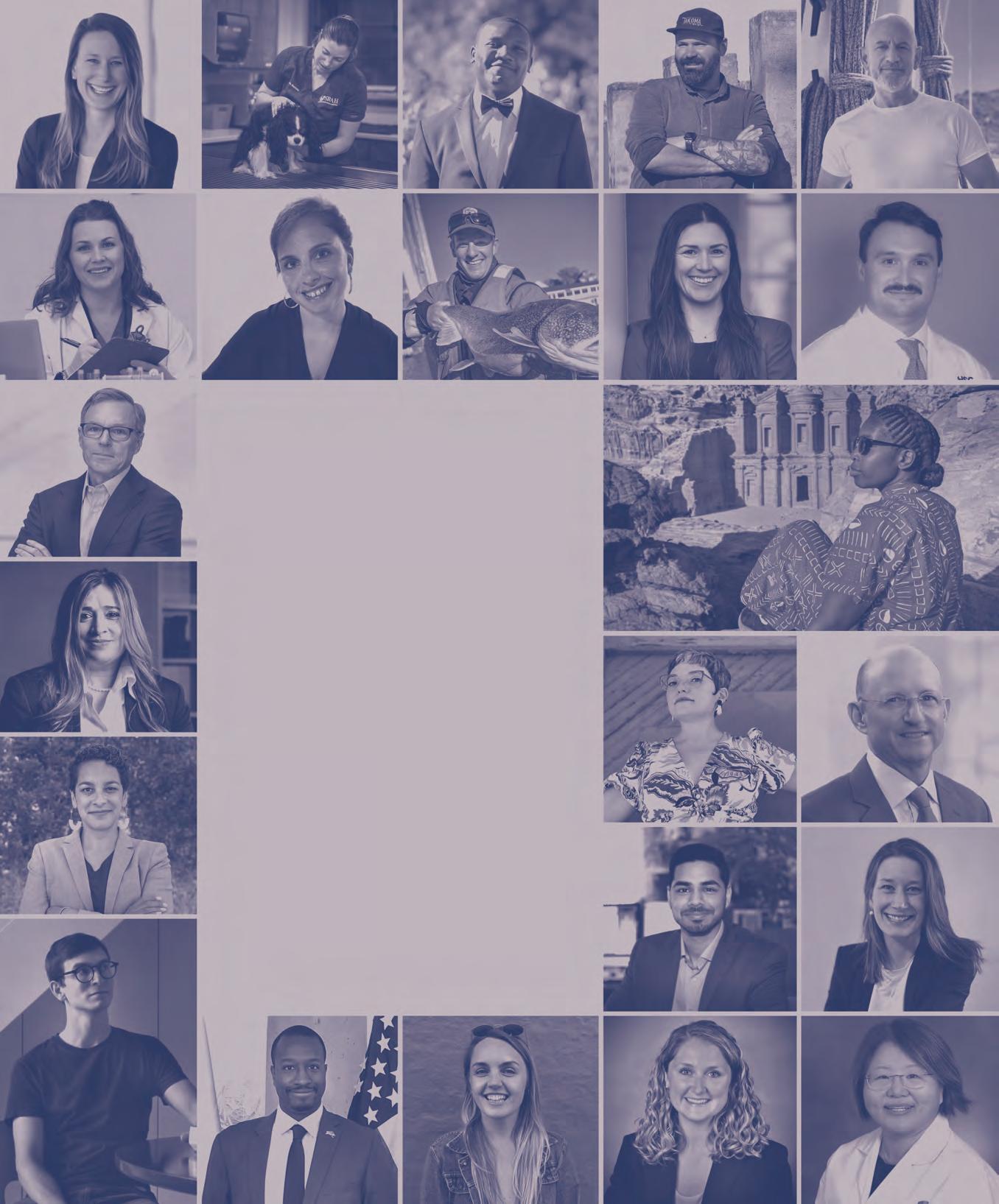
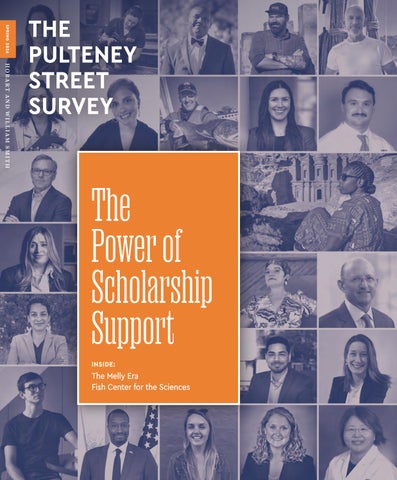
This issue of The Pulteney Street Survey highlights a powerful expression of opportunity with the profiles of 23 graduates and how their HWS education was made possible by the scholarships they received. Today they are doctors, scientists, entrepreneurs, diplomats and public servants. Their stories remind us that when access meets ambition, the impact of education can change lives.
We are also seeing new momentum in programs that connect the liberal arts with leadership and innovation. The Melly Institute for Business, Innovation and Leadership is preparing students to navigate a rapidly changing world. In one example, a business management course co-taught by Professor Tom Drennen and Chegg CEO Dan Rosensweig ’83 is bringing leaders from across industries into direct conversation with our students.
A dream school is also a place where students pursue excellence in all they do. Hobart and William Smith Athletics brings pride and achievement through rewarding student experiences. Hobart hockey continues its extraordinary run as a three-time national champion, surpassing Cornell’s 1972 record for the most consecutive home game victories with its 68th straight win. As we went to press, the team remained undefeated and ranked No. 1 in the nation, an achievement that reflects remarkable talent and the dedication of Coach Mark Taylor and our student athletes.
Across campus, our students’ deep commitment to community service in Geneva continues with record numbers participating in Days of Service and significant engagement of volunteer opportunities throughout the semester. The Washington Monthly observed this comprehensive local effort and ranked HWS #1 for Community Service. And our faculty are leading initiatives supported by the Mellon Foundation to explore how history and narratives shape civic life.
Together, these experiences – research and discovery, mentorship and service, athletics and innovation –are what make Hobart and William Smith a place where students can dream boldly and develop the knowledge and character to shape the future.
Thank you for your continued support of this extraordinary place.
Sincerely,
MARK D. GEARAN President
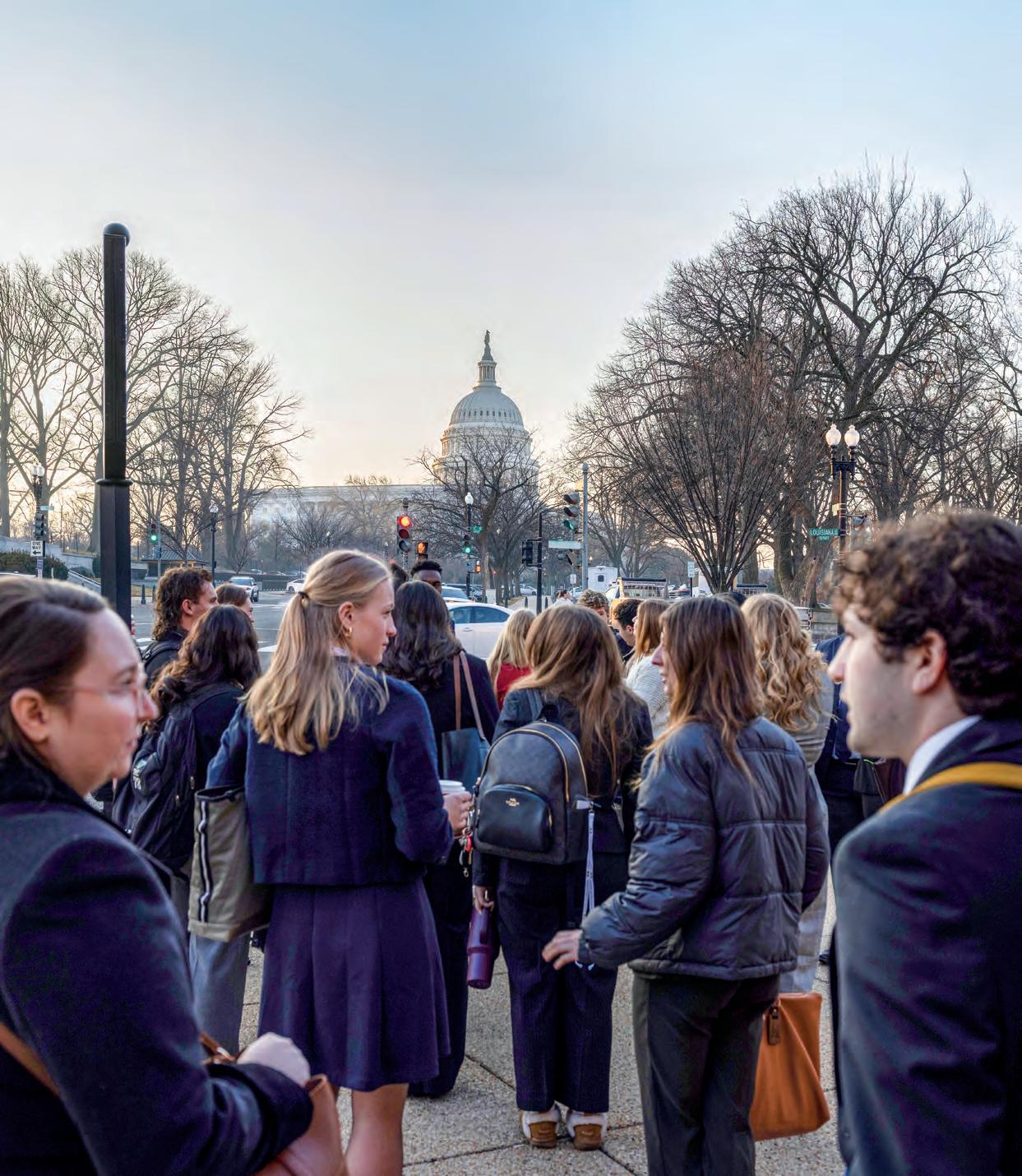
In January, the Salisbury Center for Career, Professional and Experiential Education led programs for students to explore various career sectors in Boston, New York and Washington, D.C. With faculty mentors, they conduct site visits, engage in panel discussions with graduates and practitioners and gain a firsthand perspective of possible professional pathways. Here, students walk to the U.S. Capitol Building for sessions with Members of Congress and staff.
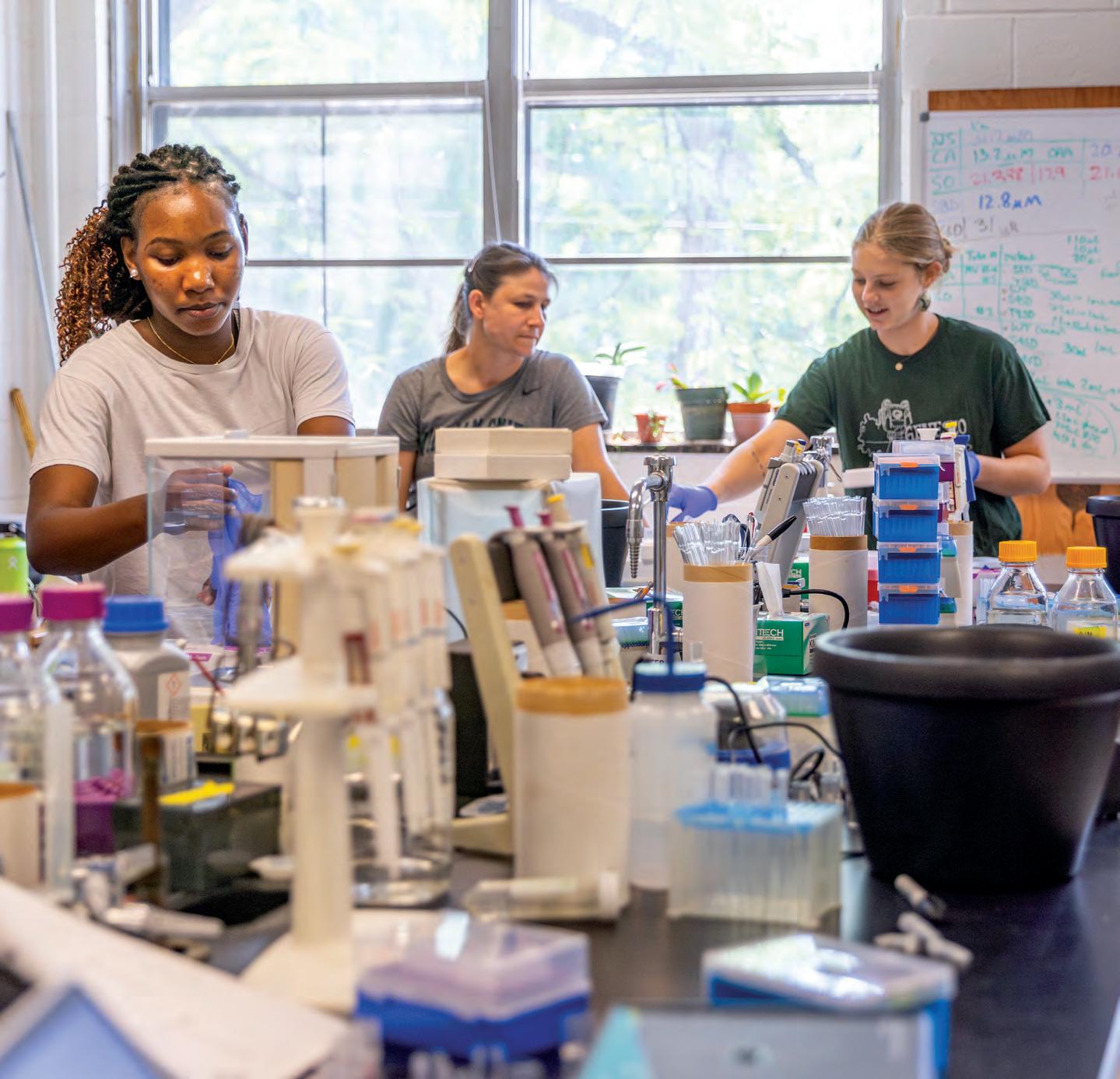
Carnegie’s new Research College designation recognizes how faculty and students collaborate to advance knowledge.
The Carnegie Classification of Institutions of Higher Education has designated Hobart and William Smith as a “Research College and University,” recognizing HWS’ strong commitment to faculty and undergraduate research.
HWS is one of just 216 institutions nationwide to receive the designation — and one of only 38 primarily undergraduate institutions recognized — underscoring the distinctive role HWS plays in advancing meaningful, student-centered research.
“This designation highlights our commitment to scholarship for both our faculty and our students,” says Provost and Dean of the Faculty Sarah Kirk. “HWS has been very successful in securing external funding for research, which includes, among others, three National Science Foundation Research Experiences for Undergraduates grants and a National Institutes of Health AREA grant. These highly competitive awards reflect the cutting-edge work our faculty are doing with students. Each summer, we support more than 100 students on campus through summer scholarship funded by external grants and the generosity of donors. We also continue to invest in the teacher-scholar model, ensuring that faculty remain at the forefront of their fields and that students benefit directly in the classroom and through collaborative research.”
As
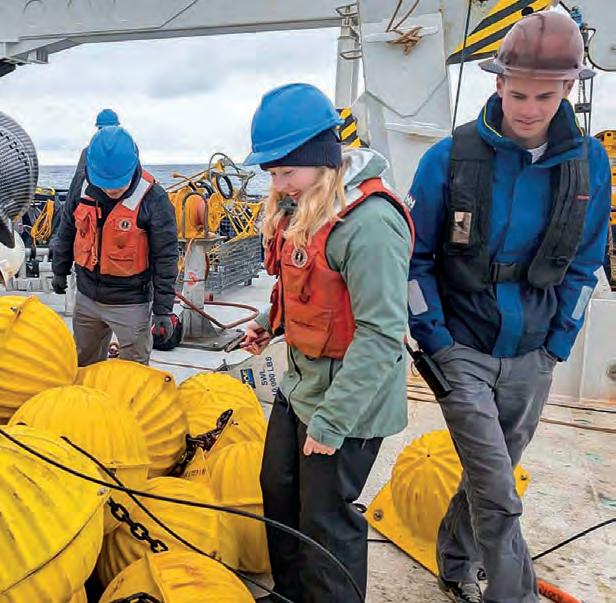
In the North Atlantic Between Iceland and the Faroe Islands
Geoscience major Fiona Howes ’27 has been named a 2025 recipient of the prestigious Ernest F. Hollings Undergraduate Scholarship, the nation’s leading award for undergraduates pursuing careers in oceanic and atmospheric science.
The highly competitive scholarship provides funding, a paid summer research experience, and travel to national scientific conferences — opportunities Howes fully embraced at Woods Hole Oceanographic Institution. Her success at Woods Hole led to a coveted invitation to participate in the Upstream Pathways of the Faroe Overflow (UFO) project, analyzing hydrographic data from the 2024 UFO Cruise and spending a month aboard the R/V Roger Revelle in the North Atlantic between Iceland and the Faroe Islands.
“I was honored to contribute and learn from the scientists leading this important work,” she says of her research that has now added valuable data to the project’s ongoing studies.
On campus, Howes combines rigorous academics with engagement: she studies geoscience and biology, runs cross country, serves as vice president of the Geoscience Club, mentors first-year students and volunteers with the Food Recovery Club. She has also conducted research on Seneca Lake through HWS’ Summer Research Program, exploring how sediments reveal long-term climate trends — work she presented at the American Geophysical Union conference in Washington, D.C.
Why HWS belongs on Jeffrey Selingo’s Short List
Hobart and William Smith was included on higher education expert and New York Times bestselling author Jeffrey Selingo’s short list this year—one of just 75 institutions featured in Dream School: Finding the College That’s Right for You. According to Selingo, a “dream school” is a college where students feel supported, intellectually challenged and well prepared for what comes next. Instead of focusing on how colleges choose students, Selingo turns the lens around, helping students and families think more intentionally about where they’ll thrive. To shape his list, he analyzed national data on student engagement and outcomes from organizations including HEA Group, Bain & Company, the National Survey of Student Engagement and the Burning Glass Institute and surveyed more than 3,500 parents. The schools that made the cut, he writes, combine strong results with accessible admissions and meaningful student experiences— qualities HWS alumni know well.
In Dream School, Selingo points to HWS’ track record of career success as a key reason for its inclusion. He notes that HWS graduates go on to work at organizations such as Fidelity Investments and Morgan Stanley, and
those pursuing medicine see particularly strong results: 80 percent of HWS applicants are accepted to medical school, which is nearly twice the national average.
That success reflects HWS’ handson, personal approach to career preparation—something students continue to recognize. In 2025, The Princeton Review ranked HWS No. 10 in the nation for Best Career Services, noting an exceptionally high job placement rate. Students described Career Services as “extremely supportive,” with one adding that it provides “everything a student could need to be successful in a job interview.”
Selingo also highlighted HWS’ strong “Affordable Return on Investment,” noting that graduates’ earnings align well with the net cost of attendance a decade after enrollment, a measure that speaks to long-term value, not just first jobs.
Service Is Part of the Culture Service and civic engagement are woven into daily life at HWS, and that commitment has earned national recognition as well. The Princeton Review recently ranked HWS No. 3 in the nation for Most Engaged Community Service, based on how strongly students agree that their peers are actively involved in giving back.
“Each student contributes their time and energy to support the well-being of those around us,” one student shared.
“It’s just part of the culture here.”
A Community Built on Belonging
Perhaps the most consistent praise for HWS centers on the student experience itself. The Wall Street Journal ranked HWS No. 4 in the nation for student experience, a distinction Selingo calls out in Dream School as a reflection of HWS’ commitment to personalized education and global engagement.
WHY HWS MADE THE LIST
“Dream Schools are where students thrive—where they build confidence, find belonging and launch into meaningful work and life,” Selingo writes. Hobart and William Smith earned its place on that list, he adds, “because of how it delivers on that promise.”
Through the Food Recovery Network, student volunteers collect surplus food from campus dining halls and deliver it to community partners across the Finger Lakes, transforming leftovers into meals and taking measurable steps to fight hunger close to home while reducing food waste.
Volunteers package leftover food from Saga Dining Hall and other food-service areas on campus that is still consumable but ineligible to be sold, and then transport it to places like the Geneva Methodist Church for the daily Community Lunch Program, in addition to local shelters and food pantries.
11,000+ lbs
Total food distributed by the HWS Food Recovery Network during the 2024–25 academic year.
3,000
Peanut butter & jelly sandwiches 1,200 Turkey sandwiches 9,500 lbs
Amount of food recovered from campus that is still edible.
$1,100+ Funds raised by HWS Student Government’s Hearty Meals in a Bag drive.
49 states U.S. states with Food Recovery Network chapters nationwide, including the local chapter at HWS.
10 Community partners, which include the Community Lunch Program in Geneva, Helpful Hearts in Lyons and the Samaritan Center in Syracuse.
1 ton Apples donated to community partners
35 Volunteers providing food recovery and distribution
6 events Four sandwich drives and two food drives
200 hours of volunteer service
2024–25 Academic year when Abigail Cole ’25 and Aiden Greiff ’25 started the local Food Recovery Network chapter at HWS.
Inside Jim Sutton’s space— and the stories, artifacts and questions that shape a life studying crime and justice.
Professor of Sociology Jim Sutton’s academic interests focus on what world-renowned criminologist Simon Dinitz termed “the mad, the bad and the different,” examining the societal forces related to crime, justice and victimization. Sutton specializes in criminology, and his research frequently engages with themes of interpersonal violence, vulnerable populations and crimes of the powerful. His office is chock-full of honors and artifacts that serve as tangible reminders of the people and projects that have shaped his career. Sutton began teaching at HWS in 2012 and was promoted to full professor in 2023. Sutton has conducted approximately 50 prison field trips for students and holds multiple gang specialist certifications. He has completed homicide investigation training with the New York State Police and brings a unique criminological perspective to a liberal arts setting. Currently, Sutton is writing a book on the experiences of those who have lost a loved one to homicide. His published work has appeared in leading journals, including Punishment & Society and the Journal of Criminal Justice covering topics such as prison ethnography, gangs and organizational offending.
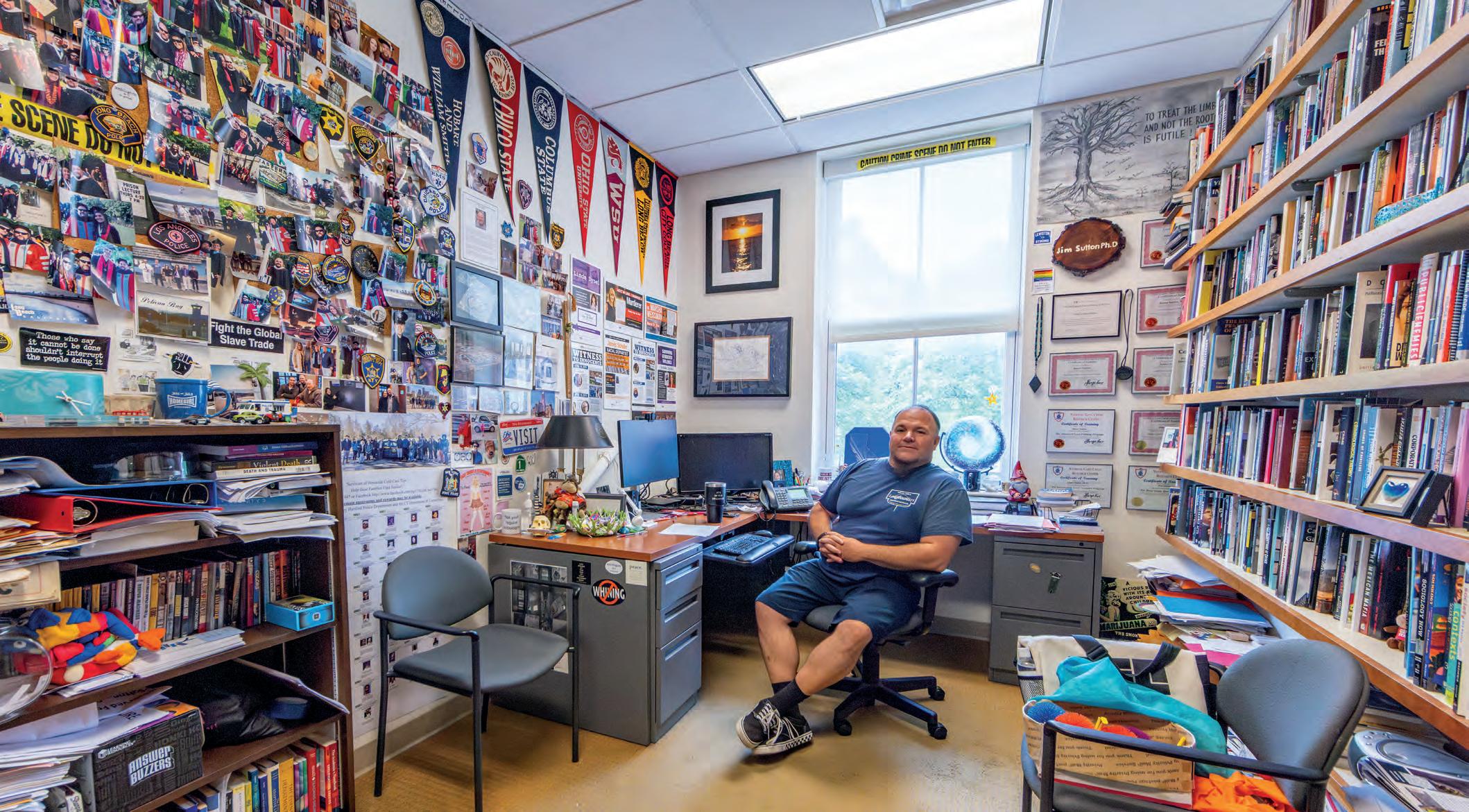
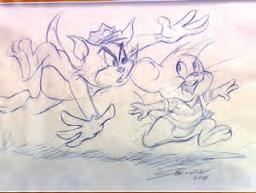
1 Tom & Jerry: During a reunion with mentee and now Los Angeles Police Department Detective Sasha Borenstein Curtis ’14, her father, Sheldon Borenstein P’14—an animator who works on Tom & Jerry cartoons—sketched this police-chase version of the iconic duo as a gift.
2 Wood Nameplate: This custom nameplate was commissioned by prison staff and handcrafted by individuals participating in a California prison woodworking program. The initiative allows staff to request and support artwork created through the program, with the artists receiving payment upon their release.
3 Handcrafted Glass: All of the glass objects are made by Sutton’s wife Jes, founder of @sealambglass.
4 Memory Wall: Mentees earn a spot on Sutton’s Memory Wall after graduation, alongside his collection of challenge coins, patches and other keepsakes gathered over the years.
5 License Plate: A gift to Sutton after visiting the Ohio prison facility that manufactures license plates for the state.
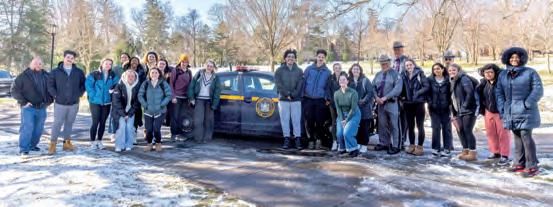
6 Sociology of Police and Policing: HWS students gathered for a photo after participating in ride-alongs with New York State Police officers, who later visited their class. The experience was coordinated by NYSP Sgt. Brian Bernard ‘01.
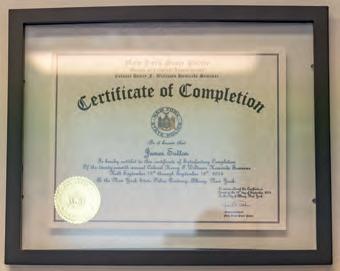
7 Certificate of Completion: Forensic dentist Dr. Lowell J. Levine ‘59 invited Sutton to participate in a prestigious weeklong homicide investigators training.
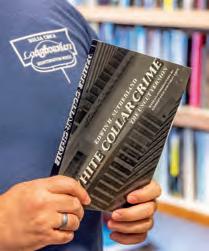
8 White Collar Crime: The first thematic, empirical study of white-collar crime by one of the most famous criminologists. Initially censored, this “uncut” edition was reprinted in 1983. The book was originally published in 1949.
HWS students explore the stories that shape communities — from Geneva to Washington, D.C.
BY MARY STONE
On a fall afternoon in Geneva, a group of HWS students pores over archival photographs, listen to recorded oral histories and talk with community members about how the city has changed — and how those changes are remembered. Their work is part of a new initiative at Hobart and William Smith that asks a deceptively simple question: Who gets to tell a community’s story, and how does that story shape the way people live together?
Launched with support from a $500,000 grant from the Andrew W. Mellon Foundation, “Matters of Memory: Confronting Conflicting Narratives in a Small American City” is an interdisciplinary program that brings students and faculty together to examine how history, memory and competing narratives influence civic life, identity and belonging.
Directed by Professor of History Matthew Crow, the program blends team-taught seminars with hands-on research and community collaboration. Students study how stories are formed, preserved and sometimes contested and then apply those ideas beyond the classroom.
That work extends well beyond Geneva. Last fall, students traveled to Washington, D.C. to explore how national institutions shape historical memory. At the Library of Congress, the nation’s oldest federal cultural institution, and the National Museum of African American History and Culture, students examined how archives, exhibitions and public history
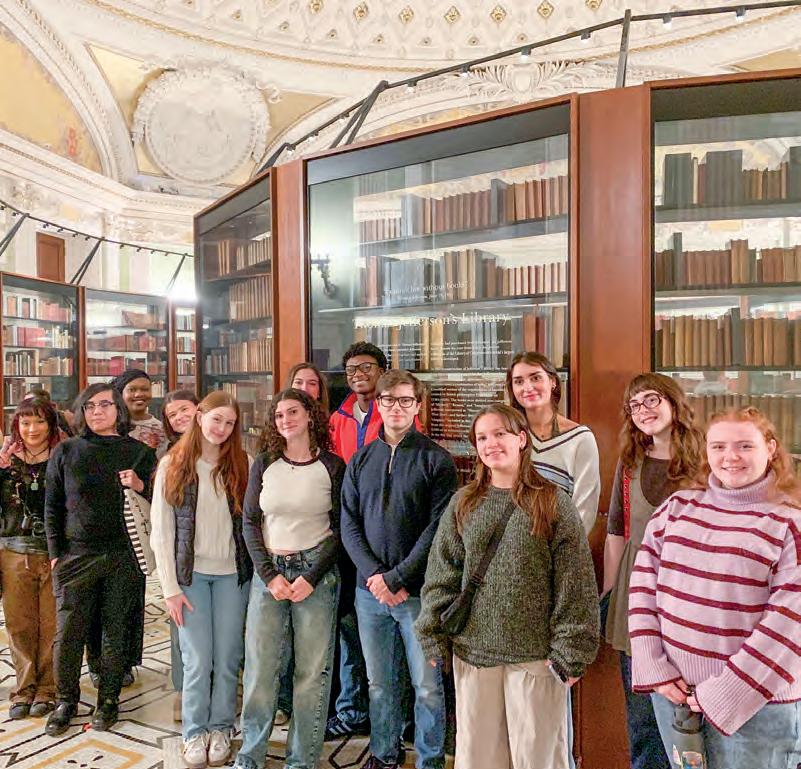
influence what a society remembers, values and understands about itself.
“Whether we realize it or not, memory is an evolving force,” says Crow. “We’re examining how memory shapes what we think of as history and therefore what we think of as politically important and possible.”
Back in Geneva, students apply those insights locally. One early project explored the intersections of religion, race and civic life in the city’s history, drawing on interviews, archival research, and community partnerships to help create a public, interactive exhibit that will be shared both on campus and online.
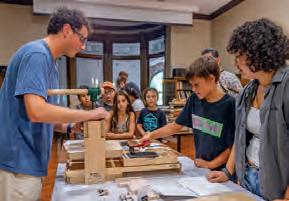
Top: Students visit the Thomas Jefferson library exhibit at the Library of Congress. Bottom: Connor Gasper ‘26 and Alyssa Hanuscin ‘27 lead a “Matters of Memory” program funded by the Mellon Foundation for local children to learn about the printing press.
Service has long been a part of the Hobart and William Smith story, and that commitment earned national recognition with HWS ranking No. 3 among small schools on the Peace Corps’ 2025 list of Top Volunteer-Producing Colleges and Universities. “We are proud of our alumni who dedicate themselves to the mission of the Peace Corps, bringing their expertise and compassion to communities worldwide,” says President Mark D. Gearan, who served as the 14th director of the Peace Corps from 1995 to 1999. “This recognition reflects the enduring commitment of our students to make a positive impact in the world.”
Members of the Classes of 2024 and 2025 are carrying that legacy forward. Ahmed Wise ’24 serves as a Community Health Volunteer in Western Kenya, working in a local maternity ward and at a Comprehensive Care Clinic focused on HIV prevention. Julia Cianflone ’24 is a Community Environmental Promoter in Paraguay, supporting environmental initiatives and community education. Four members of the Class of 2025 are active Peace Corps members, including: Robert Clyde ’25 (Paraguay), Joey Tello Galicia ’25 (Costa Rica), Aiden Greiff ’25 (Senegal) and Justin Rosa ’25 (Dominican Republic). Since the Peace Corps was founded in 1961 by President John F. Kennedy, more than 250 HWS alumni have served abroad.
For many students, summer is a chance to step beyond the classroom and explore careers, and with support from HWS’ competitive international internship awards, several students gained hands-on experience across Europe and Latin America.
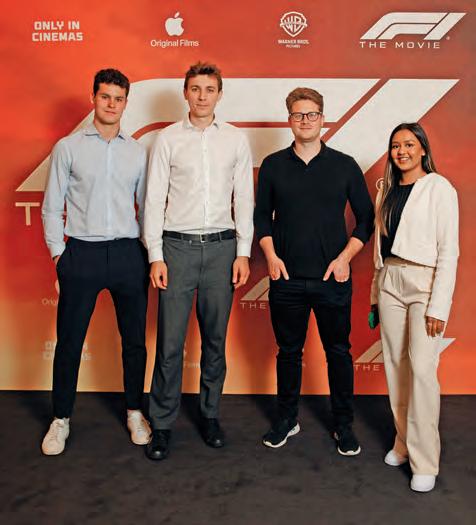
Five students received the Charles H. Salisbury Summer International Internship Stipend to support immersive work that aligns with their career goals. Juliza Ariza ’27 shadowed physicians in Madrid, Spain and Athens, Greece to prepare for a career in psychiatry. Callum Letters ’27 had a second internship with Formula One in London, this time in commercial finance, building financial models and partnerships.
Loreine Mungcal ’26 gained public health experience at Clinica Santa Isabel in Seville, Spain, while Kateryna Romaniuk ’26 worked in Stockholm, Sweden with KPMG Sweden’s risk and compliance team. Stephanie Ryan ’26 taught English in Buenos Aires, Argentina, furthering her path toward multilingual education and global teaching.
Three students earned the Bickley International Internship Award, which supports professional internships abroad. Ahata Laska ’26 attended the CzechMates program at Masaryk University in Brno, Czech Republic, where she pursued internship opportunities in marketing and communications. Zoe Ugarteche ’26 interned with RC59 architecture in Valencia, Spain, working on design and project execution. Luke Ward ’26 was in the United Kingdom with Oxford Photovoltaics, contributing to solar energy business development.
The Salisbury Stipend was created in 2007 by Honorary Trustee and former Chair of the Board Charles H. Salisbury Jr. ’63, P’94, L.H.D. ‘08. Established in 2012, the Bickley Award was created through a gift from Ian and Kimberly Bickley P’14.
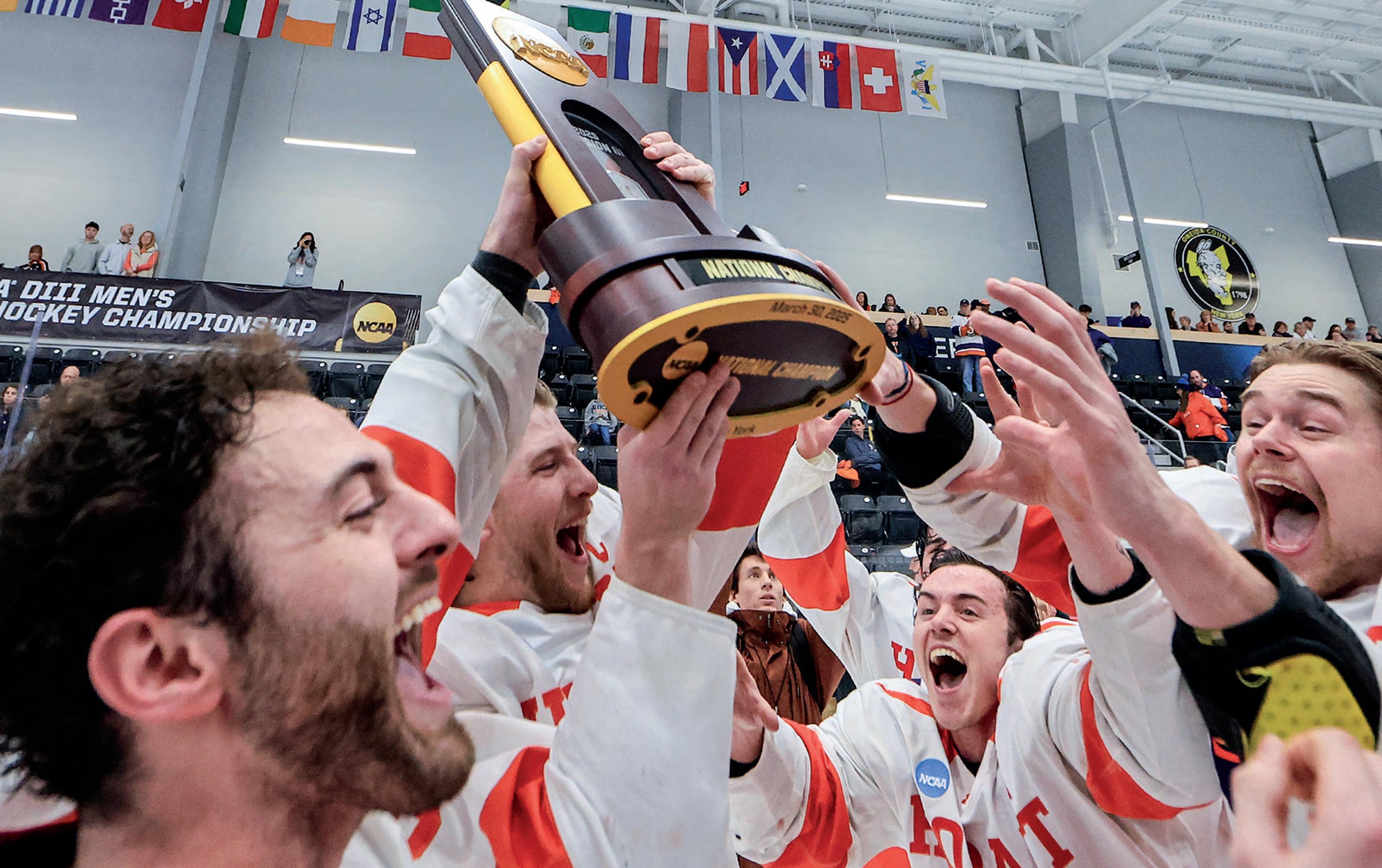
Hobart hockey continues its extraordinary run as a three-time national champion. At the time we went to press, Hobart was 28–0–0 on the season and the No. 1 seed in the NCAA tournament as it began its quest for a fourthconsecutive national championship. Here, the Hobart hockey team celebrates with their thirdstraight national championship trophy in 2025.
Flag football is having a moment—and soon, that moment will arrive at HWS.
In spring 2027, the Herons will take the field for the first time as Hobart and William Smith Athletics’ newest varsity team, becoming the department’s 31st sport. For alumni who remember when opportunities for women in college athletics were far fewer, the addition is another meaningful milestone in HWS’ long history of growth, access and ambition.
“We are excited to expand our athletic opportunities for women with the addition of flag football,” says Associate Vice President and Director of Athletics and Recreation Brian Miller. “As with all of our Heron teams, we expect our flag football program to add to that rich legacy of champions while fostering and empowering a new generation of leaders.” Flag football’s rise has been swift and unmistakable. Once largely recreational, the sport is now one of the fastest growing in the country and will make its Olympic debut at the 2028 Los Angeles Games. New York State has fully embraced the
momentum. Currently, more than 200 high schools across the state are expected to field teams and nationally, more than 43,000 girls are already playing the sport at the high school level.
Colleges have taken note. More than 70 NCAA institutions now sponsor varsity flag football. William Smith was the first Liberty League institution to sponsor the sport.
On campus, the game will look fast, strategic and fun. Played 7-on-7, flag football emphasizes speed, agility and decisionmaking. Games feature short fields, quick possessions and constant motion. The Herons will call McCooey Field home, and rosters will be made up of about 25 student-athletes eager to make history as the program’s pioneers.
Rusty Virkler will serve as the inaugural head coach. A former Division III student-athlete and longtime educator, Virkler most recently led Owego Free Academy’s flag football program, which he founded in 2021. In just four seasons, his teams compiled a remarkable 46-7 record, won multiple Section IV and regional championships, and reached the New York State championship game.
For Virkler, the opportunity feels like a natural next step.
“I look forward to helping add to the rich heritage and championship tradition of William Smith Athletics,” he says.
“From Day 1, my goal is to create a positive, competitive culture that student-athletes are proud to be part of.”
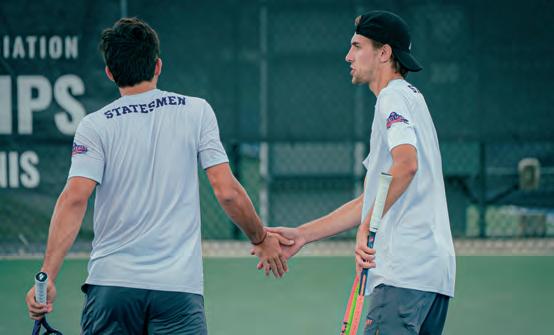
Nick Fischer ’26 and Jacob Linares ’26 (pictured right) made history at the 2025 ITA Cup, becoming the first Hobart doubles team to advance to the semifinals of the national tournament. The duo opened with the program’s first two wins at the ITA Cup, then battled Claremont-MuddScripps in a thrilling semifinal, rallying from a 4–1 deficit to win the second set. They ended the fall season 7–1.
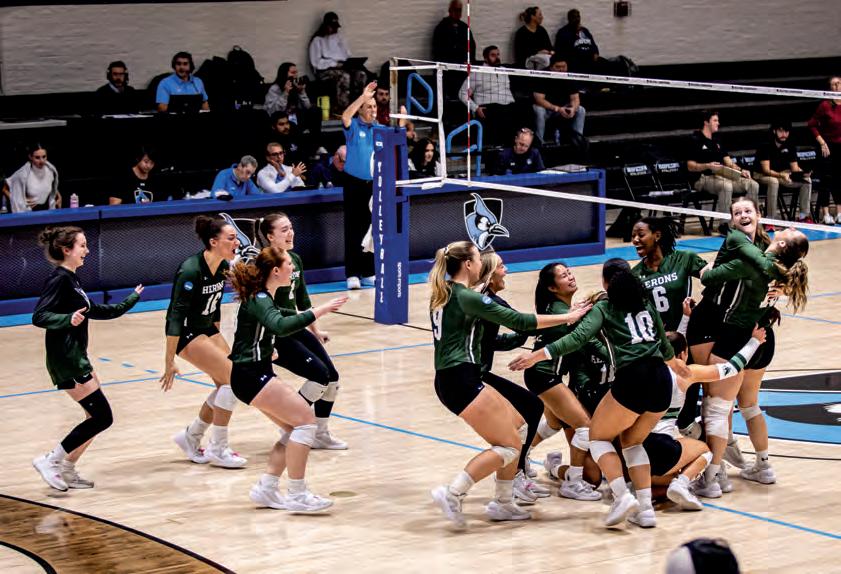
In just its fourth varsity season, William Smith volleyball continues its outstanding rise. The Herons earned an at-large bid to the NCAA Division III Championship for the second straight year and went on to win their first ever NCAA tournament match with a thrilling five-set win over Lynchburg in the opening round, capping another 20-win season.
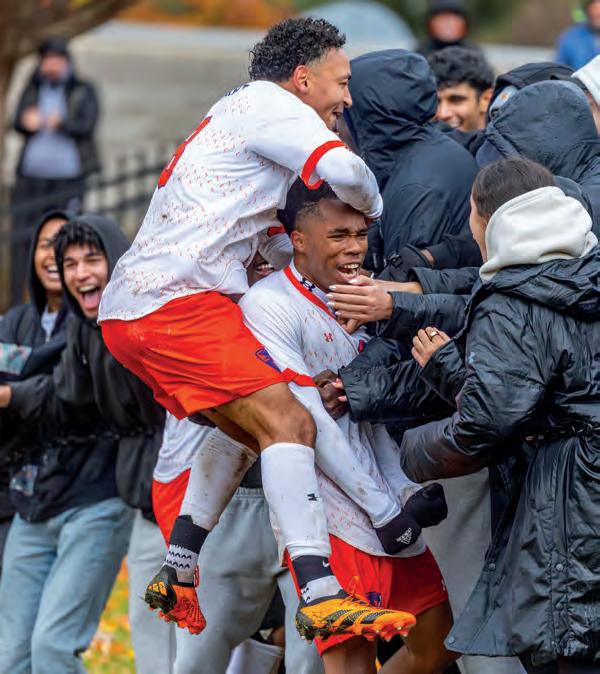
During the Liberty League Men’s Soccer Championship, Matheus Souza ’26 and La Zai Outerbridge ’27 celebrated the gamewinning goal with fans.
The 2–1 victory over third-seeded Vassar secured the Statesmen’s fifth Liberty League Championship and an undefeated regular season (13–0–5).
In addition to All-America honors—recognizing 20 student-athletes in 2025, one of the largest cohorts in HWS history (listed below)—the second annual 4.0 Breakfast was held in the Vandervort Room. The event drew a full house of students, coaches and faculty guests, with 28 of HWS’ 30 teams represented by at least one student-athlete who earned a 4.0 GPA over the past two semesters.
Luke Aquaro ’25 Hobart Hockey
Daniel Barrientos ’26
The Mellys’ historic $70 million gift offers a transformative opportunity to prepare HWS students with a liberal arts and sciences education while expanding experiential learning, leadership and career pathways.
BY MARY LECLAIR
Longtime Trustee L. Thomas Melly ’52, L.H.D. ’02 was a Wall Street icon, a leader and proud graduate of Hobart and William Smith.
His vision launched The Melly Institute for Business, Innovation and Leadership to prepare a new generation of bold thinkers and trailblazers.
President Mark D. Gearan sees the Melly Institute as a catalyst for a new era at Hobart and William Smith—one that builds on the momentum of three centuries of commitment to the liberal arts educational model. Through the Melly Institute, HWS is expanding its signature strengths: ever-advancing curriculum, immersive faculty mentorship, personalized career coaching, guaranteed internships, robust professional communities and unprecedented access to industry leaders.
“This historic gift challenges us to think bigger about the promise of a liberal arts and sciences education,” Gearan says. “It empowers our students not only to navigate the world they will inherit, but to shape it.”
In 2025, when HWS announced the landmark $70 million gift from Tom and his wife Judith Hershey Melly L.H.D. ’16, the campus reaction was immediate and unmistakable: surprise, awe and a dawning realization that HWS had opened a new chapter marked not just by philanthropy on an historic scale, but by a transformative vision for how a liberal arts institution can shape students’ lives over the next century.
The Mellys’ intent was not simply to invest in infrastructure or endowment, but to create a new center of gravity for experiential learning — a place where students would not only study ideas but apply them in real time to solve problems, launch ventures and advance careers.
“One of the most distinctive characteristics of the Melly philanthropy has been its logic,” says Vice President and Senior Philanthropic Advisor Bob O’Connor P’22, P’23. “Rather than create a single new building or endowed department, the gift connects existing strengths and adds capacity in areas that
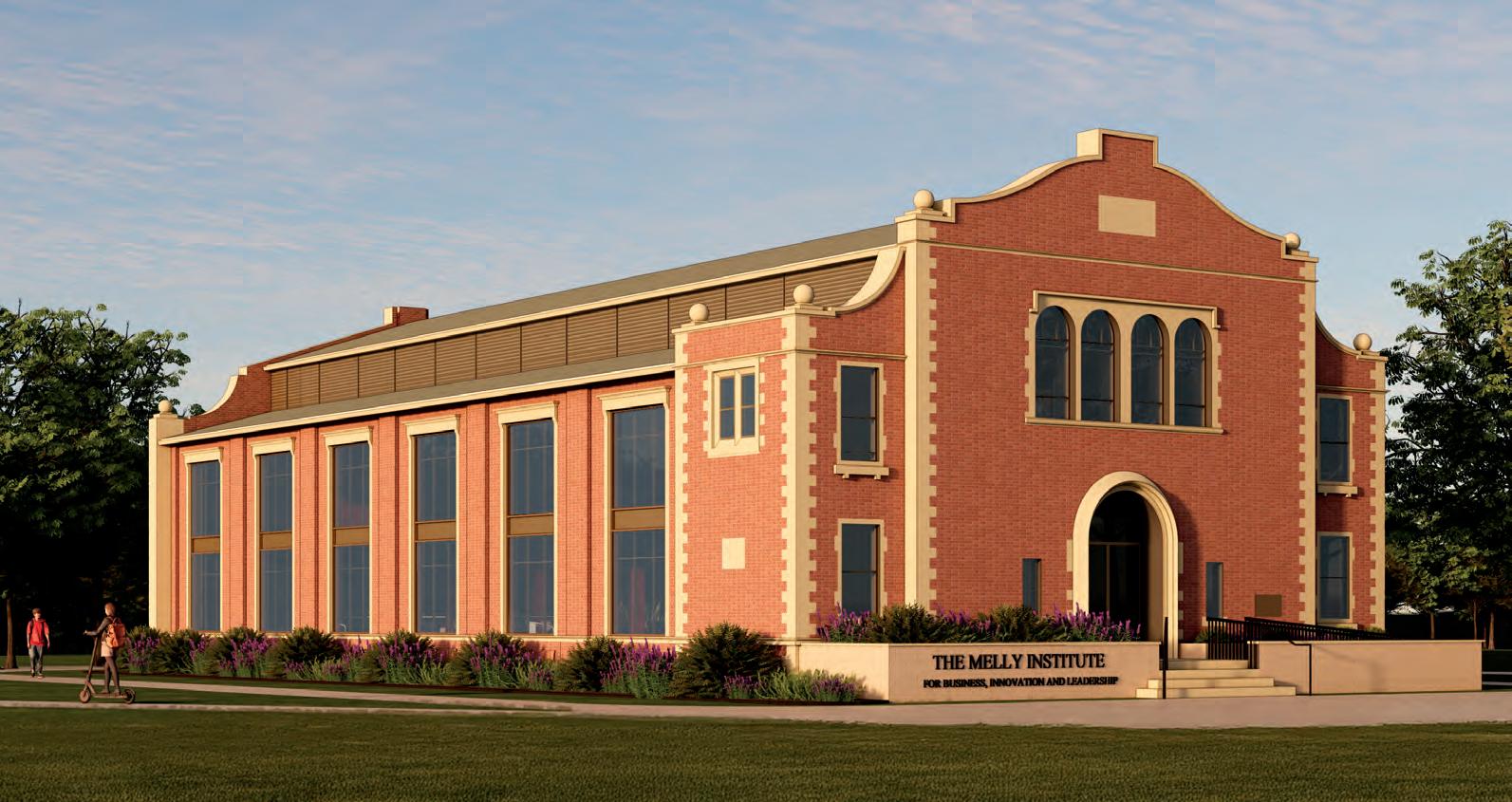
make the greatest difference in post-graduate outcomes: internships, fellowships, research opportunities, advising, mentorship, skills-based development, networking and employer partnerships.”
Through the Melly Institute, two new faculty positions— one in marketing and one in accounting and finance—will be established to strengthen the academic program. These roles will expand course offerings, support curriculum development, and provide students with a more comprehensive foundation in key business disciplines.
The Melly Institute also anchors three powerful centers: the Salisbury Center for Career, Professional and Experiential Education, the Bozzuto Center for Entrepreneurship and the Centennial Center for Leadership, providing enhanced outcomes and focused opportunities.
Since the Institute’s launch, the campus has significantly expanded its capacity to support students’ career and leadership development. The Salisbury Center has increased staffing and programming to engage students earlier and more intentionally in career exploration, entrepreneurship and leadership training. Every first-year student now meets
with a Career Exploration Coach during their first semester, and a team of 11 career coaches provides individualized guidance as students refine goals and pursue deeper professional preparation.
“These efforts are designed for students who arrive with a clear sense of direction and want to move forward with purpose,” says Associate Vice President for Outcomes and The Melly Institute Brandi Ferrara. “But it’s also designed for students who maybe aren’t entirely sure of their direction or who have changed paths. Through the Melly Institute, we are able to connect with students earlier and support them with greater depth and focus.”
The expansion of programming is evident across multiple initiatives, including the Professionals-in-Residence program, which brings leaders in business, finance, technology, artificial intelligence, and manufacturing directly into classrooms and advising conversations. Melly resources are now also directed at supporting and expanding the student led pre-professional clubs including: Artificial Intelligence, Consulting, Engineering, Health Professions, Investment, Pre-Law, Real Estate and Design, and Women in Business and Leadership. “As we add staff and faculty support to guide leadership of these clubs, our alumni and parents will continue to play an expanded and critical role in advising,” says Ferrara.
Career Trek programs have likewise expanded, offering immersive experiences in Boston for students pursuing STEM careers and additional treks focused on business. And this spring, students enrolled in “Nonprofit Organizations, Philanthropy and Impact,” taught by Katie Flowers, executive director of the Center for Community Engagement and Service Learning, and President Gearan, will travel to New York City to visit nonprofit organizations. The NYC Career Trek is possible through support from Mike ’92 and Christina Gantcher P’27 and the Gantcher Family Foundation. Technical skill development opportunities continue to grow. The Salisbury Center’s Scott MacPhail is teaching an LSAT course through the Reader’s College format, allowing students to earn credit while they prepare for law school, while HWS General Counsel Lou Guard ’07 is expanding HWS’ law school affiliations by leading a group of students to the University at Albany this spring.
Additional skill-building and certifications aligned with employer demand include training in Excel, Capital IQ Pro, Python, Adobe, Fundamental Edge and Bloomberg Market Concepts.
Together, these initiatives reflect a broader shift in how HWS supports students as they move from academic exploration to professional direction. “By connecting classroom learning
• A financial modeling bootcamp and in-person interview sessions developed in collaboration with Trustee and former J.P. Morgan Chase Global Chairman of Investment Banking Eric Stein ’89
• The launch of a new AI Club that hosted WAYMO in partnership with New York State Senator and Trustee Jeremy A. Cooney ’04
• A Real Estate and Design Club roundtable featuring Alan Worden ’87, founder and CEO of Community Data Platforms, senior advisor to ReMain Nantucket, and principal of the Westmoor Club
• Students in the Business Management and Entrepreneurship capstone course hosted Trustee Naz Vahid-Ahdieh ’85, P’17, former Managing Director of the Global Law Firm Group at Citi Private Bank, for practice pitch presentations
• In two separate sessions, the Health Professions Association hosted Dr. Joy H. Glaser ’62, P’89, P’97, GP’19 and Dr. Arnold Cohen ’71, P’05
• A lunchtime discussion with students interested in finance was led by Trustee Stephen Wong ’89 Managing Partner at Valley Capital Partners and former Chairman of Hong Kong Investment Banking at Goldman Sachs
• A talk on careers in New York City’s financial sector was led by Franklin Marquet P’19, Vice President at Rithm Capital
• Students participated in a twoday intensive Finance Bootcamp, hosted by Wall Street Prep and funded by Alex Nugent ’15 and Ryan Adler ’09
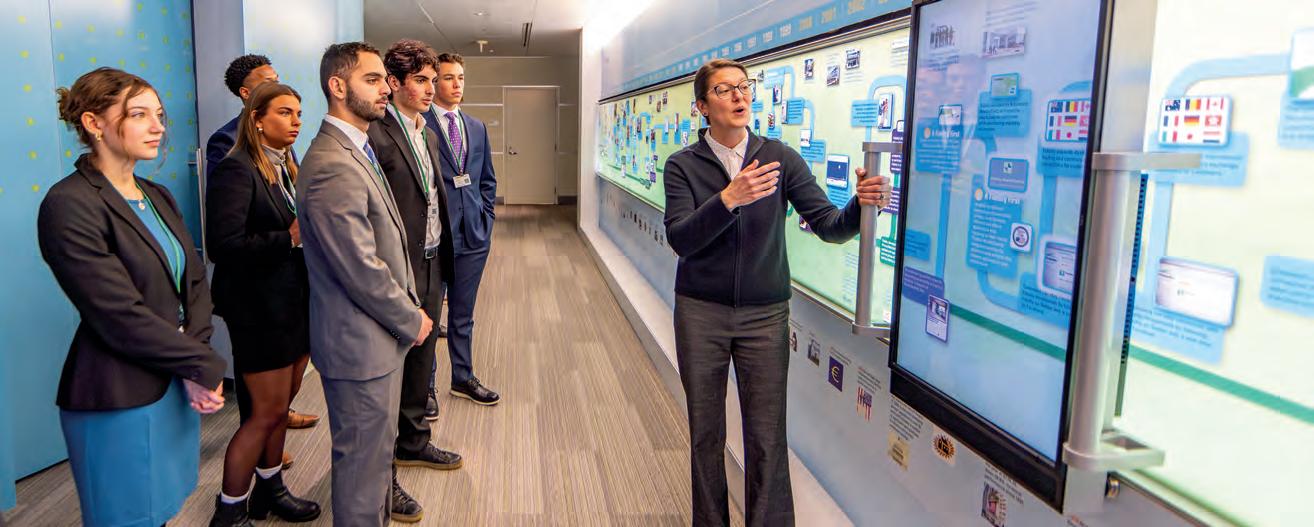
with mentorship, skill development and sustained engagement with alumni and industry leaders, the Melly Institute is strengthening pathways that help students clarify goals, test interests and prepare for what comes next — building on HWS’ longstanding commitment to purposeful education and lifelong impact,” says Ferrara.
In addition to establishing the Institute, Tom and Judy Melly’s generosity supports the Melly Scholarship, HWS’ most prestigious and, at $46,000, largest merit award, which recognizes 15–20 students each year who demonstrate tenacity, purpose and leadership potential. The team in the HWS Admissions Office read more than 500 essay submissions to select the first cohort that will enroll in the Fall of 2026. Melly Scholars are selected based on academic performance, initiative, leadership, service, global engagement and clarity of purpose. Scholars will move through the program together from their first semester to graduation, participating in structured programming and shared activities. The program will provide access to faculty, staff and alumni mentors, as well as designated funding to support internships, study abroad and careerrelated expenses. Each Melly Scholar also receives a computer.
The first year of the program focuses on cohort formation, career awareness and foundational professional development.
Melly Scholars participate in activities designed to help them identify interests, strengths and values, and to understand how these factors relate to academic choices, leadership roles and career planning.
During the fall semester, Melly Scholars will take a seminar titled “Purpose, Pathways, and Possibilities,” which examines career development as an evolving process and introduces multiple models of leadership. Career assessments and skills workshops will address résumé development, professional communication and networking. Leadership programming will emphasize ethical decision-making, inclusive collaboration and strengthsbased approaches.
By the end of the first year, each Melly Scholar will complete a set of program benchmarks, including a professional résumé, a leadership self-assessment and a personalized Pathways Playbook that serves as a planning resource for subsequent years in the program.
The Melly Institute and the Melly Scholarship position HWS within a broader national conversation about the value of a liberal arts education in an era of heightened public scrutiny, cost sensitivity and market volatility. Experiential learning has become the answer to a question prospective families increasingly ask: “How will this education prepare my child for the world beyond college?”
“By integrating experiential learning at scale, HWS is making a strategic bet that the future of the liberal arts lies in the interplay between the intellectual and the applied – and that the two are inexorably connected,” says Board Chair Joseph C. Stein III ’86. “In this view, the liberal arts are not diminished by career preparation; they are sharpened by it. Leadership, ethics, communication, problemsolving and global understanding become more powerful concepts when tested in real contexts — research labs, start-ups, nongovernmental organizations, schools and legislatures.”
“The Melly Institute formalizes this interplay and operationalizes it,” says Provost and Dean of Faculty Sarah Kirk.
“The Melly gift signals confidence in Hobart and William Smith’s ability to lead in a category that is increasingly defining the competitive landscape for liberal arts colleges: experiential learning with tangible postgraduate outcomes.”
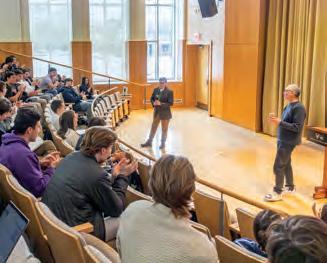
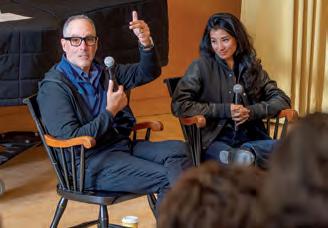
A key example of the impact of the new Business Management and Entrepreneurship major and the Melly Institute is “MGMT 305: Leadership and Learning in Entrepreneurial Ventures,” co-taught by Professor Tom Drennen and CEO of Chegg Dan Rosensweig ’83. Each week, students engage directly with leaders from Nike, ESPN, Meta, Rent the Runway, Cisco and Adobe, as well as WNBA players and other entrepreneurs such as MC Hammer and Jewel. As the workforce evolves at AI speed, the course positions HWS students in direct conversation with the leaders navigating that change. By engaging in meaningful conversations, rigorous research and a culminating team consulting pitch, students build the judgment and confidence required to lead in complex, fast-moving environments.


Dick Costolo
Former CEO, Twitter
John Donahoe
Former President and CEO, Nike; Former CEO, eBay
Brad Falchuk ’93 Emmy AwardWinning Writer, Director and Producer
Sarah Guller Co-Founder, Forta Cosmetics; Consumer Investor
MC Hammer Grammy AwardWinning Artist and Entrepreneur
Lexie Hull
WNBA Player, Indiana Fever; Co-Founder, Forta Cosmetics
Jennifer Y. Hyman
Co-Founder and CEO, Rent the Runway
Jewel
Four-Time GrammyNominated SingerSongwriter


Dan Kluger Award-Winning Chef; Owner, Loring Place
Ashton Kutcher Actor and Entrepreneur
Adam Met, Ph.D.
Founder and Executive Director, Planet Reimagined; Musician, AJR Shantanu
Narayen Chair and CEO, Adobe Inc.
Jimmy Pitaro Chairman, ESPN Inc.
David A. Ricks
Chair and CEO, Eli Lilly and Company
Chuck Robbins Chair and CEO, Cisco Systems Inc.
Dan Rosensweig ’83
President and CEO, Chegg; Former COO, Yahoo


Evelyn M. Rusli
Co-Founder and Co-CEO, Yumi Nutrition
Sheryl Sandberg
Former COO, Meta Platforms Inc.
Dan Schulman CEO, Verizon Communications Inc.
Caryn Seidman Becker Chair, CEO and Founder, Clear Secure Inc.
Katie Stanton Founder and General Partner, Moxxie Ventures; Board Director at Yahoo! Inc.
Danielle Weisberg Co-Founder and Co-CEO, theSkimm
Carly Zakin
Co-Founder and Co-CEO, theSkimm
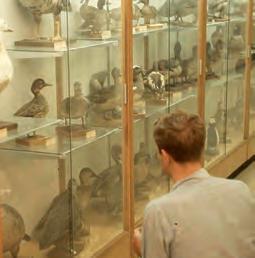
While the Fish Center looks forward, Eaton Hall leaves a tangible connection to the past through its renowned ornithology collection. Built in 1961 and named for Professor Elon Howard Eaton, the founder of HWS’ Biology Department, Eaton Hall housed 217 taxidermized birds, more than 160 of which were carefully relocated before demolition.
Professor of Biology Mark Deutschlander, who oversaw the move, notes that the collection remains a vital teaching resource. Eaton, a prominent New York State ornithologist, began the collection more than a century ago. Among the specimens is a group of Passenger Pigeons— an adult male and two juveniles— that add to the collection’s scientific and historical value.
“The birds are descendants of Eaton’s vision of connecting students to the natural world,” Deutschlander says. “They’re now in storage until a permanent home in our science complex is established, ensuring that Eaton’s legacy continues to inspire curiosity, learning and discovery for generations to come.”
Faculty-led collaboration shapes the new Fish Center for the Sciences, a hub for interdisciplinary research and learning.
BY MARY STONE
The new Fish Center for the Sciences will do more than change the campus skyline—it will transform how science happens at Hobart and William Smith. At its heart is a story of collaboration, innovation and careful planning that began long before the first shovel hit the ground.
Designing a building as ambitious as the Fish Center required the expertise and the imagination of those who know the sciences inside and out. For 18 months, seven faculty members representing more than 40 science professors formed the Science Faculty Working Group, meeting repeatedly to shape a center that would merge research, teaching and collaboration across disciplines.
Associate Provost and Associate Professor of Geoscience Nick Metz led the team, describing the process as “like the research process itself—iterative, thoughtful and sometimes messy. We started with rough concepts, discussed them, revised them, and then went back to the drawing board again and again. The faculty didn’t just approve the design—they built it from the ground up.”
The faculty considered every detail: how to share labs without sacrificing specialized equipment, how to consolidate instrument rooms, and how to integrate teaching spaces that encourage collaboration without sacrificing focus. They worked with Boston-based Suffolk Design to test ideas, refine layouts and ensure that ambitious designs were feasible within the budget.
“Every department learned about the others’ work— how they teach, how they research, what equipment they use, even the state and federal regulations they follow,” Metz says. “That understanding informed every decision. It wasn’t just about buildings—it was about how scientists work together.”
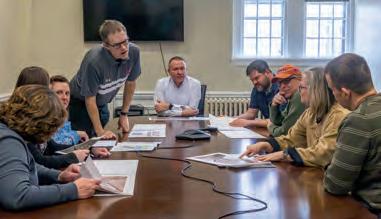
The Science Faculty Working Group meet in the Maney Room: (L to R) Professor of Environmental Studies Kristen Brubaker, Associate Professor of Biology Shannon Straub, Associate Professor of Psychological Science Emily Fisher, Professor of Chemistry Erin Pelkey, Associate Provost and Associate Professor of Geoscience
Nick Metz, Associate Professor of Mathematics & Computer Science
Joseph Rusinko, Associate Professor of Geoscience David Finkelstein, Provost and Dean of Faculty Sarah Kirk and Professor of Mathematics & Computer Science Jonathan Forde. Not pictured: Professor of Physics Leslie Hebb.
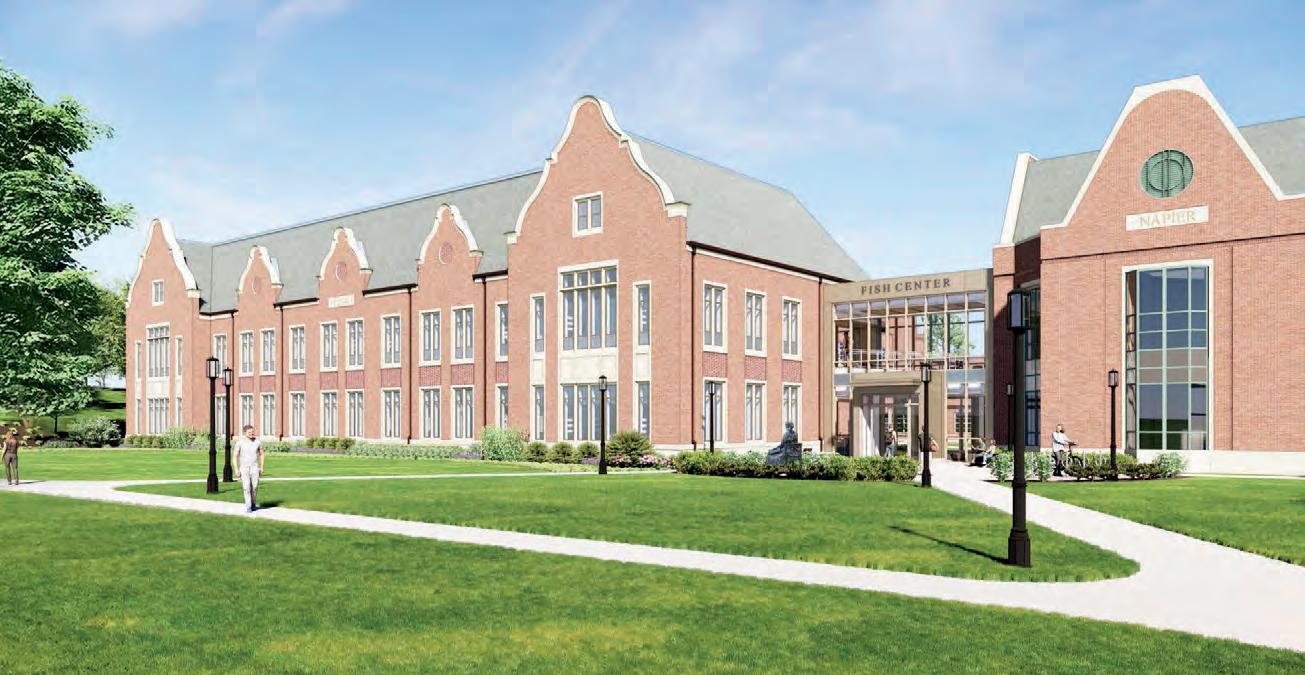
With Eaton Hall demolished, the Science Quad now looks like an active construction zone. As the magazine was going to press, foundations for the Fish Center were scheduled to begin in late March, with the building rising approximately 25 feet north of Eaton’s footprint, repositioning science at the heart of the campus’ academic core. The design of the Fish Center, a sleek, fourstory glass-and-brick structure, reflects the interdisciplinary mission of the sciences at HWS.
A striking glass connector will link the Fish Center to Napier and Rosenberg Halls, guiding visitors through the science precinct and visually anchoring the southern axis of the Quad. A second-floor gathering space will offer sweeping views of Lansing Hall and the Science Quad—a vantage point Metz calls “a space for reflection, collaboration and seeing how far we’ve come.”
The relocation of departments has been a puzzle of extraordinary complexity. Physics, mathematics, computer science and psychological science now occupy carefully reconfigured spaces in Gulick Hall, while chemistry labs, Rosenberg’s basement infrastructure, and Lansing’s classrooms were upgraded to temporarily house other programs.
Senior Project Manager Chris Button tracks every move on an eight-foot whiteboard in his office, coordinating faculty, architects and construction teams to ensure continuity.
As Eaton Hall emptied, renovations across the Science Quad moved full speed ahead to prepare for the Fish Center and accommodate displaced departments.
GULICK HALL
Summer renovations transformed Gulick into a hub of science activity. Psychological science, plus spaces and offices for mathematics, computer science and physics now occupy Gulick.
The Fish Center is powered by a $25 million gift from Cynthia Gelsthorpe Fish ’82, L.H.D. ’23 and John Fish, CEO and Chairman of Suffolk Construction. The donors envision a space that breaks down traditional silos, encouraging faculty and students from different disciplines to share tools, knowledge and ideas in ways that spark innovation.
“The architectural program is about merging instruction, experimentation and collaboration,” Button says. “We want the building itself to foster interdisciplinary thinking. Students and faculty will inhabit the space in ways that create knowledge together—something that was difficult in separate, traditional labs.”
The future of science on the Quad is unfolding in real time. The building, with its glowing glass connector and collaborative workspaces, is a testament to thoughtful planning, faculty dedication, and a willingness to embrace change.
SCAN FOR UPDATES ON THE FISH CENTER FOR THE SCIENCES hws.edu/together/fish-center.aspx
A former chemistry lab was converted into two teaching classrooms, while biology faculty and staff temporarily occupy third-floor offices as Fish Center construction continues. Additional classrooms in Demarest Hall offset Eaton’s instructional space loss.
Environmental studies found new homes in Lansing and Rosenberg Halls. Rosenberg now houses three permanent physics teaching labs, along with prep, storage and student areas.
Be part of making this vision a reality. Naming opportunities offer a lasting way to champion curiosity, collaboration and impact.
CONTACT: Bob O’Connor P’22, P’23
Vice President and Senior Philanthropic Advisor
Phone: (315) 781–3535
Email: oconnor@hws.edu
For Joseph C. Stein III ’86 — Partner and Head of Financing Advisory at Solomon Partners and Chair of the HWS Board of Trustees — the throughline is clear: scholarships don’t just close a financial gap, they power the future.
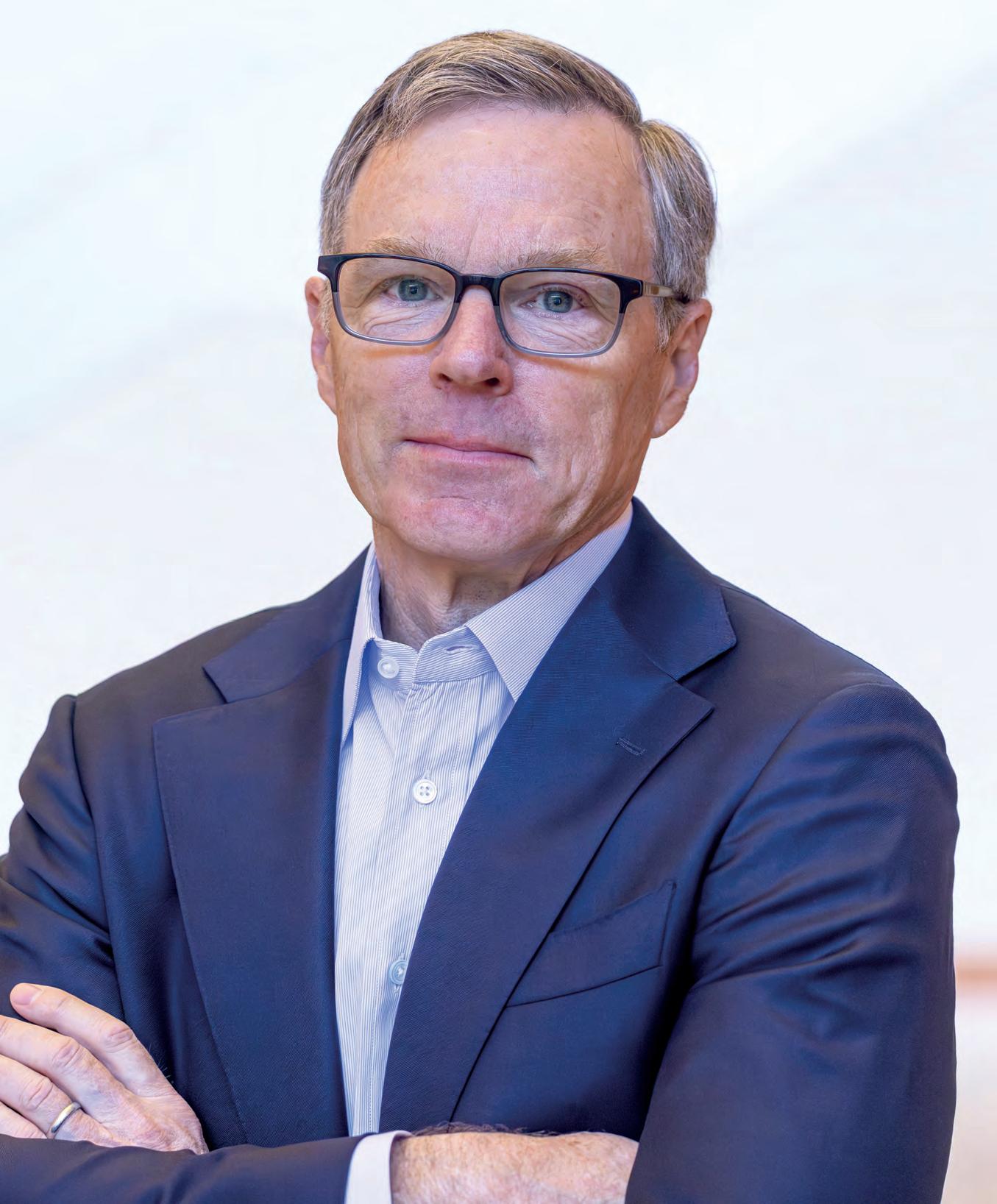
Thanks to the generosity of alumni, parents and friends, an HWS education remains within reach for students of exceptional promise — ensuring that access and opportunity continue to drive achievement. In this special magazine series, we meet 23 alumni whose journeys reveal what happens when support meets ambition. From hospitals and laboratories to start-ups and embassies, they are doctors, scientists, diplomats and dreamers — each living proof that when the door to opportunity opens, the world can change.
Together, their stories share one powerful truth: the future is already taking shape through scholarship support.
Joseph C. Stein III ’86 on staying at HWS — and carrying it forward.
BY MARY STONE
BBoard Chair Joseph C. Stein III ’86 still remembers how quickly stability can vanish. As a football wide receiver, lacrosse player and Kappa Sigma brother, he was deeply engaged and thriving at HWS — until his father lost his job.
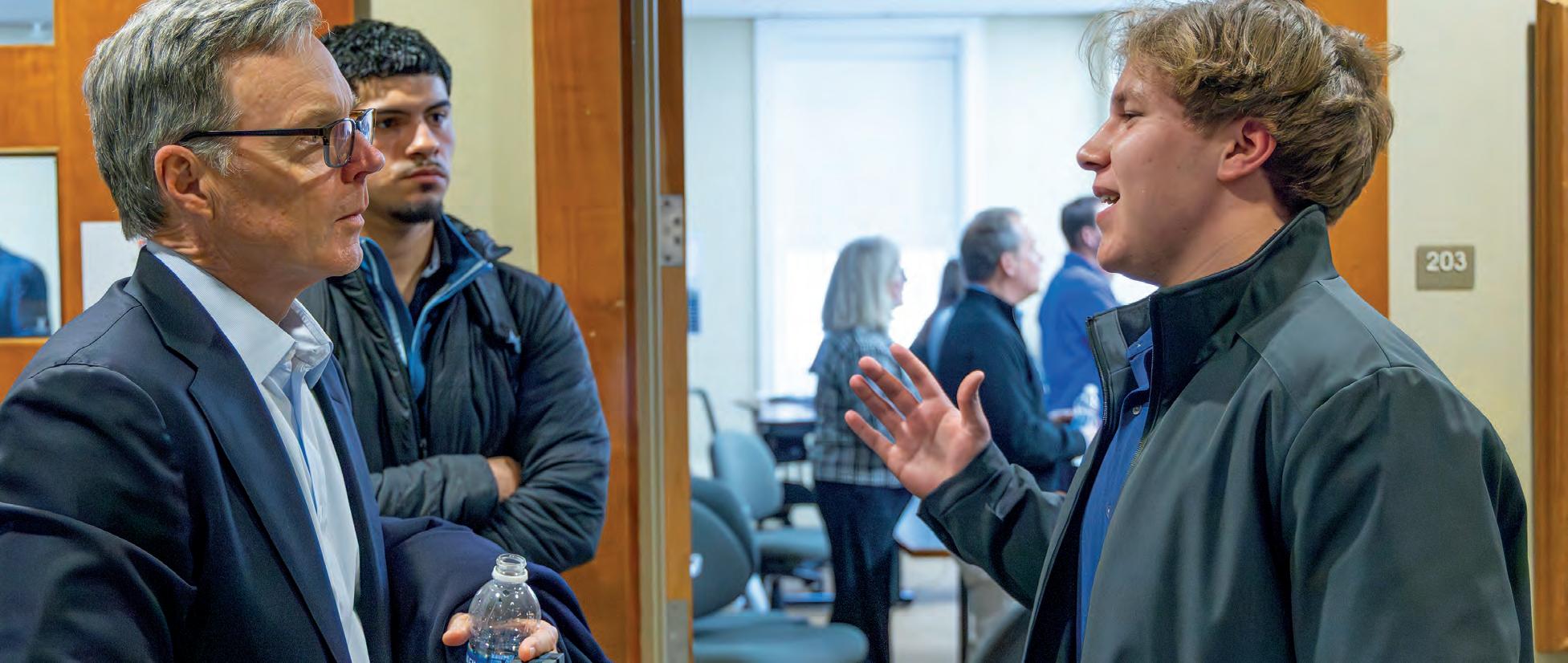
“I was a sophomore at the time, and was genuinely happy –living in a fraternity and experiencing real success both on and off the field,” Stein says.
Suddenly the possibility of leaving HWS became real.
Help arrived unexpectedly when Stein received the William C. Stiles '43 Memorial Award and the Lewis H. Elliott Memorial Scholarship — support he describes plainly as pivotal.
“That really saved us – it saved me as a continuing student at Hobart and helped my parents through a tough spot,” he explains. Without that support and the sacrifice of his family who borrowed against home equity, Stein says he would have had to return home to Buffalo and commute to a local college, a shift that could have changed the course of his life.
And staying at Hobart did change Stein’s life. While still a student, he was recruited into a bank training program after graduation. With a degree in political science, he went on to earn his MBA from the Simon School at the University of Rochester. Today, he’s a Partner and Head of Financing Advisory at Solomon Partners and Chair of the HWS Board of Trustees. He also met his wife Nancy Ann Hedges Stein ’86
at HWS; they have three adult daughters together and will celebrate 35 year of marriage in June.
“We believe in staying actively involved in an institution that was transformational for us. It’s important to stay engaged and give back.”
JOSEPH C. STEIN III ’86
Stein’s brother, Eric J. Stein ’89, who similarly attended Hobart where he excelled at lacrosse and football, had to, as Joe describes it "bump through" financially as the family navigated those difficult years. Yet Eric, too, made it through with the benefit of scholarships. Today, Eric is recently retired as Global Chairman of Investment Banking at J.P. Morgan Chase and a member of the HWS Board of Trustees.
The fruitful college experience both brothers enjoyed, Stein
says, was a stark contrast to their older sister’s experience. “My sister was not as fortunate,” Stein says. “(My brother and I) were recruited athletes.” But due to financial constraints, Melissa Moore attended the University at Buffalo as a commuter student and worked as a waitress to fund her education. She watched her brothers’ very different collegiate experiences unfold.
“She saw our education, our campus experience, and it was vastly different,” he explains. “She saw the impact, the opportunities, the warmth, the life-long friendships. She saw the canvas. Melissa missed out on this special education we have at HWS – all because of circumstances.” But that absence fueled a drive to give her children the experience she missed.
All four of Moore’s children — Erin ’15, Ryan ’17, Bizzy ’20 and Molly ’22 — attended HWS and, like their uncles, took their scholarships very seriously.
“They worked as if those scholarships were going to be evaluated every week even though they were never in jeopardy,” Stein says. “It gave them drive and confidence.”
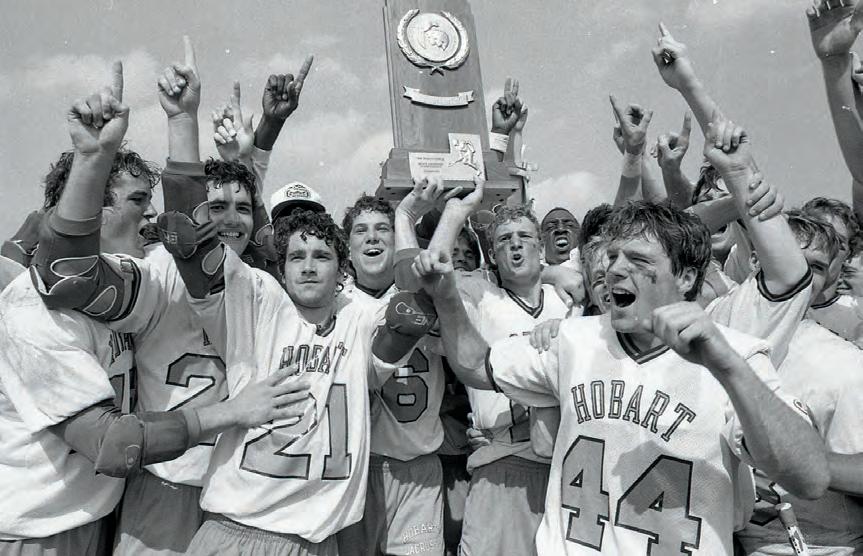
great country club dinner and feel like we were stars,” Stein explains. “Tom Poole was behind that. Or we were going on a spring trip to Florida and parents were asked to contribute what they could, but that was hard for my family. So Tom would scoop up the balance. I recall my coaches telling us that there was an alumnus who supported our team.”
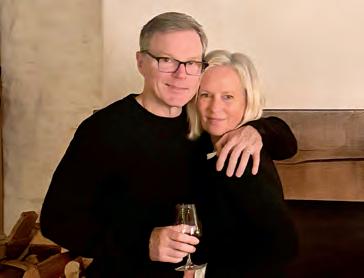
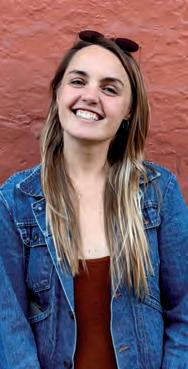
BY
As a student, Stein also experienced the confidence that can come when someone invests in your future.
The generosity of the late William Elliott LL.D. '64, P'66 and Honorary Trustee Thomas B. Poole ’61, P’91, L.H.D. ’06 Stein says, are monumental examples.
William Elliott created the Lewis H. Elliott Memorial Scholarship in 1965 to honor his father, Lewis, who graduated in 1898. The scholarship – which has helped more than 100 students, like Stein, to attend HWS – is awarded to a student of significant scholastic standing and character. William served on the HWS Board of Trustees from 1965 until his death in 1989.
William’s daughter, Katherine D. Elliott ’66, L.H.D.’08, followed in her father’s footsteps with a career in finance and service to HWS as a member of the Board of Trustees, including as vice chair. And like her father, she has made Hobart and William Smith a philanthropic priority, creating scholarships and supporting multiple capital projects including the Katherine D. Elliott Studio Arts Center. Stein says the Elliott scholarship changed more than his education: it planted the seeds for a lifelong relationship to higher education, to students and to HWS. “As a trustee, I had the wonderful opportunity to thank Katherine in person for her family’s support of me and the way it changed my life.”
Stein also recalls the support of Tom Poole. “When I was playing lacrosse at Hobart, Tom was behind our team — and other teams — in a major way. We’d go on a road trip, have a
“And I remember thinking that I wanted to be like Tom Poole — that it was so cool that this guy wanted to make our experience special. And he still steps up more than 60 years after his graduation,” Stein says. “So, what I tell people is that although I may not have Tom Poole’s capacity to be as generous, I can have Tom Poole’s loyalty. I can be as loyal as he is in different, authentic ways that work for me. Tom and his family and the Elliotts changed my life."
“I remember thinking that I wanted to be just like Tom Poole — that it was so cool that this guy wanted to make our experience special.”
JOSEPH C. STEIN III ’86
For his nieces and nephew, Stein says he watched alumni use their gifts to help them reach for opportunities. The late Trustee Michael Rawlins ’80, P’16, who Stein describes as one of the most loyal and passionate champions of HWS students, mentored hundreds of students during his lifetime including Stein’s niece Bizzy, who now serves as AI Engineering Leader and Product Manager at Collins Aerospace.
A lifelong Buffalo Bills fan, Stein’s nephew Ryan was looking for a career in professional sports. With the help of Preston Teague ’02, Ryan secured a one-year internship in the Buffalo Bills community relations department. Nine years later, Ryan is the Manager of Football Administration and Operations for the Bills.
That kind of engagement with students is about more than closing a financial gap. “It’s about giving a damn. It’s about honoring the faith someone put in you. Some people get intimidated — like, “Wow, HWS got a $70 million gift from the Mellys, so what does my $1,000 do?” My wife, Nancy, and I support HWS as a team; we believe giving back matters. We believe participation matters. There are so many forms of engagement that help: volunteering with enrollment, helping with interviews, providing internships and first jobs, coming back to campus and engaging with students.”
In 2024, the Steins established an Annual Fund scholarship to provide support to academically qualified and financially deserving students. Knowing they are helping students is deeply gratifying. “We believe in staying actively involved in an institution that was transformational for us. It’s important to stay engaged and give back.”
Protecting a student’s momentum, their sense of belonging and helping them reach their dreams is an obligation graduates have, he says, in whatever form they can manage “to carry it on.”
Lucia
MAJORS Media & Society and Psychology, magna cum laude
AWARDS Lenore K. Weinstein Social Service Scholarship and the Stephen W. Woodworth '54 Student Summer Fellow
POSITION Microsoft Elevate Program Manager
Artificial intelligence is rapidly changing the world. But who’s making sure that change is benefiting everyone? Who’s training people all over the globe to understand this new technology?
At Microsoft, Lucia Berliner ’12 is part of Microsoft Elevate, the tech giant’s new organization committed to widening the circle of opportunity by supporting nonprofits and schools. Her team works to help more than 20 million people earn credentials. She spends her days building capacity to scale the reach of this work through partnerships, programs and resources.
For Berliner, a Lenore K. Weinstein Social Service Scholarship recipient, this journey began at HWS with a documentary project mentored by Associate Professor of Media and Society Leah Shafer, where she interviewed farmers distributing free produce to low-income families. “This experience really stayed with me,”
she says. “Specifically, the question of how to design organizations where the social impact goals are baked into and supported by the business model.”
She is grateful for the support of the Stephen W. Woodworth ’54 Student Summer Fellowship, which enabled her to complete the project.
"I think a lot about the implications of AI for our future. I feel lucky to be on a team that’s striving to equip as many people as possible with knowledge."
LUCIA BERLINER ’12
After graduating magna cum laude Berliner moved to Arkansas and fell in love with teaching before earning an M.Ed. from Harvard. She then joined Microsoft managing the company’s free computer science education program for NYC schools and helped expand the footprint throughout the U.S.— ultimately reaching more than 100,000 students. Nearly eight years later, she’s still focused on broadening people’s horizons, but now she supports initiatives for learners of all ages and her scope is global.
"Service has and will always be a central element to a flourishing community."
JENNIFER
LESHNOWER ’00
Jennifer Leshnower ’00 is using her position to understand the differences people have and work on ways to bridge the gaps.
BY COLIN SPENCER ’19
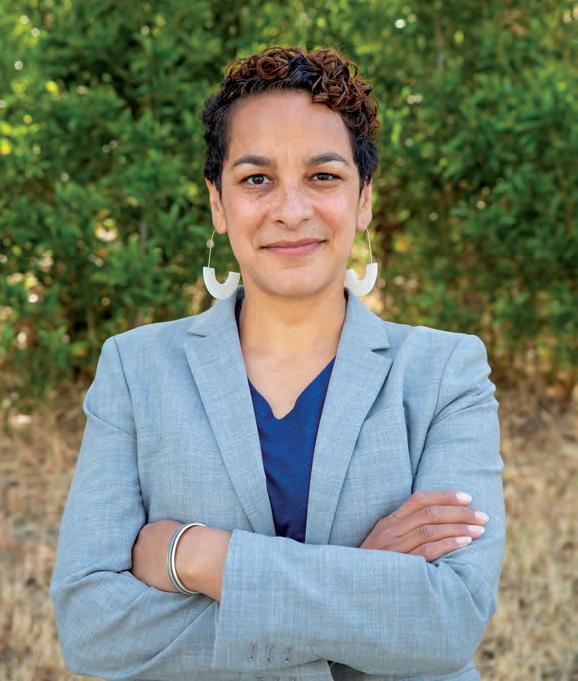
How do you find common ground to create change without giving up your unique perspective? It’s a question
Jennifer Leshnower ’00 has spent her career trying to address. From the Peace Corps to AmeriCorps, Leshnower has worked in nonprofit organizations to be a unifier, bringing people together to foster positive change.
“I think there’s nothing more empowering than meeting others who are just as dedicated, if not more so, about how to make this world a better one,” Leshnower says. “It can feel so daunting to bring about change or to improve someone’s life. But when you see others taking their bite-sized pieces, you feel like, ‘OK, I’m not out there in this void, acting alone.’”
As a board member of Repair the World, Leshnower supports the organization’s work connecting Jewish young adults to service rooted in Jewish values. This includes meeting urgent needs like food insecurity and housing while building community and belonging. “Service has and will always be a central element to a flourishing
community, and no matter what one’s faith expression or non-faith traditions are, helping someone else can be a universal gift and experience,” she says. Her passion for service traces back to her time in Geneva. In a political science class, she was given an opportunity to embark on a service learning project, volunteering as a GED coach for a man named Tony. After that first taste of service, she couldn’t get enough. “I was never in my room,” jokes Leshnower, who served as a Student Trustee, Geneva Heroes coordinator and member of William Smith Congress.
Her time on campus coincided with the arrival of President Mark D. Gearan, former head of the Peace Corps. A highlight for Leshnower was former Secretary of State Hillary Clinton’s visit in 2000 to speak on service.
With assistance from an HWS Martin Luther King Graduation Scholarship, she went on to earn a Master of Public Administration and a Master of Social Work from Columbia University. Her career then took her to organizations including the Peace Corps, serving in
Saint Lucia, Eastern Caribbean, the California Office of the Governor, and AmeriCorps, as their first Bridging and Democracy Fellow. She was also AmeriCorps' representative to the White House Office of Faith-Based and Neighborhood Partnerships under the Biden-Harris Administration.
Throughout her 25 years in national nonprofits and state and federal government, one of the largest shifts
Leshnower has seen has been a broader recognition and commitment to the relocation of power. Centering community leaders closest to the issues — including women and people of color — has resulted in stronger solutions and lasting impact.
"Meaningful change will require ongoing work to yield both power and platform to those who lack them, allowing often-silenced voices the space to be heard," Leshnower says. But this is the work that inspires her.
“When you hear stories of families, friends and even unrelated people rolling up their sleeves, there’s nothing more empowering than thinking ‘we’re all in this together.’”
Inspired by HWS, Alex Gatch ’16 now leads research at the U.S. Geological Survey to protect and restore native fish.
BY SADIE HERR ’27
POSITION
In a lab tucked away in upstate New York, Alex Gatch ’16 is tracking the comeback story of Lake Ontario’s native fish. As a research biologist with the U.S. Geological Survey, he’s on a mission to bring native fish species back to the Great Lakes. Think: lake trout, cisco and bloater — once abundant, now struggling to survive due to the invasive mussels and sediment buildup that have wrecked their habitats.
Gatch is even leading a lake-wide acoustic telemetry project (like fish GPS) to track where these species are still spawning and what they need to recover. His path into fisheries science began at HWS, where he graduated magna cum laude in Biology and Environmental Studies, earning Honors in Biology under the mentorship of Professor Meghan Brown.
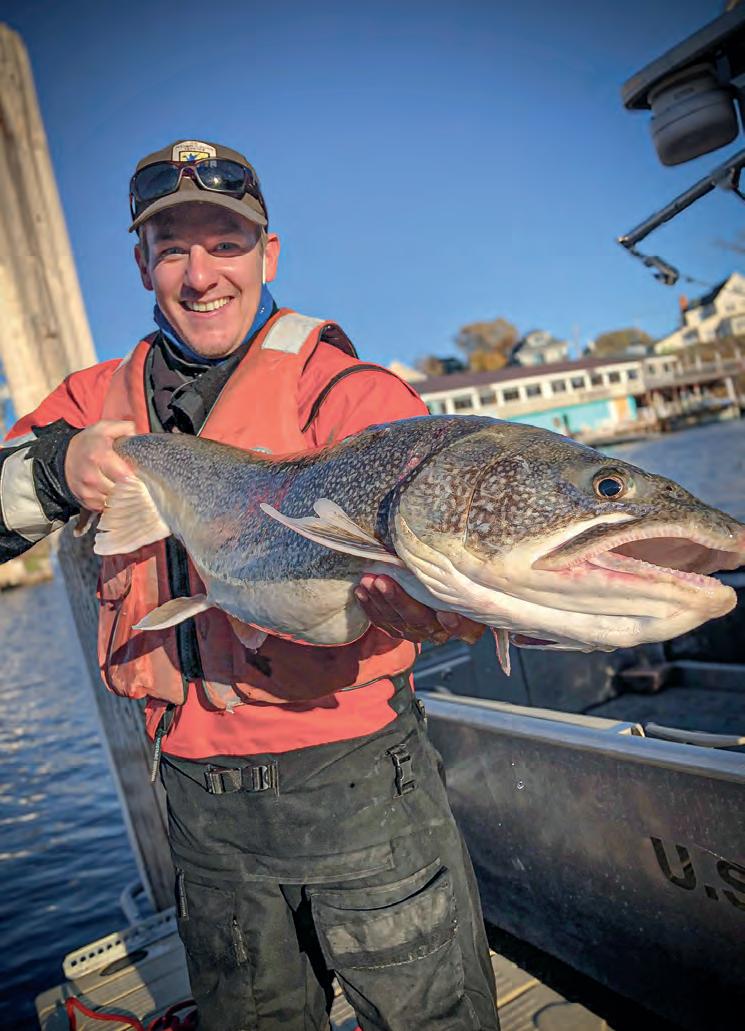
With support from the Bollettieri Family Scholarship and the Fred L. Emerson Foundation Scholarship, Gatch says he was able to pour his time into his Honors thesis instead of juggling extra jobs. His research, “Age and Size as Predictors of Mercury Accumulation in Lake Trout from the Finger Lakes,” analyzed mercury levels in lake trout across Seneca, Cayuga and Canandaigua Lakes to help anglers make safer choices.
“My advisors, Meghan Brown, Susan Cushman ’98, Lisa Cleckner and Roxanne Razavi, were instrumental in shaping my
education and inspiring me to go to grad school,” says Gatch, who went on to earn his M.S. in Fisheries Science from Purdue University. Today, that early investment is paying dividends in science, environmental restoration and a full-circle return to the waters where it all started.
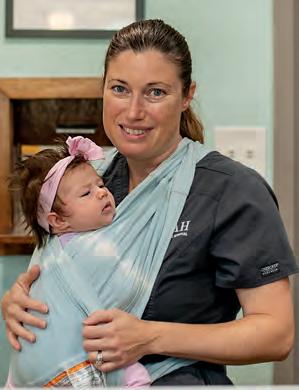
Inspired by the generosity that helped her attend HWS, Dr. Brittany Holler Barkley ’08 has built a life devoted to care and connection.
BY MARY LECLAIR

Medicine from North Carolina State University and established her clinic in 2020. With a special interest in dermatology and behavioral cases, she considers it a privilege to help animals and guide families in understanding their pets’ needs.
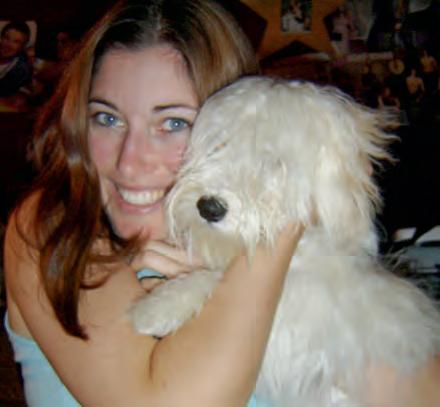
When Dr. Brittany Holler Barkley ’08 was given her first dog as a college student in 2006 — a small Havanese puppy from her parents’ California home — she knew exactly what to name him: Melly, in honor of L. Thomas Melly ’52, L.H.D. ’02, the Hobart and William Smith Trustee whose scholarship helped make her education possible.
“I knew immediately that I wanted to name him Melly,” she says. “I was so moved — not just by Mr. Melly’s generosity, but by the fact that he wanted to meet the students he was helping,” says Barkley, recalling her firstyear scholarship dinner with Tom and Judith H. Melly L.H.D. ’16. “I remember being shy and a bit overwhelmed to meet Mr. Melly and his wife; I just shook his hand and thanked him. I was deeply touched that someone cared enough to invest their time and money in me. It’s stayed with me all these years.”
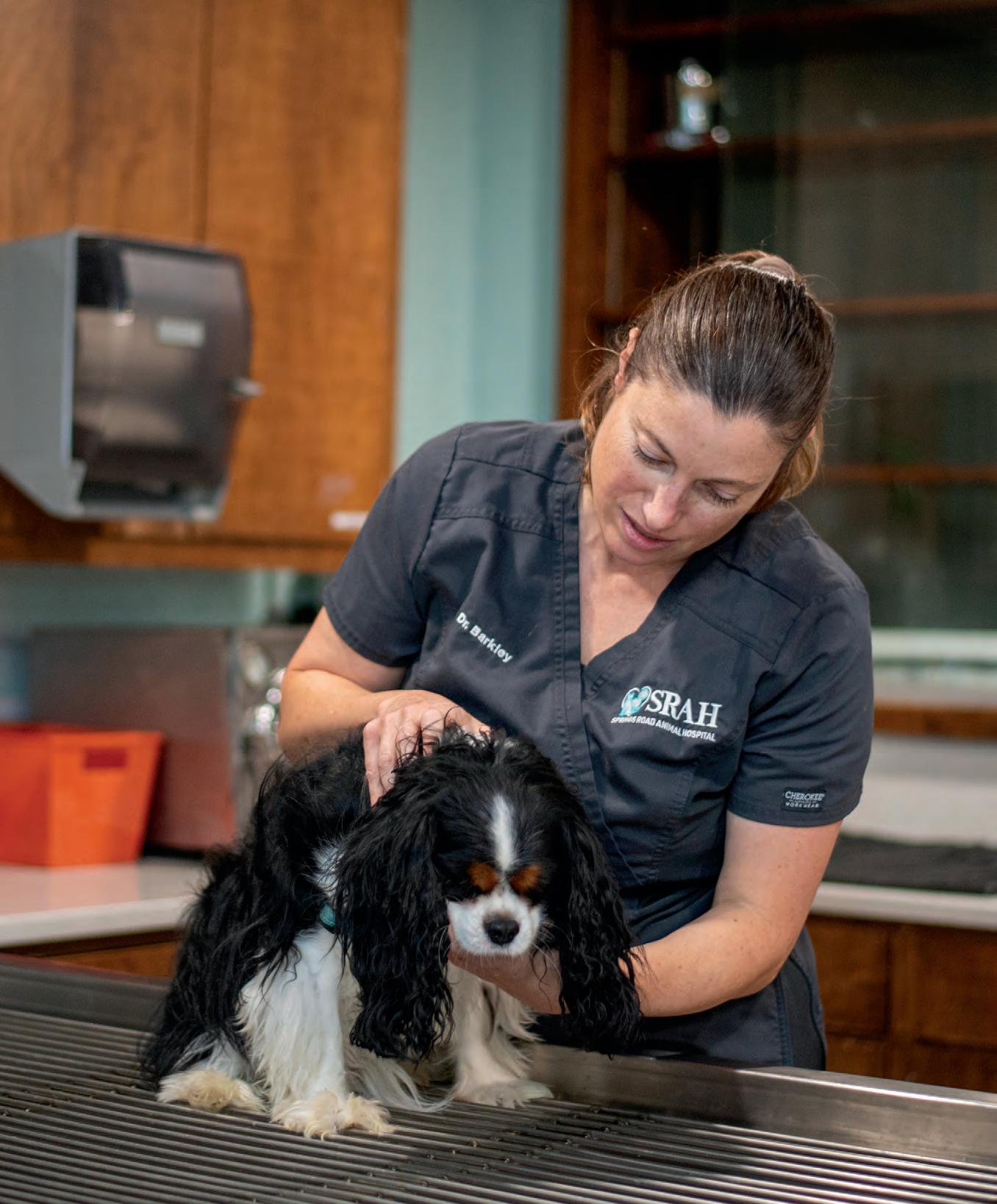
That deep sense of gratitude and empathy has shaped Barkley’s life. Today, as the owner and lead veterinarian of Springs Road Animal
Hospital in Hickory, N.C., she fulfills the calling she has felt since she was five years old — providing wellness, hospitalization and emergency services alongside a caring, compassionate team. (And the dog in her business’ signature logo was modeled after Melly.)
At HWS, Barkley thrived as both a scholar and citizen. She graduated cum laude in environmental studies with a minor in biology, earned the President’s Civic Leadership Award, and volunteered through America Reads, Jumpstart and America Counts. She studied abroad in Queensland, Australia, and spent her summers conducting water-quality research on Seneca Lake with Professor of Environmental Studies John Halfman.
“To this day, I can still feel that summer air while aboard the William Scandling research vessel,” she says.
“Those experiences gave me the scientific foundation I needed for graduate school and for running a medical practice today.”
She also fondly remembers Professor of Biology Mark Deutschlander’s evolution course, as well as conversations with Professor Emeritus of Religious Studies Susan Henking that opened her thinking to new perspectives. “That range of courses — that’s why I wanted a liberal arts education,” Barkley says. “I came to HWS wanting to be a vet, but I also wanted to see the world in broader ways.”
She went on to earn a master’s degree in physiology and Doctor of Veterinary
Barkley believes in collaboration and care that extends beyond the exam room. “It’s about asking a lot of questions, having multiple conversations and realizing that not every pet is right for every family,” she says. “As a small-business owner, I partner with groomers, boarders and trainers. We all help each other out.”
Outside the practice, Barkley juggles life with her husband, Chad, and their three children, often bringing them to the hospital where she has set up a daycare area. Two cats, Cinderella and Moe, “rule the hospital” and Carlito, a bossy Cavalier King Charles Spaniel is great with the children at home. Since graduating, Barkley has remained a loyal supporter of HWS, designating her gifts to scholarships and financial aid. “I give for the same reason I was helped,” she says. “HWS gave me such a wonderful opportunity, and I want other students from all backgrounds to have that too.” Looking back, Barkley says the scholarships she received, including the Barbara McDowell Memorial Scholarship and the L. Thomas Melly ’52 Trustee Scholarship, made all the difference. “HWS felt like home from the first moment I visited,” she says. “It wasn’t just the small classes or the professors who cared — it was the feeling that people believed in me.” Melly the dog has long since passed, but his namesake, and the spirit of generosity behind it, continues to shape Barkley’s life and work. “In my practice, I try to give my patients and their families the same kind of care and compassion that people once showed me,” she says. “It all comes full circle.”
Anna Dorman ’14 is teaching the next generation to defend democracy beyond the courtroom.
BY MARY LECLAIR
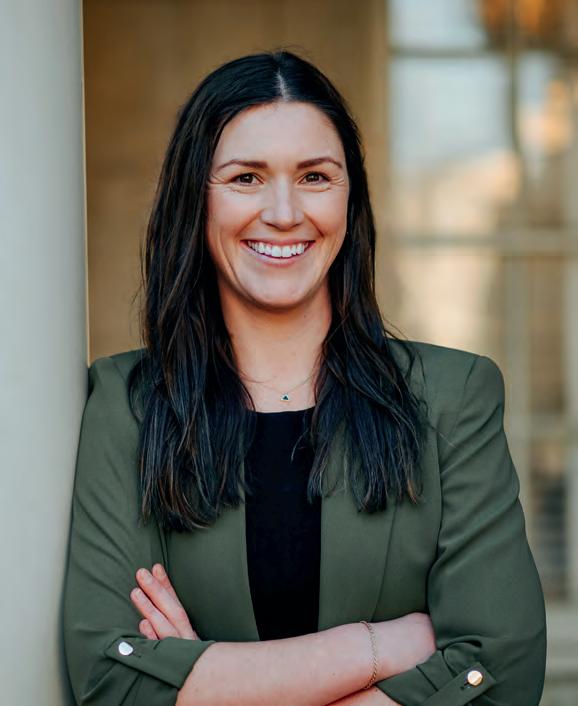
At Harvard Law School, Anna Dorman ’14 is co-teaching a seminar on “Democracy and the Rule of Law,” a course she once took as a Harvard law student. But the lessons are starkly different now. “When I was in the clinic, there was debate about whether political violence in the U.S. was likely enough to warrant attention,” she recalls. “Today, that question is no longer theoretical.”
Dorman’s work at Harvard parallels her role as legal counsel for Protect Democracy, a nonpartisan organization dedicated to defending democratic institutions. Her path to this work began at Hobart and William Smith. As an international relations major, HWS Debate team member and Campus Greens organizer, she discovered the courage to lead and the confidence to keep at it. She says being recognized with the John K. Walker 1896, LL.D. 1950 Endowed Scholarship, which was awarded based on her leadership traits and in honor of her service to HWS, affirmed her instincts.
“[The scholarship] gave me confidence that showing up for my community was valued,” she says. “You just have to start doing it—you’ll figure the rest out.”
From serving in the Peace Corps in Rwanda during the 2016 election to her current role preparing the next generation of lawyers, Dorman remains committed to one goal: ensuring that democracy not only survives but thrives.
“I believe now more than ever that the solutions to our challenges lie outside the courtroom. Lawyers are important but we are not the complete answer. I want to push my students to not only think about the legal aspects of issues we discuss, but also the broader persuasive narrative. How do we talk about really abstract concepts like ‘democracy’ and ‘rule of law’ in a way that actually matters to people with a million other things to think about and do?”
"When I was in [law school], there was debate about whether political violence in the U.S. was likely enough to warrant attention. Today, that question is no longer theoretical."
ANNA DORMAN ’14
Engineer and architect, Hamdan Ahmed ’20 is turning ideas into investing platforms used by millions, rewriting how the world experiences money.
BY BARB EIDLIN
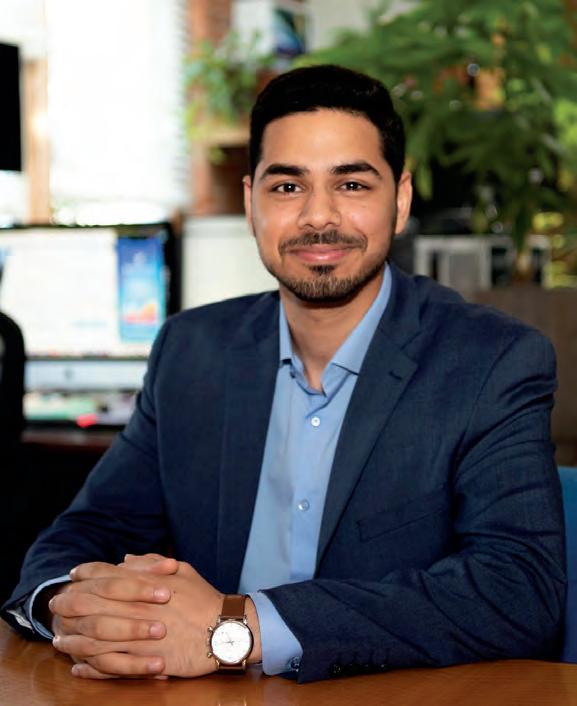
As a software engineer, Hamdan Ahmed ’20 creates and improves investor-facing products for Apex Fintech Solutions, a company that serves as the engine behind the apps and platforms driving modern investing.
As part of their Ascend Investor team, he designs white-label solutions to help scale Apex’s next-generation technology architecture as they expand into wealth management. He helps create digital frameworks built for speed and simplicity to deliver a smooth, smart experience for users, and a faster path from idea to market for clients, which allows them to launch fully branded investing apps in record time.
On any given day, Ahmed might be leading a DevOps sprint, optimizing backend systems or weaving AI into the workflows that keep Apex Fintech Solutions at the forefront of innovation – work he finds both personal and meaningful. “The pace is fast, the challenges are complex, and the results reach millions of investors around the world.” he says.
But he thrives on the momentum of it all, crediting a mindset forged while earning a double major in computer science and mathematics. “HWS taught me to connect logic with purpose,” he says.
Ahmed says receiving the Richard A. Scudamore ’55 Endowed Scholarship Fund and the Robert Nathaniel Tannen ’87 Memorial Scholarship allowed him the opportunity to connect academics with real-world purpose. On campus, he served as president of the International Student Association and the South Asian Student Association and gave back to the community through the Boys and Girls Club of Geneva, America Counts and America Reads.
“Those scholarships gave me the freedom to explore, learn and lead, to say yes to opportunities that shaped both my personal and professional development,” Ahmed says. “Their support allowed me to focus fully on growth, collaboration and leadership, and to build the confidence and perspective that continue to guide me today.”
"Those
scholarships gave me the freedom to explore, learn and lead, to say yes to opportunities that shaped both my personal and professional development. Their support allowed me to focus fully on growth, collaboration and leadership, and to build the confidence and perspective that continue to guide me today." HAMDAN
Malory Saki ’09 combines scientific precision with courtroom confidence to help put criminals behind bars.
BY LILY SILVER
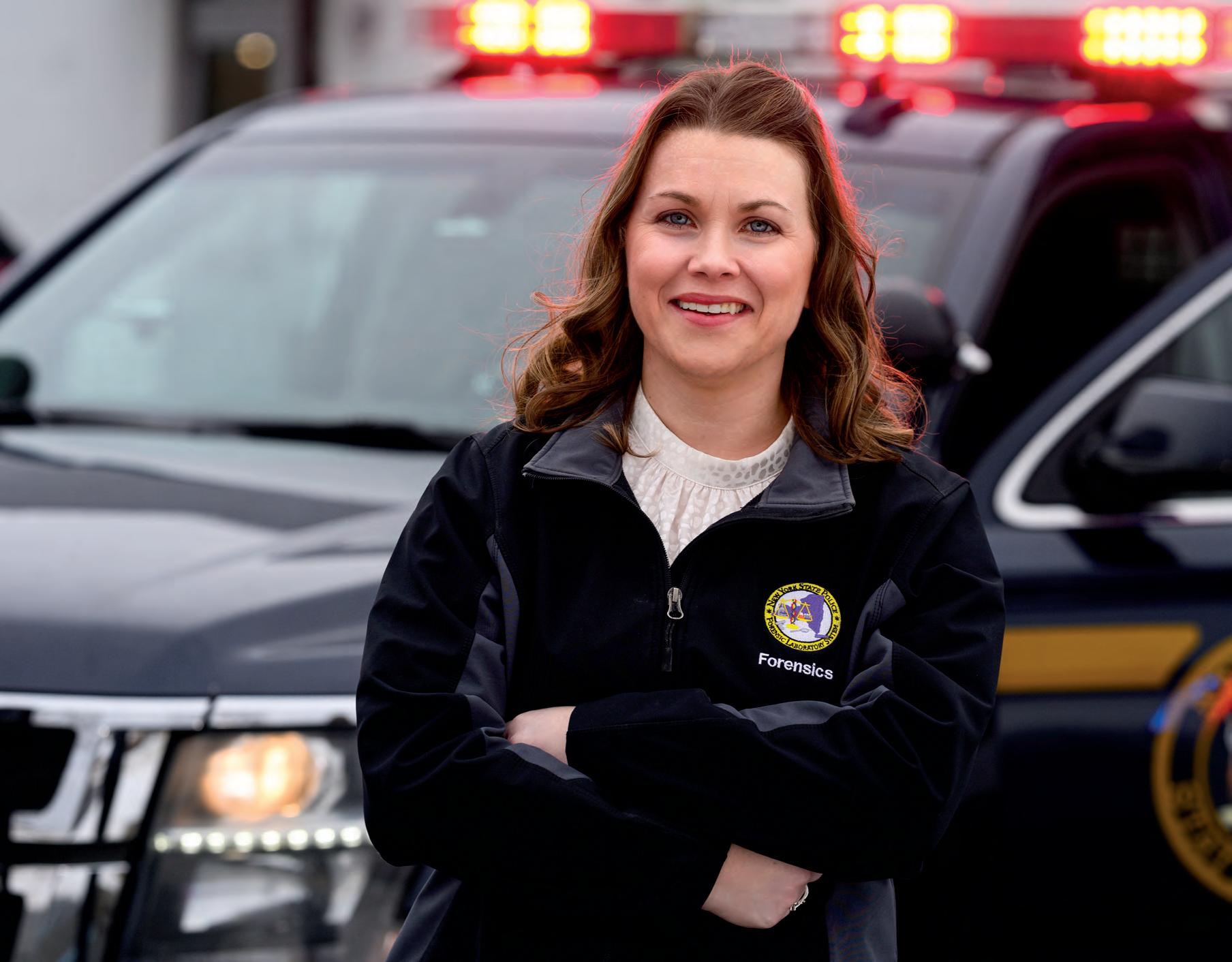
Malory Saki ’09 is a Forensic Scientist in the drug chemistry section of the New York State Police Crime Lab, where she analyzes evidence for controlled substances and sometimes testifies as an expert witness in state and federal court. Her scientific background, specifically in chemistry, was built at HWS and continues to inform her work.
As a recipient of the David J. Spears ’40 Endowed Scholarship Fund, financial aid allowed Saki to explore opportunities at HWS and eventually pursue her master’s degree in forensic science at Chaminade University of Honolulu. “The pre-med line of classes I was able to access at HWS set me up for grad school, and all of those chemistry classes have made it possible for me to be successful in this line of work.”
At the New York State Police, Saki’s role goes beyond the lab, where she analyzes substances for the presence or absence of controlled substances. She also testifies as an expert witness for the State and plays an essential role proving or refuting evidence presented to the court. She credits her confidence in court to the public speaking skills she learned while a student at HWS.
"Because of the financial support I received to attend HWS, I have many experiences and relationships that have shaped me into the person I am today."
MALORY SAKI ’09
Sarah Tarantino McCabe ‘12 and Jessica Tarantino Curtis ’12 are proof of the maxim: “If you want to go fast, go alone; if you want to go far, go together.”
BY BARB EIDLIN
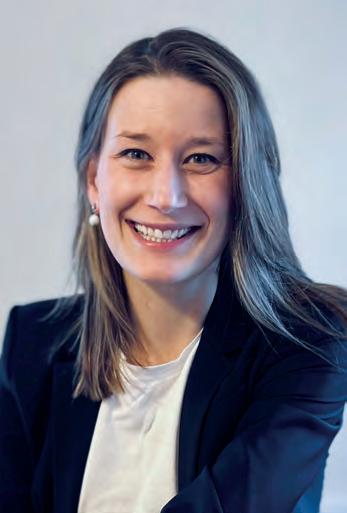
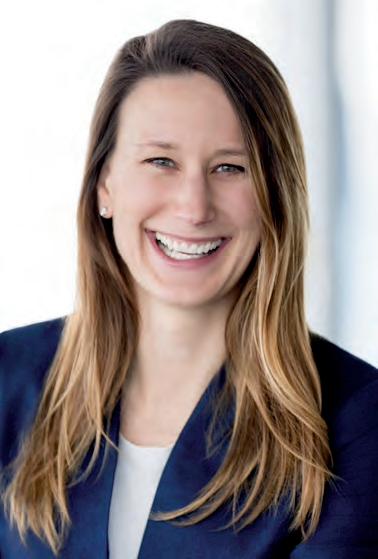
of their older brother, Nicholas Tarantino ’08, they both added HWS to their application lists.
MAJORS Economics and Mathematics, summa cum laude
AWARD William and Diane Green P’83, P’87 Endowed Scholarship
POSITIONS
Curtis: Portfolio Manager for HSBC
McCabe: Portfolio Manager for Eastern Bank
After graduating from HWS, twins Sarah Tarantino McCabe ’12 and Jessica Tarantino Curtis ’12 found their liberal arts education was a secret weapon in the world of finance. “Our peers who went to business school may have been a step ahead initially, but the way HWS taught us to think paid off in the end. It’s not what you learn in a book that will help you succeed, but how you approach the issue,” McCabe says. Currently, both have the title of portfolio manager, but their roles are very different. Curtis oversees the management of HSBC’s interest rate risk, watching over how changes in interest rates affect the bank’s overall earnings and capital. McCabe analyzes the financial performance of middle-market companies for Eastern Bank, structuring and monitoring their credit to align with the bank’s standards and reinforce sound, responsible lending.
Both graduated summa cum laude in economics and mathematics, and say their early career opportunities came from connections forged at HWS and an education made possible by a pivotal decision.
Until the spring of their senior year in East Aurora (N.Y.) High School, the twins were adamant about charting different courses. They believed college was meant to be a fresh start, their chance to live separate lives. But at the encouragement
Their resolve to separate changed when HWS offered each of them a William and Diane Green P’83, P’87 Endowed Scholarship and a generous financial aid package. The Green scholarship has supported students from the Buffalo-Niagara Region since 2007. It was an opportunity they couldn’t refuse, a decision that not only kept them together but cleared a path to their future success by unlocking a full-college experience.
"We knew the funding would be lifechanging, but the real surprise was a lifelong friendship that formed across generations [with the Green family]."
SARAH TARANTINO MCCABE '12
“Without those scholarships, we undoubtedly would have had to work a second job to pay for college,” McCabe explains. “Instead, we were given the freedom to play for the soccer and basketball teams, travel abroad, nurture lifelong friendships and focus on our education.”
That freedom allowed them to thrive. On campus, McCabe and Curtis bonded with William Smith soccer teammates who became lifelong friends, sharing memories of Kate Redmond’s thrilling overtime goal against Amherst that advanced the team to the NCAA semifinals, as well as the camaraderie of a bus trip to the 2008 national championship in North Carolina. And both women also played in the 2011 Liberty League tournament championship match where Curtis scored
the game-winning goal, securing the Heron’s fifth straight Liberty League tournament title.
Academically, the self-proclaimed “math nerds” pursued the economics degrees they knew would open doors for a wide set of career opportunities. But after tallying up their heavy load of math classes, they found a double major was in reach. In testament to the supportive HWS environment, Associate Professor Emeritus of Mathematics and Computer Science David Belding taught an extra math class just so they could complete their math requirements on time.
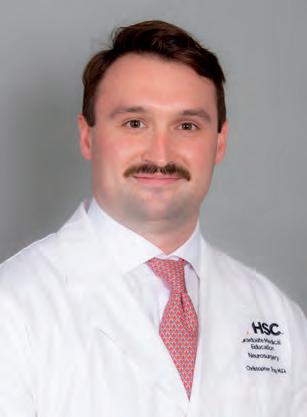
Neurosurgery resident Dr. Christopher Troy ’15 reflects on how one act of generosity unlocked a lifetime of impact.
BY ZACK
NAME Dr. Christopher Troy ’15
MAJORS Chemistry and Spanish and Hispanic Studies,
AWARD The Cornelius Ayer and Muriel Prindle Wood Scholarship POSITION Neurosurgery Resident at the University of Tennessee Health Science Center
TROY’S MOTTO:
Off campus, their horizons expanded further. Semesters abroad in Ecuador, Peru and the Galapagos Islands for Curtis and London, England for McCabe kindled a shared love of travel.
“Since then, we’ve hit almost all the continents and coast-to-coast across America,” Curtis says. “One of the best perks of being a twin is that you have a lifelong travel partner.”
Their journey instilled deep gratitude not only for the alumni network and financial support that opened doors, but for the unexpected gift of a lasting bond with their scholarship benefactors, the Green family. “We knew the funding would be lifechanging, but the real surprise was the lifelong friendship that formed across generations,” McCabe says.
Now married and raising families of their own, McCabe and Curtis remain deeply connected to HWS, paying it forward with their time and resources. They frequently mentor students through the annual NYC Finance Experience program and offer career guidance.
When Christopher Troy ’15 arrived at Hobart and William Smith from Ithaca, N.Y., he couldn’t have imagined where the next decade would take him. A double major in Chemistry and Spanish and Hispanic Studies, a Fulbright year in Argentina, medical school at Columbia University, and now a neurosurgery residency at the University of Tennessee Health Science Center, the trajectory has been remarkable. But Troy is clear: none of it would have been possible without scholarship support.
The Cornelius Ayer and Muriel Prindle Wood Scholarship “made my education possible,” he reflects. “Realistically, I don’t know if I would have a HWS diploma without it. And it’s strange to think about how different my life would look without those four years.” The support motivated him to work hard not for the recognition but for the joy of learning and service. “The scholarship was an honor to receive, of course,” he says, “but I just enjoyed the work and because of that strove to do it well.” It’s a mindset echoed in one of his favorite quotes: “To give anything less than your best is to sacrifice the gift.” — from legendary long-distance runner Steve Prefontaine.
To give anything less than your best is to sacrifice the gift.
At HWS, Troy embraced the liberal arts, pairing science courses with linguistics, religion and Spanish literature. Mentors like Professor of Spanish and Hispanic Studies Caroline Travalia and pre-med advisor Scott MacPhail encouraged him to study abroad in Seville, pursue internships in medicine and eventually apply for the U.S. Student Fulbright Award. His year in Argentina not only deepened his global perspective but confirmed his desire to bring cultural awareness into medicine. Now, in the midst of a demanding neurosurgery residency, Troy says scholarship support continues to shape his life. It gave him the freedom to focus fully on academics and exploration and ultimately to choose medical school without being weighed down by debt.
A diplomat describes his journey through service, security and cultural immersion.
BY MARY STONE
MAJORS International Relations and Political Science
AWARDS John R.O. McKean Endowed Scholarship Fund and a New York City Scholarship
POSITION U.S. Foreign Service Officer
On any given day in Cotonou, Benin, U.S. Diplomat Gary Anthony ’10 might be discussing counterterrorism efforts with local officials, navigating the effects of high inflation or dodging malaria-carrying mosquitoes – all while advancing American foreign policy. Anthony thrives on these challenges as a political officer, but as a young man, the Foreign Service never entered his mind.
"Truly dedicated diplomats spend most of their time in the field, engaging with a variety of foreign audiences –from host governments to university students to rural farmers – to gather insights and advance U.S. interests. It’s not all glamorous."
GARY ANTHONY ’10
At HWS, Anthony majored in international relations and political science, studied abroad in Switzerland and Egypt, volunteered extensively and was a member of Chi Phi. Those experiences shaped a global perspective that later guided his career and led him—through the Salisbury Center—to professional fellowships and Georgetown University’s Security Studies Program.
As an HWS student, Anthony says financial aid from the John R.O. McKean Endowed Scholarship Fund and a New York City Scholarship provided a necessary cushion to take careful risks. That included studying abroad, which added depth and experience to his studies at Georgetown, where Anthony earned a master’s in security studies with a concentration in terrorism and substate violence.
Anthony began his first tour in Burkina Faso where he issued visas to foreign nationals and provided services to U.S. citizens overseas. Three years later, he was stationed as a consular and later as a political officer in Bogotá, Colombia. Those assignments, he says, helped hone the diplomatic skills he needed to transition into a political role analyzing policy and maintaining U.S. interests abroad.
Life in Benin, he says, is a mixed bag compared to other West African countries. While Cotonou is fairly well developed in terms of infrastructure and amenities, Anthony says it is expensive, and there is a great deal of inequality. Additionally, the economic and political situation outside the capital is dicey.
“Among other issues, Benin faces the scourge of terrorism, led mainly by al-Qaida-affiliate JNIM, which threatens the population in the northernmost corners of the country,” he says. “High humidity and mosquitoes that carry malaria are not nice either.”
While life as a Foreign Service Officer can be romanticized as an endless series of cocktail parties and embassy galas, Anthony dispels this myth. “Truly dedicated diplomats spend most of their time in the field, engaging with a variety of foreign audiences – from host governments to university students to rural farmers – to gather insights and advance U.S. interests,” he says. “It’s not all glamorous.”
The nature of the Foreign Service presents unique challenges, like long periods away from family and friends, as well as the constant adaptation required when moving to a new country every two to three years. Anthony, who speaks Spanish and French, says his greatest challenge and opportunity has come from learning new languages, especially when they are vastly different from English. “It’s been frankly the most humbling experience of Foreign Service life.”
How a double major in biochemistry and psychology fueled Dr. Qing Jane Metzger’s ’97 success as a physician and philanthropist.
BY BARB EIDLIN
MAJORS Psychology and Biochemistry, cum laude
AWARDS CREATED M.R. Metzger Family Foundation Chemistry Fund, the M.R. Metzger Family Foundation Mathematics Fund and M.R. Metzger Family Foundation Summer Science Fund
POSITION Rheumatologist
When Qing Jane Metzger ’97 arrived in the United States from China at the age of 16, the transition was challenging. She was
navigating a new language, a new culture and the search for a college home. For Metzger, now a Doctor of Osteopathic Medicine, the decision to attend HWS came down to the influence of the people she encountered along the way.
“Believe in yourself and keep going forward. One day when you look back, there will be no regret."
QING JANE METZGER ’97
“I was lucky to meet two Chinese graduates from HWS who interviewed me. They persuaded me that William Smith was the right choice for me,” she recalls.
At HWS, Metzger discovered both intellectual challenge and the support system she needed to flourish. She pursued a double major in psychology and biochemistry, fields that at first seemed divergent but ultimately intertwined to form the foundation of her career in medicine. “Biochemistry paved my way into the medical field, and psychology really helped me to be a more empathetic physician when treating my patients,” says Metzger. After graduating, Metzger spent three years honing her focus. She conducted research at Strong Memorial Hospital and Regeneron Pharmaceuticals and published several
scientific papers before earning her medical degree from New York College of Osteopathic Medicine. Along the way, she discovered how her background in psychology would shape her approach to medicine.
That sense of empathy carried forward into her career as a rheumatologist, where she specializes in systemic autoinflammatory diseases. “I love the immunology part of working with autoimmune and autoinflammatory diseases, and I’m excited by the many advancements in my field,” Metzger says. Crediting her years at HWS as the true catalyst for her path, she points to mentors like Professor Emeritus of Chemistry David Craig, Professor of Chemistry Walter Bowyer and Professor Emeritus of Biology Thomas Glover. “I am fortunate to have so many mentors guide my career. Each of them helped and inspired me to become who I am today.”
Metzger extended her gratitude to HWS through philanthropy. She and her family created the M.R. Metzger Family Foundation Chemistry Fund, the M.R. Metzger Family Foundation Mathematics Fund and the M.R. Metzger Family Foundation Summer Science Fund to sponsor summer research scholarships. From 2015 to 2019, these funds supported summer research projects to more than a dozen students.
Metzger says her family was driven to make the “biggest impact possible,” by the caliber of work produced by HWS students in chemistry and mathematics. She says she was “very impressed with the outcomes of the summer research.” She is also excited about the construction of the Fish Center for the Sciences.
Her motivation to give back is simple. “HWS gave me a solid education and helped form my character. I am forever grateful for the generous scholarship given to me and I want to pay it forward for the next generation to pursue their dreams,” she says. Metzger’s advice to today’s students echoes the determination that carried her across continents and through the rigors of medical training: “Believe in yourself and keep going forward. One day when you look back, there will be no regret.”
“In hindsight it is clear that I’ve made certain choices based on what would allow me to pursue a lifestyle where I can balance all of my interests rather than what would be best for my career advancement.”
From designing skyscrapers to crafting bespoke furniture, Benjamin Ahearn ’11 has applied the lessons of a Danish internship to build a career, a studio and a life centered on holistic design.
BY BARB EIDLIN
In the summer of 2009, Benjamin Ahearn ’11 arrived in Copenhagen with a Charles H. Salisbury Summer International Internship Stipend and an internship at Force 4 Architects. The junior from Massachusetts expected eight weeks of design experience. Instead, he discovered a way of life that would shape his career and future.
Seventeen years later, Ahearn now calls Copenhagen home. He and his wife, designer Camilla Dahl, run BACD Studio, a furniture design practice that, in his words, strives to “compose a narrative between Danish and American design through an evolving collection.”
From his first visit to Denmark, Ahearn was struck by the culture of design. “Danes are very holistic and have a strong tradition of thinking about and designing every object they interact with on a daily basis,” he says. “This cultural obsession ranges from the design of the Copenhagen Metro system and its signage, all the way down to the cutlery and candle holders in your drawers.”
Just as powerful was the influence of Denmark’s commitment to a balanced work culture. “While I could not have
articulated it at the time, in hindsight it is clear that I’ve made certain choices based on what would allow me to pursue a lifestyle where I can balance all of my interests rather than what would be best for my career advancement.”
Ahearn brought Danish design ideals back to HWS, where he completed an independent project on transportation in Geneva, N.Y. alongside Claire LeavengoodBoxer ’11 and Associate Professor of American Studies Kirin Makker.
“We selected steel for its durability and hardness, critical components of an outdoor bike rack. Additionally, it was readily available, and we could work it ourselves with the tools provided by HWS,”
Ahearn says. “Claire and I set another constraint on the project by committing to use scrap steel, recycled from a local Geneva manufacturer, for both financial and sustainable reasons. Beyond that the ‘design’ of the object needed only to be functional for locking a bike to, which was largely an aesthetic exercise.”
He graduated magna cum laude in architectural studies and was awarded the Joseph L. Morse Memorial Scholarship, recognition that affirmed his dedication to both craft and community-driven design.
During graduate school at the University of Washington, Ahearn met Dahl, an exchange student from the Royal Danish Academy. Their personal and creative partnership began there.
Before launching BACD studio full time, Ahearn worked on a luxury hotel in Tokyo as a project architect. The scale was enormous, but the
lesson was universal: “From a design perspective, it’s still all about materials and details. Whether it’s a skyscraper or a chair, success depends on the quality of raw materials and the craft that transforms them.”
The turning point came when he and Dahl returned to Copenhagen and started a family. Ahearn left corporate architecture, built a workshop and committed to designing furniture that was holistic, natural and without excess. Running a business while raising two children has sharpened his focus. Splitting a workshop with British sculptor Nicholas Shurey has also been key. “As a young business, sharing a workshop has proven invaluable in many aspects from financial to psychological,” Ahearn says. “We each have our strengths. With my more technically trained background, I often help Nicholas realize his ideas, and he lends his artistic eye to my designs.”
A prime example of this is the Eva Dining Table, an 88-inch centerpiece created on commission for an historic Copenhagen apartment, now a signature piece in BACD’s collection with a modified design that includes two smaller sizes. At home, Ahearn surrounds himself with his own designs, using the imperfections as lessons. “I have built nearly all of the furniture, cabinetry and architectural millwork in our home, simply because I want to learn from the processes and failures. The process of refining one’s craft is never truly finished.”
Lavina Poorswani ’96 thrives on turning Microsoft’s complex challenges into workable solutions.
BY BARB EIDLIN
NAME
MAJORS Computer Science and Mathematics
AWARD Michele Tote ’70 Memorial Scholarship
POSITION Microsoft Principal Product Manager
At Microsoft, Lavina Poorswani ’96 is guided by a simple, yet powerful, philosophy.
“My manager often talks about ‘the art of the possible,’” Poorswani says, “but I’ve always seen it differently. For me, it’s the art of the impossible.”
This philosophy has guided her from her roots in Bangalore, India, to a career in finance and technology.
Currently a Principal Product Manager in Microsoft’s Cloud Supply Chain Product Management organization, Poorswani drives cross-company initiatives, leveraging data, automation and AI to optimize their global cloud operations, a position often defined by the uncertainty she embraces.
“I believe change is the only constant, and if you’re not working toward it, you’re failing the opportunity,” she says. “It is also the biggest challenge, but my attitude helps me manage ambiguity. I see myself as a solution provider — every challenge is just a problem waiting to be solved.”
For Poorswani, receiving the Michele Tote ’70 Memorial Scholarship and merit-based awards allowed her to attend HWS and played a critical role on her path to success. Coming from Bangalore, the financial leap to an American college was immense.
“As you can imagine, I wouldn’t have made it without those scholarships,” Poorswani says. “They were the enabler.”
The transition to life in the Northeast was not without its trials. She arrived from Southern India to a recordbreaking cold winter and nearly returned home. But a friend encouraged her to stay, and she immersed herself in a computer science program that was then a digital frontier.
Poorswani found the tight-knit campus to be a uniquely supportive community where personalized attention provided a platform for growth. That spirit of mentorship also brought opportunities: when she expressed an interest in biotechnology, Professor Emeritus of Biology Tom Glover leveraged his professional connections to secure her a research position at a USDA station run by Cornell Ag Tech in Geneva, where, as an undergraduate, Poorswani conducted work typically reserved for Ph.D. candidates.
After graduating with a bachelor’s degree in computer science and mathematics, and a minor in biology, Poorswani worked in the high-stakes world of tech startups before pursuing an MBA at Duke University. She entered investment banking just as the 2007 financial crisis hit, but her technical background proved to be an advantage.
“I think I actually survived the longest of all my MBA classmates only because I understood software really well,” she says.
To sustain her high performance, Poorswani relies on strong values and disciplined self-care. She champions radical honesty in the workplace. “If you do not know how to do something, say so, but also ask, ‘Could someone help me learn it?’”
"I believe change is the only constant, and if you’re not working toward it, you’re failing the opportunity."
LAVINA POORSWANI ’96
Her internal compass is balanced by a routine that includes daily radical prioritization, practicing saying no, weekly tennis and quarterly family vacations that often involve tropical scuba diving.
Poorswani’s advice to students embarking on their career path is clear. “Build a strong foundation,” she says. “Stay curious, take educated risks and keep learning – especially about AI today.” But her most tangible advice centers on human connection.
“Break bread first,” she insists. “I always believe in going out and having a cup of coffee or doing lunch before you ask anybody a favor.” It is a small act that humanizes professional relationships and turns transactions into a professional and personal network that keeps on giving.
thesis examined the effectiveness of the Community Development Block Grant Program in Geneva, N.Y.
AWARD Roger J. Frankel ’72 Award
POSITION Founder and CEO of Ten Square
When Mitchell Schear ’80 left his home in Scarsdale, N.Y., for college, he didn’t arrive in the front seat of his parents’ car. He came alone on a Greyhound bus, carrying a green Army duffel bag. Just off the waitlist, he felt lucky to get the nod from Hobart — his top choice — and stepped off the bus in Geneva eager to begin.
“My parents never saw the school until parents’ weekend that fall,” he says. Schear’s father, the son of Russian Jewish immigrants, owned Jespersen’s, a well-known and well-regarded pastry shop in Scarsdale Village. He put his son to work there at the age of 14. “I made $1.85 an hour,” then the minimum wage, Schear says. “My goal when I went off
From running a campus bus service to innovating how Washington, D.C. views real estate, Mitchell Schear ’80 has built a life on hustle, vision and a refusal to stand still.
BY TONY REID ’79
“I wasn’t the doctor’s son or the investment banker’s son, I was the baker’s son.” And so, he hustled.
to a four-year school was to make more dough – pun intended – than my dad, but I didn’t want to work as hard. I was sort of the bootstrap kid.”
That’s how he approached his years at HWS. “I wasn’t the doctor’s son or the investment banker’s son, I was the baker’s son.” And so, he hustled. He was so active that a Pulteney Street Survey profile published in his senior year noted he “mastered the ability to be several places at once.” Schear held roles in student government, admissions and residential life; served on a committee of the Board of Trustees; mentored peers; and ran track. As a young entrepreneur on campus, he launched a bus service to New York City and a refrigerator rental business. In the classroom, he designed his own Public Policy major and completed an Honors thesis examining the effectiveness of the Community Development Block Grant
2023, he served as an executive partner at Camber Creek, a venture capital firm, where he focused on PropTech, the dynamic intersection of the creative/tech sector and traditional brick-and-mortar real estate. In 2023, Schear founded
Program in Geneva, N.Y. Capping his academic career, Schear was recognized for his deep commitment to HWS with the Roger J. Frankel ’72 Award, given to a senior who has made the greatest contribution to the community.
“There wasn’t anything that I wasn’t interested in doing, whether it was entrepreneurial or otherwise. It was a fertile environment,” Schear says. Schear didn’t stop when he got his diploma. He got a job in Washington, D.C. and rented a furnished apartment because he didn’t know if he’d want to stay. He stayed for more than 40 years, building “a career and a life” in commercial real estate. During his 15 years as president of Vornado/Charles E. Smith, Schear oversaw the Washington region’s largest commercial real estate portfolio and helped reimagine Crystal City, Virginia, as a destination for tech and creative companies. From 2019-
Ten Square, a firm that functions as an investment advisory for startups in technology-driven real estate solutions and sustainable development.
Along the way, Schear earned an MBA from George Washington University while working and starting a family. He also volunteers for and chairs boards related to real estate and the larger community, including the Smithsonian Board of Regents, on whose Facilities Committee he currently sits. His resume reflects the work of a key leader, and includes many organizations involved in shaping economic, civic and cultural life.
Schear credits HWS with shaping him as both a writer and public speaker. He learned to write with precision, drafting and redrafting until the work was right. Public speaking didn’t come easily. He recalls “losing his breath” at first but practice brought confidence and purpose. His goal became to leave audiences with something “new or different or informative or enlightening — a ‘nugget’ they could take home.” Looking back, he says simply: “What an amazing learning experience.”
MAJOR English, magna cum
BY SADIE HERR ’27
AWARD Irene Russell Stahl Memorial Centennial Scholarship
POSITION Executive Producer & Co-Host, Wistia
Sylvie Lubow ’07 has built a career around helping others tell their stories — first as a producer for NPR’s StoryCorps, one of the nation’s most beloved oral history projects, and now as a freelance podcast producer and writer whose work continues to amplify voices often left out of the mainstream. But before she was editing interviews for a national audience, she was sitting in HWS classrooms, learning what it meant to listen.
“[My classes] pushed me to think about story from a different angle –whether it was learning to pare down my words until they carried real weight or seeing how narrative can shape the way we understand the world around us.”
It was in Professor of English and Creative Writing Anna Creadick’s courses centered on marginalized voices that Lubow says she first understood the urgency of preserving stories that might otherwise be lost. And in political film courses with Associate Professor Emerita of English and Creative Writing Elisabeth Lyon,
she saw how art is inseparable from history, a lesson she says still guides her editorial choices today.
“[My classes] pushed me to think about story from a different angle..."
Lubow graduated magna cum laude in English, was elected to Phi Beta Kappa and studied abroad in Bath, England — opportunities she says were possible because of support along the way.
“In hindsight, it’s clear that receiving the Irene Russell Stahl Memorial Centennial Scholarship gave me the freedom to take the classes that inspired me, and the confidence to pursue a career built around storytelling.” Her advice to students? “Follow the classes and ideas that make you curious — you never know where they’ll lead.”
Entrepreneur Jalisa Whitley ’11 builds community and advances equity through the power of story—inviting others to see themselves, and the world, anew.
BY NATALIA ST. LAWRENCE ‘16
MAJORS Public Policy, Sociology and Political Science, cum laude
AWARDS Piltch Family Centennial Scholarship and a Geneva Scholarship Associates
Endowed Scholarship
POSITION Owner of BOOKED Trips and Unbound Impact Consulting
Growing up in Geneva, N.Y., Jalisa Whitley ’11 found her first passport in the pages of Geneva Public Library books. Her love of reading propelled her to receive HWS scholarships, a career that has spanned travel to 50 countries and a desire to help people see the world through one another’s eyes. She is the founder of two groundbreaking ventures, which at their core focus on building community and advancing equity. Through her business BOOKED Trips, Whitley blends her love of reading and travel. She hosts immersive trips that bring novels to life through food, culture and place. She was inspired to launch the business after reading Secret Lives of Church Ladies by Deesha Philyaw with the book’s peach cobbler scene making her imagine hosting a weekend in Savannah, Georgia built around a cooking class. When Whitley thinks back to the first books and novels she read, she is struck by what was missing. “I didn’t have examples of little Black girls traveling, free and exploring the world,” she says. “I didn’t know it was
possible until I studied abroad in Hungary and Romania during my time at HWS.”
She is using that spark to create space for others. Recently, BOOKED Trips awarded more than $27,500 in Maya Angelou Travel Scholarships to women of color in Kenya, India, Germany, Mexico and the U.S.
Through her second venture, Unbound Impact Consulting, Whitley partners with nonprofits, foundations and corporations to design strategies that advance racial equity.
She has worked with numerous organizations including the Robert Wood Johnson Foundation, the National Collaborative for Health Equity, CareFirst Blue Cross Blue Shield, and the United Way of the National Capital Area.
Currently, her projects include helping a health organization embark on truth and repair processes to address disparities and working with funders to direct more unrestricted dollars to grassroots groups tackling education, housing and justice.
“The deeper I get into my career, the more I become convinced that anything done successfully and sustainably is not done alone. We all need community. Whether it’s a community of support, encouragement and introduction, or a leg up. None of us are self-made,” Whitley says.
At HWS, support from the Piltch Family Centennial Scholarship and a Geneva Scholarship Associates Endowed Scholarship gave Whitley the chance to represent her hometown in the classroom and in service experiences. “It reinforced the important relationship between Geneva and the campus community,” she says. “It showed that local students weren’t just ‘townies,’ but classmates with perspectives that enriched what we were learning.” She graduated cum laude in public policy, sociology and political science.
Whitley says entrepreneurship wasn’t always part of her plan. But after earning her master’s degree in public policy from the University of Maryland, College Park, she realized consulting offered the flexibility to shape her own path. “I didn’t set out to be an entrepreneur,” she says. “But I discovered it was a way to make impact on my own terms, with people who share my values.”
Actor, educator and puppeteer Jamie Agnello ’07 creates theater that teaches, heals and invites everyone in.
BY FIONA GALLAGHER ’26
NAME Jamie Agnello ’07
MAJOR English, magna cum laude
AWARD Jean W. Reeves ’34 Arts Scholarship
POSITION Puppeteer, Director, Actor and Teaching Artist
Whether wrangling bunraku-style puppets, directing middle schoolers through Finding Nemo Jr. or lip-syncing as her drag alter ego “Sardine of the Allegheny,” Jamie Agnello ’07 has built a career on the belief that performance is both collaboration and care.
Based in Pittsburgh, Agnello is a puppeteer, director, actor and teaching artist whose work spans lauded productions at the Pittsburgh Public Theater, Trusty Sidekick Theater Company and Lincoln Center Education including “Up and Away,” a groundbreaking piece designed specifically for audiences with autism and praised by The New York Times as “immersive theater at its most thoughtful and deliberate.” She’s the co-designer behind the puppets in the Public’s “The Hobbit” and the very visible arm of Cai the chameleon in the YouTube series “Cai & Kate,” which helps young viewers navigate
emotional regulation. Her teaching artistry, from sensory theater workshops at disability schools to playwriting classes for middle schoolers, remains the bedrock of her creative ethos.
“I love structure,” she says, “but directing means leaving space for discovery. That’s how real magic happens — when everyone in the room makes something together.”
That sense of artistic community began at HWS, where the Jean W. Reeves ’34 Arts Scholarship first affirmed her identity as an artist. “It made me feel seen,” she recalls. “HWS showed me that if you wanted to make something happen, you could.”
In addition, her Honors project “She Makes a Heart-Nest” began under the guidance of the late Professor of English Deborah Tall and was completed with poet and Assistant Professor of English Karl Parker — mentorship that, alongside the late Professor Emeritus of English and Director of Theatre
"I love structure but directing means leaving space for discovery. That’s how real magic happens — when everyone in the room makes something together."
How Ayokunle Abogan ’06 combines data and compassion to expand health care access.
BY MARY STONE
Robert Gross, laid the foundation for the dual MFAs in theatre and poetry she would later pursue at Sarah Lawrence.
She’s still making it happen. This fall, Agnello appeared in Quantum Theatre’s “Enron” and returned to “A Christmas Story: The Play,” reaffirming that in her hands, performance is never mere spectacle — it’s an invitation. She’s also slated to perform in Anne Washburn’s “10 Out of 12” with Quantum Theatre in spring 2026.
NAME Ayokunle Abogan ’06
MAJORS Economics and Public Policy Studies
AWARD The Spence Family Endowed Scholarship for International Students
POSITION Independent Consultant
From Goldman Sachs to Global Health Corps to advising on global health initiatives, Ayokunle Abogan ’06 continues his quest to improve lives.
For Ayokunle Abogan ’06, a career that began in finance turned into a calling in global health. After three years at Goldman Sachs, where he honed analytical and problem-solving skills, Abogan sought to apply his talents more directly to improving lives.
Growing up in Nigeria, where his mother worked as a nurse and midwife, gave him firsthand insight into the inequities of health care access – a perspective that shaped his path.
Through Global Health Corps, he worked in Newark, N.J., during the rollout of the Affordable Care Act, later joining the Clinton Health Access Initiative to support malaria elimination in southern Africa. Most recently, with Evidence Action, he advanced safe water initiatives across Africa, helping millions gain access to clean drinking water. As an independent consultant, he continues to provide guidance on global health initiatives. The Spence Family Endowed Scholarship for International Students and the financial aid awarded to him at HWS and what he was awarded by Princeton University while earning his Master of Public Administration degree made his journey possible. “That support was more than financial—it was an affirmation,” Abogan says. “It continues to inspire me to pay it forward.”
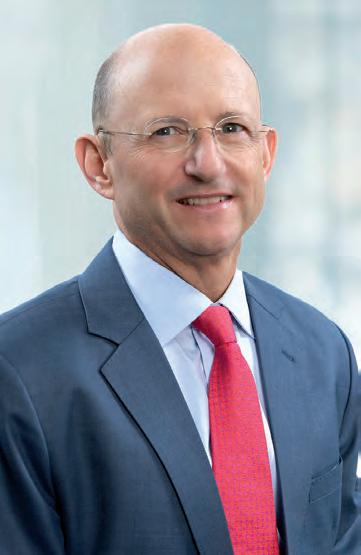
For Jonathan Insull ’87, HWS provided the foundation for everything that followed: a passion for finance, a network of lifelong friends, and a 32-year marriage to Brenda Stanny ’88.
BY TONY REID ’79
met the professors whose teachings would help propel his professional life and the woman who would share his personal life.
taught me is, whether it’s a janitor or a CEO, you should be just as comfortable speaking with either one,” Insull says.
It’s not an exaggeration to say that HWS has been a bedrock of Jonathan Insull’s life almost from the moment he stepped onto campus for his first year. Insull ’87 arrived in Geneva in the fall of 1983 from McQuaid Jesuit High School in Rochester, N.Y. with help from a Presidential Scholarship from HWS. “Hobart seemed to want me to attend there, and one of the ways they showed that was with an offer of some financial support,” Insull says. “I was very grateful for that.” He says he chose Hobart because he wanted a small school. “I wanted to be away from home but not so far away I was going to have to get onto an airplane. And, certainly, I was taken by the beauty of the campus. Hobart checked a lot of the boxes, and when they were able to offer a scholarship, that sweetened it.” Insull wasted little time in taking advantage of the opportunity. He soon
Among the professors in question was Professor Emeritus of Mathematics and Computer Science Kevin Mitchell. “I think I took pretty much every course he taught,” Insull says. “That fueled my interest in math.” That interest, plus classes with Professor of Economics Bill Waller and Professor Emeritus of Economics Patrick McGuire L.H.D. ’12, led Insull to a master’s degree in business administration from New York University and a career in finance. He is now the chief investment officer for Nassau Global Credit, part of the Nassau Financial Group.
Insull says he was “only OK” in math in high school but once exposed to the subject in Mitchell’s classes, “I spent a lot more time on it than I thought I would.” Insull says his coursework left him “very well prepared” for graduate school and put him on “a level playing field” at the start of his finance career, when he found himself in a training program with “all kinds of kids from other schools.”
But HWS wasn’t all about numbers for Insull. Far from it. He has “a very special memory” of an art class he took with Professor Emerita of Art Elena Ciletti and discovered, as time went on, the true meaning of the liberal arts. “One of the things my education
As if that weren’t enough, he met a woman from San Francisco named Brenda Stanny Insull ’88 at —where else? — the Twin Oaks. They've been married 32 years. Brenda has spent her career in finance, too. Like her husband, she has an MBA from NYU and is currently an executive director at Mizuho Americas, part of the multinational Japanese bank.
"It’s very important for Hobart and William Smith to be able to offer financial incentives to attract a high caliber student. HWS has to be able to compete."
JONATHAN INSULL ’87
The Insulls have two sons, Trent and Reed, both employed in the New York financial world. They are also longtime residents of Brooklyn — Insull moved there after he graduated from HWS and never left — and hosted, with former HWS Trustee Michael Gantcher ’92, P ’27, and his wife, Christina Gantcher P’27, a fundraiser for HWS at
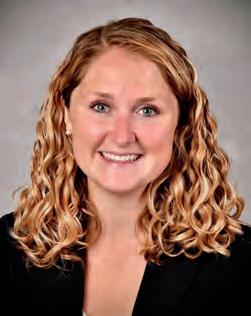
Physician-Social Scientist Hannah Connolly ’16 is advancing health equity by changing how medicine is taught.
BY BARB EIDLIN
the Heights Casino in Brooklyn in 2024. Billy Gantcher ’27 is a junior at HWS. The Insulls met the Gantchers through the squash program at Heights, and Insull says the couples “have become very good friends.” Such friendships are another benefit that the Insulls, like many other alumni, continue to reap from their HWS experience.
“I made wonderful friends there,” Insull says, “and I continue to be close with the guys I went to college with. A bunch of us just got together recently in Connecticut. We spent a Saturday up there listening to music at a microbrewery. It’s a network and a community.”
To a place that has given the Insulls so much in life, they continue to give back, in both time and money. “It’s very important for Hobart and William Smith to be able to offer financial incentives to attract a high caliber of student,” Insull says. “They have to be able to compete.” That means not just using financial incentives to attract the best possible students but “to weather the storms that inevitably come along,” Insull says. “I was fortunate to benefit from generous alums when I was there, so we’re happy to do what we can.”
NAME Hannah Connolly ’16 M.D., Ph.D., MPH
MAJORS Health Disparities and Biology, magna cum laude AWARDS Harrington Family Annual Fund Scholarship and the Edward A. Froelich ’55 and Joanne I. Froelich Endowed Scholarship POSITION UCLA Resident Psychiatrist
As a resident psychiatrist at UCLA’s David Geffen School of Medicine, Hannah Connolly ’16 M.D., Ph.D., MPH is pursuing a career in medical education transformation, dedicated to overhauling medical training so physicians are actively equipped to promote health equity for all.
Her mission to fuse social justice and medicine began at HWS, where a pivotal course, “The Politics of Reproduction,” revealed how a sociological lens could enrich biological understanding. That insight inspired her to design an interdisciplinary major in Health Disparities while also pursuing a Biology major.
“Theoretically, I’ve been running between Stern and Napier ever since, seeking to build the bridge between disciplines and collecting a few degrees along the way: an M.D. and an MPH from SUNY Upstate Medical University, and a Ph.D. in Social Science from Syracuse University’s Maxwell School,” says Connolly, who graduated magna cum laude from HWS and as a member of Hai Timiai.
Her journey was made possible by the Harrington Family Annual Fund
"Theoretically, I’ve been running between Stern and Napier ever since [graduation], seeking to build the bridge between disciplines…"
CONNOLLY ’16
Scholarship and the Edward A. Froelich ’55 and Joanne I. Froelich Endowed Scholarship. The support allowed her to serve as an orientation coordinator and play Division III lacrosse, which nurtured her leadership skills. It also gave her the freedom to study abroad in Copenhagen, Denmark, which opened her mind to alternative ways of providing health care.
Connolly says moving to Kisumu, Kenya to pursue her MPH deepened her global perspective, and her understanding of the intertwined nature of medicine was solidified.
BY BARB EIDLIN
Chris Brown ’04, owner of four successful Takoma Park, Md. restaurants, traces his entrepreneurial roots back to HWS. The connection between his career and the William ’49 and Yvette Scandling Scholarship he received is now clear, even if he couldn’t see its full impact as a student.
“Finding out I got the scholarship blew me away,” Brown says. “Without it, HWS was definitely out of my family’s price range. But HWS was exactly what I needed at that time of my life, so getting that scholarship was just serendipitous.”
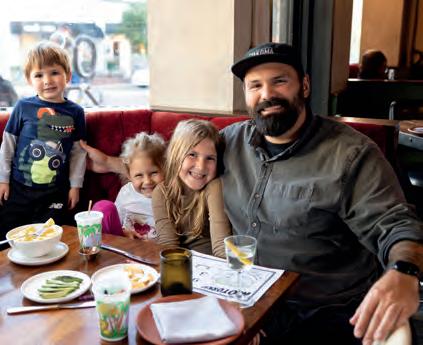
Also serendipitous was a conversation with President Mark D. Gearan in 2004. Brown was working a campus event at the President’s House and in between talking to influential guests, Gearan asked about his plans after graduation.
“I said I didn’t know... I wanted to travel. And he just looked at me and asked, ‘Have you thought about the Peace Corps?’ And I said, no, not at all, that’s crazy,” Brown recalls.
Gearan invited him to sit in on a talk by returning Peace Corps volunteers. Motivated, Brown applied, was accepted and assigned to serve as an Agricultural Extension Officer in the Village of Maduma in Tanzania.
“The Iringa Region is an absolutely beautiful part of the world and is home to some of the happiest and kindest people I have ever met. It was truly a life-changing experience,” Brown says.
After returning to the U.S., Brown studied secondary education at George Washington University and became a high school science teacher in Maryland, putting his HWS biology degree to work. To supplement his income, he took a side job at a coffee shop, which ignited a new passion.
“Working in that coffee shop really plugged me into my passion for the hospitality business,” Brown says. “Over time I found myself thinking Takoma Park really needed a quality open-allday coffee and breakfast place, and that maybe I should open one.”
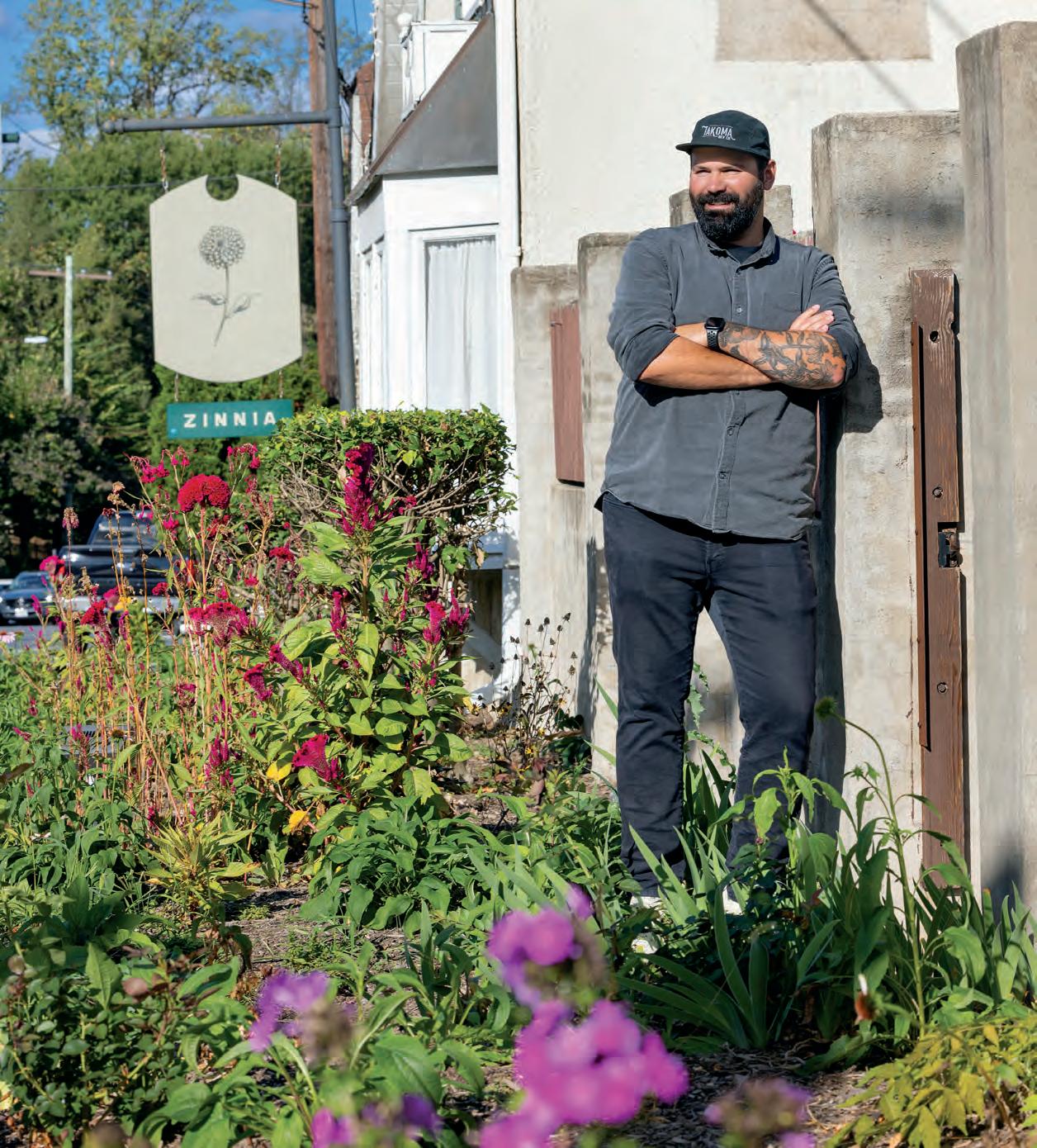
"The reason I’m thinking about sustainability is because of a push I got from President Gearan. The reason I spoke to Gearan is because William Scandling’s business started with HWS’ support and his generosity made it possible for me to study there. It’s amazingly cyclical."
That idea became a reality in 2017 with Takoma Bev Co. The café was an immediate hit, and its success paved the way for more ambitious projects like Zinnia, Soko ButcherDeli and Motorkat, each designed to fill a niche within the community.
Brown says his civic-centered business philosophy, which focuses on community needs, sustainability and local sourcing, was deeply influenced by his time in Africa.
“In Maduma, the word sustainability is not part of anyone’s dialogue, but they live the most sustainable lives you can ever imagine. They eat the food they grow and there’s basically no waste. I learned a lot from experiencing life at that level,” Brown says.
Ultimately, Brown believes all his success stems from the connections he’s built – from his childhood community to the one he serves today. He sees his restaurants not just as businesses, but as essential hubs for connection.
“The reason I understand community is because I grew up in a place where my family was known and loved. The reason I’m thinking about sustainability is because of a push I got from President Gearan. The reason I spoke to Gearan is because William Scandling’s business started with HWS’ support and his generosity made it possible for me to study there. It’s amazingly cyclical,” Brown says.
Campaign momentum builds with unprecedented support for HWS.
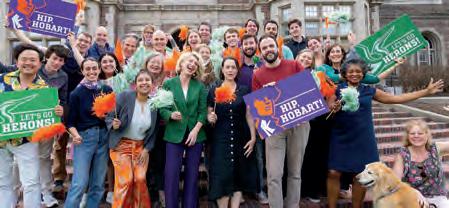
As of March 1, Hobart and William Smith’s “Further Together: the Campaign for Our Third Century” has reached an extraordinary milestone, raising $342 million toward its $400 million goal—a powerful testament to the generosity and belief of HWS’ alumni, parents and friends. The milestone reflects an unprecedented era of philanthropic momentum for HWS. Over the past two fiscal years alone, HWS has secured $216 million in gifts and commitments, including a record-setting $113 million raised during Fiscal Year 2025 (July 1, 2024 - June 30, 2025). That achievement follows extraordinary generosity - $103 million – in Fiscal Year 2024.
“As we move forward with the Campaign, I am moved by the support of our community,” says President Mark D. Gearan. “My sincere thanks go to our alumni, parents and friends for their confidence. Their enthusiastic investment shows a powerful belief in our mission and has strengthened our ability to equip students with the experiences and knowledge necessary to lead lives of consequence.”
This year’s 24-hour giving challenge became the most successful in the history of Hobart and William Smith Athletics. Alumni, families, friends and fans raised an unprecedented $1,329,044 from 3,612 donors, demonstrating the extraordinary impact of a community united in support of its student-athletes. That momentum produced record-setting results across programs. For Hobart, Soccer led with $185,218, followed by Lacrosse with $137,133 and Basketball with $93,176. William Smith also had strong support, with Bowling leading at $104,075,
followed by Field Hockey and Rowing with $61,964 and $44,101.
The return of the Caird Challenge once again amplified the day’s success. Cindy Caird Gitelson
L.H.D. ’12 and Stanley Gitelson honored the legacy of James F. Caird ’56, L.H.D.’12 with a $25,000 gift.
The community’s generosity also unlocked a $50,000 commitment from Honorary Trustee Thomas B. Poole ‘61, P’91, L.H.D. ‘06 to the Student-Athlete Excellence Fund.
With Reunion planning in full swing, Executive Director of Alumni and Alumnae Relations Melanie N. Sage ’95, P’25, P’27 is looking forward to welcoming alumni back to campus in June. Nearly a year into the role, the Geneva native, HWS alumna and parent is focused on strengthening connections across the HWS global alumni community.
“Reunion is one of the moments when the HWS community really comes alive. Being new in this role, I’m especially excited to welcome alumni back to campus and celebrate those connections together,” she says.
In addition to Reunion, Sage oversees all initiatives designed to engage nearly 25,000 living alumni.
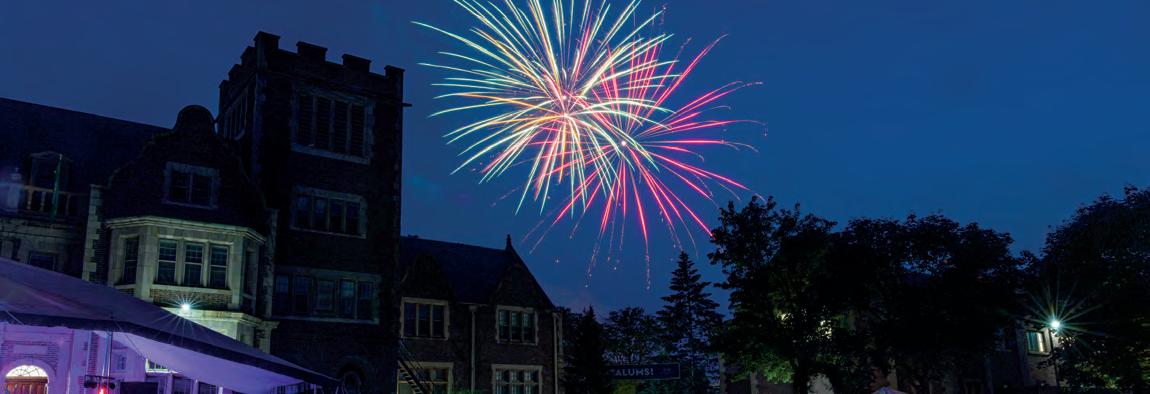
JUNE 5-7
JOIN US IN GENEVA FOR REUNION!
This year’s special focus will be on classes ending in 1s & 6s, but Reunion is ALWAYS open to all alumni and their families.
SCAN FOR MORE INFORMATION AND TO REGISTER
After a 24-year hiatus, Folk Fest returned to Hobart and William Smith last spring, transforming Bristol Lawn into a vibrant celebration of music, memory and campus spirit. The tradition will continue this spring on April 26.
First launched in 1976 by Matt Stamell ’78 along with a group of classmates, faculty and local musicians, Folk Fest quickly became a cornerstone of HWS life – a grassroots experiment that grew into a beloved Spring tradition. Through its original run, which lasted until 2001, the festival drew national artists like Béla Fleck and Doc Watson, uniting students, alumni and the Geneva community in a shared love of live music.
The idea to relaunch Folk Fest began when Sophia Mughal ’25, then president of student government, unearthed the festival’s history in the HWS Archives while researching her Media and Society Capstone. Her vision quickly became a movement led by the HWS Student Government Folk Fest Committee.
Nearly 30 students spent months planning an event that blended heritage with discovery. The festival’s visual identity was also crafted by Lucy Hughes ’27 and Kevin Frost ’25 in collaboration with The Martini
Headlined by rising indie rock band Arcy Drive, the festival showcased regional and campusconnected acts including Darwin, featuring Sodexo staff members Laura Black and Zachary Schoonover; Rochester’s That One Crocodile, led by Ben Baker ’09; Ithaca’s Motherwort; Buffalo’s Oscar’s Cash; and HWS’ own a cappella group, 3 Miles Lost.
For alumni who remember the Folk Fest of decades past, and for students hearing their first notes on the lawn, the day offered something timeless: a reminder that at HWS, music has always been the sound of community.
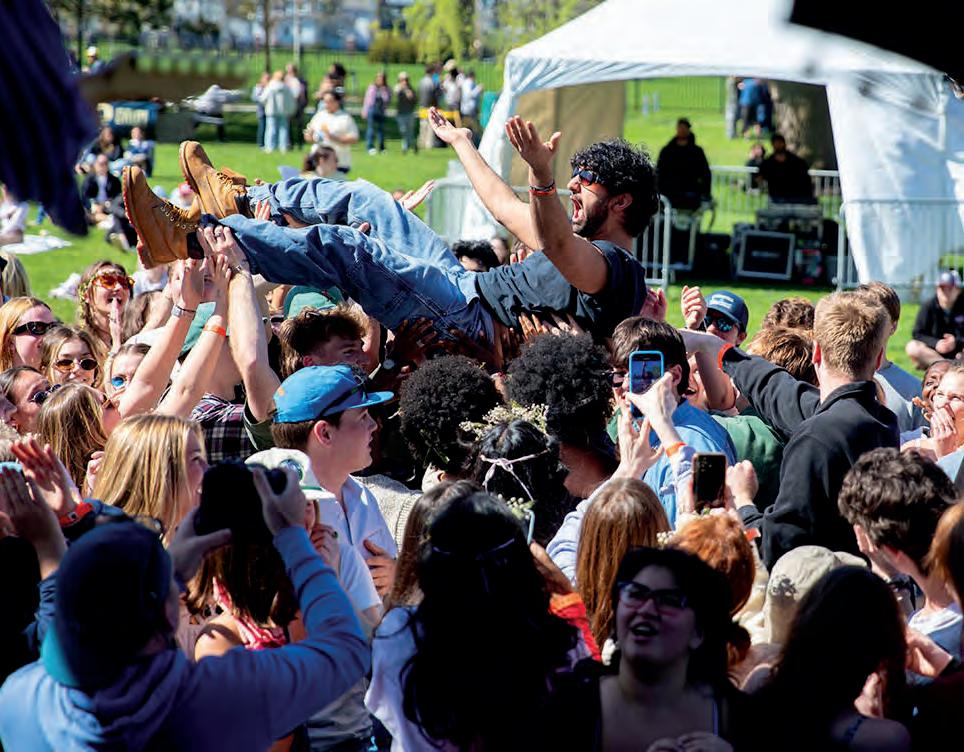
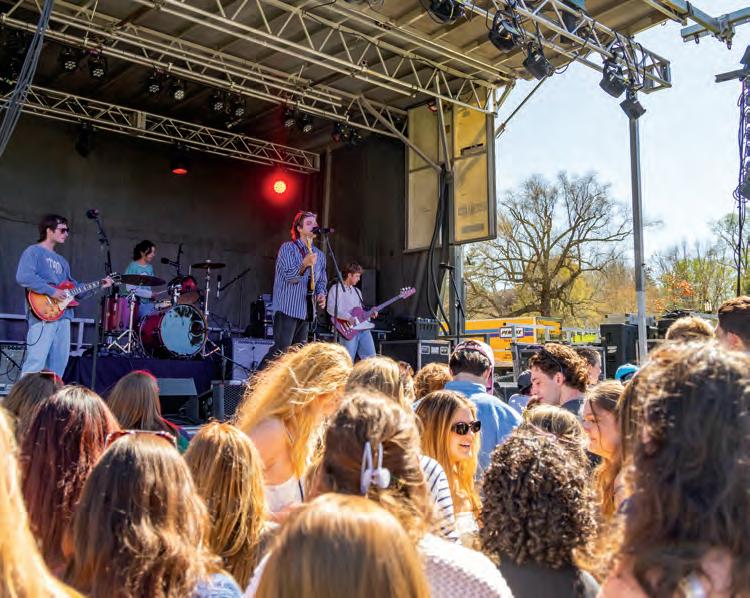
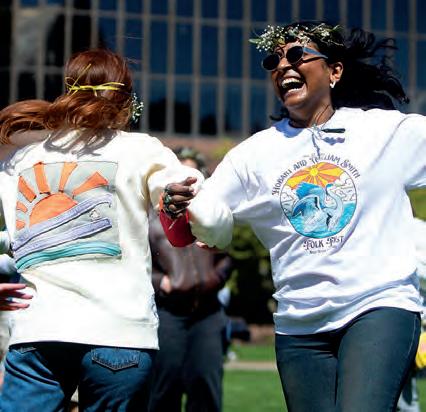
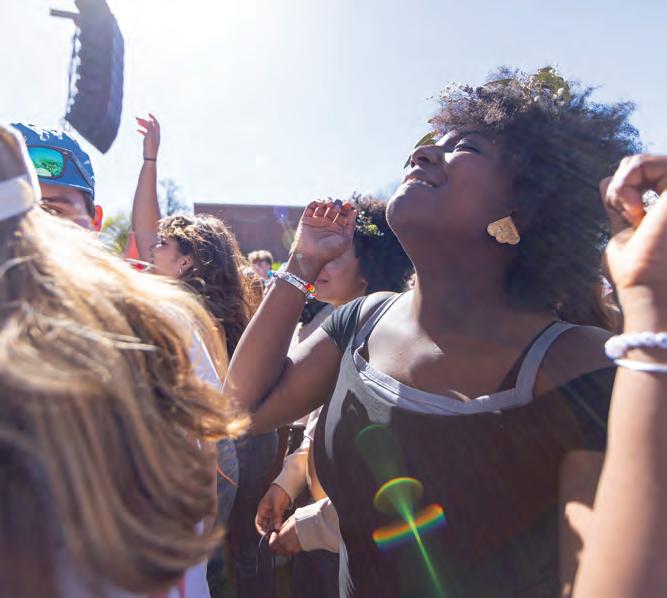
BY TONY REID ‘79
If you’re a certain age, you likely have boxes of old photographs—friends and family, places—fading on paper and in memory. Occasionally, you dig them out to revisit the past.
That’s what happened to Andy Satter ’75 in 2023 when searching for some old family pictures to show his son Max, who was visiting from overseas. Instead, he found a different box—one filled with images from Russ’ Kitchenette Diner, a 12-by-36-foot railcar-style diner in East Cambridge, Mass., where he spent a brief but meaningful part of his life.
Satter discovered Russ’ diner in 1974 while studying photography at Imageworks in Cambridge. “It was 1974 out on the sidewalk,” Satter says, “and 1947 inside the diner. It was love at first sight.”
Satter went back every day that summer and then once a week until he moved to New York City in 1977. After that, he put the pictures in a box and never looked at them again. He moved five or six times before settling in New Paltz 30 years ago and says he thought the pictures were lost in one of those moves.
Until recently that is, when he stood in his basement, opened the unmarked box, and showed them to Max, who knew nothing about the pictures or the project. “Dad, these are [expletive] amazing!” Max exclaimed. “What are we going to do with these?”
Max, it turns out, was onto something. Satter reached out to Nadine Lemmon of the Center for Photography at Woodstock,
who introduced him to curator Adam Ryan. Both recognized the significance of the images.
Satter digitized the negatives, and the restored photos have been published in a 64-page book, Walk-ins Welcome, released on March 20, 2025, featuring a foreword from Ryan. Nine days later, the photos were put on display in “The Diner Project – Remembering A Time Passed But Not Forgotten” at CambridgeSide Galleria, which was built on the very site where Russ’ stood from 1937 until 1978.
The exhibit featured black-and-white images of Russ, the owner, dressed in his white diner uniform, hat pushed back on his balding head, leaning against the counter; and Charlie the cook—“He became like a father to me,” Satter says— perched over a bucket peeling some of the 100 pounds of potatoes he peeled six days a week, starting at 3:30 a.m.
Other images include: the waitress, Geri, in contemplative profile; a wall adorned with photos of great Boston sports legends Ted Williams and Rocky Marciano; and the regulars—cops, firemen, plumbers, electricians—leaning against the counter, smiling, laughing, eating. “It was a magical place,” Satter says.
Even at the callow age of 20, Satter, who majored in psychology, knew discretion was the critical factor in getting the pictures he wanted. He says he gently walked the narrow floor, staying out of the line of conversation and using only the available light inside the diner. Never a flash.
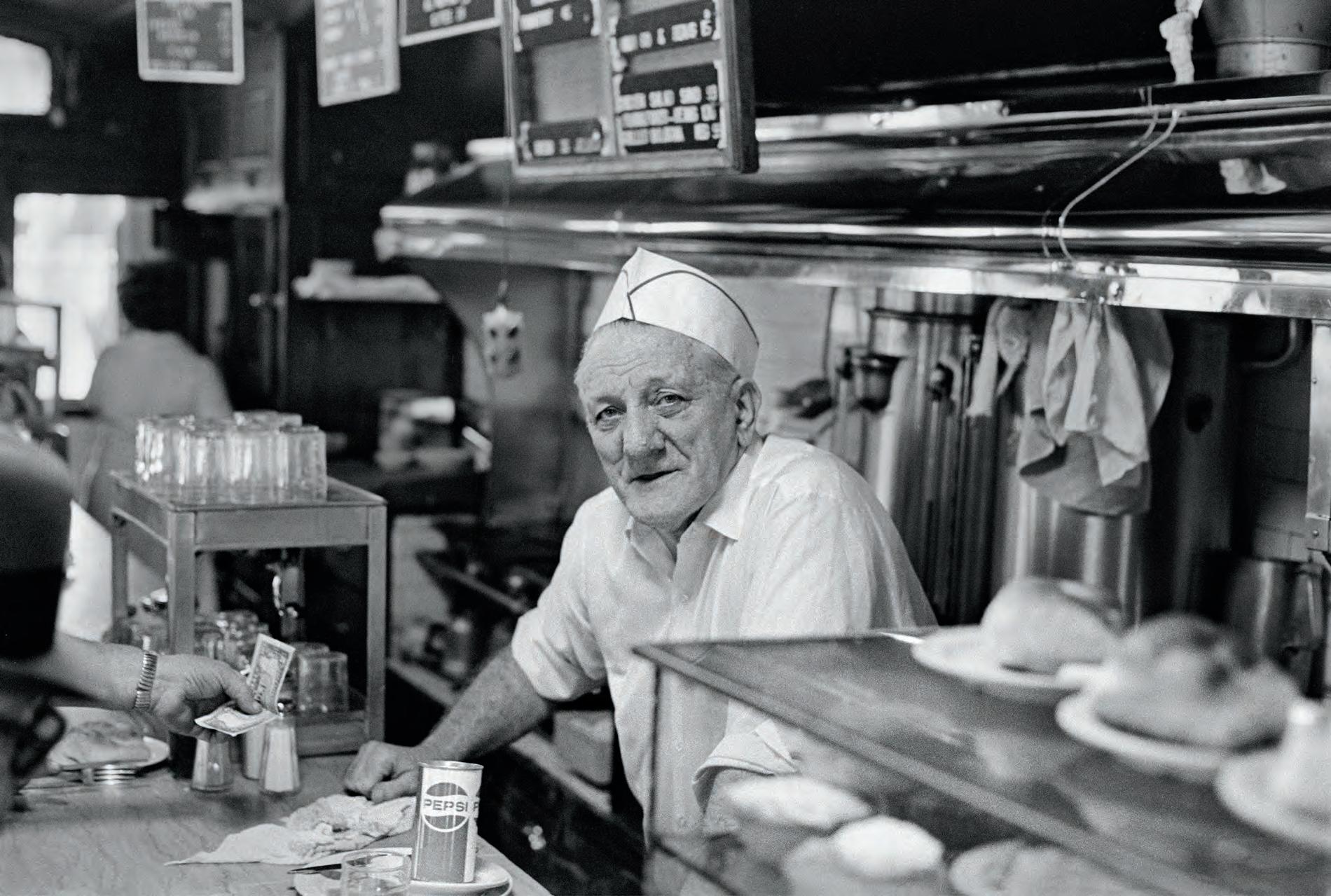
“I knew that the denizens of the diner had to be comfortable with me. I had to be present in a way that was respectful and nonthreatening for them,” Satter says. “Because I learned how to do that, they let down their guard and allowed me to see them in a way that other people didn’t see them.”
Satter apprenticed at a commercial photography studio that summer, which gave him access to a professional darkroom. “I stayed up all night processing diner film and making prints.
Then, I took them into the diner in the morning,” he says.
Once the workers and the customers saw the pictures, Satter began to win their confidence. Russ started to thumbtack Satter’s prints to the wall. Then the customers asked for portraits and gave him the nickname: “The Kid.” Eventually, he had full access, which improved the quality of the work.
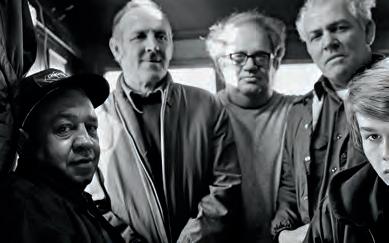
Satter moved to New York in 1977 and has, for many years, run an eponymous executive coaching firm in the health care business. When he left Boston, he lost touch with Russ, Charlie and Geri and never went back to the diner. Until this past spring. “It’s come full circle,” he says. “To have the photographs come home to where they were taken, a half-century later, has allowed me to come home to my relationship with photography.”
The Diner Project continues to be exhibited in venues up and down the East Coast and many of its photographs are now in private collections. For more information about upcoming shows or about the book, please visit Satter’s website at www.satterphoto.com.
SCOTT L. MARTIN ’90
Entrepreneur
Founder & CEO, Rescription
Major: English
Minor: History
Athletics: Statesmen Football
Defensive End
Hometown: Chappaqua, N.Y.
Benefactor: SAA Endowed Fund for Defensive End MVP
resilience, football and an indefatigable entrepreneurial drive
When did you first realize you were an entrepreneur? SM: I knew before I landed my first job that I wanted to “do my own thing.” DC: Since birth. I have been watching “Shark Tank” since I can remember.
What qualities do you need to be successful in business? SM: Non-stop creativity, a refusal to accept “no” as the final answer, and the resilience to get knocked down and rise again — lessons I learned playing football at Hobart, where three of my four seasons ended in losses. DC: Prioritizing the 5 Ps: Product, Price, Promotion, Place and People.
Early morning or late night?
SM: Both, but I enjoy late nights better. DC: Late night, for sure.
If you had a completely free weekend, what are you doing? SM: Kiteboarding and skiing with my family and friends. DC: I love running my business, Back2Baggy, where I sell secondhand clothes.
What do you remember most clearly about your first semester on campus?
SM: Laying eyes on my future wife Andrea. [Andrea Gove Martin ’89] DC: Stressing and late nights in the computer lab, and more importantly, the lifelong friends I made. What moment on the football field— good or bad—do you still think about?
SM: Having the opposing head coach
come find me after the game to shake my hand and tell me that I played a great game. DC: I had a scoop-and-score touchdown for almost 70 yards, and they called it back. I’m still sick about it.
Who is your NFL Team? SM: NY Giants but I am a huge Dan Campbell fan, so the Lions when the Giants stink, which has been a lot lately. DC: The Kansas City Chiefs. I know people are going to scream “bandwagon,” but I have the baby pictures to prove I’m a real fan!
Be honest: what was your go-to “student meal” during your busiest weeks? SM: Arby’s next to the football field. DC: 100% a cafe bowl: chicken and steak, guac and sour cream, and chips on the side.
If you could give advice to your HWS first-year self, what would it be? SM: Wake up! and take advantage of the day. DC: Keep God first. The work is the prize, and failing is simply a learning experience.
Favorite course? SM: ”Poetry” with Professor Stephen A. Kuusisto ’78. DC: ”Organizational Management” with Associate Professor Craig Talmage.
What quality do you value in your friends? SM: Loyalty, kindness and humor. A true friend is a hard thing to find but worth a lifetime to look for. DC: Authenticity and honesty.
AKA “DUKE” Entrepreneur
Founder, The Wave Interned at Farm Credit Financial Partners
2026 Winner of The Todd Feldman ’89 and Family Pitch
Major: Business Management & Entrepreneurship
Minor: Computer Science
Athletics: Statesmen Football Linebacker
Hometown: Springfield, Mass.