The hobarT and William SmiTh CollegeS and Union College ParTnerShiP for global edUCaTion

The hobarT and William SmiTh CollegeS and Union College ParTnerShiP for global edUCaTion
a journal of global perspectives
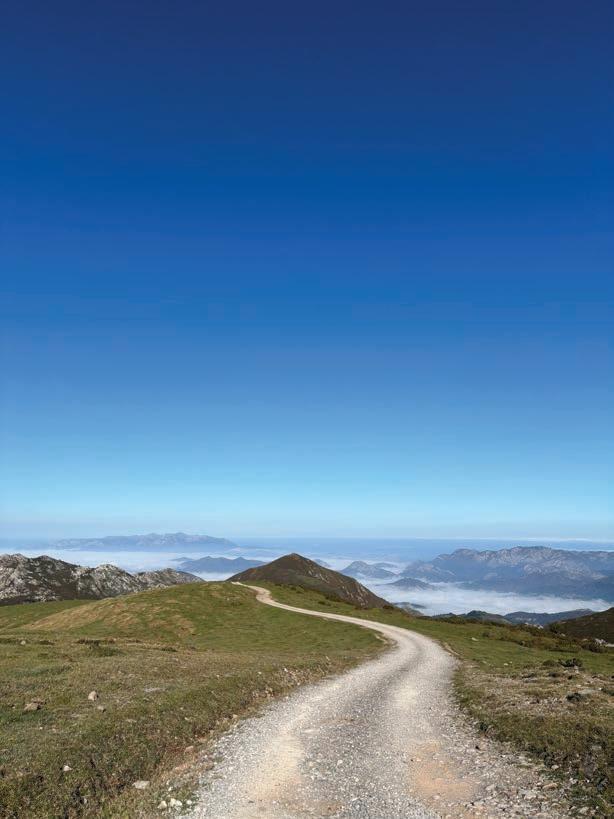
How Big the World and How Worth It the Journey, Lagos de Covadonga, Spain [Aleena Kuriakose]
Volume XIX, 2026
The Aleph: a journal of global perspectives
Volume XIX, 2026
Kristen Welsh, Editor
Hannah Mathews, Editor and Artistic Director
Laura Thérien, Assistant Editor
ISSN 1937-0474
Stories in The Aleph are set in Gentium, designed by Victor Gaultney and adopted by SIL International, an organization working to document thousands of dying ethnic languages, many of which are written in modified Latin scripts. Most digital fonts do not include these extended alphabets and therefore millions of people are shut out of the publishing community. Gentium is an attempt to meet this challenge. The name is Latin for belonging to the nations.
© 2026 Hobart and William Smith Colleges and Union College Partnership for Global Education
Kristen Welsh, Executive Director
Trinity Hall, 3rd Floor
Hobart and William Smith Colleges Geneva, New York 14456 (315) 781-3307
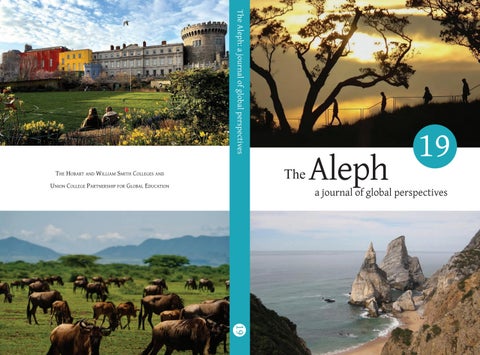
Cover Photo Credits:
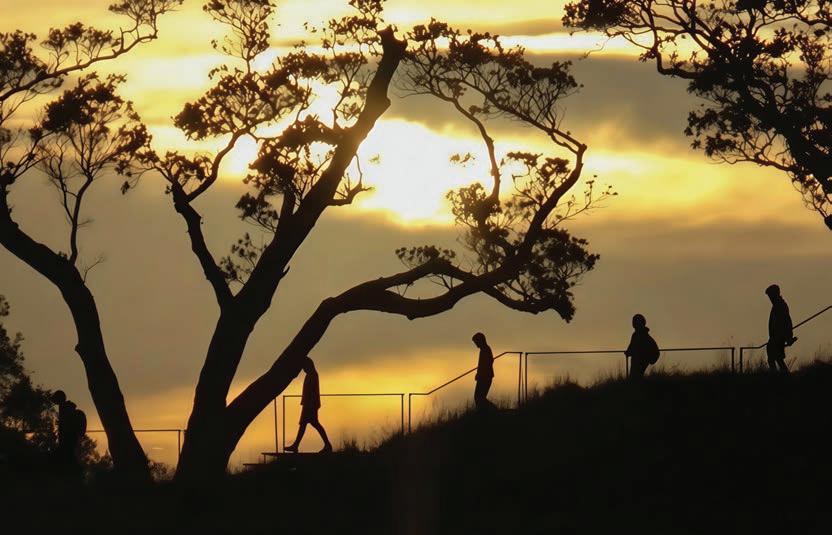
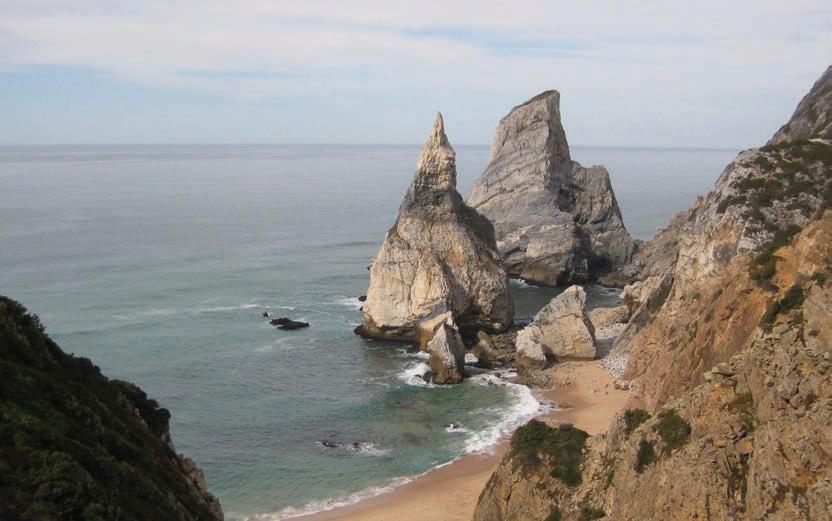
Front Cover: Breaking Dawn, Mount Eden, New Zealand [Sean Mucheru], Praia da Ursa, Sintra, Portugal [Nikolina Stanic]
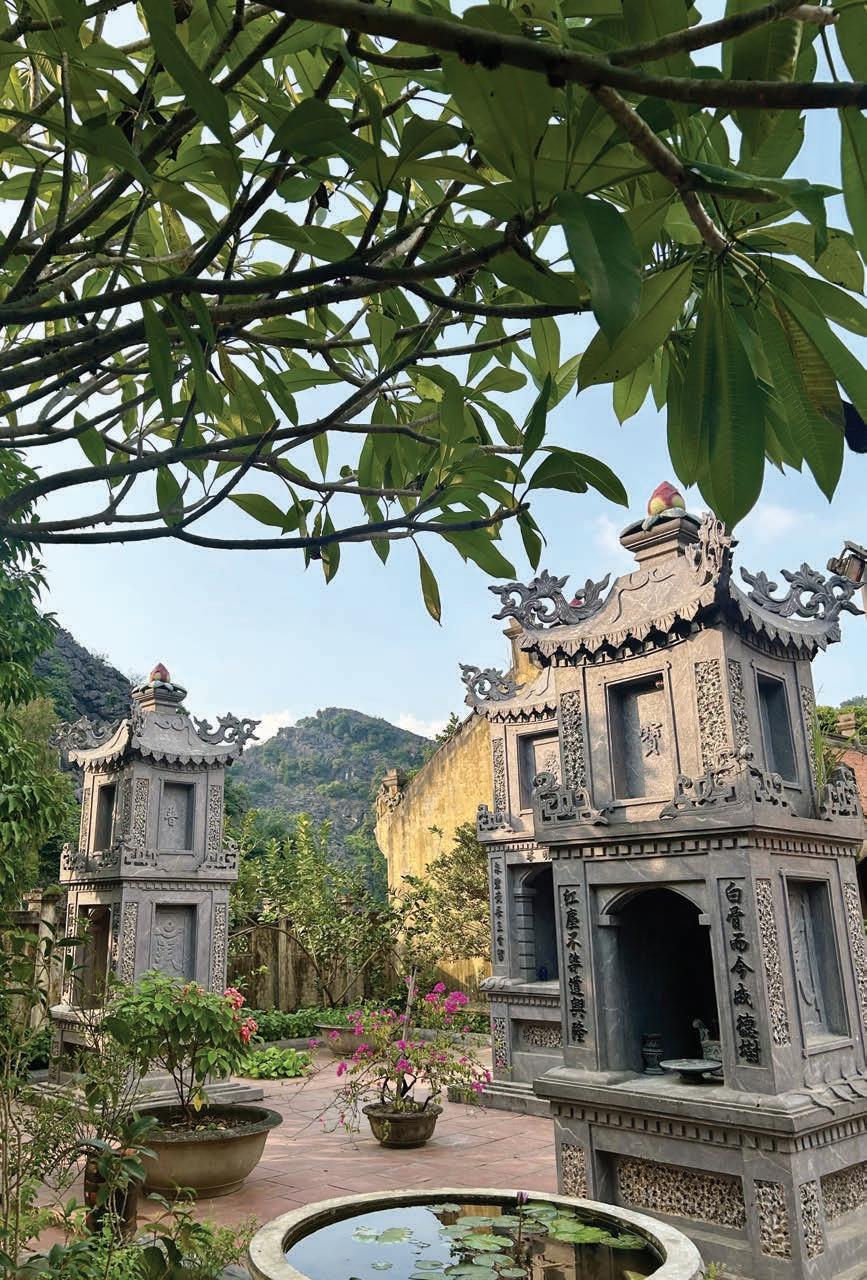
Inside Front Cover: A Small Buddhist Pagoda, Ninh Binh, Vietnam [Laura McDonough]
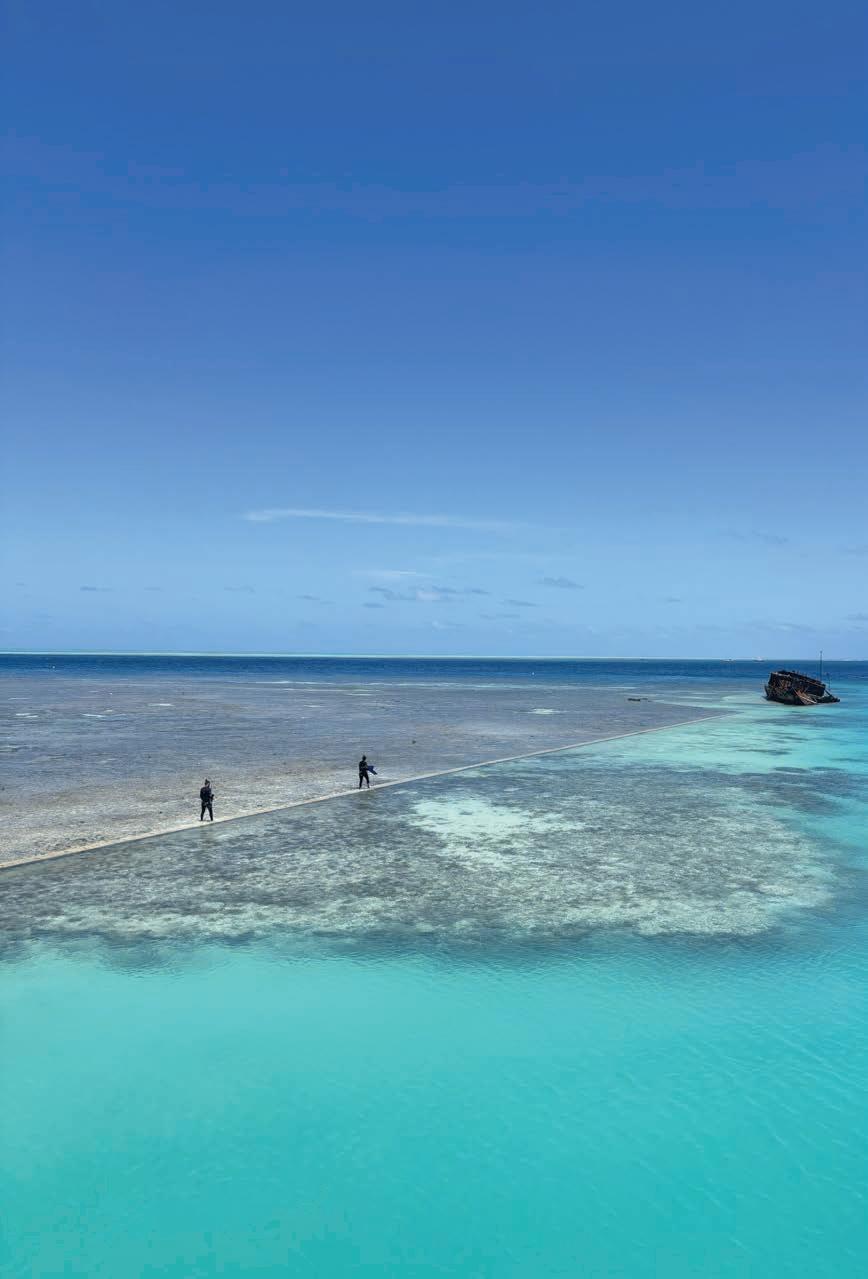
Inside Back Cover: Data Collection on the Great Barrier Reef, Heron Island, Australia [Caroline Gannon]
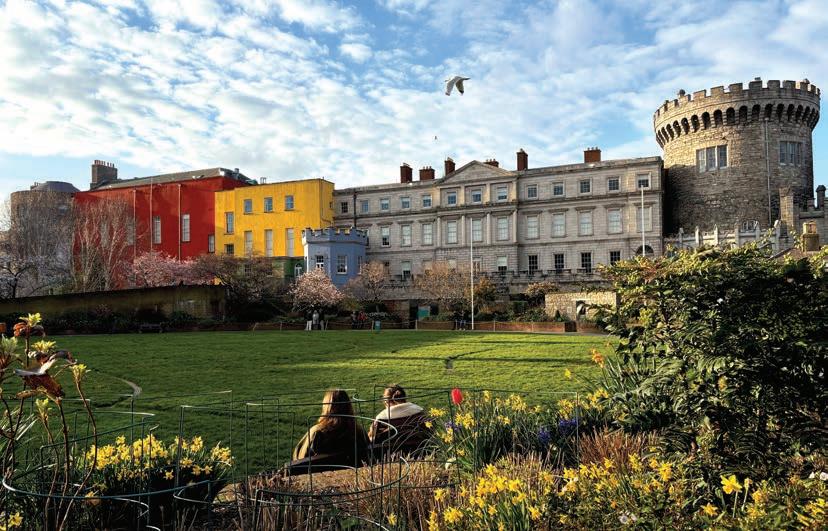
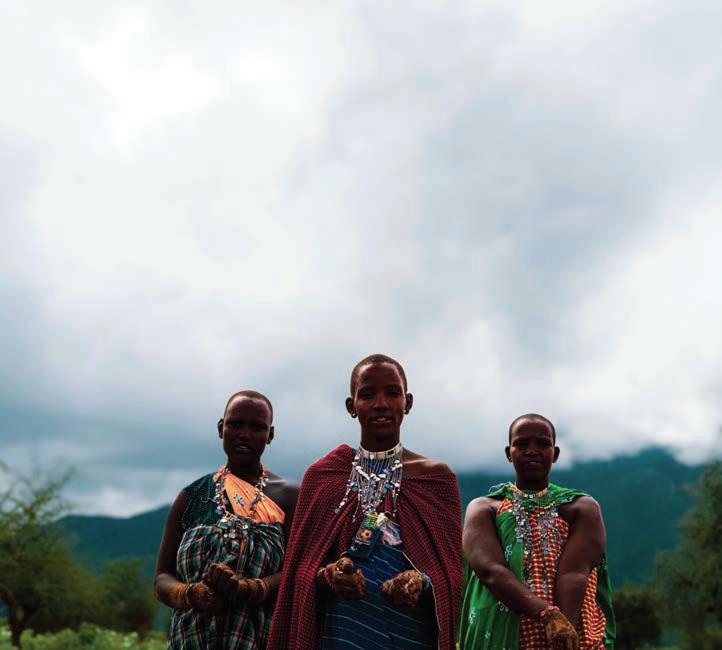
Back Cover: Dublin, Ireland [Elizabeth Krege], Wildebeest Traveling Through the Serengeti, Serengeti National Park, Tanzania [Ellrose Hanlon]
The first edition of The Aleph: a journal of global perspectives was published in 2002 as part of the Partnership for Global Education initiative between Hobart and William Smith Colleges and Union College. Since its inception, the journal has served to reflect the wealth of international experience among students at our respective institutions, and we are pleased to have extended this opportunity to students across the New York Six Liberal Arts Consortium.
The journal takes its name from the 1945 short story “The Aleph” by Argentine writer Jorge Luis Borges. In the story, the narrator (a writer) comes upon “a small iridescent sphere of almost unbearable brilliance” in which “without admixture or confusion, all the places of the world, seen from every angle, coexist.” Through this encounter with the mystical Aleph, he is able to see all things from all perspectives – yet he despairs of the daunting task of trying to convey the enormity of this experience to his readers.
Our students face much the same challenge when they return from abroad: after crossing borders and cultures, navigating societies different from their own in which they are exposed to new values and perspectives, how can they make sense of it all? How can they adequately convey the significance of the experience to those who did not share it?
The Aleph: a journal of global perspectives was created to address this dilemma. It provides a space for reflection, analysis, and dialogue that benefits contributors and readers alike. The pieces, both written and visual, offer insight into what captivates, challenges, and inspires our students – and through these words and images we learn about the people and places they encounter, we see how they change along the way, and we are exposed to “all the places of the world, seen from every angle.”
ENGAGEMENT (p. 6)
I. Wickets & Whānau (Addie Brinkler) II. St. Patrick’s Day in Dublin (Quinn Broggy) III. Coffee Date (Jo Grejda) IV. Diving Deeper into Conservation (Abigail Cooper)
CONNECTIONS (p. 30)
I. Memories & Meals: Local Argentine Favorites (Isabel McKinnon)
II. Sports, Schnitzel, and Swabians (Amina Assefaw) III. My New Zealand Family (Shayna Straney) IV. Not Just H2O (Leah Wiebe)
CROSSINGS (p. 60)
I. The Night the Sky Caught Fire (Eliza Chace) II. Journeying Through Italy on Public Transportation (Nora Hanson) III. Transportation in Berlin (Hope Johnson) IV. City in the North (Byron Maddox)
V. Comparing Social Implications of Italy’s Renaissance Frescoes and Modern Murals (Ceanna Belisle)
FROM MY SKETCHBOOK I (p. 84) (Ceanna Belisle)
LESSONS (p. 88)
I. Language, Access, and Care in Seville (Maya Mahoney) II. What My Phone Never Showed Me (Estelle Bignet) III. My Experience Solo Traveling (Anneliese Oetsen) IV. Navigating Practices of Wellness in Culture (Anna Barry)
REFLECTIONS (p. 106)
I. Shadows in Stone (Marie Diarrassouba) II. What the World Means to Me (Isabel Goldblatt-Hamilton) III. Play by Design (Abby Hark) IV. To Listen, To Name, To Act (Zooey Gastelo)
VERSE & VISION (p. 130)
I. Wildflowers (Jessica Hoffman) II. Seagrass (Linnea Darius) III. Oh, the Places You’ll Go (Katherine Villinski) IV. The House in Point Chev (Lindsay Miller) V. viking museum at roskilde (Andrew Pilet) VI. A Glimpse into My Semester Abroad (Patrick McGinn-Hammer)
FROM MY SKETCHBOOK II (p. 144)
Impressions of Italy: Architecture and Visual Narrative (Talya Peters)
MOMENTS (p. 150)
I. Host Families and Sunsets (Elena Roll) II. What the Mountain Taught Me (Shriya Biswas) III. Cold Nips Memory (Lina Hassini) IV. One Last Night (Riley McCabe)
n. 1. an agreed arrangement to go somewhere or do something at a specific time 2. the act of being involved in an activity
Before arriving in New Zealand, I knew of cricket only in the most abstract terms. It was a game with bats, balls, wickets, and an air of colonial history that made it seem distant from my everyday American experience. I had only heard of the game through a children’s show Bluey that I watched with my brother. Through firsthand exploration, attending matches, observing local clubs, and speaking with Kiwis of all ages, I’ve come to see cricket as not just a sport, but a thread woven deeply into the cultural fabric of Aotearoa.
When I landed in Auckland in January, I had little idea how quickly this project would become an immersive experience. My first brush with cricket wasn’t in a stadium or club, but rather quite spontaneously during a walk downtown. While exploring central Auckland, we came across a makeshift cricket game in an alleyway. New to the sport, I had very little understanding of what was going on. That same week, my faculty director shared that she had just attended a match that lasted eight hours, adding that sometimes they can even go on for days. At that point, I couldn’t imagine spending an entire day watching one game, but I’d soon come to appreciate the slow-burn beauty of cricket’s pace.
One of my most memorable early experiences in Auckland was attending a free T20 double-header outside Eden Park. I arrived just in time to catch the end of the women’s match between the Auckland Aces and Otago Sparks and stayed
for the men’s game versus the Wellington Volts. I found myself comparing it to American baseball, partially in the technical sense, but mostly in the game’s atmosphere and emotions. The matches can be long and monotonous, and it takes dedicated fans to stick through them. Still, there was something uniquely magnetic about the setting. The casual, picnic-like energy of fans lounging on grass, chatting with neighbors and reacting calmly to plays reminded me that in cricket, as in culture, patience is a virtue.
Understanding the technical side of cricket was a challenge at first. I was fortunate that my faculty director met me at one of the matches and explained many of the basics. A nearby fan, upon hearing I was American, asked, “Are you used to baseball?” - a question I would hear again and again as people were surprised to see an American attending New Zealand sporting events. I began thinking more about how to bridge that cultural divide, how to move from observer to participant, from foreigner to fan.
That shift began to happen when I moved in with my host family in early February. They have two young children, ages 9 and 11, and their son plays cricket every Saturday. Watching a five-hour long school match, I was struck by how naturally the sport fit into their weekend routine. It was great to talk with my host mom and the other parents and learn more about the sport in a slower setting. This was cricket not as a national symbol, but as a family tradition, passed down and played with pride. My host parents also offered insight into how sport intersects with gender in New Zealand. Netball is a generational game among women, whereas cricket holds that same tradition for men. I hadn’t expected this gendered division of sport to be so pronounced, but the deeper I dug, the clearer it became.
My comparative exploration of other sports has also enriched my understanding of cricket’s place in Kiwi
culture. A rugby match between the Blues and the Chiefs offered a sharp contrast. Whereas cricket reminded me of baseball, rugby reminded me of American football. Cricket felt steeped in tradition and a bit slower, but rugby was electric and fast-paced. Yet both held cultural weight. At the rugby game, a dedicated Blues fan walked me through both the mechanics and the deep-rooted pride fans have for their teams. My time at these games has also sparked a broader curiosity about the hierarchy of sports in New Zealand. Cricket and soccer are often seen as “more European” while rugby and field hockey feel “more common man.” These distinctions seem subtle on the surface but reveal deeper layers relating to class, ethnicity, and cultural identity. Although cricket might project a certain elite heritage, local club matches and family gatherings around Saturday school games suggest a far more democratic embrace.
March marked my last full month in New Zealand, and it was a whirlwind of sporting events, cultural revelations, and personal connections. By this point, I found myself not only attending matches but engaging in the deeper cultural narratives that surround New Zealand’s sports scene. On March 14th, I attended the One New Zealand Warriors’ opening rugby match, and it was by far the most fun and memorable game I saw during my time abroad, filled with fireworks, fanfare, and palpable excitement from the crowd. Though I attended alone, the camaraderie in the fan section quickly made me feel part of something bigger.
Two older Kiwi women sitting next to me at the match were kind enough to explain some of the rules of rugby league, a different variation from the union format I had seen earlier at the Blues match. While chatting with them, the referee made a call against the Warriors, prompting one of them to mutter, “Makes sense, the ref being an Aussie.” This comment, delivered with a mix of humor and exasperation, underscored the pervasive rivalry between New Zealand
Warriors Rugby Match, Auckland, New Zealand [Addie Brinkler]
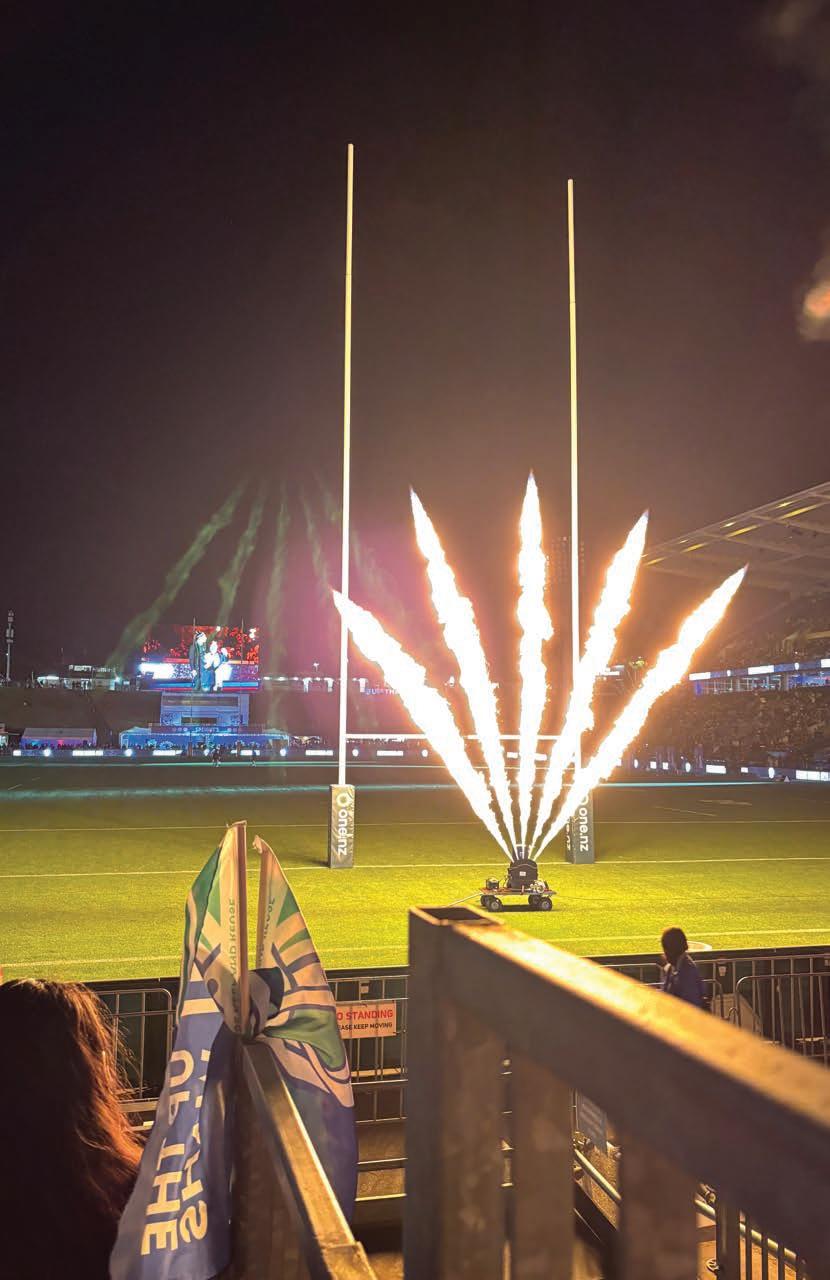
and Australia, a theme I would encounter repeatedly throughout my time abroad. The Warriors’ opening game was a stark contrast to the cricket matches I’d attended earlier. I left the game with a newfound respect for the sport and a deeper understanding of how it complements cricket as part of New Zealand’s cultural identity.
Later in March, I attended a cricket doubleheader featuring the White Ferns against Australia and the Black Caps against Pakistan. The White Ferns, unfortunately, lost to Australia, but I managed to snag some signatures from the players as they exited the field. Watching them interact with young fans, asking if they played cricket, was heartwarming and highlighted the growing efforts to include women in a sport that has long been male-dominated. My host mom shared that when she was younger, her school only had a boys’ cricket team. “In the last five years, it has changed,” she said, “but it’s still a battle on two fronts.” Her daughter remains uninterested in cricket, echoing a sentiment many girls her age share: “It’s boring.” She would usually boo the TV when cricket was playing, much to my amusement.
The Black Caps’ match against Pakistan had a noticeably different feel. The stadium filled as the workday ended, and the energy became electric. It was also one of the first times I heard New Zealand’s national anthem at a game, a moment that stirred pride and unity among the fans. The Black Caps struggled against Pakistan’s formidable bowlers, and, though they fought hard, the game ended in defeat. By halftime, I found myself able to predict how the match might unfold, a testament to how much I’d learned over the past few months. Halftime was also when I had to call it quits, with six hours of cricket being my breaking point.
The enduring rivalry between New Zealand and Australia in cricket came to life in my conversations with my host parents. Over dinner, they eagerly recounted the infamous
“Underarm Bowling Incident” from the 1981 World Cup. “It’s something every Kiwi over 30 knows about,” my host mom said. The story is iconic; with one ball left and New Zealand needing a six to tie, the Australian bowler controversially rolled the ball underarm, ensuring the batter couldn’t hit it. “It wasn’t against the rules,” my host dad explained, “but it was so unsportsmanlike. Everyone was in shock.” My host mom said, “Kiwi kids are raised to know this moment and to never forgive Australia for it.” The incident epitomizes the sibling-like rivalry between the two nations, rooted in sports but extending to everything from food (the “whoinvented-the-pavlova” debate) to culture. But the rivalry has its boundaries, “If it’s England versus Australia, I’d want Australia to win, just don’t like the English,” my host mom admitted, referencing lingering colonial tensions. My host dad, however, disagreed; “I’d rather England win. Australians are known as the nasty ones.”
That theme of rivalry, and resentment toward England, surfaced during my trip to Sydney, Australia, where I toured the iconic Sydney Cricket Ground. As the only American in the group, and the only one who didn’t know much about cricket, it was interesting to learn the history of the grounds which are exemplary of the history of cricket in Australia and the larger Commonwealth. Unlike the more modern stadium next door, the Sydney Cricket Grounds is a meticulous time capsule of cricket since the 1860s, older than both the Sydney Opera House and the Harbour Bridge. I asked our Australian tour guide the same question: “If New Zealand and England were playing, who would you support?” She laughed and replied without hesitation, “Anyone but England. Cause we’re like New Zealand’s big brother, but England is our big brother. Plus there’s all that empire and colonialism stuff.” Her answer was both funny and telling, echoing the same complex, sibling-like hierarchy my host parents described but from the other side. What struck me was how natural it was for her to use the sibling metaphor, too, as if that dynamic was something
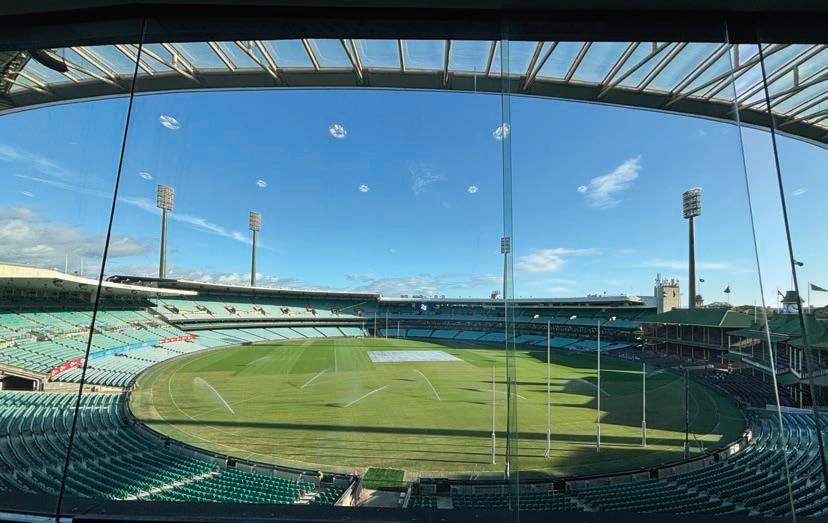
universally understood in this part of the world. It’s like cricket created these familial bonds between countries, connecting different cultures, regions, and people with cricket wickets in one big whānau (Te Reo Māori for family).
What struck me most in my conversations with my host family about cricket was how deeply it is woven into New Zealand’s cultural fabric. My host dad fondly recalled going to matches with his grandfather as a child and later with university friends. “It was an excuse to drink, sure, but once you got into the sport, you enjoyed it more,” he said. Beach cricket, backyard games, and cricket in gym class are traditions that connect generations. The game’s colonial history is also ever-present. “It’s a hangover from colonial times,” my host mom said. Yet, despite its roots, cricket has evolved into something uniquely Kiwi. Whether at the beach, the park, or the stadium, cricket is more than a sport, it’s a shared language, a rite of passage, and a lens through which New Zealanders see themselves as separate from the rest of the world and united together.
- Addie Brinkler
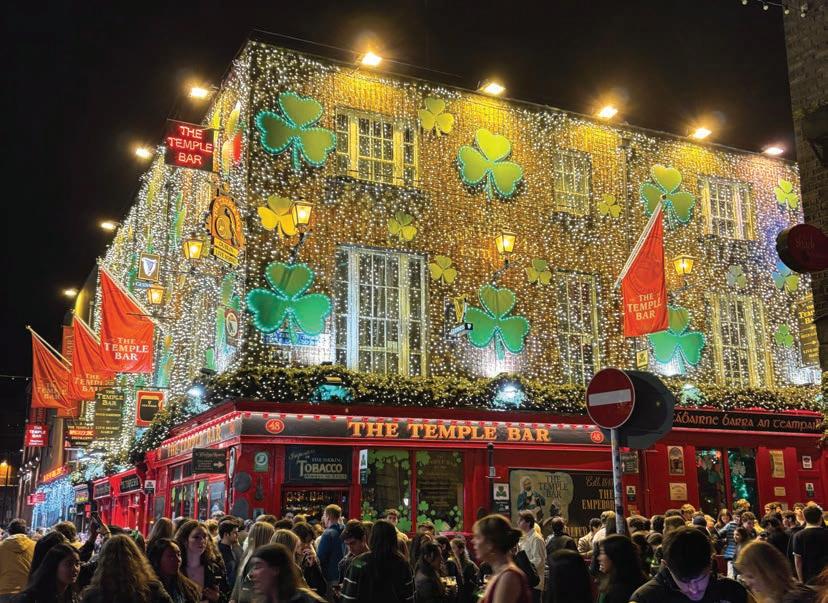
There was likely a time when there was no better place in the world to be for St. Patrick’s Day than in Dublin. My dad used to tell me stories of when the auld lads used to knock on the closed door and be let into the pubs that were supposed to remain shut during the religious festival, sipping a calm few pints as the children marched in the parade; how he would post up at a spot around St. Stephen’s Green and enjoy the day that is so synonymous with Irish Pride. I thought there was no better way to spend my first and possibly only St. Patrick’s in Ireland, standing where my father, and his father before him, had. I’m here to tell you it was a massive mistake. If your goal for St. Patrick’s Day is to be one of thousands of college-aged Americans wearing cheaply woven Guinness sweaters and swiping their daddy’s Amex for 15-euro pints at Temple Bar, Dublin may be just the place for you.
I had always taken a slight offense to the way that St. Patrick’s Day was celebrated in the US. While my family had used the opportunity to play patriotic Irish tunes while we ate the decidedly not Irish dish of corned beef and cabbage, the vast majority of people used it as an excuse to get belligerently drunk, decked out in the cringiest of green clothing. What had once served as a remarkable celebration of pride amongst the tough working class throughout major cities like Boston, New York, and Chicago has been largely bastardised into a commercial opportunity to sell leprechaun outfits and green beer to our nation’s finest binge drinkers. I’m not going to act like I’m above it completely, as I’ve done my fair share of exploring in New York during the festivities and had my fair share of overpriced Guinness as well. But at the end of the day, that is what I expected, and what I thought I was getting into. What I found in Dublin, while stemming from naivety, was not at all what I anticipated.
Going from the University of Galway rugby dressing room where I was largely referred to as “the American” to the streets of Dublin on St. Patrick’s Day was a major shock. There is something very strange about being in a foreign country and being surrounded by Americans. You would be hard-pressed to find an Irish citizen that wasn’t a bartender or security guard while out in the city that day. Thousands of Americans fully decked out in green, some wearing Guinness scarves and others with temporary shamrock face tattoos, flooded every open pub and restaurant until there was only standing room available. I guess part of me had gotten used to being the only American while out with my rugby boys, or one of a small group when I was out with my friends from HWS. Now, I was just a face in the crowd, one of thousands that looked to Dublin as a great opportunity for an Instagram post or to purchase ridiculous “Irish” attire. I had tried so hard to earn the title of “Sound American” by not just doing what I saw every American doing in Galway. Yet here I was, doing as any tourist would do, surrounded by loud, obnoxious drunks parading around the city, representing the kind of in-yourface American Imperialism that we have come to be known by on the world stage.
I’m guessing that most students who seek a term abroad are not doing so to surround themselves with the same people and culture they left behind in the US; not necessarily fleeing the life they have as a student at home but looking to gain new perspective or cultural knowledge through immersion. If those are your goals, Dublin is not the best town for it and St Patrick’s Day weekend is certainly the worst time for it. It seemed like every single person I knew that was abroad during the spring funnelled into the Dublin city center that weekend for the priceless conversation starter of “I’ve actually been to St. Patrick’s Day in Dublin!” If Ireland was just one of many stops on your European itinerary, or you only wanted to head in for a weekend of pints and bad decisions, then maybe a short trip to Dublin
for the spectacle is worth it. But if you really want to say you have “seen Ireland,” then be one of the few that ventures out further than the old Viking town of Dubh Linn. Maybe head west, maybe down south to Cork or Kerry, maybe even swap a Guinness for a Beamish every now and then.
This is not an attempt to slander the entire city or condemn the celebration of Éire’s patron saint. I loved Dublin the several times I had been there, and parts of the spectacle were actually a grand time. The intricate and fantastical parade floats, the camaraderie, and, of course, the sweet woman who let us into her bar early to get a head start on the festivities. But it’s these moments of charm I appreciated, not spending nearly $50 for three drinks on the rooftop at Temple Bar. For the businesses in Dublin, the foreign invasion is well worth the immense flow of cash into the city, over 100 million euros over the weekend I was there. For that, I must say fair play to them, and, as long as there are foreigners that want to rent their way into performing Irishness, that profit will be present for the taking.
I think my goal above all things was not just to visit or sightsee in Ireland, but to really live the culture, ground myself in the location. Maybe it was all a plot to prove my Irish Identity as an Irish American (emphasis on American), legitimize my roots that don’t quite exist - give myself authority on Irish Culture despite being an outsider myself. Maybe my ideas of authentic travel and exploration are themselves performative, tied to an egotistical desire to do things the “right way.” But I really think if you want to make the most of any travel experience, don’t confine yourself to the locations you would be expected to go, the sights that you were expected to see. Do your best to create your own meaning, and, when you are unsure, it is usually good to try and do as locals do. If you do ever find yourself in Ireland or in a place nearby during the charming festival of St. Patrick, follow the wisdom given to me by my roommate from down in Kerry and “Stay the fuck out of Dublin.”
- Quinn Broggy
One of my goals during my time abroad in Copenhagen was to explore café culture; that is, I wanted to go to different cafés throughout the city and spend some time getting a sense of the atmosphere within. My hypothesis was that, based on the feel of a city’s cafés, one can get a sense of the overall culture of that city. If accurate, it could be a great tool to get to know a new place. Denmark is ranked in the top 10 countries for coffee consumption per capita - this statistic and the importance of coffee in Denmark were some of the initial information we learned in our Danish Language and Culture course. Our inaugural cultural assignment was to wander around a neighborhood of the city, visit at least two cafés, and report back. My coffee order is one of the things I can still confidently say in Danish. Needless to say, cafés are important to Danes, and Copenhagen seemed like an ideal place to test my theory. While abroad, I was able to compare cafés in the US, Copenhagen, Vienna, and Budapest, find some stand-out cafés, and explore my theory as to how cafés can help a newcomer better understand a city.
Danish cafés function similarly to those in the US in that the process of ordering and receiving your drink varies per shop, and it is generally not a formal, sit-down dining experience. The larger chains (Espresso House and Emery’s) function like chain cafés here with consistent menus, premade items, and the need to wait for orders at the counter. However, as with most foods in Denmark, their products are higher quality than those of the US. Of course, where one truly begins to understand Danish cafés is in the smaller local spots. I visited over a dozen cafés in Copenhagen, but for the sake of brevity, we will explore some of my favorites and touch on some honorable mentions.
My three favorite cafés were the Living Room, Next Door Café, and Paludan Bog Café. The Living Room and Next Door, both on the same block, have names that encapsulate the energy many of the cafés in Copenhagen seem to strive for: cozy, familiar, need I say hygge? These were my favorites in large part due to their atmospheres. The Living Room had multiple floors and rooms that created slightly different energies depending on the patron’s mood. It hosted everyone from mothers and their babies to studying college students, and the staff were attentive and friendly enough in their quiet Danish way. All drinks hot or cold were served in tall water glasses, and I had one of the best turkey sandwiches of my life in the moody boho lower level. The Next Door Café is playful, patchworked and homemade, and has some of the most surprisingly enthusiastically friendly staff you’ll meet in Copenhagen. I felt overwhelmingly welcomed, not only by the people there but also by their American-style pancakes. Paludan Bog Café, or translated, Paludan Book Café, was quite a fusion. It looks like an old library and functions both as a café and a book store - a perfect fit just behind the University of Copenhagen library, and a good spot for a slice of cake. Needless to say, all these places have good coffee, too. My honorable mentions are: Café Analog (a non-profit run by volunteer students from the IT University of Copenhagen); Hart Café (a much beloved bakery and café with multiple locations and some of the best baked goods I’ve ever had); and Sankt Peders Bageri (founded in 1652, it is is technically a bakery but they serve coffee and it’s so iconic I had to include it).
In general, these cafés gave me the sense that Danes like to have places where they can feel comfortable and welcome, where they can pause and take some time with friends or on their own. Additionally, Danes love to do this with a good pastry and hot beverage in hand - though who doesn’t? My visits also made me wonder if perhaps the Danish are less taciturn than first impressions may suggest; they certainly care about their history and their communities.
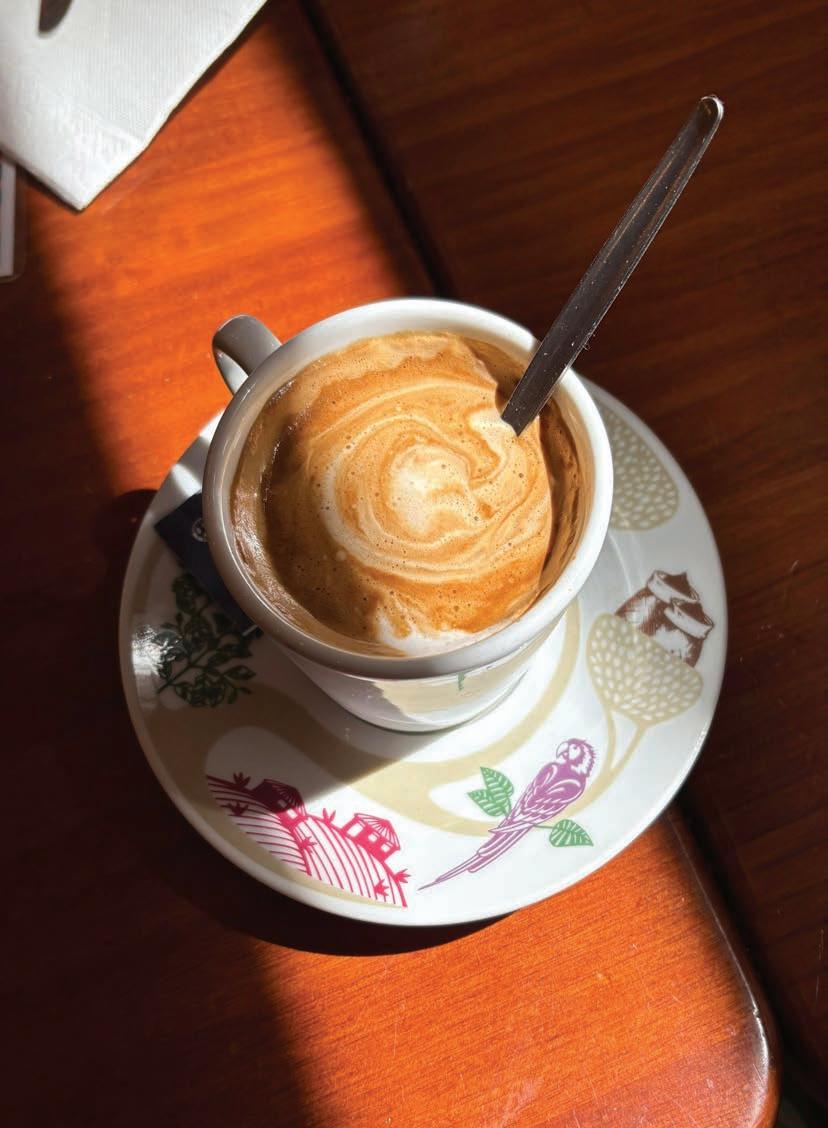
Seville, Spain [Jade Inzinna]
The café con leche or “Coffee with milk” is the Spanish equivalent to the Italian latte or the French café au lait. Made up of equal parts espresso and scalded milk, the café con leche is an easy-to-make and readily available beverage that you can find in every Spanish cafe, restaraunt, and pastry bar.
Hofburg Palace, Night of the Vienna University of Technology Ball, Vienna, Austria [Chanya Markels]
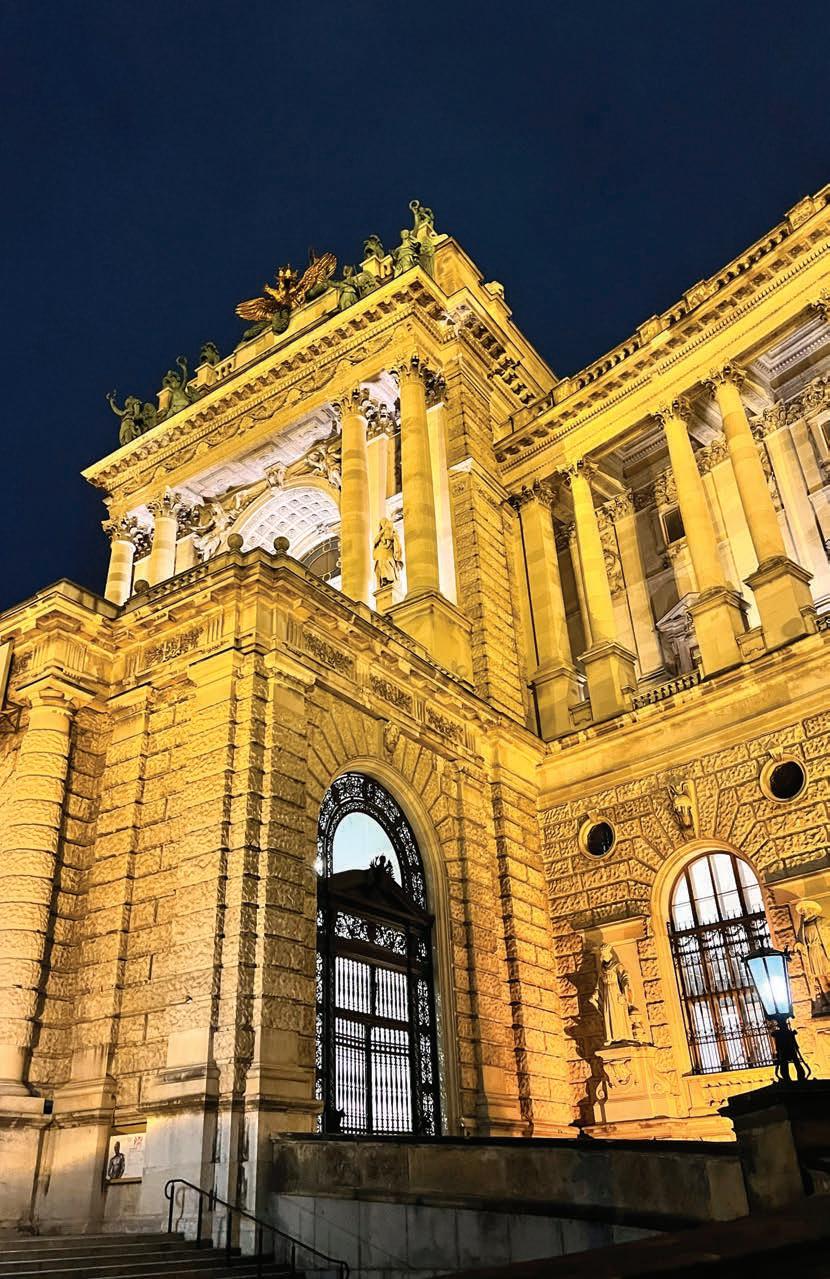
To compile more data and drink more coffee, I visited several cafés during my brief travels to Budapest and Vienna. With the help of a friend who lived in Budapest, I selected three cafés that seemed to best represent a variety of experiences and give me the best sense of the city. Massolit Café was cozy and scrappy, covered in used books for sale and patched up furniture with one small counter. Csendes was a combination bar and café (like many in Copenhagen are), and it felt like a bar with the walls covered in stickers and writing with random objects hanging from the ceiling, manned by a stern woman who impatiently took my order. The last one was the famous, inexplicably named New York Café, which was ornate and had sit-down service by waiters in bowties and aprons. From what I gathered about Budapest, these cafés were a good representation of the city: the old, pretty, and ornate elements, especially those loved by travelers, and the scrappy, colorful, stitched-backtogether charm enjoyed by all.
Vienna has a very particular culture surrounding cafés that I think engages differently with my hypothesis. Rather than expressing individual character, the cafés have a sense of uniformity that the Viennese expect from these establishments; definitely charming but not highly individualized, at least in approach. It is a more uniform café culture that varies by scale and price but carries Viennese hospitality: warm, pleasant, and comfortable, with a deep sense of history. Cafés are also more formal in Vienna: you sit down, look at the menu, and place your order with a server. While this may seem somewhat stiff, especially with the need to get a server’s attention, Vienna is generally a more sociable and friendly place than Copenhagen or Budapest, and, therefore, in the less posh, more neighborly establishments, one can fairly quickly make friends with one’s waiter, as I did at Café Hawelka, one of the four cafés I visited in my time there. All varied by sense of casual comfort, but they were more similar to each other than cafés I visited in other cities. That is with the exception of
the bakery/coffee carts they have dotted about the city, which were a lovely pit stop before my continued travels.
Ultimately, I find my hypothesis to be sound: I think the cafés in a city do indeed help represent the city itself. While one may draw similar conclusions about other shops and locations, the particular social atmospheres of cafés and how much they can vary aids in the sense of the overall region. At the very least, it gave me, a rather anxious and introverted person, a good way to explore the city in safe and reasonably comforting environments. Toward the end of my stay in Copenhagen, I decided to visit a café in Amager (pronounced “Ah-ma”), the neighborhood where I lived. There I met an elderly man who was a regular. He jovially struck up a conversation with me, and we learned a bit about each other’s life stories and shared interest in architecture before he invited me to visit a culturally and architecturally interesting neighborhood of small summer homes, where I was introduced to a beautiful community just down the street. I only caught his first name and never saw him again but it was such a beautiful experience spurred on by a mere café visit. These spaces provide a great way to gain some cultural familiarity and feel closer to a city and its communities, so get yourself to a café and keep your mind open to the possibilities.
- Jo Grejda
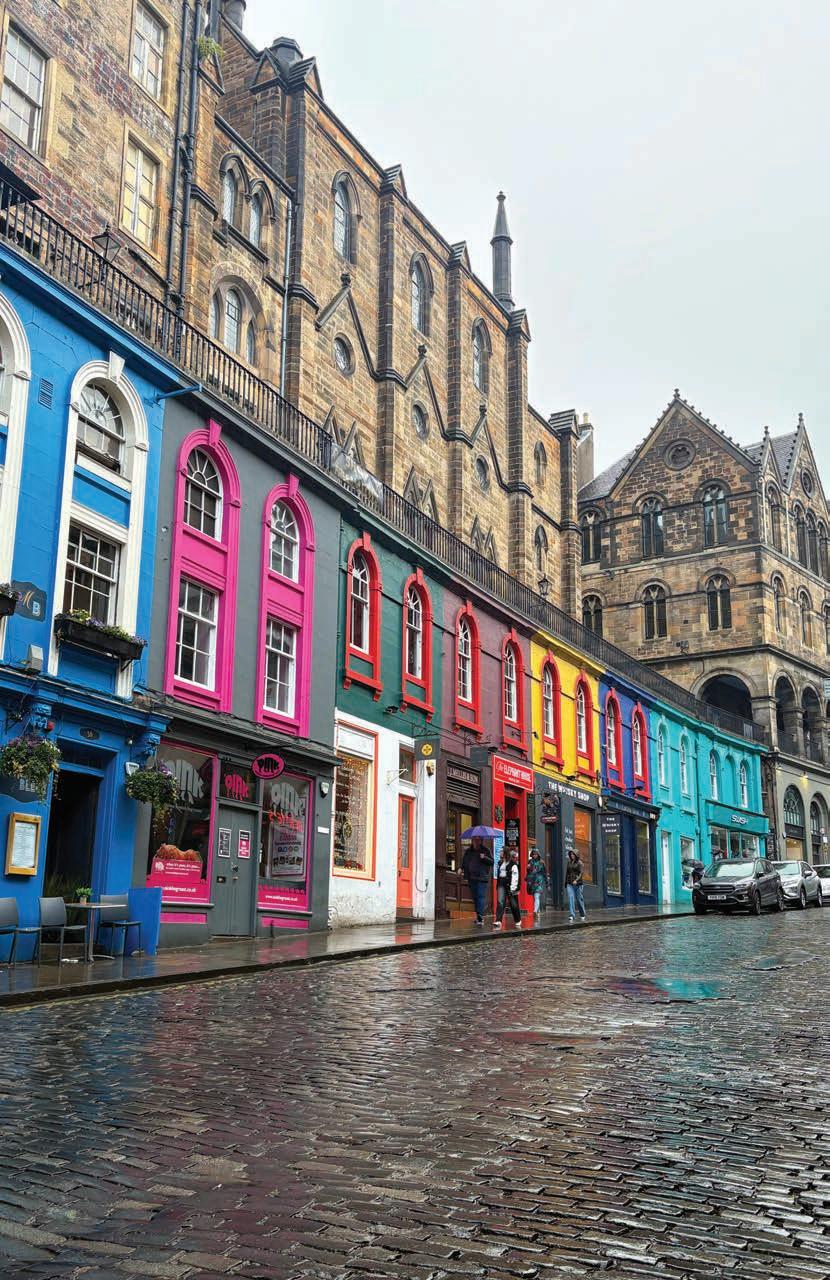
Edinburgh, Scotland [Elizabeth Krege]
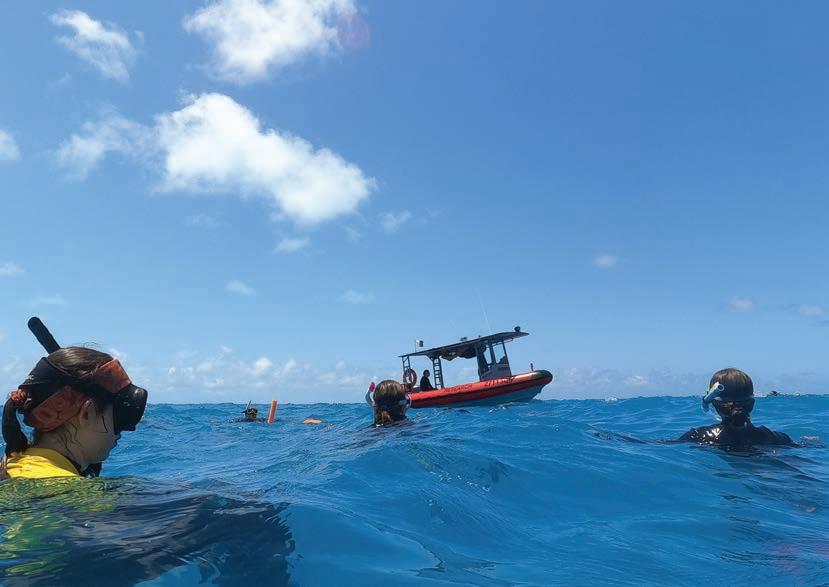
I am no stranger to the animal world. I have come faceto-face with grizzly bears, watched wolves hunt elk in the Yellowstone Valley, watched green sea turtle hatchlings make the long journey from shore to sea, hiked 12 miles to see resplendent quetzals in the rainforest, and have kayaked alongside orca whales. However, my experience with animals isn’t limited to those I’ve been lucky enough to encounter on my adventures throughout the world. I also work in the conservation education department of the Point Defiance Zoo and Aquarium, where my coworkers are leopard sharks, Sumatran tigers, siamangs, Malayan tapirs, and giant Pacific octopuses. Alongside these, and many other magnificent animals, I teach others about endangered species, their biology, the threats they face, and ongoing conservation efforts. This role brings me so much joy and has fostered such a love for wildlife in my heart that I wasn’t deterred by the oft repeated “but the animals there are so dangerous” I received whenever I shared that I would be spending the fall of 2025 in Queensland, Australia. Instead of leaning into the fear, I packed up my bags and focused on making a list of all the species I hoped to encounter. The list was long, and, while I failed to come across every animal on that list, I was able to experience beautiful moments that forever changed the way I see the world and the way I look at conservation.
When I work at the zoo, one of my favorite things to take my students to see is sea turtle enrichment in our tropical reef habitat. It is a calm 15 minutes amidst an otherwise chaotic day, a chance to breathe deeply as my kindergartenor preschool-aged students sit crisscross applesauce in front of the large glass habitat. A hushed sense of wonder is palpable as they sit, fascinated by the green sea turtles
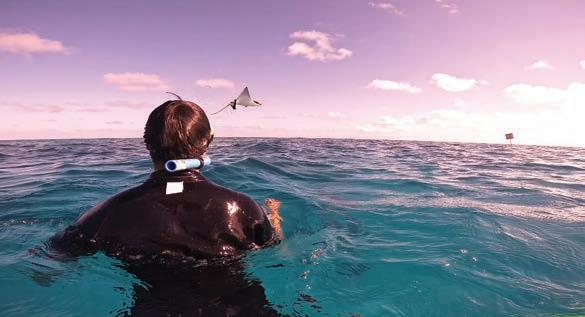
tearing apart their mid-morning greenery and completely entranced by the soaring movements of the spotted eagle rays. When preparing myself for our field excursion to a research station on the Great Barrier Reef, I hoped to see many of the marine species I’d learned about, taught about, and fallen in love with at the zoo. It is important to note that I strongly believe in zoos as a vital player in conservation and feel that animals in human care have the power to connect visitors with nature, bring people into the conservation movement, and raise awareness for vital environmental causes like coral bleaching or deforestation. However, a small part of me worried I’d feel differently about observing animals like spotted eagle rays or nurse sharks in human care after seeing them in their natural habitat. Would I start to feel like human care wasn’t doing enough to meet these animals’ needs? Would I doubt the value of captive breeding programs? Would I feel guilt? These thoughts, a few doubts, and even a little bit of fear began circling in my mind, dislodging some of my excitement as I prepared for my first snorkeling endeavor.
The minute I slipped into the clear blue waters of the reef at Heron Island, my worries were washed away by a calm only the ocean can provide. I was thousands of miles from home, swimming through an ecosystem I’d dreamt of visiting since I was a child. It was remarkable: schools of blue-green fish moving together in quiet synchrony before
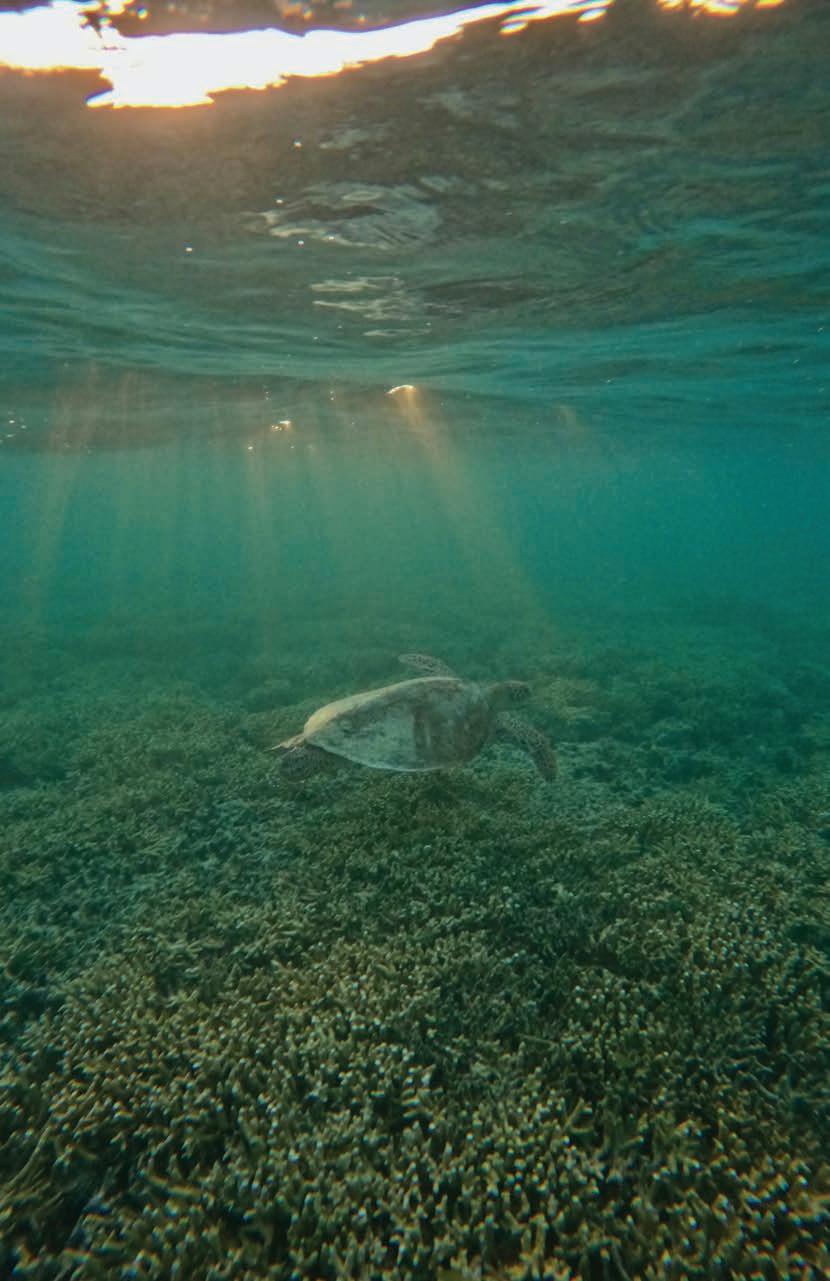
disappearing into the corals, rays nestled snugly under the sand with only their protrudent eyes visible, hawksbill turtles drifting by beds of coral, green sea turtles snacking on seagrass, powerful rays diving deep before soaring out of the water, and my personal favorites - the calm and quiet black-tip reef sharks, remnants of an ancient ocean. The water quiets the outside world, and with a careful ear, you can witness the sounds of food webs, life cycles, and intricate species interactions. I was transfixed in the same way I see my students are, absolutely enamored with the marine life around me. To see animals I’d worked with in human care thriving within abundant ecosystems fulfilled me in a way I hadn’t anticipated, bringing me to tears on multiple occasions. It is something that weeks later fills me with bittersweet joy; a more meaningful and complete understanding of what I seek to educate on and raise awareness for conserving; an overwhelming love for the world’s remaining coral reef ecosystems.
The reef is a paradise, but it is a paradise we risk losing. Under the picturesque blue water, stories of bleached corals and environmental degradation are etched into the reef; sometimes these are epic tales of recovery, and sometimes they are haunting eulogies. But there is still time and there is still hope to reverse trends and restore ecosystems. Education and awareness are integral to climate action, and I could not be prouder to give these magnificent animals and ecosystems a voice inside my classroom and help the next generation care for and connect with wildlife. In a few weeks, I will return to the zoo to continue my teaching. When I visit Sunny, Bruno, and Azul, our beautiful green sea turtles, I will be sure to thank them for inspiring me and for inspiring my students - before getting back to work, making sure I do right by them and their species.
- Abigail Cooper
n. 1. a relationship in which a person, thing, or idea is linked or associated with something else
2. the action of linking one thing with another
While spending three weeks in Buenos Aires, Argentina studying art and culture, I made it a goal to get to know locals of different backgrounds. Even with my basically nonexistent Spanish skills, I was curious about how the diversity within a city of so many immigrants shaped the cuisines that were most popular among locals. As our class focused on the importance of memory, I wanted to know if the people I formed connections with during my time abroad had any fond childhood memories of Argentine cuisine and how those memories may shape their understanding of the city they call home.
The first time any of us from the Buenos Aires group met Andres, we were a week into our stay in the city. It was nearing midnight on a Friday, and we were at Acuario, a wine bar not even a block away from our hotel. It was surprisingly calm, with the pink lighting from inside the bar illuminating our table on the street corner, and suddenly Andres appeared, ready to help the five Americans pick a bottle of rosé. He was immediately charming and witty, and, in an instant, we befriended him, sure to always stop by Acuario on our walks to dinner just to say hi.
The night I finally had the chance to interview Andres was
our last in the city. When I asked him his favorite Argentine food, Andres assuredly noted that it will always depend on his stage of life. Growing up in Chile, and later with family from Mendoza near the Andes mountains, Andres learned to appreciate the blending of different heritages in Argentine cuisine. He still felt a little uncertain speaking about Argentine culture even though he’s lived in the country for 17 years, since he was 4, but feels he “never adapted so much to Argentina, so I’m a blend of different cultures.” As a child, he remembers his mother making pastel de papas, similar to shepherd’s pie, and spending time with his family during la once, a Chilean designated afternoon mealtime. Although he appreciates the Argentine importance of celebrating tradition and gathering together for holiday meals, Andres mentioned how he felt the blend of different cuisines in Buenos Aires mirrored his own
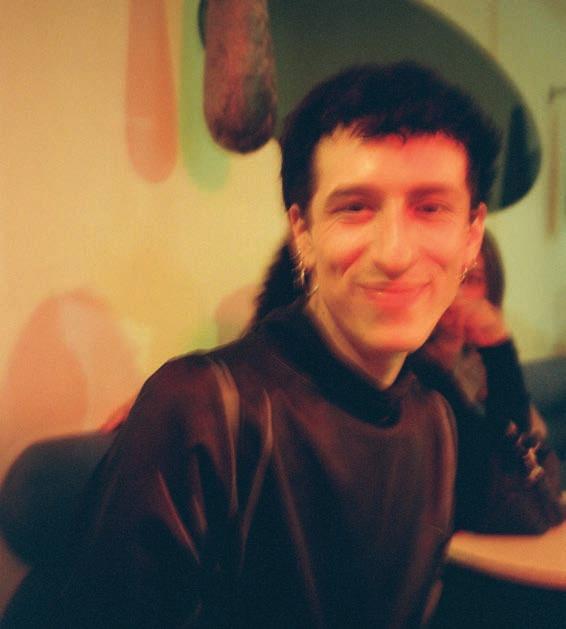
shifts between Chilean, Spanish and Argentine cuisine, saying “we have dishes from the [Spanish and indigenous] cultures here, but mixed and upgraded - or blended - with dishes from Europe and from North America.”
Julia
Maria Julia’s warmth and excitement instantly blew us away when we arrived in Buenos Aires. While walking in groups together during meal times or on our separate excursions, we were always giggling while imitating her mother-duck-like wave through busy streets, or her nowiconic exclamation of “Yoo-hoo! Foto-foto!” during our routine group photos. By the end of the program, we were all crying with her in the airport, not ready to leave our favorite tour guides; she and Sofi complimented each other
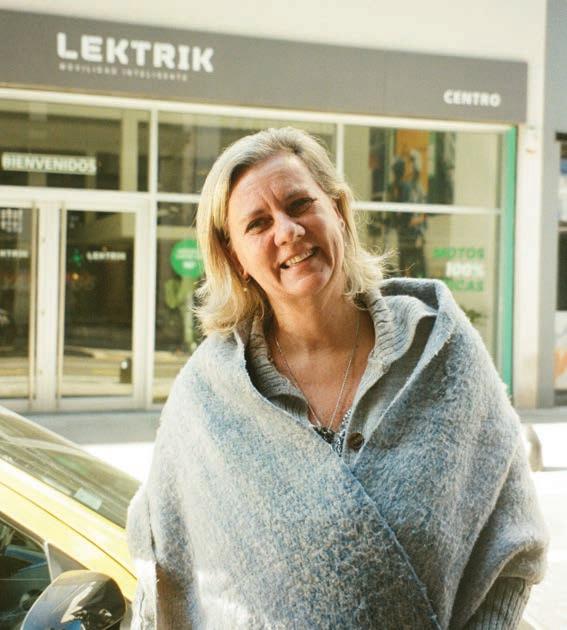
like a medialuna and mate for breakfast.
Her favorite Argentine food is milanesa napolitana, because although it sounds Italian, it was actually created in Argentina and reflects Buenos Aires’s long history of immigration, all while being reminiscent of dishes from other countries, like Austrian wiener schnitzel. Milanesa also reflects the current economic inflation in Argentina as it can be made with chicken instead of beef or made more substantial by including cheese or ham, which can make it easier to feed a family. Our other tour guide Sofi mentioned that milanesa was “always, always, always” a dish she would ask for as a kid. Raised in a Hungarian family, Julia only started making Argentine dishes once she herself became a mother, and milanesa napolitana was something she started having frequently after meeting her husband, who is halfHungarian and half-Spanish. Argentina’s massive evolution of Italian cuisine has had its own impact on how she cooks for her family, saying that it’s “interesting how [Italian, Spanish, and Argentine cuisine] mix” and that she has been introduced to more flavors, such as garlic, through experiencing the diversity of Argentina’s food.
If Julia was our loveable mom-like tour guide on the trip, Sofi was our fun older sister. She always knew the best places to eat, the best sights to see, and that the two-hour bus ride to the estancia at 9am might not be the best time for a lecture on the history of gauchos (Argentina’s cattle ranchers). She is a born and raised porteña, and at the start of our trip, we were lucky enough to reminisce with her while stopping by her high school touring the city.
Sofi’s favorite part of Argentine cuisine is asado, a traditional barbecue that becomes a full event, with the importance of sharing and gathering family together being especially special to her. Asado is connected to Argentina’s
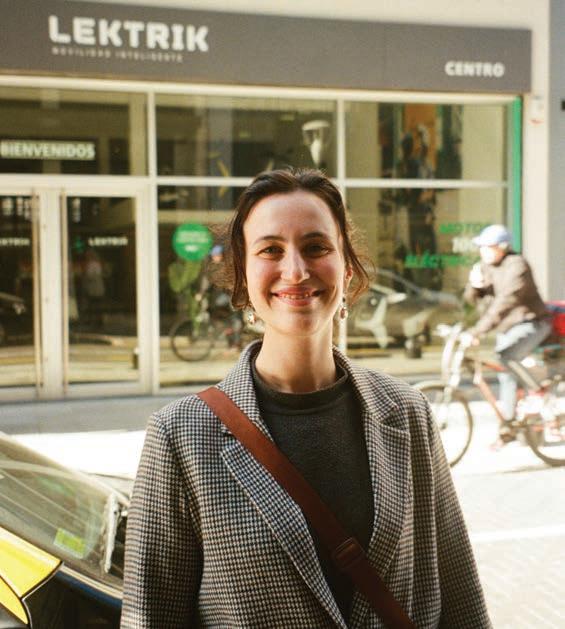
historically cattle-based economy, and the time and effort it takes to produce an asado not only honors tradition but also connects people to almost primitive and simple practices that can get lost in the cosmopolitan life of Buenos Aires. At home in her apartment, she mostly cooks Italian food like pasta and risotto, which lacks the possibility for sharing that cooking asado with a parrilla does. Community is the most important part of asado for Sofi, as she told me that as a child she did not have asado often, maybe once a month on a Sunday with her grandparents and cousins. She loved the opportunity to spend time “being in the grass, playing with other people.”
Aby
An aspect of Argentine culture that we talked about often in our class was the lack of inclusion of indigenous narratives and histories within the city of Buenos Aires because only 2% of Argentina’s population are indigenous natives. On
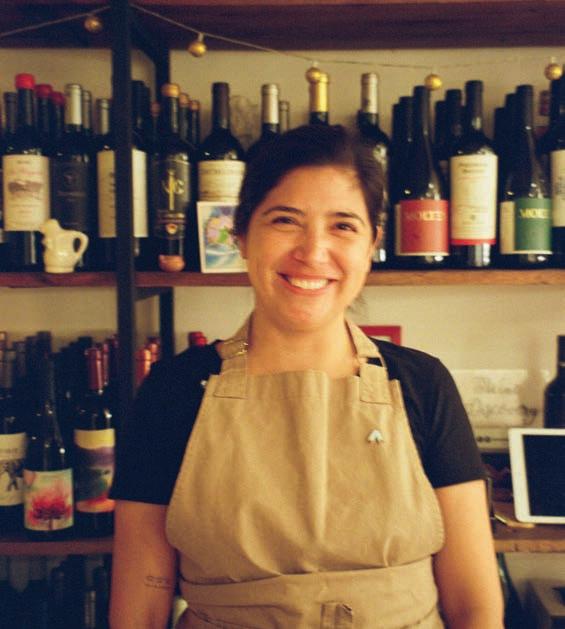
our excursions, we spent time trying to find more of those histories, whether in street markets or museum galleries. When our faculty director asked if any of us wanted to attend a wine tasting with her, I thought it would be the perfect place to get an interview from an actual Argentine chef, but little did I know Aby also had an indigenous father and a Spanish mother. While at the wine tasting, we got to try humitas, an indigenous dish made with corn and squash and had a little map to look at while Aby explained the historical relevance of the dish. She was incredibly knowledgeable about Argentine food history.
Out of curiosity, I asked if she grew up with any indigenous meals, and she said that her mother, who was Spanish, did all the cooking at her house, and growing up in Buenos Aires there was not an abundance of indigenous foods available. Out of all the diverse ethnicities in the city, Aby noted that Italian influence was most present following the wave of immigration in the 1880s, yet Argentines still find ways
to make dishes their own. She felt that Italian techniques should be regarded separately from classic Argentine dishes when considering the importance of tradition. Her favorite food growing up was milanesa, a classic Argentine dish of thinly fried cutlets of meat that she often had once a week. She loves its universal appeal among Argentines, saying “Milanesa for us is like, you know when your parents say ‘Today, we’re going to have milanesa, and everybody is happy’.” When her husband, Bertie, an English sommelier, asked what Argentine dish she would have every day, she without a doubt knew it was milanesa.
- Isabel McKinnon
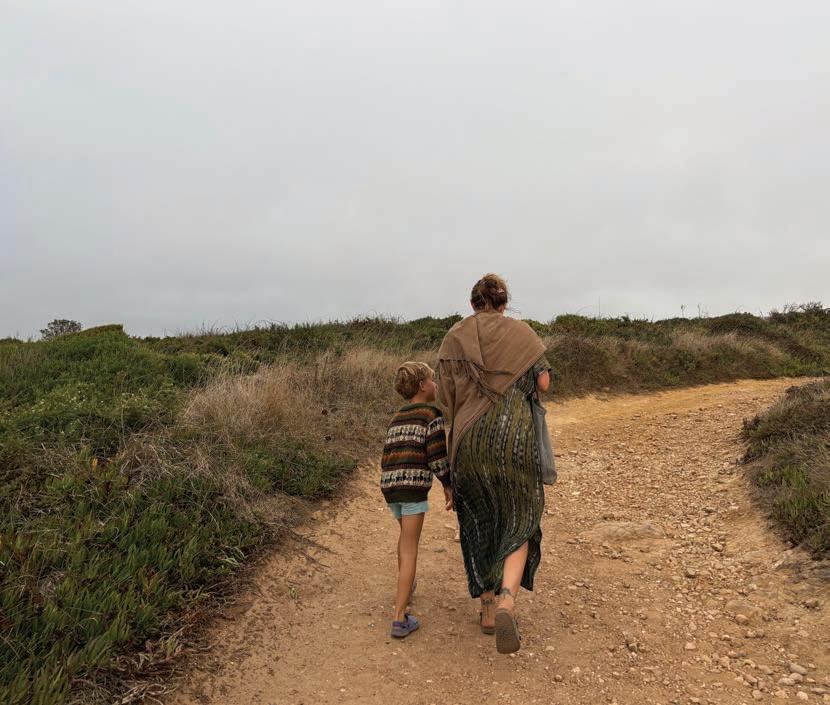
When I decided to spend a semester in Tübingen, I thought I was merely re-familiarising myself with my old stomping grounds. I grew up in a small town 30 minutes away from Tübingen, a city in the southwestern Germanan state of Baden-Württemberg in the cultural region of Swabia. Little did I know, despite my familiarity with the country, just how different university life would be from what I was used to in the US. While not a large city, Tübingen is a university town, its own little bubble bustling with students. Never before had I encountered so many vegetarians and vegans in one place, which is particularly interesting given that the traditional Swabian cuisine is packed with meat-heavy meals, such as Schnitzel, Gaisburger Marsch, Wurstsalat, Zwiebelrostbraten, and Maultaschen. My personal favorite, however, is my grandmother’s potato salad. Apart from my cats, it’s probably what I miss the most whenever I’m away from home. My biggest culture shock upon setting foot on US soil for the first time was discovering what Americans call potato salad. It felt like being transported to Norddeutschland, where they also tend to use an excessive
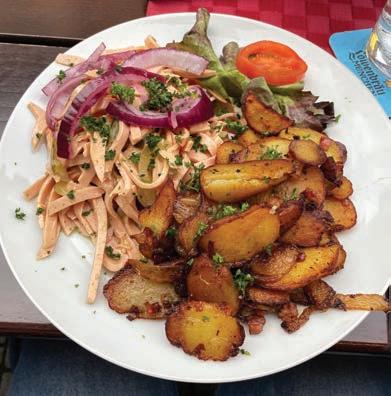
amount of mayonnaise in their potato salad. The (superior) Swabian version includes only finely cut potatoes, broth, oil, vinegar, mustard, salt, pepper, and a little bit of curry.
Another thing that surprised me, albeit in a more positive sense, was realising how different the culture around soccer and club sports is in the US. In Geneva, I had the chance to play in an unparalleled environment. Before playing for William Smith, I had never had a team of coaches, a strength trainer, or even an athletic trainer. This level of professionalism in women’s soccer in Germany is usually only found in the Bundesliga. In Germany, sports are generally not organised through schools. Schools serve primarily as educational institutions; most Germans would be perplexed by the concept of “school spirit.”
I have been part of different clubs, including both girls’ and boys’ teams, in higher and lower leagues. I wouldn’t claim that the German system is perfect; accessibility in sports remains an important issue. Clubs often lack funding and qualified coaches, and some areas aren’t easily reachable by public transport, which poses challenges for those with professional aspirations but without solid support systems. Nonetheless, it’s much easier to join a club or try a new sport in Germany as the initial hurdle is lower, and the financial burden is much less than in the US. In Germany, people who join a club to play football pay an annual membership fee that typically ranges from 30 to 60 euros. In exchange, they receive two or three practice sessions per week, plus a game on weekends. Coaches in Breitensport generally do not coach for a living; they are compensated for their time, but it’s usually not a significant amount. Another aspect that enables players from different backgrounds to join is the public transportation system and the fact that football fields are widely available.
Football is not just a sport played in every little village; it
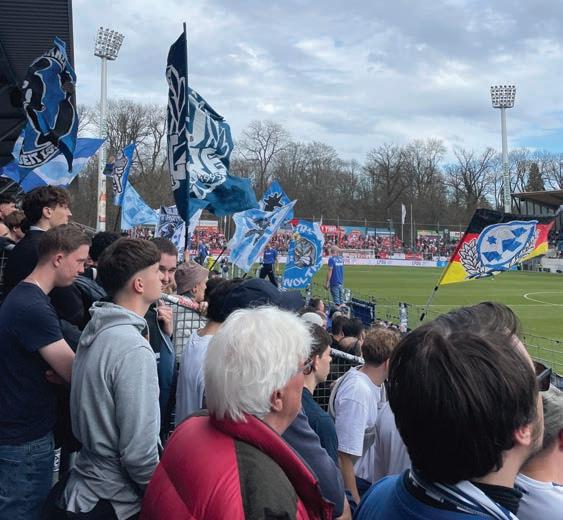
is also the highlight of many people’s weekends. For some, the weekly trek to the stadium resembles a pilgrimage. The most loyal supporters travel everywhere with their team. It’s typical for all major football clubs in Germany to have Ultras – organised groups of incredibly passionate fans who sing chants, wave flags, and create choreographies. Although I often came home exhausted and smelling of cigarettes from the chain-smoking fans in front of us, I attended at least five Stuttgarter Kickers games during my time abroad, simply because the atmosphere was electric and unifying. While the team has lost some of its former glory from the past two centuries, a few thousand fans still attend games each weekend. Their lower playing level also means cheaper tickets, which may or may not have influenced my decision to watch them instead of a better team with more expensive tickets.
Going abroad is also meant to broaden one’s horizons, and
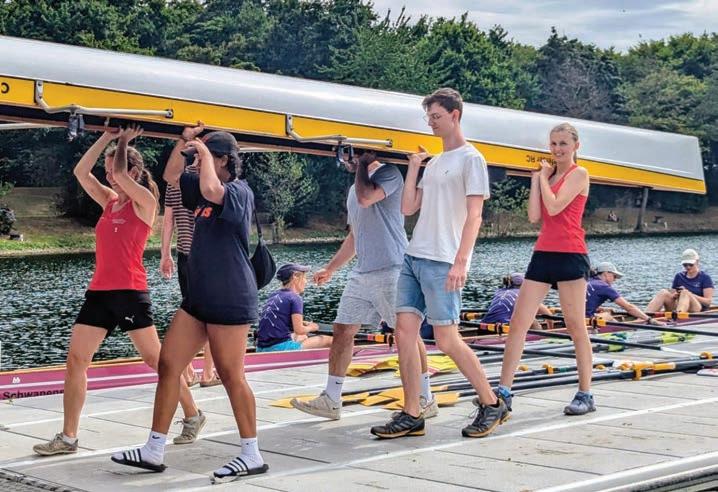
contrary to what the paragraphs above may indicate, my life does not revolve solely around football. By the time I arrived in Tübingen, I thought it was time to branch out and try a new sport, something I would not have done otherwise. Fortunately, the University of Tübingen has a Hochschulsport program. It is not to be thought of in the American sense of varsity teams, divisions, and championships, but as a program to encourage students and university personnel to stay active and try new things. It is a generally very accessible program with a course catalogue of more than a 100 different classes and sports, ranging from the most basic like tennis and soccer to the likes of Quidditch and line dancing. However, trying to get into the most popular courses is almost as stressful as being stuck in a Ticketmaster queue. Luckily, the Hochschulsport program is much more affordable – most semester-long classes cost about 30 to 40 euros.
I signed up for a rowing class, and that little action is, perhaps, what shaped my time in Tübingen so fundamentally. Following selection trainings, a few of us got the chance
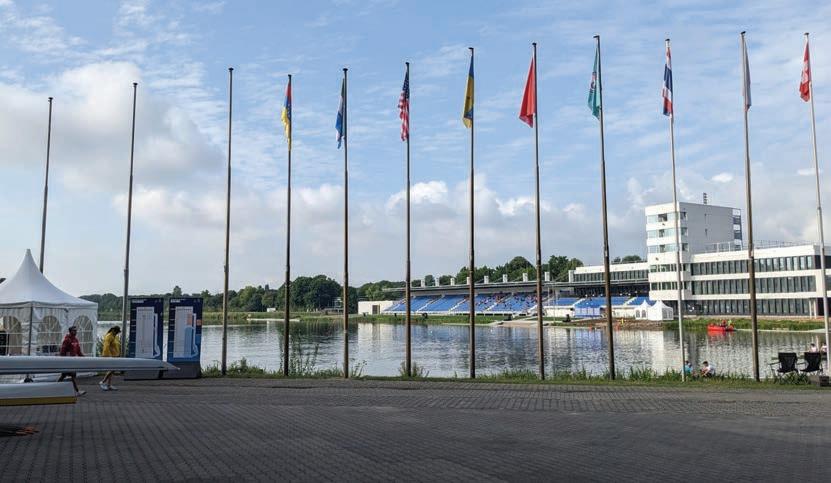
to compete at the DHM (Deutsche Hochschulmeisterschaften), which are essentially the German university championships. We obviously started in the novice category. The ride did not end at the DHM in Krefeld, though. When we placed in the top twelve, we were given the opportunity to row at the FISU World University Games as part of an initiative for novice rowers by the athletic association for German universities. The atmosphere was exponentially more professional than at the DHM, which is no surprise when surrounded by Olympians and world champions from around the globe. I honestly never expected that I would get a chance to race in front of a thousand people when I signed up for the Hochschulsportkurs back in March, but I find it is one of the things I am most glad I did during my time in Tübingen, and I made some absolutely wonderful friends on that trip. Our boat truly was a made match in heaven, or perhaps hell if you ask our coach.
For all the stereotypes of bluntness, rigidity, and punctuality surrounding Germany, it is also a place bustling with passion, liveliness, flavor, and laughter. Tübingen is a bubble anyone would be fortunate to inhabit for a while.
- Amina Assefaw
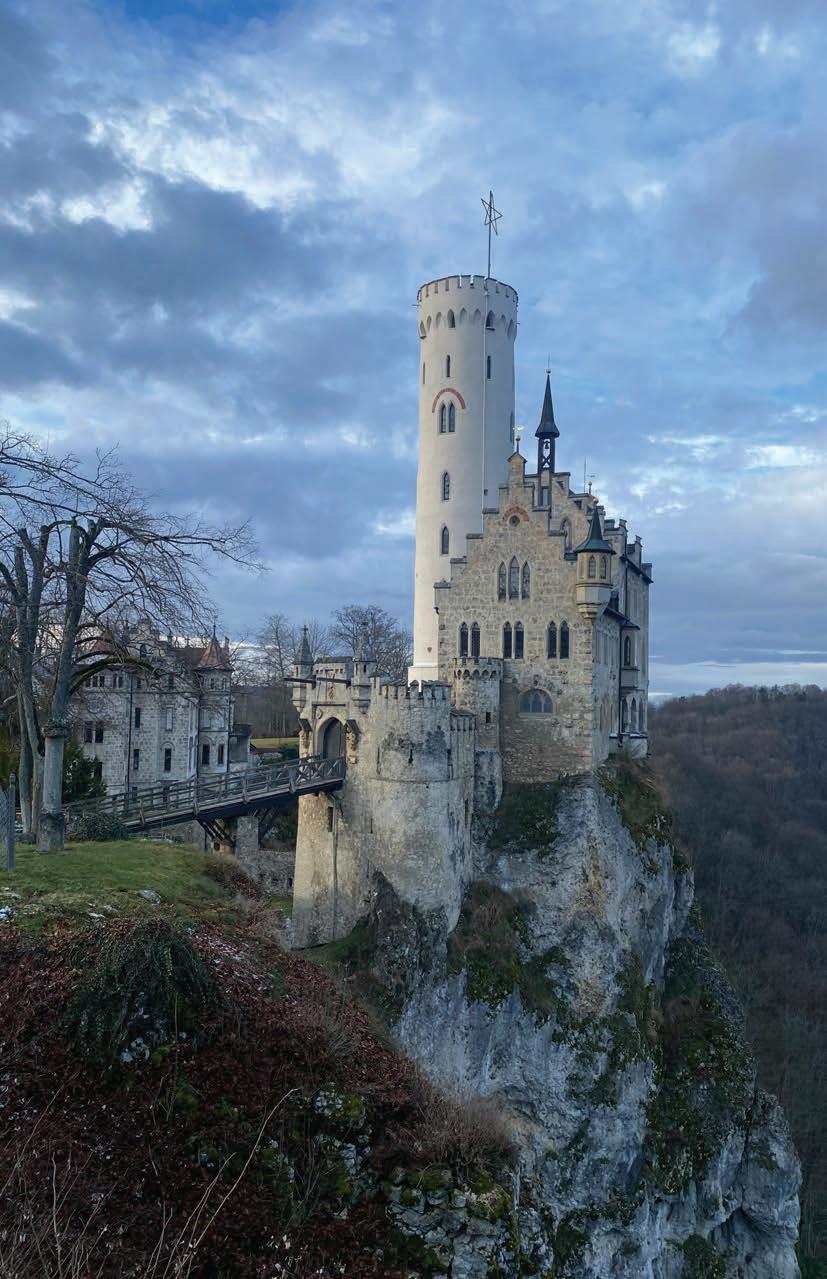
Gothic Castle in Schwäbische Alb, Lichtenstein, Germany [Emely Bacon]
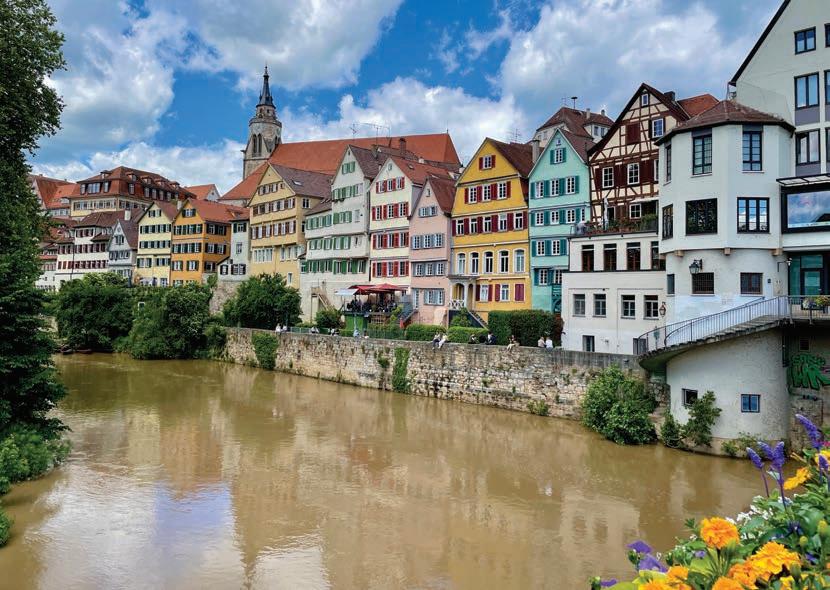
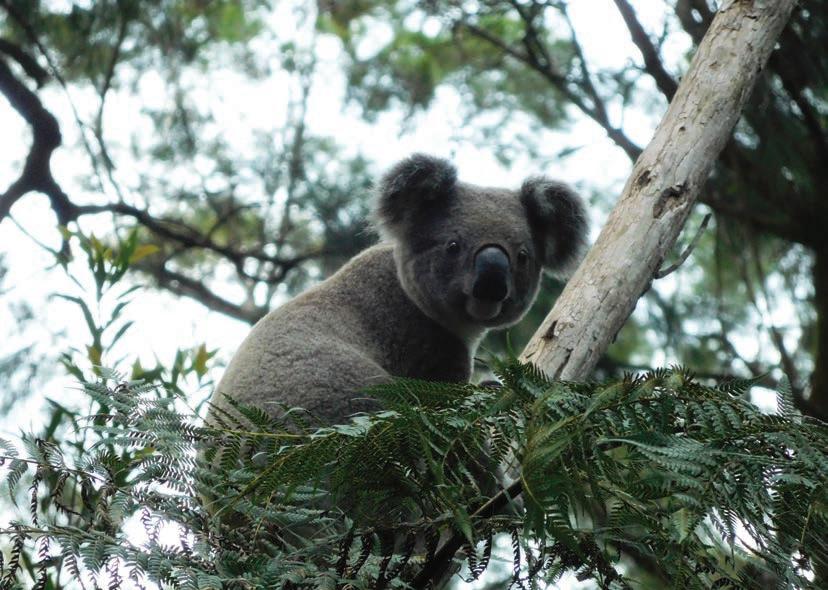
Tübingen from the Neckarbrücke, Tübingen, Germany [Zoe Abrams] Rare Encounter with a Koala, Lamington National Park, Australia [Abigail Cooper]
When deciding where to study abroad, I chose New Zealand for three main reasons: exploring the stunning landscape and hiking opportunities, experiencing the rich culture, and escaping the New York winter. Growing up, my family hosted exchange students from Spain almost every summer for over seven years, and this was my first glimpse into what life looked like in different parts of the world. From these experiences, I knew at a young age that I wanted the opportunity to live with a family in a different country. This made New Zealand a clear top choice as I knew I would have the opportunity to fulfill a lifelong goal.
When I was given my homestay placement for New Zealand and found out I was going to be staying with a Māori family, I was ecstatic. Talking with other students in my group about their placements, I was surprised that I was the only one placed with an indigenous family. Although living with any New Zealand family would have given me a unique cultural experience, living with an indigenous Māori family allowed me to become even more fully immersed in the whole culture and get a first-hand perspective of Māori life in New Zealand.
Meeting my host mom for the first time occurred unintentionally at the welcoming ceremony at the marae located at the University of Auckland. This was not a welcoming with all the host families, but my host mom happened to be there as she works for the University, and she recognized me from my photo that was shared with her. I was in line waiting to get dinner when this woman came up to me and said, “Are you Shayna? I think I’m your host mom.” I was completely caught off guard in the moment, but felt such a sense of relief and excitement knowing I was going to be welcomed into her family in a few short weeks. We talked for a little while, and before leaving she
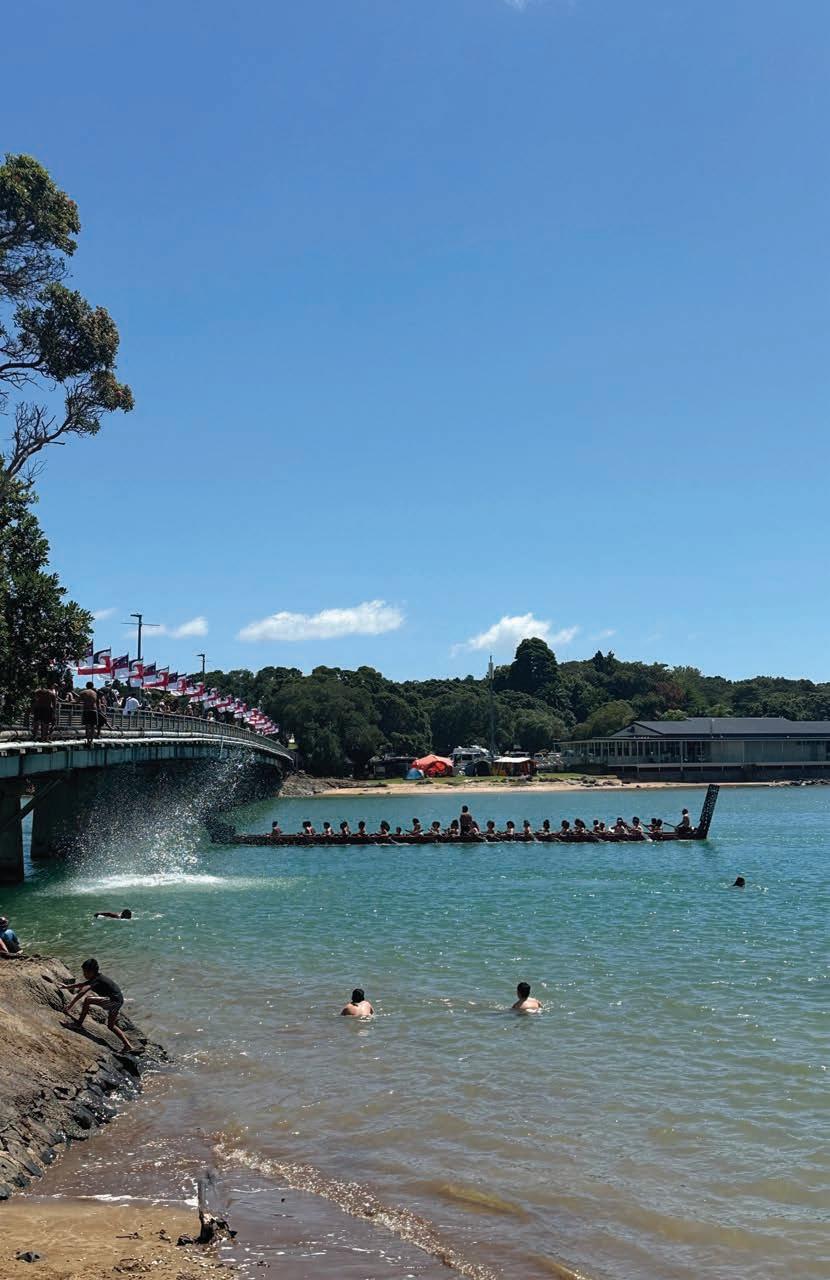
Waka on Waitangi Day, Paihia, New Zealand [Shayna Straney]
offered me some New Zealand chocolate. That was my first experience with a Māori person after having been in the country for a few days. The fact that she recognized me and introduced herself was telling of her cultural priorities.
Within the first few days of my homestay, my host mom was already taking me on a trip up north with her Māori transition group, which consisted of 15 recent Māori high school graduates who were going to be beginning college. During this trip, I had the opportunity to stay in my host mom’s marae and experience communal living in the Māori culture. I learned about how the Māori people prioritize working together, which was done in all aspects of the trip. The expectation was that whether it was cooking or preparing a meal, unpacking or repacking the vans, setting up the cots in the Marae, or cleaning everything up before leaving, everyone worked until the job was finished. As the only non-Māori person, I thought I would feel out of place, but it was quite the opposite. I was treated the same and had the same expectations as the rest of the group, which reinforced my understanding of their culture.
During this trip, we went to the Waitangi Treaty Grounds on Waitangi Day, which marks the anniversary of the initial signing of the Treaty of Waitangi. Prior to the signing of this treaty, there was growing British influence in New Zealand, which led to disputes involving Māori communities over land ownership, trade, and governance. This treaty between the British Crown and Māori chiefs was a political agreement aimed at establishing British governance while protecting Māori rights to their land and resources. This was a unique opportunity that many Māori living in New Zealand do not even get to experience, so being able to be at the treaty grounds on that significant day was truly amazing. This experience provided me with a deeper and more complex understanding of the Māori culture, people, and values.
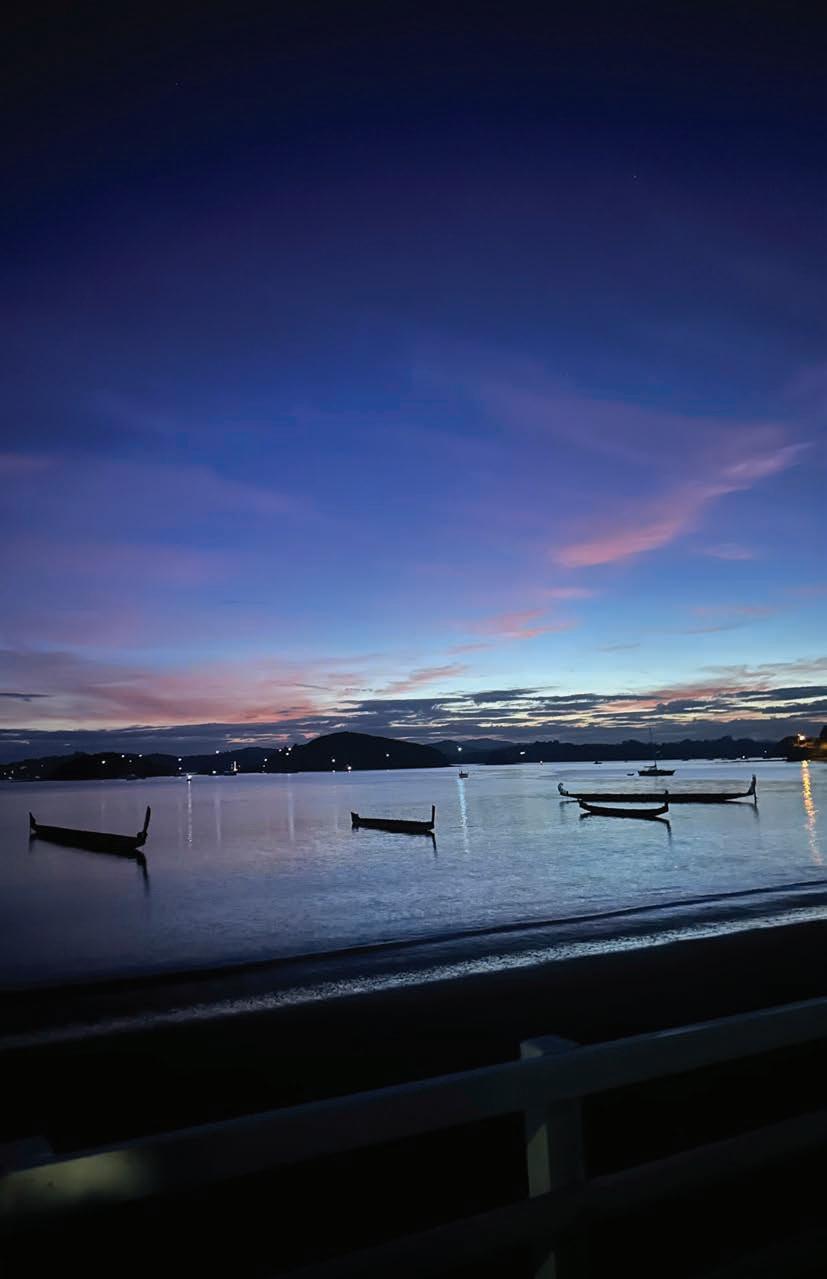
on the Waitangi Treaty Grounds, Paihia, New Zealand [Shayna Straney]
Over the course of the two months I stayed with my host family, I was surrounded by the Māori language and culture. The three little girls in my family all spoke Te Reo Māori as their first language, and by the end of my stay, I was able to pick up and understand quite a few words and phrases in Te Reo Māori, making communicating with my host sisters much easier. Getting to come home to a family every day was my favorite part of my New Zealand experience. Sharing meals and having a space to ask questions and learn about New Zealand was central to my experience and development of a deep love for this country.
My semester abroad wouldn’t have been as memorable without my host family and the cultural immersion I experienced through them. Even after leaving the country, I still call them regularly to stay in touch. I will always be grateful for my New Zealand family and the time we shared.
- Shayna Straney
For many Americans, waterfronts are places to relax, take in the natural beauty, and socialize. As a competitive rower, water represents something more to me than a simple geographical feature: it is an intersection of culture through sport and nature. Having rowed all over the US, I’m acutely aware that not all water is created equal and that not all water is regarded equally by the residents inhabiting its shores. The coves in a lake impact the surface wind speed; the water depth and temperature of a canal impact the strength of the current; the contours of the shore dictate the best path for a boat to take. With rowing as a way for me to physically explore the waterways and connect with Swedes that regularly interact with the water, I was curious to experience both the technical dynamics of rowing and the cultural sentiment regarding Stockholm’s numerous waterways. To that end, I joined a rowing club, Hammarby IF Roddförening, and had the opportunity to train and race with a team. To broaden the scope of my exploration, I engaged in additional water-based activities, including kayaking, canoeing, ice skating, cross-country skiing, visiting an aquarium and several museums, and running along waterways. These explorations yielded insights into the way Stockholm is geographically and culturally interlaced with water and how these factors shape Swedish society, especially via promoting the importance of group identity, deep-rooted nature of Jantelagen (a set of culturally-implied “laws” that discourage Swedes from presenting themselves as being better than average), early development of independence, and accessibility of water.
In considering the cultural implications of rowing in Sweden, I wondered whether it is regarded as a relaxing outlet, a way to socialize, or a competitive niche resembling rowing culture in the US. I’m in my eighth year of rowing and have become aware of the very exclusive culture here: Americans
are either deeply entrenched in it, or don’t even really know what rowing is. I found that, as in any global sport, there are surface-level differences, such as terminology. Swedish rowers, when speaking in English, say “trestles” instead of “slings,” “bow side” instead of “starboard,” “stroke side” instead of “port,” and “suits” instead of “uniforms.” Although superficial, these differences suggest deeper trends: specifically, I explored the nature of the “boat identity,” the atmosphere created by the athletes in that boat. In my experience, boat identity is consistent within either the US or Sweden, but the identity across countries differs dramatically. In the US, I’ve noticed that boat identities are rooted in accountability, commitment, and improvement. In Sweden, boat identities are overwhelmingly built on encouragement, understanding, and gratitude. Because this identity is built by the athletes, it represents their average values. I frequently trained with two locals and, in my conversations with them, learned about their specific values that created this supportive boat identity. They were invested in maintaining the boathouse’s inclusive nature, which meant being accommodating to the novice rowers, encouraging rather than mandating participation, and sharing a deep appreciation for the beauty of the water itself. While American athletes value a boat identity that facilitates performance, Swedish locals value a boat identity that facilitates group involvement.
Group membership is extremely important in Swedish society. Swedish rowers prioritize the needs of the boat over the needs of themselves, which American rowers do as well, but the motivation for the Swedes is group success. Often, when boat members provide feedback, they address the whole boat rather than individuals. This combines an attempt to avoid singling individuals out from the group and to avoid conflict, an attitude that is prevalent in many areas of Swedish life. The result is a strong sense of collective responsibility that contributes to the notion of boat identity and group belonging.
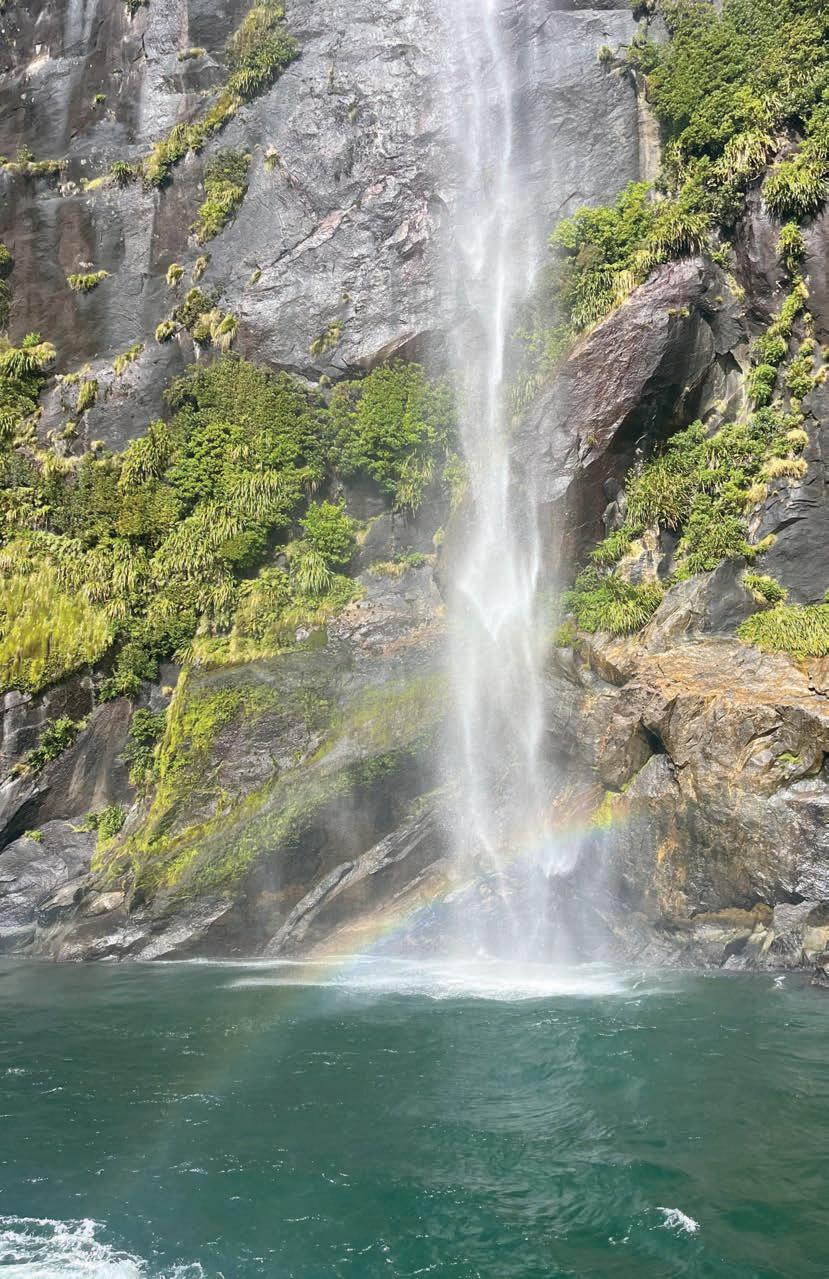
Mirror Lakes on the Way to Milford Sound, Fiordland National Park, New Zealand [Anjalee Wanduragala]
The approach to training and building boat lineups is also variable between the US and Sweden as an acute result of adherence to Jantelagen. In the US, intensive training yields a pervading hierarchy - the coach builds these boats following a data-driven process based on speed. At Hammarby, training is less obligatory, and training data is not visible to other rowers. Boat lineups are built by the athletes, not a coach. A hierarchy of speed is absent. In the US, it is desirable to set oneself apart as the fastest; in Sweden, it is more likely to be uncomfortable for an athlete to be lauded as fast. In their book Modern-Day Vikings: A Practical Guide to Interacting with the Swedes, Robinowitz and Carr point out how strongly Jantelagen encourages humility. The construction of boat lineups in Sweden being based on the wishes of athletes instead of being based on speed, paired with a lack of rankings like “first varsity” and “second varsity” boats, is a direct result of the removal of hierarchy by Jantelagen, yielding greater accessibility for athletes. Although I only rowed with Hammarby, a club team, a classmate elected to row with a university team. Just as I experienced with Hammarby, she described the university team culture as being relaxed as compared to her collegiate rowing experiences in the US. Although I cannot speak for the role that Jantelagen plays in the creation of university boat lineups, where coaches play a greater role, it is evident that rowing culture across teams in Sweden places a greater emphasis on recreation than on being overly competitive.
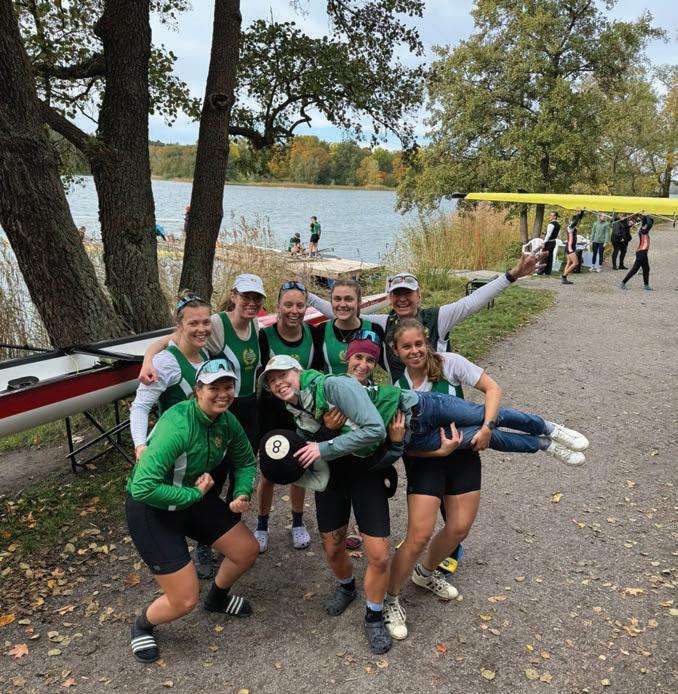
The accessibility of racing lineups extended to international athletes such as myself, so I was able to race both 8+ and 4boats at the Brunnsviken Buoys race on October 11th. This race emphasized what I had noticed regarding the Swedes’ focus on the boat as a whole and highlighted how rowing culture in Stockholm is more recreational: rather than boat times being compared against one another, rankings were determined by calculating the percentage of the world record time per boat class that each boat achieved. It
was also a very festive atmosphere with fika (a traditional Swedish coffee/pastry break) and snacks as the prizes.
I discovered that water is also a medium for the development of young Swedes’ hallmark independence. On a canoeing trip, we encountered three 12- and 13-year-old Swedish boys fishing on the shore. They begged us for a canoe ride, a request to which we ultimately obliged. They were curious about us and unafraid to voice their questions and notions about American versus Swedish politics. One remarked that “we don’t have criminals here - only fish and good vibes.”
In their article “Social Trust and Radical Individualism,” Berggren and Trägårdh describe the social trust that pervades Sweden’s welfare state, which evidently extends, for these young Swedes, to both trust in the goodwill of the average Swede and to trust us, a group of American strangers. Because Swedes also trust in institutions like the judicial system and heed the rule of law, these young Swedes likely did not consider the risk of a malicious stranger in the same way an American child would be trained to see this “stranger danger.” Furthermore, in Stockholm, the sheer amount of water and its ease of access - mostly without lifeguards - may make Swedish parents more comfortable with the water being part of a young Swede’s growing independence. Amid enthusiastically trying out English curse words, these young Swedish fishermen, who had purchased and took care of their own fishing lures, were independently finding their way in Swedish society, unknowingly teaching us about the reality of Swedish independence and how it is built on societal trust and financial autonomy.
Swedish water culture is not restricted to activities on the water. I frequently ran an 11-kilometer loop around the circumference of Södermalm, following a well-lit and wellmaintained pedestrian and cycling path. I considered how lighting indicates importance: musicians perform under spotlights, museum artifacts rest in brightly lit cases, and Södermalm’s waterfront path is lit such that it is accessible at all times. I shared the path with many Swedes over the semester, even in the 6am dark or in the snow. I noted numerous passive interactions with the water, because infrastructure, such as benches, swimming docks, and trails leading right down to the water’s edge, make the water highly accessible. In the warmer months, adults invigorated themselves in the mornings with cold plunges. By October, I had run many miles around Södermalm, so I branched out to investigate the activity around the water in cities outside of Stockholm; to accomplish this, I
raced a half marathon in Uppsala, which was routed along the Fyrisån (Fyris River). Swedes in Uppsala interacted with their waterfront in strikingly similar ways as the Stockholmers. Similar infrastructure was present and wellmaintained. The Fyrisån runs through the center of the city, so it is a major part of Uppsala University culture; in talking with a local tour guide, I learned that the University has a tradition called Forsränningen (The Running of the Falls), wherein engineering students design rafts to race down the river on Valborg, a holiday on the last day of April. Although I did not get to witness Forsränningen, I was able to explore the infrastructure and activity along the Fyrisån. During the many hours I spent running along the waterfront, I discovered that water access is treated and valued as a communal right in Sweden.
During rainy days, I explored Stockholm’s historical and maritime connections via the Skansen Aquarium, Vasa Museum, and Vrak - Museum of Wrecks. At the Skansen Aquarium, I learned about the marine life that has graced Sweden’s shores. In visiting the Vasa Museum, where the nearly intact Vasa warship is displayed, I learned about Sweden’s history of involvement in various maritime battles. The Vasa sank in 1628 after traveling only 1300 meters because of significant design flaws. The VrakMuseum of Wrecks had displays on numerous shipwrecks in the Baltic Sea, including the history, causes, and what rescue attempts were mounted.
In November and December, I focused my exploratory efforts on how Swedes stay connected to the water in the winter. I went ice skating at Kungsträdgården in central Stockholm, which is a popular way to take advantage of the winter weather. I skated on an outdoor rink, but many Swedes go ice skating on open frozen lakes. The popularity of this type of skating fits into the Swedish right of Allemansrätten, or the “right to roam” anywhere in nature. I also went cross-
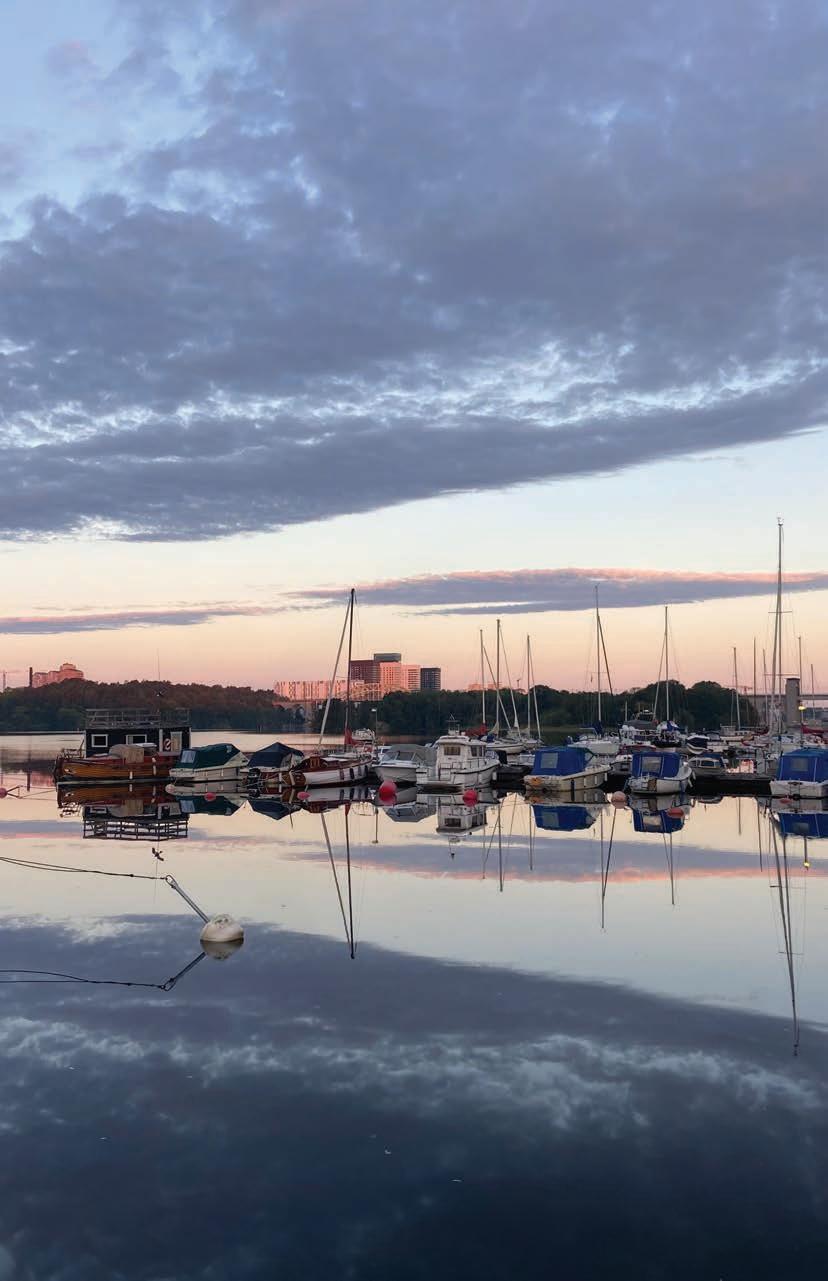
Typical Morning View from the Path Around Södermalm, Stockholm, Sweden [Leah
country skiing with a Swedish family in Högbo. This is a popular competitive sport in Sweden; one of the daughters in that family had her first race the following weekend. They were very enthusiastic about skiing and told me a lot about both the technical aspects (normal vs. skate skis, different techniques, etc.) and family stories.
Although my experiences in exploring Stockholm’s cultural connections to its waterways may not be generalizable to all of Sweden, trends likely persist. Via rowing at Hammarby, I experienced the supportive nature of the Swedish boat identity as a direct result of the importance of group membership and how boat lineups are assembled based on Jantelagen. My encounter with Swedish youths while canoeing shed light on how the development of independence is reinforced by social trust and early financial awareness. Running and kayaking showed me how publicly accessible the waterways are, indicating the value of water in Swedish culture. I expected to find a high level of engagement of Swedish locals with the water, given how geographically prevalent it is in Stockholm. My expectations were exceeded: Stockholm’s waterways shape the city’s culture so thoroughly that everything in the city has at least some minute connection to the water.
- Leah Wiebe
Works Cited
Berggren, Henrik and Trägårdh, Lars. “Social trust and radical individualism.” In The Nordic Way, 13-17. Stockholm, Sweden: Global Utmaning, 2011.
Robinowitz, Christina Johannson and Carr, Lisa Werner. “Jantelagen.” In Modern-Day Vikings: A Practical Guide to Interacting with the Swedes, 81-95. Yarmouth, ME: John Murray Business Academic, 2011.
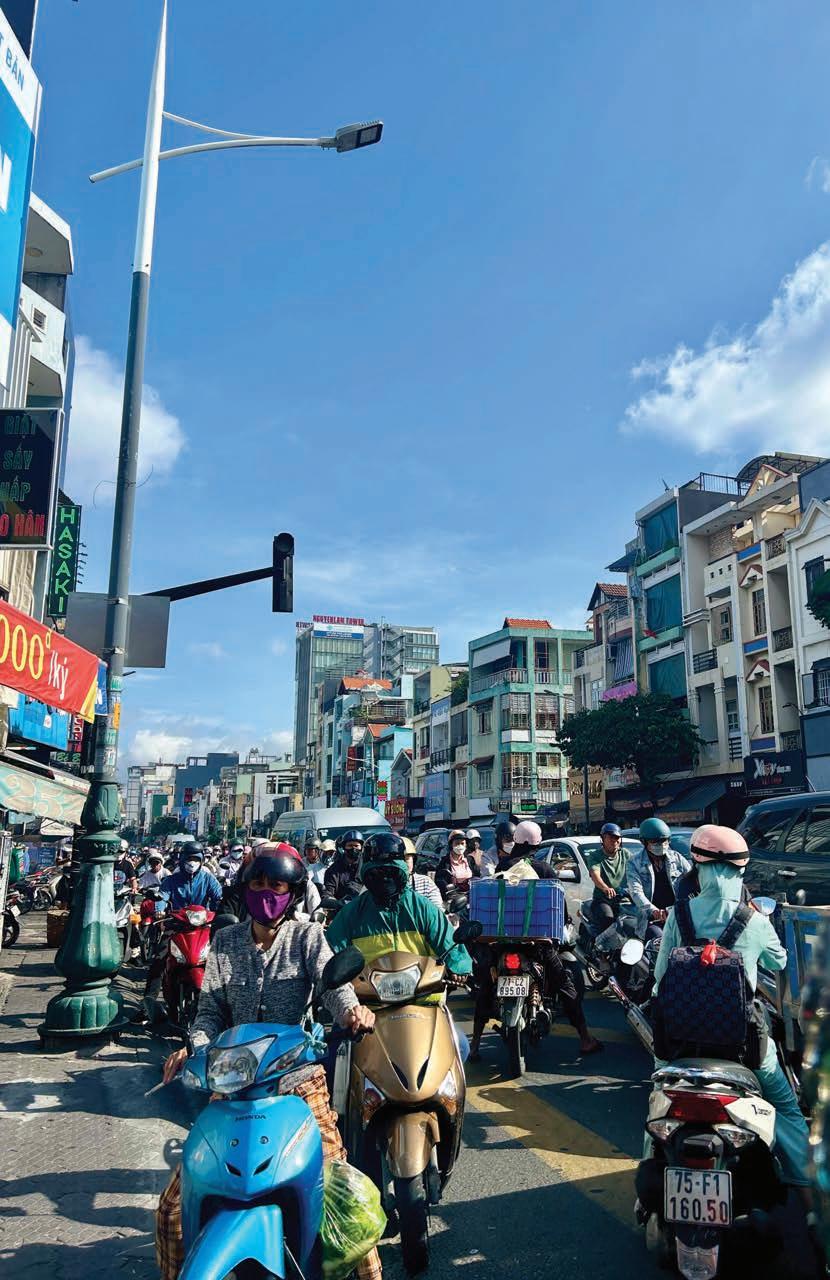
n. 1. the action of moving across, over, or through something
2. the act of being a place where two roads, paths, or routes meet 3. a passage through a border
Somehow, I ended up in Finland.
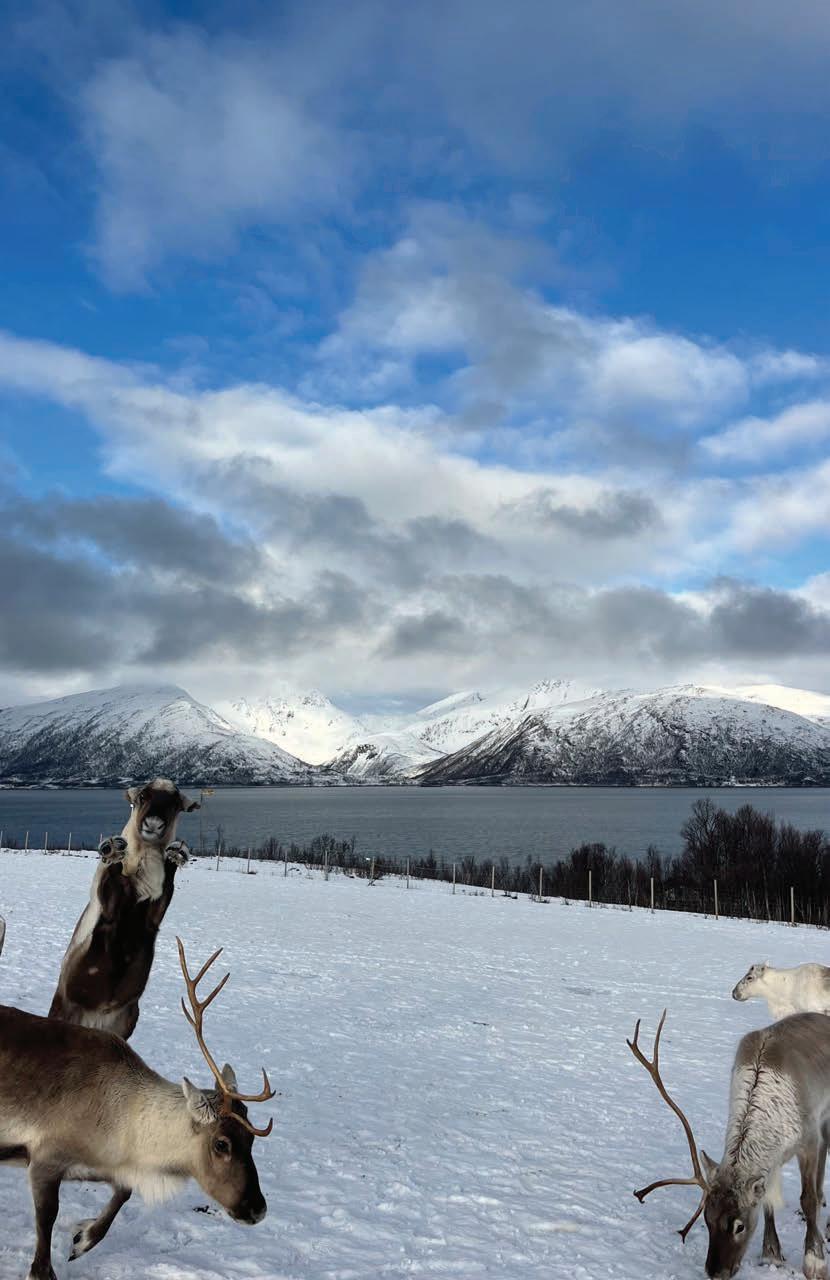
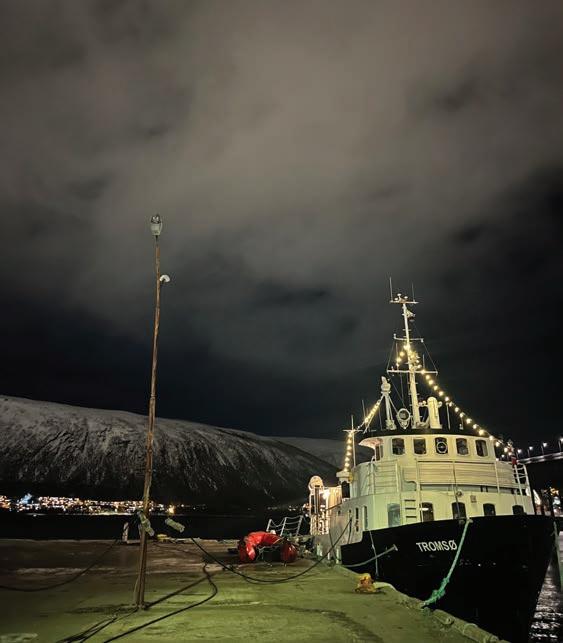
I started the day off waking up on a boat in the Norwegian Sea surrounded by snow-covered fjords. I had arrived at midnight the night before and was only able to make out distant outlines of the mountains in the dark. But, when I climbed up the stairs from my 10-foot cabin in the morning, I was greeted by towering white peaks and a buffet full of brown cheese and deli meats. I sat down at a window seat and started to map out my plan for the day.
First on my itinerary was a Sami culture and reindeer experience, followed by a northern lights tour. I gave myself plenty of time to walk the mile down icy roads of Tromsø to our meeting spot. It was on the way to the Sami experience where I got the news that my “guaranteed northern lights sighting tour” was cancelled. This was very disappointing news as that night would be my only chance to see the northern lights. While I was disappointed, I shifted my energy towards the day ahead.
After feeding the reindeer, talking to a local guide about the condition of the reindeer herds around Norway, and listening to a Sami representative speak about their way of life, I sat down with another solo traveler. We discussed the taste of the reindeer soup and how weird it felt to eat it in front of the reindeer. He showed me the pictures of the
northern lights from his tour the previous night, and they were stunning. I told him how mine had been cancelled, and he recommended that I try the tour he did. I managed to snag the second-to-last seat on their final available tour, and it turned out to be one of the best decisions I made.
Fast-forward seven hours, past a hat and sweatshirt purchase for some more layers, past a hike over a bridge to a mountain town with a traveler from Portugal who I met while waiting to be seated on a bus.
None of us had any idea what the night was about to offer.
Somehow, in the 20 minutes I was inside being handed a reflective vest to wear and learning the names of all the people in my group, the sky turned into a blanket of whiteness. It occurred to me that this may have been why my “guaranteed sightings” tour had been cancelled, but I tried to keep my hopes up. About 10 minutes into the three-hour bus ride, we were told that we would be going to Finland to avoid the snow and heavy cloud coverage.
We were in the last 20 minutes of the drive to our destination, just over the Norwegian border when I saw the first faint stripe of green reaching across the sky. The bus perked up as everyone started waking up and beaming with excitement. As soon as we reached our destination and got out of the bus, the sky erupted with streaks of green painted across it. It was slowly morphing into new designs, like a snake slithering smoothly across the night sky. Then came some purple and then some red, and even the guides were impressed. Everyone’s eyes were glued to the sky.
What happened next was a moment of magic. All of a sudden, there was an explosion of color in the sky. The streaks of green, red, purple, yellow, and even white spiraled in and out all throughout the atmosphere. Strangers screamed
with joy, guides gasped in disbelief, and for a minute, the entire sky was a living kaleidoscope. And then, just as suddenly, it softened. The aurora lingered in quiet green stripes, rippling like fingers across piano keys for the next hour.
I stood outside that whole night until it was time to head back. My hands and feet were numb, but I barely noticed. I felt so grateful to have experienced such a breathtaking display of nature - one that photographs can never fully capture.
- Eliza Chace

Aleph Istituti
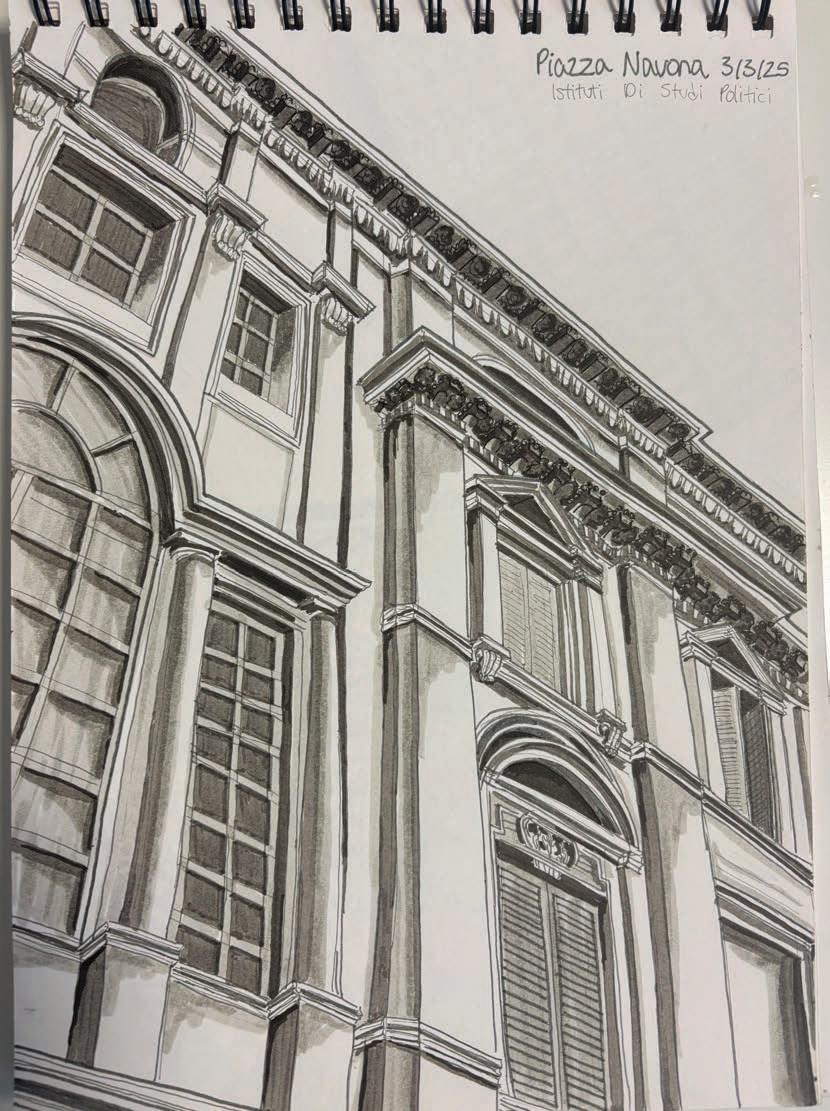
This was one of the first spots I saw when we arrived in the city, but I came back later in the semester to spend time sitting on curbs and drawing some beautiful architecture.
On day one in Rome, I woke up in a bright apartment, craving coffee and a pastry and looking out on a street filled with tiny Fiats. It’s hard to explain or even rationalize the feeling of being in the place you’ve anticipated for so long with such high expectations; it feels surreal.
The taxi ride into Rome from the airport felt like it took forever as the scenery changed from farms to houses, and then to tall buildings and packed streets, to tunnels and cobblestones. All the while, we were being jostled about and having mini heart attacks as our driver wove and braked through traffic to get us to our apartments.
The variety of ways to get anywhere in the city was overwhelming - without a guide, how would we know where we were going? On the first day, we were shown where to go and what to expect. NEVER lose your transportation card or suffer the consequences, expensive consequences. I thought in that moment that it was going to be wonderful and normal and that the confusion was going to melt away by the end, when it will feel like second nature to be taking the steps from apartment to tram to streets to school.
After several trips around Italy, I began to see how varied the infrastructure is in different parts of the country, and how much the information about public transportation can differ. When information is available, it is sometimes outdated, which is no help when you’re trying to learn your way around a new place. Luckily, Italians are very kind and have no problem explaining how to find a bus stop to confused Americans. I found that transportation costs were
pretty similar between different cities and smaller towns. It was usually around 1.50 euro for a single ticket, but you might be required to purchase it on the bus with coins or at a biglietteria (ticket shop) or even on a totally new app just for that ticket. If you’re not prepared with this knowledge ahead of time, it can make getting around a headache.
Now, allow me to explain how, in the span of just a few days, I managed to experience the worst luck on public transportation possible. We started out on a brisk February morning, rushing to the train station to purchase tickets to Albinia, a small town on the coast, and the first stop on our route to the thermal baths in Saturnia. We ended up needing to sprint half a mile (I’m exaggerating) with heavy backpacks to the farthest track, past all the usual ones, and just barely made our train. Once in Albinia, we had a couple options for buses that would take us to our final destination (with a transfer in another town). We purchased our tickets at a shop and waited at the stop, but, as the departure time approached and finally passed, the bus still hadn’t come.
This was, as you can imagine, pretty upsetting. We’d been waiting hours and this was our only option. Luckily, there was a man who saw our stupidity and led us to the correct stop. We ended up playing cards and getting snacks at a bar for a few hours as we waited for the next bus to come. We barely made that one as it came 15 minutes early and we had to settle our tab immediately. Finally on the bus, we were safe and relieved - until another random man told us we had to get off at the next stop. We were confused, but sure enough the bus did stop and the driver ordered us all off in the middle of nowhere and then drove away.
At this point, it was literally impossible to give up but there was nothing left in me. A bus came within 10 minutes to pick up the route and take us to Manciano. By some grace, we were greeted by our transfer bus in another 10 minutes
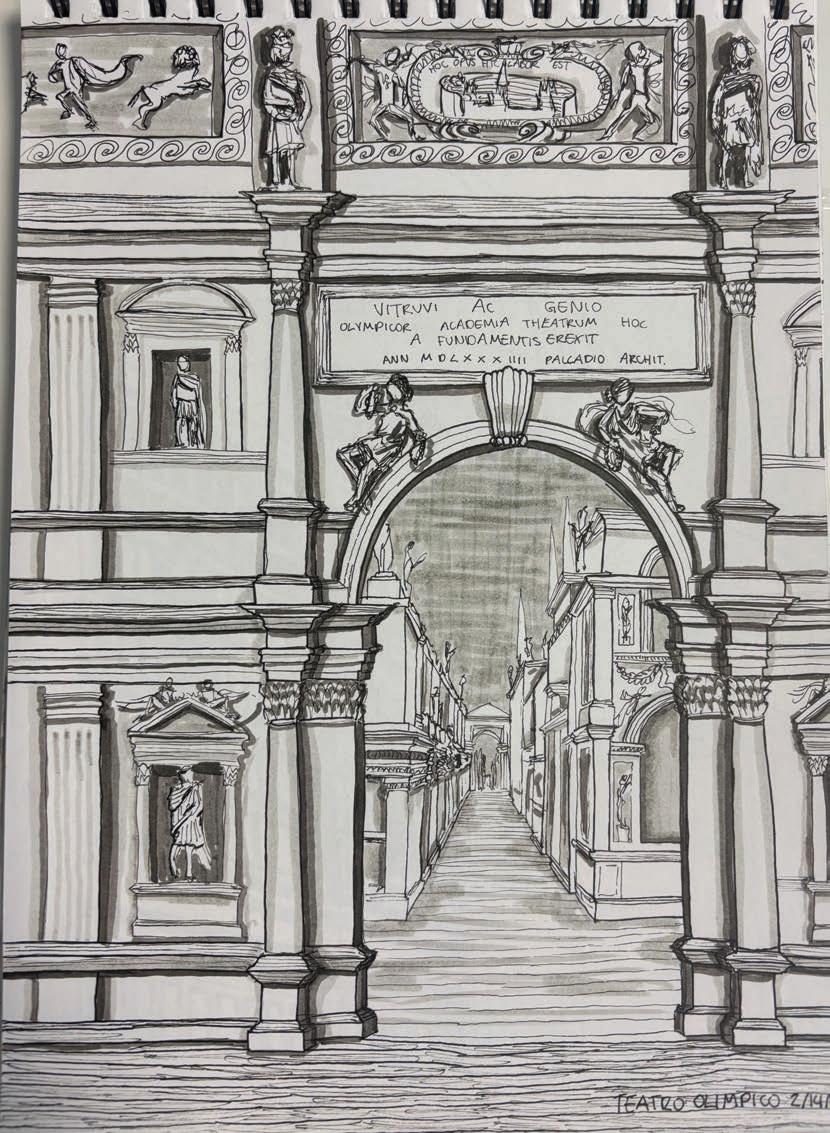
One of the spots we stopped at to sketch on our trip in Northern Italy with a challenging forced perspective to capture behind the arch.
and were almost home free. All we had left was a 30-minute ride to Saturnia where a comfortable Airbnb was waiting for us. However, the lovely driver didn’t turn left into town but rather continued on and ignored our stop completely. He went all the way to the next town, Semproniano, and when we asked and begged for him to take us back, he refused, turned the bus around, and left us.
This is where it really started to go downhill. I know, you’d have thought we were already down there, but no. We discovered that we had extremely low phone batteries, little to no service, and an almost completely deserted town. Worse, there were zero English speakers there and zero Italian speakers among us. We tried looking for taxis or Ubers, but that was a silly dream. So, we found a bar, where our fearless leader asked someone to please, please drive us the 20 minutes to the correct town, and while they were kind, they weren’t able to take us. It finally settled in that there was a very long walk ahead of us.
It was an hour and a half down one steep hill and up another to get to Saturnia. We slowly began our journey, no longer talking or even trying to be in good spirits. When someone started to laugh at the situation, it was quickly shut down.
In a last-ditch attempt, we came across a hotel and stepped in to ask for directions and to hopefully look pitiful enough to be saved from our predicament. When the owner realized that we had been planning to walk in the darkening sky towards our destination, he scolded us and sent his wife to drive us in her Mini Cooper. I don’t think I’ve ever been closer to tears of joy than in this moment. Fifteen minutes later, we found our Airbnb (you’re lucky I’m not getting into our Airbnb story here) and set down our heavy bags. From then on, I never took money or the ability to rent a car or easily get places on public transportation for granted. I take the rule to heavily research before embarking on a
trip extremely seriously. Never again will I complain about a long wait or a bumpy ride or a damp and cramped tram ride because there are far worse things to deal with.
• • •
Misadventures aside, I will be raving about public transportation in Italy and in all of Europe for a long time after my return to the US. Seriously, I’m going to be that person that can’t stop talking about it.
When I’m back to buying gallons of gasoline and driving everywhere, I will miss the loud, stinky, and slow trams and buses of Rome. Here, I can step out of my door every
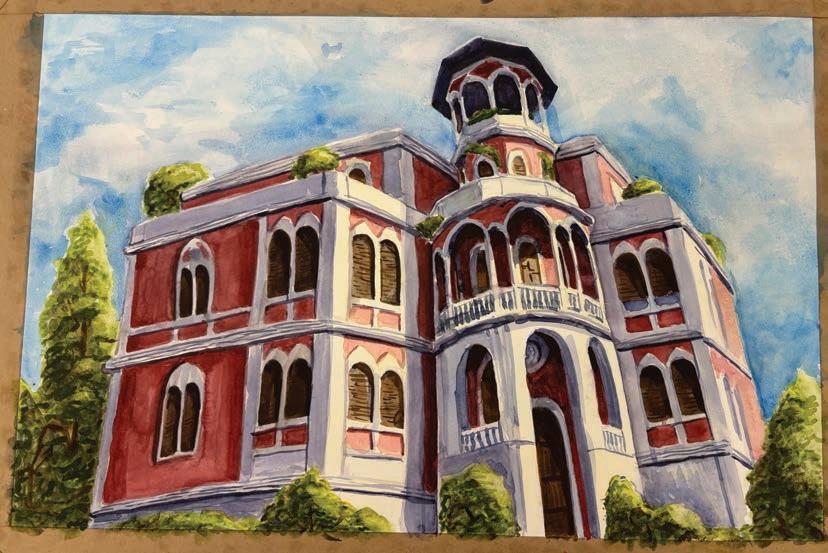
On a walk near our apartments in Rome, I found this gorgeous pink building and I took pictures almost every time I passed. It might be my favorite place in the city, and it was a great challenge to capture the essence of it in watercolor.
morning and check the transportation apps on my phone and hop on a tram within 10 minutes.
Now at the end of the semester, I’ve memorized several stops and times when it’s best to catch a bus, and the best ways to get from my apartment to Monti or to the Termini train station. Granted, more often than not it is packed to the brim, and I end up being the person shoving everyone in an effort to get an inch of space for myself and my bag. But I will take it over the amount of time and effort it would take to walk where I’m going every morning. It is a great advantage to find an affordable way to get to the airport or to most major attractions in the city and being able to navigate that means that you can avoid being fined or paying for unnecessary taxis. While it definitely takes some time to truly understand it, I was lucky enough to have a great program and the resources right at my fingertips. And I will take that knowledge with me as I try to use more public transportation at home.
- Nora Hanson
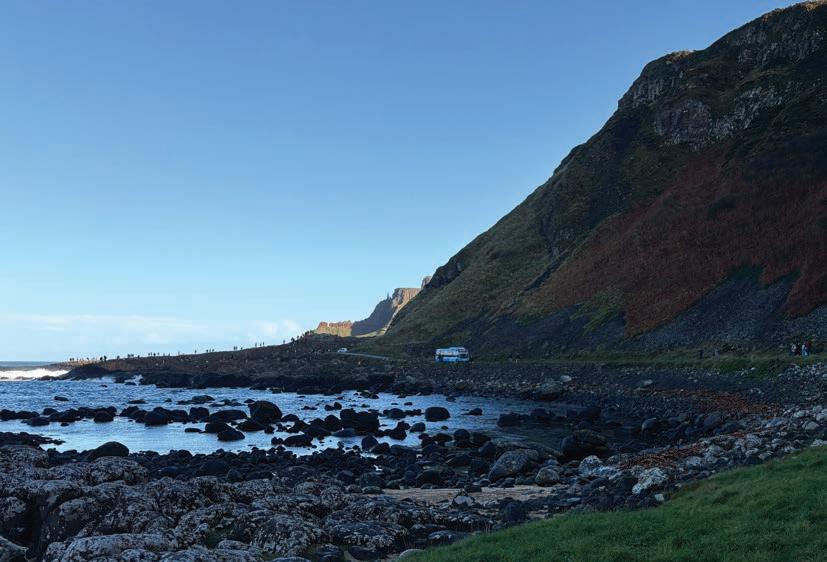
It’s hard to believe my time here in Berlin is almost over. Before my arrival, I was completely petrified. I didn’t want to be separated from my close friends who remained in Geneva for an entire semester. I was scared I wasn’t going to make any friends, that I was going to hate being in Europe, and that certain relationships I had to put on pause would come to an end. I can confidently say that my fears about whether I’d make friends in Berlin or enjoy my time in Europe were completely irrational. The past four months have been nothing short of amazing. I’ve formed lifelong relationships, been immersed in a rich, deeprooted culture and history different from anything I’ve ever known, and, above all else, for the first time in my life I have complete, utter freedom to do what I want when I want. My time in Berlin has felt like a much-needed break from my stimulating, constantly moving life back in the US. I have truly appreciated every second I’ve spent here. Berlin is such a special place. I will be sad to say goodbye.
Just one of the many perks of living in Berlin is having access to a world-renowned public transportation system. I am still in awe every time I enter subway stations like Museumsinsel, a breathtaking space with stone walls and floors and a blue ceiling adorned with what looks like small, shimmering stars. While there have been several BVG strikes, meaning the U-Bahn and trams were often not running, the public trains, buses, and trams have all been reliable forms of transportation during my stay in Berlin. Almost all forms of transportation are on time, wellmaintained, and efficient.
I also rely heavily on walking to get around the city. I quickly adjusted to walking over two kilometers to reach certain destinations and stopped seeing a problem with the distance. I enjoy walking around Berlin because it helps me
better understand my surroundings, and it allows me to see the city on foot, in a more personal way. One of my favorite things to do in Geneva, and in my hometown in Connecticut, is to go on a walk just as the sun is setting while listening to my favorite music. This carried over to Berlin. Some of the best parts of my days have been going on walks along the Spree as the sun sets and enjoying the beautiful scenery. No one told me how magnificent the sunsets are in Berlin. I also enjoy walking around the city because it helps me feel more immersed in my environment. Sometimes, I force myself to take my earbuds out and take in the sights and sounds around me. By walking to and from my destinations and listening to other people talking, the squeaking S-Bahn arriving at a station, a performer in the middle of Alexanderplatz, a loud fire truck passing by, or any other sounds that travel through Berlin, I feel more connected to the city, its people, and its culture.
Given that I am a cross-country runner, I also run quite a bit in Berlin. While I’ve never directly used running as a form of transportation to get from point A to point B, I go for a run to exercise and complete my daily training. Nonetheless, it has helped me see a lot of the city and get adjusted to my surroundings. Most days, I run between 10 and 11am, except Wednesdays when I run at 6:45am before my full day of classes. Running in Berlin and the other places I visit has been one of my favorite parts of my study abroad experience. It has allowed me to see many of the beautiful parks Berlin has to offer and, like walking, gives me a better understanding of my surroundings while feeling more connected to the city. Some of my favorite routes include Böcklerpark, Tiergarten, Treptower Park, Volkspark Friedrichshain, Tempelhofer Feld, Mauerpark, and Volkspark Wilmersdorf. Some days, I put a new park in Google Maps and make that my destination, other days I just go out and see where I end up. Running in Berlin is a special experience. It makes me feel like a real Berliner and reminds me of my love for being outdoors, even in a city,
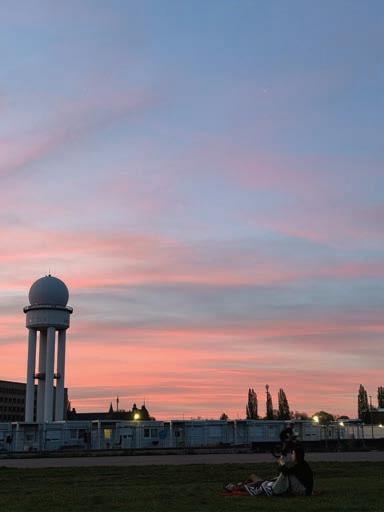
and feeling connected to nature through running.
There are so many wonderful forms of public transportation in Berlin, too many to narrow one down to classify as my Lieblingsverkehrsmittel (favorite means of transport). My friends and I heavily rely on the U-Bahn and I have become quite comfortable using the subway and the S-Bahn. I quickly got accustomed to these systems and stopped needing directions to get to the places I frequent regularly. I also love to use my own two feet to get around. It feels nice to not have to rely on a train or bus to get somewhere but instead be on my own timetable. If I had to choose my favorite way to get around Berlin, while not necessarily a form of public transportation, I’d say it is walking. I enjoy being outside, moving my body, and appreciating the environment of the city, especially in the lovely spring weather we’ve had.
Nonetheless, I now understand what people mean when they cite Berlin as having one of the best public transportation systems in Europe and the entire world. I will miss the crowded U8 and hearing “Zurückbleiben bitte” (please stay back) every time I board a subway or train. I’ll miss the familiar, yet distinct pronunciation of “Alexanderplatz” and “Jannowitzbrücke” over the loudspeaker on the train, knowing it’s my time to get off. I won’t forget all the sights and sounds of the trains and buses or the encounters I had with the people who give Berlin its quirky, fun reputation as a “weird” city. I am so grateful for my time in Berlin, and I cannot wait to be back in the future.
- Hope Johnson
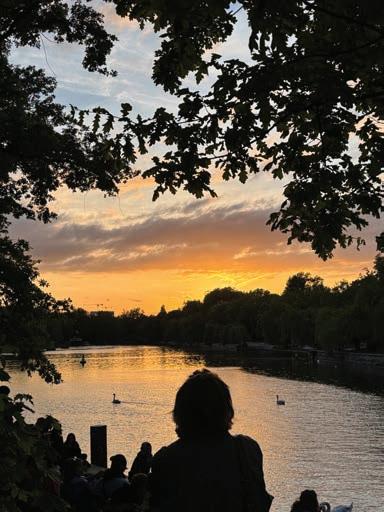
While studying abroad in Rome last spring, I had the wonderful opportunity to visit many different spots in Italy. Early in March, my friend and roommate Anthony and I did some independent travel to Genoa. After our class took a day trip to Orvieto to visit the famous pigeon houses and beautiful Duomo, Anthony and our other roommate, Lucas, planned to take the train to Genoa later that night. Originally, I wasn’t supposed to go; my two roommates booked their train tickets, but I chose not to because I had a job interview scheduled for the day and time they would be leaving. Unfortunately, my interview was cancelled at the last minute, and Lucas wasn’t feeling well enough to go, so he offered me his ticket. I figured why not? So I accepted his ticket and tagged along with Anthony.
Because we were on our way back from Orvieto, which was about an hour to an hour and a half from where we were staying in Rome, we didn’t get a chance to relax before our train. As soon as we got back to the apartment, we were already out the door, heading for our overnight train. As we left, I asked Ant about Genoa, realizing up until this moment I had no idea what to expect from the city. He told me that it’s a beautiful, popular northern city on the coast of Italy. I remember waking up in the morning and looking out the train window and seeing how blue the ocean was. When we left the train station, we started to walk around and got some panini from a food truck for breakfast. After that, we just took on the city. We ended up going to the aquarium and getting lost in there for hours. We looked at the seaports and views of the ocean. I had lunch at a great restaurant where I got a seafood ragu. We just walked around, taking in the sights and drawing the buildings.
When the time came, we started to venture back to the station and got on a four-hour train ride back to Rome. As
we got on the train, I was so incredibly happy I was blessed to end up going to this city for the day.
- Byron Maddox
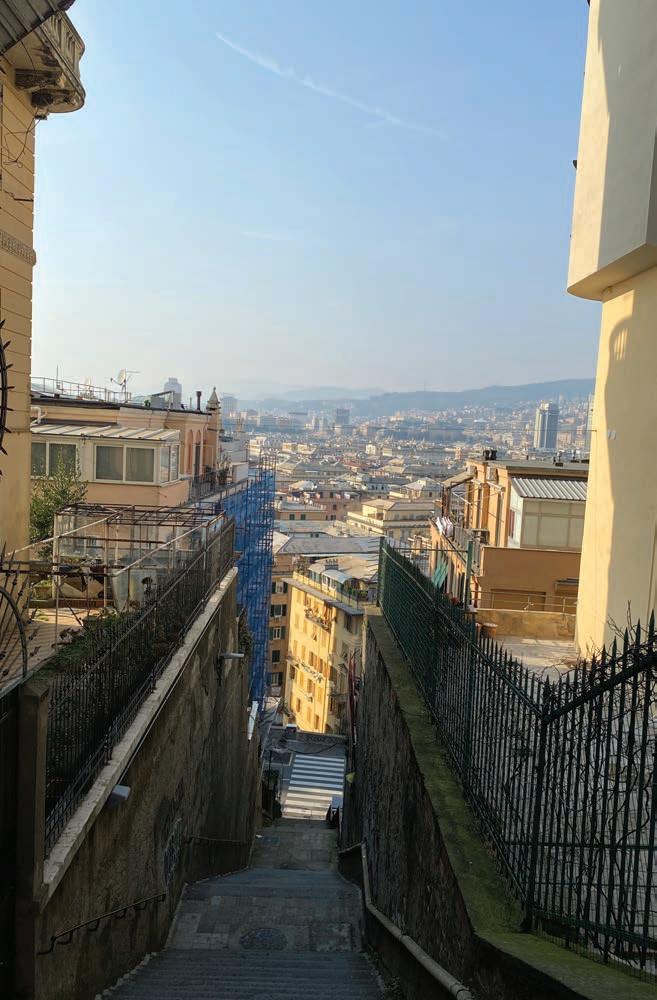
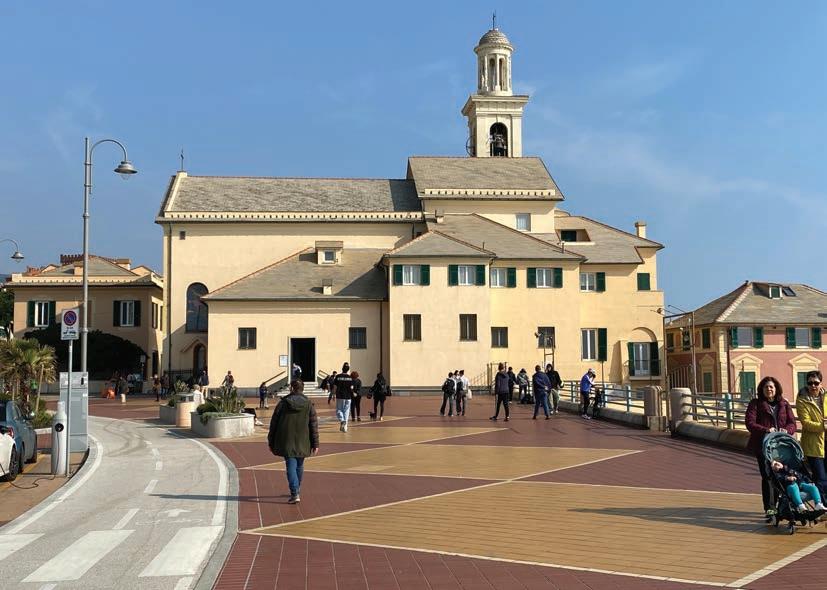
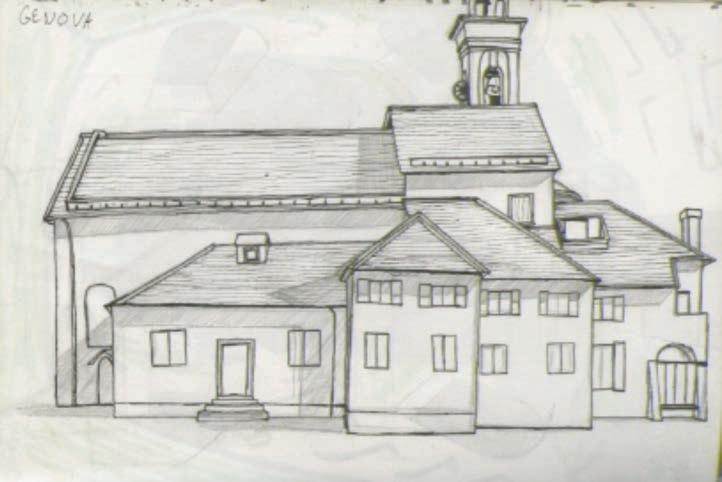
During the Renaissance, frescoes added durable and longlasting decoration to the inside of buildings. They were painted for both public and private areas, could signal a patron’s status and wealth, establish a particular aesthetic or atmosphere, and tell stories. Frescoes can help us understand the culture of Italy during this period.
The Renaissance in Italy was a time when people started to focus on human potential, education, and achievements. There were explosive innovations in the arts, sciences, architecture, and literature. Some of the most well-known Renaissance fresco artists include Michelangelo, Leonardo da Vinci, Raphael, Giotto, Masaccio, Botticelli, and Piero della Francesca. They focused on aspects of realism, artistic expression, human anatomy, perspective, and light. Frescoes often told stories from the Bible and, increasingly, of mythology and secular life.
Modern-day Rome started to develop a greater attraction to street murals in the early 2000s. There was a major shift from traditional tagging and illegal graffiti to different forms of artistic expression. In the 2010s, districts like Ostiense, Quadraro Vecchio, and Tor Marancia became known for their large-scale murals trying to revitalize neglected areas and create open-air museums. Rome is a great hub of culture and art, and there are now many murals wherever you go. These works often explore themes of social and political issues, community, nature, urban life, and local culture, as well as global concerns.
While in Italy, I made an effort to explore Renaissance
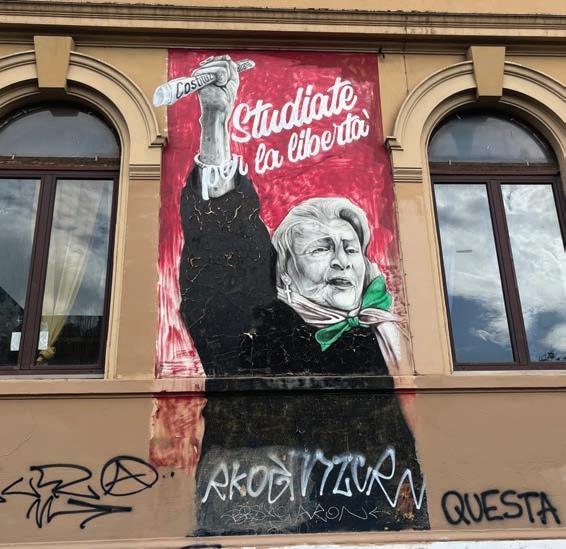
frescoes in a variety of locations, including the Villa Farnesina, Scuola Grande di San Rocco, Vatican Museum, Castel Sant’Angelo, Villa d’Este, and Palazzo Te. I also explored the Ostiense, Tormarancia, San Lorenzo, and Garbatella neighborhoods of Rome.
When observing Renaissance frescoes, I was shocked at how disturbing and uncomfortable some of them can be. I saw depictions of skin melting off skeletons, corpses, decay, brutal torture, and women being assaulted. The amount of nudity present in frescoes painted at a time when the Catholic Church was very powerful was also surprising. I was particularly struck by the art in the Villa Farnesina, Scuola Grande di San Rocco, and Palazzo Te.
Villa Farnesina, originally owned by Agostino Chigi, was a private suburban villa built along the Tiber River to show wealth though its intricate garden designs and extensive galleries and to provide privacy from the city. The villa was made to be lavish and highly decorated because Chigi entertained many cardinals, noblemen, poets, scholars,
and artists, but most of all, this was a retreat for himself and his wife. In the past, this building was damaged by the flooding of the Tiber River and has gone through many restoration projects. When making my way through the villa, I was surprised to see a lot of frescoes based on mythological stories because the majority of the frescoes I’d seen previously were based on biblical stories. A lot of these frescoes were about existence, natural phenomena, Renaissance humanists, and creation and the afterlife. Famous Renaissance artists that painted frescoes in Villa Farnesina included Peruzzi, Sebastiano del Piombo, Sodoma, and Raphael.
The Scuola Grande di San Rocco is a confraternity building in Venice. The paintings by Antonio Zanchi along the stairs leading to the upper main hall told stories of the 1630 plague epidemic in Venice in which approximately 33% of the population died. Even though these were wall-mounted oil paintings on canvas rather than frescoes, they were still interesting in the story they captured. These paintings shared the state that Venice was in, and what it was like living in the city during this plague outbreak. The artist made these paintings in a monumental size and with great detail to evoke strong emotional responses in the viewers.
The Gonzaga family constructed Palazzo Te in Mantua to serve as a point of contact between the family and guests. They hosted receptions for visiting nobility, banquets, dances, and ceremonies. The palace also showcased the dynamics between identities, genders, and social classes. The frescoes and spatial arrangements reinforced contemporary ideals surrounding femininity and masculinity, practices of gender norms, and how these roles should be performed. As I walked through the long halls, I saw many frescoes about love, power, metamorphosis, astrology, battles, and displays of ideal masculinity.
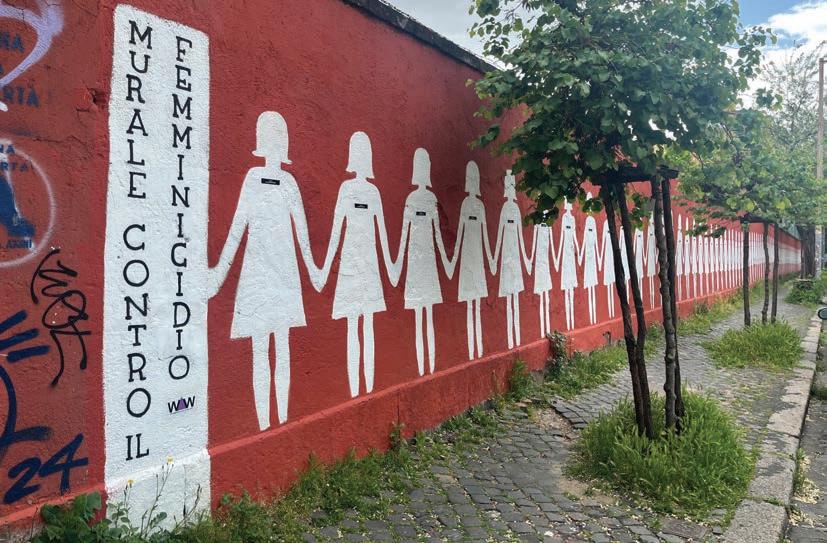
When observing modern-day murals in the streets of Rome, I resonated with some of the messages they conveyed. I saw murals of important historical figures, murals protesting climate change, murals fighting for free access to education, and murals about feminicide. It was interesting to see the variety of meanings and the power of art. What were once neglected districts are now places of attraction. Indeed, these murals communicate valuable themes of selfexpression and messages addressing global issues.
It is likely that Renaissance frescoes (and other visual works of the period) influenced many of the murals that are made today. The scale of these modern works and their illusionism may have been inspired by Renaissance art still visible throughout Italy. Both use public and private spaces for storytelling and to transform place. Murals in Rome today share the stories and culture of what Rome and the wider world is like, which is an interesting contrast to Renaissance frescoes that show what Rome’s social economy, power, and influence was like centuries ago.
- Ceanna Belisle
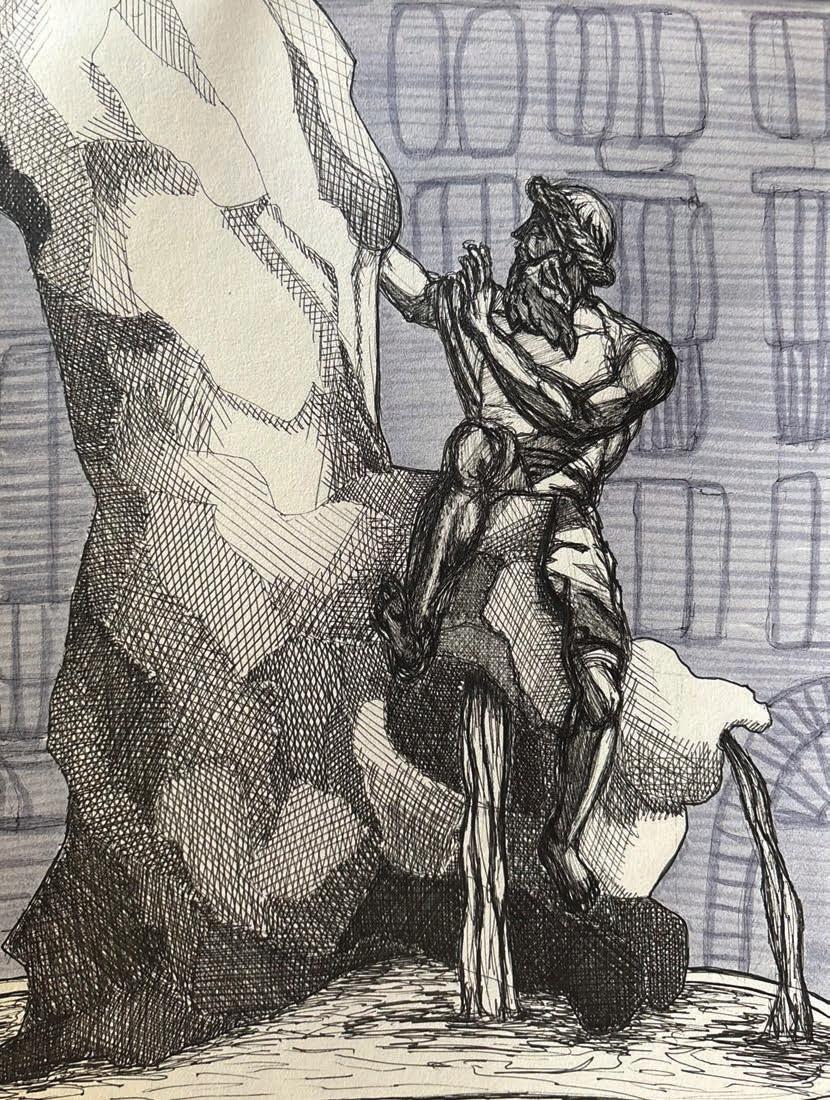
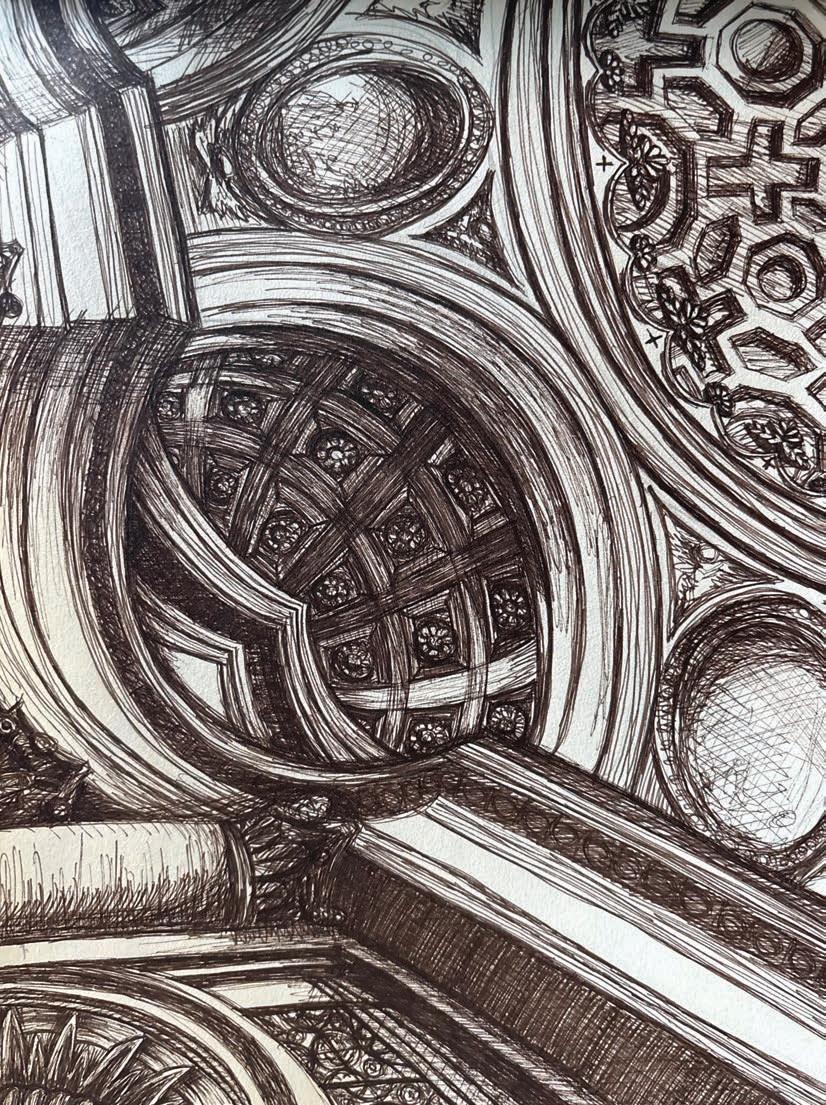
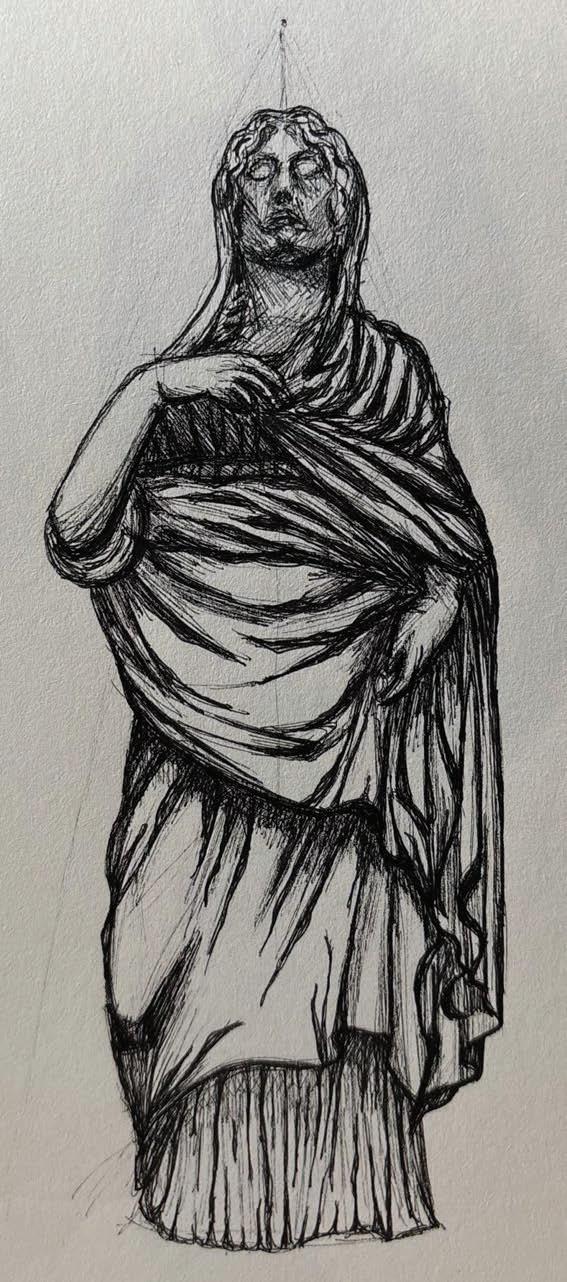
Left: Pen Drawing at Relais Piazza Signoria, Florence, Italy
[Ceanna Belisle]
Right: Pen and Marker Drawing at the Pantheon, Rome, Italy [Ceanna Belisle]
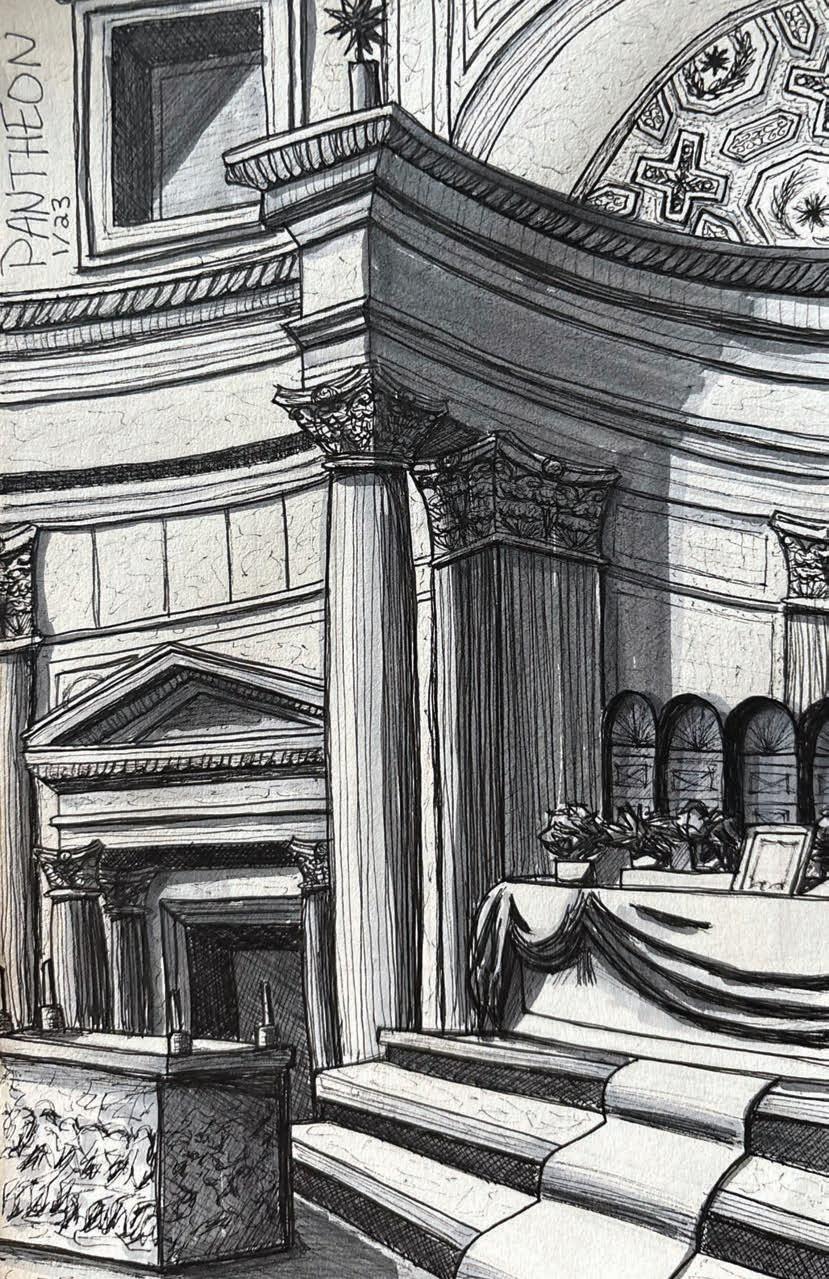
Arundel Castle from Guard Tower, Arundel, England [Hannah Angelico]
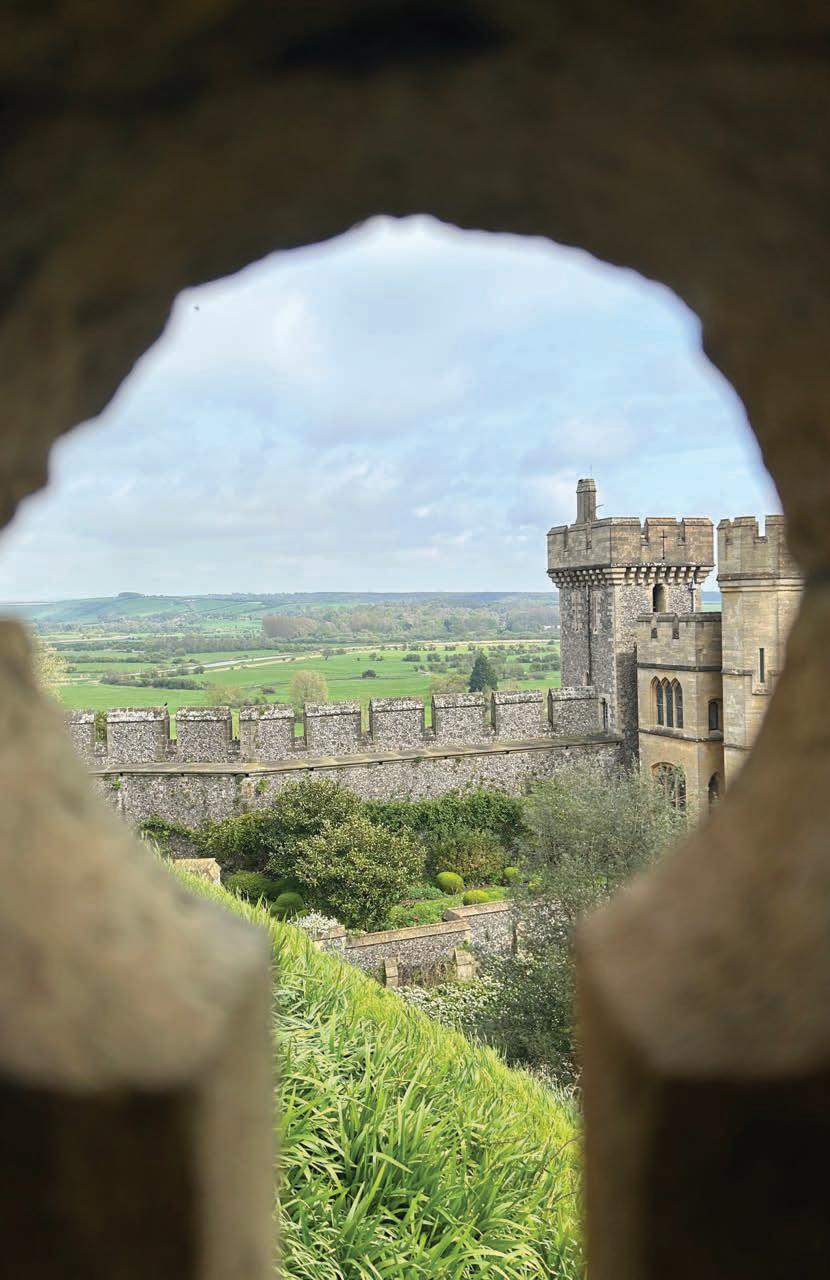
n. 1. a thing learned by experience 2. an occurrence that reveals, warns, or enlightens
When I arrived in Seville, I was excited not only to live in a new city but to experience Spanish as part of everyday life. The city felt immediately welcoming, its history visible everywhere and its sense of community woven into daily routines. Using Spanish beyond the classroom pushed me outside my comfort zone. I had to slow down, listen more carefully, and accept mistakes as part of communication. Over time, this process became less about fluency and more about connection, an experience that would become especially meaningful once I entered medical spaces, where clarity and trust matter more than perfect language.
That lesson deepened when I began volunteering with Médicos del Mundo, an international organization that provides care to individuals facing barriers related to migration, housing insecurity, and legal status. While the organization does work globally in humanitarian and emergency contexts, its work in Seville focuses on delivering accessible primary and mental health care to people often excluded from the formal healthcare system. Entering individuals’ living spaces for the first time, I became aware that I was stepping into environments shaped not only by medical need but also by vulnerability, uncertainty, and resilience.
Exterior View of the Catedral de Sevilla and La Giralda, Seville, Spain
[Maya Mahoney]
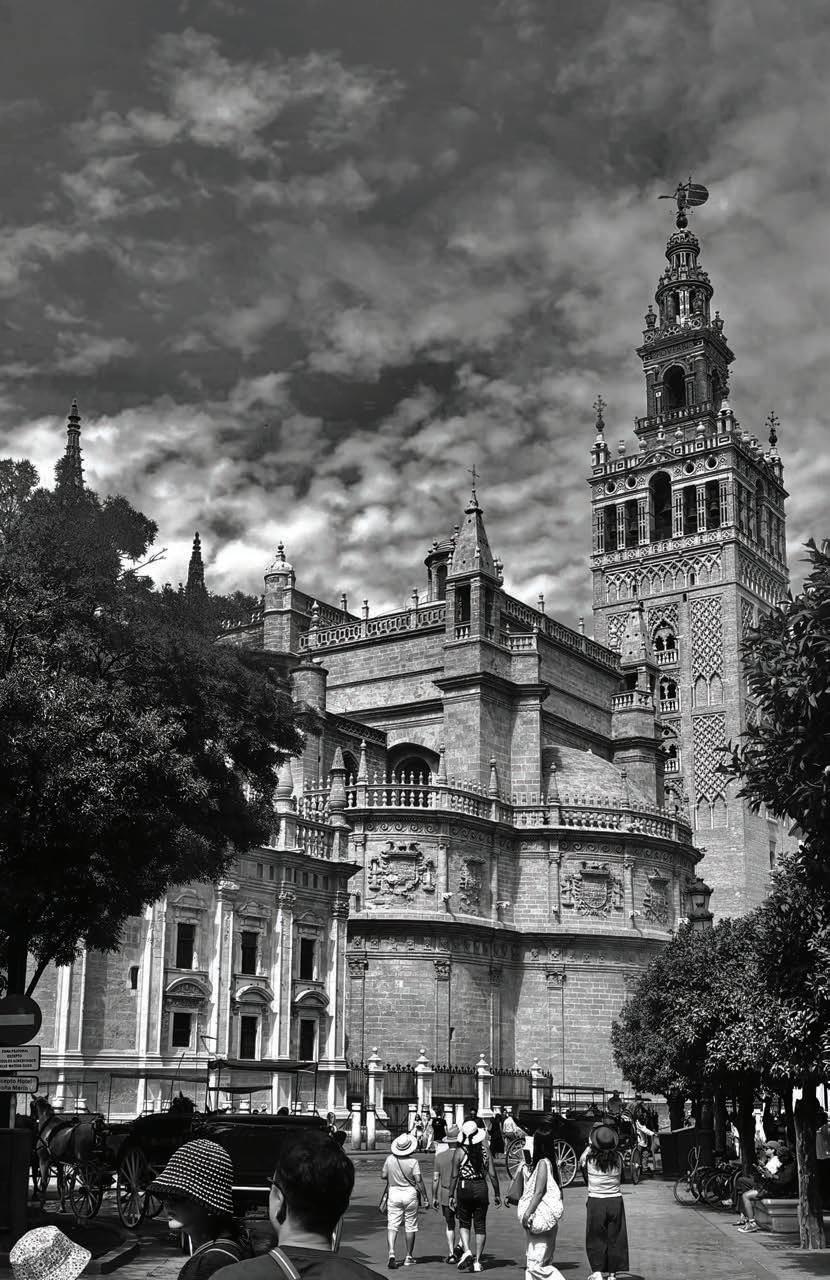
Initially, I questioned how much I could contribute. Spanish is not my first language, and I was still learning how the healthcare system in Spain functioned. I worried that these limitations would define my role. Instead, I quickly learned that much of the work was not about visible action, but about presence. My time was spent listening closely to patients, observing consultations, and helping foster an environment where people felt safe seeking care. Many patients shared concerns that extended beyond physical symptoms, including stress related to housing, employment, and navigating government assistance systems. The abstract ideas I had previously only encountered in coursework quickly became lived realities as I witnessed the pressures that shape when and how people seek medical attention.
Language played a central role in these interactions. Communicating in Spanish was rarely about finding the perfect phrasing; it was about patience, tone, and mutual understanding. I became more aware of how easily misunderstandings can arise in healthcare, and how essential it is to slow down, ask clarifying questions, and ensure that patients feel heard. Watching other workers navigate linguistic and cultural differences reinforced how foundational communication is to effective and ethical medical care.
Through Médicos del Mundo, I also gained a deeper understanding of the social determinants of health. I saw how delayed access to care often resulted in more advanced conditions, and how fear, whether of documentation requirements or institutional systems, could prevent people from seeking help altogether. Medicine does not operate in isolation: it exists within social, legal, and economic systems that directly shape patient outcomes.
Daily life in Seville also continued to reinforce these lessons. Navigating transportation, appointments, and bureaucratic
processes in a second language gave me insight into what it feels like to rely on systems you do not fully understand. That experience cultivated adaptability and empathy, qualities that feel just as essential to medicine as scientific knowledge.
Looking back, my time in Seville and with Médicos del Mundo reshaped how I understand healthcare and my place within it. The experience emphasized that medicine is not only about diagnosis or treatment, but about attention, communication, and respect. Speaking Spanish in a patient setting, witnessing patient-centered care, and observing how social context shapes health all deepened my commitment to pursuing medicine thoughtfully. I return with a clearer sense of the kind of healthcare professional I hope to become: one who listens carefully, recognizes complexity, and meets patients where they are.
- Maya Mahoney
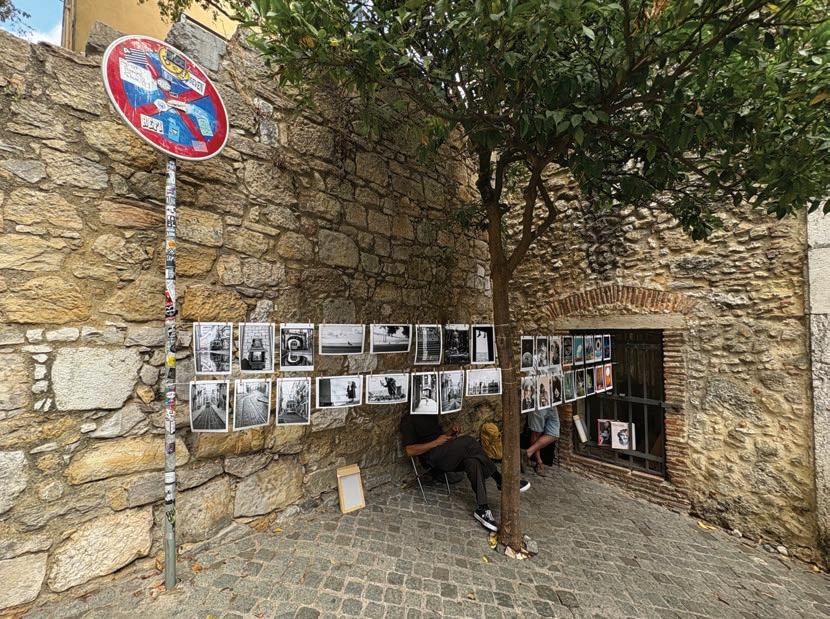
A View of the City of Seville from the Cathedral Tower, Seville, Spain [Maya
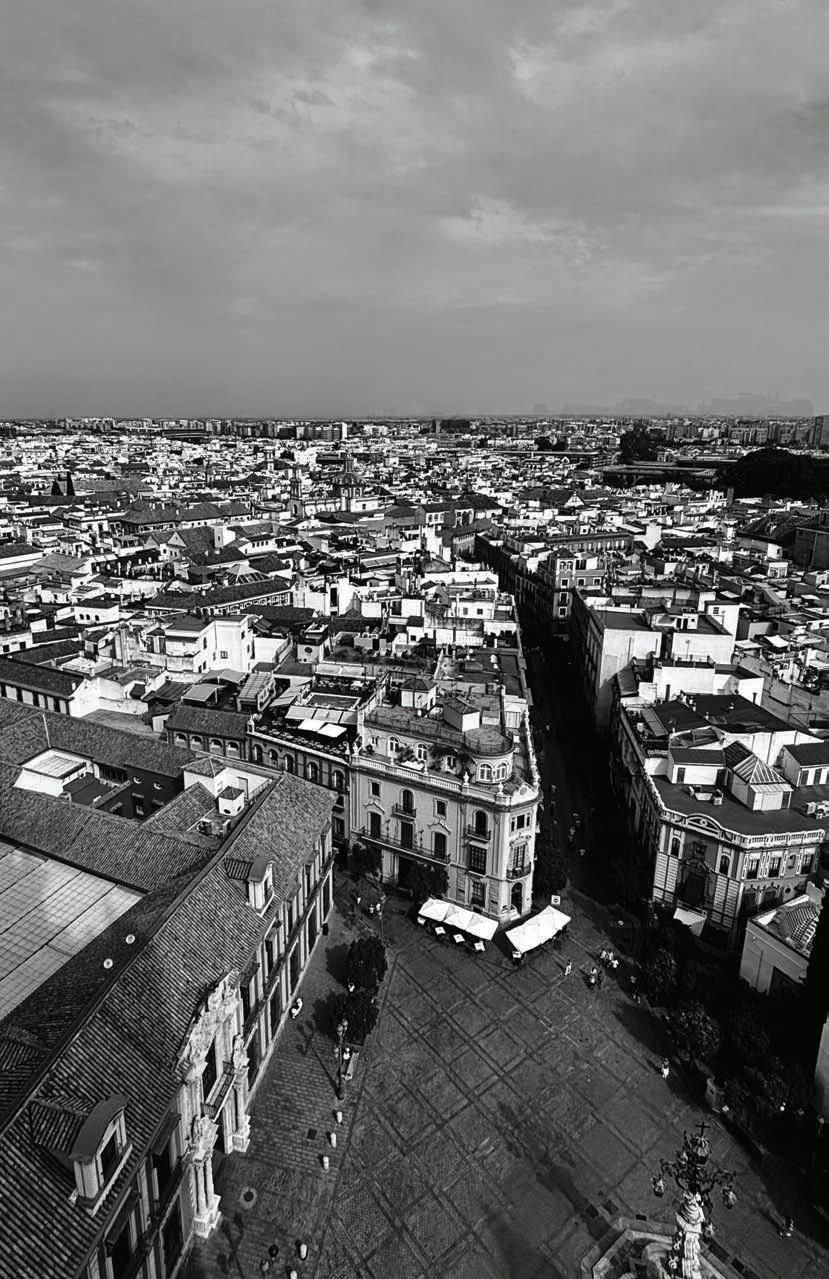
Tree Kangaroo, Sydney Zoo, Sydney, Australia [Estelle Bignet]
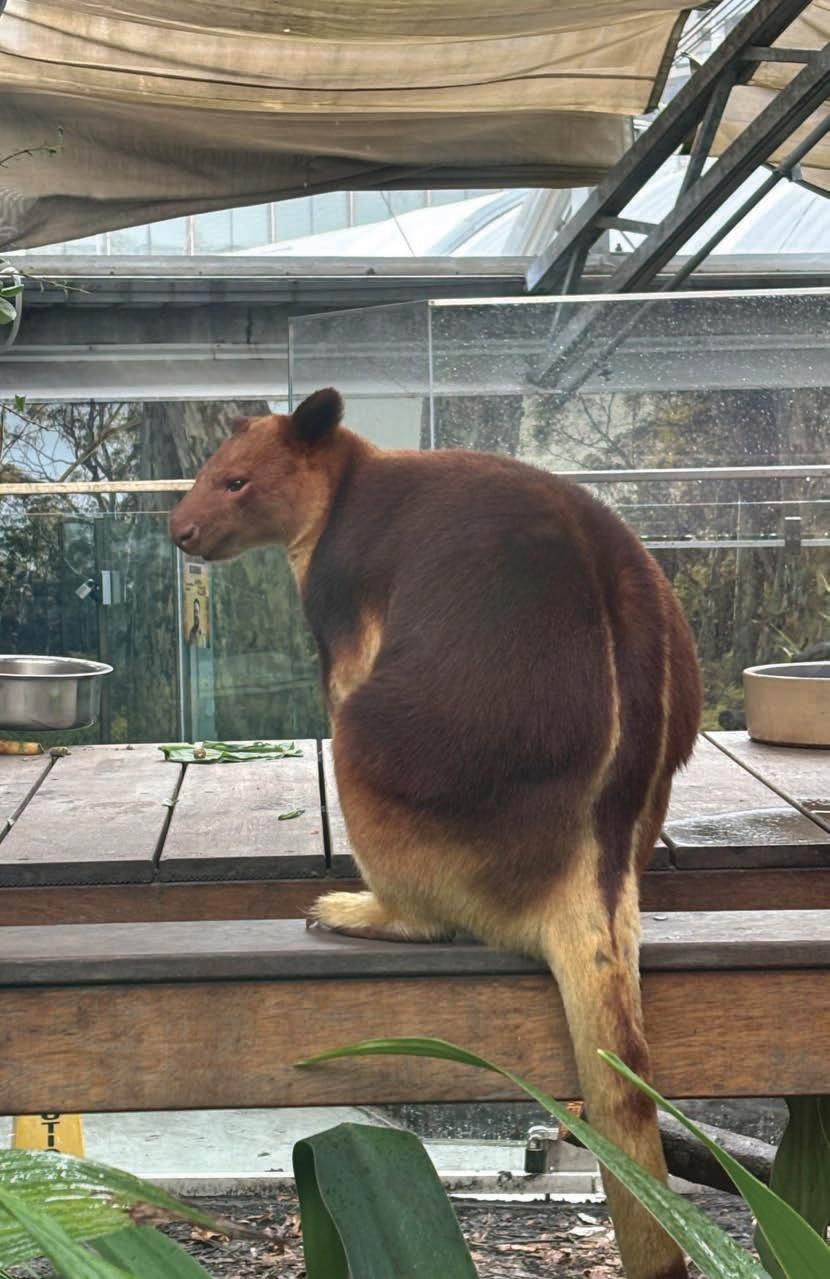
I stood completely still in the Sydney Zoo while on spring break, phone forgotten in my pocket, watching a tree kangaroo. It moved through the branches with a strange, deliberate grace - an animal I hadn’t known existed until that moment. I thought I’d seen Australia already. I’d scrolled through thousands of images: golden beaches, koalas, the Opera House gleaming at sunset. I thought my phone had given me the whole picture. It hadn’t even shown me the frame.
Before I left for my semester abroad, my expectations were shaped by carefully curated TikTok videos. I imagined myself surfing every day under the bright Australian sun. I pictured Australian friends with silly accents and a carefree spirit. I believed my International Relations classes would unravel the complexities of Australian politics. In my mind, everything was already planned, a perfect highlight reel just waiting to come to life.
Perth, however, had other plans. I learned quickly that Rottnest Island, the one where the smiling quokkas live, blocks most of the waves that reach the western shore: no surfing for me. And my friends? They came from everywhere but Australia: France, Germany, the United States, the Netherlands. We were all international students, all far from home, and somehow that shared experience drew us together more tightly than any common nationality could.
We traded stories about our home countries, our families, and the strange, winding paths that had landed us in the same place during our late-night adventures that were scattered through the city. There was a Swedish guy in his late twenties, already on his second or third bachelor’s

degree, endlessly curious and unapologetically restarting. There was an Italian, studying to become an architect, who made me laugh and taught me how to take life more lightly.
We laughed about our shared confusions: the slang we couldn’t quite grasp, the winter weather we didn’t miss, and the subtle cultural misunderstandings that surfaced between drinks and stories. Those friendships taught me more than any class ever could, making me feel like a foreigner and part of a family at the same time.
So, Australia found me anyway, just not in the ways I’d expected. I reconnected with my mom’s friends who moved back to Perth years ago. They showed me the authentic side of Perth living - birthday parties, picking up the kids from school, and the way they stretched out their vowels until “no” became “naughrr.” That sound still makes me smile.
Social media shows us destinations. It rarely shows us the detours, the wrong turns that become the best stories, the friendships formed in confusion and proximity. It can’t capture the weight of standing in front of an animal
you didn’t know existed. It can’t replicate the sound of a screeching Australian crow or experiencing Jug Night on a Thursday.
If you’re thinking about studying abroad, leave your expectations at the gate. The version of the experience you’ve built from Instagram posts and borrowed photo albums will almost certainly miss the point. Not because it falls short, but because what’s waiting for you is messier, more unexpected, and entirely your own.
I went to Australia thinking I would surf and understand the local politics. I came home with a tattoo, a second family, strangers that became friends scattered across continents, and the memory of a tree kangaroo living in the Sydney Zoo. My phone never showed me that any of that was possible, that the real experience would come not from a screen or a syllabus, but from shared nights, unexpected friendships, and the quiet realization that life is always larger than what can be curated.
- Estelle Bignet
Over the last two weeks, I’ve had fun doing a lot of different things, but this week, I did something that I’ve always wanted to try: I went traveling alone.
After my sister and cousin came to visit me in Berlin for the weekend, I realized how much I miss peace and quiet. Although I love city life, coming from a small suburban town in the middle of Massachusetts and then going to school in upstate New York at Hobart and William Smith, I had never immersed myself in living in a city. So, when my family came, I realized that I missed being surrounded by nature and not hearing the ambulances or simply going on a walk and not having to move out of the way for anyone. Berlin has many opportunities to sit alone in parks, but these parks don’t have true hiking or walking trails, mostly just gravel or paved sidewalks with benches. Germans love these parks, so I always find them too busy to enjoy what I believe is real peace and quiet. I like hiking on true mountainous terrain, and the parks that are close enough to me in Berlin don’t have any of the landscapes that I’m used to.
Due to of this sense of homesickness, I booked a 30-euro bus ticket to Schwerin, Germany, which is about two hours north of Berlin. I will be honest: I had no idea what was around the area until after I booked the tickets because I just wanted to get out of the city for the weekend. When I looked up Schwerin, Google said that the town had a castle and a large park and gardens that you could walk around in. I booked two nights in a bed-and-breakfast across from the main bus station because it was only 60 euros a night.
I got to Schwerin on a Friday morning and imagined having a perfect lazy weekend to myself: the weather was beautiful, the park was just beginning to bud with flowers,
and my accommodations were quiet - I felt safe staying there. That night, I dined alone for the first time in my life. I went to a Turkish restaurant and got rice and chicken. The workers were so sweet to me, and they gave me free pea soup and baklava, too! I hate to say it, but the food was bland. I realized that I had been pampered with the cuisines in Berlin, which was the one thing that I least expected to come out of being in the city. Berlin is absolutely the top city I have been to food-wise (but their Mexican food sucks. Don’t get it. Seriously.).
On Saturday, I got up early, and I asked the woman who ran the guesthouse if I could rent a bike from her. It was only 12 euros for the day, so I went on a ride to a nearby lake where there was a roundabout walking trail, about 11 miles
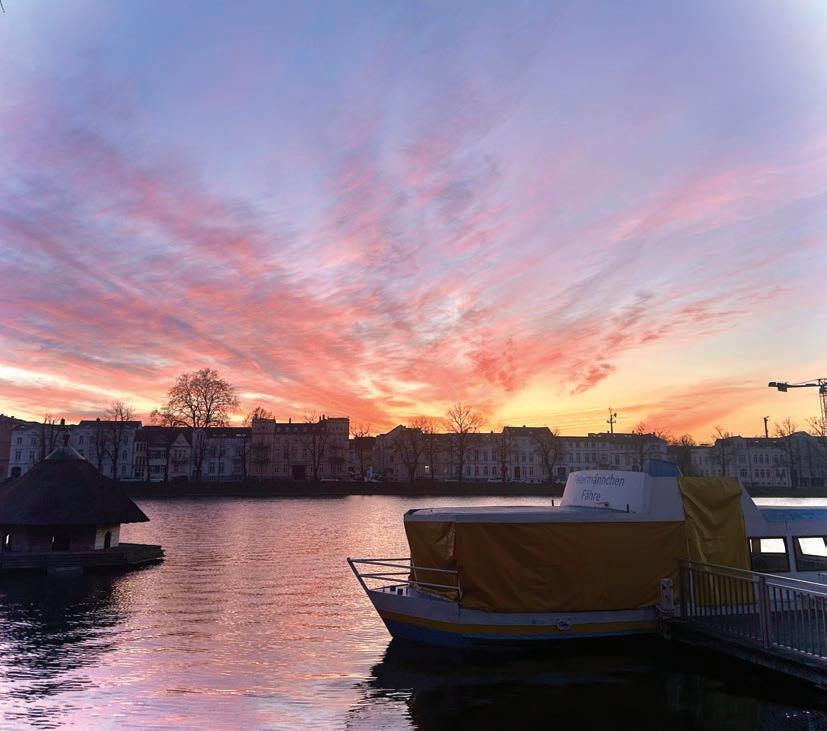
long. It took all day, but it was exactly what I needed. After my walk, I went back to the guesthouse and got a salad and gyro from a Greek restaurant. For dessert, I got a beer from the Späiti (corner store), sat by the lake, and watched the sun go down.
On Sunday morning, I had breakfast at the guesthouse and then got on my bus back to Berlin, making it to the city around noon. Although it was a quick trip to Schwerin, I believe that it gave me a good reset for the rest of the semester. I can’t believe that I will leave here in less than a month.
Now that I have traveled alone, I know I will do it again, and I will do more solo things in Berlin. I enjoyed being by myself and taking a break from social interaction, but it was also fun to interact with strangers in a new and different way. Being abroad has taught me to try new things and to step out of my comfort zone. It’s like ripping off a Band-Aid; it might hurt and be uncomfortable at the beginning, but then you feel relief. I learned that I need to step outside of my comfort zone more, even when I am in the States.
I think everybody should try traveling alone at least once in their life. It shows that you have confidence in yourself and your decision-making, but also that you are willing to lean on strangers and ask for help if you ever find yourself needing or wanting it. Traveling alone is empowering, but so is being abroad: they both show you how different parts of your individual identity develop and are created as you experience new opportunities.
- Anneliese Oetsen
The Iconic Berlin TV Tower at Dusk, Berlin, Germany [Anneliese Oetsen]
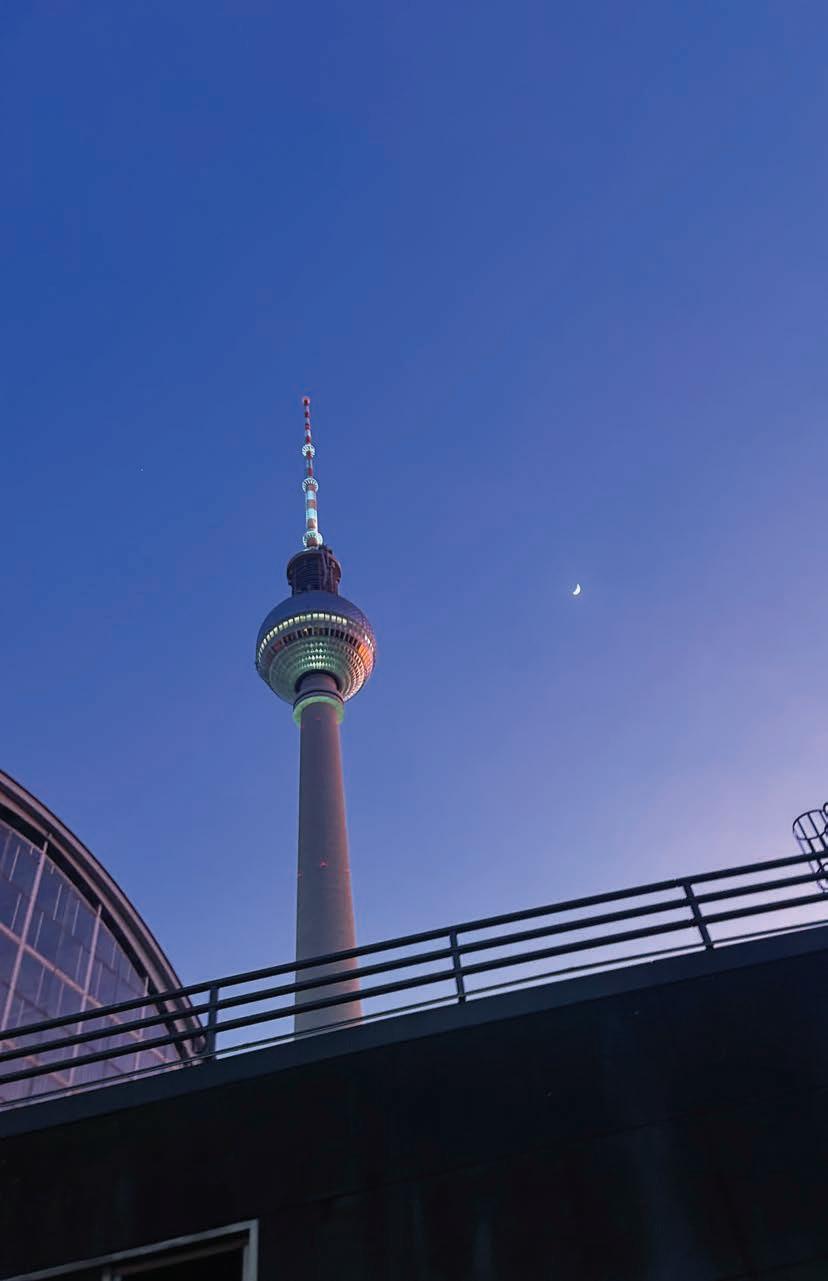
Knowing I would soon be leaving for my first experience abroad in Rome, I had an acute moment of self-reflection. Amongst said pondering lived a question I felt lingered higher than the rest. I was leaving a rather precarious country, the one that raised me and was all I knew, traveling with the voices of everyone saying, “This will change your life; you will be a different human when you return!” Bearing this in mind, before my departure, I wanted to know what resides in my core, my most grounded practices in life, whether they are subconscious or conscious, apt to change or not; I just wanted to identify them, or at least some of them. Amid this mental list lived many things like family, friends, passions, etc. - all things I inevitably needed to leave behind as they did not fit in my suitcase. With that small limitation of container size, I thought of the most portable option: myself.
The omnipresent lure to movement has threaded through my life. As a child dancer and athlete turned intermediate yoga enthusiast, I thought it best to turn to my tried-andtrue anchor: movement. Movement, in different forms, has always been the most consistent constant in my life. For this next chapter, I’d focus on yoga. During my stay, I would navigate the differences of culture that can manifest themselves through the body via movement and living habits. Essentially, how do standard practices of health differ between the average American and European/Roman civilian, and what effects do culture and systemic values have on that?
After the acclimation of moving to another country to study art through rich culture and experience, I began searching for a yoga community of some sort to fuel this side quest of
mine. I landed in a studio with both American and Roman instructors to study a range of personal experiences from a calculated distance. Located on one of the busiest streets in Rome, three stories up, behind large historic windows, and above warm hardwood floors lived the heated yoga studio with which I would soon grow well acquainted. The studio offered a wide array of classes but was a 40-minute tram commute. Regardless, I would prioritize and enjoy the habitual nature of it all as I was forced to slow down and given the opportunity to observe.
I found that, differently from a more American ideology, there is a slower, less urgent enjoyment of time in Italy. As observed through lackadaisical scheduling, long afternoon breaks, prioritizing meals, and the overall community atmosphere shared between locals, there is a rather simple concept of enjoyment of life going on here. Life is in daily pursuits, i.e., standing at the counter drinking an espresso and conversing with your surroundings instead of rushing away with a to-go cup, commonly commuting via public transport or pedestrian-style, cooking, and socializing with food and drink - all things that feed the core of a person; all things I consider to be somewhat lost arts in America.
I knew before going abroad that overall health in European countries was far better than that in the US. I automatically assumed this had to do with a contrast in diet and exercise; I was both right and wrong. From what I observed, there isn’t a significant influx of people working out or extreme dieting; if anything, I observed the contrary. I found their healthy pursuits in life to come more naturally because they sit comfortably in the day-to-day and are woven into the culture.
So, what does any of this have to do with my studies in Roman yoga? I came not quite knowing what I was looking for in my research and left seeing that there is no magical
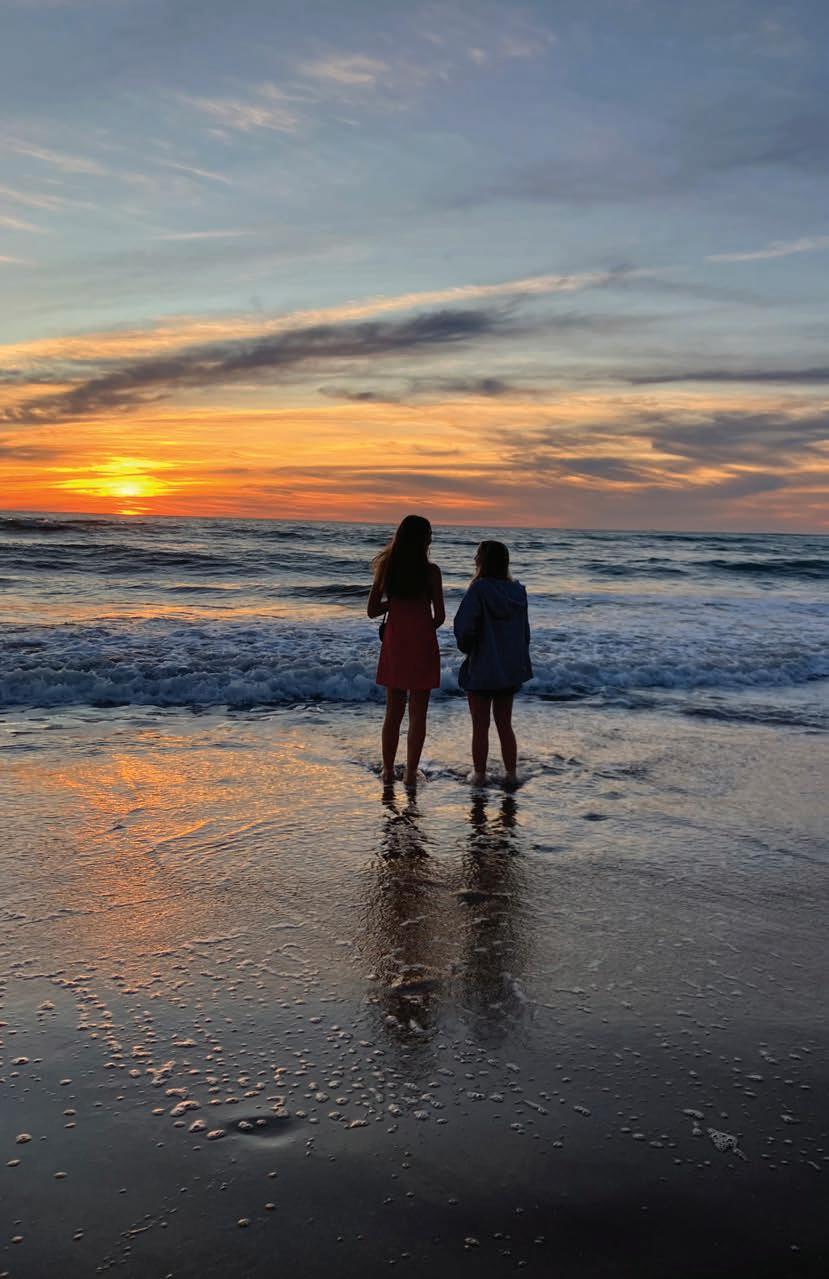
Cádiz, Spain [Jade Inzinna]
This photo was taken on a program-based trip to Cádiz, a beachy Andalusian city with well-preserved historical landmarks. The city is known for its lively atmosphere, vibrant festivals, and friendly locals.
fundamental difference between movement in the States and in Rome. I studied a handful of different practices of yoga, some familiar, others completely new. I studied under multiple instructors, surrounded by Romans and Americans alike, in both English and Italian. Though the instruction and pathways were different from the studio in my small hometown that had taught me everything I knew about yoga, the steadfast nature of grounded movement is tried and true across both countries.
Rome creates an atmosphere that promotes a social and consistent relationship with health. I found this through yoga and movement, yes, but maybe even more so in the average lifestyle and priorities of a Roman: the concept of enjoying the daily pursuits of clean eating, walking as commuting, finding community in healthy spaces such as the one I was welcomed into at the yoga studio, and more. It is much easier to live healthily in countries that systemically incorporate healthy living. Ergo, I did not find an absurd change in yoga practices that caused such a shift. Yoga was involved in my experience of the well-rounded nature of wellness in Rome and, though not fundamental, served as my anchor, one still - not stagnant - thing in my life of change: movement.
- Anna Barry
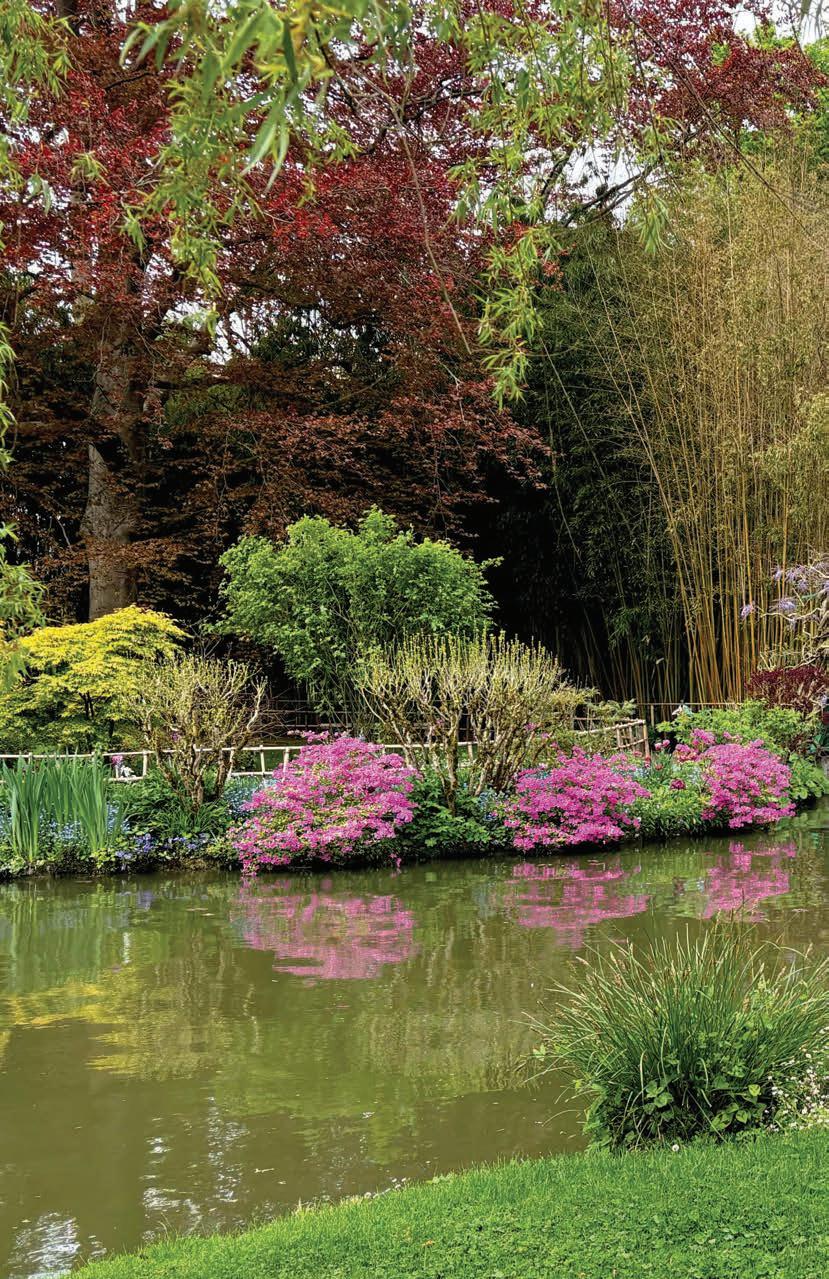
n. 1. the product of a reflective surface or mirror
2. the effect or product of an influence
3. an opinion, realization, or thought formed as the result of consideration of an idea or experience
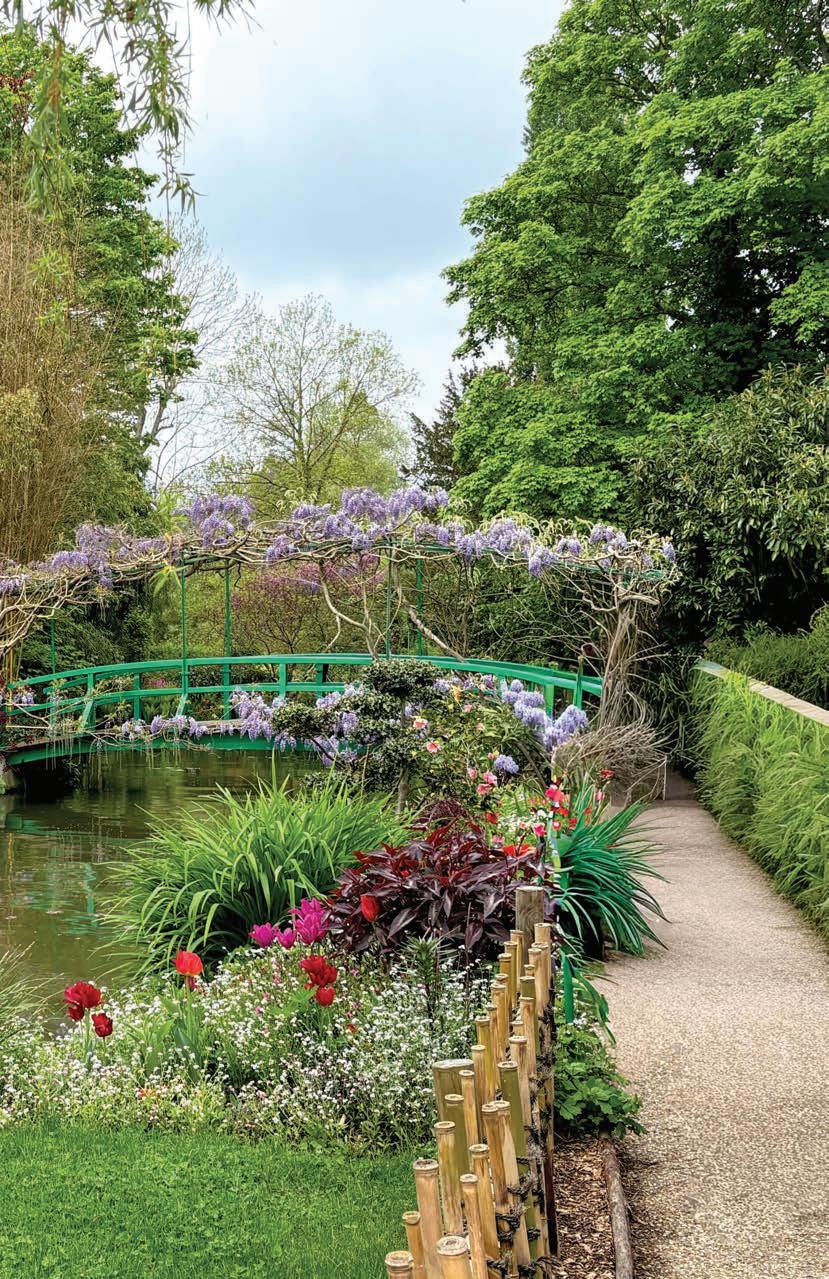
Berlin’s Memory Culture and Public Memorials
Walking through Berlin, I was completely unprepared for how this city confronts its past, not with whispers or sanitized narratives, but with unflinching honesty etched into its landscape. “Eine Stadt, die ihre Geschichte nicht vergisst,” my history professor would tell us during our excursion classes to important memorial sites such as the Memorial to the Murdered Jews of Europe.
Berlin’s approach to memory culture, what Germans call “Erinnerungskultur,” emerged from the ashes of World War II and the complicated decades that followed. We learned that, unlike many nations that might glorify victories and minimize defeats, post-war Germany, and particularly Berlin, developed something radical: a culture of remembrance that confronts the darkest chapters of its history.
At Bebelplatz, where Nazi book burnings took place in 1933, I stood over a glass plate set into the cobblestones, peering down at empty bookshelves that could hold 20,000 volumes, which represents the number of books burned that night. A plaque bears Heinrich Heine’s prophetic words from 1820: “Where they burn books, they will ultimately burn people too.” The simplicity struck me more powerfully than any grand monument could.
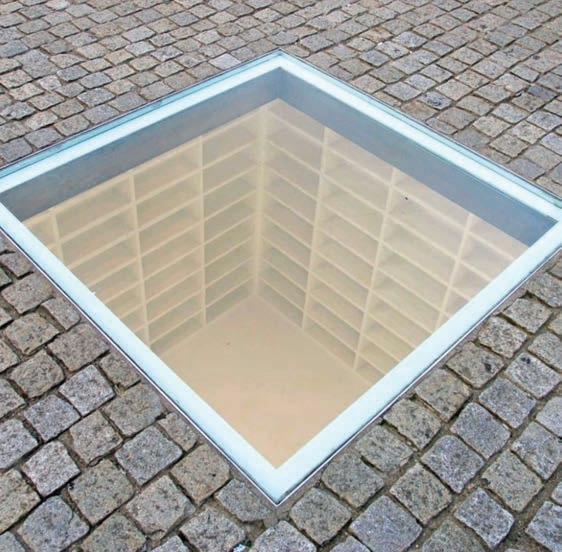
The Nazi Book Burning Memorial at Bebelplatz in Berlin, showing the underground room’s glass window set into the cobblestone plaza, allowing light into the empty shelves below.
A memorial plaque marking the site of the Nazi book burning on May 10, 1933, when National Socialist students burned works by hundreds of free writers, publicists, philosophers, and scholars.
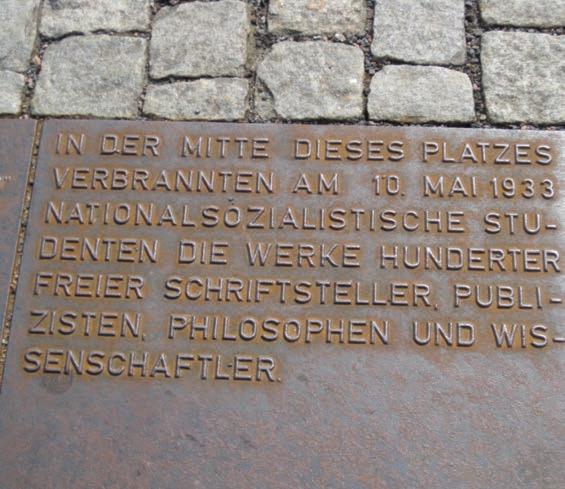
What is also fascinating about Berlin’s memory landscape is how it evolved over time. It reflects changing attitudes toward confronting the past. In the heart of Tiergarten stands the Soviet War Memorial, which is an imposing monument completed in 1945 when the war had barely ended. I was struck by how different it felt from other memorials in the city; two massive Soviet artillery guns flanking a curved colonnade with a bronze soldier standing watch. My classmates and I learned that it was built with stone taken from Hitler’s destroyed Reich Chancellery and represents literal transformation of symbols of power. Though many Berliners passed by seemingly without notice, I learned that the memorial still hosts ceremonies on May 9th, when Russians commemorate their victory over Nazi Germany. In eastern Berlin, a much larger Soviet monument in Treptower Park shows a different approach, with its heroic socialist realism style making a more triumphant statement.
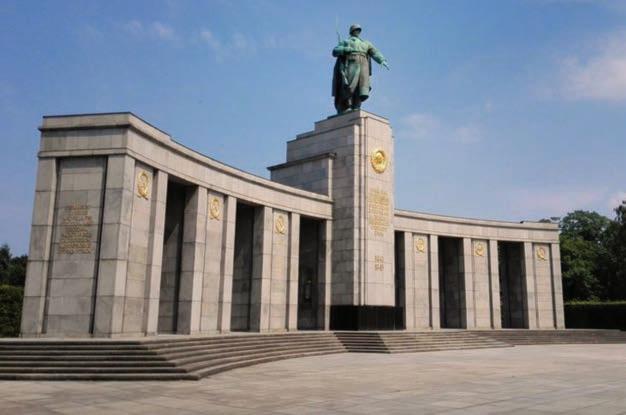
The Soviet War Memorial in Berlin’s Tiergarten, featuring a bronze statue of a Soviet soldier atop a columned monument with golden wreaths, commemorating Red Army soldiers who died liberating Berlin in 1945.
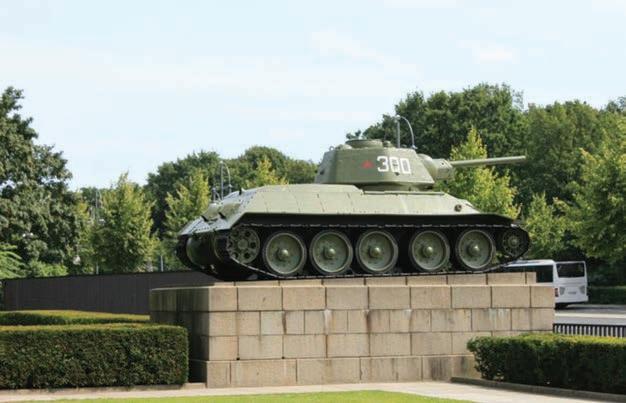
A Soviet T-34 tank on display at the Tiergarten memorial complex, mounted on a stone pedestal as part of the monument honoring the Red Army’s role in World War II.
What makes Berlin’s memory culture truly remarkable is how it has become participatory, particularly through its stumbling stones, those small brass plaques embedded in sidewalks throughout the city. I watched as local schoolchildren polished memorials bearing names of Holocaust victims who once lived in the buildings above. These tiny monuments bring remembrance into everyday life. This is how Berlin makes sure memory happens - not just in museums but where people walk every day.
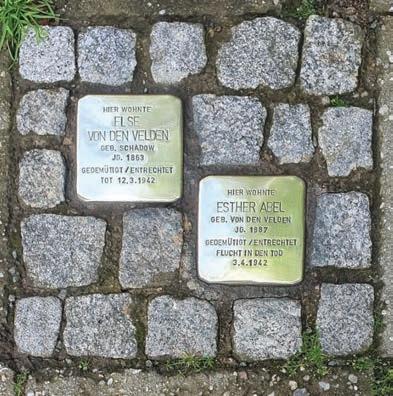
Stolpersteine (stumbling stones) embedded in a Berlin sidewalk, commemorating Else von den Velden and Esther Abel von den Velden, Holocaust victims who lived at this address and perished in 1942.
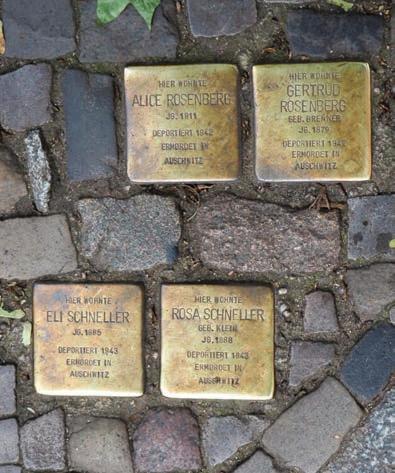
Four Stolpersteine commemorating the Rosenberg and Schneller families - Alice, Gertrud, Eli, and Rosa - all deported and murdered in Auschwitz between 1942 and 1943.
When I reflect on Berlin’s memory landscape and consider my hometown of Abidjan, I’m struck by profound differences in how our societies process historical trauma.
Berlin has embraced what might be called “active remembering,” deliberately confronting its difficult past through physical markers that make forgetting impossible. In contrast, my hometown’s approach to historical memory might be described as “selective commemoration,” meaning that certain aspects of our complex history remain largely unmarked in public space. The colonial period, the struggles for independence, and more recent civil conflicts have few dedicated memorial spaces where citizens can collectively process these events. In Place de la République, a statue celebrates independence, but the complexity of what came before and after remains largely absent from our memorial landscape. Where Berlin uses concrete stelae and information centers to process its Nazi past, Abidjan’s
colonial buildings stand repurposed without contextual markers explaining their original functions within systems of oppression.
I think this difference reflects not just aesthetic choices but fundamental approaches to historical pain. Berlin has embraced a philosophy that confronting past wrongs openly creates pathways to healing, while Ivorian culture often processes trauma through oral tradition rather than physical monuments. In my grandmother’s village near Abidjan, stories of resistance against colonial powers are passed down through generations, kept alive through speech rather than stone. When I walk through Berlin’s Holocaust Memorial, I wonder how Abidjan might look if we created similar spaces to process our own historical wounds: the slave trade, colonial exploitation, and postindependence conflicts. Would public memorials help heal divisions that still simmer beneath our society’s surface? Or is our approach of integrating memory into living cultural practices rather than concrete monuments equally valid?
- Marie Diarrassouba
Sprawling Countryside, Dingle Peninsula, Ireland [Kendall Sundstrom]
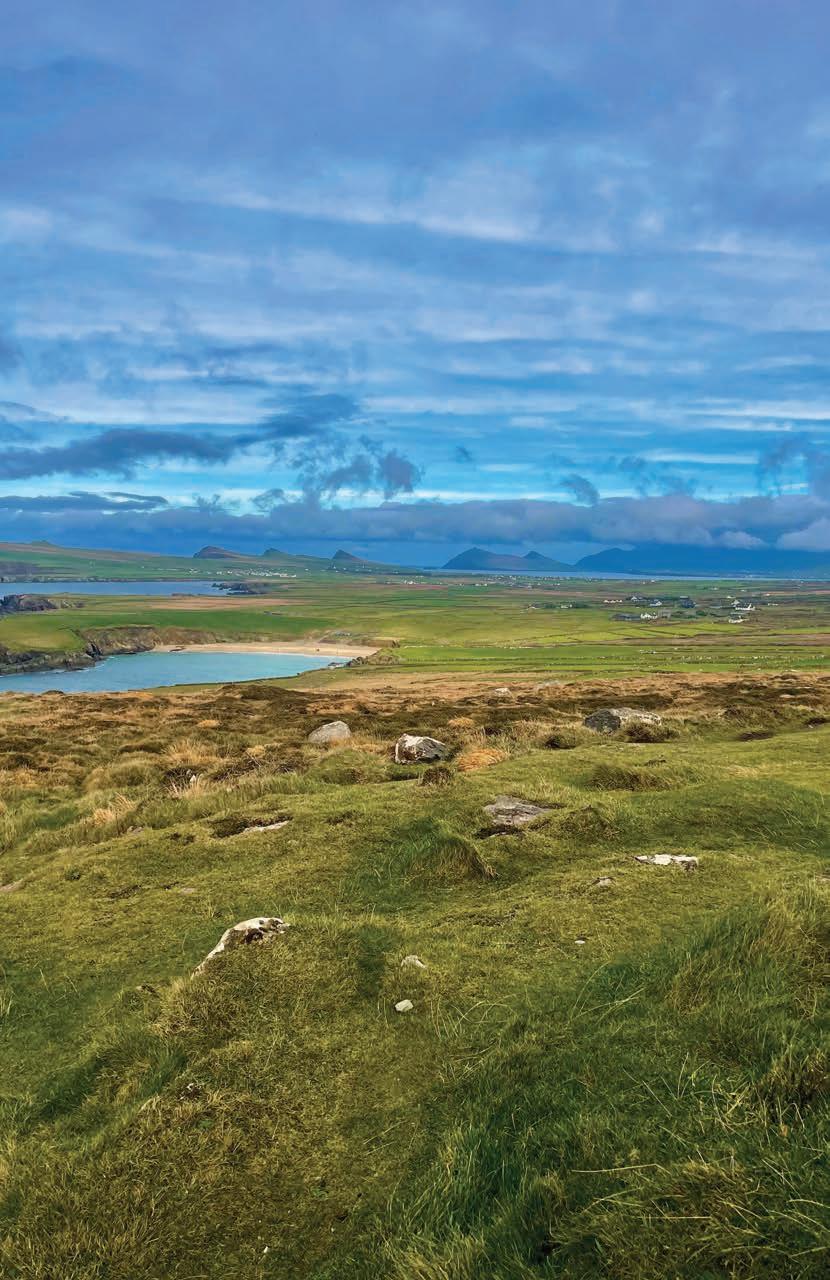
Every time I have been abroad, I have discovered something new about myself, whether that be artistically, emotionally, or academically. Each experience has challenged me in a different way, pushing me to reflect on how I learn, how I process emotions, and how I understand my place in the world. Rather than feeling like isolated experiences, these moments abroad form a continuous progression, with each building on the last and shaping who I am today.
The first time I went abroad was during my gap year, when I traveled to Oaxaca, Mexico. That experience fundamentally changed how I approached education. Without the constant pressure of grades or evaluation, I came to value learning for its own sake. I became more attentive, curious, and present, allowing myself to be fully immersed in the process rather than worrying about outcomes. Being in Oaxaca also taught me how to slow down and recenter myself, both mentally and creatively. It was the first time I truly understood that stepping outside of a familiar environment can clarify personal values and priorities in a way that staying comfortable never can.
The second time I went abroad was through a faculty-led program with HWS in Seville, Spain, and this experience was deeply emotional and reflective. Living in a city shaped by layers of history, shared courtyards, and intimate public spaces, I began to understand how physical environments can create space for healing and personal growth. I learned how to sit with my emotions and work through them rather than pushing them aside. Seville taught me the importance of presence, of paying attention to the people around me and fully engaging with the moment.
While in Spain, I encountered centuries-old cathedrals, Jewish quarters, and former mosques, each carrying the
weight of generations before me. Seeing these spaces added a depth of reflection and understanding I had never experienced before. It made me slow down, get lost in the architecture, and simply breathe it in. When I was having a difficult day, I would wander into the old Jewish quarter and let the narrow, ornate streets guide me. The scale and complexity of the space made it easy to lose direction, but in doing so, I felt removed from the city around me. Within those winding streets, time seemed to soften, and I found comfort in the way the architecture held both history and quiet refuge.
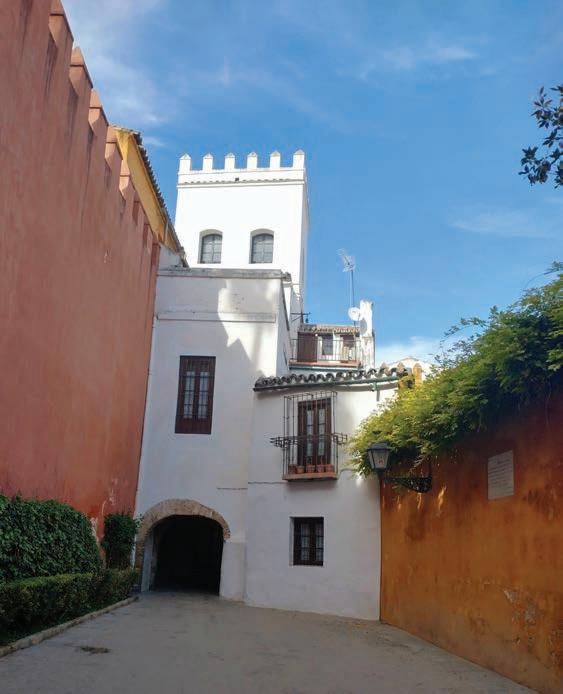
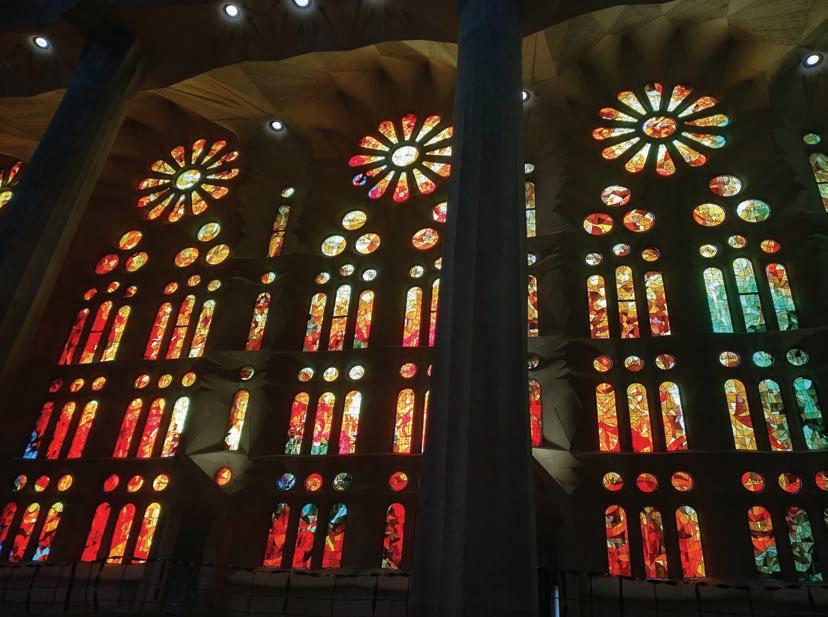
The third time I went abroad was to Perth, Australia, also through HWS, though it differed significantly from my previous experiences. This time, I was not surrounded by a large group of students from the United States or similar backgrounds. Instead, I was mostly on my own and had to learn how to adapt independently to a new environment. This semester abroad strengthened my sense of resilience and self-reliance, pushing me to navigate unfamiliar situations with confidence and flexibility. It also clarified which relationships in my life are grounded in genuine care and support.
Academically and creatively, my time in Perth deepened my interest in environmental development and sustainability, particularly in how these ideas intersect with art and architecture. Being there allowed me to see how environmental responsibility can be thoughtfully integrated into design, reinforcing my desire to pursue work that meaningfully connects sustainability with the
built environment. Being surrounded by people from all over the world also expanded my perspective, showing me how differently people experience and interpret the world. Late nights out or trips to Rottnest Island felt almost surreal, as if I had stepped into a different universe.
One moment in particular stays with me. I remember walking home alone late one night after saying goodbye to a friend. The air was calm, but the sounds were overwhelming. Hearing kookaburras cackle in the trees sent shivers down my spine, yet it also made me stop and take a breath. I stood there listening, feeling the chill of the night air on my skin, fully present in a way I had rarely been before.
Together, these experiences abroad have shaped how I learn, create, and engage with the world. Each journey taught me something distinct, yet all reinforced the importance of reflection, adaptability, and intentionality, qualities that continue to guide both my academic path and personal growth. Without these experiences, I do not think I would have been able to understand what I want to do or where I might want to do it. Going abroad has changed the way I speak to people, the way I think, and the way I create. The ability to change and to recognize that change within myself is what matters most to me about studying abroad.
- Isabel Goldblatt-Hamilton

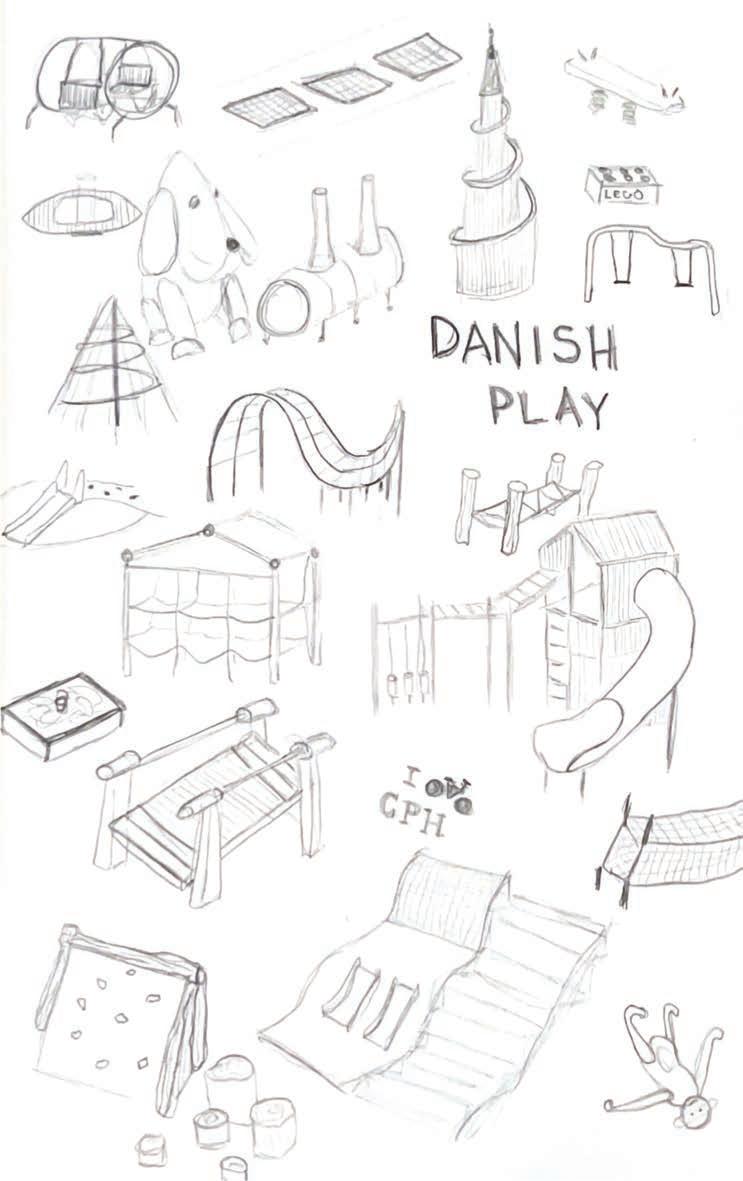
Danish Play [Abby Hark]
On January 10, 2025, I boarded a flight across the Atlantic Ocean to Copenhagen for an unforgettable study abroad experience. As an architecture student, I was beyond excited to learn and live in a city with such a unique approach to design, but what I didn’t know was just how impactful it would be to learn about Danish play practices by observing playgrounds and play spaces. Looking back now, I visited 20 playgrounds and 12 other spaces for play around Denmark during my four months there and 10 playgrounds in other European countries. These ranged from trampolines built into the street to kids’ corners at museums and even wooden trolls you could climb. I was interested to see how these spaces and the playgrounds I visited were designed to meet the needs of children in the context of Danish society.
Through observation of these spaces and conversations with Danes, I have drawn out a few key themes. The sense of trust, desire to let children interact with nature, and biking culture are three key principles of Danish society that have influenced what I saw in their play spaces. These factors distinguish Danish play areas from the other playgrounds that I visited in Europe and while growing up in the United States. There is so much trust in Denmark, and I noticed this right away as strollers lined the sidewalks outside of cafés where babies peacefully slept while their parents went inside. There is also an emphasis on letting children immerse themselves in nature, as in the Forest Kindergarten concept. Forest Kindergartens are a popular educational choice in Denmark where children learn to whittle with knives, climb trees, and build fires as part of their school day in the woods. I even noticed on my weekly runs that the local preschool was constantly taking the students outside to the park so that the children were still
spending hours of the day outside.
Many people think of the biking culture when they think of Copenhagen. During my semester living there, I was amazed by how many Danes bike constantly, just as I did on my commute to school and personal travel around the city. It was especially striking to see young children who learned to ride with adults in bustling bike lanes so they were prepared to navigate the city on their own one day. The biking culture combined with the values of trust and outdoor play are crucial aspects of Danish society and influence the design of play spaces.
While there is not one design or playground structure that appears in every space, there are some similarities.
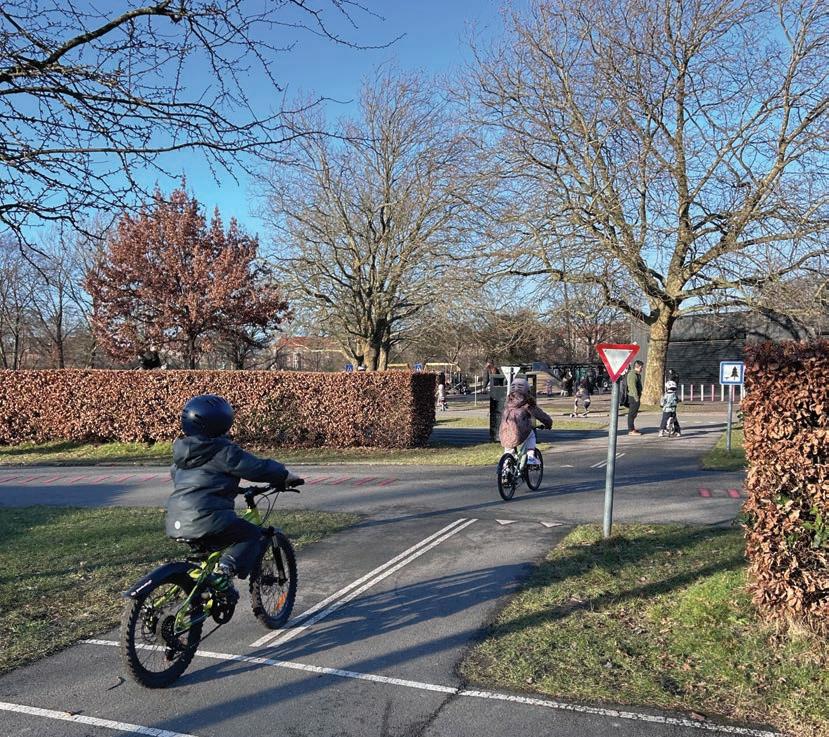
Many of the playgrounds that I visited did not have fences enclosing them. To me, this speaks to the sense of trust that Danes have in their children to know where they can and cannot go to be safe. During one visit to Israels Plads near Nørreport Station in Copenhagen - an open, concrete play space - I saw many kids running freely during their school day. The sense of trust extends to the idea of letting kids learn for themselves rather than constantly warning them to prevent danger before it happens. As I sat one day at the Amager Fælled Skole playground in Copenhagen, I noticed a few young children attempting to traverse the bars and falling as they tried. Rather than parents rushing over to ensure they were okay, they observed nearby, letting the children learn the lesson for themselves. Nature was also a prevalent component: many of the playgrounds had dirt bases and sandboxes, inviting children to play without worrying about how dirty they might get. A visit to Camp Adventure in Rønnede, Denmark also showed me the value of nature in Danish life. The impressive 45-meter treetop tower and on-site playground allowed children to experience play right within the trees rather than the prefabricated metal structures of many playgrounds I visited growing up. Biking to these parks was common and sometimes incorporated within. For example, at the Traffic Playground in the Østerbro neighborhood, children can learn to navigate bike lanes and Copenhagen roads all in a child-scaled park demonstrating another way that Danes prepare children for the culture of biking in their society.
Being able to observe how another country incorporates play into daily life, starting with the youngest members of its society, has given me useful insight as I continue to learn and propose my own design ideas. Through conversations with Jasper Schipperijn, head of the World Playground Research Institute, and Karina Suhr, playground architect and founder of Leg Rum Land, I have come to understand that there can be something of a disconnect between how playgrounds should be designed to meet the needs of the
users and what is actually being constructed. This inspires me as an architecture student who hopes to pursue a career with a focus on education and playground design to think carefully about how the designs I propose would actually benefit users. Copenhagen has become a second home through this process, and I miss it every day. I am grateful to have been able to learn and live in a city where thoughtful design is around every corner, including in its playgrounds.
- Abby Hark
Konditaget Lüders, Copenhagen, Denmark [Abby Hark]
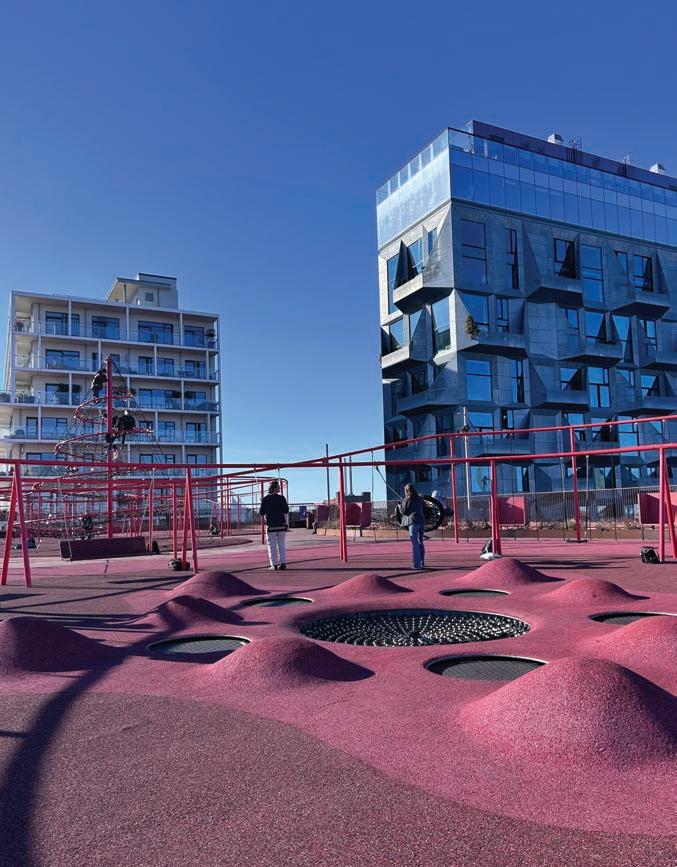
The week of February 13th to 18th, 1922 marked a cultural revolution for Brazil. A collective of visual artists, writers, philosophers, and political activists gathered at the Theatro Municipal in São Paulo, a landmark that housed the city’s best creative intellectuals of the 20th century. Having only been established in 1911, the Theatro Municipal was still considered a novel space for Brazilians to congregate and express their artistic power, and the artists who occupied the theater during that week in February were no exception. That historic period, known as the Week of Modern Art, is still recognized as one of the most prolific moments in Brazil’s cultural history, as it raised sociopolitical consciousness towards the ways that national audiences consumed and conceptualized art. The modern art movement of 20th-century Brazil became part of a larger avant garde art movement rooted in culturally rich rhetoric that intersects social and expressive genres from African and Indigenous peoples, revealing the nation’s damaged colonial roots in hopes to move people in a direction of post-colonialism and equal political representation.
Fast-forward to early September 2025: I had just arrived in São Paulo with a cohort of students a couple days prior, and, as I was walking down Praça Ramos de Azevedo, to my right there it was. As I took in the sights of the theater’s eclectic Baroque exterior, I closed my eyes to take myself back to that week. I imagined how surprised attendants of that art week must have been to encounter such a stark contrast between the European architecture that protected a plethora of rich, colorful art depicting abstracted bodies
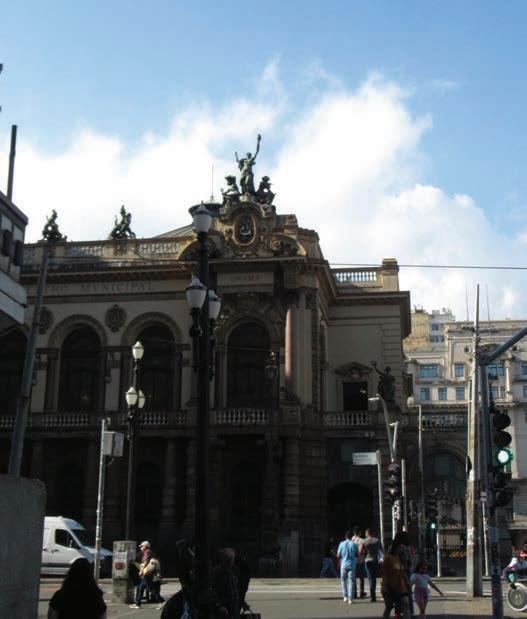
and native foliage within the exhibit’s interior.
On his 38th birthday, Oswald de Andrade, poet, philosopher, and one of the leading figures of the Brazilian Modernist movement, received a gift from his then-wife, painter Tairsila do Amaral. Abaporu (1928), in the Brazilian indigenous language Tupi, translates to “the man who eats people.” The man who eats people, in the eyes of Amaral, was a small headed human; a figure whose head was small and thoughtless and whose body was big and brawny. Yet he rested his head in the crook of his hand, as if deep in thought. He was curled up under the sun next to a cactus tree, and the emblematic colors of Brazil’s green, blue, and yellow flag assume the landscape of the curiously pensive scene. It was this painting, and the contradictory depth of its representation against that of Brazil’s colonial and educated elite, that inspired Andrade to write Manifesto Antropófago, known to the Western world as the “Cannibalist Manifesto,” published in the same year as
Abaporu’s creation. Andrade’s manifesto uses cannibalism as a recurring metaphor for the cultural, social, and spiritual overcoming of an imposed identity. Through this metaphor, he argues that such an act of overcoming permits the Brazilian individual to achieve greater autonomy while still selectively absorbing strengths from European culture. It is this fluidity in etymology and forms of thinking that the Manifesto Antropófago encourages; a rejection of the “canned consciousness,” phrased using his words, that is imported to us from the Portuguese. In Brazil’s art scene today, the rejection of this consciousness has gone beyond simply implementing decolonizing practices among museum walls. Brazilian artists today have made their city the museum, transforming buildings, small galleries, and contemporary museums into democratic forums; the roots of Andrade’s manifesto are evident throughout every expressive space that São Paulo has offered me.
One busy Sunday on Paulista Avenue, I came across a painting in the Museu de Arte de São Paulo that, at the time of my encounter, I believed was another painting done by the same artist who created Abaporu. The form was nearly identical - the same abstract figure sat idly by a cactus under a vivid orange sun, but this time, the figure was coated in black. I would come to find, after some research, that the shiny black figure resembling Amaral’s work was covered in latex, done by the contemporary Brazilian artist Rodolpho Parigi. Parigi’s VAL (2024) comes nearly a century after Amaral’s Abaporu figure critiqued a history of art and ownership of Brazil’s colonial elite. This time, Parigi references his Brazilian predecessors using the same surrealist and abstracted forms to talk about existing issues of expressive restraint for queer Brazilians of the 21st century. The latex is restrictive and symbolic of marginalized communities that use art as a way to claim discursive and physical space in museums. Just like Andrade and Amaral, it was interesting to see how the cycle of influence and growth among Brazilian creatives stems
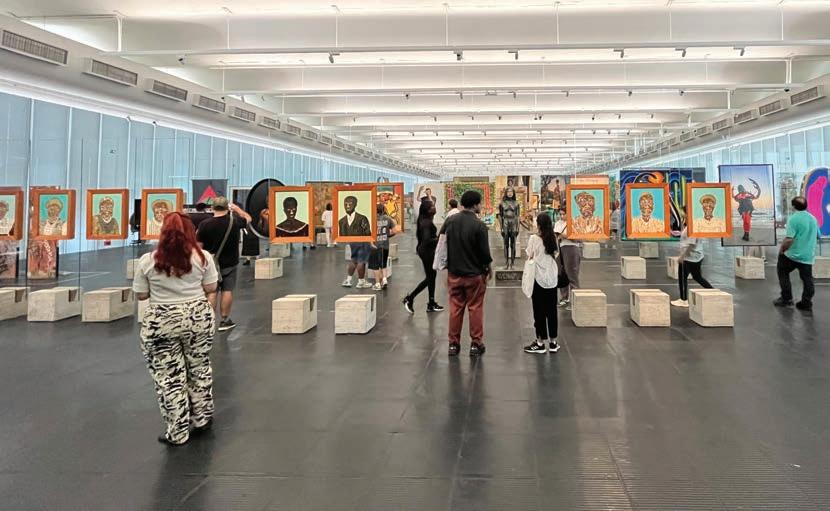
from a philosophy of identity-making.
Cultural production in Brazil will remain an amalgam, working against a binary that tries to set differences between civilization and barbarism, modern and primitive, original and derivative, and other divisive views that the Manifesto Antropófago critiques. Constructing a holistic and complex identity is only strengthened through creative expression and political consciousness. In São Paulo, this consciousness is found in the streets, in conversations with artists, and in formal institutions like schools and museums. Art transforms every corner of the city in a way that reimagines the boundaries of expressive potential.
- Zooey Gastelo
Works Referenced:
Andrade, Oswald de, and Leslie Bary. “Cannibalist Manifesto.” Latin American Literary Review 19, no. 38 (1991): 38–47. http://www.jstor.org/stable/20119601.
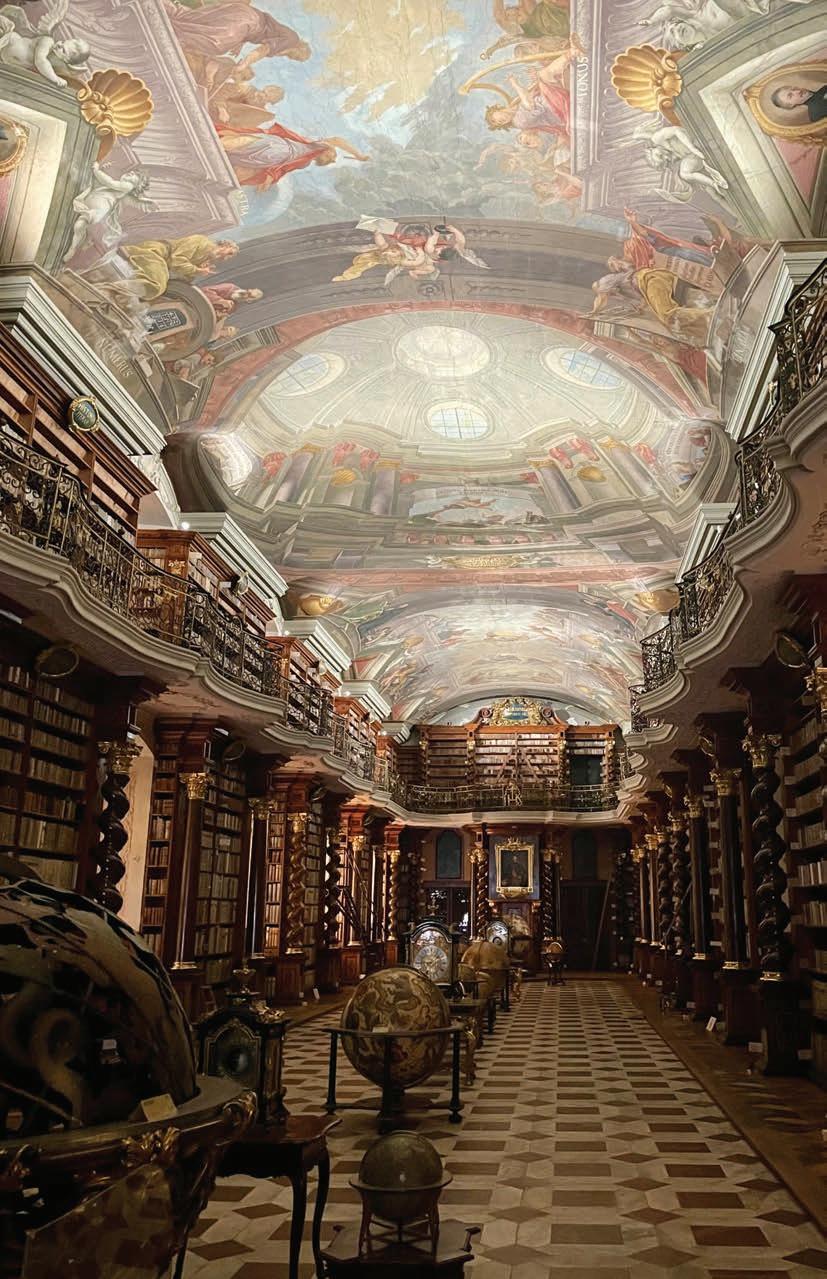
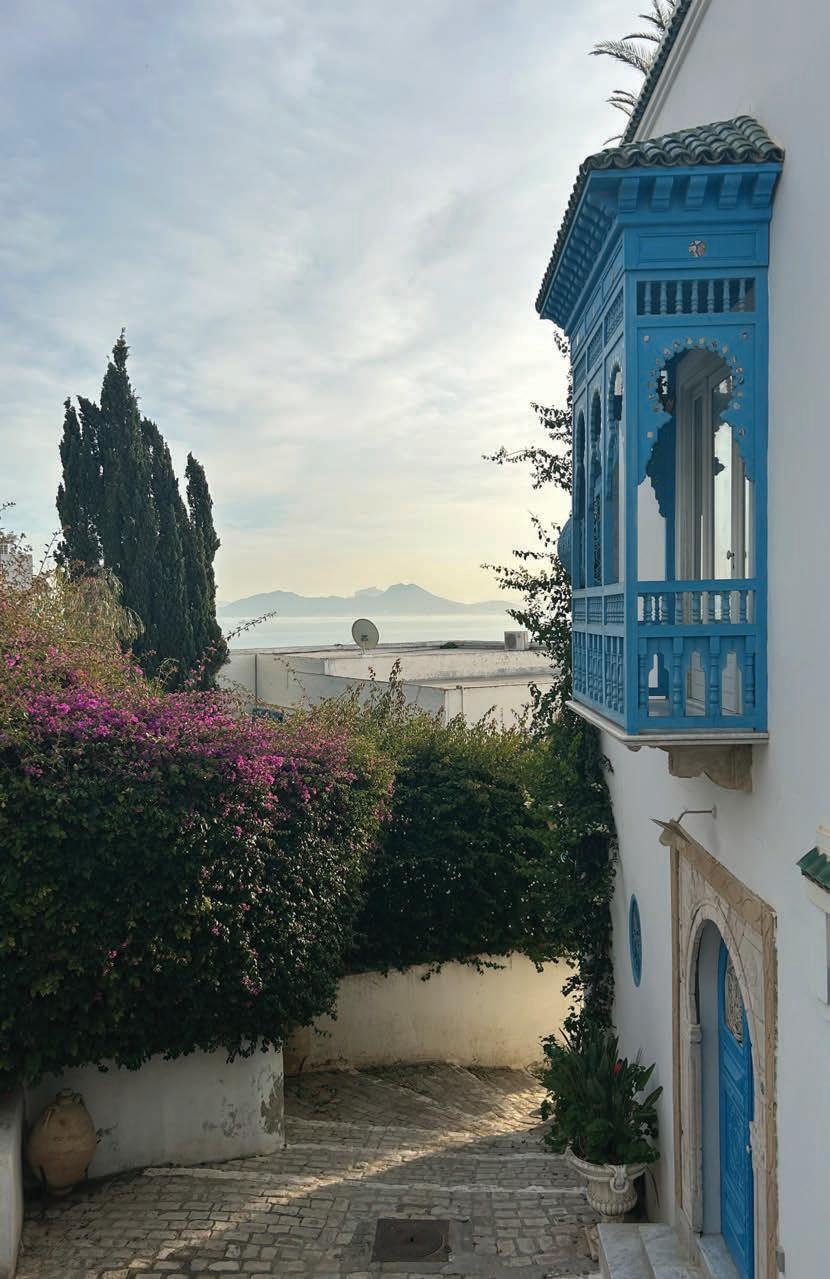
Wild pea flowers bloom,
Dancing softly in the wind, Nature’s gentle touch.
- Jessica Hoffman
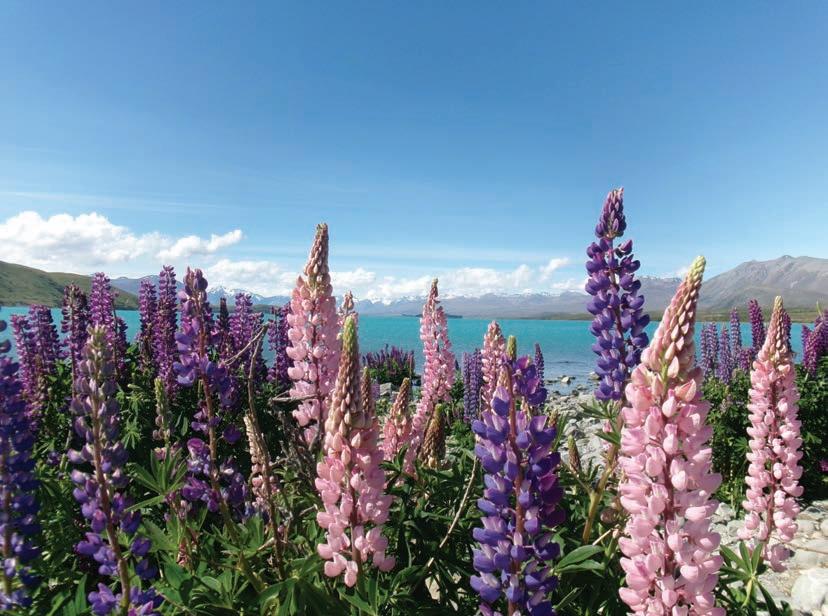
Multitudes of green, gently kissed by shades of brown
A plethora of shapes, made with care to catch the sun
Opaque from the beams of light as veins lift from each canvas
Roots grip the sand, intertwining while whispering secrets beneath
Tangling amongst each worn grain as waves roll relentlessly
An impossible job; to slow the mark of time
Testing their strength with rich upwellings from the depths
Swells that beckon both predator and prey alike
The very edges of the ocean holding so much life
- Linnea Darius
Watercolor Journal Entry on Seagrass, Minjerriba Island, Queensland, Australia [Linnea Darius]
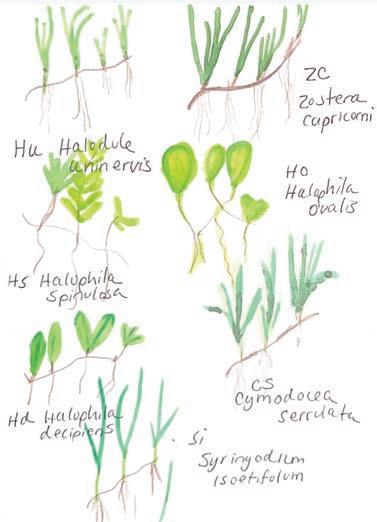
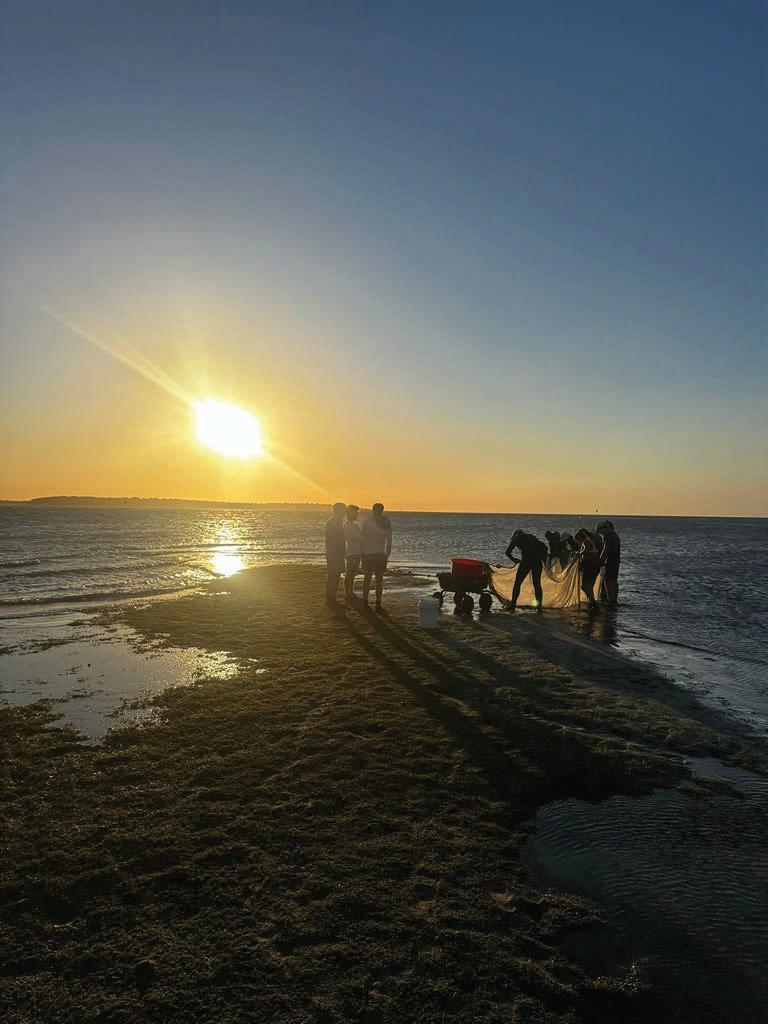
Students Working at Low Tide on Seagrass Beds, Minjerriba Island, Queensland, Australia
“MetService has issued an Orange Heavy Rain Warning for Auckland until 7am on Monday, due to an active line of thunderstorms; this line brings the risk of very high intensity, localized downpours. Make sure you stay informed. Watch the forecast at —. Check road conditions if you do have to travel. Floods and flash floods can happen quickly. Act immediately if you see rising water, do not wait for official warnings. Head for higher ground and stay away from floodwaters.” (Auckland Emergency Management mobile alert)
Oh the places you’ll go, through water and snow rules and regulations, we can forgo take what you must, all you can fit the floods are here and now we must split too much in the winter, not enough in the fall the levees did nothing but stunt and stall
how we failed to predict, this we don’t know for the buildings did crumble and the winds did blow now look to the sky and watch the rain fall lost and weathered travelers, hear my call:
Oh, the places you’ll go, to escape what we’ve done, Our lives hard-won, come undone.
- Katherine Villinski
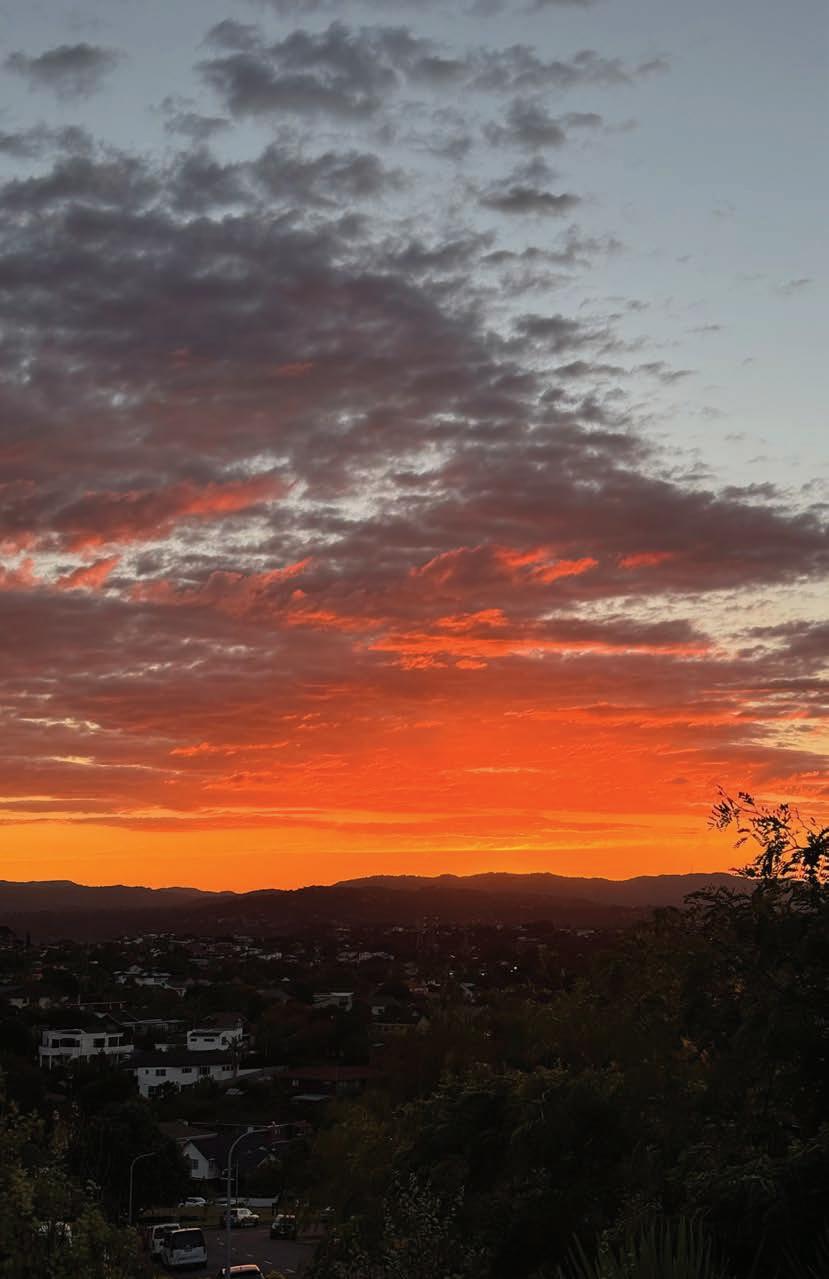
A little suburb briskly outside the city’s clamor,
One grocery store at the corner,
Twisted Tomato on the other
A haven of simple, quiet lives,
Often filled by the squeaking of young kids at play
One house, seemingly unassuming at a glance
“Can you hang up the laundry?”
“It’s my turn to shower!”
“I was saving that sandwich for lunch!”
Small ripples in the rhythm of life.
Yet I’ve found a strange comfort—
The bickering of the boys,
The overwhelming kindness of my host mom
In the noise, in the rare silence,
In the constant tug of coexistence.
In Point Chev, I’m learning what it means to integrate yourself.
To be myself,
To live,
In the company of the Kiwis under the soft breeze of the Palm Trees.
- Lindsay Miller
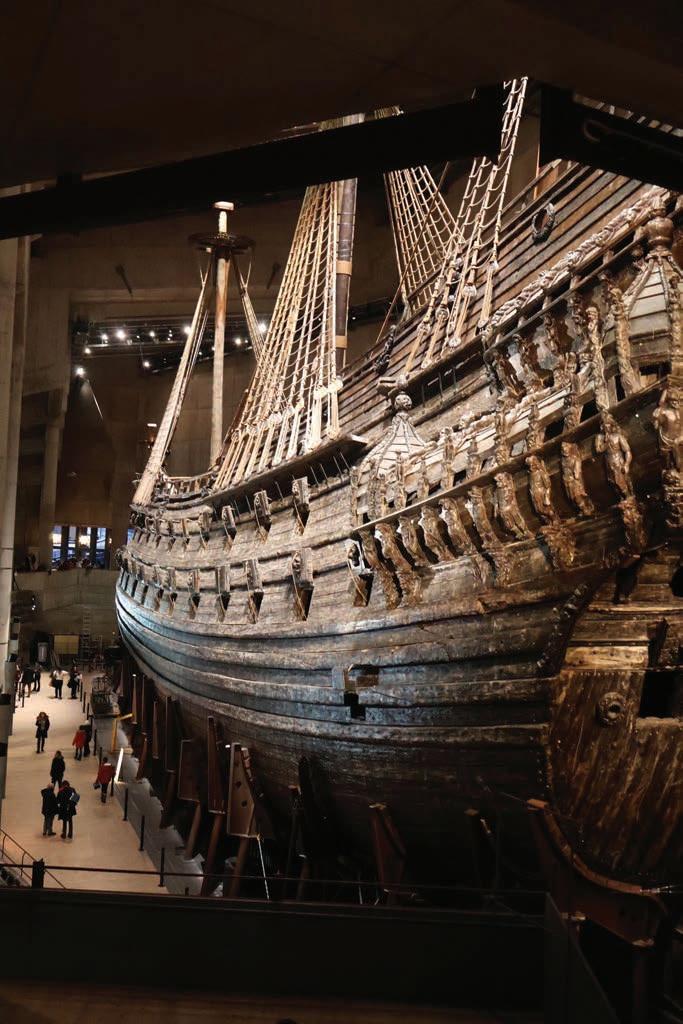
I’ve walked like this before I was at the bow ropes coiled on anchor myself with face at the mast looking by oar holes on a fjord whittling himself away by horizon’s approach biting lip’s edge look down and face points below marks the face back between slits in planks algae suggests some thing an assembly of old features back no back I pull vanity sits between Oslo and Dublin push clouds up my heel bruised by wiring in shoe’s heel bunching up it’s the face the limp reveals toes pull up heel pushes the limp reveals an obsession with how I should grow a beard poke pieces out of skin where lips are chewed I must grow one and then another and then let other hairs get in the way a sail crossing over the horizon points far away the fjord’s nose above his grimace
- Andrew Pilet
Note: This is a work of autobiographical fiction. Some aspects have been changed.
Chris did not finish knocking before someone answered the door.
“Hello, are you Chris? I’m Mrs. Adams.”
She was a short, tight-faced elderly lady, and she spoke quickly. She told him to take his shoes off. She told him where to put his bag. She told him that dinner was at 6pm and that they ate together. Then she told him, before he even saw his room, that her meth-head son had been in and out of rehab and that he had an adorable daughter and a beautiful ex-wife and that she wished he would go back to them and finally sort his life out.
Bill stood behind her in the hallway and smiled, largely because he was too old to hear what she had been saying.
“Hello, Mr. Adams,” said Chris.
Mr. Adams told Chris to call him Bill. He told Chris not to mind Loraine’s ornery disposition too much. He told him she was a great woman, really. Chris turned back to Mrs. Adams, and she told him again that she was Mrs. Adams.
• • •
The house was one floor. In the back was the kitchen, and strangely attached to that, was the bedroom Chris was given. It used to belong to the son, not but hours earlier.
The room had a standing wardrobe, dresser, and desk in it; all of them antique and made of thick solid wood. They were arranged in a way that afforded as little space to move around as possible.
Chris leapt on the bed and fell deep into it like a beanbag. He pulled the blinds behind the bed and looked out onto the backyard.
The yard was bigger than he expected, nearly as big as the house. There were bountiful banana and feijoa trees growing close together. He loved feijoas. The leaves were thick and roared as the constant Auckland breeze moved through them. The garden looked crowded like a big family gathering, like what wanted to grow there was encouraged to. A tent sat below the trees, half-hidden behind the canopy.
Chris complimented Mrs. Adams on her garden through his open door while she made dinner outside his room. He inquired about the tent and was told that the son would be living out there, now that he had moved in. Bill said that was their “outside son,” which made Mrs. Adams start an argument about grocery shopping and dishes.
For dinner, they had lamb meatballs and sweet potatoes. Mrs. Adams called them kumara and corrected Chris every time he said “sweet potatoes.” She talked while she ate. Bill nodded and smiled and occasionally said something dry that went unnoticed by her. The servings were big enough for the old Kiwis but not nearly large enough for a young American man.
The conversation turned to politics and Mrs. Adams asked Chris what he thought about Trump. She said they didn’t
like Trump here. She said she hoped Americans were waking up. Chris said he was far away from all that now. He said he didn’t think about it much in the first place, let alone when he was 9,000 miles away. Mrs. Adams frowned and said it mattered everywhere. He nodded and took another bite.
The outside son came in through the kitchen and sat at the table as they finished dinner. He didn’t say much more than hello as he gathered a plate from what was left. He leaned back in his chair while he ate, and looked down at his phone on the table, watching MMA highlights with the sound up. For the rest of dinner, Chris tried to avoid looking at the screen beside him, but he could not ignore the sounds of bodies being hit nor the massive crowd roaring from the tinny phone speaker.
In the following days, the son’s car was rarely in the driveway, but sometimes Chris saw him through the window, shirtless, tattooed with gibberish, sitting on a folding chair by the tent and looking at his phone. That first night would be the only night the outside son would join Loraine, Bill, and Chris for dinner.
During the week, Chris worked at a music studio. The man he worked under was a follower of the Socratic method and liked to quiz Chris all day. He asked Chris about American politics and Trump too, whether he thought the man was doing what needed to be done. He asked Chris what he thought about transgender people and answered himself before Chris could respond. He talked about country music and cowboys and asked whether Chris knew any. He said black people were cool in America, but that Māori people here were “childish.” He said they stole. Chris listened and learned how to set up mics properly. At night he went back to the Adams’ house and ate dinner and listened more.
His coworkers invited him out on Friday. Chris was excited to tag along and was determined to keep up, so he drank faster than he wanted, multiple cheap foreign beers at every stop. All night, he followed his coworkers without asking where they were going until they eventually entered a club with people in cages hanging from the ceilings. He danced and drank more and flirted with everybody except his coworkers, because he thought it unwieldy to be involved with someone you see every day.
Hours later, the music suddenly stopped. Spotlights came on and a big plastic doll of a man came out on stage. Chris backed away from the woman he was dancing with as the drag queen began his show. He laughed and felt his face get hot. He didn’t know where to look. He felt it was funny and he thought it was ugly. He also felt he had wandered somewhere he hadn’t meant to be.
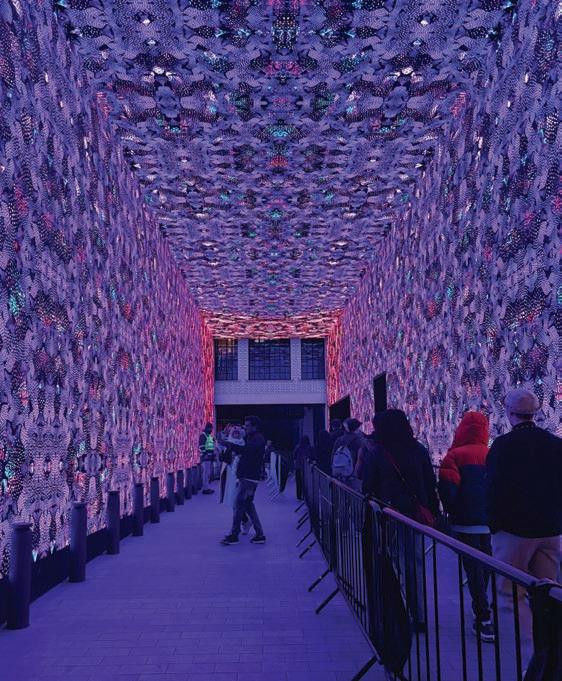

Chris slipped outside to gather his drunk self. A tall goddess was already there, leaning against the wall and smoking. She had tattoos of her lineage on her face and the symbol of her tribe on her chin. Despite the tar and tobacco she was inhaling, she said she just wanted some air.
She asked where he was from, and when he answered, she said she liked his accent, that Americans always sounded confident. Chris complained about the drag show, and she enlightened him that not only was this a drag club, but this was the drag strip of Auckland, the drag capital of the world. Still, she affirmed to him that her parents wouldn’t approve of this place either.
They began walking. She said they could go to her marae; it was nearby. He learned about Māori maraes in class that week, but, in the loose summer heat, he could barely remember and didn’t care about their divine significances. They sat down on the floor when they got there and, right
away, kissed. It was clumsy and easy at the same time as they laughed into each other’s mouths.
• • •
He woke up chilled, undressed and uncovered. It was breaking daylight and the facial carvings that covered the ceiling above him glowed in golden dismay. He stood up quickly at the glare of their many eyes. Beside him, the goddess; the girl, was asleep. He jumped into his clothes and slipped out onto empty streets still dim in the dawn light. He checked the bus schedule on his phone and ran to catch the first morning stop, which came just after five.
When Chris finally got back to his house, he saw Loraine reading by the front window. He went around to the backyard, and it was quiet. The tent was zipped closed. The fruit trees stood silent under a layer of cold dew. He found the latch on the screen to the kitchen, left his sticky shoes on the door mat, and went to the room that was barely his.
- Patrick McGinn-Hammer
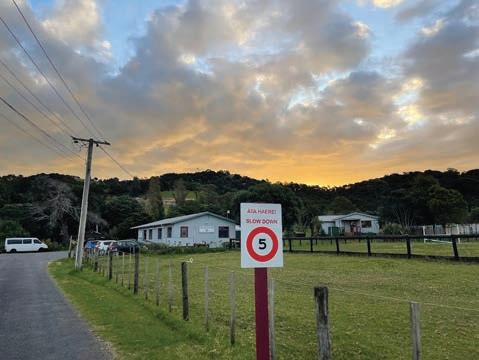
During my semester abroad in Rome, drawing became the primary way I processed my surroundings and, ultimately, my experience of living in another country. What began as coursework for my Drawing on Rome class gradually evolved into a practice that shaped how I moved through cities, understood culture, and reflected on place. My sketchbook became a constant companion, a visual diary of the memory and atmosphere of every place I visited. Long after returning home, these drawings continue to function as a way to revisit and reflect on my time abroad.
Drawing on-site required me to slow down and connect to my surroundings on a deeper level. Whether sitting in busy public plazas, nestled in the shade of narrow residential streets, or lounging in tranquil scenic parks, I was compelled to remain fully present. As I sat and sketched, I learned to notice how light shifted across surfaces, how architectural details revealed the passage of time, and how people occupied shared spaces. There was a beauty in staying in one place as the world moved around me and finding appreciation in simple details that are often overlooked.
This new way of seeing was deeply informed by my other courses, particularly Sustainable Rome. Concepts from that class such as adaptive reuse, systems of accessibility, and public green space found their way naturally into my drawings. Sketching ancient ruins, dense urban environments, and sprawling landscapes allowed me to understand sustainability in a tangible way. It bridged gaps between historical architectural techniques and contemporary urban planning questions, revealing how the Romans implemented “sustainable” design practices
long before we began to care about such things.
As I traveled beyond Rome, my sketchbook traveled with me. Each city (Florence, Venice, Naples, and the smaller towns and in-between places) left a distinct impression on me. I was often forced to make decisions about what details I could capture in a limited amount of time, whether that be the architectural grandeur of the Italian Baroque or the layered quality of buildings adapted to different uses over time. I learned to embrace the unpredictable nature of each environment and reflect it in the quick, loose quality of my pen strokes. Facades, cityscapes, landscapes, and sculptures became windows into identity, history, and daily life. By focusing on capturing the distinct atmosphere and identity of each place I occupied, I began to understand Italy as a living system shaped by humans and climate.
Drawing also opened unexpected moments of connection. On several occasions, my flatmates and I planned entire days around drawing - simply wandering until we found a spot worth sitting in, sketching, then letting our observations lead us to the next place. Drawing became an excuse for new adventures: traveling to a new place, getting lost and discovering a local hangout, or returning to the same place just to see it under different conditions. On one such adventure, a British tourist stopped to watch me draw. At first, I was self-conscious, but we soon struck up a lively conversation. We exchanged stories about the places we had visited, and for a brief moment, the drawing became a shared point of connection between strangers. My flatmates experienced similar interactions as well. It made me realize that drawing in public can create new relationships with people as well as place.
Over time, my sketchbook became deeply personal. It holds moments of focus, frustration, excitement, and discovery. Looking back at my sketches brings me back to
those moments - the time I spent there, the sounds around me, the smells, the shifting light. I remember each place not only as something I saw or consumed, but something I engaged with and participated in. More than anything, drawing transformed how I move through the world and connect with broader cultural narratives embedded within the built environment. The next time I go on an adventure, I’ll remember to appreciate the little details, too.
- Talya Peters

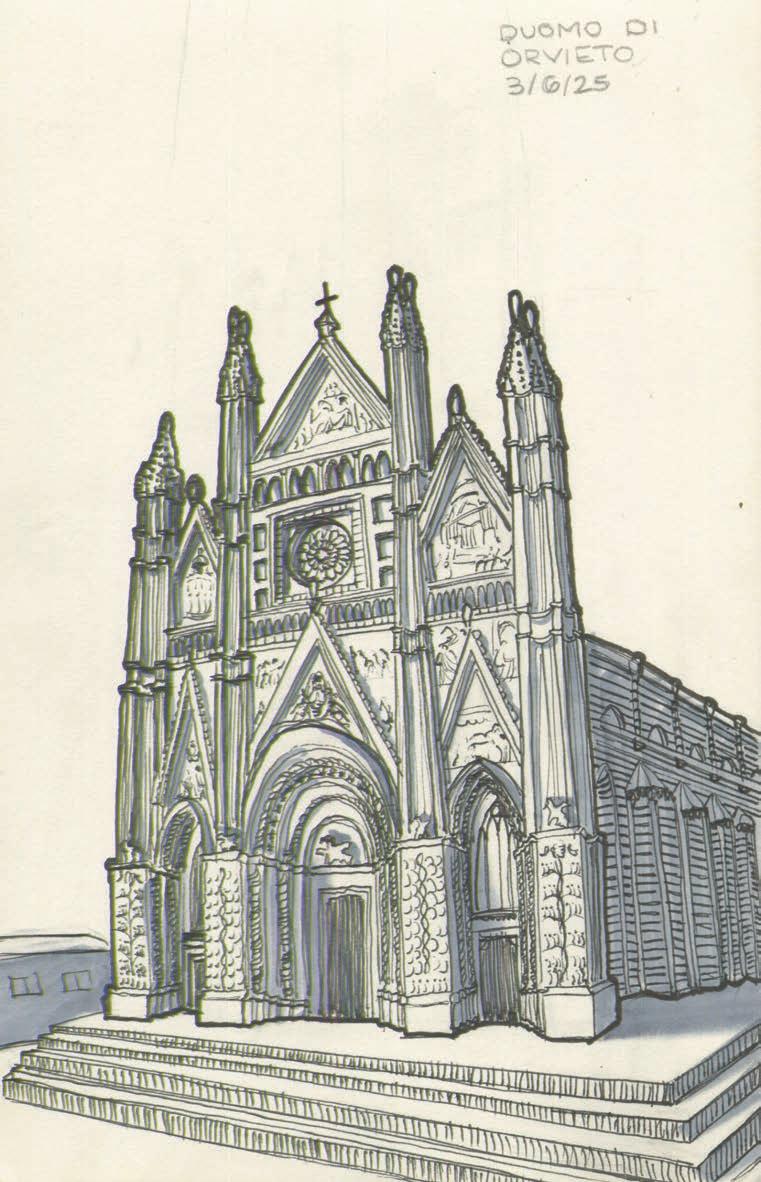
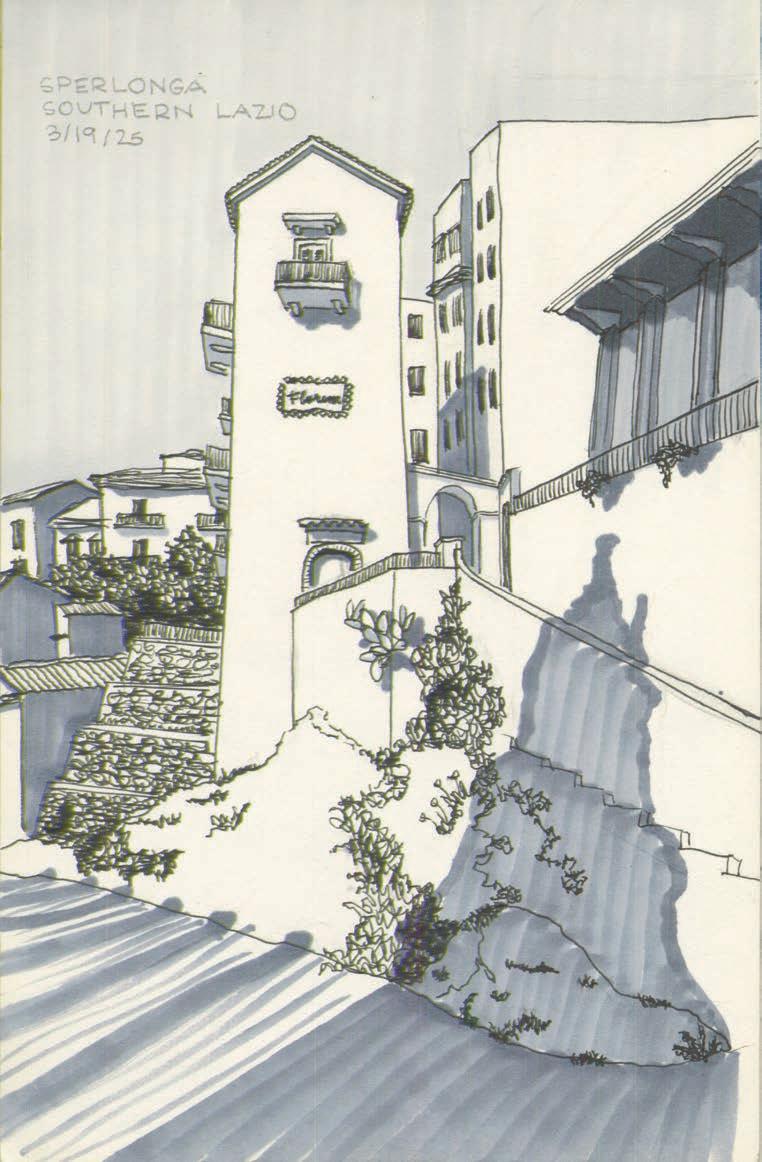
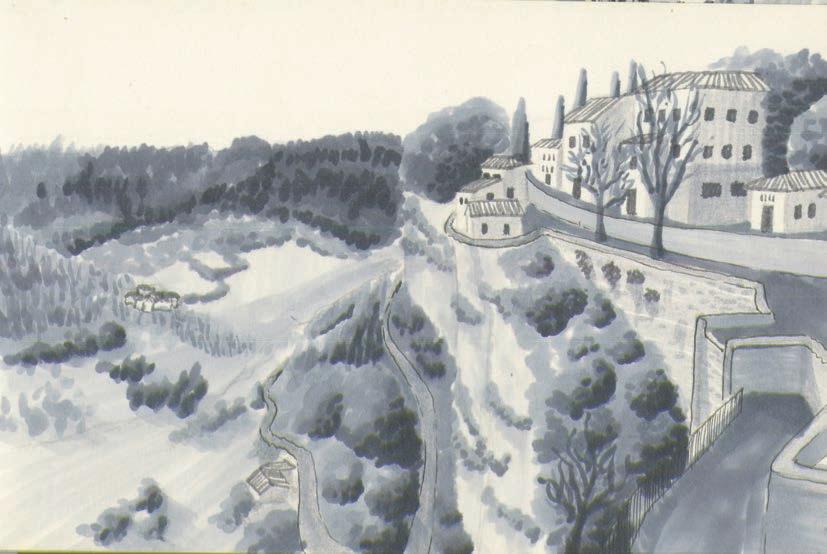
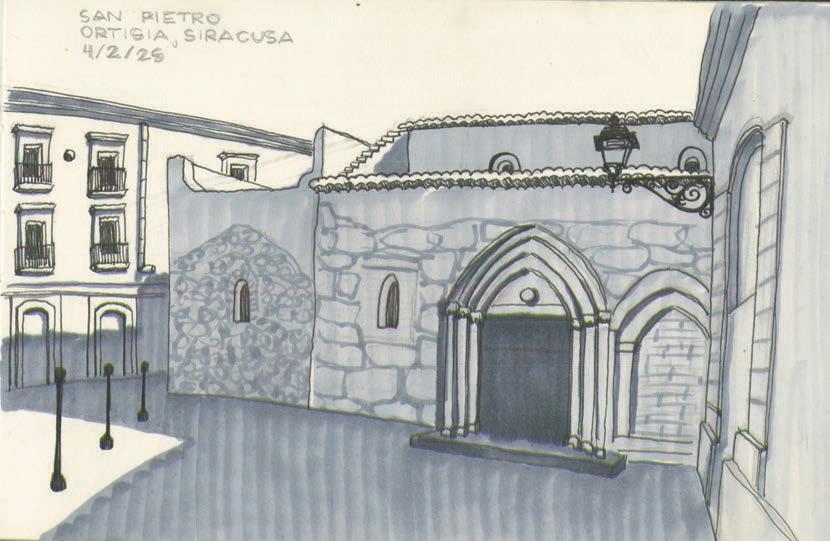
Milford Sound, New Zealand [Elena Roll]
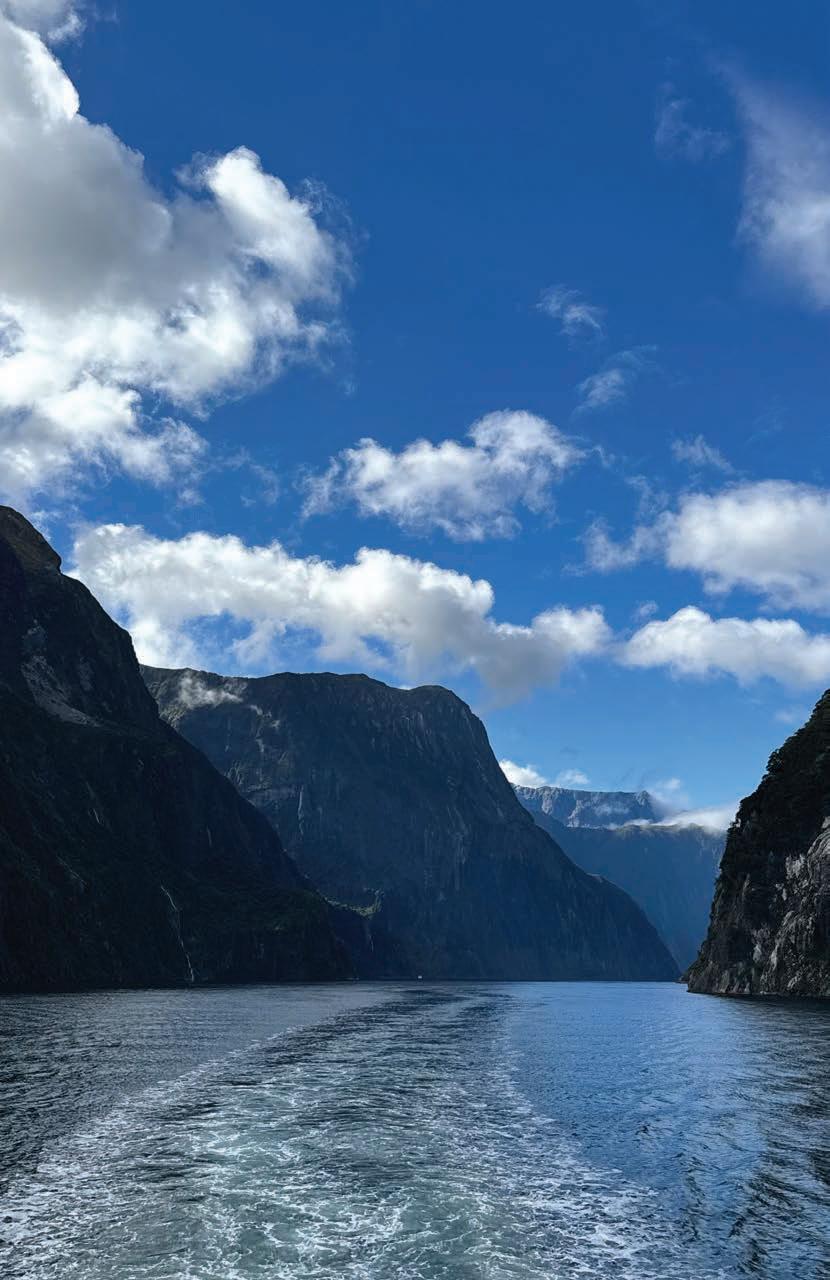
n. 1. a very brief period or exact point in time
2. a particular stage in something’s development or in a course of events
Studying abroad gave me many opportunities for learning and growth, but my homestay experience was by far the most influential. At the end of January, our HWS group got picked up one-by-one by our host parents in the lobby of Waipārūrū Hall on the University of Auckland campus. Without knowing what was going to happen next, there was an overwhelming rush of emotion - a combination of fear, excitement, and anxiety.
Then, suddenly you arrive at your new home! With a family you’ve never met, in a house you’ve never seen, in a country that is still unfamiliar. All the HWS students had been living together in a dorm for the month we had been in Auckland so far. The thought of splitting up into our individual homestays scattered around the city of Auckland was scary. We had spent the first month right beside each other, often just walking next door to our friends’ rooms to chat, get ready together, or head out on a day’s excursion. But there I was, sitting in my room in my homestay with a hundred thoughts rushing through my head. I felt lonely, lost, and sad to not have my friends alongside me.
This version of me wasn’t ready for, or open to, change. I wasn’t excited for this new experience, nor was I willing to adapt my expectations of what this homestay experience “should” look like. This was my new normal: a culturally immersive experience, but one to which I was slow to
adjust. I had a mix of feelings towards my homestay, largely due to personality differences, living styles, and maybe some culture shock. I really had to shift my thinking, and, as the days and weeks went by, things began to change.
One day in mid-March, I was sitting in my room doing Māori Studies homework on my laptop. My host dad came downstairs to show me a picture of a sunset on his phone. My host family’s house sat on a hill looking over the rest of the neighborhood with more hills behind it. The sunsets were magnificent. We walked upstairs together to the back deck to look at the sunset that night. My host dad and I had talked about the sunsets before, but this day, this night, I felt a sense of belonging with my host family for the first time. Up until this point, I had still been feeling a bit of distance. This late summer night, as the warm air filled the empty space around us, we chatted at dusk on the porch with the sunset behind us, and took our phones out to take pictures.
Somehow, someway, the distance slowly turned into connection. My host family and I started having more conversations at the dinner table. My host mom, the local elementary school assistant principal, and I would have a quick chat about literacy education. My host brother and I would talk about his self-run, home-based business or my summer job back home. Between long chats after dinner at the table, laughing with my host siblings late at night, and riding back and forth from the airport, everything started to click. I started to feel like this placement was the best thing for me, an experience that allowed me to grow and change in ways I didn’t think were possible.
As I reflect on my time in New Zealand, I would not go back and alter any part of my experience. I think about how I can approach situations from an outlook of welcoming change and gratitude, and, of course, I think about the sunsets. I
am reminded that growth doesn’t happen in our comfort zone, and getting out of it is one of the best things you can do. And if you’re lucky, you might find yourself looking at some pretty beautiful sunsets.
- Elena Roll
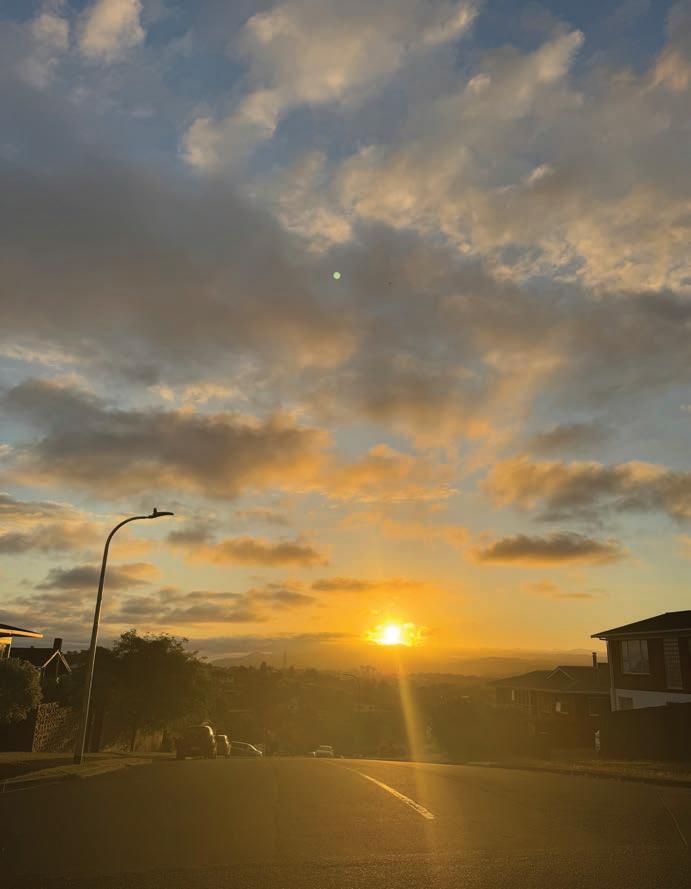
“Can you see anything? Yes, wonderful things, wonderful things.” - Dr. John Hall
Our terrestrial ecology professor, Dr. Hall, was right. You do indeed see wonderful things after a six-kilometer inclined hike up Pyramid Mountain in Girraween National Park. I had my doubts about Girraween, even before I came to Australia. Being a beach and a city girl all my life, I did not think it was possible for me to become a hiker.
What I loved the most about this thought was realizing how wrong I was.
It was a bright sunny day, perfect for a long hike. Along with the strength of our hiking shoes, our patience and endurance would also be heavily tested. Our tutor, Emma, reminded us again that this hike was optional and completely for leisure purposes. I remember wondering if she was joking, as why would someone do this for fun? It was also only the second hike of my life and being the chronic overthinker I am, my mind was spiraling into thinking things that had almost no chance of happening. What if the mountain came crashing down, or if a mysterious animal popped out of nowhere?
But whatever, I was not getting out of this. I looked up at the top of the mountain and began climbing the stairs leading to the trailhead. Twenty minutes later, I was still on the stairs. Each step felt identical to the last, and I wondered if I was moving forward or caught in a loop. Still, I kept going with sore legs and heavy breaths, reminding myself that this was supposed to be enjoyable or at least character-building. Finally, we reached the trailhead, and the mountain looked deceptively easy to climb. Just as a gush of cold wind hit my face on the hot day, I realized how much anticipation I had been carrying with me. I felt my nervousness turn into
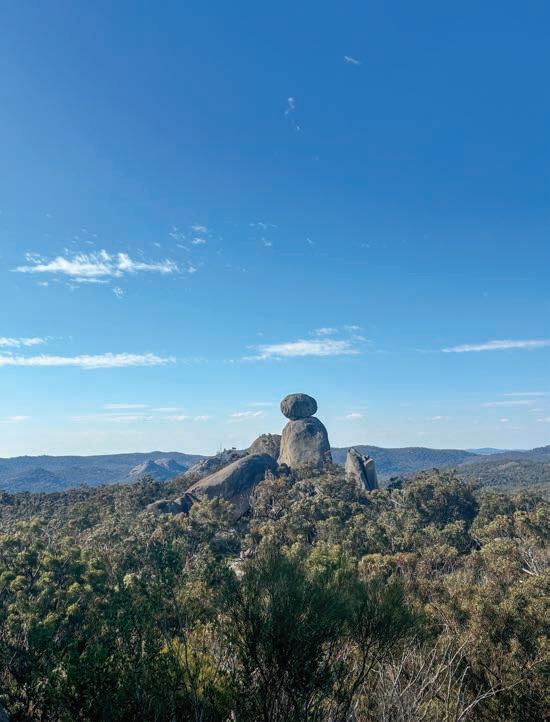
curiosity, and I started up the massive granite rock using my hands to steady myself on the terrain.
Twenty-five minutes later, I was making steady progress and could not stop feeling so proud of myself. I paused for a sip of water and a selfie. As I was wrapping up to continue my hike, I made a rookie mistake: looking down. Boy, did that get me.
The height felt real; my stomach dropped for a moment, and I realized that I had no choice but to concentrate. Or be in the news. Not a flexible situation, much like some life choices. I took five minutes to regain my focus and decided that no matter what happens, I will look up, only up. Once the initial fear passed, I started climbing again, and I could
see my classmates way up; that gave me a sense of comfort, knowing I was not alone. It is oddly satisfying to realize how support can make its way even into moments that feel entirely your own.
Matching my steps to a rhythm, I continued the hike with no visible end in sight. It was one of those moments where you just had to keep going. Suddenly, there was a huge boulder in front of me. I knew how to get to the other side. I just had to climb on top of it, and I was also painfully aware at that moment that I could do it. But I just stood there overthinking about every possible “what if” situation, again.
Five minutes later, I could hear some faint voices, and thankfully for my sake, it was my friend, Maren, and our Lamington National Park, Australia [Jessica Hoffman]
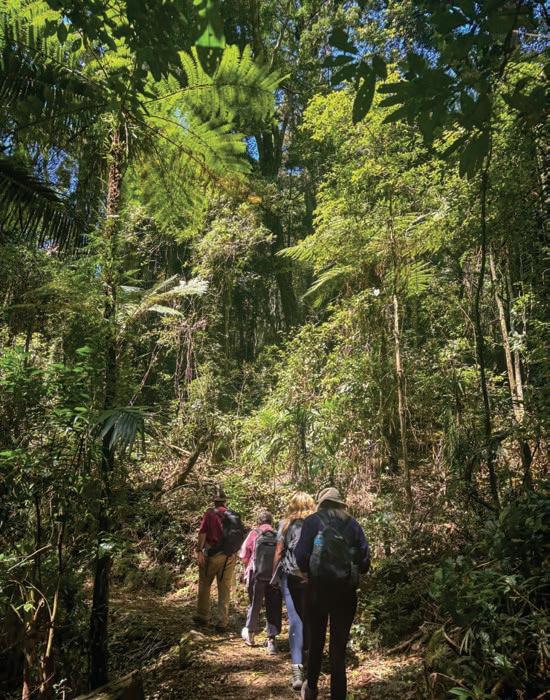
other tutor, Mitch. I waved at them frantically to catch their attention, and when they saw me, I remember yelling, asking how to get past this rock that was blocking my way. At that moment, I was hoping for a magical, easy path.
Alas, there was no easy way out.
Mitch told me that it was only a few more minutes to the top. Believing him, I leaned on the boulder, pushing myself up and hoping that my $250 hiking shoes would have my back. The first attempt was unsuccessful, and I was scared, like really freaked out. I looked helplessly behind, only to see Maren laughing. I was flabbergasted for a second. But then, Maren told me she was also freaked out, and laughing would make this easier. While that was partly true, it did make the intimidating moment feel lighter.
Thirty minutes later, there was still no sight of the top, but it did not feel scary anymore as I had company. I asked Mitch again how long it would take, and also clarified that this time around, I was expecting a real answer. Honestly enough, he said that he had absolutely no idea, as this was also his first time climbing the mountain with us. I was too tired to be annoyed at that point, but I remember thinking wow. The movement continued, encouraged by light conversation about how we will be reminiscing on these moments a few days later.
Gradually, the walk felt easier. I was not sure if it was because we had gotten used to the incline by now or if the path had actually flattened, but the destination was near. Soon enough, I could feel that the sun had softened, and I heard the excited voices of my classmates. Lifting my gaze, I saw the fruits of my labor: a 360-degree panoramic view of Girraween’s dramatic granite domes and valleys stretched endlessly before me. Peeking down, I could see granite rocks blending into the eucalypt forests, creating a rugged
but alive landscape. My old friends from my first hike, the famous landmark mountains of Girraween, Castle Rock and the Sphinx, stood distinctly against the horizon. Something about them felt very human-like, and I was reminded of the song from one of my favorite musicals, The Sound of Music. My heightened emotions got the best of me and convinced me that the hills themselves were quietly proud of me.
Looking back, there are so many things I learned from those four hours going up and down the granite rock, such as resilience, confidence, and patience. But, most importantly, I learned that wonderful things are not only found at the top but also along the way because it is the journey, not the destination, that truly shapes you.
- Shriya Biswas
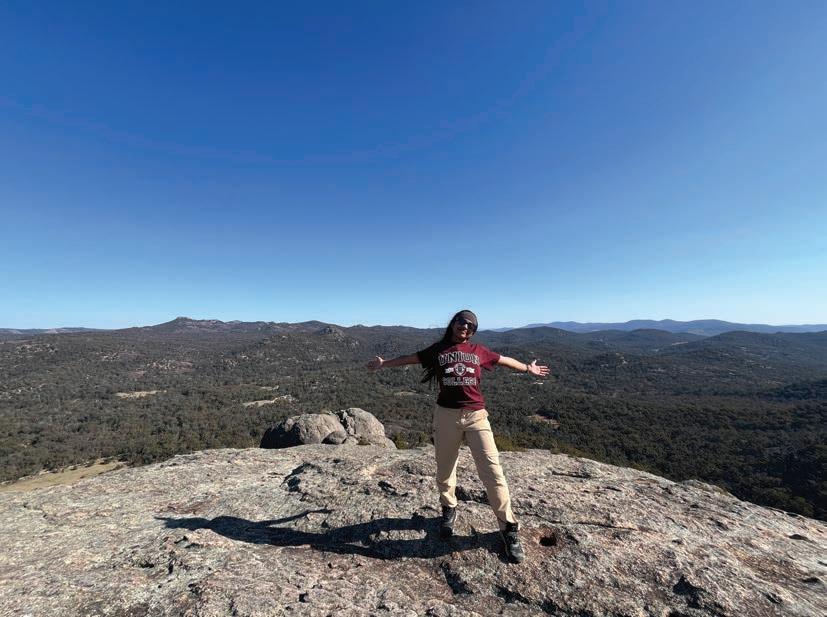
Girraween National Park, Queensland, Australia [Shriya Biswas] Standing here, I already knew this was a moment I’ll return to long after the ache in my legs faded. Thank You, Girraween.
One of the most meaningful memories from my time abroad in Perth was participating in an early morning swim organized by Cold Nips. What might sound like a simple activity became a moment that deeply marked my experience in Australia and the way I connected with myself, others, and the places around me.
It all started at 4:30am when my alarm started ringing. Still half asleep, I brushed my teeth, splashed some cold water on my face, put on my swimsuit, grabbed my towel, threw on a sweatshirt, and headed out. Despite the early time, I was very excited. I didn’t really know what to expect, except that this swim was a popular weekly event. The first time I heard the name Cold Nips, I immediately thought that Australians were truly unique, slightly offbeat in the best way possible. That originality instantly appealed to me
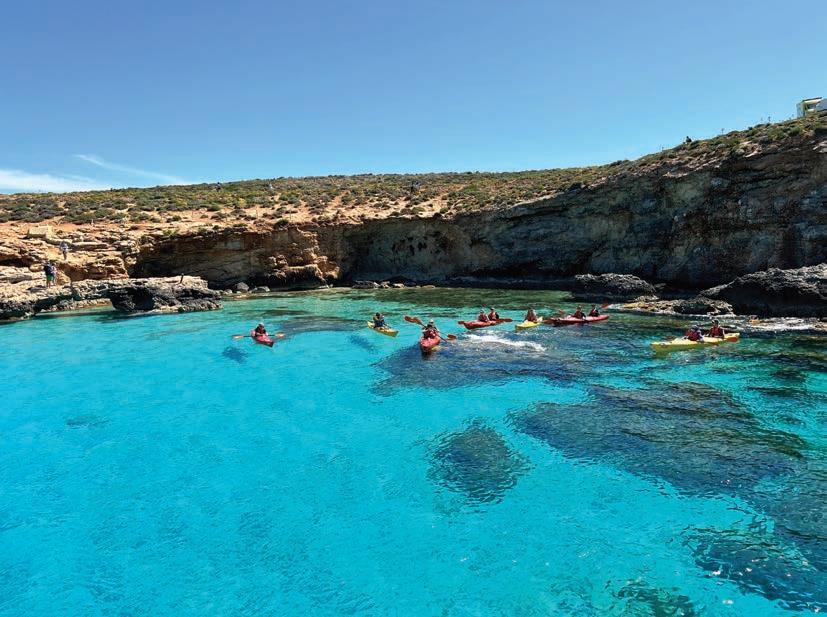
and made me curious to experience it for myself.
When we arrived at the beach, the sun was just beginning to rise, and the sky was at its most beautiful peak of colors. Standing there, watching the sunrise over the ocean, I remember thinking to myself, “What a wonderful life.” I considered myself lucky to be able to start my day this way. It felt peaceful and grounding, as if time had slowed down just for that moment.
Before the swim, we joined a group of people gathered on the sand. Some were meditating, others doing yoga, preparing their bodies and minds for the day ahead. The entire morning felt free of stress and pressure. It allowed me to reconnect with myself, listen to my body, and simply exist without rushing. What struck me the most was the sense of human connection. We were encouraged to talk to strangers, ask them questions, and even hug. This made me reflect on cultural differences, especially compared
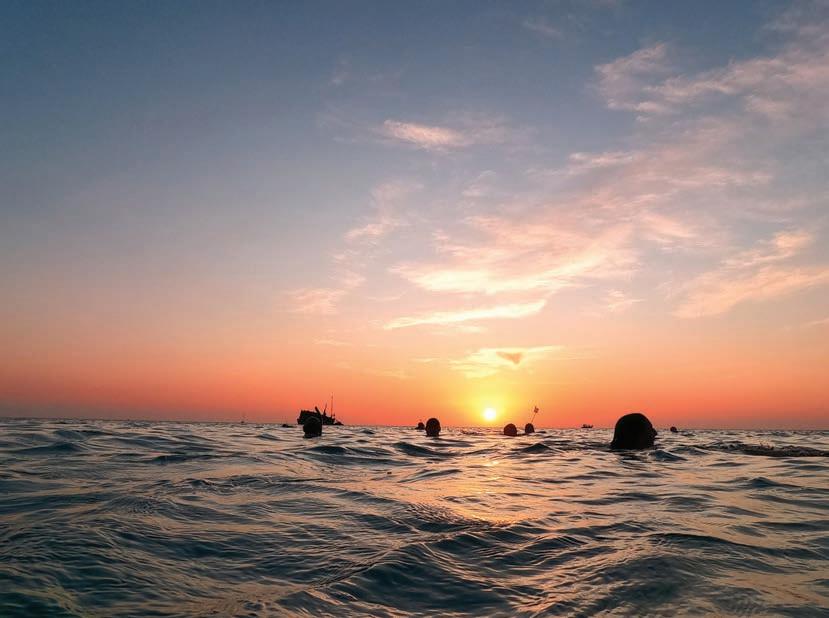
to the United States, where physical touch and openness often take more time to develop. Here, connection felt immediate, natural, and sincere.
What made these swims even more special was that no Cold Nips ever looked the same. Every week, the gathering took place at a different beach, often requiring a drive of 40 minutes to an hour before sunrise. Each location shaped the experience in its own way, giving every morning a distinct atmosphere. Some swims felt calm and meditative, while others were filled with pure joy and laughter.
I had the most fun at their event at Hillarys Beach. That morning felt almost playful: there were toboggans, and people were splashing around and wrestling on floaty surfaces in the water. The ocean, the laughter, and the shared sense of freedom made it hard not to smile in a silly way. It reminded me that joy can exist even at 6am, in the most isolated city in the world, surrounded by people who were strangers only moments before.
The scenery of these mornings is something I will never forget: people walking and running along the shore, the steady sound of the waves, and the laughter that still echoes in my memory seven months later.
From that first swim on, I returned every Wednesday morning, and it quickly became the day I looked forward to the most. No matter the beach, the early swim became a ritual, a reminder to slow down, embrace connection, and appreciate the simple beauty of life. It is a memory that now represents the essence of my time abroad in Australia.
- Lina Hassini
When I try to reflect on my study abroad experience as a whole, I always come back to the same memory: my last full day in Prague. There are so many moments I could choose – trips, nights out, random conversations – but that final day feels like it captures what study abroad was really all about. It wasn’t perfect or polished, and it definitely wasn’t planned down to the minute, but it was full of connection, spontaneity, and meaning. From a slow morning to a chaotic, emotional night that stretched into sunrise, that single day somehow held everything I learned about community, growth, and showing up fully in a place that was once completely unfamiliar.
It began quietly, with the strange awareness that this was our last full day in a city that had started to feel like home. Instead of rushing to check off tourist spots, a group of us focused on revisiting the places that had become part of our routine over the semester. We started with breakfast at our favorite spot by the water, talking with the staff who recognized us as regulars and joking about how this simple ritual had become one of our comforts abroad. From there, we wandered through Vyšehrad in the afternoon and sat in the park before taking the tram line towards our school. We walked the halls one last time, which felt surprisingly emotional for a building I had gotten lost in more than once. The day moved slowly, like we were trying to stretch time, knowing that once night came, everything would feel more final.
As the early evening settled in, the city kept reminding us how many connections we had built. We ran into Czech friends along the way, some joining us briefly, others pulling us into conversations that felt both ordinary and meaningful. At one point, we ended up playing a quick game of basketball with a group of high school boys we’d
befriended simply by showing up at the park enough times and speaking broken Czech. Later, as the sky darkened, we made a necessary stop at that weird dollar-store-equivalent we’d come to know and love. It wasn’t exciting, but it was packed with memories of us laughing over absurdly cheap purchases in crowded aisles. These moments weren’t flashy, but they were real, and that’s what made them matter.
Once the sun finally went down, we ran past famous landmarks in near darkness, marveling at how different they felt without the crowds. Places usually buried under tourists were calm, almost sacred, like the city was letting us see it as it truly was. The history we’d learned about suddenly felt closer, as if the buildings themselves were speaking. We hopped on and off public transportation with no real plan, getting off at random stops and trying to decide whether we actually knew where we were or just thought we did. Somehow, we always found our way back, recognizing station names or spotting familiar churches
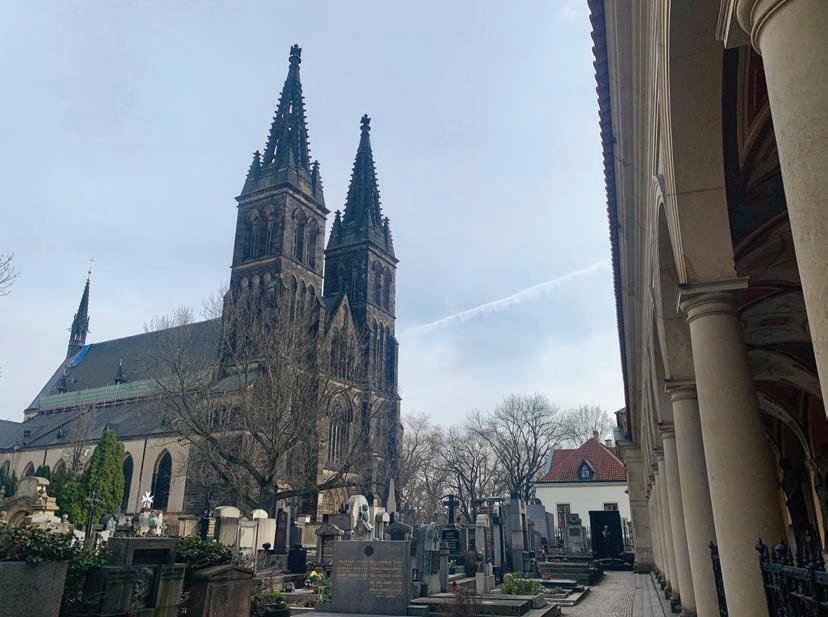
and statues. Under the streetlights, the yellow bricks lining the streets glowed against the pavement, making everything feel surreal like we were wandering through a dream version of the city.
As the night deepened, bars opened their doors and music spilled into the streets. Voices overlapped in different languages, laughter echoed, and strangers sang together. We’d been warned about “silent hours” when we first arrived, but now the city pulsed with energy. Sometimes we stopped to listen, sometimes we just passed by, but it reminded us that Prague wasn’t only landmarks and history – it was people sharing moments.
Dinner – or what was more like cheap appetizers from a closing kitchen – at our favorite pub came well after dark. The bartenders recognized us, Czech friends stopped by, and for a moment it felt like nothing was ending at all. From there, we headed to the London-themed karaoke bar, fully committing to the night. We sang sad songs terribly, laughed too loudly, added our Polaroid to the wall, and shared drinks with friends who had once been strangers. We kept running into classmates saying their own goodbyes, merging groups before drifting apart again. It felt like the entire city was participating in a collective send-off.
Then, in the deepest hours of the night, when time stopped feeling real, we bounced between clubs the way we had all semester. Each place had its own energy, music, and crowd, and we embraced all of it. We danced nonstop, screamed lyrics we barely knew, and laughed every time someone insisted on “just one more place.” It wasn’t about the clubs themselves so much as the freedom of knowing this was our final night. For a few hours, nothing else existed.
By the time the sky began to lighten, exhaustion finally caught up with us. We found ourselves on the Charles Bridge
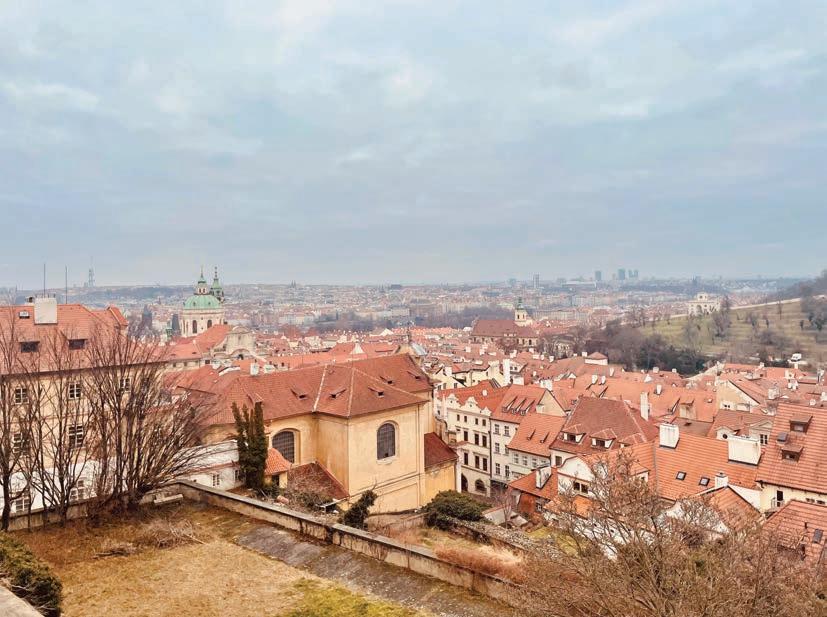
at sunrise – emotional, quiet, and completely present. We cried, hugged, and watched Prague wake up, knowing we would never experience it in the same way again. That final stretch of time mattered because it showed me what study abroad is really about: not just travel, but building community, finding belonging, and learning how to live fully in a place, even when you know you’ll eventually leave. If I had to explain my entire study abroad experience in one story, it would be that day and night, because it proved we didn’t just visit Prague – we became part of it.
-Riley McCabe
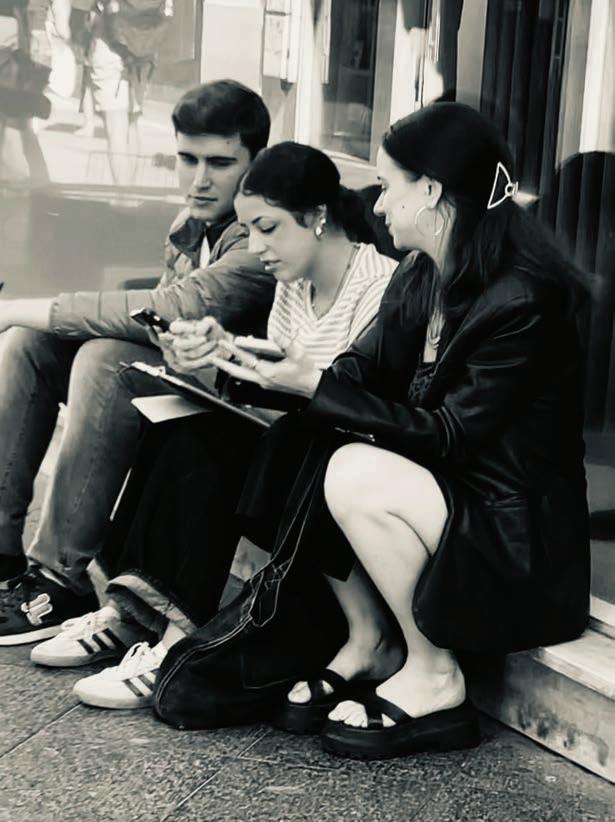
Students Enjoying the Weather, Seville, Spain [Jade Inzinna]