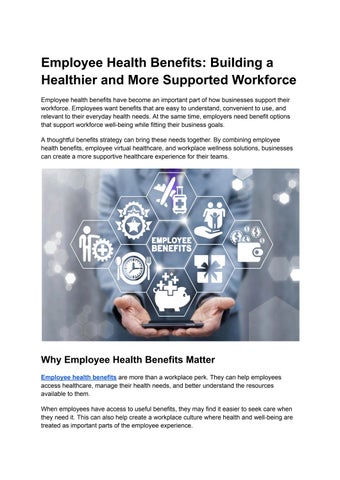
Employee Health Benefits: Building a Healthier and More Supported Workforce Employee health benefits have become an important part of how businesses support their workforce. Employees want benefits that are easy to understand, convenient to use, and relevant to their everyday health needs. At the same time, employers need benefit options that support workforce well-being while fitting their business goals. A thoughtful benefits strategy can bring these needs together. By combining employee health benefits, employee virtual healthcare, and workplace wellness solutions, businesses can create a more supportive healthcare experience for their teams.
Why Employee Health Benefits Matter Employee health benefits are more than a workplace perk. They can help employees access healthcare, manage their health needs, and better understand the resources available to them. When employees have access to useful benefits, they may find it easier to seek care when they need it. This can also help create a workplace culture where health and well-being are treated as important parts of the employee experience.
For employers, reviewing employee health benefits can help identify whether current offerings are meeting workforce needs. Different employees have different healthcare priorities, so businesses should consider accessibility, convenience, preventive care, and overall employee needs when developing their benefits strategy.
Making Healthcare More Convenient With Virtual Care Traditional healthcare can sometimes be difficult to access because of busy schedules, travel, or limited appointment availability. Employee virtual healthcare provides another way for employees to connect with healthcare services. Virtual healthcare can make certain types of care more convenient by allowing employees to access services remotely. This can be especially useful for employees who have demanding schedules or prefer convenient care options. For employers, adding virtual healthcare to a benefits strategy can complement existing healthcare offerings. It gives employees another way to access appropriate care while supporting a more flexible approach to workplace healthcare. However, virtual healthcare should not be viewed as a replacement for every type of medical service. Instead, it can work alongside other healthcare resources to give employees more options based on their individual needs.
The Role of Workplace Wellness Solutions Workplace wellness solutions can help businesses take a broader approach to employee well-being. Rather than focusing only on healthcare when an employee becomes sick, wellness strategies can also encourage employees to pay attention to their health proactively.
Workplace wellness may include areas such as: ● ● ● ● ● ●
Preventive healthcare Health education Convenient healthcare access Employee engagement Wellness resources Support for healthier daily habits
The right approach depends on the needs of the workforce. A strategy that works for one organization may not be suitable for another. Employers should first understand their employees and then explore solutions that address actual workforce needs.
Connecting Benefits With Employee Needs One challenge employers face is choosing benefits that employees will actually understand and use. A benefits package can include valuable resources, but employees may not take advantage of them if they are difficult to access or understand. This is why communication and accessibility matter. Employers can help employees get more value from their benefits by clearly explaining available healthcare options and showing employees how those resources can support their needs. Simple communication can make it easier for employees to understand what is available and when to use it. Employee engagement should therefore be considered alongside the benefits themselves. The goal is not simply to offer more benefits but to create a healthcare experience that employees can understand and use.
Creating Employee Benefits That Work for Your Workforce A strong employee benefits strategy should focus on what employees actually need. Employers can look at healthcare access, preventive care, virtual healthcare options, and wellness resources to create a more useful benefits experience. When these areas work together, employees can have easier access to care and better support for their health. Employers can also review their benefits regularly to ensure they continue to meet changing workforce needs.
Supporting a Healthier Workforce A strong employee healthcare strategy can support both employees and employers. Employees gain access to resources that can make healthcare more convenient and understandable, while employers can create a benefits approach that is more closely connected to workforce needs. The focus should be on providing meaningful options rather than simply adding more benefits. When healthcare resources are accessible, relevant, and easy to understand, employees may be better positioned to make informed choices about their care. This is where thoughtful benefits planning can make a difference. Employers can evaluate their current approach, identify gaps, and explore healthcare solutions that support their workforce and organizational goals.
Build a Benefits Strategy Around Your Workforce Employee health benefits continue to play an important role in creating a supportive workplace. Combining accessible healthcare options, employee virtual healthcare, and practical workplace wellness solutions can help employers take a more complete approach to workforce well-being. The right strategy starts with understanding employees and identifying solutions that fit their needs. Instead of using a one-size-fits-all approach, employers can focus on practical healthcare options that improve access, encourage preventive care, and support employee engagement.
Connect With Health & Wealth Connector Looking for practical ways to strengthen your employee benefits strategy? Health & Wealth Connector helps employers explore healthcare and employee benefit solutions designed around workforce needs. Explore Better Healthcare Solutions for Your Workforce — Connect with Health & Wealth Connector today.