
Trevor Noah speaks at assembly
By Kara Jazaeri
Comedian and writer Trevor Noah visited the school for the annual Brown Family Speaker series on May 18. The series aims to host speakers relevant to the school’s community. Specifically, Noah’s book “Born a Crime” is read in the school’s middle school English classes. Noah is also a critically acclaimed television host, author and producer.
Student moderator of the event Dhara Jobrani ’26 said Noah’s speaking was impactful in unexpected ways.
“I was so happy I was able to interview Trevor Noah for the Brown Family Speaker series,” Jobrani said. “It’s incredible that we were even able to host him, and being picked to interview him was really an honor. I was inspired by how insightful he was when I was interviewing him and how genuine he was.”
Alice Torosyan ’27 said the event felt especially relevant for students at the school.
“What really stuck out to me was what he said about success,” Torosyan said. “It’s really applicable to my life as a student at Harvard Westlake, and a lot of other people’s lives here, because everyone is really busy focusing on the next thing and the next thing and the next thing. It’s always good to remember to have a parameter for success. That topic is talked about quite a bit, but no one is able to put it quite into the right words and give such good examples of how that might manifest in daily life. He really brought me back down to earth.”
Sascha Wiley ’27 said she felt Noah’s speaking was inspirational.
“I was really impacted by the way he spoke about identity,” Wiley said. “He read really well because his humor makes him genuine. That’s one of Trevor Noah’s best abilities — just being able to really connect to people on a base level. He has this ability to command attention without being overbearing. His lesson about doing things right the first time really stuck with me.”
Students inducted to Cum Laude Society at annual ceremony to recognize academic success
By Abby Ryan
60 seniors were inducted into the National Cum Laude Society by History Teacher and Cum Laude Chapter President Lilas Lane during the Cum Laude ceremony in Rugby Theater on May 19. The recipients fell within the top 20% of the class based on a combination of class rank, unweighted Grade Point Average (GPA) and weighted GPA.
Head of Upper School Beth Slattery said they chose to decide Cum Laude this way in order to balance what classes people choose to take.
enough honors classes to be able to still get in the top. If you just use unweighted GPA, then you prioritize people just trying to get A’s and not necessarily pursuing rigor. This tries to be at the intersection of considering rigor and performance.”
“The rationale behind how we calculate Cum Laude is, if you just use weighted GPA, then you inspire people at all costs to just take only weighted classes,” Slattery said. “Sometimes we would have kids who had, and not that this is terrible, a B- or a C+ on their record, but they had taken

President Rick Commons said he enjoys being able to honor students who have prioritized academics all year.
“I am extremely proud of students who work hard enough to get into that category and who have devoted themselves to the academic life of the school,” Commons said. “I have been an advocate for maintaining it, because, as crude as the instrument is, I want to be able to say to people who have worked hard and done well that the school notices and honors you.”
Lane said the addition of a speaking element to this assem-
bly made it more enjoyable.
“This was a particularly joyous ceremony this year,” Lane said. “We started a lovely new tradition of having a few inductees take a moment to elaborate on the motto of the Cum Laude Society as a part of the speaker’s program. Hearing our students breathe new life into the ancient wisdom of arête, dike and time was a highlight for me.”
Andrew Jo ’26 said he appreicated Vik Bakaya ’26’s speech about justice.
“The part that really stood out to me was hearing from the three student speakers who spoke about the three virtues of excellence, justice and honor,” Jo said. “There was a great mix of empathetic and thoughtful speeches, but my favorite was Bakaya’s about justice because he made an excellent point about how everyone else has their own list of priorities.”
Inductee and speaker Liv Lee ’26 said her academic journey is defined by her failures and how

she dealt with them.
“A majority of my academic experience consisted of failures rather than successful narratives,” Lee said. “My failures are the reason why I have arrived at the destination I am in today. Without experiencing challenging concepts, positions I tried out for but didn’t earn and ideas that were debated by peers and teachers, my intellectual journey would be much less nuanced than it is now.”
Jo said seeing longtime teachers at the ceremony was meaningful, especially those who supported him beyond the classroom.
“It was really nice to have the opportunity to see a lot of my teachers at the ceremony who have been a part of my journey ever since the middle school,” Jo said. “The teachers who really stuck with me were the ones who I had a relationship with beyond the classroom. They taught me a lot about how to stay curious, engage in problems I found challenging and be a source of emotional support.”
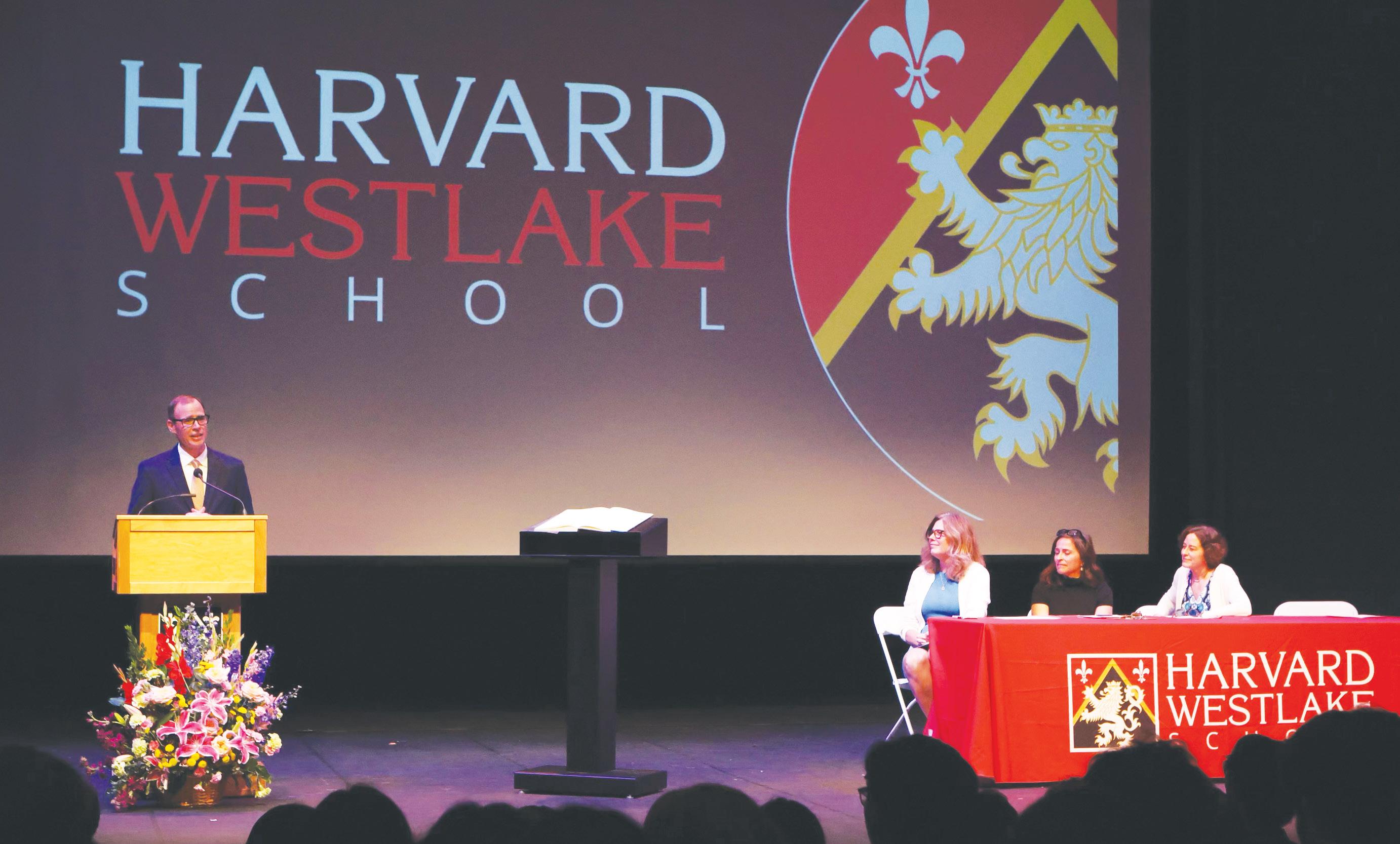
MARKING MERIT: President Rick Commons speaks at the podium during the Cum Laude ceremony as audience members watch. To the right sits Head of Upper School Beth Slattery, History Teacher and Cum Laude Chapter President Lilas Lane and Associate Head of School Laura Ross.
L. Wood Sally Ramberg ’26
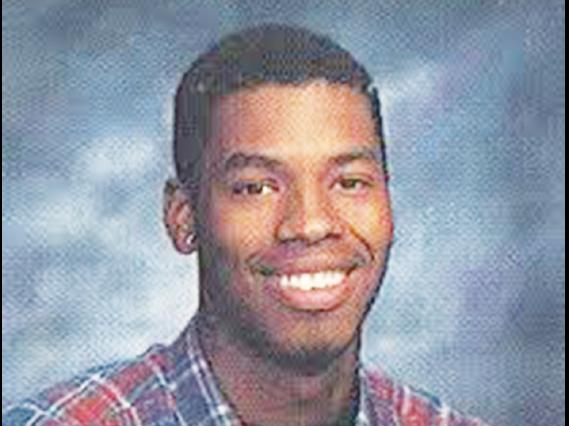
Jason Collins ’97 TribuTe: Community members and friends of Collins share personal stories honoring his life
speaks at assembly
Jobrani said he was very surprised by Noah’s great stage presence.
“Interestingly, he was actu ally a lot quieter off stage when I had met him, but he became more engaging once we went on stage,” Jobrani said. “Even though it was pretty nerveracking for me, it made for a really fun and engaging inter view. He was a perfect speaker and could appeal to our audi ence to give some very good lessons in life.”
Junior Prefect Jasiri John son ’27 said he loved what Noah taught him and everyone through the assembly.
“A specific moment from the assembly that stuck with me was the lessons that there are small lessons that you will learn and if you don ’ t listen to those lessons, then ultimately it will come back to bite you in the butt,” Johnson said. “When he was talking about his motorcycle experiences, when he had a minor crash had a little bit more of a minor crash, and then he had a major crash with his friend, and different things where he thought one of his friends had gotten taken away to jail. He didn ’ t learn that lesson until it got to the extreme. And that there ’s a lot of lessons in life where you won ’ t learn until you get to the extreme, but it ’s important for you to see the signs and not have to get to the extreme to be able to learn the lesson. I was very appreciative of being able to learn from somebody who has done so many different things and having him come to the our school.”
were selected to lead SLIDE next year, focusing on expanding DEI initiatives and fostering student support and inclusion across campus.
Junior SLIDE Co-Chairs selected to lead DEI and support students on campus
By Abby Ryan
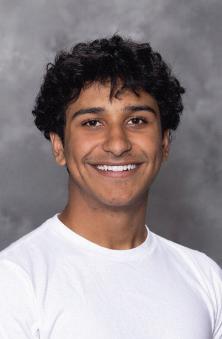
Sacha Wiley ’27, Emmanuel Cole ’27, Kara Jazaeri ’27, Mylo Patel ’27 and Hudson Phillips ’27 were selected as Co-Chairs of Student Leadership for Inclusion, Diversity and Equity (SLIDE) for the 2026-2027 school year.
Current Co-Chair Dhara Jobrani ’26 said they chose the next Co-Chairs through a written application and an interview selection process.
“We have the people who are running submit an interest form, and we ask them questions on there that are pretty lengthy,” Jobrani said. “Afterward, we find the people who were actually putting a lot of effort throughout the year, or who were doing a lot of good work in their respective affinity groups and who had really good responses. Then, we’ll conduct
an interview process and narrow it down to five leaders.”
Gender and Sexuality Awareness (GSA) and Jewish Club leader Phillips said she wants to turn conversations about inclusion into measurable improvements on campus.
“I hope to make SLIDE focus on tangible changes for our community,” Phillips said.
“SLIDE has largely focused on education that surrounds DEI related issues, and I think that this work is important.
However, education is useless if we don’t turn it into action. I believe that the rest of the CoChairs and I are ready to put in the work needed to make our community and our surrounding communities as inclusive
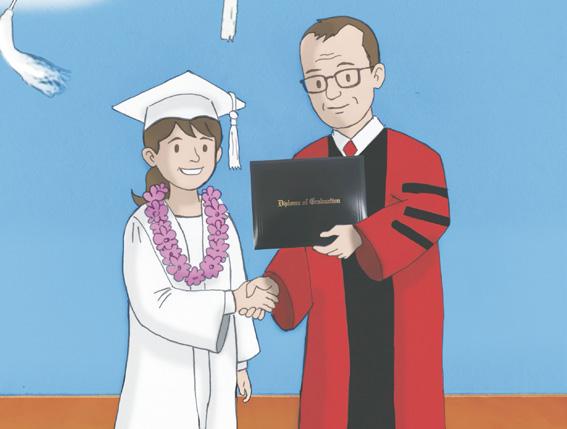
Two speakers chosen for graduation
By Angel Song
The school announced Emma Tseng ’26 and Sally Ramberg ’26 as valedictorian and salutatorian for the 2025-2026 school year. Every year, valedictorian is chosen from a pool of students with the highest grade point averages (GPA), and the salutatorian is chosen by a senior class vote.
Head of Upper School Beth Slattery said the valedictorian is chosen through a faculty vote from a group of high-achieving seniors.
“We typically [consider] around the top five kids numerically,” Slattery said. “We don’t just take the top person because at that point, you’re talking about gradations where one person took one more class than another person, and you're talking about kids who have basically gotten virtually straight A’s in all the hardest classes in grades 10 through 12. Then, the faculty weigh in on their experience with those students, and they vote to determine who they think
demonstrates the highest level of scholarship amongst that group.”
Tseng said she felt honored by the announcement and recognizes the support she received from others.
“I feel very honored to be named valedictorian, but I know that so many of my accomplished peers could easily be in this position, ” Tseng said. “I am grateful for the teachers’ trust in me to deliver a speech, and hope I can live up to their expectations.I know that I would not be here without the support of my friends, softball team, teachers and family.”
Prior to the salutatorian announcement, there was a runoff vote between Ramberg and Josh Massey ’26. Ramberg said she felt relieved to hear herself announced at the assembly.
“After they announced salutatorian, I was mostly really excited and relieved to stop stressing about if I’d win it or not,” Ramberg said. “I am a bit sad because [Massey] is the best, and I really wish we
could’ve given the speech together, but c’est la vie. Mostly, I can’t wait to give it, and I’m absolutely terrified to give it.”
Miles Aguilar ’26 said he is very excited for Ramberg’s salutatorian speech.
“I voted for [Ramberg], and I thought it was great she won,” Aguilar said. “The role of salutatorian is to represent the spirit of Harvard-Westlake and give a memorable speech to end the year, and based on what I saw when she was running for student council, I think she’ll do exactly that.”
Tseng said she hopes to highlight the school community in her speech.
“One of the best parts about Harvard-Westlake is how it brings together passionate, curious people,” Tseng said. “I definitely want to address the deep gratitude I feel towards my classmates, who have challenged me to grow in ways I never thought possible.”
as possible. A specific goal of ours is to have the SLIDE CoChairs be more involved in Community Concern Reports (CCR). We think that this will help eradicate bigotry on our campus in all forms.”
South Asian Student Alliance (SASA) leader Patel said he enjoys the inclusiveness of SLIDE and the connections it helped him form at school.
“SLIDE is a space where I can be open, creative and collaborative with like-minded people,” Patel said.
“It is so amazing to be part of such a diverse and passionate community, and I look forward to what we have planned.”
Jobrani said he hopes that next year the Co-Chairs come up with new ideas for assemblies
and around campus.
“This year was our first time that we did these SLIDE icebreakers, and I want next year for the new leads to plan them in advance, because now they know what to do,” Jobrani said. “They can maybe have better ideas and more engaging activities. I also hope that they incorporate more activities on campus.”
Patel said he hopes to enact new ideas and continue to create a great community for everyone.
“Next year, we are looking into implementing a student board that is dedicated to dealing with DEI related issues on campus in a constructive and solution-oriented manner,” Patel said. “I hope that SLIDE will continue to foster a school environment that is open, thoughtful, compassionate and enjoyable for everyone creating a space that has positive impacts.”
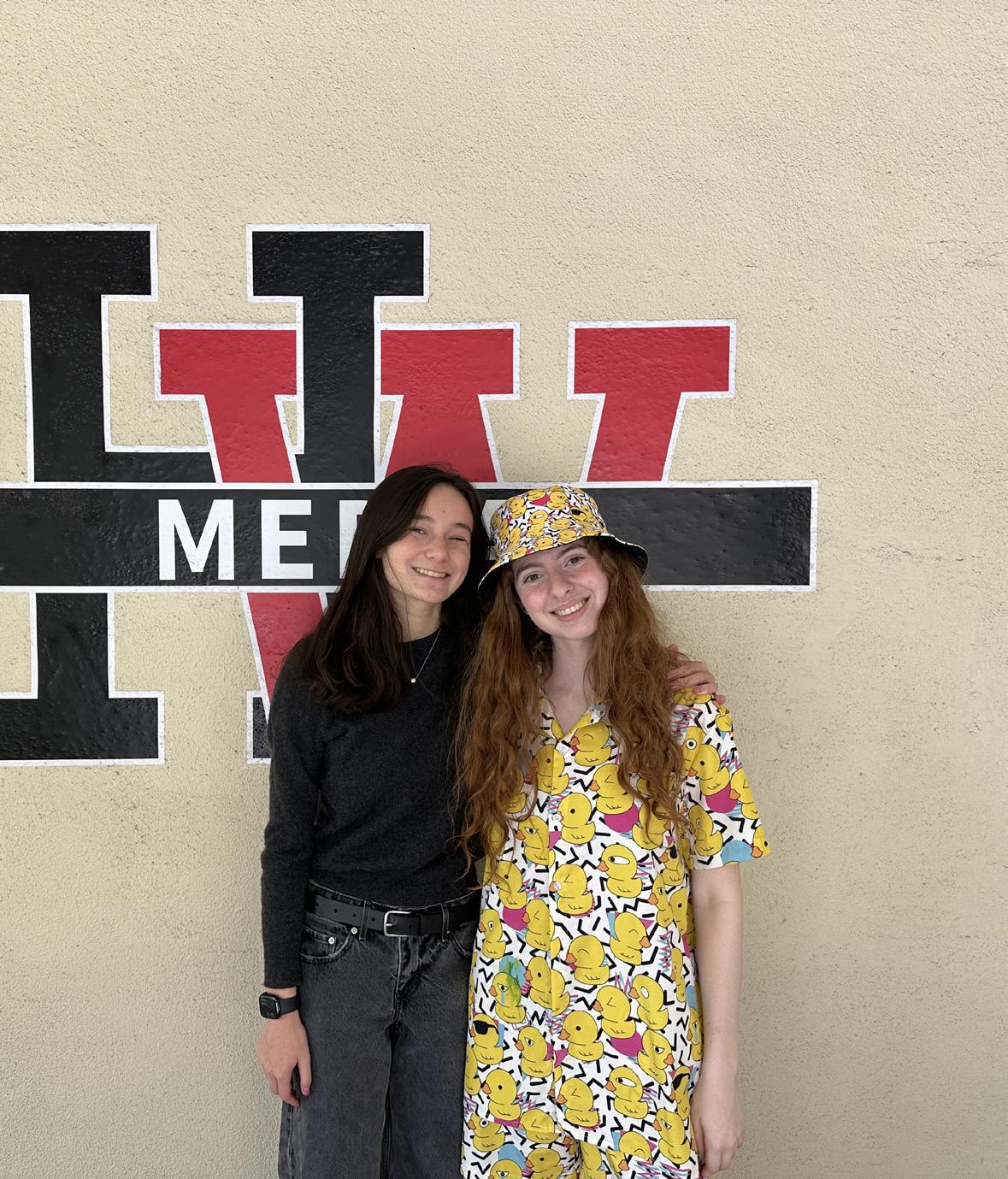
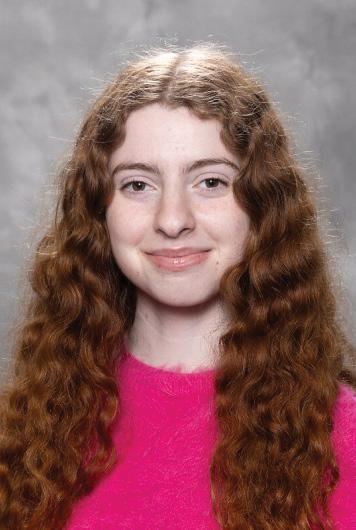
PURSUING EXCELLENCE: Sally Ramberg ’26 and Emma Tseng ’26 were named Valedictorian and Salutatorian and are set to speak at graduation.
L. Wood
Dhara
Jobrani ’26
Jazz soloists receive prestigious national awards
By Holden Kim
Manos Vourgourakis
’25, Hugh Cheng ’25 and Colton Checchi ’26 received individual soloist honor awards from the DownBeat Student Music Awards, widely regarded as the most prestigious student jazz awards in the country. Each student was honored for their work as soloists. Their recognition was paired with other awards earned by the school’s jazz program, which won five national awards this year, including Best High School Combo for the Jazz Band Trio and Outstanding High School Combo for Jazz Explorers.
Checchi said his and others’ awards reflect years of dedication, hours of practice, mentorship from his teacher and the close-knit jazz community.
“I feel extremely honored and grateful to be a recipient of these downbeat awards,” Checchi said. “While I see this achievement as a product of the hard work my trio and I have
put in over the past two years,
I owe much of my personal success and the success of the jazz program as a whole to the support that [Performing Arts Teacher Chris Sullivan] has offered along with the culture he has fostered within HW jazz.”
Sullivan said the awards reflect the school’s emphasis on mastering jazz fundamentals, honoring traditional jazz styles and maintaining high musical standards through careful attention to detail and highly disciplined training.
“Our students have been putting in the work over the past several years, and it feels good to see them recognized on a national stage,” Sullivan said.
“The fundamentals of jazz, and all of the skills required to perform it at the highest level, are at the core of our curriculum. There’s also a strong emphasis on learning how to play straight-ahead jazz here at HW.
Our students listen to classic recordings, learn essential repertoire and pay close attention to detail.”
Christine Chung ’26 said one of the most significant contributors to success within the jazz program is its collaboration, where students encourage each other to improve in a respectful and uplifting tone.
“One of the biggest things that contributes to success within our jazz program is the culture surrounding it,” Chung said. “Everyone is constantly encouraging each other to improve, but in a way that still keeps music fun and collaborative rather than overly competitive. There’s a real sense of excitement in rehearsals and performances, and the environment naturally pushes people to grow as musicians and become more confident and experienced creatively.”
Chung said she attributes the jazz band’s positive atmosphere to her teacher.
“Our band mood has always been very energetic, supportive, and sometimes a little chaotic in the best possible way,” Chung said. “A huge part of
Design class holds annual flea market
By Alexander Ahn
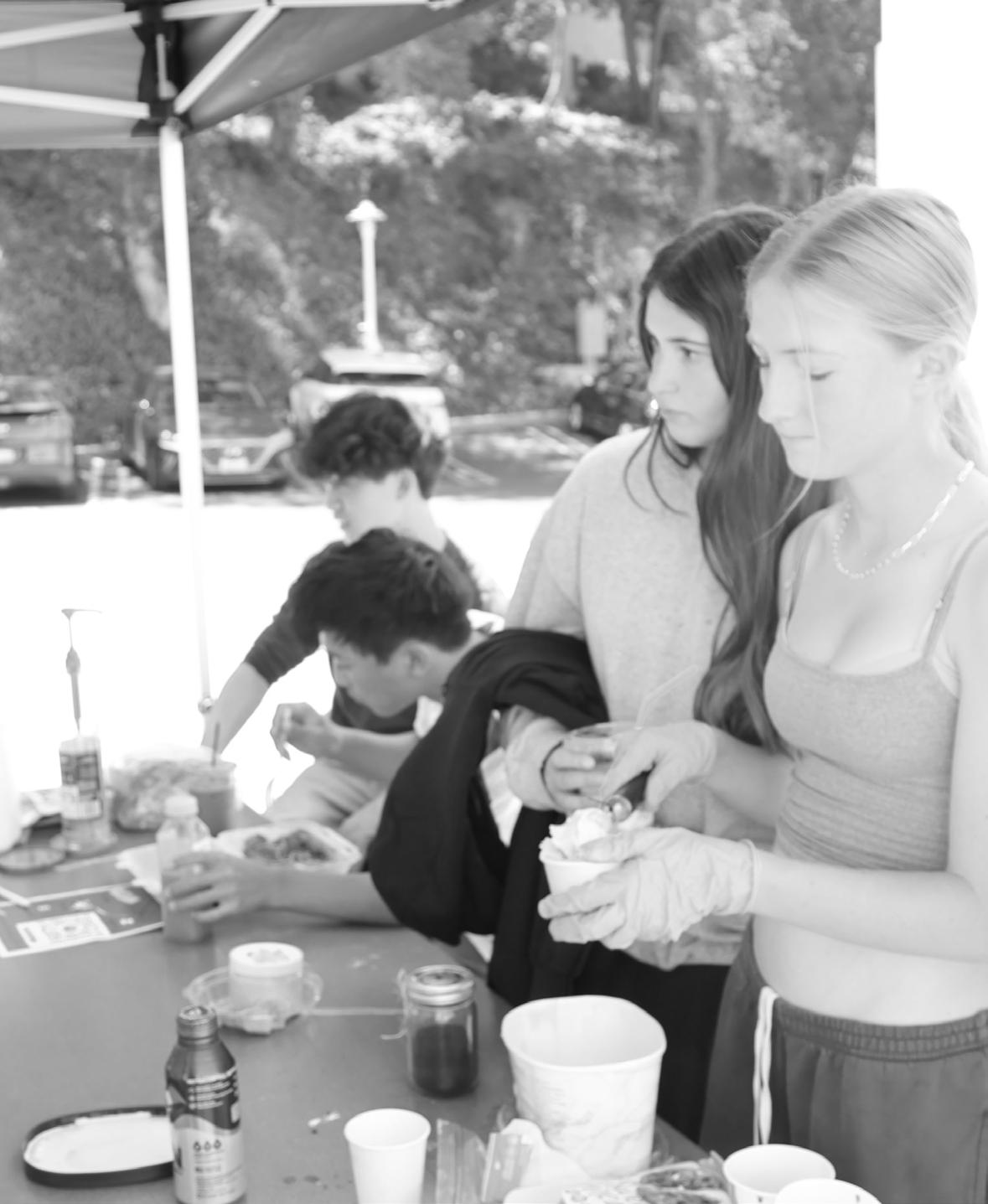
Graphic Design classes hosted their third annual Feldman Flea Market in the Feldman Horn Complex on May 20. Students sold upcycled clothing, bespoke potted plants, drinks, ice-cream and other projects they created throughout the school year. Proceeds from the market benefited the Garment Worker Center in Los Angeles, a workers’ rights organization that advocates for low-wage garment workers.
Graphic Design teacher Whitney Lasker said the flea market has quickly become a permanent part of the Graphic Design I curriculum through its focus on sustainability and product design.
“At this point, the flea market is built into the Graphic Design I curriculum during the second semester,” Lasker said. “After talking about sustainability and how to create merchandise and products with those ideas in mind, students are asked to create a product of their own to
sell at the flea market. Because of that, we’ll always continue the market as part of Graphic Design I.”
Abbey Herrera ’28 said the event highlighted the variety of artistic styles and creative approaches students developed throughout the project.
“My favorite part about selling my work at the flea market was being able to see all my peers’ hard work and seeing the variety in creativity and aesthetics in the products,” Herrera said. “We were all given the same guidelines, yet our peers all went in such different directions, from people selling milk tea to intricately designed puffer jackets. It was really cool to see all our hard work come together and appreciate everyone’s final designs.”
Caroline Daenzer ’28, who made and soldsold ice cream and custom apparel at the flea market, said the project evolved as she developed a stronger identity for her brand.
“Originally, I was only going to make ice cream with custom
cups, but over time I became really interested in the idea of creating merch for the brand,” Daenzer said. “I decided to buy gray hoodies and design something that represented the ice cream company, called ‘Big Dough Energy.’ The biggest challenge was making cool-looking merch for an ice cream brand that didn’t already exist. I tried to focus on products I would actually buy myself.”
Shriya Vishwas ’28 said the event combined student interaction with a wide variety of creative products and student run businesses and projects.
“I got to socialize with a lot of people and I thought the sweatshirts people were selling were really cool,” Vishwas said. “There were also a lot of good drinks and snacks, and I especially liked the ice cream because it was really good and affordable. I liked seeing how everyone came up with completely different ideas and products for the market.”
Financial advisor visits club
By Emma Bing
The Girls Who Invest Club welcomed Wells Fargo financial advisor Teresa Fischer to Feldman-Horn for a speaker event on May 7. Fischer said many wrongly assume all of her clients are women.
“For so many men, the closest person in their life is their wife [or] their daughters, so they have a tremendous amount of respect for women and get very close to me, even though we’re different genders.” Fischer said. “People assume, ‘You’re a woman, you have all woman clients,’ but that’s really not true.”
Fischer said there is also an interpersonal aspect with her job as finances can be sources of stress.
that comes from our fantastic Jazz Band Director, Dr. Sullivan, who creates an atmosphere where people feel comfortable taking risks, experimenting and genuinely enjoying the process of making music together. He really encourages both discipline and individuality, which is such an important balance in jazz.”
Sullivan said he advises all aspiring musicians to fully familiarize themselves with their instruments and to demonstrate consistent effort in all aspects of practice, planning, and specifically on cue performance.
“The formula is actually pretty straightforward,” Sullivan said. “First, you need to learn how to truly navigate your instrument at a high level. That’s important, no matter what style of music you ultimately want to play. For young musicians hoping to reach this level, my advice is simple: find a great private teacher if possible, and practice consistently. Consistency is everything.”
“You end up so close [with clients] and so invested in people,” Fischer said. “We joke that because you get so close to people, you hear about all their problems because a lot of problems are about money.”
Diya Desai ’28, who attended the event, said her biggest takeaway was the significance of being a trusted and empathetic source for clients as a financial advisor.
“I learned so much about the importance of building relationships and being able to establish meaningful connections,” Desai said. “Even in a job where you have to manage money and do financial, personal portfolio management, it’s so important to be able to communicate with your clients and know that side of the job as well.”
Fischer said she has an uncommon perspective on finance because of her age and gender.
“Being younger in my field [and] being a woman is unique because [finance] is so heavily male dominated,” Fischer said. “The average person is in their 60s. In a room of my peers, I’m definitely the youngest.”
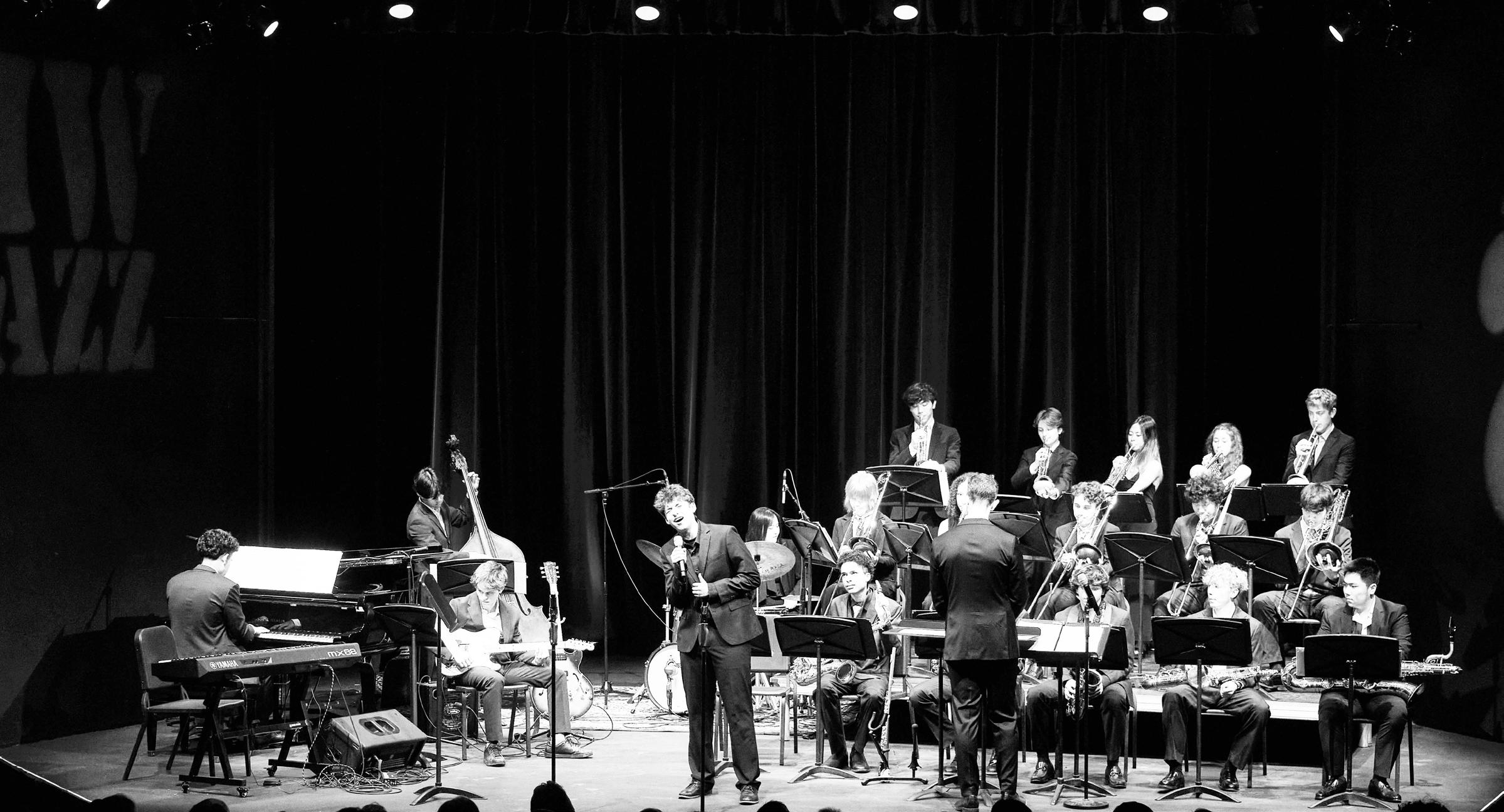
BY THE BEATS: S oloists and ensemble members of the upper school jazz band perform at the school’s annual Winter concert on campus.
This spring three members of the school’s jazz band have been awrarded soloist recognition from the DownBeat Student Music Awards.
NIC MONROE/CHRONICLE
PATHS IN BLOOM
Seniors in the graduating Class of 2026 share their post-high school plans and matriculation details in The Chronicle’s annual report.
Charles Abemayor New York University
Zachary Abrahamson Columbia University
Ryan Acosta University of Pennsylvania
Josh Aftergood University of Texas at Austin
Miles Aguilar Harvard University
Aylin Akman Northeastern University
Evan Alexander University of Pennsylvania
Andrew Alpert Colby College
Jordan Ambrosino Oberlin College
Layla Anani
Boston University
Sarah Anschell Harvard University
Camilo Arroyo Loyola University Chicago
Elina Arteaga
Boston University
Sydney Assil
Duke University
Mithra Ayati
University of Michigan Ann Arbor
Elijah Ayeni
Purdue University
Linden Azad
University of California Berkeley
Joseph Baca
University of Michigan Ann Arbor
Daniel Baek
University of Pennsylvania
Vikrant Bakaya Harvey Mudd College
Eze Baum N/A
Dominique Bentho University of California Irvine
Sienna Binder Boston University
Harrison Bowman University of Southern California
Brando Bowse Purdue University
Eli Bryan
Rhode Island School of Design
Jackson Bunnin
Southern Methodist University
Zane Burstin
Santa Monica College
Joshua Cadenas
Pratt Institute
Gabrielle Carmy Smith College
Christian Cauvel Haverford College
Colton Checchi
Vanderbilt University
Ethan Zejia Chen Brown University
Annabelle Cheung Babson College
Harper Chihara Bibring Wesleyan University
Christine Chung New York University
Iris Chung University of California Los Angeles
Jake Chung Brown University
Rachel Cipriano Indiana University Bloomington
Emma Cohen University of Washington
Sophia Cohen-Pelletier University of Southern California
Jim Coleman University of Chicago
Max Coleman New York University
Zarah Colmenares-Cifuentes University of San Francisco
Peyton Colon Texas Christian University
Carter Comolli New York University
Caroline Cosgrove Stanford University
Miki D’Adamo Boston College
Markenever Dai University of Pennsylvania
Mikenever Dai University of Chicago
Sienna Dall’Olmo Barnard College
Lauren Daub
Columbia University
Kayla Davidoff Tulane University
Agatha Davies Bowdoin College
Wynne Davis Howard University
Anju De Anda University of Toronto
Edna Dereje Cornell University
Miles Dodson Case Western Reserve University
Derek Doi University of Chicago
Adrian Drouin Columbia University
Massimo Durando Gettysburg College
Aaron Escalante Denison University
Andrew Esrailian Yale University
James Faulhaber University of California Berkeley
Ryder Felisan New York University
Jessica Ferrie Columbia University
Cole Firshein Oberlin College
Dylan Fischer Harvard University
Hannah Fong University of California Los Angeles
Nola Foran Tufts University
Sophie Fribourg University of Wisconsin-Madison
Taylor Gamradt University of Southern California
Madison Gillett Moorpark College
Sofia Giovine Bocconi University
Calder Glass Duke University
Drew Goldberg Drexel University
Esther Goldman Harvard University
Luca Gonzalez New York University
Michael Gonzalez Johns Hopkins University
Troy Goodgame University of California Berkeley
James Graczyk University of Chicago
Kayla Graff Massachusetts Institute of Technology
Dylan Graiwer University of Miami
Siena Griswold Barnard College
Alix Grube University of Colorado Boulder
Valentina Guerrero Fordham University
Lydia Gugsa Grinnell College
Sahana Gupta Georgetown University
Noelle Hagen Tufts University
Quinn Hamilton Purdue University
Ava Hanasab New York University
Talia Hannani University of Southern California
Shyla Haqq Northeastern University
Anju Higashi University of Pennsylvania
Morgan Hill Pitzer College
Charlie Hirsch Wesleyan University
Henry Hirsch
Cornell University
Colin Ho Harvard University
Grace Hong
Cornell University
Brandon Hui Zhejiang University
Ryan Hung Cornell University
Kate Israel Tufts University
Ruby Jacobs
Columbia University and Tel Aviv University
Jett Jasper Babson College
Ella Jeon
Columbia University
Yuna Jeon University of Chicago
Chloe Jiang
Stanford University
JJ Jimenez Cerritos College
Andrew Jo Stanford University
Dhara Jobrani Cornell University
Priscilla Johnston Barnard College
Amir Jones University of Colorado Boulder
Abby Juarez
Smith College
Lyla Kavanagh Tufts University
Rhea Khanna University of Chicago
Ashlyn Kim University of Southern California
Audrey Kim University of Pennsylvania
Dean Kim Cornell University
Jonah Kim University of California Berkeley
Laila Kim
Georgetown University
Lauren Kim
Carnegie Mellon University
Sullivan Kim
Columbia University
Kaia Santomarco-King University of Colorado Boulder
Siona Kirschner University of California Berkeley
Maggie Koo University of Pennsylvania
Rael Kreiz University of Pennsylvania
Kai Kuklinski New York University
Hudson Lake Vanderbilt University
Abby Landres
Smith College
London Lapointe Indiana University Bloomington
Olivia Le Pera
Villanova University
Chloe Leclerc
Boston University
Isleen Lee Georgetown University
Olivia Lee University of Pennsylvania
Rebecca Lee Tufts University
Sky Lee
Northwestern University
Ellika LeSage Cornell University
Hannah Levy Tulane University
Lauryn Lewis University of Pennsylvania
Ronan Lifrak New York University
Silas Liftin-Harris Vassar College
William Lin
Washington University in St. Louis
Barron Linnekens
Washington University in St. Louis
Ellie Liou
University of Toronto
Robby Louie Stanford University


NYU 23
Emma Lutsky University of Michigan Ann Arbor
Kieran Lyons University of Chicago
Moses Ma New York University
Maylie Macias Emory University
Callum Maclachlan Vanderbilt University
Hunter Madden Rose-Hulman Institute of Technology
Lyra Majumdar Yale University
Tehmina Malhotra Wesleyan University
Scout Manuel New York University
Gabe Marquez New York University
Jake Marquez Georgetown University
Connor Martin University of Southern California
Joshua Massey Wesleyan University
Gabe Matzkin University of Washington
Chase Mayer
Harvard University
Connor Merrihew University of Southern California
Elliott Meth Occidental College
Matthew Meyer Boston University
Max Meyer Stanford University
Marty Minikes University of Michigan Ann Arbor
Henry Misczynski New York University
Veronica Mnatsakanian Pitzer College
Laila Mohammed New York University
Nicolas Monroe George Washington University
Brandon Morrell University of Texas at Austin
Matthew Nakayama Northeastern University
Maximus Nam University of Chicago
Maya Namba Smith College
Gian Ngo-Willis Howard University

Angus Norden Wesleyan University
Anika Norton Wesleyan University
Ainsley Nutting College of the Holy Cross
Siena Orwitz Emory University
Emil Palmer University of New Haven
Kevin Paniagua University of San Francisco
Audrey Park University of Notre Dame
Jaden Park University of Southern California
Kylie Parker University of California San Diego
Dawson Peng University of California Santa Barbara
Peyton Perriott Santa Clara University
Charlotte Phelan Weslyan University
Sam Plant University of Colorado Boulder
Ethan Price Santa Clara University
Enzo Prochilo Columbia University
Simone Puathasnanon Indiana University Bloomington
Sally Ramberg Brown University
Imogen Ramlie University of California Los Angeles
Reed Reck University of California Berkeley
Kannan Reddy Cornell University
Joe Reiner Bowdoin College
Alex Reisner University of Michigan Ann Arbor
Angela Ren Barnard College
Cooper Ren Massachusetts Institute of Technology
Julian Rho Loyola Marymount University
Andrea Ricabal University of Miami
Lochlan Ripley Northeastern University
Miranda Rivera University of California Santa Cruz
Olivia Roosa Lehigh University
UPenn
11
Victor Rosen Saint Mary’s College
Will Rosen Vanderbilt University
Graham Ross Wesleyan University
David Rothbart University of Southern California
Joya Roy Rice University
Erin Ryu Northwestern University
Nikhil Sarvaiya Stanford University
Samaya Sayana-Manchanda George Washington University
Diya Schievink University of Miami
Shimon Schlessinger
Stanford University
Levi Schwartz University of Michigan Ann Arbor
Cordelia Scoville Columbia University
Alex Segor Rhode Island School of Design
Jack Shapiro University of California Berkeley
Anthony Shearmur University of Pennsylvania
Max Shen
Colgate University
Julia Shin Rice University
Eila Shokravi Tulane University
Sabrina Simek Loyola Marymount University
Oona Sils McGill University
Ben Simmons Boston University
Elliott Simon New York University
Charlie Sive University of Michigan Ann Arbor
Finn Slootweg University of California Los Angeles
Jack Smith Kenyon College
Aven Son University of Chicago
Raya Soper New York University
Dashiell Sparks Middlebury College
Langston Sparks Howard University
UChicago
11

Emy Spieker
Syracuse University
Kira Spinks
Howard University
Skyler Steiglitz Boston University
Joe Sterling University of Texas at Austin
Maya Stillwell Northwestern University
Lilly Stobo New York University
Sofia Strauser University of Texas at Austin
Emily Stutsman University of St. Andrews
Holden Sugimoto Carnegie Mellon University
Andrew Suh Boston College
Arman Tabesh Johns Hopkins University
Ava Tan Barnard College
Eddie Tang University of Chicago
Kale’a Tindal Stanford University
Ashley Ting Babson College
Max Tippl New York University
Emma Tran-Lee Harvey Mudd College
James Tronstein Vanderbilt University
Emma Tseng Dartmouth College
Aidan Usher
Brown University
Mia Ushiba New York University
Francesca Varese New York University
Zoe Vourgourakis Kenyon College
Celine Wang Columbia University
Ivy Wang Barnard College
Patrick Wang
Columbia University
Sophia Waters Southern Methodist University
Sasha Weinstock Tufts University
Sophia Wiczyk Vanderbilt University
Josephine Wiener Washington University in St. Louis
Bryce Williams Weber State University
Michaela Williams
Spelman College
Alisa Williford
Hampton University
Seamus Wilson University of California Santa Cruz
Lila Wimbish University of Wisconsin Madison
Branden Wong University of California San Diego
Jiaqi Wu Massachusetts Institute of Technology
Melanie Yam Tulane University
Lily Yao Villanova University
Kailani Yap Wesleyan University
Aiden Yasharian New York University
Darren Yilmaz University of California Berkeley
Katelynn You University of Chicago
Nathan You Boston College
Angela Yuan Carnegie Mellon University
Christian Yue University of Michigan Ann Arbor
Camy Zahiri New York University
Cyrus Zahiri
Stanford University
Amelia Zhang California Institute of Technology
Jane Zhang Cornell University
Zachary Zhang New York University

Turning the Page
Teachers and students share reflections on the achievements, relationships and influence of Upper School faculty members departing next year.
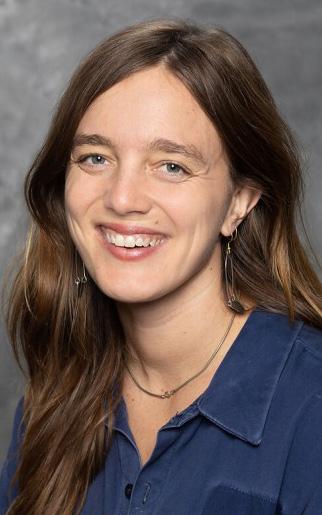
Nicole Stanton: English
By Ila Bakaya
English teacher and Academic Support Specialist Nicole Stanton will depart from the school after three years to begin teaching at the Bay School in San Francisco. Stanton said her experience at the school has transformed the way she now approaches teaching.
“Over my time teaching, I have gone from thinking I run the show to creating a classroom that honors the way students think and create,” Stanton said.
“I want to be a guide to a simpler classroom experience that allows student voices to control the
Jocelyn Medawar: English
By Grace Choen
After 35 years of teaching at the school, Upper School English teacher Jocelyn Medawar will be retiring after the 2025-2026 school year ends.
Medawar joined the school in 1990 out of fascination for the merger between the Harvard School for Boys and Westlake School for girls in 1991, having taught at her alma mater Immaculate Heart Middle and High School previously. Medawar said she wanted to be involved in the
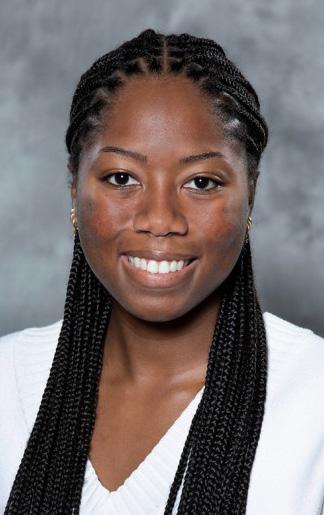
school’s evolving community.
“I was interested in what I heard was going on between Harvard and Westlake school,” Medawar said.
“I thought, ‘They’re merging, and how fun or interesting would it be to be building a school from the ground up?’”
Medawar said that she looks forward to building a schedule on her own terms in retirement, although she will miss the sense of support and community from the school.
“I’m excited to see what new structure I will create for myself,” Medawar said. “[Though I will
class. I want students to feel more connected to their value outside of grades.”
Stanton said she will also miss the relationships she has built and the different parts of campus where she has made memories over the years, including the bleachers on Ted Slavin Field and the Learning Center.
“The bleachers here are really meaningful to me. During my first year of teaching here, I was feeling overwhelmed at a new school,” Stanton said. “My new teacher friends and I always had lunch there so we could reground ourselves together. To me, it feels
miss] my friends, my colleagues and predominantly the students. Each class gets to be its own little family, and I’ll miss that. I will always love teaching, but I know it’s time for me.”
Medawar said her time at the school taught her to view effective teaching as a combination of passion and skill.
“It has taught me to really respect the craft of teaching. It’s easy to say, ‘I love books and I want to share that with students,’” Medawar said. “But teaching isn’t just about sharing what you love.
Haley Hicks: Faculty
By Angel Song
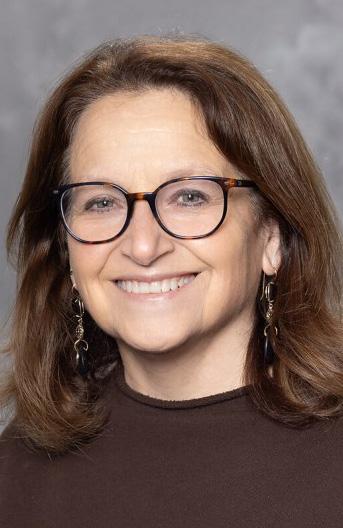
Upper School Assistant Director of Stewardship Haley Hicks ’17 will be leaving the school after the 2025-2026 school year concludes. She joined the team shortly after graduating from college. Hicks said she enjoys the type of work she does, which often involves daily coordination across the different departments.
“A typical day at [the school] is very collaborative and usually includes a lot of meetings,” Hicks said. “My role is fun because I get to strategize and
Rees Pugh: Peforming Arts
By Emmeline Chan
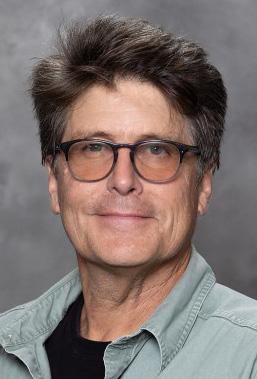
Performing Arts teacher and Master Carpenter Rees Pugh will retire after 26 years with the school. He plans to spend more time with his family in northern Wisconsin and upper Michigan. Pugh was first hired to fix some issues with a set in the spring of 2000, and started his full-time career in teaching the following school year.
Pugh said his time at the school has been fulfilling and memorable.
“Teaching here has been a dream job from every standpoint,” Pugh said. “The community of
people and the collaborative artistic experience, with students and faculty alike, stand out in my mind. Helping students discover the transformative power of storytelling and theater-making, as well as the camaraderie that the experience can provide, has been a highlight. It’s thrilling to witness that discovery over and over.”
Pugh has worked on 50 Upper School mainstage productions and feels bittersweet about leaving.
“While I absolutely love the work, it’s a younger person’s job,”
Pugh said. “It’s physically very demanding, technically challenging
work with so many different people, including vendors and departments across the school, for example the athletics department and communications.”
Hicks said her relationship with the school began first when she was a student, and she decided to take on this role once she graduated from college and reconnected with her dean to search for job opportunities.
“I first came to Harvard-Westlake as a student, so the school has been part of my life for a long time,” Hicks said. “After I graduated from college during the pandemic and was
and should remain relevant to young audiences. It feels like the right time to make room for another generation of theater makers. However, I look forward to coming back and seeing what they have to say.”
Lucas O’Connor ’27, who has participated in multiple theatre productions, said Pugh has served an essential role behind the scenes during rehearsals and performances throughout the year.
“He is just the best,” O’Connor said. “He always greets people and asks them how they’re doing, and you can tell he really cares about

like the place where the real conversations happen, so I’ll definitely miss it. I also want to give a shout-out to the team in the Learning Center, where I have spent a lot of time. [Director of Learning Center Julee Madkins] and [Assistant Director Ramon Visaiz] are amazing, and it’s been a really important part of my time here. They have taught me so much.”
Although leaving all of these welcoming communities will be difficult, Stanton said the transition is at a natural point in her personal life.
“I just had my baby, Cora,
It’s really a craft and a profession, and I appreciate that this school has always respected teaching as a craft and a profession.”
English Teacher Jeremy Michaelson, Medawar’s husband, said he is looking forward to the opportunities and changes that Medawar’s retirement will bring.
“I’m excited for the way it’s going to change the rhythm of our lives,” Michaelson said. “I’m just worried about missing her during the day. I’m not losing nearly as much as the school is losing with [Medawar] retiring.”
looking for my first real job, I reached out to my former dean, who pointed me in the direction of this role. I always joke that I was pleasantly surprised by how much I ended up enjoying the work.”
Hicks said her experience at the school has taught her lessons about connecting with others in order to make work more efficient, including the work that does not necessarily take place upfront, but is still needed for the well-being of the school.
“The school has taught me how important relationships and communication are, both
everyone in the program. Nothing would work without him because he handles all of the significant backstage management.”
O’Connor said he’s disappointed Pugh is leaving, but will remember the impact Pugh had on him.
“I’m really sad because he has a very important job that will be hard to replace and he brings a great spirit, and it won’t be the same without him,” O’Connor said. “I look up to [Pugh] because of the way he treats people, his diligence and his creativity. I hope he’ll stay connected to this community and come to future performances.”
and I’ve spent most of my life in Los Angeles,” Stanton said. “I’m just ready to try a new place, so my partner and I are heading up to San Francisco. We have a lot of family up there, so I’ll have a great support system while teaching at my new school.”
Shriya Vishwas ’28 said she has enjoyed Stanton’s warm attitude and will greatly miss her next year.
“Ms. Stanton is really sweet, and she has been a great presence in the Learning Center,” Vishwas said. “She brings warmth to every environment and will be deeply missed by the students here.”
personally and professionally,” said Hicks. “Working here has also shown me how much goes on behind the scenes to make a school like this one run well.”
Hicks said she will miss the amount of collaboration she experiences at the school while interacting with it, as well as the amenities it offers to all of the community members.
“I will really miss the people and the collaborative energy of the community,” Hicks said. “I will also miss not having to make my lunch every day. I have been very spoiled by the amazing cafeteria.”
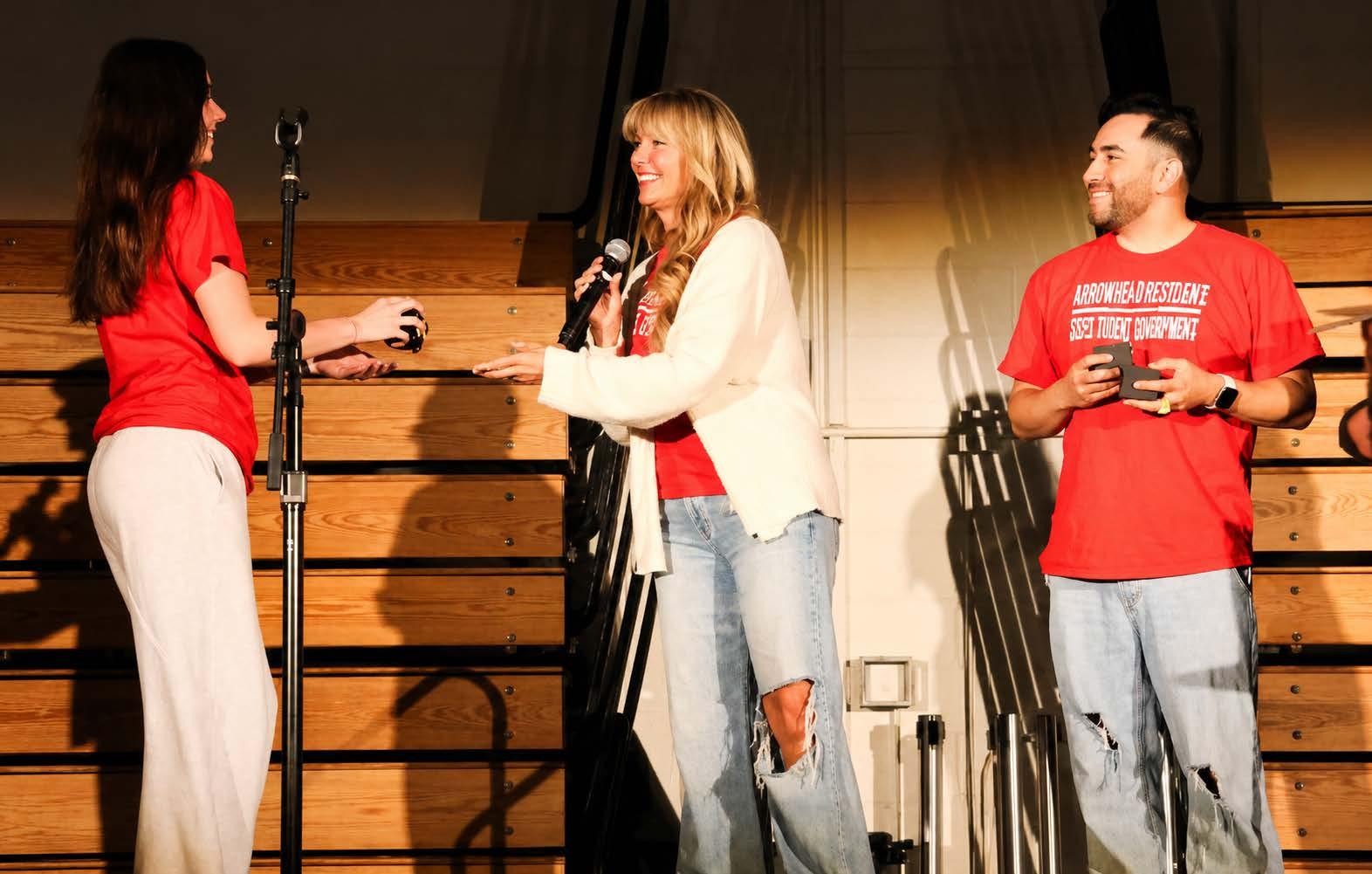
FROM GOALS TO GOLD: During the final Community Time all-school assembly, varsity girls volleyball and varsity girls field hockey teams collected rings after closing their seasons with championships. Teammates express excitement and pride for their accomplishment and ceremony.
Varsity girls volleyball and field hockey win championships and receive rings at assembly
By Lauren Kvamme
Volleyball and field hockey both finished their seasons with championships, driven by team chemistry and months of hard work on and off the field.
The Harvard-Westlake girls varsity volleyball and field hockey teams both claimed championships this season, marking their hard work, team chemistry and commitment to each other on and off the field. The volleyball team won the Division I state championship, and the field hockey team claimed the Sunset League championship. Both teams were honored at a Community Time assembly, where players received championship rings.
Libero Mattea Pisani ’27 said the achievement had been a long time coming.
“This season was a season of growth for us,” Pisani said. “We overcame a lot of challenges and adversity as a team and were able to come out stronger because of it.
It was obviously such a bittersweet moment thinking about the seniors and seeing their faces.”
Middle blocker Ruby Sampson ’27 said the win felt like a very surreal moment.
“had just accomplished. It was some of the most fun I had had with the team all year, just reminiscing about the season as a whole.”
Sampson said the championship felt especially meaningful given how much hard work the team put in to slowly build towards it.
We overcame a lot of challenges and adversity as a team and were able to come out stronger because of it. ”
“The moment I realized we had won was when we went to dinner as a team right after, joined by our coaches and all of our families,” Sampson said. “We were all wearing our medals and we finally had a moment to reflect on what we
Mattea Pisani ’ 27
“The program had had some pretty rough years in the prior seasons, and having the new coaching change was a little scary,” Sampson said. “The work put in every season felt like it was always working towards this goal, and it was just amazing to watch us all achieve it.”
Pisani said the team’s strong
Dashiell Sparks ’26 receives award
By Chloe Kim and Claire Lee
Dashiell Sparks ’26 was one of 10 scholars in Los Angeles to receive the National Posse Foundation Scholarship for Middlebury College out of over 17,000 nominated students from Los Angeles, New York and Chicago. The National Posse Foundation Scholarship was established in 2014 to provide full-tuition, merit-based leadership scholarships to high school seniors to attend partner colleges and universities in the United States.
To be considered for the National Posse Foundation Scholarship, the student must first be nominated by their high school. Then, students need to participate in the Dynamic Assessment Process (DAP) for assessing leadership, teamwork and a variety of problem-solving skills.
Sparks said the National Posse Foundation Scholarship application process took multiple steps to reach the finalist stage.
“[The application process] starts with creating a profile like the Common App about extracurricular activities and writing a few short answer questions about your personality and what makes you stand out,” Sparks said.
“There was a group interview, then a one-on-one traditional interview and lastly, another group interview with the last 20 finalists and the presidents and teachers of the college.”
Upper School Dean Nia Kilgore said she nominates students through the deans and the overall school community.
“Every year in the winter or spring, I approach my dean colleagues as they are meeting with juniors and their families to think about students who might be great candidates,” Kilgore said. “Whenever we get names from the school community, as the school official nominator, I go forward putting their name into the portal and they become nominees. Truly, having known Dashiell since eighth grade and
seeing his growth as a young man, leader and student, he fit all of the criteria that Posse looked for.”
Sparks said his active listening during group interviews helped him stand out.
“One quality that made me stand out during the group interview was asking a lot of questions when others were speaking,” Sparks said. “I also made sure that all of my other group members had plenty of space to talk as well. Rather than trying to dominate the conversation too much, I tried to show that I am an active listener.”
Kilgore said she saw Spark’s potential for the scholarship.
“I had the foresight to picture him in these interviews,” Kilgore said. “I knew he would do well. I knew he would connect with his peers and impress the Posse administrators in the group interviews. It was a no-brainer when I heard his name to nominate him and represent the school well.”
Award recipients announced
Valedictorian: Emma Tseng ’26
Salutatorian: Sally Ramberg ’26
Bishop’s Medal and Veritas Award: Robby Louie ’26, Miles Aguilar ’26, Michaela Williams ’26
Lester Medvene Award: Garret Morberg-Nguyen ’28
Morris Michael Landres Award: Lauren Kvamme ’28
Tamkin Community Service Award: Anju Higashi ’26, Dawson Peng ’26
Brendan Kutler ’10 “Two Hats” Award: Aidan Elson ’25
Jerry Margolis Jazz Award: Colton Checchi ’26
Frederick Douglass Diversity Award: Ivy Wang ’26
Cuscaden Blackwood Medal: Jasiri Johnson ’27
Lamar Trotti Jr. ’50 Award: Atticus Rath ’26
David Justin Rascoff ’91 Award: Maylie Macias ’26
Blanche Nelson Boyle Award: Dashiell Sparks ’26
Humanitas Award: Samaya Sayana-Manchanda ’26
George Coleman Edwards Award: Caroline Cosgrove ’26
Computer Science: Chase Mayer ’26
Ducommun Award (Mathematics): Andrew Jo ’26
English: Cordelia Scoville ’26
bond was especially impactful to their victory.
“I truly think that we played for each other,” she said. “There was and will always be so much love between the 18 of us.”
Field hockey midfielder Margaux Schlumberger ’27 said winning the championship came down to the people around her.
“We had a great group of girls who had really good team chemistry,” Schlumberger said. “It was so fun getting to hang out with some of my best friends both on and off the field.”
Schlumberger said she was thankful for the opportunity to compete at a high level through the school’s program.
“I’m very grateful I had the chance to start the sport on the later side and still participate at such a high level,” Schlumberger said.
World Languages (Overall, Chinese, French, Latin, Spanish): Katelynn You, Joseph Reiner ’26, Cordelia Scoville ’26, Lyra Majumdar ’26, Brando Bowse ’26, Sofia Giovine ’26
History: Emma Tseng ’26
Performing Arts: Shimon Schlessinger ’26, Diya Schievink ’26
Chronicle Award: Kayla Graff ’26, Sienna Dall’Olmo ’26
Vox Populi Award: Chloe Kim ’27, Emma Cohen ’26, Olivia Roosa ’26
Speech and Debate: Molly Block ’26
Sandifer Creative Writing Award: Ezekiel Baum ’26
Science: Amelia Zhang ’26, Lisa Cheng ’26
Visual Arts: Sabrina Simek ’26
Economics: Anthony Shearmur ’26
Lee Carlson Award: James Tronstein ’26, Kale’a Tindal ’26
Athletic Director Award: Nicholas Monroe ’26, Lila Wimbish ’26

Year-End Crossword
Jessica Ferrie ’26 and Aven Son ’26 have crafted The Chronicle’s crossword puzzle for this issue. See if you can use the clues to solve the enigma.

22. Finals week stressors
23. Get sick
24. Mined substance
25. Part 1 of the poem The Divine Comedy
32. Alternative to dine-in
33. Fork’s counterpart
34. Charged particle
36. Big ___, California
37. Barnyard sounds
Half of R&R
20. “Cause I see ___ whenever you smile” - Taylor Swift
38. Tax helper
39. What goes up but never comes down
40. Small stream
41. Optimal
42. Shane and Ilya dynamic
46. Sis sibling
47. Battle of ___ Jima
48. Well-known precursor to the Little League
51. Fourth of July spectacle, or a descriptor for 20-, 25- and 42-across
57. It often will be seensnacking on some seals
Chron-nections
58. Macaroni shape
59. ___ Louie (Freezeria owner)
60. Cheese cracker brand
61. Silly animals capable of honking
62. Greek god of love
63. A dog’s is often wet
64. Many housing communities in Bel Air are often like this
65. Things you count at the gym
DOWN:
1. ___ and aahs
2. Make presentable, as a gift
3. Journalist Klein
4. Highest vocal register
5. Annoyance
6. “Frozen” snowman
7. Red or blue in “The Matrix”
8. Online marketplace
9. “We ___ it!”
10. Salary-earning pursuit
11. Pub offerings
12. The majority
13. Nonhuman family members
21. Word with starter or first aid
22. A sapling will grow into one
24. Slimes out
25. Bread precursor
26. Concur
27. Hit the slopes
28. World preceding “tube” or “peace”
29. Politician Haley of the 2024 Republican
Primary
30. Less mean
31. Mistake, casually
32. Airport security org.
35. ___ Geo
37. Snack with the same colors as 57-across
40. ___-Z (undo)
41. Unusable take
43. The state of one’s surroundings when 51-across has gone wrong
44. Opened, as an Instagram story
45. “___ so cute!”
48. Unable to decide
49. Con ___ (with vigor, in sheet music)
50. Macbeth has five of them
51. Dog pest
52. “Yeah, sure”
53. Flower symbolizing love
54. Raw, as meat
55. Blackpink and BTS genre
56. Attitude
58. It may or may not have preceded the chicken
News Reporter Holden Kim ’27 created the Chron-nections for this issue. Find four groups of four words sharing a category, and each word belongs to only one. Good luck with the puzzle!

Editors-in-Chief:
Sienna Dall’Olmo, Kayla Graff
Print Managing Editors: Colin Ho, Lyla Kavanagh, Erin Ryu, Eila Shokravi
Presentation Managing Editors: Luca Gonzalez, Lydia Gugsa, David Rothbart
Executive Editors: Ella Jeon, Ellika LeSage, Andrea Ricabal
Digital Managing Editors: Colin Ho, Eila Shokravi
News Editor: Luca Gonzalez
News Reporters:
Emmeline Chan, Kara Jazaeri, Holden Kim, Abby Ryan, Angel Song
Opinion Editor: Audrey Kim
Opinion Reporters: Jack Fener, Hailey Kramar
Features Editor: Lydia Gugsa
Features Reporters: Mila Detmer, Donna Enayati, Tali Gurule, Hannah Hendifar, Riya Iyer, Rebecca Vitti
A&E Editor: Annabelle Cheung
A&E Reporters: Audrey Herrera, Sophie Lee, Nicole Um
Sports Editor: David Rothbart
Sports Reporters: Charlotte Fowkes, Jackson Hubbard, Chloe Kim, Jean Park, Jack Turetzky, Jake Yoon
Satire Editor: Lyla Kavanagh
Satire Reporters: Jack Fener, Charlotte Fowkes
Business Manager: Yuna Jeon
Art Director: Annabelle Cheung
Photography Director: Nicolas Monroe
Directors of DEI: Andrea Ricabal, Eila Shokravi
Marketing Director: Hannah Hendifar
Senior Reporters: Wynne Davis, Analeigh Nava, Connor Merrihew, Max Nam
Illustrators: Emma Bing, Annabelle Cheung, Audrey Herrera, Emma Lutsky, Tehmina Malholtra, Elliot Murphy, Anika Norton, Eila Shokravi, Nicole Um, Angel Song, Phoebe Sun, Charlotte Fowkes
Layout Assistants and Staff Writers: Leica Achache, Alexander Ahn, Kiran Amin, Ila Bakaya, Hannah Bayat, Emma Bing, Isabella Chiang, Grace Choen, Rowan Green, Philo Hornby-Simmons, Sophia Jeon, Leela Kandavel, Halyn Kim, Katelyn Kim, Lauren Kvamme, Claire Lee, Lucas Lee, Radha Malhotra, Freddie Mandel, Violet Martin, Brendan Park, Jihan Park, Matteo Rabizadeh, Ollie Rauch, Avery Resnikoff, Birdie Reynolds, Sage Seltzer, Madison Shen, Sally Straus, Phoebe Sun, Avery Thompson, Nick Waller, Maddy Wynholds, Andrea Yu, Vicky Yu, Gyan Zinn
Director of HW Media: Jen Bladen
Chronicle Adviser:

Stop Waiting for Life to Finally Begin
Especially in a school like ours, students often fall victim to a future-oriented mindset. We are in a constant state of waiting for the future – a future that we imagine to be more joyful, more carefree and in some way brighter than the present. Sophomores imagine finally getting the chance to sit on the main quad or go off campus for lunch. While deep in the trenches of junior year finals season, minds drift to the promise of a carefree summer. When college applications seem never-ending, the thought of second semester burns bright in seniors’ minds.
It is important to look forward to all the good things that lie ahead, but it becomes detrimental when we start to view the majority of the high school experience as a prelude, an inconvenient obligation on the path to graduation. When that one excruciating class is over, when you get that leadership position, when summer comes, when you are admitted to college – that’s when life will really begin. We live in these fantasy lands in our heads, framing it to ourselves as a type of motivation, because it is easier than living in the present.
Yet, when the moments we spend so much energy imagining finally arrive, we are never as satisfied as we imagined. Achievements that we dreamed of become just another bland item on a resume, and exhilarating moments fade to memories that aren’t given a second thought. There is always another finish line to reach for. One explanation for this mindset is hedonic adaptation, which is the psychological tendency to
return to a stable level of happiness following extreme positive or negative life changes. In short, major events or changes typically have only a temporary effect on a person’s emotional state. We are wired to continually look towards the next goalpost, and that goalpost is always moving. There will always be another tunnel to pass through. There will always be another green light across the bay.
This tendency to live in the future rather than the present is something students at the school should actively fight against. When we constantly orient our minds to be forward-thinking, life becomes a constant stream of preparation rather than actual experiences. Deferring joy to some utopian time to come only results in eventual regret and a harder time transitioning to new life stages. Inevitably, you will end up looking back with remorse for not appreciating what you had when you had it.
As the year draws to a close, many seniors are currently grappling with reflection on their high school experiences. Even moments that felt unredeemable at the time become strangely nostalgic when we know we’ll never experience them again, and we end up wishing we had been more present. Simple daily routines like eating lunch on the quad, driving home along the route that you could do with your eyes closed or walking your dog around the block might not feel exciting, but at some point, those will become treasured memories. The end comes much sooner than you expect. Soak it in. about us
DIVERSITY, EQUITY AND INCLUSION:
The Chronicle strives to be a diverse and inclusive community that welcomes all who wish to contribute. Our Diversity, Equity and Inclusion committewwe works to ensure that every member of the Harvard-Westlake community is recognized, included and given a voice.
The Chronicle's publications will aim to represent this diverse community and provide a variety of perspectives on the topics that they cover.
EDITORIALS:
Unsigned editorials represent the majority opinion of staffers and are written by the Editorial Board, which is composed of the Editors-in-Chief, Managing Editors and Section Editors.
ADVERTISING:
Looking to place an advertisement in our paper? Questions pertaining to advertisements may be directed to The Chronicle's Business Manager Yuna Jeon at yjeon1@hwemail.com. Publication of an advertisement does not imply endorsement of the product or service by the newspaper or school.
LETTERS TO THE EDITOR:
Letters may be submitted to chronicle@ hw.com or mailed to 3700 Coldwater Canyon Ave., Studio City, CA 91604. Letters must be signed and may be edited to conform to Chronicle style, space and format. We are committed to uplifting the voices of marginalized or underrepresented individuals and groups in accordance with our efforts to promote diversity, equity and inclusion.
PUBLICATION
UPDATES AND CORRECTIONS:
Though we always strive to be as accurate as possible, staff members identify inaccuracies and receive feedback from readers.
The Chronicle publishes corrections when we discover a factual error within a piece. We will continue to uphold transparency even in the face of mistakes following the publication of each issue.
MEMBERSHIPS:

AContribute more during class discussions
By Jack Fener
At our school, we are fortunate enough to learn in an environment where our thoughts are valued and our input is considered. Opportunities for discussion and even respectful debate are central to the structure of many classes and are a core expression of scholarly ability. That said, there is an issue present that hinders this quality from enhancing learning to its fullest potential: many students outright refuse to speak in class unless forced. Even with the external pressure of participation grades, a large subset of the student body either does not feel motivated or is too anxious to speak up. No matter the reason, it is a detriment to the experience of everyone to abstain from class discussions. Students, even those apprehensive, should strive to participate if they do not already.
Whether or not someone speaks up in class is not an issue of competency. Our school maintains a standard of excellence that is regularly met by all students, so insight from any given student is very likely to be valuable. Even outside of specialized knowledge specific to any one subject, a student can rely on
Improve sustainability in the cafeteria
By Hailey Kramar
t the end of lunch, cafeteria trash cans become accidental time capsules: crumpled paper napkins and plastic containers sit near milk cartons. As students, we rarely imagine the cafeteria as a political space, yet schools make decisions every day about what food students will eat and what gets wasted. Those choices feel automatic, but they function as environmental policy.
Schools cannot claim to teach sustainability while their cafeteria systems normalize waste and disconnect students from the environmental consequences of everyday choices.
Across the U.S., schools waste approximately 27% to 53% of food served, according to a research study conducted by Penn State. These small actions repeated across thousands of students and hundreds of school days often accumulate into something much bigger.
Throwing away a lunch tray not only wastes food; it wastes everything required to create it like water, energy, transportation and labor. Wasted food is a major contributor to methane emissions from landfills, according to the Environmental Protection Agency's
Wasted Food Scale Report. While students may only see food left on their trays, they miss the agricultural resources behind it and the emissions that follow afterward which exasperate global warming.
Yet, students are not the primary problem. Schools frame environmental responsibility as an individual choice: recycle more, waste less and always make environmentally friendly decisions. Although the task of saving the environment largely remains an individual responsibility, cafeteria systems shape many of those choices before students even enter the lunch lines. Students do not create the menus or determine the serving sizes — institutions do.
Students in elementary school often waste more vegetables and fruit than older students, according to the National Library of Medicine. Younger students have earlier lunch times, while older students eat lunch two hours later. Thus, younger students may still not be hungry and may be more prone to waste, as that time is still so close to breakfast.
While schools create systems for the cafeteria based on schedules and nutritional requirements, they may unintentionally create condi-
tions where waste becomes predictable. In the Los Angeles School District, students waste $100,000 worth of food every day while 5.4 million residents face food insecurity, according to the L.A. Times. This discrepancy between school food waste and families going hungry reveals a deeper discrepancy between institutional practices and community realities.
At school, students learn about climate change, ecological footprints and environmental responsibility. Once class is over, students leave class and enter systems that often separate consumption from consequence. It becomes difficult to teach sustainability while practicing something different at lunch.
Some argue that schools should not turn the cafeteria into an environmental project and instead focus on feeding students efficiently and affordably. However, schools have never been neutral institutions as they determine curriculum and nutritional standards. Furthermore, cafeterias shape habits too, and ignoring environmental consequences does not remove the politics; it simply conceals them. While lunch may feel like a break from learning, it might be one of the most revealing lessons of the school day.

their general personality and sentiments to enrich the already present discussion. It is unfortunate that these thoughts would go unheard for any reason, especially if that reason happens to be a lack of confidence. Classrooms at this school are intended to be places where effort and attention are rewarded — places where mistakes are neither punished nor ridiculed. Most teachers would much rather see a student attempt to contribute and momentarily fail than remain silent out of fear of being wrong. Participation is an essential method of demonstrating, or for those who lack it, building academic courage.
Expressing oneself also benefits everyone else in the classroom. A discussion is vastly improved by the addition of various voices and perspectives. When answers regularly fall to the same few people, interest quickly stagnates. Other students and teachers are often looking for fresh input, and seemingly small comments can have a great effect when the habit of making them is repeated. There is a genuine desire from many teachers to see students put in this effort to interact with material, and the benefits of this go far
beyond simple participation grades. There is also real educational value in verbally engaging with material. Giving answers and expressing ideas out loud forces students to organize their thinking and respond to questions in real time. It is an opportunity for a critical evaluation of a variety of ideas that are unique to the classroom environment and thus extremely valuable. Participation is much more than appearing engaged or maintaining interest; it is an essential part of the learning process itself.
It is understandable that some are shy or simply don’t feel comfortable constantly engaging, but contributing meaningfully to class discussions is an indispensable aspect of personal edification at this school. Students who regularly avoid this are not only hurting their own experience but the experience of others. We are lucky enough to exist in a school environment where almost everyone is tremendously competent and has important insights into whatever the material may be. Speaking up is a concrete action towards a more interesting class environment, superior diversity of perspective and better understanding of material.


MRespect Etiquette
By Mila Detmer and Rebecca Vitti
ary scours the dinner table for conversation among the rambunctious group around her. Spaghetti is flying, laughter is erupting and silverware is clanking against plates. Mary realizes that she feels alone at her own 18th birthday party. To her far left, Rachel is hunched over her iPhone, completely in her own world, only looking up when a TikTok is funny enough to show to the person next to her. Beside her, another girl sits sandwiched between two similarly phone-addicted teens, eagerly waiting for her turn to join a conversation that never seems to start. Before Mary can say anything, she is suddenly blinded by the flash of a camera pressed inches from her face, capturing every angle for the inevitable Instagram post. She jerks away from the bright light, blinking just in time to see spaghetti noodles soaring through the air. A second later, marinara sauce stains her baby blue dress, ruining her birthday dinner.
Situations like this, where social etiquette is ignored entirely, have become all too common. Phones have made it easier to avoid awkwardness, but they have also made it harder to actually have fun. At dinners, parties and even school events, people use their phones as a safety blanket, something to stare at when the conversation pauses. Instead of talking
to the people near them, meeting someone new or simply being present in the moment, they scroll through Instagram reels and pretend they are busy. This same problem shows up at school. When students walk through campus, many immediately reach for their phones, not because they have something urgent to do, but because scrolling is easier than making eye contact with peers. It lets people act insouciant, when in reality, they are just awkwardly doomscrolling to avoid conversation.
51% of children actively use devices during meals, according to The Guardian. Phones have become normalized at dinner tables for many children today, replacing opportunities to watch adults interact with manners, conversation and respect. This growing dependence on screens may contribute to weaker social awareness and conversational etiquette, as they likely will continue to retreat back to their devices during uncomfortable social situations. Excessive screen time in children is also associated with delays in language and social development, according to a 2014 UCLA study.
The issue is not that phones exist. It is that they have started to replace basic social interaction and, in doing so, allow people to circumvent the development of vital social skills.
ILLUSTRATION BY NICOLE UM
RESPECT SHOULD NOT BE GENDERED
Upper School Dean Adam Howard reflects on gender, leadership and the subtle ways school culture can shape whose voices are heard.
By Adam Howard ’93
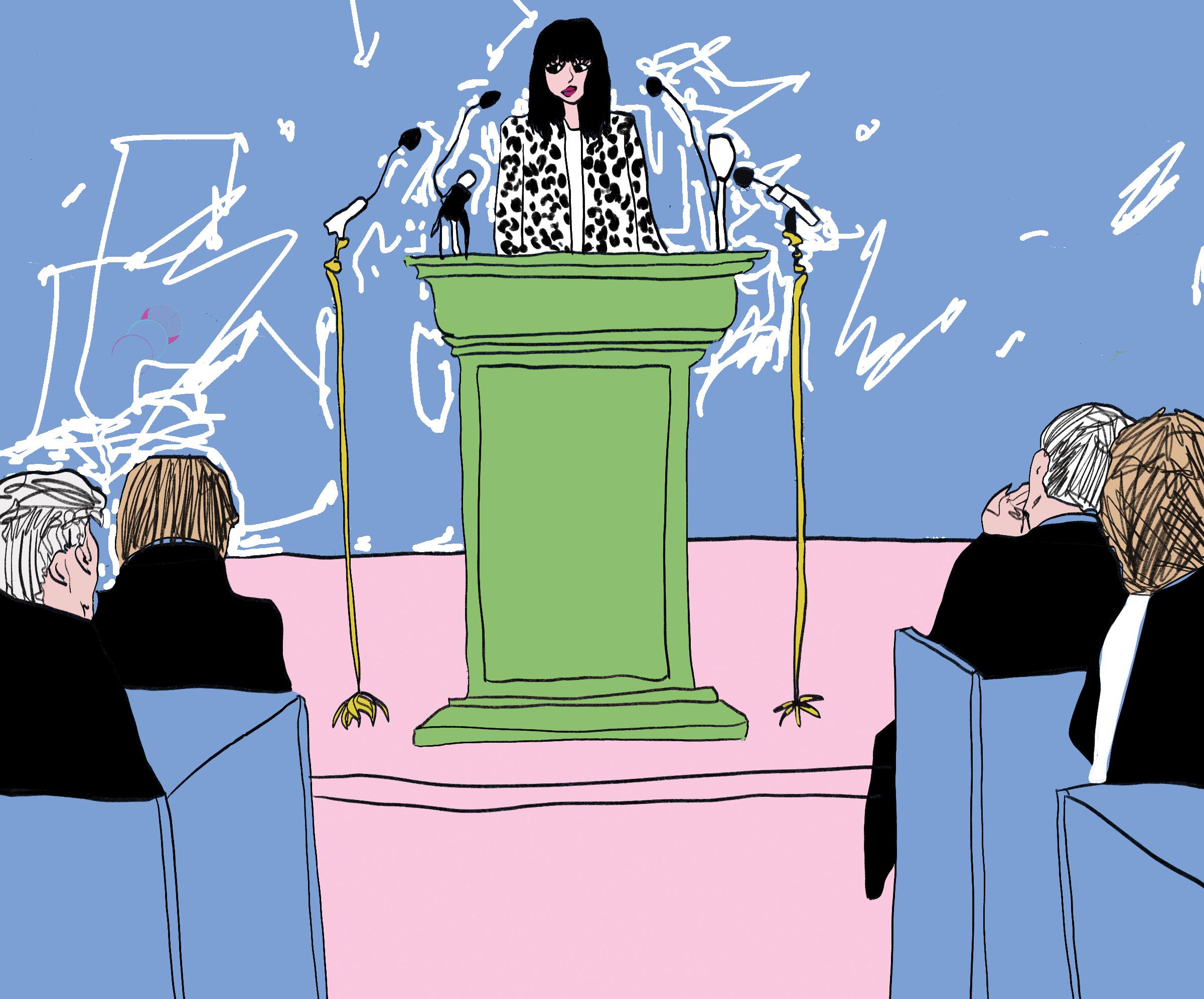
In Henrik Ibsen’s “An Enemy of the People” (1882), the play’s protagonist Dr. Stockmann declares, “You see, the point is that the strongest [person] in the world is he who stands most alone.” The theatre geek in me found himself thinking about this statement during the recent speeches for junior prefect, not because the moment was dramatic in any grand sense, but because it revealed something essential about courage.
As I watched candidate after candidate step to the podium, I noticed a pattern that felt too clear to ignore and, frankly, too familiar. When many of the male candidates spoke, particularly those who treated the process with seriousness, the room seemed to understand its responsibility: there was silence, there was atten
or interrupted when they have the courage to speak. Sometimes this looks like blatant cruelty. More often, it is smaller: a joke that should not have been made, a comment that reduces someone to her appearance, a room that will not quiet down or a group that mistakes mockery for strength. It can be subtle, but it can also be incredibly potent in its effect.
I know this because I used to be one of you. Contrary to speculation otherwise, I was once a teenage boy, and I was also once a student in this very community. My still-developing brain said and did things regarding female peers that I would take back in a heartbeat if I could. That is not a confession meant to excuse anything. It is an acknowledgment that boys are shaped by what their communities reward, what their friends laugh at, what their schools challenge and
ties of the world they are entering. I try to teach them that courage and vulnerability are not opposites of strength, but among its clearest expressions. I try to teach them that making room for another person does not make them small er; it makes the room bigger. And yet, the fact that I have to shepherd them through this is one of my greatest dis appointments in our society. It should not require coaching to respect bold voices. It should not require a formal lesson to feel secure enough to make room for peers across the gender spectrum. When someone stands before a crowd with the hope

satiate their intellectual curiosity and seek exciting collegiate outcomes; it is a place where young people learn what kind of power they have and what kind of people they want to become. We can either reproduce the same tired patterns that have diminished voices for generations, or we can set a different standard: one where leadership is not gendered, vulnerability is not punished and respect is not distributed unevenly.
So, to the students who spoke in Taper Gymnasium on May 1, especially those who had to speak over the noise: thank you. Thank you for your courage, your preparation and your willingness
Discussing Campus Antisemit ism
Faculty and students respond to recent hate incidents perpetrated on campus and discuss proper confrontation of harmful public issues.

By Hannah Hendifar and Riya Iyer
The administration sent an email to students and parents regarding swastikas drawn on school property on April 24. Swastikas were found on a desk and a wall, according to the email. Head of Upper School Beth Slattery said the process for responding to hate crimes on campus starts with investigating the perpetrators and the severity of the incident.
“We will usually find out about [incidents] through the community concern reporter,” Slattery said. “First, there’s an investigation where you talk to all the parties involved and you determine whether it is an Honor Board situation or whether it needs to be a mediated conversation, depending on how people are involved in it. If there is either a micro or macro aggression against somebody or someone, that tends to [prompt] more of a one-on-one, personal conversation or talk.”
these major things happen because [the administration] is worried about copycat situations and people not understanding why something like this is so problematic.”
Upper School Coordinator of Diversity, Equity and Inclusion Reb Limerick said the disciplinary process for race-based offenses includes attending an educational book club, which aims to fosterand encourage accountability.
However, Slattery said the traditional disciplinary process can fall short with incidents like the most recently drawn swastikas because it is difficult to identify with accuracy the perpetrator.
“One of the challenges that we have with something like the swastikas is that, unless you have a camera or a witness, it is nearly impossible to determine who did something like that,” Slattery said. “When we do the investigation, most of it involves figuring out whether we have a camera in proximity that we can check, but since we do not have cameras in classrooms, we interview everybody who is involved to establish a timeline of when something appeared.”
Assistant Head of School for Community and Belonging Janine Jones said the school tends to avoid assemblies after serious incidents to minimize harm and confusion.
“The recommendation of somebody who works at the school is not to have assemblies after things like this happen,” Jones said. “We also have had suicides here at our school, and so the philosophy is that you don’t hold assemblies after
“The restorative process is about education for the person who drew [a swastika] or said a word or drew an image that is racist,” Limerick said. “We have brought them in for book clubs, where they’ll have to read about the history of the word they said or the image that they drew. The whole process is about digging deep around the harm that was enacted and trying to educate that student so that they no longer use that word or draw that image and understand the weight behind it. Hopefully, they don’t just feel shame or guilt, but actually feel a responsibility towards being an advocate in that space.”
Limerick said they emailed both the students who were directly affected by the drawings and Jewish club leaders on campus.
“I’ve reached out to the students who found it and were directly affected and let them know that I was sorry that they had to encounter this type of hate and that I was there for them if they wanted to talk or if they wanted to take action,” Limerick said. “[I also reached out] to the Jewish club leaders. Ultimately, that image, although probably carrying most weight for the Jewish community, does carry negative weight for anyone who is affected by fascism or those other groups who are targeted by the Nazis.”
Instances of antisemitic markings have occurred in the past. For example, “Hitler Rocks” was found engraved into a desk in Oct. 2022. Moreover, President Rick Commons wrote in a school-wide email informing families of swastikas scratched on school desks and a whiteboard in Jan. 2023. Three hate speech cases for antisemitism
were reported by Prefect Council in Nov. 2025.
Jones said the administration created a committee to fairly examine the school’s curriculum and determine in which aspects they could bolster antisemitism and Holocaust education after prior antisemitic incidents.
“We try not to be reactive,” Jones said. “When [Head of School Laura Ross, Head of Communications Ari Engelberg] and I had the first swastikas of our career here at the school, we created an antisemitism curriculum working group. That group looked at our curriculum from seventh grade [and did] an audit to see where antisemitism is taught or not taught in our curriculum. Then, we found places for [it primarily in] our history classes and lectures.”
Slattery said Holocaust education was standardized as a result of the committee and its findings.
“We wanted to make sure that coverage of the Holocaust was standardized across our 10th grade history course because we discovered that some teachers were covering it as a whole unit and other people were covering it for a day, and so there was a discrepancy,” Slattery said.
Mattea Pisani ’27 said she encountered standardized Holocaust education in her sophomore year.
“I learned about the Holocaust in 10th grade, and from what I know, all my friends did as well,”
Pisani said. “It was a very impactful and poignant experience.”
However, Mina* said she has not noticed any changes in the 11th grade history curriculum.
“I definitely have not observed any curriculum changes,” Mina said. “If anything, within my History class, there’s an assumption that we’ve already learned about the history of antisemitism, as well as the Holocaust in 10th grade. As a result, we barely spend any time learning about it, which is concerning to me because of the wider implications related to Jewish identity in America. Additionally, there is a lack of exposure on the complex and lengthy history of the ways in which the Jewish society was viewed and treated in America, and this is especially so when we compare it to the depth of coverage given to other historically marginalized and oppressed groups.”
“was no way to prove it. Most people are not going to let you get away with punishing them for something that you can’t prove, so it’s frustrating on our end.”
Antisemitic incidents increased nearly five times in frequency in 2025 than levels tracked a decade ago, according to an audit conducted by the Anti-Defamation League. Limerick said campus tensions have worsened since Oct. 7th, affecting the welfare of Jewish, Muslim and Middle Eastern students.
It’s incumbent upon us to do better and to continue to educate and hold people accountable.”
— Rebecca Limerick
Slattery said the disciplinary process has yielded limited results.
“In my experiences with hate speech graffiti, we’ve never had success in really identifying [anyone],” Slattery said. “There was one a couple of years ago where we thought that we knew who it was, but there
“There were instances of antisemitism before, but it definitely feels like since October 7th, both nationally and on our campus, there is an increase in antisemitism,” Limerick said. “There’s also more Islamophobia, so Middle Eastern, Jewish and Palestinian students are all sadly experiencing more hate.”
Jones said the rise in hate requires the school to respond accordingly by educating students on such behavior.
“I really do see an increase in [hate] and I don’t know why,” Jones said. “It’s disheartening. It’s incumbent upon us to do better, continue educating and holding people accountable.”
*Name has been changed.
NET: Institutions have been a target
Antisemitic graffiti
Antisemitic attacks
Antisemitic threats
Institutions have not been a target
Not affiliated with any Jewish Institutions
Not sure
L. Wood Rebecca Limerick
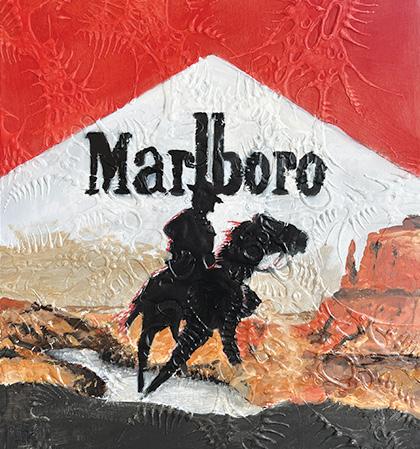
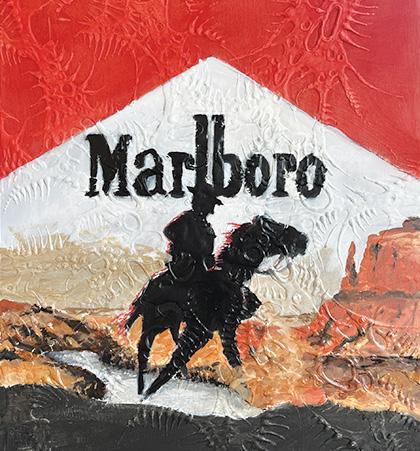


Community members discuss the resurgence of smoking cigarettes and how Generation Z’s smoking habits differ from past generations.
By Donna Enayati
Warm sunlight filters through the thin curtains of the Italian villa where Arden* is staying. As he groggily wakes up, a pounding headache reminds him of the drunken events of the night before. Moments later, he feels a throbbing pain in his upper arm. Desperate to find the source of his pain, Arden turns over to find an angry blister, the result of a cigarette burn. Arden said he convinced his friend to put out a cigarette on his arm in an effort to be perceived as more daring.
“Cigarettes are a very performative thing, and there is a certain aura to people who chase after them,” Arden said. “During my peak performative era, on a trip to Italy, I was really drunk, so I told my friend to put a cigarette on my arm, thinking it would be cool. Even though she didn’t want to do it, she did and I felt nothing. I thought it did not work.”
so smoking cigarettes is a callback to tradition,” Shibuya said. “Everything in our culture is borrowing from ’90s and 2000s fashion, and smoking cigarettes is an extension of that.”
Eight of the 10 films nominated for Best Picture at the 2025 Oscars contain tobacco imagery, many of which feature young stars, according to the Truth Initiative. Baum points to “Love Story,” a sensationalized television show, where the main character frequently smokes. Baum said the revival of older trends in media has led to the glamorization of cigarettes.
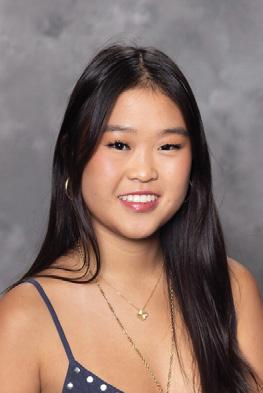
Arden is a part of Generation Z’s greater shift towards smoking cigarettes. From April 2023 to April 2024, cigarette brands saw rising sales, with average customer spending reaching $326, up 27% from the previous year, according to The Outcome. According to a Chronicle poll, 21% of students have used cigarettes themselves and 38.6% of students know someone who smokes cigarettes regularly. Chloe Min ’27 said cigarettes have reemerged as a trendier nicotine product due to the over-popularization of vaping.
“At first, everyone steered away from smoking cigarettes because of the introduction of the vape in the early 2010s with the Juul pod,” Min said. “The vape became a cultural symbol and a point of community. It became so popular that everyone was doing it. When things get overpopularized, they start to become uncool. That happened exactly with the vape. It became corny, so people reverted back to the cigarette. With TikTok, the cigarette has become so much bigger and part of people’s identity.”
Kenzie Lane ’27 said cigarettes have been deemed more fashionable than vapes, leading to an increase in popularity.
“There is a weird thing, probably because of social media, where smoking is seen as chic and more aesthetic than vaping,” Lane said. “A lot of kids are still more addicted to vaping, but vapes are not seen as new or cool anymore, which might explain why more kids are smoking cigarettes at parties.”
Westflix Director of Operations Eze Baum ’26 said the rise of weight loss drugs and a renewed push toward ultra-thin body standards has increased smoking in efforts to meet these standards.
“Ozempic, GLP-1s and a desire to be thin are definitely contributing,” Baum said. “Fashion and body standards have shifted back to where they were in the ’90s and early 2000s, where size zero was ideal and people were smoking and not eating, and we’re seeing more of that again.”
Reagan Shibuya ’27 said with so many nicotine alternatives available, choosing cigarettes feels more deliberate and tied to a revival of older trends.
“Gen Z smoking cigarettes is different from other generations because there are so many other ways to smoke,
“Over the past few years, we have definitely seen an overall ’90s nostalgia resurgence that coincides with all of the other nostalgia-based trends that have been popping up and defining the 2020s,” Baum said. “Part of that is smoking culture. For example, ‘Love Story has contributed to peo ple wanting to dress like JFK Jr. and Carolyn Bessette-Kennedy and feel part of that world, but part of that world was smok ing. It shows up in movies and TV, whether period pieces or contemporary settings, and in moments like Charli XCX hav ing cigarettes on platters at her after-party and handing them out as party favors.”
Jared Oviatt, who runs @cigflu encers, an Instagram account with nearly 100,000 followers that fea tures celebrities smoking, points to musical artist Charli XCX as a ciga rette symbol for Gen Z. Charli is best known for “Brat Summer,” a choatic, messy summer inspired by the release of her popular album “Brat.” Oviatt said Charli XCX contributed to ciga rettes’ increase in popularity and has become the symbol of rebellion for younger generations.
“With Brat Summer, Charli was ob viously shedding that mainstream pop star status to ‘365 party girl,’ for lack of a better word,” Oviatt said. “That’s Gen Z’s point of reference for a messy celeb rity. I’m older Gen Z, but especially for Gen Alpha, there’s no Paris Hilton to look up to. It is Charli XCX. I like to attribute a lot of [smoking cul ture] to Charli, and it extends off her into a whole web of influence in terms of cigarettes.”
In a similar fashion, Min said Lana Del Rey, another popular fe male artist, has been instrumental in popularizing cigarettes.
“Lana Del Rey loves her geek bar and famously loves her vape, but also a big part of her brand was a cigarette,” Min said. “She sang about it in several of her songs and turned it into a symbol of love. It was such a big image in so many of her songs. Lana Del Rey’s in fluence single-handedly brought so many young girls into smoking be cause they associated it with this beautiful, Americana image.”
Lana Del Rey, Charli XCX and
similar female artists have impacted their listeners. In recent years, the gap between women and men who smoke cigarettes has shrunk significantly, according to the American Lung Association. Furthermore, girls’ increased social media usage and cigarette usage have been linked. Girls who used social media seven or more hours a day were 5.83 times more likely to smoke than girls who used none at all. For boys, that number was notably lower at 4.80. Across all social media platforms, girls showed a stronger link between screen time and smoking than boys did, according to the National Institute of Health (NIH).
Oviatt said he has noticed more women engaging with smoking content on social media.
“for the sake of doing it, rather than doing it to be perceived a certain way.”
On social media, the amount of smoking-related content has also increased. In 2025, Pinterest searches for “smoking pose” were up 70% year-over-year among 18 to 24-year-olds in the U.S., according to YPulse. Shibuya said social media has created an archetype that romanticizes girls smoking.
When things get overpopularized, they start to get uncool.
That happened exactly with the vape.” -—Chloe Min ‘27
“70% of the followers on this ac
“More girls are smoking now because it is attached to the Tumblr ‘cool-girl’ persona,” Shibuya said. “A cool girl would not be seen holding a vape; she would be smoking a cigarette. Social media and TV both aestheticize it. People are posting themselves smoking, and there are lots of aesthetic videos of girls smoking cigarettes.”

Oviatt said newer generations’ smoking habits are primarily motivated by
“At least it seems like people are doing it purely for Instagram as opposed to something that they’re doing on a dayto-day,” Oviatt said. “This generation of smoking is a little different in terms of the habit side of things. People are not addicted to cigarettes. They’re making a conscious decision to smoke to be per-
*Names have been changed.
L. Wood Chloe Min ’27
Coed Confessions
Girls reflect on choosing between single-sex and coed institutions for high school, addressing the common conceptions surrounding all-girls schools.
By Tali Gurule
Donning jean shorts, tank tops and gleaming white Nikes, packs of middle school students shuffle into their first period classrooms for the second day of school. In her ninth-grade English I class, Chloe Min ’27 chooses a seat next to a boy wearing a sweatshirt flashing the name of her favorite rapper. Min, who attended Marlborough School for seventh and eighth grade, starts to chat with the boy about his music taste, hoping to make a friend at her new school. Min said since she had gone to an all-girls school, she did not realize how others would interpret her interest in talking with the boy.
schools, according to the National Center for Education Statistics. In Los Angeles, there are 20 all-girls high schools in the Niche ranking system, according to Niche.com.
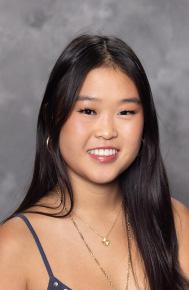
“A couple of days later, a girl came up to me and said, ‘Oh, I heard you were flirting with this boy in

presidents inspired me to try,” Oerlemans said. “The school taught me to aim higher, and it showed me what I can achieve.”
Girls commonly choose to attend allgirls high schools because the experience is tailored to their social development, and it encourages them to embrace opportunities sometimes clouded by traditional gender dynamics, according to a study at the Goldman School of Public Policy at the University of California, Berkeley. However, girls may decide against attending a single-sex school because the experience may fail to prepare them for professional or family life, according to a report by the Department of Psychology at the University of California, Los Angeles (UCLA).
Marlowe Kohn ’27 attended The Archer School for Girls before transferring to the school at the beginning of ninth grade. Kohn said arriving at a coed school revealed a new sphere of people for her to
“When I came to Harvard-Westlake, it took me a second to recognize I hadn’t been around a guy in three years,” Kohn said. “It felt like I had been in a situation that was so one-sided, and then I realized ‘Wow, there is another entire half of the world.’ A coed school widens the range of people you are friends with, and the guys bring a playfulness and humor to the classroom that creates
Kate Oerlemans (Marymount High School ’27) attended the school for seventh and eighth grade before transferring to an all-girls high school. Oerlemans said the single-sex environment fostered her confi-
“In an all-girls school, there’s a much stronger connection between the students because we are all the same gender,” Oerlemans said. “I’m not nervous to speak up, raise my hand and ask a stupid question or volunteer an answer even if I don’t think it’s right. In a classroom with guys, I’m more inclined to feel embarrassed when I get the answer wrong. There are more boundaries in coed classrooms because girls don’t have as much in common with a boy as they do with
In an all-girls school, students often feel a heightened sense of female empowerment, according to a study published by the Department of
Joan*, a parent who chose to send her sons to the school and her daughters to Marlborough School, said she wanted her daughters to learn that their potential is not
“When you are in an all-girls school, every class, club and activity is run by a girl,” Joan said. “From 7th to 12th grade, every student in a position of leadership is female. It creates this mindset that whatever a girl wants to do, she can achieve it. That can mean being president of student council, head of robotics or captain of the debate team. It can mean doing woodshop or creating sets for the theater. All-girls schools create the social norm
Oerlemans said she now serves as a member of Marymount High School’s
“I hadn’t been involved in student council, but seeing all these girls as leaders and class
Min said she originally overlooked Marlborough School’s message of female empowerment, but she now values how it prepared her for entering a larger world.
“At Marlborough, they really nail the ideas of girl power and being a ‘girl boss’ into you,” Min said. “It’s corny when you’re in school hearing it, but when you move to a new environment, that confidence sticks with you. I’ve always had a certain strength from that experience that I do not think I would’ve gotten if I went to a coed middle school.”
develop certain interpersonal skills that she would not have otherwise developed.
“Experiencing teenage love teaches you about handling conflict, voicing your needs and doing it all kindly,” Min said. “I’ve learned so much about myself by having a boyfriend, and it’s definitely not an experience I would have gotten if I stayed at an all-girls school.”
“ I had been in a situation that was so onesided, and then I realized ‘Wow, there is another entire half of the world.’”
Marlowe Kohn ’27
When deciding whether to attend an all-girls high school, many students come across the prevalent perception that a greater percentage of students at all-girls high schools are part of the LGBTQ+ communi ty, according to a study by Policy Analysis for California Education.
Min said her classmates felt pressure to be part of the LGBTQ+ community.
“There’s a term at my old school called ‘lugging’ or ‘lesbian until graduation,’” Min said. “The pressure to hook up with girls gets so strong that some people will be lesbians until they graduate. They’ll hook up with girls, date girls and then go to col lege and get a boyfriend. Every year, people talk about the seniors and say ‘Oh, she’s go ing to lug’ or ‘She’s going to get a boyfriend when she leaves.’”
Beatrice*, who went to another all-girls school in L.A., said it was extremely common for students to be part of the LGBTQ+ community.
“When I got to my old school, one girl told me to assume ev eryone there was gay,” Beatrice said. “I got about ten emails from different people I knew saying they changed their gender and changed their name to something else. The pressure of being in that environment affected a lot of girls because they wanted to fit in.”
Oerlemans said she has not experienced pressure to belong to the LGBTQ+ com munity at her all-girls school.
“It’s a popular stereotype that many stu dents at all-girls schools are gay, but I have not noticed that at my school,” Oerlemans said. “I’m sure there are some girls who are gay, but it’s not prominent like some peo ple would imagine it to be. Even if it was, I don’t think that stereotype is something to consider when choosing between a coed and all-girls school because it doesn’t make a difference either way. You’ll find your people, and you’ll become friends with ev eryone in your grade anyway.”
Min said her all-girls school helped her learn about the LGBTQ+ community.
“I appreciate the gay culture at my old school because it gave me an under standing of the gay community that I don’t think I would have gotten at an other middle school,” Min said. “Other people’s sexuality became normal to me, and respecting pronouns was something I learned right off the bat in my first year there. I’ve taken all that knowledge with me up until now, and I’ll take it with me into college and into the real world.”
Min, who currently has a boyfriend, said she appreciates being in a coed environment because it has helped her
Kohn said she now has the coed school experience she always hoped for.
“At my old school, we didn’t have a football team, homecoming, school dances or any of the quintessential events you’d imagine in a high school experience,” Kohn said. “At a coed school, I get those fun high school moments I see on TV. When I watched “High School Musical,” I saw Troy Bolton shoot a basketball, and I thought, ‘Wow, that seems like a fun game to be at.’ Now, I know I can be there too. I feel like I’m truly living the high school experience

*Names have been changed.


By Hannah Hendifar
Chants echo at the corner of Ventura Boulevard and Coldwater Canyon as students march after walking out of school in coordination with nationwide protests to stop funding United States (U.S.) Immigration and Customs Enforcement (ICE) on Jan. 30. They crowd the sidewalks as they move toward Sportsmen’s Lodge, weaving past passersby and shoppers while holding poster boards over their heads. Scrawled in thick marker, one reads “Melt ICE,” another, “Immigrants Built This Country.” Her voice hoarse and legs tired, Hudson Phillips ’27 stands among these students, deeply aware of the tension between hope for change and doubt about whether it will come. Phillips said despite initially being unsure about the impact of the protest, she valued the civic engagement she saw and was pleasantly surprised by the experience.
“I was hesitant to go,” Phillips said. “I didn’t think that it would be that effective or enact real change. But overall, a lot of people were able to learn something about being civically engaged, and people around us were able to see that young people care about this issue. I ended up enjoying the protests much more than I thought I would.”
Three out of 10 people participate in protests or collective behavior related to social movements, according to a study published by the National Institutes of Health (NIH). 48% of students reported attending a protest within the last year, with 74% of those that attended saying the experience increased their sense of community, according to a Chronicle poll.
Following the death of Iranian Mahsa Amini in 2022, thousands of Iranian Americans marched in Los Angeles in solidarity with the Woman, Life, Freedom movement that began in Iran, calling for justice for Amini and an end to the oppression of women, according to the Los Angeles Times. Mattin Tasbihgoo ’27, an Iranian American who attended these protests, said his participation increased his connection to his community and ethnic identity.
“At the protest, I felt invigorated,” Tasbihgoo said. “It’s a different feeling when you’re fighting for a cause deep in your heart that you know is right, with everyone else supporting that cause with you. I reconnected with my community through that tragic event and tapped into who I felt I really was as an Iranian American.”
Tasbihgoo’s experience reflects broader patterns in why people choose to protest. The
Members of the school community reflect on the evolving purpose, impact and limitations of protests in today’s political climate.
primary motivations to protest are a strong sense of injustice, the belief that change is possible and identification with a community that shares their values, according to a study done by the University of Amsterdam.
Upper School Head of Visual Arts Gustavo Godoy, who marched on Jan. 30 in downtown Los Angeles to protest ICE, said the issue of immigration has always been important to him and worth taking action for because of his family’s personal connection to it.
“I come from an immigrant family, so a lot of the politics matter [to me],” Godoy said. “They affect people in my family or like my family. We are at the center of what’s going on politically right now in a lot of ways. [Immigration] has been a big issue for me since I was a kid. When I was in college, I was protesting against similar policies that were coming into play in California.”
Upper School Physics Teacher Yanni Vourgourakis said he has never felt the need to attend a protest because he feels the political system works in his favor and does not discriminate against him.
“I’ve never gone to a protest,” Vourgourakis said. “I’ve just never felt compelled enough to go to one. If there was something that was very personally threatening to me, I probably would. If I felt that the group I was in is being discriminated against, I imagine, at some point, I would have to stand up for that. [But] the political system largely works for me.”
Although some individuals choose not to protest, others see value in the broader impact of demonstrations. A protest can have a variety of goals, including to influence public opinion, connect with others and draw attention to an issue. Protests have an overarching purpose of demanding change, according to the Anti-Defamation League. Phillips said the purpose of a protest is to increase visibility for an issue and show general support for it.
“In general, a protest [aims] to raise awareness about an issue or to show how many people care about an issue,” Phillips said. “One of the more impactful parts of going to the ICE walkout was seeing people drive by and honk in support and see that hundreds of high school students do really care about this issue. [Protests] keep issues in the front of people’s minds and show them that there’s a coalition they might want to join.”
Birdie Reynolds ’28, the great-granddaughter of President Jimmy Carter and a member of a politically active family, said protests provide the initial support for po-
litical change, to be followed by funding for representatives that believe in those causes.
“[Change] has to start with a protest because that is the voice of the people,” Reynolds said. “But the funding is almost equally as important, because in the political world we live in, it is so necessary to get representatives who represent your beliefs, and that’s done through funding for their campaigns. A lot of successful political movements start with grassroots movements.”
Despite these benefits, many people question whether a protest is truly effective or simply a symbolic display of activism. Godoy said this criticism misunderstands the central goal of protest, which is to put on a performance.
“After the [ICE walkout], kids were saying, ‘It was really performative’,” Godoy said. “And yeah, but that’s what a protest is at its core. It is a performative act. So when you say that, it feels like you actually don’t know what protest is trying to accomplish.”
However, Phillips said some participation in protests can be insincere and lacking true engagement.
“There were performative aspects to the ICE walkout,” Phillips said. “Some of it felt like people were doing it because it was a trendy thing to do [or] to get selfies to post on Instagram to seem like a good person. There were times that I was annoyed and I was like, ‘How many of these people are really taking the time to edu cate themselves and do as much as they can for this issue that they’re profess ing to care about?’”
Tasbihgoo said the per formative nature of these events is a tactical necessity to garner attention rather than a flaw.
“At the end of the day, protests are performative be cause they have to be,” Tasbi hgoo said. “You have to put on a spectacle in a way [and] create disruption. When the anti-ICE protests first broke out in L.A., they shut down freeways. That really spread the word.”
Most successful social movements tend to have mobilized at least 3.5% of the general population, according to a study done by Harvard Kennedy School. Despite 10,700 protests recorded in 2025 alone in the U.S., no protest in the
country’s history has ever drawn the roughly 12 million people necessary to hit that 3.5% threshold, according to The Guardian and the Center for American Progress. Tasbihgoo said he felt discouraged and disheartened after the Woman, Life, Freedom protest he attended didn’t lead to tangible change.
“After I went to the protest a few years back, nothing changed,” Tasbihgoo said. “I was demotivated. I kind of lost hope that anything would happen again. It feels my contribution and voice fell flat in a way. The reality of the situation is there’s almost nothing that can truly be done.”
Vourgourakis said although protests will never change someone’s opinion, they can be effective in forcing a response from politicians.
“You either agree with someone or you don’t,” Vourgourakis said. “It is all very emotional. [But] people expressing what they want can definitely cause politicians to respond and realize that there’s some kind of push for a certain agenda they need to contend with if they want to stay in office.”
Godoy said any amount of attention and awareness a protest can garner is worthwhile, regardless of its scale.
“I don’t think [protest] is pointless,” Godoy said. “Whether it’s two people stand ing on a street corner or 100,000 people ing your voice heard might just ed and to pay attention to your issue. But somebody

COLIN HO/CHRONICLE

By Riya Iyer
Students and faculty reflect on the emotional impact of having a parent with cancer and how this experience affects their everyday lives.
Lola* quietly slips into the house after a long day at school, careful not to disturb her mom, who is resting upstairs. As she walks toward her room, she notices a dim light seeping out from under her mom’s door. Peering inside, she sees her mom standing over a scatter of dark hair clippings, adjusting a hat over her newly shaved head. Lola meets her eye and for a moment, no one utters a word until her mom smiles casually at her, as if nothing had changed. Lola said she had to suppress the initial shock of seeing her mom without hair to be supportive.
“I had accepted the fact that losing your hair during chemotherapy was inevitable,” Lola said. “But, it was so abrupt to see my mom without hair because of how much she’s always cared about it throughout her entire life. I could tell that losing her hair made her really sad, but she was trying to stay optimistic and present herself as strong for me. In that moment, there was this [mutual] feeling of sadness on the inside, but no one said anything because we wanted to be strong on the outside for each other.”
Kyle Henderson ’27 lost his dad to metastatic spinal cancer when he was in 8th grade. Henderson said watching his father’s rapid deterioration and attending early morning appointments was particularly challenging for him.
“How quickly it all escalated was the hardest part,” Henderson said. “It went from a few memory slips to forgetting my name, then forgetting what he’s done in his whole entire life. There were days where I’d come home and my mom would tell me he had a seizure and we would go to the hospital. Those days were incredibly hard for me because I would wake up at 3 a.m. to drop him off at chemotherapy before coming to school and putting on a brave face.”
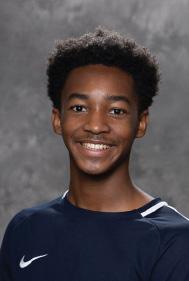
Carrie Kohler is a chaplain at Cedars-Sinai Hospital who specializes in providing spiritual care for patients and family members processing cancer diagnoses. Kohler said the disconnect between a student’s home and school life can be difficult to navigate.
dad’s hand as he faded in and out of consciousness. That sense of having to rise to the occasion and be the parent for a little while was a switch that had activated at that moment. Then, years later, it switched on again when he was diagnosed with pancreatic cancer.”
The average cost of cancer treatment in the United States can range from $50,000 to $150,000, often imposing a large financial burden on families, according to the American Cancer Society. Henderson said the financial strain of the diagnosis changed his family dynamic, as relatives moved in to help support the family.
“financial strain can feel cumulative.”
Friendships can serve as a crucial buffer against trauma and reduce mental health challenges for young people during times of stress, according to a study about the mitigating effects of friendship on mental health symptoms cited in the Journal of development and psychopathology. Lola said her mom’s cancer diagnosis has allowed her to build stronger friendships with people she can trust.
It went from a few memory slips to forgetting my name, then forgetting what he’s done in his whole entire life.”
In the United States, 3.4% of children under the age of 18 have a parent with a history of cancer, according to an American Cancer Society Press Release. In 2020 alone, an estimated 56,300 children lost a parent

“At school or with friends, life is moving forward as if nothing has changed,” Kohler said. “At home, everything has changed and that dissonance can feel isolating. Some students also take on new caregiving responsibilities, whether practical ones like driving siblings or emotional ones like becoming the person who keeps everyone’s spirits up. Adolescence and young adulthood are already seasons of enormous transition and a cancer diagnosis on top of all that reshapes the emotional landscape for them overnight.”
When a parent is diagnosed with cancer, children often assume greater familial responsibilities, which can lead to withdrawal from social and extracurricular activities, according to the NIH. Lola said her family has taken on additional responsibilities to accommodate her mom’s diagnosis.
“For me, I’m more eager to get my driver’s license so I can get to extracurriculars or competitions more easily without burdening someone,” Lola said. “My dad has a lot of school related events for my younger brother that my mom used to attend. It’s been hard to adjust for everyone, but we try to make the little things work so my mom doesn’t have to go through as much anxiety and emotional stress.”
Director of HW Media and Interdisciplinary Studies and Independent Research Teacher Jen Bladen lost her father to pancreatic cancer in 2005. Bladen said an earlier experience with stepping up and taking on responsibility prepared her for when her dad was initially diagnosed with cancer.
“When I was younger, my dad had randomly passed out and had to be hospitalized,” Bladen said. “I was the person who wound up calling an ambulance, calming my mom down and holding my
“When my dad was first diagnosed, my mom had to work to support us and pay for all of the hospital bills,” Henderson said. “She had a lot of family that ended up coming to stay and take care of my father. In that respect, it brought us closer together and upon his passing, it left a hole in a lot of our hearts.”
—Kyle Henderson ‘27
Carly Nahin, a licensed clinical social worker at the University of California, Los Angeles (UCLA), said grief accompanies a cancer diagnosis can take on many different forms.
“Although people think grief is solely related to when someone dies, it can be related to a change in identity too,” Nahin said. “There can be a shift in perspective of things that might not feel as important as it did before, as well as changes in needs and boundaries in re lationships that are impacted by a loved one’s cancer diagnosis.”
This can include experiencing anticipatory grief, which refers to feelings of loss, anxiety and sadness that may occur before the actual death of a loved one, according to a children’s study conducted by Stanford University. Bladen said she experienced this type of grief throughout her father’s experience with cancer.
“Anticipatory grief makes you feel so guilty,” Bladen said. “There’s this sense that I should be hopeful and that this is going to get better. But what’s happen ing instead is I’m grieving the death of my father before it has happened. That makes me feel guilty that I’m not just all hope and sunshine and flowers.”
Kohler said young adults have differ ent coping strategies for responding to a parental cancer diagnosis.
“Some people compartmentalize, others withdraw or struggle with con centration, sleep or motivation,” Kohler said. “Experiencing anticipatory grief is also possible, which can show up as anxiety, irritability or a persistent lowgrade sadness that doesn’t have a clear name. The additional stressors of school, college applications, social pressure and
“I feel like because of the experience, I found friends that are truly there for me,” Lola said. “It’s helped me develop closer friends that I know I will be able to rely on and trust. Because the stress from my mom’s diagnosis compounds what I already feel from school, I deal with it as a whole by talking to my friends and trusted adults, which has helped me process it a lot.” Henderson said his friends played an important role in supporting his mental health following his dad’s death.
“My friends were definitely my biggest outlet,” Henderson said. “I remember going to school one day and my locker was decorated with stuffed animals and candy. The day my dad passed, a few of my friends drove down to my house and just stayed with me, which was honestly so necessary because I feel like being there alone with my thoughts would have been super dangerous. His death attacked my mental health in a way that I wasn’t ready for at such a young age, but hav

L. Wood Kyle Henderson ’27
The Class divide
Financial aid students reflect on classconsciousness and finding inner stability in privileged academic environment.
By Nicole Um
Seated at a lunch table before classes begin, Sue* and her friend Jordan* chat about the upcoming school trip. When Jordan asks if she plans to attend, Sue hesitates, explaining that the cost is a concern and that she is still waiting to hear back from the financial aid department. Upon hearing Sue’s reply, Jordan lets out a dismissive noise. “Your mom should just pay for the trip,” Jordan said.
Sue said the moment was a stark reminder of the wealth gap and different realities between her and [Jordan], and she felt diminished in the face of her friend’s response.
“It was like there was a physical barrier between us, shaped by our different economic statuses,” Sue said. “I didn’t know how to react because she knew I relied on financial aid because of my family circumstances. I live with my grandparents and parents, all of whom have health issues that require me to act as a caretaker back home. Our house has also burned down in the past, adding to the existing financial instability. I felt small and insignificant because of her insensitive comment, and it made me realize the relative ease with which students without financial aid and financial troubles navigate their lives.”
clothes, and I’ll hear them nonchalantly saying to their friends that they’ll get a $50 shirt because it’s cheap. I sit there thinking that’s a crazy price, but their friends are agreeing and encouraging them to get it. I know they don’t mean bad when they do this, but it feels like a lot of people who have that kind of money live centered in their own world and don't see beyond it. It’s second nature for them to think that what’s a normal price for them is the case for everyone, when in reality it’s abnormal to others.”
Similarly, Magnolia* said that hearing about other's privileges underscored the wealth disparity within the school and served as a wake-up call.
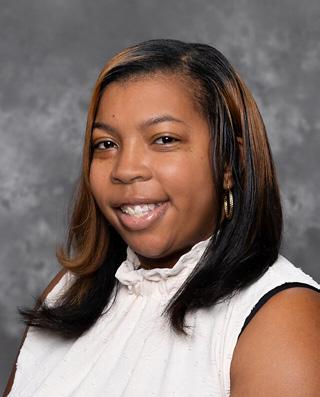
“I sat next to someone during convocation who was talking about moving out of state after graduation, getting her own house, and designing it herself,” Magnolia said. “I could not relate to her because my family rents an apartment, and my mindset has always been just hoping I can afford a place to live at all. It made me feel self-conscious hearing her speak so confidently about her plans, especially because I’ve never been able to think or say such things before. I realized that for some people, a home is something natural and given, but for me, it is an achievement.”
Bronson said the privilege at the school can leave financial aid students feeling out of place and pressured to hide parts of their identity.
“It’s easy for students with financial aid to feel a lack of belonging here, where there are a lot of students who have a lot of resources,” Bronson said. “Some admit that they feel like they live in separate worlds. A lot of times, students feel like they have to put on a different persona, not so much like they're pretending to be rich, but just not being their true selves, and admit to being unable to afford expensive items.”
Sue said that despite the school's welcoming nature, the underlying culture surrounding financial aid prevents her from being honest and upfront about her background.
“Being the subject of pity because of my financial circumstances has made me feel the need to lie about receiving financial aid,” Sue said. “There are a lot of amazing and [inclusive] people here at [the school]; however, I think there is still a lot of stigma surrounding financial aid.”
they don’t realize their privilege of affording such academic resources.
“My friends at times complain about having to go to their tutor lessons, whether it be for academics or music,” Jace said. “I don’t get jealous, but every time they express annoyance at having to attend their lessons, I think to myself, ‘they don’t know how lucky they are.’ I would kill to have even one or two private music lessons, but I can’t afford them. I’ve even been called bad at my instrument once, but I’ve been forced to learn violin with whatever resources I’ve been given.”
However, despite financial hardships, Sue said she has developed a strong sense of self and inner confidence beyond her financial circumstances.
“There are a lot of amazing and [inclusive] people here at HarvardWestlake; however, I think there is still a lot of stigma surrounding financial aid."
— Sue*
Sue’s reliance on financial aid is not uncommon at the school. During the 2025–26 school year, 20% of the student body received financial aid, according to the school. This percentage has steadily increased over time, rising from 13% in 1995–96 and 17% in 2011–12. Aliya* said that being a financial aid student has made her acutely aware and cognizant of the tenable disconnect between her experiences and the normalized privilege of her wealthier classmates.
“Sometimes, I feel as if students here live in a bubble,” Aliya said. “There are a lot of people who shop online for
Jace* said that his financial limitations have made him more conscious of the disparities between his situation and those of his peers and friends, even noticing them in everyday conversations.
“My friend commented on how I was wearing the same clothes every day,” Jace said. “They weren’t making fun of me, and I wasn’t offended because it’s true. I can’t afford to buy variations of clothes, and I often wear the same shorts and jeans every week. Also, I wear only one pair of shoes until it has holes and becomes threadbare. However, at that exact moment, I felt the financial distance between us.”
Upper School Counselor Brittany
Bronson said financial instability can add an extra layer of strain for some students, leading to frustration when they compare their circumstances to more affluent peers.
“There are some students who live month to month and worry about whether their family has enough money for rent or food,” Bronson said. “Thus, on top of normal teenage stress, they have financial stress that weighs on them. This heavier burden causes frustration, especially when they see more well-off students take opportunities and other things for granted.”
Jace said seeing his friends complain about their tutoring lessons causes him to feel a similar level of frustration, as
“While my lesser wealth position sometimes acts as a barrier between me and others, it doesn’t dictate or define me,” Sue said. “I’m proud that I receive aid and have support from our school. Of course, I definitely feel separated or judged by people at times, but recognizing that other people’s opinions are something that I can’t control, and instead finding support within my own community and friend group, helped me cope with those moments and stay grounded in myself.”
Jace said that financial aid has ultimately been a source of support and benefits in her academic life.
“In the end, I see financial aid at Harvard-Westlake as something that helps me because it supports my academic endeavors and has opened up so many opportunities and prospects that I am grateful to have,” Jace said. “I have additionally grown to detach my worth and identity from my financial standpoint, and I've learned to find self confidence and value in who I am as a student beyond financial categorization.”
*Names have been changed.
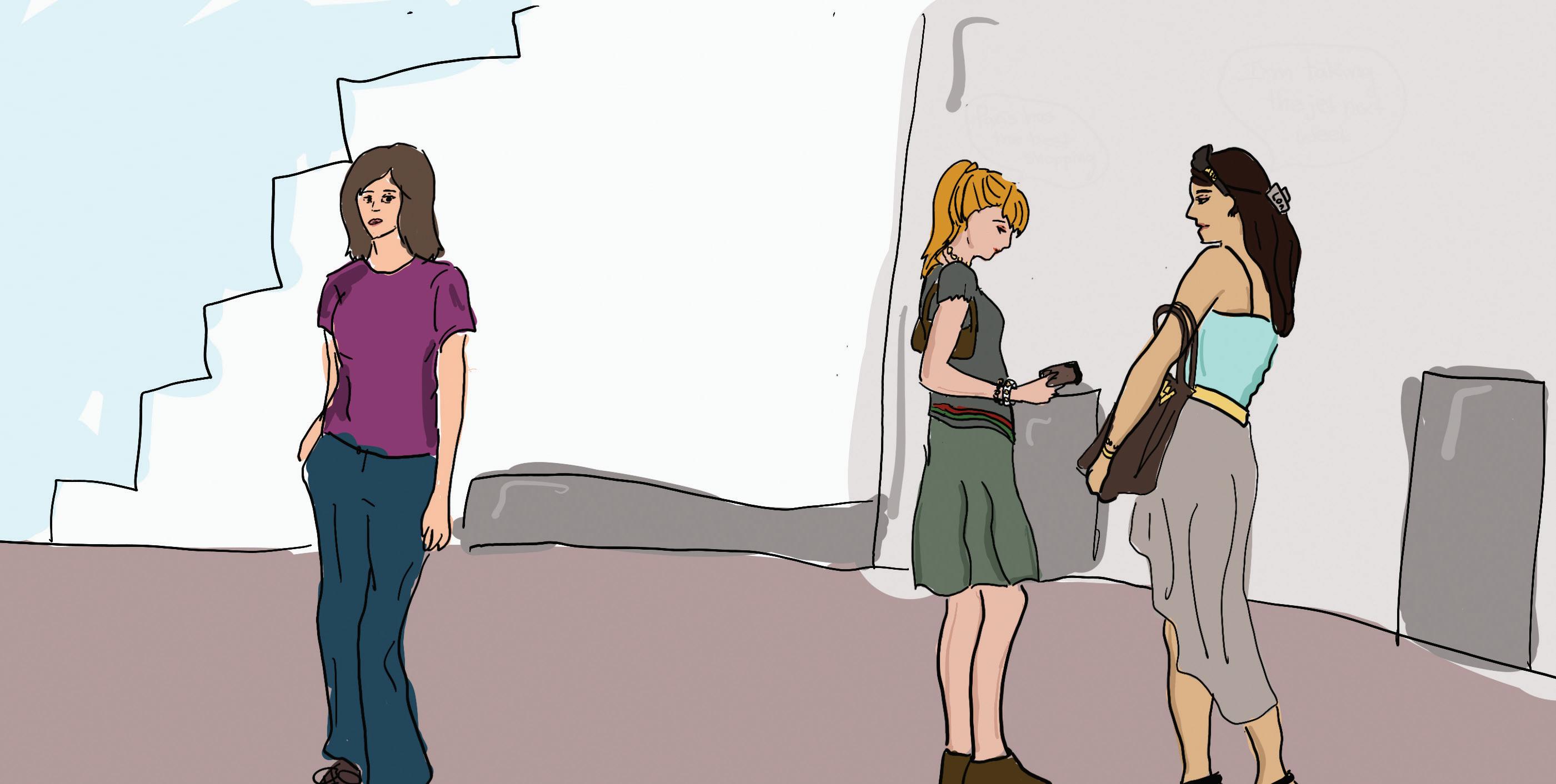
L. Wood Brittany Bronson

Alumni and faculty discuss academic culture at the school and how it impacts students’ values and character after they graduate.
By Charlotte Fowkes
As the sun shines on a crowd of white caps, Mimi Rhee ’25 and her classmates gather, draped in gowns and adorned with fresh leis falling around their necks. Her heels inch towards the corner of the stage while names are called off and applause is issued. As her name is announced, she is filled with excitement while she walks across the stage to take her diploma. With one hand on her diploma and the other in a tight handshake, she looks out into the crowd of fami lies and friends in dresses and suits. Rhee said graduation was full of mixed emotions and it did not sink in that it would be her last mo ment as a student at the school.
“Graduation was exciting and fun but it also didn’t feel real,” Rhee said. “While I was on stage, it felt like a rehearsal. It didn’t really settle in until that part of my life was over and I came to college.”

Rhee said the school fosters intrinsic motivation in students that translates to success in college.
“Harvard-Westlake is so competitive, but that’s why it’s so successful,” Rhee said. “They are able to put this pressure on you to perform well, which is important at that age. In college it is up to you. No one is at your door making sure you turned in every assignment or asking you about your grades. Harvard-Westlake instills that ability to rise and have passion to perform well. It sets you up to flourish.”
The school created the Learning Principles & Therefores, which are six indicators of when students are learning and how teachers should cultivate that learning. It serves as the teaching and learning side equivalent of the mission statement, according to Head of Upper School Beth Slattery. Slattery said the Learning Principles & Therefores help emphasize the importance of the lasting skills learned in class over material taught.
“The learning principles help get away from the idea that content is king,” Slattery said. “The content is much less important than the relationship and the skills. Those are the things that are lasting. It’s not that content is irrelevant, but much more of it is how we prepare you for the world. It’s about having skills and about how you interact.”

Slattery said she hopes students who graduate from the school are capable in communication, critical thinking, writing skills and
good character.
“I hope [graduates] know how to communicate both in writing and verbally, are able to assess and take in information, think critically, decide what they think and have the skills to be able to analyze information,” Slattery said. “That feels at the heart of what we do. I also like other qualities that are not as associated simply with the curriculum, like integrity and character.”
Students in elite college-preparatory high schools have a high prevalence of physical and psychological stress due to the hyper-competitive and college-focused environment, according to Science Direct. Upper School Dean Adam Howard ’93 said students at the school have a tendency to focus on the results of their work rather than their intellectual growth.
“I don’t want to make a blanket state ment for the entire year of school, but we are in a place where there can be some toxic achievement culture where it’s about the end and what it all leads towards,” Howard said. “We have a lot of kids that are genu inely curious, and of course all of our students are bright, but are we working towards something or are we bettering ourselves intellectu ally and philosophically?”
Rhee said the pressure of the school helps students thrive.
“Students and families come here to be challenged, to learn and to grow, but there is also an expec tation that one is going to find a great school for them at the end of this,” Howard said. “What that great school means is going to be different for every kid. Selectivity does not necessarily always mean the right school for someone.”
Mia Morgan ’25 said the stu dent body’s desire for high-lev el academics causes colleges ranked outside the top 20 to appear unappealing.

“A lot of people complain that Harvard-Westlake puts too much pressure on grades or that it is some torturous academic institution,” Rhee said. “People think it is very competitive and cutthroat, but honestly, that’s the exact type of environment that students kind of need. I needed that to flourish.”
Slattery said she hopes to see the school emphasize morals and be less self-interested.
“Sometimes we can be an individ ualized community where people are very much thinking about their own achievements and outcomes as op posed to the collective good,” Slattery said. “One of the things that is at the forefront of my mind is how to move towards being a place where people think about integrity and character in a way that right now I don’t think we are.”

“Harvard-Westlake makes it very hard to prioritize fit over ranking,” Morgan said. “It’s really the type of students that are drawn to the school. They are drawn to the top of the top academically, and because the school caters to such hard working and standout students, it makes a school that isn’t ranked in the top 20 seem like a failure when in reality it really isn’t.”
About 2% of students in the country attend independent schools, yet elite colleges such as Yale, Princeton, Brown and Dartmouth all have a student population of 24% to 29% of students matriculating from private schools, demonstrating the successful results of independent schools, according to The Atlantic. Morgan said the pressure to go to a top-ranked college is prevalent at all high-academic high schools.
“Only valuing top colleges is a thing at all elite high schools,” Morgan said. “My boyfriend went to an elite Harvard-Westlake adjacent high school in New York and he had the same perspective that I did.”

In the school’s class of 2025, about 41% of students attend colleges ranked in US News’ Top 20 National Universities, according to the school’s college matriculation document. Howard said students and families chose the school for many reasons but also have the expectation that it will lead students to high ranked colleges.
Morgan said the pressure to go to a top school caused her to focus on things that would benefit her in a college admissions pool.
“I started hyperfixating on college way younger than my peers who didn’t go to Harvard-Westlake,” Morgan said.
“It definitely gave me this drive to want to do more extracurriculars and to do better academically.”
Howard said the school’s education allows students to succeed at any college they attend.
“No matter where you go from Harvard-Westlake, when you come out of the school you are so well prepared for the next level of school,” Howard said. “Our kids can go to the most selective schools in the country, and they are going to do well. Even if you find yourself in the middle of your class
in Harvard-Westlake, you are probably going to find yourself at the top of the class wherever you go to college because you will know how to write and problem solve really well.”
HW Works is a resource of the school that helps students and alumni get jobs, internships, research opportunities and career and employment information, according to the school. Director of HW Works Kwaisi France said the school’s network helps alumni get opportunities in industries prominent with alumni.
“We have a ton of alumni who get their jobs through the Harvard-Westlake network,” France said. “As you get older, you will realize that a lot of jobs just aren’t available on platforms like Indeed. For all of the professional environments that alumni are going to go to, having that network is crucial, especially in those industries where [our alumni] are over-concentrated.”
Research shows that the most successful students in college are the ones that engage in undergraduate experiences regardless of the selectivity of the school they attend, according to Stanford Graduate School of Education. Morgan, a student at Boston Uni versity (BU), said al though her college was not a top-ranked school that students matriculate to, her experience there has been invaluable.
“Being at college has changed my perspective,” Morgan said. “Even though I didn’t go to one of the schools that Harvard-Westlake would deem a top school, being at BU has been such a great experience, and I wouldn’t change it for any other institution,” Morgan said. “Whether it is number one or number 100, it doesn’t matter to me.”

Howard said the school provides satisfaction for students seeking educational and personal growth and hope to attend a college that matches them.
“If you come to Harvard-Westlake with the expectation of going to an Ivy League college, you may find yourself very disappointed in your journey,” Howard said. “If you come to Harvard-Westlake with the expectation of getting a great education that is going to help you develop your character academically and intellectually and that you are going to end up going to a great school that fits you and your hopes and dreams, it ends up being a very worthwhile experience.”
ILLUSTRATIONS BY CHARLOTTE FOWKES

Students discuss navigating differing political opinions and conversations with both faculty and peers on campus.
By Kara Jazaeri
It is spring at the Upper School, and Barron Linnekens ’26 has just handed in a written assignment in his history class. Straying from his personal opinions, Linnekens said he chose to write from a political perspective differing from his own in the interest of academic scores.
“I took a history class with a very liberal teacher who I felt wouldn’t tolerate any other viewpoints,” Linnekens said. “That class was one where I didn’t believe anything I wrote. In that class, you’re taught what you should write about in lectures, so I was always writing what I thought he wanted to hear. It
the year with the grade I wanted.”
Linnekens is among several students refraining from sharing their political views in classes with teachers who hold different opinions. Individuals are far less likely to share political beliefs in professional or academic environments due to concerns that it might affect their success, according to a study conducted by the Pew Research Center. Barbara* said she worried her pro-Palestine views might have affected her academic performance in a history class.
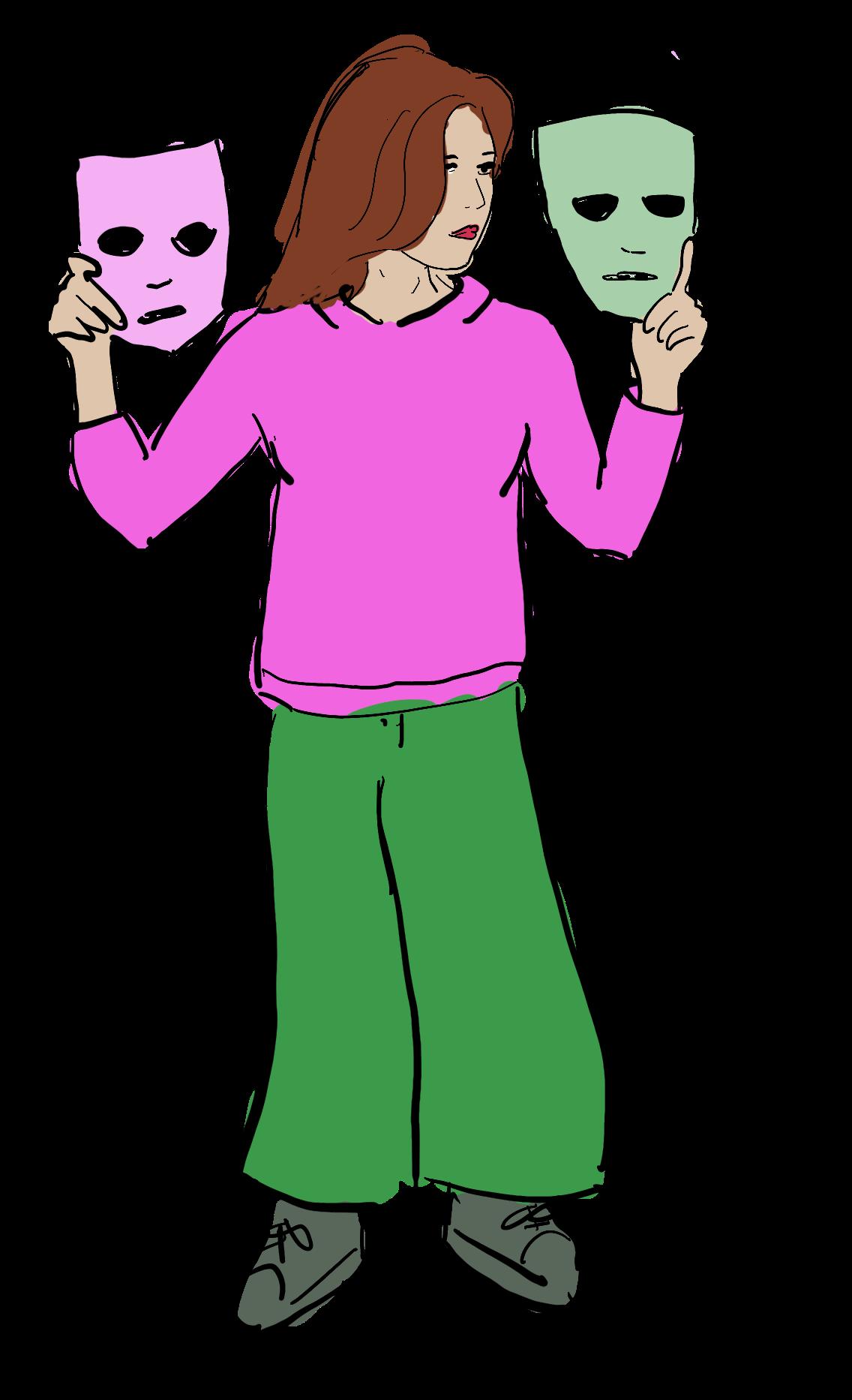
“My views weren’t super explicit [in class],” Barbara said. “I wasn’t raising my hand to share my opinion for every discussion and article, but when it came to things like humanitarian crises or instances when it was very obvious that we were only being shown one side of the story, or one side of the argument was definitely framed to be a lot stronger than the other side of the argument, I would definitely express my beliefs, including on written assignments. There were definitely times where I worried about what truthfully writing my views on assignments or tests could
Jonah Greenfeld ’27 said he avoids sharing his opinions as they pertain to the Middle East in specific academic environments
“I don’t feel comfortable expressing my beliefs in being pro-Israel for two reasons,” Greenfeld said. “Mainly because it is such an over-politicized issue, and it is important to understand the human experiences on both the Israeli and the Palestinian side. I also don’t share this opinion because expressing such political views will often get one labeled as being very right- wing, which I’m just not. By association in supporting Israel, people think I support Trump as well, which couldn’t be further from the truth. Additionally, in a certain academic extracurricular activity I participate in, I will never talk about being Jewish or talk about Israel in a positive light whatsoever because it feels like such an an-
47% of young people avoid sharing political views in academic environments out of concern for backlash from peers, according to a study conducted by Harvard’s Institute of Politics. Khadija Alsharif ’27 said she feels conflicted between her connection to her identity and
her opinions when considering speaking about her worldviews.
“As I’ve grown throughout my time at the school, I find trouble with balance,” Alsharif said. “I’m so proud of being Arab, especially Palestinian, but it’s hard to balance that with wanting to be mindful of other people. I’m very cognizant of the fact that not everybody is either aware of what’s going on in the region [of the Middle East] or super on board with what I’m on board with. I try to be mindful when starting those conversations with others. I have a strong sense of self and I don’t mind telling people that I’m Palestinian or Jordanian but, at the same time, I am wary of never wanting others to be uncomfortable talking to me. I wear my heart on my sleeve, especially with where I’m from. I always want to lead with that, but it’s not for everyone.”
to ask teachers for extensions, I never need to know where you stand or how you feel about the issue. My goal is just to make sure you’re aware of my personal conditions. My teachers have generally been understanding and receptive to what I’ve told them, and are usually very supportive.”
Kenzie Lane ’27 said the majority of students in her classes openly share their views, herself included, with many identifying with the same American political party.
“In our history class, when we talk about current politics, we’re all very comfortable sharing our views,” Lane said. “I don’t know if there are people who are secretly conservative or liberal, but saying the opposite, but from what I’ve seen, my classmates don’t mind sharing political stances. If we don’t have one, we’re also comfortable stating ‘I don’t know enough to say’ or ‘I’m in the middle.’ That said, most of my classmates are definitely left-leaning. I would say we have a lot more Democratic students at Harvard-Westlake. I feel like there is additionally a lot of pushback against being conservative. I’m not conservative so I don’t feel this personally, but it definitely exists, especially in Los Angeles, a very, very blue city.”
Barbara said she decided to drop a class to avoid added conflict over beliefs.
“The course is already difficult, and honestly, I knew it would feel harder if I was constantly arguing for something that I didn’t believe in, with the facts that I knew,” Barbara said. “History is my strongest class and has been for years, and so to be in that class where I felt like, because of my perspective, I could be negatively impacted was definitely a disappointing experience.
Alsharif said the faculty has been supportive in times of distress, regardless of personal belief.
“The last five years have been incredibly impactful for the Middle East, and sometimes I need a bit of grace from teachers and friends,” Alsharif said. “In the past, I’ve shared what is going on in my personal situation, and have never asked anyone to be super educated or on my side about anything. Instead, I just ask for kindness in conversation. When I am in positions where I need
Jaelyn*, a longtime supporter of American right-wing political activist Charlie Kirk, said she noticed the emotional impact staying politically silent had on her after hearing classmates react to his death.
“I was a huge fan of Charlie Kirk’s,” Jaelyn said. “I really believed in his ideas of freedom of speech and debating. I really want to hear different and diverse opinions, and my views have changed a lot in the sense that I’ve learned about different political beliefs. I really liked him, and he was my role model. When he was killed, a lot of the language behind it, especially with classmates, was very insensitive. It was kind of like, ‘Good riddance, he’s dead.’ That’s when I felt like a bias made me feel like I couldn’t come out and say ‘I really liked him’ or ‘No, he’s actually an important person to me and I’m really truly sad that he’s dead.’”
Linnekens said he felt sharing right-leaning beliefs during the 2024 presidential elections negatively impacted him socially in particular.
“The day after Trump won the election, I came to school and was completely ignored by everybody,” Linnekens said. “ Later that week, I was in the locker room and got a call from one of my friends who warned me to stay hidden, and that there were people who wanted to hurt me. I got yelled at by students in front of teachers who did nothing, and I’ve been called every name in the book. I’ve stopped sharing my political views because of classmates.”
Alternatively, Noah Shallman ’27 said his history classes have always been a welcoming space to share a range of political beliefs, regardless of differences or conflicting ideas.
“I feel very comfortable expressing my beliefs in the classroom, and I don’t in any way feel censured by my peers or uncomfortable when participating in a class discussion,” Shallman said. “In my [Honors United States History Class] class, we regularly engage in discussions on politics at the beginning of class. People express all kinds of views and that makes me more comfortable expressing my own.”
Alsharif said her peers remind her of the importance of community.
“My friends are incredibly empathetic and continue to educate themselves about the topic,” Alsharif said. “A big part of Harvard-Westlake is finding the people you want to surround yourself with that are going to make you feel comfortable in your experience.”
L. Wood
Kenzie Lane ’27
IllustratIons by audrey Herrera
Senior Prom
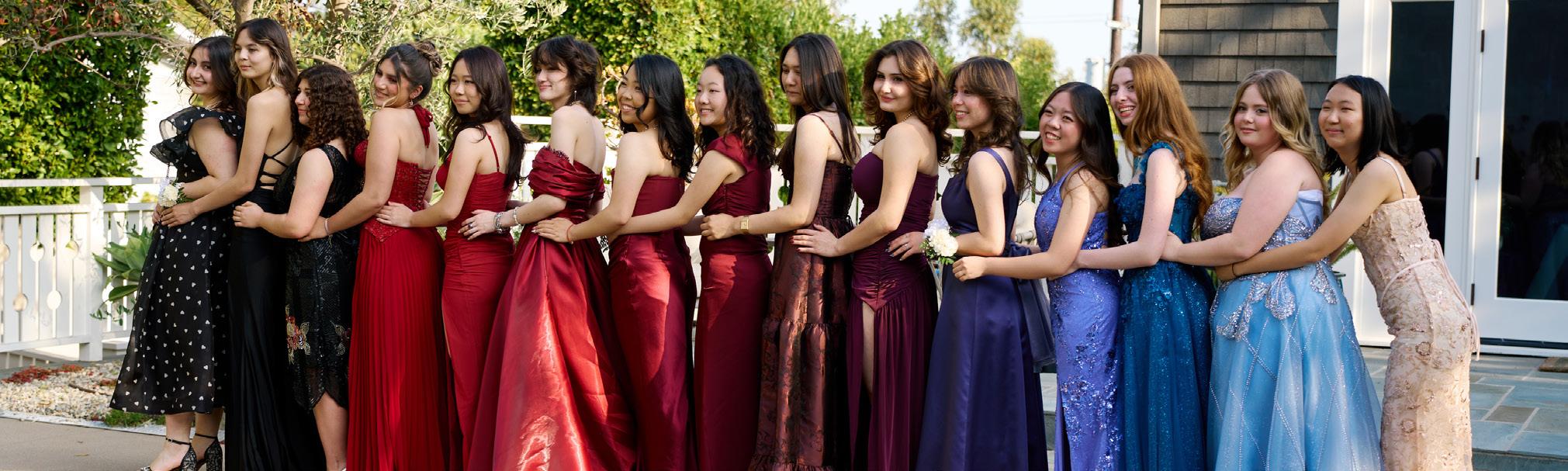
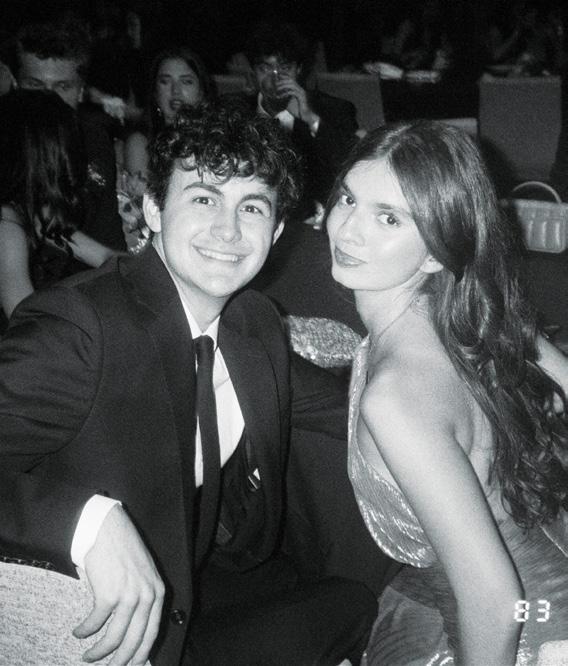

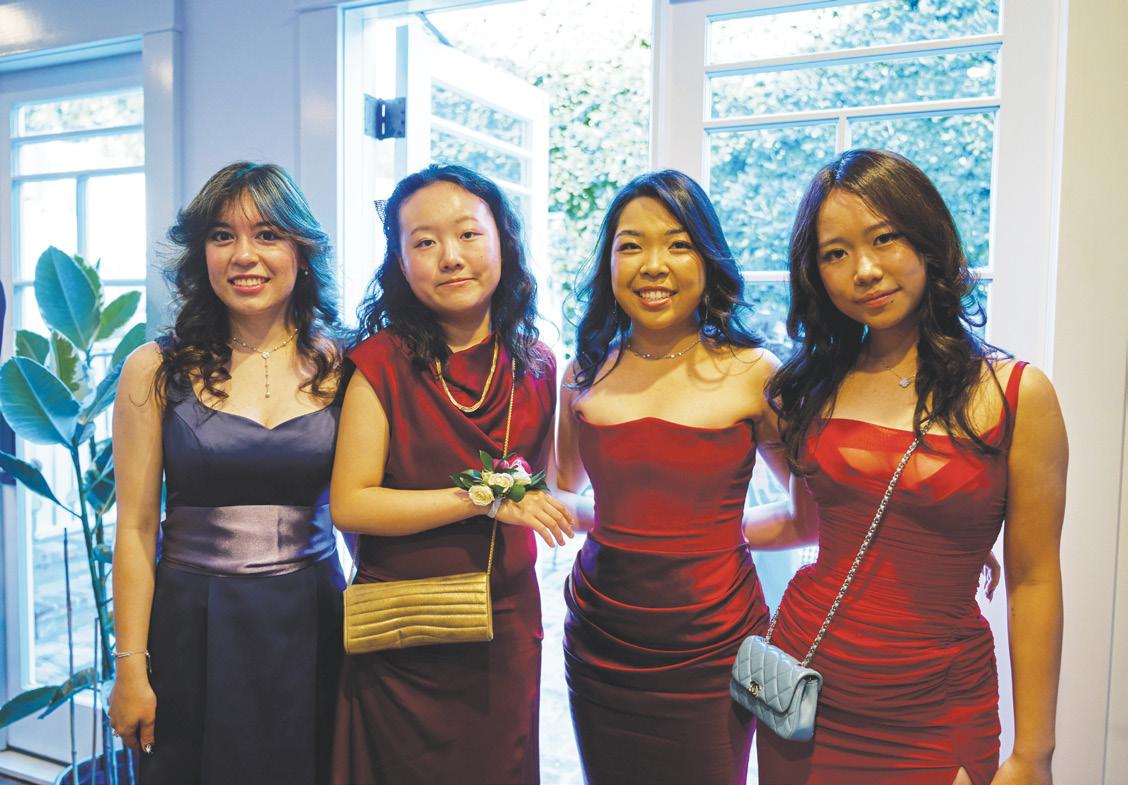
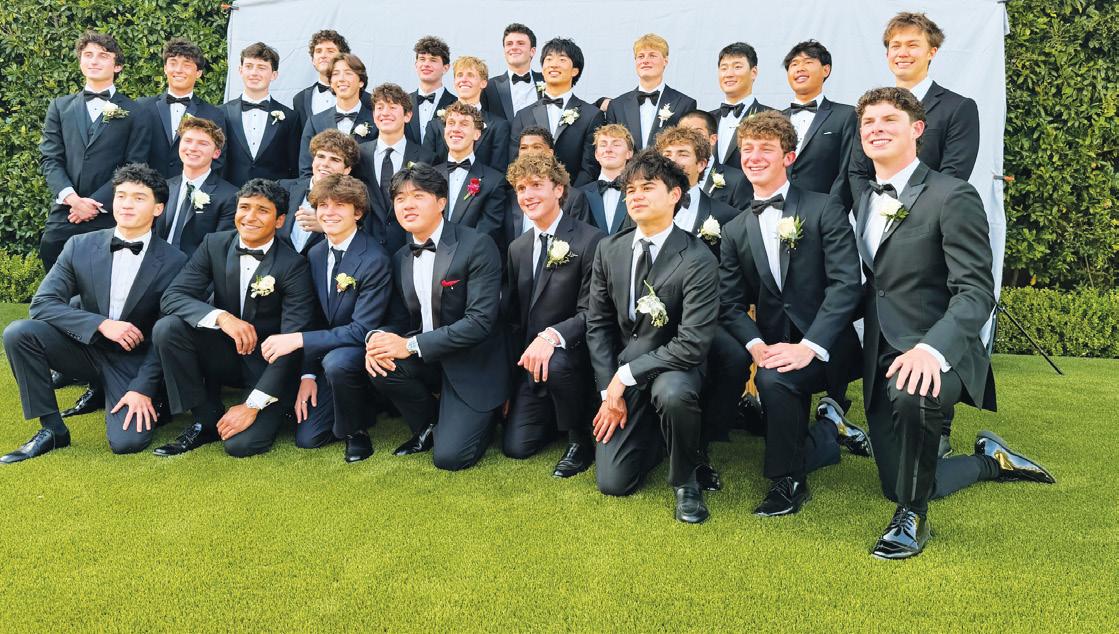

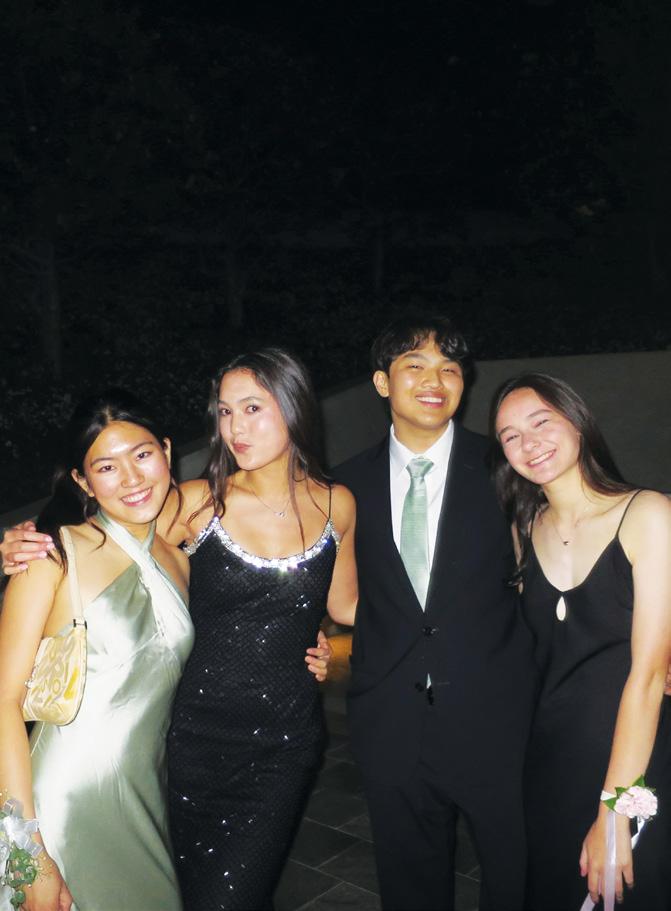
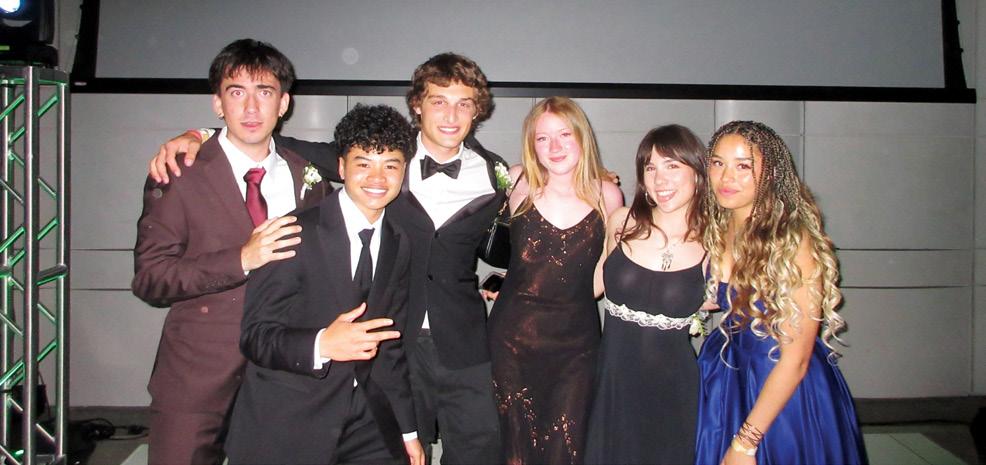
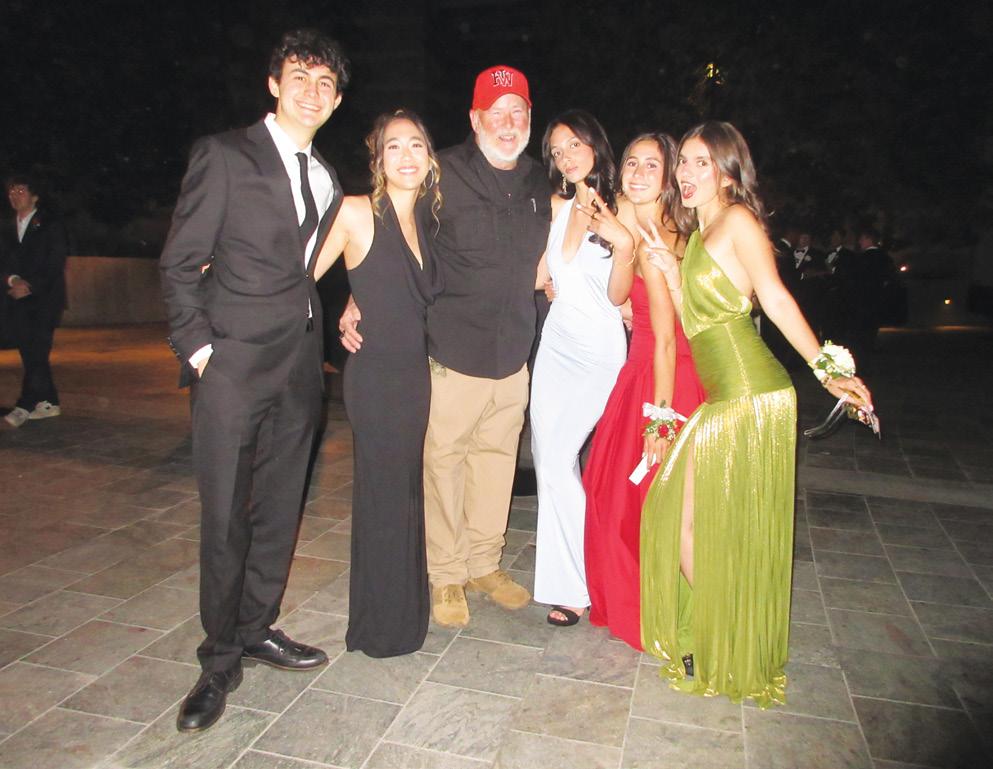
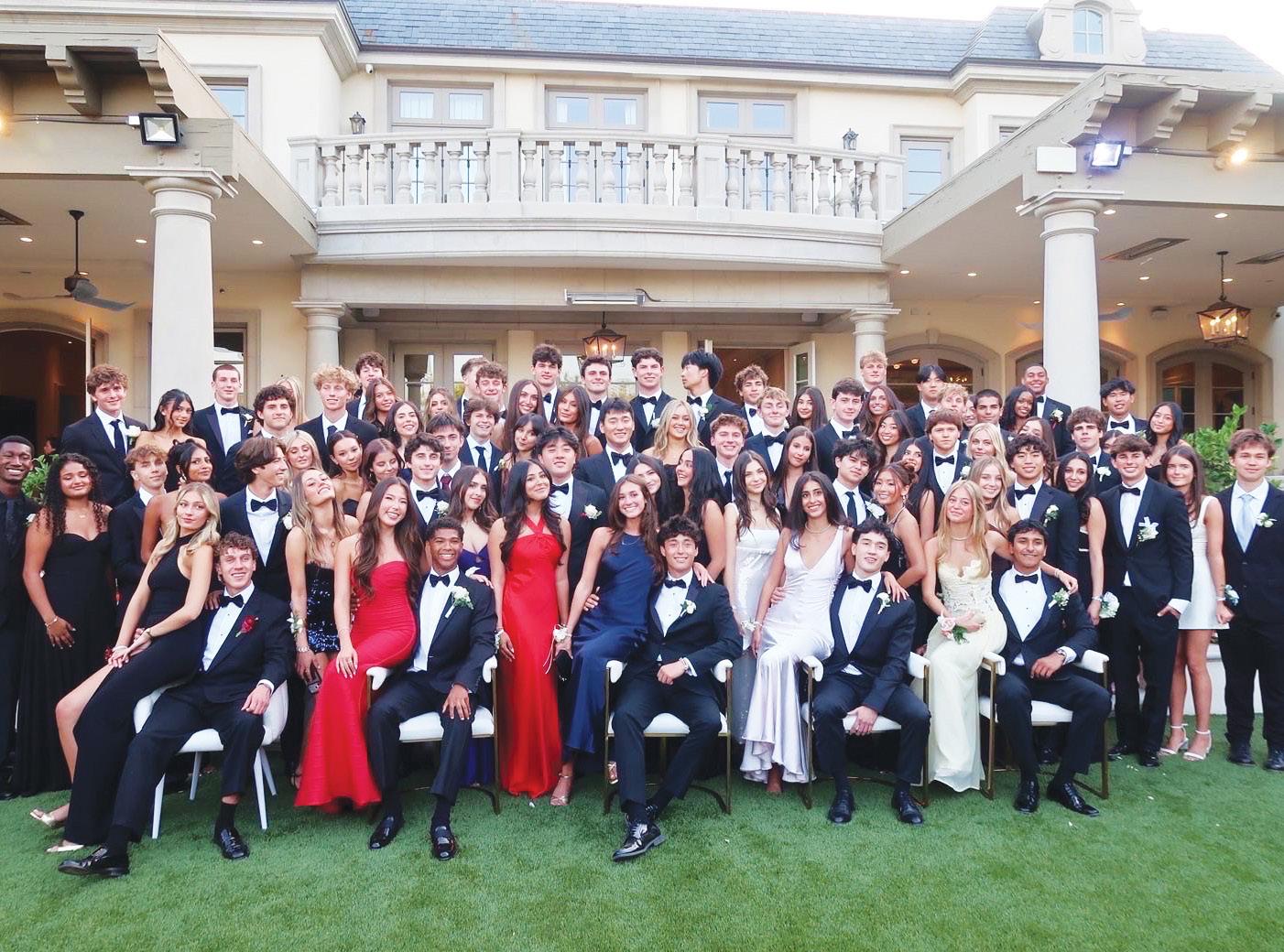
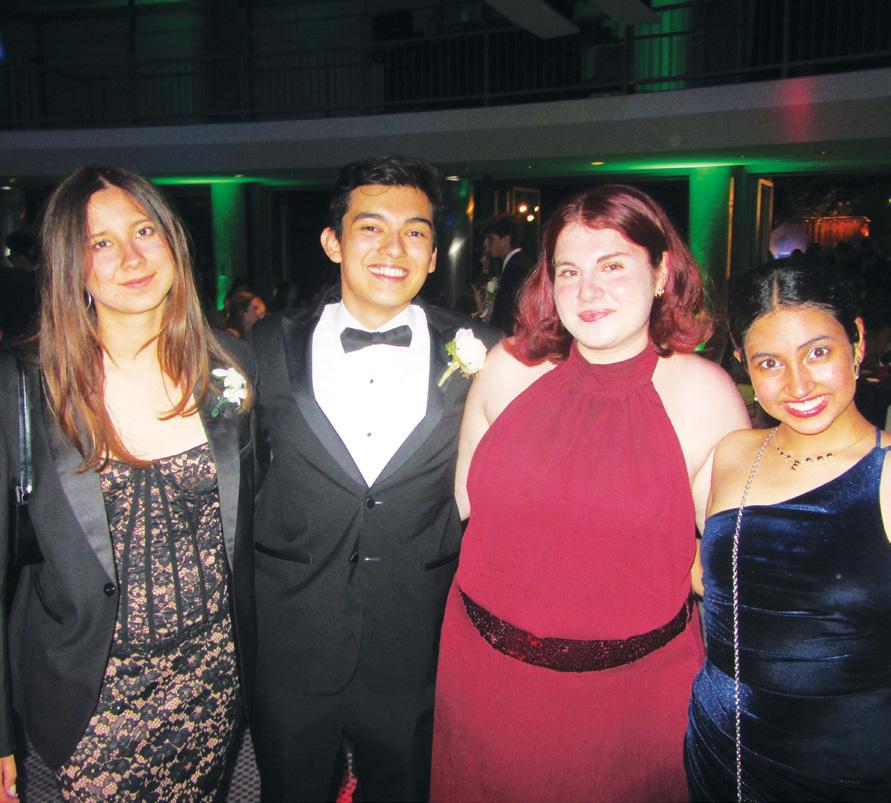
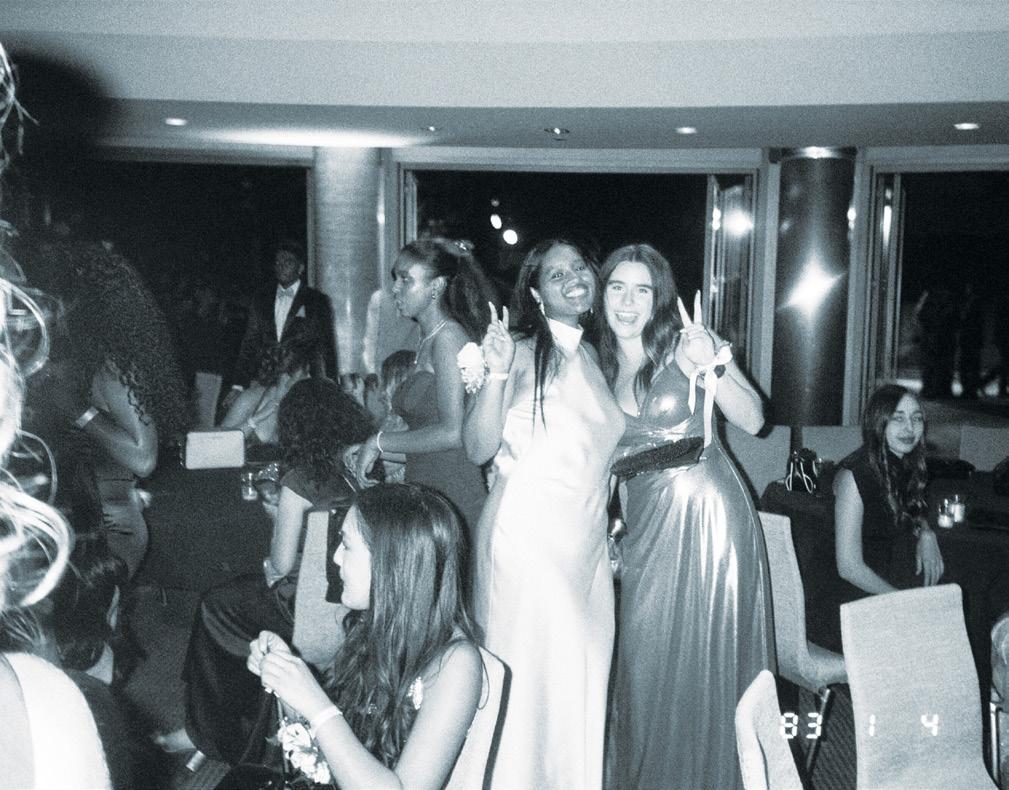

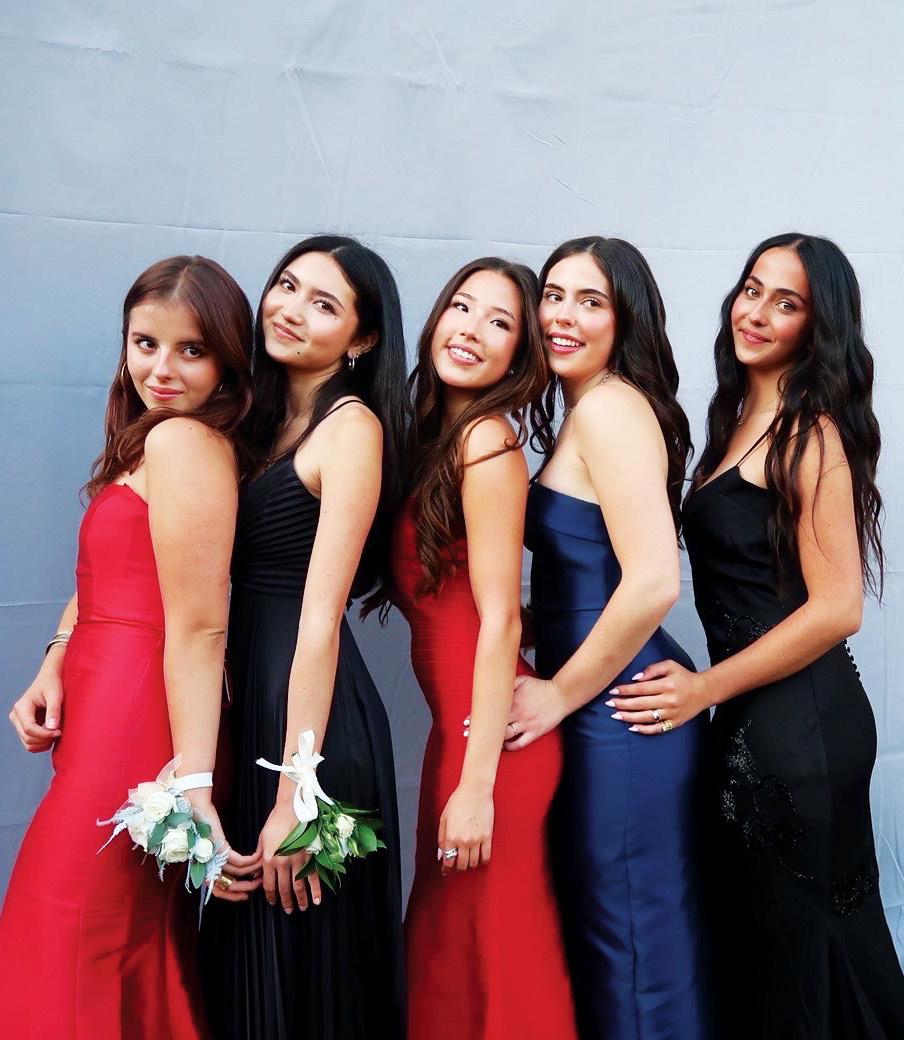
The Media Monopoly
Community members discuss the impact of media company mergers in recent years and their impact on media consumption.
By Donna Enayati
Upper School Science Teacher Ryan Ellingson sinks into his couch after an exhausting day of teaching, ready to indulge in television and catch up on the day’s news. Wanting to learn more about a scandal in his local city council and desperate to find more information, he clicks through channel after channel with no luck. Ellingson said he quickly recognized all of the media platforms were reporting on the same information, a pattern he finds concerning.
“I’ve seen clips of almost the exact same thing being said by 10 or 15 different local news channels,” Ellingson said. “They’re all coming down from one media giant. My understanding is there are many local media outlets that have been bought out by bigger media outlets. My problem with that is nobody watching that local news station knows it’s owned by a bigger one. That is dangerous.”
Ellingson is referring to a consolidation of news companies across the nation. 40% of all local television news stations are controlled by Gray Television, Nexstar Media Group and Sinclair Broadcast Group, according to the Chicago Booth Review. Ellingson said nationally controlled broadcasters controlling neighborhood journalism can deceive audiences.
“If you go to Cable News Network (CNN), you know it’s global.”Ellingson said. “You don’t know that when you go to Channel 7. It’s misleading and a little dishonest because they are run by people who aren’t part of your community at all.”
berg owns Facebook and Instagram.”
CEO of visual effects company Visionary FX and Head of Television Finish at Company 3 Heydar Adell is best known for his post-production work on episodic shows such as “The Last of Us” and the “Star Trek” series. Adell said he has observed the consolidation of companies in the industry over the years, creating bidding wars across industries.
“This has been going on for a few decades,” Adel said. “Warner Brothers became Time Warner, then Time Warner became Time Warner Discovery. They kept merging. Recently, Paramount Pictures and Skydance merged. There’s a multi-billion dollar family behind that to make this mega media conglomerate. Then, when Netflix showed interest in buying Warner Brothers, they outbid them. Disney bought 20th Century Fox, ESPN, American Broadcasting Company (ABC) and Hulu. On the other side, Amazon bought Metro-Goldwyn-Mayer (MGM), one of the oldest Hollywood studios.” Andreone said billionaires ownership of media companies impacts the diversity of political conversations.
In 1983, 90% of American media companies were owned by 50 companies. However, now, nearly all media is controlled by just seven: Comcast, Walt Disney, Warner Bros, Discovery, Paramount Skydance, Sony and Amazon, according to the Committee to Protect Journalists (CPJ).
Washington Correspondent Julian Andreone ’22 said concentrated ownership of major media and communication platforms shapes the information audiences consume.
“Corporate consolidation in news massively impacts the coverage we see on corporate media outlets like CNN, MSNBC or Fox News,” Andreone said. “The Murdochs, who were board members at Harvard-Westlake until very recently, own News Cor, so they own Fox News, the New York Post and the Wall Street Journal. Jeff Bezos, who owns Amazon, which is the largest advertiser on ca ble news, owns the Washington Post. Then, Larry and David Elli son own Columbia Broadcasting System (CBS), CNN, TikTok and Paramout. Mark Zucker
“[Media consolidation] changes the scope of the debate we’re having in politics,” Andreone said. “When the largest media organizations in the country with the broadest influence and viewership are controlled by the wealthiest people in the country, services and programs that could help working class people are not debated. Many of wealthiest folks in this country have become oligarchs in the last five to 10 years, they don’t want any money going out of their pockets and moving down the socioeconomic hierarchy.”
36% of Americans now say they “have no trust at all” in the media, according to the Free Press, while 32.1% of Upper School students trust the media, according to a Chronicle poll. Yari Milakin ’27 said news companies optimize views over journalistic integrity.
“A sign of democratic backsliding is that we have so many for-profit organizations taking control of newspapers, because then it becomes all about clicks, views and how to make the most money,” Milkakin said. “What I don’t see as democratic


backsliding is th there are biased organizations, because there are always going to be biased organizations. If the Washington Post reports something, even if it’s a left leading fact, it’s still a fact. Same thing as Fox News. It will also report facts.”
The Securities and Exchange Commission (SEC) is a federal agency that regulates the stock market, protects investors and helps prevent fraud in the financial market. The Federal Communications Commission (FCC) is another federal agency which regulates interstate communications systems. Adel said the SEC and the FCC have not been upholding their responsibilities.
“The securities and exchange commission, technically in a situation like this, they will just have to say, ‘No, this is antitrust, you can’t just do this. You own too many things,’” Adel said. “But in today’s political environment, the SEC is letting these kinds of things go through. The FCC is also very biased right now.”
Ella Tulloch ’27 said she predicts a big change in politics with the rise of fake news.
“In the coming years, politics are going to look different because of the amount of fake news people consume,” Tulloch said. “People don’t know the full extent of what’s coming because people are being informed by fake things. Back when social media wasn’t used, if you were uninformed, you genuinely just did not know. Now, people are being fed conspiracy theories and fake things all the time. There’s a very strong chance of there being a huge upheaval of democracy because the sides are going to continuously get more polarized as more fake stuff comes out.”
country. If corporate media outlets are talking about non-issues and culture war issues instead of the issues that are really impacting people’s lives, such as the price of gas, wages and healthcare, then important issues are not discussed.’’
Adel said these mergers have impacted how he is able to operate in the industry.
“I was working on a FX show, which is a subsidiary of Fox,” Adel said. “Now that Disney owns Fox, all of the sudden the requirements for everything have changed because the show’s falling into the Disney machine, so it affects the technical side of things. The bigger picture is that creatives are affected probably the most because their content is being mitigated by bigger directives.”
Tulloch said news companies have contributed to increased division across the nation, as new companies prioritize profits.
“ We’re losing the human empathy that used to be more prevalent in the news. It has become a lot more about money.”
Ella Tulloch ’27
“[We’re] not getting news about humans and the problems in our world,” Tulloch said. “In a lot of ways, we’re losing the human empathy that used to be more prevalent in the news. It has become a lot more about money. Fake news comes out of it. When I was younger, it wasn’t as big a thing as if you watch CNN you’re a liberal, and if you watch Fox News you’re conservative. Partially because of the mergers, news companies are becoming more and more polarized.” Adel said big corporations have created more expectations on how movies are made to optimize viewership.
Andreone said he criticizes the nonstop news cycle for prioritizing profit and ratings over honest reporting issues that impact everyday Americans.
“This is the issue with the 24 hour news cycle,” Andreone said. “We have a fourth estate in journalism that is more concerned about turning profits for shareholders and making money for high profile public figures and anchors than they do about delivering and disseminating honest information for the working people in this
“Ben Affleck and Matt Damon were in an interview about a movie they did with Netflix, and they said Netflix requires something big to happen in the first few minutes or people will lose attention,” said Adel. “So, they have to write the story in a different way. Some other stories are coming out like they’re asking cinematographers and directors to put all the action in the middle, in case people want to watch it on their phone vertically. As somebody in the industry, it is ridiculous. It’s very disheartening.”



Ella Tulloch ’27 L. wood

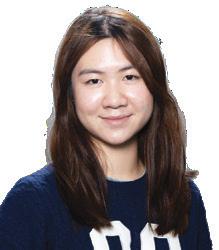
BJeff Bezos Should Co-Chair
By Sophie Lee
efore the famed Met Gala even began, protestors had already claimed New York City’s subway cars, walls and building sides. Boycott materials were being distributed by activist group Everyone Hates Elon, who previously targeted other billionaires, according to CNN. The activists who launched this campaign were opposed to Jeff Bezos and his wife Lauren Sachez’s involvement in the Met Gala as honorary chairs. Upset because of Bezos’ unethical business practices, worker exploitation and cooperation with federal immigration authorities, criticisms on signs and digital projects spread throughout New York City in the days leading up to the event. One of the activists’ primary accusations was that Bezos was reputation laundering through performing philanthropic actions to distract from unethical behavior and improve his image. Disliking that the prestigious Metropolitan Museum of Art (The Met) seemingly catered to the ultra-wealthy, protestors even assembled outside of The Met Gala’s red carpet, according to USA Today. Although Bezos’ involvement in the Met Gala might seem like a capitulation to the wealthy, the external funding he provided not only is a continuation of corporate philanthropy in the cultural sector, but it also maintains an industry that relies heavily on donations.
While the activists argue that a distinguished cultural institution like The Met shouldn’t cater to the wealthy, that anger is misplaced. Cultural patronage, the financial support provided by individuals or organizations to artists and cultural institutions, has always existed and is the foundation of many famous museums of the world. For example, renowned art museums like The Frick Collection, The Getty and The Guggenheim were built on fortunes garnered through methods that would be considered inexcusable today, such as exploitation of workers, labor suppression and unfettered resource extraction. Bezos has become a target in particular because of his unethical business practices and labor exploitation, which echo the corrupt methods that helped sustain the lauded museums mentioned above. However, it is the unfortunate reality that most companies engage in harmful practices, from toxic work culture to poor environmental footprint. Amazon’s bad practices are simply accentuated due to the company’s enormous scale. Additionally, wealthy patrons funding culture is not a novel phenomenon and has existed throughout history. The Medici family of Italy, one of the most controversial families at the time due to their tyranny and political corruption, funded legendary artists like Michelangelo, Botticelli and Leonardo da Vinci. Through their patronage, these artists helped shape the Italian Renaissance. Arguably, without the Medici family, the iconic works produced in Italy during the Renaissance would not exist, proving the invaluable position of wealthy donors in
sustaining art and culture. During the first half of the 20th century, the Mellon family, a dynasty built on ruthless monopolistic business practices and known for white supremacy, also contributed significantly to the arts, donating $15 million and a personal art collection of $25 million to establish the National Gallery of Art in the late 1930s, according to the Smithsonian Institution Archive. Looking at Bezos’ funding of art and culture solely as a recent controversy risks disregarding the history of elite patronage that has long developed and maintained major cultural institutions. Likewise, labeling his involvement as an inherent evil that requires massive protest is also harmful as it may deter other wealthy donors from philanthropic contributions for fear of similar backlash.
The arts and culture sector would also struggle to survive without individual donations since the federal government does not allocate enough money to the cause. The National Endowment for the Arts receives a minuscule fraction of the overall federal budget, roughly only 0.003%, according to the National Endowment for the Arts. While this funding is essential for supporting grants and talented artists, the base amount is structurally incapable of sustaining the massive and growing economic footprint of the cultural sector. Private sector donations comprise 30% of the revenue for arts and cultural institutions, with individual donations making up most of this number, according to Americans for the Arts. This highlights the significance of wealthy individuals in preserving growing art establishments. The Met’s Costume Institute, in particular, is the only department at the Metropolitan Museum of Art that must independently fund itself. With this evidence in mind, the indignation over the Met accepting Bezos’ funding and him and his wife as honorary chairs is misplaced as the Costume Institute fundamentally relies on external funding.
In principle, Bezos’ involvement in the Met Gala should not be viewed through the lens of popular hate for billionaires, but rather a continuation of the long history of cultural patronage in prestigious art institutions. Bezos and his unethical business practices and cooperation with controversial political interests does not negate the fact that his money is being used to preserve an institute that features one of the mostcomprehensive collections of fashion history. While it can be argued that, in light of the growing wealth gap, Bezos’ donation feels like a full display of corporate and billionaire power, it is worth questioning whether boycotting an institution that relies on external funding would meaningfully address the structural inequalities the protestors are campaigning against. The outrage against Bezos is not invalid, but instead should be channeled through lobbying for policy changes, town halls and more organized educational campaigns instead of a reactionary response to a single event.

OBezos Should Not Co-Chair
By Audrey Herrera
n May 4, the Metropolitan Museum of Art placed Amazon founder Jeff Bezos and his wife, Lauren Sánchez Bezos, at the center of its celebration of art and culture. The Met Gala is an annual charity event for the Metropolitan Museum of Art’s costume department, traditionally timed to mark the opening of the museum’s spring fashion exhibition and highlight the impact of wearable art, according to Vogue. However, this year the gala’s artistic purpose was undercut by the prominent involvement of Jeff Bezos, who served as “Honorary Co-Chair” alongside his wife Lauren Sánchez Bezos. As Honorary Co-Chairs, they served as public-facing leaders for the event in recognition of their large donations, according to CNN. Their involvement sparked widespread protest in the fashion industry, as many felt the event had been compromised, according to the Hollywood Reporter. Bezos’s involvement is detrimental because his broader influence in fashion and media runs counter to the Met Gala’s values. The conflicting nature of the Bezos’ involvement becomes more damaging when considering the business model he promotes. The Met Gala is an event that highlights the craftsmanship and cultural history of the fashion industry. All the garments worn at the event feature couture craftsmanship, often with laborious processes such as hand-beading and sewing, according to British Vogue. Bezos, on the other hand, represents the opposite end of the fashion spectrum with Amazon. The brand does not value artistic labor or cultural preservation, but instead speed, scale and mass consumption. Amazon’s business model closely resembles that of other fast-fashion brands such as Temu and Shein, relying on the same factories that raise concerns about labor practices and sustainability, according to the Business and Human Rights Center. The company also utilizes sales data to identify trending designs, which are then copied into low-cost, mass-produced versions, often outcompeting the original designer, according to Vogue. Essentially, Amazon is the antithesis of what the Met Gala claims to honor. The event depends on the belief that fashion deserves to be treated as art and is rooted in boundary-breaking originality. By elevating Bezos, the Gala gives cultural prestige to a figure whose company profits from the erosion of the independent artisan. This is not Bezos’s first attempt to enter the world of arts. He agreed to pay $40 million to license the documentary “Melania” in January 2025 , according to Rolling Stone. By giving Bezos a prominent role despite his contributions to the rise of fast fashion and consumerist culture, the Met Gala appears to suggest that its commitment to the arts is secondary to dependence on billionaire funding. Bezos’s presence reflects poorly on his own values, rendering them contradictory and casting a negative light on the gala itself. His presence shows that an event
supposedly dedicated to artistic expression is willing to center someone whose political ties undermine that mission.
Some may argue that Jeff Bezos’ presence at the Met Gala is beneficial because of his donations to the museum. Bezos donated $10 Million to the Gala, according to Page Six. While his donations are undeniably helpful to the Met, there are other billionaires in the past who made large donations but were not named Honorary Co-Chairs. Many billionaires in the past have donated to the museum and simply attended as guests, such as Mark Zuckerberg and Tim Cook, according to Mother Jones. Therefore, there is a route for Bezos to donate to the museum without assuming a leadership role that takes attention away from the art itself.
Ultimately, the involvement of Jeff Bezos in the Met Gala represents a much larger problem than one billionaire attending a fashion event. The Met Gala claims to celebrate fashion as art, but by selecting Bezos as a representative of the event, it allows corporate wealth and political influence to overshadow that artistic mission. His recent ties to right-wing politics and connection to fast-fashion retail make his role feel less like a genuine support of the arts and more like a grab for cultural influence. The Met Gala is supposed to be one of the most visible institutions that defines taste and artistic value, but with his presence, the institution’s credibility is tarnished by what he stands for.

Senior Superlatives
Members of The Class of 2026 elect each other for different characteristic-specific awards as their time at the school comes to an end.
1. Most Likely to Die First in a Zombie Apocalypse: Thomas Klarin
2. Most Likely to Survive a Zombie Apocalypse: Quinn Hamilton
3. Most Likely to Become a Brentwood Mom: Sophia Wiczyk
4. Most Athletic: James Tronstein
5. Most Likely to Go on Love Island: Kai Kuklinski
6. Worst Case of Senioritis: Max Nam
7. Eyes You Could Get Lost In: Reed Reck
8. Best Bromance: Ryder Felisan & Henry Wain
9. Best Middle School Couple: Ronan Lifrak & Francesca Varese
10. Best Dressed: Anika Norton
11. Academic Weapon: Emma Tseng
12. Class Clown: Callum MacLachlan
13. Biggest Aura Farmer: Luca Gonzalez
14. Most Likely to Change the World: Shimon Schlessinger
15. Best Hair: Kira Spinks
16. Best to Bring Home to Your Parents: Nikhil Sarvaiya
17. Life of the Party: Jack Shapiro
18. Best Lookalikes: Calder Glass & Emy Spieker
19. Most Siblings or Dating Relationship: Reed Reck & Anthony Shearmur
20. Most Wholesome: Levi Schwartz
21. Most Creative: Sabrina Simek
22. Best Smile: Samaya Sayana-Manchanda
23. Most Entrepreneurial: Zane Burstin
24. Best Laugh: Lydia Gugsa
25. Worst Driver: Imogen Ramlie
26. Most Likely to Start a Cult: Henry Wain
27. Most Likely to Become a Career Politician: Esther Goldman
28. Biggest RBF: Madi Holly
29. Most Brainrotted: Ellika LeSage
30. Most Likely to Have a Mid-Life Crisis: Francesca Varese
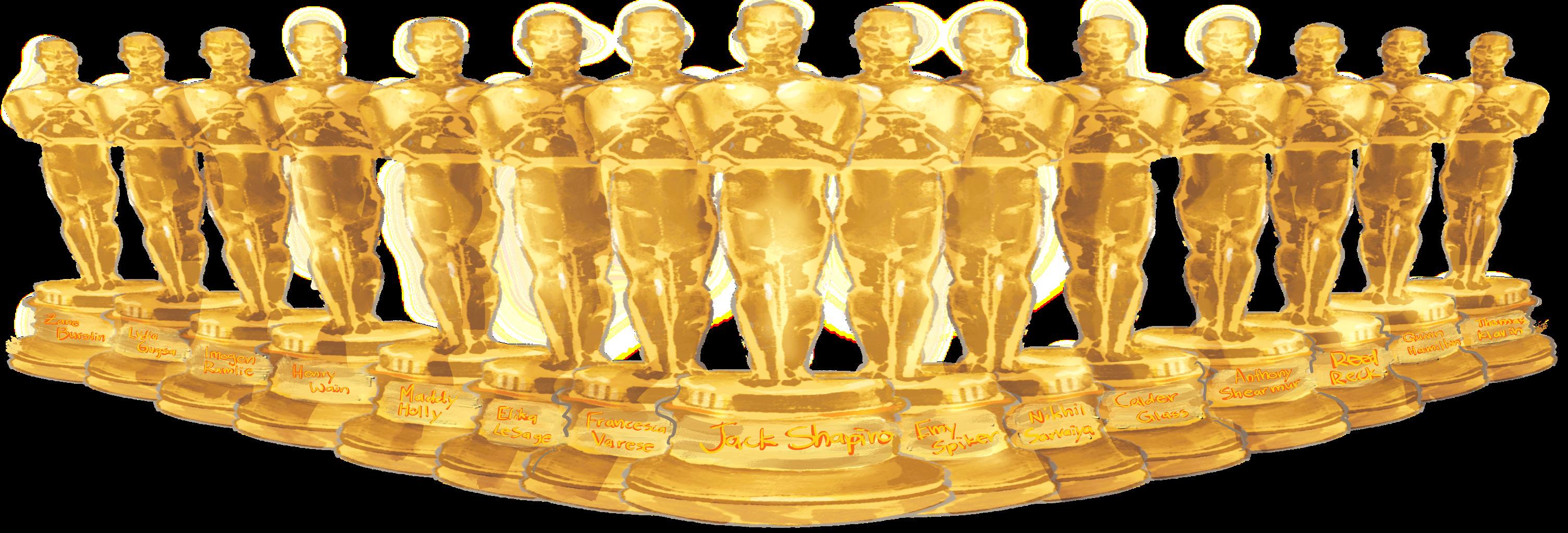

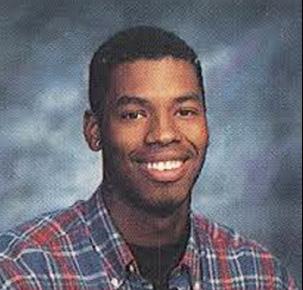
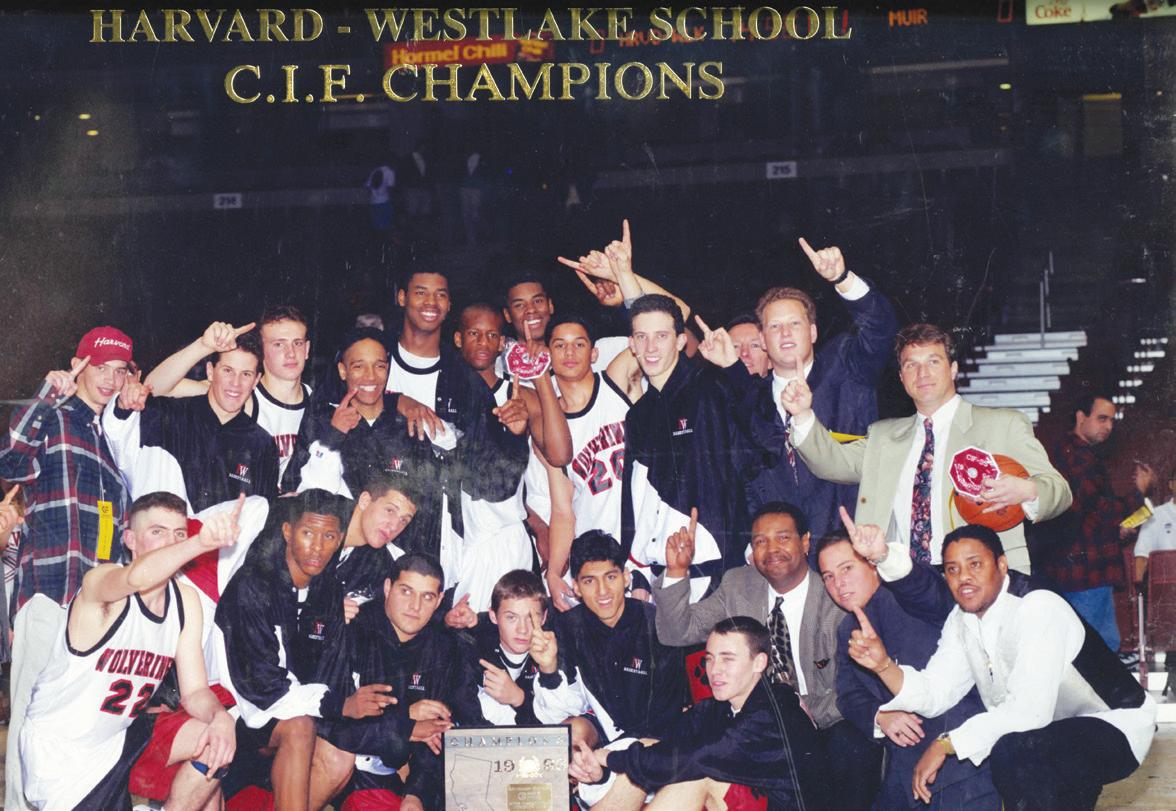
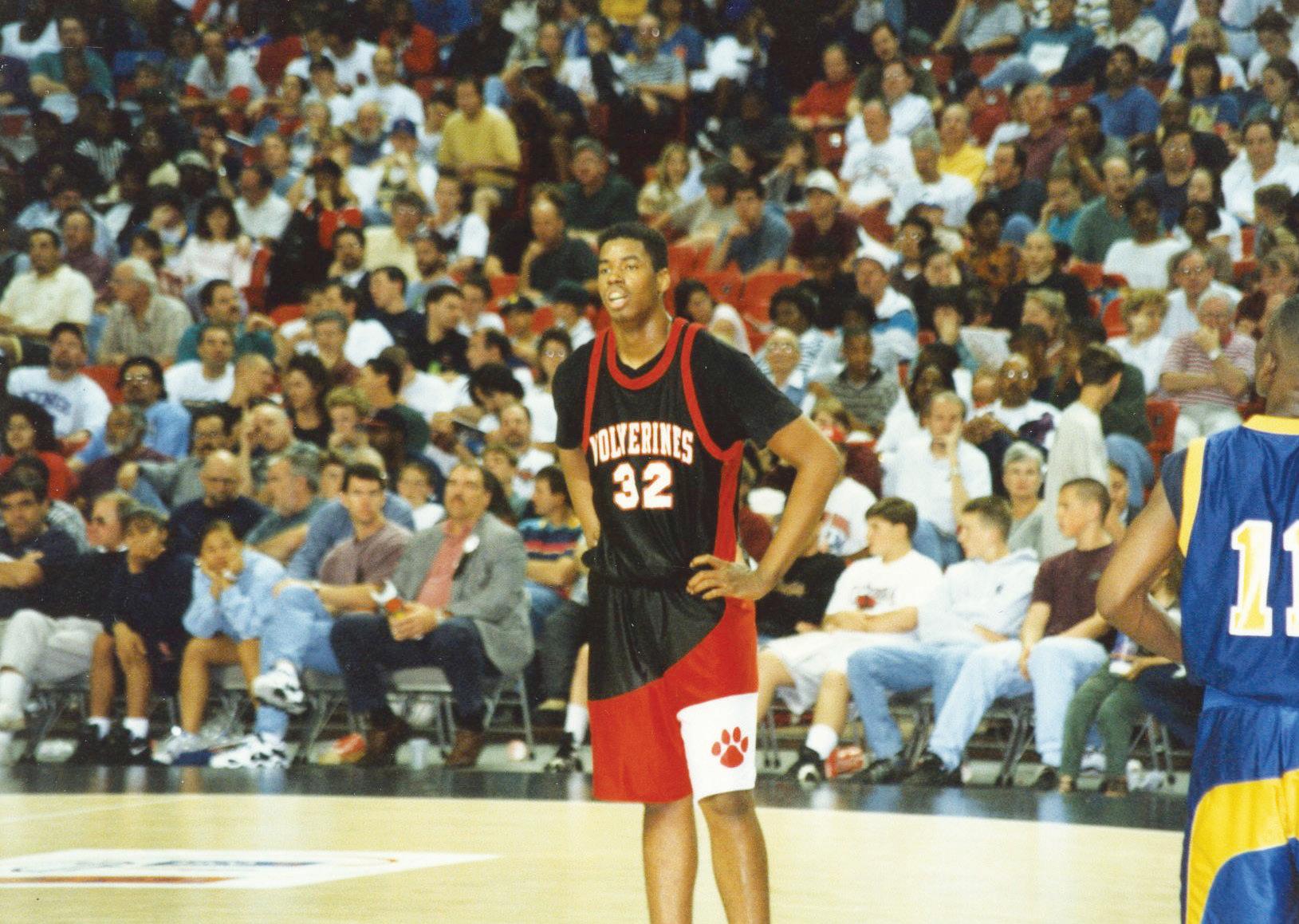
Remembering the Impact and Legacy of Jason Collins ’97
By Charlotte Fowkes
Jason Collins ’97 passed away at the age of 47 due to brain cancer on May 12. Collins was the first openly gay National Basketball Association (NBA) player, and he was the most successful basketball player in the school’s history. His McDonald’s All-American jersey and two California Interscholastic Federation (CIF) State banners still hang in the gym reading his last name.
When Collins and his brother, Jarron ’97, came to the school as freshman in 1994, they made waves in the basketball program, which had a record of just 5-20 at the time. The pair helped cultivate the program that today has won five state championships and 17 mission league championships. At seven-feet tall, Collins and his brother led the team to consecutive Division III CIF state championships in 1996 and 1997. Collins was named All-Southern Section in 1995 and still holds a state record of 1,500 career rebounds.
Greg Hilliard was the former Head of the Boys Basketball Program at the school from 1985 to 2014 and coached Collins for all four years of his high school career. Hilliard said he remembers the time when Collins was first asked for an autograph in high school.
“In 1995 to 1996 , we were playing in the Slam Dunk to the Beach Tournament in Delaware full of the best teams in the country,” Hilliard said. “The promoter really emphasized the stars of each team to fill the massive arena. As we walked in,
we were mobbed by young autograph seekers, and they were only interested in the twins. So, the bewildered young men facing this brand new experience were uneasy and embarrassed. They patiently signed all the autographs while their teammates plotted a lesson in humility. They all grabbed some paper and a pen and got in line. ‘Jason and Jarron, could we please have your autograph?’ We laughed for days about our famous teammates. Little did we know.”
In 1997, Collins and his brother headed to Stanford University. While playing for the Cardinals, Collins was named a third-team All-American by the National Association of Basketball Coaches (NABC), earned an honorable mention All-American accolades by the Associated Press in 2001 and was selected as the Pete Newell National Association of Basketball Coaches “Big Man of the Year”. During his senior year, Stanford University won the Pac-10 championship and reached the Elite Eight in the National Collegiate Athletic Association (NCAA) tournament. He was inducted into the Stanford Hall of Fame in 2017, and he continues to hold the school’s record for leader in field goal percentage at 0.608.
Eric Reveno is the James C. Gaither Associate Head Men’s Basketball Coach and General Manager at Stanford University where he coached Collins for his entire collegiate career. Reveno said he remembers Collins’s commitment and work at Stanford University that led him to his success in the NBA.
“Jason Collins decided early in his college basketball career that he was going to make himself unstoppable,” Reveno said. “By his senior year at Stanford, if we got him the ball in the low block, one defender could not stop him. Teams had to foul him, double him or hope. But his career did not start that way. Jason redshirted as a freshman in college and played only seven games as a sophomore before badly dislocating his wrist. Through it all, he kept working. That was who Jason was. He brought energy, toughness, accountability and joy to our team every day. He celebrated teammates with his huge smile and laugh, and he was willing to challenge teammates when needed. What separated him was the work he did when nobody was watching. That work helped him become a first-round NBA draft pick and build a long professional career. Looking back, I imagine the same toughness and selflessness that made Jason such a great teammate and player also helped him become a trailblazer by coming out as a gay man while still an active NBA player. Jason was special and he will be deeply missed.”
two consecutive Eastern Conference Championships with the Nets in 2002 and 2003.
“ I feel very lucky to have known [Collins]. Our time together holds some of the happiest memories of my life.”
Jason Segel ’ 98
Collins came out as gay in the opening words of his Sports Illustrated cover story reading “I’m a 34-year-old NBA center. I’m black. And I’m gay,” in April 2013. Collins was not only the first openly gay active player in the NBA, but he was also the first openly gay male athlete in any major professional sports league in North America, including Major League Baseball, Major League Soccer, National Football League and National Hockey League. After coming out, Collins wore the number 98 for the Brooklyn Nets to honor Matthew Shepard, a victim of an anti-gay hate crime in 1998.
Following his retirement from the NBA in 2014, Collins has continued to advocate for the lesbian, gay, bisexual and transgender community (LGBTQ). He was also a NBA Cares Ambassador, where he advocated to promote the league’s community, youth and inclusivity.
Collins was the 18th overall selection, picked by the New Jersey Nets in the 2001 NBA Draft. From 2002 to 2013, he played for the Memphis Grizzlies, Minnesota Timberwolves, Atlanta Hawks, Boston Celtics and Washington Wizards before returning to play for the Nets, but this time in Brooklyn. In his career, he won
Former Harvard-Westlake basketball teammate Jason Segel ’98 said Collins made a meaningful impact on him.
“I loved Jason and was proud of who he was as a human being,” Segel said. “I feel very lucky to have known him. Our time together holds some of the happiest memories of my life.”
The Chronicle sends its support and love to the entire Collins family and friends.
L. Wood
Greg Hilliard
Boys Tennis Wins Division one CIF
Southern Section Championships
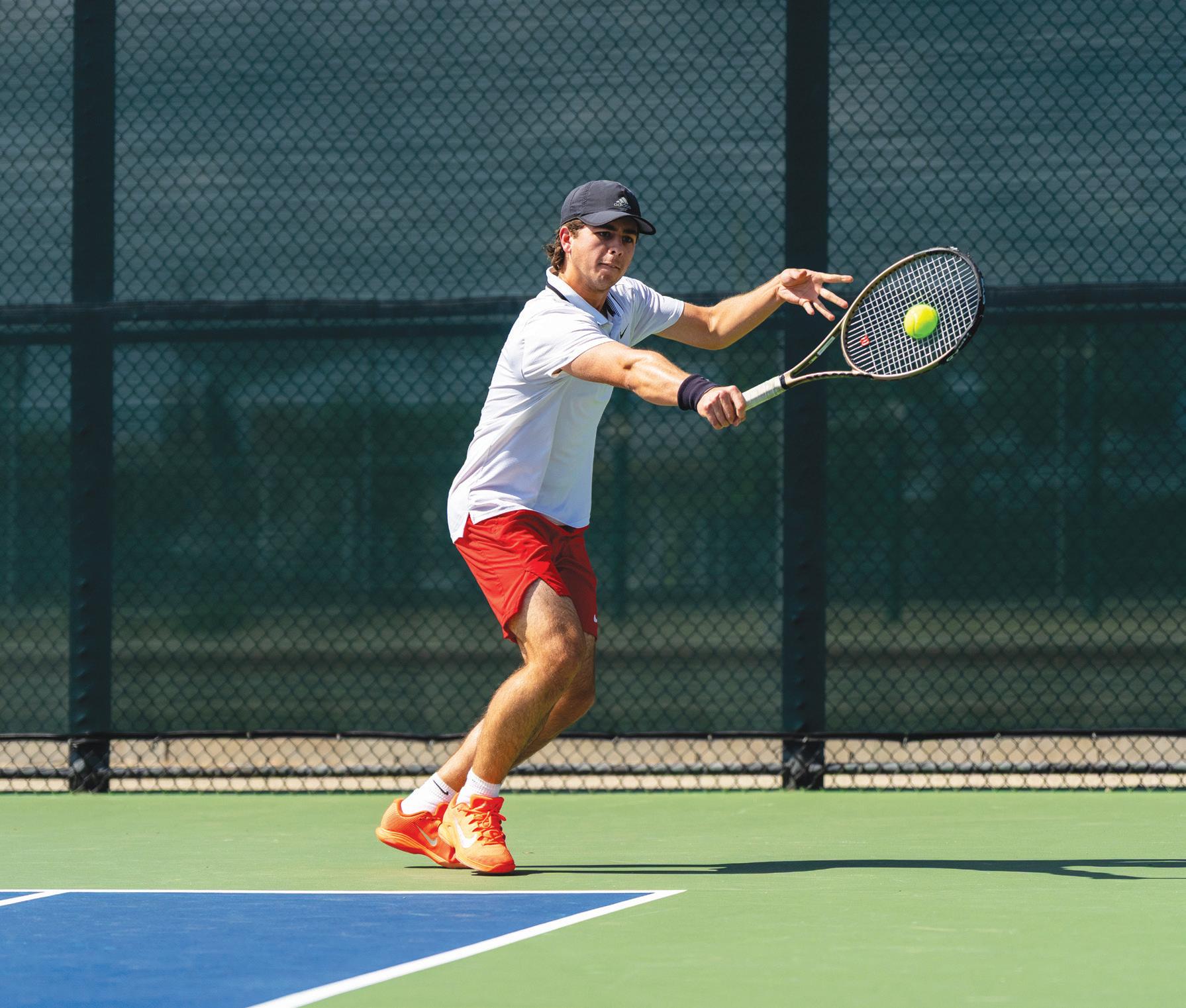
By Charlotte Fowkes
Boys tennis defeated University High School 10-8 to win the Division 1 California Interscholastic Federation Southern Section (CIF-SS) Championship on May 15. This is the first CIF-SS championship for the team since 2022.
University High School has won the Southern Section title for the last four years and won state in 2024 and 2025. Last year, the school lost to University 8-10 in the Southern Section finals and 2-5 in the Regional finals.
Boys Tennis Program Head Bo Hardt said the team has been aiming to win a CIF title and is proud of the victory.
“We went to Orlando, we went to nationals and, at the end of everything, we always said our goal was to win CIF,” Hardt
said. “To win is amazing and in the way we did by coming back and showing our calmness under pressure, resilience and unity as a team was special. This team was built over the last four or five years through the middle school program and in club. This group’s been together for all those years, training to work towards this goal.”
With the team leading at 9-8, singles player Gideon Ames ’27 was the last player on the court when he won the 10th set for the team to win the championship. Ames beat junior Daniel Zhu 6-4, who he lost to last year in the finals. Ames said the win was especially meaningful due to the team’s loss last year to University High School and the trust his team had in him to win his final match.
“We lost last year to Univer-
sity 8-10 on the same courts in Redlands so to finally get it done and win 10-8 means so much,” Ames said. “When the team ran onto the court after the win it was the best moment of my life. The team got so close as the season went on and there’s no better way to end than a court storm. I am so glad that everyone trusted me to put me in that position of playing the two singles. We knew that there was a possibility where it would be me versus [Zhu] as the last match and it felt so good to get that win.”
The team was seeded fourth in Division 1 CIF-SS and beat the fifth seed Palos Verdes Peninsula High School 10-8 in the quarterfinals and the first seed Corona del Mar (CDM) High School 10-8 in the semifinals. Hardt said the wins were meaningful considering the difficulty
of their bracket.
“It was sweet to beat Peninsula and CDM,” Hardt said. “CIF gave us a very tough draw. We had to beat three really good teams to win the title.”
Doubles player Chase Klugo ’27 said the tough playoff draw helped the team prepare for and learn lessons that were crucial for the finals.
“The road to the finals was a great thing because it prepared us to beat University,” Klugo said. “We would’ve had a much tougher time beating them if we didn’t have that path. In the first match against Peninsula, we had a really strong start and a big lead but then in the final round we let off the gas a little bit and they started to come back. It was really important for us to see we needed to stay consistent and keep pushing really hard when our opponents are down.”
The team will play for the Southern California Team Regional title on May 21, where they will be placed in an eight team bracket with the top four teams from CIF Southern Section, the top two teams from the CIF San Diego Section, the champion of the CIF Central Section and the champion of the CIF Los Angeles City Section. The format will change where each match will be best of three sets and each team will have four players in singles and three teams of doubles.
Hardt said the different format of regionals will benefit the team as they have a strong roster all the way through.
“In regionals we add one more position of singles,” Hardt said. “In any format where we add another piece, it brings out our depth which gives us an advantage. The regional format over the years traditionally has favored us and I think will favor us again because our strength is our depth.”
Ames said the team is not done after the CIF-SS win and
must continue to prove they are the best team in the region.
“Our season’s not over yet,” Ames said. “We still have a lot more we want to accomplish. Winning Division 1 is good, but we have to keep using that momentum in regionals where we might play University High School in the finals again. They are going to be coming for revenge so we have to prove that we are the best team in Southern California.”
The team will be seeded number one in Regionals, and if they advance, they will play the champion of the Northern California Regionals.
Menlo School, which is ranked fourth in the country by Universal Tennis Rating, is a top seed in Northern California. The team lost to Menlo High School 1-5 in the finals of the All-American Tournament, but was missing singles player Connor Yang ’27. Ames said if the team advances to the state finals he expects to play Menlo School and hopes to make up for the previous loss.
“If we win regionals, we would probably play Menlo in state,” Ames said. “We lost to them in the finals of All-American, but we were missing one of our best players. Hopefully we can get there because we are out for revenge. We want to win all three this year and get a banner in the gym.”
Hardt said winning state would be the best way to end the season and is the team’s goal.
“[Winning state] would feel like the perfect ending to a great season with a lot of challenges,” Hardt said. “To get it all right in the end would be amazing. This team struggled early in the season but we came together at the right time. To get a rematch with Menlo, who are the power of the North, and to avenge our loss in the final of All-American would be great. We want the black banner at River Park so we are going to go for it.”
Mission League spring sports stats and standings*
BOYS
GIRLS SOFTBALL STANDINGS
BOYS VOLLEYBALL STANDINGS
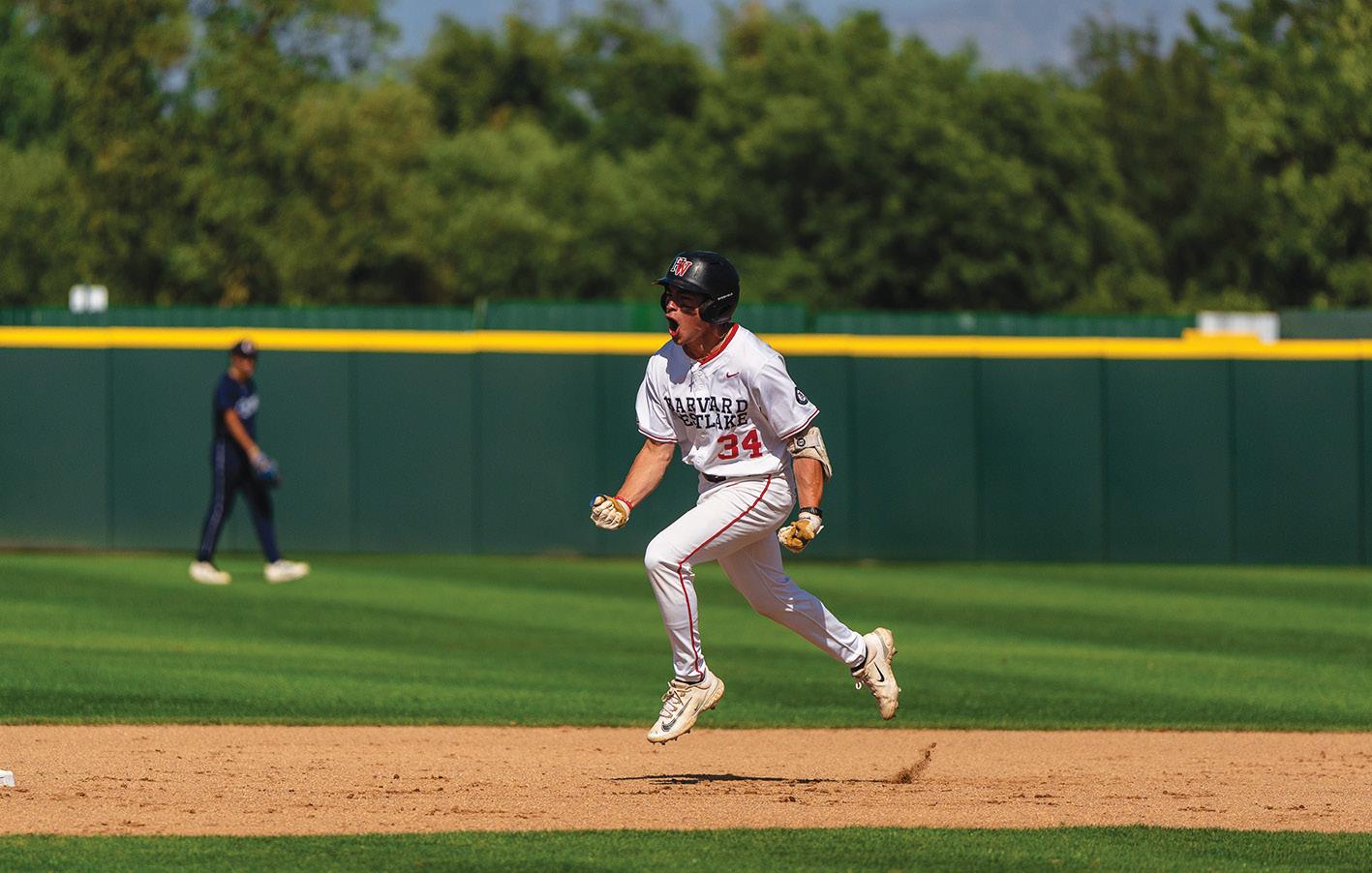
ON THE MOVE: James Tronstein ’26 rounds the bases during a game at O’Malley Family Field, celebrating as the Wolverines continued to apply pressure offensively. Tronstein’s aggressive baserunning and energy helped keep momentum throughout the inning, leading to an 8-0 win.
Baseball team prepares for upcoming playoff push
By Chloe Kim
The boys baseball team advanced to the quarterfinals of California Interscholastic Federation Southern Section (CIF-SS) Division I Playoffs after defeating La Mirada High School 3-0 in the first round of playoffs on May 12 and Huntington Beach High School 6-5 in the second round on May 15.
Center fielder Ira Rootman ’27 said the team has grown closer throughout the enitre season and that their victory over Huntington Beach was especially memorable.
“Our season is going great,” Rootman said. “We have really come together as a team, and it’s been beautiful to watch. My favorite moment of this year so far has been when we walked off Huntington Beach High School, and [outfielder] Ethan Price
[‘26] hit a single in the middle to win the game.”
Shortstop Vanderbilt commit James Tronstein ’26 said their victory at the USA Baseball National High School Invitational in North Carolina showed what the team is capable of.
“My favorite moment this season was definitely when in North Carolina we were able to make a huge adjustment, come back and win a huge game against a really good opponent,” Tronstein said. “It really allowed us to realize the capability of what we can do and who we are as a team.”
Right-handed pitcher Mateo Mier ’29 said pitching on alumni day stood out to him, especially coming off of his injury at the beginning of the season.
“The game I’m most proud of is when I pitched on alumni day,” Mier said. “It was really
cool pitching in front of all of the players who came to the school before me. My biggest challenge this season was getting injured at the beginning of the season. I was out for eight weeks, [but] I was able to overcome it by making sure I did my physical therapy so I could get back on the field as fast as possible.
First baseman and outfielder Max Hong ’27 said the team struggled throughout the season but improved after focusing on connection and consistency.
“In the fall we really struggled finding ourselves as a team,” Hong said. “After a poor fall game against Oaks Christian High School, we met as a team and made sure we focused on playing for each other and playing the best brand of baseball. We traveled to Arizona the following week and beat two very talented teams. This year,
we’ve kept the theme of staying with ourselves and playing to our absolute best, no matter who our opponent is.”
Designated hitter Nathan Englander ’29 said hitting his first home run in the final game of the season was the highlight of the season, and that the team’s main goal is to win the state championship.
“My proudest moment was definitely when I hit a home run against Notre Dame High School in the final game of the season,” Englander said. “It was my first high school home run and an experience I’ll never forget. Our main goal is to win the state championship and see the seniors dog pile for their final ride.”
The team will face Cypress High School during the CIFSS Quarterfinals at O’Malley Family Field on May 22.
By Jackson hubbard
The boys and girls track and field team finished California Interscholastic Federation Southern Section (CIF-SS) Finals with Quinn Hamilton, Charles Abemayor, Jia Rhee and Carter Perry and is advancing to CIF-SS Masters the week of May 26.
Captain and distance runner Charles Abemayor ’26, who ran the fastest mile since 2005 at 4:17.49 at the Mt. San Antonio College (SAC) Relays on April 17, will be participating in the 3200M at Masters. He finished third in the CIF Division Three Final. Abemayor said he is happy with how he has been running and looks forward to continued competition at Masters.
“I was pretty happy with how finals went,” Abemayor said. “I wasn’t satisfied with the way I was racing early in the season, but I’ve been increasing my speed and I’m happy with where I am heading into Masters.”
Quinn Hamilton ’26 will be participating in the pole vault at Masters. Hamilton vaulted 15’3” at the SAC Relays on April 18. Hamilton said he thinks being more mindful of self care greatly enabled his success.
“Taking better mental care of myself and taking pressure off of my shoulders helped me do much better this year,” Hamilton said. “That is really what has gotten me to where I am today and in Masters.”
Hamilton said he is very happy with how his season went as a whole and is looking forward to competing in the CIF State Championships.
“I am really happy I was able to make it this far, and am excited to give it my all with hopes of making it to states,” Hamilton said.
Softball team finishes their season with a record of 11-11
By Chloe Kim
The girls softball team ended their season with a 11-11 overall record. After placing fourth in Mission League Finals, the team won 11-8 in the first round of California Interscholastic Federation Southern Section (CIFSS) Division IV Playoffs against Lakeside High School on May 14. However, the girls lost 5-12 in the second round against St. Bonaventure High School at Encino Franklin Fields on May 16.
Outfielder Emma Tseng ’26 said the team became more connected throughout the year, making the final season with graduating seniors especially meaningful.
“Although the season didn’t end the way we had hoped, I am proud of how much our team grew,” Tseng said. “We were placed in the Mission League, but we brought our best energy and effort to each game, and I think we all grew much closer as a result. This season was particularly special because we had seven seniors on the team, so it
was bittersweet getting to share the field with all of them for the last time.”
Third baseman Hannah Tabesh ’28 said the match against Chaminade High School was memorable because it reflected the team’s improvement.
“My favorite game from this season was definitely the game against Chaminade,” Tabesh said. “Getting the team to play together cohesively when we have so many people playing out of position was hard. We fought back and forth through nine innings and ultimately won on a walkoff grand slam. It was such a fun game, and we worked together so well to win, which was the biggest challenge for our team.”
Utility Sarah Barrientos ’29 said adjusting to a new school while being the youngest player on the team was difficult at first, but she eventually felt as if the team was her second family.
“My biggest challenge this season was being the only freshman on the squad,” Barrientos said. “It’s not in my nature to
be outgoing, so it was hard to come into a group that had already known each other for a few seasons. Even though I wasn’t friends yet with most of them, that didn’t stop me from being their loudest cheerleader in the dugout. It took me a bit, but I eventually felt right at home with this group of girls.”
Co-captain and center fielder Kale’a Tindal ’26 said the team’s commitment was the most rewarding aspect of the season and that she will carry the experience into college softball.
“I am proud of how our team developed a sense of perseverance and determination to win over the course of the season,” Tindal said. “Though we did not make it as far as we wanted, it was fulfilling to be part of a group that wanted to succeed for one another. Moving forward, I will definitely take away the experience of playing competitive softball with my friends and pursuing a collective goal with my team.”
• Continued on hwchronicle.com

MAKING CONTACT: Ainsley Nutting ’26 swings through a pitch during a game on April 28th, cleanly sending the ball into play.
WOLVERINES ONLY WOLVERINES ONLY

Charles Abemayor
BY CHARLES ABEMAYOR
In fourth grade, my mom signed me up for Cross Country. I hated it. I thought I was league bound in basketball, and wanted to focus on that instead. In my first ever race, my coach told me it was okay if I had to walk, so I did for most of the race. It was in a pretty nice park, so my friend and I walked and chatted, trying to make the best of a pretty terrible situation. That walk was the best part of the race. I didn’t want anything to do with running, and this persisted into that year’s track season that followed my dream sport, basketball. I kept at it for the next few years, but really I just did it as something to do in between basketball seasons. I never found passion in running, but my mom kept signing me up for it. Some of the races turned out to be at least somewhat bearable, but frankly what I liked best about those sweltering cross country meets were the ice pops my friends and I would devour once we got to the finish. We competed in some track meets on high school tracks that started right after school but finished long into the dark of night, but again, it was mainly just fun to hang out with my friends, goof off together in the middle of the field and maybe get some fast food for dinner afterwards. But running itself? Definitely not for me.
It wasn’t until the school’s team retreat the summer before my freshman year when the spark was ignited. Though I did participate in middle school cross country and track, I didn’t really love it. I didn’t even want to go on the retreat. I hardly knew any of the people on the team, and I just couldn’t imagine wasting a whole week of my summer to just run. Something changed in me on that trip though. I’m still not sure what exactly it was, but as soon as the trip ended, I was absorbed into the team’s culture almost immediately. I even got a bit better at running and made some friends. In the ensuing years, interest turned into obsession, which turned into 70 mile weeks, which turned into three workouts
a day and an undying hunger.
Coming into my junior year, I was coming off the best block of training I had ever had. Zero missed days, consistent undisrupted training and eyes on the school three mile cross country record of 14:52. After a few rust buster races, I lined up at the Woodbridge Invitational, the biggest meet in the country. Heart pounding with both uncertainty and determination, the gun goes off. I’m executing the race like I had in practice dozens of times before, throwing elbows against two hundred other bodies as I fight for my position. The first mile comes and goes. I’m off from the pace I should be. The second mile finishes. Better than mile one. The record is within range now. I crossed the line. Stopped for a second, and looked back at the timer. I see 14:52 come and go. The record was now mine.
After breaking the school record as a junior, I was on cloud nine. I was unstoppable, the happiest I had ever been. After a long night that continued into the morning, I laced up my shoes for yet another training run. Exhausted and still flying high from the previous night, I wearily set out to run 11 miles. At mile nine, the cement had other plans for me. I tripped and fell, tasting the dusty Brentwood road beneath me. I split my chin open, oozing blood. And of course I still had to run two miles back to my house. After shamefully shuffling home, I got several layers of stitches in my chin; but even with this big gash, the only thing on my mind was how I was going to complete my workout the next day.
After an underwhelming and unfulfilling end to my junior cross country season, I knew I had something to prove during track. With recruitment weighing heavily on my mind, every race felt like a full college application. Ironically, this pressure took away from my academics, as I would often forfeit work or studying in return for that extra hour of sleep or extra recovery. I forced myself to believe
that mere seconds on the clock decided my future, so I trained like it. I left the season with solid times, but still wanted to go much faster. I was getting ghosted by college coaches left and right, feeling lost and confused.
Coming into senior year, the pressure felt different. I was now a team captain, a leader on the team with the eyes of the younger classes set on me. I had become the runners I had looked up to when I was a freshman and sophomore, and needed to set an example and cement a legacy, not only with fast times, but with the right attitude and motivation to bring the team together as a unit and mentor the next generation of team leaders. In one of the first meets of the season, I was able to chip 30 seconds off my previous school record, and run a nationally ranked time of 14:18.
Looking back on my previous seasons, my biggest fear wasn’t injury, being slow or even splitting my chin open. My biggest fear was plateauing, failing to improve or give my best every time I lined up. Giving up wasn’t an option, not only for me, but for them. Maybe the pressure I put on myself as a senior wasn’t different from junior year after all. Looking back though, most people looking at my journey through this sport would see it as sunshine and rainbows, having no major injuries, blowups or atrocious performances as many others had. Despite the ups and downs I personally faced, with the sport often seeming like anything but a utopia, I always was able to look forward to practice at the end of the day for one reason: getting to run with my brothers for yet another day. Such a simple sport, putting one foot in front of the other, yet we all showed with our own complex goals and desires, uniting in the shared struggle of everyone’s least favorite activity. From the leaders who came before me, instilling unforgettable values and creating my love for the sport, to the younger runners who I could be a leader for, I wouldn’t trade my athletic experience for anything.
SENDOFF
The senior class of HW Media reflects on their final weeks on campus. Through shared memories, photos and moments spent together, they look back on the friendships that made their time at the school unforgettable.

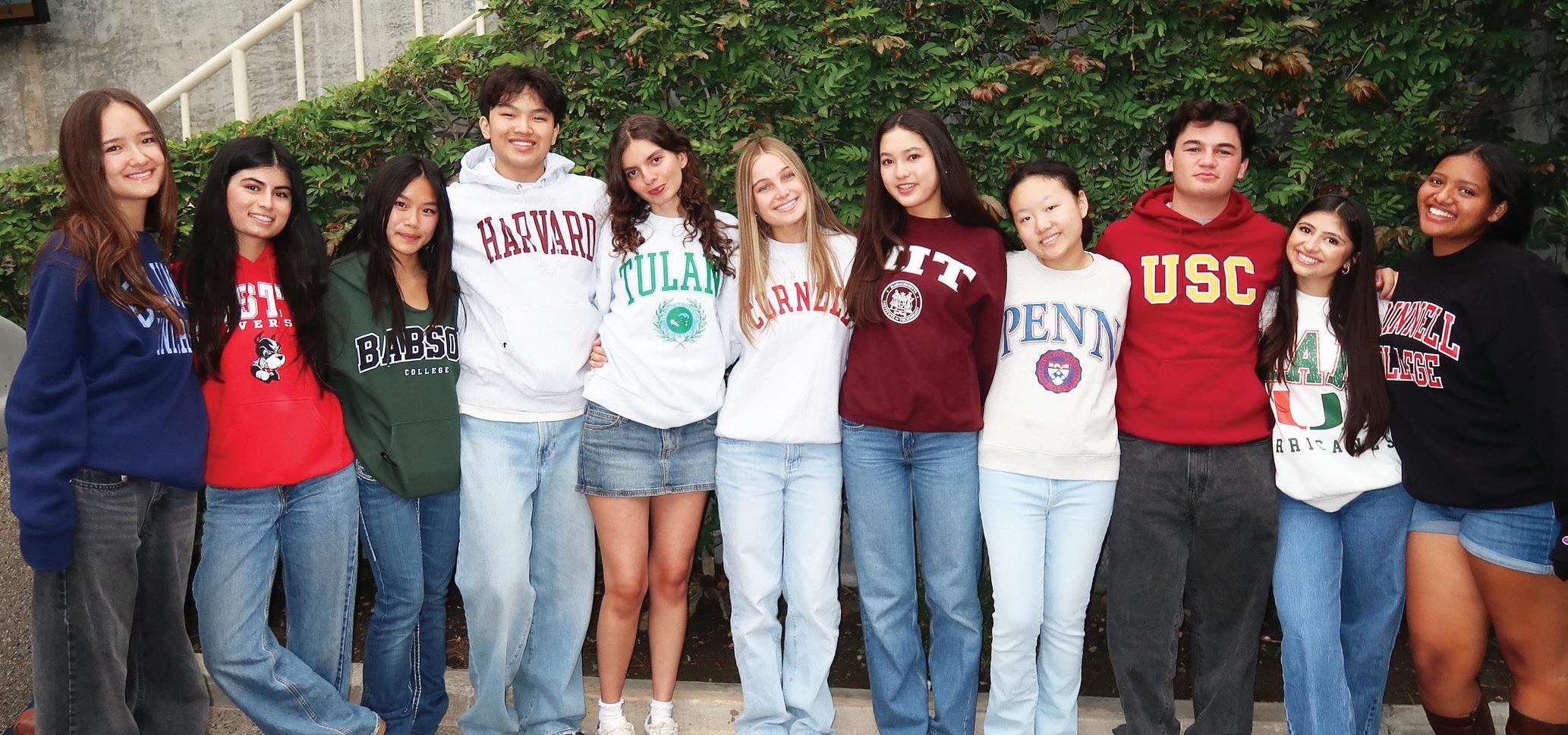

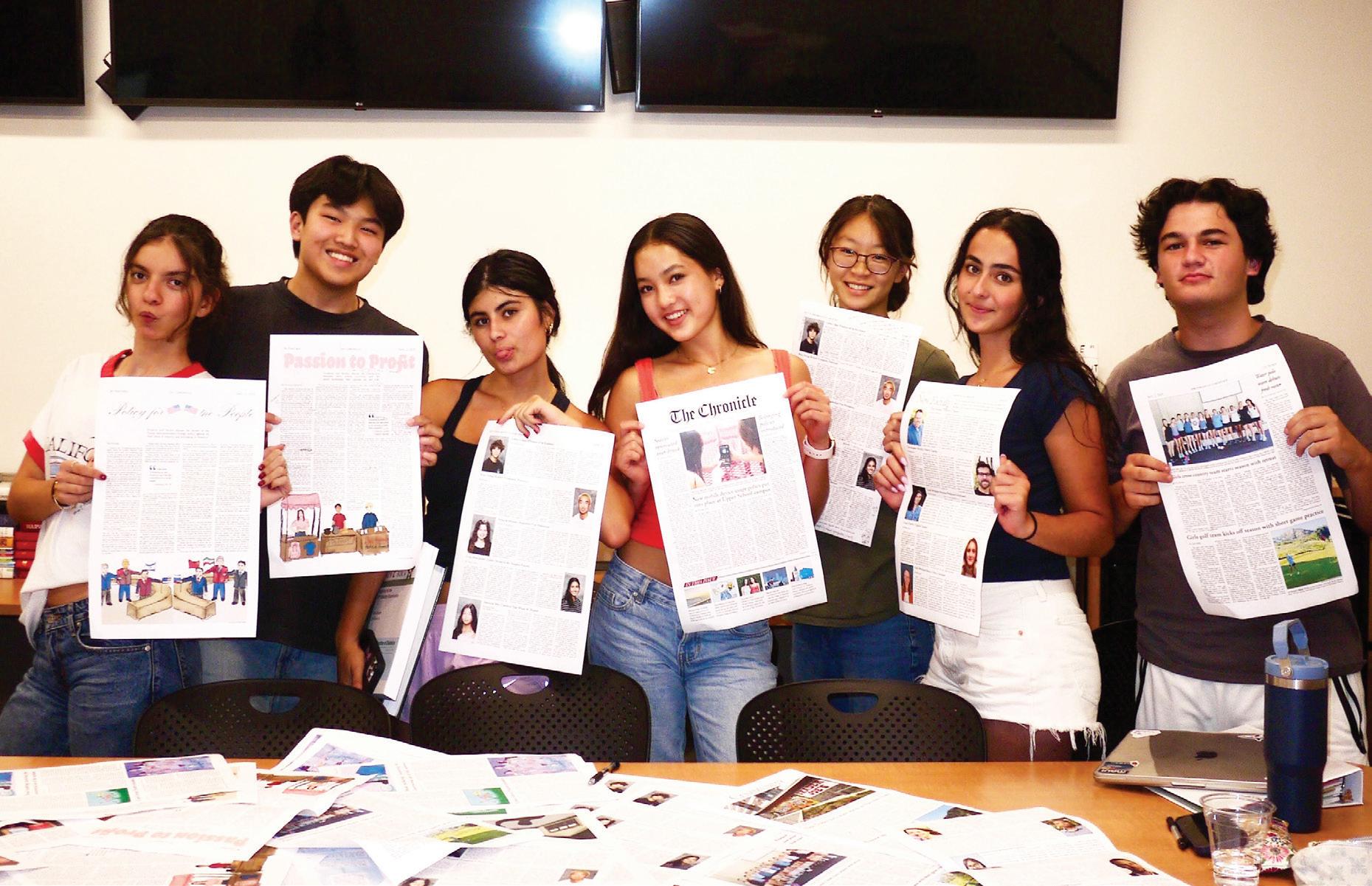
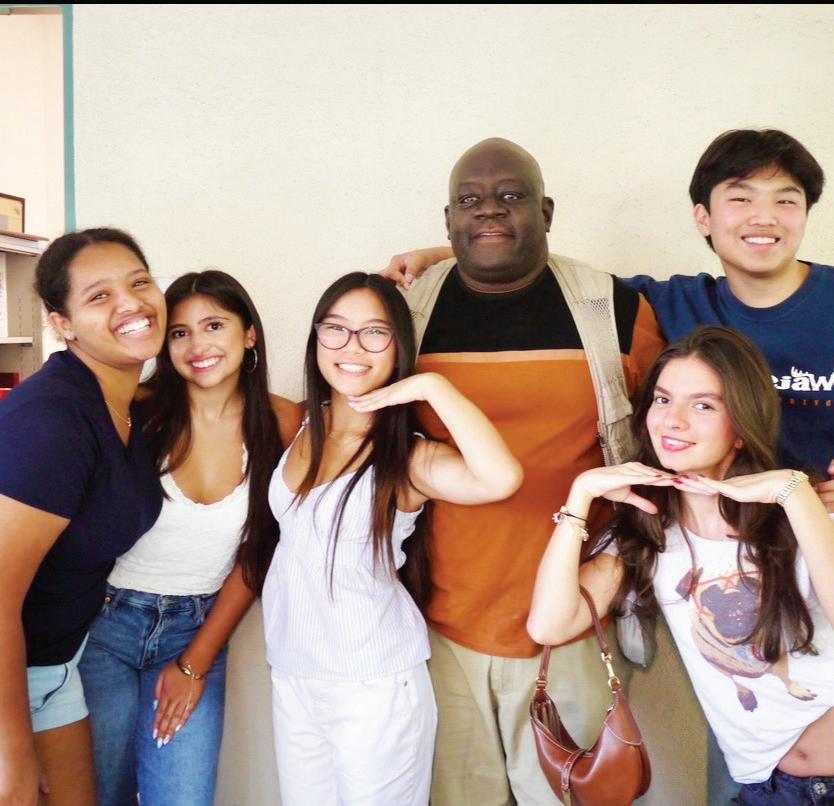
AN ODE TO GO GREEK WIDEN YOUR WEB
By Sienna Dall’Olmo
If you were to ask me who in this world has seen me in my most vulnerable, most hideous and most out of sorts state, I would reluctantly admit that it is anyone who works at the Go Greek on Bedford Drive. I first discovered the yogurt shop as a third grader on the way to a playdate with a friend after school. As a kid foreign to any dessert that didn’t include red dye 40, the taste of Plain Tart and frozen organic gummies that get stuck in your teeth were revolutionary. In the years since that transformative day, Go Greek’s meaning in my life has shifted. Don’t get me wrong, it is still a holy place — maybe even more so now. The best way to describe what Go Greek has become, not just to me but to the greater Los Angeles area, is a Mecca. It is where you travel to at any time of the day, any weather conditions and with anyone who will accompany you. I have gathered at the Go Greek on Bedford drive with almost every single one of my friends. We sit in our car with music blasting, eating yogurt
and hashing over the same three topics. Go Greek is a ritual for me and my friends and something that feels like a ritual in my high school experience. Leaving for college means leaving behind nights spent on Bedford drive and the many other rituals that have defined the last three years. Looking back on my time at the school, it’s easy to feel like it was all filled with study sessions and endless weeks in Weiler Hall. However, it was within all those moments that I developed traditions without even knowing it. The daily activities like grabbing Alfred before layout because I was severely sleep deprived, going to the dog park with my dad when I got home, dancing on the Quad with my friends and yelling at the juniors on The Chronicle to finish their pages are what I will miss most when I move away and what have truly made an impact on me.
It is in having rituals that we learn to define ourselves. The unique things we do to fill the ordinary days are what build our character, shape our values and form our communities.
Leaving behind the routine I’ve developed during my high school career feels scary, but also completely necessary. I will build a new routine when I go to college filled with new people and places. Saying that out loud is terrifying, but also assuring because I know it will push me to continue to develop my sense of self and personal values. I don’t know what traditions I will fill the next four years with, but I am sure they will be as central to my life in college as my

MY SPECIAL PLACE
By David Rothbart
Do we all have at least one, truly special place? Is there a part of the human mind that creates these areas as our own personal heavens on earth, our own utopias to strive for?
I’m only the Chronicle Sports Editor so I couldn’t tell you with any certainty but I could tell you about my special place.
270 miles or about five hours north of the school you can find a paradise of glacially-carved valleys, sheer granite monoliths, thundering waterfalls and towering Sequoias. The air is so pure that when you leave your car for the first time and feel the shocking cold, (you haven’t stepped foot outside your car since you were 5000 feet lower in elevation) you notice immediately that inside you feel cleaner and your mind feels both more at ease and more capable at the same time. From tunnel view you can look out onto the valley and take in the grandeur and you feel larger than life, as if you’re invincible. You can’t help but put yourself in
the shoes of John Muir when you see the stunning horizon. On the valley floor you look up and the steep valley walls give you a strange feeling of comfort. You are insignificant in the face of millions of years of erosion, insignificant in the face of the millions of years of life that came before us and that enjoyed this place. I understand how the utter scale of it all might seem daunting but in truth, it is the only place where I feel truly calm.
I have never be lieved in god but the closest feel ing I’ve gotten to that faith is the feeling I get af ter an arduous hike, when I can look out onto a view and see the bounty of my hard work. The greatest and most natu ral beauty in the world was not man made, it

was made by nature. To me then, the feeling that nature and this place stirs in me is the closest thing to a sort of godliness. You may have noticed that I haven’t said the name of my special place yet. I did that in hopes that you would reflect inwards and think about your own, so that you could realize which place makes you feel the way I feel about mine. If you haven’t guessed where I’m talking about yet then I’d advise you to take a right onto Coldwater, left onto the 101, then take the 405 north, the 99 north and finally use exit 131 so that you can merge onto the 41 north. You can take the 41 all the way from Fresno, through the little mountain towns, past the chukchansi gold resort and casino to finally reach my place: Yosemite National Park.
@WEILERISMYHOME
By Eila Shokravi
During the last March issue, the Volume 35 seniors participated in a tradition called “Staff Dating Profiles” where we wrote satirical dating profile descriptions and usernames for senior staff members. Courtesy of Editor-in-Chief Kayla Graff ’26, my username was published as @weilerismyhome. What was a seemingly mundane dating app username meant a lot more to me. Over the years, my teachers and peers would make jokes about Weiler Hall being my home because I’d be constantly working on or talking about The Chronicle, and Kayla only became the newest addition to that list when she wrote my username.
In the most cringy way possible, The Chronicle changed my life. Going into junior year, I was quite confused while trying
to figure out who I wanted to be. I felt like I was behind because I never felt as smart or as talented as the people around me, and was lacking purpose.
On Aug. 18, 2024, I boarded the bus to my first HW Media Retreat. At that moment, I felt a switch. I also felt Print and Digital Managing Editor Colin Ho’s ’26 iPhone camera being shoved into my face on the 0.5 setting, trying to capture me at the worst possible moment–what would become a reoccuring and sometimes bothersome experience, but an experience that now feels like home.
As an Opinion Reporter, I wholeheartedly enjoyed sitting in the corner of my living room writing an article about taking initiatives to decrease obesity rates in the U.S. while my family watched “When Harry Met Sally.” I enjoyed taking on way too
By Ellika Lesage
In 8th grade, I told a girl I’d hardly ever spoken to that I was obsessed with her shirt— purple and green flowers, a collared shirt layered over it. She is now one of my dearest friends, and that single comment planted the seed that grew into a friend group of five years. It was the first time I understood how little it takes to create connection.
I met two girls at a summer camp the summer before sophomore year; one lives in D.C., the other in San Francisco. We spent fewer than seven days together, yet I’ve called them once a week ever since. They know the characters in my life without ever having met them, which means they can see things and offer advice about my world that nobody inside it can. Since then, friendship has stopped meaning proximity to me.
In history, my table partner Joya Roy’26 and I bonded over Taylor Swift and online shopping—she’d tell me what Aritzia workout set to buy while our teacher walked us through revolutions and reform movements. Despite not seeing her often outside of school, every hallway run-in picks up exactly where we left off. I owe my grade in that class almost entirely to her copious note-taking and the late-night FaceTime calls she answered when I knew she had far more pressing work to finish.
In an English class with Mr. Traynham, I got to know Derek Dai ’26 and Ronan Lifrak’26, and deepened my relationship with Talia Hannani ’26. It would be, as KT would say, “a varsity move” to get to know the people around you. What started as a running joke about whether we’d order Prince Street Pizza for class became a group share of our most personal secrets,
playing Codenames in my living room and eating nearly 15 plates at Bacari.
Alex Dinh ’25 and Nathan Wang ’25 and I suffered through middle school debate lectures together. We lost touch when they moved up to the upper school, but two years later, we were reunited and closer than ever. They’ve since become some of my closest friends and fountains of wisdom for every facet of life. I could never thank them enough for Global Affairs leadership.
I badgered Marty Minikes ’26 into coming to my Global Affairs Club events. Now he’s the one getting me through Honors Molecular and Cellular Biology when senioritis has rendered me useless. Now we spend our class periods racing through Bracket City and the Times games. He loses, mostly.
The harder part has been getting these friendships to meet each other. Every summer since I could swim, my family has gone to the lake and in high school, I started inviting friends. Lately, they’ve started declining. “I don’t know her.” “Your invite list is funny.” “He’s annoying.” Fear of the unknown is reasonable when applied to dark alleys. It is much less reasonable when applied to people.
So this is a love letter, but it’s also an argument. Our perceptions narrow our realities, and we let them. The person we haven’t talked to yet might be the one we end up loving the most. If we let chance interaction widen our webs, the boat invite list stops being a list of strangers. In the envi

much work, requesting 12 art pieces from A&E Editor and Art Director Annabelle Cheung ’26 to fill the four pages I’d claim. To this day, the connections formed and lessons I’ve learned from all the interviews I’ve con ducted. To many peo ple, having this deep of an appreciation for a high school newspaper seems weird and oftentimes trou bling. But, for me, it was a sense of passion and care for a subject–a feeling that was very foreign to me. Over time, I became a pillar on staff: writing and laying out for multiple sections, and answering niche InDesign questions (content taught to me by Former Presen

tations Editor William Liu ’25). The Chronicle gave me something to work toward, a purpose and reignited my ambition. I worked hard, not because I wanted a large editor role, but because I had the opportunity to become great at something I truly enjoyed. The newspaper gave me so much more, though. It gave me a sense of family on campus. Nobody understands what family means until Sports and Presentations Editor David Rothbart ’26 walks into Weiler 106 and has the whole staff laughing in two
minutes. Nobody understands what family means until Editor-in-Chief Sienna Dall’olmo tries to bait you into trying out for the Ethics Bowl for the millionth time. Nobody understands what family means until you’re huddled into a corner, starting a gossip session with your fellow editors. And people definitely don’t understand what family means until Colin pulls up your extended family’s addresses, unannounced. These wholesome and oftentimes odd experiences are what makes being a Volume 35 senior special; these people who were once mere classmates became people I have found deep and meaningful connections with today, and my life is forever changed.
Dear Volume 36 seniors, Please take care of my home.
ROUTES WE SHARE
By Andrea Ricabal
Every day for the last 15 years, my dad has driven me to school, and for the last four years, he has driven me to the same school he attended 39 years ago. My dad is a graduate of the Harvard School for Boys, Class of 1991. While this is simply a fact that likely holds little significance to others, for me it marks the beginning of my own journey at Harvard-Westlake. The concept of legacy often carries a negative connotation. Now, I don’t really know if there is much controversy over high school legacy, but I am sure someone somewhere has strong feelings about it. And although I, at times, felt similarly in regard to college legacy admis-
sions, I have grown to appreciate what it means to follow a path your parents once walked. There is something profound about sitting on the same quad, walking the same halls, meeting his history teacher, Catherine Holmes Chuba and driving up the same Coldwater Canyon road that my dad once did as a teenager. It makes me feel connected not only to him now but also to the younger version of him I otherwise would never have known. We rarely get to know our parents as teenagers — the version who set off stink bombs in the library or got a “come see me” note written across a failed history paper. Yet in small ways, attending the same school has allowed me to encounter pieces of his adolescence woven into
my own. Working on The Chronicle has deepened my appreciation for stories and the importance of preserving them. Writing features has given me the opportunity to learn what makes people who they are, and last year, Max Turetsky ’25 wrote that The Chronicle founded in 1991, the same year my dad graduated, maintains its legacy only as long as people continue to remember and contribute to it. I think family legacy works much in the same way. Traditions, places and shared experiences become a kind of archive. They preserve histories that might otherwise fade with time. What feels especially meaningful to me is that The Chronicle

was not part of my dad’s experience here. This thing, which has become such an integral part of my identity at Harvard-Westlake, belongs entirely to me. Legacy does not mean replication. The beauty of it lies in building something of your own while still remaining connected to what came before you. As much as I hope my future children discover a love for writing on The Chronicle, I am, of course, open to whatever draws their attention instead (though The Chronicle will be deeply encouraged). Because ultimately, legacy is not about forcing someone into your footsteps. It is about offering them a doorway into understanding you.
This morning, as my dad drove me to school, I realized
learning to take the scenic route
By Colin Ho
On the walls of my room hang countless maps, license plates and street signs from various regions of the world. Alongside them hang maps of fake cities that I have created, drawn on lined paper that I tore out of notebooks. Evidently, I’ve always been enraptured by cities. Millions of people pass through a city’s thorough fares every day, carrying cul ture and energy from one street corner to the next. From a distance, they might look distant and cold, but they are truly dynamic, fluid and thriving entities. Late at night, when some people unwind by watching TV or reading, I’m on Goo gle Maps. I’m the master of Google Maps. I pan, zoom and scroll through 3D Globe View, transitioning from sat ellite view to street view and back. Each day, I spend at least an hour exploring different neighborhoods of cities around the world. Today, I explored Ot-

tawa and Montreal. Yesterday, it was Johannesburg and Cape Town. Tomorrow? Who knows. Whenever I go out, I plan my route and mentally take note of my parking options. Whenever I travel, I organize an itinerary by the location of the sights and destinations I want to see, and arrange my transportation in advance. Even when I drive to school each morning, I use my GPS in order to make sure I take the most optimized route and avoid any unexpected traffic jams. Just like I have my trips mapped out, starting in 9th grade, I had my high school trajectory mapped out. I was set on taking challenging classes, getting good grades and by senior year, becoming the Editor-in-Chief of The Chronicle. Except that didn’t happen. The day I didn’t get Editor-in-Chief, it was as if a roadblock had suddenly appeared in the middle of my route. I was forced to confront the fact that life wouldn’t always follow the
route I had planned.
Yet, looking back, I can confidently say that not getting Editor-in-Chief was one of the best things that’s ever happened to me. This year, I’ve been able to explore more than I ever have before. I dedicated a lot of time to the musical, where I was able to have a larger role for the first time due to my more flexible schedule on The Chronicle. I was able to start a fashion magazine with three of my close friends, and explore a freer and more creative design style. I was also finally able to join Jazz Singers, which I’d wanted to join since sophomore year but never had enough time to. Most importantly, I was still able to continue being deeply involved with The Chronicle and part of the community that I fell in love with in 10th grade.
This year taught me that often, the most meaningful experiences come from deviating from your set path. It’s like driving on I-405 to school, but then exiting on Mulholland Drive just for fun. I’ve learned to become a more spontaneous and easygoing person. I’m excited to see where this next turn takes me. This time, I’ll take the scenic route.
making every day gugsday
By Lydia Gugsa
Whenever I talk about my six years at Harvard-Westlake with my friends, many memories come to mind — when I face-planted down a flight of stairs, my time as second chair in Middle School Symphony or my endless days stressing about my HUSH capstone last year. But without a doubt, every time, one thing always comes up: my emo phase, when dark clothes, jagged eyeliner and a black beanie defined my identity. Regardless of how embarrassing it is to retell and relive, I will always cherish it, because it gave me my best memory here: Gugsday.
On my 14th birthday, I walked into my science class and to my surprise, the phrase, “Happy Gugsday” (like “happy birthday”, but instead of birthday, he mashed together my last name and birthday) was written on the board. So when one of my classmates came up to me a couple days later and said, “Happy Gugsday,” I was confused. When I reminded him that my birthday was days before, he replied, “What do you mean? Every day is Gugsday.”
Reframing my mindset that every day matters and to not waste any second fundamentally changed my outlook on life. As embarrassing as my emo phase is to think about, I think part of why I cherish it so much is because it made me feel everything so deeply. Gugsday taught me that even the messy, dramatic, and cringey mo ments are worth holding onto — and every ver sion of yourself is worth embracing, too. That mindset followed me into icle, especially in my role as Features Section Editor. As an editor to six incredibly talent ed Features girls, watching them throw themselves fully into stories, obsess over tiny de tails and somehow still care 110% even when deadlines felt impossible constantly reminded me of what Gugsday is supposed to mean. Somewhere along the way, Features stopped
feeling like just a section and started feeling like proof that the best things happen when people care a little too much. It made me more willing to embrace the messiness of people, including myself.
The parts of ourselves that hold the most emotion — embarrassment, nostalgia, joy, even regret — are often the things that shape us most. The versions of ourselves we cringe at, miss, or try to outgrow somehow end up teaching us the lessons we carry forward. Maybe that is why Gugsday stuck with me for so long. It made me want to throw myself fully into the things and people I love. More than anything, Gugsday taught me the moments worth remembering are usually the ones we choose to show up for wholeheartedly.
that out of thousands of school mornings, there are only two more drives left. And somehow, even as an 18-year-old girl who prides herself on independence, that realization made me feel like the four-year-old version of myself eating cereal from a cup in my car seat in the back as I instructed my dad on what Disney princess song I wanted to hear. A ritual as simple as driving up Coldwater Canyon can begin to feel ordinary over time, but now, in these final days, I want to hold onto every red light. I hope everyone gets the chance, at least once in their life, to drive the same route their parents once did, getting a glimpse into the person they used to be while also making turns along the way to find their own path. Maybe you, too, will find yourself alone in Weiler, writing your final contribution to The Chronicle

the side quests matter
By Audrey Kim
Earlier this week, during the speaker event featuring Trevor Noah, he made a striking metaphor that really stuck with me.
“Life is like a saved video game,” he said, “You are given an already saved file and you have to decide how you play.” He also stressed the importance of completing “side quests,” stuff that isn’t essential to your life’s journey but that will make you feel fulfilled.
After all, if every day is Gugsday, then I might as well make every single day count.
As another avid player of computer games, and someone who wrote an opinion article in The Chronicle last year about the importance of them, I resonate with the second part of this metaphor. Whenever I play a video game, I of course care about beating the main story. However, side quests are often more interesting to me, especially in open world games with many noteworthy characters. They fill out the world and my experience playing through it. Without these side quests, a game would feel very hollow and simple.
Real life, as I have found, works in much the same way. Sometimes, while going through high school, I was too focused on certain “main goals,” like getting good test grades or the big final showcase of one of my extracurricular commitments. Without time to try out other things or take some time to think about things outside of these big goals, I was quickly stressed out and felt like I was trapped in a blank quest log, with only the main quest blaring its instructions on it. It is always important to work towards your big objectives, the ones that will make your life story progress. However, when you take the time and go out of your comfort zone to do something small
and new, like trying a new restaurant or going to a new type of party, your life will open up much more. This year, whenever an opportunity presented itself, I always tried to log a “side quest,” which led to some of the best memories of my high school experience. I explored L.A.. I went out with friends more and found myself learning about maturity and independence. My parents and I did more new activities together, savoring my last year of childhood together.
My favorite side quests in video games, however, don’t just expand on the world. Character quests or companion quests are a subset of side quests that zero in on a specific playable character and their story outside of the main plot. These quests not only add more flavor to the game: they deepen your emotional connection with a fleshed out person and therefore make you appreciate the game as a whole. Likewise, my favorite memories relating to fun “side stories” have to do with the people I completed that story with. The event wouldn’t be the same without friends by my side, and opening myself up more during these “quests” let me meet more of my classmates and see them in new and closer ways. If I didn’t take the chance to create these memories, I wouldn’t feel as strong of a bond to them as I do now.
As I leave high school, I take this attitude about “side quests” in life with me. I hope that, in the future, my in real life quest log becomes filled to the brim with all sorts of little unique experiences. I also hope that the rewards from my already completed quests, whether they be friends or life lessons, stick with me for a long time. With that, I look forward to the next level of life!
WHEN I ALMOST WALKED AWAY
By Kayla Graff
Not many people know that I went into my interview for the Editor-In-Chief position with the intent of withdrawing my application. Sitting under bright lights across from last year’s seniors and the HW Media advisors, I didn’t feel good enough for the role. I re member telling them that I wanted more for The Chroni cle – more than I trusted myself to offer. I wanted the paper to be perfect, and I didn’t want to be the reason that it wasn’t.
The whole situ ation felt very emo tional for me. Tears were involved, and I didn’t end up answering a single interview question. I’m so grateful that the people in the room that day urged me to take more time and recon-

sider my decision. I don’t know if I’d be able to forgive myself if I had let insecurity win in that moment. Since then, I’ve realized that I was scared of how deeply I cared for the paper and the vulnerability that comes with putting so much of yourself into something. When I found out I got the role, I still had feelings of inadequacy. After all, I’m not a very traditional EIC. My favorite classes have always been math and science, and next year, I’ll be at a school with a humanities department as minimal as they come. I still don’t feel aligned with the conventional EIC image, but that’s a fact I’ve become more comfortable with over the course of the year. Freeing myself of a rigid expectation of what I should be has shown me how important it is to do just that,
wearing confidence
By Annabelle Cheung
One of my favorite compliments is: “I like your outfit.” Complimenting outfits was how I made one of my first friends over online school, a way I’ve upheld random friendships throughout the years when passing by in hallways and my go-to for creating a shared connection. Complimenting a top, necklaces, shoes and so on became my way to offer small verbal gifts. Brief and almost insignificant, such an easy thing to say in passing has an exceptional ability to make someone feel so seen. At the same time, the person giving the compliment is able to show attentiveness, curiosity and appreciation for the way someone chooses to present themselves to the world.
Spending hours in my mom’s
closet in 8th grade, I would pick out clothing with lace or beads in shades from turquoise to every pink imaginable just so I could hear: “Your outfit is so cute!” Even before I fully understood what fashion was to me, I appreciated what it meant to use it as a form of expression. My clothing became one of the first ways I learned how to communicate something about myself and it granted me a sense of identity before I had fully grown into one of my own. Fashion used to feel directly connected to my worth because it stood as proof that I offer something recognizable or likable to other people. However, I grew to realize that style is meaningful only because of the person wearing it. Outfits are memorable when it rflects someone’s confidence or individuality be-
in all areas of my life. So I guess the point I’m trying to get to is that taking the risk, putting myself out there and trusting myself to fill the role that I do on The Chronicle has been one of the most meaningful and rewarding experiences I’ve had. I can feel you rolling your eyes, and I recognize that sounds excessively sentimental considering the fact that I’m an 18-year-old talking about my high school newspaper. Doesn’t everything at this time in senior year. But truly, if you spent the past few years in the newsroom working late on Friday nights, struggling against deadlines, perfecting pages and probably killing a small forest’s worth of trees in tabloid-size paper along the way, you would feel it too. I’m tired, but not of the work, and not of the people who do it. I’m so grateful for this community for pushing me to my limits and then pushing some more. There’s no other way I would have rather spent the last three years.
cause fashion is simply an extension of identity, their personal narrative and one of the most vibrant forms of self-expression. Throughout my time at school, I was able to separate my confidence and self-worth from the very thing that served as my crutch.
As I enter this new chapter in my life, I will lean on fashion again in moments of uncertainty but I understand that the security it gives is only amplifying something that already exists underneath.
More than anything, I hope people continue to appreciate clothing the way they have these past six years, because pay ing attention to the way someone expresses them selves is just another way of paying attention to the person themselves.
a guide to loving life
By Luca Gonzalez
The worst thing I’ve ever done was become a fan. Yung Lean encourages us to become fans while Kanye tells us to fall in love with the music rather than the artist. Archy Marshall says do whatever. But when I love an artist’s music I become devoted to their character. There are few things more necessary to me than standing for sixty minutes in a cramped room to hear an artist pour out everything they are for a group of strangers. And for sixty minutes I am everything that they are. I only regret becoming a fan because of the meaning an artist can have to me. There’s pain in their new drop being trash, you missing their tour, or, tragically commonly, them dying. Artists die a lot. But despite knowing the dangers of music, I love it unconditionally. Which ought to be the reality of any relationship, and more importantly life. Pray that you marry someone you can argue with, and friends that can get angry at each other. Pray that you won’t always be happy, that your highs will last as long as your lows, that you can have a good cry thirty years from now. Be yourself

and live naturally. Take your time to understand others because they need time to be understood. You’re not the only one looking around at the faces in the crowd and the hundreds of cars on the street and thinking ‘I’m the most conscious out of all of them, nobody else is thinking this’ (Which, ironically, makes you less conscious since it’s a common thought). Your entire life is your mentality. I never walk into a concert thinking about LARPers and unhygienic skinny white men. I think about how these are people that are here because they love the artist as much as I do, and because humans as individuals have so much more depth to them than what they are labelled by some NYC transplant “music aficionado” recording from their eighth-story apartment in Bed-Stuy. Convince yourself that today is going to be great because by the time you open Instagram to scroll your first reel of the day, your mind will have already decided whether it is. Follow these instructions and you will be following a guide to loving life and everything it offers to you. And love music because it is the greatest expression of emotions humans have ever achieved. Music is love, and listening to it is proof that you love life.

worth the slow brew
By Erin Ryu
On the morning of every school day for the past three years, I have rushed out the door with a backpack, a phone, and two bottles whose contents keep me going throughout the day: water and coffee.
The coffee is nothing special –just straight black coffee without sugar or creamer. Though bitter, it’s strong and dependable, its sharp aroma consistently piercing through my morning groginess. On some hectic mornings, the coffee is gone before first block. On other days, the coffee grows cold, sitting untouched until lunch. Whichever way, coffee is an integral part of my day and has slowly come to define my high school experience. Throughout my time at the school, I gradually came to equate coffee with productivity. At an institution like Harvard-Westlake, it’s inevitable to fall into that mindset. Everyone at some point seems to be moving ahead of you, achieving more than you, and frankly, doing better than you. In such a high-pressure setting, it feels the only route to success is to constantly push yourself to the maximum, persistently filling
your cup until it overflows. Looking back, however, I’ve realized not all coffees are the same. Each cup is different. An espresso takes mere seconds to steep, while a cold brew takes over 16 painstaking hours to reach full saturation. Instant coffee can be prepared in a blink, while drip coffee takes precision and patience. But just because one takes longer doesn’t detract from the fact that they are all inherently coffee. You wouldn’t rush one variety to be like the other and blame it for its slower processing time. People are the same.
We often forget that everyone is running their own race, trying to figure themselves out in the process. No matter how much we compare ourselves to those ahead of us or scrutinize who appears the most successful, it’s ultimately futile to believe we will all emerge fully polished and perfectly brewed by graduation because everyone deserves the time they need to find their own way.
Now, at the end of senior year, I still find myself racing out of the door carrying two bottles. But now, I remember to slow down and enjoy the dark roast once in a while. After all, coffee isn’t just about the hustle. It’s also about enjoying the process and understanding that some things are worth waiting for.
openheartedness
By Lyla Kavanagh
Last fall, I sat down in my dean, Mr. DeAngelis’ office, and asked him for advice on which college I should apply to for Early Decision. Mr. DeAngelis started listing off, very reasonably and calmly, a few schools I might consider. This was enough to start the waterworks. In my first quarter of senior year, I felt as though the world was continually crumbling beneath my feet – it wasn’t a surprise that it took one semi-serious discussion about college to push me over the edge.
Increasingly, we’ve forgotten the value of vulnerability in our day to day lives, in the role it plays in our relationships and in the ways it impacts the way we see ourselves and others. Indifference has become a positive quality while also serving as a powerful defense –it is impossible to poke fun at someone for something they don’t care about.
However, using apathy as a cover with which to hide behind is a strategy based in the assumption that vulnerability demonstrates weakness rather than strength. And this is true –to be vulnerable is to be susceptible to emotional or physical harm, and putting ourselves
in those positions, whether it be with family, friends or even strangers, is incredibly counterintuitive. Then again, being vulnerable also means making ourselves open to deeper connections, a wider support system and a more well regulated emotional state.
To me, being vulnerable means allowing my friends and family to see me in my entirety – if you can never be vulnerable with your closest relations, are you really that close with them? Can you truly say they are your closest friendships when you’re hiding parts of your inner world from them? And to strangers, how will you ever develop new friendships without first being vulnerable to new faces?
On a more basic level, how can you ever expect romantic connections to happen when you’ve never mentioned any thing to that person?
Following my slight melt down over ED decisions, I was forced to confront how truly damaging it was to hold on to my negative emotions rather than talk them through. I needed to take a proactive ap proach to managing my stress, otherwise the admissions pro cess was literally going to eat me alive. I began seeking out time to decompress and talk
through my emotions with my friends more frequently. I was more honest with myself and others when asked how I was doing, more honest with even my journal. For the first time in years, I was being vulnerable, and I felt as though my relationships were more meaningful, held deeper connections and gave me true comfort in difficult times.
There’s a special moment that occurs when you’re being fully honest with someone, when they can look you in the eye and you can feel to your core that they see who you are, inside and out. Wearing your heart on your sleeve is, in fact, the most rewarding thing you will ever do.