BY LAURA FENTON | PHOTOGRAPHS BY NEIL LANDINO, JR.
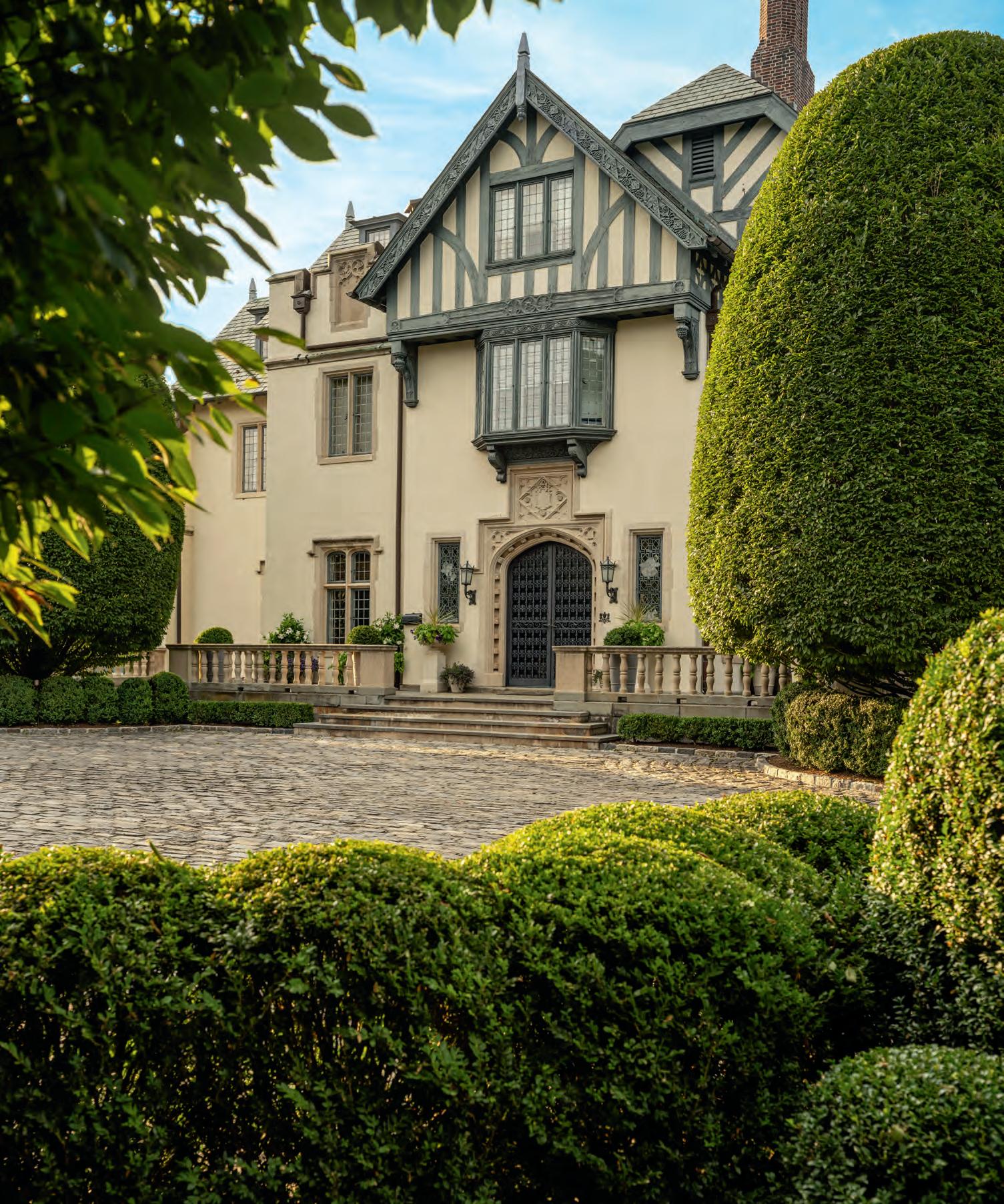
There’s an enormous amount of meaning in being able to preserve the past and blend it up with the future,” says landscape architect Janice Parker. A recent project in Rye, New York, demonstrates just how nimbly Parker walks the line between historic preservation and accommodations for modern life. Parker’s clients had purchased a 1851 mansion designed by Alexander Jackson Davis. “They were interested in all aspects of what it meant to own this house and to be a shepherd of it in its long life,” says Parker.
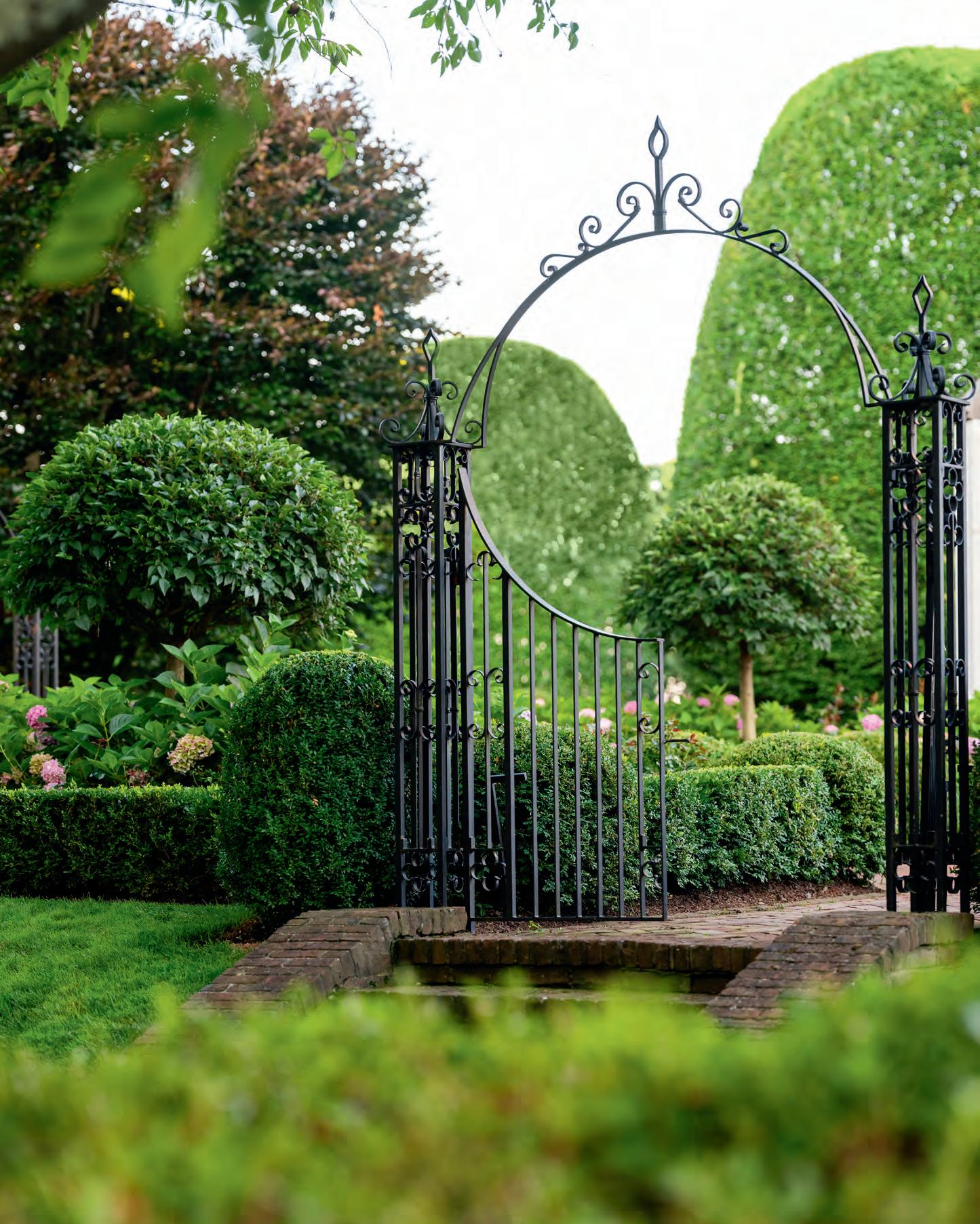
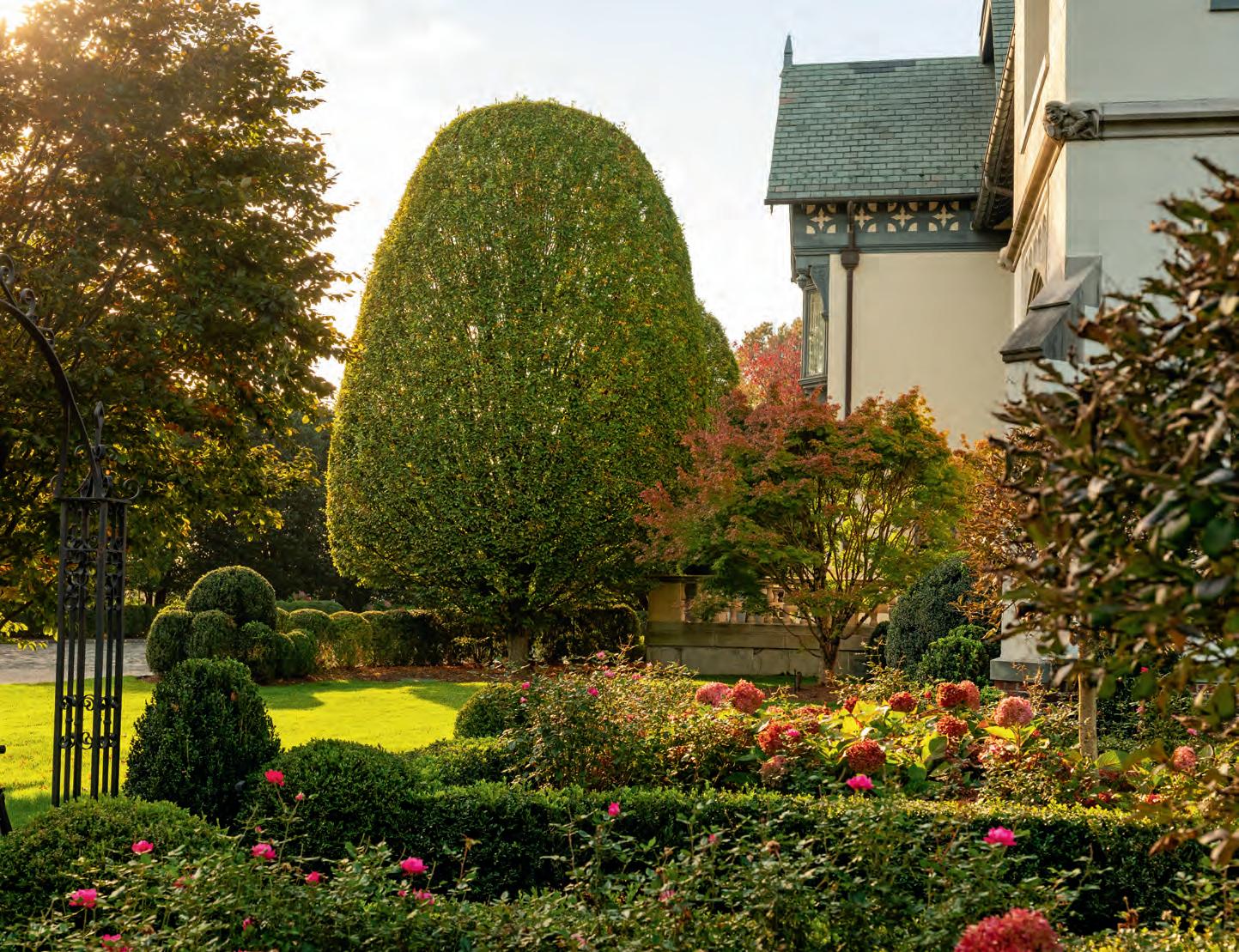
Both the clients and Parker wanted to preserve whatever elements of the landscape could be kept while adding amenities for modern family life. Additionally, deer pressure had diminished many of the older plantings. But Parker liked the garden’s bones, including a walled rose garden and the hornbeam trees around the driveway. “The original plan with the flower garden in the front was genius,” says Parker. “When you put a formal flower garden in front of a body of water, it cheapens both the garden and the water.”
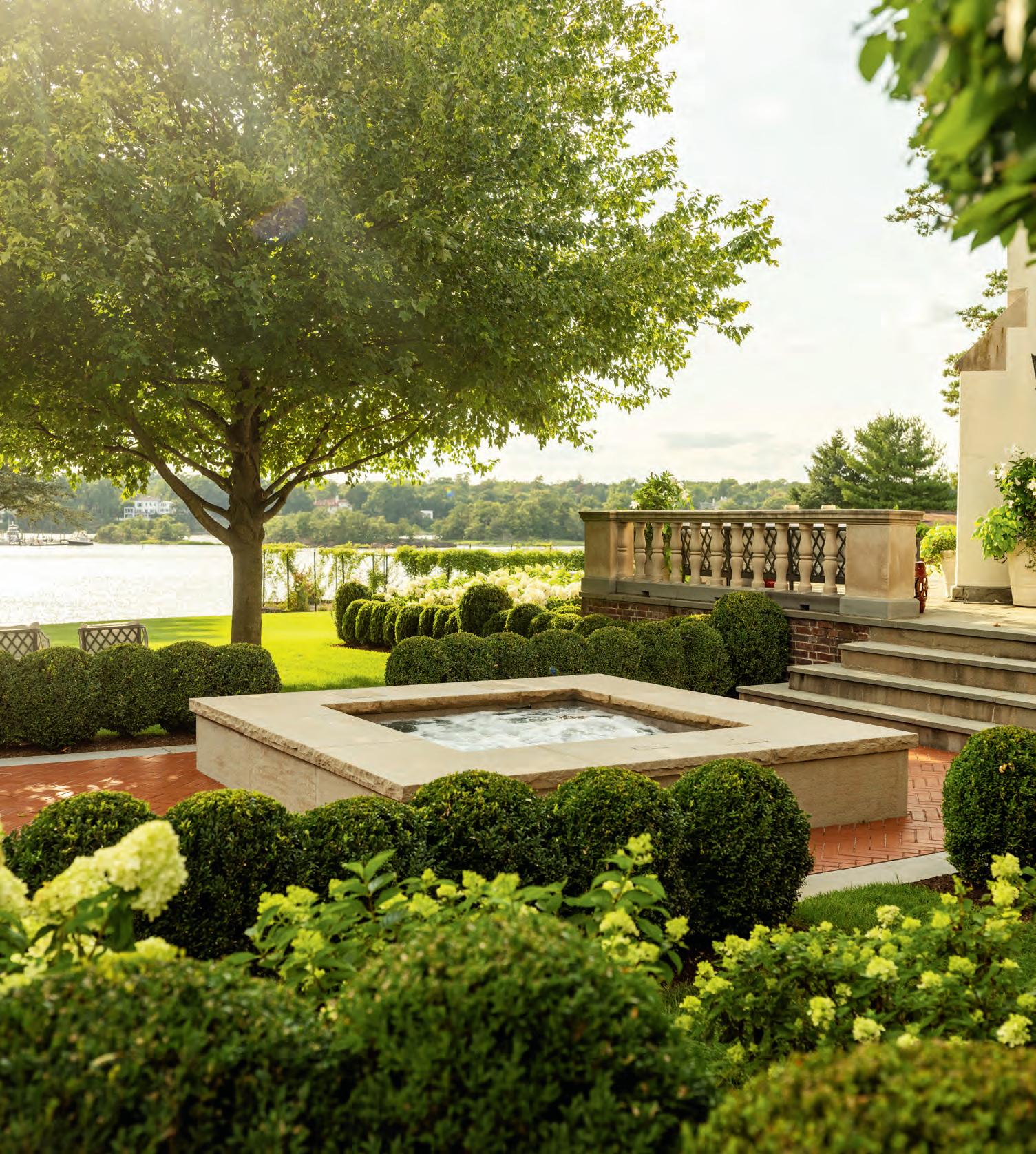
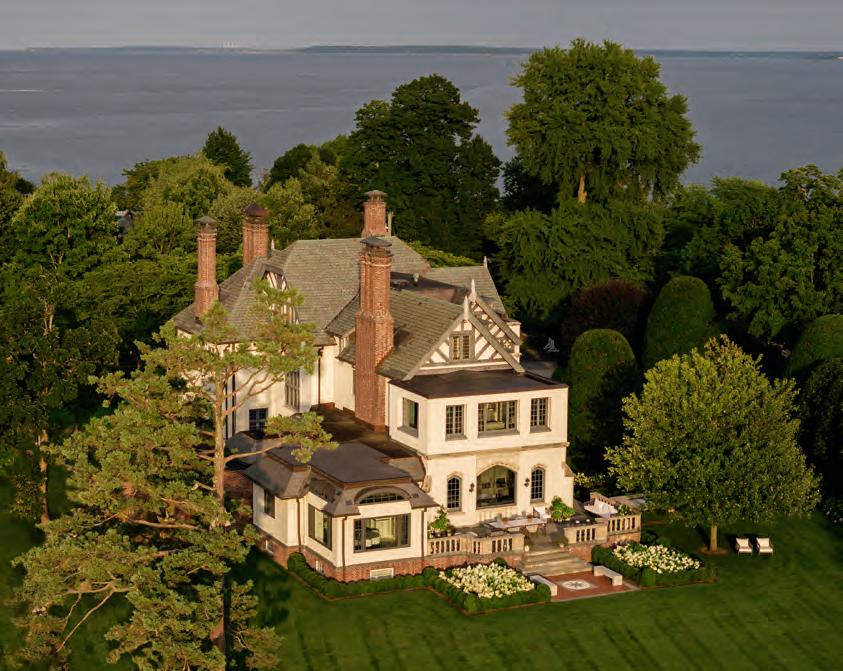
Working with her firm’s lead architect Douglas Clark, Parker devised a plan to expand the home’s outdoor living space, adding a lower level to the patio at the back. They also snuck in a spa on one side of the house, which looks like a water feature that could date back to the 19th century. “We used the brick material, the limestone, and reclaimed blue stone to blend it in with the old,” explains Parker.
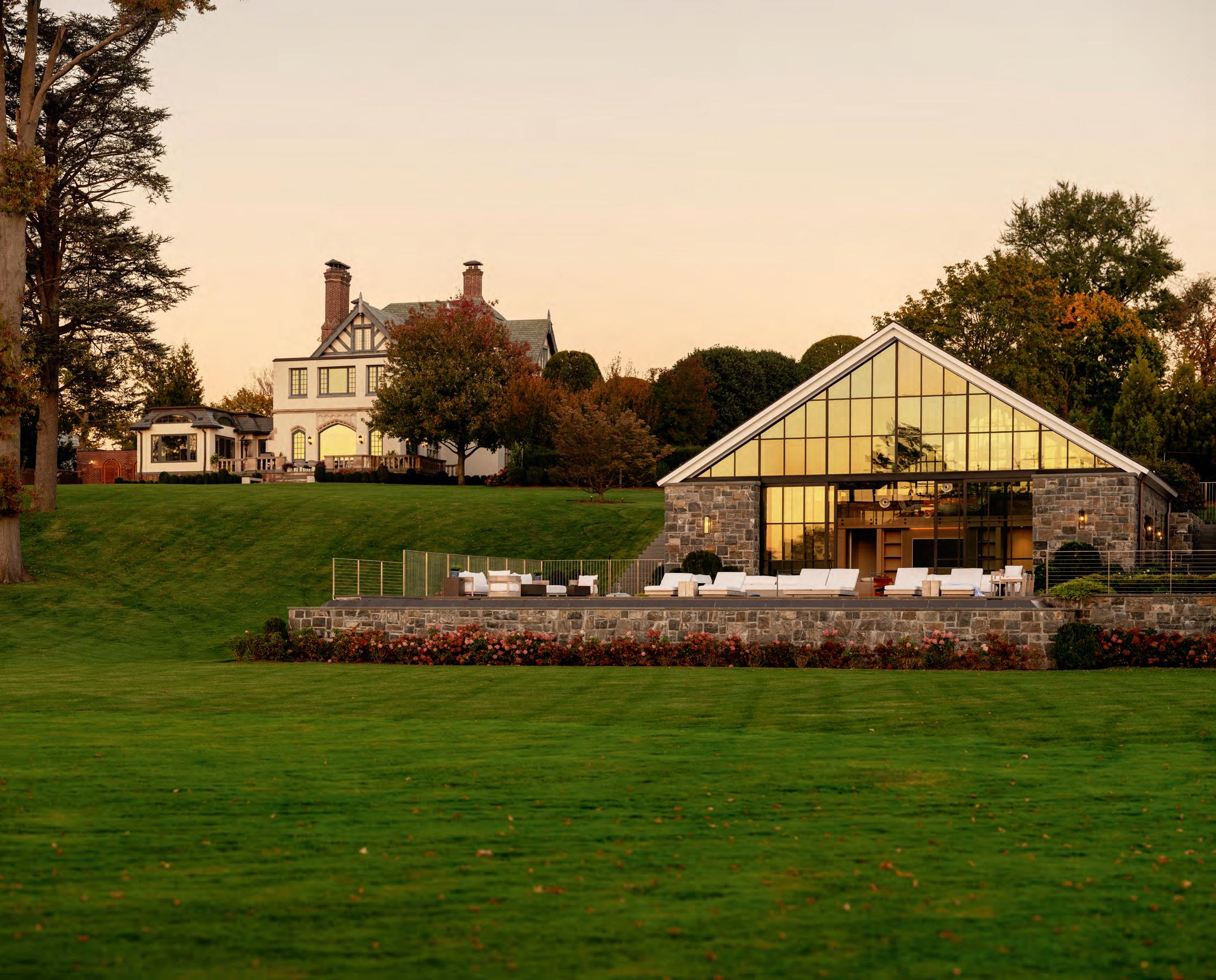
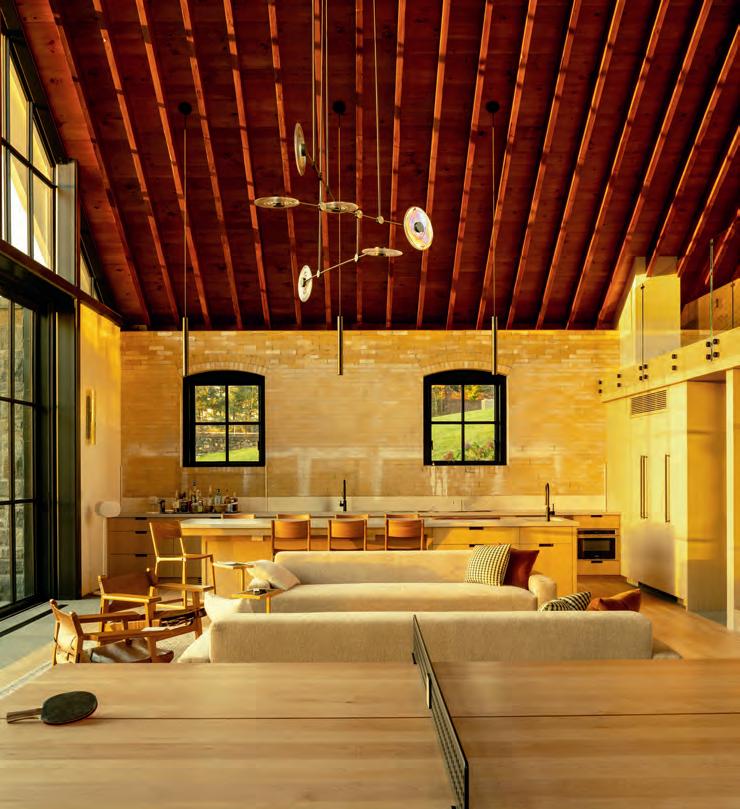
A second stage of the project developed when the homeowners bought an adjoining property down the hill to use a guest house. The clients hired Hutker Architects to transform an old garage into a pool house and asked Parker to create a pool and lounge area. The history-loving clients wanted to salvage elements of the original building.
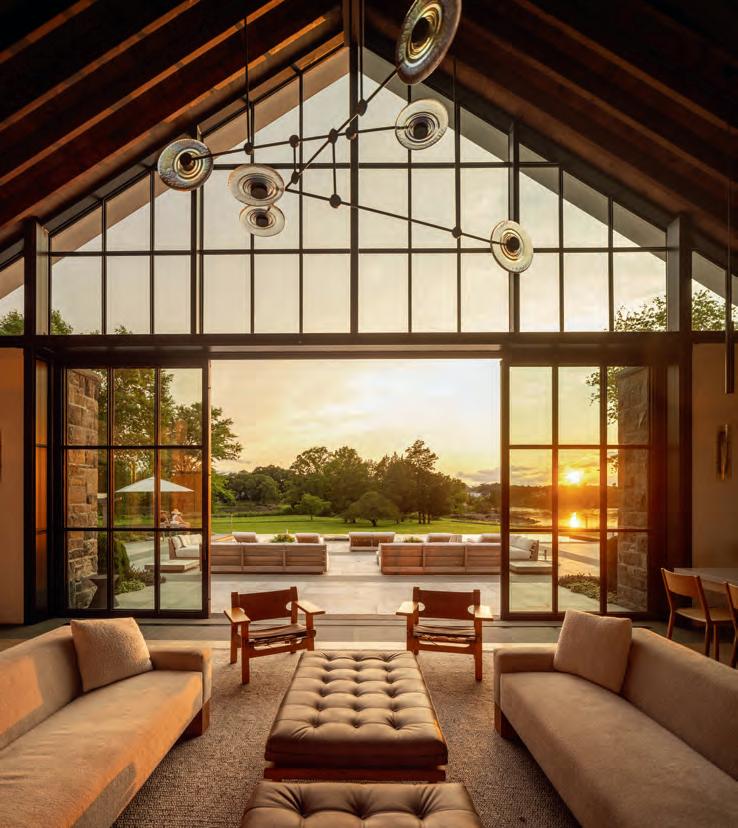
“We asked ourselves, ‘What are the best parts of this building?’” remembers Hutker Architects’s Thomas McNeill, the lead architect on the project. “It was obviously the stone, the brick, and the roof rafters.” McNeill stripped away everything else and kept those original pieces, even leaving old spray painted marks on the brick.
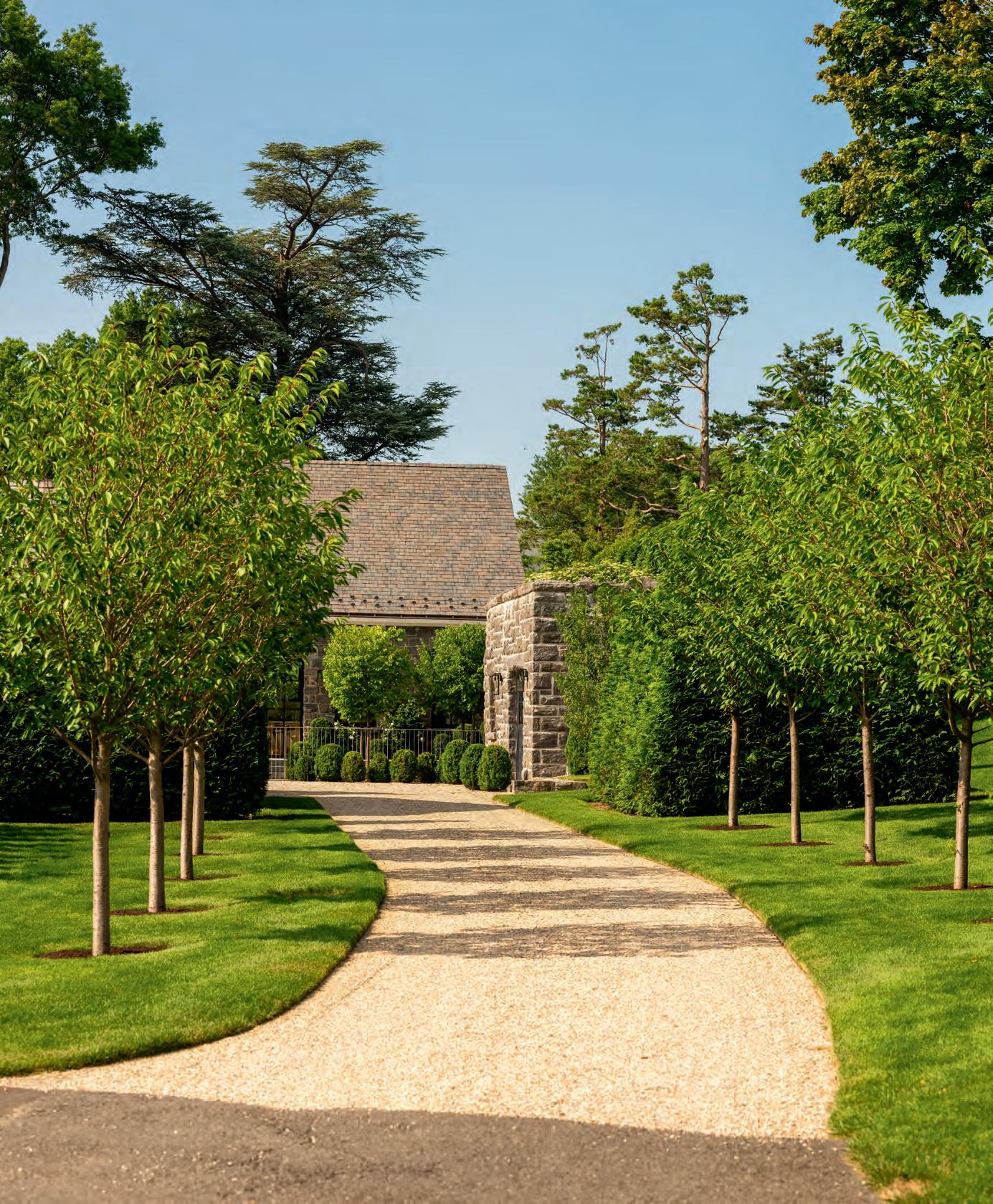
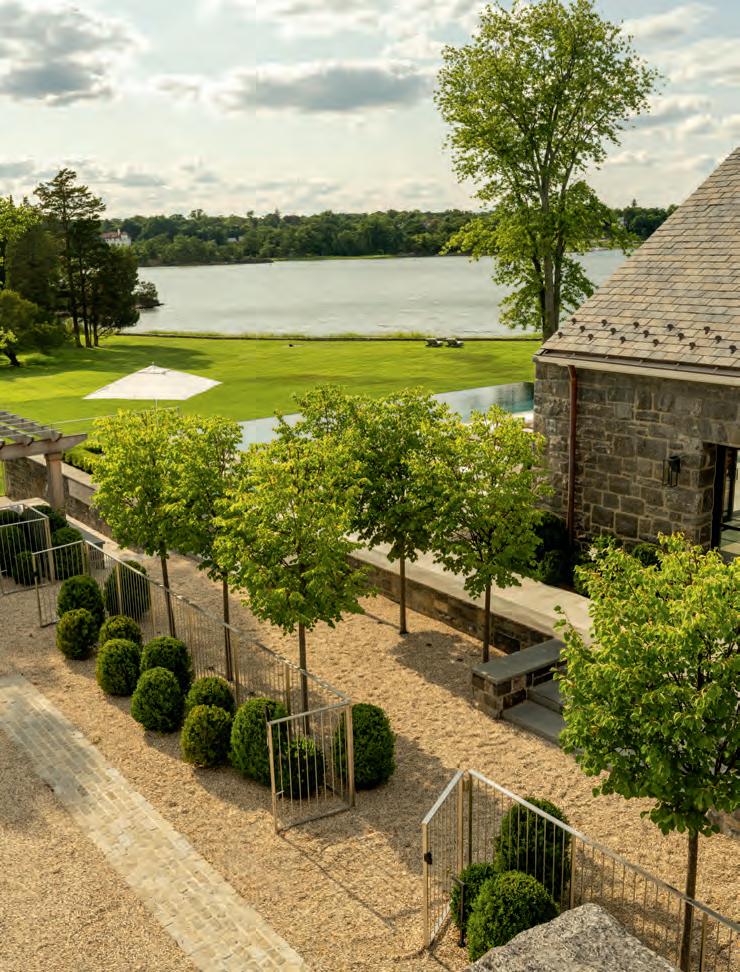
The redesigned and rebuilt structure now features steel and glass windows in the gables and glass pocket doors that open onto the pool patio. Parker also reimagined the guest house’s former driveway into an elegant gravel courtyard adjacent to the pool house.
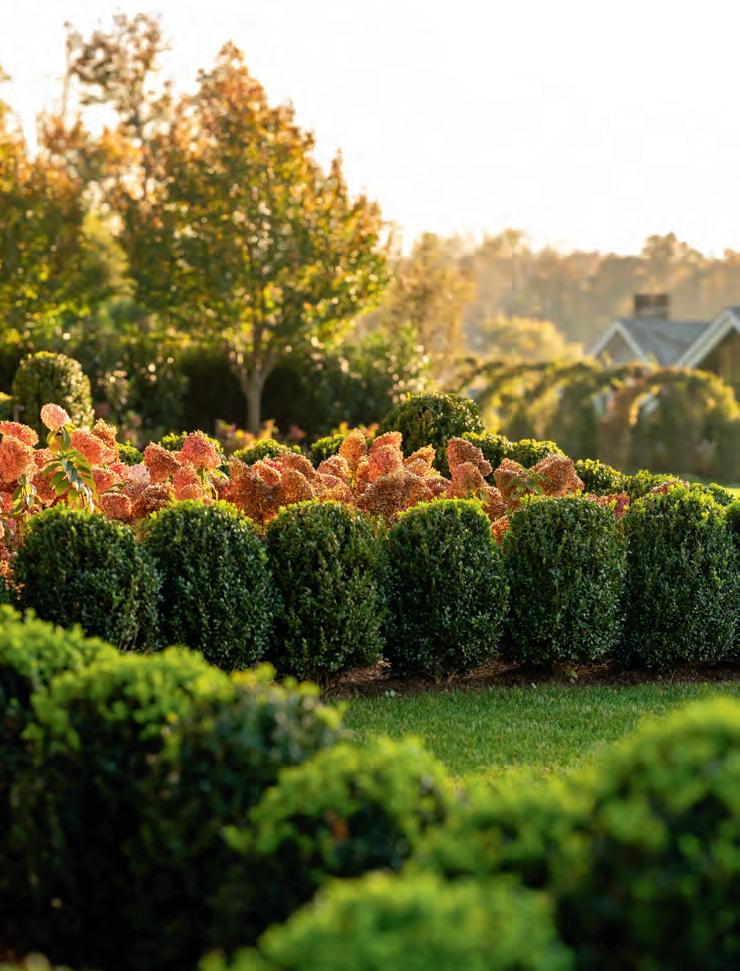
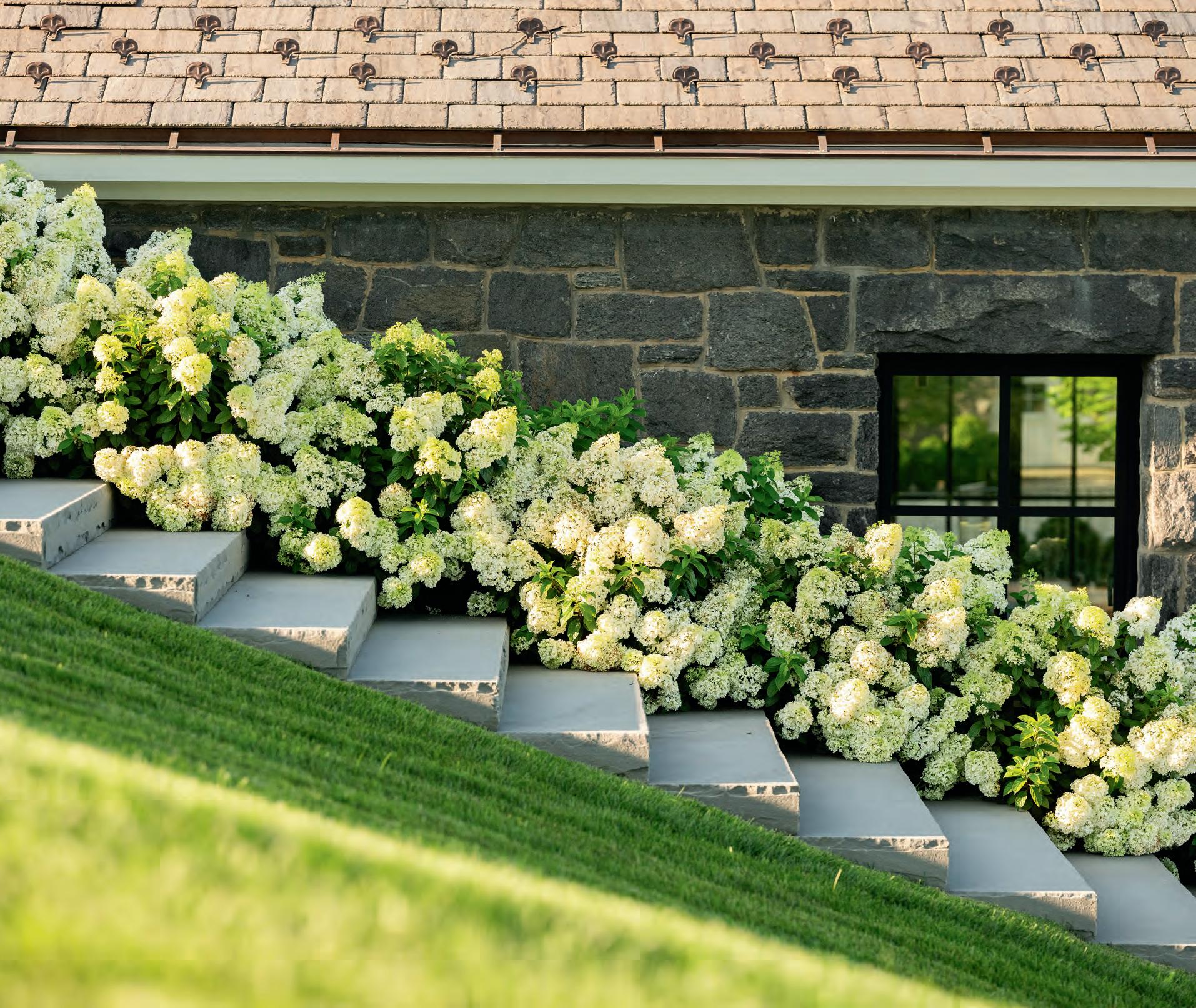
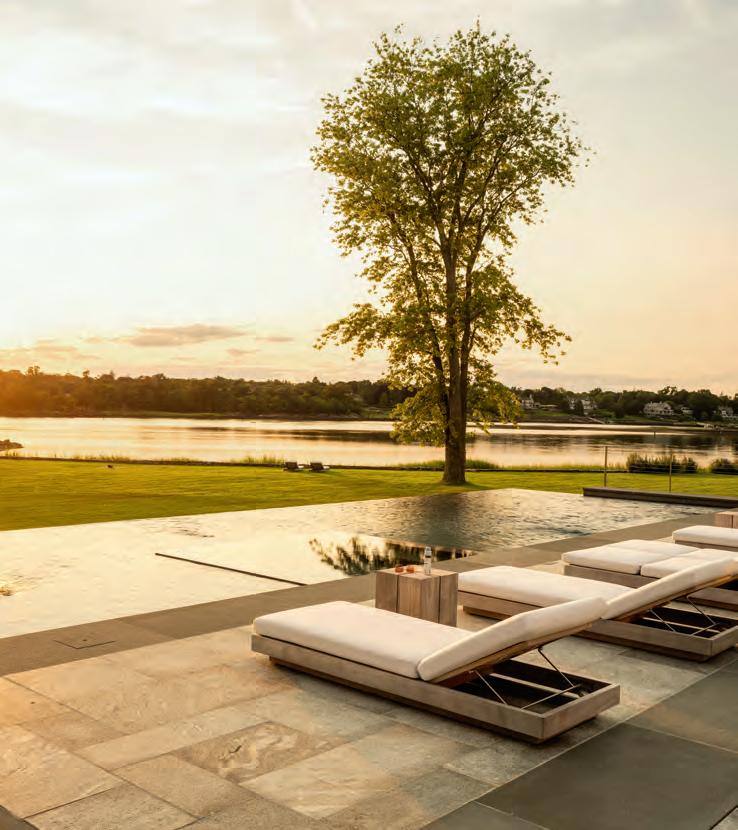
Parker strategically exercised restraint with the plant palette to keep the focus on the Long Island Sound views. Boxwood, hydrangea, and hornbeams repeat throughout the combined properties, creating a sense of cohesion and calm. Parker says, “Simplicity is sometimes the hardest thing.”
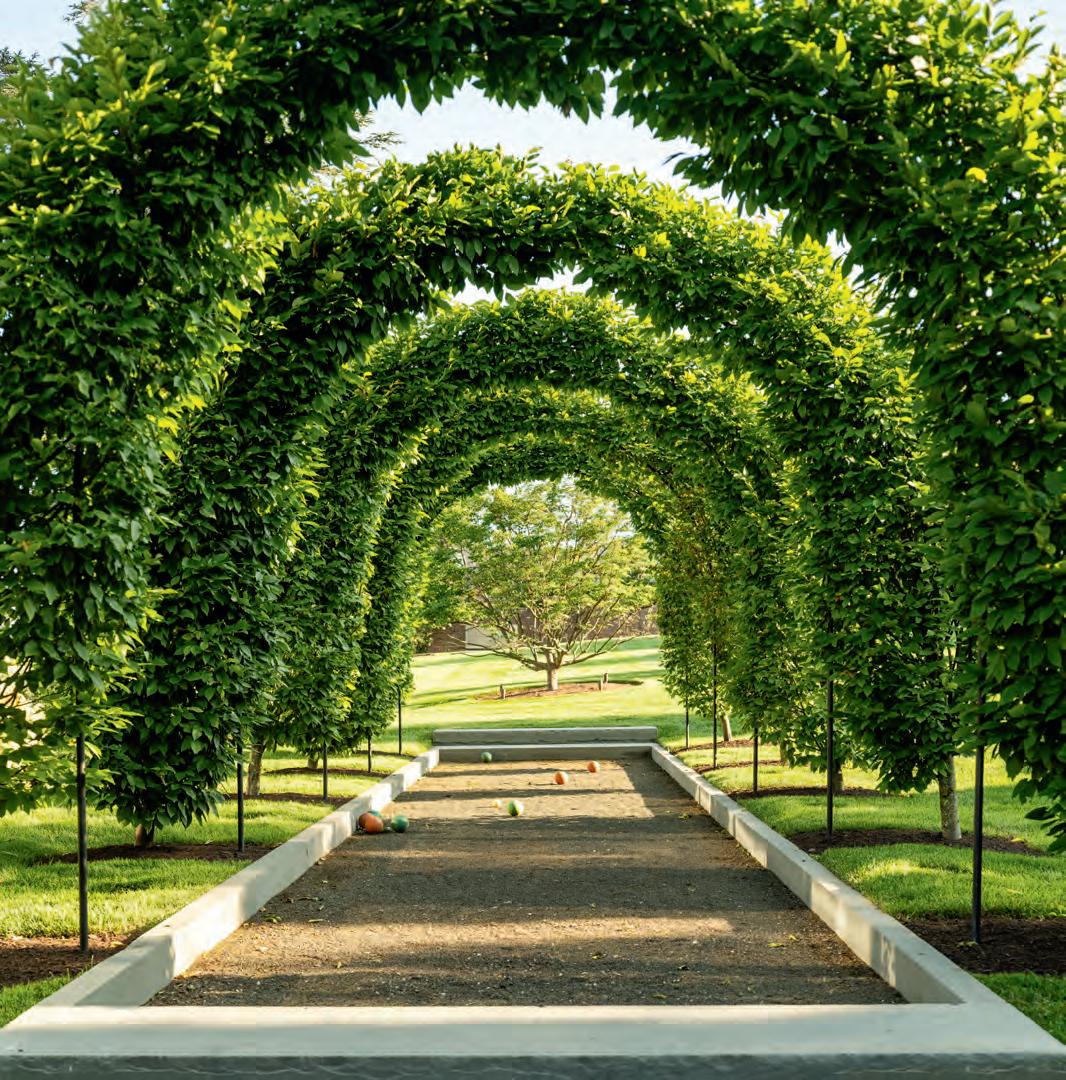
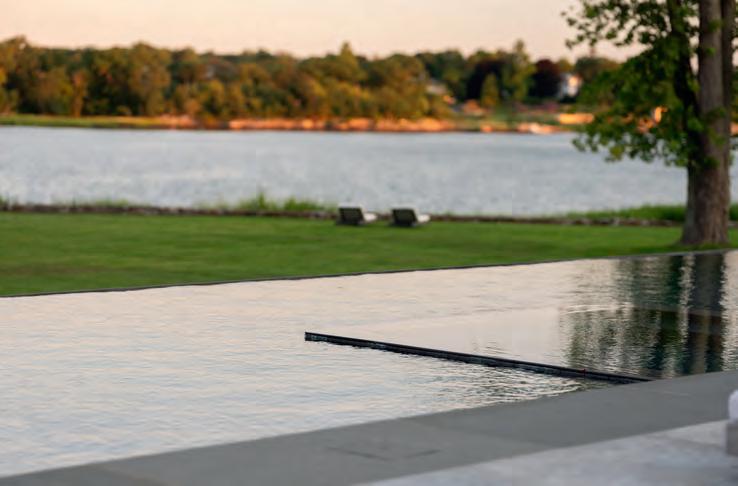
To connect the two houses, Parker designed steps alongside the pool house, which is set into a hill. She also tucked a bocce court in behind the pool house, creating a destination en route to the pool. Adding the new pool below allowed Parker to remove the main house’s pool, which spoiled the views of the Sound. “Now, you have that long expanse of lawn and that magnetic pull of the water,” says Parker. With Parker and Hutker Architects’s work complete, this garden is ready for its next century. ✹
Delicate Update
are
In the new
and
to create a continuous plane between planting beds and the driveway. Hutker Architects completely reimagined the inside of the former garage, creating a relaxed living space for entertaining and poolside lounging. Parker used boxwood and hydrangea throughout the garden: The boxwood for its deer resistance and evergreen structure and the hydrangea for their especially long seasonal interest and generous blossoms. In a waterside location, Parker loves the effect of an infinity-edge pool overlooking natural water. (opposite) Parker kept the original brick steps and iron arch leading to the rose garden and added new gates to help keep the deer out.