
THE SCHOOL MAGAZINE • JULY 2023 LAUREN
interest
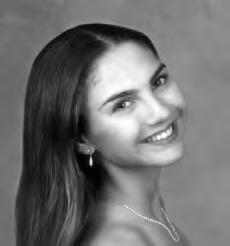
PHARR PARKS ’02
an sparking


VOCAL POINT had the once-in-alifetime experience of performing in the WorldStrides Performing Arts’ Festival at Carnegie Hall. They joined elite music groups from across the country and worked with worldrenowned conductors and additional music professionals in preparing for their performance of six songs. They also saw a Broadway musical and other sights while in the Big Apple!


Oftentimes our interest in something begins with a spark. It might be something we are trying out for fun, or we may recognize the interest and want to explore it more fully. We might be nervous about trying something new or a little unsure of ourselves, or we may be excited enough to dive headlong into it.
When these moments spark an interest, we might even say: “Wait a minute, this is it!” This enthusiasm may lead to a lifelong pursuit or career. When I was young, for instance, I discovered a love of books. The more I read, the more my world expanded. I channeled that interest and became an English teacher.
For Dr. Lauren Pharr Parks ’02, the gift of a microscope when she was a young girl fed her interest in science. When she teaches others about her work now, she may be igniting an interest in someone else. When Noor Obaji’s ’10 parents told her she was good at arguing, she saw that as a path to becoming a trial attorney. Today, she imparts her enthusiasm for a good argument to upper school girls on Hutchison’s mock trial team.
Our teachers and coaches see interests blossom every day. Whether it’s discovering a love for math, noticing a talent for writing, getting an adrenaline rush when scoring a goal, or finding a voice on the stage, our girls are realizing new interests that may define their lives.
Pay attention to whatever sparks your interest. It may change your life, too.
Warmly,
Kristen Ring, Ed.D. | President and Head of School
MISSION
Hutchison School is dedicated to academic excellence and to the parallel development of mind, body, and spirit as it educates young women for success in college and for lives of integrity and responsible citizenship.
HUTCHISON MAGAZINE
JULY 2023
PRESIDENT AND HEAD OF SCHOOL
Kristen D. Ring, Ed.D.

EDITOR
Max Maddock
Director of Communications mmaddock@hutchisonschool.org
CONSULTING EDITOR
Lori Guy Director of Strategy lguy@hutchisonschool.org
ALUMNAE DIRECTOR
Mary Aubrey Landrum Stafford ’10 mstafford@hutchisonschool.org
DESIGNER
Barbara Himber
PHOTOGRAPHY
Jessica Coulson, Brandon Dill, Danielle Katz, Connor Ryan Creative, Nick Simpson, Tennessee Shakespeare Company, Alyssa Villarreal, and various Hutchison constituents
Hutchison Magazine is published by the Hutchison Communications Office.
Please forward address changes to:
HUTCHISON SCHOOL
1740 RIDGEWAY ROAD MEMPHIS, TN 38119 or khouston@hutchisonschool.org


Be sure to follow us on


Seventeen juniors rose to the challenge of running the State Capitol at the Youth in Government Tristar Conference in Nashville. Our girls participated as state senators and House representatives at the conference, argued cases in the Supreme Court, and served on the Governor’s Cabinet. Izzy Ellis ’24, Caroline Kim ’24, and Sakshi Singh ’24 received an Outstanding Bill award. Kate Anderson ’24, Adela Calzada ’24, Blair Mellone ’24, and Shifa Qureshi ’24 received Outstanding Statesperson awards, and Kate was invited to attend the YMCA Conference on National Affairs in July. Hutchison girls were also selected to leadership positions for next year’s conference: Ayrah Kashmiri ’24 will serve as an associate justice in the Supreme Court, and Sakshi Singh ’24 and Caroline Kim ’24 will serve as court clerks.


Ana Hunter ’23 won first place in the Tom Lee Poetry and Spoken Word Contest for “The River Cries.” Ana wrote a narrative from the point of view of a young girl walking with her mother by the Mississippi River and reflecting on Lee’s heroism when he saved the lives of 32 people from nearly drowning. The Memphis River Parks Partnership celebrated Ana at a special ceremony, and she had the incredible opportunity to read her poem in front of descendants of Tom Lee.

Eleanor Merchant ’23 organized Hutchison’s second blood drive to aid hospitals dealing with critically low blood supplies. With her efforts over the past two years, blood donations at the Hutchison blood drive could have saved as many as 192 lives.


Nine Hutchison girls earned Scholastic Writing Awards in the recent Alliance for Young Artists & Writers competition. Congratulations to (L to R, top row) Kendall Blaylock ’24, Kiri Feinstone ’27, Loralei Forgette ’23, Reese Hardin ’27, Ana Hunter ’23, Carter Mann ’27, (bottom row) Evelyn Roberts ’27, Holly Scheinblum ’25, and Sloane Vandergrift ’27. They submitted original works of fiction, poetry, and critical essays and competed against students across several states in the South region.


Juliette Forgette ’23 was awarded All-State and All-West honors in both the musical theatre and acting categories of Tennessee All-State Theatre. She was chosen after auditioning at the Tennessee Thespian Conference, a similar process to vocal and instrumental music All-State auditions.


Be sure to follow us on

109 years! That’s the number of years combined that our five retiring faculty and staff members have served the Hutchison community. We thank (L to R:) Nancy Fields, Mary Lee Wesberry, Jane Maxwell, Anne Davey, and (inset) Millie Duke for inspiring and influencing generations of Hutchison girls. Congratulations on your well-deserved retirement!
You will all be missed!


Upper school English teacher and alumna Christina Wellford-Scott ’69 received the inaugural award in April at a special gala. The award honors teachers who promote the study of Shakespeare, continue to grow their knowledge as lifelong learners, lead their classrooms with empathy and compassion, and advocate for the arts.
Far left: Wellford-Scott receiving her award Left: performing in The Glass Menagerie

Kennedy Adeogba ’23, Nyla Johnson ’23, and Alacia Williams ’23 received a CrewUP Youth Filmmaking Mentorship from Indie Memphis. The three recent graduates will write, shoot, and edit an original film that will compete in the Indie Memphis Youth Film Fest this fall. They will work with a professional filmmaker mentor and a $500 budget.


Hutchison girls won 57 Mid-South Scholastic Art Awards this year, with 11 Gold Keys, 15 Silver Keys, and 31 Honorable Mentions. Congratulations to Loralei Forgette ’23, Mary Grove Gilbert ’23, Addie Halliday ’23, Angela He ’25, Angela Jacobs ’23, Hannah Pollard ’25, Elizabeth Soefker ’24, Laura Grace Stafford ’23, and Emmy Walton ’23 for winning Gold Keys in the Mid-South Scholastic Art Awards. Their work was put on display at the Brooks Museum. In addition, Loralei Forgette ’23 won a National Silver Medal.

Meriel Rowland ’24 was announced as the inaugural Liza Wellford Fletcher Number Five award winner. Liza wore the number five during her time at Hutchison. Members of our athletic department created this award to honor Liza’s contributions, and it will be given annually to further her legacy. Liza had both a passion for sports and a heart for lifting up younger athletes and helping them shine.
At the year-end Sports Awards Celebration, a junior will be named Hutchison’s Number Five. In the fall, that senior will be the only athlete across all sports and all ages to wear the number five for Hutchison. The Liza Wellford Fletcher Number Five award recipient will be a student who emulates the ideals of Hutchison athletics that Liza so beautifully demonstrated. In addition to striving for athletic excellence, she will demonstrate the kind of character, integrity, and leadership that Liza personified.
Seniors (L to R) Arabella Hall, Eve-Elyse Hall, and Anna-Margaret Webber signed National Letters of Intent to continue their athletic careers in college. Arabella will play golf at Wheaton College, Eve-Elyse will play volleyball at Asbury University, and Anna-Margaret will play lacrosse at Rollins College.


The varsity tennis and track teams took home TSSAA D-II AA West Region Championships. The win marks back-to-back victories for the track team, and it’s the 17th consecutive regional championship in a row for the tennis team. Members of both teams also competed at state, and Melanie Woodbury ’24 was the tennis singles runner-up.


USA Lacrosse honored Kolby Cohen ’23 and Alexis Parent ’24 as All-Americans, and Sara Byrnes ’23, Sarah Davis McAllister ’23, and Alexis Parent ’24 as All-Academic honorees. The Tennessee Girls Lacrosse Association selected four players to All-State and seven to All-Region. This year, the Sting advanced to the state semifinal.


Hutchison’s middle school lacrosse team won the West Tennessee Middle School Girls Lacrosse Championship. The black team defeated the only opponent they had lost to earlier in the season, Houston Middle School. Congratulations to the team and the MVP, goalkeeper Lily Kate Nevels ’27!














American University
Appalachian State University
Arizona State University
Asbury University
Auburn University
Aurora University
Belmont University
Binghamton University
Boston College
Boston University
Bryn Mawr College
Bucknell University
Case Western Reserve University
Centre College
Chapman University
Clark University
Clemson University
Coastal Carolina University
Colgate University
College of Charleston
College of William & Mary
Colorado State University
Columbia College Chicago
Dartmouth College
Denison University
DePaul University
DigiPen Institute of Technology
Drexel University
East Tennessee State University
Elon University
Embry-Riddle Aeronautical University
Emerson College
Emory & Henry College
Fisk University
Florida Agricultural and Mechanical University
Florida Southern College
Fordham University
Furman University
George Washington University
Georgetown University
Georgia Institute of Technology
Hampton University
Hendrix College
Hobart and William Smith Colleges
Howard University
Indiana University Bloomington
Kenyon College
Lehigh University
Louisiana State University
Loyola Marymount University
Loyola University Chicago
Macalester College
Marist College
Massachusetts College of Art and Design
Miami University
Michigan State University
Michigan Technological University
Middle Tennessee State University
Minneapolis College of Art and Design
Mississippi State University
Montana State University
Mount Holyoke College
Nashville State Community College
New York University
Northeastern University
Oklahoma Baptist University
Pepperdine University
Point Loma Nazarene University
Point Park University
Pratt Institute
Princeton University
Purdue University
Rensselaer Polytechnic Institute
Rhodes College
Rochester Institute of Technology
Rollins College
Rose-Hulman Institute of Technology
Samford University
Savannah College of Art and Design
School of the Art Institute of Chicago
Smith College
Southern Methodist University
Spelman College
Syracuse University
Tennessee State University
Texas A & M University
Texas Christian University
The University of Alabama
The University of Memphis
The University of Southern Mississippi
The University of Texas at Austin
The University of the South
Tufts University
Tulane University
University of Arkansas
University of California, Irvine
University of California, San Diego
University of California, Santa Barbara
University of Colorado Boulder
University of Connecticut
University of Denver
University of Florida
University of Georgia
University of Houston
University of Illinois
Urbana-Champaign
University of Iowa
University of Kentucky
University of La Verne
University of Massachusetts Amherst
University of Miami
University of Mississippi
University of Missouri
University of Montana
University of North Carolina at Chapel Hill
University of North Carolina at Charlotte
University of North Carolina
Wilmington
University of Oklahoma
University of Oregon
University of Redlands
University of Richmond
University of South Carolina
University of Southern California
University of Tennessee, Chattanooga
University of Tennessee, Knoxville
University of Utah
University of Vermont
University of Virginia
University of WisconsinMadison
Ursinus College
Vanderbilt University
Villanova University
Virginia Tech
Washington and Lee University
Wellesley College
Wesleyan University
Western Carolina University
Wheaton College
Worcester Polytechnic Institute


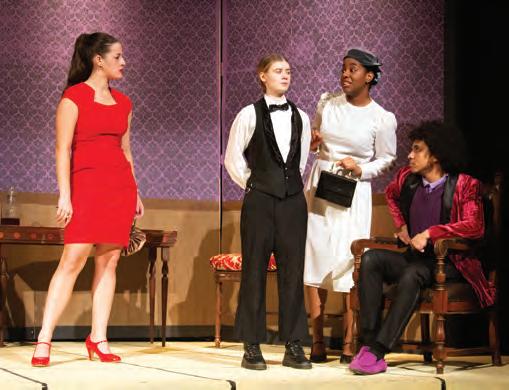

The Hutchison upper school cast and crew of Clue presented a hilarious, suspenseful, and thrilling production this spring! The comedic murder mystery is based on the cult classic film and popular board game. Directed by Anne Marie Caskey ’80, the talented, zany cast of eight upper school girls, two MUS boys, and our dedicated backstage and technical crew did a fantastic job keeping the audience guessing the murderer’s identity (or identities) until the end.


Middle school pirates and sailors traversed the treacherous seas during their spring production of Peter and the Starcatcher, directed by Jay Rapp. Adapted for the stage by Rick Elice, the show upends the centuryold story of how an orphan boy becomes the legendary Peter Pan. Peter and the Starcatcher playfully explores the depths of greed and despair and the bonds of friendship, duty, and love. Our middle school girls did an amazing job bringing this story to life on the Wiener Theater stage with pirates, sailors, sea shanties, mermaids, and more!


Studying the Holocaust is no easy assignment—for a student or a teacher. Many students are first introduced to the history and stories of the Holocaust around the fifth or sixth grade through books such as Number the Stars by Lois Lowry or Anne Frank: The Diary of a Young Girl.

There’s also a book titled Maus by Art Spiegelman that’s often used in studies about the Holocaust. Styled as a graphic novel, the book tells the real-life story of Spiegelman’s father, who was a survivor of the Auschwitz concentration camp during the Holocaust. In the book, the author chose a unique device to tell the story: he portrays Jews as mice and Nazis as cats. The first volume of Maus was published in 1986 and a second volume was released in 1991. In addition to critical acclaim, the book won a Pulitzer Prize in 1992 and has been taught in schools across America since then.


When eighth-grade English teacher Robby Uhrman decided he wanted to have his girls read Maus this past year, he resolved to enlist some additional support for teaching and discussing the Holocaust and the book’s content. The goal was to ensure that a book such as Maus—or any material about the Holocaust—could be taught intentionally and thoughtfully, considering the difficulty of its subject matter.
“Eighth-grade girls are moving toward more independence,” Uhrman explained. “They’re able to process books such as Maus or George Orwell’s Animal Farm because they are cognitively at a place where they can make connections to history and clearly see the allegory of both books, even if it’s a struggle and emotionally heavy. Part of their development is a heightened sense of right, wrong, and justice, and they can develop empathy by studying these books.”
Danielle Katz, Hutchison’s social media manager, conducts a Q&A with her father, Ben Katz, whose parents were Holocaust survivors.Uhrman consulted with Trey Wilson, Hutchison’s middle school head, and together they thought carefully about how to best lead the eighth-grade girls through a study of Maus. They decided to enlist the help of Facing History and Ourselves. The organization is known for equipping educators with ways to teach the lessons of history, and its unique pedagogy emphasizes empathy and reflection. Uhrman had attended Facing History workshops and events in the past, and as part of his professional development at Hutchison, he joined a Facing History day of learning with visiting scholars. One of the professors detailed a curriculum she designed around how to use personal testimony from Holocaust survivors in the classroom, which fit well with Maus because it is a form of personal testimony.
During the workshop, Uhrman also met with Rachel Shankman, who is the retired founding director of the Memphis office of Facing History and Ourselves and a previous visiting scholar at Hutchison. She volunteered to visit Uhrman’s eighth-grade class as part of this study. In the past, she has shared her story and that of her parents, who were concentration camp survivors, but she had an idea about a different approach. Instead of reading the book in isolation, she wanted the girls to learn about Jewish culture and traditions, so that they could form a more complete picture.
“Rachel didn’t want the girls to live only in the atrocities of the Holocaust and the victimization of Jewish people,” Uhrman explained. “Instead, she wanted the girls to learn that this is a faith full of rich traditions and at the center of it is acknowledging the humanity in others, Jewish or not. She believes that studying the Holocaust has more depth if we humanize the people. Maus does a good job of this because the author details the story of his father and his family before the Holocaust begins.”
To start the study, Uhrman used an exercise suggested by Facing History, which is to create an identity chart so that each student can examine her own personal community. “I modeled mine for them to show the diverse number of places you can go,” Uhrman said. “I’m a father, a teacher, a reader, a son, a husband, a white male, to name a few examples.
“Once they completed their charts, they started to think about the different communities that we exist in and our circle of obligation. We have these ideas about how to conduct ourselves ethically, but how far does that reach? Where does that circle of obligation stop?” The beginning of Maus, Uhrman explained, essentially tells the story of Spiegelman’s father, his community, and his circle of obligation.
After that initial exercise, they moved into learning some of the history that led up to the Holocaust. Uhrman took the class to the gym for a research relay, which is a way to get up, move around, and take in a lot of information in a short period of time. The girls familiarized themselves with facts about Jewish tradition, World War II history, and Hitler’s rise to power, and then competed in a relay race to answer questions. “It’s an active way to learn and retain the history and it’s more effective than sitting in a quiet classroom and listening to me lecture them,” Uhrman said. The girls were also studying the Holocaust and World War II in their social sciences class.
They’re able to process books such as Maus or George Orwell’s Animal Farm because they are cognitively at a place where they can make connections to history and clearly see the allegory of both books, even if it’s a struggle and emotionally heavy.”
— ROBBY UHRMAN
“
Then they started reading Maus. One lesson Uhrman learned that he will implement next year is to have the girls read some of the difficult chapters in the classroom so that the content can be processed together instead of on their own. While the girls are developmentally able to grapple with the challenging topic, engaging in a discussion with their peers helps sharpen their critical thinking and sparks intellectual curiosity.
When Shankman visited, she titled her session Judaism 101 and brought a guest, Rabbi Abe Schacter-Gampel of the Memphis Jewish Community Center. Together they talked about Jewish culture and tradition, including the centuries of culture before the Holocaust, and what their faith looks like today. They brought religious items such as yarmulkes, tallitot, and mezuzahs, as examples for the girls to see, and answered the girls’ thoughtful questions about Judaism.

Later, Uhrman invited two other visitors to speak to his class. Danielle Katz, Hutchison’s social media manager, and her father, Ben Katz, spoke to the girls about how her grandparents (Ben’s parents) survived concentration camps and being hidden among other families. It was the first time Danielle had organized her family’s history to talk to a group about it.
“Danielle said she had always wanted to do something like this, but admitted she had some trepidation around it,” Uhrman said. “The presentation she put together was amazing and powerful, including primary sources and photos, and then she conducted a Q&A with her father. Because Danielle is someone that the girls know, it was a further way to humanize the people affected by the Holocaust.”
Rachel Shankman didn’t want the girls to live only in the atrocities of the Holocaust and the victimization of Jewish people. Instead, she wanted the girls to learn that this is a faith full of rich traditions and at the center of it is acknowledging the humanity in others, Jewish or not.”
— ROBBY UHRMAN
Teaching Maus dovetailed with another initiative. Dr. Alyssa Villarreal, academic dean, worked with Trey Wilson to pilot a new in-class discussion technique called R.E.A.L. Discussion, which is an acronym for four key discussion skills—relate, excerpt, ask, and listen. The technique can be used in both formal discussions and casual conversations and was born out of the need to provide structure to in-person discussions for students who “struggle with expressing themselves, engaging different viewpoints, listening deeply, and reading non-verbal cues.”
Uhrman said that “relate” equates to the different moves you can make in a discussion, whether you agree or disagree, connect it to a personal experience, or to another text. “Excerpt” is similar to producing evidence. What do you have to back up what you are saying? “Ask” is important because often the girls will not ask enough questions. Instead, many times they quickly agree with one another. But asking clarifying questions or redirecting is important. And “listen” begs the question, are we listening and how are we listening?
The R.E.A.L. format uses hand signals so that girls can indicate when they’ve heard or agreed with a statement. This keeps the discussion moving.
Uhrman explained how R.E.A.L. is different from other formats such as a Socratic seminar: “Sometimes students will dominate a conversation and this is an equitable format where they have a system for showing how many times they’ve spoken. It gives the girls an opportunity to pause and say ‘who hasn’t spoken?’ or ‘who’s only spoken once?’ ”
For the discussion of Maus, Uhrman offered them five questions and had them rank the questions based on their interest. They then chose the top two questions, which gave them buy-in to what they would discuss. Using their copy of the book, as well as some supplemental articles, they had a day in class to fill out planning documents for the discussion, pull evidence, and decide how the evidence supports their answers to the questions.
“The day of the discussion, I go over the guidelines and the hand signals they use, and then I sit back. They have the whole hour and they run the entire discussion.
“They rose to the occasion,” Uhrman reflected. “This was a time in class that they were able to learn as much or more from each other than from me because they needed to talk with each other to process what they were going through. There wasn’t going to be a lecture from me that was going to help them get through all the discomfort of reading the book. They needed to hear each other’s experiences with it.
“The end of the pedagogy from Facing History,” Uhrman said, “is to look at what kind of lessons have we learned from this. What led to this scenario and how do we prevent things like this from happening again? That reflection piece is supposed to inspire them toward future civic action in their lives. How do we apply what we’ve learned here to their own communities that we outlined and identified at the beginning of the unit?”
As a conclusion to the Maus study, Uhrman gave an assignment to help the girls process what they had learned. They could choose from a variety of creative projects including keeping a diary, writing a graphic novel, composing an original song, writing haikus or a letter to Spiegelman, or presenting a dramatic monologue. Campbell Jenkins ’27 chose to create a civic self portrait (above) which expresses ways that she hopes to act in the future based on what she learned from this in-depth project.

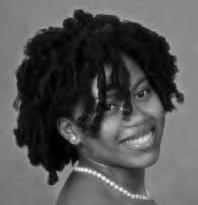
I always had a sense that I was meant to be an attorney. It was like a calling I had at a young age,” said Noor Obaji ’10 . “It was kind of an idea that my parents put in my head when I was younger. They said, ‘Oh, you’re really good at arguing,’ which is a nice way of saying that I was argumentative and opinionated.”
Thirteen years after graduating from Hutchison, Obaji is fulfilling her dream. Since she passed the bar exam and became licensed in 2018, she’s been practicing law at Lewis Thomason, PC, a general civil liability defense firm in downtown Memphis. One of the firm’s specialties is healthcare liability defense, defending doctors who are sued by patients alleging medical negligence. She’s also spent the last two years helping to coach Hutchison’s mock trial team (see full story on page 22).
Just last year Obaji had her first taste of a jury trial in court when she served as second chair on a case with one of the firm’s partners. It was a federal trial in Mississippi. Even though she might average three or four trips to court a month to argue motions, oppose motions, or hear rulings, this was the first time assisting in a trial in the courtroom.
“That was my driving force in wanting to be a lawyer—getting before a judge, getting before a jury, presenting my case, presenting the facts, and I was finally able to do that.”
She admits the experience was everything she thought it would be and more. “You can read textbooks about trials, you can read examples of cases with similar facts and the ultimate outcome, but you never know until you’re actually doing it,” she said. “It’s made me think about the way we approach cases in a different way, in a better way perhaps, because I’m more aware of why we do things the way that we do.”
As an undergraduate at the University of Tennessee, Knoxville, Obaji studied psychology and political science. Although psychology isn’t a typical subject for a pre-law student, she thought it would come in handy. “I’ve always been interested in psychology and how the mind works. I knew it would be particularly helpful when

trying to pick a jury for a jury trial. Political science was a more traditional background to have for someone going to law school.”
Indeed, in her first trial, one of her roles was to gauge the reactions of the jury. She admits, being in court is both nerveracking and thrilling. “I don’t think there will ever be a day when I’m in court and not nervous,” she admitted. “Even if I’m very confident in what I’m going to say, I get butterflies.”
Whether she’s in court for a trial or to argue or oppose a motion, she said that nine times out of ten, she has to speak in front of other attorneys, clients, litigants, and a judge. “You have to be comfortable speaking to other people and not let that intimidate you. That’s easier said than done.”
The thrilling parts are getting to pick a jury, presenting the case, raising objections, and all of the other pieces that come with a trial. When she’s not in court, she’s in the office researching and writing.
“I’m just itching for my next trial, but it takes a long time to get a case ready, and a lot of times cases settle or go away because of a procedural technicality or a factual issue. It is frustrating when you’re ready to try a case and it settles the week before, the month before, or even the day before, but that’s experience that I would not have had otherwise. Every case is unique, and you learn different things that are good to have in your arsenal.”
Nevertheless, she said it’s hard to pick a specific challenge when thinking about her work. “Every day is challenging. There’s never a clear-cut answer in the law, and that’s something that I struggle with, because I like to have definitive answers, but sometimes there just aren’t,” she said. “You have the law, and it says what it says, but sometimes your facts are different than what the law presumes. Then you have to be creative in articulating why your position is distinguishable from what the letter of the law is. Those kinds of challenges arise every day.”
continued on page 25
In the summer of 2021, Isabelle Mansour ’23 and Loralei Forgette ’23, who were rising juniors at the time, attended the Summer Trial and Advocacy Institute sponsored by The University of Memphis Law School.
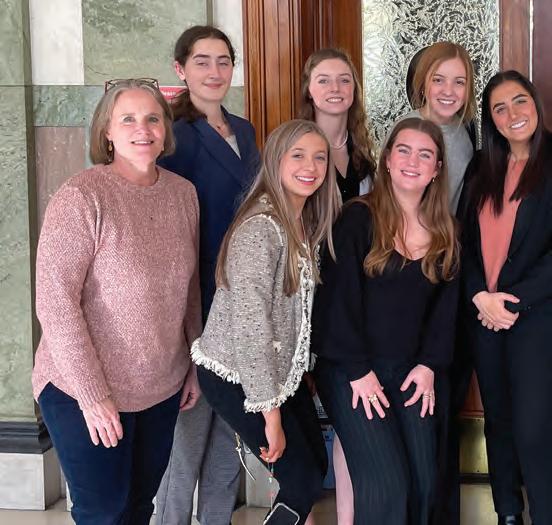
The four-week-long program taught the basics of trial law, and by the end, Mansour was named the highest-ranking witness for trial presentations and earned the highest trial team score. Forgette received the highest individual ranking for the advocacy presentations and the highest advocacy team score.
That fall, Mansour decided she wanted to continue practicing what she had learned. Katy Nair, upper school assistant head, mentioned the idea of a mock trial team, something Hutchison had in the past, but didn’t currently have. Mansour said, “Well, why don’t I just start one?”
After gauging interest, the team was born.
“When I agreed to coach the mock trial team,” Nair said. “I knew I needed an attorney coach. Noor Obaji ’10 came to mind immediately as a perfect coach for these students. Noor is early in her career and has a level of humility and vulnerability that I knew the girls would appreciate. She’s smart, competitive, and approachable, and I knew
You can read textbooks about trials, you can read examples of cases with similar facts and the ultimate outcome, but you never know until you’re actually doing it.”
she’d be committed to helping our girls improve and grow as litigators in this competition.”
Meanwhile, Obaji remembered that after she passed the bar exam, she told her mom, “Okay, now that I’m official, I really want to give back to Hutchison.” She had attended Hutchison since pre-kindergarten and believed that it gave her a lot. “I don’t think that I would be in the position that I’m in today if it wasn’t for the education I received and the connections I made at Hutchison.” She just wasn’t sure how to give back. As fate would have it, Nair reached out about helping with the mock trial team. “It was a no-brainer,” Obaji said. “It was like I said it, Mrs. Nair heard it, and she contacted me.”
Mansour kickstarted things by doing outside research and watching mock trial competitions. She then started to build a foundation by teaching the other girls who had joined the team what she had learned during the summer program.

Obaji, who had competed in mock trial during law school, and Professor Demetria Frank, from The University of Memphis Law School, held workshops to teach the girls specific trial skills, including persuasive public speaking, cross and direct questioning, and examining evidence. “My role was to help the students with strategy, and crafting their arguments, their questions, and their responses to an objection,” Obaji said. “They knew the facts like the back

of their hand, so I didn’t really have to help them with the facts. I was there to help from a legal standpoint, applying the law to what they were saying and ensuring that it was sound in the law.”
“The first year was kind of rough,” Mansour admitted. “We did well, but we didn’t have any experience in the courtroom against other teams.”
Fast forward to the fall of 2022. Mansour and her team were dedicated to improving in the next mock trial competition in the spring of 2023, and Obaji was onboard as well. Nair enlisted additional help from Shawn McCarver, who serves as a law clerk for the U.S. District Court for the Western District of Tennessee, and whose daughter, Olivia McCarver ’23, was on the mock trial team. Additionally, John Reynolds, who teaches upper school debate, joined as an advisor.

During the 2021–2022 year, Olivia McCarver portrayed a witness. Because she’s involved in theater, she enjoyed that assignment because it felt like acting. This past year, she took on the role of plaintiff attorney, which she admitted was more challenging because she had to form convincing arguments for her side of the case.
“Ms. Obaji and my dad helped explain how the law works on both sides of the case, whether it’s the plaintiff and the defense in a civil case or the prosecutor and the defense in a criminal case,” McCarver said. “She helped explain the logic behind different laws, how they apply to different situations, and how to be on the lookout for specific details that could help your case. My dad provided insight into federal proceedings and how the law would be interpreted by a judge.
“When Ms. Obaji talked about different aspects of the court proceedings, she was emotionally invested in it and passionate about it,” McCarver continued. “She always made sure to give helpful critiques about what needed to be fixed, but she also let us know the things that we did right.”
“The girls came to rely on Noor’s expertise and encouragement,” Nair said. “She found a good balance between guidance and giving the girls the autonomy to solve problems themselves. Personally it was fulfilling to work with her. She’s a former student, and I could see her growth.”
In the spring 2023 mock trial competition, Hutchison’s team fared much better. In one trial, team member Emma Goughnour ’26 was named best witness and
I think the number one thing you can do … is maintain your professionalism and maintain the confidence in what you’re saying and your position.”Photo by Brandon Dill
continued from page 22
In addition to the work she does in healthcare liability defense, Obaji takes on other work as it comes along, whether it’s writing wills, going to court regarding a ticket, or even helping with immigration cases. Her parents emigrated from the Middle East, so she speaks Arabic fluently and sometimes helps the firm’s immigration attorney communicate with clients from the Middle East.
One of the things Obaji has been committed to since law school is being part of the Association of Women Attorneys (AWA). The purpose of the AWA is to support female attorneys both professionally and personally, offer education and mentorship, and be of service to the community. During law school she was the president of the student chapter, and now as an attorney, she’s the vice president of the professional chapter in Memphis.
“There are several organizations around the community for lawyers, and this was one that I gravitated toward the most because I felt like the mission of the organization was special to me,” she said. “Especially coming from Hutchison and being surrounded by women. It was kind of comforting.
“I think in my generation of lawyers, women have not had as much of a struggle as older generations have had. Hearing stories from some of the women who work in my office, it’s a different world now than what it was even 10 or 20 years ago. I believe it’s going to continue to get better.”
For the past two years, Obaji has been sharing her passion for law as an advisor to Hutchison’s mock trial team (full story starts on page 22). One student, Isabelle Mansour ’23, came to Obaji and told her that she thought one of the other teams competing was not taking her seriously.

“I told her that things like that happen in real life and that it is something you’re going to have to deal with whatever you decide to do. Unfortunately, in this profession, especially as a woman, the other side is going to try to rattle you a little bit and see what they can get away with. You’re always going to get the one person who doubts you or thinks they’re better than you.
“I think the number one thing you can do in that situation is maintain your professionalism and maintain the confidence in what you’re saying and your position. Isabelle did that.”
Mary Abbott Elliott ’23 was named best attorney for the prosecution. In another trial, Jordan Deupree ’24 was named best witness and Mansour was named best attorney. By the end, Mansour took the top attorney title for the entire district competition.
“It was amazing. It was a culmination of everything I had worked toward and put hours and hours into,” Mansour said. “It felt good to have that kind of affirmation.” She says it was not a one-person job and gives due credit to her fellow teammates, and to their advisors, Nair, Obaji, McCarver, and Reynolds, for all of their help. She hopes that the students remaining at Hutchison will continue with the mock trial team. This fall, Mansour will head to Georgetown University’s School of Foreign Service to study international political economy and is interested in law school after her undergraduate studies.
Olivia McCarver will attend Rhodes College and major in political science. She intends to participate in mock trial while there and plans to go on to law school. “Those girls made me
so proud this year, and the year before, but this year they were exceptional,” Obaji said. “They made me feel a sense of pride to be an attorney in the community, to be a member of the Memphis community, and especially to be a member of the Hutchison community. It is so cool to see the growth they had over a year. That was probably my favorite part of all of this.”
Teammates: back row, L to R: Jordan Deupree ’24, Mary Abbott Elliott ’23, Sarah Bartusch ’23, Anne Tyler Bartusch ’26, Emma Goughnour ’26, and Sarah Beth Cunningham ’26; front row: Loralei Forgette ’23, Isabelle Mansour ’23, Virginia Unglesby ’25, Olivia McCarver ’23, and Lilly Fahey ’25

Thank you!
When the Hutchison community comes together, there’s nothing we can’t do. We hosted our annual Giving Day on February 9, 2023, and parents, grandparents, alumnae, faculty and staff, and so many more participated. What made the day all the more special was to see the gifts made in honor or in memory of friends, teachers, coaches, students, or classes. The campus was filled with joy, appreciation, and most of all, HUTCH LOVE .
Martha Hollis Williams ’03, Meade Miller Carlisle ’05, Paige Phillips Gillespie ’07, Lee Smith Yates ’02, Stewart Taylor Hunt ’06, Shibahn Singh Rodda ’02, and Laura IsomMore than $202,890 raised!
Giving Day is just one way to support the Hutchison Fund, which is essential to providing the wide array of academic offerings and life-defining experiences that set Hutchison apart.

The Hutchison Fund supports the school’s challenging academics combined with diverse art, athletic, service, and leadership opportunities that offer a unique path for each girl.


 Above: Hutchison Fund Co-Chairs Lauren Keras and JJ Keras
Above right: Aubrey Tyler ’35 loves her school! Right: Powell Roll ’34 spreading Hutch love
Kindergarten teacher Renee Grinder helps students complete a Giving Day writing exercise. Anne Willis Brown ’35, Virginia Cummings ’35, and Elle Curtis ’35 are enjoying their project. Ann Smith ’28 and Lucy Carmichael ’28
Above: Hutchison Fund Co-Chairs Lauren Keras and JJ Keras
Above right: Aubrey Tyler ’35 loves her school! Right: Powell Roll ’34 spreading Hutch love
Kindergarten teacher Renee Grinder helps students complete a Giving Day writing exercise. Anne Willis Brown ’35, Virginia Cummings ’35, and Elle Curtis ’35 are enjoying their project. Ann Smith ’28 and Lucy Carmichael ’28

About four minutes into her 2017 TEDx talk, Dr. Lauren Pharr Parks ’02 jokes that if you’re ever on a bad first date, you might reference her TED talk and likely never have to worry about the potential suitor giving you another call. It’s not because her talk isn’t interesting. After all, it has nearly a million and a half views on TED.com.
You see, Parks is a forensic anthropologist or a person who specializes in the analysis of human skeletal remains. A forensic anthropologist’s work can help determine the identity of a person, how they died, and how long ago they died. These days, with crime scene investigation shows dominating television, most people are somewhat familiar with this kind of work.
Parks’ particular area of focus is the study of vultures and how they scavenge. During her PhD study of vulture behavior at Louisiana State University, she had a lightbulb moment: What if vulture scavenging could play a key role in missing persons cases?
Indeed, for the past seven years Parks has been sought out as an expert by state and federal authorities to determine whether the remains found at a crime scene were scavenged by vultures. If they have, that can skew what an investigator thinks may be the estimated time of death. Parks’ expertise helps them better determine if a body has been in a spot for weeks or merely hours and how that fits with the other facts of a case. In some instances, her testimony has been a crucial element, including in two death penalty cases.
“When I was a child, my aunt gave me a microscope,” Parks remembered. “It came with slides, and I would look at bug’s wings and leaves. I thought it was fascinating. It was one of my favorite toys.”
At Hutchison, Parks cultivated her love of science, but also her interest in art. She fondly recalled biology teacher Betty Stimbert and art teacher Gwen English. Her chemistry teacher at the time, Karen Irving, helped her with a project for the Shelby County Science Fair that won an award. In the experiment, Parks hypothesized whether sodium polyacrylate, the substance that helps absorb liquid in diapers, could be used
as a fire retardant. She applied it to cloth and popsicle sticks and tested the burn rate.
“Actually, the experiment failed,” Parks admitted. “At the science fair, the judges would ask, ‘Did your experiment work?’ When I said that it didn’t, they commented that I was brave to say that. That experience helped me. ”
In 2002, when she matriculated to the University of Tennessee, Knoxville, Parks said she was torn between taking an artistic path in interior design or gravitating toward the sciences. She was a painter and sold some of her
forefront,” Parks said. It wasn’t the popularity of the show that had hooked her though. “I enjoyed studying skeletons, and they have a large skeletal collection at UT,” she said. “I got into anthropology because UT has one of the best anthropology programs in the country.”
After UT, Parks decided to continue her work in anthropology by enrolling in a master’s program at Louisiana State University. When she arrived, she told her advisors she wanted to study decomposition. Their response was, “Are you sure?” Parks often dresses stylishly and doesn’t necessarily convey the part of a field anthropologist who digs in the dirt. So they tested her.
artwork, but she enjoyed biology classes and considered working toward medical school. She also was intrigued by UT’s Anthropology Research Facility, commonly known as The Body Farm. Established in 1972, it was the first research and training facility for the study of human remains. Donated bodies are used by students to learn about excavation, decomposition, examination of teeth and bones, documentation, and other aspects of forensic anthropology.
The television show CSI: Crime Scene Investigation first premiered in 2000, and by 2002, when Parks started college, it was the most watched show on American television. “That put forensic science smack dab in the
“To make sure that I was ready, my advisors sent me to this field by a prison in St. Gabriel, Louisiana, and they gave me three little pig carcasses,” Parks said. “My advisors said, ‘You have to sit with these pigs all day until they’re gone, collect bugs every hour, and take photographs.’ When I showed up, I wore a sundress. I was a sorority girl at UT. I didn’t know. But I did it. I was out there from morning until sunset.”

Because it was so hot, the pigs decomposed quickly, Parks said. She admitted she was more bothered by huge spiders she had seen in the nearby woods than by observing the pigs. She also recalled an earlier experience that may have helped: in 10th grade at Hutchison, her class had dissected a

TO MAKE SURE THAT I WAS READY, THEY SENT ME TO THIS FIELD BY A PRISON IN ST. GABRIEL, LOUISIANA, AND THEY GAVE ME THREE LITTLE PIG CARCASSES. … WHEN I SHOWED UP, I WORE A SUNDRESS. I WAS A SORORITY GIRL AT UT. I DIDN’T KNOW. BUT I DID IT. I WAS OUT THERE FROM MORNING UNTIL SUNSET.”
piglet. “I remember thinking, ‘Cutting open the pig is either going to be really scary, or it’s going to be okay.’ It was okay.”
Her master’s work after that test focused on how concealment of a body affects decomposition.
Parks completed her master’s in two and a half years but decided to continue her studies at the doctoral level at LSU. She knew she wanted to do something with animals and GPS tracking. It was 2009, and a new research facility called the Texas State Forensic Anthropology Research Facility (FARF) had just opened. It was similar to The Body Farm at UT in Knoxville. What FARF didn’t anticipate, however, was the presence of vultures disturbing the bodies used for research. That had not happened at UT.
“They said, ‘We need someone to come study these birds.’” Parks explained. “I knew it was an area that was underresearched, so I went there to study the vultures and got government funding to GPS track them. I was at the right place at the right time.”
Her initial funding was from the National Science Foundation. Parks was using the GPS transmitters to measure the altitude of the birds, which are so large that they usually soar at high altitudes. This is why you often see vultures coasting in circles high above an area. “I was looking to see if the altitude data could be used to isolate where the birds are scavenging and then figure out what environmental factors are associated with their scavenging.” Because the transmitters were so expensive, Parks applied to the National Institute of Justice (NIJ) for additional funding. “They wrote back and said, ‘Cool study, but we don’t care where the birds are scavenging. We want to know, have they scavenged?’ ” The reply surprised Parks and shifted her focus.
The NIJ, it seems, was primarily concerned about the impact vultures could have on a body at a crime scene.

Next, she created a large trap to capture the vultures. The vultures soon figured out it was a trap, so Parks enlisted her dad, an outdoorsman, to help her build a better trap. Once she trapped them, she had to tag them. Because vultures are large and not particularly pleasant birds, she asked a number of people to help. “It took two grown men holding them down,” she described. “It was scary. But I had spent
so much time and money. I told myself, ‘I’ve just got to do it and work through it.’ ” She placed wing tags on 52 vultures and six of these birds also received GPS transmitters.

“ I emailed my advisor and said, ‘I have a list of vulture scavenging traits. I think everything we know about decomposition is wrong. ’”
As Parks explained in her dissertation, the previous forensic literature “gave much focus to insect scavengers with little attention paid to animal and avian scavengers.”
“If you read stories such as, ‘Memphis Light, Gas & Water found a body in the bushes when they were cleaning up some power lines,’ the thought is, if you have bones, they’ve been there for a year or a very long time,” Parks explained. “But the birds can go in and scavenge a body within five hours. The goal is to recognize whether vultures have been on a body and then refine the timeline for that. Then law enforcement can search through missing persons files.”
PARKS SAID THERE ARE OFTEN A NUMBER OF FAILURES FOR EVERY ONE SUCCESS . “THAT INCLUDES EVERYTHING FROM APPLYING FOR GRANTS TO ANY OF MY PROJECTS. IT’S PART OF THE GAME. YOU JUST HAVE TO KEEP THINKING, ‘OKAY, SOMETHING GOOD IS COMING ALONG.’ YOU HAVE TO KEEP ON TRUCKING.”
Her PhD took seven years, and by the end, Parks had defined 16 traits that could be used to identify vulture-scavenged remains, which she now employs to help law enforcement determine whether a body has been visited by vultures. Her expert opinion can change the way a case is being looked at. She has aided in cases in Louisiana, Mississippi, Virginia, New York, and even Brazil, although remotely in that instance. Since COVID, much of her work is now handled by looking at photos that have been sent to her from crime scenes. She’s also helping to educate people through talks with the American Academy of Forensic Sciences.
One fun fact: in 2013, while Parks was at FARF conducting her research, she appeared on a television show called Only in America with Larry the Cable Guy, which aired on the History Channel. The show followed the affable comedian as he “explores the country, immersing himself in different lifestyles, jobs and hobbies.” Parks appeared in the season 3 episode titled “Larry Sees Dead People.” While some of the show’s content may not be for the squeamish, Larry has a down-home way of explaining a topic that makes it—at times—funny.
It may seem like an obvious question, but it had to be asked—how does Parks describe her work at a cocktail party without getting too gruesome? “I just say I’m a forensic consultant, and I usually say I study bones,” she answered without hesitation.
When Parks heard that her daughter’s junior kindergarten class was learning about bones, fossils, and dinosaurs, she was happy to give Patty Mae ’36 and her classmates a glimpse of her work and how it is related to their studies. She kept it simply to the study of animal bones, rather than talking about vultures or scavenging.

“My collection is huge, so I have all sorts of animals. I would pull out an animal skull and ask, ‘What is this?,’ and they thought a horse skull was a dinosaur.” The girls enjoyed observing the bones, at least until Parks pulled out the somewhat scary looking (at least to a JK-er!) alligator gar
skull, a freshwater fish with a broad snout and long, sharp teeth! But then they were fascinated.
One thing the girls had learned was the difference between herbivores and carnivores. Looking at the skulls that Parks brought in gave them the opportunity to determine what each animal ate based on the shape of their teeth. “I think they liked it because it was unexpected, it was a surprise. It’s a little scary, but not too scary.”
In addition to the fun of speaking to junior kindergarteners or Larry the Cable Guy, Parks is an accomplished researcher, speaker, academic writer, and teacher. She’s been invited to speak to a number of organizations, presented at conferences continuously since 2010, and authored or coauthored numerous peer-reviewed articles. In 2021, she was named a Fellow by the American Academy of Forensic Sciences (AAFS), the top honor for the premier society in her industry. “You are required to submit a certain number of case reports, peer-reviewed articles, and volunteer in order to qualify to go under review. I worked on that for about 10 years.”
The AAFS has invited her to be a guest teacher next year at the Student Academy, an educational program for high school students.
Parks also has mentored a Hutchison student in the Hutchison Leads program about education and careers in forensic science.

In thinking about all her work to date, Parks said there are often a number of failures for every one success. “That includes everything from applying for grants to any of my projects. It’s part of the game. You just have to keep thinking, ‘Okay, something good is coming along.’ You have to keep on trucking.”
“Sometimes I think maybe I should hang up my hat with the forensic science stuff. And then I’ll get a big case or opportunity and it just revs my engine, and I am right back. With gusto.”

ONE THING THE GIRLS HAD LEARNED WAS THE DIFFERENCE BETWEEN HERBIVORES AND CARNIVORES. LOOKING AT THE SKULLS THAT PARKS BROUGHT IN GAVE THEM THE OPPORTUNITY TO DETERMINE WHAT EACH ANIMAL ATE BASED ON THE SHAPE OF THEIR TEETH. “I THINK THEY LIKED IT BECAUSE IT WAS UNEXPECTED, IT WAS A SURPRISE. IT’S A LITTLE SCARY, BUT NOT TOO SCARY.”


Leadership gifts to Hutchison enable the school to provide challenging academics while also allowing each girl to discover her passions and develop into a strong leader. We showed our appreciation to faculty, alumnae, parents, grandparents, parents of alumnae, and trustees who gave leadership gifts in the past year at a celebration at the home of Hutchison Fund Co-Chairs, JJ and Jay
 Keras.
1. Dr. Kristen Ring, center, with Hutchison Fund Co-Chairs, Jay and JJ Keras and Lauren and Ben Keras | 2. Dr. Jamila Smith-Young and Paul Young
3. Andrew and Maggie Phillips | 4. Riley Coopwood ’23, Mary Lee Wesberry, and Sarah Davis McAllister ’23 | 5. Peggy Curtis ’98 and Chip Campbell
Keras.
1. Dr. Kristen Ring, center, with Hutchison Fund Co-Chairs, Jay and JJ Keras and Lauren and Ben Keras | 2. Dr. Jamila Smith-Young and Paul Young
3. Andrew and Maggie Phillips | 4. Riley Coopwood ’23, Mary Lee Wesberry, and Sarah Davis McAllister ’23 | 5. Peggy Curtis ’98 and Chip Campbell


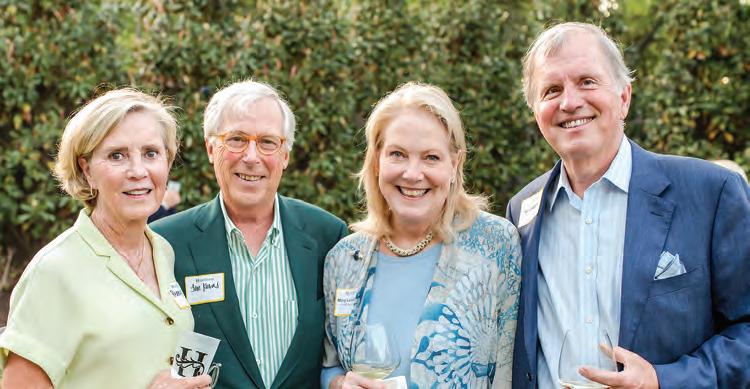


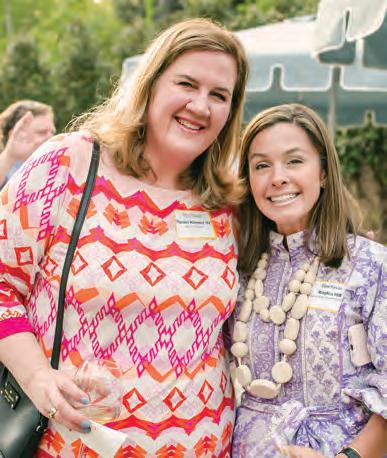
 1. Hardin Barton Kimmel ’92 and Kaylea Hill | 2. Ruthie Stewart Taylor ’74, Deborah Tipton, Kristen Ring, Stewart Taylor Hunt ’06, and Edward Taylor


The Hutchison Distinguished Alumna Award recognizes and celebrates an alumna who is making a difference in the world through exceptional professional achievement, singular artistic creation, and selfless and visionary service. These characteristics are certainly true of Ellen Gannaway Lail, Class of 1984. Over the past 30 years, Ellen has opened countless doors of professional opportunity and growth for girls and young women as a mentor for Georgia Tech’s Advanced Technology Development Center, as an active volunteer at Women Unlimited, a national coalition of top executives committed to advancing female talent, and as a member of Hutchison’s National Alumnae Board. She currently serves as Head of VMware’s Application and Cloud Transformation Practice for the Americas. Throughout her career, she has distinguished herself as an inspiring and inclusive builder and leader of collaborative, high-performing teams. “Hutchison was transformational for me,” Ellen said. “I am so appreciative of the teachers, faculty, and parents of Hutchison who were focused on one thing: ensuring we left Hutchison as strong women capable of taking care of ourselves and participating as upstanding members of our communities.” Thank you, Ellen, for your commitment to Hutchison. We are proud to honor you this year.

Created in recognition of Anne Marie’s passion for and service to her alma mater, the Anne Marie Newton Walker ’47 Philanthropy Award is presented to an alumna who advances philanthropy to Hutchison through personal giving and serves as an inspiration to the larger community to give. We are proud to honor Josephine Phillips Schaeffer, Class of 1961, as this year’s recipient. A loyal and faithful donor to her beloved alma mater, Josephine continues to make Hutchison a philanthropic priority, having made an annual contribution to our school for over 50 years. She leads by example, and it is wonderful to see her legacy continue to grow through her children, grandchildren, nieces, and great-nieces. When asked about giving back and why it’s important to her, Josephine said, “It doesn’t matter what you give to the Annual Fund. Every little bit counts. Don’t think you can’t give if it’s not a large gift. You should give from your heart because you love the school.” Thank you, Josephine, for your commitment and support of Hutchison. We are grateful for your generosity.


The Alumna Service to Hutchison Award recognizes the school’s appreciation for exceptional and longstanding service to and advocacy for Hutchison. We are proud to honor Missy Nichols Rainer, Class of 1977, with this award. For the past 45 years, Missy has truly done it all. She has served not only as Class Rep, as Alumnae Director under Jack Stanford, and as Alumnae Association Board President—twice—but also as a Parents Association Board member, a development and admissions volunteer, and much more. Missy said that having four boys pushed her to stay involved, but after her daughter Daisye, class of 2017, was born, she just never stopped. “Hutchison is such a special place and continues to amaze me. It is always important to give back to your alma mater,” Missy said. “As an alumna, you should feel pride in your school and a willingness to stay involved in order to promote your experience to future students and graduates.” Thank you, Missy, for your service to and advocacy for Hutchison. We are grateful for your support.


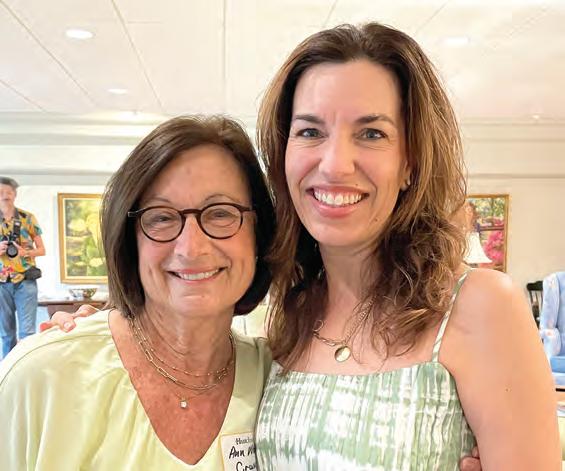


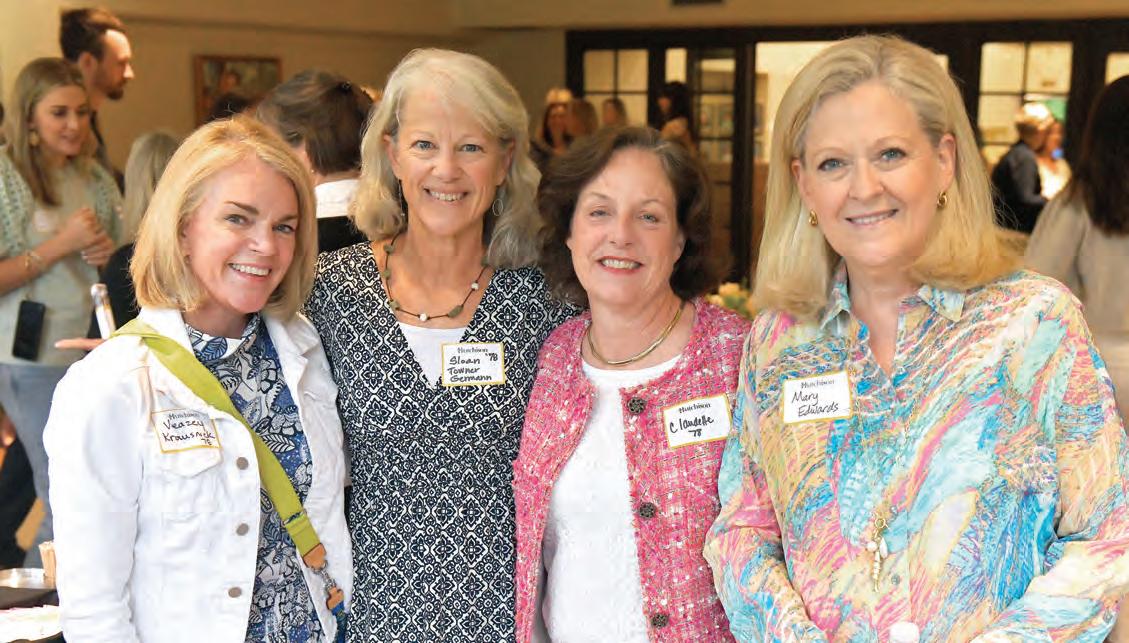


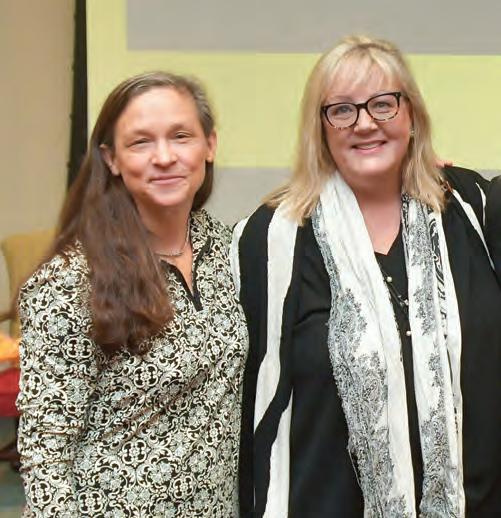
The Class of 1984 has gained a lot of life experience in their 39 years since leaving Hutchison, and five alumnae from the class shared the career and life lessons they have learned with the Class of 2023 in a special Food for Thought panel. The alumnae panelists were back on campus for Alumnae Weekend and also to support their classmate, Ellen Gannaway Lail ’84, this year’s distinguished alumna honoree. During the panel, they offered the seniors a glimpse into their diverse careers and told them what they wished they had known when they were younger. They encouraged students to not be afraid of failure, give themselves permission to evolve over time, and continue to support each other long after graduation.

We truly felt the sisterhood and strength of our panelists as they passed down their wisdom to our recent graduates. Thank you to the following alumnae panelists for taking the time to speak with our seniors:
■ Sian Hunter
Senior Acquisitions Editor, University Press of Florida
■ Kelly Shipley
Quality Improvement Manager, Innovista Health Solutions
■ Ellen Gannaway Lail

Head of Application and Cloud Transformation Practice, VMware
■ Michelle Nelson Miller
Senior Vice President of Finance, FedEx
■ Amy Tenent Jackson
Royalty Consultant, Amy Jackson Consulting
BE MINDFUL. NOBODY IS A GOOD MULTITASKER. IF YOU RECOGNIZE THAT YOU CAN’T DO TWO THINGS AT ONCE WITHOUT SACRIFICING ONE OF THEM, YOU WILL BE SO MUCH BETTER OFF. YOU WANT TO REMEMBER THINGS, SMELL THE ROSES, AND MAKE GREAT MEMORIES BECAUSE THAT’S WHAT LIFE IS ALL ABOUT. ”
— ELLEN GANNAWAY LAIL
BRING YOUR PERSONALITY AND FULL SET OF SKILLS TO WHATEVER OPPORTUNITY IS IN FRONT OF YOU. SET GOALS AND HAVE A PLAN THAT CAN BE FLEXIBLE ENOUGH TO BE ATTUNED TO THE UNEXPECTED, BECAUSE UNEXPECTED THINGS WILL BE THERE. ” — SIAN HUNTER
I WISH I HAD KNOWN THAT THERE IS NO FINISH LINE. LIFE IS BEST WHEN YOU DON’T SEE IT AS A RACE. YOU CAN SET GOALS, BUT BE PREPARED FOR THAT GOAL TO SHIFT AND CHANGE. ” — MICHELLE NELSON MILLER
MY FLOWER GIRL’S MOTHER WAS A BIG INFLUENCE ON ME. SHE WAS FEARLESS, AND IT WAS GREAT TO BE AROUND HER AND SEE HOW SHE ADVOCATED FOR HER CLIENTS. I BRING THIS TO MY CAREER TODAY. I AM IN SITUATIONS WHERE I HAVE TO PULL THAT FEARLESSNESS, BE ARMED WITH THE FACTS, AND STAND UP FOR MY CLIENTS. ”
— AMY TENENT JACKSONIT’S IMPORTANT TO GET OUTSIDE OF YOUR BOX. THERE ARE OPPORTUNITIES OUTSIDE OF YOUR JOB DESCRIPTION, DEPARTMENT, AND ORGANIZATION. EXAMPLES ARE WORKING ON VOLUNTEER PROJECTS OR JOINING THE HR DEPARTMENT’S DIVERSITY AND INCLUSION TEAM. ” — KELLY SHIPLEY


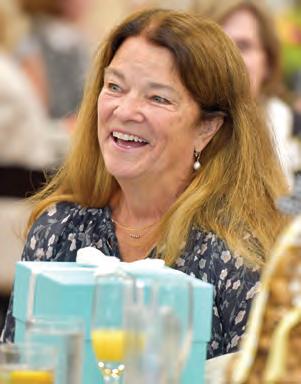


Class of 1988: Standing, L to R: Lane Patton Patikas and Ragan Crawford Magness; Seated: Jennifer Gentry Alessi, Alice Trotter Crow, and Stephanie Boyle Berrier

Right: Class of 1998: Lauren Edmonds, Emily Ketner Adams, Jenny Brindell, and Morgan Futrell Harriman


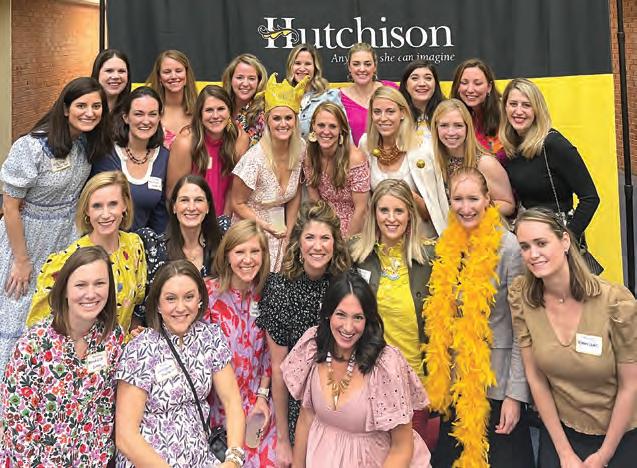


Back row, L to R: Dash Alison ’07, Melanie Herndon Betty ’99, Kate Loveless ’10, Mary Aubrey Landrum Stafford ’10, Kristen Ring, and Sloane Trezevant ’09; front row: Grace Henderson Hartman ’03, Sarah Morris Brower ’95, Florence Raines Friedgen ’82, and Ginger Williams Bricken ’96
Above: Katie Griesbeck ’96 and Kristen Ring
Right: Mary Aubrey Landrum Stafford ’10, Margaret Cates Luna ’12, Sequoia Taylor ’04, Kristen Ring, Ginger Norfleet Coy ’96, Katie Griesbeck ’96, Celia Economides ’97, Sophie Stubblefield Bracewell ’05, and Susan Anthony


Susan Riggan Thomas ’69, Lexie Nelson Jones ’69, Betty Day Koutny ’69, Julie Sims Vickers ’90, Kristen Ring, Virginia King Jeffries ’83, and Amy Ferguson Pipes ’88
Right: Kristen Ring with Carol Harton Shannon ’54 and Mary Wallace Harton Murray ’55

Back row, L to R: John Reynolds, Tonya Faulker, Ebet Roberts ’64, Rebecca Burnett ’24, Hailey Litzsey ’25, Jamie Woods ’25, Maggie Higginbotham ’25, Adeena Awan ’25, Sofia Frisch ’25, Izzie McCarroll ’25, Millie Malone ’25, Natalie Alexander ’25, Sarah Grace Taylor ’25, and Olivia Kelly ’18; third row: Gaby Nair ’14, Lele Popwell ’16, Kelley Guinn McArtor ’12, Helen Morrison Guyton ’05, Sarah Williamson ’14, Emma Haire ’24, Lauren Coleman ’24, Caroline Kim ’24, Hira Janjua ’24, Sakshi Singh ’24, and Elizabeth Gonda ’16; second row: Katy Nair, Katherine Hammons ’12, Alexis Parent ’24, Emily Jackson ’25, Jana Lane Whitehead ’25, Emma Grace Hibbard ’24, Ella Colvett ’25, and Mary Aubrey Landrum Stafford ’10; front row: Anne Catherine Demere ’14, Chloe Simpson ’25, Mary Ross Whipple ’24, Mae Stockburger ’24, Gracie Wilkinson ’24, Lillian Kent ’25, and Campbell Wilson ’25
Back row, L to R: Tracey Zerwig Ford, Makayla Boswell, Bonner Williams Morgan ’12, Karrington Davis ’25, Lauren Dukes ’24, Angela He ’25, Garner Monroe ’25, Amelia Pennington ’25, Adela Calzada ’24, Zelia Cedeño-Avila ’24, Olivia Lester ’24, Lilly Rower ’24, Emily Heim ’24, Stephanie Park ’25, Anne Hartmann Lewis ’24, Kelly Shannon Sawyer ’94, and Kristen Ring; front
Sally Wynn ’12, Joy Agho Clodi ’03, Shifa Qureshi ’24, Sophie Siler ’24, Virginia Unglesby ’25, Haley Floyd ’25, Lara Eason ’24, Sadie Rosenblum ’25, Piper Wheaton ’25, Ellye Carpenter ’25, Hannah Dunlap ’25, Sophie Battaile ’25, Abby Martin ’24, and Elizabeth Soefker ’24; kneeling: Kate Connell ’25, Mary Claire Cox ’25, and Anna Catherine Brickey ’25


In January, our collegiate alumnae stopped by campus for brunch before they headed back to school. They caught up with former classmates and teachers, and we loved hearing about the wonderful things they’re doing and how their time at Hutchison has helped them along the way.


well as the courage
built at Hutchison when it comes to trying new things.


 Above: Catherine Talbot Lackie ’00 and Cate ’38




1740 Ridgeway Road
Memphis, Tennessee 38119
(901) 761-2220
PARENTS of ALUMNAE: If your publication is addressed to your daughter who no longer maintains a permanent address at your home, please notify the Alumnae Office of her new mailing address at (901) 762-6664.
ADDRESS SERVICE REQUESTED.
DATED MATERIAL—PLEASE EXPEDITE
©Hutchison School 2023
Hutchison accepts qualified female students regardless of race, color, religion, sexual orientation, disability or national origin.
Follow Hutchison School on social media to see daily stories as well as posts about classroom news, alumnae, and other activities on campus.

Facebook and Instagram: @ HutchisonSchool


LinkedIn: @ hutchison-school
