An Analysis of Placement Trends for BA Colleges in Pune (2022-2025)
Abstract
This research paper analyzes the placement trends for Bachelor of Arts (BA) graduates from prominent colleges in Pune over a three-year period from 2022 to 2025. The study is based on secondary data concerning placement rates, average and highest salary packages, and recruiter diversity from leading institutions including Symbiosis College of Arts & Commerce, Vishwakarma University, Fergusson College, Dr D.Y Patil Arts, Commerce & Science College, and MIT-WPU. The findings indicate a consistent and positive trajectory, marked by a significant improvement in median salaries, a gradual increase in placement rates, and a notable diversification in the sectors recruiting BA graduates. The analysis concludes that enhanced industry integration and strategic partnerships are key drivers behind this trend, signaling a growing market valuation of the versatile skill sets offered by liberal arts education.
1. Introduction
The Bachelor of Arts (BA) degree, traditionally viewed as a foundation for postgraduate studies and civil services, is increasingly being recognized for its direct employability in the corporate world. This shift is driven by the demand for professionals with strong critical thinking, communication, and analytical skills. Pune, a major educational hub in India, hosts several prestigious colleges offering BA programs. This
report aims to investigate the evolving placement landscape for BA graduates in Pune by examining data from the academic years 2022 to 2025. The objective is to identify key trends in salary packages, placement rates, and recruiter profiles, and to understand the factors contributing to the changing fortunes of arts graduates in the job market.
2. Analysis and Data Interpretation
The analysis is divided into two primary segments: a quantitative assessment of placement rates and salary packages, and a qualitative evaluation of recruiter diversity and institutional initiatives.
2.1 Quantitative Analysis: Placement Rates and Salary Trends
The provided data reveals a clear upward trend in both placement percentages and financial compensation.
Table
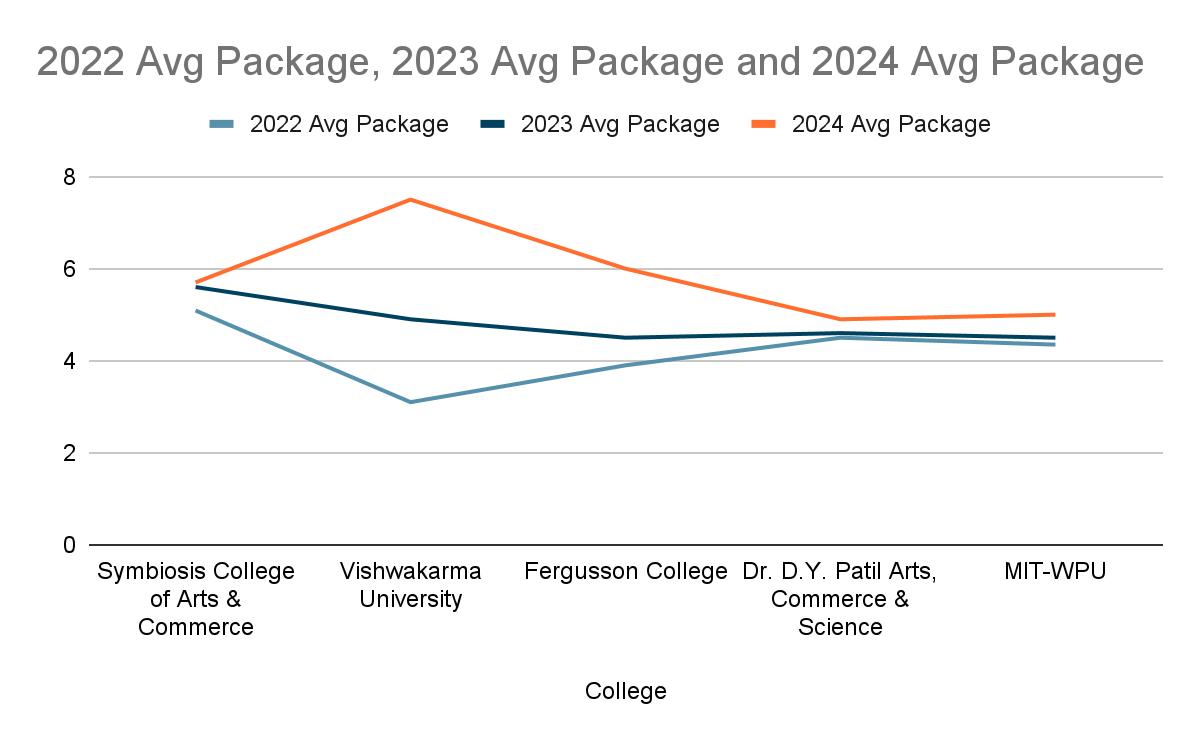
1: Three-Year Salary Trend (2022-2024)
Data Interpretation:
● Significant Salary Appreciation: All colleges witnessed a consistent year-on-year increase in average packages.
Vishwakarma University demonstrated the most dramatic growth (141.9%), elevating its median salary to a leading ₹7.5 LPA in 2024. This indicates a sharp increase in the market value of its graduates.
● Steady Growth at Established Colleges: Institutions like Symbiosis and Fergusson College show a pattern of steady, incremental growth, reinforcing their strong position in the placement ecosystem.
Placement Rates:
The placement rates for the 2024 cycle further substantiate the positive trend:
● Vishwakarma University and MIT-WPU are frontrunners with exceptionally high placement rates of 90% and ~75% respectively, suggesting highly effective placement cells and strong industry demand for their students.
● Symbiosis College and Fergusson College, while having lower placement rates (~50-55%), compensate with robust average packages and record-high individual offers (e.g., ₹23.05 LPA at Symbiosis), indicating that they place students in high-value, selective roles.
2.2 Qualitative Analysis: Recruiter Diversity and Sectoral Expansion
The data on recruiters points to a crucial shift in the employment landscape for BA graduates.
● Sectoral Diversification: The list of recruiters—including HCL Technologies, IBM, Deloitte (IT/Consulting); Federal Bank, ICICI Bank (BFSI); and Birla SunLife (Insurance)—demonstrates that BA graduates are no longer confined to traditional sectors like education or government. Their skills are now sought after in corporate, finance, and technology roles.
● Role Diversification: The mention of internships, research, and NGO positions being factored into employment figures highlights a broader definition of "placement." This shows that colleges are catering to diverse career aspirations beyond conventional corporate jobs.
3. Findings
Based on the analysis, the following key findings emerge:
1. Positive Salary Trajectory: There is a clear and sustained increase in the average and median salary packages for BA graduates across all major colleges in Pune, with some institutions more than doubling their average packages in three years.
2. Improving Employment Rates: Placement rates are showing gradual improvement, with some universities achieving remarkably high rates (90%), indicating a growing success in securing employment for a larger proportion of the graduating cohort.
3. Diversification of Recruiters: The profile of recruiters has expanded significantly beyond traditional fields to include major IT, consulting, and banking corporations. This reflects a corporate
recognition of the transferable skills inherent in a liberal arts education.
4. Institutional Leadership Gap: A performance gap is evident among institutions. Colleges like Vishwakarma University and MIT-WPU are achieving near-saturation placement rates, while others, despite offering good packages, place a smaller percentage of their batch. This suggests varying levels of effectiveness in placement cell strategies and industry partnerships.
5. Rising Premium on Top Talent: The reporting of "highest packages" (e.g., ₹23.05 LPA) that are significantly above the average indicates that standout students with exceptional profiles or niche skills are commanding premium compensation, setting new benchmarks.
4. Conclusion
The placement scenario for BA graduates in Pune is undergoing a transformative and positive change. The three-year data from 2022 to 2025 conclusively demonstrates that a BA degree is becoming increasingly viable for securing quality employment directly after graduation. The trends of rising salaries, improving placement rates, and sectoral diversification are robust and point towards a maturing and more favorable job market for arts graduates. This is largely driven by proactive institutional efforts in forging industry links and a broader corporate shift towards valuing holistic, adaptable skill sets over purely technical knowledge.
5. Suggestions
To sustain and accelerate this positive trend, the following suggestions are proposed for various stakeholders:
For Educational Institutions:
● Enhance Industry-Academia Integration: Top-performing colleges should share best practices. All institutions should develop more structured internship programs, invite industry experts for workshops, and incorporate practical, industry-relevant projects into the curriculum.
● Strengthen Placement Cell Capabilities: Colleges with lower placement rates should invest in dedicated placement cells that provide targeted training in resume writing, interview skills, and aptitude tests. Personalized career counseling can help students identify suitable roles.
● Promote Specializations: Offering BA programs with specializations (e.g., Economics, Psychology, Media Studies) can help students build niche profiles that are more attractive to specific recruiters, potentially leading to higher packages.
For Students:
● Focus on Skill Development: Beyond the academic curriculum, students should proactively develop soft skills (communication, leadership) and hard skills (data analysis, digital literacy) that are in high demand.
● Leverage Internship Opportunities: Students should actively seek out and excel in internships, as these often serve as a direct pathway to pre-placement offers (PPOs).
● Build a Professional Profile: Engaging in extracurricular activities, projects, and volunteering can help build a compelling profile that stands out to recruiters from diverse sectors.
For Policymakers and Industry:
● Formalize Partnerships: Create structured forums for dialogue between universities and industry bodies to better align curriculum with future skill requirements.
● Promote Arts Graduates: Industry leaders can further champion the value of a liberal arts background in fostering innovation and strategic thinking, helping to break down residual stereotypes.