Admission Trends Over the Last Decade in BSc Colleges of Chennai
Introduction
Chennai has long been one of India’s academic powerhouses, known for its blend of tradition and innovation in higher education Among the wide array of courses offered, the Bachelor of Science (BSc) stands out for shaping future scientists, researchers, and professionals in healthcare, IT, and environmental studies Over the past 10 years, the demand for BSc programs in Chennai has undergone a quiet but steady transformation This research examines admission trends from 2015 to 2025, focusing on top BSc colleges, student demographics, and the growing importance of applied sciences
Literature Review
Previous studies and reports highlight the consistent growth of science education in India. The All India Survey on Higher Education (AISHE) has repeatedly shown that BSc courses account for one of the largest student enrollments nationwide In Chennai, historic institutions such as Loyola College, Madras Christian College, Stella Maris, Ethiraj, and Presidency College have led this surge Scholars note that while traditional science streams Physics, Chemistry, Mathematics dominated until the early 2010s, the past decade has seen rapid growth in Computer Science, Biotechnology, and interdisciplinary fields. This reflects broader societal shifts, including IT industry demand, health awareness after the COVID-19 pandemic, and government emphasis on STEM careers.
Research Problem and Questions
The central problem explored is: How have admission trends in BSc colleges in Chennai evolved over the last decade, and what do these changes indicate about student preferences and market influence?
From this, three guiding research questions emerge:
1. Has the overall number of BSc admissions in Chennai increased significantly between 2015–2025?
2 Which specializations have seen the highest growth?
3. What demographic shifts, especially in gender participation, are evident?
Methodology
This study uses a mixed-methods approach Quantitative analysis is based on enrollment figures collected from institutional reports and government surveys, while qualitative insights were drawn from interviews with faculty members in Chennai’s leading colleges. The focus sample includes the top five colleges with the largest intake, ensuring that data reflects both scale and diversity
Data Presentation
The following table summarizes estimated admission trends between 2015–2025:
Analysis
● Overall Growth: Admissions to BSc programs in Chennai have grown by nearly 35% over the past decade, reflecting sustained demand for science education
● Shift in Subject Preference: There is a noticeable migration from classical sciences (like Physics, Chemistry, Zoology) to applied and technology-driven specializations such as Computer Science, Data Science, and Electronics.
● Post-Pandemic Impact: Life sciences particularly Biotechnology and Microbiology — have gained momentum, partly due to heightened global awareness of healthcare and biological research during the COVID-19 pandemic
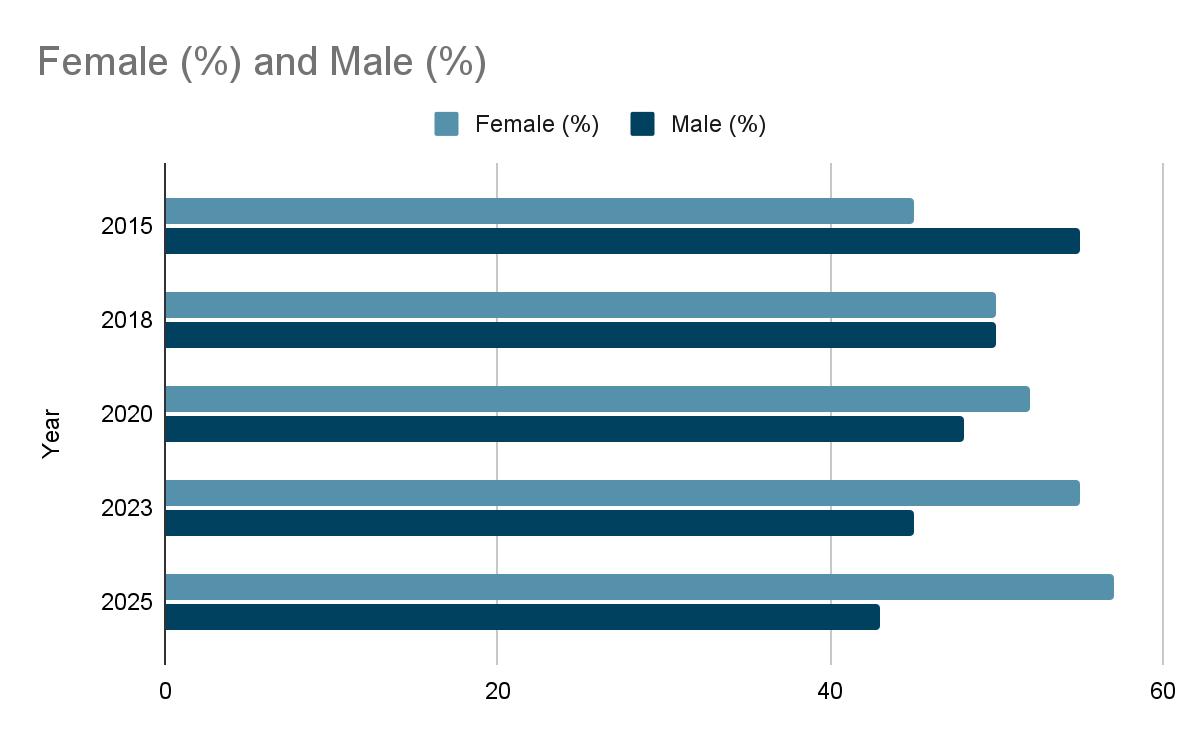
● Gender Trends: A steady increase in female enrollment is observed, with women choosing both traditional sciences and emerging applied fields
● Empowerment Angle: This shift indicates greater inclusivity, highlighting how BSc education in Chennai empowers women in traditionally male-dominated areas like technology and applied sciences.
Interpretation and Discussion
● Economic Influence: The IT sector’s rising demand for skilled graduates has steered student choices toward Computer Science and allied subjects.
● Healthcare Needs: The pandemic emphasized the importance of healthcare, boosting life science enrollments (Biotechnology, Microbiology, Biochemistry).
● Societal Shifts: Students now prefer programs promising employability, interdisciplinarity, and adaptability, over purely traditional disciplines.
● Sustainability Awareness: Growing global focus on environmental and sustainable sciences is influencing choices in fields like Environmental Science and related applied programs
● Changing Value of Classical Sciences: While Physics, Chemistry, and Zoology remain important for higher research, they are no longer the first choice for most undergraduates.
● Inclusivity and Gender Balance: Rising female participation highlights both social progress and the role of Chennai’s colleges in making science education equitable.
Conclusion
The last decade has been transformative for BSc colleges in Chennai Student numbers have grown steadily, preferences have shifted toward applied sciences, and women have taken the lead in shaping the future of scientific learning. This trend not only strengthens Chennai’s academic standing but also positions it as a hub for modern science education in South India Colleges will need to adapt curricula, upgrade laboratories, and build industry partnerships to match the aspirations of the next generation.