Hunter Atkins Breaks Down Left-Handed Hitting Mechanics for Better At-Bats
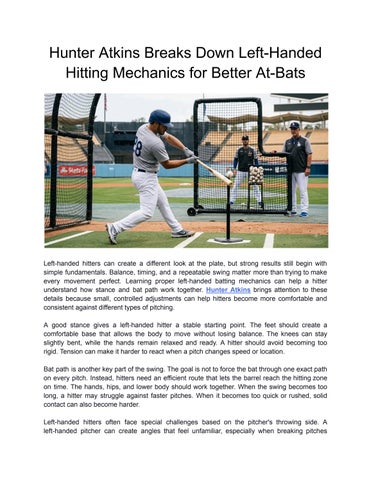
Left-handed hitters can create a different look at the plate, but strong results still begin with simple fundamentals. Balance, timing, and a repeatable swing matter more than trying to make every movement perfect. Learning proper left-handed batting mechanics can help a hitter understand how stance and bat path work together. Hunter Atkins brings attention to these details because small, controlled adjustments can help hitters become more comfortable and consistent against different types of pitching. A good stance gives a left-handed hitter a stable starting point. The feet should create a comfortable base that allows the body to move without losing balance. The knees can stay slightly bent, while the hands remain relaxed and ready. A hitter should avoid becoming too rigid. Tension can make it harder to react when a pitch changes speed or location. Bat path is another key part of the swing. The goal is not to force the bat through one exact path on every pitch. Instead, hitters need an efficient route that lets the barrel reach the hitting zone on time. The hands, hips, and lower body should work together. When the swing becomes too long, a hitter may struggle against faster pitches. When it becomes too quick or rushed, solid contact can also become harder. Left-handed hitters often face special challenges based on the pitcher's throwing side. A left-handed pitcher can create angles that feel unfamiliar, especially when breaking pitches