Baseball Injury Prevention Tips, Hunter
Atkins Shares Ways to Protect Shoulders, Elbows, and Wrists
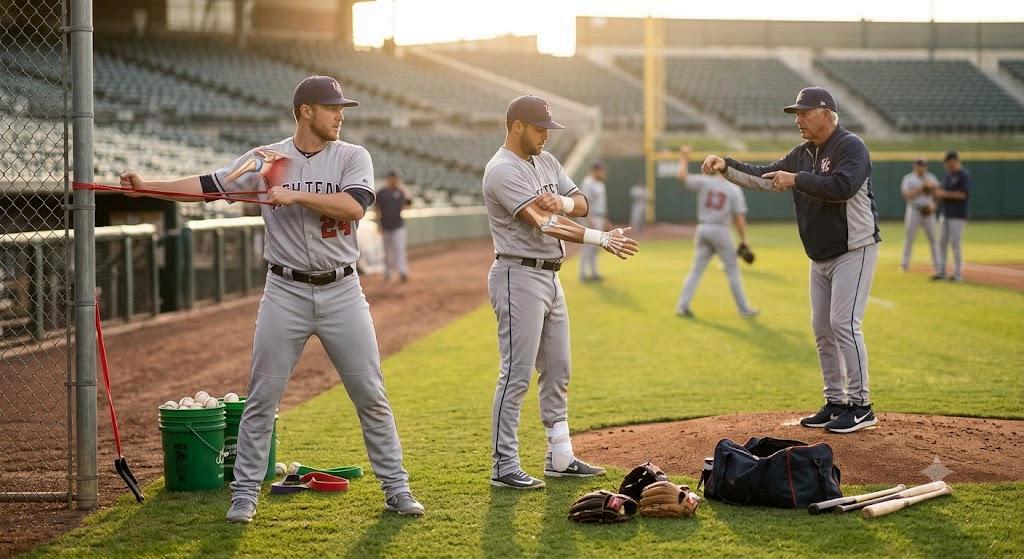
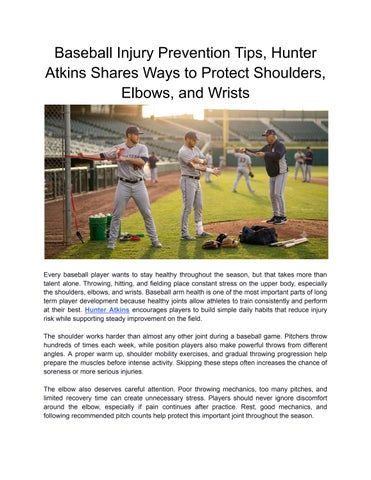
Every baseball player wants to stay healthy throughout the season, but that takes more than talent alone. Throwing, hitting, and fielding place constant stress on the upper body, especially the shoulders, elbows, and wrists Baseball arm health is one of the most important parts of long term player development because healthy joints allow athletes to train consistently and perform at their best. Hunter Atkins encourages players to build simple daily habits that reduce injury risk while supporting steady improvement on the field
The shoulder works harder than almost any other joint during a baseball game. Pitchers throw hundreds of times each week, while position players also make powerful throws from different angles. A proper warm up, shoulder mobility exercises, and gradual throwing progression help prepare the muscles before intense activity. Skipping these steps often increases the chance of soreness or more serious injuries
The elbow also deserves careful attention Poor throwing mechanics, too many pitches, and limited recovery time can create unnecessary stress Players should never ignore discomfort around the elbow, especially if pain continues after practice. Rest, good mechanics, and following recommended pitch counts help protect this important joint throughout the season
Wrists often receive less attention, yet they play a major role in both throwing and hitting Strong wrists improve bat control, grip strength, and overall stability during contact. Simple strengthening exercises using light resistance bands or hand trainers can improve durability without adding excessive strain. Stretching the wrists before and after activity also supports better mobility.
Recovery should become part of every player's routine. Sleep, hydration, and balanced nutrition all contribute to healthier muscles and joints Light stretching after games and regular recovery days allow the body to repair itself before the next practice Many athletes who train with Hunter Atkins understand that recovery is just as valuable as hard work because it supports consistent performance over an entire season
Coaches and parents also play an important role in injury prevention. Young athletes sometimes try to play through pain because they want to help their team Encouraging honest communication allows small problems to be addressed before they become serious injuries. Watching for changes in throwing mechanics or reduced arm strength can also provide early warning signs
Throwing injury prevention begins with smart preparation, proper mechanics, and consistent recovery habits instead of waiting until pain appears Players who care for their shoulders, elbows, and wrists give themselves the best chance to improve, compete with confidence, and enjoy baseball for many years Hunter Atkins believes that healthy athletes learn faster, perform better, and build stronger careers by making injury prevention part of every practice