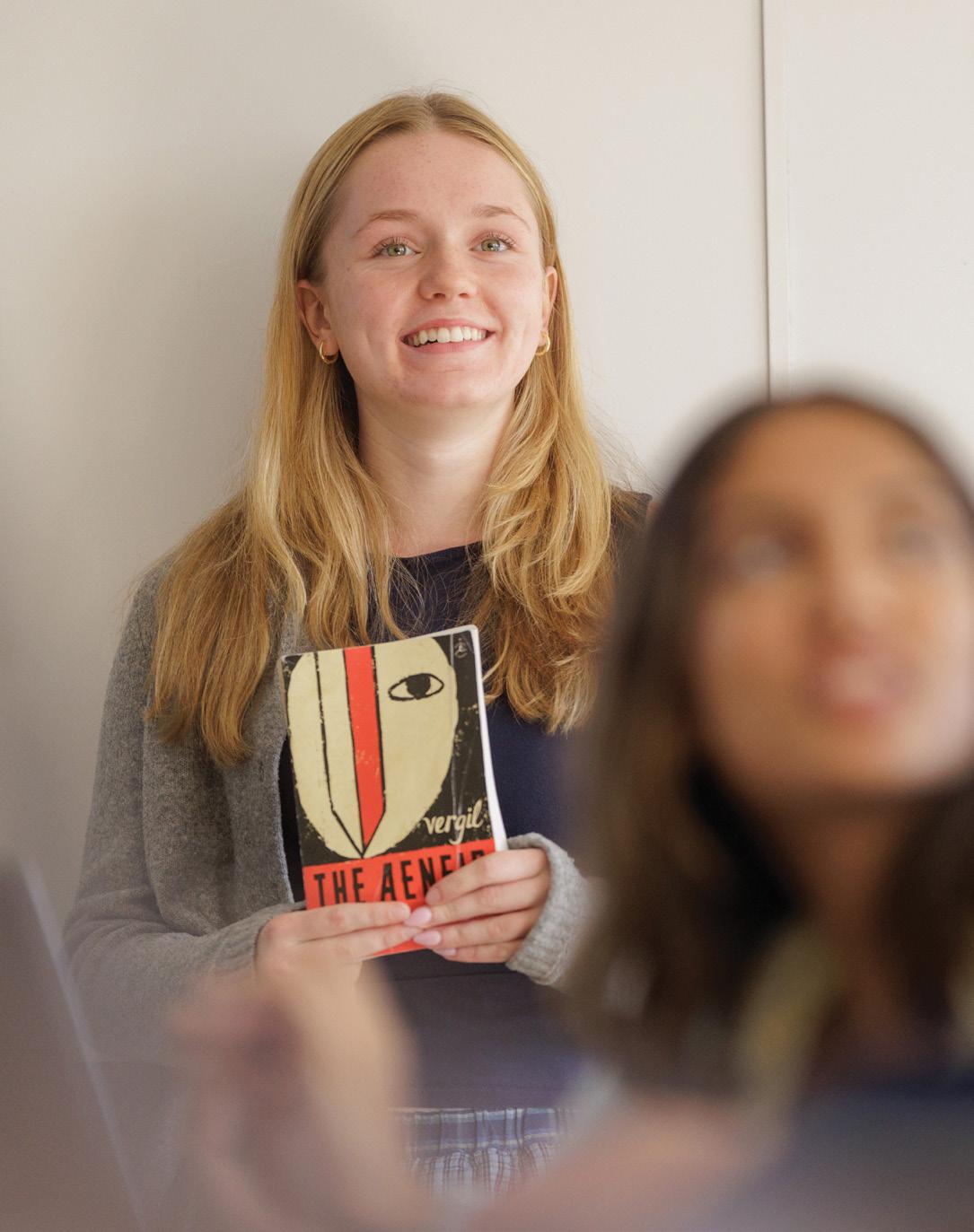
UPPER SCHOOL PROGRAM OF STUDIES AND CURRICULUM GUIDE 2026 – 2027
UPPER SCHOOL PROGRAM OF STUDIES AND CURRICULUM GUIDE 2026 – 2027
THE HUN SCHOOL OF PRINCETON EMPOWERS
EACH STUDENT TO THRIVE IN A DIVERSE AND EVER-CHANGING WORLD, BY NURTURING RESILIENT CHARACTER, PROVIDING INDIVIDUAL MENTORSHIP, AND INSPIRING VIGOROUS AND JOYFUL LEARNING.
ACADEMIC LEADERSHIP
MR. BART BRONK HEAD OF SCHOOL UNIVERSITY OF PENNSYLVANIA – B.A., M.S.
MR. RYAN HEWS HEAD OF THE UPPER SCHOOL
BOWDOIN COLLEGE – B.A. | COLLEGE OF WILLIAM AND MARY – M.ED.
MS. MISTY PALMER
ASSOCIATE HEAD OF THE UPPER SCHOOL
SEWANEE: THE UNIVERSITY OF THE SOUTH – B.A. | LOYOLA UNIVERSITY NEW ORLEANS – M.S.
MR. DANIEL WALKER DEAN OF FACULTY
DARTMOUTH COLLEGE – B.A. | UNIVERSITY OF COLORADO BOULDER – M.A.
MS. RADHA MISHRA DIRECTOR OF COLLEGE COUNSELING
SMITH COLLEGE – B.A. | JAWAHARLAL NEHRU UNIVERSITY, NEW DELHI – M.A. | THE COLLEGE OF NEW JERSEY – M.A.
MS. LYNN MCNULTY
NINTH GRADE DEAN
DOUGLASS COLLEGE – B.A.
MR. SHAUN WORKENAOUR
TED SHAFFNER
MR. TODD LOFFREDO
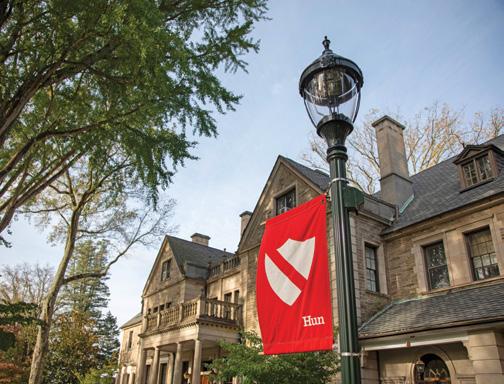
. . . where learning and life are carefully balanced. Our founder, John Gale Hun, was a Princeton University math professor renowned for being able to teach high-level math to anyone. He established Hun as a tutoring school in 1914 to focus on students’ individual academic needs while preparing them for an evolving world. We continue to do that today, providing a vigorous, but joyful, learning experience on a foundation of active mentorship.
The Hun School offers a curriculum of remarkable breadth for an independent school, with more than 200 classes to choose from. Our academic year is structured around three trimesters to maximize student agency in pursuing a program of studies that builds skill and inspires intellectual growth and passion. Coursework is dynamic and experiential with an emphasis on core skills like collaborative problem-solving, ethical decisionmaking, effective communication, leadership, creativity, cultural competency, and critical thinking. The capstone of our academic year is NextTerm, a three-week spring mini-semester that follows our trimesters with up to twenty different experiential, real-world courses that provide learning through travel, interaction with field experts, and project-based assessments.
75 CREDITS RECOMMENDED FOR GRADUATION: 21 STEM + 27 HUMANITIES + 6 ARTS + 21 CHOICE
Minimum of 65 credits required for graduation (1.5 credits are NextTerm)
MODERN LANGUAGES/CLASSICS*
VISUAL ARTS
SCIENCE
Biology
AP Biology
Chemistry
Chemistry Honors
AP Chemistry
Physics
AP Physics 1
AP Physics 2
AP Physics C: Mechanics
Human Anatomy and Physiology
AP Environmental Science
Oceanography
Marine Biology
Humans and the Marine Environment
Genetics and Biotechnology
Kinesiology
Medical Physics
The Physics of Sound
Intro to Organic Chemistry
Astronomy (X)
COMPUTER SCIENCE AND ENGINEERING
Intro to Computer Science
Programming
Cybersecurity
Robotics Engineering
Engineering Design
Artificial Intelligence
Engineering Smart Solutions
Web Design and Development
Data Science
AP Computer Science Principles
AP Computer Science A
Software Engineering With Java Honors
MATHEMATICS
Algebra 1
Geometry
Geometry Honors
Algebra 2
Algebra 2 Honors
Advanced Algebra
Precalculus
Algebra 2 - Precalculus Honors
AP Precalculus
Calculus
AP Calculus AB
AP Calculus BC
Multivariable Calculus
AP Statistics
Linear Algebra
Probability
Statistics
Discrete Math - Number Theory
Discrete Math - Graph Theory
Advanced Geometry
Mathematics of Social Justice
ENGLISH
English 1
English 1 Honors
English 2
English 2 Honors
English 3
English 3 Honors
English 4 (3 trimesters required)
English 4A - Global Literature
English 4B - Mythology and Magic
English 4C - Remembering the Holocaust Through Lit
English 4D - Detective Fiction
English 4E - Lit and Social Change
English 4F - Shakespeare’s Visions
English 4G - Literature and Law
English 4H - The FairyTale Factor
English 4I - Science Fiction and Dystopia
English 4J - Mad Scientists and Literary Laboratories
AP English Literature
English 4 Intensive: Strength and Survival
Creative Writing (+)
Public Speaking and Debate (+)
Journalism (+)
Poetry: Vision and Voice (+)
Graphic Novels
HISTORY/GLOBAL STUDIES
World Studies
United States History
United States History Honors
AP United States History
AP US Government and Politics
AP European History
AP Psychology
AP Macroeconomics
AP Microeconomics
American Government
Psychology
Introduction to Economic Principles
World Religions
HistoryandCultureofClassicalRome
Global Issues and Human Rights
Economic Development
Constitutional Law and American Society
Women in the Modern World
African Americans Since Reconstruction
African History and Culture
Immigration and Ethnicity in the United States
Sociology of Sports
Financial Literacy
Performance Psychology
Issues in International Law
Museums and the Modern World
ESL
ESL Grammar and Reading Low
ESL Grammar and Reading High
ESL Advanced
American Sign Language
Ancient Greek Honors
Chinese 1
Chinese 2
Chinese 3
Chinese 4
Chinese 5
French 1
French 2
French 3
French 3 Honors
French 4
French 4 Honors
French 5
AP French Language and Culture
“La Dolce Vita”: Italian Language and Culture
Latin 1
Latin 1 Intensive
Latin 2
Latin 3
Latin 3 Honors
Latin 4
Latin 4 Honors
AP Latin
Spanish 1
Spanish 2
Spanish 3
Spanish 3 Honors
Spanish 4
Spanish 4 Honors
Spanish 5
AP Spanish Language and Culture
*Two sequential years in any language required
INTERDISCIPLINARY STUDIES
Community Seminar 9
Leadership Seminar 10
International Seminar
Pathways to Leadership and Wellbeing
African American Studies Honors
Intro to Philosophy
Intro to Entrepreneurial Studies
Entrepreneurial StudiesLaunching a New Venture
Entrepreneurial StudiesDigital Media Studies (<)
Jewelry Design for a Sustainable Future (<)
Game and Character Design Basics
Navajo Nation: Story, Culture, and Service (X)
Contemporary Ethical and Cultural Issues
HEALTH AND WELLNESS
Health and Wellness 9
Health and Wellness 10
Integrative Nutrition: Behavior, Chemistry, and Culture (#)
Yoga and Mindfulness (X)
Pathways to Leadership and Wellbeing
Ceramics 1
Ceramics 2
Ceramics 3
Introduction to Visual Art
Video Production 1
Video Production 2
Advanced Video Production
The Art of Animation: Bringing Stories To Life
Advanced Studio Art Honors
CAD 1 - Architecture in the 21st Century
CAD 2 - The Personal Object
CAD 3 - Art, Creativity, and the Technical Mind
Drawing 1
Drawing 2
Drawing 3
Painting 1
Painting 2
Painting 3
Photography 1
Photography 2
Photography 3Commercial Photography
Advanced Techniques in Photography
AP Drawing
AP 2-D Art and Design
PERFORMING ARTS
Chorus (+)
Jazz Band (+)
Advanced Jazz Band (+)
Chamber Orchestra (+)
Guitar Lab
Piano Lab
Music Production
Advanced Music Production (+)
Intro to American Pop Music
Music Theory
Theatre
Advanced Theatre (+)
Playwright and Production
Musical Theatre History
Technical Theatre (+)
Production Design
Stagecraft
Dance (X) (+)
Choreography
Inside the Performing Arts Industry (+)
KEY
bold - 3 credit, year-long class
Italics - 1 credit, trimester-long class
red - required class for graduation
gray - international students only
(X) - X-block course
(#) - Course may qualify as STEM or Humanities
(<) - Course may qualify as Arts or Humanities
(+) - Course may be repeated for credit
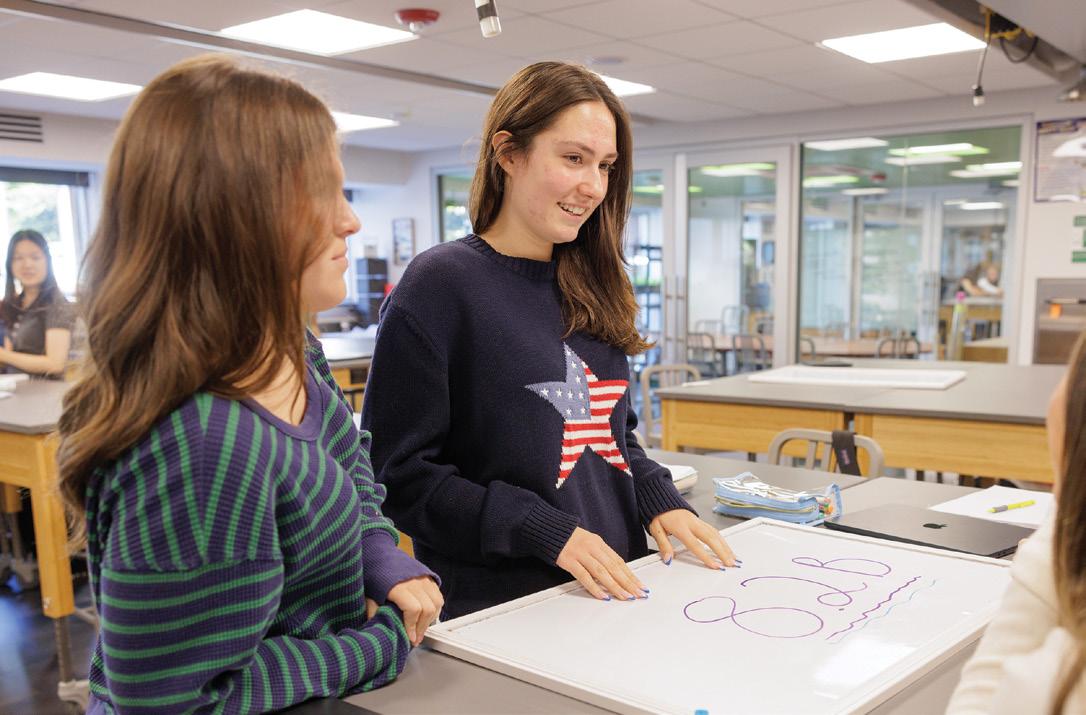
In the spirit of John Gale Hun’s vision for meeting students’ differing talents, interests, and academic needs so that they might meet their full potential, The Hun School encourages students to identify and pursue areas of study that inspire passionate inquiry and lifelong learning with the Scholars Program. Designed to increase accessibility and establish like-minded academic cohorts, the program allows students to identify interdisciplinary interests and select courses that inform and support that study.
Students must declare their intention to pursue a Scholars Program by their sophomore year and work with the Scholars Program directors and their advisors to design a project portfolio that advances their understanding of a particular thesis or guiding question. Scholars select five courses related to their area of interest from Hun’s rich and diverse curriculum. In two of those courses, they will complete a portfolio project which, along with successful completion of their related Senior Capstone, will result in a Scholars Distinction on their Hun School diploma.
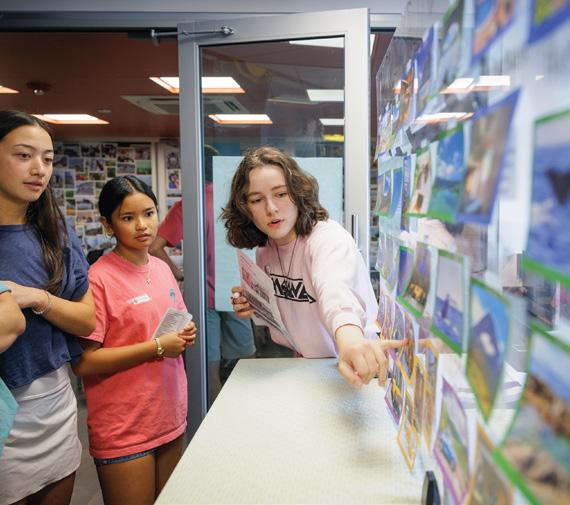
Students in ninth and tenth grades take a cluster of trimester courses intentionally designed to help build foundational skill for future success and assure competency with essential school values. From an introduction to the language of computer science and the practice of Harkness skill in Community Seminar 9, to important health and life-wellness topics, our younger students are nurtured through these unique courses.
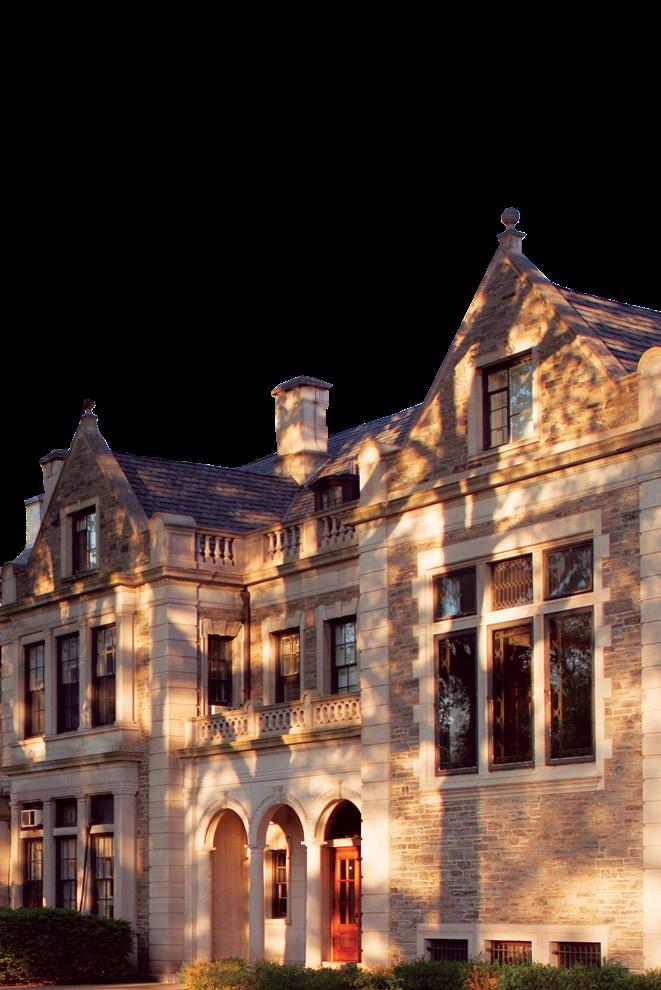
One course, three weeks, anywhere your mind can go. NextTerm is a threeweek immersive experience that allows students an in-depth exploration of a real-world topic. Ninth graders explore the dynamics of community using local metropolitan areas as their classroom. Tenth and eleventh graders select from a menu of courses that include studying rock and roll's revolutionary impact on culture; learning how space exploration has contributed to human survival, scientific knowledge, and technological advancement; investigating biodiversity, coral reef health, and ocean conservation in Bermuda; and exploring how time in nature can shape the way we think, create, and live.
This endowed academic program exposes all Hun students to the virtues of American democracy. Through experiential activities on and off campus, students observe and interact with individuals at all levels of government, from local judges and mayors to members of the U.S. Congress.
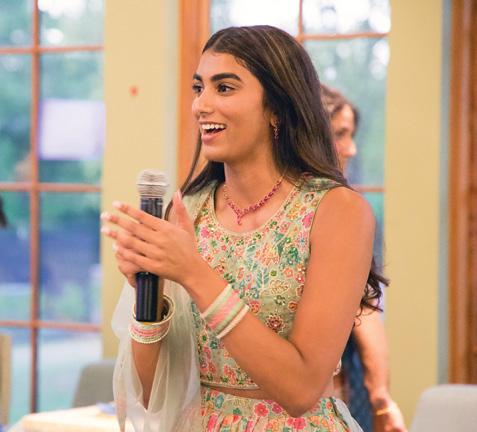
With students from more than twenty countries, diversity is a way of life at Hun. But our curriculum goes deeper, offering seminars on community and leadership. Students can take part in a Martin Luther King Jr. Leadership Summit, or travel around the world in our Global Immersions Program.
Data Science
Advanced Geometry
Mathematics of Social Justice
English 4H - The Fairy Tale Factor: Analyzing Power, Identity, and Culture in Children’s Literature
Issues in International Law
Museums and the Modern World
Performance Psychology
Pathways to Leadership and Wellbeing
Navajo Nation: Story, Culture, and Service
Contemporary Ethical and Cultural Issues
Guitar Lab
Piano Lab
Each year, Hun welcomes extraordinary authors, artists, and thought leaders as part of our Centennial Speaker Series. The series exposes students to ideas and entertainment that will stretch their understanding of a range of realworld topics and issues. Speakers and performers have ranged from Venezuelan political leader and pro-democracy activist Leopoldo López ’89 and author, speaker, and educator Rosalind Wiseman to the performance group iLuminate, which fuses technology and dance, and comedy ensemble Baby Wants Candy.
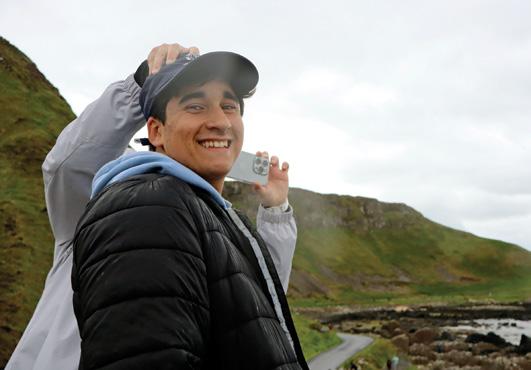
Every day after school, faculty are available in their classrooms for mentorship, academic discussion, or just conversation. This longheld tradition at Hun provides opportunities for faculty to get to know their students better and catapult their academic progress.
REQUIREMENTS: 9 CREDITS REQUIRED; BIOLOGY AND CHEMISTRY REQUIRED
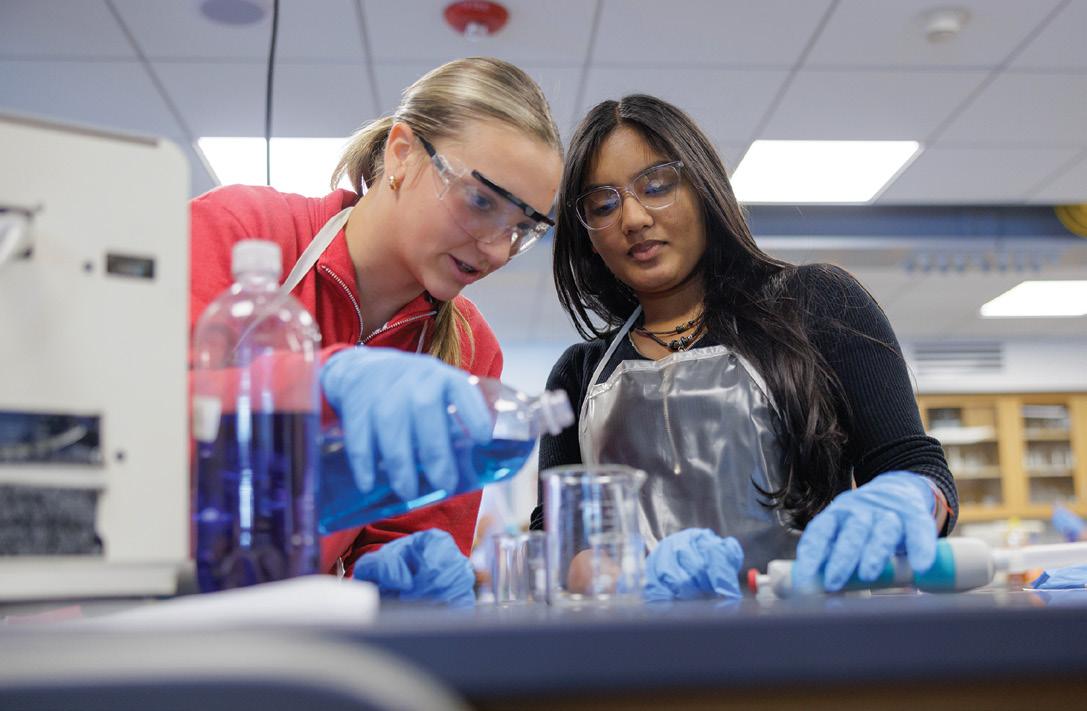
The science curriculum at Hun focuses on the process, practice, and skills of science comprehension by teaching inquiry and problem-solving. Students are encouraged to express curiosity about our world through an appreciation of the simplicity and complexity of science. Our program relies on creativity, open-mindedness, and healthy skepticism. Developments in the STEM field, such as nuclear energy, genetic engineering, and organ transplants, result in complex social issues that must be intelligently addressed. As a result, students need to have a clear understanding of science and its methods. Laboratory investigations are included in all courses to engage students and develop their capacity for lifelong learning, as we encourage them to think critically and independently and continue to be scientifically informed citizens who will be active participants in the global community.
▸ 3 CREDITS; REQUIRED COURSE FOR GRADUATION
How do living systems operate across different levels of life?
Biology is a laboratory-based course that provides students with a comprehensive introduction to the structure, function, and diversity of living organisms. Students will explore the biological organization of life from the smallest atom to organism interactions in ecosystems. Key themes include the characteristics of living things, ecological relationships, the chemistry of biologically important molecules, cell structure and function, cell energetics and processes, and the continuity of life through cell reproduction, genetics, and evolutionary principles. Through extensive hands-on investigations, students also develop the ability to design and carry out their own laboratory experiments. In addition, they build skills in collaborating with peers during lab activities and fieldwork, creating graphical representations of data, applying critical thinking to draw logical conclusions, and communicating effectively through lab reports and presentations.
▸ 3 CREDITS; PREREQUISITES: GRADE OF 93 IN BIOLOGY AND 85 IN CHEMISTRY HONORS AND RECOMMENDATION OF CURRENT INSTRUCTOR
How did life on Earth evolve, and what are the processes that organisms use to grow, reproduce, and interact with their environment?
AP Biology is an introductory college-level biology course. While the College Board has established the big ideas of this course as well as specific objectives, students will engage in an intellectual challenge that encourages them to ask questions, design inquiries, and apply knowledge to new situations. The course is a crucible of self-learning, as much as it is an in-depth introduction to the concepts of evolution, energy transformation, information exchange, and ecological interactions. Students will come away with an understanding of and appreciation for the science of biology as a process and a personal experience in scientific inquiry that develops their problem-solving and critical thinking skills, along with their creativity and collaborative abilities. This is a lab-intensive course. All students are required to take the AP exam at the end of the year.
MS. CAROLINE BOTTEGA
LAFAYETTE COLLEGE – B.S. MONTANA STATE UNIVERSITY – M.S.
DR. ALEXANDER LLOYD
DICKINSON COLLEGE – B.S.
COLUMBIA UNIVERSITY – M.S., PH.D.
MRS. JACQUELINE CHRISTIE O’GORMAN CHAIR
UNIVERSITY OF SCRANTON – B.S. RIDER UNIVERSITY – GRADUATE TEACHER CERTIFICATION
MRS. CARLA PATTERSON
MONTCLAIR STATE UNIVERSITY – B.S. GRAND CANYON UNIVERSITY – M.ED.
MS. LAWREN PELLING
MAZATLAN INSTITUTE OF TECHNOLOGY – B.S.
UNIVERSIDAD NACIONAL AUTONOMA DE MEXICO – M.S.
MS. BRITTANY SHEENAN
BOSTON COLLEGE – B.A.
MS. SHANNON SKINNER
MERCYHURST UNIVERSITY – B.S.
MR. NOAH WARNER
MOUNT ALLISON UNIVERSITY – B.S. MASSACHUSETTS INSTITUTE OF TECHNOLOGY – M.S.
MS. VIRGINIA WEI
DARTMOUTH COLLEGE – B.A.
MR. SHAUN WORKENAOUR
GRADE LEVEL DEAN
UNIVERSITY OF WISCONSIN EAU CLAIRE – B.S., GRADUATE TEACHER CERTIFICATION
RENSSELAER POLYTECHNIC INSTITUTE – M.S.
Who needs textbooks when you have a 120-yearold building to investigate? Students in Alex Lloyd’s AP Environmental Science class grabbed a multimeter and thermal camera to conduct an energy audit on Russell Hall as an introduction to their next unit: energy production and policy. (For the record: they found no evidence of the supernatural.)
“Independent of thinking about where our energy and electricity come from, we can think about the consumption of energy. And Russell Lounge is a great room to have that conversation,” explains Dr. Lloyd.
The class moved around the room, exploring heat loss through the large single-pane windows and doors, measuring electricity consumption, and talking about the efficiencies of different types of heating systems, relating it to their own homes. They discussed how the Earth’s tilt and the direction windows face affect the heat coming into a room, as well as the demands on the interconnected electrical grids across the United States and their power supply and production. Later, they’ll discuss energy budgets and fossil fuels. There’s a lot of content packed into the College Board’s curriculum, but Dr. Lloyd finds ways to make it interesting for each of his classes.
“Although the AP curriculum is challenging, I really enjoy the diversity of topics throughout the year,” says Dr. Lloyd. “And one of the things I love about teaching it at Hun is that I have a class of nine. I know each of them and what their interests are, and I can cater the class to that.”
▸ 3 CREDITS; PREREQUISITE: BIOLOGY; REQUIRED COURSE FOR GRADUATION
How is the basic knowledge of scientific principles not only useful but also crucial in a comprehensive understanding of life?
Chemistry is often referred to as “the central science,” and for good reason: it impacts each of our daily lives in a profound fashion. Additionally, it is central to the physical sciences as a powerful extension of physics and a fundamental basis of all biological understanding. In this course, students will explore characteristics and functions of matter through hands-on activities and laboratory experiments. Most importantly, students will grapple with and ultimately formulate their own answers to the questions of “what is chemistry?” and “how is a basic knowledge of chemistry crucial to a comprehensive understanding of life?”
▸ 3 CREDITS; PREREQUISITES: BIOLOGY AND GRADE OF 93 IN GEOMETRY OR 85 IN GEOMETRY HONORS; FULFILLS CHEMISTRY REQUIREMENT
Why is chemistry the “central science”?
Chemistry is our attempt to explain the world around us in terms of atoms and their fundamental particles. In this course, students will be introduced on the macroscopic level to the quantitative relationships involved in chemical reactions and physical processes, as well as the energy changes that accompany them. On the microscopic scale, students will be introduced to the electronic structure of atoms and how this influences bonding and molecular geometry. Extensive laboratory work is required. Material learned in this class is essential to further studies in any field of science. Students enrolling in this course should enjoy solving problems and feel comfortable with mathematical reasoning.
▸ 3 CREDITS; PREREQUISITES: BIOLOGY AND GRADE OF 93 IN CHEMISTRY OR 85 IN CHEMISTRY HONORS AND RECOMMENDATION OF CURRENT INSTRUCTOR; GRADE OF 93 IN ALGEBRA 2 OR 85 IN ALGEBRA 2 HONORS
Why is chemistry considered to be the “central science,” and how does our understanding of fundamental chemical principles enable us to comprehend, transform, and innovate within the natural world?
Scientific discoveries and research continuously expand scientific knowledge. In this advanced class, students will be able to develop a better understanding on how various disciplines work together in studying matter through a different
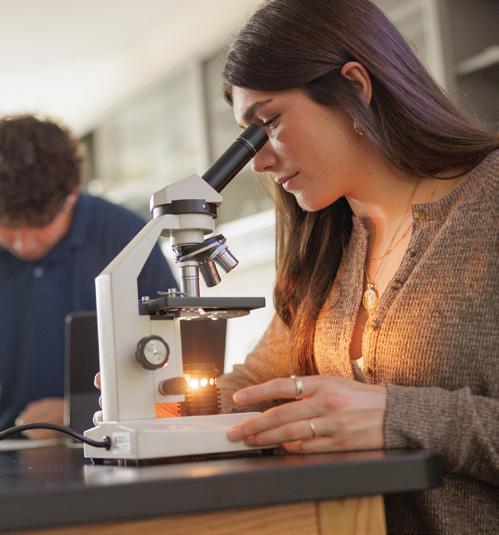
scope and approach. AP Chemistry covers all the subject matter typically included in a general chemistry course in the first year of college with an emphasis on understanding the basic practices of science and applying them in both class work and laboratory. This course is centered on a model of instruction that promotes enduring and conceptual understanding in which students will acquire and apply their essential knowledge through inquiry-based activities. During the year, students will explore content such as atomic structure, intermolecular forces and bonding, chemical reactions, kinetics, thermodynamics, and equilibrium. All students are required to take the AP exam at the end of the year.
▸ 3 CREDITS; PREREQUISITES: BIOLOGY AND CHEMISTRY, AND COMPLETION OF ALGEBRA 2
How do the principles of physics and mathematics drive problem-noticing and problem-solving in the natural world?
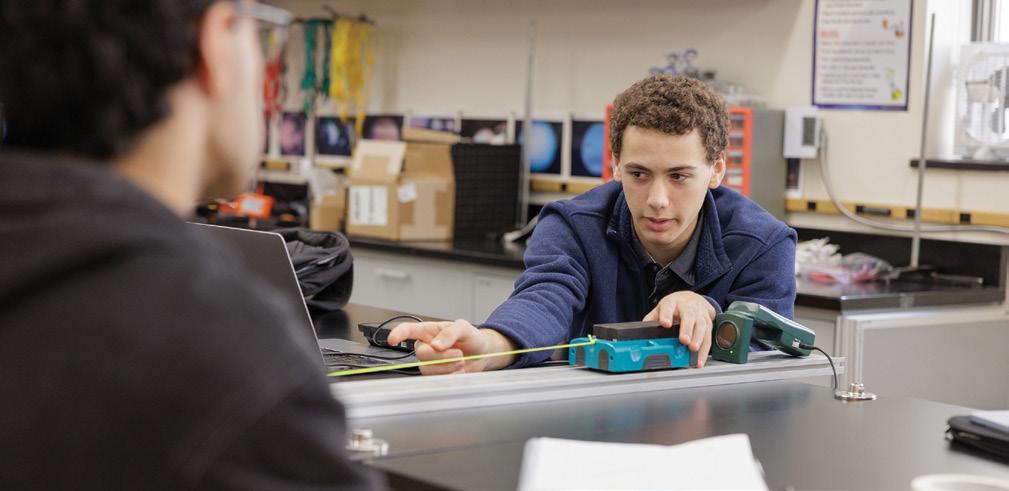
Students will develop skills in problem-noticing and problemsolving, practicing inquiry in science while studying 1 and 2D kinematics, Newton’s laws, circular motion, conservation of energy, and impulse and momentum. Emphasis will be placed on hands-on laboratory activities, class discussions, and collaborative work.
▸ 3 CREDITS; PREREQUISITES: COMPLETION OF BIOLOGY, CHEMISTRY, AND GEOMETRY; AND ALGEBRA 2 OR AN EQUIVALENT COURSE; A GRADE OF 93 IN ALGEBRA 2 OR 85 IN ALGEBRA 2 HONORS
How can the big ideas of change, interactions, systems, and conservation be used to explain mechanics?
AP Physics 1 is an algebra-based, introductory college-level physics course. Students cultivate their understanding of physics through inquiry-based investigations as they explore these topics: kinematics, dynamics, circular motion and gravitation, energy, momentum, simple harmonic motion, torque, rotational motion, and fluids. All students are required to take the AP exam at the end of the year.
▸ 3 CREDITS; PREREQUISITES: PHYSICS, AP PHYSICS 1, AP PHYSICS C, OR EQUIVALENT COURSE; CONCURRENT ENROLLMENT IN PRECALCULUS OR AN EQUIVALENT COURSE
How can the big ideas of change, interactions, systems, and conservation describe natural phenomena?
AP Physics 2 is an algebra-based, introductory college-level physics course. Students cultivate their understanding of physics through inquiry-based investigations as they explore these topics: thermodynamics; electrical force, field, and potential; electric circuits; magnetism and electromagnetic induction; geometric and physical optics; and quantum, atomic, and nuclear physics. All students are required to take the AP exam at the end of the year.
▸ 3 CREDITS; PREREQUISITES: BIOLOGY, CHEMISTRY, AND ONE OF EITHER (1) PHYSICS AND CONCURRENT ENROLLMENT IN AP CALCULUS OR COMPLETION OF ANY CALCULUS COURSE OR (2) COMPLETION OF AP CALCULUS BC WITH A GRADE OF 85 OR HIGHER
How can we apply rigorous mathematical techniques to understand and explain naturally occurring phenomena?
AP Physics C: Mechanics is a calculus-based, college-level physics course. Students will apply their knowledge and skills in calculus and advanced mathematics to understand the physical world around them. Emphasis will be placed on mechanics, as specified by the AP curriculum. This course covers the same general content as AP Physics 1, but is much more mathematically intensive. All students are required to take the AP exam at the end of the year.
▸ 3 CREDITS; GRADES 11, 12, PG ONLY;
PREREQUISITES: BIOLOGY AND CHEMISTRY
How does the anatomy and physiology of various organs and organ systems control the health and balance of the human body?
Students will investigate the structure and function of human organ systems. Anatomical terminology, basic biochemistry, cells, tissues, and body systems will be the focus of study and exploration for this course. Students will expand their knowledge of natural science as they participate in class discussions and labs, design inquiry-based projects that explore the implications of pathologies, and present current medical research findings they have studied with specific relevance to their daily lives. Comparative anatomy and physiology will also be emphasized and examined through dissection of various organs and preserved specimens. A clinical application of knowledge will continuously be stressed throughout the course, as students learn more about the health and wellbeing of the human body and what causes illness, disease, injury, and impairment.
▸ 3 CREDITS; GRADES 11, 12, PG ONLY; PREREQUISITES: BIOLOGY AND CHEMISTRY AND GRADE OF 93 IN PRIOR SCIENCE CLASS AND RECOMMENDATION OF CURRENT INSTRUCTOR
Why should we study the state of the Earth?
The focus of AP Environmental Science is the observed science underlying environmental problems and issues.
Students will explore and investigate the interrelationships of the natural world and analyze environmental problems, both natural and human-made. Students will conduct laboratory investigations and fieldwork, designed to increase their ability to explain environmental concepts and processes. By analyzing data, visual representations, and writings, students will learn how to propose solutions for environmental problems and support their ideas with evidence. All students are required to take the AP exam at the end of the year.
▸ 1 CREDIT; GRADES 11, 12, PG ONLY; PREREQUISITES: BIOLOGY AND CHEMISTRY
What lies beneath and within Earth’s oceans, how have humans explored the deep ocean, and what properties control the movement of our global seas?
Students will investigate the broad-scale features and dynamics of Earth’s oceans. How do tides form? Why is the ocean salty, and how does salinity control the movement of heat and water on our planet? How can life exist miles below the surface and in complete darkness? What would Europe be like without the Gulf Stream? Topics will include the history and scope of oceanography, global tectonics, tsunamis, ocean-atmosphere dynamics, coastal processes, waves, tides, and marine ecosystems, as well as the significance of the oceans to the climate and humanity.
▸ 1 CREDIT; GRADES 11, 12, PG ONLY;
PREREQUISITES: BIOLOGY AND CHEMISTRY
How have organisms adapted to the extreme conditions of the ocean? What properties of ocean ecosystems allow such diversity of marine life to flourish?
Students will study the biology of marine organisms and the biological and physical processes that affect these organisms, their populations, and their coastal and oceanic ecosystems. Topics will include marine ecosystems, diversity of marine organisms, and the ocean environment, as well as the importance of marine habitats to terrestrial habitats. Students will learn about the biology, evolution, and ecology of organisms that inhabit these environments, from the microbial to marine mammals, and the ecological processes linking them. This course will include several dissections, such as squid and dogfish shark.
▸ 1 CREDIT; GRADES 11, 12, PG ONLY;
PREREQUISITES: BIOLOGY AND CHEMISTRY
How do oceans shape global communities, and how have human activities altered marine environments?
More than 1 billion people live within six miles of a coastline. Such proximity not only puts tremendous strain on marine environments, but also increases the likelihood that those communities will be impacted by natural disasters. This course explores the challenges of coexisting with marine environments by investigating topics of resource management, such as plastic pollution and overfishing. Students then examine the dynamics of climate change and a warming ocean, resulting in ocean acidification, coral bleaching, sea level rise, and storm intensification. Students apply their understanding to realworld mitigation and adaptation strategies, with particular attention to environmental justice and the unequal burdens faced by different communities. The trimester concludes with a final project in which students evaluate strategies for how humans are currently adapting, and will continue to adapt, to a rapidly changing ocean.
▸ 1 CREDIT; GRADES 11, 12, PG ONLY;
PREREQUISITES: BIOLOGY AND CHEMISTRY
How is DNA technology used in forensic science, medicine, environmental clean-up, and genetically modified foods? The course will begin with the study of genetics. It includes the study of gene development and the structure and function
of DNA in plants, animals, humans, and bacteria with a focus on how the characteristics of a species are passed from one generation to the next. This course will introduce students to the rapidly changing field of biotechnology. Revolutionary advances in the field of molecular biology have made it possible to use cells and molecules to address problems like the detection and treatment of HIV, the identification of gene functions, and the production of new antibiotics and new plant varieties. Students will learn how to use various biotechnology techniques to explore gene function and pertinent applications from genetic engineering to modern biological problems. This is a lab-based course.
▸ 1 CREDIT; GRADES 11, 12, PG ONLY; PREREQUISITES: BIOLOGY AND CHEMISTRY
What is kinesiology, and why does it matter?
From health, exercise, and rehabilitation to physical and occupational therapy, kinesiology is part of the physical movement in our daily lives. The principles of mechanics and anatomy in relation to our physical movements will be the focus of study in this course. Students will examine human movement from a variety of perspectives, including injury prevention and rehabilitation, biomechanics, sports, and exercise physiology. In addition, motor control and development of both the upper and lower extremities will be explored through lab work.
▸ 1 CREDIT; GRADES 11, 12, PG ONLY; PREREQUISITES: BIOLOGY AND CHEMISTRY
How is physics used in both the diagnosis and treatment of diseases, and how are these principles driving innovations to improve patient outcomes in modern health care?
The field of medical physics lies at the intersection of physics and medicine, driving advancements in medical diagnostics and therapeutic interventions. This course will explore the physical principles that underpin many of the advanced technologies used in health care today. Topics will include a range of diagnostic techniques, such as ultrasound, radiography, and MRI, as well as therapeutic techniques, with a particular focus on radiation therapy. Students will analyze how these applications of theoretical physics are used to solve medical challenges and transform patient care. Emerging developments in medical physics will also be introduced, and by the end of this course, students will appreciate the role that physics plays in medicine.

▸ 1 CREDIT; GRADES 11, 12, PG ONLY; PREREQUISITES: BIOLOGY AND CHEMISTRY
How does physics explain the production, perception, and modification of sounds?
Students will investigate the roles that physics and biology play in sonic elements like musical scales, tuning, harmonics, hearing, and digital production. Through hands-on inquiry, students will investigate the science of sound and its realworld applications in musical instruments, performance venues, and more. The course culminates with a practical project on soundscaping or sound design.
▸ 1 CREDIT; PREREQUISITES: HONORS CHEMISTRY OR AP CHEMISTRY
How do the structures and properties of organic compounds influence their behaviors and applications in everyday life?
This course will focus on fundamental concepts of organic chemistry with emphasis on alkanes, alkenes, alkynes, and all functional groups. Students will explore covalent bonding, structures, IUPAC nomenclature, and physical properties of basic organic compounds. Then, students will be introduced to reaction mechanisms, organic synthesis, and analytical techniques such as IR and mass spectroscopy through labs and activities.
▸ 1 CREDIT; GRADES 10, 11, 12, PG ONLY; PREREQUISITE: ALGEBRA 2; OFFERED DURING X-BLOCK ONLY
What’s in the night sky and “out there”?
Students will combine observational and mathematical techniques to study the physical nature of our solar system and universe at large. Topics of study will include diurnal motion, planetary and atmospheric science, formation of solar systems and galaxies, stellar evolution, and cosmology.
▸ 1 CREDIT; PREREQUISITES: BIOLOGY AND CHEMISTRY; OFFERED 2027-2028
How can we understand the risk to our “health and wealth” from natural and manmade disasters?
This course will serve as an introduction to the study of environmental risk, both natural and manmade. Through the course of study, students will analyze and compare multiple types of hazards: natural disasters, such as tornadoes, earthquakes, and meteorite impacts; long-term societal effects due to environmental change, such as sea-level rise and climate change; and the “unnatural disaster” of human globalization and its effects on environmental health and extinction rates. This course emphasizes the basic physical principles controlling hazardous phenomena, including geologic and atmospheric sciences. Students will develop simple quantitative methods for making scientifically reasoned assessments of the threats (to health and wealth) posed by various events, processes, and exposures, with a particular focus on the anticipated effects of anthropogenic climate change experienced by the typical New Jersey homeowner.
▸ 1 CREDIT; PREREQUISITES: BIOLOGY AND CHEMISTRY; OFFERED 2027-2028
What are the challenges associated with the control of nature? What opportunities are there for mitigation and adaptation?
Since the dawn of civilization, humanity has attempted to engineer the environment with the goal of controlling natural Earth processes. Through case studies, students will learn how to evaluate the varying degrees of success in “controlling nature,” exploring the borderlands between our engineered landscapes and Earth’s natural ecosystems. The students’ focus will be guided toward the negative consequences of global climate change seen in the severity and frequency of natural disasters. Although the exacerbation of our vulnerability to natural disasters may seem to indicate a climate catastrophe, students will play the role of environmental engineers in evaluating solutions designed to increase environmental resilience and decrease the atmospheric concentration of greenhouse gasses.
REQUIREMENTS: 1 CREDIT REQUIRED; INTRODUCTION TO COMPUTER SCIENCE REQUIRED
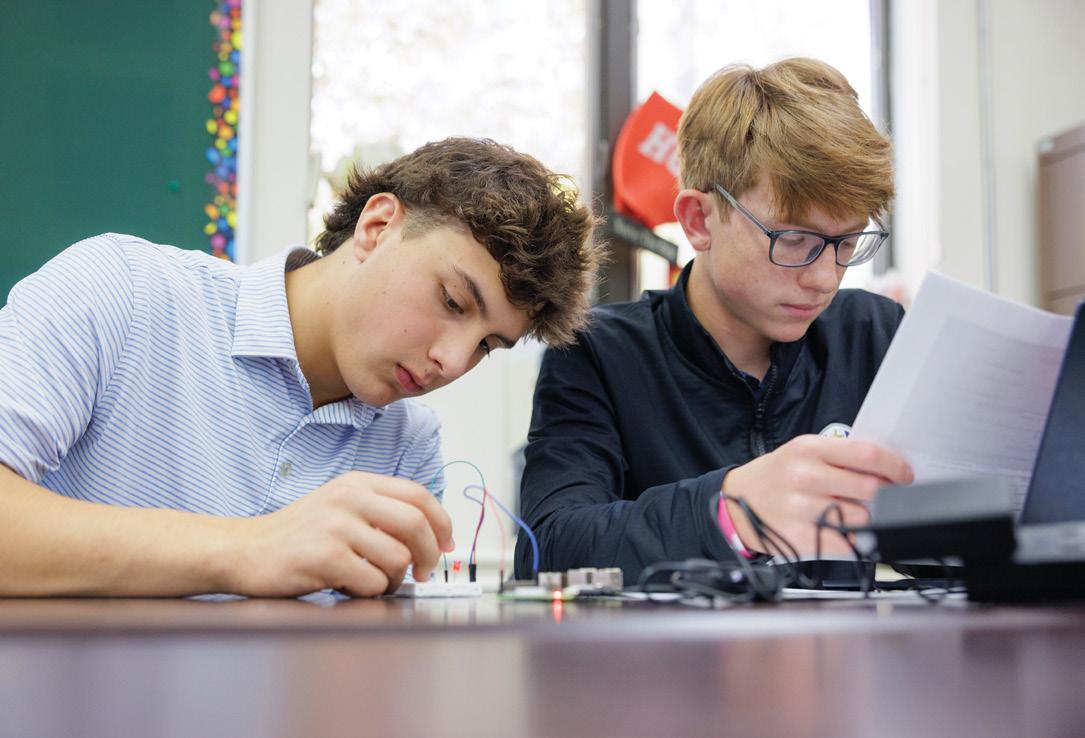
In a world more and more defined by technology and its interface with the liberal arts, mastering the skills necessary to thrive today means making technology our tool rather than our master. All ninth graders at The Hun School of Princeton take an Introduction to Computer Science course as one element of their essential skills preparation. This requirement ensures that all Hun students have exposure to the twenty-first-century language of computer programming and data. The Computer Science and Engineering Department also offers a variety of courses in topics on the cutting edge of engineering and technology programming, including web design and application creation, cybersecurity, and artificial intelligence.
▸ 1 CREDIT; REQUIRED FOR GRADE 9
This introductory course takes a wide lens on computer science by covering topics such as programming, digital citizenship, and data. Students will use the design process to develop empathetic solutions to problems facing society in a highly collaborative environment. Students will survey a variety of areas to guide them in choosing future computer science and engineering electives at Hun.
▸ 1 CREDIT
What is the language of a computer?
Students in this course will focus on learning the fundamentals of programming using the Python programming language. These concepts include constants, variables, parameterized functions, control structures, and basic data structures. The design process will be used as students combine their creativity and programming skills to build unique solutions to problems.
▸ 1 CREDIT; GRADES 10, 11, 12, PG ONLY
What makes a device vulnerable to a cyber attack, and how can we protect technology, networks, and data from damage or unauthorized access?
In this course, students will investigate strategies to identify and protect against security threats such as hackers, eavesdropping, and network attacks. The basics of cryptography and logic reasoning will be explored. Hands-on labs in a remote cyber range provide real-world practice in the configuration and mitigation of system vulnerabilities. Each unit integrates current events and related cyber ethics and law. No programming is required.
*An ethics agreement must be signed by all students and parents during the first two weeks of class.
▸ 1 CREDIT
How can the engineering design process be utilized to produce autonomous, task-oriented robots?
Students will be introduced to the engineering design process using robotic programming. The team-based design process will be used to construct remote control and autonomous
MR. PAUL BAIER
BROWN UNIVERSITY – B.A.
COLLEGE OF CHARLESTOWN – M.S.
MS. JAIME GILLIGAN
ASSOCIATE DIRECTOR OF RESIDENTIAL LIFE
TRUMAN STATE UNIVERSITY – B.A.
MRS. CLAUDETTE GUY
COLLEGE OF WILLIAM AND MARY – B.S.
COLLEGE OF SAINT SCHOLASTICA – M.ED.
MRS. DEANNA WHELAN
EDUCATIONAL TECHNOLOGY DESIGNER
RUTGERS UNIVERSITY – B.A.
THE GEORGE WASHINGTON UNIVERSITY – M.ED.
MS. AMY WRIGHT CHAIR
NEW JERSEY INSTITUTE OF TECHNOLOGY – B.S.
devices using a problem-based curriculum. Student teams will design, test, and operate robots that will be able to remotely manipulate objects.
▸ 1 CREDIT
Why is “how” essential to problem-solving?
Students in this trimester course will be introduced to engineering design and process. This course is geared toward students interested in going further with engineering and a hands-on application of engineering design, problem-solving, critical thinking, ethics, and management. Engineering is concerned with the implementation of a solution to a practical problem. A scientist may ask “why?” and proceed to research the answer to the question. By contrast, engineers want to know how to solve a problem and how to implement that solution. Students will work individually and together to solve problems in creative ways.
In a world where artificial intelligence continues to be a common presence in classrooms, workplaces, and everyday life, the Artificial Intelligence course challenges students to rethink what AI really is — and what it isn’t. Rather than treating AI as something that does the thinking for them, this course encourages students to use it as a supplemental tool; students remain the directors of their work, while training AI to act as their assistant.
A fan-favorite assignment is a creative project that allows students to choose their own artistic adventure (think comic books and short films) and use AI to generate supporting elements like images, audio, or video clips to create their masterpiece. “I want students to create the broad strokes and use AI to fill in the gaps,” says Mr. Baier. “What I love about this project is that it exposes the limitations of AI, and students learn that it can actually be quite difficult to get AI to do exactly what you want.” The goal of this assignment isn’t artistic perfection, but learning how to communicate ideas clearly and guide AI toward a specific vision.
Beyond creative work, students study machine learning, neural networks, and AI in gaming, helping them peek behind the curtain and understand how the technology really works. “AI cannot and will not ever be a replacement for thinking,” says Mr. Baier. “My hope is that students can see the wizard behind the curtain while also appreciating the utility of the machine.”
▸ 1 CREDIT; GRADES 10, 11, 12, PG ONLY
Can machines think, and if they can, should they make decisions for us? From autonomous vehicles to recommended videos, machines make decisions for us, but does this mean they should?
In this course, students will learn what artificial intelligence (AI) is, how it is currently used, and how it could be used in the future. They will be introduced to machine learning, deep learning, and neural networks and how they already make decisions in daily life. Students will be taught the history of AI, how it is used today, and delve into the future of AI and its many possible applications while exploring issues and concerns surrounding AI. Students will experiment with numerous AI applications, and do some basic programming of an artificially intelligent system.
▸ 1 CREDIT; GRADES 10, 11, 12, PG ONLY
How is technology used to build solutions to everyday problems, and how does this impact the world around us?
Have you ever wished Alexa would understand you better? Have you ever wondered about the science behind tap-and-go technologies like Apple Pay? Internet-connected devices are fundamentally changing our lives and the world around us. In this course, students will study the “things” that make up the Internet of Things. They will explore how each is connected to one another, how the IoT communicates, and how data is stored and secured. Students will design and build their own prototypes using sensors and actuating technology and practice IoT programming using microcomputers such as Arduino or Raspberry Pi.
▸ 1 CREDIT; GRADES 10, 11, 12, PG ONLY
How can the World Wide Web be used as a platform for creativity and self-expression?
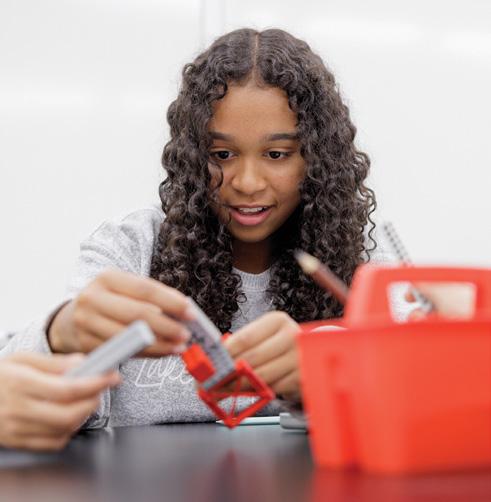
The World Wide Web offers each of us a space for creativity, self-expression, and innovation. In this course, students will learn the fundamentals of web development including accessible design, storing and collecting data, and hosting a website. Students will build a basic website using HTML and CSS and then dive deeper by incorporating JavaScript code to make web design interactive. This project-based course will enable students to design and develop original websites from the ground up.
▸ 1 CREDIT; GRADES 10, 11, 12, PG ONLY
How do we use digital data to gain knowledge? How can digital data inform our understanding of issues we care about in our world?
The ability to extract, analyze and visualize data is an important skill in our evermore digitalized world. This course will introduce students to basic data analysis skills and concepts by exploring the wealth of information available through AI and live sites in areas such as economic, geographic, and social media datasets. Beyond gathering data, students will clean data to prepare for interpretation, develop Python scripts within tools like Jupyter or CoLab to perform analysis, and create visualizations of the results. Students will conclude the course by analyzing an individually chosen data set and presenting visualizations of their findings.
▸ 3 CREDITS; GRADES 10, 11, 12, PG ONLY; PREREQUISITE: GRADE OF 93 IN INTRODUCTION TO COMPUTER SCIENCE, PROGRAMMING, OR WEB DESIGN AND DEVELOPMENT
What are the central ideas of computer science that explain how computing has changed the world?
AP Computer Science Principles is a rigorous, engaging, and approachable course that explores many of the foundational ideas of computing so all students understand how these concepts are transforming the world in which we live. Using programming languages and applications, students will solve computational problems and create computational
artifacts such as an app or a web page. Students will also develop effective leadership and collaboration skills by working individually and in groups. Assigned activities will allow students to creatively solve problems from many disciplines and discuss and write about the importance of these problems and their impacts on the world, both locally and globally. All students are required to take the AP exam at the end of the year.
▸ 3 CREDITS; PREREQUISITE: GRADE OF 85 IN AP COMPUTER SCIENCE PRINCIPLES AND A 3 OR BETTER ON THE AP EXAM OR GRADE OF 93 IN PROGRAMMING OR GRADE OF 93 ON PLACEMENT TEST WITH STEM TEACHER RECOMMENDATION
What computer programming concepts and skills must I acquire in order to earn university credit for an introductory computer science course?
AP Computer Science A is an introduction to Java programming that allows qualified students the possibility of earning university credit for an introductory computer science class. Students will learn logic, syntax, methods, and data structures and develop functional, readable, and reusable computer programs that solve specific problems effectively and efficiently. Students will analyze algorithms and participate in pair-programming activities that facilitate an appreciation for the best programming practices and ethical computing behaviors that underpin computer science. Students who take this college-level course are required to take the AP exam in May.
▸ 3 CREDITS; PREREQUISITE: GRADE OF 85+ IN AP COMPUTER SCIENCE A
How can we use software engineering techniques to build efficient, reliable, and user-friendly Java applications?
This course dives deeper into Java programming and software engineering principles, focusing on advanced concepts, design patterns, and best practices. Students will apply their knowledge to build software solutions, emphasizing coding standards, architecture, and problemsolving skills.
REQUIREMENTS: 9 CREDITS REQUIRED; ALGEBRA 1, GEOMETRY, AND ALGEBRA 2 REQUIRED
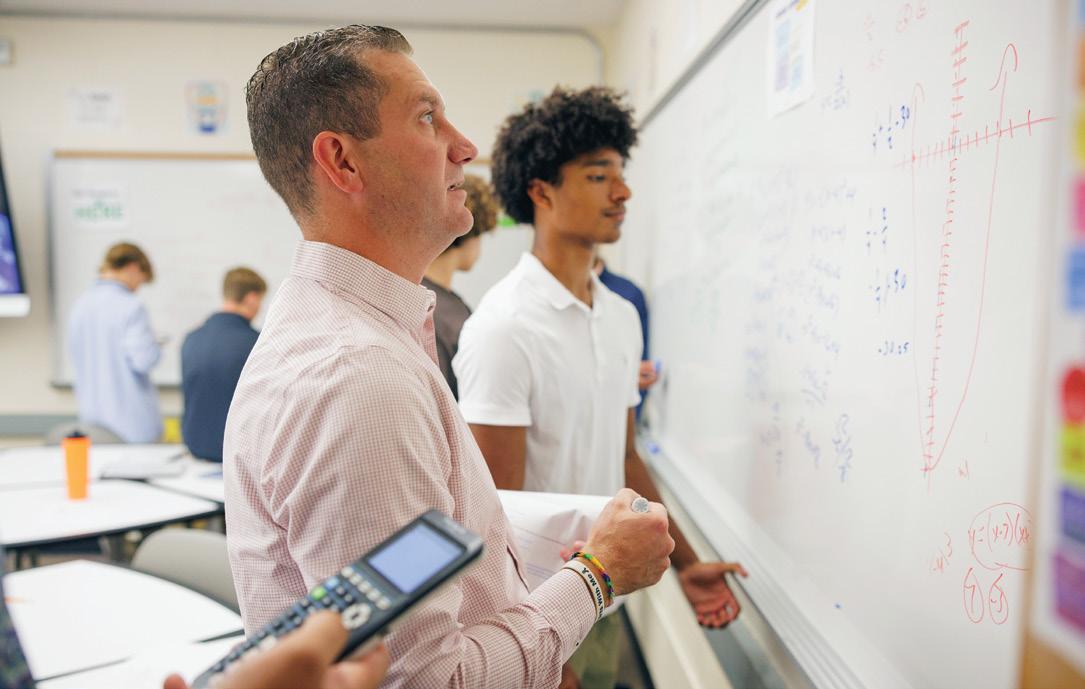
The Hun School of Princeton’s founder, Dr. John Gale Hun, was a Princeton University math professor renowned for being able to teach high-level math to anyone. Today, Hun’s Mathematics Department creates an atmosphere that fosters active student participation in the learning process. Students are encouraged to think creatively while constructing ideas and solving problems. Incorporating the latest technology, students become critical thinkers and collaborate in small and large groups as they learn to think logically and critically.
▸ 3 CREDITS; REQUIRED COURSE FOR GRADUATION
How can math be used as a language? How can algebraic properties be used to manipulate expressions and solve equations?
Students will learn the language of mathematics — algebra. The mastery of this language is necessary for problemsolving and decision-making in all math courses. The course content includes the solving and graphing of linear equations, inequalities, exponents, quadratic equations, polynomials, and factoring. In studying these concepts, students will develop problem-solving, reasoning, and communication skills while applying math to real-world situations. Students are introduced to technology via many features of the TI-84 Plus C graphing calculator.
▸ 3 CREDITS; PREREQUISITE: ALGEBRA 1; REQUIRED COURSE FOR GRADUATION
How can geometric theorems and postulates be used to think logically and to solve problems? What purposes do measurements serve?
Students will learn to think logically by examining concepts and topics involving plane Euclidean geometry. Students investigate, make conjectures, and form conclusions. The course content includes the study of parallelism, congruent polygons and similar polygons, right triangle properties, circles, and area. Students will construct their understanding through logical reasoning, problem-solving, and communication. The course incorporates the use of technology in the form of the TI-84 Plus C graphing calculator.
▸ 3 CREDITS; PREREQUISITE: GRADE OF 93 IN ALGEBRA 1; FULFILLS GEOMETRY REQUIREMENT
How is being able to think logically and reach conclusions a useful life tool? When does geometry help us understand algebra, and when does algebra help us understand geometry?
Students will develop their analytical thinking skills while learning the geometric principles of Euclidean geometry through proof- and problem-solving. The course content includes parallel lines, polygons, congruence, similarity, right triangle trigonometry, area, and volume. Honors students are required to do more challenging proofs and apply their knowledge to more rigorous applications. Students are expected to be able to do so with minimal guidance. The course incorporates the use of technology in the form of the TI-84 Plus C graphing calculator.
MR. MARCUS BRIGHT KEAN UNIVERSITY – B.S.
MR. RYAN BROWN
LOYOLA MARYMOUNT UNIVERSITY – B.S., B.A.
EASTMAN SCHOOL OF MUSIC – M.M. INDIANA UNIVERSITY – D.M.A.
MS. KATE BUTLER
SKIDMORE COLLEGE – B.A. RUTGERS UNIVERSITY – M.ED.
DR. DANIELLE COOKE
UNIVERSITY OF DAYTON – B.S.
LEHIGH UNIVERSITY – M.S., PH.D.
MR. DAVID DAVIS TEMPLE UNIVERSITY – B.A.
MRS. JULIE DAVIS CHAIR
UNION COLLEGE – B.S.
DREXEL UNIVERSITY – M.S.
MR. CHARLES DUBOC
ROGER WILLIAMS UNIVERSITY – B.S., M.ARCH. ARCADIA UNIVERSITY – M.ED.
QUINNIPIAC UNIVERSITY – M.B.A.
MR. PATRICK JONES
JUNIATA COLLEGE – B.S.
MS. MISTY PALMER
ASSOCIATE HEAD OF THE UPPER SCHOOL
SEWANEE: THE UNIVERSITY OF THE SOUTH – B.A.
LOYOLA UNIVERSITY NEW ORLEANS – M.S.
MR. PATRICK QUIRK ʼ02
DICKINSON COLLEGE – B.A.
THE COLLEGE OF NEW JERSEY – M.A.T.
CANISIUS COLLEGE – M.S.
MS. MOLLY SPADARO
STEVENS INSTITUTE OF TECHNOLOGY – B.S., M.S.
MS. JENNIFER STONE ʼ93
WIDENER UNIVERSITY – B.A.
MR. JONATHAN STONE
COLGATE UNIVERSITY – B.A.
UNIVERSITY OF ROCHESTER – M.S.
▸ 3 CREDITS; PREREQUISITES: ALGEBRA 1 AND GEOMETRY; REQUIRED COURSE FOR GRADUATION
How can algebraic and graphical representations be constructed, interpreted, and manipulated?
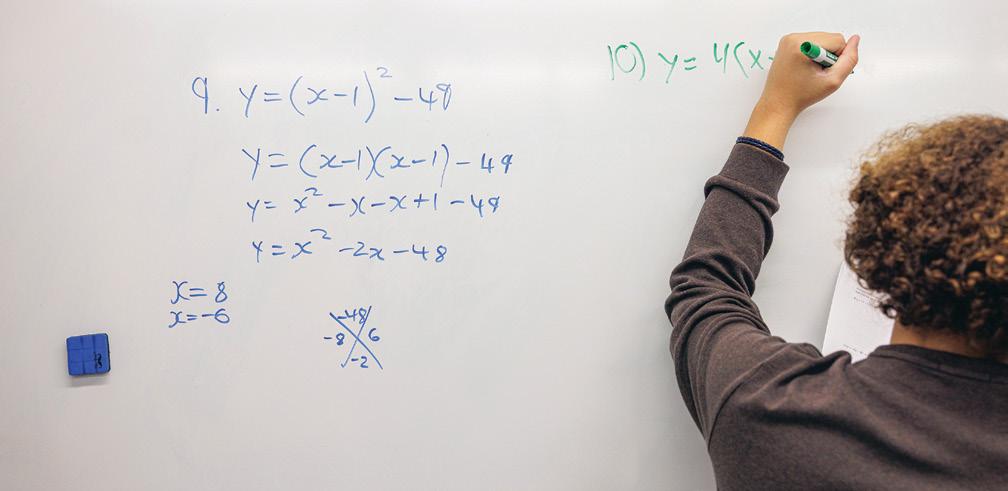
Students will extend the language and operations of algebra that they first explored in Algebra 1 to evaluate, analyze, and solve problems. Students will identify and analyze relationships among functions. The course content includes quadratic functions, rational exponents, rational equations, and matrices. Students will broaden their problem-solving skills and techniques. They will learn the more advanced features of their TI-84 Plus C graphing calculators.
▸ 3 CREDITS; PREREQUISITES: GRADE OF 93 IN ALGEBRA 1 AND GRADE OF 93 IN GEOMETRY OR 85 IN GEOMETRY HONORS; FULFILLS ALGEBRA 2 REQUIREMENT
How can algebraic equations and inequalities be used as tools to model and explain real-life scenarios and problems?
Students will learn to represent functions algebraically, numerically, and graphically, and analyze function behavior. The types of functions include linear, quadratic, radical, and rational. Students are expected to have mastered the symbolic language of algebra that they learned in Algebra 1. Students will be challenged with applications involving mathematical modeling and nontrivial problem-solving. The TI-84 Plus C calculator is essential for this course.
▸ 3 CREDITS; PREREQUISITE: ALGEBRA 2
How do algebraic concepts interconnect and build on each other? How can algebra be used as a scaffold for problem-solving?
Students will reinforce and expand their knowledge of algebraic concepts from Algebra 1 and Algebra 2 while strengthening their problem-solving skills. The course will prepare students to study precalculus. Included in the course of study are sets of and operations on real numbers, functions and graphs, matrices, sequences and series, and systems of equations. Mathematical modeling is an inherent component of the course. Students will learn how to integrate technology strategically by using the TI-84 Plus C graphing calculator.
▸ 3 CREDITS; PREREQUISITE: GRADE OF 80 IN ALGEBRA 2 OR 85 IN ADVANCED ALGEBRA
What are the practical applications of algebraic, exponential, and trigonometric functions?
Students will continue to build upon their foundation of Algebra 1 and Algebra 2. Students will learn to represent, analyze, manipulate, and evaluate polynomial, exponential, logarithmic, and trigonometric functions. Students will also study radian measures, trigonometric equations and identities, and applications to the real world with the laws of sine and cosine. The TI-84 Plus C calculator is essential for this course.
▸ 3 CREDITS; THIS HIGH-LEVEL MATH COURSE IS DESIGNED ONLY FOR THE MOST CAPABLE MATH STUDENTS; ENROLLMENT APPLICATION REQUIRED
How are functions used to represent and communicate mathematical ideas precisely and accurately? How are the algebraic, numeric, and graphic representations of functions related?
Students will participate in a highly accelerated course that covers the entire Algebra 2 Honors and Precalculus Honors curricula in one year. This course is intended for only the most mathematically proficient students. The pace is quick, the material is rigorous, and the content is thorough. Students will learn how to analyze and solve problems numerically, algebraically, and graphically. The course content includes polynomials, rational functions, radical functions, matrices, exponential and logarithmic functions, conic sections, trigonometry, vectors, parametric equations, polar equations, and limits. The TI-84 Plus C calculator is essential for this course.
PRECALCULUS
▸ 3 CREDITS; PREREQUISITES: GRADE OF 93 IN ALGEBRA 2 AND A 93 ON A PLACEMENT TEST OR 85 IN ALGEBRA 2 HONORS, AND RECOMMENDATION OF CURRENT INSTRUCTOR
How do functions help us describe data and physical phenomena and solve a variety of problems? How are the algebraic, numerical, and graphical representations of functions related?
Students will learn to think like mathematicians through mathematical modeling and problem-solving. Students will prepare for calculus by engaging in a challenging course of study that includes many nontrivial problems. Students will conceptualize, analyze, and identify relationships among functions. The course content includes rational, polynomial, exponential, and logarithmic functions; trigonometry and its applications; parametric and polar equations; sequences; and series. Students will learn the curriculum as prescribed by the College Board to prepare for the AP exam. All students are required to take the AP exam at the end of the year. The TI-84 Plus C calculator is essential for this course.
▸ 3 CREDITS; PREREQUISITE: GRADE OF 85 IN PRECALCULUS OR AP PRECALCULUS
How are the patterns of change related to the behavior of functions? What role do limits and derivatives play as a foundation for calculus and in practical applications?
Students in this class will transition from precalculus into calculus by reinforcing skill development and progressing to more rigorous problems. Students will be introduced to the concepts of calculus by examining the concept of limits, by computing rates of change, and by learning the various rules of differentiation and integration using polynomial functions. The TI-84 Plus C is essential for this course.
▸ 3 CREDITS; PREREQUISITES: GRADE OF 93 IN PRECALCULUS OR CALCULUS AND A 93 ON A PLACEMENT TEST OR GRADE OF 85 IN AP PRECALCULUS WITH A 3 OR BETTER ON THE AP PRECALCULUS EXAM, AND RECOMMENDATION OF CURRENT INSTRUCTOR
How can change be described mathematically? Why is calculus the study of change?
Students will receive a comprehensive introduction to differential and integral calculus and follow the curriculum as prescribed by the College Board. Students will work with functions represented in a variety of ways: graphical, numerical, analytical, and verbal. Students will learn rates of change in differential calculus and the area and volume of shapes in integral calculus. Students will use technology to help solve problems, determine reasonableness of solutions, interpret results, and verify conclusions. The TI-84 Plus C is essential for this class. All students are required to take the AP exam at the end of the year.
▸ 3 CREDITS; PREREQUISITES: GRADE OF 93 IN AP PRECALCULUS WITH A 4 OR BETTER ON THE AP PRECALCULUS EXAM AND RECOMMENDATION OF CURRENT INSTRUCTOR
How can change be described mathematically? Why is calculus the study of change? How do you determine error in mathematics?
Students will learn differential and integral calculus in a curriculum prescribed by the College Board. Students will study all of the topics covered in AP Calculus AB plus additional topics. Students will work with functions represented in a variety of ways: graphical, numerical, analytical, and verbal. Students will learn the relationship between the derivative and the definite integral. Students will learn how to use calculus to solve problems that algebra and geometry cannot solve. Applications of differentiation and integration to biology, physics, and the social sciences receive special attention, as does the study of parametric and polar functions and infinite series. The TI-84 Plus C is essential for this class. All students are required to take the AP exam at the end of the year.
▸ 3 CREDITS; PREREQUISITES: GRADE OF 85 IN AP CALCULUS BC AND 4 OR BETTER ON AP CALCULUS BC EXAM AND RECOMMENDATION OF CURRENT INSTRUCTOR
How can calculus be used on planes and surfaces? How can power series be used to solve differential equations?
Students will receive a rigorous introduction to multivariable calculus. Students will learn multivariable functions represented in rectangular, cylindrical, and spherical graphic systems. This course is intended for only the most mathematically proficient students who have successfully completed AP Calculus BC. Course content includes Taylor polynomials, differential equations, vectors, functions of several variables, partial derivatives, and multiple integrals. The TI-84 Plus C and Grapher are used in this class.
▸ 3 CREDITS; PREREQUISITES: GRADE OF 85 IN AP CALCULUS OR CONCURRENT ENROLLMENT IN AP CALCULUS AND RECOMMENDATION OF CURRENT INSTRUCTOR
How can collection, organization, interpretation, and display of data be used to answer questions? How can patterns be observed through data?
Students will be introduced to statistics and probability while following the curriculum as prescribed by the College Board.
Students will collect, analyze, and draw conclusions from data. Students will learn the basics of experimental design and proper sampling techniques, followed by data collection and summary. Students will explore random phenomena using probability and simulation. Techniques of descriptive statistics are covered in detail, followed by a comprehensive overview of probability. The course also covers the major aspects of inferential statistics, including inference with confidence and hypothesis testing. The TI-84 Plus C and Excel are used to enhance the analysis of data. All students are required to take the AP exam at the end of the year.
▸ 3 CREDITS; PREREQUISITES: GRADE OF 85 OR BETTER IN AP CALCULUS AB OR AP CALCULUS BC AND 3 OR BETTER ON EITHER AP EXAM AND RECOMMENDATION OF CURRENT INSTRUCTOR
How are the tools of linear algebra used to model and represent numeric operations and build geometric understanding of matrices and vector spaces?
Students in this course will learn the fundamentals of vectors and matrices including how to perform operations on matrices, determinants, inverses, transposes, and how to solve systems of equations. The students will then work in a more abstract linear algebra setting to learn about vectors from algebraic and geometric viewpoints. Students will delve into homogeneous and nonhomogeneous systems, projections, and linear maps; and learn span, linear transformations, vector spaces, diagonalization of matrices, eigenvalues, and eigenvectors.
▸ 1 CREDIT; PREREQUISITE: PRECALCULUS
What can the study of probability tell us about the world around us?
Students will be introduced to the basic principles of probability theory and its applications. Students will learn how to calculate the probability behind board games, card games, game shows, and other events. Students will also learn to analyze data and perform simulations to investigate the relationship between theoretical and experimental probability. Topics include the fundamental counting principle, combinatorial analysis used in computing probabilities, conditional probability and independence of events, and probability distributions. The TI-84 Plus C and Excel are used to enhance the analysis of data.

▸ 1 CREDIT; PREREQUISITE: PRECALCULUS
How can collecting, organizing, and displaying data help us analyze information and make reasonable predictions and informed decisions?
Students will be introduced to statistical thinking and interpretation of data. The course connects statistics to the real world through investigations. Students build basic skills and vocabulary, use and interpret concepts, and perform simulations, while an increased technology focus guides students in exploring the Internet, newspapers, and other sources of data. Course content includes computer-aided statistical modeling of real problems, estimation, and test of statistical hypotheses. The TI-84 Plus C and Excel are used to enhance the analysis of data.
▸ 1 CREDIT; PREREQUISITE: PRECALCULUS
How can number theory be used to analyze patterns, relations, and functions in order to describe the interconnected relationships found throughout the world?
Students in this trimester class will be introduced to looking at the world through a discrete mindset where options have clear separations and fall into non-overlapping, distinct categories. Students will learn to use mathematical reasoning in order to read, comprehend, and construct mathematical arguments and then use that knowledge to count objects, learn whether or not it is possible to count objects, find the sums of finite and infinite series, use sigma notation, and solve real-life applications using the knowledge gained from the course.
▸ 1 CREDIT; PREREQUISITE: PRECALCULUS
How can we use graphs to model real-world relationships and then utilize that knowledge to help solve the needs of society?
Students will examine diagrams and graphs in order to enhance conceptual learning and problem-solving. They will utilize visual representations of complex systems including graphs, trees, and finite state machines to understand abstract mathematical concepts and build relationships between them. The mathematical modeling used in graph theory has applications to computer science, data networking, chemistry, botany, zoology, linguistics, geography, business, economics, and the Internet.
▸ 1 CREDIT; PREREQUISITE: PRECALCULUS
How can collaborative problem-solving and shared inquiry illuminate the underlying structure of geometric relationships and enhance your ability to analyze and justify these relationships?
Students will revisit and expand their knowledge of Euclidean geometry through the investigation and exploration of nonroutine problems. The course is designed for students who have an interest in mathematical problemsolving, critical thinking, debate, and discussions. Course content includes congruence and parallelism, triangles in proportion, area relationships, the Pythagorean Theorem, and circles. If time permits, an introduction to non-Euclidean geometry will be included.
▸ 1 CREDIT; PREREQUISITE: ALGEBRA 2
How can mathematical reasoning, data analysis, and collaborative inquiry help us model, understand, reveal, and address issues of fairness and equity in society and empower us to propose informed solutions?
Students will explore how mathematical concepts can reveal and address real-world issues of fairness and equity. Through data analysis, modeling, and discussion, students will connect topics like income inequality, education, and environmental justice to mathematical reasoning. Using the Harkness method, students will engage in collaborative inquiry and learn to apply math as a tool for understanding and promoting social change. Course content includes quantitative reasoning, statistical analysis, and mathematical modeling.
REQUIREMENTS: 12 CREDITS REQUIRED; ENGLISH 1-4 REQUIRED
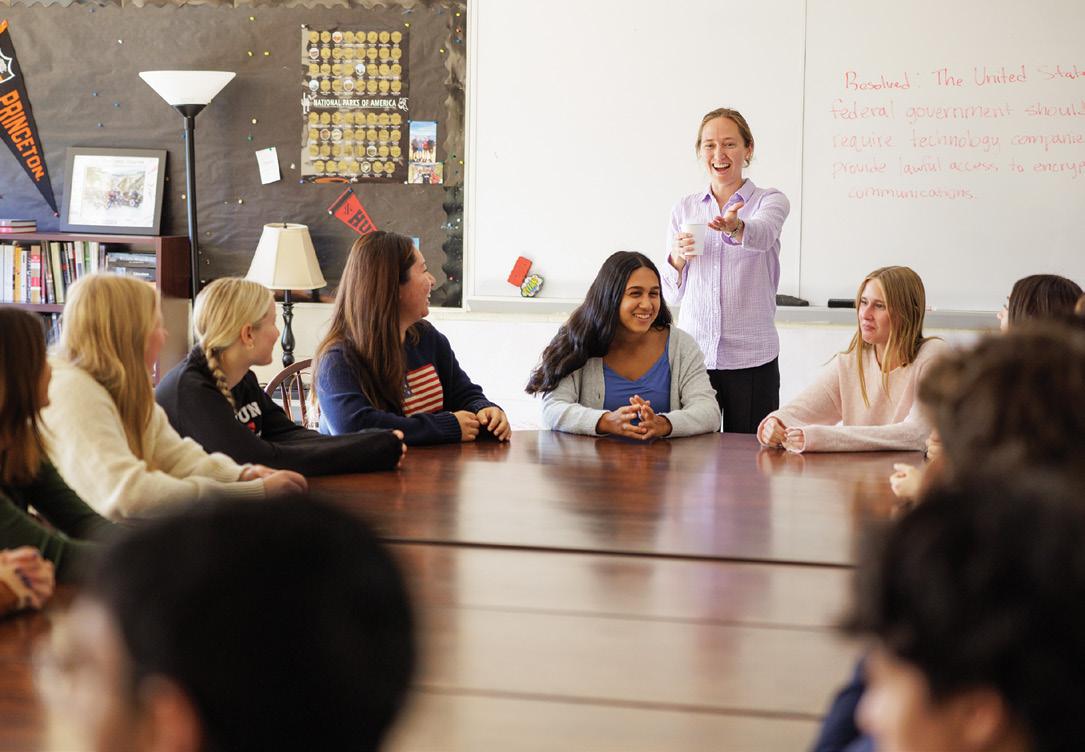
Good literature, because of its thematic richness and levels of meaning, as well as the moral and ethical ambiguities it often expresses, is the ideal medium through which students can develop empathy and experience a wide range of ideas and feelings. Learning to analyze, synthesize, and share those complex experiences in oral and written work is an emphasis within the English curriculum. A natural progression of this pedagogical philosophy is to promote within students an appreciation for great literature old and new, as well as to inspire in them the desire to create their own. The English Department’s course offerings and instructional methods aim to foster lasting curiosity along with the necessary language skills to make sense of the world around them and their role in it.
▸ 3 CREDITS; REQUIRED COURSE FOR GRADE 9
What can discussion and writing about literature teach people about identity and culture?
Students in this literature-based course move beyond literal readings to critical and creative interpretations. Students form opinions about the literature and justify their ideas both orally and in writing. Emphasis is placed on the clear, logical presentation of well-formed, intellectual conclusions. In addition to formal study of vocabulary, the curriculum includes a carefully designed grammar sequence that incorporates sentence diagramming. This class also emphasizes the writing process by requiring pre-writing, drafting, and revising for each formal composition. Students study The Odyssey, Romeo and Juliet, To Kill a Mockingbird, and Black Boy, as well as selected short stories and poetry.
▸ 3 CREDITS; PREREQUISITE: GRADE OF 93 IN MIDDLE SCHOOL ENGLISH COURSE OR PLACEMENT TEST; FULFILLS ENGLISH 1 REQUIREMENT FOR GRADE 9
What can discussion and writing about literature teach people about identity and culture?
While the focus and aims of this course are similar to those of regular English 1, students in English 1 Honors read an additional novel and write more essays. Students in this advanced English 1 program are expected to be proficient readers and writers when entering this course, as the requirements are significantly more challenging than those of English 1.
▸ 3 CREDITS; PREREQUISITE: ENGLISH 1 OR ENGLISH 1 HONORS; REQUIRED COURSE FOR GRADE 10
How do authors and artists create and construct their literary worlds through various forms and techniques, and to what ends?
Building upon the foundation of writing mechanics in English 1, students in English 2 approach analytical writing as a process of investing themselves in arguments. Rewriting fosters the ability to incorporate feedback and self-assessment in order to shape convincing interpretations. Students focus on organization and clarity by progressing from assignments that require revision to those that afford more independent practice. The course will focus on the construction and development of literary worlds, which students will explore through a broad scope of literary forms: tragedy, comedy, short fiction, formal poetry, free verse, and graphic and traditional
DR. AHMET BAYAZITOGLU
MIDDLEBURY COLLEGE – B.A.
YALE LAW SCHOOL – J.D.
PRINCETON UNIVERSITY – PH.D.
MS. CHERYL BEAL ʼ79
AMHERST COLLEGE – B.A.
RUTGERS UNIVERSITY SCHOOL OF LAW – J.D.
MRS. JESSICA BRIMMER
STATE UNIVERSITY OF NEW YORK AT ALBANY – B.A.
CAPELLA UNIVERSITY – M.S.ED.
MR. BART BRONK
HEAD OF SCHOOL
UNIVERSITY OF PENNSYLVANIA – B.A., M.S.
DR. KYLE BUCY
UNIVERSITY OF OREGON – B.A.
UNIVERSITY OF CHICAGO – M.A.
UNIVERSITY OF CALIFORNIA, SANTA BARBARA – PH.D.
DR. ANA GARCIA-MORENO
BOWDOIN COLLEGE – B.A.
PRINCETON UNIVERSITY – M.A., PH.D.
MS. ALLAYNA GARRETT RUTGERS UNIVERSITY – B.A.
DR. LAUREN HOLM
UNIVERSITY OF MASSACHUSETTS – B.A.
BOSTON COLLEGE – M.A. BRANDEIS UNIVERSITY – PH.D.
MR. BRIAN KARP
COLGATE UNIVERSITY – B.A. COLUMBIA UNIVERSITY – M.A.
MS. LAUREN LAMB
AMHERST COLLEGE – B.A. UNIVERSITY OF PENNSYLVANIA – M.S.
MS. DARA MARTIN
DIRECTOR OF GLOBAL AND IMMERSION PROGRAMS AND NEXTTERM COORDINATOR UNIVERSITY OF VIRGINIA – B.A. COLUMBIA UNIVERSITY – M.A.
MS. MELISSA POOLE DIRECTOR OF RESIDENTIAL LIFE GUILFORD COLLEGE – B.A. THE OHIO STATE UNIVERSITY – M.A.
MS. JOAN ROUX STELLENBOSCH UNIVERSITY – B.A. THE COLLEGE OF NEW JERSEY – M.A.
DR. JOHN SCHULZ
THE COLLEGE OF WOOSTER – B.A. UNIVERSITY OF MARYLAND – M.A. PRINCETON UNIVERSITY – M.A., PH.D.
MR. TED SHAFFNER GRADE LEVEL DEAN UNIVERSITY OF NORTH CAROLINA AT CHAPEL HILL – B.A., M.F.A.
MR. RICHARD VOLZ ʼ97 CHAIR
PRINCETON UNIVERSITY – B.A. THE COLLEGE OF NEW JERSEY – M.A.
novel. The course also includes a program of vocabulary, grammar, and standardized test exercises.
▸ 3 CREDITS; PREREQUISITE: GRADE OF 93 IN ENGLISH 1 OR 85 IN ENGLISH 1 HONORS; FULFILLS ENGLISH 2 REQUIREMENT
How do literature’s imagined worlds help us understand and navigate our own?
Similar to those in English 2, students in English 2 Honors practice the structure of the traditional thesis-driven essay, but read additional texts and are expected to produce more sophisticated interpretations. The course develops critical imagination through various modes of interpretive writing and the belief that writing is a process of discovery — textual, intellectual, and personal. Students will come to see themselves as apprentices learning a craft. The course will focus on the construction and development of literary worlds, which students will explore through a broad scope of literary forms and genres: dystopia, graphic fiction, drama, poetry, and short stories. The course also includes a program of vocabulary, grammar, and standardized test exercises.
▸ 3 CREDITS; PREREQUISITE: ENGLISH 2 OR ENGLISH 2 HONORS; REQUIRED COURSE FOR GRADE 11
Does an American Dream exist and, if so, how does traditional and contemporary American literature reflect that Dream and what it means to be American?
Students in English 3 undertake a comprehensive study of American literature to achieve a broad understanding of what being American means, how the American Dream has changed, and what each specific text means. Students form opinions about the literature and justify their original conclusions in expository essays and research papers. In addition to a formal program of vocabulary development, open class discussions perpetuate their critical and analytical evaluation of the texts. Readings include selections by traditional and contemporary American authors.
▸ 3 CREDITS; PREREQUISITE: GRADE OF 93 IN ENGLISH 2 OR 85 IN ENGLISH 2 HONORS; FULFILLS ENGLISH 3 REQUIREMENT
How is the American Dream represented in the American literary canon, and does the portrayal of the Dream address what it means to be American?
Students in English 3 Honors undertake a survey of selected American literature and move beyond the regular analysis and discussion to explore philosophical issues like freedom, self-creation, nonconformity, authenticity, individualism, and success. Students participate in textually based class discussions, delving into specific works, while considering important cultural developments that shape the American literary tradition. Students are expected to craft original, thoughtful, and eloquent compositions, demonstrating close textual analysis and synthesis of challenging concepts in formal expository writing. Readings include drama, poetry, memoirs, short stories, essays, and novels.
▸ 1 CREDIT EACH; 3 CREDITS OF ENGLISH 4 SEMINARS REQUIRED; PREREQUISITE: ENGLISH 3 OR ENGLISH 3 HONORS; REQUIRED COURSE FOR GRADUATION
Students in these college-preparatory seminars study the historical, philosophical, political, biographical, and psychological ideas in literature. They formulate argumentative, articulate theses in research papers and formal compositions, and also develop their ability to speak knowledgeably, confidently, and persuasively through class discussion. Seniors are required to choose three of the following Senior Seminars.
▸ 1 CREDIT
What does global literature from diverse cultural backgrounds say about contemporary negotiations of identity?
Students in this course will gain an understanding and appreciation of culture, cultural values, and perspectives (their own and those of others) by reading literature written by authors from a variety of cultural backgrounds. The literature selections include works from African American, African, Asian, Latin/South American, Native American, and European writers. This course offers an opportunity to explore themes such as alienation, displacement, family and tradition, the shaping of identity, coming of age, justice and fairness, and personal freedom and social responsibility.
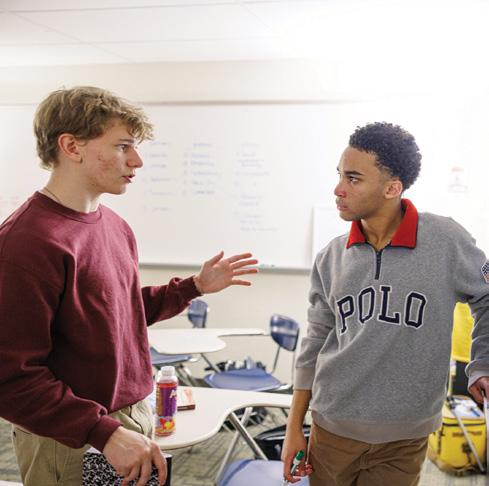
▸ 1 CREDIT
What do the world’s most ancient stories have to teach today?
Joseph Campbell’s book, The Hero With a Thousand Faces, was the textbook that George Lucas used to create Star Wars, and has influenced many adventure films, from Indiana Jones to The Avengers. Campbell studied all the world’s mythologies and showed that the journey of every hero is essentially the same. In this course, students will study some of these myths, such as the world’s oldest — but shockingly modern — book, Gilgamesh, or the great Indian epic, the Mahabharata. Students will explore different cultural practices, such as Zen Buddhism and the Samurai Warriors, and study modern films like Big Fish, Amélie, or Princess Mononoke. Students will also study the philosophy and practical application of the hero’s journey in their own lives through experiential learning, such as a workshop in Budokon, which is a combination of martial arts, yoga, and meditation, or an examination of the symbolism of their dreams.
▸ 1 CREDIT
How do twentieth- and twenty-first-century accounts of the Holocaust, including films, literature, memoirs, diaries, museums, and other cultural representations, enter debates about its meanings?
Students in this course analyze twentieth- and twenty-firstcentury accounts of the meaning of the Holocaust: how it has been remembered, processed, packaged, witnessed, and silenced. Through this course, students will gain a greater knowledge of the Holocaust, especially by learning how film, literature, memoirs, diaries, museums, and other kinds of cultural representations enter debates about the Holocaust’s meanings and shape those meanings in different ways. Students will study Night, The Complete Maus (a graphic novel), Salvaged Pages (young diarists’ writings), poetry, and nonfiction essays as well as the Holocaust movie I’m Still Here.
▸ 1 CREDIT
What does the development of detective fiction teach us about changing attitudes toward knowledge, reality, identity, good and evil, justice, and the search for truth?
“The world is full of obvious things which nobody by any chance ever observes.” – SHERLOCK HOLMES
This course offers an introduction to the origins of detective fiction. Students will study Edgar Allan Poe’s invention of the genre, investigate the techniques of Sherlock Holmes, and then use their detective skills to try to solve an Agatha Christie murder mystery. Throughout the course, students will examine how detectives use clues and evidence to reconstruct the truth, enter the minds of others, and bring criminals to justice. The course will also examine how the conventions of detective fiction change over time and through different media (short stories, novels, movies, television shows, games). Students will have the opportunity to compose their own detective stories, study popular television shows and films, and enjoy a range of popular detective fiction. Along the way, they will ask their own questions about how to “detect” meaning in literary texts, how to construct interpretive arguments, how to “read” the world, and how to investigate the hidden mysteries of their own lives. The game is afoot!

▸ 1 CREDIT
How does literature mirror, shape, and challenge societal norms and values?
In this course, students will explore the intersection of literature and societal dynamics, delving into the ways in which literary works serve as powerful reflections and influencers of cultural discourse. Students will examine texts from different genres and time periods that address social and cultural change in the world, interpreting how power is established, decisions are made, and change is created. Discussions and writings for this course will consider historical and contemporary issues such as race, class, and gender to enhance students’ understanding and provoke them to become change agents.
▸ 1 CREDIT
How are tragedy and comedy constant, interchangeable companions that shape our worldview?
“This world is a comedy to those that think, a tragedy to those that feel.” – HORACE WALPOLE
Through this course, students will explore the meaning of this common saying as it manifests in various Shakespearean tragedies and comedies. Students will explore the Shakespearean comedy as it celebrates the individual’s participation and education in a community as the most important part of life. Students will learn, by contrast, that Shakespeare’s tragedies involve something much more complex: individuals’ sense of their own desire to confront the world on their own terms, to get the world to answer to their conceptions of themselves, if necessary at the expense of customary social bonds and their own lives. The common realm of tragedy and comedy, therefore, is the ethical world and its collision. Their essential difference lies in how differently the leading characters relate to this ethical world.
▸ 1 CREDIT
How does literature address and reflect conceptions of justice, definitions of right and wrong, and distinctions between fairness and legality?
Law is a favorite topic in literature: in addition to the inherent drama of legal disputes, both rely on the skillful manipulation of language for their success. In this course, students will focus on prominent literary and artistic works centrally concerned
with the world of law. Then, they will investigate how literature and art depict the struggle to define fairness and justice from Ancient Greece to modern-day America.
▸ 1 CREDIT
To what extent do children’s and young adult fiction both challenge and reinforce ideologies?
In this course, students will engage deeply with children’s and young adult (YA) literature through various theoretical lenses. By analyzing how narratives encode social hierarchies, roles, identities, and ideologies, students will develop a sophisticated understanding of how children’s literature both reflects and shapes cultural values. Through vigorous theoretical analysis, critical discussion, academic writing, and creative projects, students will cultivate advanced skills in literary criticism and cultural analysis, gaining insight into how “stories for kids” are central to broader conversations about cultural/social ideology, representation, and norms.
▸ 1 CREDIT
What do the alternative worlds of science fiction tell us about humanity’s hopes and fears?
By reading and watching science fiction, readers and viewers typically get to do two things that might initially appear contradictory. First, they escape into imagined worlds, seemingly away from the worries of their actual lives. Those imagined worlds, however, also provide them space to ponder, sometimes indirectly, their very real fears and anxieties. In this course, students will look at the origins of science fiction and its connections to modernity; consider how science fiction, especially in its dystopian inflections, stages concerns about identity; and analyze the social critique and implicit utopian ideas in it. Students will explore what fears modern life engenders; what it means to be human; and how central components of identity, such as gender and race, can be reimagined. They will also gain an understanding of the social, historical, and political issues raised by literature and film in this genre.
LITERATURE AND SCIENCE
▸ 1 CREDIT
How did scientific discovery influence literature in the Victorian era, and how can we interpret literature through scientific concepts?
The Victorian Era was an age of breathtaking scientific discovery. From Charles Darwin’s theories of evolution to Charles Lyell’s theories of geological deep time, nineteenthcentury scientists radically altered how people saw the world. In this course, students will explore the lively conversation between Victorian literature and science. They’ll meet mad scientists advancing dangerous ideas; poets probing the depths of outer space; and characters who, like the animals Darwin studied, must evolve in order to succeed. Ultimately, students will examine how writers treated their work as a laboratory of sorts, within which they could apply new scientific concepts to literary representation. Readings include Robert Louis Stevenson’s The Strange Case of Dr. Jekyll and Mr. Hyde (1886), George Eliot’s The Lifted Veil (1859), and H.G. Wells’s The Island of Dr. Moreau (1896).
▸ 3 CREDITS; PREREQUISITES: GRADE OF 93 IN ENGLISH 3 OR 85 IN ENGLISH 3 HONORS AND RECOMMENDATION OF CURRENT INSTRUCTOR; FULFILLS ENGLISH 4 REQUIREMENT
How do great masterpieces of literature reveal the complexity of the human condition?
Students in this college-level course analyze imaginative literature that is stylistically, structurally, and conceptually challenging. The course requires more effort, gives greater opportunity for individual accomplishment, and penetrates deeper into the content of literature than the English 4 courses do. It also involves extensive expository writing. Assessments include in-class writings, reading quizzes, practice AP examinations, oral presentations, and compositions. Readings include Don Quixote, Heart of Darkness, Hamlet, Oedipus Rex, Dubliners, and a selection of poetry and short stories. All students are required to take the AP exam at the end of the year.
LITERATURE OF ENDURANCE
▸ 2 CREDITS; REQUIRED FOR FIFTH YEAR GRADE 12 AND POSTGRADUATE STUDENTS
What does it mean to endure — and how do literature’s portrayals of survival reshape our understanding of strength, identity, and responsibility?
This double-block course explores physical, psychological, moral, and cultural survival through literature that subjects its characters to intense pressure. Students examine how individuals endure crises, isolation, expectations, and institutional constraints, and how those forces shape identity. Students will begin with narratives of physical survival, analyzing how extreme conditions reveal ethical fault lines and leadership dilemmas. The course then shifts to psychological and cultural endurance, asking how memory, art, and storytelling can become acts of survival. Finally, students confront moral survival through moments when characters must choose between ambition and responsibility, authority and conscience. Throughout the trimester, students practice reading at a collegiate level, analyzing structure, perspective, and symbolism while crafting sustained, interpretive arguments. Harkness discussions emphasize accountability and the ability to articulate complex ideas clearly and thoughtfully. By the end of the course, students will not only read more rigorously, but also reconsider what it truly means to endure.
▸ 1 CREDIT; OPEN TO ALL GRADE LEVELS; MAY BE REPEATED ONCE FOR CREDIT
What are the rules that govern creativity, and what are the best ways to release and refine it?
Students in this course explore the sources of creativity, practice a variety of writing skills, and demonstrate their ability to create narrative prose and poetry. They examine the building blocks of fiction, experiment with a range of literary techniques, and compose diverse pieces of writing with which to practice their craft. Students who repeat this course will work on extended projects that stretch their abilities and introduce them to new genres. Students produce a collection of their original work that takes the place of a final exam.
▸ 1 CREDIT; OPEN TO ALL GRADE LEVELS; MAY BE REPEATED ONCE FOR CREDIT
What are the elements of effective persuasion?
Students in this course become confident speakers, writers, and thinkers by examining speeches and rhetorical expression. They craft arguments on controversial issues and present them in formal debates. Students learn the importance of organization, credibility, and poise and how to evaluate information in terms of its bias, logical flaws, or objectivity. The course equips students with skills to shape their environment in high school, college, and beyond. Students will deliver substantial speeches and participate in formal debates, as well as impromptu speeches and debates, to build a variety of skills useful for both complex research and quick thinking.
▸ 1 CREDIT; OPEN TO ALL GRADE LEVELS; MAY BE REPEATED ONCE FOR CREDIT
What are the responsibilities and skills of a successful journalist?
Students in this course cover the basics of journalistic writing, beginning with pre-writing skills such as making coverage decisions, formulating interview questions, and conducting interviews. The course will focus on the basics of news, features, sports, and opinion writing. Students will also learn about the history of journalism, the First Amendment, and the ethical decisions that all publications face. Through discussions and the examination of contemporary news stories, students will gain the skills to navigate and evaluate news sources for bias and disinformation. Students will have their work published in The Mall (school newspaper).
▸ 1 CREDIT; OPEN TO ALL GRADE LEVELS; MAY BE REPEATED ONCE FOR CREDIT
What role could poetry play in our lives?
This course allows students to produce a portfolio of original work while exploring firsthand how poets use rhythm and sound, imagery, and visual arrangement to affect their readers. Students will consider the way poets use traditional poetic forms in innovative ways and create new poetic forms to capture and critique postmodern experience. By reading and writing poems, students will consider what makes a poem a poem, what work poetry serves in the contemporary world, and how they might use both old and new poetic forms to express their own experience. Students will
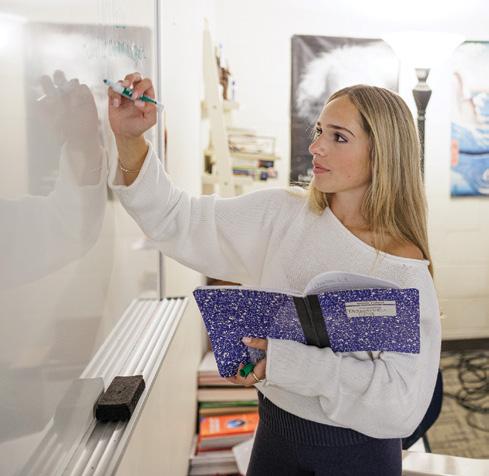
contribute to a broader culture of poetic appreciation and expression by finding ways to share their work beyond the classroom in public forums including publications, poetry readings, and community events.
▸ 1 CREDIT; OPEN TO ALL GRADE LEVELS
What is a graphic novel, and how has this genre evolved to become an important mode of literary expression?
Closely linked to comics, graphic novels use sequential art to tell a self-contained story. Graphic novels have been mischaracterized as juvenile literature; in reality, they explore important issues often considered the domain of serious literature, such as war, racism, trauma, identity, dysfunctional families, and other matters. Students in this course will explore the history of graphic novels and learn how authors and artists create complex narration that works in tandem with artwork. This course explores different kinds of graphic novels, delving into the history of the medium and the critical and theoretical debates about this mode of literary expression. Students will be challenged to expand their interpretive and analytical close-reading skills by applying them to visual as well as textual representations. Students will also write analytical papers, generate oral reports, engage in debates, and collaborate to create a part of a graphic novel.
REQUIREMENTS: 7 CREDITS REQUIRED; WORLD STUDIES AND U.S. HISTORY REQUIRED
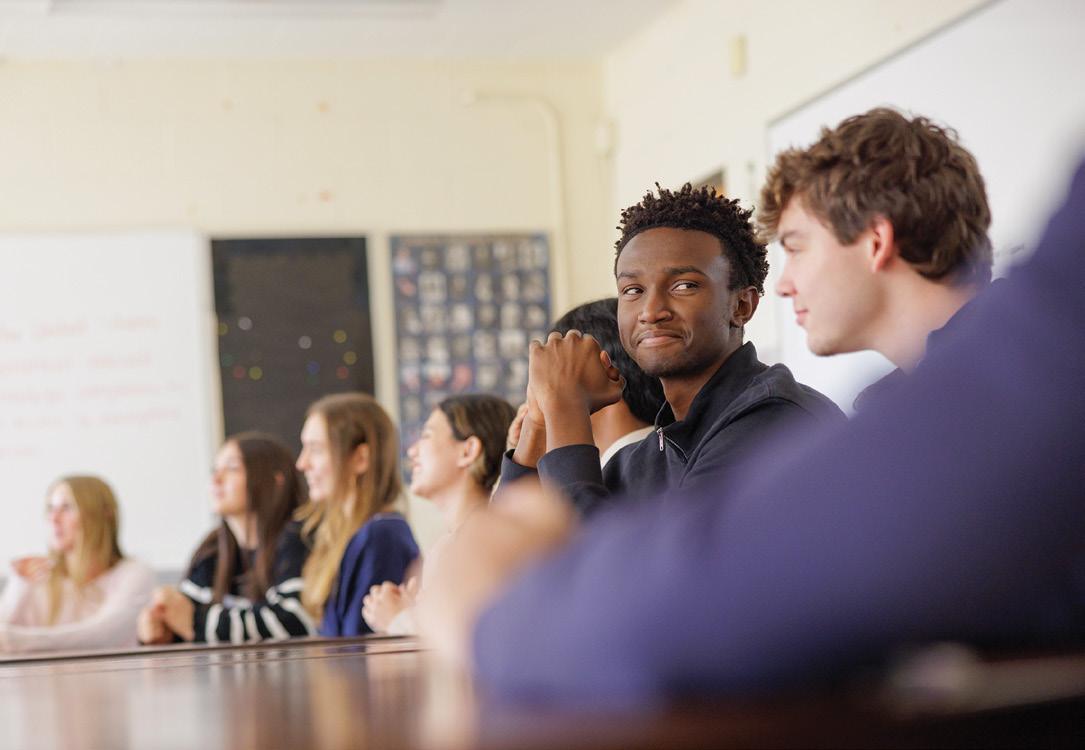
History and Global Studies expose students to a broad framework of historic, geographic, social, and cultural perspectives, encompassing Western and non-Western experiences. The department presents history as a means of exploring vital questions of both historic and contemporary relevance. Students learn both independently and cooperatively, developing skills in problem-solving and decision-making. Varied classroom activities give students opportunities to develop critical thinking and writing skills. Research and discussion are further enhanced by the use of materials made available through computer technology.
▸ 3 CREDITS; REQUIRED COURSE FOR GRADE 9
Where did humans come from, how did we get here, and what can we learn from the human experience?
Students in this course will study an overview of human development from the origins of hominins to the present. Students will examine how humans interact with each other, their environment, and technology. Students will practice discovering, analyzing and using evidence to support or critique arguments through discussions, essays, and research projects, including at least one formal paper.
▸ 3 CREDITS; REQUIRED COURSE FOR GRADE 10
How has America’s history shaped its modern political, social, and economic climate?
Students will trace the history of the United States from the European colonization of North America to the present, with a focus on the events and trends in the nation’s 500-year history that are the foundation of its modern society. Students will critically examine past events and trends and draw conclusions about their causes and impacts. Students will collaborate on primary source research, using diaries, letters, reports, speeches, and official documents. Students will combine writing and reading skills with research, presentation technologies, and analysis of film and video resources.
▸ 3 CREDITS; PREREQUISITE: GRADE OF 93 IN WORLD STUDIES; FULFILLS U.S. HISTORY REQUIREMENT
How close has America come to the vision of its founders?
Designed to prepare students for AP U.S. History, students in U.S. History Honors will examine the story of America focusing on the individuals and events that have shaped the nation. They will attempt to trace the evolution of America’s national identity as they examine the complex nature of democracy and the constant struggle to make the promise of the U.S. Constitution a reality. Students will focus on analytical reading and writing skills, discussion, documentbased questions, effective note taking, and cooperative learning. Primary source readings, maps, secondary source readings, and video will be incorporated to enhance understanding of various periods.
MS. MEGHAN BAUER ’19
RUTGERS UNIVERSITY – B.A.
MR. D. CONNOR BRENNAN
UNIVERSITY OF MICHIGAN – B.A.
MR. SIMON ESPINOSA
UNIVERSITY OF LONDON – B.SC. UNIVERSIDAD SAN FRANCISCO DE QUITO, ECUADOR – B.A.
COLUMBIA UNIVERSITY – M.F.A.
MR. MICHAEL FALCETANO
UNIVERSITY OF PENNSYLVANIA – B.A.
UNIVERSITY OF TEXAS – M.A.
MS. PATRICIA GARRISON
DIRECTOR OF THE JOHN GALE HUN PROGRAM FOR CIVICS EDUCATION
FAIRLEIGH DICKINSON UNIVERSITY – B.A.
NOVA SOUTHEASTERN UNIVERSITY – M.A.
MR. RORY HART CHAIR
LAFAYETTE COLLEGE – B.A.
EMORY UNIVERSITY – M.A.
MR. RYAN HEWS
HEAD OF THE UPPER SCHOOL
BOWDOIN COLLEGE – B.A. COLLEGE OF WILLIAM & MARY – M.ED.
MR. WILLIAM HOLUP
DIRECTOR OF FINANCIAL LITERACY WESLEY COLLEGE – B.S.
DR. JOHN MATSUI
PRINCETON UNIVERSITY – B.A. JOHNS HOPKINS UNIVERSITY – M.A., PH.D.
MS. LYNN MCNULTY
GRADE LEVEL DEAN AND DIRECTOR OF SERVICE LEARNING DOUGLASS COLLEGE – B.A.
MR. NATHANIEL RICKLER BATES COLLEGE – B.A. LESLEY UNIVERSITY – M.ED.
MR. ROBERT SACCO EAST CAROLINA UNIVERSITY – B.A. RUTGERS UNIVERSITY – M.A.
DR. MARI JO VELASCO
UNIVERSITY OF CALIFORNIA SAN DIEGO – B.A.
UNIVERSITÉ RENNES 2 – M.A.
UNIVERSITÉ LUMIÈRE LYON 2 – M.A.
UNIVERSITY OF CHICAGO – PH.D.
MR. JONATHAN WAGSHUL
ASSOCIATE DEAN OF STUDENTS FOR CHARACTER EDUCATION
GEORGETOWN UNIVERSITY – B.S.
TUFTS UNIVERSITY – M.A.
THE JUDGE ADVOCATE GENERAL’S SCHOOL, U.S. ARMY – L.L.M.
WASHINGTON AND LEE UNIVERSITY – J.D.
▸ 3 CREDITS; PREREQUISITES: GRADE OF 93 IN U.S. HISTORY OR 85 IN U.S. HISTORY HONORS AND RECOMMENDATION OF CURRENT INSTRUCTOR
How have the struggles, triumphs, and diverse experiences of individuals and groups throughout American history shaped the country’s development, and what impact have they had on the nation's contemporary identity, institutions, and values?
Students will trace the chronological history of the United States in this college-level course designed to prepare them for the AP U.S. History examination in May. Students will analyze a full range of American history, with emphasis on the major themes, such as the evolution of government and politics, the role of the United States in the wider world, regional developments and distinctions, and diversity: race, class, and gender. Students will use an advanced text and substantial supplemental materials with an emphasis on discussion, analysis of primary sources, and differing interpretations of major issues and events. Students will further develop their research, writing, and analytical skills through independent and collaborative work. Finally, students will practice skills particular to the national exam, including document-based question essays, multiple-choice questions, and free-response question essays. All students are required to take the AP exam at the end of the year.
▸ 3 CREDITS; PREREQUISITES: GRADE OF 93 IN U.S. HISTORY OR 85 IN U.S. HISTORY HONORS AND RECOMMENDATION OF CURRENT INSTRUCTOR
How do the structures, traditions, and founding principles of the U.S. government shape political behavior and our understanding of the balance between freedom and order?
As they prepare for the AP U.S. Government and Politics exam in May, students will be introduced to the various theoretical and conceptual frameworks related to political science, governmental institutions, and politics and parties in the American system. Students will have the chance to analyze and examine the issues surrounding such topics as voter behavior and voting trends, the changing role of parties in politics, the constitutional aspects of governing, the role of media in politics, and the many stakeholders involved in the complex policymaking process. All students are required to take the AP exam at the end of the year.
▸ 3 CREDITS; PREREQUISITES: GRADE OF 93 IN U.S. HISTORY OR 85 IN U.S. HISTORY HONORS AND RECOMMENDATION OF CURRENT INSTRUCTOR
Does the development of European society create the foundation for the modern world?
Students will review the key political, social, intellectual, and cultural changes by which Europe evolved into a modern industrial society as well as the increasingly interdependent group of nations that have become major players on the world stage. Topics covered include the Renaissance and Reformation, the Scientific and Industrial Revolutions, and the growth of democracy and nationalism: all themes required of the AP European History examination in May. Students are expected to show strong analytic and interpretive skills as well as a sound command of large factual content. All students are required to take the AP exam at the end of the year.
▸ 3 CREDITS; PREREQUISITES: GRADE OF 93 IN U.S. HISTORY OR 85 IN U.S. HISTORY HONORS AND RECOMMENDATION OF CURRENT INSTRUCTOR
What can we learn about the behavior and mental process of human beings and other animals?
Students in this course will be introduced to the systematic and scientific study of behavior and mental processes of human beings and other animals in order to prepare them for the AP Psychology examination. Students are exposed to the psychological facts, principles, and phenomena associated with each of the major subfields within psychology, including but not limited to, cognitive, biological, personality, and social psychology. They also learn about the ethics and methods psychologists use in their science and practice. An emphasis is placed on the anatomy and physiology of the brain and nervous system. All students are required to take the AP exam at the end of the year.

▸ 3 CREDITS; PREREQUISITES: GRADE OF 93 IN U.S. HISTORY OR 85 IN U.S. HISTORY HONORS AND RECOMMENDATION OF CURRENT INSTRUCTOR
What key factors influence a nation’s economic performance and stability, and how do government policies, market forces, and global interactions shape macroeconomic outcomes?
Students will explore the topics of the AP Macroeconomics curriculum and leverage their understanding of macroeconomic indicators and economic policy to explore contemporary economic issues. In particular, students will explore topics including national income, the financial sector, stabilization policies, economic growth, and international economics. Students will have the opportunity to engage in comparative economic research, debate modern economic policy, and critically analyze the usefulness of key economic indicators. Students will also explore the balance between domestic economic priorities and global economic goals. Time will also be directed toward ensuring that students are prepared for success on the AP Macroeconomics exam. All students are required to take the AP exam at the end of the year.
▸ 3 CREDITS; PREREQUISITES: GRADE OF 93 IN U.S. HISTORY OR 85 IN U.S. HISTORY HONORS AND RECOMMENDATION OF CURRENT INSTRUCTOR
How do individuals and businesses engage in economic decision-making, and what is the role of the government in regulating markets?
Students will engage in the study of the nature and functions of product and factor markets in a free-market economy and the role of governments in addressing market failures. Students will also explore the application of economic reasoning to contemporary issues, including monopoly power, responses to environmental problems, and how economic policy can address inequality. Enough time will be directed toward ensuring that students are prepared for success on the AP Microeconomics exam. All students are required to take the AP exam at the end of the year.
▸ 1 CREDIT; GRADES 11, 12, PG ONLY
Does the democratic republic founded in the Constitution still function in twenty-first century society?
Students will develop an understanding of the forces that interact to make our government function. In addition to learning about the Constitution and the unique system of Federalism by which the American political system operates, students will also examine the dynamics of political participation, campaigns, elections, interest groups, political parties, and the media. Class discussions and research on current events are major components of the course.
▸ 1 CREDIT; GRADES 11, 12, PG ONLY
What can psychology tell us about ourselves, our interactions with others, and our society?
Students in this course will review the scientific study of human behavior and mental processes as well as an introduction to the general concepts and theories of the overall field of psychology. They will explore the topics that they find most interesting in greater depth as well as make connections regarding how these concepts can be applicable to their own lives and across other academic disciplines. Some of the concepts examined include the historical origins of psychology; the biological perspectives of psychology; disorders and their treatment; theories of human development; and theories of cognition, social interaction, and intelligence.
What happens when students step into the shoes of Supreme Court justices and attorneys? In Constitutional Law and American Society, learning comes alive through a moot court simulation built around landmark Supreme Court cases, allowing students to engage directly with constitutional questions that shape our everyday lives.
Students dive into cases that established legal precedent in the United States, exploring how constitutional questions are argued, interpreted, and ultimately decided. The class is divided into legal teams and a panel of justices, mirroring the structure of the Court itself.
When students enter the moot courtroom, the stakes feel real. Cases often center on fundamental issues like freedom of speech, equal protection, and religious freedom, sparking spirited (and competitive!) debates. Mr. Brennan explains that “these are things that fundamentally apply to every single person, so students tend to take great pride in preparing and delivering their arguments.”
To ensure thoughtful discourse, teams are assigned randomly, requiring students to argue constitutional merit rather than personal belief. Beyond legal knowledge, moot court builds essential skills. “I remind students that the law doesn’t care about our personal opinions,” says Mr. Brennan. “Moot court is not about proving your point; it’s about developing persuasive public speaking skills, critical thinking, and the ability to engage respectfully with opposing viewpoints.”
And perhaps most eye-opening of all, students discover that every freedom they are afforded today was once argued — case by case — in a courtroom.
▸ 1 CREDIT; GRADES 11, 12, PG ONLY
What are the primary economic concepts that drive the free market system and shape the modern world economy?
Students will develop an understanding of economic principles that help measure individual behavior and the modern world economy. Students will learn how to use basic economic tools and analyze real-life situations and their effects on their daily lives. Students will develop an understanding of the role of fiscal and monetary policy in the U.S. economic system. Written assignments are required, with emphasis on the value of critical thinking and research.
▸ 1 CREDIT; GRADES 11, 12, PG ONLY; OFFERED 2027-2028
How did the events of World War II shape the modern world?
Students will develop a focused theme related to World War II within its broader historical, international, and strategic contexts. World War II was truly a global conflict fought on the oceans and in the skies, the deserts of Africa, and the frozen steppes of Russia, as well as tropical islands of the Pacific. Common citizens were targets as much as opposing troops. Students will be expected to develop and complete original research as a requirement of the course.
▸ 1 CREDIT; GRADES 11, 12, PG ONLY
How do world religions define and help their adherents achieve ultimate meaning?
Students will be introduced to the background and concepts of five of the world's major religious traditions: Hinduism, Buddhism, Judaism, Christianity, and Islam. Students will use the writings and teachings of these traditions to explore and come to understand the impact of these five religious traditions along multiple dimensions. The impact of each of these religious traditions on modern society will be pursued. Sources will include original texts when appropriate, as well as current academic analysis.
▸ 1 CREDIT; GRADES 11, 12, PG ONLY; OFFERED 2027-2028
How do the remnants of ancient civilizations shape our understanding of the past, and what can archaeological discoveries teach us about the diverse cultures that once inhabited our world?
Students will learn about ancient civilizations from around the world to the indigenous peoples of New Jersey. Students will gain an understanding of archaeological principles and techniques both globally and within the local context of New Jersey. There are a multitude of opportunities for students to learn outside of the classroom, as well as to hear from guest speakers from the field to engage with diverse perspectives and enrich their experience.
▸ 1 CREDIT; GRADES 11, 12, PG ONLY; OFFERED 2027-2028
What aspects of Classical Greece built our modern Western culture?
Students will examine the culture of ancient Greece that provided much of the foundation of Western civilization. Beginning with the formation of Greek culture around 6,000 BCE, and moving forward to the rise of the polis, democracy, and the Persian and Peloponnesian Wars, students will also study government, religion, art, philosophy, theatre, and athletics. Special attention will be paid to mythology as offering insight into the mindsets of Greek culture. Plays and poetry will be included among assignments, so students can hear the voices of the Greeks themselves.
▸ 1 CREDIT; GRADES 11, 12, PG ONLY
What aspects of Classical Rome built our modern Western culture?
Students will examine the culture of ancient Rome that built the cornerstones of Western civilization. Beginning with the formation of the Roman republic, and moving forward to the rise of the empire, Caesar, and Rome’s ultimate decline, students will also study government, religion, art, philosophy, theatre, and athletics. Special attention will be paid to primary accounts of Roman life and culture for students to appreciate Roman civilization as those who lived it.
▸ 1 CREDIT; GRADES 11, 12, PG ONLY
By examining global issues and human rights, how do we ethically address the complex and often daunting issues facing today’s world?
Students in Global Issues and Human Rights will delve into the global interconnectedness of complex issues such as poverty, population, technology, environmental sustainability, war and conflict, infectious diseases, and the challenges and opportunities specific to women and girls and minorities. Students will hone their critical thinking and collaborative skills as they focus on topics related to universal human rights. By analyzing primary and secondary sources, documentaries, news releases, and other sources of relevant information, students will collaborate and implement a diverse approach to these themes through a wide array of project-based assessments. With this in mind, students will acquire an appreciation for cultural differences, the pluralistic dynamics of the modern world, and by doing so, offer multiple lenses to examine these issues.
▸ 1 CREDIT; GRADES 11, 12, PG ONLY
What is economic development, and how can/do nations progress in the achievement of the sustainable development goals?
Students will be introduced to the concepts associated with economic development. Students will utilize readings, data analysis, and collaborative planning to explore realworld examples of pathways to economic development. Time will be devoted to debating differing viewpoints surrounding economic development programs. The course will build toward an economic development roundtable, at which student groups will develop, present, and evaluate economic development plans for selected Level 1 or Level 2 nations. Most of the course utilizes project-based learning.
▸ 1 CREDIT; GRADES 11, 12, PG ONLY
Does the Supreme Court shape American society or reflect it?
Students will engage in a focused study of the United States Constitution and the Supreme Court decisions that have subsequently shaped American society. Emphasis will be placed on the history of the Supreme Court to provide an understanding of the current Roberts’ Court and its impact on contemporary social issues. Students will be expected to read and be prepared to argue Supreme Court case briefs with an emphasis on discussion and analytical writing skills.
▸ 1 CREDIT; GRADES 11, 12, PG ONLY
How do the unique perspectives of gender and sexuality influence our analysis of society and work?
Students in this course will analyze the waves of feminism in the United States through a focus on key battles for women’s rights ranging from birth control, the Equal Rights Amendment, reproductive rights, violence against women, the role of race, and images of women in popular culture. Expanding on these themes, the course will search for connections between these movements and current issues in the lives of women around the globe. Using a transnational and intersectional approach, we will examine women’s issues as they relate to gender, race, class, sexuality, and ability, with a focus on power and inequality. Students will understand how empowering women to overcome the everyday challenges they face is one of the best ways to ensure a brighter future for the planet.
▸ 1 CREDIT; GRADES 11, 12, PG ONLY
How have African Americans shaped American ideals and the American Dream?
Students will survey the developments in African American history. Beginning with emancipation and concluding with contemporary, and often controversial, issues, students will study the rise of Jim Crow and the various ways in which Black Americans worked to dismantle the system, including political activism, economic progress, and cultural innovations. Students will examine closely such watershed eras as the Harlem Renaissance and the Civil Rights Movement and debate issues such as Affirmative Action, police brutality, and the role of militancy in the quest for equality.
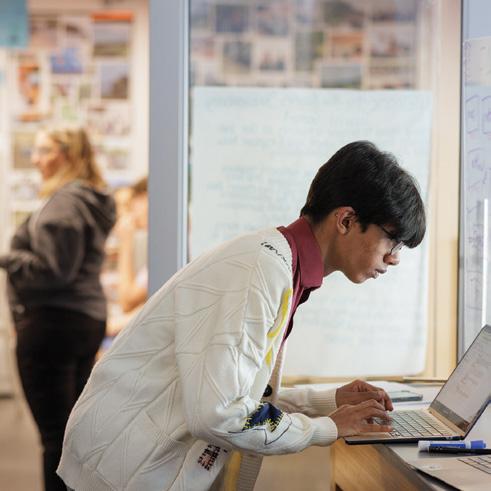
▸ 1 CREDIT; GRADES 11, 12, PG ONLY
Where do our narratives about Africa come from? How might we complicate and enrich those through historical, political, and cultural study? How is our own sense of identity related to these African stories?
Students in this course will focus on the development of sub-Saharan Africa from the Bantu migrations to the present, studying movements, problems, misconceptions, and African initiatives and responses. Students will broaden their understanding of African peoples and the African continent and relate recent events in Africa, particularly those affecting economic development and the environment, to the historical past.
▸ 1 CREDIT; GRADES 11, 12, PG ONLY
How has the process of immigration led to different categorization of different populations in the United States? How have the larger societal and political dynamics impacted the immigrant experience and the response by immigrants and members of the host society?
Students in this course will consider the movement(s) of people across national borders, the transformation of categorization of people, and the political dynamics surrounding such transformations. Immigration will be considered as a point of contention where the power dynamics in the host society are projected. There will be topics devoted to how the government has categorized immigrants and imposed restrictions on them, which includes the recent
developments of changes in asylum process, etc. Students will also examine how immigrants have responded to these attempts of control and restrictions despite intense scrutiny. Students will review how historians, sociologists, and other social scientists have addressed and portrayed these dynamics with different theories (e.g., assimilation, racialization, and whiteness). The aim of the course is to encourage students and help them understand the social context of international migration, the changing nature of American racial hierarchy, as well as the political dynamics surrounding immigration policy and enforcement of such policies.
▸ 1 CREDIT; GRADES 11, 12, PG ONLY
How is sport a reflection of a given society, and what roles do race, socioeconomic status, politics, law, and religion play in sports?
Students in this course will consider how sports reflect and relate to society and culture. Students will learn to analyze sport as a reflection of the modern world and through scholarly writings, news articles, editorials, and film. The course will begin with an analysis of football culture in Texas and then broaden to include Olympic and international sport as well to allow students a holistic view of the intersection of sports and society.
▸ 1 CREDIT; GRADES 11, 12, PG ONLY
How do financial literacy skills build a foundation for success in business and in life?
Students in this life-skills course will gain the essential competencies and knowledge needed to navigate the complex world of personal finance. This course will delve into the fundamental principles of financial literacy, empowering students to understand and effectively utilize various financial skills. Through a comprehensive curriculum, students will learn the art of personal financial management, mastering techniques for budgeting, saving, investing, and debt management.
▸ 1 CREDIT; GRADES 11, 12, AND PG ONLY
How do mental performance professionals use psychological principles to help athletes and other high performers overcome challenges and fulfill their potential? How can we apply these mental performance techniques to our own academics, athletics, and other areas of our lives?
Students in this course will explore research and theories from leading sports and performance psychologists and mental
performance experts. Students will also learn about how high performers and their mentors employ these psychological principles, both when practicing and when the bright lights are on. This course will cover confidence and self-talk, motivation and goal setting, visualization, resilience, and effective team dynamics. Students will be tasked with using what they learn in class in their own sports or activities and reflecting on their experiences. They will also engage in interactive projects in which they will analyze elite performers’ routines and mindsets and even interact with members of Hun athletics and the Performing Arts Department.
▸ 1 CREDIT; GRADES 11, 12, AND PG ONLY
How does the law apply in international contexts, and how should international law be upheld?
Students will learn through case studies of international law issues around the world. As future leaders, students will learn about the laws that govern our increasingly interconnected world. Questions relating to these legalities show up in the news every day as we hear about conflicts around the world: Was the U.S. (or Russian, Ukrainian, Israeli, Palestinian, and the list goes on) action legal or illegal? What rules or laws apply to non-state actors like ISIS, al Qaeda, and Hamas? The media provides us with answers that often sound simple, but rarely are. Students will take a hard look at the law and the facts, case by case, to make a meaningful analysis. Students will always look for a solid, well-reasoned analysis that considers the differing points of view.
▸ 1 CREDIT; GRADES 11, 12, AND PG ONLY
How did museums originate as an idea? What obligations do museums have to the public? What are the ethical concerns behind collecting and presenting art and objects from around the world?
In this course, students will take the experience that they have gained through World Studies and U.S. History — including field trips, gallery walks, and museum design pitches — and expand on them through a variety of experiential projects where they will develop an understanding of museums’ history, their purpose, and the ethical issues surrounding the collection and display of objects. By engaging in a variety of discussions and carrying out research, students will explore how museums both preserve and invent historical narratives. By the end of the trimester, students should feel that they have the historical context and practical experience necessary to discuss the purpose of the modern museum in a sophisticated, meaningful, and in-depth manner.
REQUIREMENTS: REQUIRED OF INTERNATIONAL STUDENTS; PLACEMENT TEST REQUIRED
The English as a Second Language Department provides international students practice and fluency in English grammar and reading from the basics to more advanced usage. Courses not only allow practice in an immersive experience but also provide a better understanding of American culture and norms through discussion-based seminars and field trips.
▸ 3 CREDITS
What vocabulary, structures, and expressions do students need to talk to native speakers about events in daily life?
In this course, students will gain confidence in their English ability as they participate in discussions with their multicultural peers. They will review basic tenses and structures that they will use in developing their written work from paragraphs to short essays. Students will read a variety of genres, such as short stories and magazine articles, and then use integrated skills to discuss and write about the content. Students will learn basic vocabulary necessary for daily life.
▸ 3 CREDITS; PREREQUISITE: ESL LOW READING AND GRAMMAR OR DEPARTMENT APPROVAL
How do students go beyond survival English to gain greater fluency in academic English?
Students will expand their working knowledge of compound verb tenses, clauses, and sentence construction so that they can develop the flow and effectiveness of their written work. They will read novels and plays that they will discuss and write about in three- to five-paragraph essays. Students will practice presentational skills that encourage them to
MS. JENNIFER MITCHELL
DIRECTOR OF INTERNATIONAL STUDENT PROGRAMS GETTYSBURG COLLEGE – B.A.
learn vocabulary in context, review grammatical patterns, and practice effective oral communication.
▸ 3 CREDITS; PREREQUISITE: ESL HIGH READING AND GRAMMAR OR DEPARTMENT APPROVAL
What linguistic competencies do students need to move beyond an ESL-based class and be successful in mainstream curricula?
Students will learn to read critically and work to increase their reading speed and comprehension. In class discussions, students will explore the existential themes in literature that cross all cultures. They will learn to use contextual support to develop papers of literary analysis. Students will practice presentational skills that encourage them to learn vocabulary in context, review grammatical patterns, and practice effective oral communication.
REQUIREMENTS: 6 CREDITS REQUIRED; TWO SEQUENTIAL YEARS OF ANY LANGUAGE REQUIRED

In today’s increasingly global environment, world languages are essential to the intellectual and cultural development of all students. The Modern Languages and Classics curriculum is designed to develop students’ modes of communication and ability to engage with cultures different from their own through individual mentorship, active learning, and cultural exchange opportunities. Toward this goal, the department offers a series of courses, some compulsory and some elective, in French, Spanish, Chinese, Latin, ancient Greek, American Sign Language, and Italian. Class time focuses on writing, speaking, and listening skills in conjunction with grammar and culture. At the honors level, an appreciation of literature becomes increasingly important.
▸ 1 CREDIT
How can visual communication impact your daily life and introduce you to an important and growing culture?
The only true American language, ASL is one of the fastestgrowing languages in America, and with the recent surge in ASL media, it is moving more and more to the forefront of the American consciousness. In this trimester course, students will learn the basics of ASL vocabulary, grammar, and syntax, with a focus on communication. Students will also learn about Deaf culture, its rich history, and important topics in accessibility and disability studies, while they hone the ancillary skills associated with ASL, such as dexterity and visual and nonlinear thinking.
▸ 3 CREDITS; PREREQUISITE: GRADE OF 93 IN LATIN 3 HONORS OR 85 IN AP LATIN
How can a love of Latin become a passion for the classics? What came before Ancient Rome?
In this one-year course, students will prepare to read ancient Greek from Homer to Plato in the original by acquiring a basic knowledge of classical Greek grammar and a basic vocabulary. This course is intended for students with proven success in Latin who wish to continue or broaden their study of the classical languages. This course emphasizes real-world experience in practicing the discipline of the classics and expressing its use and value to others, including interacting with language in ancient art and artifacts and presenting the language, mythology, and philosophy to younger students as a bridge to the future study of the classics.
▸ 3 CREDITS
What is it like to learn the Mandarin Chinese language that is spoken by over one billion people around the world, about one-fifth of the global population?
In this course, students will use both Chinese Pinyin and Chinese characters and receive instruction in all four language skills: listening, speaking, reading, and writing. The firstyear program focuses on accurate pronunciation, listening comprehension, and fluency when speaking in simple sentences. Writing is aimed at understanding the composition of characters. Technology is part of the learning experience with select texts and applications to enhance student engagement and understanding.
MS. MEGHAN BAUER ’19
RUTGERS UNIVERSITY – B.A.
DR. LEONEL CARRILLO
UNIVERSIDAD AUTONOMA DE CHIHUAHUA – B.A.
NEW MEXICO STATE UNIVERSITY – M.A.
UNIVERSITY OF COLORADO BOULDER – PH.D.
DR. ISAIA CROSSON
DIRECTOR OF COMMUNITY ENGAGEMENT
UNIVERSITÀ CATTOLICA DEL SACRO CUORE, MILAN – B.A.
COLUMBIA UNIVERSITY – M.A., PH.D.
MS. MELISSA DORFMAN
PENN STATE UNIVERSITY – B.S., M.A.
MR. SIMON ESPINOSA CHAIR
UNIVERSITY OF LONDON – B.SC.
UNIVERSIDAD SAN FRANCISCO DE QUITO – B.A.
COLUMBIA UNIVERSITY – M.F.A.
MRS. AMELIA FALCETANO PRINCETON UNIVERSITY – B.A. UNIVERSITY OF KANSAS – M.A.
MS. MARIANELA GONZALEZ
RUTGERS UNIVERSITY – B.A. KEAN UNIVERSITY – M.A.
MS. MICHELLE KOENEN
MOUNT HOLYOKE COLLEGE – B.A.
NEW YORK UNIVERSITY – M.A., M.PHIL.
MS. MING-SING LEE
HOLY FAMILY UNIVERSITY – M.E. UNIVERSITY OF CONNECTICUT – M.A.
MS. JENNIFER MITCHELL
DIRECTOR OF INTERNATIONAL STUDENT PROGRAMS GETTYSBURG COLLEGE – B.A.
MS. GISELLE QUINONES
STATE UNIVERSITY OF NEW YORK AT NEW PALTZ – B.F.A.
MS. ANA SANCHEZ
UNIVERSIDAD AUTONOMA DE CHIHUAHUA – B.A.
NEW MEXICO STATE UNIVERSITY – M.A.
MR. DANIEL WALKER DEAN OF FACULTY
DARTMOUTH COLLEGE – B.A.
UNIVERSITY OF COLORADO BOULDER – M.A.
Giselle Quinones’s American Sign Language (ASL) course offers students the opportunity to learn the basics of one of the country’s fastestgrowing languages. And her students quickly learn that ASL is very different from any other language they’ve learned.
First, expressions and body language are as important as the signs themselves — which can be uncomfortable for some. Second, learning about Deaf culture — and how it differs from that of the hearing community — goes a long way in informing communication between the two.
In one of her lessons, Ms. Quinones asks her students to respond to a few “Miss Manners”type letters from both the hearing and Deaf perspective, which showcases some surprising differences. For example, when one’s neighbor talks about how much he earns or spends, most hearing people would consider that oversharing. However, in the collectivist Deaf culture, “individuals are more open about their money and financial issues,” explains Ms. Quinones. “For them, it's all about sharing information, which helps them understand what is going on with each member of their community.” Similarly, when the class moves on to interpreting song lyrics, they quickly realize it is less about translating the words and more about communicating the message of a song, whether that’s through expressions, signs, or other techniques. It’s all part of the learning process for this unique language.
“My hope is that students come away with a broadened perspective of human differences within the Deaf community and opt to share the beauty of this language with others to educate and eliminate barriers,” says Ms. Quinones.
▸ 3 CREDITS; PREREQUISITE: CHINESE 1
How can we communicate in Chinese effectively prior to attaining fluency in the language? What does the study of Chinese teach us about Chinese culture?
Students in the Chinese 2 course will begin to build more substantive communicative techniques. Learning Chinese sentence patterns is a major component of the course. Using meaningful context and culture, students will practice these patterns to improve comprehension and fluency. Intensive vocabulary practice is an essential part of developing this fluency.
▸ 3 CREDITS; PREREQUISITE: CHINESE 2
What are the differences between Chinese and American culture?
In this course, students will extend their ability to communicate effectively and properly in various real-life situations, such as talking about their hometown, school campus, asking for and giving directions, cooking, and making plans for a trip. The students will also create dialogues using the learned vocabulary, idioms, and sentence structures to describe realistic aspects of life in China using complex sentences.
▸ 3 CREDITS; PREREQUISITE: CHINESE 3
What can we better understand about modern China through an advanced study of its language?
Students in Chinese 4 will consolidate their knowledge of Chinese through reading and narrative writing. Materials include modern stories and essays on Chinese culture. Discussions of the reading materials will be conducted regularly to develop students’ skills in modern Chinese. Independent writing projects are required in this class. At the functional level, students in this course will solidify their ability to comprehend, speak, and produce paragraphlevel Chinese.
▸ 3 CREDITS; PREREQUISITE: GRADE OF 85 IN CHINESE 4
How can the advanced study of both modern and classical Chinese language and literature benefit us in learning China’s global role?
Students in Chinese 5 will continue developing and polishing their skills in speaking, listening, reading, and writing. Materials used include both modern and classical Chinese journal articles, stories, and essays. Class will be conducted in the manner of discussion. Individual presentations and writing projects allow students to explore China’s role in our global community.
▸ 3 CREDITS
What is it like to speak, read, and write about everyday life in a language different from one’s own?
Students in French 1 focus on building the ability to speak and write in French. Throughout the course, students will learn a number of language skills, including asking questions, expressing actions in the present, describing people, discussing their daily activities, and linking ideas coherently. Students will practice these skills in conversations, reading, and writing. Students will also learn to talk about concrete situations such as school life, family and friendships, and leisure activities. French is the primary language of class discussions and small group activities.
▸ 3 CREDITS; PREREQUISITE: FRENCH 1
What is it like to communicate in a foreign language while encountering a language and culture different from one’s own?
Students in French 2 will learn to discuss concrete topics such as cuisine, daily routines, health, technology, and the arts. They will practice a number of communicative skills to guide them in these discussions, including describing past, present, and future actions; forming hypotheses; avoiding repetition; and linking ideas coherently. Students will practice these skills through listening, speaking, reading, and writing activities as well as through watching cultural clips that reinforce the grammatical structures. French is the primary language of class discussions and small group activities.
▸ 3 CREDITS; PREREQUISITE: FRENCH 2
How does one communicate effectively in spoken and written French? What can knowledge of the French language reveal about French-speaking communities and our own?
Students will examine these central questions while continuing to build on the foundations of French 2. Students will review the grammar base from the first two years, and they will learn to use and recognize more sophisticated structures. Vocabulary enrichment, writing skills, and reading comprehension are developed through short readings, media, and dialogues. Students will cultivate an appreciation of French culture through various speaking and writing projects that require the use of different media and technologies. French is the primary language of class discussions and small group activities.
▸ 3 CREDITS; PREREQUISITE: GRADE OF 93 IN FRENCH 2
How does one communicate effectively in spoken and written French? What can Francophone texts add to our understanding of French language and of Francophone cultures?
In French 3 Honors, students will build their ability to speak, read, write, and listen to French while expanding their awareness of Francophone cultures. Students will improve their ability to speak about more abstract topics, read articles and selections from literature, and write compositions. Students will learn to communicate both orally (in discussions and presentations) and in writing with a wider variety of vocabulary and grammatical structures. Students will develop listening comprehension through classroom discussions and activities, songs, films, and video clips. Class is conducted in French.
▸ 3 CREDITS; PREREQUISITE: GRADE OF 85 IN FRENCH 3 OR FRENCH 3 HONORS
What makes the Francophone world so unique? How have Francophone cultures and civilizations influenced the world?
In this course, students will have the opportunity to explore several aspects of Francophone culture through a variety of written and spoken media. They will explore aspects of Francophone culture through topics such as art, politics, history, literature, and the sciences. The course is designed for students with an intermediate understanding of the French language and a strong interest in Francophone culture and civilization. Class is conducted in French.

▸ 3 CREDITS; PREREQUISITE: GRADE OF 93 IN FRENCH 3 OR 85 IN FRENCH 3 HONORS
How can French and Francophone texts help us explore universal questions about human nature?
In this course, students will consider questions of personal identity as they explore French graphic novels, popular songs, plays, short stories, and news footage of current events. Students will expand their knowledge of French and Francophone culture, history, and literature while improving their reading, speaking, writing, and listening skills. This course is also a preparatory course for AP French.
▸ 3 CREDITS; PREREQUISITE: GRADE OF 85 IN FRENCH 4 OR FRENCH 4 HONORS
How is the study of identity, community, and social responsibility shaped by language and culture?
Students in this course will develop their language skills and their ability to reflect critically on the interconnection of history, culture, and language. This course will build on the foundation of French 4. Students will reflect on themes such as identity, coming of age, justice, community, and social responsibility. They will study how historical and cultural contexts shape one’s perspective. The linguistic focus of the course will be the continued improvement of the students’ oral and written French as well as the development of a broader understanding of the French-speaking world. This course will be taught in French.
▸ 3 CREDITS; PREREQUISITE: GRADE OF 93 IN FRENCH 4 OR 85 IN FRENCH 4 HONORS
What are some of the most pertinent issues and debates taking place in Francophone countries today? How are we addressing these issues in our own society?
Students in AP French will focus on six themes related to the Francophone world: contemporary life, global challenges, public and private identity, science and technology, aesthetics, and family and community. Each theme will focus on a particular issue or question such as immigration (global challenges) or how technology facilitates life (science and technology). Students will explore these themes through articles, novels, videos, music, and films. Additionally, each student adopts a region in the Francophone world that will form the focus of in-class presentations. In conjunction with discussions in class, students will write papers, complete inclass comprehension exercises, and record speaking exercises. Students will continue to refine vocabulary and grammar to raise the level of sophistication of both their speaking and writing in preparation for the Advanced Placement examination. All students are required to take the AP exam at the end of the year.
“LA DOLCE VITA”: ITALIAN LANGUAGE AND CULTURE
▸ 1 CREDIT
Are you curious about the Italian language and the multifaceted culture of Italy?
In this trimester course, students will learn the basics of Italian grammar and syntax, with a focus on spoken Italian, colloquial expressions, and simple sentences that are necessary for daily communication. Students will also have the opportunity to discover key features of the twenty regions of Italy. By taking a look at regional differences (cultural/ religious festivals, special dishes/recipes, fashion/design, art/ architecture), students will learn to appreciate the uniqueness of Italian culture.
▸ 3 CREDITS
Why would someone want to learn a “dead” language? What value is there in learning a language that no one speaks anymore?
Learning Latin will change the way you think. In this firstyear Latin course, students will discover that the value of learning Latin comes from the way we learn it. The task of learning Latin begins with understanding the foundations of what a language is, down to its simplest parts, and how we tie those fundamental parts together to express any idea we can imagine. Through the study of Latin, students will learn to improve their memory, organize and use vast amounts of data, and comprehend and express complex ideas clearly in any language, all while preparing to read the foundational works of Western culture in their original form.
▸ 1 CREDIT; OFFERED IN THE FALL TRIMESTER
Are you a dedicated student, interested in Latin, and looking for a way to challenge yourself? Have you had some Latin before but need a brisk refresher before moving to Latin 2?
In this accelerated version of Latin 1, students will prepare — in just one trimester — to move directly into Latin 2 in the winter trimester. The course is perfect for self-motivated students seeking a challenge, a distinction, and a fast track to the upper-level Latin curriculum. Upon completion of the course with a grade of 85 or higher, students will have the option of moving directly into Latin 2 in the winter trimester. Students may also choose to continue in regular Latin 1 for the rest of the year. Students’ adjusted transcripts will show full-year credit for Latin 2 or Latin 1.
▸ 3 CREDITS ; PREREQUISITE: LATIN 1 OR GRADE OF 85 IN LATIN 1 INTENSIVE
How can language express things that aren’t real? How complex can a sentence become and still be understandable and effective? What is “the subjunctive” anyway?
In this second-year course, students will continue their acquisition of complete Latin grammar and syntax while practicing the reading skills they will need to read and understand original ancient Roman texts on their own. After a brisk review, students will be exposed to enough Latin to begin to read selected passages of famous Roman authors such as Caesar, Vergil, Catullus, and Cicero. They will also learn the basics of how Latin poetry is structured
and gain basic competence in identifying and discussing rhetorical figures, stylistic features of Latin poetry, and the significance of Roman historical events as they pertain to the literature they encounter.
▸ 3 CREDITS ; PREREQUISITE: LATIN 2
How do we create a dialogue with ancient literary, historical, and material culture and learn to recognize their dialogue with one another?
In their third year, students will consolidate their understanding of the minutiae of Latin grammar with continuous review of syntax and forms. They will use the analytical skills that they have learned in the previous levels to read Caesar, Sallust, Cicero, and Ovid with an eye to understanding complicated grammar and developing their own textually supported critical approach. Students complete projects on Roman history, topography, and myth.
▸ 3 CREDITS; PREREQUISITE: GRADE OF 93 IN LATIN 2
How does language become “literature”? How can morphology and syntax create art? How can we use our knowledge of grammar to analyze and discuss a culture through its writing?
In this third-year course, students will complete their acquisition of all Latin grammar and syntax. Students will then begin reading Latin authors in the original, such as Livy, Cicero, Catullus, and Ovid. Students will learn to apply their deep knowledge of syntax and grammar to deep analysis of rhetorical and poetic features of the text they are studying. They will also learn to formulate these analyses into well-developed papers and projects.
▸ 3 CREDITS; PREREQUISITE: GRADE OF 85 IN LATIN 3 OR LATIN 3 HONORS
What modern perceptions are shaped or influenced by our understanding of the ancient world?
In this seminar-style course, students will focus on authors of both the Golden and Silver Ages of Latin literature. Students will translate the original Latin and also engage with the literary, historical, and cultural characteristics that make them works of enduring worth and a source of enjoyment.
▸ 3 CREDITS; PREREQUISITE: LATIN 3 HONORS
What can I do with an ability to read Latin besides just read more Latin? How can the study of Latin literature help develop my core skills and prepare me for college-level courses of all kinds?
In this fourth- or fifth-year Latin course, students will explore a variety of genres of Roman literature, including oratory, philosophy, history, love poetry, and epic. In contrast to AP Latin, which tends to train students to read quickly, this course will focus on reading deeply and productively. Students will use the great works of Roman literature to continue developing the seven core competencies, building the skills that college courses require in and outside of classics — close reading, creative engagement with texts, academic research and writing, teaching, and outreach. Instead of testing, this course will rely more on product-/performance-based projects.
▸ 3 CREDITS; PREREQUISITE: GRADE OF 93 IN LATIN 3/4 OR 85 IN LATIN 3 HONORS
How did Roman history intersect with its literature, and how did its literature alter the course of its history?
In this fourth- or fifth-year course, students will prepare to read, discuss, and write about Latin literature at the college level. They will utilize all the skills they have acquired to quicken their reading pace without sacrificing understanding and discuss and write intelligently about Roman literature in its historical context. The course will focus on the selections of Caesar’s Bellum Gallicum and Vergil’s Aeneid, which are required and recommended by the AP Latin Exam Board, in preparation for the required AP Latin exam at the end of the year.
▸ 3 CREDITS
What is it like to speak, read, and write about everyday life in a language different from one’s own?
Students in Spanish 1 focus on building the ability to speak and write in Spanish. Throughout the course, students will learn a number of language skills, including asking questions; expressing actions in the present, past, and near future; describing people; discussing their daily activities; and linking ideas coherently. Students will practice these skills in conversations, reading, and writing. Students will also learn to talk about concrete situations such as school life, family and friendships, socializing and leisure activities, holidays, and travel. Spanish is the primary language of class discussions and small group activities.
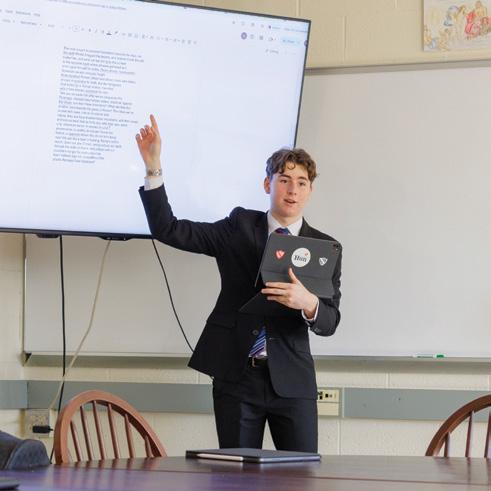
▸ 3 CREDITS; PREREQUISITE: SPANISH 1
How can we communicate in Spanish effectively prior to attaining fluency in the language? What does the study of Spanish teach us about the cultures of Latin America and Spain?
Students in Spanish 2 will learn to discuss topics such as homes and household chores, food, daily routines, health, school life, technology, the environment, and the arts. They will practice a number of communicative skills to guide them in these discussions, including describing past, present, and future actions and expressing wishes. Reading selections and writing assignments are designed to improve proficiency and allow students to investigate cultural topics. Spanish is the primary language of class discussions and small group activities.
▸ 3 CREDITS; PREREQUISITE: SPANISH 2
How does one communicate effectively in spoken and written Spanish? How does knowledge of Spanish and Latin American culture increase students’ cultural understanding?
Students will use these essential questions to guide their studies while developing language skills with more sophisticated structures and increasing proficiency with their use. Vocabulary enrichment, writing skills, and reading comprehension are developed through short readings, media, and dialogues. This practice will offer exposure to both the language and its culture. Spanish is the primary language of class discussions and small group activities.
▸ 3 CREDITS; PREREQUISITE: GRADE OF 93 IN SPANISH 2
How does the study of Spanish-language literature, music, and culture add to our understanding of other cultures? Students will continue to improve their communication skills in Spanish to function effectively in a variety of situations and for different purposes. Through themed units that integrate various aspects of the language and authentic materials, students will build proficiency in interpersonal, interpretive, and presentational communication. By continuing to develop a deeper understanding of the cultural practices and perspectives of Spain and Latin America, students will make comparisons and connections with their own cultural experience, allowing them to increase their cultural competence.
▸ 3 CREDITS; PREREQUISITE: GRADE OF 85 IN SPANISH 3 OR SPANISH 3 HONORS
What makes the Hispanic world unique? How have Hispanic cultures and civilizations influenced the world and its many cultures?
In this course, students will have the opportunity to explore several aspects of Spanish and Latin American civilization and culture through media, music, literature, historical readings, and current affairs discussions. They will discover the main contributions of Spanish and Latin American culture to the world in topics such as politics, history, business, arts, and the sciences. The course is designed for students with a good command of the Spanish language and a strong interest in Spanish and Latin American culture and civilization.
▸ 3 CREDITS; PREREQUISITE: GRADE OF 93 IN SPANISH 3 OR 85 IN SPANISH 3 HONORS
What universal questions about human nature and culture are raised when studying the literature and culture of Spanish-speaking countries?
Students will continue to develop their communication skills in Spanish through the constant practice of reading, writing, listening, and speaking about the culture, history, and current events of Latin America and Spain. They will also increase their understanding and appreciation of Hispanic culture through critical reflection, comparison with their own culture, and participation in debates and presentations about different topics. This class prepares students for the AP Spanish Language and Culture class at the next level.
▸ 3 CREDITS; PREREQUISITE: GRADE OF 85 IN SPANISH 4 OR SPANISH 4 HONORS
How is the study of identity and social responsibility shaped by community and culture?
Students in this course will develop their language skills and their ability to reflect critically on the interconnection of history, culture, and language. This course will build on the foundation of Spanish 4. Students will reflect on themes, such as identity, coming of age, justice, community, and social responsibility. They will study how historical and cultural contexts shape one’s perspective. This course will be taught in Spanish, and students will use resources in both English and Spanish to explore this essential question. The focus of the course will be continued improvement of oral and written Spanish as well as the development of a broader understanding of the Spanish-speaking world.
▸ 3 CREDITS; PREREQUISITE: GRADE OF 85 IN SPANISH 4 HONORS
What are some of the most pertinent issues and debates taking place in the Spanish-speaking world today, and how are we addressing these issues in our own society?
Students in this college-level class will take a broad approach that continues to reinforce all four language skills: reading, writing, speaking, and listening. The required readings are of a literary, journalistic, and cultural nature. AP Spanish Language and Culture students will explore the effect of culture on and by language. Grammar presentations take into account exceptions to the rules as well as complex grammar. The course prepares students for the AP Spanish Language and Culture examination. All students are required to take the AP exam at the end of the year.
REQUIREMENTS: 2 CREDITS REQUIRED; COMMUNITY SEMINAR 9 AND LEADERSHIP SEMINAR 10 REQUIRED
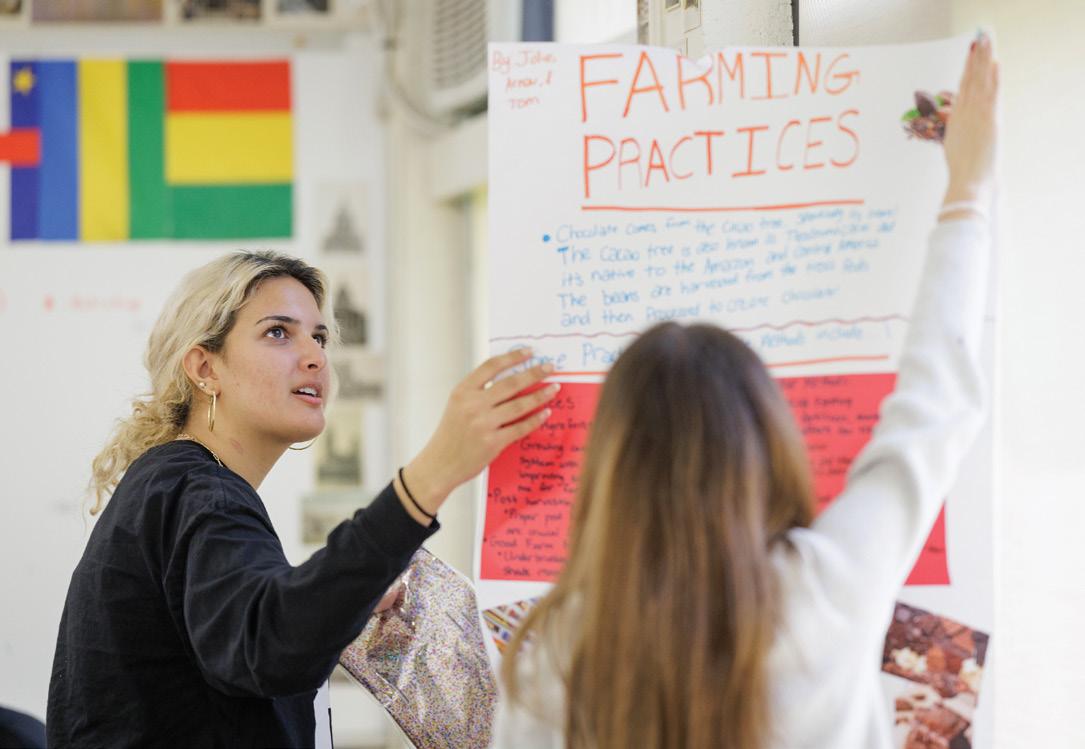
Because real-world problems are not discipline specific, the Interdisciplinary Studies Department encourages student preparation for an ever-changing world by offering courses that span academic disciplines. Foundational to The Hun School experience is a student-centered education that mentors students in character development and foundational skills that will allow them success in high school, college, and life. From an introduction to ethical decision-making and leadership to effective communication, interdisciplinary courses orient students to The Hun School Program of Studies. Through experiential and team-taught courses, students in all interdisciplinary studies courses learn to collaborate to solve problems, become innovative and creative, and access and analyze information in a real-world context.
▸ 1 CREDIT; REQUIRED FOR GRADE 9
How do we interact as individuals within a community, and what can we understand about others?
Students will participate in this project- and discussion-based seminar, practicing the Harkness method while exploring the topics of community and cultural competency. Students will practice foundational skills necessary to succeed at The Hun School and beyond.
▸ 1 CREDIT; REQUIRED FOR GRADE 10
Who am I as a leader, and how do I understand the needs of others when working to solve problems and advance community?
Students will participate in this project- and discussionbased seminar, practicing the Harkness method while studying issues such as leadership, ethics, and community advancement. Students will practice foundational skills necessary to succeed at The Hun School and beyond.
▸ 1 CREDIT; REQUIRED FOR NEW INTERNATIONAL STUDENTS IN GRADES 9 AND 10 (REPLACES CORRESPONDING SEMINAR COURSE)
How do we interact as individuals within a community, and what can we understand about others?
Students will participate in this discussion-based seminar, practicing the Harkness method, while forming a cohort to help them adapt more easily to the structure and community of high school in the United States. Depending on each student’s grade level, this course will take the place of Seminar 9 or Seminar 10.
▸ 1 CREDIT; REQUIRED FOR NEW GRADE 11, 12, AND PG STUDENTS; REQUIRED FOR GRADUATION FOR ALL GRADE 11, 12, AND PG STUDENTS FROM THE CLASS OF 2029 FORWARD; PG STUDENTS MUST COMPLETE DURING FIRST TRIMESTER
What strategies and skills are necessary for effective and inclusive leadership and facilitation? How can wellness practices and self-analysis enhance personal growth and effective leadership?
This course focuses on self-discovery, cultural competency, and ethical leadership. Students will engage in discussions on critical topics such as risk-taking, consent, communication, boundary-setting, and sexual violence
DR. KYLE BUCY
UNIVERSITY OF OREGON – B.A.
UNIVERSITY OF CHICAGO – M.A.
UNIVERSITY OF CALIFORNIA, SANTA BARBARA – P.H.D.
MR. OTIS DOUCE
DIRECTOR OF EQUITY, INCLUSION, AND GLOBAL DIVERSITY
STATE UNIVERSITY OF NEW YORK, POTSDAM – B.A.
UNIVERSITY OF NEW HAMPSHIRE – M.A.
MR. BILL ESHER
THEATER DIRECTOR; NEXTTERM COORDINATOR
GLASSBORO STATE COLLEGE – B.A.
DR. SAMANTHA HAGEMAN
ASSISTANT DIRECTOR OF DIVERSITY, EQUITY, AND INCLUSION
URSINUS COLLEGE – B.A.
NEW YORK UNIVERSITY – M.A.T.
MONMOUTH UNIVERSITY – ED.D.
MS. MEGHAN KREGER POLLER ’95
CHAIR
MIDDLEBURY COLLEGE – B.A.
MS. KATARINA MENZE
ASSISTANT DIRECTOR OF ALUMNI ENGAGEMENT
THE COLLEGE OF NEW JERSEY – B.A.
MS. JENNIFER MITCHELL
DIRECTOR OF INTERNATIONAL STUDENT PROGRAMS
GETTYSBURG COLLEGE – B.A.
MS. ALLISON SIMS
ASSOCIATE DEAN OF STUDENTS FOR STUDENT LIFE
ARCADIA UNIVERSITY – B.F.A.
MR. JONATHAN WAGSHUL
ASSOCIATE DEAN OF STUDENTS FOR CHARACTER EDUCATION
GEORGETOWN UNIVERSITY – B.S.
TUFTS UNIVERSITY – M.A.
THE JUDGE ADVOCATE GENERAL’S SCHOOL, U.S. ARMY – L.L.M.
WASHINGTON AND LEE UNIVERSITY – J.D.
MRS. DEANNA WHELAN
EDUCATIONAL TECHNOLOGY DESIGNER
RUTGERS UNIVERSITY – B.A.
THE GEORGE WASHINGTON UNIVERSITY – M.ED.
In Ms. Sims’ Jewelry Design for a Sustainable Future course, students are challenged to think like designers and metalsmiths as they create original pieces from first sketch to final polish. For their culminating project, students will design a sterling silver ring, completed by bezel-setting a stone they sourced from nature. “Whether it’s something they collected years ago or found on a nature walk to Stony Brook, I want them to rely on nature rather than purchased materials,” Ms. Sims explains.
Throughout the course, students learn foundational silversmithing techniques, including sawing sheet metal, soldering, drilling, hammering, filing, and polishing. Ms. Sims notes that the jewelry-making process demands patience, precision, and physical strength. “We’re working with really tough materials and doing very strenuous tasks, all to create something so delicate and meaningful. That contrast has been a really cool experience for us.”
But the course extends beyond technical skill. With each project, Ms. Sims encourages students to rethink jewelry as both an art form and a deeply personal, handmade expression — something meant to be worn, gifted, and treasured over time. “Jewelry has meaning,” she says. “The jewelry we choose to collect and wear can reflect pieces of our identity, often carrying emotional meaning far beyond their material value.”
while understanding the impact of gender. It emphasizes civil discourse, collaborative problem-solving, and leadership development. The course culminates in a final project in which students facilitate discussions with younger peers, applying their knowledge and leadership skills to both strengthen community connections and lend an understanding of personal impact and responsibility within the larger community.
▸ 3 CREDITS; GRADES 11, 12, PG ONLY; PREREQUISITE: U.S. HISTORY
How do the multifaceted experiences of African American communities intersect across history, literature, and the arts within the broader contexts of Africa and the African diaspora?
This interdisciplinary course examines the diversity of African American experiences through direct encounters with authentic and varied sources. Students will explore critical topics that extend from early African kingdoms to the ongoing challenges and achievements of the contemporary moment. Given the interdisciplinary character of African American studies, students in the course will develop skills across multiple fields, emphasizing historical, literary, visual, and data analysis skills. This course foregrounds a study of the diversity of Black communities in the United States within a broader context of Africa and the African diaspora.
▸ 1 CREDIT; GRADES 11, 12, PG ONLY
What is the meaning of life?
“The unexamined life is not worth living.” — SOCRATES Students will examine the existential questions (Who am I? Why am I here? How do I act responsibly and ethically? What are good and evil, and why do they exist?) that philosophers have debated for centuries. These are the questions we all must face individually. In this discussionbased course, students will study classic texts of Western philosophy from Plato and Aristotle to William James, Friedrich Nietzsche, and Jean-Paul Sartre as they wrestle with ways to answer these questions for themselves.
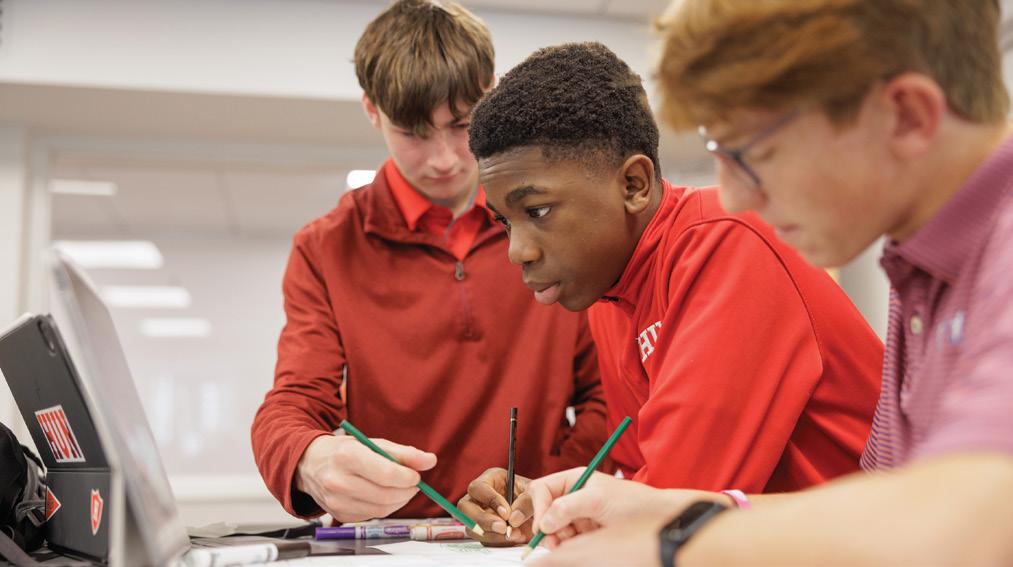
▸ 1 CREDIT; GRADES 11, 12, PG ONLY
How do you cultivate an entrepreneurial mindset to successfully pitch a viable business idea?
Students will cultivate an entrepreneurial mindset as they learn how to identify market and consumer needs, hone the art of pitching an idea, create business plans, and craft branding and marketing materials. Students complete projects and research to analyze the actual cost of initiating a new business and assess the balance between costs and potential profits. This course equips students with the essential knowledge and hands-on experience that gives them the foundation for success in entrepreneurship.
▸ 1 CREDIT; GRADES 11, 12, PG ONLY; PREREQUISITE: INTRODUCTION TO ENTREPRENEURIAL STUDIES
How can aspiring entrepreneurs effectively navigate the journey from idea to successful product launch?
Students will further develop their entrepreneurial mindset by studying how to turn ideas into products. Through consumer needs research, students will generate innovative ideas, refine them through feedback mechanisms, and craft targeted marketing strategies. By the end of the course, students will have the knowledge and practical experience needed to bring a product to market and thrive in an innovative, entrepreneurial-spirited business environment.
▸ 1 CREDIT; GRADES 11, 12, PG ONLY; PREREQUISITE: INTRODUCTION TO ENTREPRENEURIAL STUDIES; MAY BE USED TO MEET ARTS DISTRIBUTION REQUIREMENT
How can digital media skills and literacy enhance the success of a new business or personal brand?
Building on the skills developed in Introduction to Entrepreneurial Studies, students will focus on the digital media skills that are necessary to attract customers to a new business or personal brand. Students will focus on digital marketing and buyer persona development. Students will create content using video and digital art skills. They will learn to leverage and optimize various social media platforms to effectively manage personal and professional branding, engagement, and customer interaction. Additionally, students will develop an understanding of digital media ethics and literacy to make informed decisions while consuming media and engaging in online communities.
▸ 1 CREDIT; GRADES 11, 12, PG ONLY; MAY BE USED TO MEET ARTS DISTRIBUTION REQUIREMENT
How have the ethics and history of jewelry-making shaped modern designs, and how can we create more sustainable and mindful jewelry?
Students will study the intersection of ethics, sustainability, and creativity in the art of jewelry-making. Examining topics such as controversial lab-grown diamonds and the human rights impacts of mining practices, students will gain a deeper understanding of the large effects of such seemingly small choices. Students will also investigate the origins of their own jewelry to reflect on its influences, and they will design and create original jewelry using sustainably sourced materials.
▸ 1 CREDIT; GRADES 11, 12, PG ONLY
How do art, technology, and storytelling intersect to form unique characters and immersive narratives in gaming?
Students will develop skills in visual design, creative writing, and game mechanics by creating original characters and environments for a variety of game formats. By studying diverse character and game aesthetics, as well as exploring character backstories, motivations, and relationships, students will learn to craft compelling narratives that draw players into immersive and engaging worlds.
▸ 1 CREDIT; SECOND TRIMESTER X-BLOCK COURSE WITH OPTIONAL SPRING BREAK TRAVEL
What does it mean to “walk in beauty,” to live, learn, and serve in balance with ourselves, our communities, and the land? How do story and service create connections across cultures? How can we honor Indigenous ways of knowing while engaging as learners from different places and perspectives?
Inspired by the Navajo philosophy of hózhó, to “walk in beauty” through harmony and respect, this interdisciplinary course invites students to explore how story, service, and culture shape our understanding of the world and our place within it. Through literature, discussion, and experiential learning, students will study Navajo history and worldview alongside local Indigenous histories and culture. Students will examine themes of identity, language, resilience, and
reciprocity. Students will develop cultural literacy, empathy, and reflective awareness as they learn about service with humility and the balance between the community and the land. The course culminates in an optional opportunity to extend learning through a service and cultural immersion experience in the Navajo Nation.
▸ 1 CREDIT; PREREQUISITES: UNITED STATES HISTORY AND LEADERSHIP SEMINAR 10
How do values and worldviews shape the way people understand right and wrong in today’s world? How can ethical reasoning, critical listening, and critical thinking help us build understanding across cultural and ideological differences? What does it mean to act responsibly and ethically as a member of a pluralistic society?
This course explores the ethical and cultural challenges shaping life in the modern United States and beyond and invites students to examine how values, worldviews, and historical experiences influence public life and personal decision-making. Drawing from philosophy, history, and current events, the course emphasizes critical thinking, ethical reflection, and civic dialogue. Through readings, media analysis, and discussion, students will learn to think critically about contemporary conflicts over values, freedom, and justice. Students will examine how ethical reasoning can help bridge differences and foster mutual understanding. The course emphasizes reflection and dialogue to help students learn not only to analyze complex issues, but to listen, question, and understand others with respect and openness. This course will not promote any single viewpoint, but rather help students understand why people believe what they do and how to navigate contemporary issues with integrity, curiosity, and compassion.
REQUIREMENTS: 2 CREDITS REQUIRED; HEALTH AND WELLNESS 9 AND HEALTH AND WELLNESS 10 REQUIRED
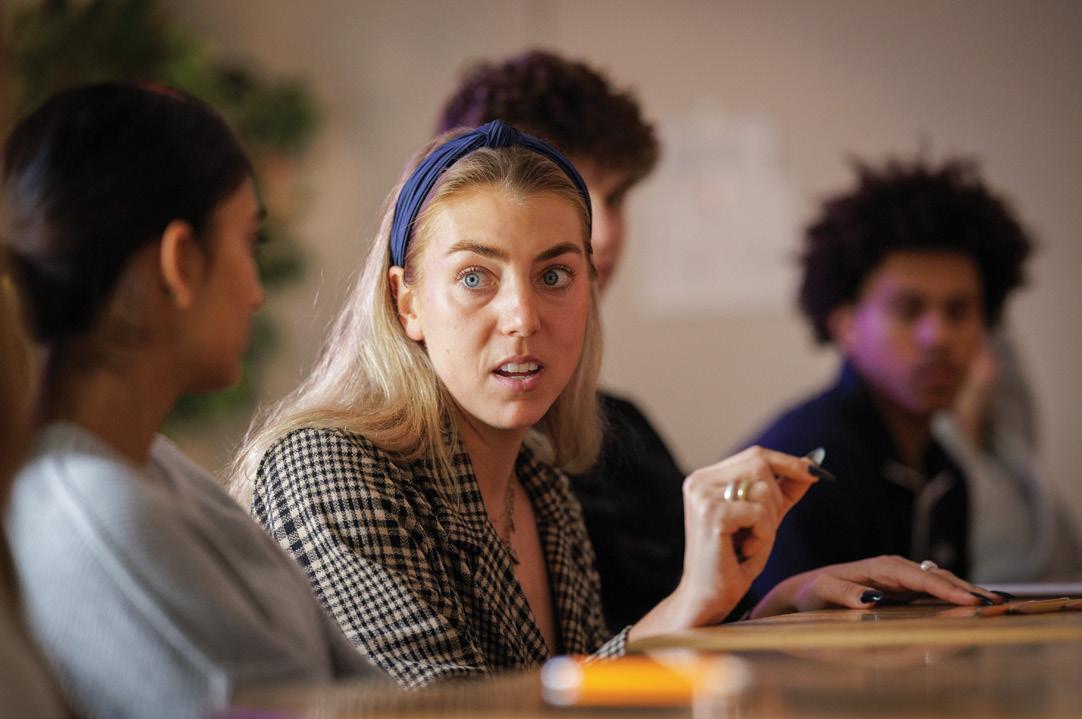
The Counseling and Wellness department encourages personal and emotional growth and a sense of belonging and connectedness through skill development and self-awareness in partnership with all members of the Hun community. We aspire to extend empathy and humility, destigmatize mental health, apply evidence-based clinical practices, and utilize culturally competent and systemic lenses. Skills, such as boundary setting, appropriate risk-taking, conflict resolution, self-regulation, helpseeking, and self-care inform our programming in the areas of prevention and intervention, healthy relationships, emotional awareness, and adolescent development.
▸ 1 CREDIT; REQUIRED FOR GRADE 9
What skills are essential to live a healthy life, and how can public health problem-solving inform our outlook on wellness?
Centered on enhancing the health of the whole student, students will focus on skill development related to health education. Through individual investigation and collaborative projects, students will deepen their understanding of foundational health concepts, public health principles, and wellness best practices.
▸ 1 CREDIT; REQUIRED FOR GRADE 10
How do we define wellness, and how does our understanding of wellness impact the decisions we make around health and wellbeing?
Students will learn about different dimensions of health and how to best incorporate these practices into their everyday lives. This class will focus on accessing health resources, applying decision-making skills, and cultivating greater self-awareness. Students will develop healthy ways to express emotions, better understand stressors, and normalize conversations around mental health.
▸ 1 CREDIT; GRADES 11, 12, PG ONLY; MAY BE USED TO MEET STEM DISTRIBUTION REQUIREMENT
How does food impact our body, mind, and overall wellbeing? How do cultural and societal norms impact our definition of what is healthy? What barriers exist around access to healthy food?
Students will investigate macro- and micronutrients, explore norms surrounding culture and food, and study the chemistry that occurs through the processes of digestion and metabolism and how nutrients are converted. Students will have a better understanding of their own needs and interests, which may include fueling the body for sports and activity, sleep, and focus. In addition to understanding ideal circumstances surrounding nutrition, students will define and know the impact of malnutrition that results in health disparities. Based on empirical support, students will be able to collaborate and support each other in the design of reasonable, sustainable practices.
MS. BRYNN HANSSON
WESLEYAN UNIVERSITY – B.A.
COLUMBIA UNIVERSITY – M.A.
MR. TODD LOFFREDO
TWELFTH GRADE DEAN
ST. LAWRENCE UNIVERSITY – B.A.
UNIVERSITY OF PENNSYLVANIA – M.S.ED.
MRS. EVA OSTROWSKY
DIRECTOR OF COUNSELING AND WELLNESS
CORNELL UNIVERSITY – B.A.
COLUMBIA UNIVERSITY – M.S.W.
MS. LAUREN TOMEI
THE COLLEGE OF NEW JERSEY – B.S.
▸ 1 CREDIT; OFFERED DURING X-BLOCK ONLY
What are the historical origins, philosophical underpinnings, and practical techniques that form the foundation of yoga and mindfulness practices, and how do these elements contribute to overall wellbeing and self-awareness?
Students will explore the origins, history, and development of yoga as they mindfully consider its philosophy and practice. Coursework will include an exploration of biological anatomy and physiology, the human stress response, and alternative medicine. Students will also investigate the wellness industry to build their cultural competency around the difference between cultural appropriation and appreciation. Students will learn about the eight limbs of yoga and practice yoga in this experiential class. Students will partake in a yoga retreat in conjunction with this academic course.
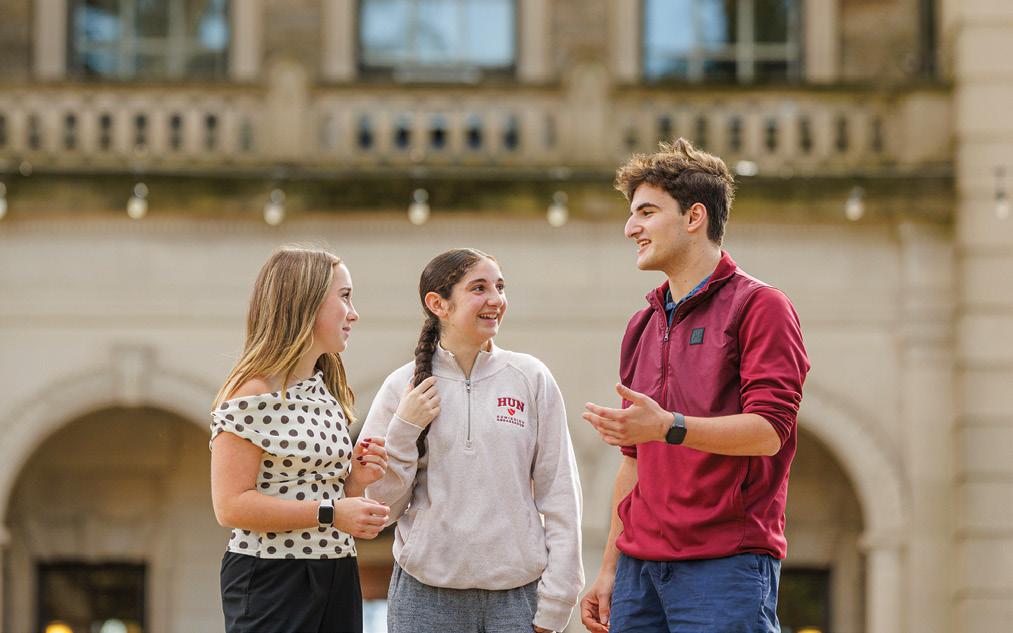
▸ 1 CREDIT; REQUIRED FOR NEW GRADE 11, 12, AND PG STUDENTS; REQUIRED FOR GRADUATION FOR ALL GRADE 11, 12, AND PG STUDENTS FROM THE CLASS OF 2029 FORWARD; PG STUDENTS MUST COMPLETE DURING FIRST TRIMESTER
What strategies and skills are necessary for effective and inclusive leadership and facilitation? How can wellness practices and self-analysis enhance personal growth and effective leadership?
This course focuses on self-discovery, cultural competency, and ethical leadership. Students will engage in discussions on critical topics such as risk-taking, consent, communication, boundary-setting, and sexual violence while understanding the impact of gender. It emphasizes civil discourse, collaborative problem-solving, and leadership development. The course culminates in a final project in which students facilitate discussions with younger peers, applying their knowledge and leadership skills to both strengthen community connections and lend an understanding of personal impact and responsibility within the larger community.
REQUIREMENTS: 6 CREDITS REQUIRED BETWEEN VISUAL AND PERFORMING ARTS
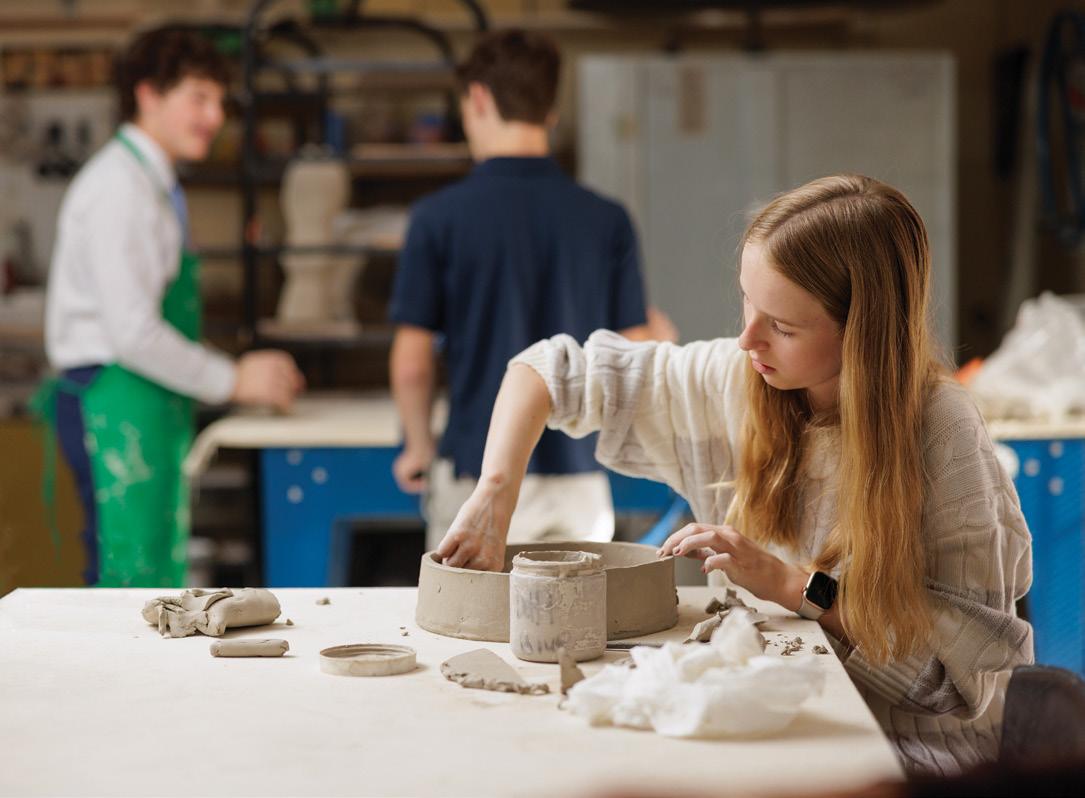
The visual arts courses at The Hun School teach students to think like artists: how to explore the world with curiosity, adapt solutions to fit a variety of problems, and foster the passion to express themselves visually. Lessons offer technical skill building as well as knowledge of artists throughout history and cultures that relate to the specific coursework. Visual art teachers work to present multiple strategies for encouraging creative expression from students. Each student is prompted to find their own creative voice both through their artwork and in speaking about art in class critiques. The Visual Arts Department hopes students come away from each class inspired to create and with an appreciation of a wide range of artistic approaches that will last a lifetime.
▸ 1 CREDIT
What does a box of clay have to do with being thoughtful?
Students will be introduced to ceramics, including a variety of forming techniques, design, decoration, and glazing and will create both sculptural and utilitarian pieces. Form and function will be a part of an ongoing conversation as the recognition of one’s own developing sense of aesthetics. Students will look at numerous historically significant ceramic artists and time periods from around the world. Throughout the course, emphasis will be placed on personal creativity and establishing a solid foundation in the basics of clay construction that will be used in further ceramic or other art classes.
▸ 1 CREDIT; PREREQUISITE: CERAMICS 1
What makes a lump of clay art?
Students will explore forming techniques with hand-built and wheel-thrown forms. Students are evaluated on creativity, form, function, and craftsmanship. This course expands on the basic ceramic skills acquired in Ceramics 1. Students are encouraged to develop a personal language that manifests itself at the completion of the trimester. Emphasis is placed on personal creative development and advancement within the ceramics medium.
▸ 1 CREDIT; PREREQUISITE: CERAMICS 2
What is creativity, really?
Students will build upon the knowledge gained from previous ceramics classes. Using the skills of construction and creating stable objects that survive both bisque, glaze, and Raku firing, we will make conceptual, sculptural, and even some functional pieces. Students continue the study of other ceramic artists, some contemporary and from other cultures.
▸ 1 CREDIT
What fundamental skills are necessary to develop creativity and visual literacy?
Students will participate in drawing, painting, and printmaking processes while learning how to create pieces from start to finish, beginning with preliminary sketches and ending with feedback and revisions. Art vocabulary, art history, and originality are emphasized so that students gain an increased understanding of the importance of creativity.
MR. ALLAN ARP CHAIR
SOUTHERN METHODIST UNIVERSITY – B.F.A. RUTGERS UNIVERSITY – M.F.A.
MS. SOPHIE ELBRICK
NEWCASTLE UNIVERSITY – B.S.
TRINITY COLLEGE DUBLIN – M.SC.
MR. MARTIN HOBAN DREXEL UNIVERSITY – B.S.
MS. CARIN SANKUS
NEW YORK STATE COLLEGE OF CERAMICS AT ALFRED UNIVERSITY – B.F.A.
TYLER SCHOOL OF ART, TEMPLE UNIVERSITY –POSTBACCALAUREATE
UNIVERSITY OF FLORIDA – M.F.A.
MS. ALLISON SIMS
ASSOCIATE DEAN OF STUDENTS FOR STUDENT LIFE ARCADIA UNIVERSITY – B.F.A.
MS. KAREN STOLPER PARSONS SCHOOL OF DESIGN – B.F.A.
MRS. DEANNA WHELAN
EDUCATIONAL TECHNOLOGY DESIGNER
RUTGERS UNIVERSITY – B.A. THE GEORGE WASHINGTON UNIVERSITY – M.A.
▸ 1 CREDIT
How can I become visually literate?
This dynamic course introduces students to the art of video production through the lens of twenty-first-century technology and cutting-edge artificial intelligence (AI) tools. Students will learn essential filmmaking skills, including scripting, storyboarding, camera techniques, lighting, and editing, while exploring the latest advancements in video production software and hardware. Throughout the course, students will engage with AI-driven video editing tools, motion graphics, and automated content generation technologies, enhancing their creativity and workflow efficiency. By the end of the course, students will have produced original video projects that demonstrate their mastery of both traditional video production techniques and innovative AI applications in digital storytelling.

▸ 1 CREDIT; PREREQUISITES: VIDEO PRODUCTION 1; PROFICIENT IN FINAL CUT PRO X & PHOTOSHOP
How can I become even more visually literate?
Students in Video Production 2 will focus on selected areas of exploration and project-based work that interest each individual. Collaborative group experiences will be gained as students produce the trimester's offering of live HUN TV student news coverage.
▸ 1 CREDIT; PREREQUISITES: VIDEO PRODUCTION 2; EXPERT AT FINAL CUT PRO X & PHOTOSHOP
What is the right mix between driving curiosity, dedicated passion, and the digital media creativity needed to master the making of more mature, memorable video experiences?
Students in this advanced section of video production will continue their studies of this digital medium with a more independent focus. Student-designed themes will guide individual production work during each marking period of the course. Structured coursework can take any number of forms: from creating independent video art exhibitions or teaching specific, introductory video production classes to working with teachers of other disciplines in developing video-related coursework. It is up to the students, working with the video teacher, to design their own courses. This project-based class will allow deeper independent study for the individual while providing opportunities for collaboration across campus.
▸ 1 CREDIT; PREREQUISITE: VIDEO PRODUCTION 1
How does animation enhance storytelling and create emotional connections with audiences?
Dive into the captivating world of animation, where creativity meets technology! This hands-on course is designed for students eager to explore the art of storytelling through moving images. From classic 2D techniques to cutting-edge 3D animation and digital effects, students will learn the essential skills needed to create their own animated shorts. This course is for budding artists, tech enthusiasts, or students with a passion for storytelling. No prior experience in animation is required — just a desire to learn and create.
▸ 3 CREDITS; PREREQUISITE: GRADE OF 93 IN PRIOR VISUAL ARTS COURSE
What forms of art-making exist beyond the 2-dimensional realm? How can an art piece become an experience?
Students will experiment with creative practices that challenge them to reconsider what art is and what it can convey. Projects will incorporate both 2-dimensional and 3-dimensional processes, such as drawing, painting, wire and plaster sculpting, mold-making, and casting. This course will provide opportunities for introspection as well as collaboration and will require students to use critical thinking skills to decide how to express an idea, even if the end result doesn’t look how art “should” look. Students will also examine how artists have used their work to build connections and address matters of social, cultural, and environmental significance.
▸ 1 CREDIT
How does the CAD system and rapid prototyping change our understanding of architecture?
Students will use computer-aided design (CAD) software to study the language of contemporary architecture. Students will work through both individual and group projects that question how architecture impacts our daily lives. Students will learn how to present work in various virtual formats, as well as 3D print their designs. The study of significant architects and movements in architecture will parallel the class projects.
▸ 1 CREDIT; PREREQUISITE: CAD 1
With CAD and rapid prototyping, how is the personal object changing in our society?
Students will explore computer-aided design (CAD) and rapid prototyping to invent the next generation of personal objects we surround ourselves with. These objects can be tools that make our lives more efficient, mobile, and productive. They help us with our personal hygiene. They keep us organized and connected with others. Smartphones, toothbrushes, pens, and eyeglasses are some examples of these objects.
▸ 1 CREDIT; PREREQUISITES: CAD 1 AND CAD 2
How can we nurture our artistic creativity to make us better designers, thinkers, and inventors?
Students will focus on making connections between CAD and 3D scanning, laser cutting, rendering, augmented reality, 3D printing, and animation. The application of these practices to 3D organic modeling in gaming, design, and sculpture in the visual arts will be studied.
▸ 1 CREDIT
Why is drawing a skill that can be learned?
A common belief is that artistic talent is innate. In Drawing 1, students will learn techniques to strengthen their observational drawing skills and improve their expressive ability. Projects focus on strategies to help refine technique and visual awareness of their subjects. The course progresses from contour line work to shape building and value studies. Students learn how different artists around the world approach drawing and how to identify different styles of work.
▸ 1 CREDIT; PREREQUISITE: DRAWING 1
Is a picture worth a thousand words, or can art convey messages without language?
A continuation of Drawing I, this course reinforces basic drawing skills and techniques and introduces a wider variety of additional drawing materials. Emphasis is placed on drawing from life, photos, and imagination, as well as learning basic related art history, aesthetics, and art criticism. Students will be encouraged to create their own unique ideas, as well as begin to identify and develop their personal style of expression and mark-making.
▸ 1 CREDIT; PREREQUISITES: DRAWING 1 AND DRAWING 2
How do we create art to represent personal expression and insightful exploration?
Students will apply their drawing skills and knowledge to more in-depth developed projects. Subjects include figure drawing (all aspects — including models, fashion, anatomy, and gesture), architecture (drawing from history and current local architecture and creating future designs), and landscapes (plein air drawing and painting, developing line and pastel techniques, and learning through past and present landscape artists). The coursework will also serve to make connections to current and historical artists.
▸ 1 CREDIT
Is the sky really blue? Is an apple really red?
Students will learn how paintings are made, from the basics of paint application techniques to incorporating color schemes. Projects emphasize how color choices, brush stroke methods, and arrangement of space can affect the overall composition of a painting.
▸ 1 CREDIT; PREREQUISITE: PAINTING 1
How can a combination of representational and abstract imagery be utilized in paintings to convey ideas and emotions?
Students will expand on the techniques practiced in Painting 1 while exploring abstraction and learning how to convey messages in their paintings. Students will have more freedom to decide how and what they want to paint, while taking inspiration from movements such as cubism and surrealism.
▸ 1 CREDIT; PREREQUISITE: PAINTING 2
How can painting help us express complex ideas and connect with others?
Students will explore a range of techniques, including mixed media and experimental methods, while building confidence in their skills and appreciation for painting. Projects will encourage a deeper level of self-expression and involve both individual and collaborative, small-scale and large-scale work.
▸ 1 CREDIT
How can a photographer control the camera and editing to reflect personal ideas?
Students in this course will learn digital photography through the use of a digital single-lens reflex camera. The students will master basic controls like the shutter and aperture to create clear visual statements with their photographs. Through class critiques and homework assignments, students will learn to creatively analyze both their own photographs and the work of professional photographers. This work helps strengthen their own shooting methods and inspire them to create strong photographs. Basic Photoshop editing is also introduced, and students will learn dry mounting to present their work professionally.
▸ 1 CREDIT; PREREQUISITE: PHOTO 1
Why is light critical to the success of photography?
Students will take a deeper dive into Photoshop and photo manipulation. They will study abstract, landscape, and studio portrait photography artists and techniques. They will also learn to edit photos for optimal printing. Students will learn about photography as a means to write a story and incorporate photography into the design process to create album and book covers. Students will continue to develop their voice through critiques of their work and their peers. Students will also learn various slow exposure techniques and how to “paint with light.”
▸ 1 CREDIT; PREREQUISITES: PHOTO 1 AND PHOTO 2
How do students apply their technical photography skills to the field of commercial photography?
Students in Commercial Photography will explore the application of photography to the fields of advertising, portraiture, fashion, and photojournalism. Advanced postproduction techniques using Adobe Lightroom and Photoshop will be explored. Students will explore how website development, social media, and gallery show submission can be used to market photography.
▸ 1 CREDIT; PREREQUISITES: PHOTO 1 AND PHOTO 2
What are advanced techniques that can push the creative potential of photographic images?
Students in Advanced Techniques in Photography will create their own personal styles as photographers and use processing techniques to expand their skills with photographic manipulation. Some processes covered are HDR, digital infrared, painting with gels or light, and panoramic photography. Advanced Photoshop editing skills are developed, as well as hand-processing of existing prints. The process of submitting work for shows and galleries is also covered.
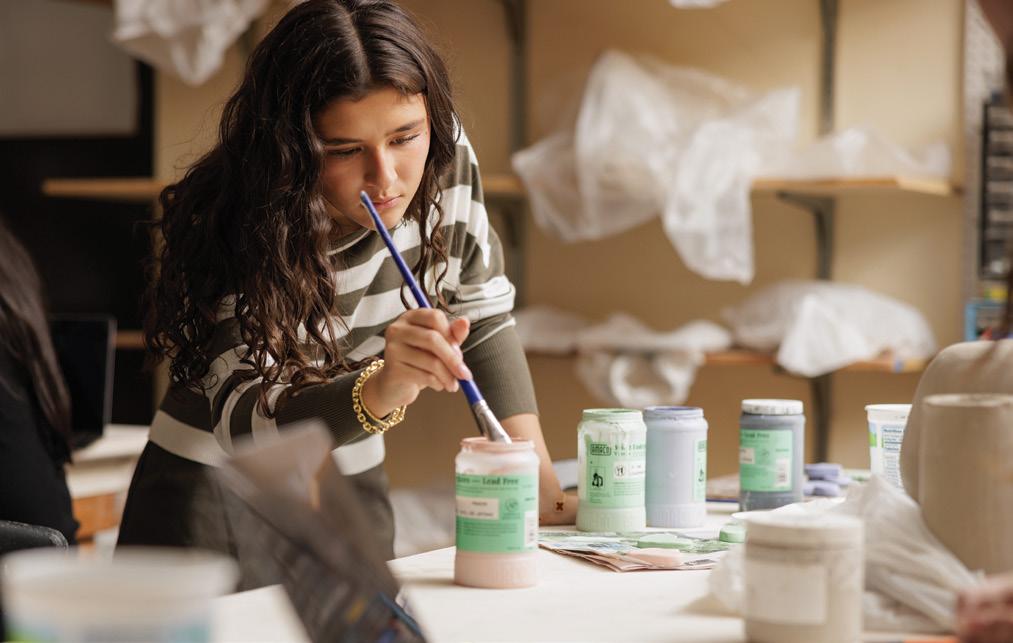
▸ 3 CREDITS; PREREQUISITES: ONE YEAR OF VISUAL ARTS CLASSES WITH AT LEAST ONE TRIMESTER OF DRAWING AND RECOMMENDATION OF THE VISUAL ARTS DEPARTMENT
How can artists use different forms of mark-making to develop their ideas and explore the creative process?
This course follows the College Board’s requirements for studio art instruction in the drawing portfolio. Students will choose a question of their own interest to investigate through the process of drawing and are expected to create fifteen pieces by the end of April. Students in this portfolio must use drawing in their art pieces. Photography is allowed if mark-making is a major component in the product. There are assignments relating to new techniques and the study of a variety of artists to encourage students to experiment and revise their ideas. Maintaining a regular sketchbook and research into their question will be graded for homework.
▸ 3 CREDITS; PREREQUISITES: ONE YEAR OF VISUAL ARTS CLASSES AND RECOMMENDATION OF THE VISUAL ARTS DEPARTMENT
How can artists use the arrangement of a flat picture plane to develop their ideas and experiment with the process of making art?
This class follows the College Board’s requirements for studio art instruction in the 2D design portfolio. Students will choose a question of their own interest to explore through photography, collage, painting, printmaking, and drawing. The approach to design and how a composition is formed is more open in this portfolio than the drawing portfolio. Students will produce at least fifteen pieces by the end of April. Assignments relate to new techniques and the study of a variety of artists to encourage students to experiment and revise their ideas. Maintaining a regular sketchbook and research into their question will be graded for homework.
REQUIREMENTS: 6 CREDITS REQUIRED BETWEEN VISUAL AND PERFORMING ARTS
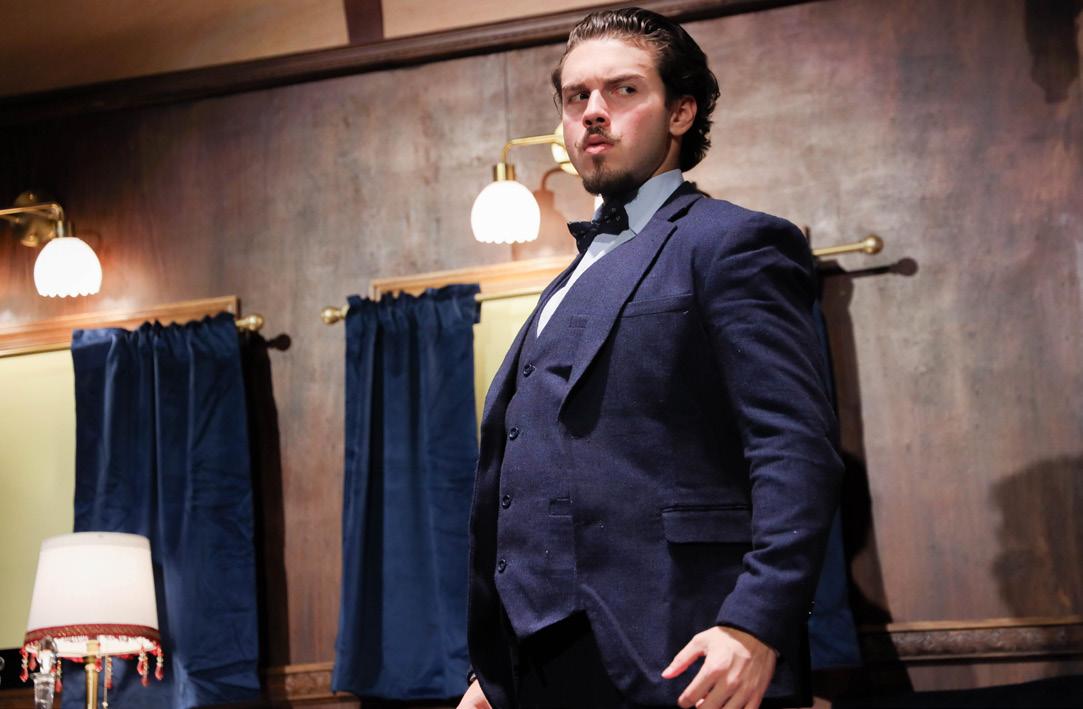
Arts education is essential for every student. The mission of the Performing Arts Department at The Hun School is to promote creative expression, communication skills, problem-solving, and inventive thinking. Courses and extracurricular activities are designed to foster lifelong appreciation through active participation in a variety of performing arts activities. It is through personal discovery and experimentation, coupled with consistent involvement in the arts that skills are developed, appreciations are formed, and creativity is encouraged. Musical, dance, and dramatic experiences expand students’ horizons, develop creative and inventive thought, and provide unique experiences for self-revelation and reflection.
▸ 1 CREDIT; MAY BE REPEATED FOR CREDIT
What does it mean to be an artist in a group?
Students in the chorus participate in a performance ensemble that focuses on the study and performance of vocal music from a variety of musical styles and periods, ranging from Renaissance to musical theatre and world music. Students will also learn music reading, theory, and sight singing skills, as well as basic vocal production and technique. The group performs several times throughout the academic year, both on and off campus. The ensemble is open to students of all ability levels. Participation in chorus provides excellent preparation for those students wishing to audition for Hun’s a cappella singing groups, as well as the winter musical.
▸ 3 CREDITS; MAY BE REPEATED FOR CREDIT
What makes jazz uniquely American? How can I perform in the jazz style?
Students in the jazz band work as a performing group consisting of musicians playing rhythm instruments (guitar, bass, piano, and drums) and melody instruments (brass and woodwinds). This group is open to musicians of all ages who have experience playing their instruments and who have a desire to learn to play music in the jazz style. The band studies and performs a wide variety of jazz and jazz-rock fusion tunes, from blues and bebop to swing and funk. This group performs several times during the academic year, both on and off campus. Students in the jazz band will work to improve their individual instrument skills within the context of the big band, while internalizing the sound and stylistic techniques unique to jazz music.
▸ 3 CREDITS; MAY BE REPEATED FOR CREDIT; AUDITION REQUIRED
How can I express myself through jazz improvisation and arrangement?
The advanced jazz band is a jazz combo made up of melody and rhythm instruments. This small group builds on the skills learned in jazz band and focuses on students’ arrangements and improvisation. Students delve more deeply into the music theory used in jazz improvisation and on arranging techniques. This group works closely together to create a unique sound, learning to rehearse effectively, listen and adjust as they perform, and respond musically
MR. RYAN BROWN
LOYOLA MARYMOUNT UNIVERSITY – B.S., B.A.
EASTMAN SCHOOL OF MUSIC – M.M.
INDIANA UNIVERSITY – D.M.A.
MR. WILLIAM ESHER
THEATER DIRECTOR AND NEXTTERM COORDINATOR
GLASSBORO STATE COLLEGE – B.A.
MR. JOSHUA ROBINSON
THEATER MANAGER AND TECHNICAL DIRECTOR
MONTCLAIR UNIVERSITY – B.F.A.
MS. REBECCA ROBINSON
OHIO UNIVERSITY – B.F.A.
MS. DEBORAH WATTS
CHAIR
OBERLIN CONSERVATORY OF MUSIC – B.M.
OBERLIN COLLEGE – M.M.
in the moment as they create musical experiences. The emphasis in this group is on creativity, building a repertoire of tunes from disparate jazz styles, and student leadership. This group performs frequently at school and community events, as well as at concerts during the year.
▸ 3 CREDITS; MAY BE REPEATED FOR CREDIT
What does it mean to be an orchestral musician?
Students in the chamber orchestra collaborate as a performing group focused on the study and performance of orchestral works. The group, open to woodwind, brass, percussion, and string musicians, will perform great music from the Baroque to modern classical music. Students will work on instrument technique, reading complex scores, and developing musicianship. Active listening, blending sounds, playing accurately and expressively, and stage presence will be studied and practiced. This group performs several times during the academic year, both on and off campus. The chamber orchestra is open to musicians who have studied their instruments for at least a year.
▸ 1 CREDIT
What four chords do I need to learn to play most songs on the guitar, and how can I learn to play any song I want to?
Guitar Lab introduces students to the fundamentals of guitar, focusing on chord patterns and basic melodies. Students will be taught form, technique, and a variety of songs throughout the trimester. By playing as a large in-class ensemble and as
soloists, students will have many opportunities to experience team-based music-making while experimenting with improvisation. No prior guitar experience is required for beginners. Students who are considered intermediate will progress at an individualized pace toward more advanced repertoire and skills.
▸ 1 CREDIT
How can learning piano help us understand and express music more deeply, both through notation and by ear?
Piano Lab introduces students to the fundamentals of piano and music notation. In addition to learning about proper playing techniques and traditional written notation, students will develop an understanding of chord symbols to facilitate playing pop songs or jazz lead sheets. While there is no required stage performance, students will perform songs worked on in class for their teacher and peers. No prior piano experience is required for beginners. Students who are considered intermediate will progress at an individualized pace toward more advanced repertoire and skills.
▸ 1 CREDIT
What is music production? How can I record my own songs without a professional music studio?
This course is an introduction to base-level music production techniques and software. A wide variety of genres will be explored through many artists from around the world with the intent of broadening students’ perceptions of “pop” music while developing skills in critical listening and musical analysis. Focusing mainly on the digital audio workstation (DAW) as a tool for recording and editing music, students will engage in many projects involving MIDI instrument use, basic audio interface utilization, stock effects, and automations. Original songs, covers, loops, and beginner film scoring projects will guide students through the transcription, recreation, and reimagination processes that many professional music producers utilize in their careers. Students are required to complete this course to take Advanced Music Production.
▸ 1 CREDIT; MAY BE REPEATED FOR CREDIT
How can I take my musical ideas and turn them into something that could be posted and streamed on Spotify or Apple Music? How do I make my songs sound professional?
This course is a hands-on study of modern recording, mixing, programming, and post-production techniques, oriented toward musicians with the desire to record themselves and others in a personal recording studio environment. Through a series of independent and collaborative projects, students will develop their understanding of and skills in various audio technologies and techniques: types of microphones, audio signal flow, DAW session management and file exchange, signal processing, editing, and mixing techniques. The course provides opportunities for creative control and expression and is intended to provide a space for students to share and collaborate through performance, recording, and collaborative mixing and editing. The course leans heavily on individualized instruction.
▸ 1 CREDIT
How has popular music from the past affected the popular music of today? How can we think and talk about music in a more informed way?
This trimester music appreciation course introduces students to the unique styles of music that have emerged as part of American popular culture. The course covers all genres of music, from big band swing to trap-inspired hip hop. The course begins with an exploration of how we listen to, discuss, and write about music. Students will explore song structure and foundational music theory, as well as have opportunities to share their own experiences with music through projects and collaborations. The history of pop music through the decades is emphasized, with a focus on cultural, musical, and technological influences on the artists of the day.
▸ 1 CREDIT; OFFERED IN THE FALL TRIMESTER
How is music notated and structured? What are the elements of different tonalities?
The purpose of this course is to help students who are interested in music to recognize and understand the compositional and creative processes utilized in writing music, using master composers of the past as examples, including Bach, Mozart, Schubert, and many others. Topics include major and minor scales, key and time signatures, rhythm and meter, intervals, chords, and part-writing. In addition to class lectures, students will develop ear training and sight singing skills. While the emphasis is on theory, the course includes content relating to music history, particularly through the use of examples from a wide range of genres, composers, and major works. Students are not required to have any previous training in music theory, although the ability to read music will be beneficial. Those students wishing to prepare to take the AP Music Theory exam may follow a supplemental course of study in addition to the coursework.
▸ 1 CREDIT
How has this storytelling form evolved to engage and reflect generation after generation?
This course is designed to give the student an increased appreciation and experience in theatre as an art form. Students explore techniques in acting, voice, movement, writing, design, and production in addition to theatre history, culture, and technology. Additionally, students read, write, and evaluate plays as well as view and critique live, filmed, and taped performances.
▸ 1 CREDIT; PREREQUISITE: THEATRE OR AUDITION; MAY BE REPEATED FOR CREDIT
As one deepens their understanding of the craft of theatre, how does that impact performance and audience?
This course continues and expands on theory and technique explored in Theatre. Students are challenged to develop a deeper understanding of the principles presented in prior classes as they apply to acting, voice, movement, writing, design, and production. Performance/design opportunities are identified and developed throughout the course.
▸ 1 CREDIT
How does a theatre function?
This course is designed to afford students the experience of production, directing, designing, building, budgeting, and marketing their own production. The production team will select an appropriate script for production based on the number of students in the course, choose their director(s) and designers, and work within a designated budget. Problem-solving, collaboration, financial responsibility, and leadership are among the skills that this experience will address. Assessment is based on the final public performance and student participation in the production process.
▸ 1 CREDIT
How does musical theatre reflect themes in American history?
This course will survey the history of the American musical from the beginning “collaboration,” which was its birth, through its growth and development during the twentieth century, to the present day. This truly American art form has not only been an entertaining diversion but also a reflection of the social and cultural themes throughout its history. Additionally, it is one of the most collaborative forms of theatre, bringing together multiple elements — including art and technology — to create a whole. Students will have an opportunity to read, view, and analyze many examples of this art form. Discussions will include the content of the individual piece as well as its relationship to the social, cultural, and historical movements of its time.
▸ 1 CREDIT; MAY BE REPEATED FOR CREDIT
How does a theatre function?
Students in this course will explore all of the behind-thescenes aspects of production: building scenery, producing, scenic painting, lighting, and costume design. This course gives students the opportunity to apply classroom learning by providing technical support to various productions in the performing arts by building set pieces, running backstage crews, and operating sound and lighting equipment for plays, concerts, and assemblies.
▸ 1 CREDIT
How does the work of a designer contribute to the overall experience of an audience?
Whether it be in film, video, consumer products, or theatre, design has come to play a significant role in the impact on an audience. This course will allow students to focus on the design of a production. Through scenic, costume, lighting, sound, and props design, students will work through the complete process of production design. As a production team, students will work together to collaboratively problemsolve, build leadership skills, work within a budget, and research architecture and time periods, as well as develop their creative process.
▸ 1 CREDIT
How can the practical skills of stagecraft be learned, understood, and applied?
The craft of technical theatre often explores skills that have many other applications. This course offers students a comprehensive understanding of how practical elements of a theatrical set work. Throughout the trimester, students may explore topics like proper tool usage, basic electrical wiring, load-bearing construction, plumbing, drywall installation/ mudding, shelving hardware installation, furniture maintenance and upholstery, painting techniques, and basic mechanics. Additionally, students will have the opportunity to have their hands-on work seen by an audience by assisting with the scenic needs for the winter musical.
▸ 1 CREDIT; MAY BE REPEATED FOR CREDIT; OFFERED DURING X-BLOCK ONLY
How is dance one of the original art forms?
Dance will examine, through readings, video viewing, and guest speakers, the many facets of dance, including the evolving forms of ballet, jazz, tap, modern, and musical theatre, as well as their methods of choreography and staging. Academic portions of the course include brief papers and quizzes. Studio portions will encompass the practical examination of various dance techniques, student improvisation and choreography, and review of staging to be presented in the fall or spring performances of The Hun Dance Company.
▸ 1 CREDIT; PREREQUISITE: STUDENT MUST BE A PREVIOUS OR CURRENT MEMBER OF THE AFTER-SCHOOL DANCE PROGRAM AT HUN (FALL OR SPRING) OR RECEIVE RECOMMENDATION FROM A HUN DANCE TEACHER
In an ever-changing world, how do choreographic elements effectively convey narrative through dance, and how can style, culture, and technology expand the richness and depth of movement art?
Dance is a natural art form that has been present in many, if not all, cultures and civilizations of humanity. That movement would not be possible without creative vision. This course will focus on students creating their own visual art, incorporating various styles of dance, exploring different media and points of view, and learning the humility of constructive critique by their peers. Students will then showcase one of their creations to the public as part of their final grade.
▸ 1 CREDIT; MAY BE REPEATED FOR CREDIT
What opportunities exist in the performing arts for business, social media, production, therapy, and more?
Students in this real-world course will explore the business/ production sides of the performing arts as well as tangential careers in the performing arts. With an estimated 5.2 million jobs and an annual contribution to the GDP of close to $1 trillion, students will examine career opportunities that go beyond what the audience sees onstage. Each trimester, students may choose which discipline they prefer — theater, music, or dance — and will partner with professional organizations for both site visits and campus presentations. Students will investigate career paths in the performing arts, including business, production, advertising/social media, and teaching/coaching; students will work on projects in all of these areas and more.
The Hun School offers academic support for students with mild learning differences. Students in this program meet one-on-one with an academic support specialist every day. This program carries an additional fee.
MS. JENNIFER BARRETT
MUHLENBERG COLLEGE – B.S.
MS. CHRISTINE PETRUZZELLI
DIRECTOR
GLASSBORO STATE COLLEGE – B.A.
KEAN UNIVERSITY – M.A.
MS. VICKIE WHITTLE
MONMOUTH UNIVERSITY – B.A., M.A.
MR. ERIC WORTHY
KEAN UNIVERSITY – B.A.
MONTCLAIR STATE UNIVERSITY – M.A.
MRS. CALI ZIEGLER
RUTGERS UNIVERSITY – B.A.

The Hun School’s Postgraduate Program is an academically minded gap year that offers students an opportunity to strengthen their candidacies for admission and potential for success in college. Hun postgraduates are fulltime boarding students. They take a full course load and participate in activities, athletics, extracurriculars, and social events. This program carries an additional fee.
In partnership with students, parents, and advisor, Hun’s college counseling team works to discover and ultimately achieve the best college selection for each student. Dozens of educational programs are offered throughout the year, such as informational presentations, panel discussions, and case study programs with top college admission professionals. In addition, The Hun School is fortunate to have more than 100 college and university representatives visit each year. This program is included in tuition.
MR. STEVEN DELVECCHIO
SENIOR ASSOCIATE DIRECTOR
UNIVERSITY OF NORTH CAROLINA AT CHAPEL HILL – B.A.
ADELPHI UNIVERSITY – M.A.
MS. RADHA MISHRA DIRECTOR
SMITH COLLEGE – B.A.
THE COLLEGE OF NEW JERSEY – M.A.
JAWAHARLAL NEHRU UNIVERSITY, NEW DELHI – M.A.
MR. PATRICK ROUNDS
ASSOCIATE DIRECTOR
PRINCETON UNIVERSITY – B.A.
HARVARD GRADUATE SCHOOL OF EDUCATION – ED.M.
MS. JULIE WASHINGTON
ASSOCIATE DIRECTOR
SAINT MARY-OF-THE-WOODS COLLEGE – B.S.
CALDWELL UNIVERSITY – M.A.
MRS. ANUPA WIJAYA
ASSOCIATE DIRECTOR
UNIVERSITY OF MICHIGAN – B.A.
HARVARD SCHOOL OF PUBLIC HEALTH – M.S.
COLUMBIA UNIVERSITY – M.A., M.ED.

The Hun School offers three-week enrichment and six-week for-credit classes during its summer academic session. Credit courses are available in Algebra 1, Algebra 2, Algebra 2 Honors, Geometry, Geometry Honors, Precalculus Honors, Chemistry Honors, and Physics Honors. Visit hunschool.org for additional details. This program carries an additional fee.
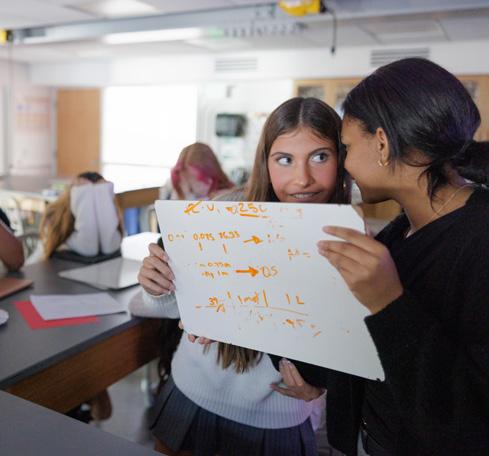
COURSES
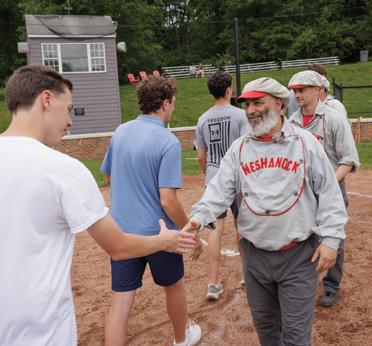
NextTerm 9 courses allow students to discover what makes New Jersey unique and what events have helped shape the Jersey consciousness, economy, and spirit of innovation.
Students will choose from a variety of interdisciplinary options focused on specific themes; participate in both overnight and day trips; visit areas around the state; and explore the history, science, politics, and art of our diverse and inspiring home.
REEFS, ROBOTICS, AND RESEARCH: MARINE SCIENCE IN ACTION
How do scientists use technology to understand and conserve marine ecosystems?
Location: Bermuda
SEA TO SHORE: INDUSTRY, CULTURE, AND IDENTITY
How has Nova Scotia’s seafood industry shaped the economy and culture of the province, and how is it evolving in response to aquaculture and technological change?
Location: Nova Scotia, Canada
DRIVING INNOVATION: ENGINEERING IN ACTION
How has automotive engineering shaped the way societies move, work, and live — and where is it taking us next?
Locations: Frankfurt, Munich, and Stuttgart, Germany
ROOTS, RHYTHMS, AND RIGHTS: HISTORY, RESILIENCE, AND LIFE IN THE BATEYES
How does the Dominican Republic’s history shape its culture, identity, and connection to the wider world today?
Location: Santo Domingo, Dominican Republic
Action. That’s what all of history’s great thinkers, artists, achievers, and innovators have in common. They took action, stepping (sometimes literally) into the unknown. Each fall, Hun students choose one course from a menu of topics before spending three weeks immersed in the subject matter, wherever it may take them. Each student or student team will then create and present a project with real-world relevancy at the spring NeXpo.
How and why are National Parks essential to the American experience, and what role do we play in their stewardship and legacy?
Locations: Utah, Colorado, Wyoming, and Montana
In what ways did Thoreau and the transcendental movement influence American thought about nature and our place in it, and how can we apply those ideas today?
Locations: Greenville, Mount Chase, and Kennebunk, Maine; Concord, Massachusetts
LEGACY IN ACTION: LESSONS FROM THOSE WHO TRANSFORMED AMERICA
What can experiencing history teach us about making a difference now?
Locations: Atlanta, Georgia; Selma and Birmingham, Alabama
Why do humans explore space, and how does it contribute to human survival, scientific knowledge, and technological advancement?
Location: Houston, Texas
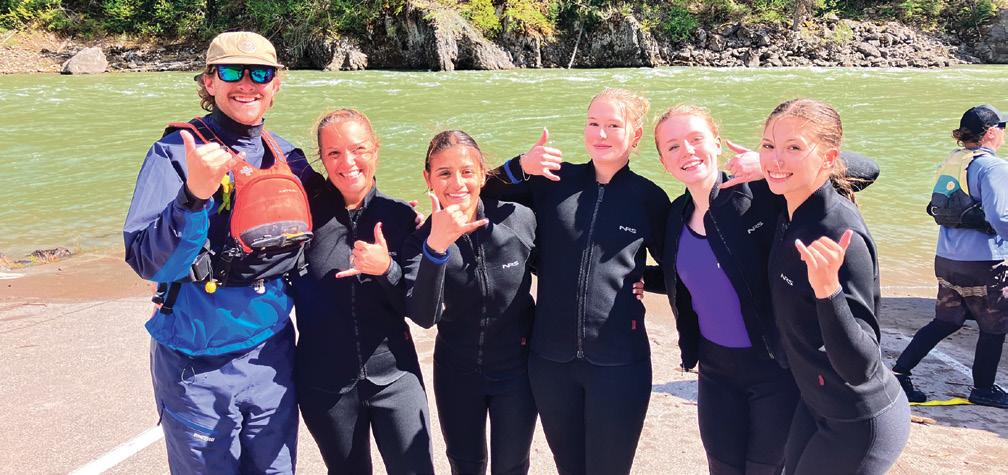
Local Courses With Short Overnight
ROCK REVOLUTION: MUSIC, CULTURE, AND CREATIVITY
How did rock and roll revolutionize culture — and what does that spirit of rebellion and creativity look like today?
Locations: Pittsburgh, Pennsylvania; Cleveland, Ohio
BIRDS OF A FEATHER — MIGRATE INTO THE WORLD OF SCIENCE AND ART
How do birds reveal the connections between art, science, and the natural world?
Locations: Cape May, New Jersey; Hawk Mountain, Pennsylvania; New York, New York
GAME CHANGERS: THE POWERFUL IMPACT OF WOMEN’S SPORTS
How have women in sports shaped the games they play, the communities around them, and the culture we live in today?
Locations: New York, New York; Washington, D.C.; Uncasville, Connecticut
ANIMAL KINGDOM: ZOOS, ETHICS, AND CONSERVATION
What purpose do modern zoos serve in protecting biodiversity, and can their work be justified in today’s world?
Locations: New York, New York; Baltimore, Maryland
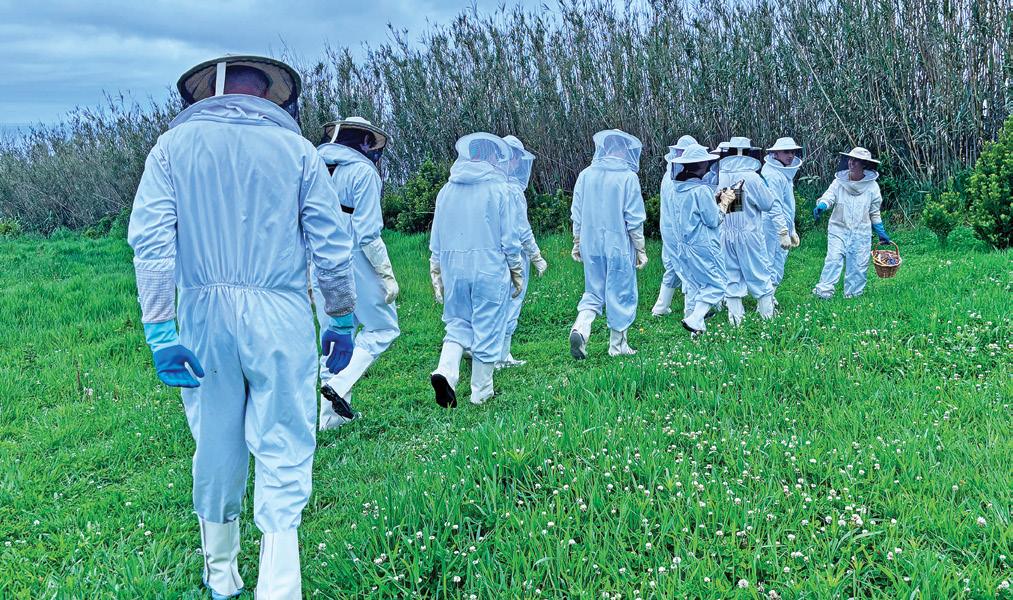
BAKING BREAD: THE HISTORY AND CULTURE OF BREAD
How does bread shape culture, community, and the ways we connect with one another?
LAW AND ORDER: FORENSIC SCIENCE, TECHNOLOGY, AND THE LAW
How do science, technology, and law work together to uncover truth, ensure justice, and navigate ethical challenges?
THE EYE OF THE TIGER: THE ENDURING SPIRIT OF THE UNDERDOG
How does the “eye of the tiger” mindset — resilience, focus, and determination — shape the journeys of underdogs like Rocky and real-life figures in Philadelphia and beyond?
COMPASSIONATE LEADERSHIP: SERVICE, REFLECTION, AND ACTION
How do mindfulness and spirituality guide us to lead through service?
THE DISCOVERY LAB: EXPLORING PASSIONS, PURPOSE, AND PLAY
How can experimenting with new hands-on practices help us shape our confidence, identity, and well-being?
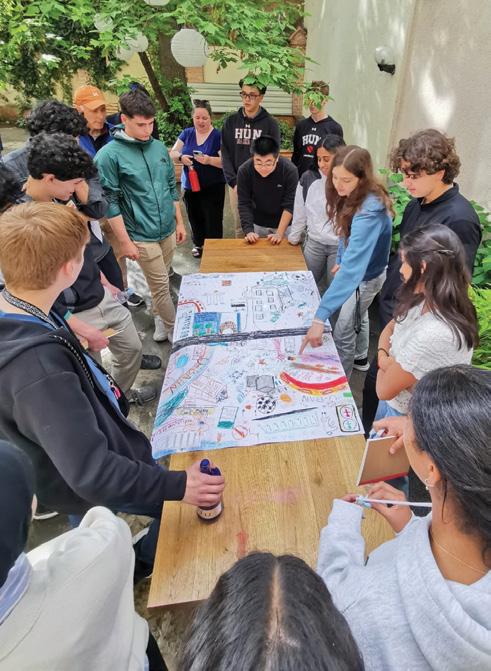
IN CASE OF EMERGENCY …
How can we effectively prepare for and respond to medical emergencies, natural disasters, daily safety risks, and unforeseen wildcard scenarios to ensure survival and resilience?
YOU LIVE IN WHAT?! YOUR GUIDE TO ALTERNATIVE HOUSING
What design, construction, and technological considerations go into alternative housing, and how do they affect communities and the environment?
REDESIGNING FASHION: FROM NATURAL FIBERS TO NEXT-GEN STYLE
How have natural fibers like linen, cotton, silk, and wool influenced fashion in the past, and how can they shape a more sustainable and minimalist future? NextTerm Local
ROOTS AND STORIES: ORAL STORYTELLING AND FAMILY HISTORY
How can exploring family stories and oral histories help us understand ourselves and the world around us?