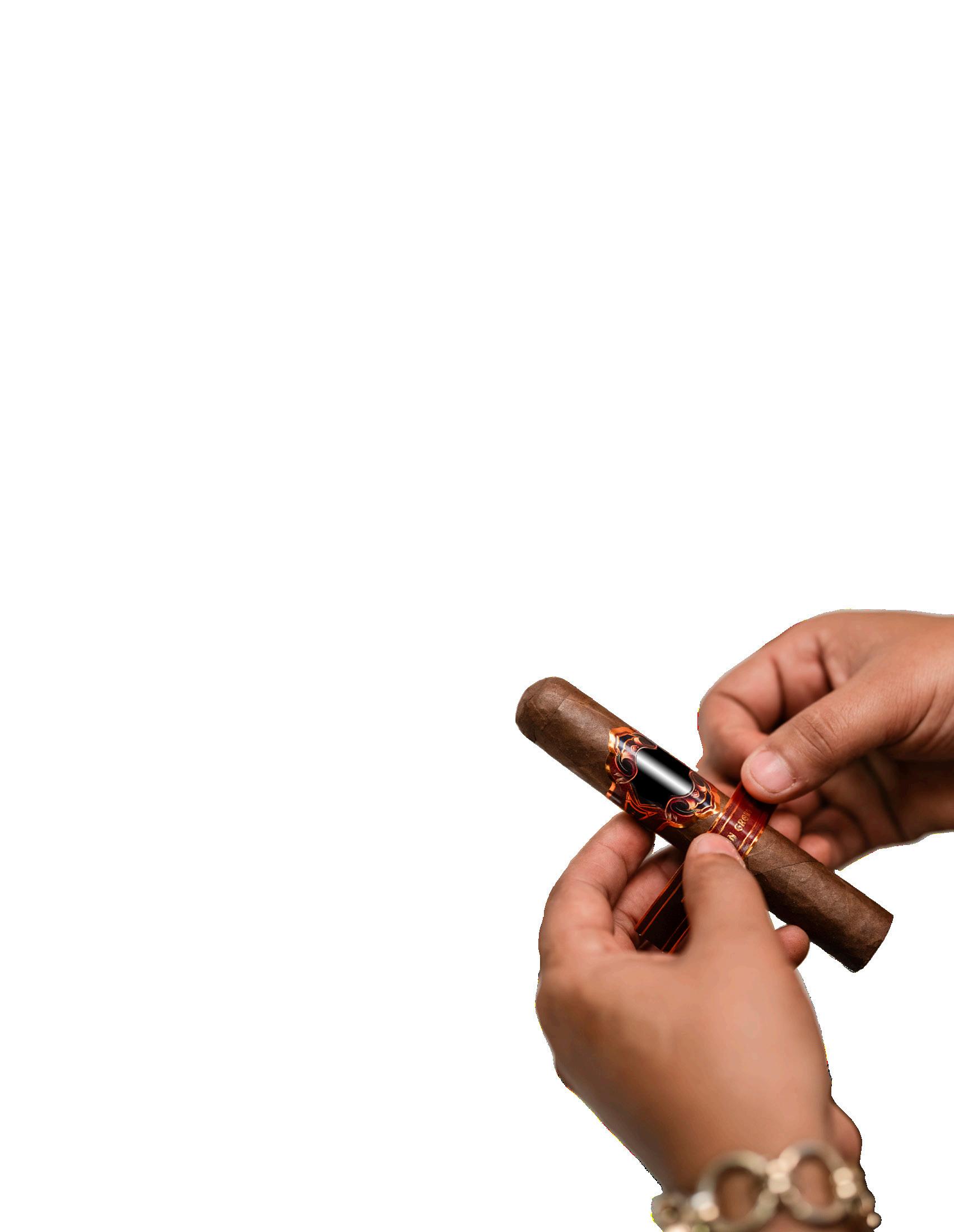
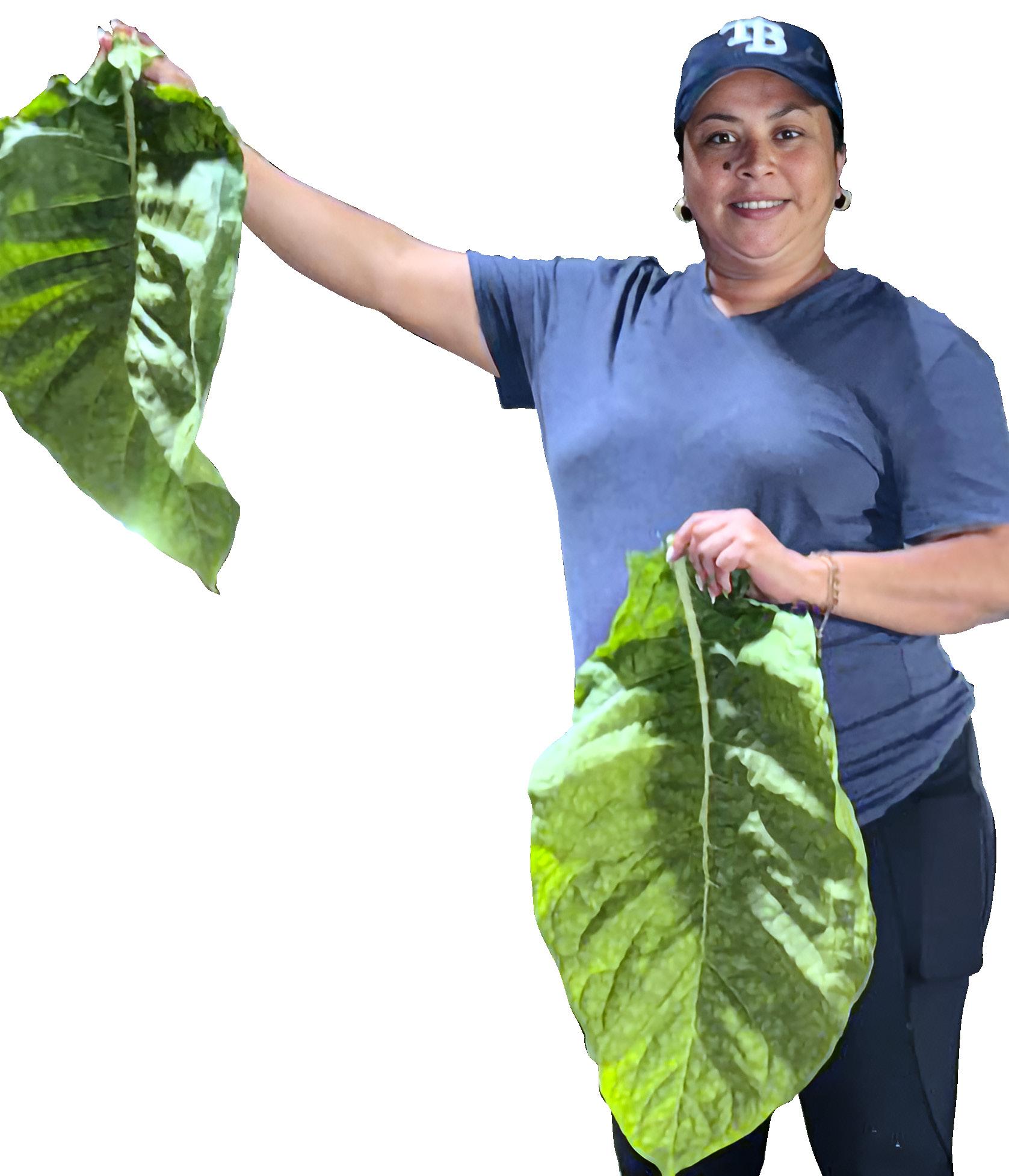
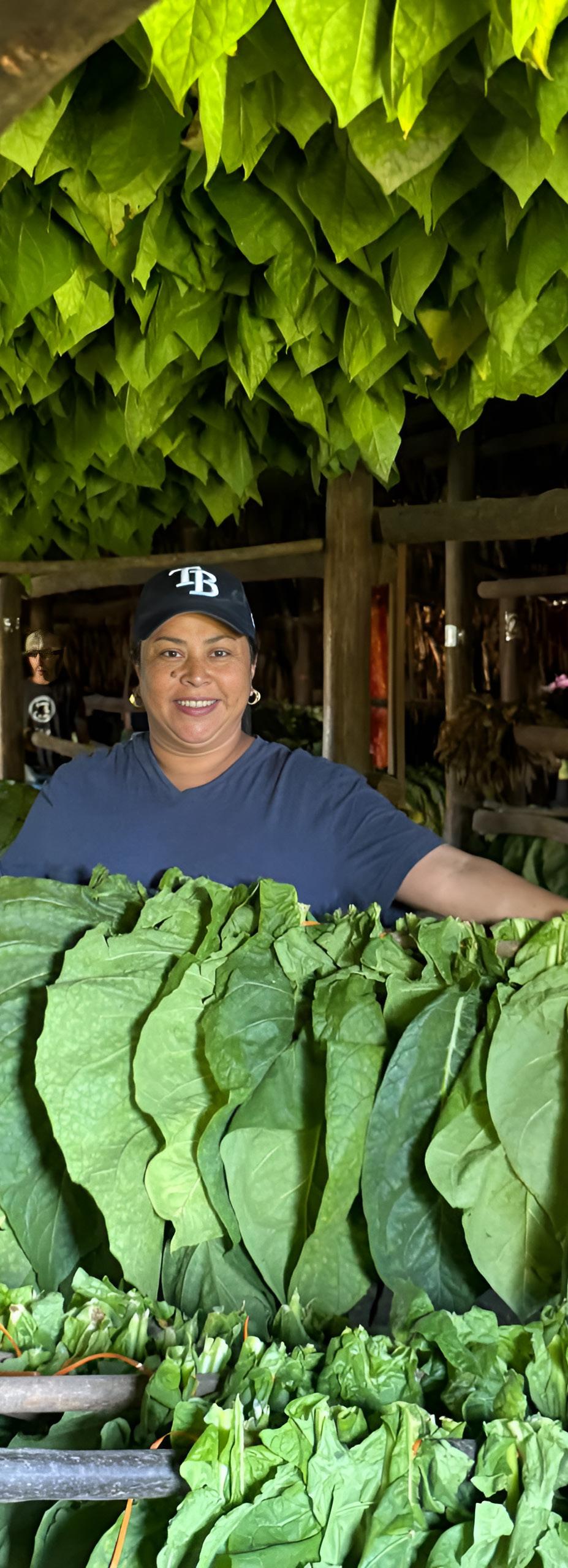
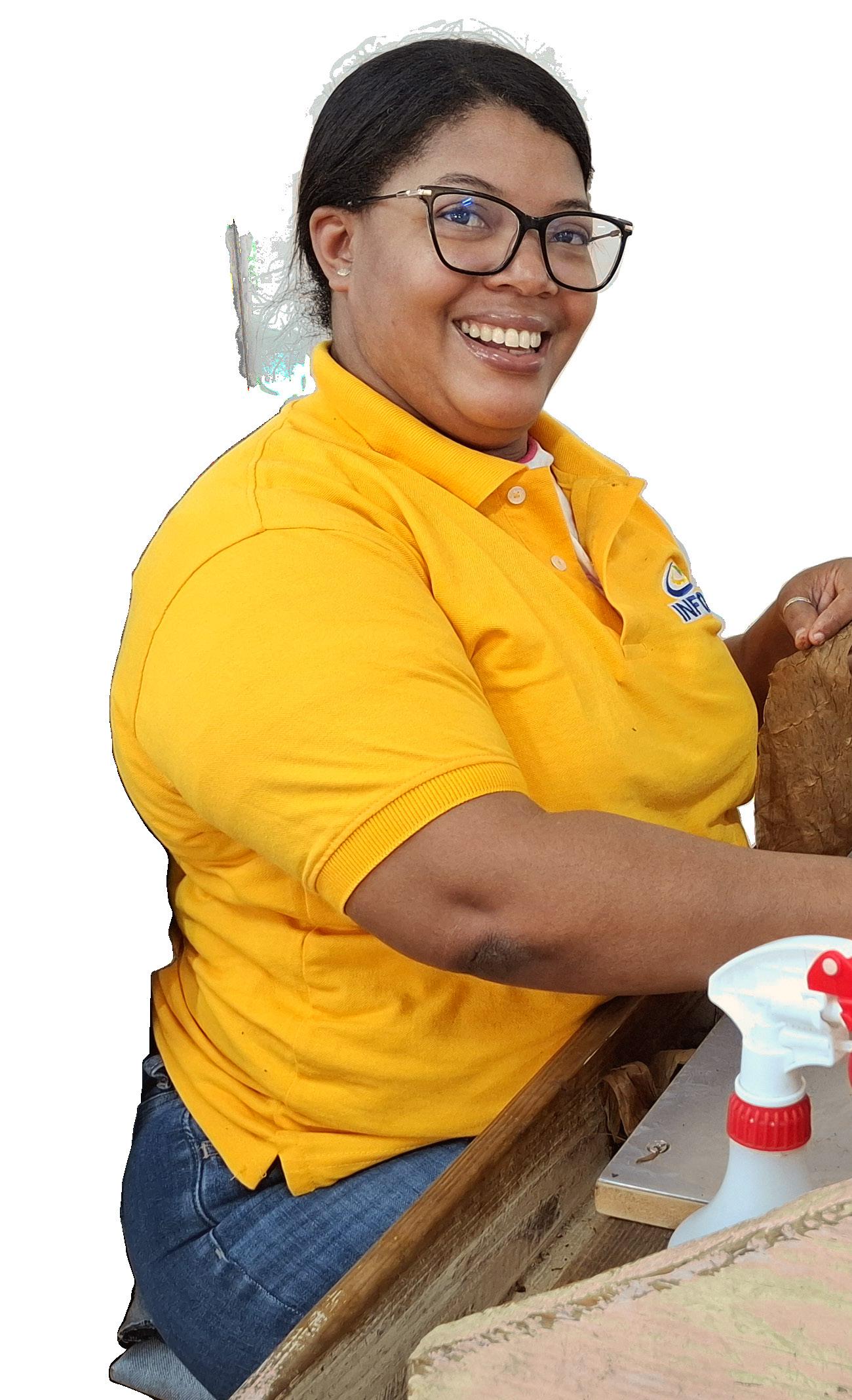
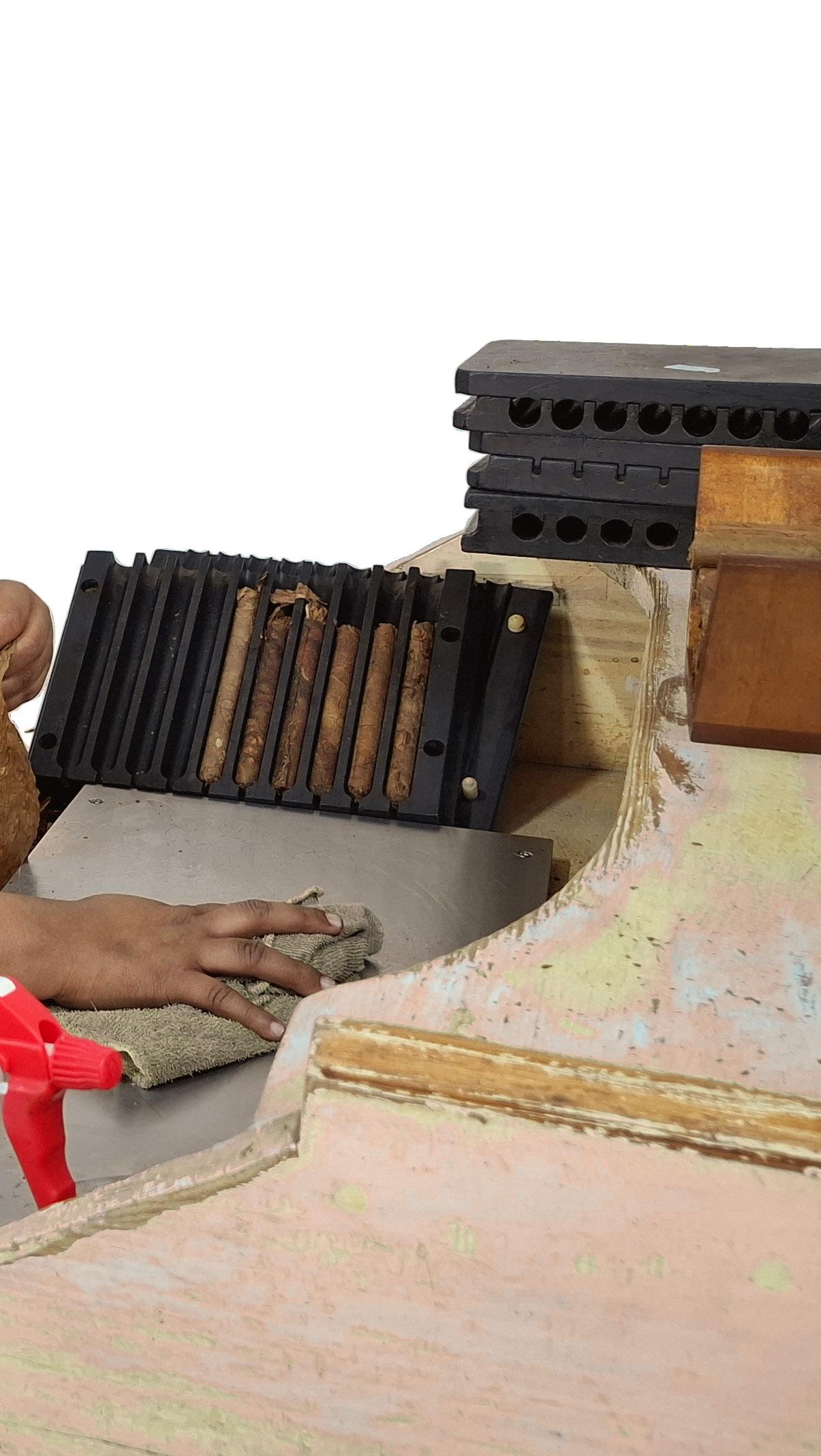
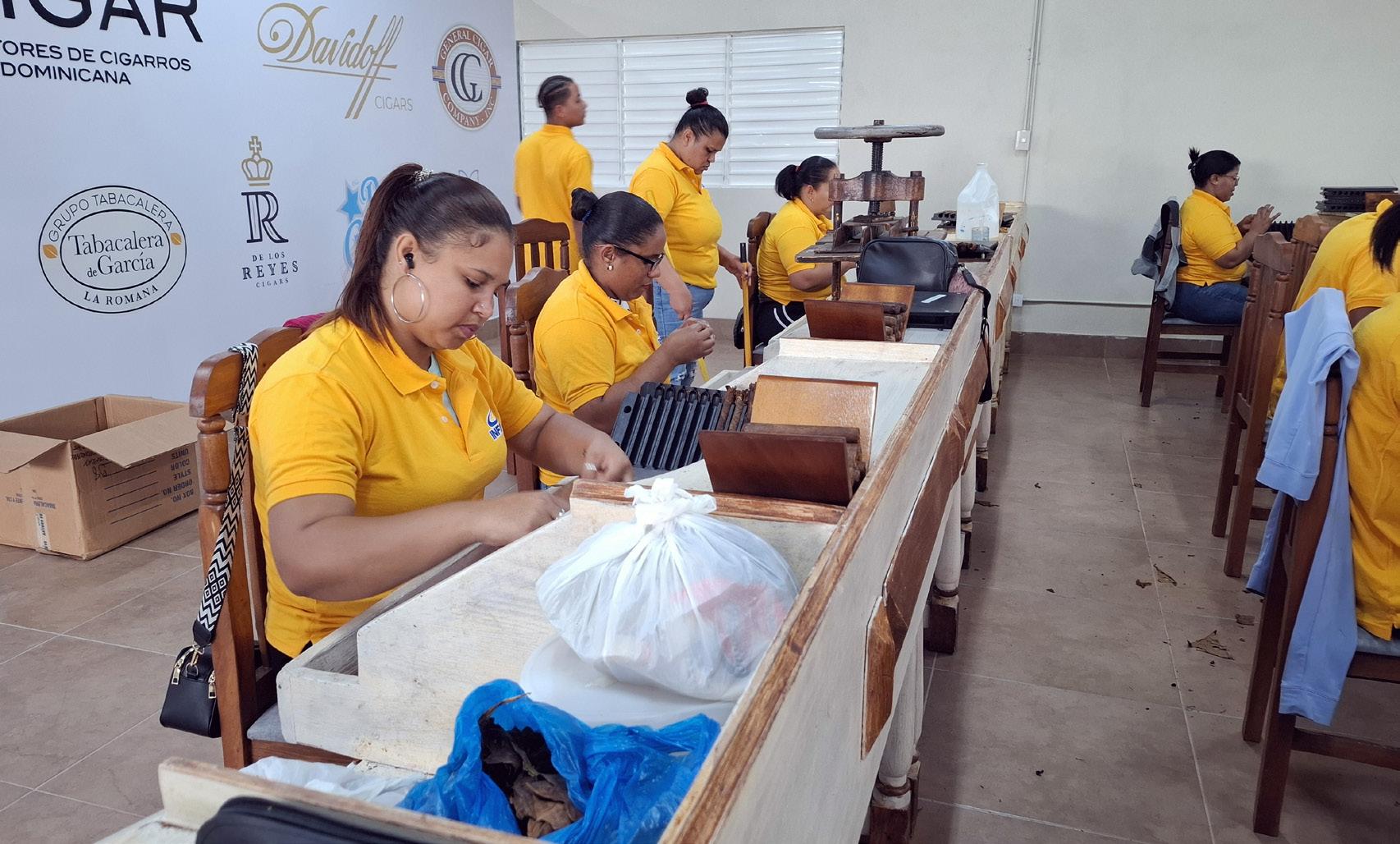
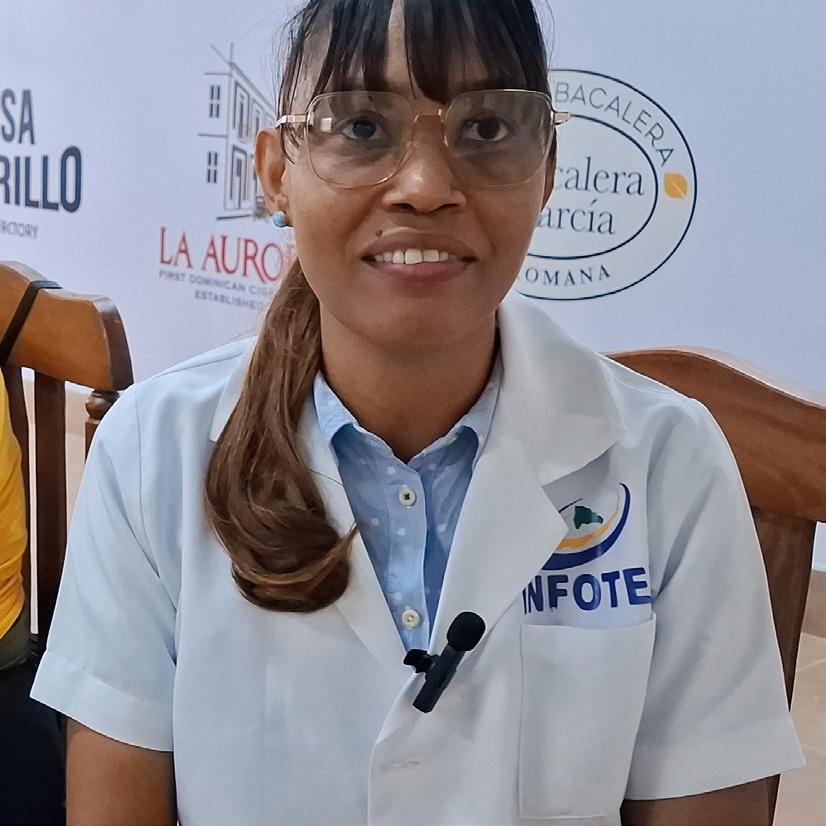
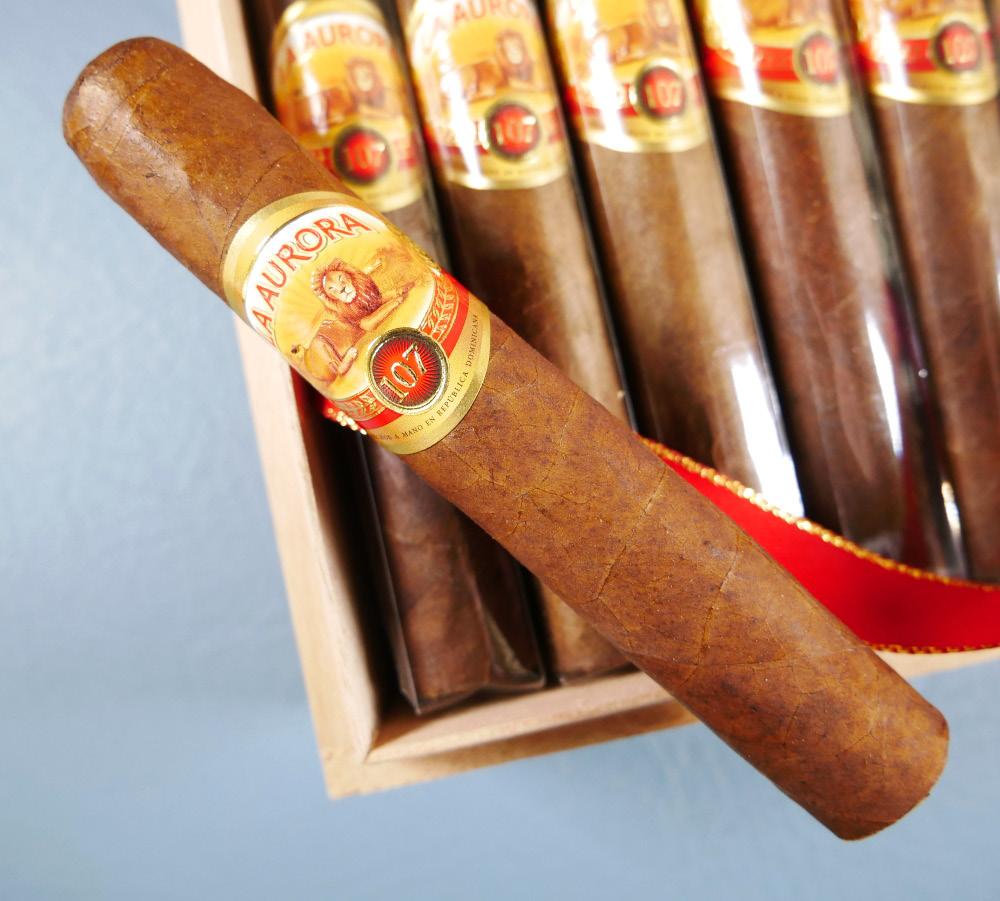
▶La Aurora, Passion for Cigars and Respect for Tradition
Annette Meisl and Ana Galana
Heritage of the Queen of Cigars
TOBACCO WORLD
COLUMNS OF SMOKE
A Flower for the Ladies Who Honor Our Industry CÁNDIDO ALFONSO
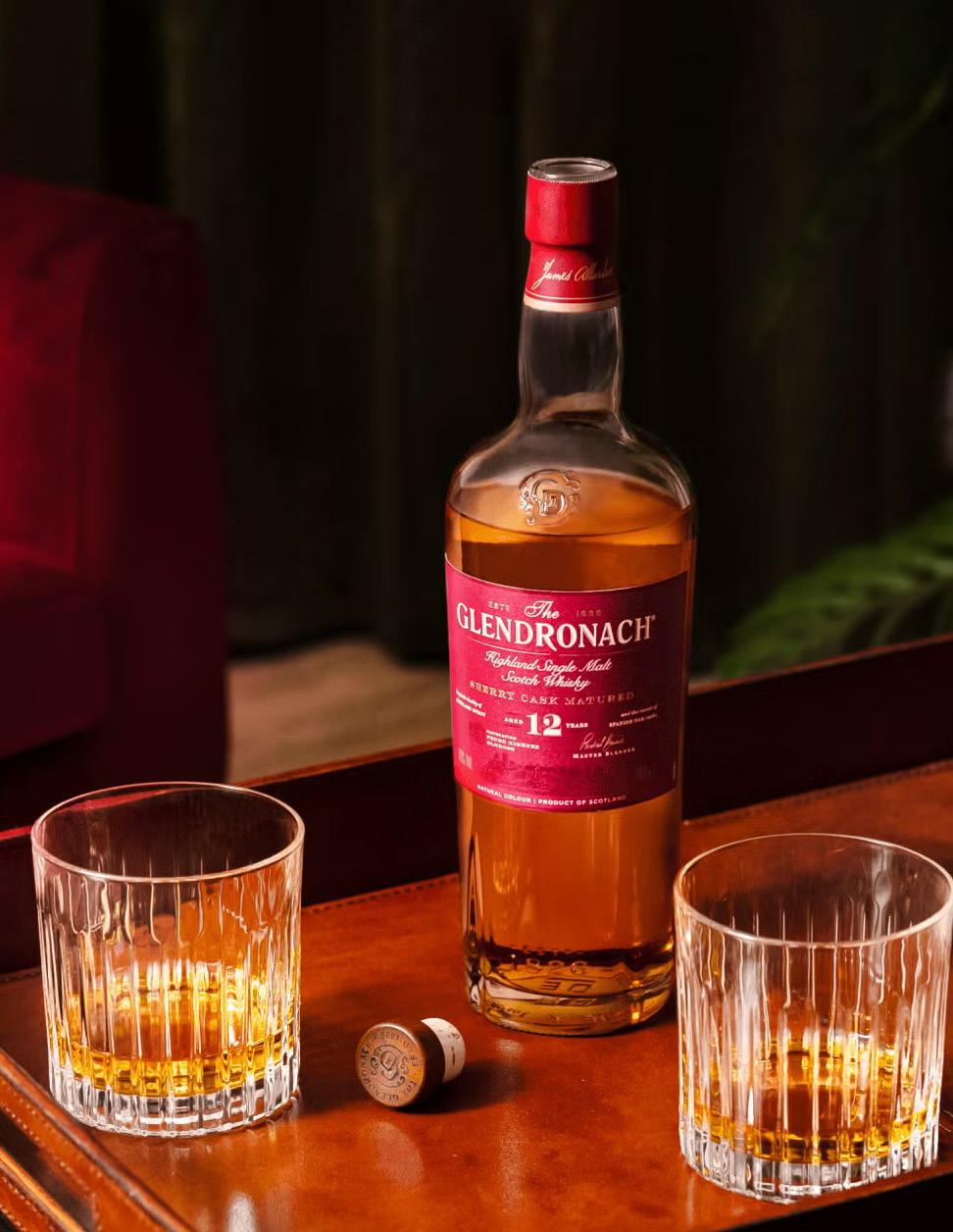
Women at the Still A toast to the women who shaped whisky
The Essence of Brazil MICHEL I. TEXIER
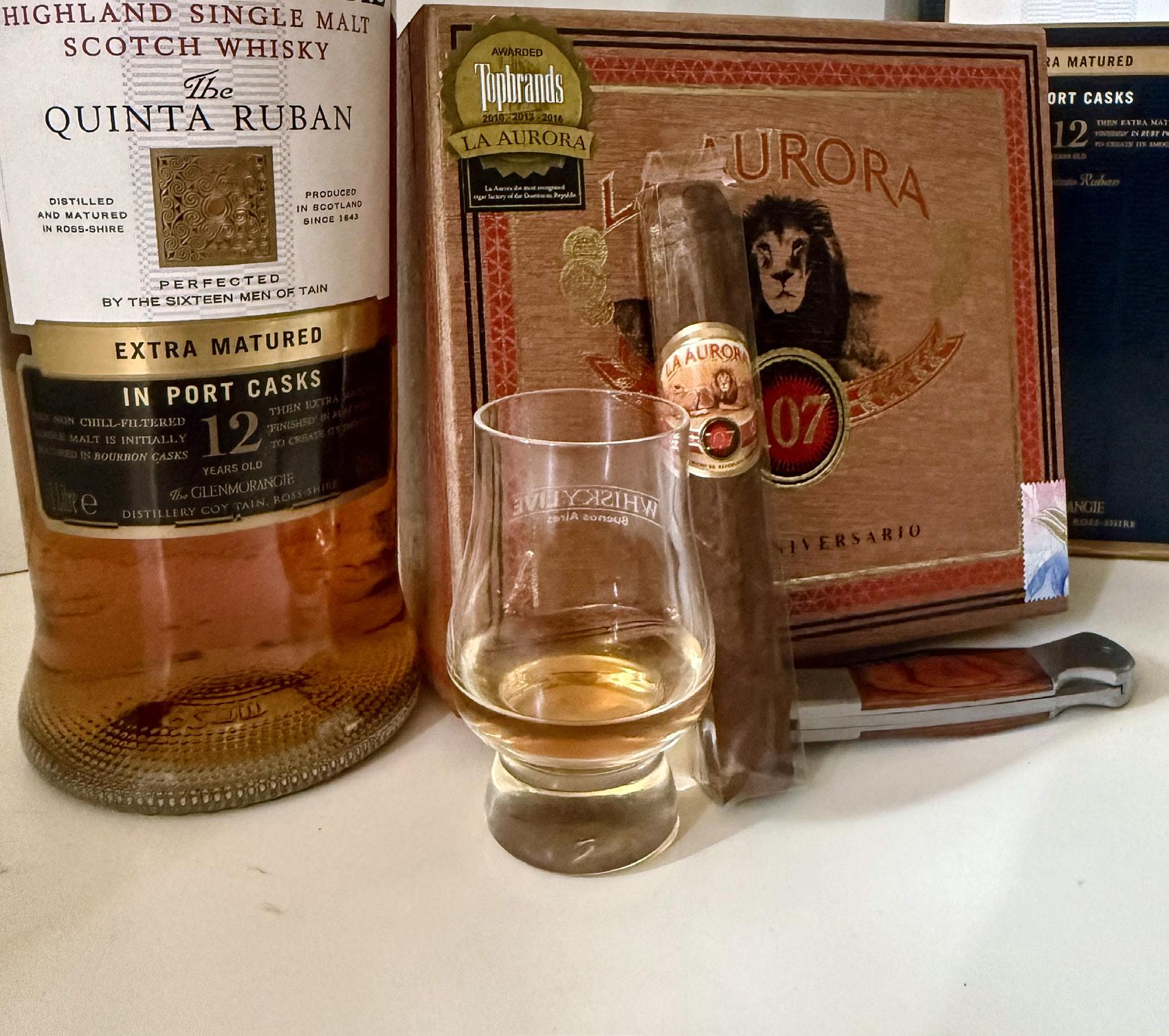
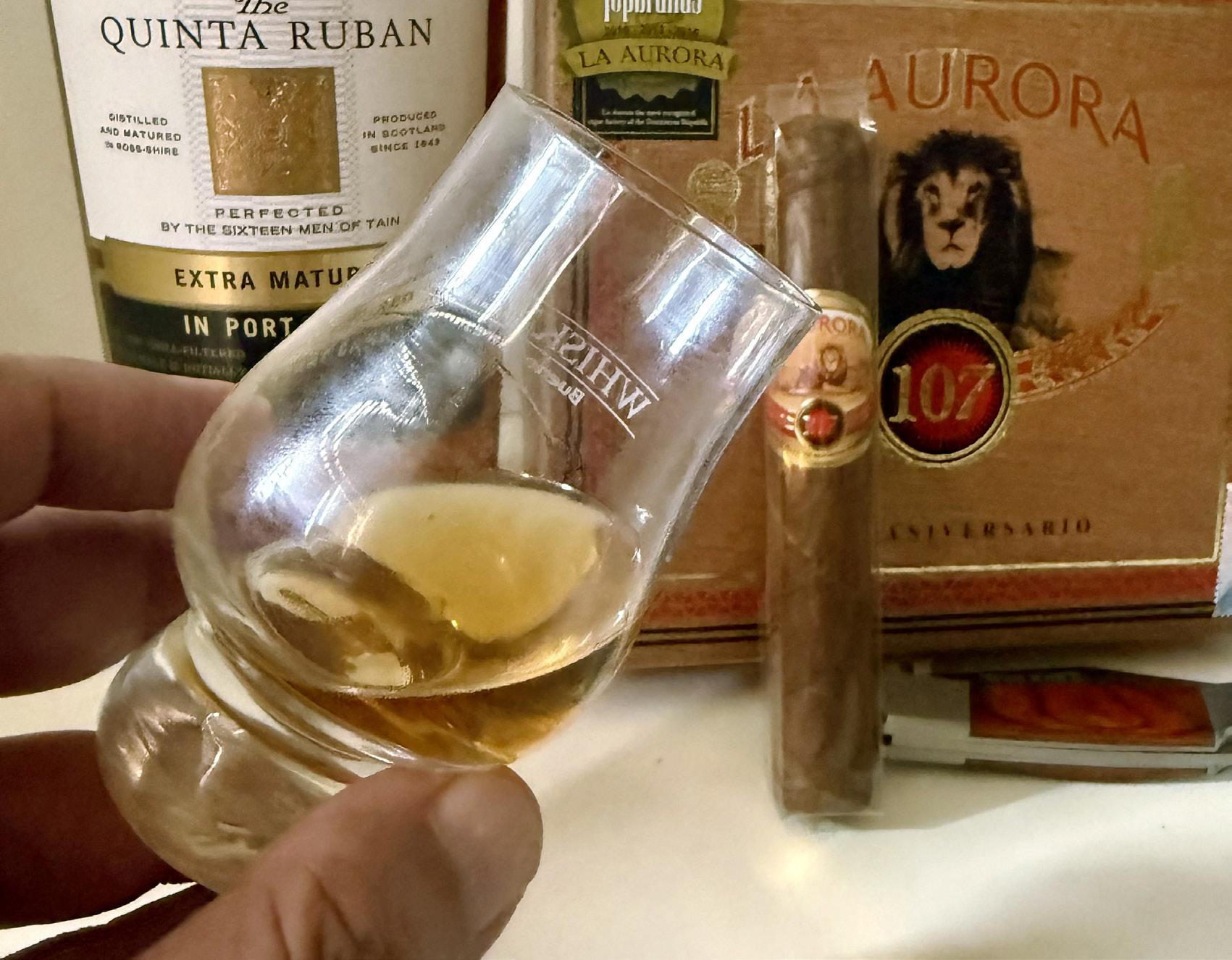
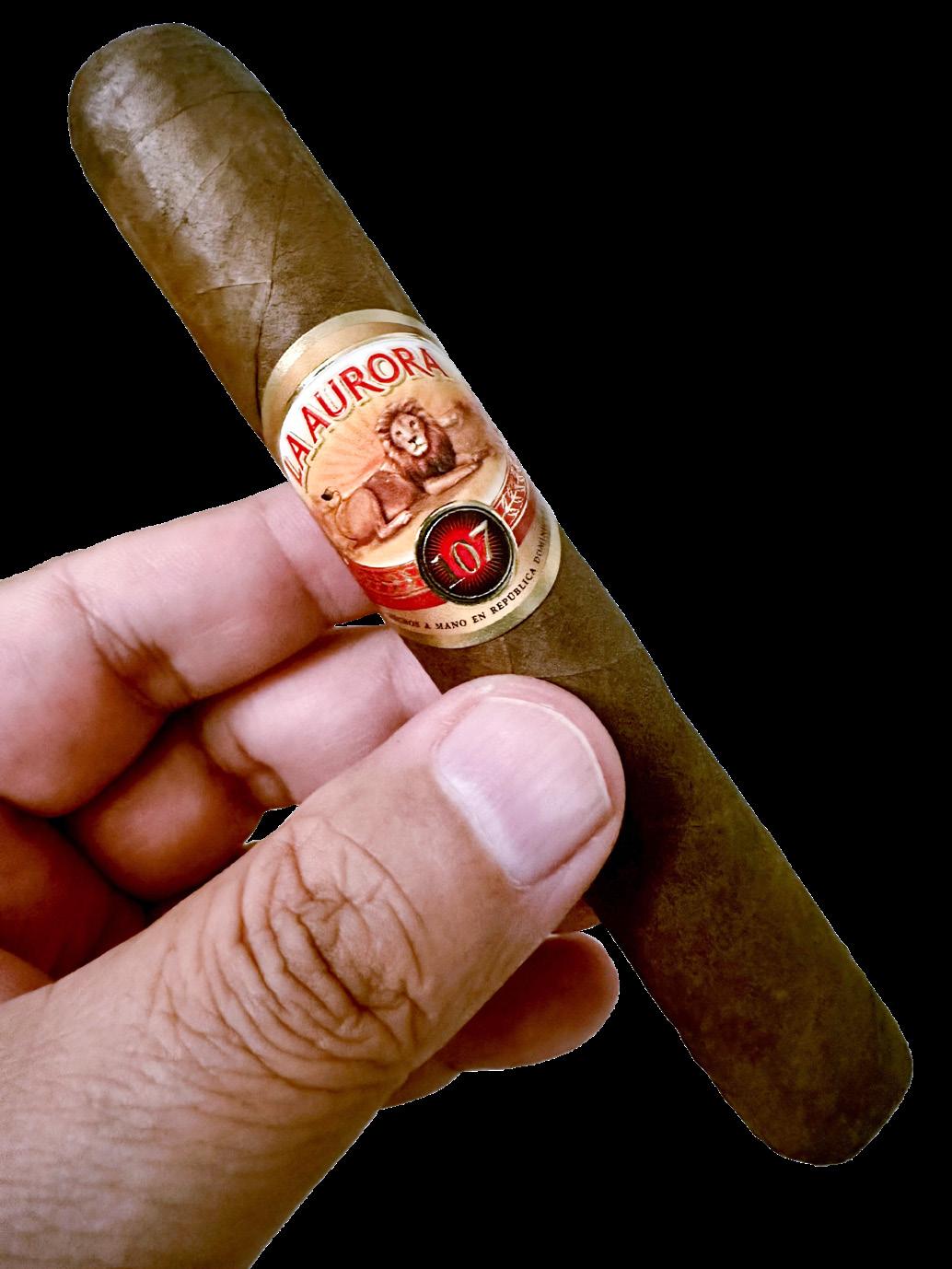
La Aurora 107 Original Robusto & Glenmorangie Quinta Ruban The silent conversation GASTÓN BANEGAS
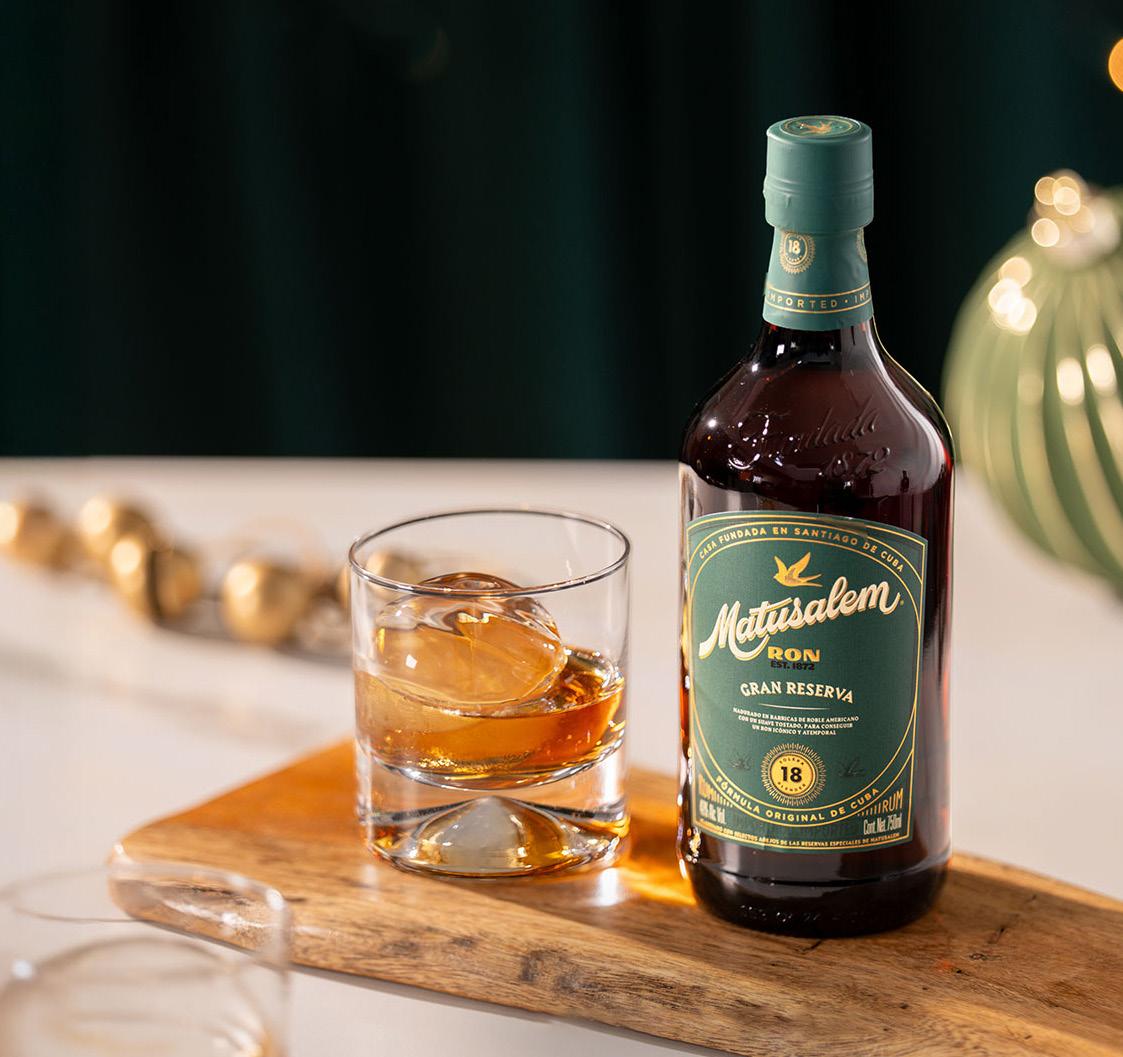
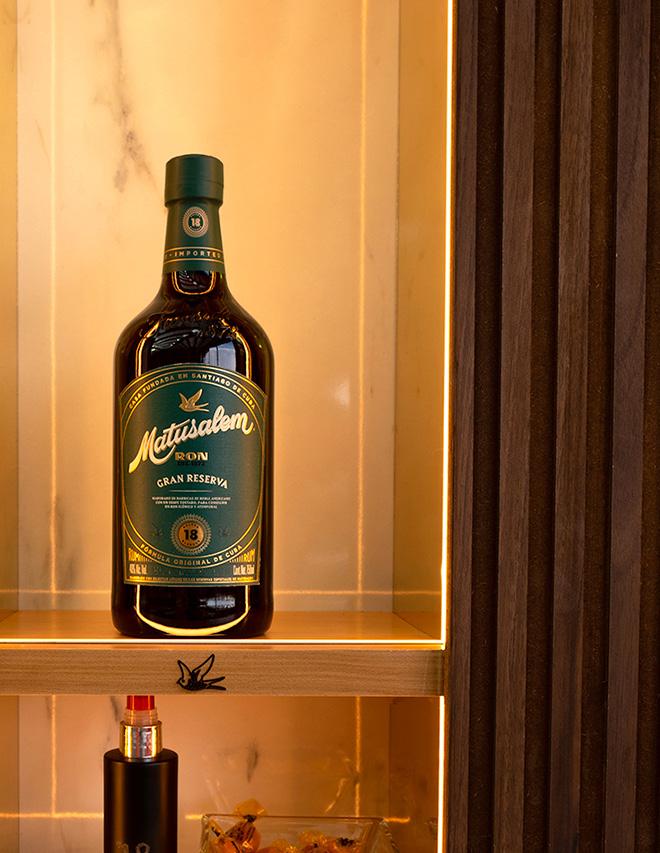
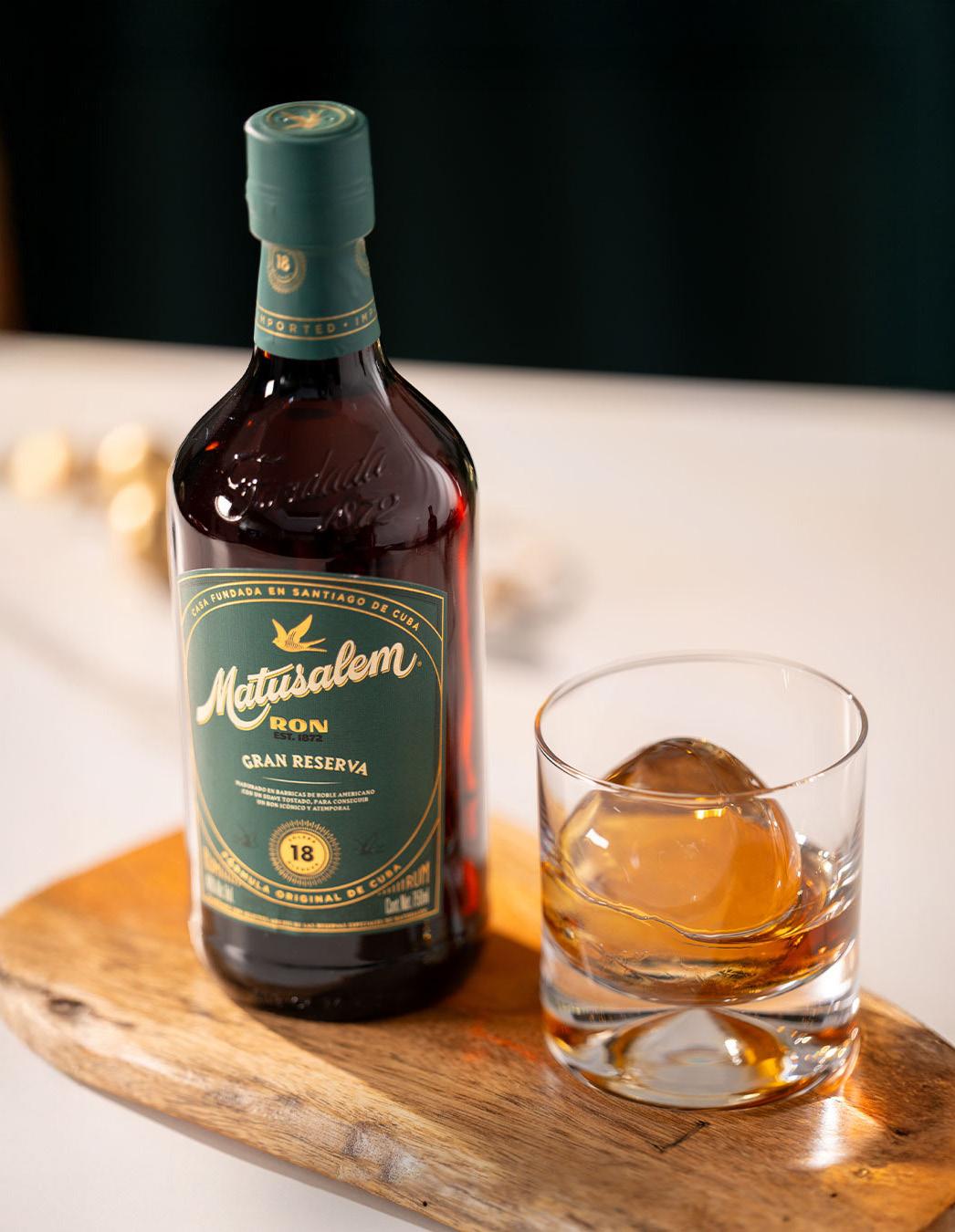
Ron Matusalem Gran Reserva History since 1872 GONZALO ROMERO
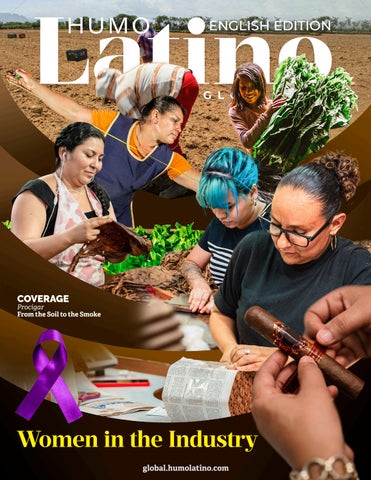
Women in the Industry
▶Emilia Salinas With Love and Patience
▶Rosely Vallecillo Growth is a Matter of Attitude
▶Ángela Evangelina Cruz Tobacco and Nothing Else
▶Irma Elena López An Opportunity to Progress
▶Ana Luisa Valenzuela An Example of Perseverance
▶Iris Romero Always Aiming for More...
▶Ada Ávila Chavarría Her Home, Her Greatest Achievement
▶Rosa Argentina Espinoza Until the Body Gives Out
▶Gretel Isabel Fuentes Forward, Leaf by Leaf
▶Tatiana Vargas A Recognized Craft
▶Rosibeth Rosita Pérez First and Last Job
▶Carmen María Vázquez The Pillar of Experience
▶Diana Altagracia Jáquez The Heart of a Cigar Maker
▶Francisca Paola Paulino Work as a Hobby
César Salinas Chávez
Director
Alberto Arizmendi
Editorial Director
GH L
Dominican Republic
Julio César Fuentes
Commercial Director
Honduras
Patricia Pineda
Rolando Soto
Roberto Pérez Santiago
Art Director
Raúl Melo
Publisher
Enrique Quijano
Style Correction
Moisés Licea
Web Master
Yoshua Segovia
Community Manager
COLLABORATORS
Argentina
Gastón Banegas
Canada
Nicolás Valenzuela Voss
Chile
Francisco Reusser
Christopher Sáez
Michel Iván Texier Verdugo
Colombia
Federico Londoño Mesa
Eduardo Márquez
Cuba
José Camilo López Valls
YEAR 2, ISSUE 23, MARCH 2026
Humo Latino Magazine reserves the right to reject unsolicited articles that contravene its thematic profile, as well as those that do not conform to its style standards.
The articles received will be approved in the first instance by members of the Editorial Board. We reserve the right to make changes or introduce modifications to the manuscripts, for the sake
of better reading comprehension, without this implying changing their content.
The authors are responsible for the content published under their signature. Humo Latino Magazine does not assume any responsibility for possible conflicts arising from the authorship of the works and publication of the graphic material that accompanies them.
@humolatinoglobal info@humolatino.com
Editorial
Women, Present
Since our inception, every March we have joined the commemoration of International Women’s Day with a special feature, convinced of the need to provide visibility to their role and development –fundamental, growing, and increasingly palpable– within the tobacco industry. In fact, their presence in these pages has been a constant, month after month, from our covers to our feature articles and published collaborations.
Across the various Humo Latino media platforms, we have featured aficionados, community leaders, artists, writers, opinion leaders, event organizers, brand ambassadors, editors of specialized industry magazines, tobacco producers, executives from various companies, brand owners, and entrepreneurs in charge of cigar lounges or dedicated to the crafting and sale of accessories.
In addition to documenting historical narratives, such as the Cigarreras movement in Seville, Cádiz, and Gijón, and the lives of 19th-century Colombian female rollers (torcedoras), we have provided space for women’s organizations and their leaders, such as Zoé Nocedo and the Amigas del Habano in Cuba; Obakeng Malope and Beer is Art from Africa; and the UK Ladies. Special mention goes to
our alliance with Anastasia Psomiadi, creator of the SOTL Global Movement (Sisters of the Leaf), whose presence has been permanent.
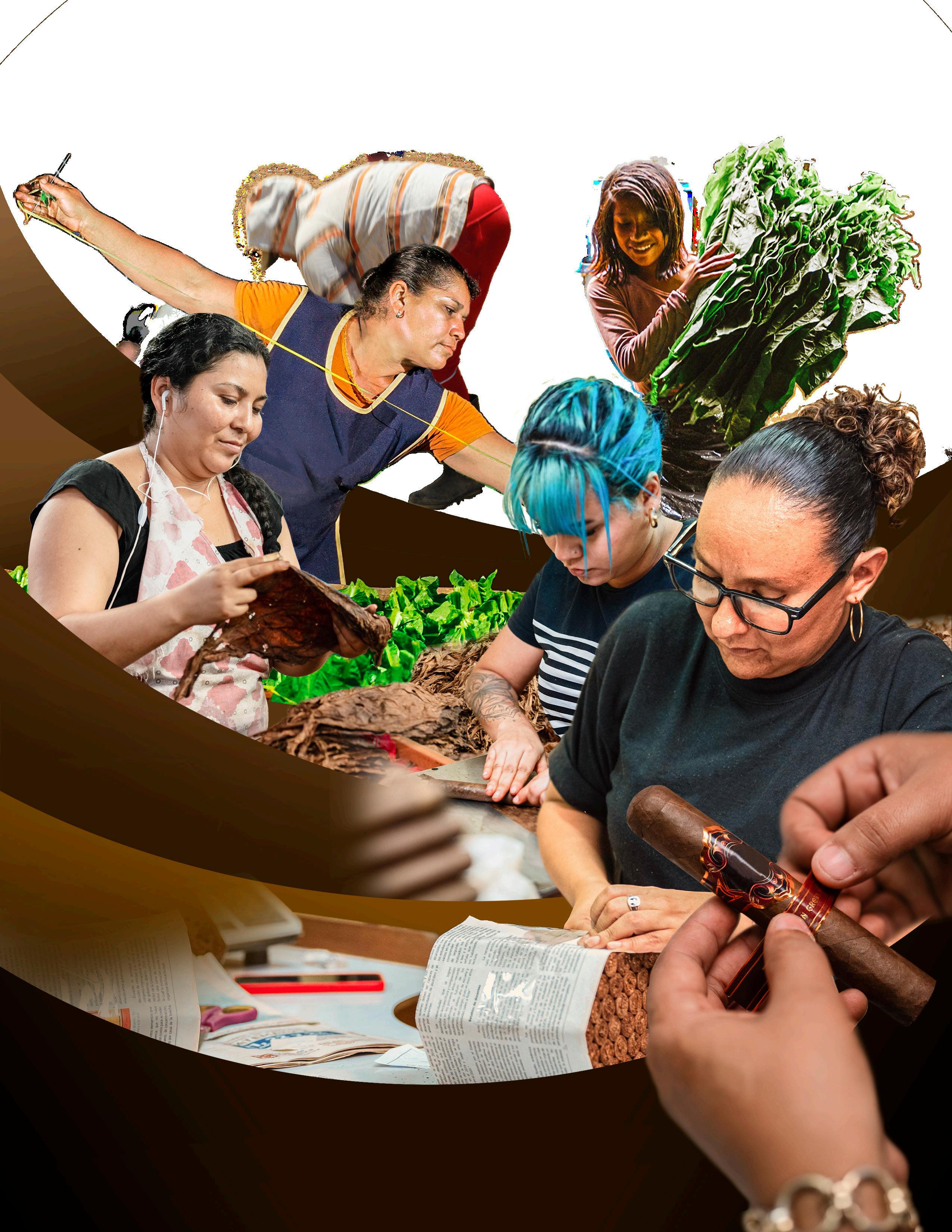
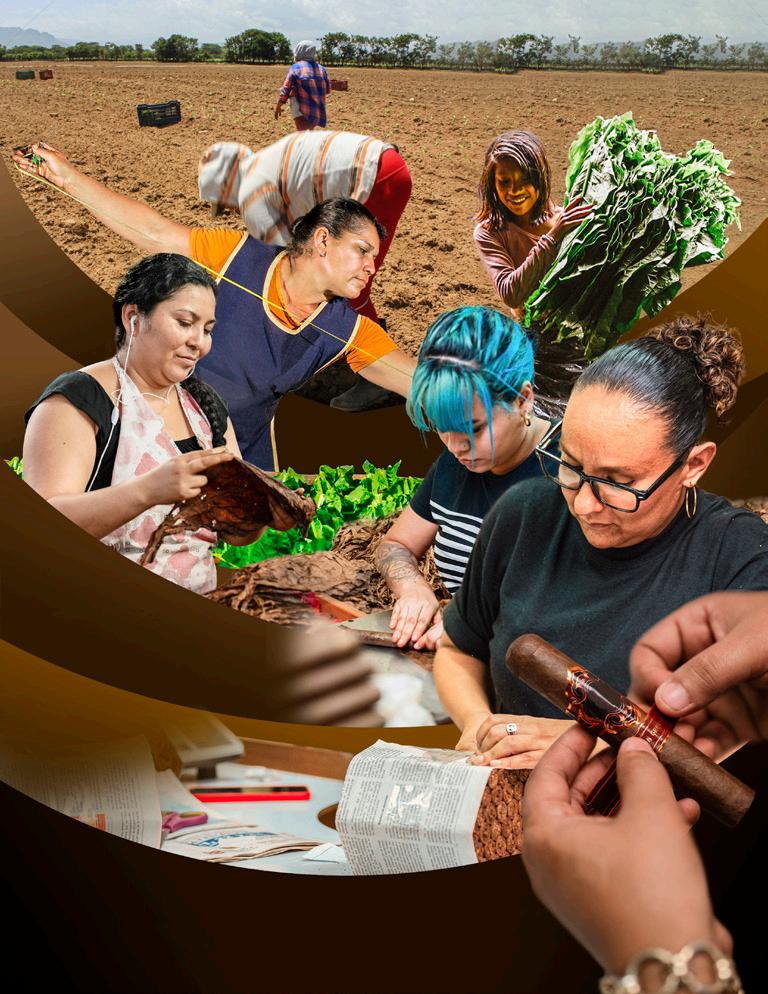
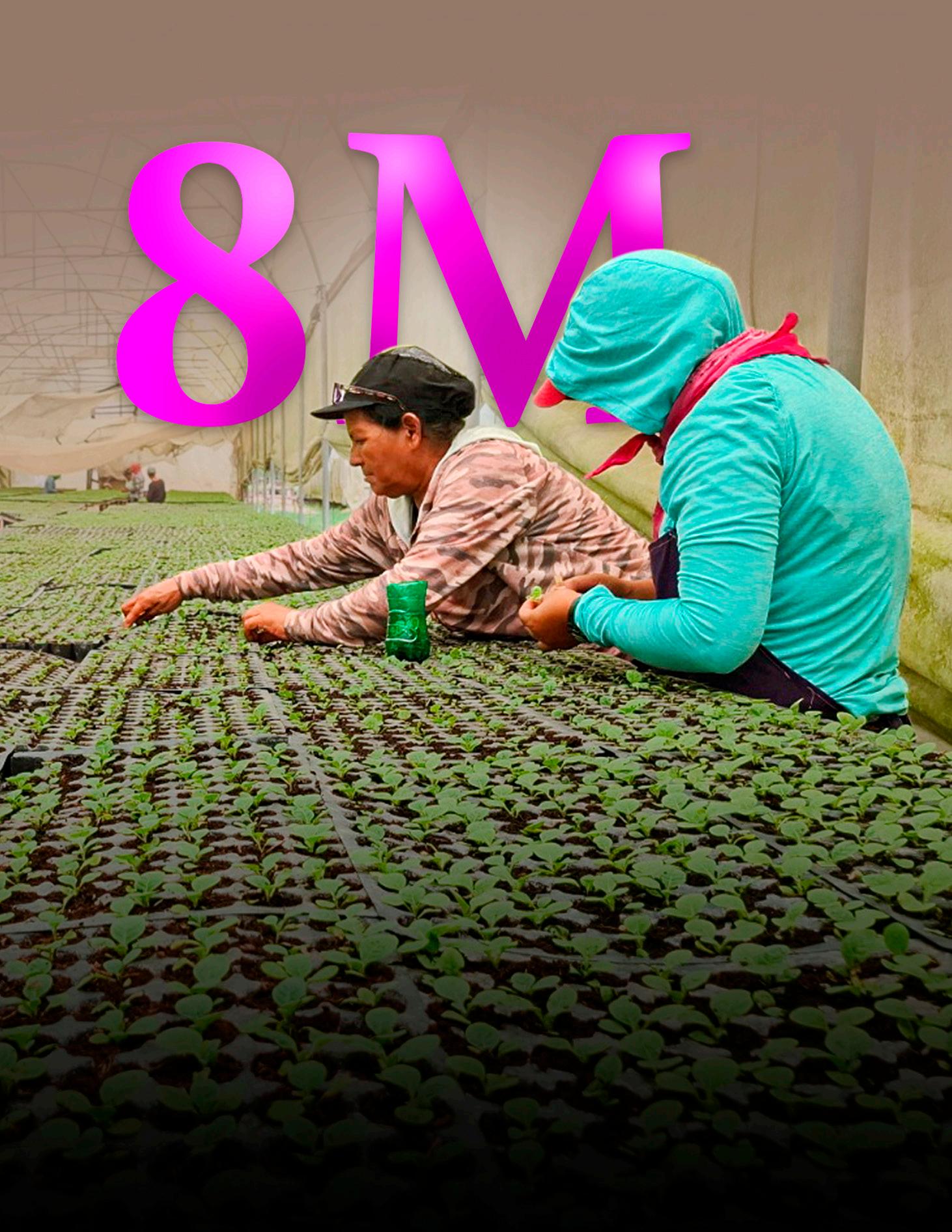
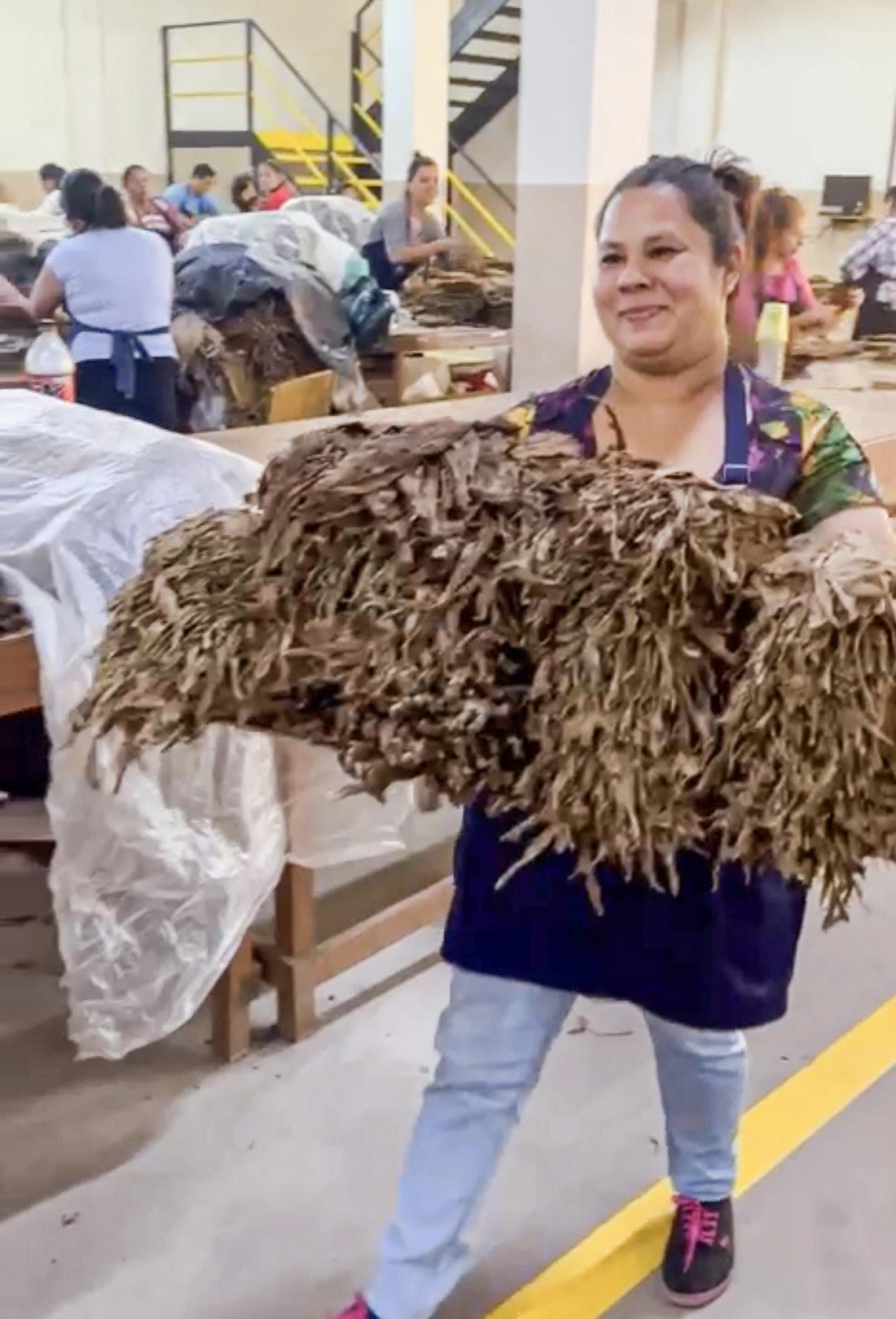
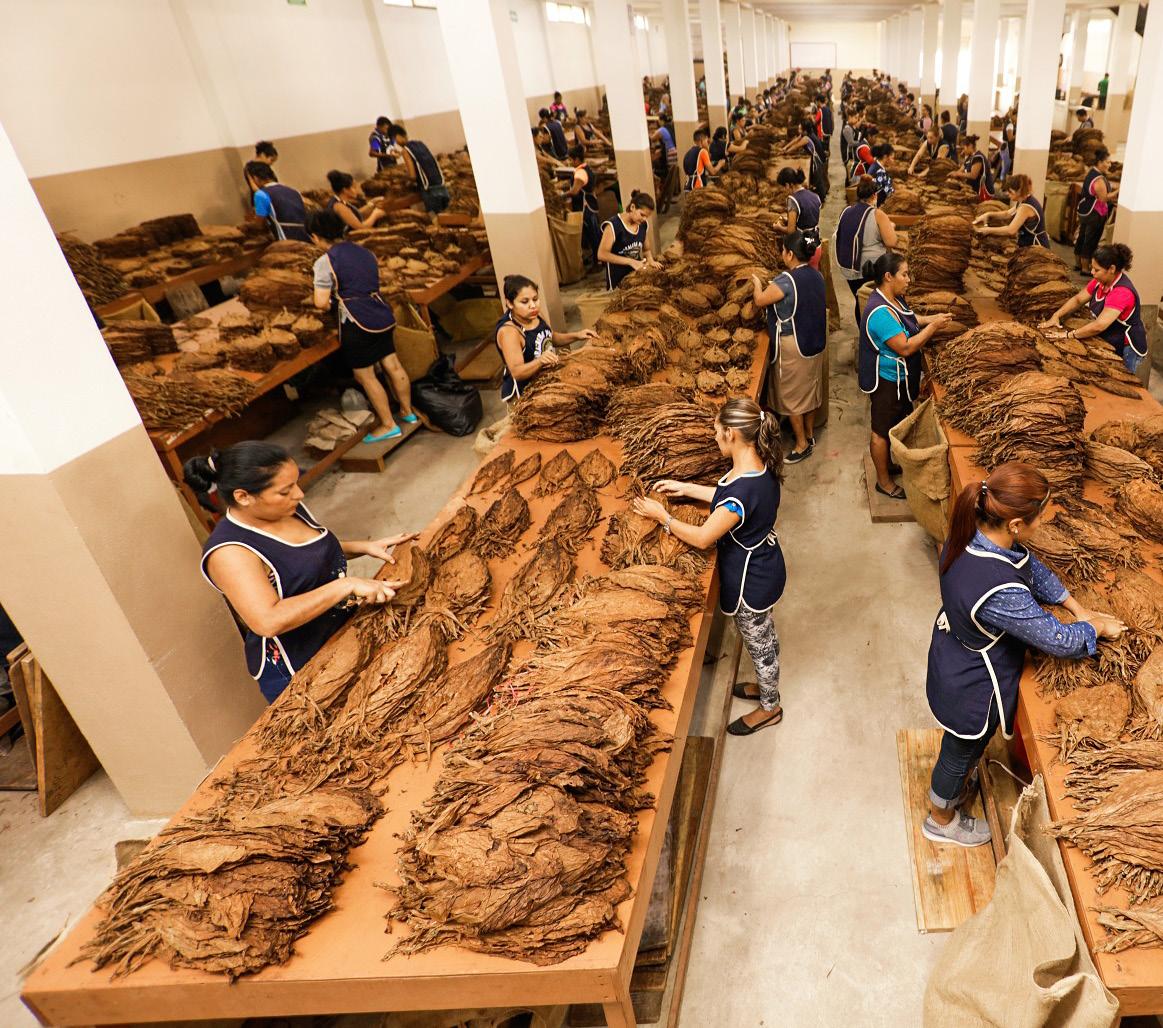
However, we felt we owed a debt to all those women whose work has been indispensable to the success and growth of the industry. Anonymous figures who, from the fields to the factories, stand behind every cigar that we aficionados enjoy. We dedicate this Special Edition to them, seeking to showcase their labor across several tobacco processes.
This is not merely an act of justice; they actually constitute the majority –up to 80 and 90 percent in some companies– of the workforce that drives this economic sector.
Complementing this edition are some of our collaborators, who enrich the content with their vision. This includes Blanca Czebouz, La Fumarosa; Anastasia Psomiadi, SOTL Global Movement; Yesiré Rosa, Spirit Lovers; and Cándido Alfonso, Columns of Smoke.
In the context of International Women’s Day, we hope to contribute to their struggle for equality, their rights, and social transformation.
Madrid, Among Smokes
Between Pintxos and Vegueros
A Journey Through the Soul of Donosti
Sofía Ruiz Master Habanosommelier
Sukaldea, arimaren erdigunea” –The kitchen is the center of the soul. In the Basque Country, this euskera proverb takes on its full meaning, as you can feel –or rather, taste– its authentic truth.
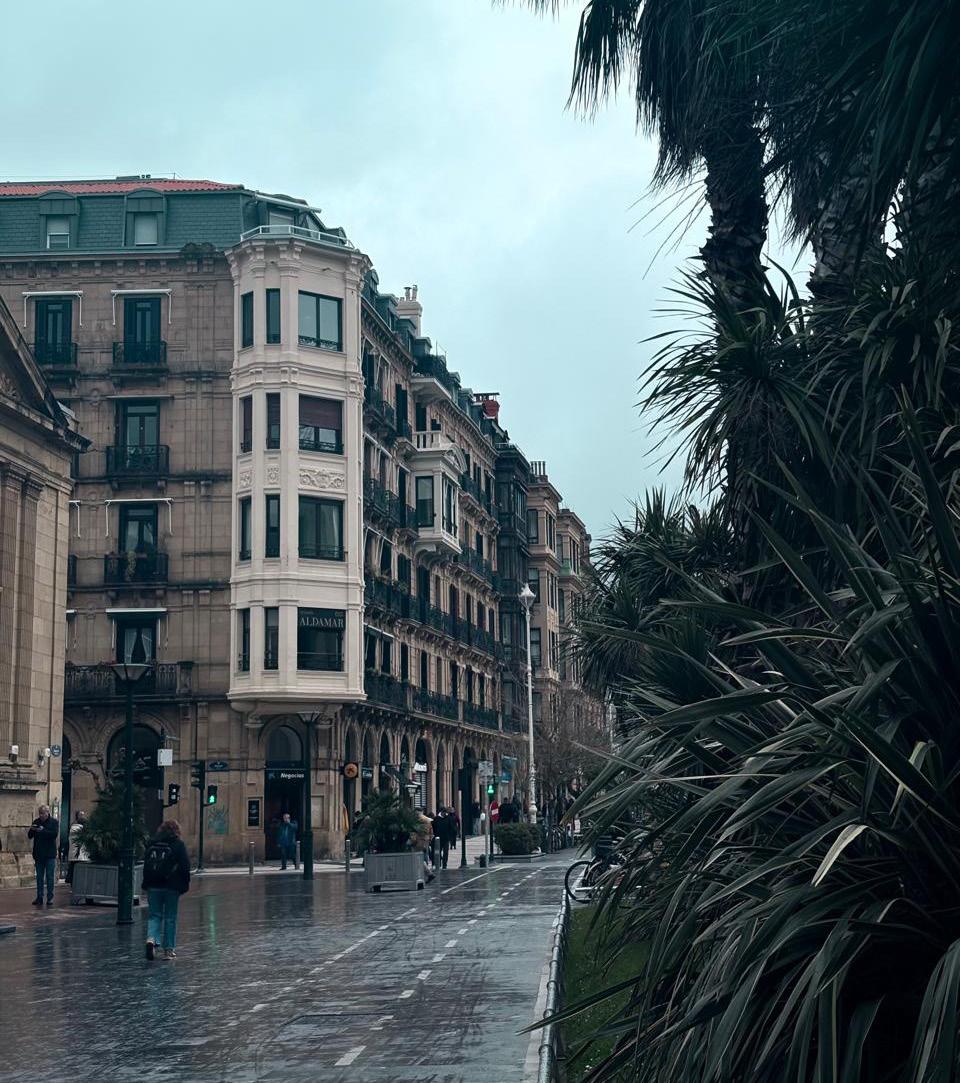
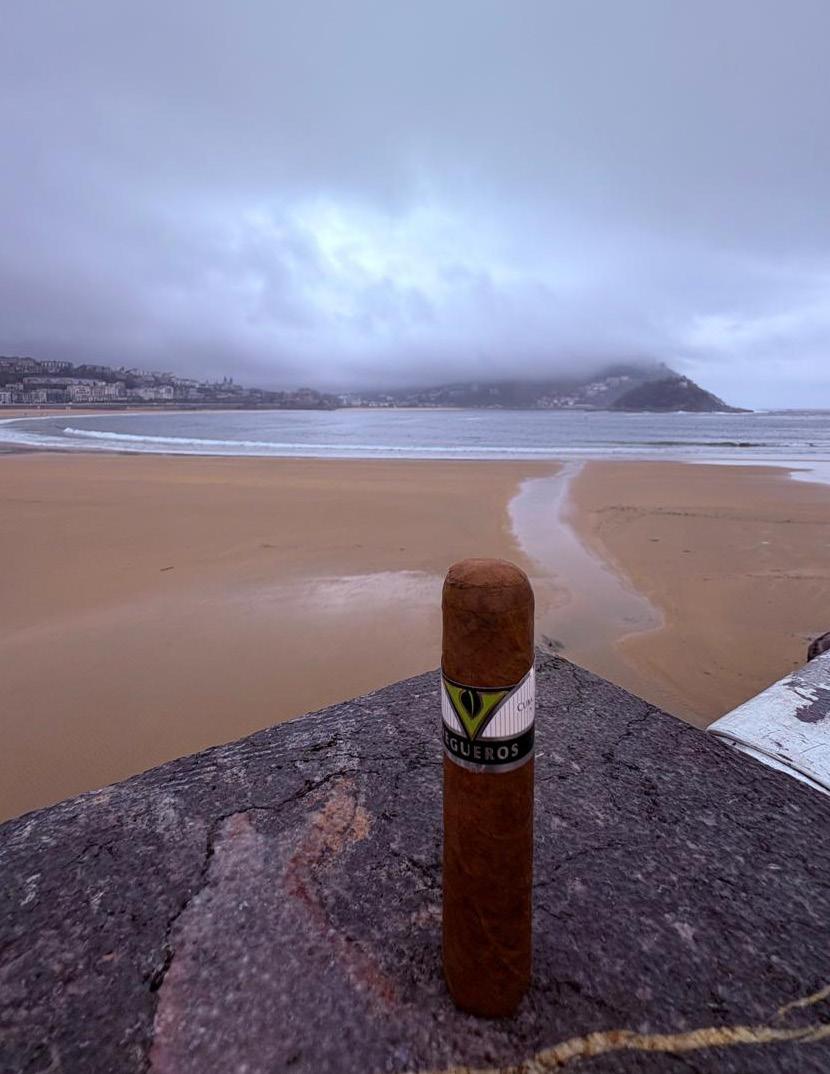
On a cloudy morning, I found myself facing La Concha, as locals call the vast beach where the Cantabrian Sea roars with all its intensity. Under a leaden sky and with the scent of rain enveloping the air, I introduced myself to San Sebastián –or better yet, Donosti– whose bay, with its near-white sands, the city seems to embrace.
In the mid-19th century, Queen Isabella II turned La Concha into a popular destination after her doctors recommended sea baths to alleviate her skin ailments. Both the beach and the bay owe their name to the shell-like shape they form when viewed from above.
Our tour began here with Óscar, a onehundred-percent Basque who, from the very first moment, showed us the soul of San Sebastián. Every city has its hallmark, and here, fine dining is a true art: a deep respect for the raw ingredients and, above all, their origin.
The land speaks, teaches, and gifts us great products which, along with a pinch of salt on the grill, can comfort both body and spirit on those days when we feel overwhelmed. Who hasn’t sat down to a good homemade stew and, for a moment, returned to being that sevenyear-old child?
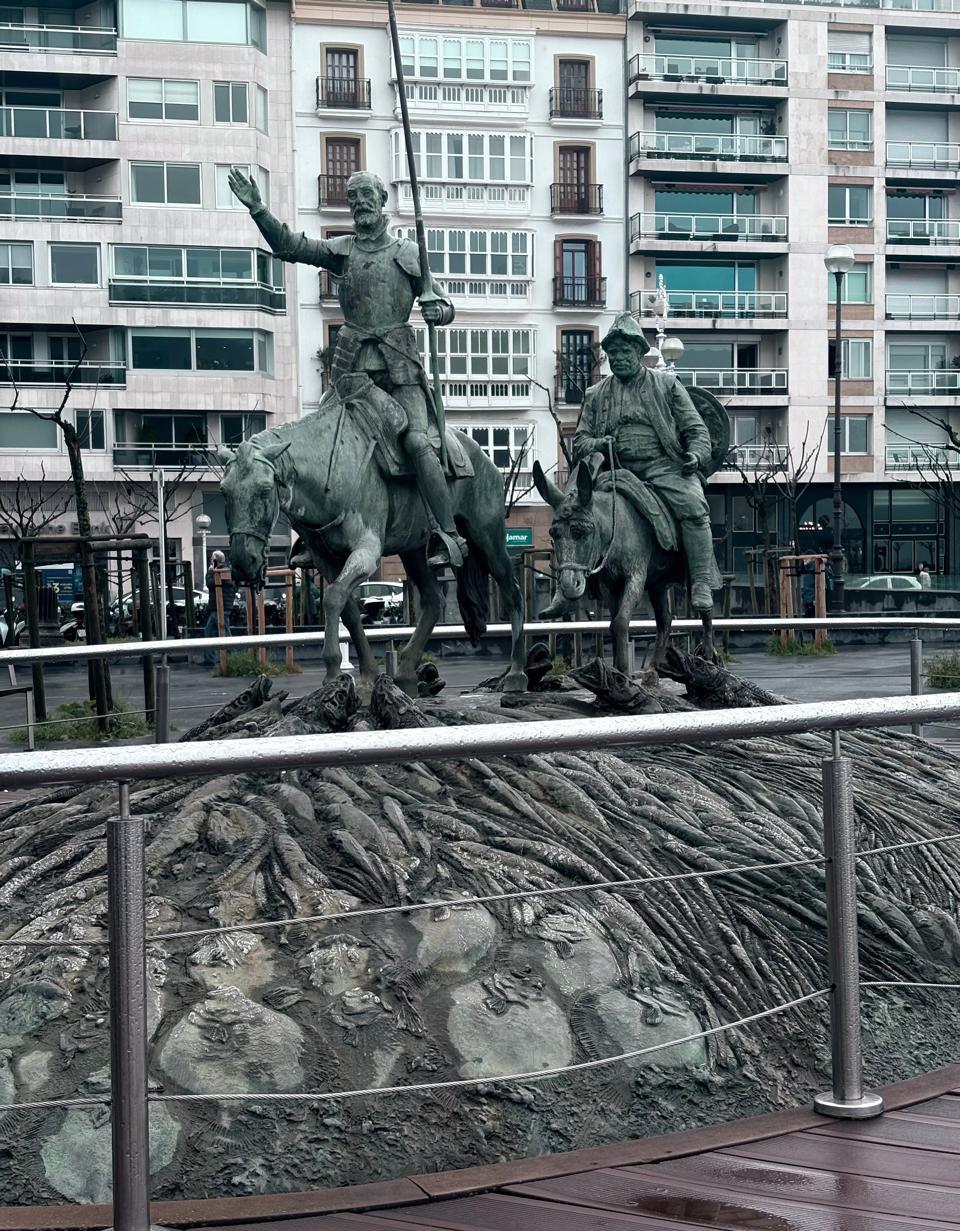
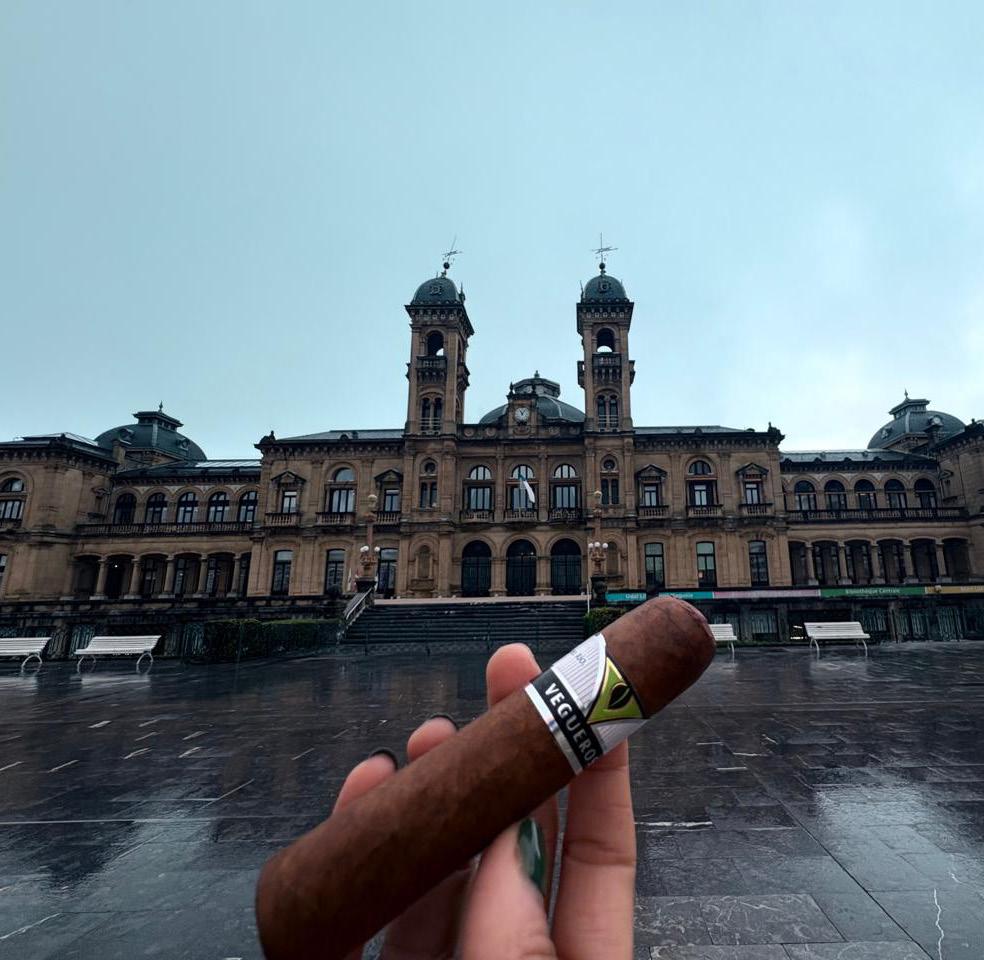
We started at Plaza Cervantes, located next to the San Sebastián City Hall –a grand Baroque-style building originally intended to house the city’s casino. Built between 1882 and 1887, its significance was recognized in 1984 when it was declared a Historical-Artistic Monument.
As we moved deeper into the city, I noticed the impressive real estate values: around 10,000 euros per square meter in the most prestigious areas. I found myself calculating how many Habanos or boxes I could enjoy with that amount. At the very least, my private reserve and other gems could be fully replenished... That thought reminded me of the Vegueros Centro Gordos I planned to enjoy once the tour concluded.
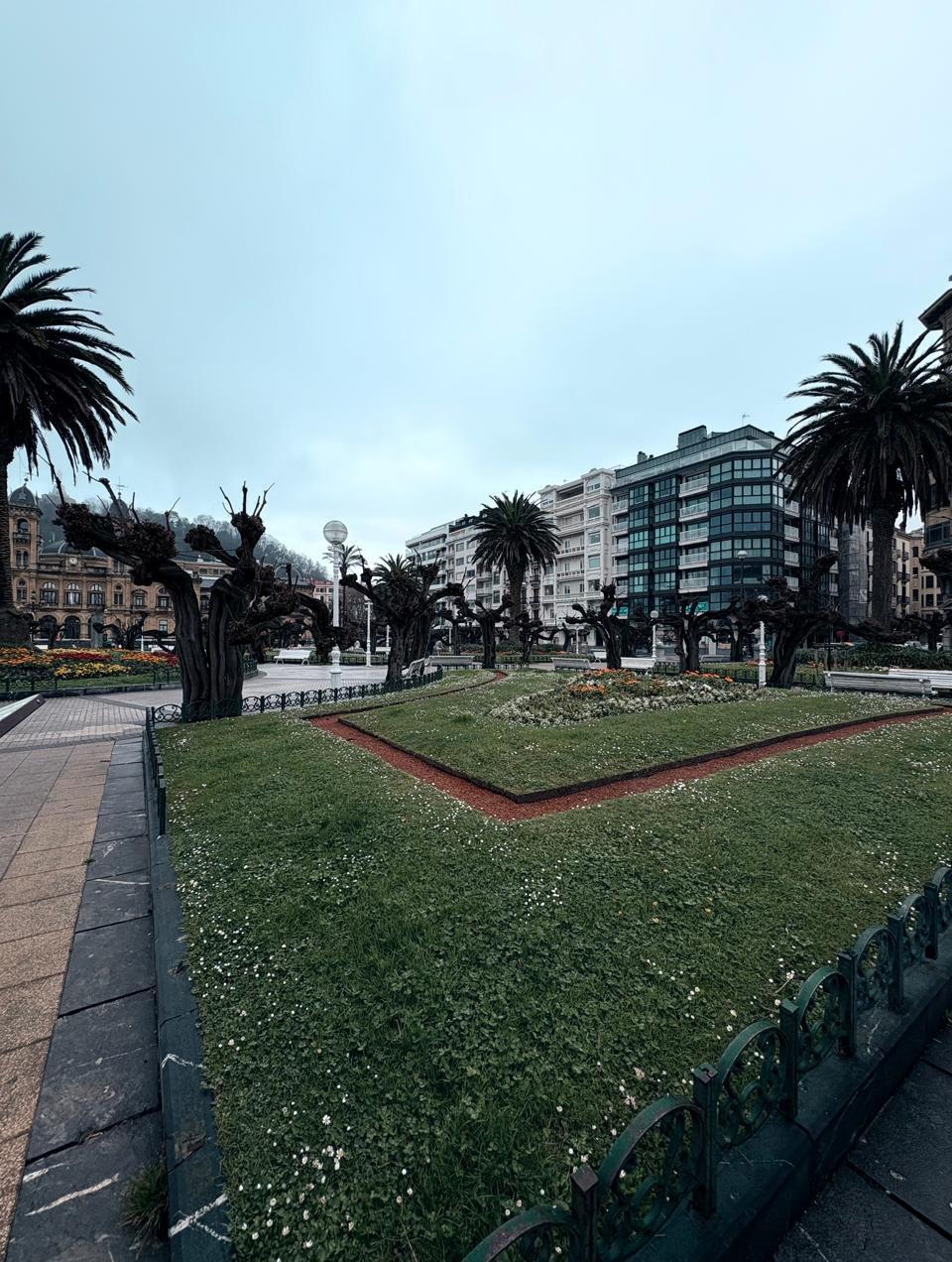
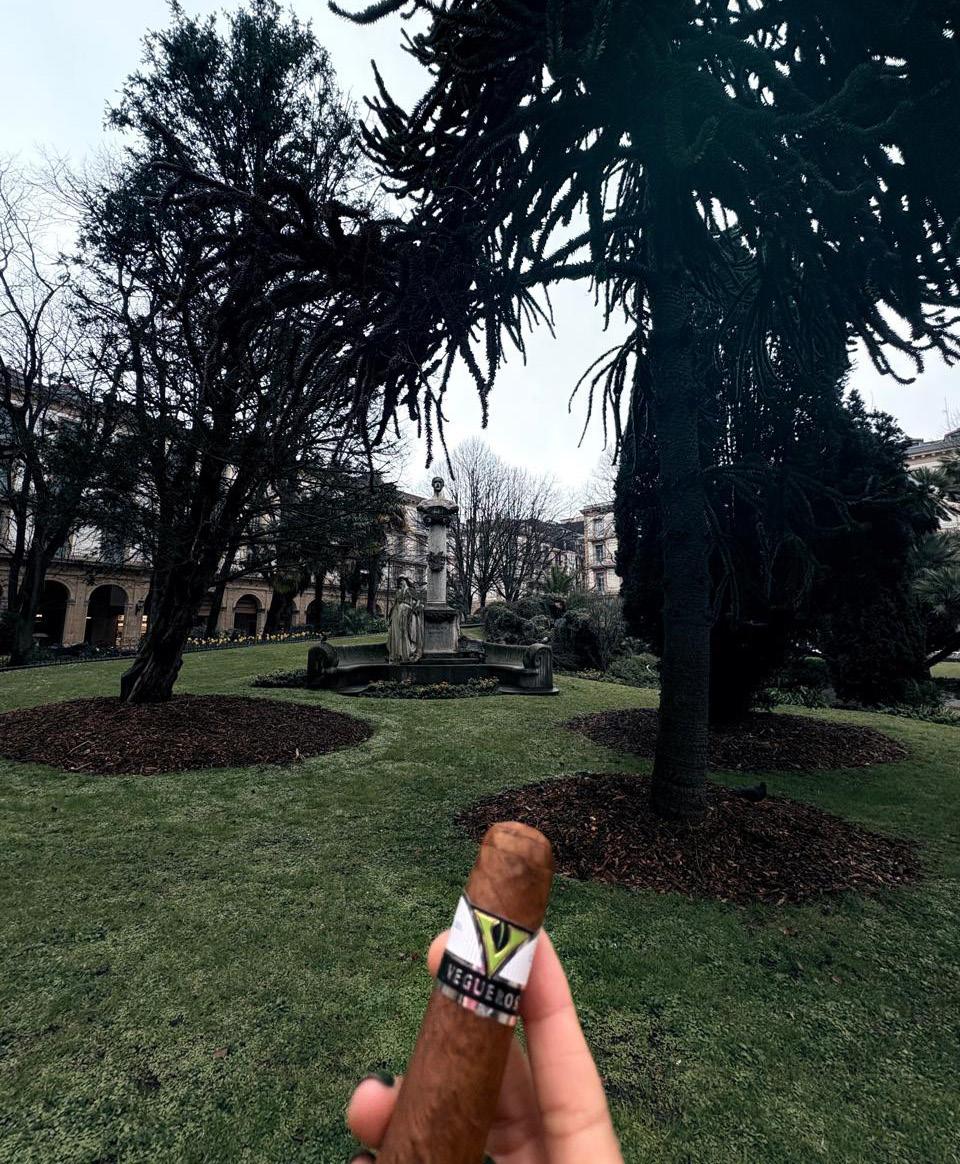
Amidst the morning greys, we reached Plaza de Guipuzkoa, which brought color to the day with its vast gardens and flowers brought from various regions of South America and Asia. It is one of the central parks, designed by the prestigious French gardener Pierre Ducasse.
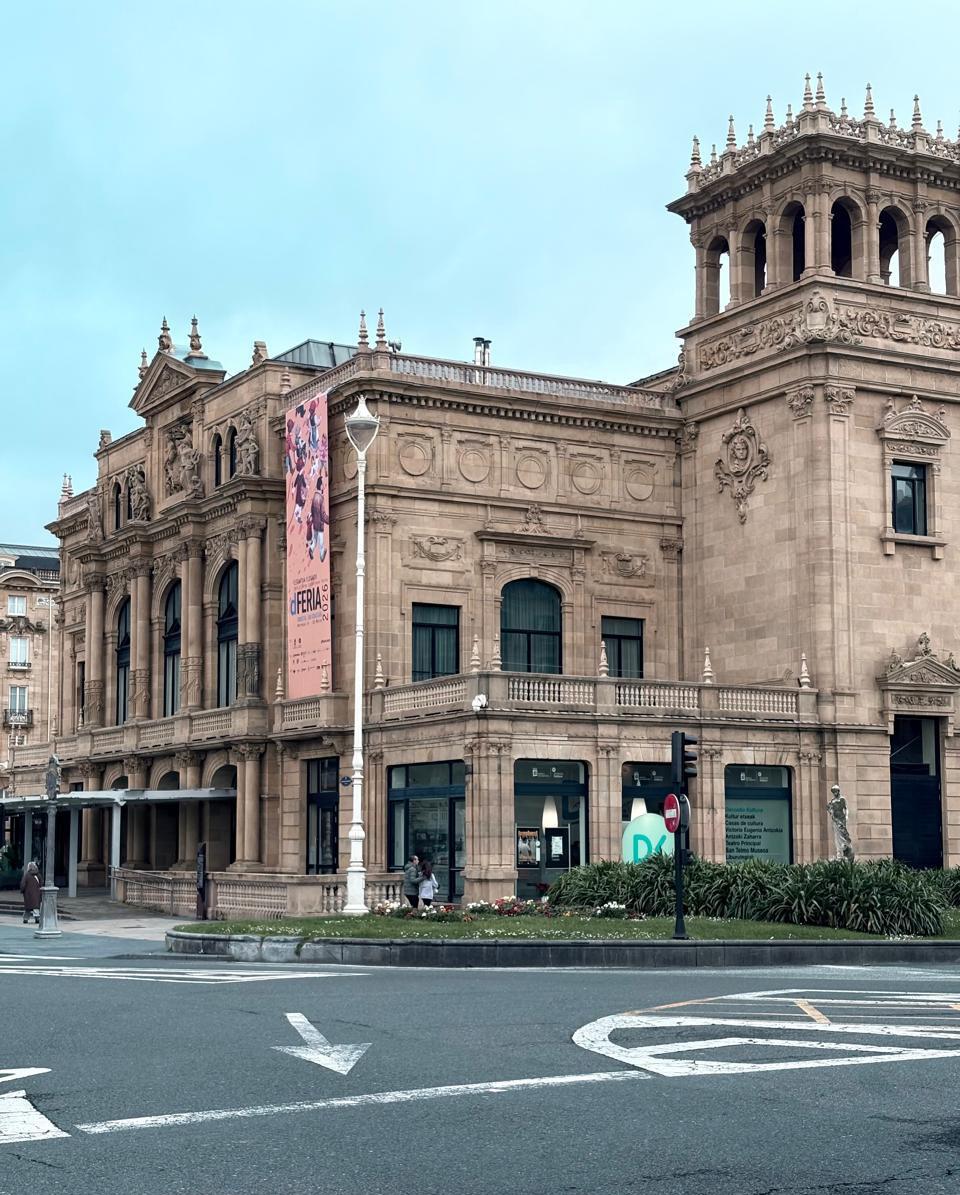
Opposite the park stands the Victoria Eugenia Theatre, opened in 1912. Built in a Neo-Renaissance style, its facade features sandstone –a material used in most of the city’s historic buildings.
The upper section hides one of its secrets: the busts of legendary figures like the writer and musician Xavier María de Munive e Idiáquez (Count of Peñaflorida) and composers such as Juan Crisóstomo de Arriaga and José Juan Santesteban Iraola.
Suddenly, the first aromas of local gastronomy appeared, signaling the city’s transformation as lunch approached... but that would come a bit later.
Óscar explained, under the falling rain, that San Sebastián was founded around 1180 by Sancho VI of Navarre, “The Wise,” who sought to establish a port for the kingdom. However, it was conquered by King Alfonso VIII and annexed to the Crown of Castile in 1200. This led to the creation of naval forces by 1248, which helped disable the Moorish fleet and the Triana Bridge.
By the late Middle Ages, during the 14th century, San Sebastián was impacted by the Hundred Years’ War between France and England, which shifted Atlantic trade routes toward Bilbao.
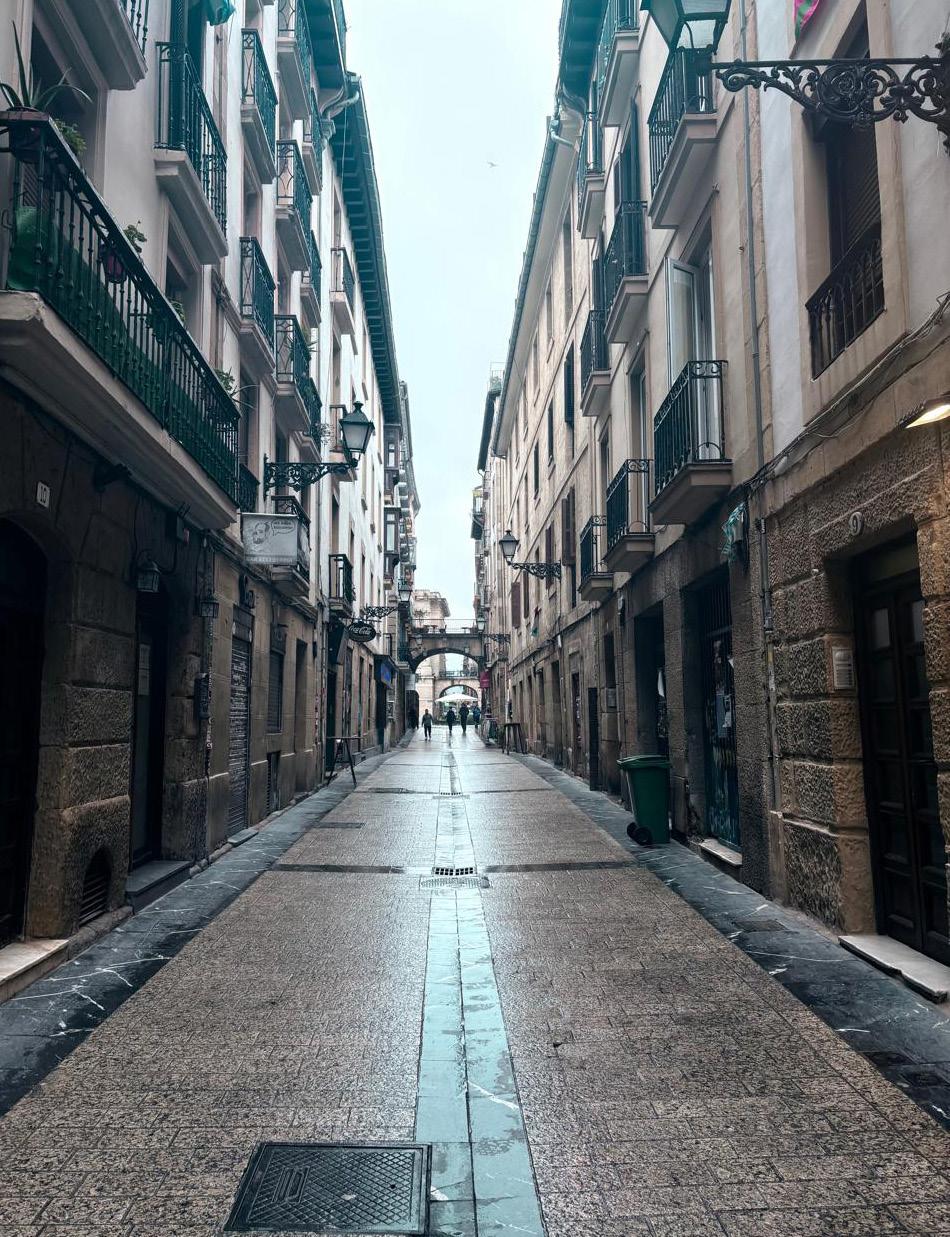
We visited the site of the old city walls and, after traversing centuries of history, ended at the port, just blocks away from the Old Town (Casco Viejo). This place marked the beginning of my true connection with San Sebastián.
As a gourmet, I ran with my Habano through several bars to enjoy great moments of the palate. What would we be without them? Is it not our soul and personality that are woven together by these small pleasures?
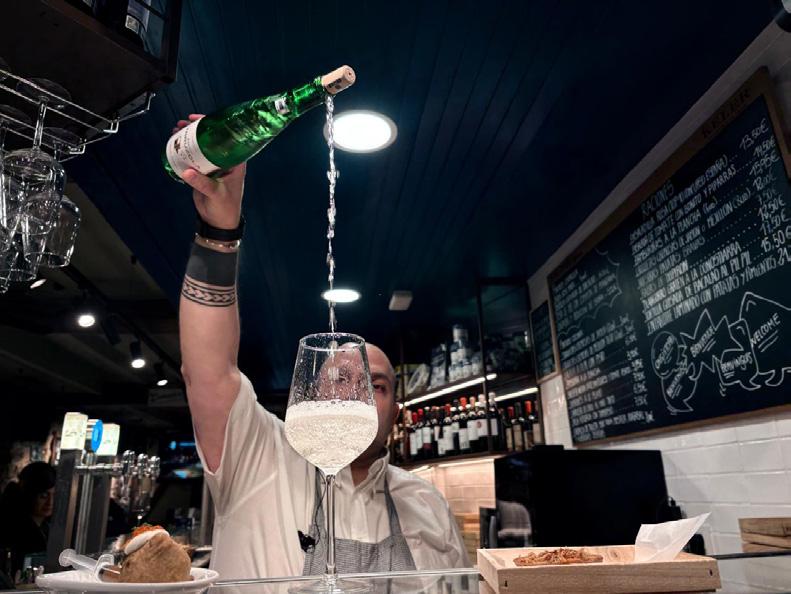
Following Google Maps, I headed to the first bar I had been recommended... but as often happens in life, it was closed. So, I decided to enter José María, the first one I found in the area, and what an experience! I was greeted by a charming waiter and enjoyed the famous pintxo
“La Bola de José María” –a crab tartare–topped off with a glass of Txakoli. Simply perfect.
My soul returned to my body after a three-hour walk. It was then I realized that the essence of San Sebastián lies in these bars, where through pintxos –miniature haute cuisine served on bread and held together by a toothpick– the city’s history has been told.
Moving on, we lost ourselves in the narrow streets until we reached Las Gandarias. Here you can go poteo –the local term for going from bar to bar for pintxos– or sit down for a full menu of seafood. A pintxo of baby squid (chipirones) and another of prawns allowed me to taste more local flavors.
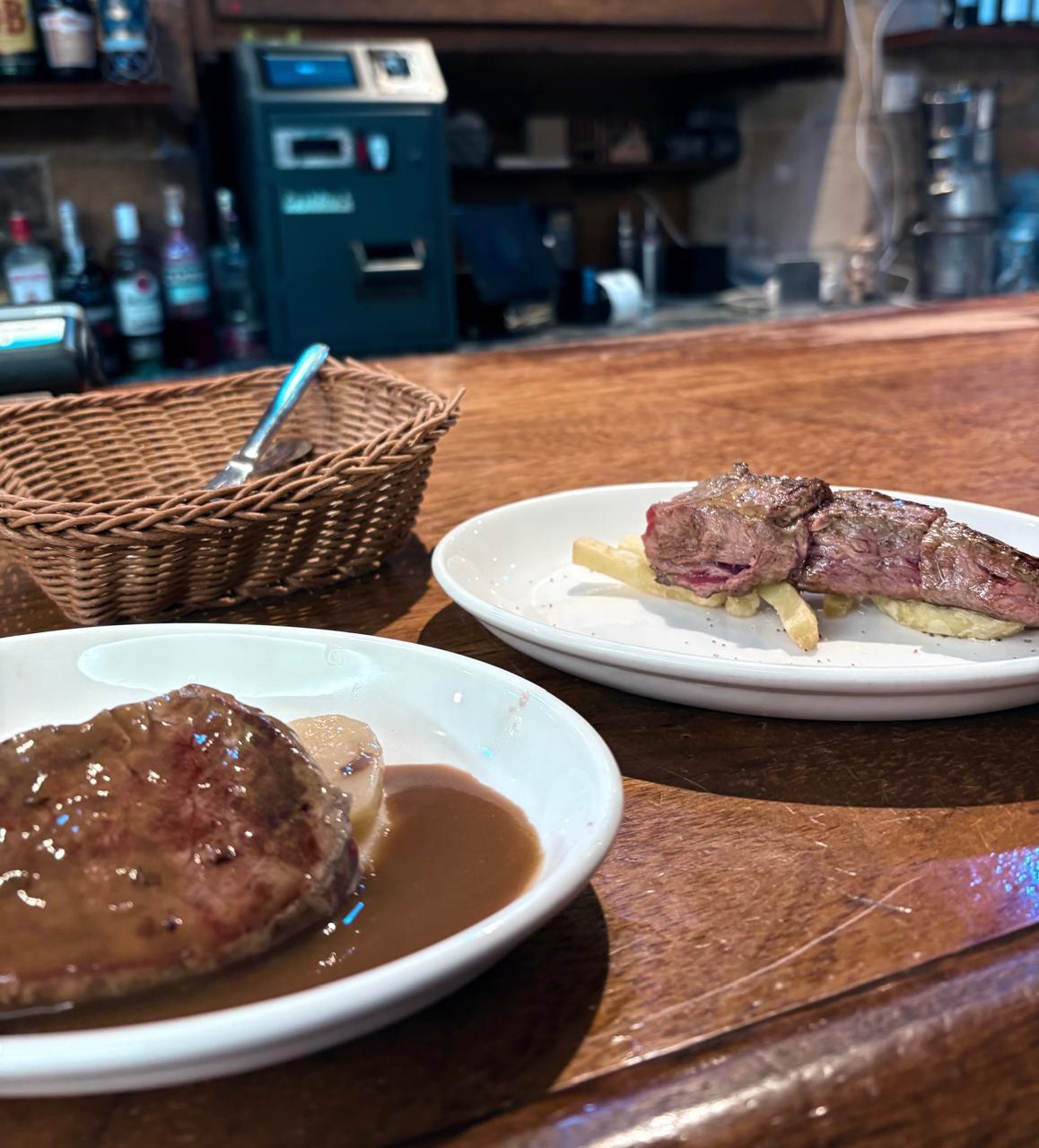
Amidst a mix of languages –English, Japanese, and “Argentine” (noted for its distinctness from Mexican Spanish)– I craved something more substantial. San Sebastián and the Basque Country are famous for grilled beef. Seated at the bar of Txapalo, I ordered the famous Txuletón (a thick rib steak) and a sirloin in Port wine sauce.
What a feast! For a carnivore like myself, these bites practically melted in my mouth.
The rain caught up with me at this bar... and to ease the wait, nothing beats a glass of red wine and Spanish music, which helped make room for what turned out to be a true gem: the cheesecake.
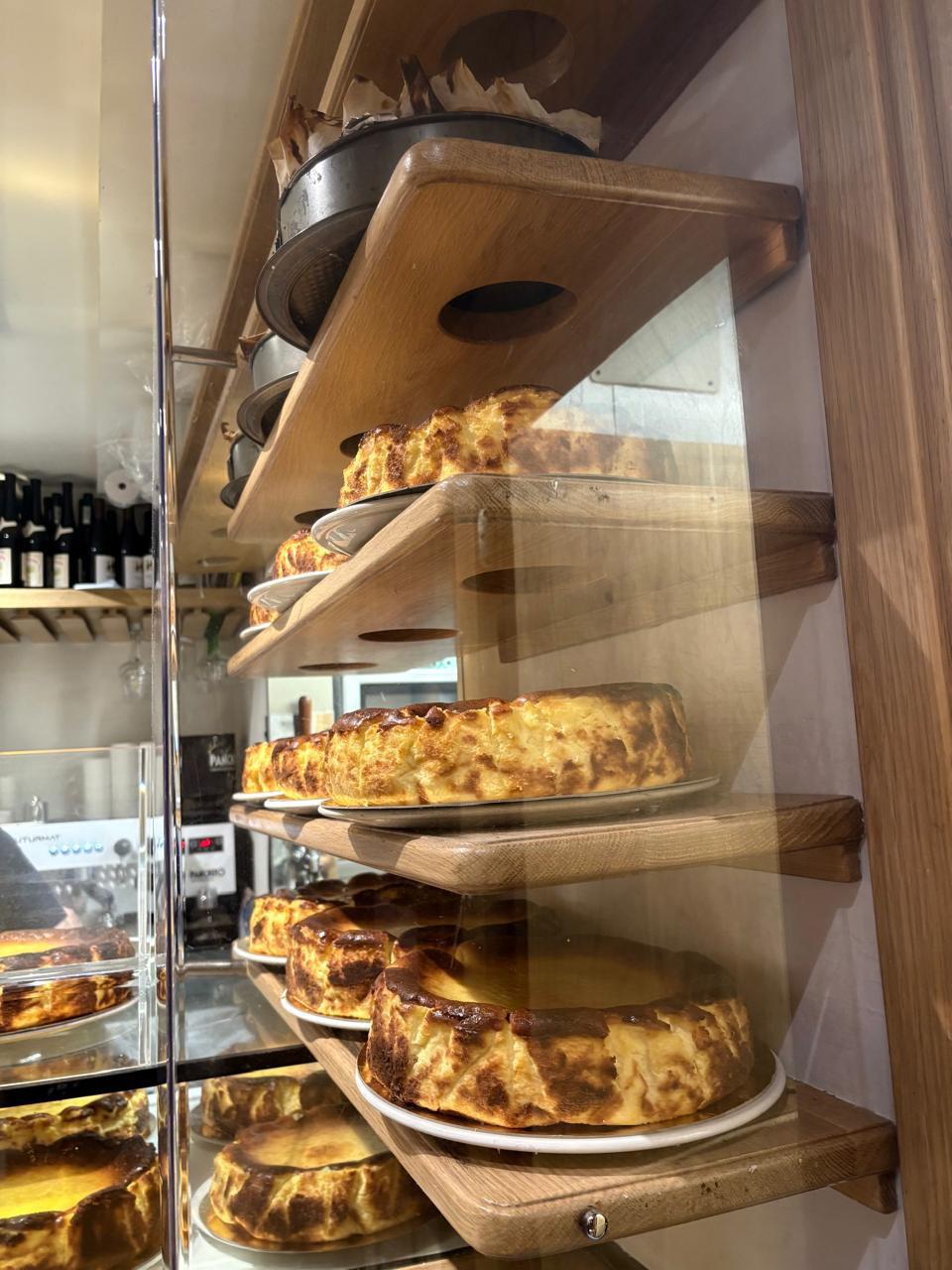
The walls of the famous restaurant La Viña hold one of the most recognized gastronomic treasures in Spain. To try it, one must wait and navigate the busy bar, but once the obstacles are cleared, heaven arrives in the form of a slice: the legendary Basque Cheesecake.
Created by Santiago Rivera, crustless and baked at high temperatures, it is distinguished by its creamy texture and a perfect balance of cheese flavor. The first bite tastes like glory –delicate yet deep, hitting the exact point where the palate always craves more.
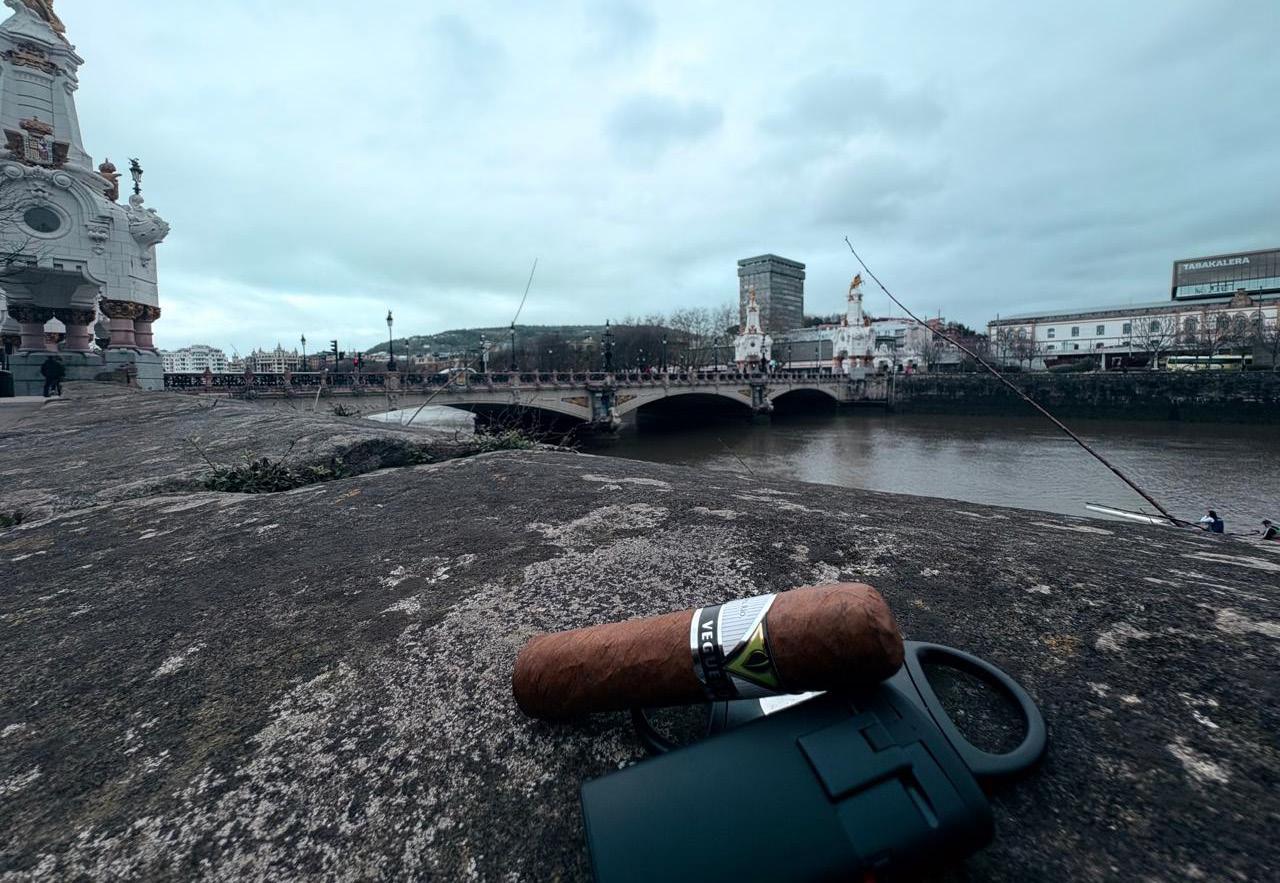
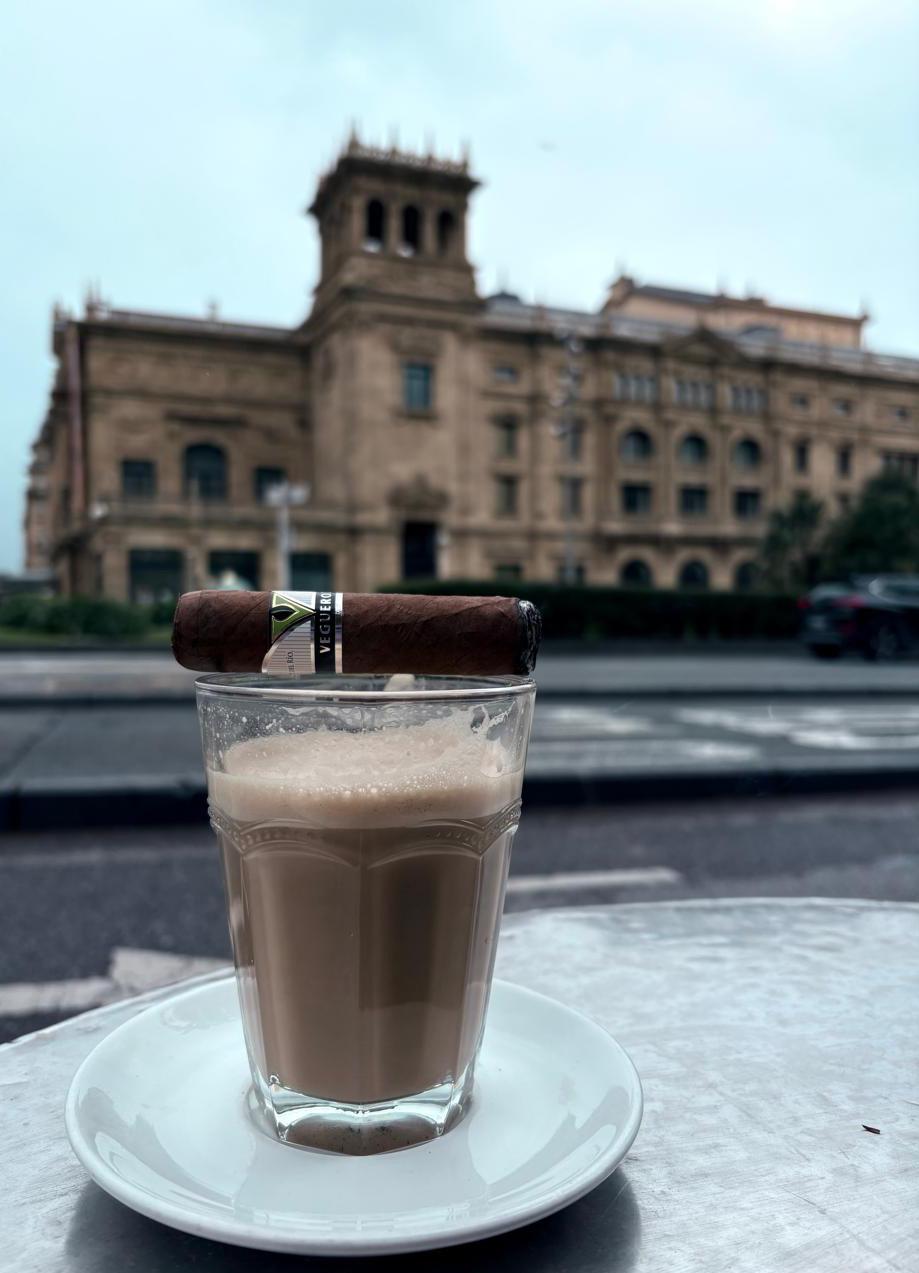
I could not close this chapter without my black Cuban tobacco, which, much like Basque gastronomy, is a national emblem. To achieve a movie-like ending, I found a small terrace near the iconic Hotel María Cristina, which hosts celebrities during the San Sebastián Film Festival.
I lit the Vegueros Centro Gordos (100 mm, 54 ring gauge). Its initial aromas transported me to Pinar del Río, the heart of Cuban black tobacco. That red earth, full of passion, where the work of the vegueros (farmers) shines through.
Paired with a classic coffee, my palate was filled with spicy notes, wood, and subtle traces of coffee. Throughout its evolution, slight herbaceous nuances appeared, maintaining its strength across all three thirds. The oily wrapper, with a slight vein and a maduro color, is a hallmark of the brand.
Vegueros was established in 1996 as a tribute to the farmers who dedicate their lives to tobacco. Similarly, in Donosti, the people and their pintxos give life to the city and protect its culinary culture.
San Sebastián led me to say aloud a famous movie line: “This part of my life, this little part, is called happiness.”
Procigar: From the Soil to the Smoke
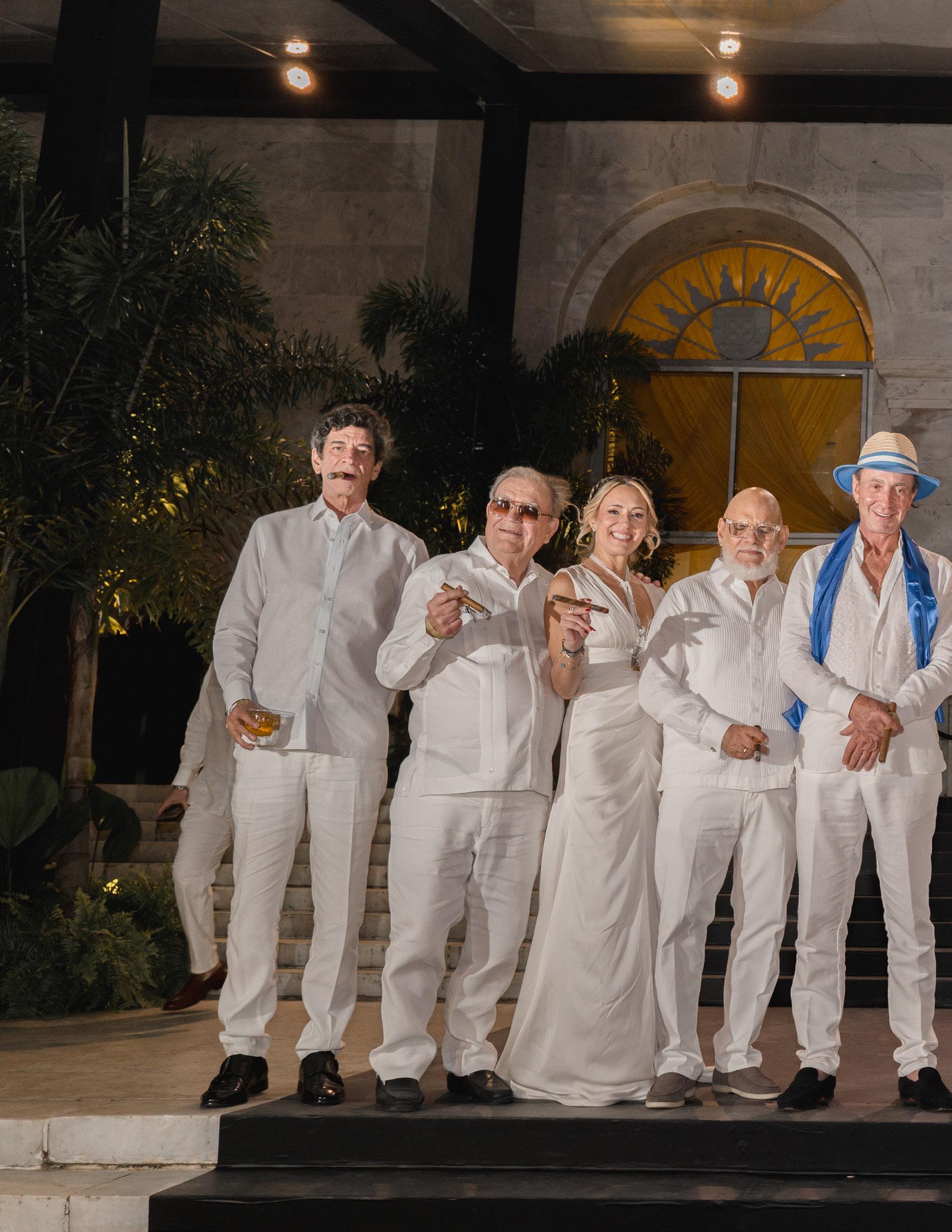
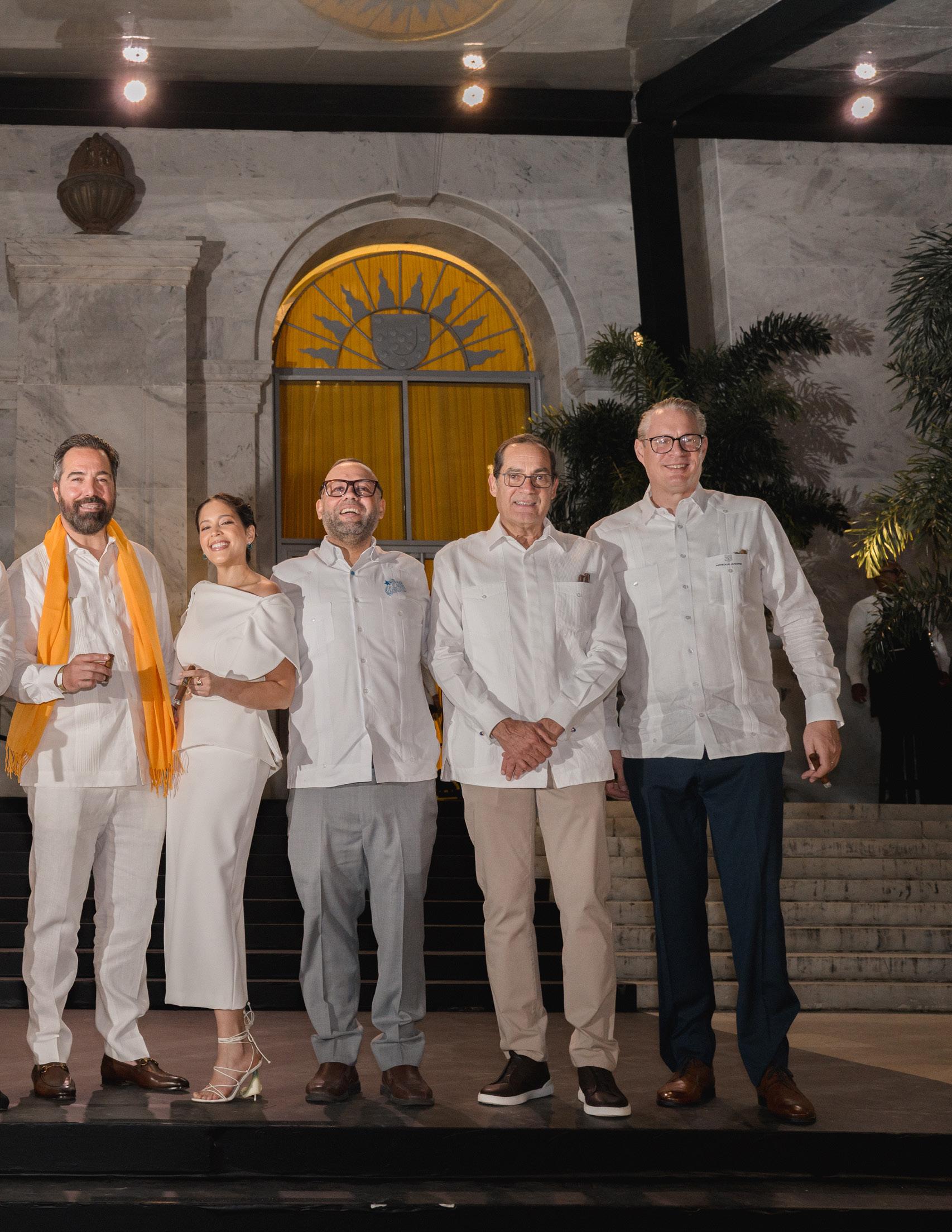
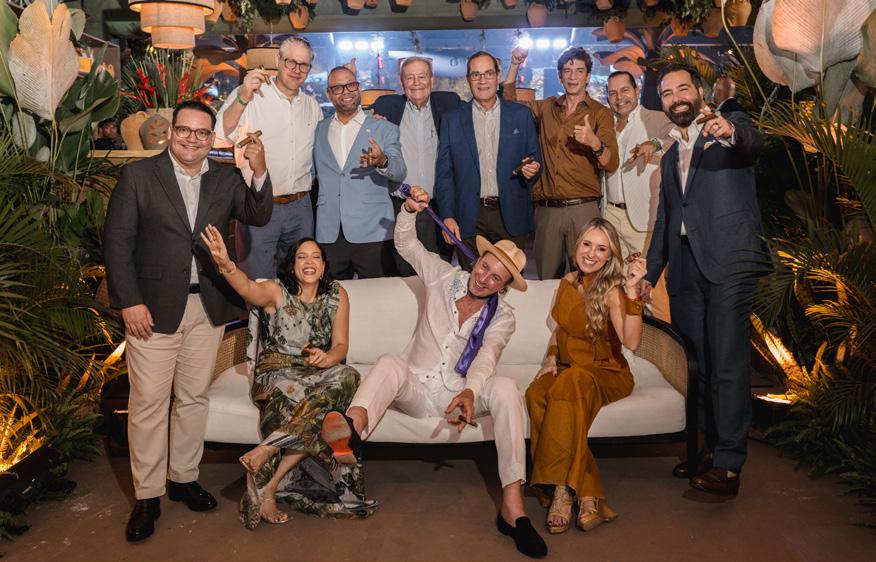
Jochy Blanco, Henke Kelner, Raquel Quesada, Ernesto Pérez.-Carrillo, Litto Gómez, Ciro Cascella, Nirlka Reyes, Abraham Flores, Guillermo León and Arnold André.
César Salinas
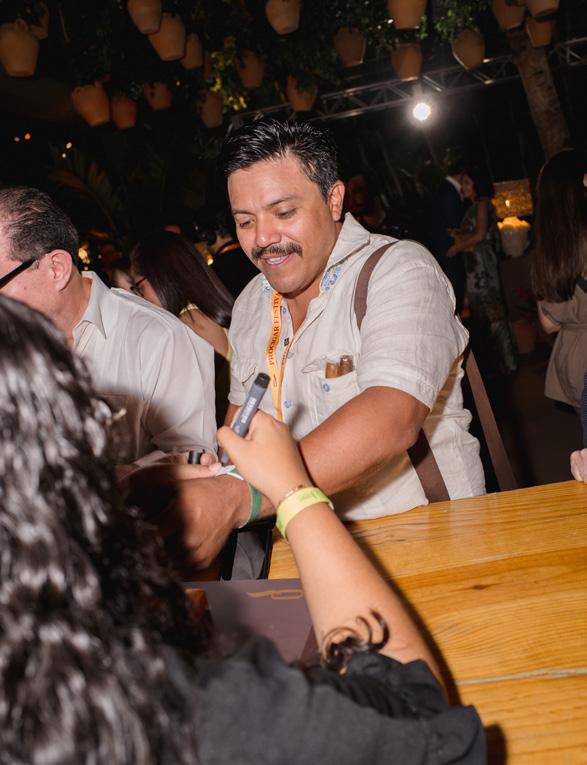
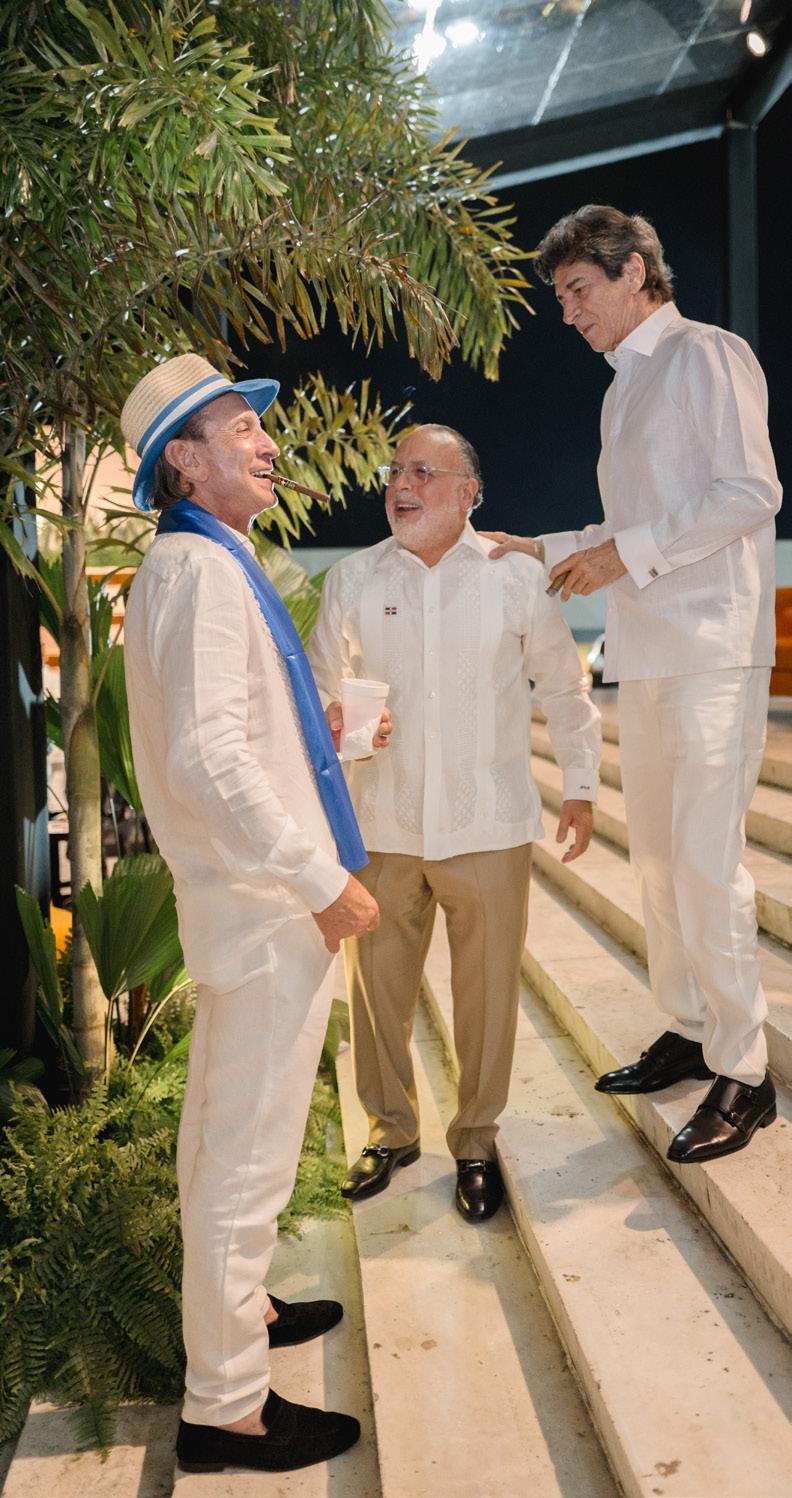
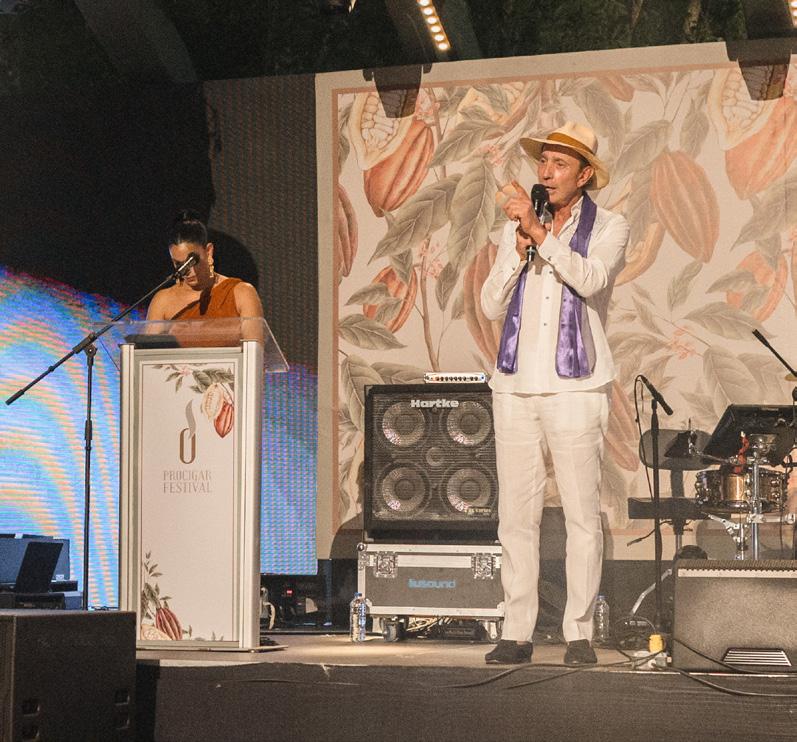
The Procigar Festival is an experience of such high caliber that its members –the owners of the most prominent factories in the Dominican Republic– welcome you like a friend inviting you into their home to eat, drink, and smoke their finest cigars. Yes, that kind of friend.
Since 2008, when its inaugural edition was announced, the goal has remained unchanged: to create an experience that centers on the attendees, providing exceptional hospitality and the warmth of the Dominican people, while offering an in-depth look at where the country’s premium cigars are born and how they are crafted.
This experience is so spectacular, exclusive, and personalized that it is difficult to forget, especially for first-time attendees. According to the organizers, this was the case for a large portion of the more than 1,000 international participants in this 2026 edition.
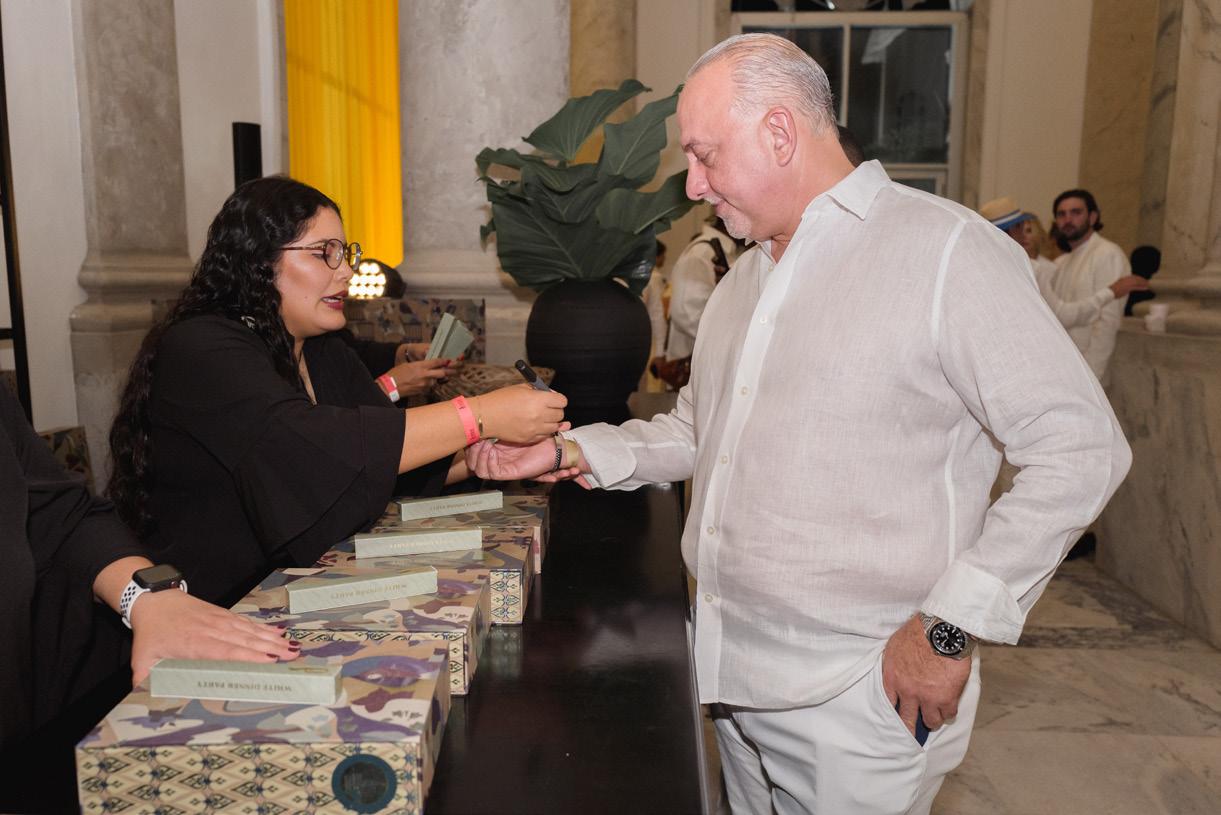
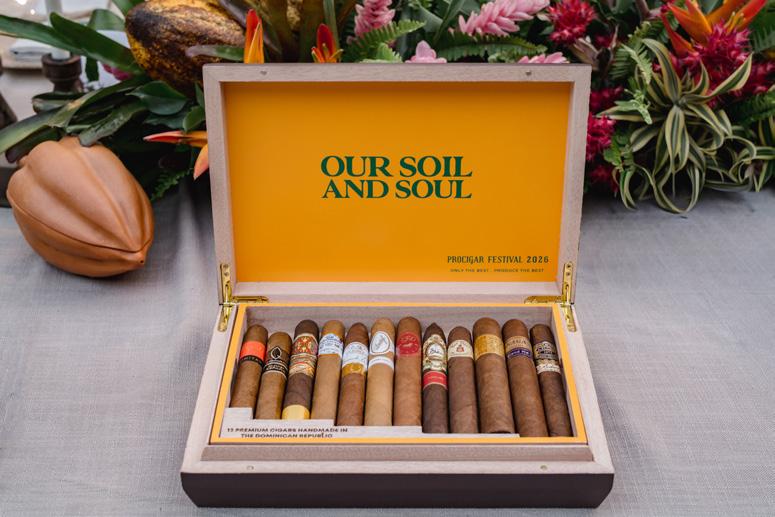
In essence, the festival is divided into two parts of the day: field tours and factory lunches by day, and evening gala parties by night: the Warm-up Festival and three main dinners –Welcome, White, and Gala. At each event, guests receive commemorative boxes featuring the finest products from the members of the Association of Dominican Cigar Manufacturers (Procigar): Arnold André, Casa Carrillo, De los Reyes Cigars, General Cigar, La Aurora, La Flor Dominicana, PDR Cigars, Quesada Cigars, Tabacalera Arturo Fuente, Tabacalera de García, Tabadom Holding Inc., and Tabacalera Palma.
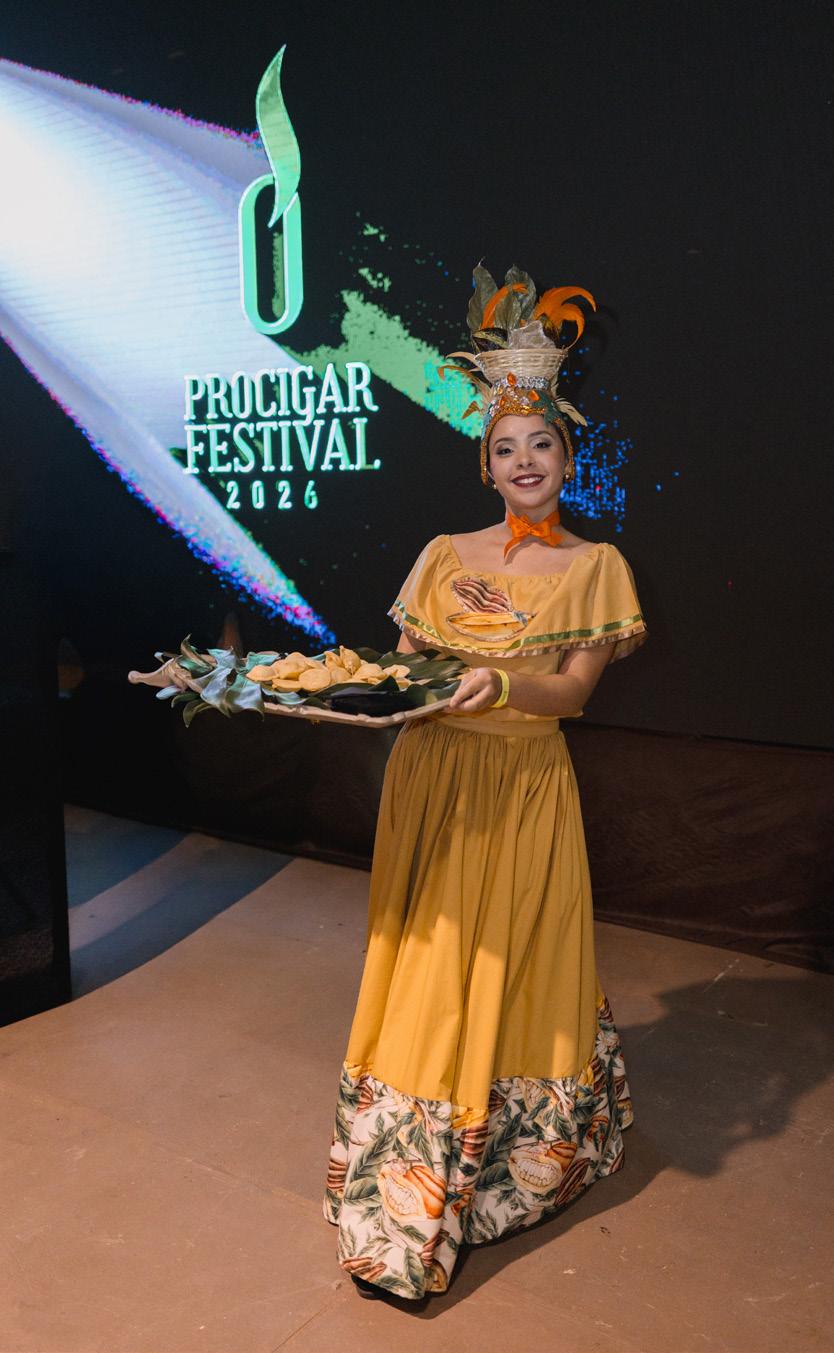
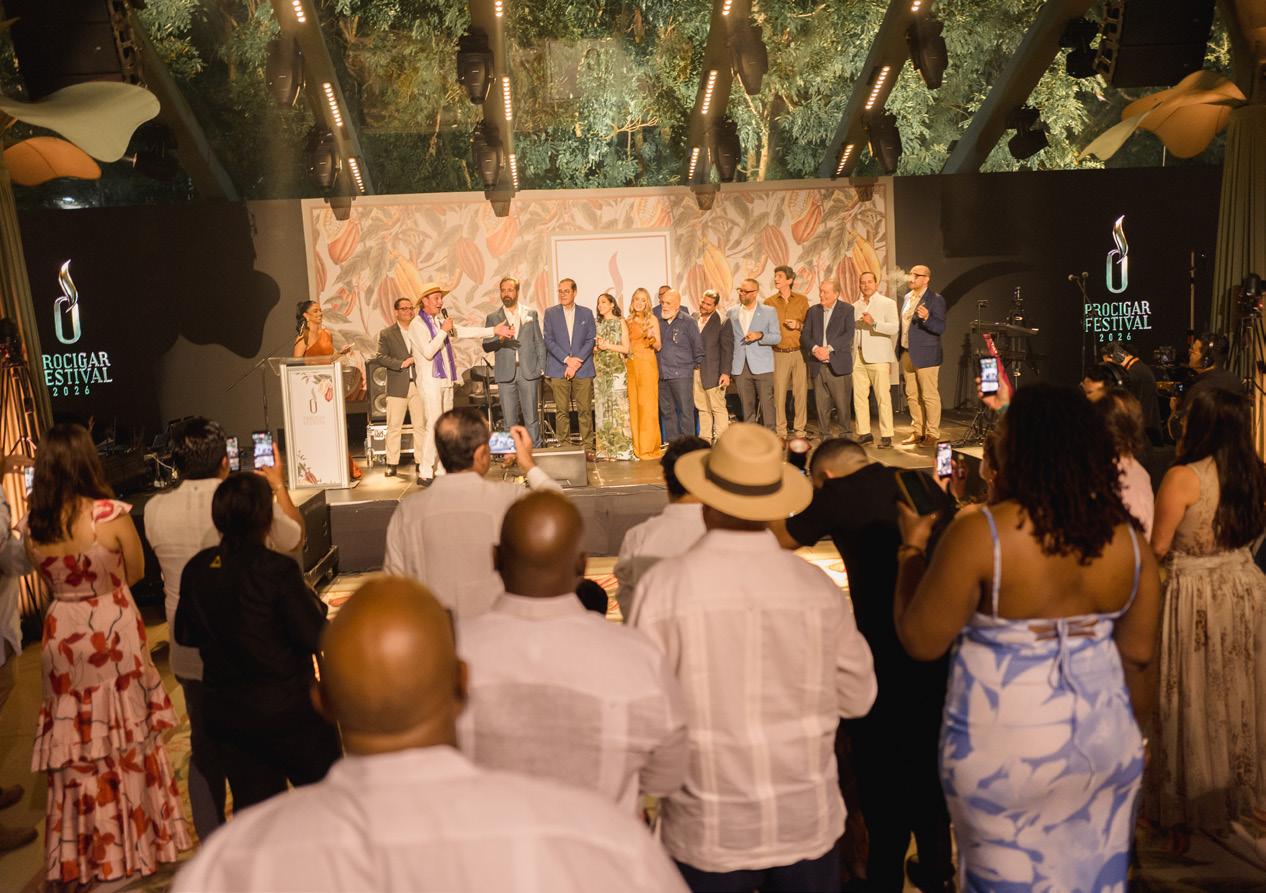
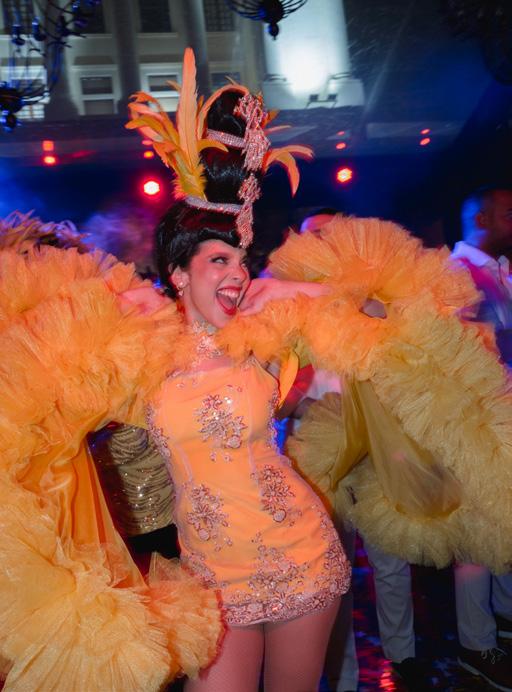
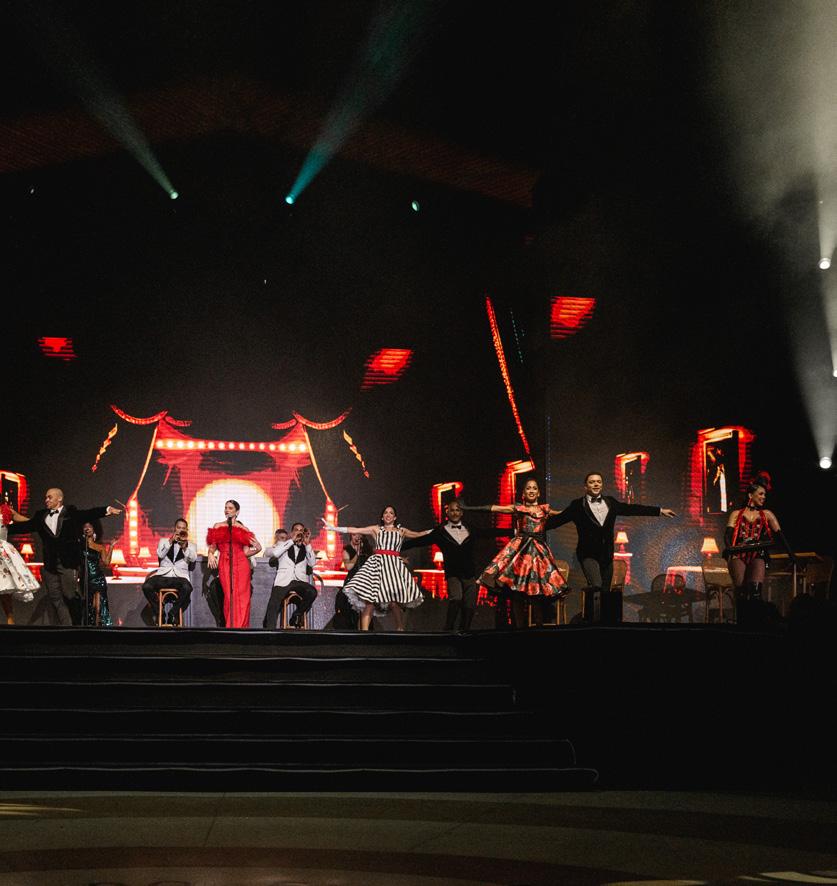
These are spectacular celebrations, planned and executed as only the Dominicans can. As one of their slogans says: So premium! Whether served as a set menu or a buffet, the international and Caribbean cuisine is a delight, complemented by an open bar and a remarkable level of organization and spectacle –such as the fireworks at the White Dinner by the Monument to the Heroes of the Restoration, or the grand finale show at the Gala.
César Salinas, CEO of Humo Latino.
AN INDUSTRY AT ITS PEAK
In the Dominican Republic, tobacco and cigars have been declared Cultural Heritage of the country. Furthermore, this industry generates more than 100,000 direct jobs and is the leading employer in the free trade zones, with over 43,000 positions, most of which are held by women. In 2025, exports exceeded $1.3 billion, and the country is currently the second-largest supplier of cigars to the United States.
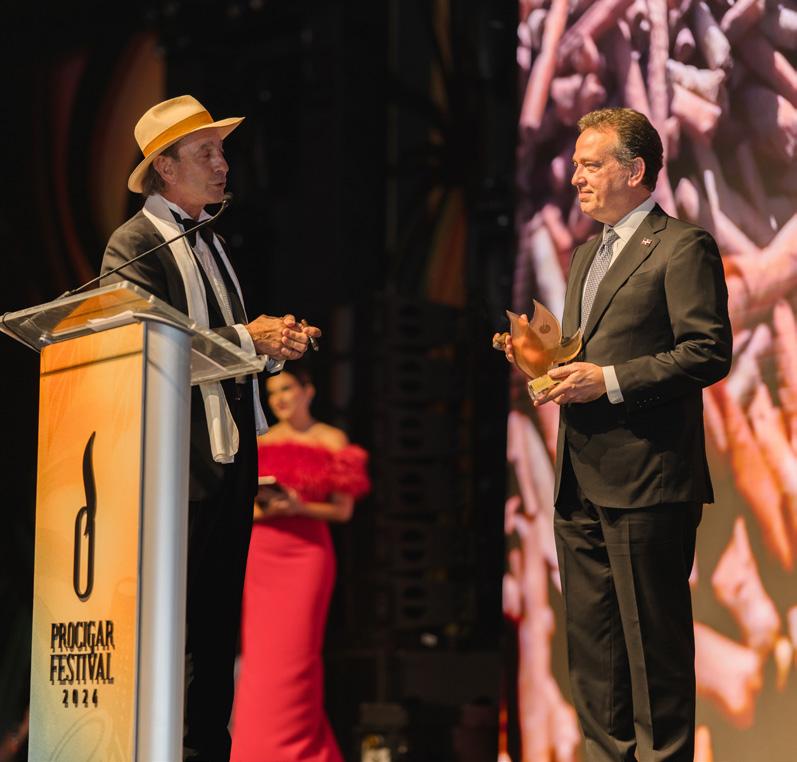
These figures are due, in part, to the enormous support provided by President Luis Abinader, whose mandate saw the Cultural Heritage declaration and who attended the Welcome Dinner. During the Gala Dinner, Litto Gómez presented an award to the former Minister of Industry,
Commerce, and MSMEs, Víctor Ito Bisonó, who supported and maintained a commitment to the tobacco sector, which was strengthened “thanks to his leadership and collaborative spirit.”
“Never before have cigars been of such high quality as they are today,” Litto Gómez stated during his speech at the Gala –the event that marks the festival’s closing and hosts the traditional charity auction, which reached a historic record of $618,000 this year.
These funds will support institutions such as the Voluntariado Jesús con los Niños, the Hospicio San Vicente de Paúl, and other health and community development organizations, as well as the opening of the Museum of the Monument to the Heroes of the Restoration in Santiago de los Caballeros.
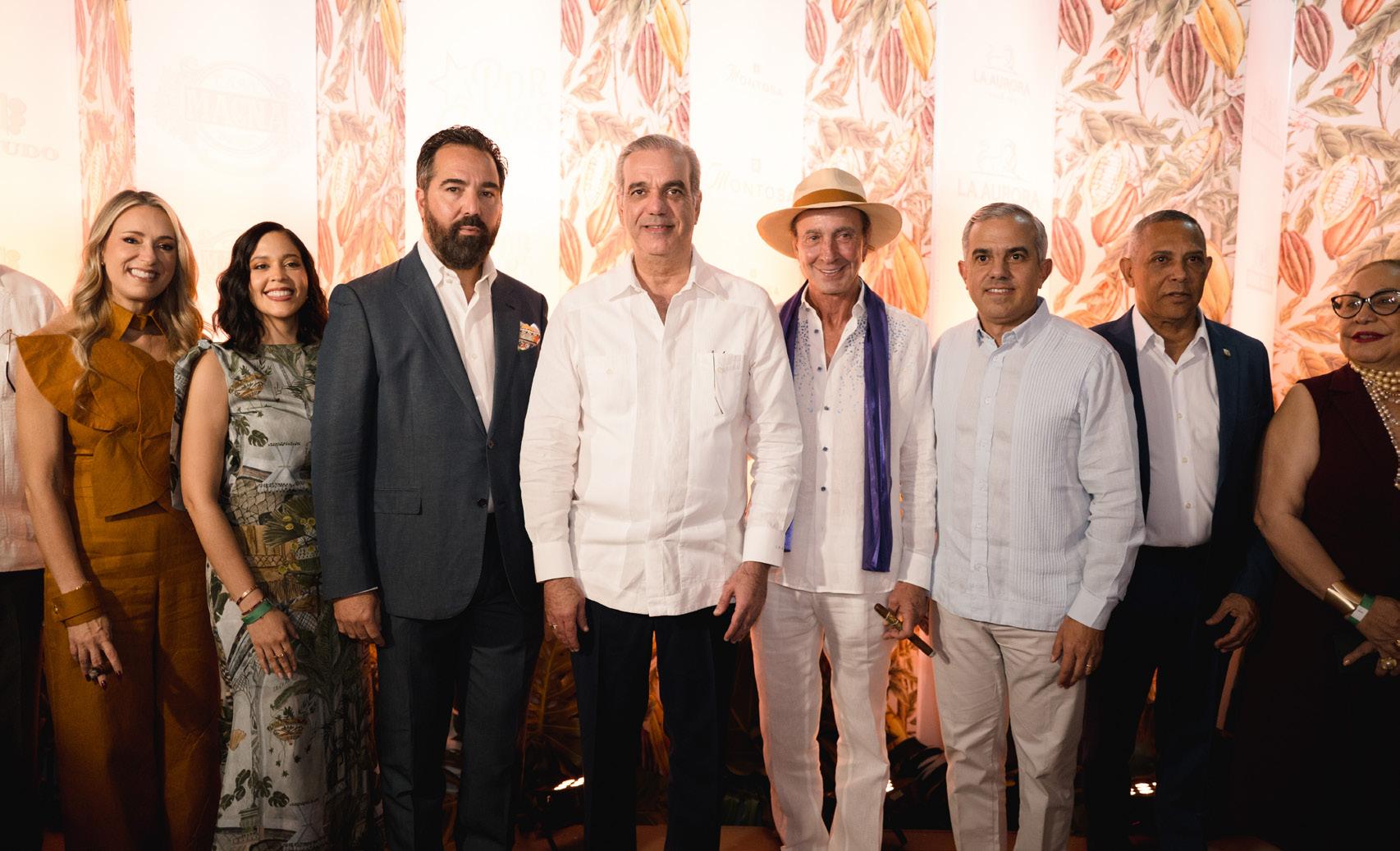
Raquel Quesada, from Quesada Cigars; Nirka Reyes, from De los Reyes Cigars; Ciro Cascella, from Tabacalera Arturo Fuente; Luis Abinader, President of the Dominican Republic; Litto Gómez, from La Flor Dominicana; Iván Hernández, Director General of Intabaco; and María Santos Méndez, Governor of Santiago.
“The cigars we so proudly craft in the Dominican Republic bring special moments to people all over the world. And those who smoke cigars are the best people in the world: we are good people, we are relaxed, we love to enjoy life...”
“WITHOUT YOU, WE ARE NOTHING”: AJ
The highest bid at the auction came from Nicaraguan producer Abdel Fernández of AJ Fernández Cigars, who paid $150,000 for the Arturo Fuente humidor –a moment that undoubtedly defined the night(*) and served as the perfect conclusion to a festival that is arguably the most important of its kind in the world today.
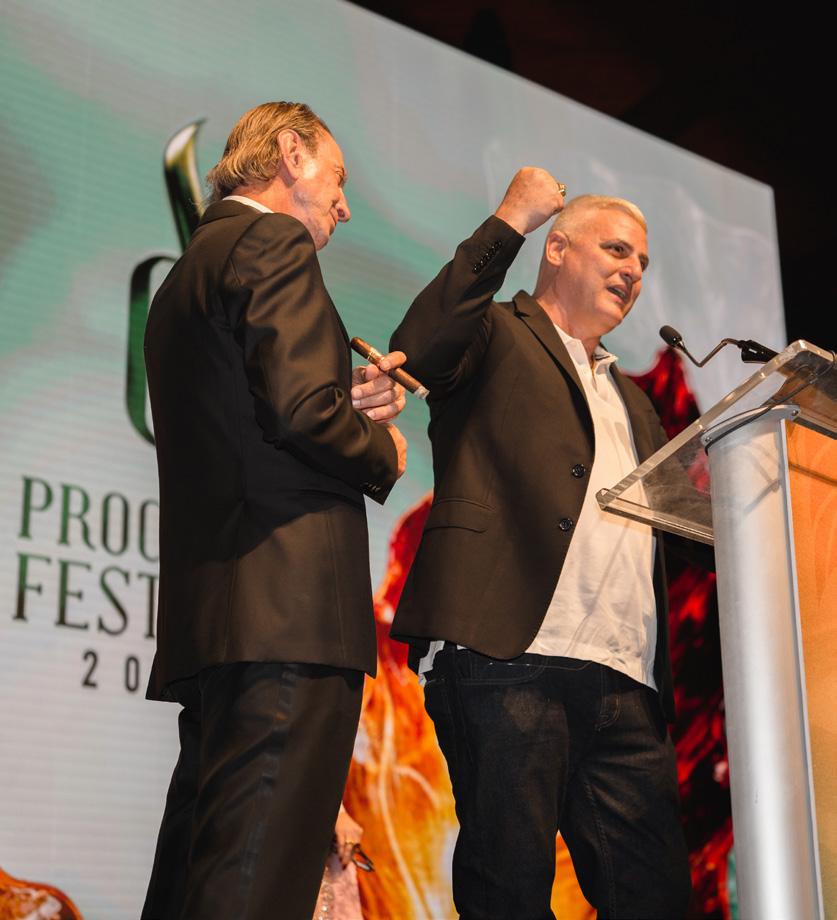
“When I saw the video of the workers’ homes and the social responsibility that everyone here upholds, it made me so proud that it left me speechless, and I want to be a part of that. For me, it is a point of pride because I am Caribbean; I am Cuban, I am Dominican, and I am Nicaraguan,” he said upon taking the stage at Litto’s invitation.
Abdel, one of Nicaragua’s leading producers, congratulated the Procigar members and thanked them for their century-long histories, noting that were it not for them, he would not be in the premium cigar business. “They forced us to compete and taught us to work better every single day. Moreover, they have welcomed me my entire life, even back when I had nothing.”
Litto Gómez and Abdel J. Fernández.
Finally, he stated that without the aficionados, the producers would not exist: “We wouldn’t be who we are today,” he said, extending a special thanks to them. “In the Dominican Republic, as well as in Nicaragua, Honduras, and everywhere in the world where cigars are made, we put the best of our souls into doing things better. A cigar is not a vice; it is a pleasure, and we are here to satisfy all pleasures.”
(*) A recording of this moment is available on Humo Latino’s social media channels.
From the Field to the Factory
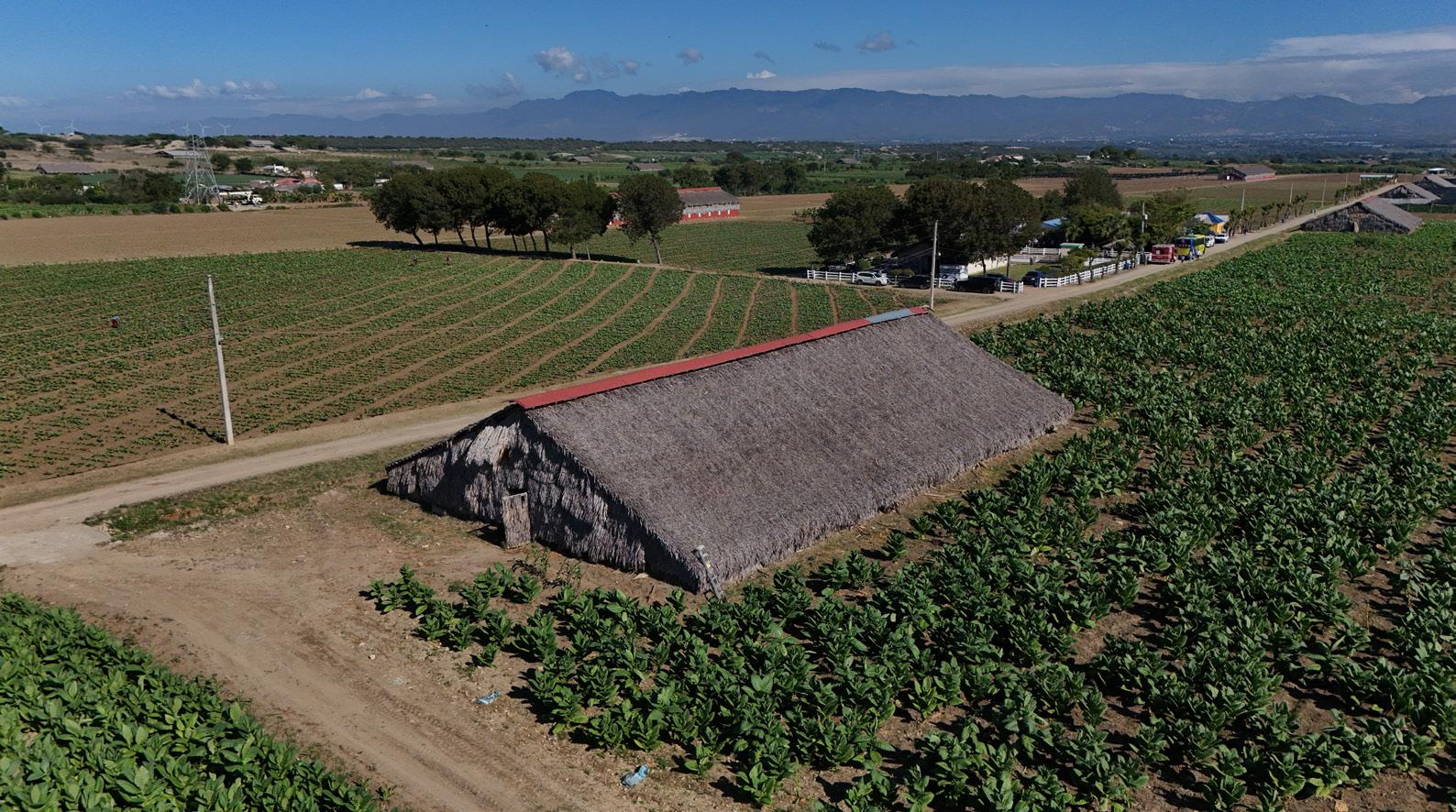
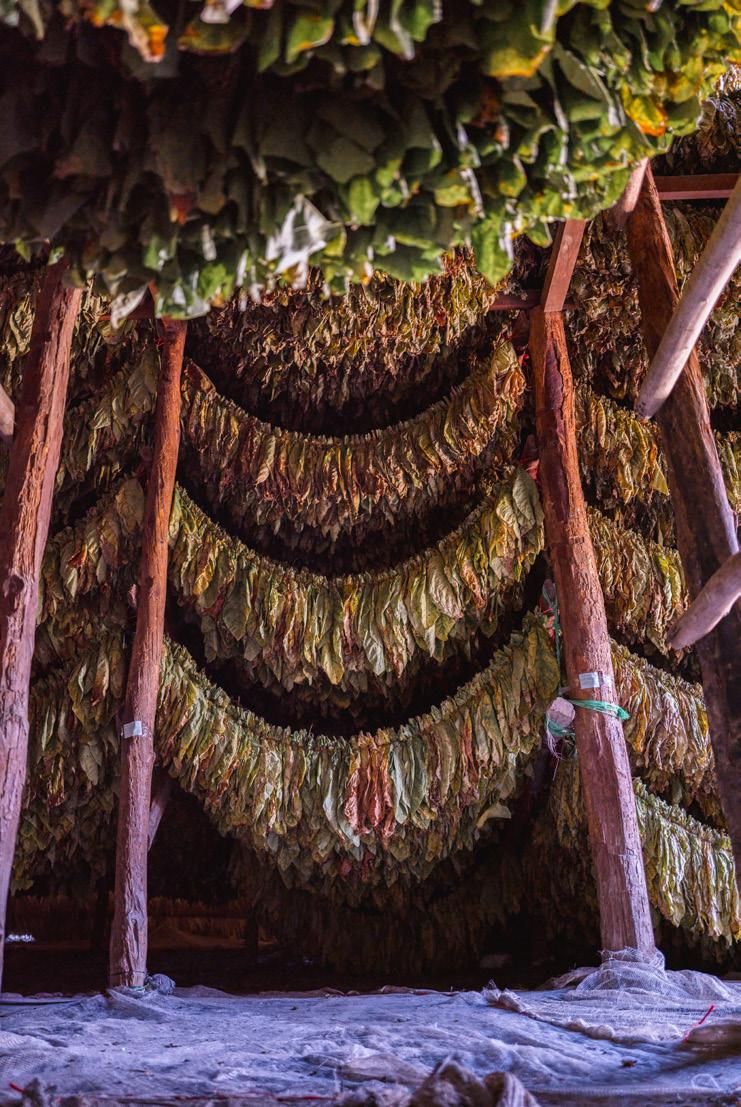
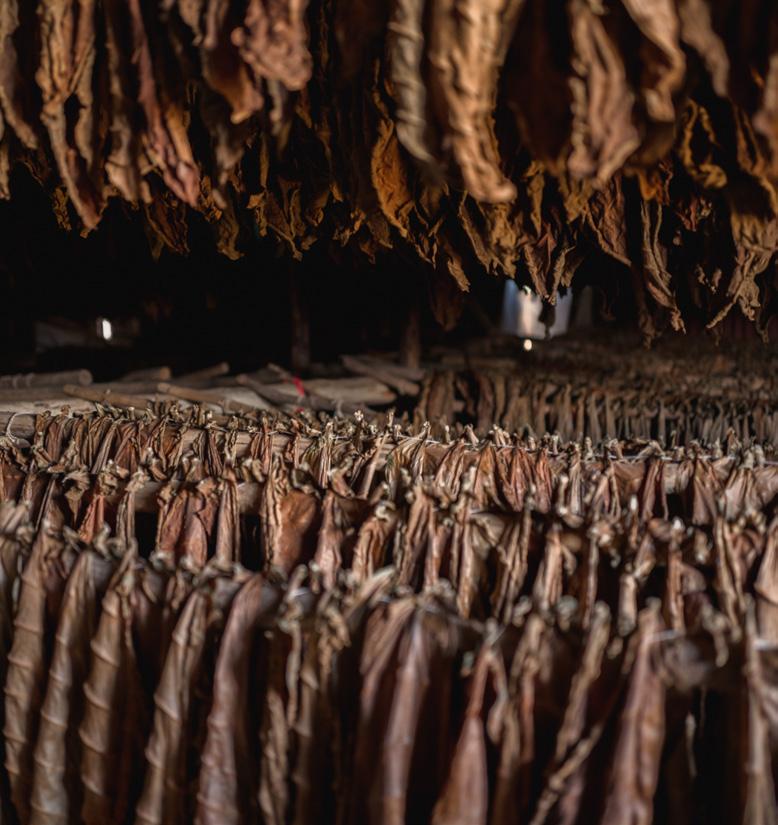
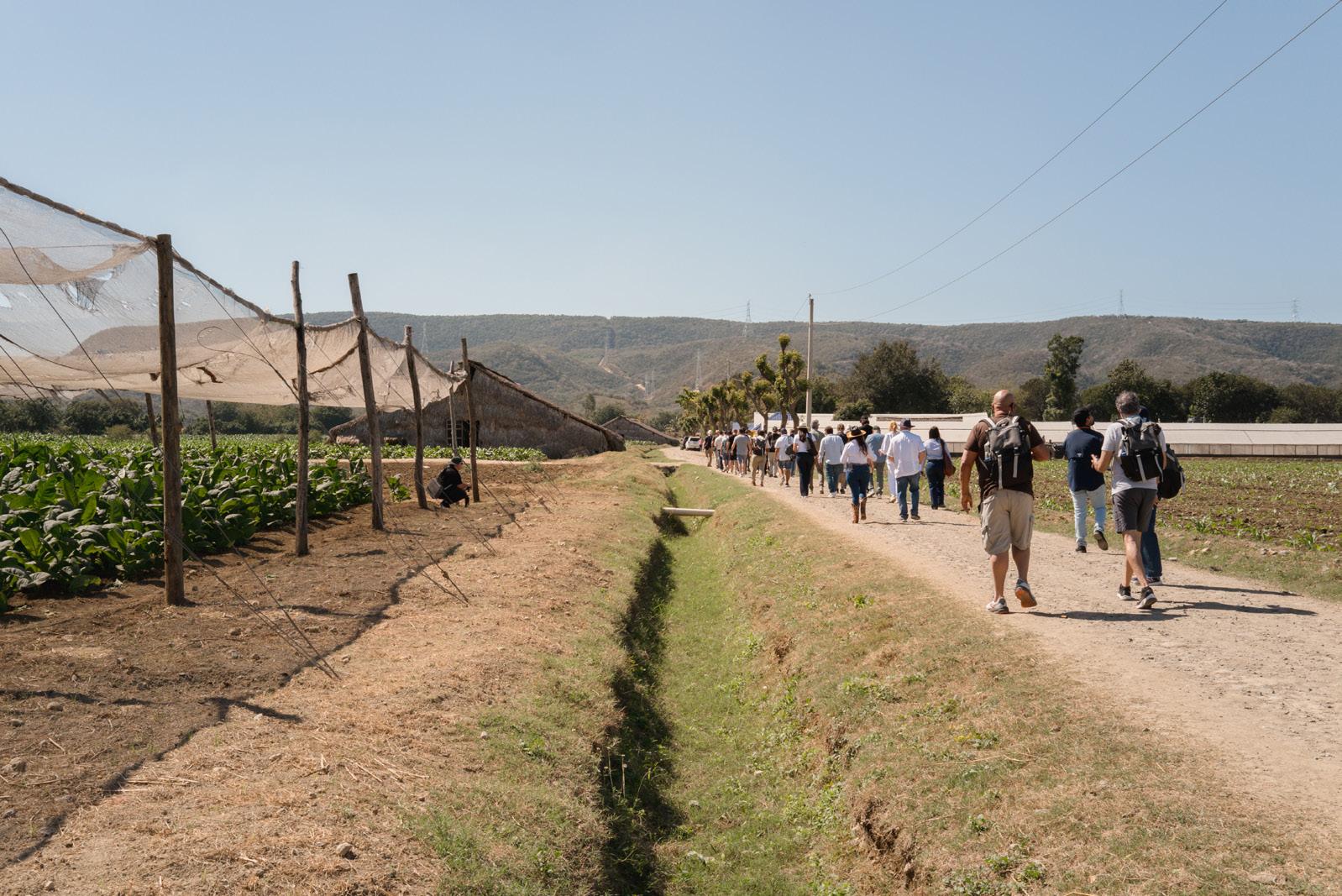
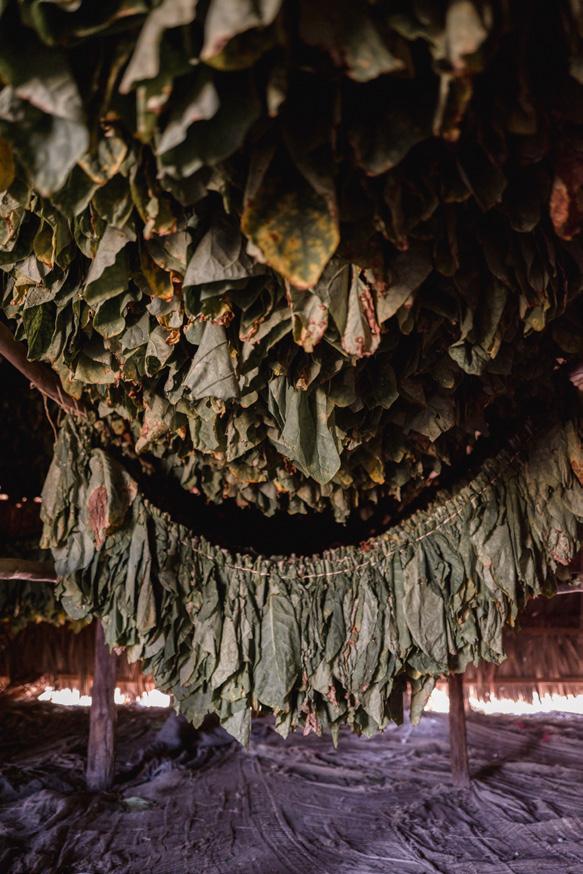
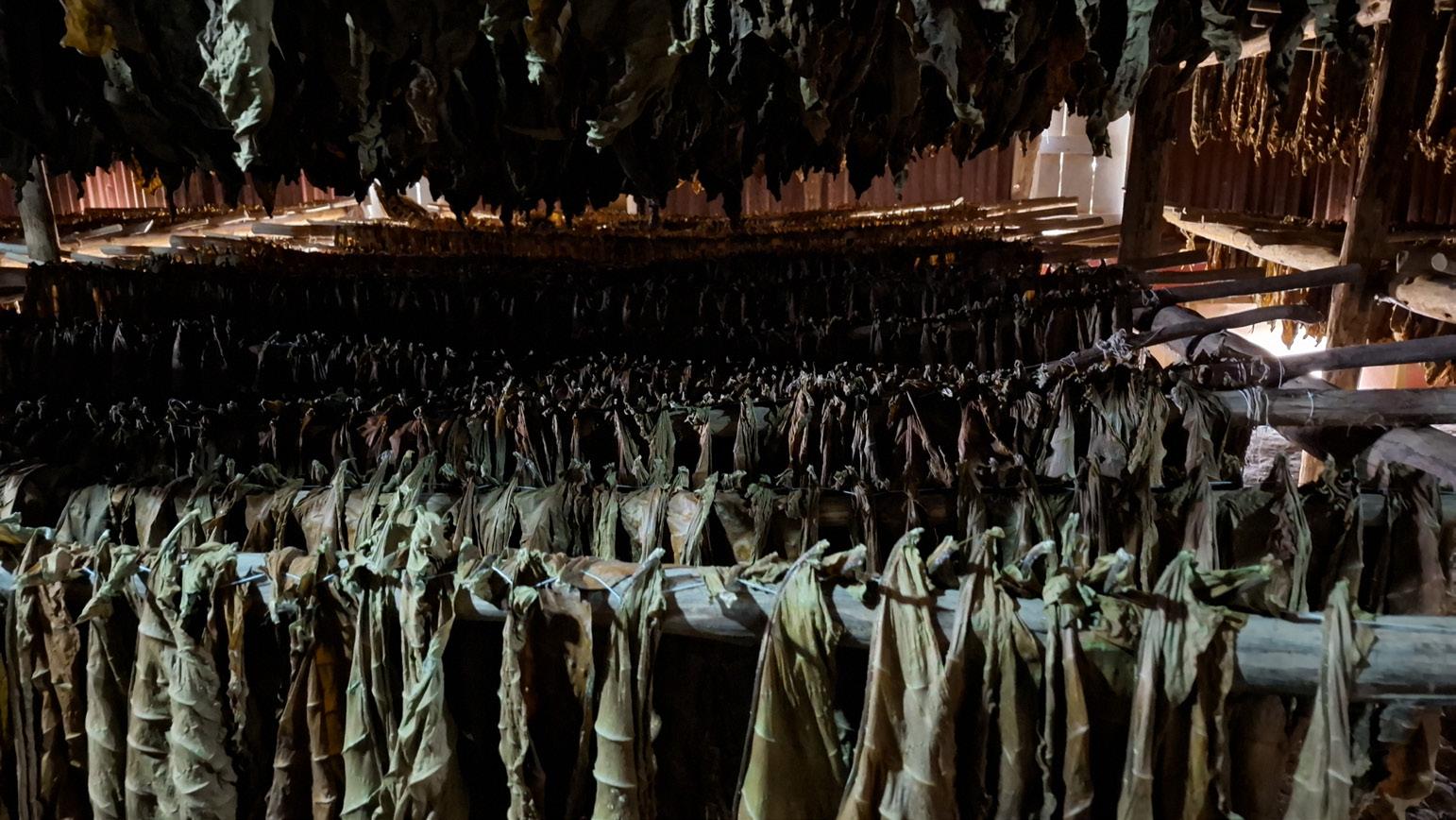
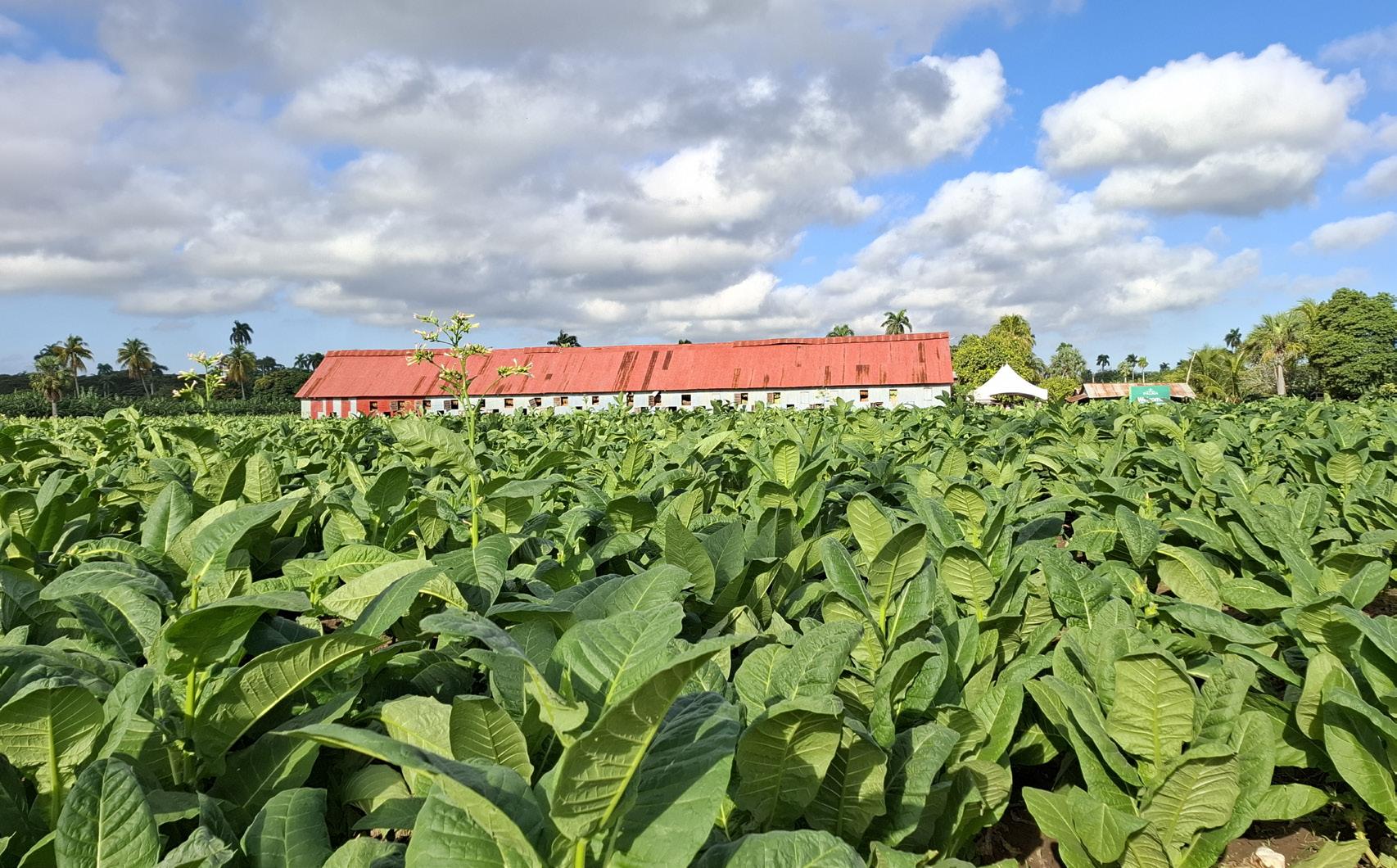
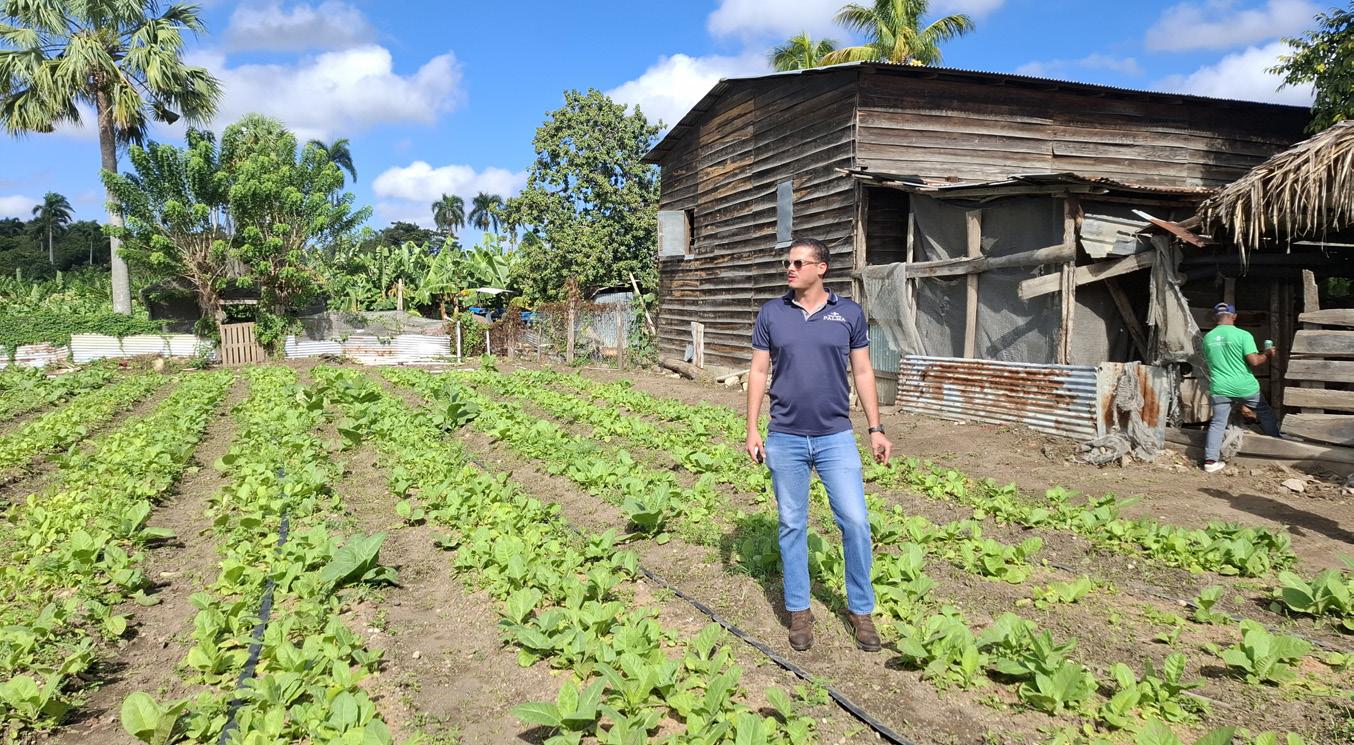
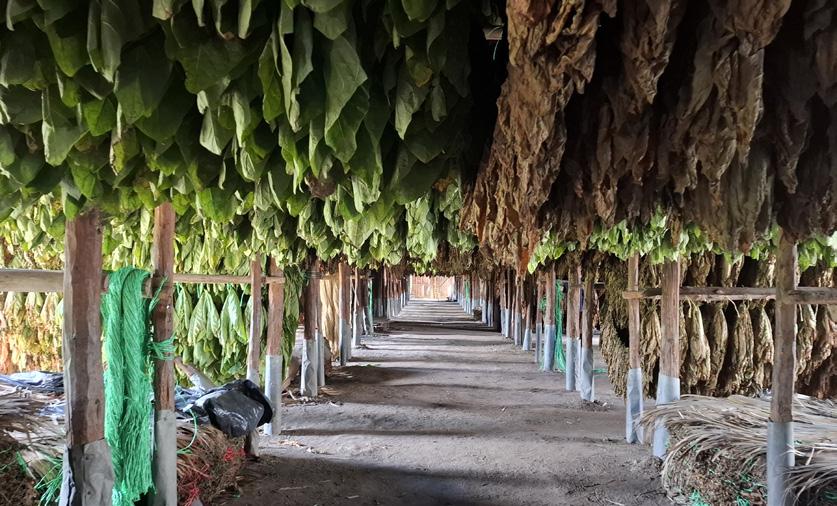
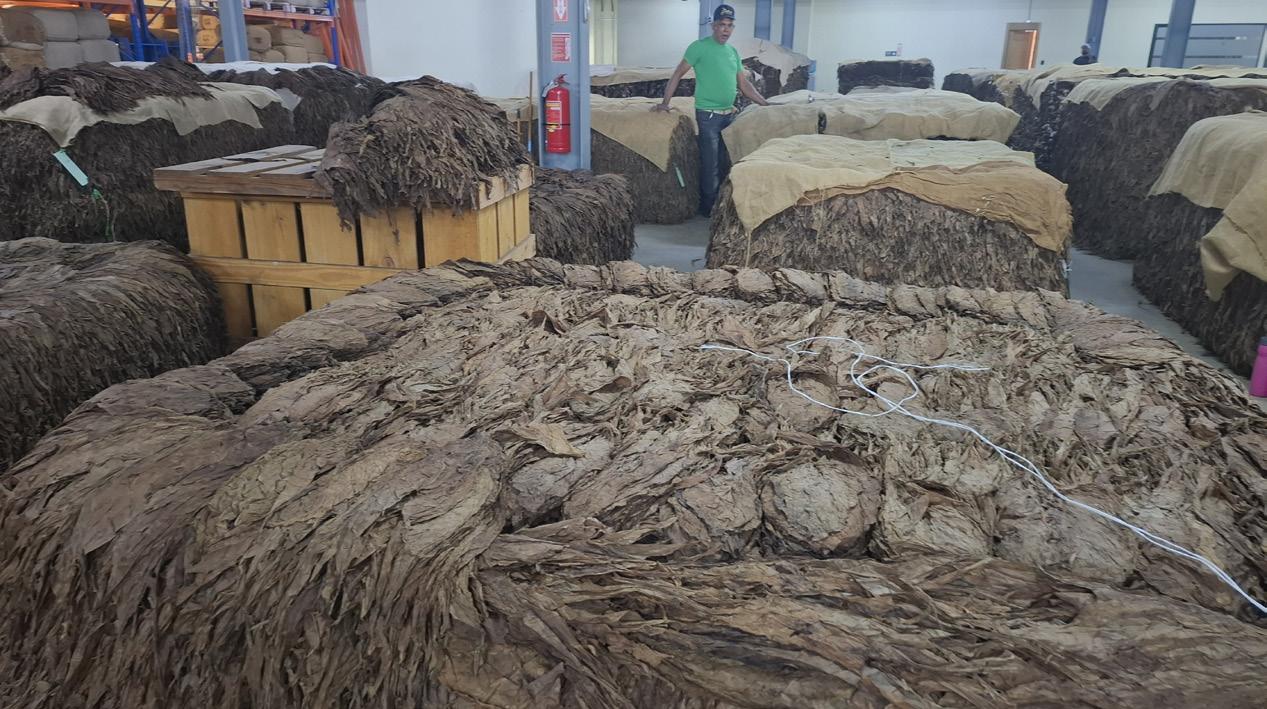
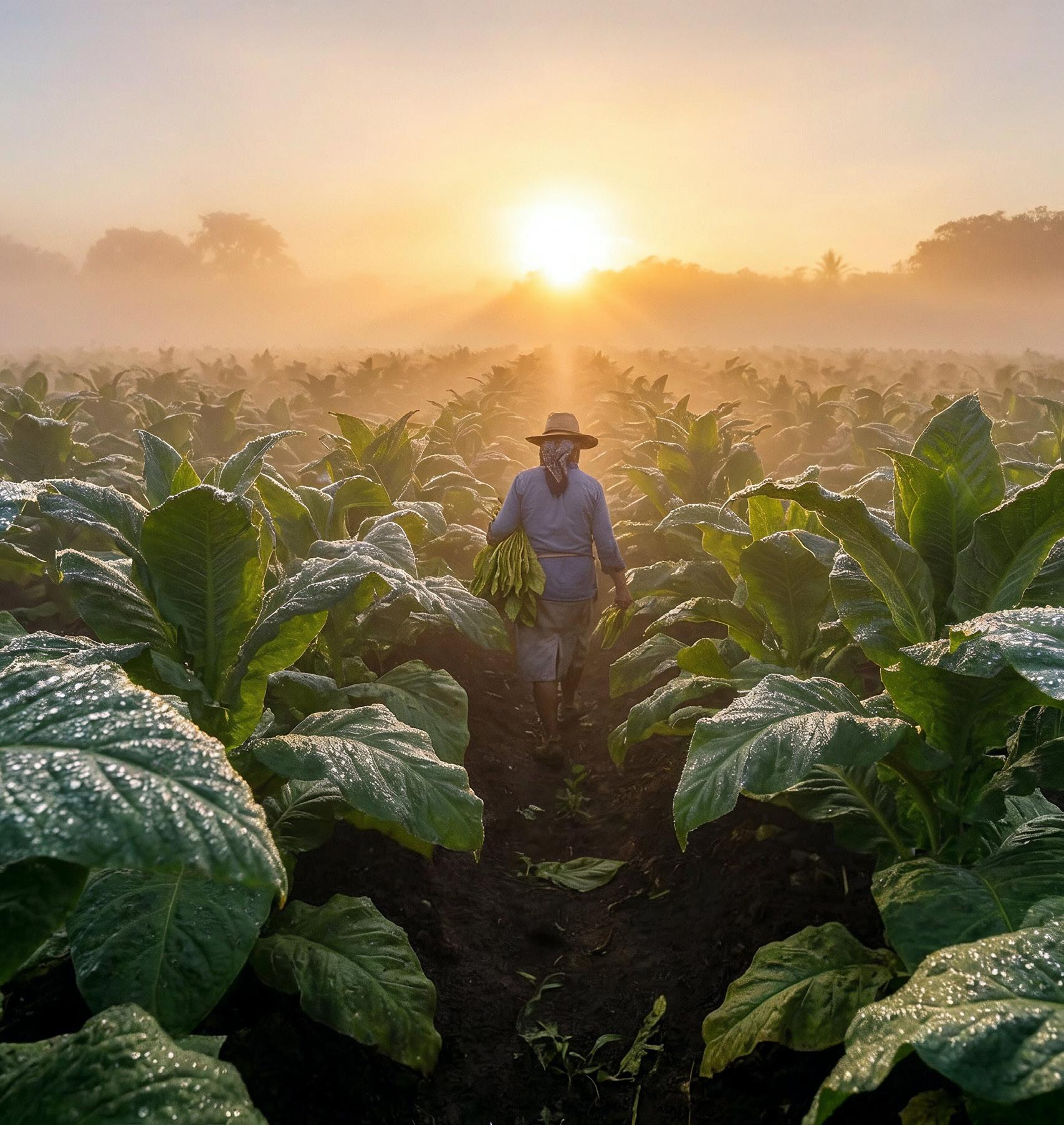
One of the most incredible experiences a premium cigar enthusiast can have is visiting the greenhouses and fields where tobacco grows, carpeting the landscape in green; walking inside a curing barn, where tobacco sways with the wind; or entering the fermentation rooms and aging warehouses –those “treasure vaults” that smell so divine.
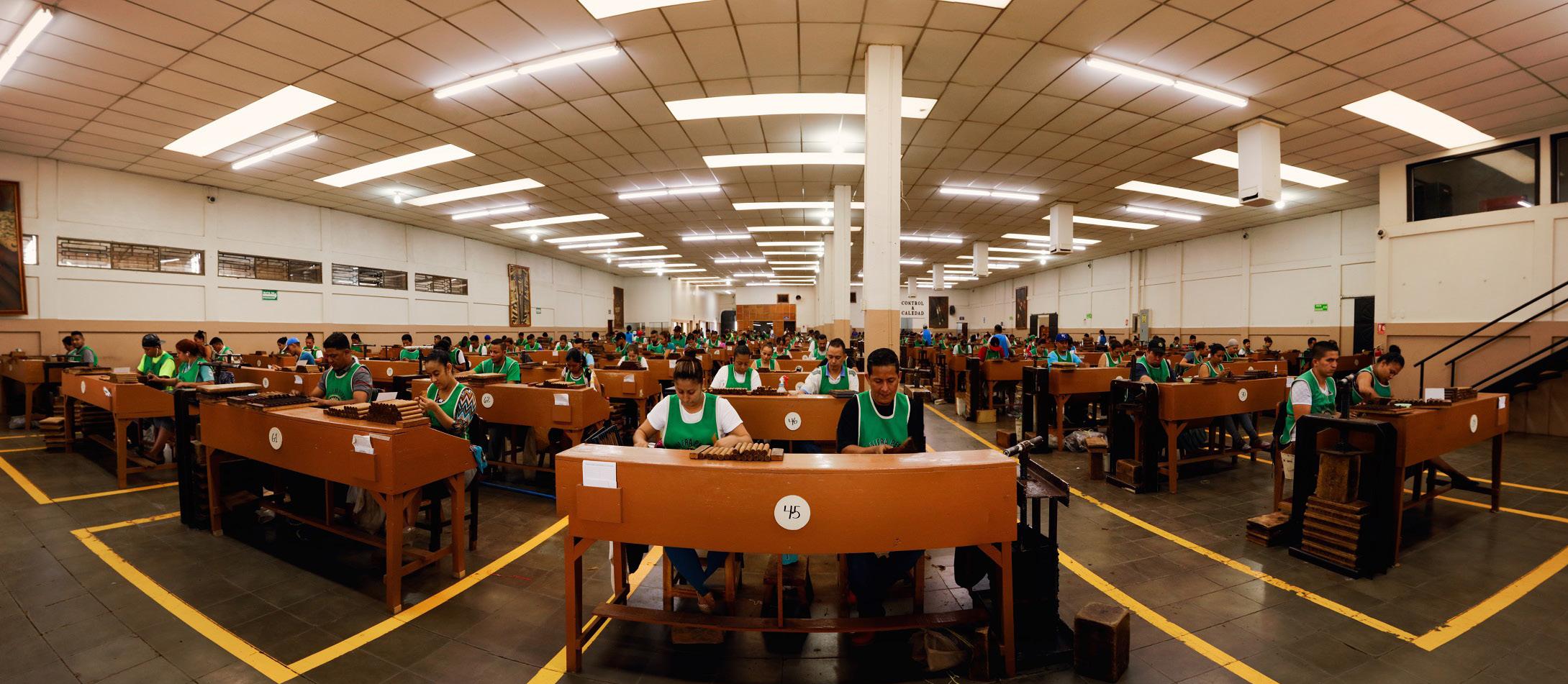
But touring a cigar factory is equally impactful: sitting with the rollers, talking with the staff, witnessing the process live, and confirming that more than 150 hands touch the product from seed to final packaging. It is an experience that helps you understand, but above all, to value this passion even more.
With their unique personalities, tastes, and individual stories, each member of Procigar offers experiences that can be extravagant, traditional, or innovative, all following the same dynamic: field tours to learn about pre-industrial processes, followed by factory visits where meals and fine cigars are shared.
Those attending the full festival can choose from the available field and factory tours; as you might imagine, the Arturo Fuente visit is among the first to sell out.
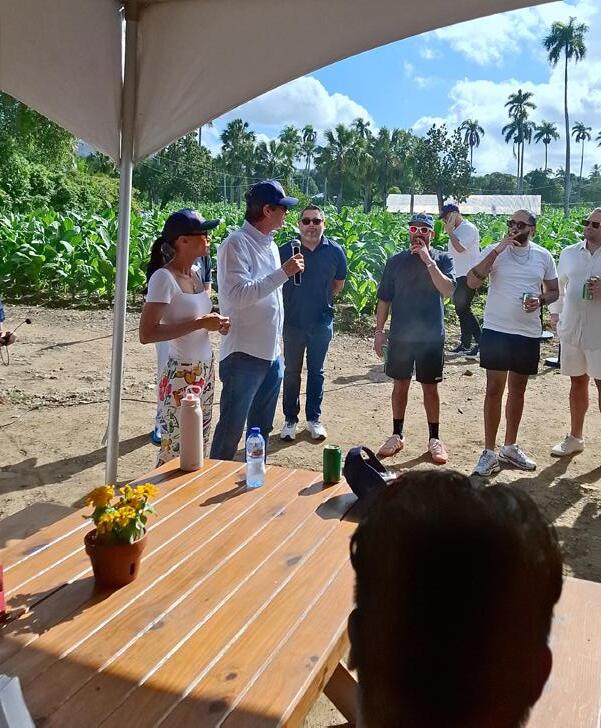
This year, we attended the tours of La Flor Dominicana, Tabacalera Palma (La Galera Cigars), and La Aurora.
LFD Will Always Belong to the Gómez Family
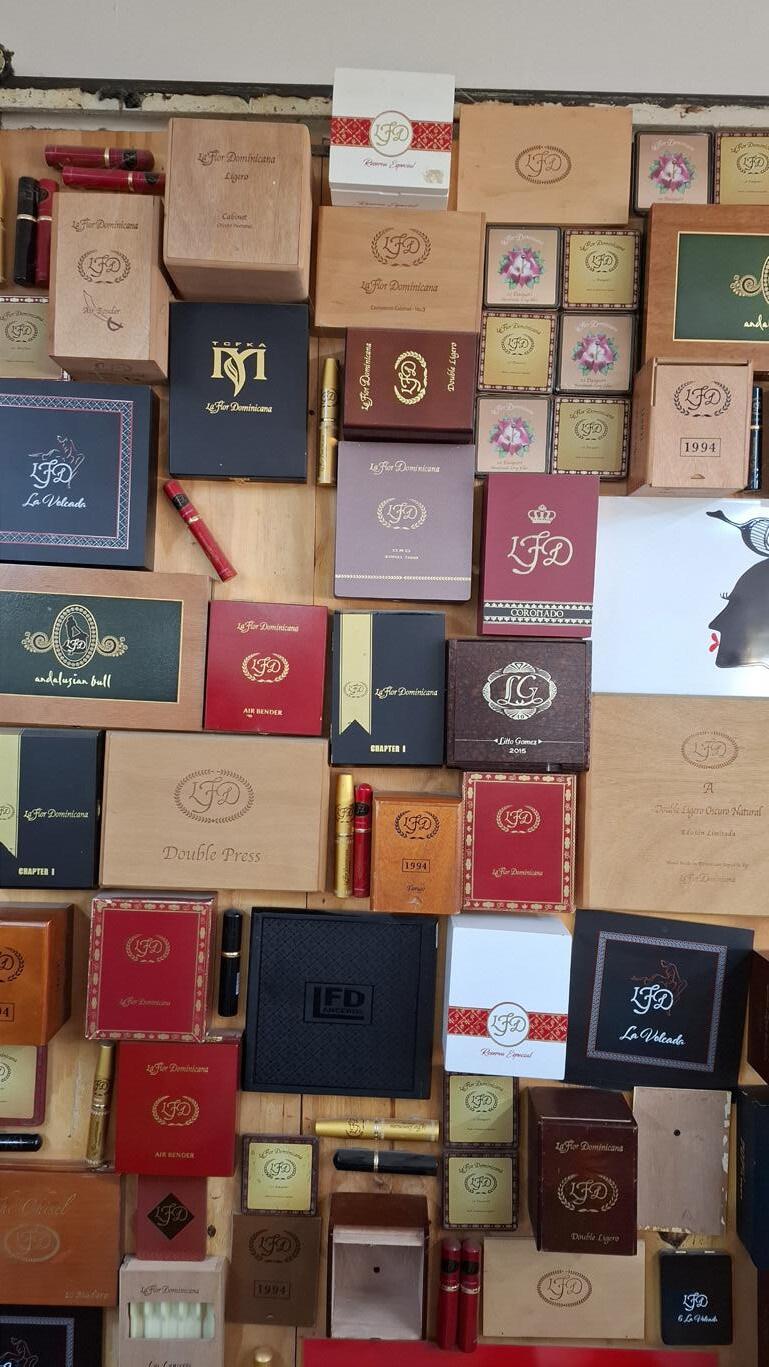
The tour with Litto Gómez, owner of La Flor Dominicana, was deep and extravagant. This is a man who knows how to build memorable moments –whether he’s explaining every process from the seedbeds to the aging room, or wielding a shovel at his factory’s barbecue while taking a swig directly from the bottle alongside the chef in the euphoria of the fire ritual.
Reading the company’s history will never be the same as hearing him tell it personally as you walk and smoke by his side while he shows you the facilities. Hearing that La Flor Dominicana didn’t start in a carpeted boardroom, but by hauling bales of tobacco on his shoulders into an old Toyota minivan, is priceless.
It was 1994 when Litto Gómez, alongside his wife Inés, founded the company. “We had no chance of success,” he confesses 32 years later, with the serenity of someone who has defeated fate, while contemplating the bales of tobacco aging in the warehouse.
His beginnings were marked by a lack of capital and a dependence on the open market, where tobacco was a volatile and faceless currency. He also learned that manufacturing wasn’t enough; he had to control the soul of the product: the land.
In 1997, Litto made the decision that would transform the small La Flor Dominicana factory into a tobacco powerhouse. He bought a piece of land in La Canela, despite the fact that, at the time, “he couldn’t even keep a plant alive at home.” Today, that farm is the company’s “rock.” “We couldn’t make good cigars without owning a farm. This land is what gives our cigars their personality.”
It is a declaration of principles: if a smoker doesn’t like an LFD, Litto doesn’t blame the supplier; he assumes total responsibility because the tobacco is his from start to finish. For the La Flor Dominicana smoker, there is an unbreakable promise: the blend does not change. He understands that those who smoke his brand aren’t just looking for nicotine and flavor, but a special moment of relaxation and reflection. To ruin that moment with an inconsistent blend would be a lack of respect.
He elevates the act of smoking to a philosophy of global peace: “If everyone in the world smoked cigars, there would be no wars,” because the cigar smoker is, by definition, a happy person who knows how to stop time to celebrate or simply meditate on their day.
One of the most moving moments of the tour happened in the fermentation area. Standing on a chair so everyone could hear him, he confessed that in a world dominated by corporations that buy and sell brands like financial assets, he has received multimillion dollar offers for his company. His response was always the same: “This company is for my children, for my family.”
He takes pride in being the first generation to enter an industry dominated by dynasties like the Padróns or the Fuentes. His greatest success, he stated, isn’t his award-winning vitolas, but ensuring that his children –Tony, Litto, and Valentina– are the second generation to inherit not just a business, but the pride of the Gómez family.
“My wife and I are the first generation to enter an industry with these multigenerational companies, like the Padróns and the Fuentes, and I’ve always admired that. I wanted my children to be the second generation because I was a newcomer, someone who just entered the business, and now our children will be a second generation. This is why we work: many years will pass, decades, and [the company] will still be in the Gómez family.”
Litto is not merely a cigar manufacturer; he is a guardian of patience in a fast-paced world. From the Toyota minivan to the top of the tobacco world, his path has been guided by faith and hard work. In the end, it all comes down to an act of love and art: “We do what we do with our hearts, and we will always do it the same way.”
We are talking about a Spaniard raised in Uruguay who found his destiny in the Dominican Republic. Every morning, he stands at the door of his tobacco warehouse, looking at the aged inventory and whispering a defiant “fuck you” to those who bet on his failure. Because in the world of La Flor Dominicana, time isn’t money; it’s the ingredient that makes life worth smoking.
Tabacalera Palma: The Next Generation
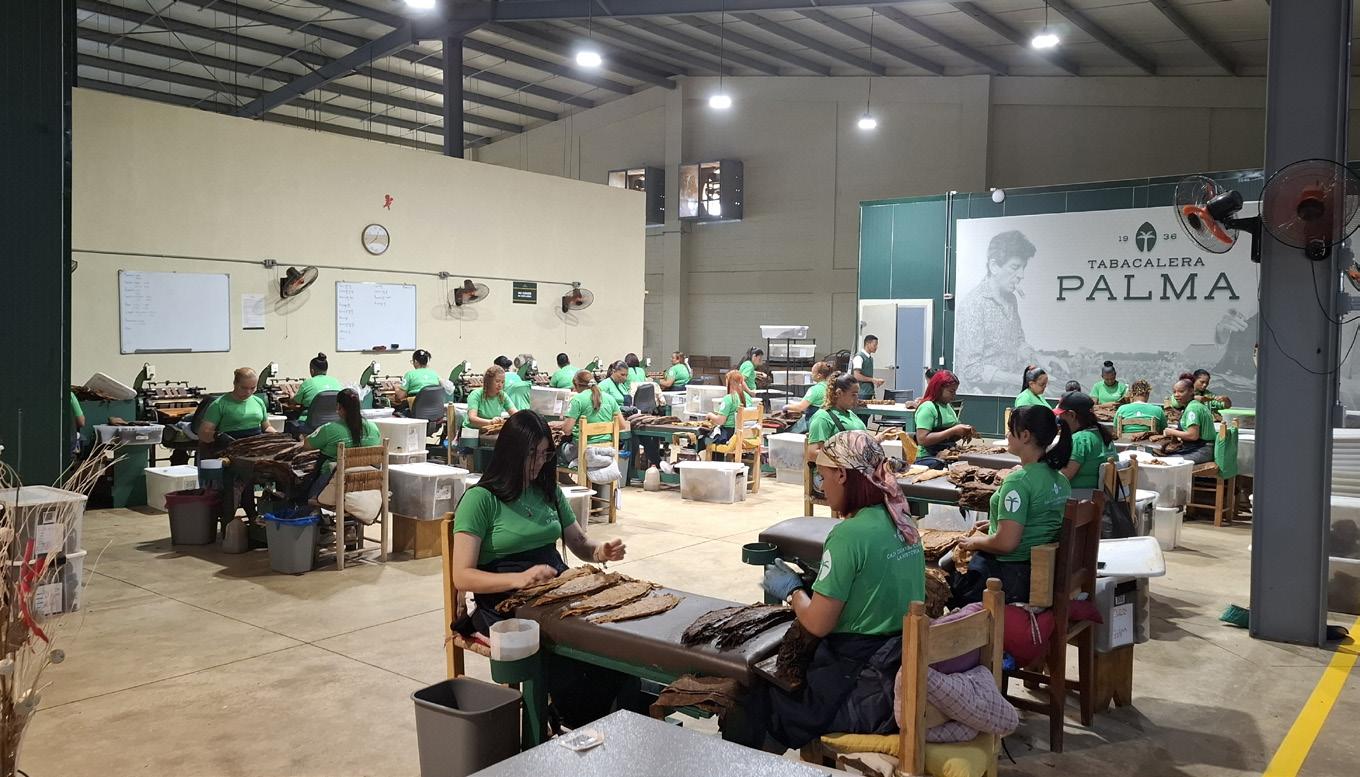
The tour of Tabacalera Palma and its factory, La Galera, was perhaps the most authentic Dominican experience we had. To start, they welcome you in the field with a cold coconut and a thick, “hangover-curing” sancocho, paired with an ice-cold Presidente beer –just in case you arrived feeling a bit under the weather from the night before (and yes, this is at ten in the morning, because in this beautiful country, no one will judge you for having a beer in your hand at that hour).
Unlike other tours, this one was led by the next generation of the Blanco family: José Manuel, a descendant of the first José Manuel Blanco Lozada, a Spanish migrant who arrived in the Dominican Republic in 1880 and passed down his knowledge of coffee, cocoa, and tobacco cultivation to his son, José Arnaldo Blanco I.
José grew up in and around tobacco, gradually taking the reins of the company. His knowledge is vast and evident throughout the tour; despite his youth, he perfectly masters every process, providing data, recalling statistics, and explaining with precision and depth. He exudes passion and love for what he does.
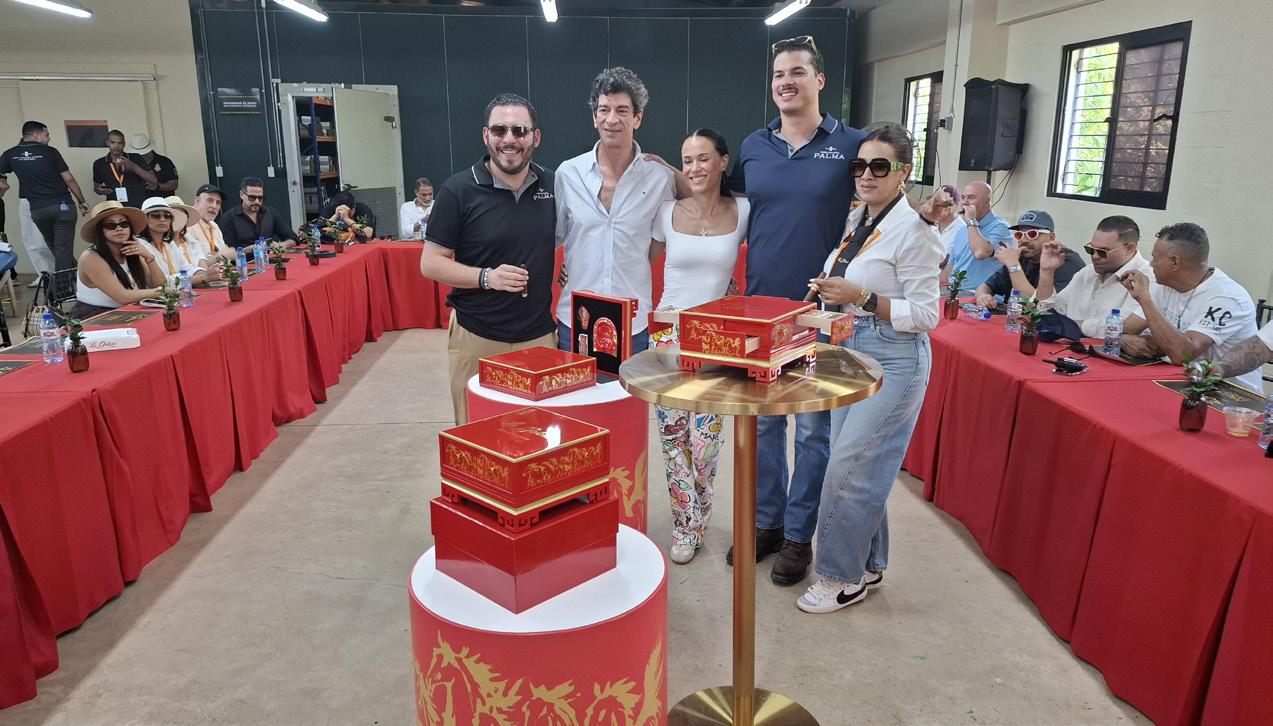
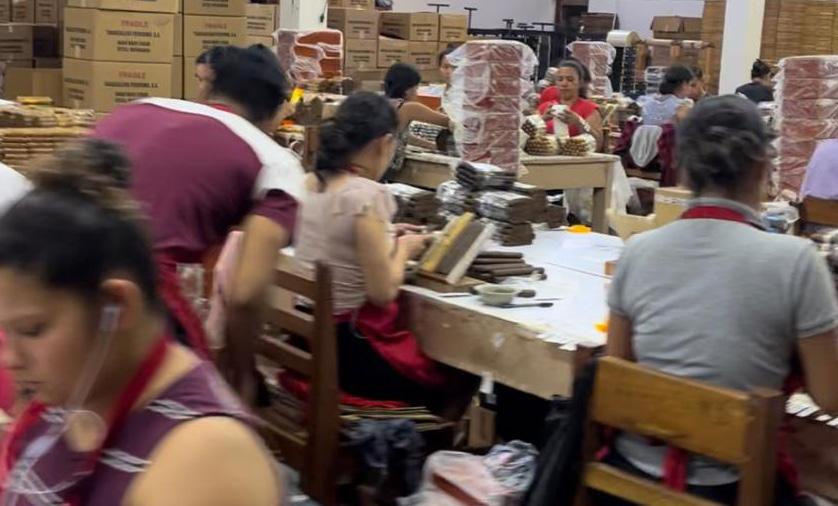
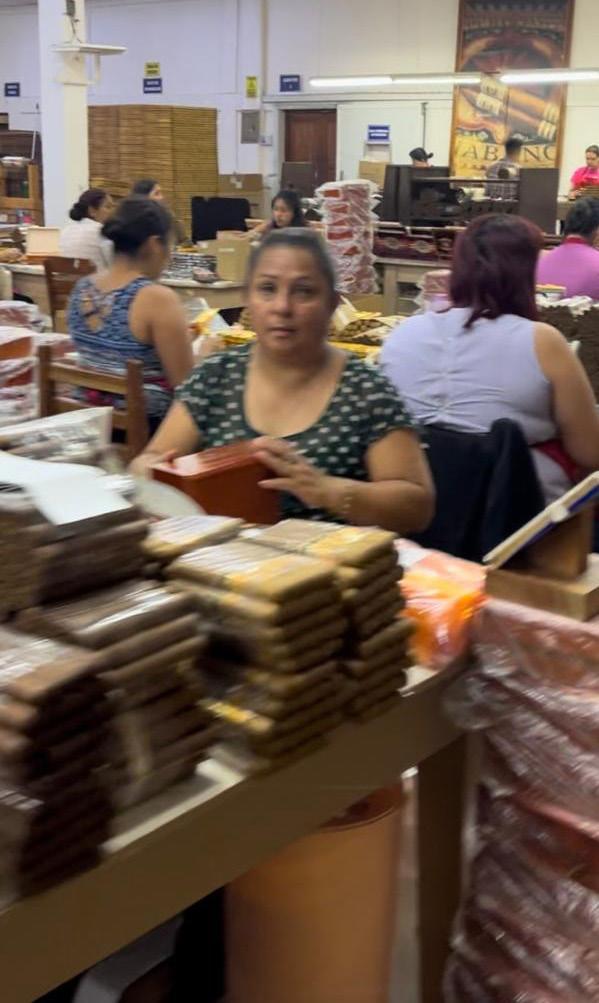
During the presentation of the exquisite commemorative humidor for the Chinese Year of the Horse, displayed on a horseshoe-shaped table, he spoke to us about the company’s history. The setting was the galera –the rolling hall where the cigars are crafted– amidst the rhythmic sound of the staff bunching and wrapping.
“The company’s official registration was in 1936, although my grandfather started in the late 1920s, in what was a completely different
market and world. He produced more rustic-style cigars (pachuchés or perritos) because, at that time, there was no demand for premium cigars; everyone smoked pipes or chewed tobacco. With immigration and the country’s urbanization during the dictatorship from 1930 to 1961, people were encouraged to move to the cities.
“As the blend of urbanization and the Industrial Revolution positioned the cigarette as a trend and a fashion statement, the traditional cigar market was shaken. Local consumption began to drop because those arriving in the city were considered lower class if seen with a cigar. The ‘new’ thing, representing the Industrial Revolution in the Tobacco World, was cigarettes.
“That was when the company began a slow but inexorable decline. My father was a young man of 18 or 19 when he realized that if there wasn’t a change soon, the business would disappear. That is when he focused on the international premium cigar market, back in the 1980s. He started on the second floor of my grandfather’s building, bit by bit, and in the 90s, he built the first warehouse.
“After years of work, we have built more warehouses and expanded the factory, and over the last decade, we have worked on our own brand. Although the company has 90 years of history, we were primarily a contract manufacturer, making cigars for other companies and partnering with other brands. But ten years ago, we decided to take the leap.
“My father basically built everything. He gave me the foundation and put me in a position where I wanted to create my own brand. Now, we are taking the final step
toward full vertical integration: from the seed to the shelf.”
La Galera recently celebrated ten years on the market. It reaches more than 90 countries, and year after year, it reduces its third-party production to focus on its own brand. In fact, they doubled their operation and had to move to a new building with more capacity and better working conditions. “At this point, not counting administration and agricultural workers, we have 520 plant employees, which means 520 families.”
Jochy Blanco with his wife Irene Domínguez, his son José Blanco, and members of the staff.
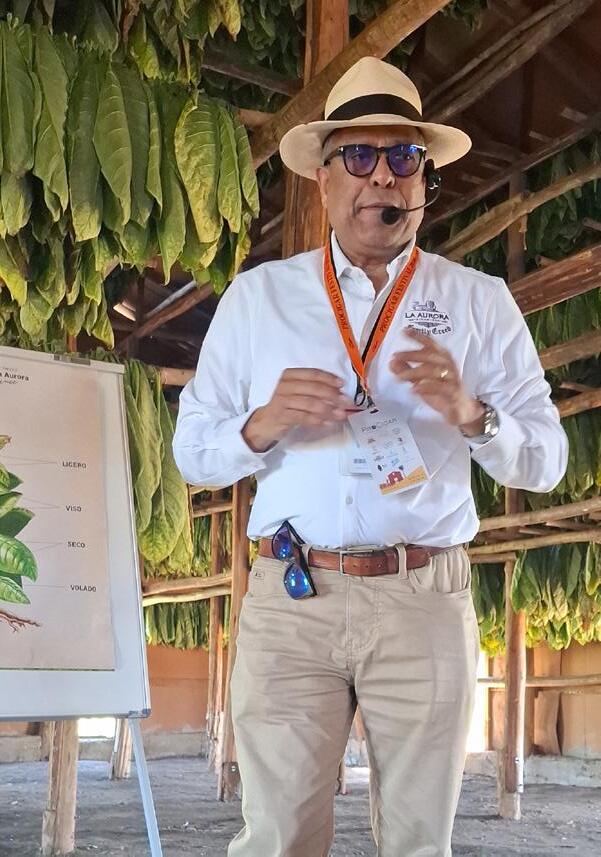
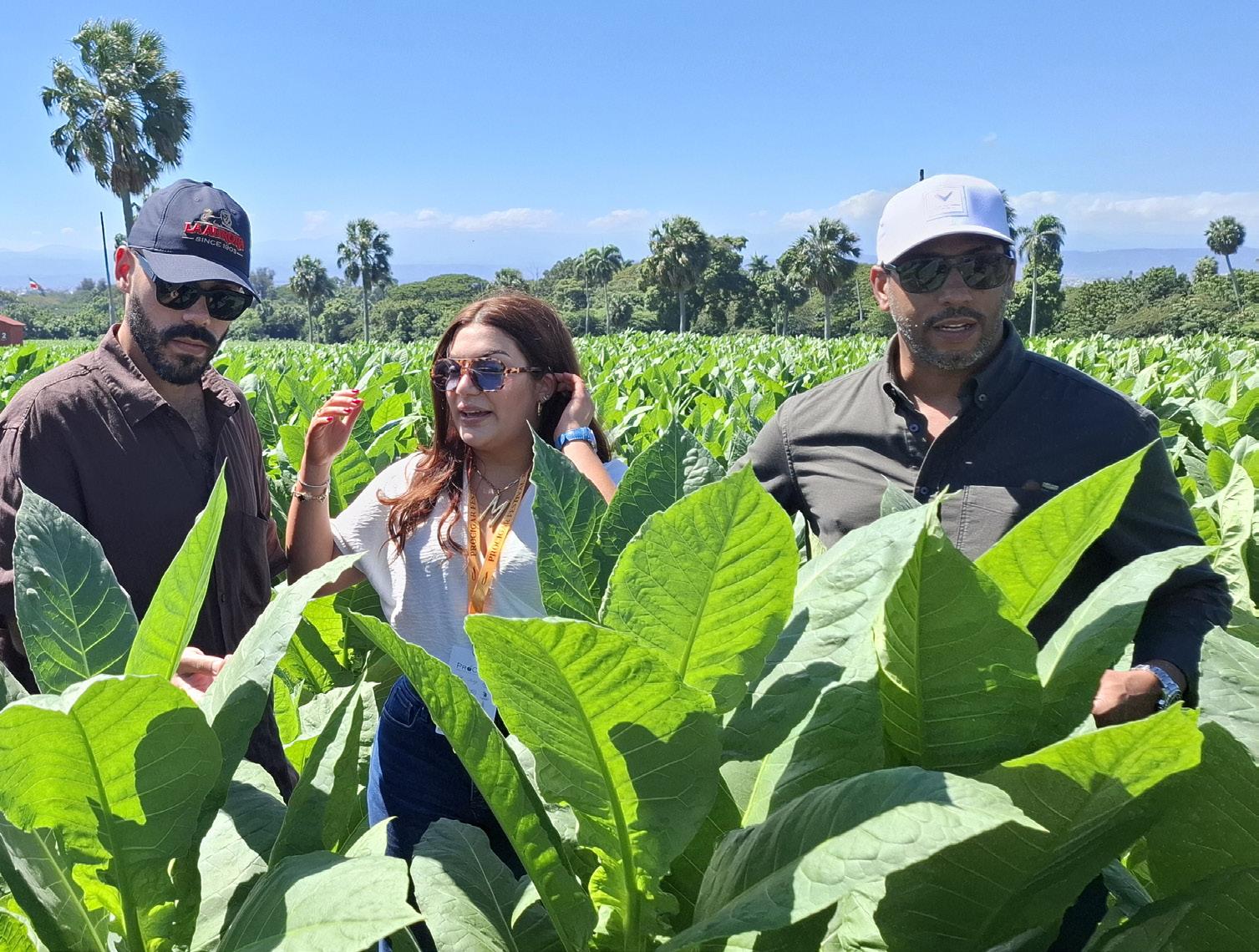
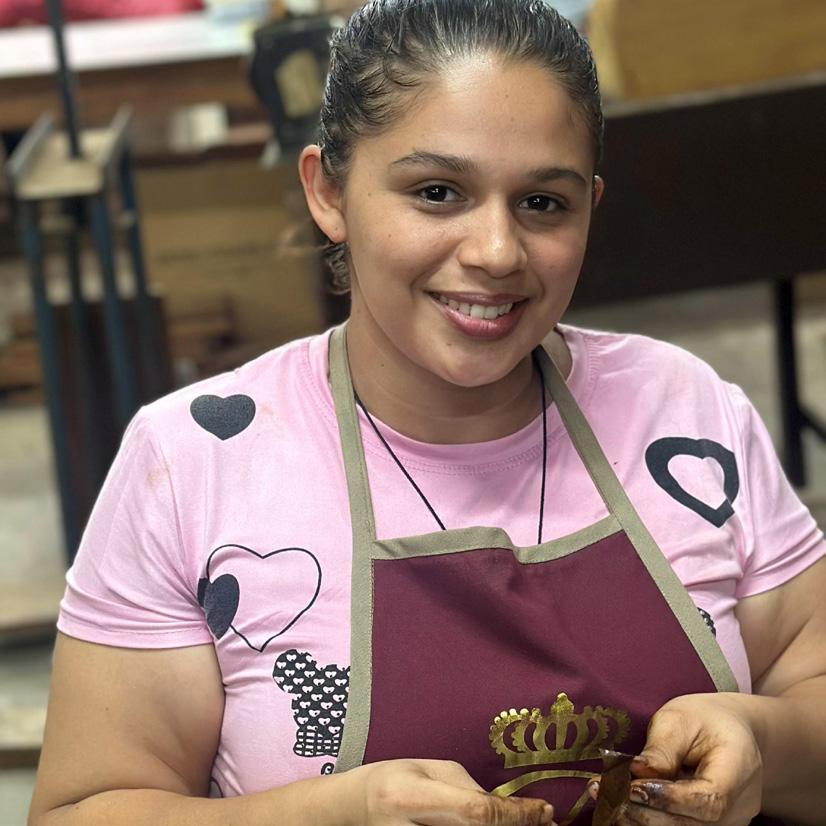
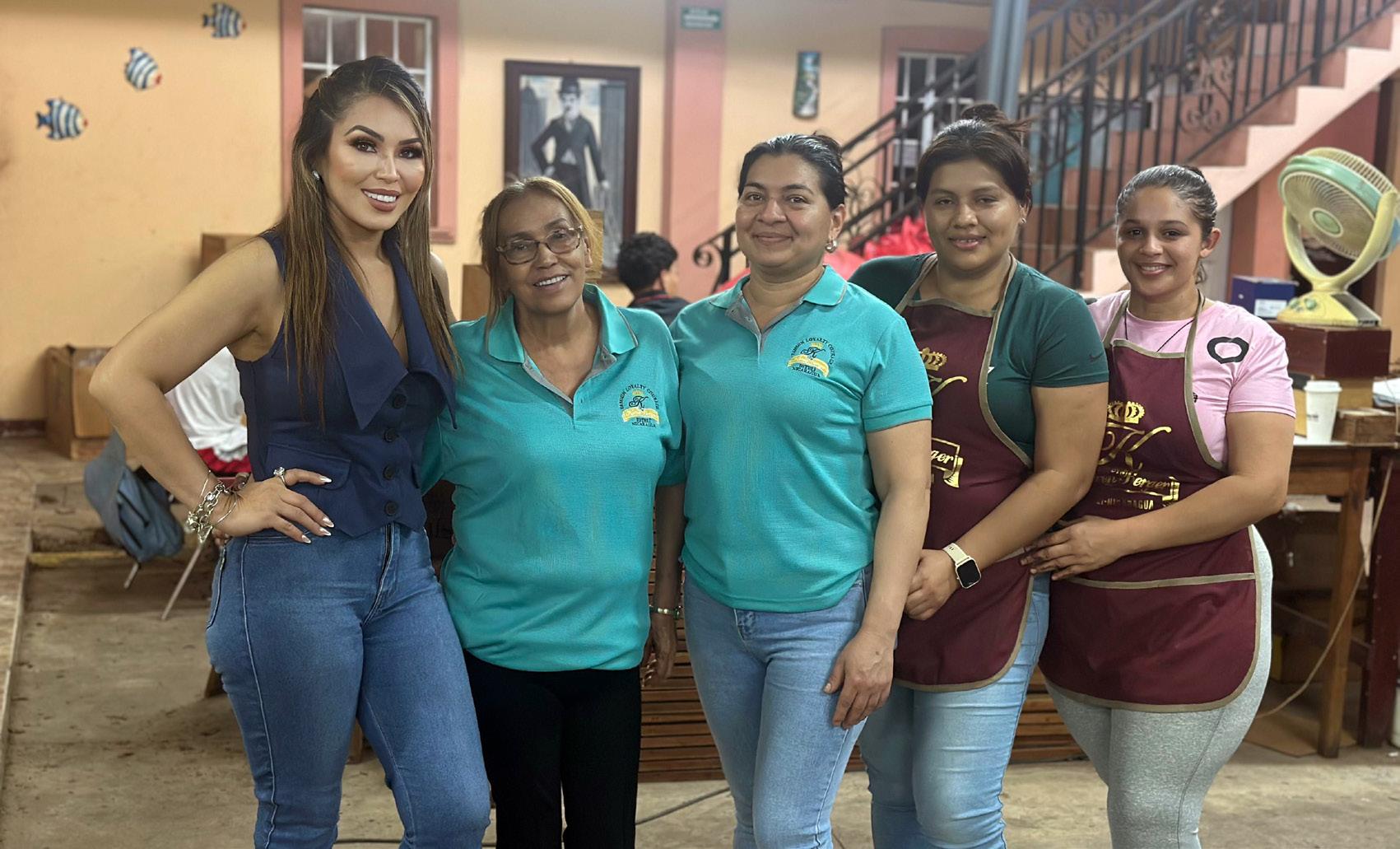
La Aurora: Passion for Cigars and Respect for Tradition
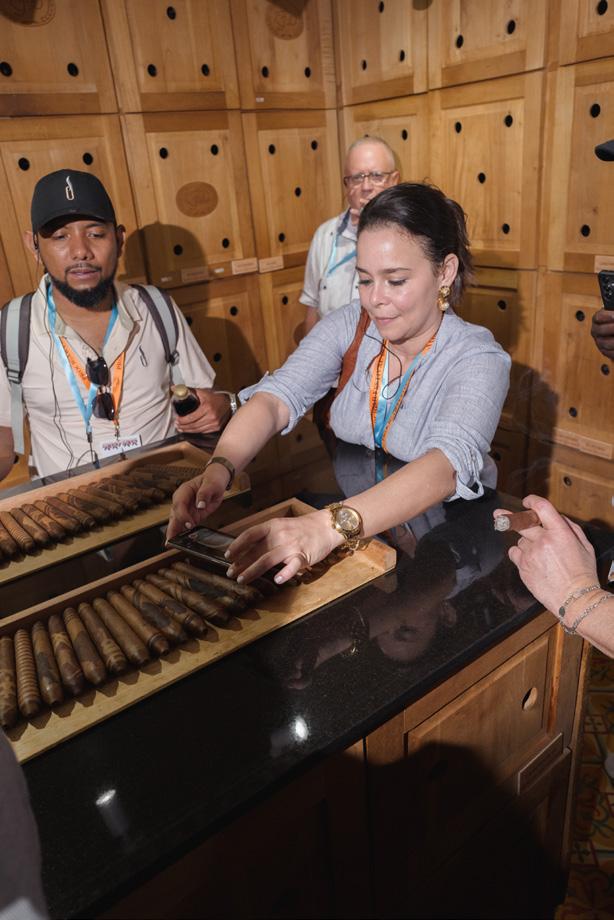
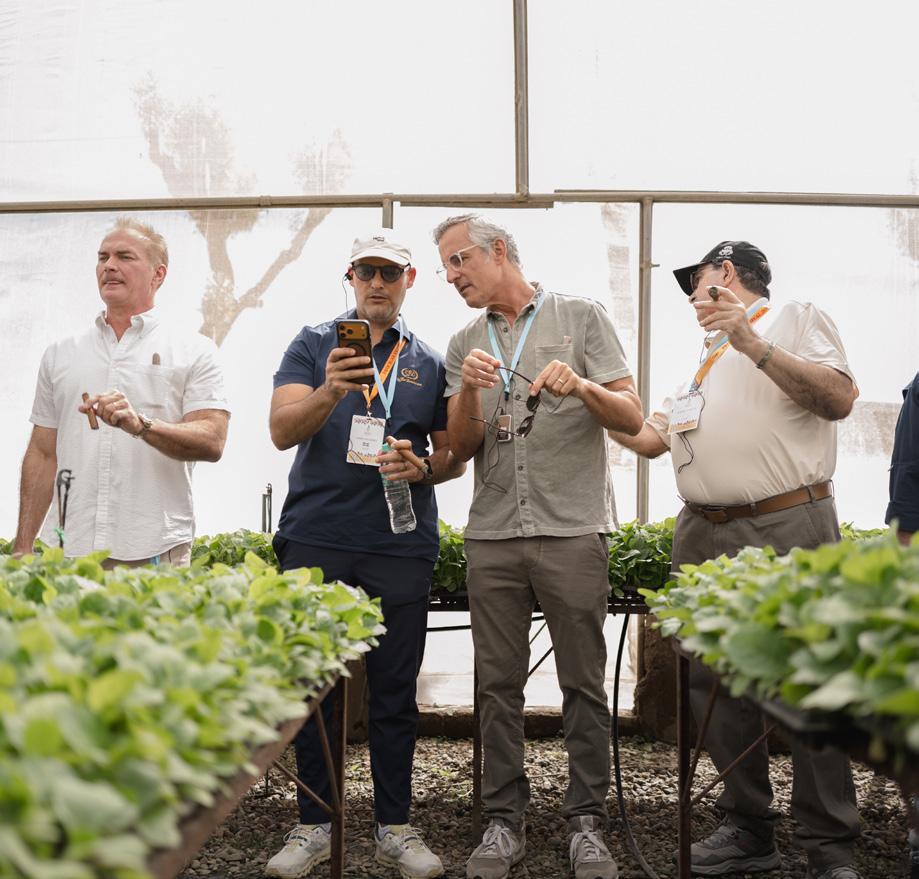
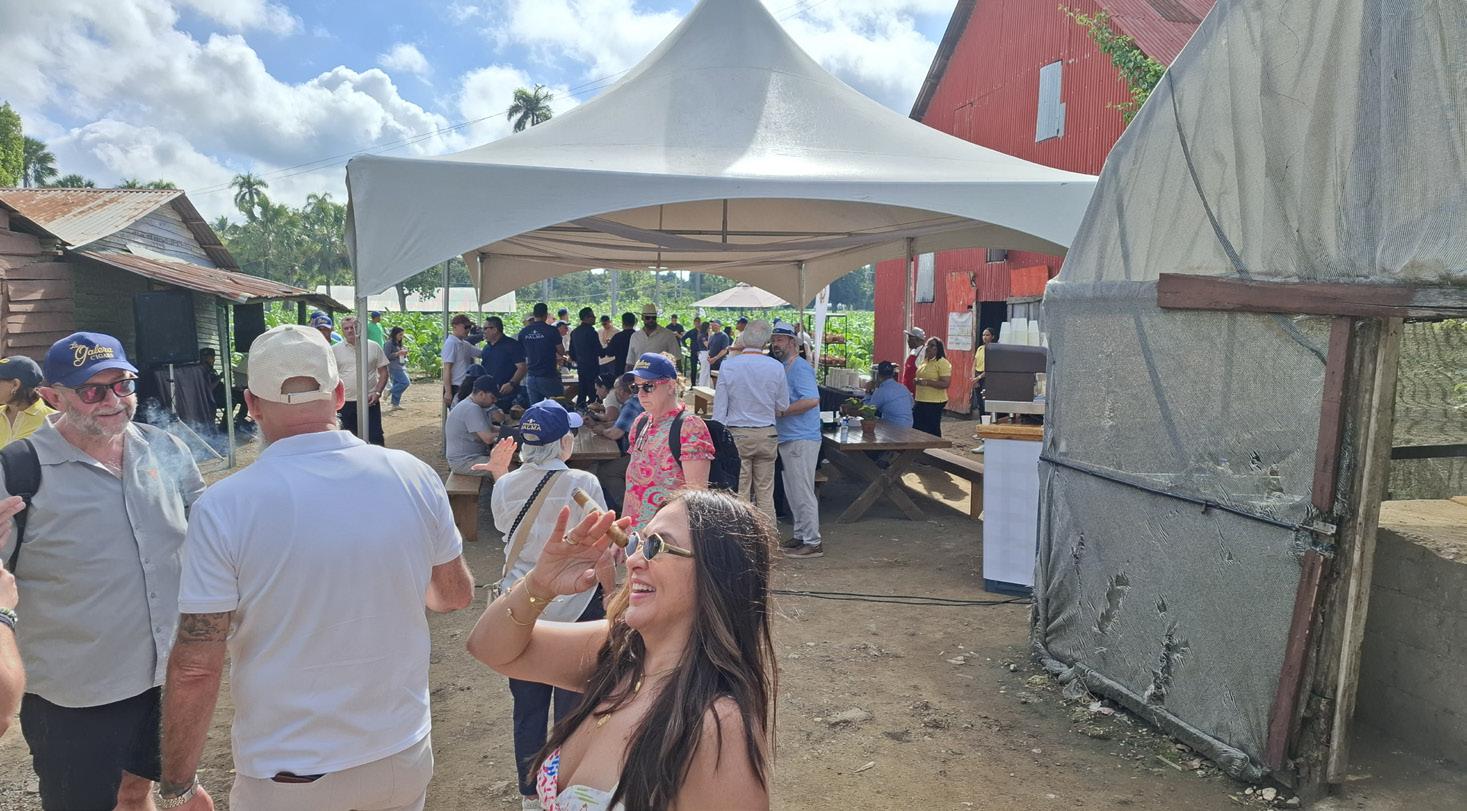
La Aurora, which has been crafting cigars in the Dominican Republic for 123 years, is a historical and cultural institution in both the national and international tobacco worlds. This year, it offered an educational experience that brought visitors as close as possible to a professional blending seminar. On Humo Latino’s social media, for instance, one can find Master Blender Manuel Inoa’s explanation of what a Grado Puro (Pure Grade) represents.
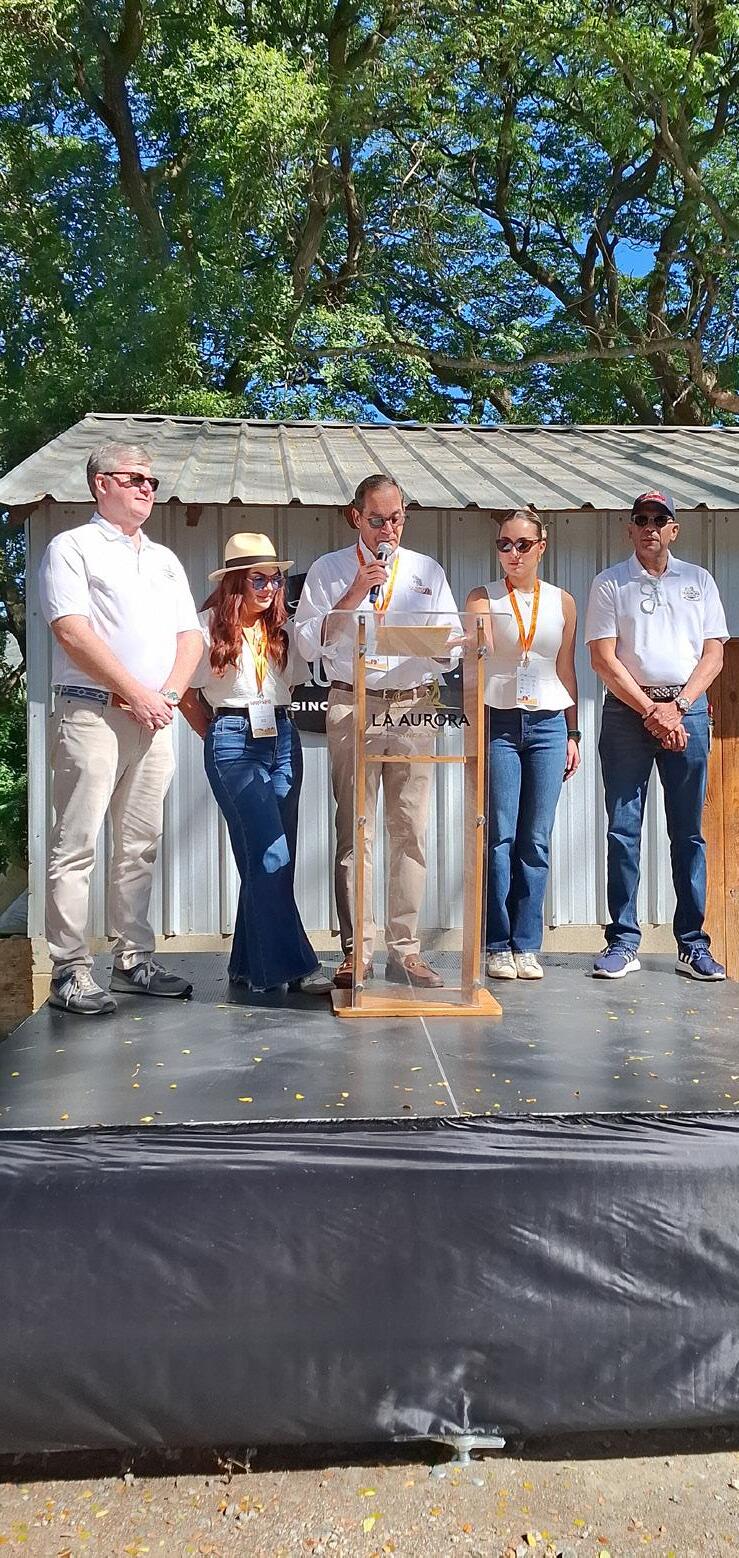
At this company, everything runs like a Swiss watch. At the start of the tour, as with all of them, the staff welcomed us –in this case, led by CEO Guillermo León; his daughters, Michelle and Daniela; La Aurora SA CEO Ed McKenna; and Marketing and Sales Director Iturbides Zaldívar.
“Procigar represents the unity, excellence, collaboration, and heritage that define the cigar industry of the Dominican Republic,” stated Don Guillermo, who expressed his pride in being part of this legacy and contributing to projecting his country as a global leader in premium cigars.
Ed McKenna, from La Aurora S.A.; Michelle León; Guillermo León, CEO; Daniela León; and Iturbides Zaldívar, Director of Marketing and Sales.
“At La Aurora, we understand that a great cigar is the result of a long and disciplined process that begins in the fields and continues through curing, fermentation, aging, blending, and handcrafted production. Each of these steps requires knowledge, precision, and respect for the land and the tobacco. This philosophy is reflected in our journey, From Seed to Smoke.”
He spoke about the incredible opportunity Procigar Festival attendees have to explore every stage of the cigar-making process and gain a deeper understanding of the labor behind every single piece.
He highlighted the celebration of the company’s 123rd anniversary since its founding in 1903: “A journey of perseverance, craftsmanship, and a deep passion for cigars. As a member of the third generation of the family, I am immensely proud to be training the fourth generation of leaders with Michelle and Daniela, who will continue La Aurora’s path and legacy.”
For his part, Iturbides noted that since 1903, they have been dedicated to crafting “dream cigars” with passion, respect for tradition, and a constant drive to improve. “While our roots are deeply traditional, today we define ourselves by how we combine legacy with innovation. We open our doors to all of you because we believe every cigar should tell a story.”
He commented that through the tour provided, attendees could experience the care, precision, and dedication behind every preparation and step, turning every small detail into a connection with their history and their people. “Our people are the foundation of everything at La Aurora. In the immersive experience you will live, From Seed to Smoke, you will observe every stage of the process and put all your senses to work.”
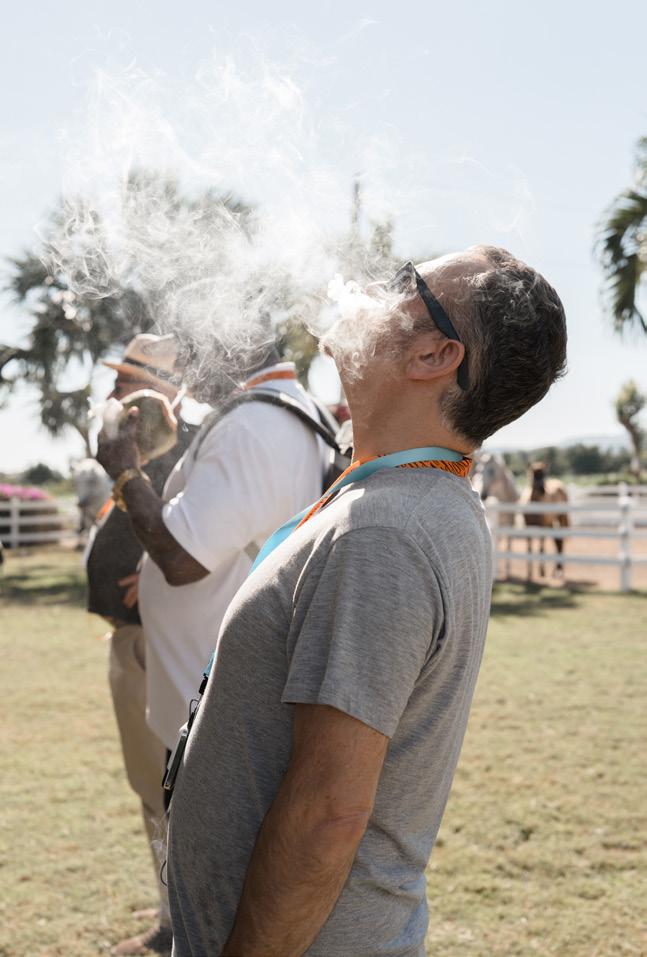
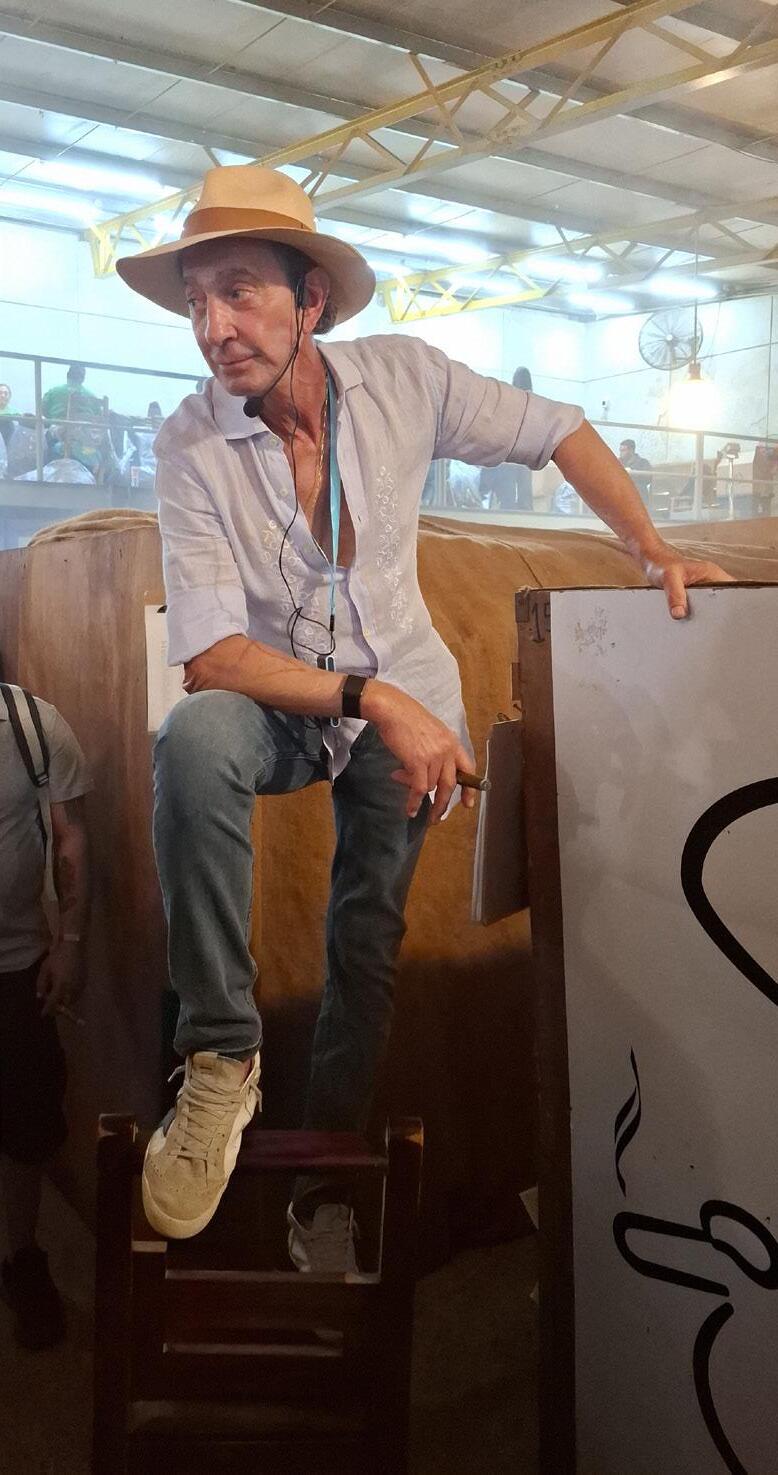
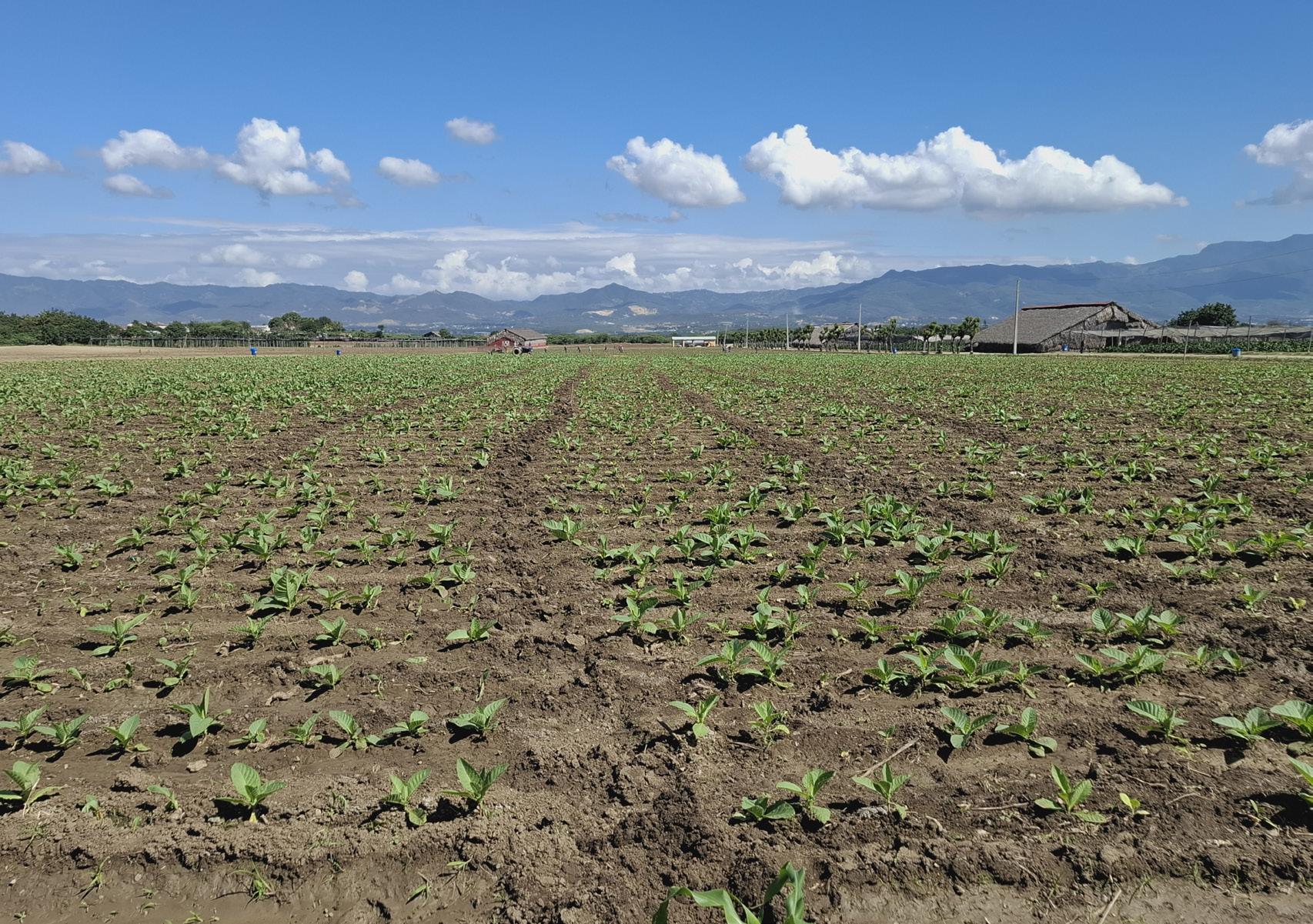
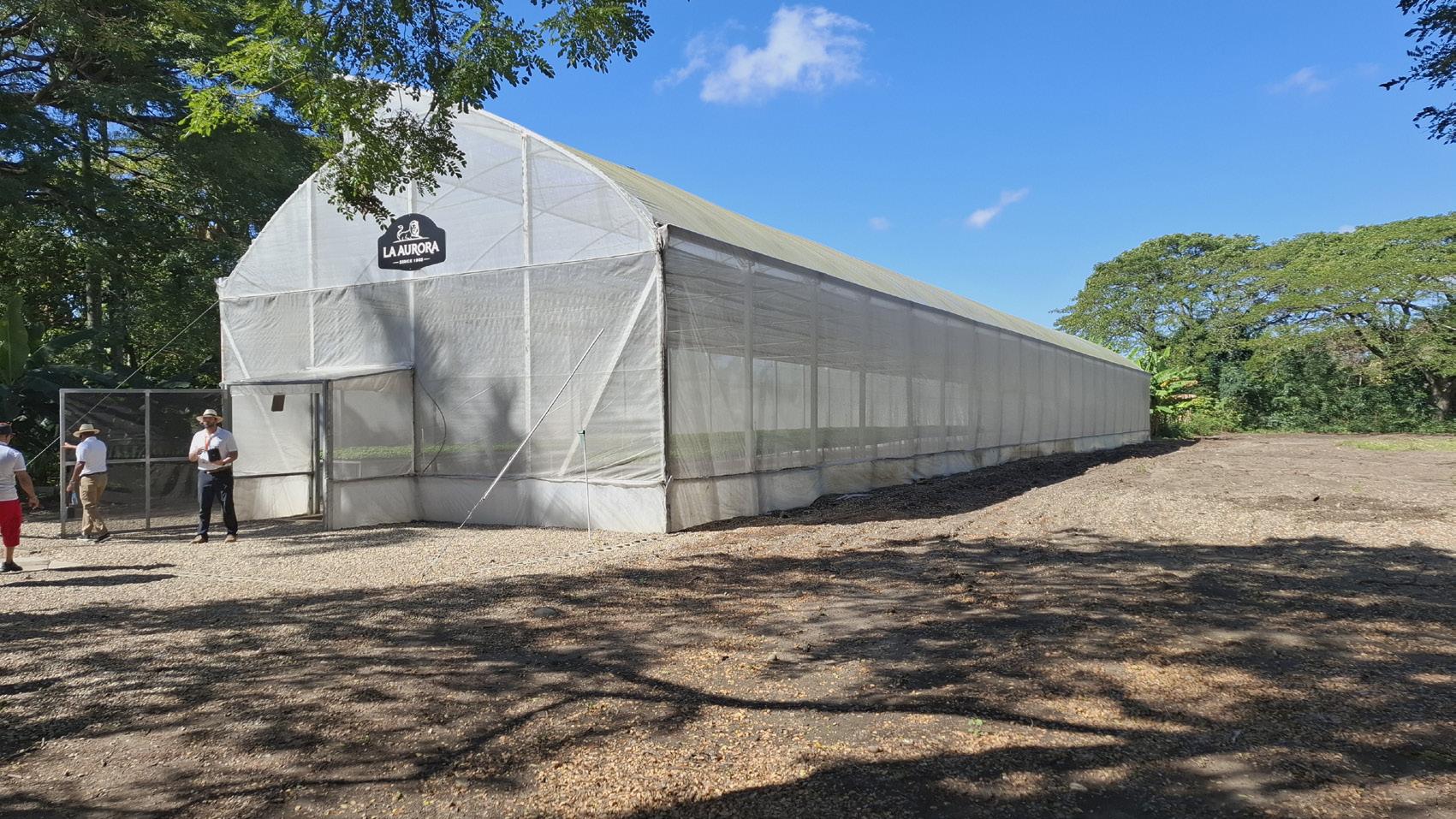
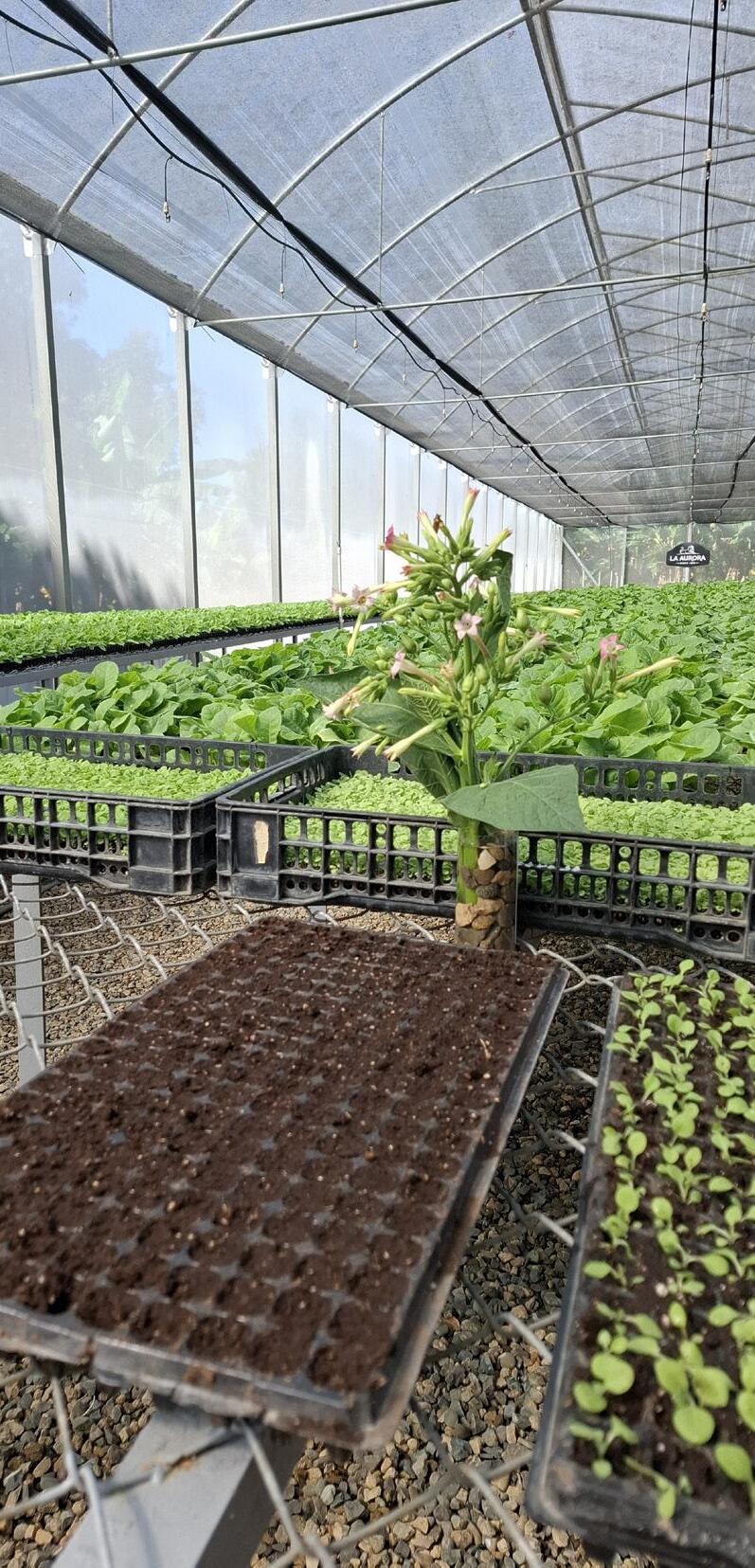
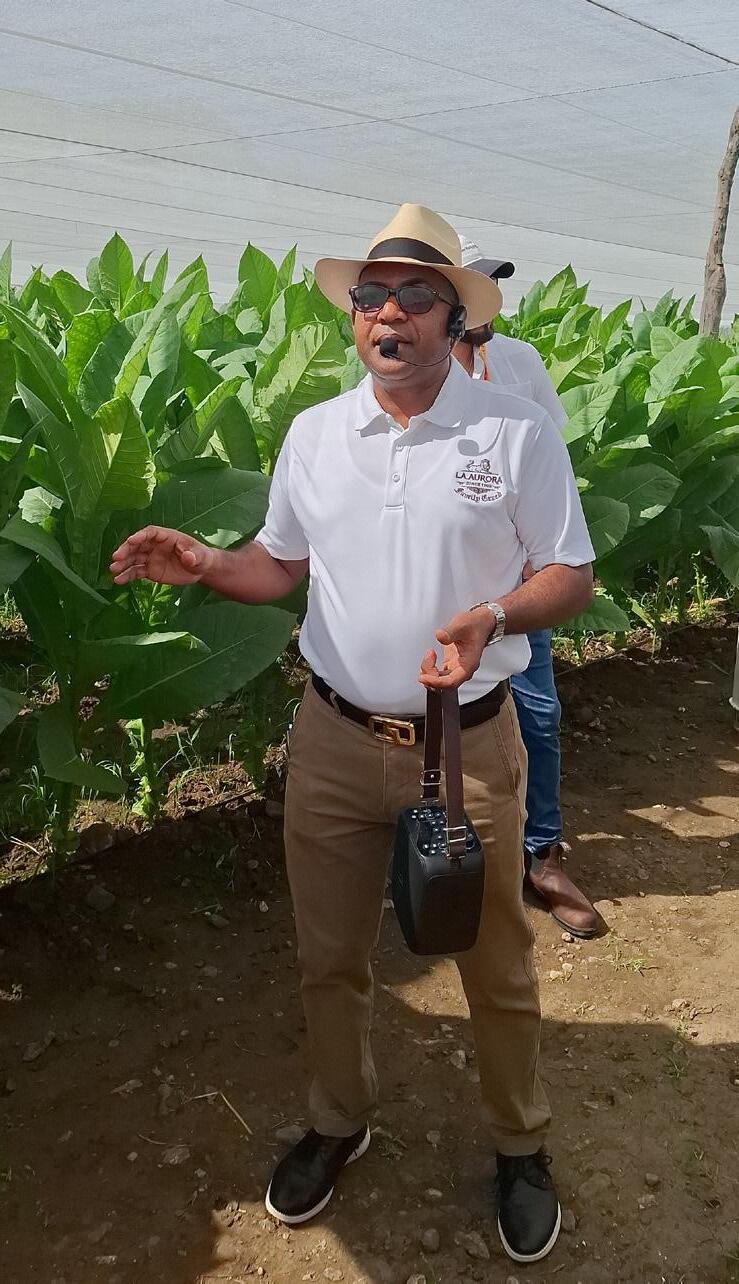
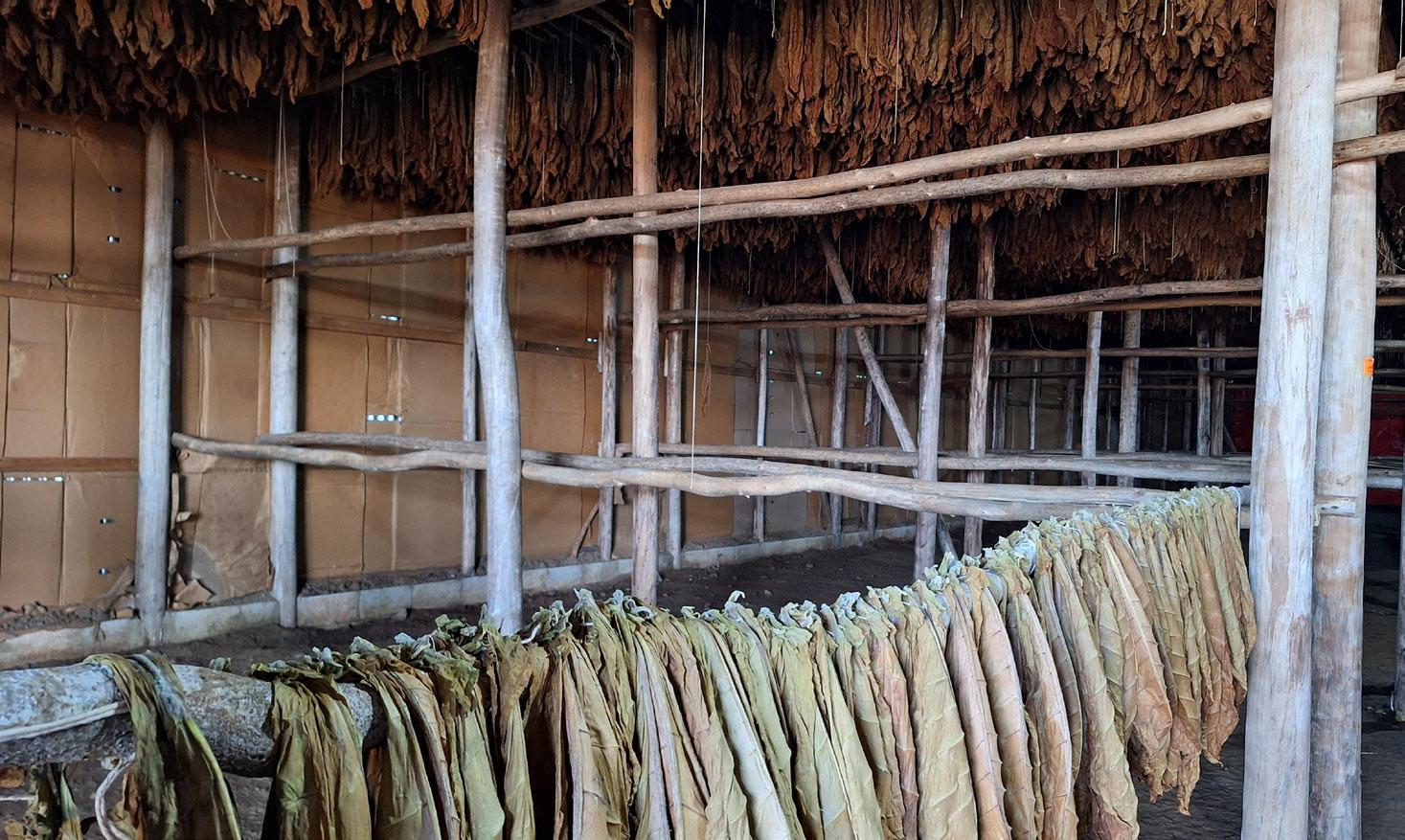
Under the direction of Master Blender Manuel Inoa, this journey began in a curing barn, where he explained and gave us four grados puros (single-origin leaves) from different countries to taste. This allowed us to calculate percentages and create a personalized blend for the cigar each of us would roll.
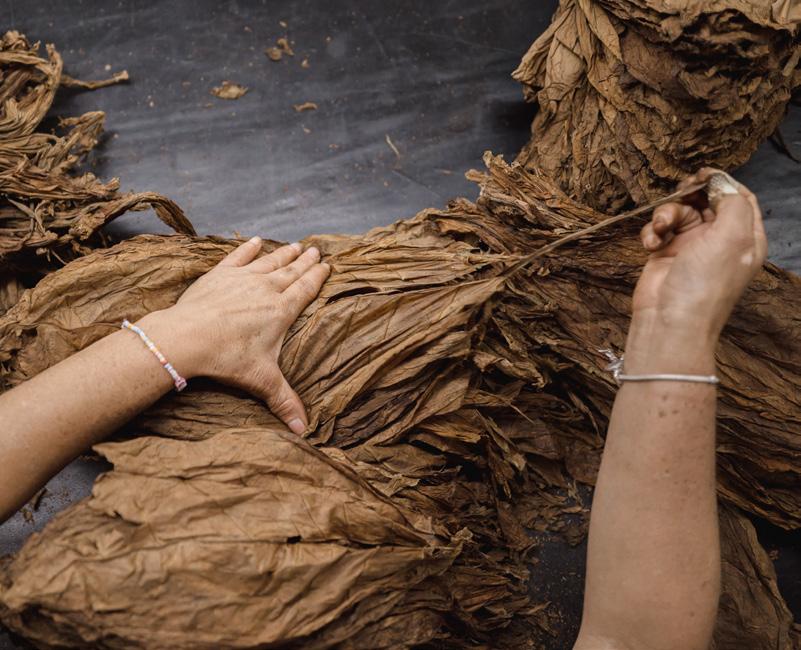
Thus, La Aurora transformed the attendees from spectators into creators. Upon reaching the factory, we were taken to an area to convert our calculated percentages into the actual leaves needed to assemble our filler (tripa).
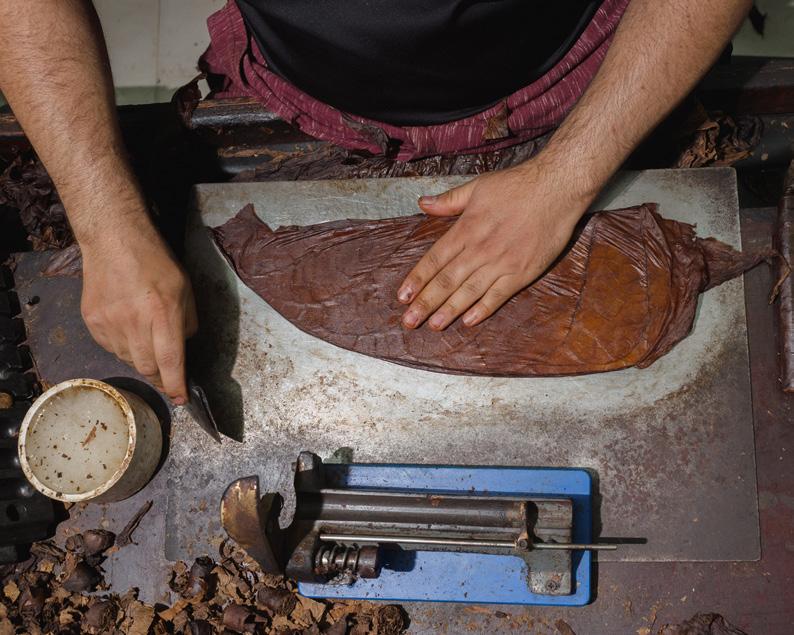
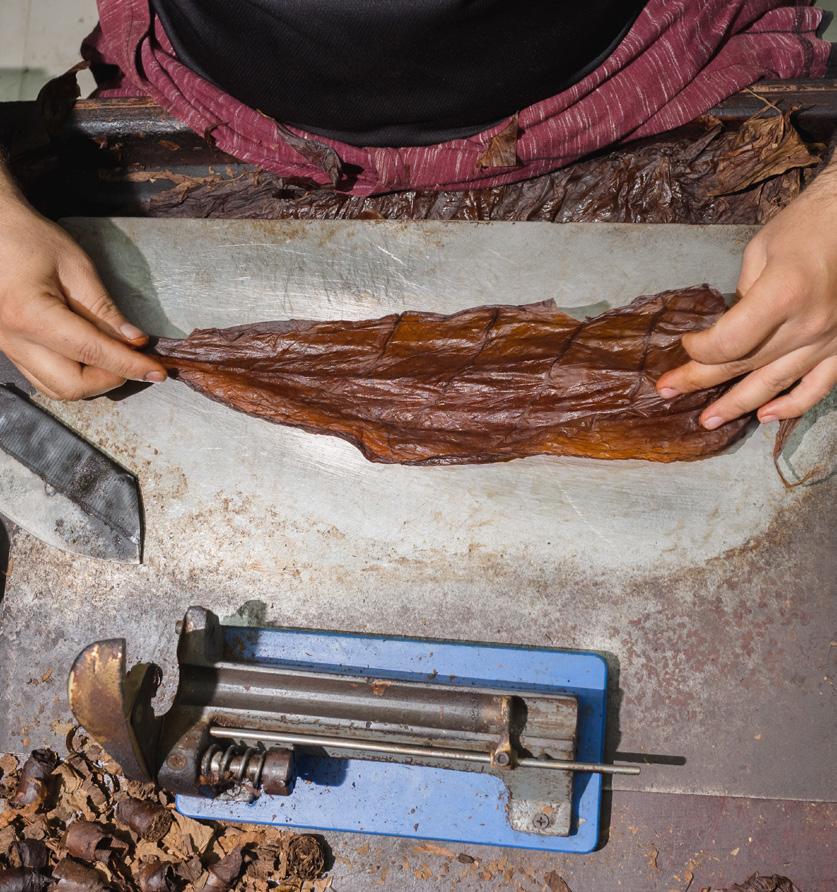
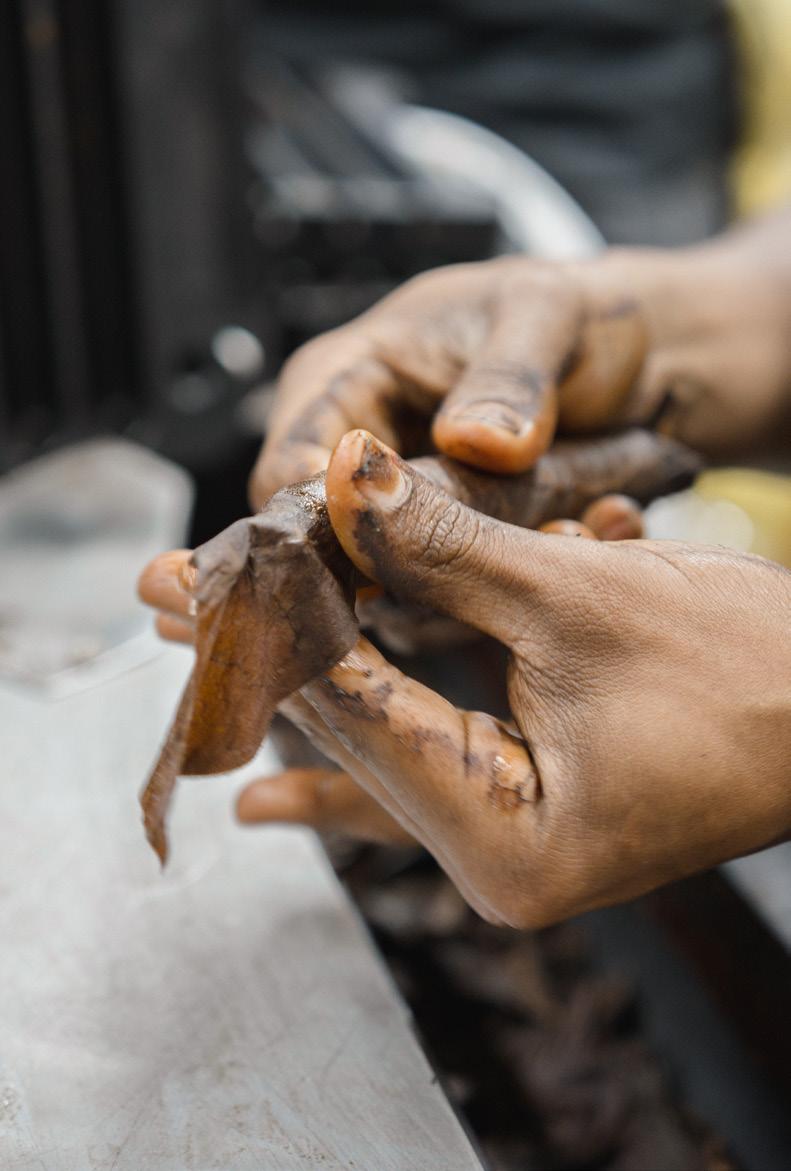
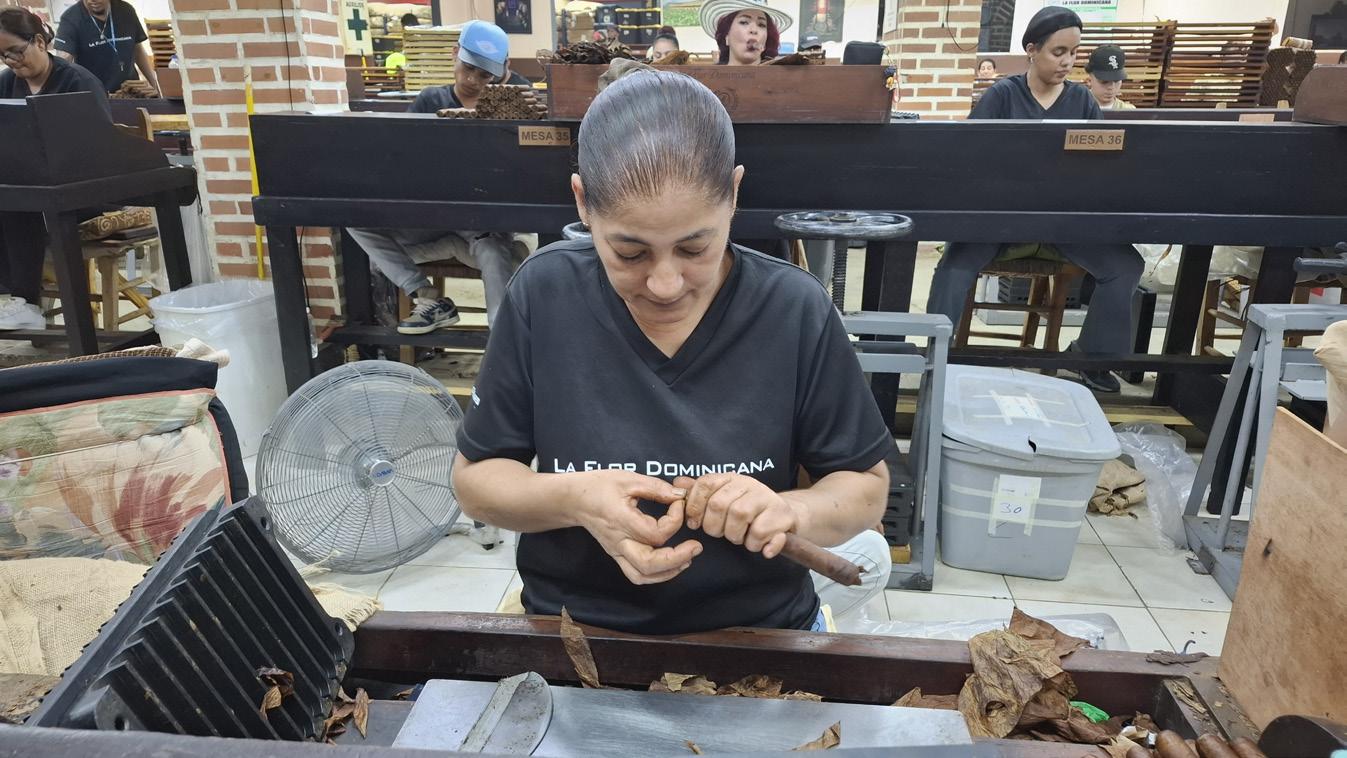
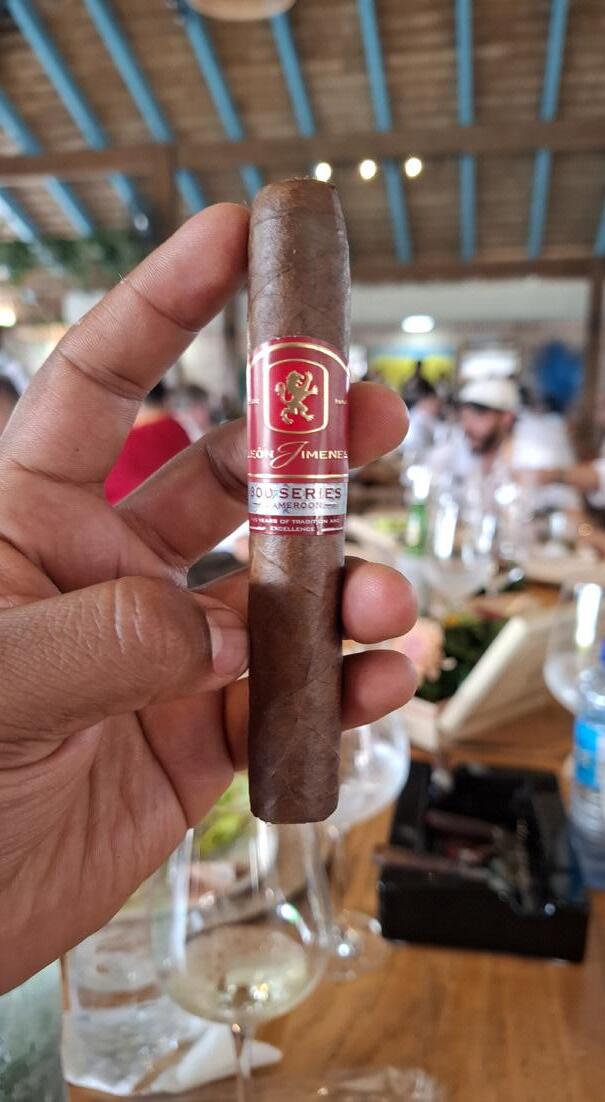
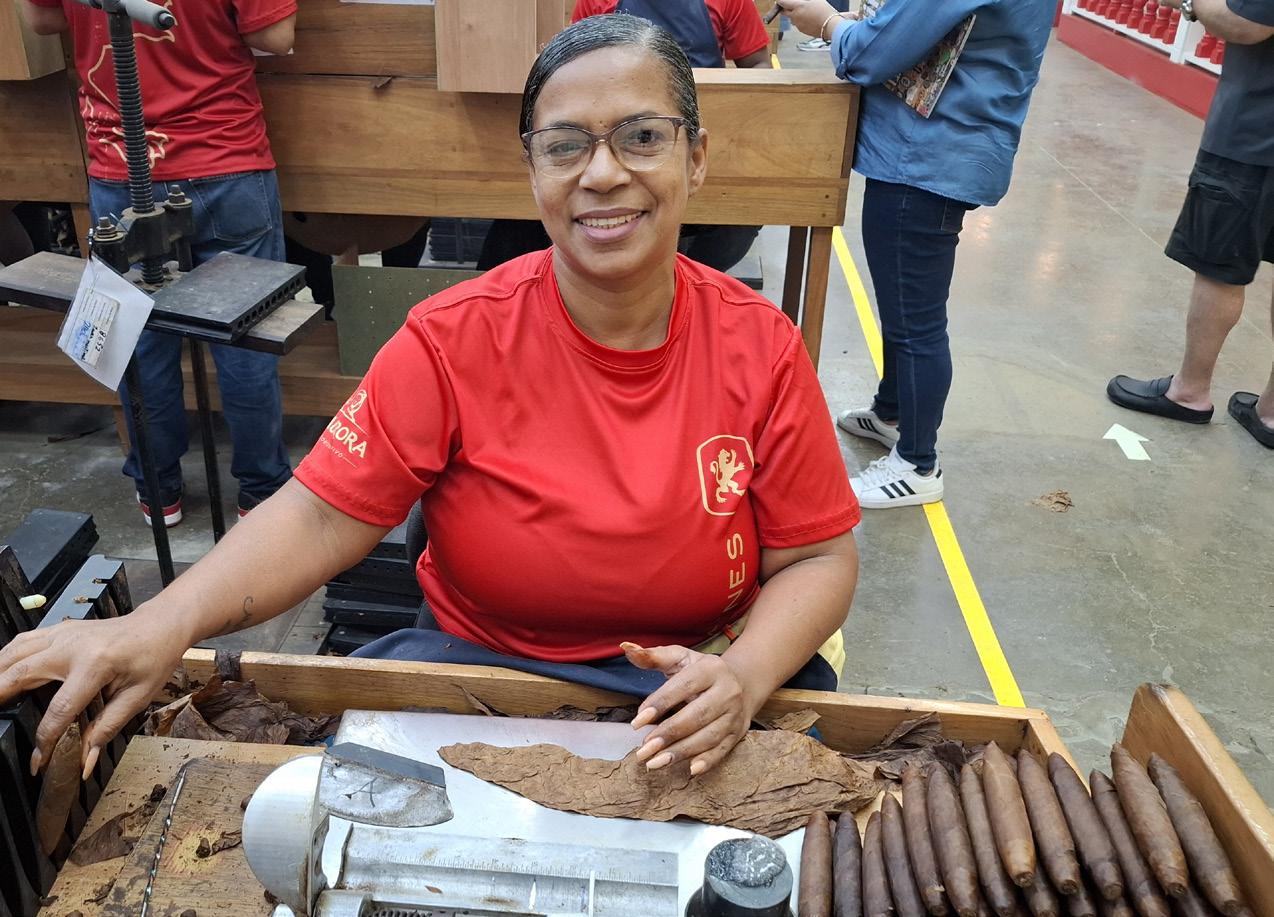
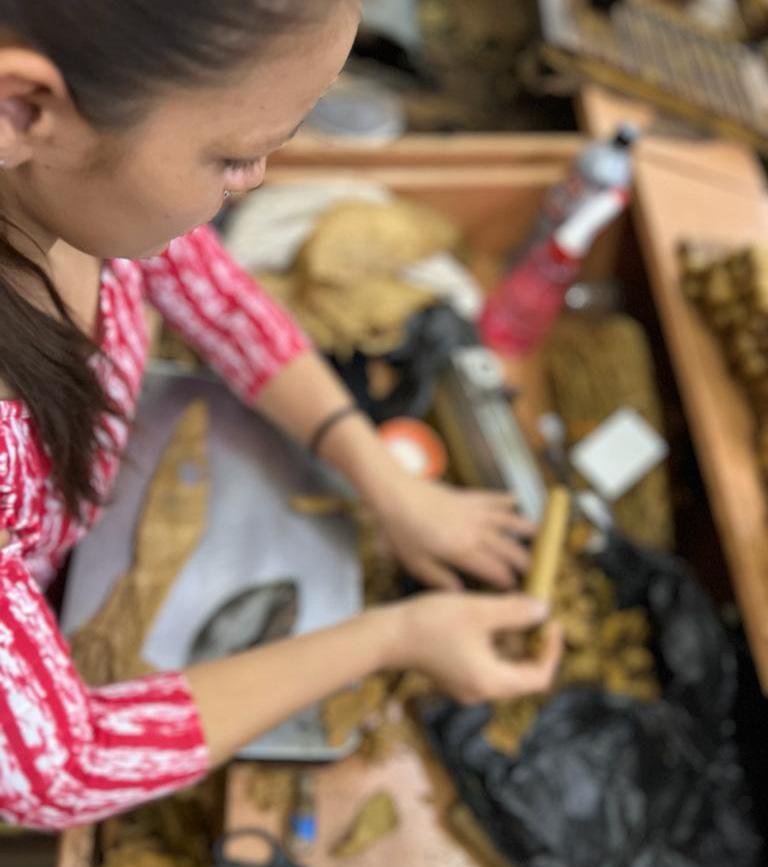
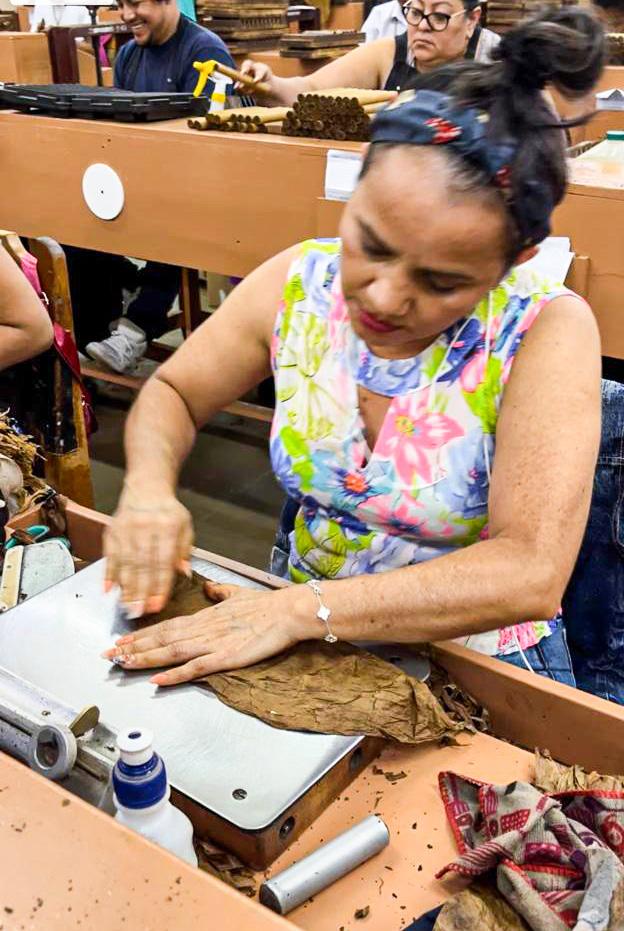
Once you had your materials, you went to the galera and sat next to a roller (torcedor or torcedora), who, in a matter of minutes, taught you how to assemble the bunch according to your blend’s proportions and apply the binder (capote) before taking it to the press. While the cigars were pressing, we moved to a lounge to sample their upcoming release for the Premium Cigar Association (PCA) trade show.
Manuel Inoa.
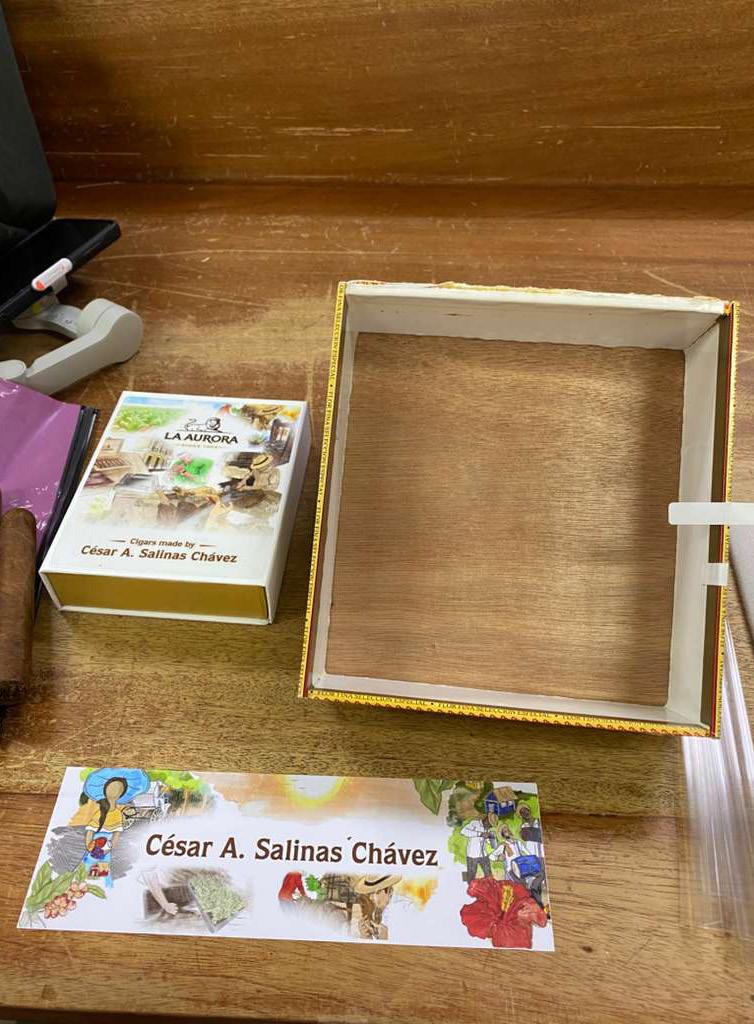
After tasting this marvelous cigar, with our palates recharged by the delightful 110th Anniversary Rum, we returned to the galera to wrap (encapar) our cigars. From there, we went to the packaging area, where our stations were ready for us to apply the bands, slide on the cellophane, and pack a five-count box of robustos featuring the legend: Cigars Made by... followed by your own name.
Indisputably, this La Aurora experience was among the most popular this year. When you eventually open that box and light the cigar, you will be able to say: “I made this cigar I am smoking,” perhaps getting –even if just slightly– a sense of what producers feel when they create a new blend.
Them, Always(*)
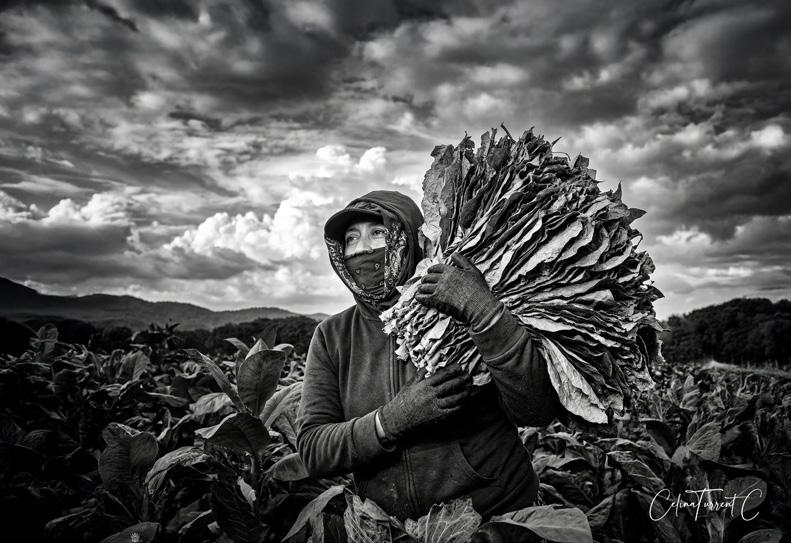
Most native cultures across the Americas –from northern Argentina to Canada– knew and utilized tobacco, a relationship that, for women, spanned from the sacred and medicinal to the social.
Following the conquest, female participation became a constant across the various processes related to tobacco: from its production and processing to the artisanal crafting of cigars.
Today, the premium cigar industry –primarily in the Dominican Republic, Nicaragua, Honduras, and Cuba–generates tens of thousands of jobs, the majority of which are held by women.
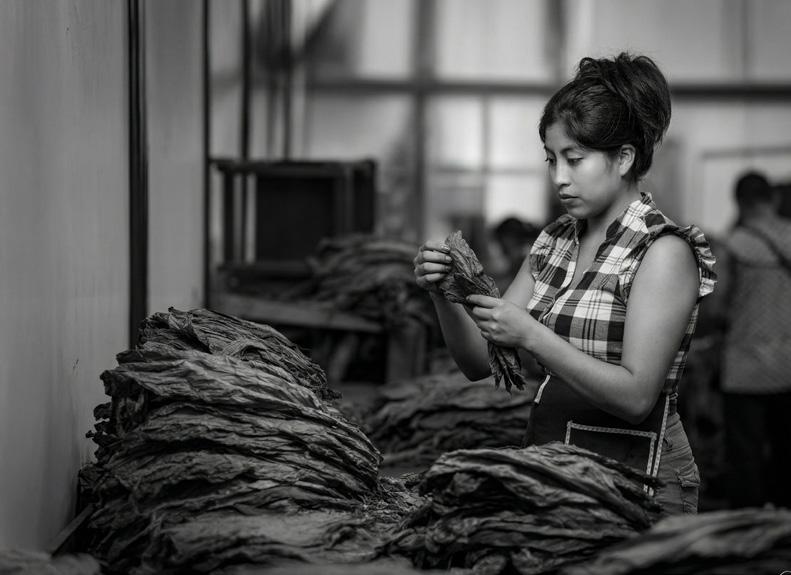
We present 14 brief interviews conducted with those who perform the various labors behind the cigars; anonymous women who are the backbone of the industry and who share with us their stories, their triumphs... and their dreams.
(*) WE GRATEFULLY ACKNOWLEDGE THE INVALUABLE COLLABORATION and support of Roberto Álvarez, Karen Berger, Yina Estrella, Donaldo González, Nelis Johanny Martínez, Lindsay Moncada, and Gustavo Zúñiga for the realization of these interviews across different cities in Honduras, Nicaragua, and the Dominican Republic.
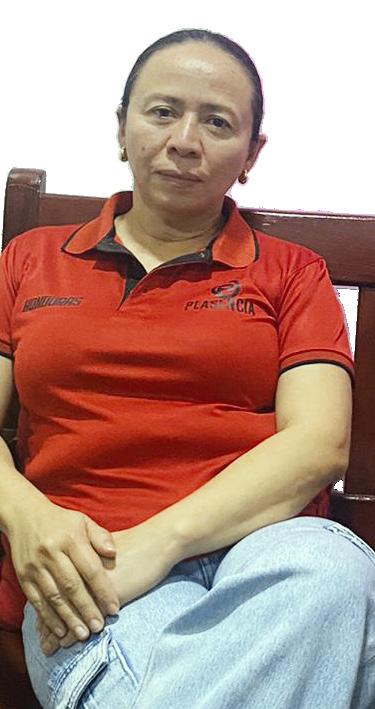
Emilia Salinas TOPPING SUPERVISOR
With Love and Patience
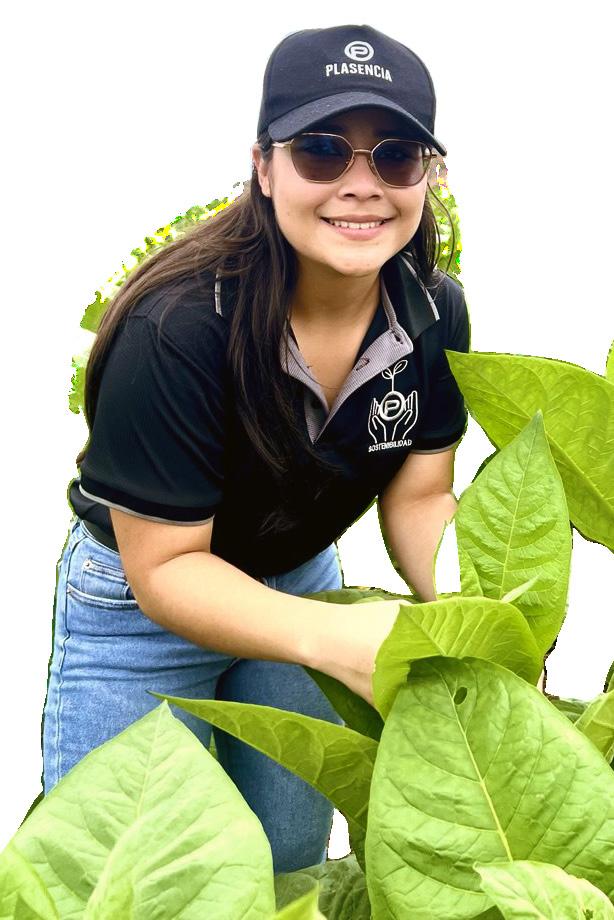
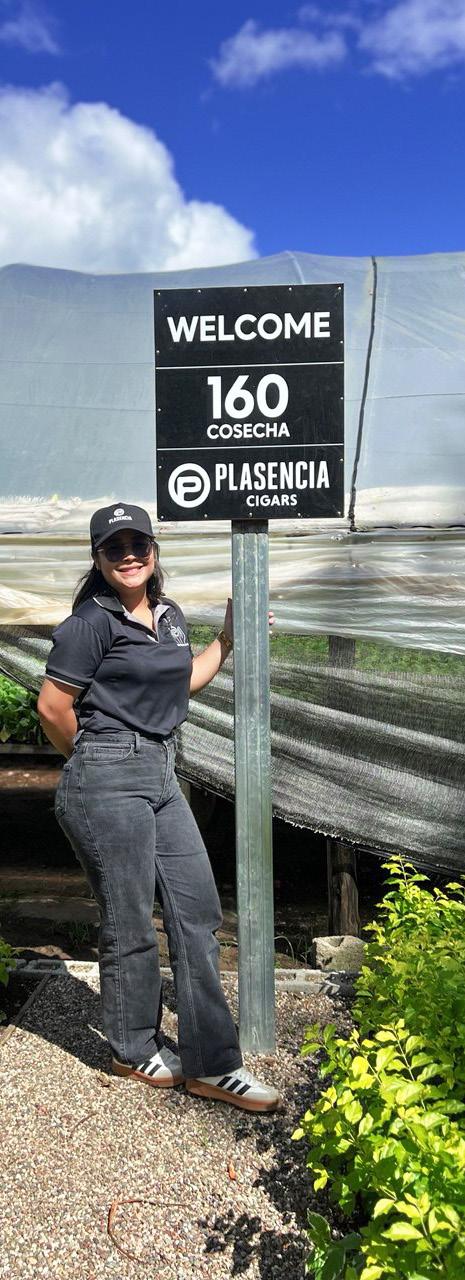
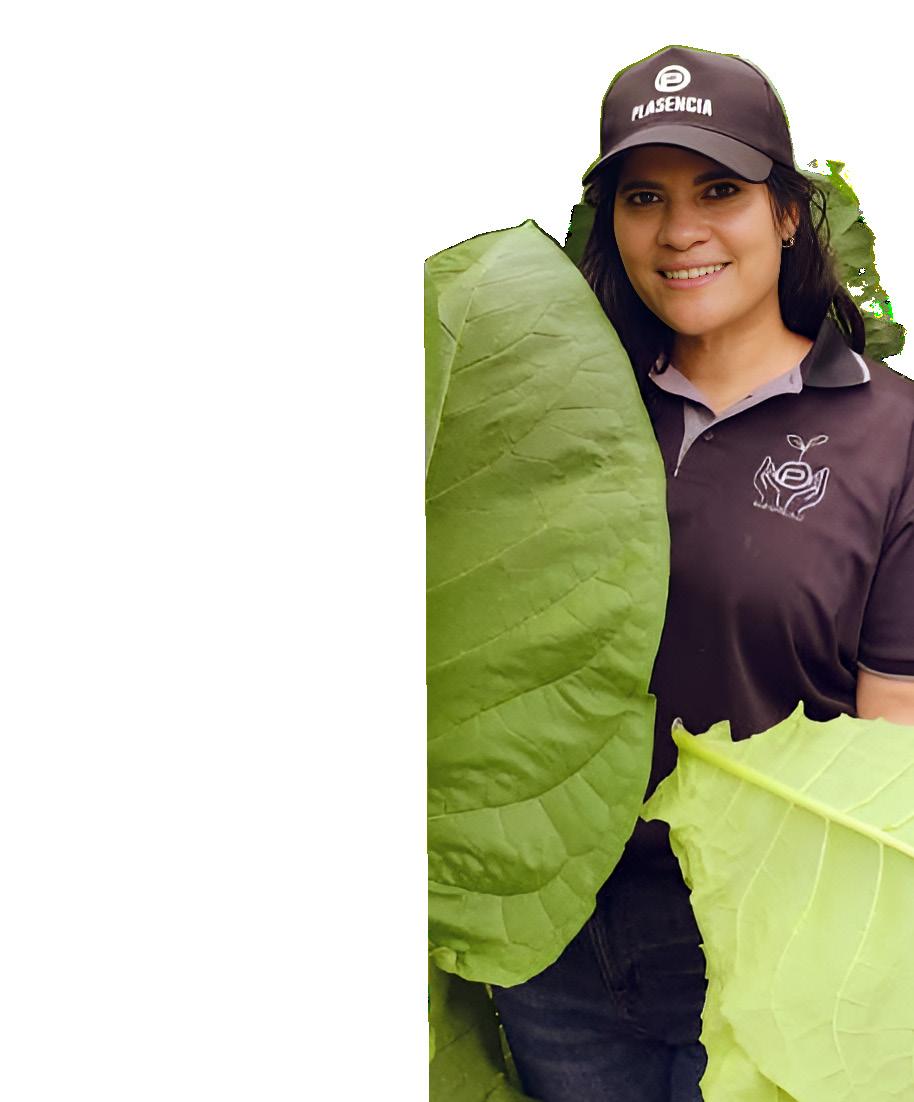
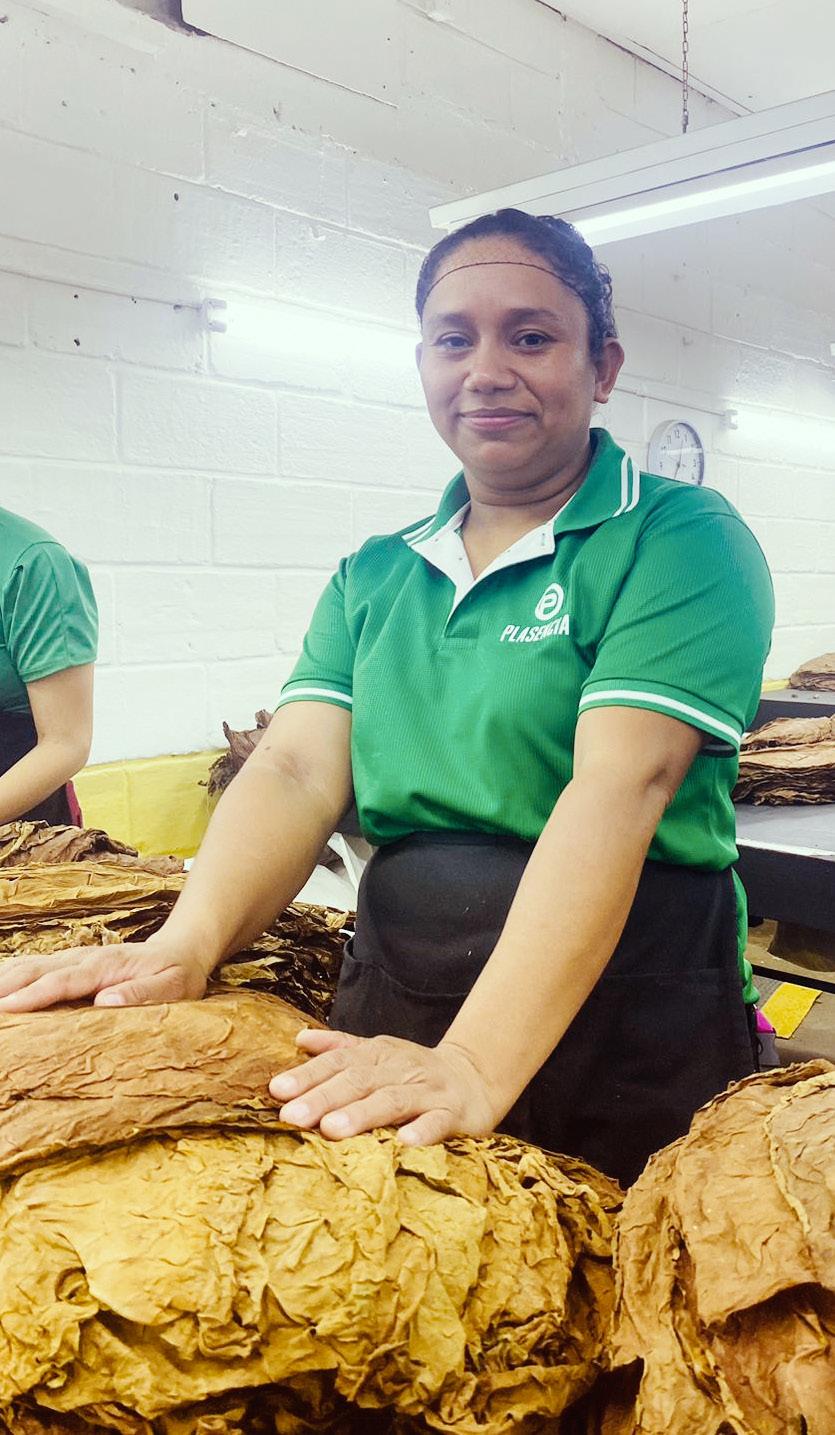
Emilia Salinas is a young Honduran high school graduate who, at 24, found a professional opportunity at Plasencia Tabacos, the agricultural arm of the Plasencia Group in Danlí, El Paraíso. Serving as a supervisor for topping plots, this experience has encouraged her to pursue a bachelor’s degree in Business Administration and Development.
Here, in the Jamastrán Valley, the company operates five large farms which, along with two others located in different departments, total an area of nearly 1,500 manzanas (just over 1,000 hectares). The operation handles seed and seedling production, tobacco planting, harvesting, and –within the curing barns– the drying and pre-fermentation of the leaves.
Emilia is a native of this valley, where she still resides, and the eldest of four siblings in a family led by her mother, a widowed primary school teacher. She is the first in her family to work with tobacco. She recounts that last year, on the company’s website, she found the vacancy for “Topping Plot Supervisor” and successfully applied.
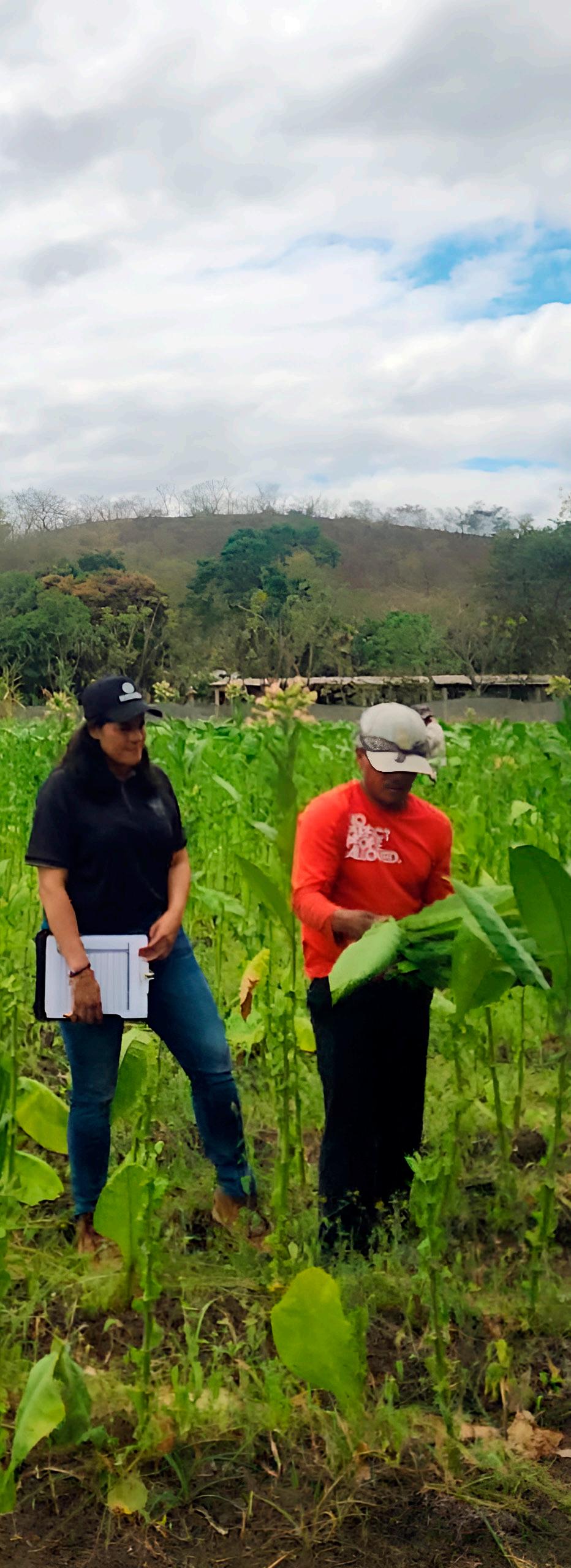
The process of desbotonado (topping) consists of removing the suckers or buds from the plant: the first “son,” the second, and so on –any that may appear on the stalk once the primary leaves have developed. Then, the top part where the flower grows is removed to encourage the leaves to thicken and expand.
Regarding her role, Emilia explains that it consists of monitoring and verifying that the staff performs the procedure correctly, according to established parameters, “with proper handling of the tobacco leaf.” Currently, she is responsible for overseeing two plots where around 140 people work, the majority of whom are women.
“There are men too, but I relate to and am more focused on the women, who have a greater capacity to perform this work because of their delicacy, right? And because we women do things with love, with patience and care, you could say.”
This is not a year-round task, so during the rest of the season, she supervises plots according to the assignments given by the farm manager.
For Emilia, who smokes cigars occasionally, working for this company has represented a change both professionally and personally: “It motivates me to keep moving forward and to develop experience in the agricultural sector by acquiring knowledge about the crop and its management.”
She affirms that regardless of the career one chooses, there is always something to learn, and in her case, learning about tobacco “has been a very beautiful work experience.”
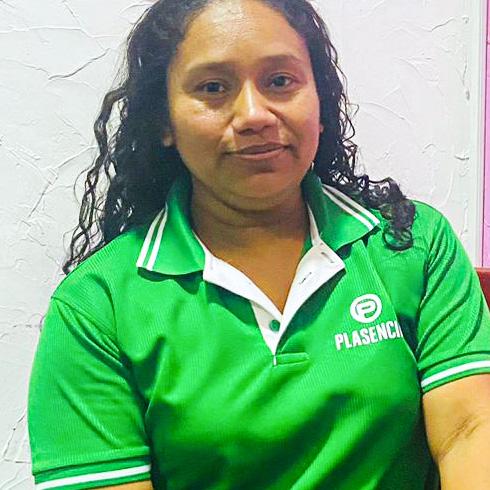
Roselly Vallecillo HARVEST SUPERVISOR
Growth is a Matter of Attitude
As an Agricultural Technician, Roselly Vallecillo has worked for seven years for Plasencia Tabacos in the Jamastrán Valley, Danlí, Honduras. After completing her professional internship in the agricultural area –planting and harvesting– she joined the company and rose to the position of harvest supervisor, because “if they see potential, a desire to learn, and good performance, they allow you to grow. It is all a matter of attitude.”
Her father was dedicated to tobacco cultivation and production, which represent a vital source of employment in the area. “My mother was at home, which is the hardest job, as she had to raise six children, among whom I was the fifth.”
Roselly explains that her internship lasted six months and consisted of observing the products applied, their dosages, and the equipment used, but she also became involved in soil preparation activities and irrigation systems. “I have learned a lot, but what interests me most is the area of sustainability.”
Afterward, Roselly asked for a job opportunity, and it was granted. “That’s when things got serious. It wasn’t an internship anymore; it was reality.” Based on her demonstrated dedication and interest, she was moved through different activities until reaching the position of supervisor, a role she has held for two years.
During the interview, conducted via video conference on her cell phone, she shows a plot where a group of men is working. “It is the last priming (harvest) of a tobacco that will be used for filler (tripa), and since there are no more leaves and it doesn’t require as much precision, you can have men, who are more rugged.”
She explains that the cut is done entirely by hand at the “pegue” –where the leaf meets the stalk of the plant– and that women have more precision, which prevents mechanical damage. To ensure preservation, she also supervises the correct placement of the leaves in the plastic crates: the underside (envés) facing down, and the top (haz) facing up.
At 32, Roselly has two daughters. It is precisely because of them that she worries about the effects of global warming. “The company has allowed me to learn about sustainability. I am interested in ensuring that field production does not harm the environment, the control of agrochemicals, and the conservation of soil and water sources. We have good practices here.”
She hopes her daughters will educate themselves and have more opportunities, as their circumstances are different. “The role of women has changed tremendously; there is more respect from colleagues and more possibilities to grow... It’s the same as in the home, because we also contribute financially.”
She affirms that in Danlí, family stories involving tobacco often repeat themselves because it is a crop with many years of history in the area. “I would love for my daughters to follow the same path, because you develop love and passion for what you do, and tobacco places us –as a country–on an international level.”
Ángela Evangelina Cruz
STRINGER
Tobacco and Nothing Else
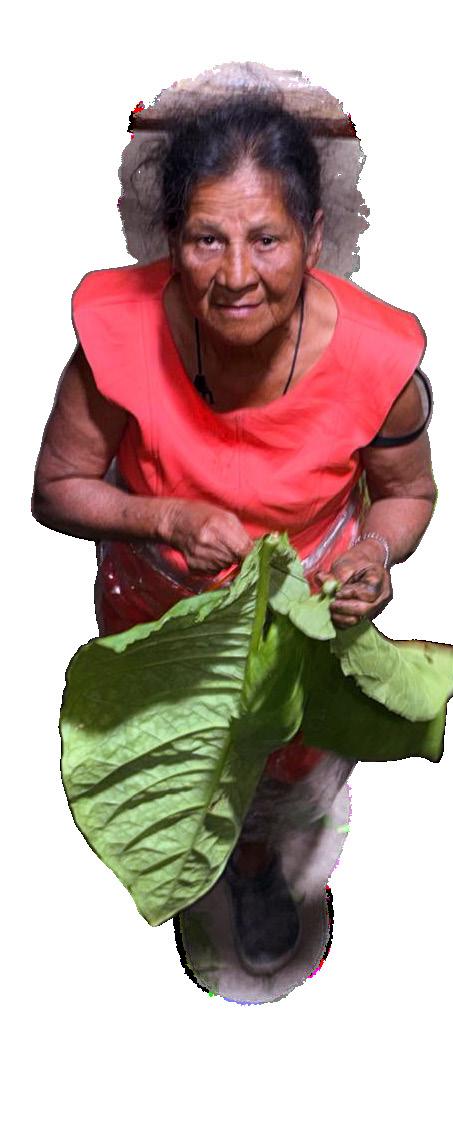
At 68 years old, Doña Ángela Evangelina Cruz Cruz has accumulated more than five decades of experience dedicated to tobacco. She has known no other employer throughout her life; from this craft, she obtained the necessary resources to build a home and raise a son, who now follows his own path.
Born in Jalapa, Nicaragua, she is a resident of the Santa Rosa community, an area far from the municipal center. For this reason, Doña Ángela enjoys a special work schedule in consideration of her age and travel times.
“I have to leave home around six in the morning to try to arrive by my start time –but always with a good attitude–accompanied by the Almighty. It’s true I can’t always arrive on time, but it’s okay because they give me permission here.”
Her work as a tobacco stringer began at the age of 13 at the El Coyol farm. “At that age, a man named Ariel Chávez told me to come work here, and it was the Somozista guards who taught me how to string.”
That part of the farm predated the arrival of Don Sixto and Ernesto Plasencia, the second and third generations of tobacco growers who traveled from Cuba to Nicaragua.
Thus, Doña Ángela has been a witness to all the changes the tobacco industry has undergone in Nicaragua over the last 50 years. In fact, she saw her father work the harvests on lands owned by thenpresident Anastasio Somoza Debayle.
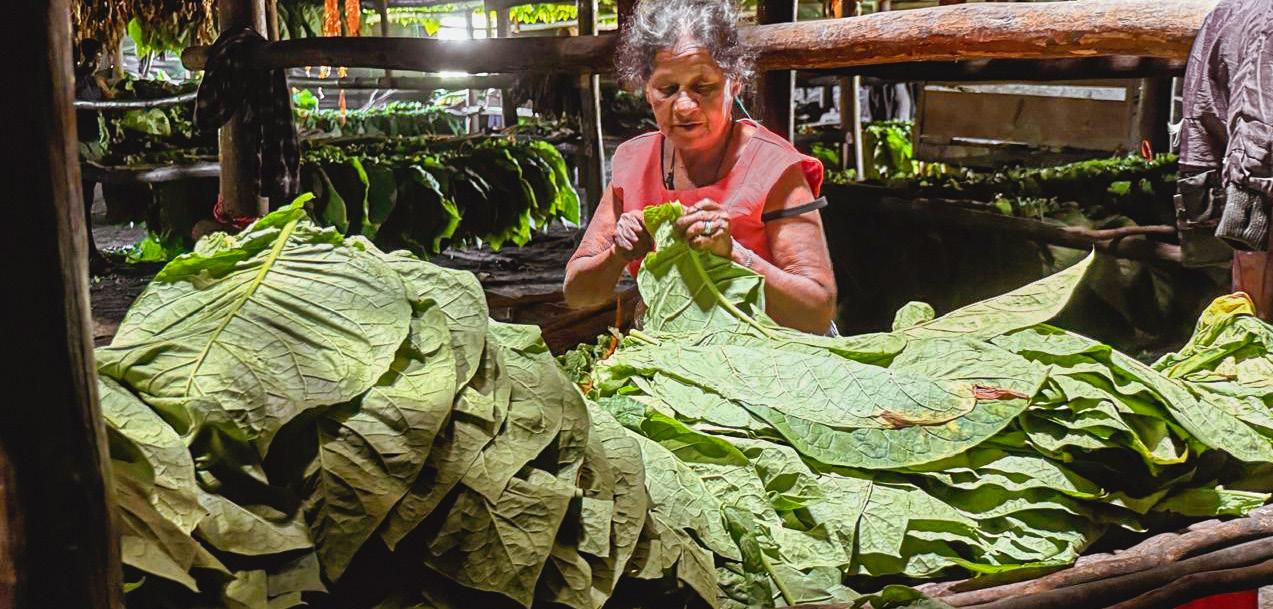
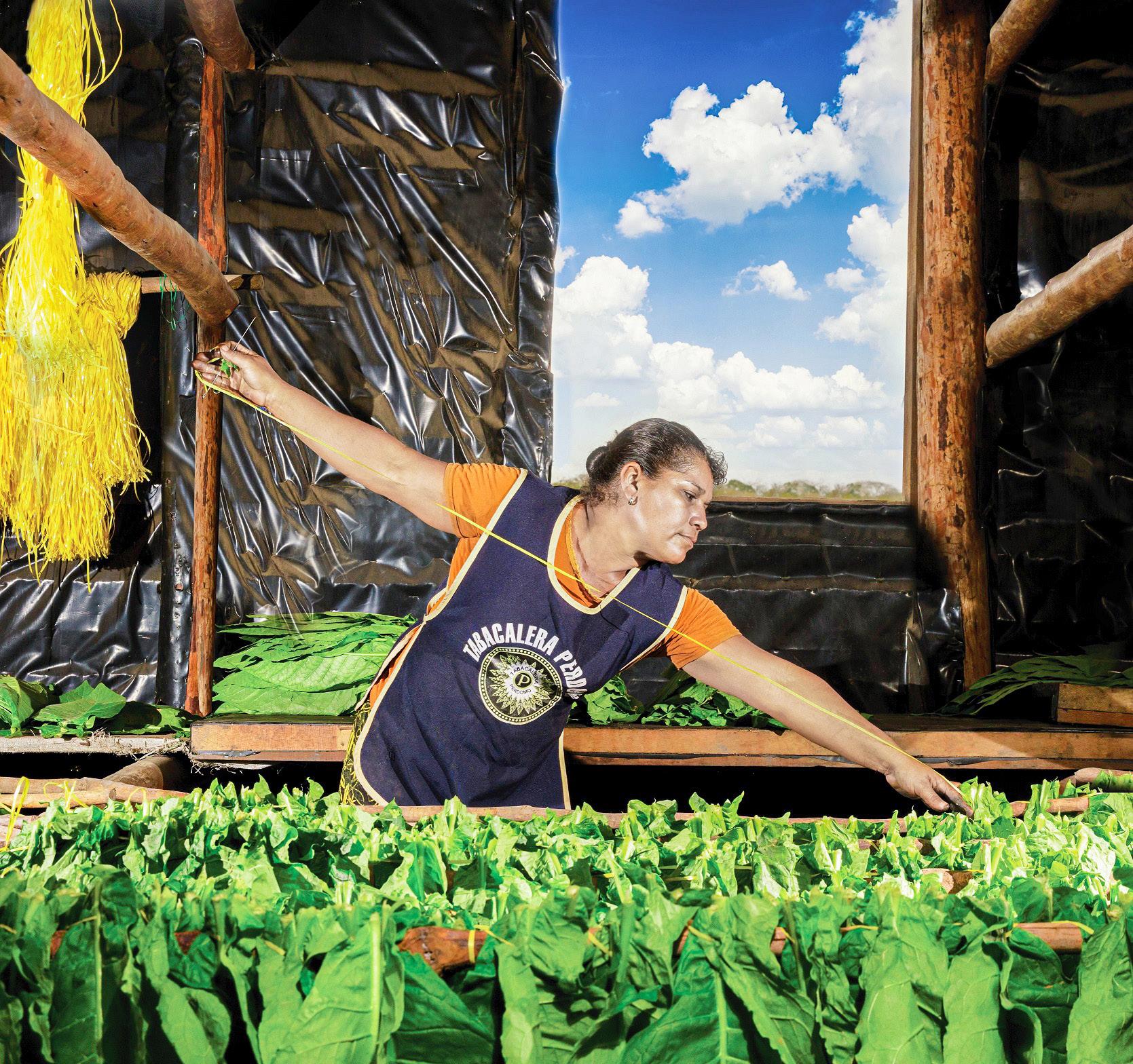
From that era, she remembers a group of 40 to 50 women working in the curing barns, accumulating cujes –the long poles from which the leaves hang in groups of 23, 35, 40, and 70 pairs during drying and curing. These units make up the weekly goal of 3,000 pairs, which defines her earnings at the end of the week.
Ángela never married, but she is the mother of a son who managed to study “as far as he wanted to,” she notes, and who currently works in journalism. Furthermore, thanks to her work, she was able to build her small home twice –after it was devastated by a fire, it now stands again.
Her family was also dedicated to the fields their entire lives: her father, sisters, and brother worked in tobacco, and her mother cultivated beans and made hand-pressed tortillas. These hardworking people were the example that allowed her to move forward.
In the past, she also participated in planting, and “when there is no harvest, I also wash clothes, I clean, whatever... I know how to do everything they set before me, except steal.”
Fifty years ago, Doña Ángela had the strength and vitality to deliver two full quotas daily. Now, in recognition of her lifelong trajectory, Humo Selecto allows her to complete half a quota during a reduced five-hour workday.
Irma Elena López Colindre
STRINGING SUPERVISOR
An Opportunity to Progress
Originally from Jalapa, Nueva Segovia, Nicaragua, and trained as an agricultural technician, Irma Elena López Colindre has dedicated her working life to tobacco –a profession in which she hoped to build a better future. It is a goal she has achieved as the mother of a daughter and a leader of twenty women who are also seeking an opportunity to progress.
At 17, she began as a “checker” on a farm, supervising and recording daily activities. It was there that she developed a passion for ensarte (stringing) and working with other women, whom she considers excellent employees and highly disciplined individuals.
Four years ago, she arrived at El Coyol, a farm owned by Humo Selecto. This
company manages over 150 manzanas of land and 19 galeras (curing barns), for which she is now responsible.
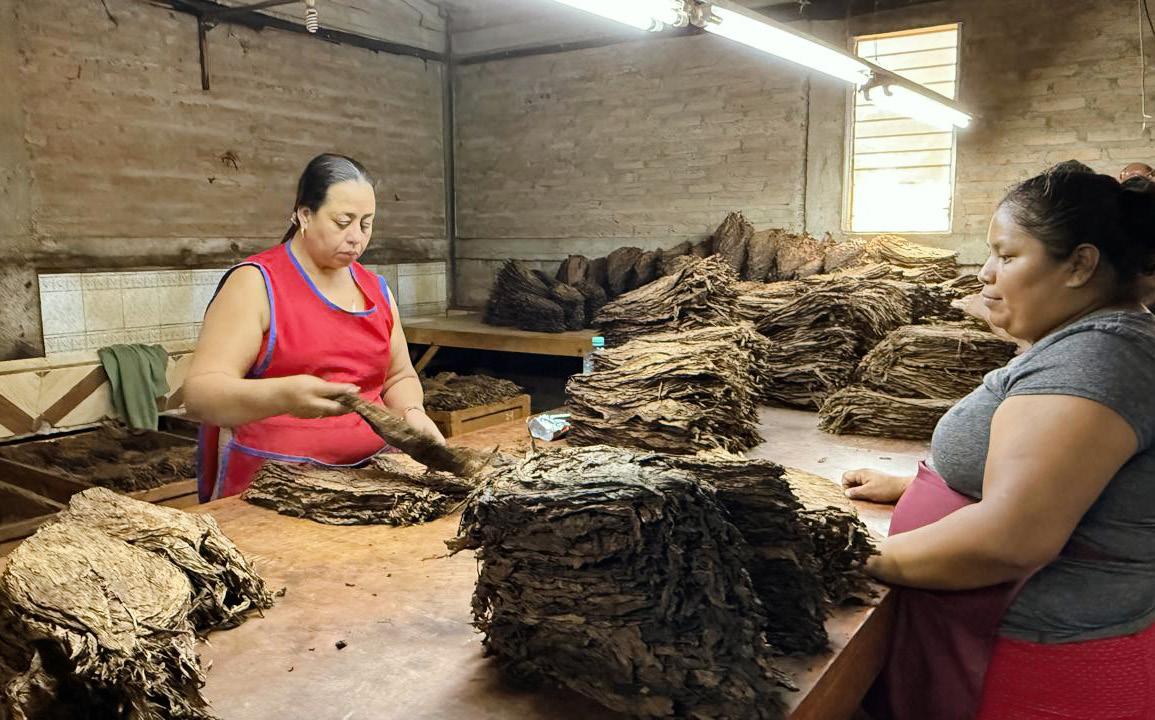
Irma is in charge of supervising the tobacco stringing as soon as the leaves are unloaded from the transports coming from the fields to the barns. She zealously monitors the filling of the tables so that the women can take their pairs and fill each cuje (pole) according to its capacity.
Even during this interview, conducted via Google Meet, Irma did not stop her work. She took the time to answer questions
while simultaneously attending to the arrival of material at the barn where she was located.
Under her supervision are 25 women –18 stringers and the rest support staff–while the men (measurers) are solely occupied with hoisting the tobacco to the highest parts of each barn. Thus, the tobacco is raised after stringing, followed eventually by the zafa –the process of taking down the cujes once the air-curing process is complete.
This work takes place during eight months of the year. During the remaining four months, some members of the workforce focus on maintaining the barns and the farm, as well as planting beans, sorghum, and corn to return nutrients to the soil.
Throughout her life, tobacco has opened many doors for her and her colleagues –many of whom are single mothers, while others are married and must manage household duties before heading to the fields. Some work Monday through Friday and attend university on Saturdays. “Tobacco provides many advantages,” she affirms.
Irma is the only woman among five siblings and is the mother of an 11-yearold girl, whom she has raised in a very close-knit family environment. “I work to give her a good life, so she can be someone in this world and be prepared.”
Meanwhile, she envisions a fulfilling future among poles, threads, and tobacco leaves, enjoying her labor daily and hoping for a long life to remain dedicated to this essential stage of the tobacco industry.
Ana Luisa Valenzuela(*)
STRINGING SUPERVISOR
An Example of Perseverance
Amother of two –a ten-year-old boy and a five-year-old girl–Ana Luisa Valenzuela is in charge of the tobacco leaf stringing process in the curing barns of the Tabacos del Sur company, in the San Juan province of southwestern Dominican Republic.
She was born in the countryside of La Garita, a sector within the Hato del Padre municipal district near San Juan de la Maguana, where she grew up and later married.
The need for work initially led her to the nation’s capital, Santo Domingo, where she dedicated herself to caring for elderly patients suffering from Alzheimer’s disease. However, she eventually returned to her family and found employment at a colmado (local grocery store), where she assisted the owner.
It was then that a friend –”the first woman from La Garita to come work in the tobacco fields”– brought her along to see how she liked it. “I left that previous job, and since I liked it here, I stayed.”
Her first contact with the tobacco industry –specifically the pre-industrial stage– was in 2021, during the company’s initial phase. “It has been very good because, for us women, it has been a great example and a significant help.”
And while one might assume these various tasks are a male domain, it is the women who perform them. “This is very good for me, a great experience, because we string the tobacco leaves, which are hung in pairs on cujes (long poles used during drying and curing).” While men also work in the curing barns, they are typically responsible for hauling and hoisting the cujes into the rafters.
As a supervisor, Ana Luisa is responsible for training the women who arrive to work, but she also coordinates the men: “I have had up to 44 women under my charge –as the number varies according to needs– but in general, it is increasing. I have also supervised about 28 men, because there are always fewer of them in the barns (ranchos) and more in the fields.”
“When I arrived, I knew nothing,” she continues. “I have learned quite a bit, but I still have a long way to go... We are working on it. I have dedicated myself mainly to the stringing of the tobacco. I date the batches, because that is what they (the engineers) evaluate: the day it was strung. They know how much time
the process takes, whether it’s 20 days or a month, because they know the grade of their tobacco.”
She considers that her life has changed significantly: “When you are caring for the elderly, you almost never rest. There are times when you have to work overtime, and even when you think you’ll be free, it isn’t always possible. Now it is very different because it’s about completing your tasks within set schedules. It is very different...” Regarding her future, she says she loves her work and –with a laugh– sees herself continuing to climb the ranks.
(*) Interview conducted in April 2025.
Iris Romero LEAF SORTING SUPERVISOR
Always Aiming for More...
When she was a 14-year-old girl, Iris Romero decided to go to work because she wanted to help her mother and “so we could have chairs, because we only had small stools... and my first paycheck went toward that.” Since then, she has remained at the Clasificadora y Exportadora de Tabaco in Danlí, Honduras, where as a supervisor she oversees 200 women, and in 2023, she earned a degree in Accounting and Finance.
She was born in Danlí and, after finishing primary school, began looking for a job alongside some friends. The first place they went was Plasencia, where they required parental authorization: “My mother agreed and disagreed at the same time, but in the end, she accepted and signed.”
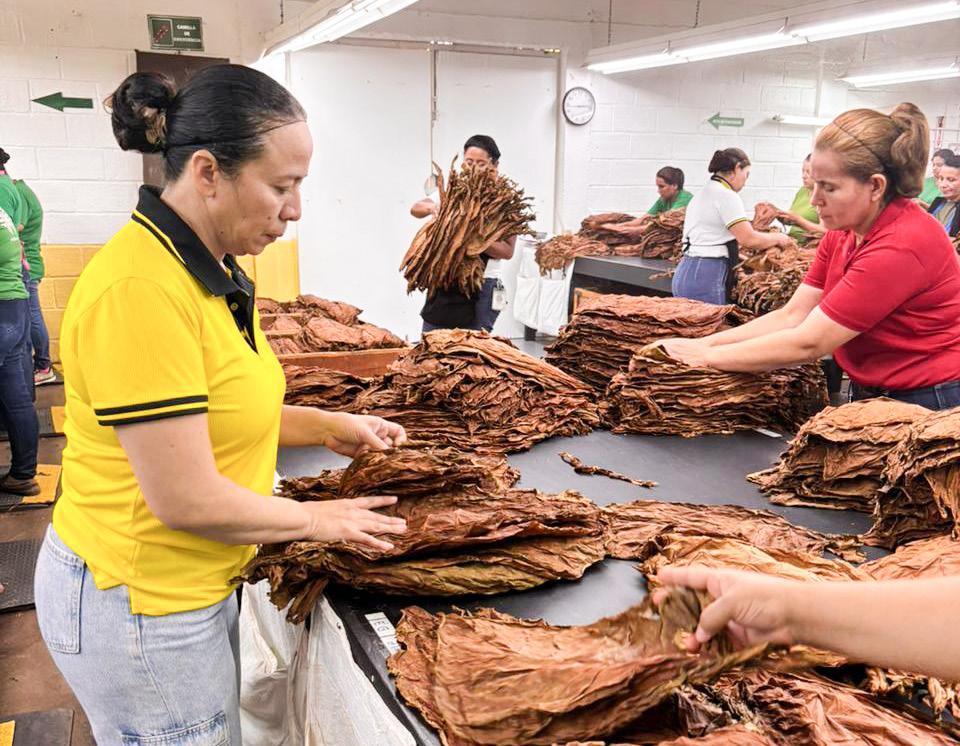
She first learned to remove stems (despalillar), “but later they sent me to tie hands (moñar), to the kiln where the tobacco is spread out. I know how to dampen the bundles (gavillas), sort, grade... I know many processes.” For the past 12 years, she has served as a Leaf Sorting Supervisor, a role that also involves training staff.
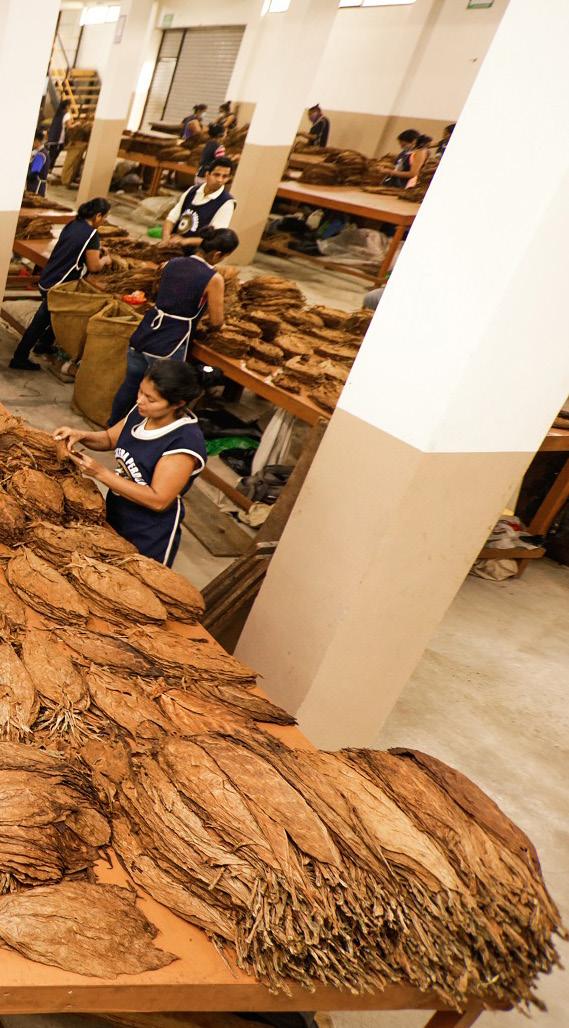
Pre-selected leaves from the farm arrive at her sector to be classified. This encompasses several processes: quality sorting involves separating tobacco for wrappers (capa), XL, and binders (capote), for example, as well as separating “dirty” leaves from clean ones. Regarding texture, it requires touching the leaves to differentiate them by thickness and color, from light to dark.
The goal is to classify the tobacco for sale as leaf tobacco (tabaco en rama). “The product might be shipped as is once it is classified and separated, but that depends on the destination and what is to be done with the product.”
Iris is “grateful to God, who has given me the opportunity to teach other women the knowledge I have, because these are my people. I feel very proud, in love with my work and with what I have learned.”
She married at 18, and now two of her three children are professionals. Perhaps this motivated her to pursue a degree in Accounting and Finance, from which she graduated in 2023 at the age of 44. “Imagine, with what my family and I have achieved, looking at my 11-year-old, I aim
for more –that he will be a professional in the years God grants us. We have many goals, many objectives.”
As simple as it was significant, the purchase of those chairs with the proceeds of her labor drove her even then to buy lumber to expand her mother’s house and later to buy a bed of her own, leaving the one she shared with her brother. “Now, from the position I am in, I aspire to more. I want to go to another country, to promote what I do... God will give me the opportunity one day.”
Ada Ávila Chavarría
COLORERA
(COLOR SORTER)
Her Home, Her Greatest Achievement
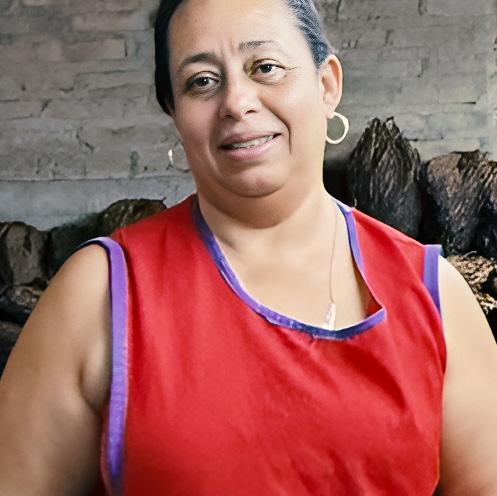
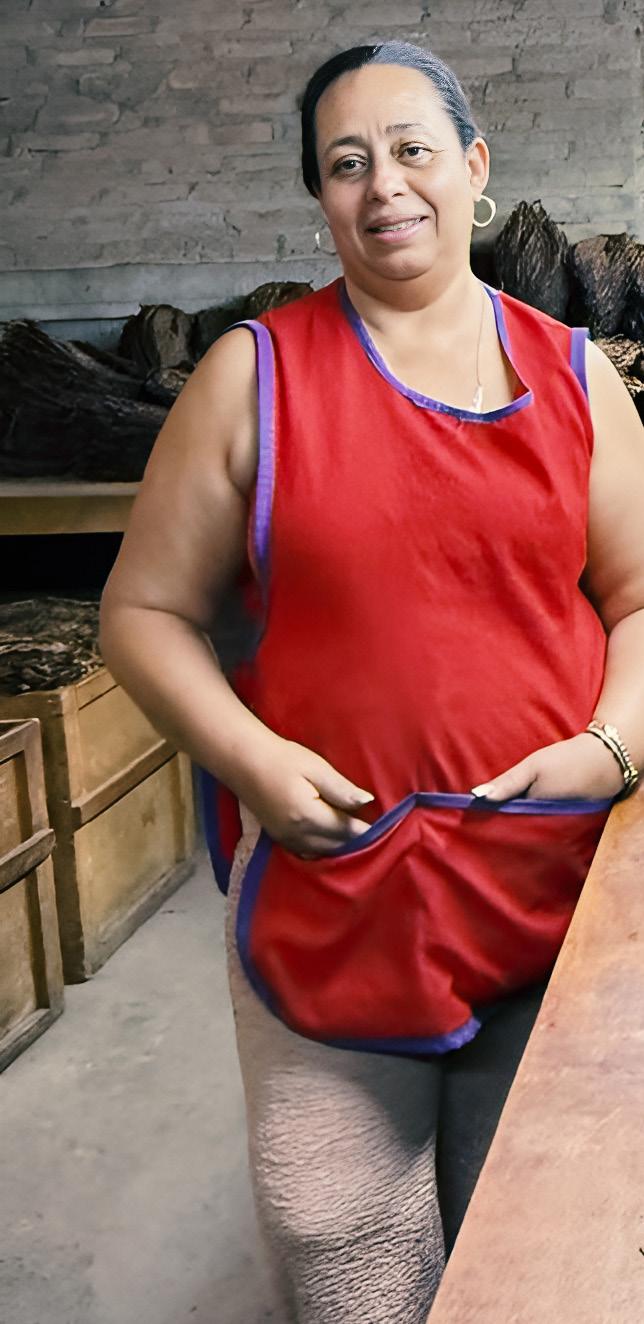
Her father planted corn and beans on other people’s land, where he also harvested tomatoes, chili peppers, and coffee, while her mother took care of the home. together they had nine children, who, like Ada Ávila Chavarría, had to work in the fields from a very young age. Ada started at age eight, and because of this, she describes her childhood as sad and very poor: “a struggle just to sustain ourselves.”
She was born and raised in Barrio Las Lomitas, a town in the department of El Paraíso, Honduras, where she managed to finish sixth grade. She then moved to Danlí and found work in a kitchen where she helped very little, “because I was so small and there were things I didn’t even know existed.” In exchange, she looked after two children, managing to stay there between the ages of 12 and 17.
She eventually returned to her parents, but soon entered a relationship that resulted in a son. Her partner also worked in the fields, “and so we went back to the same thing, to the same life,” until six years later, both the job and the relationship ended. In 2016, she sought employment in Danlí and arrived at the Clasificadora y Exportadora de Tabaco, a company belonging to the Plasencia Group.
She started that very day in the moñeo (hand-tying) area: “The moños are the tobacco leaves that you place here in your hand, forming and counting them. Once they are even, they are tied; that is the job.” She explains that the number of leaves depends on their quality and variety. If the Connecticut is filler (tripa), 45 leaves; but if it is a wrapper (capa), XL, or binder (banda), 40. Habano consists of 35 leaves, whether wrapper or filler, but if it is tripa ligera (light filler), it only contains 30 leaves.
Ada remembers being surprised to see all that tobacco together, but also by being in a place with so many people. In this sector, there is also an area where leaves are measured and classified by size, and another where they are differentiated by quality. She learned both tasks but spent little time there before being moved “to where the colors are made.”
She says that at first, it was difficult because she saw all the leaves as identical. But now, in the Habano variety, she identifies light (claro), intermediate, dark, brown, and green colors, while in Connecticut, she finds light, yellow, and pinkish tones. “We simply separate the leaves by tone once they are dry. They already arrive sorted by quality and size; it is a process that happens before stems are removed (despalillado).”
After a decade at Plasencia, Ada expresses that it is the best job she has ever had because, unlike field work, she receives benefits and medical care in addition to a salary. She now has two children –an 18-year-old son and a ten-year-old girl– whom she supports on her own.
“Thanks to God, I have my greatest achievement, a very big goal: my home. It is the best thing I have had so far because I have fought hard for it and it is practically finished. It means leaving my children a place where they can stay when I am gone.”
Rosa Argentina Espinoza STEMMING
HALL MANAGER
Until the Body Gives Out
At 50 years old, with 35 of them spent within the tobacco pre-industry, Rosa Argentina Espinoza Galeano was the sixth of eight siblings. Although born in Estelí, she has lived since childhood in Jalapa, Nicaragua –the city where she found the stemming process to be a pleasant and passionate career, one she intends to keep “until her body gives out.”
She began forging her path at the age of 15. It was then that she secured a job at Humo Selecto, a company that offered her a space to learn about rezago –the sorting of leaves for wrapper, binder, and filler– as well as the technique of tobacco stemming (despalillo), which consists of removing the central vein from the leaves.
She says she found a stable source of work to meet her needs and those of her home and family. Since 2006, she has served as the Head of the Stemming Hall. This has been her sole income, yet it was enough to acquire a house and support the upbringing of her five children.
Rosa Argentina has 47 people under her charge, the majority of whom are women, with only 16 men. “But everyone works the same; there is no gender difference. Perhaps there is a bit more delicacy in female hands, but the men do their jobs as well.”
She reviews the classification of stemmed leaves by class and size, separated into viso, seco, and ligero. Large leaves range from 17 to 20 inches; medium from 15 to 16 inches; and small from 12 to 14 inches. They are further differentiated by classes “A,” “B,” and “C,” according to their quality –from the finest to those presenting some degree of damage.
The goal of her department is to complete 140-pound boxes daily, destined for the drying area where each leaf is laid out and the raw material is packed, both for Humo Selecto’s own consumption and for sale to other companies in the country.
Rosa Argentina considers working with tobacco to be tiring and, at first, a bit bothersome due to the scents the leaf
releases during the various processes. But at the same time, it represents the source of income that brings daily sustenance to her home.
From her experience, she invites women to join the tobacco industry: “Because when you get a job, once you enter, you don’t want to leave. These are 35 years of my life in tobacco, which has given me stability and peace of mind. It’s what I learned, and I’m going to do it until my body decides it doesn’t want to work anymore.”
She hopes to remain linked to this sector “as long as the Lord keeps me alive,” because it is an activity she enjoys day after day, proud of her experience and leadership. “Being in charge of other people is difficult, but not impossible; you have to try to understand everyone and get along with them all.”
Gretel Isabel Fuentes ROLERA (ROLLER)
Forward, Leaf by Leaf
Her story is like that of many women in Latin America. The third child of a single mother who gave her all every day to pull her family forward, 28-year-old Gretel Isabel Fuentes Flores has also become a single mother of two daughters. However, she now holds the opportunity for a better life for her family, built amidst tobacco, leaf by leaf.
Born in La Trinidad, Estelí, Nicaragua, as the youngest of three siblings –two sisters and one brother– she had to support the family economy from a very young age. She would go out with her mother to sell tortillas, cajeta (caramel), and other homemade products they prepared themselves.
On a daily basis, half her time was for work and the other for study, but Gretel left school every day to search for more formal employment. “I told my mother I
didn’t want to study anymore; I wanted to work to help her. Because any child, when they see their mother cry over their economic situation, only thinks of helping.”
Thus, after selling her mother’s products, she found her first job at age 15, entering a cigar factory to learn the stemming process (despalillo) –which consists of removing the veins from cured tobacco leaves– and later had the chance to learn the rolling process of the cigars.
With some experience between her fingers, she approached Estelí Cigars, where several family members worked and spoke highly of the work environment. “Here they let you work, without interference, so that everything comes out as well as possible.”
Five years later, Gretel affirms she has found her place in life as a rolera, moving forward alongside her daughters, aged 12 and 5. But unlike her mother, she does so with greater possibilities for progress, ensuring they lack for nothing and do not have to work at such an early age.
At her rolling table, she puts all her love into the crafting of each cigar. “We do it this way so that customers speak well of the brands. If I do it poorly, not only will the supervisors notice, but the customer will too.”
In the atmosphere of Estelí Cigars, all the bunchers (boncheros) are men, while the placement of the wrapper leaf is destined solely for the hands of the women, forming solid teams that consider themselves part of a large family.
During the workday, the dynamic is fluid and cordial. “If another roller is doing something wrong, we support and guide her, so that we all always do our best.”
In addition to smoking for work to check the quality of her pieces, Gretel enjoys tobacco as a relaxing activity at the end of the day. “It isn’t common in Nicaragua for women to smoke cigars, but I like to taste and know what I am making.”
Tatiana Vargas ROLERA (ROLLER)
A Recognized Craft
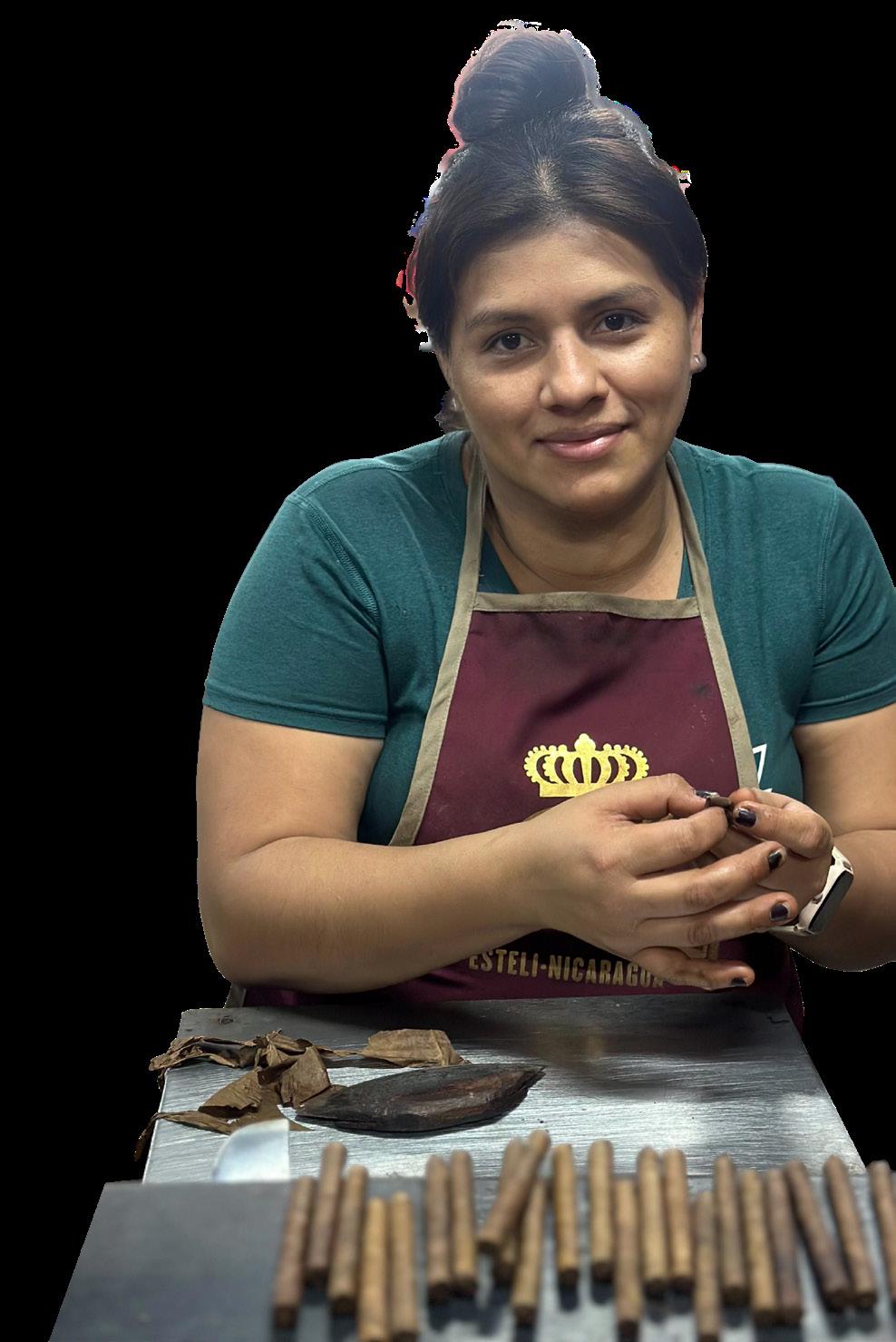
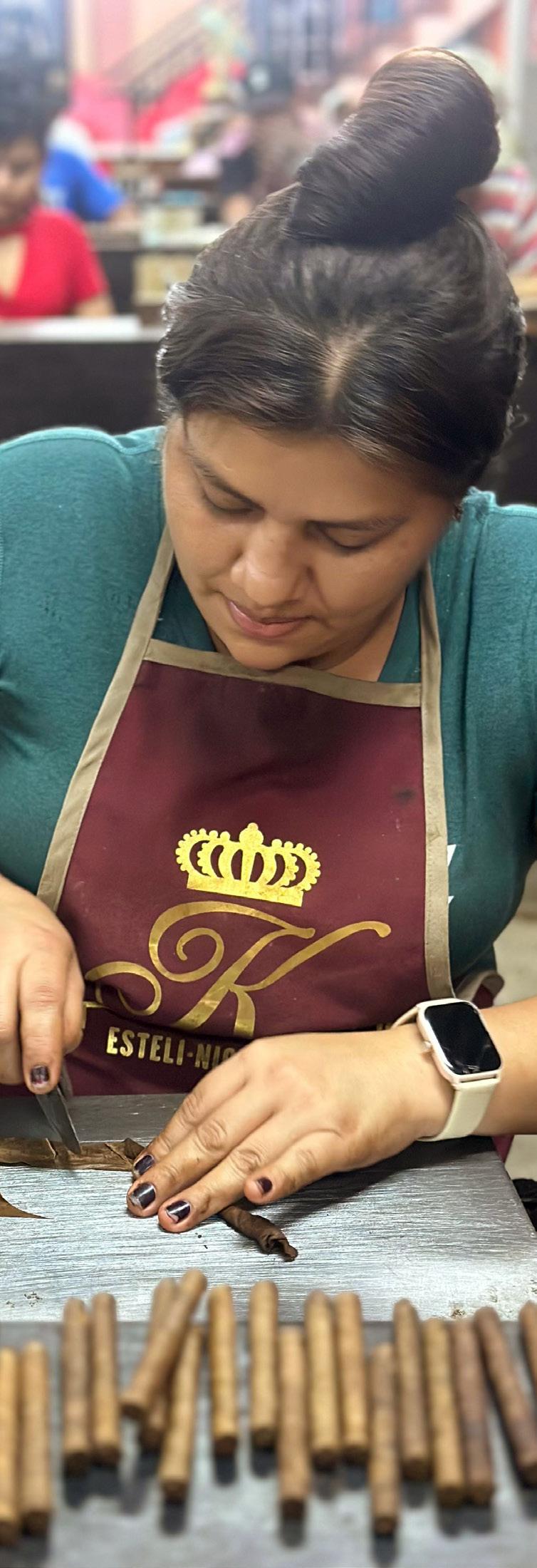
Tatiana Vargas Torres is one of the thousands of women who found in the tobacco industry a way to sustain themselves and grow professionally without neglecting their role as mothers. Alongside her husband at home, she cares for an elevenyear-old daughter and a two-year-old toddler; meanwhile, at Estelí Cigars, she is responsible for the final production of hundreds of cigars destined for the international market.
For nine years, she has divided her mornings between household duties and the rolling table, leaving everything ready at home from Monday to Friday before heading out to work. Born in Matagalpa, she has lived for 17 years in Estelí –Nicaragua’s tobacco cradle–where she has put down roots among leaves and tragacanth.
At 24, Tatiana worked in a supermarket meat department, an occupation far from what she wanted for her household. “The money wasn’t enough, and truthfully, I didn’t like it much; that’s why I decided to go look for something else.”
That search led her to Estelí Cigars, where she learned the art of cigar rolling –specifically applying the capa (wrapper), the final detail of a quality piece. Securing a position as a rolera meant finding a refuge; in addition to a steady income, she enjoys the support of many people she considers family, and her labor is recognized –in a way– through every cigar sold on the international market.
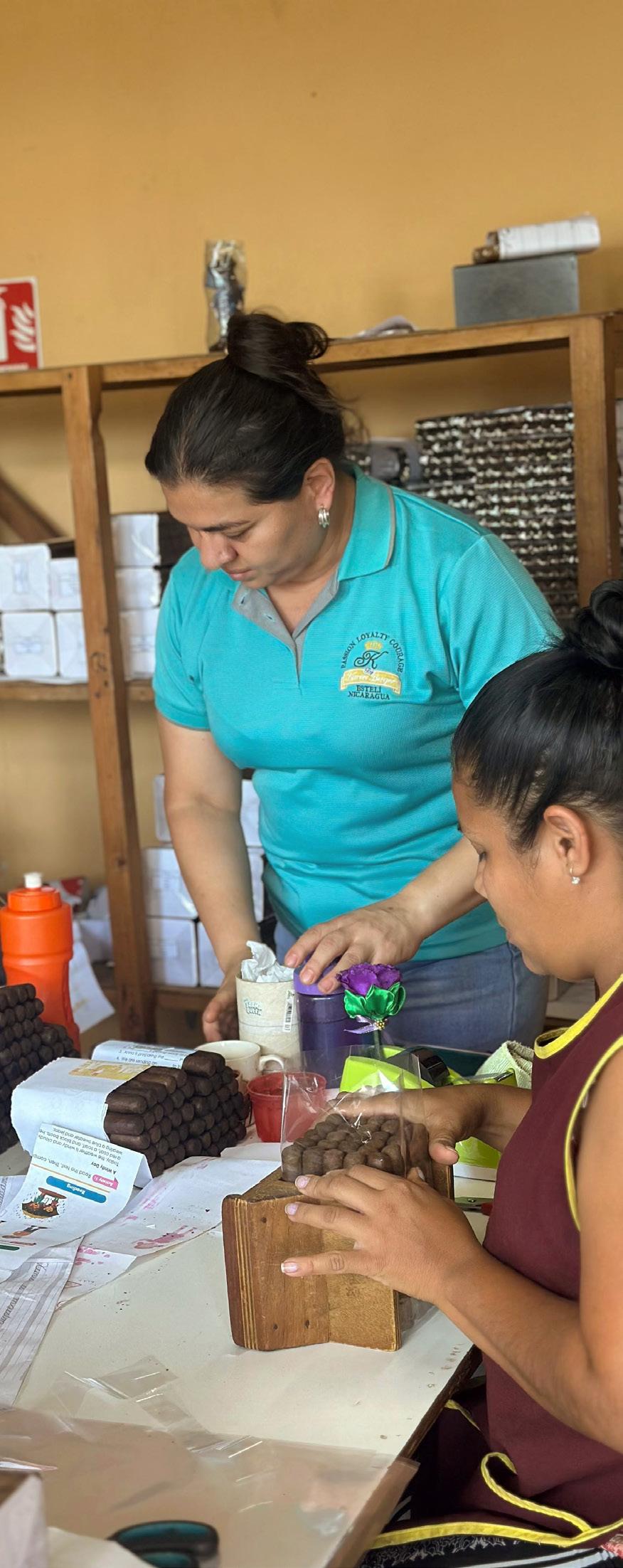
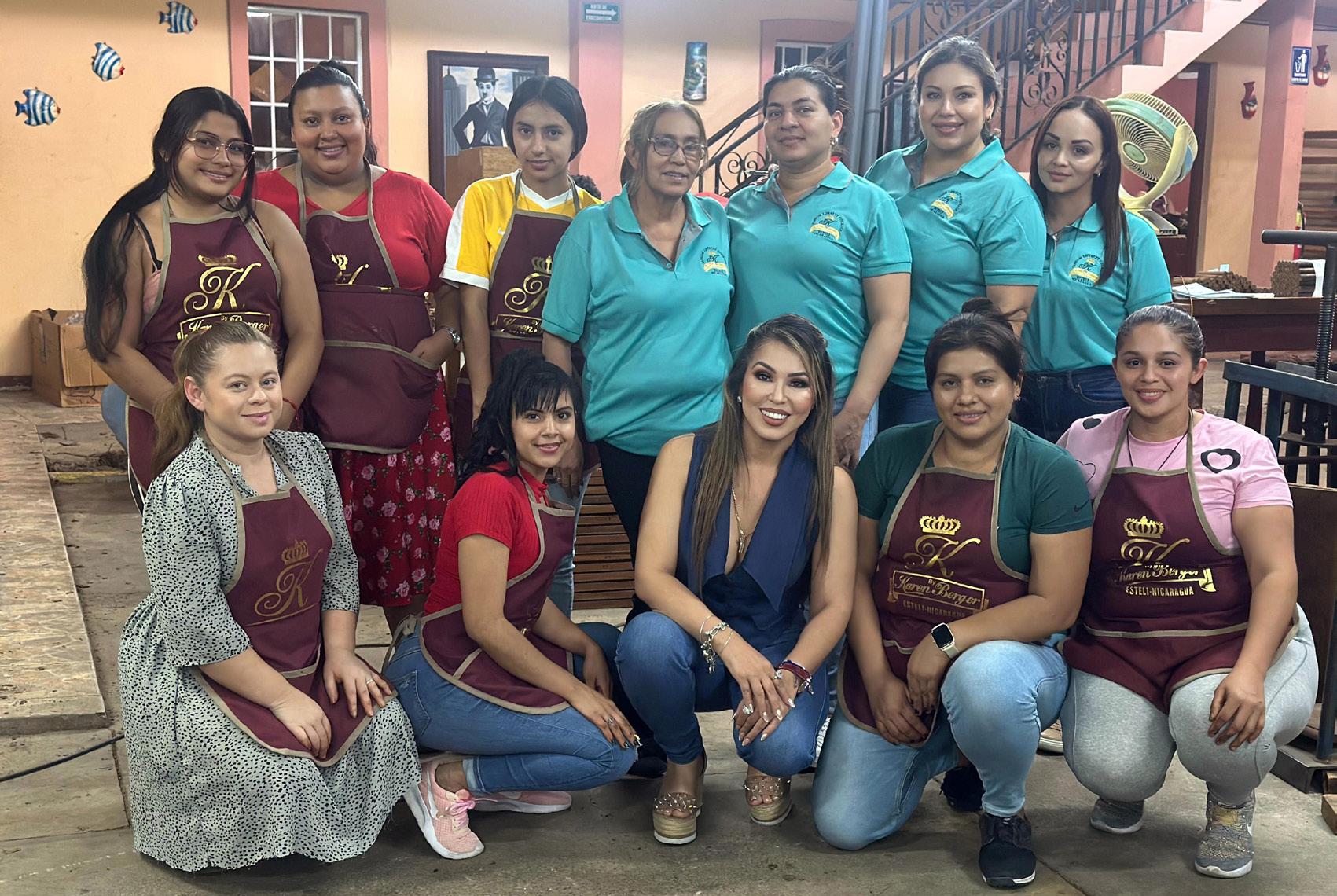
In the factory, the work is generally divided between men and women: the men as boncheros (bunchers) and the women as roleras (rollers), working in teams under the leadership of Karen Berger, who inspires them by demonstrating that a woman can handle anything.
At first, Tatiana didn’t know what to do or how to handle a tobacco leaf, but after a couple of days, she grew accustomed to it; now, she cannot see herself doing anything else. “The presentation of the product depends on our work as rollers. It’s a great responsibility, but at the same time, a great satisfaction.”
Her apprenticeship began with the Toro format (6 inches, 52 ring gauge), primarily using Connecticut wrappers. Today, she possesses the skill to craft any cigar within the Karen Berger Cigars line, as well as the wide diversity of private labels produced in this factory for the world.
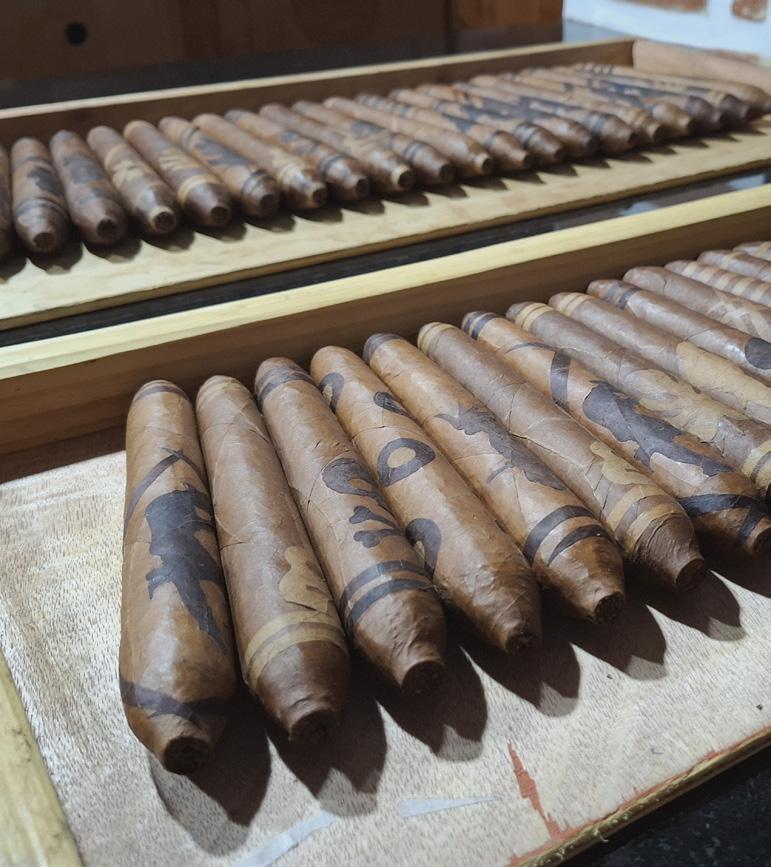
She recalls, “I spent three days standing next to those who already knew, just watching.” In her first position, she produced 150 pieces a day; now, she delivers nearly 500 cigars in basic formats and almost 400 of the more complex ones, such as figurados or double-wrappers.
Her priority is seeing her children succeed in life and giving them the opportunities she didn’t have as a girl. “And there we go, walking forward, with a small house that came from this job and my husband’s, and many more satisfactions.”
More than content and at peace working at Estelí Cigars, Tatiana has been an active advocate for more women joining the tobacco industry –especially in roles like hers at the rolling tables, where she has found the stability necessary to support her family and grow.
Rosibeth Rosita Pérez
PACKAGING DEPARTMENT MANAGER
First and Last Job
Born in Estelí, Nicaragua, 41 years ago, Rosibeth Pérez Hernández –better known as Rosita– retains few memories of her childhood, noting a happy upbringing between school and the countryside, where her father was dedicated to planting corn, beans, and chayote.
Unfortunately, her life changed when she was just 15, as her father fell ill and subsequently passed away. During this stage, the family lands were sold and that life came to an end; she found herself face-to-face with hardship and the necessity of working and studying simultaneously.
Fortunately, her first job has also been her last –always at Estelí Cigars, which at that time was celebrating the opening of a new factory with job opportunities
for many people in the numerous processes that tobacco requires before becoming a cigar.
Alongside her older sister, she secured a position among the pilones (fermentation piles), shaking and moving tobacco leaves to prevent overheating during the fermentation process.
Later, they tested their skills in tobacco stringing and stemming. Year after year, she changed roles until finally settling in the packaging area, where she has accumulated two decades of experience among bands, cellophane, and boxes.
Currently, Rosita is responsible for the entire packaging process, overseeing eight women and one man who dedicate themselves to preparing each order –in bundles or boxes– under the highest quality standards.
The process is shared among the nine people, and everyone does a bit of everything. “The same person applies the bands, wraps the cellophane, codes, and prepares the small bundles (mazitos)... There is perhaps only one specialized girl who fills the boxes, and the male worker, who sorts the cigars by color,” she explains.
On a typical workday, Rosita begins by reviewing the orders to be filled, handing out the cigar bands, the cellophane, and the codes –barcode or QR– used to identify the product. She also verifies the boxes and checks the cigar inventory.
Rosita is married and has a 17-yearold daughter who is studying Civil Engineering, a situation that fills her with pride and satisfaction at being able to offer her something she herself could not have. “Both her father and mother are here, present to support her –something I didn’t have and had to strive for on my own.”
She only hopes that the young woman finishes her degree in the coming years and finds fulfillment; meanwhile, Rosita’s plan is to continue her work at Estelí Cigars, where after nearly 25 years of history, she has been able to enjoy a good life and proper professional development.
Carmen María Vázquez ADMINISTRATOR
The Pillar of Experience
At 66 years old, Doña Carmen María Vázquez is an example of a resilient woman –like so many within this industry– who demonstrates that experience is not accumulated in vain, but serves as a pillar of support, both for oneself and for others.
Originally from Estelí, Nicaragua, she began working at the age of 14 at the Nicaragua Cigars factory –now Joya de Nicaragua– driven by the needs of a family of four siblings, where her mother worked as a domestic servant.
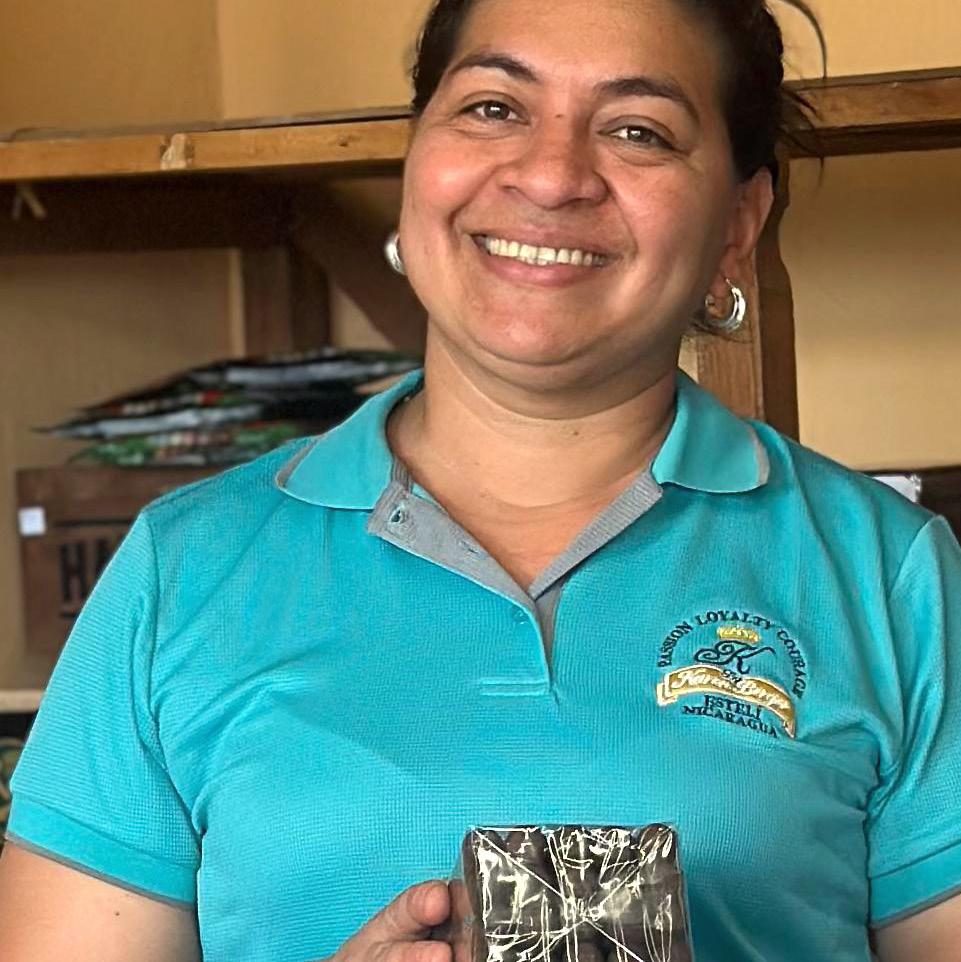
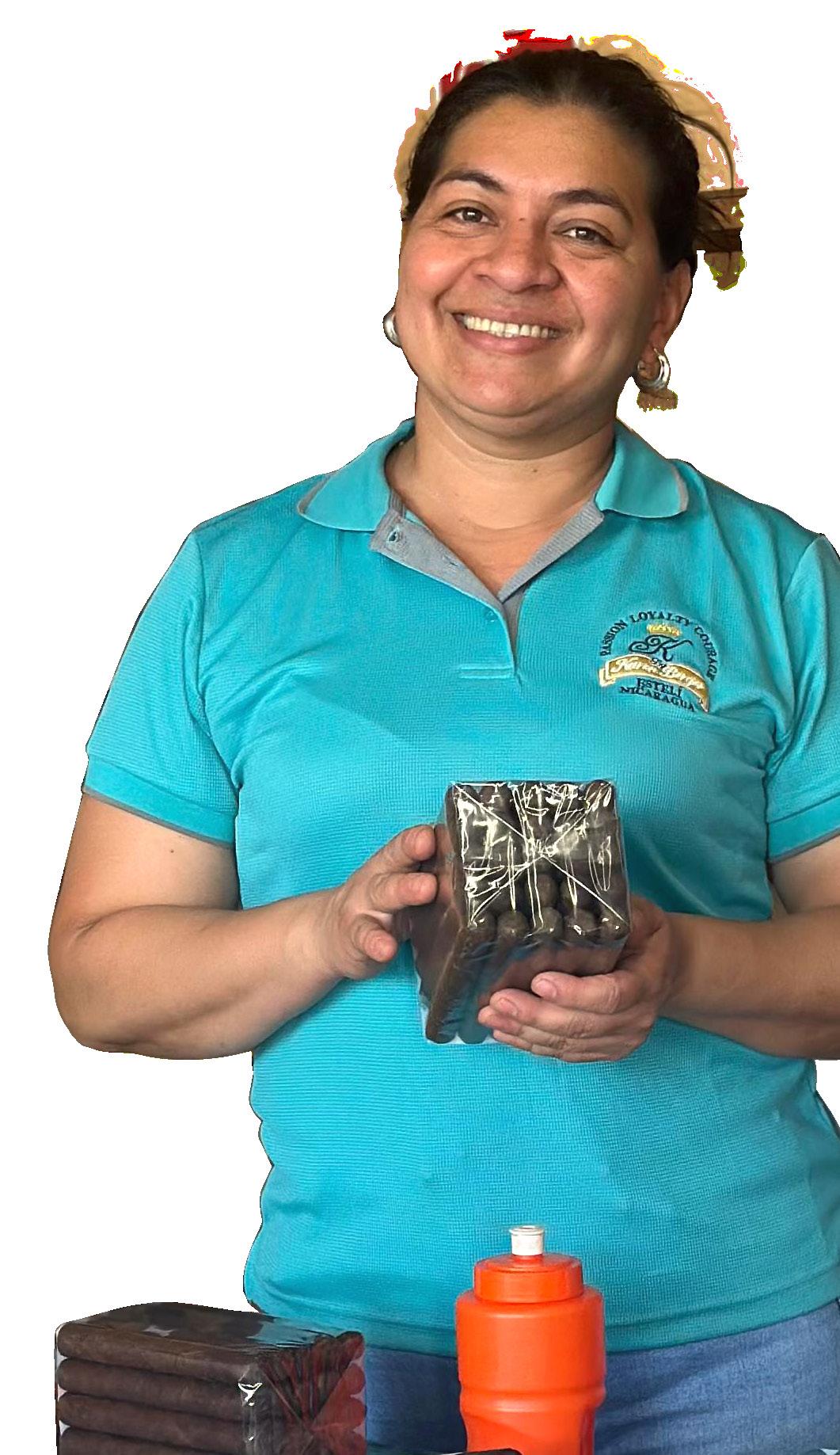
Carmen was responsible for sorting and packing cigars, a task she performed for over a decade before moving to Estelí Cigars. It was there that Don Enrique Kiki Berger saw her potential and placed her in charge of the packing area for the new company.
She performed various tasks, even on the farm, and her permanence and dedication allowed for the birth of a personal relationship that makes her part of a great tobacco family. This bond transcended the passing of Don Kiki, who had placed his trust in her to manage the factory and take responsibility for supervising every process.
Since then, Carmen arrives very early to stay informed of any issues that arose during the final hours of the previous day. Once resolved, she has her first cup of coffee, which accompanies the inventory of materials and the staff roster –which includes a hundred people in the main factory, another 70 in an auxiliary facility, and the farm workers.
Of the total workforce, more than 60 percent are women who perform tasks such as packing, rolling, and administration, leaving the heavier labor in the curing barns, fermentation piles (pilones), or the bunching of leaves to the men.
Doña Carmen also oversees international shipments, coordinating every action with an accountant to fulfill all orders contained in a folder brimming with requests from the Czech Republic, Germany, Canada, Switzerland, Hungary, Sweden, China, Cyprus, Italy, the United States, and Israel, among other countries.
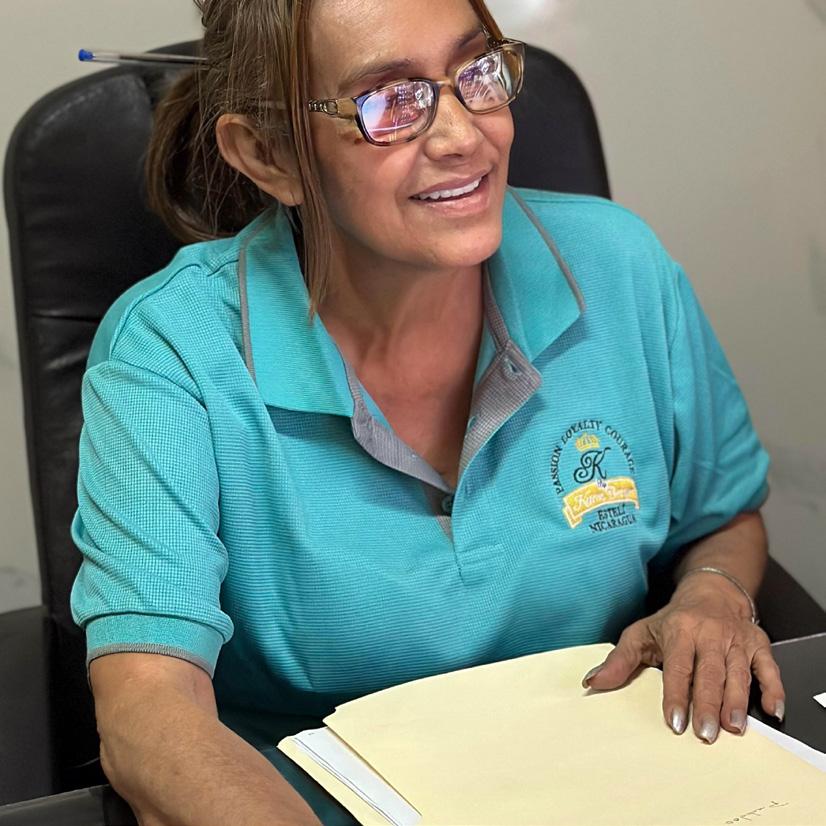
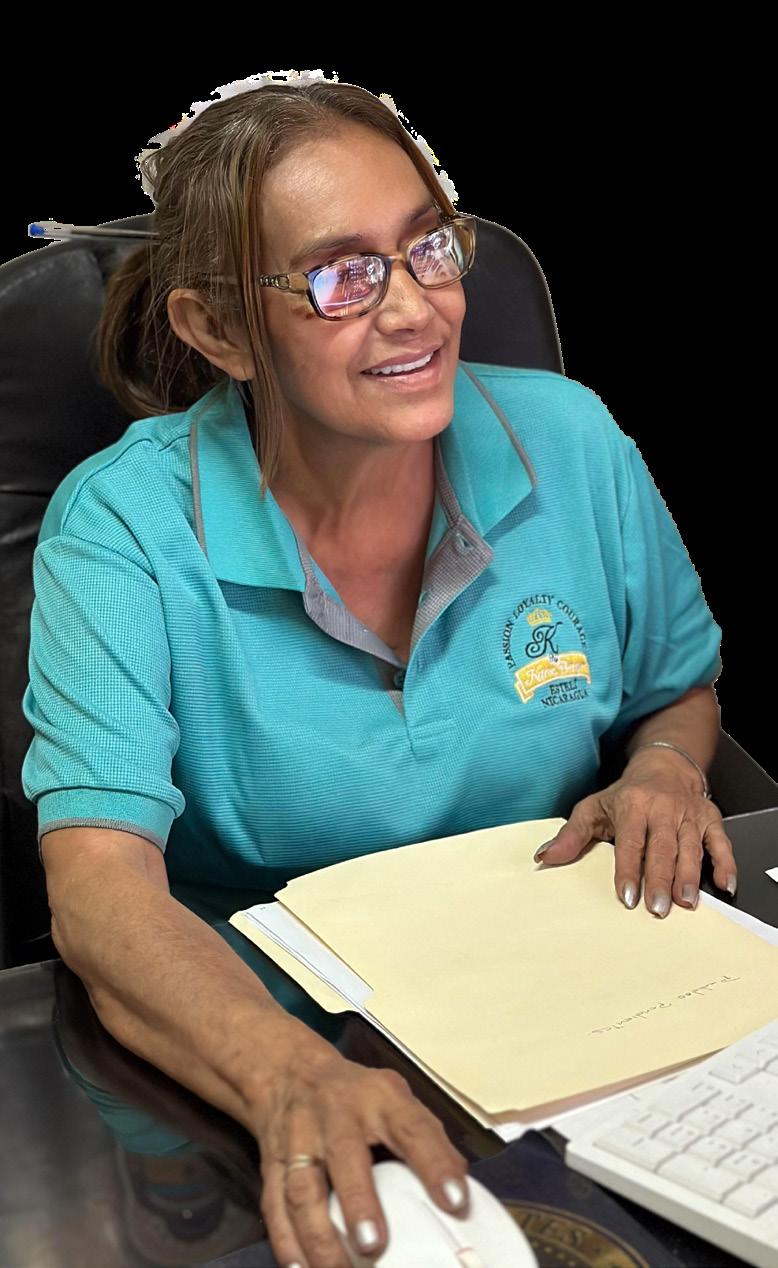
Everything she possesses is the fruit of her work at Estelí Cigars, and she feels fulfilled and proud of her career. “It has been an honor for me. I built my house and put my daughter through medical school, among many other things. To Karen, we are not workers, but family, and she makes us feel that way.”
She affirms that Karen Berger is an example of an empowered woman who has grown the company, and remembers that after Don Kiki’s death, she personally traveled to Miami to offer her support.
“Many believed back then that the lands and the factory were going to disappear, but I brought her back from Miami to resolve administrative matters, to plant, to harvest –and not a single meter of land has been sold. We women are true fighters.”
Diana Altagracia Jáquez
QUALITY CONTROL AND TRAINEE
The Heart of a Cigar Maker
Born in Moca, the capital of the Espaillat province –very close to Tamboril– in the Cibao region of the Dominican Republic, Diana Altagracia Jáquez had her first contact with tobacco in 2018 at the age of 22, when she began working as a stemmer (despalilladora) at the La Flor Dominicana factory.
She recalls that it was difficult at first, “because you start fresh, and learning is part of a process.” But over time, she adapted and mastered the task, which allowed her to be promoted and enter the Quality Control department, where she currently works.
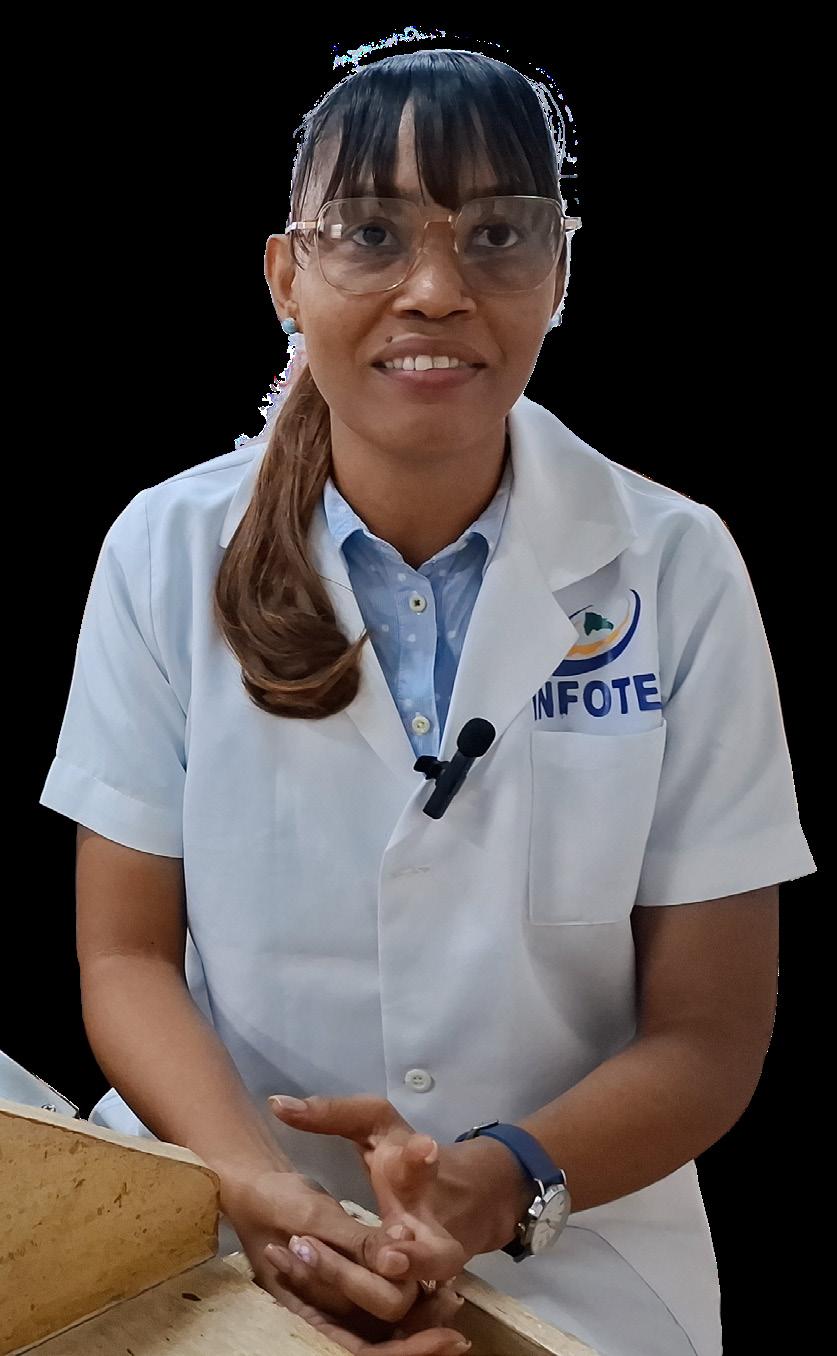
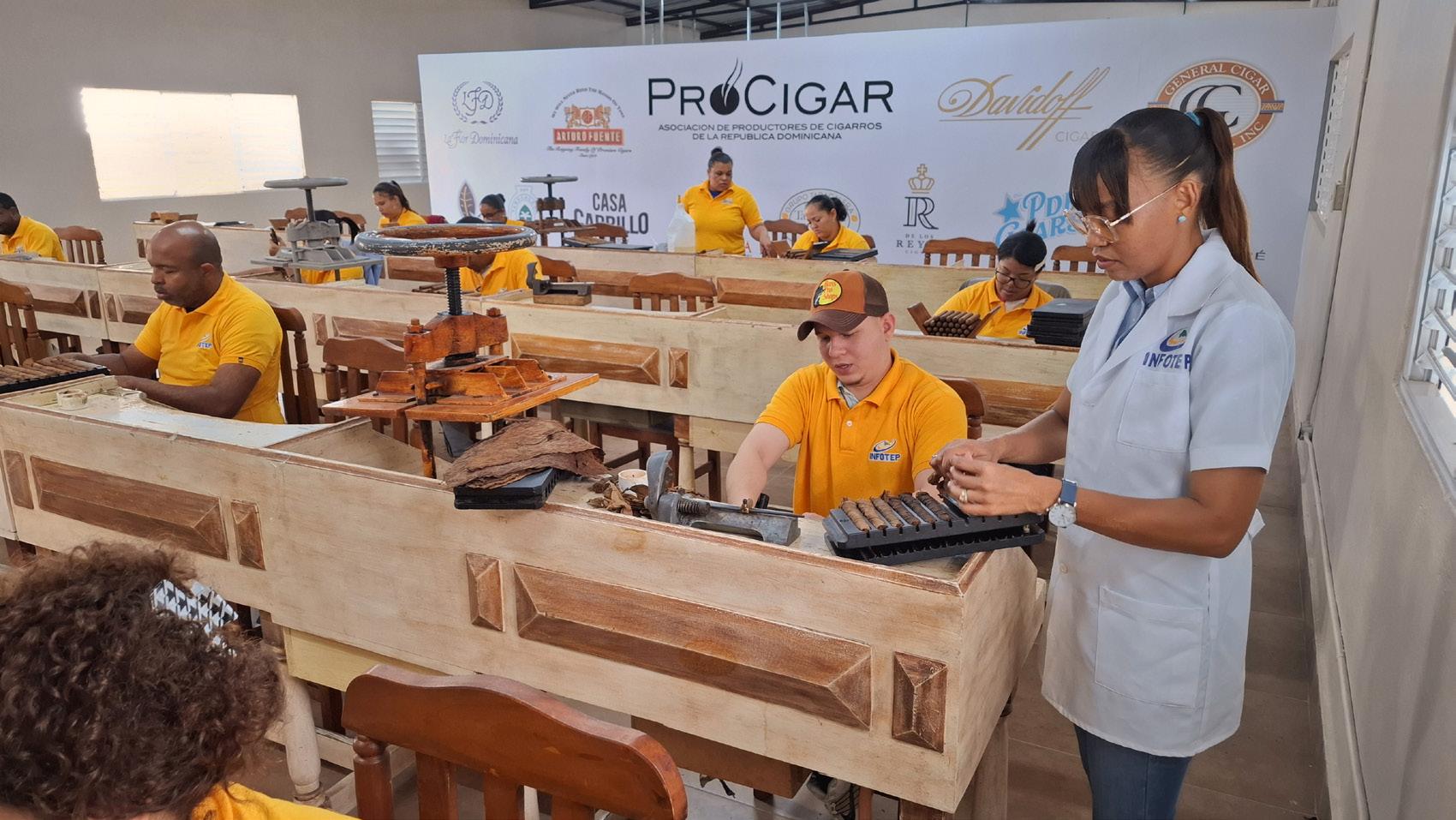
Today, she is also a student at the Tobacco School (Escuela de Tabaqueros) established in Tamboril by the National Institute of Technical Professional Vocational Training (INFOTEP), in alliance with the Association of Dominican Cigar Manufacturers (Procigar), with the aim of training a skilled workforce for the region’s industry.
Diana Altagracia says she decided to take the training course because it is an activity she truly enjoys. In fact, “back at La Flor Dominicana, whenever they held a small school session, I always joined. But unfortunately, there were situations where I had to drop out because, as you know, for one person to enter training, they have to move someone from their current post and hire another person. And many didn’t want to do that.”
But since she loves this craft and there are many female cigar makers at La Flor Dominicana, “I saw the opportunity to become one now, and I signed up for the courses. This position pays better, and I love learning how to make cigars. I say this is my calling... and I want to become one of the best.”
“To the young women who want to enter this industry, I would tell them to go for it. Learning is very good because you know where you are today, but you don’t know what situation you’ll be in tomorrow. Besides, learning new things and acquiring knowledge isn’t a burden; it’s very important because an opportunity can present itself at any moment, and you have to be prepared.”
Diana Altagracia is a smoker. She remembers trying her first cigar at the factory about five years ago. It was quite an experience; on that occasion, she felt a bit dizzy and had to drink some coffee, but she liked it. “Now I smoke normally, and it doesn’t cause me any problems.”
She also notes that, unlike before, there are more and more female smokers, and she considers Dominican tobacco to represent culture: “It is something wonderful because one lives it every day.”
Francisca Paola Paulino
INFOTEP FACILITATOR
Work as a Hobby
Teaching others the rolling techniques to finish an artisanal cigar, as well as the construction of the bunch –its inner core– is a true pleasure for Francisca Paola Paulino. She is a facilitator for the National Institute of Technical Professional Vocational Training (Infotep) at the Tobacco School recently established in Tamboril, in partnership with the Association of Dominican Cigar Manufacturers (Procigar).
She was born in Villa González –the land where, they say, the finest tobacco is grown– and moved to Tamboril, the industrial hub that crafts artisanal cigars ranked among the best in the world, which together represent one of the country’s primary exports.
Francisca shares that she has always been involved with tobacco. Her father was a grower, and from a young age, she was in the fields witnessing processes that have changed over time. “Now they are curing barns, but before they were just ranchos (shacks), and I loved going inside when the tobacco was ripe because I love the scent it releases.”
When she came of age, she enrolled in the cigar-making course at the Tobacco Institute (Intabaco), and she now has 18 years of experience. Her first job was at the Davidoff factory, but a year later she returned to Intabaco as an employee crafting cigars; it took her only one more year to rise to the position of facilitator.
“Since I began this process, I have trained many groups, and the vast majority –80 percent– are women. In the past, there were many men, but I don’t know... it seems we are taking control in almost every company.”
For Francisca, who has had the opportunity to attend international trade fairs in various countries, “It is a point of pride to say I am Dominican, as tobacco is a culture passed down from generation to generation that represents us. I feel happy to participate in this work, which
supports those seeking to enter the workforce. For me, besides being a job, it is a hobby.”
To women who wish to become cigar makers, she says: “Don’t be afraid, because developing this skill is an art that changes our lives. For example, through this, I was able to pay for my degree in clinical psychology, though I have never practiced because I fell in love with tobacco. It is my way of escaping when I feel stressed, whether working or smoking, because I enjoy it too.”
According to Francisca, to enter this free school –which offers courses in three weekday shifts and a Saturday session– one only needs to be of legal age and know how to read and write. “The age range is from 18 to 99... there is no limit.” The course lasts 78 hours, but as it is a highly practical endeavor, “it ends when you are fully qualified.”
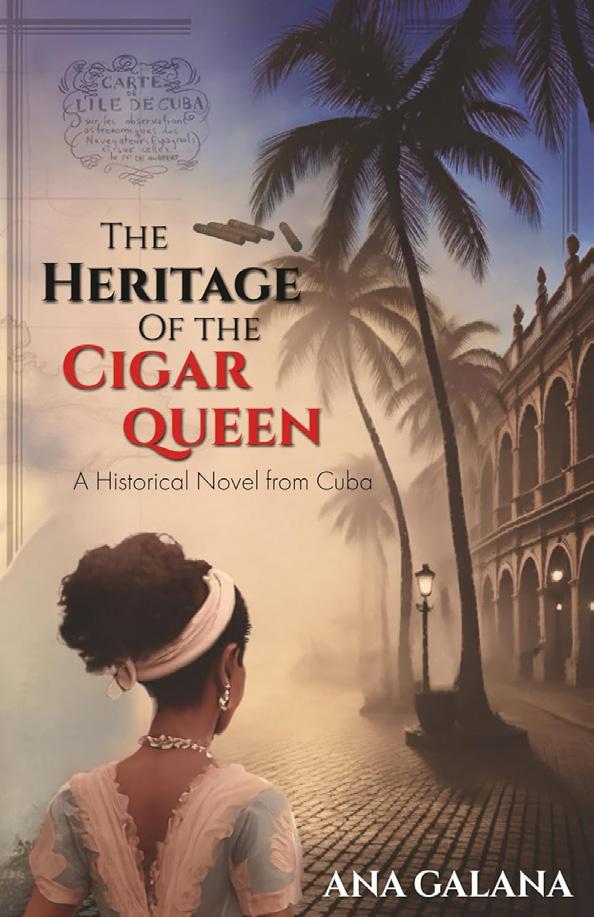
The Heritage of the Cigar Queen
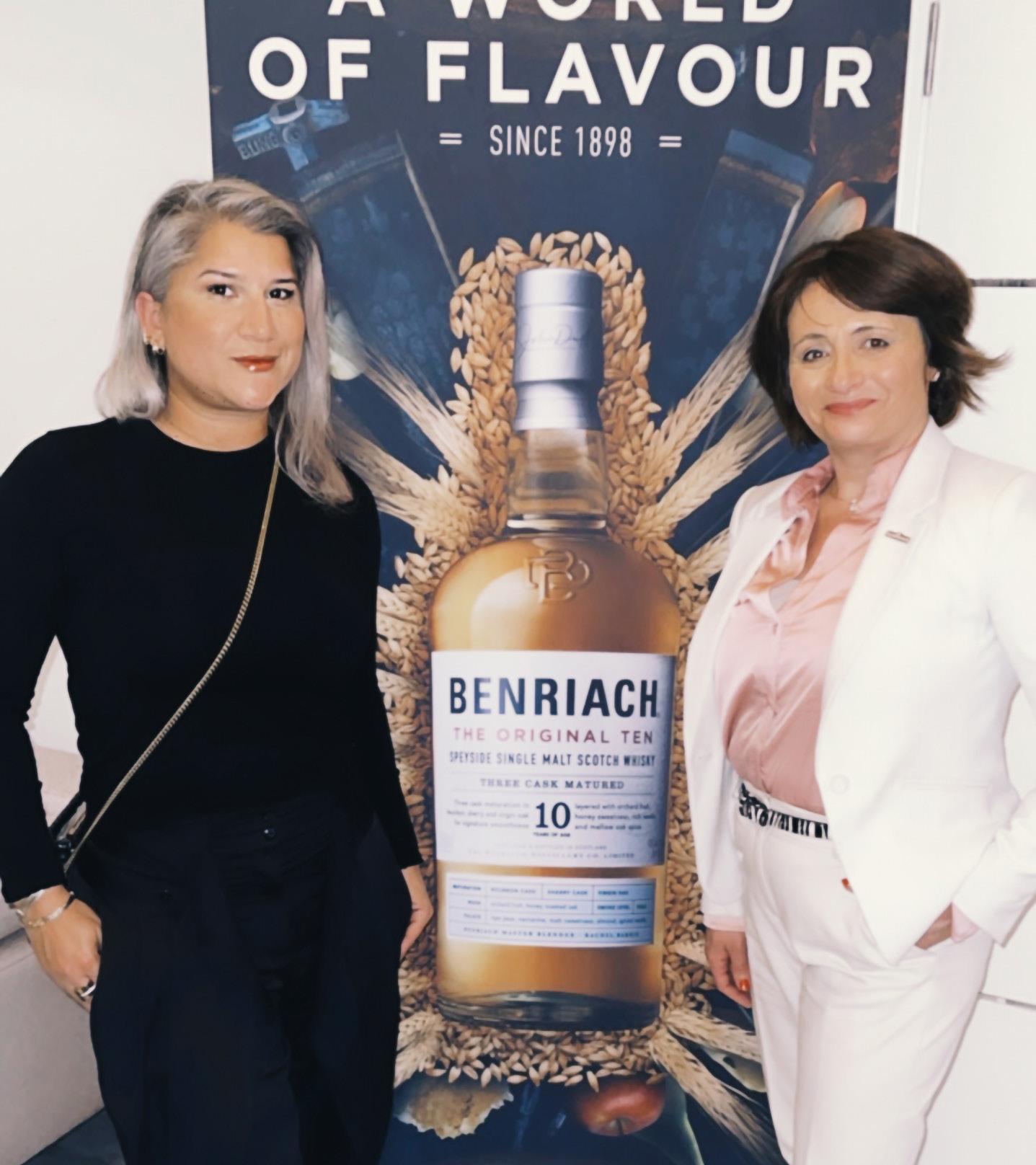
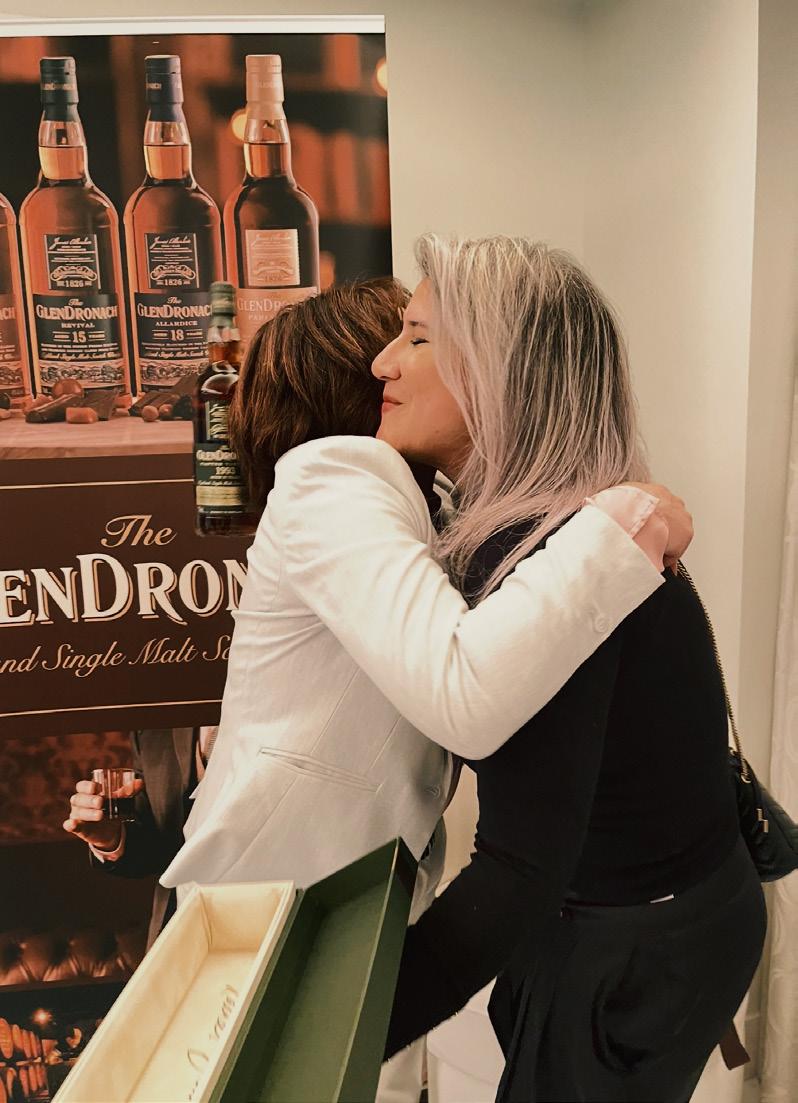
Annette Meisl and Ana Galana
Alberto Arizmendi
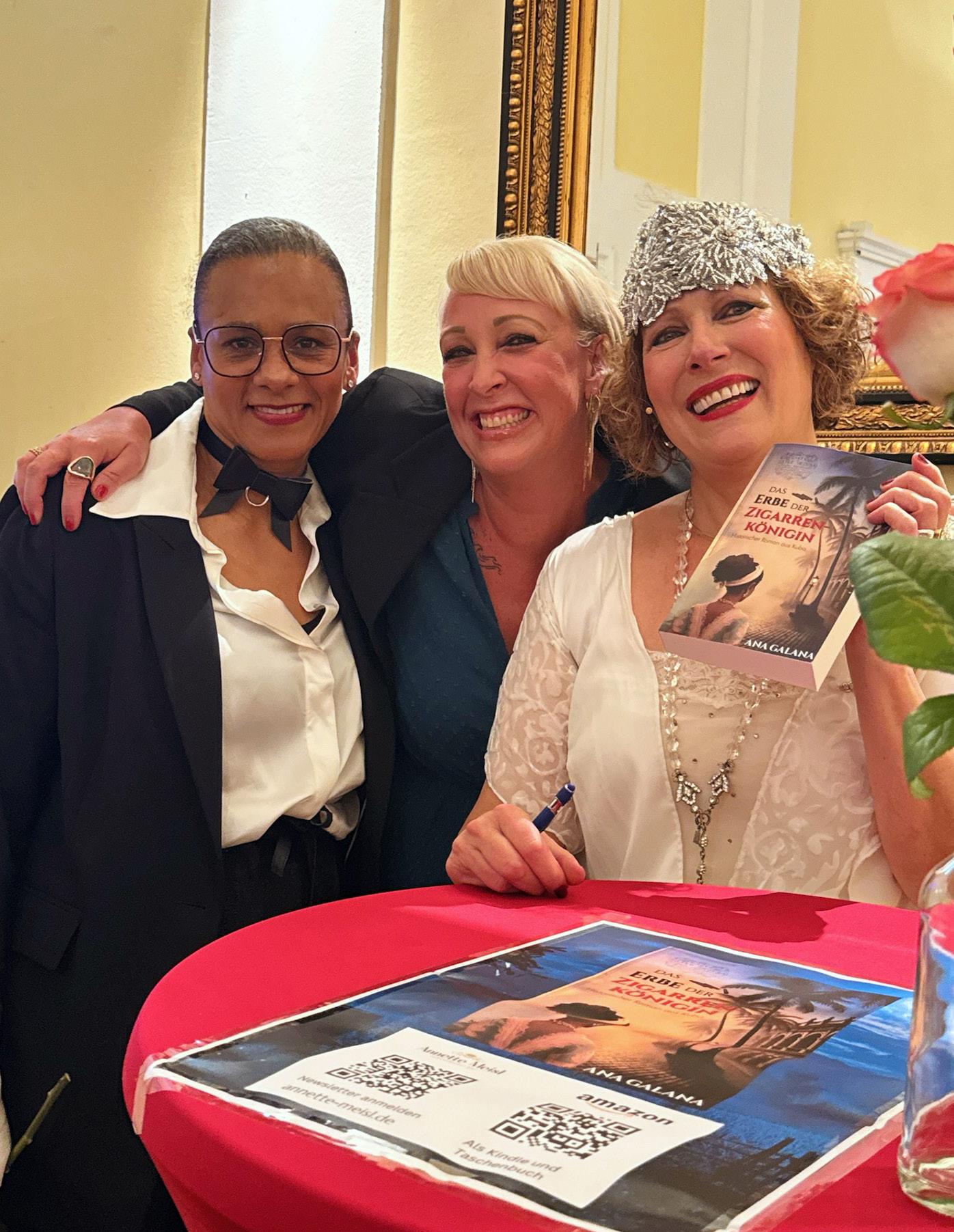
Two years after the release of the first book in the Cigar Queen saga, Annette Meisl –also known as Ana Galana–speaks to us about the English edition of the second volume (to be published in Spanish later this year). This installment focuses on the life and tribulations of Alana, the daughter of the initial protagonist, in late 19th-century Cuba.
This novel, for which a third installment is already in the works, stems from the perspective and experiences of a writer who prioritizes the role of women in the face of adversity, developing her stories across different historical contexts and weaving them into the rich culture of tobacco.
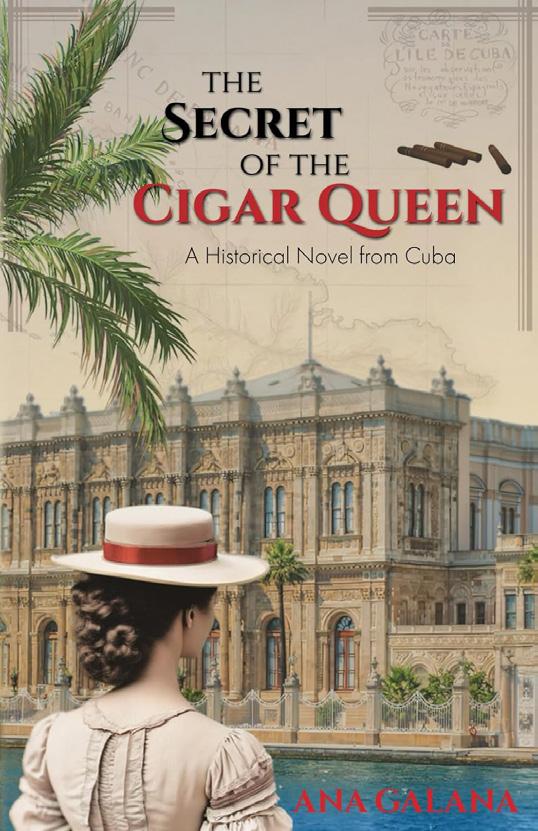
The first book in this saga was The Secret of the Cigar Queen, published in 2023. It tells the story of a young German woman of humble origins who rolls cigars –a common trade in 19th-century Bremen– and escapes her family at the age of 16. This adventure takes her to Cuba, where she falls in love with a liberto (a former slave), and together they fight for a life of dignity.
A “hidden valley” where a very special tobacco grows serves as a refuge for the couple. From their union, a daughter is born: Alana, the protagonist of the second volume, titled The Heritage of the Cigar Queen. The story spans two decades, beginning in 1868.
Alana, a six-year-old girl, is forced to leave the valley due to certain circumstances and ends up in Havana, where her life is marked by a duality between fortune and misfortune. Thus, “different situations will lead her to a great love, and she will fight for what is hers,” says Annette during a video conference interview.
She adds that the narrative is rich in historical facts, as she had access to antiquarian books on various topics of interest: slavery, tobacco cultivation, and the “lectors” of the cigar factories, for example.
According to the author, her stories –though set in the past– invite reflection on current issues such as migration, “which, besides occurring worldwide, is complicated and painful. I want to encourage an understanding of things that can happen to any of us; every day we hear stories that move us.”
The theme of indigenous heritage in Cuba is also present: “I always heard that no trace of the indigenous people remained, but that is not the case. There is a great
mixture among all kinds of people, but the footprint of the Taínos is there –in tobacco, for instance.”
Regarding the restrictions on publishing and disseminating tobaccorelated materials, Annette responds: “Look at how crazy it is... it seems like it’s the Devil’s work, because they make our lives impossible with so many laws against us. I don’t seek to harm anyone or convince them to smoke. Through my books, I am simply defending the vast culture that tobacco represents.”
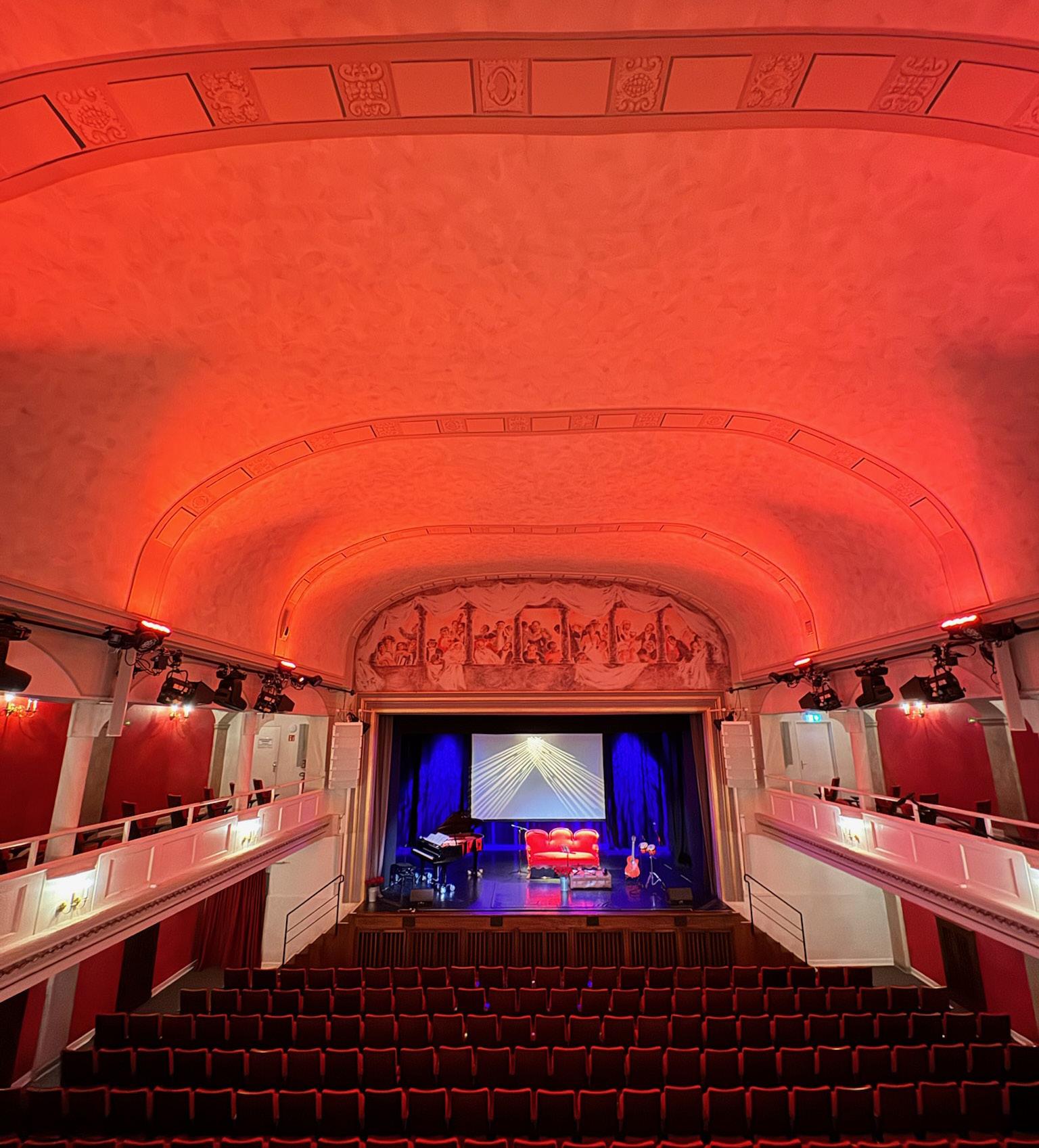
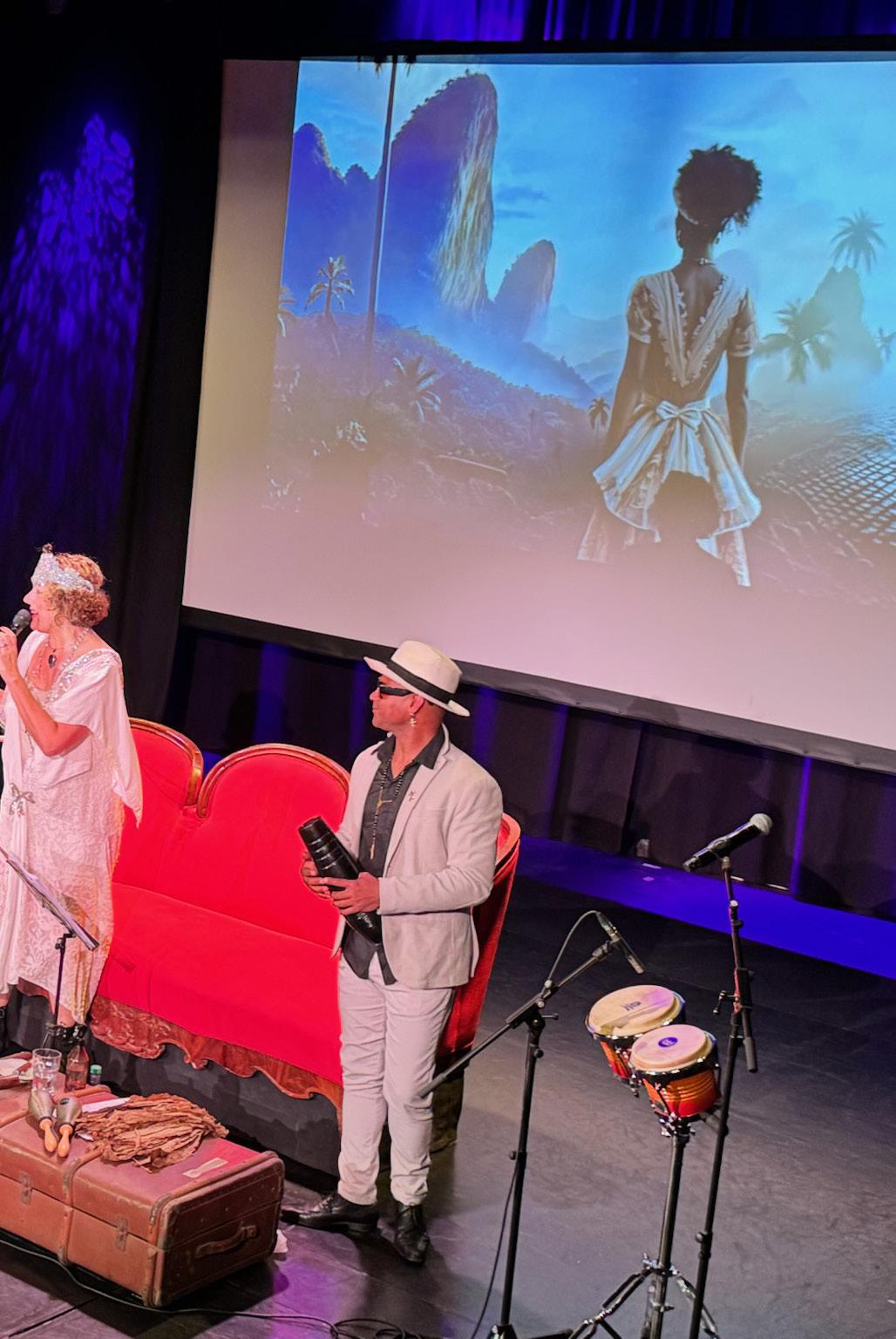
Interior of the Volksbühne am Rudolfplatz theater in Cologne, Germany.
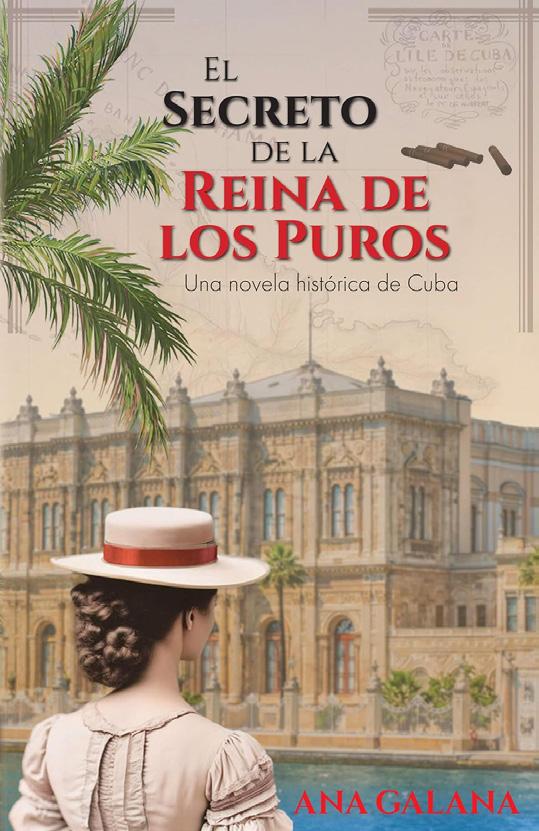
The cover of this second volume is a variation of the first but features the image of Alana, who has a darker complexion thanks to her father’s heritage. This is a self-published work through Amazon KDP (Kindle Direct Publishing) and consists of 426 pages –one hundred more than the first installment, which was published by Random House.
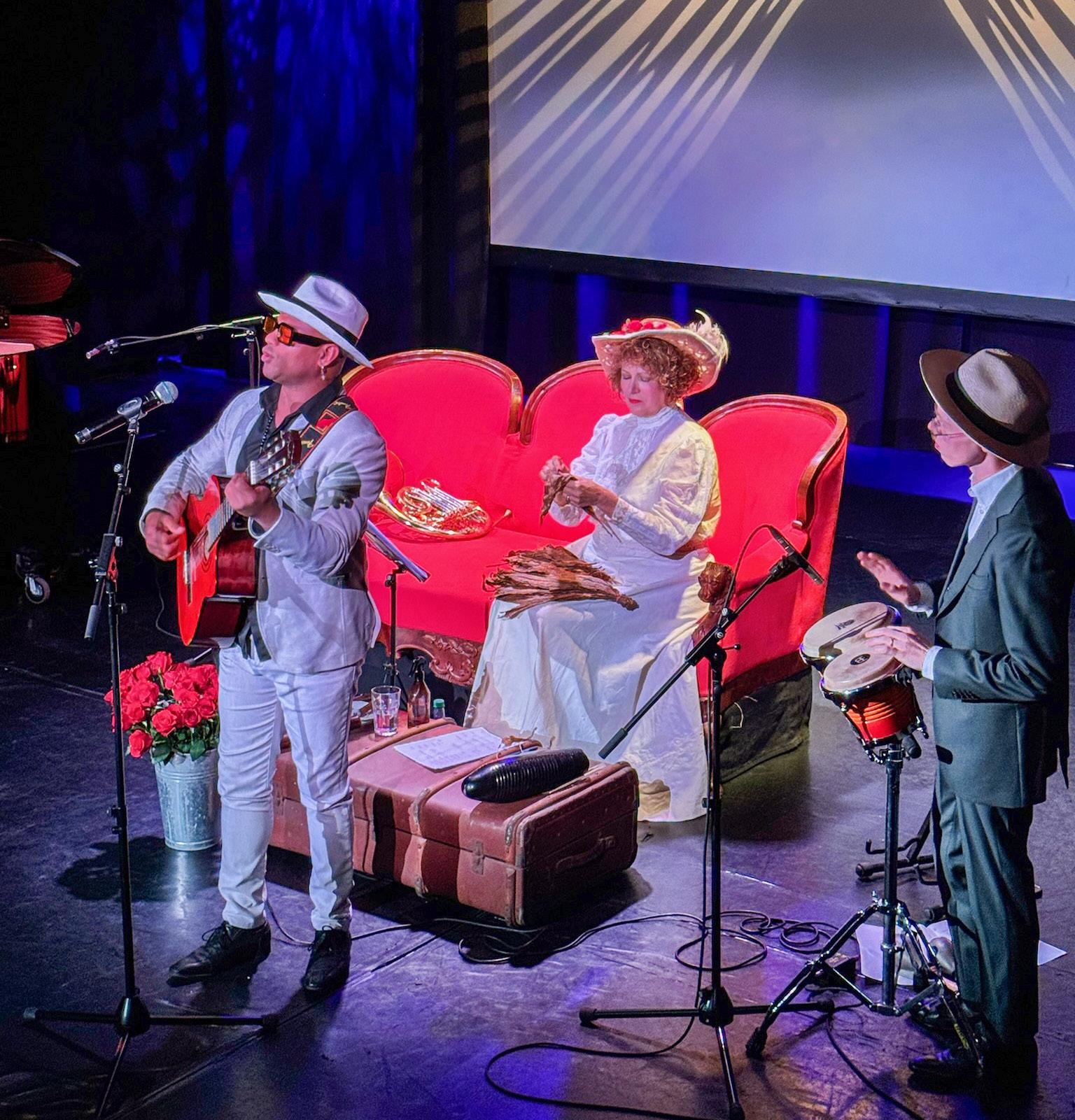
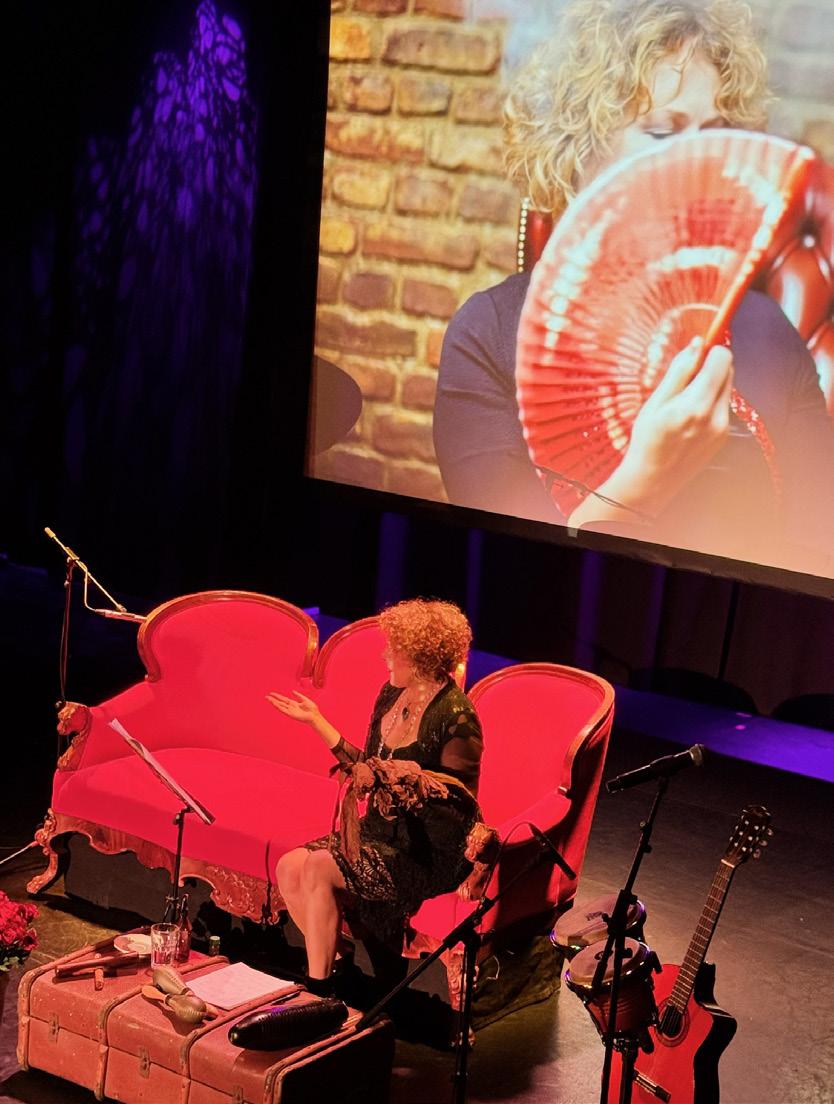
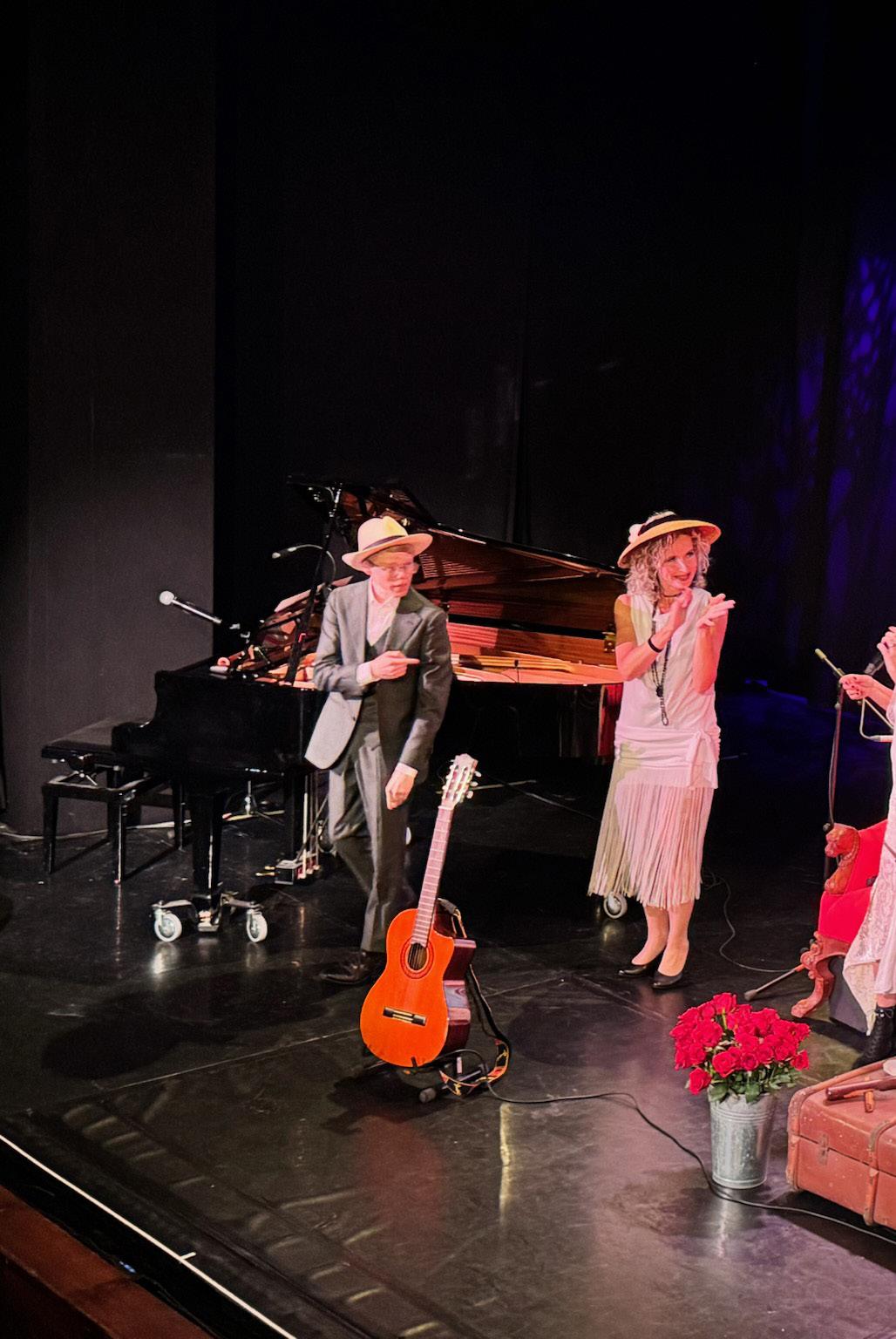
The book launch took place on May 23, 2025, at the Volksbühne am Rudolfplatz theater in Cologne, Germany, where Annette –in her capacity as a singer– staged a show that included brief readings from the work. She was accompanied by Russian pianist and singer Natalia Fehling, Cuban musician Ney Portales, and pianist Nicholas von der Nahmer.
The author reveals that she is currently writing the third volume of the saga, which covers the first decades of the 20th century. Her character is now Alana’s daughter, who travels from Cuba to Germany during the “Roaring Twenties” and the vibrant scene in Berlin: “An era of transition, pain, and hope. That is how the artist is born, how art is born...”
In a way, although Annette says she identifies with her first protagonist, she herself lived through experiences in Madrid, Istanbul, Cuba, and Colombia that she translates into her novels. “Anna Mehringer is the Cigar Queen, a woman who will have a long life, in which I see a
To purchase the book:
bit of myself. I am very excited about the story, and it has truly taken on a life of its own. I thought there would be a maximum of three volumes, but I think there will be more.”
“You may know about these things that happen to writers –suddenly the characters come to life, and we become their servants; we have to dedicate ourselves to them. It is fascinating for me because I have created the link between Germany and Cuba.”
Both volumes are available through Amazon.
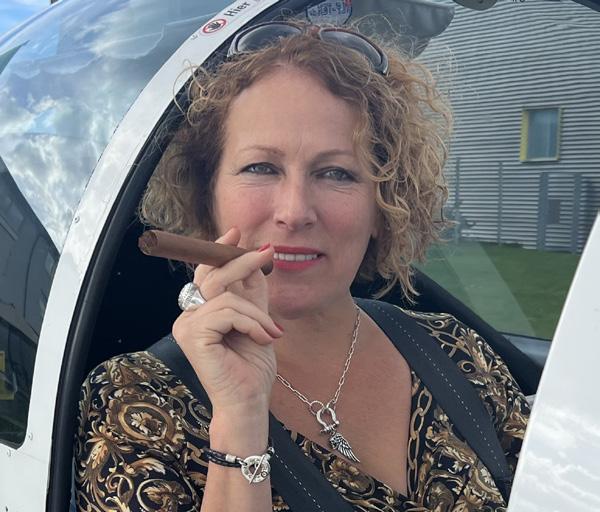
Born in southern Germany, on the border with Switzerland, Annette Meisl is a writer, actress, and singer. She began her artistic career in France, and in Spain, she participated in films, musical groups, and various projects until becoming the manager of the Damajuana theater.
As an artist representative, she met her partner, a Spanish singer and guitarist, with whom she returned to Germany and formed a tango duo. This led her to the group Vieja Trova Santiaguera, and through their influence, she traveled to Cuba, where she discovered her passion for tobacco.
Years later, she created her own cigar brand, La Galana, and opened her current tobacco shop and lounge in Cologne, Germany.
www.annettemeisl.com
ANNETTE MEISL
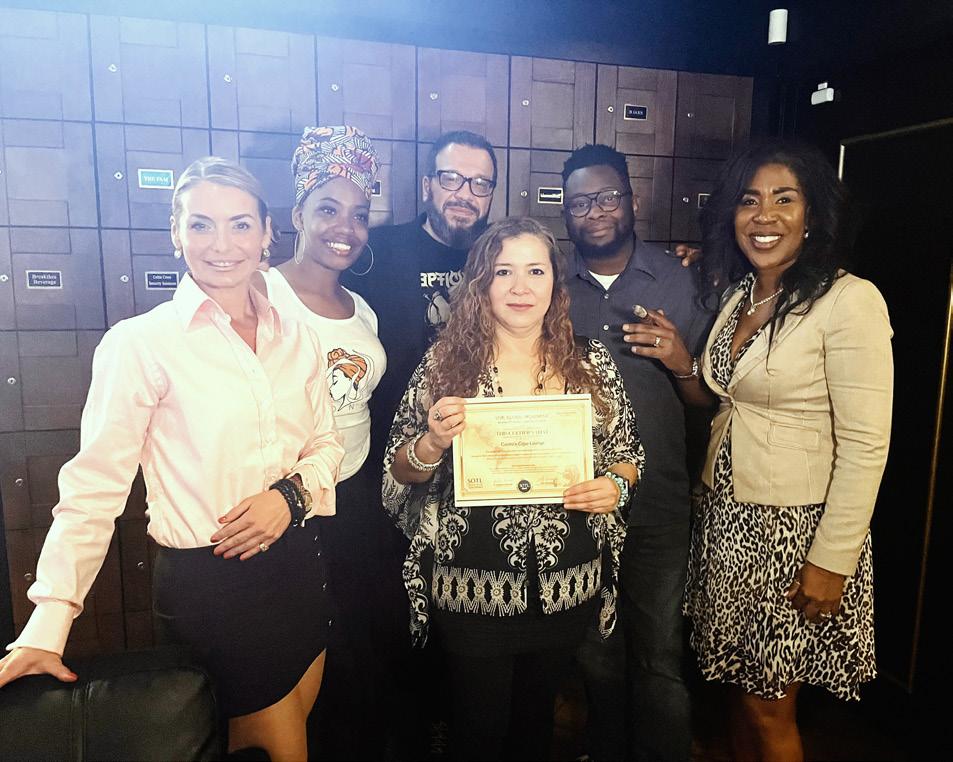
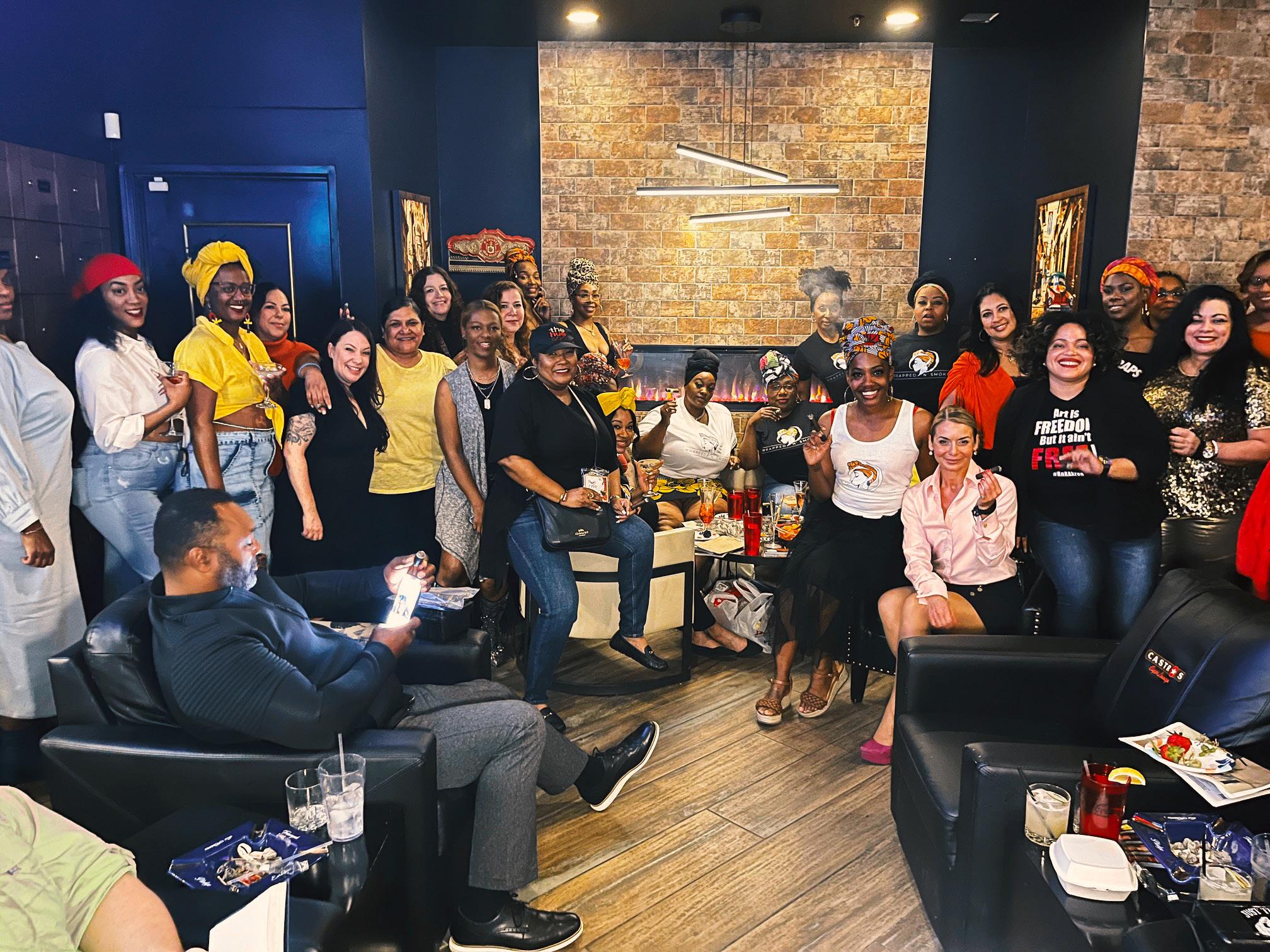
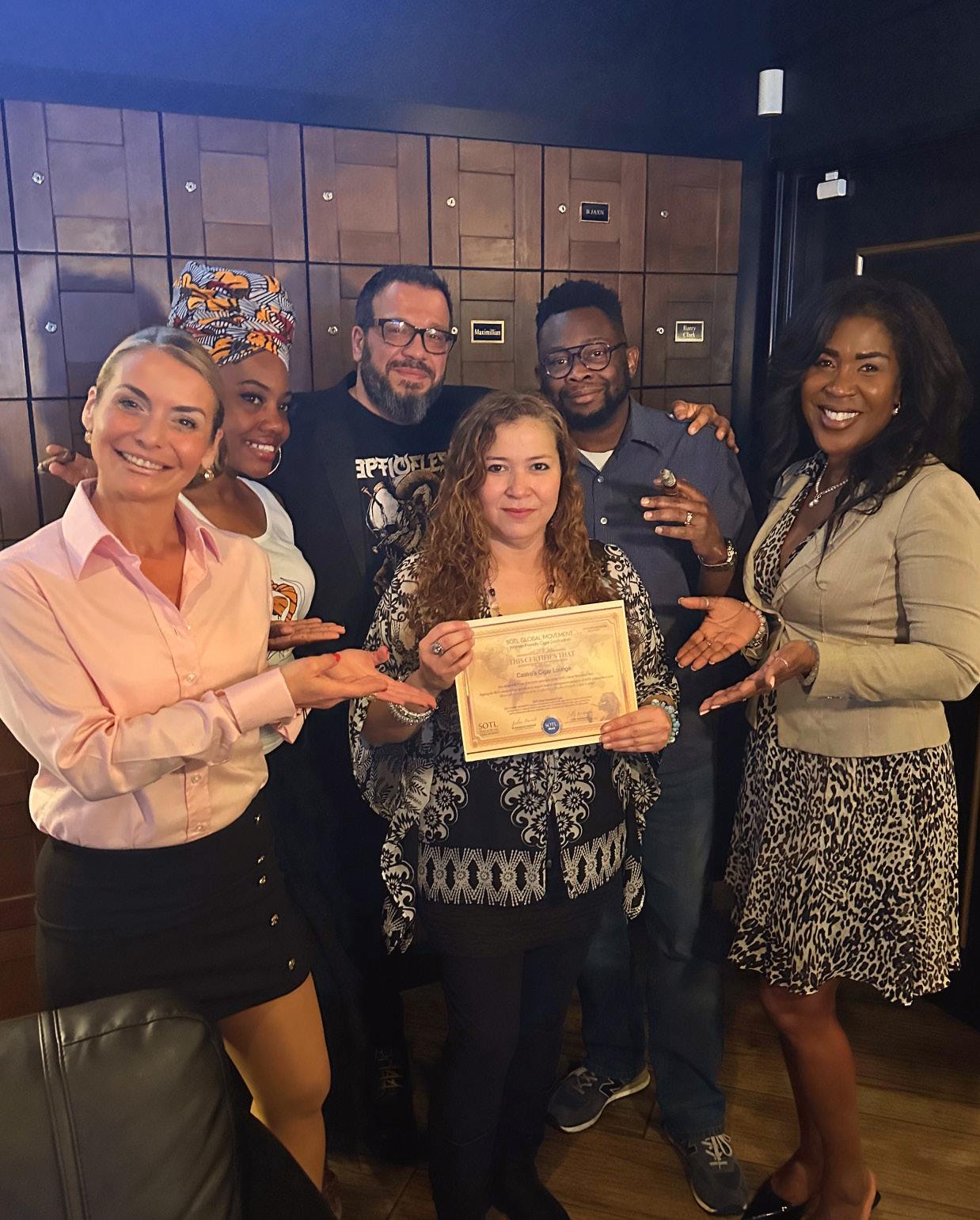
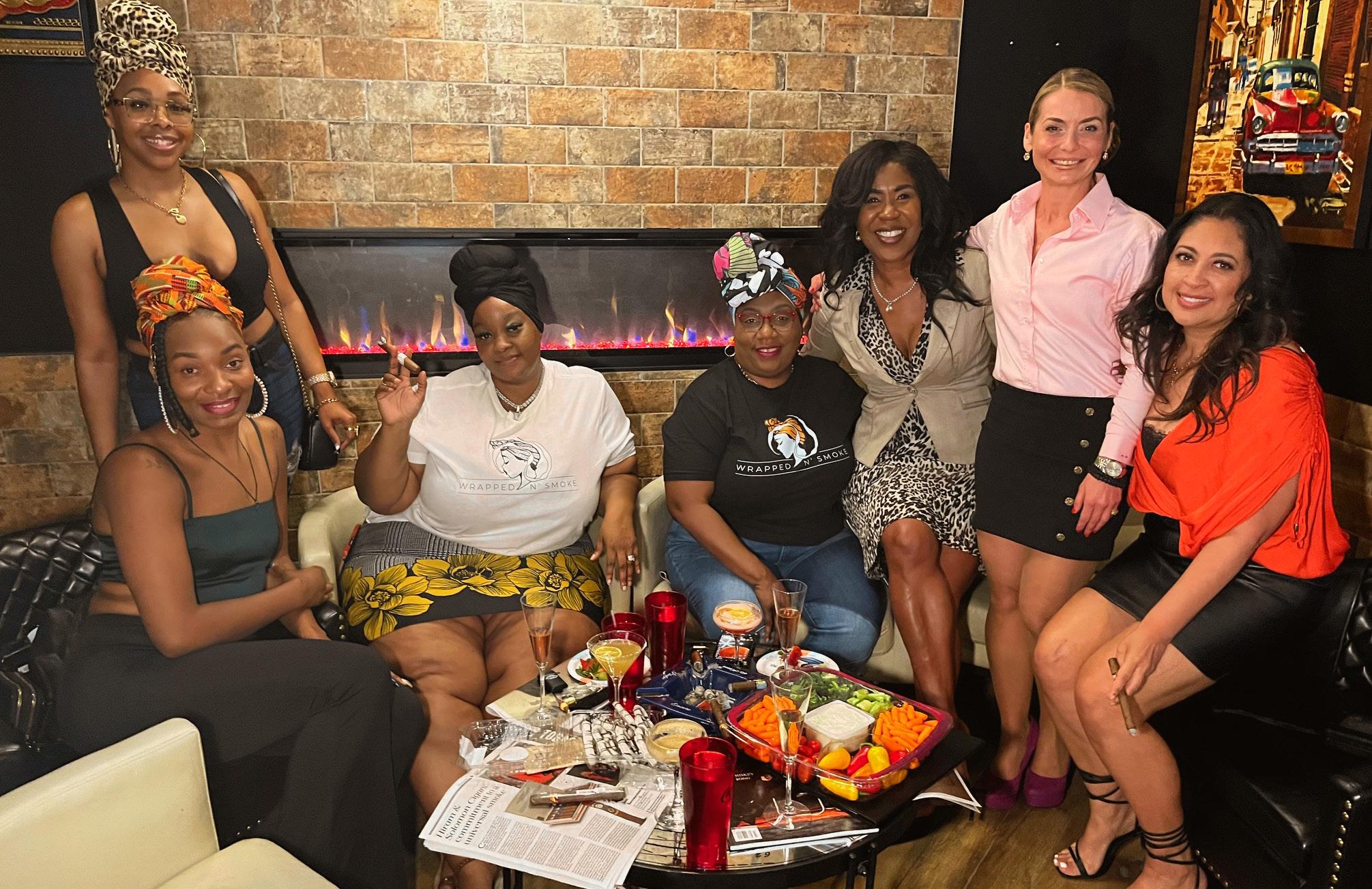
Since 2017, the Sisters of the Leaf Global Movement has been reshaping the cigar world, paving the way for a new era of empowerment and recognition for women. Founded by the visionary leadership of Dr. Anastasia Psomiadi, this movement has redefined the cigar world, making it a space that acknowledges and highlights women’s contributions.
Central to its mission is the empowerment of women, achieved through education, promotion platforms, mentorship, selfexploration, and fostering personal growth. The Sisters of the Leaf Global Movement represents a transformative shift, breaking barriers and opening doors to new opportunities for personal development and network building for both women and men.
Supported by its esteemed Advisory Board and Chief Business Development Officer, Lefty Karropoulos, the SOTL Global Movement inspires individuals, as well as local, national, and global associations, to develop similar initiatives and drive impactful change in the cigar industry and beyond.
Key Initiatives and Impact
· Education Through SGM Maestro School of Certified Cigar Sommeliers:
Education is central to SGM’s mission, represented by the Certified Cigar Sommelier Tobacconist (CCST) program. In partnership with Tobacconist University, this comprehensive certification provides participants with in-depth knowledge of cigars, equipping them with valuable skills, enhancing their expertise, and opening doors to new opportunities in the cigar industry. It empowers both women and men to excel and thrive professionally while deepening their appreciation of cigar culture.
· The SGM Maestro School of CCST Alumni:
The mission of the SGM Maestro School of CCST Alumni is to build a vibrant community of graduates, providing a platform for networking, knowledgesharing, and professional growth. Through its collaboration with Humo Latino, SGM will showcase interviews with Alumni members, available in both Spanish and English. These stories highlight their journeys, achievements, and passion, serving as an inspiration for aspiring sommeliers and contributing to the global appreciation of cigar culture.
· SGM - Women-Friendly Cigar Destinations:
SGM is transforming cigar lounges, shops, resorts, bars, restaurants, clubs, and more with its Women-Friendly Certification, setting a new standard for respectful and welcoming environments. The vision is to build a global network of SGM Cigar Destinations that uphold
these values and elevate the quality of cigar culture. Certified venues must meet specific criteria, such as offering cigars from women-owned brands, training staff, hosting educational events, and collaborating with local organizations.
· Global Dialogues and SOTL Roundtables:
For the first time in cigar history, within the principles of social responsibility and business ethics, the SOTL Global Movement initiated a groundbreaking international dialogue to present women’s stories, their perspectives on the stereotypes they have faced, potentials, achievements, and aspirations. Since 2019, the movement has organized 11 “Changemakers” Roundtables, conducted in-person, virtually, and in hybrid formats, creating a significant social impact and fostering meaningful influence in the cigar world and beyond.
· Rum Festivals Collaboration: Through a partnership with The Rum Lab, SGM provides free platforms and booths for cigar brands and lounges, bridging the gap between cigar and rum audiences at Rum Festivals across the USA. This collaboration, initiated in 2023, engages enthusiasts through VIP pairings and exclusive events, further strengthening the connection between the rum and cigar communities.
· Supporting Local, National, and Global Initiatives: SGM has mentored women and supported various initiatives, uplifting voices, empowering communities, and offering ideas, models, and access to networks. It fosters personal growth, helps set new goals, and helps initiatives and projects to succeed.
Dr. Anastasia Psomiadi: The Visionary Behind SGM
Dr. Psomiadi, as a social innovator, academic, and entrepreneur, has redefined the cigar world by integrating social psychology and sustainability methodologies into the movement’s framework. Her vision extends beyond cigars, emphasizing connectedness, the social health of cigar enjoyment, and the broader impact of every initiative that reflects respect, self-growth, and social development.
The Women Behind the Cigar
When you light a premium cigar, you see ritual, relaxation, and perhaps luxury. What remains invisible are the women behind it.
Dr. Anastasia Psomiadi
From the fields to the rolling tables, women are fundamental to the tobacco industry. They are not symbolic or supportive; they are truly essential. We see this when we walk through the farms and production galeras, as they are everywhere: in the fields, leaf selection, quality control, rolling tables... they are present, focused, skilled, and confident.
This is not new. Women have worked in the Tobacco World for generations; what is new is that we are finally talking about it.
In an industry that markets legacy, we rarely document the labor structure. If we are serious about authenticity, we must recognize who sustains the production systems. Doing so is not sentimental; it is structural transparency.
WOMEN IN THE FIELDS
A premium cigar depends on what happens long before it reaches the rolling table: women plant, monitor, harvest, inspect, and understand the leaves. They know when something is wrong and identify what quality looks like.
Countries like the Dominican Republic, Nicaragua, Honduras, and Cuba rely heavily on tobacco production as a core part of their exports –the very foundation of their national economies.
In 2024, the Dominican Republic exported over $1.34 billion in cigars, according to the Tobacco Institute (Intabaco). This sector maintains more than 122,000 direct jobs across the country, which annually produces over 8.4 billion cigars, including more than 182 million handmade ones.
These figures tell us something important: this is not a small artisanal activity, but a major economic engine. And behind that engine are women.
PRECISION MATTERS
A cigar is only as good as the selected leaf, and women typically lead this stage. They see differences others would overlook: texture, elasticity, and combustion potential. One sorter (escogedora) told me: “If the leaf is wrong, the blend fails.”
She was right; selection is risk management. A weak wrapper breaks, an uneven binder affects combustion, and a poorly judged filler alters strength and balance. When a country exports over a billion dollars in premium cigars, quality errors are not minor; they are costly. This stage protects the brand’s reputation before the cigar even reaches the galera.
ROLLING: SKILL, NOT ROMANCE
Rolling is not decorative work; it is technical. Female rollers (torcedoras) control structure, density, draw, and appearance. A single mistake affects the entire smoking experience, as a correctly rolled cigar must meet strict parameters: uniform bunching, correct pressure, structural integrity for aging, and consistent airflow resistance.
Master rollers can produce between 100 and 150 cigars a day while maintaining consistency. That level of repeatable quality is industrial discipline, not folklore.
To understand the scale: Habanos S.A., Cuba’s premium cigar corporation, reported revenues of $827 million in 2024. These revenues depend on craftsmanship where precision is not optional, but fundamental.
THE REALITY
The work is arduous, and conditions are not always easy. Many women carry a double responsibility: the factory and the home... and yet, they deliver.
At the rolling tables, there is focus, discipline, laughter, and solidarity. In Nicaragua alone, cigar and tobacco exports to the United States reached $370 million in 2024 (according to UN Comtrade data). Those revenues flow through factories and farms that rely on a steady, skilled workforce.
Tobacco income sustains households, funds education, and supports communities. When women move into supervisory roles, blending, or executive positions, they are not just breaking cultural patterns; they are influencing supply chains, quality standards, and the long-term continuity of the craft.
THE CHANGE
Change is happening, but it doesn’t happen by accident. The SOTL Global Movement was the first structured global movement to formally advocate for the recognition of women within cigar culture –not just as consumers, but as producers, leaders, and cultural contributors.
This is not a retrospective claim; it is openly recognized within the industry. Since 2017, SOTL has advised and supported women in various countries to develop their own initiatives, from local gatherings to national platforms and cross-industry collaboration. Many of the efforts visible today were strengthened through structured guidance, networking, and leadership development within this organization.
This was never about seeking attention, and it was never charity; it was a structural correction.
Some progress has been made, but recognition remains selective and uneven. Most women in the fields and factories still work without visibility beyond their company. Their names rarely appear in brand narratives, and their expertise is seldom part of marketing stories.
In some countries, additional barriers persist. Women who smoke cigars may still face stereotypes or cultural judgments, even when they are part of the very industry that produces them. That contradiction is real and deserves to be acknowledged.
Visibility alters market behavior. When women are publicly recognized as producers –and not just consumers– obsolete narratives about who belongs in cigar culture are challenged, and this strengthens the industry.
SHARED RESPONSIBILITY
The next time you light a cigar, pause. That cigar passed through hands that cultivated and selected the raw material, and then rolled it, protecting its quality.
They are not a footnote in this sector; they are its foundation.
If the premium cigar industry wants to protect its legacy, it must support and elevate the people carrying that legacy forward. Sustainability is not just environmental; it is human capital, and women are central to that equation.
SOTL CULTURAL AMBASSADOR
Recognition is important, though alone it is not leadership. If women are fundamental to this industry, the next step is structural visibility, not symbolic applause.
This is why SOTL GM created the role of Cultural Ambassador, and since 2017, it has been built on four fundamental pillars:
•Recognizing leadership.
•Elevating culture.
•Strengthening community –from local to global, women and men together.
•Driving education through the SOTL Maestro School of Cigar Sommelier.
The role of Cultural Ambassador does not create leaders; it honors women who already lead through their presence, conduct, credibility, and example. It is not marketing or influencer culture. It is a structured recognition of women who understand that cigar spaces are not just commercial venues: they are social ecosystems.
The Cultural Ambassador Roadmap
•Women identify and support “Women Friendly” Cigar Destinations.
•They protect standards of conduct and inclusion.
•They represent cigar culture with a tone of leadership.
•They naturally build bridges between businesses, civic institutions, academia, and civil society.
The future of cigar culture will not be sustained by nostalgia alone. The role of the SOTL Cultural Ambassador formalizes what has always existed in silence. We do not create power; we make visible the power that is already there.
Anastasia Psomiadi, with a roller from Tabacalera Perdomo.
In an era where diversity and inclusion reign, the cigar industry is taking significant steps toward creating a welcoming space for all enthusiasts, especially women.
As the industry evolves on a global level, expectations regarding hospitality, service, and cultural awareness evolve
alongside it. The SOTL Global Movement (SOTL GM), a pioneering organization established in 2017, invites cigar lounges, bars, restaurants, hotels, resorts, festivals, businesses, and shops worldwide to embrace this transformative vision and become a “Women Friendly” Certified Cigar Destination.
Blanca Czebouz
THE FOUNDATIONS OF THE INITIATIVE
Following three years of interviews with women from across the globe and extensive collaboration with industry experts, the SOTL GM has developed a structured global initiative designed to highlight inclusive cigar destinations. This initiative goes beyond a simple certification; it contributes to establishing a cultural standard for modern hospitality in the cigar world, recognizing establishments that align with changing expectations of respect, inclusion, and elevated experiences.
VISION:
To create a global network of cigar destinations with welcoming spaces where both women and men can immerse themselves in the rich culture of the cigar world.
WHY PARTNER WITH THE SOTL GM?
Aligning your establishment with the SOTL GM not only enhances your brand visibility but also places you at the forefront of a mission that values respect, inclusion, and an elevated cigar culture. By joining this initiative, cigar destinations can:
•Strengthen Brand Recognition: Connect with a values-driven global mission that resonates with today’s cigar consumers.
•Expand Customer Base: Attract a diverse audience while increasing foot traffic through targeted visibility.
•Gain National and International Recognition: Leverage SOTL platforms to reach cigar aficionados both near and far.
As a “Women Friendly” Certified Cigar Destination, your establishment will appear on the SOTL Global Map, making it easier for aficionados to discover your business during their travels. Furthermore, you will receive editorial mentions through interviews and articles in prominent publications such as Cigar Journal and Humo Latino, further solidifying your status in the industry.
ABOUT THE “WOMEN FRIENDLY” DESTINATION PROGRAM
The SOTL mission focuses on recognizing and promoting venues that create an inclusive environment where everyone feels welcome. The program sets a high standard for service, ambiance, and the overall customer experience.
Your path to certification begins with simple steps:
•Eligibility: Open to a variety of venues, including cigar bars, lounges, shops, cafes, restaurants, hotels, resorts, and even private clubs.
•Evaluation: Establishment owners or managers will collaborate with a local SOTL representative to complete a brief “Women Friendly” Destination Questionnaire, ensuring alignment with the program’s values.
•Product Standards: A commitment to providing a diverse cigar selection, including at least two women-owned brands and two SOTL partner brands. Establishments must also offer quality cigar accessories from recommended partners, enhancing the overall experience.
For venues that are not primarily cigar lounges, the “Women Friendly” Cigar Destination Certificate can also be obtained through an annual commitment to host at least one cigar culture event. This collaboration with SOTL and local business organizations promotes an environment that fosters community and inclusion.
A PRACTICAL GUIDE FOR GROWTH
The requirements set by the SOTL GM are not designed as restrictions, but rather as a framework for growth, allowing establishments to raise their standards at their own pace with the Movement’s support. By adhering to these guidelines, you can strengthen your partnerships, improve your customer experience, and foster a community that celebrates cigar culture.
For more information, you can access the complete “Women Friendly” Destination Guide at: https://www. sotlglobalmovement.com/sgmnetwork.
FOR INTERESTED ESTABLISHMENTS
Once accepted, destinations will receive confirmation within seven to ten business days. SOTL representatives are available to support you in becoming a “Women Friendly” Cigar Destination, providing assistance for events and experiences designed to enhance your venue’s offerings.
Let us create a welcoming space where everyone can enjoy the rich tapestry of cigar culture together! The SOTL GM looks forward to the opportunity to partner with your establishment and elevate the cigar experience for all.
A Flower for the Ladies Who Honor Our Industry
Cándido Alfonso
This is not a column of superficial courtesy, but one of sincere recognition. A flower –on behalf of the gentlemen of the industry– for the women who have sustained, strengthened, and elevated the world of premium tobacco.
Long before the spotlights, the limited editions, and the international launches, they were at the farm sorting leaf by leaf, supervising fermentations, and detecting the imperfections that define the fate of an entire harvest. The excellence of a premium cigar is not born in advertising; it originates in a discipline that has worn a female face for generations.
Without those expert hands, the ritual we proudly defend today would not exist. The evolution has been natural: from the soil to leadership.
In Mexico, Celina Turrent projects the legacy of Casa Turrent with a contemporary vision, proving that tradition and strategy can walk hand in hand. In the Dominican Republic, the owners of Quesada Cigars, Patricia and Raquel Quesada Vega, firmly uphold one of the most respected houses in the Caribbean, elevating their family name with business acumen and global vision.
Also in Santiago de los Caballeros, Lissette Pérez-Carrillo, within the structure of E.P. Carrillo, represents a generation that understands that inheriting a surname implies honoring it with hard work and excellence. We likewise recognize Inés Lorenzo, a pillar alongside the unforgettable Litto Gómez in the international consolidation of La Flor Dominicana. Behind every great house, there is shared leadership, stability, and strategic vision.
The present also vibrates with renewed energy. Leonor Abzaradel, at the helm of Platinum Nova Cigar, brings dynamism, a modern narrative, and international reach. Belkys Sánchez, with a trajectory spanning Elie Bleu, Crowned Heads, and now Rocky Patel Premium Cigars, confirms that female professionalism is not an accessory, but strategic and decisive.
Meanwhile, the consumer is evolving. Women no longer present themselves as occasional guests to the ritual; they are protagonists who ask about terroir, aging, and specific wrappers. They analyze construction, compare profiles, demand consistency, and elevate the conversation: thus, the industry matures.
As gentlemen of premium tobacco, we understand something essential: legacy does not belong to a gender. It is a shared responsibility, and the industry that recognizes merit, rather than stereotypes, is the one that will continue to grow.
Therefore, this first collective flower is for every woman working the land, in the factory, in the office, in sales, marketing, or in a lounge. For every businesswoman, executive, and aficionada... For all members of the Sisters of the Leaf Global Movement (SOTL) and for every lady who honors this ritual with character and elegance.
And now, I take a deeply personal liberty.
Isabella Alfonso, my daughter: You are entering an industry that today boasts extraordinary examples of firm, prepared, and supportive women. Observe them, learn from them, and listen more than you speak; surround yourself with their discipline, their ethics, and their mettle.
This is a business of one’s word, reputation, and legacy. Walk with dignity, build authentic relationships, enjoy every lesson, and honor your surname –but work every day so that your own name carries its own weight.
If the first flower was for all of them, this second one is only for you.
May you find mentors. May you find purpose. May you build with character.
With a father’s pride and the courtesy of a tobacco gentleman, I give you your flower.
A Toast to the Women Who Shaped Whisky
Women at the Still
Yesiré Rosa
March always feels a bit more significant to me. It is a moment when we pause to celebrate the resilience, passion, and serene strength that women bring to every industry they touch. As a woman who deeply enjoys the world of whisky, this month reminds me how beautiful it is to see more women molding an art that has been forged over centuries.
For a long time, whisky projected the image of a man’s world: distilleries, warehouses, and blending rooms steeped in male-dominated tradition and history. But today, that story is evolving, and women are helping to write the next chapter.
One of the most inspiring voices of this new era is Dr. Emma Walker of Johnnie Walker. Her work reflects something I deeply admire: the delicate balance of science, patience, and intuition that great whisky demands.
Yesiré, with Dr. Emma Walker.
But a moment that truly impacted me was meeting Rachel Barrie in person. Hearing her speak about her work with The GlenDronach and Benriach was more than just a conversation about whisky; it was a reminder that passion knows no limits.
The way she describes the character of the whisky, as well as its slow evolution in the cask, is almost poetic. Experiences like that make you realize that whisky is more than just a spirit –it is an art guided by the patience, instinct, and care that so many women naturally bring to their work.
As someone who loves sharing a good dram –sometimes paired with a fine cigar– it is incredibly inspiring to see women confidently stepping into roles that once seemed out of reach. Their presence creates not only diversity but also depth, perspective, and a new energy within the industry.
So this month, as we celebrate women all over the world, I raise a glass to those behind the stills –the ones shaping the flavor, preserving tradition, and quietly proving that great whisky, like great stories, is enriched when more voices are involved.
Cachaça: The Soul of Brazil
Michel I. Texier
CLASSIFICATION: Artisanal Cachaça aged in Castanheira (Brazilian Nutwood).
COMPANY: Bar de Paschoal.
DISTILLERY: Gramático, Descalvado.
ABV: 42% Vol. (84 proof).
AGE: 2 years (6 months in oak barrels and 18 months in Castanheira vats).
MASHBILL: 100% Sugar cane juice.
COLOR: Pale gold.
Cachaça is one of Brazil’s most emblematic beverages and a fundamental part of its cultural, economic, and social history. Its origin dates back to the colonial period, directly linked to sugar cane cultivation and the plantation system.
Its history began in the 16th century, shortly after the arrival of the Portuguese in Brazil. Colonizers established mills (engenhos) on sugar cane plantations, the production of which was sent to Europe.
During the process, enslaved Africans and laborers began fermenting the leftover cane juice –or what spilled in the mills. Over time, that liquid began to be distilled in rudimentary stills, giving rise to a strong, aromatic beverage that became the first spirit produced on a large scale in the Americas.
During the 17th and 18th centuries, cachaça became popular among slaves, rural workers, and the common people. It was cheap, easy to produce, and abundant in sugar-producing regions like Salvador and Recife. However, the Portuguese Crown sought to ban it, considering it competition for Lusitanian spirits, especially grape pomace brandy (bagaceira).
These restrictions sparked a revolt in 1600 known as the Revolta da Cachaça. In Rio de Janeiro, producers and merchants rose up against the colonial government’s prohibition, and production subsequently grew throughout Brazil.
Over time, cachaça ceased to be a marginal drink and transformed into a national symbol. During the 19th and early 20th
centuries, its distillation and storage processes were improved. Many producers began aging it in native Brazilian wood barrels, granting it unique aromatic profiles.
Today, it is considered the national spirit of Brazil, with thousands of artisanal producers and major industrial brands. Furthermore, it is the main ingredient in the country’s most famous cocktail: the caipirinha, prepared with lime, sugar, and ice.
Brazil produces more than one billion liters of cachaça per year, and the beverage is exported to numerous countries, gaining increasing recognition in the world of premium spirits.
NOSE: Predominant notes of oilseeds, especially Brazil nut (castanha-do-Pará) –also known as Amazon nut– accompanied by light notes of dried fruits and a subtle presence of black pepper.
PALATE: Creamy and smooth. The presence of castanheira is a fundamental part of its flavor structure, with light notes of semi-sweet chocolate and vanilla –highly likely originating from the barrel’s toast– as well as vegetal hints of cinnamon and clove, and a sugary profile that makes it dangerously easy to drink.
FINISH: Medium finish with a velvety profile that lingers on the palate, as do the sugar and vanilla notes; a slight dry touch, and the presence of spices and dried fruits.
COMMENTS: Cachaça is a unique spirit because it is produced directly from fresh sugar cane juice rather than molasses, as rum is. This detail completely changes its aromatic profile, which is one of the reasons it holds a distinct identity among Brazilian spirits.
PRODUCTION
It all begins with the sugar cane, which is cut when it reaches its optimal ripeness. In artisanal production, it is processed a few hours after harvest to prevent sugars from degrading or unwanted fermentation from beginning. This is key to maintaining fresh, herbal, and slightly fruity aromas in the drink.
The cane is fed into mills where it is pressed to extract its juice, known in Brazil as garapa –highly rich in natural sugars, aromatic, and slightly vegetal. At this stage, it is also filtered to remove fibers and solid residues.
The juice is placed in fermentation tanks where yeast is added. Depending on the producer, they may use natural yeasts present on the cane or selected yeasts.
Fermentation usually lasts between 12 and 36 hours, producing a “cane wine” with approximately 7% to 10% alcohol. During this phase, many aromatic compounds are generated that will define the final character of the cachaça.
The fermented liquid is generally distilled in copper pot stills, and there are two main methods:
Artisanal Cachaça:
Distilled in batches, separating the fractions:
▶“Head” (undesired volatile compounds),
▶ “Heart” (the purest and most aromatic part), and
▶ “Tail” (heavy alcohols).
▶ In quality cachaça, only the Heart is used.
Industrial Cachaça:
Distilled in continuous columns, which allows for the production of large volumes but with a more uniform aromatic profile.
After distillation, cachaça can be bottled directly (cachaça branca or prata), rested, or aged in barrels.
In the aging process, Brazil has enormous diversity because many native woods are used –something very different from the world of whisky or rum. There are more than 30 authorized types of wood, which creates very distinct aromatic profiles.
The commemorative edition for the 45th anniversary of Bar do Paschoal is produced in five different types of wood; the one reviewed here is finished in castanheira vats.
La Aurora 107 Original Robusto & Glenmorangie Quinta Ruban, 12 Years Old
The Silent Conversation
Because sometimes a pairing isn’t thought out; it’s heard
Gastón Banegas (*)
Ibegan this pairing one afternoon at home, during one of those moments of clarity when one decides to give free rein to intuition. I had smoked La Aurora’s 107 Original many times, and just as often, I had poured a glass of Quinta Ruban to let its dark sweetness speak for itself. But that afternoon, both crossed my mind with unexpected naturalness, as if they recognized each other. I understood then that it wasn’t about forcing an encounter, but about allowing it to happen.
The history of these two houses helps us understand this dialogue. La Aurora, founded in 1903 in the Dominican Republic by Eduardo León Jimenes, is the dean of its country and an unavoidable benchmark for Caribbean premium tobacco.
The 107 Original was born to commemorate those years of history, with a blend designed to express balance and depth: an Ecuadorian wrapper from Sumatra seed; a Dominican binder and filler with a presence from the Cibao Valley, and a Nicaraguan contribution that provides structure and nerve. It is not an exuberant cigar; rather, it knows how to converse.
On the other side of the Atlantic, in the Highlands of Scotland, The Glenmorangie has been distilling since 1843 in stills that are among the tallest in the industry. This verticality is no minor detail: it encourages a lighter, more ethereal distillate, which is later transformed by time and wood.
The Glenmorangie Quinta Ruban 12 Years Old belongs to its extra-maturation series: it first rests in ex-bourbon American oak barrels and is then moved to Ruby Port pipes from Portugal. That second aging is what provides the “twilight”: dark chocolate, ripe fruits, and a vinous note that doesn’t invade, but rather embraces.
I settled into a chair, poured the glass, and examined the cigar, as I usually do before lighting. The silent conversation was beginning. The pre-light analysis revealed a silky, slightly oily wrapper with a deep colorado tone. Cold draws brought forth cocoa powder, dry wood, and a barely hinted fruity undertone. The first sip of the whisky confirmed the hunch: plums, candied orange, dark chocolate. There was no stridency; there was affinity.
During the first third, the smoke was contained and elegant. Light woods, soft cocoa; a natural tobacco sweetness that didn’t need to be exaggerated. When accompanied by the Quinta Ruban, the
chocolate became sharper, and the whisky’s fruits found an echo in the cigar’s slight vegetal sweetness.
From a simple perspective, chemistry helps explain it: the phenolic compounds that the wood yields to the whisky during aging –vanillin, eugenol– dialogue with the essential oils and natural sugars present in fermented tobacco. More than magic, it is sensory interaction; distinct molecules that, together, amplify similar perceptions.
The second third brought more body. The 107 Original unfolded darker cocoa, soft coffee, and a firmer woodiness. The whisky, aerated in the glass, revealed its spicy side and the depth that the Port cask patiently imprints. Here, the pairing found its center: the cigar’s structure sustained the vinous sweetness of the single malt, which, in turn, rounded off any edges, providing the whole with an almost creamy texture. The conversation became a fluid exchange, without overlaps.
In the final third, as the tobacco concentrated its character, more intense notes appeared –a noble bitterness reminiscent of pure cocoa. The Quinta Ruban responded with riper black fruit and a slightly dry echo that balanced the finish. Nothing imposed itself. Both accepted the passage of time and the natural transformation that occurs as the ember advances and the liquid breathes.
Why do we pair? Perhaps because we seek meaning. Because we sense that two stories, when they meet, can tell us something new about ourselves. That afternoon, I understood that pairing is not a technical demonstration or an exercise in precision, but an act of listening.
There is a silent conversation that happens between wood, tobacco, and time. We only sit in the middle, attentive, and let them speak. When the smoke dissipates and the glass is empty, no list of notes or precise analysis remains: we are left with the feeling of having witnessed something that, for an instant, made perfect sense.
(*) Gastón Banegas. Habano sommelier and enthusiastic smoker, he is passionate about whisky and pairings. He lives in Buenos Aires, Argentina, and writes about premium tobacco and sensory culture.
History Since 1872
Ron Matusalem, Gran Reserva
From crafting Sherry and Brandy in Santiago de Cuba to becoming one of the pioneers of Solera system rum production in that country, Pablo Nonell was a Spanish immigrant who took his passion to new horizons –exceptionally symbolized by his brand’s icon: the swallow.
Gonzalo Romero S. @gorosacigar
Born in 1834 in Lloret de Mar, a Catalan municipality on the Costa Brava, Pablo Nonell’s traveling soul led him to seek new horizons. He settled in the city of Santiago, Cuba, where, as a true Spaniard, he established a business producing Sherry and Brandy. This background allowed him to develop a vision for producing rum using the Solera system, creating Matusalem –the spirit that would mark a turning point in the history of the beverage.
MATUSALEM, GRAN RESERVA 18
Aged using the Solera system with rums matured for up to 18 years in French oak barrels. To the eye, it is a mahogany-colored liquid with golden tones against the light. On the nose, notes of vanilla and caramel emerge. On the palate, it is complex and intense, with hints of vanilla, coffee, and butterscotch. We find a rum with personality at the finish; while not overly complex, it is very pleasant on the palate. Ideal for sharing amidst “good smoke.”
Do not forget to share your comments. Remember that “gratitude is an expression that increases happiness and attracts success.”