HUMBER ET CETERA







Ann Camille Snaggs Senior Reporter
Students and staff navigating icy walkways on campus this winter may be stepping onto safer ground — not just for themselves, but for the environment too.
Since winter 2023-2024, crews from Humber’s Capital Development & Facilities Management (CDFM) have gradually been phasing in the use of beet brine as part of its ice-management strategy.
The beet brine the CDFM uses is made from a 70:30 mix of beet juice and salt brine liquid. Beet juice is a natural by-product of sugar beets. CDFM sources this product from a Canadian supplier at a fraction of the price of salt.
In a written statement, the CDFM said this winter, “beet brine is being used exclusively as a pre-treatment on Humber’s walkways, ramps and stairs 24-48 hours before snowfall is expected.”
Although many municipalities have used road salt for years as an effective roadway de-icer, it is harmful to the environment. When it rains, road salt gets washed away into the earth and into rivers and streams. The salt can alter the chemical makeup of the water, which can, in turn, pose
harm to plants, fish and wildlife.
Gabi Hentschke, Humber Sustainability, Communications and Engagement Coordinator, said that beet brine is a more sustainable option than salt.
To promote awareness of Humber’s use of beet brine on the walkways, Hentschke made posters and placed them around campus. She also made an HTV ad.
“Salt does impact infrastructure,” she said. “It corrodes surfaces and materials, and the beet brine does not do that.”
Beet brine causes less of a negative impact than traditional road salt, because the salt content in beet brine is only 23.3 per cent compared to regular salt, which is 100 per cent.
Humber is not the first to incorporate beet brine into its winter maintenance toolkit. Cities across Canada, such as Calgary, Winnipeg and even Toronto, have adopted it to minimize their environmental impact.
Beet brine has been found effective in all types of winter weather conditions, but it comes down to timing and the type of snow being dealt with.
As explained to us in a written statement from Scott Iles, Grounds Maintenance Coordinator, CDFM, “Colder dry snow will melt very well with beet brine post snowfall; [for] wetter heavier
snow, it’s better to pre-treat the ground and scrape it off after with a plow. This is due to the different moisture content of the snow.”
“We have even used the beet brine to effectively control freezing rain as it creates a coating on the walkways that prevents ice and snow from bonding to the surface.”
Road salt is still in use on campus in some conditions, for safety reasons, like right after plowing, for improved traction on icy surfaces, and between zero and -10 degrees, when salt melts
ice faster than beet brine.
Currently, however, there is a salt shortage in Ontario, so CDFM is relying more on beet brine for their ice management needs. Unfortunately, depending on the temperature, beet brine can take longer to melt ice, so it could cause slippery conditions, with none of the traction that salt would provide.
There’s also a somewhat unusual smell. This is because beet juice is an organic material that is breaking down while doing the job.
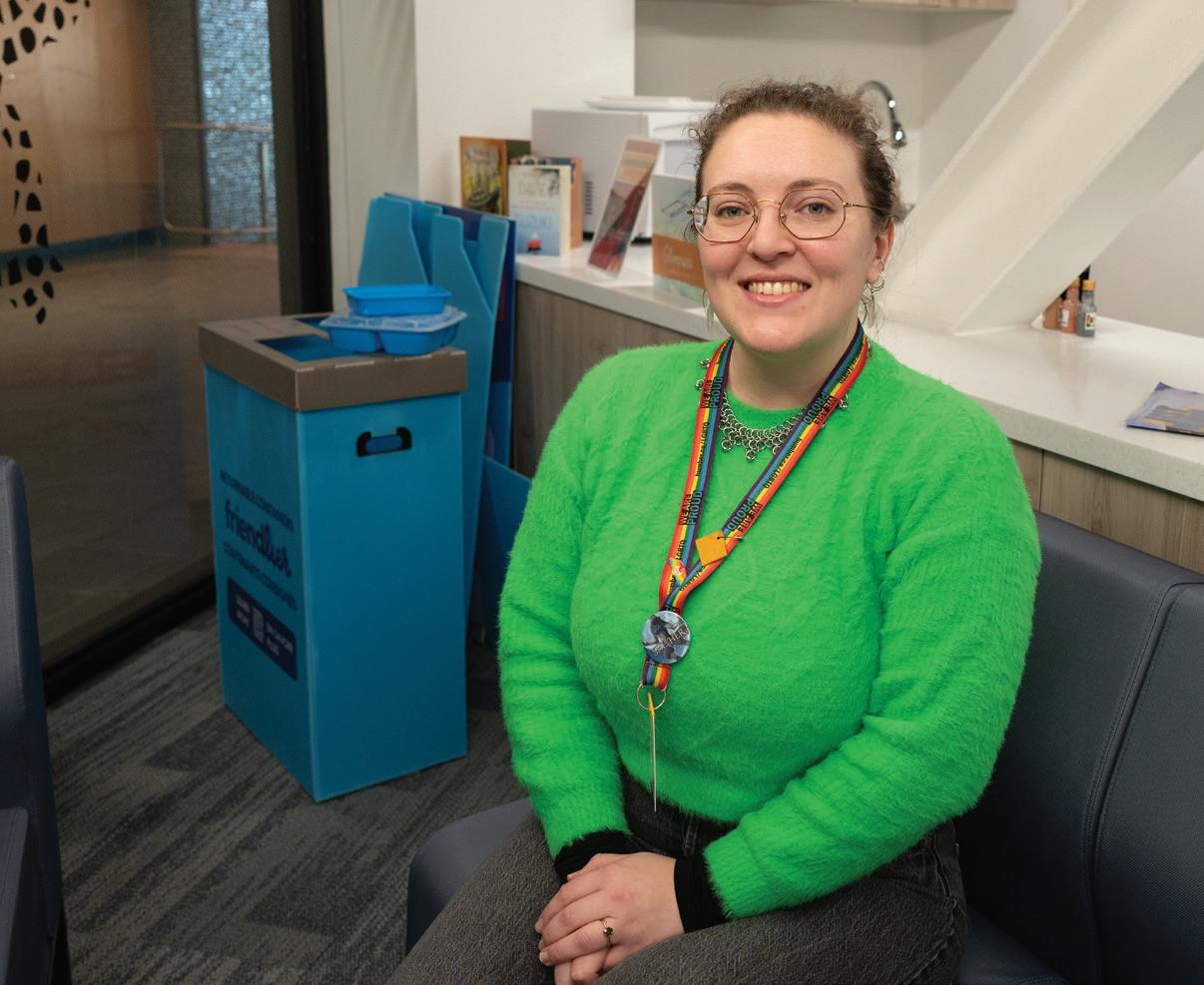
Shaina List Senior Reporter
A Toronto program for radicalized youth noticed a big shift this year: not only a rise in the number of participants, but the participants themselves getting younger and younger.
In its “busiest year” since opening more than five years ago, the Estimated Time of Arrival (ETA) program, housed in community mental health centre Yorktown Family Services, saw more than 100 referrals in 2025.
And the average age dropped to 18 from 22, with some as young as 11.
David O’Brien, Yorktown’s Director of Mental Health, says the alarming trends point to the “mainstreaming” of extremism.
“Youth are aware of radicalization more than we think,” O’Brien said in a phone interview with Humber Et Cetera.
“It’s not this dark underground thing anymore.”
ETA opened its doors in 2020, in response to growing hate crime during the pandemic. Through a multipronged strategy incorporating outreach, case management, psychotherapy and peer support, the program offers what O’Brien has called a “non-criminalized approach to help people disengage with hate.”
Most participants are referred by the RCMP or local police after being identified as associated with an online extremist network under investigation.
While they’re not often calling for targeted violence, O’Brien says the rhetoric of ETA participants has become increasingly nationalist and anti-immigrant, and “extraordinarily” anti-Semitic.
But despite sharing many

of the same values as white supremacists, half of ETA participants are not white, O’Brien said.
“On the surface, it looks like white supremacy, but then when you kind of interview people, it’s more authoritarianism. It’s a more misogynistic and powerful… leading by power and force versus democratic values,” he said.
“And it’s an epidemic, actually, at this point.”
wick issued its first terrorism peace bond after a youth was arrested on offences related to extremism.
The province’s RCMP warned Friday the case represents a “broader trend” of youth radicalization that’s also been revealed through recent youth terrorism cases in Nova Scotia, Quebec, Alberta and Ontario.
An RCMP briefing released in May said the national rate of terrorism offences jumped 488
“YOUTH ARE AWARE OF RADICALIZATION MORE THAN WE THINK. IT’S NOT THIS DARK UNDERGROUND THING ANYMORE. ”
- David O’Brien
Other experts and officials across Canada are ringing the same alarm bells.
Last week, New Bruns-

per cent the previous year, to 83 from 14.
“The RCMP is observing disturbing new radicalization pathways online that are contributing to substantial youth engagement with violent extremist ideologies,” the briefing said.
And nearly one in 10 terrorism investigations by the Canadian Security and Intelligence Service now involve at least one youth, most of whom have been radicalized through online communities, according to a speech by the service’s director in November.
O’Brien said ETA is seeing the same pattern, with participants being recruited via mainstream

Sahejpreet Singh works behind the counter at the LinX Lounge while finishing his hospitality studies at Humber Polytechnic.
social media like Facebook and TikTok.
Sometimes the recruiters are lone actors, he said, but often they’re part of a transnational “online ecosystem.”
One network drawing special attention recently is 764, known for targeting young recruits through popular gaming apps like Minecraft. As detailed in a harrowing Fifth Estate investigation last year, children as young as 11 or 12 can end up caught in a cycle of online manipulation, eventually being pressured into harming themselves or others.
Indeed, many ETA participants report having been blackmailed. O’Brien said it’s “really common” for recruiters to demand personal information or bank cards as a form of coerced loyalty.
He said communities look for people with vulnerabilities they can exploit, luring troubled youth through the promise of identity and belonging.
O’Brien said most of the youth they see don’t know who they are, how to fit in, or where they belong. They tell caseworkers that it’s filling a void for them, and they’re conscious of that, he said.
He said most of them say, “I don’t really believe in the ideology so much, but I kind of engage with it because it’s all I have.”
Even though the strategy and tactics are always evolving, that part never changes.
Singh is a second-year student in Humber’s Hospitality - Hotel and Restaurant Operations Management program. He said he chose the program after his sister recommended it.
“She felt it would be a good fit for me, so I trusted her advice and decided to go for it,” he said.
At the LinX Lounge, Singh works as an attendant. He helps customers choose items, prepares coffee and supports service during busy periods. He also assists with DJ setup during events.
The lounge serves coffee, baked goods and ice cream, and offers beer to guests of legal drinking age. Students can also play pool, ping pong and foosball.
Singh said communication and guest service skills from his program help him most on the job.
“I’ve learned how to interact with different kinds of people, understand their needs and recommend options accordingly,” he said.
He said the job has shown him how demanding the hospitality industry can be.
“There are situations where you need to speak up and address issues professionally,” he said.
After graduation, Singh hopes to work in a hotel or restaurant to broaden his experience. Long-term, he plans to open his own cafe in Japan within six years.
This report is by Mason
Kossak, News Editor
We need to trust our police, not fear them.
On Feb. 5, 2026, York Regional Police announced they arrested and charged seven Toronto Police officers, one retired Toronto Police officer, and 19 other suspects in a seven-month investigation into organized crime and corruption dubbed Project South.
Two of the suspects are youths. Three Peel officers have since been suspended in connection with the investigation.
According to the police, the allegations of criminal corruption include bribery, obstruction of justice, drug trafficking, theft of personal property, breach of trust, and unauthorized access and distribution of confidential information.
The temptation must have been so great to tarnish the badge and corrode public trust.
Mending the broken public trust in Toronto and other Ontario police forces is the challenge police services face across the province.
Toronto Police Chief Myron Demkiw outlined what repairing trust entails.
“Restoring trust requires more than
words,” Demkiw said. “It requires sustained effort, openness to scrutiny, and the humility of you to change.”
Mayor Olivia Chow said she supports an independent review and added what was required of the police chief.
“For every day Torontonians, their trust in police is fundamental,” the mayor said.
“The chief of police has to earn that trust back by rooting out officers who have committed crimes and make the necessary systemic changes after the independent review,” she said.
Ontario’s Inspector General of Policing, Ryan Teschner, launched a province-wide inspection on police integrity and anti-corruption practices.
Teschner described what that means for people who need to contact the police.
“People encounter police at moments of crisis, when they are frightened, injured, grieving, or in immediate danger,” Teschner said. “In those moments, public trust is not abstract. Without this trust, even lawful authority loses legitimacy, and public safety is weakened for everyone.”
Teschner’s statement gets to the core of what trust looks like on the ground. If there isn’t public trust in the police, then fear of the police takes its place.
Julius Haag, a University of Toronto assistant professor who focuses on police accountability and reform, says people trust the police because of procedural justice and fairness.
“The most important determinants
we have in terms of our perceptions of the police are whether we’re treated fairly by the police, in our encounters with the police, and whether we believe the police are acting in a fair, neutral, and impartial way,” Haag says.
Haag says that, beyond having a voice with police, it is the way police address questions of accountability and oversight, and that this is done in a fair, transparent, and neutral way.

Are the police willing to aid in the investigation into corruption, and the rooting out of ties to organized crime? Or will the conttinuing investigations into Project South be met with a big blue wall of silence?
The majority of the time, police work is critically important, complex and requires a great deal of care and skill while navigating the ongoing police perception issues around racial profiling, excessive force, implicit biases and abuses of police discretion.
Demkiw knows he needs to maintain authority and keep his force optimistic in this time of crisis. At the announcement of Project South, Toronto’s Chief of Police directly addressed Toronto Police members.
“To our over 8,000 members, the allegations against these individuals do not represent who you are, they do not represent what our organization is and stands for,” Demkiw said.
Premier Doug Ford says he doesn’t want the public to lose trust.
“In any organization, there’s always a few bad apples, and the courts are going to decide,” the premier said.
Let’s hope he’s correct and that this case is just about a few bad apples and not the tip of an iceberg.

Brampton Transit increased the bus fare on Feb. 9 for the first time in three years.
PRESTO users will see fares rise by 15 cents per ride to $3.55 from $3.40. Seniors’ fares will also increase by 10 cents to $1.85. Cash and Visa card fares will rise by 25 cents, to $4.75 from $4.50.
The increase in Brampton bus fares follows the release of the City of Brampton’s third-quarter operating budget meeting held on Nov. 26, 2025. According to Chief Budget Officer Mark Medeiros, transit fare revenue has declined by $26 million. This is because of changes in federal immi-
gration policy, trade uncertainty, and rising unemployment rates, resulting in a 20 per cent loss in ridership.
In response to federal budget cuts and declining ridership, the city had opted to raise transit fares, placing the financial burden on the commuters who rely on transit the most.
While a five per cent increase may appear minimal, for commuters who rely on transit daily and lack affordable alternatives, the impact is not insignificant.
Affordable transit is often promised to the public, but repeated fare increases continue to undermine that commitment.
Brampton Transit also raised fares, for the first time in more than five years, in 2023. The price increased by more than 10 per cent, with cash fare increasing to $4.50 from $4. Riders adjusted, largely because the increase followed a long period of stability.
The most recent increase, however, comes just after three years and at a time when residents are already feeling financial strain.
The real outrage is not the size of the fare increase, but that Brampton riders are being asked to pay more for an inescapable necessity.
Brampton commuters heavily
rely on buses because transportation options in the Flower City remain limited.
For many, especially students commuting from Brampton to Humber North campus, public transit buses are not a choice but the only accessible way to get to school.
Asking commuters with few alternatives to pay higher fare costs while they wait for service improvements
undermines the principle of affordable and accessible transportation.
The fare increases risk exacerbating the very problem it claims to address.
Higher prices can discourage occasional and price-sensitive riders, slowing ridership recovery during a fragile period.
Sustainable transit funding should focus on affordability, rather than relying on fare increases that threaten

the system’s success.
Brampton commuters are still waiting for promised alternative transportation options, including the longawaited Hazel McCallion Line LRT. A project that has faced repeated delays and is now promised for 2029. In contrast, Toronto Mayor Olivia Chow’s 2026 budget claims that increased improvements and maintenance to the TTC will not affect transit fares, and the prices will continue to remain unchanged for a third consecutive year.
The City of Toronto budget plans to provide residents with multiple transportation options while holding fares steady, whereas Brampton Transit is proposing higher costs for riders using an unchanged system. Brampton commuters are asked to pay more to wait.
Commuters should not be penalized for relying on the only option currently available.
Public transit should be affordable and dependable, treated as a commitment to riders rather than a burden they must carry.
Alexandra Shank, she/her, is a seniorreporteratHumberEtCetera. She is a journalism post-graduate student


Rosemary Jaramillo Senior Reporter
When Bad Bunny made history at the 2026 Grammy Awards by winning Album of the Year for Debí Tirar Más Fotos, the moment marked more than a career milestone. For many people who grew up hearing Spanish at home, it was a moment rarely seen, the language taking centre stage without translation or explanation.
It marked the first time a fully Spanish-language album won the Grammy’s top prize. There were no crossover tracks and no concessions to English. Spanish was centred, recognized and rewarded.
For many in the Latin community, the win by Bad Bunny, whose real name is Benito Antonio Martinez Ocasio, carried a rare kind of weight.
It was the first time their language and culture were placed at the centre of one of the most influential stages in American music. Not as a crossover moment. But as the defining achievement of the night. Recognition at this level has rarely reflected the communities that have helped shape American music for decades.
Spanish-language music has often been treated as secondary, categorized as international, confined to specific genres or acknowledged only when blended into English-language pop. Even as Latin artists have dominated streaming platforms and global charts, institutional recognition has often lagged behind popularity. This win disrupted that pattern.

Alberta is having an identity crisis, and instead of the rest of Canada being dragged into it, it’s time to help it out.
democratic crisis and the fears of a revival in fascism south of the border have done nothing to allay their fears.
But instead of joining the U.S and turning their backs against Canadians, these separatists can do something more creative.
If they believe that Alberta can be bartered or sold in such a way, not give it back to the Indigenous peoples? This can create a historic precedent – the first Canadian province to cede all lands to the Indigenous Peoples.
After all, the land the separatists try to sell off in this way is more sacred to the Indigenous people who occupied it before them. These Indigenous people are not silent, and they have made their voices heard on the prospect of Alberta separating from Canada.
The scale of Bad Bunny’s success makes that disruption difficult to ignore. He has consistently ranked among the world’s most-streamed artists while recording primarily in Spanish. His Grammy win did not introduce Spanish-language music to mainstream audiences.
This recognition validates the way many in the Latin community feel, validating in a way that is difficult to articulate.
Growing up, Spanish often existed in private spaces, at home, with family or through music we shared. Outside those spaces, in the classrooms, the professional setting, and the ideas of success, English prevailed. It was rarely stated outright, but it was understood that certain languages were more accepted in public life than others.
That is why Bad Bunny’s win resonated so deeply. He did not translate his lyrics or soften cultural references. He did not adjust his sound to make it more accessible. His work is celebrated as it is.
Representations like this matter because they shape how people understand their place in the world. Seeing Spanish honoured on a global stage challenges the idea that success requires erasing parts of one’s identity. It opens space for pride rather than accommodation and signals to younger generations that their language can exist publicly and unapologetically.
One award does not undo decades of exclusion or misrepresentation. But moments like this still matter. They shift expectations and make it easier to imagine a future where Spanish is not treated as an exception but as an integral part of cultural life.
Bad Bunny’s Grammy win was not just a victory for an artist. It was a moment of recognition for a language, a culture and a community that has long shaped global music without always being acknowledged for it.
For many watching, it felt like something rare, not just success, but being seen.
Rosemary Jaramillo, she/her, is a senior reporteratHumberEtCetera.Sheisajournalism post-graduatestudent
Canadian media reported on Feb.1 that some members of the Alberta Prosperity Project met with some U.S officials. This was for the prospect of the province becoming part of the U.S. British Columbia Premier David Eby called this action “treason.”
Many Indigenous People have denounced the notion of separation, claiming it violates Treaties 6,7 and 8. These Treaties were made with the Crown before Canada became a country.
Instead of denouncing this action, Alberta Premier Danielle Smith said these individuals had “legitimate grievances.” Smith’s United Conservative Party (UCP) has no qualms about keeping American sympathizers on its side. It makes sense why she will not denounce these people at any point, lest she lose their support.
Albertan separatists’ wish is to become independent, by joining the U.S as its 51st state. The logic is unassailable.
However, Alberta does have some legitimate concerns. This includes getting ignored by the federal government on issues such as the controversial carbon tax. Policy disputes are a common occurrence, and compromises can be reached through careful negotiation.
What is baffling is that these individuals wish to flee the calm tedium of Ottawa to the chaos and uncertainty of Washington. An ongoing
And if the separatists are still interested in going through their American venture, they can choose to call themselves “American.” They can also repatriate themselves, if necessary, to the U.S, where clearly, they feel most at home. The state of Texas is, after all, the most “Albertan” of the U.S states.
Alberta can shock Ottawa and even Washington. They can even shock the whole world and lead the charge in recognizing Indigenous rights. It would be a form of restitution. All the troubles and grievances that these separatists have will go away. They need not worry or fear about issues on land in a country where they would feel most at home.
This seems to be the best compromise at the moment. With Alberta constantly threatening to break away from Canada, a pact like this would benefit all parties involved. The separatists will be content in Texas, and the Indigenous peoples will have their lands back in Alberta.
This can be a historic coming together, recognizing the past wrongs and making them right in one fell swoop.
Truth and Reconciliation is a hard road, and Alberta is on the cusp of leading Canada on this road, if they so choose. The only question now is whether they would go ahead.
Adrian Peries, he/him, is a senior reporter at Humber Et Cetera. He is a journalism post-graduatestudent

Allison Waytowich HumberETC Senior Reporter
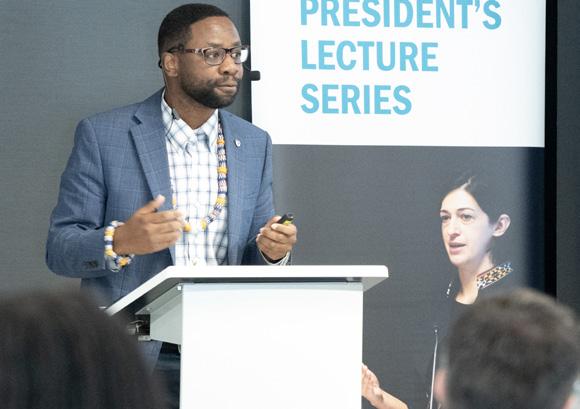
A McGill University historian told a Humber audience Tuesday that democracy is under threat when Black self-determination movements face surveillance and disruption from state institutions in Canada and the U.S. Wendell Nii Laryea Adjetey, an associate professor of post-Reconstruction U.S. and African diaspora history, spoke Feb.10 as part of Humber College’s President’s Lecture Series, hosted by the Faculty of Liberal Arts and Sciences. His talk, titled “Pan-Africanism and the Paradox of Progress: Black Self-Determination and the Limits of ‘Democracy’ in Canada and the United States,” at the Barrett Centre for Technology Innovation
at Humber’s North Campus, challenged the audience to consider how racial inequality and democratic ideals have long coexisted in North America.
Adjetey, a William Dawson associate professor of history, drew on research from his Governor General’s award-winning book, Cross-Border Cosmopolitans: The Making of Pan-African North America. He said colonial power structures, slavery and laws created long-standing systems of exclusion.
He pointed to Nathaniel Bacon’s Rebellion in Virginia in 1676 as a turning point when elites sought to prevent Black and white labourers from forming alliances.
He also referenced Thomas Jefferson’s writings to show how slavery
and racial hierarchy were later embedded in the development of democratic institutions.
“The rights of Englishmen were preserved by destroying the rights of Africans,” he said, quoting historian Edmund Morgan.
Adjetey said these dynamics extended beyond the United States and influenced Canada’s development. He described this as a “paradox of progress,” where legal and social changes can create the appearance of racial progress, but deeper inequalities or power structures remain intact.
The lecture introduced what Adjetey called “four instruments of warfare,” used by governments to respond to perceived internal threats: counter-subversion, counter-intelligence, counter-in-
surgency and counter-revolution. He argued these strategies were used to monitor and disrupt Black activists and liberation movements in both countries.
Adjetey cited the historical example of Warren Hart, an American operative loaned to the RCMP in the 1970s who infiltrated community organizations in cities including Toronto and Montreal. He said Hart targeted youth through attempted entrapment by encouraging criminal activity, as part of a broader effort to disrupt Black and Indigenous movements from forming a common cause.
During the Q-and-A session, audience members asked how those tactics persist today and what modern resistance can look like. Adjetey said understanding
these dynamics is empowering and pointed to political education and organization as part of building resistance.
The series continues April 8 at the Lakeshore campus with a talk by author and activist Cory Doctorow titled “De-Shitification Nation: How Canada Can Fix the Internet, Win Trump’s Trade War, and Make a Genuinely Astonishing Amount of Money.”

You’re goal oriented. You love to share ideas and information. Now get the professional mentorship and industry experience you need to influence the world. We show you how.
There is a story to be told here:
Maryan Yalda Humber ETC News
A 2025 Valentine’s Day shopping survey shows a decline in the percentage of Canadians willing to make purchases related to the day.
Despite the decline, 85.2 per cent of the 9,411 Canadian adults surveyed in January expect to match or increase previous spending on their Valentine’s Day purchases this year, according to a survey by the Retail Council of Canada.
Around 55.6 per cent of Canadians plan to spend more than $50 on Valentine’s Day with restaurants, food, alcohol and candy being the top spending categories this season, according to the survey, which has a one per cent margin of error.
George Brown Polytechnic student Fardeen Ali says some people celebrate Valentine’s Day keep up with appearances.
Fardeen Ali, 20, a first-year student in the Honours Bachelor of Technology in the Construction Management program at George Brown Polytechnic, said when he was a child, “it was more about making your friend happy by giving them a card or a sweet

treat. Nowadays, it’s all about couples buying expensive gifts and posting them online as if there’s some sort of competition.
“It results in the idea that if you’re not participating, then you’re not doing the right thing, and you’re considered a loser,” Ali said.
Packaging and displays have so much power over Valentine’s Day, Ali says.
“The same box of chocolates or sweets is reused, with a heart glued or taped to it,” he said. “It shows that you’re paying for the packaging rather than the product at a marked-up price. It’s a scam, if you ask me.”
Ali said the meaning of Valentine’s Day is lost in today’s society, saying it “encourages people to spend a lot of money to show their loved one that they truly
care about them and their feelings. It really comes down to performance rather than the person’s genuine feelings.”
Shoppers in Canada are most intrigued by the displays they see in stores, with around 40 per cent sharing this view, according to the survey.
Child and Youth Care student at Toronto Metropolitan University, Christina Pignolo, says seasonal
packaging feels more desirable. Pignolo, 22, a first-year Child and Youth Care student at Toronto Metropolitan University, said packaging with a limited time frame makes people want it more.
“It automatically feels more desirable,” she said. “Seasonal packaging has a big influence on how people value and purchase products that tap into trends, urgency and the fear of missing out.”
Sustainability is not on the mind of Canadians while shopping, according to the survey, with 42 per cent don’t view ecofriendly and sustainable packaging as important to celebrating Valentine’s Day
“Seasonal packaging adds perceived value and can drive people to spend more than they normally would or need to be spending,” Pignolo said.
She said love and care shouldn’t just be tied to one day.
“Valentine’s Day seems to be more about fantasizing romance,” she said. “The emphasis is less on appreciation or connection and more on the concept of being in love at a certain time.”.
Rebecca Whittaker Humber ETC News
Humber students can apply to study abroad, but the deadlines to apply for international study opportunities are approaching.
Summer Abroad applications close on Feb. 22, while applications for both the Fall 2026 and Winter 2027 semesters close on March 9.
Students must be enrolled fulltime in a degree or advanced diploma that is eligible to receive credit abroad, according to Humber Polytechnic’s website. The list of countries includes Denmark, Japan and England.
The website states students should ideally be in their second year with a 7.0 GPA, or have permission from a program coordinator.
Paula Prado, 25, studied abroad at the University of Salford in Manchester. She spent her fall semester continuing her Creative Advertising program and studying Video and Camera Marketing in the U.K.
“It was very inspiring, to be honest,” Prado said, “It was something that made me think out of the box, made me feel that I’m capable

of doing a lot of big things.”
She said if students want to have a new perspective in their lives and careers, they should study abroad.
“It makes you more bold,” Prado said. “It makes you more confident about yourself.”
She heard of Humber’s exchange program through a presentation by Jennifer Cleary, manager of faculty global strategic initiatives with Humber Global. Cleary said the presentations are an effective
strategy in educating students.
Prado said the decision to study abroad should not be made lightly.
She said getting her visa was easier because she studied abroad for under six months.
Global Learning Coordinator, Simon Ing, said he supports students throughout the visa process.
Cleary said she never spent time abroad as a student but has travelled a lot in a work capacity.
“I’ve seen firsthand how these experiences, collaborating with others, learning about others, (it) really just expands your worldview,” Cleary said.
Ing said Humber Global is constantly trying to expand and keep these opportunities available for students to broaden their learning experience.
A cow photographed by Nicole Ribatski Baldan on their semester abroad in Manchester, England.
Prado said her experience in Manchester began with a miscommunication.
She said she was assured a stay with women.
But when she arrived at her flat, she was met by her male roommates and had to stay for over two weeks before she was moved to a new residence.
Prado said she was disappointed, as she said she felt anxious and unsafe.
With an incident such as Prado’s, Ing said Humber reaches out to the institution partner to sort out the problem.
Ing said safety is “one of our biggest concerns.”
Pre-Departure Training is also offered to support students preparing to go abroad. Ing said students are invited to this orientation after accepting the offer to go abroad.
The orientation covers the Identities Abroad page on Humber Global, Ing said. He said it gives students a chance to connect. Ing advised students take the opportunity to study abroad.
“It’s such a unique opportunity where you get to learn,” he said. “You network, you make friends.”

Ann Camille Snaggs Senior Reporter
From handcrafted soaps to precision fades, the Black Student Support and Engagement’s (BSSE) Melanin Market was a showcase of Black talent that highlighted local entrepreneurs, culture and celebration of Black History month.
Thirteen Black-owned businesses were present at the market on Feb. 5. Many were there for the first time, and some were returning vendors. Barbers from Trendsetters Lounge offered free haircuts, sponsored by IGNITE.
The event was opened by the master of ceremonies, Humber Media Communications student and BSSE program assistant, Jamie Caine. After the land acknowledgement, he introduced professional percussionist Marcus Brito, who thrilled the crowd with his skilful drumming on a West African Djembe. Caine, who is also a senior mentor with Student Life, said he was happy to be hosting the event during Black History Month.
“It feels great to see the students coming out, the different vendors, young vendors, young Black businesses, many of which are e-com-
merce businesses,” he said. “Just the variety and the diversity of vendors, it really means a lot.”
Caine said he was pleased with the turnout. “Just seeing it grow has been a really beautiful thing in terms of the exposure, in terms of just seeing, you know, the Humber community coming together to support the Black community,” he said.
Michelle Joseph said she was also at the Melanin Market for the first time. She is an author, a podcaster and a former Humber Polytechnic employee. She was promoting her book, Words With Michelle: Inspirational Conversations With Today’s Black Canadian Changemakers.
Joseph said it felt like a full-circle moment to be sharing her book at Humber - a place where she worked for many years.
“It was during those years I decided I wanted to balance my work life with my creative life,” she said. “That’s when I started my blog, which was an inspiration for my book.” Joseph said Black History Month means acknowledging and taking time to thank those who fearlessly blazed a trail before us.
“But it also reminds us that
there are current Black change makers who are living Black history now,” she said. “(They) are presently working towards making advancements in politics, arts, society and beyond. I like that we can consciously take a moment to recognize our achievements.”
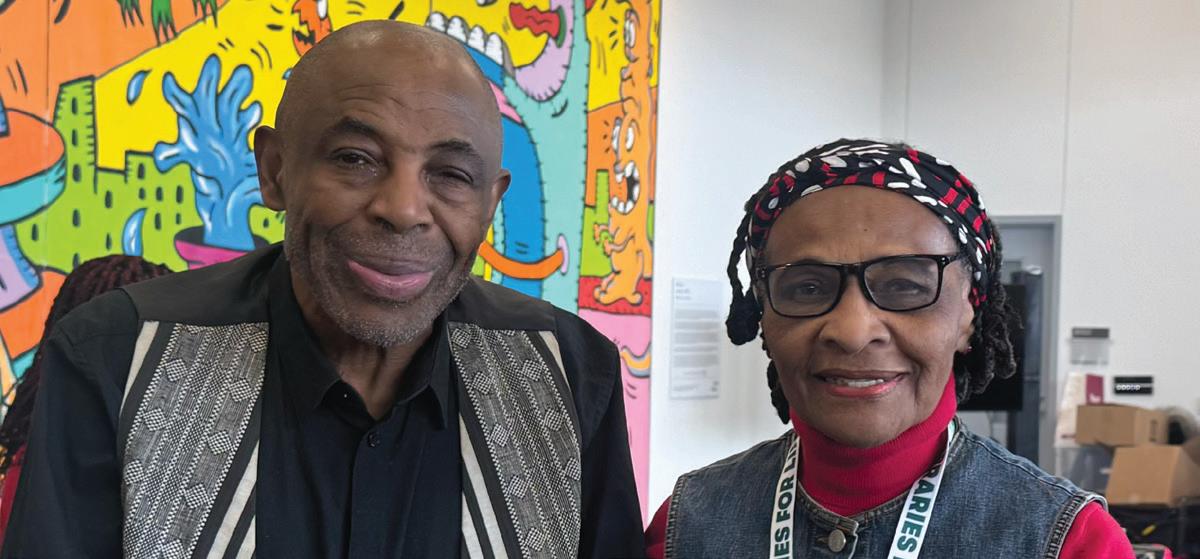
Writers and retired educators, Sam and Rita Burke, said they were excited to be selling their books at the Melanin Market for the first time.
They have written and published six books, which were all on display.
Rita said many of their books are children’s books.
“Our first one is called I Like Being Me,” she said. “We like to describe it as an extended affirmation, whereby whoever’s reading, it is reminding themselves of the importance of liking themselves. It’s a picture book, but adults could also benefit from reading I Like Being Me,” Rita said.
Sam said the children’s book, I Like Being on the K Team, came from a desire to share the tradition of Kwanzaa that he and his family have celebrated for many years.
It tells the story of a 12-year-old girl who learned all about Kwanzaa
and then shared the tradition with her friends and family, eventually spearheading an in-school presentation and great interest in the wider community. Sam said they used to own Burke’s Books on St. Clair Avenue in Toronto, between Oakwood and Winona Avenues. They now maintain an online presence at Ilikebeingmebooks.com, rather than a physical one.
Sam said that over the years, Black History Month has always been near to their hearts.
“It’s been special in that we have helped many people to celebrate it,” he said.
“When we had the bookstore, people from the community would
come in for resources, whether it be books or art or whatever it was. But not only did they come in, but we would go out. We would take it to the community,” Sam said.
The Burkes say they were educators in their “past lives.” Sam taught with the Scarborough School Board, and Rita was a nursing professor. Indeed, Rita co-authored the curriculum for the Trent-Fleming School of Nursing program more than 30 years ago. It is still in use to this day. “It’s in our DNA, we keep sharing, we keep educating, and we keep bringing others,” Sam said. “This is much more than just a book to us. This is part of who we are.”
Ann Camille Snaggs Senior Reporter
Some of Canada’s most celebrated Black artists took centre stage in downtown Toronto on Feb. 5 as Canada Black Music Archives (CBMA) hosted a Black History Month (BHM) showcase.
Held at the City of Toronto Archives, the show honoured the depth, resilience, and brilliance of Black Canadian music.
Featuring powerful performances by Jully Black, Liberty Silver, Divine Brown, Dru and Tanika Charles, the event brought together community members, music lovers and entrepreneurs for an evening that blended celebration and reflection on the impact of Black musical excellence in Canada.
Professional Photographer Howard Prendergast was there to take the official photos of the event.
Prendergast said after working as an industrial engineering technologist in Calgary for six years, he decided to return to school for photography and chose Humber Polytechnic.
He said the photography program was an excellent fit for him, as he is “a technical kind of person.”
Prendergast said this event means a lot to him, as he typically volunteers his time, but this time, CBMA executive director Phil Vassell commissioned him for this event.
“So not only am I photographing the event, but I’ve set up a background, I’m going to do some portraits, particularly with the artists. They might want something a little bit more high-end for their archives,” he said. Attendees
Jerusha Richards and Michael Dawson said they were thrilled to be there and had heard about the event from friends.
Richards said she thought having this showcase in the middle of BHM was amazing.
“Yes, it’s really great,” she said. “I love that we’re at the archives. I think that it’s a great place for this event.” Dawson said he was impressed with the turnout and was happy to be there.
“Oh, it’s fantastic getting to know the history of African Canadians and also seeing the future,” he said. “I’m enjoying it a lot, and I wish all the very best to those who make this happen. God bless them.” Jean Augustine was a special guest that night.
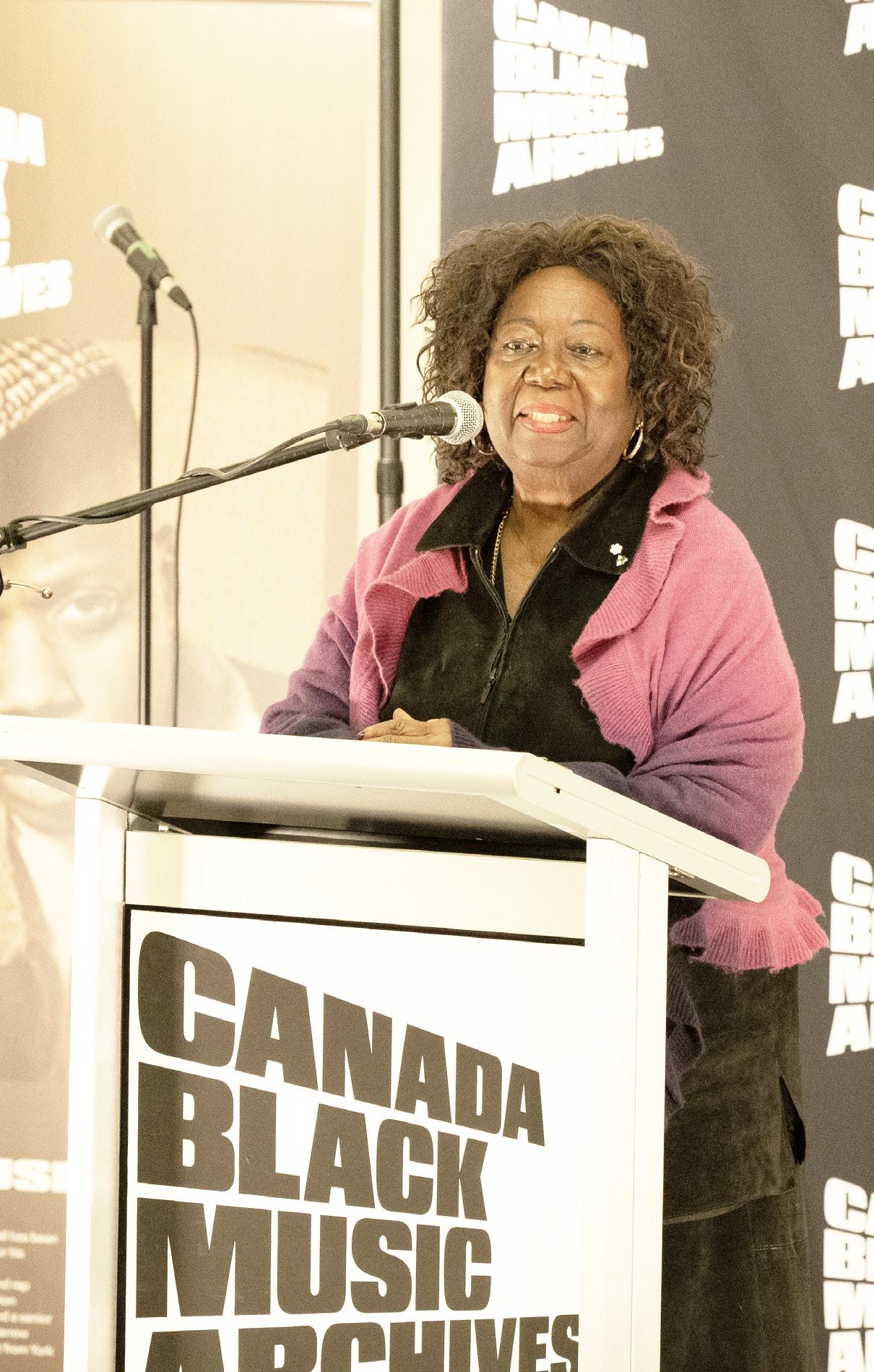
Augustine was the first Black woman to be elected to Canada’s Parliament as the representative for Etobicoke-Lakeshore. Thirty years ago, she presented a suc-
cessful and historic motion in parliament for the recognition of Black History Month in Canada.
“We have to understand that we cannot write a fulsome history of Canada if we leave out the contribution of African Canadians to the building of Canada,” said the former minister of state for multiculturalism and the status of women. Augustine said young people need to understand why we have to support “the archivists, the museum keepers, the historians, the entertainers, the church leaders and the educators.”
Augustine joked that someone asked her why she chose the shortest and coldest month for BHM. She said she did not select the month. It was adopted because February “was already being supported south of us.”
She said the U.S. has been celebrating Black History Month for 100 years.
“And I say over and over, wherever I go, Black history is not just for Black people,” Augustine said. “Black history is Canadian history.”
Ontario Lt.-Gov. Edith Dumont was also one of the special guests.
“Since its launch, the CBMA has already done so much to connect the present and the past and to bring people together to celebrate the amazing history of Black music in Canada,” she said.
Dumont congratulated the CBMA on their successful petition to have June proclaimed as Black Music Month in Toronto.
“This June, it presents a chance to engage in cultural diplomacy, highlighting some of the best of what Canada has to offer to visitors who will join us from across the globe for the World Cup,” she said.
Dumont said that she will be partnering with the CBMA next week to host material from their exhibition, Black Dance, Muted Melodies at Queen’s Park.
“It will be viewed by hundreds of visitors, including many young students, encouraging a new generation to learn about the songs and the journeys of trailblazing Black musicians here in Canada,” she said.
CBMA executive director Phil Vassell interviewed musician and celebrity chef, Roger Mooking, on stage. Mooking is also a reality TV star, restaurateur, entrepreneur, and philanthropist.
He regaled the audience with stories of his wide-ranging life experiences, successes and commitment to giving back to his community. Mooking said he is blessed to do so

many amazing things in his life.
“Love is the currency of the universe,” he said, sharing his life mission and mantra with the audience.
“I encourage everybody, just move with love, love only beyond this point, and your world will become immeasurable and unimaginable, but it’s hard,” Mooking said.
Grammy Award winner Liberty Silver was introduced by Toronto MC DJ Mel Boogie as the seed who paved the way for so many artists who came after her.
Silver delivered a stirring performance, inviting the audience to sing and dance along. Powerhouse vocalist and Juno-award-winner, Jully Black, the show’s headliner, immediately wowed the audience with her stunning presence, wit and style.
Black spoke thoughtfully about her life and the loss of her mother and led a rousing rendition of the song, This Little Light of Mine, where she encouraged the audience to sing along for someone they lost. Black said she went to therapy for several years to help her to heal from childhood sexual abuse.
“I was tired of logging the trauma, the generational trauma, the prenatal trauma,” she said. “That wasn’t my lot in life. I was done carrying it.
“Forgiveness is the only gateway to freedom,” she said before launching into the Redemption Song.
Reet Arora Humber ETC News
“It was very, very joyful. I don’t really remember saying the words that I said,” said Justin Gray, Humber music professor and 2026 Grammy Award winner for Best Immersive Audio Album, trying to recall his acceptance speech from the stage of the Peacock Theatre in Los Angeles Sunday. “I remember standing there and feeling good and feeling present,”
The musical journey that led to the Grammys in L.A. began in Gray’s hometown of Toronto, when he was still in middle school. He told Humber Et Cetera he knew what he wanted from life shortly after he held a bass for the first time in his hands back when he was in grade seven.
Later, Gray started at Humber as a bass student, completed the program and then went to India for quite some time.
There he studied Indian classical music before eventually coming back to Toronto to do his master’s degree at York University in Ethnomusicology.
Along the way Gray has performed jazz and in a variety of global music traditions like Indian classical music, flamenco music, Afro-Cuban music and some Persian music.
“And at the same time, I’ve just always been kind of equally fond of and passionate about the world of the production side of music,” Gray said.
He said he eventually began to produce some of the records that he was playing on and built a studio in his house.
Gray said he made this decision about a decade ago that he would slow things down on the performing side and be more focused as a producer and an engineer.
He said this was a big transition period for him. He has since worked on various records for the artists in Toronto but also internationally.
“This whole immersive audio part of it is that I really love, I really love the concept. I’ve always been very fond of the idea of music being presented as a three-dimensional experience,” Gray said.
He built a Dolby Atmos studio, one of the first of its kind in the
world, but certainly the first in Canada for music production.
“I did it just because I felt passionate about it. I felt like it was something that musically I wanted to express and explore,” Gray said.
He said that he has watched the Grammys since he was a kid as his parents are “absolute music lovers.” They have always loved watching all the award shows the Grammys, Emmys and the Oscars as a way of celebrating art.
Gray said he has played for audiences way bigger than the Grammys before but there was something about the place when he stepped in, just the energy in
the place itself.
“And you’re looking around, you know people, and everyone’s dressed up beautifully and I don’t know there’s quite an energy in the room. And so the red carpet is fun, it’s fast and you’re just getting kind of pushed through and seeing folks left and right,” he said. Gray said that the pace of the show was intense and that they really run a tight ship there.
He said it is probably because of the amount of work they have to get done and the production value is off the charts. He could see how everyone was just so good at what they do.

As the ceremony went on, Gray said he could see the category moving up and he naturally got butterflies, and it was not just him. His team and his wife could all feel it, too.
“I think that’s why we do it, right? I mean in the sense of the whole joy of people being together in the same place is I think sharing that energy,” he said.
Gray said the whole process of making the album and the recognition for the nomination has been intense and emotional for him.
“You just look out and you recognize in that moment what you wanna share when you’re in front of those folks, I wanted to share the gratitude and the joy,” he said.
Gray said his career has been marked by support from his parents and his wife. His family wanted for him to do whatever he is doing to the very best of his abilities. And for as long as his wife has known him, he has always had a bass on his back. Gray said his work is not done and that he has a long way to go. Humber’s producer in residence Richard King, a McGill professor who was visiting campus the week after Gray’s win, has 15 Grammys to his credit, which tells him he has work to do.
For now though, Gray said he is going to appreciate what he has achieved and spend some more time with his family.
“If you reach a milestone, to acknowledge that milestone and to actually just hold that for a second rather than always running forward is important,” he said.
Gina Pizzurro Humber ETC News
Students were able to unwind and learn new wellness strategies to cope with campus stress as midterm season quickly approaches.
The Spirituality and Wellness Centre hosted an emotional regulation and neurodiversity workshop on Feb. 10 to support students as the winter semester picks up.
Between a yogurt bar, an aromatherapy station and a ‘calm kit’ centre, students were able to take a break and enjoy an afternoon of calm.
Students participated in a guided workshop hosted by Joanna Harding-Duggan, an ADHD and wellness coach.
Harding-Duggan said emotional wellness is not about being “happy,” but rather having the tools and strategies to mitigate everyday challenges.
She said the goal of the event was to help students learn practical ways to regulate and manage feelings of overwhelm.
bodies.
“Understanding how to calm yourself down is important for anybody. But for students, when you’re feeling really stressed out or
you want it to work.”
Harding-Duggan recommended exercise, structured daily schedules and connection to support daily well-being.
“WHEN YOU’RE FEELING OVERWHELMED, IT’S ABOUT RECOGNIZING, ACCEPTING AND MANAGING ALL OF YOUR FEELINGS ”
“When you’re feeling overwhelmed, it’s about recognizing, accepting and managing all of your feelings,” she said. She guided students through visualization and body-awareness exercises, allowing students to recognize any tension or fear in their
- Joanna Harding-Duggan
anxious, it can affect your ability to problem solve and reason and think,” she said. “When you’re really, really stressed out and you’re trying to study, your brain’s not quite working in the way that
Previously working in the field of brain injury and neuropsychology, Harding-Duggan completed her postgraduate degree in wellness coaching at Humber Polytechnic.
She now works with students and adults who experience difficulties with executive skills, whether from ADHD, autism or concussions.
Harding-Duggan said she hopes to normalize emotional experiences
and equip students with the tools they need to regulate themselves.
“I think a normalization of what it means to have emotions, to understand it, ways to recognize how you’re being triggered emotionally, and some strategies to help manage it, so that they can be successful at school and not feel overwhelmed all the time,” she said.
The last stretch of the semester is a stressful time for students. The Spirituality and Wellness Centre has introduced mindfulness Monday workshops every week to help students step away from their busy schedules.
Organizers hope events like this will give students practical tools to manage stress before it becomes overwhelming.

Humber ETC News
Basketball has always been an important part of Pascal Siakam’s life, but inspiring and helping youth in his foundation has become just as significant.
Through his program, the PS43 foundation and the Data Dunkers, he has been able to preach data science through basketball.
“My foundation, the PS 43 Foundation, is on a mission to empower youth through education, to inspire them to be big dreamers,” Siakam said.
The power forward, who spent nine seasons with the Toronto Raptors and won a championship in one of those seasons, made an appearance at the Barrett Centre for Technology Innovation on Feb. 7 to speak about the program.
Siakam spoke highly about how much his family’s support has meant to him and his NBA career. “I mean, I have amazing support from them, and I think without them I wouldn’t be anything really and throughout the journey, they
just always kept me grounded,” he said. “I’m definitely super blessed.”
The event was hosted in collaboration with Dell Technology and Siakam’s foundation.
It showcased the commitment to education and teaching basketball skills through stats and coding.
Katina Papulkas, a senior education strategist at Dell, explained how the positive collaboration with Siakam’s foundation came together over the last couple of years.
“So, what happened was, three years ago, his foundation, PS43, reached out to us to say, ‘what’s possible, what might we do together,’” she said. They worked on the possibilities for about six months.
“And then we were like, basketball, stats, data science, let’s go, and one thing led to another, we created the program together,” Papulkas said.
Students from different schools in the Dufferin-Peel Catholic District School Board were chosen to be a part of the event.
They were able to showcase skills that they had learned through the program.
Israel Akintabe had the oppor-
tunity to share a device that they created using a microbit band.
The device was a pocket-sized computer with an LED light display, buttons, and sensors, which detected proper or improper basketball shooting form.
Akintabe said he was happy he got to demonstrate it in front of Siakam.
“I felt like it was one of my dreams come true, because I’ve always wanted to meet a famous person,” he said.
Akintabe said the combination of basketball and data jumpstarted his excitement to join the Data Dunkers program.
“Because I realized you were doing something, including data,
and basketball together, which is my favourite thing,” he said.
Scott Briggs, the vice president for digital innovation and the Chief Information Officer at Humber, praised the improvement that he saw from the event this year and hopes the growth of the event can continue in the coming years.
“Last year was terrific,” he said.

Hockey culture, traditionally overrun by straight white men, may have changed.
Crave’s new hit series, Heated Rivalry, is a six-episode series with storylines about what it could look like for queer hockey players.
The NHL has yet to have an out player; there have been minor league players like Luke Prokop and Harrison Browne, the firstever transgender pro hockey player.
Yet with 32 teams and 700-plus players across the league, there has still not been an NHL player who has been openly gay.
It asks the question why is men’s hockey so small in diversity.
was going to be and shifting their pronouns to they/them. We had some fairly good discussions with coaches and parents about using pronouns. We didn’t have any open resistance,” Kerr said.
Her experience reflects a pattern within youth sports: the higher the level of competition, the narrower the margin for difference. While house league hockey often prioritizes participation and development, rep programs introduce performance pressure, heightened
comes down to trial and error.
Kerr’s approach highlights how marginalized players are frequently forced to assess safety and belonging on their own, rather than relying on consistent leaguewide protections.
“I hope it isn’t a disingenuous embracing of the new attention and the potential for new audience and players in a sport that is struggling in enrolment. When you have an opportunity to bring in new people, I hope they will genuinely embrace it, but I have my doubts,” Kerr said.
“I CAN’T REMEMBER A TIME PLAYING HOCKEY WHERE THERE HAS BEEN SOMEONE WHO HAS COME OUT. I CAN SEE WHY SOMEONE WOULD BE SCARED. THERE IS A LOT OF TOXIC MASCULINITY WITHIN HOCKEY AND SPORTS, ” - Koltyn Milne
Krista Kerr is a mom of a young hockey player who identifies as non-binary.
“It’s almost non-existent in boys’ hockey (queer representation) from house league to all the way up,” she said. “For female hockey, like the PWHL, they have set queer nights, so each club has their own night, which is huge and loud, and it continues through regular games.”
The NHL has similar set nights, except they do not come often, and are criticized by some players and fans, which leads to the league not wanting to continue having these nights.
“My kid started in Grade 6 in house league, as they were starting to decide what their presentation
scrutiny, and traditions that can make inclusivity feel secondary.
“The next year, they moved into a rep program, and we briefed them on the desire for my child to be referred to as they/them, and that’s where we had a little more resistance, but it was more of an individual basis,” Kerr said.
This begs the question of what the difference is between house and rep, and if it becomes more small-minded as players move up.
“That’s when we decided to start looking into organizations and the policies that they have in place, and we ran with what worked for my kid,” Kerr said.
For many families navigating hockey systems, acceptance often

Her thoughts on the rise in queer talk in hockey are similar to how many people feel. But there is concern that it’s another trend for organizations to profit from, only to throw it away when it becomes too controversial for fans.
Koltyn Milne is a long-time hockey fan and player.
“Being inclusive, accepting everybody for who they are. People are talented and have skills no matter their identity,” Milne said. Hockey has historically been smaller-minded than other sports.
“I can’t remember a time playing hockey where there has been someone who has come out. I can see why someone would be scared. There is a lot of toxic masculinity within hockey and sports,” Milne said.
Attitudes among teams, locker rooms and spaces vary league to league.
“The leagues can say they’re accepting of everybody, and it’s great to say from a PR standpoint, but I think there needs to be some training and education behind it,” Milne said.
He recognizes the new interest in the sport because of the recent craze of Heated Rivalry and the focused attention it brought to the NHL and hockey.
“I think hockey and sports in general bring people together, people from all walks of life. It doesn’t matter what team you cheer for; you know in that moment people are there for the love of the sport and the game.” Milne said.
Bucky Kirkpatrick has been a part of the hockey community for a long time and now coaches at the U18 level.
As a coach, he says it’s important to be a leader for the team and guide players in the right direction on and off the ice.
“All of my players at the begin-
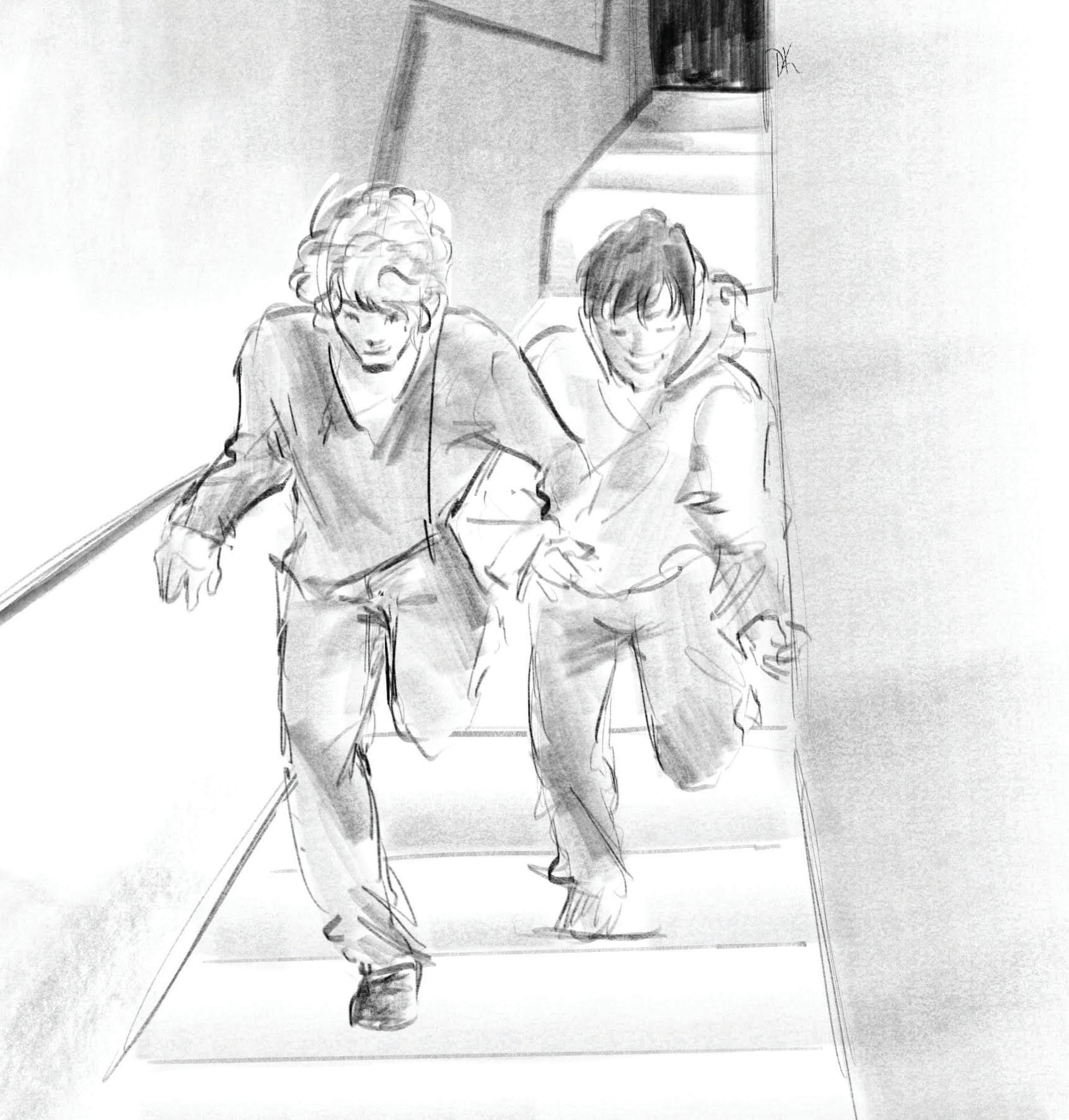
ning of the year are forewarned of what is expected of them and the ramifications if they step out of line, and how they’ll be penalized on the ice but also penalized off the ice,” Kirkpatrick said.
It’s important to set guidelines at the beginning of each season with players, so they are reminded, he said.
“There is a zero-tolerance policy for homophobia, racism, and abuse of officials,” Kirkpatrick said.
By treating off-ice conduct with the same seriousness as in-game behaviour, coaches like Kirkpatrick set clear expectations early.
Being a hockey coach for 25 years raises a question of what has changed in terms of policy and player interactions.
Kirkpatrick said that every five years, he is required to renew his credentials, which include hockey courses like backchecking and contact.
“I just renewed my credentials last year, and it had courses on inclusiveness and diversity in the sport. It’s become more open and more inclusive,” Kirkpatrick said.
For queer athletes, inclusivity is less about league initiatives and who they feel comfortable around, what spaces feel safe, and where they can play without hesitation.
Kaitlyn Coulter is a queer woman who has been playing hockey her entire life.
When it comes to what queer inclusivity looks like to her, she said, “inclusivity, not being able to have any issues playing, just being respectful to each other.
“Hockey in general isn’t really
focused on the queer aspect, but with women’s hockey, I see it differently because of how many women play that are out and proud and loud about it,” Coulter said.
Which is true, looking at all-star players like Marie-Philip Poulin, recently named captain of Team Canada 2026 for the Olympic women’s hockey team, and her wife, Laura Stacey, who are teammates on the Montreal Victoire.
“In the men’s world, and when you’re a guy, you’re supposed to be rough and tough, and it creates this stigma. Women in general are just softer and more accepting. I think there’s just too much stigma in men’s hockey compared to women’s,” Coulter said.
As pop culture intersects with sports, representation off the ice may help reshape what is possible on it. Shows like Heated Rivalry offer imagined futures that many hope will one day be reflected in real locker rooms.
“I’m really hoping that the Heated Rivalry series will create a safe space for players to realize that it is okay to play hockey and be rough and tough and be gay,” Coulter said.
So, with all this new attention, the question is whether the NHL will capitalize on change or if it will continue in the ways that it has for so long. For now, the question remains whether the NHL is ready to move beyond performative inclusion or if the future of queer hockey will continue to be imagined.
Heated Rivalry may be fictional, but the absence it highlights is not.

Naana Kwarteng, a nurse at Mississauga’s Credit Valley Hospital, remembers when she felt uneasy about a patient.
A few days later, the patient had a serious confrontation with her colleague, she said.
Kwarteng said she wished she had better tools to help her ask the right questions and the knowledge to provide the patient with the help he needed.
Better care could have been achieved by “being able to see through their (patients’) lens as opposed to looking at it as just through the diagnosis,” Kwarteng said.
To help meet that need, Humber launched a mental health for healthcare workers certificate program in the fall with the objective to help healthcare providers have a better awareness of the needs of mental health patients.
The program is run by the Faculty of Health and Life Sciences at Humber North. It announced last month a partnership with Durham College.
Program instructor Liselle Kuk Wah said the program started at Durham for nurses only, before partnering with Humber and including a wider scope of healthcare workers.
“So the whole purpose now is expansion, to make this accessible to all healthcare workers,” Kuk Wah said.
She said she helped develop three of the courses with Durham College.
Kuk Wah said the training offered helps healthcare workers learn the lingo.
“There is a language for mental health, diagnoses and assessments. So, to me, it goes that extra step further than a basic abnormal psychology course,” she said.
Kwarteng said knowing proper lingo for mental health could have helped her address her patients’ concerns without feeling uncomfortable or like she would offend them.
“There are definitely huge gaps,” she said.
Kuk Wah said she wanted healthcare workers to graduate, not just learning the basic words “like trauma-focused or competent.”
“Because when you work in this healthcare industry long enough, we become desensitized,” Kuk Wah said.
Kuk Wah said she simulated an assessment at Durham where the nurses listen to three minutes of audible hypothetical hallucinations while completing a word search of their choice.
She said it was a learning exercise to help nurses understand what patients go through.
“Because we come in with these preconceptions already,” she said. “It was so humbling for them.”
She said some of the nurses told her it was quite frightening. “We
have the privilege of turning it off by button,” she said.
Kuk Wah said that when originally creating three of the courses at Durham, she focused on uti-

lizing the concept of the mental discomfort of having behaviour conflicting with beliefs.
“We basically generate discomfort. Learning is coming through discomfort,” she said. “I really wanted to find a way where I can safely create discomfort and meanwhile help people build sensitivity.”
Brandy Taufeek is a former healthcare provider with experience in mental health and overdoses and is currently finishing her master’s in clinical counselling at Tyndale University in Toronto.
Taufeek said the best thing that a program like Humber’s could do is put people in uncomfortable situations in a learning environment.
“When you have no tools in your tool belt, you just start going off of what you think is the right decision,” Taufeek said.
Kuk Wah said healthcare workers, as the first point of contact, are important to give people that actual level of composure.
She said the goal is to curate that competence through understanding, knowledge in lingo and the ability to react in uncomfortable situations with confidence.
“They want to feel confident, right? Because we don’t want to feel like we’re screwing up all the time,” she said
According to the most recent 2022 Mental Health and Access to Care Survey by Statistics Canada, one in three of those who met diagnostic criteria reported unmet or partially met needs for mental health care services.
Taufeek said she noticed that when there is improper care, there is an increase in mental instability.
“The better quality healthcare, and the provision of care, the better outcome that you’re going to receive,” Taufeek said.
She said mental health concerns
are widespread in society, and as healthcare workers, they have to deal with them much more, so having those techniques and tools can help benefit the patient and the healthcare worker.
Valerie Grdisa, the CEO of the Canadian Nurses Association, said nursing is about the human response.
“So everything we do is centred around the mental health and wellbeing of that person,” she said. ”A human being is a biopsychosociocultural and spiritual person.”
The program is aligned with the Certified Nursing Assistant (CNA) Psychiatric and Mental Health Nursing competencies.
Grdisa said people should always choose learning opportunities, and she is in support of advancedtraining education.
“You can’t go as deep as you want in an undergraduate curriculum or diploma-based program,” she said.
Grdisa said nurses who just do basic licensure education will struggle when meeting people with mental illness.
She said nurses should learn that mental illness is a biological condition that is impacted by social stressors, trauma and crisis.
“It is no different than someone having a cardiovascular incident, cancer or diabetes,” she said.
Kwarteng said being able to understand what’s going on in the patient’s world, as opposed to a solely objective view, allows for better patient care.

Players Julie Bernatchez, Claire Hastings, Matthew Moretto, Liam Murphy
Championship dreams were on the line from Feb. 4 to 7 as Humber Polytechnic hosted the OCAA Curling championships at Dixie Curling Club, where Ontario’s six top college teams competed for a spot on the podium.
The opening three days of the
competition featured a roundrobin stage, with each team facing every other team.
At the conclusion of the roundrobin stage, the Humber Hawks were ranked third among six teams in both men’s and women’s competition.
Their finishes secured spots in the semifinals against the top-

ranked Mohawk Mountaineers.
In round-robin play, the Humber Hawks women’s curling team posted a 4-1 record, with their lone loss coming against the Mountaineers.
In the semi-finals, the Hawks opened strong with a deuce in the first end, but the Mountaineers responded to take a 3-2 lead by the fifth. The teams were deadlocked at 4-4 after eight, forcing an extra end, where Humber capitalized for a single point to clinch a 5-4 win.
During the championship game against the Niagara Knights, Humber trailed by one through three ends, but evened the score at 2-2 in the fourth. The Knights regained the lead, holding 5-4 through seven ends before breaking the game open in the end, defeating Humber 9-4, earning the Hawks silver.
Team skip, Haily Brittain, in her third year on the team and first year in the skip position, was recognized individually, earning First All-Star Team honours.
“I’m proud of us for making it this far,” Brittain said. “I was really happy with our performance. So no matter the outcome, I knew I was gonna be proud of us.”
As the junior member of the team, Brittain has taken on new responsibilities and helped guide strategic adjustments, particu-
larly in the semi-final against the Mountaineers.
“We saw how we played against them the first time, we kind of let them do the shot they could make a little bit better,” she said. “So we felt on the second go, just kind of capitalize on their misses and kind of make them play the shots that were harder.”
This is the women’s Humber Hawks’ second consecutive silver win in the OCAA Curling Championships.
Success at the OCAA Championships extended beyond the women’s team, as the Humber Hawks men’s curling team earned silver and advanced to nationals.
The male Humber Hawks went 3-2 in round robin play, falling to the Mohawk Mountaineers and Sault in their two defeats.
In the semifinals, Humber staged a comeback-heavy match against the Mountaineers, overcoming a 4-2 deficit through four ends to tie the game 5-5 by the sixth. A single in the seventh proved decisive, as the Hawks defeated the Mohawk Mountaineers 8-5 to avenge their round-robin loss.
The gold medal final proved more difficult.
Sault Cougars jumped out to a three-point lead in the opening end. Humber clawed back with points in the fourth, but ultimately
fell 9-4 to the Mountaineers, taking silver home.
The men’s Hawks curling team faced challenges heading into the finals, competing with just three players and no alternate.
First-year lead, Liam Murphy, was recognized for his efforts, earning Second All-Star Team honours.
“We played with three this last game,” Murphy said. “I’ll definitely remember how hard we had to work, especially with three people. It was a lot of curling, a lot of sweeping, and a lot of rocks thrown, just how much we overcame together.”
Looking ahead to the national championship, Murphy said the team is confident and focused on its ultimate goal.
“I think we’re in a really good spot. Team is in a good mindset,” he added. “We know we’re going to nationals. That is a big goal. Go win that, get the national title, and we’ll be happy.”
The Hawks men’s curling team continued its dominant run, earning a fifth consecutive silver medal at the OCAA Championships.
Both teams will represent Humber Polytechnic at the CCAA national championships in Regina beginning Feb.17, with a national title on the line.
Denny Luong HumberETC Sports
The Hawks swept a winless Boréal Vipères 3-0 on Saturday evening, allowing Humber to keep third place in the Ontario Colleges Athletic Association (OCAA) West standings with a 10-5 record.
Vipères head coach Bryan Welsh said his team hopes to give the Hawks a challenge.
“We’ve been so close against so many teams, just can’t get over that hump,” he said. “We really just wanted to come in and give them a challenge and maybe take a few sets from them.”
“We have a bunch of new guys that are going to come in off the bench, and they’re going to get an opportunity today,” he said. “It’s going to be a game with a new lineup. So, our expectation is that they take this as seriously as a playoff game.”
In the first set to begin the game, both sides were tied at 3-3, until Humber scored six unanswered points, prompting a timeout by Boréal.
The Hawks carried the lead into double digits and eventually won the set 25-15 after first-year middle blocker Cameron Hedderson secured the final kill.
The second saw the Vipères keep the game close, but Humber maintained the lead throughout the set.
The Hawks never allowed Boréal to gain the lead, keeping the deficit to two or more points. Humber won the set 25-22.
The third set saw Boréal take the lead with the host trailing behind.
The Hawks continued tying the setup, but the Vipères remained intact, being a point ahead.
Humber took the lead for
the first time at 13-12, but it was short-lived as Boréal kept on fighting.
The Vipères levelled the set 23-23, which led to a timeout in a game that was anyone’s to win.
Boréal led after the call, but Humber responded immediately.
The Hawks took the lead and had the final point decision to end the game. The team’s offence tipped the ball over, and the Vipères could not respond, giving Humber the win. Despite the defeat, the Boréal Vipères women’s team created energy in supporting the men’s team in the third set.
Welsh said the bond between the two programs has been the highlight of the season.
“The boys and the girls’ teams just have a tight bond right now, and it has been a wonderful season watching their development,” he said. “It’s just been a wonderful moment to have all these kids, and they just bond so tight, and it’s been lots of fun.”
Humber’s first-year setter
Aiden Newton was awarded the player of the game, providing 12 assists, two kills, a dig and a service ace.
Newton said the team stayed focused on the job.
“It was a good match today (against Boréal),” he said. “[We] just focus on our side, get the job done.”
Wilkins said giving these younger players an opportunity also requires them to meet the standard.
“We often preach to these guys that the standard is the standard,” he said. “If you’re not playing up to standard, we’re going to let you know because we expect it to be a certain level.”


Humber’s women’s volleyball team defeated the Boréal Vipères in a 3-0 sweep on Saturday.
The victory keeps the Hawks in second place in the Ontario Colleges Athletic Association (OCAA) West standings with a 13-2 record.
Before the game began, both teams had something to fight for: the Vipères had been on a 42-game losing streak, with their last win coming on Nov. 18, 2023, against the Sheridan Bruins, while Humber sought to keep a twogame streak going.
Boréal was looking to get its first win of the season against Humber, a team it had not beaten in program history.
Vipères head coach Bryan Welsh said a victory against the Hawks would be a difficult challenge, but he hopes his players will learn something from this match.
“What I’m hoping for in this game is taking away a lot of learning lessons on how to play at a faster pace of (the) game,” he said. “If we can take those lessons away, we can kind of take them to Sheridan tomorrow and hopefully look to our first win.”
Hawks head coach Chris Wilkins said Boréal has shown that it can still fight despite being winless this season and praised their dedication.
“Boréal is a program that’s
trying to get better. I respect their coaches (for) doing a good job,” he said. “They struggle with continuity and keeping players, but they work hard.
“They go out and do things, so I expect that they’re going to try to do that against us,” Wilkins said.
He added that this match would be a good way to try new tactics ahead of a back-to-back schedule.
“It’s going to be a good opportunity to try some things, to use some people to get better and get everybody ready,” he said. “We’ve got some big weeks coming up, so we’ll take advantage of that.”
In the first set, both teams went back and forth, keeping the score close.
The Hawks took the lead, scoring four unanswered points before the timeout was called by Boréal.
Humber continued to dominate the whole set after the pause and eventually won, with first-year middle blocker Alaina Debock-Hubbard stealing the spotlight, scoring four service aces in a row.
The second set saw the Hawks take the lead, but the Vipères showed no signs of surrender, keeping the game tight.
Humber extended the lead to a three-point gap throughout the match and eventually to five, which was later sealed with a 25-20 victory after Boréal tipped the ball out of bounds.
The third set was much of the
same as the first, with the Hawks leading and the Vipères trying to close the gap.
Humber was on fire, increasing the gap to double digits with fourth-year libero Reese Cholette at the helm.
Cholette played a different position than her initial role and was on the service line that gave her three service aces, a career-high.
The Hawks won the set 25-13, sweeping the Vipères 3-0. Thirdyear libero Claire Ramos said the victory has given momentum for the team’s chemistry ahead of the playoffs.
“We got a lot of momentum now going into the playoffs. It’s really looking good on our side,” she said. “A lot of us have found our chemistry, found that bond that we’ve been searching for this whole time.”
Despite the loss, Welsh said he was satisfied with his team’s commitment to not giving up.
“I’m happy with the turnout, [and] the fact that they didn’t quit,” he said. “The second and third sets proved that.”
Wilkins said the sweep allowed the team to prepare for what’s ahead.“Today was a great opportunity for us to try some different things and play some different people,” he said. “It was nice to get some people in to play today and get everybody ready for (the) playoffs that are coming around the corner.”
system, with Sykes and Brendon Seguin behind the bench.
Humber’s men’s basketball team lost a nail-biting game against the St. Clair Saints 88-80 on Feb.6.
With the win, the fifth nationally ranked Saints swept the Hawks, ranked sixth in the country, on the season and extended their winning streak to 12 games after beating the Canadore Panthers on Feb. 7, improving their record to 14-2.
The loss for the Hawks means they fall to 13-3 on the season and no longer control the top spot in the Ontario Colleges Athletic Association’s (OCAA) western conference.
Humber also lost two of its last three games, after winning 12 of its first 13 games, including five straight before losing to Mohawk on Jan.31.
Before the game, St. Clair o-head coach Matt Sykes said the consistency from the team is down to finding its identity.
“Earlier, we were just trying to find ourselves. We had a lot of new guys, a lot of new faces that haven’t played with each other,” he said. “We did a really good job gelling, and credit to the guys, they lost those two [games], and they buckled in and treated every game like a playoff game, so that’s kind of been the recipe for success.”
The Saints run a co-head coaching
Sykes said finding an early rhythm, especially in a place like Humber, can result in success.
“I mean, since me and coach Segs [Seguin] have been coaching here, we haven’t won at Humber, so the first step is just trying to get a win here,” he said.
Hawks head coach Omar Miles said he doesn’t care if they dominate or keep it close, just that it’s a win.
“I would say any win is a good win, and so we just have to win by one,” he said.
To begin the game, both teams were struggling to make anything happen.
It was Humber that found something towards the end of the quarter, with second-year small forward Victoire Ndongo scoring four points.
St. Clair’s scoring came courtesy of second-year guard Andrew Loyuk, who scored eight of the Saints’ eleven in the first quarter.
The second quarter is where the game flipped.
Humber kept the lead for about half of the quarter, until St. Clair started to find a rhythm, scoring basket after basket, and the Hawks couldn’t find a way to score a basket.
The only bright spot for the Hawks was second-year guard Dwayne Burke, who scored 12 of
their 22 points in the quarter.
By the end of the quarter, the Saints scored 37 points, a season high for St. Clair at the time, until it scored 44 in their next game against Canadore, also in the second quarter.
Going into halftime, Humber was down 48-39, with momentum fully on St. Clair’s side.
After the break, the Hawks continued to struggle offensively but adjusted to the Saints’ game plan.
Towards the end of the quarter, Humber found a spark through fifth-year power forward Malik Grant and fourth-year small forward Adrian Aluyi, who combined for 14 of the 30 points scored.
First-year guard Nathan Savage also added eight points of his own.
The Hawks would find themselves with their first lead of the game since the second quarter heading into the final 10 minutes of the game, 69-66.
The fourth quarter would be a repeat of the second quarter for Humber, struggling to find any openings offensively and turning the ball over.
Miles would call a timeout to bring some life back into the Hawks, but it would ultimately end with Humber never finding its way with the ball.
He said the problems that prevented Humber from winning the game started defensively.
“Very simple, we gave up 37
points in the second quarter. It’s about defending,” he said. “You don’t defend against good teams, you’re not going to win games when it comes down to the stretch.”
Miles said the team switched off at times and did not play with the toughness needed to beat a team like St. Clair.
“We’ve got to rebound, we’ve got to play tough,” he said.” “I thought we only did that for three quarters maybe, maybe half a game, and half a game is not good enough when you play against a good team.”
Grant said the team planned to play quickly and mistake-free to come back from the deficit.
“Try to get a steal and then try to get a quick shot, and then if we succeeded on that, then just try to do it again until we cut the lead down,” he said.
Sykes, however, said the win against a national champion such as Humber boosts not only the team but the college as a whole.
“It’s a program win for us. We haven’t won here, like I said. We’ve had these unbelievable winning seasons five years in a row, and to finally win here, to beat them at home court. It’s just something special for us,” he said.
The Hawks hope to regain some momentum as they face the Sheridan Bruins in Brampton on Feb.11 and the Canadore Panthers in North Bay on Feb.14 to close out the regular season.
St. Clair will try to continue its winning streak by ending its regular season against the Conestoga Condors and Redeemer Royals in a double header on Feb.13 and Feb.14.
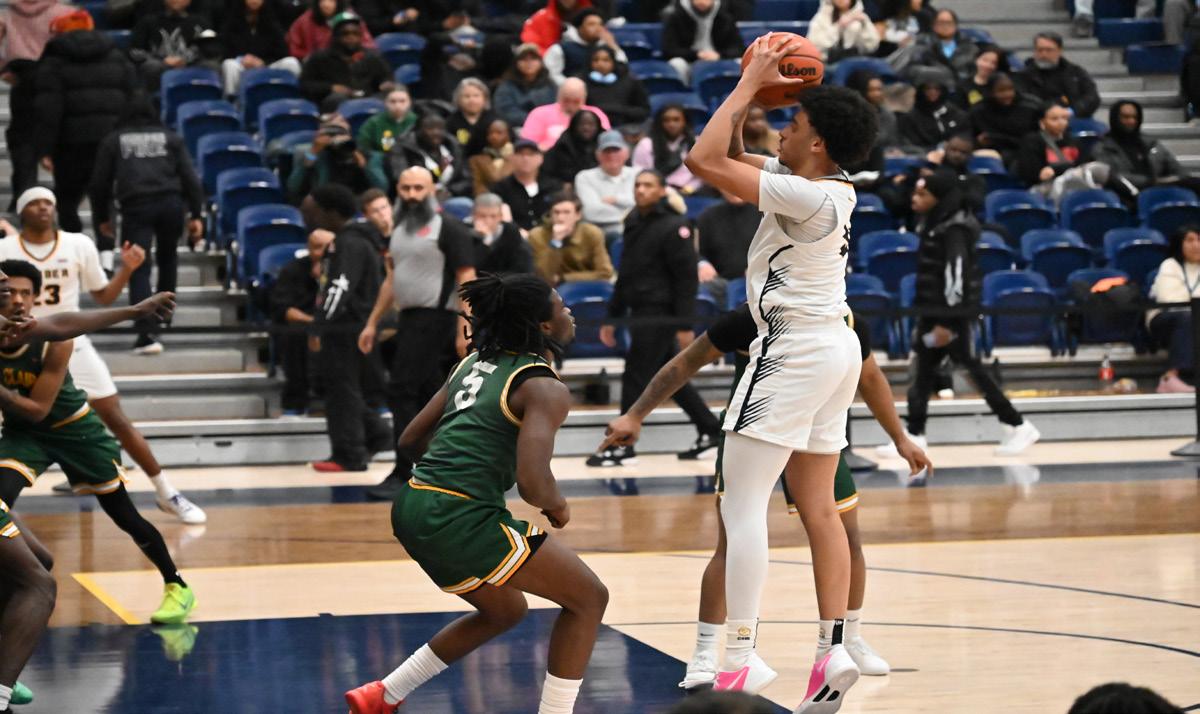
Sean Moniz HumberETC Sports
Humber’s women’s basketball team defeated the St. Clair Saints in an 85-39 win on Feb. 6.
The 46-point deficit for the Saints is its largest point margin in a loss this season.
Humber split the series with St. Clair after losing the matchup 79-77 in Windsor on Nov.29.
The game was originally set for Feb.1, but was rescheduled after 60 cm of snow blanketed Ontario.
The wait was worth it for Humber, extending its winning streak to eight games, only one win behind the No. 1-ranked Mohawk Mountaineers.
St. Clair drops to 8-6 on the season, remaining in fourth in the Ontario Colleges Athletic Association (OCAA) Western Conference.
This was the last home game of the season for Humber, ending the season with a 7-1 record in the Hawks Nest, its only loss to Mohawk on Nov. 19.
The Hawks were dominant from
the start, forcing five turnovers in the first quarter.
Third-year forward Eremwon Destiny and second-year guard
Persia Martin-Brown combined for 12 of Humber’s 18 first-quarter points, with each scoring six respectively.
St. Clair struggled to find points, but first-year guard Mya Tate scored six of their eight points.
Humber refused to let its foot off the gas defensively and dominated rebounding on both ends of the court, while St. Clair’s offence went through Tate again, who added another five to her tally.
The Saints turned the ball over
seven times in the second quarter. Destiny also scored five points in the quarter, bringing her total to eleven in the first half.
The Hawks went into halftime up 33-17 over the Saints.
Humber’s game plan did not change after the break and forced another eight turnovers, bringing the game’s total to 20.
Martin-Brown continued her good game, with another five points in only four minutes played, while fourth-year guard Marley Bonnick also scored five of her own,
The Hawks scored 28 points in the third quarter, to St. Clair’s 12, extending its lead to 34 points with
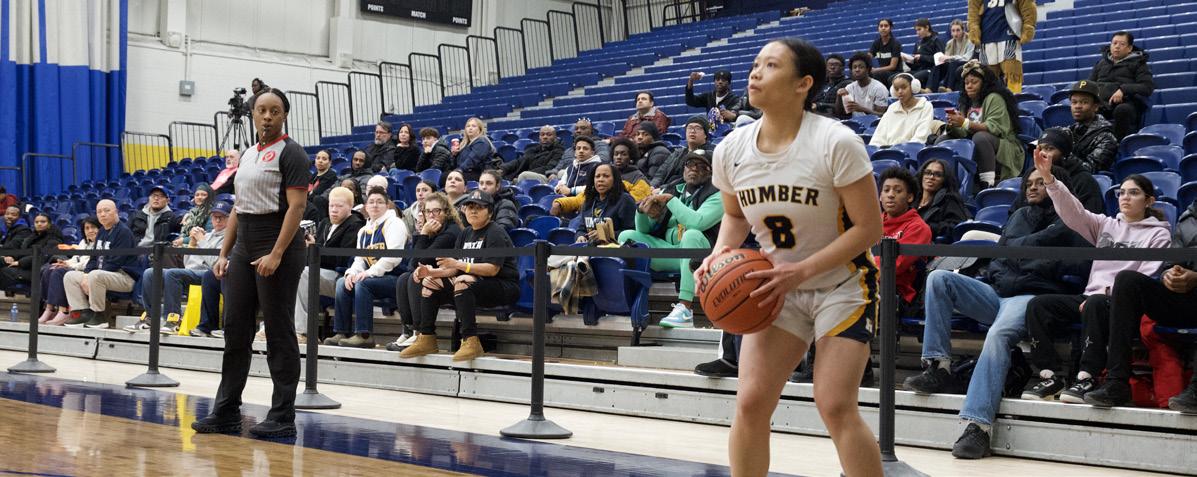
a score of 61-27 heading into the fourth.
In the first three quarters, the Saints’ struggled offensively through their field goal percentage, with the team shooting under 30 per cent and making four shots or fewer in each.
St. Clair was still unable to make more than four shots in the fourth quarter, but eclipsed 30 per cent shooting.
Humber finished the game by resting its starters, giving minutes to the less experienced players, scoring 24 points in the quarter to the Saints’ 10.
Hawks head coach Ceejay Nofuente said the team’s success begins defensively and transitions to the offence.
“Everything always starts on defence. Just how we get stops, forced turnovers, securing defensive rebounds. And then that just translates to our offence,” she said.
Nofuente said the win streak is impressive, but certain aspects still need improvement.
“I think, you know, we’re on a great run right now. We kind of found our rhythm, and I think the biggest thing right now is just continuing to build on our defence,” she said. “I think defence continues to win games.”
Martin-Brown, who finished with a career-high 17 points and added 9 rebounds and 2 assists, to go with 5 steals, said the whole team played collectively.
“I think for this game we definitely shared the ball, our defence was A1, we were definitely in the gap, we were in the help, we were helping each other, and overall, we were just moving the ball around,” she said.
Saints head coach Andy Kiss said the team will talk about what got away from them and work on moving forward.
“You gotta move forward. I can’t be overly negative with the kids this time of year,” he said. “We got punched in the face, we fought for a while, and then the game got away from us in the second half.”

women’s player Caroline Harvey scores against Canadian goalie Ann-Renee Desbeins in the round robin game at the Olympics. The Americans beat Canada 5-0 to stay unbeaten.
Shank Humber ETC News
Team Canada’s second preliminary game at the Olympic Ice hockey tournament was an upset with Canada scoring zero in the face of five successful goals by their longtime rival, the U.S.
The Americans benefited from eight minutes and 20 seconds of power play time, skating with a player advantage.
Canada made 20 attempts on the goal, none successful. While the Americans made 30 attempts on the goal, scoring five times in total.
The defensive approach was forced on the Canadians, as playing aggressively was necessary to defend the match.
The shocking turn of events happened without the presence of team captain Marie-Philip Poulin, who was not on the line-up for the match due to an injury during the first preliminary match against Czechia on Feb.9.
The loss marked a significant moment for the team. It was only the second time since 1998 that Canada’s women’s hockey team had dropped a preliminary round game at the Olympics.
This was the fourth time
Canada’s Olympic team have lost to their U.S. rivals, a sting in their previous 37-4 record.
Despite not scoring any goals, the loss does not eliminate Canada from contention.
Despite Canada’s zero loss, the goaltender for the Women’s Canadian International hockey, Ann-Renee Desbeins, 31, reached a record of the third Canadian goalie to make 1,000 career saves
in international competition.
Regardless of the score, all four teams in Group A for Women’s Ice Hockey are qualified for the knockout stage, along with Sweden, Germany, and Italy.
Currently ranked third in Group A with one game remaining, Canada remains a strong contender.
Canada’s upcoming match against Finland is on Feb.12.


WOMEN BUMP BORÉAL TO LAST PLACE P. 15

U.S. RIVALS DEFEAT CANADA IN PRELIMINARIES P. 17